window.__IS_SSR__=true
window.__INITIAL_STATE__={
"attachmentsReducer": {
"audio_0": {
"type": "attachments",
"id": "audio_0",
"imgSizes": {
"kqedFullSize": {
"file": "https://ww2.kqed.org/news/wp-content/themes/KQED-unified/img/audio_bgs/background0.jpg"
}
}
},
"audio_1": {
"type": "attachments",
"id": "audio_1",
"imgSizes": {
"kqedFullSize": {
"file": "https://ww2.kqed.org/news/wp-content/themes/KQED-unified/img/audio_bgs/background1.jpg"
}
}
},
"audio_2": {
"type": "attachments",
"id": "audio_2",
"imgSizes": {
"kqedFullSize": {
"file": "https://ww2.kqed.org/news/wp-content/themes/KQED-unified/img/audio_bgs/background2.jpg"
}
}
},
"audio_3": {
"type": "attachments",
"id": "audio_3",
"imgSizes": {
"kqedFullSize": {
"file": "https://ww2.kqed.org/news/wp-content/themes/KQED-unified/img/audio_bgs/background3.jpg"
}
}
},
"audio_4": {
"type": "attachments",
"id": "audio_4",
"imgSizes": {
"kqedFullSize": {
"file": "https://ww2.kqed.org/news/wp-content/themes/KQED-unified/img/audio_bgs/background4.jpg"
}
}
},
"placeholder": {
"type": "attachments",
"id": "placeholder",
"imgSizes": {
"thumbnail": {
"file": "https://cdn.kqed.org/wp-content/uploads/2024/12/KQED-Default-Image-816638274-2000x1333-1-160x107.jpg",
"width": 160,
"height": 107,
"mimeType": "image/jpeg"
},
"medium": {
"file": "https://cdn.kqed.org/wp-content/uploads/2024/12/KQED-Default-Image-816638274-2000x1333-1-800x533.jpg",
"width": 800,
"height": 533,
"mimeType": "image/jpeg"
},
"medium_large": {
"file": "https://cdn.kqed.org/wp-content/uploads/2024/12/KQED-Default-Image-816638274-2000x1333-1-768x512.jpg",
"width": 768,
"height": 512,
"mimeType": "image/jpeg"
},
"large": {
"file": "https://cdn.kqed.org/wp-content/uploads/2024/12/KQED-Default-Image-816638274-2000x1333-1-1020x680.jpg",
"width": 1020,
"height": 680,
"mimeType": "image/jpeg"
},
"1536x1536": {
"file": "https://cdn.kqed.org/wp-content/uploads/2024/12/KQED-Default-Image-816638274-2000x1333-1-1536x1024.jpg",
"width": 1536,
"height": 1024,
"mimeType": "image/jpeg"
},
"fd-lrg": {
"file": "https://cdn.kqed.org/wp-content/uploads/2024/12/KQED-Default-Image-816638274-2000x1333-1-1536x1024.jpg",
"width": 1536,
"height": 1024,
"mimeType": "image/jpeg"
},
"fd-med": {
"file": "https://cdn.kqed.org/wp-content/uploads/2024/12/KQED-Default-Image-816638274-2000x1333-1-1020x680.jpg",
"width": 1020,
"height": 680,
"mimeType": "image/jpeg"
},
"fd-sm": {
"file": "https://cdn.kqed.org/wp-content/uploads/2024/12/KQED-Default-Image-816638274-2000x1333-1-800x533.jpg",
"width": 800,
"height": 533,
"mimeType": "image/jpeg"
},
"post-thumbnail": {
"file": "https://cdn.kqed.org/wp-content/uploads/2024/12/KQED-Default-Image-816638274-2000x1333-1-672x372.jpg",
"width": 672,
"height": 372,
"mimeType": "image/jpeg"
},
"twentyfourteen-full-width": {
"file": "https://cdn.kqed.org/wp-content/uploads/2024/12/KQED-Default-Image-816638274-2000x1333-1-1038x576.jpg",
"width": 1038,
"height": 576,
"mimeType": "image/jpeg"
},
"xxsmall": {
"file": "https://cdn.kqed.org/wp-content/uploads/2024/12/KQED-Default-Image-816638274-2000x1333-1-160x107.jpg",
"width": 160,
"height": 107,
"mimeType": "image/jpeg"
},
"xsmall": {
"file": "https://cdn.kqed.org/wp-content/uploads/2024/12/KQED-Default-Image-816638274-2000x1333-1-672x372.jpg",
"width": 672,
"height": 372,
"mimeType": "image/jpeg"
},
"small": {
"file": "https://cdn.kqed.org/wp-content/uploads/2024/12/KQED-Default-Image-816638274-2000x1333-1-672x372.jpg",
"width": 672,
"height": 372,
"mimeType": "image/jpeg"
},
"xlarge": {
"file": "https://cdn.kqed.org/wp-content/uploads/2024/12/KQED-Default-Image-816638274-2000x1333-1-1020x680.jpg",
"width": 1020,
"height": 680,
"mimeType": "image/jpeg"
},
"full-width": {
"file": "https://cdn.kqed.org/wp-content/uploads/2024/12/KQED-Default-Image-816638274-2000x1333-1-1920x1280.jpg",
"width": 1920,
"height": 1280,
"mimeType": "image/jpeg"
},
"guest-author-32": {
"file": "https://cdn.kqed.org/wp-content/uploads/2025/01/KQED-Default-Image-816638274-1333x1333-1-160x160.jpg",
"width": 32,
"height": 32,
"mimeType": "image/jpeg"
},
"guest-author-50": {
"file": "https://cdn.kqed.org/wp-content/uploads/2025/01/KQED-Default-Image-816638274-1333x1333-1-160x160.jpg",
"width": 50,
"height": 50,
"mimeType": "image/jpeg"
},
"guest-author-64": {
"file": "https://cdn.kqed.org/wp-content/uploads/2025/01/KQED-Default-Image-816638274-1333x1333-1-160x160.jpg",
"width": 64,
"height": 64,
"mimeType": "image/jpeg"
},
"guest-author-96": {
"file": "https://cdn.kqed.org/wp-content/uploads/2025/01/KQED-Default-Image-816638274-1333x1333-1-160x160.jpg",
"width": 96,
"height": 96,
"mimeType": "image/jpeg"
},
"guest-author-128": {
"file": "https://cdn.kqed.org/wp-content/uploads/2025/01/KQED-Default-Image-816638274-1333x1333-1-160x160.jpg",
"width": 128,
"height": 128,
"mimeType": "image/jpeg"
},
"detail": {
"file": "https://cdn.kqed.org/wp-content/uploads/2025/01/KQED-Default-Image-816638274-1333x1333-1-160x160.jpg",
"width": 160,
"height": 160,
"mimeType": "image/jpeg"
},
"kqedFullSize": {
"file": "https://cdn.kqed.org/wp-content/uploads/2024/12/KQED-Default-Image-816638274-2000x1333-1.jpg",
"width": 2000,
"height": 1333
}
}
},
"news_12072851": {
"type": "attachments",
"id": "news_12072851",
"meta": {
"index": "attachments_1716263798",
"site": "news",
"id": "12072851",
"found": true
},
"title": "20260209_SFUSDSTRIKE_GC-17-KQED",
"publishDate": 1770660222,
"status": "inherit",
"parent": 0,
"modified": 1770667600,
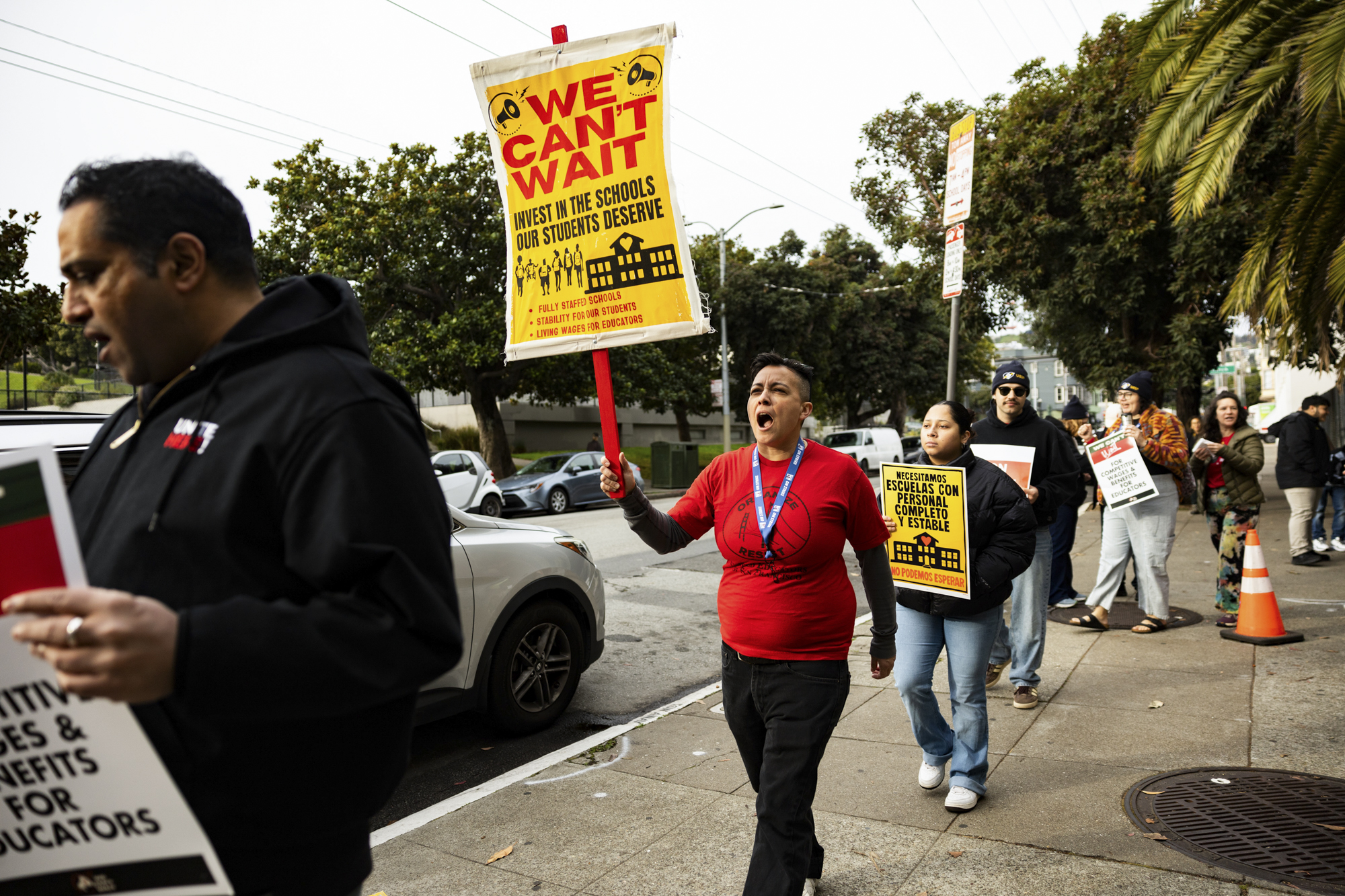
"caption": "Mar Martinez, math teacher at Mission High, picks during a teacher’s strike at Mission High School on Feb. 9, 2026. The strike is the first in nearly 50 years.",
"credit": "Gina Castro for KQED",
"altTag": null,
"description": null,
"imgSizes": {
"thumbnail": {
"file": "https://cdn.kqed.org/wp-content/uploads/sites/10/2026/02/20260209_SFUSDSTRIKE_GC-17-KQED-160x107.jpg",
"width": 160,
"height": 107,
"mimeType": "image/jpeg"
},
"1536x1536": {
"file": "https://cdn.kqed.org/wp-content/uploads/sites/10/2026/02/20260209_SFUSDSTRIKE_GC-17-KQED-1536x1024.jpg",
"width": 1536,
"height": 1024,
"mimeType": "image/jpeg"
},
"post-thumbnail": {
"file": "https://cdn.kqed.org/wp-content/uploads/sites/10/2026/02/20260209_SFUSDSTRIKE_GC-17-KQED-672x372.jpg",
"width": 672,
"height": 372,
"mimeType": "image/jpeg"
},
"twentyfourteen-full-width": {
"file": "https://cdn.kqed.org/wp-content/uploads/sites/10/2026/02/20260209_SFUSDSTRIKE_GC-17-KQED-1038x576.jpg",
"width": 1038,
"height": 576,
"mimeType": "image/jpeg"
},
"npr-cds-wide": {
"file": "https://cdn.kqed.org/wp-content/uploads/sites/10/2026/02/20260209_SFUSDSTRIKE_GC-17-KQED-1200x675.jpg",
"width": 1200,
"height": 675,
"mimeType": "image/jpeg"
},
"kqedFullSize": {
"file": "https://cdn.kqed.org/wp-content/uploads/sites/10/2026/02/20260209_SFUSDSTRIKE_GC-17-KQED.jpg",
"width": 2000,
"height": 1333
}
},
"isLoading": false,
"fetchFailed": false
},
"news_12072622": {
"type": "attachments",
"id": "news_12072622",
"meta": {
"index": "attachments_1716263798",
"site": "news",
"id": "12072622",
"found": true
},
"title": "020325_Day-Without-Immigrants_JWH_CM_26",
"publishDate": 1770405218,
"status": "inherit",
"parent": 12072603,
"modified": 1770405234,
"caption": "Protesters gather in Downtown Los Angeles for a march to support immigrants on Feb. 3, 2025. A liberal contingent of LA council members wants to protect undocumented immigrants.",
"credit": " Photo by J.W. Hendricks/CalMatters",
"altTag": null,
"description": null,
"imgSizes": {
"thumbnail": {
"file": "https://cdn.kqed.org/wp-content/uploads/sites/10/2026/02/020325_Day-Without-Immigrants_JWH_CM_26-160x107.jpeg",
"width": 160,
"height": 107,
"mimeType": "image/jpeg"
},
"1536x1536": {
"file": "https://cdn.kqed.org/wp-content/uploads/sites/10/2026/02/020325_Day-Without-Immigrants_JWH_CM_26-1536x1024.jpeg",
"width": 1536,
"height": 1024,
"mimeType": "image/jpeg"
},
"post-thumbnail": {
"file": "https://cdn.kqed.org/wp-content/uploads/sites/10/2026/02/020325_Day-Without-Immigrants_JWH_CM_26-672x372.jpeg",
"width": 672,
"height": 372,
"mimeType": "image/jpeg"
},
"twentyfourteen-full-width": {
"file": "https://cdn.kqed.org/wp-content/uploads/sites/10/2026/02/020325_Day-Without-Immigrants_JWH_CM_26-1038x576.jpeg",
"width": 1038,
"height": 576,
"mimeType": "image/jpeg"
},
"npr-cds-wide": {
"file": "https://cdn.kqed.org/wp-content/uploads/sites/10/2026/02/020325_Day-Without-Immigrants_JWH_CM_26-1200x675.jpeg",
"width": 1200,
"height": 675,
"mimeType": "image/jpeg"
},
"kqedFullSize": {
"file": "https://cdn.kqed.org/wp-content/uploads/sites/10/2026/02/020325_Day-Without-Immigrants_JWH_CM_26.jpeg",
"width": 2000,
"height": 1333
}
},
"isLoading": false,
"fetchFailed": false
},
"news_12052665": {
"type": "attachments",
"id": "news_12052665",
"meta": {
"index": "attachments_1716263798",
"site": "news",
"id": "12052665",
"found": true
},
"title": "250818-SFUSDFIRSTDAY-13-KQED",
"publishDate": 1755549121,
"status": "inherit",
"parent": 0,
"modified": 1755549137,
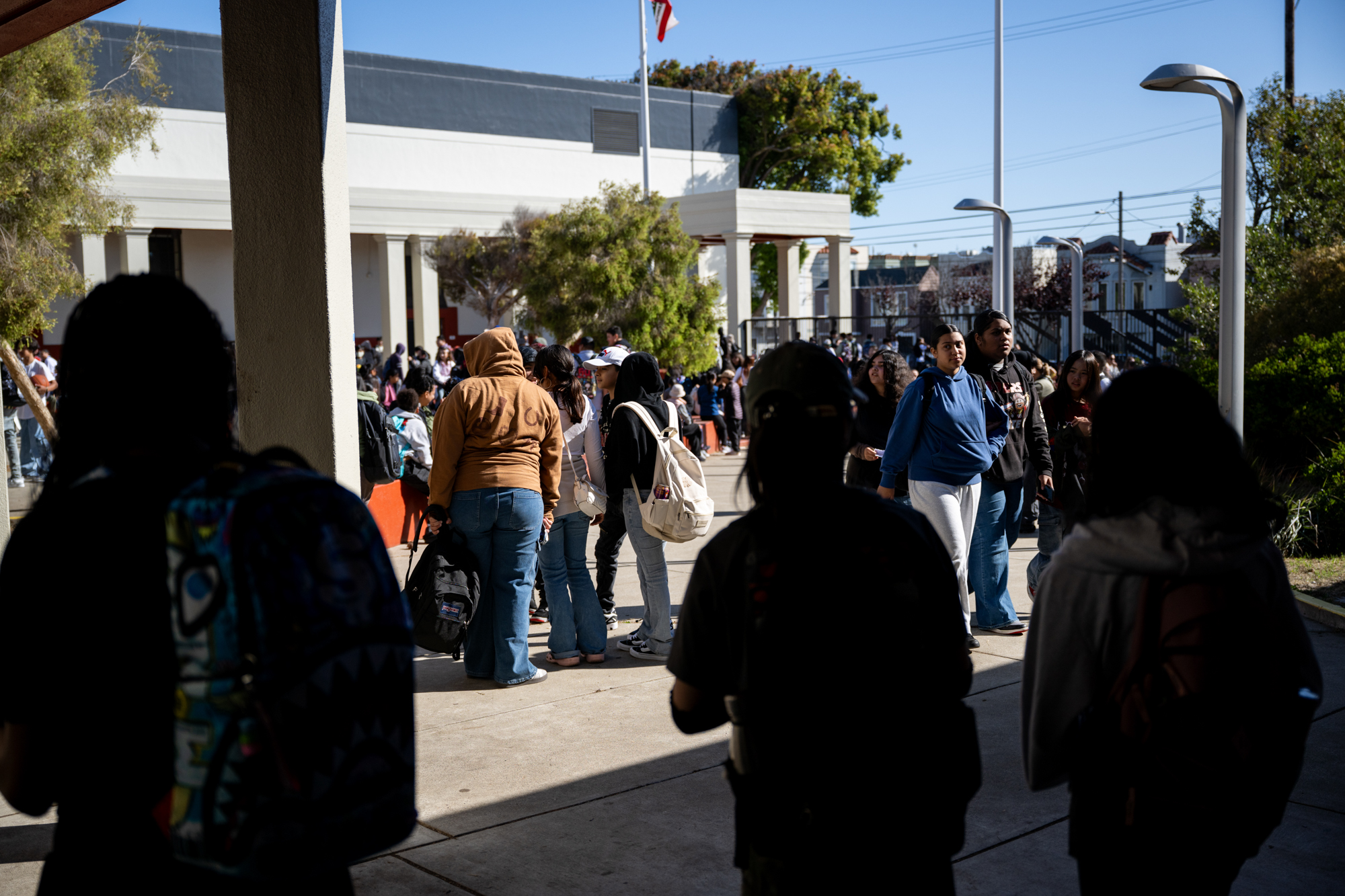
"caption": "Students arrive at Dr. Martin Luther King, Jr. Academic Middle School for their first day of the school year in San Francisco on Aug. 18, 2025.",
"credit": "Beth LaBerge/KQED",
"altTag": null,
"description": null,
"imgSizes": {
"thumbnail": {
"file": "https://cdn.kqed.org/wp-content/uploads/sites/10/2025/08/250818-SFUSDFIRSTDAY-13-KQED-160x107.jpg",
"width": 160,
"height": 107,
"mimeType": "image/jpeg"
},
"1536x1536": {
"file": "https://cdn.kqed.org/wp-content/uploads/sites/10/2025/08/250818-SFUSDFIRSTDAY-13-KQED-1536x1024.jpg",
"width": 1536,
"height": 1024,
"mimeType": "image/jpeg"
},
"post-thumbnail": {
"file": "https://cdn.kqed.org/wp-content/uploads/sites/10/2025/08/250818-SFUSDFIRSTDAY-13-KQED-672x372.jpg",
"width": 672,
"height": 372,
"mimeType": "image/jpeg"
},
"twentyfourteen-full-width": {
"file": "https://cdn.kqed.org/wp-content/uploads/sites/10/2025/08/250818-SFUSDFIRSTDAY-13-KQED-1038x576.jpg",
"width": 1038,
"height": 576,
"mimeType": "image/jpeg"
},
"kqedFullSize": {
"file": "https://cdn.kqed.org/wp-content/uploads/sites/10/2025/08/250818-SFUSDFIRSTDAY-13-KQED.jpg",
"width": 2000,
"height": 1333
}
},
"isLoading": false,
"fetchFailed": false
},
"news_12072420": {
"type": "attachments",
"id": "news_12072420",
"meta": {
"index": "attachments_1716263798",
"site": "news",
"id": "12072420",
"found": true
},
"title": "250204-WeCantWait-06-BL_qed",
"publishDate": 1770317800,
"status": "inherit",
"parent": 12072392,
"modified": 1770319522,
"caption": "Perry Siniard, a fourth-grade teacher, speaks during a press conference at Buena Vista Horace Mann K-8 Community School in San Francisco’s Mission District on Feb. 4, 2025, to announce the launch of the \"We Can’t Wait\" campaign, a statewide effort advocating for improved class sizes, better wages and safer schools for educators and students.",
"credit": "Beth LaBerge/KQED",
"altTag": null,
"description": null,
"imgSizes": {
"thumbnail": {
"file": "https://cdn.kqed.org/wp-content/uploads/sites/10/2026/02/250204-WeCantWait-06-BL_qed-160x107.jpg",
"width": 160,
"height": 107,
"mimeType": "image/jpeg"
},
"1536x1536": {
"file": "https://cdn.kqed.org/wp-content/uploads/sites/10/2026/02/250204-WeCantWait-06-BL_qed-1536x1024.jpg",
"width": 1536,
"height": 1024,
"mimeType": "image/jpeg"
},
"post-thumbnail": {
"file": "https://cdn.kqed.org/wp-content/uploads/sites/10/2026/02/250204-WeCantWait-06-BL_qed-672x372.jpg",
"width": 672,
"height": 372,
"mimeType": "image/jpeg"
},
"twentyfourteen-full-width": {
"file": "https://cdn.kqed.org/wp-content/uploads/sites/10/2026/02/250204-WeCantWait-06-BL_qed-1038x576.jpg",
"width": 1038,
"height": 576,
"mimeType": "image/jpeg"
},
"npr-cds-wide": {
"file": "https://cdn.kqed.org/wp-content/uploads/sites/10/2026/02/250204-WeCantWait-06-BL_qed-1200x675.jpg",
"width": 1200,
"height": 675,
"mimeType": "image/jpeg"
},
"kqedFullSize": {
"file": "https://cdn.kqed.org/wp-content/uploads/sites/10/2026/02/250204-WeCantWait-06-BL_qed.jpg",
"width": 2000,
"height": 1333
}
},
"isLoading": false,
"fetchFailed": false
},
"news_12072356": {
"type": "attachments",
"id": "news_12072356",
"meta": {
"index": "attachments_1716263798",
"site": "news",
"id": "12072356",
"found": true
},
"title": "250501-MayDayRallySF-19-BL_qed",
"publishDate": 1770247567,
"status": "inherit",
"parent": 12072350,
"modified": 1770247576,
"caption": "Cassondra Curiel, President of United Educators of San Francisco, speaks during a May Day rally in Civic Center Plaza in San Francisco on Thursday, May 1, 2025.",
"credit": "Beth LaBerge/KQED",
"altTag": null,
"description": null,
"imgSizes": {
"thumbnail": {
"file": "https://cdn.kqed.org/wp-content/uploads/sites/10/2026/02/250501-MayDayRallySF-19-BL_qed-160x107.jpg",
"width": 160,
"height": 107,
"mimeType": "image/jpeg"
},
"1536x1536": {
"file": "https://cdn.kqed.org/wp-content/uploads/sites/10/2026/02/250501-MayDayRallySF-19-BL_qed-1536x1024.jpg",
"width": 1536,
"height": 1024,
"mimeType": "image/jpeg"
},
"post-thumbnail": {
"file": "https://cdn.kqed.org/wp-content/uploads/sites/10/2026/02/250501-MayDayRallySF-19-BL_qed-672x372.jpg",
"width": 672,
"height": 372,
"mimeType": "image/jpeg"
},
"twentyfourteen-full-width": {
"file": "https://cdn.kqed.org/wp-content/uploads/sites/10/2026/02/250501-MayDayRallySF-19-BL_qed-1038x576.jpg",
"width": 1038,
"height": 576,
"mimeType": "image/jpeg"
},
"npr-cds-wide": {
"file": "https://cdn.kqed.org/wp-content/uploads/sites/10/2026/02/250501-MayDayRallySF-19-BL_qed-1200x675.jpg",
"width": 1200,
"height": 675,
"mimeType": "image/jpeg"
},
"kqedFullSize": {
"file": "https://cdn.kqed.org/wp-content/uploads/sites/10/2026/02/250501-MayDayRallySF-19-BL_qed.jpg",
"width": 2000,
"height": 1333
}
},
"isLoading": false,
"fetchFailed": false
},
"news_12072222": {
"type": "attachments",
"id": "news_12072222",
"meta": {
"index": "attachments_1716263798",
"site": "news",
"id": "12072222",
"found": true
},
"title": "031124-Dolphin-Trucking-School-ZS-CM-8",
"publishDate": 1770226199,
"status": "inherit",
"parent": 12072221,
"modified": 1770226227,
"caption": "An instructor teaches students about air brake releases at Dolphin Trucking School in the city of Vernon on March 11, 2024. ",
"credit": "Photo by Zaydee Sanchez/CalMatters",
"altTag": null,
"description": null,
"imgSizes": {
"thumbnail": {
"file": "https://cdn.kqed.org/wp-content/uploads/sites/10/2026/02/031124-Dolphin-Trucking-School-ZS-CM-8-160x107.jpeg",
"width": 160,
"height": 107,
"mimeType": "image/jpeg"
},
"1536x1536": {
"file": "https://cdn.kqed.org/wp-content/uploads/sites/10/2026/02/031124-Dolphin-Trucking-School-ZS-CM-8-1536x1024.jpeg",
"width": 1536,
"height": 1024,
"mimeType": "image/jpeg"
},
"post-thumbnail": {
"file": "https://cdn.kqed.org/wp-content/uploads/sites/10/2026/02/031124-Dolphin-Trucking-School-ZS-CM-8-672x372.jpeg",
"width": 672,
"height": 372,
"mimeType": "image/jpeg"
},
"twentyfourteen-full-width": {
"file": "https://cdn.kqed.org/wp-content/uploads/sites/10/2026/02/031124-Dolphin-Trucking-School-ZS-CM-8-1038x576.jpeg",
"width": 1038,
"height": 576,
"mimeType": "image/jpeg"
},
"npr-cds-wide": {
"file": "https://cdn.kqed.org/wp-content/uploads/sites/10/2026/02/031124-Dolphin-Trucking-School-ZS-CM-8-1200x675.jpeg",
"width": 1200,
"height": 675,
"mimeType": "image/jpeg"
},
"kqedFullSize": {
"file": "https://cdn.kqed.org/wp-content/uploads/sites/10/2026/02/031124-Dolphin-Trucking-School-ZS-CM-8.jpeg",
"width": 2000,
"height": 1333
}
},
"isLoading": false,
"fetchFailed": false
},
"news_12071638": {
"type": "attachments",
"id": "news_12071638",
"meta": {
"index": "attachments_1716263798",
"site": "news",
"id": "12071638",
"found": true
},
"title": "240911-CHILDCARE REAX-MD-01_qed",
"publishDate": 1769731178,
"status": "inherit",
"parent": 12070762,
"modified": 1769731194,
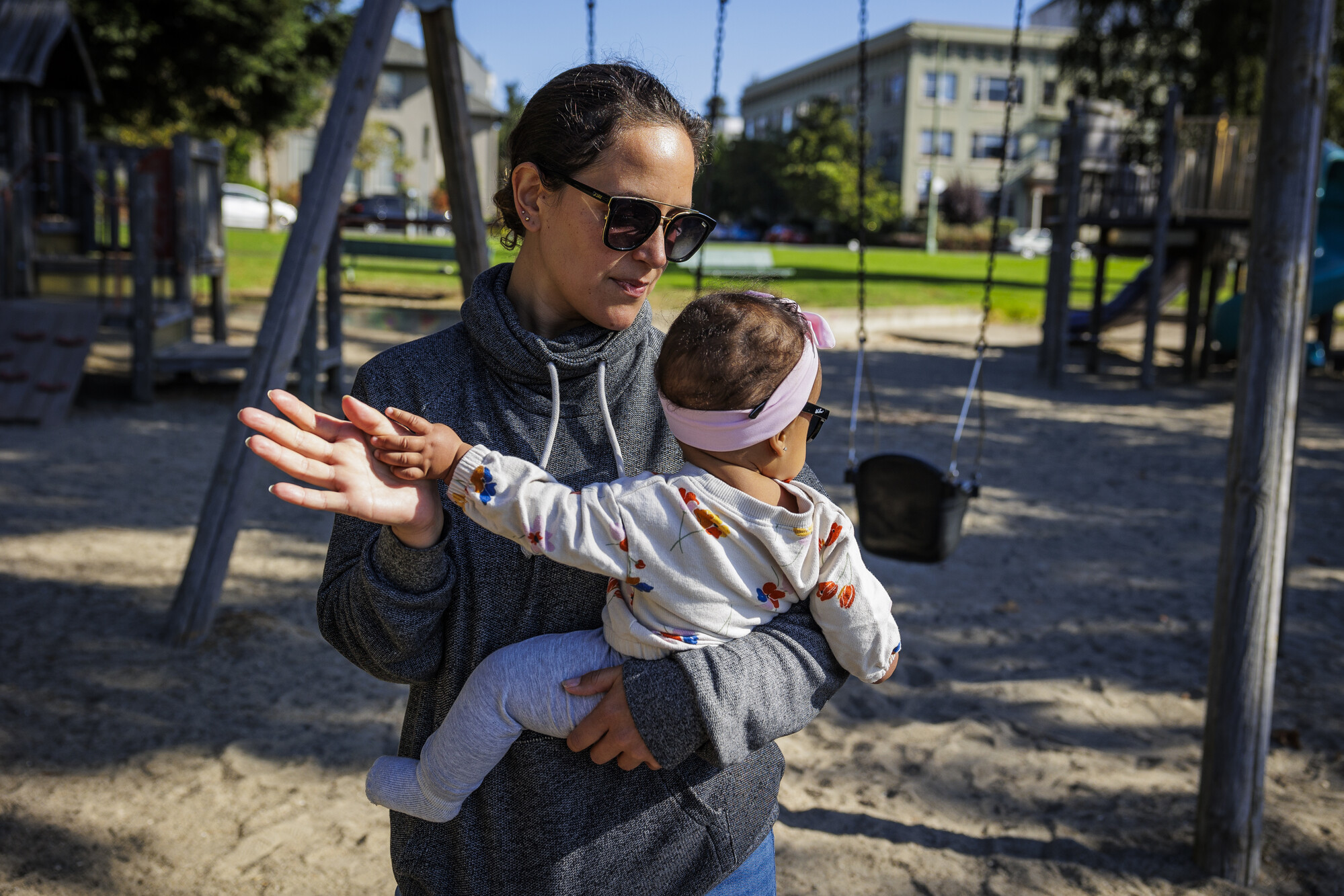
"caption": "Carolina Muñoz holds her daughter Soleil at a playground beside Lake Merritt in Oakland on Sept. 11, 2024.",
"credit": "Martin do Nascimento/KQED",
"altTag": null,
"description": null,
"imgSizes": {
"thumbnail": {
"file": "https://cdn.kqed.org/wp-content/uploads/sites/10/2026/01/240911-CHILDCARE-REAX-MD-01_qed-160x107.jpg",
"width": 160,
"height": 107,
"mimeType": "image/jpeg"
},
"1536x1536": {
"file": "https://cdn.kqed.org/wp-content/uploads/sites/10/2026/01/240911-CHILDCARE-REAX-MD-01_qed-1536x1024.jpg",
"width": 1536,
"height": 1024,
"mimeType": "image/jpeg"
},
"post-thumbnail": {
"file": "https://cdn.kqed.org/wp-content/uploads/sites/10/2026/01/240911-CHILDCARE-REAX-MD-01_qed-672x372.jpg",
"width": 672,
"height": 372,
"mimeType": "image/jpeg"
},
"twentyfourteen-full-width": {
"file": "https://cdn.kqed.org/wp-content/uploads/sites/10/2026/01/240911-CHILDCARE-REAX-MD-01_qed-1038x576.jpg",
"width": 1038,
"height": 576,
"mimeType": "image/jpeg"
},
"npr-cds-wide": {
"file": "https://cdn.kqed.org/wp-content/uploads/sites/10/2026/01/240911-CHILDCARE-REAX-MD-01_qed-1200x675.jpg",
"width": 1200,
"height": 675,
"mimeType": "image/jpeg"
},
"kqedFullSize": {
"file": "https://cdn.kqed.org/wp-content/uploads/sites/10/2026/01/240911-CHILDCARE-REAX-MD-01_qed.jpg",
"width": 1999,
"height": 1333
}
},
"isLoading": false,
"fetchFailed": false
},
"news_12037997": {
"type": "attachments",
"id": "news_12037997",
"meta": {
"index": "attachments_1716263798",
"site": "news",
"id": "12037997",
"found": true
},
"title": "The Oakland Unified School District Offices in Oakland on April 28, 2025.",
"publishDate": 1745884016,
"status": "inherit",
"parent": 12038078,
"modified": 1745954220,
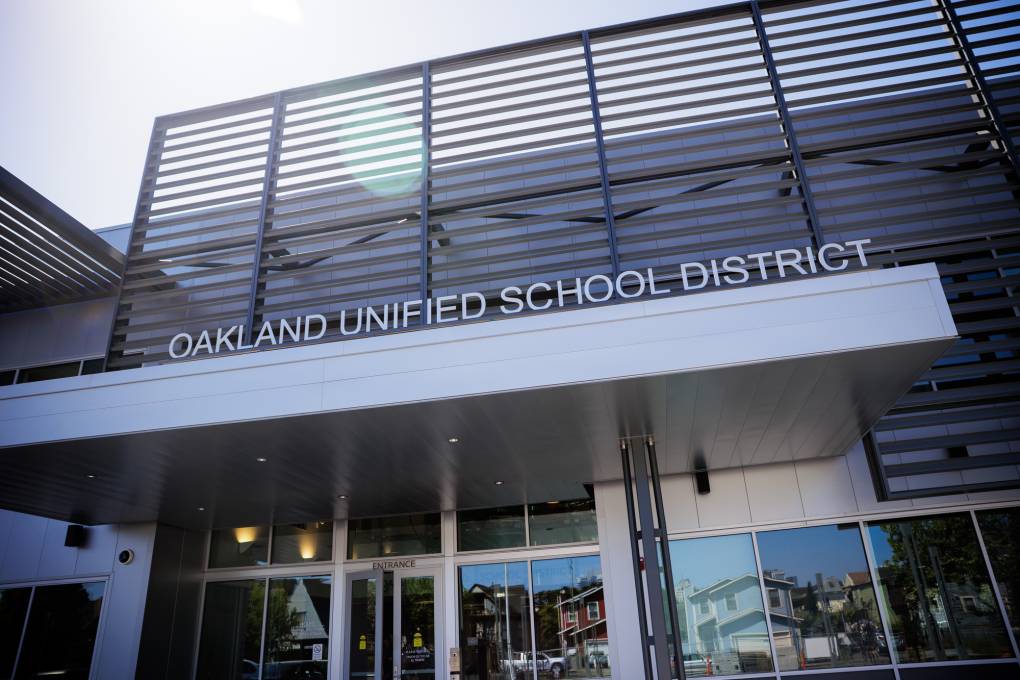
"caption": "The Oakland Unified School District Offices in Oakland on April 28, 2025.",
"credit": "Martin do Nascimento/KQED",
"altTag": null,
"description": null,
"imgSizes": {
"medium": {
"file": "https://cdn.kqed.org/wp-content/uploads/sites/10/2025/04/250428-OUSD-OFFICE-FILE-MD-01-KQED-800x533.jpg",
"width": 800,
"height": 533,
"mimeType": "image/jpeg"
},
"large": {
"file": "https://cdn.kqed.org/wp-content/uploads/sites/10/2025/04/250428-OUSD-OFFICE-FILE-MD-01-KQED-1020x680.jpg",
"width": 1020,
"height": 680,
"mimeType": "image/jpeg"
},
"thumbnail": {
"file": "https://cdn.kqed.org/wp-content/uploads/sites/10/2025/04/250428-OUSD-OFFICE-FILE-MD-01-KQED-160x107.jpg",
"width": 160,
"height": 107,
"mimeType": "image/jpeg"
},
"1536x1536": {
"file": "https://cdn.kqed.org/wp-content/uploads/sites/10/2025/04/250428-OUSD-OFFICE-FILE-MD-01-KQED-1536x1024.jpg",
"width": 1536,
"height": 1024,
"mimeType": "image/jpeg"
},
"post-thumbnail": {
"file": "https://cdn.kqed.org/wp-content/uploads/sites/10/2025/04/250428-OUSD-OFFICE-FILE-MD-01-KQED-672x372.jpg",
"width": 672,
"height": 372,
"mimeType": "image/jpeg"
},
"twentyfourteen-full-width": {
"file": "https://cdn.kqed.org/wp-content/uploads/sites/10/2025/04/250428-OUSD-OFFICE-FILE-MD-01-KQED-1038x576.jpg",
"width": 1038,
"height": 576,
"mimeType": "image/jpeg"
},
"full-width": {
"file": "https://cdn.kqed.org/wp-content/uploads/sites/10/2025/04/250428-OUSD-OFFICE-FILE-MD-01-KQED-1920x1280.jpg",
"width": 1920,
"height": 1280,
"mimeType": "image/jpeg"
},
"kqedFullSize": {
"file": "https://cdn.kqed.org/wp-content/uploads/sites/10/2025/04/250428-OUSD-OFFICE-FILE-MD-01-KQED.jpg",
"width": 2000,
"height": 1333
}
},
"isLoading": false,
"fetchFailed": false
},
"news_12015196": {
"type": "attachments",
"id": "news_12015196",
"meta": {
"index": "attachments_1716263798",
"site": "news",
"id": "12015196",
"found": true
},
"title": "241120-TransgenderAthletes-01",
"publishDate": 1732143963,
"status": "inherit",
"parent": 0,
"modified": 1769648999,
"caption": "The San José State Spartans volleyball team prepares for the serve from their opponents, the University of New Mexico Lobos, at their home game on Nov. 2, 2024.",
"credit": "Natalia Navarro/KQED",
"altTag": null,
"description": null,
"imgSizes": {
"medium": {
"file": "https://cdn.kqed.org/wp-content/uploads/sites/10/2024/11/241120-TransgenderAthletes-01-800x533.jpg",
"width": 800,
"height": 533,
"mimeType": "image/jpeg"
},
"large": {
"file": "https://cdn.kqed.org/wp-content/uploads/sites/10/2024/11/241120-TransgenderAthletes-01-1020x680.jpg",
"width": 1020,
"height": 680,
"mimeType": "image/jpeg"
},
"thumbnail": {
"file": "https://cdn.kqed.org/wp-content/uploads/sites/10/2024/11/241120-TransgenderAthletes-01-160x107.jpg",
"width": 160,
"height": 107,
"mimeType": "image/jpeg"
},
"1536x1536": {
"file": "https://cdn.kqed.org/wp-content/uploads/sites/10/2024/11/241120-TransgenderAthletes-01-1536x1024.jpg",
"width": 1536,
"height": 1024,
"mimeType": "image/jpeg"
},
"post-thumbnail": {
"file": "https://cdn.kqed.org/wp-content/uploads/sites/10/2024/11/241120-TransgenderAthletes-01-672x372.jpg",
"width": 672,
"height": 372,
"mimeType": "image/jpeg"
},
"twentyfourteen-full-width": {
"file": "https://cdn.kqed.org/wp-content/uploads/sites/10/2024/11/241120-TransgenderAthletes-01-1038x576.jpg",
"width": 1038,
"height": 576,
"mimeType": "image/jpeg"
},
"full-width": {
"file": "https://cdn.kqed.org/wp-content/uploads/sites/10/2024/11/241120-TransgenderAthletes-01-1920x1280.jpg",
"width": 1920,
"height": 1280,
"mimeType": "image/jpeg"
},
"kqedFullSize": {
"file": "https://cdn.kqed.org/wp-content/uploads/sites/10/2024/11/241120-TransgenderAthletes-01.jpg",
"width": 2000,
"height": 1333
}
},
"isLoading": false,
"fetchFailed": false
},
"news_12025666": {
"type": "attachments",
"id": "news_12025666",
"meta": {
"index": "attachments_1716263798",
"site": "news",
"id": "12025666",
"found": true
},
"title": "250204-WeCantWait-13-BL",
"publishDate": 1738707457,
"status": "inherit",
"parent": 12025440,
"modified": 1764877024,
"caption": "Cassondra Curiel, president of United Educators of San Francisco, speaks during a press conference at Buena Vista Horace Mann K-8 Community School in San Francisco’s Mission District on Feb. 4, 2025.",
"credit": "Beth LaBerge/KQED",
"altTag": null,
"description": null,
"imgSizes": {
"medium": {
"file": "https://cdn.kqed.org/wp-content/uploads/sites/10/2025/02/250204-WeCantWait-13-BL-800x533.jpg",
"width": 800,
"height": 533,
"mimeType": "image/jpeg"
},
"large": {
"file": "https://cdn.kqed.org/wp-content/uploads/sites/10/2025/02/250204-WeCantWait-13-BL-1020x680.jpg",
"width": 1020,
"height": 680,
"mimeType": "image/jpeg"
},
"thumbnail": {
"file": "https://cdn.kqed.org/wp-content/uploads/sites/10/2025/02/250204-WeCantWait-13-BL-160x107.jpg",
"width": 160,
"height": 107,
"mimeType": "image/jpeg"
},
"1536x1536": {
"file": "https://cdn.kqed.org/wp-content/uploads/sites/10/2025/02/250204-WeCantWait-13-BL-1536x1024.jpg",
"width": 1536,
"height": 1024,
"mimeType": "image/jpeg"
},
"post-thumbnail": {
"file": "https://cdn.kqed.org/wp-content/uploads/sites/10/2025/02/250204-WeCantWait-13-BL-672x372.jpg",
"width": 672,
"height": 372,
"mimeType": "image/jpeg"
},
"twentyfourteen-full-width": {
"file": "https://cdn.kqed.org/wp-content/uploads/sites/10/2025/02/250204-WeCantWait-13-BL-1038x576.jpg",
"width": 1038,
"height": 576,
"mimeType": "image/jpeg"
},
"full-width": {
"file": "https://cdn.kqed.org/wp-content/uploads/sites/10/2025/02/250204-WeCantWait-13-BL-1920x1280.jpg",
"width": 1920,
"height": 1280,
"mimeType": "image/jpeg"
},
"kqedFullSize": {
"file": "https://cdn.kqed.org/wp-content/uploads/sites/10/2025/02/250204-WeCantWait-13-BL.jpg",
"width": 2000,
"height": 1333
}
},
"isLoading": false,
"fetchFailed": false
},
"news_12072732": {
"type": "attachments",
"id": "news_12072732",
"meta": {
"index": "attachments_1716263798",
"site": "news",
"id": "12072732",
"found": true
},
"title": "Schools that qualify for closure are announced in San Francisco",
"publishDate": 1770423223,
"status": "inherit",
"parent": 12070455,
"modified": 1770423257,
"caption": "El Dorado Elementary School in San Francisco on Oct. 8, 2024.",
"credit": "Yalonda M. James/San Francisco Chronicle via Getty Images",
"altTag": null,
"description": null,
"imgSizes": {
"thumbnail": {
"file": "https://cdn.kqed.org/wp-content/uploads/sites/10/2026/01/ElDoradoElementarySFGetty-160x107.jpg",
"width": 160,
"height": 107,
"mimeType": "image/jpeg"
},
"1536x1536": {
"file": "https://cdn.kqed.org/wp-content/uploads/sites/10/2026/01/ElDoradoElementarySFGetty-1536x1024.jpg",
"width": 1536,
"height": 1024,
"mimeType": "image/jpeg"
},
"post-thumbnail": {
"file": "https://cdn.kqed.org/wp-content/uploads/sites/10/2026/01/ElDoradoElementarySFGetty-672x372.jpg",
"width": 672,
"height": 372,
"mimeType": "image/jpeg"
},
"twentyfourteen-full-width": {
"file": "https://cdn.kqed.org/wp-content/uploads/sites/10/2026/01/ElDoradoElementarySFGetty-1038x576.jpg",
"width": 1038,
"height": 576,
"mimeType": "image/jpeg"
},
"npr-cds-wide": {
"file": "https://cdn.kqed.org/wp-content/uploads/sites/10/2026/01/ElDoradoElementarySFGetty-1200x675.jpg",
"width": 1200,
"height": 675,
"mimeType": "image/jpeg"
},
"kqedFullSize": {
"file": "https://cdn.kqed.org/wp-content/uploads/sites/10/2026/01/ElDoradoElementarySFGetty.jpg",
"width": 2000,
"height": 1333
}
},
"isLoading": false,
"fetchFailed": false
},
"news_12057550": {
"type": "attachments",
"id": "news_12057550",
"meta": {
"index": "attachments_1716263798",
"site": "news",
"id": "12057550",
"found": true
},
"title": "Iris Velasco at her home in Oakland on Sept. 24, 2025.",
"publishDate": 1758758582,
"status": "inherit",
"parent": 12086323,
"modified": 1780698510,
"caption": "Iris Velasco at her home in Oakland on Sept. 24, 2025.",
"credit": "Martin do Nascimento/KQED",
"altTag": null,
"description": null,
"imgSizes": {
"thumbnail": {
"file": "https://cdn.kqed.org/wp-content/uploads/sites/10/2025/09/250924-ASPIRE-SAFETY-CONDITIONS-MD-03_qed-160x107.jpg",
"width": 160,
"height": 107,
"mimeType": "image/jpeg"
},
"1536x1536": {
"file": "https://cdn.kqed.org/wp-content/uploads/sites/10/2025/09/250924-ASPIRE-SAFETY-CONDITIONS-MD-03_qed-1536x1025.jpg",
"width": 1536,
"height": 1025,
"mimeType": "image/jpeg"
},
"post-thumbnail": {
"file": "https://cdn.kqed.org/wp-content/uploads/sites/10/2025/09/250924-ASPIRE-SAFETY-CONDITIONS-MD-03_qed-672x372.jpg",
"width": 672,
"height": 372,
"mimeType": "image/jpeg"
},
"twentyfourteen-full-width": {
"file": "https://cdn.kqed.org/wp-content/uploads/sites/10/2025/09/250924-ASPIRE-SAFETY-CONDITIONS-MD-03_qed-1038x576.jpg",
"width": 1038,
"height": 576,
"mimeType": "image/jpeg"
},
"kqedFullSize": {
"file": "https://cdn.kqed.org/wp-content/uploads/sites/10/2025/09/250924-ASPIRE-SAFETY-CONDITIONS-MD-03_qed.jpg",
"width": 1998,
"height": 1333
}
},
"isLoading": false,
"fetchFailed": false
}
},
"audioPlayerReducer": {
"postId": "stream_live",
"isPaused": true,
"isPlaying": false,
"pfsActive": false,
"pledgeModalIsOpen": true,
"playerDrawerIsOpen": false,
"liveAudioPlayStartedAt": 0,
"liveAudioPlayContext": ""
},
"authorsReducer": {
"byline_news_12072603": {
"type": "authors",
"id": "byline_news_12072603",
"meta": {
"override": true
},
"slug": "byline_news_12072603",
"name": "\u003ca href=\"https://calmatters.org/author/jim-newton/\">Jim Newton\u003c/a>, CalMatters",
"isLoading": false
},
"byline_news_12072221": {
"type": "authors",
"id": "byline_news_12072221",
"meta": {
"override": true
},
"slug": "byline_news_12072221",
"name": "\u003ca href=\"https://calmatters.org/author/adam-echelman/\">Adam Echelman\u003c/a>, \u003ca href=\"https://calmatters.org/author/ericayee/\">Erica Yee\u003c/a>, CalMatters",
"isLoading": false
},
"hmcdede": {
"type": "authors",
"id": "11635",
"meta": {
"index": "authors_1716337520",
"id": "11635",
"found": true
},
"name": "Holly McDede",
"firstName": "Holly",
"lastName": "McDede",
"slug": "hmcdede",
"email": "hmcdede@KQED.org",
"display_author_email": false,
"staff_mastheads": [],
"title": "KQED Contributor",
"bio": null,
"avatar": "https://secure.gravatar.com/avatar/999d9bf31bb3a2f0511932d99526cb3e?s=600&d=blank&r=g",
"twitter": null,
"facebook": null,
"instagram": null,
"linkedin": null,
"sites": [
{
"site": "arts",
"roles": [
"editor"
]
},
{
"site": "news",
"roles": [
"edit_others_posts",
"editor"
]
},
{
"site": "science",
"roles": [
"editor"
]
},
{
"site": "forum",
"roles": [
"editor"
]
},
{
"site": "perspectives",
"roles": [
"administrator"
]
}
],
"headData": {
"title": "Holly McDede | KQED",
"description": "KQED Contributor",
"ogImgSrc": "https://secure.gravatar.com/avatar/999d9bf31bb3a2f0511932d99526cb3e?s=600&d=blank&r=g",
"twImgSrc": "https://secure.gravatar.com/avatar/999d9bf31bb3a2f0511932d99526cb3e?s=600&d=blank&r=g"
},
"isLoading": false,
"link": "/author/hmcdede"
},
"daisynguyen": {
"type": "authors",
"id": "11829",
"meta": {
"index": "authors_1716337520",
"id": "11829",
"found": true
},
"name": "Daisy Nguyen",
"firstName": "Daisy",
"lastName": "Nguyen",
"slug": "daisynguyen",
"email": "daisynguyen@kqed.org",
"display_author_email": true,
"staff_mastheads": [
"news"
],
"title": "KQED Contributor",
"bio": "I have covered early childhood education and child care for KQED since 2022. I focus on policies aimed at increasing access to early care and education and how they shape individual lives. I've been a journalist for more than two decades, with most of that time devoted to covering breaking news throughout California for The Associated Press. I grew up in San Francisco and studied at UC Davis and Columbia University's Graduate School of Journalism. I live in Oakland with my husband and two kids.",
"avatar": "https://secure.gravatar.com/avatar/2da2127c27f7143b53ebd419800fd55f?s=600&d=blank&r=g",
"twitter": null,
"facebook": null,
"instagram": null,
"linkedin": "https://www.linkedin.com/in/daisynguyen/",
"sites": [
{
"site": "news",
"roles": [
"author"
]
},
{
"site": "liveblog",
"roles": [
"author"
]
}
],
"headData": {
"title": "Daisy Nguyen | KQED",
"description": "KQED Contributor",
"ogImgSrc": "https://secure.gravatar.com/avatar/2da2127c27f7143b53ebd419800fd55f?s=600&d=blank&r=g",
"twImgSrc": "https://secure.gravatar.com/avatar/2da2127c27f7143b53ebd419800fd55f?s=600&d=blank&r=g"
},
"isLoading": false,
"link": "/author/daisynguyen"
},
"kdebenedetti": {
"type": "authors",
"id": "11913",
"meta": {
"index": "authors_1716337520",
"id": "11913",
"found": true
},
"name": "Katie DeBenedetti",
"firstName": "Katie",
"lastName": "DeBenedetti",
"slug": "kdebenedetti",
"email": "kdebenedetti@kqed.org",
"display_author_email": false,
"staff_mastheads": [
"news",
"science"
],
"title": "KQED Contributor",
"bio": "Katie DeBenedetti is a digital reporter covering daily news for the Express Desk. Prior to joining KQED as a culture reporting intern in January 2024, she covered education and city government for the Napa Valley Register.",
"avatar": "https://secure.gravatar.com/avatar/6e31073cb8f7e4214ab03f42771d0f45?s=600&d=blank&r=g",
"twitter": null,
"facebook": null,
"instagram": null,
"linkedin": null,
"sites": [
{
"site": "news",
"roles": [
"author"
]
},
{
"site": "science",
"roles": [
"author"
]
},
{
"site": "liveblog",
"roles": [
"author"
]
}
],
"headData": {
"title": "Katie DeBenedetti | KQED",
"description": "KQED Contributor",
"ogImgSrc": "https://secure.gravatar.com/avatar/6e31073cb8f7e4214ab03f42771d0f45?s=600&d=blank&r=g",
"twImgSrc": "https://secure.gravatar.com/avatar/6e31073cb8f7e4214ab03f42771d0f45?s=600&d=blank&r=g"
},
"isLoading": false,
"link": "/author/kdebenedetti"
},
"emanoukian": {
"type": "authors",
"id": "11925",
"meta": {
"index": "authors_1716337520",
"id": "11925",
"found": true
},
"name": "Elize Manoukian",
"firstName": "Elize",
"lastName": "Manoukian",
"slug": "emanoukian",
"email": "emanoukian@KQED.org",
"display_author_email": false,
"staff_mastheads": [
"news"
],
"title": "Digital News Editor",
"bio": "Elize Manoukian is an award-winning audio producer and Senior Editor on the Express Desk, KQED's digital news platform. Her work has appeared on KPFA, Interlochen Public Radio, Oregon Public Broadcast, the New York Daily News, LA Times and the San Diego Union-Tribune.",
"avatar": "https://secure.gravatar.com/avatar/4525f1a8e46ccb30933b32653d9772064cfefe3fa655eb45b3b3a80341f6bdad?s=600&d=blank&r=g",
"twitter": null,
"bluesky": null,
"facebook": null,
"instagram": null,
"linkedin": null,
"sites": [
{
"site": "arts",
"roles": [
"editor"
]
},
{
"site": "news",
"roles": [
"editor"
]
},
{
"site": "science",
"roles": [
"editor"
]
}
],
"headData": {
"title": "Elize Manoukian | KQED",
"description": "Digital News Editor",
"ogImgSrc": "https://secure.gravatar.com/avatar/4525f1a8e46ccb30933b32653d9772064cfefe3fa655eb45b3b3a80341f6bdad?s=600&d=blank&r=g",
"twImgSrc": "https://secure.gravatar.com/avatar/4525f1a8e46ccb30933b32653d9772064cfefe3fa655eb45b3b3a80341f6bdad?s=600&d=blank&r=g"
},
"isLoading": false,
"link": "/author/emanoukian"
}
},
"pagesReducer": {
"news_tag_education": {
"type": "terms",
"id": "news_20013",
"meta": {
"index": "terms_1716263798",
"site": "news",
"id": "20013",
"score": 6.970073
},
"featImg": null,
"name": "education",
"description": null,
"taxonomy": "tag",
"headData": {
"twImgId": null,
"twTitle": null,
"ogTitle": null,
"ogImgId": null,
"twDescription": null,
"description": null,
"title": "education Archives | KQED News",
"ogDescription": null
},
"ttid": 20030,
"slug": "education",
"isLoading": false,
"title": "education",
"pageMeta": {
"site": "news",
"WpPageTemplate": "page-topic-editorial",
"currentPage": 12
},
"blocks": [
{
"blockName": "kqed/post-list",
"attrs": {
"layout": "cardArticle2",
"query": "posts/news?tag=education",
"seeMore": false,
"paginated": true,
"page": 12
}
},
{
"blockName": "kqed/ad"
}
]
}
},
"pfsSessionReducer": {},
"postsReducer": {
"stream_live": {
"type": "live",
"id": "stream_live",
"audioUrl": "https://streams.kqed.org/kqedradio",
"title": "Live Stream",
"excerpt": "Live Stream information currently unavailable.",
"link": "/radio",
"featImg": "",
"label": {
"name": "KQED Live",
"link": "/"
}
},
"stream_kqedNewscast": {
"type": "posts",
"id": "stream_kqedNewscast",
"audioUrl": "https://www.kqed.org/.stream/anon/radio/RDnews/newscast.mp3?_=1",
"title": "KQED Newscast",
"featImg": "",
"label": {
"name": "88.5 FM",
"link": "/"
}
},
"news_12072729": {
"type": "posts",
"id": "news_12072729",
"meta": {
"index": "posts_1716263798",
"site": "news",
"id": "12072729",
"score": null,
"sort": [
1770661300000
]
},
"guestAuthors": [],
"slug": "san-francisco-teachers-walk-out-in-first-strike-in-nearly-50-years",
"title": "SF Teachers Walk Out in First Strike in Nearly 50 Years. Schools Will Remain Closed",
"publishDate": 1770661300,
"format": "standard",
"headTitle": "SF Teachers Walk Out in First Strike in Nearly 50 Years. Schools Will Remain Closed | KQED",
"labelTerm": {
"site": "news"
},
"content": "\u003cp>San Francisco’s educators headed to the picket lines early Monday, kicking off the city’s \u003ca href=\"https://www.kqed.org/news/12072392/san-francisco-teachers-will-call-for-a-strike-next-week\">first school strike\u003c/a> in almost 50 years.\u003c/p>\n\u003cp>The city’s 111 public school \u003ca href=\"https://www.kqed.org/news/12072599/sf-schools-will-close-if-teachers-strike-heres-how-city-hall-plans-to-step-in\">campuses are shuttered\u003c/a> after the \u003ca href=\"https://www.kqed.org/news/tag/sfusd\">San Francisco Unified School District\u003c/a> and United Educators of San Francisco failed to come to a contract deal over the weekend, and the union declined Mayor Daniel Lurie’s call to delay the strike while negotiations continue.\u003c/p>\n\u003cp>“What this contract represents is stability for San Francisco Unified for years to come,” UESF President Cassondra Curiel said outside Mission High School on Monday morning, where students and families joined hundreds of teachers, counselors and social workers outside the darkened building.\u003c/p>\n\u003cp>[ad fullwidth]\u003c/p>\n\u003cp>She said the only way to call off the strike would be for the union and district to come to a full contract agreement: “You can expect to see strong picket lines until that agreement is achieved,” Curiel added.\u003c/p>\n\u003cp>Without a deal, SFUSD’s schools are closed indefinitely. Just before 2 p.m., the district confirmed to families that campuses would remain closed Tuesday.\u003c/p>\n\u003cp>In addition to the thousands of striking educators, hundreds of custodial and food service workers, principals and administrators also walked off the job in sympathy strikes, making it unsafe for the district to open schools, officials said.\u003c/p>\n\u003cfigure id=\"attachment_12072848\" class=\"wp-caption aligncenter\" style=\"max-width: 2000px\">\u003cimg loading=\"lazy\" decoding=\"async\" class=\"size-full wp-image-12072848\" src=\"https://cdn.kqed.org/wp-content/uploads/sites/10/2026/02/20260209_SFUSDSTRIKE_GC-9-KQED.jpg\" alt=\"\" width=\"2000\" height=\"1333\" srcset=\"https://cdn.kqed.org/wp-content/uploads/sites/10/2026/02/20260209_SFUSDSTRIKE_GC-9-KQED.jpg 2000w, https://cdn.kqed.org/wp-content/uploads/sites/10/2026/02/20260209_SFUSDSTRIKE_GC-9-KQED-160x107.jpg 160w, https://cdn.kqed.org/wp-content/uploads/sites/10/2026/02/20260209_SFUSDSTRIKE_GC-9-KQED-1536x1024.jpg 1536w\" sizes=\"auto, (max-width: 2000px) 100vw, 2000px\">\u003cfigcaption class=\"wp-caption-text\">Cassondra Curiel, president of the United Educators of San Francisco, center, speaks during a press conference at Mission High School on Feb. 9, 2026. Teachers went on strike for the first time in nearly 50 years. \u003ccite>(Gina Castro for KQED)\u003c/cite>\u003c/figcaption>\u003c/figure>\n\u003cp>Superintendent Maria Su told reporters Monday morning that the district’s team was prepared to receive a proposal from UESF when negotiations resumed at noon Monday, after an hourslong bargaining session broke down late Saturday night.\u003c/p>\n\u003cp>“We are ready to sit that down at the bargaining table, work through the remaining issues, and quite frankly, stay here all night as long as it takes to get to a full agreement,” she said, adding that the district hopes to reach an agreement today. “Every day this strike continues has real consequences.”\u003c/p>\n\u003cp>Many families rely on school for access to food and child care throughout the day, along with instruction, mental health support and social connection, Su said.[aside postID=news_12072028 hero='https://cdn.kqed.org/wp-content/uploads/sites/10/2026/02/20260209_SFUSDSTRIKE_GC-6-KQED-1536x1024.jpg']During the disruption, the city has set up \u003ca href=\"https://www.kqed.org/news/12072028/2026-san-francisco-teachers-strike-sfusd-when-sf-union-childcare-after-school-programs-meals\">meal distribution sites\u003c/a>, and the district said some of its community partners and Recreation and Park Department after-school programs have been extended to all-day child care for their most at-risk students. Libraries and recreation centers are opening their doors to students older than 8, and the district is also offering independent study packets for children at home.\u003c/p>\n\u003cp>UESF declared the strike last week after months of state-led mediation ended with the union and district still far apart on many key demands, including fully funded family health care benefits and wage increases. The parties have been negotiating a new contract for almost a year, and educators are currently working under a deal that expired in June.\u003c/p>\n\u003cp>In addition to health coverage, the union has asked for raises of 9% and 14% for teachers and paraeducators over two years and changes to special education staffing. The district had said those demands are impossible given its financial crisis, and it repeatedly offered a 6% raise over three years and some increases to health care coverage.\u003c/p>\n\u003cp>Since the union declared it would strike, SFUSD made some movement on key demands, offering a 6% raise over two years and a $24,000 annual benefit allowance to cover health care costs during an hourslong bargaining session on Saturday.\u003c/p>\n\u003cp>At that session, the district and union reached a tentative agreement regarding the district’s sanctuary schools policy. UESF cited the agreement as an “important win” but rejected the district’s wage and benefits offers.\u003c/p>\n\u003cfigure id=\"attachment_12072850\" class=\"wp-caption aligncenter\" style=\"max-width: 2000px\">\u003cimg loading=\"lazy\" decoding=\"async\" class=\"size-full wp-image-12072850\" src=\"https://cdn.kqed.org/wp-content/uploads/sites/10/2026/02/20260209_SFUSDSTRIKE_GC-13-KQED.jpg\" alt=\"\" width=\"2000\" height=\"1333\" srcset=\"https://cdn.kqed.org/wp-content/uploads/sites/10/2026/02/20260209_SFUSDSTRIKE_GC-13-KQED.jpg 2000w, https://cdn.kqed.org/wp-content/uploads/sites/10/2026/02/20260209_SFUSDSTRIKE_GC-13-KQED-160x107.jpg 160w, https://cdn.kqed.org/wp-content/uploads/sites/10/2026/02/20260209_SFUSDSTRIKE_GC-13-KQED-1536x1024.jpg 1536w\" sizes=\"auto, (max-width: 2000px) 100vw, 2000px\">\u003cfigcaption class=\"wp-caption-text\">Tadd Scott, English teacher at Mission High, bangs a drum during a teacher’s strike at Mission High School on Feb. 9, 2026. \u003ccite>(Gina Castro for KQED)\u003c/cite>\u003c/figcaption>\u003c/figure>\n\u003cp>“The district is clearly not taking our demands seriously,” the union said in a statement. “They are still telling us that any salary increases will come at the cost of previous contract wins. They are still not addressing the widespread crisis in our special education classrooms. And they are still not offering us a contract with fully funded family healthcare.”\u003c/p>\n\u003cp>Gabriel Farfan, a paraeducator at Mission High School, stood on the picket lines early Monday. He said he was fighting for better wages, after being forced to move out of the city last year as the cost of living outpaced his pay. Now, he said, he has a 45-minute commute from the East Bay to get to school.\u003c/p>\n\u003cblockquote>\u003cp>\u003cstrong>\u003cem>California is an expensive place to live. Are you feeling the pinch? \u003ca href=\"#Shareyourstory\">Share your story\u003c/a> with KQED by leaving us a voicemail at \u003ca href=\"tel:4155532115\">415-553-2115\u003c/a> or \u003ca href=\"https://docs.google.com/forms/d/e/1FAIpQLSe5v6Atf-zIWjJr8ZXgyOmDSRVu2kSdv4_RdPTIWLdBmnVoXg/viewform?usp=header\">clicking here\u003c/a>.\u003c/em>\u003c/strong>\u003c/p>\u003c/blockquote>\n\u003cp>“We are the lowest paid throughout school, and we are the backbone for our students,” he told KQED, adding that most paraeducators only work six hours a day.\u003c/p>\n\u003cp>“I think everybody here has their hopes up for the negotiations to go through,” he said. “I have a lot of students I’ve been helping from ninth all the way to 12th grade. I know a lot of the students in here; they know me. I get emails saying, ‘I will miss you,’ and I miss them, too, of course. For most of them, we are their second home. We’re their second families.”\u003c/p>\n\u003cp>Across the city at Harvey Milk Civil Rights Academy, Charlie Macias and her mom, Nicole, had joined an early morning picket.\u003c/p>\n\u003cfigure id=\"attachment_12043121\" class=\"wp-caption aligncenter\" style=\"max-width: 2000px\">\u003cimg loading=\"lazy\" decoding=\"async\" class=\"size-full wp-image-12043121\" src=\"https://cdn.kqed.org/wp-content/uploads/sites/10/2025/06/241009-SFUSDClosuresMarch-37-BL_qed.jpg\" alt=\"\" width=\"2000\" height=\"1333\" srcset=\"https://cdn.kqed.org/wp-content/uploads/sites/10/2025/06/241009-SFUSDClosuresMarch-37-BL_qed.jpg 2000w, https://cdn.kqed.org/wp-content/uploads/sites/10/2025/06/241009-SFUSDClosuresMarch-37-BL_qed-160x107.jpg 160w, https://cdn.kqed.org/wp-content/uploads/sites/10/2025/06/241009-SFUSDClosuresMarch-37-BL_qed-1536x1024.jpg 1536w\" sizes=\"auto, (max-width: 2000px) 100vw, 2000px\">\u003cfigcaption class=\"wp-caption-text\">A student holds a sign alongside teachers and fellow students of Harvey Milk Civil Rights Academy during a rally at Harvey Milk Plaza in the Castro neighborhood of San Francisco on Oct. 9, 2024, to protest against the potential closure of the school. \u003ccite>(Beth LaBerge/KQED)\u003c/cite>\u003c/figcaption>\u003c/figure>\n\u003cp>“I’m missing my classroom a lot,” the first-grader said. She hopes classes will be back in session by Friday, when the school has planned a pajama day.\u003c/p>\n\u003cp>“We figured if school’s going to be closed, we might as well join our teachers and fight for them and what they deserve,” Nicole, who said she was home from work Monday because of the strike, told KQED.\u003c/p>\n\u003cp>On Sunday, Lurie pleaded with the union to delay its walkout by three days so that schools can remain open as negotiations continue.\u003c/p>\n\u003cp>“It is critical that they continue the conversation so our kids can stay in school,” Lurie wrote in a statement, which was echoed by Speaker Emerita Nancy Pelosi on social media.\u003c/p>\n\u003cp>“Our teachers are custodians of our children five days of the week, and they deserve our support, our students need continuity and our families deserve certainty,” Pelosi wrote.\u003c/p>\n\u003cfigure id=\"attachment_12072846\" class=\"wp-caption aligncenter\" style=\"max-width: 2000px\">\u003cimg loading=\"lazy\" decoding=\"async\" class=\"size-full wp-image-12072846\" src=\"https://cdn.kqed.org/wp-content/uploads/sites/10/2026/02/20260209_SFUSDSTRIKE_GC-1-KQED.jpg\" alt=\"\" width=\"2000\" height=\"1333\" srcset=\"https://cdn.kqed.org/wp-content/uploads/sites/10/2026/02/20260209_SFUSDSTRIKE_GC-1-KQED.jpg 2000w, https://cdn.kqed.org/wp-content/uploads/sites/10/2026/02/20260209_SFUSDSTRIKE_GC-1-KQED-160x107.jpg 160w, https://cdn.kqed.org/wp-content/uploads/sites/10/2026/02/20260209_SFUSDSTRIKE_GC-1-KQED-1536x1024.jpg 1536w\" sizes=\"auto, (max-width: 2000px) 100vw, 2000px\">\u003cfigcaption class=\"wp-caption-text\">SFUSD educators picket for the first time in nearly 50 years at Mission High School on Feb. 9, 2026. \u003ccite>(Gina Castro for KQED)\u003c/cite>\u003c/figcaption>\u003c/figure>\n\u003cp>But San Francisco State University labor historian John Logan said in an email that the union “really can’t delay the strike unless it genuinely believes that a deal is imminent, which is clearly not the case here.”\u003c/p>\n\u003cp>“It’s honestly kind of mind-boggling that they’ve let it get to this point,” he wrote. “The problems facing the district in terms of teacher retention, morale and staffing levels have been building for years. The district knew that there was enormous dissatisfaction among the teachers, and if they had any doubt about just how bad it was, they saw the result of two overwhelming strike votes.”\u003c/p>\n\u003cp>Monday morning at the Tenderloin Recreation Center, Lurie spoke publicly about the strike for the first time, saying he said he was frustrated that after Saturday’s bargaining session, where union and district officials said they made significant progress, negotiations seemed to stall Sunday.\u003c/p>\n\u003cp>“Yesterday, there was a lack of dialogue,” Lurie told reporters.\u003c/p>\n\u003cp>“I think so incredibly highly of our educators and our teachers. I want them well-paid. I want them to be able to afford health care,” he continued. “And I want our kids in school. So I’m going to work tirelessly 24-7 to facilitate an agreement that educators can agree to and that the school district can agree to.”\u003c/p>\n\u003cp>\u003cem>KQED’s \u003c/em>\u003ca href=\"https://www.kqed.org/author/aaliahmad\">\u003cem>Ayah Ali-Ahmad\u003c/em>\u003c/a>\u003cem> and \u003c/em>\u003ca href=\"https://www.kqed.org/author/sjohnson\">\u003cem>Sydney Johnson\u003c/em>\u003c/a>\u003cem> contributed to this report.\u003c/em>\u003c/p>\n\u003ch2>\u003ca id=\"Shareyourstory\">\u003c/a>California is expensive. Share your story of how you get by\u003c/h2>\n\u003cp>https://docs.google.com/forms/d/e/1FAIpQLSe5v6Atf-zIWjJr8ZXgyOmDSRVu2kSdv4_RdPTIWLdBmnVoXg/viewform?usp=header\u003c/p>\n\u003cp>[ad floatright]\u003c/p>\n",
"blocks": [],
"excerpt": "The city’s 111 public school campuses are closed Monday and will stay closed Tuesday after the San Francisco Unified School District and the teachers union failed to come to a contract deal.",
"status": "publish",
"parent": 0,
"modified": 1770675027,
"stats": {
"hasAudio": false,
"hasVideo": false,
"hasChartOrMap": false,
"iframeSrcs": [],
"hasGoogleForm": true,
"hasGallery": false,
"hasHearkenModule": false,
"hasPolis": false,
"paragraphCount": 32,
"wordCount": 1489
},
"headData": {
"title": "SF Teachers Walk Out in First Strike in Nearly 50 Years. Schools Will Remain Closed | KQED",
"description": "The city’s 111 public school campuses are closed Monday and will stay closed Tuesday after the San Francisco Unified School District and the teachers union failed to come to a contract deal.",
"ogTitle": "",
"ogDescription": "",
"ogImgId": "",
"twTitle": "",
"twDescription": "",
"twImgId": "",
"schema": {
"@context": "https://schema.org",
"@type": "NewsArticle",
"headline": "SF Teachers Walk Out in First Strike in Nearly 50 Years. Schools Will Remain Closed",
"datePublished": "2026-02-09T10:21:40-08:00",
"dateModified": "2026-02-09T14:10:27-08:00",
"image": "https://cdn.kqed.org/wp-content/uploads/2020/02/KQED-OG-Image@1x.png",
"isAccessibleForFree": "True",
"publisher": {
"@type": "NewsMediaOrganization",
"@id": "https://www.kqed.org/#organization",
"name": "KQED",
"logo": "https://cdn.kqed.org/wp-content/uploads/2020/02/KQED-OG-Image@1x.png",
"url": "https://www.kqed.org",
"sameAs": [
"https://www.facebook.com/KQED",
"https://twitter.com/KQED",
"https://www.instagram.com/kqed/",
"https://www.tiktok.com/@kqedofficial",
"https://www.linkedin.com/company/kqed",
"https://www.youtube.com/channel/UCeC0IOo7i1P_61zVUWbJ4nw"
]
}
}
},
"primaryCategory": {
"termId": 18540,
"slug": "education",
"name": "Education"
},
"sticky": false,
"nprStoryId": "kqed-12072729",
"templateType": "standard",
"featuredImageType": "standard",
"excludeFromSiteSearch": "Include",
"articleAge": "0",
"path": "/news/12072729/san-francisco-teachers-walk-out-in-first-strike-in-nearly-50-years",
"audioTrackLength": null,
"parsedContent": [
{
"type": "contentString",
"content": "\u003cdiv class=\"post-body\">\u003cp>\u003cp>San Francisco’s educators headed to the picket lines early Monday, kicking off the city’s \u003ca href=\"https://www.kqed.org/news/12072392/san-francisco-teachers-will-call-for-a-strike-next-week\">first school strike\u003c/a> in almost 50 years.\u003c/p>\n\u003cp>The city’s 111 public school \u003ca href=\"https://www.kqed.org/news/12072599/sf-schools-will-close-if-teachers-strike-heres-how-city-hall-plans-to-step-in\">campuses are shuttered\u003c/a> after the \u003ca href=\"https://www.kqed.org/news/tag/sfusd\">San Francisco Unified School District\u003c/a> and United Educators of San Francisco failed to come to a contract deal over the weekend, and the union declined Mayor Daniel Lurie’s call to delay the strike while negotiations continue.\u003c/p>\n\u003cp>“What this contract represents is stability for San Francisco Unified for years to come,” UESF President Cassondra Curiel said outside Mission High School on Monday morning, where students and families joined hundreds of teachers, counselors and social workers outside the darkened building.\u003c/p>\n\u003cp>\u003c/p>\u003c/div>",
"attributes": {
"named": {},
"numeric": []
}
},
{
"type": "component",
"content": "",
"name": "ad",
"attributes": {
"named": {
"label": "fullwidth"
},
"numeric": [
"fullwidth"
]
}
},
{
"type": "contentString",
"content": "\u003cdiv class=\"post-body\">\u003cp>\u003c/p>\n\u003cp>She said the only way to call off the strike would be for the union and district to come to a full contract agreement: “You can expect to see strong picket lines until that agreement is achieved,” Curiel added.\u003c/p>\n\u003cp>Without a deal, SFUSD’s schools are closed indefinitely. Just before 2 p.m., the district confirmed to families that campuses would remain closed Tuesday.\u003c/p>\n\u003cp>In addition to the thousands of striking educators, hundreds of custodial and food service workers, principals and administrators also walked off the job in sympathy strikes, making it unsafe for the district to open schools, officials said.\u003c/p>\n\u003cfigure id=\"attachment_12072848\" class=\"wp-caption aligncenter\" style=\"max-width: 2000px\">\u003cimg loading=\"lazy\" decoding=\"async\" class=\"size-full wp-image-12072848\" src=\"https://cdn.kqed.org/wp-content/uploads/sites/10/2026/02/20260209_SFUSDSTRIKE_GC-9-KQED.jpg\" alt=\"\" width=\"2000\" height=\"1333\" srcset=\"https://cdn.kqed.org/wp-content/uploads/sites/10/2026/02/20260209_SFUSDSTRIKE_GC-9-KQED.jpg 2000w, https://cdn.kqed.org/wp-content/uploads/sites/10/2026/02/20260209_SFUSDSTRIKE_GC-9-KQED-160x107.jpg 160w, https://cdn.kqed.org/wp-content/uploads/sites/10/2026/02/20260209_SFUSDSTRIKE_GC-9-KQED-1536x1024.jpg 1536w\" sizes=\"auto, (max-width: 2000px) 100vw, 2000px\">\u003cfigcaption class=\"wp-caption-text\">Cassondra Curiel, president of the United Educators of San Francisco, center, speaks during a press conference at Mission High School on Feb. 9, 2026. Teachers went on strike for the first time in nearly 50 years. \u003ccite>(Gina Castro for KQED)\u003c/cite>\u003c/figcaption>\u003c/figure>\n\u003cp>Superintendent Maria Su told reporters Monday morning that the district’s team was prepared to receive a proposal from UESF when negotiations resumed at noon Monday, after an hourslong bargaining session broke down late Saturday night.\u003c/p>\n\u003cp>“We are ready to sit that down at the bargaining table, work through the remaining issues, and quite frankly, stay here all night as long as it takes to get to a full agreement,” she said, adding that the district hopes to reach an agreement today. “Every day this strike continues has real consequences.”\u003c/p>\n\u003cp>Many families rely on school for access to food and child care throughout the day, along with instruction, mental health support and social connection, Su said.\u003c/p>\u003c/div>",
"attributes": {
"named": {},
"numeric": []
}
},
{
"type": "component",
"content": "",
"name": "aside",
"attributes": {
"named": {
"postid": "news_12072028",
"hero": "https://cdn.kqed.org/wp-content/uploads/sites/10/2026/02/20260209_SFUSDSTRIKE_GC-6-KQED-1536x1024.jpg",
"label": ""
},
"numeric": []
}
},
{
"type": "contentString",
"content": "\u003cdiv class=\"post-body\">\u003cp>During the disruption, the city has set up \u003ca href=\"https://www.kqed.org/news/12072028/2026-san-francisco-teachers-strike-sfusd-when-sf-union-childcare-after-school-programs-meals\">meal distribution sites\u003c/a>, and the district said some of its community partners and Recreation and Park Department after-school programs have been extended to all-day child care for their most at-risk students. Libraries and recreation centers are opening their doors to students older than 8, and the district is also offering independent study packets for children at home.\u003c/p>\n\u003cp>UESF declared the strike last week after months of state-led mediation ended with the union and district still far apart on many key demands, including fully funded family health care benefits and wage increases. The parties have been negotiating a new contract for almost a year, and educators are currently working under a deal that expired in June.\u003c/p>\n\u003cp>In addition to health coverage, the union has asked for raises of 9% and 14% for teachers and paraeducators over two years and changes to special education staffing. The district had said those demands are impossible given its financial crisis, and it repeatedly offered a 6% raise over three years and some increases to health care coverage.\u003c/p>\n\u003cp>Since the union declared it would strike, SFUSD made some movement on key demands, offering a 6% raise over two years and a $24,000 annual benefit allowance to cover health care costs during an hourslong bargaining session on Saturday.\u003c/p>\n\u003cp>At that session, the district and union reached a tentative agreement regarding the district’s sanctuary schools policy. UESF cited the agreement as an “important win” but rejected the district’s wage and benefits offers.\u003c/p>\n\u003cfigure id=\"attachment_12072850\" class=\"wp-caption aligncenter\" style=\"max-width: 2000px\">\u003cimg loading=\"lazy\" decoding=\"async\" class=\"size-full wp-image-12072850\" src=\"https://cdn.kqed.org/wp-content/uploads/sites/10/2026/02/20260209_SFUSDSTRIKE_GC-13-KQED.jpg\" alt=\"\" width=\"2000\" height=\"1333\" srcset=\"https://cdn.kqed.org/wp-content/uploads/sites/10/2026/02/20260209_SFUSDSTRIKE_GC-13-KQED.jpg 2000w, https://cdn.kqed.org/wp-content/uploads/sites/10/2026/02/20260209_SFUSDSTRIKE_GC-13-KQED-160x107.jpg 160w, https://cdn.kqed.org/wp-content/uploads/sites/10/2026/02/20260209_SFUSDSTRIKE_GC-13-KQED-1536x1024.jpg 1536w\" sizes=\"auto, (max-width: 2000px) 100vw, 2000px\">\u003cfigcaption class=\"wp-caption-text\">Tadd Scott, English teacher at Mission High, bangs a drum during a teacher’s strike at Mission High School on Feb. 9, 2026. \u003ccite>(Gina Castro for KQED)\u003c/cite>\u003c/figcaption>\u003c/figure>\n\u003cp>“The district is clearly not taking our demands seriously,” the union said in a statement. “They are still telling us that any salary increases will come at the cost of previous contract wins. They are still not addressing the widespread crisis in our special education classrooms. And they are still not offering us a contract with fully funded family healthcare.”\u003c/p>\n\u003cp>Gabriel Farfan, a paraeducator at Mission High School, stood on the picket lines early Monday. He said he was fighting for better wages, after being forced to move out of the city last year as the cost of living outpaced his pay. Now, he said, he has a 45-minute commute from the East Bay to get to school.\u003c/p>\n\u003cblockquote>\u003cp>\u003cstrong>\u003cem>California is an expensive place to live. Are you feeling the pinch? \u003ca href=\"#Shareyourstory\">Share your story\u003c/a> with KQED by leaving us a voicemail at \u003ca href=\"tel:4155532115\">415-553-2115\u003c/a> or \u003ca href=\"https://docs.google.com/forms/d/e/1FAIpQLSe5v6Atf-zIWjJr8ZXgyOmDSRVu2kSdv4_RdPTIWLdBmnVoXg/viewform?usp=header\">clicking here\u003c/a>.\u003c/em>\u003c/strong>\u003c/p>\u003c/blockquote>\n\u003cp>“We are the lowest paid throughout school, and we are the backbone for our students,” he told KQED, adding that most paraeducators only work six hours a day.\u003c/p>\n\u003cp>“I think everybody here has their hopes up for the negotiations to go through,” he said. “I have a lot of students I’ve been helping from ninth all the way to 12th grade. I know a lot of the students in here; they know me. I get emails saying, ‘I will miss you,’ and I miss them, too, of course. For most of them, we are their second home. We’re their second families.”\u003c/p>\n\u003cp>Across the city at Harvey Milk Civil Rights Academy, Charlie Macias and her mom, Nicole, had joined an early morning picket.\u003c/p>\n\u003cfigure id=\"attachment_12043121\" class=\"wp-caption aligncenter\" style=\"max-width: 2000px\">\u003cimg loading=\"lazy\" decoding=\"async\" class=\"size-full wp-image-12043121\" src=\"https://cdn.kqed.org/wp-content/uploads/sites/10/2025/06/241009-SFUSDClosuresMarch-37-BL_qed.jpg\" alt=\"\" width=\"2000\" height=\"1333\" srcset=\"https://cdn.kqed.org/wp-content/uploads/sites/10/2025/06/241009-SFUSDClosuresMarch-37-BL_qed.jpg 2000w, https://cdn.kqed.org/wp-content/uploads/sites/10/2025/06/241009-SFUSDClosuresMarch-37-BL_qed-160x107.jpg 160w, https://cdn.kqed.org/wp-content/uploads/sites/10/2025/06/241009-SFUSDClosuresMarch-37-BL_qed-1536x1024.jpg 1536w\" sizes=\"auto, (max-width: 2000px) 100vw, 2000px\">\u003cfigcaption class=\"wp-caption-text\">A student holds a sign alongside teachers and fellow students of Harvey Milk Civil Rights Academy during a rally at Harvey Milk Plaza in the Castro neighborhood of San Francisco on Oct. 9, 2024, to protest against the potential closure of the school. \u003ccite>(Beth LaBerge/KQED)\u003c/cite>\u003c/figcaption>\u003c/figure>\n\u003cp>“I’m missing my classroom a lot,” the first-grader said. She hopes classes will be back in session by Friday, when the school has planned a pajama day.\u003c/p>\n\u003cp>“We figured if school’s going to be closed, we might as well join our teachers and fight for them and what they deserve,” Nicole, who said she was home from work Monday because of the strike, told KQED.\u003c/p>\n\u003cp>On Sunday, Lurie pleaded with the union to delay its walkout by three days so that schools can remain open as negotiations continue.\u003c/p>\n\u003cp>“It is critical that they continue the conversation so our kids can stay in school,” Lurie wrote in a statement, which was echoed by Speaker Emerita Nancy Pelosi on social media.\u003c/p>\n\u003cp>“Our teachers are custodians of our children five days of the week, and they deserve our support, our students need continuity and our families deserve certainty,” Pelosi wrote.\u003c/p>\n\u003cfigure id=\"attachment_12072846\" class=\"wp-caption aligncenter\" style=\"max-width: 2000px\">\u003cimg loading=\"lazy\" decoding=\"async\" class=\"size-full wp-image-12072846\" src=\"https://cdn.kqed.org/wp-content/uploads/sites/10/2026/02/20260209_SFUSDSTRIKE_GC-1-KQED.jpg\" alt=\"\" width=\"2000\" height=\"1333\" srcset=\"https://cdn.kqed.org/wp-content/uploads/sites/10/2026/02/20260209_SFUSDSTRIKE_GC-1-KQED.jpg 2000w, https://cdn.kqed.org/wp-content/uploads/sites/10/2026/02/20260209_SFUSDSTRIKE_GC-1-KQED-160x107.jpg 160w, https://cdn.kqed.org/wp-content/uploads/sites/10/2026/02/20260209_SFUSDSTRIKE_GC-1-KQED-1536x1024.jpg 1536w\" sizes=\"auto, (max-width: 2000px) 100vw, 2000px\">\u003cfigcaption class=\"wp-caption-text\">SFUSD educators picket for the first time in nearly 50 years at Mission High School on Feb. 9, 2026. \u003ccite>(Gina Castro for KQED)\u003c/cite>\u003c/figcaption>\u003c/figure>\n\u003cp>But San Francisco State University labor historian John Logan said in an email that the union “really can’t delay the strike unless it genuinely believes that a deal is imminent, which is clearly not the case here.”\u003c/p>\n\u003cp>“It’s honestly kind of mind-boggling that they’ve let it get to this point,” he wrote. “The problems facing the district in terms of teacher retention, morale and staffing levels have been building for years. The district knew that there was enormous dissatisfaction among the teachers, and if they had any doubt about just how bad it was, they saw the result of two overwhelming strike votes.”\u003c/p>\n\u003cp>Monday morning at the Tenderloin Recreation Center, Lurie spoke publicly about the strike for the first time, saying he said he was frustrated that after Saturday’s bargaining session, where union and district officials said they made significant progress, negotiations seemed to stall Sunday.\u003c/p>\n\u003cp>“Yesterday, there was a lack of dialogue,” Lurie told reporters.\u003c/p>\n\u003cp>“I think so incredibly highly of our educators and our teachers. I want them well-paid. I want them to be able to afford health care,” he continued. “And I want our kids in school. So I’m going to work tirelessly 24-7 to facilitate an agreement that educators can agree to and that the school district can agree to.”\u003c/p>\n\u003cp>\u003cem>KQED’s \u003c/em>\u003ca href=\"https://www.kqed.org/author/aaliahmad\">\u003cem>Ayah Ali-Ahmad\u003c/em>\u003c/a>\u003cem> and \u003c/em>\u003ca href=\"https://www.kqed.org/author/sjohnson\">\u003cem>Sydney Johnson\u003c/em>\u003c/a>\u003cem> contributed to this report.\u003c/em>\u003c/p>\n\u003ch2>\u003ca id=\"Shareyourstory\">\u003c/a>California is expensive. Share your story of how you get by\u003c/h2>\u003c/p>\u003cp>\u003cdiv class='utils-parseShortcode-shortcodes-__shortcodes__shortcodeWrapper'>\n \u003ciframe\n src='https://docs.google.com/forms/d/e/1FAIpQLSe5v6Atf-zIWjJr8ZXgyOmDSRVu2kSdv4_RdPTIWLdBmnVoXg/viewform?usp=header?embedded=true'\n title='https://docs.google.com/forms/d/e/1FAIpQLSe5v6Atf-zIWjJr8ZXgyOmDSRVu2kSdv4_RdPTIWLdBmnVoXg/viewform?usp=header'\n width='760' height='500'\n frameborder='0'\n marginheight='0' marginwidth='0'>\u003c/iframe>\u003c/div>\u003c/p>\u003cp>\u003cp>\u003c/p>\u003c/div>",
"attributes": {
"named": {},
"numeric": []
}
},
{
"type": "component",
"content": "",
"name": "ad",
"attributes": {
"named": {
"label": "floatright"
},
"numeric": [
"floatright"
]
}
},
{
"type": "contentString",
"content": "\u003cdiv class=\"post-body\">\u003cp>\u003c/p>\n\u003c/div>\u003c/p>",
"attributes": {
"named": {},
"numeric": []
}
}
],
"link": "/news/12072729/san-francisco-teachers-walk-out-in-first-strike-in-nearly-50-years",
"authors": [
"11913"
],
"categories": [
"news_18540",
"news_34551",
"news_28250",
"news_8"
],
"tags": [
"news_20013",
"news_27626",
"news_24590",
"news_38",
"news_3946",
"news_1290",
"news_24807",
"news_30789"
],
"featImg": "news_12072851",
"label": "news"
},
"news_12072603": {
"type": "posts",
"id": "news_12072603",
"meta": {
"index": "posts_1716263798",
"site": "news",
"id": "12072603",
"score": null,
"sort": [
1770487240000
]
},
"guestAuthors": [],
"slug": "los-angeles-voters-are-moving-ever-leftward-shifting-election-politics-in-americas-second-largest-city",
"title": "Los Angeles Voters Are Moving Ever Leftward, Shifting Election Politics in America’s Second-Largest City",
"publishDate": 1770487240,
"format": "standard",
"headTitle": "Los Angeles Voters Are Moving Ever Leftward, Shifting Election Politics in America’s Second-Largest City | KQED",
"labelTerm": {
"term": 18481,
"site": "news"
},
"content": "\u003cp>\u003cem>This commentary was originally published by \u003ca href=\"https://calmatters.org/\">CalMatters\u003c/a>. \u003ca href=\"https://calmatters.org/subscribe-to-calmatters/\">Sign up\u003c/a> for their newsletters.\u003c/em>\u003c/p>\n\u003cp>How liberal is \u003ca href=\"https://www.kqed.org/news/tag/los-angeles-county\">Los Angeles\u003c/a>?\u003c/p>\n\u003cp>That question is very much on the minds of political insiders and observers these days as the city turns to its municipal elections and makes important decisions about its future: how much to invest in public safety, how much to tax its wealthiest residents, how to treat those who live here but without formal immigration documents.\u003c/p>\n\u003cp>One trend is clear: Los Angeles leans ever further to the left, a phenomenon that has implications for this year’s elections, which include \u003ca href=\"https://calmatters.org/commentary/2025/11/la-mayors-race-karen-bass/\">a mayor’s race\u003c/a> along with campaigns for two other citywide offices and eight seats on the 15-member council that governs America’s second-largest city.\u003c/p>\n\u003cp>[ad fullwidth]\u003c/p>\n\u003cp>Once the bulwark of conservative politics under the protection of a Republican business leadership and a Republican newspaper, LA has moved steadily leftward in recent decades. The days when Richard Riordan, a moderate Republican, could win the support of the electorate are far behind today’s Los Angeles.\u003c/p>\n\u003cp>Some of that is evident in voter registration. When Riordan was elected in 1993, more than 30% of the city’s registered voters were Republicans. Today, the number is somewhere around half that. As measured by voter registration, Los Angeles is significantly more Democratic — and less Republican — than New York City, which recently elected Democratic Socialist Zohran Mamdani as its mayor.\u003c/p>\n\u003cp>But voter registration is just a first cut at the question. Some of the evidence of LA’s shifting political center is more localized and impressionistic.\u003c/p>\n\u003ch2>Rising liberalism\u003c/h2>\n\u003cp>Always a city of neighborhoods, Los Angeles in recent years has seen the rise of more liberal activism in many of those communities, some of it owing to vastly improved outreach and voter contact work by the region’s Democratic Socialists.\u003c/p>\n\u003cp>The result has been a surge in liberal representation on the City Council, where Democratic Socialists Eunisses Hernandez, Hugo Soto-Martinez and Nithya Raman anchor a council that is well to the left of many mainstream Democrats. Those members and a growing number of their colleagues are skeptical of spending more for police and are eager to find new sources of taxation that tap the wealthy. They’re also committed to higher wages for working people and are fiercely protective of LA residents, regardless of immigration status.[aside postID=news_12072234 hero='https://cdn.kqed.org/wp-content/uploads/sites/10/2026/02/CAGovDebateAP1.jpg']That program, backed by grass-roots organizing and sophisticated political leadership, has touched voters and made the left far more viable in local elections.\u003c/p>\n\u003cp>The political muscle of Los Angeles’ rising liberal faction is demonstrated not just in the number of candidates who identify with the Democratic Socialists, but more broadly in the way it helps shape the policies and priorities of the city generally.\u003c/p>\n\u003cp>It was not long ago that support for increased LAPD spending was a unifying city objective. Conservatives favored the idea of stricter enforcement of the law, while liberals saw it as a way to pay for police reform and to empower its oversight. No more.\u003c/p>\n\u003cp>Although “defund the police” is a bygone slogan, the LAPD’s critics are plentiful and are unwilling to acquiesce to once-routine budget requests to maintain or expand police ranks. The department today employs about 8,500 officers, well below peak staffing levels and far below the long-sought goal of 10,000. Nevertheless, Mayor Karen Bass’s recent request for additional funding ran into opposition at the City Council.\u003c/p>\n\u003cp>The council ultimately approved a cut-down version of the mayor’s request, but the compromise will barely allow the LAPD to hold its own against retirements and other attrition. Four council members – Hernandez, Soto-Martinez, Raman and Councilmember Ysabel Jurado – opposed even that.\u003c/p>\n\u003ch2>Taxing the rich\u003c/h2>\n\u003cp>Some of those same forces are at work in the debate over a “\u003ca href=\"https://calmatters.org/housing/2026/01/measure-ula-raman-dead/\">mansion tax\u003c/a>,” a favorite idea of the LA left. The tax, which voters approved in 2022, applies to multimillion dollar real estate transactions, adding a 4% levy to sales over $5.1 million and 5% to properties over $10.3 million (the thresholds are indexed, hence the unusual threshold numbers). The tax revenue goes for \u003ca href=\"https://calmatters.org/wp-content/uploads/2026/01/ULA-Motion.pdf\">construction of affordable housing\u003c/a>.\u003c/p>\n\u003cp>Taxing the rich is always good populist politics, but here it helped frame the city’s changing politics. Bass, for instance, sought to exempt properties affected by the Palisades fire, as she worked to balance her support for affordable housing with her \u003ca href=\"https://calmatters.org/commentary/2026/01/la-fires-bass-leaders-california/\">commitment to rebuilding from the fire\u003c/a>.\u003c/p>\n\u003cfigure id=\"attachment_12071076\" class=\"wp-caption aligncenter\" style=\"max-width: 2000px\">\u003ca href=\"https://cdn.kqed.org/wp-content/uploads/sites/10/2026/01/012426-LA-ICE-Protest-TS-CM-01.jpeg\">\u003cimg loading=\"lazy\" decoding=\"async\" class=\"size-full wp-image-12071076\" src=\"https://cdn.kqed.org/wp-content/uploads/sites/10/2026/01/012426-LA-ICE-Protest-TS-CM-01.jpeg\" alt=\"\" width=\"2000\" height=\"1333\" srcset=\"https://cdn.kqed.org/wp-content/uploads/sites/10/2026/01/012426-LA-ICE-Protest-TS-CM-01.jpeg 2000w, https://cdn.kqed.org/wp-content/uploads/sites/10/2026/01/012426-LA-ICE-Protest-TS-CM-01-160x107.jpeg 160w, https://cdn.kqed.org/wp-content/uploads/sites/10/2026/01/012426-LA-ICE-Protest-TS-CM-01-1536x1024.jpeg 1536w\" sizes=\"auto, (max-width: 2000px) 100vw, 2000px\">\u003c/a>\u003cfigcaption class=\"wp-caption-text\">Demonstrators, gathering in support of Minneapolis residents following recent ICE actions, hold a vigil and rally in Los Angeles on Jan. 24, 2026. \u003ccite>(Photo by Ted Soqui for CalMatters)\u003c/cite>\u003c/figcaption>\u003c/figure>\n\u003cp>The result has been more confusion than clarity, a testament to the challenges of managing a shifting electorate — especially in an election year.\u003c/p>\n\u003cp>The fight over the tax goes on, but its very persistence says something about the city’s leftward drift. It’s inconceivable that Mayor Riordan, for instance, would have supported the mansion tax and hard to imagine voters 20 years ago approving it. Riordan lived in Brentwood in a home that would have qualified for the surcharge, and the emphasis of much of the city’s politics in those days was on safety and job creation, rather than equity or government-backed affordable housing.\u003c/p>\n\u003cp>There are many reasons for the leftward shift, and not all of them are specific to Los Angeles. The nation’s economic \u003ca href=\"https://inequality.org/facts/income-inequality/#income-inequality\">inequality continues to expand\u003c/a>, and the plight of those left out of economic growth grows increasingly dire and visible in big cities, where opulence and poverty live side by side.\u003c/p>\n\u003cp>That’s inescapable in modern Los Angeles, with its grand homes, flashy boutiques and grinding homelessness.\u003c/p>\n\u003ch2>Trump and the election year\u003c/h2>\n\u003cp>The local left also has clearly thrived in the era of President Donald Trump. The president, who is fond of denigrating Los Angeles and California, is reviled in Los Angeles. His influence has radicalized liberals, making them willing to vote for new Congressional maps — Los Angeles County \u003ca href=\"https://calmatters.org/politics/elections/2025/11/proposition-50-live-results-map/\">favored last year’s Prop. 50\u003c/a> by a staggering 74% to 25% — and rise to the defense of undocumented migrants.\u003c/p>\n\u003cp>More purely political changes have contributed as well. Los Angeles in 2015 switched its election schedule from voting in odd-numbered years to coinciding with the gubernatorial and presidential election cycles.\u003c/p>\n\u003cfigure>\u003cimg decoding=\"async\" src=\"https://calmatters.org/wp-content/uploads/2026/01/012126_ICE-WillowBrook_TS_CM_19-1024x682.jpg\" alt=\"\">\u003cfigcaption>Federal immigration agents in Willowbrook on Jan. 21, 2026. Some were involved in a shooting during an early-morning operation in the Los Angeles neighborhood. ICE actions in LA have galvanized many voters on the political left. Photo by Ted Soqui for CalMatters\u003c/figcaption>\u003c/figure>\n\u003cp>That’s been a change with mixed results, but one clear consequence has been to broaden the participants in city elections. An electorate once dominated by homeowners and wealthier interests now increasingly includes lower-income voters and renters, whose interests tend to pull the city toward programs such as rent control and away from priorities such as forceful police protection.\u003c/p>\n\u003cp>And so 2026 is a notable election year for Los Angeles.\u003c/p>\n\u003cp>One marker of the cycle spinning up came this week, as Mayor Bass held the first of two State of the City addresses to present her view of where the city stands at this moment.\u003c/p>\n\u003cp>The gathering was illustrative in many ways: Held near the Los Angeles Memorial Coliseum in one of the city’s most Black and Brown communities, it anchored Bass among some of her most loyal supporters. The location also highlighted Los Angeles’ role as host of the World Cup and, in 2028, the Summer Olympics. In a gesture toward civic unity, Bass’ presentation even featured performances by the marching bands of UCLA and USC.\u003c/p>\n\u003ch2>The State of the City\u003c/h2>\n\u003cp>The audience’s response to Bass’ remarks also said something. She was politely applauded when she highlighted the \u003ca href=\"https://www.latimes.com/california/story/2026-01-06/la-me-homicide-stats\">city’s historic progress against crime\u003c/a>: Los Angeles had 230 homicides last year, the lowest number since the 1960s and a startling change from the 1990s, when it tallied more than 1,000 homicides several years in a row.[aside postID=news_12072492 hero='https://cdn.kqed.org/wp-content/uploads/sites/10/2026/02/GettyImages-2260093274.jpg']The audience cheered Bass’s promises to encourage affordability and her record at \u003ca href=\"https://calmatters.org/commentary/2025/12/la-mayor-bass-homelessness-reelection/\">confronting street homelessness\u003c/a>, which has modestly declined for two consecutive years — small steps but at least steps in the right direction.\u003c/p>\n\u003cp>The day’s biggest cheers, however, came when Bass struck her most strident tones. Denouncing Trump’s ICE raids and the “devastating losses of life” caused by its agents, Bass urged her audience to stand up to Washington.\u003c/p>\n\u003cp>“Staying silent or minimizing what is happening is not an option,” she said. “This senseless death, lawlessness and violence must end. And so must the presence of ICE in Los Angeles.”\u003c/p>\n\u003cp>The audience leapt to its feet at that, giving literal voice to the fact that in today’s Los Angeles, defiance of Trump and Washington are acts of popular politics, not extremism.\u003c/p>\n\u003cp>\u003cem>This article was \u003ca href=\"https://calmatters.org/education/2026/02/child-care-california-2/\">originally published on CalMatters\u003c/a> and was republished under the \u003ca href=\"https://creativecommons.org/licenses/by-nc-nd/4.0/\">Creative Commons Attribution-NonCommercial-NoDerivatives\u003c/a> license.\u003c/em>\u003c/p>\n\u003cp>[ad floatright]\u003c/p>\n",
"blocks": [],
"excerpt": "Once the bulwark of conservative politics in California, under the protection of a Republican business leadership and a Republican newspaper, LA has moved steadily leftward in recent decades.\r\n",
"status": "publish",
"parent": 0,
"modified": 1770406112,
"stats": {
"hasAudio": false,
"hasVideo": false,
"hasChartOrMap": false,
"iframeSrcs": [],
"hasGoogleForm": false,
"hasGallery": false,
"hasHearkenModule": false,
"hasPolis": false,
"paragraphCount": 32,
"wordCount": 1567
},
"headData": {
"title": "Los Angeles Voters Are Moving Ever Leftward, Shifting Election Politics in America’s Second-Largest City | KQED",
"description": "Once the bulwark of conservative politics in California, under the protection of a Republican business leadership and a Republican newspaper, LA has moved steadily leftward in recent decades.\r\n",
"ogTitle": "",
"ogDescription": "",
"ogImgId": "",
"twTitle": "",
"twDescription": "",
"twImgId": "",
"schema": {
"@context": "https://schema.org",
"@type": "NewsArticle",
"headline": "Los Angeles Voters Are Moving Ever Leftward, Shifting Election Politics in America’s Second-Largest City",
"datePublished": "2026-02-07T10:00:40-08:00",
"dateModified": "2026-02-06T11:28:32-08:00",
"image": "https://cdn.kqed.org/wp-content/uploads/2020/02/KQED-OG-Image@1x.png",
"isAccessibleForFree": "True",
"publisher": {
"@type": "NewsMediaOrganization",
"@id": "https://www.kqed.org/#organization",
"name": "KQED",
"logo": "https://cdn.kqed.org/wp-content/uploads/2020/02/KQED-OG-Image@1x.png",
"url": "https://www.kqed.org",
"sameAs": [
"https://www.facebook.com/KQED",
"https://twitter.com/KQED",
"https://www.instagram.com/kqed/",
"https://www.tiktok.com/@kqedofficial",
"https://www.linkedin.com/company/kqed",
"https://www.youtube.com/channel/UCeC0IOo7i1P_61zVUWbJ4nw"
]
}
}
},
"primaryCategory": {
"termId": 13,
"slug": "politics",
"name": "Politics"
},
"sticky": false,
"nprByline": "\u003ca href=\"https://calmatters.org/author/jim-newton/\">Jim Newton\u003c/a>, CalMatters",
"nprStoryId": "kqed-12072221",
"templateType": "standard",
"featuredImageType": "standard",
"excludeFromSiteSearch": "Include",
"showOnAuthorArchivePages": "No",
"articleAge": "0",
"path": "/news/12072603/los-angeles-voters-are-moving-ever-leftward-shifting-election-politics-in-americas-second-largest-city",
"audioTrackLength": null,
"parsedContent": [
{
"type": "contentString",
"content": "\u003cdiv class=\"post-body\">\u003cp>\u003cp>\u003cem>This commentary was originally published by \u003ca href=\"https://calmatters.org/\">CalMatters\u003c/a>. \u003ca href=\"https://calmatters.org/subscribe-to-calmatters/\">Sign up\u003c/a> for their newsletters.\u003c/em>\u003c/p>\n\u003cp>How liberal is \u003ca href=\"https://www.kqed.org/news/tag/los-angeles-county\">Los Angeles\u003c/a>?\u003c/p>\n\u003cp>That question is very much on the minds of political insiders and observers these days as the city turns to its municipal elections and makes important decisions about its future: how much to invest in public safety, how much to tax its wealthiest residents, how to treat those who live here but without formal immigration documents.\u003c/p>\n\u003cp>One trend is clear: Los Angeles leans ever further to the left, a phenomenon that has implications for this year’s elections, which include \u003ca href=\"https://calmatters.org/commentary/2025/11/la-mayors-race-karen-bass/\">a mayor’s race\u003c/a> along with campaigns for two other citywide offices and eight seats on the 15-member council that governs America’s second-largest city.\u003c/p>\n\u003cp>\u003c/p>\u003c/div>",
"attributes": {
"named": {},
"numeric": []
}
},
{
"type": "component",
"content": "",
"name": "ad",
"attributes": {
"named": {
"label": "fullwidth"
},
"numeric": [
"fullwidth"
]
}
},
{
"type": "contentString",
"content": "\u003cdiv class=\"post-body\">\u003cp>\u003c/p>\n\u003cp>Once the bulwark of conservative politics under the protection of a Republican business leadership and a Republican newspaper, LA has moved steadily leftward in recent decades. The days when Richard Riordan, a moderate Republican, could win the support of the electorate are far behind today’s Los Angeles.\u003c/p>\n\u003cp>Some of that is evident in voter registration. When Riordan was elected in 1993, more than 30% of the city’s registered voters were Republicans. Today, the number is somewhere around half that. As measured by voter registration, Los Angeles is significantly more Democratic — and less Republican — than New York City, which recently elected Democratic Socialist Zohran Mamdani as its mayor.\u003c/p>\n\u003cp>But voter registration is just a first cut at the question. Some of the evidence of LA’s shifting political center is more localized and impressionistic.\u003c/p>\n\u003ch2>Rising liberalism\u003c/h2>\n\u003cp>Always a city of neighborhoods, Los Angeles in recent years has seen the rise of more liberal activism in many of those communities, some of it owing to vastly improved outreach and voter contact work by the region’s Democratic Socialists.\u003c/p>\n\u003cp>The result has been a surge in liberal representation on the City Council, where Democratic Socialists Eunisses Hernandez, Hugo Soto-Martinez and Nithya Raman anchor a council that is well to the left of many mainstream Democrats. Those members and a growing number of their colleagues are skeptical of spending more for police and are eager to find new sources of taxation that tap the wealthy. They’re also committed to higher wages for working people and are fiercely protective of LA residents, regardless of immigration status.\u003c/p>\u003c/div>",
"attributes": {
"named": {},
"numeric": []
}
},
{
"type": "component",
"content": "",
"name": "aside",
"attributes": {
"named": {
"postid": "news_12072234",
"hero": "https://cdn.kqed.org/wp-content/uploads/sites/10/2026/02/CAGovDebateAP1.jpg",
"label": ""
},
"numeric": []
}
},
{
"type": "contentString",
"content": "\u003cdiv class=\"post-body\">\u003cp>That program, backed by grass-roots organizing and sophisticated political leadership, has touched voters and made the left far more viable in local elections.\u003c/p>\n\u003cp>The political muscle of Los Angeles’ rising liberal faction is demonstrated not just in the number of candidates who identify with the Democratic Socialists, but more broadly in the way it helps shape the policies and priorities of the city generally.\u003c/p>\n\u003cp>It was not long ago that support for increased LAPD spending was a unifying city objective. Conservatives favored the idea of stricter enforcement of the law, while liberals saw it as a way to pay for police reform and to empower its oversight. No more.\u003c/p>\n\u003cp>Although “defund the police” is a bygone slogan, the LAPD’s critics are plentiful and are unwilling to acquiesce to once-routine budget requests to maintain or expand police ranks. The department today employs about 8,500 officers, well below peak staffing levels and far below the long-sought goal of 10,000. Nevertheless, Mayor Karen Bass’s recent request for additional funding ran into opposition at the City Council.\u003c/p>\n\u003cp>The council ultimately approved a cut-down version of the mayor’s request, but the compromise will barely allow the LAPD to hold its own against retirements and other attrition. Four council members – Hernandez, Soto-Martinez, Raman and Councilmember Ysabel Jurado – opposed even that.\u003c/p>\n\u003ch2>Taxing the rich\u003c/h2>\n\u003cp>Some of those same forces are at work in the debate over a “\u003ca href=\"https://calmatters.org/housing/2026/01/measure-ula-raman-dead/\">mansion tax\u003c/a>,” a favorite idea of the LA left. The tax, which voters approved in 2022, applies to multimillion dollar real estate transactions, adding a 4% levy to sales over $5.1 million and 5% to properties over $10.3 million (the thresholds are indexed, hence the unusual threshold numbers). The tax revenue goes for \u003ca href=\"https://calmatters.org/wp-content/uploads/2026/01/ULA-Motion.pdf\">construction of affordable housing\u003c/a>.\u003c/p>\n\u003cp>Taxing the rich is always good populist politics, but here it helped frame the city’s changing politics. Bass, for instance, sought to exempt properties affected by the Palisades fire, as she worked to balance her support for affordable housing with her \u003ca href=\"https://calmatters.org/commentary/2026/01/la-fires-bass-leaders-california/\">commitment to rebuilding from the fire\u003c/a>.\u003c/p>\n\u003cfigure id=\"attachment_12071076\" class=\"wp-caption aligncenter\" style=\"max-width: 2000px\">\u003ca href=\"https://cdn.kqed.org/wp-content/uploads/sites/10/2026/01/012426-LA-ICE-Protest-TS-CM-01.jpeg\">\u003cimg loading=\"lazy\" decoding=\"async\" class=\"size-full wp-image-12071076\" src=\"https://cdn.kqed.org/wp-content/uploads/sites/10/2026/01/012426-LA-ICE-Protest-TS-CM-01.jpeg\" alt=\"\" width=\"2000\" height=\"1333\" srcset=\"https://cdn.kqed.org/wp-content/uploads/sites/10/2026/01/012426-LA-ICE-Protest-TS-CM-01.jpeg 2000w, https://cdn.kqed.org/wp-content/uploads/sites/10/2026/01/012426-LA-ICE-Protest-TS-CM-01-160x107.jpeg 160w, https://cdn.kqed.org/wp-content/uploads/sites/10/2026/01/012426-LA-ICE-Protest-TS-CM-01-1536x1024.jpeg 1536w\" sizes=\"auto, (max-width: 2000px) 100vw, 2000px\">\u003c/a>\u003cfigcaption class=\"wp-caption-text\">Demonstrators, gathering in support of Minneapolis residents following recent ICE actions, hold a vigil and rally in Los Angeles on Jan. 24, 2026. \u003ccite>(Photo by Ted Soqui for CalMatters)\u003c/cite>\u003c/figcaption>\u003c/figure>\n\u003cp>The result has been more confusion than clarity, a testament to the challenges of managing a shifting electorate — especially in an election year.\u003c/p>\n\u003cp>The fight over the tax goes on, but its very persistence says something about the city’s leftward drift. It’s inconceivable that Mayor Riordan, for instance, would have supported the mansion tax and hard to imagine voters 20 years ago approving it. Riordan lived in Brentwood in a home that would have qualified for the surcharge, and the emphasis of much of the city’s politics in those days was on safety and job creation, rather than equity or government-backed affordable housing.\u003c/p>\n\u003cp>There are many reasons for the leftward shift, and not all of them are specific to Los Angeles. The nation’s economic \u003ca href=\"https://inequality.org/facts/income-inequality/#income-inequality\">inequality continues to expand\u003c/a>, and the plight of those left out of economic growth grows increasingly dire and visible in big cities, where opulence and poverty live side by side.\u003c/p>\n\u003cp>That’s inescapable in modern Los Angeles, with its grand homes, flashy boutiques and grinding homelessness.\u003c/p>\n\u003ch2>Trump and the election year\u003c/h2>\n\u003cp>The local left also has clearly thrived in the era of President Donald Trump. The president, who is fond of denigrating Los Angeles and California, is reviled in Los Angeles. His influence has radicalized liberals, making them willing to vote for new Congressional maps — Los Angeles County \u003ca href=\"https://calmatters.org/politics/elections/2025/11/proposition-50-live-results-map/\">favored last year’s Prop. 50\u003c/a> by a staggering 74% to 25% — and rise to the defense of undocumented migrants.\u003c/p>\n\u003cp>More purely political changes have contributed as well. Los Angeles in 2015 switched its election schedule from voting in odd-numbered years to coinciding with the gubernatorial and presidential election cycles.\u003c/p>\n\u003cfigure>\u003cimg decoding=\"async\" src=\"https://calmatters.org/wp-content/uploads/2026/01/012126_ICE-WillowBrook_TS_CM_19-1024x682.jpg\" alt=\"\">\u003cfigcaption>Federal immigration agents in Willowbrook on Jan. 21, 2026. Some were involved in a shooting during an early-morning operation in the Los Angeles neighborhood. ICE actions in LA have galvanized many voters on the political left. Photo by Ted Soqui for CalMatters\u003c/figcaption>\u003c/figure>\n\u003cp>That’s been a change with mixed results, but one clear consequence has been to broaden the participants in city elections. An electorate once dominated by homeowners and wealthier interests now increasingly includes lower-income voters and renters, whose interests tend to pull the city toward programs such as rent control and away from priorities such as forceful police protection.\u003c/p>\n\u003cp>And so 2026 is a notable election year for Los Angeles.\u003c/p>\n\u003cp>One marker of the cycle spinning up came this week, as Mayor Bass held the first of two State of the City addresses to present her view of where the city stands at this moment.\u003c/p>\n\u003cp>The gathering was illustrative in many ways: Held near the Los Angeles Memorial Coliseum in one of the city’s most Black and Brown communities, it anchored Bass among some of her most loyal supporters. The location also highlighted Los Angeles’ role as host of the World Cup and, in 2028, the Summer Olympics. In a gesture toward civic unity, Bass’ presentation even featured performances by the marching bands of UCLA and USC.\u003c/p>\n\u003ch2>The State of the City\u003c/h2>\n\u003cp>The audience’s response to Bass’ remarks also said something. She was politely applauded when she highlighted the \u003ca href=\"https://www.latimes.com/california/story/2026-01-06/la-me-homicide-stats\">city’s historic progress against crime\u003c/a>: Los Angeles had 230 homicides last year, the lowest number since the 1960s and a startling change from the 1990s, when it tallied more than 1,000 homicides several years in a row.\u003c/p>\u003c/div>",
"attributes": {
"named": {},
"numeric": []
}
},
{
"type": "component",
"content": "",
"name": "aside",
"attributes": {
"named": {
"postid": "news_12072492",
"hero": "https://cdn.kqed.org/wp-content/uploads/sites/10/2026/02/GettyImages-2260093274.jpg",
"label": ""
},
"numeric": []
}
},
{
"type": "contentString",
"content": "\u003cdiv class=\"post-body\">\u003cp>The audience cheered Bass’s promises to encourage affordability and her record at \u003ca href=\"https://calmatters.org/commentary/2025/12/la-mayor-bass-homelessness-reelection/\">confronting street homelessness\u003c/a>, which has modestly declined for two consecutive years — small steps but at least steps in the right direction.\u003c/p>\n\u003cp>The day’s biggest cheers, however, came when Bass struck her most strident tones. Denouncing Trump’s ICE raids and the “devastating losses of life” caused by its agents, Bass urged her audience to stand up to Washington.\u003c/p>\n\u003cp>“Staying silent or minimizing what is happening is not an option,” she said. “This senseless death, lawlessness and violence must end. And so must the presence of ICE in Los Angeles.”\u003c/p>\n\u003cp>The audience leapt to its feet at that, giving literal voice to the fact that in today’s Los Angeles, defiance of Trump and Washington are acts of popular politics, not extremism.\u003c/p>\n\u003cp>\u003cem>This article was \u003ca href=\"https://calmatters.org/education/2026/02/child-care-california-2/\">originally published on CalMatters\u003c/a> and was republished under the \u003ca href=\"https://creativecommons.org/licenses/by-nc-nd/4.0/\">Creative Commons Attribution-NonCommercial-NoDerivatives\u003c/a> license.\u003c/em>\u003c/p>\n\u003cp>\u003c/p>\u003c/div>",
"attributes": {
"named": {},
"numeric": []
}
},
{
"type": "component",
"content": "",
"name": "ad",
"attributes": {
"named": {
"label": "floatright"
},
"numeric": [
"floatright"
]
}
},
{
"type": "contentString",
"content": "\u003cdiv class=\"post-body\">\u003cp>\u003c/p>\n\u003c/div>\u003c/p>",
"attributes": {
"named": {},
"numeric": []
}
}
],
"link": "/news/12072603/los-angeles-voters-are-moving-ever-leftward-shifting-election-politics-in-americas-second-largest-city",
"authors": [
"byline_news_12072603"
],
"categories": [
"news_31795",
"news_8",
"news_13"
],
"tags": [
"news_22772",
"news_1323",
"news_20013",
"news_4",
"news_21238"
],
"affiliates": [
"news_18481"
],
"featImg": "news_12072622",
"label": "news_18481"
},
"news_12072599": {
"type": "posts",
"id": "news_12072599",
"meta": {
"index": "posts_1716263798",
"site": "news",
"id": "12072599",
"score": null,
"sort": [
1770405287000
]
},
"guestAuthors": [],
"slug": "sf-schools-will-close-if-teachers-strike-heres-how-city-hall-plans-to-step-in",
"title": "SF Schools Will Close if Teachers Strike. Here’s How City Hall Plans to Step In",
"publishDate": 1770405287,
"format": "standard",
"headTitle": "SF Schools Will Close if Teachers Strike. Here’s How City Hall Plans to Step In | KQED",
"labelTerm": {
"site": "news"
},
"content": "\u003cp>San Francisco schools will not be able to open if \u003ca href=\"https://www.kqed.org/news/12072392/san-francisco-teachers-will-call-for-a-strike-next-week\">teachers strike\u003c/a> as planned, the district said Friday, as Mayor Daniel Lurie prepared for the chaos of tens of thousands of families waking up Monday morning without access to schools.\u003c/p>\n\u003cp>If the strike goes forward, Lurie said, city departments will offer free meals and some extended child care services. Meanwhile, negotiations between the teachers union and the \u003ca href=\"https://www.kqed.org/news/tag/sfusd\">San Francisco Unified School District\u003c/a> continue, but both sides appear to be far from a deal.\u003c/p>\n\u003cp>“The best outcome for our city is schools staying open and students continuing to learn in their classrooms. That remains my hope,” Lurie said in a \u003ca href=\"https://www.instagram.com/reels/DUZqDNLETq9/\">social media video\u003c/a> late Thursday. “But families deserve to know that their city is planning ahead.”\u003c/p>\n\u003cp>[ad fullwidth]\u003c/p>\n\u003cp>Without the 6,000 teachers, paraeducators, social workers and counselors represented by United Educators of San Francisco — as well as administrators and other campus workers, whose unions have vowed not to cross picket lines — Superintendent Maria Su said schools will not be able to open.\u003c/p>\n\u003cp>That means families of the 50,000 students normally sent to 110 district schools would be left \u003ca href=\"https://www.kqed.org/news/12072028/2026-san-francisco-teachers-strike-sfusd-when-sf-union-childcare-after-school-programs-meals\">without child care\u003c/a>, and some children without reliable meals or places to go.\u003c/p>\n\u003cp>Lurie said on day one, his office is prepared to stand up meal distribution centers where students can receive a grab-and-go lunch on a first-come, first-served basis. Some sites will also offer breakfast.\u003c/p>\n\u003cfigure id=\"attachment_12058782\" class=\"wp-caption aligncenter\" style=\"max-width: 2000px\">\u003cimg loading=\"lazy\" decoding=\"async\" class=\"size-full wp-image-12058782\" src=\"https://cdn.kqed.org/wp-content/uploads/sites/10/2025/10/250818-SFUSDFirstDay-30_qed.jpg\" alt=\"\" width=\"2000\" height=\"1333\" srcset=\"https://cdn.kqed.org/wp-content/uploads/sites/10/2025/10/250818-SFUSDFirstDay-30_qed.jpg 2000w, https://cdn.kqed.org/wp-content/uploads/sites/10/2025/10/250818-SFUSDFirstDay-30_qed-160x107.jpg 160w, https://cdn.kqed.org/wp-content/uploads/sites/10/2025/10/250818-SFUSDFirstDay-30_qed-1536x1024.jpg 1536w\" sizes=\"auto, (max-width: 2000px) 100vw, 2000px\">\u003cfigcaption class=\"wp-caption-text\">Mayor Daniel Lurie speaks during a press conference at Sanchez Elementary School on the first day of classes for the new school year in San Francisco on Aug. 18, 2025. \u003ccite>(Beth LaBerge/KQED)\u003c/cite>\u003c/figcaption>\u003c/figure>\n\u003cp>The centers will be in partnership with the Department of Children, Youth and Their Families; the San Francisco Public Library; the Recreation and Parks Department; and other community-based organizations. Families will receive information about the locations, hours and meal availability at sites directly, he said.\u003c/p>\n\u003cp>Students who already participate in the district’s after-school programs could also have access to extended services.\u003c/p>\n\u003cp>The district said earlier this week that it was working with the community-based organizations and nonprofits that provide that programming on the possibility of all-day care, but many are limited by space and capacity. Su said Friday that the district would prioritize unhoused children, but could not provide an estimate of how many could be accommodated.\u003c/p>\n\u003cblockquote>\u003cp>\u003cstrong>\u003cem>California is an expensive place to live. Are you feeling the pinch? \u003ca href=\"#Shareyourstory\">Share your story\u003c/a> with KQED by leaving us a voicemail at \u003ca href=\"tel:4155532115\">415-553-2115\u003c/a> or \u003ca href=\"https://docs.google.com/forms/d/e/1FAIpQLSe5v6Atf-zIWjJr8ZXgyOmDSRVu2kSdv4_RdPTIWLdBmnVoXg/viewform?usp=header\">clicking here\u003c/a>.\u003c/em>\u003c/strong>\u003c/p>\u003c/blockquote>\n\u003cp>\u003ca href=\"https://www.kqed.org/news/12072028/2026-san-francisco-teachers-strike-sfusd-when-sf-union-childcare-after-school-programs-meals\">Mariposa SF\u003c/a> confirmed to KQED that it will open full-day programming to families enrolled in its after-school care programs at Leonard Flynn and Dolores Huerta elementary schools, and Real Options for City Kids said it would be able to serve about 40 students between its three schools. Parents should reach out to their after-school care providers directly for information on their options, according to district and city leaders.\u003c/p>\n\u003cp>Su said the district was working with its non-public school providers, which provide special education services to a couple of hundred of the district’s students with the highest needs, to continue their services.\u003c/p>\n\u003cp>SFUSD plans to offer independent study for students to continue learning at home, and Su said the district was working on instructional packets for families.\u003c/p>\n\u003cp>Public libraries will remain open, Lurie noted, and children older than 8 are able to access the facilities without a parent or guardian.[aside postID=news_12072028 hero='https://cdn.kqed.org/wp-content/uploads/sites/10/2024/08/20240827_SFUSDPROTEST_GC-6-KQED-1020x634.jpg']“I know this situation is distressing for families and for students,” Su said Friday. “Please know that I am approaching this with deep urgency, working with everyone to try to reach a resolution that supports our educators while protecting the education, safety supports and care that our students need and deserve.”\u003c/p>\n\u003cp>The strike set for Monday comes after nearly a year of unsuccessful contract negotiations between the union and district leaders. Currently, educators are working under a deal that expired in June.\u003c/p>\n\u003cp>It’s not yet clear how the city plans to support families should the strike extend beyond Monday. Lurie said he’s still hopeful an agreement can be reached, and that he was grateful that UESF and SFUSD had returned to the bargaining table on Thursday night.\u003c/p>\n\u003cp>“Even though there are details to work out, I know that everyone at the table, including every hardworking educator, shares a dedication to our students,” he wrote.\u003c/p>\n\u003cp>But UESF President Cassondra Curiel said in a statement after Thursday’s bargaining session that the union was disappointed by an apparent “lack of urgency” from district negotiators.\u003c/p>\n\u003cp>Su had said Thursday that the district planned to make a proposal to the union that met its top demand — fully funded health care for educators with families — and offered wage increases within its means, but Curiel said no such proposal was made that night.\u003c/p>\n\u003cp>“All week we have been bombarded with the message that the district was prepared to come to the table and give us a serious proposal — and our members were ready to negotiate tonight,” Curiel said. “We aren’t sure what happened tonight when the district’s team — minus Dr. Su — came to the table without such an offer.”\u003c/p>\n\u003cfigure id=\"attachment_12025666\" class=\"wp-caption aligncenter\" style=\"max-width: 2000px\">\u003cimg loading=\"lazy\" decoding=\"async\" class=\"size-full wp-image-12025666\" src=\"https://cdn.kqed.org/wp-content/uploads/sites/10/2025/02/250204-WeCantWait-13-BL.jpg\" alt=\"\" width=\"2000\" height=\"1333\" srcset=\"https://cdn.kqed.org/wp-content/uploads/sites/10/2025/02/250204-WeCantWait-13-BL.jpg 2000w, https://cdn.kqed.org/wp-content/uploads/sites/10/2025/02/250204-WeCantWait-13-BL-800x533.jpg 800w, https://cdn.kqed.org/wp-content/uploads/sites/10/2025/02/250204-WeCantWait-13-BL-1020x680.jpg 1020w, https://cdn.kqed.org/wp-content/uploads/sites/10/2025/02/250204-WeCantWait-13-BL-160x107.jpg 160w, https://cdn.kqed.org/wp-content/uploads/sites/10/2025/02/250204-WeCantWait-13-BL-1536x1024.jpg 1536w, https://cdn.kqed.org/wp-content/uploads/sites/10/2025/02/250204-WeCantWait-13-BL-1920x1280.jpg 1920w\" sizes=\"auto, (max-width: 2000px) 100vw, 2000px\">\u003cfigcaption class=\"wp-caption-text\">Cassondra Curiel, president of United Educators of San Francisco, speaks during a press conference at Buena Vista Horace Mann K-8 Community School in San Francisco’s Mission District on Feb. 4, 2025. \u003ccite>(Beth LaBerge/KQED)\u003c/cite>\u003c/figcaption>\u003c/figure>\n\u003cp>The union has said it will not accept a contract that doesn’t cover health care costs, which rose this year. Educators with families on their health care pay about $1,500 per month — up to 40% of some of their paychecks, according to Curiel.\u003c/p>\n\u003cp>UESF has also requested raises of 9% and 14% over two years for different members, and to transition special education staff from a caseload to a workload model, to alleviate overloading the hard-to-staff positions.\u003c/p>\n\u003cp>SFUSD has said repeatedly that it can’t meet the union’s demands because of its budget shortfall. Su said that Thursday night, the district maintained its offer for 6% raises over three years, with concessions from educators, which it made in October. She said the district is also offering two health care benefit options: one to cover 75% of premiums, and another to give educators a $24,000 annual benefit allowance for health care costs.\u003c/p>\n\u003cp>“This proposal takes into account the needs of all of our educators and provides the district with a three-year runway for financial stability,” Su told reporters Friday.\u003c/p>\n\u003cp>A neutral mediator earlier this week found that that wage offer — which fails to match the state’s cost-of-living adjustment — is too low, and recommended a 6% raise over two years, along with fully funded health care for the next three years, using parcel tax funding.\u003c/p>\n\u003cp>The district suggested resuming negotiations on Friday morning. The union has agreed to bargain on Saturday at 2 p.m., saying that would “allow the district time to make preparations on an offer.”\u003c/p>\n\u003ch2>\u003ca id=\"Shareyourstory\">\u003c/a>California is expensive. Share your story of how you get by\u003c/h2>\n\u003cp>https://docs.google.com/forms/d/e/1FAIpQLSe5v6Atf-zIWjJr8ZXgyOmDSRVu2kSdv4_RdPTIWLdBmnVoXg/viewform?usp=header\u003c/p>\n\u003cp>[ad floatright]\u003c/p>\n",
"blocks": [],
"excerpt": "San Francisco Mayor Daniel Lurie said city departments will offer free meals and some extended child care services on day one of a strike set for next week.",
"status": "publish",
"parent": 0,
"modified": 1770418122,
"stats": {
"hasAudio": false,
"hasVideo": false,
"hasChartOrMap": false,
"iframeSrcs": [],
"hasGoogleForm": true,
"hasGallery": false,
"hasHearkenModule": false,
"hasPolis": false,
"paragraphCount": 28,
"wordCount": 1253
},
"headData": {
"title": "SF Schools Will Close if Teachers Strike. Here’s How City Hall Plans to Step In | KQED",
"description": "San Francisco Mayor Daniel Lurie said city departments will offer free meals and some extended child care services on day one of a strike set for next week.",
"ogTitle": "",
"ogDescription": "",
"ogImgId": "",
"twTitle": "",
"twDescription": "",
"twImgId": "",
"schema": {
"@context": "https://schema.org",
"@type": "NewsArticle",
"headline": "SF Schools Will Close if Teachers Strike. Here’s How City Hall Plans to Step In",
"datePublished": "2026-02-06T11:14:47-08:00",
"dateModified": "2026-02-06T14:48:42-08:00",
"image": "https://cdn.kqed.org/wp-content/uploads/2020/02/KQED-OG-Image@1x.png",
"isAccessibleForFree": "True",
"publisher": {
"@type": "NewsMediaOrganization",
"@id": "https://www.kqed.org/#organization",
"name": "KQED",
"logo": "https://cdn.kqed.org/wp-content/uploads/2020/02/KQED-OG-Image@1x.png",
"url": "https://www.kqed.org",
"sameAs": [
"https://www.facebook.com/KQED",
"https://twitter.com/KQED",
"https://www.instagram.com/kqed/",
"https://www.tiktok.com/@kqedofficial",
"https://www.linkedin.com/company/kqed",
"https://www.youtube.com/channel/UCeC0IOo7i1P_61zVUWbJ4nw"
]
}
}
},
"primaryCategory": {
"termId": 18540,
"slug": "education",
"name": "Education"
},
"sticky": false,
"nprStoryId": "kqed-12072599",
"templateType": "standard",
"featuredImageType": "standard",
"excludeFromSiteSearch": "Include",
"articleAge": "0",
"path": "/news/12072599/sf-schools-will-close-if-teachers-strike-heres-how-city-hall-plans-to-step-in",
"audioTrackLength": null,
"parsedContent": [
{
"type": "contentString",
"content": "\u003cdiv class=\"post-body\">\u003cp>\u003cp>San Francisco schools will not be able to open if \u003ca href=\"https://www.kqed.org/news/12072392/san-francisco-teachers-will-call-for-a-strike-next-week\">teachers strike\u003c/a> as planned, the district said Friday, as Mayor Daniel Lurie prepared for the chaos of tens of thousands of families waking up Monday morning without access to schools.\u003c/p>\n\u003cp>If the strike goes forward, Lurie said, city departments will offer free meals and some extended child care services. Meanwhile, negotiations between the teachers union and the \u003ca href=\"https://www.kqed.org/news/tag/sfusd\">San Francisco Unified School District\u003c/a> continue, but both sides appear to be far from a deal.\u003c/p>\n\u003cp>“The best outcome for our city is schools staying open and students continuing to learn in their classrooms. That remains my hope,” Lurie said in a \u003ca href=\"https://www.instagram.com/reels/DUZqDNLETq9/\">social media video\u003c/a> late Thursday. “But families deserve to know that their city is planning ahead.”\u003c/p>\n\u003cp>\u003c/p>\u003c/div>",
"attributes": {
"named": {},
"numeric": []
}
},
{
"type": "component",
"content": "",
"name": "ad",
"attributes": {
"named": {
"label": "fullwidth"
},
"numeric": [
"fullwidth"
]
}
},
{
"type": "contentString",
"content": "\u003cdiv class=\"post-body\">\u003cp>\u003c/p>\n\u003cp>Without the 6,000 teachers, paraeducators, social workers and counselors represented by United Educators of San Francisco — as well as administrators and other campus workers, whose unions have vowed not to cross picket lines — Superintendent Maria Su said schools will not be able to open.\u003c/p>\n\u003cp>That means families of the 50,000 students normally sent to 110 district schools would be left \u003ca href=\"https://www.kqed.org/news/12072028/2026-san-francisco-teachers-strike-sfusd-when-sf-union-childcare-after-school-programs-meals\">without child care\u003c/a>, and some children without reliable meals or places to go.\u003c/p>\n\u003cp>Lurie said on day one, his office is prepared to stand up meal distribution centers where students can receive a grab-and-go lunch on a first-come, first-served basis. Some sites will also offer breakfast.\u003c/p>\n\u003cfigure id=\"attachment_12058782\" class=\"wp-caption aligncenter\" style=\"max-width: 2000px\">\u003cimg loading=\"lazy\" decoding=\"async\" class=\"size-full wp-image-12058782\" src=\"https://cdn.kqed.org/wp-content/uploads/sites/10/2025/10/250818-SFUSDFirstDay-30_qed.jpg\" alt=\"\" width=\"2000\" height=\"1333\" srcset=\"https://cdn.kqed.org/wp-content/uploads/sites/10/2025/10/250818-SFUSDFirstDay-30_qed.jpg 2000w, https://cdn.kqed.org/wp-content/uploads/sites/10/2025/10/250818-SFUSDFirstDay-30_qed-160x107.jpg 160w, https://cdn.kqed.org/wp-content/uploads/sites/10/2025/10/250818-SFUSDFirstDay-30_qed-1536x1024.jpg 1536w\" sizes=\"auto, (max-width: 2000px) 100vw, 2000px\">\u003cfigcaption class=\"wp-caption-text\">Mayor Daniel Lurie speaks during a press conference at Sanchez Elementary School on the first day of classes for the new school year in San Francisco on Aug. 18, 2025. \u003ccite>(Beth LaBerge/KQED)\u003c/cite>\u003c/figcaption>\u003c/figure>\n\u003cp>The centers will be in partnership with the Department of Children, Youth and Their Families; the San Francisco Public Library; the Recreation and Parks Department; and other community-based organizations. Families will receive information about the locations, hours and meal availability at sites directly, he said.\u003c/p>\n\u003cp>Students who already participate in the district’s after-school programs could also have access to extended services.\u003c/p>\n\u003cp>The district said earlier this week that it was working with the community-based organizations and nonprofits that provide that programming on the possibility of all-day care, but many are limited by space and capacity. Su said Friday that the district would prioritize unhoused children, but could not provide an estimate of how many could be accommodated.\u003c/p>\n\u003cblockquote>\u003cp>\u003cstrong>\u003cem>California is an expensive place to live. Are you feeling the pinch? \u003ca href=\"#Shareyourstory\">Share your story\u003c/a> with KQED by leaving us a voicemail at \u003ca href=\"tel:4155532115\">415-553-2115\u003c/a> or \u003ca href=\"https://docs.google.com/forms/d/e/1FAIpQLSe5v6Atf-zIWjJr8ZXgyOmDSRVu2kSdv4_RdPTIWLdBmnVoXg/viewform?usp=header\">clicking here\u003c/a>.\u003c/em>\u003c/strong>\u003c/p>\u003c/blockquote>\n\u003cp>\u003ca href=\"https://www.kqed.org/news/12072028/2026-san-francisco-teachers-strike-sfusd-when-sf-union-childcare-after-school-programs-meals\">Mariposa SF\u003c/a> confirmed to KQED that it will open full-day programming to families enrolled in its after-school care programs at Leonard Flynn and Dolores Huerta elementary schools, and Real Options for City Kids said it would be able to serve about 40 students between its three schools. Parents should reach out to their after-school care providers directly for information on their options, according to district and city leaders.\u003c/p>\n\u003cp>Su said the district was working with its non-public school providers, which provide special education services to a couple of hundred of the district’s students with the highest needs, to continue their services.\u003c/p>\n\u003cp>SFUSD plans to offer independent study for students to continue learning at home, and Su said the district was working on instructional packets for families.\u003c/p>\n\u003cp>Public libraries will remain open, Lurie noted, and children older than 8 are able to access the facilities without a parent or guardian.\u003c/p>\u003c/div>",
"attributes": {
"named": {},
"numeric": []
}
},
{
"type": "component",
"content": "",
"name": "aside",
"attributes": {
"named": {
"postid": "news_12072028",
"hero": "https://cdn.kqed.org/wp-content/uploads/sites/10/2024/08/20240827_SFUSDPROTEST_GC-6-KQED-1020x634.jpg",
"label": ""
},
"numeric": []
}
},
{
"type": "contentString",
"content": "\u003cdiv class=\"post-body\">\u003cp>“I know this situation is distressing for families and for students,” Su said Friday. “Please know that I am approaching this with deep urgency, working with everyone to try to reach a resolution that supports our educators while protecting the education, safety supports and care that our students need and deserve.”\u003c/p>\n\u003cp>The strike set for Monday comes after nearly a year of unsuccessful contract negotiations between the union and district leaders. Currently, educators are working under a deal that expired in June.\u003c/p>\n\u003cp>It’s not yet clear how the city plans to support families should the strike extend beyond Monday. Lurie said he’s still hopeful an agreement can be reached, and that he was grateful that UESF and SFUSD had returned to the bargaining table on Thursday night.\u003c/p>\n\u003cp>“Even though there are details to work out, I know that everyone at the table, including every hardworking educator, shares a dedication to our students,” he wrote.\u003c/p>\n\u003cp>But UESF President Cassondra Curiel said in a statement after Thursday’s bargaining session that the union was disappointed by an apparent “lack of urgency” from district negotiators.\u003c/p>\n\u003cp>Su had said Thursday that the district planned to make a proposal to the union that met its top demand — fully funded health care for educators with families — and offered wage increases within its means, but Curiel said no such proposal was made that night.\u003c/p>\n\u003cp>“All week we have been bombarded with the message that the district was prepared to come to the table and give us a serious proposal — and our members were ready to negotiate tonight,” Curiel said. “We aren’t sure what happened tonight when the district’s team — minus Dr. Su — came to the table without such an offer.”\u003c/p>\n\u003cfigure id=\"attachment_12025666\" class=\"wp-caption aligncenter\" style=\"max-width: 2000px\">\u003cimg loading=\"lazy\" decoding=\"async\" class=\"size-full wp-image-12025666\" src=\"https://cdn.kqed.org/wp-content/uploads/sites/10/2025/02/250204-WeCantWait-13-BL.jpg\" alt=\"\" width=\"2000\" height=\"1333\" srcset=\"https://cdn.kqed.org/wp-content/uploads/sites/10/2025/02/250204-WeCantWait-13-BL.jpg 2000w, https://cdn.kqed.org/wp-content/uploads/sites/10/2025/02/250204-WeCantWait-13-BL-800x533.jpg 800w, https://cdn.kqed.org/wp-content/uploads/sites/10/2025/02/250204-WeCantWait-13-BL-1020x680.jpg 1020w, https://cdn.kqed.org/wp-content/uploads/sites/10/2025/02/250204-WeCantWait-13-BL-160x107.jpg 160w, https://cdn.kqed.org/wp-content/uploads/sites/10/2025/02/250204-WeCantWait-13-BL-1536x1024.jpg 1536w, https://cdn.kqed.org/wp-content/uploads/sites/10/2025/02/250204-WeCantWait-13-BL-1920x1280.jpg 1920w\" sizes=\"auto, (max-width: 2000px) 100vw, 2000px\">\u003cfigcaption class=\"wp-caption-text\">Cassondra Curiel, president of United Educators of San Francisco, speaks during a press conference at Buena Vista Horace Mann K-8 Community School in San Francisco’s Mission District on Feb. 4, 2025. \u003ccite>(Beth LaBerge/KQED)\u003c/cite>\u003c/figcaption>\u003c/figure>\n\u003cp>The union has said it will not accept a contract that doesn’t cover health care costs, which rose this year. Educators with families on their health care pay about $1,500 per month — up to 40% of some of their paychecks, according to Curiel.\u003c/p>\n\u003cp>UESF has also requested raises of 9% and 14% over two years for different members, and to transition special education staff from a caseload to a workload model, to alleviate overloading the hard-to-staff positions.\u003c/p>\n\u003cp>SFUSD has said repeatedly that it can’t meet the union’s demands because of its budget shortfall. Su said that Thursday night, the district maintained its offer for 6% raises over three years, with concessions from educators, which it made in October. She said the district is also offering two health care benefit options: one to cover 75% of premiums, and another to give educators a $24,000 annual benefit allowance for health care costs.\u003c/p>\n\u003cp>“This proposal takes into account the needs of all of our educators and provides the district with a three-year runway for financial stability,” Su told reporters Friday.\u003c/p>\n\u003cp>A neutral mediator earlier this week found that that wage offer — which fails to match the state’s cost-of-living adjustment — is too low, and recommended a 6% raise over two years, along with fully funded health care for the next three years, using parcel tax funding.\u003c/p>\n\u003cp>The district suggested resuming negotiations on Friday morning. The union has agreed to bargain on Saturday at 2 p.m., saying that would “allow the district time to make preparations on an offer.”\u003c/p>\n\u003ch2>\u003ca id=\"Shareyourstory\">\u003c/a>California is expensive. Share your story of how you get by\u003c/h2>\u003c/p>\u003cp>\u003cdiv class='utils-parseShortcode-shortcodes-__shortcodes__shortcodeWrapper'>\n \u003ciframe\n src='https://docs.google.com/forms/d/e/1FAIpQLSe5v6Atf-zIWjJr8ZXgyOmDSRVu2kSdv4_RdPTIWLdBmnVoXg/viewform?usp=header?embedded=true'\n title='https://docs.google.com/forms/d/e/1FAIpQLSe5v6Atf-zIWjJr8ZXgyOmDSRVu2kSdv4_RdPTIWLdBmnVoXg/viewform?usp=header'\n width='760' height='500'\n frameborder='0'\n marginheight='0' marginwidth='0'>\u003c/iframe>\u003c/div>\u003c/p>\u003cp>\u003cp>\u003c/p>\u003c/div>",
"attributes": {
"named": {},
"numeric": []
}
},
{
"type": "component",
"content": "",
"name": "ad",
"attributes": {
"named": {
"label": "floatright"
},
"numeric": [
"floatright"
]
}
},
{
"type": "contentString",
"content": "\u003cdiv class=\"post-body\">\u003cp>\u003c/p>\n\u003c/div>\u003c/p>",
"attributes": {
"named": {},
"numeric": []
}
}
],
"link": "/news/12072599/sf-schools-will-close-if-teachers-strike-heres-how-city-hall-plans-to-step-in",
"authors": [
"11913"
],
"categories": [
"news_18540",
"news_28250",
"news_8"
],
"tags": [
"news_20013",
"news_27626",
"news_19904",
"news_38",
"news_3946",
"news_1290",
"news_24807",
"news_30789"
],
"featImg": "news_12052665",
"label": "news"
},
"news_12072392": {
"type": "posts",
"id": "news_12072392",
"meta": {
"index": "posts_1716263798",
"site": "news",
"id": "12072392",
"score": null,
"sort": [
1770334957000
]
},
"guestAuthors": [],
"slug": "san-francisco-teachers-will-call-for-a-strike-next-week",
"title": "San Francisco Teachers Will Strike Next Week",
"publishDate": 1770334957,
"format": "standard",
"headTitle": "San Francisco Teachers Will Strike Next Week | KQED",
"labelTerm": {
"site": "news"
},
"content": "\u003cp>\u003ca href=\"https://www.kqed.org/news/tag/san-francisco\">San Francisco\u003c/a> teachers will go on strike Monday for the \u003ca href=\"https://www.kqed.org/news/12071181/san-francisco-teachers-union-moves-closer-to-a-historic-strike-first-in-more-than-50-years\">first time in half a century\u003c/a>.\u003c/p>\n\u003cp>The United Educators of San Francisco gave formal notice to members and the \u003ca href=\"https://www.kqed.org/news/tag/sfusd\">San Francisco Unified School District\u003c/a> on Thursday that they will be on the picket lines next week as 11 months of contract negotiations come to a close without a deal.\u003c/p>\n\u003cp>“We did not come to this decision lightly,” UESF President Cassondra Curiel said at a press conference on Thursday morning. “We want to be in our classrooms and our school sites with all of our students.”\u003c/p>\n\u003cp>The union, which represents 6,000 teachers, paraeducators and other school staff, has been negotiating a new two-year contract with the district since last March. Educators are currently working under a deal that expired in June.\u003c/p>\n\u003cp>[ad fullwidth]\u003c/p>\n\u003cp>The parties are set to resume bargaining Thursday evening for the first time since declaring an impasse and entering mediation in October, and could still avert a work stoppage through a last-minute agreement.\u003c/p>\n\u003cp>“It is up to the district to come [to the bargaining table] with a serious proposal to solve the stability crisis,” Curiel said. “If not, it will be up to the thousands of educators of UESF to do what few of us have done before and take the next step onto the picket lines on Monday morning.”\u003c/p>\n\u003cfigure id=\"attachment_12025666\" class=\"wp-caption aligncenter\" style=\"max-width: 2000px\">\u003cimg loading=\"lazy\" decoding=\"async\" class=\"size-full wp-image-12025666\" src=\"https://cdn.kqed.org/wp-content/uploads/sites/10/2025/02/250204-WeCantWait-13-BL.jpg\" alt=\"\" width=\"2000\" height=\"1333\" srcset=\"https://cdn.kqed.org/wp-content/uploads/sites/10/2025/02/250204-WeCantWait-13-BL.jpg 2000w, https://cdn.kqed.org/wp-content/uploads/sites/10/2025/02/250204-WeCantWait-13-BL-800x533.jpg 800w, https://cdn.kqed.org/wp-content/uploads/sites/10/2025/02/250204-WeCantWait-13-BL-1020x680.jpg 1020w, https://cdn.kqed.org/wp-content/uploads/sites/10/2025/02/250204-WeCantWait-13-BL-160x107.jpg 160w, https://cdn.kqed.org/wp-content/uploads/sites/10/2025/02/250204-WeCantWait-13-BL-1536x1024.jpg 1536w, https://cdn.kqed.org/wp-content/uploads/sites/10/2025/02/250204-WeCantWait-13-BL-1920x1280.jpg 1920w\" sizes=\"auto, (max-width: 2000px) 100vw, 2000px\">\u003cfigcaption class=\"wp-caption-text\">Cassondra Curiel, president of United Educators of San Francisco, speaks during a press conference at Buena Vista Horace Mann K-8 Community School in San Francisco’s Mission District on Feb. 4, 2025. \u003ccite>(Beth LaBerge/KQED)\u003c/cite>\u003c/figcaption>\u003c/figure>\n\u003cp>The strike, which would be the city’s first since 1979, comes as teachers’ unions across the state gear up for their own shutdowns: the Los Angeles Unified School District authorized a strike \u003ca href=\"https://edsource.org/updates/los-angeles-san-francisco-teachers-unions-vote-to-authorize-a-strike\">last weekend\u003c/a> and San Diego will hold a one-day work stoppage later this month. Oakland’s union has \u003ca href=\"https://oaklandside.org/2025/12/18/oakland-unified-teachers-union-contract-negotiations-oea/\">indicated\u003c/a> it is not far behind.\u003c/p>\n\u003cp>Last year, \u003ca href=\"https://www.kqed.org/news/12025440/schools-face-cuts-california-teachers-unions-band-together-demands'\">more than 30 California unions\u003c/a> launched a coordinated bargaining focused on stabilizing schools through smaller class sizes, special education changes and better wages and benefit coverage meant to attract and retain educators.\u003c/p>\n\u003cp>UESF has requested full benefit coverage for educators and their dependents and wage increases ranging from 9% to 14% for teachers and paraeducators, respectively.\u003c/p>\n\u003cp>“The district can’t not afford to invest in stabilizing staffing,” said Teanna Tillery, UESF’s vice president of paraeducators. “With almost 400 educator vacancies and health care increasing by 20%, the writing’s on the wall. SFUSD needs to invest in all of its educators or risk losing most of us.”[aside postID=news_12072028 hero='https://cdn.kqed.org/wp-content/uploads/sites/10/2024/08/20240827_SFUSDPROTEST_GC-6-KQED-1020x634.jpg']The district has maintained that it’s hamstringed by a financial crisis and remains under state oversight. It said meeting the union’s wage and benefit demands is unfeasible and would be rejected by fiscal advisors.\u003c/p>\n\u003cp>Before the impasse, the district had proposed a 2% raise for each of the next three years, \u003ca href=\"https://www.kqed.org/news/12066097/sfusd-teachers-overwhelmingly-vote-to-authorize-the-first-strike-in-49-years\">with concessions\u003c/a> from educators. Superintendent Maria Su has repeatedly said that the district has also offered a “creative” way to fund health care, but hasn’t shared details.\u003c/p>\n\u003cp>In a statement to families after the strike was called, Su said that she wants to avert a strike, and that the district plans to present a proposal that “meets many of our educators’ requests.”\u003c/p>\n\u003cp>It’s not clear what that offer contains. Earlier this week, a neutral panel released a “fact-finding report” — the final step of mediation — that included recommended compromises on the union’s top demands. That suggested 6% raises over two years and fully funded family health care for three years using temporary parcel tax money.\u003c/p>\n\u003cp>The district has not said whether it would agree to the report’s recommendations, but Curiel said they “do not go far enough.” Paraeducators need more significant raises, and health care funding should be permanent, the union said in a written dissent following the fact-finding report.\u003c/p>\n\u003cp>If a strike goes forward on Monday, campus operations will be significantly impacted, and Su said schools could be forced to close. To operate, schools need an administrator and custodial services, along with staff to supervise and provide instruction for students, and food service workers to distribute meals.\u003c/p>\n\u003cp>“The reality is, if I determine that I cannot open school safely because we do not have the staff to open school safely, then we cannot,” Su said Tuesday.\u003c/p>\n\u003cfigure id=\"attachment_12046127\" class=\"wp-caption aligncenter\" style=\"max-width: 2000px\">\u003cimg loading=\"lazy\" decoding=\"async\" class=\"size-full wp-image-12046127\" src=\"https://cdn.kqed.org/wp-content/uploads/sites/10/2025/06/250421-SFUSDCentralCuts-09-BL_qed.jpg\" alt=\"\" width=\"2000\" height=\"1333\" srcset=\"https://cdn.kqed.org/wp-content/uploads/sites/10/2025/06/250421-SFUSDCentralCuts-09-BL_qed.jpg 2000w, https://cdn.kqed.org/wp-content/uploads/sites/10/2025/06/250421-SFUSDCentralCuts-09-BL_qed-160x107.jpg 160w, https://cdn.kqed.org/wp-content/uploads/sites/10/2025/06/250421-SFUSDCentralCuts-09-BL_qed-1536x1024.jpg 1536w\" sizes=\"auto, (max-width: 2000px) 100vw, 2000px\">\u003cfigcaption class=\"wp-caption-text\">San Francisco Unified School District Superintendent Dr. Maria Su speaks during a press conference at the school district offices in San Francisco on April 21, 2025. \u003ccite>(Beth LaBerge/KQED)\u003c/cite>\u003c/figcaption>\u003c/figure>\n\u003cp>SEIU 1021, which represents custodians, clerks and lunchroom helpers, has announced its members will hold a sympathy strike and won’t cross the picket lines. The United Administrators of San Francisco is voting through midday Friday to determine if it will do the same.\u003c/p>\n\u003cp>Closed campuses could leave families of SFUSD’s 50,000 students scrambling to find alternative child care come Monday.\u003c/p>\n\u003cp>“It’s a really hard moment for families,” said Meredith Dodson, who heads the nonprofit San Francisco Parents Coalition. For parents who “are working jobs where they don’t have flexibility, they’re trying to figure out alternative plans for where their kids will be on Monday.”\u003c/p>\n\u003cp>She said about a quarter of the 700 families that the organization surveyed this week said they would have to miss work if their kids’ schools close. Just 4% said private childcare would be an option.\u003c/p>\n\u003cblockquote>\u003cp>\u003cstrong>\u003cem>California is an expensive place to live. Are you feeling the pinch? \u003ca href=\"#Shareyourstory\">Share your story\u003c/a> with KQED by leaving us a voicemail at \u003ca href=\"tel:4155532115\">415-553-2115\u003c/a> or \u003ca href=\"https://docs.google.com/forms/d/e/1FAIpQLSe5v6Atf-zIWjJr8ZXgyOmDSRVu2kSdv4_RdPTIWLdBmnVoXg/viewform?usp=header\">clicking here\u003c/a>.\u003c/em>\u003c/strong>\u003c/p>\u003c/blockquote>\n\u003cp>“It’s most worrying for those who are living paycheck to paycheck,” Dodson said. “We’re also hearing a lot of concerns, especially from families with children in the special ed system. Especially the ones with one-on-one paraeducator support. It’s really hard to get those needs met without our schools open.”\u003c/p>\n\u003cp>Su said that she’s working with after-school care providers to extend services for a small number of the district’s most vulnerable students, and would prioritize extremely low-income and unhoused students, as well as those receiving special education services.\u003c/p>\n\u003cp>But she estimated that might only cover a couple of hundred and up to 1,000 kids, a fraction of the number of SFUSD students who might be in a vulnerable position during a strike.\u003c/p>\n\u003cp>“About a third of the students experience housing insecurity or food insecurity,” said Nelson Barry, the president of Urban Angels SF, which serves unhoused and at-risk youth. “They come from families that are living at or near the poverty level, so when there’s a strike, it’s going to affect these children in great numbers, not just a few.”\u003c/p>\n\u003cfigure id=\"attachment_12070970\" class=\"wp-caption aligncenter\" style=\"max-width: 2000px\">\u003cimg loading=\"lazy\" decoding=\"async\" class=\"wp-image-12070970 size-full\" src=\"https://cdn.kqed.org/wp-content/uploads/sites/10/2026/01/260123-SIGNATUREKICKOFF00606_TV-KQED.jpg\" alt=\"\" width=\"2000\" height=\"1333\" srcset=\"https://cdn.kqed.org/wp-content/uploads/sites/10/2026/01/260123-SIGNATUREKICKOFF00606_TV-KQED.jpg 2000w, https://cdn.kqed.org/wp-content/uploads/sites/10/2026/01/260123-SIGNATUREKICKOFF00606_TV-KQED-160x107.jpg 160w, https://cdn.kqed.org/wp-content/uploads/sites/10/2026/01/260123-SIGNATUREKICKOFF00606_TV-KQED-1536x1024.jpg 1536w\" sizes=\"auto, (max-width: 2000px) 100vw, 2000px\">\u003cfigcaption class=\"wp-caption-text\">Mayor Daniel Lurie speaks at a press conference at Embarcadero Plaza in San Francisco on Jan. 23, 2026. \u003ccite>(Tâm Vũ/KQED)\u003c/cite>\u003c/figcaption>\u003c/figure>\n\u003cp>Mayor Daniel Lurie said Wednesday that he has been in contact with the union and district and urged both sides to return to the bargaining table and avoid a work stoppage. He’s also said he’s in contact with city partners to prepare to support families if schools close.\u003c/p>\n\u003cp>“It is crucial that our schools remain open,” Mayor Daniel Lurie said on \u003ca href=\"https://www.instagram.com/danielluriesf/?hl=en\">social media\u003c/a>. “Our working parents can’t afford to stay home if schools are closed. Our special needs students can’t afford to lose access to vital services that help them succeed. Schools are the foundation that makes daily life possible and helps every family in San Francisco thrive.”\u003c/p>\n\u003cp>The last time San Francisco saw an educator strike was September 1979, when teachers took to picket lines for more than six weeks, delaying the start of the school year.\u003c/p>\n\u003cp>That strike, which was sparked by mass teacher layoffs in the wake of Proposition 13, shuttered some schools for more than two weeks and threw the city into chaos. Then-Mayor Dianne Feinstein was integral in striking a deal between the parties, which resulted in a 15.5% pay raise and a promise to rehire hundreds of teachers.\u003c/p>\n\u003cp>San Francisco State University labor historian John Logan said Thursday that he still believes the parties could come to an agreement before Monday, “even if it defers a real solution on some issues [especially health care] for the future.”\u003c/p>\n\u003cp>“Of course, if there’s little or no possibility of an agreement, it might only take one meeting to determine that,” he wrote via email.\u003c/p>\n\u003cp>Curiel said the union is willing to hear a proposal from the district, but the clock is ticking.\u003c/p>\n\u003cp>“It’s 11:59 p.m,” she said, and “the homework is due at midnight.”\u003c/p>\n\u003ch2>\u003ca id=\"Shareyourstory\">\u003c/a>California is expensive. Share your story of how you get by\u003c/h2>\n\u003cp>https://docs.google.com/forms/d/e/1FAIpQLSe5v6Atf-zIWjJr8ZXgyOmDSRVu2kSdv4_RdPTIWLdBmnVoXg/viewform?usp=header\u003c/p>\n\u003cp>[ad floatright]\u003c/p>\n",
"blocks": [],
"excerpt": "The strike, which would be the city’s first in nearly 50 years, comes as teachers' unions across California gear up for their own shutdowns.",
"status": "publish",
"parent": 0,
"modified": 1770339091,
"stats": {
"hasAudio": false,
"hasVideo": false,
"hasChartOrMap": false,
"iframeSrcs": [],
"hasGoogleForm": true,
"hasGallery": false,
"hasHearkenModule": false,
"hasPolis": false,
"paragraphCount": 35,
"wordCount": 1567
},
"headData": {
"title": "San Francisco Teachers Will Strike Next Week | KQED",
"description": "The strike, which would be the city’s first in nearly 50 years, comes as teachers' unions across California gear up for their own shutdowns.",
"ogTitle": "",
"ogDescription": "",
"ogImgId": "",
"twTitle": "",
"twDescription": "",
"twImgId": "",
"schema": {
"@context": "https://schema.org",
"@type": "NewsArticle",
"headline": "San Francisco Teachers Will Strike Next Week",
"datePublished": "2026-02-05T15:42:37-08:00",
"dateModified": "2026-02-05T16:51:31-08:00",
"image": "https://cdn.kqed.org/wp-content/uploads/2020/02/KQED-OG-Image@1x.png",
"isAccessibleForFree": "True",
"publisher": {
"@type": "NewsMediaOrganization",
"@id": "https://www.kqed.org/#organization",
"name": "KQED",
"logo": "https://cdn.kqed.org/wp-content/uploads/2020/02/KQED-OG-Image@1x.png",
"url": "https://www.kqed.org",
"sameAs": [
"https://www.facebook.com/KQED",
"https://twitter.com/KQED",
"https://www.instagram.com/kqed/",
"https://www.tiktok.com/@kqedofficial",
"https://www.linkedin.com/company/kqed",
"https://www.youtube.com/channel/UCeC0IOo7i1P_61zVUWbJ4nw"
]
}
}
},
"primaryCategory": {
"termId": 18540,
"slug": "education",
"name": "Education"
},
"sticky": false,
"nprStoryId": "kqed-12072392",
"templateType": "standard",
"featuredImageType": "standard",
"excludeFromSiteSearch": "Include",
"articleAge": "0",
"path": "/news/12072392/san-francisco-teachers-will-call-for-a-strike-next-week",
"audioTrackLength": null,
"parsedContent": [
{
"type": "contentString",
"content": "\u003cdiv class=\"post-body\">\u003cp>\u003cp>\u003ca href=\"https://www.kqed.org/news/tag/san-francisco\">San Francisco\u003c/a> teachers will go on strike Monday for the \u003ca href=\"https://www.kqed.org/news/12071181/san-francisco-teachers-union-moves-closer-to-a-historic-strike-first-in-more-than-50-years\">first time in half a century\u003c/a>.\u003c/p>\n\u003cp>The United Educators of San Francisco gave formal notice to members and the \u003ca href=\"https://www.kqed.org/news/tag/sfusd\">San Francisco Unified School District\u003c/a> on Thursday that they will be on the picket lines next week as 11 months of contract negotiations come to a close without a deal.\u003c/p>\n\u003cp>“We did not come to this decision lightly,” UESF President Cassondra Curiel said at a press conference on Thursday morning. “We want to be in our classrooms and our school sites with all of our students.”\u003c/p>\n\u003cp>The union, which represents 6,000 teachers, paraeducators and other school staff, has been negotiating a new two-year contract with the district since last March. Educators are currently working under a deal that expired in June.\u003c/p>\n\u003cp>\u003c/p>\u003c/div>",
"attributes": {
"named": {},
"numeric": []
}
},
{
"type": "component",
"content": "",
"name": "ad",
"attributes": {
"named": {
"label": "fullwidth"
},
"numeric": [
"fullwidth"
]
}
},
{
"type": "contentString",
"content": "\u003cdiv class=\"post-body\">\u003cp>\u003c/p>\n\u003cp>The parties are set to resume bargaining Thursday evening for the first time since declaring an impasse and entering mediation in October, and could still avert a work stoppage through a last-minute agreement.\u003c/p>\n\u003cp>“It is up to the district to come [to the bargaining table] with a serious proposal to solve the stability crisis,” Curiel said. “If not, it will be up to the thousands of educators of UESF to do what few of us have done before and take the next step onto the picket lines on Monday morning.”\u003c/p>\n\u003cfigure id=\"attachment_12025666\" class=\"wp-caption aligncenter\" style=\"max-width: 2000px\">\u003cimg loading=\"lazy\" decoding=\"async\" class=\"size-full wp-image-12025666\" src=\"https://cdn.kqed.org/wp-content/uploads/sites/10/2025/02/250204-WeCantWait-13-BL.jpg\" alt=\"\" width=\"2000\" height=\"1333\" srcset=\"https://cdn.kqed.org/wp-content/uploads/sites/10/2025/02/250204-WeCantWait-13-BL.jpg 2000w, https://cdn.kqed.org/wp-content/uploads/sites/10/2025/02/250204-WeCantWait-13-BL-800x533.jpg 800w, https://cdn.kqed.org/wp-content/uploads/sites/10/2025/02/250204-WeCantWait-13-BL-1020x680.jpg 1020w, https://cdn.kqed.org/wp-content/uploads/sites/10/2025/02/250204-WeCantWait-13-BL-160x107.jpg 160w, https://cdn.kqed.org/wp-content/uploads/sites/10/2025/02/250204-WeCantWait-13-BL-1536x1024.jpg 1536w, https://cdn.kqed.org/wp-content/uploads/sites/10/2025/02/250204-WeCantWait-13-BL-1920x1280.jpg 1920w\" sizes=\"auto, (max-width: 2000px) 100vw, 2000px\">\u003cfigcaption class=\"wp-caption-text\">Cassondra Curiel, president of United Educators of San Francisco, speaks during a press conference at Buena Vista Horace Mann K-8 Community School in San Francisco’s Mission District on Feb. 4, 2025. \u003ccite>(Beth LaBerge/KQED)\u003c/cite>\u003c/figcaption>\u003c/figure>\n\u003cp>The strike, which would be the city’s first since 1979, comes as teachers’ unions across the state gear up for their own shutdowns: the Los Angeles Unified School District authorized a strike \u003ca href=\"https://edsource.org/updates/los-angeles-san-francisco-teachers-unions-vote-to-authorize-a-strike\">last weekend\u003c/a> and San Diego will hold a one-day work stoppage later this month. Oakland’s union has \u003ca href=\"https://oaklandside.org/2025/12/18/oakland-unified-teachers-union-contract-negotiations-oea/\">indicated\u003c/a> it is not far behind.\u003c/p>\n\u003cp>Last year, \u003ca href=\"https://www.kqed.org/news/12025440/schools-face-cuts-california-teachers-unions-band-together-demands'\">more than 30 California unions\u003c/a> launched a coordinated bargaining focused on stabilizing schools through smaller class sizes, special education changes and better wages and benefit coverage meant to attract and retain educators.\u003c/p>\n\u003cp>UESF has requested full benefit coverage for educators and their dependents and wage increases ranging from 9% to 14% for teachers and paraeducators, respectively.\u003c/p>\n\u003cp>“The district can’t not afford to invest in stabilizing staffing,” said Teanna Tillery, UESF’s vice president of paraeducators. “With almost 400 educator vacancies and health care increasing by 20%, the writing’s on the wall. SFUSD needs to invest in all of its educators or risk losing most of us.”\u003c/p>\u003c/div>",
"attributes": {
"named": {},
"numeric": []
}
},
{
"type": "component",
"content": "",
"name": "aside",
"attributes": {
"named": {
"postid": "news_12072028",
"hero": "https://cdn.kqed.org/wp-content/uploads/sites/10/2024/08/20240827_SFUSDPROTEST_GC-6-KQED-1020x634.jpg",
"label": ""
},
"numeric": []
}
},
{
"type": "contentString",
"content": "\u003cdiv class=\"post-body\">\u003cp>The district has maintained that it’s hamstringed by a financial crisis and remains under state oversight. It said meeting the union’s wage and benefit demands is unfeasible and would be rejected by fiscal advisors.\u003c/p>\n\u003cp>Before the impasse, the district had proposed a 2% raise for each of the next three years, \u003ca href=\"https://www.kqed.org/news/12066097/sfusd-teachers-overwhelmingly-vote-to-authorize-the-first-strike-in-49-years\">with concessions\u003c/a> from educators. Superintendent Maria Su has repeatedly said that the district has also offered a “creative” way to fund health care, but hasn’t shared details.\u003c/p>\n\u003cp>In a statement to families after the strike was called, Su said that she wants to avert a strike, and that the district plans to present a proposal that “meets many of our educators’ requests.”\u003c/p>\n\u003cp>It’s not clear what that offer contains. Earlier this week, a neutral panel released a “fact-finding report” — the final step of mediation — that included recommended compromises on the union’s top demands. That suggested 6% raises over two years and fully funded family health care for three years using temporary parcel tax money.\u003c/p>\n\u003cp>The district has not said whether it would agree to the report’s recommendations, but Curiel said they “do not go far enough.” Paraeducators need more significant raises, and health care funding should be permanent, the union said in a written dissent following the fact-finding report.\u003c/p>\n\u003cp>If a strike goes forward on Monday, campus operations will be significantly impacted, and Su said schools could be forced to close. To operate, schools need an administrator and custodial services, along with staff to supervise and provide instruction for students, and food service workers to distribute meals.\u003c/p>\n\u003cp>“The reality is, if I determine that I cannot open school safely because we do not have the staff to open school safely, then we cannot,” Su said Tuesday.\u003c/p>\n\u003cfigure id=\"attachment_12046127\" class=\"wp-caption aligncenter\" style=\"max-width: 2000px\">\u003cimg loading=\"lazy\" decoding=\"async\" class=\"size-full wp-image-12046127\" src=\"https://cdn.kqed.org/wp-content/uploads/sites/10/2025/06/250421-SFUSDCentralCuts-09-BL_qed.jpg\" alt=\"\" width=\"2000\" height=\"1333\" srcset=\"https://cdn.kqed.org/wp-content/uploads/sites/10/2025/06/250421-SFUSDCentralCuts-09-BL_qed.jpg 2000w, https://cdn.kqed.org/wp-content/uploads/sites/10/2025/06/250421-SFUSDCentralCuts-09-BL_qed-160x107.jpg 160w, https://cdn.kqed.org/wp-content/uploads/sites/10/2025/06/250421-SFUSDCentralCuts-09-BL_qed-1536x1024.jpg 1536w\" sizes=\"auto, (max-width: 2000px) 100vw, 2000px\">\u003cfigcaption class=\"wp-caption-text\">San Francisco Unified School District Superintendent Dr. Maria Su speaks during a press conference at the school district offices in San Francisco on April 21, 2025. \u003ccite>(Beth LaBerge/KQED)\u003c/cite>\u003c/figcaption>\u003c/figure>\n\u003cp>SEIU 1021, which represents custodians, clerks and lunchroom helpers, has announced its members will hold a sympathy strike and won’t cross the picket lines. The United Administrators of San Francisco is voting through midday Friday to determine if it will do the same.\u003c/p>\n\u003cp>Closed campuses could leave families of SFUSD’s 50,000 students scrambling to find alternative child care come Monday.\u003c/p>\n\u003cp>“It’s a really hard moment for families,” said Meredith Dodson, who heads the nonprofit San Francisco Parents Coalition. For parents who “are working jobs where they don’t have flexibility, they’re trying to figure out alternative plans for where their kids will be on Monday.”\u003c/p>\n\u003cp>She said about a quarter of the 700 families that the organization surveyed this week said they would have to miss work if their kids’ schools close. Just 4% said private childcare would be an option.\u003c/p>\n\u003cblockquote>\u003cp>\u003cstrong>\u003cem>California is an expensive place to live. Are you feeling the pinch? \u003ca href=\"#Shareyourstory\">Share your story\u003c/a> with KQED by leaving us a voicemail at \u003ca href=\"tel:4155532115\">415-553-2115\u003c/a> or \u003ca href=\"https://docs.google.com/forms/d/e/1FAIpQLSe5v6Atf-zIWjJr8ZXgyOmDSRVu2kSdv4_RdPTIWLdBmnVoXg/viewform?usp=header\">clicking here\u003c/a>.\u003c/em>\u003c/strong>\u003c/p>\u003c/blockquote>\n\u003cp>“It’s most worrying for those who are living paycheck to paycheck,” Dodson said. “We’re also hearing a lot of concerns, especially from families with children in the special ed system. Especially the ones with one-on-one paraeducator support. It’s really hard to get those needs met without our schools open.”\u003c/p>\n\u003cp>Su said that she’s working with after-school care providers to extend services for a small number of the district’s most vulnerable students, and would prioritize extremely low-income and unhoused students, as well as those receiving special education services.\u003c/p>\n\u003cp>But she estimated that might only cover a couple of hundred and up to 1,000 kids, a fraction of the number of SFUSD students who might be in a vulnerable position during a strike.\u003c/p>\n\u003cp>“About a third of the students experience housing insecurity or food insecurity,” said Nelson Barry, the president of Urban Angels SF, which serves unhoused and at-risk youth. “They come from families that are living at or near the poverty level, so when there’s a strike, it’s going to affect these children in great numbers, not just a few.”\u003c/p>\n\u003cfigure id=\"attachment_12070970\" class=\"wp-caption aligncenter\" style=\"max-width: 2000px\">\u003cimg loading=\"lazy\" decoding=\"async\" class=\"wp-image-12070970 size-full\" src=\"https://cdn.kqed.org/wp-content/uploads/sites/10/2026/01/260123-SIGNATUREKICKOFF00606_TV-KQED.jpg\" alt=\"\" width=\"2000\" height=\"1333\" srcset=\"https://cdn.kqed.org/wp-content/uploads/sites/10/2026/01/260123-SIGNATUREKICKOFF00606_TV-KQED.jpg 2000w, https://cdn.kqed.org/wp-content/uploads/sites/10/2026/01/260123-SIGNATUREKICKOFF00606_TV-KQED-160x107.jpg 160w, https://cdn.kqed.org/wp-content/uploads/sites/10/2026/01/260123-SIGNATUREKICKOFF00606_TV-KQED-1536x1024.jpg 1536w\" sizes=\"auto, (max-width: 2000px) 100vw, 2000px\">\u003cfigcaption class=\"wp-caption-text\">Mayor Daniel Lurie speaks at a press conference at Embarcadero Plaza in San Francisco on Jan. 23, 2026. \u003ccite>(Tâm Vũ/KQED)\u003c/cite>\u003c/figcaption>\u003c/figure>\n\u003cp>Mayor Daniel Lurie said Wednesday that he has been in contact with the union and district and urged both sides to return to the bargaining table and avoid a work stoppage. He’s also said he’s in contact with city partners to prepare to support families if schools close.\u003c/p>\n\u003cp>“It is crucial that our schools remain open,” Mayor Daniel Lurie said on \u003ca href=\"https://www.instagram.com/danielluriesf/?hl=en\">social media\u003c/a>. “Our working parents can’t afford to stay home if schools are closed. Our special needs students can’t afford to lose access to vital services that help them succeed. Schools are the foundation that makes daily life possible and helps every family in San Francisco thrive.”\u003c/p>\n\u003cp>The last time San Francisco saw an educator strike was September 1979, when teachers took to picket lines for more than six weeks, delaying the start of the school year.\u003c/p>\n\u003cp>That strike, which was sparked by mass teacher layoffs in the wake of Proposition 13, shuttered some schools for more than two weeks and threw the city into chaos. Then-Mayor Dianne Feinstein was integral in striking a deal between the parties, which resulted in a 15.5% pay raise and a promise to rehire hundreds of teachers.\u003c/p>\n\u003cp>San Francisco State University labor historian John Logan said Thursday that he still believes the parties could come to an agreement before Monday, “even if it defers a real solution on some issues [especially health care] for the future.”\u003c/p>\n\u003cp>“Of course, if there’s little or no possibility of an agreement, it might only take one meeting to determine that,” he wrote via email.\u003c/p>\n\u003cp>Curiel said the union is willing to hear a proposal from the district, but the clock is ticking.\u003c/p>\n\u003cp>“It’s 11:59 p.m,” she said, and “the homework is due at midnight.”\u003c/p>\n\u003ch2>\u003ca id=\"Shareyourstory\">\u003c/a>California is expensive. Share your story of how you get by\u003c/h2>\u003c/p>\u003cp>\u003cdiv class='utils-parseShortcode-shortcodes-__shortcodes__shortcodeWrapper'>\n \u003ciframe\n src='https://docs.google.com/forms/d/e/1FAIpQLSe5v6Atf-zIWjJr8ZXgyOmDSRVu2kSdv4_RdPTIWLdBmnVoXg/viewform?usp=header?embedded=true'\n title='https://docs.google.com/forms/d/e/1FAIpQLSe5v6Atf-zIWjJr8ZXgyOmDSRVu2kSdv4_RdPTIWLdBmnVoXg/viewform?usp=header'\n width='760' height='500'\n frameborder='0'\n marginheight='0' marginwidth='0'>\u003c/iframe>\u003c/div>\u003c/p>\u003cp>\u003cp>\u003c/p>\u003c/div>",
"attributes": {
"named": {},
"numeric": []
}
},
{
"type": "component",
"content": "",
"name": "ad",
"attributes": {
"named": {
"label": "floatright"
},
"numeric": [
"floatright"
]
}
},
{
"type": "contentString",
"content": "\u003cdiv class=\"post-body\">\u003cp>\u003c/p>\n\u003c/div>\u003c/p>",
"attributes": {
"named": {},
"numeric": []
}
}
],
"link": "/news/12072392/san-francisco-teachers-will-call-for-a-strike-next-week",
"authors": [
"11913"
],
"categories": [
"news_18540",
"news_34551",
"news_28250",
"news_8"
],
"tags": [
"news_20013",
"news_24590",
"news_38",
"news_3946",
"news_1290",
"news_24807",
"news_30789"
],
"featImg": "news_12072420",
"label": "news"
},
"news_12072350": {
"type": "posts",
"id": "news_12072350",
"meta": {
"index": "posts_1716263798",
"site": "news",
"id": "12072350",
"score": null,
"sort": [
1770248841000
]
},
"guestAuthors": [],
"slug": "san-francisco-teachers-are-on-the-brink-of-a-strike-after-mediation-ends-with-no-deal",
"title": "San Francisco Teachers Are on the Brink of a Strike After Mediation Ends With No Deal",
"publishDate": 1770248841,
"format": "standard",
"headTitle": "San Francisco Teachers Are on the Brink of a Strike After Mediation Ends With No Deal | KQED",
"labelTerm": {
"site": "news"
},
"content": "\u003cp>\u003ca href=\"https://www.kqed.org/news/tag/san-francisco\">San Francisco\u003c/a> educators are on the brink of striking for the first time in nearly 50 years, as the teachers’ union said Wednesday that it had reached the end of mediation with the district without an agreement.\u003c/p>\n\u003cp>The union has already authorized a strike, and now that the mediation process has concluded, educators could walk off the job as soon as next week if they don’t see a deal that meets their top demands, such as fully funded health care.\u003c/p>\n\u003cp>A monthslong impasse between the union and the San Francisco Unified School District brought both sides to mediation, a state-mandated step that legally must precede a teachers’ strike. That process ended Wednesday with a fact-finding report issued by a panel that includes one representative each from the union and the district, along with a neutral mediator.\u003c/p>\n\u003cp>[ad fullwidth]\u003c/p>\n\u003cp>“The report does not go far enough — and the recommendations here alone will not solve the stability crisis in our district,” Cassondra Curiel, president of the United Educators of San Francisco, said in a statement. “Now is the time for the district to come to the table with real solutions and show the community that they are fully committed to funding the classrooms and schools our students and communities deserve.”\u003c/p>\n\u003cp>The report is meant to offer an analysis of the merits of both the district’s and the union’s proposals, as well as nonbinding recommendations for a settlement. It recommends the district give union members a 3% raise for each of the next two years and fully fund health benefits for the next three years through existing parcel tax money. After that, the report said, the district should look into the possibility of extending full health care coverage through a different source.\u003c/p>\n\u003cfigure id=\"attachment_12051869\" class=\"wp-caption aligncenter\" style=\"max-width: 2000px\">\u003cimg loading=\"lazy\" decoding=\"async\" class=\"size-full wp-image-12051869\" src=\"https://cdn.kqed.org/wp-content/uploads/sites/10/2025/08/250418-SFUSD-04-BL_qed.jpg\" alt=\"\" width=\"2000\" height=\"1333\" srcset=\"https://cdn.kqed.org/wp-content/uploads/sites/10/2025/08/250418-SFUSD-04-BL_qed.jpg 2000w, https://cdn.kqed.org/wp-content/uploads/sites/10/2025/08/250418-SFUSD-04-BL_qed-160x107.jpg 160w, https://cdn.kqed.org/wp-content/uploads/sites/10/2025/08/250418-SFUSD-04-BL_qed-1536x1024.jpg 1536w\" sizes=\"auto, (max-width: 2000px) 100vw, 2000px\">\u003cfigcaption class=\"wp-caption-text\">The San Francisco Unified School District Administrative Offices in San Francisco on April 18, 2025. \u003ccite>(Beth LaBerge/KQED)\u003c/cite>\u003c/figcaption>\u003c/figure>\n\u003cp>Although the district concurred with the report’s findings, the union dissented in part. UESF argued that paraeducators, who are among the lowest paid in the union, need more than a 3% annual raise and that health benefit coverage should be ongoing, not limited to the next three years.\u003c/p>\n\u003cp>The union has proposed 9% raises for teachers and 14% for paraeducators over two years, along with fully funded health care and a written commitment to the district’s sanctuary immigration policy and emergency shelter program for unhoused families.\u003c/p>\n\u003cp>The district has said that such a raise isn’t feasible given its current budget crisis, and it countered with an offer for a 2% raise for each of the next three years in October. Last month, it said it could fund Kaiser Permanente health care benefits through existing parcel tax funding until it expires in three years.\u003c/p>\n\u003cp>The union said SFUSD rejected its sanctuary and housing proposals, which the district argued should be determined through district policy, not labor contracts. According to the fact-finding report, there are “significant challenges” associated with adding the language to educators’ contracts, which it said “imposes onerous responsibilities on the District as a landlord, job trainer, and legal advocate,” and opens SFUSD up to significant liability.[aside postID=news_12072028 hero='https://cdn.kqed.org/wp-content/uploads/sites/10/2024/08/20240827_SFUSDPROTEST_GC-6-KQED-1020x634.jpg']The district did not immediately respond to a request for comment on Wednesday.\u003c/p>\n\u003cp>Ahead of the report’s release, Superintendent Maria Su said she believed the district and union were close to a deal and could avert a strike.\u003c/p>\n\u003cp>“We are at the table; we want to continue and finish this conversation,” she said on Tuesday. “I know that we will be able to get to an agreement.”\u003c/p>\n\u003cp>The union said in a statement that its bargaining team is prepared to negotiate on Thursday and Friday, though it is unlikely to back down on its core demands. UESF has repeatedly said that it will not sign a deal without fully funded health care coverage, and it’s not clear if it will accept the current temporary proposal. UESF said it hasn’t seen that proposal in writing.\u003c/p>\n\u003cp>In a dissent issued with the fact-finding report, Angela Su, who represented the union on the committee, said: “I agree that the district should tap into the resources available to fully fund dependent benefits … but dissent that it should be anything other than ongoing.”\u003c/p>\n\u003cp>The union has said its members’ health care costs are rising exponentially, noting that as of 2026, a family of four pays more than $1,500 a month for coverage.\u003c/p>\n\u003cp>“Just this January, educators got a 20% increase in our health care costs,” Curiel said Wednesday on KQED’s Forum. “Folks that are teaching … are going to have to go home today and make tough decisions about whether or not they can afford other things for the rest of the month.”\u003c/p>\n\u003cfigure id=\"attachment_12046361\" class=\"wp-caption aligncenter\" style=\"max-width: 1999px\">\u003cimg loading=\"lazy\" decoding=\"async\" class=\"size-full wp-image-12046361\" src=\"https://cdn.kqed.org/wp-content/uploads/sites/10/2025/06/250421-SFUSDCentralCuts-06-BL_qed-1.jpg\" alt=\"\" width=\"1999\" height=\"1333\" srcset=\"https://cdn.kqed.org/wp-content/uploads/sites/10/2025/06/250421-SFUSDCentralCuts-06-BL_qed-1.jpg 1999w, https://cdn.kqed.org/wp-content/uploads/sites/10/2025/06/250421-SFUSDCentralCuts-06-BL_qed-1-160x107.jpg 160w, https://cdn.kqed.org/wp-content/uploads/sites/10/2025/06/250421-SFUSDCentralCuts-06-BL_qed-1-1536x1024.jpg 1536w\" sizes=\"auto, (max-width: 1999px) 100vw, 1999px\">\u003cfigcaption class=\"wp-caption-text\">San Francisco Unified School District Superintendent Dr. Maria Su speaks during a press conference at the school district offices in San Francisco on April 21, 2025. \u003ccite>(Beth LaBerge/KQED)\u003c/cite>\u003c/figcaption>\u003c/figure>\n\u003cp>In a statement on social media, Mayor Daniel Lurie said his office is in contact with both the district and union, urging them to “keep talking so kids can keep learning.”\u003c/p>\n\u003cp>He also said that if a strike goes forward, he’s working with city departments to ensure there are options for students in case classrooms close.\u003c/p>\n\u003cp>Su has repeatedly said that closing campuses is a last resort, but could be necessary if they do not have sufficient staffing to open safely.\u003c/p>\n\u003cp>“Our working parents can’t afford to stay home if schools are closed,” Lurie said. “Our special needs students can’t afford to lose access to vital services that help them succeed.”\u003c/p>\n\u003cp>The union and district could return to the bargaining table as soon as Thursday.\u003c/p>\n\u003cp>\u003c/p>\n",
"blocks": [],
"excerpt": "A fact-finding report from a neutral panel hewed closer to SFUSD’s proposals on pay and health care, which the teachers union rejected. A strike could start as soon as next week.",
"status": "publish",
"parent": 0,
"modified": 1770251353,
"stats": {
"hasAudio": false,
"hasVideo": false,
"hasChartOrMap": false,
"iframeSrcs": [],
"hasGoogleForm": false,
"hasGallery": false,
"hasHearkenModule": false,
"hasPolis": false,
"paragraphCount": 22,
"wordCount": 1007
},
"headData": {
"title": "San Francisco Teachers Are on the Brink of a Strike After Mediation Ends With No Deal | KQED",
"description": "A fact-finding report from a neutral panel hewed closer to SFUSD’s proposals on pay and health care, which the teachers union rejected. A strike could start as soon as next week.",
"ogTitle": "",
"ogDescription": "",
"ogImgId": "",
"twTitle": "",
"twDescription": "",
"twImgId": "",
"schema": {
"@context": "https://schema.org",
"@type": "NewsArticle",
"headline": "San Francisco Teachers Are on the Brink of a Strike After Mediation Ends With No Deal",
"datePublished": "2026-02-04T15:47:21-08:00",
"dateModified": "2026-02-04T16:29:13-08:00",
"image": "https://cdn.kqed.org/wp-content/uploads/2020/02/KQED-OG-Image@1x.png",
"isAccessibleForFree": "True",
"publisher": {
"@type": "NewsMediaOrganization",
"@id": "https://www.kqed.org/#organization",
"name": "KQED",
"logo": "https://cdn.kqed.org/wp-content/uploads/2020/02/KQED-OG-Image@1x.png",
"url": "https://www.kqed.org",
"sameAs": [
"https://www.facebook.com/KQED",
"https://twitter.com/KQED",
"https://www.instagram.com/kqed/",
"https://www.tiktok.com/@kqedofficial",
"https://www.linkedin.com/company/kqed",
"https://www.youtube.com/channel/UCeC0IOo7i1P_61zVUWbJ4nw"
]
}
}
},
"primaryCategory": {
"termId": 18540,
"slug": "education",
"name": "Education"
},
"sticky": false,
"nprStoryId": "kqed-12072350",
"templateType": "standard",
"featuredImageType": "standard",
"excludeFromSiteSearch": "Include",
"articleAge": "0",
"path": "/news/12072350/san-francisco-teachers-are-on-the-brink-of-a-strike-after-mediation-ends-with-no-deal",
"audioTrackLength": null,
"parsedContent": [
{
"type": "contentString",
"content": "\u003cdiv class=\"post-body\">\u003cp>\u003cp>\u003ca href=\"https://www.kqed.org/news/tag/san-francisco\">San Francisco\u003c/a> educators are on the brink of striking for the first time in nearly 50 years, as the teachers’ union said Wednesday that it had reached the end of mediation with the district without an agreement.\u003c/p>\n\u003cp>The union has already authorized a strike, and now that the mediation process has concluded, educators could walk off the job as soon as next week if they don’t see a deal that meets their top demands, such as fully funded health care.\u003c/p>\n\u003cp>A monthslong impasse between the union and the San Francisco Unified School District brought both sides to mediation, a state-mandated step that legally must precede a teachers’ strike. That process ended Wednesday with a fact-finding report issued by a panel that includes one representative each from the union and the district, along with a neutral mediator.\u003c/p>\n\u003cp>\u003c/p>\u003c/div>",
"attributes": {
"named": {},
"numeric": []
}
},
{
"type": "component",
"content": "",
"name": "ad",
"attributes": {
"named": {
"label": "fullwidth"
},
"numeric": [
"fullwidth"
]
}
},
{
"type": "contentString",
"content": "\u003cdiv class=\"post-body\">\u003cp>\u003c/p>\n\u003cp>“The report does not go far enough — and the recommendations here alone will not solve the stability crisis in our district,” Cassondra Curiel, president of the United Educators of San Francisco, said in a statement. “Now is the time for the district to come to the table with real solutions and show the community that they are fully committed to funding the classrooms and schools our students and communities deserve.”\u003c/p>\n\u003cp>The report is meant to offer an analysis of the merits of both the district’s and the union’s proposals, as well as nonbinding recommendations for a settlement. It recommends the district give union members a 3% raise for each of the next two years and fully fund health benefits for the next three years through existing parcel tax money. After that, the report said, the district should look into the possibility of extending full health care coverage through a different source.\u003c/p>\n\u003cfigure id=\"attachment_12051869\" class=\"wp-caption aligncenter\" style=\"max-width: 2000px\">\u003cimg loading=\"lazy\" decoding=\"async\" class=\"size-full wp-image-12051869\" src=\"https://cdn.kqed.org/wp-content/uploads/sites/10/2025/08/250418-SFUSD-04-BL_qed.jpg\" alt=\"\" width=\"2000\" height=\"1333\" srcset=\"https://cdn.kqed.org/wp-content/uploads/sites/10/2025/08/250418-SFUSD-04-BL_qed.jpg 2000w, https://cdn.kqed.org/wp-content/uploads/sites/10/2025/08/250418-SFUSD-04-BL_qed-160x107.jpg 160w, https://cdn.kqed.org/wp-content/uploads/sites/10/2025/08/250418-SFUSD-04-BL_qed-1536x1024.jpg 1536w\" sizes=\"auto, (max-width: 2000px) 100vw, 2000px\">\u003cfigcaption class=\"wp-caption-text\">The San Francisco Unified School District Administrative Offices in San Francisco on April 18, 2025. \u003ccite>(Beth LaBerge/KQED)\u003c/cite>\u003c/figcaption>\u003c/figure>\n\u003cp>Although the district concurred with the report’s findings, the union dissented in part. UESF argued that paraeducators, who are among the lowest paid in the union, need more than a 3% annual raise and that health benefit coverage should be ongoing, not limited to the next three years.\u003c/p>\n\u003cp>The union has proposed 9% raises for teachers and 14% for paraeducators over two years, along with fully funded health care and a written commitment to the district’s sanctuary immigration policy and emergency shelter program for unhoused families.\u003c/p>\n\u003cp>The district has said that such a raise isn’t feasible given its current budget crisis, and it countered with an offer for a 2% raise for each of the next three years in October. Last month, it said it could fund Kaiser Permanente health care benefits through existing parcel tax funding until it expires in three years.\u003c/p>\n\u003cp>The union said SFUSD rejected its sanctuary and housing proposals, which the district argued should be determined through district policy, not labor contracts. According to the fact-finding report, there are “significant challenges” associated with adding the language to educators’ contracts, which it said “imposes onerous responsibilities on the District as a landlord, job trainer, and legal advocate,” and opens SFUSD up to significant liability.\u003c/p>\u003c/div>",
"attributes": {
"named": {},
"numeric": []
}
},
{
"type": "component",
"content": "",
"name": "aside",
"attributes": {
"named": {
"postid": "news_12072028",
"hero": "https://cdn.kqed.org/wp-content/uploads/sites/10/2024/08/20240827_SFUSDPROTEST_GC-6-KQED-1020x634.jpg",
"label": ""
},
"numeric": []
}
},
{
"type": "contentString",
"content": "\u003cdiv class=\"post-body\">\u003cp>The district did not immediately respond to a request for comment on Wednesday.\u003c/p>\n\u003cp>Ahead of the report’s release, Superintendent Maria Su said she believed the district and union were close to a deal and could avert a strike.\u003c/p>\n\u003cp>“We are at the table; we want to continue and finish this conversation,” she said on Tuesday. “I know that we will be able to get to an agreement.”\u003c/p>\n\u003cp>The union said in a statement that its bargaining team is prepared to negotiate on Thursday and Friday, though it is unlikely to back down on its core demands. UESF has repeatedly said that it will not sign a deal without fully funded health care coverage, and it’s not clear if it will accept the current temporary proposal. UESF said it hasn’t seen that proposal in writing.\u003c/p>\n\u003cp>In a dissent issued with the fact-finding report, Angela Su, who represented the union on the committee, said: “I agree that the district should tap into the resources available to fully fund dependent benefits … but dissent that it should be anything other than ongoing.”\u003c/p>\n\u003cp>The union has said its members’ health care costs are rising exponentially, noting that as of 2026, a family of four pays more than $1,500 a month for coverage.\u003c/p>\n\u003cp>“Just this January, educators got a 20% increase in our health care costs,” Curiel said Wednesday on KQED’s Forum. “Folks that are teaching … are going to have to go home today and make tough decisions about whether or not they can afford other things for the rest of the month.”\u003c/p>\n\u003cfigure id=\"attachment_12046361\" class=\"wp-caption aligncenter\" style=\"max-width: 1999px\">\u003cimg loading=\"lazy\" decoding=\"async\" class=\"size-full wp-image-12046361\" src=\"https://cdn.kqed.org/wp-content/uploads/sites/10/2025/06/250421-SFUSDCentralCuts-06-BL_qed-1.jpg\" alt=\"\" width=\"1999\" height=\"1333\" srcset=\"https://cdn.kqed.org/wp-content/uploads/sites/10/2025/06/250421-SFUSDCentralCuts-06-BL_qed-1.jpg 1999w, https://cdn.kqed.org/wp-content/uploads/sites/10/2025/06/250421-SFUSDCentralCuts-06-BL_qed-1-160x107.jpg 160w, https://cdn.kqed.org/wp-content/uploads/sites/10/2025/06/250421-SFUSDCentralCuts-06-BL_qed-1-1536x1024.jpg 1536w\" sizes=\"auto, (max-width: 1999px) 100vw, 1999px\">\u003cfigcaption class=\"wp-caption-text\">San Francisco Unified School District Superintendent Dr. Maria Su speaks during a press conference at the school district offices in San Francisco on April 21, 2025. \u003ccite>(Beth LaBerge/KQED)\u003c/cite>\u003c/figcaption>\u003c/figure>\n\u003cp>In a statement on social media, Mayor Daniel Lurie said his office is in contact with both the district and union, urging them to “keep talking so kids can keep learning.”\u003c/p>\n\u003cp>He also said that if a strike goes forward, he’s working with city departments to ensure there are options for students in case classrooms close.\u003c/p>\n\u003cp>Su has repeatedly said that closing campuses is a last resort, but could be necessary if they do not have sufficient staffing to open safely.\u003c/p>\n\u003cp>“Our working parents can’t afford to stay home if schools are closed,” Lurie said. “Our special needs students can’t afford to lose access to vital services that help them succeed.”\u003c/p>\n\u003cp>The union and district could return to the bargaining table as soon as Thursday.\u003c/p>\n\u003cp>\u003c/p>\n\u003c/div>\u003c/p>",
"attributes": {
"named": {},
"numeric": []
}
}
],
"link": "/news/12072350/san-francisco-teachers-are-on-the-brink-of-a-strike-after-mediation-ends-with-no-deal",
"authors": [
"11913"
],
"categories": [
"news_18540",
"news_34551",
"news_28250",
"news_8"
],
"tags": [
"news_20013",
"news_27626",
"news_24590",
"news_38",
"news_3946",
"news_1290",
"news_24807",
"news_30789"
],
"featImg": "news_12072356",
"label": "news"
},
"news_12072221": {
"type": "posts",
"id": "news_12072221",
"meta": {
"index": "posts_1716263798",
"site": "news",
"id": "12072221",
"score": null,
"sort": [
1770228047000
]
},
"guestAuthors": [],
"slug": "these-california-trucking-schools-broke-state-laws-regulators-couldnt-do-anything-about-it",
"title": "These California Trucking Schools Broke State Laws. Regulators Couldn’t Do Anything About It",
"publishDate": 1770228047,
"format": "standard",
"headTitle": "These California Trucking Schools Broke State Laws. Regulators Couldn’t Do Anything About It | KQED",
"labelTerm": {
"term": 18481,
"site": "news"
},
"content": "\u003cp>\u003cem>This story was originally published by \u003ca href=\"https://calmatters.org/\">CalMatters\u003c/a>. \u003ca href=\"https://calmatters.org/subscribe-to-calmatters/\">Sign up\u003c/a> for their newsletters.\u003c/em>\u003c/p>\n\u003cp>When commercial truck drivers are speeding down \u003ca href=\"https://www.kqed.org/news/tag/california\">California’s\u003c/a> highways and interstates with thousands of pounds of cargo in tow, a single mistake can be catastrophic.\u003c/p>\n\u003cp>Yet California fails to regulate most of the schools that train truck drivers, allowing nearly 200 unlicensed schools to operate with effectively no oversight, according to a CalMatters analysis of state and federal records. And when the state has tried to use its limited authority to discipline schools for shortchanging students or flouting the law, its regulators are often powerless, according to the analysis.\u003c/p>\n\u003cp>Without regulatory oversight, industry experts say there is no way to know whether students coming out of those schools are prepared to operate a big rig safely.\u003c/p>\n\u003cp>[ad fullwidth]\u003c/p>\n\u003cp>All aspiring truckers are required to attend specialized driving schools, where they study a dense curriculum — learning what to do, for instance, in the event of a skid or when the trailer swings out uncontrollably from the cab. Only then can they take the necessary exams at the California Department of Motor Vehicles.\u003c/p>\n\u003cp>Both the federal government and the state of California have systems for regulating trucking schools, making sure that they adhere to the curriculum, that the tuition costs are fair and that students are ultimately prepared to get behind the wheel of a truck.\u003c/p>\n\u003cfigure id=\"attachment_12067538\" class=\"wp-caption aligncenter\" style=\"max-width: 2000px\">\u003ca href=\"https://cdn.kqed.org/wp-content/uploads/sites/10/2025/12/20251216_REVOKE-OF-COMMERCIAL-DRIVERS-LICENSES_DECEMBER_GH-9-KQED.jpg\">\u003cimg loading=\"lazy\" decoding=\"async\" class=\"size-full wp-image-12067538\" src=\"https://cdn.kqed.org/wp-content/uploads/sites/10/2025/12/20251216_REVOKE-OF-COMMERCIAL-DRIVERS-LICENSES_DECEMBER_GH-9-KQED.jpg\" alt=\"\" width=\"2000\" height=\"1333\" srcset=\"https://cdn.kqed.org/wp-content/uploads/sites/10/2025/12/20251216_REVOKE-OF-COMMERCIAL-DRIVERS-LICENSES_DECEMBER_GH-9-KQED.jpg 2000w, https://cdn.kqed.org/wp-content/uploads/sites/10/2025/12/20251216_REVOKE-OF-COMMERCIAL-DRIVERS-LICENSES_DECEMBER_GH-9-KQED-160x107.jpg 160w, https://cdn.kqed.org/wp-content/uploads/sites/10/2025/12/20251216_REVOKE-OF-COMMERCIAL-DRIVERS-LICENSES_DECEMBER_GH-9-KQED-1536x1024.jpg 1536w\" sizes=\"auto, (max-width: 2000px) 100vw, 2000px\">\u003c/a>\u003cfigcaption class=\"wp-caption-text\">The view from inside Amarjit Singh’s truck in Livermore, on Dec. 16, 2025. Advocates are calling on California officials to halt the planned license revocations. \u003ccite>(Gustavo Hernandez/KQED)\u003c/cite>\u003c/figcaption>\u003c/figure>\n\u003cp>But in California there is a loophole: Private trucking schools that charge students $2,500 or less don’t need state licenses, effectively exempting them from oversight.\u003c/p>\n\u003cp>When the state has tried to discipline schools, some reduced their tuition to $2,500 or less, at which point they no longer needed to heed the state’s orders. Other schools just disregarded the state’s orders altogether, the analysis shows.\u003c/p>\n\u003cp>The state has “more limited” tools for pursuing disciplinary action against trucking schools once they claim an exemption, said Monica Vargas, a spokesperson for California’s Bureau for Private Postsecondary Education, which is in charge of monitoring most private trade schools. She said the bureau can fine schools for violations, but if they refuse to pay, the state has no additional leverage beyond sending the fine to a collections agency.\u003c/p>\n\u003cp>The bureau told the Legislature in a report last year that it gave licenses to 42 trucking schools. The total number of trucking schools could be roughly three times that, the bureau said, and Vargas later clarified that “exact numbers could not be known.”\u003c/p>\n\u003cp>To determine a more accurate estimate of schools, CalMatters used a \u003ca href=\"https://tpr.fmcsa.dot.gov/\">federal database\u003c/a> that lists all trucking schools, regardless of their tuition rate. But it’s not clear how accurate or comprehensive that list is. The federal government asks schools to self-register, and it doesn’t “approve or certify” the information that schools provide.\u003c/p>\n\u003cp>Using the federal list, CalMatters found at least 184 California trucking schools that are not regulated by the state, including at least nine schools the bureau has tried — and failed — to regulate or shut down.\u003c/p>\n\u003cfigure>\u003cimg decoding=\"async\" src=\"https://calmatters.org/wp-content/uploads/2026/01/100124-Floor-Session-FG-63-CM-1024x683.jpg\" alt=\"A close-up view of a lawmaker wearing a black suit and red tie as he smiles and looks towards another person off-frame.\">\u003cfigcaption>Lawmaker Mike Fong before the start of an Assembly floor session at the state Capitol in Sacramento on Oct. 1, 2024. Photo by Fred Greaves for CalMatters\u003c/figcaption>\u003c/figure>\n\u003cp>Last year, \u003ca href=\"https://calmatters.digitaldemocracy.org/legislators/mike-fong-165455\">Assemblymember Mike Fong\u003c/a>, an Alhambra Democrat, proposed \u003ca href=\"https://calmatters.digitaldemocracy.org/bills/ca_202520260ab714\">a bill\u003c/a> to close the state’s tuition loophole for trucking schools. In his testimony for the bill, Fong said increased regulation of exempt trucking schools could make California’s highways safer for everyone. He cited federal data showing \u003ca href=\"https://crashstats.nhtsa.dot.gov/Api/Public/ViewPublication/813588.pdf\">more than 400 people died\u003c/a> on California’s roads in truck-related crashes in 2022 but in an interview, he acknowledged that there’s “no data to directly correlate” any of those crashes with the volume of unlicensed schools.\u003c/p>\n\u003cp>The exemptions to licensing laws were intended for companies offering SAT or LSAT test prep courses, Fong said in an interview — those that “do not affect public safety,” he added. “This bill is really to close a loophole in current law.”\u003c/p>\n\u003cp>Steve Gold, the founder and CEO of 160 Driving Academy, a chain of trucking schools, was a leader behind the development of the bill. “Because I’m (bureau) certified, my curriculum is on file. I have a surety bond in the state of California. I can’t rip you off as a student. I have insurance. The state of California has approved and walked my site,” he said in an interview with CalMatters, noting that approval took 18 months. Gold said his commercial trucking programs charge $6,000 and require about four weeks or 160 hours of training, a far cry from unlicensed programs that tell students they can finish in as little as 15 hours.\u003c/p>\n\u003cp>“Unsuspecting everyday drivers have no idea the 80,000 pound truck on the highway is operated by an individual who’s not properly trained,” said Gold during his testimony for the bill last year. The California Association of Highway Patrolmen, a labor union representing CHP officers, also spoke in support.\u003c/p>\n\u003cp>The bill failed, though no one publicly opposed it.\u003c/p>\n\u003ch2>‘Fly-by-night’ schools\u003c/h2>\n\u003cp>Most of the unlicensed trucking schools consist of just a parking lot, a few trucks that students can practice on and a room or two for self-study. Some trucking school owners call these unlicensed programs “fly-by-night” schools — because they are small and unlicensed they can open anywhere or suddenly close and change owners or names with little notice.\u003c/p>\n\u003cp>That’s what happened with the Truck Nation School in Modesto. On Aug. 19, Ricardo Chavez, who was enrolled at the school, was headed there to prepare for his DMV exam, scheduled just two days later. He showed up to find the gates to the parking lot locked and a sign that simply said the school had shut down.[aside postID=news_12069236 hero='https://cdn.kqed.org/wp-content/uploads/sites/10/2026/01/SoCalHwyAP.jpg']The sudden closure derailed his career plans. A trucking job was a path forward, he said, a way to earn a better living than his current rotation of gig jobs, such as putting up blinds and detailing cars. He had quit working, paid about $2,000 in tuition and fees to attend the trucking school and was hiring a babysitter to take care of his two kids so he could attend class for a few hours each day.\u003c/p>\n\u003cp>In the days after the school closed, he failed the DMV exam and failed it again on the second try. He finally passed on the third attempt, almost three weeks later and after paying about $300 to a different school, but he still doesn’t have a trucking job.\u003c/p>\n\u003cp>The state has a special program designed to refund students who lose their money when a school abruptly closes, but to qualify the student must attend a school licensed by the bureau. Since it charged $2,500 or less, the Truck Nation School was exempt.\u003c/p>\n\u003cp>“It’s been horrible,” said Chavez, who was planning to work as an agricultural truck driver. Because it took him so long to get the license, he said he missed the window to work during the peak of harvest season.\u003c/p>\n\u003cp>Repeated attempts to reach representatives of Truck Nation for comment were unsuccessful.\u003c/p>\n\u003cp>Vargas, the state spokesperson, said the bureau investigates an exempt school if someone files a complaint about it or if there’s an “internal tip.” Citations are rare. In the 2024-25 academic year, Vargas said the bureau issued citations to 15 unlicensed trucking schools.\u003c/p>\n\u003ch2>How trucking schools avoid discipline\u003c/h2>\n\u003cp>Even when schools are licensed, state enforcement is limited. A 2024 CalMatters investigation found that state employees and contractors were referring students to Dolphin Trucking School, which received tuition subsidies through a federal job training program. While the Los Angeles school was \u003ca href=\"https://calmatters.org/economy/2024/08/job-training-california-for-profit-schools/\">pocketing thousands of dollars in subsidies \u003c/a>for many of its students, it was in the midst of a state investigation that included accusations of unqualified teachers and hazardous learning conditions.\u003c/p>\n\u003cp>The bureau stripped the school of its license in August 2024 following inquiries from CalMatters, but now the family that owned it is operating a new school, \u003ca href=\"https://www.dtstechnicalcollege.com/\">“DTS Technical, Inc.,”\u003c/a> with the same office location. The logo even has a dolphin on it, a nod to its former name. On its website, DTS Technical, Inc. lists tuition at $2,500, plus a required $500 fee, for its comprehensive commercial driver’s license course and says that students can use public subsidies from the state’s Department of Rehabilitation to pay tuition.\u003c/p>\n\u003cfigure>\n\u003cfigure>\u003cimg decoding=\"async\" src=\"https://calmatters.org/wp-content/uploads/2024/08/031124-Dolphin-Trucking-School-ZS-CM-30-1024x682.jpg\" alt=\"From behind a driver and passenger seat, the driver's hand is on the vehicle's gear stick while another arm in a yellow safety jacket extends out to guide the gear stick.\">\u003c/figure>\n\u003cfigure>\u003cimg decoding=\"async\" src=\"https://calmatters.org/wp-content/uploads/2024/08/031124-Dolphin-Trucking-School-ZS-CM-4-1024x682.jpg\" alt=\"A person wearing black pants and a yellow sweater looks towards a yellow and black semi-trailer pulling a white cargo trailer.\">\u003c/figure>\u003cfigcaption>\u003cstrong>First:\u003c/strong> A Dolphin Trucking School instructor guides a student through a gear shift. \u003cstrong>Last: \u003c/strong>Orange cones divide the yard at Dolphin Trucking School in Vernon, where students practice driving trucks on March 11, 2024. Photos by Zaydee Sanchez for CalMatters\u003c/figcaption>\u003c/figure>\n\u003cfigure>\u003cimg decoding=\"async\" src=\"https://calmatters.org/wp-content/uploads/2024/08/031124-Dolphin-Trucking-School-ZS-CM-11-1024x682.jpg\" alt=\"A person dressed in a green and orange safety vest stands next to the engine compartment of a semi-trailer while addressing students as they look-on.\">\u003cfigcaption>Students at Dolphin Trucking School listen attentively as their instructor reviews the truck’s engine parts in Vernon on March 11, 2024. Photo by Zaydee Sanchez for CalMatters\u003c/figcaption>\u003c/figure>\n\u003cp>Carla Galvez, the owner of the now-closed Dolphin Trucking School, said she has no affiliation with DTS Technical, Inc. and refused to answer any questions on behalf of the family members who are listed as the owners of the new school. CalMatters called and emailed DTS, Technical Inc. but received no response.\u003c/p>\n\u003cp>In another instance, the state issued a letter to El Monte Truck Driving School in the San Gabriel Valley in April 2021, telling it to cease operations for failing to document tuition costs and keep appropriate records, among other violations. The school kept operating anyway. More than three years later, the state issued another order to close and fined the school $100,000 for disregarding the previous order. The only way it can stay open and continue operating, the state wrote, is if it qualifies for an exemption, such as charging $2,500 or less.\u003c/p>\n\u003cp>The school is still operating as of this month and charges students $4,000, according to the school’s secretary, who spoke to CalMatters on the phone. She refused to answer other questions, such as whether the school qualifies for another exemption. Certain religious schools, nonprofit organizations and apprenticeship programs are exempt from state oversight.\u003c/p>\n\u003cp>Vargas, the state spokesperson, said El Monte Truck Driving School is making payments on a payment plan for the $100,000 fine.\u003c/p>\n\u003cp>In some cases federal officials have gone after trucking schools for criminal activity. In a series of cases dating back to 2011, the U.S. Attorney General’s Office prosecuted 20 trucking school owners, California DMV employees, and intermediaries who conspired to give trucking licenses to unqualified drivers, many of whom never took a DMV exam. In an announcement in 2022, the attorney general stated the school owners bribed DMV employees to help “failing or unqualified students” get their licenses. “In total, hundreds of fraudulent commercial driver license permits and licenses were issued as a part of \u003ca href=\"https://www.justice.gov/usao-edca/pr/eastern-district-california-completes-prosecution-20-defendants-dmv-corruption-cases\">these schemes\u003c/a>, jeopardizing public safety,” the office wrote in its statement.\u003c/p>\n\u003ch2>Are schools properly training tomorrow’s truck drivers?\u003c/h2>\n\u003cp>The state exemptions and the lack of federal vetting mean there are few records on whether schools are adequately preparing drivers. Along with DMV exams, California state law says that trucking students need to spend \u003ca href=\"https://law.justia.com/codes/california/code-veh/division-6/chapter-7/article-5/section-15250-1/\">at least 15 hours\u003c/a> behind the wheel of a truck before they can receive a license. Since 2022, federal law also \u003ca href=\"https://www.ecfr.gov/current/title-49/subtitle-B/chapter-III/subchapter-B/part-380#se49.5.380_1703\">requires\u003c/a> trucking schools to teach a specific curriculum that involves learning the parts of a truck and ways to operate it safely.\u003c/p>\n\u003cp>Students at some exempt schools interviewed by CalMatters said they struggled to get time behind the wheel and that they often had to teach themselves.[aside postID=news_12071380 hero='https://cdn.kqed.org/wp-content/uploads/sites/10/2021/10/GettyImages-450371215-1020x680.jpg']Aramis Andrews told CalMatters he paid more than $3,000 to attend Premier Trucking School in Red Bluff, which is unlicensed. Andrews said the instructor expected him to teach himself online before attending class, after which he was promised 20 hours of behind-the-wheel practice. But when he showed up to the school, the instructor was upset that Andrews wasn’t more prepared and kicked him out of the program on the second day. “He (the instructor) wanted me to go to the school and already know everything and just drive around some and make sure I was good at it,” Andrews said. “I feel like it was just a scam to be honest.”\u003c/p>\n\u003cp>Joe German, the school’s owner, said he kicked Andrews out because he “didn’t take the course seriously.” German said he gave Andrews a refund for the remainder of the program, which Andrews disputes.\u003c/p>\n\u003cp>In December, the bureau fined Premier Trucking School $12,500 for \u003ca href=\"https://www.bppe.ca.gov/enforcement/actions/settl_of_affir_cit_premier_trucking_school_20251229.pdf\">operating without a license\u003c/a> or a valid exemption. German said he paid the fine, though he denied any intentional wrongdoing. He said he was unaware of the bureau’s rules and that the full licensing process “would bankrupt us.” The bureau “is set up for universities or big, big schools,” he said, “not a school that’s one or two trucks.”\u003c/p>\n\u003cp>For Gold, the CEO of 160 Driving Academy, the lack of regulation is the main reason for the poor training some students receive. “These schools do not have a comprehensive approved training curriculum and there’s no way they are compliant with the federal rules. Who knows the level of training they are conducting?” he said during his testimony for Fong’s bill last year. “The unsuspecting consumer has no idea.”\u003c/p>\n\u003cp>Fong said he would not comment on why his bill did not pass, but he noted the state had a “tough budget last year.” The bill died in the Assembly Appropriations Committee, where fiscal matters are addressed. One estimate by the Bureau for Private Postsecondary Education said it would cost more than $800,000 a year to hire five new staff members to regulate all trucking schools, though registration fees paid by the schools could recoup roughly half of those costs. The Legislature is considering the bill again this year.\u003c/p>\n\u003ch2>The trucking school ‘mill’\u003c/h2>\n\u003cp>U.S. Transportation Secretary Sean Duffy, appointed by President Donald Trump, has made cracking down on trucking schools a central piece of his agenda. He argues — with \u003ca href=\"https://calmatters.org/economy/2025/11/immigrant-drivers/\">only anecdotal evidence\u003c/a> — that many schools, especially those in California, are graduating immigrants who don’t speak English and who drive more dangerously than other truckers.\u003c/p>\n\u003cp>In December, Duffy said the department \u003ca href=\"https://www.transportation.gov/briefing-room/trumps-transportation-secretary-sean-p-duffy-cracks-down-illegal-providers-commercial\">had removed\u003c/a> nearly 3,000 trucking schools from its national registry for falsifying data, neglecting the federally required curriculum or refusing to provide certain records. The department also notified an additional 4,500 schools about “potential noncompliance,” though it did not respond to CalMatters questions about the specifics of those violations. Duffy has said repeatedly that some trucking schools are “mills,” helping students receive driver’s licenses even when they \u003ca href=\"https://www.youtube.com/watch?v=ib2u4mDnH6E\">lack the qualifications\u003c/a>.\u003c/p>\n\u003cfigure>\u003cimg decoding=\"async\" src=\"https://calmatters.org/wp-content/uploads/2026/01/011526-Trucking-School-Modesto-LV-15-CM-1024x682.jpg\" alt=\"A semi-truck with a trailer reading “The Truck Master School” drives out the gated driveway of a parking lot to a trucking school with a giant banner on the gate.\">\u003cfigcaption>A truck drives out of the practice lot of The Truck Master School in Modesto on Jan. 15, 2026. Photo by Larry Valenzuela, CalMatters\u003c/figcaption>\u003c/figure>\n\u003cp>Despite Duffy’s efforts, institutions with repeated violations still appear on the national registry. The Fresno Truck Driving School Inc. was inspected six times in the last two years, with the U.S. Transportation Department repeatedly finding that the emergency brakes on its trucks weren’t properly operating. It also reported that the school had a driver who could not “read or speak the English language sufficiently to respond to official inquiries.”\u003c/p>\n\u003cp>“If you’re getting an inspection (from the federal government), that means something has gone terribly wrong,” said Zach Cahalan, the executive director of the Truck Safety Coalition, which advocates for truck safety and the victims of truck-related crashes. Still, he said trucks often are cited for multiple violations before the federal government tries to shut down the carrier.\u003c/p>\n\u003cp>The transportation department proposed removing Premier Trucking School from its registry, and the school is now closed. DTS Technical, Inc. is still on the federal list. So is the Truck Nation School in Modesto, even though it’s been closed for months.\u003c/p>\n\u003cp>A different school, the Truck Master School, took over the lease of Truck Nation, where Chavez used to practice. Truck Master charges just under $2,500, and like its predecessor, it’s exempt from state oversight.\u003c/p>\n\u003ch2>About the data\u003c/h2>\n\u003cp>To estimate the number of trucking schools that are not regulated by California’s Bureau for Private Postsecondary Education, CalMatters cross-checked state and federal datasets. The Federal Motor Carrier Safety Administration maintains the \u003ca href=\"https://tpr.fmcsa.dot.gov/Search\">Training Provider Registry\u003c/a>, which allows providers to self-certify they meet federal and state requirements. The registry also allows students to find commercial driver’s license training. But the department \u003ca href=\"https://tpr.fmcsa.dot.gov/Provider\">specifies\u003c/a> it does not “approve or certify” those providers.\u003c/p>\n\u003cp>In order to compile a comparable list of providers that may also be under the purview of the state bureau, CalMatters cleaned a list of 2,676 locations found in the federal database where providers conducted training in California as of Jan. 8, 2026.\u003c/p>\n\u003cp>CalMatters first filtered out providers registered as “private enrollment only” (such as employer-based training programs). We then manually filtered out providers whose names and online presence indicated they were likely one of the following and not primarily a commercial driver training school that charges tuition:\u003c/p>\n\u003cul>\n\u003cli>Public school district;\u003c/li>\n\u003cli>Community college;\u003c/li>\n\u003cli>Municipal, utility, state or federal agency;\u003c/li>\n\u003cli>Individual instructor;\u003c/li>\n\u003cli>Chauffeur, logistics or similar company.\u003c/li>\n\u003c/ul>\n\u003cp>Because the federal database lists all locations separately, CalMatters consolidated branch locations of the same school based on name and contact information. We then matched schools to the state bureau’s list of approved private postsecondary educational institutions based on name, location and contact information.\u003c/p>\n\u003cp>After compiling a comparable list, our analysis found at least 184 training providers listed on the federal registry that appear to be primarily operating as private trucking schools but were not approved by California’s Bureau for Private Postsecondary Education to operate as of Jan. 8, 2026. To confirm whether a school is still operating, we used recent reviews and online listings, though some listings may be outdated, or we contacted the school directly.\u003c/p>\n\u003cp>\u003ca href=\"https://github.com/CalMatters/data-trucking-schools\">\u003cem>See the list of schools\u003c/em>\u003c/a>.\u003c/p>\n\u003cp>\u003cem>This article was \u003ca href=\"https://calmatters.org/education/2026/02/child-care-california-2/\">originally published on CalMatters\u003c/a> and was republished under the \u003ca href=\"https://creativecommons.org/licenses/by-nc-nd/4.0/\">Creative Commons Attribution-NonCommercial-NoDerivatives\u003c/a> license.\u003c/em>\u003c/p>\n\u003cp>[ad floatright]\u003c/p>\n",
"blocks": [],
"excerpt": "In California, almost 40% of the workforce is foreign-born and more than a million parents — immigrant and otherwise — rely on child care providers so they can go to work.\r\n\r\n",
"status": "publish",
"parent": 0,
"modified": 1770230409,
"stats": {
"hasAudio": false,
"hasVideo": false,
"hasChartOrMap": false,
"iframeSrcs": [],
"hasGoogleForm": false,
"hasGallery": false,
"hasHearkenModule": false,
"hasPolis": false,
"paragraphCount": 52,
"wordCount": 3161
},
"headData": {
"title": "These California Trucking Schools Broke State Laws. Regulators Couldn’t Do Anything About It | KQED",
"description": "In California, almost 40% of the workforce is foreign-born and more than a million parents — immigrant and otherwise — rely on child care providers so they can go to work.\r\n\r\n",
"ogTitle": "",
"ogDescription": "",
"ogImgId": "",
"twTitle": "",
"twDescription": "",
"twImgId": "",
"schema": {
"@context": "https://schema.org",
"@type": "NewsArticle",
"headline": "These California Trucking Schools Broke State Laws. Regulators Couldn’t Do Anything About It",
"datePublished": "2026-02-04T10:00:47-08:00",
"dateModified": "2026-02-04T10:40:09-08:00",
"image": "https://cdn.kqed.org/wp-content/uploads/2020/02/KQED-OG-Image@1x.png",
"isAccessibleForFree": "True",
"publisher": {
"@type": "NewsMediaOrganization",
"@id": "https://www.kqed.org/#organization",
"name": "KQED",
"logo": "https://cdn.kqed.org/wp-content/uploads/2020/02/KQED-OG-Image@1x.png",
"url": "https://www.kqed.org",
"sameAs": [
"https://www.facebook.com/KQED",
"https://twitter.com/KQED",
"https://www.instagram.com/kqed/",
"https://www.tiktok.com/@kqedofficial",
"https://www.linkedin.com/company/kqed",
"https://www.youtube.com/channel/UCeC0IOo7i1P_61zVUWbJ4nw"
]
}
}
},
"primaryCategory": {
"termId": 1169,
"slug": "immigration",
"name": "Immigration"
},
"sticky": false,
"nprByline": "\u003ca href=\"https://calmatters.org/author/adam-echelman/\">Adam Echelman\u003c/a>, \u003ca href=\"https://calmatters.org/author/ericayee/\">Erica Yee\u003c/a>, CalMatters",
"nprStoryId": "kqed-12072221",
"templateType": "standard",
"featuredImageType": "standard",
"excludeFromSiteSearch": "Include",
"showOnAuthorArchivePages": "No",
"articleAge": "0",
"path": "/news/12072221/these-california-trucking-schools-broke-state-laws-regulators-couldnt-do-anything-about-it",
"audioTrackLength": null,
"parsedContent": [
{
"type": "contentString",
"content": "\u003cdiv class=\"post-body\">\u003cp>\u003cp>\u003cem>This story was originally published by \u003ca href=\"https://calmatters.org/\">CalMatters\u003c/a>. \u003ca href=\"https://calmatters.org/subscribe-to-calmatters/\">Sign up\u003c/a> for their newsletters.\u003c/em>\u003c/p>\n\u003cp>When commercial truck drivers are speeding down \u003ca href=\"https://www.kqed.org/news/tag/california\">California’s\u003c/a> highways and interstates with thousands of pounds of cargo in tow, a single mistake can be catastrophic.\u003c/p>\n\u003cp>Yet California fails to regulate most of the schools that train truck drivers, allowing nearly 200 unlicensed schools to operate with effectively no oversight, according to a CalMatters analysis of state and federal records. And when the state has tried to use its limited authority to discipline schools for shortchanging students or flouting the law, its regulators are often powerless, according to the analysis.\u003c/p>\n\u003cp>Without regulatory oversight, industry experts say there is no way to know whether students coming out of those schools are prepared to operate a big rig safely.\u003c/p>\n\u003cp>\u003c/p>\u003c/div>",
"attributes": {
"named": {},
"numeric": []
}
},
{
"type": "component",
"content": "",
"name": "ad",
"attributes": {
"named": {
"label": "fullwidth"
},
"numeric": [
"fullwidth"
]
}
},
{
"type": "contentString",
"content": "\u003cdiv class=\"post-body\">\u003cp>\u003c/p>\n\u003cp>All aspiring truckers are required to attend specialized driving schools, where they study a dense curriculum — learning what to do, for instance, in the event of a skid or when the trailer swings out uncontrollably from the cab. Only then can they take the necessary exams at the California Department of Motor Vehicles.\u003c/p>\n\u003cp>Both the federal government and the state of California have systems for regulating trucking schools, making sure that they adhere to the curriculum, that the tuition costs are fair and that students are ultimately prepared to get behind the wheel of a truck.\u003c/p>\n\u003cfigure id=\"attachment_12067538\" class=\"wp-caption aligncenter\" style=\"max-width: 2000px\">\u003ca href=\"https://cdn.kqed.org/wp-content/uploads/sites/10/2025/12/20251216_REVOKE-OF-COMMERCIAL-DRIVERS-LICENSES_DECEMBER_GH-9-KQED.jpg\">\u003cimg loading=\"lazy\" decoding=\"async\" class=\"size-full wp-image-12067538\" src=\"https://cdn.kqed.org/wp-content/uploads/sites/10/2025/12/20251216_REVOKE-OF-COMMERCIAL-DRIVERS-LICENSES_DECEMBER_GH-9-KQED.jpg\" alt=\"\" width=\"2000\" height=\"1333\" srcset=\"https://cdn.kqed.org/wp-content/uploads/sites/10/2025/12/20251216_REVOKE-OF-COMMERCIAL-DRIVERS-LICENSES_DECEMBER_GH-9-KQED.jpg 2000w, https://cdn.kqed.org/wp-content/uploads/sites/10/2025/12/20251216_REVOKE-OF-COMMERCIAL-DRIVERS-LICENSES_DECEMBER_GH-9-KQED-160x107.jpg 160w, https://cdn.kqed.org/wp-content/uploads/sites/10/2025/12/20251216_REVOKE-OF-COMMERCIAL-DRIVERS-LICENSES_DECEMBER_GH-9-KQED-1536x1024.jpg 1536w\" sizes=\"auto, (max-width: 2000px) 100vw, 2000px\">\u003c/a>\u003cfigcaption class=\"wp-caption-text\">The view from inside Amarjit Singh’s truck in Livermore, on Dec. 16, 2025. Advocates are calling on California officials to halt the planned license revocations. \u003ccite>(Gustavo Hernandez/KQED)\u003c/cite>\u003c/figcaption>\u003c/figure>\n\u003cp>But in California there is a loophole: Private trucking schools that charge students $2,500 or less don’t need state licenses, effectively exempting them from oversight.\u003c/p>\n\u003cp>When the state has tried to discipline schools, some reduced their tuition to $2,500 or less, at which point they no longer needed to heed the state’s orders. Other schools just disregarded the state’s orders altogether, the analysis shows.\u003c/p>\n\u003cp>The state has “more limited” tools for pursuing disciplinary action against trucking schools once they claim an exemption, said Monica Vargas, a spokesperson for California’s Bureau for Private Postsecondary Education, which is in charge of monitoring most private trade schools. She said the bureau can fine schools for violations, but if they refuse to pay, the state has no additional leverage beyond sending the fine to a collections agency.\u003c/p>\n\u003cp>The bureau told the Legislature in a report last year that it gave licenses to 42 trucking schools. The total number of trucking schools could be roughly three times that, the bureau said, and Vargas later clarified that “exact numbers could not be known.”\u003c/p>\n\u003cp>To determine a more accurate estimate of schools, CalMatters used a \u003ca href=\"https://tpr.fmcsa.dot.gov/\">federal database\u003c/a> that lists all trucking schools, regardless of their tuition rate. But it’s not clear how accurate or comprehensive that list is. The federal government asks schools to self-register, and it doesn’t “approve or certify” the information that schools provide.\u003c/p>\n\u003cp>Using the federal list, CalMatters found at least 184 California trucking schools that are not regulated by the state, including at least nine schools the bureau has tried — and failed — to regulate or shut down.\u003c/p>\n\u003cfigure>\u003cimg decoding=\"async\" src=\"https://calmatters.org/wp-content/uploads/2026/01/100124-Floor-Session-FG-63-CM-1024x683.jpg\" alt=\"A close-up view of a lawmaker wearing a black suit and red tie as he smiles and looks towards another person off-frame.\">\u003cfigcaption>Lawmaker Mike Fong before the start of an Assembly floor session at the state Capitol in Sacramento on Oct. 1, 2024. Photo by Fred Greaves for CalMatters\u003c/figcaption>\u003c/figure>\n\u003cp>Last year, \u003ca href=\"https://calmatters.digitaldemocracy.org/legislators/mike-fong-165455\">Assemblymember Mike Fong\u003c/a>, an Alhambra Democrat, proposed \u003ca href=\"https://calmatters.digitaldemocracy.org/bills/ca_202520260ab714\">a bill\u003c/a> to close the state’s tuition loophole for trucking schools. In his testimony for the bill, Fong said increased regulation of exempt trucking schools could make California’s highways safer for everyone. He cited federal data showing \u003ca href=\"https://crashstats.nhtsa.dot.gov/Api/Public/ViewPublication/813588.pdf\">more than 400 people died\u003c/a> on California’s roads in truck-related crashes in 2022 but in an interview, he acknowledged that there’s “no data to directly correlate” any of those crashes with the volume of unlicensed schools.\u003c/p>\n\u003cp>The exemptions to licensing laws were intended for companies offering SAT or LSAT test prep courses, Fong said in an interview — those that “do not affect public safety,” he added. “This bill is really to close a loophole in current law.”\u003c/p>\n\u003cp>Steve Gold, the founder and CEO of 160 Driving Academy, a chain of trucking schools, was a leader behind the development of the bill. “Because I’m (bureau) certified, my curriculum is on file. I have a surety bond in the state of California. I can’t rip you off as a student. I have insurance. The state of California has approved and walked my site,” he said in an interview with CalMatters, noting that approval took 18 months. Gold said his commercial trucking programs charge $6,000 and require about four weeks or 160 hours of training, a far cry from unlicensed programs that tell students they can finish in as little as 15 hours.\u003c/p>\n\u003cp>“Unsuspecting everyday drivers have no idea the 80,000 pound truck on the highway is operated by an individual who’s not properly trained,” said Gold during his testimony for the bill last year. The California Association of Highway Patrolmen, a labor union representing CHP officers, also spoke in support.\u003c/p>\n\u003cp>The bill failed, though no one publicly opposed it.\u003c/p>\n\u003ch2>‘Fly-by-night’ schools\u003c/h2>\n\u003cp>Most of the unlicensed trucking schools consist of just a parking lot, a few trucks that students can practice on and a room or two for self-study. Some trucking school owners call these unlicensed programs “fly-by-night” schools — because they are small and unlicensed they can open anywhere or suddenly close and change owners or names with little notice.\u003c/p>\n\u003cp>That’s what happened with the Truck Nation School in Modesto. On Aug. 19, Ricardo Chavez, who was enrolled at the school, was headed there to prepare for his DMV exam, scheduled just two days later. He showed up to find the gates to the parking lot locked and a sign that simply said the school had shut down.\u003c/p>\u003c/div>",
"attributes": {
"named": {},
"numeric": []
}
},
{
"type": "component",
"content": "",
"name": "aside",
"attributes": {
"named": {
"postid": "news_12069236",
"hero": "https://cdn.kqed.org/wp-content/uploads/sites/10/2026/01/SoCalHwyAP.jpg",
"label": ""
},
"numeric": []
}
},
{
"type": "contentString",
"content": "\u003cdiv class=\"post-body\">\u003cp>The sudden closure derailed his career plans. A trucking job was a path forward, he said, a way to earn a better living than his current rotation of gig jobs, such as putting up blinds and detailing cars. He had quit working, paid about $2,000 in tuition and fees to attend the trucking school and was hiring a babysitter to take care of his two kids so he could attend class for a few hours each day.\u003c/p>\n\u003cp>In the days after the school closed, he failed the DMV exam and failed it again on the second try. He finally passed on the third attempt, almost three weeks later and after paying about $300 to a different school, but he still doesn’t have a trucking job.\u003c/p>\n\u003cp>The state has a special program designed to refund students who lose their money when a school abruptly closes, but to qualify the student must attend a school licensed by the bureau. Since it charged $2,500 or less, the Truck Nation School was exempt.\u003c/p>\n\u003cp>“It’s been horrible,” said Chavez, who was planning to work as an agricultural truck driver. Because it took him so long to get the license, he said he missed the window to work during the peak of harvest season.\u003c/p>\n\u003cp>Repeated attempts to reach representatives of Truck Nation for comment were unsuccessful.\u003c/p>\n\u003cp>Vargas, the state spokesperson, said the bureau investigates an exempt school if someone files a complaint about it or if there’s an “internal tip.” Citations are rare. In the 2024-25 academic year, Vargas said the bureau issued citations to 15 unlicensed trucking schools.\u003c/p>\n\u003ch2>How trucking schools avoid discipline\u003c/h2>\n\u003cp>Even when schools are licensed, state enforcement is limited. A 2024 CalMatters investigation found that state employees and contractors were referring students to Dolphin Trucking School, which received tuition subsidies through a federal job training program. While the Los Angeles school was \u003ca href=\"https://calmatters.org/economy/2024/08/job-training-california-for-profit-schools/\">pocketing thousands of dollars in subsidies \u003c/a>for many of its students, it was in the midst of a state investigation that included accusations of unqualified teachers and hazardous learning conditions.\u003c/p>\n\u003cp>The bureau stripped the school of its license in August 2024 following inquiries from CalMatters, but now the family that owned it is operating a new school, \u003ca href=\"https://www.dtstechnicalcollege.com/\">“DTS Technical, Inc.,”\u003c/a> with the same office location. The logo even has a dolphin on it, a nod to its former name. On its website, DTS Technical, Inc. lists tuition at $2,500, plus a required $500 fee, for its comprehensive commercial driver’s license course and says that students can use public subsidies from the state’s Department of Rehabilitation to pay tuition.\u003c/p>\n\u003cfigure>\n\u003cfigure>\u003cimg decoding=\"async\" src=\"https://calmatters.org/wp-content/uploads/2024/08/031124-Dolphin-Trucking-School-ZS-CM-30-1024x682.jpg\" alt=\"From behind a driver and passenger seat, the driver's hand is on the vehicle's gear stick while another arm in a yellow safety jacket extends out to guide the gear stick.\">\u003c/figure>\n\u003cfigure>\u003cimg decoding=\"async\" src=\"https://calmatters.org/wp-content/uploads/2024/08/031124-Dolphin-Trucking-School-ZS-CM-4-1024x682.jpg\" alt=\"A person wearing black pants and a yellow sweater looks towards a yellow and black semi-trailer pulling a white cargo trailer.\">\u003c/figure>\u003cfigcaption>\u003cstrong>First:\u003c/strong> A Dolphin Trucking School instructor guides a student through a gear shift. \u003cstrong>Last: \u003c/strong>Orange cones divide the yard at Dolphin Trucking School in Vernon, where students practice driving trucks on March 11, 2024. Photos by Zaydee Sanchez for CalMatters\u003c/figcaption>\u003c/figure>\n\u003cfigure>\u003cimg decoding=\"async\" src=\"https://calmatters.org/wp-content/uploads/2024/08/031124-Dolphin-Trucking-School-ZS-CM-11-1024x682.jpg\" alt=\"A person dressed in a green and orange safety vest stands next to the engine compartment of a semi-trailer while addressing students as they look-on.\">\u003cfigcaption>Students at Dolphin Trucking School listen attentively as their instructor reviews the truck’s engine parts in Vernon on March 11, 2024. Photo by Zaydee Sanchez for CalMatters\u003c/figcaption>\u003c/figure>\n\u003cp>Carla Galvez, the owner of the now-closed Dolphin Trucking School, said she has no affiliation with DTS Technical, Inc. and refused to answer any questions on behalf of the family members who are listed as the owners of the new school. CalMatters called and emailed DTS, Technical Inc. but received no response.\u003c/p>\n\u003cp>In another instance, the state issued a letter to El Monte Truck Driving School in the San Gabriel Valley in April 2021, telling it to cease operations for failing to document tuition costs and keep appropriate records, among other violations. The school kept operating anyway. More than three years later, the state issued another order to close and fined the school $100,000 for disregarding the previous order. The only way it can stay open and continue operating, the state wrote, is if it qualifies for an exemption, such as charging $2,500 or less.\u003c/p>\n\u003cp>The school is still operating as of this month and charges students $4,000, according to the school’s secretary, who spoke to CalMatters on the phone. She refused to answer other questions, such as whether the school qualifies for another exemption. Certain religious schools, nonprofit organizations and apprenticeship programs are exempt from state oversight.\u003c/p>\n\u003cp>Vargas, the state spokesperson, said El Monte Truck Driving School is making payments on a payment plan for the $100,000 fine.\u003c/p>\n\u003cp>In some cases federal officials have gone after trucking schools for criminal activity. In a series of cases dating back to 2011, the U.S. Attorney General’s Office prosecuted 20 trucking school owners, California DMV employees, and intermediaries who conspired to give trucking licenses to unqualified drivers, many of whom never took a DMV exam. In an announcement in 2022, the attorney general stated the school owners bribed DMV employees to help “failing or unqualified students” get their licenses. “In total, hundreds of fraudulent commercial driver license permits and licenses were issued as a part of \u003ca href=\"https://www.justice.gov/usao-edca/pr/eastern-district-california-completes-prosecution-20-defendants-dmv-corruption-cases\">these schemes\u003c/a>, jeopardizing public safety,” the office wrote in its statement.\u003c/p>\n\u003ch2>Are schools properly training tomorrow’s truck drivers?\u003c/h2>\n\u003cp>The state exemptions and the lack of federal vetting mean there are few records on whether schools are adequately preparing drivers. Along with DMV exams, California state law says that trucking students need to spend \u003ca href=\"https://law.justia.com/codes/california/code-veh/division-6/chapter-7/article-5/section-15250-1/\">at least 15 hours\u003c/a> behind the wheel of a truck before they can receive a license. Since 2022, federal law also \u003ca href=\"https://www.ecfr.gov/current/title-49/subtitle-B/chapter-III/subchapter-B/part-380#se49.5.380_1703\">requires\u003c/a> trucking schools to teach a specific curriculum that involves learning the parts of a truck and ways to operate it safely.\u003c/p>\n\u003cp>Students at some exempt schools interviewed by CalMatters said they struggled to get time behind the wheel and that they often had to teach themselves.\u003c/p>\u003c/div>",
"attributes": {
"named": {},
"numeric": []
}
},
{
"type": "component",
"content": "",
"name": "aside",
"attributes": {
"named": {
"postid": "news_12071380",
"hero": "https://cdn.kqed.org/wp-content/uploads/sites/10/2021/10/GettyImages-450371215-1020x680.jpg",
"label": ""
},
"numeric": []
}
},
{
"type": "contentString",
"content": "\u003cdiv class=\"post-body\">\u003cp>Aramis Andrews told CalMatters he paid more than $3,000 to attend Premier Trucking School in Red Bluff, which is unlicensed. Andrews said the instructor expected him to teach himself online before attending class, after which he was promised 20 hours of behind-the-wheel practice. But when he showed up to the school, the instructor was upset that Andrews wasn’t more prepared and kicked him out of the program on the second day. “He (the instructor) wanted me to go to the school and already know everything and just drive around some and make sure I was good at it,” Andrews said. “I feel like it was just a scam to be honest.”\u003c/p>\n\u003cp>Joe German, the school’s owner, said he kicked Andrews out because he “didn’t take the course seriously.” German said he gave Andrews a refund for the remainder of the program, which Andrews disputes.\u003c/p>\n\u003cp>In December, the bureau fined Premier Trucking School $12,500 for \u003ca href=\"https://www.bppe.ca.gov/enforcement/actions/settl_of_affir_cit_premier_trucking_school_20251229.pdf\">operating without a license\u003c/a> or a valid exemption. German said he paid the fine, though he denied any intentional wrongdoing. He said he was unaware of the bureau’s rules and that the full licensing process “would bankrupt us.” The bureau “is set up for universities or big, big schools,” he said, “not a school that’s one or two trucks.”\u003c/p>\n\u003cp>For Gold, the CEO of 160 Driving Academy, the lack of regulation is the main reason for the poor training some students receive. “These schools do not have a comprehensive approved training curriculum and there’s no way they are compliant with the federal rules. Who knows the level of training they are conducting?” he said during his testimony for Fong’s bill last year. “The unsuspecting consumer has no idea.”\u003c/p>\n\u003cp>Fong said he would not comment on why his bill did not pass, but he noted the state had a “tough budget last year.” The bill died in the Assembly Appropriations Committee, where fiscal matters are addressed. One estimate by the Bureau for Private Postsecondary Education said it would cost more than $800,000 a year to hire five new staff members to regulate all trucking schools, though registration fees paid by the schools could recoup roughly half of those costs. The Legislature is considering the bill again this year.\u003c/p>\n\u003ch2>The trucking school ‘mill’\u003c/h2>\n\u003cp>U.S. Transportation Secretary Sean Duffy, appointed by President Donald Trump, has made cracking down on trucking schools a central piece of his agenda. He argues — with \u003ca href=\"https://calmatters.org/economy/2025/11/immigrant-drivers/\">only anecdotal evidence\u003c/a> — that many schools, especially those in California, are graduating immigrants who don’t speak English and who drive more dangerously than other truckers.\u003c/p>\n\u003cp>In December, Duffy said the department \u003ca href=\"https://www.transportation.gov/briefing-room/trumps-transportation-secretary-sean-p-duffy-cracks-down-illegal-providers-commercial\">had removed\u003c/a> nearly 3,000 trucking schools from its national registry for falsifying data, neglecting the federally required curriculum or refusing to provide certain records. The department also notified an additional 4,500 schools about “potential noncompliance,” though it did not respond to CalMatters questions about the specifics of those violations. Duffy has said repeatedly that some trucking schools are “mills,” helping students receive driver’s licenses even when they \u003ca href=\"https://www.youtube.com/watch?v=ib2u4mDnH6E\">lack the qualifications\u003c/a>.\u003c/p>\n\u003cfigure>\u003cimg decoding=\"async\" src=\"https://calmatters.org/wp-content/uploads/2026/01/011526-Trucking-School-Modesto-LV-15-CM-1024x682.jpg\" alt=\"A semi-truck with a trailer reading “The Truck Master School” drives out the gated driveway of a parking lot to a trucking school with a giant banner on the gate.\">\u003cfigcaption>A truck drives out of the practice lot of The Truck Master School in Modesto on Jan. 15, 2026. Photo by Larry Valenzuela, CalMatters\u003c/figcaption>\u003c/figure>\n\u003cp>Despite Duffy’s efforts, institutions with repeated violations still appear on the national registry. The Fresno Truck Driving School Inc. was inspected six times in the last two years, with the U.S. Transportation Department repeatedly finding that the emergency brakes on its trucks weren’t properly operating. It also reported that the school had a driver who could not “read or speak the English language sufficiently to respond to official inquiries.”\u003c/p>\n\u003cp>“If you’re getting an inspection (from the federal government), that means something has gone terribly wrong,” said Zach Cahalan, the executive director of the Truck Safety Coalition, which advocates for truck safety and the victims of truck-related crashes. Still, he said trucks often are cited for multiple violations before the federal government tries to shut down the carrier.\u003c/p>\n\u003cp>The transportation department proposed removing Premier Trucking School from its registry, and the school is now closed. DTS Technical, Inc. is still on the federal list. So is the Truck Nation School in Modesto, even though it’s been closed for months.\u003c/p>\n\u003cp>A different school, the Truck Master School, took over the lease of Truck Nation, where Chavez used to practice. Truck Master charges just under $2,500, and like its predecessor, it’s exempt from state oversight.\u003c/p>\n\u003ch2>About the data\u003c/h2>\n\u003cp>To estimate the number of trucking schools that are not regulated by California’s Bureau for Private Postsecondary Education, CalMatters cross-checked state and federal datasets. The Federal Motor Carrier Safety Administration maintains the \u003ca href=\"https://tpr.fmcsa.dot.gov/Search\">Training Provider Registry\u003c/a>, which allows providers to self-certify they meet federal and state requirements. The registry also allows students to find commercial driver’s license training. But the department \u003ca href=\"https://tpr.fmcsa.dot.gov/Provider\">specifies\u003c/a> it does not “approve or certify” those providers.\u003c/p>\n\u003cp>In order to compile a comparable list of providers that may also be under the purview of the state bureau, CalMatters cleaned a list of 2,676 locations found in the federal database where providers conducted training in California as of Jan. 8, 2026.\u003c/p>\n\u003cp>CalMatters first filtered out providers registered as “private enrollment only” (such as employer-based training programs). We then manually filtered out providers whose names and online presence indicated they were likely one of the following and not primarily a commercial driver training school that charges tuition:\u003c/p>\n\u003cul>\n\u003cli>Public school district;\u003c/li>\n\u003cli>Community college;\u003c/li>\n\u003cli>Municipal, utility, state or federal agency;\u003c/li>\n\u003cli>Individual instructor;\u003c/li>\n\u003cli>Chauffeur, logistics or similar company.\u003c/li>\n\u003c/ul>\n\u003cp>Because the federal database lists all locations separately, CalMatters consolidated branch locations of the same school based on name and contact information. We then matched schools to the state bureau’s list of approved private postsecondary educational institutions based on name, location and contact information.\u003c/p>\n\u003cp>After compiling a comparable list, our analysis found at least 184 training providers listed on the federal registry that appear to be primarily operating as private trucking schools but were not approved by California’s Bureau for Private Postsecondary Education to operate as of Jan. 8, 2026. To confirm whether a school is still operating, we used recent reviews and online listings, though some listings may be outdated, or we contacted the school directly.\u003c/p>\n\u003cp>\u003ca href=\"https://github.com/CalMatters/data-trucking-schools\">\u003cem>See the list of schools\u003c/em>\u003c/a>.\u003c/p>\n\u003cp>\u003cem>This article was \u003ca href=\"https://calmatters.org/education/2026/02/child-care-california-2/\">originally published on CalMatters\u003c/a> and was republished under the \u003ca href=\"https://creativecommons.org/licenses/by-nc-nd/4.0/\">Creative Commons Attribution-NonCommercial-NoDerivatives\u003c/a> license.\u003c/em>\u003c/p>\n\u003cp>\u003c/p>\u003c/div>",
"attributes": {
"named": {},
"numeric": []
}
},
{
"type": "component",
"content": "",
"name": "ad",
"attributes": {
"named": {
"label": "floatright"
},
"numeric": [
"floatright"
]
}
},
{
"type": "contentString",
"content": "\u003cdiv class=\"post-body\">\u003cp>\u003c/p>\n\u003c/div>\u003c/p>",
"attributes": {
"named": {},
"numeric": []
}
}
],
"link": "/news/12072221/these-california-trucking-schools-broke-state-laws-regulators-couldnt-do-anything-about-it",
"authors": [
"byline_news_12072221"
],
"categories": [
"news_31795",
"news_18540",
"news_1169",
"news_8",
"news_13"
],
"tags": [
"news_22772",
"news_20013",
"news_36267",
"news_20202"
],
"affiliates": [
"news_18481"
],
"featImg": "news_12072222",
"label": "news_18481"
},
"news_12070762": {
"type": "posts",
"id": "news_12070762",
"meta": {
"index": "posts_1716263798",
"site": "news",
"id": "12070762",
"score": null,
"sort": [
1769793517000
]
},
"guestAuthors": [],
"slug": "universal-child-care-in-california-is-feasible-uc-and-stanford-experts-say",
"title": "Universal Child Care in California Is ‘Feasible,’ UC and Stanford Experts Say",
"publishDate": 1769793517,
"format": "standard",
"headTitle": "Universal Child Care in California Is ‘Feasible,’ UC and Stanford Experts Say | KQED",
"labelTerm": {
"site": "news"
},
"content": "\u003cp>The soaring cost of child care has recently led states like New Mexico to offer universal child care and cities like New York and \u003ca href=\"https://www.kqed.org/news/12069711/san-francisco-expands-child-care-subsidies-to-tackle-affordability-issues\">San Francisco to expand\u003c/a> free and low-cost child care to income-eligible families.\u003c/p>\n\u003cp>Could it be done in California?\u003c/p>\n\u003cp>In two papers published Friday, researchers say, in short: Yes. The state could build upon \u003ca href=\"https://calbudgetcenter.org/resources/california-funding-trends-for-early-care-education-programs/\">its ongoing investments in child care\u003c/a> and work toward universal care for infants and toddlers, aged three and under.\u003c/p>\n\u003cp>The cost could reach up to $21 billion per year to subsidize all families, but it would generate as much as $23 billion in economic output — essentially paying for itself — by allowing mothers of young children to rejoin the workforce, according to an analysis by the \u003ca href=\"https://siepr.stanford.edu/publications/policy-brief/economics-market-early-childhood-care-and-education-california#15\">Stanford Institute for Economic Policy Research\u003c/a>.\u003c/p>\n\u003cp>[ad fullwidth]\u003c/p>\n\u003cp>“That is not considering the many other benefits that accrue to the children themselves, to families and to society from having a robust, high-quality, well-functioning early childhood care and education market,” said Chloe Gibbs, a policy fellow at the institute.\u003c/p>\n\u003cp>\u003ca href=\"https://www.childcareaware.org/price-landscape24/\">Child care prices went up 29%\u003c/a> across the country from 2020 to 2024, according to Child Care Aware of America, a national network of child care resource and referral agencies. The prices outpaced overall inflation as increased demand for care collided with a worsening shortage of child care workers, \u003ca href=\"https://kpmg.com/us/en/articles/2025/october-2025-the-great-exit.html\">according to the business firm KPMG\u003c/a>, which noted that women with young children are increasingly working part-time, missing work or \u003ca href=\"https://www.kqed.org/news/12061802/how-are-child-care-costs-affecting-the-lives-of-bay-area-families-you-told-us\">leaving the labor force entirely\u003c/a>.\u003c/p>\n\u003cfigure id=\"attachment_12071641\" class=\"wp-caption aligncenter\" style=\"max-width: 1998px\">\u003cimg loading=\"lazy\" decoding=\"async\" class=\"size-full wp-image-12071641\" src=\"https://cdn.kqed.org/wp-content/uploads/sites/10/2026/01/251008-CHILDCARE-DISCRIMINATION-MD-05_qed.jpg\" alt=\"\" width=\"1998\" height=\"1333\" srcset=\"https://cdn.kqed.org/wp-content/uploads/sites/10/2026/01/251008-CHILDCARE-DISCRIMINATION-MD-05_qed.jpg 1998w, https://cdn.kqed.org/wp-content/uploads/sites/10/2026/01/251008-CHILDCARE-DISCRIMINATION-MD-05_qed-160x107.jpg 160w, https://cdn.kqed.org/wp-content/uploads/sites/10/2026/01/251008-CHILDCARE-DISCRIMINATION-MD-05_qed-1536x1025.jpg 1536w\" sizes=\"auto, (max-width: 1998px) 100vw, 1998px\">\u003cfigcaption class=\"wp-caption-text\">A child care business owner holds one of the younger children attending her home daycare in Manteca on Oct. 8, 2025. \u003ccite>(Martin do Nascimento/KQED)\u003c/cite>\u003c/figcaption>\u003c/figure>\n\u003cp>“Affordability concerns are front and center for American households, and that also means there is a political and policy window of opportunity to take strides,” said Neale Mahoney, an economics professor and director of the Stanford Institute for Economic Policy Research.\u003c/p>\n\u003cp>Economists call child care an example of a market failure because the cost of providing care exceeds what families can afford to pay, resulting in an imbalance between supply and demand.\u003c/p>\n\u003cp>Child care for infants and toddlers is harder to come by and costs the most because babies require constant attention. Providers must maintain a low caregiver-to-child ratio, which limits capacity, but have a hard time retaining workers. Policy experts say subsidies can help close the gap between what parents can afford and what it actually costs to provide high-quality care.\u003c/p>\n\u003cp>Specifically, Stanford economists estimate that California could subsidize infant and toddler care for low- and middle-income earners at a cost of between $4 billion to $8 billion per year, or between $12 billion to $21 billion to scale the subsidies to all families.[aside postID=news_12069711 hero='https://cdn.kqed.org/wp-content/uploads/sites/10/2026/01/260115-SFCHILDCARESUBSIDIES00057_TV-KQED.jpg']A universal “zero to three” child care program could allow more than 100,000 mothers of young children to join the workforce, they said. Stanford coordinated the publication of its policy brief with another by researchers at the University of California that outlines ways to build up the child care system.\u003c/p>\n\u003cp>The \u003ca href=\"https://www.cpip.uci.edu/files/briefs/zero-to-three.pdf\">paper by two early childhood policy experts\u003c/a> at UC Irvine and UC Berkeley lays out more than a dozen suggestions to build a child care system that works for families and child providers.\u003c/p>\n\u003cp>They include consolidating more than a dozen funding streams for child care and simplifying eligibility rules to make it easier for child care providers to enroll families; making Head Start centers eligible for state funding so they can serve more children; cutting fees and easing zoning restrictions to get child care facilities up and running faster; and setting up a comprehensive online portal where families can find the kind of child care they need and providers can respond to market demand.\u003c/p>\n\u003cp>\u003cstrong>“\u003c/strong>We don’t have anybody that’s looking out across California [for child care needs] the way we look at where we should build schools or where we should put bus stops or post offices,” said Jade Jenkins, a professor at UC Irvine’s School of Education. “If we provide families information in this online marketplace to make finding child care as easy as it would be to register for yoga … we could meet families where they are at and draw providers in.”\u003c/p>\n\u003cp>She said modernizing child care information is one of several low-cost fixes the state can undertake to prepare for expansion.\u003c/p>\n\u003cp>Last year, Assembly Speaker Robert Rivas called California’s cost of living “the single biggest threat to our future” and set up a select committee to focus on child care costs. He said now that California has fully expanded transitional kindergarten, also known as TK, to offer a free year of schooling for all 4-year-olds, it’s time for the legislature to focus on helping families afford child care for the youngest kids.\u003c/p>\n\u003cfigure id=\"attachment_12071645\" class=\"wp-caption aligncenter\" style=\"max-width: 2000px\">\u003cimg loading=\"lazy\" decoding=\"async\" class=\"size-full wp-image-12071645\" src=\"https://cdn.kqed.org/wp-content/uploads/sites/10/2026/01/231002-ChildCareLaborMovement-011-BL_qed.jpg\" alt=\"\" width=\"2000\" height=\"1333\" srcset=\"https://cdn.kqed.org/wp-content/uploads/sites/10/2026/01/231002-ChildCareLaborMovement-011-BL_qed.jpg 2000w, https://cdn.kqed.org/wp-content/uploads/sites/10/2026/01/231002-ChildCareLaborMovement-011-BL_qed-160x107.jpg 160w, https://cdn.kqed.org/wp-content/uploads/sites/10/2026/01/231002-ChildCareLaborMovement-011-BL_qed-1536x1024.jpg 1536w\" sizes=\"auto, (max-width: 2000px) 100vw, 2000px\">\u003cfigcaption class=\"wp-caption-text\">A day care worker hugs a child in a playroom at her child care facility in San José on Oct. 2, 2023. \u003ccite>(Beth LaBerge/KQED)\u003c/cite>\u003c/figcaption>\u003c/figure>\n\u003cp>The committee held three hearings last year but has yet to propose any solution. At a hearing held in Los Angeles, \u003ca href=\"https://www.sacbee.com/news/politics-government/capitol-alert/article312533574.html\">only one of 13 members of the committee showed up\u003c/a>.\u003c/p>\n\u003cp>At the most recent hearing in December, Assembly Majority Leader Cecilia Aguiar-Curry, who co-chairs the committee, told KQED that more time is needed to investigate which model of child care expansion works.\u003c/p>\n\u003cp>“I’ve been working on this ever since I came [to the legislature] in 2016, and I can see that we’ve got more work to do, but we got to do it right, and we just can’t be slapstick,” she said.\u003c/p>\n\u003cp>She said the quick buildout of TK led to \u003ca href=\"https://laist.com/news/education/early-childhood-education-pre-k/transitional-kindergarten-public-preschool-affluent-income-report\">unintended consequences\u003c/a>, including the closure of private or nonprofit-based preschools that lost their 4-year-old students to publicly-funded schools and struggled to pivot to serving younger kids.\u003c/p>\n\u003cp>\u003c!-- iframe plugin v.4.3 wordpress.org/plugins/iframe/ -->\u003cbr>\n\u003ciframe loading=\"lazy\" src=\"https://survey.alchemer.com/s3/8658266/dc85b370721c\" frameborder=\"0\" width=\"900\" height=\"500\" style=\"overflow:hidden\" scrolling=\"yes\" class=\"iframe-class\">\u003c/iframe>\u003c/p>\n\u003cp>Aguiar-Curry said New Mexico could offer universal child care because it has a smaller population and can draw on oil and gas profits to fund the initiative. That’s harder to do in a big state like California, she said.\u003c/p>\n\u003cp>“We’ll see how they roll that out,” she said. “I hope that they’re successful and I hope we can all learn from their lessons.”\u003c/p>\n\u003cp>In an email message Thursday, Aguiar-Curry said she looks forward to digging into the new reports. In the meantime, she said she’ll keep working with the legislature and Gov. Gavin Newsom to follow through on promises to raise reimbursement rates for child care providers participating in the subsidy system and fund up to 200,000 subsidized child care slots.\u003c/p>\n\u003cp>“Those steps will make a real difference for families across the state, and we’re going to keep pushing to bring costs down,” she said.\u003c/p>\n\u003cp>[ad floatright]\u003c/p>\n",
"blocks": [],
"excerpt": "Economists estimate that a universal child care system for California families with kids under the age of 3 could cost up to $21 billion but would contribute as much as $23 billion in economic output.",
"status": "publish",
"parent": 0,
"modified": 1772149120,
"stats": {
"hasAudio": false,
"hasVideo": false,
"hasChartOrMap": true,
"iframeSrcs": [
"https://survey.alchemer.com/s3/8658266/dc85b370721c"
],
"hasGoogleForm": false,
"hasGallery": false,
"hasHearkenModule": false,
"hasPolis": false,
"paragraphCount": 26,
"wordCount": 1181
},
"headData": {
"title": "Universal Child Care in California Is ‘Feasible,’ UC and Stanford Experts Say | KQED",
"description": "Economists estimate that a universal child care system for California families with kids under the age of 3 could cost up to $21 billion but would contribute as much as $23 billion in economic output.",
"ogTitle": "",
"ogDescription": "",
"ogImgId": "",
"twTitle": "",
"twDescription": "",
"twImgId": "",
"schema": {
"@context": "https://schema.org",
"@type": "NewsArticle",
"headline": "Universal Child Care in California Is ‘Feasible,’ UC and Stanford Experts Say",
"datePublished": "2026-01-30T09:18:37-08:00",
"dateModified": "2026-02-26T15:38:40-08:00",
"image": "https://cdn.kqed.org/wp-content/uploads/2020/02/KQED-OG-Image@1x.png",
"isAccessibleForFree": "True",
"publisher": {
"@type": "NewsMediaOrganization",
"@id": "https://www.kqed.org/#organization",
"name": "KQED",
"logo": "https://cdn.kqed.org/wp-content/uploads/2020/02/KQED-OG-Image@1x.png",
"url": "https://www.kqed.org",
"sameAs": [
"https://www.facebook.com/KQED",
"https://twitter.com/KQED",
"https://www.instagram.com/kqed/",
"https://www.tiktok.com/@kqedofficial",
"https://www.linkedin.com/company/kqed",
"https://www.youtube.com/channel/UCeC0IOo7i1P_61zVUWbJ4nw"
]
}
}
},
"primaryCategory": {
"termId": 31795,
"slug": "california",
"name": "California"
},
"audioUrl": "https://traffic.omny.fm/d/clips/0af137ef-751e-4b19-a055-aaef00d2d578/ffca7e9f-6831-41c5-bcaf-aaef00f5a073/acf3802b-c935-411f-b9b9-b3e501256403/audio.mp3",
"sticky": false,
"nprStoryId": "kqed-12070762",
"templateType": "standard",
"featuredImageType": "standard",
"excludeFromSiteSearch": "Include",
"articleAge": "0",
"path": "/news/12070762/universal-child-care-in-california-is-feasible-uc-and-stanford-experts-say",
"audioTrackLength": null,
"parsedContent": [
{
"type": "contentString",
"content": "\u003cdiv class=\"post-body\">\u003cp>\u003cp>The soaring cost of child care has recently led states like New Mexico to offer universal child care and cities like New York and \u003ca href=\"https://www.kqed.org/news/12069711/san-francisco-expands-child-care-subsidies-to-tackle-affordability-issues\">San Francisco to expand\u003c/a> free and low-cost child care to income-eligible families.\u003c/p>\n\u003cp>Could it be done in California?\u003c/p>\n\u003cp>In two papers published Friday, researchers say, in short: Yes. The state could build upon \u003ca href=\"https://calbudgetcenter.org/resources/california-funding-trends-for-early-care-education-programs/\">its ongoing investments in child care\u003c/a> and work toward universal care for infants and toddlers, aged three and under.\u003c/p>\n\u003cp>The cost could reach up to $21 billion per year to subsidize all families, but it would generate as much as $23 billion in economic output — essentially paying for itself — by allowing mothers of young children to rejoin the workforce, according to an analysis by the \u003ca href=\"https://siepr.stanford.edu/publications/policy-brief/economics-market-early-childhood-care-and-education-california#15\">Stanford Institute for Economic Policy Research\u003c/a>.\u003c/p>\n\u003cp>\u003c/p>\u003c/div>",
"attributes": {
"named": {},
"numeric": []
}
},
{
"type": "component",
"content": "",
"name": "ad",
"attributes": {
"named": {
"label": "fullwidth"
},
"numeric": [
"fullwidth"
]
}
},
{
"type": "contentString",
"content": "\u003cdiv class=\"post-body\">\u003cp>\u003c/p>\n\u003cp>“That is not considering the many other benefits that accrue to the children themselves, to families and to society from having a robust, high-quality, well-functioning early childhood care and education market,” said Chloe Gibbs, a policy fellow at the institute.\u003c/p>\n\u003cp>\u003ca href=\"https://www.childcareaware.org/price-landscape24/\">Child care prices went up 29%\u003c/a> across the country from 2020 to 2024, according to Child Care Aware of America, a national network of child care resource and referral agencies. The prices outpaced overall inflation as increased demand for care collided with a worsening shortage of child care workers, \u003ca href=\"https://kpmg.com/us/en/articles/2025/october-2025-the-great-exit.html\">according to the business firm KPMG\u003c/a>, which noted that women with young children are increasingly working part-time, missing work or \u003ca href=\"https://www.kqed.org/news/12061802/how-are-child-care-costs-affecting-the-lives-of-bay-area-families-you-told-us\">leaving the labor force entirely\u003c/a>.\u003c/p>\n\u003cfigure id=\"attachment_12071641\" class=\"wp-caption aligncenter\" style=\"max-width: 1998px\">\u003cimg loading=\"lazy\" decoding=\"async\" class=\"size-full wp-image-12071641\" src=\"https://cdn.kqed.org/wp-content/uploads/sites/10/2026/01/251008-CHILDCARE-DISCRIMINATION-MD-05_qed.jpg\" alt=\"\" width=\"1998\" height=\"1333\" srcset=\"https://cdn.kqed.org/wp-content/uploads/sites/10/2026/01/251008-CHILDCARE-DISCRIMINATION-MD-05_qed.jpg 1998w, https://cdn.kqed.org/wp-content/uploads/sites/10/2026/01/251008-CHILDCARE-DISCRIMINATION-MD-05_qed-160x107.jpg 160w, https://cdn.kqed.org/wp-content/uploads/sites/10/2026/01/251008-CHILDCARE-DISCRIMINATION-MD-05_qed-1536x1025.jpg 1536w\" sizes=\"auto, (max-width: 1998px) 100vw, 1998px\">\u003cfigcaption class=\"wp-caption-text\">A child care business owner holds one of the younger children attending her home daycare in Manteca on Oct. 8, 2025. \u003ccite>(Martin do Nascimento/KQED)\u003c/cite>\u003c/figcaption>\u003c/figure>\n\u003cp>“Affordability concerns are front and center for American households, and that also means there is a political and policy window of opportunity to take strides,” said Neale Mahoney, an economics professor and director of the Stanford Institute for Economic Policy Research.\u003c/p>\n\u003cp>Economists call child care an example of a market failure because the cost of providing care exceeds what families can afford to pay, resulting in an imbalance between supply and demand.\u003c/p>\n\u003cp>Child care for infants and toddlers is harder to come by and costs the most because babies require constant attention. Providers must maintain a low caregiver-to-child ratio, which limits capacity, but have a hard time retaining workers. Policy experts say subsidies can help close the gap between what parents can afford and what it actually costs to provide high-quality care.\u003c/p>\n\u003cp>Specifically, Stanford economists estimate that California could subsidize infant and toddler care for low- and middle-income earners at a cost of between $4 billion to $8 billion per year, or between $12 billion to $21 billion to scale the subsidies to all families.\u003c/p>\u003c/div>",
"attributes": {
"named": {},
"numeric": []
}
},
{
"type": "component",
"content": "",
"name": "aside",
"attributes": {
"named": {
"postid": "news_12069711",
"hero": "https://cdn.kqed.org/wp-content/uploads/sites/10/2026/01/260115-SFCHILDCARESUBSIDIES00057_TV-KQED.jpg",
"label": ""
},
"numeric": []
}
},
{
"type": "contentString",
"content": "\u003cdiv class=\"post-body\">\u003cp>A universal “zero to three” child care program could allow more than 100,000 mothers of young children to join the workforce, they said. Stanford coordinated the publication of its policy brief with another by researchers at the University of California that outlines ways to build up the child care system.\u003c/p>\n\u003cp>The \u003ca href=\"https://www.cpip.uci.edu/files/briefs/zero-to-three.pdf\">paper by two early childhood policy experts\u003c/a> at UC Irvine and UC Berkeley lays out more than a dozen suggestions to build a child care system that works for families and child providers.\u003c/p>\n\u003cp>They include consolidating more than a dozen funding streams for child care and simplifying eligibility rules to make it easier for child care providers to enroll families; making Head Start centers eligible for state funding so they can serve more children; cutting fees and easing zoning restrictions to get child care facilities up and running faster; and setting up a comprehensive online portal where families can find the kind of child care they need and providers can respond to market demand.\u003c/p>\n\u003cp>\u003cstrong>“\u003c/strong>We don’t have anybody that’s looking out across California [for child care needs] the way we look at where we should build schools or where we should put bus stops or post offices,” said Jade Jenkins, a professor at UC Irvine’s School of Education. “If we provide families information in this online marketplace to make finding child care as easy as it would be to register for yoga … we could meet families where they are at and draw providers in.”\u003c/p>\n\u003cp>She said modernizing child care information is one of several low-cost fixes the state can undertake to prepare for expansion.\u003c/p>\n\u003cp>Last year, Assembly Speaker Robert Rivas called California’s cost of living “the single biggest threat to our future” and set up a select committee to focus on child care costs. He said now that California has fully expanded transitional kindergarten, also known as TK, to offer a free year of schooling for all 4-year-olds, it’s time for the legislature to focus on helping families afford child care for the youngest kids.\u003c/p>\n\u003cfigure id=\"attachment_12071645\" class=\"wp-caption aligncenter\" style=\"max-width: 2000px\">\u003cimg loading=\"lazy\" decoding=\"async\" class=\"size-full wp-image-12071645\" src=\"https://cdn.kqed.org/wp-content/uploads/sites/10/2026/01/231002-ChildCareLaborMovement-011-BL_qed.jpg\" alt=\"\" width=\"2000\" height=\"1333\" srcset=\"https://cdn.kqed.org/wp-content/uploads/sites/10/2026/01/231002-ChildCareLaborMovement-011-BL_qed.jpg 2000w, https://cdn.kqed.org/wp-content/uploads/sites/10/2026/01/231002-ChildCareLaborMovement-011-BL_qed-160x107.jpg 160w, https://cdn.kqed.org/wp-content/uploads/sites/10/2026/01/231002-ChildCareLaborMovement-011-BL_qed-1536x1024.jpg 1536w\" sizes=\"auto, (max-width: 2000px) 100vw, 2000px\">\u003cfigcaption class=\"wp-caption-text\">A day care worker hugs a child in a playroom at her child care facility in San José on Oct. 2, 2023. \u003ccite>(Beth LaBerge/KQED)\u003c/cite>\u003c/figcaption>\u003c/figure>\n\u003cp>The committee held three hearings last year but has yet to propose any solution. At a hearing held in Los Angeles, \u003ca href=\"https://www.sacbee.com/news/politics-government/capitol-alert/article312533574.html\">only one of 13 members of the committee showed up\u003c/a>.\u003c/p>\n\u003cp>At the most recent hearing in December, Assembly Majority Leader Cecilia Aguiar-Curry, who co-chairs the committee, told KQED that more time is needed to investigate which model of child care expansion works.\u003c/p>\n\u003cp>“I’ve been working on this ever since I came [to the legislature] in 2016, and I can see that we’ve got more work to do, but we got to do it right, and we just can’t be slapstick,” she said.\u003c/p>\n\u003cp>She said the quick buildout of TK led to \u003ca href=\"https://laist.com/news/education/early-childhood-education-pre-k/transitional-kindergarten-public-preschool-affluent-income-report\">unintended consequences\u003c/a>, including the closure of private or nonprofit-based preschools that lost their 4-year-old students to publicly-funded schools and struggled to pivot to serving younger kids.\u003c/p>\n\u003cp>\u003c!-- iframe plugin v.4.3 wordpress.org/plugins/iframe/ -->\u003cbr>\n\u003ciframe loading=\"lazy\" src=\"https://survey.alchemer.com/s3/8658266/dc85b370721c\" frameborder=\"0\" width=\"900\" height=\"500\" style=\"overflow:hidden\" scrolling=\"yes\" class=\"iframe-class\">\u003c/iframe>\u003c/p>\n\u003cp>Aguiar-Curry said New Mexico could offer universal child care because it has a smaller population and can draw on oil and gas profits to fund the initiative. That’s harder to do in a big state like California, she said.\u003c/p>\n\u003cp>“We’ll see how they roll that out,” she said. “I hope that they’re successful and I hope we can all learn from their lessons.”\u003c/p>\n\u003cp>In an email message Thursday, Aguiar-Curry said she looks forward to digging into the new reports. In the meantime, she said she’ll keep working with the legislature and Gov. Gavin Newsom to follow through on promises to raise reimbursement rates for child care providers participating in the subsidy system and fund up to 200,000 subsidized child care slots.\u003c/p>\n\u003cp>“Those steps will make a real difference for families across the state, and we’re going to keep pushing to bring costs down,” she said.\u003c/p>\n\u003cp>\u003c/p>\u003c/div>",
"attributes": {
"named": {},
"numeric": []
}
},
{
"type": "component",
"content": "",
"name": "ad",
"attributes": {
"named": {
"label": "floatright"
},
"numeric": [
"floatright"
]
}
},
{
"type": "contentString",
"content": "\u003cdiv class=\"post-body\">\u003cp>\u003c/p>\n\u003c/div>\u003c/p>",
"attributes": {
"named": {},
"numeric": []
}
}
],
"link": "/news/12070762/universal-child-care-in-california-is-feasible-uc-and-stanford-experts-say",
"authors": [
"11829"
],
"categories": [
"news_31795",
"news_1758",
"news_18540",
"news_8"
],
"tags": [
"news_26598",
"news_3651",
"news_20754",
"news_2043",
"news_32102",
"news_32928",
"news_29460",
"news_18545",
"news_20013"
],
"featImg": "news_12071638",
"label": "news"
},
"news_12071551": {
"type": "posts",
"id": "news_12071551",
"meta": {
"index": "posts_1716263798",
"site": "news",
"id": "12071551",
"score": null,
"sort": [
1769726302000
]
},
"guestAuthors": [],
"slug": "california-demands-oakland-schools-make-sweeping-changes-over-antisemitism-complaints",
"title": "California Demands Oakland Schools Make Sweeping Changes Over Antisemitism Complaints",
"publishDate": 1769726302,
"format": "standard",
"headTitle": "California Demands Oakland Schools Make Sweeping Changes Over Antisemitism Complaints | KQED",
"labelTerm": {
"site": "news"
},
"content": "\u003cp>The California Department of Education has demanded that \u003ca href=\"https://www.kqed.org/news/tag/oakland\">Oakland\u003c/a>’s school district take sweeping corrective actions over allegations of antisemitism on campuses, as schools across the country grapple with how to teach about the war in Gaza.\u003c/p>\n\u003cp>In a decision of appeal issued last week, the department said it found antisemitic discrimination within the Oakland Unified School District on multiple occasions over the past two years. The determination stemmed from a number of discrimination complaints over Palestinian flags and pro-Palestinian posters hung in schools, communications sent by district staff encouraging a ceasefire, and pro-Palestinian curriculum educators created and taught.\u003c/p>\n\u003cp>“School districts should be nonpolitical,” said Oakland attorney Marleen Sacks, who has filed a number of the complaints that predicated the CDE decision. “Students should be taught how to think and not what to think. And that’s not what’s going on in OUSD.”\u003c/p>\n\u003cp>[ad fullwidth]\u003c/p>\n\u003cp>Sacks and the advocacy group Oakland Jewish Alliance have alleged that since the beginning of the war in Gaza in 2023, there has been ongoing pro-Palestinian activism in schools that “created a hostile environment for Jewish students and staff.” The complaints led to a district investigation, which found that there had been “pro-Palestinian propaganda” on district campuses, as well as pro-Palestinian curriculum and instruction in classrooms and political activism by district staff.\u003c/p>\n\u003cp>The district found that “there has been disparate attention and prioritization via District programs and support for the District’s Arab community compared to the District’s Jewish community,” according to the CDE’s decision last week.\u003c/p>\n\u003cp>Still, Sacks said the district didn’t investigate all of the complaints or conduct a thorough enough review, prompting the appeal to the state.\u003c/p>\n\u003cfigure id=\"attachment_12056824\" class=\"wp-caption aligncenter\" style=\"max-width: 2000px\">\u003cimg loading=\"lazy\" decoding=\"async\" class=\"size-full wp-image-12056824\" src=\"https://cdn.kqed.org/wp-content/uploads/sites/10/2025/09/250919-GAZA-PROTEST-OAKLAND-MD-06-KQED.jpg\" alt=\"\" width=\"2000\" height=\"1334\" srcset=\"https://cdn.kqed.org/wp-content/uploads/sites/10/2025/09/250919-GAZA-PROTEST-OAKLAND-MD-06-KQED.jpg 2000w, https://cdn.kqed.org/wp-content/uploads/sites/10/2025/09/250919-GAZA-PROTEST-OAKLAND-MD-06-KQED-160x107.jpg 160w, https://cdn.kqed.org/wp-content/uploads/sites/10/2025/09/250919-GAZA-PROTEST-OAKLAND-MD-06-KQED-1536x1025.jpg 1536w\" sizes=\"auto, (max-width: 2000px) 100vw, 2000px\">\u003cfigcaption class=\"wp-caption-text\">Pro-Palestinian march to the West Oakland BART station after activists blocked an intersection on 7th Street in West Oakland near the 880 freeway on Sept. 19, 2025. \u003ccite>(Martin do Nascimento/KQED)\u003c/cite>\u003c/figcaption>\u003c/figure>\n\u003cp>In October, the state found antisemitism in the district on multiple occasions, and last week, issued a new decision building upon those findings, and requiring new remedial measures.\u003c/p>\n\u003cp>CDE found that, in part, the appeal had merit, and prompted a slew of corrective actions, including: districtwide communications to families and staff condemning antisemitism; training for staff to prevent and remedy antisemitism; and a Board of Education discussion on the CDE’s findings. Some school sites where allegations of discrimination were made must also hold educational assemblies and OUSD will be required to plan ongoing professional development that ensures education doesn’t have discriminatory bias.\u003c/p>\n\u003cp>OUSD did not respond to a request for comment.\u003c/p>\n\u003cp>Sacks said that she believes the decision doesn’t go far enough and plans to ask the state to require OUSD to revisit its own investigation and look into complaints it didn’t previously investigate fully. Still, she said, it marked a “turning point for Jewish and Israeli students and employees in Oakland.”[aside postID=news_12065375 hero='https://cdn.kqed.org/wp-content/uploads/sites/10/2025/11/240508-Berkeley-High-File-MD-03_qed.jpg']“The evidence clearly showed a hostile environment for Jewish and Israeli students and families, and the CDE has stepped in to enforce meaningful corrective action,” Sacks said in a statement.\u003c/p>\n\u003cp>But Musa Tariq, a policy coordinator with the Council on American-Islamic Relations, said the decision could have a “chilling” effect for educators trying to teach about the war in Gaza across the state.\u003c/p>\n\u003cp>“There have been coordinated efforts to restrict how Palestine is being discussed in classrooms,” he told KQED. “This decision, unfortunately, is something that will be cited statewide and can embolden complaints designed to intimidate educators rather than addressing real discrimination.”\u003c/p>\n\u003cp>Earlier this month, a\u003ca href=\"https://www.kqed.org/news/12055560/controversial-ca-bill-to-combat-antisemitism-in-schools-races-against-legislative-clock\"> controversial new state law\u003c/a> meant to prevent antisemitism in K-12 schools went into effect, despite concerns from opponents that it could similarly deter educators from discussing criticisms of Israel. The American-Arab Anti-Discrimination Committee \u003ca href=\"https://www.kqed.org/news/12067413/this-lawsuit-aims-to-block-californias-new-k-12-antisemitism-law\">filed a lawsuit in December to block Assembly Bill 715\u003c/a>, but a federal judge \u003ca href=\"https://edsource.org/2026/federal-judge-rejects-injunction-to-block-new-law-on-antisemitism-in-california/748094\">declined\u003c/a> the group’s request to temporarily prevent the law from taking effect as it awaits trial, saying the state, not teachers, should determine what is taught in classrooms.\u003c/p>\n\u003cp>At the federal level, the Department of Education’s Office of Civil Rights launched an \u003ca href=\"https://oaklandside.org/wp-content/uploads/2024/01/OCR-FINAL-SIGNED-R-NOT-DRL-Oakland-USD.pdf\">investigation\u003c/a> into OUSD over an unauthorized pro-Palestinian teach-in in December 2023. \u003ca href=\"https://oaklandside.org/2023/12/07/oakland-teachers-palestine-teach-in/\">\u003cem>The Oaklandside \u003c/em>reported\u003c/a> that dozens of district teachers coordinated to take time out of their class periods to present Palestinian perspectives on the war in Gaza and provide resources on the history of the conflict to their students.\u003c/p>\n\u003cp>In the fall, Congress launched an investigation into the neighboring Berkeley Unified School District and two other school districts across the country over antisemitism concerns.\u003c/p>\n\u003cp>Tariq said schools are supposed to be a space for open and critical discussion, but said the moves represent “a nationwide effort to suppress Palestinian and pro-Palestinian narratives under the guise of fighting antisemitism.”\u003c/p>\n\u003cp>“We believe that that’s troubling and counterproductive, and that real education should allow students to wrestle with the complexity of history and understand injustice and truth and not just sanitized versions of history,” he said.\u003c/p>\n\u003cp>\u003c/p>\n",
"blocks": [],
"excerpt": "Education officials said a district investigation didn’t go far enough to address concerns of Jewish and Israeli students. Critics warned of consequences for free speech.",
"status": "publish",
"parent": 0,
"modified": 1769727775,
"stats": {
"hasAudio": false,
"hasVideo": false,
"hasChartOrMap": false,
"iframeSrcs": [],
"hasGoogleForm": false,
"hasGallery": false,
"hasHearkenModule": false,
"hasPolis": false,
"paragraphCount": 19,
"wordCount": 891
},
"headData": {
"title": "California Demands Oakland Schools Make Sweeping Changes Over Antisemitism Complaints | KQED",
"description": "Education officials said a district investigation didn’t go far enough to address concerns of Jewish and Israeli students. Critics warned of consequences for free speech.",
"ogTitle": "",
"ogDescription": "",
"ogImgId": "",
"twTitle": "",
"twDescription": "",
"twImgId": "",
"schema": {
"@context": "https://schema.org",
"@type": "NewsArticle",
"headline": "California Demands Oakland Schools Make Sweeping Changes Over Antisemitism Complaints",
"datePublished": "2026-01-29T14:38:22-08:00",
"dateModified": "2026-01-29T15:02:55-08:00",
"image": "https://cdn.kqed.org/wp-content/uploads/2020/02/KQED-OG-Image@1x.png",
"isAccessibleForFree": "True",
"publisher": {
"@type": "NewsMediaOrganization",
"@id": "https://www.kqed.org/#organization",
"name": "KQED",
"logo": "https://cdn.kqed.org/wp-content/uploads/2020/02/KQED-OG-Image@1x.png",
"url": "https://www.kqed.org",
"sameAs": [
"https://www.facebook.com/KQED",
"https://twitter.com/KQED",
"https://www.instagram.com/kqed/",
"https://www.tiktok.com/@kqedofficial",
"https://www.linkedin.com/company/kqed",
"https://www.youtube.com/channel/UCeC0IOo7i1P_61zVUWbJ4nw"
]
}
}
},
"primaryCategory": {
"termId": 28250,
"slug": "local",
"name": "Local"
},
"sticky": false,
"nprStoryId": "kqed-12071551",
"templateType": "standard",
"featuredImageType": "standard",
"excludeFromSiteSearch": "Include",
"articleAge": "0",
"path": "/news/12071551/california-demands-oakland-schools-make-sweeping-changes-over-antisemitism-complaints",
"audioTrackLength": null,
"parsedContent": [
{
"type": "contentString",
"content": "\u003cdiv class=\"post-body\">\u003cp>\u003cp>The California Department of Education has demanded that \u003ca href=\"https://www.kqed.org/news/tag/oakland\">Oakland\u003c/a>’s school district take sweeping corrective actions over allegations of antisemitism on campuses, as schools across the country grapple with how to teach about the war in Gaza.\u003c/p>\n\u003cp>In a decision of appeal issued last week, the department said it found antisemitic discrimination within the Oakland Unified School District on multiple occasions over the past two years. The determination stemmed from a number of discrimination complaints over Palestinian flags and pro-Palestinian posters hung in schools, communications sent by district staff encouraging a ceasefire, and pro-Palestinian curriculum educators created and taught.\u003c/p>\n\u003cp>“School districts should be nonpolitical,” said Oakland attorney Marleen Sacks, who has filed a number of the complaints that predicated the CDE decision. “Students should be taught how to think and not what to think. And that’s not what’s going on in OUSD.”\u003c/p>\n\u003cp>\u003c/p>\u003c/div>",
"attributes": {
"named": {},
"numeric": []
}
},
{
"type": "component",
"content": "",
"name": "ad",
"attributes": {
"named": {
"label": "fullwidth"
},
"numeric": [
"fullwidth"
]
}
},
{
"type": "contentString",
"content": "\u003cdiv class=\"post-body\">\u003cp>\u003c/p>\n\u003cp>Sacks and the advocacy group Oakland Jewish Alliance have alleged that since the beginning of the war in Gaza in 2023, there has been ongoing pro-Palestinian activism in schools that “created a hostile environment for Jewish students and staff.” The complaints led to a district investigation, which found that there had been “pro-Palestinian propaganda” on district campuses, as well as pro-Palestinian curriculum and instruction in classrooms and political activism by district staff.\u003c/p>\n\u003cp>The district found that “there has been disparate attention and prioritization via District programs and support for the District’s Arab community compared to the District’s Jewish community,” according to the CDE’s decision last week.\u003c/p>\n\u003cp>Still, Sacks said the district didn’t investigate all of the complaints or conduct a thorough enough review, prompting the appeal to the state.\u003c/p>\n\u003cfigure id=\"attachment_12056824\" class=\"wp-caption aligncenter\" style=\"max-width: 2000px\">\u003cimg loading=\"lazy\" decoding=\"async\" class=\"size-full wp-image-12056824\" src=\"https://cdn.kqed.org/wp-content/uploads/sites/10/2025/09/250919-GAZA-PROTEST-OAKLAND-MD-06-KQED.jpg\" alt=\"\" width=\"2000\" height=\"1334\" srcset=\"https://cdn.kqed.org/wp-content/uploads/sites/10/2025/09/250919-GAZA-PROTEST-OAKLAND-MD-06-KQED.jpg 2000w, https://cdn.kqed.org/wp-content/uploads/sites/10/2025/09/250919-GAZA-PROTEST-OAKLAND-MD-06-KQED-160x107.jpg 160w, https://cdn.kqed.org/wp-content/uploads/sites/10/2025/09/250919-GAZA-PROTEST-OAKLAND-MD-06-KQED-1536x1025.jpg 1536w\" sizes=\"auto, (max-width: 2000px) 100vw, 2000px\">\u003cfigcaption class=\"wp-caption-text\">Pro-Palestinian march to the West Oakland BART station after activists blocked an intersection on 7th Street in West Oakland near the 880 freeway on Sept. 19, 2025. \u003ccite>(Martin do Nascimento/KQED)\u003c/cite>\u003c/figcaption>\u003c/figure>\n\u003cp>In October, the state found antisemitism in the district on multiple occasions, and last week, issued a new decision building upon those findings, and requiring new remedial measures.\u003c/p>\n\u003cp>CDE found that, in part, the appeal had merit, and prompted a slew of corrective actions, including: districtwide communications to families and staff condemning antisemitism; training for staff to prevent and remedy antisemitism; and a Board of Education discussion on the CDE’s findings. Some school sites where allegations of discrimination were made must also hold educational assemblies and OUSD will be required to plan ongoing professional development that ensures education doesn’t have discriminatory bias.\u003c/p>\n\u003cp>OUSD did not respond to a request for comment.\u003c/p>\n\u003cp>Sacks said that she believes the decision doesn’t go far enough and plans to ask the state to require OUSD to revisit its own investigation and look into complaints it didn’t previously investigate fully. Still, she said, it marked a “turning point for Jewish and Israeli students and employees in Oakland.”\u003c/p>\u003c/div>",
"attributes": {
"named": {},
"numeric": []
}
},
{
"type": "component",
"content": "",
"name": "aside",
"attributes": {
"named": {
"postid": "news_12065375",
"hero": "https://cdn.kqed.org/wp-content/uploads/sites/10/2025/11/240508-Berkeley-High-File-MD-03_qed.jpg",
"label": ""
},
"numeric": []
}
},
{
"type": "contentString",
"content": "\u003cdiv class=\"post-body\">\u003cp>“The evidence clearly showed a hostile environment for Jewish and Israeli students and families, and the CDE has stepped in to enforce meaningful corrective action,” Sacks said in a statement.\u003c/p>\n\u003cp>But Musa Tariq, a policy coordinator with the Council on American-Islamic Relations, said the decision could have a “chilling” effect for educators trying to teach about the war in Gaza across the state.\u003c/p>\n\u003cp>“There have been coordinated efforts to restrict how Palestine is being discussed in classrooms,” he told KQED. “This decision, unfortunately, is something that will be cited statewide and can embolden complaints designed to intimidate educators rather than addressing real discrimination.”\u003c/p>\n\u003cp>Earlier this month, a\u003ca href=\"https://www.kqed.org/news/12055560/controversial-ca-bill-to-combat-antisemitism-in-schools-races-against-legislative-clock\"> controversial new state law\u003c/a> meant to prevent antisemitism in K-12 schools went into effect, despite concerns from opponents that it could similarly deter educators from discussing criticisms of Israel. The American-Arab Anti-Discrimination Committee \u003ca href=\"https://www.kqed.org/news/12067413/this-lawsuit-aims-to-block-californias-new-k-12-antisemitism-law\">filed a lawsuit in December to block Assembly Bill 715\u003c/a>, but a federal judge \u003ca href=\"https://edsource.org/2026/federal-judge-rejects-injunction-to-block-new-law-on-antisemitism-in-california/748094\">declined\u003c/a> the group’s request to temporarily prevent the law from taking effect as it awaits trial, saying the state, not teachers, should determine what is taught in classrooms.\u003c/p>\n\u003cp>At the federal level, the Department of Education’s Office of Civil Rights launched an \u003ca href=\"https://oaklandside.org/wp-content/uploads/2024/01/OCR-FINAL-SIGNED-R-NOT-DRL-Oakland-USD.pdf\">investigation\u003c/a> into OUSD over an unauthorized pro-Palestinian teach-in in December 2023. \u003ca href=\"https://oaklandside.org/2023/12/07/oakland-teachers-palestine-teach-in/\">\u003cem>The Oaklandside \u003c/em>reported\u003c/a> that dozens of district teachers coordinated to take time out of their class periods to present Palestinian perspectives on the war in Gaza and provide resources on the history of the conflict to their students.\u003c/p>\n\u003cp>In the fall, Congress launched an investigation into the neighboring Berkeley Unified School District and two other school districts across the country over antisemitism concerns.\u003c/p>\n\u003cp>Tariq said schools are supposed to be a space for open and critical discussion, but said the moves represent “a nationwide effort to suppress Palestinian and pro-Palestinian narratives under the guise of fighting antisemitism.”\u003c/p>\n\u003cp>“We believe that that’s troubling and counterproductive, and that real education should allow students to wrestle with the complexity of history and understand injustice and truth and not just sanitized versions of history,” he said.\u003c/p>\n\u003cp>\u003c/p>\n\u003c/div>\u003c/p>",
"attributes": {
"named": {},
"numeric": []
}
}
],
"link": "/news/12071551/california-demands-oakland-schools-make-sweeping-changes-over-antisemitism-complaints",
"authors": [
"11913"
],
"categories": [
"news_18540",
"news_28250",
"news_8"
],
"tags": [
"news_24276",
"news_25612",
"news_20228",
"news_20013",
"news_36250",
"news_34054",
"news_1826",
"news_3366"
],
"featImg": "news_12037997",
"label": "news"
},
"news_12071407": {
"type": "posts",
"id": "news_12071407",
"meta": {
"index": "posts_1716263798",
"site": "news",
"id": "12071407",
"score": null,
"sort": [
1769648196000
]
},
"guestAuthors": [],
"slug": "trump-officials-say-san-jose-state-broke-civil-rights-law-by-letting-trans-athlete-play",
"title": "Trump Officials Say San José State Broke Civil Rights Law by Letting Trans Athlete Play",
"publishDate": 1769648196,
"format": "standard",
"headTitle": "Trump Officials Say San José State Broke Civil Rights Law by Letting Trans Athlete Play | KQED",
"labelTerm": {
"site": "news"
},
"content": "\u003cp>The \u003ca href=\"https://www.kqed.org/news/12025974/federal-officials-investigate-san-jose-state-under-trumps-order-trans-athletes\">Trump administration accused San José State University\u003c/a> on Wednesday of violating federal anti-discrimination law by allowing a transgender athlete to play on the women’s volleyball team, the latest step in the government’s wide-ranging campaign to restrict the rights of trans people.\u003c/p>\n\u003cp>The U.S. Department of Education launched its Title IX sex-discrimination investigation in February, after President Donald Trump signed an executive order threatening to rescind funding from schools over policies on trans athletes.\u003c/p>\n\u003cp>As part of a resolution deal offered to the university, the department’s Office for Civil Rights \u003ca href=\"https://www.ed.gov/about/news/press-release/us-department-of-educations-office-civil-rights-finds-san-jose-state-university-violated-title-ix\">demanded \u003c/a>that San José State apologize to players and acknowledge that the “sex of a human — male or female — is unchangeable,” officials said in a statement.\u003c/p>\n\u003cp>[ad fullwidth]\u003c/p>\n\u003cp>San José State, which has never acknowledged whether a transgender athlete played on the team, said it is in the process of reviewing the Education Department’s findings.\u003c/p>\n\u003cp>The Trump administration first targeted San José State after former volleyball co-captain Brooke Slusser joined a lawsuit against the school and the Mountain West Conference, alleging that allowing trans players to compete violates the rights of women. Following Trump’s executive order, the NCAA said it would change its policy to \u003ca href=\"https://www.kqed.org/news/12025974/federal-officials-investigate-san-jose-state-under-trumps-order-trans-athletes\">bar trans athletes\u003c/a> from women’s sports.\u003c/p>\n\u003cfigure id=\"attachment_12007557\" class=\"wp-caption aligncenter\" style=\"max-width: 2000px\">\u003cimg loading=\"lazy\" decoding=\"async\" class=\"size-full wp-image-12007557\" src=\"https://cdn.kqed.org/wp-content/uploads/sites/10/2024/10/SanJoseStateUniversityGetty1.jpg\" alt=\"\" width=\"2000\" height=\"1124\" srcset=\"https://cdn.kqed.org/wp-content/uploads/sites/10/2024/10/SanJoseStateUniversityGetty1.jpg 2000w, https://cdn.kqed.org/wp-content/uploads/sites/10/2024/10/SanJoseStateUniversityGetty1-800x450.jpg 800w, https://cdn.kqed.org/wp-content/uploads/sites/10/2024/10/SanJoseStateUniversityGetty1-1020x573.jpg 1020w, https://cdn.kqed.org/wp-content/uploads/sites/10/2024/10/SanJoseStateUniversityGetty1-160x90.jpg 160w, https://cdn.kqed.org/wp-content/uploads/sites/10/2024/10/SanJoseStateUniversityGetty1-1536x863.jpg 1536w, https://cdn.kqed.org/wp-content/uploads/sites/10/2024/10/SanJoseStateUniversityGetty1-1920x1079.jpg 1920w\" sizes=\"auto, (max-width: 2000px) 100vw, 2000px\">\u003cfigcaption class=\"wp-caption-text\">San José State University’s Washington Square Hall located in downtown San José. \u003ccite>(Sundry Photography/Getty Images)\u003c/cite>\u003c/figcaption>\u003c/figure>\n\u003cp>Slusser, who spoke out about the case on Fox News and other outlets, sought to stop a teammate she said was transgender from competing. The player had not spoken publicly about her gender identity. Other plaintiffs included players from conference rivals such as the University of Wyoming and Boise State University, which forfeited games against San José State.\u003c/p>\n\u003cp>The Education Department also accused San José State of retaliating against players who spoke out and “subjecting one female SJSU athlete to a Title IX complaint for allegedly ‘misgendering’” a teammate, Assistant Secretary for Civil Rights Kimberly Richey said.\u003c/p>\n\u003cp>“We will not relent until SJSU is held to account for these abuses and commits to upholding Title IX to protect future athletes from the same indignities,” Richey said.[aside postID=news_12026277 hero='https://cdn.kqed.org/wp-content/uploads/sites/10/2024/11/241120-TransgenderAthletes-03-1020x680.jpg']Title IX is a landmark 1979 law prohibiting sex-based discrimination in education programs and activities that receive federal financial assistance. Last year, the Trump administration \u003ca href=\"https://www.ed.gov/about/news/press-release/us-department-of-education-announces-university-of-pennsylvania-has-entered-resolution-agreement-resolve-its-title-ix-violations\">pursued \u003c/a>a similar Title IX investigation against the University of Pennsylvania, which agreed to no longer allow transgender women to participate in female sports.\u003c/p>\n\u003cp>Shiwali Patel, a senior director of education justice at the National Women’s Law Center and a Title IX attorney, called the Trump administration’s interpretation of Title IX “fundamentally flawed.”\u003c/p>\n\u003cp>“Title IX protects every student from sex discrimination,” Patel said. “That includes students of all genders; that includes students who are trans. No federal circuit court has ever said that Title IX requires schools to prohibit trans students from accessing bathrooms or playing sports.”\u003c/p>\n\u003cp>From his first day in office, Trump sought to \u003ca href=\"https://www.kqed.org/news/12023124/trump-says-us-will-honor-only-two-genders-after-anti-trans-campaign-rhetoric\">roll back federal protections\u003c/a> for transgender girls, women and individuals. On Wednesday, the Department of Education also \u003ca href=\"https://www.ed.gov/about/news/press-release/us-department-of-education-finds-california-department-of-education-violated-federal-law-hiding-students-gender-transitions-parents\">accused \u003c/a>California of violating federal law “by pressuring school officials to withhold information about students’ so-called ‘gender transitions’ from their parents,” Education Secretary Linda McMahon said.\u003c/p>\n\u003cp>And earlier this month, the \u003ca href=\"https://www.kqed.org/news/12069570/california-advocates-fearful-as-supreme-court-weighs-bans-of-trans-student-athletes\">Supreme Court\u003c/a> heard arguments for and against bans on transgender athletes. The court, which is expected to rule sometime this summer, appeared inclined to uphold state bans in Idaho and West Virginia.\u003c/p>\n\u003cp>Patel denounced the administration for using the Education Department’s limited resources “to go after the rights of trans kids and to not actually address sex discrimination.”\u003c/p>\n\u003cp>“There was recent reporting that showed that last year the administration \u003ca href=\"https://www.edweek.org/policy-politics/ed-dept-opens-fewer-sexual-violence-investigations-as-trump-dismantles-it/2026/01\">opened \u003c/a>only 10 investigations addressing sexual assault,” Patel said. “[And] we’ve all heard stories of girls’ softball fields not comparing to the boys’ baseball fields and the millions of dollars of lost scholarship money that college women athletes face compared to men. There are actual inequities and these anti-trans sports bans are doing nothing to solve them. Really, they’re just legitimizing and pushing discrimination against a vulnerable group.”\u003c/p>\n\u003cp>\u003c/p>\n",
"blocks": [],
"excerpt": "As part of a deal offered to San José State, the U.S. Department of Education demanded that the university apologize to players and acknowledge that sex “is unchangeable.”",
"status": "publish",
"parent": 0,
"modified": 1769649452,
"stats": {
"hasAudio": false,
"hasVideo": false,
"hasChartOrMap": false,
"iframeSrcs": [],
"hasGoogleForm": false,
"hasGallery": false,
"hasHearkenModule": false,
"hasPolis": false,
"paragraphCount": 16,
"wordCount": 748
},
"headData": {
"title": "Trump Officials Say San José State Broke Civil Rights Law by Letting Trans Athlete Play | KQED",
"description": "As part of a deal offered to San José State, the U.S. Department of Education demanded that the university apologize to players and acknowledge that sex “is unchangeable.”",
"ogTitle": "",
"ogDescription": "",
"ogImgId": "",
"twTitle": "",
"twDescription": "",
"twImgId": "",
"schema": {
"@context": "https://schema.org",
"@type": "NewsArticle",
"headline": "Trump Officials Say San José State Broke Civil Rights Law by Letting Trans Athlete Play",
"datePublished": "2026-01-28T16:56:36-08:00",
"dateModified": "2026-01-28T17:17:32-08:00",
"image": "https://cdn.kqed.org/wp-content/uploads/2020/02/KQED-OG-Image@1x.png",
"isAccessibleForFree": "True",
"publisher": {
"@type": "NewsMediaOrganization",
"@id": "https://www.kqed.org/#organization",
"name": "KQED",
"logo": "https://cdn.kqed.org/wp-content/uploads/2020/02/KQED-OG-Image@1x.png",
"url": "https://www.kqed.org",
"sameAs": [
"https://www.facebook.com/KQED",
"https://twitter.com/KQED",
"https://www.instagram.com/kqed/",
"https://www.tiktok.com/@kqedofficial",
"https://www.linkedin.com/company/kqed",
"https://www.youtube.com/channel/UCeC0IOo7i1P_61zVUWbJ4nw"
]
}
}
},
"primaryCategory": {
"termId": 13,
"slug": "politics",
"name": "Politics"
},
"sticky": false,
"nprStoryId": "kqed-12071407",
"templateType": "standard",
"featuredImageType": "standard",
"excludeFromSiteSearch": "Include",
"articleAge": "0",
"path": "/news/12071407/trump-officials-say-san-jose-state-broke-civil-rights-law-by-letting-trans-athlete-play",
"audioTrackLength": null,
"parsedContent": [
{
"type": "contentString",
"content": "\u003cdiv class=\"post-body\">\u003cp>\u003cp>The \u003ca href=\"https://www.kqed.org/news/12025974/federal-officials-investigate-san-jose-state-under-trumps-order-trans-athletes\">Trump administration accused San José State University\u003c/a> on Wednesday of violating federal anti-discrimination law by allowing a transgender athlete to play on the women’s volleyball team, the latest step in the government’s wide-ranging campaign to restrict the rights of trans people.\u003c/p>\n\u003cp>The U.S. Department of Education launched its Title IX sex-discrimination investigation in February, after President Donald Trump signed an executive order threatening to rescind funding from schools over policies on trans athletes.\u003c/p>\n\u003cp>As part of a resolution deal offered to the university, the department’s Office for Civil Rights \u003ca href=\"https://www.ed.gov/about/news/press-release/us-department-of-educations-office-civil-rights-finds-san-jose-state-university-violated-title-ix\">demanded \u003c/a>that San José State apologize to players and acknowledge that the “sex of a human — male or female — is unchangeable,” officials said in a statement.\u003c/p>\n\u003cp>\u003c/p>\u003c/div>",
"attributes": {
"named": {},
"numeric": []
}
},
{
"type": "component",
"content": "",
"name": "ad",
"attributes": {
"named": {
"label": "fullwidth"
},
"numeric": [
"fullwidth"
]
}
},
{
"type": "contentString",
"content": "\u003cdiv class=\"post-body\">\u003cp>\u003c/p>\n\u003cp>San José State, which has never acknowledged whether a transgender athlete played on the team, said it is in the process of reviewing the Education Department’s findings.\u003c/p>\n\u003cp>The Trump administration first targeted San José State after former volleyball co-captain Brooke Slusser joined a lawsuit against the school and the Mountain West Conference, alleging that allowing trans players to compete violates the rights of women. Following Trump’s executive order, the NCAA said it would change its policy to \u003ca href=\"https://www.kqed.org/news/12025974/federal-officials-investigate-san-jose-state-under-trumps-order-trans-athletes\">bar trans athletes\u003c/a> from women’s sports.\u003c/p>\n\u003cfigure id=\"attachment_12007557\" class=\"wp-caption aligncenter\" style=\"max-width: 2000px\">\u003cimg loading=\"lazy\" decoding=\"async\" class=\"size-full wp-image-12007557\" src=\"https://cdn.kqed.org/wp-content/uploads/sites/10/2024/10/SanJoseStateUniversityGetty1.jpg\" alt=\"\" width=\"2000\" height=\"1124\" srcset=\"https://cdn.kqed.org/wp-content/uploads/sites/10/2024/10/SanJoseStateUniversityGetty1.jpg 2000w, https://cdn.kqed.org/wp-content/uploads/sites/10/2024/10/SanJoseStateUniversityGetty1-800x450.jpg 800w, https://cdn.kqed.org/wp-content/uploads/sites/10/2024/10/SanJoseStateUniversityGetty1-1020x573.jpg 1020w, https://cdn.kqed.org/wp-content/uploads/sites/10/2024/10/SanJoseStateUniversityGetty1-160x90.jpg 160w, https://cdn.kqed.org/wp-content/uploads/sites/10/2024/10/SanJoseStateUniversityGetty1-1536x863.jpg 1536w, https://cdn.kqed.org/wp-content/uploads/sites/10/2024/10/SanJoseStateUniversityGetty1-1920x1079.jpg 1920w\" sizes=\"auto, (max-width: 2000px) 100vw, 2000px\">\u003cfigcaption class=\"wp-caption-text\">San José State University’s Washington Square Hall located in downtown San José. \u003ccite>(Sundry Photography/Getty Images)\u003c/cite>\u003c/figcaption>\u003c/figure>\n\u003cp>Slusser, who spoke out about the case on Fox News and other outlets, sought to stop a teammate she said was transgender from competing. The player had not spoken publicly about her gender identity. Other plaintiffs included players from conference rivals such as the University of Wyoming and Boise State University, which forfeited games against San José State.\u003c/p>\n\u003cp>The Education Department also accused San José State of retaliating against players who spoke out and “subjecting one female SJSU athlete to a Title IX complaint for allegedly ‘misgendering’” a teammate, Assistant Secretary for Civil Rights Kimberly Richey said.\u003c/p>\n\u003cp>“We will not relent until SJSU is held to account for these abuses and commits to upholding Title IX to protect future athletes from the same indignities,” Richey said.\u003c/p>\u003c/div>",
"attributes": {
"named": {},
"numeric": []
}
},
{
"type": "component",
"content": "",
"name": "aside",
"attributes": {
"named": {
"postid": "news_12026277",
"hero": "https://cdn.kqed.org/wp-content/uploads/sites/10/2024/11/241120-TransgenderAthletes-03-1020x680.jpg",
"label": ""
},
"numeric": []
}
},
{
"type": "contentString",
"content": "\u003cdiv class=\"post-body\">\u003cp>Title IX is a landmark 1979 law prohibiting sex-based discrimination in education programs and activities that receive federal financial assistance. Last year, the Trump administration \u003ca href=\"https://www.ed.gov/about/news/press-release/us-department-of-education-announces-university-of-pennsylvania-has-entered-resolution-agreement-resolve-its-title-ix-violations\">pursued \u003c/a>a similar Title IX investigation against the University of Pennsylvania, which agreed to no longer allow transgender women to participate in female sports.\u003c/p>\n\u003cp>Shiwali Patel, a senior director of education justice at the National Women’s Law Center and a Title IX attorney, called the Trump administration’s interpretation of Title IX “fundamentally flawed.”\u003c/p>\n\u003cp>“Title IX protects every student from sex discrimination,” Patel said. “That includes students of all genders; that includes students who are trans. No federal circuit court has ever said that Title IX requires schools to prohibit trans students from accessing bathrooms or playing sports.”\u003c/p>\n\u003cp>From his first day in office, Trump sought to \u003ca href=\"https://www.kqed.org/news/12023124/trump-says-us-will-honor-only-two-genders-after-anti-trans-campaign-rhetoric\">roll back federal protections\u003c/a> for transgender girls, women and individuals. On Wednesday, the Department of Education also \u003ca href=\"https://www.ed.gov/about/news/press-release/us-department-of-education-finds-california-department-of-education-violated-federal-law-hiding-students-gender-transitions-parents\">accused \u003c/a>California of violating federal law “by pressuring school officials to withhold information about students’ so-called ‘gender transitions’ from their parents,” Education Secretary Linda McMahon said.\u003c/p>\n\u003cp>And earlier this month, the \u003ca href=\"https://www.kqed.org/news/12069570/california-advocates-fearful-as-supreme-court-weighs-bans-of-trans-student-athletes\">Supreme Court\u003c/a> heard arguments for and against bans on transgender athletes. The court, which is expected to rule sometime this summer, appeared inclined to uphold state bans in Idaho and West Virginia.\u003c/p>\n\u003cp>Patel denounced the administration for using the Education Department’s limited resources “to go after the rights of trans kids and to not actually address sex discrimination.”\u003c/p>\n\u003cp>“There was recent reporting that showed that last year the administration \u003ca href=\"https://www.edweek.org/policy-politics/ed-dept-opens-fewer-sexual-violence-investigations-as-trump-dismantles-it/2026/01\">opened \u003c/a>only 10 investigations addressing sexual assault,” Patel said. “[And] we’ve all heard stories of girls’ softball fields not comparing to the boys’ baseball fields and the millions of dollars of lost scholarship money that college women athletes face compared to men. There are actual inequities and these anti-trans sports bans are doing nothing to solve them. Really, they’re just legitimizing and pushing discrimination against a vulnerable group.”\u003c/p>\n\u003cp>\u003c/p>\n\u003c/div>\u003c/p>",
"attributes": {
"named": {},
"numeric": []
}
}
],
"link": "/news/12071407/trump-officials-say-san-jose-state-broke-civil-rights-law-by-letting-trans-athlete-play",
"authors": [
"11925"
],
"categories": [
"news_8",
"news_13",
"news_10"
],
"tags": [
"news_4750",
"news_34547",
"news_1323",
"news_20013",
"news_20004",
"news_17968",
"news_1405",
"news_5711",
"news_34586",
"news_21285",
"news_34078",
"news_35615",
"news_35628",
"news_25293"
],
"featImg": "news_12015196",
"label": "news"
},
"news_12071181": {
"type": "posts",
"id": "news_12071181",
"meta": {
"index": "posts_1716263798",
"site": "news",
"id": "12071181",
"score": null,
"sort": [
1769612440000
]
},
"guestAuthors": [],
"slug": "san-francisco-teachers-union-moves-closer-to-a-historic-strike-first-in-more-than-50-years",
"title": "San Francisco Teachers Vote to Approve Historic Strike, First in Nearly 50 Years",
"publishDate": 1769612440,
"format": "standard",
"headTitle": "San Francisco Teachers Vote to Approve Historic Strike, First in Nearly 50 Years | KQED",
"labelTerm": {
"site": "news"
},
"content": "\u003cp>\u003cspan style=\"font-weight: 400\">San Francisco teachers are \u003c/span>\u003ca href=\"https://www.kqed.org/news/12066097/sfusd-teachers-overwhelmingly-vote-to-authorize-the-first-strike-in-49-years\">\u003cspan style=\"font-weight: 400\">barrelling toward a strike\u003c/span>\u003c/a>\u003cspan style=\"font-weight: 400\">, voting overwhelmingly this week to authorize one after months of unsuccessful labor negotiations.\u003c/span>\u003c/p>\n\u003cp>\u003cspan style=\"font-weight: 400\">The vote — which gives union leaders the go-ahead to declare an indefinite work stoppage — was supported by nearly 98% of the city’s educators who cast ballots during a weeklong vote. More than 5,200 of United Educators of San Francisco’s 6,000 members participated, according to the union.\u003c/span>\u003c/p>\n\u003cp>\u003cspan style=\"font-weight: 400\">If called, the strike would be the first in San Francisco since 1979, and threatens to upend school operations indefinitely. Superintendent Maria Su has said schools could not open safely without striking staff, and that — if campuses are forced to close — the academic year could be extended into the summer. \u003c/span>\u003c/p>\n\u003cp>\u003cspan style=\"font-weight: 400\">“The time is now for the district to act,” UESF President Cassondra Curiel said in a statement. “What comes next is ultimately up to the district and their actions, but San Francisco educators are making it clear that we are more than willing to do everything we can for our community.”\u003c/span>\u003c/p>\n\u003cp>[ad fullwidth]\u003c/p>\n\u003cp>\u003cspan style=\"font-weight: 400\">UESF won’t strike until it receives a fact-finding report from a neutral party, part of a state-mandated mediation process between the district and union, next week. \u003c/span>\u003c/p>\n\u003cp>\u003cspan style=\"font-weight: 400\">But Curiel said that the union is committed to reaching a deal that meets its core demands, including fully-funded dependent healthcare, wage increases and contract language affirming SFUSD’s sanctuary commitments for immigrants. Earlier this week, she said the district hasn’t indicated it plans to meet their requirements.\u003c/span>\u003c/p>\n\u003cp>\u003cspan style=\"font-weight: 400\">“The district and the union remain very far apart. That is a driving concern,” Curiel told KQED. She said this week’s vote brings the union closer to a strike than it has been in 20 years.\u003c/span>\u003c/p>\n\u003cp>\u003cspan style=\"font-weight: 400\">The last time the union held a final strike vote like this week’s was in 2006. \u003c/span>\u003c/p>\n\u003cfigure id=\"attachment_12037008\" class=\"wp-caption aligncenter\" style=\"max-width: 2000px\">\u003cimg loading=\"lazy\" decoding=\"async\" class=\"size-full wp-image-12037008\" src=\"https://cdn.kqed.org/wp-content/uploads/sites/10/2025/04/250421-SFUSDCentralCuts-11-BL_qed.jpg\" alt=\"\" width=\"2000\" height=\"1333\" srcset=\"https://cdn.kqed.org/wp-content/uploads/sites/10/2025/04/250421-SFUSDCentralCuts-11-BL_qed.jpg 2000w, https://cdn.kqed.org/wp-content/uploads/sites/10/2025/04/250421-SFUSDCentralCuts-11-BL_qed-800x533.jpg 800w, https://cdn.kqed.org/wp-content/uploads/sites/10/2025/04/250421-SFUSDCentralCuts-11-BL_qed-1020x680.jpg 1020w, https://cdn.kqed.org/wp-content/uploads/sites/10/2025/04/250421-SFUSDCentralCuts-11-BL_qed-160x107.jpg 160w, https://cdn.kqed.org/wp-content/uploads/sites/10/2025/04/250421-SFUSDCentralCuts-11-BL_qed-1536x1024.jpg 1536w, https://cdn.kqed.org/wp-content/uploads/sites/10/2025/04/250421-SFUSDCentralCuts-11-BL_qed-1920x1280.jpg 1920w\" sizes=\"auto, (max-width: 2000px) 100vw, 2000px\">\u003cfigcaption class=\"wp-caption-text\">San Francisco Unified School District Superintendent Dr. Maria Su speaks during a press conference at the school district offices in San Francisco on April 21, 2025. \u003ccite>(Beth LaBerge/KQED)\u003c/cite>\u003c/figcaption>\u003c/figure>\n\u003cp>\u003cspan style=\"font-weight: 400\">United Educators of San Francisco, which represents 6,000 teachers, paraeducators and other school staff, has been negotiating a new two-year contract with the district since March of last year. Educators are currently working under a deal that expired in June.\u003c/span>\u003c/p>\n\u003cp>\u003cspan style=\"font-weight: 400\">The parties mutually agreed to move into a two-part mediation process in November. Last week, they wrapped up the second step of that mediation process without a deal.\u003c/span>\u003c/p>\n\u003cp>\u003cspan style=\"font-weight: 400\">“We are disappointed to share that we did not reach an agreement with UESF after today’s fact-finding session,” Su said in a message to families Friday. “Despite the District’s creative suggestions, UESF did not offer any counter, and terminated our Fact Finding session at 4:30 p.m.”\u003c/span>\u003c/p>\n\u003cp>\u003cspan style=\"font-weight: 400\">The district said it’s offered UESF 6% raises over three years — pay increases the union said are contingent on giving up extra preparation periods for advanced placement course teachers and a sabbatical program for veteran educators, which they don’t want to lose. SFUSD also said it offered a way to fully fund health benefits, but Curiel said the union has not gotten any such proposal in writing. \u003c/span>\u003c/p>\n\u003cp>[aside postID=news_12070455 hero='https://cdn.kqed.org/wp-content/uploads/sites/10/2026/01/250318-PrivateSchoolRates-13-BL_qed.jpg']“These ideas did not go nearly far enough, and … came with huge concessions our team knew our members would never stand for,” the union said in a statement. “We remain prepared to hear any real solutions the district may formally bring to the table that will stabilize our district for our students, educators, and families.”\u003c/p>\n\u003cp>\u003cspan style=\"font-weight: 400\">Curiel said the union is still willing to negotiate with the district, but that it “has not shown any actions that lead to actual attempts to avoid [a strike].”\u003c/span>\u003c/p>\n\u003cp>\u003cspan style=\"font-weight: 400\">“[Since] the last real proposal that we were passed, [it] has been months,” she continued. “The district could change that effort. We’re taking steps to be prepared.”\u003c/span>\u003c/p>\n\u003cp>\u003cspan style=\"font-weight: 400\">Over the next week, the fact-finding panel, which is made up of a representative for the union, district and neutral chair, will issue its non-binding recommendations. The union also must choose to accept or reject a final offer from the district.\u003c/span>\u003c/p>\n\u003cp>\u003cspan style=\"font-weight: 400\">After that, it could call a strike at any time.\u003c/span>\u003c/p>\n\u003cp>\u003cspan style=\"font-weight: 400\">It’s not yet known which schools would shutter during a strike, or for how long. Su said in a message to families that SFUSD is committed to meeting its minimum number of instructional days, and could extend the academic year if necessary.\u003c/span>\u003c/p>\n\u003cp>\u003cspan style=\"font-weight: 400\">“This is an incredible show of strength and unity,” the union said in a statement. “The urgency of our demands has never been clearer.”\u003c/span>\u003c/p>\n\u003cp>\u003c/p>\n",
"blocks": [],
"excerpt": "In the next few weeks, the San Francisco Unified School District will send the union its final offer, the last step before a work stoppage. ",
"status": "publish",
"parent": 0,
"modified": 1769915808,
"stats": {
"hasAudio": false,
"hasVideo": false,
"hasChartOrMap": false,
"iframeSrcs": [],
"hasGoogleForm": false,
"hasGallery": false,
"hasHearkenModule": false,
"hasPolis": false,
"paragraphCount": 21,
"wordCount": 826
},
"headData": {
"title": "San Francisco Teachers Vote to Approve Historic Strike, First in Nearly 50 Years | KQED",
"description": "In the next few weeks, the San Francisco Unified School District will send the union its final offer, the last step before a work stoppage. ",
"ogTitle": "",
"ogDescription": "",
"ogImgId": "",
"twTitle": "",
"twDescription": "",
"twImgId": "",
"schema": {
"@context": "https://schema.org",
"@type": "NewsArticle",
"headline": "San Francisco Teachers Vote to Approve Historic Strike, First in Nearly 50 Years",
"datePublished": "2026-01-28T07:00:40-08:00",
"dateModified": "2026-01-31T19:16:48-08:00",
"image": "https://cdn.kqed.org/wp-content/uploads/2020/02/KQED-OG-Image@1x.png",
"isAccessibleForFree": "True",
"publisher": {
"@type": "NewsMediaOrganization",
"@id": "https://www.kqed.org/#organization",
"name": "KQED",
"logo": "https://cdn.kqed.org/wp-content/uploads/2020/02/KQED-OG-Image@1x.png",
"url": "https://www.kqed.org",
"sameAs": [
"https://www.facebook.com/KQED",
"https://twitter.com/KQED",
"https://www.instagram.com/kqed/",
"https://www.tiktok.com/@kqedofficial",
"https://www.linkedin.com/company/kqed",
"https://www.youtube.com/channel/UCeC0IOo7i1P_61zVUWbJ4nw"
]
}
}
},
"primaryCategory": {
"termId": 18540,
"slug": "education",
"name": "Education"
},
"sticky": false,
"nprStoryId": "kqed-12071181",
"templateType": "standard",
"featuredImageType": "standard",
"excludeFromSiteSearch": "Include",
"articleAge": "0",
"path": "/news/12071181/san-francisco-teachers-union-moves-closer-to-a-historic-strike-first-in-more-than-50-years",
"audioTrackLength": null,
"parsedContent": [
{
"type": "contentString",
"content": "\u003cdiv class=\"post-body\">\u003cp>\u003cp>\u003cspan style=\"font-weight: 400\">San Francisco teachers are \u003c/span>\u003ca href=\"https://www.kqed.org/news/12066097/sfusd-teachers-overwhelmingly-vote-to-authorize-the-first-strike-in-49-years\">\u003cspan style=\"font-weight: 400\">barrelling toward a strike\u003c/span>\u003c/a>\u003cspan style=\"font-weight: 400\">, voting overwhelmingly this week to authorize one after months of unsuccessful labor negotiations.\u003c/span>\u003c/p>\n\u003cp>\u003cspan style=\"font-weight: 400\">The vote — which gives union leaders the go-ahead to declare an indefinite work stoppage — was supported by nearly 98% of the city’s educators who cast ballots during a weeklong vote. More than 5,200 of United Educators of San Francisco’s 6,000 members participated, according to the union.\u003c/span>\u003c/p>\n\u003cp>\u003cspan style=\"font-weight: 400\">If called, the strike would be the first in San Francisco since 1979, and threatens to upend school operations indefinitely. Superintendent Maria Su has said schools could not open safely without striking staff, and that — if campuses are forced to close — the academic year could be extended into the summer. \u003c/span>\u003c/p>\n\u003cp>\u003cspan style=\"font-weight: 400\">“The time is now for the district to act,” UESF President Cassondra Curiel said in a statement. “What comes next is ultimately up to the district and their actions, but San Francisco educators are making it clear that we are more than willing to do everything we can for our community.”\u003c/span>\u003c/p>\n\u003cp>\u003c/p>\u003c/div>",
"attributes": {
"named": {},
"numeric": []
}
},
{
"type": "component",
"content": "",
"name": "ad",
"attributes": {
"named": {
"label": "fullwidth"
},
"numeric": [
"fullwidth"
]
}
},
{
"type": "contentString",
"content": "\u003cdiv class=\"post-body\">\u003cp>\u003c/p>\n\u003cp>\u003cspan style=\"font-weight: 400\">UESF won’t strike until it receives a fact-finding report from a neutral party, part of a state-mandated mediation process between the district and union, next week. \u003c/span>\u003c/p>\n\u003cp>\u003cspan style=\"font-weight: 400\">But Curiel said that the union is committed to reaching a deal that meets its core demands, including fully-funded dependent healthcare, wage increases and contract language affirming SFUSD’s sanctuary commitments for immigrants. Earlier this week, she said the district hasn’t indicated it plans to meet their requirements.\u003c/span>\u003c/p>\n\u003cp>\u003cspan style=\"font-weight: 400\">“The district and the union remain very far apart. That is a driving concern,” Curiel told KQED. She said this week’s vote brings the union closer to a strike than it has been in 20 years.\u003c/span>\u003c/p>\n\u003cp>\u003cspan style=\"font-weight: 400\">The last time the union held a final strike vote like this week’s was in 2006. \u003c/span>\u003c/p>\n\u003cfigure id=\"attachment_12037008\" class=\"wp-caption aligncenter\" style=\"max-width: 2000px\">\u003cimg loading=\"lazy\" decoding=\"async\" class=\"size-full wp-image-12037008\" src=\"https://cdn.kqed.org/wp-content/uploads/sites/10/2025/04/250421-SFUSDCentralCuts-11-BL_qed.jpg\" alt=\"\" width=\"2000\" height=\"1333\" srcset=\"https://cdn.kqed.org/wp-content/uploads/sites/10/2025/04/250421-SFUSDCentralCuts-11-BL_qed.jpg 2000w, https://cdn.kqed.org/wp-content/uploads/sites/10/2025/04/250421-SFUSDCentralCuts-11-BL_qed-800x533.jpg 800w, https://cdn.kqed.org/wp-content/uploads/sites/10/2025/04/250421-SFUSDCentralCuts-11-BL_qed-1020x680.jpg 1020w, https://cdn.kqed.org/wp-content/uploads/sites/10/2025/04/250421-SFUSDCentralCuts-11-BL_qed-160x107.jpg 160w, https://cdn.kqed.org/wp-content/uploads/sites/10/2025/04/250421-SFUSDCentralCuts-11-BL_qed-1536x1024.jpg 1536w, https://cdn.kqed.org/wp-content/uploads/sites/10/2025/04/250421-SFUSDCentralCuts-11-BL_qed-1920x1280.jpg 1920w\" sizes=\"auto, (max-width: 2000px) 100vw, 2000px\">\u003cfigcaption class=\"wp-caption-text\">San Francisco Unified School District Superintendent Dr. Maria Su speaks during a press conference at the school district offices in San Francisco on April 21, 2025. \u003ccite>(Beth LaBerge/KQED)\u003c/cite>\u003c/figcaption>\u003c/figure>\n\u003cp>\u003cspan style=\"font-weight: 400\">United Educators of San Francisco, which represents 6,000 teachers, paraeducators and other school staff, has been negotiating a new two-year contract with the district since March of last year. Educators are currently working under a deal that expired in June.\u003c/span>\u003c/p>\n\u003cp>\u003cspan style=\"font-weight: 400\">The parties mutually agreed to move into a two-part mediation process in November. Last week, they wrapped up the second step of that mediation process without a deal.\u003c/span>\u003c/p>\n\u003cp>\u003cspan style=\"font-weight: 400\">“We are disappointed to share that we did not reach an agreement with UESF after today’s fact-finding session,” Su said in a message to families Friday. “Despite the District’s creative suggestions, UESF did not offer any counter, and terminated our Fact Finding session at 4:30 p.m.”\u003c/span>\u003c/p>\n\u003cp>\u003cspan style=\"font-weight: 400\">The district said it’s offered UESF 6% raises over three years — pay increases the union said are contingent on giving up extra preparation periods for advanced placement course teachers and a sabbatical program for veteran educators, which they don’t want to lose. SFUSD also said it offered a way to fully fund health benefits, but Curiel said the union has not gotten any such proposal in writing. \u003c/span>\u003c/p>\n\u003cp>\u003c/p>\u003c/div>",
"attributes": {
"named": {},
"numeric": []
}
},
{
"type": "component",
"content": "",
"name": "aside",
"attributes": {
"named": {
"postid": "news_12070455",
"hero": "https://cdn.kqed.org/wp-content/uploads/sites/10/2026/01/250318-PrivateSchoolRates-13-BL_qed.jpg",
"label": ""
},
"numeric": []
}
},
{
"type": "contentString",
"content": "\u003cdiv class=\"post-body\">\u003cp>“These ideas did not go nearly far enough, and … came with huge concessions our team knew our members would never stand for,” the union said in a statement. “We remain prepared to hear any real solutions the district may formally bring to the table that will stabilize our district for our students, educators, and families.”\u003c/p>\n\u003cp>\u003cspan style=\"font-weight: 400\">Curiel said the union is still willing to negotiate with the district, but that it “has not shown any actions that lead to actual attempts to avoid [a strike].”\u003c/span>\u003c/p>\n\u003cp>\u003cspan style=\"font-weight: 400\">“[Since] the last real proposal that we were passed, [it] has been months,” she continued. “The district could change that effort. We’re taking steps to be prepared.”\u003c/span>\u003c/p>\n\u003cp>\u003cspan style=\"font-weight: 400\">Over the next week, the fact-finding panel, which is made up of a representative for the union, district and neutral chair, will issue its non-binding recommendations. The union also must choose to accept or reject a final offer from the district.\u003c/span>\u003c/p>\n\u003cp>\u003cspan style=\"font-weight: 400\">After that, it could call a strike at any time.\u003c/span>\u003c/p>\n\u003cp>\u003cspan style=\"font-weight: 400\">It’s not yet known which schools would shutter during a strike, or for how long. Su said in a message to families that SFUSD is committed to meeting its minimum number of instructional days, and could extend the academic year if necessary.\u003c/span>\u003c/p>\n\u003cp>\u003cspan style=\"font-weight: 400\">“This is an incredible show of strength and unity,” the union said in a statement. “The urgency of our demands has never been clearer.”\u003c/span>\u003c/p>\n\u003cp>\u003c/p>\n\u003c/div>\u003c/p>",
"attributes": {
"named": {},
"numeric": []
}
}
],
"link": "/news/12071181/san-francisco-teachers-union-moves-closer-to-a-historic-strike-first-in-more-than-50-years",
"authors": [
"11913"
],
"categories": [
"news_18540",
"news_34551",
"news_28250",
"news_8"
],
"tags": [
"news_1386",
"news_20013",
"news_27626",
"news_19904",
"news_38",
"news_30812",
"news_3946",
"news_1290",
"news_24807"
],
"featImg": "news_12025666",
"label": "news"
},
"news_12070455": {
"type": "posts",
"id": "news_12070455",
"meta": {
"index": "posts_1716263798",
"site": "news",
"id": "12070455",
"score": null,
"sort": [
1768948325000
]
},
"guestAuthors": [],
"slug": "sf-schools-expand-tutoring-program-to-get-more-students-reading-at-grade-level",
"title": "SF Schools Expand Tutoring Program to Get More Students Reading at Grade Level",
"publishDate": 1768948325,
"format": "standard",
"headTitle": "SF Schools Expand Tutoring Program to Get More Students Reading at Grade Level | KQED",
"labelTerm": {
"site": "news"
},
"content": "\u003cp>San Francisco’s \u003ca href=\"https://www.kqed.org/news/tag/sfusd\">school district\u003c/a> is expanding a tutoring program that more than doubled students’ reading proficiency rates last year, a bright spot in the district’s push to raise literacy scores after pandemic-era disruptions and changes to the reading curriculum.\u003c/p>\n\u003cp>Last spring, the district and San Francisco Education Fund rolled out short, individualized tutoring sessions for struggling students across a dozen of its highest-needs schools, but the district’s significant funding cuts and looming state and federal budget constraints posed a problem. SF Ed Fund said it had a waitlist of more than 800 students, without money to pay for the services.\u003c/p>\n\u003cp>That’s set to change this week, after the district and nonprofit announced Tuesday that they would be able to clear those waitlists, and more than double the total number of students participating, with new city funding through San Francisco’s Department of Children, Youth and Their Families.\u003c/p>\n\u003cp>[ad fullwidth]\u003c/p>\n\u003cp>“This is the single most effective literacy intervention we have, and this expansion allows us to do what we know works,” said Ann Levy Walden, CEO of the SF Ed Fund. “With strong public partnership and clear goals, and in collaboration with the work of the district and its teaching staff, we’re able to deliver real, measurable gains for students who benefit most from support.”\u003c/p>\n\u003cp>The expansion comes as SFUSD is trying to meet a lofty goal to raise districtwide literacy rates among third-graders to 70% by 2027. The rate of third-graders reading at or above grade level dropped year-over-year from 49% to 47% in spring 2025, according to the district’s \u003ca href=\"https://go.boarddocs.com/ca/sfusd/Board.nsf/files/DLVPD8638224/%24file/%5BBOE%20Final%5D%2020250930_%20PMR%20-%20Goals%201%2C2%2C3.pdf\">most recent literacy proficiency data\u003c/a>\u003cu>, \u003c/u>the lowest percentage since schools returned fully to in-person instruction in the 2021-2022 school year after the COVID-19 pandemic.\u003c/p>\n\u003cfigure id=\"attachment_12070473\" class=\"wp-caption aligncenter\" style=\"max-width: 2000px\">\u003cimg loading=\"lazy\" decoding=\"async\" class=\"size-full wp-image-12070473\" src=\"https://cdn.kqed.org/wp-content/uploads/sites/10/2026/01/241023-SFUSDSuperintendent-53-BL_qed.jpg\" alt=\"\" width=\"2000\" height=\"1333\" srcset=\"https://cdn.kqed.org/wp-content/uploads/sites/10/2026/01/241023-SFUSDSuperintendent-53-BL_qed.jpg 2000w, https://cdn.kqed.org/wp-content/uploads/sites/10/2026/01/241023-SFUSDSuperintendent-53-BL_qed-160x107.jpg 160w, https://cdn.kqed.org/wp-content/uploads/sites/10/2026/01/241023-SFUSDSuperintendent-53-BL_qed-1536x1024.jpg 1536w\" sizes=\"auto, (max-width: 2000px) 100vw, 2000px\">\u003cfigcaption class=\"wp-caption-text\">A classroom at Yick Wo Alternative Elementary School in San Francisco on Oct. 23, 2024. \u003ccite>(Beth LaBerge/KQED)\u003c/cite>\u003c/figcaption>\u003c/figure>\n\u003cp>The initial phase of the program provided about 1,250 students with short personalized tutoring sessions at least three days a week. Seventeen early literacy interventionists worked in 12 schools, across which the percentage of participating students reading at grade level jumped from 24% to 54% in five months. The biggest gains were among kindergartners, with proficiency rates topping 71%, and at Sanchez Elementary, which saw proficiency levels nearly quadruple, from 15% to 59%, SF Ed Fund said.\u003c/p>\n\u003cp>Walden said that while the tutoring alone is not a “silver bullet” to boost reading proficiency, it is highly effective when coupled with a strong curriculum and classroom support. The district r\u003ca href=\"https://www.sfusd.edu/about-sfusd/sfusd-news/press-releases/2024-03-28-sfusd-adopts-new-pk-8-language-arts-core-curriculum-2024-25-school-year\">olled out new literacy curricula\u003c/a> for transitional kindergarten through eighth grade for the first time in 20 years in 2024, which then-Superintendent Matt Wayne said was “research-based” and aimed at meeting the district’s 70% proficiency rate next year.\u003c/p>\n\u003cp>In pilots run in some SFUSD schools in 2023, the programs were found to include more grade-appropriate assignments and stronger instruction than the district’s previous programs, it said at the time.[aside postID=news_12067247 hero='https://cdn.kqed.org/wp-content/uploads/sites/10/2025/12/250818-SFUSDFirstDay-24_qed.jpg']Now, DCYF is allocating city Student Success Fund dollars to expand the tutoring program to 1,440 more students, focusing on second- through fourth-graders, who are in a pivotal window for literacy development, according to SF Ed Fund. The city fund was created by Proposition G, which voters passed in 2022 to provide SFUSD schools with grants paid for by residents’ excess property tax revenue. The goal was to invest in schools where students were struggling with the academic and social/emotional impacts of the COVID-19 pandemic.\u003c/p>\n\u003cp>“High-impact literacy tutoring helps students build confidence, strengthen critical thinking, and develop the skills they need to thrive in school and beyond,” said Sherrice Dorsey-Smith, executive director of DCYF. “By investing Student Success Fund dollars and working in close partnership with our SFUSD and SF Ed Fund partners, we are expanding access to these services, bringing students off waitlists, and delivering more robust, coordinated support for students and families across San Francisco.”\u003c/p>\n\u003cp>The new funding will pay for tutors — employed through private providers Chapter One and Braintrust Tutors — to work at additional elementary schools that SFUSD considers those with highest needs. During the initial rollout last spring, tutors were sent to priority schools, which have less than 50% of students meeting literacy standards and more than 50% qualifying as low income.\u003c/p>\n\u003cp>SFUSD is bringing on an additional 19 tutors for a total of 36 across 20 schools. SF Ed Fund said tutors will start at eight “high potential schools” that weren’t a part of last year’s rollout, including: Paul Revere School in Bernal Heights; Carver, Drew and Malcolm X elementary schools in Bayview-Hunter’s Point; César Chávez and Bryant elementary schools in the Mission; and Visitacion Valley and El Dorado elementary schools in Visitacion Valley.\u003c/p>\n\u003cfigure id=\"attachment_12046361\" class=\"wp-caption aligncenter\" style=\"max-width: 1999px\">\u003cimg loading=\"lazy\" decoding=\"async\" class=\"size-full wp-image-12046361\" src=\"https://cdn.kqed.org/wp-content/uploads/sites/10/2025/06/250421-SFUSDCentralCuts-06-BL_qed-1.jpg\" alt=\"\" width=\"1999\" height=\"1333\" srcset=\"https://cdn.kqed.org/wp-content/uploads/sites/10/2025/06/250421-SFUSDCentralCuts-06-BL_qed-1.jpg 1999w, https://cdn.kqed.org/wp-content/uploads/sites/10/2025/06/250421-SFUSDCentralCuts-06-BL_qed-1-160x107.jpg 160w, https://cdn.kqed.org/wp-content/uploads/sites/10/2025/06/250421-SFUSDCentralCuts-06-BL_qed-1-1536x1024.jpg 1536w\" sizes=\"auto, (max-width: 1999px) 100vw, 1999px\">\u003cfigcaption class=\"wp-caption-text\">San Francisco Unified School District Superintendent Dr. Maria Su speaks during a press conference at the school district offices in San Francisco on April 21, 2025. \u003ccite>(Beth LaBerge/KQED)\u003c/cite>\u003c/figcaption>\u003c/figure>\n\u003cp>A spokesperson for SF Ed Fund said most schools’ new tutors will begin next week, while some are expected to start the first week of February, pending hiring and scheduling.\u003c/p>\n\u003cp>The district said the focus on these campuses aims to address significant literacy disparities across certain groups of students: While just about half of SFUSD students are reading at grade level, only 7% of English language learners, 26% of Latinx and 19% of Black students met state standards for third grade, according to the district.\u003c/p>\n\u003cp>“This expansion enables us to focus resources on the grade levels and school communities where high-impact tutoring can most effectively accelerate literacy development — helping students catch up, stay on track, and build a strong foundation for future learning,” Superintendent Maria Su said.\u003c/p>\n\u003cp>\u003c/p>\n",
"blocks": [],
"excerpt": "New city funding will allow San Francisco’s school district to clear waitlists for the private tutors and more than double the number of students participating.",
"status": "publish",
"parent": 0,
"modified": 1770423277,
"stats": {
"hasAudio": false,
"hasVideo": false,
"hasChartOrMap": false,
"iframeSrcs": [],
"hasGoogleForm": false,
"hasGallery": false,
"hasHearkenModule": false,
"hasPolis": false,
"paragraphCount": 16,
"wordCount": 1013
},
"headData": {
"title": "SF Schools Expand Tutoring Program to Get More Students Reading at Grade Level | KQED",
"description": "New city funding will allow San Francisco’s school district to clear waitlists for the private tutors and more than double the number of students participating.",
"ogTitle": "",
"ogDescription": "",
"ogImgId": "",
"twTitle": "",
"twDescription": "",
"twImgId": "",
"schema": {
"@context": "https://schema.org",
"@type": "NewsArticle",
"headline": "SF Schools Expand Tutoring Program to Get More Students Reading at Grade Level",
"datePublished": "2026-01-20T14:32:05-08:00",
"dateModified": "2026-02-06T16:14:37-08:00",
"image": "https://cdn.kqed.org/wp-content/uploads/2020/02/KQED-OG-Image@1x.png",
"isAccessibleForFree": "True",
"publisher": {
"@type": "NewsMediaOrganization",
"@id": "https://www.kqed.org/#organization",
"name": "KQED",
"logo": "https://cdn.kqed.org/wp-content/uploads/2020/02/KQED-OG-Image@1x.png",
"url": "https://www.kqed.org",
"sameAs": [
"https://www.facebook.com/KQED",
"https://twitter.com/KQED",
"https://www.instagram.com/kqed/",
"https://www.tiktok.com/@kqedofficial",
"https://www.linkedin.com/company/kqed",
"https://www.youtube.com/channel/UCeC0IOo7i1P_61zVUWbJ4nw"
]
}
}
},
"primaryCategory": {
"termId": 18540,
"slug": "education",
"name": "Education"
},
"sticky": false,
"nprStoryId": "kqed-12070455",
"templateType": "standard",
"featuredImageType": "standard",
"excludeFromSiteSearch": "Include",
"articleAge": "0",
"path": "/news/12070455/sf-schools-expand-tutoring-program-to-get-more-students-reading-at-grade-level",
"audioTrackLength": null,
"parsedContent": [
{
"type": "contentString",
"content": "\u003cdiv class=\"post-body\">\u003cp>\u003cp>San Francisco’s \u003ca href=\"https://www.kqed.org/news/tag/sfusd\">school district\u003c/a> is expanding a tutoring program that more than doubled students’ reading proficiency rates last year, a bright spot in the district’s push to raise literacy scores after pandemic-era disruptions and changes to the reading curriculum.\u003c/p>\n\u003cp>Last spring, the district and San Francisco Education Fund rolled out short, individualized tutoring sessions for struggling students across a dozen of its highest-needs schools, but the district’s significant funding cuts and looming state and federal budget constraints posed a problem. SF Ed Fund said it had a waitlist of more than 800 students, without money to pay for the services.\u003c/p>\n\u003cp>That’s set to change this week, after the district and nonprofit announced Tuesday that they would be able to clear those waitlists, and more than double the total number of students participating, with new city funding through San Francisco’s Department of Children, Youth and Their Families.\u003c/p>\n\u003cp>\u003c/p>\u003c/div>",
"attributes": {
"named": {},
"numeric": []
}
},
{
"type": "component",
"content": "",
"name": "ad",
"attributes": {
"named": {
"label": "fullwidth"
},
"numeric": [
"fullwidth"
]
}
},
{
"type": "contentString",
"content": "\u003cdiv class=\"post-body\">\u003cp>\u003c/p>\n\u003cp>“This is the single most effective literacy intervention we have, and this expansion allows us to do what we know works,” said Ann Levy Walden, CEO of the SF Ed Fund. “With strong public partnership and clear goals, and in collaboration with the work of the district and its teaching staff, we’re able to deliver real, measurable gains for students who benefit most from support.”\u003c/p>\n\u003cp>The expansion comes as SFUSD is trying to meet a lofty goal to raise districtwide literacy rates among third-graders to 70% by 2027. The rate of third-graders reading at or above grade level dropped year-over-year from 49% to 47% in spring 2025, according to the district’s \u003ca href=\"https://go.boarddocs.com/ca/sfusd/Board.nsf/files/DLVPD8638224/%24file/%5BBOE%20Final%5D%2020250930_%20PMR%20-%20Goals%201%2C2%2C3.pdf\">most recent literacy proficiency data\u003c/a>\u003cu>, \u003c/u>the lowest percentage since schools returned fully to in-person instruction in the 2021-2022 school year after the COVID-19 pandemic.\u003c/p>\n\u003cfigure id=\"attachment_12070473\" class=\"wp-caption aligncenter\" style=\"max-width: 2000px\">\u003cimg loading=\"lazy\" decoding=\"async\" class=\"size-full wp-image-12070473\" src=\"https://cdn.kqed.org/wp-content/uploads/sites/10/2026/01/241023-SFUSDSuperintendent-53-BL_qed.jpg\" alt=\"\" width=\"2000\" height=\"1333\" srcset=\"https://cdn.kqed.org/wp-content/uploads/sites/10/2026/01/241023-SFUSDSuperintendent-53-BL_qed.jpg 2000w, https://cdn.kqed.org/wp-content/uploads/sites/10/2026/01/241023-SFUSDSuperintendent-53-BL_qed-160x107.jpg 160w, https://cdn.kqed.org/wp-content/uploads/sites/10/2026/01/241023-SFUSDSuperintendent-53-BL_qed-1536x1024.jpg 1536w\" sizes=\"auto, (max-width: 2000px) 100vw, 2000px\">\u003cfigcaption class=\"wp-caption-text\">A classroom at Yick Wo Alternative Elementary School in San Francisco on Oct. 23, 2024. \u003ccite>(Beth LaBerge/KQED)\u003c/cite>\u003c/figcaption>\u003c/figure>\n\u003cp>The initial phase of the program provided about 1,250 students with short personalized tutoring sessions at least three days a week. Seventeen early literacy interventionists worked in 12 schools, across which the percentage of participating students reading at grade level jumped from 24% to 54% in five months. The biggest gains were among kindergartners, with proficiency rates topping 71%, and at Sanchez Elementary, which saw proficiency levels nearly quadruple, from 15% to 59%, SF Ed Fund said.\u003c/p>\n\u003cp>Walden said that while the tutoring alone is not a “silver bullet” to boost reading proficiency, it is highly effective when coupled with a strong curriculum and classroom support. The district r\u003ca href=\"https://www.sfusd.edu/about-sfusd/sfusd-news/press-releases/2024-03-28-sfusd-adopts-new-pk-8-language-arts-core-curriculum-2024-25-school-year\">olled out new literacy curricula\u003c/a> for transitional kindergarten through eighth grade for the first time in 20 years in 2024, which then-Superintendent Matt Wayne said was “research-based” and aimed at meeting the district’s 70% proficiency rate next year.\u003c/p>\n\u003cp>In pilots run in some SFUSD schools in 2023, the programs were found to include more grade-appropriate assignments and stronger instruction than the district’s previous programs, it said at the time.\u003c/p>\u003c/div>",
"attributes": {
"named": {},
"numeric": []
}
},
{
"type": "component",
"content": "",
"name": "aside",
"attributes": {
"named": {
"postid": "news_12067247",
"hero": "https://cdn.kqed.org/wp-content/uploads/sites/10/2025/12/250818-SFUSDFirstDay-24_qed.jpg",
"label": ""
},
"numeric": []
}
},
{
"type": "contentString",
"content": "\u003cdiv class=\"post-body\">\u003cp>Now, DCYF is allocating city Student Success Fund dollars to expand the tutoring program to 1,440 more students, focusing on second- through fourth-graders, who are in a pivotal window for literacy development, according to SF Ed Fund. The city fund was created by Proposition G, which voters passed in 2022 to provide SFUSD schools with grants paid for by residents’ excess property tax revenue. The goal was to invest in schools where students were struggling with the academic and social/emotional impacts of the COVID-19 pandemic.\u003c/p>\n\u003cp>“High-impact literacy tutoring helps students build confidence, strengthen critical thinking, and develop the skills they need to thrive in school and beyond,” said Sherrice Dorsey-Smith, executive director of DCYF. “By investing Student Success Fund dollars and working in close partnership with our SFUSD and SF Ed Fund partners, we are expanding access to these services, bringing students off waitlists, and delivering more robust, coordinated support for students and families across San Francisco.”\u003c/p>\n\u003cp>The new funding will pay for tutors — employed through private providers Chapter One and Braintrust Tutors — to work at additional elementary schools that SFUSD considers those with highest needs. During the initial rollout last spring, tutors were sent to priority schools, which have less than 50% of students meeting literacy standards and more than 50% qualifying as low income.\u003c/p>\n\u003cp>SFUSD is bringing on an additional 19 tutors for a total of 36 across 20 schools. SF Ed Fund said tutors will start at eight “high potential schools” that weren’t a part of last year’s rollout, including: Paul Revere School in Bernal Heights; Carver, Drew and Malcolm X elementary schools in Bayview-Hunter’s Point; César Chávez and Bryant elementary schools in the Mission; and Visitacion Valley and El Dorado elementary schools in Visitacion Valley.\u003c/p>\n\u003cfigure id=\"attachment_12046361\" class=\"wp-caption aligncenter\" style=\"max-width: 1999px\">\u003cimg loading=\"lazy\" decoding=\"async\" class=\"size-full wp-image-12046361\" src=\"https://cdn.kqed.org/wp-content/uploads/sites/10/2025/06/250421-SFUSDCentralCuts-06-BL_qed-1.jpg\" alt=\"\" width=\"1999\" height=\"1333\" srcset=\"https://cdn.kqed.org/wp-content/uploads/sites/10/2025/06/250421-SFUSDCentralCuts-06-BL_qed-1.jpg 1999w, https://cdn.kqed.org/wp-content/uploads/sites/10/2025/06/250421-SFUSDCentralCuts-06-BL_qed-1-160x107.jpg 160w, https://cdn.kqed.org/wp-content/uploads/sites/10/2025/06/250421-SFUSDCentralCuts-06-BL_qed-1-1536x1024.jpg 1536w\" sizes=\"auto, (max-width: 1999px) 100vw, 1999px\">\u003cfigcaption class=\"wp-caption-text\">San Francisco Unified School District Superintendent Dr. Maria Su speaks during a press conference at the school district offices in San Francisco on April 21, 2025. \u003ccite>(Beth LaBerge/KQED)\u003c/cite>\u003c/figcaption>\u003c/figure>\n\u003cp>A spokesperson for SF Ed Fund said most schools’ new tutors will begin next week, while some are expected to start the first week of February, pending hiring and scheduling.\u003c/p>\n\u003cp>The district said the focus on these campuses aims to address significant literacy disparities across certain groups of students: While just about half of SFUSD students are reading at grade level, only 7% of English language learners, 26% of Latinx and 19% of Black students met state standards for third grade, according to the district.\u003c/p>\n\u003cp>“This expansion enables us to focus resources on the grade levels and school communities where high-impact tutoring can most effectively accelerate literacy development — helping students catch up, stay on track, and build a strong foundation for future learning,” Superintendent Maria Su said.\u003c/p>\n\u003cp>\u003c/p>\n\u003c/div>\u003c/p>",
"attributes": {
"named": {},
"numeric": []
}
}
],
"link": "/news/12070455/sf-schools-expand-tutoring-program-to-get-more-students-reading-at-grade-level",
"authors": [
"11913"
],
"categories": [
"news_18540",
"news_28250",
"news_8"
],
"tags": [
"news_20013",
"news_38",
"news_3946",
"news_1290"
],
"featImg": "news_12072732",
"label": "news"
},
"news_12057191": {
"type": "posts",
"id": "news_12057191",
"meta": {
"index": "posts_1716263798",
"site": "news",
"id": "12057191",
"score": null,
"sort": [
1768489234000
]
},
"guestAuthors": [],
"slug": "whistleblower-suits-allege-unsafe-unstable-conditions-at-oaklands-berkley-maynard-academy",
"title": "‘Our School Felt Sick’: Former Staff Allege Turmoil at Berkley Maynard Academy",
"publishDate": 1768489234,
"format": "standard",
"headTitle": "‘Our School Felt Sick’: Former Staff Allege Turmoil at Berkley Maynard Academy | KQED",
"labelTerm": {
"site": "news"
},
"content": "\u003cp>C’erah King-Polk was among the first elementary school students to attend Berkley Maynard Academy, or BMA, when the North \u003ca href=\"https://www.kqed.org/news/tag/oakland\">Oakland\u003c/a> charter school opened in 2005.\u003c/p>\n\u003cp>The school felt like home, and teachers and classmates were like family. King-Polk met her best friend at BMA, still keeps in touch with her fourth-grade teacher, and she later returned to work at BMA as an after-school educator and substitute.\u003c/p>\n\u003cp>“You ride with BMA, you die with BMA,” said King-Polk, who worked at BMA until 2024. “I was one of those students who gave my teachers a hard time, but I grew to realize the teachers I had were the ones who really cared about my education.”\u003c/p>\n\u003cp>[ad fullwidth]\u003c/p>\n\u003cp>BMA is part of Aspire Public Schools, an organization of California charter schools founded to address inequities in education and prepare underserved students for success. Generations of families were drawn in by the school’s mission of inclusion and support for students with disabilities.\u003c/p>\n\u003cp>But beginning in the 2024-25 school year, King-Polk, as well as former staff at the school, say support systems rapidly unraveled. The former employees allege students with Individualized Education Programs — legally binding written documents outlining the services each student with a disability is entitled to — were not receiving sufficient support.\u003c/p>\n\u003cp>King-Polk said her younger siblings felt the changes too: her sister told her she wasn’t learning in class and her brother, who has an IEP, wasn’t consistently receiving the services he needed.\u003c/p>\n\u003cfigure id=\"attachment_12057402\" class=\"wp-caption aligncenter\" style=\"max-width: 1999px\">\u003cimg loading=\"lazy\" decoding=\"async\" class=\"size-full wp-image-12057402\" src=\"https://cdn.kqed.org/wp-content/uploads/sites/10/2025/09/250923-ASPIRE-SAFETY-CONDITIONS-MD-01_qed.jpg\" alt=\"\" width=\"1999\" height=\"1333\" srcset=\"https://cdn.kqed.org/wp-content/uploads/sites/10/2025/09/250923-ASPIRE-SAFETY-CONDITIONS-MD-01_qed.jpg 1999w, https://cdn.kqed.org/wp-content/uploads/sites/10/2025/09/250923-ASPIRE-SAFETY-CONDITIONS-MD-01_qed-160x107.jpg 160w, https://cdn.kqed.org/wp-content/uploads/sites/10/2025/09/250923-ASPIRE-SAFETY-CONDITIONS-MD-01_qed-1536x1024.jpg 1536w\" sizes=\"auto, (max-width: 1999px) 100vw, 1999px\">\u003cfigcaption class=\"wp-caption-text\">Aspire Berkeley Maynard Academy in Oakland on Sept. 23, 2025. \u003ccite>(Martin do Nascimento/KQED)\u003c/cite>\u003c/figcaption>\u003c/figure>\n\u003cp>“I don’t know where the ball was dropped. But I know it was dropped,” King-Polk, 28, said. “There were so many ‘wants’ that nobody really paid attention to the ‘needs.’”\u003c/p>\n\u003cp>In an emailed statement, Javier Cabra Walteros, executive director for Aspire Public Schools in the Bay Area, said students, especially those with IEPs, remain the organization’s top priority. He wrote that while staffing in special education roles is a nationwide challenge, Aspire is “proud of our teammates who commit every day to providing a high-quality, equitable education to all students.”\u003c/p>\n\u003cp>A total of 14 former or current educators at BMA who spoke with KQED described a culture on campus where those who raised concerns about students with disabilities were ignored, dismissed or blamed. Some asked not to be named, citing fears of retaliation or jeopardizing future employment, and said that without needed support to learn, students would become disruptive or violent in class, or in some instances, leave their classrooms or the campus.\u003c/p>\n\u003cp>The former assistant principal, who former colleagues described as a strong advocate for students with disabilities, was abruptly terminated midyear in 2024. Months later, a wave of educators decided to leave, finding the working environment unsustainable.[aside postID=news_12053938 hero='https://cdn.kqed.org/wp-content/uploads/sites/10/2025/08/20230608_ksuzuki_adelanteschool-172_qed.jpg']Now, two former employees — ex-assistant principal Iris Velasco (identified in court filings as Iris Velasco Wilkes) and former teacher Maryann Doudna — are suing Aspire Public Schools. They allege they were retaliated against for raising concerns about support for students with disabilities. They want justice for teachers and students, and say Aspire failed to live up to its mission.\u003c/p>\n\u003cp>“I needed to do something to still try to advocate for those students even though I wasn’t going to be there to do it as their teacher,” Doudna said. “No kid should have to go through what a lot of these kids went through.”\u003c/p>\n\u003cp>In response to questions regarding the complaints, an Aspire Public Schools spokesperson wrote in an email that the organization “vehemently denies the egregious allegations made by these former employees.”\u003c/p>\n\u003cp>A spokesperson for Aspire Public Schools said in a written statement that the organization could not comment on the specifics of pending litigation. The spokesperson said the California Department of Education found Aspire to be “broadly in compliance” with state and federal laws related to students with disabilities, and that an outside law firm determined all formal complaints alleging discrimination, harassment and retaliation were unsubstantiated and did not recommend any corrective action.\u003c/p>\n\u003cp>“It’s concerning that NPR is presenting a partial view of this issue based on allegations, some from anonymous sources, that we have proven to be false,” the spokesperson said. “This important topic deserves fair, informed reporting that reflects the full context of how public education and special education policies operate in schools at the systemic level, not assumptions and misconceptions that overlook the complexity of serving every student well.”\u003c/p>\n\u003cp>Velasco filed a complaint with the California Department of Education, which records show found the school “in compliance” on five of the seven allegations and “out of compliance” on two.\u003c/p>\n\u003ch2>The school where ‘people wanted to stay’\u003c/h2>\n\u003cp>Until recently, BMA had a reputation as a jewel among Aspire campuses. Velasco became an assistant principal at BMA in 2023, drawn by the school’s strong reputation and long-serving principal, Jay Stack. She believed her experience in special education would be an asset.\u003c/p>\n\u003cp>“BMA is somewhere everyone wanted to be,” Velasco said. “And once you’re there, people wanted to stay.”\u003c/p>\n\u003cp>By the end of the 2023-24 school year, Stack was leaving after nearly two decades with BMA. The community braced for change. But once the hiring process began, former teachers said their perspectives on who should next lead their school were overlooked.\u003c/p>\n\u003cfigure id=\"attachment_12057571\" class=\"wp-caption aligncenter\" style=\"max-width: 2000px\">\u003cimg loading=\"lazy\" decoding=\"async\" class=\"size-full wp-image-12057571\" src=\"https://cdn.kqed.org/wp-content/uploads/sites/10/2025/09/250923-ASPIRE-SAFETY-CONDITIONS-MD-02-KQED-1.jpg\" alt=\"\" width=\"2000\" height=\"1334\" srcset=\"https://cdn.kqed.org/wp-content/uploads/sites/10/2025/09/250923-ASPIRE-SAFETY-CONDITIONS-MD-02-KQED-1.jpg 2000w, https://cdn.kqed.org/wp-content/uploads/sites/10/2025/09/250923-ASPIRE-SAFETY-CONDITIONS-MD-02-KQED-1-160x107.jpg 160w, https://cdn.kqed.org/wp-content/uploads/sites/10/2025/09/250923-ASPIRE-SAFETY-CONDITIONS-MD-02-KQED-1-1536x1025.jpg 1536w\" sizes=\"auto, (max-width: 2000px) 100vw, 2000px\">\u003cfigcaption class=\"wp-caption-text\">Aspire Berkeley Maynard Academy in Oakland on Sept. 23, 2025. \u003ccite>(Martin do Nascimento/KQED)\u003c/cite>\u003c/figcaption>\u003c/figure>\n\u003cp>In a statement, a spokesperson for Aspire said the organization “maintains a consistent hiring process that aligns with Aspire’s mission and values” and that there are “verifiable examples of where BMA staff provided feedback about the process, and that feedback was incorporated immediately and/or in future hiring processes.”\u003c/p>\n\u003cp>The principal who was initially hired to replace Stack did not last long: Daron Frazier left the school after allegedly making derogatory social media posts. The posts, reviewed by KQED, include tweets “Why do white people feel the need to speak to me AT ALL” and “White people couldn’t find the mind your got damn business button if that shit was on their forehead.”\u003c/p>\n\u003cp>In an emailed statement, Frazier said BMA employees were not privy to confidential information regarding his separation, and the allegations are false.\u003c/p>\n\u003cp>“I wish the community nothing but the best and I pray for the success of the current leaders of BMA,” Frazier wrote.\u003c/p>\n\u003cp>After Frazier left, Cabra Walteros, executive director of Aspire Public Schools Bay Area, stepped in as BMA’s interim principal.\u003c/p>\n\u003cp>Velasco said she had concerns early on. She alleges the school began seeing students with more moderate to extensive needs, but lacked staff and resources to provide the legally mandated services.\u003c/p>\n\u003cp>Without needed support, students wandered from classrooms or left campus, she said. Velasco recalled finding a kindergarten student who required a one-to-one aide but hadn’t been assigned one, crying in the middle of campus.\u003c/p>\n\u003cp>“I went to try to console him, and he just folded and really shut down,” Velasco said.\u003c/p>\n\u003cp>Velasco said the health of a school can often be measured by its special education department.\u003c/p>\n\u003cp>“Our school felt sick,” Velasco said.\u003c/p>\n\u003cp>Velasco alleges that she repeatedly raised concerns with administrators, but was met with hostility.\u003c/p>\n\u003cp>Of Aspire campuses in the Bay Area, BMA has the largest Black student population, according to a review of demographic data from Aspire’s website and Ed-Data.\u003c/p>\n\u003cp>“BMA just happens to be our Blackest school, and for them to do wrong by our school with the most Black scholars is just particularly egregious,” Velasco said. “There were conscious choices made. I don’t want that message to get lost.”\u003c/p>\n\u003cp>An Aspire Public Schools spokesperson declined to comment on specifics in pending litigation.\u003c/p>\n\u003cp>The spokesperson said Aspire’s regional team meets weekly with BMA to provide coaching for teachers and leaders, as well as targeted support in special education, student services and operations.\u003c/p>\n\u003cp>Aspire’s spokesperson also noted that the organization provides extensive data to the California Department of Education, and that Oakland Unified has the authority to review complaints, “ensuring multiple layers of oversight and accountability.”\u003c/p>\n\u003ch2>Protesting an administrator’s firing\u003c/h2>\n\u003cp>In October 2024, Velasco filed a complaint with Aspire’s human resources department, alleging whistleblower retaliation for reporting several issues at the school, including alleged violations of the Individuals with Disabilities Education Act.\u003c/p>\n\u003cp>Weeks later, she learned the complaint was deemed unsubstantiated, according to her lawsuit.\u003c/p>\n\u003cp>Just over an hour later, she was terminated, a sequence she alleges was retaliatory.\u003c/p>\n\u003cp>“All of those folks who made the decision to terminate me saw firsthand how much that hurt students. They saw firsthand students crying, the families were asking questions, teachers were asking questions,” Velasco said. “I still cannot fathom that the decision was made to release me when there was clearly such a need for support. I was never told why.”[aside postID=news_12068035 hero='https://cdn.kqed.org/wp-content/uploads/sites/10/2025/12/251205-OUSDVIOLENCEINTERRUPTER-12-BL-KQED.jpg']The day after Velasco’s firing, teachers wore black in protest.\u003c/p>\n\u003cp>“She was a huge advocate for special ed students at our school,” said Lili Kuchar, a former reading interventionist at BMA who considers Velasco a whistleblower. “You fire the person who knows what they are doing? It made no sense.”\u003c/p>\n\u003cp>Former and current educators said Velasco’s firing left them afraid of speaking out or raising concerns. Students asked about the missing administrator who checked in on them.\u003c/p>\n\u003cp>“A lot of the kids were like, ‘Where is she?’ They thought she died. We’re talking about kids with trauma. She didn’t get to say goodbye to anybody,” Kuchar said.\u003c/p>\n\u003cp>Aspire said it upholds a comprehensive anti-retaliation policy and anyone who believes they are subject to or have witnessed retaliation is encouraged to report it to the organization’s HR department.\u003c/p>\n\u003cp>“As it relates to these claims, an independent law firm conducted an extensive investigation and determined that all formal complaints made to Aspire alleging discrimination, harassment, and retaliation were unsubstantiated and did not recommend any corrective actions,” an Aspire spokesperson wrote.\u003c/p>\n\u003ch2>The difficult choice to leave\u003c/h2>\n\u003cp>Doudna, the teacher who is suing Aspire, alleges in her lawsuit that during the 2024-25 school year, she also saw how lapses in IEP support made the campus less safe. One of her students, who she said wasn’t receiving mandated services, began hitting classmates and screaming.\u003c/p>\n\u003cp>“When you are not feeling safe in your classroom, it’s hard to learn,” Doudna said. “And after a certain point in the year, there had been so much damage done that the support the student did receive — it still wasn’t the full services the student was entitled to.”\u003c/p>\n\u003cfigure id=\"attachment_12057570\" class=\"wp-caption aligncenter\" style=\"max-width: 2000px\">\u003cimg loading=\"lazy\" decoding=\"async\" class=\"size-full wp-image-12057570\" src=\"https://cdn.kqed.org/wp-content/uploads/sites/10/2025/09/250923-ASPIRE-SAFETY-CONDITIONS-MD-06-KQED-1.jpg\" alt=\"\" width=\"2000\" height=\"1334\" srcset=\"https://cdn.kqed.org/wp-content/uploads/sites/10/2025/09/250923-ASPIRE-SAFETY-CONDITIONS-MD-06-KQED-1.jpg 2000w, https://cdn.kqed.org/wp-content/uploads/sites/10/2025/09/250923-ASPIRE-SAFETY-CONDITIONS-MD-06-KQED-1-160x107.jpg 160w, https://cdn.kqed.org/wp-content/uploads/sites/10/2025/09/250923-ASPIRE-SAFETY-CONDITIONS-MD-06-KQED-1-1536x1025.jpg 1536w\" sizes=\"auto, (max-width: 2000px) 100vw, 2000px\">\u003cfigcaption class=\"wp-caption-text\">Maryann Doudna outside her home in Oakland on Sept. 24, 2025. \u003ccite>(Martin do Nascimento/KQED)\u003c/cite>\u003c/figcaption>\u003c/figure>\n\u003cp>She alleges that the more she raised concerns, the less support she received from administrators.\u003c/p>\n\u003cp>“I was ignored,” Doudna said. “There would be fights in class. I would reach out to different administrators for support, and no one would come.”\u003c/p>\n\u003cp>An Aspire spokesperson declined to comment, citing pending litigation.\u003c/p>\n\u003cp>By the end of the school year, she felt she could no longer keep students safe and made the painful decision to leave the school she had planned to retire from, a choice many of her colleagues also made.\u003c/p>\n\u003cp>“It makes me sick that the students in our community were not getting what they deserved. That’s why I felt like I had to be such a squeaky wheel,” Doudna said. “My squeaky wheel is no longer there to squeak. And I think that’s what they wanted.”\u003c/p>\n\u003ch2>‘What can we do to make this better?’\u003c/h2>\n\u003cp>Several former educators who left BMA earlier this school year — and those who work there still — said the climate has continued to deteriorate. Some said that with so many staff leaving, substitutes are filling in the gaps, but without the training or support they need.\u003c/p>\n\u003cp>As of January, Aspire’s website shows BMA is looking to hire positions including elementary teachers, an instructional aide and a principal.\u003c/p>\n\u003cp>One former BMA educator said she left this school year because the job was unsustainable. She said she did not trust administrators to address student behavior or protect teachers.\u003c/p>\n\u003cp>“It was like nothing I have ever experienced before,” she said. “It was kind of like you were thrown in the woods and you just have to survive.”[aside postID=news_12055955 hero='https://cdn.kqed.org/wp-content/uploads/sites/10/2025/09/250909-BERRYESSAUNIONCLOSURES_03248_TV-KQED.jpg']Parents are noticing the instability. One parent has also complained to Oakland Unified’s Office of Charter Schools this school year, records show, alleging that her daughter has “not received any IEP services since the start of the school year.”\u003c/p>\n\u003cp>“When the parent spoke with the principal, she was allegedly informed that the school does not have a Special Education coordinator. The parent believes the lack of a SpEd lead is preventing her daughter from accessing required services,” a summary of the complaint reads.\u003c/p>\n\u003cp>Aspire said its schools are supported either by on-site SPED coordinators or by regional teams responsible for overseeing processes and coordinating services for students with disabilities.\u003c/p>\n\u003cp>Alexander Asefaw pulled his fifth-grade son out of BMA this school year. In previous years, his son returned from BMA animated and excited. The family knew the teachers, and the teachers seemed happy. But Asefaw said much of the familiar staff were gone this year, and his son came home describing fights.\u003c/p>\n\u003cp>Asefaw had enough when he said another student threatened his son.\u003c/p>\n\u003cp>“It’s kind of like you’re sending your kids to do UFC or wrestling instead of getting an education,” he said.\u003c/p>\n\u003cp>King-Polk said the turnover has been devastating for her siblings and that the school needs to give teachers and families a reason to stay.\u003c/p>\n\u003cp>“My little sister didn’t even want to go back to BMA this year. Her thing is, ‘Why am I going to go back when I’m not going to learn anything?’” King-Polk said. “I understand there’s a teacher shortage. The school I care about is BMA. So what can we do to make this better?”\u003c/p>\n\u003cp>[ad floatright]\u003c/p>\n",
"blocks": [],
"excerpt": "Former staff at Berkley Maynard Academy allege the school failed to meet the needs of students with disabilities, saying Aspire Public Schools ignored Individualized Education Program requirements, created unsafe classrooms and retaliated against staff who raised concerns.",
"status": "publish",
"parent": 0,
"modified": 1768502052,
"stats": {
"hasAudio": false,
"hasVideo": false,
"hasChartOrMap": false,
"iframeSrcs": [],
"hasGoogleForm": false,
"hasGallery": false,
"hasHearkenModule": false,
"hasPolis": false,
"paragraphCount": 63,
"wordCount": 2528
},
"headData": {
"title": "‘Our School Felt Sick’: Former Staff Allege Turmoil at Berkley Maynard Academy | KQED",
"description": "Former staff at Berkley Maynard Academy allege the school failed to meet the needs of students with disabilities, saying Aspire Public Schools ignored Individualized Education Program requirements, created unsafe classrooms and retaliated against staff who raised concerns.",
"ogTitle": "",
"ogDescription": "",
"ogImgId": "",
"twTitle": "",
"twDescription": "",
"twImgId": "",
"schema": {
"@context": "https://schema.org",
"@type": "NewsArticle",
"headline": "‘Our School Felt Sick’: Former Staff Allege Turmoil at Berkley Maynard Academy",
"datePublished": "2026-01-15T07:00:34-08:00",
"dateModified": "2026-01-15T10:34:12-08:00",
"image": "https://cdn.kqed.org/wp-content/uploads/2020/02/KQED-OG-Image@1x.png",
"isAccessibleForFree": "True",
"publisher": {
"@type": "NewsMediaOrganization",
"@id": "https://www.kqed.org/#organization",
"name": "KQED",
"logo": "https://cdn.kqed.org/wp-content/uploads/2020/02/KQED-OG-Image@1x.png",
"url": "https://www.kqed.org",
"sameAs": [
"https://www.facebook.com/KQED",
"https://twitter.com/KQED",
"https://www.instagram.com/kqed/",
"https://www.tiktok.com/@kqedofficial",
"https://www.linkedin.com/company/kqed",
"https://www.youtube.com/channel/UCeC0IOo7i1P_61zVUWbJ4nw"
]
}
}
},
"primaryCategory": {
"termId": 18540,
"slug": "education",
"name": "Education"
},
"audioUrl": "https://traffic.omny.fm/d/clips/0af137ef-751e-4b19-a055-aaef00d2d578/ffca7e9f-6831-41c5-bcaf-aaef00f5a073/3ac0a5a4-26f2-4906-ba65-b3d301226d5c/audio.mp3",
"sticky": false,
"nprStoryId": "kqed-12057191",
"templateType": "standard",
"featuredImageType": "standard",
"excludeFromSiteSearch": "Include",
"articleAge": "0",
"path": "/news/12057191/whistleblower-suits-allege-unsafe-unstable-conditions-at-oaklands-berkley-maynard-academy",
"audioTrackLength": null,
"parsedContent": [
{
"type": "contentString",
"content": "\u003cdiv class=\"post-body\">\u003cp>\u003cp>C’erah King-Polk was among the first elementary school students to attend Berkley Maynard Academy, or BMA, when the North \u003ca href=\"https://www.kqed.org/news/tag/oakland\">Oakland\u003c/a> charter school opened in 2005.\u003c/p>\n\u003cp>The school felt like home, and teachers and classmates were like family. King-Polk met her best friend at BMA, still keeps in touch with her fourth-grade teacher, and she later returned to work at BMA as an after-school educator and substitute.\u003c/p>\n\u003cp>“You ride with BMA, you die with BMA,” said King-Polk, who worked at BMA until 2024. “I was one of those students who gave my teachers a hard time, but I grew to realize the teachers I had were the ones who really cared about my education.”\u003c/p>\n\u003cp>\u003c/p>\u003c/div>",
"attributes": {
"named": {},
"numeric": []
}
},
{
"type": "component",
"content": "",
"name": "ad",
"attributes": {
"named": {
"label": "fullwidth"
},
"numeric": [
"fullwidth"
]
}
},
{
"type": "contentString",
"content": "\u003cdiv class=\"post-body\">\u003cp>\u003c/p>\n\u003cp>BMA is part of Aspire Public Schools, an organization of California charter schools founded to address inequities in education and prepare underserved students for success. Generations of families were drawn in by the school’s mission of inclusion and support for students with disabilities.\u003c/p>\n\u003cp>But beginning in the 2024-25 school year, King-Polk, as well as former staff at the school, say support systems rapidly unraveled. The former employees allege students with Individualized Education Programs — legally binding written documents outlining the services each student with a disability is entitled to — were not receiving sufficient support.\u003c/p>\n\u003cp>King-Polk said her younger siblings felt the changes too: her sister told her she wasn’t learning in class and her brother, who has an IEP, wasn’t consistently receiving the services he needed.\u003c/p>\n\u003cfigure id=\"attachment_12057402\" class=\"wp-caption aligncenter\" style=\"max-width: 1999px\">\u003cimg loading=\"lazy\" decoding=\"async\" class=\"size-full wp-image-12057402\" src=\"https://cdn.kqed.org/wp-content/uploads/sites/10/2025/09/250923-ASPIRE-SAFETY-CONDITIONS-MD-01_qed.jpg\" alt=\"\" width=\"1999\" height=\"1333\" srcset=\"https://cdn.kqed.org/wp-content/uploads/sites/10/2025/09/250923-ASPIRE-SAFETY-CONDITIONS-MD-01_qed.jpg 1999w, https://cdn.kqed.org/wp-content/uploads/sites/10/2025/09/250923-ASPIRE-SAFETY-CONDITIONS-MD-01_qed-160x107.jpg 160w, https://cdn.kqed.org/wp-content/uploads/sites/10/2025/09/250923-ASPIRE-SAFETY-CONDITIONS-MD-01_qed-1536x1024.jpg 1536w\" sizes=\"auto, (max-width: 1999px) 100vw, 1999px\">\u003cfigcaption class=\"wp-caption-text\">Aspire Berkeley Maynard Academy in Oakland on Sept. 23, 2025. \u003ccite>(Martin do Nascimento/KQED)\u003c/cite>\u003c/figcaption>\u003c/figure>\n\u003cp>“I don’t know where the ball was dropped. But I know it was dropped,” King-Polk, 28, said. “There were so many ‘wants’ that nobody really paid attention to the ‘needs.’”\u003c/p>\n\u003cp>In an emailed statement, Javier Cabra Walteros, executive director for Aspire Public Schools in the Bay Area, said students, especially those with IEPs, remain the organization’s top priority. He wrote that while staffing in special education roles is a nationwide challenge, Aspire is “proud of our teammates who commit every day to providing a high-quality, equitable education to all students.”\u003c/p>\n\u003cp>A total of 14 former or current educators at BMA who spoke with KQED described a culture on campus where those who raised concerns about students with disabilities were ignored, dismissed or blamed. Some asked not to be named, citing fears of retaliation or jeopardizing future employment, and said that without needed support to learn, students would become disruptive or violent in class, or in some instances, leave their classrooms or the campus.\u003c/p>\n\u003cp>The former assistant principal, who former colleagues described as a strong advocate for students with disabilities, was abruptly terminated midyear in 2024. Months later, a wave of educators decided to leave, finding the working environment unsustainable.\u003c/p>\u003c/div>",
"attributes": {
"named": {},
"numeric": []
}
},
{
"type": "component",
"content": "",
"name": "aside",
"attributes": {
"named": {
"postid": "news_12053938",
"hero": "https://cdn.kqed.org/wp-content/uploads/sites/10/2025/08/20230608_ksuzuki_adelanteschool-172_qed.jpg",
"label": ""
},
"numeric": []
}
},
{
"type": "contentString",
"content": "\u003cdiv class=\"post-body\">\u003cp>Now, two former employees — ex-assistant principal Iris Velasco (identified in court filings as Iris Velasco Wilkes) and former teacher Maryann Doudna — are suing Aspire Public Schools. They allege they were retaliated against for raising concerns about support for students with disabilities. They want justice for teachers and students, and say Aspire failed to live up to its mission.\u003c/p>\n\u003cp>“I needed to do something to still try to advocate for those students even though I wasn’t going to be there to do it as their teacher,” Doudna said. “No kid should have to go through what a lot of these kids went through.”\u003c/p>\n\u003cp>In response to questions regarding the complaints, an Aspire Public Schools spokesperson wrote in an email that the organization “vehemently denies the egregious allegations made by these former employees.”\u003c/p>\n\u003cp>A spokesperson for Aspire Public Schools said in a written statement that the organization could not comment on the specifics of pending litigation. The spokesperson said the California Department of Education found Aspire to be “broadly in compliance” with state and federal laws related to students with disabilities, and that an outside law firm determined all formal complaints alleging discrimination, harassment and retaliation were unsubstantiated and did not recommend any corrective action.\u003c/p>\n\u003cp>“It’s concerning that NPR is presenting a partial view of this issue based on allegations, some from anonymous sources, that we have proven to be false,” the spokesperson said. “This important topic deserves fair, informed reporting that reflects the full context of how public education and special education policies operate in schools at the systemic level, not assumptions and misconceptions that overlook the complexity of serving every student well.”\u003c/p>\n\u003cp>Velasco filed a complaint with the California Department of Education, which records show found the school “in compliance” on five of the seven allegations and “out of compliance” on two.\u003c/p>\n\u003ch2>The school where ‘people wanted to stay’\u003c/h2>\n\u003cp>Until recently, BMA had a reputation as a jewel among Aspire campuses. Velasco became an assistant principal at BMA in 2023, drawn by the school’s strong reputation and long-serving principal, Jay Stack. She believed her experience in special education would be an asset.\u003c/p>\n\u003cp>“BMA is somewhere everyone wanted to be,” Velasco said. “And once you’re there, people wanted to stay.”\u003c/p>\n\u003cp>By the end of the 2023-24 school year, Stack was leaving after nearly two decades with BMA. The community braced for change. But once the hiring process began, former teachers said their perspectives on who should next lead their school were overlooked.\u003c/p>\n\u003cfigure id=\"attachment_12057571\" class=\"wp-caption aligncenter\" style=\"max-width: 2000px\">\u003cimg loading=\"lazy\" decoding=\"async\" class=\"size-full wp-image-12057571\" src=\"https://cdn.kqed.org/wp-content/uploads/sites/10/2025/09/250923-ASPIRE-SAFETY-CONDITIONS-MD-02-KQED-1.jpg\" alt=\"\" width=\"2000\" height=\"1334\" srcset=\"https://cdn.kqed.org/wp-content/uploads/sites/10/2025/09/250923-ASPIRE-SAFETY-CONDITIONS-MD-02-KQED-1.jpg 2000w, https://cdn.kqed.org/wp-content/uploads/sites/10/2025/09/250923-ASPIRE-SAFETY-CONDITIONS-MD-02-KQED-1-160x107.jpg 160w, https://cdn.kqed.org/wp-content/uploads/sites/10/2025/09/250923-ASPIRE-SAFETY-CONDITIONS-MD-02-KQED-1-1536x1025.jpg 1536w\" sizes=\"auto, (max-width: 2000px) 100vw, 2000px\">\u003cfigcaption class=\"wp-caption-text\">Aspire Berkeley Maynard Academy in Oakland on Sept. 23, 2025. \u003ccite>(Martin do Nascimento/KQED)\u003c/cite>\u003c/figcaption>\u003c/figure>\n\u003cp>In a statement, a spokesperson for Aspire said the organization “maintains a consistent hiring process that aligns with Aspire’s mission and values” and that there are “verifiable examples of where BMA staff provided feedback about the process, and that feedback was incorporated immediately and/or in future hiring processes.”\u003c/p>\n\u003cp>The principal who was initially hired to replace Stack did not last long: Daron Frazier left the school after allegedly making derogatory social media posts. The posts, reviewed by KQED, include tweets “Why do white people feel the need to speak to me AT ALL” and “White people couldn’t find the mind your got damn business button if that shit was on their forehead.”\u003c/p>\n\u003cp>In an emailed statement, Frazier said BMA employees were not privy to confidential information regarding his separation, and the allegations are false.\u003c/p>\n\u003cp>“I wish the community nothing but the best and I pray for the success of the current leaders of BMA,” Frazier wrote.\u003c/p>\n\u003cp>After Frazier left, Cabra Walteros, executive director of Aspire Public Schools Bay Area, stepped in as BMA’s interim principal.\u003c/p>\n\u003cp>Velasco said she had concerns early on. She alleges the school began seeing students with more moderate to extensive needs, but lacked staff and resources to provide the legally mandated services.\u003c/p>\n\u003cp>Without needed support, students wandered from classrooms or left campus, she said. Velasco recalled finding a kindergarten student who required a one-to-one aide but hadn’t been assigned one, crying in the middle of campus.\u003c/p>\n\u003cp>“I went to try to console him, and he just folded and really shut down,” Velasco said.\u003c/p>\n\u003cp>Velasco said the health of a school can often be measured by its special education department.\u003c/p>\n\u003cp>“Our school felt sick,” Velasco said.\u003c/p>\n\u003cp>Velasco alleges that she repeatedly raised concerns with administrators, but was met with hostility.\u003c/p>\n\u003cp>Of Aspire campuses in the Bay Area, BMA has the largest Black student population, according to a review of demographic data from Aspire’s website and Ed-Data.\u003c/p>\n\u003cp>“BMA just happens to be our Blackest school, and for them to do wrong by our school with the most Black scholars is just particularly egregious,” Velasco said. “There were conscious choices made. I don’t want that message to get lost.”\u003c/p>\n\u003cp>An Aspire Public Schools spokesperson declined to comment on specifics in pending litigation.\u003c/p>\n\u003cp>The spokesperson said Aspire’s regional team meets weekly with BMA to provide coaching for teachers and leaders, as well as targeted support in special education, student services and operations.\u003c/p>\n\u003cp>Aspire’s spokesperson also noted that the organization provides extensive data to the California Department of Education, and that Oakland Unified has the authority to review complaints, “ensuring multiple layers of oversight and accountability.”\u003c/p>\n\u003ch2>Protesting an administrator’s firing\u003c/h2>\n\u003cp>In October 2024, Velasco filed a complaint with Aspire’s human resources department, alleging whistleblower retaliation for reporting several issues at the school, including alleged violations of the Individuals with Disabilities Education Act.\u003c/p>\n\u003cp>Weeks later, she learned the complaint was deemed unsubstantiated, according to her lawsuit.\u003c/p>\n\u003cp>Just over an hour later, she was terminated, a sequence she alleges was retaliatory.\u003c/p>\n\u003cp>“All of those folks who made the decision to terminate me saw firsthand how much that hurt students. They saw firsthand students crying, the families were asking questions, teachers were asking questions,” Velasco said. “I still cannot fathom that the decision was made to release me when there was clearly such a need for support. I was never told why.”\u003c/p>\u003c/div>",
"attributes": {
"named": {},
"numeric": []
}
},
{
"type": "component",
"content": "",
"name": "aside",
"attributes": {
"named": {
"postid": "news_12068035",
"hero": "https://cdn.kqed.org/wp-content/uploads/sites/10/2025/12/251205-OUSDVIOLENCEINTERRUPTER-12-BL-KQED.jpg",
"label": ""
},
"numeric": []
}
},
{
"type": "contentString",
"content": "\u003cdiv class=\"post-body\">\u003cp>The day after Velasco’s firing, teachers wore black in protest.\u003c/p>\n\u003cp>“She was a huge advocate for special ed students at our school,” said Lili Kuchar, a former reading interventionist at BMA who considers Velasco a whistleblower. “You fire the person who knows what they are doing? It made no sense.”\u003c/p>\n\u003cp>Former and current educators said Velasco’s firing left them afraid of speaking out or raising concerns. Students asked about the missing administrator who checked in on them.\u003c/p>\n\u003cp>“A lot of the kids were like, ‘Where is she?’ They thought she died. We’re talking about kids with trauma. She didn’t get to say goodbye to anybody,” Kuchar said.\u003c/p>\n\u003cp>Aspire said it upholds a comprehensive anti-retaliation policy and anyone who believes they are subject to or have witnessed retaliation is encouraged to report it to the organization’s HR department.\u003c/p>\n\u003cp>“As it relates to these claims, an independent law firm conducted an extensive investigation and determined that all formal complaints made to Aspire alleging discrimination, harassment, and retaliation were unsubstantiated and did not recommend any corrective actions,” an Aspire spokesperson wrote.\u003c/p>\n\u003ch2>The difficult choice to leave\u003c/h2>\n\u003cp>Doudna, the teacher who is suing Aspire, alleges in her lawsuit that during the 2024-25 school year, she also saw how lapses in IEP support made the campus less safe. One of her students, who she said wasn’t receiving mandated services, began hitting classmates and screaming.\u003c/p>\n\u003cp>“When you are not feeling safe in your classroom, it’s hard to learn,” Doudna said. “And after a certain point in the year, there had been so much damage done that the support the student did receive — it still wasn’t the full services the student was entitled to.”\u003c/p>\n\u003cfigure id=\"attachment_12057570\" class=\"wp-caption aligncenter\" style=\"max-width: 2000px\">\u003cimg loading=\"lazy\" decoding=\"async\" class=\"size-full wp-image-12057570\" src=\"https://cdn.kqed.org/wp-content/uploads/sites/10/2025/09/250923-ASPIRE-SAFETY-CONDITIONS-MD-06-KQED-1.jpg\" alt=\"\" width=\"2000\" height=\"1334\" srcset=\"https://cdn.kqed.org/wp-content/uploads/sites/10/2025/09/250923-ASPIRE-SAFETY-CONDITIONS-MD-06-KQED-1.jpg 2000w, https://cdn.kqed.org/wp-content/uploads/sites/10/2025/09/250923-ASPIRE-SAFETY-CONDITIONS-MD-06-KQED-1-160x107.jpg 160w, https://cdn.kqed.org/wp-content/uploads/sites/10/2025/09/250923-ASPIRE-SAFETY-CONDITIONS-MD-06-KQED-1-1536x1025.jpg 1536w\" sizes=\"auto, (max-width: 2000px) 100vw, 2000px\">\u003cfigcaption class=\"wp-caption-text\">Maryann Doudna outside her home in Oakland on Sept. 24, 2025. \u003ccite>(Martin do Nascimento/KQED)\u003c/cite>\u003c/figcaption>\u003c/figure>\n\u003cp>She alleges that the more she raised concerns, the less support she received from administrators.\u003c/p>\n\u003cp>“I was ignored,” Doudna said. “There would be fights in class. I would reach out to different administrators for support, and no one would come.”\u003c/p>\n\u003cp>An Aspire spokesperson declined to comment, citing pending litigation.\u003c/p>\n\u003cp>By the end of the school year, she felt she could no longer keep students safe and made the painful decision to leave the school she had planned to retire from, a choice many of her colleagues also made.\u003c/p>\n\u003cp>“It makes me sick that the students in our community were not getting what they deserved. That’s why I felt like I had to be such a squeaky wheel,” Doudna said. “My squeaky wheel is no longer there to squeak. And I think that’s what they wanted.”\u003c/p>\n\u003ch2>‘What can we do to make this better?’\u003c/h2>\n\u003cp>Several former educators who left BMA earlier this school year — and those who work there still — said the climate has continued to deteriorate. Some said that with so many staff leaving, substitutes are filling in the gaps, but without the training or support they need.\u003c/p>\n\u003cp>As of January, Aspire’s website shows BMA is looking to hire positions including elementary teachers, an instructional aide and a principal.\u003c/p>\n\u003cp>One former BMA educator said she left this school year because the job was unsustainable. She said she did not trust administrators to address student behavior or protect teachers.\u003c/p>\n\u003cp>“It was like nothing I have ever experienced before,” she said. “It was kind of like you were thrown in the woods and you just have to survive.”\u003c/p>\u003c/div>",
"attributes": {
"named": {},
"numeric": []
}
},
{
"type": "component",
"content": "",
"name": "aside",
"attributes": {
"named": {
"postid": "news_12055955",
"hero": "https://cdn.kqed.org/wp-content/uploads/sites/10/2025/09/250909-BERRYESSAUNIONCLOSURES_03248_TV-KQED.jpg",
"label": ""
},
"numeric": []
}
},
{
"type": "contentString",
"content": "\u003cdiv class=\"post-body\">\u003cp>Parents are noticing the instability. One parent has also complained to Oakland Unified’s Office of Charter Schools this school year, records show, alleging that her daughter has “not received any IEP services since the start of the school year.”\u003c/p>\n\u003cp>“When the parent spoke with the principal, she was allegedly informed that the school does not have a Special Education coordinator. The parent believes the lack of a SpEd lead is preventing her daughter from accessing required services,” a summary of the complaint reads.\u003c/p>\n\u003cp>Aspire said its schools are supported either by on-site SPED coordinators or by regional teams responsible for overseeing processes and coordinating services for students with disabilities.\u003c/p>\n\u003cp>Alexander Asefaw pulled his fifth-grade son out of BMA this school year. In previous years, his son returned from BMA animated and excited. The family knew the teachers, and the teachers seemed happy. But Asefaw said much of the familiar staff were gone this year, and his son came home describing fights.\u003c/p>\n\u003cp>Asefaw had enough when he said another student threatened his son.\u003c/p>\n\u003cp>“It’s kind of like you’re sending your kids to do UFC or wrestling instead of getting an education,” he said.\u003c/p>\n\u003cp>King-Polk said the turnover has been devastating for her siblings and that the school needs to give teachers and families a reason to stay.\u003c/p>\n\u003cp>“My little sister didn’t even want to go back to BMA this year. Her thing is, ‘Why am I going to go back when I’m not going to learn anything?’” King-Polk said. “I understand there’s a teacher shortage. The school I care about is BMA. So what can we do to make this better?”\u003c/p>\n\u003cp>\u003c/p>\u003c/div>",
"attributes": {
"named": {},
"numeric": []
}
},
{
"type": "component",
"content": "",
"name": "ad",
"attributes": {
"named": {
"label": "floatright"
},
"numeric": [
"floatright"
]
}
},
{
"type": "contentString",
"content": "\u003cdiv class=\"post-body\">\u003cp>\u003c/p>\n\u003c/div>\u003c/p>",
"attributes": {
"named": {},
"numeric": []
}
}
],
"link": "/news/12057191/whistleblower-suits-allege-unsafe-unstable-conditions-at-oaklands-berkley-maynard-academy",
"authors": [
"11635"
],
"categories": [
"news_31795",
"news_18540",
"news_6188",
"news_28250",
"news_8"
],
"tags": [
"news_19655",
"news_25262",
"news_20013",
"news_27626",
"news_19954",
"news_21891",
"news_34054",
"news_22456"
],
"featImg": "news_12057550",
"label": "news"
}
},
"podcastsReducer": {
"isFetching": false,
"fetchFailed": false,
"hasFetched": false,
"podcasts": {}
},
"radioProgramsReducer": {
"isFetching": false,
"fetchFailed": false,
"hasFetched": false,
"radioPrograms": {}
},
"radioSearchSegmentsReducer": {},
"programsReducer": {
"all-things-considered": {
"id": "all-things-considered",
"title": "All Things Considered",
"info": "Every weekday, \u003cem>All Things Considered\u003c/em> hosts Robert Siegel, Audie Cornish, Ari Shapiro, and Kelly McEvers present the program's trademark mix of news, interviews, commentaries, reviews, and offbeat features. Michel Martin hosts on the weekends.",
"airtime": "MON-FRI 1pm-2pm, 4:30pm-6:30pm\u003cbr />SAT-SUN 5pm-6pm",
"imageSrc": "https://cdn.kqed.org/wp-content/uploads/2024/04/All-Things-Considered-Podcast-Tile-360x360-1.jpg",
"officialWebsiteLink": "https://www.npr.org/programs/all-things-considered/",
"meta": {
"site": "news",
"source": "npr"
},
"link": "/radio/program/all-things-considered"
},
"american-suburb-podcast": {
"id": "american-suburb-podcast",
"title": "American Suburb: The Podcast",
"tagline": "The flip side of gentrification, told through one town",
"info": "Gentrification is changing cities across America, forcing people from neighborhoods they have long called home. Call them the displaced. Now those priced out of the Bay Area are looking for a better life in an unlikely place. American Suburb follows this migration to one California town along the Delta, 45 miles from San Francisco. But is this once sleepy suburb ready for them?",
"imageSrc": "https://cdn.kqed.org/wp-content/uploads/2024/04/American-Suburb-Podcast-Tile-703x703-1.jpg",
"officialWebsiteLink": "/news/series/american-suburb-podcast",
"meta": {
"site": "news",
"source": "kqed",
"order": 19
},
"link": "/news/series/american-suburb-podcast/",
"subscribe": {
"npr": "https://rpb3r.app.goo.gl/RBrW",
"apple": "https://itunes.apple.com/WebObjects/MZStore.woa/wa/viewPodcast?mt=2&id=1287748328",
"tuneIn": "https://tunein.com/radio/American-Suburb-p1086805/",
"rss": "https://ww2.kqed.org/news/series/american-suburb-podcast/feed/podcast",
"google": "https://podcasts.google.com/feed/aHR0cHM6Ly9mZWVkcy5tZWdhcGhvbmUuZm0vS1FJTkMzMDExODgxNjA5"
}
},
"baycurious": {
"id": "baycurious",
"title": "Bay Curious",
"tagline": "Exploring the Bay Area, one question at a time",
"info": "KQED’s new podcast, Bay Curious, gets to the bottom of the mysteries — both profound and peculiar — that give the Bay Area its unique identity. And we’ll do it with your help! You ask the questions. You decide what Bay Curious investigates. And you join us on the journey to find the answers.",
"imageSrc": "https://cdn.kqed.org/wp-content/uploads/2024/04/Bay-Curious-Podcast-Tile-703x703-1.jpg",
"imageAlt": "KQED Bay Curious",
"officialWebsiteLink": "/news/series/baycurious",
"meta": {
"site": "news",
"source": "kqed",
"order": 3
},
"link": "/podcasts/baycurious",
"subscribe": {
"apple": "https://podcasts.apple.com/us/podcast/bay-curious/id1172473406",
"npr": "https://www.npr.org/podcasts/500557090/bay-curious",
"rss": "https://ww2.kqed.org/news/category/bay-curious-podcast/feed/podcast",
"amazon": "https://music.amazon.com/podcasts/9a90d476-aa04-455d-9a4c-0871ed6216d4/bay-curious",
"stitcher": "https://www.stitcher.com/podcast/kqed/bay-curious",
"spotify": "https://open.spotify.com/show/6O76IdmhixfijmhTZLIJ8k"
}
},
"bbc-world-service": {
"id": "bbc-world-service",
"title": "BBC World Service",
"info": "The day's top stories from BBC News compiled twice daily in the week, once at weekends.",
"airtime": "MON-FRI 9pm-10pm, TUE-FRI 1am-2am",
"imageSrc": "https://cdn.kqed.org/wp-content/uploads/2024/04/BBC-World-Service-Podcast-Tile-360x360-1.jpg",
"officialWebsiteLink": "https://www.bbc.co.uk/sounds/play/live:bbc_world_service",
"meta": {
"site": "news",
"source": "BBC World Service"
},
"link": "/radio/program/bbc-world-service",
"subscribe": {
"apple": "https://itunes.apple.com/us/podcast/global-news-podcast/id135067274?mt=2",
"tuneIn": "https://tunein.com/radio/BBC-World-Service-p455581/",
"rss": "https://podcasts.files.bbci.co.uk/p02nq0gn.rss"
}
},
"californiareport": {
"id": "californiareport",
"title": "The California Report",
"tagline": "California, day by day",
"info": "KQED’s statewide radio news program providing daily coverage of issues, trends and public policy decisions.",
"imageSrc": "https://cdn.kqed.org/wp-content/uploads/2024/04/The-California-Report-Podcast-Tile-703x703-1.jpg",
"imageAlt": "KQED The California Report",
"officialWebsiteLink": "/californiareport",
"meta": {
"site": "news",
"source": "kqed",
"order": 8
},
"link": "/californiareport",
"subscribe": {
"apple": "https://podcasts.apple.com/us/podcast/kqeds-the-california-report/id79681292",
"amazon": "https://music.amazon.com/podcasts/26099305-72af-4542-9dde-ac1807fe36d5/kqed-s-the-california-report",
"npr": "https://www.npr.org/podcasts/432285393/the-california-report",
"stitcher": "https://www.stitcher.com/podcast/kqedfm-kqeds-the-california-report-podcast-8838",
"rss": "https://ww2.kqed.org/news/tag/tcram/feed/podcast"
}
},
"californiareportmagazine": {
"id": "californiareportmagazine",
"title": "The California Report Magazine",
"tagline": "Your state, your stories",
"info": "Every week, The California Report Magazine takes you on a road trip for the ears: to visit the places and meet the people who make California unique. The in-depth storytelling podcast from the California Report.",
"airtime": "FRI 4:30pm-5pm, 6:30pm-7pm, 11pm-11:30pm",
"imageSrc": "https://cdn.kqed.org/wp-content/uploads/2024/04/The-California-Report-Magazine-Podcast-Tile-703x703-1.jpg",
"imageAlt": "KQED The California Report Magazine",
"officialWebsiteLink": "/californiareportmagazine",
"meta": {
"site": "news",
"source": "kqed",
"order": 10
},
"link": "/californiareportmagazine",
"subscribe": {
"apple": "https://podcasts.apple.com/us/podcast/the-california-report-magazine/id1314750545",
"google": "https://podcasts.google.com/feed/aHR0cHM6Ly9mZWVkcy5tZWdhcGhvbmUuZm0vS1FJTkM3NjkwNjk1OTAz",
"npr": "https://www.npr.org/podcasts/564733126/the-california-report-magazine",
"stitcher": "https://www.stitcher.com/podcast/kqed/the-california-report-magazine",
"rss": "https://ww2.kqed.org/news/tag/tcrmag/feed/podcast"
}
},
"city-arts": {
"id": "city-arts",
"title": "City Arts & Lectures",
"info": "A one-hour radio program to hear celebrated writers, artists and thinkers address contemporary ideas and values, often discussing the creative process. Please note: tapes or transcripts are not available",
"imageSrc": "https://ww2.kqed.org/radio/wp-content/uploads/sites/50/2018/05/cityartsandlecture-300x300.jpg",
"officialWebsiteLink": "https://www.cityarts.net/",
"airtime": "SUN 1pm-2pm, TUE 10pm, WED 1am",
"meta": {
"site": "news",
"source": "City Arts & Lectures"
},
"link": "https://www.cityarts.net",
"subscribe": {
"tuneIn": "https://tunein.com/radio/City-Arts-and-Lectures-p692/",
"rss": "https://www.cityarts.net/feed/"
}
},
"closealltabs": {
"id": "closealltabs",
"title": "Close All Tabs",
"tagline": "Your irreverent guide to the trends redefining our world",
"info": "Close All Tabs breaks down how digital culture shapes our world through thoughtful insights and irreverent humor.",
"imageSrc": "https://cdn.kqed.org/wp-content/uploads/2025/02/CAT_2_Tile-scaled.jpg",
"imageAlt": "KQED Close All Tabs",
"officialWebsiteLink": "/podcasts/closealltabs",
"meta": {
"site": "news",
"source": "kqed",
"order": 1
},
"link": "/podcasts/closealltabs",
"subscribe": {
"apple": "https://podcasts.apple.com/us/podcast/close-all-tabs/id214663465",
"rss": "https://feeds.megaphone.fm/KQINC6993880386",
"amazon": "https://music.amazon.com/podcasts/92d9d4ac-67a3-4eed-b10a-fb45d45b1ef2/close-all-tabs",
"spotify": "https://open.spotify.com/show/6LAJFHnGK1pYXYzv6SIol6?si=deb0cae19813417c"
}
},
"code-switch-life-kit": {
"id": "code-switch-life-kit",
"title": "Code Switch / Life Kit",
"info": "\u003cem>Code Switch\u003c/em>, which listeners will hear in the first part of the hour, has fearless and much-needed conversations about race. Hosted by journalists of color, the show tackles the subject of race head-on, exploring how it impacts every part of society — from politics and pop culture to history, sports and more.\u003cbr />\u003cbr />\u003cem>Life Kit\u003c/em>, which will be in the second part of the hour, guides you through spaces and feelings no one prepares you for — from finances to mental health, from workplace microaggressions to imposter syndrome, from relationships to parenting. The show features experts with real world experience and shares their knowledge. Because everyone needs a little help being human.\u003cbr />\u003cbr />\u003ca href=\"https://www.npr.org/podcasts/510312/codeswitch\">\u003cem>Code Switch\u003c/em> offical site and podcast\u003c/a>\u003cbr />\u003ca href=\"https://www.npr.org/lifekit\">\u003cem>Life Kit\u003c/em> offical site and podcast\u003c/a>\u003cbr />",
"airtime": "SUN 9pm-10pm",
"imageSrc": "https://cdn.kqed.org/wp-content/uploads/2024/04/Code-Switch-Life-Kit-Podcast-Tile-360x360-1.jpg",
"meta": {
"site": "radio",
"source": "npr"
},
"link": "/radio/program/code-switch-life-kit",
"subscribe": {
"apple": "https://podcasts.apple.com/podcast/1112190608?mt=2&at=11l79Y&ct=nprdirectory",
"google": "https://podcasts.google.com/feed/aHR0cHM6Ly93d3cubnByLm9yZy9yc3MvcG9kY2FzdC5waHA_aWQ9NTEwMzEy",
"spotify": "https://open.spotify.com/show/3bExJ9JQpkwNhoHvaIIuyV",
"rss": "https://feeds.npr.org/510312/podcast.xml"
}
},
"commonwealth-club": {
"id": "commonwealth-club",
"title": "Commonwealth Club of California Podcast",
"info": "The Commonwealth Club of California is the nation's oldest and largest public affairs forum. As a non-partisan forum, The Club brings to the public airwaves diverse viewpoints on important topics. The Club's weekly radio broadcast - the oldest in the U.S., dating back to 1924 - is carried across the nation on public radio stations and is now podcasting. Our website archive features audio of our recent programs, as well as selected speeches from our long and distinguished history. This podcast feed is usually updated twice a week and is always un-edited.",
"airtime": "THU 10pm, FRI 1am",
"imageSrc": "https://cdn.kqed.org/wp-content/uploads/2024/04/Commonwealth-Club-Podcast-Tile-360x360-1.jpg",
"officialWebsiteLink": "https://www.commonwealthclub.org/podcasts",
"meta": {
"site": "news",
"source": "Commonwealth Club of California"
},
"link": "/radio/program/commonwealth-club",
"subscribe": {
"apple": "https://itunes.apple.com/us/podcast/commonwealth-club-of-california-podcast/id976334034?mt=2",
"google": "https://podcasts.google.com/feed/aHR0cDovL3d3dy5jb21tb253ZWFsdGhjbHViLm9yZy9hdWRpby9wb2RjYXN0L3dlZWtseS54bWw",
"tuneIn": "https://tunein.com/radio/Commonwealth-Club-of-California-p1060/"
}
},
"forum": {
"id": "forum",
"title": "Forum",
"tagline": "The conversation starts here",
"info": "KQED’s live call-in program discussing local, state, national and international issues, as well as in-depth interviews.",
"airtime": "MON-FRI 9am-11am, 10pm-11pm",
"imageSrc": "https://cdn.kqed.org/wp-content/uploads/2024/04/Forum-Podcast-Tile-703x703-1.jpg",
"imageAlt": "KQED Forum with Mina Kim and Alexis Madrigal",
"officialWebsiteLink": "/forum",
"meta": {
"site": "news",
"source": "kqed",
"order": 9
},
"link": "/forum",
"subscribe": {
"apple": "https://podcasts.apple.com/us/podcast/kqeds-forum/id73329719",
"google": "https://podcasts.google.com/feed/aHR0cHM6Ly9mZWVkcy5tZWdhcGhvbmUuZm0vS1FJTkM5NTU3MzgxNjMz",
"npr": "https://www.npr.org/podcasts/432307980/forum",
"stitcher": "https://www.stitcher.com/podcast/kqedfm-kqeds-forum-podcast",
"rss": "https://feeds.megaphone.fm/KQINC9557381633"
}
},
"freakonomics-radio": {
"id": "freakonomics-radio",
"title": "Freakonomics Radio",
"info": "Freakonomics Radio is a one-hour award-winning podcast and public-radio project hosted by Stephen Dubner, with co-author Steve Levitt as a regular guest. It is produced in partnership with WNYC.",
"imageSrc": "https://ww2.kqed.org/news/wp-content/uploads/sites/10/2018/05/freakonomicsRadio.png",
"officialWebsiteLink": "http://freakonomics.com/",
"airtime": "SUN 1am-2am, SAT 3pm-4pm",
"meta": {
"site": "radio",
"source": "WNYC"
},
"link": "/radio/program/freakonomics-radio",
"subscribe": {
"npr": "https://rpb3r.app.goo.gl/4s8b",
"apple": "https://itunes.apple.com/us/podcast/freakonomics-radio/id354668519",
"tuneIn": "https://tunein.com/podcasts/WNYC-Podcasts/Freakonomics-Radio-p272293/",
"rss": "https://feeds.feedburner.com/freakonomicsradio"
}
},
"fresh-air": {
"id": "fresh-air",
"title": "Fresh Air",
"info": "Hosted by Terry Gross, \u003cem>Fresh Air from WHYY\u003c/em> is the Peabody Award-winning weekday magazine of contemporary arts and issues. One of public radio's most popular programs, Fresh Air features intimate conversations with today's biggest luminaries.",
"airtime": "MON-FRI 7pm-8pm",
"imageSrc": "https://cdn.kqed.org/wp-content/uploads/2024/04/Fresh-Air-Podcast-Tile-360x360-1.jpg",
"officialWebsiteLink": "https://www.npr.org/programs/fresh-air/",
"meta": {
"site": "radio",
"source": "npr"
},
"link": "/radio/program/fresh-air",
"subscribe": {
"npr": "https://rpb3r.app.goo.gl/4s8b",
"apple": "https://itunes.apple.com/WebObjects/MZStore.woa/wa/viewPodcast?s=143441&mt=2&id=214089682&at=11l79Y&ct=nprdirectory",
"tuneIn": "https://tunein.com/radio/Fresh-Air-p17/",
"rss": "https://feeds.npr.org/381444908/podcast.xml"
}
},
"here-and-now": {
"id": "here-and-now",
"title": "Here & Now",
"info": "A live production of NPR and WBUR Boston, in collaboration with stations across the country, Here & Now reflects the fluid world of news as it's happening in the middle of the day, with timely, in-depth news, interviews and conversation. Hosted by Robin Young, Jeremy Hobson and Tonya Mosley.",
"airtime": "MON-THU 11am-12pm",
"imageSrc": "https://cdn.kqed.org/wp-content/uploads/2024/04/Here-And-Now-Podcast-Tile-360x360-1.jpg",
"officialWebsiteLink": "http://www.wbur.org/hereandnow",
"meta": {
"site": "news",
"source": "npr"
},
"link": "/radio/program/here-and-now",
"subsdcribe": {
"apple": "https://itunes.apple.com/WebObjects/MZStore.woa/wa/viewPodcast?mt=2&id=426698661",
"tuneIn": "https://tunein.com/radio/Here--Now-p211/",
"rss": "https://feeds.npr.org/510051/podcast.xml"
}
},
"hidden-brain": {
"id": "hidden-brain",
"title": "Hidden Brain",
"info": "Shankar Vedantam uses science and storytelling to reveal the unconscious patterns that drive human behavior, shape our choices and direct our relationships.",
"imageSrc": "https://ww2.kqed.org/radio/wp-content/uploads/sites/50/2018/05/hiddenbrain.jpg",
"officialWebsiteLink": "https://www.npr.org/series/423302056/hidden-brain",
"airtime": "SUN 7pm-8pm",
"meta": {
"site": "news",
"source": "NPR"
},
"link": "/radio/program/hidden-brain",
"subscribe": {
"apple": "https://itunes.apple.com/us/podcast/hidden-brain/id1028908750?mt=2",
"tuneIn": "https://tunein.com/podcasts/Science-Podcasts/Hidden-Brain-p787503/",
"rss": "https://feeds.npr.org/510308/podcast.xml"
}
},
"how-i-built-this": {
"id": "how-i-built-this",
"title": "How I Built This with Guy Raz",
"info": "Guy Raz dives into the stories behind some of the world's best known companies. How I Built This weaves a narrative journey about innovators, entrepreneurs and idealists—and the movements they built.",
"imageSrc": "https://ww2.kqed.org/news/wp-content/uploads/sites/10/2018/05/howIBuiltThis.png",
"officialWebsiteLink": "https://www.npr.org/podcasts/510313/how-i-built-this",
"airtime": "SUN 7:30pm-8pm",
"meta": {
"site": "news",
"source": "npr"
},
"link": "/radio/program/how-i-built-this",
"subscribe": {
"npr": "https://rpb3r.app.goo.gl/3zxy",
"apple": "https://itunes.apple.com/us/podcast/how-i-built-this-with-guy-raz/id1150510297?mt=2",
"tuneIn": "https://tunein.com/podcasts/Arts--Culture-Podcasts/How-I-Built-This-p910896/",
"rss": "https://feeds.npr.org/510313/podcast.xml"
}
},
"hyphenacion": {
"id": "hyphenacion",
"title": "Hyphenación",
"tagline": "Where conversation and cultura meet",
"info": "What kind of no sabo word is Hyphenación? For us, it’s about living within a hyphenation. Like being a third-gen Mexican-American from the Texas border now living that Bay Area Chicano life. Like Xorje! Each week we bring together a couple of hyphenated Latinos to talk all about personal life choices: family, careers, relationships, belonging … everything is on the table. ",
"imageSrc": "https://cdn.kqed.org/wp-content/uploads/2025/03/Hyphenacion_FinalAssets_PodcastTile.png",
"imageAlt": "KQED Hyphenación",
"officialWebsiteLink": "/podcasts/hyphenacion",
"meta": {
"site": "news",
"source": "kqed",
"order": 15
},
"link": "/podcasts/hyphenacion",
"subscribe": {
"apple": "https://podcasts.apple.com/us/podcast/hyphenaci%C3%B3n/id1191591838",
"spotify": "https://open.spotify.com/show/2p3Fifq96nw9BPcmFdIq0o?si=39209f7b25774f38",
"youtube": "https://www.youtube.com/c/kqedarts",
"amazon": "https://music.amazon.com/podcasts/6c3dd23c-93fb-4aab-97ba-1725fa6315f1/hyphenaci%C3%B3n",
"rss": "https://feeds.megaphone.fm/KQINC2275451163"
}
},
"jerrybrown": {
"id": "jerrybrown",
"title": "The Political Mind of Jerry Brown",
"tagline": "Lessons from a lifetime in politics",
"info": "The Political Mind of Jerry Brown brings listeners the wisdom of the former Governor, Mayor, and presidential candidate. Scott Shafer interviewed Brown for more than 40 hours, covering the former governor's life and half-century in the political game – and Brown has some lessons he'd like to share. ",
"imageSrc": "https://cdn.kqed.org/wp-content/uploads/2024/04/The-Political-Mind-of-Jerry-Brown-Podcast-Tile-703x703-1.jpg",
"imageAlt": "KQED The Political Mind of Jerry Brown",
"officialWebsiteLink": "/podcasts/jerrybrown",
"meta": {
"site": "news",
"source": "kqed",
"order": 18
},
"link": "/podcasts/jerrybrown",
"subscribe": {
"npr": "https://www.npr.org/podcasts/790253322/the-political-mind-of-jerry-brown",
"apple": "https://itunes.apple.com/us/podcast/id1492194549",
"rss": "https://ww2.kqed.org/news/series/jerrybrown/feed/podcast/",
"tuneIn": "http://tun.in/pjGcK",
"stitcher": "https://www.stitcher.com/podcast/kqed/the-political-mind-of-jerry-brown",
"spotify": "https://open.spotify.com/show/54C1dmuyFyKMFttY6X2j6r?si=K8SgRCoISNK6ZbjpXrX5-w",
"amazon": "https://music.amazon.com/podcasts/44420f75-3b0e-4301-ab3b-16da6b09e543/the-political-mind-of-jerry-brown"
}
},
"latino-usa": {
"id": "latino-usa",
"title": "Latino USA",
"airtime": "MON 1am-2am, SUN 6pm-7pm",
"info": "Latino USA, the radio journal of news and culture, is the only national, English-language radio program produced from a Latino perspective.",
"imageSrc": "https://ww2.kqed.org/radio/wp-content/uploads/sites/50/2018/04/latinoUsa.jpg",
"officialWebsiteLink": "http://latinousa.org/",
"meta": {
"site": "news",
"source": "npr"
},
"link": "/radio/program/latino-usa",
"subscribe": {
"npr": "https://rpb3r.app.goo.gl/xtTd",
"apple": "https://itunes.apple.com/WebObjects/MZStore.woa/wa/viewPodcast?s=143441&mt=2&id=79681317&at=11l79Y&ct=nprdirectory",
"tuneIn": "https://tunein.com/radio/Latino-USA-p621/",
"rss": "https://feeds.npr.org/510016/podcast.xml"
}
},
"marketplace": {
"id": "marketplace",
"title": "Marketplace",
"info": "Our flagship program, helmed by Kai Ryssdal, examines what the day in money delivered, through stories, conversations, newsworthy numbers and more. Updated Monday through Friday at about 3:30 p.m. PT.",
"airtime": "MON-FRI 4pm-4:30pm, MON-WED 6:30pm-7pm",
"imageSrc": "https://cdn.kqed.org/wp-content/uploads/2024/04/Marketplace-Podcast-Tile-360x360-1.jpg",
"officialWebsiteLink": "https://www.marketplace.org/",
"meta": {
"site": "news",
"source": "American Public Media"
},
"link": "/radio/program/marketplace",
"subscribe": {
"apple": "https://itunes.apple.com/WebObjects/MZStore.woa/wa/viewPodcast?s=143441&mt=2&id=201853034&at=11l79Y&ct=nprdirectory",
"tuneIn": "https://tunein.com/radio/APM-Marketplace-p88/",
"rss": "https://feeds.publicradio.org/public_feeds/marketplace-pm/rss/rss"
}
},
"masters-of-scale": {
"id": "masters-of-scale",
"title": "Masters of Scale",
"info": "Masters of Scale is an original podcast in which LinkedIn co-founder and Greylock Partner Reid Hoffman sets out to describe and prove theories that explain how great entrepreneurs take their companies from zero to a gazillion in ingenious fashion.",
"airtime": "Every other Wednesday June 12 through October 16 at 8pm (repeats Thursdays at 2am)",
"imageSrc": "https://cdn.kqed.org/wp-content/uploads/2024/04/Masters-of-Scale-Podcast-Tile-360x360-1.jpg",
"officialWebsiteLink": "https://mastersofscale.com/",
"meta": {
"site": "radio",
"source": "WaitWhat"
},
"link": "/radio/program/masters-of-scale",
"subscribe": {
"apple": "http://mastersofscale.app.link/",
"rss": "https://rss.art19.com/masters-of-scale"
}
},
"mindshift": {
"id": "mindshift",
"title": "MindShift",
"tagline": "A podcast about the future of learning and how we raise our kids",
"info": "The MindShift podcast explores the innovations in education that are shaping how kids learn. Hosts Ki Sung and Katrina Schwartz introduce listeners to educators, researchers, parents and students who are developing effective ways to improve how kids learn. We cover topics like how fed-up administrators are developing surprising tactics to deal with classroom disruptions; how listening to podcasts are helping kids develop reading skills; the consequences of overparenting; and why interdisciplinary learning can engage students on all ends of the traditional achievement spectrum. This podcast is part of the MindShift education site, a division of KQED News. KQED is an NPR/PBS member station based in San Francisco. You can also visit the MindShift website for episodes and supplemental blog posts or tweet us \u003ca href=\"https://twitter.com/MindShiftKQED\">@MindShiftKQED\u003c/a> or visit us at \u003ca href=\"/mindshift\">MindShift.KQED.org\u003c/a>",
"imageSrc": "https://cdn.kqed.org/wp-content/uploads/2024/04/Mindshift-Podcast-Tile-703x703-1.jpg",
"imageAlt": "KQED MindShift: How We Will Learn",
"officialWebsiteLink": "/mindshift/",
"meta": {
"site": "news",
"source": "kqed",
"order": 12
},
"link": "/podcasts/mindshift",
"subscribe": {
"apple": "https://podcasts.apple.com/us/podcast/mindshift-podcast/id1078765985",
"google": "https://podcasts.google.com/feed/aHR0cHM6Ly9mZWVkcy5tZWdhcGhvbmUuZm0vS1FJTkM1NzY0NjAwNDI5",
"npr": "https://www.npr.org/podcasts/464615685/mind-shift-podcast",
"stitcher": "https://www.stitcher.com/podcast/kqed/stories-teachers-share",
"spotify": "https://open.spotify.com/show/0MxSpNYZKNprFLCl7eEtyx"
}
},
"morning-edition": {
"id": "morning-edition",
"title": "Morning Edition",
"info": "\u003cem>Morning Edition\u003c/em> takes listeners around the country and the world with multi-faceted stories and commentaries every weekday. Hosts Steve Inskeep, David Greene and Rachel Martin bring you the latest breaking news and features to prepare you for the day.",
"airtime": "MON-FRI 3am-9am",
"imageSrc": "https://cdn.kqed.org/wp-content/uploads/2024/04/Morning-Edition-Podcast-Tile-360x360-1.jpg",
"officialWebsiteLink": "https://www.npr.org/programs/morning-edition/",
"meta": {
"site": "news",
"source": "npr"
},
"link": "/radio/program/morning-edition"
},
"onourwatch": {
"id": "onourwatch",
"title": "On Our Watch",
"tagline": "Deeply-reported investigative journalism",
"info": "For decades, the process for how police police themselves has been inconsistent – if not opaque. In some states, like California, these proceedings were completely hidden. After a new police transparency law unsealed scores of internal affairs files, our reporters set out to examine these cases and the shadow world of police discipline. On Our Watch brings listeners into the rooms where officers are questioned and witnesses are interrogated to find out who this system is really protecting. Is it the officers, or the public they've sworn to serve?",
"imageSrc": "https://cdn.kqed.org/wp-content/uploads/2024/04/On-Our-Watch-Podcast-Tile-703x703-1.jpg",
"imageAlt": "On Our Watch from NPR and KQED",
"officialWebsiteLink": "/podcasts/onourwatch",
"meta": {
"site": "news",
"source": "kqed",
"order": 11
},
"link": "/podcasts/onourwatch",
"subscribe": {
"apple": "https://podcasts.apple.com/podcast/id1567098962",
"google": "https://podcasts.google.com/feed/aHR0cHM6Ly9mZWVkcy5ucHIub3JnLzUxMDM2MC9wb2RjYXN0LnhtbD9zYz1nb29nbGVwb2RjYXN0cw",
"npr": "https://rpb3r.app.goo.gl/onourwatch",
"spotify": "https://open.spotify.com/show/0OLWoyizopu6tY1XiuX70x",
"tuneIn": "https://tunein.com/radio/On-Our-Watch-p1436229/",
"stitcher": "https://www.stitcher.com/show/on-our-watch",
"rss": "https://feeds.npr.org/510360/podcast.xml"
}
},
"on-the-media": {
"id": "on-the-media",
"title": "On The Media",
"info": "Our weekly podcast explores how the media 'sausage' is made, casts an incisive eye on fluctuations in the marketplace of ideas, and examines threats to the freedom of information and expression in America and abroad. For one hour a week, the show tries to lift the veil from the process of \"making media,\" especially news media, because it's through that lens that we see the world and the world sees us",
"airtime": "SUN 2pm-3pm, MON 12am-1am",
"imageSrc": "https://ww2.kqed.org/radio/wp-content/uploads/sites/50/2018/04/onTheMedia.png",
"officialWebsiteLink": "https://www.wnycstudios.org/shows/otm",
"meta": {
"site": "news",
"source": "wnyc"
},
"link": "/radio/program/on-the-media",
"subscribe": {
"apple": "https://itunes.apple.com/us/podcast/on-the-media/id73330715?mt=2",
"tuneIn": "https://tunein.com/radio/On-the-Media-p69/",
"rss": "http://feeds.wnyc.org/onthemedia"
}
},
"pbs-newshour": {
"id": "pbs-newshour",
"title": "PBS NewsHour",
"info": "Analysis, background reports and updates from the PBS NewsHour putting today's news in context.",
"airtime": "MON-FRI 3pm-4pm",
"imageSrc": "https://cdn.kqed.org/wp-content/uploads/2024/04/PBS-News-Hour-Podcast-Tile-360x360-1.jpg",
"officialWebsiteLink": "https://www.pbs.org/newshour/",
"meta": {
"site": "news",
"source": "pbs"
},
"link": "/radio/program/pbs-newshour",
"subscribe": {
"apple": "https://itunes.apple.com/us/podcast/pbs-newshour-full-show/id394432287?mt=2",
"tuneIn": "https://tunein.com/radio/PBS-NewsHour---Full-Show-p425698/",
"rss": "https://www.pbs.org/newshour/feeds/rss/podcasts/show"
}
},
"perspectives": {
"id": "perspectives",
"title": "Perspectives",
"tagline": "KQED's series of daily listener commentaries since 1991",
"info": "KQED's series of daily listener commentaries since 1991.",
"imageSrc": "https://cdn.kqed.org/wp-content/uploads/2025/01/Perspectives_Tile_Final.jpg",
"imageAlt": "KQED Perspectives",
"officialWebsiteLink": "/perspectives/",
"meta": {
"site": "radio",
"source": "kqed",
"order": 14
},
"link": "/perspectives",
"subscribe": {
"apple": "https://podcasts.apple.com/us/podcast/id73801135",
"npr": "https://www.npr.org/podcasts/432309616/perspectives",
"rss": "https://ww2.kqed.org/perspectives/category/perspectives/feed/",
"google": "https://podcasts.google.com/feed/aHR0cHM6Ly93dzIua3FlZC5vcmcvcGVyc3BlY3RpdmVzL2NhdGVnb3J5L3BlcnNwZWN0aXZlcy9mZWVkLw"
}
},
"planet-money": {
"id": "planet-money",
"title": "Planet Money",
"info": "The economy explained. Imagine you could call up a friend and say, Meet me at the bar and tell me what's going on with the economy. Now imagine that's actually a fun evening.",
"airtime": "SUN 3pm-4pm",
"imageSrc": "https://ww2.kqed.org/radio/wp-content/uploads/sites/50/2018/04/planetmoney.jpg",
"officialWebsiteLink": "https://www.npr.org/sections/money/",
"meta": {
"site": "news",
"source": "npr"
},
"link": "/radio/program/planet-money",
"subscribe": {
"npr": "https://rpb3r.app.goo.gl/M4f5",
"apple": "https://itunes.apple.com/us/podcast/planet-money/id290783428?mt=2",
"tuneIn": "https://tunein.com/podcasts/Business--Economics-Podcasts/Planet-Money-p164680/",
"rss": "https://feeds.npr.org/510289/podcast.xml"
}
},
"politicalbreakdown": {
"id": "politicalbreakdown",
"title": "Political Breakdown",
"tagline": "Politics from a personal perspective",
"info": "Political Breakdown is a new series that explores the political intersection of California and the nation. Each week hosts Scott Shafer and Marisa Lagos are joined with a new special guest to unpack politics -- with personality — and offer an insider’s glimpse at how politics happens.",
"airtime": "THU 6:30pm-7pm",
"imageSrc": "https://cdn.kqed.org/wp-content/uploads/2024/04/Political-Breakdown-2024-Podcast-Tile-703x703-1.jpg",
"imageAlt": "KQED Political Breakdown",
"officialWebsiteLink": "/podcasts/politicalbreakdown",
"meta": {
"site": "radio",
"source": "kqed",
"order": 5
},
"link": "/podcasts/politicalbreakdown",
"subscribe": {
"apple": "https://podcasts.apple.com/us/podcast/political-breakdown/id1327641087",
"amazon": "https://music.amazon.com/podcasts/e0c2d153-ad36-4c8d-901d-f1da6a724824/political-breakdown",
"npr": "https://www.npr.org/podcasts/572155894/political-breakdown",
"stitcher": "https://www.stitcher.com/podcast/kqed/political-breakdown",
"spotify": "https://open.spotify.com/show/07RVyIjIdk2WDuVehvBMoN",
"rss": "https://ww2.kqed.org/news/tag/political-breakdown/feed/podcast"
}
},
"possible": {
"id": "possible",
"title": "Possible",
"info": "Possible is hosted by entrepreneur Reid Hoffman and writer Aria Finger. Together in Possible, Hoffman and Finger lead enlightening discussions about building a brighter collective future. The show features interviews with visionary guests like Trevor Noah, Sam Altman and Janette Sadik-Khan. Possible paints an optimistic portrait of the world we can create through science, policy, business, art and our shared humanity. It asks: What if everything goes right for once? How can we get there? Each episode also includes a short fiction story generated by advanced AI GPT-4, serving as a thought-provoking springboard to speculate how humanity could leverage technology for good.",
"airtime": "SUN 2pm",
"imageSrc": "https://cdn.kqed.org/wp-content/uploads/2024/04/Possible-Podcast-Tile-360x360-1.jpg",
"officialWebsiteLink": "https://www.possible.fm/",
"meta": {
"site": "news",
"source": "Possible"
},
"link": "/radio/program/possible",
"subscribe": {
"apple": "https://podcasts.apple.com/us/podcast/possible/id1677184070",
"spotify": "https://open.spotify.com/show/730YpdUSNlMyPQwNnyjp4k"
}
},
"pri-the-world": {
"id": "pri-the-world",
"title": "PRI's The World: Latest Edition",
"info": "Each weekday, host Marco Werman and his team of producers bring you the world's most interesting stories in an hour of radio that reminds us just how small our planet really is.",
"airtime": "MON-FRI 2pm-3pm",
"imageSrc": "https://cdn.kqed.org/wp-content/uploads/2024/04/The-World-Podcast-Tile-360x360-1.jpg",
"officialWebsiteLink": "https://www.pri.org/programs/the-world",
"meta": {
"site": "news",
"source": "PRI"
},
"link": "/radio/program/pri-the-world",
"subscribe": {
"apple": "https://itunes.apple.com/us/podcast/pris-the-world-latest-edition/id278196007?mt=2",
"tuneIn": "https://tunein.com/podcasts/News--Politics-Podcasts/PRIs-The-World-p24/",
"rss": "http://feeds.feedburner.com/pri/theworld"
}
},
"radiolab": {
"id": "radiolab",
"title": "Radiolab",
"info": "A two-time Peabody Award-winner, Radiolab is an investigation told through sounds and stories, and centered around one big idea. In the Radiolab world, information sounds like music and science and culture collide. Hosted by Jad Abumrad and Robert Krulwich, the show is designed for listeners who demand skepticism, but appreciate wonder. WNYC Studios is the producer of other leading podcasts including Freakonomics Radio, Death, Sex & Money, On the Media and many more.",
"airtime": "SUN 12am-1am, SAT 2pm-3pm",
"imageSrc": "https://ww2.kqed.org/radio/wp-content/uploads/sites/50/2018/04/radiolab1400.png",
"officialWebsiteLink": "https://www.wnycstudios.org/shows/radiolab/",
"meta": {
"site": "science",
"source": "WNYC"
},
"link": "/radio/program/radiolab",
"subscribe": {
"apple": "https://itunes.apple.com/us/podcast/radiolab/id152249110?mt=2",
"tuneIn": "https://tunein.com/radio/RadioLab-p68032/",
"rss": "https://feeds.wnyc.org/radiolab"
}
},
"reveal": {
"id": "reveal",
"title": "Reveal",
"info": "Created by The Center for Investigative Reporting and PRX, Reveal is public radios first one-hour weekly radio show and podcast dedicated to investigative reporting. Credible, fact based and without a partisan agenda, Reveal combines the power and artistry of driveway moment storytelling with data-rich reporting on critically important issues. The result is stories that inform and inspire, arming our listeners with information to right injustices, hold the powerful accountable and improve lives.Reveal is hosted by Al Letson and showcases the award-winning work of CIR and newsrooms large and small across the nation. In a radio and podcast market crowded with choices, Reveal focuses on important and often surprising stories that illuminate the world for our listeners.",
"airtime": "SAT 4pm-5pm",
"imageSrc": "https://ww2.kqed.org/radio/wp-content/uploads/sites/50/2018/04/reveal300px.png",
"officialWebsiteLink": "https://www.revealnews.org/episodes/",
"meta": {
"site": "news",
"source": "npr"
},
"link": "/radio/program/reveal",
"subscribe": {
"apple": "https://itunes.apple.com/us/podcast/reveal/id886009669",
"tuneIn": "https://tunein.com/radio/Reveal-p679597/",
"rss": "http://feeds.revealradio.org/revealpodcast"
}
},
"rightnowish": {
"id": "rightnowish",
"title": "Rightnowish",
"tagline": "Art is where you find it",
"info": "Rightnowish digs into life in the Bay Area right now… ish. Journalist Pendarvis Harshaw takes us to galleries painted on the sides of liquor stores in West Oakland. We'll dance in warehouses in the Bayview, make smoothies with kids in South Berkeley, and listen to classical music in a 1984 Cutlass Supreme in Richmond. Every week, Pen talks to movers and shakers about how the Bay Area shapes what they create, and how they shape the place we call home.",
"imageSrc": "https://cdn.kqed.org/wp-content/uploads/2024/04/Rightnowish-Podcast-Tile-500x500-1.jpg",
"imageAlt": "KQED Rightnowish with Pendarvis Harshaw",
"officialWebsiteLink": "/podcasts/rightnowish",
"meta": {
"site": "arts",
"source": "kqed",
"order": 16
},
"link": "/podcasts/rightnowish",
"subscribe": {
"npr": "https://www.npr.org/podcasts/721590300/rightnowish",
"rss": "https://ww2.kqed.org/arts/programs/rightnowish/feed/podcast",
"apple": "https://podcasts.apple.com/us/podcast/rightnowish/id1482187648",
"stitcher": "https://www.stitcher.com/podcast/kqed/rightnowish",
"google": "https://podcasts.google.com/feed/aHR0cHM6Ly9mZWVkcy5tZWdhcGhvbmUuZm0vS1FJTkMxMjU5MTY3NDc4",
"spotify": "https://open.spotify.com/show/7kEJuafTzTVan7B78ttz1I"
}
},
"science-friday": {
"id": "science-friday",
"title": "Science Friday",
"info": "Science Friday is a weekly science talk show, broadcast live over public radio stations nationwide. Each week, the show focuses on science topics that are in the news and tries to bring an educated, balanced discussion to bear on the scientific issues at hand. Panels of expert guests join host Ira Flatow, a veteran science journalist, to discuss science and to take questions from listeners during the call-in portion of the program.",
"airtime": "FRI 11am-1pm",
"imageSrc": "https://cdn.kqed.org/wp-content/uploads/2024/04/Science-Friday-Podcast-Tile-360x360-1.jpg",
"officialWebsiteLink": "https://www.wnycstudios.org/shows/science-friday",
"meta": {
"site": "news",
"source": "npr"
},
"link": "/radio/program/science-friday",
"subscribe": {
"apple": "https://itunes.apple.com/WebObjects/MZStore.woa/wa/viewPodcast?s=143441&mt=2&id=73329284&at=11l79Y&ct=nprdirectory",
"tuneIn": "https://tunein.com/radio/Science-Friday-p394/",
"rss": "http://feeds.wnyc.org/science-friday"
}
},
"snap-judgment": {
"id": "snap-judgment",
"title": "Snap Judgment",
"tagline": "Real stories with killer beats",
"info": "The Snap Judgment radio show and podcast mixes real stories with killer beats to produce cinematic, dramatic radio. Snap's musical brand of storytelling dares listeners to see the world through the eyes of another. This is storytelling... with a BEAT!! Snap first aired on public radio stations nationwide in July 2010. Today, Snap Judgment airs on over 450 public radio stations and is brought to the airwaves by KQED & PRX.",
"airtime": "SAT 1pm-2pm, 9pm-10pm",
"imageSrc": "https://cdn.kqed.org/wp-content/uploads/2024/05/Snap-Judgment-Podcast-Tile-703x703-1.jpg",
"imageAlt": "KQED Snap Judgment",
"officialWebsiteLink": "https://snapjudgment.org",
"meta": {
"site": "arts",
"source": "kqed",
"order": 4
},
"link": "https://snapjudgment.org",
"subscribe": {
"apple": "https://podcasts.apple.com/us/podcast/snap-judgment/id283657561",
"npr": "https://www.npr.org/podcasts/449018144/snap-judgment",
"stitcher": "https://www.pandora.com/podcast/snap-judgment/PC:241?source=stitcher-sunset",
"spotify": "https://open.spotify.com/show/3Cct7ZWmxHNAtLgBTqjC5v",
"rss": "https://snap.feed.snapjudgment.org/"
}
},
"soldout": {
"id": "soldout",
"title": "SOLD OUT: Rethinking Housing in America",
"tagline": "A new future for housing",
"info": "Sold Out: Rethinking Housing in America",
"imageSrc": "https://cdn.kqed.org/wp-content/uploads/2024/04/Sold-Out-Podcast-Tile-703x703-1.jpg",
"imageAlt": "KQED Sold Out: Rethinking Housing in America",
"officialWebsiteLink": "/podcasts/soldout",
"meta": {
"site": "news",
"source": "kqed",
"order": 13
},
"link": "/podcasts/soldout",
"subscribe": {
"npr": "https://www.npr.org/podcasts/911586047/s-o-l-d-o-u-t-a-new-future-for-housing",
"apple": "https://podcasts.apple.com/us/podcast/introducing-sold-out-rethinking-housing-in-america/id1531354937",
"rss": "https://feeds.megaphone.fm/soldout",
"spotify": "https://open.spotify.com/show/38dTBSk2ISFoPiyYNoKn1X",
"stitcher": "https://www.stitcher.com/podcast/kqed/sold-out-rethinking-housing-in-america",
"tunein": "https://tunein.com/radio/SOLD-OUT-Rethinking-Housing-in-America-p1365871/"
}
},
"spooked": {
"id": "spooked",
"title": "Spooked",
"tagline": "True-life supernatural stories",
"info": "",
"imageSrc": "https://cdn.kqed.org/wp-content/uploads/2024/10/Spooked-Podcast-Tile-703x703-1.jpg",
"imageAlt": "KQED Spooked",
"officialWebsiteLink": "https://spookedpodcast.org/",
"meta": {
"site": "news",
"source": "kqed",
"order": 7
},
"link": "https://spookedpodcast.org/",
"subscribe": {
"apple": "https://podcasts.apple.com/us/podcast/spooked/id1279361017",
"npr": "https://www.npr.org/podcasts/549547848/snap-judgment-presents-spooked",
"spotify": "https://open.spotify.com/show/76571Rfl3m7PLJQZKQIGCT",
"rss": "https://feeds.simplecast.com/TBotaapn"
}
},
"tech-nation": {
"id": "tech-nation",
"title": "Tech Nation Radio Podcast",
"info": "Tech Nation is a weekly public radio program, hosted by Dr. Moira Gunn. Founded in 1993, it has grown from a simple interview show to a multi-faceted production, featuring conversations with noted technology and science leaders, and a weekly science and technology-related commentary.",
"airtime": "FRI 10pm",
"imageSrc": "https://cdn.kqed.org/wp-content/uploads/2024/04/Tech-Nation-Radio-Podcast-Tile-360x360-1.jpg",
"officialWebsiteLink": "http://technation.podomatic.com/",
"meta": {
"site": "science",
"source": "Tech Nation Media"
},
"link": "/radio/program/tech-nation",
"subscribe": {
"rss": "https://technation.podomatic.com/rss2.xml"
}
},
"ted-radio-hour": {
"id": "ted-radio-hour",
"title": "TED Radio Hour",
"info": "The TED Radio Hour is a journey through fascinating ideas, astonishing inventions, fresh approaches to old problems, and new ways to think and create.",
"airtime": "SUN 3pm-4pm, SAT 10pm-11pm",
"imageSrc": "https://ww2.kqed.org/radio/wp-content/uploads/sites/50/2018/04/tedRadioHour.jpg",
"officialWebsiteLink": "https://www.npr.org/programs/ted-radio-hour/?showDate=2018-06-22",
"meta": {
"site": "news",
"source": "npr"
},
"link": "/radio/program/ted-radio-hour",
"subscribe": {
"npr": "https://rpb3r.app.goo.gl/8vsS",
"apple": "https://itunes.apple.com/WebObjects/MZStore.woa/wa/viewPodcast?s=143441&mt=2&id=523121474&at=11l79Y&ct=nprdirectory",
"tuneIn": "https://tunein.com/radio/TED-Radio-Hour-p418021/",
"rss": "https://feeds.npr.org/510298/podcast.xml"
}
},
"thebay": {
"id": "thebay",
"title": "The Bay",
"tagline": "Local news to keep you rooted",
"info": "Host Devin Katayama walks you through the biggest story of the day with reporters and newsmakers.",
"imageSrc": "https://cdn.kqed.org/wp-content/uploads/2024/04/The-Bay-Podcast-Tile-703x703-1.jpg",
"imageAlt": "KQED The Bay",
"officialWebsiteLink": "/podcasts/thebay",
"meta": {
"site": "radio",
"source": "kqed",
"order": 2
},
"link": "/podcasts/thebay",
"subscribe": {
"apple": "https://podcasts.apple.com/us/podcast/the-bay/id1350043452",
"amazon": "https://music.amazon.com/podcasts/d800ea4c-7a2c-42f2-b861-edaf78a5db0b/the-bay",
"npr": "https://www.npr.org/podcasts/586725995/the-bay",
"stitcher": "https://www.stitcher.com/podcast/kqed/the-bay",
"spotify": "https://open.spotify.com/show/4BIKBKIujizLHlIlBNaAqQ",
"rss": "https://feeds.megaphone.fm/KQINC8259786327"
}
},
"thelatest": {
"id": "thelatest",
"title": "The Latest",
"tagline": "Trusted local news in real time",
"info": "",
"imageSrc": "https://cdn.kqed.org/wp-content/uploads/2025/05/The-Latest-2025-Podcast-Tile-703x703-1.jpg",
"imageAlt": "KQED The Latest",
"officialWebsiteLink": "/thelatest",
"meta": {
"site": "news",
"source": "kqed",
"order": 6
},
"link": "/thelatest",
"subscribe": {
"apple": "https://podcasts.apple.com/us/podcast/the-latest-from-kqed/id1197721799",
"npr": "https://www.npr.org/podcasts/1257949365/the-latest-from-k-q-e-d",
"spotify": "https://open.spotify.com/show/5KIIXMgM9GTi5AepwOYvIZ?si=bd3053fec7244dba",
"rss": "https://feeds.megaphone.fm/KQINC9137121918"
}
},
"theleap": {
"id": "theleap",
"title": "The Leap",
"tagline": "What if you closed your eyes, and jumped?",
"info": "Stories about people making dramatic, risky changes, told by award-winning public radio reporter Judy Campbell.",
"imageSrc": "https://cdn.kqed.org/wp-content/uploads/2024/04/The-Leap-Podcast-Tile-703x703-1.jpg",
"imageAlt": "KQED The Leap",
"officialWebsiteLink": "/podcasts/theleap",
"meta": {
"site": "news",
"source": "kqed",
"order": 17
},
"link": "/podcasts/theleap",
"subscribe": {
"apple": "https://podcasts.apple.com/us/podcast/the-leap/id1046668171",
"npr": "https://www.npr.org/podcasts/447248267/the-leap",
"stitcher": "https://www.stitcher.com/podcast/kqed/the-leap",
"spotify": "https://open.spotify.com/show/3sSlVHHzU0ytLwuGs1SD1U",
"rss": "https://ww2.kqed.org/news/programs/the-leap/feed/podcast"
}
},
"the-moth-radio-hour": {
"id": "the-moth-radio-hour",
"title": "The Moth Radio Hour",
"info": "Since its launch in 1997, The Moth has presented thousands of true stories, told live and without notes, to standing-room-only crowds worldwide. Moth storytellers stand alone, under a spotlight, with only a microphone and a roomful of strangers. The storyteller and the audience embark on a high-wire act of shared experience which is both terrifying and exhilarating. Since 2008, The Moth podcast has featured many of our favorite stories told live on Moth stages around the country. For information on all of our programs and live events, visit themoth.org.",
"airtime": "SAT 8pm-9pm and SUN 11am-12pm",
"imageSrc": "https://ww2.kqed.org/radio/wp-content/uploads/sites/50/2018/04/theMoth.jpg",
"officialWebsiteLink": "https://themoth.org/",
"meta": {
"site": "arts",
"source": "prx"
},
"link": "/radio/program/the-moth-radio-hour",
"subscribe": {
"apple": "https://itunes.apple.com/us/podcast/the-moth-podcast/id275699983?mt=2",
"tuneIn": "https://tunein.com/radio/The-Moth-p273888/",
"rss": "http://feeds.themoth.org/themothpodcast"
}
},
"the-new-yorker-radio-hour": {
"id": "the-new-yorker-radio-hour",
"title": "The New Yorker Radio Hour",
"info": "The New Yorker Radio Hour is a weekly program presented by the magazine's editor, David Remnick, and produced by WNYC Studios and The New Yorker. Each episode features a diverse mix of interviews, profiles, storytelling, and an occasional burst of humor inspired by the magazine, and shaped by its writers, artists, and editors. This isn't a radio version of a magazine, but something all its own, reflecting the rich possibilities of audio storytelling and conversation. Theme music for the show was composed and performed by Merrill Garbus of tUnE-YArDs.",
"airtime": "SAT 10am-11am",
"imageSrc": "https://cdn.kqed.org/wp-content/uploads/2024/04/The-New-Yorker-Podcast-Tile-360x360-1.jpg",
"officialWebsiteLink": "https://www.wnycstudios.org/shows/tnyradiohour",
"meta": {
"site": "arts",
"source": "WNYC"
},
"link": "/radio/program/the-new-yorker-radio-hour",
"subscribe": {
"apple": "https://itunes.apple.com/us/podcast/id1050430296",
"tuneIn": "https://tunein.com/podcasts/WNYC-Podcasts/New-Yorker-Radio-Hour-p803804/",
"rss": "https://feeds.feedburner.com/newyorkerradiohour"
}
},
"the-sam-sanders-show": {
"id": "the-sam-sanders-show",
"title": "The Sam Sanders Show",
"info": "One of public radio's most dynamic voices, Sam Sanders helped launch The NPR Politics Podcast and hosted NPR's hit show It's Been A Minute. Now, the award-winning host returns with something brand new, The Sam Sanders Show. Every week, Sam Sanders and friends dig into the culture that shapes our lives: what's driving the biggest trends, how artists really think, and even the memes you can't stop scrolling past. Sam is beloved for his way of unpacking the world and bringing you up close to fresh currents and engaging conversations. The Sam Sanders Show is smart, funny and always a good time.",
"airtime": "FRI 12-1pm AND SAT 11am-12pm",
"imageSrc": "https://cdn.kqed.org/wp-content/uploads/2025/11/The-Sam-Sanders-Show-Podcast-Tile-400x400-1.jpg",
"officialWebsiteLink": "https://www.kcrw.com/shows/the-sam-sanders-show/latest",
"meta": {
"site": "arts",
"source": "KCRW"
},
"link": "https://www.kcrw.com/shows/the-sam-sanders-show/latest",
"subscribe": {
"rss": "https://feed.cdnstream1.com/zjb/feed/download/ac/28/59/ac28594c-e1d0-4231-8728-61865cdc80e8.xml"
}
},
"the-splendid-table": {
"id": "the-splendid-table",
"title": "The Splendid Table",
"info": "\u003cem>The Splendid Table\u003c/em> hosts our nation's conversations about cooking, sustainability and food culture.",
"imageSrc": "https://cdn.kqed.org/wp-content/uploads/2024/04/The-Splendid-Table-Podcast-Tile-360x360-1.jpg",
"officialWebsiteLink": "https://www.splendidtable.org/",
"airtime": "SUN 10-11 pm",
"meta": {
"site": "radio",
"source": "npr"
},
"link": "/radio/program/the-splendid-table"
},
"this-american-life": {
"id": "this-american-life",
"title": "This American Life",
"info": "This American Life is a weekly public radio show, heard by 2.2 million people on more than 500 stations. Another 2.5 million people download the weekly podcast. It is hosted by Ira Glass, produced in collaboration with Chicago Public Media, delivered to stations by PRX The Public Radio Exchange, and has won all of the major broadcasting awards.",
"airtime": "SAT 12pm-1pm, 7pm-8pm",
"imageSrc": "https://ww2.kqed.org/radio/wp-content/uploads/sites/50/2018/04/thisAmericanLife.png",
"officialWebsiteLink": "https://www.thisamericanlife.org/",
"meta": {
"site": "news",
"source": "wbez"
},
"link": "/radio/program/this-american-life",
"subscribe": {
"apple": "https://itunes.apple.com/WebObjects/MZStore.woa/wa/viewPodcast?s=143441&mt=2&id=201671138&at=11l79Y&ct=nprdirectory",
"rss": "https://www.thisamericanlife.org/podcast/rss.xml"
}
},
"tinydeskradio": {
"id": "tinydeskradio",
"title": "Tiny Desk Radio",
"info": "We're bringing the best of Tiny Desk to the airwaves, only on public radio.",
"airtime": "SUN 8pm and SAT 9pm",
"imageSrc": "https://cdn.kqed.org/wp-content/uploads/2025/04/300x300-For-Member-Station-Logo-Tiny-Desk-Radio-@2x.png",
"officialWebsiteLink": "https://www.npr.org/series/g-s1-52030/tiny-desk-radio",
"meta": {
"site": "news",
"source": "npr"
},
"link": "/radio/program/tinydeskradio",
"subscribe": {
"rss": "https://feeds.npr.org/g-s1-52030/rss.xml"
}
},
"wait-wait-dont-tell-me": {
"id": "wait-wait-dont-tell-me",
"title": "Wait Wait... Don't Tell Me!",
"info": "Peter Sagal and Bill Kurtis host the weekly NPR News quiz show alongside some of the best and brightest news and entertainment personalities.",
"airtime": "SUN 10am-11am, SAT 11am-12pm, SAT 6pm-7pm",
"imageSrc": "https://cdn.kqed.org/wp-content/uploads/2024/04/Wait-Wait-Podcast-Tile-300x300-1.jpg",
"officialWebsiteLink": "https://www.npr.org/programs/wait-wait-dont-tell-me/",
"meta": {
"site": "news",
"source": "npr"
},
"link": "/radio/program/wait-wait-dont-tell-me",
"subscribe": {
"npr": "https://rpb3r.app.goo.gl/Xogv",
"apple": "https://itunes.apple.com/WebObjects/MZStore.woa/wa/viewPodcast?s=143441&mt=2&id=121493804&at=11l79Y&ct=nprdirectory",
"tuneIn": "https://tunein.com/radio/Wait-Wait-Dont-Tell-Me-p46/",
"rss": "https://feeds.npr.org/344098539/podcast.xml"
}
},
"weekend-edition-saturday": {
"id": "weekend-edition-saturday",
"title": "Weekend Edition Saturday",
"info": "Weekend Edition Saturday wraps up the week's news and offers a mix of analysis and features on a wide range of topics, including arts, sports, entertainment, and human interest stories. The two-hour program is hosted by NPR's Peabody Award-winning Scott Simon.",
"airtime": "SAT 5am-10am",
"imageSrc": "https://cdn.kqed.org/wp-content/uploads/2024/04/Weekend-Edition-Podcast-Tile-360x360-1.jpg",
"officialWebsiteLink": "https://www.npr.org/programs/weekend-edition-saturday/",
"meta": {
"site": "news",
"source": "npr"
},
"link": "/radio/program/weekend-edition-saturday"
},
"weekend-edition-sunday": {
"id": "weekend-edition-sunday",
"title": "Weekend Edition Sunday",
"info": "Weekend Edition Sunday features interviews with newsmakers, artists, scientists, politicians, musicians, writers, theologians and historians. The program has covered news events from Nelson Mandela's 1990 release from a South African prison to the capture of Saddam Hussein.",
"airtime": "SUN 5am-10am",
"imageSrc": "https://cdn.kqed.org/wp-content/uploads/2024/04/Weekend-Edition-Podcast-Tile-360x360-1.jpg",
"officialWebsiteLink": "https://www.npr.org/programs/weekend-edition-sunday/",
"meta": {
"site": "news",
"source": "npr"
},
"link": "/radio/program/weekend-edition-sunday"
}
},
"racesReducer": {},
"racesGenElectionReducer": {},
"racesGenElection2026Reducer": {},
"radioSchedulesReducer": {},
"listsReducer": {
"posts/news?tag=education": {
"isFetching": false,
"latestQuery": {
"from": 132,
"size": 12
},
"vitalsOnly": false,
"totalRequested": 12,
"isLoading": false,
"isLoadingMore": true,
"total": {
"value": 1523,
"relation": "eq"
},
"items": [
"news_12072729",
"news_12072603",
"news_12072599",
"news_12072392",
"news_12072350",
"news_12072221",
"news_12070762",
"news_12071551",
"news_12071407",
"news_12071181",
"news_12070455",
"news_12057191"
],
"complete": true
}
},
"recallGuideReducer": {
"intros": {},
"policy": {},
"candidates": {}
},
"savedArticleReducer": {
"articles": [],
"status": {}
},
"newslettersReducer": {
"isFetching": false,
"fetchFailed": false,
"hasFetched": false,
"newsletters": {},
"isSubscribing": false,
"isUnsubscribing": false,
"subscribedNewsletters": {}
},
"termsReducer": {
"about": {
"name": "About",
"type": "terms",
"id": "about",
"slug": "about",
"link": "/about",
"taxonomy": "site"
},
"arts": {
"name": "Arts & Culture",
"grouping": [
"arts",
"pop",
"trulyca"
],
"description": "KQED Arts provides daily in-depth coverage of the Bay Area's music, art, film, performing arts, literature and arts news, as well as cultural commentary and criticism.",
"type": "terms",
"id": "arts",
"slug": "arts",
"link": "/arts",
"taxonomy": "site"
},
"artschool": {
"name": "Art School",
"parent": "arts",
"type": "terms",
"id": "artschool",
"slug": "artschool",
"link": "/artschool",
"taxonomy": "site"
},
"bayareabites": {
"name": "KQED food",
"grouping": [
"food",
"bayareabites",
"checkplease"
],
"parent": "food",
"type": "terms",
"id": "bayareabites",
"slug": "bayareabites",
"link": "/food",
"taxonomy": "site"
},
"bayareahiphop": {
"name": "Bay Area Hiphop",
"type": "terms",
"id": "bayareahiphop",
"slug": "bayareahiphop",
"link": "/bayareahiphop",
"taxonomy": "site"
},
"campaign21": {
"name": "Campaign 21",
"type": "terms",
"id": "campaign21",
"slug": "campaign21",
"link": "/campaign21",
"taxonomy": "site"
},
"careers": {
"name": "Careers",
"type": "terms",
"id": "careers",
"slug": "careers",
"link": "/careers",
"taxonomy": "site"
},
"checkplease": {
"name": "KQED food",
"grouping": [
"food",
"bayareabites",
"checkplease"
],
"parent": "food",
"type": "terms",
"id": "checkplease",
"slug": "checkplease",
"link": "/food",
"taxonomy": "site"
},
"education": {
"name": "Education",
"grouping": [
"education"
],
"type": "terms",
"id": "education",
"slug": "education",
"link": "/education",
"taxonomy": "site"
},
"elections": {
"name": "Elections",
"type": "terms",
"id": "elections",
"slug": "elections",
"link": "/elections",
"taxonomy": "site"
},
"events": {
"name": "Events",
"type": "terms",
"id": "events",
"slug": "events",
"link": "/events",
"taxonomy": "site"
},
"event": {
"name": "Event",
"alias": "events",
"type": "terms",
"id": "event",
"slug": "event",
"link": "/event",
"taxonomy": "site"
},
"filmschoolshorts": {
"name": "Film School Shorts",
"type": "terms",
"id": "filmschoolshorts",
"slug": "filmschoolshorts",
"link": "/filmschoolshorts",
"taxonomy": "site"
},
"food": {
"name": "KQED food",
"grouping": [
"food",
"bayareabites",
"checkplease"
],
"type": "terms",
"id": "food",
"slug": "food",
"link": "/food",
"taxonomy": "site"
},
"forum": {
"name": "Forum",
"relatedContentQuery": "posts/forum?",
"parent": "news",
"type": "terms",
"id": "forum",
"slug": "forum",
"link": "/forum",
"taxonomy": "site"
},
"futureofyou": {
"name": "Future of You",
"grouping": [
"science",
"futureofyou"
],
"parent": "science",
"type": "terms",
"id": "futureofyou",
"slug": "futureofyou",
"link": "/futureofyou",
"taxonomy": "site"
},
"jpepinheart": {
"name": "KQED food",
"relatedContentQuery": "posts/food,bayareabites,checkplease",
"parent": "food",
"type": "terms",
"id": "jpepinheart",
"slug": "jpepinheart",
"link": "/food",
"taxonomy": "site"
},
"liveblog": {
"name": "Live Blog",
"type": "terms",
"id": "liveblog",
"slug": "liveblog",
"link": "/liveblog",
"taxonomy": "site"
},
"livetv": {
"name": "Live TV",
"parent": "tv",
"type": "terms",
"id": "livetv",
"slug": "livetv",
"link": "/livetv",
"taxonomy": "site"
},
"lowdown": {
"name": "The Lowdown",
"relatedContentQuery": "posts/lowdown?",
"parent": "news",
"type": "terms",
"id": "lowdown",
"slug": "lowdown",
"link": "/lowdown",
"taxonomy": "site"
},
"mindshift": {
"name": "Mindshift",
"parent": "news",
"description": "MindShift explores the future of education by highlighting the innovative – and sometimes counterintuitive – ways educators and parents are helping all children succeed.",
"type": "terms",
"id": "mindshift",
"slug": "mindshift",
"link": "/mindshift",
"taxonomy": "site"
},
"news": {
"name": "News",
"grouping": [
"news",
"forum"
],
"type": "terms",
"id": "news",
"slug": "news",
"link": "/news",
"taxonomy": "site"
},
"newsletters": {
"name": "newsletters",
"type": "terms",
"id": "newsletters",
"slug": "newsletters",
"link": "/newsletters",
"taxonomy": "site"
},
"perspectives": {
"name": "Perspectives",
"parent": "radio",
"type": "terms",
"id": "perspectives",
"slug": "perspectives",
"link": "/perspectives",
"taxonomy": "site"
},
"podcasts": {
"name": "Podcasts",
"type": "terms",
"id": "podcasts",
"slug": "podcasts",
"link": "/podcasts",
"taxonomy": "site"
},
"pop": {
"name": "Pop",
"parent": "arts",
"type": "terms",
"id": "pop",
"slug": "pop",
"link": "/pop",
"taxonomy": "site"
},
"pressroom": {
"name": "Pressroom",
"type": "terms",
"id": "pressroom",
"slug": "pressroom",
"link": "/pressroom",
"taxonomy": "site"
},
"quest": {
"name": "Quest",
"parent": "science",
"type": "terms",
"id": "quest",
"slug": "quest",
"link": "/quest",
"taxonomy": "site"
},
"radio": {
"name": "Radio",
"grouping": [
"forum",
"perspectives"
],
"description": "Listen to KQED Public Radio – home of Forum and The California Report – on 88.5 FM in San Francisco, 89.3 FM in Sacramento, 88.3 FM in Santa Rosa and 88.1 FM in Martinez.",
"type": "terms",
"id": "radio",
"slug": "radio",
"link": "/radio",
"taxonomy": "site"
},
"root": {
"name": "KQED",
"image": "https://ww2.kqed.org/app/uploads/2020/02/KQED-OG-Image@1x.png",
"imageWidth": 1200,
"imageHeight": 630,
"headData": {
"title": "KQED | News, Radio, Podcasts, TV | Public Media for Northern California",
"description": "KQED provides public radio, television, and independent reporting on issues that matter to the Bay Area. We’re the NPR and PBS member station for Northern California."
},
"type": "terms",
"id": "root",
"slug": "root",
"link": "/root",
"taxonomy": "site"
},
"science": {
"name": "Science",
"grouping": [
"science",
"futureofyou"
],
"description": "KQED Science brings you award-winning science and environment coverage from the Bay Area and beyond.",
"type": "terms",
"id": "science",
"slug": "science",
"link": "/science",
"taxonomy": "site"
},
"stateofhealth": {
"name": "State of Health",
"parent": "science",
"type": "terms",
"id": "stateofhealth",
"slug": "stateofhealth",
"link": "/stateofhealth",
"taxonomy": "site"
},
"support": {
"name": "Support",
"type": "terms",
"id": "support",
"slug": "support",
"link": "/support",
"taxonomy": "site"
},
"thedolist": {
"name": "The Do List",
"parent": "arts",
"type": "terms",
"id": "thedolist",
"slug": "thedolist",
"link": "/thedolist",
"taxonomy": "site"
},
"trulyca": {
"name": "Truly CA",
"grouping": [
"arts",
"pop",
"trulyca"
],
"parent": "arts",
"type": "terms",
"id": "trulyca",
"slug": "trulyca",
"link": "/trulyca",
"taxonomy": "site"
},
"tv": {
"name": "TV",
"type": "terms",
"id": "tv",
"slug": "tv",
"link": "/tv",
"taxonomy": "site"
},
"voterguide": {
"name": "Voter Guide",
"parent": "elections",
"alias": "elections",
"type": "terms",
"id": "voterguide",
"slug": "voterguide",
"link": "/voterguide",
"taxonomy": "site"
},
"guiaelectoral": {
"name": "Guia Electoral",
"parent": "elections",
"alias": "elections",
"type": "terms",
"id": "guiaelectoral",
"slug": "guiaelectoral",
"link": "/guiaelectoral",
"taxonomy": "site"
},
"news_tag_education": {
"isLoading": true
},
"news_20013": {
"type": "terms",
"id": "news_20013",
"meta": {
"index": "terms_1716263798",
"site": "news",
"id": "20013",
"found": true
},
"relationships": {},
"featImg": null,
"name": "education",
"description": null,
"taxonomy": "tag",
"headData": {
"twImgId": null,
"twTitle": null,
"ogTitle": null,
"ogImgId": null,
"twDescription": null,
"description": null,
"title": "education Archives | KQED News",
"ogDescription": null
},
"ttid": 20030,
"slug": "education",
"isLoading": false,
"link": "/news/tag/education"
},
"news_18540": {
"type": "terms",
"id": "news_18540",
"meta": {
"index": "terms_1716263798",
"site": "news",
"id": "18540",
"found": true
},
"relationships": {},
"featImg": null,
"name": "Education",
"description": null,
"taxonomy": "category",
"headData": {
"twImgId": null,
"twTitle": null,
"ogTitle": null,
"ogImgId": null,
"twDescription": null,
"description": null,
"title": "Education Archives | KQED News",
"ogDescription": null
},
"ttid": 2595,
"slug": "education",
"isLoading": false,
"link": "/news/category/education"
},
"news_34551": {
"type": "terms",
"id": "news_34551",
"meta": {
"index": "terms_1716263798",
"site": "news",
"id": "34551",
"found": true
},
"relationships": {},
"name": "Labor",
"slug": "labor",
"taxonomy": "category",
"description": "We examine worker safety, workplace regulation, employment trends and union organizing.",
"featImg": null,
"headData": {
"title": "Labor | KQED News",
"description": "We examine worker safety, workplace regulation, employment trends and union organizing.",
"ogTitle": null,
"ogDescription": null,
"ogImgId": null,
"twTitle": null,
"twDescription": null,
"twImgId": null
},
"ttid": 34568,
"isLoading": false,
"link": "/news/category/labor"
},
"news_28250": {
"type": "terms",
"id": "news_28250",
"meta": {
"index": "terms_1716263798",
"site": "news",
"id": "28250",
"found": true
},
"relationships": {},
"featImg": null,
"name": "Local",
"description": null,
"taxonomy": "category",
"headData": {
"twImgId": null,
"twTitle": null,
"ogTitle": null,
"ogImgId": null,
"twDescription": null,
"description": null,
"title": "Local Archives | KQED News",
"ogDescription": null
},
"ttid": 28267,
"slug": "local",
"isLoading": false,
"link": "/news/category/local"
},
"news_8": {
"type": "terms",
"id": "news_8",
"meta": {
"index": "terms_1716263798",
"site": "news",
"id": "8",
"found": true
},
"relationships": {},
"featImg": null,
"name": "News",
"description": null,
"taxonomy": "category",
"headData": {
"twImgId": null,
"twTitle": null,
"ogTitle": null,
"ogImgId": null,
"twDescription": null,
"description": null,
"title": "News Archives | KQED News",
"ogDescription": null
},
"ttid": 8,
"slug": "news",
"isLoading": false,
"link": "/news/category/news"
},
"news_27626": {
"type": "terms",
"id": "news_27626",
"meta": {
"index": "terms_1716263798",
"site": "news",
"id": "27626",
"found": true
},
"relationships": {},
"featImg": null,
"name": "featured-news",
"description": null,
"taxonomy": "tag",
"headData": {
"twImgId": null,
"twTitle": null,
"ogTitle": null,
"ogImgId": null,
"twDescription": null,
"description": null,
"title": "featured-news Archives | KQED News",
"ogDescription": null
},
"ttid": 27643,
"slug": "featured-news",
"isLoading": false,
"link": "/news/tag/featured-news"
},
"news_24590": {
"type": "terms",
"id": "news_24590",
"meta": {
"index": "terms_1716263798",
"site": "news",
"id": "24590",
"found": true
},
"relationships": {},
"featImg": null,
"name": "labor strikes",
"description": null,
"taxonomy": "tag",
"headData": {
"twImgId": null,
"twTitle": null,
"ogTitle": null,
"ogImgId": null,
"twDescription": null,
"description": null,
"title": "labor strikes Archives | KQED News",
"ogDescription": null
},
"ttid": 24607,
"slug": "labor-strikes",
"isLoading": false,
"link": "/news/tag/labor-strikes"
},
"news_38": {
"type": "terms",
"id": "news_38",
"meta": {
"index": "terms_1716263798",
"site": "news",
"id": "38",
"found": true
},
"relationships": {},
"featImg": null,
"name": "San Francisco",
"description": null,
"taxonomy": "tag",
"headData": {
"twImgId": null,
"twTitle": null,
"ogTitle": null,
"ogImgId": null,
"twDescription": null,
"description": null,
"title": "San Francisco Archives | KQED News",
"ogDescription": null
},
"ttid": 58,
"slug": "san-francisco",
"isLoading": false,
"link": "/news/tag/san-francisco"
},
"news_3946": {
"type": "terms",
"id": "news_3946",
"meta": {
"index": "terms_1716263798",
"site": "news",
"id": "3946",
"found": true
},
"relationships": {},
"featImg": null,
"name": "San Francisco Unified School District",
"description": null,
"taxonomy": "tag",
"headData": {
"twImgId": null,
"twTitle": null,
"ogTitle": null,
"ogImgId": null,
"twDescription": null,
"description": null,
"title": "San Francisco Unified School District Archives | KQED News",
"ogDescription": null
},
"ttid": 3965,
"slug": "san-francisco-unified-school-district",
"isLoading": false,
"link": "/news/tag/san-francisco-unified-school-district"
},
"news_1290": {
"type": "terms",
"id": "news_1290",
"meta": {
"index": "terms_1716263798",
"site": "news",
"id": "1290",
"found": true
},
"relationships": {},
"featImg": null,
"name": "SFUSD",
"description": null,
"taxonomy": "tag",
"headData": {
"twImgId": null,
"twTitle": null,
"ogTitle": null,
"ogImgId": null,
"twDescription": null,
"description": null,
"title": "SFUSD Archives | KQED News",
"ogDescription": null
},
"ttid": 1302,
"slug": "sfusd",
"isLoading": false,
"link": "/news/tag/sfusd"
},
"news_24807": {
"type": "terms",
"id": "news_24807",
"meta": {
"index": "terms_1716263798",
"site": "news",
"id": "24807",
"found": true
},
"relationships": {},
"featImg": null,
"name": "teachers strike",
"description": null,
"taxonomy": "tag",
"headData": {
"twImgId": null,
"twTitle": null,
"ogTitle": null,
"ogImgId": null,
"twDescription": null,
"description": null,
"title": "teachers strike Archives | KQED News",
"ogDescription": null
},
"ttid": 24824,
"slug": "teachers-strike",
"isLoading": false,
"link": "/news/tag/teachers-strike"
},
"news_30789": {
"type": "terms",
"id": "news_30789",
"meta": {
"index": "terms_1716263798",
"site": "news",
"id": "30789",
"found": true
},
"relationships": {},
"featImg": null,
"name": "United Educators of San Francisco",
"description": null,
"taxonomy": "tag",
"headData": {
"twImgId": null,
"twTitle": null,
"ogTitle": null,
"ogImgId": null,
"twDescription": null,
"description": null,
"title": "United Educators of San Francisco Archives | KQED News",
"ogDescription": null
},
"ttid": 30806,
"slug": "united-educators-of-san-francisco",
"isLoading": false,
"link": "/news/tag/united-educators-of-san-francisco"
},
"news_33746": {
"type": "terms",
"id": "news_33746",
"meta": {
"index": "terms_1716263798",
"site": "news",
"id": "33746",
"found": true
},
"relationships": {},
"featImg": null,
"name": "Education",
"description": null,
"taxonomy": "interest",
"headData": {
"twImgId": null,
"twTitle": null,
"ogTitle": null,
"ogImgId": null,
"twDescription": null,
"description": null,
"title": "Education Archives | KQED News",
"ogDescription": null
},
"ttid": 33763,
"slug": "education",
"isLoading": false,
"link": "/news/interest/education"
},
"news_33733": {
"type": "terms",
"id": "news_33733",
"meta": {
"index": "terms_1716263798",
"site": "news",
"id": "33733",
"found": true
},
"relationships": {},
"featImg": null,
"name": "News",
"description": null,
"taxonomy": "interest",
"headData": {
"twImgId": null,
"twTitle": null,
"ogTitle": null,
"ogImgId": null,
"twDescription": null,
"description": null,
"title": "News Archives | KQED News",
"ogDescription": null
},
"ttid": 33750,
"slug": "news",
"isLoading": false,
"link": "/news/interest/news"
},
"news_33729": {
"type": "terms",
"id": "news_33729",
"meta": {
"index": "terms_1716263798",
"site": "news",
"id": "33729",
"found": true
},
"relationships": {},
"featImg": null,
"name": "San Francisco",
"description": null,
"taxonomy": "interest",
"headData": {
"twImgId": null,
"twTitle": null,
"ogTitle": null,
"ogImgId": null,
"twDescription": null,
"description": null,
"title": "San Francisco Archives | KQED News",
"ogDescription": null
},
"ttid": 33746,
"slug": "san-francisco",
"isLoading": false,
"link": "/news/interest/san-francisco"
},
"news_31795": {
"type": "terms",
"id": "news_31795",
"meta": {
"index": "terms_1716263798",
"site": "news",
"id": "31795",
"found": true
},
"relationships": {},
"featImg": null,
"name": "California",
"description": null,
"taxonomy": "category",
"headData": {
"twImgId": null,
"twTitle": null,
"ogTitle": null,
"ogImgId": null,
"twDescription": null,
"description": null,
"title": "California Archives | KQED News",
"ogDescription": null
},
"ttid": 31812,
"slug": "california",
"isLoading": false,
"link": "/news/category/california"
},
"news_13": {
"type": "terms",
"id": "news_13",
"meta": {
"index": "terms_1716263798",
"site": "news",
"id": "13",
"found": true
},
"relationships": {},
"name": "Politics",
"slug": "politics",
"taxonomy": "category",
"description": null,
"featImg": null,
"headData": {
"title": "Politics | KQED News",
"description": null,
"ogTitle": null,
"ogDescription": null,
"ogImgId": null,
"twTitle": null,
"twDescription": null,
"twImgId": null
},
"ttid": 13,
"isLoading": false,
"link": "/news/category/politics"
},
"news_22772": {
"type": "terms",
"id": "news_22772",
"meta": {
"index": "terms_1716263798",
"site": "news",
"id": "22772",
"found": true
},
"relationships": {},
"featImg": null,
"name": "CALmatters",
"description": null,
"taxonomy": "tag",
"headData": {
"twImgId": null,
"twTitle": null,
"ogTitle": null,
"ogImgId": null,
"twDescription": null,
"description": null,
"title": "CALmatters Archives | KQED News",
"ogDescription": null
},
"ttid": 22789,
"slug": "calmatters",
"isLoading": false,
"link": "/news/tag/calmatters"
},
"news_1323": {
"type": "terms",
"id": "news_1323",
"meta": {
"index": "terms_1716263798",
"site": "news",
"id": "1323",
"found": true
},
"relationships": {},
"featImg": null,
"name": "Donald Trump",
"description": null,
"taxonomy": "tag",
"headData": {
"twImgId": null,
"twTitle": null,
"ogTitle": null,
"ogImgId": null,
"twDescription": null,
"description": null,
"title": "Donald Trump Archives | KQED News",
"ogDescription": null
},
"ttid": 1335,
"slug": "donald-trump",
"isLoading": false,
"link": "/news/tag/donald-trump"
},
"news_4": {
"type": "terms",
"id": "news_4",
"meta": {
"index": "terms_1716263798",
"site": "news",
"id": "4",
"found": true
},
"relationships": {},
"featImg": null,
"name": "los angeles",
"description": null,
"taxonomy": "tag",
"headData": {
"twImgId": null,
"twTitle": null,
"ogTitle": null,
"ogImgId": null,
"twDescription": null,
"description": null,
"title": "los angeles Archives | KQED News",
"ogDescription": null
},
"ttid": 4,
"slug": "los-angeles",
"isLoading": false,
"link": "/news/tag/los-angeles"
},
"news_21238": {
"type": "terms",
"id": "news_21238",
"meta": {
"index": "terms_1716263798",
"site": "news",
"id": "21238",
"found": true
},
"relationships": {},
"featImg": null,
"name": "Los Angeles County",
"description": null,
"taxonomy": "tag",
"headData": {
"twImgId": null,
"twTitle": null,
"ogTitle": null,
"ogImgId": null,
"twDescription": null,
"description": null,
"title": "Los Angeles County Archives | KQED News",
"ogDescription": null
},
"ttid": 21255,
"slug": "los-angeles-county",
"isLoading": false,
"link": "/news/tag/los-angeles-county"
},
"news_18481": {
"type": "terms",
"id": "news_18481",
"meta": {
"index": "terms_1716263798",
"site": "news",
"id": "18481",
"found": true
},
"relationships": {},
"featImg": null,
"name": "CALmatters",
"description": null,
"taxonomy": "affiliate",
"headData": {
"twImgId": null,
"twTitle": null,
"ogTitle": null,
"ogImgId": null,
"twDescription": null,
"description": null,
"title": "CALmatters Archives | KQED Arts",
"ogDescription": null
},
"ttid": 18515,
"slug": "calmatters",
"isLoading": false,
"link": "/news/affiliate/calmatters"
},
"news_33738": {
"type": "terms",
"id": "news_33738",
"meta": {
"index": "terms_1716263798",
"site": "news",
"id": "33738",
"found": true
},
"relationships": {},
"featImg": null,
"name": "California",
"description": null,
"taxonomy": "interest",
"headData": {
"twImgId": null,
"twTitle": null,
"ogTitle": null,
"ogImgId": null,
"twDescription": null,
"description": null,
"title": "California Archives | KQED News",
"ogDescription": null
},
"ttid": 33755,
"slug": "california",
"isLoading": false,
"link": "/news/interest/california"
},
"news_33734": {
"type": "terms",
"id": "news_33734",
"meta": {
"index": "terms_1716263798",
"site": "news",
"id": "33734",
"found": true
},
"relationships": {},
"featImg": null,
"name": "Local Politics",
"description": null,
"taxonomy": "interest",
"headData": {
"twImgId": null,
"twTitle": null,
"ogTitle": null,
"ogImgId": null,
"twDescription": null,
"description": null,
"title": "Local Politics Archives | KQED News",
"ogDescription": null
},
"ttid": 33751,
"slug": "local-politics",
"isLoading": false,
"link": "/news/interest/local-politics"
},
"news_19904": {
"type": "terms",
"id": "news_19904",
"meta": {
"index": "terms_1716263798",
"site": "news",
"id": "19904",
"found": true
},
"relationships": {},
"name": "Labor",
"slug": "labor",
"taxonomy": "tag",
"description": null,
"featImg": null,
"headData": {
"title": "Labor | KQED News",
"description": null,
"ogTitle": null,
"ogDescription": null,
"ogImgId": null,
"twTitle": null,
"twDescription": null,
"twImgId": null
},
"ttid": 19921,
"isLoading": false,
"link": "/news/tag/labor"
},
"news_1169": {
"type": "terms",
"id": "news_1169",
"meta": {
"index": "terms_1716263798",
"site": "news",
"id": "1169",
"found": true
},
"relationships": {},
"featImg": null,
"name": "Immigration",
"description": null,
"taxonomy": "category",
"headData": {
"twImgId": null,
"twTitle": null,
"ogTitle": null,
"ogImgId": null,
"twDescription": null,
"description": null,
"title": "Immigration Archives | KQED News",
"ogDescription": null
},
"ttid": 1180,
"slug": "immigration",
"isLoading": false,
"link": "/news/category/immigration"
},
"news_36267": {
"type": "terms",
"id": "news_36267",
"meta": {
"index": "terms_1716263798",
"site": "news",
"id": "36267",
"found": true
},
"relationships": {},
"name": "immigrant truck drivers",
"slug": "immigrant-truck-drivers",
"taxonomy": "tag",
"description": null,
"featImg": null,
"headData": {
"title": "immigrant truck drivers | KQED News",
"description": null,
"ogTitle": null,
"ogDescription": null,
"ogImgId": null,
"twTitle": null,
"twDescription": null,
"twImgId": null
},
"ttid": 36284,
"isLoading": false,
"link": "/news/tag/immigrant-truck-drivers"
},
"news_20202": {
"type": "terms",
"id": "news_20202",
"meta": {
"index": "terms_1716263798",
"site": "news",
"id": "20202",
"found": true
},
"relationships": {},
"featImg": null,
"name": "immigration",
"description": null,
"taxonomy": "tag",
"headData": {
"twImgId": null,
"twTitle": null,
"ogTitle": null,
"ogImgId": null,
"twDescription": null,
"description": null,
"title": "immigration Archives | KQED News",
"ogDescription": null
},
"ttid": 20219,
"slug": "immigration",
"isLoading": false,
"link": "/news/tag/immigration"
},
"news_33748": {
"type": "terms",
"id": "news_33748",
"meta": {
"index": "terms_1716263798",
"site": "news",
"id": "33748",
"found": true
},
"relationships": {},
"featImg": null,
"name": "Immigration",
"description": null,
"taxonomy": "interest",
"headData": {
"twImgId": null,
"twTitle": null,
"ogTitle": null,
"ogImgId": null,
"twDescription": null,
"description": null,
"title": "Immigration Archives | KQED News",
"ogDescription": null
},
"ttid": 33765,
"slug": "immigration",
"isLoading": false,
"link": "/news/interest/immigration"
},
"news_1758": {
"type": "terms",
"id": "news_1758",
"meta": {
"index": "terms_1716263798",
"site": "news",
"id": "1758",
"found": true
},
"relationships": {},
"featImg": null,
"name": "Economy",
"description": null,
"taxonomy": "category",
"headData": {
"twImgId": null,
"twTitle": null,
"ogTitle": null,
"ogImgId": null,
"twDescription": null,
"description": "Full coverage of the economy",
"title": "Economy Archives | KQED News",
"ogDescription": null
},
"ttid": 2648,
"slug": "economy",
"isLoading": false,
"link": "/news/category/economy"
},
"news_26598": {
"type": "terms",
"id": "news_26598",
"meta": {
"index": "terms_1716263798",
"site": "news",
"id": "26598",
"found": true
},
"relationships": {},
"name": "affordability",
"slug": "affordability",
"taxonomy": "tag",
"description": null,
"featImg": null,
"headData": {
"title": "affordability | KQED News",
"description": null,
"ogTitle": null,
"ogDescription": null,
"ogImgId": null,
"twTitle": null,
"twDescription": null,
"twImgId": null,
"metaRobotsNoIndex": "noindex"
},
"ttid": 26615,
"isLoading": false,
"link": "/news/tag/affordability"
},
"news_3651": {
"type": "terms",
"id": "news_3651",
"meta": {
"index": "terms_1716263798",
"site": "news",
"id": "3651",
"found": true
},
"relationships": {},
"featImg": null,
"name": "California economy",
"description": null,
"taxonomy": "tag",
"headData": {
"twImgId": null,
"twTitle": null,
"ogTitle": null,
"ogImgId": null,
"twDescription": null,
"description": null,
"title": "California economy Archives | KQED News",
"ogDescription": null
},
"ttid": 3669,
"slug": "california-economy",
"isLoading": false,
"link": "/news/tag/california-economy"
},
"news_20754": {
"type": "terms",
"id": "news_20754",
"meta": {
"index": "terms_1716263798",
"site": "news",
"id": "20754",
"found": true
},
"relationships": {},
"featImg": null,
"name": "child care",
"description": null,
"taxonomy": "tag",
"headData": {
"twImgId": null,
"twTitle": null,
"ogTitle": null,
"ogImgId": null,
"twDescription": null,
"description": null,
"title": "child care Archives | KQED News",
"ogDescription": null
},
"ttid": 20771,
"slug": "child-care",
"isLoading": false,
"link": "/news/tag/child-care"
},
"news_2043": {
"type": "terms",
"id": "news_2043",
"meta": {
"index": "terms_1716263798",
"site": "news",
"id": "2043",
"found": true
},
"relationships": {},
"featImg": null,
"name": "children",
"description": null,
"taxonomy": "tag",
"headData": {
"twImgId": null,
"twTitle": null,
"ogTitle": null,
"ogImgId": null,
"twDescription": null,
"description": null,
"title": "children Archives | KQED News",
"ogDescription": null
},
"ttid": 2058,
"slug": "children",
"isLoading": false,
"link": "/news/tag/children"
},
"news_32102": {
"type": "terms",
"id": "news_32102",
"meta": {
"index": "terms_1716263798",
"site": "news",
"id": "32102",
"found": true
},
"relationships": {},
"featImg": null,
"name": "early childhood education and care",
"description": null,
"taxonomy": "tag",
"headData": {
"twImgId": null,
"twTitle": null,
"ogTitle": null,
"ogImgId": null,
"twDescription": null,
"description": null,
"title": "early childhood education and care Archives | KQED News",
"ogDescription": null
},
"ttid": 32119,
"slug": "early-childhood-education-and-care",
"isLoading": false,
"link": "/news/tag/early-childhood-education-and-care"
},
"news_32928": {
"type": "terms",
"id": "news_32928",
"meta": {
"index": "terms_1716263798",
"site": "news",
"id": "32928",
"found": true
},
"relationships": {},
"featImg": null,
"name": "early childhood services",
"description": null,
"taxonomy": "tag",
"headData": {
"twImgId": null,
"twTitle": null,
"ogTitle": null,
"ogImgId": null,
"twDescription": null,
"description": null,
"title": "early childhood services Archives | KQED News",
"ogDescription": null
},
"ttid": 32945,
"slug": "early-childhood-services",
"isLoading": false,
"link": "/news/tag/early-childhood-services"
},
"news_29460": {
"type": "terms",
"id": "news_29460",
"meta": {
"index": "terms_1716263798",
"site": "news",
"id": "29460",
"found": true
},
"relationships": {},
"featImg": null,
"name": "early education",
"description": null,
"taxonomy": "tag",
"headData": {
"twImgId": null,
"twTitle": null,
"ogTitle": null,
"ogImgId": null,
"twDescription": null,
"description": null,
"title": "early education Archives | KQED News",
"ogDescription": null
},
"ttid": 29477,
"slug": "early-education",
"isLoading": false,
"link": "/news/tag/early-education"
},
"news_18545": {
"type": "terms",
"id": "news_18545",
"meta": {
"index": "terms_1716263798",
"site": "news",
"id": "18545",
"found": true
},
"relationships": {},
"featImg": null,
"name": "Economy",
"description": null,
"taxonomy": "tag",
"headData": {
"twImgId": null,
"twTitle": null,
"ogTitle": null,
"ogImgId": null,
"twDescription": null,
"description": null,
"title": "Economy Archives | KQED News",
"ogDescription": null
},
"ttid": 1771,
"slug": "economy",
"isLoading": false,
"link": "/news/tag/economy"
},
"news_24276": {
"type": "terms",
"id": "news_24276",
"meta": {
"index": "terms_1716263798",
"site": "news",
"id": "24276",
"found": true
},
"relationships": {},
"featImg": null,
"name": "Anti-Semitism",
"description": null,
"taxonomy": "tag",
"headData": {
"twImgId": null,
"twTitle": null,
"ogTitle": null,
"ogImgId": null,
"twDescription": null,
"description": null,
"title": "Anti-Semitism Archives | KQED News",
"ogDescription": null
},
"ttid": 24293,
"slug": "anti-semitism",
"isLoading": false,
"link": "/news/tag/anti-semitism"
},
"news_25612": {
"type": "terms",
"id": "news_25612",
"meta": {
"index": "terms_1716263798",
"site": "news",
"id": "25612",
"found": true
},
"relationships": {},
"featImg": null,
"name": "California Department of Education",
"description": null,
"taxonomy": "tag",
"headData": {
"twImgId": null,
"twTitle": null,
"ogTitle": null,
"ogImgId": null,
"twDescription": null,
"description": null,
"title": "California Department of Education Archives | KQED News",
"ogDescription": null
},
"ttid": 25629,
"slug": "california-department-of-education",
"isLoading": false,
"link": "/news/tag/california-department-of-education"
},
"news_20228": {
"type": "terms",
"id": "news_20228",
"meta": {
"index": "terms_1716263798",
"site": "news",
"id": "20228",
"found": true
},
"relationships": {},
"featImg": null,
"name": "discrimination",
"description": null,
"taxonomy": "tag",
"headData": {
"twImgId": null,
"twTitle": null,
"ogTitle": null,
"ogImgId": null,
"twDescription": null,
"description": null,
"title": "discrimination Archives | KQED News",
"ogDescription": null
},
"ttid": 20245,
"slug": "discrimination",
"isLoading": false,
"link": "/news/tag/discrimination"
},
"news_36250": {
"type": "terms",
"id": "news_36250",
"meta": {
"index": "terms_1716263798",
"site": "news",
"id": "36250",
"found": true
},
"relationships": {},
"name": "Jewish community",
"slug": "jewish-community",
"taxonomy": "tag",
"description": null,
"featImg": null,
"headData": {
"title": "Jewish community | KQED News",
"description": null,
"ogTitle": null,
"ogDescription": null,
"ogImgId": null,
"twTitle": null,
"twDescription": null,
"twImgId": null
},
"ttid": 36267,
"isLoading": false,
"link": "/news/tag/jewish-community"
},
"news_34054": {
"type": "terms",
"id": "news_34054",
"meta": {
"index": "terms_1716263798",
"site": "news",
"id": "34054",
"found": true
},
"relationships": {},
"featImg": null,
"name": "oakland",
"description": null,
"taxonomy": "tag",
"headData": {
"twImgId": null,
"twTitle": null,
"ogTitle": null,
"ogImgId": null,
"twDescription": null,
"description": null,
"title": "oakland Archives | KQED News",
"ogDescription": null
},
"ttid": 34071,
"slug": "oakland",
"isLoading": false,
"link": "/news/tag/oakland"
},
"news_1826": {
"type": "terms",
"id": "news_1826",
"meta": {
"index": "terms_1716263798",
"site": "news",
"id": "1826",
"found": true
},
"relationships": {},
"featImg": null,
"name": "Oakland Unified School District",
"description": null,
"taxonomy": "tag",
"headData": {
"twImgId": null,
"twTitle": null,
"ogTitle": null,
"ogImgId": null,
"twDescription": null,
"description": null,
"title": "Oakland Unified School District Archives | KQED News",
"ogDescription": null
},
"ttid": 1841,
"slug": "oakland-unified-school-district",
"isLoading": false,
"link": "/news/tag/oakland-unified-school-district"
},
"news_3366": {
"type": "terms",
"id": "news_3366",
"meta": {
"index": "terms_1716263798",
"site": "news",
"id": "3366",
"found": true
},
"relationships": {},
"featImg": null,
"name": "OUSD",
"description": null,
"taxonomy": "tag",
"headData": {
"twImgId": null,
"twTitle": null,
"ogTitle": null,
"ogImgId": null,
"twDescription": null,
"description": null,
"title": "OUSD Archives | KQED News",
"ogDescription": null
},
"ttid": 3384,
"slug": "ousd",
"isLoading": false,
"link": "/news/tag/ousd"
},
"news_33730": {
"type": "terms",
"id": "news_33730",
"meta": {
"index": "terms_1716263798",
"site": "news",
"id": "33730",
"found": true
},
"relationships": {},
"featImg": null,
"name": "Oakland",
"description": null,
"taxonomy": "interest",
"headData": {
"twImgId": null,
"twTitle": null,
"ogTitle": null,
"ogImgId": null,
"twDescription": null,
"description": null,
"title": "Oakland Archives | KQED News",
"ogDescription": null
},
"ttid": 33747,
"slug": "oakland",
"isLoading": false,
"link": "/news/interest/oakland"
},
"news_10": {
"type": "terms",
"id": "news_10",
"meta": {
"index": "terms_1716263798",
"site": "news",
"id": "10",
"found": true
},
"relationships": {},
"featImg": null,
"name": "Sports",
"description": null,
"taxonomy": "category",
"headData": {
"twImgId": null,
"twTitle": null,
"ogTitle": null,
"ogImgId": null,
"twDescription": null,
"description": null,
"title": "Sports Archives | KQED News",
"ogDescription": null
},
"ttid": 10,
"slug": "sports",
"isLoading": false,
"link": "/news/category/sports"
},
"news_4750": {
"type": "terms",
"id": "news_4750",
"meta": {
"index": "terms_1716263798",
"site": "news",
"id": "4750",
"found": true
},
"relationships": {},
"featImg": null,
"name": "civil rights",
"description": null,
"taxonomy": "tag",
"headData": {
"twImgId": null,
"twTitle": null,
"ogTitle": null,
"ogImgId": null,
"twDescription": null,
"description": null,
"title": "civil rights Archives | KQED News",
"ogDescription": null
},
"ttid": 4769,
"slug": "civil-rights",
"isLoading": false,
"link": "/news/tag/civil-rights"
},
"news_34547": {
"type": "terms",
"id": "news_34547",
"meta": {
"index": "terms_1716263798",
"site": "news",
"id": "34547",
"found": true
},
"relationships": {},
"name": "college athletics",
"slug": "college-athletics",
"taxonomy": "tag",
"description": null,
"featImg": null,
"headData": {
"title": "college athletics | KQED News",
"description": null,
"ogTitle": null,
"ogDescription": null,
"ogImgId": null,
"twTitle": null,
"twDescription": null,
"twImgId": null
},
"ttid": 34564,
"isLoading": false,
"link": "/news/tag/college-athletics"
},
"news_20004": {
"type": "terms",
"id": "news_20004",
"meta": {
"index": "terms_1716263798",
"site": "news",
"id": "20004",
"found": true
},
"relationships": {},
"featImg": null,
"name": "LGBTQ",
"description": null,
"taxonomy": "tag",
"headData": {
"twImgId": null,
"twTitle": null,
"ogTitle": null,
"ogImgId": null,
"twDescription": null,
"description": null,
"title": "LGBTQ Archives | KQED News",
"ogDescription": null
},
"ttid": 20021,
"slug": "lgbtq",
"isLoading": false,
"link": "/news/tag/lgbtq"
},
"news_17968": {
"type": "terms",
"id": "news_17968",
"meta": {
"index": "terms_1716263798",
"site": "news",
"id": "17968",
"found": true
},
"relationships": {},
"name": "Politics",
"slug": "politics",
"taxonomy": "tag",
"description": null,
"featImg": null,
"headData": {
"title": "Politics | KQED News",
"description": null,
"ogTitle": null,
"ogDescription": null,
"ogImgId": null,
"twTitle": null,
"twDescription": null,
"twImgId": null
},
"ttid": 18002,
"isLoading": false,
"link": "/news/tag/politics"
},
"news_1405": {
"type": "terms",
"id": "news_1405",
"meta": {
"index": "terms_1716263798",
"site": "news",
"id": "1405",
"found": true
},
"relationships": {},
"featImg": null,
"name": "San Jose State",
"description": null,
"taxonomy": "tag",
"headData": {
"twImgId": null,
"twTitle": null,
"ogTitle": null,
"ogImgId": null,
"twDescription": null,
"description": null,
"title": "San Jose State Archives | KQED News",
"ogDescription": null
},
"ttid": 1417,
"slug": "san-jose-state",
"isLoading": false,
"link": "/news/tag/san-jose-state"
},
"news_5711": {
"type": "terms",
"id": "news_5711",
"meta": {
"index": "terms_1716263798",
"site": "news",
"id": "5711",
"found": true
},
"relationships": {},
"featImg": null,
"name": "San Jose State University",
"description": null,
"taxonomy": "tag",
"headData": {
"twImgId": null,
"twTitle": null,
"ogTitle": null,
"ogImgId": null,
"twDescription": null,
"description": null,
"title": "San Jose State University Archives | KQED News",
"ogDescription": null
},
"ttid": 5735,
"slug": "san-jose-state-university",
"isLoading": false,
"link": "/news/tag/san-jose-state-university"
},
"news_34586": {
"type": "terms",
"id": "news_34586",
"meta": {
"index": "terms_1716263798",
"site": "news",
"id": "34586",
"found": true
},
"relationships": {},
"name": "Silicon Valley",
"slug": "silicon-valley",
"taxonomy": "tag",
"description": null,
"featImg": null,
"headData": {
"title": "Silicon Valley | KQED News",
"description": null,
"ogTitle": null,
"ogDescription": null,
"ogImgId": null,
"twTitle": null,
"twDescription": null,
"twImgId": null
},
"ttid": 34603,
"isLoading": false,
"link": "/news/tag/silicon-valley"
},
"news_21285": {
"type": "terms",
"id": "news_21285",
"meta": {
"index": "terms_1716263798",
"site": "news",
"id": "21285",
"found": true
},
"relationships": {},
"featImg": null,
"name": "South Bay",
"description": null,
"taxonomy": "tag",
"headData": {
"twImgId": null,
"twTitle": null,
"ogTitle": null,
"ogImgId": null,
"twDescription": null,
"description": null,
"title": "South Bay Archives | KQED News",
"ogDescription": null
},
"ttid": 21302,
"slug": "south-bay",
"isLoading": false,
"link": "/news/tag/south-bay"
},
"news_34078": {
"type": "terms",
"id": "news_34078",
"meta": {
"index": "terms_1716263798",
"site": "news",
"id": "34078",
"found": true
},
"relationships": {},
"featImg": null,
"name": "sports",
"description": null,
"taxonomy": "tag",
"headData": {
"twImgId": null,
"twTitle": null,
"ogTitle": null,
"ogImgId": null,
"twDescription": null,
"description": null,
"title": "sports Archives | KQED News",
"ogDescription": null
},
"ttid": 34095,
"slug": "sports",
"isLoading": false,
"link": "/news/tag/sports"
},
"news_35615": {
"type": "terms",
"id": "news_35615",
"meta": {
"index": "terms_1716263798",
"site": "news",
"id": "35615",
"found": true
},
"relationships": {},
"name": "trans athletes",
"slug": "trans-athletes",
"taxonomy": "tag",
"description": null,
"featImg": null,
"headData": {
"title": "trans athletes | KQED News",
"description": null,
"ogTitle": null,
"ogDescription": null,
"ogImgId": null,
"twTitle": null,
"twDescription": null,
"twImgId": null
},
"ttid": 35632,
"isLoading": false,
"link": "/news/tag/trans-athletes"
},
"news_35628": {
"type": "terms",
"id": "news_35628",
"meta": {
"index": "terms_1716263798",
"site": "news",
"id": "35628",
"found": true
},
"relationships": {},
"name": "transgender rights",
"slug": "transgender-rights",
"taxonomy": "tag",
"description": null,
"featImg": null,
"headData": {
"title": "transgender rights | KQED News",
"description": null,
"ogTitle": null,
"ogDescription": null,
"ogImgId": null,
"twTitle": null,
"twDescription": null,
"twImgId": null
},
"ttid": 35645,
"isLoading": false,
"link": "/news/tag/transgender-rights"
},
"news_25293": {
"type": "terms",
"id": "news_25293",
"meta": {
"index": "terms_1716263798",
"site": "news",
"id": "25293",
"found": true
},
"relationships": {},
"featImg": null,
"name": "women's sports",
"description": null,
"taxonomy": "tag",
"headData": {
"twImgId": null,
"twTitle": null,
"ogTitle": null,
"ogImgId": null,
"twDescription": null,
"description": null,
"title": "women's sports Archives | KQED News",
"ogDescription": null
},
"ttid": 25310,
"slug": "womens-sports",
"isLoading": false,
"link": "/news/tag/womens-sports"
},
"news_33731": {
"type": "terms",
"id": "news_33731",
"meta": {
"index": "terms_1716263798",
"site": "news",
"id": "33731",
"found": true
},
"relationships": {},
"featImg": null,
"name": "South Bay",
"description": null,
"taxonomy": "interest",
"headData": {
"twImgId": null,
"twTitle": null,
"ogTitle": null,
"ogImgId": null,
"twDescription": null,
"description": null,
"title": "South Bay Archives | KQED News",
"ogDescription": null
},
"ttid": 33748,
"slug": "south-bay",
"isLoading": false,
"link": "/news/interest/south-bay"
},
"news_1386": {
"type": "terms",
"id": "news_1386",
"meta": {
"index": "terms_1716263798",
"site": "news",
"id": "1386",
"found": true
},
"relationships": {},
"featImg": null,
"name": "Bay Area",
"description": null,
"taxonomy": "tag",
"headData": {
"twImgId": null,
"twTitle": null,
"ogTitle": null,
"ogImgId": null,
"twDescription": null,
"description": null,
"title": "Bay Area Archives | KQED News",
"ogDescription": null
},
"ttid": 1398,
"slug": "bay-area",
"isLoading": false,
"link": "/news/tag/bay-area"
},
"news_30812": {
"type": "terms",
"id": "news_30812",
"meta": {
"index": "terms_1716263798",
"site": "news",
"id": "30812",
"found": true
},
"relationships": {},
"featImg": null,
"name": "san francisco teachers",
"description": null,
"taxonomy": "tag",
"headData": {
"twImgId": null,
"twTitle": null,
"ogTitle": null,
"ogImgId": null,
"twDescription": null,
"description": null,
"title": "san francisco teachers Archives | KQED News",
"ogDescription": null
},
"ttid": 30829,
"slug": "san-francisco-teachers",
"isLoading": false,
"link": "/news/tag/san-francisco-teachers"
},
"news_6188": {
"type": "terms",
"id": "news_6188",
"meta": {
"index": "terms_1716263798",
"site": "news",
"id": "6188",
"found": true
},
"relationships": {},
"featImg": null,
"name": "Law and Justice",
"description": null,
"taxonomy": "category",
"headData": {
"twImgId": null,
"twTitle": null,
"ogTitle": null,
"ogImgId": null,
"twDescription": null,
"description": null,
"title": "Law and Justice Archives | KQED News",
"ogDescription": null
},
"ttid": 6212,
"slug": "law-and-justice",
"isLoading": false,
"link": "/news/category/law-and-justice"
},
"news_19655": {
"type": "terms",
"id": "news_19655",
"meta": {
"index": "terms_1716263798",
"site": "news",
"id": "19655",
"found": true
},
"relationships": {},
"featImg": null,
"name": "charter schools",
"description": null,
"taxonomy": "tag",
"headData": {
"twImgId": null,
"twTitle": null,
"ogTitle": null,
"ogImgId": null,
"twDescription": null,
"description": null,
"title": "charter schools Archives | KQED News",
"ogDescription": null
},
"ttid": 19672,
"slug": "charter-schools",
"isLoading": false,
"link": "/news/tag/charter-schools"
},
"news_25262": {
"type": "terms",
"id": "news_25262",
"meta": {
"index": "terms_1716263798",
"site": "news",
"id": "25262",
"found": true
},
"relationships": {},
"featImg": null,
"name": "disability rights",
"description": null,
"taxonomy": "tag",
"headData": {
"twImgId": null,
"twTitle": null,
"ogTitle": null,
"ogImgId": null,
"twDescription": null,
"description": null,
"title": "disability rights Archives | KQED News",
"ogDescription": null
},
"ttid": 25279,
"slug": "disability-rights",
"isLoading": false,
"link": "/news/tag/disability-rights"
},
"news_19954": {
"type": "terms",
"id": "news_19954",
"meta": {
"index": "terms_1716263798",
"site": "news",
"id": "19954",
"found": true
},
"relationships": {},
"featImg": null,
"name": "Law and Justice",
"description": null,
"taxonomy": "tag",
"headData": {
"twImgId": null,
"twTitle": null,
"ogTitle": null,
"ogImgId": null,
"twDescription": null,
"description": null,
"title": "Law and Justice Archives | KQED News",
"ogDescription": null
},
"ttid": 19971,
"slug": "law-and-justice",
"isLoading": false,
"link": "/news/tag/law-and-justice"
},
"news_21891": {
"type": "terms",
"id": "news_21891",
"meta": {
"index": "terms_1716263798",
"site": "news",
"id": "21891",
"found": true
},
"relationships": {},
"featImg": null,
"name": "lawsuits",
"description": null,
"taxonomy": "tag",
"headData": {
"twImgId": null,
"twTitle": null,
"ogTitle": null,
"ogImgId": null,
"twDescription": null,
"description": null,
"title": "lawsuits Archives | KQED News",
"ogDescription": null
},
"ttid": 21908,
"slug": "lawsuits",
"isLoading": false,
"link": "/news/tag/lawsuits"
},
"news_22456": {
"type": "terms",
"id": "news_22456",
"meta": {
"index": "terms_1716263798",
"site": "news",
"id": "22456",
"found": true
},
"relationships": {},
"featImg": null,
"name": "public safety",
"description": null,
"taxonomy": "tag",
"headData": {
"twImgId": null,
"twTitle": null,
"ogTitle": null,
"ogImgId": null,
"twDescription": null,
"description": null,
"title": "public safety Archives | KQED News",
"ogDescription": null
},
"ttid": 22473,
"slug": "public-safety",
"isLoading": false,
"link": "/news/tag/public-safety"
}
},
"userPermissionsReducer": {
"wpLoggedIn": false
},
"eventsReducer": {},
"fssReducer": {},
"tvDailyScheduleReducer": {},
"tvWeeklyScheduleReducer": {},
"tvPrimetimeScheduleReducer": {},
"tvMonthlyScheduleReducer": {},
"userAccountReducer": {
"user": {
"email": null,
"emailStatus": "EMAIL_UNVALIDATED",
"loggedStatus": "LOGGED_OUT",
"loggingChecked": false,
"articles": [],
"firstName": null,
"lastName": null,
"phoneNumber": null,
"fetchingMembership": false,
"membershipError": false,
"memberships": [
{
"id": null,
"startDate": null,
"firstName": null,
"lastName": null,
"familyNumber": null,
"memberNumber": null,
"memberSince": null,
"expirationDate": null,
"pfsEligible": false,
"isSustaining": false,
"membershipLevel": "Prospect",
"membershipStatus": "Non Member",
"lastGiftDate": null,
"renewalDate": null,
"lastDonationAmount": null
}
]
},
"authModal": {
"isOpen": false,
"view": "LANDING_VIEW"
},
"error": null
},
"youthMediaReducer": {},
"checkPleaseReducer": {
"filterData": {
"region": {
"key": "Restaurant Region",
"filters": [
"Any Region"
]
},
"cuisine": {
"key": "Restaurant Cuisine",
"filters": [
"Any Cuisine"
]
}
},
"restaurantDataById": {},
"restaurantIdsSorted": [],
"error": null
},
"userAgentReducer": {
"userAgent": "Mozilla/5.0 AppleWebKit/537.36 (KHTML, like Gecko; compatible; ClaudeBot/1.0; +claudebot@anthropic.com)",
"isBot": true
},
"requestOutcomesReducer": {
"notFound": []
}
}