window.__IS_SSR__=true
window.__INITIAL_STATE__={
"attachmentsReducer": {
"audio_0": {
"type": "attachments",
"id": "audio_0",
"imgSizes": {
"kqedFullSize": {
"file": "https://ww2.kqed.org/news/wp-content/themes/KQED-unified/img/audio_bgs/background0.jpg"
}
}
},
"audio_1": {
"type": "attachments",
"id": "audio_1",
"imgSizes": {
"kqedFullSize": {
"file": "https://ww2.kqed.org/news/wp-content/themes/KQED-unified/img/audio_bgs/background1.jpg"
}
}
},
"audio_2": {
"type": "attachments",
"id": "audio_2",
"imgSizes": {
"kqedFullSize": {
"file": "https://ww2.kqed.org/news/wp-content/themes/KQED-unified/img/audio_bgs/background2.jpg"
}
}
},
"audio_3": {
"type": "attachments",
"id": "audio_3",
"imgSizes": {
"kqedFullSize": {
"file": "https://ww2.kqed.org/news/wp-content/themes/KQED-unified/img/audio_bgs/background3.jpg"
}
}
},
"audio_4": {
"type": "attachments",
"id": "audio_4",
"imgSizes": {
"kqedFullSize": {
"file": "https://ww2.kqed.org/news/wp-content/themes/KQED-unified/img/audio_bgs/background4.jpg"
}
}
},
"placeholder": {
"type": "attachments",
"id": "placeholder",
"imgSizes": {
"thumbnail": {
"file": "https://cdn.kqed.org/wp-content/uploads/2024/12/KQED-Default-Image-816638274-2000x1333-1-160x107.jpg",
"width": 160,
"height": 107,
"mimeType": "image/jpeg"
},
"medium": {
"file": "https://cdn.kqed.org/wp-content/uploads/2024/12/KQED-Default-Image-816638274-2000x1333-1-800x533.jpg",
"width": 800,
"height": 533,
"mimeType": "image/jpeg"
},
"medium_large": {
"file": "https://cdn.kqed.org/wp-content/uploads/2024/12/KQED-Default-Image-816638274-2000x1333-1-768x512.jpg",
"width": 768,
"height": 512,
"mimeType": "image/jpeg"
},
"large": {
"file": "https://cdn.kqed.org/wp-content/uploads/2024/12/KQED-Default-Image-816638274-2000x1333-1-1020x680.jpg",
"width": 1020,
"height": 680,
"mimeType": "image/jpeg"
},
"1536x1536": {
"file": "https://cdn.kqed.org/wp-content/uploads/2024/12/KQED-Default-Image-816638274-2000x1333-1-1536x1024.jpg",
"width": 1536,
"height": 1024,
"mimeType": "image/jpeg"
},
"fd-lrg": {
"file": "https://cdn.kqed.org/wp-content/uploads/2024/12/KQED-Default-Image-816638274-2000x1333-1-1536x1024.jpg",
"width": 1536,
"height": 1024,
"mimeType": "image/jpeg"
},
"fd-med": {
"file": "https://cdn.kqed.org/wp-content/uploads/2024/12/KQED-Default-Image-816638274-2000x1333-1-1020x680.jpg",
"width": 1020,
"height": 680,
"mimeType": "image/jpeg"
},
"fd-sm": {
"file": "https://cdn.kqed.org/wp-content/uploads/2024/12/KQED-Default-Image-816638274-2000x1333-1-800x533.jpg",
"width": 800,
"height": 533,
"mimeType": "image/jpeg"
},
"post-thumbnail": {
"file": "https://cdn.kqed.org/wp-content/uploads/2024/12/KQED-Default-Image-816638274-2000x1333-1-672x372.jpg",
"width": 672,
"height": 372,
"mimeType": "image/jpeg"
},
"twentyfourteen-full-width": {
"file": "https://cdn.kqed.org/wp-content/uploads/2024/12/KQED-Default-Image-816638274-2000x1333-1-1038x576.jpg",
"width": 1038,
"height": 576,
"mimeType": "image/jpeg"
},
"xxsmall": {
"file": "https://cdn.kqed.org/wp-content/uploads/2024/12/KQED-Default-Image-816638274-2000x1333-1-160x107.jpg",
"width": 160,
"height": 107,
"mimeType": "image/jpeg"
},
"xsmall": {
"file": "https://cdn.kqed.org/wp-content/uploads/2024/12/KQED-Default-Image-816638274-2000x1333-1-672x372.jpg",
"width": 672,
"height": 372,
"mimeType": "image/jpeg"
},
"small": {
"file": "https://cdn.kqed.org/wp-content/uploads/2024/12/KQED-Default-Image-816638274-2000x1333-1-672x372.jpg",
"width": 672,
"height": 372,
"mimeType": "image/jpeg"
},
"xlarge": {
"file": "https://cdn.kqed.org/wp-content/uploads/2024/12/KQED-Default-Image-816638274-2000x1333-1-1020x680.jpg",
"width": 1020,
"height": 680,
"mimeType": "image/jpeg"
},
"full-width": {
"file": "https://cdn.kqed.org/wp-content/uploads/2024/12/KQED-Default-Image-816638274-2000x1333-1-1920x1280.jpg",
"width": 1920,
"height": 1280,
"mimeType": "image/jpeg"
},
"guest-author-32": {
"file": "https://cdn.kqed.org/wp-content/uploads/2025/01/KQED-Default-Image-816638274-1333x1333-1-160x160.jpg",
"width": 32,
"height": 32,
"mimeType": "image/jpeg"
},
"guest-author-50": {
"file": "https://cdn.kqed.org/wp-content/uploads/2025/01/KQED-Default-Image-816638274-1333x1333-1-160x160.jpg",
"width": 50,
"height": 50,
"mimeType": "image/jpeg"
},
"guest-author-64": {
"file": "https://cdn.kqed.org/wp-content/uploads/2025/01/KQED-Default-Image-816638274-1333x1333-1-160x160.jpg",
"width": 64,
"height": 64,
"mimeType": "image/jpeg"
},
"guest-author-96": {
"file": "https://cdn.kqed.org/wp-content/uploads/2025/01/KQED-Default-Image-816638274-1333x1333-1-160x160.jpg",
"width": 96,
"height": 96,
"mimeType": "image/jpeg"
},
"guest-author-128": {
"file": "https://cdn.kqed.org/wp-content/uploads/2025/01/KQED-Default-Image-816638274-1333x1333-1-160x160.jpg",
"width": 128,
"height": 128,
"mimeType": "image/jpeg"
},
"detail": {
"file": "https://cdn.kqed.org/wp-content/uploads/2025/01/KQED-Default-Image-816638274-1333x1333-1-160x160.jpg",
"width": 160,
"height": 160,
"mimeType": "image/jpeg"
},
"kqedFullSize": {
"file": "https://cdn.kqed.org/wp-content/uploads/2024/12/KQED-Default-Image-816638274-2000x1333-1.jpg",
"width": 2000,
"height": 1333
}
}
},
"news_11961523": {
"type": "attachments",
"id": "news_11961523",
"meta": {
"index": "attachments_1716263798",
"site": "news",
"id": "11961523",
"found": true
},
"title": "California State Capital",
"publishDate": 1694885522,
"status": "inherit",
"parent": 11961519,
"modified": 1694885652,
"caption": "The California State Capitol in Sacramento. Members of the state Assembly and Senate are holding the first hearings of a special legislative session called by Gov. Gavin Newsom — a move that allows proposals approved by the Legislature to be fast-tracked into law. ",
"credit": "iStock/Getty Images Plus",
"altTag": "The California state flag with the Capitol cupola in Sacramento behind it.",
"description": null,
"imgSizes": {
"medium": {
"file": "https://cdn.kqed.org/wp-content/uploads/sites/10/2023/09/GettyImages-186653928-800x533.jpg",
"width": 800,
"height": 533,
"mimeType": "image/jpeg"
},
"large": {
"file": "https://cdn.kqed.org/wp-content/uploads/sites/10/2023/09/GettyImages-186653928-1020x680.jpg",
"width": 1020,
"height": 680,
"mimeType": "image/jpeg"
},
"thumbnail": {
"file": "https://cdn.kqed.org/wp-content/uploads/sites/10/2023/09/GettyImages-186653928-160x107.jpg",
"width": 160,
"height": 107,
"mimeType": "image/jpeg"
},
"1536x1536": {
"file": "https://cdn.kqed.org/wp-content/uploads/sites/10/2023/09/GettyImages-186653928-1536x1024.jpg",
"width": 1536,
"height": 1024,
"mimeType": "image/jpeg"
},
"2048x2048": {
"file": "https://cdn.kqed.org/wp-content/uploads/sites/10/2023/09/GettyImages-186653928-2048x1365.jpg",
"width": 2048,
"height": 1365,
"mimeType": "image/jpeg"
},
"post-thumbnail": {
"file": "https://cdn.kqed.org/wp-content/uploads/sites/10/2023/09/GettyImages-186653928-672x372.jpg",
"width": 672,
"height": 372,
"mimeType": "image/jpeg"
},
"twentyfourteen-full-width": {
"file": "https://cdn.kqed.org/wp-content/uploads/sites/10/2023/09/GettyImages-186653928-1038x576.jpg",
"width": 1038,
"height": 576,
"mimeType": "image/jpeg"
},
"full-width": {
"file": "https://cdn.kqed.org/wp-content/uploads/sites/10/2023/09/GettyImages-186653928-1920x1280.jpg",
"width": 1920,
"height": 1280,
"mimeType": "image/jpeg"
},
"kqedFullSize": {
"file": "https://cdn.kqed.org/wp-content/uploads/sites/10/2023/09/GettyImages-186653928-e1737496719981.jpg",
"width": 2000,
"height": 1333
}
},
"isLoading": false,
"fetchFailed": false
},
"news_12023453": {
"type": "attachments",
"id": "news_12023453",
"meta": {
"index": "attachments_1716263798",
"site": "news",
"id": "12023453",
"found": true
},
"title": "National Walk and Roll to School Day",
"publishDate": 1737570313,
"status": "inherit",
"parent": 12023442,
"modified": 1737570385,
"caption": "Students pass chalk drawings on their way to class at Sequoia Academy in Westminster, Orange County, on Wednesday, Oct. 9, 2024.",
"credit": "Paul Bersebach/MediaNews Group/Orange County Register via Getty Images",
"altTag": null,
"description": null,
"imgSizes": {
"medium": {
"file": "https://cdn.kqed.org/wp-content/uploads/sites/10/2025/01/GettyImages-2177021825-800x538.jpg",
"width": 800,
"height": 538,
"mimeType": "image/jpeg"
},
"large": {
"file": "https://cdn.kqed.org/wp-content/uploads/sites/10/2025/01/GettyImages-2177021825-1020x685.jpg",
"width": 1020,
"height": 685,
"mimeType": "image/jpeg"
},
"thumbnail": {
"file": "https://cdn.kqed.org/wp-content/uploads/sites/10/2025/01/GettyImages-2177021825-160x108.jpg",
"width": 160,
"height": 108,
"mimeType": "image/jpeg"
},
"post-thumbnail": {
"file": "https://cdn.kqed.org/wp-content/uploads/sites/10/2025/01/GettyImages-2177021825-672x372.jpg",
"width": 672,
"height": 372,
"mimeType": "image/jpeg"
},
"twentyfourteen-full-width": {
"file": "https://cdn.kqed.org/wp-content/uploads/sites/10/2025/01/GettyImages-2177021825-1024x576.jpg",
"width": 1024,
"height": 576,
"mimeType": "image/jpeg"
},
"kqedFullSize": {
"file": "https://cdn.kqed.org/wp-content/uploads/sites/10/2025/01/GettyImages-2177021825.jpg",
"width": 1024,
"height": 688
}
},
"isLoading": false,
"fetchFailed": false
},
"news_12023310": {
"type": "attachments",
"id": "news_12023310",
"meta": {
"index": "attachments_1716263798",
"site": "news",
"id": "12023310",
"found": true
},
"title": "TOPSHOT-US-POLITICS-TRUMP-INAUGURATION",
"publishDate": 1737489994,
"status": "inherit",
"parent": 12023252,
"modified": 1737569162,
"caption": "President Donald Trump signs an executive order for pardons on Jan. 6 offenders in the Oval Office of the White House in Washington, D.C., on Jan. 20, 2025. ",
"credit": "Jim Watson/AFP via Getty Images",
"altTag": null,
"description": null,
"imgSizes": {
"medium": {
"file": "https://cdn.kqed.org/wp-content/uploads/sites/10/2025/01/DonaldTrumpJanuary6PardonsGetty-800x538.jpg",
"width": 800,
"height": 538,
"mimeType": "image/jpeg"
},
"large": {
"file": "https://cdn.kqed.org/wp-content/uploads/sites/10/2025/01/DonaldTrumpJanuary6PardonsGetty-1020x686.jpg",
"width": 1020,
"height": 686,
"mimeType": "image/jpeg"
},
"thumbnail": {
"file": "https://cdn.kqed.org/wp-content/uploads/sites/10/2025/01/DonaldTrumpJanuary6PardonsGetty-160x108.jpg",
"width": 160,
"height": 108,
"mimeType": "image/jpeg"
},
"1536x1536": {
"file": "https://cdn.kqed.org/wp-content/uploads/sites/10/2025/01/DonaldTrumpJanuary6PardonsGetty-1536x1033.jpg",
"width": 1536,
"height": 1033,
"mimeType": "image/jpeg"
},
"post-thumbnail": {
"file": "https://cdn.kqed.org/wp-content/uploads/sites/10/2025/01/DonaldTrumpJanuary6PardonsGetty-672x372.jpg",
"width": 672,
"height": 372,
"mimeType": "image/jpeg"
},
"twentyfourteen-full-width": {
"file": "https://cdn.kqed.org/wp-content/uploads/sites/10/2025/01/DonaldTrumpJanuary6PardonsGetty-1038x576.jpg",
"width": 1038,
"height": 576,
"mimeType": "image/jpeg"
},
"full-width": {
"file": "https://cdn.kqed.org/wp-content/uploads/sites/10/2025/01/DonaldTrumpJanuary6PardonsGetty-1920x1291.jpg",
"width": 1920,
"height": 1291,
"mimeType": "image/jpeg"
},
"kqedFullSize": {
"file": "https://cdn.kqed.org/wp-content/uploads/sites/10/2025/01/DonaldTrumpJanuary6PardonsGetty.jpg",
"width": 2000,
"height": 1345
}
},
"isLoading": false,
"fetchFailed": false
},
"news_12023368": {
"type": "attachments",
"id": "news_12023368",
"meta": {
"index": "attachments_1716263798",
"site": "news",
"id": "12023368",
"found": true
},
"title": "The Inauguration Of Donald J. Trump As The 47th President",
"publishDate": 1737502012,
"status": "inherit",
"parent": 12023367,
"modified": 1737502044,
"caption": "Guests including Mark Zuckerberg, Lauren Sanchez, Jeff Bezos, Sundar Pichai and Elon Musk attend the Inauguration of Donald J. Trump in the U.S. Capitol Rotunda on January 20, 2025 in Washington, DC. Donald Trump takes office for his second term as the 47th president of the United States.",
"credit": "Julia Demaree Nikhinson - Pool/Getty Images",
"altTag": null,
"description": null,
"imgSizes": {
"medium": {
"file": "https://cdn.kqed.org/wp-content/uploads/sites/10/2025/01/GettyImages-2194353566-800x533.jpg",
"width": 800,
"height": 533,
"mimeType": "image/jpeg"
},
"large": {
"file": "https://cdn.kqed.org/wp-content/uploads/sites/10/2025/01/GettyImages-2194353566-1020x679.jpg",
"width": 1020,
"height": 679,
"mimeType": "image/jpeg"
},
"thumbnail": {
"file": "https://cdn.kqed.org/wp-content/uploads/sites/10/2025/01/GettyImages-2194353566-160x107.jpg",
"width": 160,
"height": 107,
"mimeType": "image/jpeg"
},
"1536x1536": {
"file": "https://cdn.kqed.org/wp-content/uploads/sites/10/2025/01/GettyImages-2194353566-1536x1023.jpg",
"width": 1536,
"height": 1023,
"mimeType": "image/jpeg"
},
"2048x2048": {
"file": "https://cdn.kqed.org/wp-content/uploads/sites/10/2025/01/GettyImages-2194353566-2048x1364.jpg",
"width": 2048,
"height": 1364,
"mimeType": "image/jpeg"
},
"post-thumbnail": {
"file": "https://cdn.kqed.org/wp-content/uploads/sites/10/2025/01/GettyImages-2194353566-672x372.jpg",
"width": 672,
"height": 372,
"mimeType": "image/jpeg"
},
"twentyfourteen-full-width": {
"file": "https://cdn.kqed.org/wp-content/uploads/sites/10/2025/01/GettyImages-2194353566-1038x576.jpg",
"width": 1038,
"height": 576,
"mimeType": "image/jpeg"
},
"full-width": {
"file": "https://cdn.kqed.org/wp-content/uploads/sites/10/2025/01/GettyImages-2194353566-1920x1279.jpg",
"width": 1920,
"height": 1279,
"mimeType": "image/jpeg"
},
"kqedFullSize": {
"file": "https://cdn.kqed.org/wp-content/uploads/sites/10/2025/01/GettyImages-2194353566-scaled.jpg",
"width": 2560,
"height": 1705
}
},
"isLoading": false,
"fetchFailed": false
},
"news_12023400": {
"type": "attachments",
"id": "news_12023400",
"meta": {
"index": "attachments_1716263798",
"site": "news",
"id": "12023400",
"found": true
},
"title": "250121-DavidChiuPB-04-BL",
"publishDate": 1737507842,
"status": "inherit",
"parent": 12023333,
"modified": 1737507842,
"caption": "David Chiu, City Attorney of San Francisco, speaks with KQED politics reporters Marisa Lagos and Scott Shafer for Political Breakdown at the KQED offices in San Francisco on Jan. 21, 2025.",
"credit": null,
"altTag": null,
"description": null,
"imgSizes": {
"medium": {
"file": "https://cdn.kqed.org/wp-content/uploads/sites/10/2025/01/250121-DavidChiuPB-04-BL-800x533.jpg",
"width": 800,
"height": 533,
"mimeType": "image/jpeg"
},
"large": {
"file": "https://cdn.kqed.org/wp-content/uploads/sites/10/2025/01/250121-DavidChiuPB-04-BL-1020x680.jpg",
"width": 1020,
"height": 680,
"mimeType": "image/jpeg"
},
"thumbnail": {
"file": "https://cdn.kqed.org/wp-content/uploads/sites/10/2025/01/250121-DavidChiuPB-04-BL-160x107.jpg",
"width": 160,
"height": 107,
"mimeType": "image/jpeg"
},
"1536x1536": {
"file": "https://cdn.kqed.org/wp-content/uploads/sites/10/2025/01/250121-DavidChiuPB-04-BL-1536x1024.jpg",
"width": 1536,
"height": 1024,
"mimeType": "image/jpeg"
},
"2048x2048": {
"file": "https://cdn.kqed.org/wp-content/uploads/sites/10/2025/01/250121-DavidChiuPB-04-BL-2048x1365.jpg",
"width": 2048,
"height": 1365,
"mimeType": "image/jpeg"
},
"post-thumbnail": {
"file": "https://cdn.kqed.org/wp-content/uploads/sites/10/2025/01/250121-DavidChiuPB-04-BL-672x372.jpg",
"width": 672,
"height": 372,
"mimeType": "image/jpeg"
},
"twentyfourteen-full-width": {
"file": "https://cdn.kqed.org/wp-content/uploads/sites/10/2025/01/250121-DavidChiuPB-04-BL-1038x576.jpg",
"width": 1038,
"height": 576,
"mimeType": "image/jpeg"
},
"full-width": {
"file": "https://cdn.kqed.org/wp-content/uploads/sites/10/2025/01/250121-DavidChiuPB-04-BL-1920x1280.jpg",
"width": 1920,
"height": 1280,
"mimeType": "image/jpeg"
},
"kqedFullSize": {
"file": "https://cdn.kqed.org/wp-content/uploads/sites/10/2025/01/250121-DavidChiuPB-04-BL-scaled.jpg",
"width": 2560,
"height": 1707
}
},
"isLoading": false,
"fetchFailed": false
},
"news_12015412": {
"type": "attachments",
"id": "news_12015412",
"meta": {
"index": "attachments_1716263798",
"site": "news",
"id": "12015412",
"found": true
},
"title": "20241119_BirthrightCitizenshipExplainer_GC-16_qed",
"publishDate": 1732230026,
"status": "inherit",
"parent": 0,
"modified": 1738115978,
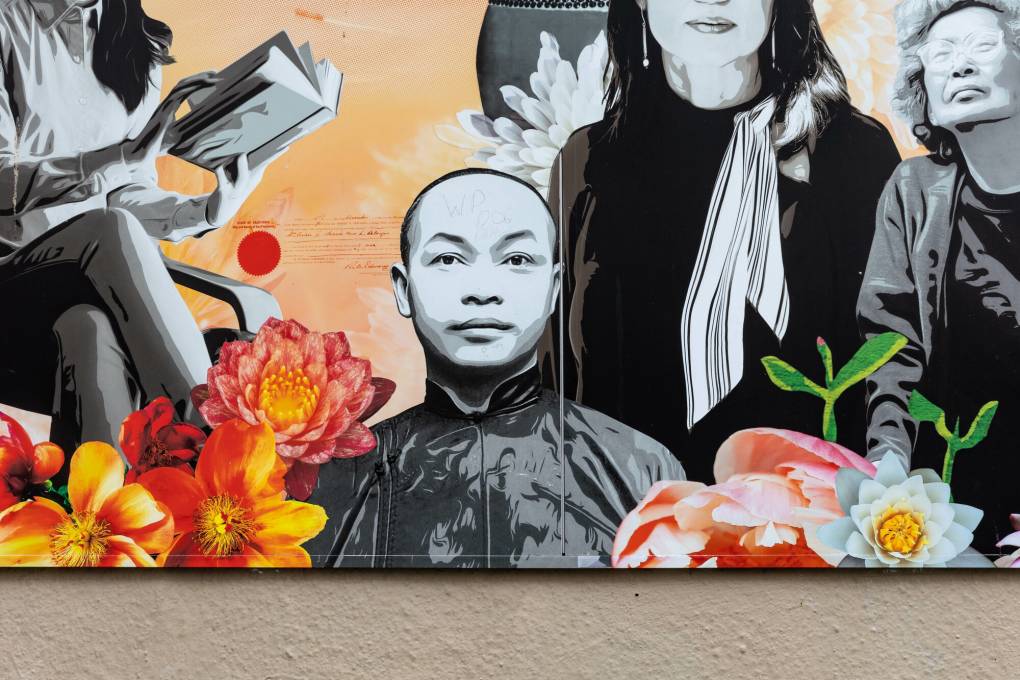
"caption": "Wong Kim Ark, who was born in San Francisco to parents who were Chinese immigrants and whose Supreme Court case established birthright citizenship, is one of the individuals featured on the Asian American Community Heroes mural on Nov. 19, 2024. The Chinese Culture Center led the creation of the mural, which was painted by local artist Anne Marie Lapitan, with the input of neighborhood youth.",
"credit": "Gina Castro/KQED",
"altTag": "A close-up of a mural that features a young man wearing a traditional robe with his hair pulled back in a braid.",
"description": null,
"imgSizes": {
"medium": {
"file": "https://cdn.kqed.org/wp-content/uploads/sites/10/2024/11/20241119_BirthrightCitizenshipExplainer_GC-16_qed-800x533.jpg",
"width": 800,
"height": 533,
"mimeType": "image/jpeg"
},
"large": {
"file": "https://cdn.kqed.org/wp-content/uploads/sites/10/2024/11/20241119_BirthrightCitizenshipExplainer_GC-16_qed-1020x680.jpg",
"width": 1020,
"height": 680,
"mimeType": "image/jpeg"
},
"thumbnail": {
"file": "https://cdn.kqed.org/wp-content/uploads/sites/10/2024/11/20241119_BirthrightCitizenshipExplainer_GC-16_qed-160x107.jpg",
"width": 160,
"height": 107,
"mimeType": "image/jpeg"
},
"1536x1536": {
"file": "https://cdn.kqed.org/wp-content/uploads/sites/10/2024/11/20241119_BirthrightCitizenshipExplainer_GC-16_qed-1536x1024.jpg",
"width": 1536,
"height": 1024,
"mimeType": "image/jpeg"
},
"post-thumbnail": {
"file": "https://cdn.kqed.org/wp-content/uploads/sites/10/2024/11/20241119_BirthrightCitizenshipExplainer_GC-16_qed-672x372.jpg",
"width": 672,
"height": 372,
"mimeType": "image/jpeg"
},
"twentyfourteen-full-width": {
"file": "https://cdn.kqed.org/wp-content/uploads/sites/10/2024/11/20241119_BirthrightCitizenshipExplainer_GC-16_qed-1038x576.jpg",
"width": 1038,
"height": 576,
"mimeType": "image/jpeg"
},
"full-width": {
"file": "https://cdn.kqed.org/wp-content/uploads/sites/10/2024/11/20241119_BirthrightCitizenshipExplainer_GC-16_qed-1920x1280.jpg",
"width": 1920,
"height": 1280,
"mimeType": "image/jpeg"
},
"kqedFullSize": {
"file": "https://cdn.kqed.org/wp-content/uploads/sites/10/2024/11/20241119_BirthrightCitizenshipExplainer_GC-16_qed.jpg",
"width": 2000,
"height": 1333
}
},
"isLoading": false,
"fetchFailed": false
},
"news_12023352": {
"type": "attachments",
"id": "news_12023352",
"meta": {
"index": "attachments_1716263798",
"site": "news",
"id": "12023352",
"found": true
},
"title": "npr.brightspotcdn copy",
"publishDate": 1737498084,
"status": "inherit",
"parent": 12023351,
"modified": 1737498247,
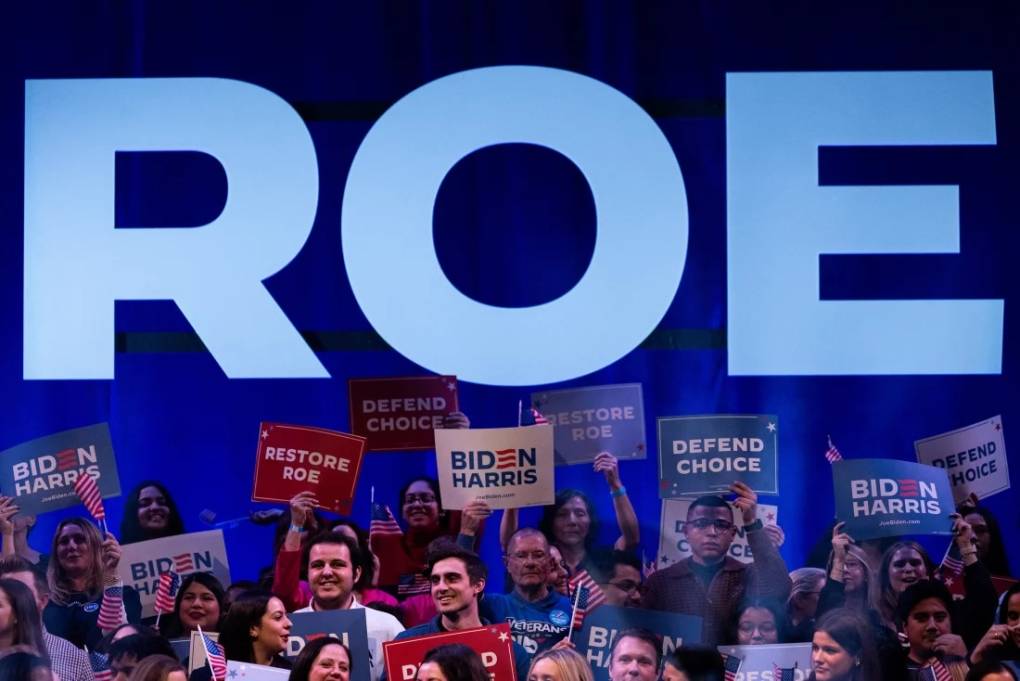
"caption": "A website created by the Biden administration just after the Supreme Court overturned Roe v. Wade has been shut down by the Trump administration. A Biden-Harris campaign rally in January 2024 is pictured.",
"credit": "Bloomberg via Getty Images",
"altTag": null,
"description": null,
"imgSizes": {
"medium": {
"file": "https://cdn.kqed.org/wp-content/uploads/sites/10/2025/01/npr.brightspotcdn-copy-50-800x534.jpg",
"width": 800,
"height": 534,
"mimeType": "image/jpeg"
},
"large": {
"file": "https://cdn.kqed.org/wp-content/uploads/sites/10/2025/01/npr.brightspotcdn-copy-50-1020x681.jpg",
"width": 1020,
"height": 681,
"mimeType": "image/jpeg"
},
"thumbnail": {
"file": "https://cdn.kqed.org/wp-content/uploads/sites/10/2025/01/npr.brightspotcdn-copy-50-160x107.jpg",
"width": 160,
"height": 107,
"mimeType": "image/jpeg"
},
"post-thumbnail": {
"file": "https://cdn.kqed.org/wp-content/uploads/sites/10/2025/01/npr.brightspotcdn-copy-50-672x372.jpg",
"width": 672,
"height": 372,
"mimeType": "image/jpeg"
},
"twentyfourteen-full-width": {
"file": "https://cdn.kqed.org/wp-content/uploads/sites/10/2025/01/npr.brightspotcdn-copy-50-1038x576.jpg",
"width": 1038,
"height": 576,
"mimeType": "image/jpeg"
},
"kqedFullSize": {
"file": "https://cdn.kqed.org/wp-content/uploads/sites/10/2025/01/npr.brightspotcdn-copy-50.jpg",
"width": 1100,
"height": 734
}
},
"isLoading": false,
"fetchFailed": false
},
"news_12023285": {
"type": "attachments",
"id": "news_12023285",
"meta": {
"index": "attachments_1716263798",
"site": "news",
"id": "12023285",
"found": true
},
"title": "Aerial Photos of California's Delta",
"publishDate": 1737488226,
"status": "inherit",
"parent": 12023248,
"modified": 1737502464,
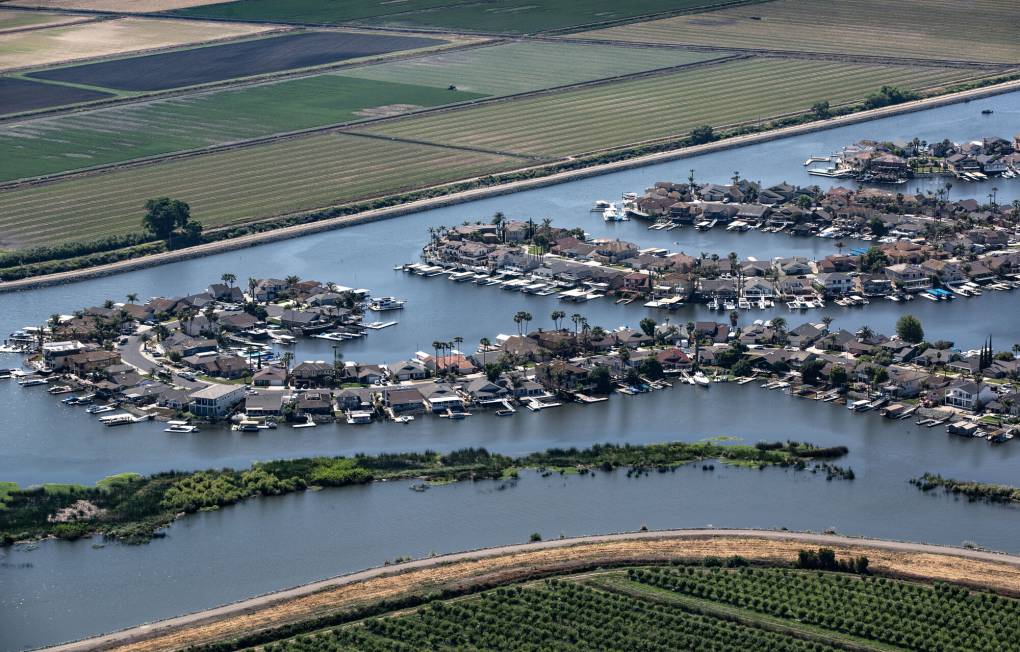
"caption": "Discovery Bay, a waterfront community of 15,000 people built on a network of man-made dikes and surrounded by freshwater, on May 22, 2023, in California. The Sacramento San Joaquin River Delta, or California Delta, is an expansive inland river delta and estuary in Northern California at the western edge of the Central Valley created by the confluence of the Sacramento and San Joaquin rivers. The Delta is just east of where the rivers enter Suisun Bay, which flows into San Francisco Bay, then the Pacific Ocean via San Pablo Bay.",
"credit": "George Rose/Getty Images",
"altTag": null,
"description": null,
"imgSizes": {
"medium": {
"file": "https://cdn.kqed.org/wp-content/uploads/sites/10/2025/01/GettyImages-1495481816_qed-800x511.jpg",
"width": 800,
"height": 511,
"mimeType": "image/jpeg"
},
"large": {
"file": "https://cdn.kqed.org/wp-content/uploads/sites/10/2025/01/GettyImages-1495481816_qed-1020x652.jpg",
"width": 1020,
"height": 652,
"mimeType": "image/jpeg"
},
"thumbnail": {
"file": "https://cdn.kqed.org/wp-content/uploads/sites/10/2025/01/GettyImages-1495481816_qed-160x102.jpg",
"width": 160,
"height": 102,
"mimeType": "image/jpeg"
},
"1536x1536": {
"file": "https://cdn.kqed.org/wp-content/uploads/sites/10/2025/01/GettyImages-1495481816_qed-1536x982.jpg",
"width": 1536,
"height": 982,
"mimeType": "image/jpeg"
},
"post-thumbnail": {
"file": "https://cdn.kqed.org/wp-content/uploads/sites/10/2025/01/GettyImages-1495481816_qed-672x372.jpg",
"width": 672,
"height": 372,
"mimeType": "image/jpeg"
},
"twentyfourteen-full-width": {
"file": "https://cdn.kqed.org/wp-content/uploads/sites/10/2025/01/GettyImages-1495481816_qed-1038x576.jpg",
"width": 1038,
"height": 576,
"mimeType": "image/jpeg"
},
"full-width": {
"file": "https://cdn.kqed.org/wp-content/uploads/sites/10/2025/01/GettyImages-1495481816_qed-1920x1227.jpg",
"width": 1920,
"height": 1227,
"mimeType": "image/jpeg"
},
"kqedFullSize": {
"file": "https://cdn.kqed.org/wp-content/uploads/sites/10/2025/01/GettyImages-1495481816_qed.jpg",
"width": 2000,
"height": 1278
}
},
"isLoading": false,
"fetchFailed": false
},
"news_12023051": {
"type": "attachments",
"id": "news_12023051",
"meta": {
"index": "attachments_1716263798",
"site": "news",
"id": "12023051",
"found": true
},
"title": "20250118_Peoples-March_DMB_00570",
"publishDate": 1737308023,
"status": "inherit",
"parent": 0,
"modified": 1737484871,
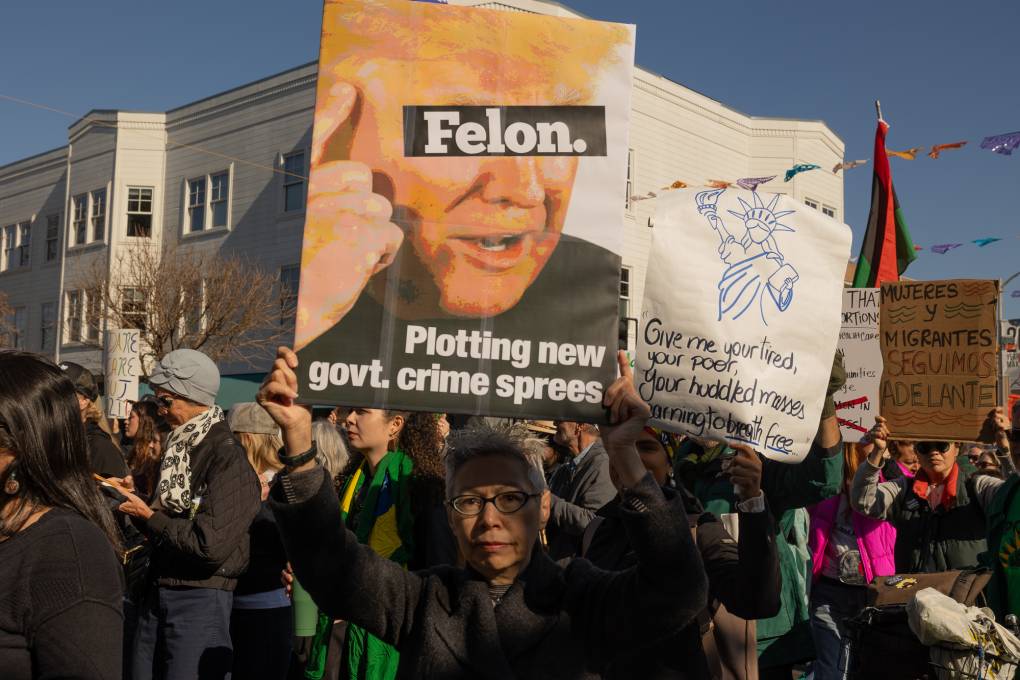
"caption": "Connie Jeung-Mills, of San Francisco, holds a sign with President Trump's face on it while marching with hundreds along 24th Street for the People’s March in San Francisco’s Mission District on Jan. 18, 2025. The protestors represent several causes, including the War in Gaza, Women’s Rights, targeting of undocumented people, minorities, and more, part of a nationwide day of action protesting President-elect Donald Trump’s second term.",
"credit": "David M. Barreda/KQED",
"altTag": "An older woman wearing glasses holds a sign in a large crowd of a man pointing to his head with the words \"Felon. Plotting govt crime sprees.\"",
"description": null,
"imgSizes": {
"medium": {
"file": "https://cdn.kqed.org/wp-content/uploads/sites/10/2025/01/20250118_Peoples-March_DMB_00570-800x533.jpg",
"width": 800,
"height": 533,
"mimeType": "image/jpeg"
},
"large": {
"file": "https://cdn.kqed.org/wp-content/uploads/sites/10/2025/01/20250118_Peoples-March_DMB_00570-1020x680.jpg",
"width": 1020,
"height": 680,
"mimeType": "image/jpeg"
},
"thumbnail": {
"file": "https://cdn.kqed.org/wp-content/uploads/sites/10/2025/01/20250118_Peoples-March_DMB_00570-160x107.jpg",
"width": 160,
"height": 107,
"mimeType": "image/jpeg"
},
"1536x1536": {
"file": "https://cdn.kqed.org/wp-content/uploads/sites/10/2025/01/20250118_Peoples-March_DMB_00570-1536x1024.jpg",
"width": 1536,
"height": 1024,
"mimeType": "image/jpeg"
},
"post-thumbnail": {
"file": "https://cdn.kqed.org/wp-content/uploads/sites/10/2025/01/20250118_Peoples-March_DMB_00570-672x372.jpg",
"width": 672,
"height": 372,
"mimeType": "image/jpeg"
},
"twentyfourteen-full-width": {
"file": "https://cdn.kqed.org/wp-content/uploads/sites/10/2025/01/20250118_Peoples-March_DMB_00570-1038x576.jpg",
"width": 1038,
"height": 576,
"mimeType": "image/jpeg"
},
"full-width": {
"file": "https://cdn.kqed.org/wp-content/uploads/sites/10/2025/01/20250118_Peoples-March_DMB_00570-1920x1280.jpg",
"width": 1920,
"height": 1280,
"mimeType": "image/jpeg"
},
"kqedFullSize": {
"file": "https://cdn.kqed.org/wp-content/uploads/sites/10/2025/01/20250118_Peoples-March_DMB_00570.jpg",
"width": 2000,
"height": 1333
}
},
"isLoading": false,
"fetchFailed": false
},
"news_12023105": {
"type": "attachments",
"id": "news_12023105",
"meta": {
"index": "attachments_1716263798",
"site": "news",
"id": "12023105",
"found": true
},
"title": "060324-CBP-Arrest-GETTY-CM-1",
"publishDate": 1737392456,
"status": "inherit",
"parent": 12023104,
"modified": 1737392496,
"caption": "Immigrant advocates are closely watching California sheriffs to see how they'll uphold the state's sanctuary law in a new Trump administration. Here, people seeking asylum are detained by border patrol after crossing the U.S. and Mexico border near Campo on June 3, 2024.",
"credit": "Robert Gauthier/Los Angeles Times via Getty Images",
"altTag": null,
"description": null,
"imgSizes": {
"medium": {
"file": "https://cdn.kqed.org/wp-content/uploads/sites/10/2025/01/060324-CBP-Arrest-GETTY-CM-1-800x533.jpg",
"width": 800,
"height": 533,
"mimeType": "image/jpeg"
},
"large": {
"file": "https://cdn.kqed.org/wp-content/uploads/sites/10/2025/01/060324-CBP-Arrest-GETTY-CM-1-1020x680.jpg",
"width": 1020,
"height": 680,
"mimeType": "image/jpeg"
},
"thumbnail": {
"file": "https://cdn.kqed.org/wp-content/uploads/sites/10/2025/01/060324-CBP-Arrest-GETTY-CM-1-160x107.jpg",
"width": 160,
"height": 107,
"mimeType": "image/jpeg"
},
"1536x1536": {
"file": "https://cdn.kqed.org/wp-content/uploads/sites/10/2025/01/060324-CBP-Arrest-GETTY-CM-1-1536x1024.jpg",
"width": 1536,
"height": 1024,
"mimeType": "image/jpeg"
},
"post-thumbnail": {
"file": "https://cdn.kqed.org/wp-content/uploads/sites/10/2025/01/060324-CBP-Arrest-GETTY-CM-1-672x372.jpg",
"width": 672,
"height": 372,
"mimeType": "image/jpeg"
},
"twentyfourteen-full-width": {
"file": "https://cdn.kqed.org/wp-content/uploads/sites/10/2025/01/060324-CBP-Arrest-GETTY-CM-1-1038x576.jpg",
"width": 1038,
"height": 576,
"mimeType": "image/jpeg"
},
"full-width": {
"file": "https://cdn.kqed.org/wp-content/uploads/sites/10/2025/01/060324-CBP-Arrest-GETTY-CM-1-1920x1280.jpg",
"width": 1920,
"height": 1280,
"mimeType": "image/jpeg"
},
"kqedFullSize": {
"file": "https://cdn.kqed.org/wp-content/uploads/sites/10/2025/01/060324-CBP-Arrest-GETTY-CM-1.jpg",
"width": 2000,
"height": 1333
}
},
"isLoading": false,
"fetchFailed": false
},
"news_12023169": {
"type": "attachments",
"id": "news_12023169",
"meta": {
"index": "attachments_1716263798",
"site": "news",
"id": "12023169",
"found": true
},
"title": "US-POLITICS-TRUMP-INAUGURATION",
"publishDate": 1737414524,
"status": "inherit",
"parent": 12023167,
"modified": 1742924872,
"caption": "U.S. President Donald Trump delivers his inaugural address after being sworn in as the 47th president of the United States inside the Rotunda of the U.S. Capitol in Washington, D.C., on Jan. 20, 2025.",
"credit": "Kenny Holston/Pool/AFP via Getty Images",
"altTag": null,
"description": null,
"imgSizes": {
"medium": {
"file": "https://cdn.kqed.org/wp-content/uploads/sites/10/2025/01/GettyImages-2194375050-800x533.jpg",
"width": 800,
"height": 533,
"mimeType": "image/jpeg"
},
"large": {
"file": "https://cdn.kqed.org/wp-content/uploads/sites/10/2025/01/GettyImages-2194375050-1020x680.jpg",
"width": 1020,
"height": 680,
"mimeType": "image/jpeg"
},
"thumbnail": {
"file": "https://cdn.kqed.org/wp-content/uploads/sites/10/2025/01/GettyImages-2194375050-160x107.jpg",
"width": 160,
"height": 107,
"mimeType": "image/jpeg"
},
"1536x1536": {
"file": "https://cdn.kqed.org/wp-content/uploads/sites/10/2025/01/GettyImages-2194375050-1536x1024.jpg",
"width": 1536,
"height": 1024,
"mimeType": "image/jpeg"
},
"2048x2048": {
"file": "https://cdn.kqed.org/wp-content/uploads/sites/10/2025/01/GettyImages-2194375050-2048x1365.jpg",
"width": 2048,
"height": 1365,
"mimeType": "image/jpeg"
},
"post-thumbnail": {
"file": "https://cdn.kqed.org/wp-content/uploads/sites/10/2025/01/GettyImages-2194375050-672x372.jpg",
"width": 672,
"height": 372,
"mimeType": "image/jpeg"
},
"twentyfourteen-full-width": {
"file": "https://cdn.kqed.org/wp-content/uploads/sites/10/2025/01/GettyImages-2194375050-1038x576.jpg",
"width": 1038,
"height": 576,
"mimeType": "image/jpeg"
},
"full-width": {
"file": "https://cdn.kqed.org/wp-content/uploads/sites/10/2025/01/GettyImages-2194375050-1920x1280.jpg",
"width": 1920,
"height": 1280,
"mimeType": "image/jpeg"
},
"kqedFullSize": {
"file": "https://cdn.kqed.org/wp-content/uploads/sites/10/2025/01/GettyImages-2194375050-scaled-e1742924801707.jpg",
"width": 2000,
"height": 1334
}
},
"isLoading": false,
"fetchFailed": false
},
"news_12023131": {
"type": "attachments",
"id": "news_12023131",
"meta": {
"index": "attachments_1716263798",
"site": "news",
"id": "12023131",
"found": true
},
"title": "The Inauguration Of Donald J. Trump As The 47th President",
"publishDate": 1737401213,
"status": "inherit",
"parent": 12023124,
"modified": 1737401243,
"caption": "President Donald Trump speaks during the 60th Presidential Inauguration in the Rotunda of the U.S. Capitol in Washington, on Monday, Jan. 20, 2025.",
"credit": "Chip Somodevilla/Pool Photo via AP",
"altTag": null,
"description": null,
"imgSizes": {
"medium": {
"file": "https://cdn.kqed.org/wp-content/uploads/sites/10/2025/01/DonaldTrumpInaugurationAP-800x533.jpg",
"width": 800,
"height": 533,
"mimeType": "image/jpeg"
},
"large": {
"file": "https://cdn.kqed.org/wp-content/uploads/sites/10/2025/01/DonaldTrumpInaugurationAP-1020x680.jpg",
"width": 1020,
"height": 680,
"mimeType": "image/jpeg"
},
"thumbnail": {
"file": "https://cdn.kqed.org/wp-content/uploads/sites/10/2025/01/DonaldTrumpInaugurationAP-160x107.jpg",
"width": 160,
"height": 107,
"mimeType": "image/jpeg"
},
"1536x1536": {
"file": "https://cdn.kqed.org/wp-content/uploads/sites/10/2025/01/DonaldTrumpInaugurationAP-1536x1024.jpg",
"width": 1536,
"height": 1024,
"mimeType": "image/jpeg"
},
"post-thumbnail": {
"file": "https://cdn.kqed.org/wp-content/uploads/sites/10/2025/01/DonaldTrumpInaugurationAP-672x372.jpg",
"width": 672,
"height": 372,
"mimeType": "image/jpeg"
},
"twentyfourteen-full-width": {
"file": "https://cdn.kqed.org/wp-content/uploads/sites/10/2025/01/DonaldTrumpInaugurationAP-1038x576.jpg",
"width": 1038,
"height": 576,
"mimeType": "image/jpeg"
},
"full-width": {
"file": "https://cdn.kqed.org/wp-content/uploads/sites/10/2025/01/DonaldTrumpInaugurationAP-1920x1280.jpg",
"width": 1920,
"height": 1280,
"mimeType": "image/jpeg"
},
"kqedFullSize": {
"file": "https://cdn.kqed.org/wp-content/uploads/sites/10/2025/01/DonaldTrumpInaugurationAP.jpg",
"width": 2000,
"height": 1333
}
},
"isLoading": false,
"fetchFailed": false
}
},
"audioPlayerReducer": {
"postId": "stream_live",
"isPaused": true,
"isPlaying": false,
"pfsActive": false,
"pledgeModalIsOpen": true,
"playerDrawerIsOpen": false,
"liveAudioPlayStartedAt": 0,
"liveAudioPlayContext": ""
},
"authorsReducer": {
"byline_news_12023442": {
"type": "authors",
"id": "byline_news_12023442",
"meta": {
"override": true
},
"slug": "byline_news_12023442",
"name": "Olga R. Rodriguez, Moriah Balingit, Bianca Vázquez Toness and Jocelyn Gecker, Associated Press",
"isLoading": false
},
"byline_news_12023351": {
"type": "authors",
"id": "byline_news_12023351",
"meta": {
"override": true
},
"slug": "byline_news_12023351",
"name": "\u003ca href=\"https://www.npr.org/people/349308023/selena-simmons-duffin\">Selena Simmons-Duffin\u003c/a>, NPR",
"isLoading": false
},
"byline_news_12023104": {
"type": "authors",
"id": "byline_news_12023104",
"meta": {
"override": true
},
"slug": "byline_news_12023104",
"name": "Nigel Duara and Tomas Apodaca, CalMatters",
"isLoading": false
},
"gmarzorati": {
"type": "authors",
"id": "227",
"meta": {
"index": "authors_1716337520",
"id": "227",
"found": true
},
"name": "Guy Marzorati",
"firstName": "Guy",
"lastName": "Marzorati",
"slug": "gmarzorati",
"email": "gmarzorati@KQED.org",
"display_author_email": true,
"staff_mastheads": [
"news"
],
"title": "Correspondent",
"bio": "Guy Marzorati is a correspondent on KQED's California Politics and Government Desk, based in San Jose. A graduate of Santa Clara University, Guy joined KQED in 2013. He reports on state and local politics and produces KQED's digital voter guide.",
"avatar": "https://secure.gravatar.com/avatar/e7038b8dbfd55b104369b76b1cd0b9de?s=600&d=blank&r=g",
"twitter": "guymarzorati",
"facebook": null,
"instagram": null,
"linkedin": null,
"sites": [
{
"site": "",
"roles": [
"editor"
]
},
{
"site": "news",
"roles": [
"editor"
]
},
{
"site": "science",
"roles": [
"editor"
]
},
{
"site": "forum",
"roles": [
"editor"
]
},
{
"site": "elections",
"roles": [
"editor"
]
},
{
"site": "liveblog",
"roles": [
"editor"
]
}
],
"headData": {
"title": "Guy Marzorati | KQED",
"description": "Correspondent",
"ogImgSrc": "https://secure.gravatar.com/avatar/e7038b8dbfd55b104369b76b1cd0b9de?s=600&d=blank&r=g",
"twImgSrc": "https://secure.gravatar.com/avatar/e7038b8dbfd55b104369b76b1cd0b9de?s=600&d=blank&r=g"
},
"isLoading": false,
"link": "/author/gmarzorati"
},
"rachael-myrow": {
"type": "authors",
"id": "251",
"meta": {
"index": "authors_1716337520",
"id": "251",
"found": true
},
"name": "Rachael Myrow",
"firstName": "Rachael",
"lastName": "Myrow",
"slug": "rachael-myrow",
"email": "rmyrow@kqed.org",
"display_author_email": true,
"staff_mastheads": [
"news"
],
"title": "Senior Editor of KQED's Silicon Valley News Desk",
"bio": "• I write and edit stories about how Silicon Valley power and policies shape everyday life in California. I’m also passionate about making Bay Area history and culture more accessible to a broad public. • I’ve been a journalist for most of my life, starting in high school with The Franklin Press in Los Angeles, where I grew up. While earning my first degree in English at UC Berkeley, I got my start in public radio at KALX-FM. After completing a second degree in journalism at Cal, I landed my first professional job at Marketplace, then moved on to KPCC (now LAist), and then KQED, where I hosted The California Report for more than seven years. • My reporting has appeared on NPR, The World, WBUR’s \u003ci>Here & Now\u003c/i>, and the BBC. I also guest host for KQED’s \u003ci>Forum\u003c/i>, as well as the Commonwealth Club in San Francisco. • I speak periodically on media, democracy and technology issues, and do voiceover work for documentaries and educational video projects. • Outside of the studio, you'll find me hiking Bay Area trails and whipping up Insta-ready meals in my kitchen. • I do not accept gifts, money, or favors from anyone connected to my reporting, I don't pay people for information, and I do not support or donate to political causes. • I strive to treat the people I report on with fairness, honesty, and respect. I also recognize there are often multiple sides to a story and work to verify information through multiple sources and documentation. If I get something wrong, I correct it.",
"avatar": "https://secure.gravatar.com/avatar/87bf8cb5874e045cdff430523a6d48b1?s=600&d=blank&r=g",
"twitter": "rachaelmyrow",
"facebook": null,
"instagram": null,
"linkedin": "https://www.linkedin.com/in/rachaelmyrow/",
"sites": [
{
"site": "arts",
"roles": [
"administrator"
]
},
{
"site": "news",
"roles": [
"edit_others_posts",
"editor"
]
},
{
"site": "futureofyou",
"roles": [
"editor"
]
},
{
"site": "bayareabites",
"roles": [
"editor"
]
},
{
"site": "stateofhealth",
"roles": [
"editor"
]
},
{
"site": "science",
"roles": [
"editor"
]
},
{
"site": "food",
"roles": [
"editor"
]
},
{
"site": "forum",
"roles": [
"editor"
]
},
{
"site": "liveblog",
"roles": [
"author"
]
}
],
"headData": {
"title": "Rachael Myrow | KQED",
"description": "Senior Editor of KQED's Silicon Valley News Desk",
"ogImgSrc": "https://secure.gravatar.com/avatar/87bf8cb5874e045cdff430523a6d48b1?s=600&d=blank&r=g",
"twImgSrc": "https://secure.gravatar.com/avatar/87bf8cb5874e045cdff430523a6d48b1?s=600&d=blank&r=g"
},
"isLoading": false,
"link": "/author/rachael-myrow"
},
"scottshafer": {
"type": "authors",
"id": "255",
"meta": {
"index": "authors_1716337520",
"id": "255",
"found": true
},
"name": "Scott Shafer",
"firstName": "Scott",
"lastName": "Shafer",
"slug": "scottshafer",
"email": "sshafer@kqed.org",
"display_author_email": false,
"staff_mastheads": [
"news"
],
"title": "KQED Contributor",
"bio": "Scott Shafer is a senior editor with the KQED Politics and Government desk. He is co-host of Political Breakdown, the award-winning radio show and podcast with a personal take on the world of politics. Scott came to KQED in 1998 to host the statewide\u003cem> California Report\u003c/em>. Prior to that he had extended stints in politics and government\u003cem>.\u003c/em> He uses that inside experience at KQED in his, reporting, hosting and analysis for the politics desk. Scott collaborated \u003cem>Political Breakdown a\u003c/em>nd on \u003cem>The Political Mind of Jerry Brown, \u003c/em>an eight-part series about the life and extraordinary political career of the former governor. For fun, he plays water polo with the San Francisco Tsunami.",
"avatar": "https://secure.gravatar.com/avatar/a62ebae45b79d7aed1a39a0e3bf68104?s=600&d=blank&r=g",
"twitter": "scottshafer",
"bluesky": null,
"facebook": null,
"instagram": null,
"linkedin": null,
"sites": [
{
"site": "news",
"roles": [
"editor"
]
},
{
"site": "stateofhealth",
"roles": [
"author"
]
},
{
"site": "science",
"roles": [
"author"
]
},
{
"site": "forum",
"roles": [
"subscriber"
]
},
{
"site": "liveblog",
"roles": [
"author"
]
}
],
"headData": {
"title": "Scott Shafer | KQED",
"description": "KQED Contributor",
"ogImgSrc": "https://secure.gravatar.com/avatar/a62ebae45b79d7aed1a39a0e3bf68104?s=600&d=blank&r=g",
"twImgSrc": "https://secure.gravatar.com/avatar/a62ebae45b79d7aed1a39a0e3bf68104?s=600&d=blank&r=g"
},
"isLoading": false,
"link": "/author/scottshafer"
},
"tychehendricks": {
"type": "authors",
"id": "259",
"meta": {
"index": "authors_1716337520",
"id": "259",
"found": true
},
"name": "Tyche Hendricks",
"firstName": "Tyche",
"lastName": "Hendricks",
"slug": "tychehendricks",
"email": "thendricks@kqed.org",
"display_author_email": true,
"staff_mastheads": [
"news"
],
"title": "KQED Senior Editor, Immigration",
"bio": "\u003cspan style=\"font-weight: 400;\">Tyche Hendricks is KQED’s senior editor for immigration, leading coverage of the policy and politics that affect California’s immigrant communities. Her work for KQED’s radio and online audiences is also carried on NPR and other national outlets. She has been recognized with awards from the Radio and Television News Directors Association, the Society for Professional Journalists; the Education Writers Association; the Best of the West and the National Federation of Community Broadcasters. Before joining KQED in 2010, Tyche spent more than a dozen years as a newspaper reporter, notably at the \u003c/span>\u003ci>\u003cspan style=\"font-weight: 400;\">San Francisco Chronicle\u003c/span>\u003c/i>\u003cspan style=\"font-weight: 400;\">. At different times she has covered criminal justice, government and politics and urban planning. Tyche has taught in the MFA Creative Writing program at the University of San Francisco and at UC Berkeley’s Graduate School of Journalism, where she was co-director of a national immigration symposium for professional journalists. She is the author of \u003c/span>\u003ci>\u003cspan style=\"font-weight: 400;\">The Wind Doesn't Need a Passport: Stories from the U.S.-Mexico Borderlands\u003c/span>\u003c/i>\u003cspan style=\"font-weight: 400;\"> (University of California Press). \u003c/span>",
"avatar": "https://secure.gravatar.com/avatar/b8ee458e2731c2d43df86882ce17267e?s=600&d=blank&r=g",
"twitter": "tychehendricks",
"facebook": null,
"instagram": null,
"linkedin": null,
"sites": [
{
"site": "news",
"roles": [
"editor"
]
},
{
"site": "stateofhealth",
"roles": [
"editor"
]
}
],
"headData": {
"title": "Tyche Hendricks | KQED",
"description": "KQED Senior Editor, Immigration",
"ogImgSrc": "https://secure.gravatar.com/avatar/b8ee458e2731c2d43df86882ce17267e?s=600&d=blank&r=g",
"twImgSrc": "https://secure.gravatar.com/avatar/b8ee458e2731c2d43df86882ce17267e?s=600&d=blank&r=g"
},
"isLoading": false,
"link": "/author/tychehendricks"
},
"mlagos": {
"type": "authors",
"id": "3239",
"meta": {
"index": "authors_1716337520",
"id": "3239",
"found": true
},
"name": "Marisa Lagos",
"firstName": "Marisa",
"lastName": "Lagos",
"slug": "mlagos",
"email": "mlagos@kqed.org",
"display_author_email": false,
"staff_mastheads": [
"news"
],
"title": "KQED Contributor",
"bio": "Marisa Lagos is a correspondent for KQED’s California Politics and Government Desk and co-hosts the award-winning show and podcast, Political Breakdown. At KQED, Lagos also conducts reporting, analysis and investigations into state, local and national politics for radio, TV, online and onstage. In 2022, she and co-host, Scott Shafer, moderated the only gubernatorial debate in California. In 2020, the \u003ci>Washington Post\u003c/i> named her one of the top political journalists in California; she was nominated for a Peabody and won several other awards for her work investigating the 2017 California wildfires. She has worked at the \u003ci>San Francisco Chronicle\u003c/i>, \u003ci>San Francisco Examiner\u003c/i> and \u003ci>Los Angeles Times\u003c/i>. A UC Santa Barbara graduate, she lives in San Francisco with her two sons and husband.",
"avatar": "https://secure.gravatar.com/avatar/a261a0d3696fc066871ef96b85b5e7d2?s=600&d=blank&r=g",
"twitter": "@mlagos",
"facebook": null,
"instagram": null,
"linkedin": null,
"sites": [
{
"site": "arts",
"roles": [
"author"
]
},
{
"site": "news",
"roles": [
"editor"
]
},
{
"site": "science",
"roles": [
"editor"
]
},
{
"site": "forum",
"roles": [
"author"
]
},
{
"site": "liveblog",
"roles": [
"author"
]
}
],
"headData": {
"title": "Marisa Lagos | KQED",
"description": "KQED Contributor",
"ogImgSrc": "https://secure.gravatar.com/avatar/a261a0d3696fc066871ef96b85b5e7d2?s=600&d=blank&r=g",
"twImgSrc": "https://secure.gravatar.com/avatar/a261a0d3696fc066871ef96b85b5e7d2?s=600&d=blank&r=g"
},
"isLoading": false,
"link": "/author/mlagos"
},
"ecruzguevarra": {
"type": "authors",
"id": "8654",
"meta": {
"index": "authors_1716337520",
"id": "8654",
"found": true
},
"name": "Ericka Cruz Guevarra",
"firstName": "Ericka",
"lastName": "Cruz Guevarra",
"slug": "ecruzguevarra",
"email": "ecruzguevarra@kqed.org",
"display_author_email": true,
"staff_mastheads": [
"news"
],
"title": "Producer, The Bay Podcast",
"bio": "Ericka Cruz Guevarra is host of \u003ca href=\"https://www.kqed.org/podcasts/thebay\">\u003cem>The Bay\u003c/em>\u003c/a> podcast at KQED. Before host, she was the show’s producer. Her work in that capacity includes a three-part reported series on policing in Vallejo, which won a 2020 excellence in journalism award from the Society of Professional Journalists. Ericka has worked as a breaking news reporter at Oregon Public Broadcasting, helped produce the Code Switch podcast, and was KQED’s inaugural Raul Ramirez Diversity Fund intern. She’s also an alumna of NPR’s Next Generation Radio program. Send her an email if you have strong feelings about whether Fairfield and Suisun City are the Bay. Ericka is represented by SAG-AFTRA.",
"avatar": "https://secure.gravatar.com/avatar/25e5ab8d3d53fad2dcc7bb2b5c506b1a?s=600&d=blank&r=g",
"twitter": "NotoriousECG",
"facebook": null,
"instagram": null,
"linkedin": null,
"sites": [
{
"site": "arts",
"roles": [
"subscriber"
]
},
{
"site": "news",
"roles": [
"editor",
"manage_categories"
]
},
{
"site": "futureofyou",
"roles": [
"subscriber"
]
},
{
"site": "stateofhealth",
"roles": [
"subscriber"
]
},
{
"site": "science",
"roles": [
"editor"
]
},
{
"site": "forum",
"roles": [
"subscriber"
]
}
],
"headData": {
"title": "Ericka Cruz Guevarra | KQED",
"description": "Producer, The Bay Podcast",
"ogImgSrc": "https://secure.gravatar.com/avatar/25e5ab8d3d53fad2dcc7bb2b5c506b1a?s=600&d=blank&r=g",
"twImgSrc": "https://secure.gravatar.com/avatar/25e5ab8d3d53fad2dcc7bb2b5c506b1a?s=600&d=blank&r=g"
},
"isLoading": false,
"link": "/author/ecruzguevarra"
},
"amontecillo": {
"type": "authors",
"id": "11649",
"meta": {
"index": "authors_1716337520",
"id": "11649",
"found": true
},
"name": "Alan Montecillo",
"firstName": "Alan",
"lastName": "Montecillo",
"slug": "amontecillo",
"email": "amontecillo@kqed.org",
"display_author_email": false,
"staff_mastheads": [
"news"
],
"title": "KQED Contributor",
"bio": "Alan Montecillo is the senior editor of \u003cem>\u003ca href=\"http://kqed.org/thebay\">The Bay\u003c/a>, \u003c/em> KQED's local news podcast. Before moving to the Bay Area, he worked as a senior talk show producer for WILL in Champaign-Urbana, Illinois and at Oregon Public Broadcasting in Portland, Oregon. He has won journalism awards from the Society of Professional Journalists Northern California, the Public Media Journalists Association, The Signal Awards, and has also received a regional Edward R. Murrow award. Alan is a Filipino American from Hong Kong and a graduate of Reed College.",
"avatar": "https://secure.gravatar.com/avatar/d5e4e7a76481969ccba76f4e2b5ccabc?s=600&d=blank&r=g",
"twitter": "alanmontecillo",
"facebook": null,
"instagram": null,
"linkedin": null,
"sites": [
{
"site": "",
"roles": [
"editor"
]
},
{
"site": "news",
"roles": [
"editor",
"manage_categories"
]
}
],
"headData": {
"title": "Alan Montecillo | KQED",
"description": "KQED Contributor",
"ogImgSrc": "https://secure.gravatar.com/avatar/d5e4e7a76481969ccba76f4e2b5ccabc?s=600&d=blank&r=g",
"twImgSrc": "https://secure.gravatar.com/avatar/d5e4e7a76481969ccba76f4e2b5ccabc?s=600&d=blank&r=g"
},
"isLoading": false,
"link": "/author/amontecillo"
},
"ccabreralomeli": {
"type": "authors",
"id": "11708",
"meta": {
"index": "authors_1716337520",
"id": "11708",
"found": true
},
"name": "Carlos Cabrera-Lomelí",
"firstName": "Carlos",
"lastName": "Cabrera-Lomelí",
"slug": "ccabreralomeli",
"email": "ccabreralomeli@KQED.org",
"display_author_email": true,
"staff_mastheads": [
"news"
],
"title": "Community Reporter",
"bio": "Carlos Cabrera-Lomelí is a community reporter with KQED's digital engagement team. He also reports and co-produces for KQED's bilingual news hub KQED en Español. He grew up in San Francisco's Mission District and has previously worked with Univision, 48 Hills and REFORMA in Mexico City.",
"avatar": "https://secure.gravatar.com/avatar/c309be9665e484f887b818c89e273ecc673004f426f36b24d00a4d813a2e0518?s=600&d=blank&r=g",
"twitter": "@LomeliCabrera",
"bluesky": null,
"facebook": null,
"instagram": null,
"linkedin": null,
"sites": [
{
"site": "arts",
"roles": [
"editor"
]
},
{
"site": "news",
"roles": [
"editor"
]
},
{
"site": "about",
"roles": [
"editor"
]
},
{
"site": "science",
"roles": [
"editor"
]
},
{
"site": "perspectives",
"roles": [
"editor"
]
},
{
"site": "elections",
"roles": [
"editor"
]
},
{
"site": "liveblog",
"roles": [
"contributor"
]
}
],
"headData": {
"title": "Carlos Cabrera-Lomelí | KQED",
"description": "Community Reporter",
"ogImgSrc": "https://secure.gravatar.com/avatar/c309be9665e484f887b818c89e273ecc673004f426f36b24d00a4d813a2e0518?s=600&d=blank&r=g",
"twImgSrc": "https://secure.gravatar.com/avatar/c309be9665e484f887b818c89e273ecc673004f426f36b24d00a4d813a2e0518?s=600&d=blank&r=g"
},
"isLoading": false,
"link": "/author/ccabreralomeli"
},
"eromero": {
"type": "authors",
"id": "11746",
"meta": {
"index": "authors_1716337520",
"id": "11746",
"found": true
},
"name": "Ezra David Romero",
"firstName": "Ezra David",
"lastName": "Romero",
"slug": "eromero",
"email": "eromero@kqed.org",
"display_author_email": true,
"staff_mastheads": [
"news",
"science"
],
"title": "Climate Reporter",
"bio": "Ezra David Romero is a climate reporter for KQED News. He covers the absence and excess of water in the Bay Area — think sea level rise, flooding and drought. For nearly a decade he’s covered how warming temperatures are altering the lives of Californians. He’s reported on farmers worried their pistachio trees aren’t getting enough sleep, families desperate for water, scientists studying dying giant sequoias, and alongside firefighters containing wildfires. His work has appeared on local stations across California and nationally on public radio shows like Morning Edition, Here and Now, All Things Considered and Science Friday. ",
"avatar": "https://secure.gravatar.com/avatar/9c15bb8bab267e058708a9eeaeef16bf?s=600&d=blank&r=g",
"twitter": "ezraromero",
"bluesky": null,
"facebook": null,
"instagram": null,
"linkedin": null,
"sites": [
{
"site": "arts",
"roles": [
"editor"
]
},
{
"site": "news",
"roles": [
"editor"
]
},
{
"site": "science",
"roles": [
"editor"
]
},
{
"site": "liveblog",
"roles": [
"author"
]
}
],
"headData": {
"title": "Ezra David Romero | KQED",
"description": "Climate Reporter",
"ogImgSrc": "https://secure.gravatar.com/avatar/9c15bb8bab267e058708a9eeaeef16bf?s=600&d=blank&r=g",
"twImgSrc": "https://secure.gravatar.com/avatar/9c15bb8bab267e058708a9eeaeef16bf?s=600&d=blank&r=g"
},
"isLoading": false,
"link": "/author/eromero"
},
"jessicakariisa": {
"type": "authors",
"id": "11831",
"meta": {
"index": "authors_1716337520",
"id": "11831",
"found": true
},
"name": "Jessica Kariisa",
"firstName": "Jessica",
"lastName": "Kariisa",
"slug": "jessicakariisa",
"email": "jkariisa@kqed.org",
"display_author_email": false,
"staff_mastheads": [],
"title": "Producer, The Bay",
"bio": "Jessica Kariisa is the producer of The Bay. She first joined KQED as an intern for The California Report Magazine, after which she became an on-call producer. She reported a Bay Curious episode on the use of rap lyrics in criminal trials which won a Society of Professional Journalists award in 2023 for Excellence in Features Journalism and the 2023 Signal Award for Best Conversation Starter. She’s worked on podcasts for Snap Judgment and American Public Media. Before embarking on her audio career, she was a music journalist.\r\n\r\nJessica Kariisa is represented by SAG-AFTRA.",
"avatar": "https://secure.gravatar.com/avatar/522e97b28ac0b3d411621c0fde8f3419c7b71ea2c5c262c57c4bb600963f328c?s=600&d=blank&r=g",
"twitter": null,
"bluesky": null,
"facebook": null,
"instagram": null,
"linkedin": null,
"sites": [
{
"site": "arts",
"roles": [
"author"
]
},
{
"site": "news",
"roles": [
"editor",
"manage_categories"
]
}
],
"headData": {
"title": "Jessica Kariisa | KQED",
"description": "Producer, The Bay",
"ogImgSrc": "https://secure.gravatar.com/avatar/522e97b28ac0b3d411621c0fde8f3419c7b71ea2c5c262c57c4bb600963f328c?s=600&d=blank&r=g",
"twImgSrc": "https://secure.gravatar.com/avatar/522e97b28ac0b3d411621c0fde8f3419c7b71ea2c5c262c57c4bb600963f328c?s=600&d=blank&r=g"
},
"isLoading": false,
"link": "/author/jessicakariisa"
},
"kdebenedetti": {
"type": "authors",
"id": "11913",
"meta": {
"index": "authors_1716337520",
"id": "11913",
"found": true
},
"name": "Katie DeBenedetti",
"firstName": "Katie",
"lastName": "DeBenedetti",
"slug": "kdebenedetti",
"email": "kdebenedetti@kqed.org",
"display_author_email": false,
"staff_mastheads": [
"news",
"science"
],
"title": "KQED Contributor",
"bio": "Katie DeBenedetti is a digital reporter covering daily news for the Express Desk. Prior to joining KQED as a culture reporting intern in January 2024, she covered education and city government for the Napa Valley Register.",
"avatar": "https://secure.gravatar.com/avatar/6e31073cb8f7e4214ab03f42771d0f45?s=600&d=blank&r=g",
"twitter": null,
"facebook": null,
"instagram": null,
"linkedin": null,
"sites": [
{
"site": "news",
"roles": [
"author"
]
},
{
"site": "science",
"roles": [
"author"
]
},
{
"site": "liveblog",
"roles": [
"author"
]
}
],
"headData": {
"title": "Katie DeBenedetti | KQED",
"description": "KQED Contributor",
"ogImgSrc": "https://secure.gravatar.com/avatar/6e31073cb8f7e4214ab03f42771d0f45?s=600&d=blank&r=g",
"twImgSrc": "https://secure.gravatar.com/avatar/6e31073cb8f7e4214ab03f42771d0f45?s=600&d=blank&r=g"
},
"isLoading": false,
"link": "/author/kdebenedetti"
},
"slim": {
"type": "authors",
"id": "11920",
"meta": {
"index": "authors_1716337520",
"id": "11920",
"found": true
},
"name": "Samantha Lim",
"firstName": "Samantha",
"lastName": "Lim",
"slug": "slim",
"email": "slim@KQED.org",
"display_author_email": false,
"staff_mastheads": [],
"title": "KQED Contributor",
"bio": null,
"avatar": "https://secure.gravatar.com/avatar/82e592e6c15fe1a04d385e8ad0fb0b4e?s=600&d=blank&r=g",
"twitter": null,
"facebook": null,
"instagram": null,
"linkedin": null,
"sites": [
{
"site": "news",
"roles": []
}
],
"headData": {
"title": "Samantha Lim | KQED",
"description": "KQED Contributor",
"ogImgSrc": "https://secure.gravatar.com/avatar/82e592e6c15fe1a04d385e8ad0fb0b4e?s=600&d=blank&r=g",
"twImgSrc": "https://secure.gravatar.com/avatar/82e592e6c15fe1a04d385e8ad0fb0b4e?s=600&d=blank&r=g"
},
"isLoading": false,
"link": "/author/slim"
}
},
"pagesReducer": {
"news_tag_donald-trump": {
"type": "terms",
"id": "news_1323",
"meta": {
"index": "terms_1716263798",
"site": "news",
"id": "1323",
"score": 8.555212
},
"featImg": null,
"name": "Donald Trump",
"description": null,
"taxonomy": "tag",
"headData": {
"twImgId": null,
"twTitle": null,
"ogTitle": null,
"ogImgId": null,
"twDescription": null,
"description": null,
"title": "Donald Trump Archives | KQED News",
"ogDescription": null
},
"ttid": 1335,
"slug": "donald-trump",
"isLoading": false,
"title": "Donald Trump",
"pageMeta": {
"site": "news",
"WpPageTemplate": "page-topic-editorial",
"currentPage": 58
},
"blocks": [
{
"blockName": "kqed/post-list",
"attrs": {
"layout": "cardArticle2",
"query": "posts/news?tag=donald-trump",
"seeMore": false,
"paginated": true,
"page": 58
}
},
{
"blockName": "kqed/ad"
}
]
}
},
"pfsSessionReducer": {},
"postsReducer": {
"stream_live": {
"type": "live",
"id": "stream_live",
"audioUrl": "https://streams.kqed.org/kqedradio",
"title": "Live Stream",
"excerpt": "Live Stream information currently unavailable.",
"link": "/radio",
"featImg": "",
"label": {
"name": "KQED Live",
"link": "/"
}
},
"stream_kqedNewscast": {
"type": "posts",
"id": "stream_kqedNewscast",
"audioUrl": "https://www.kqed.org/.stream/anon/radio/RDnews/newscast.mp3?_=1",
"title": "KQED Newscast",
"featImg": "",
"label": {
"name": "88.5 FM",
"link": "/"
}
},
"news_12023345": {
"type": "posts",
"id": "news_12023345",
"meta": {
"index": "posts_1716263798",
"site": "news",
"id": "12023345",
"score": null,
"sort": [
1737576119000
]
},
"guestAuthors": [],
"slug": "california-legislatures-special-session-fire-aid-trump-lawsuits-faces-1st-test",
"title": "California Legislature’s Special Session on Fire Aid, Trump Lawsuits Faces Its 1st Test",
"publishDate": 1737576119,
"format": "standard",
"headTitle": "California Legislature’s Special Session on Fire Aid, Trump Lawsuits Faces Its 1st Test | KQED",
"labelTerm": {
"site": "news"
},
"content": "\u003cp>Democrats in the state Legislature are taking the first steps on Wednesday toward approving \u003ca href=\"https://www.kqed.org/news/12021941/newsom-expands-special-session-speed-up-los-angeles-wildfire-relief-funds\">accelerated funding to assist with wildfire recovery in Los Angeles\u003c/a> and arming California for court battles with the Trump administration.\u003c/p>\n\u003cp>Members of the Assembly and Senate are holding the first hearings of a \u003ca href=\"https://www.kqed.org/news/12016294/california-democrats-prepare-for-trump-vow-renewed-focus-affordability\">special session called by Gov. Gavin Newsom\u003c/a> — a move that allows proposals approved by the Legislature to be fast-tracked into law.\u003c/p>\n\u003cp>Last week, Newsom expanded the session, \u003ca href=\"https://www.kqed.org/news/12013395/newsom-calls-special-session-prepare-california-legal-fight-against-trump\">which he initially called to budget for lawsuits\u003c/a> against the federal government, to include proposals related to the fires in Pacific Palisades and Altadena that have killed more than two dozen people and destroyed thousands of homes and businesses.\u003c/p>\n\u003cp>[ad fullwidth]\u003c/p>\n\u003cp>“Given the scale of the devastation, it will be a massive undertaking to rebuild these communities,” Assembly Budget Committee Chair Jesse Gabriel (D–Encino) said at an informational hearing on Wednesday morning to discuss the contours of the wildfire relief. “So today, we are acting with urgency to deliver emergency aid, but this is only the first of many actions that will be required.”\u003c/p>\n\u003cp>The Budget Committee discussed a plan to spend $2.5 billion on emergency response and disaster recovery in the wake of the fires. The money, which could be reimbursed in part by the federal government, could pay for shelter for evacuees and efforts to prevent post-fire disasters such as debris flow and flooding. Gabriel said the Assembly would vote on the legislation on Thursday.\u003c/p>\n\u003cfigure id=\"attachment_12023498\" class=\"wp-caption aligncenter\" style=\"max-width: 2000px\">\u003cimg loading=\"lazy\" decoding=\"async\" class=\"size-full wp-image-12023498\" src=\"https://cdn.kqed.org/wp-content/uploads/sites/10/2025/01/20170515_StateCapitol_Assemblymember_HeathFlora_credit_BertJohnson-1_qed.jpg\" alt=\"\" width=\"2000\" height=\"1333\" srcset=\"https://cdn.kqed.org/wp-content/uploads/sites/10/2025/01/20170515_StateCapitol_Assemblymember_HeathFlora_credit_BertJohnson-1_qed.jpg 2000w, https://cdn.kqed.org/wp-content/uploads/sites/10/2025/01/20170515_StateCapitol_Assemblymember_HeathFlora_credit_BertJohnson-1_qed-800x533.jpg 800w, https://cdn.kqed.org/wp-content/uploads/sites/10/2025/01/20170515_StateCapitol_Assemblymember_HeathFlora_credit_BertJohnson-1_qed-1020x680.jpg 1020w, https://cdn.kqed.org/wp-content/uploads/sites/10/2025/01/20170515_StateCapitol_Assemblymember_HeathFlora_credit_BertJohnson-1_qed-160x107.jpg 160w, https://cdn.kqed.org/wp-content/uploads/sites/10/2025/01/20170515_StateCapitol_Assemblymember_HeathFlora_credit_BertJohnson-1_qed-1536x1024.jpg 1536w, https://cdn.kqed.org/wp-content/uploads/sites/10/2025/01/20170515_StateCapitol_Assemblymember_HeathFlora_credit_BertJohnson-1_qed-1920x1280.jpg 1920w\" sizes=\"auto, (max-width: 2000px) 100vw, 2000px\">\u003cfigcaption class=\"wp-caption-text\">California state Assemblymember Heath Flora in Sacramento on May 15, 2017 \u003ccite>(Bert Johnson/KQED)\u003c/cite>\u003c/figcaption>\u003c/figure>\n\u003cp>At the hearing, Republican and Democratic members emphasized the importance of funding firefighting and programs that encourage residents to harden their homes against fire.\u003c/p>\n\u003cp>“I think we have a very unique time in history right now to make some massive changes on how we deal with these types of incidents,” the committee’s Vice Chair Heath Flora (R–Ripon) said. “I’m encouraged by the conversations, I’m encouraged by the bipartisanship, I’m encouraged by calling this extraordinary session on this issue.”\u003c/p>\n\u003cp>[aside postID=news_12023252 hero='https://cdn.kqed.org/wp-content/uploads/sites/10/2025/01/DonaldTrumpJanuary6PardonsGetty-1020x686.jpg']\u003c/p>\n\u003cp>More partisan rancor is expected Wednesday afternoon, when the Senate Budget Committee will consider the Trump-related legislation in addition to the fire aid.\u003c/p>\n\u003cp>Newsom and Democratic leaders in the Legislature are proposing amendments to the state budget passed in June that would allocate $25 million to the state’s Department of Justice for anticipated lawsuits against the White House. On Tuesday, Attorney General Rob Bonta \u003ca href=\"https://www.kqed.org/news/12023126/california-leaders-to-sue-trump-over-birthright-citizenship-border-policies\">filed the first — a lawsuit challenging Trump’s executive action to end birthright citizenship\u003c/a> for children born in the U.S. to parents who are not citizens or permanent residents.\u003c/p>\n\u003cp>A second bill would set aside $25 million for nonprofit legal service providers, with the goal of defending Californians at risk of deportation or detention as a result of federal action.\u003c/p>\n\u003cp>Republicans have criticized the legal-aid bills as an unnecessary political stunt.\u003c/p>\n\u003cp>\u003c/p>\n",
"blocks": [],
"excerpt": "Members of the state Assembly and Senate are holding the first hearings of a special legislative session called by Gov. Gavin Newsom — a move that allows proposals approved by the Legislature to be fast-tracked into law. ",
"status": "publish",
"parent": 0,
"modified": 1737578422,
"stats": {
"hasAudio": false,
"hasVideo": false,
"hasChartOrMap": false,
"iframeSrcs": [],
"hasGoogleForm": false,
"hasGallery": false,
"hasHearkenModule": false,
"hasPolis": false,
"paragraphCount": 14,
"wordCount": 517
},
"headData": {
"title": "California Legislature’s Special Session on Fire Aid, Trump Lawsuits Faces Its 1st Test | KQED",
"description": "Members of the state Assembly and Senate are holding the first hearings of a special legislative session called by Gov. Gavin Newsom — a move that allows proposals approved by the Legislature to be fast-tracked into law. ",
"ogTitle": "",
"ogDescription": "",
"ogImgId": "",
"twTitle": "",
"twDescription": "",
"twImgId": "",
"schema": {
"@context": "https://schema.org",
"@type": "NewsArticle",
"headline": "California Legislature’s Special Session on Fire Aid, Trump Lawsuits Faces Its 1st Test",
"datePublished": "2025-01-22T12:01:59-08:00",
"dateModified": "2025-01-22T12:40:22-08:00",
"image": "https://cdn.kqed.org/wp-content/uploads/2020/02/KQED-OG-Image@1x.png",
"isAccessibleForFree": "True",
"publisher": {
"@type": "NewsMediaOrganization",
"@id": "https://www.kqed.org/#organization",
"name": "KQED",
"logo": "https://cdn.kqed.org/wp-content/uploads/2020/02/KQED-OG-Image@1x.png",
"url": "https://www.kqed.org",
"sameAs": [
"https://www.facebook.com/KQED",
"https://twitter.com/KQED",
"https://www.instagram.com/kqed/",
"https://www.tiktok.com/@kqedofficial",
"https://www.linkedin.com/company/kqed",
"https://www.youtube.com/channel/UCeC0IOo7i1P_61zVUWbJ4nw"
]
}
}
},
"sticky": false,
"nprStoryId": "kqed-12023345",
"excludeFromSiteSearch": "Include",
"articleAge": "0",
"path": "/news/12023345/california-legislatures-special-session-fire-aid-trump-lawsuits-faces-1st-test",
"audioTrackLength": null,
"parsedContent": [
{
"type": "contentString",
"content": "\u003cdiv class=\"post-body\">\u003cp>\u003cp>Democrats in the state Legislature are taking the first steps on Wednesday toward approving \u003ca href=\"https://www.kqed.org/news/12021941/newsom-expands-special-session-speed-up-los-angeles-wildfire-relief-funds\">accelerated funding to assist with wildfire recovery in Los Angeles\u003c/a> and arming California for court battles with the Trump administration.\u003c/p>\n\u003cp>Members of the Assembly and Senate are holding the first hearings of a \u003ca href=\"https://www.kqed.org/news/12016294/california-democrats-prepare-for-trump-vow-renewed-focus-affordability\">special session called by Gov. Gavin Newsom\u003c/a> — a move that allows proposals approved by the Legislature to be fast-tracked into law.\u003c/p>\n\u003cp>Last week, Newsom expanded the session, \u003ca href=\"https://www.kqed.org/news/12013395/newsom-calls-special-session-prepare-california-legal-fight-against-trump\">which he initially called to budget for lawsuits\u003c/a> against the federal government, to include proposals related to the fires in Pacific Palisades and Altadena that have killed more than two dozen people and destroyed thousands of homes and businesses.\u003c/p>\n\u003cp>\u003c/p>\u003c/div>",
"attributes": {
"named": {},
"numeric": []
}
},
{
"type": "component",
"content": "",
"name": "ad",
"attributes": {
"named": {
"label": "fullwidth"
},
"numeric": [
"fullwidth"
]
}
},
{
"type": "contentString",
"content": "\u003cdiv class=\"post-body\">\u003cp>\u003c/p>\n\u003cp>“Given the scale of the devastation, it will be a massive undertaking to rebuild these communities,” Assembly Budget Committee Chair Jesse Gabriel (D–Encino) said at an informational hearing on Wednesday morning to discuss the contours of the wildfire relief. “So today, we are acting with urgency to deliver emergency aid, but this is only the first of many actions that will be required.”\u003c/p>\n\u003cp>The Budget Committee discussed a plan to spend $2.5 billion on emergency response and disaster recovery in the wake of the fires. The money, which could be reimbursed in part by the federal government, could pay for shelter for evacuees and efforts to prevent post-fire disasters such as debris flow and flooding. Gabriel said the Assembly would vote on the legislation on Thursday.\u003c/p>\n\u003cfigure id=\"attachment_12023498\" class=\"wp-caption aligncenter\" style=\"max-width: 2000px\">\u003cimg loading=\"lazy\" decoding=\"async\" class=\"size-full wp-image-12023498\" src=\"https://cdn.kqed.org/wp-content/uploads/sites/10/2025/01/20170515_StateCapitol_Assemblymember_HeathFlora_credit_BertJohnson-1_qed.jpg\" alt=\"\" width=\"2000\" height=\"1333\" srcset=\"https://cdn.kqed.org/wp-content/uploads/sites/10/2025/01/20170515_StateCapitol_Assemblymember_HeathFlora_credit_BertJohnson-1_qed.jpg 2000w, https://cdn.kqed.org/wp-content/uploads/sites/10/2025/01/20170515_StateCapitol_Assemblymember_HeathFlora_credit_BertJohnson-1_qed-800x533.jpg 800w, https://cdn.kqed.org/wp-content/uploads/sites/10/2025/01/20170515_StateCapitol_Assemblymember_HeathFlora_credit_BertJohnson-1_qed-1020x680.jpg 1020w, https://cdn.kqed.org/wp-content/uploads/sites/10/2025/01/20170515_StateCapitol_Assemblymember_HeathFlora_credit_BertJohnson-1_qed-160x107.jpg 160w, https://cdn.kqed.org/wp-content/uploads/sites/10/2025/01/20170515_StateCapitol_Assemblymember_HeathFlora_credit_BertJohnson-1_qed-1536x1024.jpg 1536w, https://cdn.kqed.org/wp-content/uploads/sites/10/2025/01/20170515_StateCapitol_Assemblymember_HeathFlora_credit_BertJohnson-1_qed-1920x1280.jpg 1920w\" sizes=\"auto, (max-width: 2000px) 100vw, 2000px\">\u003cfigcaption class=\"wp-caption-text\">California state Assemblymember Heath Flora in Sacramento on May 15, 2017 \u003ccite>(Bert Johnson/KQED)\u003c/cite>\u003c/figcaption>\u003c/figure>\n\u003cp>At the hearing, Republican and Democratic members emphasized the importance of funding firefighting and programs that encourage residents to harden their homes against fire.\u003c/p>\n\u003cp>“I think we have a very unique time in history right now to make some massive changes on how we deal with these types of incidents,” the committee’s Vice Chair Heath Flora (R–Ripon) said. “I’m encouraged by the conversations, I’m encouraged by the bipartisanship, I’m encouraged by calling this extraordinary session on this issue.”\u003c/p>\n\u003cp>\u003c/p>\u003c/div>",
"attributes": {
"named": {},
"numeric": []
}
},
{
"type": "component",
"content": "",
"name": "aside",
"attributes": {
"named": {
"postid": "news_12023252",
"hero": "https://cdn.kqed.org/wp-content/uploads/sites/10/2025/01/DonaldTrumpJanuary6PardonsGetty-1020x686.jpg",
"label": ""
},
"numeric": []
}
},
{
"type": "contentString",
"content": "\u003cdiv class=\"post-body\">\u003cp>\u003c/p>\n\u003cp>More partisan rancor is expected Wednesday afternoon, when the Senate Budget Committee will consider the Trump-related legislation in addition to the fire aid.\u003c/p>\n\u003cp>Newsom and Democratic leaders in the Legislature are proposing amendments to the state budget passed in June that would allocate $25 million to the state’s Department of Justice for anticipated lawsuits against the White House. On Tuesday, Attorney General Rob Bonta \u003ca href=\"https://www.kqed.org/news/12023126/california-leaders-to-sue-trump-over-birthright-citizenship-border-policies\">filed the first — a lawsuit challenging Trump’s executive action to end birthright citizenship\u003c/a> for children born in the U.S. to parents who are not citizens or permanent residents.\u003c/p>\n\u003cp>A second bill would set aside $25 million for nonprofit legal service providers, with the goal of defending Californians at risk of deportation or detention as a result of federal action.\u003c/p>\n\u003cp>Republicans have criticized the legal-aid bills as an unnecessary political stunt.\u003c/p>\n\u003cp>\u003c/p>\n\u003c/div>\u003c/p>",
"attributes": {
"named": {},
"numeric": []
}
}
],
"link": "/news/12023345/california-legislatures-special-session-fire-aid-trump-lawsuits-faces-1st-test",
"authors": [
"227"
],
"categories": [
"news_31795",
"news_8",
"news_13"
],
"tags": [
"news_18538",
"news_1323",
"news_34377",
"news_16",
"news_17968"
],
"featImg": "news_11961523",
"label": "news"
},
"news_12023442": {
"type": "posts",
"id": "news_12023442",
"meta": {
"index": "posts_1716263798",
"site": "news",
"id": "12023442",
"score": null,
"sort": [
1737576001000
]
},
"guestAuthors": [],
"slug": "some-parents-weigh-school-attendance-amid-fear-of-immigration-arrests",
"title": "Some Parents Weigh School Attendance Amid Fear of Immigration Arrests",
"publishDate": 1737576001,
"format": "standard",
"headTitle": "Some Parents Weigh School Attendance Amid Fear of Immigration Arrests | KQED",
"labelTerm": {
"site": "news"
},
"content": "\u003cp>As President Donald Trump \u003ca href=\"https://apnews.com/article/trump-deportation-immigration-homan-asylum-inauguration-ac10480dc636b758ab3c435b974aeb19\">cracks down on immigrants\u003c/a> in the U.S. illegally, some families are wondering if it is safe to send their children to school.\u003c/p>\n\u003cp>In many districts, educators have sought to reassure immigrant parents that schools are safe places for their kids, despite the president’s campaign pledge to carry out mass deportations. But fears intensified for some when the Trump administration announced Tuesday it would allow federal immigration agencies to \u003ca href=\"https://apnews.com/article/immigration-enforcement-sensitive-locations-trump-ab0d2d2652e9df696f14410ebb52a1fc\">make arrests at schools\u003c/a>, churches and hospitals, ending a policy that had been in effect since 2011.\u003c/p>\n\u003cp>“Oh, dear God! I can’t imagine why they would do that,” said Carmen, an immigrant from Mexico, after hearing that the Trump administration had rescinded the policy against arrests in “sensitive locations.”\u003c/p>\n\u003cp>[ad fullwidth]\u003c/p>\n\u003cp>She took her two grandchildren, ages 6 and 4, to their school Wednesday in the San Francisco Bay Area after school officials assured her it is safe.\u003c/p>\n\u003cp>“What has helped calm my nerves is knowing that the school stands with us and promised to inform us if it’s not safe at school,” said Carmen, who spoke on condition that only her first name be used, out of fear she could be targeted by immigration officials.\u003c/p>\n\u003cp>Immigrants across the country have been anxious about Trump’s pledge to \u003ca href=\"https://apnews.com/article/trump-immigration-mass-deportations-kobach-kansas-1918efac421cf5772a932917757a4642\">deport millions of people\u003c/a>. While fears of raids did not come to pass on the administration’s first day, rapid changes on immigration policy have left many confused and uncertain about their future.\u003c/p>\n\u003cp>At a time when many migrant families — even those in the country legally — are assessing whether and how to go about in public, many school systems are watching for effects on \u003ca href=\"https://apnews.com/article/immigration-school-deportation-9747be35d2eb109693930f114f148b94\">student attendance\u003c/a>. Several schools said they were fielding calls from worried parents about rumors that immigration agents would try to enter schools, but it was too early to tell whether large numbers of families are keeping their children home.\u003c/p>\n\u003cp>Missing school can deprive students of more than learning. For students from low-income families, including many immigrants, schools are a primary way to access \u003ca href=\"https://apnews.com/article/school-lunch-fees-usda-bbe8dcf809018369e561613585c18a43\">food\u003c/a>, mental health services and other support.\u003c/p>\n\u003cp>Tuesday’s move to clear the way for arrests at schools reverses guidance that restricted two federal agencies — Immigration and Customs Enforcement and Customs and Border Protection — from carrying out enforcement in sensitive locations. In a statement, the Department of Homeland Security said: “Criminals will no longer be able to hide in America’s schools and churches to avoid arrest.”\u003c/p>\n\u003cp>Daniela Anello, who heads D.C. Bilingual Public Charter School in the nation’s capital, said she was shocked by the announcement.\u003c/p>\n\u003cp>“It’s horrific,” Anello said. “There’s no such thing as hiding anyone. It doesn’t happen, hasn’t happened. … It’s ridiculous.”\u003c/p>\n\u003cp>An estimated \u003ca href=\"https://www.migrationpolicy.org/data/unauthorized-immigrant-population/state/US\">733,000 school-aged children\u003c/a> are in the U.S. illegally, according to the Migration Policy Institute. Many more have U.S. citizenship but have parents who are in the country illegally.\u003c/p>\n\u003ch2 class=\"mb-0 pb-2 ap-font-bold\">Schools work to reassure parents\u003c/h2>\n\u003cp>Education officials in some states and districts have vowed to stand up for immigrant students, including their \u003ca href=\"https://apnews.com/article/immigration-students-education-plyler-d16e72263e68fd7fa12991ae5057897d\">right to a public education\u003c/a>. In California, for one, officials have offered guidance to schools on state law limiting local participation in immigration enforcement.\u003c/p>\n\u003cp>A \u003ca href=\"https://www.cpsboe.org/content/actions/2024_11s/24-1114-RS2.pdf\">resolution (PDF)\u003c/a> passed by Chicago Public Schools’ Board of Education in November said schools would not assist ICE in enforcing immigration law. Agents would not be allowed into schools without a criminal warrant, it said. And New York City principals last month were reminded by the district of policies including one against collecting information on a student’s immigration status.\u003c/p>\n\u003cp>That’s not the case everywhere. Many districts have not offered any reassurances for immigrant families.\u003c/p>\n\u003cp>Educators at Georgia Fugees Academy Charter School have learned even students and families in the country legally are intimidated by Trump’s wide-ranging proposals to deport millions of immigrants and roll back non-citizens’ rights.\u003c/p>\n\u003cp>“They’re not even at risk of deportation and they’re still scared,” Chief Operating Officer Luma Mufleh said. Officials at the small Atlanta charter school focused on serving refugees and immigrants expected so many students to miss school the day after Trump took office that educators accelerated the school’s exam schedule so students wouldn’t miss important tests.\u003c/p>\n\u003cp>Asked on Tuesday for attendance data, school officials did not feel comfortable sharing it. “We don’t want our school to be targeted,“ Mufleh said.\u003c/p>\n\u003cp>The new policy on immigration enforcement at schools likely will prompt some immigrant parents who fear deportation to keep their children home, even if they face little risk, said Michael Lukens, executive director for the Amica Center for Immigrant Rights. He said he believes it’s part of the administration’s goal to make life so untenable that immigrants eventually leave the United States on their own.\u003c/p>\n\u003cp>While many U.S. adults are on board with the idea of undertaking some targeted deportations, a shift toward arresting people in the country illegally at places like schools would be \u003ca href=\"https://apnews.com/article/immigration-poll-deportation-trump-border-security-40b2a28e34f8d0c76b4a6589f3db1ba3\">highly unpopular\u003c/a>, according to a survey from The Associated Press-NORC Center for Public Affairs Research. It found only about 2 in 10 U.S. adults somewhat or strongly favor arresting children who are in the country illegally while they are at school.\u003c/p>\n\u003ch2 class=\"mb-0 pb-2 ap-font-bold\">Some parents see school as one of the last safe places\u003c/h2>\n\u003cp>For Iris Gonzalez in Boston, schools seem like just about the only safe place for her to go as someone in the country illegally. She’s had children in Boston schools for nearly a decade and she doesn’t expect anyone there to bother her or her daughters for proof they’re here legally. So her children will keep going to school. “Education is important,” she said in Spanish.[aside label=\"Related Stories\" postID=\"news_12020308,news_12023167,forum_2010101908347\"]Gonzalez, who came to the U.S. from Guatemala illegally 14 years ago, does worry about entering a courthouse or driving, even though she has a license. “What if they stop me?” she wonders.\u003c/p>\n\u003cp>“I don’t sleep,” she said. “There’s a lot of uncertainty about how to look for work, whether to keep driving and what’s going to change.”\u003c/p>\n\u003cp>Carmen, the Mexican grandmother who now lives in California, said returning home is not an option for her family, which faced threats after her son-in-law was kidnapped two years from their home in Michoacan state, an area overrun with drug trafficking gangs.\u003c/p>\n\u003cp>Her family arrived two years ago under former President Joe Biden’s program allowing asylum-seekers to enter the U.S. and then apply for permission to stay. Following his inauguration Monday, Trump promptly \u003ca href=\"https://apnews.com/article/trump-deportation-immigration-homan-asylum-inauguration-ac10480dc636b758ab3c435b974aeb19\">shut down the CBP One app\u003c/a> that processed these and other arrivals and has promised to “end asylum” during his presidency.\u003c/p>\n\u003cp>Carmen has had several hearings on her asylum request, which has not yet been granted.\u003c/p>\n\u003cp>“My biggest fear is that we don’t have anywhere to go back to,” she said. “It’s about saving our lives. And protecting our children.”\u003c/p>\n\u003cp>[ad floatright]\u003c/p>\n",
"blocks": [],
"excerpt": "Many migrants’ fears intensified when the Trump administration announced Tuesday it would allow federal immigration agencies to make arrests at schools, churches and hospitals, ending a policy that had been in effect since 2011.",
"status": "publish",
"parent": 0,
"modified": 1737571060,
"stats": {
"hasAudio": false,
"hasVideo": false,
"hasChartOrMap": false,
"iframeSrcs": [],
"hasGoogleForm": false,
"hasGallery": false,
"hasHearkenModule": false,
"hasPolis": false,
"paragraphCount": 28,
"wordCount": 1248
},
"headData": {
"title": "Some Parents Weigh School Attendance Amid Fear of Immigration Arrests | KQED",
"description": "Many migrants’ fears intensified when the Trump administration announced Tuesday it would allow federal immigration agencies to make arrests at schools, churches and hospitals, ending a policy that had been in effect since 2011.",
"ogTitle": "",
"ogDescription": "",
"ogImgId": "",
"twTitle": "",
"twDescription": "",
"twImgId": "",
"schema": {
"@context": "https://schema.org",
"@type": "NewsArticle",
"headline": "Some Parents Weigh School Attendance Amid Fear of Immigration Arrests",
"datePublished": "2025-01-22T12:00:01-08:00",
"dateModified": "2025-01-22T10:37:40-08:00",
"image": "https://cdn.kqed.org/wp-content/uploads/2020/02/KQED-OG-Image@1x.png",
"isAccessibleForFree": "True",
"publisher": {
"@type": "NewsMediaOrganization",
"@id": "https://www.kqed.org/#organization",
"name": "KQED",
"logo": "https://cdn.kqed.org/wp-content/uploads/2020/02/KQED-OG-Image@1x.png",
"url": "https://www.kqed.org",
"sameAs": [
"https://www.facebook.com/KQED",
"https://twitter.com/KQED",
"https://www.instagram.com/kqed/",
"https://www.tiktok.com/@kqedofficial",
"https://www.linkedin.com/company/kqed",
"https://www.youtube.com/channel/UCeC0IOo7i1P_61zVUWbJ4nw"
]
}
}
},
"sticky": false,
"nprByline": "Olga R. Rodriguez, Moriah Balingit, Bianca Vázquez Toness and Jocelyn Gecker, Associated Press",
"excludeFromSiteSearch": "Include",
"showOnAuthorArchivePages": "No",
"articleAge": "0",
"path": "/news/12023442/some-parents-weigh-school-attendance-amid-fear-of-immigration-arrests",
"audioTrackLength": null,
"parsedContent": [
{
"type": "contentString",
"content": "\u003cdiv class=\"post-body\">\u003cp>\u003cp>As President Donald Trump \u003ca href=\"https://apnews.com/article/trump-deportation-immigration-homan-asylum-inauguration-ac10480dc636b758ab3c435b974aeb19\">cracks down on immigrants\u003c/a> in the U.S. illegally, some families are wondering if it is safe to send their children to school.\u003c/p>\n\u003cp>In many districts, educators have sought to reassure immigrant parents that schools are safe places for their kids, despite the president’s campaign pledge to carry out mass deportations. But fears intensified for some when the Trump administration announced Tuesday it would allow federal immigration agencies to \u003ca href=\"https://apnews.com/article/immigration-enforcement-sensitive-locations-trump-ab0d2d2652e9df696f14410ebb52a1fc\">make arrests at schools\u003c/a>, churches and hospitals, ending a policy that had been in effect since 2011.\u003c/p>\n\u003cp>“Oh, dear God! I can’t imagine why they would do that,” said Carmen, an immigrant from Mexico, after hearing that the Trump administration had rescinded the policy against arrests in “sensitive locations.”\u003c/p>\n\u003cp>\u003c/p>\u003c/div>",
"attributes": {
"named": {},
"numeric": []
}
},
{
"type": "component",
"content": "",
"name": "ad",
"attributes": {
"named": {
"label": "fullwidth"
},
"numeric": [
"fullwidth"
]
}
},
{
"type": "contentString",
"content": "\u003cdiv class=\"post-body\">\u003cp>\u003c/p>\n\u003cp>She took her two grandchildren, ages 6 and 4, to their school Wednesday in the San Francisco Bay Area after school officials assured her it is safe.\u003c/p>\n\u003cp>“What has helped calm my nerves is knowing that the school stands with us and promised to inform us if it’s not safe at school,” said Carmen, who spoke on condition that only her first name be used, out of fear she could be targeted by immigration officials.\u003c/p>\n\u003cp>Immigrants across the country have been anxious about Trump’s pledge to \u003ca href=\"https://apnews.com/article/trump-immigration-mass-deportations-kobach-kansas-1918efac421cf5772a932917757a4642\">deport millions of people\u003c/a>. While fears of raids did not come to pass on the administration’s first day, rapid changes on immigration policy have left many confused and uncertain about their future.\u003c/p>\n\u003cp>At a time when many migrant families — even those in the country legally — are assessing whether and how to go about in public, many school systems are watching for effects on \u003ca href=\"https://apnews.com/article/immigration-school-deportation-9747be35d2eb109693930f114f148b94\">student attendance\u003c/a>. Several schools said they were fielding calls from worried parents about rumors that immigration agents would try to enter schools, but it was too early to tell whether large numbers of families are keeping their children home.\u003c/p>\n\u003cp>Missing school can deprive students of more than learning. For students from low-income families, including many immigrants, schools are a primary way to access \u003ca href=\"https://apnews.com/article/school-lunch-fees-usda-bbe8dcf809018369e561613585c18a43\">food\u003c/a>, mental health services and other support.\u003c/p>\n\u003cp>Tuesday’s move to clear the way for arrests at schools reverses guidance that restricted two federal agencies — Immigration and Customs Enforcement and Customs and Border Protection — from carrying out enforcement in sensitive locations. In a statement, the Department of Homeland Security said: “Criminals will no longer be able to hide in America’s schools and churches to avoid arrest.”\u003c/p>\n\u003cp>Daniela Anello, who heads D.C. Bilingual Public Charter School in the nation’s capital, said she was shocked by the announcement.\u003c/p>\n\u003cp>“It’s horrific,” Anello said. “There’s no such thing as hiding anyone. It doesn’t happen, hasn’t happened. … It’s ridiculous.”\u003c/p>\n\u003cp>An estimated \u003ca href=\"https://www.migrationpolicy.org/data/unauthorized-immigrant-population/state/US\">733,000 school-aged children\u003c/a> are in the U.S. illegally, according to the Migration Policy Institute. Many more have U.S. citizenship but have parents who are in the country illegally.\u003c/p>\n\u003ch2 class=\"mb-0 pb-2 ap-font-bold\">Schools work to reassure parents\u003c/h2>\n\u003cp>Education officials in some states and districts have vowed to stand up for immigrant students, including their \u003ca href=\"https://apnews.com/article/immigration-students-education-plyler-d16e72263e68fd7fa12991ae5057897d\">right to a public education\u003c/a>. In California, for one, officials have offered guidance to schools on state law limiting local participation in immigration enforcement.\u003c/p>\n\u003cp>A \u003ca href=\"https://www.cpsboe.org/content/actions/2024_11s/24-1114-RS2.pdf\">resolution (PDF)\u003c/a> passed by Chicago Public Schools’ Board of Education in November said schools would not assist ICE in enforcing immigration law. Agents would not be allowed into schools without a criminal warrant, it said. And New York City principals last month were reminded by the district of policies including one against collecting information on a student’s immigration status.\u003c/p>\n\u003cp>That’s not the case everywhere. Many districts have not offered any reassurances for immigrant families.\u003c/p>\n\u003cp>Educators at Georgia Fugees Academy Charter School have learned even students and families in the country legally are intimidated by Trump’s wide-ranging proposals to deport millions of immigrants and roll back non-citizens’ rights.\u003c/p>\n\u003cp>“They’re not even at risk of deportation and they’re still scared,” Chief Operating Officer Luma Mufleh said. Officials at the small Atlanta charter school focused on serving refugees and immigrants expected so many students to miss school the day after Trump took office that educators accelerated the school’s exam schedule so students wouldn’t miss important tests.\u003c/p>\n\u003cp>Asked on Tuesday for attendance data, school officials did not feel comfortable sharing it. “We don’t want our school to be targeted,“ Mufleh said.\u003c/p>\n\u003cp>The new policy on immigration enforcement at schools likely will prompt some immigrant parents who fear deportation to keep their children home, even if they face little risk, said Michael Lukens, executive director for the Amica Center for Immigrant Rights. He said he believes it’s part of the administration’s goal to make life so untenable that immigrants eventually leave the United States on their own.\u003c/p>\n\u003cp>While many U.S. adults are on board with the idea of undertaking some targeted deportations, a shift toward arresting people in the country illegally at places like schools would be \u003ca href=\"https://apnews.com/article/immigration-poll-deportation-trump-border-security-40b2a28e34f8d0c76b4a6589f3db1ba3\">highly unpopular\u003c/a>, according to a survey from The Associated Press-NORC Center for Public Affairs Research. It found only about 2 in 10 U.S. adults somewhat or strongly favor arresting children who are in the country illegally while they are at school.\u003c/p>\n\u003ch2 class=\"mb-0 pb-2 ap-font-bold\">Some parents see school as one of the last safe places\u003c/h2>\n\u003cp>For Iris Gonzalez in Boston, schools seem like just about the only safe place for her to go as someone in the country illegally. She’s had children in Boston schools for nearly a decade and she doesn’t expect anyone there to bother her or her daughters for proof they’re here legally. So her children will keep going to school. “Education is important,” she said in Spanish.\u003c/p>\u003c/div>",
"attributes": {
"named": {},
"numeric": []
}
},
{
"type": "component",
"content": "",
"name": "aside",
"attributes": {
"named": {
"label": "Related Stories ",
"postid": "news_12020308,news_12023167,forum_2010101908347"
},
"numeric": []
}
},
{
"type": "contentString",
"content": "\u003cdiv class=\"post-body\">\u003cp>Gonzalez, who came to the U.S. from Guatemala illegally 14 years ago, does worry about entering a courthouse or driving, even though she has a license. “What if they stop me?” she wonders.\u003c/p>\n\u003cp>“I don’t sleep,” she said. “There’s a lot of uncertainty about how to look for work, whether to keep driving and what’s going to change.”\u003c/p>\n\u003cp>Carmen, the Mexican grandmother who now lives in California, said returning home is not an option for her family, which faced threats after her son-in-law was kidnapped two years from their home in Michoacan state, an area overrun with drug trafficking gangs.\u003c/p>\n\u003cp>Her family arrived two years ago under former President Joe Biden’s program allowing asylum-seekers to enter the U.S. and then apply for permission to stay. Following his inauguration Monday, Trump promptly \u003ca href=\"https://apnews.com/article/trump-deportation-immigration-homan-asylum-inauguration-ac10480dc636b758ab3c435b974aeb19\">shut down the CBP One app\u003c/a> that processed these and other arrivals and has promised to “end asylum” during his presidency.\u003c/p>\n\u003cp>Carmen has had several hearings on her asylum request, which has not yet been granted.\u003c/p>\n\u003cp>“My biggest fear is that we don’t have anywhere to go back to,” she said. “It’s about saving our lives. And protecting our children.”\u003c/p>\n\u003cp>\u003c/p>\u003c/div>",
"attributes": {
"named": {},
"numeric": []
}
},
{
"type": "component",
"content": "",
"name": "ad",
"attributes": {
"named": {
"label": "floatright"
},
"numeric": [
"floatright"
]
}
},
{
"type": "contentString",
"content": "\u003cdiv class=\"post-body\">\u003cp>\u003c/p>\n\u003c/div>\u003c/p>",
"attributes": {
"named": {},
"numeric": []
}
}
],
"link": "/news/12023442/some-parents-weigh-school-attendance-amid-fear-of-immigration-arrests",
"authors": [
"byline_news_12023442"
],
"categories": [
"news_18540",
"news_1169",
"news_8",
"news_13"
],
"tags": [
"news_1323",
"news_20013",
"news_20202",
"news_17968",
"news_244"
],
"featImg": "news_12023453",
"label": "news"
},
"news_12023252": {
"type": "posts",
"id": "news_12023252",
"meta": {
"index": "posts_1716263798",
"site": "news",
"id": "12023252",
"score": null,
"sort": [
1737559831000
]
},
"guestAuthors": [],
"slug": "2-californians-on-fbis-most-wanted-list-among-capitol-rioters-pardoned-by-trump",
"title": "2 Californians on FBI’s Most Wanted List Among Capitol Rioters Pardoned by Trump",
"publishDate": 1737559831,
"format": "standard",
"headTitle": "2 Californians on FBI’s Most Wanted List Among Capitol Rioters Pardoned by Trump | KQED",
"labelTerm": {
"site": "news"
},
"content": "\u003cp>More than 100 Californians who traveled to Washington to storm the U.S. Capitol on Jan. 6, 2021, had their records wiped clean Monday after \u003ca href=\"https://www.kqed.org/news/tag/donald-trump\">President Donald Trump\u003c/a> issued pardons for insurrectionists.\u003c/p>\n\u003cp>Experts in the Bay Area say the sweeping action, coupled with controversial \u003ca href=\"https://www.kqed.org/news/12023109/3-california-members-jan-6-committee-pardoned-biden-trump-takes-office\">last-minute pardons\u003c/a> by the Biden administration, indicates how the power reserved for the president has evolved politically.\u003c/p>\n\u003cp>“It’s not unusual, and it’s not wrong for there to be a political motive behind clemency,” Stanford law professor Robert Weisberg said. “But this has just been a wild eruption of politically or personally motivated pardoning.”\u003c/p>\n\u003cp>[ad fullwidth]\u003c/p>\n\u003cp>Shortly after being inaugurated, Trump followed through on a campaign promise and pardoned more than 1,500 people who took part in the insurrection. He also commuted the sentences of 14 members of far-right groups who were convicted for the riot and ordered the Justice Department to drop related pending indictments.\u003c/p>\n\u003cp>Nine people from the Bay Area were among those cleared of charges, including two who had remained on the FBI’s most wanted list until Monday. Among them is Evan Neumann of Mill Valley, who fled to Belarus and was granted political asylum there in 2022.\u003c/p>\n\u003cp>Neumann, who has two teenage children in California, faced several charges, including assaulting law enforcement officers. Video footage cited in his indictment shows him calling police “little b—s” who “kneel to antifa” inside the Capitol.\u003c/p>\n\u003cp>In January 2024, he \u003ca href=\"https://www.pressdemocrat.com/article/news/former-santa-rosa-resident-evan-neumann-fugitive-of-charges-from-the-jan/\">told \u003cem>The Press Democrat\u003c/em>\u003c/a> that he was not confident the charges would be dropped and was setting down roots in Belarus, where he planned to open a restaurant.\u003c/p>\n\u003cp>Also pardoned was Daniel Goodwyn, a San Francisco resident and self-proclaimed Proud Boys member who entered the Capitol before being instructed by police to leave. In November, he was elected president of a new San Francisco chapter of the California Republican Assembly, a right-wing faction of the city’s Republican Party. After the local Republican County Central Committee elected a slate of 17 moderate GOP leaders, the group appears to have formed in an effort to push the local GOP farther right.\u003c/p>\n\u003cp>Goodwyn, who was charged with knowingly entering restricted grounds and disorderly conduct, attended Trump’s inauguration in Washington, D.C. He posted a photo on Instagram of himself wearing a “Make America Great Again” hat in the Capital One Arena, captioned, “I’m just praying for pardons for all J6ers — no man left behind!”\u003c/p>\n\u003cfigure id=\"attachment_11860376\" class=\"wp-caption aligncenter\" style=\"max-width: 1920px\">\u003cimg loading=\"lazy\" decoding=\"async\" class=\"size-full wp-image-11860376\" src=\"https://cdn.kqed.org/wp-content/uploads/sites/10/2021/02/GettyImages-1230457865-1.jpg\" alt=\"\" width=\"1920\" height=\"1280\" srcset=\"https://cdn.kqed.org/wp-content/uploads/sites/10/2021/02/GettyImages-1230457865-1.jpg 1920w, https://cdn.kqed.org/wp-content/uploads/sites/10/2021/02/GettyImages-1230457865-1-800x533.jpg 800w, https://cdn.kqed.org/wp-content/uploads/sites/10/2021/02/GettyImages-1230457865-1-1020x680.jpg 1020w, https://cdn.kqed.org/wp-content/uploads/sites/10/2021/02/GettyImages-1230457865-1-160x107.jpg 160w, https://cdn.kqed.org/wp-content/uploads/sites/10/2021/02/GettyImages-1230457865-1-1536x1024.jpg 1536w\" sizes=\"auto, (max-width: 1920px) 100vw, 1920px\">\u003cfigcaption class=\"wp-caption-text\">Pro-Trump protesters gather in front of the U.S. Capitol Building on Jan. 6, 2021, in Washington, DC. A pro-Trump mob stormed the Capitol, breaking windows and clashing with police officers. \u003ccite>(Jon Cherry/Getty Images)\u003c/cite>\u003c/figcaption>\u003c/figure>\n\u003cp>David Dempsey, a Proud Boys member, and four men linked to a Southern California chapter of the Three Percenters, a far-right anti-government militia, were among the Californians pardoned.\u003c/p>\n\u003cp>Weisberg said that the pardons send an emboldening message to members of militias.\u003c/p>\n\u003cp>“They could well read this as a signal, not necessarily that they will be pardoned for certain acts that could be called political violence, but that they won’t be prosecuted in the first place under this administration,” he told KQED.\u003c/p>\n\u003cp>Dempsey had previously received one of the longest prison sentences among Jan. 6 defendants — 20 years for assaulting multiple police officers and another rioter. Outside the Capitol, he called for the hanging of Speaker Emerita Nancy Pelosi and former President Barack Obama.\u003c/p>\n\u003cp>While the pardons are legal, Weisberg said they show a shift in the way the power reserved for the president is used.\u003c/p>\n\u003cp>“The concern is, of course, that pardoning has now become a kind of aider and abettor of political divisiveness,” he said.\u003c/p>\n\u003cp>University of San Francisco politics professor James Taylor compared Trump’s handling of the cases to how Presidents Richard Nixon and Gerald Ford treated the five men charged with attempted burglary and attempted interception of telephone communications after the Watergate scandal.[aside postID=news_12015449 hero='https://cdn.kqed.org/wp-content/uploads/sites/10/2024/11/20241119_BirthrightCitizenshipExplainer_GC-16_qed.jpg']\u003c/p>\n\u003cp>“In the past, this would never happen. It would be too embarrassing,” he said. “Nixon or Ford, for example, pardoning the weathermen who broke into the Watergate Hotel would be a shame for generations of Republican politicians.”\u003c/p>\n\u003cp>Taylor said that Biden’s preemptive pardons for members of the Jan. 6 Select Committee and other high-profile critics of Trump are also a reflection of the current president.\u003c/p>\n\u003cp>“It’s consistent with the general lawlessness of Donald Trump that Biden, his predecessor, has to protect people from him,” he told KQED.\u003c/p>\n\u003cp>However, Weisberg doubts that the people Biden granted preemptive clemency to, including Dr. Anthony Fauci and former Gen. Mark Milley, would have become targets.\u003c/p>\n\u003cp>“What they have in common, though, is that the pardoning process now has been entirely tied up in divisive politics,” he said.\u003c/p>\n\u003cp>\u003c/p>\n",
"blocks": [],
"excerpt": "President Donald Trump pardoned more than 1,500 people who took part in the Jan. 6 insurrection, including nine from the Bay Area. ",
"status": "publish",
"parent": 0,
"modified": 1737569445,
"stats": {
"hasAudio": false,
"hasVideo": false,
"hasChartOrMap": false,
"iframeSrcs": [],
"hasGoogleForm": false,
"hasGallery": false,
"hasHearkenModule": false,
"hasPolis": false,
"paragraphCount": 23,
"wordCount": 844
},
"headData": {
"title": "2 Californians on FBI’s Most Wanted List Among Capitol Rioters Pardoned by Trump | KQED",
"description": "President Donald Trump pardoned more than 1,500 people who took part in the Jan. 6 insurrection, including nine from the Bay Area. ",
"ogTitle": "",
"ogDescription": "",
"ogImgId": "",
"twTitle": "",
"twDescription": "",
"twImgId": "",
"schema": {
"@context": "https://schema.org",
"@type": "NewsArticle",
"headline": "2 Californians on FBI’s Most Wanted List Among Capitol Rioters Pardoned by Trump",
"datePublished": "2025-01-22T07:30:31-08:00",
"dateModified": "2025-01-22T10:10:45-08:00",
"image": "https://cdn.kqed.org/wp-content/uploads/2020/02/KQED-OG-Image@1x.png",
"isAccessibleForFree": "True",
"publisher": {
"@type": "NewsMediaOrganization",
"@id": "https://www.kqed.org/#organization",
"name": "KQED",
"logo": "https://cdn.kqed.org/wp-content/uploads/2020/02/KQED-OG-Image@1x.png",
"url": "https://www.kqed.org",
"sameAs": [
"https://www.facebook.com/KQED",
"https://twitter.com/KQED",
"https://www.instagram.com/kqed/",
"https://www.tiktok.com/@kqedofficial",
"https://www.linkedin.com/company/kqed",
"https://www.youtube.com/channel/UCeC0IOo7i1P_61zVUWbJ4nw"
]
}
}
},
"sticky": false,
"nprStoryId": "kqed-12023252",
"excludeFromSiteSearch": "Include",
"articleAge": "0",
"path": "/news/12023252/2-californians-on-fbis-most-wanted-list-among-capitol-rioters-pardoned-by-trump",
"audioTrackLength": null,
"parsedContent": [
{
"type": "contentString",
"content": "\u003cdiv class=\"post-body\">\u003cp>\u003cp>More than 100 Californians who traveled to Washington to storm the U.S. Capitol on Jan. 6, 2021, had their records wiped clean Monday after \u003ca href=\"https://www.kqed.org/news/tag/donald-trump\">President Donald Trump\u003c/a> issued pardons for insurrectionists.\u003c/p>\n\u003cp>Experts in the Bay Area say the sweeping action, coupled with controversial \u003ca href=\"https://www.kqed.org/news/12023109/3-california-members-jan-6-committee-pardoned-biden-trump-takes-office\">last-minute pardons\u003c/a> by the Biden administration, indicates how the power reserved for the president has evolved politically.\u003c/p>\n\u003cp>“It’s not unusual, and it’s not wrong for there to be a political motive behind clemency,” Stanford law professor Robert Weisberg said. “But this has just been a wild eruption of politically or personally motivated pardoning.”\u003c/p>\n\u003cp>\u003c/p>\u003c/div>",
"attributes": {
"named": {},
"numeric": []
}
},
{
"type": "component",
"content": "",
"name": "ad",
"attributes": {
"named": {
"label": "fullwidth"
},
"numeric": [
"fullwidth"
]
}
},
{
"type": "contentString",
"content": "\u003cdiv class=\"post-body\">\u003cp>\u003c/p>\n\u003cp>Shortly after being inaugurated, Trump followed through on a campaign promise and pardoned more than 1,500 people who took part in the insurrection. He also commuted the sentences of 14 members of far-right groups who were convicted for the riot and ordered the Justice Department to drop related pending indictments.\u003c/p>\n\u003cp>Nine people from the Bay Area were among those cleared of charges, including two who had remained on the FBI’s most wanted list until Monday. Among them is Evan Neumann of Mill Valley, who fled to Belarus and was granted political asylum there in 2022.\u003c/p>\n\u003cp>Neumann, who has two teenage children in California, faced several charges, including assaulting law enforcement officers. Video footage cited in his indictment shows him calling police “little b—s” who “kneel to antifa” inside the Capitol.\u003c/p>\n\u003cp>In January 2024, he \u003ca href=\"https://www.pressdemocrat.com/article/news/former-santa-rosa-resident-evan-neumann-fugitive-of-charges-from-the-jan/\">told \u003cem>The Press Democrat\u003c/em>\u003c/a> that he was not confident the charges would be dropped and was setting down roots in Belarus, where he planned to open a restaurant.\u003c/p>\n\u003cp>Also pardoned was Daniel Goodwyn, a San Francisco resident and self-proclaimed Proud Boys member who entered the Capitol before being instructed by police to leave. In November, he was elected president of a new San Francisco chapter of the California Republican Assembly, a right-wing faction of the city’s Republican Party. After the local Republican County Central Committee elected a slate of 17 moderate GOP leaders, the group appears to have formed in an effort to push the local GOP farther right.\u003c/p>\n\u003cp>Goodwyn, who was charged with knowingly entering restricted grounds and disorderly conduct, attended Trump’s inauguration in Washington, D.C. He posted a photo on Instagram of himself wearing a “Make America Great Again” hat in the Capital One Arena, captioned, “I’m just praying for pardons for all J6ers — no man left behind!”\u003c/p>\n\u003cfigure id=\"attachment_11860376\" class=\"wp-caption aligncenter\" style=\"max-width: 1920px\">\u003cimg loading=\"lazy\" decoding=\"async\" class=\"size-full wp-image-11860376\" src=\"https://cdn.kqed.org/wp-content/uploads/sites/10/2021/02/GettyImages-1230457865-1.jpg\" alt=\"\" width=\"1920\" height=\"1280\" srcset=\"https://cdn.kqed.org/wp-content/uploads/sites/10/2021/02/GettyImages-1230457865-1.jpg 1920w, https://cdn.kqed.org/wp-content/uploads/sites/10/2021/02/GettyImages-1230457865-1-800x533.jpg 800w, https://cdn.kqed.org/wp-content/uploads/sites/10/2021/02/GettyImages-1230457865-1-1020x680.jpg 1020w, https://cdn.kqed.org/wp-content/uploads/sites/10/2021/02/GettyImages-1230457865-1-160x107.jpg 160w, https://cdn.kqed.org/wp-content/uploads/sites/10/2021/02/GettyImages-1230457865-1-1536x1024.jpg 1536w\" sizes=\"auto, (max-width: 1920px) 100vw, 1920px\">\u003cfigcaption class=\"wp-caption-text\">Pro-Trump protesters gather in front of the U.S. Capitol Building on Jan. 6, 2021, in Washington, DC. A pro-Trump mob stormed the Capitol, breaking windows and clashing with police officers. \u003ccite>(Jon Cherry/Getty Images)\u003c/cite>\u003c/figcaption>\u003c/figure>\n\u003cp>David Dempsey, a Proud Boys member, and four men linked to a Southern California chapter of the Three Percenters, a far-right anti-government militia, were among the Californians pardoned.\u003c/p>\n\u003cp>Weisberg said that the pardons send an emboldening message to members of militias.\u003c/p>\n\u003cp>“They could well read this as a signal, not necessarily that they will be pardoned for certain acts that could be called political violence, but that they won’t be prosecuted in the first place under this administration,” he told KQED.\u003c/p>\n\u003cp>Dempsey had previously received one of the longest prison sentences among Jan. 6 defendants — 20 years for assaulting multiple police officers and another rioter. Outside the Capitol, he called for the hanging of Speaker Emerita Nancy Pelosi and former President Barack Obama.\u003c/p>\n\u003cp>While the pardons are legal, Weisberg said they show a shift in the way the power reserved for the president is used.\u003c/p>\n\u003cp>“The concern is, of course, that pardoning has now become a kind of aider and abettor of political divisiveness,” he said.\u003c/p>\n\u003cp>University of San Francisco politics professor James Taylor compared Trump’s handling of the cases to how Presidents Richard Nixon and Gerald Ford treated the five men charged with attempted burglary and attempted interception of telephone communications after the Watergate scandal.\u003c/p>\u003c/div>",
"attributes": {
"named": {},
"numeric": []
}
},
{
"type": "component",
"content": "",
"name": "aside",
"attributes": {
"named": {
"postid": "news_12015449",
"hero": "https://cdn.kqed.org/wp-content/uploads/sites/10/2024/11/20241119_BirthrightCitizenshipExplainer_GC-16_qed.jpg",
"label": ""
},
"numeric": []
}
},
{
"type": "contentString",
"content": "\u003cdiv class=\"post-body\">\u003cp>\u003c/p>\n\u003cp>“In the past, this would never happen. It would be too embarrassing,” he said. “Nixon or Ford, for example, pardoning the weathermen who broke into the Watergate Hotel would be a shame for generations of Republican politicians.”\u003c/p>\n\u003cp>Taylor said that Biden’s preemptive pardons for members of the Jan. 6 Select Committee and other high-profile critics of Trump are also a reflection of the current president.\u003c/p>\n\u003cp>“It’s consistent with the general lawlessness of Donald Trump that Biden, his predecessor, has to protect people from him,” he told KQED.\u003c/p>\n\u003cp>However, Weisberg doubts that the people Biden granted preemptive clemency to, including Dr. Anthony Fauci and former Gen. Mark Milley, would have become targets.\u003c/p>\n\u003cp>“What they have in common, though, is that the pardoning process now has been entirely tied up in divisive politics,” he said.\u003c/p>\n\u003cp>\u003c/p>\n\u003c/div>\u003c/p>",
"attributes": {
"named": {},
"numeric": []
}
}
],
"link": "/news/12023252/2-californians-on-fbis-most-wanted-list-among-capitol-rioters-pardoned-by-trump",
"authors": [
"11913"
],
"categories": [
"news_34167",
"news_8",
"news_13"
],
"tags": [
"news_18538",
"news_29011",
"news_17725",
"news_1323",
"news_27626",
"news_34377",
"news_30470",
"news_17968",
"news_28983"
],
"featImg": "news_12023310",
"label": "news"
},
"news_12023367": {
"type": "posts",
"id": "news_12023367",
"meta": {
"index": "posts_1716263798",
"site": "news",
"id": "12023367",
"score": null,
"sort": [
1737543604000
]
},
"guestAuthors": [],
"slug": "what-big-tech-sees-in-donald-trump",
"title": "What Big Tech Sees in Donald Trump",
"publishDate": 1737543604,
"format": "audio",
"headTitle": "What Big Tech Sees in Donald Trump | KQED",
"labelTerm": {},
"content": "\u003cp>\u003cspan style=\"font-weight: 400\">Some of the biggest names in tech — Elon Musk, Mark Zuckerberg, Jeff Bezos and Sundar Pichai — got priority seating at President Donald Trump’s inauguration this week. But what will Silicon Valley’s turn towards Trump mean for the rest of us?\u003c/span>\u003c/p>\n\u003cp>\u003c!-- iframe plugin v.4.3 wordpress.org/plugins/iframe/ -->\u003cbr>\n\u003ciframe loading=\"lazy\" frameborder=\"0\" height=\"200\" scrolling=\"no\" src=\"https://playlist.megaphone.fm?e=KQINC6167029172&light=true\" width=\"100%\" class=\"iframe-class\">\u003c/iframe>\u003c/p>\n\u003cp>\u003cem>This is a computer-generated transcript. While our team has reviewed it, there may be errors.\u003c/em>\u003c/p>\n\u003cp>\u003cstrong>Ericka Cruz Guevarra \u003c/strong>[00:01:05] So Donald Trump has once again taken the helm as president. How is Silicon Valley feeling about that, especially this time around?\u003c/p>\n\u003cp>\u003cstrong>Rachael Myrow \u003c/strong>[00:01:17] I definitely think there’s been a shift between Trump 1.0 and 2.0.\u003c/p>\n\u003cp>[ad fullwidth]\u003c/p>\n\u003cp>\u003cstrong>Ericka Cruz Guevarra \u003c/strong>[00:01:27] Rachael Myrow is a senior editor for KQED.\u003c/p>\n\u003cp>\u003cstrong>Rachael Myrow \u003c/strong>[00:01:31] Silicon Valley is not a monolith, but up at the tippy top, it does seem like the biggest tech bros break down into three camps. Libertarians, thrilled their time has come. Classic example would be Marc Andreessen, general partner of the legendary venture capital firm Andreessen Horowitz.\u003c/p>\n\u003cp>\u003cstrong>Marc Andreeson \u003c/strong>[00:01:54] Are you happy? Very happy. It’s morning in America.\u003c/p>\n\u003cp>\u003cstrong>Rachael Myrow \u003c/strong>[00:01:59] The media have largely focused on Elon Musk in the run up to President Donald Trump’s inauguration. But since the election, Andreesen has also been commuting to Mar A Lago in Florida and helping to build the Trump administration. So that’s group number one, the libertarians. Number two, those who tend to kiss the ring, whoever is in power. And I think the primary example of this would be Mark Zuckerberg.\u003c/p>\n\u003cp>\u003cstrong>Marc Zuckerberg \u003c/strong>[00:02:30] And it’s one of the things that I’m optimistic about with President Trump is I think he just wants America to win.\u003c/p>\n\u003cp>\u003cstrong>Rachael Myrow \u003c/strong>[00:02:36] And then the third category is dyed in the wool liberals like Marc Benioff of Salesforce. They’re being very very quiet about Trump and they’re finding other things to do this week like be in Davos for the World Economic Forum’s annual meeting.\u003c/p>\n\u003cp>\u003cstrong>Ericka Cruz Guevarra \u003c/strong>[00:03:00] Rachael, this seems new for some reason. I mean, I don’t remember this in, say, the first Trump term, right? What exactly would you say has shifted here?\u003c/p>\n\u003cp>\u003cstrong>Rachael Myrow \u003c/strong>[00:03:17] I think the shift is from resistance to deference. That has a lot to do with the global awareness at this point of Trump’s transactional nature. I think many tech titans see the value in extending a hand in friendship, hoping at the very best for profit and at the very least, not to have Trump see them as an enemy.\u003c/p>\n\u003cp>\u003cstrong>Ericka Cruz Guevarra \u003c/strong>[00:03:48] Yeah, well, let’s step back just a little bit, Rachael, because Silicon Valley, as you’ve been talking about, is not a monolith, but some of the most powerful people in Silicon Valley and Trump seem to have been getting cozier and cozier over the last year. Can you walk through some of the biggest examples of this?\u003c/p>\n\u003cp>\u003cstrong>Rachael Myrow \u003c/strong>[00:04:12] To my mind, it’s absolutely stunning how free, how open Silicon Valley leaders like Mark Zuckerberg and others have been with their personal political opinions, either as guests on other people’s podcasts and vodcasts. I’m thinking of Joe Rogan, for instance.\u003c/p>\n\u003cp>\u003cstrong>Marc Zuckerberg \u003c/strong>[00:04:31] If the US tech industry is going to continue being really strong, I do think that the US government has a role in in basically defending it abroad, and that’s one of the things that I’m optimistic about will will happen in this administration.\u003c/p>\n\u003cp>\u003cstrong>Rachael Myrow \u003c/strong>[00:04:45] Or they’ve started their own podcasts like All In. It’s hosted by four venture capitalists Jason Calacanis, Chamath Palihapitiya, David Sacks and David Freiberg .\u003c/p>\n\u003cp>\u003cstrong>Chamath Palihapitya \u003c/strong>[00:04:58] And the intention with Trump isn’t to find some person to keep running things the way they have been run in the past. His mandate from the people who elected him, based on the message he put out there, is to do the opposite, which is to go in and be as disruptive and damaging and destructive as possible. Maybe this is what has to happen.\u003c/p>\n\u003cp>\u003cstrong>Rachael Myrow \u003c/strong>[00:05:16] Elon Musk perhaps did it most spectacularly by taking Twitter and used it as his megaphone in the run up to the November election. And many of Musk’s expressed opinions appear to be political posturing that mirrors the needs and the wants of Trump and his followers. I think it’s important to understand that this is about the protection and the growth of money and power.\u003c/p>\n\u003cp>\u003cstrong>Ericka Cruz Guevarra \u003c/strong>[00:05:47] So it’s not surprising to you then, that this is happening?\u003c/p>\n\u003cp>\u003cstrong>Rachael Myrow \u003c/strong>[00:05:51] No, not at all.\u003c/p>\n\u003cp>\u003cstrong>Ericka Cruz Guevarra \u003c/strong>[00:06:05] I mean, I want to talk about Rachel, what this means materially for the people who aren’t as rich as the people we’re talking about. I mean, Mark Zuckerberg, before Trump’s inauguration had actually announced that he was ending fact checking on Facebook, for example. And it just so happened to be after he left a meeting with Trump in Mar a Lago. I mean, I can’t help but sort of draw a connection there between his meeting and this really big decision he made that’s going to affect a lot of people who use Facebook.\u003c/p>\n\u003cp>\u003cstrong>Rachael Myrow \u003c/strong>[00:06:52] Well, yes and no. I mean, this is this is a company that has blood on its hands from more than one genocide where people were stirred to murder each other on media platforms. Right. So so, okay, now now he’s going to loosen up content moderation even further. It’s already a cesspool. Children can buy drugs on Instagram now. I’m not, you know, breathing heavily from fear at the thought that the Zuckerberg is loosening content, moderation controls. They’re not working now.\u003c/p>\n\u003cp>\u003cstrong>Ericka Cruz Guevarra \u003c/strong>[00:07:30] There’s also the new Department of Government Efficiency or DOGE. And the idea is to have this new agency led by Elon Musk to do what, exactly?\u003c/p>\n\u003cp>\u003cstrong>Rachael Myrow \u003c/strong>[00:07:45] This is a libertarian dream going years back. The idea that the federal government is way out of proportion. And what if we could just get rid of a huge percentage of the infrastructure and frankly, the people, and also all of these regulations that have built up over more than a century at this point. Right. It’s this dream to clear the decks as much as possible. The fact that people like Elon Musk are not elected by the people to do any of this is going to be the subject of, I’m sure, more than one court battle. But DOGE is going to be an advisory body. And then it’s a question of to what extent the Trump administration can push each of these ideas that DOGE comes up with through Congress. What’s really worrying to me is, again, the people making the decisions about what to cut are political newbies with a very inflated sense of their intelligence and an understanding of what the practical impacts of each of these cuts will be. And it’s just going to be a rollercoaster ride. We’re going to have to wait and see what happens.\u003c/p>\n\u003cp>\u003cstrong>Ericka Cruz Guevarra \u003c/strong>[00:09:09] I mean, Rachael, going back to what this all is going to mean for people, especially people here in the Bay Area. I mean, I know that Trump vows to go really hard on immigration and has vowed to do so pretty immediately. And Silicon Valley relies very heavily on immigrants and in particular, H-1B visa holders. Any sense what can happen with that, given these Silicon Valley leaders new relationship with Trump?\u003c/p>\n\u003cp>\u003cstrong>Rachael Myrow \u003c/strong>[00:09:44] Well, I think it’s important to point out that Trump is not a creature of the traditional GOP. He’s MAGA. Right? But the hallmark of Trump’s political philosophy is flexibility. Depending on his sense today of what he wants today and what his supporters want. So there’s a philosophical split between the people closest to Trump in the White House. There are camps. Musk, as you might expect, is pro H-1B visa, right? To to bring in the best and brightest from countries elsewhere these days, primarily from India and China. But White House deputy chief of staff for policy is Stephen Miller, and he is most decidedly anti-everything immigration, everything. So it’s really anyone’s guess how this is going to play out. I couldn’t tell you today, but I think it’s worth noting that whatever happens, Silicon Valley’s companies, biggest companies anyway, are international conglomerates now, and they have offices everywhere Chennai, Dublin. They don’t need H-1B visas to thrive. They don’t need the San Francisco Bay Area to thrive. If things go Stephen Miller’s way, I anticipate that we’ll see tech employment diminish locally in the Bay Area. But it’s really hard to say this early on.\u003c/p>\n\u003cp>\u003cstrong>Ericka Cruz Guevarra \u003c/strong>[00:11:20] Is the idea that Silicon Valley hates when the government gets all up in his business and that Trump explicitly promises not to, and that that is really at the heart of all of this. Like, why is Trump, I guess, the kind of person that Silicon Valley would align itself with?\u003c/p>\n\u003cp>\u003cstrong>Rachael Myrow \u003c/strong>[00:11:43] I think it plays a very big role, even for people who are not libertarian by nature. There is no question that Biden’s pick to head the FTC, Lina Khan, and and the SEC Gary Gensler created a lot of headaches for techs, army of lawyers, army of lobbyists. Who wants regulation? Who wants legislation? Not the companies that dominate the field currently. And they’ve made that abundantly clear, not just in Washington, DC, but also in Sacramento. I got to tell you, Ericka, I think we’re all part of a giant experiment that’s been continuing largely unabated since the 1990s. What would it be like if Silicon Valley remade the world in its image without any controls from government or really very, very limited controls?\u003c/p>\n\u003cp>\u003cstrong>Ericka Cruz Guevarra \u003c/strong>[00:12:39] Rachael, thank you so much.\u003c/p>\n\u003cp>[ad floatright]\u003c/p>\n\u003cp>\u003cstrong>Rachael Myrow \u003c/strong>[00:12:41] Thank you.\u003c/p>\n\n",
"blocks": [],
"excerpt": "What will Silicon Valley’s turn towards Trump mean for the rest of us?",
"status": "publish",
"parent": 0,
"modified": 1738096040,
"stats": {
"hasAudio": true,
"hasVideo": false,
"hasChartOrMap": false,
"iframeSrcs": [],
"hasGoogleForm": false,
"hasGallery": false,
"hasHearkenModule": false,
"hasPolis": false,
"paragraphCount": 33,
"wordCount": 1832
},
"headData": {
"title": "What Big Tech Sees in Donald Trump | KQED",
"description": "What will Silicon Valley’s turn towards Trump mean for the rest of us?",
"ogTitle": "",
"ogDescription": "",
"ogImgId": "",
"twTitle": "",
"twDescription": "",
"twImgId": "",
"schema": {
"@context": "https://schema.org",
"@type": "NewsArticle",
"headline": "What Big Tech Sees in Donald Trump",
"datePublished": "2025-01-22T03:00:04-08:00",
"dateModified": "2025-01-28T12:27:20-08:00",
"image": "https://cdn.kqed.org/wp-content/uploads/2020/02/KQED-OG-Image@1x.png",
"isAccessibleForFree": "True",
"publisher": {
"@type": "NewsMediaOrganization",
"@id": "https://www.kqed.org/#organization",
"name": "KQED",
"logo": "https://cdn.kqed.org/wp-content/uploads/2020/02/KQED-OG-Image@1x.png",
"url": "https://www.kqed.org",
"sameAs": [
"https://www.facebook.com/KQED",
"https://twitter.com/KQED",
"https://www.instagram.com/kqed/",
"https://www.tiktok.com/@kqedofficial",
"https://www.linkedin.com/company/kqed",
"https://www.youtube.com/channel/UCeC0IOo7i1P_61zVUWbJ4nw"
]
}
}
},
"source": "The Bay",
"sourceUrl": "https://www.kqed.org/podcasts/thebay",
"audioUrl": "https://www.podtrac.com/pts/redirect.mp3/chrt.fm/track/G6C7C3/traffic.megaphone.fm/KQINC6167029172.mp3?updated=1737507606",
"sticky": false,
"nprStoryId": "kqed-12023367",
"excludeFromSiteSearch": "Include",
"articleAge": "0",
"path": "/news/12023367/what-big-tech-sees-in-donald-trump",
"audioTrackLength": null,
"parsedContent": [
{
"type": "contentString",
"content": "\u003cdiv class=\"post-body\">\u003cp>\u003cp>\u003cspan style=\"font-weight: 400\">Some of the biggest names in tech — Elon Musk, Mark Zuckerberg, Jeff Bezos and Sundar Pichai — got priority seating at President Donald Trump’s inauguration this week. But what will Silicon Valley’s turn towards Trump mean for the rest of us?\u003c/span>\u003c/p>\n\u003cp>\u003c!-- iframe plugin v.4.3 wordpress.org/plugins/iframe/ -->\u003cbr>\n\u003ciframe loading=\"lazy\" frameborder=\"0\" height=\"200\" scrolling=\"no\" src=\"https://playlist.megaphone.fm?e=KQINC6167029172&light=true\" width=\"100%\" class=\"iframe-class\">\u003c/iframe>\u003c/p>\n\u003cp>\u003cem>This is a computer-generated transcript. While our team has reviewed it, there may be errors.\u003c/em>\u003c/p>\n\u003cp>\u003cstrong>Ericka Cruz Guevarra \u003c/strong>[00:01:05] So Donald Trump has once again taken the helm as president. How is Silicon Valley feeling about that, especially this time around?\u003c/p>\n\u003cp>\u003cstrong>Rachael Myrow \u003c/strong>[00:01:17] I definitely think there’s been a shift between Trump 1.0 and 2.0.\u003c/p>\n\u003cp>\u003c/p>\u003c/div>",
"attributes": {
"named": {},
"numeric": []
}
},
{
"type": "component",
"content": "",
"name": "ad",
"attributes": {
"named": {
"label": "fullwidth"
},
"numeric": [
"fullwidth"
]
}
},
{
"type": "contentString",
"content": "\u003cdiv class=\"post-body\">\u003cp>\u003c/p>\n\u003cp>\u003cstrong>Ericka Cruz Guevarra \u003c/strong>[00:01:27] Rachael Myrow is a senior editor for KQED.\u003c/p>\n\u003cp>\u003cstrong>Rachael Myrow \u003c/strong>[00:01:31] Silicon Valley is not a monolith, but up at the tippy top, it does seem like the biggest tech bros break down into three camps. Libertarians, thrilled their time has come. Classic example would be Marc Andreessen, general partner of the legendary venture capital firm Andreessen Horowitz.\u003c/p>\n\u003cp>\u003cstrong>Marc Andreeson \u003c/strong>[00:01:54] Are you happy? Very happy. It’s morning in America.\u003c/p>\n\u003cp>\u003cstrong>Rachael Myrow \u003c/strong>[00:01:59] The media have largely focused on Elon Musk in the run up to President Donald Trump’s inauguration. But since the election, Andreesen has also been commuting to Mar A Lago in Florida and helping to build the Trump administration. So that’s group number one, the libertarians. Number two, those who tend to kiss the ring, whoever is in power. And I think the primary example of this would be Mark Zuckerberg.\u003c/p>\n\u003cp>\u003cstrong>Marc Zuckerberg \u003c/strong>[00:02:30] And it’s one of the things that I’m optimistic about with President Trump is I think he just wants America to win.\u003c/p>\n\u003cp>\u003cstrong>Rachael Myrow \u003c/strong>[00:02:36] And then the third category is dyed in the wool liberals like Marc Benioff of Salesforce. They’re being very very quiet about Trump and they’re finding other things to do this week like be in Davos for the World Economic Forum’s annual meeting.\u003c/p>\n\u003cp>\u003cstrong>Ericka Cruz Guevarra \u003c/strong>[00:03:00] Rachael, this seems new for some reason. I mean, I don’t remember this in, say, the first Trump term, right? What exactly would you say has shifted here?\u003c/p>\n\u003cp>\u003cstrong>Rachael Myrow \u003c/strong>[00:03:17] I think the shift is from resistance to deference. That has a lot to do with the global awareness at this point of Trump’s transactional nature. I think many tech titans see the value in extending a hand in friendship, hoping at the very best for profit and at the very least, not to have Trump see them as an enemy.\u003c/p>\n\u003cp>\u003cstrong>Ericka Cruz Guevarra \u003c/strong>[00:03:48] Yeah, well, let’s step back just a little bit, Rachael, because Silicon Valley, as you’ve been talking about, is not a monolith, but some of the most powerful people in Silicon Valley and Trump seem to have been getting cozier and cozier over the last year. Can you walk through some of the biggest examples of this?\u003c/p>\n\u003cp>\u003cstrong>Rachael Myrow \u003c/strong>[00:04:12] To my mind, it’s absolutely stunning how free, how open Silicon Valley leaders like Mark Zuckerberg and others have been with their personal political opinions, either as guests on other people’s podcasts and vodcasts. I’m thinking of Joe Rogan, for instance.\u003c/p>\n\u003cp>\u003cstrong>Marc Zuckerberg \u003c/strong>[00:04:31] If the US tech industry is going to continue being really strong, I do think that the US government has a role in in basically defending it abroad, and that’s one of the things that I’m optimistic about will will happen in this administration.\u003c/p>\n\u003cp>\u003cstrong>Rachael Myrow \u003c/strong>[00:04:45] Or they’ve started their own podcasts like All In. It’s hosted by four venture capitalists Jason Calacanis, Chamath Palihapitiya, David Sacks and David Freiberg .\u003c/p>\n\u003cp>\u003cstrong>Chamath Palihapitya \u003c/strong>[00:04:58] And the intention with Trump isn’t to find some person to keep running things the way they have been run in the past. His mandate from the people who elected him, based on the message he put out there, is to do the opposite, which is to go in and be as disruptive and damaging and destructive as possible. Maybe this is what has to happen.\u003c/p>\n\u003cp>\u003cstrong>Rachael Myrow \u003c/strong>[00:05:16] Elon Musk perhaps did it most spectacularly by taking Twitter and used it as his megaphone in the run up to the November election. And many of Musk’s expressed opinions appear to be political posturing that mirrors the needs and the wants of Trump and his followers. I think it’s important to understand that this is about the protection and the growth of money and power.\u003c/p>\n\u003cp>\u003cstrong>Ericka Cruz Guevarra \u003c/strong>[00:05:47] So it’s not surprising to you then, that this is happening?\u003c/p>\n\u003cp>\u003cstrong>Rachael Myrow \u003c/strong>[00:05:51] No, not at all.\u003c/p>\n\u003cp>\u003cstrong>Ericka Cruz Guevarra \u003c/strong>[00:06:05] I mean, I want to talk about Rachel, what this means materially for the people who aren’t as rich as the people we’re talking about. I mean, Mark Zuckerberg, before Trump’s inauguration had actually announced that he was ending fact checking on Facebook, for example. And it just so happened to be after he left a meeting with Trump in Mar a Lago. I mean, I can’t help but sort of draw a connection there between his meeting and this really big decision he made that’s going to affect a lot of people who use Facebook.\u003c/p>\n\u003cp>\u003cstrong>Rachael Myrow \u003c/strong>[00:06:52] Well, yes and no. I mean, this is this is a company that has blood on its hands from more than one genocide where people were stirred to murder each other on media platforms. Right. So so, okay, now now he’s going to loosen up content moderation even further. It’s already a cesspool. Children can buy drugs on Instagram now. I’m not, you know, breathing heavily from fear at the thought that the Zuckerberg is loosening content, moderation controls. They’re not working now.\u003c/p>\n\u003cp>\u003cstrong>Ericka Cruz Guevarra \u003c/strong>[00:07:30] There’s also the new Department of Government Efficiency or DOGE. And the idea is to have this new agency led by Elon Musk to do what, exactly?\u003c/p>\n\u003cp>\u003cstrong>Rachael Myrow \u003c/strong>[00:07:45] This is a libertarian dream going years back. The idea that the federal government is way out of proportion. And what if we could just get rid of a huge percentage of the infrastructure and frankly, the people, and also all of these regulations that have built up over more than a century at this point. Right. It’s this dream to clear the decks as much as possible. The fact that people like Elon Musk are not elected by the people to do any of this is going to be the subject of, I’m sure, more than one court battle. But DOGE is going to be an advisory body. And then it’s a question of to what extent the Trump administration can push each of these ideas that DOGE comes up with through Congress. What’s really worrying to me is, again, the people making the decisions about what to cut are political newbies with a very inflated sense of their intelligence and an understanding of what the practical impacts of each of these cuts will be. And it’s just going to be a rollercoaster ride. We’re going to have to wait and see what happens.\u003c/p>\n\u003cp>\u003cstrong>Ericka Cruz Guevarra \u003c/strong>[00:09:09] I mean, Rachael, going back to what this all is going to mean for people, especially people here in the Bay Area. I mean, I know that Trump vows to go really hard on immigration and has vowed to do so pretty immediately. And Silicon Valley relies very heavily on immigrants and in particular, H-1B visa holders. Any sense what can happen with that, given these Silicon Valley leaders new relationship with Trump?\u003c/p>\n\u003cp>\u003cstrong>Rachael Myrow \u003c/strong>[00:09:44] Well, I think it’s important to point out that Trump is not a creature of the traditional GOP. He’s MAGA. Right? But the hallmark of Trump’s political philosophy is flexibility. Depending on his sense today of what he wants today and what his supporters want. So there’s a philosophical split between the people closest to Trump in the White House. There are camps. Musk, as you might expect, is pro H-1B visa, right? To to bring in the best and brightest from countries elsewhere these days, primarily from India and China. But White House deputy chief of staff for policy is Stephen Miller, and he is most decidedly anti-everything immigration, everything. So it’s really anyone’s guess how this is going to play out. I couldn’t tell you today, but I think it’s worth noting that whatever happens, Silicon Valley’s companies, biggest companies anyway, are international conglomerates now, and they have offices everywhere Chennai, Dublin. They don’t need H-1B visas to thrive. They don’t need the San Francisco Bay Area to thrive. If things go Stephen Miller’s way, I anticipate that we’ll see tech employment diminish locally in the Bay Area. But it’s really hard to say this early on.\u003c/p>\n\u003cp>\u003cstrong>Ericka Cruz Guevarra \u003c/strong>[00:11:20] Is the idea that Silicon Valley hates when the government gets all up in his business and that Trump explicitly promises not to, and that that is really at the heart of all of this. Like, why is Trump, I guess, the kind of person that Silicon Valley would align itself with?\u003c/p>\n\u003cp>\u003cstrong>Rachael Myrow \u003c/strong>[00:11:43] I think it plays a very big role, even for people who are not libertarian by nature. There is no question that Biden’s pick to head the FTC, Lina Khan, and and the SEC Gary Gensler created a lot of headaches for techs, army of lawyers, army of lobbyists. Who wants regulation? Who wants legislation? Not the companies that dominate the field currently. And they’ve made that abundantly clear, not just in Washington, DC, but also in Sacramento. I got to tell you, Ericka, I think we’re all part of a giant experiment that’s been continuing largely unabated since the 1990s. What would it be like if Silicon Valley remade the world in its image without any controls from government or really very, very limited controls?\u003c/p>\n\u003cp>\u003cstrong>Ericka Cruz Guevarra \u003c/strong>[00:12:39] Rachael, thank you so much.\u003c/p>\n\u003cp>\u003c/p>\u003c/div>",
"attributes": {
"named": {},
"numeric": []
}
},
{
"type": "component",
"content": "",
"name": "ad",
"attributes": {
"named": {
"label": "floatright"
},
"numeric": [
"floatright"
]
}
},
{
"type": "contentString",
"content": "\u003cdiv class=\"post-body\">\u003cp>\u003c/p>\n\u003cp>\u003cstrong>Rachael Myrow \u003c/strong>[00:12:41] Thank you.\u003c/p>\n\n\u003c/div>\u003c/p>",
"attributes": {
"named": {},
"numeric": []
}
}
],
"link": "/news/12023367/what-big-tech-sees-in-donald-trump",
"authors": [
"8654",
"251",
"11649",
"11831"
],
"categories": [
"news_8"
],
"tags": [
"news_1323",
"news_20222",
"news_33812",
"news_57",
"news_22598"
],
"featImg": "news_12023368",
"label": "source_news_12023367"
},
"news_12023333": {
"type": "posts",
"id": "news_12023333",
"meta": {
"index": "posts_1716263798",
"site": "news",
"id": "12023333",
"score": null,
"sort": [
1737507051000
]
},
"guestAuthors": [],
"slug": "san-francisco-takes-on-trumps-birthright-citizenship-ban",
"title": "San Francisco Takes On Trump’s Birthright Citizenship Ban",
"publishDate": 1737507051,
"format": "audio",
"headTitle": "San Francisco Takes On Trump’s Birthright Citizenship Ban | KQED",
"labelTerm": {},
"content": "\u003cp>\u003cspan style=\"font-weight: 400\">Now that President Donald Trump is back in the White House, San Francisco is already joining legal efforts to fight policy changes, including a federal lawsuit to stop Trump’s order to end birthright citizenship. \u003c/span>Scott and Marisa are joined by San Francisco City Attorney David Chiu to discuss priorities in challenging Trump in court and plans to defend the city’s values.\u003c/p>\n\u003cp>[ad fullwidth]\u003c/p>\u003cp>\u003c/p>\n",
"blocks": [],
"excerpt": null,
"status": "publish",
"parent": 0,
"modified": 1737507863,
"stats": {
"hasAudio": false,
"hasVideo": false,
"hasChartOrMap": false,
"iframeSrcs": [],
"hasGoogleForm": false,
"hasGallery": false,
"hasHearkenModule": false,
"hasPolis": false,
"paragraphCount": 3,
"wordCount": 67
},
"headData": {
"title": "San Francisco Takes On Trump’s Birthright Citizenship Ban | KQED",
"description": "Now that President Donald Trump is back in the White House, San Francisco is already joining legal efforts to fight policy changes, including a federal lawsuit to stop Trump’s order to end birthright citizenship. Scott and Marisa are joined by San Francisco City Attorney David Chiu to discuss priorities in challenging Trump in court and plans to defend the city's values.",
"ogTitle": "",
"ogDescription": "",
"ogImgId": "",
"twTitle": "",
"twDescription": "",
"twImgId": "",
"schema": {
"@context": "https://schema.org",
"@type": "NewsArticle",
"headline": "San Francisco Takes On Trump’s Birthright Citizenship Ban",
"datePublished": "2025-01-21T16:50:51-08:00",
"dateModified": "2025-01-21T17:04:23-08:00",
"image": "https://cdn.kqed.org/wp-content/uploads/2020/02/KQED-OG-Image@1x.png",
"isAccessibleForFree": "True",
"publisher": {
"@type": "NewsMediaOrganization",
"@id": "https://www.kqed.org/#organization",
"name": "KQED",
"logo": "https://cdn.kqed.org/wp-content/uploads/2020/02/KQED-OG-Image@1x.png",
"url": "https://www.kqed.org",
"sameAs": [
"https://www.facebook.com/KQED",
"https://twitter.com/KQED",
"https://www.instagram.com/kqed/",
"https://www.tiktok.com/@kqedofficial",
"https://www.linkedin.com/company/kqed",
"https://www.youtube.com/channel/UCeC0IOo7i1P_61zVUWbJ4nw"
]
}
}
},
"source": "Political Breakdown",
"audioUrl": "https://www.podtrac.com/pts/redirect.mp3/chrt.fm/track/G6C7C3/traffic.megaphone.fm/KQINC2827711127.mp3?updated=1737507062",
"sticky": false,
"nprStoryId": "kqed-12023333",
"excludeFromSiteSearch": "Include",
"articleAge": "0",
"path": "/news/12023333/san-francisco-takes-on-trumps-birthright-citizenship-ban",
"audioTrackLength": null,
"parsedContent": [
{
"type": "contentString",
"content": "\u003cdiv class=\"post-body\">\u003cp>\u003cp>\u003cspan style=\"font-weight: 400\">Now that President Donald Trump is back in the White House, San Francisco is already joining legal efforts to fight policy changes, including a federal lawsuit to stop Trump’s order to end birthright citizenship. \u003c/span>Scott and Marisa are joined by San Francisco City Attorney David Chiu to discuss priorities in challenging Trump in court and plans to defend the city’s values.\u003c/p>\n\u003cp>\u003c/p>\u003c/div>",
"attributes": {
"named": {},
"numeric": []
}
},
{
"type": "component",
"content": "",
"name": "ad",
"attributes": {
"named": {
"label": "fullwidth"
},
"numeric": [
"fullwidth"
]
}
},
{
"type": "contentString",
"content": "\u003cdiv class=\"post-body\">\u003cp>\u003c/p>\u003cp>\u003c/p>\n\u003c/div>\u003c/p>",
"attributes": {
"named": {},
"numeric": []
}
}
],
"link": "/news/12023333/san-francisco-takes-on-trumps-birthright-citizenship-ban",
"authors": [
"255",
"3239"
],
"programs": [
"news_33544"
],
"categories": [
"news_21291"
],
"tags": [
"news_167",
"news_1323",
"news_22235",
"news_17968",
"news_34624",
"news_38"
],
"featImg": "news_12023400",
"label": "source_news_12023333"
},
"news_12015449": {
"type": "posts",
"id": "news_12015449",
"meta": {
"index": "posts_1716263798",
"site": "news",
"id": "12015449",
"score": null,
"sort": [
1737506440000
]
},
"guestAuthors": [],
"slug": "a-129-year-old-san-francisco-lawsuit-could-stop-trump-from-ending-birthright-citizenship",
"title": "A 129-Year-Old San Francisco Lawsuit Could Stop Trump From Ending Birthright Citizenship",
"publishDate": 1737506440,
"format": "standard",
"headTitle": "A 129-Year-Old San Francisco Lawsuit Could Stop Trump From Ending Birthright Citizenship | KQED",
"labelTerm": {
"site": "news"
},
"content": "\u003cp>\u003ca id=\"birthright-citizenship-legal-updates\">\u003c/a>\u003cstrong>Update, 2 p.m. Thursday: Two federal judges have issued temporary injunctions blocking President Donald Trump’s executive order that seeks to end the constitutional guarantee of birthright citizenship regardless of the parents’ immigration status. \u003c/strong>\u003cstrong>These temporary injunctions stop the federal government from enforcing the executive order until the courts reach a decision. \u003ca href=\"https://www.kqed.org/news/12024082/qa-what-to-know-about-birthright-citizenship\">Read more about the ongoing legal battles.\u003c/a>\u003c/strong>\u003c/p>\n\u003cp>[dropcap]O[/dropcap]nly a few hours after being\u003ca href=\"https://www.kqed.org/news/12023112/trump-supporters-celebrate-san-francisco-inauguration-party\"> sworn in once again as President of the United States\u003c/a>, Donald Trump began signing dozens of executive actions \u003ca href=\"https://www.npr.org/2025/01/21/nx-s1-5269600/trump-executive-actions-orders-memoranda-proclamation\">to deliver on his 2024 campaign promises\u003c/a>. One of these orders, titled ‘\u003ca href=\"https://www.whitehouse.gov/presidential-actions/2025/01/protecting-the-meaning-and-value-of-american-citizenship/\">Protecting the Meaning and Value of American Citizenship\u003c/a>,’ could radically transform who gets to be a U.S. citizen.\u003c/p>\n\u003cp>The order states that federal departments and agencies will no longer grant birthright citizenship — that is, automatic American citizenship — to children born to immigrant parents who are in the United States “unlawfully” at the time of their birth. Children whose mother is in the U.S. with a temporary visa but whose father is not a U.S. citizen or permanent resident at the time of birth \u003ca href=\"https://www.whitehouse.gov/presidential-actions/2025/01/protecting-the-meaning-and-value-of-american-citizenship/\">will also no longer be recognized as citizens by the federal government\u003c/a>. The order only affects children born on or after Feb. 19, 2025 — 30 days after Trump signed his Jan. 20. executive action.\u003c/p>\n\u003cp>Granting U.S. citizenship to anyone born on U.S. soil, regardless of their parents’ immigration status, acts as a “magnet” for people and “is a reward for breaking the laws of the U.S.,” Trump said \u003ca href=\"https://x.com/TrumpWarRoom/status/1663537082633953282\">on social media back in 2023\u003c/a>. He’s doubled down on this rhetoric since returning to the presidency, \u003ca href=\"https://www.whitehouse.gov/remarks/2025/01/the-inaugural-address/\">claiming in his Inauguration speech\u003c/a> that immigrants coming to the U.S. without legal documents “are dangerous criminals, many from prisons and mental institutions.”\u003c/p>\n\u003cp>[ad fullwidth]\u003c/p>\n\u003ch2>Legal challenges to Trump’s plans\u003c/h2>\n\u003cp>Within 24 hours of Trump signing the executive order, 18 state attorney generals — led by California’s Rob Bonta, alongside officials from New Jersey and Massachusetts —\u003ca href=\"https://www.kqed.org/news/12023126/california-leaders-to-sue-trump-over-birthright-citizenship-border-policies\"> announced a lawsuit against the Trump administration in response\u003c/a>. “The president chose to start his second term by knocking down one of our country’s foundational, long-standing rights,” Bonta said at a press conference on Tuesday.\u003c/p>\n\u003cp>Not only does the Constitution protect birthright citizenship, Bonta said, but so does a Supreme Court case that was decided over 120 years ago: \u003ci>United States v. Wong Kim Ark\u003c/i>.\u003c/p>\n\u003cp>In 1898, San Francisco-born man Wong Kim Ark successfully defended his claim to being a U.S. citizen in the Supreme Court after officials claimed that his parents being Chinese nationals at the time of his birth disqualified him from being an American citizen. For the Bay Area’s Chinese community, who quickly mobilized to defend Wong, the case represented a major victory at a time when anti-Chinese sentiment and xenophobia were rampant across the country.\u003c/p>\n\u003cp>And as California and dozens of other states prepare for a complicated legal battle against Trump over birthright citizenship, the story of Wong Kim Ark is more relevant than ever.\u003c/p>\n\u003cfigure id=\"attachment_12015410\" class=\"wp-caption alignnone\" style=\"max-width: 2000px\">\u003cimg loading=\"lazy\" decoding=\"async\" class=\"size-full wp-image-12015410\" src=\"https://cdn.kqed.org/wp-content/uploads/sites/10/2024/11/20241119_BirthrightCitizenshipExplainer_GC-15_qed.jpg\" alt=\"\" width=\"2000\" height=\"1333\" srcset=\"https://cdn.kqed.org/wp-content/uploads/sites/10/2024/11/20241119_BirthrightCitizenshipExplainer_GC-15_qed.jpg 2000w, https://cdn.kqed.org/wp-content/uploads/sites/10/2024/11/20241119_BirthrightCitizenshipExplainer_GC-15_qed-800x533.jpg 800w, https://cdn.kqed.org/wp-content/uploads/sites/10/2024/11/20241119_BirthrightCitizenshipExplainer_GC-15_qed-1020x680.jpg 1020w, https://cdn.kqed.org/wp-content/uploads/sites/10/2024/11/20241119_BirthrightCitizenshipExplainer_GC-15_qed-160x107.jpg 160w, https://cdn.kqed.org/wp-content/uploads/sites/10/2024/11/20241119_BirthrightCitizenshipExplainer_GC-15_qed-1536x1024.jpg 1536w, https://cdn.kqed.org/wp-content/uploads/sites/10/2024/11/20241119_BirthrightCitizenshipExplainer_GC-15_qed-1920x1280.jpg 1920w\" sizes=\"auto, (max-width: 2000px) 100vw, 2000px\">\u003cfigcaption class=\"wp-caption-text\">The intersection of Grant Avenue and Sacramento Street photographed on Nov. 19, 2024. this intersection is where Wong Kim Ark is said to have been born. \u003ccite>(Gina Castro/KQED)\u003c/cite>\u003c/figcaption>\u003c/figure>\n\u003ch2>\u003cb>A cook from San Francisco’s Chinatown\u003c/b>\u003c/h2>\n\u003cp>In the 1870s, San Francisco was\u003ca href=\"https://www.kqed.org/news/10399051/draft-2-boomtown\"> transitioning from a Gold Rush boomtown to an established American metropolis\u003c/a> — largely thanks to the labor of tens of thousands of immigrant workers from all over the world. Two of these immigrants were\u003ca href=\"https://www.smithsonianmag.com/history/how-the-fight-for-birthright-citizenship-reshaped-asian-american-families-180981866/\"> Wee Lee and her husband Wong Si Ping\u003c/a>, who came from China and gave birth to a son, Wong Kim Ark, in their home located above their shop on Sacramento Street in the heart of San Francisco’s Chinatown.\u003c/p>\n\u003cp>As an adult, Wong\u003ca href=\"https://www.npr.org/2022/06/06/1103291268/by-accident-of-birth\"> traveled back and forth between California and his family’s village in southern China\u003c/a>. On one of these trips to China, he met and married his wife, who stayed behind with their children, while Wong returned to California, where he worked as a cook.\u003c/p>\n\u003cp>But on his return to the U.S. from a trip to China in 1896, Wong was detained by customs officials in San Francisco, who blocked him from reentering the U.S. and insisted that he was not an American citizen but rather a Chinese national — a group who at the time faced intense immigration restrictions thanks to the\u003ca href=\"https://www.britannica.com/question/What-is-the-Chinese-Exclusion-Act\"> Chinese Exclusion Act of 1882\u003c/a>. Officials told Wong that his citizenship depended not on where he was born but rather on the nationality of his parents.\u003c/p>\n\u003cp>Wong was in a complicated situation, said David Lei, a community historian and board member of the San Francisco-based\u003ca href=\"https://chsa.org/\"> Chinese Historical Society of America\u003c/a>.\u003c/p>\n\u003cp>“He was a cook. He was in his early 20s. No money — he was really a nobody,” Lei said.\u003c/p>\n\u003cp>Help for Wong came in the form of the Chinese Consolidated Benevolent Association (CCBA), also known as the Chinese Six Companies, an organization\u003ca href=\"https://www.windnewspaper.com/article/chinese-consolidated-benevolent-association-ccba-celebrates-its-175th-anniversary-on-october-5-2024\"> established 175 years ago in Chinatown\u003c/a> that pooled the resources of many Chinese families and businesses to buy land, develop property and\u003ca href=\"https://chinesehospital-sf.org/history/\"> even help finance a hospital.\u003c/a>\u003c/p>\n\u003cp>“They were the GoFundMe for the Chinese community, and every time there was a lawsuit, they would raise the money to hire the best lawyers for their community,” he said, enabling CCBA to “fight against racist laws.”\u003c/p>\n\u003cp>From the 1880s onward, the Chinese immigrant community throughout the U.S.\u003ca href=\"https://www.pbs.org/becomingamerican/ap_prog2.html\"> filed over 10,000 lawsuits challenging anti-Chinese laws\u003c/a>. One powerful tool in their fight against discrimination was a fairly recent addition to the Constitution: the Fourteenth Amendment.\u003c/p>\n\u003cfigure id=\"attachment_12015411\" class=\"wp-caption alignnone\" style=\"max-width: 2000px\">\u003cimg loading=\"lazy\" decoding=\"async\" class=\"size-full wp-image-12015411\" src=\"https://cdn.kqed.org/wp-content/uploads/sites/10/2024/11/20241119_BirthrightCitizenshipExplainer_GC-11_qed.jpg\" alt=\"\" width=\"2000\" height=\"1333\" srcset=\"https://cdn.kqed.org/wp-content/uploads/sites/10/2024/11/20241119_BirthrightCitizenshipExplainer_GC-11_qed.jpg 2000w, https://cdn.kqed.org/wp-content/uploads/sites/10/2024/11/20241119_BirthrightCitizenshipExplainer_GC-11_qed-800x533.jpg 800w, https://cdn.kqed.org/wp-content/uploads/sites/10/2024/11/20241119_BirthrightCitizenshipExplainer_GC-11_qed-1020x680.jpg 1020w, https://cdn.kqed.org/wp-content/uploads/sites/10/2024/11/20241119_BirthrightCitizenshipExplainer_GC-11_qed-160x107.jpg 160w, https://cdn.kqed.org/wp-content/uploads/sites/10/2024/11/20241119_BirthrightCitizenshipExplainer_GC-11_qed-1536x1024.jpg 1536w, https://cdn.kqed.org/wp-content/uploads/sites/10/2024/11/20241119_BirthrightCitizenshipExplainer_GC-11_qed-1920x1280.jpg 1920w\" sizes=\"auto, (max-width: 2000px) 100vw, 2000px\">\u003cfigcaption class=\"wp-caption-text\">David Lei, board member of the Chinese Historical Society of America, poses for a photo at the Chinese Consolidated Benevolent Association on Nov. 19, 2024. \u003ccite>(Gina Castro/KQED)\u003c/cite>\u003c/figcaption>\u003c/figure>\n\u003ch2>Who decides what citizenship is?\u003c/h2>\n\u003cp>Birthright citizenship for all children born in the U.S. is articulated in the Fourteenth Amendment and is not the result of a Biden administration policy, as Trump has claimed in the past.\u003c/p>\n\u003cp>“The Constitution is our foundational document. All three branches of government have to serve the Constitution,” said Ming H. Chen, professor at UC Law San Francisco and faculty-director of the school’s\u003ca href=\"https://www.uclawsf.edu/academics/centers/the-center-on-race-immigration-citizenship-and-equality-rice/\"> Center for Race, Immigration, Citizenship, and Equality\u003c/a>. What’s more, she said, “the president can’t go beyond the bounds of the Constitution in issuing an executive order.”\u003c/p>\n\u003cp>Enacted in 1868, the Fourteenth Amendment states in its first clause that “All persons born or naturalized in the United States, and subject to the jurisdiction thereof, are citizens of the United States.”\u003c/p>\n\u003cp>This amendment — which protects rights like birthright citizenship, due process and equal protection of the laws into the Constitution — was Congress’s response to the laws being passed by many Southern states after the Civil War that\u003ca href=\"https://www.npr.org/2024/08/26/nx-s1-5088040/the-story-of-how-the-14th-amendment-has-remade-america-and-how-america-has-remade-the-14th#:~:text=States%20throughout%20the%20South%20passed,you%20can%27t%20do%20that.\"> severely restricted the rights of formerly enslaved Black Americans\u003c/a> and their children.\u003c/p>\n\u003cp>At the time, most countries based citizenship on bloodline, Chen said.\u003c/p>\n\u003cp>“The United States from its very beginning was struggling to define its own […] national identity,” she said. “Do they want it to be based on a conception of citizenship similar to what we’ve seen in Europe and a lot of the world, which bases citizenship on parentage?”\u003c/p>\n\u003cp>Another option was having citizenship based on where you were born — a more egalitarian idea, Chen said. “When you look at the 14th Amendment, I think it tells us that the United States really tried to enact a promise of equality.”\u003c/p>\n\u003ch2>\u003cb>Wong goes to the Supreme Court\u003c/b>\u003c/h2>\n\u003cp>Unable to step on U.S. soil., Wong lived on ships in the waters of the San Francisco Bay. Meanwhile, in Chinatown, the CCBA hired a team of lawyers to represent Wong, who argued that he was an American citizen based on the fact that he was born in the U.S. and not on the nationality of his parents.\u003c/p>\n\u003cp>When\u003ca href=\"https://www.law.cornell.edu/supremecourt/text/169/649\"> \u003ci>United States v. Wong Kim Ark\u003c/i>\u003c/a> reached the Supreme Court, it represented a “pivotal moment where [SCOTUS] took up — for the very first time — this question of how to interpret the Fourteenth Amendment’s citizenship clause for everybody,” said Leti Volpp, a law professor at UC Berkeley.\u003c/p>\n\u003cp>“And not just for people whose parents were illegally imported as enslaved people from Africa or were born to persons who were Black in the U.S,” she said.\u003c/p>\n\u003cp>Volpp said that when the Fourteenth Amendment was enacted, there were three exceptions to the citizenship clause:\u003c/p>\n\u003cul>\n\u003cli>If, at the time of your birth, your parents are in the U.S. as high-ranking foreign diplomats who are “not considered subject to the jurisdiction of the United States.”\u003c/li>\n\u003cli>If, at the time of your birth, your parents are in the U.S. as an invading army.\u003c/li>\n\u003cli>Children who were born “into what was at that time considered a quasi-sovereign native tribal authority” — an exception that was later eliminated when Congress passed the Indian Citizenship Act of 1924,\u003ca href=\"https://www.loc.gov/item/today-in-history/june-02/#:~:text=to%20this%20page-,Indian%20Citizenship%20Act,barred%20Native%20Americans%20from%20voting.\"> which granted citizenship to all Native people born in the U.S.\u003c/a>\u003c/li>\n\u003c/ul>\n\u003cp>In its legal argument, the U.S. government insisted that at the time of Wong’s birth, his parents — despite being merchants and not diplomats — were subjects to the Emperor of China and not the jurisdiction of the U.S. government. However, after a two-year legal battle, the Supreme Court ruled in favor of Wong Kim Ark in 1898, affirming his status as an American citizen, along with all the rights that came with it.\u003c/p>\n\u003cp>“The amendment, in clear words and in manifest intent, includes the children born within the territory of the United States of all other persons, of whatever race or color, domiciled within the United States,” Justice Horace Gray wrote in the majority opinion. He noted that if citizenship was denied to the children of parents that were citizens of other countries, that would in turn “deny citizenship to thousands of persons of English, Scotch, Irish, German, or other European parentage, who have always been considered and treated as citizens of the United States.”\u003c/p>\n\u003cfigure id=\"attachment_12015479\" class=\"wp-caption alignnone\" style=\"max-width: 2000px\">\u003cimg loading=\"lazy\" decoding=\"async\" class=\"size-full wp-image-12015479\" src=\"https://cdn.kqed.org/wp-content/uploads/sites/10/2024/11/20241119_BirthrightCitizenshipExplainer_GC-18_qed-1.jpg\" alt=\"\" width=\"2000\" height=\"1333\" srcset=\"https://cdn.kqed.org/wp-content/uploads/sites/10/2024/11/20241119_BirthrightCitizenshipExplainer_GC-18_qed-1.jpg 2000w, https://cdn.kqed.org/wp-content/uploads/sites/10/2024/11/20241119_BirthrightCitizenshipExplainer_GC-18_qed-1-800x533.jpg 800w, https://cdn.kqed.org/wp-content/uploads/sites/10/2024/11/20241119_BirthrightCitizenshipExplainer_GC-18_qed-1-1020x680.jpg 1020w, https://cdn.kqed.org/wp-content/uploads/sites/10/2024/11/20241119_BirthrightCitizenshipExplainer_GC-18_qed-1-160x107.jpg 160w, https://cdn.kqed.org/wp-content/uploads/sites/10/2024/11/20241119_BirthrightCitizenshipExplainer_GC-18_qed-1-1536x1024.jpg 1536w, https://cdn.kqed.org/wp-content/uploads/sites/10/2024/11/20241119_BirthrightCitizenshipExplainer_GC-18_qed-1-1920x1280.jpg 1920w\" sizes=\"auto, (max-width: 2000px) 100vw, 2000px\">\u003cfigcaption class=\"wp-caption-text\">An individual takes a photo of the Asian American Community Heroes Mural on Jackson Street on Nov. 19, 2024. \u003ccite>(Gina Castro/KQED)\u003c/cite>\u003c/figcaption>\u003c/figure>\n\u003ch2>\u003cb>Wong Kim Ark and Donald Trump\u003c/b>\u003c/h2>\n\u003cp>So, how does an 1898 Supreme Court ruling influence what an American president can do in 2025?\u003c/p>\n\u003cp>As it’s written, Trump’s executive order requires federal agencies to no longer grant documents that recognize the U.S. citizenship of children who are born on or after Feb. 19, 2025, to undocumented or temporary immigrants. These documents could include a U.S. passport or a Social Security number. If an individual state or local government provides documents that state a child in this situation \u003ci>is \u003c/i>an American citizen, the federal government will not recognize that documentation.\u003c/p>\n\u003cp>Any child born from now until Feb. 18, 2025 — or born before Trump signed the executive action on Jan. 20 — will still be recognized as a U.S. citizen by the federal government.\u003c/p>\n\u003cp>But the legal battle against this order has already begun.\u003c/p>\n\u003cp>On Feb. 6, U.S. District Judge John Coughenour of Washington state \u003ca href=\"https://www.nytimes.com/2025/02/06/us/federal-judge-trump-birthright-citizenship.html\">issued a preliminary injunction against the executive order\u003c/a>, which means the order is frozen indefinitely until the courts reach a final decision. Coughenour had previously blocked the order for a period of 14 days back in January, after declaring that the order is “blatantly unconstitutional.”\u003c/p>\n\u003cp>In this case, brought by Arizona, Illinois, Oregon and Washington, the federal government has argued that the children of parents living in the country illegally are not “subject to the jurisdiction” of the United States — and therefore not protected by the Fourteenth Amendment.\u003c/p>\n\u003cp>That’s a similar argument \u003ca href=\"https://www.chapman.edu/law/_files/publications/clr-vol-22/10eastman_online.pdf\">to the one presented by federal lawyers during the \u003cem>Wong Kim Ark\u003c/em> case\u003c/a>: they claimed Wong’s parents were subject to the Emperor of China. This legal strategy did not succeed for the federal government.\u003c/p>\n\u003cp>Since its ruling, \u003ci>United States v. Wong Kim Ark\u003c/i> established a legal interpretation of the Fourteenth Amendment that the Supreme Court has never questioned — and other rulings in major citizenship cases since then have also relied on the Wong Kim Ark case.\u003c/p>\n\u003cp>“We have a legal system which is based on precedent, which means that there’s this accretion of cases from the past that build up to develop a particular vision of how to interpret the law,” UC Berkeley’s Volpp said.\u003c/p>\n\u003cp>The more a case has been around, the more weight it has in deciding legal questions today.\u003c/p>\n\u003cp>Of course, the Supreme Court \u003ci>has \u003c/i>recently shown its willingness to overturn long-standing decisions — like when it overturned \u003ci>Roe v. Wade\u003c/i> in 2022, ruling that a national right to abortion was not “deeply rooted in this Nation’s history or tradition.” Could the same happen to \u003ci>Wong Kim Ark\u003c/i>?\u003c/p>\n\u003cp>That’s unlikely, Volpp said. “In the case of Wong Kim Ark (and unlike with Roe), there has been no chipping away at precedent through other decisions.”\u003c/p>\n\u003cp>“If the court wants to look backwards to history, it is very clear that the original intent of the framers was to guarantee birthright citizenship to children of immigrants,” she said.\u003c/p>\n\u003cp>If he wants to permanently change what the Constitution says about birthright citizenship, Trump would need a new constitutional amendment, UC Law San Francisco’s Chen said.\u003c/p>\n\u003cp>“In order to go against a constitutional amendment and a Supreme Court case that has enshrined this interpretation of birthright citizenship as being very broad, you would need [another] constitutional amendment,” she said. And any amendment would require the votes of two-thirds of both the Senate and the House of Representatives, along with the approval of three-fourths of state governments — with at least 37 out of the 50 states voting in favor of the change.\u003c/p>\n\u003cp>With the results of the 2024 election, Republicans\u003ca href=\"https://www.npr.org/2024/11/15/nx-s1-5191885/legislature-election-results-2024\"> will have complete control over 27 state legislatures\u003c/a>, still far below what they need. For their part, Democrats have made it clear\u003ca href=\"https://abcnews.go.com/Politics/trump-birthright-threat-pelosi/story?id=58867579\"> that they are not interested in limiting birthright citizenship\u003c/a>.\u003c/p>\n\u003cfigure id=\"attachment_12015406\" class=\"wp-caption alignnone\" style=\"max-width: 2000px\">\u003cimg loading=\"lazy\" decoding=\"async\" class=\"size-full wp-image-12015406\" src=\"https://cdn.kqed.org/wp-content/uploads/sites/10/2024/11/20241119_BirthrightCitizenshipExplainer_GC-21.jpg\" alt=\"\" width=\"2000\" height=\"1332\" srcset=\"https://cdn.kqed.org/wp-content/uploads/sites/10/2024/11/20241119_BirthrightCitizenshipExplainer_GC-21.jpg 2000w, https://cdn.kqed.org/wp-content/uploads/sites/10/2024/11/20241119_BirthrightCitizenshipExplainer_GC-21-800x533.jpg 800w, https://cdn.kqed.org/wp-content/uploads/sites/10/2024/11/20241119_BirthrightCitizenshipExplainer_GC-21-1020x679.jpg 1020w, https://cdn.kqed.org/wp-content/uploads/sites/10/2024/11/20241119_BirthrightCitizenshipExplainer_GC-21-160x107.jpg 160w, https://cdn.kqed.org/wp-content/uploads/sites/10/2024/11/20241119_BirthrightCitizenshipExplainer_GC-21-1536x1023.jpg 1536w, https://cdn.kqed.org/wp-content/uploads/sites/10/2024/11/20241119_BirthrightCitizenshipExplainer_GC-21-1920x1279.jpg 1920w\" sizes=\"auto, (max-width: 2000px) 100vw, 2000px\">\u003cfigcaption class=\"wp-caption-text\">Individuals walk past Gordon J. Lau Elementary School, which was created in 1885 to segregate Chinese from white students in public schools, on Clay Street on Nov. 19, 2024. \u003ccite>(Gina Castro/KQED)\u003c/cite>\u003c/figcaption>\u003c/figure>\n\u003ch2>\u003cb>‘So many different corners of America’\u003c/b>\u003c/h2>\n\u003cp>After winning his case in the Supreme Court, Wong Kim Ark continued to work and travel back and forth between China and San Francisco.\u003ca href=\"https://www.npr.org/2015/10/02/445346769/he-famously-fought-for-his-u-s-citizenship-where-are-his-descendants-now\"> His descendants now live all over California\u003c/a>.\u003c/p>\n\u003cp>Meanwhile, the CCBA — which celebrated its 175th birthday last year — continued to support other Chinese American families as they took on discriminatory policies at every level of government throughout the 19th and 20th centuries. When California Attorney General Bonta announced the state’s lawsuit against Trump’s executive order, CCBA leaders stood alongside him.\u003c/p>\n\u003cp>“The Chinese community has taken on [these legal fights] deliberately, as a community, as a strategy, winning all these rights for all Americans,” said Lei, from the Chinese Historical Society of America, pointing to 1974’s \u003ci>Lau v. Nichols\u003c/i>,\u003ca href=\"https://www-tc.pbs.org/beyondbrown/brownpdfs/launichols.pdf\"> a class action suit brought by Chinese students\u003c/a> in the San Francisco Unified School District who did not speak English\u003ca href=\"https://www.windnewspaper.com/article/50th-anniversary-of-lau-v-nichols-landmark-ruling-on-the-rights-of-immigrant-students-for-bilingual-education\"> that helped establish bilingual education in schools across the country\u003c/a>.\u003c/p>\n\u003cp>For Chen, the Wong Kim Ark case — which hinged on an amendment first intended to preserve citizenship for the descendants of formerly-enslaved Black people — is symbolic of how legal battles for equality in the U.S. have been furthered by various communities for different groups.\u003c/p>\n\u003cp>“A lot of the modern debate is largely about DACA recipients, DREAMers, people who came to the United States from Mexico and other parts of Latin America,” she said. “I think you can really see that this issue touches so many different corners of America.”\u003c/p>\n\u003cp>“That’s where birthright citizenship is so important,” she said. “And trying to challenge it is so dangerous because it’s not just about trying to find equality in one lifetime. It’s about trying to cut off the possibility forever for a community.”\u003c/p>\n\u003cp>\u003cem>This story was originally published on Nov. 22, 2024\u003c/em>\u003c/p>\n\u003cp>[ad floatright]\u003c/p>\n",
"blocks": [],
"excerpt": "In 1898, Wong Kim Ark, a man born in the U.S. to Chinese parents, won a Supreme Court battle to defend his claim to citizenship. His case could prevent Trump from fulfilling his promise to end birthright citizenship in the U.S. ",
"status": "publish",
"parent": 0,
"modified": 1738881374,
"stats": {
"hasAudio": false,
"hasVideo": false,
"hasChartOrMap": false,
"iframeSrcs": [],
"hasGoogleForm": false,
"hasGallery": false,
"hasHearkenModule": false,
"hasPolis": false,
"paragraphCount": 54,
"wordCount": 2780
},
"headData": {
"title": "A 129-Year-Old San Francisco Lawsuit Could Stop Trump From Ending Birthright Citizenship | KQED",
"description": "In 1898, Wong Kim Ark, a man born in the U.S. to Chinese parents, won a Supreme Court battle to defend his claim to citizenship. His case could prevent Trump from fulfilling his promise to end birthright citizenship in the U.S. ",
"ogTitle": "",
"ogDescription": "",
"ogImgId": "",
"twTitle": "",
"twDescription": "",
"twImgId": "",
"schema": {
"@context": "https://schema.org",
"@type": "NewsArticle",
"headline": "A 129-Year-Old San Francisco Lawsuit Could Stop Trump From Ending Birthright Citizenship",
"datePublished": "2025-01-21T16:40:40-08:00",
"dateModified": "2025-02-06T14:36:14-08:00",
"image": "https://cdn.kqed.org/wp-content/uploads/2020/02/KQED-OG-Image@1x.png",
"isAccessibleForFree": "True",
"publisher": {
"@type": "NewsMediaOrganization",
"@id": "https://www.kqed.org/#organization",
"name": "KQED",
"logo": "https://cdn.kqed.org/wp-content/uploads/2020/02/KQED-OG-Image@1x.png",
"url": "https://www.kqed.org",
"sameAs": [
"https://www.facebook.com/KQED",
"https://twitter.com/KQED",
"https://www.instagram.com/kqed/",
"https://www.tiktok.com/@kqedofficial",
"https://www.linkedin.com/company/kqed",
"https://www.youtube.com/channel/UCeC0IOo7i1P_61zVUWbJ4nw"
]
}
}
},
"audioUrl": "https://traffic.omny.fm/d/clips/0af137ef-751e-4b19-a055-aaef00d2d578/ffca7e9f-6831-41c5-bcaf-aaef00f5a073/356ee871-0885-49b3-bbfe-b26f016337b1/audio.mp3",
"sticky": false,
"nprStoryId": "kqed-12015449",
"excludeFromSiteSearch": "Include",
"articleAge": "0",
"path": "/news/12015449/a-129-year-old-san-francisco-lawsuit-could-stop-trump-from-ending-birthright-citizenship",
"audioTrackLength": null,
"parsedContent": [
{
"type": "contentString",
"content": "\u003cdiv class=\"post-body\">\u003cp>\u003cp>\u003ca id=\"birthright-citizenship-legal-updates\">\u003c/a>\u003cstrong>Update, 2 p.m. Thursday: Two federal judges have issued temporary injunctions blocking President Donald Trump’s executive order that seeks to end the constitutional guarantee of birthright citizenship regardless of the parents’ immigration status. \u003c/strong>\u003cstrong>These temporary injunctions stop the federal government from enforcing the executive order until the courts reach a decision. \u003ca href=\"https://www.kqed.org/news/12024082/qa-what-to-know-about-birthright-citizenship\">Read more about the ongoing legal battles.\u003c/a>\u003c/strong>\u003c/p>\n\u003cp>\u003c/p>\u003cp>\u003cspan class=\"utils-parseShortcode-shortcodes-__dropcapShortcode__dropcap\">O\u003c/span>\u003c/p>\u003cp>nly a few hours after being\u003ca href=\"https://www.kqed.org/news/12023112/trump-supporters-celebrate-san-francisco-inauguration-party\"> sworn in once again as President of the United States\u003c/a>, Donald Trump began signing dozens of executive actions \u003ca href=\"https://www.npr.org/2025/01/21/nx-s1-5269600/trump-executive-actions-orders-memoranda-proclamation\">to deliver on his 2024 campaign promises\u003c/a>. One of these orders, titled ‘\u003ca href=\"https://www.whitehouse.gov/presidential-actions/2025/01/protecting-the-meaning-and-value-of-american-citizenship/\">Protecting the Meaning and Value of American Citizenship\u003c/a>,’ could radically transform who gets to be a U.S. citizen.\u003c/p>\n\u003cp>The order states that federal departments and agencies will no longer grant birthright citizenship — that is, automatic American citizenship — to children born to immigrant parents who are in the United States “unlawfully” at the time of their birth. Children whose mother is in the U.S. with a temporary visa but whose father is not a U.S. citizen or permanent resident at the time of birth \u003ca href=\"https://www.whitehouse.gov/presidential-actions/2025/01/protecting-the-meaning-and-value-of-american-citizenship/\">will also no longer be recognized as citizens by the federal government\u003c/a>. The order only affects children born on or after Feb. 19, 2025 — 30 days after Trump signed his Jan. 20. executive action.\u003c/p>\n\u003cp>Granting U.S. citizenship to anyone born on U.S. soil, regardless of their parents’ immigration status, acts as a “magnet” for people and “is a reward for breaking the laws of the U.S.,” Trump said \u003ca href=\"https://x.com/TrumpWarRoom/status/1663537082633953282\">on social media back in 2023\u003c/a>. He’s doubled down on this rhetoric since returning to the presidency, \u003ca href=\"https://www.whitehouse.gov/remarks/2025/01/the-inaugural-address/\">claiming in his Inauguration speech\u003c/a> that immigrants coming to the U.S. without legal documents “are dangerous criminals, many from prisons and mental institutions.”\u003c/p>\n\u003cp>\u003c/p>\u003c/div>",
"attributes": {
"named": {},
"numeric": []
}
},
{
"type": "component",
"content": "",
"name": "ad",
"attributes": {
"named": {
"label": "fullwidth"
},
"numeric": [
"fullwidth"
]
}
},
{
"type": "contentString",
"content": "\u003cdiv class=\"post-body\">\u003cp>\u003c/p>\n\u003ch2>Legal challenges to Trump’s plans\u003c/h2>\n\u003cp>Within 24 hours of Trump signing the executive order, 18 state attorney generals — led by California’s Rob Bonta, alongside officials from New Jersey and Massachusetts —\u003ca href=\"https://www.kqed.org/news/12023126/california-leaders-to-sue-trump-over-birthright-citizenship-border-policies\"> announced a lawsuit against the Trump administration in response\u003c/a>. “The president chose to start his second term by knocking down one of our country’s foundational, long-standing rights,” Bonta said at a press conference on Tuesday.\u003c/p>\n\u003cp>Not only does the Constitution protect birthright citizenship, Bonta said, but so does a Supreme Court case that was decided over 120 years ago: \u003ci>United States v. Wong Kim Ark\u003c/i>.\u003c/p>\n\u003cp>In 1898, San Francisco-born man Wong Kim Ark successfully defended his claim to being a U.S. citizen in the Supreme Court after officials claimed that his parents being Chinese nationals at the time of his birth disqualified him from being an American citizen. For the Bay Area’s Chinese community, who quickly mobilized to defend Wong, the case represented a major victory at a time when anti-Chinese sentiment and xenophobia were rampant across the country.\u003c/p>\n\u003cp>And as California and dozens of other states prepare for a complicated legal battle against Trump over birthright citizenship, the story of Wong Kim Ark is more relevant than ever.\u003c/p>\n\u003cfigure id=\"attachment_12015410\" class=\"wp-caption alignnone\" style=\"max-width: 2000px\">\u003cimg loading=\"lazy\" decoding=\"async\" class=\"size-full wp-image-12015410\" src=\"https://cdn.kqed.org/wp-content/uploads/sites/10/2024/11/20241119_BirthrightCitizenshipExplainer_GC-15_qed.jpg\" alt=\"\" width=\"2000\" height=\"1333\" srcset=\"https://cdn.kqed.org/wp-content/uploads/sites/10/2024/11/20241119_BirthrightCitizenshipExplainer_GC-15_qed.jpg 2000w, https://cdn.kqed.org/wp-content/uploads/sites/10/2024/11/20241119_BirthrightCitizenshipExplainer_GC-15_qed-800x533.jpg 800w, https://cdn.kqed.org/wp-content/uploads/sites/10/2024/11/20241119_BirthrightCitizenshipExplainer_GC-15_qed-1020x680.jpg 1020w, https://cdn.kqed.org/wp-content/uploads/sites/10/2024/11/20241119_BirthrightCitizenshipExplainer_GC-15_qed-160x107.jpg 160w, https://cdn.kqed.org/wp-content/uploads/sites/10/2024/11/20241119_BirthrightCitizenshipExplainer_GC-15_qed-1536x1024.jpg 1536w, https://cdn.kqed.org/wp-content/uploads/sites/10/2024/11/20241119_BirthrightCitizenshipExplainer_GC-15_qed-1920x1280.jpg 1920w\" sizes=\"auto, (max-width: 2000px) 100vw, 2000px\">\u003cfigcaption class=\"wp-caption-text\">The intersection of Grant Avenue and Sacramento Street photographed on Nov. 19, 2024. this intersection is where Wong Kim Ark is said to have been born. \u003ccite>(Gina Castro/KQED)\u003c/cite>\u003c/figcaption>\u003c/figure>\n\u003ch2>\u003cb>A cook from San Francisco’s Chinatown\u003c/b>\u003c/h2>\n\u003cp>In the 1870s, San Francisco was\u003ca href=\"https://www.kqed.org/news/10399051/draft-2-boomtown\"> transitioning from a Gold Rush boomtown to an established American metropolis\u003c/a> — largely thanks to the labor of tens of thousands of immigrant workers from all over the world. Two of these immigrants were\u003ca href=\"https://www.smithsonianmag.com/history/how-the-fight-for-birthright-citizenship-reshaped-asian-american-families-180981866/\"> Wee Lee and her husband Wong Si Ping\u003c/a>, who came from China and gave birth to a son, Wong Kim Ark, in their home located above their shop on Sacramento Street in the heart of San Francisco’s Chinatown.\u003c/p>\n\u003cp>As an adult, Wong\u003ca href=\"https://www.npr.org/2022/06/06/1103291268/by-accident-of-birth\"> traveled back and forth between California and his family’s village in southern China\u003c/a>. On one of these trips to China, he met and married his wife, who stayed behind with their children, while Wong returned to California, where he worked as a cook.\u003c/p>\n\u003cp>But on his return to the U.S. from a trip to China in 1896, Wong was detained by customs officials in San Francisco, who blocked him from reentering the U.S. and insisted that he was not an American citizen but rather a Chinese national — a group who at the time faced intense immigration restrictions thanks to the\u003ca href=\"https://www.britannica.com/question/What-is-the-Chinese-Exclusion-Act\"> Chinese Exclusion Act of 1882\u003c/a>. Officials told Wong that his citizenship depended not on where he was born but rather on the nationality of his parents.\u003c/p>\n\u003cp>Wong was in a complicated situation, said David Lei, a community historian and board member of the San Francisco-based\u003ca href=\"https://chsa.org/\"> Chinese Historical Society of America\u003c/a>.\u003c/p>\n\u003cp>“He was a cook. He was in his early 20s. No money — he was really a nobody,” Lei said.\u003c/p>\n\u003cp>Help for Wong came in the form of the Chinese Consolidated Benevolent Association (CCBA), also known as the Chinese Six Companies, an organization\u003ca href=\"https://www.windnewspaper.com/article/chinese-consolidated-benevolent-association-ccba-celebrates-its-175th-anniversary-on-october-5-2024\"> established 175 years ago in Chinatown\u003c/a> that pooled the resources of many Chinese families and businesses to buy land, develop property and\u003ca href=\"https://chinesehospital-sf.org/history/\"> even help finance a hospital.\u003c/a>\u003c/p>\n\u003cp>“They were the GoFundMe for the Chinese community, and every time there was a lawsuit, they would raise the money to hire the best lawyers for their community,” he said, enabling CCBA to “fight against racist laws.”\u003c/p>\n\u003cp>From the 1880s onward, the Chinese immigrant community throughout the U.S.\u003ca href=\"https://www.pbs.org/becomingamerican/ap_prog2.html\"> filed over 10,000 lawsuits challenging anti-Chinese laws\u003c/a>. One powerful tool in their fight against discrimination was a fairly recent addition to the Constitution: the Fourteenth Amendment.\u003c/p>\n\u003cfigure id=\"attachment_12015411\" class=\"wp-caption alignnone\" style=\"max-width: 2000px\">\u003cimg loading=\"lazy\" decoding=\"async\" class=\"size-full wp-image-12015411\" src=\"https://cdn.kqed.org/wp-content/uploads/sites/10/2024/11/20241119_BirthrightCitizenshipExplainer_GC-11_qed.jpg\" alt=\"\" width=\"2000\" height=\"1333\" srcset=\"https://cdn.kqed.org/wp-content/uploads/sites/10/2024/11/20241119_BirthrightCitizenshipExplainer_GC-11_qed.jpg 2000w, https://cdn.kqed.org/wp-content/uploads/sites/10/2024/11/20241119_BirthrightCitizenshipExplainer_GC-11_qed-800x533.jpg 800w, https://cdn.kqed.org/wp-content/uploads/sites/10/2024/11/20241119_BirthrightCitizenshipExplainer_GC-11_qed-1020x680.jpg 1020w, https://cdn.kqed.org/wp-content/uploads/sites/10/2024/11/20241119_BirthrightCitizenshipExplainer_GC-11_qed-160x107.jpg 160w, https://cdn.kqed.org/wp-content/uploads/sites/10/2024/11/20241119_BirthrightCitizenshipExplainer_GC-11_qed-1536x1024.jpg 1536w, https://cdn.kqed.org/wp-content/uploads/sites/10/2024/11/20241119_BirthrightCitizenshipExplainer_GC-11_qed-1920x1280.jpg 1920w\" sizes=\"auto, (max-width: 2000px) 100vw, 2000px\">\u003cfigcaption class=\"wp-caption-text\">David Lei, board member of the Chinese Historical Society of America, poses for a photo at the Chinese Consolidated Benevolent Association on Nov. 19, 2024. \u003ccite>(Gina Castro/KQED)\u003c/cite>\u003c/figcaption>\u003c/figure>\n\u003ch2>Who decides what citizenship is?\u003c/h2>\n\u003cp>Birthright citizenship for all children born in the U.S. is articulated in the Fourteenth Amendment and is not the result of a Biden administration policy, as Trump has claimed in the past.\u003c/p>\n\u003cp>“The Constitution is our foundational document. All three branches of government have to serve the Constitution,” said Ming H. Chen, professor at UC Law San Francisco and faculty-director of the school’s\u003ca href=\"https://www.uclawsf.edu/academics/centers/the-center-on-race-immigration-citizenship-and-equality-rice/\"> Center for Race, Immigration, Citizenship, and Equality\u003c/a>. What’s more, she said, “the president can’t go beyond the bounds of the Constitution in issuing an executive order.”\u003c/p>\n\u003cp>Enacted in 1868, the Fourteenth Amendment states in its first clause that “All persons born or naturalized in the United States, and subject to the jurisdiction thereof, are citizens of the United States.”\u003c/p>\n\u003cp>This amendment — which protects rights like birthright citizenship, due process and equal protection of the laws into the Constitution — was Congress’s response to the laws being passed by many Southern states after the Civil War that\u003ca href=\"https://www.npr.org/2024/08/26/nx-s1-5088040/the-story-of-how-the-14th-amendment-has-remade-america-and-how-america-has-remade-the-14th#:~:text=States%20throughout%20the%20South%20passed,you%20can%27t%20do%20that.\"> severely restricted the rights of formerly enslaved Black Americans\u003c/a> and their children.\u003c/p>\n\u003cp>At the time, most countries based citizenship on bloodline, Chen said.\u003c/p>\n\u003cp>“The United States from its very beginning was struggling to define its own […] national identity,” she said. “Do they want it to be based on a conception of citizenship similar to what we’ve seen in Europe and a lot of the world, which bases citizenship on parentage?”\u003c/p>\n\u003cp>Another option was having citizenship based on where you were born — a more egalitarian idea, Chen said. “When you look at the 14th Amendment, I think it tells us that the United States really tried to enact a promise of equality.”\u003c/p>\n\u003ch2>\u003cb>Wong goes to the Supreme Court\u003c/b>\u003c/h2>\n\u003cp>Unable to step on U.S. soil., Wong lived on ships in the waters of the San Francisco Bay. Meanwhile, in Chinatown, the CCBA hired a team of lawyers to represent Wong, who argued that he was an American citizen based on the fact that he was born in the U.S. and not on the nationality of his parents.\u003c/p>\n\u003cp>When\u003ca href=\"https://www.law.cornell.edu/supremecourt/text/169/649\"> \u003ci>United States v. Wong Kim Ark\u003c/i>\u003c/a> reached the Supreme Court, it represented a “pivotal moment where [SCOTUS] took up — for the very first time — this question of how to interpret the Fourteenth Amendment’s citizenship clause for everybody,” said Leti Volpp, a law professor at UC Berkeley.\u003c/p>\n\u003cp>“And not just for people whose parents were illegally imported as enslaved people from Africa or were born to persons who were Black in the U.S,” she said.\u003c/p>\n\u003cp>Volpp said that when the Fourteenth Amendment was enacted, there were three exceptions to the citizenship clause:\u003c/p>\n\u003cul>\n\u003cli>If, at the time of your birth, your parents are in the U.S. as high-ranking foreign diplomats who are “not considered subject to the jurisdiction of the United States.”\u003c/li>\n\u003cli>If, at the time of your birth, your parents are in the U.S. as an invading army.\u003c/li>\n\u003cli>Children who were born “into what was at that time considered a quasi-sovereign native tribal authority” — an exception that was later eliminated when Congress passed the Indian Citizenship Act of 1924,\u003ca href=\"https://www.loc.gov/item/today-in-history/june-02/#:~:text=to%20this%20page-,Indian%20Citizenship%20Act,barred%20Native%20Americans%20from%20voting.\"> which granted citizenship to all Native people born in the U.S.\u003c/a>\u003c/li>\n\u003c/ul>\n\u003cp>In its legal argument, the U.S. government insisted that at the time of Wong’s birth, his parents — despite being merchants and not diplomats — were subjects to the Emperor of China and not the jurisdiction of the U.S. government. However, after a two-year legal battle, the Supreme Court ruled in favor of Wong Kim Ark in 1898, affirming his status as an American citizen, along with all the rights that came with it.\u003c/p>\n\u003cp>“The amendment, in clear words and in manifest intent, includes the children born within the territory of the United States of all other persons, of whatever race or color, domiciled within the United States,” Justice Horace Gray wrote in the majority opinion. He noted that if citizenship was denied to the children of parents that were citizens of other countries, that would in turn “deny citizenship to thousands of persons of English, Scotch, Irish, German, or other European parentage, who have always been considered and treated as citizens of the United States.”\u003c/p>\n\u003cfigure id=\"attachment_12015479\" class=\"wp-caption alignnone\" style=\"max-width: 2000px\">\u003cimg loading=\"lazy\" decoding=\"async\" class=\"size-full wp-image-12015479\" src=\"https://cdn.kqed.org/wp-content/uploads/sites/10/2024/11/20241119_BirthrightCitizenshipExplainer_GC-18_qed-1.jpg\" alt=\"\" width=\"2000\" height=\"1333\" srcset=\"https://cdn.kqed.org/wp-content/uploads/sites/10/2024/11/20241119_BirthrightCitizenshipExplainer_GC-18_qed-1.jpg 2000w, https://cdn.kqed.org/wp-content/uploads/sites/10/2024/11/20241119_BirthrightCitizenshipExplainer_GC-18_qed-1-800x533.jpg 800w, https://cdn.kqed.org/wp-content/uploads/sites/10/2024/11/20241119_BirthrightCitizenshipExplainer_GC-18_qed-1-1020x680.jpg 1020w, https://cdn.kqed.org/wp-content/uploads/sites/10/2024/11/20241119_BirthrightCitizenshipExplainer_GC-18_qed-1-160x107.jpg 160w, https://cdn.kqed.org/wp-content/uploads/sites/10/2024/11/20241119_BirthrightCitizenshipExplainer_GC-18_qed-1-1536x1024.jpg 1536w, https://cdn.kqed.org/wp-content/uploads/sites/10/2024/11/20241119_BirthrightCitizenshipExplainer_GC-18_qed-1-1920x1280.jpg 1920w\" sizes=\"auto, (max-width: 2000px) 100vw, 2000px\">\u003cfigcaption class=\"wp-caption-text\">An individual takes a photo of the Asian American Community Heroes Mural on Jackson Street on Nov. 19, 2024. \u003ccite>(Gina Castro/KQED)\u003c/cite>\u003c/figcaption>\u003c/figure>\n\u003ch2>\u003cb>Wong Kim Ark and Donald Trump\u003c/b>\u003c/h2>\n\u003cp>So, how does an 1898 Supreme Court ruling influence what an American president can do in 2025?\u003c/p>\n\u003cp>As it’s written, Trump’s executive order requires federal agencies to no longer grant documents that recognize the U.S. citizenship of children who are born on or after Feb. 19, 2025, to undocumented or temporary immigrants. These documents could include a U.S. passport or a Social Security number. If an individual state or local government provides documents that state a child in this situation \u003ci>is \u003c/i>an American citizen, the federal government will not recognize that documentation.\u003c/p>\n\u003cp>Any child born from now until Feb. 18, 2025 — or born before Trump signed the executive action on Jan. 20 — will still be recognized as a U.S. citizen by the federal government.\u003c/p>\n\u003cp>But the legal battle against this order has already begun.\u003c/p>\n\u003cp>On Feb. 6, U.S. District Judge John Coughenour of Washington state \u003ca href=\"https://www.nytimes.com/2025/02/06/us/federal-judge-trump-birthright-citizenship.html\">issued a preliminary injunction against the executive order\u003c/a>, which means the order is frozen indefinitely until the courts reach a final decision. Coughenour had previously blocked the order for a period of 14 days back in January, after declaring that the order is “blatantly unconstitutional.”\u003c/p>\n\u003cp>In this case, brought by Arizona, Illinois, Oregon and Washington, the federal government has argued that the children of parents living in the country illegally are not “subject to the jurisdiction” of the United States — and therefore not protected by the Fourteenth Amendment.\u003c/p>\n\u003cp>That’s a similar argument \u003ca href=\"https://www.chapman.edu/law/_files/publications/clr-vol-22/10eastman_online.pdf\">to the one presented by federal lawyers during the \u003cem>Wong Kim Ark\u003c/em> case\u003c/a>: they claimed Wong’s parents were subject to the Emperor of China. This legal strategy did not succeed for the federal government.\u003c/p>\n\u003cp>Since its ruling, \u003ci>United States v. Wong Kim Ark\u003c/i> established a legal interpretation of the Fourteenth Amendment that the Supreme Court has never questioned — and other rulings in major citizenship cases since then have also relied on the Wong Kim Ark case.\u003c/p>\n\u003cp>“We have a legal system which is based on precedent, which means that there’s this accretion of cases from the past that build up to develop a particular vision of how to interpret the law,” UC Berkeley’s Volpp said.\u003c/p>\n\u003cp>The more a case has been around, the more weight it has in deciding legal questions today.\u003c/p>\n\u003cp>Of course, the Supreme Court \u003ci>has \u003c/i>recently shown its willingness to overturn long-standing decisions — like when it overturned \u003ci>Roe v. Wade\u003c/i> in 2022, ruling that a national right to abortion was not “deeply rooted in this Nation’s history or tradition.” Could the same happen to \u003ci>Wong Kim Ark\u003c/i>?\u003c/p>\n\u003cp>That’s unlikely, Volpp said. “In the case of Wong Kim Ark (and unlike with Roe), there has been no chipping away at precedent through other decisions.”\u003c/p>\n\u003cp>“If the court wants to look backwards to history, it is very clear that the original intent of the framers was to guarantee birthright citizenship to children of immigrants,” she said.\u003c/p>\n\u003cp>If he wants to permanently change what the Constitution says about birthright citizenship, Trump would need a new constitutional amendment, UC Law San Francisco’s Chen said.\u003c/p>\n\u003cp>“In order to go against a constitutional amendment and a Supreme Court case that has enshrined this interpretation of birthright citizenship as being very broad, you would need [another] constitutional amendment,” she said. And any amendment would require the votes of two-thirds of both the Senate and the House of Representatives, along with the approval of three-fourths of state governments — with at least 37 out of the 50 states voting in favor of the change.\u003c/p>\n\u003cp>With the results of the 2024 election, Republicans\u003ca href=\"https://www.npr.org/2024/11/15/nx-s1-5191885/legislature-election-results-2024\"> will have complete control over 27 state legislatures\u003c/a>, still far below what they need. For their part, Democrats have made it clear\u003ca href=\"https://abcnews.go.com/Politics/trump-birthright-threat-pelosi/story?id=58867579\"> that they are not interested in limiting birthright citizenship\u003c/a>.\u003c/p>\n\u003cfigure id=\"attachment_12015406\" class=\"wp-caption alignnone\" style=\"max-width: 2000px\">\u003cimg loading=\"lazy\" decoding=\"async\" class=\"size-full wp-image-12015406\" src=\"https://cdn.kqed.org/wp-content/uploads/sites/10/2024/11/20241119_BirthrightCitizenshipExplainer_GC-21.jpg\" alt=\"\" width=\"2000\" height=\"1332\" srcset=\"https://cdn.kqed.org/wp-content/uploads/sites/10/2024/11/20241119_BirthrightCitizenshipExplainer_GC-21.jpg 2000w, https://cdn.kqed.org/wp-content/uploads/sites/10/2024/11/20241119_BirthrightCitizenshipExplainer_GC-21-800x533.jpg 800w, https://cdn.kqed.org/wp-content/uploads/sites/10/2024/11/20241119_BirthrightCitizenshipExplainer_GC-21-1020x679.jpg 1020w, https://cdn.kqed.org/wp-content/uploads/sites/10/2024/11/20241119_BirthrightCitizenshipExplainer_GC-21-160x107.jpg 160w, https://cdn.kqed.org/wp-content/uploads/sites/10/2024/11/20241119_BirthrightCitizenshipExplainer_GC-21-1536x1023.jpg 1536w, https://cdn.kqed.org/wp-content/uploads/sites/10/2024/11/20241119_BirthrightCitizenshipExplainer_GC-21-1920x1279.jpg 1920w\" sizes=\"auto, (max-width: 2000px) 100vw, 2000px\">\u003cfigcaption class=\"wp-caption-text\">Individuals walk past Gordon J. Lau Elementary School, which was created in 1885 to segregate Chinese from white students in public schools, on Clay Street on Nov. 19, 2024. \u003ccite>(Gina Castro/KQED)\u003c/cite>\u003c/figcaption>\u003c/figure>\n\u003ch2>\u003cb>‘So many different corners of America’\u003c/b>\u003c/h2>\n\u003cp>After winning his case in the Supreme Court, Wong Kim Ark continued to work and travel back and forth between China and San Francisco.\u003ca href=\"https://www.npr.org/2015/10/02/445346769/he-famously-fought-for-his-u-s-citizenship-where-are-his-descendants-now\"> His descendants now live all over California\u003c/a>.\u003c/p>\n\u003cp>Meanwhile, the CCBA — which celebrated its 175th birthday last year — continued to support other Chinese American families as they took on discriminatory policies at every level of government throughout the 19th and 20th centuries. When California Attorney General Bonta announced the state’s lawsuit against Trump’s executive order, CCBA leaders stood alongside him.\u003c/p>\n\u003cp>“The Chinese community has taken on [these legal fights] deliberately, as a community, as a strategy, winning all these rights for all Americans,” said Lei, from the Chinese Historical Society of America, pointing to 1974’s \u003ci>Lau v. Nichols\u003c/i>,\u003ca href=\"https://www-tc.pbs.org/beyondbrown/brownpdfs/launichols.pdf\"> a class action suit brought by Chinese students\u003c/a> in the San Francisco Unified School District who did not speak English\u003ca href=\"https://www.windnewspaper.com/article/50th-anniversary-of-lau-v-nichols-landmark-ruling-on-the-rights-of-immigrant-students-for-bilingual-education\"> that helped establish bilingual education in schools across the country\u003c/a>.\u003c/p>\n\u003cp>For Chen, the Wong Kim Ark case — which hinged on an amendment first intended to preserve citizenship for the descendants of formerly-enslaved Black people — is symbolic of how legal battles for equality in the U.S. have been furthered by various communities for different groups.\u003c/p>\n\u003cp>“A lot of the modern debate is largely about DACA recipients, DREAMers, people who came to the United States from Mexico and other parts of Latin America,” she said. “I think you can really see that this issue touches so many different corners of America.”\u003c/p>\n\u003cp>“That’s where birthright citizenship is so important,” she said. “And trying to challenge it is so dangerous because it’s not just about trying to find equality in one lifetime. It’s about trying to cut off the possibility forever for a community.”\u003c/p>\n\u003cp>\u003cem>This story was originally published on Nov. 22, 2024\u003c/em>\u003c/p>\n\u003cp>\u003c/p>\u003c/div>",
"attributes": {
"named": {},
"numeric": []
}
},
{
"type": "component",
"content": "",
"name": "ad",
"attributes": {
"named": {
"label": "floatright"
},
"numeric": [
"floatright"
]
}
},
{
"type": "contentString",
"content": "\u003cdiv class=\"post-body\">\u003cp>\u003c/p>\n\u003c/div>\u003c/p>",
"attributes": {
"named": {},
"numeric": []
}
}
],
"link": "/news/12015449/a-129-year-old-san-francisco-lawsuit-could-stop-trump-from-ending-birthright-citizenship",
"authors": [
"11708"
],
"categories": [
"news_31795",
"news_8",
"news_13"
],
"tags": [
"news_22883",
"news_1323",
"news_20202"
],
"featImg": "news_12015412",
"label": "news"
},
"news_12023351": {
"type": "posts",
"id": "news_12023351",
"meta": {
"index": "posts_1716263798",
"site": "news",
"id": "12023351",
"score": null,
"sort": [
1737502259000
]
},
"guestAuthors": [],
"slug": "trumps-federal-health-website-scrubs-abortion-search-results",
"title": "Trump's Federal Health Website Scrubs 'Abortion' Search Results",
"publishDate": 1737502259,
"format": "standard",
"headTitle": "Trump’s Federal Health Website Scrubs ‘Abortion’ Search Results | KQED",
"labelTerm": {
"term": 253,
"site": "news"
},
"content": "\u003cp>On the second day of the second Trump administration, a \u003ca href=\"https://www.hhs.gov/search-results/index.html?query=abortion\" target=\"_blank\" rel=\"noopener\">search\u003c/a> for the term “abortion” on the website of the federal Department of Health and Human Services brings up 166 results. The \u003ca href=\"https://www.hhs.gov/guidance/document/hhs-issues-notice-violation-california-its-abortion-coverage-mandate\" target=\"_blank\" rel=\"noopener\">top hit\u003c/a> is from January 24, 2020, during President Trump’s first term, and is about how \u003ca href=\"https://www.hhs.gov/sites/default/files/ca-notice-of-violation-abortion-insurance-cases-01-24-2020.pdf\" target=\"_blank\" rel=\"noopener\">California violated the rights\u003c/a> of two religious organizations that wanted to offer health plans that excluded coverage for abortion.\u003c/p>\n\u003cp>Trying to sort the results to see the most recent items first returns no links at all, and the message reads “search unreachable.”\u003c/p>\n\u003cp>A site the Biden administration launched after the Supreme Court overturned Roe v. Wade, ReproductiveRights.gov, is now a broken link. (An archived version of the site is \u003ca href=\"https://web.archive.org/web/20250114100235/http://www.reproductiverights.gov/\" target=\"_blank\" rel=\"noopener\">still viewable\u003c/a> through the Internet Archive.)\u003c/p>\n\u003cp>[ad fullwidth]\u003c/p>\n\u003cp>These changes to the information available on government websites reflects quiet moves on the part of the new Trump administration on abortion.\u003c/p>\n\u003cp>Abortion was not mentioned in Trump’s inaugural address. It was also not a focus of the dozens of executive actions he took after being sworn in.\u003c/p>\n\u003cp>During Trump’s first term, “conscience rights” ruled the day when it came to abortion, which was still legal in all states. Rights were oriented towards religious organizations and providers that objected to abortion. The HHS.gov website appears to have been quickly edited to reflect that view again.[aside label=\"Related Stories\" postID=\"forum_2010101908553,news_12014103,news_12023094\"]The Biden administration held that abortion is an individual right. Now, content that reflects that position is hard to find on federal government websites. Some material is still online, however, including \u003ca href=\"https://www.hhs.gov/sites/default/files/hhs-report-reproductive-health.pdf\" target=\"_blank\" rel=\"noopener\">a 2022 action plan (PDF)\u003c/a> to “protect and strengthen reproductive care.”\u003c/p>\n\u003cp>The now-defunct ReproductiveRights.gov site included information about people’s rights to contraception, abortion medication and procedures, and emergency and preventive care while pregnant. It also directed people to \u003ca href=\"https://www.abortionfinder.org/\" target=\"_blank\" rel=\"noopener\">AbortionFinder\u003c/a> for information about state restrictions and financial assistance for people seeking abortions.\u003c/p>\n\u003cp>Trump’s choice to lead HHS, Robert F. Kennedy Jr., has not yet had his confirmation hearing scheduled. Until last year, Kennedy took a very different stance on abortion than Trump, stating he was firmly in favor of abortion access. It is an \u003ca href=\"https://www.npr.org/2025/01/14/nx-s1-5232808/robert-f-kennedy-jr-rfk-hhs-confirmation-hearing-abortion-vaccines\" target=\"_blank\" rel=\"noopener\">open question whether anti-abortion\u003c/a> Republicans in the Senate will support him.\u003c/p>\n\u003cp>\u003c/p>\n",
"blocks": [],
"excerpt": "Changes to the information available on government websites reflect quiet moves on the part of the new Trump administration on abortion.",
"status": "publish",
"parent": 0,
"modified": 1738179926,
"stats": {
"hasAudio": false,
"hasVideo": false,
"hasChartOrMap": false,
"iframeSrcs": [],
"hasGoogleForm": false,
"hasGallery": false,
"hasHearkenModule": false,
"hasPolis": false,
"paragraphCount": 10,
"wordCount": 398
},
"headData": {
"title": "Trump's Federal Health Website Scrubs 'Abortion' Search Results | KQED",
"description": "Changes to the information available on government websites reflect quiet moves on the part of the new Trump administration on abortion.",
"ogTitle": "",
"ogDescription": "",
"ogImgId": "",
"twTitle": "",
"twDescription": "",
"twImgId": "",
"schema": {
"@context": "https://schema.org",
"@type": "NewsArticle",
"headline": "Trump's Federal Health Website Scrubs 'Abortion' Search Results",
"datePublished": "2025-01-21T15:30:59-08:00",
"dateModified": "2025-01-29T11:45:26-08:00",
"image": "https://cdn.kqed.org/wp-content/uploads/2020/02/KQED-OG-Image@1x.png",
"isAccessibleForFree": "True",
"publisher": {
"@type": "NewsMediaOrganization",
"@id": "https://www.kqed.org/#organization",
"name": "KQED",
"logo": "https://cdn.kqed.org/wp-content/uploads/2020/02/KQED-OG-Image@1x.png",
"url": "https://www.kqed.org",
"sameAs": [
"https://www.facebook.com/KQED",
"https://twitter.com/KQED",
"https://www.instagram.com/kqed/",
"https://www.tiktok.com/@kqedofficial",
"https://www.linkedin.com/company/kqed",
"https://www.youtube.com/channel/UCeC0IOo7i1P_61zVUWbJ4nw"
]
}
}
},
"sticky": false,
"nprByline": "\u003ca href=\"https://www.npr.org/people/349308023/selena-simmons-duffin\">Selena Simmons-Duffin\u003c/a>, NPR",
"excludeFromSiteSearch": "Include",
"showOnAuthorArchivePages": "No",
"articleAge": "0",
"path": "/news/12023351/trumps-federal-health-website-scrubs-abortion-search-results",
"audioTrackLength": null,
"parsedContent": [
{
"type": "contentString",
"content": "\u003cdiv class=\"post-body\">\u003cp>\u003cp>On the second day of the second Trump administration, a \u003ca href=\"https://www.hhs.gov/search-results/index.html?query=abortion\" target=\"_blank\" rel=\"noopener\">search\u003c/a> for the term “abortion” on the website of the federal Department of Health and Human Services brings up 166 results. The \u003ca href=\"https://www.hhs.gov/guidance/document/hhs-issues-notice-violation-california-its-abortion-coverage-mandate\" target=\"_blank\" rel=\"noopener\">top hit\u003c/a> is from January 24, 2020, during President Trump’s first term, and is about how \u003ca href=\"https://www.hhs.gov/sites/default/files/ca-notice-of-violation-abortion-insurance-cases-01-24-2020.pdf\" target=\"_blank\" rel=\"noopener\">California violated the rights\u003c/a> of two religious organizations that wanted to offer health plans that excluded coverage for abortion.\u003c/p>\n\u003cp>Trying to sort the results to see the most recent items first returns no links at all, and the message reads “search unreachable.”\u003c/p>\n\u003cp>A site the Biden administration launched after the Supreme Court overturned Roe v. Wade, ReproductiveRights.gov, is now a broken link. (An archived version of the site is \u003ca href=\"https://web.archive.org/web/20250114100235/http://www.reproductiverights.gov/\" target=\"_blank\" rel=\"noopener\">still viewable\u003c/a> through the Internet Archive.)\u003c/p>\n\u003cp>\u003c/p>\u003c/div>",
"attributes": {
"named": {},
"numeric": []
}
},
{
"type": "component",
"content": "",
"name": "ad",
"attributes": {
"named": {
"label": "fullwidth"
},
"numeric": [
"fullwidth"
]
}
},
{
"type": "contentString",
"content": "\u003cdiv class=\"post-body\">\u003cp>\u003c/p>\n\u003cp>These changes to the information available on government websites reflects quiet moves on the part of the new Trump administration on abortion.\u003c/p>\n\u003cp>Abortion was not mentioned in Trump’s inaugural address. It was also not a focus of the dozens of executive actions he took after being sworn in.\u003c/p>\n\u003cp>During Trump’s first term, “conscience rights” ruled the day when it came to abortion, which was still legal in all states. Rights were oriented towards religious organizations and providers that objected to abortion. The HHS.gov website appears to have been quickly edited to reflect that view again.\u003c/p>\u003c/div>",
"attributes": {
"named": {},
"numeric": []
}
},
{
"type": "component",
"content": "",
"name": "aside",
"attributes": {
"named": {
"label": "Related Stories ",
"postid": "forum_2010101908553,news_12014103,news_12023094"
},
"numeric": []
}
},
{
"type": "contentString",
"content": "\u003cdiv class=\"post-body\">\u003cp>The Biden administration held that abortion is an individual right. Now, content that reflects that position is hard to find on federal government websites. Some material is still online, however, including \u003ca href=\"https://www.hhs.gov/sites/default/files/hhs-report-reproductive-health.pdf\" target=\"_blank\" rel=\"noopener\">a 2022 action plan (PDF)\u003c/a> to “protect and strengthen reproductive care.”\u003c/p>\n\u003cp>The now-defunct ReproductiveRights.gov site included information about people’s rights to contraception, abortion medication and procedures, and emergency and preventive care while pregnant. It also directed people to \u003ca href=\"https://www.abortionfinder.org/\" target=\"_blank\" rel=\"noopener\">AbortionFinder\u003c/a> for information about state restrictions and financial assistance for people seeking abortions.\u003c/p>\n\u003cp>Trump’s choice to lead HHS, Robert F. Kennedy Jr., has not yet had his confirmation hearing scheduled. Until last year, Kennedy took a very different stance on abortion than Trump, stating he was firmly in favor of abortion access. It is an \u003ca href=\"https://www.npr.org/2025/01/14/nx-s1-5232808/robert-f-kennedy-jr-rfk-hhs-confirmation-hearing-abortion-vaccines\" target=\"_blank\" rel=\"noopener\">open question whether anti-abortion\u003c/a> Republicans in the Senate will support him.\u003c/p>\n\u003cp>\u003c/p>\n\u003c/div>\u003c/p>",
"attributes": {
"named": {},
"numeric": []
}
}
],
"link": "/news/12023351/trumps-federal-health-website-scrubs-abortion-search-results",
"authors": [
"byline_news_12023351"
],
"categories": [
"news_457",
"news_6188",
"news_8",
"news_13",
"news_248"
],
"tags": [
"news_30251",
"news_22880",
"news_4750",
"news_1323",
"news_2582",
"news_4691",
"news_31046",
"news_33171"
],
"affiliates": [
"news_253"
],
"featImg": "news_12023352",
"label": "news_253"
},
"news_12023248": {
"type": "posts",
"id": "news_12023248",
"meta": {
"index": "posts_1716263798",
"site": "news",
"id": "12023248",
"score": null,
"sort": [
1737501525000
]
},
"guestAuthors": [],
"slug": "trump-again-wades-into-california-water-use-fight-drawing-skepticism-from-experts",
"title": "Trump Again Wades Into California Water Use Fight, Drawing Skepticism From Experts",
"publishDate": 1737501525,
"format": "standard",
"headTitle": "Trump Again Wades Into California Water Use Fight, Drawing Skepticism From Experts | KQED",
"labelTerm": {
"site": "news"
},
"content": "\u003cp>Buried in a slew of executive actions President \u003ca href=\"https://www.kqed.org/news/tag/donald-trump\">Donald Trump\u003c/a> issued on his first day in office was a memo directing his administration to find ways to reroute more water from Northern California’s Sacramento-San Joaquin Delta to the rest of the state.\u003c/p>\n\u003cp>It’s a sign that Trump, from the outset of his second term, plans to reignite a battle over California water policy. However, experts called the 254-word action thin and centered in political posturing, and said it highlights misinformation about water use in the Golden State.\u003c/p>\n\u003cp>In \u003ca href=\"https://www.whitehouse.gov/presidential-actions/2025/01/putting-people-over-fish-stopping-radical-environmentalism-to-provide-water-to-southern-california/\">his executive action\u003c/a>, titled “Putting People over Fish: Stopping Radical Environmentalism to Provide Water to Southern California,” Trump describes actions taken by the state during his first term that he said halted his administration from moving more water south “allegedly in protection of the Delta smelt and other species of fish.” He accuses California of “wastefully” allowing water to flow into the Pacific Ocean and points to recent wildfires in Southern California as an example of why the region needs more water from the state’s north.\u003c/p>\n\u003cp>[ad fullwidth]\u003c/p>\n\u003cp>Jay Lund, a professor of civil and environmental engineering at UC Davis, said the action is about Trump needing to “complain about California, and this gives him a reason without much reason.”\u003c/p>\n\u003cp>“A lot of these water fights that play out at the federal level are like food fights in a cafeteria,” he said. “Not a lot of good, productive thinking or action comes out of them.”\u003c/p>\n\u003ch2>Is California wasting water?\u003c/h2>\n\u003cp>Trump asserts that an “enormous” amount of water from \u003ca href=\"https://www.kqed.org/news/12020122/northern-california-snowpack-much-stronger-start-than-last-year\">Northern California snowmelt\u003c/a> and rivers “flows wastefully into the Pacific Ocean,” but Lund said the outflow plays an important role in the tidal ecosystem.\u003c/p>\n\u003cp>“The biggest reason that we have water flowing to the ocean is to keep the delta fresh enough so that we can export water to the south,” Lund said. “We need to have some water flowing out to keep the salt out. Otherwise, we’d pump salty water to the farms and the cities.”\u003c/p>\n\u003cfigure id=\"attachment_12023287\" class=\"wp-caption aligncenter\" style=\"max-width: 1999px\">\u003cimg loading=\"lazy\" decoding=\"async\" class=\"size-full wp-image-12023287\" src=\"https://cdn.kqed.org/wp-content/uploads/sites/10/2025/01/SacramentoDelta-17_qed.jpg\" alt=\"\" width=\"1999\" height=\"1333\" srcset=\"https://cdn.kqed.org/wp-content/uploads/sites/10/2025/01/SacramentoDelta-17_qed.jpg 1999w, https://cdn.kqed.org/wp-content/uploads/sites/10/2025/01/SacramentoDelta-17_qed-800x533.jpg 800w, https://cdn.kqed.org/wp-content/uploads/sites/10/2025/01/SacramentoDelta-17_qed-1020x680.jpg 1020w, https://cdn.kqed.org/wp-content/uploads/sites/10/2025/01/SacramentoDelta-17_qed-160x107.jpg 160w, https://cdn.kqed.org/wp-content/uploads/sites/10/2025/01/SacramentoDelta-17_qed-1536x1024.jpg 1536w, https://cdn.kqed.org/wp-content/uploads/sites/10/2025/01/SacramentoDelta-17_qed-1920x1280.jpg 1920w\" sizes=\"auto, (max-width: 1999px) 100vw, 1999px\">\u003cfigcaption class=\"wp-caption-text\">The Rio Vista Bridge spanning the Sacramento River in California on the afternoon of Friday, Sept. 10, 2021. The area is part of the Sacramento-San Joaquin Delta, which is the hub of California’s water supply, supplying fresh water to two-thirds of the state’s population and millions of acres of farmland. \u003ccite>(Joyce Tsai/KQED)\u003c/cite>\u003c/figcaption>\u003c/figure>\n\u003cp>The majority of the outflows occur during the wrong time of year when storms inundate the system, he said, and the state doesn’t have the infrastructure to capture it — nor is it always cost-effective to build such infrastructure. Lund also noted that 80% of human water use in California is for agriculture, with the remaining 20% going to cities.\u003c/p>\n\u003cp>Karrigan Börk, UC Davis law professor and interim director of the Center for Watershed Sciences, said that even if the Trump administration ends up wanting to get rid of environmental protections altogether, there’d be very little water left over for other uses.\u003c/p>\n\u003cp>“It would only free up maybe 12% more water on average and way less water during really dry years because those dry years require so much [water] to keep the delta fresh,” Börk said.\u003c/p>\n\u003ch2>Helping Southern California with wildfires\u003c/h2>\n\u003cp>Trump’s action also says that “the recent deadly and historically destructive wildfires in Southern California underscore why the State of California needs a reliable water supply.”\u003c/p>\n\u003cp>But Lund said the water shortages firefighters faced in Southern California had nothing to do with a lack of supply moving from north to south.\u003c/p>\n\u003cfigure id=\"attachment_12021265\" class=\"wp-caption aligncenter\" style=\"max-width: 2000px\">\u003cimg loading=\"lazy\" decoding=\"async\" class=\"size-full wp-image-12021265\" src=\"https://cdn.kqed.org/wp-content/uploads/sites/10/2025/01/240109-CAWindStorm-051.jpg\" alt=\"\" width=\"2000\" height=\"1333\" srcset=\"https://cdn.kqed.org/wp-content/uploads/sites/10/2025/01/240109-CAWindStorm-051.jpg 2000w, https://cdn.kqed.org/wp-content/uploads/sites/10/2025/01/240109-CAWindStorm-051-800x533.jpg 800w, https://cdn.kqed.org/wp-content/uploads/sites/10/2025/01/240109-CAWindStorm-051-1020x680.jpg 1020w, https://cdn.kqed.org/wp-content/uploads/sites/10/2025/01/240109-CAWindStorm-051-160x107.jpg 160w, https://cdn.kqed.org/wp-content/uploads/sites/10/2025/01/240109-CAWindStorm-051-1536x1024.jpg 1536w, https://cdn.kqed.org/wp-content/uploads/sites/10/2025/01/240109-CAWindStorm-051-1920x1280.jpg 1920w\" sizes=\"auto, (max-width: 2000px) 100vw, 2000px\">\u003cfigcaption class=\"wp-caption-text\">A sign from the Lincoln Avenue Water Company reminds all to conserve water in downtown Altadena after the Eaton Fire swept through the area northeast of Los Angeles, California, on Thursday, Jan. 9, 2025. \u003ccite>(Beth LaBerge/KQED)\u003c/cite>\u003c/figcaption>\u003c/figure>\n\u003cp>Southern California as a whole had enough water to fight the blazes, but he said there wasn’t enough water in local storage because the fires required “a huge rate” of water use — and with up to 100 mph winds driving flames through areas that hadn’t seen rain since spring, virtually no water system would have been able to keep up.\u003c/p>\n\u003cp>“There was enough water in storage in Southern California to drown all the acres of fire in more than 20 feet of water,” he said. “The fires were intense over a very large area for several days at a time. That’s just way more than most any conceivable local water storage would be able to deliver.”\u003c/p>\n\u003cp>Although some of the burned areas are likely connected to water systems that get some of their water from Northern California, Lund said, “the pipes are small relative to the huge rate that you need for water delivery when fighting fires of that size.”\u003c/p>\n\u003cp>Börk compared the situation to everyone in a household taking a shower simultaneously, leaving too little hot water to go around.\u003c/p>\n\u003cp>“It’s not that there’s no water coming to your house; it’s that the system in your house isn’t set up to supply three showers at once,” he said. “California, and especially L.A., had the water they needed. They just didn’t have the plumbing to distribute it to the people who are fighting fires fast enough.”\u003c/p>\n\u003ch2>Locked up in litigation\u003c/h2>\n\u003cp>The action mentions that during Trump’s first term, \u003ca href=\"https://www.kqed.org/science/1957355/its-finally-on-california-files-lawsuit-to-block-trump-administration-water-rules\">California sued\u003c/a> to stop his “administration from implementing improvements to California’s water infrastructure.” Trump’s plan, he said, would have “allowed enormous amounts of water” to flow south from Northern California.\u003c/p>\n\u003cp>[aside postID=news_12021128 hero='https://cdn.kqed.org/wp-content/uploads/sites/10/2025/01/CAWildfireNewsomTrumpAP-1020x680.jpg']\u003c/p>\n\u003cp>The state argued that the federal government’s plan for delta operations would harm the ecosystem and native California fish species such as the delta smelt.\u003c/p>\n\u003cp>This time around, legal action is likely to again tie up Trump’s plans. According to the executive action, the secretaries of Commerce and the Interior have three months to report to the president on any progress made and provide recommendations.\u003c/p>\n\u003cp>But Börk said he’d be astonished if the administration came up with anything substantive in that timeframe.\u003c/p>\n\u003cp>“I’d be pretty surprised if they could do that in less than a couple of years,” he said.\u003c/p>\n\u003cp>Trump’s plans last time took about four years to develop and were immediately locked up in litigation, Börk said. He expects any new plans to “end up in court again.”\u003c/p>\n\u003cp>[ad floatright]\u003c/p>\n",
"blocks": [],
"excerpt": "One of President Trump’s first actions this week tasked his administration with rerouting more water from Northern California. Water experts call the action thin and say some of it isn’t factual.",
"status": "publish",
"parent": 0,
"modified": 1737505705,
"stats": {
"hasAudio": false,
"hasVideo": false,
"hasChartOrMap": false,
"iframeSrcs": [],
"hasGoogleForm": false,
"hasGallery": false,
"hasHearkenModule": false,
"hasPolis": false,
"paragraphCount": 26,
"wordCount": 1154
},
"headData": {
"title": "Trump Again Wades Into California Water Use Fight, Drawing Skepticism From Experts | KQED",
"description": "One of President Trump’s first actions this week tasked his administration with rerouting more water from Northern California. Water experts call the action thin and say some of it isn’t factual.",
"ogTitle": "",
"ogDescription": "",
"ogImgId": "",
"twTitle": "",
"twDescription": "",
"twImgId": "",
"schema": {
"@context": "https://schema.org",
"@type": "NewsArticle",
"headline": "Trump Again Wades Into California Water Use Fight, Drawing Skepticism From Experts",
"datePublished": "2025-01-21T15:18:45-08:00",
"dateModified": "2025-01-21T16:28:25-08:00",
"image": "https://cdn.kqed.org/wp-content/uploads/2020/02/KQED-OG-Image@1x.png",
"isAccessibleForFree": "True",
"publisher": {
"@type": "NewsMediaOrganization",
"@id": "https://www.kqed.org/#organization",
"name": "KQED",
"logo": "https://cdn.kqed.org/wp-content/uploads/2020/02/KQED-OG-Image@1x.png",
"url": "https://www.kqed.org",
"sameAs": [
"https://www.facebook.com/KQED",
"https://twitter.com/KQED",
"https://www.instagram.com/kqed/",
"https://www.tiktok.com/@kqedofficial",
"https://www.linkedin.com/company/kqed",
"https://www.youtube.com/channel/UCeC0IOo7i1P_61zVUWbJ4nw"
]
}
}
},
"sticky": false,
"nprStoryId": "kqed-12023248",
"excludeFromSiteSearch": "Include",
"articleAge": "0",
"path": "/news/12023248/trump-again-wades-into-california-water-use-fight-drawing-skepticism-from-experts",
"audioTrackLength": null,
"parsedContent": [
{
"type": "contentString",
"content": "\u003cdiv class=\"post-body\">\u003cp>\u003cp>Buried in a slew of executive actions President \u003ca href=\"https://www.kqed.org/news/tag/donald-trump\">Donald Trump\u003c/a> issued on his first day in office was a memo directing his administration to find ways to reroute more water from Northern California’s Sacramento-San Joaquin Delta to the rest of the state.\u003c/p>\n\u003cp>It’s a sign that Trump, from the outset of his second term, plans to reignite a battle over California water policy. However, experts called the 254-word action thin and centered in political posturing, and said it highlights misinformation about water use in the Golden State.\u003c/p>\n\u003cp>In \u003ca href=\"https://www.whitehouse.gov/presidential-actions/2025/01/putting-people-over-fish-stopping-radical-environmentalism-to-provide-water-to-southern-california/\">his executive action\u003c/a>, titled “Putting People over Fish: Stopping Radical Environmentalism to Provide Water to Southern California,” Trump describes actions taken by the state during his first term that he said halted his administration from moving more water south “allegedly in protection of the Delta smelt and other species of fish.” He accuses California of “wastefully” allowing water to flow into the Pacific Ocean and points to recent wildfires in Southern California as an example of why the region needs more water from the state’s north.\u003c/p>\n\u003cp>\u003c/p>\u003c/div>",
"attributes": {
"named": {},
"numeric": []
}
},
{
"type": "component",
"content": "",
"name": "ad",
"attributes": {
"named": {
"label": "fullwidth"
},
"numeric": [
"fullwidth"
]
}
},
{
"type": "contentString",
"content": "\u003cdiv class=\"post-body\">\u003cp>\u003c/p>\n\u003cp>Jay Lund, a professor of civil and environmental engineering at UC Davis, said the action is about Trump needing to “complain about California, and this gives him a reason without much reason.”\u003c/p>\n\u003cp>“A lot of these water fights that play out at the federal level are like food fights in a cafeteria,” he said. “Not a lot of good, productive thinking or action comes out of them.”\u003c/p>\n\u003ch2>Is California wasting water?\u003c/h2>\n\u003cp>Trump asserts that an “enormous” amount of water from \u003ca href=\"https://www.kqed.org/news/12020122/northern-california-snowpack-much-stronger-start-than-last-year\">Northern California snowmelt\u003c/a> and rivers “flows wastefully into the Pacific Ocean,” but Lund said the outflow plays an important role in the tidal ecosystem.\u003c/p>\n\u003cp>“The biggest reason that we have water flowing to the ocean is to keep the delta fresh enough so that we can export water to the south,” Lund said. “We need to have some water flowing out to keep the salt out. Otherwise, we’d pump salty water to the farms and the cities.”\u003c/p>\n\u003cfigure id=\"attachment_12023287\" class=\"wp-caption aligncenter\" style=\"max-width: 1999px\">\u003cimg loading=\"lazy\" decoding=\"async\" class=\"size-full wp-image-12023287\" src=\"https://cdn.kqed.org/wp-content/uploads/sites/10/2025/01/SacramentoDelta-17_qed.jpg\" alt=\"\" width=\"1999\" height=\"1333\" srcset=\"https://cdn.kqed.org/wp-content/uploads/sites/10/2025/01/SacramentoDelta-17_qed.jpg 1999w, https://cdn.kqed.org/wp-content/uploads/sites/10/2025/01/SacramentoDelta-17_qed-800x533.jpg 800w, https://cdn.kqed.org/wp-content/uploads/sites/10/2025/01/SacramentoDelta-17_qed-1020x680.jpg 1020w, https://cdn.kqed.org/wp-content/uploads/sites/10/2025/01/SacramentoDelta-17_qed-160x107.jpg 160w, https://cdn.kqed.org/wp-content/uploads/sites/10/2025/01/SacramentoDelta-17_qed-1536x1024.jpg 1536w, https://cdn.kqed.org/wp-content/uploads/sites/10/2025/01/SacramentoDelta-17_qed-1920x1280.jpg 1920w\" sizes=\"auto, (max-width: 1999px) 100vw, 1999px\">\u003cfigcaption class=\"wp-caption-text\">The Rio Vista Bridge spanning the Sacramento River in California on the afternoon of Friday, Sept. 10, 2021. The area is part of the Sacramento-San Joaquin Delta, which is the hub of California’s water supply, supplying fresh water to two-thirds of the state’s population and millions of acres of farmland. \u003ccite>(Joyce Tsai/KQED)\u003c/cite>\u003c/figcaption>\u003c/figure>\n\u003cp>The majority of the outflows occur during the wrong time of year when storms inundate the system, he said, and the state doesn’t have the infrastructure to capture it — nor is it always cost-effective to build such infrastructure. Lund also noted that 80% of human water use in California is for agriculture, with the remaining 20% going to cities.\u003c/p>\n\u003cp>Karrigan Börk, UC Davis law professor and interim director of the Center for Watershed Sciences, said that even if the Trump administration ends up wanting to get rid of environmental protections altogether, there’d be very little water left over for other uses.\u003c/p>\n\u003cp>“It would only free up maybe 12% more water on average and way less water during really dry years because those dry years require so much [water] to keep the delta fresh,” Börk said.\u003c/p>\n\u003ch2>Helping Southern California with wildfires\u003c/h2>\n\u003cp>Trump’s action also says that “the recent deadly and historically destructive wildfires in Southern California underscore why the State of California needs a reliable water supply.”\u003c/p>\n\u003cp>But Lund said the water shortages firefighters faced in Southern California had nothing to do with a lack of supply moving from north to south.\u003c/p>\n\u003cfigure id=\"attachment_12021265\" class=\"wp-caption aligncenter\" style=\"max-width: 2000px\">\u003cimg loading=\"lazy\" decoding=\"async\" class=\"size-full wp-image-12021265\" src=\"https://cdn.kqed.org/wp-content/uploads/sites/10/2025/01/240109-CAWindStorm-051.jpg\" alt=\"\" width=\"2000\" height=\"1333\" srcset=\"https://cdn.kqed.org/wp-content/uploads/sites/10/2025/01/240109-CAWindStorm-051.jpg 2000w, https://cdn.kqed.org/wp-content/uploads/sites/10/2025/01/240109-CAWindStorm-051-800x533.jpg 800w, https://cdn.kqed.org/wp-content/uploads/sites/10/2025/01/240109-CAWindStorm-051-1020x680.jpg 1020w, https://cdn.kqed.org/wp-content/uploads/sites/10/2025/01/240109-CAWindStorm-051-160x107.jpg 160w, https://cdn.kqed.org/wp-content/uploads/sites/10/2025/01/240109-CAWindStorm-051-1536x1024.jpg 1536w, https://cdn.kqed.org/wp-content/uploads/sites/10/2025/01/240109-CAWindStorm-051-1920x1280.jpg 1920w\" sizes=\"auto, (max-width: 2000px) 100vw, 2000px\">\u003cfigcaption class=\"wp-caption-text\">A sign from the Lincoln Avenue Water Company reminds all to conserve water in downtown Altadena after the Eaton Fire swept through the area northeast of Los Angeles, California, on Thursday, Jan. 9, 2025. \u003ccite>(Beth LaBerge/KQED)\u003c/cite>\u003c/figcaption>\u003c/figure>\n\u003cp>Southern California as a whole had enough water to fight the blazes, but he said there wasn’t enough water in local storage because the fires required “a huge rate” of water use — and with up to 100 mph winds driving flames through areas that hadn’t seen rain since spring, virtually no water system would have been able to keep up.\u003c/p>\n\u003cp>“There was enough water in storage in Southern California to drown all the acres of fire in more than 20 feet of water,” he said. “The fires were intense over a very large area for several days at a time. That’s just way more than most any conceivable local water storage would be able to deliver.”\u003c/p>\n\u003cp>Although some of the burned areas are likely connected to water systems that get some of their water from Northern California, Lund said, “the pipes are small relative to the huge rate that you need for water delivery when fighting fires of that size.”\u003c/p>\n\u003cp>Börk compared the situation to everyone in a household taking a shower simultaneously, leaving too little hot water to go around.\u003c/p>\n\u003cp>“It’s not that there’s no water coming to your house; it’s that the system in your house isn’t set up to supply three showers at once,” he said. “California, and especially L.A., had the water they needed. They just didn’t have the plumbing to distribute it to the people who are fighting fires fast enough.”\u003c/p>\n\u003ch2>Locked up in litigation\u003c/h2>\n\u003cp>The action mentions that during Trump’s first term, \u003ca href=\"https://www.kqed.org/science/1957355/its-finally-on-california-files-lawsuit-to-block-trump-administration-water-rules\">California sued\u003c/a> to stop his “administration from implementing improvements to California’s water infrastructure.” Trump’s plan, he said, would have “allowed enormous amounts of water” to flow south from Northern California.\u003c/p>\n\u003cp>\u003c/p>\u003c/div>",
"attributes": {
"named": {},
"numeric": []
}
},
{
"type": "component",
"content": "",
"name": "aside",
"attributes": {
"named": {
"postid": "news_12021128",
"hero": "https://cdn.kqed.org/wp-content/uploads/sites/10/2025/01/CAWildfireNewsomTrumpAP-1020x680.jpg",
"label": ""
},
"numeric": []
}
},
{
"type": "contentString",
"content": "\u003cdiv class=\"post-body\">\u003cp>\u003c/p>\n\u003cp>The state argued that the federal government’s plan for delta operations would harm the ecosystem and native California fish species such as the delta smelt.\u003c/p>\n\u003cp>This time around, legal action is likely to again tie up Trump’s plans. According to the executive action, the secretaries of Commerce and the Interior have three months to report to the president on any progress made and provide recommendations.\u003c/p>\n\u003cp>But Börk said he’d be astonished if the administration came up with anything substantive in that timeframe.\u003c/p>\n\u003cp>“I’d be pretty surprised if they could do that in less than a couple of years,” he said.\u003c/p>\n\u003cp>Trump’s plans last time took about four years to develop and were immediately locked up in litigation, Börk said. He expects any new plans to “end up in court again.”\u003c/p>\n\u003cp>\u003c/p>\u003c/div>",
"attributes": {
"named": {},
"numeric": []
}
},
{
"type": "component",
"content": "",
"name": "ad",
"attributes": {
"named": {
"label": "floatright"
},
"numeric": [
"floatright"
]
}
},
{
"type": "contentString",
"content": "\u003cdiv class=\"post-body\">\u003cp>\u003c/p>\n\u003c/div>\u003c/p>",
"attributes": {
"named": {},
"numeric": []
}
}
],
"link": "/news/12023248/trump-again-wades-into-california-water-use-fight-drawing-skepticism-from-experts",
"authors": [
"11746"
],
"categories": [
"news_31795",
"news_34165",
"news_8"
],
"tags": [
"news_18538",
"news_6179",
"news_20447",
"news_19204",
"news_255",
"news_1323",
"news_20466",
"news_27626",
"news_28199",
"news_2513",
"news_6653"
],
"featImg": "news_12023285",
"label": "news"
},
"news_12023126": {
"type": "posts",
"id": "news_12023126",
"meta": {
"index": "posts_1716263798",
"site": "news",
"id": "12023126",
"score": null,
"sort": [
1737481716000
]
},
"guestAuthors": [],
"slug": "california-leaders-to-sue-trump-over-birthright-citizenship-border-policies",
"title": "California Takes Aim at Trump’s ‘Un-American’ Citizenship Order in New Lawsuit",
"publishDate": 1737481716,
"format": "standard",
"headTitle": "California Takes Aim at Trump’s ‘Un-American’ Citizenship Order in New Lawsuit | KQED",
"labelTerm": {
"site": "news"
},
"content": "\u003cp>\u003cem>Updated 11:53 a.m. Tuesday\u003c/em>\u003c/p>\n\u003cp>\u003ca href=\"https://www.kqed.org/news/tag/california\">California\u003c/a> Attorney General Rob Bonta on Tuesday morning filed a lawsuit challenging President Donald Trump’s plan to \u003ca href=\"https://www.whitehouse.gov/presidential-actions/2025/01/protecting-the-meaning-and-value-of-american-citizenship/\">stop recognizing birthright citizenship\u003c/a> for children born in the U.S. to parents who are not citizens or lawful permanent residents.\u003c/p>\n\u003cp>The lawsuit asks the court for a preliminary injunction to immediately block Trump’s executive order from taking effect, Bonta said at a press conference in San Francisco, saying the order flouts over 125 years of settled legal precedent. It is also being led by the attorneys general from Massachusetts and New Jersey, and is joined by those from 15 other states and Washington, as well as the city attorney of San Francisco.\u003c/p>\n\u003cp>It marks the first lawsuit filed against the new Trump administration by California, which has promised to serve as a bulwark against actions that state officials see as unconstitutional.\u003c/p>\n\u003cp>[ad fullwidth]\u003c/p>\n\u003cp>“I am deeply disappointed that we’re here one day into the new administration and also not at all surprised,” Bonta said at the press conference.\u003c/p>\n\u003cp>“Trump is following through on a campaign promise,” he continued. “Today, I’m also following through on a promise to take action if Trump violates the law and infringes on our rights, on your rights, as he did today with what is frankly an un-American executive order. I have one message for President Trump: I’ll see you in court.”\u003c/p>\n\u003cfigure id=\"attachment_12023242\" class=\"wp-caption aligncenter\" style=\"max-width: 2000px\">\u003cimg loading=\"lazy\" decoding=\"async\" class=\"wp-image-12023242 size-full\" src=\"https://cdn.kqed.org/wp-content/uploads/sites/10/2025/01/Presser_IMG_5746.jpg\" alt=\"\" width=\"2000\" height=\"1500\" srcset=\"https://cdn.kqed.org/wp-content/uploads/sites/10/2025/01/Presser_IMG_5746.jpg 2000w, https://cdn.kqed.org/wp-content/uploads/sites/10/2025/01/Presser_IMG_5746-800x600.jpg 800w, https://cdn.kqed.org/wp-content/uploads/sites/10/2025/01/Presser_IMG_5746-1020x765.jpg 1020w, https://cdn.kqed.org/wp-content/uploads/sites/10/2025/01/Presser_IMG_5746-160x120.jpg 160w, https://cdn.kqed.org/wp-content/uploads/sites/10/2025/01/Presser_IMG_5746-1536x1152.jpg 1536w, https://cdn.kqed.org/wp-content/uploads/sites/10/2025/01/Presser_IMG_5746-1920x1440.jpg 1920w\" sizes=\"auto, (max-width: 2000px) 100vw, 2000px\">\u003cfigcaption class=\"wp-caption-text\">Attorney General Rob Bonta (second from right), City Attorney David Chiu (center), Gabriel Medina from La Raza Immigration Services, and others, at a press conference on Tuesday, Jan 21, 2025, to announce preliminary injunction against President Donald Trump’s birthright citizenship order. \u003ccite>(Gilare Zada/KQED)\u003c/cite>\u003c/figcaption>\u003c/figure>\n\u003cp>Noting the century-plus of Supreme Court precedent, Bonta said the questions around birthright citizenship were “done and dusted.” “Of course, to Trump, law and order, judicial precedents, constitutional rights have little bearing,” he said.\u003c/p>\n\u003cp>Meanwhile, state political leaders and immigrant advocates are also considering lawsuits over Trump’s directive to use the \u003ca href=\"https://www.whitehouse.gov/presidential-actions/2025/01/declaring-a-national-emergency-at-the-southern-border-of-the-united-states/\">military for immigration enforcement\u003c/a> and border security.\u003c/p>\n\u003cp>Those measures are part of a raft of executive actions Trump signed Monday addressing immigration and border security.\u003c/p>\n\u003cp>Bonta told KQED on Monday that his office has spent months preparing and coordinating with Democratic attorneys general from other states and advocacy organizations within California.\u003c/p>\n\u003cp>[aside postID=news_12015449 hero='https://cdn.kqed.org/wp-content/uploads/sites/10/2024/11/20241119_BirthrightCitizenshipExplainer_GC-16_qed-1020x680.jpg']\u003c/p>\n\u003cp>“Our North Star is the rule of law. And the question we ask ourselves is, ‘Is he violating the law?’” Bonta said. “To undermine birthright citizenship without going through the process … to amend the Constitution? We will take him to court, and we believe very strongly that we will prevail. The president cannot amend the Constitution unilaterally.”\u003c/p>\n\u003cp>Bonta pointed out that it was a San Francisco-born son of Chinese immigrants, Wong Kim Ark, who sued all the way to the Supreme Court in 1898 when his citizenship was challenged at the border. \u003ca href=\"https://constitutioncenter.org/the-constitution/supreme-court-case-library/united-states-v-wong-kim-ark-1898\">His case set the precedent establishing birthright citizenship\u003c/a> under the 14th Amendment of the Constitution.\u003c/p>\n\u003cp>“That’s very much a California story and a Bay Area story,” Bonta said. “It’s obviously now impacting millions of people who enjoy birthright citizenship from a lot of different heritages and national origins.”\u003c/p>\n\u003cp>City Attorney David Chiu, who joined the lawsuit, spoke Tuesday about Wong’s case and said “The story of birthright citizenship is as San Francisco as they come.”\u003c/p>\n\u003cp>“To deny some children the basic rights that other children in our country have will create a permanent, multi-generational underclass of those who will have been born in our country but will never have lived anywhere else and be effectively stateless,” Chiu said. “These children will not be able to naturalize or obtain citizenship from another country. They will live under constant threat of deportation. And as they age, they won’t be able to work lawfully or vote.”\u003c/p>\n\u003cfigure id=\"attachment_12009320\" class=\"wp-caption aligncenter\" style=\"max-width: 1999px\">\u003cimg loading=\"lazy\" decoding=\"async\" class=\"size-full wp-image-12009320\" src=\"https://cdn.kqed.org/wp-content/uploads/sites/10/2024/10/240815-CityAttorneyDeepfakes-10-BL_qed.jpg\" alt=\"\" width=\"1999\" height=\"1333\" srcset=\"https://cdn.kqed.org/wp-content/uploads/sites/10/2024/10/240815-CityAttorneyDeepfakes-10-BL_qed.jpg 1999w, https://cdn.kqed.org/wp-content/uploads/sites/10/2024/10/240815-CityAttorneyDeepfakes-10-BL_qed-800x533.jpg 800w, https://cdn.kqed.org/wp-content/uploads/sites/10/2024/10/240815-CityAttorneyDeepfakes-10-BL_qed-1020x680.jpg 1020w, https://cdn.kqed.org/wp-content/uploads/sites/10/2024/10/240815-CityAttorneyDeepfakes-10-BL_qed-160x107.jpg 160w, https://cdn.kqed.org/wp-content/uploads/sites/10/2024/10/240815-CityAttorneyDeepfakes-10-BL_qed-1536x1024.jpg 1536w, https://cdn.kqed.org/wp-content/uploads/sites/10/2024/10/240815-CityAttorneyDeepfakes-10-BL_qed-1920x1280.jpg 1920w\" sizes=\"auto, (max-width: 1999px) 100vw, 1999px\">\u003cfigcaption class=\"wp-caption-text\">City Attorney David Chiu speaks during a press conference at City Hall in San Francisco on Aug. 15, 2024. \u003ccite>(Beth LaBerge/KQED)\u003c/cite>\u003c/figcaption>\u003c/figure>\n\u003cp>In addition to the “personal chaos” that Chiu said Trump’s order would create for the immigrant community, he noted that it would lead to the loss of federal funding for public benefits programs like food stamps.\u003c/p>\n\u003cp>Such funding is based in part on the number of eligible recipients, and “without Social Security numbers, San Francisco cannot verify otherwise eligible newborns who qualify for these programs,” Chiu said, although the city “will still have to bear the inherent costs of caring for our residents, whether or not they have Social Security numbers.”\u003c/p>\n\u003cp>Bonta added that his office will be reviewing the president’s order to use the military for immigration enforcement and deciding whether to challenge it.\u003c/p>\n\u003cp>San Francisco’s Asian Law Caucus joined the American Civil Liberties Union and other groups to \u003ca href=\"https://statedemocracydefenders.org/wp-content/uploads/2025/01/birthright-final-complaint.pdf\">file a lawsuit\u003c/a> over Trump’s birthright citizenship order on Monday.\u003c/p>\n\u003cp>Aarti Kohli, the Asian Law Caucus’ executive director, said her organization is determined to protect the civil rights of Bay Area immigrants and their families.\u003c/p>\n\u003cp>“If you’re born here, you are a citizen — period. No politician, including President Trump, can decide who is American and who is not,” she said.\u003c/p>\n\u003cfigure id=\"attachment_11936087\" class=\"wp-caption aligncenter\" style=\"max-width: 2000px\">\u003cimg loading=\"lazy\" decoding=\"async\" class=\"size-full wp-image-11936087\" src=\"https://cdn.kqed.org/wp-content/uploads/sites/10/2022/12/GettyImages-915911080-e1737482651615.jpg\" alt=\"A border patrol vehicle in partial view behind a tall border fence.\" width=\"2000\" height=\"1333\">\u003cfigcaption class=\"wp-caption-text\">A US Border Patrol vehicle sits parked next to a secondary fence along the US-Mexico border in San Diego. \u003ccite>(Daniel Acker/Bloomberg via Getty Images)\u003c/cite>\u003c/figcaption>\u003c/figure>\n\u003cp>Kohli said she was also alarmed by the possibility that Trump could invoke the Alien Enemies Act, a 1798 law that allows the deportation of foreign nationals of a country at war with the U.S., to go after immigrant gang members, something he pledged in his inaugural address.\u003c/p>\n\u003cp>The act was last used during World War II to imprison Japanese, German and Italian immigrants, a move the federal government later repudiated as discriminatory. In 1983, the Asian Law Caucus helped overturn the conviction of \u003ca href=\"https://korematsuinstitute.org\">Fred Korematsu\u003c/a>, an Oakland man who refused the U.S. Army’s order to go into an incarceration camp.\u003c/p>\n\u003cp>“We’ve seen this playbook before — using national security as a pretext to target specific communities,” Kohli said. “History shows that harsh immigration policies don’t make us safer or more prosperous. They destabilize communities, hurt local businesses that depend on immigrant workers and divert resources from addressing genuine public safety concerns.”\u003c/p>\n\u003cp>In recent weeks, Bonta has been touring the state to spread the word about the state’s “sanctuary laws,” such as the \u003ca href=\"https://leginfo.legislature.ca.gov/faces/billNavClient.xhtml?bill_id=201720180SB54\">2017 California Values Act\u003c/a>, which limit local law enforcement and public resources from being used to assist the federal government in immigration enforcement.[aside postID=news_12023124 hero='https://cdn.kqed.org/wp-content/uploads/sites/10/2025/01/DonaldTrumpInaugurationAP-1020x680.jpg']State laws don’t prevent immigration enforcement agencies from operating in California, and the U.S. Border Patrol arrested 78 people in Kern County last week. The incident sparked fear in immigrant communities, and some agricultural workers reportedly stayed away from their jobs for days.\u003c/p>\n\u003cp>Masih Fouladi, executive director of the California Immigrant Policy Center, said his organization is working with other groups to offer “know your rights” workshops to immigrants who may lack legal status. Among other things, he counsels immigrants not to open the door for immigration agents unless they can produce a judicial warrant.\u003c/p>\n\u003cp>Fouladi said he is concerned that Trump’s declaration of a national emergency at the border to mobilize military resources could lead to mistreatment of migrants and violations of their rights, similar to what occurred when the first Trump administration declared a “zero tolerance” policy, which led to migrant children being forcibly separated from their parents.\u003c/p>\n\u003cp>“Those types of policies the last time around were so dehumanizing that tore families apart and led to family separation,” he said. “We will be working with local and state elected officials to see how we can make sure that families, at least here in California, are as protected as possible.”\u003c/p>\n\u003cp>On Monday, Trump rescinded a number of former President Joe Biden’s \u003ca href=\"https://www.whitehouse.gov/presidential-actions/2025/01/initial-rescissions-of-harmful-executive-orders-and-actions/\">executive orders on immigration\u003c/a>, including measures to coordinate with other countries in addressing the causes of migration, reunify separated migrant families and rebuild the refugee resettlement program dismantled during the first Trump administration.\u003c/p>\n\u003cp>Trump also signed presidential actions to:\u003c/p>\n\u003cul>\n\u003cli>Halt refugee admissions for at least four months.\u003c/li>\n\u003cli>Prosecute unauthorized immigrants.\u003c/li>\n\u003cli>Hold more unauthorized immigrants in detention until they are deported.\u003c/li>\n\u003cli>Terminate Biden-era humanitarian parole protections to certain migrants from countries including Cuba, Haiti, Nicaragua and Venezuela, as well as those vetted at border appointments scheduled with the \u003ca href=\"https://www.cbp.gov/about/mobile-apps-directory/cbpone\">CBP One smartphone app\u003c/a>.\u003c/li>\n\u003cli>Continue the wall on the U.S.-Mexico border.\u003c/li>\n\u003cli>Designate cartels as terrorist organizations.\u003c/li>\n\u003cli>Reinstate the “Remain in Mexico” policy of his first term, which required asylum seekers to await their immigration court hearings outside the U.S.\u003c/li>\n\u003cli>Establish new Homeland Security task forces in every state, with local as well as federal law enforcement participation, a move that would challenge California’s sanctuary laws.\u003c/li>\n\u003c/ul>\n\u003cp>[ad floatright]\u003c/p>\n",
"blocks": [],
"excerpt": "California Attorney General Rob Bonta on Tuesday announced the state’s first lawsuit against the new Trump administration as officials lead legal challenges to the president’s orders on birthright citizenship and immigration enforcement. ",
"status": "publish",
"parent": 0,
"modified": 1737493524,
"stats": {
"hasAudio": false,
"hasVideo": false,
"hasChartOrMap": false,
"iframeSrcs": [],
"hasGoogleForm": false,
"hasGallery": false,
"hasHearkenModule": false,
"hasPolis": false,
"paragraphCount": 33,
"wordCount": 1570
},
"headData": {
"title": "California Takes Aim at Trump’s ‘Un-American’ Citizenship Order in New Lawsuit | KQED",
"description": "California Attorney General Rob Bonta on Tuesday announced the state’s first lawsuit against the new Trump administration as officials lead legal challenges to the president’s orders on birthright citizenship and immigration enforcement. ",
"ogTitle": "",
"ogDescription": "",
"ogImgId": "",
"twTitle": "",
"twDescription": "",
"twImgId": "",
"schema": {
"@context": "https://schema.org",
"@type": "NewsArticle",
"headline": "California Takes Aim at Trump’s ‘Un-American’ Citizenship Order in New Lawsuit",
"datePublished": "2025-01-21T09:48:36-08:00",
"dateModified": "2025-01-21T13:05:24-08:00",
"image": "https://cdn.kqed.org/wp-content/uploads/2020/02/KQED-OG-Image@1x.png",
"isAccessibleForFree": "True",
"publisher": {
"@type": "NewsMediaOrganization",
"@id": "https://www.kqed.org/#organization",
"name": "KQED",
"logo": "https://cdn.kqed.org/wp-content/uploads/2020/02/KQED-OG-Image@1x.png",
"url": "https://www.kqed.org",
"sameAs": [
"https://www.facebook.com/KQED",
"https://twitter.com/KQED",
"https://www.instagram.com/kqed/",
"https://www.tiktok.com/@kqedofficial",
"https://www.linkedin.com/company/kqed",
"https://www.youtube.com/channel/UCeC0IOo7i1P_61zVUWbJ4nw"
]
}
}
},
"audioUrl": "https://traffic.omny.fm/d/clips/0af137ef-751e-4b19-a055-aaef00d2d578/ffca7e9f-6831-41c5-bcaf-aaef00f5a073/12cef920-1641-4a6e-97ae-b26c011449f6/audio.mp3",
"sticky": false,
"nprStoryId": "kqed-12023126",
"excludeFromSiteSearch": "Include",
"articleAge": "0",
"path": "/news/12023126/california-leaders-to-sue-trump-over-birthright-citizenship-border-policies",
"audioTrackLength": null,
"parsedContent": [
{
"type": "contentString",
"content": "\u003cdiv class=\"post-body\">\u003cp>\u003cp>\u003cem>Updated 11:53 a.m. Tuesday\u003c/em>\u003c/p>\n\u003cp>\u003ca href=\"https://www.kqed.org/news/tag/california\">California\u003c/a> Attorney General Rob Bonta on Tuesday morning filed a lawsuit challenging President Donald Trump’s plan to \u003ca href=\"https://www.whitehouse.gov/presidential-actions/2025/01/protecting-the-meaning-and-value-of-american-citizenship/\">stop recognizing birthright citizenship\u003c/a> for children born in the U.S. to parents who are not citizens or lawful permanent residents.\u003c/p>\n\u003cp>The lawsuit asks the court for a preliminary injunction to immediately block Trump’s executive order from taking effect, Bonta said at a press conference in San Francisco, saying the order flouts over 125 years of settled legal precedent. It is also being led by the attorneys general from Massachusetts and New Jersey, and is joined by those from 15 other states and Washington, as well as the city attorney of San Francisco.\u003c/p>\n\u003cp>It marks the first lawsuit filed against the new Trump administration by California, which has promised to serve as a bulwark against actions that state officials see as unconstitutional.\u003c/p>\n\u003cp>\u003c/p>\u003c/div>",
"attributes": {
"named": {},
"numeric": []
}
},
{
"type": "component",
"content": "",
"name": "ad",
"attributes": {
"named": {
"label": "fullwidth"
},
"numeric": [
"fullwidth"
]
}
},
{
"type": "contentString",
"content": "\u003cdiv class=\"post-body\">\u003cp>\u003c/p>\n\u003cp>“I am deeply disappointed that we’re here one day into the new administration and also not at all surprised,” Bonta said at the press conference.\u003c/p>\n\u003cp>“Trump is following through on a campaign promise,” he continued. “Today, I’m also following through on a promise to take action if Trump violates the law and infringes on our rights, on your rights, as he did today with what is frankly an un-American executive order. I have one message for President Trump: I’ll see you in court.”\u003c/p>\n\u003cfigure id=\"attachment_12023242\" class=\"wp-caption aligncenter\" style=\"max-width: 2000px\">\u003cimg loading=\"lazy\" decoding=\"async\" class=\"wp-image-12023242 size-full\" src=\"https://cdn.kqed.org/wp-content/uploads/sites/10/2025/01/Presser_IMG_5746.jpg\" alt=\"\" width=\"2000\" height=\"1500\" srcset=\"https://cdn.kqed.org/wp-content/uploads/sites/10/2025/01/Presser_IMG_5746.jpg 2000w, https://cdn.kqed.org/wp-content/uploads/sites/10/2025/01/Presser_IMG_5746-800x600.jpg 800w, https://cdn.kqed.org/wp-content/uploads/sites/10/2025/01/Presser_IMG_5746-1020x765.jpg 1020w, https://cdn.kqed.org/wp-content/uploads/sites/10/2025/01/Presser_IMG_5746-160x120.jpg 160w, https://cdn.kqed.org/wp-content/uploads/sites/10/2025/01/Presser_IMG_5746-1536x1152.jpg 1536w, https://cdn.kqed.org/wp-content/uploads/sites/10/2025/01/Presser_IMG_5746-1920x1440.jpg 1920w\" sizes=\"auto, (max-width: 2000px) 100vw, 2000px\">\u003cfigcaption class=\"wp-caption-text\">Attorney General Rob Bonta (second from right), City Attorney David Chiu (center), Gabriel Medina from La Raza Immigration Services, and others, at a press conference on Tuesday, Jan 21, 2025, to announce preliminary injunction against President Donald Trump’s birthright citizenship order. \u003ccite>(Gilare Zada/KQED)\u003c/cite>\u003c/figcaption>\u003c/figure>\n\u003cp>Noting the century-plus of Supreme Court precedent, Bonta said the questions around birthright citizenship were “done and dusted.” “Of course, to Trump, law and order, judicial precedents, constitutional rights have little bearing,” he said.\u003c/p>\n\u003cp>Meanwhile, state political leaders and immigrant advocates are also considering lawsuits over Trump’s directive to use the \u003ca href=\"https://www.whitehouse.gov/presidential-actions/2025/01/declaring-a-national-emergency-at-the-southern-border-of-the-united-states/\">military for immigration enforcement\u003c/a> and border security.\u003c/p>\n\u003cp>Those measures are part of a raft of executive actions Trump signed Monday addressing immigration and border security.\u003c/p>\n\u003cp>Bonta told KQED on Monday that his office has spent months preparing and coordinating with Democratic attorneys general from other states and advocacy organizations within California.\u003c/p>\n\u003cp>\u003c/p>\u003c/div>",
"attributes": {
"named": {},
"numeric": []
}
},
{
"type": "component",
"content": "",
"name": "aside",
"attributes": {
"named": {
"postid": "news_12015449",
"hero": "https://cdn.kqed.org/wp-content/uploads/sites/10/2024/11/20241119_BirthrightCitizenshipExplainer_GC-16_qed-1020x680.jpg",
"label": ""
},
"numeric": []
}
},
{
"type": "contentString",
"content": "\u003cdiv class=\"post-body\">\u003cp>\u003c/p>\n\u003cp>“Our North Star is the rule of law. And the question we ask ourselves is, ‘Is he violating the law?’” Bonta said. “To undermine birthright citizenship without going through the process … to amend the Constitution? We will take him to court, and we believe very strongly that we will prevail. The president cannot amend the Constitution unilaterally.”\u003c/p>\n\u003cp>Bonta pointed out that it was a San Francisco-born son of Chinese immigrants, Wong Kim Ark, who sued all the way to the Supreme Court in 1898 when his citizenship was challenged at the border. \u003ca href=\"https://constitutioncenter.org/the-constitution/supreme-court-case-library/united-states-v-wong-kim-ark-1898\">His case set the precedent establishing birthright citizenship\u003c/a> under the 14th Amendment of the Constitution.\u003c/p>\n\u003cp>“That’s very much a California story and a Bay Area story,” Bonta said. “It’s obviously now impacting millions of people who enjoy birthright citizenship from a lot of different heritages and national origins.”\u003c/p>\n\u003cp>City Attorney David Chiu, who joined the lawsuit, spoke Tuesday about Wong’s case and said “The story of birthright citizenship is as San Francisco as they come.”\u003c/p>\n\u003cp>“To deny some children the basic rights that other children in our country have will create a permanent, multi-generational underclass of those who will have been born in our country but will never have lived anywhere else and be effectively stateless,” Chiu said. “These children will not be able to naturalize or obtain citizenship from another country. They will live under constant threat of deportation. And as they age, they won’t be able to work lawfully or vote.”\u003c/p>\n\u003cfigure id=\"attachment_12009320\" class=\"wp-caption aligncenter\" style=\"max-width: 1999px\">\u003cimg loading=\"lazy\" decoding=\"async\" class=\"size-full wp-image-12009320\" src=\"https://cdn.kqed.org/wp-content/uploads/sites/10/2024/10/240815-CityAttorneyDeepfakes-10-BL_qed.jpg\" alt=\"\" width=\"1999\" height=\"1333\" srcset=\"https://cdn.kqed.org/wp-content/uploads/sites/10/2024/10/240815-CityAttorneyDeepfakes-10-BL_qed.jpg 1999w, https://cdn.kqed.org/wp-content/uploads/sites/10/2024/10/240815-CityAttorneyDeepfakes-10-BL_qed-800x533.jpg 800w, https://cdn.kqed.org/wp-content/uploads/sites/10/2024/10/240815-CityAttorneyDeepfakes-10-BL_qed-1020x680.jpg 1020w, https://cdn.kqed.org/wp-content/uploads/sites/10/2024/10/240815-CityAttorneyDeepfakes-10-BL_qed-160x107.jpg 160w, https://cdn.kqed.org/wp-content/uploads/sites/10/2024/10/240815-CityAttorneyDeepfakes-10-BL_qed-1536x1024.jpg 1536w, https://cdn.kqed.org/wp-content/uploads/sites/10/2024/10/240815-CityAttorneyDeepfakes-10-BL_qed-1920x1280.jpg 1920w\" sizes=\"auto, (max-width: 1999px) 100vw, 1999px\">\u003cfigcaption class=\"wp-caption-text\">City Attorney David Chiu speaks during a press conference at City Hall in San Francisco on Aug. 15, 2024. \u003ccite>(Beth LaBerge/KQED)\u003c/cite>\u003c/figcaption>\u003c/figure>\n\u003cp>In addition to the “personal chaos” that Chiu said Trump’s order would create for the immigrant community, he noted that it would lead to the loss of federal funding for public benefits programs like food stamps.\u003c/p>\n\u003cp>Such funding is based in part on the number of eligible recipients, and “without Social Security numbers, San Francisco cannot verify otherwise eligible newborns who qualify for these programs,” Chiu said, although the city “will still have to bear the inherent costs of caring for our residents, whether or not they have Social Security numbers.”\u003c/p>\n\u003cp>Bonta added that his office will be reviewing the president’s order to use the military for immigration enforcement and deciding whether to challenge it.\u003c/p>\n\u003cp>San Francisco’s Asian Law Caucus joined the American Civil Liberties Union and other groups to \u003ca href=\"https://statedemocracydefenders.org/wp-content/uploads/2025/01/birthright-final-complaint.pdf\">file a lawsuit\u003c/a> over Trump’s birthright citizenship order on Monday.\u003c/p>\n\u003cp>Aarti Kohli, the Asian Law Caucus’ executive director, said her organization is determined to protect the civil rights of Bay Area immigrants and their families.\u003c/p>\n\u003cp>“If you’re born here, you are a citizen — period. No politician, including President Trump, can decide who is American and who is not,” she said.\u003c/p>\n\u003cfigure id=\"attachment_11936087\" class=\"wp-caption aligncenter\" style=\"max-width: 2000px\">\u003cimg loading=\"lazy\" decoding=\"async\" class=\"size-full wp-image-11936087\" src=\"https://cdn.kqed.org/wp-content/uploads/sites/10/2022/12/GettyImages-915911080-e1737482651615.jpg\" alt=\"A border patrol vehicle in partial view behind a tall border fence.\" width=\"2000\" height=\"1333\">\u003cfigcaption class=\"wp-caption-text\">A US Border Patrol vehicle sits parked next to a secondary fence along the US-Mexico border in San Diego. \u003ccite>(Daniel Acker/Bloomberg via Getty Images)\u003c/cite>\u003c/figcaption>\u003c/figure>\n\u003cp>Kohli said she was also alarmed by the possibility that Trump could invoke the Alien Enemies Act, a 1798 law that allows the deportation of foreign nationals of a country at war with the U.S., to go after immigrant gang members, something he pledged in his inaugural address.\u003c/p>\n\u003cp>The act was last used during World War II to imprison Japanese, German and Italian immigrants, a move the federal government later repudiated as discriminatory. In 1983, the Asian Law Caucus helped overturn the conviction of \u003ca href=\"https://korematsuinstitute.org\">Fred Korematsu\u003c/a>, an Oakland man who refused the U.S. Army’s order to go into an incarceration camp.\u003c/p>\n\u003cp>“We’ve seen this playbook before — using national security as a pretext to target specific communities,” Kohli said. “History shows that harsh immigration policies don’t make us safer or more prosperous. They destabilize communities, hurt local businesses that depend on immigrant workers and divert resources from addressing genuine public safety concerns.”\u003c/p>\n\u003cp>In recent weeks, Bonta has been touring the state to spread the word about the state’s “sanctuary laws,” such as the \u003ca href=\"https://leginfo.legislature.ca.gov/faces/billNavClient.xhtml?bill_id=201720180SB54\">2017 California Values Act\u003c/a>, which limit local law enforcement and public resources from being used to assist the federal government in immigration enforcement.\u003c/p>\u003c/div>",
"attributes": {
"named": {},
"numeric": []
}
},
{
"type": "component",
"content": "",
"name": "aside",
"attributes": {
"named": {
"postid": "news_12023124",
"hero": "https://cdn.kqed.org/wp-content/uploads/sites/10/2025/01/DonaldTrumpInaugurationAP-1020x680.jpg",
"label": ""
},
"numeric": []
}
},
{
"type": "contentString",
"content": "\u003cdiv class=\"post-body\">\u003cp>State laws don’t prevent immigration enforcement agencies from operating in California, and the U.S. Border Patrol arrested 78 people in Kern County last week. The incident sparked fear in immigrant communities, and some agricultural workers reportedly stayed away from their jobs for days.\u003c/p>\n\u003cp>Masih Fouladi, executive director of the California Immigrant Policy Center, said his organization is working with other groups to offer “know your rights” workshops to immigrants who may lack legal status. Among other things, he counsels immigrants not to open the door for immigration agents unless they can produce a judicial warrant.\u003c/p>\n\u003cp>Fouladi said he is concerned that Trump’s declaration of a national emergency at the border to mobilize military resources could lead to mistreatment of migrants and violations of their rights, similar to what occurred when the first Trump administration declared a “zero tolerance” policy, which led to migrant children being forcibly separated from their parents.\u003c/p>\n\u003cp>“Those types of policies the last time around were so dehumanizing that tore families apart and led to family separation,” he said. “We will be working with local and state elected officials to see how we can make sure that families, at least here in California, are as protected as possible.”\u003c/p>\n\u003cp>On Monday, Trump rescinded a number of former President Joe Biden’s \u003ca href=\"https://www.whitehouse.gov/presidential-actions/2025/01/initial-rescissions-of-harmful-executive-orders-and-actions/\">executive orders on immigration\u003c/a>, including measures to coordinate with other countries in addressing the causes of migration, reunify separated migrant families and rebuild the refugee resettlement program dismantled during the first Trump administration.\u003c/p>\n\u003cp>Trump also signed presidential actions to:\u003c/p>\n\u003cul>\n\u003cli>Halt refugee admissions for at least four months.\u003c/li>\n\u003cli>Prosecute unauthorized immigrants.\u003c/li>\n\u003cli>Hold more unauthorized immigrants in detention until they are deported.\u003c/li>\n\u003cli>Terminate Biden-era humanitarian parole protections to certain migrants from countries including Cuba, Haiti, Nicaragua and Venezuela, as well as those vetted at border appointments scheduled with the \u003ca href=\"https://www.cbp.gov/about/mobile-apps-directory/cbpone\">CBP One smartphone app\u003c/a>.\u003c/li>\n\u003cli>Continue the wall on the U.S.-Mexico border.\u003c/li>\n\u003cli>Designate cartels as terrorist organizations.\u003c/li>\n\u003cli>Reinstate the “Remain in Mexico” policy of his first term, which required asylum seekers to await their immigration court hearings outside the U.S.\u003c/li>\n\u003cli>Establish new Homeland Security task forces in every state, with local as well as federal law enforcement participation, a move that would challenge California’s sanctuary laws.\u003c/li>\n\u003c/ul>\n\u003cp>\u003c/p>\u003c/div>",
"attributes": {
"named": {},
"numeric": []
}
},
{
"type": "component",
"content": "",
"name": "ad",
"attributes": {
"named": {
"label": "floatright"
},
"numeric": [
"floatright"
]
}
},
{
"type": "contentString",
"content": "\u003cdiv class=\"post-body\">\u003cp>\u003c/p>\n\u003c/div>\u003c/p>",
"attributes": {
"named": {},
"numeric": []
}
}
],
"link": "/news/12023126/california-leaders-to-sue-trump-over-birthright-citizenship-border-policies",
"authors": [
"259"
],
"categories": [
"news_1169",
"news_8",
"news_13"
],
"tags": [
"news_1386",
"news_18538",
"news_20226",
"news_1323",
"news_27626",
"news_34377",
"news_22215",
"news_32889",
"news_20579",
"news_20202",
"news_20857",
"news_20222",
"news_17968",
"news_29111",
"news_38"
],
"featImg": "news_12023051",
"label": "news"
},
"news_12023104": {
"type": "posts",
"id": "news_12023104",
"meta": {
"index": "posts_1716263798",
"site": "news",
"id": "12023104",
"score": null,
"sort": [
1737460804000
]
},
"guestAuthors": [],
"slug": "trump-wants-to-deport-immigrants-accused-of-crimes-california-sheriffs-could-play-a-key-role",
"title": "Trump Wants to Deport Immigrants Accused of Crimes. California Sheriffs Could Play a Key Role",
"publishDate": 1737460804,
"format": "standard",
"headTitle": "Trump Wants to Deport Immigrants Accused of Crimes. California Sheriffs Could Play a Key Role | KQED",
"labelTerm": {},
"content": "\u003cp>California sheriffs once again find themselves navigating a difficult political calculus on immigration as President \u003ca href=\"https://calmatters.org/tag/donald-trump/\">Donald Trump\u003c/a> begins his second term.\u003c/p>\n\u003cp>They can enforce a state sanctuary law that some of them personally oppose, or they can roll out the welcome mat to federal immigration enforcement authorities whom Trump has promised will carry out the largest deportation program in American history.\u003c/p>\n\u003cp>Some California sheriffs have pledged not to cooperate with federal immigration enforcement authorities, based on their own policies or laws passed by their counties, and will forbid immigration agents from using county personnel, property or databases without a federal warrant.\u003c/p>\n\u003cp>Others said that while California law prevents direct cooperation with U.S. Immigration and Customs Enforcement, immigration authorities are free to use their jail websites and fingerprints databases to identify people of interest.\u003c/p>\n\u003cp>“Several state leaders would prefer we do not have any communication with ICE, however, that is not what (the laws) say,” said Fresno County Sheriff John Zanoni. “ICE may access jail bookings through our public website and fingerprint information put into the national database to identify any incarcerated persons of interest to them.”\u003c/p>\n\u003cp>[ad fullwidth]\u003c/p>\n\u003cp>And one sheriff, Chad Bianco of Riverside County, said he would work around California law, if he could, to ensure more people are deported.\u003c/p>\n\u003cp>CalMatters attempted to \u003ca href=\"https://calmatters.org/politics/2025/01/california-sheriffs-immigration-ice-tracker/\">contact all 58 sheriff’s offices in California\u003c/a>. Twenty-seven responded by Friday afternoon. Most sheriffs who responded simply said they will follow state law, spelled out in a \u003ca href=\"https://leginfo.legislature.ca.gov/faces/billTextClient.xhtml?bill_id=201720180SB54\">bill passed during the first Trump administration\u003c/a> that limited California law enforcement participation in immigration enforcement.\u003c/p>\n\u003cp>Before Trump’s inauguration today, \u003ca href=\"https://calmatters.org/economy/2025/01/kern-county-immigration-sweep/\">immigration raids in the Central Valley\u003c/a> earlier this month already had undocumented migrants and their families concerned about massive enforcement sweeps on immigrant-dependent industries like agriculture. Trump and cabinet officials from his first term have \u003ca href=\"https://www.newyorker.com/news/the-lede/how-sheriffs-might-power-trumps-deportation-machine\">pledged “targeted arrests”\u003c/a> of undocumented people, and view local law enforcement as “force multipliers” of that effort.\u003c/p>\n\u003cp>California sheriffs could play an influential role in determining whether someone gets arrested and deported because they manage the state’s local jail system, where people suspected of committing crimes are held while awaiting trial. A bill named after a slain Georgia nursing student that is expected to pass in Congress could enhance sheriffs’ sway over \u003ca href=\"https://calmatters.org/tag/immigration/\">immigration enforcement\u003c/a> by prioritizing deportations of undocumented immigrants \u003ca href=\"https://www.axios.com/2025/01/17/laken-riley-act-clears-critical-senate-hurdle\">arrested on suspicion of burglary\u003c/a> and shoplifting, regardless of whether they’re convicted.\u003c/p>\n\u003cp>The majority of sheriffs who responded to a CalMatters inquiry said they were balancing their duties with their need for cooperation from frightened immigrant communities. They worry those communities will shun all law enforcement if they fear deportation based on their immigration status alone.\u003c/p>\n\u003cp>“You don’t know how many calls I’ve gotten from Hispanics in my area that I’ve known, I’ve grown up with, they’re all worried about family members,” said Mendocino County Sheriff Matt Kendall. “I’ve got in-laws through my children calling me because they’re concerned, but let’s look at the ability to actually enforce this crap.\u003c/p>\n\u003cp>“Hell, I’ve got 50 deputies and I can barely keep a lid on crime in a county of 90,000. How are these guys coming out here with all of this ‘We’re gonna deport 10 million people’ or something. No, that’s ridiculous. It’s not gonna happen.”\u003c/p>\n\u003cp>Kendall said he undoubtedly has people in his community who have committed serious crimes and are also undocumented, and wants those people arrested.\u003c/p>\n\u003cp>“If they want to go out and deport all the criminals, knock yourselves out, but let’s pick and choose what’s important and what is not,”he said.\u003c/p>\n\u003cp>One consistent theme: Every sheriff who responded to CalMatters said immigration enforcement isn’t their job. But some of them went further, pledging not to honor immigration holds, while others said they will neither “prevent nor hinder” immigration enforcement agents from doing their jobs.\u003c/p>\n\u003ch2>Sanctuary law divided California sheriffs\u003c/h2>\n\u003cp>When Gov. Jerry Brown signed legislation making California \u003ca href=\"https://apnews.com/general-news-5b325d95a9c548e29b887de8b2303b76%20California%20becomes%20sanctuary%20state%20as%20governor%20signs%20bill\">a sanctuary state\u003c/a> in 2017, barring police from inquiring about people’s immigration status and participating in federal immigration enforcement, the reaction from the Trump administration was immediate.\u003c/p>\n\u003cp>The administration cut off hundreds of millions of dollars in law enforcement grants to sanctuary cities that limited cooperation with federal immigration authorities. The \u003ca href=\"https://www.reuters.com/world/us/exclusive-us-justice-department-ends-trump-era-limits-grants-sanctuary-cities-2021-04-28/\">Biden administration restored the grants\u003c/a> in 2021.\u003c/p>\n\u003cp>Several California sheriffs were outspoken critics of the sanctuary law during Trump’s previous presidency. A group of San Joaquin Valley sheriffs traveled with Trump to the border in 2019, where they endorsed his immigration policies.\u003c/p>\n\u003cp>\u003cimg loading=\"lazy\" decoding=\"async\" class=\"aligncenter size-full wp-image-12023106\" src=\"https://cdn.kqed.org/wp-content/uploads/sites/10/2025/01/020323_Mike-Boudreaux_AP_CM_02.jpg\" alt=\"\" width=\"1200\" height=\"800\" srcset=\"https://cdn.kqed.org/wp-content/uploads/sites/10/2025/01/020323_Mike-Boudreaux_AP_CM_02.jpg 1200w, https://cdn.kqed.org/wp-content/uploads/sites/10/2025/01/020323_Mike-Boudreaux_AP_CM_02-800x533.jpg 800w, https://cdn.kqed.org/wp-content/uploads/sites/10/2025/01/020323_Mike-Boudreaux_AP_CM_02-1020x680.jpg 1020w, https://cdn.kqed.org/wp-content/uploads/sites/10/2025/01/020323_Mike-Boudreaux_AP_CM_02-160x107.jpg 160w\" sizes=\"auto, (max-width: 1200px) 100vw, 1200px\">\u003c/p>\n\u003cp>One of them, Tulare County Sheriff Mike Boudreaux, said he doesn’t agree with California’s sanctuary law, and said any governor who supports it should be removed from office.\u003c/p>\n\u003cp>But Boudreaux said he wants to distinguish between targeted enforcement of “felonious” people, which he supports, and massive immigration raids.\u003c/p>\n\u003cp>“Now, if they come into the area saying, ‘Hey, we’re just going to scoop up as many people as we can that are here illegally,’ we’re not going to do that, because (we) have a community to serve,” Boudreaux said. “If you can separate the difference between that, you should be able to see what I mean.”\u003c/p>\n\u003cp>Boudreaux pledged to keep working with federal immigration authorities within the parameters of California law.\u003c/p>\n\u003cp>“(If) I have a federal counterpart that comes into my county asking for assistance, I’m going to give it to them,” Boudreaux said.\u003c/p>\n\u003cp>Bianco, the Riverside County sheriff and one of Trump’s most outspoken allies in California, took office in 2019. Now, Bianco said he’s ready to work around state law to step up immigration enforcement.\u003c/p>\n\u003cp>“I will do everything in my power to make sure I keep the residents of Riverside County safe,” Bianco \u003ca href=\"https://www.foxla.com/news/how-local-sheriffs-plan-trumps-immigration-policy\">said to KTTV-TV in November\u003c/a>. “If that involves working somehow around (California’s sanctuary law) with ICE so we can deport these people victimizing us and our residents, you can be 100% sure I’m going to do that.”\u003c/p>\n\u003ch2>Immigrant advocates watching sheriffs\u003c/h2>\n\u003cp>Eva Bitran, Immigrants’ Rights project coordinator at the American Civil Liberties Union of Southern California, said her organization would be watching for violations of the state sanctuary law, which would typically involve police calling federal immigration authorities at jails or during arrests.\u003c/p>\n\u003cp>That’s what happened to Daniel Valenzuela in 2019, when Corona police interrogated him about his immigration status during a traffic stop, then transferred him to U.S. Customs and Border Protection agents. Valenzuela was then deported.\u003c/p>\n\u003cp>The ACLU sued the city of Corona, which paid Valenzuela a \u003ca href=\"https://www.aclusocal.org/en/press-releases/city-corona-pay-settlement-man-turned-over-border-agents\">$35,000 settlement\u003c/a>.\u003c/p>\n\u003cp>“Our expectation is that the sheriffs will follow the law,” Bitran said. “We will be watching to ensure they do so.”\u003c/p>\n\u003cfigure id=\"attachment_12023107\" class=\"wp-caption aligncenter\" style=\"max-width: 1200px\">\u003cimg loading=\"lazy\" decoding=\"async\" class=\"size-full wp-image-12023107\" src=\"https://cdn.kqed.org/wp-content/uploads/sites/10/2025/01/072623_Movimiento_Juventud_Migrants_AH_CM_03.jpg\" alt=\"\" width=\"1200\" height=\"800\" srcset=\"https://cdn.kqed.org/wp-content/uploads/sites/10/2025/01/072623_Movimiento_Juventud_Migrants_AH_CM_03.jpg 1200w, https://cdn.kqed.org/wp-content/uploads/sites/10/2025/01/072623_Movimiento_Juventud_Migrants_AH_CM_03-800x533.jpg 800w, https://cdn.kqed.org/wp-content/uploads/sites/10/2025/01/072623_Movimiento_Juventud_Migrants_AH_CM_03-1020x680.jpg 1020w, https://cdn.kqed.org/wp-content/uploads/sites/10/2025/01/072623_Movimiento_Juventud_Migrants_AH_CM_03-160x107.jpg 160w\" sizes=\"auto, (max-width: 1200px) 100vw, 1200px\">\u003cfigcaption class=\"wp-caption-text\">Migrants wait to receive toiletry items at Moviemiento Juventud 2000 in Tijuana on July 26, 2023. \u003ccite>(Adriana Heldiz/CalMatters)\u003c/cite>\u003c/figcaption>\u003c/figure>\n\u003cp>In 2020, Los Angeles County banned the warrantless transfer of inmates to immigration enforcement custody. Los Angeles County Sheriff Robert Luna said his department does not honor immigration detainers unless presented with a federal warrant.\u003c/p>\n\u003cp>[aside tag='immigration' label='More Immigration Coverage']\u003c/p>\n\u003cp>Between 2018 and 2023, the last date for which data was available, there were \u003ca href=\"https://data-openjustice.doj.ca.gov/sites/default/files/dataset/2024-07/SB54%20Transfers%202018-2023_07022024.csv\">4,192 transfers of people\u003c/a> from California jails to immigration authorities.\u003c/p>\n\u003cp>But it’s street enforcement that has people worried in both the Central Valley and downtown Oakland, where the Alameda County Sheriff’s Office is already trying to tamp down rumors of immigration raids.\u003c/p>\n\u003cp>“We want to assure you that this information is false,” said Alameda County Sheriff’s Sgt. Roberto Morales. “This information has caused panic and anxiety in our communities.\u003c/p>\n\u003cp>“While we respect criminal warrants issued by a judge, Sheriff’s Office personnel do not comply with administrative immigration warrants. Importantly, we believe that local law enforcement involvement in ICE deportation operations undermines our community policing strategies and depletes local resources.”\u003c/p>\n\u003cp>[ad floatright]\u003c/p>\n\u003cp>\u003cem>CalMatters reporter Cayla Mihalovich contributed to this story.\u003c/em>\u003c/p>\n\n",
"blocks": [],
"excerpt": "President Donald Trump wants to deport undocumented immigrants arrested on suspicion of various crimes. That could put sheriffs overseeing California jails in conflict with the state’s sanctuary law.",
"status": "publish",
"parent": 0,
"modified": 1737480768,
"stats": {
"hasAudio": false,
"hasVideo": false,
"hasChartOrMap": false,
"iframeSrcs": [],
"hasGoogleForm": false,
"hasGallery": false,
"hasHearkenModule": false,
"hasPolis": false,
"paragraphCount": 39,
"wordCount": 1395
},
"headData": {
"title": "Trump Wants to Deport Immigrants Accused of Crimes. California Sheriffs Could Play a Key Role | KQED",
"description": "President Donald Trump wants to deport undocumented immigrants arrested on suspicion of various crimes. That could put sheriffs overseeing California jails in conflict with the state’s sanctuary law.",
"ogTitle": "",
"ogDescription": "",
"ogImgId": "",
"twTitle": "",
"twDescription": "",
"twImgId": "",
"schema": {
"@context": "https://schema.org",
"@type": "NewsArticle",
"headline": "Trump Wants to Deport Immigrants Accused of Crimes. California Sheriffs Could Play a Key Role",
"datePublished": "2025-01-21T04:00:04-08:00",
"dateModified": "2025-01-21T09:32:48-08:00",
"image": "https://cdn.kqed.org/wp-content/uploads/2020/02/KQED-OG-Image@1x.png",
"isAccessibleForFree": "True",
"publisher": {
"@type": "NewsMediaOrganization",
"@id": "https://www.kqed.org/#organization",
"name": "KQED",
"logo": "https://cdn.kqed.org/wp-content/uploads/2020/02/KQED-OG-Image@1x.png",
"url": "https://www.kqed.org",
"sameAs": [
"https://www.facebook.com/KQED",
"https://twitter.com/KQED",
"https://www.instagram.com/kqed/",
"https://www.tiktok.com/@kqedofficial",
"https://www.linkedin.com/company/kqed",
"https://www.youtube.com/channel/UCeC0IOo7i1P_61zVUWbJ4nw"
]
}
}
},
"source": "CalMatters",
"sourceUrl": "https://calmatters.org/",
"sticky": false,
"nprByline": "Nigel Duara and Tomas Apodaca, CalMatters",
"nprStoryId": "kqed-12023104",
"excludeFromSiteSearch": "Include",
"showOnAuthorArchivePages": "No",
"articleAge": "0",
"path": "/news/12023104/trump-wants-to-deport-immigrants-accused-of-crimes-california-sheriffs-could-play-a-key-role",
"audioTrackLength": null,
"parsedContent": [
{
"type": "contentString",
"content": "\u003cdiv class=\"post-body\">\u003cp>\u003cp>California sheriffs once again find themselves navigating a difficult political calculus on immigration as President \u003ca href=\"https://calmatters.org/tag/donald-trump/\">Donald Trump\u003c/a> begins his second term.\u003c/p>\n\u003cp>They can enforce a state sanctuary law that some of them personally oppose, or they can roll out the welcome mat to federal immigration enforcement authorities whom Trump has promised will carry out the largest deportation program in American history.\u003c/p>\n\u003cp>Some California sheriffs have pledged not to cooperate with federal immigration enforcement authorities, based on their own policies or laws passed by their counties, and will forbid immigration agents from using county personnel, property or databases without a federal warrant.\u003c/p>\n\u003cp>Others said that while California law prevents direct cooperation with U.S. Immigration and Customs Enforcement, immigration authorities are free to use their jail websites and fingerprints databases to identify people of interest.\u003c/p>\n\u003cp>“Several state leaders would prefer we do not have any communication with ICE, however, that is not what (the laws) say,” said Fresno County Sheriff John Zanoni. “ICE may access jail bookings through our public website and fingerprint information put into the national database to identify any incarcerated persons of interest to them.”\u003c/p>\n\u003cp>\u003c/p>\u003c/div>",
"attributes": {
"named": {},
"numeric": []
}
},
{
"type": "component",
"content": "",
"name": "ad",
"attributes": {
"named": {
"label": "fullwidth"
},
"numeric": [
"fullwidth"
]
}
},
{
"type": "contentString",
"content": "\u003cdiv class=\"post-body\">\u003cp>\u003c/p>\n\u003cp>And one sheriff, Chad Bianco of Riverside County, said he would work around California law, if he could, to ensure more people are deported.\u003c/p>\n\u003cp>CalMatters attempted to \u003ca href=\"https://calmatters.org/politics/2025/01/california-sheriffs-immigration-ice-tracker/\">contact all 58 sheriff’s offices in California\u003c/a>. Twenty-seven responded by Friday afternoon. Most sheriffs who responded simply said they will follow state law, spelled out in a \u003ca href=\"https://leginfo.legislature.ca.gov/faces/billTextClient.xhtml?bill_id=201720180SB54\">bill passed during the first Trump administration\u003c/a> that limited California law enforcement participation in immigration enforcement.\u003c/p>\n\u003cp>Before Trump’s inauguration today, \u003ca href=\"https://calmatters.org/economy/2025/01/kern-county-immigration-sweep/\">immigration raids in the Central Valley\u003c/a> earlier this month already had undocumented migrants and their families concerned about massive enforcement sweeps on immigrant-dependent industries like agriculture. Trump and cabinet officials from his first term have \u003ca href=\"https://www.newyorker.com/news/the-lede/how-sheriffs-might-power-trumps-deportation-machine\">pledged “targeted arrests”\u003c/a> of undocumented people, and view local law enforcement as “force multipliers” of that effort.\u003c/p>\n\u003cp>California sheriffs could play an influential role in determining whether someone gets arrested and deported because they manage the state’s local jail system, where people suspected of committing crimes are held while awaiting trial. A bill named after a slain Georgia nursing student that is expected to pass in Congress could enhance sheriffs’ sway over \u003ca href=\"https://calmatters.org/tag/immigration/\">immigration enforcement\u003c/a> by prioritizing deportations of undocumented immigrants \u003ca href=\"https://www.axios.com/2025/01/17/laken-riley-act-clears-critical-senate-hurdle\">arrested on suspicion of burglary\u003c/a> and shoplifting, regardless of whether they’re convicted.\u003c/p>\n\u003cp>The majority of sheriffs who responded to a CalMatters inquiry said they were balancing their duties with their need for cooperation from frightened immigrant communities. They worry those communities will shun all law enforcement if they fear deportation based on their immigration status alone.\u003c/p>\n\u003cp>“You don’t know how many calls I’ve gotten from Hispanics in my area that I’ve known, I’ve grown up with, they’re all worried about family members,” said Mendocino County Sheriff Matt Kendall. “I’ve got in-laws through my children calling me because they’re concerned, but let’s look at the ability to actually enforce this crap.\u003c/p>\n\u003cp>“Hell, I’ve got 50 deputies and I can barely keep a lid on crime in a county of 90,000. How are these guys coming out here with all of this ‘We’re gonna deport 10 million people’ or something. No, that’s ridiculous. It’s not gonna happen.”\u003c/p>\n\u003cp>Kendall said he undoubtedly has people in his community who have committed serious crimes and are also undocumented, and wants those people arrested.\u003c/p>\n\u003cp>“If they want to go out and deport all the criminals, knock yourselves out, but let’s pick and choose what’s important and what is not,”he said.\u003c/p>\n\u003cp>One consistent theme: Every sheriff who responded to CalMatters said immigration enforcement isn’t their job. But some of them went further, pledging not to honor immigration holds, while others said they will neither “prevent nor hinder” immigration enforcement agents from doing their jobs.\u003c/p>\n\u003ch2>Sanctuary law divided California sheriffs\u003c/h2>\n\u003cp>When Gov. Jerry Brown signed legislation making California \u003ca href=\"https://apnews.com/general-news-5b325d95a9c548e29b887de8b2303b76%20California%20becomes%20sanctuary%20state%20as%20governor%20signs%20bill\">a sanctuary state\u003c/a> in 2017, barring police from inquiring about people’s immigration status and participating in federal immigration enforcement, the reaction from the Trump administration was immediate.\u003c/p>\n\u003cp>The administration cut off hundreds of millions of dollars in law enforcement grants to sanctuary cities that limited cooperation with federal immigration authorities. The \u003ca href=\"https://www.reuters.com/world/us/exclusive-us-justice-department-ends-trump-era-limits-grants-sanctuary-cities-2021-04-28/\">Biden administration restored the grants\u003c/a> in 2021.\u003c/p>\n\u003cp>Several California sheriffs were outspoken critics of the sanctuary law during Trump’s previous presidency. A group of San Joaquin Valley sheriffs traveled with Trump to the border in 2019, where they endorsed his immigration policies.\u003c/p>\n\u003cp>\u003cimg loading=\"lazy\" decoding=\"async\" class=\"aligncenter size-full wp-image-12023106\" src=\"https://cdn.kqed.org/wp-content/uploads/sites/10/2025/01/020323_Mike-Boudreaux_AP_CM_02.jpg\" alt=\"\" width=\"1200\" height=\"800\" srcset=\"https://cdn.kqed.org/wp-content/uploads/sites/10/2025/01/020323_Mike-Boudreaux_AP_CM_02.jpg 1200w, https://cdn.kqed.org/wp-content/uploads/sites/10/2025/01/020323_Mike-Boudreaux_AP_CM_02-800x533.jpg 800w, https://cdn.kqed.org/wp-content/uploads/sites/10/2025/01/020323_Mike-Boudreaux_AP_CM_02-1020x680.jpg 1020w, https://cdn.kqed.org/wp-content/uploads/sites/10/2025/01/020323_Mike-Boudreaux_AP_CM_02-160x107.jpg 160w\" sizes=\"auto, (max-width: 1200px) 100vw, 1200px\">\u003c/p>\n\u003cp>One of them, Tulare County Sheriff Mike Boudreaux, said he doesn’t agree with California’s sanctuary law, and said any governor who supports it should be removed from office.\u003c/p>\n\u003cp>But Boudreaux said he wants to distinguish between targeted enforcement of “felonious” people, which he supports, and massive immigration raids.\u003c/p>\n\u003cp>“Now, if they come into the area saying, ‘Hey, we’re just going to scoop up as many people as we can that are here illegally,’ we’re not going to do that, because (we) have a community to serve,” Boudreaux said. “If you can separate the difference between that, you should be able to see what I mean.”\u003c/p>\n\u003cp>Boudreaux pledged to keep working with federal immigration authorities within the parameters of California law.\u003c/p>\n\u003cp>“(If) I have a federal counterpart that comes into my county asking for assistance, I’m going to give it to them,” Boudreaux said.\u003c/p>\n\u003cp>Bianco, the Riverside County sheriff and one of Trump’s most outspoken allies in California, took office in 2019. Now, Bianco said he’s ready to work around state law to step up immigration enforcement.\u003c/p>\n\u003cp>“I will do everything in my power to make sure I keep the residents of Riverside County safe,” Bianco \u003ca href=\"https://www.foxla.com/news/how-local-sheriffs-plan-trumps-immigration-policy\">said to KTTV-TV in November\u003c/a>. “If that involves working somehow around (California’s sanctuary law) with ICE so we can deport these people victimizing us and our residents, you can be 100% sure I’m going to do that.”\u003c/p>\n\u003ch2>Immigrant advocates watching sheriffs\u003c/h2>\n\u003cp>Eva Bitran, Immigrants’ Rights project coordinator at the American Civil Liberties Union of Southern California, said her organization would be watching for violations of the state sanctuary law, which would typically involve police calling federal immigration authorities at jails or during arrests.\u003c/p>\n\u003cp>That’s what happened to Daniel Valenzuela in 2019, when Corona police interrogated him about his immigration status during a traffic stop, then transferred him to U.S. Customs and Border Protection agents. Valenzuela was then deported.\u003c/p>\n\u003cp>The ACLU sued the city of Corona, which paid Valenzuela a \u003ca href=\"https://www.aclusocal.org/en/press-releases/city-corona-pay-settlement-man-turned-over-border-agents\">$35,000 settlement\u003c/a>.\u003c/p>\n\u003cp>“Our expectation is that the sheriffs will follow the law,” Bitran said. “We will be watching to ensure they do so.”\u003c/p>\n\u003cfigure id=\"attachment_12023107\" class=\"wp-caption aligncenter\" style=\"max-width: 1200px\">\u003cimg loading=\"lazy\" decoding=\"async\" class=\"size-full wp-image-12023107\" src=\"https://cdn.kqed.org/wp-content/uploads/sites/10/2025/01/072623_Movimiento_Juventud_Migrants_AH_CM_03.jpg\" alt=\"\" width=\"1200\" height=\"800\" srcset=\"https://cdn.kqed.org/wp-content/uploads/sites/10/2025/01/072623_Movimiento_Juventud_Migrants_AH_CM_03.jpg 1200w, https://cdn.kqed.org/wp-content/uploads/sites/10/2025/01/072623_Movimiento_Juventud_Migrants_AH_CM_03-800x533.jpg 800w, https://cdn.kqed.org/wp-content/uploads/sites/10/2025/01/072623_Movimiento_Juventud_Migrants_AH_CM_03-1020x680.jpg 1020w, https://cdn.kqed.org/wp-content/uploads/sites/10/2025/01/072623_Movimiento_Juventud_Migrants_AH_CM_03-160x107.jpg 160w\" sizes=\"auto, (max-width: 1200px) 100vw, 1200px\">\u003cfigcaption class=\"wp-caption-text\">Migrants wait to receive toiletry items at Moviemiento Juventud 2000 in Tijuana on July 26, 2023. \u003ccite>(Adriana Heldiz/CalMatters)\u003c/cite>\u003c/figcaption>\u003c/figure>\n\u003cp>In 2020, Los Angeles County banned the warrantless transfer of inmates to immigration enforcement custody. Los Angeles County Sheriff Robert Luna said his department does not honor immigration detainers unless presented with a federal warrant.\u003c/p>\n\u003cp>\u003c/p>\u003c/div>",
"attributes": {
"named": {},
"numeric": []
}
},
{
"type": "component",
"content": "",
"name": "aside",
"attributes": {
"named": {
"tag": "immigration",
"label": "More Immigration Coverage "
},
"numeric": []
}
},
{
"type": "contentString",
"content": "\u003cdiv class=\"post-body\">\u003cp>\u003c/p>\n\u003cp>Between 2018 and 2023, the last date for which data was available, there were \u003ca href=\"https://data-openjustice.doj.ca.gov/sites/default/files/dataset/2024-07/SB54%20Transfers%202018-2023_07022024.csv\">4,192 transfers of people\u003c/a> from California jails to immigration authorities.\u003c/p>\n\u003cp>But it’s street enforcement that has people worried in both the Central Valley and downtown Oakland, where the Alameda County Sheriff’s Office is already trying to tamp down rumors of immigration raids.\u003c/p>\n\u003cp>“We want to assure you that this information is false,” said Alameda County Sheriff’s Sgt. Roberto Morales. “This information has caused panic and anxiety in our communities.\u003c/p>\n\u003cp>“While we respect criminal warrants issued by a judge, Sheriff’s Office personnel do not comply with administrative immigration warrants. Importantly, we believe that local law enforcement involvement in ICE deportation operations undermines our community policing strategies and depletes local resources.”\u003c/p>\n\u003cp>\u003c/p>\u003c/div>",
"attributes": {
"named": {},
"numeric": []
}
},
{
"type": "component",
"content": "",
"name": "ad",
"attributes": {
"named": {
"label": "floatright"
},
"numeric": [
"floatright"
]
}
},
{
"type": "contentString",
"content": "\u003cdiv class=\"post-body\">\u003cp>\u003c/p>\n\u003cp>\u003cem>CalMatters reporter Cayla Mihalovich contributed to this story.\u003c/em>\u003c/p>\n\n\u003c/div>\u003c/p>",
"attributes": {
"named": {},
"numeric": []
}
}
],
"link": "/news/12023104/trump-wants-to-deport-immigrants-accused-of-crimes-california-sheriffs-could-play-a-key-role",
"authors": [
"byline_news_12023104"
],
"categories": [
"news_1169",
"news_8",
"news_13"
],
"tags": [
"news_350",
"news_18906",
"news_1323",
"news_27626",
"news_20202",
"news_30",
"news_17968"
],
"affiliates": [
"news_18481"
],
"featImg": "news_12023105",
"label": "source_news_12023104"
},
"news_12023167": {
"type": "posts",
"id": "news_12023167",
"meta": {
"index": "posts_1716263798",
"site": "news",
"id": "12023167",
"score": null,
"sort": [
1737421508000
]
},
"guestAuthors": [],
"slug": "trump-made-a-lot-of-promises-what-are-the-legal-limitations",
"title": "How Trump's Promises May Bump Up Against The Law",
"publishDate": 1737421508,
"format": "audio",
"headTitle": "How Trump’s Promises May Bump Up Against The Law | KQED",
"labelTerm": {},
"content": "\u003cp>President Donald Trump took the oath of office today in the Capitol, ushering in a new era in Washington, D.C. and the country. In a break from tradition, Trump used his inaugural address to attack his predecessor, crow about his electoral victory, preview the policies he intends to implement and declare a new “golden age of America.” Marisa and Scott are joined by Melissa Murray, a law professor at New York University and co-host of the podcast “Strict Scrutiny,” to talk about the legal limitations of Trump’s promises.\u003c/p>\n\u003cp>[ad fullwidth]\u003c/p>\u003cp>\u003c/p>\n",
"blocks": [],
"excerpt": null,
"status": "publish",
"parent": 0,
"modified": 1738109325,
"stats": {
"hasAudio": false,
"hasVideo": false,
"hasChartOrMap": false,
"iframeSrcs": [],
"hasGoogleForm": false,
"hasGallery": false,
"hasHearkenModule": false,
"hasPolis": false,
"paragraphCount": 3,
"wordCount": 99
},
"headData": {
"title": "How Trump's Promises May Bump Up Against The Law | KQED",
"description": "President Donald Trump took the oath of office today in the Capitol, ushering in a new era in Washington, D.C. and the country. In a break from tradition, Trump used his inaugural address to attack his predecessor, crow about his electoral victory, preview the policies he intends to implement and declare a new “golden age of America.” Marisa and Scott are joined by Melissa Murray, a law professor at New York University and co-host of the podcast "Strict Scrutiny," to talk about the legal limitations of Trump's promises.",
"ogTitle": "",
"ogDescription": "",
"ogImgId": "",
"twTitle": "",
"twDescription": "",
"twImgId": "",
"schema": {
"@context": "https://schema.org",
"@type": "NewsArticle",
"headline": "How Trump's Promises May Bump Up Against The Law",
"datePublished": "2025-01-20T17:05:08-08:00",
"dateModified": "2025-01-28T16:08:45-08:00",
"image": "https://cdn.kqed.org/wp-content/uploads/2020/02/KQED-OG-Image@1x.png",
"isAccessibleForFree": "True",
"publisher": {
"@type": "NewsMediaOrganization",
"@id": "https://www.kqed.org/#organization",
"name": "KQED",
"logo": "https://cdn.kqed.org/wp-content/uploads/2020/02/KQED-OG-Image@1x.png",
"url": "https://www.kqed.org",
"sameAs": [
"https://www.facebook.com/KQED",
"https://twitter.com/KQED",
"https://www.instagram.com/kqed/",
"https://www.tiktok.com/@kqedofficial",
"https://www.linkedin.com/company/kqed",
"https://www.youtube.com/channel/UCeC0IOo7i1P_61zVUWbJ4nw"
]
}
}
},
"source": "Political Breakdown",
"audioUrl": "https://www.podtrac.com/pts/redirect.mp3/chrt.fm/track/G6C7C3/traffic.megaphone.fm/KQINC6316098537.mp3?updated=1737423392",
"sticky": false,
"nprStoryId": "kqed-12023167",
"excludeFromSiteSearch": "Include",
"articleAge": "0",
"path": "/news/12023167/trump-made-a-lot-of-promises-what-are-the-legal-limitations",
"audioTrackLength": null,
"parsedContent": [
{
"type": "contentString",
"content": "\u003cdiv class=\"post-body\">\u003cp>\u003cp>President Donald Trump took the oath of office today in the Capitol, ushering in a new era in Washington, D.C. and the country. In a break from tradition, Trump used his inaugural address to attack his predecessor, crow about his electoral victory, preview the policies he intends to implement and declare a new “golden age of America.” Marisa and Scott are joined by Melissa Murray, a law professor at New York University and co-host of the podcast “Strict Scrutiny,” to talk about the legal limitations of Trump’s promises.\u003c/p>\n\u003cp>\u003c/p>\u003c/div>",
"attributes": {
"named": {},
"numeric": []
}
},
{
"type": "component",
"content": "",
"name": "ad",
"attributes": {
"named": {
"label": "fullwidth"
},
"numeric": [
"fullwidth"
]
}
},
{
"type": "contentString",
"content": "\u003cdiv class=\"post-body\">\u003cp>\u003c/p>\u003cp>\u003c/p>\n\u003c/div>\u003c/p>",
"attributes": {
"named": {},
"numeric": []
}
}
],
"link": "/news/12023167/trump-made-a-lot-of-promises-what-are-the-legal-limitations",
"authors": [
"3239",
"255"
],
"programs": [
"news_33544"
],
"categories": [
"news_21291"
],
"tags": [
"news_1323",
"news_20202",
"news_20222",
"news_22235",
"news_17968",
"news_34624",
"news_29435"
],
"featImg": "news_12023169",
"label": "source_news_12023167"
},
"news_12023124": {
"type": "posts",
"id": "news_12023124",
"meta": {
"index": "posts_1716263798",
"site": "news",
"id": "12023124",
"score": null,
"sort": [
1737417163000
]
},
"guestAuthors": [],
"slug": "trump-says-us-will-honor-only-two-genders-after-anti-trans-campaign-rhetoric",
"title": "Trump Says US Will Honor ‘Only Two Genders’ After Anti-Trans Campaign Rhetoric",
"publishDate": 1737417163,
"format": "standard",
"headTitle": "Trump Says US Will Honor ‘Only Two Genders’ After Anti-Trans Campaign Rhetoric | KQED",
"labelTerm": {
"site": "news"
},
"content": "\u003cp>An executive order that \u003ca href=\"https://www.kqed.org/news/tag/donald-trump\">President Trump\u003c/a> plans to sign Monday could overturn federal protections for transgender people and youth, a move that is likely to spur local and state efforts to step up safeguards.\u003c/p>\n\u003cp>“It will henceforth be the official policy of the United States government that there are only two genders: male and female,” Trump said during \u003ca href=\"https://www.kqed.org/news/12023112/trump-supporters-celebrate-san-francisco-inauguration-party\">his inauguration speech\u003c/a> on Monday.\u003c/p>\n\u003cp>The expected Day One action follows \u003ca href=\"https://www.kqed.org/news/12015590/following-abortion-playbook-trump-likely-to-limit-federal-funding-for-trans-health-care\">repeated pledges by Trump\u003c/a> on the campaign trail to abolish many of the government’s gender-affirming policies for transgender and nonbinary people upon entering office. Other conservative politicians have also vocalized their support for curbing policies that protect transgender athletes and youth seeking gender-affirming care.\u003c/p>\n\u003cp>[ad fullwidth]\u003c/p>\n\u003cp>The news did not come as a surprise. A major part of the president’s campaign was using fear-mongering tactics to incite \u003ca href=\"https://www.kqed.org/news/12015112/san-franciscos-transgender-community-steels-itself-to-weather-a-storm\">aggressions against transgender people\u003c/a> and gender-adaptive policies, said Honey Mahogany, director of the San Francisco Office of Transgender Initiatives.\u003c/p>\n\u003cp>Now, the executive order will \u003ca href=\"https://www.kqed.org/news/12014337/what-can-trans-folks-do-to-prepare-for-another-trump-administration\">pose a real threat\u003c/a> to the physical and mental well-being of transgender and gender-nonconforming people in the United States, they said.\u003c/p>\n\u003cfigure id=\"attachment_12023182\" class=\"wp-caption aligncenter\" style=\"max-width: 2000px\">\u003cimg loading=\"lazy\" decoding=\"async\" class=\"size-full wp-image-12023182\" src=\"https://cdn.kqed.org/wp-content/uploads/sites/10/2025/01/026_KQED_HoneyMahoganyCampaign_06022022_qed.jpg\" alt=\"\" width=\"2000\" height=\"1331\" srcset=\"https://cdn.kqed.org/wp-content/uploads/sites/10/2025/01/026_KQED_HoneyMahoganyCampaign_06022022_qed.jpg 2000w, https://cdn.kqed.org/wp-content/uploads/sites/10/2025/01/026_KQED_HoneyMahoganyCampaign_06022022_qed-800x532.jpg 800w, https://cdn.kqed.org/wp-content/uploads/sites/10/2025/01/026_KQED_HoneyMahoganyCampaign_06022022_qed-1020x679.jpg 1020w, https://cdn.kqed.org/wp-content/uploads/sites/10/2025/01/026_KQED_HoneyMahoganyCampaign_06022022_qed-160x106.jpg 160w, https://cdn.kqed.org/wp-content/uploads/sites/10/2025/01/026_KQED_HoneyMahoganyCampaign_06022022_qed-1536x1022.jpg 1536w, https://cdn.kqed.org/wp-content/uploads/sites/10/2025/01/026_KQED_HoneyMahoganyCampaign_06022022_qed-1920x1278.jpg 1920w\" sizes=\"auto, (max-width: 2000px) 100vw, 2000px\">\u003cfigcaption class=\"wp-caption-text\">Honey Mahogany speaks during an event to officially launch her campaign for the District 6 seat on the San Francisco Board of Supervisors in San Francisco on June 2, 2022. \u003ccite>(Beth LaBerge/KQED)\u003c/cite>\u003c/figcaption>\u003c/figure>\n\u003cp>The full text of the order has not been released, but an incoming White House official told reporters it will require all federal government-issued identifications, including passports, to reflect a person’s biological sex rather than their gender identity. Mandates requiring workplaces and federal agencies to honor a person’s preferred pronouns would also be overturned.\u003c/p>\n\u003cp>The federal government may also prohibit taxpayer funds from being used to subsidize gender-affirming health care, and could force facilities that receive federal funding such as public schools and prisons to separate people on the basis of biological sex in intimate spaces.\u003c/p>\n\u003cp>“These are sexes that are not changeable, and they are grounded in fundamental and incontrovertible reality,” the White House official said to reporters on Monday.\u003c/p>\n\u003cp>[aside postID=news_12023122 hero='https://cdn.kqed.org/wp-content/uploads/sites/10/2025/01/250120-YouthClimateProtest-06-BL-1020x680.jpg']\u003c/p>\n\u003cp>The basis of Trump’s order is unfounded, Mahogany argued. Defining sex as a biological binary of only male and female excludes not only transgender but also intersex people.\u003c/p>\n\u003cp>“Gender has been something that has been defined differently between cultures throughout human history,” Mahogany said. “It’s really important to acknowledge that the Trump administration can say whatever it wants. It doesn’t necessarily change the realities that we are living every day.”\u003c/p>\n\u003cp>Mahogany said they’re concerned about what could happen to transgender people who are barred from accessing gender-affirming care, and said it’s likely that rates of depression and suicidal ideation may go up. They also said that disregarding a person’s gender identity could leave transgender individuals vulnerable to sexual and physical violence.\u003c/p>\n\u003cp>According to Mahogany, Trump’s executive order and the conservative rhetoric around sex and gender may also hurt people who are not transgender. Admonishments against the participation of transgender athletes in women’s sports, for example, have resulted in verbal and physical assaults on cisgender athletes who do not conform to gender expectations.\u003c/p>\n\u003cp>“When they say things like we’re doing this to protect women or biological women, what we’re seeing is that the opposite is happening and that women are being negatively impacted by these policies,” Mahogany said.\u003c/p>\n\u003cp>Moving forward, community organizations and leaders will have to work with the state and with local municipalities to secure protections for transgender people that may not be reflected at the federal level, Mahogany said.\u003c/p>\n\u003cp>\u003c/p>\n",
"blocks": [],
"excerpt": "An executive order planned by President Trump could overturn federal protections for transgender people and pose a real threat to their well-being, a San Francisco official said.",
"status": "publish",
"parent": 0,
"modified": 1738777410,
"stats": {
"hasAudio": false,
"hasVideo": false,
"hasChartOrMap": false,
"iframeSrcs": [],
"hasGoogleForm": false,
"hasGallery": false,
"hasHearkenModule": false,
"hasPolis": false,
"paragraphCount": 17,
"wordCount": 644
},
"headData": {
"title": "Trump Says US Will Honor ‘Only Two Genders’ After Anti-Trans Campaign Rhetoric | KQED",
"description": "An executive order planned by President Trump could overturn federal protections for transgender people and pose a real threat to their well-being, a San Francisco official said.",
"ogTitle": "",
"ogDescription": "",
"ogImgId": "",
"twTitle": "",
"twDescription": "",
"twImgId": "",
"schema": {
"@context": "https://schema.org",
"@type": "NewsArticle",
"headline": "Trump Says US Will Honor ‘Only Two Genders’ After Anti-Trans Campaign Rhetoric",
"datePublished": "2025-01-20T15:52:43-08:00",
"dateModified": "2025-02-05T09:43:30-08:00",
"image": "https://cdn.kqed.org/wp-content/uploads/2020/02/KQED-OG-Image@1x.png",
"isAccessibleForFree": "True",
"publisher": {
"@type": "NewsMediaOrganization",
"@id": "https://www.kqed.org/#organization",
"name": "KQED",
"logo": "https://cdn.kqed.org/wp-content/uploads/2020/02/KQED-OG-Image@1x.png",
"url": "https://www.kqed.org",
"sameAs": [
"https://www.facebook.com/KQED",
"https://twitter.com/KQED",
"https://www.instagram.com/kqed/",
"https://www.tiktok.com/@kqedofficial",
"https://www.linkedin.com/company/kqed",
"https://www.youtube.com/channel/UCeC0IOo7i1P_61zVUWbJ4nw"
]
}
}
},
"sticky": false,
"nprStoryId": "kqed-12023124",
"excludeFromSiteSearch": "Include",
"articleAge": "0",
"path": "/news/12023124/trump-says-us-will-honor-only-two-genders-after-anti-trans-campaign-rhetoric",
"audioTrackLength": null,
"parsedContent": [
{
"type": "contentString",
"content": "\u003cdiv class=\"post-body\">\u003cp>\u003cp>An executive order that \u003ca href=\"https://www.kqed.org/news/tag/donald-trump\">President Trump\u003c/a> plans to sign Monday could overturn federal protections for transgender people and youth, a move that is likely to spur local and state efforts to step up safeguards.\u003c/p>\n\u003cp>“It will henceforth be the official policy of the United States government that there are only two genders: male and female,” Trump said during \u003ca href=\"https://www.kqed.org/news/12023112/trump-supporters-celebrate-san-francisco-inauguration-party\">his inauguration speech\u003c/a> on Monday.\u003c/p>\n\u003cp>The expected Day One action follows \u003ca href=\"https://www.kqed.org/news/12015590/following-abortion-playbook-trump-likely-to-limit-federal-funding-for-trans-health-care\">repeated pledges by Trump\u003c/a> on the campaign trail to abolish many of the government’s gender-affirming policies for transgender and nonbinary people upon entering office. Other conservative politicians have also vocalized their support for curbing policies that protect transgender athletes and youth seeking gender-affirming care.\u003c/p>\n\u003cp>\u003c/p>\u003c/div>",
"attributes": {
"named": {},
"numeric": []
}
},
{
"type": "component",
"content": "",
"name": "ad",
"attributes": {
"named": {
"label": "fullwidth"
},
"numeric": [
"fullwidth"
]
}
},
{
"type": "contentString",
"content": "\u003cdiv class=\"post-body\">\u003cp>\u003c/p>\n\u003cp>The news did not come as a surprise. A major part of the president’s campaign was using fear-mongering tactics to incite \u003ca href=\"https://www.kqed.org/news/12015112/san-franciscos-transgender-community-steels-itself-to-weather-a-storm\">aggressions against transgender people\u003c/a> and gender-adaptive policies, said Honey Mahogany, director of the San Francisco Office of Transgender Initiatives.\u003c/p>\n\u003cp>Now, the executive order will \u003ca href=\"https://www.kqed.org/news/12014337/what-can-trans-folks-do-to-prepare-for-another-trump-administration\">pose a real threat\u003c/a> to the physical and mental well-being of transgender and gender-nonconforming people in the United States, they said.\u003c/p>\n\u003cfigure id=\"attachment_12023182\" class=\"wp-caption aligncenter\" style=\"max-width: 2000px\">\u003cimg loading=\"lazy\" decoding=\"async\" class=\"size-full wp-image-12023182\" src=\"https://cdn.kqed.org/wp-content/uploads/sites/10/2025/01/026_KQED_HoneyMahoganyCampaign_06022022_qed.jpg\" alt=\"\" width=\"2000\" height=\"1331\" srcset=\"https://cdn.kqed.org/wp-content/uploads/sites/10/2025/01/026_KQED_HoneyMahoganyCampaign_06022022_qed.jpg 2000w, https://cdn.kqed.org/wp-content/uploads/sites/10/2025/01/026_KQED_HoneyMahoganyCampaign_06022022_qed-800x532.jpg 800w, https://cdn.kqed.org/wp-content/uploads/sites/10/2025/01/026_KQED_HoneyMahoganyCampaign_06022022_qed-1020x679.jpg 1020w, https://cdn.kqed.org/wp-content/uploads/sites/10/2025/01/026_KQED_HoneyMahoganyCampaign_06022022_qed-160x106.jpg 160w, https://cdn.kqed.org/wp-content/uploads/sites/10/2025/01/026_KQED_HoneyMahoganyCampaign_06022022_qed-1536x1022.jpg 1536w, https://cdn.kqed.org/wp-content/uploads/sites/10/2025/01/026_KQED_HoneyMahoganyCampaign_06022022_qed-1920x1278.jpg 1920w\" sizes=\"auto, (max-width: 2000px) 100vw, 2000px\">\u003cfigcaption class=\"wp-caption-text\">Honey Mahogany speaks during an event to officially launch her campaign for the District 6 seat on the San Francisco Board of Supervisors in San Francisco on June 2, 2022. \u003ccite>(Beth LaBerge/KQED)\u003c/cite>\u003c/figcaption>\u003c/figure>\n\u003cp>The full text of the order has not been released, but an incoming White House official told reporters it will require all federal government-issued identifications, including passports, to reflect a person’s biological sex rather than their gender identity. Mandates requiring workplaces and federal agencies to honor a person’s preferred pronouns would also be overturned.\u003c/p>\n\u003cp>The federal government may also prohibit taxpayer funds from being used to subsidize gender-affirming health care, and could force facilities that receive federal funding such as public schools and prisons to separate people on the basis of biological sex in intimate spaces.\u003c/p>\n\u003cp>“These are sexes that are not changeable, and they are grounded in fundamental and incontrovertible reality,” the White House official said to reporters on Monday.\u003c/p>\n\u003cp>\u003c/p>\u003c/div>",
"attributes": {
"named": {},
"numeric": []
}
},
{
"type": "component",
"content": "",
"name": "aside",
"attributes": {
"named": {
"postid": "news_12023122",
"hero": "https://cdn.kqed.org/wp-content/uploads/sites/10/2025/01/250120-YouthClimateProtest-06-BL-1020x680.jpg",
"label": ""
},
"numeric": []
}
},
{
"type": "contentString",
"content": "\u003cdiv class=\"post-body\">\u003cp>\u003c/p>\n\u003cp>The basis of Trump’s order is unfounded, Mahogany argued. Defining sex as a biological binary of only male and female excludes not only transgender but also intersex people.\u003c/p>\n\u003cp>“Gender has been something that has been defined differently between cultures throughout human history,” Mahogany said. “It’s really important to acknowledge that the Trump administration can say whatever it wants. It doesn’t necessarily change the realities that we are living every day.”\u003c/p>\n\u003cp>Mahogany said they’re concerned about what could happen to transgender people who are barred from accessing gender-affirming care, and said it’s likely that rates of depression and suicidal ideation may go up. They also said that disregarding a person’s gender identity could leave transgender individuals vulnerable to sexual and physical violence.\u003c/p>\n\u003cp>According to Mahogany, Trump’s executive order and the conservative rhetoric around sex and gender may also hurt people who are not transgender. Admonishments against the participation of transgender athletes in women’s sports, for example, have resulted in verbal and physical assaults on cisgender athletes who do not conform to gender expectations.\u003c/p>\n\u003cp>“When they say things like we’re doing this to protect women or biological women, what we’re seeing is that the opposite is happening and that women are being negatively impacted by these policies,” Mahogany said.\u003c/p>\n\u003cp>Moving forward, community organizations and leaders will have to work with the state and with local municipalities to secure protections for transgender people that may not be reflected at the federal level, Mahogany said.\u003c/p>\n\u003cp>\u003c/p>\n\u003c/div>\u003c/p>",
"attributes": {
"named": {},
"numeric": []
}
}
],
"link": "/news/12023124/trump-says-us-will-honor-only-two-genders-after-anti-trans-campaign-rhetoric",
"authors": [
"11920"
],
"categories": [
"news_31795",
"news_8",
"news_13"
],
"tags": [
"news_1323",
"news_27626",
"news_34377",
"news_17911",
"news_851",
"news_18543",
"news_20003",
"news_19345",
"news_17968",
"news_29111",
"news_22456",
"news_2486"
],
"featImg": "news_12023131",
"label": "news"
}
},
"podcastsReducer": {
"isFetching": false,
"fetchFailed": false,
"hasFetched": false,
"podcasts": {}
},
"radioProgramsReducer": {
"isFetching": false,
"fetchFailed": false,
"hasFetched": false,
"radioPrograms": {}
},
"programsReducer": {
"all-things-considered": {
"id": "all-things-considered",
"title": "All Things Considered",
"info": "Every weekday, \u003cem>All Things Considered\u003c/em> hosts Robert Siegel, Audie Cornish, Ari Shapiro, and Kelly McEvers present the program's trademark mix of news, interviews, commentaries, reviews, and offbeat features. Michel Martin hosts on the weekends.",
"airtime": "MON-FRI 1pm-2pm, 4:30pm-6:30pm\u003cbr />SAT-SUN 5pm-6pm",
"imageSrc": "https://cdn.kqed.org/wp-content/uploads/2024/04/All-Things-Considered-Podcast-Tile-360x360-1.jpg",
"officialWebsiteLink": "https://www.npr.org/programs/all-things-considered/",
"meta": {
"site": "news",
"source": "npr"
},
"link": "/radio/program/all-things-considered"
},
"american-suburb-podcast": {
"id": "american-suburb-podcast",
"title": "American Suburb: The Podcast",
"tagline": "The flip side of gentrification, told through one town",
"info": "Gentrification is changing cities across America, forcing people from neighborhoods they have long called home. Call them the displaced. Now those priced out of the Bay Area are looking for a better life in an unlikely place. American Suburb follows this migration to one California town along the Delta, 45 miles from San Francisco. But is this once sleepy suburb ready for them?",
"imageSrc": "https://cdn.kqed.org/wp-content/uploads/2024/04/American-Suburb-Podcast-Tile-703x703-1.jpg",
"officialWebsiteLink": "/news/series/american-suburb-podcast",
"meta": {
"site": "news",
"source": "kqed",
"order": 19
},
"link": "/news/series/american-suburb-podcast/",
"subscribe": {
"npr": "https://rpb3r.app.goo.gl/RBrW",
"apple": "https://itunes.apple.com/WebObjects/MZStore.woa/wa/viewPodcast?mt=2&id=1287748328",
"tuneIn": "https://tunein.com/radio/American-Suburb-p1086805/",
"rss": "https://ww2.kqed.org/news/series/american-suburb-podcast/feed/podcast",
"google": "https://podcasts.google.com/feed/aHR0cHM6Ly9mZWVkcy5tZWdhcGhvbmUuZm0vS1FJTkMzMDExODgxNjA5"
}
},
"baycurious": {
"id": "baycurious",
"title": "Bay Curious",
"tagline": "Exploring the Bay Area, one question at a time",
"info": "KQED’s new podcast, Bay Curious, gets to the bottom of the mysteries — both profound and peculiar — that give the Bay Area its unique identity. And we’ll do it with your help! You ask the questions. You decide what Bay Curious investigates. And you join us on the journey to find the answers.",
"imageSrc": "https://cdn.kqed.org/wp-content/uploads/2024/04/Bay-Curious-Podcast-Tile-703x703-1.jpg",
"imageAlt": "KQED Bay Curious",
"officialWebsiteLink": "/news/series/baycurious",
"meta": {
"site": "news",
"source": "kqed",
"order": 3
},
"link": "/podcasts/baycurious",
"subscribe": {
"apple": "https://podcasts.apple.com/us/podcast/bay-curious/id1172473406",
"npr": "https://www.npr.org/podcasts/500557090/bay-curious",
"rss": "https://ww2.kqed.org/news/category/bay-curious-podcast/feed/podcast",
"amazon": "https://music.amazon.com/podcasts/9a90d476-aa04-455d-9a4c-0871ed6216d4/bay-curious",
"stitcher": "https://www.stitcher.com/podcast/kqed/bay-curious",
"spotify": "https://open.spotify.com/show/6O76IdmhixfijmhTZLIJ8k"
}
},
"bbc-world-service": {
"id": "bbc-world-service",
"title": "BBC World Service",
"info": "The day's top stories from BBC News compiled twice daily in the week, once at weekends.",
"airtime": "MON-FRI 9pm-10pm, TUE-FRI 1am-2am",
"imageSrc": "https://cdn.kqed.org/wp-content/uploads/2024/04/BBC-World-Service-Podcast-Tile-360x360-1.jpg",
"officialWebsiteLink": "https://www.bbc.co.uk/sounds/play/live:bbc_world_service",
"meta": {
"site": "news",
"source": "BBC World Service"
},
"link": "/radio/program/bbc-world-service",
"subscribe": {
"apple": "https://itunes.apple.com/us/podcast/global-news-podcast/id135067274?mt=2",
"tuneIn": "https://tunein.com/radio/BBC-World-Service-p455581/",
"rss": "https://podcasts.files.bbci.co.uk/p02nq0gn.rss"
}
},
"californiareport": {
"id": "californiareport",
"title": "The California Report",
"tagline": "California, day by day",
"info": "KQED’s statewide radio news program providing daily coverage of issues, trends and public policy decisions.",
"imageSrc": "https://cdn.kqed.org/wp-content/uploads/2024/04/The-California-Report-Podcast-Tile-703x703-1.jpg",
"imageAlt": "KQED The California Report",
"officialWebsiteLink": "/californiareport",
"meta": {
"site": "news",
"source": "kqed",
"order": 8
},
"link": "/californiareport",
"subscribe": {
"apple": "https://podcasts.apple.com/us/podcast/kqeds-the-california-report/id79681292",
"amazon": "https://music.amazon.com/podcasts/26099305-72af-4542-9dde-ac1807fe36d5/kqed-s-the-california-report",
"npr": "https://www.npr.org/podcasts/432285393/the-california-report",
"stitcher": "https://www.stitcher.com/podcast/kqedfm-kqeds-the-california-report-podcast-8838",
"rss": "https://ww2.kqed.org/news/tag/tcram/feed/podcast"
}
},
"californiareportmagazine": {
"id": "californiareportmagazine",
"title": "The California Report Magazine",
"tagline": "Your state, your stories",
"info": "Every week, The California Report Magazine takes you on a road trip for the ears: to visit the places and meet the people who make California unique. The in-depth storytelling podcast from the California Report.",
"airtime": "FRI 4:30pm-5pm, 6:30pm-7pm, 11pm-11:30pm",
"imageSrc": "https://cdn.kqed.org/wp-content/uploads/2024/04/The-California-Report-Magazine-Podcast-Tile-703x703-1.jpg",
"imageAlt": "KQED The California Report Magazine",
"officialWebsiteLink": "/californiareportmagazine",
"meta": {
"site": "news",
"source": "kqed",
"order": 10
},
"link": "/californiareportmagazine",
"subscribe": {
"apple": "https://podcasts.apple.com/us/podcast/the-california-report-magazine/id1314750545",
"google": "https://podcasts.google.com/feed/aHR0cHM6Ly9mZWVkcy5tZWdhcGhvbmUuZm0vS1FJTkM3NjkwNjk1OTAz",
"npr": "https://www.npr.org/podcasts/564733126/the-california-report-magazine",
"stitcher": "https://www.stitcher.com/podcast/kqed/the-california-report-magazine",
"rss": "https://ww2.kqed.org/news/tag/tcrmag/feed/podcast"
}
},
"city-arts": {
"id": "city-arts",
"title": "City Arts & Lectures",
"info": "A one-hour radio program to hear celebrated writers, artists and thinkers address contemporary ideas and values, often discussing the creative process. Please note: tapes or transcripts are not available",
"imageSrc": "https://ww2.kqed.org/radio/wp-content/uploads/sites/50/2018/05/cityartsandlecture-300x300.jpg",
"officialWebsiteLink": "https://www.cityarts.net/",
"airtime": "SUN 1pm-2pm, TUE 10pm, WED 1am",
"meta": {
"site": "news",
"source": "City Arts & Lectures"
},
"link": "https://www.cityarts.net",
"subscribe": {
"tuneIn": "https://tunein.com/radio/City-Arts-and-Lectures-p692/",
"rss": "https://www.cityarts.net/feed/"
}
},
"closealltabs": {
"id": "closealltabs",
"title": "Close All Tabs",
"tagline": "Your irreverent guide to the trends redefining our world",
"info": "Close All Tabs breaks down how digital culture shapes our world through thoughtful insights and irreverent humor.",
"imageSrc": "https://cdn.kqed.org/wp-content/uploads/2025/02/CAT_2_Tile-scaled.jpg",
"imageAlt": "KQED Close All Tabs",
"officialWebsiteLink": "/podcasts/closealltabs",
"meta": {
"site": "news",
"source": "kqed",
"order": 1
},
"link": "/podcasts/closealltabs",
"subscribe": {
"apple": "https://podcasts.apple.com/us/podcast/close-all-tabs/id214663465",
"rss": "https://feeds.megaphone.fm/KQINC6993880386",
"amazon": "https://music.amazon.com/podcasts/92d9d4ac-67a3-4eed-b10a-fb45d45b1ef2/close-all-tabs",
"spotify": "https://open.spotify.com/show/6LAJFHnGK1pYXYzv6SIol6?si=deb0cae19813417c"
}
},
"code-switch-life-kit": {
"id": "code-switch-life-kit",
"title": "Code Switch / Life Kit",
"info": "\u003cem>Code Switch\u003c/em>, which listeners will hear in the first part of the hour, has fearless and much-needed conversations about race. Hosted by journalists of color, the show tackles the subject of race head-on, exploring how it impacts every part of society — from politics and pop culture to history, sports and more.\u003cbr />\u003cbr />\u003cem>Life Kit\u003c/em>, which will be in the second part of the hour, guides you through spaces and feelings no one prepares you for — from finances to mental health, from workplace microaggressions to imposter syndrome, from relationships to parenting. The show features experts with real world experience and shares their knowledge. Because everyone needs a little help being human.\u003cbr />\u003cbr />\u003ca href=\"https://www.npr.org/podcasts/510312/codeswitch\">\u003cem>Code Switch\u003c/em> offical site and podcast\u003c/a>\u003cbr />\u003ca href=\"https://www.npr.org/lifekit\">\u003cem>Life Kit\u003c/em> offical site and podcast\u003c/a>\u003cbr />",
"airtime": "SUN 9pm-10pm",
"imageSrc": "https://cdn.kqed.org/wp-content/uploads/2024/04/Code-Switch-Life-Kit-Podcast-Tile-360x360-1.jpg",
"meta": {
"site": "radio",
"source": "npr"
},
"link": "/radio/program/code-switch-life-kit",
"subscribe": {
"apple": "https://podcasts.apple.com/podcast/1112190608?mt=2&at=11l79Y&ct=nprdirectory",
"google": "https://podcasts.google.com/feed/aHR0cHM6Ly93d3cubnByLm9yZy9yc3MvcG9kY2FzdC5waHA_aWQ9NTEwMzEy",
"spotify": "https://open.spotify.com/show/3bExJ9JQpkwNhoHvaIIuyV",
"rss": "https://feeds.npr.org/510312/podcast.xml"
}
},
"commonwealth-club": {
"id": "commonwealth-club",
"title": "Commonwealth Club of California Podcast",
"info": "The Commonwealth Club of California is the nation's oldest and largest public affairs forum. As a non-partisan forum, The Club brings to the public airwaves diverse viewpoints on important topics. The Club's weekly radio broadcast - the oldest in the U.S., dating back to 1924 - is carried across the nation on public radio stations and is now podcasting. Our website archive features audio of our recent programs, as well as selected speeches from our long and distinguished history. This podcast feed is usually updated twice a week and is always un-edited.",
"airtime": "THU 10pm, FRI 1am",
"imageSrc": "https://cdn.kqed.org/wp-content/uploads/2024/04/Commonwealth-Club-Podcast-Tile-360x360-1.jpg",
"officialWebsiteLink": "https://www.commonwealthclub.org/podcasts",
"meta": {
"site": "news",
"source": "Commonwealth Club of California"
},
"link": "/radio/program/commonwealth-club",
"subscribe": {
"apple": "https://itunes.apple.com/us/podcast/commonwealth-club-of-california-podcast/id976334034?mt=2",
"google": "https://podcasts.google.com/feed/aHR0cDovL3d3dy5jb21tb253ZWFsdGhjbHViLm9yZy9hdWRpby9wb2RjYXN0L3dlZWtseS54bWw",
"tuneIn": "https://tunein.com/radio/Commonwealth-Club-of-California-p1060/"
}
},
"forum": {
"id": "forum",
"title": "Forum",
"tagline": "The conversation starts here",
"info": "KQED’s live call-in program discussing local, state, national and international issues, as well as in-depth interviews.",
"airtime": "MON-FRI 9am-11am, 10pm-11pm",
"imageSrc": "https://cdn.kqed.org/wp-content/uploads/2024/04/Forum-Podcast-Tile-703x703-1.jpg",
"imageAlt": "KQED Forum with Mina Kim and Alexis Madrigal",
"officialWebsiteLink": "/forum",
"meta": {
"site": "news",
"source": "kqed",
"order": 9
},
"link": "/forum",
"subscribe": {
"apple": "https://podcasts.apple.com/us/podcast/kqeds-forum/id73329719",
"google": "https://podcasts.google.com/feed/aHR0cHM6Ly9mZWVkcy5tZWdhcGhvbmUuZm0vS1FJTkM5NTU3MzgxNjMz",
"npr": "https://www.npr.org/podcasts/432307980/forum",
"stitcher": "https://www.stitcher.com/podcast/kqedfm-kqeds-forum-podcast",
"rss": "https://feeds.megaphone.fm/KQINC9557381633"
}
},
"freakonomics-radio": {
"id": "freakonomics-radio",
"title": "Freakonomics Radio",
"info": "Freakonomics Radio is a one-hour award-winning podcast and public-radio project hosted by Stephen Dubner, with co-author Steve Levitt as a regular guest. It is produced in partnership with WNYC.",
"imageSrc": "https://ww2.kqed.org/news/wp-content/uploads/sites/10/2018/05/freakonomicsRadio.png",
"officialWebsiteLink": "http://freakonomics.com/",
"airtime": "SUN 1am-2am, SAT 3pm-4pm",
"meta": {
"site": "radio",
"source": "WNYC"
},
"link": "/radio/program/freakonomics-radio",
"subscribe": {
"npr": "https://rpb3r.app.goo.gl/4s8b",
"apple": "https://itunes.apple.com/us/podcast/freakonomics-radio/id354668519",
"tuneIn": "https://tunein.com/podcasts/WNYC-Podcasts/Freakonomics-Radio-p272293/",
"rss": "https://feeds.feedburner.com/freakonomicsradio"
}
},
"fresh-air": {
"id": "fresh-air",
"title": "Fresh Air",
"info": "Hosted by Terry Gross, \u003cem>Fresh Air from WHYY\u003c/em> is the Peabody Award-winning weekday magazine of contemporary arts and issues. One of public radio's most popular programs, Fresh Air features intimate conversations with today's biggest luminaries.",
"airtime": "MON-FRI 7pm-8pm",
"imageSrc": "https://cdn.kqed.org/wp-content/uploads/2024/04/Fresh-Air-Podcast-Tile-360x360-1.jpg",
"officialWebsiteLink": "https://www.npr.org/programs/fresh-air/",
"meta": {
"site": "radio",
"source": "npr"
},
"link": "/radio/program/fresh-air",
"subscribe": {
"npr": "https://rpb3r.app.goo.gl/4s8b",
"apple": "https://itunes.apple.com/WebObjects/MZStore.woa/wa/viewPodcast?s=143441&mt=2&id=214089682&at=11l79Y&ct=nprdirectory",
"tuneIn": "https://tunein.com/radio/Fresh-Air-p17/",
"rss": "https://feeds.npr.org/381444908/podcast.xml"
}
},
"here-and-now": {
"id": "here-and-now",
"title": "Here & Now",
"info": "A live production of NPR and WBUR Boston, in collaboration with stations across the country, Here & Now reflects the fluid world of news as it's happening in the middle of the day, with timely, in-depth news, interviews and conversation. Hosted by Robin Young, Jeremy Hobson and Tonya Mosley.",
"airtime": "MON-THU 11am-12pm",
"imageSrc": "https://cdn.kqed.org/wp-content/uploads/2024/04/Here-And-Now-Podcast-Tile-360x360-1.jpg",
"officialWebsiteLink": "http://www.wbur.org/hereandnow",
"meta": {
"site": "news",
"source": "npr"
},
"link": "/radio/program/here-and-now",
"subsdcribe": {
"apple": "https://itunes.apple.com/WebObjects/MZStore.woa/wa/viewPodcast?mt=2&id=426698661",
"tuneIn": "https://tunein.com/radio/Here--Now-p211/",
"rss": "https://feeds.npr.org/510051/podcast.xml"
}
},
"hidden-brain": {
"id": "hidden-brain",
"title": "Hidden Brain",
"info": "Shankar Vedantam uses science and storytelling to reveal the unconscious patterns that drive human behavior, shape our choices and direct our relationships.",
"imageSrc": "https://ww2.kqed.org/radio/wp-content/uploads/sites/50/2018/05/hiddenbrain.jpg",
"officialWebsiteLink": "https://www.npr.org/series/423302056/hidden-brain",
"airtime": "SUN 7pm-8pm",
"meta": {
"site": "news",
"source": "NPR"
},
"link": "/radio/program/hidden-brain",
"subscribe": {
"apple": "https://itunes.apple.com/us/podcast/hidden-brain/id1028908750?mt=2",
"tuneIn": "https://tunein.com/podcasts/Science-Podcasts/Hidden-Brain-p787503/",
"rss": "https://feeds.npr.org/510308/podcast.xml"
}
},
"how-i-built-this": {
"id": "how-i-built-this",
"title": "How I Built This with Guy Raz",
"info": "Guy Raz dives into the stories behind some of the world's best known companies. How I Built This weaves a narrative journey about innovators, entrepreneurs and idealists—and the movements they built.",
"imageSrc": "https://ww2.kqed.org/news/wp-content/uploads/sites/10/2018/05/howIBuiltThis.png",
"officialWebsiteLink": "https://www.npr.org/podcasts/510313/how-i-built-this",
"airtime": "SUN 7:30pm-8pm",
"meta": {
"site": "news",
"source": "npr"
},
"link": "/radio/program/how-i-built-this",
"subscribe": {
"npr": "https://rpb3r.app.goo.gl/3zxy",
"apple": "https://itunes.apple.com/us/podcast/how-i-built-this-with-guy-raz/id1150510297?mt=2",
"tuneIn": "https://tunein.com/podcasts/Arts--Culture-Podcasts/How-I-Built-This-p910896/",
"rss": "https://feeds.npr.org/510313/podcast.xml"
}
},
"hyphenacion": {
"id": "hyphenacion",
"title": "Hyphenación",
"tagline": "Where conversation and cultura meet",
"info": "What kind of no sabo word is Hyphenación? For us, it’s about living within a hyphenation. Like being a third-gen Mexican-American from the Texas border now living that Bay Area Chicano life. Like Xorje! Each week we bring together a couple of hyphenated Latinos to talk all about personal life choices: family, careers, relationships, belonging … everything is on the table. ",
"imageSrc": "https://cdn.kqed.org/wp-content/uploads/2025/03/Hyphenacion_FinalAssets_PodcastTile.png",
"imageAlt": "KQED Hyphenación",
"officialWebsiteLink": "/podcasts/hyphenacion",
"meta": {
"site": "news",
"source": "kqed",
"order": 15
},
"link": "/podcasts/hyphenacion",
"subscribe": {
"apple": "https://podcasts.apple.com/us/podcast/hyphenaci%C3%B3n/id1191591838",
"spotify": "https://open.spotify.com/show/2p3Fifq96nw9BPcmFdIq0o?si=39209f7b25774f38",
"youtube": "https://www.youtube.com/c/kqedarts",
"amazon": "https://music.amazon.com/podcasts/6c3dd23c-93fb-4aab-97ba-1725fa6315f1/hyphenaci%C3%B3n",
"rss": "https://feeds.megaphone.fm/KQINC2275451163"
}
},
"jerrybrown": {
"id": "jerrybrown",
"title": "The Political Mind of Jerry Brown",
"tagline": "Lessons from a lifetime in politics",
"info": "The Political Mind of Jerry Brown brings listeners the wisdom of the former Governor, Mayor, and presidential candidate. Scott Shafer interviewed Brown for more than 40 hours, covering the former governor's life and half-century in the political game – and Brown has some lessons he'd like to share. ",
"imageSrc": "https://cdn.kqed.org/wp-content/uploads/2024/04/The-Political-Mind-of-Jerry-Brown-Podcast-Tile-703x703-1.jpg",
"imageAlt": "KQED The Political Mind of Jerry Brown",
"officialWebsiteLink": "/podcasts/jerrybrown",
"meta": {
"site": "news",
"source": "kqed",
"order": 18
},
"link": "/podcasts/jerrybrown",
"subscribe": {
"npr": "https://www.npr.org/podcasts/790253322/the-political-mind-of-jerry-brown",
"apple": "https://itunes.apple.com/us/podcast/id1492194549",
"rss": "https://ww2.kqed.org/news/series/jerrybrown/feed/podcast/",
"tuneIn": "http://tun.in/pjGcK",
"stitcher": "https://www.stitcher.com/podcast/kqed/the-political-mind-of-jerry-brown",
"spotify": "https://open.spotify.com/show/54C1dmuyFyKMFttY6X2j6r?si=K8SgRCoISNK6ZbjpXrX5-w",
"amazon": "https://music.amazon.com/podcasts/44420f75-3b0e-4301-ab3b-16da6b09e543/the-political-mind-of-jerry-brown"
}
},
"latino-usa": {
"id": "latino-usa",
"title": "Latino USA",
"airtime": "MON 1am-2am, SUN 6pm-7pm",
"info": "Latino USA, the radio journal of news and culture, is the only national, English-language radio program produced from a Latino perspective.",
"imageSrc": "https://ww2.kqed.org/radio/wp-content/uploads/sites/50/2018/04/latinoUsa.jpg",
"officialWebsiteLink": "http://latinousa.org/",
"meta": {
"site": "news",
"source": "npr"
},
"link": "/radio/program/latino-usa",
"subscribe": {
"npr": "https://rpb3r.app.goo.gl/xtTd",
"apple": "https://itunes.apple.com/WebObjects/MZStore.woa/wa/viewPodcast?s=143441&mt=2&id=79681317&at=11l79Y&ct=nprdirectory",
"tuneIn": "https://tunein.com/radio/Latino-USA-p621/",
"rss": "https://feeds.npr.org/510016/podcast.xml"
}
},
"marketplace": {
"id": "marketplace",
"title": "Marketplace",
"info": "Our flagship program, helmed by Kai Ryssdal, examines what the day in money delivered, through stories, conversations, newsworthy numbers and more. Updated Monday through Friday at about 3:30 p.m. PT.",
"airtime": "MON-FRI 4pm-4:30pm, MON-WED 6:30pm-7pm",
"imageSrc": "https://cdn.kqed.org/wp-content/uploads/2024/04/Marketplace-Podcast-Tile-360x360-1.jpg",
"officialWebsiteLink": "https://www.marketplace.org/",
"meta": {
"site": "news",
"source": "American Public Media"
},
"link": "/radio/program/marketplace",
"subscribe": {
"apple": "https://itunes.apple.com/WebObjects/MZStore.woa/wa/viewPodcast?s=143441&mt=2&id=201853034&at=11l79Y&ct=nprdirectory",
"tuneIn": "https://tunein.com/radio/APM-Marketplace-p88/",
"rss": "https://feeds.publicradio.org/public_feeds/marketplace-pm/rss/rss"
}
},
"masters-of-scale": {
"id": "masters-of-scale",
"title": "Masters of Scale",
"info": "Masters of Scale is an original podcast in which LinkedIn co-founder and Greylock Partner Reid Hoffman sets out to describe and prove theories that explain how great entrepreneurs take their companies from zero to a gazillion in ingenious fashion.",
"airtime": "Every other Wednesday June 12 through October 16 at 8pm (repeats Thursdays at 2am)",
"imageSrc": "https://cdn.kqed.org/wp-content/uploads/2024/04/Masters-of-Scale-Podcast-Tile-360x360-1.jpg",
"officialWebsiteLink": "https://mastersofscale.com/",
"meta": {
"site": "radio",
"source": "WaitWhat"
},
"link": "/radio/program/masters-of-scale",
"subscribe": {
"apple": "http://mastersofscale.app.link/",
"rss": "https://rss.art19.com/masters-of-scale"
}
},
"mindshift": {
"id": "mindshift",
"title": "MindShift",
"tagline": "A podcast about the future of learning and how we raise our kids",
"info": "The MindShift podcast explores the innovations in education that are shaping how kids learn. Hosts Ki Sung and Katrina Schwartz introduce listeners to educators, researchers, parents and students who are developing effective ways to improve how kids learn. We cover topics like how fed-up administrators are developing surprising tactics to deal with classroom disruptions; how listening to podcasts are helping kids develop reading skills; the consequences of overparenting; and why interdisciplinary learning can engage students on all ends of the traditional achievement spectrum. This podcast is part of the MindShift education site, a division of KQED News. KQED is an NPR/PBS member station based in San Francisco. You can also visit the MindShift website for episodes and supplemental blog posts or tweet us \u003ca href=\"https://twitter.com/MindShiftKQED\">@MindShiftKQED\u003c/a> or visit us at \u003ca href=\"/mindshift\">MindShift.KQED.org\u003c/a>",
"imageSrc": "https://cdn.kqed.org/wp-content/uploads/2024/04/Mindshift-Podcast-Tile-703x703-1.jpg",
"imageAlt": "KQED MindShift: How We Will Learn",
"officialWebsiteLink": "/mindshift/",
"meta": {
"site": "news",
"source": "kqed",
"order": 12
},
"link": "/podcasts/mindshift",
"subscribe": {
"apple": "https://podcasts.apple.com/us/podcast/mindshift-podcast/id1078765985",
"google": "https://podcasts.google.com/feed/aHR0cHM6Ly9mZWVkcy5tZWdhcGhvbmUuZm0vS1FJTkM1NzY0NjAwNDI5",
"npr": "https://www.npr.org/podcasts/464615685/mind-shift-podcast",
"stitcher": "https://www.stitcher.com/podcast/kqed/stories-teachers-share",
"spotify": "https://open.spotify.com/show/0MxSpNYZKNprFLCl7eEtyx"
}
},
"morning-edition": {
"id": "morning-edition",
"title": "Morning Edition",
"info": "\u003cem>Morning Edition\u003c/em> takes listeners around the country and the world with multi-faceted stories and commentaries every weekday. Hosts Steve Inskeep, David Greene and Rachel Martin bring you the latest breaking news and features to prepare you for the day.",
"airtime": "MON-FRI 3am-9am",
"imageSrc": "https://cdn.kqed.org/wp-content/uploads/2024/04/Morning-Edition-Podcast-Tile-360x360-1.jpg",
"officialWebsiteLink": "https://www.npr.org/programs/morning-edition/",
"meta": {
"site": "news",
"source": "npr"
},
"link": "/radio/program/morning-edition"
},
"onourwatch": {
"id": "onourwatch",
"title": "On Our Watch",
"tagline": "Deeply-reported investigative journalism",
"info": "For decades, the process for how police police themselves has been inconsistent – if not opaque. In some states, like California, these proceedings were completely hidden. After a new police transparency law unsealed scores of internal affairs files, our reporters set out to examine these cases and the shadow world of police discipline. On Our Watch brings listeners into the rooms where officers are questioned and witnesses are interrogated to find out who this system is really protecting. Is it the officers, or the public they've sworn to serve?",
"imageSrc": "https://cdn.kqed.org/wp-content/uploads/2024/04/On-Our-Watch-Podcast-Tile-703x703-1.jpg",
"imageAlt": "On Our Watch from NPR and KQED",
"officialWebsiteLink": "/podcasts/onourwatch",
"meta": {
"site": "news",
"source": "kqed",
"order": 11
},
"link": "/podcasts/onourwatch",
"subscribe": {
"apple": "https://podcasts.apple.com/podcast/id1567098962",
"google": "https://podcasts.google.com/feed/aHR0cHM6Ly9mZWVkcy5ucHIub3JnLzUxMDM2MC9wb2RjYXN0LnhtbD9zYz1nb29nbGVwb2RjYXN0cw",
"npr": "https://rpb3r.app.goo.gl/onourwatch",
"spotify": "https://open.spotify.com/show/0OLWoyizopu6tY1XiuX70x",
"tuneIn": "https://tunein.com/radio/On-Our-Watch-p1436229/",
"stitcher": "https://www.stitcher.com/show/on-our-watch",
"rss": "https://feeds.npr.org/510360/podcast.xml"
}
},
"on-the-media": {
"id": "on-the-media",
"title": "On The Media",
"info": "Our weekly podcast explores how the media 'sausage' is made, casts an incisive eye on fluctuations in the marketplace of ideas, and examines threats to the freedom of information and expression in America and abroad. For one hour a week, the show tries to lift the veil from the process of \"making media,\" especially news media, because it's through that lens that we see the world and the world sees us",
"airtime": "SUN 2pm-3pm, MON 12am-1am",
"imageSrc": "https://ww2.kqed.org/radio/wp-content/uploads/sites/50/2018/04/onTheMedia.png",
"officialWebsiteLink": "https://www.wnycstudios.org/shows/otm",
"meta": {
"site": "news",
"source": "wnyc"
},
"link": "/radio/program/on-the-media",
"subscribe": {
"apple": "https://itunes.apple.com/us/podcast/on-the-media/id73330715?mt=2",
"tuneIn": "https://tunein.com/radio/On-the-Media-p69/",
"rss": "http://feeds.wnyc.org/onthemedia"
}
},
"pbs-newshour": {
"id": "pbs-newshour",
"title": "PBS NewsHour",
"info": "Analysis, background reports and updates from the PBS NewsHour putting today's news in context.",
"airtime": "MON-FRI 3pm-4pm",
"imageSrc": "https://cdn.kqed.org/wp-content/uploads/2024/04/PBS-News-Hour-Podcast-Tile-360x360-1.jpg",
"officialWebsiteLink": "https://www.pbs.org/newshour/",
"meta": {
"site": "news",
"source": "pbs"
},
"link": "/radio/program/pbs-newshour",
"subscribe": {
"apple": "https://itunes.apple.com/us/podcast/pbs-newshour-full-show/id394432287?mt=2",
"tuneIn": "https://tunein.com/radio/PBS-NewsHour---Full-Show-p425698/",
"rss": "https://www.pbs.org/newshour/feeds/rss/podcasts/show"
}
},
"perspectives": {
"id": "perspectives",
"title": "Perspectives",
"tagline": "KQED's series of daily listener commentaries since 1991",
"info": "KQED's series of daily listener commentaries since 1991.",
"imageSrc": "https://cdn.kqed.org/wp-content/uploads/2025/01/Perspectives_Tile_Final.jpg",
"imageAlt": "KQED Perspectives",
"officialWebsiteLink": "/perspectives/",
"meta": {
"site": "radio",
"source": "kqed",
"order": 14
},
"link": "/perspectives",
"subscribe": {
"apple": "https://podcasts.apple.com/us/podcast/id73801135",
"npr": "https://www.npr.org/podcasts/432309616/perspectives",
"rss": "https://ww2.kqed.org/perspectives/category/perspectives/feed/",
"google": "https://podcasts.google.com/feed/aHR0cHM6Ly93dzIua3FlZC5vcmcvcGVyc3BlY3RpdmVzL2NhdGVnb3J5L3BlcnNwZWN0aXZlcy9mZWVkLw"
}
},
"planet-money": {
"id": "planet-money",
"title": "Planet Money",
"info": "The economy explained. Imagine you could call up a friend and say, Meet me at the bar and tell me what's going on with the economy. Now imagine that's actually a fun evening.",
"airtime": "SUN 3pm-4pm",
"imageSrc": "https://ww2.kqed.org/radio/wp-content/uploads/sites/50/2018/04/planetmoney.jpg",
"officialWebsiteLink": "https://www.npr.org/sections/money/",
"meta": {
"site": "news",
"source": "npr"
},
"link": "/radio/program/planet-money",
"subscribe": {
"npr": "https://rpb3r.app.goo.gl/M4f5",
"apple": "https://itunes.apple.com/us/podcast/planet-money/id290783428?mt=2",
"tuneIn": "https://tunein.com/podcasts/Business--Economics-Podcasts/Planet-Money-p164680/",
"rss": "https://feeds.npr.org/510289/podcast.xml"
}
},
"politicalbreakdown": {
"id": "politicalbreakdown",
"title": "Political Breakdown",
"tagline": "Politics from a personal perspective",
"info": "Political Breakdown is a new series that explores the political intersection of California and the nation. Each week hosts Scott Shafer and Marisa Lagos are joined with a new special guest to unpack politics -- with personality — and offer an insider’s glimpse at how politics happens.",
"airtime": "THU 6:30pm-7pm",
"imageSrc": "https://cdn.kqed.org/wp-content/uploads/2024/04/Political-Breakdown-2024-Podcast-Tile-703x703-1.jpg",
"imageAlt": "KQED Political Breakdown",
"officialWebsiteLink": "/podcasts/politicalbreakdown",
"meta": {
"site": "radio",
"source": "kqed",
"order": 5
},
"link": "/podcasts/politicalbreakdown",
"subscribe": {
"apple": "https://podcasts.apple.com/us/podcast/political-breakdown/id1327641087",
"amazon": "https://music.amazon.com/podcasts/e0c2d153-ad36-4c8d-901d-f1da6a724824/political-breakdown",
"npr": "https://www.npr.org/podcasts/572155894/political-breakdown",
"stitcher": "https://www.stitcher.com/podcast/kqed/political-breakdown",
"spotify": "https://open.spotify.com/show/07RVyIjIdk2WDuVehvBMoN",
"rss": "https://ww2.kqed.org/news/tag/political-breakdown/feed/podcast"
}
},
"possible": {
"id": "possible",
"title": "Possible",
"info": "Possible is hosted by entrepreneur Reid Hoffman and writer Aria Finger. Together in Possible, Hoffman and Finger lead enlightening discussions about building a brighter collective future. The show features interviews with visionary guests like Trevor Noah, Sam Altman and Janette Sadik-Khan. Possible paints an optimistic portrait of the world we can create through science, policy, business, art and our shared humanity. It asks: What if everything goes right for once? How can we get there? Each episode also includes a short fiction story generated by advanced AI GPT-4, serving as a thought-provoking springboard to speculate how humanity could leverage technology for good.",
"airtime": "SUN 2pm",
"imageSrc": "https://cdn.kqed.org/wp-content/uploads/2024/04/Possible-Podcast-Tile-360x360-1.jpg",
"officialWebsiteLink": "https://www.possible.fm/",
"meta": {
"site": "news",
"source": "Possible"
},
"link": "/radio/program/possible",
"subscribe": {
"apple": "https://podcasts.apple.com/us/podcast/possible/id1677184070",
"spotify": "https://open.spotify.com/show/730YpdUSNlMyPQwNnyjp4k"
}
},
"pri-the-world": {
"id": "pri-the-world",
"title": "PRI's The World: Latest Edition",
"info": "Each weekday, host Marco Werman and his team of producers bring you the world's most interesting stories in an hour of radio that reminds us just how small our planet really is.",
"airtime": "MON-FRI 2pm-3pm",
"imageSrc": "https://cdn.kqed.org/wp-content/uploads/2024/04/The-World-Podcast-Tile-360x360-1.jpg",
"officialWebsiteLink": "https://www.pri.org/programs/the-world",
"meta": {
"site": "news",
"source": "PRI"
},
"link": "/radio/program/pri-the-world",
"subscribe": {
"apple": "https://itunes.apple.com/us/podcast/pris-the-world-latest-edition/id278196007?mt=2",
"tuneIn": "https://tunein.com/podcasts/News--Politics-Podcasts/PRIs-The-World-p24/",
"rss": "http://feeds.feedburner.com/pri/theworld"
}
},
"radiolab": {
"id": "radiolab",
"title": "Radiolab",
"info": "A two-time Peabody Award-winner, Radiolab is an investigation told through sounds and stories, and centered around one big idea. In the Radiolab world, information sounds like music and science and culture collide. Hosted by Jad Abumrad and Robert Krulwich, the show is designed for listeners who demand skepticism, but appreciate wonder. WNYC Studios is the producer of other leading podcasts including Freakonomics Radio, Death, Sex & Money, On the Media and many more.",
"airtime": "SUN 12am-1am, SAT 2pm-3pm",
"imageSrc": "https://ww2.kqed.org/radio/wp-content/uploads/sites/50/2018/04/radiolab1400.png",
"officialWebsiteLink": "https://www.wnycstudios.org/shows/radiolab/",
"meta": {
"site": "science",
"source": "WNYC"
},
"link": "/radio/program/radiolab",
"subscribe": {
"apple": "https://itunes.apple.com/us/podcast/radiolab/id152249110?mt=2",
"tuneIn": "https://tunein.com/radio/RadioLab-p68032/",
"rss": "https://feeds.wnyc.org/radiolab"
}
},
"reveal": {
"id": "reveal",
"title": "Reveal",
"info": "Created by The Center for Investigative Reporting and PRX, Reveal is public radios first one-hour weekly radio show and podcast dedicated to investigative reporting. Credible, fact based and without a partisan agenda, Reveal combines the power and artistry of driveway moment storytelling with data-rich reporting on critically important issues. The result is stories that inform and inspire, arming our listeners with information to right injustices, hold the powerful accountable and improve lives.Reveal is hosted by Al Letson and showcases the award-winning work of CIR and newsrooms large and small across the nation. In a radio and podcast market crowded with choices, Reveal focuses on important and often surprising stories that illuminate the world for our listeners.",
"airtime": "SAT 4pm-5pm",
"imageSrc": "https://ww2.kqed.org/radio/wp-content/uploads/sites/50/2018/04/reveal300px.png",
"officialWebsiteLink": "https://www.revealnews.org/episodes/",
"meta": {
"site": "news",
"source": "npr"
},
"link": "/radio/program/reveal",
"subscribe": {
"apple": "https://itunes.apple.com/us/podcast/reveal/id886009669",
"tuneIn": "https://tunein.com/radio/Reveal-p679597/",
"rss": "http://feeds.revealradio.org/revealpodcast"
}
},
"rightnowish": {
"id": "rightnowish",
"title": "Rightnowish",
"tagline": "Art is where you find it",
"info": "Rightnowish digs into life in the Bay Area right now… ish. Journalist Pendarvis Harshaw takes us to galleries painted on the sides of liquor stores in West Oakland. We'll dance in warehouses in the Bayview, make smoothies with kids in South Berkeley, and listen to classical music in a 1984 Cutlass Supreme in Richmond. Every week, Pen talks to movers and shakers about how the Bay Area shapes what they create, and how they shape the place we call home.",
"imageSrc": "https://cdn.kqed.org/wp-content/uploads/2024/04/Rightnowish-Podcast-Tile-500x500-1.jpg",
"imageAlt": "KQED Rightnowish with Pendarvis Harshaw",
"officialWebsiteLink": "/podcasts/rightnowish",
"meta": {
"site": "arts",
"source": "kqed",
"order": 16
},
"link": "/podcasts/rightnowish",
"subscribe": {
"npr": "https://www.npr.org/podcasts/721590300/rightnowish",
"rss": "https://ww2.kqed.org/arts/programs/rightnowish/feed/podcast",
"apple": "https://podcasts.apple.com/us/podcast/rightnowish/id1482187648",
"stitcher": "https://www.stitcher.com/podcast/kqed/rightnowish",
"google": "https://podcasts.google.com/feed/aHR0cHM6Ly9mZWVkcy5tZWdhcGhvbmUuZm0vS1FJTkMxMjU5MTY3NDc4",
"spotify": "https://open.spotify.com/show/7kEJuafTzTVan7B78ttz1I"
}
},
"science-friday": {
"id": "science-friday",
"title": "Science Friday",
"info": "Science Friday is a weekly science talk show, broadcast live over public radio stations nationwide. Each week, the show focuses on science topics that are in the news and tries to bring an educated, balanced discussion to bear on the scientific issues at hand. Panels of expert guests join host Ira Flatow, a veteran science journalist, to discuss science and to take questions from listeners during the call-in portion of the program.",
"airtime": "FRI 11am-1pm",
"imageSrc": "https://cdn.kqed.org/wp-content/uploads/2024/04/Science-Friday-Podcast-Tile-360x360-1.jpg",
"officialWebsiteLink": "https://www.wnycstudios.org/shows/science-friday",
"meta": {
"site": "news",
"source": "npr"
},
"link": "/radio/program/science-friday",
"subscribe": {
"apple": "https://itunes.apple.com/WebObjects/MZStore.woa/wa/viewPodcast?s=143441&mt=2&id=73329284&at=11l79Y&ct=nprdirectory",
"tuneIn": "https://tunein.com/radio/Science-Friday-p394/",
"rss": "http://feeds.wnyc.org/science-friday"
}
},
"snap-judgment": {
"id": "snap-judgment",
"title": "Snap Judgment",
"tagline": "Real stories with killer beats",
"info": "The Snap Judgment radio show and podcast mixes real stories with killer beats to produce cinematic, dramatic radio. Snap's musical brand of storytelling dares listeners to see the world through the eyes of another. This is storytelling... with a BEAT!! Snap first aired on public radio stations nationwide in July 2010. Today, Snap Judgment airs on over 450 public radio stations and is brought to the airwaves by KQED & PRX.",
"airtime": "SAT 1pm-2pm, 9pm-10pm",
"imageSrc": "https://cdn.kqed.org/wp-content/uploads/2024/05/Snap-Judgment-Podcast-Tile-703x703-1.jpg",
"imageAlt": "KQED Snap Judgment",
"officialWebsiteLink": "https://snapjudgment.org",
"meta": {
"site": "arts",
"source": "kqed",
"order": 4
},
"link": "https://snapjudgment.org",
"subscribe": {
"apple": "https://podcasts.apple.com/us/podcast/snap-judgment/id283657561",
"npr": "https://www.npr.org/podcasts/449018144/snap-judgment",
"stitcher": "https://www.pandora.com/podcast/snap-judgment/PC:241?source=stitcher-sunset",
"spotify": "https://open.spotify.com/show/3Cct7ZWmxHNAtLgBTqjC5v",
"rss": "https://snap.feed.snapjudgment.org/"
}
},
"soldout": {
"id": "soldout",
"title": "SOLD OUT: Rethinking Housing in America",
"tagline": "A new future for housing",
"info": "Sold Out: Rethinking Housing in America",
"imageSrc": "https://cdn.kqed.org/wp-content/uploads/2024/04/Sold-Out-Podcast-Tile-703x703-1.jpg",
"imageAlt": "KQED Sold Out: Rethinking Housing in America",
"officialWebsiteLink": "/podcasts/soldout",
"meta": {
"site": "news",
"source": "kqed",
"order": 13
},
"link": "/podcasts/soldout",
"subscribe": {
"npr": "https://www.npr.org/podcasts/911586047/s-o-l-d-o-u-t-a-new-future-for-housing",
"apple": "https://podcasts.apple.com/us/podcast/introducing-sold-out-rethinking-housing-in-america/id1531354937",
"rss": "https://feeds.megaphone.fm/soldout",
"spotify": "https://open.spotify.com/show/38dTBSk2ISFoPiyYNoKn1X",
"stitcher": "https://www.stitcher.com/podcast/kqed/sold-out-rethinking-housing-in-america",
"tunein": "https://tunein.com/radio/SOLD-OUT-Rethinking-Housing-in-America-p1365871/"
}
},
"spooked": {
"id": "spooked",
"title": "Spooked",
"tagline": "True-life supernatural stories",
"info": "",
"imageSrc": "https://cdn.kqed.org/wp-content/uploads/2024/10/Spooked-Podcast-Tile-703x703-1.jpg",
"imageAlt": "KQED Spooked",
"officialWebsiteLink": "https://spookedpodcast.org/",
"meta": {
"site": "news",
"source": "kqed",
"order": 7
},
"link": "https://spookedpodcast.org/",
"subscribe": {
"apple": "https://podcasts.apple.com/us/podcast/spooked/id1279361017",
"npr": "https://www.npr.org/podcasts/549547848/snap-judgment-presents-spooked",
"spotify": "https://open.spotify.com/show/76571Rfl3m7PLJQZKQIGCT",
"rss": "https://feeds.simplecast.com/TBotaapn"
}
},
"tech-nation": {
"id": "tech-nation",
"title": "Tech Nation Radio Podcast",
"info": "Tech Nation is a weekly public radio program, hosted by Dr. Moira Gunn. Founded in 1993, it has grown from a simple interview show to a multi-faceted production, featuring conversations with noted technology and science leaders, and a weekly science and technology-related commentary.",
"airtime": "FRI 10pm",
"imageSrc": "https://cdn.kqed.org/wp-content/uploads/2024/04/Tech-Nation-Radio-Podcast-Tile-360x360-1.jpg",
"officialWebsiteLink": "http://technation.podomatic.com/",
"meta": {
"site": "science",
"source": "Tech Nation Media"
},
"link": "/radio/program/tech-nation",
"subscribe": {
"rss": "https://technation.podomatic.com/rss2.xml"
}
},
"ted-radio-hour": {
"id": "ted-radio-hour",
"title": "TED Radio Hour",
"info": "The TED Radio Hour is a journey through fascinating ideas, astonishing inventions, fresh approaches to old problems, and new ways to think and create.",
"airtime": "SUN 3pm-4pm, SAT 10pm-11pm",
"imageSrc": "https://ww2.kqed.org/radio/wp-content/uploads/sites/50/2018/04/tedRadioHour.jpg",
"officialWebsiteLink": "https://www.npr.org/programs/ted-radio-hour/?showDate=2018-06-22",
"meta": {
"site": "news",
"source": "npr"
},
"link": "/radio/program/ted-radio-hour",
"subscribe": {
"npr": "https://rpb3r.app.goo.gl/8vsS",
"apple": "https://itunes.apple.com/WebObjects/MZStore.woa/wa/viewPodcast?s=143441&mt=2&id=523121474&at=11l79Y&ct=nprdirectory",
"tuneIn": "https://tunein.com/radio/TED-Radio-Hour-p418021/",
"rss": "https://feeds.npr.org/510298/podcast.xml"
}
},
"thebay": {
"id": "thebay",
"title": "The Bay",
"tagline": "Local news to keep you rooted",
"info": "Host Devin Katayama walks you through the biggest story of the day with reporters and newsmakers.",
"imageSrc": "https://cdn.kqed.org/wp-content/uploads/2024/04/The-Bay-Podcast-Tile-703x703-1.jpg",
"imageAlt": "KQED The Bay",
"officialWebsiteLink": "/podcasts/thebay",
"meta": {
"site": "radio",
"source": "kqed",
"order": 2
},
"link": "/podcasts/thebay",
"subscribe": {
"apple": "https://podcasts.apple.com/us/podcast/the-bay/id1350043452",
"amazon": "https://music.amazon.com/podcasts/d800ea4c-7a2c-42f2-b861-edaf78a5db0b/the-bay",
"npr": "https://www.npr.org/podcasts/586725995/the-bay",
"stitcher": "https://www.stitcher.com/podcast/kqed/the-bay",
"spotify": "https://open.spotify.com/show/4BIKBKIujizLHlIlBNaAqQ",
"rss": "https://feeds.megaphone.fm/KQINC8259786327"
}
},
"thelatest": {
"id": "thelatest",
"title": "The Latest",
"tagline": "Trusted local news in real time",
"info": "",
"imageSrc": "https://cdn.kqed.org/wp-content/uploads/2025/05/The-Latest-2025-Podcast-Tile-703x703-1.jpg",
"imageAlt": "KQED The Latest",
"officialWebsiteLink": "/thelatest",
"meta": {
"site": "news",
"source": "kqed",
"order": 6
},
"link": "/thelatest",
"subscribe": {
"apple": "https://podcasts.apple.com/us/podcast/the-latest-from-kqed/id1197721799",
"npr": "https://www.npr.org/podcasts/1257949365/the-latest-from-k-q-e-d",
"spotify": "https://open.spotify.com/show/5KIIXMgM9GTi5AepwOYvIZ?si=bd3053fec7244dba",
"rss": "https://feeds.megaphone.fm/KQINC9137121918"
}
},
"theleap": {
"id": "theleap",
"title": "The Leap",
"tagline": "What if you closed your eyes, and jumped?",
"info": "Stories about people making dramatic, risky changes, told by award-winning public radio reporter Judy Campbell.",
"imageSrc": "https://cdn.kqed.org/wp-content/uploads/2024/04/The-Leap-Podcast-Tile-703x703-1.jpg",
"imageAlt": "KQED The Leap",
"officialWebsiteLink": "/podcasts/theleap",
"meta": {
"site": "news",
"source": "kqed",
"order": 17
},
"link": "/podcasts/theleap",
"subscribe": {
"apple": "https://podcasts.apple.com/us/podcast/the-leap/id1046668171",
"npr": "https://www.npr.org/podcasts/447248267/the-leap",
"stitcher": "https://www.stitcher.com/podcast/kqed/the-leap",
"spotify": "https://open.spotify.com/show/3sSlVHHzU0ytLwuGs1SD1U",
"rss": "https://ww2.kqed.org/news/programs/the-leap/feed/podcast"
}
},
"the-moth-radio-hour": {
"id": "the-moth-radio-hour",
"title": "The Moth Radio Hour",
"info": "Since its launch in 1997, The Moth has presented thousands of true stories, told live and without notes, to standing-room-only crowds worldwide. Moth storytellers stand alone, under a spotlight, with only a microphone and a roomful of strangers. The storyteller and the audience embark on a high-wire act of shared experience which is both terrifying and exhilarating. Since 2008, The Moth podcast has featured many of our favorite stories told live on Moth stages around the country. For information on all of our programs and live events, visit themoth.org.",
"airtime": "SAT 8pm-9pm and SUN 11am-12pm",
"imageSrc": "https://ww2.kqed.org/radio/wp-content/uploads/sites/50/2018/04/theMoth.jpg",
"officialWebsiteLink": "https://themoth.org/",
"meta": {
"site": "arts",
"source": "prx"
},
"link": "/radio/program/the-moth-radio-hour",
"subscribe": {
"apple": "https://itunes.apple.com/us/podcast/the-moth-podcast/id275699983?mt=2",
"tuneIn": "https://tunein.com/radio/The-Moth-p273888/",
"rss": "http://feeds.themoth.org/themothpodcast"
}
},
"the-new-yorker-radio-hour": {
"id": "the-new-yorker-radio-hour",
"title": "The New Yorker Radio Hour",
"info": "The New Yorker Radio Hour is a weekly program presented by the magazine's editor, David Remnick, and produced by WNYC Studios and The New Yorker. Each episode features a diverse mix of interviews, profiles, storytelling, and an occasional burst of humor inspired by the magazine, and shaped by its writers, artists, and editors. This isn't a radio version of a magazine, but something all its own, reflecting the rich possibilities of audio storytelling and conversation. Theme music for the show was composed and performed by Merrill Garbus of tUnE-YArDs.",
"airtime": "SAT 10am-11am",
"imageSrc": "https://cdn.kqed.org/wp-content/uploads/2024/04/The-New-Yorker-Podcast-Tile-360x360-1.jpg",
"officialWebsiteLink": "https://www.wnycstudios.org/shows/tnyradiohour",
"meta": {
"site": "arts",
"source": "WNYC"
},
"link": "/radio/program/the-new-yorker-radio-hour",
"subscribe": {
"apple": "https://itunes.apple.com/us/podcast/id1050430296",
"tuneIn": "https://tunein.com/podcasts/WNYC-Podcasts/New-Yorker-Radio-Hour-p803804/",
"rss": "https://feeds.feedburner.com/newyorkerradiohour"
}
},
"the-sam-sanders-show": {
"id": "the-sam-sanders-show",
"title": "The Sam Sanders Show",
"info": "One of public radio's most dynamic voices, Sam Sanders helped launch The NPR Politics Podcast and hosted NPR's hit show It's Been A Minute. Now, the award-winning host returns with something brand new, The Sam Sanders Show. Every week, Sam Sanders and friends dig into the culture that shapes our lives: what's driving the biggest trends, how artists really think, and even the memes you can't stop scrolling past. Sam is beloved for his way of unpacking the world and bringing you up close to fresh currents and engaging conversations. The Sam Sanders Show is smart, funny and always a good time.",
"airtime": "FRI 12-1pm AND SAT 11am-12pm",
"imageSrc": "https://cdn.kqed.org/wp-content/uploads/2025/11/The-Sam-Sanders-Show-Podcast-Tile-400x400-1.jpg",
"officialWebsiteLink": "https://www.kcrw.com/shows/the-sam-sanders-show/latest",
"meta": {
"site": "arts",
"source": "KCRW"
},
"link": "https://www.kcrw.com/shows/the-sam-sanders-show/latest",
"subscribe": {
"rss": "https://feed.cdnstream1.com/zjb/feed/download/ac/28/59/ac28594c-e1d0-4231-8728-61865cdc80e8.xml"
}
},
"the-splendid-table": {
"id": "the-splendid-table",
"title": "The Splendid Table",
"info": "\u003cem>The Splendid Table\u003c/em> hosts our nation's conversations about cooking, sustainability and food culture.",
"imageSrc": "https://cdn.kqed.org/wp-content/uploads/2024/04/The-Splendid-Table-Podcast-Tile-360x360-1.jpg",
"officialWebsiteLink": "https://www.splendidtable.org/",
"airtime": "SUN 10-11 pm",
"meta": {
"site": "radio",
"source": "npr"
},
"link": "/radio/program/the-splendid-table"
},
"this-american-life": {
"id": "this-american-life",
"title": "This American Life",
"info": "This American Life is a weekly public radio show, heard by 2.2 million people on more than 500 stations. Another 2.5 million people download the weekly podcast. It is hosted by Ira Glass, produced in collaboration with Chicago Public Media, delivered to stations by PRX The Public Radio Exchange, and has won all of the major broadcasting awards.",
"airtime": "SAT 12pm-1pm, 7pm-8pm",
"imageSrc": "https://ww2.kqed.org/radio/wp-content/uploads/sites/50/2018/04/thisAmericanLife.png",
"officialWebsiteLink": "https://www.thisamericanlife.org/",
"meta": {
"site": "news",
"source": "wbez"
},
"link": "/radio/program/this-american-life",
"subscribe": {
"apple": "https://itunes.apple.com/WebObjects/MZStore.woa/wa/viewPodcast?s=143441&mt=2&id=201671138&at=11l79Y&ct=nprdirectory",
"rss": "https://www.thisamericanlife.org/podcast/rss.xml"
}
},
"tinydeskradio": {
"id": "tinydeskradio",
"title": "Tiny Desk Radio",
"info": "We're bringing the best of Tiny Desk to the airwaves, only on public radio.",
"airtime": "SUN 8pm and SAT 9pm",
"imageSrc": "https://cdn.kqed.org/wp-content/uploads/2025/04/300x300-For-Member-Station-Logo-Tiny-Desk-Radio-@2x.png",
"officialWebsiteLink": "https://www.npr.org/series/g-s1-52030/tiny-desk-radio",
"meta": {
"site": "news",
"source": "npr"
},
"link": "/radio/program/tinydeskradio",
"subscribe": {
"rss": "https://feeds.npr.org/g-s1-52030/rss.xml"
}
},
"wait-wait-dont-tell-me": {
"id": "wait-wait-dont-tell-me",
"title": "Wait Wait... Don't Tell Me!",
"info": "Peter Sagal and Bill Kurtis host the weekly NPR News quiz show alongside some of the best and brightest news and entertainment personalities.",
"airtime": "SUN 10am-11am, SAT 11am-12pm, SAT 6pm-7pm",
"imageSrc": "https://cdn.kqed.org/wp-content/uploads/2024/04/Wait-Wait-Podcast-Tile-300x300-1.jpg",
"officialWebsiteLink": "https://www.npr.org/programs/wait-wait-dont-tell-me/",
"meta": {
"site": "news",
"source": "npr"
},
"link": "/radio/program/wait-wait-dont-tell-me",
"subscribe": {
"npr": "https://rpb3r.app.goo.gl/Xogv",
"apple": "https://itunes.apple.com/WebObjects/MZStore.woa/wa/viewPodcast?s=143441&mt=2&id=121493804&at=11l79Y&ct=nprdirectory",
"tuneIn": "https://tunein.com/radio/Wait-Wait-Dont-Tell-Me-p46/",
"rss": "https://feeds.npr.org/344098539/podcast.xml"
}
},
"weekend-edition-saturday": {
"id": "weekend-edition-saturday",
"title": "Weekend Edition Saturday",
"info": "Weekend Edition Saturday wraps up the week's news and offers a mix of analysis and features on a wide range of topics, including arts, sports, entertainment, and human interest stories. The two-hour program is hosted by NPR's Peabody Award-winning Scott Simon.",
"airtime": "SAT 5am-10am",
"imageSrc": "https://cdn.kqed.org/wp-content/uploads/2024/04/Weekend-Edition-Podcast-Tile-360x360-1.jpg",
"officialWebsiteLink": "https://www.npr.org/programs/weekend-edition-saturday/",
"meta": {
"site": "news",
"source": "npr"
},
"link": "/radio/program/weekend-edition-saturday"
},
"weekend-edition-sunday": {
"id": "weekend-edition-sunday",
"title": "Weekend Edition Sunday",
"info": "Weekend Edition Sunday features interviews with newsmakers, artists, scientists, politicians, musicians, writers, theologians and historians. The program has covered news events from Nelson Mandela's 1990 release from a South African prison to the capture of Saddam Hussein.",
"airtime": "SUN 5am-10am",
"imageSrc": "https://cdn.kqed.org/wp-content/uploads/2024/04/Weekend-Edition-Podcast-Tile-360x360-1.jpg",
"officialWebsiteLink": "https://www.npr.org/programs/weekend-edition-sunday/",
"meta": {
"site": "news",
"source": "npr"
},
"link": "/radio/program/weekend-edition-sunday"
}
},
"racesReducer": {},
"racesGenElectionReducer": {},
"racesGenElection2026Reducer": {},
"radioSchedulesReducer": {},
"listsReducer": {
"posts/news?tag=donald-trump": {
"isFetching": false,
"latestQuery": {
"from": 684,
"size": 12
},
"vitalsOnly": false,
"totalRequested": 12,
"isLoading": false,
"isLoadingMore": true,
"total": {
"value": 2273,
"relation": "eq"
},
"items": [
"news_12023345",
"news_12023442",
"news_12023252",
"news_12023367",
"news_12023333",
"news_12015449",
"news_12023351",
"news_12023248",
"news_12023126",
"news_12023104",
"news_12023167",
"news_12023124"
],
"complete": true
}
},
"recallGuideReducer": {
"intros": {},
"policy": {},
"candidates": {}
},
"savedArticleReducer": {
"articles": [],
"status": {}
},
"newslettersReducer": {
"isFetching": false,
"fetchFailed": false,
"hasFetched": false,
"newsletters": {},
"isSubscribing": false,
"isUnsubscribing": false,
"subscribedNewsletters": {}
},
"termsReducer": {
"about": {
"name": "About",
"type": "terms",
"id": "about",
"slug": "about",
"link": "/about",
"taxonomy": "site"
},
"arts": {
"name": "Arts & Culture",
"grouping": [
"arts",
"pop",
"trulyca"
],
"description": "KQED Arts provides daily in-depth coverage of the Bay Area's music, art, film, performing arts, literature and arts news, as well as cultural commentary and criticism.",
"type": "terms",
"id": "arts",
"slug": "arts",
"link": "/arts",
"taxonomy": "site"
},
"artschool": {
"name": "Art School",
"parent": "arts",
"type": "terms",
"id": "artschool",
"slug": "artschool",
"link": "/artschool",
"taxonomy": "site"
},
"bayareabites": {
"name": "KQED food",
"grouping": [
"food",
"bayareabites",
"checkplease"
],
"parent": "food",
"type": "terms",
"id": "bayareabites",
"slug": "bayareabites",
"link": "/food",
"taxonomy": "site"
},
"bayareahiphop": {
"name": "Bay Area Hiphop",
"type": "terms",
"id": "bayareahiphop",
"slug": "bayareahiphop",
"link": "/bayareahiphop",
"taxonomy": "site"
},
"campaign21": {
"name": "Campaign 21",
"type": "terms",
"id": "campaign21",
"slug": "campaign21",
"link": "/campaign21",
"taxonomy": "site"
},
"careers": {
"name": "Careers",
"type": "terms",
"id": "careers",
"slug": "careers",
"link": "/careers",
"taxonomy": "site"
},
"checkplease": {
"name": "KQED food",
"grouping": [
"food",
"bayareabites",
"checkplease"
],
"parent": "food",
"type": "terms",
"id": "checkplease",
"slug": "checkplease",
"link": "/food",
"taxonomy": "site"
},
"education": {
"name": "Education",
"grouping": [
"education"
],
"type": "terms",
"id": "education",
"slug": "education",
"link": "/education",
"taxonomy": "site"
},
"elections": {
"name": "Elections",
"type": "terms",
"id": "elections",
"slug": "elections",
"link": "/elections",
"taxonomy": "site"
},
"events": {
"name": "Events",
"type": "terms",
"id": "events",
"slug": "events",
"link": "/events",
"taxonomy": "site"
},
"event": {
"name": "Event",
"alias": "events",
"type": "terms",
"id": "event",
"slug": "event",
"link": "/event",
"taxonomy": "site"
},
"filmschoolshorts": {
"name": "Film School Shorts",
"type": "terms",
"id": "filmschoolshorts",
"slug": "filmschoolshorts",
"link": "/filmschoolshorts",
"taxonomy": "site"
},
"food": {
"name": "KQED food",
"grouping": [
"food",
"bayareabites",
"checkplease"
],
"type": "terms",
"id": "food",
"slug": "food",
"link": "/food",
"taxonomy": "site"
},
"forum": {
"name": "Forum",
"relatedContentQuery": "posts/forum?",
"parent": "news",
"type": "terms",
"id": "forum",
"slug": "forum",
"link": "/forum",
"taxonomy": "site"
},
"futureofyou": {
"name": "Future of You",
"grouping": [
"science",
"futureofyou"
],
"parent": "science",
"type": "terms",
"id": "futureofyou",
"slug": "futureofyou",
"link": "/futureofyou",
"taxonomy": "site"
},
"jpepinheart": {
"name": "KQED food",
"relatedContentQuery": "posts/food,bayareabites,checkplease",
"parent": "food",
"type": "terms",
"id": "jpepinheart",
"slug": "jpepinheart",
"link": "/food",
"taxonomy": "site"
},
"liveblog": {
"name": "Live Blog",
"type": "terms",
"id": "liveblog",
"slug": "liveblog",
"link": "/liveblog",
"taxonomy": "site"
},
"livetv": {
"name": "Live TV",
"parent": "tv",
"type": "terms",
"id": "livetv",
"slug": "livetv",
"link": "/livetv",
"taxonomy": "site"
},
"lowdown": {
"name": "The Lowdown",
"relatedContentQuery": "posts/lowdown?",
"parent": "news",
"type": "terms",
"id": "lowdown",
"slug": "lowdown",
"link": "/lowdown",
"taxonomy": "site"
},
"mindshift": {
"name": "Mindshift",
"parent": "news",
"description": "MindShift explores the future of education by highlighting the innovative – and sometimes counterintuitive – ways educators and parents are helping all children succeed.",
"type": "terms",
"id": "mindshift",
"slug": "mindshift",
"link": "/mindshift",
"taxonomy": "site"
},
"news": {
"name": "News",
"grouping": [
"news",
"forum"
],
"type": "terms",
"id": "news",
"slug": "news",
"link": "/news",
"taxonomy": "site"
},
"newsletters": {
"name": "newsletters",
"type": "terms",
"id": "newsletters",
"slug": "newsletters",
"link": "/newsletters",
"taxonomy": "site"
},
"perspectives": {
"name": "Perspectives",
"parent": "radio",
"type": "terms",
"id": "perspectives",
"slug": "perspectives",
"link": "/perspectives",
"taxonomy": "site"
},
"podcasts": {
"name": "Podcasts",
"type": "terms",
"id": "podcasts",
"slug": "podcasts",
"link": "/podcasts",
"taxonomy": "site"
},
"pop": {
"name": "Pop",
"parent": "arts",
"type": "terms",
"id": "pop",
"slug": "pop",
"link": "/pop",
"taxonomy": "site"
},
"pressroom": {
"name": "Pressroom",
"type": "terms",
"id": "pressroom",
"slug": "pressroom",
"link": "/pressroom",
"taxonomy": "site"
},
"quest": {
"name": "Quest",
"parent": "science",
"type": "terms",
"id": "quest",
"slug": "quest",
"link": "/quest",
"taxonomy": "site"
},
"radio": {
"name": "Radio",
"grouping": [
"forum",
"perspectives"
],
"description": "Listen to KQED Public Radio – home of Forum and The California Report – on 88.5 FM in San Francisco, 89.3 FM in Sacramento, 88.3 FM in Santa Rosa and 88.1 FM in Martinez.",
"type": "terms",
"id": "radio",
"slug": "radio",
"link": "/radio",
"taxonomy": "site"
},
"root": {
"name": "KQED",
"image": "https://ww2.kqed.org/app/uploads/2020/02/KQED-OG-Image@1x.png",
"imageWidth": 1200,
"imageHeight": 630,
"headData": {
"title": "KQED | News, Radio, Podcasts, TV | Public Media for Northern California",
"description": "KQED provides public radio, television, and independent reporting on issues that matter to the Bay Area. We’re the NPR and PBS member station for Northern California."
},
"type": "terms",
"id": "root",
"slug": "root",
"link": "/root",
"taxonomy": "site"
},
"science": {
"name": "Science",
"grouping": [
"science",
"futureofyou"
],
"description": "KQED Science brings you award-winning science and environment coverage from the Bay Area and beyond.",
"type": "terms",
"id": "science",
"slug": "science",
"link": "/science",
"taxonomy": "site"
},
"stateofhealth": {
"name": "State of Health",
"parent": "science",
"type": "terms",
"id": "stateofhealth",
"slug": "stateofhealth",
"link": "/stateofhealth",
"taxonomy": "site"
},
"support": {
"name": "Support",
"type": "terms",
"id": "support",
"slug": "support",
"link": "/support",
"taxonomy": "site"
},
"thedolist": {
"name": "The Do List",
"parent": "arts",
"type": "terms",
"id": "thedolist",
"slug": "thedolist",
"link": "/thedolist",
"taxonomy": "site"
},
"trulyca": {
"name": "Truly CA",
"grouping": [
"arts",
"pop",
"trulyca"
],
"parent": "arts",
"type": "terms",
"id": "trulyca",
"slug": "trulyca",
"link": "/trulyca",
"taxonomy": "site"
},
"tv": {
"name": "TV",
"type": "terms",
"id": "tv",
"slug": "tv",
"link": "/tv",
"taxonomy": "site"
},
"voterguide": {
"name": "Voter Guide",
"parent": "elections",
"alias": "elections",
"type": "terms",
"id": "voterguide",
"slug": "voterguide",
"link": "/voterguide",
"taxonomy": "site"
},
"guiaelectoral": {
"name": "Guia Electoral",
"parent": "elections",
"alias": "elections",
"type": "terms",
"id": "guiaelectoral",
"slug": "guiaelectoral",
"link": "/guiaelectoral",
"taxonomy": "site"
},
"news_tag_donald-trump": {
"isLoading": true
},
"news_1323": {
"type": "terms",
"id": "news_1323",
"meta": {
"index": "terms_1716263798",
"site": "news",
"id": "1323",
"found": true
},
"relationships": {},
"featImg": null,
"name": "Donald Trump",
"description": null,
"taxonomy": "tag",
"headData": {
"twImgId": null,
"twTitle": null,
"ogTitle": null,
"ogImgId": null,
"twDescription": null,
"description": null,
"title": "Donald Trump Archives | KQED News",
"ogDescription": null
},
"ttid": 1335,
"slug": "donald-trump",
"isLoading": false,
"link": "/news/tag/donald-trump"
},
"source_news_12023367": {
"type": "terms",
"id": "source_news_12023367",
"meta": {
"override": true
},
"name": "The Bay",
"link": "https://www.kqed.org/podcasts/thebay",
"isLoading": false
},
"source_news_12023333": {
"type": "terms",
"id": "source_news_12023333",
"meta": {
"override": true
},
"name": "Political Breakdown",
"isLoading": false
},
"source_news_12023104": {
"type": "terms",
"id": "source_news_12023104",
"meta": {
"override": true
},
"name": "CalMatters",
"link": "https://calmatters.org/",
"isLoading": false
},
"source_news_12023167": {
"type": "terms",
"id": "source_news_12023167",
"meta": {
"override": true
},
"name": "Political Breakdown",
"isLoading": false
},
"news_31795": {
"type": "terms",
"id": "news_31795",
"meta": {
"index": "terms_1716263798",
"site": "news",
"id": "31795",
"found": true
},
"relationships": {},
"featImg": null,
"name": "California",
"description": null,
"taxonomy": "category",
"headData": {
"twImgId": null,
"twTitle": null,
"ogTitle": null,
"ogImgId": null,
"twDescription": null,
"description": null,
"title": "California Archives | KQED News",
"ogDescription": null
},
"ttid": 31812,
"slug": "california",
"isLoading": false,
"link": "/news/category/california"
},
"news_8": {
"type": "terms",
"id": "news_8",
"meta": {
"index": "terms_1716263798",
"site": "news",
"id": "8",
"found": true
},
"relationships": {},
"featImg": null,
"name": "News",
"description": null,
"taxonomy": "category",
"headData": {
"twImgId": null,
"twTitle": null,
"ogTitle": null,
"ogImgId": null,
"twDescription": null,
"description": null,
"title": "News Archives | KQED News",
"ogDescription": null
},
"ttid": 8,
"slug": "news",
"isLoading": false,
"link": "/news/category/news"
},
"news_13": {
"type": "terms",
"id": "news_13",
"meta": {
"index": "terms_1716263798",
"site": "news",
"id": "13",
"found": true
},
"relationships": {},
"name": "Politics",
"slug": "politics",
"taxonomy": "category",
"description": null,
"featImg": null,
"headData": {
"title": "Politics | KQED News",
"description": null,
"ogTitle": null,
"ogDescription": null,
"ogImgId": null,
"twTitle": null,
"twDescription": null,
"twImgId": null
},
"ttid": 13,
"isLoading": false,
"link": "/news/category/politics"
},
"news_18538": {
"type": "terms",
"id": "news_18538",
"meta": {
"index": "terms_1716263798",
"site": "news",
"id": "18538",
"found": true
},
"relationships": {},
"featImg": null,
"name": "California",
"description": null,
"taxonomy": "tag",
"headData": {
"twImgId": null,
"twTitle": null,
"ogTitle": null,
"ogImgId": null,
"twDescription": null,
"description": null,
"title": "California Archives | KQED News",
"ogDescription": null
},
"ttid": 31,
"slug": "california",
"isLoading": false,
"link": "/news/tag/california"
},
"news_34377": {
"type": "terms",
"id": "news_34377",
"meta": {
"index": "terms_1716263798",
"site": "news",
"id": "34377",
"found": true
},
"relationships": {},
"name": "featured-politics",
"slug": "featured-politics",
"taxonomy": "tag",
"description": null,
"featImg": null,
"headData": {
"title": "featured-politics Archives | KQED News",
"description": null,
"ogTitle": null,
"ogDescription": null,
"ogImgId": null,
"twTitle": null,
"twDescription": null,
"twImgId": null
},
"ttid": 34394,
"isLoading": false,
"link": "/news/tag/featured-politics"
},
"news_16": {
"type": "terms",
"id": "news_16",
"meta": {
"index": "terms_1716263798",
"site": "news",
"id": "16",
"found": true
},
"relationships": {},
"featImg": null,
"name": "Gavin Newsom",
"description": null,
"taxonomy": "tag",
"headData": {
"twImgId": null,
"twTitle": null,
"ogTitle": null,
"ogImgId": null,
"twDescription": null,
"description": null,
"title": "Gavin Newsom Archives | KQED News",
"ogDescription": null
},
"ttid": 16,
"slug": "gavin-newsom",
"isLoading": false,
"link": "/news/tag/gavin-newsom"
},
"news_17968": {
"type": "terms",
"id": "news_17968",
"meta": {
"index": "terms_1716263798",
"site": "news",
"id": "17968",
"found": true
},
"relationships": {},
"name": "Politics",
"slug": "politics",
"taxonomy": "tag",
"description": null,
"featImg": null,
"headData": {
"title": "Politics | KQED News",
"description": null,
"ogTitle": null,
"ogDescription": null,
"ogImgId": null,
"twTitle": null,
"twDescription": null,
"twImgId": null
},
"ttid": 18002,
"isLoading": false,
"link": "/news/tag/politics"
},
"news_33738": {
"type": "terms",
"id": "news_33738",
"meta": {
"index": "terms_1716263798",
"site": "news",
"id": "33738",
"found": true
},
"relationships": {},
"featImg": null,
"name": "California",
"description": null,
"taxonomy": "interest",
"headData": {
"twImgId": null,
"twTitle": null,
"ogTitle": null,
"ogImgId": null,
"twDescription": null,
"description": null,
"title": "California Archives | KQED News",
"ogDescription": null
},
"ttid": 33755,
"slug": "california",
"isLoading": false,
"link": "/news/interest/california"
},
"news_33734": {
"type": "terms",
"id": "news_33734",
"meta": {
"index": "terms_1716263798",
"site": "news",
"id": "33734",
"found": true
},
"relationships": {},
"featImg": null,
"name": "Local Politics",
"description": null,
"taxonomy": "interest",
"headData": {
"twImgId": null,
"twTitle": null,
"ogTitle": null,
"ogImgId": null,
"twDescription": null,
"description": null,
"title": "Local Politics Archives | KQED News",
"ogDescription": null
},
"ttid": 33751,
"slug": "local-politics",
"isLoading": false,
"link": "/news/interest/local-politics"
},
"news_33733": {
"type": "terms",
"id": "news_33733",
"meta": {
"index": "terms_1716263798",
"site": "news",
"id": "33733",
"found": true
},
"relationships": {},
"featImg": null,
"name": "News",
"description": null,
"taxonomy": "interest",
"headData": {
"twImgId": null,
"twTitle": null,
"ogTitle": null,
"ogImgId": null,
"twDescription": null,
"description": null,
"title": "News Archives | KQED News",
"ogDescription": null
},
"ttid": 33750,
"slug": "news",
"isLoading": false,
"link": "/news/interest/news"
},
"news_18540": {
"type": "terms",
"id": "news_18540",
"meta": {
"index": "terms_1716263798",
"site": "news",
"id": "18540",
"found": true
},
"relationships": {},
"featImg": null,
"name": "Education",
"description": null,
"taxonomy": "category",
"headData": {
"twImgId": null,
"twTitle": null,
"ogTitle": null,
"ogImgId": null,
"twDescription": null,
"description": null,
"title": "Education Archives | KQED News",
"ogDescription": null
},
"ttid": 2595,
"slug": "education",
"isLoading": false,
"link": "/news/category/education"
},
"news_1169": {
"type": "terms",
"id": "news_1169",
"meta": {
"index": "terms_1716263798",
"site": "news",
"id": "1169",
"found": true
},
"relationships": {},
"featImg": null,
"name": "Immigration",
"description": null,
"taxonomy": "category",
"headData": {
"twImgId": null,
"twTitle": null,
"ogTitle": null,
"ogImgId": null,
"twDescription": null,
"description": null,
"title": "Immigration Archives | KQED News",
"ogDescription": null
},
"ttid": 1180,
"slug": "immigration",
"isLoading": false,
"link": "/news/category/immigration"
},
"news_20013": {
"type": "terms",
"id": "news_20013",
"meta": {
"index": "terms_1716263798",
"site": "news",
"id": "20013",
"found": true
},
"relationships": {},
"featImg": null,
"name": "education",
"description": null,
"taxonomy": "tag",
"headData": {
"twImgId": null,
"twTitle": null,
"ogTitle": null,
"ogImgId": null,
"twDescription": null,
"description": null,
"title": "education Archives | KQED News",
"ogDescription": null
},
"ttid": 20030,
"slug": "education",
"isLoading": false,
"link": "/news/tag/education"
},
"news_20202": {
"type": "terms",
"id": "news_20202",
"meta": {
"index": "terms_1716263798",
"site": "news",
"id": "20202",
"found": true
},
"relationships": {},
"featImg": null,
"name": "immigration",
"description": null,
"taxonomy": "tag",
"headData": {
"twImgId": null,
"twTitle": null,
"ogTitle": null,
"ogImgId": null,
"twDescription": null,
"description": null,
"title": "immigration Archives | KQED News",
"ogDescription": null
},
"ttid": 20219,
"slug": "immigration",
"isLoading": false,
"link": "/news/tag/immigration"
},
"news_244": {
"type": "terms",
"id": "news_244",
"meta": {
"index": "terms_1716263798",
"site": "news",
"id": "244",
"found": true
},
"relationships": {},
"featImg": null,
"name": "undocumented immigrants",
"description": null,
"taxonomy": "tag",
"headData": {
"twImgId": null,
"twTitle": null,
"ogTitle": null,
"ogImgId": null,
"twDescription": null,
"description": null,
"title": "undocumented immigrants Archives | KQED News",
"ogDescription": null
},
"ttid": 252,
"slug": "undocumented-immigrants",
"isLoading": false,
"link": "/news/tag/undocumented-immigrants"
},
"news_33746": {
"type": "terms",
"id": "news_33746",
"meta": {
"index": "terms_1716263798",
"site": "news",
"id": "33746",
"found": true
},
"relationships": {},
"featImg": null,
"name": "Education",
"description": null,
"taxonomy": "interest",
"headData": {
"twImgId": null,
"twTitle": null,
"ogTitle": null,
"ogImgId": null,
"twDescription": null,
"description": null,
"title": "Education Archives | KQED News",
"ogDescription": null
},
"ttid": 33763,
"slug": "education",
"isLoading": false,
"link": "/news/interest/education"
},
"news_33748": {
"type": "terms",
"id": "news_33748",
"meta": {
"index": "terms_1716263798",
"site": "news",
"id": "33748",
"found": true
},
"relationships": {},
"featImg": null,
"name": "Immigration",
"description": null,
"taxonomy": "interest",
"headData": {
"twImgId": null,
"twTitle": null,
"ogTitle": null,
"ogImgId": null,
"twDescription": null,
"description": null,
"title": "Immigration Archives | KQED News",
"ogDescription": null
},
"ttid": 33765,
"slug": "immigration",
"isLoading": false,
"link": "/news/interest/immigration"
},
"news_34167": {
"type": "terms",
"id": "news_34167",
"meta": {
"index": "terms_1716263798",
"site": "news",
"id": "34167",
"found": true
},
"relationships": {},
"name": "Criminal Justice",
"slug": "criminal-justice",
"taxonomy": "category",
"description": null,
"featImg": null,
"headData": {
"title": "Criminal Justice Archives | KQED News",
"description": null,
"ogTitle": null,
"ogDescription": null,
"ogImgId": null,
"twTitle": null,
"twDescription": null,
"twImgId": null
},
"ttid": 34184,
"isLoading": false,
"link": "/news/category/criminal-justice"
},
"news_29011": {
"type": "terms",
"id": "news_29011",
"meta": {
"index": "terms_1716263798",
"site": "news",
"id": "29011",
"found": true
},
"relationships": {},
"featImg": null,
"name": "capitol insurrection",
"description": null,
"taxonomy": "tag",
"headData": {
"twImgId": null,
"twTitle": null,
"ogTitle": null,
"ogImgId": null,
"twDescription": null,
"description": null,
"title": "capitol insurrection Archives | KQED News",
"ogDescription": null
},
"ttid": 29028,
"slug": "capitol-insurrection",
"isLoading": false,
"link": "/news/tag/capitol-insurrection"
},
"news_17725": {
"type": "terms",
"id": "news_17725",
"meta": {
"index": "terms_1716263798",
"site": "news",
"id": "17725",
"found": true
},
"relationships": {},
"featImg": null,
"name": "criminal justice",
"description": null,
"taxonomy": "tag",
"headData": {
"twImgId": null,
"twTitle": null,
"ogTitle": null,
"ogImgId": null,
"twDescription": null,
"description": null,
"title": "criminal justice Archives | KQED News",
"ogDescription": null
},
"ttid": 17759,
"slug": "criminal-justice",
"isLoading": false,
"link": "/news/tag/criminal-justice"
},
"news_27626": {
"type": "terms",
"id": "news_27626",
"meta": {
"index": "terms_1716263798",
"site": "news",
"id": "27626",
"found": true
},
"relationships": {},
"featImg": null,
"name": "featured-news",
"description": null,
"taxonomy": "tag",
"headData": {
"twImgId": null,
"twTitle": null,
"ogTitle": null,
"ogImgId": null,
"twDescription": null,
"description": null,
"title": "featured-news Archives | KQED News",
"ogDescription": null
},
"ttid": 27643,
"slug": "featured-news",
"isLoading": false,
"link": "/news/tag/featured-news"
},
"news_30470": {
"type": "terms",
"id": "news_30470",
"meta": {
"index": "terms_1716263798",
"site": "news",
"id": "30470",
"found": true
},
"relationships": {},
"featImg": null,
"name": "January 6",
"description": null,
"taxonomy": "tag",
"headData": {
"twImgId": null,
"twTitle": null,
"ogTitle": null,
"ogImgId": null,
"twDescription": null,
"description": null,
"title": "January 6 Archives | KQED News",
"ogDescription": null
},
"ttid": 30487,
"slug": "january-6",
"isLoading": false,
"link": "/news/tag/january-6"
},
"news_28983": {
"type": "terms",
"id": "news_28983",
"meta": {
"index": "terms_1716263798",
"site": "news",
"id": "28983",
"found": true
},
"relationships": {},
"featImg": null,
"name": "U.S. Capitol",
"description": null,
"taxonomy": "tag",
"headData": {
"twImgId": null,
"twTitle": null,
"ogTitle": null,
"ogImgId": null,
"twDescription": null,
"description": null,
"title": "U.S. Capitol Archives | KQED News",
"ogDescription": null
},
"ttid": 29000,
"slug": "u-s-capitol",
"isLoading": false,
"link": "/news/tag/u-s-capitol"
},
"news_33745": {
"type": "terms",
"id": "news_33745",
"meta": {
"index": "terms_1716263798",
"site": "news",
"id": "33745",
"found": true
},
"relationships": {},
"featImg": null,
"name": "Criminal Justice",
"description": null,
"taxonomy": "interest",
"headData": {
"twImgId": null,
"twTitle": null,
"ogTitle": null,
"ogImgId": null,
"twDescription": null,
"description": null,
"title": "Criminal Justice Archives | KQED News",
"ogDescription": null
},
"ttid": 33762,
"slug": "criminal-justice",
"isLoading": false,
"link": "/news/interest/criminal-justice"
},
"news_20222": {
"type": "terms",
"id": "news_20222",
"meta": {
"index": "terms_1716263798",
"site": "news",
"id": "20222",
"found": true
},
"relationships": {},
"featImg": null,
"name": "inauguration",
"description": null,
"taxonomy": "tag",
"headData": {
"twImgId": null,
"twTitle": null,
"ogTitle": null,
"ogImgId": null,
"twDescription": null,
"description": null,
"title": "inauguration Archives | KQED News",
"ogDescription": null
},
"ttid": 20239,
"slug": "inauguration",
"isLoading": false,
"link": "/news/tag/inauguration"
},
"news_33812": {
"type": "terms",
"id": "news_33812",
"meta": {
"index": "terms_1716263798",
"site": "news",
"id": "33812",
"found": true
},
"relationships": {},
"featImg": null,
"name": "Interests",
"description": null,
"taxonomy": "tag",
"headData": {
"twImgId": null,
"twTitle": null,
"ogTitle": null,
"ogImgId": null,
"twDescription": null,
"description": null,
"title": "Interests Archives | KQED News",
"ogDescription": null
},
"ttid": 33829,
"slug": "interests",
"isLoading": false,
"link": "/news/tag/interests"
},
"news_57": {
"type": "terms",
"id": "news_57",
"meta": {
"index": "terms_1716263798",
"site": "news",
"id": "57",
"found": true
},
"relationships": {},
"featImg": null,
"name": "Tesla",
"description": null,
"taxonomy": "tag",
"headData": {
"twImgId": null,
"twTitle": null,
"ogTitle": null,
"ogImgId": null,
"twDescription": null,
"description": null,
"title": "Tesla Archives | KQED News",
"ogDescription": null
},
"ttid": 57,
"slug": "tesla",
"isLoading": false,
"link": "/news/tag/tesla"
},
"news_22598": {
"type": "terms",
"id": "news_22598",
"meta": {
"index": "terms_1716263798",
"site": "news",
"id": "22598",
"found": true
},
"relationships": {},
"featImg": null,
"name": "The Bay",
"description": "\u003cimg class=\"alignnone size-medium wp-image-11638190\" src=\"https://ww2.kqed.org/news/wp-content/uploads/sites/10/2018/02/TheBay_1200x6301.png\" alt=\"\" />\r\n\u003cbr/>\r\n\r\nEvery good story starts local. So that’s where we start. \u003ci>The Bay\u003c/i> is storytelling for daily news. KQED host Devin Katayama talks with reporters to help us make sense of what’s happening in the Bay Area. One story. One conversation. One idea.\r\n\r\n\u003cstrong>Subscribe to The Bay:\u003c/strong>\r\n\r\n\u003ca href=\"https://itunes.apple.com/us/podcast/the-bay/id1350043452?mt=2\">\u003cimg src=\"https://ww2.kqed.org/news/wp-content/uploads/sites/10/2018/01/Listen_on_Apple_Podcasts_sRGB_US-e1515635079510.png\" />\u003c/a>",
"taxonomy": "tag",
"headData": {
"twImgId": null,
"twTitle": null,
"ogTitle": null,
"ogImgId": null,
"twDescription": null,
"description": "Every good story starts local. So that’s where we start. The Bay is storytelling for daily news. KQED host Devin Katayama talks with reporters to help us make sense of what’s happening in the Bay Area. One story. One conversation. One idea. Subscribe to The Bay:",
"title": "The Bay Archives | KQED News",
"ogDescription": null
},
"ttid": 22615,
"slug": "the-bay",
"isLoading": false,
"link": "/news/tag/the-bay"
},
"news_33544": {
"type": "terms",
"id": "news_33544",
"meta": {
"index": "terms_1716263798",
"site": "news",
"id": "33544",
"found": true
},
"relationships": {},
"featImg": null,
"name": "Political Breakdown",
"description": null,
"taxonomy": "program",
"headData": {
"twImgId": null,
"twTitle": null,
"ogTitle": null,
"ogImgId": null,
"twDescription": null,
"description": null,
"title": "Political Breakdown Archives | KQED News",
"ogDescription": null
},
"ttid": 33561,
"slug": "political-breakdown",
"isLoading": false,
"link": "/news/program/political-breakdown"
},
"news_21291": {
"type": "terms",
"id": "news_21291",
"meta": {
"index": "terms_1716263798",
"site": "news",
"id": "21291",
"found": true
},
"relationships": {},
"featImg": null,
"name": "Uncategorized",
"description": null,
"taxonomy": "category",
"headData": {
"twImgId": null,
"twTitle": null,
"ogTitle": null,
"ogImgId": null,
"twDescription": null,
"description": null,
"title": "Uncategorized Archives | KQED News",
"ogDescription": null
},
"ttid": 21308,
"slug": "uncategorized",
"isLoading": false,
"link": "/news/category/uncategorized"
},
"news_167": {
"type": "terms",
"id": "news_167",
"meta": {
"index": "terms_1716263798",
"site": "news",
"id": "167",
"found": true
},
"relationships": {},
"featImg": null,
"name": "David Chiu",
"description": null,
"taxonomy": "tag",
"headData": {
"twImgId": null,
"twTitle": null,
"ogTitle": null,
"ogImgId": null,
"twDescription": null,
"description": null,
"title": "David Chiu Archives | KQED News",
"ogDescription": null
},
"ttid": 174,
"slug": "david-chiu",
"isLoading": false,
"link": "/news/tag/david-chiu"
},
"news_22235": {
"type": "terms",
"id": "news_22235",
"meta": {
"index": "terms_1716263798",
"site": "news",
"id": "22235",
"found": true
},
"relationships": {},
"featImg": null,
"name": "Political Breakdown",
"description": "\u003cimg class=\"alignnone size-medium wp-image-11638190\" src=\"https://ww2.kqed.org/news/wp-content/uploads/sites/10/2018/01/PB-for-FB-links.png\" alt=\"\" />\r\n\r\nJoin hosts\u003cstrong> Scott Shafer\u003c/strong> and \u003cstrong>Marisa Lagos\u003c/strong> as they unpack the week in politics with a California perspective. Featuring interviews with reporters and other insiders involved in the craft of politics—including elected officials, candidates, pollsters, campaign managers, fundraisers, and other political players—\u003ci>Political Breakdown \u003c/i>pulls back the curtain to offer an insider’s glimpse at how politics works today.\r\n\r\n\u003ca href=\"https://itunes.apple.com/us/podcast/political-breakdown/id1327641087?mt=2\">\u003cimg src=\"https://ww2.kqed.org/news/wp-content/uploads/sites/10/2018/01/Listen_on_Apple_Podcasts_sRGB_US-e1515635079510.png\" />\u003c/a>",
"taxonomy": "tag",
"headData": {
"twImgId": null,
"twTitle": null,
"ogTitle": null,
"ogImgId": null,
"twDescription": null,
"description": "Join hosts Scott Shafer and Marisa Lagos as they unpack the week in politics with a California perspective. Featuring interviews with reporters and other insiders involved in the craft of politics—including elected officials, candidates, pollsters, campaign managers, fundraisers, and other political players—Political Breakdown pulls back the curtain to offer an insider’s glimpse at how politics works today.",
"title": "Political Breakdown Archives | KQED News",
"ogDescription": null
},
"ttid": 22252,
"slug": "political-breakdown",
"isLoading": false,
"link": "/news/tag/political-breakdown"
},
"news_34624": {
"type": "terms",
"id": "news_34624",
"meta": {
"index": "terms_1716263798",
"site": "news",
"id": "34624",
"found": true
},
"relationships": {},
"name": "politics featured",
"slug": "politics-featured",
"taxonomy": "tag",
"description": null,
"featImg": null,
"headData": {
"title": "politics featured | KQED News",
"description": null,
"ogTitle": null,
"ogDescription": null,
"ogImgId": null,
"twTitle": null,
"twDescription": null,
"twImgId": null
},
"ttid": 34641,
"isLoading": false,
"link": "/news/tag/politics-featured"
},
"news_38": {
"type": "terms",
"id": "news_38",
"meta": {
"index": "terms_1716263798",
"site": "news",
"id": "38",
"found": true
},
"relationships": {},
"featImg": null,
"name": "San Francisco",
"description": null,
"taxonomy": "tag",
"headData": {
"twImgId": null,
"twTitle": null,
"ogTitle": null,
"ogImgId": null,
"twDescription": null,
"description": null,
"title": "San Francisco Archives | KQED News",
"ogDescription": null
},
"ttid": 58,
"slug": "san-francisco",
"isLoading": false,
"link": "/news/tag/san-francisco"
},
"news_22883": {
"type": "terms",
"id": "news_22883",
"meta": {
"index": "terms_1716263798",
"site": "news",
"id": "22883",
"found": true
},
"relationships": {},
"featImg": null,
"name": "citizenship",
"description": null,
"taxonomy": "tag",
"headData": {
"twImgId": null,
"twTitle": null,
"ogTitle": null,
"ogImgId": null,
"twDescription": null,
"description": null,
"title": "citizenship Archives | KQED News",
"ogDescription": null
},
"ttid": 22900,
"slug": "citizenship",
"isLoading": false,
"link": "/news/tag/citizenship"
},
"news_457": {
"type": "terms",
"id": "news_457",
"meta": {
"index": "terms_1716263798",
"site": "news",
"id": "457",
"found": true
},
"relationships": {},
"featImg": null,
"name": "Health",
"description": null,
"taxonomy": "category",
"headData": {
"twImgId": null,
"twTitle": null,
"ogTitle": null,
"ogImgId": null,
"twDescription": null,
"description": null,
"title": "Health Archives | KQED News",
"ogDescription": null
},
"ttid": 16998,
"slug": "health",
"isLoading": false,
"link": "/news/category/health"
},
"news_6188": {
"type": "terms",
"id": "news_6188",
"meta": {
"index": "terms_1716263798",
"site": "news",
"id": "6188",
"found": true
},
"relationships": {},
"featImg": null,
"name": "Law and Justice",
"description": null,
"taxonomy": "category",
"headData": {
"twImgId": null,
"twTitle": null,
"ogTitle": null,
"ogImgId": null,
"twDescription": null,
"description": null,
"title": "Law and Justice Archives | KQED News",
"ogDescription": null
},
"ttid": 6212,
"slug": "law-and-justice",
"isLoading": false,
"link": "/news/category/law-and-justice"
},
"news_248": {
"type": "terms",
"id": "news_248",
"meta": {
"index": "terms_1716263798",
"site": "news",
"id": "248",
"found": true
},
"relationships": {},
"featImg": null,
"name": "Technology",
"description": null,
"taxonomy": "category",
"headData": {
"twImgId": null,
"twTitle": null,
"ogTitle": null,
"ogImgId": null,
"twDescription": null,
"description": null,
"title": "Technology Archives | KQED News",
"ogDescription": null
},
"ttid": 256,
"slug": "technology",
"isLoading": false,
"link": "/news/category/technology"
},
"news_30251": {
"type": "terms",
"id": "news_30251",
"meta": {
"index": "terms_1716263798",
"site": "news",
"id": "30251",
"found": true
},
"relationships": {},
"featImg": null,
"name": "abortion access",
"description": null,
"taxonomy": "tag",
"headData": {
"twImgId": null,
"twTitle": null,
"ogTitle": null,
"ogImgId": null,
"twDescription": null,
"description": null,
"title": "abortion access Archives | KQED News",
"ogDescription": null
},
"ttid": 30268,
"slug": "abortion-access",
"isLoading": false,
"link": "/news/tag/abortion-access"
},
"news_22880": {
"type": "terms",
"id": "news_22880",
"meta": {
"index": "terms_1716263798",
"site": "news",
"id": "22880",
"found": true
},
"relationships": {},
"featImg": null,
"name": "abortion rights",
"description": null,
"taxonomy": "tag",
"headData": {
"twImgId": null,
"twTitle": null,
"ogTitle": null,
"ogImgId": null,
"twDescription": null,
"description": null,
"title": "abortion rights Archives | KQED News",
"ogDescription": null
},
"ttid": 22897,
"slug": "abortion-rights",
"isLoading": false,
"link": "/news/tag/abortion-rights"
},
"news_4750": {
"type": "terms",
"id": "news_4750",
"meta": {
"index": "terms_1716263798",
"site": "news",
"id": "4750",
"found": true
},
"relationships": {},
"featImg": null,
"name": "civil rights",
"description": null,
"taxonomy": "tag",
"headData": {
"twImgId": null,
"twTitle": null,
"ogTitle": null,
"ogImgId": null,
"twDescription": null,
"description": null,
"title": "civil rights Archives | KQED News",
"ogDescription": null
},
"ttid": 4769,
"slug": "civil-rights",
"isLoading": false,
"link": "/news/tag/civil-rights"
},
"news_2582": {
"type": "terms",
"id": "news_2582",
"meta": {
"index": "terms_1716263798",
"site": "news",
"id": "2582",
"found": true
},
"relationships": {},
"featImg": null,
"name": "government",
"description": null,
"taxonomy": "tag",
"headData": {
"twImgId": null,
"twTitle": null,
"ogTitle": null,
"ogImgId": null,
"twDescription": null,
"description": null,
"title": "government Archives | KQED News",
"ogDescription": null
},
"ttid": 2598,
"slug": "government-2",
"isLoading": false,
"link": "/news/tag/government-2"
},
"news_4691": {
"type": "terms",
"id": "news_4691",
"meta": {
"index": "terms_1716263798",
"site": "news",
"id": "4691",
"found": true
},
"relationships": {},
"featImg": null,
"name": "human rights",
"description": null,
"taxonomy": "tag",
"headData": {
"twImgId": null,
"twTitle": null,
"ogTitle": null,
"ogImgId": null,
"twDescription": null,
"description": null,
"title": "human rights Archives | KQED News",
"ogDescription": null
},
"ttid": 4710,
"slug": "human-rights-2",
"isLoading": false,
"link": "/news/tag/human-rights-2"
},
"news_31046": {
"type": "terms",
"id": "news_31046",
"meta": {
"index": "terms_1716263798",
"site": "news",
"id": "31046",
"found": true
},
"relationships": {},
"featImg": null,
"name": "reproductive rights",
"description": null,
"taxonomy": "tag",
"headData": {
"twImgId": null,
"twTitle": null,
"ogTitle": null,
"ogImgId": null,
"twDescription": null,
"description": null,
"title": "reproductive rights Archives | KQED News",
"ogDescription": null
},
"ttid": 31063,
"slug": "reproductive-rights",
"isLoading": false,
"link": "/news/tag/reproductive-rights"
},
"news_33171": {
"type": "terms",
"id": "news_33171",
"meta": {
"index": "terms_1716263798",
"site": "news",
"id": "33171",
"found": true
},
"relationships": {},
"featImg": null,
"name": "search engine business",
"description": null,
"taxonomy": "tag",
"headData": {
"twImgId": null,
"twTitle": null,
"ogTitle": null,
"ogImgId": null,
"twDescription": null,
"description": null,
"title": "search engine business Archives | KQED News",
"ogDescription": null
},
"ttid": 33188,
"slug": "search-engine-business",
"isLoading": false,
"link": "/news/tag/search-engine-business"
},
"news_253": {
"type": "terms",
"id": "news_253",
"meta": {
"index": "terms_1716263798",
"site": "news",
"id": "253",
"found": true
},
"relationships": {},
"featImg": null,
"name": "NPR",
"description": null,
"taxonomy": "affiliate",
"headData": {
"twImgId": null,
"twTitle": null,
"ogTitle": null,
"ogImgId": null,
"twDescription": null,
"description": "KQED is the NPR station for the Bay Area, providing award-winning news, programming, and community engagement.",
"title": "NPR Archives - Get the Latest News and Reports from California | KQED",
"ogDescription": null
},
"ttid": 7083,
"slug": "npr",
"isLoading": false,
"link": "/news/affiliate/npr"
},
"news_33747": {
"type": "terms",
"id": "news_33747",
"meta": {
"index": "terms_1716263798",
"site": "news",
"id": "33747",
"found": true
},
"relationships": {},
"featImg": null,
"name": "Health",
"description": null,
"taxonomy": "interest",
"headData": {
"twImgId": null,
"twTitle": null,
"ogTitle": null,
"ogImgId": null,
"twDescription": null,
"description": null,
"title": "Health Archives | KQED News",
"ogDescription": null
},
"ttid": 33764,
"slug": "health",
"isLoading": false,
"link": "/news/interest/health"
},
"news_33732": {
"type": "terms",
"id": "news_33732",
"meta": {
"index": "terms_1716263798",
"site": "news",
"id": "33732",
"found": true
},
"relationships": {},
"featImg": null,
"name": "Technology",
"description": null,
"taxonomy": "interest",
"headData": {
"twImgId": null,
"twTitle": null,
"ogTitle": null,
"ogImgId": null,
"twDescription": null,
"description": null,
"title": "Technology Archives | KQED News",
"ogDescription": null
},
"ttid": 33749,
"slug": "technology",
"isLoading": false,
"link": "/news/interest/technology"
},
"news_34165": {
"type": "terms",
"id": "news_34165",
"meta": {
"index": "terms_1716263798",
"site": "news",
"id": "34165",
"found": true
},
"relationships": {},
"name": "Climate",
"slug": "climate",
"taxonomy": "category",
"description": null,
"featImg": null,
"headData": {
"title": "Climate Archives | KQED News",
"description": null,
"ogTitle": null,
"ogDescription": null,
"ogImgId": null,
"twTitle": null,
"twDescription": null,
"twImgId": null
},
"ttid": 34182,
"isLoading": false,
"link": "/news/category/climate"
},
"news_6179": {
"type": "terms",
"id": "news_6179",
"meta": {
"index": "terms_1716263798",
"site": "news",
"id": "6179",
"found": true
},
"relationships": {},
"featImg": null,
"name": "california delta",
"description": null,
"taxonomy": "tag",
"headData": {
"twImgId": null,
"twTitle": null,
"ogTitle": null,
"ogImgId": null,
"twDescription": null,
"description": null,
"title": "california delta Archives | KQED News",
"ogDescription": null
},
"ttid": 6203,
"slug": "california-delta",
"isLoading": false,
"link": "/news/tag/california-delta"
},
"news_20447": {
"type": "terms",
"id": "news_20447",
"meta": {
"index": "terms_1716263798",
"site": "news",
"id": "20447",
"found": true
},
"relationships": {},
"featImg": null,
"name": "California water",
"description": null,
"taxonomy": "tag",
"headData": {
"twImgId": null,
"twTitle": null,
"ogTitle": null,
"ogImgId": null,
"twDescription": null,
"description": null,
"title": "California water Archives | KQED News",
"ogDescription": null
},
"ttid": 20464,
"slug": "california-water",
"isLoading": false,
"link": "/news/tag/california-water"
},
"news_19204": {
"type": "terms",
"id": "news_19204",
"meta": {
"index": "terms_1716263798",
"site": "news",
"id": "19204",
"found": true
},
"relationships": {},
"featImg": null,
"name": "climate",
"description": null,
"taxonomy": "tag",
"headData": {
"twImgId": null,
"twTitle": null,
"ogTitle": null,
"ogImgId": null,
"twDescription": null,
"description": null,
"title": "climate Archives | KQED News",
"ogDescription": null
},
"ttid": 19221,
"slug": "climate",
"isLoading": false,
"link": "/news/tag/climate"
},
"news_255": {
"type": "terms",
"id": "news_255",
"meta": {
"index": "terms_1716263798",
"site": "news",
"id": "255",
"found": true
},
"relationships": {},
"featImg": null,
"name": "climate change",
"description": null,
"taxonomy": "tag",
"headData": {
"twImgId": null,
"twTitle": null,
"ogTitle": null,
"ogImgId": null,
"twDescription": null,
"description": null,
"title": "climate change Archives | KQED News",
"ogDescription": null
},
"ttid": 263,
"slug": "climate-change",
"isLoading": false,
"link": "/news/tag/climate-change"
},
"news_20466": {
"type": "terms",
"id": "news_20466",
"meta": {
"index": "terms_1716263798",
"site": "news",
"id": "20466",
"found": true
},
"relationships": {},
"featImg": null,
"name": "Executive Order",
"description": null,
"taxonomy": "tag",
"headData": {
"twImgId": null,
"twTitle": null,
"ogTitle": null,
"ogImgId": null,
"twDescription": null,
"description": null,
"title": "Executive Order Archives | KQED News",
"ogDescription": null
},
"ttid": 20483,
"slug": "executive-order",
"isLoading": false,
"link": "/news/tag/executive-order"
},
"news_28199": {
"type": "terms",
"id": "news_28199",
"meta": {
"index": "terms_1716263798",
"site": "news",
"id": "28199",
"found": true
},
"relationships": {},
"featImg": null,
"name": "featured-science",
"description": null,
"taxonomy": "tag",
"headData": {
"twImgId": null,
"twTitle": null,
"ogTitle": null,
"ogImgId": null,
"twDescription": null,
"description": null,
"title": "featured-science Archives | KQED News",
"ogDescription": null
},
"ttid": 28216,
"slug": "featured-science",
"isLoading": false,
"link": "/news/tag/featured-science"
},
"news_2513": {
"type": "terms",
"id": "news_2513",
"meta": {
"index": "terms_1716263798",
"site": "news",
"id": "2513",
"found": true
},
"relationships": {},
"featImg": null,
"name": "Sacramento-San Joaquin Delta",
"description": null,
"taxonomy": "tag",
"headData": {
"twImgId": null,
"twTitle": null,
"ogTitle": null,
"ogImgId": null,
"twDescription": null,
"description": null,
"title": "Sacramento-San Joaquin Delta Archives | KQED News",
"ogDescription": null
},
"ttid": 2528,
"slug": "sacramento-san-joaquin-delta",
"isLoading": false,
"link": "/news/tag/sacramento-san-joaquin-delta"
},
"news_6653": {
"type": "terms",
"id": "news_6653",
"meta": {
"index": "terms_1716263798",
"site": "news",
"id": "6653",
"found": true
},
"relationships": {},
"featImg": null,
"name": "Sacramento-San Joaquin River Delta",
"description": null,
"taxonomy": "tag",
"headData": {
"twImgId": null,
"twTitle": null,
"ogTitle": null,
"ogImgId": null,
"twDescription": null,
"description": null,
"title": "Sacramento-San Joaquin River Delta Archives | KQED News",
"ogDescription": null
},
"ttid": 6677,
"slug": "sacramento-san-joaquin-river-delta",
"isLoading": false,
"link": "/news/tag/sacramento-san-joaquin-river-delta"
},
"news_33750": {
"type": "terms",
"id": "news_33750",
"meta": {
"index": "terms_1716263798",
"site": "news",
"id": "33750",
"found": true
},
"relationships": {},
"featImg": null,
"name": "Climate",
"description": null,
"taxonomy": "interest",
"headData": {
"twImgId": null,
"twTitle": null,
"ogTitle": null,
"ogImgId": null,
"twDescription": null,
"description": null,
"title": "Climate Archives | KQED News",
"ogDescription": null
},
"ttid": 33767,
"slug": "climate",
"isLoading": false,
"link": "/news/interest/climate"
},
"news_1386": {
"type": "terms",
"id": "news_1386",
"meta": {
"index": "terms_1716263798",
"site": "news",
"id": "1386",
"found": true
},
"relationships": {},
"featImg": null,
"name": "Bay Area",
"description": null,
"taxonomy": "tag",
"headData": {
"twImgId": null,
"twTitle": null,
"ogTitle": null,
"ogImgId": null,
"twDescription": null,
"description": null,
"title": "Bay Area Archives | KQED News",
"ogDescription": null
},
"ttid": 1398,
"slug": "bay-area",
"isLoading": false,
"link": "/news/tag/bay-area"
},
"news_20226": {
"type": "terms",
"id": "news_20226",
"meta": {
"index": "terms_1716263798",
"site": "news",
"id": "20226",
"found": true
},
"relationships": {},
"featImg": null,
"name": "DACA",
"description": null,
"taxonomy": "tag",
"headData": {
"twImgId": null,
"twTitle": null,
"ogTitle": null,
"ogImgId": null,
"twDescription": null,
"description": null,
"title": "DACA Archives | KQED News",
"ogDescription": null
},
"ttid": 20243,
"slug": "daca",
"isLoading": false,
"link": "/news/tag/daca"
},
"news_22215": {
"type": "terms",
"id": "news_22215",
"meta": {
"index": "terms_1716263798",
"site": "news",
"id": "22215",
"found": true
},
"relationships": {},
"featImg": null,
"name": "immigrant detention centers",
"description": null,
"taxonomy": "tag",
"headData": {
"twImgId": null,
"twTitle": null,
"ogTitle": null,
"ogImgId": null,
"twDescription": null,
"description": null,
"title": "immigrant detention centers Archives | KQED News",
"ogDescription": null
},
"ttid": 22232,
"slug": "immigrant-detention-centers",
"isLoading": false,
"link": "/news/tag/immigrant-detention-centers"
},
"news_32889": {
"type": "terms",
"id": "news_32889",
"meta": {
"index": "terms_1716263798",
"site": "news",
"id": "32889",
"found": true
},
"relationships": {},
"featImg": null,
"name": "immigrant farmworkers",
"description": null,
"taxonomy": "tag",
"headData": {
"twImgId": null,
"twTitle": null,
"ogTitle": null,
"ogImgId": null,
"twDescription": null,
"description": null,
"title": "immigrant farmworkers Archives | KQED News",
"ogDescription": null
},
"ttid": 32906,
"slug": "immigrant-farmworkers",
"isLoading": false,
"link": "/news/tag/immigrant-farmworkers"
},
"news_20579": {
"type": "terms",
"id": "news_20579",
"meta": {
"index": "terms_1716263798",
"site": "news",
"id": "20579",
"found": true
},
"relationships": {},
"featImg": null,
"name": "immigrant rights",
"description": null,
"taxonomy": "tag",
"headData": {
"twImgId": null,
"twTitle": null,
"ogTitle": null,
"ogImgId": null,
"twDescription": null,
"description": null,
"title": "immigrant rights Archives | KQED News",
"ogDescription": null
},
"ttid": 20596,
"slug": "immigrant-rights",
"isLoading": false,
"link": "/news/tag/immigrant-rights"
},
"news_20857": {
"type": "terms",
"id": "news_20857",
"meta": {
"index": "terms_1716263798",
"site": "news",
"id": "20857",
"found": true
},
"relationships": {},
"featImg": null,
"name": "Immigration Customs and Enforcement",
"description": null,
"taxonomy": "tag",
"headData": {
"twImgId": null,
"twTitle": null,
"ogTitle": null,
"ogImgId": null,
"twDescription": null,
"description": null,
"title": "Immigration Customs and Enforcement Archives | KQED News",
"ogDescription": null
},
"ttid": 20874,
"slug": "immigration-customs-and-enforcement",
"isLoading": false,
"link": "/news/tag/immigration-customs-and-enforcement"
},
"news_29111": {
"type": "terms",
"id": "news_29111",
"meta": {
"index": "terms_1716263798",
"site": "news",
"id": "29111",
"found": true
},
"relationships": {},
"name": "Presidential Election",
"slug": "presidential-election",
"taxonomy": "tag",
"description": null,
"featImg": null,
"headData": {
"title": "Presidential Election Archives | KQED News",
"description": null,
"ogTitle": null,
"ogDescription": null,
"ogImgId": null,
"twTitle": null,
"twDescription": null,
"twImgId": null
},
"ttid": 29128,
"isLoading": false,
"link": "/news/tag/presidential-election"
},
"news_350": {
"type": "terms",
"id": "news_350",
"meta": {
"index": "terms_1716263798",
"site": "news",
"id": "350",
"found": true
},
"relationships": {},
"featImg": null,
"name": "ACLU",
"description": null,
"taxonomy": "tag",
"headData": {
"twImgId": null,
"twTitle": null,
"ogTitle": null,
"ogImgId": null,
"twDescription": null,
"description": null,
"title": "ACLU Archives | KQED News",
"ogDescription": null
},
"ttid": 358,
"slug": "aclu",
"isLoading": false,
"link": "/news/tag/aclu"
},
"news_18906": {
"type": "terms",
"id": "news_18906",
"meta": {
"index": "terms_1716263798",
"site": "news",
"id": "18906",
"found": true
},
"relationships": {},
"featImg": null,
"name": "Alameda County Sheriff's Office",
"description": null,
"taxonomy": "tag",
"headData": {
"twImgId": null,
"twTitle": null,
"ogTitle": null,
"ogImgId": null,
"twDescription": null,
"description": null,
"title": "Alameda County Sheriff's Office Archives | KQED News",
"ogDescription": null
},
"ttid": 18923,
"slug": "alameda-county-sheriffs-office",
"isLoading": false,
"link": "/news/tag/alameda-county-sheriffs-office"
},
"news_30": {
"type": "terms",
"id": "news_30",
"meta": {
"index": "terms_1716263798",
"site": "news",
"id": "30",
"found": true
},
"relationships": {},
"featImg": null,
"name": "Jerry Brown",
"description": null,
"taxonomy": "tag",
"headData": {
"twImgId": null,
"twTitle": null,
"ogTitle": null,
"ogImgId": null,
"twDescription": null,
"description": null,
"title": "Jerry Brown Archives | KQED News",
"ogDescription": null
},
"ttid": 30,
"slug": "jerry-brown",
"isLoading": false,
"link": "/news/tag/jerry-brown"
},
"news_18481": {
"type": "terms",
"id": "news_18481",
"meta": {
"index": "terms_1716263798",
"site": "news",
"id": "18481",
"found": true
},
"relationships": {},
"featImg": null,
"name": "CALmatters",
"description": null,
"taxonomy": "affiliate",
"headData": {
"twImgId": null,
"twTitle": null,
"ogTitle": null,
"ogImgId": null,
"twDescription": null,
"description": null,
"title": "CALmatters Archives | KQED Arts",
"ogDescription": null
},
"ttid": 18515,
"slug": "calmatters",
"isLoading": false,
"link": "/news/affiliate/calmatters"
},
"news_29435": {
"type": "terms",
"id": "news_29435",
"meta": {
"index": "terms_1716263798",
"site": "news",
"id": "29435",
"found": true
},
"relationships": {},
"featImg": null,
"name": "tiktok",
"description": null,
"taxonomy": "tag",
"headData": {
"twImgId": null,
"twTitle": null,
"ogTitle": null,
"ogImgId": null,
"twDescription": null,
"description": null,
"title": "tiktok Archives | KQED News",
"ogDescription": null
},
"ttid": 29452,
"slug": "tiktok",
"isLoading": false,
"link": "/news/tag/tiktok"
},
"news_17911": {
"type": "terms",
"id": "news_17911",
"meta": {
"index": "terms_1716263798",
"site": "news",
"id": "17911",
"found": true
},
"relationships": {},
"featImg": null,
"name": "gender discrimination",
"description": null,
"taxonomy": "tag",
"headData": {
"twImgId": null,
"twTitle": null,
"ogTitle": null,
"ogImgId": null,
"twDescription": null,
"description": null,
"title": "gender discrimination Archives | KQED News",
"ogDescription": null
},
"ttid": 17945,
"slug": "gender-discrimination",
"isLoading": false,
"link": "/news/tag/gender-discrimination"
},
"news_851": {
"type": "terms",
"id": "news_851",
"meta": {
"index": "terms_1716263798",
"site": "news",
"id": "851",
"found": true
},
"relationships": {},
"featImg": null,
"name": "Gender Issues",
"description": null,
"taxonomy": "tag",
"headData": {
"twImgId": null,
"twTitle": null,
"ogTitle": null,
"ogImgId": null,
"twDescription": null,
"description": null,
"title": "Gender Issues Archives | KQED News",
"ogDescription": null
},
"ttid": 861,
"slug": "gender-issues",
"isLoading": false,
"link": "/news/tag/gender-issues"
},
"news_18543": {
"type": "terms",
"id": "news_18543",
"meta": {
"index": "terms_1716263798",
"site": "news",
"id": "18543",
"found": true
},
"relationships": {},
"featImg": null,
"name": "Health",
"description": null,
"taxonomy": "tag",
"headData": {
"twImgId": null,
"twTitle": null,
"ogTitle": null,
"ogImgId": null,
"twDescription": null,
"description": null,
"title": "Health Archives | KQED News",
"ogDescription": null
},
"ttid": 466,
"slug": "health",
"isLoading": false,
"link": "/news/tag/health"
},
"news_20003": {
"type": "terms",
"id": "news_20003",
"meta": {
"index": "terms_1716263798",
"site": "news",
"id": "20003",
"found": true
},
"relationships": {},
"featImg": null,
"name": "LGBTQ community",
"description": null,
"taxonomy": "tag",
"headData": {
"twImgId": null,
"twTitle": null,
"ogTitle": null,
"ogImgId": null,
"twDescription": null,
"description": null,
"title": "LGBTQ community Archives | KQED News",
"ogDescription": null
},
"ttid": 20020,
"slug": "lgbtq-community",
"isLoading": false,
"link": "/news/tag/lgbtq-community"
},
"news_19345": {
"type": "terms",
"id": "news_19345",
"meta": {
"index": "terms_1716263798",
"site": "news",
"id": "19345",
"found": true
},
"relationships": {},
"featImg": null,
"name": "LGBTQ rights",
"description": null,
"taxonomy": "tag",
"headData": {
"twImgId": null,
"twTitle": null,
"ogTitle": null,
"ogImgId": null,
"twDescription": null,
"description": null,
"title": "LGBTQ rights Archives | KQED News",
"ogDescription": null
},
"ttid": 19362,
"slug": "lgbtq-rights",
"isLoading": false,
"link": "/news/tag/lgbtq-rights"
},
"news_22456": {
"type": "terms",
"id": "news_22456",
"meta": {
"index": "terms_1716263798",
"site": "news",
"id": "22456",
"found": true
},
"relationships": {},
"featImg": null,
"name": "public safety",
"description": null,
"taxonomy": "tag",
"headData": {
"twImgId": null,
"twTitle": null,
"ogTitle": null,
"ogImgId": null,
"twDescription": null,
"description": null,
"title": "public safety Archives | KQED News",
"ogDescription": null
},
"ttid": 22473,
"slug": "public-safety",
"isLoading": false,
"link": "/news/tag/public-safety"
},
"news_2486": {
"type": "terms",
"id": "news_2486",
"meta": {
"index": "terms_1716263798",
"site": "news",
"id": "2486",
"found": true
},
"relationships": {},
"featImg": null,
"name": "transgender",
"description": null,
"taxonomy": "tag",
"headData": {
"twImgId": null,
"twTitle": null,
"ogTitle": null,
"ogImgId": null,
"twDescription": null,
"description": null,
"title": "transgender Archives | KQED News",
"ogDescription": null
},
"ttid": 2501,
"slug": "transgender",
"isLoading": false,
"link": "/news/tag/transgender"
}
},
"userPermissionsReducer": {
"wpLoggedIn": false
},
"eventsReducer": {},
"fssReducer": {},
"tvDailyScheduleReducer": {},
"tvWeeklyScheduleReducer": {},
"tvPrimetimeScheduleReducer": {},
"tvMonthlyScheduleReducer": {},
"userAccountReducer": {
"user": {
"email": null,
"emailStatus": "EMAIL_UNVALIDATED",
"loggedStatus": "LOGGED_OUT",
"loggingChecked": false,
"articles": [],
"firstName": null,
"lastName": null,
"phoneNumber": null,
"fetchingMembership": false,
"membershipError": false,
"memberships": [
{
"id": null,
"startDate": null,
"firstName": null,
"lastName": null,
"familyNumber": null,
"memberNumber": null,
"memberSince": null,
"expirationDate": null,
"pfsEligible": false,
"isSustaining": false,
"membershipLevel": "Prospect",
"membershipStatus": "Non Member",
"lastGiftDate": null,
"renewalDate": null,
"lastDonationAmount": null
}
]
},
"authModal": {
"isOpen": false,
"view": "LANDING_VIEW"
},
"error": null
},
"youthMediaReducer": {},
"checkPleaseReducer": {
"filterData": {
"region": {
"key": "Restaurant Region",
"filters": [
"Any Region"
]
},
"cuisine": {
"key": "Restaurant Cuisine",
"filters": [
"Any Cuisine"
]
}
},
"restaurantDataById": {},
"restaurantIdsSorted": [],
"error": null
},
"userAgentReducer": {
"userAgent": "Mozilla/5.0 AppleWebKit/537.36 (KHTML, like Gecko; compatible; ClaudeBot/1.0; +claudebot@anthropic.com)",
"isBot": true
}
}