window.__IS_SSR__=true
window.__INITIAL_STATE__={
"attachmentsReducer": {
"audio_0": {
"type": "attachments",
"id": "audio_0",
"imgSizes": {
"kqedFullSize": {
"file": "https://ww2.kqed.org/news/wp-content/themes/KQED-unified/img/audio_bgs/background0.jpg"
}
}
},
"audio_1": {
"type": "attachments",
"id": "audio_1",
"imgSizes": {
"kqedFullSize": {
"file": "https://ww2.kqed.org/news/wp-content/themes/KQED-unified/img/audio_bgs/background1.jpg"
}
}
},
"audio_2": {
"type": "attachments",
"id": "audio_2",
"imgSizes": {
"kqedFullSize": {
"file": "https://ww2.kqed.org/news/wp-content/themes/KQED-unified/img/audio_bgs/background2.jpg"
}
}
},
"audio_3": {
"type": "attachments",
"id": "audio_3",
"imgSizes": {
"kqedFullSize": {
"file": "https://ww2.kqed.org/news/wp-content/themes/KQED-unified/img/audio_bgs/background3.jpg"
}
}
},
"audio_4": {
"type": "attachments",
"id": "audio_4",
"imgSizes": {
"kqedFullSize": {
"file": "https://ww2.kqed.org/news/wp-content/themes/KQED-unified/img/audio_bgs/background4.jpg"
}
}
},
"placeholder": {
"type": "attachments",
"id": "placeholder",
"imgSizes": {
"thumbnail": {
"file": "https://cdn.kqed.org/wp-content/uploads/2024/12/KQED-Default-Image-816638274-2000x1333-1-160x107.jpg",
"width": 160,
"height": 107,
"mimeType": "image/jpeg"
},
"medium": {
"file": "https://cdn.kqed.org/wp-content/uploads/2024/12/KQED-Default-Image-816638274-2000x1333-1-800x533.jpg",
"width": 800,
"height": 533,
"mimeType": "image/jpeg"
},
"medium_large": {
"file": "https://cdn.kqed.org/wp-content/uploads/2024/12/KQED-Default-Image-816638274-2000x1333-1-768x512.jpg",
"width": 768,
"height": 512,
"mimeType": "image/jpeg"
},
"large": {
"file": "https://cdn.kqed.org/wp-content/uploads/2024/12/KQED-Default-Image-816638274-2000x1333-1-1020x680.jpg",
"width": 1020,
"height": 680,
"mimeType": "image/jpeg"
},
"1536x1536": {
"file": "https://cdn.kqed.org/wp-content/uploads/2024/12/KQED-Default-Image-816638274-2000x1333-1-1536x1024.jpg",
"width": 1536,
"height": 1024,
"mimeType": "image/jpeg"
},
"fd-lrg": {
"file": "https://cdn.kqed.org/wp-content/uploads/2024/12/KQED-Default-Image-816638274-2000x1333-1-1536x1024.jpg",
"width": 1536,
"height": 1024,
"mimeType": "image/jpeg"
},
"fd-med": {
"file": "https://cdn.kqed.org/wp-content/uploads/2024/12/KQED-Default-Image-816638274-2000x1333-1-1020x680.jpg",
"width": 1020,
"height": 680,
"mimeType": "image/jpeg"
},
"fd-sm": {
"file": "https://cdn.kqed.org/wp-content/uploads/2024/12/KQED-Default-Image-816638274-2000x1333-1-800x533.jpg",
"width": 800,
"height": 533,
"mimeType": "image/jpeg"
},
"post-thumbnail": {
"file": "https://cdn.kqed.org/wp-content/uploads/2024/12/KQED-Default-Image-816638274-2000x1333-1-672x372.jpg",
"width": 672,
"height": 372,
"mimeType": "image/jpeg"
},
"twentyfourteen-full-width": {
"file": "https://cdn.kqed.org/wp-content/uploads/2024/12/KQED-Default-Image-816638274-2000x1333-1-1038x576.jpg",
"width": 1038,
"height": 576,
"mimeType": "image/jpeg"
},
"xxsmall": {
"file": "https://cdn.kqed.org/wp-content/uploads/2024/12/KQED-Default-Image-816638274-2000x1333-1-160x107.jpg",
"width": 160,
"height": 107,
"mimeType": "image/jpeg"
},
"xsmall": {
"file": "https://cdn.kqed.org/wp-content/uploads/2024/12/KQED-Default-Image-816638274-2000x1333-1-672x372.jpg",
"width": 672,
"height": 372,
"mimeType": "image/jpeg"
},
"small": {
"file": "https://cdn.kqed.org/wp-content/uploads/2024/12/KQED-Default-Image-816638274-2000x1333-1-672x372.jpg",
"width": 672,
"height": 372,
"mimeType": "image/jpeg"
},
"xlarge": {
"file": "https://cdn.kqed.org/wp-content/uploads/2024/12/KQED-Default-Image-816638274-2000x1333-1-1020x680.jpg",
"width": 1020,
"height": 680,
"mimeType": "image/jpeg"
},
"full-width": {
"file": "https://cdn.kqed.org/wp-content/uploads/2024/12/KQED-Default-Image-816638274-2000x1333-1-1920x1280.jpg",
"width": 1920,
"height": 1280,
"mimeType": "image/jpeg"
},
"guest-author-32": {
"file": "https://cdn.kqed.org/wp-content/uploads/2025/01/KQED-Default-Image-816638274-1333x1333-1-160x160.jpg",
"width": 32,
"height": 32,
"mimeType": "image/jpeg"
},
"guest-author-50": {
"file": "https://cdn.kqed.org/wp-content/uploads/2025/01/KQED-Default-Image-816638274-1333x1333-1-160x160.jpg",
"width": 50,
"height": 50,
"mimeType": "image/jpeg"
},
"guest-author-64": {
"file": "https://cdn.kqed.org/wp-content/uploads/2025/01/KQED-Default-Image-816638274-1333x1333-1-160x160.jpg",
"width": 64,
"height": 64,
"mimeType": "image/jpeg"
},
"guest-author-96": {
"file": "https://cdn.kqed.org/wp-content/uploads/2025/01/KQED-Default-Image-816638274-1333x1333-1-160x160.jpg",
"width": 96,
"height": 96,
"mimeType": "image/jpeg"
},
"guest-author-128": {
"file": "https://cdn.kqed.org/wp-content/uploads/2025/01/KQED-Default-Image-816638274-1333x1333-1-160x160.jpg",
"width": 128,
"height": 128,
"mimeType": "image/jpeg"
},
"detail": {
"file": "https://cdn.kqed.org/wp-content/uploads/2025/01/KQED-Default-Image-816638274-1333x1333-1-160x160.jpg",
"width": 160,
"height": 160,
"mimeType": "image/jpeg"
},
"kqedFullSize": {
"file": "https://cdn.kqed.org/wp-content/uploads/2024/12/KQED-Default-Image-816638274-2000x1333-1.jpg",
"width": 2000,
"height": 1333
}
}
},
"news_12023142": {
"type": "attachments",
"id": "news_12023142",
"meta": {
"index": "attachments_1716263798",
"site": "news",
"id": "12023142",
"found": true
},
"title": "250120-InaugurationWatchParty-25",
"publishDate": 1737402681,
"status": "inherit",
"parent": 0,
"modified": 1737404320,
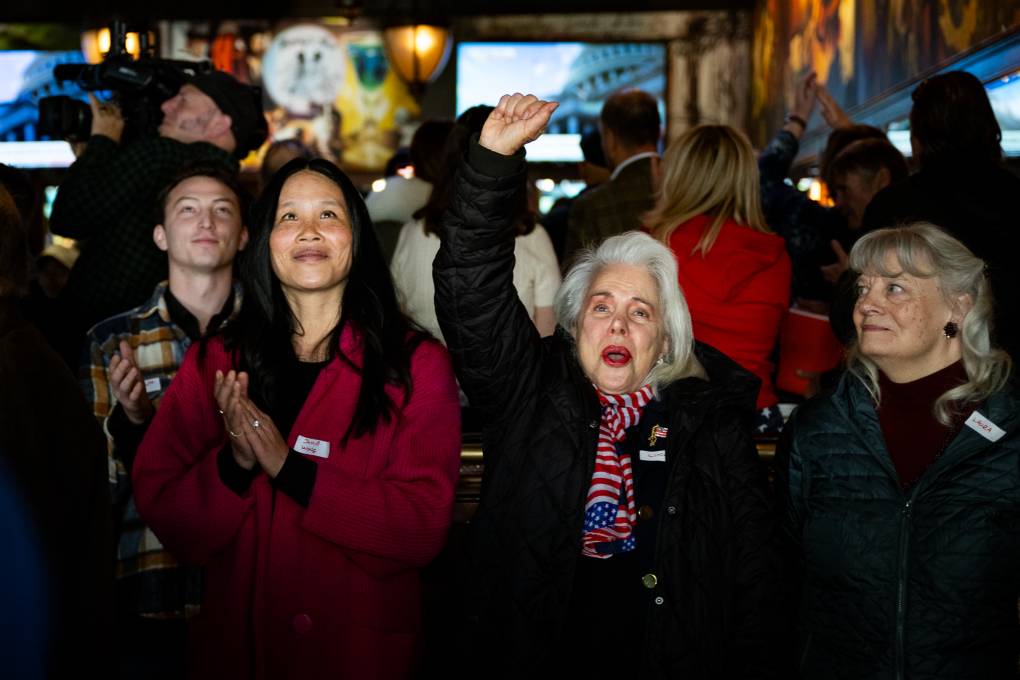
"caption": "Members of the San Francisco Republican Party and supporters of President Donald Trump cheer after listening to Trump deliver the inaugural speech during an inauguration watch party at Harry’s Bar in San Francisco on Monday, Jan. 20, 2025.",
"credit": "Beth LaBerge/KQED",
"altTag": null,
"description": null,
"imgSizes": {
"medium": {
"file": "https://cdn.kqed.org/wp-content/uploads/sites/10/2025/01/250120-InaugurationWatchParty-25-800x533.jpg",
"width": 800,
"height": 533,
"mimeType": "image/jpeg"
},
"large": {
"file": "https://cdn.kqed.org/wp-content/uploads/sites/10/2025/01/250120-InaugurationWatchParty-25-1020x680.jpg",
"width": 1020,
"height": 680,
"mimeType": "image/jpeg"
},
"thumbnail": {
"file": "https://cdn.kqed.org/wp-content/uploads/sites/10/2025/01/250120-InaugurationWatchParty-25-160x107.jpg",
"width": 160,
"height": 107,
"mimeType": "image/jpeg"
},
"1536x1536": {
"file": "https://cdn.kqed.org/wp-content/uploads/sites/10/2025/01/250120-InaugurationWatchParty-25-1536x1024.jpg",
"width": 1536,
"height": 1024,
"mimeType": "image/jpeg"
},
"post-thumbnail": {
"file": "https://cdn.kqed.org/wp-content/uploads/sites/10/2025/01/250120-InaugurationWatchParty-25-672x372.jpg",
"width": 672,
"height": 372,
"mimeType": "image/jpeg"
},
"twentyfourteen-full-width": {
"file": "https://cdn.kqed.org/wp-content/uploads/sites/10/2025/01/250120-InaugurationWatchParty-25-1038x576.jpg",
"width": 1038,
"height": 576,
"mimeType": "image/jpeg"
},
"full-width": {
"file": "https://cdn.kqed.org/wp-content/uploads/sites/10/2025/01/250120-InaugurationWatchParty-25-1920x1280.jpg",
"width": 1920,
"height": 1280,
"mimeType": "image/jpeg"
},
"kqedFullSize": {
"file": "https://cdn.kqed.org/wp-content/uploads/sites/10/2025/01/250120-InaugurationWatchParty-25.jpg",
"width": 2000,
"height": 1333
}
},
"isLoading": false,
"fetchFailed": false
},
"news_12023151": {
"type": "attachments",
"id": "news_12023151",
"meta": {
"index": "attachments_1716263798",
"site": "news",
"id": "12023151",
"found": true
},
"title": "250120-YouthClimateProtest-06-BL",
"publishDate": 1737408212,
"status": "inherit",
"parent": 0,
"modified": 1737408340,
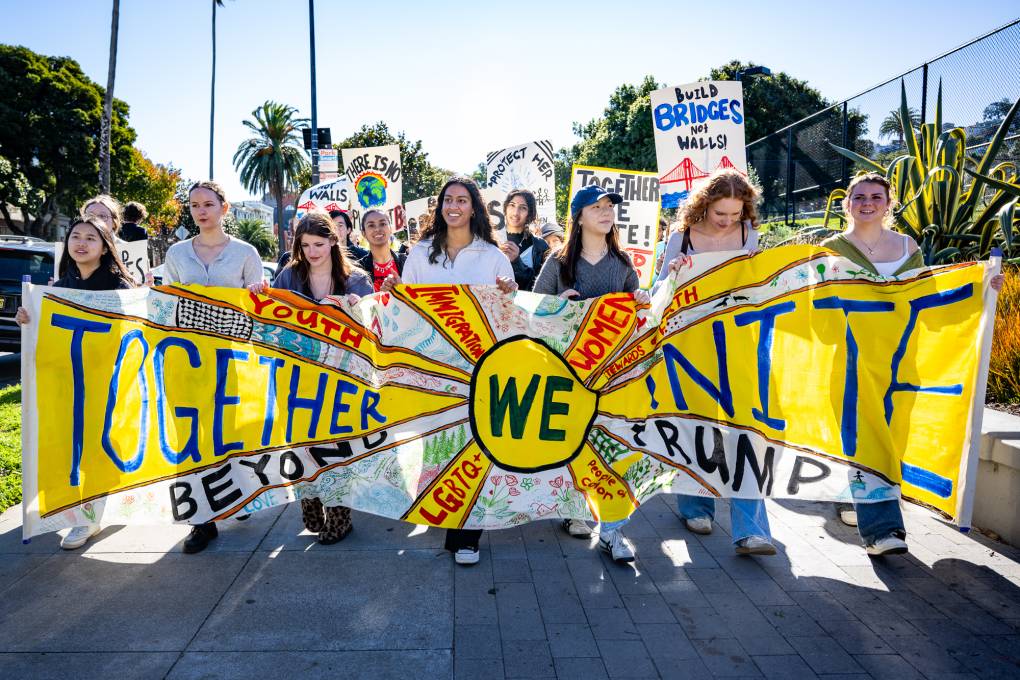
"caption": "Members of the Bay Area Youth Climate Summit hold a climate rally and march at Dolores Park in San Francisco on Monday, Jan. 20, 2025, to coincide with Donald Trump’s inauguration.",
"credit": "Beth LaBerge/KQED",
"altTag": null,
"description": null,
"imgSizes": {
"medium": {
"file": "https://cdn.kqed.org/wp-content/uploads/sites/10/2025/01/250120-YouthClimateProtest-06-BL-800x533.jpg",
"width": 800,
"height": 533,
"mimeType": "image/jpeg"
},
"large": {
"file": "https://cdn.kqed.org/wp-content/uploads/sites/10/2025/01/250120-YouthClimateProtest-06-BL-1020x680.jpg",
"width": 1020,
"height": 680,
"mimeType": "image/jpeg"
},
"thumbnail": {
"file": "https://cdn.kqed.org/wp-content/uploads/sites/10/2025/01/250120-YouthClimateProtest-06-BL-160x107.jpg",
"width": 160,
"height": 107,
"mimeType": "image/jpeg"
},
"1536x1536": {
"file": "https://cdn.kqed.org/wp-content/uploads/sites/10/2025/01/250120-YouthClimateProtest-06-BL-1536x1024.jpg",
"width": 1536,
"height": 1024,
"mimeType": "image/jpeg"
},
"post-thumbnail": {
"file": "https://cdn.kqed.org/wp-content/uploads/sites/10/2025/01/250120-YouthClimateProtest-06-BL-672x372.jpg",
"width": 672,
"height": 372,
"mimeType": "image/jpeg"
},
"twentyfourteen-full-width": {
"file": "https://cdn.kqed.org/wp-content/uploads/sites/10/2025/01/250120-YouthClimateProtest-06-BL-1038x576.jpg",
"width": 1038,
"height": 576,
"mimeType": "image/jpeg"
},
"full-width": {
"file": "https://cdn.kqed.org/wp-content/uploads/sites/10/2025/01/250120-YouthClimateProtest-06-BL-1920x1280.jpg",
"width": 1920,
"height": 1280,
"mimeType": "image/jpeg"
},
"kqedFullSize": {
"file": "https://cdn.kqed.org/wp-content/uploads/sites/10/2025/01/250120-YouthClimateProtest-06-BL.jpg",
"width": 2000,
"height": 1333
}
},
"isLoading": false,
"fetchFailed": false
},
"news_12023111": {
"type": "attachments",
"id": "news_12023111",
"meta": {
"index": "attachments_1716263798",
"site": "news",
"id": "12023111",
"found": true
},
"title": "Capitol Riot Investigation",
"publishDate": 1737393921,
"status": "inherit",
"parent": 12023109,
"modified": 1737393992,
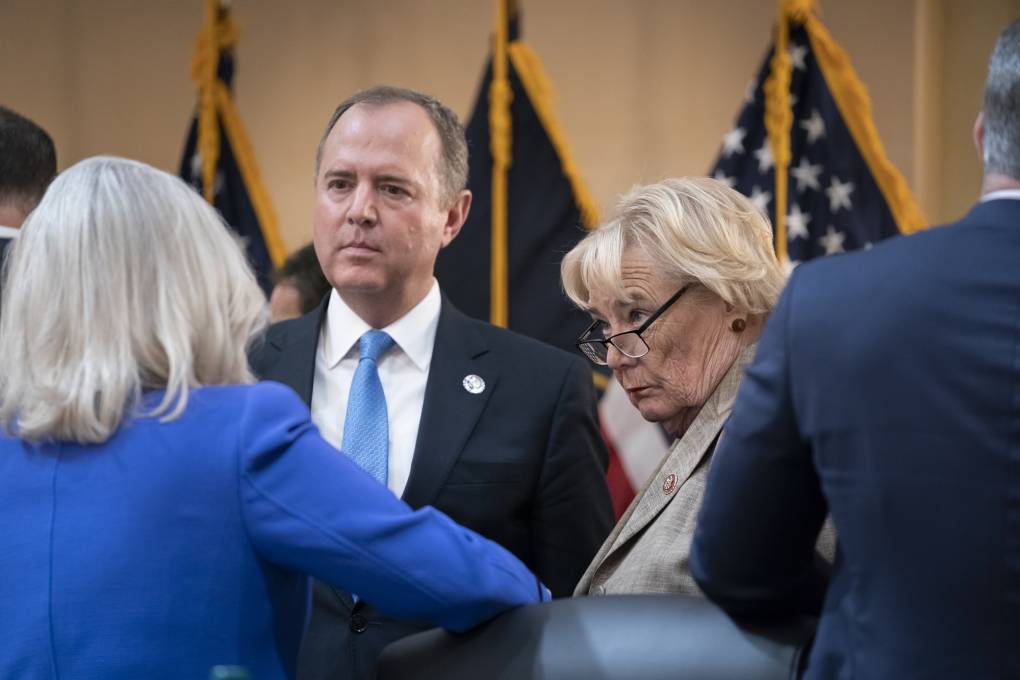
"caption": "Rep. Adam Schiff, D-California, and Rep. Zoe Lofgren, D-California, right, speak with Vice Chair Liz Cheney, R-Wyoming, as the House select committee investigating the Jan. 6 attack on the U.S. Capitol holds its first public hearing to reveal the findings of a year-long investigation, at the Capitol in Washington, on June 9, 2022.",
"credit": "J. Scott Applewhite/AP Photo",
"altTag": null,
"description": null,
"imgSizes": {
"medium": {
"file": "https://cdn.kqed.org/wp-content/uploads/sites/10/2025/01/SchiffLofgrenCheneyAP-800x533.jpg",
"width": 800,
"height": 533,
"mimeType": "image/jpeg"
},
"large": {
"file": "https://cdn.kqed.org/wp-content/uploads/sites/10/2025/01/SchiffLofgrenCheneyAP-1020x680.jpg",
"width": 1020,
"height": 680,
"mimeType": "image/jpeg"
},
"thumbnail": {
"file": "https://cdn.kqed.org/wp-content/uploads/sites/10/2025/01/SchiffLofgrenCheneyAP-160x107.jpg",
"width": 160,
"height": 107,
"mimeType": "image/jpeg"
},
"1536x1536": {
"file": "https://cdn.kqed.org/wp-content/uploads/sites/10/2025/01/SchiffLofgrenCheneyAP-1536x1024.jpg",
"width": 1536,
"height": 1024,
"mimeType": "image/jpeg"
},
"post-thumbnail": {
"file": "https://cdn.kqed.org/wp-content/uploads/sites/10/2025/01/SchiffLofgrenCheneyAP-672x372.jpg",
"width": 672,
"height": 372,
"mimeType": "image/jpeg"
},
"twentyfourteen-full-width": {
"file": "https://cdn.kqed.org/wp-content/uploads/sites/10/2025/01/SchiffLofgrenCheneyAP-1038x576.jpg",
"width": 1038,
"height": 576,
"mimeType": "image/jpeg"
},
"full-width": {
"file": "https://cdn.kqed.org/wp-content/uploads/sites/10/2025/01/SchiffLofgrenCheneyAP-1920x1280.jpg",
"width": 1920,
"height": 1280,
"mimeType": "image/jpeg"
},
"kqedFullSize": {
"file": "https://cdn.kqed.org/wp-content/uploads/sites/10/2025/01/SchiffLofgrenCheneyAP.jpg",
"width": 2000,
"height": 1333
}
},
"isLoading": false,
"fetchFailed": false
},
"news_12023097": {
"type": "attachments",
"id": "news_12023097",
"meta": {
"index": "attachments_1716263798",
"site": "news",
"id": "12023097",
"found": true
},
"title": "250120CalMatters1",
"publishDate": 1737389756,
"status": "inherit",
"parent": 12023094,
"modified": 1737389783,
"caption": "California sued President Donald Trump's administration 123 times between 2017 and 2021. It's preparing more lawsuits as Trump returns to the White House. ",
"credit": "Illustration by Adriana Heldiz/CalMatters",
"altTag": null,
"description": null,
"imgSizes": {
"medium": {
"file": "https://cdn.kqed.org/wp-content/uploads/sites/10/2025/01/250120CalMatters1-800x533.jpg",
"width": 800,
"height": 533,
"mimeType": "image/jpeg"
},
"large": {
"file": "https://cdn.kqed.org/wp-content/uploads/sites/10/2025/01/250120CalMatters1-1020x680.jpg",
"width": 1020,
"height": 680,
"mimeType": "image/jpeg"
},
"thumbnail": {
"file": "https://cdn.kqed.org/wp-content/uploads/sites/10/2025/01/250120CalMatters1-160x107.jpg",
"width": 160,
"height": 107,
"mimeType": "image/jpeg"
},
"1536x1536": {
"file": "https://cdn.kqed.org/wp-content/uploads/sites/10/2025/01/250120CalMatters1-1536x1024.jpg",
"width": 1536,
"height": 1024,
"mimeType": "image/jpeg"
},
"post-thumbnail": {
"file": "https://cdn.kqed.org/wp-content/uploads/sites/10/2025/01/250120CalMatters1-672x372.jpg",
"width": 672,
"height": 372,
"mimeType": "image/jpeg"
},
"twentyfourteen-full-width": {
"file": "https://cdn.kqed.org/wp-content/uploads/sites/10/2025/01/250120CalMatters1-1038x576.jpg",
"width": 1038,
"height": 576,
"mimeType": "image/jpeg"
},
"full-width": {
"file": "https://cdn.kqed.org/wp-content/uploads/sites/10/2025/01/250120CalMatters1-1920x1280.jpg",
"width": 1920,
"height": 1280,
"mimeType": "image/jpeg"
},
"kqedFullSize": {
"file": "https://cdn.kqed.org/wp-content/uploads/sites/10/2025/01/250120CalMatters1.jpg",
"width": 2000,
"height": 1333
}
},
"isLoading": false,
"fetchFailed": false
},
"news_12010473": {
"type": "attachments",
"id": "news_12010473",
"meta": {
"index": "attachments_1716263798",
"site": "news",
"id": "12010473",
"found": true
},
"title": "Donald Trump Campaigns For President In Pennsylvania",
"publishDate": 1729550671,
"status": "inherit",
"parent": 12010472,
"modified": 1729550671,
"caption": "LANCASTER, PENNSYLVANIA - OCTOBER 20: Republican presidential nominee, former U.S. President Donald Trump, speaks during a town hall campaign event at the Lancaster County Convention Center on October 20, 2024 in Lancaster, Pennsylvania. Trump is campaigning the entire day in the state of Pennsylvania. Trump and Democratic presidential nominee Vice President Kamala Harris continue to campaign in battleground swing states ahead of the November 5 election. (Photo by Win McNamee/Getty Images)",
"credit": null,
"altTag": null,
"description": null,
"imgSizes": {
"medium": {
"file": "https://cdn.kqed.org/wp-content/uploads/sites/10/2024/10/GettyImages-2179848448-800x534.jpg",
"width": 800,
"height": 534,
"mimeType": "image/jpeg"
},
"large": {
"file": "https://cdn.kqed.org/wp-content/uploads/sites/10/2024/10/GettyImages-2179848448-1020x680.jpg",
"width": 1020,
"height": 680,
"mimeType": "image/jpeg"
},
"thumbnail": {
"file": "https://cdn.kqed.org/wp-content/uploads/sites/10/2024/10/GettyImages-2179848448-160x107.jpg",
"width": 160,
"height": 107,
"mimeType": "image/jpeg"
},
"1536x1536": {
"file": "https://cdn.kqed.org/wp-content/uploads/sites/10/2024/10/GettyImages-2179848448-1536x1025.jpg",
"width": 1536,
"height": 1025,
"mimeType": "image/jpeg"
},
"2048x2048": {
"file": "https://cdn.kqed.org/wp-content/uploads/sites/10/2024/10/GettyImages-2179848448-2048x1366.jpg",
"width": 2048,
"height": 1366,
"mimeType": "image/jpeg"
},
"post-thumbnail": {
"file": "https://cdn.kqed.org/wp-content/uploads/sites/10/2024/10/GettyImages-2179848448-672x372.jpg",
"width": 672,
"height": 372,
"mimeType": "image/jpeg"
},
"twentyfourteen-full-width": {
"file": "https://cdn.kqed.org/wp-content/uploads/sites/10/2024/10/GettyImages-2179848448-1038x576.jpg",
"width": 1038,
"height": 576,
"mimeType": "image/jpeg"
},
"full-width": {
"file": "https://cdn.kqed.org/wp-content/uploads/sites/10/2024/10/GettyImages-2179848448-1920x1281.jpg",
"width": 1920,
"height": 1281,
"mimeType": "image/jpeg"
},
"kqedFullSize": {
"file": "https://cdn.kqed.org/wp-content/uploads/sites/10/2024/10/GettyImages-2179848448-scaled.jpg",
"width": 2560,
"height": 1708
}
},
"isLoading": false,
"fetchFailed": false
},
"news_12023080": {
"type": "attachments",
"id": "news_12023080",
"meta": {
"index": "attachments_1716263798",
"site": "news",
"id": "12023080",
"found": true
},
"title": "20250119_AntiTrumpProtest_GC-1",
"publishDate": 1737340245,
"status": "inherit",
"parent": 12023056,
"modified": 1737340468,
"caption": "Thousands gather at Civic Center Plaza during a \"We Fight Back\" rally, ahead of President-elect Donald Trump's inauguration, on Jan. 19, 2025.",
"credit": "Gina Castro/KQED",
"altTag": "Several people in a large crowd hold signs and flags with buildings in the background.",
"description": null,
"imgSizes": {
"medium": {
"file": "https://cdn.kqed.org/wp-content/uploads/sites/10/2025/01/20250119_AntiTrumpProtest_GC-1-800x533.jpg",
"width": 800,
"height": 533,
"mimeType": "image/jpeg"
},
"large": {
"file": "https://cdn.kqed.org/wp-content/uploads/sites/10/2025/01/20250119_AntiTrumpProtest_GC-1-1020x680.jpg",
"width": 1020,
"height": 680,
"mimeType": "image/jpeg"
},
"thumbnail": {
"file": "https://cdn.kqed.org/wp-content/uploads/sites/10/2025/01/20250119_AntiTrumpProtest_GC-1-160x107.jpg",
"width": 160,
"height": 107,
"mimeType": "image/jpeg"
},
"1536x1536": {
"file": "https://cdn.kqed.org/wp-content/uploads/sites/10/2025/01/20250119_AntiTrumpProtest_GC-1-1536x1024.jpg",
"width": 1536,
"height": 1024,
"mimeType": "image/jpeg"
},
"2048x2048": {
"file": "https://cdn.kqed.org/wp-content/uploads/sites/10/2025/01/20250119_AntiTrumpProtest_GC-1-2048x1365.jpg",
"width": 2048,
"height": 1365,
"mimeType": "image/jpeg"
},
"post-thumbnail": {
"file": "https://cdn.kqed.org/wp-content/uploads/sites/10/2025/01/20250119_AntiTrumpProtest_GC-1-672x372.jpg",
"width": 672,
"height": 372,
"mimeType": "image/jpeg"
},
"twentyfourteen-full-width": {
"file": "https://cdn.kqed.org/wp-content/uploads/sites/10/2025/01/20250119_AntiTrumpProtest_GC-1-1038x576.jpg",
"width": 1038,
"height": 576,
"mimeType": "image/jpeg"
},
"full-width": {
"file": "https://cdn.kqed.org/wp-content/uploads/sites/10/2025/01/20250119_AntiTrumpProtest_GC-1-1920x1280.jpg",
"width": 1920,
"height": 1280,
"mimeType": "image/jpeg"
},
"kqedFullSize": {
"file": "https://cdn.kqed.org/wp-content/uploads/sites/10/2025/01/20250119_AntiTrumpProtest_GC-1-scaled.jpg",
"width": 2560,
"height": 1706
}
},
"isLoading": false,
"fetchFailed": false
},
"news_12023022": {
"type": "attachments",
"id": "news_12023022",
"meta": {
"index": "attachments_1716263798",
"site": "news",
"id": "12023022",
"found": true
},
"title": "npr.brightspotcdn copy",
"publishDate": 1737242434,
"status": "inherit",
"parent": 12023017,
"modified": 1737242484,
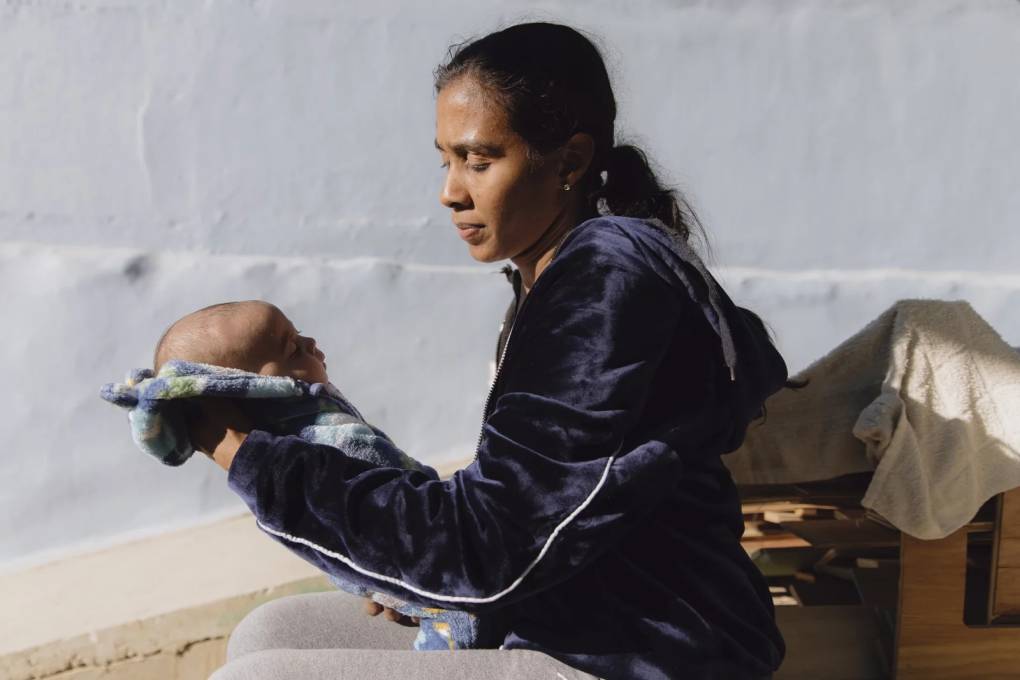
"caption": "Cindy Alamei Patiño holds her recently born baby at the Embajadores de Jesús church in Tijuana, Mexico, on Dec. 6, 2024. The mother of 2 traveled with her husband, Andres Patiño, from Colombia.",
"credit": "Zaydee Sanchez for NPR",
"altTag": null,
"description": null,
"imgSizes": {
"medium": {
"file": "https://cdn.kqed.org/wp-content/uploads/sites/10/2025/01/npr.brightspotcdn-copy-49-800x534.jpg",
"width": 800,
"height": 534,
"mimeType": "image/jpeg"
},
"large": {
"file": "https://cdn.kqed.org/wp-content/uploads/sites/10/2025/01/npr.brightspotcdn-copy-49-1020x680.jpg",
"width": 1020,
"height": 680,
"mimeType": "image/jpeg"
},
"thumbnail": {
"file": "https://cdn.kqed.org/wp-content/uploads/sites/10/2025/01/npr.brightspotcdn-copy-49-160x107.jpg",
"width": 160,
"height": 107,
"mimeType": "image/jpeg"
},
"1536x1536": {
"file": "https://cdn.kqed.org/wp-content/uploads/sites/10/2025/01/npr.brightspotcdn-copy-49-1536x1024.jpg",
"width": 1536,
"height": 1024,
"mimeType": "image/jpeg"
},
"post-thumbnail": {
"file": "https://cdn.kqed.org/wp-content/uploads/sites/10/2025/01/npr.brightspotcdn-copy-49-672x372.jpg",
"width": 672,
"height": 372,
"mimeType": "image/jpeg"
},
"twentyfourteen-full-width": {
"file": "https://cdn.kqed.org/wp-content/uploads/sites/10/2025/01/npr.brightspotcdn-copy-49-1038x576.jpg",
"width": 1038,
"height": 576,
"mimeType": "image/jpeg"
},
"kqedFullSize": {
"file": "https://cdn.kqed.org/wp-content/uploads/sites/10/2025/01/npr.brightspotcdn-copy-49.jpg",
"width": 1600,
"height": 1067
}
},
"isLoading": false,
"fetchFailed": false
},
"news_12022979": {
"type": "attachments",
"id": "news_12022979",
"meta": {
"index": "attachments_1716263798",
"site": "news",
"id": "12022979",
"found": true
},
"title": "01062023-Newsom-Inauguration-RL-CM-03 copy",
"publishDate": 1737230174,
"status": "inherit",
"parent": 12022978,
"modified": 1737230250,
"caption": "Gov. Gavin Newsom addresses attendees during his inauguration for a second term at the Plaza de California in Sacramento on Jan. 6, 2023. \n",
"credit": "Rahul Lal/CalMatters",
"altTag": null,
"description": null,
"imgSizes": {
"medium": {
"file": "https://cdn.kqed.org/wp-content/uploads/sites/10/2025/01/01062023-Newsom-Inauguration-RL-CM-03-copy-800x533.jpg",
"width": 800,
"height": 533,
"mimeType": "image/jpeg"
},
"large": {
"file": "https://cdn.kqed.org/wp-content/uploads/sites/10/2025/01/01062023-Newsom-Inauguration-RL-CM-03-copy-1020x680.jpg",
"width": 1020,
"height": 680,
"mimeType": "image/jpeg"
},
"thumbnail": {
"file": "https://cdn.kqed.org/wp-content/uploads/sites/10/2025/01/01062023-Newsom-Inauguration-RL-CM-03-copy-160x107.jpg",
"width": 160,
"height": 107,
"mimeType": "image/jpeg"
},
"1536x1536": {
"file": "https://cdn.kqed.org/wp-content/uploads/sites/10/2025/01/01062023-Newsom-Inauguration-RL-CM-03-copy-1536x1024.jpg",
"width": 1536,
"height": 1024,
"mimeType": "image/jpeg"
},
"post-thumbnail": {
"file": "https://cdn.kqed.org/wp-content/uploads/sites/10/2025/01/01062023-Newsom-Inauguration-RL-CM-03-copy-672x372.jpg",
"width": 672,
"height": 372,
"mimeType": "image/jpeg"
},
"twentyfourteen-full-width": {
"file": "https://cdn.kqed.org/wp-content/uploads/sites/10/2025/01/01062023-Newsom-Inauguration-RL-CM-03-copy-1038x576.jpg",
"width": 1038,
"height": 576,
"mimeType": "image/jpeg"
},
"full-width": {
"file": "https://cdn.kqed.org/wp-content/uploads/sites/10/2025/01/01062023-Newsom-Inauguration-RL-CM-03-copy-1920x1280.jpg",
"width": 1920,
"height": 1280,
"mimeType": "image/jpeg"
},
"kqedFullSize": {
"file": "https://cdn.kqed.org/wp-content/uploads/sites/10/2025/01/01062023-Newsom-Inauguration-RL-CM-03-copy.jpg",
"width": 2000,
"height": 1333
}
},
"isLoading": false,
"fetchFailed": false
},
"news_12023011": {
"type": "attachments",
"id": "news_12023011",
"meta": {
"index": "attachments_1716263798",
"site": "news",
"id": "12023011",
"found": true
},
"title": "npr.brightspotcdn copy",
"publishDate": 1737240384,
"status": "inherit",
"parent": 12023010,
"modified": 1737240412,
"caption": "Less than a day from when the popular social media app is set to be banned in the US, President-elect Donald Trump spoke on the possibility of delaying the expulsion of TikTok.",
"credit": "Beata Zawrzel/NurPhoto via Getty Images",
"altTag": null,
"description": null,
"imgSizes": {
"medium": {
"file": "https://cdn.kqed.org/wp-content/uploads/sites/10/2025/01/npr.brightspotcdn-copy-48-800x533.jpg",
"width": 800,
"height": 533,
"mimeType": "image/jpeg"
},
"large": {
"file": "https://cdn.kqed.org/wp-content/uploads/sites/10/2025/01/npr.brightspotcdn-copy-48-1020x680.jpg",
"width": 1020,
"height": 680,
"mimeType": "image/jpeg"
},
"thumbnail": {
"file": "https://cdn.kqed.org/wp-content/uploads/sites/10/2025/01/npr.brightspotcdn-copy-48-160x107.jpg",
"width": 160,
"height": 107,
"mimeType": "image/jpeg"
},
"post-thumbnail": {
"file": "https://cdn.kqed.org/wp-content/uploads/sites/10/2025/01/npr.brightspotcdn-copy-48-672x372.jpg",
"width": 672,
"height": 372,
"mimeType": "image/jpeg"
},
"twentyfourteen-full-width": {
"file": "https://cdn.kqed.org/wp-content/uploads/sites/10/2025/01/npr.brightspotcdn-copy-48-1038x576.jpg",
"width": 1038,
"height": 576,
"mimeType": "image/jpeg"
},
"kqedFullSize": {
"file": "https://cdn.kqed.org/wp-content/uploads/sites/10/2025/01/npr.brightspotcdn-copy-48.jpg",
"width": 1100,
"height": 733
}
},
"isLoading": false,
"fetchFailed": false
},
"news_12022861": {
"type": "attachments",
"id": "news_12022861",
"meta": {
"index": "attachments_1716263798",
"site": "news",
"id": "12022861",
"found": true
},
"title": "US-POLITICS-INAUGURATION-TRUMP-WEATHER",
"publishDate": 1737151528,
"status": "inherit",
"parent": 12022830,
"modified": 1737155398,
"caption": "American flags are displayed on the West Front of the U.S. Capitol building, where the presidential inauguration traditionally takes place, on Jan. 17, 2025, in Washington, D.C. ",
"credit": "Mandel Ngan/AFP via Getty Images",
"altTag": null,
"description": null,
"imgSizes": {
"medium": {
"file": "https://cdn.kqed.org/wp-content/uploads/sites/10/2025/01/GettyImages-2193782417-800x534.jpg",
"width": 800,
"height": 534,
"mimeType": "image/jpeg"
},
"large": {
"file": "https://cdn.kqed.org/wp-content/uploads/sites/10/2025/01/GettyImages-2193782417-1020x680.jpg",
"width": 1020,
"height": 680,
"mimeType": "image/jpeg"
},
"thumbnail": {
"file": "https://cdn.kqed.org/wp-content/uploads/sites/10/2025/01/GettyImages-2193782417-160x107.jpg",
"width": 160,
"height": 107,
"mimeType": "image/jpeg"
},
"post-thumbnail": {
"file": "https://cdn.kqed.org/wp-content/uploads/sites/10/2025/01/GettyImages-2193782417-672x372.jpg",
"width": 672,
"height": 372,
"mimeType": "image/jpeg"
},
"twentyfourteen-full-width": {
"file": "https://cdn.kqed.org/wp-content/uploads/sites/10/2025/01/GettyImages-2193782417-1024x576.jpg",
"width": 1024,
"height": 576,
"mimeType": "image/jpeg"
},
"kqedFullSize": {
"file": "https://cdn.kqed.org/wp-content/uploads/sites/10/2025/01/GettyImages-2193782417.jpg",
"width": 1024,
"height": 683
}
},
"isLoading": false,
"fetchFailed": false
},
"news_12022782": {
"type": "attachments",
"id": "news_12022782",
"meta": {
"index": "attachments_1716263798",
"site": "news",
"id": "12022782",
"found": true
},
"title": "Confirmation Hearing Held For Secretary Of Defense Nominee Pete Hegseth",
"publishDate": 1737143324,
"status": "inherit",
"parent": 12022768,
"modified": 1737143324,
"caption": "WASHINGTON, DC - JANUARY 14: U.S. President-elect Donald Trump's nominee for Secretary of Defense Pete Hegseth testifies during his Senate Armed Services confirmation hearing on Capitol Hill on January 14, 2025 in Washington, DC. Hegseth, an Army veteran and the former host of “FOX & Friends Weekend” on FOX News will be the first of the incoming Trump administration’s nominees to face questions from Senators. (Photo by Andrew Harnik/Getty Images)",
"credit": null,
"altTag": null,
"description": null,
"imgSizes": {
"medium": {
"file": "https://cdn.kqed.org/wp-content/uploads/sites/10/2025/01/GettyImages-2193897791-800x533.jpg",
"width": 800,
"height": 533,
"mimeType": "image/jpeg"
},
"large": {
"file": "https://cdn.kqed.org/wp-content/uploads/sites/10/2025/01/GettyImages-2193897791-1020x680.jpg",
"width": 1020,
"height": 680,
"mimeType": "image/jpeg"
},
"thumbnail": {
"file": "https://cdn.kqed.org/wp-content/uploads/sites/10/2025/01/GettyImages-2193897791-160x107.jpg",
"width": 160,
"height": 107,
"mimeType": "image/jpeg"
},
"1536x1536": {
"file": "https://cdn.kqed.org/wp-content/uploads/sites/10/2025/01/GettyImages-2193897791-1536x1024.jpg",
"width": 1536,
"height": 1024,
"mimeType": "image/jpeg"
},
"2048x2048": {
"file": "https://cdn.kqed.org/wp-content/uploads/sites/10/2025/01/GettyImages-2193897791-2048x1365.jpg",
"width": 2048,
"height": 1365,
"mimeType": "image/jpeg"
},
"post-thumbnail": {
"file": "https://cdn.kqed.org/wp-content/uploads/sites/10/2025/01/GettyImages-2193897791-672x372.jpg",
"width": 672,
"height": 372,
"mimeType": "image/jpeg"
},
"twentyfourteen-full-width": {
"file": "https://cdn.kqed.org/wp-content/uploads/sites/10/2025/01/GettyImages-2193897791-1038x576.jpg",
"width": 1038,
"height": 576,
"mimeType": "image/jpeg"
},
"full-width": {
"file": "https://cdn.kqed.org/wp-content/uploads/sites/10/2025/01/GettyImages-2193897791-1920x1280.jpg",
"width": 1920,
"height": 1280,
"mimeType": "image/jpeg"
},
"kqedFullSize": {
"file": "https://cdn.kqed.org/wp-content/uploads/sites/10/2025/01/GettyImages-2193897791-scaled.jpg",
"width": 2560,
"height": 1706
}
},
"isLoading": false,
"fetchFailed": false
},
"news_12021323": {
"type": "attachments",
"id": "news_12021323",
"meta": {
"index": "attachments_1716263798",
"site": "news",
"id": "12021323",
"found": true
},
"title": "240109-CAWindStorm-056",
"publishDate": 1736467983,
"status": "inherit",
"parent": 0,
"modified": 1737076475,
"caption": "The remains of a house in Altadena, California, after the Eaton Fire swept through the area northeast of Los Angeles on Thursday, Jan. 9, 2025.",
"credit": "Beth LaBerge/KQED",
"altTag": null,
"description": null,
"imgSizes": {
"medium": {
"file": "https://cdn.kqed.org/wp-content/uploads/sites/10/2025/01/240109-CAWindStorm-056-800x533.jpg",
"width": 800,
"height": 533,
"mimeType": "image/jpeg"
},
"large": {
"file": "https://cdn.kqed.org/wp-content/uploads/sites/10/2025/01/240109-CAWindStorm-056-1020x680.jpg",
"width": 1020,
"height": 680,
"mimeType": "image/jpeg"
},
"thumbnail": {
"file": "https://cdn.kqed.org/wp-content/uploads/sites/10/2025/01/240109-CAWindStorm-056-160x107.jpg",
"width": 160,
"height": 107,
"mimeType": "image/jpeg"
},
"1536x1536": {
"file": "https://cdn.kqed.org/wp-content/uploads/sites/10/2025/01/240109-CAWindStorm-056-1536x1024.jpg",
"width": 1536,
"height": 1024,
"mimeType": "image/jpeg"
},
"post-thumbnail": {
"file": "https://cdn.kqed.org/wp-content/uploads/sites/10/2025/01/240109-CAWindStorm-056-672x372.jpg",
"width": 672,
"height": 372,
"mimeType": "image/jpeg"
},
"twentyfourteen-full-width": {
"file": "https://cdn.kqed.org/wp-content/uploads/sites/10/2025/01/240109-CAWindStorm-056-1038x576.jpg",
"width": 1038,
"height": 576,
"mimeType": "image/jpeg"
},
"full-width": {
"file": "https://cdn.kqed.org/wp-content/uploads/sites/10/2025/01/240109-CAWindStorm-056-1920x1280.jpg",
"width": 1920,
"height": 1280,
"mimeType": "image/jpeg"
},
"kqedFullSize": {
"file": "https://cdn.kqed.org/wp-content/uploads/sites/10/2025/01/240109-CAWindStorm-056.jpg",
"width": 2000,
"height": 1333
}
},
"isLoading": false,
"fetchFailed": false
}
},
"audioPlayerReducer": {
"postId": "stream_live",
"isPaused": true,
"isPlaying": false,
"pfsActive": false,
"pledgeModalIsOpen": true,
"playerDrawerIsOpen": false,
"liveAudioPlayStartedAt": 0,
"liveAudioPlayContext": ""
},
"authorsReducer": {
"byline_news_12023094": {
"type": "authors",
"id": "byline_news_12023094",
"meta": {
"override": true
},
"slug": "byline_news_12023094",
"name": "Ana B. Ibarra and Ben Christopher, CalMatters",
"isLoading": false
},
"byline_news_12023017": {
"type": "authors",
"id": "byline_news_12023017",
"meta": {
"override": true
},
"slug": "byline_news_12023017",
"name": "\u003ca href=\"https://www.npr.org/people/297147616/jasmine-garsd\">Jasmine Garsd\u003c/a>, NPR",
"isLoading": false
},
"byline_news_12022978": {
"type": "authors",
"id": "byline_news_12022978",
"meta": {
"override": true
},
"slug": "byline_news_12022978",
"name": "\u003ca href=\"https://calmatters.org/author/alexei-koseff/\">Alexei Koseff\u003c/a>, CalMatters",
"isLoading": false
},
"byline_news_12023010": {
"type": "authors",
"id": "byline_news_12023010",
"meta": {
"override": true
},
"slug": "byline_news_12023010",
"name": "\u003ca href=\"https://www.npr.org/people/638550790/bobby-allyn\">Bobby Allyn\u003c/a> and \u003ca href=\"https://www.npr.org/people/1108419098/juliana-kim\">Juliana Kim\u003c/a>, NPR",
"isLoading": false
},
"ecruzguevarra": {
"type": "authors",
"id": "8654",
"meta": {
"index": "authors_1716337520",
"id": "8654",
"found": true
},
"name": "Ericka Cruz Guevarra",
"firstName": "Ericka",
"lastName": "Cruz Guevarra",
"slug": "ecruzguevarra",
"email": "ecruzguevarra@kqed.org",
"display_author_email": true,
"staff_mastheads": [
"news"
],
"title": "Producer, The Bay Podcast",
"bio": "Ericka Cruz Guevarra is host of \u003ca href=\"https://www.kqed.org/podcasts/thebay\">\u003cem>The Bay\u003c/em>\u003c/a> podcast at KQED. Before host, she was the show’s producer. Her work in that capacity includes a three-part reported series on policing in Vallejo, which won a 2020 excellence in journalism award from the Society of Professional Journalists. Ericka has worked as a breaking news reporter at Oregon Public Broadcasting, helped produce the Code Switch podcast, and was KQED’s inaugural Raul Ramirez Diversity Fund intern. She’s also an alumna of NPR’s Next Generation Radio program. Send her an email if you have strong feelings about whether Fairfield and Suisun City are the Bay. Ericka is represented by SAG-AFTRA.",
"avatar": "https://secure.gravatar.com/avatar/25e5ab8d3d53fad2dcc7bb2b5c506b1a?s=600&d=blank&r=g",
"twitter": "NotoriousECG",
"facebook": null,
"instagram": null,
"linkedin": null,
"sites": [
{
"site": "arts",
"roles": [
"subscriber"
]
},
{
"site": "news",
"roles": [
"editor",
"manage_categories"
]
},
{
"site": "futureofyou",
"roles": [
"subscriber"
]
},
{
"site": "stateofhealth",
"roles": [
"subscriber"
]
},
{
"site": "science",
"roles": [
"editor"
]
},
{
"site": "forum",
"roles": [
"subscriber"
]
}
],
"headData": {
"title": "Ericka Cruz Guevarra | KQED",
"description": "Producer, The Bay Podcast",
"ogImgSrc": "https://secure.gravatar.com/avatar/25e5ab8d3d53fad2dcc7bb2b5c506b1a?s=600&d=blank&r=g",
"twImgSrc": "https://secure.gravatar.com/avatar/25e5ab8d3d53fad2dcc7bb2b5c506b1a?s=600&d=blank&r=g"
},
"isLoading": false,
"link": "/author/ecruzguevarra"
},
"lesleymcclurg": {
"type": "authors",
"id": "11229",
"meta": {
"index": "authors_1716337520",
"id": "11229",
"found": true
},
"name": "Lesley McClurg",
"firstName": "Lesley",
"lastName": "McClurg",
"slug": "lesleymcclurg",
"email": "lmcclurg@KQED.org",
"display_author_email": false,
"staff_mastheads": [
"news",
"science"
],
"title": "KQED Health Correspondent",
"bio": "Lesley McClurg is a health correspondent and fill-in host whose work is regularly rebroadcast on NPR and PBS programs. She’s earned multiple regional Emmy awards, a national and a regional Edward R. Murrow award, and was named Best Beat Reporter by the Association of Health Care Journalists. The Society of Professional Journalists has recognized her work several times, and the Society of Environmental Journalists spotlighted her coverage of California’s historic drought.\r\n\r\nBefore joining KQED in 2016, Lesley covered food and sustainability for Capital Public Radio, environmental issues for Colorado Public Radio, and reported for KUOW and KCTS 9 in Seattle. Away from the newsroom, she loves skiing with her daughter, mountain biking with her partner, and playing with Ollie, the family’s goldendoodle. On deadline, she runs almost entirely on chocolate chips.\r\n\r\n ",
"avatar": "https://secure.gravatar.com/avatar/bab49e972ea10c774fe0f5e29dba1722b158f7c0d58a360923d1389d380b2978?s=600&d=blank&r=g",
"twitter": "lesleywmcclurg",
"bluesky": null,
"facebook": null,
"instagram": null,
"linkedin": null,
"sites": [
{
"site": "arts",
"roles": [
"author"
]
},
{
"site": "news",
"roles": [
"editor"
]
},
{
"site": "futureofyou",
"roles": [
"editor"
]
},
{
"site": "stateofhealth",
"roles": [
"author"
]
},
{
"site": "science",
"roles": [
"editor"
]
},
{
"site": "quest",
"roles": [
"subscriber"
]
},
{
"site": "forum",
"roles": [
"administrator"
]
},
{
"site": "liveblog",
"roles": [
"author"
]
}
],
"headData": {
"title": "Lesley McClurg | KQED",
"description": "KQED Health Correspondent",
"ogImgSrc": "https://secure.gravatar.com/avatar/bab49e972ea10c774fe0f5e29dba1722b158f7c0d58a360923d1389d380b2978?s=600&d=blank&r=g",
"twImgSrc": "https://secure.gravatar.com/avatar/bab49e972ea10c774fe0f5e29dba1722b158f7c0d58a360923d1389d380b2978?s=600&d=blank&r=g"
},
"isLoading": false,
"link": "/author/lesleymcclurg"
},
"amontecillo": {
"type": "authors",
"id": "11649",
"meta": {
"index": "authors_1716337520",
"id": "11649",
"found": true
},
"name": "Alan Montecillo",
"firstName": "Alan",
"lastName": "Montecillo",
"slug": "amontecillo",
"email": "amontecillo@kqed.org",
"display_author_email": false,
"staff_mastheads": [
"news"
],
"title": "KQED Contributor",
"bio": "Alan Montecillo is the senior editor of \u003cem>\u003ca href=\"http://kqed.org/thebay\">The Bay\u003c/a>, \u003c/em> KQED's local news podcast. Before moving to the Bay Area, he worked as a senior talk show producer for WILL in Champaign-Urbana, Illinois and at Oregon Public Broadcasting in Portland, Oregon. He has won journalism awards from the Society of Professional Journalists Northern California, the Public Media Journalists Association, The Signal Awards, and has also received a regional Edward R. Murrow award. Alan is a Filipino American from Hong Kong and a graduate of Reed College.",
"avatar": "https://secure.gravatar.com/avatar/d5e4e7a76481969ccba76f4e2b5ccabc?s=600&d=blank&r=g",
"twitter": "alanmontecillo",
"facebook": null,
"instagram": null,
"linkedin": null,
"sites": [
{
"site": "",
"roles": [
"editor"
]
},
{
"site": "news",
"roles": [
"editor",
"manage_categories"
]
}
],
"headData": {
"title": "Alan Montecillo | KQED",
"description": "KQED Contributor",
"ogImgSrc": "https://secure.gravatar.com/avatar/d5e4e7a76481969ccba76f4e2b5ccabc?s=600&d=blank&r=g",
"twImgSrc": "https://secure.gravatar.com/avatar/d5e4e7a76481969ccba76f4e2b5ccabc?s=600&d=blank&r=g"
},
"isLoading": false,
"link": "/author/amontecillo"
},
"eromero": {
"type": "authors",
"id": "11746",
"meta": {
"index": "authors_1716337520",
"id": "11746",
"found": true
},
"name": "Ezra David Romero",
"firstName": "Ezra David",
"lastName": "Romero",
"slug": "eromero",
"email": "eromero@kqed.org",
"display_author_email": true,
"staff_mastheads": [
"news",
"science"
],
"title": "Climate Reporter",
"bio": "Ezra David Romero is a climate reporter for KQED News. He covers the absence and excess of water in the Bay Area — think sea level rise, flooding and drought. For nearly a decade he’s covered how warming temperatures are altering the lives of Californians. He’s reported on farmers worried their pistachio trees aren’t getting enough sleep, families desperate for water, scientists studying dying giant sequoias, and alongside firefighters containing wildfires. His work has appeared on local stations across California and nationally on public radio shows like Morning Edition, Here and Now, All Things Considered and Science Friday. ",
"avatar": "https://secure.gravatar.com/avatar/9c15bb8bab267e058708a9eeaeef16bf?s=600&d=blank&r=g",
"twitter": "ezraromero",
"bluesky": null,
"facebook": null,
"instagram": null,
"linkedin": null,
"sites": [
{
"site": "arts",
"roles": [
"editor"
]
},
{
"site": "news",
"roles": [
"editor"
]
},
{
"site": "science",
"roles": [
"editor"
]
},
{
"site": "liveblog",
"roles": [
"author"
]
}
],
"headData": {
"title": "Ezra David Romero | KQED",
"description": "Climate Reporter",
"ogImgSrc": "https://secure.gravatar.com/avatar/9c15bb8bab267e058708a9eeaeef16bf?s=600&d=blank&r=g",
"twImgSrc": "https://secure.gravatar.com/avatar/9c15bb8bab267e058708a9eeaeef16bf?s=600&d=blank&r=g"
},
"isLoading": false,
"link": "/author/eromero"
},
"jlara": {
"type": "authors",
"id": "11761",
"meta": {
"index": "authors_1716337520",
"id": "11761",
"found": true
},
"name": "Juan Carlos Lara",
"firstName": "Juan Carlos",
"lastName": "Lara",
"slug": "jlara",
"email": "jlara@kqed.org",
"display_author_email": false,
"staff_mastheads": [],
"title": "KQED Contributor",
"bio": null,
"avatar": "https://secure.gravatar.com/avatar/19e2052b9b05657c5ff2af2121846e9c?s=600&d=blank&r=g",
"twitter": null,
"facebook": null,
"instagram": null,
"linkedin": null,
"sites": [
{
"site": "arts",
"roles": [
"editor"
]
},
{
"site": "news",
"roles": [
"editor"
]
},
{
"site": "forum",
"roles": [
"editor"
]
},
{
"site": "liveblog",
"roles": [
"contributor"
]
}
],
"headData": {
"title": "Juan Carlos Lara | KQED",
"description": "KQED Contributor",
"ogImgSrc": "https://secure.gravatar.com/avatar/19e2052b9b05657c5ff2af2121846e9c?s=600&d=blank&r=g",
"twImgSrc": "https://secure.gravatar.com/avatar/19e2052b9b05657c5ff2af2121846e9c?s=600&d=blank&r=g"
},
"isLoading": false,
"link": "/author/jlara"
},
"adahlstromeckman": {
"type": "authors",
"id": "11785",
"meta": {
"index": "authors_1716337520",
"id": "11785",
"found": true
},
"name": "Azul Dahlstrom-Eckman",
"firstName": "Azul",
"lastName": "Dahlstrom-Eckman",
"slug": "adahlstromeckman",
"email": "adahlstrom-eckman@kqed.org",
"display_author_email": true,
"staff_mastheads": [],
"title": "Reporter",
"bio": "Azul is a reporter for KQED focusing on transportation and features. He joined KQED in 2021 as an alumna of KALW's Audio Academy radio journalism training program.",
"avatar": "https://secure.gravatar.com/avatar/9cb750298435add7815a777f55bf1f46845c1386bb8452555c60a7b820b5aba3?s=600&d=blank&r=g",
"twitter": "@zuliemann",
"bluesky": "@azul415.bsky.social",
"facebook": null,
"instagram": null,
"linkedin": null,
"sites": [
{
"site": "arts",
"roles": [
"editor"
]
},
{
"site": "news",
"roles": [
"editor"
]
},
{
"site": "science",
"roles": [
"editor"
]
},
{
"site": "liveblog",
"roles": [
"author"
]
}
],
"headData": {
"title": "Azul Dahlstrom-Eckman | KQED",
"description": "Reporter",
"ogImgSrc": "https://secure.gravatar.com/avatar/9cb750298435add7815a777f55bf1f46845c1386bb8452555c60a7b820b5aba3?s=600&d=blank&r=g",
"twImgSrc": "https://secure.gravatar.com/avatar/9cb750298435add7815a777f55bf1f46845c1386bb8452555c60a7b820b5aba3?s=600&d=blank&r=g"
},
"isLoading": false,
"link": "/author/adahlstromeckman"
},
"jessicakariisa": {
"type": "authors",
"id": "11831",
"meta": {
"index": "authors_1716337520",
"id": "11831",
"found": true
},
"name": "Jessica Kariisa",
"firstName": "Jessica",
"lastName": "Kariisa",
"slug": "jessicakariisa",
"email": "jkariisa@kqed.org",
"display_author_email": false,
"staff_mastheads": [],
"title": "Producer, The Bay",
"bio": "Jessica Kariisa is the producer of The Bay. She first joined KQED as an intern for The California Report Magazine, after which she became an on-call producer. She reported a Bay Curious episode on the use of rap lyrics in criminal trials which won a Society of Professional Journalists award in 2023 for Excellence in Features Journalism and the 2023 Signal Award for Best Conversation Starter. She’s worked on podcasts for Snap Judgment and American Public Media. Before embarking on her audio career, she was a music journalist.\r\n\r\nJessica Kariisa is represented by SAG-AFTRA.",
"avatar": "https://secure.gravatar.com/avatar/522e97b28ac0b3d411621c0fde8f3419c7b71ea2c5c262c57c4bb600963f328c?s=600&d=blank&r=g",
"twitter": null,
"bluesky": null,
"facebook": null,
"instagram": null,
"linkedin": null,
"sites": [
{
"site": "arts",
"roles": [
"author"
]
},
{
"site": "news",
"roles": [
"editor",
"manage_categories"
]
}
],
"headData": {
"title": "Jessica Kariisa | KQED",
"description": "Producer, The Bay",
"ogImgSrc": "https://secure.gravatar.com/avatar/522e97b28ac0b3d411621c0fde8f3419c7b71ea2c5c262c57c4bb600963f328c?s=600&d=blank&r=g",
"twImgSrc": "https://secure.gravatar.com/avatar/522e97b28ac0b3d411621c0fde8f3419c7b71ea2c5c262c57c4bb600963f328c?s=600&d=blank&r=g"
},
"isLoading": false,
"link": "/author/jessicakariisa"
},
"kdebenedetti": {
"type": "authors",
"id": "11913",
"meta": {
"index": "authors_1716337520",
"id": "11913",
"found": true
},
"name": "Katie DeBenedetti",
"firstName": "Katie",
"lastName": "DeBenedetti",
"slug": "kdebenedetti",
"email": "kdebenedetti@kqed.org",
"display_author_email": false,
"staff_mastheads": [
"news",
"science"
],
"title": "KQED Contributor",
"bio": "Katie DeBenedetti is a digital reporter covering daily news for the Express Desk. Prior to joining KQED as a culture reporting intern in January 2024, she covered education and city government for the Napa Valley Register.",
"avatar": "https://secure.gravatar.com/avatar/6e31073cb8f7e4214ab03f42771d0f45?s=600&d=blank&r=g",
"twitter": null,
"facebook": null,
"instagram": null,
"linkedin": null,
"sites": [
{
"site": "news",
"roles": [
"author"
]
},
{
"site": "science",
"roles": [
"author"
]
},
{
"site": "liveblog",
"roles": [
"author"
]
}
],
"headData": {
"title": "Katie DeBenedetti | KQED",
"description": "KQED Contributor",
"ogImgSrc": "https://secure.gravatar.com/avatar/6e31073cb8f7e4214ab03f42771d0f45?s=600&d=blank&r=g",
"twImgSrc": "https://secure.gravatar.com/avatar/6e31073cb8f7e4214ab03f42771d0f45?s=600&d=blank&r=g"
},
"isLoading": false,
"link": "/author/kdebenedetti"
},
"slim": {
"type": "authors",
"id": "11920",
"meta": {
"index": "authors_1716337520",
"id": "11920",
"found": true
},
"name": "Samantha Lim",
"firstName": "Samantha",
"lastName": "Lim",
"slug": "slim",
"email": "slim@KQED.org",
"display_author_email": false,
"staff_mastheads": [],
"title": "KQED Contributor",
"bio": null,
"avatar": "https://secure.gravatar.com/avatar/82e592e6c15fe1a04d385e8ad0fb0b4e?s=600&d=blank&r=g",
"twitter": null,
"facebook": null,
"instagram": null,
"linkedin": null,
"sites": [
{
"site": "news",
"roles": []
}
],
"headData": {
"title": "Samantha Lim | KQED",
"description": "KQED Contributor",
"ogImgSrc": "https://secure.gravatar.com/avatar/82e592e6c15fe1a04d385e8ad0fb0b4e?s=600&d=blank&r=g",
"twImgSrc": "https://secure.gravatar.com/avatar/82e592e6c15fe1a04d385e8ad0fb0b4e?s=600&d=blank&r=g"
},
"isLoading": false,
"link": "/author/slim"
},
"emanoukian": {
"type": "authors",
"id": "11925",
"meta": {
"index": "authors_1716337520",
"id": "11925",
"found": true
},
"name": "Elize Manoukian",
"firstName": "Elize",
"lastName": "Manoukian",
"slug": "emanoukian",
"email": "emanoukian@KQED.org",
"display_author_email": false,
"staff_mastheads": [
"news"
],
"title": "Digital Producer",
"bio": null,
"avatar": "https://secure.gravatar.com/avatar/4525f1a8e46ccb30933b32653d9772064cfefe3fa655eb45b3b3a80341f6bdad?s=600&d=blank&r=g",
"twitter": null,
"bluesky": null,
"facebook": null,
"instagram": null,
"linkedin": null,
"sites": [
{
"site": "arts",
"roles": [
"editor"
]
},
{
"site": "news",
"roles": [
"editor"
]
},
{
"site": "science",
"roles": [
"editor"
]
}
],
"headData": {
"title": "Elize Manoukian | KQED",
"description": "Digital Producer",
"ogImgSrc": "https://secure.gravatar.com/avatar/4525f1a8e46ccb30933b32653d9772064cfefe3fa655eb45b3b3a80341f6bdad?s=600&d=blank&r=g",
"twImgSrc": "https://secure.gravatar.com/avatar/4525f1a8e46ccb30933b32653d9772064cfefe3fa655eb45b3b3a80341f6bdad?s=600&d=blank&r=g"
},
"isLoading": false,
"link": "/author/emanoukian"
}
},
"pagesReducer": {
"news_tag_donald-trump": {
"type": "terms",
"id": "news_1323",
"meta": {
"index": "terms_1716263798",
"site": "news",
"id": "1323",
"score": 8.555212
},
"featImg": null,
"name": "Donald Trump",
"description": null,
"taxonomy": "tag",
"headData": {
"twImgId": null,
"twTitle": null,
"ogTitle": null,
"ogImgId": null,
"twDescription": null,
"description": null,
"title": "Donald Trump Archives | KQED News",
"ogDescription": null
},
"ttid": 1335,
"slug": "donald-trump",
"isLoading": false,
"title": "Donald Trump",
"pageMeta": {
"site": "news",
"WpPageTemplate": "page-topic-editorial",
"currentPage": 59
},
"blocks": [
{
"blockName": "kqed/post-list",
"attrs": {
"layout": "cardArticle2",
"query": "posts/news?tag=donald-trump",
"seeMore": false,
"paginated": true,
"page": 59
}
},
{
"blockName": "kqed/ad"
}
]
}
},
"pfsSessionReducer": {},
"postsReducer": {
"stream_live": {
"type": "live",
"id": "stream_live",
"audioUrl": "https://streams.kqed.org/kqedradio",
"title": "Live Stream",
"excerpt": "Live Stream information currently unavailable.",
"link": "/radio",
"featImg": "",
"label": {
"name": "KQED Live",
"link": "/"
}
},
"stream_kqedNewscast": {
"type": "posts",
"id": "stream_kqedNewscast",
"audioUrl": "https://www.kqed.org/.stream/anon/radio/RDnews/newscast.mp3?_=1",
"title": "KQED Newscast",
"featImg": "",
"label": {
"name": "88.5 FM",
"link": "/"
}
},
"news_12023112": {
"type": "posts",
"id": "news_12023112",
"meta": {
"index": "posts_1716263798",
"site": "news",
"id": "12023112",
"score": null,
"sort": [
1737414788000
]
},
"guestAuthors": [],
"slug": "trump-supporters-celebrate-san-francisco-inauguration-party",
"title": "‘A Restoration of Law & Order’: Trump Supporters Celebrate at San Francisco Inauguration Party",
"publishDate": 1737414788,
"format": "standard",
"headTitle": "‘A Restoration of Law & Order’: Trump Supporters Celebrate at San Francisco Inauguration Party | KQED",
"labelTerm": {
"site": "news"
},
"content": "\u003cp>Spirits were high in Harry’s Bar in Pacific Heights on Monday, as San Francisco Republicans cheered on the second inauguration of President Donald J. Trump.\u003c/p>\n\u003cp>“At the risk of sounding horribly sentimental, I’m proud to be an American citizen,” Kathleen McCrea, a party attendee, told KQED. “I’m hopeful for what Donald Trump just described in his inaugural address: a restoration of law and order and a reversal of some of the disastrous policies that have really threatened to send this country down a sinkhole.”\u003c/p>\n\u003cp>Nearly 100 people packed into the bar just after 8:00 a.m. to watch the inauguration over a breakfast buffet, coffee and some cocktails. The crowd ranged from “pretty hardcore MAGA folks,” decked out in Trump’s signature red MAGA hat, to political moderates, said Bill Jackson, chairman of the San Francisco Republican Party.\u003c/p>\n\u003cp>“We’re all here to celebrate the new possibilities of this administration — the opportunities for accelerating our economic growth, for protecting our borders and for a more open kind of free speech and culture,” Jackson said.\u003c/p>\n\u003cp>[ad fullwidth]\u003c/p>\n\u003cp>With just over \u003ca href=\"https://sfelections.org/results/20241105w/index.html\">60,000 votes\u003c/a> going to Trump and his vice president JD Vance in San Francisco — or just under 16% of all votes cast — Republicans are still in the minority in the city. But this turnout was still higher than the number of votes \u003ca href=\"https://sfelections.org/results/20201103w/index.html\">Trump won in San Francisco in 2020,\u003c/a> demonstrating the President’s growing popularity — as well as slightly less engagement overall with the Democratic party.\u003c/p>\n\u003cp>The rightward shift was “slight,” said Josh Wolff, “but we’ll take anything here.”\u003c/p>\n\u003cfigure id=\"attachment_12023139\" class=\"wp-caption aligncenter\" style=\"max-width: 2000px\">\u003cimg loading=\"lazy\" decoding=\"async\" class=\"size-full wp-image-12023139\" src=\"https://cdn.kqed.org/wp-content/uploads/sites/10/2025/01/250120-InaugurationWatchParty-21.jpg\" alt=\"\" width=\"2000\" height=\"1333\" srcset=\"https://cdn.kqed.org/wp-content/uploads/sites/10/2025/01/250120-InaugurationWatchParty-21.jpg 2000w, https://cdn.kqed.org/wp-content/uploads/sites/10/2025/01/250120-InaugurationWatchParty-21-800x533.jpg 800w, https://cdn.kqed.org/wp-content/uploads/sites/10/2025/01/250120-InaugurationWatchParty-21-1020x680.jpg 1020w, https://cdn.kqed.org/wp-content/uploads/sites/10/2025/01/250120-InaugurationWatchParty-21-160x107.jpg 160w, https://cdn.kqed.org/wp-content/uploads/sites/10/2025/01/250120-InaugurationWatchParty-21-1536x1024.jpg 1536w, https://cdn.kqed.org/wp-content/uploads/sites/10/2025/01/250120-InaugurationWatchParty-21-1920x1280.jpg 1920w\" sizes=\"auto, (max-width: 2000px) 100vw, 2000px\">\u003cfigcaption class=\"wp-caption-text\">Josh Wolff cheers while watching the inauguration ceremony for President Donald Trump on TV at Harry’s Bar in San Francisco on Monday, Jan. 20, 2025, surrounded by fellow supporters. \u003ccite>(Beth LaBerge/KQED)\u003c/cite>\u003c/figcaption>\u003c/figure>\n\u003cp>Wolff, 26, said he moved to California from Florida seven years ago. Compared to his home state, he found the tax rate and cost of living in California to be much higher, with what he calls low overall returns in government services. This year, Wolff was elected to the Republican Party County Central Committee in San Francisco, where he plans to tackle local issues, according to \u003ca href=\"https://joshwolff.me/\">his website\u003c/a>. One issue at the top of mind is public safety.\u003c/p>\n\u003cp>Wolff described moving to the Bay Area to attend school and having many of his belongings stolen from his parked car in broad daylight “as a welcome gift.”\u003c/p>\n\u003cp>“It was treated as a routine incident,” he said. “If you look around many parking lots, there are signs [posted] that blame the victim. It’s this kind of a mentality where the people who abide by the law — who pay the taxes — are the ones at fault.”\u003c/p>\n\u003cp>While some attendees were lifelong Republicans, others said that their interest in Trump’s firebrand politics stemmed from a gradual political evolution.\u003c/p>\n\u003cfigure id=\"attachment_12023140\" class=\"wp-caption aligncenter\" style=\"max-width: 2000px\">\u003cimg loading=\"lazy\" decoding=\"async\" class=\"size-full wp-image-12023140\" src=\"https://cdn.kqed.org/wp-content/uploads/sites/10/2025/01/250120-InaugurationWatchParty-23.jpg\" alt=\"\" width=\"2000\" height=\"1333\" srcset=\"https://cdn.kqed.org/wp-content/uploads/sites/10/2025/01/250120-InaugurationWatchParty-23.jpg 2000w, https://cdn.kqed.org/wp-content/uploads/sites/10/2025/01/250120-InaugurationWatchParty-23-800x533.jpg 800w, https://cdn.kqed.org/wp-content/uploads/sites/10/2025/01/250120-InaugurationWatchParty-23-1020x680.jpg 1020w, https://cdn.kqed.org/wp-content/uploads/sites/10/2025/01/250120-InaugurationWatchParty-23-160x107.jpg 160w, https://cdn.kqed.org/wp-content/uploads/sites/10/2025/01/250120-InaugurationWatchParty-23-1536x1024.jpg 1536w, https://cdn.kqed.org/wp-content/uploads/sites/10/2025/01/250120-InaugurationWatchParty-23-1920x1280.jpg 1920w\" sizes=\"auto, (max-width: 2000px) 100vw, 2000px\">\u003cfigcaption class=\"wp-caption-text\">Carly Matthews (left) and Philip Wing (center) listen to the national anthem being sung by Christopher Macchio during a watch party at Harry’s Bar in San Francisco on Monday, Jan. 20, 2025, for the inauguration ceremony for President Donald Trump. \u003ccite>(Beth LaBerge/KQED)\u003c/cite>\u003c/figcaption>\u003c/figure>\n\u003cp>“I never thought I would be at an event like this in my life,” said Carly Matthews. “I moved from the left to the right in a span of 18 months, and I got my citizenship so that I could vote in this election.”\u003c/p>\n\u003cp>Matthews said reckless government spending and disrespect to law enforcement disturbed her, so she made an account on X — the once San Francisco-based social media platform formerly known as Twitter that Elon Musk bought and rebranded — and started watching full-length interviews with Donald Trump.\u003c/p>\n\u003cp>“I call it ‘getting X-ucated,’” Matthews joked.\u003c/p>\n\u003cp>[aside postID=news_12023122 hero='https://cdn.kqed.org/wp-content/uploads/sites/10/2025/01/250120-YouthClimateProtest-06-BL-1020x680.jpg']\u003c/p>\n\u003cp>Matthews was born in Canada. After her own 10-year journey to become a U.S. citizen, she describes herself as “very pro-immigration.”\u003c/p>\n\u003cp>“This is a wonderful melting pot. That’s what I love about San Francisco,” Matthews said. “But when you’re crossing over the border illegally, and if you want to do harm to our citizens, that’s not good. If someone is willing to work hard and contribute to society, then yes, I support immigration.”\u003c/p>\n\u003cp>A lifelong independent voter, McCrea said she experienced a similar shift in her own thinking about Trump, from skepticism to “gratitude and relief” while watching his second inauguration.\u003c/p>\n\u003cp>McCrea now identifies as a conservative, and as part of that, said she’s faced a bit of hostility for her beliefs. “I’m used to it now,” she said.\u003c/p>\n\u003cp>In a liberal city like San Francisco, McCrea knows that many people who supported former Vice President Kamala Harris in the election or who are concerned that Trump’s immigration policies are worried or angry that Trump’s second term may lead to an even more troubling era for the United States. She offered them a piece of advice: take the long view.\u003c/p>\n\u003cp>“Realize that the pendulum swings,” McCrea said. “This is civics. This is how it works in the United States. It goes back.”\u003c/p>\n\u003cp>“We don’t need to be divided about this,” McCrea continued. “We can have an honest difference of opinion and still be friends.”\u003c/p>\n\u003cp>\u003cem>KQED’s \u003ca href=\"https://www.kqed.org/author/blaberge\">Beth LaBerge\u003c/a> contributed to this report. \u003c/em>\u003c/p>\n\u003cp>\u003c/p>\n",
"blocks": [],
"excerpt": "New and longtime Republicans gathered in San Francisco to witness Donald Trump’s first day in office. ",
"status": "publish",
"parent": 0,
"modified": 1737481945,
"stats": {
"hasAudio": false,
"hasVideo": false,
"hasChartOrMap": false,
"iframeSrcs": [],
"hasGoogleForm": false,
"hasGallery": false,
"hasHearkenModule": false,
"hasPolis": false,
"paragraphCount": 24,
"wordCount": 962
},
"headData": {
"title": "‘A Restoration of Law & Order’: Trump Supporters Celebrate at San Francisco Inauguration Party | KQED",
"description": "New and longtime Republicans gathered in San Francisco to witness Donald Trump’s first day in office. ",
"ogTitle": "",
"ogDescription": "",
"ogImgId": "",
"twTitle": "",
"twDescription": "",
"twImgId": "",
"schema": {
"@context": "https://schema.org",
"@type": "NewsArticle",
"headline": "‘A Restoration of Law & Order’: Trump Supporters Celebrate at San Francisco Inauguration Party",
"datePublished": "2025-01-20T15:13:08-08:00",
"dateModified": "2025-01-21T09:52:25-08:00",
"image": "https://cdn.kqed.org/wp-content/uploads/2020/02/KQED-OG-Image@1x.png",
"isAccessibleForFree": "True",
"publisher": {
"@type": "NewsMediaOrganization",
"@id": "https://www.kqed.org/#organization",
"name": "KQED",
"logo": "https://cdn.kqed.org/wp-content/uploads/2020/02/KQED-OG-Image@1x.png",
"url": "https://www.kqed.org",
"sameAs": [
"https://www.facebook.com/KQED",
"https://twitter.com/KQED",
"https://www.instagram.com/kqed/",
"https://www.tiktok.com/@kqedofficial",
"https://www.linkedin.com/company/kqed",
"https://www.youtube.com/channel/UCeC0IOo7i1P_61zVUWbJ4nw"
]
}
}
},
"sticky": false,
"nprStoryId": "kqed-12023112",
"excludeFromSiteSearch": "Include",
"articleAge": "0",
"path": "/news/12023112/trump-supporters-celebrate-san-francisco-inauguration-party",
"audioTrackLength": null,
"parsedContent": [
{
"type": "contentString",
"content": "\u003cdiv class=\"post-body\">\u003cp>\u003cp>Spirits were high in Harry’s Bar in Pacific Heights on Monday, as San Francisco Republicans cheered on the second inauguration of President Donald J. Trump.\u003c/p>\n\u003cp>“At the risk of sounding horribly sentimental, I’m proud to be an American citizen,” Kathleen McCrea, a party attendee, told KQED. “I’m hopeful for what Donald Trump just described in his inaugural address: a restoration of law and order and a reversal of some of the disastrous policies that have really threatened to send this country down a sinkhole.”\u003c/p>\n\u003cp>Nearly 100 people packed into the bar just after 8:00 a.m. to watch the inauguration over a breakfast buffet, coffee and some cocktails. The crowd ranged from “pretty hardcore MAGA folks,” decked out in Trump’s signature red MAGA hat, to political moderates, said Bill Jackson, chairman of the San Francisco Republican Party.\u003c/p>\n\u003cp>“We’re all here to celebrate the new possibilities of this administration — the opportunities for accelerating our economic growth, for protecting our borders and for a more open kind of free speech and culture,” Jackson said.\u003c/p>\n\u003cp>\u003c/p>\u003c/div>",
"attributes": {
"named": {},
"numeric": []
}
},
{
"type": "component",
"content": "",
"name": "ad",
"attributes": {
"named": {
"label": "fullwidth"
},
"numeric": [
"fullwidth"
]
}
},
{
"type": "contentString",
"content": "\u003cdiv class=\"post-body\">\u003cp>\u003c/p>\n\u003cp>With just over \u003ca href=\"https://sfelections.org/results/20241105w/index.html\">60,000 votes\u003c/a> going to Trump and his vice president JD Vance in San Francisco — or just under 16% of all votes cast — Republicans are still in the minority in the city. But this turnout was still higher than the number of votes \u003ca href=\"https://sfelections.org/results/20201103w/index.html\">Trump won in San Francisco in 2020,\u003c/a> demonstrating the President’s growing popularity — as well as slightly less engagement overall with the Democratic party.\u003c/p>\n\u003cp>The rightward shift was “slight,” said Josh Wolff, “but we’ll take anything here.”\u003c/p>\n\u003cfigure id=\"attachment_12023139\" class=\"wp-caption aligncenter\" style=\"max-width: 2000px\">\u003cimg loading=\"lazy\" decoding=\"async\" class=\"size-full wp-image-12023139\" src=\"https://cdn.kqed.org/wp-content/uploads/sites/10/2025/01/250120-InaugurationWatchParty-21.jpg\" alt=\"\" width=\"2000\" height=\"1333\" srcset=\"https://cdn.kqed.org/wp-content/uploads/sites/10/2025/01/250120-InaugurationWatchParty-21.jpg 2000w, https://cdn.kqed.org/wp-content/uploads/sites/10/2025/01/250120-InaugurationWatchParty-21-800x533.jpg 800w, https://cdn.kqed.org/wp-content/uploads/sites/10/2025/01/250120-InaugurationWatchParty-21-1020x680.jpg 1020w, https://cdn.kqed.org/wp-content/uploads/sites/10/2025/01/250120-InaugurationWatchParty-21-160x107.jpg 160w, https://cdn.kqed.org/wp-content/uploads/sites/10/2025/01/250120-InaugurationWatchParty-21-1536x1024.jpg 1536w, https://cdn.kqed.org/wp-content/uploads/sites/10/2025/01/250120-InaugurationWatchParty-21-1920x1280.jpg 1920w\" sizes=\"auto, (max-width: 2000px) 100vw, 2000px\">\u003cfigcaption class=\"wp-caption-text\">Josh Wolff cheers while watching the inauguration ceremony for President Donald Trump on TV at Harry’s Bar in San Francisco on Monday, Jan. 20, 2025, surrounded by fellow supporters. \u003ccite>(Beth LaBerge/KQED)\u003c/cite>\u003c/figcaption>\u003c/figure>\n\u003cp>Wolff, 26, said he moved to California from Florida seven years ago. Compared to his home state, he found the tax rate and cost of living in California to be much higher, with what he calls low overall returns in government services. This year, Wolff was elected to the Republican Party County Central Committee in San Francisco, where he plans to tackle local issues, according to \u003ca href=\"https://joshwolff.me/\">his website\u003c/a>. One issue at the top of mind is public safety.\u003c/p>\n\u003cp>Wolff described moving to the Bay Area to attend school and having many of his belongings stolen from his parked car in broad daylight “as a welcome gift.”\u003c/p>\n\u003cp>“It was treated as a routine incident,” he said. “If you look around many parking lots, there are signs [posted] that blame the victim. It’s this kind of a mentality where the people who abide by the law — who pay the taxes — are the ones at fault.”\u003c/p>\n\u003cp>While some attendees were lifelong Republicans, others said that their interest in Trump’s firebrand politics stemmed from a gradual political evolution.\u003c/p>\n\u003cfigure id=\"attachment_12023140\" class=\"wp-caption aligncenter\" style=\"max-width: 2000px\">\u003cimg loading=\"lazy\" decoding=\"async\" class=\"size-full wp-image-12023140\" src=\"https://cdn.kqed.org/wp-content/uploads/sites/10/2025/01/250120-InaugurationWatchParty-23.jpg\" alt=\"\" width=\"2000\" height=\"1333\" srcset=\"https://cdn.kqed.org/wp-content/uploads/sites/10/2025/01/250120-InaugurationWatchParty-23.jpg 2000w, https://cdn.kqed.org/wp-content/uploads/sites/10/2025/01/250120-InaugurationWatchParty-23-800x533.jpg 800w, https://cdn.kqed.org/wp-content/uploads/sites/10/2025/01/250120-InaugurationWatchParty-23-1020x680.jpg 1020w, https://cdn.kqed.org/wp-content/uploads/sites/10/2025/01/250120-InaugurationWatchParty-23-160x107.jpg 160w, https://cdn.kqed.org/wp-content/uploads/sites/10/2025/01/250120-InaugurationWatchParty-23-1536x1024.jpg 1536w, https://cdn.kqed.org/wp-content/uploads/sites/10/2025/01/250120-InaugurationWatchParty-23-1920x1280.jpg 1920w\" sizes=\"auto, (max-width: 2000px) 100vw, 2000px\">\u003cfigcaption class=\"wp-caption-text\">Carly Matthews (left) and Philip Wing (center) listen to the national anthem being sung by Christopher Macchio during a watch party at Harry’s Bar in San Francisco on Monday, Jan. 20, 2025, for the inauguration ceremony for President Donald Trump. \u003ccite>(Beth LaBerge/KQED)\u003c/cite>\u003c/figcaption>\u003c/figure>\n\u003cp>“I never thought I would be at an event like this in my life,” said Carly Matthews. “I moved from the left to the right in a span of 18 months, and I got my citizenship so that I could vote in this election.”\u003c/p>\n\u003cp>Matthews said reckless government spending and disrespect to law enforcement disturbed her, so she made an account on X — the once San Francisco-based social media platform formerly known as Twitter that Elon Musk bought and rebranded — and started watching full-length interviews with Donald Trump.\u003c/p>\n\u003cp>“I call it ‘getting X-ucated,’” Matthews joked.\u003c/p>\n\u003cp>\u003c/p>\u003c/div>",
"attributes": {
"named": {},
"numeric": []
}
},
{
"type": "component",
"content": "",
"name": "aside",
"attributes": {
"named": {
"postid": "news_12023122",
"hero": "https://cdn.kqed.org/wp-content/uploads/sites/10/2025/01/250120-YouthClimateProtest-06-BL-1020x680.jpg",
"label": ""
},
"numeric": []
}
},
{
"type": "contentString",
"content": "\u003cdiv class=\"post-body\">\u003cp>\u003c/p>\n\u003cp>Matthews was born in Canada. After her own 10-year journey to become a U.S. citizen, she describes herself as “very pro-immigration.”\u003c/p>\n\u003cp>“This is a wonderful melting pot. That’s what I love about San Francisco,” Matthews said. “But when you’re crossing over the border illegally, and if you want to do harm to our citizens, that’s not good. If someone is willing to work hard and contribute to society, then yes, I support immigration.”\u003c/p>\n\u003cp>A lifelong independent voter, McCrea said she experienced a similar shift in her own thinking about Trump, from skepticism to “gratitude and relief” while watching his second inauguration.\u003c/p>\n\u003cp>McCrea now identifies as a conservative, and as part of that, said she’s faced a bit of hostility for her beliefs. “I’m used to it now,” she said.\u003c/p>\n\u003cp>In a liberal city like San Francisco, McCrea knows that many people who supported former Vice President Kamala Harris in the election or who are concerned that Trump’s immigration policies are worried or angry that Trump’s second term may lead to an even more troubling era for the United States. She offered them a piece of advice: take the long view.\u003c/p>\n\u003cp>“Realize that the pendulum swings,” McCrea said. “This is civics. This is how it works in the United States. It goes back.”\u003c/p>\n\u003cp>“We don’t need to be divided about this,” McCrea continued. “We can have an honest difference of opinion and still be friends.”\u003c/p>\n\u003cp>\u003cem>KQED’s \u003ca href=\"https://www.kqed.org/author/blaberge\">Beth LaBerge\u003c/a> contributed to this report. \u003c/em>\u003c/p>\n\u003cp>\u003c/p>\n\u003c/div>\u003c/p>",
"attributes": {
"named": {},
"numeric": []
}
}
],
"link": "/news/12023112/trump-supporters-celebrate-san-francisco-inauguration-party",
"authors": [
"11925"
],
"categories": [
"news_31795",
"news_8",
"news_13"
],
"tags": [
"news_1871",
"news_1323",
"news_32839",
"news_27626",
"news_34377",
"news_3037",
"news_17968",
"news_29111",
"news_21447",
"news_386",
"news_38"
],
"featImg": "news_12023142",
"label": "news"
},
"news_12023122": {
"type": "posts",
"id": "news_12023122",
"meta": {
"index": "posts_1716263798",
"site": "news",
"id": "12023122",
"score": null,
"sort": [
1737409947000
]
},
"guestAuthors": [],
"slug": "bay-area-youth-climate-protesters-brace-for-4-more-years-trump-resistance",
"title": "Bay Area Youth Climate Protesters Brace for 4 More Years of Trump Resistance",
"publishDate": 1737409947,
"format": "standard",
"headTitle": "Bay Area Youth Climate Protesters Brace for 4 More Years of Trump Resistance | KQED",
"labelTerm": {
"site": "news"
},
"content": "\u003cp>\u003cem>Updated 3:21 p.m. Monday\u003c/em>\u003c/p>\n\u003cp>Among dozens of teenagers who had taken over a corner of Mission Dolores Park on Monday morning, Aishani Garg, co-chair of the Bay Area Youth Climate Summit, painted sun rays on a mural that read, “Together we unite beyond Trump.”\u003c/p>\n\u003cp>The scene in San Francisco — where the teens painted posters, fastened colorful patches onto each others’ jackets and mingled in the sunshine — seemed far from \u003ca href=\"https://www.kqed.org/news/tag/donald-trump\">President Trump\u003c/a>’s Washington inaugural address, during which he promised to roll back the Green New Deal and other \u003ca href=\"https://www.npr.org/2025/01/20/nx-s1-5268653/energy-emergency-trump-oil-evs\">Biden administration climate policies\u003c/a>.\u003c/p>\n\u003cp>But the 17-year-old Garg, who co-coordinated the Youth Climate Summit rally, said the demonstration was an act of resistance against the president, whose Inauguration Day coincided with Martin Luther King Jr. Day this year. The day felt “contradictory” to her and co-chair McKinley Greenberg, Garg said, but it also inspired them to foster a strong Bay Area youth community that can come together over the next four years.\u003c/p>\n\u003cp>[ad fullwidth]\u003c/p>\n\u003cp>“We kind of have to accept that Trump is president now, but we still have power in our own hands to create solidarity,” said Greenberg, 18. “You can already see it starting. Everyone’s meeting each other for the first time because this was all organized over Zoom, and it’s really cool to see everyone working together on some art.”\u003c/p>\n\u003cp>Roughly 75 teens traveled from all over the Bay Area to attend the rally, which featured youth poets, speakers and, of course, pizza. They chatted and exchanged phone numbers, connected over the other youth advocacy groups they were a part of, and marched around the park together, holding posters and chanting, “The people united will never be defeated.”\u003c/p>\n\u003cfigure id=\"attachment_12023145\" class=\"wp-caption aligncenter\" style=\"max-width: 2000px\">\u003cimg loading=\"lazy\" decoding=\"async\" class=\"size-full wp-image-12023145\" src=\"https://cdn.kqed.org/wp-content/uploads/sites/10/2025/01/YouthClimateProtest1.jpg\" alt=\"\" width=\"2000\" height=\"1333\" srcset=\"https://cdn.kqed.org/wp-content/uploads/sites/10/2025/01/YouthClimateProtest1.jpg 2000w, https://cdn.kqed.org/wp-content/uploads/sites/10/2025/01/YouthClimateProtest1-800x533.jpg 800w, https://cdn.kqed.org/wp-content/uploads/sites/10/2025/01/YouthClimateProtest1-1020x680.jpg 1020w, https://cdn.kqed.org/wp-content/uploads/sites/10/2025/01/YouthClimateProtest1-160x107.jpg 160w, https://cdn.kqed.org/wp-content/uploads/sites/10/2025/01/YouthClimateProtest1-1536x1024.jpg 1536w, https://cdn.kqed.org/wp-content/uploads/sites/10/2025/01/YouthClimateProtest1-1920x1280.jpg 1920w\" sizes=\"auto, (max-width: 2000px) 100vw, 2000px\">\u003cfigcaption class=\"wp-caption-text\">McKinley Greenberg, 18, and Aishani Garg, 17, paint signs at Dolores Park in San Francisco on Jan. 20, 2025. \u003ccite>(Ezra David Romero/KQED)\u003c/cite>\u003c/figcaption>\u003c/figure>\n\u003cp>Zoe Seims, who also works with BAYCS, became involved with various local climate advocacy groups after a day many San Franciscans remember well — when the sky \u003ca href=\"https://www.kqed.org/science/1969409/no-you-didnt-wake-up-to-the-apocalypse-wildfire-smoke-turns-bay-area-sky-orange-and-dark\">turned an ominous dark orange\u003c/a> from wildfire smoke.\u003c/p>\n\u003cp>Seims, who was in eighth grade in September 2020, remembers that morning as a “wake-up call.”\u003c/p>\n\u003cp>“I felt like there were other people that were more knowledgeable and more motivated than I was that would contribute,” she told KQED. “I realized that after that day that I actually needed to be part of it, because if everyone has that mentality, then nothing’s going to happen.”\u003c/p>\n\u003cfigure id=\"attachment_12023154\" class=\"wp-caption aligncenter\" style=\"max-width: 2000px\">\u003cimg loading=\"lazy\" decoding=\"async\" class=\"size-full wp-image-12023154\" src=\"https://cdn.kqed.org/wp-content/uploads/sites/10/2025/01/250120-YouthClimateProtest-10-BL.jpg\" alt=\"\" width=\"2000\" height=\"1333\" srcset=\"https://cdn.kqed.org/wp-content/uploads/sites/10/2025/01/250120-YouthClimateProtest-10-BL.jpg 2000w, https://cdn.kqed.org/wp-content/uploads/sites/10/2025/01/250120-YouthClimateProtest-10-BL-800x533.jpg 800w, https://cdn.kqed.org/wp-content/uploads/sites/10/2025/01/250120-YouthClimateProtest-10-BL-1020x680.jpg 1020w, https://cdn.kqed.org/wp-content/uploads/sites/10/2025/01/250120-YouthClimateProtest-10-BL-160x107.jpg 160w, https://cdn.kqed.org/wp-content/uploads/sites/10/2025/01/250120-YouthClimateProtest-10-BL-1536x1024.jpg 1536w, https://cdn.kqed.org/wp-content/uploads/sites/10/2025/01/250120-YouthClimateProtest-10-BL-1920x1280.jpg 1920w\" sizes=\"auto, (max-width: 2000px) 100vw, 2000px\">\u003cfigcaption class=\"wp-caption-text\">Violet (left), 17, and Alex, 18, students at San Mateo High School, march with members of the Bay Area Youth Climate Summit during a climate rally at Dolores Park in San Francisco on Monday, Jan. 20, 2025, to coincide with Donald Trump’s inauguration. \u003ccite>(Beth LaBerge/KQED)\u003c/cite>\u003c/figcaption>\u003c/figure>\n\u003cp>The November election left her fearful and frustrated, and made many youth activists feel somewhat hopeless, she said. Like most of the attendees at Monday’s event, Seims, 16, wasn’t eligible to vote in the last election.\u003c/p>\n\u003cp>She’s channeled her feelings into advocacy efforts, forming a club that teaches kids about carbon sequestration, the process of capturing carbon dioxide from the atmosphere, and joining the Say No to PFAS Movement, which advocates against the \u003ca href=\"https://www.kqed.org/news/12004572/how-a-california-county-got-pfas-out-of-its-drinking-water\">synthetic “forever chemicals”\u003c/a> linked with severe health risks, and showing up to rallies like Monday’s.\u003c/p>\n\u003cp>[aside postID=news_12023109 hero='https://cdn.kqed.org/wp-content/uploads/sites/10/2025/01/SchiffLofgrenCheneyAP-1020x680.jpg']\u003c/p>\n\u003cp>“On day one, it does feel a little bit hopeless, but it’s also, I think [it’s] a time that could really bring out a lot of great movements, too,” she said.\u003c/p>\n\u003cp>Trump is \u003ca href=\"https://www.npr.org/2025/01/20/g-s1-43698/trump-inauguration-executive-orders-2025-day-1\">expected to declare\u003c/a> a “national energy emergency” on Monday that would reduce the red tape and regulations on U.S. energy companies. The move would repeal what his team has called the “electric vehicle mandate,” referring to policies President Biden passed promoting the transition from gas to electric cars. There is not currently any federal legislation that restricts gas-powered vehicles.\u003c/p>\n\u003cp>Like most Democrats and environmental activists, the young protesters \u003ca href=\"https://www.kqed.org/science/1995140/bay-area-environmentalists-criticize-trumps-pick-lead-epa\">expressed worry about Lee Zeldin\u003c/a>, Trump’s pick to lead the Environmental Protection Agency, who has been criticized for his ties to the U.S. oil industry and voting record rejecting most environmental legislation as a former member of Congress.\u003c/p>\n\u003cp>“It’s terrifying,” Garg said, considering the next four years. “We’re going to see a lot of the improvement and progress that we made during this past administration being rolled back, and it’s hard when you have so many people in power who are paid off or just don’t believe in the science that’s in front of you and don’t really pay attention to your futures.”\u003c/p>\n\u003cp>She hopes that in 2028, she’ll get to cast her first vote for a candidate that aligns with her climate values.\u003c/p>\n\u003cp>\u003cem>Jan. 20: A previous version of this story misattributed two quotes by Aishani Garg and McKinley Greenberg to the other. The story has been edited to correct the error.\u003c/em>\u003c/p>\n\u003cp>\u003c/p>\n",
"blocks": [],
"excerpt": "At San Francisco’s Mission Dolores Park, dozens of teenagers gathered in solidarity on President Trump’s Inauguration Day for the Bay Area Youth Climate Summit rally.",
"status": "publish",
"parent": 0,
"modified": 1737415326,
"stats": {
"hasAudio": false,
"hasVideo": false,
"hasChartOrMap": false,
"iframeSrcs": [],
"hasGoogleForm": false,
"hasGallery": false,
"hasHearkenModule": false,
"hasPolis": false,
"paragraphCount": 20,
"wordCount": 887
},
"headData": {
"title": "Bay Area Youth Climate Protesters Brace for 4 More Years of Trump Resistance | KQED",
"description": "At San Francisco’s Mission Dolores Park, dozens of teenagers gathered in solidarity on President Trump’s Inauguration Day for the Bay Area Youth Climate Summit rally.",
"ogTitle": "",
"ogDescription": "",
"ogImgId": "",
"twTitle": "",
"twDescription": "",
"twImgId": "",
"schema": {
"@context": "https://schema.org",
"@type": "NewsArticle",
"headline": "Bay Area Youth Climate Protesters Brace for 4 More Years of Trump Resistance",
"datePublished": "2025-01-20T13:52:27-08:00",
"dateModified": "2025-01-20T15:22:06-08:00",
"image": "https://cdn.kqed.org/wp-content/uploads/2020/02/KQED-OG-Image@1x.png",
"isAccessibleForFree": "True",
"publisher": {
"@type": "NewsMediaOrganization",
"@id": "https://www.kqed.org/#organization",
"name": "KQED",
"logo": "https://cdn.kqed.org/wp-content/uploads/2020/02/KQED-OG-Image@1x.png",
"url": "https://www.kqed.org",
"sameAs": [
"https://www.facebook.com/KQED",
"https://twitter.com/KQED",
"https://www.instagram.com/kqed/",
"https://www.tiktok.com/@kqedofficial",
"https://www.linkedin.com/company/kqed",
"https://www.youtube.com/channel/UCeC0IOo7i1P_61zVUWbJ4nw"
]
}
}
},
"sticky": false,
"nprStoryId": "kqed-12023122",
"excludeFromSiteSearch": "Include",
"articleAge": "0",
"path": "/news/12023122/bay-area-youth-climate-protesters-brace-for-4-more-years-trump-resistance",
"audioTrackLength": null,
"parsedContent": [
{
"type": "contentString",
"content": "\u003cdiv class=\"post-body\">\u003cp>\u003cp>\u003cem>Updated 3:21 p.m. Monday\u003c/em>\u003c/p>\n\u003cp>Among dozens of teenagers who had taken over a corner of Mission Dolores Park on Monday morning, Aishani Garg, co-chair of the Bay Area Youth Climate Summit, painted sun rays on a mural that read, “Together we unite beyond Trump.”\u003c/p>\n\u003cp>The scene in San Francisco — where the teens painted posters, fastened colorful patches onto each others’ jackets and mingled in the sunshine — seemed far from \u003ca href=\"https://www.kqed.org/news/tag/donald-trump\">President Trump\u003c/a>’s Washington inaugural address, during which he promised to roll back the Green New Deal and other \u003ca href=\"https://www.npr.org/2025/01/20/nx-s1-5268653/energy-emergency-trump-oil-evs\">Biden administration climate policies\u003c/a>.\u003c/p>\n\u003cp>But the 17-year-old Garg, who co-coordinated the Youth Climate Summit rally, said the demonstration was an act of resistance against the president, whose Inauguration Day coincided with Martin Luther King Jr. Day this year. The day felt “contradictory” to her and co-chair McKinley Greenberg, Garg said, but it also inspired them to foster a strong Bay Area youth community that can come together over the next four years.\u003c/p>\n\u003cp>\u003c/p>\u003c/div>",
"attributes": {
"named": {},
"numeric": []
}
},
{
"type": "component",
"content": "",
"name": "ad",
"attributes": {
"named": {
"label": "fullwidth"
},
"numeric": [
"fullwidth"
]
}
},
{
"type": "contentString",
"content": "\u003cdiv class=\"post-body\">\u003cp>\u003c/p>\n\u003cp>“We kind of have to accept that Trump is president now, but we still have power in our own hands to create solidarity,” said Greenberg, 18. “You can already see it starting. Everyone’s meeting each other for the first time because this was all organized over Zoom, and it’s really cool to see everyone working together on some art.”\u003c/p>\n\u003cp>Roughly 75 teens traveled from all over the Bay Area to attend the rally, which featured youth poets, speakers and, of course, pizza. They chatted and exchanged phone numbers, connected over the other youth advocacy groups they were a part of, and marched around the park together, holding posters and chanting, “The people united will never be defeated.”\u003c/p>\n\u003cfigure id=\"attachment_12023145\" class=\"wp-caption aligncenter\" style=\"max-width: 2000px\">\u003cimg loading=\"lazy\" decoding=\"async\" class=\"size-full wp-image-12023145\" src=\"https://cdn.kqed.org/wp-content/uploads/sites/10/2025/01/YouthClimateProtest1.jpg\" alt=\"\" width=\"2000\" height=\"1333\" srcset=\"https://cdn.kqed.org/wp-content/uploads/sites/10/2025/01/YouthClimateProtest1.jpg 2000w, https://cdn.kqed.org/wp-content/uploads/sites/10/2025/01/YouthClimateProtest1-800x533.jpg 800w, https://cdn.kqed.org/wp-content/uploads/sites/10/2025/01/YouthClimateProtest1-1020x680.jpg 1020w, https://cdn.kqed.org/wp-content/uploads/sites/10/2025/01/YouthClimateProtest1-160x107.jpg 160w, https://cdn.kqed.org/wp-content/uploads/sites/10/2025/01/YouthClimateProtest1-1536x1024.jpg 1536w, https://cdn.kqed.org/wp-content/uploads/sites/10/2025/01/YouthClimateProtest1-1920x1280.jpg 1920w\" sizes=\"auto, (max-width: 2000px) 100vw, 2000px\">\u003cfigcaption class=\"wp-caption-text\">McKinley Greenberg, 18, and Aishani Garg, 17, paint signs at Dolores Park in San Francisco on Jan. 20, 2025. \u003ccite>(Ezra David Romero/KQED)\u003c/cite>\u003c/figcaption>\u003c/figure>\n\u003cp>Zoe Seims, who also works with BAYCS, became involved with various local climate advocacy groups after a day many San Franciscans remember well — when the sky \u003ca href=\"https://www.kqed.org/science/1969409/no-you-didnt-wake-up-to-the-apocalypse-wildfire-smoke-turns-bay-area-sky-orange-and-dark\">turned an ominous dark orange\u003c/a> from wildfire smoke.\u003c/p>\n\u003cp>Seims, who was in eighth grade in September 2020, remembers that morning as a “wake-up call.”\u003c/p>\n\u003cp>“I felt like there were other people that were more knowledgeable and more motivated than I was that would contribute,” she told KQED. “I realized that after that day that I actually needed to be part of it, because if everyone has that mentality, then nothing’s going to happen.”\u003c/p>\n\u003cfigure id=\"attachment_12023154\" class=\"wp-caption aligncenter\" style=\"max-width: 2000px\">\u003cimg loading=\"lazy\" decoding=\"async\" class=\"size-full wp-image-12023154\" src=\"https://cdn.kqed.org/wp-content/uploads/sites/10/2025/01/250120-YouthClimateProtest-10-BL.jpg\" alt=\"\" width=\"2000\" height=\"1333\" srcset=\"https://cdn.kqed.org/wp-content/uploads/sites/10/2025/01/250120-YouthClimateProtest-10-BL.jpg 2000w, https://cdn.kqed.org/wp-content/uploads/sites/10/2025/01/250120-YouthClimateProtest-10-BL-800x533.jpg 800w, https://cdn.kqed.org/wp-content/uploads/sites/10/2025/01/250120-YouthClimateProtest-10-BL-1020x680.jpg 1020w, https://cdn.kqed.org/wp-content/uploads/sites/10/2025/01/250120-YouthClimateProtest-10-BL-160x107.jpg 160w, https://cdn.kqed.org/wp-content/uploads/sites/10/2025/01/250120-YouthClimateProtest-10-BL-1536x1024.jpg 1536w, https://cdn.kqed.org/wp-content/uploads/sites/10/2025/01/250120-YouthClimateProtest-10-BL-1920x1280.jpg 1920w\" sizes=\"auto, (max-width: 2000px) 100vw, 2000px\">\u003cfigcaption class=\"wp-caption-text\">Violet (left), 17, and Alex, 18, students at San Mateo High School, march with members of the Bay Area Youth Climate Summit during a climate rally at Dolores Park in San Francisco on Monday, Jan. 20, 2025, to coincide with Donald Trump’s inauguration. \u003ccite>(Beth LaBerge/KQED)\u003c/cite>\u003c/figcaption>\u003c/figure>\n\u003cp>The November election left her fearful and frustrated, and made many youth activists feel somewhat hopeless, she said. Like most of the attendees at Monday’s event, Seims, 16, wasn’t eligible to vote in the last election.\u003c/p>\n\u003cp>She’s channeled her feelings into advocacy efforts, forming a club that teaches kids about carbon sequestration, the process of capturing carbon dioxide from the atmosphere, and joining the Say No to PFAS Movement, which advocates against the \u003ca href=\"https://www.kqed.org/news/12004572/how-a-california-county-got-pfas-out-of-its-drinking-water\">synthetic “forever chemicals”\u003c/a> linked with severe health risks, and showing up to rallies like Monday’s.\u003c/p>\n\u003cp>\u003c/p>\u003c/div>",
"attributes": {
"named": {},
"numeric": []
}
},
{
"type": "component",
"content": "",
"name": "aside",
"attributes": {
"named": {
"postid": "news_12023109",
"hero": "https://cdn.kqed.org/wp-content/uploads/sites/10/2025/01/SchiffLofgrenCheneyAP-1020x680.jpg",
"label": ""
},
"numeric": []
}
},
{
"type": "contentString",
"content": "\u003cdiv class=\"post-body\">\u003cp>\u003c/p>\n\u003cp>“On day one, it does feel a little bit hopeless, but it’s also, I think [it’s] a time that could really bring out a lot of great movements, too,” she said.\u003c/p>\n\u003cp>Trump is \u003ca href=\"https://www.npr.org/2025/01/20/g-s1-43698/trump-inauguration-executive-orders-2025-day-1\">expected to declare\u003c/a> a “national energy emergency” on Monday that would reduce the red tape and regulations on U.S. energy companies. The move would repeal what his team has called the “electric vehicle mandate,” referring to policies President Biden passed promoting the transition from gas to electric cars. There is not currently any federal legislation that restricts gas-powered vehicles.\u003c/p>\n\u003cp>Like most Democrats and environmental activists, the young protesters \u003ca href=\"https://www.kqed.org/science/1995140/bay-area-environmentalists-criticize-trumps-pick-lead-epa\">expressed worry about Lee Zeldin\u003c/a>, Trump’s pick to lead the Environmental Protection Agency, who has been criticized for his ties to the U.S. oil industry and voting record rejecting most environmental legislation as a former member of Congress.\u003c/p>\n\u003cp>“It’s terrifying,” Garg said, considering the next four years. “We’re going to see a lot of the improvement and progress that we made during this past administration being rolled back, and it’s hard when you have so many people in power who are paid off or just don’t believe in the science that’s in front of you and don’t really pay attention to your futures.”\u003c/p>\n\u003cp>She hopes that in 2028, she’ll get to cast her first vote for a candidate that aligns with her climate values.\u003c/p>\n\u003cp>\u003cem>Jan. 20: A previous version of this story misattributed two quotes by Aishani Garg and McKinley Greenberg to the other. The story has been edited to correct the error.\u003c/em>\u003c/p>\n\u003cp>\u003c/p>\n\u003c/div>\u003c/p>",
"attributes": {
"named": {},
"numeric": []
}
}
],
"link": "/news/12023122/bay-area-youth-climate-protesters-brace-for-4-more-years-trump-resistance",
"authors": [
"11913",
"11746"
],
"categories": [
"news_34165",
"news_28250",
"news_8"
],
"tags": [
"news_18538",
"news_19204",
"news_255",
"news_1323",
"news_20023",
"news_27626",
"news_34377",
"news_28199",
"news_17968",
"news_29111",
"news_745",
"news_98"
],
"featImg": "news_12023151",
"label": "news"
},
"news_12023109": {
"type": "posts",
"id": "news_12023109",
"meta": {
"index": "posts_1716263798",
"site": "news",
"id": "12023109",
"score": null,
"sort": [
1737396416000
]
},
"guestAuthors": [],
"slug": "3-california-members-jan-6-committee-pardoned-biden-trump-takes-office",
"title": "3 California Members of Jan. 6 Committee Pardoned by Biden as Trump Takes Office",
"publishDate": 1737396416,
"format": "standard",
"headTitle": "3 California Members of Jan. 6 Committee Pardoned by Biden as Trump Takes Office | KQED",
"labelTerm": {
"site": "news"
},
"content": "\u003cp>\u003cem>Updated 1:42 p.m. Monday\u003c/em>\u003c/p>\n\u003cp>As President Biden leaves the Oval Office on Monday, three California lawmakers were among those he pardoned in an attempt to protect them from retribution for their involvement in \u003ca href=\"https://www.kqed.org/news/12017426/trump-says-jan-6-panel-members-should-be-jailed-south-bays-zoe-lofgren-isnt-worried\">the bipartisan investigation into the Jan. 6 insurrection\u003c/a>.\u003c/p>\n\u003cp>The preemptive pardon covers Sen. Adam Schiff, South Bay Rep. Zoe Lofgren and San Bernardino Rep. Pete Aguilar — all Democrats — as well as committee staff and police officers who testified.\u003c/p>\n\u003cp>In a joint statement from the nine-member committee, the lawmakers said they were pardoned “not for breaking the law but for upholding it.”\u003c/p>\n\u003cp>“We and our families have been continuously targeted not only with harassment, lies and threats of criminal violence, but also with specific threats of criminal prosecution and imprisonment by members of the incoming administration, simply for doing our jobs and upholding our oaths of office,” the statement reads.\u003c/p>\n\u003cp>[ad fullwidth]\u003c/p>\n\u003cp>While none of the lawmakers have been accused of specific crimes, President Trump has said in recent weeks that Jan. 6 committee members “should go to jail.”\u003c/p>\n\u003cp>In one of Biden’s last acts as president, he also pardoned Dr. Anthony Fauci, former head of the National Institute of Allergy and Infectious Diseases, and retired Gen. Mark Milley, former chairman of the Joint Chiefs of Staff. Both Biden’s announcement and the committee’s response note the “exceptional circumstances” that they believe require the extraordinary step of preemptively pardoning public officials to shield them from politically motivated prosecution.\u003c/p>\n\u003cfigure id=\"attachment_12023120\" class=\"wp-caption aligncenter\" style=\"max-width: 2000px\">\u003cimg loading=\"lazy\" decoding=\"async\" class=\"size-full wp-image-12023120\" src=\"https://cdn.kqed.org/wp-content/uploads/sites/10/2025/01/PresidentBiden2025AP.jpg\" alt=\"\" width=\"2000\" height=\"1333\" srcset=\"https://cdn.kqed.org/wp-content/uploads/sites/10/2025/01/PresidentBiden2025AP.jpg 2000w, https://cdn.kqed.org/wp-content/uploads/sites/10/2025/01/PresidentBiden2025AP-800x533.jpg 800w, https://cdn.kqed.org/wp-content/uploads/sites/10/2025/01/PresidentBiden2025AP-1020x680.jpg 1020w, https://cdn.kqed.org/wp-content/uploads/sites/10/2025/01/PresidentBiden2025AP-160x107.jpg 160w, https://cdn.kqed.org/wp-content/uploads/sites/10/2025/01/PresidentBiden2025AP-1536x1024.jpg 1536w, https://cdn.kqed.org/wp-content/uploads/sites/10/2025/01/PresidentBiden2025AP-1920x1280.jpg 1920w\" sizes=\"auto, (max-width: 2000px) 100vw, 2000px\">\u003cfigcaption class=\"wp-caption-text\">President Joe Biden, center, with Vice President Kamala Harris, left, and Sec. of State Anthony Blinken, right, speaks in the Cross Hall of the White House on the announcement of a ceasefire deal in Gaza and the release of dozens of hostages after more than 15 months of war, on Wednesday, Jan. 15, 2025, in Washington. \u003ccite>(Evan Vucci/AP Photo)\u003c/cite>\u003c/figcaption>\u003c/figure>\n\u003cp>“I cannot in good conscience do nothing. Baseless and politically motivated investigations wreak havoc on the lives, safety, and financial security of targeted individuals and their families,” Biden said in his statement. “Even when individuals have done nothing wrong — and in fact have done the right thing — and will ultimately be exonerated, the mere fact of being investigated or prosecuted can irreparably damage reputations and finances.”\u003c/p>\n\u003cp>In December, Lofgren \u003ca href=\"https://www.kqed.org/news/12017426/trump-says-jan-6-panel-members-should-be-jailed-south-bays-zoe-lofgren-isnt-worried\">told KQED\u003c/a> she was not requesting a pardon from Biden after Trump had told \u003ca href=\"https://www.nbcnews.com/politics/donald-trump/trump-will-likely-pardon-capitol-rioters-day-1-says-jan-6-committee-me-rcna183275\">\u003cem>NBC’s Meet the Press\u003c/em>\u003c/a> that the committee members should be jailed.\u003c/p>\n\u003cp>“I believe in the Constitution. And I think we have a judicial branch that will make sure that the Constitution is enforced on that,” Lofgren said.\u003c/p>\n\u003cp>While Lofgren said the decision was Biden’s to make, Schiff said in a solo statement Monday that he believed the pardon was “unnecessary” and “unwise,” but said he understood why Biden felt he needed to issue it.\u003c/p>\n\u003cp>Schiff told KQED last month that he didn’t like the precedent that pardons for the committee would set.\u003c/p>\n\u003cp>“I just don’t like the precedent of it,” he said. “I didn’t like it when Trump talked about doing that on his way out. And I don’t favor President Biden doing it either.”\u003c/p>\n\u003cp>[aside postID=news_12023056 hero='https://cdn.kqed.org/wp-content/uploads/sites/10/2025/01/20250119_AntiTrumpProtest_GC-1-1020x680.jpg']\u003c/p>\n\u003cp>Both expressed that members of the committee had been fulfilling their duties in Congress when they investigated the insurrection at the U.S. Capitol, which took place on Jan. 6, 2021, while lawmakers were certifying the results of the 2020 election.\u003c/p>\n\u003cp>The nine members of the House of Representatives investigated the role Trump and close allies were believed to have played in inciting the violence, and ultimately referred Trump to the Department of Justice to face legal charges. A case brought by the department \u003ca href=\"https://www.npr.org/2024/11/25/nx-s1-5205376/jan-6-trump-case\">was thrown out\u003c/a> after Trump’s election victory due to DOJ policy against prosecuting a sitting president.\u003c/p>\n\u003cp>Throughout the investigation, Trump allies Steve Bannon and Peter Navarro were sentenced to four months in prison for refusing to testify, and Reps. Kevin McCarthy (R–Bakersfield), Jim Jordan (R–Ohio), Andy Biggs (R–Ariz.), and Scott Perry (R–Pa.) were referred to the House Ethics Committee.\u003c/p>\n\u003cp>“We stand by [the work we did],” Schiff said in an interview with \u003ca href=\"https://www.youtube.com/watch?v=ZMf7Q3g9JEA\">CNN’s Dana Bash\u003c/a> earlier this month. “We feel we have the protection of the Speech and Debate Clause. So, I — my own feeling is, let’s just avoid this kind of broad precedent.”\u003c/p>\n\u003cp>Still, the statement on behalf of the whole committee, issued by Rep. Bennie G. Thompson (D–Miss.) and former Rep. Liz Cheney (R–Wyo.) expressed gratitude for the pardon.\u003c/p>\n\u003cp>“These are indeed ‘extraordinary circumstances’ when public servants are pardoned to prevent false prosecution by the government for having worked faithfully as Members of Congress to expose the facts of a months-long criminal effort to override the will of the voters after the 2020 elections, including by inciting a violent insurrection to thwart the peaceful transfer of power,” it reads. “Such a prosecution would be ordered and conducted by persons who led this unprecedented attack on our constitutional system.”\u003c/p>\n\u003cp>\u003cem>KQED’s \u003c/em>\u003ca href=\"https://www.kqed.org/author/mlagos\">\u003cem>Marisa Lagos\u003c/em>\u003c/a>\u003cem> contributed to this report.\u003c/em>\u003c/p>\n\u003cp>\u003c/p>\n",
"blocks": [],
"excerpt": "The preemptive pardon aims to shield the bipartisan committee from retribution. They said in a joint statement they were pardoned “not for breaking the law but for upholding it.”",
"status": "publish",
"parent": 0,
"modified": 1737409369,
"stats": {
"hasAudio": false,
"hasVideo": false,
"hasChartOrMap": false,
"iframeSrcs": [],
"hasGoogleForm": false,
"hasGallery": false,
"hasHearkenModule": false,
"hasPolis": false,
"paragraphCount": 23,
"wordCount": 906
},
"headData": {
"title": "3 California Members of Jan. 6 Committee Pardoned by Biden as Trump Takes Office | KQED",
"description": "The preemptive pardon aims to shield the bipartisan committee from retribution. They said in a joint statement they were pardoned “not for breaking the law but for upholding it.”",
"ogTitle": "",
"ogDescription": "",
"ogImgId": "",
"twTitle": "",
"twDescription": "",
"twImgId": "",
"schema": {
"@context": "https://schema.org",
"@type": "NewsArticle",
"headline": "3 California Members of Jan. 6 Committee Pardoned by Biden as Trump Takes Office",
"datePublished": "2025-01-20T10:06:56-08:00",
"dateModified": "2025-01-20T13:42:49-08:00",
"image": "https://cdn.kqed.org/wp-content/uploads/2020/02/KQED-OG-Image@1x.png",
"isAccessibleForFree": "True",
"publisher": {
"@type": "NewsMediaOrganization",
"@id": "https://www.kqed.org/#organization",
"name": "KQED",
"logo": "https://cdn.kqed.org/wp-content/uploads/2020/02/KQED-OG-Image@1x.png",
"url": "https://www.kqed.org",
"sameAs": [
"https://www.facebook.com/KQED",
"https://twitter.com/KQED",
"https://www.instagram.com/kqed/",
"https://www.tiktok.com/@kqedofficial",
"https://www.linkedin.com/company/kqed",
"https://www.youtube.com/channel/UCeC0IOo7i1P_61zVUWbJ4nw"
]
}
}
},
"sticky": false,
"nprStoryId": "kqed-12023109",
"excludeFromSiteSearch": "Include",
"articleAge": "0",
"path": "/news/12023109/3-california-members-jan-6-committee-pardoned-biden-trump-takes-office",
"audioTrackLength": null,
"parsedContent": [
{
"type": "contentString",
"content": "\u003cdiv class=\"post-body\">\u003cp>\u003cp>\u003cem>Updated 1:42 p.m. Monday\u003c/em>\u003c/p>\n\u003cp>As President Biden leaves the Oval Office on Monday, three California lawmakers were among those he pardoned in an attempt to protect them from retribution for their involvement in \u003ca href=\"https://www.kqed.org/news/12017426/trump-says-jan-6-panel-members-should-be-jailed-south-bays-zoe-lofgren-isnt-worried\">the bipartisan investigation into the Jan. 6 insurrection\u003c/a>.\u003c/p>\n\u003cp>The preemptive pardon covers Sen. Adam Schiff, South Bay Rep. Zoe Lofgren and San Bernardino Rep. Pete Aguilar — all Democrats — as well as committee staff and police officers who testified.\u003c/p>\n\u003cp>In a joint statement from the nine-member committee, the lawmakers said they were pardoned “not for breaking the law but for upholding it.”\u003c/p>\n\u003cp>“We and our families have been continuously targeted not only with harassment, lies and threats of criminal violence, but also with specific threats of criminal prosecution and imprisonment by members of the incoming administration, simply for doing our jobs and upholding our oaths of office,” the statement reads.\u003c/p>\n\u003cp>\u003c/p>\u003c/div>",
"attributes": {
"named": {},
"numeric": []
}
},
{
"type": "component",
"content": "",
"name": "ad",
"attributes": {
"named": {
"label": "fullwidth"
},
"numeric": [
"fullwidth"
]
}
},
{
"type": "contentString",
"content": "\u003cdiv class=\"post-body\">\u003cp>\u003c/p>\n\u003cp>While none of the lawmakers have been accused of specific crimes, President Trump has said in recent weeks that Jan. 6 committee members “should go to jail.”\u003c/p>\n\u003cp>In one of Biden’s last acts as president, he also pardoned Dr. Anthony Fauci, former head of the National Institute of Allergy and Infectious Diseases, and retired Gen. Mark Milley, former chairman of the Joint Chiefs of Staff. Both Biden’s announcement and the committee’s response note the “exceptional circumstances” that they believe require the extraordinary step of preemptively pardoning public officials to shield them from politically motivated prosecution.\u003c/p>\n\u003cfigure id=\"attachment_12023120\" class=\"wp-caption aligncenter\" style=\"max-width: 2000px\">\u003cimg loading=\"lazy\" decoding=\"async\" class=\"size-full wp-image-12023120\" src=\"https://cdn.kqed.org/wp-content/uploads/sites/10/2025/01/PresidentBiden2025AP.jpg\" alt=\"\" width=\"2000\" height=\"1333\" srcset=\"https://cdn.kqed.org/wp-content/uploads/sites/10/2025/01/PresidentBiden2025AP.jpg 2000w, https://cdn.kqed.org/wp-content/uploads/sites/10/2025/01/PresidentBiden2025AP-800x533.jpg 800w, https://cdn.kqed.org/wp-content/uploads/sites/10/2025/01/PresidentBiden2025AP-1020x680.jpg 1020w, https://cdn.kqed.org/wp-content/uploads/sites/10/2025/01/PresidentBiden2025AP-160x107.jpg 160w, https://cdn.kqed.org/wp-content/uploads/sites/10/2025/01/PresidentBiden2025AP-1536x1024.jpg 1536w, https://cdn.kqed.org/wp-content/uploads/sites/10/2025/01/PresidentBiden2025AP-1920x1280.jpg 1920w\" sizes=\"auto, (max-width: 2000px) 100vw, 2000px\">\u003cfigcaption class=\"wp-caption-text\">President Joe Biden, center, with Vice President Kamala Harris, left, and Sec. of State Anthony Blinken, right, speaks in the Cross Hall of the White House on the announcement of a ceasefire deal in Gaza and the release of dozens of hostages after more than 15 months of war, on Wednesday, Jan. 15, 2025, in Washington. \u003ccite>(Evan Vucci/AP Photo)\u003c/cite>\u003c/figcaption>\u003c/figure>\n\u003cp>“I cannot in good conscience do nothing. Baseless and politically motivated investigations wreak havoc on the lives, safety, and financial security of targeted individuals and their families,” Biden said in his statement. “Even when individuals have done nothing wrong — and in fact have done the right thing — and will ultimately be exonerated, the mere fact of being investigated or prosecuted can irreparably damage reputations and finances.”\u003c/p>\n\u003cp>In December, Lofgren \u003ca href=\"https://www.kqed.org/news/12017426/trump-says-jan-6-panel-members-should-be-jailed-south-bays-zoe-lofgren-isnt-worried\">told KQED\u003c/a> she was not requesting a pardon from Biden after Trump had told \u003ca href=\"https://www.nbcnews.com/politics/donald-trump/trump-will-likely-pardon-capitol-rioters-day-1-says-jan-6-committee-me-rcna183275\">\u003cem>NBC’s Meet the Press\u003c/em>\u003c/a> that the committee members should be jailed.\u003c/p>\n\u003cp>“I believe in the Constitution. And I think we have a judicial branch that will make sure that the Constitution is enforced on that,” Lofgren said.\u003c/p>\n\u003cp>While Lofgren said the decision was Biden’s to make, Schiff said in a solo statement Monday that he believed the pardon was “unnecessary” and “unwise,” but said he understood why Biden felt he needed to issue it.\u003c/p>\n\u003cp>Schiff told KQED last month that he didn’t like the precedent that pardons for the committee would set.\u003c/p>\n\u003cp>“I just don’t like the precedent of it,” he said. “I didn’t like it when Trump talked about doing that on his way out. And I don’t favor President Biden doing it either.”\u003c/p>\n\u003cp>\u003c/p>\u003c/div>",
"attributes": {
"named": {},
"numeric": []
}
},
{
"type": "component",
"content": "",
"name": "aside",
"attributes": {
"named": {
"postid": "news_12023056",
"hero": "https://cdn.kqed.org/wp-content/uploads/sites/10/2025/01/20250119_AntiTrumpProtest_GC-1-1020x680.jpg",
"label": ""
},
"numeric": []
}
},
{
"type": "contentString",
"content": "\u003cdiv class=\"post-body\">\u003cp>\u003c/p>\n\u003cp>Both expressed that members of the committee had been fulfilling their duties in Congress when they investigated the insurrection at the U.S. Capitol, which took place on Jan. 6, 2021, while lawmakers were certifying the results of the 2020 election.\u003c/p>\n\u003cp>The nine members of the House of Representatives investigated the role Trump and close allies were believed to have played in inciting the violence, and ultimately referred Trump to the Department of Justice to face legal charges. A case brought by the department \u003ca href=\"https://www.npr.org/2024/11/25/nx-s1-5205376/jan-6-trump-case\">was thrown out\u003c/a> after Trump’s election victory due to DOJ policy against prosecuting a sitting president.\u003c/p>\n\u003cp>Throughout the investigation, Trump allies Steve Bannon and Peter Navarro were sentenced to four months in prison for refusing to testify, and Reps. Kevin McCarthy (R–Bakersfield), Jim Jordan (R–Ohio), Andy Biggs (R–Ariz.), and Scott Perry (R–Pa.) were referred to the House Ethics Committee.\u003c/p>\n\u003cp>“We stand by [the work we did],” Schiff said in an interview with \u003ca href=\"https://www.youtube.com/watch?v=ZMf7Q3g9JEA\">CNN’s Dana Bash\u003c/a> earlier this month. “We feel we have the protection of the Speech and Debate Clause. So, I — my own feeling is, let’s just avoid this kind of broad precedent.”\u003c/p>\n\u003cp>Still, the statement on behalf of the whole committee, issued by Rep. Bennie G. Thompson (D–Miss.) and former Rep. Liz Cheney (R–Wyo.) expressed gratitude for the pardon.\u003c/p>\n\u003cp>“These are indeed ‘extraordinary circumstances’ when public servants are pardoned to prevent false prosecution by the government for having worked faithfully as Members of Congress to expose the facts of a months-long criminal effort to override the will of the voters after the 2020 elections, including by inciting a violent insurrection to thwart the peaceful transfer of power,” it reads. “Such a prosecution would be ordered and conducted by persons who led this unprecedented attack on our constitutional system.”\u003c/p>\n\u003cp>\u003cem>KQED’s \u003c/em>\u003ca href=\"https://www.kqed.org/author/mlagos\">\u003cem>Marisa Lagos\u003c/em>\u003c/a>\u003cem> contributed to this report.\u003c/em>\u003c/p>\n\u003cp>\u003c/p>\n\u003c/div>\u003c/p>",
"attributes": {
"named": {},
"numeric": []
}
}
],
"link": "/news/12023109/3-california-members-jan-6-committee-pardoned-biden-trump-takes-office",
"authors": [
"11913"
],
"categories": [
"news_31795",
"news_8",
"news_13"
],
"tags": [
"news_1323",
"news_32839",
"news_27626",
"news_34377",
"news_20222",
"news_30470",
"news_717",
"news_17968",
"news_29111"
],
"featImg": "news_12023111",
"label": "news"
},
"news_12023094": {
"type": "posts",
"id": "news_12023094",
"meta": {
"index": "posts_1716263798",
"site": "news",
"id": "12023094",
"score": null,
"sort": [
1737392404000
]
},
"guestAuthors": [],
"slug": "california-has-sued-trump-123-times-heres-where-it-won-and-lost",
"title": "California Has Sued Trump 123 Times. Here's Where It Won and Lost",
"publishDate": 1737392404,
"format": "standard",
"headTitle": "California Has Sued Trump 123 Times. Here’s Where It Won and Lost | KQED",
"labelTerm": {},
"content": "\u003cp>That revving you hear from Sacramento is the sound of California’s Democratic leaders preparing to sue the tar out of the Trump administration.\u003c/p>\n\u003cp>We’ve seen this all before.\u003c/p>\n\u003cp>\u003ca href=\"https://calmatters.org/politics/2018/03/becerra-v-trump-california-using-courts-fight-administration/\">California sued the Trump administration 123 times\u003c/a> between 2017 and 2021, according to Attorney General Rob Bonta’s office. It \u003ca href=\"https://calmatters.org/justice/2021/01/california-cost-trump-lawsuits/\">spent about $10 million a year\u003c/a> in doing so. A majority of the lawsuits dealt with environment rules, immigration and health care.\u003c/p>\n\u003cp>Legal and policy expect those same issues to take center stage during Trump 2.0.\u003c/p>\n\u003cp>That’s why Bonta’s team started to prepare legal briefs months ahead of the election, it’s why Gov. Gavin Newsom \u003ca href=\"https://calmatters.org/politics/capitol/2024/11/gavin-newsom-special-session-trump-resistance/\">called for a special legislative session\u003c/a> to “Trump-proof” California, and it’s why state Democrats have agreed to \u003ca href=\"https://calmatters.org/newsletter/california-trump-legal-fees-fund/\">allocate $50 million to fight Trump\u003c/a> in court — a move that \u003ca href=\"https://x.com/J_GallagherAD3/status/1878599444003959053\">state Republicans denounced\u003c/a> as a “slush fund” for “hypothetical fights.”\u003c/p>\n\u003cp>[ad fullwidth]\u003c/p>\n\u003cp>Trump lost more than two-thirds of the lawsuits filed against his rules in his first term. His win rate of 31% was lower than that of the three administrations prior, \u003ca href=\"https://policyintegrity.org/tracking-major-rules/presidential-win-rates\">according to an analysis\u003c/a> by the Institute of Policy Integrity at the New York University School of Law.\u003c/p>\n\u003cp>What do California’s past legal skirmishes with the Trump administration 1.0 tell us about the policy battles to come? And how might this time be different?\u003c/p>\n\u003cp>Many experts say the new Trump administration could be more strategic and wise this time. In his first round, his policy proposals were \u003ca href=\"https://www.reuters.com/article/world/us/trump-administrations-sloppy-work-has-led-to-supreme-court-losses-idUSKBN23P3M1/\">often rushed through\u003c/a> and failed to pass legal muster.\u003c/p>\n\u003cp>“That’s something we are certainly worried about this second time around, that they’ll make the same policy decisions that are bad from our perspective, but do it again in a smarter way that makes them harder to challenge,” said Eva Bitrán, director of immigrants’ rights and staff attorney at American Civil Liberties Union of Southern California.\u003c/p>\n\u003cp>Another possible difference: The rules have changed. At the end of the U.S. Supreme Court’s 2023 term, the conservative majority issued a \u003ca href=\"https://calmatters.org/politics/2024/07/california-supreme-court-chevron/\">series of rulings\u003c/a> that, taken together, make it much easier for people, businesses and aggrieved state governments to challenge federal regulations. At the time, these rulings were seen as a historic victory for the conservative legal movement and big business. Now that Trump is back in office, it may actually make the California attorney general’s job of stymying the Trump agenda easier.\u003c/p>\n\u003cp>Here’s a look at California’s record in court against Trump.\u003c/p>\n\u003ch2>Environment: Wins on procedure\u003c/h2>\n\u003cp>California prides itself on being a national leader on ecologically-minded rules and aggressive climate action. That brings it into natural conflict with any modern Republican White House, but especially the Trump administration.Roughly half of the lawsuits that the state filed against the Trump administration the first time around were related in some way to the environment.\u003c/p>\n\u003cp>Winning on administrative procedure. California’s Department of Justice racked up a lot of legal wins early on in Trump’s term. The vast majority of them were over important but relatively narrow policy debates around \u003ca href=\"https://www.reuters.com/legal/litigation/epa-states-settle-lawsuit-over-imported-asbestos-2021-06-08/\">asbestos oversight rules\u003c/a>, \u003ca href=\"https://thehill.com/policy/energy-environment/397687-court-blocks-epa-policy-against-enforcing-truck-pollution-rule/\">big rigs\u003c/a> that use old engine components, energy efficiency requirements on freezers and ceiling fans (that was two cases), among others.\u003c/p>\n\u003cp>As with many \u003ca href=\"https://www.washingtonpost.com/world/national-security/the-real-reason-president-trump-is-constantly-losing-in-court/2019/03/19/f5ffb056-33a8-11e9-af5b-b51b7ff322e9_story.html\">other areas of policy\u003c/a>, California was able to eke out these easy victories by persuading courts that the Trump administration had rushed rules through without explaining their rationale, providing sufficient evidence or giving the public the opportunity to weigh in. These are violations of the Administrative Procedure Act, which is the bureaucratic equivalent of failing to do your homework.\u003c/p>\n\u003cp>Though Trump 2.0 may be more careful this time, his \u003ca href=\"https://apnews.com/article/biden-2024-government-regulations-democrats-6badc3b424b9eff3ba51e0ec35a8d824\">pledge to fire thousands\u003c/a> of career civil servants may also make the task of writing regulations that pass legal muster that much more difficult.\u003c/p>\n\u003ch2>The waiver wars\u003c/h2>\n\u003cp>One of California’s most successful legal challenges ended with a victory outside the court, said Julia Stein, an environmental law professor at UCLA. After the Trump administration revoked California’s \u003ca href=\"https://calmatters.org/explainers/california-auto-emissions-standards-fight-with-donald-trump-explained/\">permission to set its own emission limits\u003c/a> on car exhaust — which comes from an Environmental Protection Agency waiver of the federal law’s preeminence over state rules — California sued. Then it sued again. Though the legal battle never quite reached a conclusion before Trump left office in 2021, the prolonged regulatory uncertainty was enough to convince some of the world’s biggest automakers to \u003ca href=\"https://calmatters.org/environment/2020/08/california-clean-car-emissions/\">cut a deal directly with California\u003c/a>.\u003c/p>\n\u003cp>Stein said she wouldn’t be surprised if that serves as a template for other regulated industries as California and the second Trump administration inevitably resume their legal battles.\u003c/p>\n\u003cp>“I think businesses are going to feel like, ‘well, I still need to make investment decisions and I still need to contend with different state regulatory environments and federal regulatory environments and so I might want to start entering into private agreements,’” said Stein.\u003c/p>\n\u003cfigure id=\"attachment_12023098\" class=\"wp-caption aligncenter\" style=\"max-width: 1200px\">\u003cimg loading=\"lazy\" decoding=\"async\" class=\"size-full wp-image-12023098\" src=\"https://cdn.kqed.org/wp-content/uploads/sites/10/2025/01/250120CalMatters2.jpg\" alt=\"\" width=\"1200\" height=\"800\" srcset=\"https://cdn.kqed.org/wp-content/uploads/sites/10/2025/01/250120CalMatters2.jpg 1200w, https://cdn.kqed.org/wp-content/uploads/sites/10/2025/01/250120CalMatters2-800x533.jpg 800w, https://cdn.kqed.org/wp-content/uploads/sites/10/2025/01/250120CalMatters2-1020x680.jpg 1020w, https://cdn.kqed.org/wp-content/uploads/sites/10/2025/01/250120CalMatters2-160x107.jpg 160w\" sizes=\"auto, (max-width: 1200px) 100vw, 1200px\">\u003cfigcaption class=\"wp-caption-text\">An aerial view of Threemile Slough in the Sacramento-San Joaquin River Delta near Rio Vista on May 19, 2024. The Delta is formed by the confluence of the Sacramento and San Joaquin rivers before their waters flow into San Francisco Bay. \u003ccite>(Loren Elliott/CalMatters)\u003c/cite>\u003c/figcaption>\u003c/figure>\n\u003ch2>Waters of the United States\u003c/h2>\n\u003cp>California and other blue states spent the bulk of Trump’s first term beefing in court over how to define a “waterway.”\u003c/p>\n\u003cp>It was a semantic debate with enormous implications. Since the 1970s, the Clean Water Act has been the main way that federal regulators have battled water pollution. In 2015, the Obama administration expanded the definition of waterways covered under the law to include many wetlands and streams that only pop up during rainstorms. Trump’s Environmental Protection Agency suspended that rule, reintroduced an old one, then came up with a new rule of its own, getting sued at every step. California didn’t end up formally winning in court, but the state did run out the clock in time for President Joe Biden to take over in 2021.\u003c/p>\n\u003cp>The story doesn’t end there. In 2023, the U.S. Supreme Court backed a narrower definition of the Clean Water Act, effectively taking Trump’s side of things. But California remains its own regulatory bastion; its stringent water quality rules remain in effect.\u003c/p>\n\u003cp>\u003cstrong>What’s coming\u003c/strong>: There’s no shortage of ways that California might \u003ca href=\"https://calmatters.org/environment/2024/11/california-trump-environmental-policies/\">disagree with the incoming Trump administration on environmental matters\u003c/a>, but the past is likely to be a pretty good guide. Expect the waiver wars to continue. California offered a taste of what’s to come before Biden was even out of office when it \u003ca href=\"https://calmatters.org/environment/2025/01/trump-california-withdraws-diesel-clean-air-rules/\">abandoned a proposed ban on diesel trucks\u003c/a>, anticipating an unwinnable battle with Trump.\u003c/p>\n\u003cp>Other areas of possible disagreement abound. They include disputes over green infrastructure spending, offshore energy projects, \u003ca href=\"https://www.politico.com/news/2025/01/09/biden-sends-more-fire-aid-california-00197436\">wildfire relief funds\u003c/a>, new \u003ca href=\"https://apnews.com/article/biden-national-monuments-california-event-canceled-wildfires-2cdbdb8ee3af0214dee71b65892f2f14\">national monuments\u003c/a> created by Biden and \u003ca href=\"https://www.nytimes.com/2021/01/04/climate/trump-epa-science.html\">limits on the use of academic research\u003c/a> to inform environmental policy.\u003c/p>\n\u003ch2>Immigration: Travel bans and sanctuary cities\u003c/h2>\n\u003cp>Thousands of people protested at airports in the first week of the previous Trump administration when he issued an executive order banning people from \u003ca href=\"https://www.theguardian.com/us-news/2017/jan/29/protest-trump-travel-ban-muslims-airports\">seven Muslim-majority nations\u003c/a> from entering the United States. It kicked off years of battles over immigration enforcement, and California had a mixed record in court.\u003c/p>\n\u003cp>\u003cstrong>Travel bans\u003c/strong>. The Trump administration tried multiple times to enact his order restricting travel from those Muslim-majority nations. \u003ca href=\"https://www.kqed.org/news/11622854/california-revives-lawsuit-against-trump-travel-ban\">California and others sued\u003c/a>, arguing that not only was the policy discriminatory, but that it was also bound to harm the economy, businesses and universities.\u003c/p>\n\u003cp>Trump’s first two attempts were struck down, but in 2018 the Supreme Court upheld his third version of the ban. \u003ca href=\"https://www.whitehouse.gov/briefing-room/presidential-actions/2021/01/20/proclamation-ending-discriminatory-bans-on-entry-to-the-united-states/\">Biden reversed the order\u003c/a> on his first day in office.\u003c/p>\n\u003cp>“Even in the cases where California lost, like this one, the fact that it took three rounds for the ban to be upheld, that’s helpful,” Bitrán at ACLU Southern California said. “Throwing sand in the gears and slowing them down has a protective effect on California’s immigrant communities, too.”\u003c/p>\n\u003cfigure id=\"attachment_12023099\" class=\"wp-caption aligncenter\" style=\"max-width: 1200px\">\u003cimg loading=\"lazy\" decoding=\"async\" class=\"size-full wp-image-12023099\" src=\"https://cdn.kqed.org/wp-content/uploads/sites/10/2025/01/250120CalMatters3.jpg\" alt=\"\" width=\"1200\" height=\"800\" srcset=\"https://cdn.kqed.org/wp-content/uploads/sites/10/2025/01/250120CalMatters3.jpg 1200w, https://cdn.kqed.org/wp-content/uploads/sites/10/2025/01/250120CalMatters3-800x533.jpg 800w, https://cdn.kqed.org/wp-content/uploads/sites/10/2025/01/250120CalMatters3-1020x680.jpg 1020w, https://cdn.kqed.org/wp-content/uploads/sites/10/2025/01/250120CalMatters3-160x107.jpg 160w\" sizes=\"auto, (max-width: 1200px) 100vw, 1200px\">\u003cfigcaption class=\"wp-caption-text\">A Border Patrol agent leads a group of migrants seeking asylum towards a van to be transported and processed, near Dulzura on June 5, 2024. \u003ccite>(Gregory Bull/AP Photo)\u003c/cite>\u003c/figcaption>\u003c/figure>\n\u003cp>\u003cstrong>Sanctuary funding\u003c/strong>. During the first Trump administration, \u003ca href=\"https://calmatters.org/justice/2017/12/californias-new-sanctuary-law-will-aid-immigrants-not/\">California passed a “sanctuary state” law\u003c/a> to protect undocumented immigrants from deportation. That protection \u003ca href=\"https://calmatters.org/california-divide/2024/11/immigrant-deportation-california-trump/\">does have exceptions\u003c/a> — it does not apply to people convicted of violent crimes or serious offenses, for example.\u003c/p>\n\u003cp>When Trump said he planned to withhold certain federal dollars \u003ca href=\"https://calmatters.org/economy/2017/02/trump-suggests-yanking-fed-dollars-if-california-is-a-sanctuary-statecan-he-do-that/\">from “sanctuary jurisdictions”\u003c/a> unless they cooperated with federal immigration authorities, the state, along with San Francisco, sued. That funding included \u003ca href=\"https://oag.ca.gov/news/press-releases/attorney-general-becerra-sues-trump-administration-imposing-unlawful-new-grant\">about $28 million for the state of California\u003c/a> that supports recidivism prevention, at-risk youth and other law enforcement programs, former state Attorney General Xavier Becerra said at the time. A \u003ca href=\"https://thehill.com/regulation/court-battles/410149-california-judge-rules-against-sessionss-effort-to-hit-sanctuary/\">federal judge sided with California\u003c/a>, calling Trump’s order unconstitutional.\u003c/p>\n\u003cp>\u003cstrong>Protecting DACA\u003c/strong>. In what some immigration attorneys call a landmark case, the state and the University of California Board of Regents participated in the defense of the Deferred Action for Childhood Arrivals program, or DACA, which allows immigrants brought to the U.S. as children to stay and work in the country.\u003c/p>\n\u003cp>While the program does not grant people legal status, it does protect them from deportation. In June 2020, the \u003ca href=\"https://www.npr.org/2020/06/18/829858289/supreme-court-upholds-daca-in-blow-to-trump-administration\">Supreme Court ruled in favor\u003c/a> of the so-called DREAMers, blocking Trump’s plan to end the DACA program. This ruling shielded some 700,000 DREAMers, including about 200,000 residing in California.\u003c/p>\n\u003cp>\u003cstrong>What’s coming\u003c/strong>: Top of mind for immigration advocates is the promise of mass deportations, including Trump’s threat to use the military to carry out raids. A \u003ca href=\"https://calmatters.org/economy/2025/01/kern-county-immigration-sweep/\">recent raid in Kern County\u003c/a>, made waves throughout the state as a preview of what is potentially to come. Axios first reported that \u003ca href=\"https://www.axios.com/2025/01/09/trump-immigration-executive-orders-stephen-miller\">Trump plans to issue 100 executive orders\u003c/a> on his first day back in the Oval Office, many of which are reported to be centered on immigration enforcement.\u003c/p>\n\u003cp>Trump could also \u003ca href=\"https://californiahealthline.org/news/new-rule-casts-shadow-on-immigrants-use-of-government-benefits/\">reinstate a public charge policy\u003c/a> from his first term that sought to make it harder for immigrants to get green cards if they use, or were likely to use, safety net programs, such as Medicaid or food stamps.\u003c/p>\n\u003cp>Legal experts also expect to see more fights around federal funding, restrictions for asylum seekers, and renewed efforts to end DACA or other temporary protected status.\u003c/p>\n\u003ch2>Health care: Obamacare and more\u003c/h2>\n\u003cp>In round 1, Trump tried just about everything to pick away and dismantle the Affordable Care Act, also known as Obamacare. And while he was successful in nixing provisions of it, the health law today continues to stand. Some advocates and experts credit in part California’s move to interfere and defend the law during Trump’s last term for the fact that millions continue to have health coverage.\u003c/p>\n\u003cp>\u003cstrong>Defending the Affordable Care Act\u003c/strong>. Trump’s main attempt to \u003ca href=\"https://www.npr.org/2017/07/27/539907467/senate-careens-toward-high-drama-midnight-health-care-vote\">repeal the Affordable Care Act\u003c/a> failed when the Senate rejected a bill that would have undone former President Barack Obama’s signature law. A second challenge to the law followed when Texas filed a lawsuit contesting its constitutionality. Because the Trump administration did not move to defend the federal health law, 17 states led by California, intervened to make the case for keeping the Affordable Care Act.\u003c/p>\n\u003cfigure id=\"attachment_12023100\" class=\"wp-caption aligncenter\" style=\"max-width: 1200px\">\u003cimg loading=\"lazy\" decoding=\"async\" class=\"size-full wp-image-12023100\" src=\"https://cdn.kqed.org/wp-content/uploads/sites/10/2025/01/250120CalMatters4.jpg\" alt=\"\" width=\"1200\" height=\"800\" srcset=\"https://cdn.kqed.org/wp-content/uploads/sites/10/2025/01/250120CalMatters4.jpg 1200w, https://cdn.kqed.org/wp-content/uploads/sites/10/2025/01/250120CalMatters4-800x533.jpg 800w, https://cdn.kqed.org/wp-content/uploads/sites/10/2025/01/250120CalMatters4-1020x680.jpg 1020w, https://cdn.kqed.org/wp-content/uploads/sites/10/2025/01/250120CalMatters4-160x107.jpg 160w\" sizes=\"auto, (max-width: 1200px) 100vw, 1200px\">\u003cfigcaption class=\"wp-caption-text\">A booth for information on Covered California at the California Native Americans Day celebration at the state Capitol on Sept. 22, 2023. \u003ccite>(Miguel Gutierrez Jr./CalMatters)\u003c/cite>\u003c/figcaption>\u003c/figure>\n\u003cp>While this was not a challenge initiated by California, advocates say California played a unique and instrumental role in the law’s defense. California essentially “stepped in for a Justice Department that was no longer doing its job on behalf of the nation” and defended the law in court, said Anthony Wright, executive director at Families USA, a consumer health advocacy organization.\u003c/p>\n\u003cp>In June 2021, the \u003ca href=\"https://www.scotusblog.com/2021/06/court-again-leaves-affordable-care-act-in-place/\">Supreme Court ruled in California’s favor\u003c/a> to preserve the Affordable Care Act. Had the decision gone Texas’ way, approximately 20 million Americans, including 5 million Californians, could have lost their coverage.\u003c/p>\n\u003cp>\u003cstrong>Health care subsidies\u003c/strong>. California also went to bat for health care subsidies that help make Obamacare coverage more affordable. In 2017, Trump announced the federal government would stop paying insurers for cost-sharing subsidies that help offset out-of-pocket expenses, like deductibles and copays. Becerra and 17 other state attorney generals filed a lawsuit on behalf of the estimated 6 million Americans who would have been affected by this change.\u003c/p>\n\u003cp>[aside tag='donald-trump' label='More Trump Coverage']\u003c/p>\n\u003cp>California \u003ca href=\"https://www.healthleadersmedia.com/finance/judge-dismisses-californias-lawsuit-over-halted-cost-sharing-payments\">placed its lawsuit on hold\u003c/a> when marketplaces and insurers found a workaround to offset those losses by increasing premiums on certain plans (but also premium aid), and the case was eventually closed. While this was not a court win, per say, Wright said California’s administrative response was still a win for consumers. “It was a way so that people’s copayments and deductibles didn’t spike to unaffordable levels,” Wright said.\u003c/p>\n\u003cp>\u003cstrong>Title X ‘gag’ rule\u003c/strong>. Title X is a federal program created in the 1970s that provides free or low cost family planning services to people with low incomes. In 2018, Trump proposed a “gag rule” that prohibited clinics receiving Title X funding from performing or referring patients to abortion services. Home to about a fourth of all Title X patients, California along with others challenged the policy change, but a ruling by a federal appeals court judge ultimately allowed it to continue.\u003c/p>\n\u003cp>Following the rule change, many clinics stopped participating in the Title X program. That meant that the program served \u003ca href=\"https://www.kff.org/womens-health-policy/issue-brief/rebuilding-the-title-x-network-under-the-biden-administration/\">about 60% fewer patients\u003c/a> between 2018 and 2020, according to KFF, a health policy research center. The Biden administration eventually revoked Trump’s policy.\u003c/p>\n\u003cp>\u003cstrong>What’s coming\u003c/strong>: Health advocates say they’ll be closely watching everything from reproductive choice and access to gender-affirming care to potential cuts or caps on Medicaid spending. Medicaid, better known as Medi-Cal in California, serves close to a third of the state population, and reductions in funding for this program would be deeply consequential.\u003c/p>\n\u003cp>Funding is the key word. While the state can do a lot to protect Californian’s access to care — as the Legislature has attempted to do with a slate of laws over the last few years — it also depends greatly on federal funding to make that happen, said Amanda McAllister-Wallner, interim executive director at Health Access California, a consumer advocacy group.\u003c/p>\n\u003cp>[ad floatright]\u003c/p>\n\u003cp>“That’s a big takeaway and a big lesson learned from this last time around is we can do a lot here in California to protect consumers, to uphold California values,” McAllister said. “But without the federal funding to guarantee access to health care for folks, it’s really hard to keep people enrolled and to keep people with coverage.”\u003c/p>\n\n",
"blocks": [],
"excerpt": "California sued Donald Trump 123 times during his first presidency. Trump lost about two-thirds of cases filed against his administration, but that doesn’t guarantee the same results this time around.",
"status": "publish",
"parent": 0,
"modified": 1738715695,
"stats": {
"hasAudio": false,
"hasVideo": false,
"hasChartOrMap": false,
"iframeSrcs": [],
"hasGoogleForm": false,
"hasGallery": false,
"hasHearkenModule": false,
"hasPolis": false,
"paragraphCount": 48,
"wordCount": 2540
},
"headData": {
"title": "California Has Sued Trump 123 Times. Here's Where It Won and Lost | KQED",
"description": "California sued Donald Trump 123 times during his first presidency. Trump lost about two-thirds of cases filed against his administration, but that doesn’t guarantee the same results this time around.",
"ogTitle": "",
"ogDescription": "",
"ogImgId": "",
"twTitle": "",
"twDescription": "",
"twImgId": "",
"schema": {
"@context": "https://schema.org",
"@type": "NewsArticle",
"headline": "California Has Sued Trump 123 Times. Here's Where It Won and Lost",
"datePublished": "2025-01-20T09:00:04-08:00",
"dateModified": "2025-02-04T16:34:55-08:00",
"image": "https://cdn.kqed.org/wp-content/uploads/2020/02/KQED-OG-Image@1x.png",
"isAccessibleForFree": "True",
"publisher": {
"@type": "NewsMediaOrganization",
"@id": "https://www.kqed.org/#organization",
"name": "KQED",
"logo": "https://cdn.kqed.org/wp-content/uploads/2020/02/KQED-OG-Image@1x.png",
"url": "https://www.kqed.org",
"sameAs": [
"https://www.facebook.com/KQED",
"https://twitter.com/KQED",
"https://www.instagram.com/kqed/",
"https://www.tiktok.com/@kqedofficial",
"https://www.linkedin.com/company/kqed",
"https://www.youtube.com/channel/UCeC0IOo7i1P_61zVUWbJ4nw"
]
}
}
},
"source": "CalMatters",
"sourceUrl": "https://calmatters.org/",
"sticky": false,
"nprByline": "Ana B. Ibarra and Ben Christopher, CalMatters",
"nprStoryId": "kqed-12023094",
"excludeFromSiteSearch": "Include",
"showOnAuthorArchivePages": "No",
"articleAge": "0",
"path": "/news/12023094/california-has-sued-trump-123-times-heres-where-it-won-and-lost",
"audioTrackLength": null,
"parsedContent": [
{
"type": "contentString",
"content": "\u003cdiv class=\"post-body\">\u003cp>\u003cp>That revving you hear from Sacramento is the sound of California’s Democratic leaders preparing to sue the tar out of the Trump administration.\u003c/p>\n\u003cp>We’ve seen this all before.\u003c/p>\n\u003cp>\u003ca href=\"https://calmatters.org/politics/2018/03/becerra-v-trump-california-using-courts-fight-administration/\">California sued the Trump administration 123 times\u003c/a> between 2017 and 2021, according to Attorney General Rob Bonta’s office. It \u003ca href=\"https://calmatters.org/justice/2021/01/california-cost-trump-lawsuits/\">spent about $10 million a year\u003c/a> in doing so. A majority of the lawsuits dealt with environment rules, immigration and health care.\u003c/p>\n\u003cp>Legal and policy expect those same issues to take center stage during Trump 2.0.\u003c/p>\n\u003cp>That’s why Bonta’s team started to prepare legal briefs months ahead of the election, it’s why Gov. Gavin Newsom \u003ca href=\"https://calmatters.org/politics/capitol/2024/11/gavin-newsom-special-session-trump-resistance/\">called for a special legislative session\u003c/a> to “Trump-proof” California, and it’s why state Democrats have agreed to \u003ca href=\"https://calmatters.org/newsletter/california-trump-legal-fees-fund/\">allocate $50 million to fight Trump\u003c/a> in court — a move that \u003ca href=\"https://x.com/J_GallagherAD3/status/1878599444003959053\">state Republicans denounced\u003c/a> as a “slush fund” for “hypothetical fights.”\u003c/p>\n\u003cp>\u003c/p>\u003c/div>",
"attributes": {
"named": {},
"numeric": []
}
},
{
"type": "component",
"content": "",
"name": "ad",
"attributes": {
"named": {
"label": "fullwidth"
},
"numeric": [
"fullwidth"
]
}
},
{
"type": "contentString",
"content": "\u003cdiv class=\"post-body\">\u003cp>\u003c/p>\n\u003cp>Trump lost more than two-thirds of the lawsuits filed against his rules in his first term. His win rate of 31% was lower than that of the three administrations prior, \u003ca href=\"https://policyintegrity.org/tracking-major-rules/presidential-win-rates\">according to an analysis\u003c/a> by the Institute of Policy Integrity at the New York University School of Law.\u003c/p>\n\u003cp>What do California’s past legal skirmishes with the Trump administration 1.0 tell us about the policy battles to come? And how might this time be different?\u003c/p>\n\u003cp>Many experts say the new Trump administration could be more strategic and wise this time. In his first round, his policy proposals were \u003ca href=\"https://www.reuters.com/article/world/us/trump-administrations-sloppy-work-has-led-to-supreme-court-losses-idUSKBN23P3M1/\">often rushed through\u003c/a> and failed to pass legal muster.\u003c/p>\n\u003cp>“That’s something we are certainly worried about this second time around, that they’ll make the same policy decisions that are bad from our perspective, but do it again in a smarter way that makes them harder to challenge,” said Eva Bitrán, director of immigrants’ rights and staff attorney at American Civil Liberties Union of Southern California.\u003c/p>\n\u003cp>Another possible difference: The rules have changed. At the end of the U.S. Supreme Court’s 2023 term, the conservative majority issued a \u003ca href=\"https://calmatters.org/politics/2024/07/california-supreme-court-chevron/\">series of rulings\u003c/a> that, taken together, make it much easier for people, businesses and aggrieved state governments to challenge federal regulations. At the time, these rulings were seen as a historic victory for the conservative legal movement and big business. Now that Trump is back in office, it may actually make the California attorney general’s job of stymying the Trump agenda easier.\u003c/p>\n\u003cp>Here’s a look at California’s record in court against Trump.\u003c/p>\n\u003ch2>Environment: Wins on procedure\u003c/h2>\n\u003cp>California prides itself on being a national leader on ecologically-minded rules and aggressive climate action. That brings it into natural conflict with any modern Republican White House, but especially the Trump administration.Roughly half of the lawsuits that the state filed against the Trump administration the first time around were related in some way to the environment.\u003c/p>\n\u003cp>Winning on administrative procedure. California’s Department of Justice racked up a lot of legal wins early on in Trump’s term. The vast majority of them were over important but relatively narrow policy debates around \u003ca href=\"https://www.reuters.com/legal/litigation/epa-states-settle-lawsuit-over-imported-asbestos-2021-06-08/\">asbestos oversight rules\u003c/a>, \u003ca href=\"https://thehill.com/policy/energy-environment/397687-court-blocks-epa-policy-against-enforcing-truck-pollution-rule/\">big rigs\u003c/a> that use old engine components, energy efficiency requirements on freezers and ceiling fans (that was two cases), among others.\u003c/p>\n\u003cp>As with many \u003ca href=\"https://www.washingtonpost.com/world/national-security/the-real-reason-president-trump-is-constantly-losing-in-court/2019/03/19/f5ffb056-33a8-11e9-af5b-b51b7ff322e9_story.html\">other areas of policy\u003c/a>, California was able to eke out these easy victories by persuading courts that the Trump administration had rushed rules through without explaining their rationale, providing sufficient evidence or giving the public the opportunity to weigh in. These are violations of the Administrative Procedure Act, which is the bureaucratic equivalent of failing to do your homework.\u003c/p>\n\u003cp>Though Trump 2.0 may be more careful this time, his \u003ca href=\"https://apnews.com/article/biden-2024-government-regulations-democrats-6badc3b424b9eff3ba51e0ec35a8d824\">pledge to fire thousands\u003c/a> of career civil servants may also make the task of writing regulations that pass legal muster that much more difficult.\u003c/p>\n\u003ch2>The waiver wars\u003c/h2>\n\u003cp>One of California’s most successful legal challenges ended with a victory outside the court, said Julia Stein, an environmental law professor at UCLA. After the Trump administration revoked California’s \u003ca href=\"https://calmatters.org/explainers/california-auto-emissions-standards-fight-with-donald-trump-explained/\">permission to set its own emission limits\u003c/a> on car exhaust — which comes from an Environmental Protection Agency waiver of the federal law’s preeminence over state rules — California sued. Then it sued again. Though the legal battle never quite reached a conclusion before Trump left office in 2021, the prolonged regulatory uncertainty was enough to convince some of the world’s biggest automakers to \u003ca href=\"https://calmatters.org/environment/2020/08/california-clean-car-emissions/\">cut a deal directly with California\u003c/a>.\u003c/p>\n\u003cp>Stein said she wouldn’t be surprised if that serves as a template for other regulated industries as California and the second Trump administration inevitably resume their legal battles.\u003c/p>\n\u003cp>“I think businesses are going to feel like, ‘well, I still need to make investment decisions and I still need to contend with different state regulatory environments and federal regulatory environments and so I might want to start entering into private agreements,’” said Stein.\u003c/p>\n\u003cfigure id=\"attachment_12023098\" class=\"wp-caption aligncenter\" style=\"max-width: 1200px\">\u003cimg loading=\"lazy\" decoding=\"async\" class=\"size-full wp-image-12023098\" src=\"https://cdn.kqed.org/wp-content/uploads/sites/10/2025/01/250120CalMatters2.jpg\" alt=\"\" width=\"1200\" height=\"800\" srcset=\"https://cdn.kqed.org/wp-content/uploads/sites/10/2025/01/250120CalMatters2.jpg 1200w, https://cdn.kqed.org/wp-content/uploads/sites/10/2025/01/250120CalMatters2-800x533.jpg 800w, https://cdn.kqed.org/wp-content/uploads/sites/10/2025/01/250120CalMatters2-1020x680.jpg 1020w, https://cdn.kqed.org/wp-content/uploads/sites/10/2025/01/250120CalMatters2-160x107.jpg 160w\" sizes=\"auto, (max-width: 1200px) 100vw, 1200px\">\u003cfigcaption class=\"wp-caption-text\">An aerial view of Threemile Slough in the Sacramento-San Joaquin River Delta near Rio Vista on May 19, 2024. The Delta is formed by the confluence of the Sacramento and San Joaquin rivers before their waters flow into San Francisco Bay. \u003ccite>(Loren Elliott/CalMatters)\u003c/cite>\u003c/figcaption>\u003c/figure>\n\u003ch2>Waters of the United States\u003c/h2>\n\u003cp>California and other blue states spent the bulk of Trump’s first term beefing in court over how to define a “waterway.”\u003c/p>\n\u003cp>It was a semantic debate with enormous implications. Since the 1970s, the Clean Water Act has been the main way that federal regulators have battled water pollution. In 2015, the Obama administration expanded the definition of waterways covered under the law to include many wetlands and streams that only pop up during rainstorms. Trump’s Environmental Protection Agency suspended that rule, reintroduced an old one, then came up with a new rule of its own, getting sued at every step. California didn’t end up formally winning in court, but the state did run out the clock in time for President Joe Biden to take over in 2021.\u003c/p>\n\u003cp>The story doesn’t end there. In 2023, the U.S. Supreme Court backed a narrower definition of the Clean Water Act, effectively taking Trump’s side of things. But California remains its own regulatory bastion; its stringent water quality rules remain in effect.\u003c/p>\n\u003cp>\u003cstrong>What’s coming\u003c/strong>: There’s no shortage of ways that California might \u003ca href=\"https://calmatters.org/environment/2024/11/california-trump-environmental-policies/\">disagree with the incoming Trump administration on environmental matters\u003c/a>, but the past is likely to be a pretty good guide. Expect the waiver wars to continue. California offered a taste of what’s to come before Biden was even out of office when it \u003ca href=\"https://calmatters.org/environment/2025/01/trump-california-withdraws-diesel-clean-air-rules/\">abandoned a proposed ban on diesel trucks\u003c/a>, anticipating an unwinnable battle with Trump.\u003c/p>\n\u003cp>Other areas of possible disagreement abound. They include disputes over green infrastructure spending, offshore energy projects, \u003ca href=\"https://www.politico.com/news/2025/01/09/biden-sends-more-fire-aid-california-00197436\">wildfire relief funds\u003c/a>, new \u003ca href=\"https://apnews.com/article/biden-national-monuments-california-event-canceled-wildfires-2cdbdb8ee3af0214dee71b65892f2f14\">national monuments\u003c/a> created by Biden and \u003ca href=\"https://www.nytimes.com/2021/01/04/climate/trump-epa-science.html\">limits on the use of academic research\u003c/a> to inform environmental policy.\u003c/p>\n\u003ch2>Immigration: Travel bans and sanctuary cities\u003c/h2>\n\u003cp>Thousands of people protested at airports in the first week of the previous Trump administration when he issued an executive order banning people from \u003ca href=\"https://www.theguardian.com/us-news/2017/jan/29/protest-trump-travel-ban-muslims-airports\">seven Muslim-majority nations\u003c/a> from entering the United States. It kicked off years of battles over immigration enforcement, and California had a mixed record in court.\u003c/p>\n\u003cp>\u003cstrong>Travel bans\u003c/strong>. The Trump administration tried multiple times to enact his order restricting travel from those Muslim-majority nations. \u003ca href=\"https://www.kqed.org/news/11622854/california-revives-lawsuit-against-trump-travel-ban\">California and others sued\u003c/a>, arguing that not only was the policy discriminatory, but that it was also bound to harm the economy, businesses and universities.\u003c/p>\n\u003cp>Trump’s first two attempts were struck down, but in 2018 the Supreme Court upheld his third version of the ban. \u003ca href=\"https://www.whitehouse.gov/briefing-room/presidential-actions/2021/01/20/proclamation-ending-discriminatory-bans-on-entry-to-the-united-states/\">Biden reversed the order\u003c/a> on his first day in office.\u003c/p>\n\u003cp>“Even in the cases where California lost, like this one, the fact that it took three rounds for the ban to be upheld, that’s helpful,” Bitrán at ACLU Southern California said. “Throwing sand in the gears and slowing them down has a protective effect on California’s immigrant communities, too.”\u003c/p>\n\u003cfigure id=\"attachment_12023099\" class=\"wp-caption aligncenter\" style=\"max-width: 1200px\">\u003cimg loading=\"lazy\" decoding=\"async\" class=\"size-full wp-image-12023099\" src=\"https://cdn.kqed.org/wp-content/uploads/sites/10/2025/01/250120CalMatters3.jpg\" alt=\"\" width=\"1200\" height=\"800\" srcset=\"https://cdn.kqed.org/wp-content/uploads/sites/10/2025/01/250120CalMatters3.jpg 1200w, https://cdn.kqed.org/wp-content/uploads/sites/10/2025/01/250120CalMatters3-800x533.jpg 800w, https://cdn.kqed.org/wp-content/uploads/sites/10/2025/01/250120CalMatters3-1020x680.jpg 1020w, https://cdn.kqed.org/wp-content/uploads/sites/10/2025/01/250120CalMatters3-160x107.jpg 160w\" sizes=\"auto, (max-width: 1200px) 100vw, 1200px\">\u003cfigcaption class=\"wp-caption-text\">A Border Patrol agent leads a group of migrants seeking asylum towards a van to be transported and processed, near Dulzura on June 5, 2024. \u003ccite>(Gregory Bull/AP Photo)\u003c/cite>\u003c/figcaption>\u003c/figure>\n\u003cp>\u003cstrong>Sanctuary funding\u003c/strong>. During the first Trump administration, \u003ca href=\"https://calmatters.org/justice/2017/12/californias-new-sanctuary-law-will-aid-immigrants-not/\">California passed a “sanctuary state” law\u003c/a> to protect undocumented immigrants from deportation. That protection \u003ca href=\"https://calmatters.org/california-divide/2024/11/immigrant-deportation-california-trump/\">does have exceptions\u003c/a> — it does not apply to people convicted of violent crimes or serious offenses, for example.\u003c/p>\n\u003cp>When Trump said he planned to withhold certain federal dollars \u003ca href=\"https://calmatters.org/economy/2017/02/trump-suggests-yanking-fed-dollars-if-california-is-a-sanctuary-statecan-he-do-that/\">from “sanctuary jurisdictions”\u003c/a> unless they cooperated with federal immigration authorities, the state, along with San Francisco, sued. That funding included \u003ca href=\"https://oag.ca.gov/news/press-releases/attorney-general-becerra-sues-trump-administration-imposing-unlawful-new-grant\">about $28 million for the state of California\u003c/a> that supports recidivism prevention, at-risk youth and other law enforcement programs, former state Attorney General Xavier Becerra said at the time. A \u003ca href=\"https://thehill.com/regulation/court-battles/410149-california-judge-rules-against-sessionss-effort-to-hit-sanctuary/\">federal judge sided with California\u003c/a>, calling Trump’s order unconstitutional.\u003c/p>\n\u003cp>\u003cstrong>Protecting DACA\u003c/strong>. In what some immigration attorneys call a landmark case, the state and the University of California Board of Regents participated in the defense of the Deferred Action for Childhood Arrivals program, or DACA, which allows immigrants brought to the U.S. as children to stay and work in the country.\u003c/p>\n\u003cp>While the program does not grant people legal status, it does protect them from deportation. In June 2020, the \u003ca href=\"https://www.npr.org/2020/06/18/829858289/supreme-court-upholds-daca-in-blow-to-trump-administration\">Supreme Court ruled in favor\u003c/a> of the so-called DREAMers, blocking Trump’s plan to end the DACA program. This ruling shielded some 700,000 DREAMers, including about 200,000 residing in California.\u003c/p>\n\u003cp>\u003cstrong>What’s coming\u003c/strong>: Top of mind for immigration advocates is the promise of mass deportations, including Trump’s threat to use the military to carry out raids. A \u003ca href=\"https://calmatters.org/economy/2025/01/kern-county-immigration-sweep/\">recent raid in Kern County\u003c/a>, made waves throughout the state as a preview of what is potentially to come. Axios first reported that \u003ca href=\"https://www.axios.com/2025/01/09/trump-immigration-executive-orders-stephen-miller\">Trump plans to issue 100 executive orders\u003c/a> on his first day back in the Oval Office, many of which are reported to be centered on immigration enforcement.\u003c/p>\n\u003cp>Trump could also \u003ca href=\"https://californiahealthline.org/news/new-rule-casts-shadow-on-immigrants-use-of-government-benefits/\">reinstate a public charge policy\u003c/a> from his first term that sought to make it harder for immigrants to get green cards if they use, or were likely to use, safety net programs, such as Medicaid or food stamps.\u003c/p>\n\u003cp>Legal experts also expect to see more fights around federal funding, restrictions for asylum seekers, and renewed efforts to end DACA or other temporary protected status.\u003c/p>\n\u003ch2>Health care: Obamacare and more\u003c/h2>\n\u003cp>In round 1, Trump tried just about everything to pick away and dismantle the Affordable Care Act, also known as Obamacare. And while he was successful in nixing provisions of it, the health law today continues to stand. Some advocates and experts credit in part California’s move to interfere and defend the law during Trump’s last term for the fact that millions continue to have health coverage.\u003c/p>\n\u003cp>\u003cstrong>Defending the Affordable Care Act\u003c/strong>. Trump’s main attempt to \u003ca href=\"https://www.npr.org/2017/07/27/539907467/senate-careens-toward-high-drama-midnight-health-care-vote\">repeal the Affordable Care Act\u003c/a> failed when the Senate rejected a bill that would have undone former President Barack Obama’s signature law. A second challenge to the law followed when Texas filed a lawsuit contesting its constitutionality. Because the Trump administration did not move to defend the federal health law, 17 states led by California, intervened to make the case for keeping the Affordable Care Act.\u003c/p>\n\u003cfigure id=\"attachment_12023100\" class=\"wp-caption aligncenter\" style=\"max-width: 1200px\">\u003cimg loading=\"lazy\" decoding=\"async\" class=\"size-full wp-image-12023100\" src=\"https://cdn.kqed.org/wp-content/uploads/sites/10/2025/01/250120CalMatters4.jpg\" alt=\"\" width=\"1200\" height=\"800\" srcset=\"https://cdn.kqed.org/wp-content/uploads/sites/10/2025/01/250120CalMatters4.jpg 1200w, https://cdn.kqed.org/wp-content/uploads/sites/10/2025/01/250120CalMatters4-800x533.jpg 800w, https://cdn.kqed.org/wp-content/uploads/sites/10/2025/01/250120CalMatters4-1020x680.jpg 1020w, https://cdn.kqed.org/wp-content/uploads/sites/10/2025/01/250120CalMatters4-160x107.jpg 160w\" sizes=\"auto, (max-width: 1200px) 100vw, 1200px\">\u003cfigcaption class=\"wp-caption-text\">A booth for information on Covered California at the California Native Americans Day celebration at the state Capitol on Sept. 22, 2023. \u003ccite>(Miguel Gutierrez Jr./CalMatters)\u003c/cite>\u003c/figcaption>\u003c/figure>\n\u003cp>While this was not a challenge initiated by California, advocates say California played a unique and instrumental role in the law’s defense. California essentially “stepped in for a Justice Department that was no longer doing its job on behalf of the nation” and defended the law in court, said Anthony Wright, executive director at Families USA, a consumer health advocacy organization.\u003c/p>\n\u003cp>In June 2021, the \u003ca href=\"https://www.scotusblog.com/2021/06/court-again-leaves-affordable-care-act-in-place/\">Supreme Court ruled in California’s favor\u003c/a> to preserve the Affordable Care Act. Had the decision gone Texas’ way, approximately 20 million Americans, including 5 million Californians, could have lost their coverage.\u003c/p>\n\u003cp>\u003cstrong>Health care subsidies\u003c/strong>. California also went to bat for health care subsidies that help make Obamacare coverage more affordable. In 2017, Trump announced the federal government would stop paying insurers for cost-sharing subsidies that help offset out-of-pocket expenses, like deductibles and copays. Becerra and 17 other state attorney generals filed a lawsuit on behalf of the estimated 6 million Americans who would have been affected by this change.\u003c/p>\n\u003cp>\u003c/p>\u003c/div>",
"attributes": {
"named": {},
"numeric": []
}
},
{
"type": "component",
"content": "",
"name": "aside",
"attributes": {
"named": {
"tag": "donald-trump",
"label": "More Trump Coverage "
},
"numeric": []
}
},
{
"type": "contentString",
"content": "\u003cdiv class=\"post-body\">\u003cp>\u003c/p>\n\u003cp>California \u003ca href=\"https://www.healthleadersmedia.com/finance/judge-dismisses-californias-lawsuit-over-halted-cost-sharing-payments\">placed its lawsuit on hold\u003c/a> when marketplaces and insurers found a workaround to offset those losses by increasing premiums on certain plans (but also premium aid), and the case was eventually closed. While this was not a court win, per say, Wright said California’s administrative response was still a win for consumers. “It was a way so that people’s copayments and deductibles didn’t spike to unaffordable levels,” Wright said.\u003c/p>\n\u003cp>\u003cstrong>Title X ‘gag’ rule\u003c/strong>. Title X is a federal program created in the 1970s that provides free or low cost family planning services to people with low incomes. In 2018, Trump proposed a “gag rule” that prohibited clinics receiving Title X funding from performing or referring patients to abortion services. Home to about a fourth of all Title X patients, California along with others challenged the policy change, but a ruling by a federal appeals court judge ultimately allowed it to continue.\u003c/p>\n\u003cp>Following the rule change, many clinics stopped participating in the Title X program. That meant that the program served \u003ca href=\"https://www.kff.org/womens-health-policy/issue-brief/rebuilding-the-title-x-network-under-the-biden-administration/\">about 60% fewer patients\u003c/a> between 2018 and 2020, according to KFF, a health policy research center. The Biden administration eventually revoked Trump’s policy.\u003c/p>\n\u003cp>\u003cstrong>What’s coming\u003c/strong>: Health advocates say they’ll be closely watching everything from reproductive choice and access to gender-affirming care to potential cuts or caps on Medicaid spending. Medicaid, better known as Medi-Cal in California, serves close to a third of the state population, and reductions in funding for this program would be deeply consequential.\u003c/p>\n\u003cp>Funding is the key word. While the state can do a lot to protect Californian’s access to care — as the Legislature has attempted to do with a slate of laws over the last few years — it also depends greatly on federal funding to make that happen, said Amanda McAllister-Wallner, interim executive director at Health Access California, a consumer advocacy group.\u003c/p>\n\u003cp>\u003c/p>\u003c/div>",
"attributes": {
"named": {},
"numeric": []
}
},
{
"type": "component",
"content": "",
"name": "ad",
"attributes": {
"named": {
"label": "floatright"
},
"numeric": [
"floatright"
]
}
},
{
"type": "contentString",
"content": "\u003cdiv class=\"post-body\">\u003cp>\u003c/p>\n\u003cp>“That’s a big takeaway and a big lesson learned from this last time around is we can do a lot here in California to protect consumers, to uphold California values,” McAllister said. “But without the federal funding to guarantee access to health care for folks, it’s really hard to keep people enrolled and to keep people with coverage.”\u003c/p>\n\n\u003c/div>\u003c/p>",
"attributes": {
"named": {},
"numeric": []
}
}
],
"link": "/news/12023094/california-has-sued-trump-123-times-heres-where-it-won-and-lost",
"authors": [
"byline_news_12023094"
],
"categories": [
"news_31795",
"news_34167",
"news_1169",
"news_6188",
"news_28250",
"news_8",
"news_13",
"news_248"
],
"tags": [
"news_18538",
"news_30275",
"news_1323",
"news_21027",
"news_20202"
],
"affiliates": [
"news_18481"
],
"featImg": "news_12023097",
"label": "source_news_12023094"
},
"news_12022866": {
"type": "posts",
"id": "news_12022866",
"meta": {
"index": "posts_1716263798",
"site": "news",
"id": "12022866",
"score": null,
"sort": [
1737370835000
]
},
"guestAuthors": [],
"slug": "the-bay-area-reacts-to-4-more-years-of-trump",
"title": "The Bay Area Reacts to 4 More Years of Trump",
"publishDate": 1737370835,
"format": "audio",
"headTitle": "The Bay Area Reacts to 4 More Years of Trump | KQED",
"labelTerm": {},
"content": "\u003cp>As Donald Trump is sworn in as president again, we hear from Bay Area residents about their hopes and fears for the next 4 years.\u003c/p>\n\u003cp>\u003cem>Special thanks to Azul Dahlstrom-Eckman, Juan Carlos Lara, Alastair Boone, Tessa Paoli, and KQED’s Forum team.\u003c/em>\u003c/p>\n\u003cp>\u003c!-- iframe plugin v.4.3 wordpress.org/plugins/iframe/ -->\u003cbr>\n\u003ciframe loading=\"lazy\" frameborder=\"0\" height=\"200\" scrolling=\"no\" src=\"https://playlist.megaphone.fm?e=KQINC6664415334&light=true\" width=\"100%\" class=\"iframe-class\">\u003c/iframe>\u003c/p>\n\u003cp>\u003cem>This is a computer-generated transcript. While our team has reviewed it, there may be errors.\u003c/em>\u003c/p>\n\u003cp style=\"font-weight: 400\">\u003cstrong>Lily Scheer \u003c/strong>[00:00:58] I’m Lily.\u003c/p>\n\u003cp>[ad fullwidth]\u003c/p>\n\u003cp style=\"font-weight: 400\">\u003cstrong>Alastair Boone \u003c/strong>[00:00:59] What’s your last name?\u003c/p>\n\u003cp style=\"font-weight: 400\">\u003cstrong>Lily Scheer \u003c/strong>[00:01:01] Scheer. We’re at Lake Merritt in Oakland. How am I feeling? I’m mostly concerned about the imminent Ice raids. I think a lot of things will be the same as they were, but just less covert than they were under Biden. But I think the egregiousness and cruelty of everything is just going to be more in everyone’s face under Trump.\u003c/p>\n\u003cp style=\"font-weight: 400\">\u003cstrong>Antoine Mendoza \u003c/strong>[00:01:27] I mean, I know my opinion is that he’s a convicted felon and I’m about to be in office. But I guess it’s first for everything. My name is Antoine Mendoza, we’re in downtown Oakland, near Lake Merritt. Well, I hope you don’t pack my life, but I guess from what I heard, you supposed to cut down a lot of the programs that help the homeless. So I hope that doesn’t happen. But if it does, I guess I gotta adjust to it.\u003c/p>\n\u003cp style=\"font-weight: 400\">\u003cstrong>Nate Day \u003c/strong>[00:01:51] Hi, my name is Nate Day. California’s been blue, and so it’s like it doesn’t really affect me being a citizen in California. And it’s a mindset thing, too. I can’t really allow his decisionmaking, whatever – I still got to make choices. So we all got to stand strong, stand for what we believe in. And not that much power to somebody that doesn’t really affect you, you know what I’m saying, I believe that it’s going to be the same.\u003c/p>\n\u003cp style=\"font-weight: 400\">\u003cstrong>Daniel Leone \u003c/strong>[00:02:18] I realize that he’s a controversial figure, but I feel like a lot of things did work pretty well during his former presidency. My name is Daniel Boone. You know, businesses seem to do well. Maybe a better tax system. I don’t have as much of a negative feeling towards him it as much as most people seem to do around around here especially.\u003c/p>\n\u003cp style=\"font-weight: 400\">\u003cstrong>Luna Osleger-Montañez \u003c/strong>[00:02:50] He blamed immigrants. He blamed women and he blames trans children, among others. And we know that these are lies. My name is Luna. I’m an organizer at the Answer Coalition today. The reason that we’re all here is because there is a real dire need for all sectors of society to unite and fight back against the extreme right billionaire agenda that Trump and his administration represents. Because it’s not immigrants or Palestinian people or women who are our enemy. In fact, it is the billionaires, not just Trump the person that is the class of people who are exploiting and dividing us for their benefit. And what we know as well is that no one is coming to save us.\u003c/p>\n\u003cp style=\"font-weight: 400\">\u003cstrong>Azul Dahlstrom-Eckman \u003c/strong>[00:03:40] Okay. Name and title, please.\u003c/p>\n\u003cp style=\"font-weight: 400\">\u003cstrong>Sanika Mahajan \u003c/strong>[00:03:42] Yeah. Sanika Mahajan. I’m the director of Community Engagement organizing at Mission Action. There’s not a lot we can do as individuals, and you can see that that’s what this ruling class right wing attack is meant to do, is meant to keep us fearful, you know, staying in our own homes, not able to go out and be together and organize. So today is just a kind of a message. We’re sending a message. We’re saying we’re not going to back down. We’re not fearful. We’re going to come together in the streets today. But also, every time they try to attack immigrants, every time they try to attack our queer communities, reproductive rights, our education for.\u003c/p>\n\u003cp style=\"font-weight: 400\">\u003cstrong>Jeff Burns \u003c/strong>[00:04:19] Donald Trump got over 6 million votes in this state and he flipped, you know, a ton of counties. Jeff Berns, chairman of the Contra Costa County Republican Party. I feel like there’s a little bit of momentum change here in the state in terms of from a policy perspective, we still need to overcome as Republicans in the state a little bit of the branding issue. But I’m excited to see what the first two years of the Trump term brings and what that brings for California.\u003c/p>\n\u003cp style=\"font-weight: 400\">\u003cstrong>Doris Gentry \u003c/strong>[00:04:56] I wore my Trump shirt and I was at San Francisco having lunch. And I looked around the room and I saw two other people with Trump shirt on. I have never seen that before. It has totally changed and people are more open. Doris Gentry and I am currently the county chair of the Napa County Republican Central Committee. What changed was the economy. The economy shoved mommies and and people at home. Into the Republican Party, into the awareness that what we have been doing ain’t working. Mommies go into the grocery store and can no longer buy a steak. They’re lucky to buy a ticket. I can sit here and talk to you for an hour about my reasons. You want to see a man like that installed as our next president? He is wise. He is vicious. He is. Is really hitting the ground running. He’s working to buy Greenland, working to negotiate, to take over Canada, working to rename the Gulf of Mexico, the Gulf of America. I mean, he has really hit the ground without a box thinking. And it’s very exciting to be there in person.\u003c/p>\n\u003cp style=\"font-weight: 400\">\u003cstrong>Jeff Burns \u003c/strong>[00:06:26] I’m not some hardened ideologue, right? I live in a, you know, in a blue area and have plenty of friends who are Republicans and plenty of friends who are not. And so I to me, I’m looking forward just to a return to common sense. And, you know, common sense doesn’t necessarily mean the norms by which everybody thinks politics should operate out of DC. I mean, just common sense from human beings and and the way we run the government. So I’m excited to see, you know, what what Elon Musk and Vivek Ramaswamy have with those. I’m excited to see some of these cabinet picks that maybe are a little unconventional and see what they do to shake up DC. I’m excited to see a return to sane economic policies and just just common sense policies across the board.\u003c/p>\n\u003cp style=\"font-weight: 400\">\u003cstrong>Alexis Madrigal \u003c/strong>[00:07:33] We’ve got the chair of the State Assembly’s Health committee. Assembly member Mia Bonta. Welcome.\u003c/p>\n\u003cp style=\"font-weight: 400\">\u003cstrong>Asm. Mia Bonta \u003c/strong>[00:07:38] Thanks so much. It’s a pleasure to be here. It’s not lost on me that in 2025, abortion was mentioned 147 times, and the first mention of it was essentially to declare that abortion care is not health care. We’ve ensconced abortion as a right within our Constitution. We’ve passed over 13 different pieces of legislation in the last legislative cycle alone related to privacy access, making sure that we are protecting the pipeline of health care workers. So what can California do? We can continue where we have been going for a long time.\u003c/p>\n\u003cp style=\"font-weight: 400\">\u003cstrong>Alexis Madrigal \u003c/strong>[00:08:18] And we’ve got Mark Peterson, professor of public policy, political science, health policy and management and law. It’s a lot of things to be a professor of Mark at UCLA, also a senior fellow at the UCLA Center for Health Policy Research. Welcome, Mark.\u003c/p>\n\u003cp style=\"font-weight: 400\">\u003cstrong>Mark Peterson \u003c/strong>[00:08:30] Thank you. It’s good to be here. We know that President Trump has said very explicitly that in his administration, gender equity and notions of supporting transgender care, for instance, are simply off the table. The other is the administration coming in has made a very big case about how they’re going to go after anyone who has D-I programs, diversity, equity and inclusion programs. Well, that’s the University of California. It’s UCLA. And there’s a lot of federal funding that comes in to the research enterprise on the health care side. And we are an institution that uses DEI procedures.\u003c/p>\n\u003cp style=\"font-weight: 400\">\u003cstrong>Rachael Myrow \u003c/strong>[00:09:07] Why don’t we go next to Colin in San Francisco. Hi, Colin. Thank you for joining us.\u003c/p>\n\u003cp style=\"font-weight: 400\">\u003cstrong>Colin \u003c/strong>[00:09:14] Good morning. My thoughts are about Debrina Kawam, who is identified as the woman who was burned alive on the New York subway by a Guatemalan migrant who had already been ordered deported from the United States. Doesn’t the public have a right to be safe from those people? Doesn’t seem to me that Trump was completely lying when he said that other countries are emptying their mental institutions and sending their mentally ill offenders here to be taken care of.\u003c/p>\n\u003cp style=\"font-weight: 400\">\u003cstrong>Kate Munger \u003c/strong>[00:09:57] My name is Kate Munger. 25 years ago, I started the Threshold Choir, which is formed of choral singers who are called to sing at the bedsides of people who are dying or struggling. And for me, that has included peace marches and protests of various kinds. And eight years ago I was appalled and called a sitting in the same place. We’re going to sing on Saturday the 18th to send prayers, basically songs to inspire and address. More of this spiritual aspects rather than the political aspects of where we are right now.\u003c/p>\n\u003cp>[ad floatright]\u003c/p>\n\u003cp style=\"font-weight: 400\">\u003cstrong>Kate Munger \u003c/strong>[00:11:01] So one of the main songs we’ll be singing is When I wrote Words by Ram Dass. We are all just walking each other well. I’ll also be singing a quote from Rumi that goes, If since light is in your heart, you will find your way home. The songs are uplifting, positive, are not going to call any names, but are not going to stand for. Misbehavior in our political system. I’m desperately disappointed that this is where we are, and yet I’m committed to using my voice and the voices that I gather in in resistance in a way that allows us to build. I’m 75 years old, and I’ve seen a lot of different things in my life. And I know that slamming into people with my beliefs is not going to change their beliefs. And I believe that as singing creatures, singing is one of the best ways I know to draw people to what I’m thinking, what I believe, what I hope will happen. So I consider it an invitation.\u003c/p>\n\n",
"blocks": [],
"excerpt": "As Donald Trump is sworn in as president again, we hear from Bay Area residents about their hopes and fears for the next 4 years.",
"status": "publish",
"parent": 0,
"modified": 1738109814,
"stats": {
"hasAudio": true,
"hasVideo": false,
"hasChartOrMap": false,
"iframeSrcs": [],
"hasGoogleForm": false,
"hasGallery": false,
"hasHearkenModule": false,
"hasPolis": false,
"paragraphCount": 6,
"wordCount": 1893
},
"headData": {
"title": "The Bay Area Reacts to 4 More Years of Trump | KQED",
"description": "As Donald Trump is sworn in as president again, we hear from Bay Area residents about their hopes and fears for the next 4 years.",
"ogTitle": "",
"ogDescription": "",
"ogImgId": "",
"twTitle": "",
"twDescription": "",
"twImgId": "",
"schema": {
"@context": "https://schema.org",
"@type": "NewsArticle",
"headline": "The Bay Area Reacts to 4 More Years of Trump",
"datePublished": "2025-01-20T03:00:35-08:00",
"dateModified": "2025-01-28T16:16:54-08:00",
"image": "https://cdn.kqed.org/wp-content/uploads/2020/02/KQED-OG-Image@1x.png",
"isAccessibleForFree": "True",
"publisher": {
"@type": "NewsMediaOrganization",
"@id": "https://www.kqed.org/#organization",
"name": "KQED",
"logo": "https://cdn.kqed.org/wp-content/uploads/2020/02/KQED-OG-Image@1x.png",
"url": "https://www.kqed.org",
"sameAs": [
"https://www.facebook.com/KQED",
"https://twitter.com/KQED",
"https://www.instagram.com/kqed/",
"https://www.tiktok.com/@kqedofficial",
"https://www.linkedin.com/company/kqed",
"https://www.youtube.com/channel/UCeC0IOo7i1P_61zVUWbJ4nw"
]
}
}
},
"source": "The Bay",
"sourceUrl": "https://www.kqed.org/podcasts/thebay",
"audioUrl": "https://www.podtrac.com/pts/redirect.mp3/chrt.fm/track/G6C7C3/traffic.megaphone.fm/KQINC6664415334.mp3?updated=1737352004",
"sticky": false,
"nprStoryId": "kqed-12022866",
"excludeFromSiteSearch": "Include",
"articleAge": "0",
"path": "/news/12022866/the-bay-area-reacts-to-4-more-years-of-trump",
"audioTrackLength": null,
"parsedContent": [
{
"type": "contentString",
"content": "\u003cdiv class=\"post-body\">\u003cp>\u003cp>As Donald Trump is sworn in as president again, we hear from Bay Area residents about their hopes and fears for the next 4 years.\u003c/p>\n\u003cp>\u003cem>Special thanks to Azul Dahlstrom-Eckman, Juan Carlos Lara, Alastair Boone, Tessa Paoli, and KQED’s Forum team.\u003c/em>\u003c/p>\n\u003cp>\u003c!-- iframe plugin v.4.3 wordpress.org/plugins/iframe/ -->\u003cbr>\n\u003ciframe loading=\"lazy\" frameborder=\"0\" height=\"200\" scrolling=\"no\" src=\"https://playlist.megaphone.fm?e=KQINC6664415334&light=true\" width=\"100%\" class=\"iframe-class\">\u003c/iframe>\u003c/p>\n\u003cp>\u003cem>This is a computer-generated transcript. While our team has reviewed it, there may be errors.\u003c/em>\u003c/p>\n\u003cp style=\"font-weight: 400\">\u003cstrong>Lily Scheer \u003c/strong>[00:00:58] I’m Lily.\u003c/p>\n\u003cp>\u003c/p>\u003c/div>",
"attributes": {
"named": {},
"numeric": []
}
},
{
"type": "component",
"content": "",
"name": "ad",
"attributes": {
"named": {
"label": "fullwidth"
},
"numeric": [
"fullwidth"
]
}
},
{
"type": "contentString",
"content": "\u003cdiv class=\"post-body\">\u003cp>\u003c/p>\n\u003cp style=\"font-weight: 400\">\u003cstrong>Alastair Boone \u003c/strong>[00:00:59] What’s your last name?\u003c/p>\n\u003cp style=\"font-weight: 400\">\u003cstrong>Lily Scheer \u003c/strong>[00:01:01] Scheer. We’re at Lake Merritt in Oakland. How am I feeling? I’m mostly concerned about the imminent Ice raids. I think a lot of things will be the same as they were, but just less covert than they were under Biden. But I think the egregiousness and cruelty of everything is just going to be more in everyone’s face under Trump.\u003c/p>\n\u003cp style=\"font-weight: 400\">\u003cstrong>Antoine Mendoza \u003c/strong>[00:01:27] I mean, I know my opinion is that he’s a convicted felon and I’m about to be in office. But I guess it’s first for everything. My name is Antoine Mendoza, we’re in downtown Oakland, near Lake Merritt. Well, I hope you don’t pack my life, but I guess from what I heard, you supposed to cut down a lot of the programs that help the homeless. So I hope that doesn’t happen. But if it does, I guess I gotta adjust to it.\u003c/p>\n\u003cp style=\"font-weight: 400\">\u003cstrong>Nate Day \u003c/strong>[00:01:51] Hi, my name is Nate Day. California’s been blue, and so it’s like it doesn’t really affect me being a citizen in California. And it’s a mindset thing, too. I can’t really allow his decisionmaking, whatever – I still got to make choices. So we all got to stand strong, stand for what we believe in. And not that much power to somebody that doesn’t really affect you, you know what I’m saying, I believe that it’s going to be the same.\u003c/p>\n\u003cp style=\"font-weight: 400\">\u003cstrong>Daniel Leone \u003c/strong>[00:02:18] I realize that he’s a controversial figure, but I feel like a lot of things did work pretty well during his former presidency. My name is Daniel Boone. You know, businesses seem to do well. Maybe a better tax system. I don’t have as much of a negative feeling towards him it as much as most people seem to do around around here especially.\u003c/p>\n\u003cp style=\"font-weight: 400\">\u003cstrong>Luna Osleger-Montañez \u003c/strong>[00:02:50] He blamed immigrants. He blamed women and he blames trans children, among others. And we know that these are lies. My name is Luna. I’m an organizer at the Answer Coalition today. The reason that we’re all here is because there is a real dire need for all sectors of society to unite and fight back against the extreme right billionaire agenda that Trump and his administration represents. Because it’s not immigrants or Palestinian people or women who are our enemy. In fact, it is the billionaires, not just Trump the person that is the class of people who are exploiting and dividing us for their benefit. And what we know as well is that no one is coming to save us.\u003c/p>\n\u003cp style=\"font-weight: 400\">\u003cstrong>Azul Dahlstrom-Eckman \u003c/strong>[00:03:40] Okay. Name and title, please.\u003c/p>\n\u003cp style=\"font-weight: 400\">\u003cstrong>Sanika Mahajan \u003c/strong>[00:03:42] Yeah. Sanika Mahajan. I’m the director of Community Engagement organizing at Mission Action. There’s not a lot we can do as individuals, and you can see that that’s what this ruling class right wing attack is meant to do, is meant to keep us fearful, you know, staying in our own homes, not able to go out and be together and organize. So today is just a kind of a message. We’re sending a message. We’re saying we’re not going to back down. We’re not fearful. We’re going to come together in the streets today. But also, every time they try to attack immigrants, every time they try to attack our queer communities, reproductive rights, our education for.\u003c/p>\n\u003cp style=\"font-weight: 400\">\u003cstrong>Jeff Burns \u003c/strong>[00:04:19] Donald Trump got over 6 million votes in this state and he flipped, you know, a ton of counties. Jeff Berns, chairman of the Contra Costa County Republican Party. I feel like there’s a little bit of momentum change here in the state in terms of from a policy perspective, we still need to overcome as Republicans in the state a little bit of the branding issue. But I’m excited to see what the first two years of the Trump term brings and what that brings for California.\u003c/p>\n\u003cp style=\"font-weight: 400\">\u003cstrong>Doris Gentry \u003c/strong>[00:04:56] I wore my Trump shirt and I was at San Francisco having lunch. And I looked around the room and I saw two other people with Trump shirt on. I have never seen that before. It has totally changed and people are more open. Doris Gentry and I am currently the county chair of the Napa County Republican Central Committee. What changed was the economy. The economy shoved mommies and and people at home. Into the Republican Party, into the awareness that what we have been doing ain’t working. Mommies go into the grocery store and can no longer buy a steak. They’re lucky to buy a ticket. I can sit here and talk to you for an hour about my reasons. You want to see a man like that installed as our next president? He is wise. He is vicious. He is. Is really hitting the ground running. He’s working to buy Greenland, working to negotiate, to take over Canada, working to rename the Gulf of Mexico, the Gulf of America. I mean, he has really hit the ground without a box thinking. And it’s very exciting to be there in person.\u003c/p>\n\u003cp style=\"font-weight: 400\">\u003cstrong>Jeff Burns \u003c/strong>[00:06:26] I’m not some hardened ideologue, right? I live in a, you know, in a blue area and have plenty of friends who are Republicans and plenty of friends who are not. And so I to me, I’m looking forward just to a return to common sense. And, you know, common sense doesn’t necessarily mean the norms by which everybody thinks politics should operate out of DC. I mean, just common sense from human beings and and the way we run the government. So I’m excited to see, you know, what what Elon Musk and Vivek Ramaswamy have with those. I’m excited to see some of these cabinet picks that maybe are a little unconventional and see what they do to shake up DC. I’m excited to see a return to sane economic policies and just just common sense policies across the board.\u003c/p>\n\u003cp style=\"font-weight: 400\">\u003cstrong>Alexis Madrigal \u003c/strong>[00:07:33] We’ve got the chair of the State Assembly’s Health committee. Assembly member Mia Bonta. Welcome.\u003c/p>\n\u003cp style=\"font-weight: 400\">\u003cstrong>Asm. Mia Bonta \u003c/strong>[00:07:38] Thanks so much. It’s a pleasure to be here. It’s not lost on me that in 2025, abortion was mentioned 147 times, and the first mention of it was essentially to declare that abortion care is not health care. We’ve ensconced abortion as a right within our Constitution. We’ve passed over 13 different pieces of legislation in the last legislative cycle alone related to privacy access, making sure that we are protecting the pipeline of health care workers. So what can California do? We can continue where we have been going for a long time.\u003c/p>\n\u003cp style=\"font-weight: 400\">\u003cstrong>Alexis Madrigal \u003c/strong>[00:08:18] And we’ve got Mark Peterson, professor of public policy, political science, health policy and management and law. It’s a lot of things to be a professor of Mark at UCLA, also a senior fellow at the UCLA Center for Health Policy Research. Welcome, Mark.\u003c/p>\n\u003cp style=\"font-weight: 400\">\u003cstrong>Mark Peterson \u003c/strong>[00:08:30] Thank you. It’s good to be here. We know that President Trump has said very explicitly that in his administration, gender equity and notions of supporting transgender care, for instance, are simply off the table. The other is the administration coming in has made a very big case about how they’re going to go after anyone who has D-I programs, diversity, equity and inclusion programs. Well, that’s the University of California. It’s UCLA. And there’s a lot of federal funding that comes in to the research enterprise on the health care side. And we are an institution that uses DEI procedures.\u003c/p>\n\u003cp style=\"font-weight: 400\">\u003cstrong>Rachael Myrow \u003c/strong>[00:09:07] Why don’t we go next to Colin in San Francisco. Hi, Colin. Thank you for joining us.\u003c/p>\n\u003cp style=\"font-weight: 400\">\u003cstrong>Colin \u003c/strong>[00:09:14] Good morning. My thoughts are about Debrina Kawam, who is identified as the woman who was burned alive on the New York subway by a Guatemalan migrant who had already been ordered deported from the United States. Doesn’t the public have a right to be safe from those people? Doesn’t seem to me that Trump was completely lying when he said that other countries are emptying their mental institutions and sending their mentally ill offenders here to be taken care of.\u003c/p>\n\u003cp style=\"font-weight: 400\">\u003cstrong>Kate Munger \u003c/strong>[00:09:57] My name is Kate Munger. 25 years ago, I started the Threshold Choir, which is formed of choral singers who are called to sing at the bedsides of people who are dying or struggling. And for me, that has included peace marches and protests of various kinds. And eight years ago I was appalled and called a sitting in the same place. We’re going to sing on Saturday the 18th to send prayers, basically songs to inspire and address. More of this spiritual aspects rather than the political aspects of where we are right now.\u003c/p>\n\u003cp>\u003c/p>\u003c/div>",
"attributes": {
"named": {},
"numeric": []
}
},
{
"type": "component",
"content": "",
"name": "ad",
"attributes": {
"named": {
"label": "floatright"
},
"numeric": [
"floatright"
]
}
},
{
"type": "contentString",
"content": "\u003cdiv class=\"post-body\">\u003cp>\u003c/p>\n\u003cp style=\"font-weight: 400\">\u003cstrong>Kate Munger \u003c/strong>[00:11:01] So one of the main songs we’ll be singing is When I wrote Words by Ram Dass. We are all just walking each other well. I’ll also be singing a quote from Rumi that goes, If since light is in your heart, you will find your way home. The songs are uplifting, positive, are not going to call any names, but are not going to stand for. Misbehavior in our political system. I’m desperately disappointed that this is where we are, and yet I’m committed to using my voice and the voices that I gather in in resistance in a way that allows us to build. I’m 75 years old, and I’ve seen a lot of different things in my life. And I know that slamming into people with my beliefs is not going to change their beliefs. And I believe that as singing creatures, singing is one of the best ways I know to draw people to what I’m thinking, what I believe, what I hope will happen. So I consider it an invitation.\u003c/p>\n\n\u003c/div>\u003c/p>",
"attributes": {
"named": {},
"numeric": []
}
}
],
"link": "/news/12022866/the-bay-area-reacts-to-4-more-years-of-trump",
"authors": [
"8654",
"11785",
"11761",
"11649",
"11831"
],
"categories": [
"news_8"
],
"tags": [
"news_1323",
"news_27626",
"news_17968",
"news_22598"
],
"featImg": "news_12010473",
"label": "source_news_12022866"
},
"news_12023056": {
"type": "posts",
"id": "news_12023056",
"meta": {
"index": "posts_1716263798",
"site": "news",
"id": "12023056",
"score": null,
"sort": [
1737342031000
]
},
"guestAuthors": [],
"slug": "thousands-rally-in-sf-to-protest-trump-ahead-of-inauguration-day",
"title": "Thousands Rally in SF to Protest Trump Ahead of Inauguration Day",
"publishDate": 1737342031,
"format": "standard",
"headTitle": "Thousands Rally in SF to Protest Trump Ahead of Inauguration Day | KQED",
"labelTerm": {
"site": "news"
},
"content": "\u003cp>Thousands of people rallied in San Francisco Sunday, protesting the incoming Trump administration a day before the president-elect is set to be inaugurated.\u003c/p>\n\u003cp>A large crowd sprawled across Civic Center Plaza, dotted with information tents from a few of the dozens of groups that endorsed the “We Fight Back” event. Signs on sticks written in several languages jutted over the masses, advocating for a number of causes from immigrants’ rights, women’s rights and a just end to the war in Gaza.\u003c/p>\n\u003cfigure id=\"attachment_12023081\" class=\"wp-caption aligncenter\" style=\"max-width: 2560px\">\u003ca href=\"https://cdn.kqed.org/wp-content/uploads/sites/10/2025/01/20250119_AntiTrumpProtest_GC-2-scaled.jpg\">\u003cimg loading=\"lazy\" decoding=\"async\" class=\"size-full wp-image-12023081\" src=\"https://cdn.kqed.org/wp-content/uploads/sites/10/2025/01/20250119_AntiTrumpProtest_GC-2-scaled.jpg\" alt=\"Several people in a large crowd hold signs and flags.\" width=\"2560\" height=\"1706\" srcset=\"https://cdn.kqed.org/wp-content/uploads/sites/10/2025/01/20250119_AntiTrumpProtest_GC-2-scaled.jpg 2560w, https://cdn.kqed.org/wp-content/uploads/sites/10/2025/01/20250119_AntiTrumpProtest_GC-2-800x533.jpg 800w, https://cdn.kqed.org/wp-content/uploads/sites/10/2025/01/20250119_AntiTrumpProtest_GC-2-1020x680.jpg 1020w, https://cdn.kqed.org/wp-content/uploads/sites/10/2025/01/20250119_AntiTrumpProtest_GC-2-160x107.jpg 160w, https://cdn.kqed.org/wp-content/uploads/sites/10/2025/01/20250119_AntiTrumpProtest_GC-2-1536x1024.jpg 1536w, https://cdn.kqed.org/wp-content/uploads/sites/10/2025/01/20250119_AntiTrumpProtest_GC-2-2048x1365.jpg 2048w, https://cdn.kqed.org/wp-content/uploads/sites/10/2025/01/20250119_AntiTrumpProtest_GC-2-1920x1280.jpg 1920w\" sizes=\"auto, (max-width: 2560px) 100vw, 2560px\">\u003c/a>\u003cfigcaption class=\"wp-caption-text\">Thousands of protestors march on Grove St. during a “We Fight Back” rally, ahead of President-elect Donald Trump’s inauguration, on Jan. 19, 2025. \u003ccite>(Gina Castro/KQED)\u003c/cite>\u003c/figcaption>\u003c/figure>\n\u003cp>“We’re standing alongside and protecting the rights of our immigrant students and families, of our LGBTQ students and families, and also protecting the rights of workers,” said Yajaira Cuapio, an executive board member with the United Educators of San Francisco.\u003c/p>\n\u003cp>The SFUSD teachers’ union also endorsed the event.\u003c/p>\n\u003cp>“Trump’s coming in and his agenda, his billionaire agenda, does not represent the needs of those in the working class, the majority of us in society,” Cuapio said.\u003c/p>\n\u003cfigure id=\"attachment_12023083\" class=\"wp-caption aligncenter\" style=\"max-width: 889px\">\u003ca href=\"https://cdn.kqed.org/wp-content/uploads/sites/10/2025/01/20250119_AntiTrumpProtest_GC-5_qed.jpg\">\u003cimg loading=\"lazy\" decoding=\"async\" class=\"size-full wp-image-12023083\" src=\"https://cdn.kqed.org/wp-content/uploads/sites/10/2025/01/20250119_AntiTrumpProtest_GC-5_qed.jpg\" alt='A woman holds a sign that says \"Immigrant Power\" near a crowd.' width=\"889\" height=\"1333\" srcset=\"https://cdn.kqed.org/wp-content/uploads/sites/10/2025/01/20250119_AntiTrumpProtest_GC-5_qed.jpg 889w, https://cdn.kqed.org/wp-content/uploads/sites/10/2025/01/20250119_AntiTrumpProtest_GC-5_qed-800x1200.jpg 800w, https://cdn.kqed.org/wp-content/uploads/sites/10/2025/01/20250119_AntiTrumpProtest_GC-5_qed-160x240.jpg 160w\" sizes=\"auto, (max-width: 889px) 100vw, 889px\">\u003c/a>\u003cfigcaption class=\"wp-caption-text\">Sanika Mahajan with Mission Action poses for a photo during a “We Fight Back” rally. \u003ccite>(Gina Castro/KQED)\u003c/cite>\u003c/figcaption>\u003c/figure>\n\u003cp>One of the issues that’s top of mind for Cuapio and the union: mass deportations.\u003c/p>\n\u003cp>[ad fullwidth]\u003c/p>\n\u003cp>“It doesn’t just impact our students, but it also impacts our families. And also, we have some educators as well in the immigrant community,” Cuapio said. “For example, me. I was raised by two undocumented parents.”\u003c/p>\n\u003cfigure id=\"attachment_12023079\" class=\"wp-caption aligncenter\" style=\"max-width: 2560px\">\u003ca href=\"https://cdn.kqed.org/wp-content/uploads/sites/10/2025/01/20250119_AntiTrumpProtest_GC-3-scaled.jpg\">\u003cimg loading=\"lazy\" decoding=\"async\" class=\"size-full wp-image-12023079\" src=\"https://cdn.kqed.org/wp-content/uploads/sites/10/2025/01/20250119_AntiTrumpProtest_GC-3-scaled.jpg\" alt=\"Several people in a large crowd hold signs and flags as they walk down the street.\" width=\"2560\" height=\"1706\" srcset=\"https://cdn.kqed.org/wp-content/uploads/sites/10/2025/01/20250119_AntiTrumpProtest_GC-3-scaled.jpg 2560w, https://cdn.kqed.org/wp-content/uploads/sites/10/2025/01/20250119_AntiTrumpProtest_GC-3-800x533.jpg 800w, https://cdn.kqed.org/wp-content/uploads/sites/10/2025/01/20250119_AntiTrumpProtest_GC-3-1020x680.jpg 1020w, https://cdn.kqed.org/wp-content/uploads/sites/10/2025/01/20250119_AntiTrumpProtest_GC-3-160x107.jpg 160w, https://cdn.kqed.org/wp-content/uploads/sites/10/2025/01/20250119_AntiTrumpProtest_GC-3-1536x1024.jpg 1536w, https://cdn.kqed.org/wp-content/uploads/sites/10/2025/01/20250119_AntiTrumpProtest_GC-3-2048x1365.jpg 2048w, https://cdn.kqed.org/wp-content/uploads/sites/10/2025/01/20250119_AntiTrumpProtest_GC-3-1920x1280.jpg 1920w\" sizes=\"auto, (max-width: 2560px) 100vw, 2560px\">\u003c/a>\u003cfigcaption class=\"wp-caption-text\">Thousands of protestors march on Geary St. during a “We Fight Back” rally. \u003ccite>(Gina Castro/KQED)\u003c/cite>\u003c/figcaption>\u003c/figure>\n\u003cp>[aside postID=\"news_12022830,forum_2010101908347,news_12014627\" label=\"Related Stories\"]One by one, speakers standing on the bed of a large truck took the microphone to voice their concerns about a second Trump administration and the many communities they say may be adversely impacted.\u003c/p>\n\u003cp>Speakers at the event came from a diverse coalition, each sharing one message: those worried about what a second Trump term will bring, should get involved in local activism and start organizing.\u003c/p>\n\u003cp>“Right now, our task is to fight and build our muscles for this ultimate fight,” said Ramsey Robinson, a social worker and an organizer with the Party for Socialism and Liberation. “To do that, we’ve got to be organized because the right wingers [are] organized.”\u003c/p>\n\u003cfigure id=\"attachment_12023082\" class=\"wp-caption aligncenter\" style=\"max-width: 2000px\">\u003ca href=\"https://cdn.kqed.org/wp-content/uploads/sites/10/2025/01/20250119_AntiTrumpProtest_GC-20_qed.jpg\">\u003cimg loading=\"lazy\" decoding=\"async\" class=\"size-full wp-image-12023082\" src=\"https://cdn.kqed.org/wp-content/uploads/sites/10/2025/01/20250119_AntiTrumpProtest_GC-20_qed.jpg\" alt=\"Several people in a large crowd hold signs and flags.\" width=\"2000\" height=\"1333\" srcset=\"https://cdn.kqed.org/wp-content/uploads/sites/10/2025/01/20250119_AntiTrumpProtest_GC-20_qed.jpg 2000w, https://cdn.kqed.org/wp-content/uploads/sites/10/2025/01/20250119_AntiTrumpProtest_GC-20_qed-800x533.jpg 800w, https://cdn.kqed.org/wp-content/uploads/sites/10/2025/01/20250119_AntiTrumpProtest_GC-20_qed-1020x680.jpg 1020w, https://cdn.kqed.org/wp-content/uploads/sites/10/2025/01/20250119_AntiTrumpProtest_GC-20_qed-160x107.jpg 160w, https://cdn.kqed.org/wp-content/uploads/sites/10/2025/01/20250119_AntiTrumpProtest_GC-20_qed-1536x1024.jpg 1536w, https://cdn.kqed.org/wp-content/uploads/sites/10/2025/01/20250119_AntiTrumpProtest_GC-20_qed-1920x1280.jpg 1920w\" sizes=\"auto, (max-width: 2000px) 100vw, 2000px\">\u003c/a>\u003cfigcaption class=\"wp-caption-text\">Thousand of protesters march on Market St. during a “We Fight Back” rally against President-elect Donald Trump. \u003ccite>(Gina Castro/KQED)\u003c/cite>\u003c/figcaption>\u003c/figure>\n\u003cp>Over 100 volunteers passed out flyers, collected donations, and informed people of a meeting planned for later in January, according to organizers with the ANSWER Coalition. At that meeting, which is set to take place in Oakland, activists say they will discuss strategies for pushing back against the incoming administration.\u003c/p>\n\u003cfigure id=\"attachment_12023078\" class=\"wp-caption aligncenter\" style=\"max-width: 2560px\">\u003ca href=\"https://cdn.kqed.org/wp-content/uploads/sites/10/2025/01/20250119_AntiTrumpProtest_GC-4-scaled.jpg\">\u003cimg loading=\"lazy\" decoding=\"async\" class=\"size-full wp-image-12023078\" src=\"https://cdn.kqed.org/wp-content/uploads/sites/10/2025/01/20250119_AntiTrumpProtest_GC-4-scaled.jpg\" alt=\"A man wearing a blue shit raises his right hand in the air as several people walk past him holding signs.\" width=\"2560\" height=\"1706\" srcset=\"https://cdn.kqed.org/wp-content/uploads/sites/10/2025/01/20250119_AntiTrumpProtest_GC-4-scaled.jpg 2560w, https://cdn.kqed.org/wp-content/uploads/sites/10/2025/01/20250119_AntiTrumpProtest_GC-4-800x533.jpg 800w, https://cdn.kqed.org/wp-content/uploads/sites/10/2025/01/20250119_AntiTrumpProtest_GC-4-1020x680.jpg 1020w, https://cdn.kqed.org/wp-content/uploads/sites/10/2025/01/20250119_AntiTrumpProtest_GC-4-160x107.jpg 160w, https://cdn.kqed.org/wp-content/uploads/sites/10/2025/01/20250119_AntiTrumpProtest_GC-4-1536x1024.jpg 1536w, https://cdn.kqed.org/wp-content/uploads/sites/10/2025/01/20250119_AntiTrumpProtest_GC-4-2048x1365.jpg 2048w, https://cdn.kqed.org/wp-content/uploads/sites/10/2025/01/20250119_AntiTrumpProtest_GC-4-1920x1280.jpg 1920w\" sizes=\"auto, (max-width: 2560px) 100vw, 2560px\">\u003c/a>\u003cfigcaption class=\"wp-caption-text\">Thousands of protesters march on Geary St. during a “We Fight Back” rally. \u003ccite>(Gina Castro/KQED)\u003c/cite>\u003c/figcaption>\u003c/figure>\n\u003cp>\u003ca href=\"https://www.sfmta.com/travel-updates/no-trump-protest-sunday-january-19-2025\">The SFMTA issued an alert\u003c/a> to commuters that the march could cause “minor” delays on the 1, 8, 12, 14, 14R, 15, 19, 21, 27, 30, 31 and 45 bus lines.\u003c/p>\n\u003cp>\u003c/p>\n\u003cp>\u003cem>KQED’s Rachael Vasquez, Spencer Whitney and Gina Castro contributed reporting to this story.\u003c/em>\u003c/p>\n\n",
"blocks": [],
"excerpt": "A wide coalition of groups supporting immigrants, workers, Palestinians and more held a rally at the Civic Center Plaza in San Francisco to protest the incoming Trump administration.",
"status": "publish",
"parent": 0,
"modified": 1737342047,
"stats": {
"hasAudio": false,
"hasVideo": false,
"hasChartOrMap": false,
"iframeSrcs": [],
"hasGoogleForm": false,
"hasGallery": false,
"hasHearkenModule": false,
"hasPolis": false,
"paragraphCount": 15,
"wordCount": 566
},
"headData": {
"title": "Thousands Rally in SF to Protest Trump Ahead of Inauguration Day | KQED",
"description": "A wide coalition of groups supporting immigrants, workers, Palestinians and more held a rally at the Civic Center Plaza in San Francisco to protest the incoming Trump administration.",
"ogTitle": "",
"ogDescription": "",
"ogImgId": "",
"twTitle": "",
"twDescription": "",
"twImgId": "",
"schema": {
"@context": "https://schema.org",
"@type": "NewsArticle",
"headline": "Thousands Rally in SF to Protest Trump Ahead of Inauguration Day",
"datePublished": "2025-01-19T19:00:31-08:00",
"dateModified": "2025-01-19T19:00:47-08:00",
"image": "https://cdn.kqed.org/wp-content/uploads/2020/02/KQED-OG-Image@1x.png",
"isAccessibleForFree": "True",
"publisher": {
"@type": "NewsMediaOrganization",
"@id": "https://www.kqed.org/#organization",
"name": "KQED",
"logo": "https://cdn.kqed.org/wp-content/uploads/2020/02/KQED-OG-Image@1x.png",
"url": "https://www.kqed.org",
"sameAs": [
"https://www.facebook.com/KQED",
"https://twitter.com/KQED",
"https://www.instagram.com/kqed/",
"https://www.tiktok.com/@kqedofficial",
"https://www.linkedin.com/company/kqed",
"https://www.youtube.com/channel/UCeC0IOo7i1P_61zVUWbJ4nw"
]
}
}
},
"sticky": false,
"nprStoryId": "kqed-12023056",
"excludeFromSiteSearch": "Include",
"articleAge": "0",
"path": "/news/12023056/thousands-rally-in-sf-to-protest-trump-ahead-of-inauguration-day",
"audioTrackLength": null,
"parsedContent": [
{
"type": "contentString",
"content": "\u003cdiv class=\"post-body\">\u003cp>\u003cp>Thousands of people rallied in San Francisco Sunday, protesting the incoming Trump administration a day before the president-elect is set to be inaugurated.\u003c/p>\n\u003cp>A large crowd sprawled across Civic Center Plaza, dotted with information tents from a few of the dozens of groups that endorsed the “We Fight Back” event. Signs on sticks written in several languages jutted over the masses, advocating for a number of causes from immigrants’ rights, women’s rights and a just end to the war in Gaza.\u003c/p>\n\u003cfigure id=\"attachment_12023081\" class=\"wp-caption aligncenter\" style=\"max-width: 2560px\">\u003ca href=\"https://cdn.kqed.org/wp-content/uploads/sites/10/2025/01/20250119_AntiTrumpProtest_GC-2-scaled.jpg\">\u003cimg loading=\"lazy\" decoding=\"async\" class=\"size-full wp-image-12023081\" src=\"https://cdn.kqed.org/wp-content/uploads/sites/10/2025/01/20250119_AntiTrumpProtest_GC-2-scaled.jpg\" alt=\"Several people in a large crowd hold signs and flags.\" width=\"2560\" height=\"1706\" srcset=\"https://cdn.kqed.org/wp-content/uploads/sites/10/2025/01/20250119_AntiTrumpProtest_GC-2-scaled.jpg 2560w, https://cdn.kqed.org/wp-content/uploads/sites/10/2025/01/20250119_AntiTrumpProtest_GC-2-800x533.jpg 800w, https://cdn.kqed.org/wp-content/uploads/sites/10/2025/01/20250119_AntiTrumpProtest_GC-2-1020x680.jpg 1020w, https://cdn.kqed.org/wp-content/uploads/sites/10/2025/01/20250119_AntiTrumpProtest_GC-2-160x107.jpg 160w, https://cdn.kqed.org/wp-content/uploads/sites/10/2025/01/20250119_AntiTrumpProtest_GC-2-1536x1024.jpg 1536w, https://cdn.kqed.org/wp-content/uploads/sites/10/2025/01/20250119_AntiTrumpProtest_GC-2-2048x1365.jpg 2048w, https://cdn.kqed.org/wp-content/uploads/sites/10/2025/01/20250119_AntiTrumpProtest_GC-2-1920x1280.jpg 1920w\" sizes=\"auto, (max-width: 2560px) 100vw, 2560px\">\u003c/a>\u003cfigcaption class=\"wp-caption-text\">Thousands of protestors march on Grove St. during a “We Fight Back” rally, ahead of President-elect Donald Trump’s inauguration, on Jan. 19, 2025. \u003ccite>(Gina Castro/KQED)\u003c/cite>\u003c/figcaption>\u003c/figure>\n\u003cp>“We’re standing alongside and protecting the rights of our immigrant students and families, of our LGBTQ students and families, and also protecting the rights of workers,” said Yajaira Cuapio, an executive board member with the United Educators of San Francisco.\u003c/p>\n\u003cp>The SFUSD teachers’ union also endorsed the event.\u003c/p>\n\u003cp>“Trump’s coming in and his agenda, his billionaire agenda, does not represent the needs of those in the working class, the majority of us in society,” Cuapio said.\u003c/p>\n\u003cfigure id=\"attachment_12023083\" class=\"wp-caption aligncenter\" style=\"max-width: 889px\">\u003ca href=\"https://cdn.kqed.org/wp-content/uploads/sites/10/2025/01/20250119_AntiTrumpProtest_GC-5_qed.jpg\">\u003cimg loading=\"lazy\" decoding=\"async\" class=\"size-full wp-image-12023083\" src=\"https://cdn.kqed.org/wp-content/uploads/sites/10/2025/01/20250119_AntiTrumpProtest_GC-5_qed.jpg\" alt='A woman holds a sign that says \"Immigrant Power\" near a crowd.' width=\"889\" height=\"1333\" srcset=\"https://cdn.kqed.org/wp-content/uploads/sites/10/2025/01/20250119_AntiTrumpProtest_GC-5_qed.jpg 889w, https://cdn.kqed.org/wp-content/uploads/sites/10/2025/01/20250119_AntiTrumpProtest_GC-5_qed-800x1200.jpg 800w, https://cdn.kqed.org/wp-content/uploads/sites/10/2025/01/20250119_AntiTrumpProtest_GC-5_qed-160x240.jpg 160w\" sizes=\"auto, (max-width: 889px) 100vw, 889px\">\u003c/a>\u003cfigcaption class=\"wp-caption-text\">Sanika Mahajan with Mission Action poses for a photo during a “We Fight Back” rally. \u003ccite>(Gina Castro/KQED)\u003c/cite>\u003c/figcaption>\u003c/figure>\n\u003cp>One of the issues that’s top of mind for Cuapio and the union: mass deportations.\u003c/p>\n\u003cp>\u003c/p>\u003c/div>",
"attributes": {
"named": {},
"numeric": []
}
},
{
"type": "component",
"content": "",
"name": "ad",
"attributes": {
"named": {
"label": "fullwidth"
},
"numeric": [
"fullwidth"
]
}
},
{
"type": "contentString",
"content": "\u003cdiv class=\"post-body\">\u003cp>\u003c/p>\n\u003cp>“It doesn’t just impact our students, but it also impacts our families. And also, we have some educators as well in the immigrant community,” Cuapio said. “For example, me. I was raised by two undocumented parents.”\u003c/p>\n\u003cfigure id=\"attachment_12023079\" class=\"wp-caption aligncenter\" style=\"max-width: 2560px\">\u003ca href=\"https://cdn.kqed.org/wp-content/uploads/sites/10/2025/01/20250119_AntiTrumpProtest_GC-3-scaled.jpg\">\u003cimg loading=\"lazy\" decoding=\"async\" class=\"size-full wp-image-12023079\" src=\"https://cdn.kqed.org/wp-content/uploads/sites/10/2025/01/20250119_AntiTrumpProtest_GC-3-scaled.jpg\" alt=\"Several people in a large crowd hold signs and flags as they walk down the street.\" width=\"2560\" height=\"1706\" srcset=\"https://cdn.kqed.org/wp-content/uploads/sites/10/2025/01/20250119_AntiTrumpProtest_GC-3-scaled.jpg 2560w, https://cdn.kqed.org/wp-content/uploads/sites/10/2025/01/20250119_AntiTrumpProtest_GC-3-800x533.jpg 800w, https://cdn.kqed.org/wp-content/uploads/sites/10/2025/01/20250119_AntiTrumpProtest_GC-3-1020x680.jpg 1020w, https://cdn.kqed.org/wp-content/uploads/sites/10/2025/01/20250119_AntiTrumpProtest_GC-3-160x107.jpg 160w, https://cdn.kqed.org/wp-content/uploads/sites/10/2025/01/20250119_AntiTrumpProtest_GC-3-1536x1024.jpg 1536w, https://cdn.kqed.org/wp-content/uploads/sites/10/2025/01/20250119_AntiTrumpProtest_GC-3-2048x1365.jpg 2048w, https://cdn.kqed.org/wp-content/uploads/sites/10/2025/01/20250119_AntiTrumpProtest_GC-3-1920x1280.jpg 1920w\" sizes=\"auto, (max-width: 2560px) 100vw, 2560px\">\u003c/a>\u003cfigcaption class=\"wp-caption-text\">Thousands of protestors march on Geary St. during a “We Fight Back” rally. \u003ccite>(Gina Castro/KQED)\u003c/cite>\u003c/figcaption>\u003c/figure>\n\u003cp>\u003c/p>\u003c/div>",
"attributes": {
"named": {},
"numeric": []
}
},
{
"type": "component",
"content": "",
"name": "aside",
"attributes": {
"named": {
"postid": "news_12022830,forum_2010101908347,news_12014627",
"label": "Related Stories "
},
"numeric": []
}
},
{
"type": "contentString",
"content": "\u003cdiv class=\"post-body\">\u003cp>One by one, speakers standing on the bed of a large truck took the microphone to voice their concerns about a second Trump administration and the many communities they say may be adversely impacted.\u003c/p>\n\u003cp>Speakers at the event came from a diverse coalition, each sharing one message: those worried about what a second Trump term will bring, should get involved in local activism and start organizing.\u003c/p>\n\u003cp>“Right now, our task is to fight and build our muscles for this ultimate fight,” said Ramsey Robinson, a social worker and an organizer with the Party for Socialism and Liberation. “To do that, we’ve got to be organized because the right wingers [are] organized.”\u003c/p>\n\u003cfigure id=\"attachment_12023082\" class=\"wp-caption aligncenter\" style=\"max-width: 2000px\">\u003ca href=\"https://cdn.kqed.org/wp-content/uploads/sites/10/2025/01/20250119_AntiTrumpProtest_GC-20_qed.jpg\">\u003cimg loading=\"lazy\" decoding=\"async\" class=\"size-full wp-image-12023082\" src=\"https://cdn.kqed.org/wp-content/uploads/sites/10/2025/01/20250119_AntiTrumpProtest_GC-20_qed.jpg\" alt=\"Several people in a large crowd hold signs and flags.\" width=\"2000\" height=\"1333\" srcset=\"https://cdn.kqed.org/wp-content/uploads/sites/10/2025/01/20250119_AntiTrumpProtest_GC-20_qed.jpg 2000w, https://cdn.kqed.org/wp-content/uploads/sites/10/2025/01/20250119_AntiTrumpProtest_GC-20_qed-800x533.jpg 800w, https://cdn.kqed.org/wp-content/uploads/sites/10/2025/01/20250119_AntiTrumpProtest_GC-20_qed-1020x680.jpg 1020w, https://cdn.kqed.org/wp-content/uploads/sites/10/2025/01/20250119_AntiTrumpProtest_GC-20_qed-160x107.jpg 160w, https://cdn.kqed.org/wp-content/uploads/sites/10/2025/01/20250119_AntiTrumpProtest_GC-20_qed-1536x1024.jpg 1536w, https://cdn.kqed.org/wp-content/uploads/sites/10/2025/01/20250119_AntiTrumpProtest_GC-20_qed-1920x1280.jpg 1920w\" sizes=\"auto, (max-width: 2000px) 100vw, 2000px\">\u003c/a>\u003cfigcaption class=\"wp-caption-text\">Thousand of protesters march on Market St. during a “We Fight Back” rally against President-elect Donald Trump. \u003ccite>(Gina Castro/KQED)\u003c/cite>\u003c/figcaption>\u003c/figure>\n\u003cp>Over 100 volunteers passed out flyers, collected donations, and informed people of a meeting planned for later in January, according to organizers with the ANSWER Coalition. At that meeting, which is set to take place in Oakland, activists say they will discuss strategies for pushing back against the incoming administration.\u003c/p>\n\u003cfigure id=\"attachment_12023078\" class=\"wp-caption aligncenter\" style=\"max-width: 2560px\">\u003ca href=\"https://cdn.kqed.org/wp-content/uploads/sites/10/2025/01/20250119_AntiTrumpProtest_GC-4-scaled.jpg\">\u003cimg loading=\"lazy\" decoding=\"async\" class=\"size-full wp-image-12023078\" src=\"https://cdn.kqed.org/wp-content/uploads/sites/10/2025/01/20250119_AntiTrumpProtest_GC-4-scaled.jpg\" alt=\"A man wearing a blue shit raises his right hand in the air as several people walk past him holding signs.\" width=\"2560\" height=\"1706\" srcset=\"https://cdn.kqed.org/wp-content/uploads/sites/10/2025/01/20250119_AntiTrumpProtest_GC-4-scaled.jpg 2560w, https://cdn.kqed.org/wp-content/uploads/sites/10/2025/01/20250119_AntiTrumpProtest_GC-4-800x533.jpg 800w, https://cdn.kqed.org/wp-content/uploads/sites/10/2025/01/20250119_AntiTrumpProtest_GC-4-1020x680.jpg 1020w, https://cdn.kqed.org/wp-content/uploads/sites/10/2025/01/20250119_AntiTrumpProtest_GC-4-160x107.jpg 160w, https://cdn.kqed.org/wp-content/uploads/sites/10/2025/01/20250119_AntiTrumpProtest_GC-4-1536x1024.jpg 1536w, https://cdn.kqed.org/wp-content/uploads/sites/10/2025/01/20250119_AntiTrumpProtest_GC-4-2048x1365.jpg 2048w, https://cdn.kqed.org/wp-content/uploads/sites/10/2025/01/20250119_AntiTrumpProtest_GC-4-1920x1280.jpg 1920w\" sizes=\"auto, (max-width: 2560px) 100vw, 2560px\">\u003c/a>\u003cfigcaption class=\"wp-caption-text\">Thousands of protesters march on Geary St. during a “We Fight Back” rally. \u003ccite>(Gina Castro/KQED)\u003c/cite>\u003c/figcaption>\u003c/figure>\n\u003cp>\u003ca href=\"https://www.sfmta.com/travel-updates/no-trump-protest-sunday-january-19-2025\">The SFMTA issued an alert\u003c/a> to commuters that the march could cause “minor” delays on the 1, 8, 12, 14, 14R, 15, 19, 21, 27, 30, 31 and 45 bus lines.\u003c/p>\n\u003cp>\u003c/p>\n\u003cp>\u003cem>KQED’s Rachael Vasquez, Spencer Whitney and Gina Castro contributed reporting to this story.\u003c/em>\u003c/p>\n\n\u003c/div>\u003c/p>",
"attributes": {
"named": {},
"numeric": []
}
}
],
"link": "/news/12023056/thousands-rally-in-sf-to-protest-trump-ahead-of-inauguration-day",
"authors": [
"11761"
],
"categories": [
"news_8"
],
"tags": [
"news_1323",
"news_27626",
"news_20579",
"news_20222",
"news_33673",
"news_34468",
"news_745"
],
"featImg": "news_12023080",
"label": "news"
},
"news_12023017": {
"type": "posts",
"id": "news_12023017",
"meta": {
"index": "posts_1716263798",
"site": "news",
"id": "12023017",
"score": null,
"sort": [
1737320405000
]
},
"guestAuthors": [],
"slug": "as-trump-takes-office-border-crossings-are-down-but-thats-only-part-of-the-story",
"title": "As Trump Takes Office, Border Crossings Are Down. But That's Only Part of the Story",
"publishDate": 1737320405,
"format": "standard",
"headTitle": "As Trump Takes Office, Border Crossings Are Down. But That’s Only Part of the Story | KQED",
"labelTerm": {
"term": 253,
"site": "news"
},
"content": "\u003cp>TIJUANA, Mexico — It’s noon and the sun is brutal. At the foot of a steep hill, in the shade, a woman with an exhausted stare is rocking her child to sleep.\u003c/p>\n\u003cp>Cindy Alamie says she can’t remember the last time she rested, certainly not back in Buenaventura, the city on Colombia’s Pacific coast where she comes from, a place rocked by armed conflict.\u003c/p>\n\u003cp>She and her husband owned a small store there. He was a peace activist in his free time. Local gangs began demanding higher protection fees. She said, “They told us if we didn’t pay, they’d kill our family.”\u003c/p>\n\u003cp>Alamie says the decision to leave home was made in a matter of seconds. They’d head north to the U.S.-Mexico border and hire a \u003cem>coyote\u003c/em> (a smuggler) to get them to the other side. Her sister, who lives in California, would be waiting.\u003c/p>\n\u003cp>Finding a coyote in Tijuana was easy. One guy offered to cross the family of three for $8,000. But folks at Juventud 2000, a shelter in the city, dissuaded them.\u003c/p>\n\u003cp>“They told us we could get killed out there or caught and sent back to Colombia,” she says.\u003c/p>\n\u003cfigure id=\"attachment_12023023\" class=\"wp-caption aligncenter\" style=\"max-width: 1600px\">\u003cimg loading=\"lazy\" decoding=\"async\" class=\"size-full wp-image-12023023\" src=\"https://cdn.kqed.org/wp-content/uploads/sites/10/2025/01/npr.brightspotcdn-1-copy-7.jpg\" alt=\"\" width=\"1600\" height=\"1067\" srcset=\"https://cdn.kqed.org/wp-content/uploads/sites/10/2025/01/npr.brightspotcdn-1-copy-7.jpg 1600w, https://cdn.kqed.org/wp-content/uploads/sites/10/2025/01/npr.brightspotcdn-1-copy-7-800x534.jpg 800w, https://cdn.kqed.org/wp-content/uploads/sites/10/2025/01/npr.brightspotcdn-1-copy-7-1020x680.jpg 1020w, https://cdn.kqed.org/wp-content/uploads/sites/10/2025/01/npr.brightspotcdn-1-copy-7-160x107.jpg 160w, https://cdn.kqed.org/wp-content/uploads/sites/10/2025/01/npr.brightspotcdn-1-copy-7-1536x1024.jpg 1536w\" sizes=\"auto, (max-width: 1600px) 100vw, 1600px\">\u003cfigcaption class=\"wp-caption-text\">Andres Patiño plays with his son outside the Embajadores de Jesús church in Tijuana, Mexico, on Dec. 6, 2024. \u003ccite>(Zaydee Sanchez for NPR)\u003c/cite>\u003c/figcaption>\u003c/figure>\n\u003cp>Immigrants like Alamie have decided instead to go the official route by using the CBP One app, which provides an appointment to request legal entry into the U.S. But she’s been waiting for five months and is starting to get desperate.\u003c/p>\n\u003cp>Unauthorized apprehensions at the U.S. southern border have decreased significantly in the past six months — by more than 70% compared with the same period in 2023, according to \u003ca href=\"https://www.cbp.gov/newsroom/national-media-release/cbp-releases-december-2024-monthly-update\">Customs and Border Protection\u003c/a>.\u003c/p>\n\u003cp>The U.S. government attributes the dip to \u003ca href=\"https://www.npr.org/2024/06/23/1198912704/bidens-executive-actions-on-immigration-send-mixed-signals\">an executive order\u003c/a> issued last summer by President Biden that severely restricts asylum requests from migrants attempting to cross the U.S.-Mexico border with no authorization. Another factor is the implementation of the CBP One app, and experts say the Mexican national guard cracking down on migrants heading north is playing a key role, as well.\u003c/p>\n\u003cp>[ad fullwidth]\u003c/p>\n\u003cp>When Biden’s successor, President-elect Donald Trump, takes office on Jan. 20, he will be inheriting a quiet border.\u003c/p>\n\u003cp>Alamie says the date is looming in her mind. “I think about it every day,” she says. “I imagine him taking his seat at the White House. And then what’s going to happen?”\u003c/p>\n\u003cp>In addition to ramping up border security, Trump has promised to shut down the CBP One app. “We will stop all migrant flights, end all illegal entries” he \u003ca href=\"https://x.com/realDonaldTrump/status/1835315698169475316?ref_src=twsrc%5Etfw%7Ctwcamp%5Etweetembed%7Ctwterm%5E1835315698169475316%7Ctwgr%5Ec463189ca2f09e6a59829ce2e85febcef0d344a1%7Ctwcon%5Es1_&ref_url=https%3A%2F%2Fwww.washingtonexaminer.com%2Fpolicy%2Fimmigration%2F3227614%2Ftrump-ending-cbp-one-migrant-app-border-consequences%2F\">posted on X last year\u003c/a>, “[and] terminate the Kamala phone app for smuggling illegals,” a reference to the app.\u003c/p>\n\u003cp>Trump’s assertion that the app is used to smuggle people across the border is false. Immigrants seeking asylum use the app to make appointments for screening with U.S. government officials to gain legal entry into the country while they wait to seek asylum.\u003c/p>\n\u003cfigure id=\"attachment_12023024\" class=\"wp-caption aligncenter\" style=\"max-width: 1600px\">\u003cimg loading=\"lazy\" decoding=\"async\" class=\"size-full wp-image-12023024\" src=\"https://cdn.kqed.org/wp-content/uploads/sites/10/2025/01/npr.brightspotcdn-2-copy.jpg\" alt=\"\" width=\"1600\" height=\"1067\" srcset=\"https://cdn.kqed.org/wp-content/uploads/sites/10/2025/01/npr.brightspotcdn-2-copy.jpg 1600w, https://cdn.kqed.org/wp-content/uploads/sites/10/2025/01/npr.brightspotcdn-2-copy-800x534.jpg 800w, https://cdn.kqed.org/wp-content/uploads/sites/10/2025/01/npr.brightspotcdn-2-copy-1020x680.jpg 1020w, https://cdn.kqed.org/wp-content/uploads/sites/10/2025/01/npr.brightspotcdn-2-copy-160x107.jpg 160w, https://cdn.kqed.org/wp-content/uploads/sites/10/2025/01/npr.brightspotcdn-2-copy-1536x1024.jpg 1536w\" sizes=\"auto, (max-width: 1600px) 100vw, 1600px\">\u003cfigcaption class=\"wp-caption-text\">The pedestrian port of entry in Tijuana, Mexico on Dec. 6, 2024. \u003ccite>(Zaydee Sanchez for NPR)\u003c/cite>\u003c/figcaption>\u003c/figure>\n\u003cfigure id=\"attachment_12023025\" class=\"wp-caption aligncenter\" style=\"max-width: 1600px\">\u003cimg loading=\"lazy\" decoding=\"async\" class=\"size-full wp-image-12023025\" src=\"https://cdn.kqed.org/wp-content/uploads/sites/10/2025/01/npr.brightspotcdn-3-copy.jpg\" alt=\"\" width=\"1600\" height=\"1067\" srcset=\"https://cdn.kqed.org/wp-content/uploads/sites/10/2025/01/npr.brightspotcdn-3-copy.jpg 1600w, https://cdn.kqed.org/wp-content/uploads/sites/10/2025/01/npr.brightspotcdn-3-copy-800x534.jpg 800w, https://cdn.kqed.org/wp-content/uploads/sites/10/2025/01/npr.brightspotcdn-3-copy-1020x680.jpg 1020w, https://cdn.kqed.org/wp-content/uploads/sites/10/2025/01/npr.brightspotcdn-3-copy-160x107.jpg 160w, https://cdn.kqed.org/wp-content/uploads/sites/10/2025/01/npr.brightspotcdn-3-copy-1536x1024.jpg 1536w\" sizes=\"auto, (max-width: 1600px) 100vw, 1600px\">\u003cfigcaption class=\"wp-caption-text\">Tents line the grounds of the migrant shelter Juventud 2000 in Tijuana, Mexico, on Dec. 6, 2024. \u003ccite>(Zaydee Sanchez for NPR)\u003c/cite>\u003c/figcaption>\u003c/figure>\n\u003cp>But the lower number of border apprehensions only tells part of the story. Behind the scenes, folks on the ground say major shifts are happening in how people cross the border. “Immigrants are still arriving,” says Jose Maria Garcia Lara, director of the Juventud 2000 migrant shelter. “They’re just moving underground.”\u003c/p>\n\u003cp>The shelter is just a stone’s throw away from the border wall. It’s so packed that the floor of the main room is covered in back-to-back sleeping tents. Many people here are Mexicans displaced by narco violence.\u003c/p>\n\u003cp>On this day, a nonprofit is delivering presents to migrant children. The result is utter chaos. Shrieks of delight are punctuated by beeping toy sounds.\u003c/p>\n\u003cp>Garcia Lara says this is nothing compared with what it was like early last year. There were so many migrants that people had to camp out in public parks.\u003c/p>\n\u003cp>“For months now, the number of people arriving at the shelter has gone down,” he says. “They’re still coming to Tijuana though. Becoming invisible. Hiring coyotes who put them up in motels and safe houses, so they can cross over through more remote parts.”\u003c/p>\n\u003cfigure id=\"attachment_12023026\" class=\"wp-caption aligncenter\" style=\"max-width: 1600px\">\u003cimg loading=\"lazy\" decoding=\"async\" class=\"size-full wp-image-12023026\" src=\"https://cdn.kqed.org/wp-content/uploads/sites/10/2025/01/npr.brightspotcdn-4-copy-e1737242919751.jpg\" alt=\"\" width=\"1600\" height=\"1152\" srcset=\"https://cdn.kqed.org/wp-content/uploads/sites/10/2025/01/npr.brightspotcdn-4-copy-e1737242919751.jpg 1600w, https://cdn.kqed.org/wp-content/uploads/sites/10/2025/01/npr.brightspotcdn-4-copy-e1737242919751-800x576.jpg 800w, https://cdn.kqed.org/wp-content/uploads/sites/10/2025/01/npr.brightspotcdn-4-copy-e1737242919751-1020x734.jpg 1020w, https://cdn.kqed.org/wp-content/uploads/sites/10/2025/01/npr.brightspotcdn-4-copy-e1737242919751-160x115.jpg 160w, https://cdn.kqed.org/wp-content/uploads/sites/10/2025/01/npr.brightspotcdn-4-copy-e1737242919751-1536x1106.jpg 1536w\" sizes=\"auto, (max-width: 1600px) 100vw, 1600px\">\u003cfigcaption class=\"wp-caption-text\">Jose Maria Garcia Lara head of migrant shelter Juventud 2000 in Tijuana, Mexico, on Dec. 6, 2024. \u003ccite>(Zaydee Sanchez for NPR)\u003c/cite>\u003c/figcaption>\u003c/figure>\n\u003cp>Humanitarian aid groups say the shift has been notable. “Things along the border have changed in the last year to four months,” says James Crodero of the volunteer group Border Kindness, which leaves first aid supplies and water for migrants along the border. He says crossings have shifted “from more predictable routes that have been used for years on end, to areas that we don’t know. We know for a fact that people are coming across, and it has moved into more dangerous areas.”\u003c/p>\n\u003cp>Outside the Tijuana shelter, in her piece of shade, Alamie says she’s reconsidering attempting to cross. The coyote has almost doubled his price, from $8,000 to $15,000.\u003c/p>\n\u003cp>“It’s so close,” she sighs, pointing in the direction of the border wall.\u003c/p>\n\u003cp>There is a general sense of anxiety at the shelter. Near where Alamie is sitting, a group of women wash clothing at a furious pace.\u003c/p>\n\u003cp>They’re all from Michoacán, Mexico, and say they’re all fleeing drug violence. They keep trying to get a CBP One appointment with no luck, and they know their window of opportunity is closing. But they don’t want to cross without documents or hire a coyote.\u003c/p>\n\u003cp>When asked if they’d ever go back home, one woman, Marta, who asks that her last name be withheld fearing cartel violence, smiles wearily. Without pausing her scrubbing, she answers: “Never. But we can’t move forward either. We’re stuck.”\u003c/p>\n\u003cfigure id=\"attachment_12023027\" class=\"wp-caption aligncenter\" style=\"max-width: 1600px\">\u003cimg loading=\"lazy\" decoding=\"async\" class=\"size-full wp-image-12023027\" src=\"https://cdn.kqed.org/wp-content/uploads/sites/10/2025/01/npr.brightspotcdn-5-copy.jpg\" alt=\"\" width=\"1600\" height=\"1067\" srcset=\"https://cdn.kqed.org/wp-content/uploads/sites/10/2025/01/npr.brightspotcdn-5-copy.jpg 1600w, https://cdn.kqed.org/wp-content/uploads/sites/10/2025/01/npr.brightspotcdn-5-copy-800x534.jpg 800w, https://cdn.kqed.org/wp-content/uploads/sites/10/2025/01/npr.brightspotcdn-5-copy-1020x680.jpg 1020w, https://cdn.kqed.org/wp-content/uploads/sites/10/2025/01/npr.brightspotcdn-5-copy-160x107.jpg 160w, https://cdn.kqed.org/wp-content/uploads/sites/10/2025/01/npr.brightspotcdn-5-copy-1536x1024.jpg 1536w\" sizes=\"auto, (max-width: 1600px) 100vw, 1600px\">\u003cfigcaption class=\"wp-caption-text\">Marta from Michoacán, Mexico, washes clothes at the migrant shelter Embajadores de Jesús church in Tijuana, Mexico, on Dec. 6, 2024. \u003ccite>(Zaydee Sanchez for NPR)\u003c/cite>\u003c/figcaption>\u003c/figure>\n\u003cfigure id=\"attachment_12023028\" class=\"wp-caption aligncenter\" style=\"max-width: 1600px\">\u003cimg loading=\"lazy\" decoding=\"async\" class=\"size-full wp-image-12023028\" src=\"https://cdn.kqed.org/wp-content/uploads/sites/10/2025/01/npr.brightspotcdn-6-copy.jpg\" alt=\"\" width=\"1600\" height=\"1067\" srcset=\"https://cdn.kqed.org/wp-content/uploads/sites/10/2025/01/npr.brightspotcdn-6-copy.jpg 1600w, https://cdn.kqed.org/wp-content/uploads/sites/10/2025/01/npr.brightspotcdn-6-copy-800x534.jpg 800w, https://cdn.kqed.org/wp-content/uploads/sites/10/2025/01/npr.brightspotcdn-6-copy-1020x680.jpg 1020w, https://cdn.kqed.org/wp-content/uploads/sites/10/2025/01/npr.brightspotcdn-6-copy-160x107.jpg 160w, https://cdn.kqed.org/wp-content/uploads/sites/10/2025/01/npr.brightspotcdn-6-copy-1536x1024.jpg 1536w\" sizes=\"auto, (max-width: 1600px) 100vw, 1600px\">\u003cfigcaption class=\"wp-caption-text\">A child peers through the gate doors as women wash clothes at the Embajadores de Jesús church in Tijuana, Mexico, on Dec. 6, 2024. \u003ccite>(Zaydee Sanchez for NPR)\u003c/cite>\u003c/figcaption>\u003c/figure>\n\u003cp>On the other side of the city, in a neighborhood up in the hills, a man named Samuel makes a living getting people like Marta and Alamie unstuck. Samuel is a coyote.\u003c/p>\n\u003cp>He will not give his last name because what he does is illegal in both countries. And like all coyotes, he has to give a cut of his profits to a cartel. He won’t tell me which one. He simply refers to them as “\u003cem>los mañosos,\u003c/em>” or “the slick ones.”\u003c/p>\n\u003cp>Samuel says crossing costs between $9,000 and $12,000 for a family. He says he’s heard of coyotes who can “get violent” with women but that he’s always been respectful.\u003c/p>\n\u003cfigure id=\"attachment_12023030\" class=\"wp-caption aligncenter\" style=\"max-width: 1600px\">\u003cimg loading=\"lazy\" decoding=\"async\" class=\"size-full wp-image-12023030\" src=\"https://cdn.kqed.org/wp-content/uploads/sites/10/2025/01/npr.brightspotcdn-7-copy.jpg\" alt=\"\" width=\"1600\" height=\"1067\" srcset=\"https://cdn.kqed.org/wp-content/uploads/sites/10/2025/01/npr.brightspotcdn-7-copy.jpg 1600w, https://cdn.kqed.org/wp-content/uploads/sites/10/2025/01/npr.brightspotcdn-7-copy-800x534.jpg 800w, https://cdn.kqed.org/wp-content/uploads/sites/10/2025/01/npr.brightspotcdn-7-copy-1020x680.jpg 1020w, https://cdn.kqed.org/wp-content/uploads/sites/10/2025/01/npr.brightspotcdn-7-copy-160x107.jpg 160w, https://cdn.kqed.org/wp-content/uploads/sites/10/2025/01/npr.brightspotcdn-7-copy-1536x1024.jpg 1536w\" sizes=\"auto, (max-width: 1600px) 100vw, 1600px\">\u003cfigcaption class=\"wp-caption-text\">A mountain view of Tecate, Mexico, from California’s Jacumba Valley on Dec. 7, 2024. \u003ccite>(Zaydee Sanchez for NPR)\u003c/cite>\u003c/figcaption>\u003c/figure>\n\u003cp>These days, he says, migrants get crossed through deeper parts of the desert. It’s dangerous terrain, and can take up to a week, but it’s less patrolled by Mexican authorities and U.S. Border Patrol. “We don’t get caught. We have ways,” he says.\u003c/p>\n\u003cdiv class=\"ad-header \">\n\u003cp>An unassuming middle-aged man, Samuel is surveilling as we speak, his eyes darting around. He speaks in short sentences unless he gets heated, like when he’s asked if the incoming Trump administration could hurt his business. “The U.S. can put up a wall,” he says. “But you better make sure it reaches the sky. Because there’s no such thing as a problem for us. Like a mouse, we’ll find a hole.”\u003c/p>\n\u003cp>Several miles up, on the other side of the border, many people envision a very different future under Trump’s administration, one with an impenetrable border.\u003c/p>\n\u003cfigure id=\"attachment_12023031\" class=\"wp-caption aligncenter\" style=\"max-width: 1600px\">\u003cimg loading=\"lazy\" decoding=\"async\" class=\"size-full wp-image-12023031\" src=\"https://cdn.kqed.org/wp-content/uploads/sites/10/2025/01/npr.brightspotcdn-8-copy-e1737243188696.jpg\" alt=\"\" width=\"1600\" height=\"1324\" srcset=\"https://cdn.kqed.org/wp-content/uploads/sites/10/2025/01/npr.brightspotcdn-8-copy-e1737243188696.jpg 1600w, https://cdn.kqed.org/wp-content/uploads/sites/10/2025/01/npr.brightspotcdn-8-copy-e1737243188696-800x662.jpg 800w, https://cdn.kqed.org/wp-content/uploads/sites/10/2025/01/npr.brightspotcdn-8-copy-e1737243188696-1020x844.jpg 1020w, https://cdn.kqed.org/wp-content/uploads/sites/10/2025/01/npr.brightspotcdn-8-copy-e1737243188696-160x132.jpg 160w, https://cdn.kqed.org/wp-content/uploads/sites/10/2025/01/npr.brightspotcdn-8-copy-e1737243188696-1536x1271.jpg 1536w\" sizes=\"auto, (max-width: 1600px) 100vw, 1600px\">\u003cfigcaption class=\"wp-caption-text\">Kate Monroe at the US southern border in Jacumba Valley, California, on Dec. 8, 2024. \u003ccite>(Zaydee Sanchez for NPR)\u003c/cite>\u003c/figcaption>\u003c/figure>\n\u003cp>Kate Monroe is the founder of Border Vets, a group of military veterans that advocate for stronger border security. We meet her on the San Diego side of the border, in what’s known as the Jacumba Wilderness.\u003c/p>\n\u003cp>NPR has reported extensively in this region. In the past few years, it’s been the site of massive informal open-air detention camps. “Up until just a few months ago, you would see 500 to 1,000 people a day crossing in every single hole along this border, in broad daylight,” she says. That sight scared her. “Americans, we don’t have to go quietly into the night. We can stand up and fight that,” referring to illegal crossings.[aside label=\"Related Stories\" postID=\"forum_2010101908347,news_12021487,news_12016488\"]Still, for the last few months, it’s been quieter out here as border crossings go down or, depending on who you ask, go further underground.\u003c/p>\n\u003cp>Monroe’s hope is that the incoming president takes border enforcement further. She says she’s looking forward to seeing mass deportations of immigrants with criminal records.\u003c/p>\n\u003cp>“I think everyone can agree that those people should go,” she says. Monroe also hopes to see a strengthened Border Patrol and the wall finished.\u003c/p>\n\u003cp>Being an advocate for tougher immigration and border enforcement doesn’t mean she doesn’t have compassion for immigrants, she says. Particularly when it comes to the risks and dangers women face.\u003c/p>\n\u003cp>Monroe says her military career ended after a brutal sexual assault. When she hears migrant women’s stories and the way sexual assault is often seen as the “price to pay” for making the trek to the U.S., it reminds her of what she endured. “It disgusts me,” she says. “It pains me and my spirit.”\u003c/p>\n\u003cp>If anything, she would like to see border security and deportations combined with immigration reform that allows for orderly migration. “If we really want people in our country, we need to build workforce housing, change our visa program, reimagine the way that we handle immigration. All these jobs we say Americans don’t want, we need to put together a plan to get labor here in a way that doesn’t get them assaulted, robbed and killed on the way here.”\u003c/p>\n\u003cfigure id=\"attachment_12023033\" class=\"wp-caption aligncenter\" style=\"max-width: 1600px\">\u003cimg loading=\"lazy\" decoding=\"async\" class=\"size-full wp-image-12023033\" src=\"https://cdn.kqed.org/wp-content/uploads/sites/10/2025/01/npr.brightspotcdn-9-copy.jpg\" alt=\"\" width=\"1600\" height=\"1067\" srcset=\"https://cdn.kqed.org/wp-content/uploads/sites/10/2025/01/npr.brightspotcdn-9-copy.jpg 1600w, https://cdn.kqed.org/wp-content/uploads/sites/10/2025/01/npr.brightspotcdn-9-copy-800x534.jpg 800w, https://cdn.kqed.org/wp-content/uploads/sites/10/2025/01/npr.brightspotcdn-9-copy-1020x680.jpg 1020w, https://cdn.kqed.org/wp-content/uploads/sites/10/2025/01/npr.brightspotcdn-9-copy-160x107.jpg 160w, https://cdn.kqed.org/wp-content/uploads/sites/10/2025/01/npr.brightspotcdn-9-copy-1536x1024.jpg 1536w\" sizes=\"auto, (max-width: 1600px) 100vw, 1600px\">\u003cfigcaption class=\"wp-caption-text\">Kate Monroe visits the southern US border in Jacumba Valley on Dec. 8, 2024. \u003ccite>(Zaydee Sanchez for NPR)\u003c/cite>\u003c/figcaption>\u003c/figure>\n\u003cfigure id=\"attachment_12023034\" class=\"wp-caption aligncenter\" style=\"max-width: 1600px\">\u003cimg loading=\"lazy\" decoding=\"async\" class=\"size-full wp-image-12023034\" src=\"https://cdn.kqed.org/wp-content/uploads/sites/10/2025/01/npr.brightspotcdn-10-copy.jpg\" alt=\"\" width=\"1600\" height=\"1067\" srcset=\"https://cdn.kqed.org/wp-content/uploads/sites/10/2025/01/npr.brightspotcdn-10-copy.jpg 1600w, https://cdn.kqed.org/wp-content/uploads/sites/10/2025/01/npr.brightspotcdn-10-copy-800x534.jpg 800w, https://cdn.kqed.org/wp-content/uploads/sites/10/2025/01/npr.brightspotcdn-10-copy-1020x680.jpg 1020w, https://cdn.kqed.org/wp-content/uploads/sites/10/2025/01/npr.brightspotcdn-10-copy-160x107.jpg 160w, https://cdn.kqed.org/wp-content/uploads/sites/10/2025/01/npr.brightspotcdn-10-copy-1536x1024.jpg 1536w\" sizes=\"auto, (max-width: 1600px) 100vw, 1600px\">\u003cfigcaption class=\"wp-caption-text\">Kate Monroe speaks to migrants in Jacumba Valley, after they crossed into the US on Dec. 8, 2024. \u003ccite>(Zaydee Sanchez for NPR)\u003c/cite>\u003c/figcaption>\u003c/figure>\n\u003cp>As we talk, we see a family walking by the border wall. They’re the first migrants I’ve seen out here in three days.\u003c/p>\n\u003cp>They look terrified to see us.\u003c/p>\n\u003cp>Monroe gives them water. Two of the girls, ages 4 and 11, start sobbing. Their puffy winter jackets are covered in desert dust. Their father, Ronald, hugs them and cries. “It’s over,” he whispers in their ear. “We’re no longer running away. Nothing can happen to us now.”\u003c/p>\n\u003cp>The family is from Venezuela. They’ve been on the move for a month. They say it felt too scary to wait in Mexico hoping to get an official appointment for entry into the U.S., so they hired a coyote. When asked about that experience, Ronald’s voice cracks as he says, “To those people, we are nothing but merchandise.”\u003c/p>\n\u003cp>In a matter of seconds, before he can tell us his last name or the rest of his story, Border Patrol agents arrive.\u003c/p>\n\u003cfigure id=\"attachment_12023035\" class=\"wp-caption aligncenter\" style=\"max-width: 1600px\">\u003cimg loading=\"lazy\" decoding=\"async\" class=\"size-full wp-image-12023035\" src=\"https://cdn.kqed.org/wp-content/uploads/sites/10/2025/01/npr.brightspotcdn-11-copy.jpg\" alt=\"\" width=\"1600\" height=\"1067\" srcset=\"https://cdn.kqed.org/wp-content/uploads/sites/10/2025/01/npr.brightspotcdn-11-copy.jpg 1600w, https://cdn.kqed.org/wp-content/uploads/sites/10/2025/01/npr.brightspotcdn-11-copy-800x534.jpg 800w, https://cdn.kqed.org/wp-content/uploads/sites/10/2025/01/npr.brightspotcdn-11-copy-1020x680.jpg 1020w, https://cdn.kqed.org/wp-content/uploads/sites/10/2025/01/npr.brightspotcdn-11-copy-160x107.jpg 160w, https://cdn.kqed.org/wp-content/uploads/sites/10/2025/01/npr.brightspotcdn-11-copy-1536x1024.jpg 1536w\" sizes=\"auto, (max-width: 1600px) 100vw, 1600px\">\u003cfigcaption class=\"wp-caption-text\">A mother holds onto her daughter after crossing the southern border in Jacumba Valley as Border Patrol agents process the group. \u003ccite>(Zaydee Sanchez for NPR)\u003c/cite>\u003c/figcaption>\u003c/figure>\n\u003cp>“Can you imagine how humiliating?” Monroe says, pointing at Ronald as he crouches to remove his shoelaces, a standard Border Patrol request, while his daughters watch. “Is this what compassion looks like?” she asks as the family is loaded into the patrol car.\u003c/p>\n\u003cp>Monroe believes scenes like this are a result of policies Democrats put in place. She says there has to be a better way for people to come to America, and that Trump has the answers to fix the broken immigration system.\u003c/p>\n\u003c/div>\n\u003cp>[ad floatright]\u003c/p>\n",
"blocks": [],
"excerpt": "Unauthorized apprehensions at the US southern border have decreased significantly in the past six months, with the CBP One app one of the main factors. But wait times can be long, and Trump has vowed to shut down the app.",
"status": "publish",
"parent": 0,
"modified": 1737246884,
"stats": {
"hasAudio": false,
"hasVideo": false,
"hasChartOrMap": false,
"iframeSrcs": [],
"hasGoogleForm": false,
"hasGallery": false,
"hasHearkenModule": false,
"hasPolis": false,
"paragraphCount": 46,
"wordCount": 2190
},
"headData": {
"title": "As Trump Takes Office, Border Crossings Are Down. But That's Only Part of the Story | KQED",
"description": "Unauthorized apprehensions at the US southern border have decreased significantly in the past six months, with the CBP One app one of the main factors. But wait times can be long, and Trump has vowed to shut down the app.",
"ogTitle": "",
"ogDescription": "",
"ogImgId": "",
"twTitle": "",
"twDescription": "",
"twImgId": "",
"schema": {
"@context": "https://schema.org",
"@type": "NewsArticle",
"headline": "As Trump Takes Office, Border Crossings Are Down. But That's Only Part of the Story",
"datePublished": "2025-01-19T13:00:05-08:00",
"dateModified": "2025-01-18T16:34:44-08:00",
"image": "https://cdn.kqed.org/wp-content/uploads/2020/02/KQED-OG-Image@1x.png",
"isAccessibleForFree": "True",
"publisher": {
"@type": "NewsMediaOrganization",
"@id": "https://www.kqed.org/#organization",
"name": "KQED",
"logo": "https://cdn.kqed.org/wp-content/uploads/2020/02/KQED-OG-Image@1x.png",
"url": "https://www.kqed.org",
"sameAs": [
"https://www.facebook.com/KQED",
"https://twitter.com/KQED",
"https://www.instagram.com/kqed/",
"https://www.tiktok.com/@kqedofficial",
"https://www.linkedin.com/company/kqed",
"https://www.youtube.com/channel/UCeC0IOo7i1P_61zVUWbJ4nw"
]
}
}
},
"sticky": false,
"nprByline": "\u003ca href=\"https://www.npr.org/people/297147616/jasmine-garsd\">Jasmine Garsd\u003c/a>, NPR",
"excludeFromSiteSearch": "Include",
"showOnAuthorArchivePages": "No",
"articleAge": "0",
"path": "/news/12023017/as-trump-takes-office-border-crossings-are-down-but-thats-only-part-of-the-story",
"audioTrackLength": null,
"parsedContent": [
{
"type": "contentString",
"content": "\u003cdiv class=\"post-body\">\u003cp>\u003cp>TIJUANA, Mexico — It’s noon and the sun is brutal. At the foot of a steep hill, in the shade, a woman with an exhausted stare is rocking her child to sleep.\u003c/p>\n\u003cp>Cindy Alamie says she can’t remember the last time she rested, certainly not back in Buenaventura, the city on Colombia’s Pacific coast where she comes from, a place rocked by armed conflict.\u003c/p>\n\u003cp>She and her husband owned a small store there. He was a peace activist in his free time. Local gangs began demanding higher protection fees. She said, “They told us if we didn’t pay, they’d kill our family.”\u003c/p>\n\u003cp>Alamie says the decision to leave home was made in a matter of seconds. They’d head north to the U.S.-Mexico border and hire a \u003cem>coyote\u003c/em> (a smuggler) to get them to the other side. Her sister, who lives in California, would be waiting.\u003c/p>\n\u003cp>Finding a coyote in Tijuana was easy. One guy offered to cross the family of three for $8,000. But folks at Juventud 2000, a shelter in the city, dissuaded them.\u003c/p>\n\u003cp>“They told us we could get killed out there or caught and sent back to Colombia,” she says.\u003c/p>\n\u003cfigure id=\"attachment_12023023\" class=\"wp-caption aligncenter\" style=\"max-width: 1600px\">\u003cimg loading=\"lazy\" decoding=\"async\" class=\"size-full wp-image-12023023\" src=\"https://cdn.kqed.org/wp-content/uploads/sites/10/2025/01/npr.brightspotcdn-1-copy-7.jpg\" alt=\"\" width=\"1600\" height=\"1067\" srcset=\"https://cdn.kqed.org/wp-content/uploads/sites/10/2025/01/npr.brightspotcdn-1-copy-7.jpg 1600w, https://cdn.kqed.org/wp-content/uploads/sites/10/2025/01/npr.brightspotcdn-1-copy-7-800x534.jpg 800w, https://cdn.kqed.org/wp-content/uploads/sites/10/2025/01/npr.brightspotcdn-1-copy-7-1020x680.jpg 1020w, https://cdn.kqed.org/wp-content/uploads/sites/10/2025/01/npr.brightspotcdn-1-copy-7-160x107.jpg 160w, https://cdn.kqed.org/wp-content/uploads/sites/10/2025/01/npr.brightspotcdn-1-copy-7-1536x1024.jpg 1536w\" sizes=\"auto, (max-width: 1600px) 100vw, 1600px\">\u003cfigcaption class=\"wp-caption-text\">Andres Patiño plays with his son outside the Embajadores de Jesús church in Tijuana, Mexico, on Dec. 6, 2024. \u003ccite>(Zaydee Sanchez for NPR)\u003c/cite>\u003c/figcaption>\u003c/figure>\n\u003cp>Immigrants like Alamie have decided instead to go the official route by using the CBP One app, which provides an appointment to request legal entry into the U.S. But she’s been waiting for five months and is starting to get desperate.\u003c/p>\n\u003cp>Unauthorized apprehensions at the U.S. southern border have decreased significantly in the past six months — by more than 70% compared with the same period in 2023, according to \u003ca href=\"https://www.cbp.gov/newsroom/national-media-release/cbp-releases-december-2024-monthly-update\">Customs and Border Protection\u003c/a>.\u003c/p>\n\u003cp>The U.S. government attributes the dip to \u003ca href=\"https://www.npr.org/2024/06/23/1198912704/bidens-executive-actions-on-immigration-send-mixed-signals\">an executive order\u003c/a> issued last summer by President Biden that severely restricts asylum requests from migrants attempting to cross the U.S.-Mexico border with no authorization. Another factor is the implementation of the CBP One app, and experts say the Mexican national guard cracking down on migrants heading north is playing a key role, as well.\u003c/p>\n\u003cp>\u003c/p>\u003c/div>",
"attributes": {
"named": {},
"numeric": []
}
},
{
"type": "component",
"content": "",
"name": "ad",
"attributes": {
"named": {
"label": "fullwidth"
},
"numeric": [
"fullwidth"
]
}
},
{
"type": "contentString",
"content": "\u003cdiv class=\"post-body\">\u003cp>\u003c/p>\n\u003cp>When Biden’s successor, President-elect Donald Trump, takes office on Jan. 20, he will be inheriting a quiet border.\u003c/p>\n\u003cp>Alamie says the date is looming in her mind. “I think about it every day,” she says. “I imagine him taking his seat at the White House. And then what’s going to happen?”\u003c/p>\n\u003cp>In addition to ramping up border security, Trump has promised to shut down the CBP One app. “We will stop all migrant flights, end all illegal entries” he \u003ca href=\"https://x.com/realDonaldTrump/status/1835315698169475316?ref_src=twsrc%5Etfw%7Ctwcamp%5Etweetembed%7Ctwterm%5E1835315698169475316%7Ctwgr%5Ec463189ca2f09e6a59829ce2e85febcef0d344a1%7Ctwcon%5Es1_&ref_url=https%3A%2F%2Fwww.washingtonexaminer.com%2Fpolicy%2Fimmigration%2F3227614%2Ftrump-ending-cbp-one-migrant-app-border-consequences%2F\">posted on X last year\u003c/a>, “[and] terminate the Kamala phone app for smuggling illegals,” a reference to the app.\u003c/p>\n\u003cp>Trump’s assertion that the app is used to smuggle people across the border is false. Immigrants seeking asylum use the app to make appointments for screening with U.S. government officials to gain legal entry into the country while they wait to seek asylum.\u003c/p>\n\u003cfigure id=\"attachment_12023024\" class=\"wp-caption aligncenter\" style=\"max-width: 1600px\">\u003cimg loading=\"lazy\" decoding=\"async\" class=\"size-full wp-image-12023024\" src=\"https://cdn.kqed.org/wp-content/uploads/sites/10/2025/01/npr.brightspotcdn-2-copy.jpg\" alt=\"\" width=\"1600\" height=\"1067\" srcset=\"https://cdn.kqed.org/wp-content/uploads/sites/10/2025/01/npr.brightspotcdn-2-copy.jpg 1600w, https://cdn.kqed.org/wp-content/uploads/sites/10/2025/01/npr.brightspotcdn-2-copy-800x534.jpg 800w, https://cdn.kqed.org/wp-content/uploads/sites/10/2025/01/npr.brightspotcdn-2-copy-1020x680.jpg 1020w, https://cdn.kqed.org/wp-content/uploads/sites/10/2025/01/npr.brightspotcdn-2-copy-160x107.jpg 160w, https://cdn.kqed.org/wp-content/uploads/sites/10/2025/01/npr.brightspotcdn-2-copy-1536x1024.jpg 1536w\" sizes=\"auto, (max-width: 1600px) 100vw, 1600px\">\u003cfigcaption class=\"wp-caption-text\">The pedestrian port of entry in Tijuana, Mexico on Dec. 6, 2024. \u003ccite>(Zaydee Sanchez for NPR)\u003c/cite>\u003c/figcaption>\u003c/figure>\n\u003cfigure id=\"attachment_12023025\" class=\"wp-caption aligncenter\" style=\"max-width: 1600px\">\u003cimg loading=\"lazy\" decoding=\"async\" class=\"size-full wp-image-12023025\" src=\"https://cdn.kqed.org/wp-content/uploads/sites/10/2025/01/npr.brightspotcdn-3-copy.jpg\" alt=\"\" width=\"1600\" height=\"1067\" srcset=\"https://cdn.kqed.org/wp-content/uploads/sites/10/2025/01/npr.brightspotcdn-3-copy.jpg 1600w, https://cdn.kqed.org/wp-content/uploads/sites/10/2025/01/npr.brightspotcdn-3-copy-800x534.jpg 800w, https://cdn.kqed.org/wp-content/uploads/sites/10/2025/01/npr.brightspotcdn-3-copy-1020x680.jpg 1020w, https://cdn.kqed.org/wp-content/uploads/sites/10/2025/01/npr.brightspotcdn-3-copy-160x107.jpg 160w, https://cdn.kqed.org/wp-content/uploads/sites/10/2025/01/npr.brightspotcdn-3-copy-1536x1024.jpg 1536w\" sizes=\"auto, (max-width: 1600px) 100vw, 1600px\">\u003cfigcaption class=\"wp-caption-text\">Tents line the grounds of the migrant shelter Juventud 2000 in Tijuana, Mexico, on Dec. 6, 2024. \u003ccite>(Zaydee Sanchez for NPR)\u003c/cite>\u003c/figcaption>\u003c/figure>\n\u003cp>But the lower number of border apprehensions only tells part of the story. Behind the scenes, folks on the ground say major shifts are happening in how people cross the border. “Immigrants are still arriving,” says Jose Maria Garcia Lara, director of the Juventud 2000 migrant shelter. “They’re just moving underground.”\u003c/p>\n\u003cp>The shelter is just a stone’s throw away from the border wall. It’s so packed that the floor of the main room is covered in back-to-back sleeping tents. Many people here are Mexicans displaced by narco violence.\u003c/p>\n\u003cp>On this day, a nonprofit is delivering presents to migrant children. The result is utter chaos. Shrieks of delight are punctuated by beeping toy sounds.\u003c/p>\n\u003cp>Garcia Lara says this is nothing compared with what it was like early last year. There were so many migrants that people had to camp out in public parks.\u003c/p>\n\u003cp>“For months now, the number of people arriving at the shelter has gone down,” he says. “They’re still coming to Tijuana though. Becoming invisible. Hiring coyotes who put them up in motels and safe houses, so they can cross over through more remote parts.”\u003c/p>\n\u003cfigure id=\"attachment_12023026\" class=\"wp-caption aligncenter\" style=\"max-width: 1600px\">\u003cimg loading=\"lazy\" decoding=\"async\" class=\"size-full wp-image-12023026\" src=\"https://cdn.kqed.org/wp-content/uploads/sites/10/2025/01/npr.brightspotcdn-4-copy-e1737242919751.jpg\" alt=\"\" width=\"1600\" height=\"1152\" srcset=\"https://cdn.kqed.org/wp-content/uploads/sites/10/2025/01/npr.brightspotcdn-4-copy-e1737242919751.jpg 1600w, https://cdn.kqed.org/wp-content/uploads/sites/10/2025/01/npr.brightspotcdn-4-copy-e1737242919751-800x576.jpg 800w, https://cdn.kqed.org/wp-content/uploads/sites/10/2025/01/npr.brightspotcdn-4-copy-e1737242919751-1020x734.jpg 1020w, https://cdn.kqed.org/wp-content/uploads/sites/10/2025/01/npr.brightspotcdn-4-copy-e1737242919751-160x115.jpg 160w, https://cdn.kqed.org/wp-content/uploads/sites/10/2025/01/npr.brightspotcdn-4-copy-e1737242919751-1536x1106.jpg 1536w\" sizes=\"auto, (max-width: 1600px) 100vw, 1600px\">\u003cfigcaption class=\"wp-caption-text\">Jose Maria Garcia Lara head of migrant shelter Juventud 2000 in Tijuana, Mexico, on Dec. 6, 2024. \u003ccite>(Zaydee Sanchez for NPR)\u003c/cite>\u003c/figcaption>\u003c/figure>\n\u003cp>Humanitarian aid groups say the shift has been notable. “Things along the border have changed in the last year to four months,” says James Crodero of the volunteer group Border Kindness, which leaves first aid supplies and water for migrants along the border. He says crossings have shifted “from more predictable routes that have been used for years on end, to areas that we don’t know. We know for a fact that people are coming across, and it has moved into more dangerous areas.”\u003c/p>\n\u003cp>Outside the Tijuana shelter, in her piece of shade, Alamie says she’s reconsidering attempting to cross. The coyote has almost doubled his price, from $8,000 to $15,000.\u003c/p>\n\u003cp>“It’s so close,” she sighs, pointing in the direction of the border wall.\u003c/p>\n\u003cp>There is a general sense of anxiety at the shelter. Near where Alamie is sitting, a group of women wash clothing at a furious pace.\u003c/p>\n\u003cp>They’re all from Michoacán, Mexico, and say they’re all fleeing drug violence. They keep trying to get a CBP One appointment with no luck, and they know their window of opportunity is closing. But they don’t want to cross without documents or hire a coyote.\u003c/p>\n\u003cp>When asked if they’d ever go back home, one woman, Marta, who asks that her last name be withheld fearing cartel violence, smiles wearily. Without pausing her scrubbing, she answers: “Never. But we can’t move forward either. We’re stuck.”\u003c/p>\n\u003cfigure id=\"attachment_12023027\" class=\"wp-caption aligncenter\" style=\"max-width: 1600px\">\u003cimg loading=\"lazy\" decoding=\"async\" class=\"size-full wp-image-12023027\" src=\"https://cdn.kqed.org/wp-content/uploads/sites/10/2025/01/npr.brightspotcdn-5-copy.jpg\" alt=\"\" width=\"1600\" height=\"1067\" srcset=\"https://cdn.kqed.org/wp-content/uploads/sites/10/2025/01/npr.brightspotcdn-5-copy.jpg 1600w, https://cdn.kqed.org/wp-content/uploads/sites/10/2025/01/npr.brightspotcdn-5-copy-800x534.jpg 800w, https://cdn.kqed.org/wp-content/uploads/sites/10/2025/01/npr.brightspotcdn-5-copy-1020x680.jpg 1020w, https://cdn.kqed.org/wp-content/uploads/sites/10/2025/01/npr.brightspotcdn-5-copy-160x107.jpg 160w, https://cdn.kqed.org/wp-content/uploads/sites/10/2025/01/npr.brightspotcdn-5-copy-1536x1024.jpg 1536w\" sizes=\"auto, (max-width: 1600px) 100vw, 1600px\">\u003cfigcaption class=\"wp-caption-text\">Marta from Michoacán, Mexico, washes clothes at the migrant shelter Embajadores de Jesús church in Tijuana, Mexico, on Dec. 6, 2024. \u003ccite>(Zaydee Sanchez for NPR)\u003c/cite>\u003c/figcaption>\u003c/figure>\n\u003cfigure id=\"attachment_12023028\" class=\"wp-caption aligncenter\" style=\"max-width: 1600px\">\u003cimg loading=\"lazy\" decoding=\"async\" class=\"size-full wp-image-12023028\" src=\"https://cdn.kqed.org/wp-content/uploads/sites/10/2025/01/npr.brightspotcdn-6-copy.jpg\" alt=\"\" width=\"1600\" height=\"1067\" srcset=\"https://cdn.kqed.org/wp-content/uploads/sites/10/2025/01/npr.brightspotcdn-6-copy.jpg 1600w, https://cdn.kqed.org/wp-content/uploads/sites/10/2025/01/npr.brightspotcdn-6-copy-800x534.jpg 800w, https://cdn.kqed.org/wp-content/uploads/sites/10/2025/01/npr.brightspotcdn-6-copy-1020x680.jpg 1020w, https://cdn.kqed.org/wp-content/uploads/sites/10/2025/01/npr.brightspotcdn-6-copy-160x107.jpg 160w, https://cdn.kqed.org/wp-content/uploads/sites/10/2025/01/npr.brightspotcdn-6-copy-1536x1024.jpg 1536w\" sizes=\"auto, (max-width: 1600px) 100vw, 1600px\">\u003cfigcaption class=\"wp-caption-text\">A child peers through the gate doors as women wash clothes at the Embajadores de Jesús church in Tijuana, Mexico, on Dec. 6, 2024. \u003ccite>(Zaydee Sanchez for NPR)\u003c/cite>\u003c/figcaption>\u003c/figure>\n\u003cp>On the other side of the city, in a neighborhood up in the hills, a man named Samuel makes a living getting people like Marta and Alamie unstuck. Samuel is a coyote.\u003c/p>\n\u003cp>He will not give his last name because what he does is illegal in both countries. And like all coyotes, he has to give a cut of his profits to a cartel. He won’t tell me which one. He simply refers to them as “\u003cem>los mañosos,\u003c/em>” or “the slick ones.”\u003c/p>\n\u003cp>Samuel says crossing costs between $9,000 and $12,000 for a family. He says he’s heard of coyotes who can “get violent” with women but that he’s always been respectful.\u003c/p>\n\u003cfigure id=\"attachment_12023030\" class=\"wp-caption aligncenter\" style=\"max-width: 1600px\">\u003cimg loading=\"lazy\" decoding=\"async\" class=\"size-full wp-image-12023030\" src=\"https://cdn.kqed.org/wp-content/uploads/sites/10/2025/01/npr.brightspotcdn-7-copy.jpg\" alt=\"\" width=\"1600\" height=\"1067\" srcset=\"https://cdn.kqed.org/wp-content/uploads/sites/10/2025/01/npr.brightspotcdn-7-copy.jpg 1600w, https://cdn.kqed.org/wp-content/uploads/sites/10/2025/01/npr.brightspotcdn-7-copy-800x534.jpg 800w, https://cdn.kqed.org/wp-content/uploads/sites/10/2025/01/npr.brightspotcdn-7-copy-1020x680.jpg 1020w, https://cdn.kqed.org/wp-content/uploads/sites/10/2025/01/npr.brightspotcdn-7-copy-160x107.jpg 160w, https://cdn.kqed.org/wp-content/uploads/sites/10/2025/01/npr.brightspotcdn-7-copy-1536x1024.jpg 1536w\" sizes=\"auto, (max-width: 1600px) 100vw, 1600px\">\u003cfigcaption class=\"wp-caption-text\">A mountain view of Tecate, Mexico, from California’s Jacumba Valley on Dec. 7, 2024. \u003ccite>(Zaydee Sanchez for NPR)\u003c/cite>\u003c/figcaption>\u003c/figure>\n\u003cp>These days, he says, migrants get crossed through deeper parts of the desert. It’s dangerous terrain, and can take up to a week, but it’s less patrolled by Mexican authorities and U.S. Border Patrol. “We don’t get caught. We have ways,” he says.\u003c/p>\n\u003cdiv class=\"ad-header \">\n\u003cp>An unassuming middle-aged man, Samuel is surveilling as we speak, his eyes darting around. He speaks in short sentences unless he gets heated, like when he’s asked if the incoming Trump administration could hurt his business. “The U.S. can put up a wall,” he says. “But you better make sure it reaches the sky. Because there’s no such thing as a problem for us. Like a mouse, we’ll find a hole.”\u003c/p>\n\u003cp>Several miles up, on the other side of the border, many people envision a very different future under Trump’s administration, one with an impenetrable border.\u003c/p>\n\u003cfigure id=\"attachment_12023031\" class=\"wp-caption aligncenter\" style=\"max-width: 1600px\">\u003cimg loading=\"lazy\" decoding=\"async\" class=\"size-full wp-image-12023031\" src=\"https://cdn.kqed.org/wp-content/uploads/sites/10/2025/01/npr.brightspotcdn-8-copy-e1737243188696.jpg\" alt=\"\" width=\"1600\" height=\"1324\" srcset=\"https://cdn.kqed.org/wp-content/uploads/sites/10/2025/01/npr.brightspotcdn-8-copy-e1737243188696.jpg 1600w, https://cdn.kqed.org/wp-content/uploads/sites/10/2025/01/npr.brightspotcdn-8-copy-e1737243188696-800x662.jpg 800w, https://cdn.kqed.org/wp-content/uploads/sites/10/2025/01/npr.brightspotcdn-8-copy-e1737243188696-1020x844.jpg 1020w, https://cdn.kqed.org/wp-content/uploads/sites/10/2025/01/npr.brightspotcdn-8-copy-e1737243188696-160x132.jpg 160w, https://cdn.kqed.org/wp-content/uploads/sites/10/2025/01/npr.brightspotcdn-8-copy-e1737243188696-1536x1271.jpg 1536w\" sizes=\"auto, (max-width: 1600px) 100vw, 1600px\">\u003cfigcaption class=\"wp-caption-text\">Kate Monroe at the US southern border in Jacumba Valley, California, on Dec. 8, 2024. \u003ccite>(Zaydee Sanchez for NPR)\u003c/cite>\u003c/figcaption>\u003c/figure>\n\u003cp>Kate Monroe is the founder of Border Vets, a group of military veterans that advocate for stronger border security. We meet her on the San Diego side of the border, in what’s known as the Jacumba Wilderness.\u003c/p>\n\u003cp>NPR has reported extensively in this region. In the past few years, it’s been the site of massive informal open-air detention camps. “Up until just a few months ago, you would see 500 to 1,000 people a day crossing in every single hole along this border, in broad daylight,” she says. That sight scared her. “Americans, we don’t have to go quietly into the night. We can stand up and fight that,” referring to illegal crossings.\u003c/p>\u003c/div>",
"attributes": {
"named": {},
"numeric": []
}
},
{
"type": "component",
"content": "",
"name": "aside",
"attributes": {
"named": {
"label": "Related Stories ",
"postid": "forum_2010101908347,news_12021487,news_12016488"
},
"numeric": []
}
},
{
"type": "contentString",
"content": "\u003cdiv class=\"post-body\">\u003cp>Still, for the last few months, it’s been quieter out here as border crossings go down or, depending on who you ask, go further underground.\u003c/p>\n\u003cp>Monroe’s hope is that the incoming president takes border enforcement further. She says she’s looking forward to seeing mass deportations of immigrants with criminal records.\u003c/p>\n\u003cp>“I think everyone can agree that those people should go,” she says. Monroe also hopes to see a strengthened Border Patrol and the wall finished.\u003c/p>\n\u003cp>Being an advocate for tougher immigration and border enforcement doesn’t mean she doesn’t have compassion for immigrants, she says. Particularly when it comes to the risks and dangers women face.\u003c/p>\n\u003cp>Monroe says her military career ended after a brutal sexual assault. When she hears migrant women’s stories and the way sexual assault is often seen as the “price to pay” for making the trek to the U.S., it reminds her of what she endured. “It disgusts me,” she says. “It pains me and my spirit.”\u003c/p>\n\u003cp>If anything, she would like to see border security and deportations combined with immigration reform that allows for orderly migration. “If we really want people in our country, we need to build workforce housing, change our visa program, reimagine the way that we handle immigration. All these jobs we say Americans don’t want, we need to put together a plan to get labor here in a way that doesn’t get them assaulted, robbed and killed on the way here.”\u003c/p>\n\u003cfigure id=\"attachment_12023033\" class=\"wp-caption aligncenter\" style=\"max-width: 1600px\">\u003cimg loading=\"lazy\" decoding=\"async\" class=\"size-full wp-image-12023033\" src=\"https://cdn.kqed.org/wp-content/uploads/sites/10/2025/01/npr.brightspotcdn-9-copy.jpg\" alt=\"\" width=\"1600\" height=\"1067\" srcset=\"https://cdn.kqed.org/wp-content/uploads/sites/10/2025/01/npr.brightspotcdn-9-copy.jpg 1600w, https://cdn.kqed.org/wp-content/uploads/sites/10/2025/01/npr.brightspotcdn-9-copy-800x534.jpg 800w, https://cdn.kqed.org/wp-content/uploads/sites/10/2025/01/npr.brightspotcdn-9-copy-1020x680.jpg 1020w, https://cdn.kqed.org/wp-content/uploads/sites/10/2025/01/npr.brightspotcdn-9-copy-160x107.jpg 160w, https://cdn.kqed.org/wp-content/uploads/sites/10/2025/01/npr.brightspotcdn-9-copy-1536x1024.jpg 1536w\" sizes=\"auto, (max-width: 1600px) 100vw, 1600px\">\u003cfigcaption class=\"wp-caption-text\">Kate Monroe visits the southern US border in Jacumba Valley on Dec. 8, 2024. \u003ccite>(Zaydee Sanchez for NPR)\u003c/cite>\u003c/figcaption>\u003c/figure>\n\u003cfigure id=\"attachment_12023034\" class=\"wp-caption aligncenter\" style=\"max-width: 1600px\">\u003cimg loading=\"lazy\" decoding=\"async\" class=\"size-full wp-image-12023034\" src=\"https://cdn.kqed.org/wp-content/uploads/sites/10/2025/01/npr.brightspotcdn-10-copy.jpg\" alt=\"\" width=\"1600\" height=\"1067\" srcset=\"https://cdn.kqed.org/wp-content/uploads/sites/10/2025/01/npr.brightspotcdn-10-copy.jpg 1600w, https://cdn.kqed.org/wp-content/uploads/sites/10/2025/01/npr.brightspotcdn-10-copy-800x534.jpg 800w, https://cdn.kqed.org/wp-content/uploads/sites/10/2025/01/npr.brightspotcdn-10-copy-1020x680.jpg 1020w, https://cdn.kqed.org/wp-content/uploads/sites/10/2025/01/npr.brightspotcdn-10-copy-160x107.jpg 160w, https://cdn.kqed.org/wp-content/uploads/sites/10/2025/01/npr.brightspotcdn-10-copy-1536x1024.jpg 1536w\" sizes=\"auto, (max-width: 1600px) 100vw, 1600px\">\u003cfigcaption class=\"wp-caption-text\">Kate Monroe speaks to migrants in Jacumba Valley, after they crossed into the US on Dec. 8, 2024. \u003ccite>(Zaydee Sanchez for NPR)\u003c/cite>\u003c/figcaption>\u003c/figure>\n\u003cp>As we talk, we see a family walking by the border wall. They’re the first migrants I’ve seen out here in three days.\u003c/p>\n\u003cp>They look terrified to see us.\u003c/p>\n\u003cp>Monroe gives them water. Two of the girls, ages 4 and 11, start sobbing. Their puffy winter jackets are covered in desert dust. Their father, Ronald, hugs them and cries. “It’s over,” he whispers in their ear. “We’re no longer running away. Nothing can happen to us now.”\u003c/p>\n\u003cp>The family is from Venezuela. They’ve been on the move for a month. They say it felt too scary to wait in Mexico hoping to get an official appointment for entry into the U.S., so they hired a coyote. When asked about that experience, Ronald’s voice cracks as he says, “To those people, we are nothing but merchandise.”\u003c/p>\n\u003cp>In a matter of seconds, before he can tell us his last name or the rest of his story, Border Patrol agents arrive.\u003c/p>\n\u003cfigure id=\"attachment_12023035\" class=\"wp-caption aligncenter\" style=\"max-width: 1600px\">\u003cimg loading=\"lazy\" decoding=\"async\" class=\"size-full wp-image-12023035\" src=\"https://cdn.kqed.org/wp-content/uploads/sites/10/2025/01/npr.brightspotcdn-11-copy.jpg\" alt=\"\" width=\"1600\" height=\"1067\" srcset=\"https://cdn.kqed.org/wp-content/uploads/sites/10/2025/01/npr.brightspotcdn-11-copy.jpg 1600w, https://cdn.kqed.org/wp-content/uploads/sites/10/2025/01/npr.brightspotcdn-11-copy-800x534.jpg 800w, https://cdn.kqed.org/wp-content/uploads/sites/10/2025/01/npr.brightspotcdn-11-copy-1020x680.jpg 1020w, https://cdn.kqed.org/wp-content/uploads/sites/10/2025/01/npr.brightspotcdn-11-copy-160x107.jpg 160w, https://cdn.kqed.org/wp-content/uploads/sites/10/2025/01/npr.brightspotcdn-11-copy-1536x1024.jpg 1536w\" sizes=\"auto, (max-width: 1600px) 100vw, 1600px\">\u003cfigcaption class=\"wp-caption-text\">A mother holds onto her daughter after crossing the southern border in Jacumba Valley as Border Patrol agents process the group. \u003ccite>(Zaydee Sanchez for NPR)\u003c/cite>\u003c/figcaption>\u003c/figure>\n\u003cp>“Can you imagine how humiliating?” Monroe says, pointing at Ronald as he crouches to remove his shoelaces, a standard Border Patrol request, while his daughters watch. “Is this what compassion looks like?” she asks as the family is loaded into the patrol car.\u003c/p>\n\u003cp>Monroe believes scenes like this are a result of policies Democrats put in place. She says there has to be a better way for people to come to America, and that Trump has the answers to fix the broken immigration system.\u003c/p>\n\u003c/div>\n\u003cp>\u003c/p>\u003c/div>",
"attributes": {
"named": {},
"numeric": []
}
},
{
"type": "component",
"content": "",
"name": "ad",
"attributes": {
"named": {
"label": "floatright"
},
"numeric": [
"floatright"
]
}
},
{
"type": "contentString",
"content": "\u003cdiv class=\"post-body\">\u003cp>\u003c/p>\n\u003c/div>\u003c/p>",
"attributes": {
"named": {},
"numeric": []
}
}
],
"link": "/news/12023017/as-trump-takes-office-border-crossings-are-down-but-thats-only-part-of-the-story",
"authors": [
"byline_news_12023017"
],
"categories": [
"news_31795",
"news_1169",
"news_8",
"news_13"
],
"tags": [
"news_26233",
"news_1323",
"news_20202",
"news_20529"
],
"affiliates": [
"news_253"
],
"featImg": "news_12023022",
"label": "news_253"
},
"news_12022978": {
"type": "posts",
"id": "news_12022978",
"meta": {
"index": "posts_1716263798",
"site": "news",
"id": "12022978",
"score": null,
"sort": [
1737309606000
]
},
"guestAuthors": [],
"slug": "newsom-has-grown-californias-government-to-a-record-size-now-he-too-is-selling-efficiency",
"title": "California’s Government Grew to Record Size Under Newsom. Now He, Too, Is Talking About ‘Efficiency’",
"publishDate": 1737309606,
"format": "standard",
"headTitle": "California’s Government Grew to Record Size Under Newsom. Now He, Too, Is Talking About ‘Efficiency’ | KQED",
"labelTerm": {
"term": 18481,
"site": "news"
},
"content": "\u003cp>It’s not only Washington, D.C., where “efficiency” has become the buzzword du jour.\u003c/p>\n\u003cp>With California facing an \u003ca href=\"https://calmatters.org/politics/capitol/2024/11/california-budget-deficit-legislative-analyst/\">uncertain fiscal future\u003c/a>, Gov. Gavin Newsom made his own pitch for a leaner state government last week as he previewed his annual budget proposal. Touting billions of dollars in savings from eliminating empty positions and scaling back spending on everything from travel to printing, the Democratic governor compared his efforts to the Department of Government Efficiency, the incoming Trump administration’s push to \u003ca href=\"https://www.nytimes.com/2025/01/12/us/politics/elon-musk-doge-government-trump.html\">slash costs across the federal government\u003c/a>.\u003c/p>\n\u003cp>“We’re all taxpayers. We all want to make sure our money is being well invested, not wasted. We want more efficiency,” Newsom told reporters during a stop at the Stanislaus State campus in Turlock.\u003c/p>\n\u003cp>“Our D.O.G.E. is spelled O.D.I.” he said, referring to the Office of Data and Innovation he created in 2019 to improve public services through technology.\u003c/p>\n\u003cp>[ad fullwidth]\u003c/p>\n\u003cp>The concept isn’t entirely unfamiliar for Newsom, who has been interested in reinventing government since he served in San Francisco City Hall — and even once \u003ca href=\"https://www.latimes.com/books/la-xpm-2013-feb-08-la-ca-jc-gavin-newsom-20130210-story.html\">wrote a book about it\u003c/a>. But his approach as governor has been nearly antithetical to D.O.G.E., which under the leadership of entrepreneurs Elon Musk and Vivek Ramaswamy aims to trim trillions of dollars of what they consider waste from the federal budget by cutting programs and dismantling entire agencies.\u003c/p>\n\u003cp>Instead, in his six years in the governor’s office, Newsom has steadily guided California’s government to expand its mission and scope: launching flashy initiatives, creating new departments and offering more services to more people, even during periods of deficit. The number of employees per capita — a measurement of the size of state government compared to the population it serves — has reached its highest level in more than five decades of \u003ca href=\"https://ebudget.ca.gov/2025-26/pdf/BudgetSummary/BS_SCH6.pdf\">tracking by the state Finance Department (PDF)\u003c/a>.\u003c/p>\n\u003cp>\u003c!-- iframe plugin v.4.3 wordpress.org/plugins/iframe/ -->\u003cbr>\n\u003ciframe loading=\"lazy\" title=\"Under Gavin Newsom, California’s government has grown larger than ever\" aria-label=\"Interactive line chart\" id=\"datawrapper-chart-MuhV9\" src=\"https://datawrapper.dwcdn.net/MuhV9/12/\" scrolling=\"no\" frameborder=\"0\" style=\"width: 0; min-width: 100% !important; border: none;\" height=\"649\" data-external=\"1\" width=\"100%\" class=\"iframe-class\">\u003c/iframe>\u003c/p>\n\u003cp>Even Newsom’s own office has more than doubled in size. At the end of 2024, the governor’s office employed 381 people, including an expanded unit dedicated to “land use and climate innovation,” according to payroll data provided by the State Controller’s Office, compared to 150 at the end of 2018, before Newsom was sworn in.\u003c/p>\n\u003cp>It’s another reflection of how Newsom’s governing philosophy contrasts sharply with President-elect Donald Trump and his allies, who treat government as a burden and an obstacle to their ideological goals.\u003c/p>\n\u003cp>“Gov. Newsom believes there are a lot more societal problems that government should be in the middle of,” Keely Bosler, who served as finance director during his first term, told CalMatters.\u003c/p>\n\u003cp>Marybel Batjer, who was Newsom’s first government operations secretary and launched the Office of Data and Innovation, said he has expanded state government not because he is an “old dog Democrat who thinks government is good,” but because he wants to help people. She said D.O.G.E. should aim to make government more effective, rather than simply cutting it back.\u003c/p>\n\u003cp>“You won’t save money that way. You will have more people who are homeless. You will have more people who are sicker. You will have more pandemics,” Batjer said. “Elon Musk doesn’t know shit from Shinola about how government works. He’s a little piggy that’s been at the trough.”\u003c/p>\n\u003cp>The Trump transition team did not respond to a request for comment.\u003c/p>\n\u003cp>Yet embracing government efficiency, at least rhetorically, could be a boon to Newsom, who has sought ways to moderate his image after a tough November election for Democrats in which the party lost ground with working-class voters.\u003c/p>\n\u003cp>Ever eager to be on the vanguard of the Democratic Party, especially as he reportedly mulls a \u003ca href=\"https://calmatters.org/politics/2024/11/gavin-newsom-trump-president/\">future campaign for president\u003c/a>, Newsom has embarked on a tour to \u003ca href=\"https://www.nytimes.com/2024/11/21/us/newsom-california-counties-trump.html\">promote jobs and economic development\u003c/a> in communities that voted for Trump. His budget preview last week in Turlock was the latest stop.\u003c/p>\n\u003cp>As the governor tries to \u003ca href=\"https://calmatters.org/environment/wildfires/2025/01/trump-los-angeles-fire-aid-newsom/\">navigate a fraught relationship with Trump\u003c/a> going forward, expressing interest in the president’s ideas could also be a way to build a bridge to the federal government, which controls many of the resources that California needs.\u003c/p>\n\u003cp>“Language is diplomacy,” said Elizabeth Ashford, a communications strategist who has worked for both Democratic and Republican governors in California. “It would be malpractice if there’s no dialogue.”\u003c/p>\n\u003cp>Newsom’s early tenure as governor coincided with surging tax revenues and then federal aid from the COVID pandemic, which ballooned the state budget by tens of billions of dollars and underwrote an ambitious and wide-ranging agenda. Total budget expenditures are nearly \u003ca href=\"https://dof.ca.gov/wp-content/uploads/sites/352/2023/03/CHART-B.pdf\">$100 billion more this fiscal year (PDF)\u003c/a> than before Newsom took office.\u003c/p>\n\u003cp>Some of that money has gone to one-time projects or to extending existing services, whether because of ideology (making undocumented immigrants \u003ca href=\"https://calmatters.org/health/2023/12/undocumented-health-insurance-new-california-laws-2024/\">eligible for health care\u003c/a> and free transitional kindergarten \u003ca href=\"https://calmatters.org/education/k-12-education/2024/07/transitional-kindergarten/\">available to all children\u003c/a>) or necessity (hiring thousands more state firefighters).\u003c/p>\n\u003cp>But Newsom, \u003ca href=\"https://calmatters.org/politics/2018/10/gavin-newsom-profile-california-governor-election/\">known for his “big, hairy audacious goals”\u003c/a> and love of making history, has also \u003ca href=\"https://www.sacbee.com/news/politics-government/the-state-worker/article239461768.html\">consistently added programs and positions\u003c/a> with entirely new objectives for state government, swelling its ranks as he transformed its role in Californians’ lives.\u003c/p>\n\u003cp>\u003c!-- iframe plugin v.4.3 wordpress.org/plugins/iframe/ -->\u003cbr>\n\u003ciframe loading=\"lazy\" title=\"Where California government has grown or contracted\" aria-label=\"Table\" id=\"datawrapper-chart-nagAY\" src=\"https://datawrapper.dwcdn.net/nagAY/7/\" scrolling=\"no\" frameborder=\"0\" style=\"width: 0; min-width: 100% !important; border: none;\" height=\"670\" data-external=\"1\" width=\"100%\" class=\"iframe-class\">\u003c/iframe>\u003c/p>\n\u003cp>The impulse was visible on Newsom’s very first day in January 2019\u003cstrong>, \u003c/strong>when shortly after being sworn in, he \u003ca href=\"https://www.gov.ca.gov/2019/01/07/first-acts-as-governor/\">established the position of California surgeon general\u003c/a> to address the root causes of health conditions, alongside an executive order that would allow the state to \u003ca href=\"https://calmatters.org/health/2019/01/lower-california-prescription-drug-costs/\">more broadly negotiate with pharmaceutical companies\u003c/a> to lower the costs of prescription drugs.\u003c/p>\n\u003cp>In his first budget a few months later, Newsom created his 50-person Office of Data and Innovation (then known as the Office of Digital Innovation) and spun off a Department of Youth and Community Restoration to focus on supporting young people in the corrections system.\u003c/p>\n\u003cp>New government infrastructure has followed regularly in the years since. These include:\u003c/p>\n\u003cul class=\"wp-block-list\">\n\u003cli>A 106-person Wildfire Safety Division in the California Public Utilities Commission, which grew into the Office of Energy Infrastructure Safety at the California Natural Resources Agency, with nearly twice as many funded positions.\u003c/li>\n\u003cli>The Department of Finance Protection and Innovation, a reboot of a business oversight department, with dozens of new employees in divisions to combat consumer financial abuse and study emergency financial services technologies.\u003c/li>\n\u003cli>A 13-person office of equity and a 14-person disaster cost tracking unit within the Governor’s Office of Emergency Services.\u003c/li>\n\u003cli>The Office of Community Partnerships and Strategic Communications, with more than two dozen staff to manage community engagement and public awareness campaigns.\u003c/li>\n\u003cli>California’s first chief equity officer, tasked with developing a statewide equity and inclusion framework.\u003c/li>\n\u003c/ul>\n\u003cp>Additional expansions represent major pieces of Newsom’s platform, including his recent battle against the oil industry. In 2023, he strong-armed the Legislature to create the Division of Petroleum Market Oversight within the California Energy Commission, a watchdog to \u003ca href=\"https://calmatters.org/politics/2023/03/california-gas-prices-newsom-oil/\">investigate alleged price gouging\u003c/a>.\u003c/p>\n\u003cp>Though he has not followed through on his campaign promise to set up a single-payer system in California, the governor in 2022 did launch the Office of Health Care Affordability, a regulator that aims to \u003ca href=\"https://calmatters.org/health/2024/04/health-care-costs-rule/\">slow the rising cost of care\u003c/a>. The California Volunteers office has quintupled in size under Newsom to manage his new initiatives to \u003ca href=\"https://www.nytimes.com/2024/06/13/us/california-service-corps.html\">engage young people in community service\u003c/a> and climate action.\u003c/p>\n\u003cp>Even in his \u003ca href=\"https://calmatters.org/politics/2025/01/gavin-newsom-2025-california-budget/\">latest budget plan unveiled last week\u003c/a>, Newsom proposed creating two new state agencies, to oversee housing and homelessness programs and consumer protection programs. Additional details are not yet available, though state officials said these would largely be a reorganization of departments that already exist.[aside label=\"Related Stories\" postID=\"news_12021637,news_12018471,news_12020389,news_12021308\"]It’s difficult to get a comprehensive picture of how Newsom’s priorities have enlarged state government.\u003c/p>\n\u003cp>His Finance Department was unable to answer questions about whether several of his biggest and most expensive initiatives added new positions to the state payroll, including CalAIM, a \u003ca href=\"https://calmatters.org/health/2022/02/california-medi-cal-reform/\">first-of-its-kind overhaul\u003c/a> of medical care for low-income patients; Homekey, which funds the \u003ca href=\"https://calmatters.org/housing/2020/11/newsom-pandemic-beat-homelessness/\">conversion of hotels and motels into homeless housing\u003c/a>; the trash pickup program Clean California; and CARE Court, a system to push people with mental illness \u003ca href=\"https://calmatters.org/housing/2023/08/care-court-california-start/\">off the streets and into treatment\u003c/a>.\u003c/p>\n\u003cp>The increase in the workforce is also driven by laws predating Newsom, including a \u003ca href=\"https://www.latimes.com/politics/la-pol-sac-gas-tax-signing-20170428-story.html\">gas tax hike\u003c/a> that has funded thousands of new jobs to repair California’s roads.\u003c/p>\n\u003cp>Conversely, the governor has shrunk some parts of the state government, such as by \u003ca href=\"https://calmatters.org/justice/2024/01/california-prison-cost-per-inmate/\">closing several prisons\u003c/a>.\u003c/p>\n\u003cp>But the overall trend is up. There are 436,435 government positions in the state budget that Newsom just proposed, including at the public university systems, \u003ca href=\"https://ebudget.ca.gov/2024-25/pdf/BudgetSummary/BS_SCH6.pdf\">according to the Finance Department (PDF)\u003c/a>, or about 11.1 state employees per 1,000 Californians. That number has increased from 9.5 before Newsom took office — and is a record high going back to at least 1970, when the Finance Department’s tracking begins.\u003c/p>\n\u003cp>His office did not respond to a question about how efficiency fits into Newsom’s governing philosophy. But a spokesperson provided a list of initiatives from the Office of Data and Innovation “that are building efficiencies across state departments,” including new tools to forecast community water systems at risk of running dry, evaluate housing projects for streamlined approval, and enhance public participation in the permitting process for toxic substance storage.\u003c/p>\n\u003cp>State Sen. Suzette Valladares, a Lancaster Republican, told CalMatters that it was “laughable” for Newsom to claim California has been a leader in government efficiency.\u003c/p>\n\u003cp>“It’s scary to think that he thinks we’re doing good,” she said. “From my perspective, instead of taking shots at the D.O.G.E., he should be taking notes.”\u003c/p>\n\u003cp>She pointed to the \u003ca href=\"https://calmatters.org/economy/2023/03/california-high-speed-rail/\">underfunded high-speed rail project\u003c/a> and homelessness services as bloated spending by Newsom. Republicans have been highly critical that California’s homeless population \u003ca href=\"https://calmatters.org/housing/homelessness/2024/09/pit-count-analysis-2024/\">continues to increase\u003c/a>, despite the governor dedicating tens of billions of dollars in additional money to the problem.\u003c/p>\n\u003cp>“He’s been at the helm of this mess, yet he has the audacity to mock the federal government’s efforts to cut waste,” Valladares said.\u003c/p>\n\u003cp>Now the trajectory appears to be shifting course. With growing budget deficits projected in the coming years, Newsom has been forced to tighten California’s belt.\u003c/p>\n\u003cp>His administration has identified about 6,500 vacant positions that it plans to eliminate and imposed a nearly 8% cut to state operations, which it projects will collectively save almost $5 billion.\u003c/p>\n\u003cp>“We also have an imperative and that is to meet you where you want us to be,” Newsom said at his budget preview event in Turlock. “That’s leaner, just like you have been in your household. Just like I’ve been in mine. We all have to be more efficient.”\u003c/p>\n\u003cp>He’s not the first California governor to take this stance — and those previous experiences suggest how difficult it could be to go further, if Newsom wants to. His office did not respond to a question about whether the governor is planning further cuts to the size of state government.\u003c/p>\n\u003cp>In 2004, then-Gov. Arnold Schwarzenegger, a Republican, commissioned the California Performance Review to overhaul state bureaucracy. The 2,500-page report \u003ca href=\"https://www.latimes.com/archives/la-xpm-2004-aug-04-me-cpr4-story.html\">recommended more than 1,000 steps\u003c/a> to shrink the state government and save billions of dollars annually, including consolidating departments and agencies, eliminating 118 boards and commissions, and cutting 12,000 jobs.\u003c/p>\n\u003cp>Joanne Kozberg, a veteran of a similar “reinventing government” effort under another previous Republican governor, Pete Wilson, co-chaired the California Performance Review. She told CalMatters that, based on feedback to the report, she suggested focusing their work on just 11 main initiatives, but the Schwarzenegger administration wanted to “go big and bold.” Instead, up against tremendous resistance from Democrats to such sweeping changes, Schwarzenegger \u003ca href=\"https://www.cbsnews.com/losangeles/news/schwarzenegger-promise-to-blow-up-boxes-fizzled/\">dropped his plan\u003c/a> and moved onto other priorities.\u003c/p>\n\u003cp>“Here’s the trouble you run into: How do you implement? Every program has a constituent,” Kozberg said. “It takes a coalition of the enthusiastic. Because nobody really wants to give up their authority.”\u003c/p>\n\u003cp>Kozberg said that, to succeed, you need not just a leader who is devoted to achieving more efficiency, but also champions inside of government.\u003c/p>\n\u003cp>“It isn’t sexy. It takes knowledge of government,” she said. “You could do it and you should do it, but it’s going to take a lot of tenacity.”\u003c/p>\n\u003cp>Eight years later, Democratic Gov. Jerry Brown did push through a \u003ca href=\"https://archive.gov.ca.gov/archive/gov39/2012/03/30/news17476/index.html\">reorganization and consolidation plan\u003c/a> to “make government more efficient,” aided by a political environment in which an economic recession and steep budget deficits were the prevailing concern. It included eliminating 20 departments, offices and boards, merging the state’s personnel agencies and slashing funding for employee travel and cell phones.\u003c/p>\n\u003cp>Bosler, who served under Brown before working for Newsom, said some of what California governors have done in the name of efficiency is to demonstrate their values to the public — and some of it is just for show. But it’s difficult to eliminate more than a minor part of state government, she said, because the vast majority of money in the budget pays for services, which are much harder to take away from people.\u003c/p>\n\u003cp>“Government is not the bastion of efficiency. It’s just not what the incentives are,” she said.\u003c/p>\n\u003cp>Bosler expressed trepidation about Newsom’s latest approach, demanding an across-the-board 7.95% spending cut for every agency and department. Though it’s easier and appears value neutral, she said, that’s not the effect that it ultimately has on Californians.\u003c/p>\n\u003cp>“There isn’t a real evaluation of whether this is making government better,” Bosler said. “I worry about all the things that are not going to get done.”\u003c/p>\n\u003cp>[ad floatright]\u003c/p>\n",
"blocks": [],
"excerpt": "Gov. Gavin Newsom is echoing the incoming Trump administration as he touts government efficiency. But the governor has expanded the size and scope of California’s government to an all-time high.",
"status": "publish",
"parent": 0,
"modified": 1738096048,
"stats": {
"hasAudio": false,
"hasVideo": false,
"hasChartOrMap": true,
"iframeSrcs": [
"https://datawrapper.dwcdn.net/MuhV9/12/",
"https://datawrapper.dwcdn.net/nagAY/7/"
],
"hasGoogleForm": false,
"hasGallery": false,
"hasHearkenModule": false,
"hasPolis": false,
"paragraphCount": 52,
"wordCount": 2426
},
"headData": {
"title": "California’s Government Grew to Record Size Under Newsom. Now He, Too, Is Talking About ‘Efficiency’ | KQED",
"description": "Gov. Gavin Newsom is echoing the incoming Trump administration as he touts government efficiency. But the governor has expanded the size and scope of California’s government to an all-time high.",
"ogTitle": "",
"ogDescription": "",
"ogImgId": "",
"twTitle": "",
"twDescription": "",
"twImgId": "",
"schema": {
"@context": "https://schema.org",
"@type": "NewsArticle",
"headline": "California’s Government Grew to Record Size Under Newsom. Now He, Too, Is Talking About ‘Efficiency’",
"datePublished": "2025-01-19T10:00:06-08:00",
"dateModified": "2025-01-28T12:27:28-08:00",
"image": "https://cdn.kqed.org/wp-content/uploads/2020/02/KQED-OG-Image@1x.png",
"isAccessibleForFree": "True",
"publisher": {
"@type": "NewsMediaOrganization",
"@id": "https://www.kqed.org/#organization",
"name": "KQED",
"logo": "https://cdn.kqed.org/wp-content/uploads/2020/02/KQED-OG-Image@1x.png",
"url": "https://www.kqed.org",
"sameAs": [
"https://www.facebook.com/KQED",
"https://twitter.com/KQED",
"https://www.instagram.com/kqed/",
"https://www.tiktok.com/@kqedofficial",
"https://www.linkedin.com/company/kqed",
"https://www.youtube.com/channel/UCeC0IOo7i1P_61zVUWbJ4nw"
]
}
}
},
"sticky": false,
"nprByline": "\u003ca href=\"https://calmatters.org/author/alexei-koseff/\">Alexei Koseff\u003c/a>, CalMatters",
"excludeFromSiteSearch": "Include",
"showOnAuthorArchivePages": "No",
"articleAge": "0",
"path": "/news/12022978/newsom-has-grown-californias-government-to-a-record-size-now-he-too-is-selling-efficiency",
"audioTrackLength": null,
"parsedContent": [
{
"type": "contentString",
"content": "\u003cdiv class=\"post-body\">\u003cp>\u003cp>It’s not only Washington, D.C., where “efficiency” has become the buzzword du jour.\u003c/p>\n\u003cp>With California facing an \u003ca href=\"https://calmatters.org/politics/capitol/2024/11/california-budget-deficit-legislative-analyst/\">uncertain fiscal future\u003c/a>, Gov. Gavin Newsom made his own pitch for a leaner state government last week as he previewed his annual budget proposal. Touting billions of dollars in savings from eliminating empty positions and scaling back spending on everything from travel to printing, the Democratic governor compared his efforts to the Department of Government Efficiency, the incoming Trump administration’s push to \u003ca href=\"https://www.nytimes.com/2025/01/12/us/politics/elon-musk-doge-government-trump.html\">slash costs across the federal government\u003c/a>.\u003c/p>\n\u003cp>“We’re all taxpayers. We all want to make sure our money is being well invested, not wasted. We want more efficiency,” Newsom told reporters during a stop at the Stanislaus State campus in Turlock.\u003c/p>\n\u003cp>“Our D.O.G.E. is spelled O.D.I.” he said, referring to the Office of Data and Innovation he created in 2019 to improve public services through technology.\u003c/p>\n\u003cp>\u003c/p>\u003c/div>",
"attributes": {
"named": {},
"numeric": []
}
},
{
"type": "component",
"content": "",
"name": "ad",
"attributes": {
"named": {
"label": "fullwidth"
},
"numeric": [
"fullwidth"
]
}
},
{
"type": "contentString",
"content": "\u003cdiv class=\"post-body\">\u003cp>\u003c/p>\n\u003cp>The concept isn’t entirely unfamiliar for Newsom, who has been interested in reinventing government since he served in San Francisco City Hall — and even once \u003ca href=\"https://www.latimes.com/books/la-xpm-2013-feb-08-la-ca-jc-gavin-newsom-20130210-story.html\">wrote a book about it\u003c/a>. But his approach as governor has been nearly antithetical to D.O.G.E., which under the leadership of entrepreneurs Elon Musk and Vivek Ramaswamy aims to trim trillions of dollars of what they consider waste from the federal budget by cutting programs and dismantling entire agencies.\u003c/p>\n\u003cp>Instead, in his six years in the governor’s office, Newsom has steadily guided California’s government to expand its mission and scope: launching flashy initiatives, creating new departments and offering more services to more people, even during periods of deficit. The number of employees per capita — a measurement of the size of state government compared to the population it serves — has reached its highest level in more than five decades of \u003ca href=\"https://ebudget.ca.gov/2025-26/pdf/BudgetSummary/BS_SCH6.pdf\">tracking by the state Finance Department (PDF)\u003c/a>.\u003c/p>\n\u003cp>\u003c!-- iframe plugin v.4.3 wordpress.org/plugins/iframe/ -->\u003cbr>\n\u003ciframe loading=\"lazy\" title=\"Under Gavin Newsom, California’s government has grown larger than ever\" aria-label=\"Interactive line chart\" id=\"datawrapper-chart-MuhV9\" src=\"https://datawrapper.dwcdn.net/MuhV9/12/\" scrolling=\"no\" frameborder=\"0\" style=\"width: 0; min-width: 100% !important; border: none;\" height=\"649\" data-external=\"1\" width=\"100%\" class=\"iframe-class\">\u003c/iframe>\u003c/p>\n\u003cp>Even Newsom’s own office has more than doubled in size. At the end of 2024, the governor’s office employed 381 people, including an expanded unit dedicated to “land use and climate innovation,” according to payroll data provided by the State Controller’s Office, compared to 150 at the end of 2018, before Newsom was sworn in.\u003c/p>\n\u003cp>It’s another reflection of how Newsom’s governing philosophy contrasts sharply with President-elect Donald Trump and his allies, who treat government as a burden and an obstacle to their ideological goals.\u003c/p>\n\u003cp>“Gov. Newsom believes there are a lot more societal problems that government should be in the middle of,” Keely Bosler, who served as finance director during his first term, told CalMatters.\u003c/p>\n\u003cp>Marybel Batjer, who was Newsom’s first government operations secretary and launched the Office of Data and Innovation, said he has expanded state government not because he is an “old dog Democrat who thinks government is good,” but because he wants to help people. She said D.O.G.E. should aim to make government more effective, rather than simply cutting it back.\u003c/p>\n\u003cp>“You won’t save money that way. You will have more people who are homeless. You will have more people who are sicker. You will have more pandemics,” Batjer said. “Elon Musk doesn’t know shit from Shinola about how government works. He’s a little piggy that’s been at the trough.”\u003c/p>\n\u003cp>The Trump transition team did not respond to a request for comment.\u003c/p>\n\u003cp>Yet embracing government efficiency, at least rhetorically, could be a boon to Newsom, who has sought ways to moderate his image after a tough November election for Democrats in which the party lost ground with working-class voters.\u003c/p>\n\u003cp>Ever eager to be on the vanguard of the Democratic Party, especially as he reportedly mulls a \u003ca href=\"https://calmatters.org/politics/2024/11/gavin-newsom-trump-president/\">future campaign for president\u003c/a>, Newsom has embarked on a tour to \u003ca href=\"https://www.nytimes.com/2024/11/21/us/newsom-california-counties-trump.html\">promote jobs and economic development\u003c/a> in communities that voted for Trump. His budget preview last week in Turlock was the latest stop.\u003c/p>\n\u003cp>As the governor tries to \u003ca href=\"https://calmatters.org/environment/wildfires/2025/01/trump-los-angeles-fire-aid-newsom/\">navigate a fraught relationship with Trump\u003c/a> going forward, expressing interest in the president’s ideas could also be a way to build a bridge to the federal government, which controls many of the resources that California needs.\u003c/p>\n\u003cp>“Language is diplomacy,” said Elizabeth Ashford, a communications strategist who has worked for both Democratic and Republican governors in California. “It would be malpractice if there’s no dialogue.”\u003c/p>\n\u003cp>Newsom’s early tenure as governor coincided with surging tax revenues and then federal aid from the COVID pandemic, which ballooned the state budget by tens of billions of dollars and underwrote an ambitious and wide-ranging agenda. Total budget expenditures are nearly \u003ca href=\"https://dof.ca.gov/wp-content/uploads/sites/352/2023/03/CHART-B.pdf\">$100 billion more this fiscal year (PDF)\u003c/a> than before Newsom took office.\u003c/p>\n\u003cp>Some of that money has gone to one-time projects or to extending existing services, whether because of ideology (making undocumented immigrants \u003ca href=\"https://calmatters.org/health/2023/12/undocumented-health-insurance-new-california-laws-2024/\">eligible for health care\u003c/a> and free transitional kindergarten \u003ca href=\"https://calmatters.org/education/k-12-education/2024/07/transitional-kindergarten/\">available to all children\u003c/a>) or necessity (hiring thousands more state firefighters).\u003c/p>\n\u003cp>But Newsom, \u003ca href=\"https://calmatters.org/politics/2018/10/gavin-newsom-profile-california-governor-election/\">known for his “big, hairy audacious goals”\u003c/a> and love of making history, has also \u003ca href=\"https://www.sacbee.com/news/politics-government/the-state-worker/article239461768.html\">consistently added programs and positions\u003c/a> with entirely new objectives for state government, swelling its ranks as he transformed its role in Californians’ lives.\u003c/p>\n\u003cp>\u003c!-- iframe plugin v.4.3 wordpress.org/plugins/iframe/ -->\u003cbr>\n\u003ciframe loading=\"lazy\" title=\"Where California government has grown or contracted\" aria-label=\"Table\" id=\"datawrapper-chart-nagAY\" src=\"https://datawrapper.dwcdn.net/nagAY/7/\" scrolling=\"no\" frameborder=\"0\" style=\"width: 0; min-width: 100% !important; border: none;\" height=\"670\" data-external=\"1\" width=\"100%\" class=\"iframe-class\">\u003c/iframe>\u003c/p>\n\u003cp>The impulse was visible on Newsom’s very first day in January 2019\u003cstrong>, \u003c/strong>when shortly after being sworn in, he \u003ca href=\"https://www.gov.ca.gov/2019/01/07/first-acts-as-governor/\">established the position of California surgeon general\u003c/a> to address the root causes of health conditions, alongside an executive order that would allow the state to \u003ca href=\"https://calmatters.org/health/2019/01/lower-california-prescription-drug-costs/\">more broadly negotiate with pharmaceutical companies\u003c/a> to lower the costs of prescription drugs.\u003c/p>\n\u003cp>In his first budget a few months later, Newsom created his 50-person Office of Data and Innovation (then known as the Office of Digital Innovation) and spun off a Department of Youth and Community Restoration to focus on supporting young people in the corrections system.\u003c/p>\n\u003cp>New government infrastructure has followed regularly in the years since. These include:\u003c/p>\n\u003cul class=\"wp-block-list\">\n\u003cli>A 106-person Wildfire Safety Division in the California Public Utilities Commission, which grew into the Office of Energy Infrastructure Safety at the California Natural Resources Agency, with nearly twice as many funded positions.\u003c/li>\n\u003cli>The Department of Finance Protection and Innovation, a reboot of a business oversight department, with dozens of new employees in divisions to combat consumer financial abuse and study emergency financial services technologies.\u003c/li>\n\u003cli>A 13-person office of equity and a 14-person disaster cost tracking unit within the Governor’s Office of Emergency Services.\u003c/li>\n\u003cli>The Office of Community Partnerships and Strategic Communications, with more than two dozen staff to manage community engagement and public awareness campaigns.\u003c/li>\n\u003cli>California’s first chief equity officer, tasked with developing a statewide equity and inclusion framework.\u003c/li>\n\u003c/ul>\n\u003cp>Additional expansions represent major pieces of Newsom’s platform, including his recent battle against the oil industry. In 2023, he strong-armed the Legislature to create the Division of Petroleum Market Oversight within the California Energy Commission, a watchdog to \u003ca href=\"https://calmatters.org/politics/2023/03/california-gas-prices-newsom-oil/\">investigate alleged price gouging\u003c/a>.\u003c/p>\n\u003cp>Though he has not followed through on his campaign promise to set up a single-payer system in California, the governor in 2022 did launch the Office of Health Care Affordability, a regulator that aims to \u003ca href=\"https://calmatters.org/health/2024/04/health-care-costs-rule/\">slow the rising cost of care\u003c/a>. The California Volunteers office has quintupled in size under Newsom to manage his new initiatives to \u003ca href=\"https://www.nytimes.com/2024/06/13/us/california-service-corps.html\">engage young people in community service\u003c/a> and climate action.\u003c/p>\n\u003cp>Even in his \u003ca href=\"https://calmatters.org/politics/2025/01/gavin-newsom-2025-california-budget/\">latest budget plan unveiled last week\u003c/a>, Newsom proposed creating two new state agencies, to oversee housing and homelessness programs and consumer protection programs. Additional details are not yet available, though state officials said these would largely be a reorganization of departments that already exist.\u003c/p>\u003c/div>",
"attributes": {
"named": {},
"numeric": []
}
},
{
"type": "component",
"content": "",
"name": "aside",
"attributes": {
"named": {
"label": "Related Stories ",
"postid": "news_12021637,news_12018471,news_12020389,news_12021308"
},
"numeric": []
}
},
{
"type": "contentString",
"content": "\u003cdiv class=\"post-body\">\u003cp>It’s difficult to get a comprehensive picture of how Newsom’s priorities have enlarged state government.\u003c/p>\n\u003cp>His Finance Department was unable to answer questions about whether several of his biggest and most expensive initiatives added new positions to the state payroll, including CalAIM, a \u003ca href=\"https://calmatters.org/health/2022/02/california-medi-cal-reform/\">first-of-its-kind overhaul\u003c/a> of medical care for low-income patients; Homekey, which funds the \u003ca href=\"https://calmatters.org/housing/2020/11/newsom-pandemic-beat-homelessness/\">conversion of hotels and motels into homeless housing\u003c/a>; the trash pickup program Clean California; and CARE Court, a system to push people with mental illness \u003ca href=\"https://calmatters.org/housing/2023/08/care-court-california-start/\">off the streets and into treatment\u003c/a>.\u003c/p>\n\u003cp>The increase in the workforce is also driven by laws predating Newsom, including a \u003ca href=\"https://www.latimes.com/politics/la-pol-sac-gas-tax-signing-20170428-story.html\">gas tax hike\u003c/a> that has funded thousands of new jobs to repair California’s roads.\u003c/p>\n\u003cp>Conversely, the governor has shrunk some parts of the state government, such as by \u003ca href=\"https://calmatters.org/justice/2024/01/california-prison-cost-per-inmate/\">closing several prisons\u003c/a>.\u003c/p>\n\u003cp>But the overall trend is up. There are 436,435 government positions in the state budget that Newsom just proposed, including at the public university systems, \u003ca href=\"https://ebudget.ca.gov/2024-25/pdf/BudgetSummary/BS_SCH6.pdf\">according to the Finance Department (PDF)\u003c/a>, or about 11.1 state employees per 1,000 Californians. That number has increased from 9.5 before Newsom took office — and is a record high going back to at least 1970, when the Finance Department’s tracking begins.\u003c/p>\n\u003cp>His office did not respond to a question about how efficiency fits into Newsom’s governing philosophy. But a spokesperson provided a list of initiatives from the Office of Data and Innovation “that are building efficiencies across state departments,” including new tools to forecast community water systems at risk of running dry, evaluate housing projects for streamlined approval, and enhance public participation in the permitting process for toxic substance storage.\u003c/p>\n\u003cp>State Sen. Suzette Valladares, a Lancaster Republican, told CalMatters that it was “laughable” for Newsom to claim California has been a leader in government efficiency.\u003c/p>\n\u003cp>“It’s scary to think that he thinks we’re doing good,” she said. “From my perspective, instead of taking shots at the D.O.G.E., he should be taking notes.”\u003c/p>\n\u003cp>She pointed to the \u003ca href=\"https://calmatters.org/economy/2023/03/california-high-speed-rail/\">underfunded high-speed rail project\u003c/a> and homelessness services as bloated spending by Newsom. Republicans have been highly critical that California’s homeless population \u003ca href=\"https://calmatters.org/housing/homelessness/2024/09/pit-count-analysis-2024/\">continues to increase\u003c/a>, despite the governor dedicating tens of billions of dollars in additional money to the problem.\u003c/p>\n\u003cp>“He’s been at the helm of this mess, yet he has the audacity to mock the federal government’s efforts to cut waste,” Valladares said.\u003c/p>\n\u003cp>Now the trajectory appears to be shifting course. With growing budget deficits projected in the coming years, Newsom has been forced to tighten California’s belt.\u003c/p>\n\u003cp>His administration has identified about 6,500 vacant positions that it plans to eliminate and imposed a nearly 8% cut to state operations, which it projects will collectively save almost $5 billion.\u003c/p>\n\u003cp>“We also have an imperative and that is to meet you where you want us to be,” Newsom said at his budget preview event in Turlock. “That’s leaner, just like you have been in your household. Just like I’ve been in mine. We all have to be more efficient.”\u003c/p>\n\u003cp>He’s not the first California governor to take this stance — and those previous experiences suggest how difficult it could be to go further, if Newsom wants to. His office did not respond to a question about whether the governor is planning further cuts to the size of state government.\u003c/p>\n\u003cp>In 2004, then-Gov. Arnold Schwarzenegger, a Republican, commissioned the California Performance Review to overhaul state bureaucracy. The 2,500-page report \u003ca href=\"https://www.latimes.com/archives/la-xpm-2004-aug-04-me-cpr4-story.html\">recommended more than 1,000 steps\u003c/a> to shrink the state government and save billions of dollars annually, including consolidating departments and agencies, eliminating 118 boards and commissions, and cutting 12,000 jobs.\u003c/p>\n\u003cp>Joanne Kozberg, a veteran of a similar “reinventing government” effort under another previous Republican governor, Pete Wilson, co-chaired the California Performance Review. She told CalMatters that, based on feedback to the report, she suggested focusing their work on just 11 main initiatives, but the Schwarzenegger administration wanted to “go big and bold.” Instead, up against tremendous resistance from Democrats to such sweeping changes, Schwarzenegger \u003ca href=\"https://www.cbsnews.com/losangeles/news/schwarzenegger-promise-to-blow-up-boxes-fizzled/\">dropped his plan\u003c/a> and moved onto other priorities.\u003c/p>\n\u003cp>“Here’s the trouble you run into: How do you implement? Every program has a constituent,” Kozberg said. “It takes a coalition of the enthusiastic. Because nobody really wants to give up their authority.”\u003c/p>\n\u003cp>Kozberg said that, to succeed, you need not just a leader who is devoted to achieving more efficiency, but also champions inside of government.\u003c/p>\n\u003cp>“It isn’t sexy. It takes knowledge of government,” she said. “You could do it and you should do it, but it’s going to take a lot of tenacity.”\u003c/p>\n\u003cp>Eight years later, Democratic Gov. Jerry Brown did push through a \u003ca href=\"https://archive.gov.ca.gov/archive/gov39/2012/03/30/news17476/index.html\">reorganization and consolidation plan\u003c/a> to “make government more efficient,” aided by a political environment in which an economic recession and steep budget deficits were the prevailing concern. It included eliminating 20 departments, offices and boards, merging the state’s personnel agencies and slashing funding for employee travel and cell phones.\u003c/p>\n\u003cp>Bosler, who served under Brown before working for Newsom, said some of what California governors have done in the name of efficiency is to demonstrate their values to the public — and some of it is just for show. But it’s difficult to eliminate more than a minor part of state government, she said, because the vast majority of money in the budget pays for services, which are much harder to take away from people.\u003c/p>\n\u003cp>“Government is not the bastion of efficiency. It’s just not what the incentives are,” she said.\u003c/p>\n\u003cp>Bosler expressed trepidation about Newsom’s latest approach, demanding an across-the-board 7.95% spending cut for every agency and department. Though it’s easier and appears value neutral, she said, that’s not the effect that it ultimately has on Californians.\u003c/p>\n\u003cp>“There isn’t a real evaluation of whether this is making government better,” Bosler said. “I worry about all the things that are not going to get done.”\u003c/p>\n\u003cp>\u003c/p>\u003c/div>",
"attributes": {
"named": {},
"numeric": []
}
},
{
"type": "component",
"content": "",
"name": "ad",
"attributes": {
"named": {
"label": "floatright"
},
"numeric": [
"floatright"
]
}
},
{
"type": "contentString",
"content": "\u003cdiv class=\"post-body\">\u003cp>\u003c/p>\n\u003c/div>\u003c/p>",
"attributes": {
"named": {},
"numeric": []
}
}
],
"link": "/news/12022978/newsom-has-grown-californias-government-to-a-record-size-now-he-too-is-selling-efficiency",
"authors": [
"byline_news_12022978"
],
"categories": [
"news_31795",
"news_8",
"news_13"
],
"tags": [
"news_18538",
"news_1323",
"news_16",
"news_2582"
],
"affiliates": [
"news_18481"
],
"featImg": "news_12022979",
"label": "news_18481"
},
"news_12023010": {
"type": "posts",
"id": "news_12023010",
"meta": {
"index": "posts_1716263798",
"site": "news",
"id": "12023010",
"score": null,
"sort": [
1737241218000
]
},
"guestAuthors": [],
"slug": "trump-says-hell-likely-give-tiktok-a-90-day-extension",
"title": "Trump Says He'll Likely Give TikTok a 90-Day Extension",
"publishDate": 1737241218,
"format": "standard",
"headTitle": "Trump Says He’ll Likely Give TikTok a 90-Day Extension | KQED",
"labelTerm": {
"term": 253,
"site": "news"
},
"content": "\u003cp>President-elect Donald Trump said Saturday that he will “most likely” give TikTok a 90-day reprieve from \u003ca href=\"https://www.npr.org/2025/01/17/nx-s1-5258396/supreme-court-upholds-tiktok-ban\">a looming ban\u003c/a> once he assumes office on Monday.\u003c/p>\n\u003cp>“I think that would be, certainly, an option that we look at,” Trump said in \u003ca href=\"https://www.nbcnews.com/politics/donald-trump/trump-likely-give-tiktok-90-day-extension-avoid-ban-rcna188258\">an interview\u003c/a> on NBC News’ \u003cem>Meet The Press \u003c/em>with Kristen Welker.\u003c/p>\n\u003cp>But inside TikTok, the short-term focus is on 12:01 a.m. Sunday — when the ban under law officially takes effect. It is set to force Apple and Google to remove TikTok from app stores, as well as require TikTok’s web-hosting companies, including Oracle and Amazon Web Services, to sever ties with the app.\u003c/p>\n\u003cp>Failing to comply with the law carries stiff financial penalties: Up to $5,000 per user for companies supporting TikTok, fines that can easily reach into the billions of dollars given the size of the app’s U.S. userbase.\u003c/p>\n\u003cp>Late on Friday, TikTok announced it “will be forced to go dark” on Sunday unless the Biden administration guarantees it will not start issuing fines to firms supporting the app.\u003c/p>\n\u003cp>[ad fullwidth]\u003c/p>\n\u003cp>In response, White House press secretary Karine Jean-Pierre derided the statement as “a stunt,” saying the Biden administration believes neither TikTok nor other companies backing TikTok need to take any action.\u003c/p>\n\u003cp>“We have laid out our position clearly and straightforwardly: actions to implement this law will fall to the next administration. So TikTok and other companies should take up any concerns with them,” Jean-Pierre said.\u003c/p>\n\u003cp>A spokesman for TikTok did not return a request for comment on Saturday. It is unclear if Jean-Pierre’s assurance is enough for TikTok to back off its promise of taking the service dark early Sunday.\u003c/p>\n\u003cp>No matter how it plays out, Sunday will mark the first time ever the U.S. has had a law banning a social media app domestically. Rights advocates have argued it undermines America’s ability to push against censorship and to advocate for free expression on the global stage.\u003c/p>\n\u003ch2>Uncertainty for TikTok follows Supreme Court decision upholding ban law\u003c/h2>\n\u003cp>President Biden punting enforcement of the law, which bans TikTok nationwide unless the service divests from its China-based parent company, ByteDance, follows the president \u003ca href=\"https://www.npr.org/2024/04/24/1246663779/biden-ban-tiktok-us\">signing the law\u003c/a> in April.\u003c/p>\n\u003cp>Congress advanced the law to Biden’s desk with overwhelming bipartisan support, a reflection of how TikTok’s Chinese ownership has made the app a pariah in Washington. Lawmakers fear the Chinese Community Party could use the app to spy on Americans, or push dangerous disinformation — even if concrete evidence of that happening now has never been cited by TikTok’s critics.[aside label=\"Related Stories\" postID=\"news_12022673,arts_13970457,news_12021209\"]TikTok challenged the law as an infringement of millions of Americans’ free speech rights, but it lost in court. On Friday, a final legal judgement was entered when the U.S. \u003ca href=\"https://www.npr.org/2025/01/17/nx-s1-5258396/supreme-court-upholds-tiktok-ban\">Supreme Court upheld the law\u003c/a>.\u003c/p>\n\u003cp>The law provides the option of the president issuing a one-time 90-day pause, but only if the president can demonstrate that “significant progress” has been made toward a potential sale, or severing of TikTok’s connection to ByteDance.\u003c/p>\n\u003cp>While many bidders have stepped forward claiming to be interested in acquiring TikTok, ByteDance’s official position has long been that TikTok is not for sale. But China experts say that could change given the pressure the ban places on ByteDance.\u003c/p>\n\u003cp>During the Supreme Court arguments, justices asked whether it is even possible to extend a law for 90 days even after the law starts.\u003c/p>\n\u003cp>“I think it tees up a statutory interpretation question,” responded U.S. Solicitor General Elizabeth Prelogar. “I’m not prepared to take a position on that.”\u003c/p>\n\u003cp>\u003c/p>\n\u003cp>\u003cem>NPR’s Emma Bowman contributed to this report.\u003c/em>\u003c/p>\n\n",
"blocks": [],
"excerpt": "Despite President-elect Donald Trump's mention of a reprieve on a live television interview, the short-term focus inside TikTok is on 12:01 a.m. Sunday, when the ban under law officially takes effect.",
"status": "publish",
"parent": 0,
"modified": 1737241073,
"stats": {
"hasAudio": false,
"hasVideo": false,
"hasChartOrMap": false,
"iframeSrcs": [],
"hasGoogleForm": false,
"hasGallery": false,
"hasHearkenModule": false,
"hasPolis": false,
"paragraphCount": 18,
"wordCount": 660
},
"headData": {
"title": "Trump Says He'll Likely Give TikTok a 90-Day Extension | KQED",
"description": "Despite President-elect Donald Trump's mention of a reprieve on a live television interview, the short-term focus inside TikTok is on 12:01 a.m. Sunday, when the ban under law officially takes effect.",
"ogTitle": "",
"ogDescription": "",
"ogImgId": "",
"twTitle": "",
"twDescription": "",
"twImgId": "",
"schema": {
"@context": "https://schema.org",
"@type": "NewsArticle",
"headline": "Trump Says He'll Likely Give TikTok a 90-Day Extension",
"datePublished": "2025-01-18T15:00:18-08:00",
"dateModified": "2025-01-18T14:57:53-08:00",
"image": "https://cdn.kqed.org/wp-content/uploads/2020/02/KQED-OG-Image@1x.png",
"isAccessibleForFree": "True",
"publisher": {
"@type": "NewsMediaOrganization",
"@id": "https://www.kqed.org/#organization",
"name": "KQED",
"logo": "https://cdn.kqed.org/wp-content/uploads/2020/02/KQED-OG-Image@1x.png",
"url": "https://www.kqed.org",
"sameAs": [
"https://www.facebook.com/KQED",
"https://twitter.com/KQED",
"https://www.instagram.com/kqed/",
"https://www.tiktok.com/@kqedofficial",
"https://www.linkedin.com/company/kqed",
"https://www.youtube.com/channel/UCeC0IOo7i1P_61zVUWbJ4nw"
]
}
}
},
"sticky": false,
"nprByline": "\u003ca href=\"https://www.npr.org/people/638550790/bobby-allyn\">Bobby Allyn\u003c/a> and \u003ca href=\"https://www.npr.org/people/1108419098/juliana-kim\">Juliana Kim\u003c/a>, NPR",
"excludeFromSiteSearch": "Include",
"showOnAuthorArchivePages": "No",
"articleAge": "0",
"path": "/news/12023010/trump-says-hell-likely-give-tiktok-a-90-day-extension",
"audioTrackLength": null,
"parsedContent": [
{
"type": "contentString",
"content": "\u003cdiv class=\"post-body\">\u003cp>\u003cp>President-elect Donald Trump said Saturday that he will “most likely” give TikTok a 90-day reprieve from \u003ca href=\"https://www.npr.org/2025/01/17/nx-s1-5258396/supreme-court-upholds-tiktok-ban\">a looming ban\u003c/a> once he assumes office on Monday.\u003c/p>\n\u003cp>“I think that would be, certainly, an option that we look at,” Trump said in \u003ca href=\"https://www.nbcnews.com/politics/donald-trump/trump-likely-give-tiktok-90-day-extension-avoid-ban-rcna188258\">an interview\u003c/a> on NBC News’ \u003cem>Meet The Press \u003c/em>with Kristen Welker.\u003c/p>\n\u003cp>But inside TikTok, the short-term focus is on 12:01 a.m. Sunday — when the ban under law officially takes effect. It is set to force Apple and Google to remove TikTok from app stores, as well as require TikTok’s web-hosting companies, including Oracle and Amazon Web Services, to sever ties with the app.\u003c/p>\n\u003cp>Failing to comply with the law carries stiff financial penalties: Up to $5,000 per user for companies supporting TikTok, fines that can easily reach into the billions of dollars given the size of the app’s U.S. userbase.\u003c/p>\n\u003cp>Late on Friday, TikTok announced it “will be forced to go dark” on Sunday unless the Biden administration guarantees it will not start issuing fines to firms supporting the app.\u003c/p>\n\u003cp>\u003c/p>\u003c/div>",
"attributes": {
"named": {},
"numeric": []
}
},
{
"type": "component",
"content": "",
"name": "ad",
"attributes": {
"named": {
"label": "fullwidth"
},
"numeric": [
"fullwidth"
]
}
},
{
"type": "contentString",
"content": "\u003cdiv class=\"post-body\">\u003cp>\u003c/p>\n\u003cp>In response, White House press secretary Karine Jean-Pierre derided the statement as “a stunt,” saying the Biden administration believes neither TikTok nor other companies backing TikTok need to take any action.\u003c/p>\n\u003cp>“We have laid out our position clearly and straightforwardly: actions to implement this law will fall to the next administration. So TikTok and other companies should take up any concerns with them,” Jean-Pierre said.\u003c/p>\n\u003cp>A spokesman for TikTok did not return a request for comment on Saturday. It is unclear if Jean-Pierre’s assurance is enough for TikTok to back off its promise of taking the service dark early Sunday.\u003c/p>\n\u003cp>No matter how it plays out, Sunday will mark the first time ever the U.S. has had a law banning a social media app domestically. Rights advocates have argued it undermines America’s ability to push against censorship and to advocate for free expression on the global stage.\u003c/p>\n\u003ch2>Uncertainty for TikTok follows Supreme Court decision upholding ban law\u003c/h2>\n\u003cp>President Biden punting enforcement of the law, which bans TikTok nationwide unless the service divests from its China-based parent company, ByteDance, follows the president \u003ca href=\"https://www.npr.org/2024/04/24/1246663779/biden-ban-tiktok-us\">signing the law\u003c/a> in April.\u003c/p>\n\u003cp>Congress advanced the law to Biden’s desk with overwhelming bipartisan support, a reflection of how TikTok’s Chinese ownership has made the app a pariah in Washington. Lawmakers fear the Chinese Community Party could use the app to spy on Americans, or push dangerous disinformation — even if concrete evidence of that happening now has never been cited by TikTok’s critics.\u003c/p>\u003c/div>",
"attributes": {
"named": {},
"numeric": []
}
},
{
"type": "component",
"content": "",
"name": "aside",
"attributes": {
"named": {
"label": "Related Stories ",
"postid": "news_12022673,arts_13970457,news_12021209"
},
"numeric": []
}
},
{
"type": "contentString",
"content": "\u003cdiv class=\"post-body\">\u003cp>TikTok challenged the law as an infringement of millions of Americans’ free speech rights, but it lost in court. On Friday, a final legal judgement was entered when the U.S. \u003ca href=\"https://www.npr.org/2025/01/17/nx-s1-5258396/supreme-court-upholds-tiktok-ban\">Supreme Court upheld the law\u003c/a>.\u003c/p>\n\u003cp>The law provides the option of the president issuing a one-time 90-day pause, but only if the president can demonstrate that “significant progress” has been made toward a potential sale, or severing of TikTok’s connection to ByteDance.\u003c/p>\n\u003cp>While many bidders have stepped forward claiming to be interested in acquiring TikTok, ByteDance’s official position has long been that TikTok is not for sale. But China experts say that could change given the pressure the ban places on ByteDance.\u003c/p>\n\u003cp>During the Supreme Court arguments, justices asked whether it is even possible to extend a law for 90 days even after the law starts.\u003c/p>\n\u003cp>“I think it tees up a statutory interpretation question,” responded U.S. Solicitor General Elizabeth Prelogar. “I’m not prepared to take a position on that.”\u003c/p>\n\u003cp>\u003c/p>\n\u003cp>\u003cem>NPR’s Emma Bowman contributed to this report.\u003c/em>\u003c/p>\n\n\u003c/div>\u003c/p>",
"attributes": {
"named": {},
"numeric": []
}
}
],
"link": "/news/12023010/trump-says-hell-likely-give-tiktok-a-90-day-extension",
"authors": [
"byline_news_12023010"
],
"categories": [
"news_223",
"news_6188",
"news_8",
"news_13",
"news_248"
],
"tags": [
"news_1323",
"news_717",
"news_29435"
],
"affiliates": [
"news_253"
],
"featImg": "news_12023011",
"label": "news_253"
},
"news_12022830": {
"type": "posts",
"id": "news_12022830",
"meta": {
"index": "posts_1716263798",
"site": "news",
"id": "12022830",
"score": null,
"sort": [
1737226832000
]
},
"guestAuthors": [],
"slug": "bay-area-trump-supporters-celebrate-historic-inauguration-while-opponents-plan-for-years-of-resistance-starting-this-weekend",
"title": "In the Bay Area, Inauguration Day Can Mean Celebration or Call to Protest",
"publishDate": 1737226832,
"format": "standard",
"headTitle": "In the Bay Area, Inauguration Day Can Mean Celebration or Call to Protest | KQED",
"labelTerm": {
"site": "news"
},
"content": "\u003cp>For lifelong Republican Doris Gentry, a presidential inauguration is like being at a concert.\u003c/p>\n\u003cp>“You’re surrounded by like-minded people who are there for the same reason. They’re all cheering, chanting and jumping,” said Gentry, chair of the Napa County Republican Central Committee, who plans to be among \u003ca href=\"https://www.reuters.com/world/us/washington-braces-trump-inauguration-with-fortress-like-fencing-extra-police-2025-01-14/\">hundreds of thousands\u003c/a> of people in Washington, D.C., on Monday for the inauguration of Donald Trump’s second term as president.\u003c/p>\n\u003cp>Gentry, who also attended the inauguration of Ronald Reagan, said she is hopeful about the “America-first” approach that Trump has touted on the campaign trail. She said she supports some of his recent proposals to \u003ca href=\"https://www.youtube.com/watch?v=qrVpQYU5lM8\">rename\u003c/a> the Gulf of Mexico and to acquire \u003ca href=\"https://www.c-span.org/clip/news-conference/president-elect-trump-on-greenland-and-panama-canal/5148065\">Greenland\u003c/a> — in what the president-elect has \u003ca href=\"https://www.npr.org/2025/01/07/nx-s1-5251168/trump-greenland\">described\u003c/a> as “economic security.”\u003c/p>\n\u003cp>“ Trump is an out-of-the-box thinker and extremely wise. So why do I want to go watch a man like that be installed as our next president? It’s just staggering,” Gentry said.\u003c/p>\n\u003cp>[ad fullwidth]\u003c/p>\n\u003cp>Jeff Burns, the chair of the Contra Costa Republican Party, also plans to be at Trump’s inauguration. He said this moment caps what he calls an “incredible year in politics” — which saw two attempted assassinations on Trump and the shift in the Democratic ticket from President Joe Biden to Vice President Kamala Harris.\u003c/p>\n\u003cp>“We’re just excited to be back in D.C. for this. It’s going to be really an epic experience,” Burns said.\u003c/p>\n\u003cp>Like Gentry, Burns said this election, it felt more acceptable to be a Trump supporter in the Bay Area, typically a Democratic stronghold.\u003c/p>\n\u003cp>“ You’d get more people saying, ‘Hey, I didn’t want to say anything, but I agree,’ and ‘Thank you for saying something,’” Burns said. “Whereas before, there was a culture of ‘you have to stay completely underground.’”\u003c/p>\n\u003cp>Across all nine Bay Area counties, a \u003ca href=\"https://calmatters.org/politics/elections/2024/12/california-election-results-trump-vote-2024/\">higher percentage of voters\u003c/a> cast their ballot for Donald Trump this election compared with last time Trump ran in 2020. The changes in the Bay Area between 2020 and 2024 are small — between a 1% and 4% increase in each county. But that’s also coupled with the fact that statewide voter turnout was much lower this election: 80% of registered voters voted in 2020, compared with 71% in 2024.[aside label=\"Related Stories\" postID=\"forum_2010101908347,news_12019638,news_12015637\"]Paul Mitchell, a political data analyst and the vice president of Political Data Incorporated, said that percentage change in support for Trump isn’t necessarily an indication of more support for Republicans in the Bay Area.\u003c/p>\n\u003cp>“I think it’s kind of premature to jump to the conclusion of, ‘Oh, look, Republicans are gaining,’ in an instance where it might just be that a lot of Democrats were staying home,” he said.\u003c/p>\n\u003cp>Mitchell added that in the coming months, he and other political data analysts will be studying the numbers to determine whether some voters changed their attitudes and voted Republican this election or if the change is simply an indication that turnout among Democrats was lower.\u003c/p>\n\u003cp>As Bay Area Republicans hold watch parties to celebrate Trump’s inauguration, the region is expected to feel division — as several counter-demonstrations are planned throughout the MLK holiday weekend.\u003c/p>\n\u003cp>On Saturday, \u003ca href=\"https://action.womensmarch.com/local?filter%5Blocation%5D=94107&page=1\">People’s Marches\u003c/a> are happening across the Bay Area, from San José to Sebastopol, in solidarity with similar protests nationwide. On Sunday, a coalition of dozens of local groups made up of student organizations, unions, and civil rights groups have planned a San Francisco march, dubbed “\u003ca href=\"https://wefightback2025.org/\">We Fight Back.\u003c/a>”\u003c/p>\n\u003cfigure id=\"attachment_12022798\" class=\"wp-caption aligncenter\" style=\"max-width: 2000px\">\u003cimg loading=\"lazy\" decoding=\"async\" class=\"size-full wp-image-12022798\" src=\"https://cdn.kqed.org/wp-content/uploads/sites/10/2025/01/20250115_TrumpProtestPresser_GC-14.jpg\" alt=\"\" width=\"2000\" height=\"1333\" srcset=\"https://cdn.kqed.org/wp-content/uploads/sites/10/2025/01/20250115_TrumpProtestPresser_GC-14.jpg 2000w, https://cdn.kqed.org/wp-content/uploads/sites/10/2025/01/20250115_TrumpProtestPresser_GC-14-800x533.jpg 800w, https://cdn.kqed.org/wp-content/uploads/sites/10/2025/01/20250115_TrumpProtestPresser_GC-14-1020x680.jpg 1020w, https://cdn.kqed.org/wp-content/uploads/sites/10/2025/01/20250115_TrumpProtestPresser_GC-14-160x107.jpg 160w, https://cdn.kqed.org/wp-content/uploads/sites/10/2025/01/20250115_TrumpProtestPresser_GC-14-1536x1024.jpg 1536w, https://cdn.kqed.org/wp-content/uploads/sites/10/2025/01/20250115_TrumpProtestPresser_GC-14-1920x1280.jpg 1920w\" sizes=\"auto, (max-width: 2000px) 100vw, 2000px\">\u003cfigcaption class=\"wp-caption-text\">Community leaders and local organizations gather for a photo, following a press conference protesting Trump’s inauguration, in front of City Hall, in San Francisco, Wednesday, Jan. 15, 2025. \u003ccite>(Gina Castro/KQED)\u003c/cite>\u003c/figcaption>\u003c/figure>\n\u003cp>Organizers of Sunday’s march said they’re inaugurating a movement of their own.\u003c/p>\n\u003cp>“ This demonstration is not a one-off event. This is the inauguration of the ‘We Fight Back’ movements,” said organizer Luna Osleger-Montañez during a news conference Wednesday at San Francisco City Hall.\u003c/p>\n\u003cp>She and other organizers stressed that Sunday’s action marks the beginning of a long fight to resist various facets of Trump’s platform, like his promises of mass deportations and the \u003ca href=\"https://www.aclu.org/trump-on-lgbtq-rights\">removal of federal anti-discrimination policies aimed primarily at the LGBTQ+ community.\u003c/a>\u003c/p>\n\u003cp>“ I think it’s a widespread feeling of the need to make sure some of the rhetoric of the campaign does not become a reality for our people,” said Natalie Hrizi, a representative of the teacher’s union for the San Francisco Unified School District.\u003c/p>\n\u003cfigure id=\"attachment_12022799\" class=\"wp-caption aligncenter\" style=\"max-width: 2000px\">\u003cimg loading=\"lazy\" decoding=\"async\" class=\"size-full wp-image-12022799\" src=\"https://cdn.kqed.org/wp-content/uploads/sites/10/2025/01/20250115_TrumpProtestPresser_GC-15.jpg\" alt=\"\" width=\"2000\" height=\"1333\" srcset=\"https://cdn.kqed.org/wp-content/uploads/sites/10/2025/01/20250115_TrumpProtestPresser_GC-15.jpg 2000w, https://cdn.kqed.org/wp-content/uploads/sites/10/2025/01/20250115_TrumpProtestPresser_GC-15-800x533.jpg 800w, https://cdn.kqed.org/wp-content/uploads/sites/10/2025/01/20250115_TrumpProtestPresser_GC-15-1020x680.jpg 1020w, https://cdn.kqed.org/wp-content/uploads/sites/10/2025/01/20250115_TrumpProtestPresser_GC-15-160x107.jpg 160w, https://cdn.kqed.org/wp-content/uploads/sites/10/2025/01/20250115_TrumpProtestPresser_GC-15-1536x1024.jpg 1536w, https://cdn.kqed.org/wp-content/uploads/sites/10/2025/01/20250115_TrumpProtestPresser_GC-15-1920x1280.jpg 1920w\" sizes=\"auto, (max-width: 2000px) 100vw, 2000px\">\u003cfigcaption class=\"wp-caption-text\">Nathalie Hrizi, vice president of substitutes for United Educators of SF and public teacher, poses for a photo outside of City Hall in San Francisco on Wednesday, Jan. 15, 2025. \u003ccite>(Gina Castro/KQED)\u003c/cite>\u003c/figcaption>\u003c/figure>\n\u003cp>Those promises of mass deportations have spurred fear for some in the Bay Area’s immigrant community, but organizers of Sunday’s march said they felt buoyed by the diversity and scale of the organizations that have pledged to participate.\u003c/p>\n\u003cp>“ The biggest feeling I’m going to have on Sunday is pride and optimism,” said Sanika Mahajan, the director of Community Engagement and Organizing at the nonprofit Mission Action. “ As much as they want us to have fear, as much as they want us to feel confused or siloed, we know that we have to be united in order to fight back, and so I’m excited to see that on Sunday.”\u003c/p>\n\u003cp>\u003c/p>\n",
"blocks": [],
"excerpt": "As Inauguration Day nears, advocacy groups plan demonstrations across the Bay Area while others head to D.C. in support of President-elect Trump.",
"status": "publish",
"parent": 0,
"modified": 1737177963,
"stats": {
"hasAudio": false,
"hasVideo": false,
"hasChartOrMap": false,
"iframeSrcs": [],
"hasGoogleForm": false,
"hasGallery": false,
"hasHearkenModule": false,
"hasPolis": false,
"paragraphCount": 21,
"wordCount": 974
},
"headData": {
"title": "In the Bay Area, Inauguration Day Can Mean Celebration or Call to Protest | KQED",
"description": "As Inauguration Day nears, advocacy groups plan demonstrations across the Bay Area while others head to D.C. in support of President-elect Trump.",
"ogTitle": "",
"ogDescription": "",
"ogImgId": "",
"twTitle": "",
"twDescription": "",
"twImgId": "",
"schema": {
"@context": "https://schema.org",
"@type": "NewsArticle",
"headline": "In the Bay Area, Inauguration Day Can Mean Celebration or Call to Protest",
"datePublished": "2025-01-18T11:00:32-08:00",
"dateModified": "2025-01-17T21:26:03-08:00",
"image": "https://cdn.kqed.org/wp-content/uploads/2020/02/KQED-OG-Image@1x.png",
"isAccessibleForFree": "True",
"publisher": {
"@type": "NewsMediaOrganization",
"@id": "https://www.kqed.org/#organization",
"name": "KQED",
"logo": "https://cdn.kqed.org/wp-content/uploads/2020/02/KQED-OG-Image@1x.png",
"url": "https://www.kqed.org",
"sameAs": [
"https://www.facebook.com/KQED",
"https://twitter.com/KQED",
"https://www.instagram.com/kqed/",
"https://www.tiktok.com/@kqedofficial",
"https://www.linkedin.com/company/kqed",
"https://www.youtube.com/channel/UCeC0IOo7i1P_61zVUWbJ4nw"
]
}
}
},
"audioUrl": "https://cdn.kqed.org/wp-content/uploads/sites/10/2025/01/How-Some-Bay-Area-Residents-Plan-to-Spend-Inauguration-Day.mp3",
"sticky": false,
"excludeFromSiteSearch": "Include",
"articleAge": "0",
"path": "/news/12022830/bay-area-trump-supporters-celebrate-historic-inauguration-while-opponents-plan-for-years-of-resistance-starting-this-weekend",
"audioTrackLength": null,
"parsedContent": [
{
"type": "contentString",
"content": "\u003cdiv class=\"post-body\">\u003cp>\u003cp>For lifelong Republican Doris Gentry, a presidential inauguration is like being at a concert.\u003c/p>\n\u003cp>“You’re surrounded by like-minded people who are there for the same reason. They’re all cheering, chanting and jumping,” said Gentry, chair of the Napa County Republican Central Committee, who plans to be among \u003ca href=\"https://www.reuters.com/world/us/washington-braces-trump-inauguration-with-fortress-like-fencing-extra-police-2025-01-14/\">hundreds of thousands\u003c/a> of people in Washington, D.C., on Monday for the inauguration of Donald Trump’s second term as president.\u003c/p>\n\u003cp>Gentry, who also attended the inauguration of Ronald Reagan, said she is hopeful about the “America-first” approach that Trump has touted on the campaign trail. She said she supports some of his recent proposals to \u003ca href=\"https://www.youtube.com/watch?v=qrVpQYU5lM8\">rename\u003c/a> the Gulf of Mexico and to acquire \u003ca href=\"https://www.c-span.org/clip/news-conference/president-elect-trump-on-greenland-and-panama-canal/5148065\">Greenland\u003c/a> — in what the president-elect has \u003ca href=\"https://www.npr.org/2025/01/07/nx-s1-5251168/trump-greenland\">described\u003c/a> as “economic security.”\u003c/p>\n\u003cp>“ Trump is an out-of-the-box thinker and extremely wise. So why do I want to go watch a man like that be installed as our next president? It’s just staggering,” Gentry said.\u003c/p>\n\u003cp>\u003c/p>\u003c/div>",
"attributes": {
"named": {},
"numeric": []
}
},
{
"type": "component",
"content": "",
"name": "ad",
"attributes": {
"named": {
"label": "fullwidth"
},
"numeric": [
"fullwidth"
]
}
},
{
"type": "contentString",
"content": "\u003cdiv class=\"post-body\">\u003cp>\u003c/p>\n\u003cp>Jeff Burns, the chair of the Contra Costa Republican Party, also plans to be at Trump’s inauguration. He said this moment caps what he calls an “incredible year in politics” — which saw two attempted assassinations on Trump and the shift in the Democratic ticket from President Joe Biden to Vice President Kamala Harris.\u003c/p>\n\u003cp>“We’re just excited to be back in D.C. for this. It’s going to be really an epic experience,” Burns said.\u003c/p>\n\u003cp>Like Gentry, Burns said this election, it felt more acceptable to be a Trump supporter in the Bay Area, typically a Democratic stronghold.\u003c/p>\n\u003cp>“ You’d get more people saying, ‘Hey, I didn’t want to say anything, but I agree,’ and ‘Thank you for saying something,’” Burns said. “Whereas before, there was a culture of ‘you have to stay completely underground.’”\u003c/p>\n\u003cp>Across all nine Bay Area counties, a \u003ca href=\"https://calmatters.org/politics/elections/2024/12/california-election-results-trump-vote-2024/\">higher percentage of voters\u003c/a> cast their ballot for Donald Trump this election compared with last time Trump ran in 2020. The changes in the Bay Area between 2020 and 2024 are small — between a 1% and 4% increase in each county. But that’s also coupled with the fact that statewide voter turnout was much lower this election: 80% of registered voters voted in 2020, compared with 71% in 2024.\u003c/p>\u003c/div>",
"attributes": {
"named": {},
"numeric": []
}
},
{
"type": "component",
"content": "",
"name": "aside",
"attributes": {
"named": {
"label": "Related Stories ",
"postid": "forum_2010101908347,news_12019638,news_12015637"
},
"numeric": []
}
},
{
"type": "contentString",
"content": "\u003cdiv class=\"post-body\">\u003cp>Paul Mitchell, a political data analyst and the vice president of Political Data Incorporated, said that percentage change in support for Trump isn’t necessarily an indication of more support for Republicans in the Bay Area.\u003c/p>\n\u003cp>“I think it’s kind of premature to jump to the conclusion of, ‘Oh, look, Republicans are gaining,’ in an instance where it might just be that a lot of Democrats were staying home,” he said.\u003c/p>\n\u003cp>Mitchell added that in the coming months, he and other political data analysts will be studying the numbers to determine whether some voters changed their attitudes and voted Republican this election or if the change is simply an indication that turnout among Democrats was lower.\u003c/p>\n\u003cp>As Bay Area Republicans hold watch parties to celebrate Trump’s inauguration, the region is expected to feel division — as several counter-demonstrations are planned throughout the MLK holiday weekend.\u003c/p>\n\u003cp>On Saturday, \u003ca href=\"https://action.womensmarch.com/local?filter%5Blocation%5D=94107&page=1\">People’s Marches\u003c/a> are happening across the Bay Area, from San José to Sebastopol, in solidarity with similar protests nationwide. On Sunday, a coalition of dozens of local groups made up of student organizations, unions, and civil rights groups have planned a San Francisco march, dubbed “\u003ca href=\"https://wefightback2025.org/\">We Fight Back.\u003c/a>”\u003c/p>\n\u003cfigure id=\"attachment_12022798\" class=\"wp-caption aligncenter\" style=\"max-width: 2000px\">\u003cimg loading=\"lazy\" decoding=\"async\" class=\"size-full wp-image-12022798\" src=\"https://cdn.kqed.org/wp-content/uploads/sites/10/2025/01/20250115_TrumpProtestPresser_GC-14.jpg\" alt=\"\" width=\"2000\" height=\"1333\" srcset=\"https://cdn.kqed.org/wp-content/uploads/sites/10/2025/01/20250115_TrumpProtestPresser_GC-14.jpg 2000w, https://cdn.kqed.org/wp-content/uploads/sites/10/2025/01/20250115_TrumpProtestPresser_GC-14-800x533.jpg 800w, https://cdn.kqed.org/wp-content/uploads/sites/10/2025/01/20250115_TrumpProtestPresser_GC-14-1020x680.jpg 1020w, https://cdn.kqed.org/wp-content/uploads/sites/10/2025/01/20250115_TrumpProtestPresser_GC-14-160x107.jpg 160w, https://cdn.kqed.org/wp-content/uploads/sites/10/2025/01/20250115_TrumpProtestPresser_GC-14-1536x1024.jpg 1536w, https://cdn.kqed.org/wp-content/uploads/sites/10/2025/01/20250115_TrumpProtestPresser_GC-14-1920x1280.jpg 1920w\" sizes=\"auto, (max-width: 2000px) 100vw, 2000px\">\u003cfigcaption class=\"wp-caption-text\">Community leaders and local organizations gather for a photo, following a press conference protesting Trump’s inauguration, in front of City Hall, in San Francisco, Wednesday, Jan. 15, 2025. \u003ccite>(Gina Castro/KQED)\u003c/cite>\u003c/figcaption>\u003c/figure>\n\u003cp>Organizers of Sunday’s march said they’re inaugurating a movement of their own.\u003c/p>\n\u003cp>“ This demonstration is not a one-off event. This is the inauguration of the ‘We Fight Back’ movements,” said organizer Luna Osleger-Montañez during a news conference Wednesday at San Francisco City Hall.\u003c/p>\n\u003cp>She and other organizers stressed that Sunday’s action marks the beginning of a long fight to resist various facets of Trump’s platform, like his promises of mass deportations and the \u003ca href=\"https://www.aclu.org/trump-on-lgbtq-rights\">removal of federal anti-discrimination policies aimed primarily at the LGBTQ+ community.\u003c/a>\u003c/p>\n\u003cp>“ I think it’s a widespread feeling of the need to make sure some of the rhetoric of the campaign does not become a reality for our people,” said Natalie Hrizi, a representative of the teacher’s union for the San Francisco Unified School District.\u003c/p>\n\u003cfigure id=\"attachment_12022799\" class=\"wp-caption aligncenter\" style=\"max-width: 2000px\">\u003cimg loading=\"lazy\" decoding=\"async\" class=\"size-full wp-image-12022799\" src=\"https://cdn.kqed.org/wp-content/uploads/sites/10/2025/01/20250115_TrumpProtestPresser_GC-15.jpg\" alt=\"\" width=\"2000\" height=\"1333\" srcset=\"https://cdn.kqed.org/wp-content/uploads/sites/10/2025/01/20250115_TrumpProtestPresser_GC-15.jpg 2000w, https://cdn.kqed.org/wp-content/uploads/sites/10/2025/01/20250115_TrumpProtestPresser_GC-15-800x533.jpg 800w, https://cdn.kqed.org/wp-content/uploads/sites/10/2025/01/20250115_TrumpProtestPresser_GC-15-1020x680.jpg 1020w, https://cdn.kqed.org/wp-content/uploads/sites/10/2025/01/20250115_TrumpProtestPresser_GC-15-160x107.jpg 160w, https://cdn.kqed.org/wp-content/uploads/sites/10/2025/01/20250115_TrumpProtestPresser_GC-15-1536x1024.jpg 1536w, https://cdn.kqed.org/wp-content/uploads/sites/10/2025/01/20250115_TrumpProtestPresser_GC-15-1920x1280.jpg 1920w\" sizes=\"auto, (max-width: 2000px) 100vw, 2000px\">\u003cfigcaption class=\"wp-caption-text\">Nathalie Hrizi, vice president of substitutes for United Educators of SF and public teacher, poses for a photo outside of City Hall in San Francisco on Wednesday, Jan. 15, 2025. \u003ccite>(Gina Castro/KQED)\u003c/cite>\u003c/figcaption>\u003c/figure>\n\u003cp>Those promises of mass deportations have spurred fear for some in the Bay Area’s immigrant community, but organizers of Sunday’s march said they felt buoyed by the diversity and scale of the organizations that have pledged to participate.\u003c/p>\n\u003cp>“ The biggest feeling I’m going to have on Sunday is pride and optimism,” said Sanika Mahajan, the director of Community Engagement and Organizing at the nonprofit Mission Action. “ As much as they want us to have fear, as much as they want us to feel confused or siloed, we know that we have to be united in order to fight back, and so I’m excited to see that on Sunday.”\u003c/p>\n\u003cp>\u003c/p>\n\u003c/div>\u003c/p>",
"attributes": {
"named": {},
"numeric": []
}
}
],
"link": "/news/12022830/bay-area-trump-supporters-celebrate-historic-inauguration-while-opponents-plan-for-years-of-resistance-starting-this-weekend",
"authors": [
"11785"
],
"categories": [
"news_31795",
"news_8",
"news_13"
],
"tags": [
"news_20251",
"news_3976",
"news_1323",
"news_27626",
"news_20222",
"news_17968"
],
"featImg": "news_12022861",
"label": "news"
},
"news_12022768": {
"type": "posts",
"id": "news_12022768",
"meta": {
"index": "posts_1716263798",
"site": "news",
"id": "12022768",
"score": null,
"sort": [
1737162500000
]
},
"guestAuthors": [],
"slug": "the-highs-and-lows-after-week-1-of-hearings-for-trumps-cabinet-picks",
"title": "Highs and Lows From Week 1 of Hearings for Trump Cabinet Picks",
"publishDate": 1737162500,
"format": "audio",
"headTitle": "Highs and Lows From Week 1 of Hearings for Trump Cabinet Picks | KQED",
"labelTerm": {},
"content": "\u003cp>\u003cspan style=\"font-weight: 400\">The Senate confirmation hearings for Trump’s cabinet nominees took center stage in Washington D.C. this week. \u003c/span>\u003c/p>\n\u003cp>\u003cspan style=\"font-weight: 400\">The Democrats tried to derail candidates, and the hearings tested G.O.P. unity. Concerns circulated around national security considerations to reinvigorating the economy and protecting environment, indicating that for these picks, and the nation, the stakes are high. \u003c/span>\u003c/p>\n\u003cp>\u003cspan style=\"font-weight: 400\">On this episode of Political Breakdown, host Lesley McClurg discusses this week’s highlights on Capitol Hill, and explores what we can expect going forward with \u003c/span>Zack Beauchamp\u003cspan style=\"font-weight: 400\">. He’s a senior correspondent at Vox, covering challenges to democracy in the United States and abroad, and right-wing populism. \u003c/span>\u003c/p>\n\u003cp>[ad fullwidth]\u003c/p>\u003cp>\u003c/p>\n",
"blocks": [],
"excerpt": null,
"status": "publish",
"parent": 0,
"modified": 1738180423,
"stats": {
"hasAudio": false,
"hasVideo": false,
"hasChartOrMap": false,
"iframeSrcs": [],
"hasGoogleForm": false,
"hasGallery": false,
"hasHearkenModule": false,
"hasPolis": false,
"paragraphCount": 5,
"wordCount": 113
},
"headData": {
"title": "Highs and Lows From Week 1 of Hearings for Trump Cabinet Picks | KQED",
"description": "The Senate confirmation hearings for Trump’s cabinet nominees took center stage in Washington D.C. this week. The Democrats tried to derail candidates, and the hearings tested G.O.P. unity. Concerns circulated around national security considerations to reinvigorating the economy and protecting environment, indicating that for these picks, and the nation, the stakes are high. On this episode of Political Breakdown, host Lesley McClurg discusses this week’s highlights on Capitol Hill, and explores what we can expect going forward with Zack Beauchamp. He’s a senior correspondent at Vox, covering challenges to democracy in the United States and abroad, and right-wing populism. ",
"ogTitle": "",
"ogDescription": "",
"ogImgId": "",
"twTitle": "",
"twDescription": "",
"twImgId": "",
"schema": {
"@context": "https://schema.org",
"@type": "NewsArticle",
"headline": "Highs and Lows From Week 1 of Hearings for Trump Cabinet Picks",
"datePublished": "2025-01-17T17:08:20-08:00",
"dateModified": "2025-01-29T11:53:43-08:00",
"image": "https://cdn.kqed.org/wp-content/uploads/2020/02/KQED-OG-Image@1x.png",
"isAccessibleForFree": "True",
"publisher": {
"@type": "NewsMediaOrganization",
"@id": "https://www.kqed.org/#organization",
"name": "KQED",
"logo": "https://cdn.kqed.org/wp-content/uploads/2020/02/KQED-OG-Image@1x.png",
"url": "https://www.kqed.org",
"sameAs": [
"https://www.facebook.com/KQED",
"https://twitter.com/KQED",
"https://www.instagram.com/kqed/",
"https://www.tiktok.com/@kqedofficial",
"https://www.linkedin.com/company/kqed",
"https://www.youtube.com/channel/UCeC0IOo7i1P_61zVUWbJ4nw"
]
}
}
},
"source": "Political Breakdown",
"audioUrl": "https://www.podtrac.com/pts/redirect.mp3/chrt.fm/track/G6C7C3/traffic.megaphone.fm/KQINC7476363089.mp3?updated=1737162264",
"sticky": false,
"nprStoryId": "kqed-12022768",
"excludeFromSiteSearch": "Include",
"articleAge": "0",
"path": "/news/12022768/the-highs-and-lows-after-week-1-of-hearings-for-trumps-cabinet-picks",
"audioTrackLength": null,
"parsedContent": [
{
"type": "contentString",
"content": "\u003cdiv class=\"post-body\">\u003cp>\u003cp>\u003cspan style=\"font-weight: 400\">The Senate confirmation hearings for Trump’s cabinet nominees took center stage in Washington D.C. this week. \u003c/span>\u003c/p>\n\u003cp>\u003cspan style=\"font-weight: 400\">The Democrats tried to derail candidates, and the hearings tested G.O.P. unity. Concerns circulated around national security considerations to reinvigorating the economy and protecting environment, indicating that for these picks, and the nation, the stakes are high. \u003c/span>\u003c/p>\n\u003cp>\u003cspan style=\"font-weight: 400\">On this episode of Political Breakdown, host Lesley McClurg discusses this week’s highlights on Capitol Hill, and explores what we can expect going forward with \u003c/span>Zack Beauchamp\u003cspan style=\"font-weight: 400\">. He’s a senior correspondent at Vox, covering challenges to democracy in the United States and abroad, and right-wing populism. \u003c/span>\u003c/p>\n\u003cp>\u003c/p>\u003c/div>",
"attributes": {
"named": {},
"numeric": []
}
},
{
"type": "component",
"content": "",
"name": "ad",
"attributes": {
"named": {
"label": "fullwidth"
},
"numeric": [
"fullwidth"
]
}
},
{
"type": "contentString",
"content": "\u003cdiv class=\"post-body\">\u003cp>\u003c/p>\u003cp>\u003c/p>\n\u003c/div>\u003c/p>",
"attributes": {
"named": {},
"numeric": []
}
}
],
"link": "/news/12022768/the-highs-and-lows-after-week-1-of-hearings-for-trumps-cabinet-picks",
"authors": [
"11229"
],
"programs": [
"news_33544"
],
"categories": [
"news_21291"
],
"tags": [
"news_34882",
"news_34880",
"news_20149",
"news_1323",
"news_34377",
"news_34881",
"news_22235",
"news_34624",
"news_34750",
"news_34883",
"news_34884"
],
"featImg": "news_12022782",
"label": "source_news_12022768"
},
"news_12022146": {
"type": "posts",
"id": "news_12022146",
"meta": {
"index": "posts_1716263798",
"site": "news",
"id": "12022146",
"score": null,
"sort": [
1737127859000
]
},
"guestAuthors": [],
"slug": "california-fast-tracks-wildfire-recovery-eases-key-building-regulations-temporarily",
"title": "California Fast-Tracks Wildfire Recovery, Eases Key Building Regulations Temporarily",
"publishDate": 1737127859,
"format": "standard",
"headTitle": "California Fast-Tracks Wildfire Recovery, Eases Key Building Regulations Temporarily | KQED",
"labelTerm": {
"site": "news"
},
"content": "\u003cp>\u003ca href=\"https://www.kqed.org/news/tag/gavin-newsom\">Gov. Gavin Newsom\u003c/a> signed an executive order suspending environmental review processes for victims looking to rebuild after the \u003ca href=\"https://www.kqed.org/news/tag/wildfire\">Los Angeles wildfires\u003c/a> destroyed over 40,000 acres of land and more than 12,000 structures.\u003c/p>\n\u003cp>The decision, which effectively waives the California Environmental Quality Act and the California Coastal Act, comes as a surprise in a state that boasts some of the strictest building regulations and environmental review processes. California has received criticism for the difficulty of getting building projects approved, a process that is also notoriously expensive.\u003c/p>\n\u003cp>Under the order Newsom signed Sunday, state and local agencies are directed to help the residents of Los Angeles and Ventura Counties by expediting processes that would hinder reconstruction. They have also been tasked with identifying additional building codes that can be safely suspended.\u003c/p>\n\u003cp>[ad fullwidth]\u003c/p>\n\u003cp>“When the fires are extinguished, victims who have lost their homes and businesses must be able to rebuild quickly and without roadblocks,” Newsom said in a Sunday \u003ca href=\"https://www.gov.ca.gov/2025/01/12/governor-newsom-signs-executive-order-to-help-los-angeles-rebuild-faster-and-stronger/\">press release\u003c/a>. “The executive order I signed today will help cut permitting delays, an important first step in allowing our communities to recover faster and stronger.”\u003c/p>\n\u003cp>The environmental safety restrictions that govern construction projects are an obstacle for anyone looking to build in the state. Legislators have also expanded regulations aimed at \u003ca href=\"https://www.kqed.org/news/12021125/la-fires-renew-debate-over-prescribed-burns-and-fire-preparedness-in-california\">improving fire and earthquake resilience\u003c/a> in fire-prone neighborhoods. These requirements, like installing sprinkler systems and external water tanks, can be cost-prohibitive for homeowners.\u003c/p>\n\u003cfigure id=\"attachment_12021322\" class=\"wp-caption aligncenter\" style=\"max-width: 2000px\">\u003cimg loading=\"lazy\" decoding=\"async\" class=\"size-full wp-image-12021322\" src=\"https://cdn.kqed.org/wp-content/uploads/sites/10/2025/01/240109-CAWindStorm-055.jpg\" alt=\"\" width=\"2000\" height=\"1333\" srcset=\"https://cdn.kqed.org/wp-content/uploads/sites/10/2025/01/240109-CAWindStorm-055.jpg 2000w, https://cdn.kqed.org/wp-content/uploads/sites/10/2025/01/240109-CAWindStorm-055-800x533.jpg 800w, https://cdn.kqed.org/wp-content/uploads/sites/10/2025/01/240109-CAWindStorm-055-1020x680.jpg 1020w, https://cdn.kqed.org/wp-content/uploads/sites/10/2025/01/240109-CAWindStorm-055-160x107.jpg 160w, https://cdn.kqed.org/wp-content/uploads/sites/10/2025/01/240109-CAWindStorm-055-1536x1024.jpg 1536w, https://cdn.kqed.org/wp-content/uploads/sites/10/2025/01/240109-CAWindStorm-055-1920x1280.jpg 1920w\" sizes=\"auto, (max-width: 2000px) 100vw, 2000px\">\u003cfigcaption class=\"wp-caption-text\">The remains of a house in Altadena, California, after the Eaton Fire swept through the area northeast of Los Angeles, California, on Thursday, Jan. 9, 2025. \u003ccite>(Beth LaBerge/KQED)\u003c/cite>\u003c/figcaption>\u003c/figure>\n\u003cp>Some state residents have also questioned why the process for rebuilding was not streamlined after other wildfires. Republican Assemblymember David Tangipa, who represents the Central Valley, said that wildfire victims are still recovering from the Creek Fire in 2020 in a \u003ca href=\"https://x.com/DavidTangipa/status/1878470719161700812\">social media post\u003c/a> and called on the state government to address the disparity.\u003c/p>\n\u003cp>Matt Sedlar, a climate analyst at the Center for Economic and Policy Research, said the issue is more complex than simply rebuilding. He said he’s worried that Newsom’s order may come with unintended consequences.\u003c/p>\n\u003cp>“CEQA review is something that’s been a thorn in the side of many housing advocates because a lot of localities use that to hold up development,” Sedlar said. “My concern is that there’s a bullet point that directs state agencies to identify additional permanent requirements, including provisions of the building code, that can safely be suspended to accelerate rebuilding.”\u003c/p>\n\u003cp>Sedlar noted that in areas like Los Angeles County, a high risk of wildfires necessitates resiliency measures when it comes to rebuilding.\u003c/p>\n\u003cfigure id=\"attachment_12021263\" class=\"wp-caption aligncenter\" style=\"max-width: 2000px\">\u003cimg loading=\"lazy\" decoding=\"async\" class=\"size-full wp-image-12021263\" src=\"https://cdn.kqed.org/wp-content/uploads/sites/10/2025/01/240109-CAWindStorm-043.jpg\" alt=\"\" width=\"2000\" height=\"1333\" srcset=\"https://cdn.kqed.org/wp-content/uploads/sites/10/2025/01/240109-CAWindStorm-043.jpg 2000w, https://cdn.kqed.org/wp-content/uploads/sites/10/2025/01/240109-CAWindStorm-043-800x533.jpg 800w, https://cdn.kqed.org/wp-content/uploads/sites/10/2025/01/240109-CAWindStorm-043-1020x680.jpg 1020w, https://cdn.kqed.org/wp-content/uploads/sites/10/2025/01/240109-CAWindStorm-043-160x107.jpg 160w, https://cdn.kqed.org/wp-content/uploads/sites/10/2025/01/240109-CAWindStorm-043-1536x1024.jpg 1536w, https://cdn.kqed.org/wp-content/uploads/sites/10/2025/01/240109-CAWindStorm-043-1920x1280.jpg 1920w\" sizes=\"auto, (max-width: 2000px) 100vw, 2000px\">\u003cfigcaption class=\"wp-caption-text\">Buildings are destroyed along Fair Oaks Avenue in Altadena, California, after the Eaton Fire swept through the area northeast of Los Angeles, California, on Thursday, Jan. 9, 2025. \u003ccite>(Beth LaBerge/KQED)\u003c/cite>\u003c/figcaption>\u003c/figure>\n\u003cp>“It wouldn’t make a whole lot of sense to rebuild as things were before because that’s the opposite of adaptive resilience,” he said.\u003c/p>\n\u003cp>The focus instead should be on mitigating the costs associated with making these neighborhoods safer, whether that’s through state or federal assistance, according to Sedlar.\u003c/p>\n\u003cp>In the United States, experts and state officials are working together to find solutions that account for rising building costs, environmental safety and the need for hardened homes. In 2006, Florida legislators introduced \u003ca href=\"https://mysafeflhome.com/\">My Safe Florida Home\u003c/a>, a program that distributes funds to applicants looking to improve the resiliency of their homes against natural disasters like hurricanes. The program is wildly popular.\u003c/p>\n\u003cp>[aside postID=news_12022375 hero='https://cdn.kqed.org/wp-content/uploads/sites/10/2025/01/PacificPalisadesRebuild2-1020x827.jpg']\u003c/p>\n\u003cp>When Florida Gov. Ron DeSantis allocated $200 million to the program in July, funding ran out in less than 10 days, according to \u003ca href=\"https://www.fox13news.com/news/part-my-safe-florida-home-program-runs-out-funding-2-weeks-after-applications-open\">news reports\u003c/a>. Because applications were divided into five groups based on need, only lower-income applicants aged 60 were eligible for consideration.\u003c/p>\n\u003cp>Given California’s large population size, Sedlar said, the state would face similar difficulties in creating a grant program that covers all interested homeowners.\u003c/p>\n\u003cp>“There’s a huge risk of wildfire throughout the state,” Sedlar said. “How do you allocate enough money to cover everyone? Obviously, there are areas that are less susceptible to fires — urban fires, wildfires — than others, but it’s still going to be extremely competitive.”\u003c/p>\n\u003cp>Since the wildfires broke, several conservative politicians, pundits and donors have spread misinformation and criticized state leaders, alleging that inept policymaking led to disaster. President-elect Donald Trump’s comments have caused some state officials to \u003ca href=\"https://www.kqed.org/news/12021435/trumps-misinformation-la-fires-fuels-concerns-over-future-disaster-aid-california\">worry over how a Trump administration may affect future federal aid\u003c/a>.\u003c/p>\n\u003cp>Republican Congressional leaders have touted the idea of \u003ca href=\"https://www.kqed.org/news/12022111/republican-leaders-push-conditions-disaster-relief-california-wildfire-victims\">placing conditions\u003c/a> on federal assistance for California wildfire victims. At a Monday press conference, House Speaker Mike Johnson claimed, without evidence, that state and local officials were complicit in the scope of the fires.\u003c/p>\n\u003cfigure id=\"attachment_12021951\" class=\"wp-caption aligncenter\" style=\"max-width: 2000px\">\u003cimg loading=\"lazy\" decoding=\"async\" class=\"size-full wp-image-12021951\" src=\"https://cdn.kqed.org/wp-content/uploads/sites/10/2025/01/CAWildfireSchoolAP.jpg\" alt=\"\" width=\"2000\" height=\"1328\" srcset=\"https://cdn.kqed.org/wp-content/uploads/sites/10/2025/01/CAWildfireSchoolAP.jpg 2000w, https://cdn.kqed.org/wp-content/uploads/sites/10/2025/01/CAWildfireSchoolAP-800x531.jpg 800w, https://cdn.kqed.org/wp-content/uploads/sites/10/2025/01/CAWildfireSchoolAP-1020x677.jpg 1020w, https://cdn.kqed.org/wp-content/uploads/sites/10/2025/01/CAWildfireSchoolAP-160x106.jpg 160w, https://cdn.kqed.org/wp-content/uploads/sites/10/2025/01/CAWildfireSchoolAP-1536x1020.jpg 1536w, https://cdn.kqed.org/wp-content/uploads/sites/10/2025/01/CAWildfireSchoolAP-1920x1275.jpg 1920w\" sizes=\"auto, (max-width: 2000px) 100vw, 2000px\">\u003cfigcaption class=\"wp-caption-text\">A firefighter studies the charred remains of St. Mark’s School, a preschool and K-6 grade school on Altadena Drive, on Friday, Jan. 10, 2025, in Altadena, California. \u003ccite>(Chris Pizzello/AP Photo)\u003c/cite>\u003c/figcaption>\u003c/figure>\n\u003cp>Johnson and other conservatives have also suggested that federal assistance be made contingent upon California Democrats agreeing to raise the national debt ceiling, an issue that Trump has been vocal about in the past.\u003c/p>\n\u003cp>“What do we need to do to reduce the risk and make the Pacific Palisades buildable again?” said Bill Jackson, who leads the San Francisco Republican Party. “Our national governments are not piggy banks for communities that do not have a realistic approach toward sustaining themselves and defending themselves in the event of a natural disaster.”\u003c/p>\n\u003cp>California leaders have introduced several proposals to address fire mitigation. On Monday, Newsom \u003ca href=\"https://www.kqed.org/news/12021941/newsom-expands-special-session-speed-up-los-angeles-wildfire-relief-funds\">expanded the special session\u003c/a> that began in December to include $1.5 billion for fire preparedness.\u003c/p>\n\u003cp>The California Department of Insurance also introduced plans for a statewide home-hardening grant program that would fund projects such as installing fire-resistant roofs and defensible spaces.\u003c/p>\n\u003cp>“Making homes and communities safer from wildfires needs to be a top priority for our state,” Insurance Commissioner Ricardo Lara said during a press conference last week. “Looking forward, I will also work with the state Legislature and the Governor’s Administration to support my proposal to provide consumers with home hardening grants.”\u003c/p>\n\u003cp>[ad floatright]\u003c/p>\n",
"blocks": [],
"excerpt": "After L.A. wildfires scorched 40,000 acres and 12,000 structures, Gov. Gavin Newsom suspended environmental reviews to speed up rebuilding and reduce costly delays.",
"status": "publish",
"parent": 0,
"modified": 1737076938,
"stats": {
"hasAudio": false,
"hasVideo": false,
"hasChartOrMap": false,
"iframeSrcs": [],
"hasGoogleForm": false,
"hasGallery": false,
"hasHearkenModule": false,
"hasPolis": false,
"paragraphCount": 25,
"wordCount": 1076
},
"headData": {
"title": "California Fast-Tracks Wildfire Recovery, Eases Key Building Regulations Temporarily | KQED",
"description": "After L.A. wildfires scorched 40,000 acres and 12,000 structures, Gov. Gavin Newsom suspended environmental reviews to speed up rebuilding and reduce costly delays.",
"ogTitle": "",
"ogDescription": "",
"ogImgId": "",
"twTitle": "",
"twDescription": "",
"twImgId": "",
"schema": {
"@context": "https://schema.org",
"@type": "NewsArticle",
"headline": "California Fast-Tracks Wildfire Recovery, Eases Key Building Regulations Temporarily",
"datePublished": "2025-01-17T07:30:59-08:00",
"dateModified": "2025-01-16T17:22:18-08:00",
"image": "https://cdn.kqed.org/wp-content/uploads/2020/02/KQED-OG-Image@1x.png",
"isAccessibleForFree": "True",
"publisher": {
"@type": "NewsMediaOrganization",
"@id": "https://www.kqed.org/#organization",
"name": "KQED",
"logo": "https://cdn.kqed.org/wp-content/uploads/2020/02/KQED-OG-Image@1x.png",
"url": "https://www.kqed.org",
"sameAs": [
"https://www.facebook.com/KQED",
"https://twitter.com/KQED",
"https://www.instagram.com/kqed/",
"https://www.tiktok.com/@kqedofficial",
"https://www.linkedin.com/company/kqed",
"https://www.youtube.com/channel/UCeC0IOo7i1P_61zVUWbJ4nw"
]
}
}
},
"sticky": false,
"excludeFromSiteSearch": "Include",
"articleAge": "0",
"path": "/news/12022146/california-fast-tracks-wildfire-recovery-eases-key-building-regulations-temporarily",
"audioTrackLength": null,
"parsedContent": [
{
"type": "contentString",
"content": "\u003cdiv class=\"post-body\">\u003cp>\u003cp>\u003ca href=\"https://www.kqed.org/news/tag/gavin-newsom\">Gov. Gavin Newsom\u003c/a> signed an executive order suspending environmental review processes for victims looking to rebuild after the \u003ca href=\"https://www.kqed.org/news/tag/wildfire\">Los Angeles wildfires\u003c/a> destroyed over 40,000 acres of land and more than 12,000 structures.\u003c/p>\n\u003cp>The decision, which effectively waives the California Environmental Quality Act and the California Coastal Act, comes as a surprise in a state that boasts some of the strictest building regulations and environmental review processes. California has received criticism for the difficulty of getting building projects approved, a process that is also notoriously expensive.\u003c/p>\n\u003cp>Under the order Newsom signed Sunday, state and local agencies are directed to help the residents of Los Angeles and Ventura Counties by expediting processes that would hinder reconstruction. They have also been tasked with identifying additional building codes that can be safely suspended.\u003c/p>\n\u003cp>\u003c/p>\u003c/div>",
"attributes": {
"named": {},
"numeric": []
}
},
{
"type": "component",
"content": "",
"name": "ad",
"attributes": {
"named": {
"label": "fullwidth"
},
"numeric": [
"fullwidth"
]
}
},
{
"type": "contentString",
"content": "\u003cdiv class=\"post-body\">\u003cp>\u003c/p>\n\u003cp>“When the fires are extinguished, victims who have lost their homes and businesses must be able to rebuild quickly and without roadblocks,” Newsom said in a Sunday \u003ca href=\"https://www.gov.ca.gov/2025/01/12/governor-newsom-signs-executive-order-to-help-los-angeles-rebuild-faster-and-stronger/\">press release\u003c/a>. “The executive order I signed today will help cut permitting delays, an important first step in allowing our communities to recover faster and stronger.”\u003c/p>\n\u003cp>The environmental safety restrictions that govern construction projects are an obstacle for anyone looking to build in the state. Legislators have also expanded regulations aimed at \u003ca href=\"https://www.kqed.org/news/12021125/la-fires-renew-debate-over-prescribed-burns-and-fire-preparedness-in-california\">improving fire and earthquake resilience\u003c/a> in fire-prone neighborhoods. These requirements, like installing sprinkler systems and external water tanks, can be cost-prohibitive for homeowners.\u003c/p>\n\u003cfigure id=\"attachment_12021322\" class=\"wp-caption aligncenter\" style=\"max-width: 2000px\">\u003cimg loading=\"lazy\" decoding=\"async\" class=\"size-full wp-image-12021322\" src=\"https://cdn.kqed.org/wp-content/uploads/sites/10/2025/01/240109-CAWindStorm-055.jpg\" alt=\"\" width=\"2000\" height=\"1333\" srcset=\"https://cdn.kqed.org/wp-content/uploads/sites/10/2025/01/240109-CAWindStorm-055.jpg 2000w, https://cdn.kqed.org/wp-content/uploads/sites/10/2025/01/240109-CAWindStorm-055-800x533.jpg 800w, https://cdn.kqed.org/wp-content/uploads/sites/10/2025/01/240109-CAWindStorm-055-1020x680.jpg 1020w, https://cdn.kqed.org/wp-content/uploads/sites/10/2025/01/240109-CAWindStorm-055-160x107.jpg 160w, https://cdn.kqed.org/wp-content/uploads/sites/10/2025/01/240109-CAWindStorm-055-1536x1024.jpg 1536w, https://cdn.kqed.org/wp-content/uploads/sites/10/2025/01/240109-CAWindStorm-055-1920x1280.jpg 1920w\" sizes=\"auto, (max-width: 2000px) 100vw, 2000px\">\u003cfigcaption class=\"wp-caption-text\">The remains of a house in Altadena, California, after the Eaton Fire swept through the area northeast of Los Angeles, California, on Thursday, Jan. 9, 2025. \u003ccite>(Beth LaBerge/KQED)\u003c/cite>\u003c/figcaption>\u003c/figure>\n\u003cp>Some state residents have also questioned why the process for rebuilding was not streamlined after other wildfires. Republican Assemblymember David Tangipa, who represents the Central Valley, said that wildfire victims are still recovering from the Creek Fire in 2020 in a \u003ca href=\"https://x.com/DavidTangipa/status/1878470719161700812\">social media post\u003c/a> and called on the state government to address the disparity.\u003c/p>\n\u003cp>Matt Sedlar, a climate analyst at the Center for Economic and Policy Research, said the issue is more complex than simply rebuilding. He said he’s worried that Newsom’s order may come with unintended consequences.\u003c/p>\n\u003cp>“CEQA review is something that’s been a thorn in the side of many housing advocates because a lot of localities use that to hold up development,” Sedlar said. “My concern is that there’s a bullet point that directs state agencies to identify additional permanent requirements, including provisions of the building code, that can safely be suspended to accelerate rebuilding.”\u003c/p>\n\u003cp>Sedlar noted that in areas like Los Angeles County, a high risk of wildfires necessitates resiliency measures when it comes to rebuilding.\u003c/p>\n\u003cfigure id=\"attachment_12021263\" class=\"wp-caption aligncenter\" style=\"max-width: 2000px\">\u003cimg loading=\"lazy\" decoding=\"async\" class=\"size-full wp-image-12021263\" src=\"https://cdn.kqed.org/wp-content/uploads/sites/10/2025/01/240109-CAWindStorm-043.jpg\" alt=\"\" width=\"2000\" height=\"1333\" srcset=\"https://cdn.kqed.org/wp-content/uploads/sites/10/2025/01/240109-CAWindStorm-043.jpg 2000w, https://cdn.kqed.org/wp-content/uploads/sites/10/2025/01/240109-CAWindStorm-043-800x533.jpg 800w, https://cdn.kqed.org/wp-content/uploads/sites/10/2025/01/240109-CAWindStorm-043-1020x680.jpg 1020w, https://cdn.kqed.org/wp-content/uploads/sites/10/2025/01/240109-CAWindStorm-043-160x107.jpg 160w, https://cdn.kqed.org/wp-content/uploads/sites/10/2025/01/240109-CAWindStorm-043-1536x1024.jpg 1536w, https://cdn.kqed.org/wp-content/uploads/sites/10/2025/01/240109-CAWindStorm-043-1920x1280.jpg 1920w\" sizes=\"auto, (max-width: 2000px) 100vw, 2000px\">\u003cfigcaption class=\"wp-caption-text\">Buildings are destroyed along Fair Oaks Avenue in Altadena, California, after the Eaton Fire swept through the area northeast of Los Angeles, California, on Thursday, Jan. 9, 2025. \u003ccite>(Beth LaBerge/KQED)\u003c/cite>\u003c/figcaption>\u003c/figure>\n\u003cp>“It wouldn’t make a whole lot of sense to rebuild as things were before because that’s the opposite of adaptive resilience,” he said.\u003c/p>\n\u003cp>The focus instead should be on mitigating the costs associated with making these neighborhoods safer, whether that’s through state or federal assistance, according to Sedlar.\u003c/p>\n\u003cp>In the United States, experts and state officials are working together to find solutions that account for rising building costs, environmental safety and the need for hardened homes. In 2006, Florida legislators introduced \u003ca href=\"https://mysafeflhome.com/\">My Safe Florida Home\u003c/a>, a program that distributes funds to applicants looking to improve the resiliency of their homes against natural disasters like hurricanes. The program is wildly popular.\u003c/p>\n\u003cp>\u003c/p>\u003c/div>",
"attributes": {
"named": {},
"numeric": []
}
},
{
"type": "component",
"content": "",
"name": "aside",
"attributes": {
"named": {
"postid": "news_12022375",
"hero": "https://cdn.kqed.org/wp-content/uploads/sites/10/2025/01/PacificPalisadesRebuild2-1020x827.jpg",
"label": ""
},
"numeric": []
}
},
{
"type": "contentString",
"content": "\u003cdiv class=\"post-body\">\u003cp>\u003c/p>\n\u003cp>When Florida Gov. Ron DeSantis allocated $200 million to the program in July, funding ran out in less than 10 days, according to \u003ca href=\"https://www.fox13news.com/news/part-my-safe-florida-home-program-runs-out-funding-2-weeks-after-applications-open\">news reports\u003c/a>. Because applications were divided into five groups based on need, only lower-income applicants aged 60 were eligible for consideration.\u003c/p>\n\u003cp>Given California’s large population size, Sedlar said, the state would face similar difficulties in creating a grant program that covers all interested homeowners.\u003c/p>\n\u003cp>“There’s a huge risk of wildfire throughout the state,” Sedlar said. “How do you allocate enough money to cover everyone? Obviously, there are areas that are less susceptible to fires — urban fires, wildfires — than others, but it’s still going to be extremely competitive.”\u003c/p>\n\u003cp>Since the wildfires broke, several conservative politicians, pundits and donors have spread misinformation and criticized state leaders, alleging that inept policymaking led to disaster. President-elect Donald Trump’s comments have caused some state officials to \u003ca href=\"https://www.kqed.org/news/12021435/trumps-misinformation-la-fires-fuels-concerns-over-future-disaster-aid-california\">worry over how a Trump administration may affect future federal aid\u003c/a>.\u003c/p>\n\u003cp>Republican Congressional leaders have touted the idea of \u003ca href=\"https://www.kqed.org/news/12022111/republican-leaders-push-conditions-disaster-relief-california-wildfire-victims\">placing conditions\u003c/a> on federal assistance for California wildfire victims. At a Monday press conference, House Speaker Mike Johnson claimed, without evidence, that state and local officials were complicit in the scope of the fires.\u003c/p>\n\u003cfigure id=\"attachment_12021951\" class=\"wp-caption aligncenter\" style=\"max-width: 2000px\">\u003cimg loading=\"lazy\" decoding=\"async\" class=\"size-full wp-image-12021951\" src=\"https://cdn.kqed.org/wp-content/uploads/sites/10/2025/01/CAWildfireSchoolAP.jpg\" alt=\"\" width=\"2000\" height=\"1328\" srcset=\"https://cdn.kqed.org/wp-content/uploads/sites/10/2025/01/CAWildfireSchoolAP.jpg 2000w, https://cdn.kqed.org/wp-content/uploads/sites/10/2025/01/CAWildfireSchoolAP-800x531.jpg 800w, https://cdn.kqed.org/wp-content/uploads/sites/10/2025/01/CAWildfireSchoolAP-1020x677.jpg 1020w, https://cdn.kqed.org/wp-content/uploads/sites/10/2025/01/CAWildfireSchoolAP-160x106.jpg 160w, https://cdn.kqed.org/wp-content/uploads/sites/10/2025/01/CAWildfireSchoolAP-1536x1020.jpg 1536w, https://cdn.kqed.org/wp-content/uploads/sites/10/2025/01/CAWildfireSchoolAP-1920x1275.jpg 1920w\" sizes=\"auto, (max-width: 2000px) 100vw, 2000px\">\u003cfigcaption class=\"wp-caption-text\">A firefighter studies the charred remains of St. Mark’s School, a preschool and K-6 grade school on Altadena Drive, on Friday, Jan. 10, 2025, in Altadena, California. \u003ccite>(Chris Pizzello/AP Photo)\u003c/cite>\u003c/figcaption>\u003c/figure>\n\u003cp>Johnson and other conservatives have also suggested that federal assistance be made contingent upon California Democrats agreeing to raise the national debt ceiling, an issue that Trump has been vocal about in the past.\u003c/p>\n\u003cp>“What do we need to do to reduce the risk and make the Pacific Palisades buildable again?” said Bill Jackson, who leads the San Francisco Republican Party. “Our national governments are not piggy banks for communities that do not have a realistic approach toward sustaining themselves and defending themselves in the event of a natural disaster.”\u003c/p>\n\u003cp>California leaders have introduced several proposals to address fire mitigation. On Monday, Newsom \u003ca href=\"https://www.kqed.org/news/12021941/newsom-expands-special-session-speed-up-los-angeles-wildfire-relief-funds\">expanded the special session\u003c/a> that began in December to include $1.5 billion for fire preparedness.\u003c/p>\n\u003cp>The California Department of Insurance also introduced plans for a statewide home-hardening grant program that would fund projects such as installing fire-resistant roofs and defensible spaces.\u003c/p>\n\u003cp>“Making homes and communities safer from wildfires needs to be a top priority for our state,” Insurance Commissioner Ricardo Lara said during a press conference last week. “Looking forward, I will also work with the state Legislature and the Governor’s Administration to support my proposal to provide consumers with home hardening grants.”\u003c/p>\n\u003cp>\u003c/p>\u003c/div>",
"attributes": {
"named": {},
"numeric": []
}
},
{
"type": "component",
"content": "",
"name": "ad",
"attributes": {
"named": {
"label": "floatright"
},
"numeric": [
"floatright"
]
}
},
{
"type": "contentString",
"content": "\u003cdiv class=\"post-body\">\u003cp>\u003c/p>\n\u003c/div>\u003c/p>",
"attributes": {
"named": {},
"numeric": []
}
}
],
"link": "/news/12022146/california-fast-tracks-wildfire-recovery-eases-key-building-regulations-temporarily",
"authors": [
"11920"
],
"categories": [
"news_31795",
"news_6266",
"news_8"
],
"tags": [
"news_3921",
"news_18538",
"news_19204",
"news_255",
"news_1323",
"news_20023",
"news_16",
"news_34178",
"news_1775",
"news_4",
"news_21238",
"news_33426",
"news_881",
"news_4463"
],
"featImg": "news_12021323",
"label": "news"
}
},
"podcastsReducer": {
"isFetching": false,
"fetchFailed": false,
"hasFetched": false,
"podcasts": {}
},
"radioProgramsReducer": {
"isFetching": false,
"fetchFailed": false,
"hasFetched": false,
"radioPrograms": {}
},
"programsReducer": {
"all-things-considered": {
"id": "all-things-considered",
"title": "All Things Considered",
"info": "Every weekday, \u003cem>All Things Considered\u003c/em> hosts Robert Siegel, Audie Cornish, Ari Shapiro, and Kelly McEvers present the program's trademark mix of news, interviews, commentaries, reviews, and offbeat features. Michel Martin hosts on the weekends.",
"airtime": "MON-FRI 1pm-2pm, 4:30pm-6:30pm\u003cbr />SAT-SUN 5pm-6pm",
"imageSrc": "https://cdn.kqed.org/wp-content/uploads/2024/04/All-Things-Considered-Podcast-Tile-360x360-1.jpg",
"officialWebsiteLink": "https://www.npr.org/programs/all-things-considered/",
"meta": {
"site": "news",
"source": "npr"
},
"link": "/radio/program/all-things-considered"
},
"american-suburb-podcast": {
"id": "american-suburb-podcast",
"title": "American Suburb: The Podcast",
"tagline": "The flip side of gentrification, told through one town",
"info": "Gentrification is changing cities across America, forcing people from neighborhoods they have long called home. Call them the displaced. Now those priced out of the Bay Area are looking for a better life in an unlikely place. American Suburb follows this migration to one California town along the Delta, 45 miles from San Francisco. But is this once sleepy suburb ready for them?",
"imageSrc": "https://cdn.kqed.org/wp-content/uploads/2024/04/American-Suburb-Podcast-Tile-703x703-1.jpg",
"officialWebsiteLink": "/news/series/american-suburb-podcast",
"meta": {
"site": "news",
"source": "kqed",
"order": 19
},
"link": "/news/series/american-suburb-podcast/",
"subscribe": {
"npr": "https://rpb3r.app.goo.gl/RBrW",
"apple": "https://itunes.apple.com/WebObjects/MZStore.woa/wa/viewPodcast?mt=2&id=1287748328",
"tuneIn": "https://tunein.com/radio/American-Suburb-p1086805/",
"rss": "https://ww2.kqed.org/news/series/american-suburb-podcast/feed/podcast",
"google": "https://podcasts.google.com/feed/aHR0cHM6Ly9mZWVkcy5tZWdhcGhvbmUuZm0vS1FJTkMzMDExODgxNjA5"
}
},
"baycurious": {
"id": "baycurious",
"title": "Bay Curious",
"tagline": "Exploring the Bay Area, one question at a time",
"info": "KQED’s new podcast, Bay Curious, gets to the bottom of the mysteries — both profound and peculiar — that give the Bay Area its unique identity. And we’ll do it with your help! You ask the questions. You decide what Bay Curious investigates. And you join us on the journey to find the answers.",
"imageSrc": "https://cdn.kqed.org/wp-content/uploads/2024/04/Bay-Curious-Podcast-Tile-703x703-1.jpg",
"imageAlt": "KQED Bay Curious",
"officialWebsiteLink": "/news/series/baycurious",
"meta": {
"site": "news",
"source": "kqed",
"order": 3
},
"link": "/podcasts/baycurious",
"subscribe": {
"apple": "https://podcasts.apple.com/us/podcast/bay-curious/id1172473406",
"npr": "https://www.npr.org/podcasts/500557090/bay-curious",
"rss": "https://ww2.kqed.org/news/category/bay-curious-podcast/feed/podcast",
"amazon": "https://music.amazon.com/podcasts/9a90d476-aa04-455d-9a4c-0871ed6216d4/bay-curious",
"stitcher": "https://www.stitcher.com/podcast/kqed/bay-curious",
"spotify": "https://open.spotify.com/show/6O76IdmhixfijmhTZLIJ8k"
}
},
"bbc-world-service": {
"id": "bbc-world-service",
"title": "BBC World Service",
"info": "The day's top stories from BBC News compiled twice daily in the week, once at weekends.",
"airtime": "MON-FRI 9pm-10pm, TUE-FRI 1am-2am",
"imageSrc": "https://cdn.kqed.org/wp-content/uploads/2024/04/BBC-World-Service-Podcast-Tile-360x360-1.jpg",
"officialWebsiteLink": "https://www.bbc.co.uk/sounds/play/live:bbc_world_service",
"meta": {
"site": "news",
"source": "BBC World Service"
},
"link": "/radio/program/bbc-world-service",
"subscribe": {
"apple": "https://itunes.apple.com/us/podcast/global-news-podcast/id135067274?mt=2",
"tuneIn": "https://tunein.com/radio/BBC-World-Service-p455581/",
"rss": "https://podcasts.files.bbci.co.uk/p02nq0gn.rss"
}
},
"californiareport": {
"id": "californiareport",
"title": "The California Report",
"tagline": "California, day by day",
"info": "KQED’s statewide radio news program providing daily coverage of issues, trends and public policy decisions.",
"imageSrc": "https://cdn.kqed.org/wp-content/uploads/2024/04/The-California-Report-Podcast-Tile-703x703-1.jpg",
"imageAlt": "KQED The California Report",
"officialWebsiteLink": "/californiareport",
"meta": {
"site": "news",
"source": "kqed",
"order": 8
},
"link": "/californiareport",
"subscribe": {
"apple": "https://podcasts.apple.com/us/podcast/kqeds-the-california-report/id79681292",
"amazon": "https://music.amazon.com/podcasts/26099305-72af-4542-9dde-ac1807fe36d5/kqed-s-the-california-report",
"npr": "https://www.npr.org/podcasts/432285393/the-california-report",
"stitcher": "https://www.stitcher.com/podcast/kqedfm-kqeds-the-california-report-podcast-8838",
"rss": "https://ww2.kqed.org/news/tag/tcram/feed/podcast"
}
},
"californiareportmagazine": {
"id": "californiareportmagazine",
"title": "The California Report Magazine",
"tagline": "Your state, your stories",
"info": "Every week, The California Report Magazine takes you on a road trip for the ears: to visit the places and meet the people who make California unique. The in-depth storytelling podcast from the California Report.",
"airtime": "FRI 4:30pm-5pm, 6:30pm-7pm, 11pm-11:30pm",
"imageSrc": "https://cdn.kqed.org/wp-content/uploads/2024/04/The-California-Report-Magazine-Podcast-Tile-703x703-1.jpg",
"imageAlt": "KQED The California Report Magazine",
"officialWebsiteLink": "/californiareportmagazine",
"meta": {
"site": "news",
"source": "kqed",
"order": 10
},
"link": "/californiareportmagazine",
"subscribe": {
"apple": "https://podcasts.apple.com/us/podcast/the-california-report-magazine/id1314750545",
"google": "https://podcasts.google.com/feed/aHR0cHM6Ly9mZWVkcy5tZWdhcGhvbmUuZm0vS1FJTkM3NjkwNjk1OTAz",
"npr": "https://www.npr.org/podcasts/564733126/the-california-report-magazine",
"stitcher": "https://www.stitcher.com/podcast/kqed/the-california-report-magazine",
"rss": "https://ww2.kqed.org/news/tag/tcrmag/feed/podcast"
}
},
"city-arts": {
"id": "city-arts",
"title": "City Arts & Lectures",
"info": "A one-hour radio program to hear celebrated writers, artists and thinkers address contemporary ideas and values, often discussing the creative process. Please note: tapes or transcripts are not available",
"imageSrc": "https://ww2.kqed.org/radio/wp-content/uploads/sites/50/2018/05/cityartsandlecture-300x300.jpg",
"officialWebsiteLink": "https://www.cityarts.net/",
"airtime": "SUN 1pm-2pm, TUE 10pm, WED 1am",
"meta": {
"site": "news",
"source": "City Arts & Lectures"
},
"link": "https://www.cityarts.net",
"subscribe": {
"tuneIn": "https://tunein.com/radio/City-Arts-and-Lectures-p692/",
"rss": "https://www.cityarts.net/feed/"
}
},
"closealltabs": {
"id": "closealltabs",
"title": "Close All Tabs",
"tagline": "Your irreverent guide to the trends redefining our world",
"info": "Close All Tabs breaks down how digital culture shapes our world through thoughtful insights and irreverent humor.",
"imageSrc": "https://cdn.kqed.org/wp-content/uploads/2025/02/CAT_2_Tile-scaled.jpg",
"imageAlt": "KQED Close All Tabs",
"officialWebsiteLink": "/podcasts/closealltabs",
"meta": {
"site": "news",
"source": "kqed",
"order": 1
},
"link": "/podcasts/closealltabs",
"subscribe": {
"apple": "https://podcasts.apple.com/us/podcast/close-all-tabs/id214663465",
"rss": "https://feeds.megaphone.fm/KQINC6993880386",
"amazon": "https://music.amazon.com/podcasts/92d9d4ac-67a3-4eed-b10a-fb45d45b1ef2/close-all-tabs",
"spotify": "https://open.spotify.com/show/6LAJFHnGK1pYXYzv6SIol6?si=deb0cae19813417c"
}
},
"code-switch-life-kit": {
"id": "code-switch-life-kit",
"title": "Code Switch / Life Kit",
"info": "\u003cem>Code Switch\u003c/em>, which listeners will hear in the first part of the hour, has fearless and much-needed conversations about race. Hosted by journalists of color, the show tackles the subject of race head-on, exploring how it impacts every part of society — from politics and pop culture to history, sports and more.\u003cbr />\u003cbr />\u003cem>Life Kit\u003c/em>, which will be in the second part of the hour, guides you through spaces and feelings no one prepares you for — from finances to mental health, from workplace microaggressions to imposter syndrome, from relationships to parenting. The show features experts with real world experience and shares their knowledge. Because everyone needs a little help being human.\u003cbr />\u003cbr />\u003ca href=\"https://www.npr.org/podcasts/510312/codeswitch\">\u003cem>Code Switch\u003c/em> offical site and podcast\u003c/a>\u003cbr />\u003ca href=\"https://www.npr.org/lifekit\">\u003cem>Life Kit\u003c/em> offical site and podcast\u003c/a>\u003cbr />",
"airtime": "SUN 9pm-10pm",
"imageSrc": "https://cdn.kqed.org/wp-content/uploads/2024/04/Code-Switch-Life-Kit-Podcast-Tile-360x360-1.jpg",
"meta": {
"site": "radio",
"source": "npr"
},
"link": "/radio/program/code-switch-life-kit",
"subscribe": {
"apple": "https://podcasts.apple.com/podcast/1112190608?mt=2&at=11l79Y&ct=nprdirectory",
"google": "https://podcasts.google.com/feed/aHR0cHM6Ly93d3cubnByLm9yZy9yc3MvcG9kY2FzdC5waHA_aWQ9NTEwMzEy",
"spotify": "https://open.spotify.com/show/3bExJ9JQpkwNhoHvaIIuyV",
"rss": "https://feeds.npr.org/510312/podcast.xml"
}
},
"commonwealth-club": {
"id": "commonwealth-club",
"title": "Commonwealth Club of California Podcast",
"info": "The Commonwealth Club of California is the nation's oldest and largest public affairs forum. As a non-partisan forum, The Club brings to the public airwaves diverse viewpoints on important topics. The Club's weekly radio broadcast - the oldest in the U.S., dating back to 1924 - is carried across the nation on public radio stations and is now podcasting. Our website archive features audio of our recent programs, as well as selected speeches from our long and distinguished history. This podcast feed is usually updated twice a week and is always un-edited.",
"airtime": "THU 10pm, FRI 1am",
"imageSrc": "https://cdn.kqed.org/wp-content/uploads/2024/04/Commonwealth-Club-Podcast-Tile-360x360-1.jpg",
"officialWebsiteLink": "https://www.commonwealthclub.org/podcasts",
"meta": {
"site": "news",
"source": "Commonwealth Club of California"
},
"link": "/radio/program/commonwealth-club",
"subscribe": {
"apple": "https://itunes.apple.com/us/podcast/commonwealth-club-of-california-podcast/id976334034?mt=2",
"google": "https://podcasts.google.com/feed/aHR0cDovL3d3dy5jb21tb253ZWFsdGhjbHViLm9yZy9hdWRpby9wb2RjYXN0L3dlZWtseS54bWw",
"tuneIn": "https://tunein.com/radio/Commonwealth-Club-of-California-p1060/"
}
},
"forum": {
"id": "forum",
"title": "Forum",
"tagline": "The conversation starts here",
"info": "KQED’s live call-in program discussing local, state, national and international issues, as well as in-depth interviews.",
"airtime": "MON-FRI 9am-11am, 10pm-11pm",
"imageSrc": "https://cdn.kqed.org/wp-content/uploads/2024/04/Forum-Podcast-Tile-703x703-1.jpg",
"imageAlt": "KQED Forum with Mina Kim and Alexis Madrigal",
"officialWebsiteLink": "/forum",
"meta": {
"site": "news",
"source": "kqed",
"order": 9
},
"link": "/forum",
"subscribe": {
"apple": "https://podcasts.apple.com/us/podcast/kqeds-forum/id73329719",
"google": "https://podcasts.google.com/feed/aHR0cHM6Ly9mZWVkcy5tZWdhcGhvbmUuZm0vS1FJTkM5NTU3MzgxNjMz",
"npr": "https://www.npr.org/podcasts/432307980/forum",
"stitcher": "https://www.stitcher.com/podcast/kqedfm-kqeds-forum-podcast",
"rss": "https://feeds.megaphone.fm/KQINC9557381633"
}
},
"freakonomics-radio": {
"id": "freakonomics-radio",
"title": "Freakonomics Radio",
"info": "Freakonomics Radio is a one-hour award-winning podcast and public-radio project hosted by Stephen Dubner, with co-author Steve Levitt as a regular guest. It is produced in partnership with WNYC.",
"imageSrc": "https://ww2.kqed.org/news/wp-content/uploads/sites/10/2018/05/freakonomicsRadio.png",
"officialWebsiteLink": "http://freakonomics.com/",
"airtime": "SUN 1am-2am, SAT 3pm-4pm",
"meta": {
"site": "radio",
"source": "WNYC"
},
"link": "/radio/program/freakonomics-radio",
"subscribe": {
"npr": "https://rpb3r.app.goo.gl/4s8b",
"apple": "https://itunes.apple.com/us/podcast/freakonomics-radio/id354668519",
"tuneIn": "https://tunein.com/podcasts/WNYC-Podcasts/Freakonomics-Radio-p272293/",
"rss": "https://feeds.feedburner.com/freakonomicsradio"
}
},
"fresh-air": {
"id": "fresh-air",
"title": "Fresh Air",
"info": "Hosted by Terry Gross, \u003cem>Fresh Air from WHYY\u003c/em> is the Peabody Award-winning weekday magazine of contemporary arts and issues. One of public radio's most popular programs, Fresh Air features intimate conversations with today's biggest luminaries.",
"airtime": "MON-FRI 7pm-8pm",
"imageSrc": "https://cdn.kqed.org/wp-content/uploads/2024/04/Fresh-Air-Podcast-Tile-360x360-1.jpg",
"officialWebsiteLink": "https://www.npr.org/programs/fresh-air/",
"meta": {
"site": "radio",
"source": "npr"
},
"link": "/radio/program/fresh-air",
"subscribe": {
"npr": "https://rpb3r.app.goo.gl/4s8b",
"apple": "https://itunes.apple.com/WebObjects/MZStore.woa/wa/viewPodcast?s=143441&mt=2&id=214089682&at=11l79Y&ct=nprdirectory",
"tuneIn": "https://tunein.com/radio/Fresh-Air-p17/",
"rss": "https://feeds.npr.org/381444908/podcast.xml"
}
},
"here-and-now": {
"id": "here-and-now",
"title": "Here & Now",
"info": "A live production of NPR and WBUR Boston, in collaboration with stations across the country, Here & Now reflects the fluid world of news as it's happening in the middle of the day, with timely, in-depth news, interviews and conversation. Hosted by Robin Young, Jeremy Hobson and Tonya Mosley.",
"airtime": "MON-THU 11am-12pm",
"imageSrc": "https://cdn.kqed.org/wp-content/uploads/2024/04/Here-And-Now-Podcast-Tile-360x360-1.jpg",
"officialWebsiteLink": "http://www.wbur.org/hereandnow",
"meta": {
"site": "news",
"source": "npr"
},
"link": "/radio/program/here-and-now",
"subsdcribe": {
"apple": "https://itunes.apple.com/WebObjects/MZStore.woa/wa/viewPodcast?mt=2&id=426698661",
"tuneIn": "https://tunein.com/radio/Here--Now-p211/",
"rss": "https://feeds.npr.org/510051/podcast.xml"
}
},
"hidden-brain": {
"id": "hidden-brain",
"title": "Hidden Brain",
"info": "Shankar Vedantam uses science and storytelling to reveal the unconscious patterns that drive human behavior, shape our choices and direct our relationships.",
"imageSrc": "https://ww2.kqed.org/radio/wp-content/uploads/sites/50/2018/05/hiddenbrain.jpg",
"officialWebsiteLink": "https://www.npr.org/series/423302056/hidden-brain",
"airtime": "SUN 7pm-8pm",
"meta": {
"site": "news",
"source": "NPR"
},
"link": "/radio/program/hidden-brain",
"subscribe": {
"apple": "https://itunes.apple.com/us/podcast/hidden-brain/id1028908750?mt=2",
"tuneIn": "https://tunein.com/podcasts/Science-Podcasts/Hidden-Brain-p787503/",
"rss": "https://feeds.npr.org/510308/podcast.xml"
}
},
"how-i-built-this": {
"id": "how-i-built-this",
"title": "How I Built This with Guy Raz",
"info": "Guy Raz dives into the stories behind some of the world's best known companies. How I Built This weaves a narrative journey about innovators, entrepreneurs and idealists—and the movements they built.",
"imageSrc": "https://ww2.kqed.org/news/wp-content/uploads/sites/10/2018/05/howIBuiltThis.png",
"officialWebsiteLink": "https://www.npr.org/podcasts/510313/how-i-built-this",
"airtime": "SUN 7:30pm-8pm",
"meta": {
"site": "news",
"source": "npr"
},
"link": "/radio/program/how-i-built-this",
"subscribe": {
"npr": "https://rpb3r.app.goo.gl/3zxy",
"apple": "https://itunes.apple.com/us/podcast/how-i-built-this-with-guy-raz/id1150510297?mt=2",
"tuneIn": "https://tunein.com/podcasts/Arts--Culture-Podcasts/How-I-Built-This-p910896/",
"rss": "https://feeds.npr.org/510313/podcast.xml"
}
},
"hyphenacion": {
"id": "hyphenacion",
"title": "Hyphenación",
"tagline": "Where conversation and cultura meet",
"info": "What kind of no sabo word is Hyphenación? For us, it’s about living within a hyphenation. Like being a third-gen Mexican-American from the Texas border now living that Bay Area Chicano life. Like Xorje! Each week we bring together a couple of hyphenated Latinos to talk all about personal life choices: family, careers, relationships, belonging … everything is on the table. ",
"imageSrc": "https://cdn.kqed.org/wp-content/uploads/2025/03/Hyphenacion_FinalAssets_PodcastTile.png",
"imageAlt": "KQED Hyphenación",
"officialWebsiteLink": "/podcasts/hyphenacion",
"meta": {
"site": "news",
"source": "kqed",
"order": 15
},
"link": "/podcasts/hyphenacion",
"subscribe": {
"apple": "https://podcasts.apple.com/us/podcast/hyphenaci%C3%B3n/id1191591838",
"spotify": "https://open.spotify.com/show/2p3Fifq96nw9BPcmFdIq0o?si=39209f7b25774f38",
"youtube": "https://www.youtube.com/c/kqedarts",
"amazon": "https://music.amazon.com/podcasts/6c3dd23c-93fb-4aab-97ba-1725fa6315f1/hyphenaci%C3%B3n",
"rss": "https://feeds.megaphone.fm/KQINC2275451163"
}
},
"jerrybrown": {
"id": "jerrybrown",
"title": "The Political Mind of Jerry Brown",
"tagline": "Lessons from a lifetime in politics",
"info": "The Political Mind of Jerry Brown brings listeners the wisdom of the former Governor, Mayor, and presidential candidate. Scott Shafer interviewed Brown for more than 40 hours, covering the former governor's life and half-century in the political game – and Brown has some lessons he'd like to share. ",
"imageSrc": "https://cdn.kqed.org/wp-content/uploads/2024/04/The-Political-Mind-of-Jerry-Brown-Podcast-Tile-703x703-1.jpg",
"imageAlt": "KQED The Political Mind of Jerry Brown",
"officialWebsiteLink": "/podcasts/jerrybrown",
"meta": {
"site": "news",
"source": "kqed",
"order": 18
},
"link": "/podcasts/jerrybrown",
"subscribe": {
"npr": "https://www.npr.org/podcasts/790253322/the-political-mind-of-jerry-brown",
"apple": "https://itunes.apple.com/us/podcast/id1492194549",
"rss": "https://ww2.kqed.org/news/series/jerrybrown/feed/podcast/",
"tuneIn": "http://tun.in/pjGcK",
"stitcher": "https://www.stitcher.com/podcast/kqed/the-political-mind-of-jerry-brown",
"spotify": "https://open.spotify.com/show/54C1dmuyFyKMFttY6X2j6r?si=K8SgRCoISNK6ZbjpXrX5-w",
"amazon": "https://music.amazon.com/podcasts/44420f75-3b0e-4301-ab3b-16da6b09e543/the-political-mind-of-jerry-brown"
}
},
"latino-usa": {
"id": "latino-usa",
"title": "Latino USA",
"airtime": "MON 1am-2am, SUN 6pm-7pm",
"info": "Latino USA, the radio journal of news and culture, is the only national, English-language radio program produced from a Latino perspective.",
"imageSrc": "https://ww2.kqed.org/radio/wp-content/uploads/sites/50/2018/04/latinoUsa.jpg",
"officialWebsiteLink": "http://latinousa.org/",
"meta": {
"site": "news",
"source": "npr"
},
"link": "/radio/program/latino-usa",
"subscribe": {
"npr": "https://rpb3r.app.goo.gl/xtTd",
"apple": "https://itunes.apple.com/WebObjects/MZStore.woa/wa/viewPodcast?s=143441&mt=2&id=79681317&at=11l79Y&ct=nprdirectory",
"tuneIn": "https://tunein.com/radio/Latino-USA-p621/",
"rss": "https://feeds.npr.org/510016/podcast.xml"
}
},
"marketplace": {
"id": "marketplace",
"title": "Marketplace",
"info": "Our flagship program, helmed by Kai Ryssdal, examines what the day in money delivered, through stories, conversations, newsworthy numbers and more. Updated Monday through Friday at about 3:30 p.m. PT.",
"airtime": "MON-FRI 4pm-4:30pm, MON-WED 6:30pm-7pm",
"imageSrc": "https://cdn.kqed.org/wp-content/uploads/2024/04/Marketplace-Podcast-Tile-360x360-1.jpg",
"officialWebsiteLink": "https://www.marketplace.org/",
"meta": {
"site": "news",
"source": "American Public Media"
},
"link": "/radio/program/marketplace",
"subscribe": {
"apple": "https://itunes.apple.com/WebObjects/MZStore.woa/wa/viewPodcast?s=143441&mt=2&id=201853034&at=11l79Y&ct=nprdirectory",
"tuneIn": "https://tunein.com/radio/APM-Marketplace-p88/",
"rss": "https://feeds.publicradio.org/public_feeds/marketplace-pm/rss/rss"
}
},
"masters-of-scale": {
"id": "masters-of-scale",
"title": "Masters of Scale",
"info": "Masters of Scale is an original podcast in which LinkedIn co-founder and Greylock Partner Reid Hoffman sets out to describe and prove theories that explain how great entrepreneurs take their companies from zero to a gazillion in ingenious fashion.",
"airtime": "Every other Wednesday June 12 through October 16 at 8pm (repeats Thursdays at 2am)",
"imageSrc": "https://cdn.kqed.org/wp-content/uploads/2024/04/Masters-of-Scale-Podcast-Tile-360x360-1.jpg",
"officialWebsiteLink": "https://mastersofscale.com/",
"meta": {
"site": "radio",
"source": "WaitWhat"
},
"link": "/radio/program/masters-of-scale",
"subscribe": {
"apple": "http://mastersofscale.app.link/",
"rss": "https://rss.art19.com/masters-of-scale"
}
},
"mindshift": {
"id": "mindshift",
"title": "MindShift",
"tagline": "A podcast about the future of learning and how we raise our kids",
"info": "The MindShift podcast explores the innovations in education that are shaping how kids learn. Hosts Ki Sung and Katrina Schwartz introduce listeners to educators, researchers, parents and students who are developing effective ways to improve how kids learn. We cover topics like how fed-up administrators are developing surprising tactics to deal with classroom disruptions; how listening to podcasts are helping kids develop reading skills; the consequences of overparenting; and why interdisciplinary learning can engage students on all ends of the traditional achievement spectrum. This podcast is part of the MindShift education site, a division of KQED News. KQED is an NPR/PBS member station based in San Francisco. You can also visit the MindShift website for episodes and supplemental blog posts or tweet us \u003ca href=\"https://twitter.com/MindShiftKQED\">@MindShiftKQED\u003c/a> or visit us at \u003ca href=\"/mindshift\">MindShift.KQED.org\u003c/a>",
"imageSrc": "https://cdn.kqed.org/wp-content/uploads/2024/04/Mindshift-Podcast-Tile-703x703-1.jpg",
"imageAlt": "KQED MindShift: How We Will Learn",
"officialWebsiteLink": "/mindshift/",
"meta": {
"site": "news",
"source": "kqed",
"order": 12
},
"link": "/podcasts/mindshift",
"subscribe": {
"apple": "https://podcasts.apple.com/us/podcast/mindshift-podcast/id1078765985",
"google": "https://podcasts.google.com/feed/aHR0cHM6Ly9mZWVkcy5tZWdhcGhvbmUuZm0vS1FJTkM1NzY0NjAwNDI5",
"npr": "https://www.npr.org/podcasts/464615685/mind-shift-podcast",
"stitcher": "https://www.stitcher.com/podcast/kqed/stories-teachers-share",
"spotify": "https://open.spotify.com/show/0MxSpNYZKNprFLCl7eEtyx"
}
},
"morning-edition": {
"id": "morning-edition",
"title": "Morning Edition",
"info": "\u003cem>Morning Edition\u003c/em> takes listeners around the country and the world with multi-faceted stories and commentaries every weekday. Hosts Steve Inskeep, David Greene and Rachel Martin bring you the latest breaking news and features to prepare you for the day.",
"airtime": "MON-FRI 3am-9am",
"imageSrc": "https://cdn.kqed.org/wp-content/uploads/2024/04/Morning-Edition-Podcast-Tile-360x360-1.jpg",
"officialWebsiteLink": "https://www.npr.org/programs/morning-edition/",
"meta": {
"site": "news",
"source": "npr"
},
"link": "/radio/program/morning-edition"
},
"onourwatch": {
"id": "onourwatch",
"title": "On Our Watch",
"tagline": "Deeply-reported investigative journalism",
"info": "For decades, the process for how police police themselves has been inconsistent – if not opaque. In some states, like California, these proceedings were completely hidden. After a new police transparency law unsealed scores of internal affairs files, our reporters set out to examine these cases and the shadow world of police discipline. On Our Watch brings listeners into the rooms where officers are questioned and witnesses are interrogated to find out who this system is really protecting. Is it the officers, or the public they've sworn to serve?",
"imageSrc": "https://cdn.kqed.org/wp-content/uploads/2024/04/On-Our-Watch-Podcast-Tile-703x703-1.jpg",
"imageAlt": "On Our Watch from NPR and KQED",
"officialWebsiteLink": "/podcasts/onourwatch",
"meta": {
"site": "news",
"source": "kqed",
"order": 11
},
"link": "/podcasts/onourwatch",
"subscribe": {
"apple": "https://podcasts.apple.com/podcast/id1567098962",
"google": "https://podcasts.google.com/feed/aHR0cHM6Ly9mZWVkcy5ucHIub3JnLzUxMDM2MC9wb2RjYXN0LnhtbD9zYz1nb29nbGVwb2RjYXN0cw",
"npr": "https://rpb3r.app.goo.gl/onourwatch",
"spotify": "https://open.spotify.com/show/0OLWoyizopu6tY1XiuX70x",
"tuneIn": "https://tunein.com/radio/On-Our-Watch-p1436229/",
"stitcher": "https://www.stitcher.com/show/on-our-watch",
"rss": "https://feeds.npr.org/510360/podcast.xml"
}
},
"on-the-media": {
"id": "on-the-media",
"title": "On The Media",
"info": "Our weekly podcast explores how the media 'sausage' is made, casts an incisive eye on fluctuations in the marketplace of ideas, and examines threats to the freedom of information and expression in America and abroad. For one hour a week, the show tries to lift the veil from the process of \"making media,\" especially news media, because it's through that lens that we see the world and the world sees us",
"airtime": "SUN 2pm-3pm, MON 12am-1am",
"imageSrc": "https://ww2.kqed.org/radio/wp-content/uploads/sites/50/2018/04/onTheMedia.png",
"officialWebsiteLink": "https://www.wnycstudios.org/shows/otm",
"meta": {
"site": "news",
"source": "wnyc"
},
"link": "/radio/program/on-the-media",
"subscribe": {
"apple": "https://itunes.apple.com/us/podcast/on-the-media/id73330715?mt=2",
"tuneIn": "https://tunein.com/radio/On-the-Media-p69/",
"rss": "http://feeds.wnyc.org/onthemedia"
}
},
"pbs-newshour": {
"id": "pbs-newshour",
"title": "PBS NewsHour",
"info": "Analysis, background reports and updates from the PBS NewsHour putting today's news in context.",
"airtime": "MON-FRI 3pm-4pm",
"imageSrc": "https://cdn.kqed.org/wp-content/uploads/2024/04/PBS-News-Hour-Podcast-Tile-360x360-1.jpg",
"officialWebsiteLink": "https://www.pbs.org/newshour/",
"meta": {
"site": "news",
"source": "pbs"
},
"link": "/radio/program/pbs-newshour",
"subscribe": {
"apple": "https://itunes.apple.com/us/podcast/pbs-newshour-full-show/id394432287?mt=2",
"tuneIn": "https://tunein.com/radio/PBS-NewsHour---Full-Show-p425698/",
"rss": "https://www.pbs.org/newshour/feeds/rss/podcasts/show"
}
},
"perspectives": {
"id": "perspectives",
"title": "Perspectives",
"tagline": "KQED's series of daily listener commentaries since 1991",
"info": "KQED's series of daily listener commentaries since 1991.",
"imageSrc": "https://cdn.kqed.org/wp-content/uploads/2025/01/Perspectives_Tile_Final.jpg",
"imageAlt": "KQED Perspectives",
"officialWebsiteLink": "/perspectives/",
"meta": {
"site": "radio",
"source": "kqed",
"order": 14
},
"link": "/perspectives",
"subscribe": {
"apple": "https://podcasts.apple.com/us/podcast/id73801135",
"npr": "https://www.npr.org/podcasts/432309616/perspectives",
"rss": "https://ww2.kqed.org/perspectives/category/perspectives/feed/",
"google": "https://podcasts.google.com/feed/aHR0cHM6Ly93dzIua3FlZC5vcmcvcGVyc3BlY3RpdmVzL2NhdGVnb3J5L3BlcnNwZWN0aXZlcy9mZWVkLw"
}
},
"planet-money": {
"id": "planet-money",
"title": "Planet Money",
"info": "The economy explained. Imagine you could call up a friend and say, Meet me at the bar and tell me what's going on with the economy. Now imagine that's actually a fun evening.",
"airtime": "SUN 3pm-4pm",
"imageSrc": "https://ww2.kqed.org/radio/wp-content/uploads/sites/50/2018/04/planetmoney.jpg",
"officialWebsiteLink": "https://www.npr.org/sections/money/",
"meta": {
"site": "news",
"source": "npr"
},
"link": "/radio/program/planet-money",
"subscribe": {
"npr": "https://rpb3r.app.goo.gl/M4f5",
"apple": "https://itunes.apple.com/us/podcast/planet-money/id290783428?mt=2",
"tuneIn": "https://tunein.com/podcasts/Business--Economics-Podcasts/Planet-Money-p164680/",
"rss": "https://feeds.npr.org/510289/podcast.xml"
}
},
"politicalbreakdown": {
"id": "politicalbreakdown",
"title": "Political Breakdown",
"tagline": "Politics from a personal perspective",
"info": "Political Breakdown is a new series that explores the political intersection of California and the nation. Each week hosts Scott Shafer and Marisa Lagos are joined with a new special guest to unpack politics -- with personality — and offer an insider’s glimpse at how politics happens.",
"airtime": "THU 6:30pm-7pm",
"imageSrc": "https://cdn.kqed.org/wp-content/uploads/2024/04/Political-Breakdown-2024-Podcast-Tile-703x703-1.jpg",
"imageAlt": "KQED Political Breakdown",
"officialWebsiteLink": "/podcasts/politicalbreakdown",
"meta": {
"site": "radio",
"source": "kqed",
"order": 5
},
"link": "/podcasts/politicalbreakdown",
"subscribe": {
"apple": "https://podcasts.apple.com/us/podcast/political-breakdown/id1327641087",
"amazon": "https://music.amazon.com/podcasts/e0c2d153-ad36-4c8d-901d-f1da6a724824/political-breakdown",
"npr": "https://www.npr.org/podcasts/572155894/political-breakdown",
"stitcher": "https://www.stitcher.com/podcast/kqed/political-breakdown",
"spotify": "https://open.spotify.com/show/07RVyIjIdk2WDuVehvBMoN",
"rss": "https://ww2.kqed.org/news/tag/political-breakdown/feed/podcast"
}
},
"possible": {
"id": "possible",
"title": "Possible",
"info": "Possible is hosted by entrepreneur Reid Hoffman and writer Aria Finger. Together in Possible, Hoffman and Finger lead enlightening discussions about building a brighter collective future. The show features interviews with visionary guests like Trevor Noah, Sam Altman and Janette Sadik-Khan. Possible paints an optimistic portrait of the world we can create through science, policy, business, art and our shared humanity. It asks: What if everything goes right for once? How can we get there? Each episode also includes a short fiction story generated by advanced AI GPT-4, serving as a thought-provoking springboard to speculate how humanity could leverage technology for good.",
"airtime": "SUN 2pm",
"imageSrc": "https://cdn.kqed.org/wp-content/uploads/2024/04/Possible-Podcast-Tile-360x360-1.jpg",
"officialWebsiteLink": "https://www.possible.fm/",
"meta": {
"site": "news",
"source": "Possible"
},
"link": "/radio/program/possible",
"subscribe": {
"apple": "https://podcasts.apple.com/us/podcast/possible/id1677184070",
"spotify": "https://open.spotify.com/show/730YpdUSNlMyPQwNnyjp4k"
}
},
"pri-the-world": {
"id": "pri-the-world",
"title": "PRI's The World: Latest Edition",
"info": "Each weekday, host Marco Werman and his team of producers bring you the world's most interesting stories in an hour of radio that reminds us just how small our planet really is.",
"airtime": "MON-FRI 2pm-3pm",
"imageSrc": "https://cdn.kqed.org/wp-content/uploads/2024/04/The-World-Podcast-Tile-360x360-1.jpg",
"officialWebsiteLink": "https://www.pri.org/programs/the-world",
"meta": {
"site": "news",
"source": "PRI"
},
"link": "/radio/program/pri-the-world",
"subscribe": {
"apple": "https://itunes.apple.com/us/podcast/pris-the-world-latest-edition/id278196007?mt=2",
"tuneIn": "https://tunein.com/podcasts/News--Politics-Podcasts/PRIs-The-World-p24/",
"rss": "http://feeds.feedburner.com/pri/theworld"
}
},
"radiolab": {
"id": "radiolab",
"title": "Radiolab",
"info": "A two-time Peabody Award-winner, Radiolab is an investigation told through sounds and stories, and centered around one big idea. In the Radiolab world, information sounds like music and science and culture collide. Hosted by Jad Abumrad and Robert Krulwich, the show is designed for listeners who demand skepticism, but appreciate wonder. WNYC Studios is the producer of other leading podcasts including Freakonomics Radio, Death, Sex & Money, On the Media and many more.",
"airtime": "SUN 12am-1am, SAT 2pm-3pm",
"imageSrc": "https://ww2.kqed.org/radio/wp-content/uploads/sites/50/2018/04/radiolab1400.png",
"officialWebsiteLink": "https://www.wnycstudios.org/shows/radiolab/",
"meta": {
"site": "science",
"source": "WNYC"
},
"link": "/radio/program/radiolab",
"subscribe": {
"apple": "https://itunes.apple.com/us/podcast/radiolab/id152249110?mt=2",
"tuneIn": "https://tunein.com/radio/RadioLab-p68032/",
"rss": "https://feeds.wnyc.org/radiolab"
}
},
"reveal": {
"id": "reveal",
"title": "Reveal",
"info": "Created by The Center for Investigative Reporting and PRX, Reveal is public radios first one-hour weekly radio show and podcast dedicated to investigative reporting. Credible, fact based and without a partisan agenda, Reveal combines the power and artistry of driveway moment storytelling with data-rich reporting on critically important issues. The result is stories that inform and inspire, arming our listeners with information to right injustices, hold the powerful accountable and improve lives.Reveal is hosted by Al Letson and showcases the award-winning work of CIR and newsrooms large and small across the nation. In a radio and podcast market crowded with choices, Reveal focuses on important and often surprising stories that illuminate the world for our listeners.",
"airtime": "SAT 4pm-5pm",
"imageSrc": "https://ww2.kqed.org/radio/wp-content/uploads/sites/50/2018/04/reveal300px.png",
"officialWebsiteLink": "https://www.revealnews.org/episodes/",
"meta": {
"site": "news",
"source": "npr"
},
"link": "/radio/program/reveal",
"subscribe": {
"apple": "https://itunes.apple.com/us/podcast/reveal/id886009669",
"tuneIn": "https://tunein.com/radio/Reveal-p679597/",
"rss": "http://feeds.revealradio.org/revealpodcast"
}
},
"rightnowish": {
"id": "rightnowish",
"title": "Rightnowish",
"tagline": "Art is where you find it",
"info": "Rightnowish digs into life in the Bay Area right now… ish. Journalist Pendarvis Harshaw takes us to galleries painted on the sides of liquor stores in West Oakland. We'll dance in warehouses in the Bayview, make smoothies with kids in South Berkeley, and listen to classical music in a 1984 Cutlass Supreme in Richmond. Every week, Pen talks to movers and shakers about how the Bay Area shapes what they create, and how they shape the place we call home.",
"imageSrc": "https://cdn.kqed.org/wp-content/uploads/2024/04/Rightnowish-Podcast-Tile-500x500-1.jpg",
"imageAlt": "KQED Rightnowish with Pendarvis Harshaw",
"officialWebsiteLink": "/podcasts/rightnowish",
"meta": {
"site": "arts",
"source": "kqed",
"order": 16
},
"link": "/podcasts/rightnowish",
"subscribe": {
"npr": "https://www.npr.org/podcasts/721590300/rightnowish",
"rss": "https://ww2.kqed.org/arts/programs/rightnowish/feed/podcast",
"apple": "https://podcasts.apple.com/us/podcast/rightnowish/id1482187648",
"stitcher": "https://www.stitcher.com/podcast/kqed/rightnowish",
"google": "https://podcasts.google.com/feed/aHR0cHM6Ly9mZWVkcy5tZWdhcGhvbmUuZm0vS1FJTkMxMjU5MTY3NDc4",
"spotify": "https://open.spotify.com/show/7kEJuafTzTVan7B78ttz1I"
}
},
"science-friday": {
"id": "science-friday",
"title": "Science Friday",
"info": "Science Friday is a weekly science talk show, broadcast live over public radio stations nationwide. Each week, the show focuses on science topics that are in the news and tries to bring an educated, balanced discussion to bear on the scientific issues at hand. Panels of expert guests join host Ira Flatow, a veteran science journalist, to discuss science and to take questions from listeners during the call-in portion of the program.",
"airtime": "FRI 11am-1pm",
"imageSrc": "https://cdn.kqed.org/wp-content/uploads/2024/04/Science-Friday-Podcast-Tile-360x360-1.jpg",
"officialWebsiteLink": "https://www.wnycstudios.org/shows/science-friday",
"meta": {
"site": "news",
"source": "npr"
},
"link": "/radio/program/science-friday",
"subscribe": {
"apple": "https://itunes.apple.com/WebObjects/MZStore.woa/wa/viewPodcast?s=143441&mt=2&id=73329284&at=11l79Y&ct=nprdirectory",
"tuneIn": "https://tunein.com/radio/Science-Friday-p394/",
"rss": "http://feeds.wnyc.org/science-friday"
}
},
"snap-judgment": {
"id": "snap-judgment",
"title": "Snap Judgment",
"tagline": "Real stories with killer beats",
"info": "The Snap Judgment radio show and podcast mixes real stories with killer beats to produce cinematic, dramatic radio. Snap's musical brand of storytelling dares listeners to see the world through the eyes of another. This is storytelling... with a BEAT!! Snap first aired on public radio stations nationwide in July 2010. Today, Snap Judgment airs on over 450 public radio stations and is brought to the airwaves by KQED & PRX.",
"airtime": "SAT 1pm-2pm, 9pm-10pm",
"imageSrc": "https://cdn.kqed.org/wp-content/uploads/2024/05/Snap-Judgment-Podcast-Tile-703x703-1.jpg",
"imageAlt": "KQED Snap Judgment",
"officialWebsiteLink": "https://snapjudgment.org",
"meta": {
"site": "arts",
"source": "kqed",
"order": 4
},
"link": "https://snapjudgment.org",
"subscribe": {
"apple": "https://podcasts.apple.com/us/podcast/snap-judgment/id283657561",
"npr": "https://www.npr.org/podcasts/449018144/snap-judgment",
"stitcher": "https://www.pandora.com/podcast/snap-judgment/PC:241?source=stitcher-sunset",
"spotify": "https://open.spotify.com/show/3Cct7ZWmxHNAtLgBTqjC5v",
"rss": "https://snap.feed.snapjudgment.org/"
}
},
"soldout": {
"id": "soldout",
"title": "SOLD OUT: Rethinking Housing in America",
"tagline": "A new future for housing",
"info": "Sold Out: Rethinking Housing in America",
"imageSrc": "https://cdn.kqed.org/wp-content/uploads/2024/04/Sold-Out-Podcast-Tile-703x703-1.jpg",
"imageAlt": "KQED Sold Out: Rethinking Housing in America",
"officialWebsiteLink": "/podcasts/soldout",
"meta": {
"site": "news",
"source": "kqed",
"order": 13
},
"link": "/podcasts/soldout",
"subscribe": {
"npr": "https://www.npr.org/podcasts/911586047/s-o-l-d-o-u-t-a-new-future-for-housing",
"apple": "https://podcasts.apple.com/us/podcast/introducing-sold-out-rethinking-housing-in-america/id1531354937",
"rss": "https://feeds.megaphone.fm/soldout",
"spotify": "https://open.spotify.com/show/38dTBSk2ISFoPiyYNoKn1X",
"stitcher": "https://www.stitcher.com/podcast/kqed/sold-out-rethinking-housing-in-america",
"tunein": "https://tunein.com/radio/SOLD-OUT-Rethinking-Housing-in-America-p1365871/"
}
},
"spooked": {
"id": "spooked",
"title": "Spooked",
"tagline": "True-life supernatural stories",
"info": "",
"imageSrc": "https://cdn.kqed.org/wp-content/uploads/2024/10/Spooked-Podcast-Tile-703x703-1.jpg",
"imageAlt": "KQED Spooked",
"officialWebsiteLink": "https://spookedpodcast.org/",
"meta": {
"site": "news",
"source": "kqed",
"order": 7
},
"link": "https://spookedpodcast.org/",
"subscribe": {
"apple": "https://podcasts.apple.com/us/podcast/spooked/id1279361017",
"npr": "https://www.npr.org/podcasts/549547848/snap-judgment-presents-spooked",
"spotify": "https://open.spotify.com/show/76571Rfl3m7PLJQZKQIGCT",
"rss": "https://feeds.simplecast.com/TBotaapn"
}
},
"tech-nation": {
"id": "tech-nation",
"title": "Tech Nation Radio Podcast",
"info": "Tech Nation is a weekly public radio program, hosted by Dr. Moira Gunn. Founded in 1993, it has grown from a simple interview show to a multi-faceted production, featuring conversations with noted technology and science leaders, and a weekly science and technology-related commentary.",
"airtime": "FRI 10pm",
"imageSrc": "https://cdn.kqed.org/wp-content/uploads/2024/04/Tech-Nation-Radio-Podcast-Tile-360x360-1.jpg",
"officialWebsiteLink": "http://technation.podomatic.com/",
"meta": {
"site": "science",
"source": "Tech Nation Media"
},
"link": "/radio/program/tech-nation",
"subscribe": {
"rss": "https://technation.podomatic.com/rss2.xml"
}
},
"ted-radio-hour": {
"id": "ted-radio-hour",
"title": "TED Radio Hour",
"info": "The TED Radio Hour is a journey through fascinating ideas, astonishing inventions, fresh approaches to old problems, and new ways to think and create.",
"airtime": "SUN 3pm-4pm, SAT 10pm-11pm",
"imageSrc": "https://ww2.kqed.org/radio/wp-content/uploads/sites/50/2018/04/tedRadioHour.jpg",
"officialWebsiteLink": "https://www.npr.org/programs/ted-radio-hour/?showDate=2018-06-22",
"meta": {
"site": "news",
"source": "npr"
},
"link": "/radio/program/ted-radio-hour",
"subscribe": {
"npr": "https://rpb3r.app.goo.gl/8vsS",
"apple": "https://itunes.apple.com/WebObjects/MZStore.woa/wa/viewPodcast?s=143441&mt=2&id=523121474&at=11l79Y&ct=nprdirectory",
"tuneIn": "https://tunein.com/radio/TED-Radio-Hour-p418021/",
"rss": "https://feeds.npr.org/510298/podcast.xml"
}
},
"thebay": {
"id": "thebay",
"title": "The Bay",
"tagline": "Local news to keep you rooted",
"info": "Host Devin Katayama walks you through the biggest story of the day with reporters and newsmakers.",
"imageSrc": "https://cdn.kqed.org/wp-content/uploads/2024/04/The-Bay-Podcast-Tile-703x703-1.jpg",
"imageAlt": "KQED The Bay",
"officialWebsiteLink": "/podcasts/thebay",
"meta": {
"site": "radio",
"source": "kqed",
"order": 2
},
"link": "/podcasts/thebay",
"subscribe": {
"apple": "https://podcasts.apple.com/us/podcast/the-bay/id1350043452",
"amazon": "https://music.amazon.com/podcasts/d800ea4c-7a2c-42f2-b861-edaf78a5db0b/the-bay",
"npr": "https://www.npr.org/podcasts/586725995/the-bay",
"stitcher": "https://www.stitcher.com/podcast/kqed/the-bay",
"spotify": "https://open.spotify.com/show/4BIKBKIujizLHlIlBNaAqQ",
"rss": "https://feeds.megaphone.fm/KQINC8259786327"
}
},
"thelatest": {
"id": "thelatest",
"title": "The Latest",
"tagline": "Trusted local news in real time",
"info": "",
"imageSrc": "https://cdn.kqed.org/wp-content/uploads/2025/05/The-Latest-2025-Podcast-Tile-703x703-1.jpg",
"imageAlt": "KQED The Latest",
"officialWebsiteLink": "/thelatest",
"meta": {
"site": "news",
"source": "kqed",
"order": 6
},
"link": "/thelatest",
"subscribe": {
"apple": "https://podcasts.apple.com/us/podcast/the-latest-from-kqed/id1197721799",
"npr": "https://www.npr.org/podcasts/1257949365/the-latest-from-k-q-e-d",
"spotify": "https://open.spotify.com/show/5KIIXMgM9GTi5AepwOYvIZ?si=bd3053fec7244dba",
"rss": "https://feeds.megaphone.fm/KQINC9137121918"
}
},
"theleap": {
"id": "theleap",
"title": "The Leap",
"tagline": "What if you closed your eyes, and jumped?",
"info": "Stories about people making dramatic, risky changes, told by award-winning public radio reporter Judy Campbell.",
"imageSrc": "https://cdn.kqed.org/wp-content/uploads/2024/04/The-Leap-Podcast-Tile-703x703-1.jpg",
"imageAlt": "KQED The Leap",
"officialWebsiteLink": "/podcasts/theleap",
"meta": {
"site": "news",
"source": "kqed",
"order": 17
},
"link": "/podcasts/theleap",
"subscribe": {
"apple": "https://podcasts.apple.com/us/podcast/the-leap/id1046668171",
"npr": "https://www.npr.org/podcasts/447248267/the-leap",
"stitcher": "https://www.stitcher.com/podcast/kqed/the-leap",
"spotify": "https://open.spotify.com/show/3sSlVHHzU0ytLwuGs1SD1U",
"rss": "https://ww2.kqed.org/news/programs/the-leap/feed/podcast"
}
},
"the-moth-radio-hour": {
"id": "the-moth-radio-hour",
"title": "The Moth Radio Hour",
"info": "Since its launch in 1997, The Moth has presented thousands of true stories, told live and without notes, to standing-room-only crowds worldwide. Moth storytellers stand alone, under a spotlight, with only a microphone and a roomful of strangers. The storyteller and the audience embark on a high-wire act of shared experience which is both terrifying and exhilarating. Since 2008, The Moth podcast has featured many of our favorite stories told live on Moth stages around the country. For information on all of our programs and live events, visit themoth.org.",
"airtime": "SAT 8pm-9pm and SUN 11am-12pm",
"imageSrc": "https://ww2.kqed.org/radio/wp-content/uploads/sites/50/2018/04/theMoth.jpg",
"officialWebsiteLink": "https://themoth.org/",
"meta": {
"site": "arts",
"source": "prx"
},
"link": "/radio/program/the-moth-radio-hour",
"subscribe": {
"apple": "https://itunes.apple.com/us/podcast/the-moth-podcast/id275699983?mt=2",
"tuneIn": "https://tunein.com/radio/The-Moth-p273888/",
"rss": "http://feeds.themoth.org/themothpodcast"
}
},
"the-new-yorker-radio-hour": {
"id": "the-new-yorker-radio-hour",
"title": "The New Yorker Radio Hour",
"info": "The New Yorker Radio Hour is a weekly program presented by the magazine's editor, David Remnick, and produced by WNYC Studios and The New Yorker. Each episode features a diverse mix of interviews, profiles, storytelling, and an occasional burst of humor inspired by the magazine, and shaped by its writers, artists, and editors. This isn't a radio version of a magazine, but something all its own, reflecting the rich possibilities of audio storytelling and conversation. Theme music for the show was composed and performed by Merrill Garbus of tUnE-YArDs.",
"airtime": "SAT 10am-11am",
"imageSrc": "https://cdn.kqed.org/wp-content/uploads/2024/04/The-New-Yorker-Podcast-Tile-360x360-1.jpg",
"officialWebsiteLink": "https://www.wnycstudios.org/shows/tnyradiohour",
"meta": {
"site": "arts",
"source": "WNYC"
},
"link": "/radio/program/the-new-yorker-radio-hour",
"subscribe": {
"apple": "https://itunes.apple.com/us/podcast/id1050430296",
"tuneIn": "https://tunein.com/podcasts/WNYC-Podcasts/New-Yorker-Radio-Hour-p803804/",
"rss": "https://feeds.feedburner.com/newyorkerradiohour"
}
},
"the-sam-sanders-show": {
"id": "the-sam-sanders-show",
"title": "The Sam Sanders Show",
"info": "One of public radio's most dynamic voices, Sam Sanders helped launch The NPR Politics Podcast and hosted NPR's hit show It's Been A Minute. Now, the award-winning host returns with something brand new, The Sam Sanders Show. Every week, Sam Sanders and friends dig into the culture that shapes our lives: what's driving the biggest trends, how artists really think, and even the memes you can't stop scrolling past. Sam is beloved for his way of unpacking the world and bringing you up close to fresh currents and engaging conversations. The Sam Sanders Show is smart, funny and always a good time.",
"airtime": "FRI 12-1pm AND SAT 11am-12pm",
"imageSrc": "https://cdn.kqed.org/wp-content/uploads/2025/11/The-Sam-Sanders-Show-Podcast-Tile-400x400-1.jpg",
"officialWebsiteLink": "https://www.kcrw.com/shows/the-sam-sanders-show/latest",
"meta": {
"site": "arts",
"source": "KCRW"
},
"link": "https://www.kcrw.com/shows/the-sam-sanders-show/latest",
"subscribe": {
"rss": "https://feed.cdnstream1.com/zjb/feed/download/ac/28/59/ac28594c-e1d0-4231-8728-61865cdc80e8.xml"
}
},
"the-splendid-table": {
"id": "the-splendid-table",
"title": "The Splendid Table",
"info": "\u003cem>The Splendid Table\u003c/em> hosts our nation's conversations about cooking, sustainability and food culture.",
"imageSrc": "https://cdn.kqed.org/wp-content/uploads/2024/04/The-Splendid-Table-Podcast-Tile-360x360-1.jpg",
"officialWebsiteLink": "https://www.splendidtable.org/",
"airtime": "SUN 10-11 pm",
"meta": {
"site": "radio",
"source": "npr"
},
"link": "/radio/program/the-splendid-table"
},
"this-american-life": {
"id": "this-american-life",
"title": "This American Life",
"info": "This American Life is a weekly public radio show, heard by 2.2 million people on more than 500 stations. Another 2.5 million people download the weekly podcast. It is hosted by Ira Glass, produced in collaboration with Chicago Public Media, delivered to stations by PRX The Public Radio Exchange, and has won all of the major broadcasting awards.",
"airtime": "SAT 12pm-1pm, 7pm-8pm",
"imageSrc": "https://ww2.kqed.org/radio/wp-content/uploads/sites/50/2018/04/thisAmericanLife.png",
"officialWebsiteLink": "https://www.thisamericanlife.org/",
"meta": {
"site": "news",
"source": "wbez"
},
"link": "/radio/program/this-american-life",
"subscribe": {
"apple": "https://itunes.apple.com/WebObjects/MZStore.woa/wa/viewPodcast?s=143441&mt=2&id=201671138&at=11l79Y&ct=nprdirectory",
"rss": "https://www.thisamericanlife.org/podcast/rss.xml"
}
},
"tinydeskradio": {
"id": "tinydeskradio",
"title": "Tiny Desk Radio",
"info": "We're bringing the best of Tiny Desk to the airwaves, only on public radio.",
"airtime": "SUN 8pm and SAT 9pm",
"imageSrc": "https://cdn.kqed.org/wp-content/uploads/2025/04/300x300-For-Member-Station-Logo-Tiny-Desk-Radio-@2x.png",
"officialWebsiteLink": "https://www.npr.org/series/g-s1-52030/tiny-desk-radio",
"meta": {
"site": "news",
"source": "npr"
},
"link": "/radio/program/tinydeskradio",
"subscribe": {
"rss": "https://feeds.npr.org/g-s1-52030/rss.xml"
}
},
"wait-wait-dont-tell-me": {
"id": "wait-wait-dont-tell-me",
"title": "Wait Wait... Don't Tell Me!",
"info": "Peter Sagal and Bill Kurtis host the weekly NPR News quiz show alongside some of the best and brightest news and entertainment personalities.",
"airtime": "SUN 10am-11am, SAT 11am-12pm, SAT 6pm-7pm",
"imageSrc": "https://cdn.kqed.org/wp-content/uploads/2024/04/Wait-Wait-Podcast-Tile-300x300-1.jpg",
"officialWebsiteLink": "https://www.npr.org/programs/wait-wait-dont-tell-me/",
"meta": {
"site": "news",
"source": "npr"
},
"link": "/radio/program/wait-wait-dont-tell-me",
"subscribe": {
"npr": "https://rpb3r.app.goo.gl/Xogv",
"apple": "https://itunes.apple.com/WebObjects/MZStore.woa/wa/viewPodcast?s=143441&mt=2&id=121493804&at=11l79Y&ct=nprdirectory",
"tuneIn": "https://tunein.com/radio/Wait-Wait-Dont-Tell-Me-p46/",
"rss": "https://feeds.npr.org/344098539/podcast.xml"
}
},
"weekend-edition-saturday": {
"id": "weekend-edition-saturday",
"title": "Weekend Edition Saturday",
"info": "Weekend Edition Saturday wraps up the week's news and offers a mix of analysis and features on a wide range of topics, including arts, sports, entertainment, and human interest stories. The two-hour program is hosted by NPR's Peabody Award-winning Scott Simon.",
"airtime": "SAT 5am-10am",
"imageSrc": "https://cdn.kqed.org/wp-content/uploads/2024/04/Weekend-Edition-Podcast-Tile-360x360-1.jpg",
"officialWebsiteLink": "https://www.npr.org/programs/weekend-edition-saturday/",
"meta": {
"site": "news",
"source": "npr"
},
"link": "/radio/program/weekend-edition-saturday"
},
"weekend-edition-sunday": {
"id": "weekend-edition-sunday",
"title": "Weekend Edition Sunday",
"info": "Weekend Edition Sunday features interviews with newsmakers, artists, scientists, politicians, musicians, writers, theologians and historians. The program has covered news events from Nelson Mandela's 1990 release from a South African prison to the capture of Saddam Hussein.",
"airtime": "SUN 5am-10am",
"imageSrc": "https://cdn.kqed.org/wp-content/uploads/2024/04/Weekend-Edition-Podcast-Tile-360x360-1.jpg",
"officialWebsiteLink": "https://www.npr.org/programs/weekend-edition-sunday/",
"meta": {
"site": "news",
"source": "npr"
},
"link": "/radio/program/weekend-edition-sunday"
}
},
"racesReducer": {},
"racesGenElectionReducer": {},
"racesGenElection2026Reducer": {},
"radioSchedulesReducer": {},
"listsReducer": {
"posts/news?tag=donald-trump": {
"isFetching": false,
"latestQuery": {
"from": 696,
"size": 12
},
"vitalsOnly": false,
"totalRequested": 12,
"isLoading": false,
"isLoadingMore": true,
"total": {
"value": 2273,
"relation": "eq"
},
"items": [
"news_12023112",
"news_12023122",
"news_12023109",
"news_12023094",
"news_12022866",
"news_12023056",
"news_12023017",
"news_12022978",
"news_12023010",
"news_12022830",
"news_12022768",
"news_12022146"
],
"complete": true
}
},
"recallGuideReducer": {
"intros": {},
"policy": {},
"candidates": {}
},
"savedArticleReducer": {
"articles": [],
"status": {}
},
"newslettersReducer": {
"isFetching": false,
"fetchFailed": false,
"hasFetched": false,
"newsletters": {},
"isSubscribing": false,
"isUnsubscribing": false,
"subscribedNewsletters": {}
},
"termsReducer": {
"about": {
"name": "About",
"type": "terms",
"id": "about",
"slug": "about",
"link": "/about",
"taxonomy": "site"
},
"arts": {
"name": "Arts & Culture",
"grouping": [
"arts",
"pop",
"trulyca"
],
"description": "KQED Arts provides daily in-depth coverage of the Bay Area's music, art, film, performing arts, literature and arts news, as well as cultural commentary and criticism.",
"type": "terms",
"id": "arts",
"slug": "arts",
"link": "/arts",
"taxonomy": "site"
},
"artschool": {
"name": "Art School",
"parent": "arts",
"type": "terms",
"id": "artschool",
"slug": "artschool",
"link": "/artschool",
"taxonomy": "site"
},
"bayareabites": {
"name": "KQED food",
"grouping": [
"food",
"bayareabites",
"checkplease"
],
"parent": "food",
"type": "terms",
"id": "bayareabites",
"slug": "bayareabites",
"link": "/food",
"taxonomy": "site"
},
"bayareahiphop": {
"name": "Bay Area Hiphop",
"type": "terms",
"id": "bayareahiphop",
"slug": "bayareahiphop",
"link": "/bayareahiphop",
"taxonomy": "site"
},
"campaign21": {
"name": "Campaign 21",
"type": "terms",
"id": "campaign21",
"slug": "campaign21",
"link": "/campaign21",
"taxonomy": "site"
},
"careers": {
"name": "Careers",
"type": "terms",
"id": "careers",
"slug": "careers",
"link": "/careers",
"taxonomy": "site"
},
"checkplease": {
"name": "KQED food",
"grouping": [
"food",
"bayareabites",
"checkplease"
],
"parent": "food",
"type": "terms",
"id": "checkplease",
"slug": "checkplease",
"link": "/food",
"taxonomy": "site"
},
"education": {
"name": "Education",
"grouping": [
"education"
],
"type": "terms",
"id": "education",
"slug": "education",
"link": "/education",
"taxonomy": "site"
},
"elections": {
"name": "Elections",
"type": "terms",
"id": "elections",
"slug": "elections",
"link": "/elections",
"taxonomy": "site"
},
"events": {
"name": "Events",
"type": "terms",
"id": "events",
"slug": "events",
"link": "/events",
"taxonomy": "site"
},
"event": {
"name": "Event",
"alias": "events",
"type": "terms",
"id": "event",
"slug": "event",
"link": "/event",
"taxonomy": "site"
},
"filmschoolshorts": {
"name": "Film School Shorts",
"type": "terms",
"id": "filmschoolshorts",
"slug": "filmschoolshorts",
"link": "/filmschoolshorts",
"taxonomy": "site"
},
"food": {
"name": "KQED food",
"grouping": [
"food",
"bayareabites",
"checkplease"
],
"type": "terms",
"id": "food",
"slug": "food",
"link": "/food",
"taxonomy": "site"
},
"forum": {
"name": "Forum",
"relatedContentQuery": "posts/forum?",
"parent": "news",
"type": "terms",
"id": "forum",
"slug": "forum",
"link": "/forum",
"taxonomy": "site"
},
"futureofyou": {
"name": "Future of You",
"grouping": [
"science",
"futureofyou"
],
"parent": "science",
"type": "terms",
"id": "futureofyou",
"slug": "futureofyou",
"link": "/futureofyou",
"taxonomy": "site"
},
"jpepinheart": {
"name": "KQED food",
"relatedContentQuery": "posts/food,bayareabites,checkplease",
"parent": "food",
"type": "terms",
"id": "jpepinheart",
"slug": "jpepinheart",
"link": "/food",
"taxonomy": "site"
},
"liveblog": {
"name": "Live Blog",
"type": "terms",
"id": "liveblog",
"slug": "liveblog",
"link": "/liveblog",
"taxonomy": "site"
},
"livetv": {
"name": "Live TV",
"parent": "tv",
"type": "terms",
"id": "livetv",
"slug": "livetv",
"link": "/livetv",
"taxonomy": "site"
},
"lowdown": {
"name": "The Lowdown",
"relatedContentQuery": "posts/lowdown?",
"parent": "news",
"type": "terms",
"id": "lowdown",
"slug": "lowdown",
"link": "/lowdown",
"taxonomy": "site"
},
"mindshift": {
"name": "Mindshift",
"parent": "news",
"description": "MindShift explores the future of education by highlighting the innovative – and sometimes counterintuitive – ways educators and parents are helping all children succeed.",
"type": "terms",
"id": "mindshift",
"slug": "mindshift",
"link": "/mindshift",
"taxonomy": "site"
},
"news": {
"name": "News",
"grouping": [
"news",
"forum"
],
"type": "terms",
"id": "news",
"slug": "news",
"link": "/news",
"taxonomy": "site"
},
"newsletters": {
"name": "newsletters",
"type": "terms",
"id": "newsletters",
"slug": "newsletters",
"link": "/newsletters",
"taxonomy": "site"
},
"perspectives": {
"name": "Perspectives",
"parent": "radio",
"type": "terms",
"id": "perspectives",
"slug": "perspectives",
"link": "/perspectives",
"taxonomy": "site"
},
"podcasts": {
"name": "Podcasts",
"type": "terms",
"id": "podcasts",
"slug": "podcasts",
"link": "/podcasts",
"taxonomy": "site"
},
"pop": {
"name": "Pop",
"parent": "arts",
"type": "terms",
"id": "pop",
"slug": "pop",
"link": "/pop",
"taxonomy": "site"
},
"pressroom": {
"name": "Pressroom",
"type": "terms",
"id": "pressroom",
"slug": "pressroom",
"link": "/pressroom",
"taxonomy": "site"
},
"quest": {
"name": "Quest",
"parent": "science",
"type": "terms",
"id": "quest",
"slug": "quest",
"link": "/quest",
"taxonomy": "site"
},
"radio": {
"name": "Radio",
"grouping": [
"forum",
"perspectives"
],
"description": "Listen to KQED Public Radio – home of Forum and The California Report – on 88.5 FM in San Francisco, 89.3 FM in Sacramento, 88.3 FM in Santa Rosa and 88.1 FM in Martinez.",
"type": "terms",
"id": "radio",
"slug": "radio",
"link": "/radio",
"taxonomy": "site"
},
"root": {
"name": "KQED",
"image": "https://ww2.kqed.org/app/uploads/2020/02/KQED-OG-Image@1x.png",
"imageWidth": 1200,
"imageHeight": 630,
"headData": {
"title": "KQED | News, Radio, Podcasts, TV | Public Media for Northern California",
"description": "KQED provides public radio, television, and independent reporting on issues that matter to the Bay Area. We’re the NPR and PBS member station for Northern California."
},
"type": "terms",
"id": "root",
"slug": "root",
"link": "/root",
"taxonomy": "site"
},
"science": {
"name": "Science",
"grouping": [
"science",
"futureofyou"
],
"description": "KQED Science brings you award-winning science and environment coverage from the Bay Area and beyond.",
"type": "terms",
"id": "science",
"slug": "science",
"link": "/science",
"taxonomy": "site"
},
"stateofhealth": {
"name": "State of Health",
"parent": "science",
"type": "terms",
"id": "stateofhealth",
"slug": "stateofhealth",
"link": "/stateofhealth",
"taxonomy": "site"
},
"support": {
"name": "Support",
"type": "terms",
"id": "support",
"slug": "support",
"link": "/support",
"taxonomy": "site"
},
"thedolist": {
"name": "The Do List",
"parent": "arts",
"type": "terms",
"id": "thedolist",
"slug": "thedolist",
"link": "/thedolist",
"taxonomy": "site"
},
"trulyca": {
"name": "Truly CA",
"grouping": [
"arts",
"pop",
"trulyca"
],
"parent": "arts",
"type": "terms",
"id": "trulyca",
"slug": "trulyca",
"link": "/trulyca",
"taxonomy": "site"
},
"tv": {
"name": "TV",
"type": "terms",
"id": "tv",
"slug": "tv",
"link": "/tv",
"taxonomy": "site"
},
"voterguide": {
"name": "Voter Guide",
"parent": "elections",
"alias": "elections",
"type": "terms",
"id": "voterguide",
"slug": "voterguide",
"link": "/voterguide",
"taxonomy": "site"
},
"guiaelectoral": {
"name": "Guia Electoral",
"parent": "elections",
"alias": "elections",
"type": "terms",
"id": "guiaelectoral",
"slug": "guiaelectoral",
"link": "/guiaelectoral",
"taxonomy": "site"
},
"news_tag_donald-trump": {
"isLoading": true
},
"news_1323": {
"type": "terms",
"id": "news_1323",
"meta": {
"index": "terms_1716263798",
"site": "news",
"id": "1323",
"found": true
},
"relationships": {},
"featImg": null,
"name": "Donald Trump",
"description": null,
"taxonomy": "tag",
"headData": {
"twImgId": null,
"twTitle": null,
"ogTitle": null,
"ogImgId": null,
"twDescription": null,
"description": null,
"title": "Donald Trump Archives | KQED News",
"ogDescription": null
},
"ttid": 1335,
"slug": "donald-trump",
"isLoading": false,
"link": "/news/tag/donald-trump"
},
"source_news_12023094": {
"type": "terms",
"id": "source_news_12023094",
"meta": {
"override": true
},
"name": "CalMatters",
"link": "https://calmatters.org/",
"isLoading": false
},
"source_news_12022866": {
"type": "terms",
"id": "source_news_12022866",
"meta": {
"override": true
},
"name": "The Bay",
"link": "https://www.kqed.org/podcasts/thebay",
"isLoading": false
},
"source_news_12022768": {
"type": "terms",
"id": "source_news_12022768",
"meta": {
"override": true
},
"name": "Political Breakdown",
"isLoading": false
},
"news_31795": {
"type": "terms",
"id": "news_31795",
"meta": {
"index": "terms_1716263798",
"site": "news",
"id": "31795",
"found": true
},
"relationships": {},
"featImg": null,
"name": "California",
"description": null,
"taxonomy": "category",
"headData": {
"twImgId": null,
"twTitle": null,
"ogTitle": null,
"ogImgId": null,
"twDescription": null,
"description": null,
"title": "California Archives | KQED News",
"ogDescription": null
},
"ttid": 31812,
"slug": "california",
"isLoading": false,
"link": "/news/category/california"
},
"news_8": {
"type": "terms",
"id": "news_8",
"meta": {
"index": "terms_1716263798",
"site": "news",
"id": "8",
"found": true
},
"relationships": {},
"featImg": null,
"name": "News",
"description": null,
"taxonomy": "category",
"headData": {
"twImgId": null,
"twTitle": null,
"ogTitle": null,
"ogImgId": null,
"twDescription": null,
"description": null,
"title": "News Archives | KQED News",
"ogDescription": null
},
"ttid": 8,
"slug": "news",
"isLoading": false,
"link": "/news/category/news"
},
"news_13": {
"type": "terms",
"id": "news_13",
"meta": {
"index": "terms_1716263798",
"site": "news",
"id": "13",
"found": true
},
"relationships": {},
"name": "Politics",
"slug": "politics",
"taxonomy": "category",
"description": null,
"featImg": null,
"headData": {
"title": "Politics | KQED News",
"description": null,
"ogTitle": null,
"ogDescription": null,
"ogImgId": null,
"twTitle": null,
"twDescription": null,
"twImgId": null
},
"ttid": 13,
"isLoading": false,
"link": "/news/category/politics"
},
"news_1871": {
"type": "terms",
"id": "news_1871",
"meta": {
"index": "terms_1716263798",
"site": "news",
"id": "1871",
"found": true
},
"relationships": {},
"featImg": null,
"name": "California GOP",
"description": null,
"taxonomy": "tag",
"headData": {
"twImgId": null,
"twTitle": null,
"ogTitle": null,
"ogImgId": null,
"twDescription": null,
"description": null,
"title": "California GOP Archives | KQED News",
"ogDescription": null
},
"ttid": 1886,
"slug": "california-gop",
"isLoading": false,
"link": "/news/tag/california-gop"
},
"news_32839": {
"type": "terms",
"id": "news_32839",
"meta": {
"index": "terms_1716263798",
"site": "news",
"id": "32839",
"found": true
},
"relationships": {},
"featImg": null,
"name": "Election 2024",
"description": null,
"taxonomy": "tag",
"headData": {
"twImgId": null,
"twTitle": null,
"ogTitle": null,
"ogImgId": null,
"twDescription": null,
"description": null,
"title": "Election 2024 Archives | KQED News",
"ogDescription": null
},
"ttid": 32856,
"slug": "election-2024",
"isLoading": false,
"link": "/news/tag/election-2024"
},
"news_27626": {
"type": "terms",
"id": "news_27626",
"meta": {
"index": "terms_1716263798",
"site": "news",
"id": "27626",
"found": true
},
"relationships": {},
"featImg": null,
"name": "featured-news",
"description": null,
"taxonomy": "tag",
"headData": {
"twImgId": null,
"twTitle": null,
"ogTitle": null,
"ogImgId": null,
"twDescription": null,
"description": null,
"title": "featured-news Archives | KQED News",
"ogDescription": null
},
"ttid": 27643,
"slug": "featured-news",
"isLoading": false,
"link": "/news/tag/featured-news"
},
"news_34377": {
"type": "terms",
"id": "news_34377",
"meta": {
"index": "terms_1716263798",
"site": "news",
"id": "34377",
"found": true
},
"relationships": {},
"name": "featured-politics",
"slug": "featured-politics",
"taxonomy": "tag",
"description": null,
"featImg": null,
"headData": {
"title": "featured-politics Archives | KQED News",
"description": null,
"ogTitle": null,
"ogDescription": null,
"ogImgId": null,
"twTitle": null,
"twDescription": null,
"twImgId": null
},
"ttid": 34394,
"isLoading": false,
"link": "/news/tag/featured-politics"
},
"news_3037": {
"type": "terms",
"id": "news_3037",
"meta": {
"index": "terms_1716263798",
"site": "news",
"id": "3037",
"found": true
},
"relationships": {},
"featImg": null,
"name": "GOP",
"description": null,
"taxonomy": "tag",
"headData": {
"twImgId": null,
"twTitle": null,
"ogTitle": null,
"ogImgId": null,
"twDescription": null,
"description": null,
"title": "GOP Archives | KQED News",
"ogDescription": null
},
"ttid": 3055,
"slug": "gop",
"isLoading": false,
"link": "/news/tag/gop"
},
"news_17968": {
"type": "terms",
"id": "news_17968",
"meta": {
"index": "terms_1716263798",
"site": "news",
"id": "17968",
"found": true
},
"relationships": {},
"name": "Politics",
"slug": "politics",
"taxonomy": "tag",
"description": null,
"featImg": null,
"headData": {
"title": "Politics | KQED News",
"description": null,
"ogTitle": null,
"ogDescription": null,
"ogImgId": null,
"twTitle": null,
"twDescription": null,
"twImgId": null
},
"ttid": 18002,
"isLoading": false,
"link": "/news/tag/politics"
},
"news_29111": {
"type": "terms",
"id": "news_29111",
"meta": {
"index": "terms_1716263798",
"site": "news",
"id": "29111",
"found": true
},
"relationships": {},
"name": "Presidential Election",
"slug": "presidential-election",
"taxonomy": "tag",
"description": null,
"featImg": null,
"headData": {
"title": "Presidential Election Archives | KQED News",
"description": null,
"ogTitle": null,
"ogDescription": null,
"ogImgId": null,
"twTitle": null,
"twDescription": null,
"twImgId": null
},
"ttid": 29128,
"isLoading": false,
"link": "/news/tag/presidential-election"
},
"news_21447": {
"type": "terms",
"id": "news_21447",
"meta": {
"index": "terms_1716263798",
"site": "news",
"id": "21447",
"found": true
},
"relationships": {},
"featImg": null,
"name": "Republican Party",
"description": null,
"taxonomy": "tag",
"headData": {
"twImgId": null,
"twTitle": null,
"ogTitle": null,
"ogImgId": null,
"twDescription": null,
"description": null,
"title": "Republican Party Archives | KQED News",
"ogDescription": null
},
"ttid": 21464,
"slug": "republican-party",
"isLoading": false,
"link": "/news/tag/republican-party"
},
"news_386": {
"type": "terms",
"id": "news_386",
"meta": {
"index": "terms_1716263798",
"site": "news",
"id": "386",
"found": true
},
"relationships": {},
"featImg": null,
"name": "Republicans",
"description": null,
"taxonomy": "tag",
"headData": {
"twImgId": null,
"twTitle": null,
"ogTitle": null,
"ogImgId": null,
"twDescription": null,
"description": null,
"title": "Republicans Archives | KQED News",
"ogDescription": null
},
"ttid": 394,
"slug": "republicans",
"isLoading": false,
"link": "/news/tag/republicans"
},
"news_38": {
"type": "terms",
"id": "news_38",
"meta": {
"index": "terms_1716263798",
"site": "news",
"id": "38",
"found": true
},
"relationships": {},
"featImg": null,
"name": "San Francisco",
"description": null,
"taxonomy": "tag",
"headData": {
"twImgId": null,
"twTitle": null,
"ogTitle": null,
"ogImgId": null,
"twDescription": null,
"description": null,
"title": "San Francisco Archives | KQED News",
"ogDescription": null
},
"ttid": 58,
"slug": "san-francisco",
"isLoading": false,
"link": "/news/tag/san-francisco"
},
"news_33734": {
"type": "terms",
"id": "news_33734",
"meta": {
"index": "terms_1716263798",
"site": "news",
"id": "33734",
"found": true
},
"relationships": {},
"featImg": null,
"name": "Local Politics",
"description": null,
"taxonomy": "interest",
"headData": {
"twImgId": null,
"twTitle": null,
"ogTitle": null,
"ogImgId": null,
"twDescription": null,
"description": null,
"title": "Local Politics Archives | KQED News",
"ogDescription": null
},
"ttid": 33751,
"slug": "local-politics",
"isLoading": false,
"link": "/news/interest/local-politics"
},
"news_33733": {
"type": "terms",
"id": "news_33733",
"meta": {
"index": "terms_1716263798",
"site": "news",
"id": "33733",
"found": true
},
"relationships": {},
"featImg": null,
"name": "News",
"description": null,
"taxonomy": "interest",
"headData": {
"twImgId": null,
"twTitle": null,
"ogTitle": null,
"ogImgId": null,
"twDescription": null,
"description": null,
"title": "News Archives | KQED News",
"ogDescription": null
},
"ttid": 33750,
"slug": "news",
"isLoading": false,
"link": "/news/interest/news"
},
"news_33729": {
"type": "terms",
"id": "news_33729",
"meta": {
"index": "terms_1716263798",
"site": "news",
"id": "33729",
"found": true
},
"relationships": {},
"featImg": null,
"name": "San Francisco",
"description": null,
"taxonomy": "interest",
"headData": {
"twImgId": null,
"twTitle": null,
"ogTitle": null,
"ogImgId": null,
"twDescription": null,
"description": null,
"title": "San Francisco Archives | KQED News",
"ogDescription": null
},
"ttid": 33746,
"slug": "san-francisco",
"isLoading": false,
"link": "/news/interest/san-francisco"
},
"news_34165": {
"type": "terms",
"id": "news_34165",
"meta": {
"index": "terms_1716263798",
"site": "news",
"id": "34165",
"found": true
},
"relationships": {},
"name": "Climate",
"slug": "climate",
"taxonomy": "category",
"description": null,
"featImg": null,
"headData": {
"title": "Climate Archives | KQED News",
"description": null,
"ogTitle": null,
"ogDescription": null,
"ogImgId": null,
"twTitle": null,
"twDescription": null,
"twImgId": null
},
"ttid": 34182,
"isLoading": false,
"link": "/news/category/climate"
},
"news_28250": {
"type": "terms",
"id": "news_28250",
"meta": {
"index": "terms_1716263798",
"site": "news",
"id": "28250",
"found": true
},
"relationships": {},
"featImg": null,
"name": "Local",
"description": null,
"taxonomy": "category",
"headData": {
"twImgId": null,
"twTitle": null,
"ogTitle": null,
"ogImgId": null,
"twDescription": null,
"description": null,
"title": "Local Archives | KQED News",
"ogDescription": null
},
"ttid": 28267,
"slug": "local",
"isLoading": false,
"link": "/news/category/local"
},
"news_18538": {
"type": "terms",
"id": "news_18538",
"meta": {
"index": "terms_1716263798",
"site": "news",
"id": "18538",
"found": true
},
"relationships": {},
"featImg": null,
"name": "California",
"description": null,
"taxonomy": "tag",
"headData": {
"twImgId": null,
"twTitle": null,
"ogTitle": null,
"ogImgId": null,
"twDescription": null,
"description": null,
"title": "California Archives | KQED News",
"ogDescription": null
},
"ttid": 31,
"slug": "california",
"isLoading": false,
"link": "/news/tag/california"
},
"news_19204": {
"type": "terms",
"id": "news_19204",
"meta": {
"index": "terms_1716263798",
"site": "news",
"id": "19204",
"found": true
},
"relationships": {},
"featImg": null,
"name": "climate",
"description": null,
"taxonomy": "tag",
"headData": {
"twImgId": null,
"twTitle": null,
"ogTitle": null,
"ogImgId": null,
"twDescription": null,
"description": null,
"title": "climate Archives | KQED News",
"ogDescription": null
},
"ttid": 19221,
"slug": "climate",
"isLoading": false,
"link": "/news/tag/climate"
},
"news_255": {
"type": "terms",
"id": "news_255",
"meta": {
"index": "terms_1716263798",
"site": "news",
"id": "255",
"found": true
},
"relationships": {},
"featImg": null,
"name": "climate change",
"description": null,
"taxonomy": "tag",
"headData": {
"twImgId": null,
"twTitle": null,
"ogTitle": null,
"ogImgId": null,
"twDescription": null,
"description": null,
"title": "climate change Archives | KQED News",
"ogDescription": null
},
"ttid": 263,
"slug": "climate-change",
"isLoading": false,
"link": "/news/tag/climate-change"
},
"news_20023": {
"type": "terms",
"id": "news_20023",
"meta": {
"index": "terms_1716263798",
"site": "news",
"id": "20023",
"found": true
},
"relationships": {},
"featImg": null,
"name": "environment",
"description": null,
"taxonomy": "tag",
"headData": {
"twImgId": null,
"twTitle": null,
"ogTitle": null,
"ogImgId": null,
"twDescription": null,
"description": null,
"title": "environment Archives | KQED News",
"ogDescription": null
},
"ttid": 20040,
"slug": "environment",
"isLoading": false,
"link": "/news/tag/environment"
},
"news_28199": {
"type": "terms",
"id": "news_28199",
"meta": {
"index": "terms_1716263798",
"site": "news",
"id": "28199",
"found": true
},
"relationships": {},
"featImg": null,
"name": "featured-science",
"description": null,
"taxonomy": "tag",
"headData": {
"twImgId": null,
"twTitle": null,
"ogTitle": null,
"ogImgId": null,
"twDescription": null,
"description": null,
"title": "featured-science Archives | KQED News",
"ogDescription": null
},
"ttid": 28216,
"slug": "featured-science",
"isLoading": false,
"link": "/news/tag/featured-science"
},
"news_745": {
"type": "terms",
"id": "news_745",
"meta": {
"index": "terms_1716263798",
"site": "news",
"id": "745",
"found": true
},
"relationships": {},
"featImg": null,
"name": "protests",
"description": null,
"taxonomy": "tag",
"headData": {
"twImgId": null,
"twTitle": null,
"ogTitle": null,
"ogImgId": null,
"twDescription": null,
"description": null,
"title": "protests Archives | KQED News",
"ogDescription": null
},
"ttid": 754,
"slug": "protests",
"isLoading": false,
"link": "/news/tag/protests"
},
"news_98": {
"type": "terms",
"id": "news_98",
"meta": {
"index": "terms_1716263798",
"site": "news",
"id": "98",
"found": true
},
"relationships": {},
"featImg": null,
"name": "Youth",
"description": null,
"taxonomy": "tag",
"headData": {
"twImgId": null,
"twTitle": null,
"ogTitle": null,
"ogImgId": null,
"twDescription": null,
"description": null,
"title": "Youth Archives | KQED News",
"ogDescription": null
},
"ttid": 101,
"slug": "youth",
"isLoading": false,
"link": "/news/tag/youth"
},
"news_33750": {
"type": "terms",
"id": "news_33750",
"meta": {
"index": "terms_1716263798",
"site": "news",
"id": "33750",
"found": true
},
"relationships": {},
"featImg": null,
"name": "Climate",
"description": null,
"taxonomy": "interest",
"headData": {
"twImgId": null,
"twTitle": null,
"ogTitle": null,
"ogImgId": null,
"twDescription": null,
"description": null,
"title": "Climate Archives | KQED News",
"ogDescription": null
},
"ttid": 33767,
"slug": "climate",
"isLoading": false,
"link": "/news/interest/climate"
},
"news_20222": {
"type": "terms",
"id": "news_20222",
"meta": {
"index": "terms_1716263798",
"site": "news",
"id": "20222",
"found": true
},
"relationships": {},
"featImg": null,
"name": "inauguration",
"description": null,
"taxonomy": "tag",
"headData": {
"twImgId": null,
"twTitle": null,
"ogTitle": null,
"ogImgId": null,
"twDescription": null,
"description": null,
"title": "inauguration Archives | KQED News",
"ogDescription": null
},
"ttid": 20239,
"slug": "inauguration",
"isLoading": false,
"link": "/news/tag/inauguration"
},
"news_30470": {
"type": "terms",
"id": "news_30470",
"meta": {
"index": "terms_1716263798",
"site": "news",
"id": "30470",
"found": true
},
"relationships": {},
"featImg": null,
"name": "January 6",
"description": null,
"taxonomy": "tag",
"headData": {
"twImgId": null,
"twTitle": null,
"ogTitle": null,
"ogImgId": null,
"twDescription": null,
"description": null,
"title": "January 6 Archives | KQED News",
"ogDescription": null
},
"ttid": 30487,
"slug": "january-6",
"isLoading": false,
"link": "/news/tag/january-6"
},
"news_717": {
"type": "terms",
"id": "news_717",
"meta": {
"index": "terms_1716263798",
"site": "news",
"id": "717",
"found": true
},
"relationships": {},
"featImg": null,
"name": "Joe Biden",
"description": null,
"taxonomy": "tag",
"headData": {
"twImgId": null,
"twTitle": null,
"ogTitle": null,
"ogImgId": null,
"twDescription": null,
"description": null,
"title": "Joe Biden Archives | KQED News",
"ogDescription": null
},
"ttid": 726,
"slug": "joe-biden",
"isLoading": false,
"link": "/news/tag/joe-biden"
},
"news_33738": {
"type": "terms",
"id": "news_33738",
"meta": {
"index": "terms_1716263798",
"site": "news",
"id": "33738",
"found": true
},
"relationships": {},
"featImg": null,
"name": "California",
"description": null,
"taxonomy": "interest",
"headData": {
"twImgId": null,
"twTitle": null,
"ogTitle": null,
"ogImgId": null,
"twDescription": null,
"description": null,
"title": "California Archives | KQED News",
"ogDescription": null
},
"ttid": 33755,
"slug": "california",
"isLoading": false,
"link": "/news/interest/california"
},
"news_34167": {
"type": "terms",
"id": "news_34167",
"meta": {
"index": "terms_1716263798",
"site": "news",
"id": "34167",
"found": true
},
"relationships": {},
"name": "Criminal Justice",
"slug": "criminal-justice",
"taxonomy": "category",
"description": null,
"featImg": null,
"headData": {
"title": "Criminal Justice Archives | KQED News",
"description": null,
"ogTitle": null,
"ogDescription": null,
"ogImgId": null,
"twTitle": null,
"twDescription": null,
"twImgId": null
},
"ttid": 34184,
"isLoading": false,
"link": "/news/category/criminal-justice"
},
"news_1169": {
"type": "terms",
"id": "news_1169",
"meta": {
"index": "terms_1716263798",
"site": "news",
"id": "1169",
"found": true
},
"relationships": {},
"featImg": null,
"name": "Immigration",
"description": null,
"taxonomy": "category",
"headData": {
"twImgId": null,
"twTitle": null,
"ogTitle": null,
"ogImgId": null,
"twDescription": null,
"description": null,
"title": "Immigration Archives | KQED News",
"ogDescription": null
},
"ttid": 1180,
"slug": "immigration",
"isLoading": false,
"link": "/news/category/immigration"
},
"news_6188": {
"type": "terms",
"id": "news_6188",
"meta": {
"index": "terms_1716263798",
"site": "news",
"id": "6188",
"found": true
},
"relationships": {},
"featImg": null,
"name": "Law and Justice",
"description": null,
"taxonomy": "category",
"headData": {
"twImgId": null,
"twTitle": null,
"ogTitle": null,
"ogImgId": null,
"twDescription": null,
"description": null,
"title": "Law and Justice Archives | KQED News",
"ogDescription": null
},
"ttid": 6212,
"slug": "law-and-justice",
"isLoading": false,
"link": "/news/category/law-and-justice"
},
"news_248": {
"type": "terms",
"id": "news_248",
"meta": {
"index": "terms_1716263798",
"site": "news",
"id": "248",
"found": true
},
"relationships": {},
"featImg": null,
"name": "Technology",
"description": null,
"taxonomy": "category",
"headData": {
"twImgId": null,
"twTitle": null,
"ogTitle": null,
"ogImgId": null,
"twDescription": null,
"description": null,
"title": "Technology Archives | KQED News",
"ogDescription": null
},
"ttid": 256,
"slug": "technology",
"isLoading": false,
"link": "/news/category/technology"
},
"news_30275": {
"type": "terms",
"id": "news_30275",
"meta": {
"index": "terms_1716263798",
"site": "news",
"id": "30275",
"found": true
},
"relationships": {},
"featImg": null,
"name": "California abortion laws",
"description": null,
"taxonomy": "tag",
"headData": {
"twImgId": null,
"twTitle": null,
"ogTitle": null,
"ogImgId": null,
"twDescription": null,
"description": null,
"title": "California abortion laws Archives | KQED News",
"ogDescription": null
},
"ttid": 30292,
"slug": "california-abortion-laws",
"isLoading": false,
"link": "/news/tag/california-abortion-laws"
},
"news_21027": {
"type": "terms",
"id": "news_21027",
"meta": {
"index": "terms_1716263798",
"site": "news",
"id": "21027",
"found": true
},
"relationships": {},
"featImg": null,
"name": "ICE",
"description": null,
"taxonomy": "tag",
"headData": {
"twImgId": null,
"twTitle": null,
"ogTitle": null,
"ogImgId": null,
"twDescription": null,
"description": null,
"title": "ICE Archives | KQED News",
"ogDescription": null
},
"ttid": 21044,
"slug": "ice",
"isLoading": false,
"link": "/news/tag/ice"
},
"news_20202": {
"type": "terms",
"id": "news_20202",
"meta": {
"index": "terms_1716263798",
"site": "news",
"id": "20202",
"found": true
},
"relationships": {},
"featImg": null,
"name": "immigration",
"description": null,
"taxonomy": "tag",
"headData": {
"twImgId": null,
"twTitle": null,
"ogTitle": null,
"ogImgId": null,
"twDescription": null,
"description": null,
"title": "immigration Archives | KQED News",
"ogDescription": null
},
"ttid": 20219,
"slug": "immigration",
"isLoading": false,
"link": "/news/tag/immigration"
},
"news_18481": {
"type": "terms",
"id": "news_18481",
"meta": {
"index": "terms_1716263798",
"site": "news",
"id": "18481",
"found": true
},
"relationships": {},
"featImg": null,
"name": "CALmatters",
"description": null,
"taxonomy": "affiliate",
"headData": {
"twImgId": null,
"twTitle": null,
"ogTitle": null,
"ogImgId": null,
"twDescription": null,
"description": null,
"title": "CALmatters Archives | KQED Arts",
"ogDescription": null
},
"ttid": 18515,
"slug": "calmatters",
"isLoading": false,
"link": "/news/affiliate/calmatters"
},
"news_33745": {
"type": "terms",
"id": "news_33745",
"meta": {
"index": "terms_1716263798",
"site": "news",
"id": "33745",
"found": true
},
"relationships": {},
"featImg": null,
"name": "Criminal Justice",
"description": null,
"taxonomy": "interest",
"headData": {
"twImgId": null,
"twTitle": null,
"ogTitle": null,
"ogImgId": null,
"twDescription": null,
"description": null,
"title": "Criminal Justice Archives | KQED News",
"ogDescription": null
},
"ttid": 33762,
"slug": "criminal-justice",
"isLoading": false,
"link": "/news/interest/criminal-justice"
},
"news_33748": {
"type": "terms",
"id": "news_33748",
"meta": {
"index": "terms_1716263798",
"site": "news",
"id": "33748",
"found": true
},
"relationships": {},
"featImg": null,
"name": "Immigration",
"description": null,
"taxonomy": "interest",
"headData": {
"twImgId": null,
"twTitle": null,
"ogTitle": null,
"ogImgId": null,
"twDescription": null,
"description": null,
"title": "Immigration Archives | KQED News",
"ogDescription": null
},
"ttid": 33765,
"slug": "immigration",
"isLoading": false,
"link": "/news/interest/immigration"
},
"news_33730": {
"type": "terms",
"id": "news_33730",
"meta": {
"index": "terms_1716263798",
"site": "news",
"id": "33730",
"found": true
},
"relationships": {},
"featImg": null,
"name": "Oakland",
"description": null,
"taxonomy": "interest",
"headData": {
"twImgId": null,
"twTitle": null,
"ogTitle": null,
"ogImgId": null,
"twDescription": null,
"description": null,
"title": "Oakland Archives | KQED News",
"ogDescription": null
},
"ttid": 33747,
"slug": "oakland",
"isLoading": false,
"link": "/news/interest/oakland"
},
"news_22598": {
"type": "terms",
"id": "news_22598",
"meta": {
"index": "terms_1716263798",
"site": "news",
"id": "22598",
"found": true
},
"relationships": {},
"featImg": null,
"name": "The Bay",
"description": "\u003cimg class=\"alignnone size-medium wp-image-11638190\" src=\"https://ww2.kqed.org/news/wp-content/uploads/sites/10/2018/02/TheBay_1200x6301.png\" alt=\"\" />\r\n\u003cbr/>\r\n\r\nEvery good story starts local. So that’s where we start. \u003ci>The Bay\u003c/i> is storytelling for daily news. KQED host Devin Katayama talks with reporters to help us make sense of what’s happening in the Bay Area. One story. One conversation. One idea.\r\n\r\n\u003cstrong>Subscribe to The Bay:\u003c/strong>\r\n\r\n\u003ca href=\"https://itunes.apple.com/us/podcast/the-bay/id1350043452?mt=2\">\u003cimg src=\"https://ww2.kqed.org/news/wp-content/uploads/sites/10/2018/01/Listen_on_Apple_Podcasts_sRGB_US-e1515635079510.png\" />\u003c/a>",
"taxonomy": "tag",
"headData": {
"twImgId": null,
"twTitle": null,
"ogTitle": null,
"ogImgId": null,
"twDescription": null,
"description": "Every good story starts local. So that’s where we start. The Bay is storytelling for daily news. KQED host Devin Katayama talks with reporters to help us make sense of what’s happening in the Bay Area. One story. One conversation. One idea. Subscribe to The Bay:",
"title": "The Bay Archives | KQED News",
"ogDescription": null
},
"ttid": 22615,
"slug": "the-bay",
"isLoading": false,
"link": "/news/tag/the-bay"
},
"news_20579": {
"type": "terms",
"id": "news_20579",
"meta": {
"index": "terms_1716263798",
"site": "news",
"id": "20579",
"found": true
},
"relationships": {},
"featImg": null,
"name": "immigrant rights",
"description": null,
"taxonomy": "tag",
"headData": {
"twImgId": null,
"twTitle": null,
"ogTitle": null,
"ogImgId": null,
"twDescription": null,
"description": null,
"title": "immigrant rights Archives | KQED News",
"ogDescription": null
},
"ttid": 20596,
"slug": "immigrant-rights",
"isLoading": false,
"link": "/news/tag/immigrant-rights"
},
"news_33673": {
"type": "terms",
"id": "news_33673",
"meta": {
"index": "terms_1716263798",
"site": "news",
"id": "33673",
"found": true
},
"relationships": {},
"featImg": null,
"name": "israel-gaza war",
"description": null,
"taxonomy": "tag",
"headData": {
"twImgId": null,
"twTitle": null,
"ogTitle": null,
"ogImgId": null,
"twDescription": null,
"description": null,
"title": "israel-gaza war Archives | KQED News",
"ogDescription": null
},
"ttid": 33690,
"slug": "israel-gaza-war",
"isLoading": false,
"link": "/news/tag/israel-gaza-war"
},
"news_34468": {
"type": "terms",
"id": "news_34468",
"meta": {
"index": "terms_1716263798",
"site": "news",
"id": "34468",
"found": true
},
"relationships": {},
"name": "mass deportations",
"slug": "mass-deportations",
"taxonomy": "tag",
"description": null,
"featImg": null,
"headData": {
"title": "mass deportations | KQED News",
"description": null,
"ogTitle": null,
"ogDescription": null,
"ogImgId": null,
"twTitle": null,
"twDescription": null,
"twImgId": null
},
"ttid": 34485,
"isLoading": false,
"link": "/news/tag/mass-deportations"
},
"news_26233": {
"type": "terms",
"id": "news_26233",
"meta": {
"index": "terms_1716263798",
"site": "news",
"id": "26233",
"found": true
},
"relationships": {},
"featImg": null,
"name": "asylum seeker",
"description": null,
"taxonomy": "tag",
"headData": {
"twImgId": null,
"twTitle": null,
"ogTitle": null,
"ogImgId": null,
"twDescription": null,
"description": null,
"title": "asylum seeker Archives | KQED News",
"ogDescription": null
},
"ttid": 26250,
"slug": "asylum-seeker",
"isLoading": false,
"link": "/news/tag/asylum-seeker"
},
"news_20529": {
"type": "terms",
"id": "news_20529",
"meta": {
"index": "terms_1716263798",
"site": "news",
"id": "20529",
"found": true
},
"relationships": {},
"featImg": null,
"name": "U.S. Immigration and Customs Enforcement",
"description": null,
"taxonomy": "tag",
"headData": {
"twImgId": null,
"twTitle": null,
"ogTitle": null,
"ogImgId": null,
"twDescription": null,
"description": null,
"title": "U.S. Immigration and Customs Enforcement Archives | KQED News",
"ogDescription": null
},
"ttid": 20546,
"slug": "u-s-immigration-and-customs-enforcement",
"isLoading": false,
"link": "/news/tag/u-s-immigration-and-customs-enforcement"
},
"news_253": {
"type": "terms",
"id": "news_253",
"meta": {
"index": "terms_1716263798",
"site": "news",
"id": "253",
"found": true
},
"relationships": {},
"featImg": null,
"name": "NPR",
"description": null,
"taxonomy": "affiliate",
"headData": {
"twImgId": null,
"twTitle": null,
"ogTitle": null,
"ogImgId": null,
"twDescription": null,
"description": "KQED is the NPR station for the Bay Area, providing award-winning news, programming, and community engagement.",
"title": "NPR Archives - Get the Latest News and Reports from California | KQED",
"ogDescription": null
},
"ttid": 7083,
"slug": "npr",
"isLoading": false,
"link": "/news/affiliate/npr"
},
"news_16": {
"type": "terms",
"id": "news_16",
"meta": {
"index": "terms_1716263798",
"site": "news",
"id": "16",
"found": true
},
"relationships": {},
"featImg": null,
"name": "Gavin Newsom",
"description": null,
"taxonomy": "tag",
"headData": {
"twImgId": null,
"twTitle": null,
"ogTitle": null,
"ogImgId": null,
"twDescription": null,
"description": null,
"title": "Gavin Newsom Archives | KQED News",
"ogDescription": null
},
"ttid": 16,
"slug": "gavin-newsom",
"isLoading": false,
"link": "/news/tag/gavin-newsom"
},
"news_2582": {
"type": "terms",
"id": "news_2582",
"meta": {
"index": "terms_1716263798",
"site": "news",
"id": "2582",
"found": true
},
"relationships": {},
"featImg": null,
"name": "government",
"description": null,
"taxonomy": "tag",
"headData": {
"twImgId": null,
"twTitle": null,
"ogTitle": null,
"ogImgId": null,
"twDescription": null,
"description": null,
"title": "government Archives | KQED News",
"ogDescription": null
},
"ttid": 2598,
"slug": "government-2",
"isLoading": false,
"link": "/news/tag/government-2"
},
"news_223": {
"type": "terms",
"id": "news_223",
"meta": {
"index": "terms_1716263798",
"site": "news",
"id": "223",
"found": true
},
"relationships": {},
"featImg": null,
"name": "Arts and Culture",
"description": null,
"taxonomy": "category",
"headData": {
"twImgId": null,
"twTitle": null,
"ogTitle": null,
"ogImgId": null,
"twDescription": null,
"description": null,
"title": "Arts and Culture Archives | KQED News",
"ogDescription": null
},
"ttid": 231,
"slug": "arts-and-culture",
"isLoading": false,
"link": "/news/category/arts-and-culture"
},
"news_29435": {
"type": "terms",
"id": "news_29435",
"meta": {
"index": "terms_1716263798",
"site": "news",
"id": "29435",
"found": true
},
"relationships": {},
"featImg": null,
"name": "tiktok",
"description": null,
"taxonomy": "tag",
"headData": {
"twImgId": null,
"twTitle": null,
"ogTitle": null,
"ogImgId": null,
"twDescription": null,
"description": null,
"title": "tiktok Archives | KQED News",
"ogDescription": null
},
"ttid": 29452,
"slug": "tiktok",
"isLoading": false,
"link": "/news/tag/tiktok"
},
"news_33736": {
"type": "terms",
"id": "news_33736",
"meta": {
"index": "terms_1716263798",
"site": "news",
"id": "33736",
"found": true
},
"relationships": {},
"featImg": null,
"name": "Arts and Culture",
"description": null,
"taxonomy": "interest",
"headData": {
"twImgId": null,
"twTitle": null,
"ogTitle": null,
"ogImgId": null,
"twDescription": null,
"description": null,
"title": "Arts and Culture Archives | KQED News",
"ogDescription": null
},
"ttid": 33753,
"slug": "arts-and-culture",
"isLoading": false,
"link": "/news/interest/arts-and-culture"
},
"news_33749": {
"type": "terms",
"id": "news_33749",
"meta": {
"index": "terms_1716263798",
"site": "news",
"id": "33749",
"found": true
},
"relationships": {},
"featImg": null,
"name": "Entertainment",
"description": null,
"taxonomy": "interest",
"headData": {
"twImgId": null,
"twTitle": null,
"ogTitle": null,
"ogImgId": null,
"twDescription": null,
"description": null,
"title": "Entertainment Archives | KQED News",
"ogDescription": null
},
"ttid": 33766,
"slug": "entertainment",
"isLoading": false,
"link": "/news/interest/entertainment"
},
"news_33732": {
"type": "terms",
"id": "news_33732",
"meta": {
"index": "terms_1716263798",
"site": "news",
"id": "33732",
"found": true
},
"relationships": {},
"featImg": null,
"name": "Technology",
"description": null,
"taxonomy": "interest",
"headData": {
"twImgId": null,
"twTitle": null,
"ogTitle": null,
"ogImgId": null,
"twDescription": null,
"description": null,
"title": "Technology Archives | KQED News",
"ogDescription": null
},
"ttid": 33749,
"slug": "technology",
"isLoading": false,
"link": "/news/interest/technology"
},
"news_20251": {
"type": "terms",
"id": "news_20251",
"meta": {
"index": "terms_1716263798",
"site": "news",
"id": "20251",
"found": true
},
"relationships": {},
"featImg": null,
"name": "California Democrats",
"description": null,
"taxonomy": "tag",
"headData": {
"twImgId": null,
"twTitle": null,
"ogTitle": null,
"ogImgId": null,
"twDescription": null,
"description": null,
"title": "California Democrats Archives | KQED News",
"ogDescription": null
},
"ttid": 20268,
"slug": "california-democrats",
"isLoading": false,
"link": "/news/tag/california-democrats"
},
"news_3976": {
"type": "terms",
"id": "news_3976",
"meta": {
"index": "terms_1716263798",
"site": "news",
"id": "3976",
"found": true
},
"relationships": {},
"featImg": null,
"name": "California Republicans",
"description": null,
"taxonomy": "tag",
"headData": {
"twImgId": null,
"twTitle": null,
"ogTitle": null,
"ogImgId": null,
"twDescription": null,
"description": null,
"title": "California Republicans Archives | KQED News",
"ogDescription": null
},
"ttid": 3995,
"slug": "california-republicans",
"isLoading": false,
"link": "/news/tag/california-republicans"
},
"news_33544": {
"type": "terms",
"id": "news_33544",
"meta": {
"index": "terms_1716263798",
"site": "news",
"id": "33544",
"found": true
},
"relationships": {},
"featImg": null,
"name": "Political Breakdown",
"description": null,
"taxonomy": "program",
"headData": {
"twImgId": null,
"twTitle": null,
"ogTitle": null,
"ogImgId": null,
"twDescription": null,
"description": null,
"title": "Political Breakdown Archives | KQED News",
"ogDescription": null
},
"ttid": 33561,
"slug": "political-breakdown",
"isLoading": false,
"link": "/news/program/political-breakdown"
},
"news_21291": {
"type": "terms",
"id": "news_21291",
"meta": {
"index": "terms_1716263798",
"site": "news",
"id": "21291",
"found": true
},
"relationships": {},
"featImg": null,
"name": "Uncategorized",
"description": null,
"taxonomy": "category",
"headData": {
"twImgId": null,
"twTitle": null,
"ogTitle": null,
"ogImgId": null,
"twDescription": null,
"description": null,
"title": "Uncategorized Archives | KQED News",
"ogDescription": null
},
"ttid": 21308,
"slug": "uncategorized",
"isLoading": false,
"link": "/news/category/uncategorized"
},
"news_34882": {
"type": "terms",
"id": "news_34882",
"meta": {
"index": "terms_1716263798",
"site": "news",
"id": "34882",
"found": true
},
"relationships": {},
"name": "Bondi",
"slug": "bondi",
"taxonomy": "tag",
"description": null,
"featImg": null,
"headData": {
"title": "Bondi | KQED News",
"description": null,
"ogTitle": null,
"ogDescription": null,
"ogImgId": null,
"twTitle": null,
"twDescription": null,
"twImgId": null
},
"ttid": 34899,
"isLoading": false,
"link": "/news/tag/bondi"
},
"news_34880": {
"type": "terms",
"id": "news_34880",
"meta": {
"index": "terms_1716263798",
"site": "news",
"id": "34880",
"found": true
},
"relationships": {},
"name": "confirmation",
"slug": "confirmation",
"taxonomy": "tag",
"description": null,
"featImg": null,
"headData": {
"title": "confirmation | KQED News",
"description": null,
"ogTitle": null,
"ogDescription": null,
"ogImgId": null,
"twTitle": null,
"twDescription": null,
"twImgId": null
},
"ttid": 34897,
"isLoading": false,
"link": "/news/tag/confirmation"
},
"news_20149": {
"type": "terms",
"id": "news_20149",
"meta": {
"index": "terms_1716263798",
"site": "news",
"id": "20149",
"found": true
},
"relationships": {},
"featImg": null,
"name": "Congress",
"description": null,
"taxonomy": "tag",
"headData": {
"twImgId": null,
"twTitle": null,
"ogTitle": null,
"ogImgId": null,
"twDescription": null,
"description": null,
"title": "Congress Archives | KQED News",
"ogDescription": null
},
"ttid": 20166,
"slug": "congress",
"isLoading": false,
"link": "/news/tag/congress"
},
"news_34881": {
"type": "terms",
"id": "news_34881",
"meta": {
"index": "terms_1716263798",
"site": "news",
"id": "34881",
"found": true
},
"relationships": {},
"name": "Hegseth",
"slug": "hegseth",
"taxonomy": "tag",
"description": null,
"featImg": null,
"headData": {
"title": "Hegseth | KQED News",
"description": null,
"ogTitle": null,
"ogDescription": null,
"ogImgId": null,
"twTitle": null,
"twDescription": null,
"twImgId": null
},
"ttid": 34898,
"isLoading": false,
"link": "/news/tag/hegseth"
},
"news_22235": {
"type": "terms",
"id": "news_22235",
"meta": {
"index": "terms_1716263798",
"site": "news",
"id": "22235",
"found": true
},
"relationships": {},
"featImg": null,
"name": "Political Breakdown",
"description": "\u003cimg class=\"alignnone size-medium wp-image-11638190\" src=\"https://ww2.kqed.org/news/wp-content/uploads/sites/10/2018/01/PB-for-FB-links.png\" alt=\"\" />\r\n\r\nJoin hosts\u003cstrong> Scott Shafer\u003c/strong> and \u003cstrong>Marisa Lagos\u003c/strong> as they unpack the week in politics with a California perspective. Featuring interviews with reporters and other insiders involved in the craft of politics—including elected officials, candidates, pollsters, campaign managers, fundraisers, and other political players—\u003ci>Political Breakdown \u003c/i>pulls back the curtain to offer an insider’s glimpse at how politics works today.\r\n\r\n\u003ca href=\"https://itunes.apple.com/us/podcast/political-breakdown/id1327641087?mt=2\">\u003cimg src=\"https://ww2.kqed.org/news/wp-content/uploads/sites/10/2018/01/Listen_on_Apple_Podcasts_sRGB_US-e1515635079510.png\" />\u003c/a>",
"taxonomy": "tag",
"headData": {
"twImgId": null,
"twTitle": null,
"ogTitle": null,
"ogImgId": null,
"twDescription": null,
"description": "Join hosts Scott Shafer and Marisa Lagos as they unpack the week in politics with a California perspective. Featuring interviews with reporters and other insiders involved in the craft of politics—including elected officials, candidates, pollsters, campaign managers, fundraisers, and other political players—Political Breakdown pulls back the curtain to offer an insider’s glimpse at how politics works today.",
"title": "Political Breakdown Archives | KQED News",
"ogDescription": null
},
"ttid": 22252,
"slug": "political-breakdown",
"isLoading": false,
"link": "/news/tag/political-breakdown"
},
"news_34624": {
"type": "terms",
"id": "news_34624",
"meta": {
"index": "terms_1716263798",
"site": "news",
"id": "34624",
"found": true
},
"relationships": {},
"name": "politics featured",
"slug": "politics-featured",
"taxonomy": "tag",
"description": null,
"featImg": null,
"headData": {
"title": "politics featured | KQED News",
"description": null,
"ogTitle": null,
"ogDescription": null,
"ogImgId": null,
"twTitle": null,
"twDescription": null,
"twImgId": null
},
"ttid": 34641,
"isLoading": false,
"link": "/news/tag/politics-featured"
},
"news_34750": {
"type": "terms",
"id": "news_34750",
"meta": {
"index": "terms_1716263798",
"site": "news",
"id": "34750",
"found": true
},
"relationships": {},
"name": "RFK",
"slug": "rfk",
"taxonomy": "tag",
"description": null,
"featImg": null,
"headData": {
"title": "RFK | KQED News",
"description": null,
"ogTitle": null,
"ogDescription": null,
"ogImgId": null,
"twTitle": null,
"twDescription": null,
"twImgId": null
},
"ttid": 34767,
"isLoading": false,
"link": "/news/tag/rfk"
},
"news_34883": {
"type": "terms",
"id": "news_34883",
"meta": {
"index": "terms_1716263798",
"site": "news",
"id": "34883",
"found": true
},
"relationships": {},
"name": "Rubio",
"slug": "rubio",
"taxonomy": "tag",
"description": null,
"featImg": null,
"headData": {
"title": "Rubio | KQED News",
"description": null,
"ogTitle": null,
"ogDescription": null,
"ogImgId": null,
"twTitle": null,
"twDescription": null,
"twImgId": null
},
"ttid": 34900,
"isLoading": false,
"link": "/news/tag/rubio"
},
"news_34884": {
"type": "terms",
"id": "news_34884",
"meta": {
"index": "terms_1716263798",
"site": "news",
"id": "34884",
"found": true
},
"relationships": {},
"name": "senate confirmation hearings",
"slug": "senate-confirmation-hearings",
"taxonomy": "tag",
"description": null,
"featImg": null,
"headData": {
"title": "senate confirmation hearings | KQED News",
"description": null,
"ogTitle": null,
"ogDescription": null,
"ogImgId": null,
"twTitle": null,
"twDescription": null,
"twImgId": null
},
"ttid": 34901,
"isLoading": false,
"link": "/news/tag/senate-confirmation-hearings"
},
"news_6266": {
"type": "terms",
"id": "news_6266",
"meta": {
"index": "terms_1716263798",
"site": "news",
"id": "6266",
"found": true
},
"relationships": {},
"featImg": null,
"name": "Housing",
"description": null,
"taxonomy": "category",
"headData": {
"twImgId": null,
"twTitle": null,
"ogTitle": null,
"ogImgId": null,
"twDescription": null,
"description": null,
"title": "Housing Archives | KQED News",
"ogDescription": null
},
"ttid": 6290,
"slug": "housing",
"isLoading": false,
"link": "/news/category/housing"
},
"news_3921": {
"type": "terms",
"id": "news_3921",
"meta": {
"index": "terms_1716263798",
"site": "news",
"id": "3921",
"found": true
},
"relationships": {},
"featImg": null,
"name": "affordable housing",
"description": null,
"taxonomy": "tag",
"headData": {
"twImgId": null,
"twTitle": null,
"ogTitle": null,
"ogImgId": null,
"twDescription": null,
"description": null,
"title": "affordable housing Archives | KQED News",
"ogDescription": null
},
"ttid": 3940,
"slug": "affordable-housing",
"isLoading": false,
"link": "/news/tag/affordable-housing"
},
"news_34178": {
"type": "terms",
"id": "news_34178",
"meta": {
"index": "terms_1716263798",
"site": "news",
"id": "34178",
"found": true
},
"relationships": {},
"name": "home insurance",
"slug": "home-insurance",
"taxonomy": "tag",
"description": null,
"featImg": null,
"headData": {
"title": "home insurance Archives | KQED News",
"description": null,
"ogTitle": null,
"ogDescription": null,
"ogImgId": null,
"twTitle": null,
"twDescription": null,
"twImgId": null
},
"ttid": 34195,
"isLoading": false,
"link": "/news/tag/home-insurance"
},
"news_1775": {
"type": "terms",
"id": "news_1775",
"meta": {
"index": "terms_1716263798",
"site": "news",
"id": "1775",
"found": true
},
"relationships": {},
"featImg": null,
"name": "housing",
"description": null,
"taxonomy": "tag",
"headData": {
"twImgId": null,
"twTitle": null,
"ogTitle": null,
"ogImgId": null,
"twDescription": null,
"description": null,
"title": "housing Archives | KQED News",
"ogDescription": null
},
"ttid": 1790,
"slug": "housing",
"isLoading": false,
"link": "/news/tag/housing"
},
"news_4": {
"type": "terms",
"id": "news_4",
"meta": {
"index": "terms_1716263798",
"site": "news",
"id": "4",
"found": true
},
"relationships": {},
"featImg": null,
"name": "los angeles",
"description": null,
"taxonomy": "tag",
"headData": {
"twImgId": null,
"twTitle": null,
"ogTitle": null,
"ogImgId": null,
"twDescription": null,
"description": null,
"title": "los angeles Archives | KQED News",
"ogDescription": null
},
"ttid": 4,
"slug": "los-angeles",
"isLoading": false,
"link": "/news/tag/los-angeles"
},
"news_21238": {
"type": "terms",
"id": "news_21238",
"meta": {
"index": "terms_1716263798",
"site": "news",
"id": "21238",
"found": true
},
"relationships": {},
"featImg": null,
"name": "Los Angeles County",
"description": null,
"taxonomy": "tag",
"headData": {
"twImgId": null,
"twTitle": null,
"ogTitle": null,
"ogImgId": null,
"twDescription": null,
"description": null,
"title": "Los Angeles County Archives | KQED News",
"ogDescription": null
},
"ttid": 21255,
"slug": "los-angeles-county",
"isLoading": false,
"link": "/news/tag/los-angeles-county"
},
"news_33426": {
"type": "terms",
"id": "news_33426",
"meta": {
"index": "terms_1716263798",
"site": "news",
"id": "33426",
"found": true
},
"relationships": {},
"featImg": null,
"name": "Mike Johnson",
"description": null,
"taxonomy": "tag",
"headData": {
"twImgId": null,
"twTitle": null,
"ogTitle": null,
"ogImgId": null,
"twDescription": null,
"description": null,
"title": "Mike Johnson Archives | KQED News",
"ogDescription": null
},
"ttid": 33443,
"slug": "mike-johnson",
"isLoading": false,
"link": "/news/tag/mike-johnson"
},
"news_881": {
"type": "terms",
"id": "news_881",
"meta": {
"index": "terms_1716263798",
"site": "news",
"id": "881",
"found": true
},
"relationships": {},
"featImg": null,
"name": "Natural Disasters",
"description": null,
"taxonomy": "tag",
"headData": {
"twImgId": null,
"twTitle": null,
"ogTitle": null,
"ogImgId": null,
"twDescription": null,
"description": null,
"title": "Natural Disasters Archives | KQED News",
"ogDescription": null
},
"ttid": 891,
"slug": "natural-disasters",
"isLoading": false,
"link": "/news/tag/natural-disasters"
},
"news_4463": {
"type": "terms",
"id": "news_4463",
"meta": {
"index": "terms_1716263798",
"site": "news",
"id": "4463",
"found": true
},
"relationships": {},
"featImg": null,
"name": "wildfires",
"description": null,
"taxonomy": "tag",
"headData": {
"twImgId": null,
"twTitle": null,
"ogTitle": null,
"ogImgId": null,
"twDescription": null,
"description": null,
"title": "wildfires Archives | KQED News",
"ogDescription": null
},
"ttid": 4482,
"slug": "wildfires",
"isLoading": false,
"link": "/news/tag/wildfires"
},
"news_33739": {
"type": "terms",
"id": "news_33739",
"meta": {
"index": "terms_1716263798",
"site": "news",
"id": "33739",
"found": true
},
"relationships": {},
"featImg": null,
"name": "Housing",
"description": null,
"taxonomy": "interest",
"headData": {
"twImgId": null,
"twTitle": null,
"ogTitle": null,
"ogImgId": null,
"twDescription": null,
"description": null,
"title": "Housing Archives | KQED News",
"ogDescription": null
},
"ttid": 33756,
"slug": "housing",
"isLoading": false,
"link": "/news/interest/housing"
}
},
"userPermissionsReducer": {
"wpLoggedIn": false
},
"eventsReducer": {},
"fssReducer": {},
"tvDailyScheduleReducer": {},
"tvWeeklyScheduleReducer": {},
"tvPrimetimeScheduleReducer": {},
"tvMonthlyScheduleReducer": {},
"userAccountReducer": {
"user": {
"email": null,
"emailStatus": "EMAIL_UNVALIDATED",
"loggedStatus": "LOGGED_OUT",
"loggingChecked": false,
"articles": [],
"firstName": null,
"lastName": null,
"phoneNumber": null,
"fetchingMembership": false,
"membershipError": false,
"memberships": [
{
"id": null,
"startDate": null,
"firstName": null,
"lastName": null,
"familyNumber": null,
"memberNumber": null,
"memberSince": null,
"expirationDate": null,
"pfsEligible": false,
"isSustaining": false,
"membershipLevel": "Prospect",
"membershipStatus": "Non Member",
"lastGiftDate": null,
"renewalDate": null,
"lastDonationAmount": null
}
]
},
"authModal": {
"isOpen": false,
"view": "LANDING_VIEW"
},
"error": null
},
"youthMediaReducer": {},
"checkPleaseReducer": {
"filterData": {
"region": {
"key": "Restaurant Region",
"filters": [
"Any Region"
]
},
"cuisine": {
"key": "Restaurant Cuisine",
"filters": [
"Any Cuisine"
]
}
},
"restaurantDataById": {},
"restaurantIdsSorted": [],
"error": null
},
"userAgentReducer": {
"userAgent": "Mozilla/5.0 AppleWebKit/537.36 (KHTML, like Gecko; compatible; ClaudeBot/1.0; +claudebot@anthropic.com)",
"isBot": true
}
}