window.__IS_SSR__=true
window.__INITIAL_STATE__={
"attachmentsReducer": {
"audio_0": {
"type": "attachments",
"id": "audio_0",
"imgSizes": {
"kqedFullSize": {
"file": "https://ww2.kqed.org/news/wp-content/themes/KQED-unified/img/audio_bgs/background0.jpg"
}
}
},
"audio_1": {
"type": "attachments",
"id": "audio_1",
"imgSizes": {
"kqedFullSize": {
"file": "https://ww2.kqed.org/news/wp-content/themes/KQED-unified/img/audio_bgs/background1.jpg"
}
}
},
"audio_2": {
"type": "attachments",
"id": "audio_2",
"imgSizes": {
"kqedFullSize": {
"file": "https://ww2.kqed.org/news/wp-content/themes/KQED-unified/img/audio_bgs/background2.jpg"
}
}
},
"audio_3": {
"type": "attachments",
"id": "audio_3",
"imgSizes": {
"kqedFullSize": {
"file": "https://ww2.kqed.org/news/wp-content/themes/KQED-unified/img/audio_bgs/background3.jpg"
}
}
},
"audio_4": {
"type": "attachments",
"id": "audio_4",
"imgSizes": {
"kqedFullSize": {
"file": "https://ww2.kqed.org/news/wp-content/themes/KQED-unified/img/audio_bgs/background4.jpg"
}
}
},
"placeholder": {
"type": "attachments",
"id": "placeholder",
"imgSizes": {
"thumbnail": {
"file": "https://cdn.kqed.org/wp-content/uploads/2024/12/KQED-Default-Image-816638274-2000x1333-1-160x107.jpg",
"width": 160,
"height": 107,
"mimeType": "image/jpeg"
},
"medium": {
"file": "https://cdn.kqed.org/wp-content/uploads/2024/12/KQED-Default-Image-816638274-2000x1333-1-800x533.jpg",
"width": 800,
"height": 533,
"mimeType": "image/jpeg"
},
"medium_large": {
"file": "https://cdn.kqed.org/wp-content/uploads/2024/12/KQED-Default-Image-816638274-2000x1333-1-768x512.jpg",
"width": 768,
"height": 512,
"mimeType": "image/jpeg"
},
"large": {
"file": "https://cdn.kqed.org/wp-content/uploads/2024/12/KQED-Default-Image-816638274-2000x1333-1-1020x680.jpg",
"width": 1020,
"height": 680,
"mimeType": "image/jpeg"
},
"1536x1536": {
"file": "https://cdn.kqed.org/wp-content/uploads/2024/12/KQED-Default-Image-816638274-2000x1333-1-1536x1024.jpg",
"width": 1536,
"height": 1024,
"mimeType": "image/jpeg"
},
"fd-lrg": {
"file": "https://cdn.kqed.org/wp-content/uploads/2024/12/KQED-Default-Image-816638274-2000x1333-1-1536x1024.jpg",
"width": 1536,
"height": 1024,
"mimeType": "image/jpeg"
},
"fd-med": {
"file": "https://cdn.kqed.org/wp-content/uploads/2024/12/KQED-Default-Image-816638274-2000x1333-1-1020x680.jpg",
"width": 1020,
"height": 680,
"mimeType": "image/jpeg"
},
"fd-sm": {
"file": "https://cdn.kqed.org/wp-content/uploads/2024/12/KQED-Default-Image-816638274-2000x1333-1-800x533.jpg",
"width": 800,
"height": 533,
"mimeType": "image/jpeg"
},
"post-thumbnail": {
"file": "https://cdn.kqed.org/wp-content/uploads/2024/12/KQED-Default-Image-816638274-2000x1333-1-672x372.jpg",
"width": 672,
"height": 372,
"mimeType": "image/jpeg"
},
"twentyfourteen-full-width": {
"file": "https://cdn.kqed.org/wp-content/uploads/2024/12/KQED-Default-Image-816638274-2000x1333-1-1038x576.jpg",
"width": 1038,
"height": 576,
"mimeType": "image/jpeg"
},
"xxsmall": {
"file": "https://cdn.kqed.org/wp-content/uploads/2024/12/KQED-Default-Image-816638274-2000x1333-1-160x107.jpg",
"width": 160,
"height": 107,
"mimeType": "image/jpeg"
},
"xsmall": {
"file": "https://cdn.kqed.org/wp-content/uploads/2024/12/KQED-Default-Image-816638274-2000x1333-1-672x372.jpg",
"width": 672,
"height": 372,
"mimeType": "image/jpeg"
},
"small": {
"file": "https://cdn.kqed.org/wp-content/uploads/2024/12/KQED-Default-Image-816638274-2000x1333-1-672x372.jpg",
"width": 672,
"height": 372,
"mimeType": "image/jpeg"
},
"xlarge": {
"file": "https://cdn.kqed.org/wp-content/uploads/2024/12/KQED-Default-Image-816638274-2000x1333-1-1020x680.jpg",
"width": 1020,
"height": 680,
"mimeType": "image/jpeg"
},
"full-width": {
"file": "https://cdn.kqed.org/wp-content/uploads/2024/12/KQED-Default-Image-816638274-2000x1333-1-1920x1280.jpg",
"width": 1920,
"height": 1280,
"mimeType": "image/jpeg"
},
"guest-author-32": {
"file": "https://cdn.kqed.org/wp-content/uploads/2025/01/KQED-Default-Image-816638274-1333x1333-1-160x160.jpg",
"width": 32,
"height": 32,
"mimeType": "image/jpeg"
},
"guest-author-50": {
"file": "https://cdn.kqed.org/wp-content/uploads/2025/01/KQED-Default-Image-816638274-1333x1333-1-160x160.jpg",
"width": 50,
"height": 50,
"mimeType": "image/jpeg"
},
"guest-author-64": {
"file": "https://cdn.kqed.org/wp-content/uploads/2025/01/KQED-Default-Image-816638274-1333x1333-1-160x160.jpg",
"width": 64,
"height": 64,
"mimeType": "image/jpeg"
},
"guest-author-96": {
"file": "https://cdn.kqed.org/wp-content/uploads/2025/01/KQED-Default-Image-816638274-1333x1333-1-160x160.jpg",
"width": 96,
"height": 96,
"mimeType": "image/jpeg"
},
"guest-author-128": {
"file": "https://cdn.kqed.org/wp-content/uploads/2025/01/KQED-Default-Image-816638274-1333x1333-1-160x160.jpg",
"width": 128,
"height": 128,
"mimeType": "image/jpeg"
},
"detail": {
"file": "https://cdn.kqed.org/wp-content/uploads/2025/01/KQED-Default-Image-816638274-1333x1333-1-160x160.jpg",
"width": 160,
"height": 160,
"mimeType": "image/jpeg"
},
"kqedFullSize": {
"file": "https://cdn.kqed.org/wp-content/uploads/2024/12/KQED-Default-Image-816638274-2000x1333-1.jpg",
"width": 2000,
"height": 1333
}
}
},
"news_11985184": {
"type": "attachments",
"id": "news_11985184",
"meta": {
"index": "attachments_1716263798",
"site": "news",
"id": "11985184",
"found": true
},
"parent": 11985188,
"imgSizes": {
"twentyfourteen-full-width": {
"file": "https://cdn.kqed.org/wp-content/uploads/sites/10/2024/05/Chumash-Sanctuary-05-KQED-1038x576.jpg",
"width": 1038,
"mimeType": "image/jpeg",
"height": 576
},
"thumbnail": {
"file": "https://cdn.kqed.org/wp-content/uploads/sites/10/2024/05/Chumash-Sanctuary-05-KQED-160x120.jpg",
"width": 160,
"mimeType": "image/jpeg",
"height": 120
},
"post-thumbnail": {
"file": "https://cdn.kqed.org/wp-content/uploads/sites/10/2024/05/Chumash-Sanctuary-05-KQED-672x372.jpg",
"width": 672,
"mimeType": "image/jpeg",
"height": 372
},
"kqedFullSize": {
"file": "https://cdn.kqed.org/wp-content/uploads/sites/10/2024/05/Chumash-Sanctuary-05-KQED.jpg",
"width": 2000,
"height": 1500
},
"large": {
"file": "https://cdn.kqed.org/wp-content/uploads/sites/10/2024/05/Chumash-Sanctuary-05-KQED-1020x765.jpg",
"width": 1020,
"mimeType": "image/jpeg",
"height": 765
},
"1536x1536": {
"file": "https://cdn.kqed.org/wp-content/uploads/sites/10/2024/05/Chumash-Sanctuary-05-KQED-1536x1152.jpg",
"width": 1536,
"mimeType": "image/jpeg",
"height": 1152
},
"full-width": {
"file": "https://cdn.kqed.org/wp-content/uploads/sites/10/2024/05/Chumash-Sanctuary-05-KQED-1920x1440.jpg",
"width": 1920,
"mimeType": "image/jpeg",
"height": 1440
},
"medium": {
"file": "https://cdn.kqed.org/wp-content/uploads/sites/10/2024/05/Chumash-Sanctuary-05-KQED-800x600.jpg",
"width": 800,
"mimeType": "image/jpeg",
"height": 600
}
},
"publishDate": 1715102482,
"modified": 1715108998,
"caption": "President Trump issued a sweeping executive order on his first day back in office halting federal approvals of new wind farms and directing officials to look for ways to find ways to get rid of existing offshore wind leases like the ones off Humboldt and Morro Bay.",
"description": null,
"title": "Chumash Sanctuary-05-KQED",
"credit": "Benjamin Purper/KQED",
"status": "inherit",
"altTag": null,
"isLoading": false,
"fetchFailed": false
},
"news_12023664": {
"type": "attachments",
"id": "news_12023664",
"meta": {
"index": "attachments_1716263798",
"site": "news",
"id": "12023664",
"found": true
},
"title": "US-WEATHER-FIRE",
"publishDate": 1737595552,
"status": "inherit",
"parent": 12023550,
"modified": 1737595633,
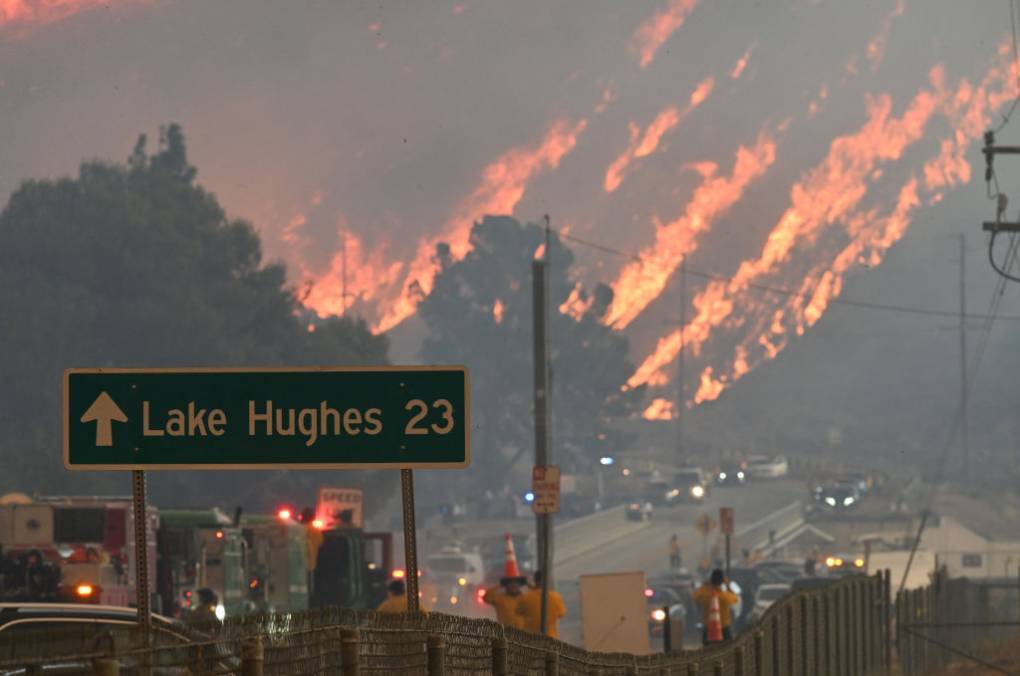
"caption": "Flames from the Hughes Fire burn a hillside in Castaic, a northwestern part of Los Angeles County, on Jan. 22, 2025. ",
"credit": "Robyn Beck/AFP via Getty Images",
"altTag": null,
"description": null,
"imgSizes": {
"medium": {
"file": "https://cdn.kqed.org/wp-content/uploads/sites/10/2025/01/GettyImages-2194744726-800x530.jpg",
"width": 800,
"height": 530,
"mimeType": "image/jpeg"
},
"large": {
"file": "https://cdn.kqed.org/wp-content/uploads/sites/10/2025/01/GettyImages-2194744726-1020x676.jpg",
"width": 1020,
"height": 676,
"mimeType": "image/jpeg"
},
"thumbnail": {
"file": "https://cdn.kqed.org/wp-content/uploads/sites/10/2025/01/GettyImages-2194744726-160x106.jpg",
"width": 160,
"height": 106,
"mimeType": "image/jpeg"
},
"post-thumbnail": {
"file": "https://cdn.kqed.org/wp-content/uploads/sites/10/2025/01/GettyImages-2194744726-672x372.jpg",
"width": 672,
"height": 372,
"mimeType": "image/jpeg"
},
"twentyfourteen-full-width": {
"file": "https://cdn.kqed.org/wp-content/uploads/sites/10/2025/01/GettyImages-2194744726-1024x576.jpg",
"width": 1024,
"height": 576,
"mimeType": "image/jpeg"
},
"kqedFullSize": {
"file": "https://cdn.kqed.org/wp-content/uploads/sites/10/2025/01/GettyImages-2194744726.jpg",
"width": 1024,
"height": 679
}
},
"isLoading": false,
"fetchFailed": false
},
"news_12014957": {
"type": "attachments",
"id": "news_12014957",
"meta": {
"index": "attachments_1716263798",
"site": "news",
"id": "12014957",
"found": true
},
"title": "Cage Free Chickens",
"publishDate": 1732038942,
"status": "inherit",
"parent": 12014955,
"modified": 1732039028,
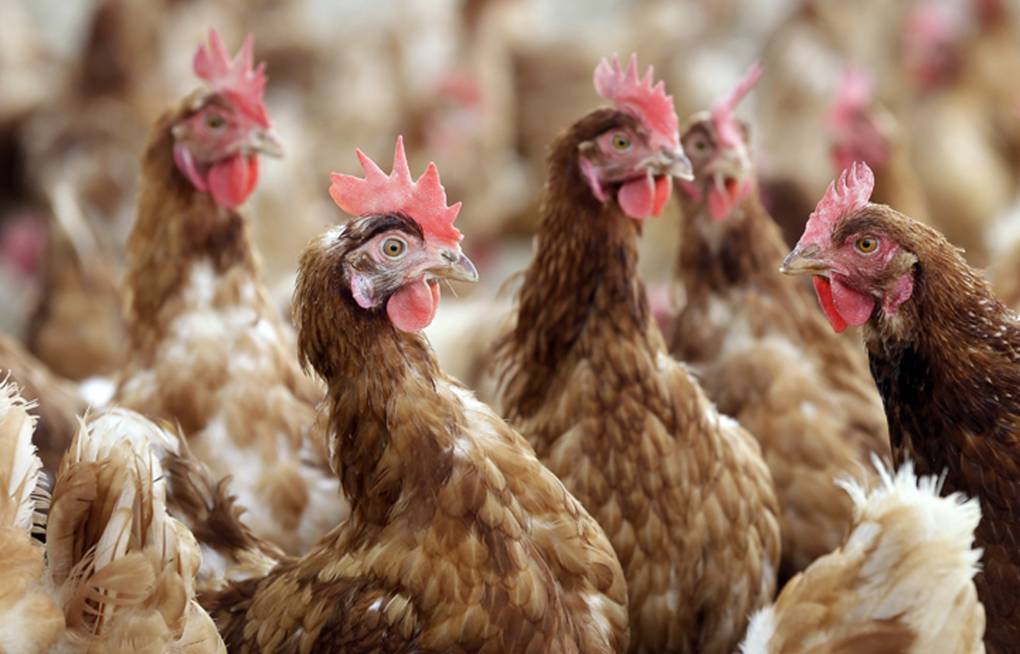
"caption": "California health officials say there has been a possible case of the bird flu virus involving a child in Alameda County. ",
"credit": "Charlie Neibergall/AP Photo",
"altTag": null,
"description": null,
"imgSizes": {
"medium": {
"file": "https://cdn.kqed.org/wp-content/uploads/sites/10/2024/11/BirdFluAP-800x513.jpg",
"width": 800,
"height": 513,
"mimeType": "image/jpeg"
},
"large": {
"file": "https://cdn.kqed.org/wp-content/uploads/sites/10/2024/11/BirdFluAP-1020x654.jpg",
"width": 1020,
"height": 654,
"mimeType": "image/jpeg"
},
"thumbnail": {
"file": "https://cdn.kqed.org/wp-content/uploads/sites/10/2024/11/BirdFluAP-160x103.jpg",
"width": 160,
"height": 103,
"mimeType": "image/jpeg"
},
"1536x1536": {
"file": "https://cdn.kqed.org/wp-content/uploads/sites/10/2024/11/BirdFluAP-1536x985.jpg",
"width": 1536,
"height": 985,
"mimeType": "image/jpeg"
},
"post-thumbnail": {
"file": "https://cdn.kqed.org/wp-content/uploads/sites/10/2024/11/BirdFluAP-672x372.jpg",
"width": 672,
"height": 372,
"mimeType": "image/jpeg"
},
"twentyfourteen-full-width": {
"file": "https://cdn.kqed.org/wp-content/uploads/sites/10/2024/11/BirdFluAP-1038x576.jpg",
"width": 1038,
"height": 576,
"mimeType": "image/jpeg"
},
"full-width": {
"file": "https://cdn.kqed.org/wp-content/uploads/sites/10/2024/11/BirdFluAP-1920x1232.jpg",
"width": 1920,
"height": 1232,
"mimeType": "image/jpeg"
},
"kqedFullSize": {
"file": "https://cdn.kqed.org/wp-content/uploads/sites/10/2024/11/BirdFluAP.jpg",
"width": 2000,
"height": 1283
}
},
"isLoading": false,
"fetchFailed": false
},
"news_12023855": {
"type": "attachments",
"id": "news_12023855",
"meta": {
"index": "attachments_1716263798",
"site": "news",
"id": "12023855",
"found": true
},
"title": "0M6A0870_qed",
"publishDate": 1737670258,
"status": "inherit",
"parent": 12023784,
"modified": 1737670392,
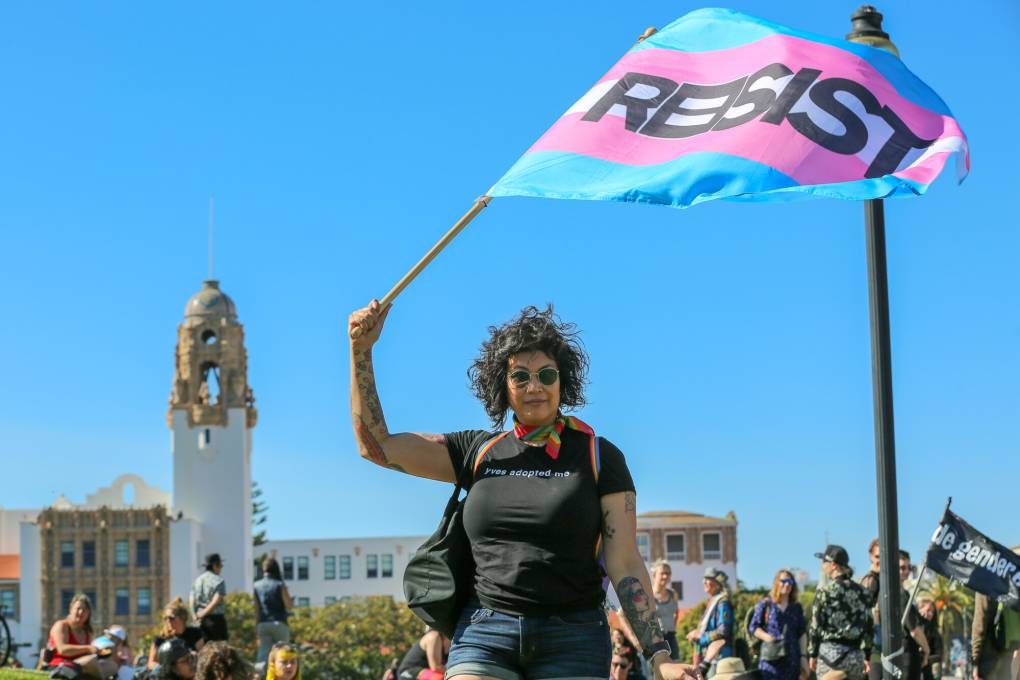
"caption": "A demonstrator proudly waves a transgender pride flag during Pride Month in San Francisco, California, on June 28, 2019.",
"credit": "Sruti Mamidanna/KQED",
"altTag": null,
"description": null,
"imgSizes": {
"medium": {
"file": "https://cdn.kqed.org/wp-content/uploads/sites/10/2025/01/0M6A0870_qed-800x533.jpg",
"width": 800,
"height": 533,
"mimeType": "image/jpeg"
},
"large": {
"file": "https://cdn.kqed.org/wp-content/uploads/sites/10/2025/01/0M6A0870_qed-1020x680.jpg",
"width": 1020,
"height": 680,
"mimeType": "image/jpeg"
},
"thumbnail": {
"file": "https://cdn.kqed.org/wp-content/uploads/sites/10/2025/01/0M6A0870_qed-160x107.jpg",
"width": 160,
"height": 107,
"mimeType": "image/jpeg"
},
"1536x1536": {
"file": "https://cdn.kqed.org/wp-content/uploads/sites/10/2025/01/0M6A0870_qed-1536x1024.jpg",
"width": 1536,
"height": 1024,
"mimeType": "image/jpeg"
},
"post-thumbnail": {
"file": "https://cdn.kqed.org/wp-content/uploads/sites/10/2025/01/0M6A0870_qed-672x372.jpg",
"width": 672,
"height": 372,
"mimeType": "image/jpeg"
},
"twentyfourteen-full-width": {
"file": "https://cdn.kqed.org/wp-content/uploads/sites/10/2025/01/0M6A0870_qed-1038x576.jpg",
"width": 1038,
"height": 576,
"mimeType": "image/jpeg"
},
"full-width": {
"file": "https://cdn.kqed.org/wp-content/uploads/sites/10/2025/01/0M6A0870_qed-1920x1280.jpg",
"width": 1920,
"height": 1280,
"mimeType": "image/jpeg"
},
"kqedFullSize": {
"file": "https://cdn.kqed.org/wp-content/uploads/sites/10/2025/01/0M6A0870_qed.jpg",
"width": 2000,
"height": 1333
}
},
"isLoading": false,
"fetchFailed": false
},
"news_12023773": {
"type": "attachments",
"id": "news_12023773",
"meta": {
"index": "attachments_1716263798",
"site": "news",
"id": "12023773",
"found": true
},
"title": "Trial Of Online Drug Marketplace Silk Road Founder Ross Ulbricht Begins",
"publishDate": 1737660364,
"status": "inherit",
"parent": 12023762,
"modified": 1737660684,
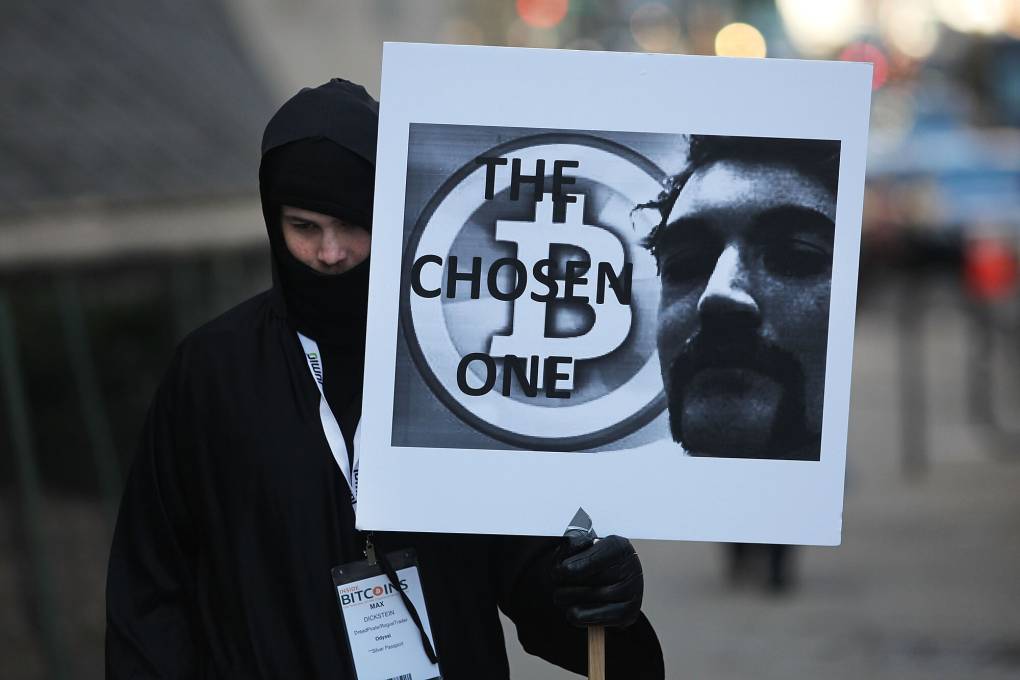
"caption": "Max Dickstein stands with other supporters of Ross Ulbricht, the creator and operator of the Silk Road underground market, in front of a Manhattan federal court house on the first day of jury selection for his trial on Jan. 13, 2015, in New York City. Ulbricht pleaded not guilty, and was accused by the U.S. government of making millions of dollars from the Silk Road website which sold drugs and other illegal commodities anonymously. He was imprisoned from 2013 until January 2025, when he received a full pardon by U.S. President Donald Trump.",
"credit": "Spencer Platt/Getty Images",
"altTag": null,
"description": null,
"imgSizes": {
"medium": {
"file": "https://cdn.kqed.org/wp-content/uploads/sites/10/2025/01/rossulbricht_qed-800x533.jpg",
"width": 800,
"height": 533,
"mimeType": "image/jpeg"
},
"large": {
"file": "https://cdn.kqed.org/wp-content/uploads/sites/10/2025/01/rossulbricht_qed-1020x680.jpg",
"width": 1020,
"height": 680,
"mimeType": "image/jpeg"
},
"thumbnail": {
"file": "https://cdn.kqed.org/wp-content/uploads/sites/10/2025/01/rossulbricht_qed-160x107.jpg",
"width": 160,
"height": 107,
"mimeType": "image/jpeg"
},
"1536x1536": {
"file": "https://cdn.kqed.org/wp-content/uploads/sites/10/2025/01/rossulbricht_qed-1536x1024.jpg",
"width": 1536,
"height": 1024,
"mimeType": "image/jpeg"
},
"post-thumbnail": {
"file": "https://cdn.kqed.org/wp-content/uploads/sites/10/2025/01/rossulbricht_qed-672x372.jpg",
"width": 672,
"height": 372,
"mimeType": "image/jpeg"
},
"twentyfourteen-full-width": {
"file": "https://cdn.kqed.org/wp-content/uploads/sites/10/2025/01/rossulbricht_qed-1038x576.jpg",
"width": 1038,
"height": 576,
"mimeType": "image/jpeg"
},
"full-width": {
"file": "https://cdn.kqed.org/wp-content/uploads/sites/10/2025/01/rossulbricht_qed-1920x1280.jpg",
"width": 1920,
"height": 1280,
"mimeType": "image/jpeg"
},
"kqedFullSize": {
"file": "https://cdn.kqed.org/wp-content/uploads/sites/10/2025/01/rossulbricht_qed.jpg",
"width": 2000,
"height": 1333
}
},
"isLoading": false,
"fetchFailed": false
},
"news_12023747": {
"type": "attachments",
"id": "news_12023747",
"meta": {
"index": "attachments_1716263798",
"site": "news",
"id": "12023747",
"found": true
},
"title": "US-POLITICS-TRUMP-INAUGURATION",
"publishDate": 1737658482,
"status": "inherit",
"parent": 12023740,
"modified": 1737660022,
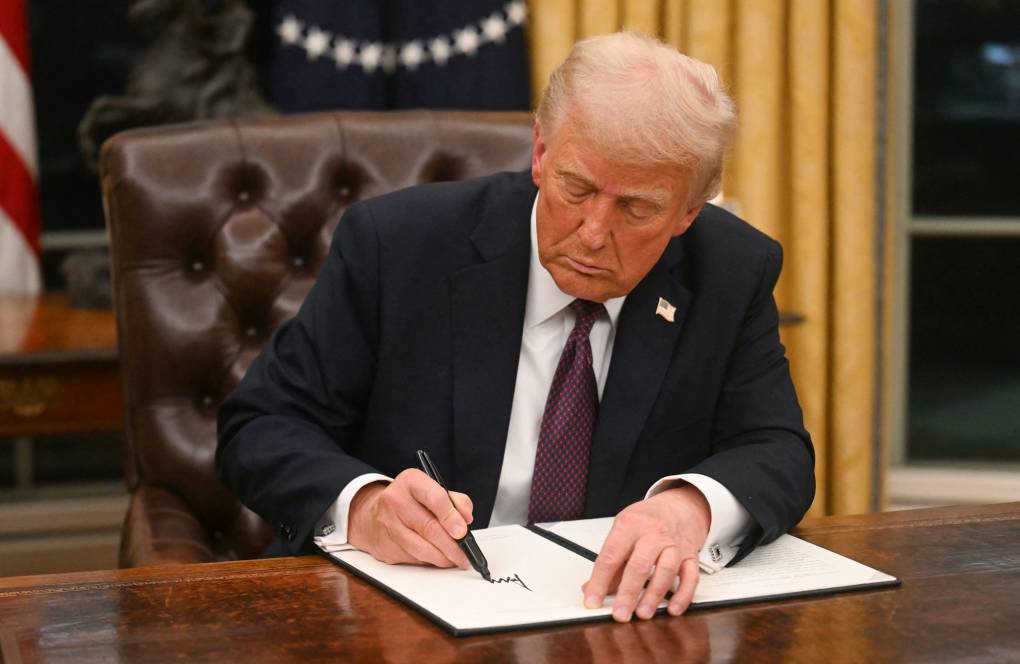
"caption": "U.S. President Donald Trump signs an executive order in the Oval Office of the White House in Washington, D.C., on Jan. 20, 2025.",
"credit": "Jim Watson/Pool/AFP via Getty Images",
"altTag": null,
"description": null,
"imgSizes": {
"medium": {
"file": "https://cdn.kqed.org/wp-content/uploads/sites/10/2025/01/DonaldTrumpEOGetty-800x521.jpg",
"width": 800,
"height": 521,
"mimeType": "image/jpeg"
},
"large": {
"file": "https://cdn.kqed.org/wp-content/uploads/sites/10/2025/01/DonaldTrumpEOGetty-1020x664.jpg",
"width": 1020,
"height": 664,
"mimeType": "image/jpeg"
},
"thumbnail": {
"file": "https://cdn.kqed.org/wp-content/uploads/sites/10/2025/01/DonaldTrumpEOGetty-160x104.jpg",
"width": 160,
"height": 104,
"mimeType": "image/jpeg"
},
"1536x1536": {
"file": "https://cdn.kqed.org/wp-content/uploads/sites/10/2025/01/DonaldTrumpEOGetty-1536x1000.jpg",
"width": 1536,
"height": 1000,
"mimeType": "image/jpeg"
},
"post-thumbnail": {
"file": "https://cdn.kqed.org/wp-content/uploads/sites/10/2025/01/DonaldTrumpEOGetty-672x372.jpg",
"width": 672,
"height": 372,
"mimeType": "image/jpeg"
},
"twentyfourteen-full-width": {
"file": "https://cdn.kqed.org/wp-content/uploads/sites/10/2025/01/DonaldTrumpEOGetty-1038x576.jpg",
"width": 1038,
"height": 576,
"mimeType": "image/jpeg"
},
"full-width": {
"file": "https://cdn.kqed.org/wp-content/uploads/sites/10/2025/01/DonaldTrumpEOGetty-1920x1250.jpg",
"width": 1920,
"height": 1250,
"mimeType": "image/jpeg"
},
"kqedFullSize": {
"file": "https://cdn.kqed.org/wp-content/uploads/sites/10/2025/01/DonaldTrumpEOGetty.jpg",
"width": 2000,
"height": 1302
}
},
"isLoading": false,
"fetchFailed": false
},
"news_12023430": {
"type": "attachments",
"id": "news_12023430",
"meta": {
"index": "attachments_1716263798",
"site": "news",
"id": "12023430",
"found": true
},
"title": "20250121_Gender-Exec-Order_DB_00459",
"publishDate": 1737560758,
"status": "inherit",
"parent": 0,
"modified": 1737584425,
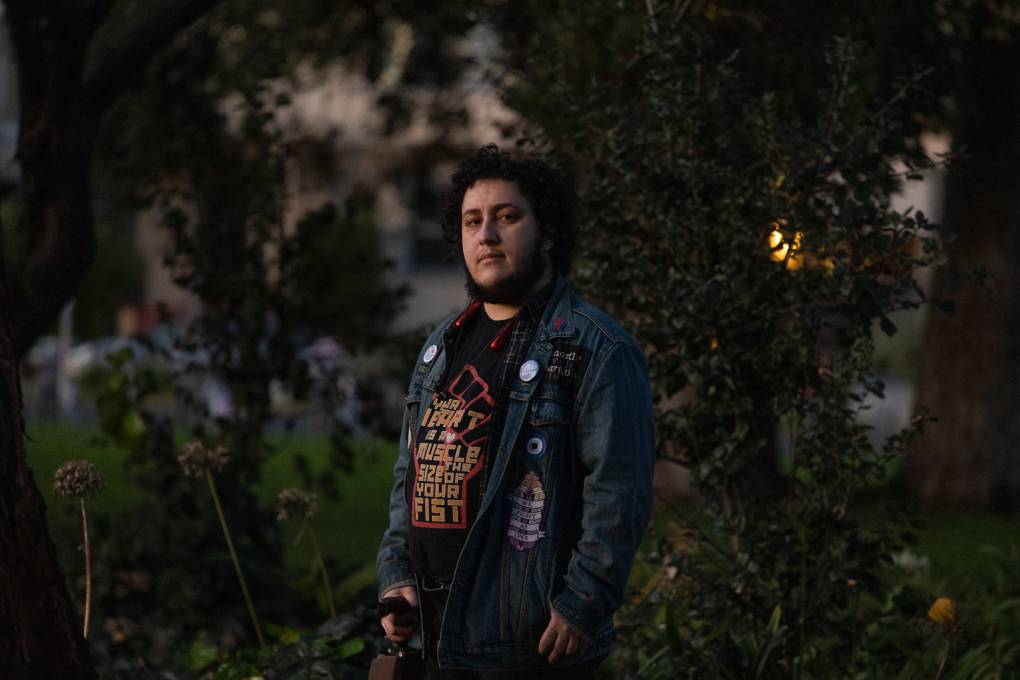
"caption": "Ari Yovel, 30, in Mosswood Park, Oakland, on Tuesday, Jan. 21, 2025. Yovel is a queer, autistic/disabled, Israeli Jewish writer, community educator and changemaker based in Berkeley.",
"credit": "David M. Barreda/KQED",
"altTag": null,
"description": null,
"imgSizes": {
"medium": {
"file": "https://cdn.kqed.org/wp-content/uploads/sites/10/2025/01/20250121_Gender-Exec-Order_DB_00459-800x533.jpg",
"width": 800,
"height": 533,
"mimeType": "image/jpeg"
},
"large": {
"file": "https://cdn.kqed.org/wp-content/uploads/sites/10/2025/01/20250121_Gender-Exec-Order_DB_00459-1020x680.jpg",
"width": 1020,
"height": 680,
"mimeType": "image/jpeg"
},
"thumbnail": {
"file": "https://cdn.kqed.org/wp-content/uploads/sites/10/2025/01/20250121_Gender-Exec-Order_DB_00459-160x107.jpg",
"width": 160,
"height": 107,
"mimeType": "image/jpeg"
},
"1536x1536": {
"file": "https://cdn.kqed.org/wp-content/uploads/sites/10/2025/01/20250121_Gender-Exec-Order_DB_00459-1536x1024.jpg",
"width": 1536,
"height": 1024,
"mimeType": "image/jpeg"
},
"post-thumbnail": {
"file": "https://cdn.kqed.org/wp-content/uploads/sites/10/2025/01/20250121_Gender-Exec-Order_DB_00459-672x372.jpg",
"width": 672,
"height": 372,
"mimeType": "image/jpeg"
},
"twentyfourteen-full-width": {
"file": "https://cdn.kqed.org/wp-content/uploads/sites/10/2025/01/20250121_Gender-Exec-Order_DB_00459-1038x576.jpg",
"width": 1038,
"height": 576,
"mimeType": "image/jpeg"
},
"full-width": {
"file": "https://cdn.kqed.org/wp-content/uploads/sites/10/2025/01/20250121_Gender-Exec-Order_DB_00459-1920x1280.jpg",
"width": 1920,
"height": 1280,
"mimeType": "image/jpeg"
},
"kqedFullSize": {
"file": "https://cdn.kqed.org/wp-content/uploads/sites/10/2025/01/20250121_Gender-Exec-Order_DB_00459.jpg",
"width": 2000,
"height": 1333
}
},
"isLoading": false,
"fetchFailed": false
},
"news_12020469": {
"type": "attachments",
"id": "news_12020469",
"meta": {
"index": "attachments_1716263798",
"site": "news",
"id": "12020469",
"found": true
},
"title": "California Budget",
"publishDate": 1736201641,
"status": "inherit",
"parent": 12020389,
"modified": 1736205557,
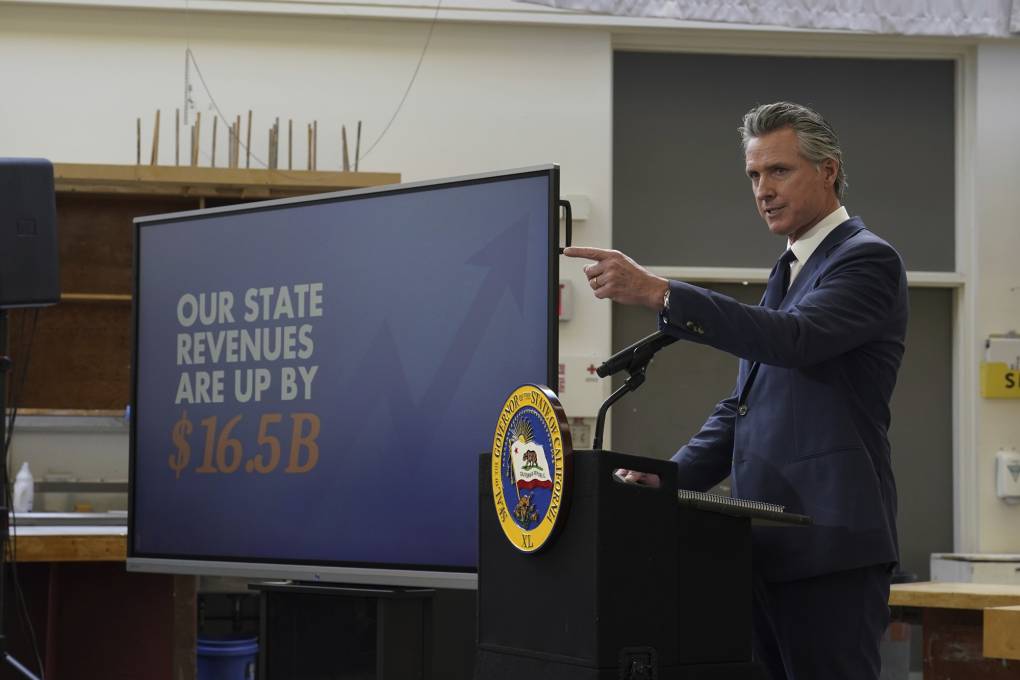
"caption": "Gov. Gavin Newsom delivers a briefing of his proposed 2025–26 state budget at California State University, Stanislaus, in Turlock on Jan. 6, 2025.",
"credit": "Rich Pedroncelli/AP Photo",
"altTag": null,
"description": null,
"imgSizes": {
"medium": {
"file": "https://cdn.kqed.org/wp-content/uploads/sites/10/2025/01/GavinNewsomCABudget2025AP-800x533.jpg",
"width": 800,
"height": 533,
"mimeType": "image/jpeg"
},
"large": {
"file": "https://cdn.kqed.org/wp-content/uploads/sites/10/2025/01/GavinNewsomCABudget2025AP-1020x680.jpg",
"width": 1020,
"height": 680,
"mimeType": "image/jpeg"
},
"thumbnail": {
"file": "https://cdn.kqed.org/wp-content/uploads/sites/10/2025/01/GavinNewsomCABudget2025AP-160x107.jpg",
"width": 160,
"height": 107,
"mimeType": "image/jpeg"
},
"1536x1536": {
"file": "https://cdn.kqed.org/wp-content/uploads/sites/10/2025/01/GavinNewsomCABudget2025AP-1536x1024.jpg",
"width": 1536,
"height": 1024,
"mimeType": "image/jpeg"
},
"post-thumbnail": {
"file": "https://cdn.kqed.org/wp-content/uploads/sites/10/2025/01/GavinNewsomCABudget2025AP-672x372.jpg",
"width": 672,
"height": 372,
"mimeType": "image/jpeg"
},
"twentyfourteen-full-width": {
"file": "https://cdn.kqed.org/wp-content/uploads/sites/10/2025/01/GavinNewsomCABudget2025AP-1038x576.jpg",
"width": 1038,
"height": 576,
"mimeType": "image/jpeg"
},
"full-width": {
"file": "https://cdn.kqed.org/wp-content/uploads/sites/10/2025/01/GavinNewsomCABudget2025AP-1920x1280.jpg",
"width": 1920,
"height": 1280,
"mimeType": "image/jpeg"
},
"kqedFullSize": {
"file": "https://cdn.kqed.org/wp-content/uploads/sites/10/2025/01/GavinNewsomCABudget2025AP.jpg",
"width": 2000,
"height": 1333
}
},
"isLoading": false,
"fetchFailed": false
},
"news_12023317": {
"type": "attachments",
"id": "news_12023317",
"meta": {
"index": "attachments_1716263798",
"site": "news",
"id": "12023317",
"found": true
},
"title": "20250115_JapaneseAmericanActivism_GC-47",
"publishDate": 1737490923,
"status": "inherit",
"parent": 0,
"modified": 1737592311,
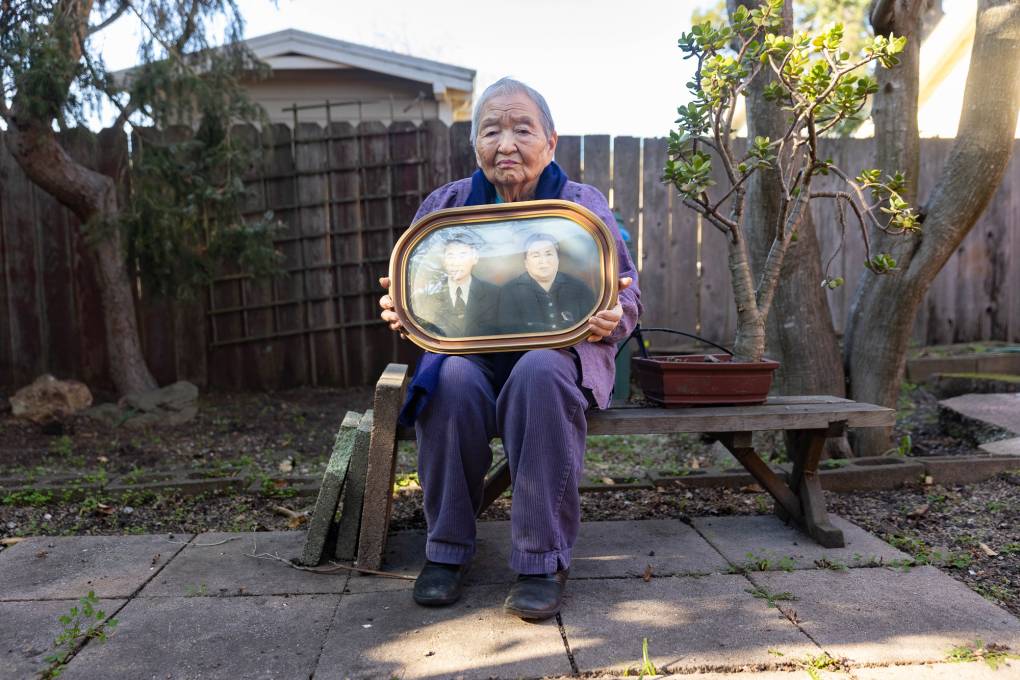
"caption": "Sadako Nimura Kashiwagi, 91, holds a photo of her parents, Juninhi Nimura and Shizuko Nimura, at her home in Berkeley on Jan. 15, 2025. Sadako was incarcerated at Tule Lake concentration camp at the age of 9, where she lived with her family for four years.",
"credit": "Gina Castro/KQED",
"altTag": null,
"description": null,
"imgSizes": {
"medium": {
"file": "https://cdn.kqed.org/wp-content/uploads/sites/10/2025/01/20250115_JapaneseAmericanActivism_GC-47-800x533.jpg",
"width": 800,
"height": 533,
"mimeType": "image/jpeg"
},
"large": {
"file": "https://cdn.kqed.org/wp-content/uploads/sites/10/2025/01/20250115_JapaneseAmericanActivism_GC-47-1020x680.jpg",
"width": 1020,
"height": 680,
"mimeType": "image/jpeg"
},
"thumbnail": {
"file": "https://cdn.kqed.org/wp-content/uploads/sites/10/2025/01/20250115_JapaneseAmericanActivism_GC-47-160x107.jpg",
"width": 160,
"height": 107,
"mimeType": "image/jpeg"
},
"1536x1536": {
"file": "https://cdn.kqed.org/wp-content/uploads/sites/10/2025/01/20250115_JapaneseAmericanActivism_GC-47-1536x1024.jpg",
"width": 1536,
"height": 1024,
"mimeType": "image/jpeg"
},
"post-thumbnail": {
"file": "https://cdn.kqed.org/wp-content/uploads/sites/10/2025/01/20250115_JapaneseAmericanActivism_GC-47-672x372.jpg",
"width": 672,
"height": 372,
"mimeType": "image/jpeg"
},
"twentyfourteen-full-width": {
"file": "https://cdn.kqed.org/wp-content/uploads/sites/10/2025/01/20250115_JapaneseAmericanActivism_GC-47-1038x576.jpg",
"width": 1038,
"height": 576,
"mimeType": "image/jpeg"
},
"full-width": {
"file": "https://cdn.kqed.org/wp-content/uploads/sites/10/2025/01/20250115_JapaneseAmericanActivism_GC-47-1920x1280.jpg",
"width": 1920,
"height": 1280,
"mimeType": "image/jpeg"
},
"kqedFullSize": {
"file": "https://cdn.kqed.org/wp-content/uploads/sites/10/2025/01/20250115_JapaneseAmericanActivism_GC-47.jpg",
"width": 2000,
"height": 1333
}
},
"isLoading": false,
"fetchFailed": false
},
"news_12022707": {
"type": "attachments",
"id": "news_12022707",
"meta": {
"index": "attachments_1716263798",
"site": "news",
"id": "12022707",
"found": true
},
"title": "240116-OaklandHillsHouseFire-30",
"publishDate": 1737114651,
"status": "inherit",
"parent": 0,
"modified": 1737115498,
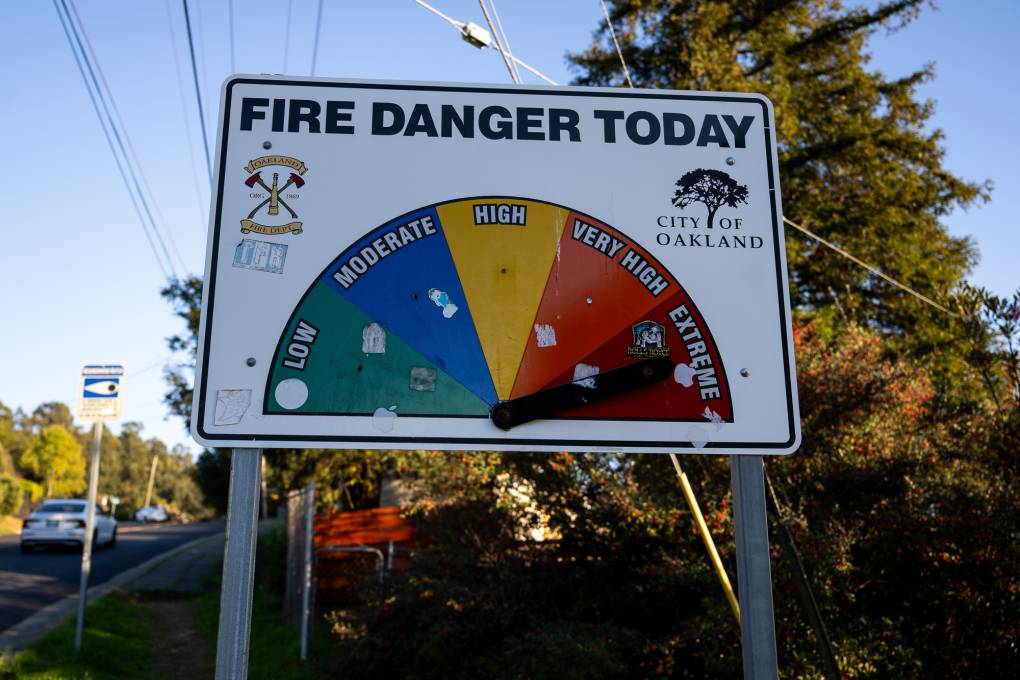
"caption": "A fire danger sign is marked as ‘extreme’ in the Oakland Hills neighborhood of Oakland on Jan. 16, 2025.",
"credit": "Beth LaBerge/KQED",
"altTag": null,
"description": null,
"imgSizes": {
"medium": {
"file": "https://cdn.kqed.org/wp-content/uploads/sites/10/2025/01/240116-OaklandHillsHouseFire-30-800x533.jpg",
"width": 800,
"height": 533,
"mimeType": "image/jpeg"
},
"large": {
"file": "https://cdn.kqed.org/wp-content/uploads/sites/10/2025/01/240116-OaklandHillsHouseFire-30-1020x680.jpg",
"width": 1020,
"height": 680,
"mimeType": "image/jpeg"
},
"thumbnail": {
"file": "https://cdn.kqed.org/wp-content/uploads/sites/10/2025/01/240116-OaklandHillsHouseFire-30-160x107.jpg",
"width": 160,
"height": 107,
"mimeType": "image/jpeg"
},
"1536x1536": {
"file": "https://cdn.kqed.org/wp-content/uploads/sites/10/2025/01/240116-OaklandHillsHouseFire-30-1536x1024.jpg",
"width": 1536,
"height": 1024,
"mimeType": "image/jpeg"
},
"post-thumbnail": {
"file": "https://cdn.kqed.org/wp-content/uploads/sites/10/2025/01/240116-OaklandHillsHouseFire-30-672x372.jpg",
"width": 672,
"height": 372,
"mimeType": "image/jpeg"
},
"twentyfourteen-full-width": {
"file": "https://cdn.kqed.org/wp-content/uploads/sites/10/2025/01/240116-OaklandHillsHouseFire-30-1038x576.jpg",
"width": 1038,
"height": 576,
"mimeType": "image/jpeg"
},
"full-width": {
"file": "https://cdn.kqed.org/wp-content/uploads/sites/10/2025/01/240116-OaklandHillsHouseFire-30-1920x1280.jpg",
"width": 1920,
"height": 1280,
"mimeType": "image/jpeg"
},
"kqedFullSize": {
"file": "https://cdn.kqed.org/wp-content/uploads/sites/10/2025/01/240116-OaklandHillsHouseFire-30.jpg",
"width": 2000,
"height": 1333
}
},
"isLoading": false,
"fetchFailed": false
},
"news_12023466": {
"type": "attachments",
"id": "news_12023466",
"meta": {
"index": "attachments_1716263798",
"site": "news",
"id": "12023466",
"found": true
},
"title": "US-POLITICS-TRUMP-INAUGURATION",
"publishDate": 1737572169,
"status": "inherit",
"parent": 12023459,
"modified": 1737572235,
"caption": "US Vice President JD Vance applauds US President Donald Trump after he was sworn in as the 47th US President in the US Capitol Rotunda in Washington, DC, on Jan. 20, 2025. ",
"credit": "Julia Demaree Nikhinson/POOL/AFP via Getty Images",
"altTag": null,
"description": null,
"imgSizes": {
"medium": {
"file": "https://cdn.kqed.org/wp-content/uploads/sites/10/2025/01/GettyImages-2194390313-800x534.jpg",
"width": 800,
"height": 534,
"mimeType": "image/jpeg"
},
"large": {
"file": "https://cdn.kqed.org/wp-content/uploads/sites/10/2025/01/GettyImages-2194390313-1020x681.jpg",
"width": 1020,
"height": 681,
"mimeType": "image/jpeg"
},
"thumbnail": {
"file": "https://cdn.kqed.org/wp-content/uploads/sites/10/2025/01/GettyImages-2194390313-160x107.jpg",
"width": 160,
"height": 107,
"mimeType": "image/jpeg"
},
"post-thumbnail": {
"file": "https://cdn.kqed.org/wp-content/uploads/sites/10/2025/01/GettyImages-2194390313-672x372.jpg",
"width": 672,
"height": 372,
"mimeType": "image/jpeg"
},
"twentyfourteen-full-width": {
"file": "https://cdn.kqed.org/wp-content/uploads/sites/10/2025/01/GettyImages-2194390313-1024x576.jpg",
"width": 1024,
"height": 576,
"mimeType": "image/jpeg"
},
"kqedFullSize": {
"file": "https://cdn.kqed.org/wp-content/uploads/sites/10/2025/01/GettyImages-2194390313.jpg",
"width": 1024,
"height": 684
}
},
"isLoading": false,
"fetchFailed": false
},
"news_12023545": {
"type": "attachments",
"id": "news_12023545",
"meta": {
"index": "attachments_1716263798",
"site": "news",
"id": "12023545",
"found": true
},
"title": "250122-OaklandImmigrants-28-BL",
"publishDate": 1737580511,
"status": "inherit",
"parent": 12069782,
"modified": 1768439327,
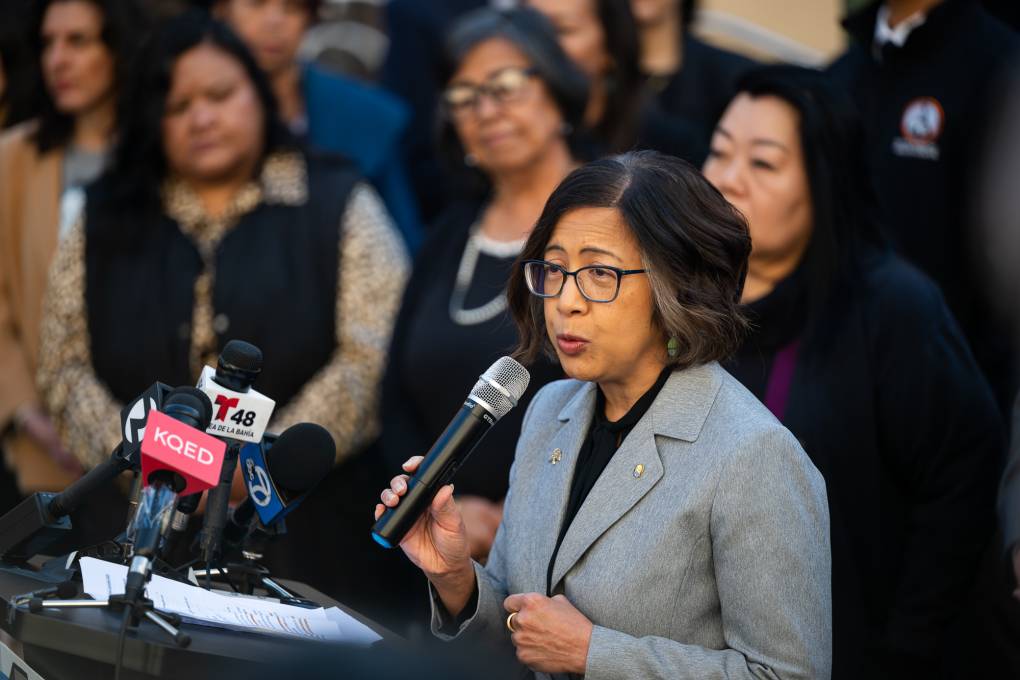
"caption": "Alameda County Supervisor Nikki Fortunato Bas speaks during a press conference with leaders from community groups throughout Alameda County in the Fruitvale neighborhood of Oakland on Jan. 22, 2025, to discuss support for immigrant families in the Bay Area after President Donald Trump promised mass deportations.",
"credit": "Beth LaBerge/KQED",
"altTag": null,
"description": null,
"imgSizes": {
"medium": {
"file": "https://cdn.kqed.org/wp-content/uploads/sites/10/2025/01/250122-OaklandImmigrants-28-BL-800x533.jpg",
"width": 800,
"height": 533,
"mimeType": "image/jpeg"
},
"large": {
"file": "https://cdn.kqed.org/wp-content/uploads/sites/10/2025/01/250122-OaklandImmigrants-28-BL-1020x680.jpg",
"width": 1020,
"height": 680,
"mimeType": "image/jpeg"
},
"thumbnail": {
"file": "https://cdn.kqed.org/wp-content/uploads/sites/10/2025/01/250122-OaklandImmigrants-28-BL-160x107.jpg",
"width": 160,
"height": 107,
"mimeType": "image/jpeg"
},
"1536x1536": {
"file": "https://cdn.kqed.org/wp-content/uploads/sites/10/2025/01/250122-OaklandImmigrants-28-BL-1536x1024.jpg",
"width": 1536,
"height": 1024,
"mimeType": "image/jpeg"
},
"post-thumbnail": {
"file": "https://cdn.kqed.org/wp-content/uploads/sites/10/2025/01/250122-OaklandImmigrants-28-BL-672x372.jpg",
"width": 672,
"height": 372,
"mimeType": "image/jpeg"
},
"twentyfourteen-full-width": {
"file": "https://cdn.kqed.org/wp-content/uploads/sites/10/2025/01/250122-OaklandImmigrants-28-BL-1038x576.jpg",
"width": 1038,
"height": 576,
"mimeType": "image/jpeg"
},
"full-width": {
"file": "https://cdn.kqed.org/wp-content/uploads/sites/10/2025/01/250122-OaklandImmigrants-28-BL-1920x1280.jpg",
"width": 1920,
"height": 1280,
"mimeType": "image/jpeg"
},
"kqedFullSize": {
"file": "https://cdn.kqed.org/wp-content/uploads/sites/10/2025/01/250122-OaklandImmigrants-28-BL.jpg",
"width": 2000,
"height": 1333
}
},
"isLoading": false,
"fetchFailed": false
}
},
"audioPlayerReducer": {
"postId": "stream_live",
"isPaused": true,
"isPlaying": false,
"pfsActive": false,
"pledgeModalIsOpen": true,
"playerDrawerIsOpen": false,
"liveAudioPlayStartedAt": 0,
"liveAudioPlayContext": ""
},
"authorsReducer": {
"byline_news_12023740": {
"type": "authors",
"id": "byline_news_12023740",
"meta": {
"override": true
},
"slug": "byline_news_12023740",
"name": "Eugene Johnson and Mike Catalini, Associated Press",
"isLoading": false
},
"byline_news_12023459": {
"type": "authors",
"id": "byline_news_12023459",
"meta": {
"override": true
},
"slug": "byline_news_12023459",
"name": "The Associated Press",
"isLoading": false
},
"gmarzorati": {
"type": "authors",
"id": "227",
"meta": {
"index": "authors_1716337520",
"id": "227",
"found": true
},
"name": "Guy Marzorati",
"firstName": "Guy",
"lastName": "Marzorati",
"slug": "gmarzorati",
"email": "gmarzorati@KQED.org",
"display_author_email": true,
"staff_mastheads": [
"news"
],
"title": "Correspondent",
"bio": "Guy Marzorati is a correspondent on KQED's California Politics and Government Desk, based in San Jose. A graduate of Santa Clara University, Guy joined KQED in 2013. He reports on state and local politics and produces KQED's digital voter guide.",
"avatar": "https://secure.gravatar.com/avatar/e7038b8dbfd55b104369b76b1cd0b9de?s=600&d=blank&r=g",
"twitter": "guymarzorati",
"facebook": null,
"instagram": null,
"linkedin": null,
"sites": [
{
"site": "",
"roles": [
"editor"
]
},
{
"site": "news",
"roles": [
"editor"
]
},
{
"site": "science",
"roles": [
"editor"
]
},
{
"site": "forum",
"roles": [
"editor"
]
},
{
"site": "elections",
"roles": [
"editor"
]
},
{
"site": "liveblog",
"roles": [
"editor"
]
}
],
"headData": {
"title": "Guy Marzorati | KQED",
"description": "Correspondent",
"ogImgSrc": "https://secure.gravatar.com/avatar/e7038b8dbfd55b104369b76b1cd0b9de?s=600&d=blank&r=g",
"twImgSrc": "https://secure.gravatar.com/avatar/e7038b8dbfd55b104369b76b1cd0b9de?s=600&d=blank&r=g"
},
"isLoading": false,
"link": "/author/gmarzorati"
},
"scottshafer": {
"type": "authors",
"id": "255",
"meta": {
"index": "authors_1716337520",
"id": "255",
"found": true
},
"name": "Scott Shafer",
"firstName": "Scott",
"lastName": "Shafer",
"slug": "scottshafer",
"email": "sshafer@kqed.org",
"display_author_email": false,
"staff_mastheads": [
"news"
],
"title": "KQED Contributor",
"bio": "Scott Shafer is a senior editor with the KQED Politics and Government desk. He is co-host of Political Breakdown, the award-winning radio show and podcast with a personal take on the world of politics. Scott came to KQED in 1998 to host the statewide\u003cem> California Report\u003c/em>. Prior to that he had extended stints in politics and government\u003cem>.\u003c/em> He uses that inside experience at KQED in his, reporting, hosting and analysis for the politics desk. Scott collaborated \u003cem>Political Breakdown a\u003c/em>nd on \u003cem>The Political Mind of Jerry Brown, \u003c/em>an eight-part series about the life and extraordinary political career of the former governor. For fun, he plays water polo with the San Francisco Tsunami.",
"avatar": "https://secure.gravatar.com/avatar/a62ebae45b79d7aed1a39a0e3bf68104?s=600&d=blank&r=g",
"twitter": "scottshafer",
"bluesky": null,
"facebook": null,
"instagram": null,
"linkedin": null,
"sites": [
{
"site": "news",
"roles": [
"editor"
]
},
{
"site": "stateofhealth",
"roles": [
"author"
]
},
{
"site": "science",
"roles": [
"author"
]
},
{
"site": "forum",
"roles": [
"subscriber"
]
},
{
"site": "liveblog",
"roles": [
"author"
]
}
],
"headData": {
"title": "Scott Shafer | KQED",
"description": "KQED Contributor",
"ogImgSrc": "https://secure.gravatar.com/avatar/a62ebae45b79d7aed1a39a0e3bf68104?s=600&d=blank&r=g",
"twImgSrc": "https://secure.gravatar.com/avatar/a62ebae45b79d7aed1a39a0e3bf68104?s=600&d=blank&r=g"
},
"isLoading": false,
"link": "/author/scottshafer"
},
"mlagos": {
"type": "authors",
"id": "3239",
"meta": {
"index": "authors_1716337520",
"id": "3239",
"found": true
},
"name": "Marisa Lagos",
"firstName": "Marisa",
"lastName": "Lagos",
"slug": "mlagos",
"email": "mlagos@kqed.org",
"display_author_email": false,
"staff_mastheads": [
"news"
],
"title": "KQED Contributor",
"bio": "Marisa Lagos is a correspondent for KQED’s California Politics and Government Desk and co-hosts the award-winning show and podcast, Political Breakdown. At KQED, Lagos also conducts reporting, analysis and investigations into state, local and national politics for radio, TV, online and onstage. In 2022, she and co-host, Scott Shafer, moderated the only gubernatorial debate in California. In 2020, the \u003ci>Washington Post\u003c/i> named her one of the top political journalists in California; she was nominated for a Peabody and won several other awards for her work investigating the 2017 California wildfires. She has worked at the \u003ci>San Francisco Chronicle\u003c/i>, \u003ci>San Francisco Examiner\u003c/i> and \u003ci>Los Angeles Times\u003c/i>. A UC Santa Barbara graduate, she lives in San Francisco with her two sons and husband.",
"avatar": "https://secure.gravatar.com/avatar/a261a0d3696fc066871ef96b85b5e7d2?s=600&d=blank&r=g",
"twitter": "@mlagos",
"facebook": null,
"instagram": null,
"linkedin": null,
"sites": [
{
"site": "arts",
"roles": [
"author"
]
},
{
"site": "news",
"roles": [
"editor"
]
},
{
"site": "science",
"roles": [
"editor"
]
},
{
"site": "forum",
"roles": [
"author"
]
},
{
"site": "liveblog",
"roles": [
"author"
]
}
],
"headData": {
"title": "Marisa Lagos | KQED",
"description": "KQED Contributor",
"ogImgSrc": "https://secure.gravatar.com/avatar/a261a0d3696fc066871ef96b85b5e7d2?s=600&d=blank&r=g",
"twImgSrc": "https://secure.gravatar.com/avatar/a261a0d3696fc066871ef96b85b5e7d2?s=600&d=blank&r=g"
},
"isLoading": false,
"link": "/author/mlagos"
},
"clei": {
"type": "authors",
"id": "8617",
"meta": {
"index": "authors_1716337520",
"id": "8617",
"found": true
},
"name": "Cecilia Lei",
"firstName": "Cecilia",
"lastName": "Lei",
"slug": "clei",
"email": "clei@KQED.org",
"display_author_email": false,
"staff_mastheads": [],
"title": "KQED Contributor",
"bio": "Cecilia Lei is an on-call host and producer for KQED News and Podcasts. Previously, she was the executive producer and host of the San Francisco Chronicle's daily news podcast, 'Fifth and Mission'. Cecilia is a graduate of UC Berkeley’s Graduate School of Journalism and the former president of the Asian American Journalists Association San Francisco Bay Area chapter.",
"avatar": "https://secure.gravatar.com/avatar/40975f1f88fccf628ee537bf6ffc2af8?s=600&d=blank&r=g",
"twitter": null,
"facebook": null,
"instagram": null,
"linkedin": null,
"sites": [
{
"site": "arts",
"roles": [
"contributor"
]
},
{
"site": "news",
"roles": [
"author",
"read_private_posts"
]
},
{
"site": "about",
"roles": [
"editor"
]
}
],
"headData": {
"title": "Cecilia Lei | KQED",
"description": "KQED Contributor",
"ogImgSrc": "https://secure.gravatar.com/avatar/40975f1f88fccf628ee537bf6ffc2af8?s=600&d=blank&r=g",
"twImgSrc": "https://secure.gravatar.com/avatar/40975f1f88fccf628ee537bf6ffc2af8?s=600&d=blank&r=g"
},
"isLoading": false,
"link": "/author/clei"
},
"lesleymcclurg": {
"type": "authors",
"id": "11229",
"meta": {
"index": "authors_1716337520",
"id": "11229",
"found": true
},
"name": "Lesley McClurg",
"firstName": "Lesley",
"lastName": "McClurg",
"slug": "lesleymcclurg",
"email": "lmcclurg@KQED.org",
"display_author_email": false,
"staff_mastheads": [
"news",
"science"
],
"title": "KQED Health Correspondent",
"bio": "Lesley McClurg is a health correspondent and fill-in host whose work is regularly rebroadcast on NPR and PBS programs. She’s earned multiple regional Emmy awards, a national and a regional Edward R. Murrow award, and was named Best Beat Reporter by the Association of Health Care Journalists. The Society of Professional Journalists has recognized her work several times, and the Society of Environmental Journalists spotlighted her coverage of California’s historic drought.\r\n\r\nBefore joining KQED in 2016, Lesley covered food and sustainability for Capital Public Radio, environmental issues for Colorado Public Radio, and reported for KUOW and KCTS 9 in Seattle. Away from the newsroom, she loves skiing with her daughter, mountain biking with her partner, and playing with Ollie, the family’s goldendoodle. On deadline, she runs almost entirely on chocolate chips.\r\n\r\n ",
"avatar": "https://secure.gravatar.com/avatar/bab49e972ea10c774fe0f5e29dba1722b158f7c0d58a360923d1389d380b2978?s=600&d=blank&r=g",
"twitter": "lesleywmcclurg",
"bluesky": null,
"facebook": null,
"instagram": null,
"linkedin": null,
"sites": [
{
"site": "arts",
"roles": [
"author"
]
},
{
"site": "news",
"roles": [
"editor"
]
},
{
"site": "futureofyou",
"roles": [
"editor"
]
},
{
"site": "stateofhealth",
"roles": [
"author"
]
},
{
"site": "science",
"roles": [
"editor"
]
},
{
"site": "quest",
"roles": [
"subscriber"
]
},
{
"site": "forum",
"roles": [
"administrator"
]
},
{
"site": "liveblog",
"roles": [
"author"
]
}
],
"headData": {
"title": "Lesley McClurg | KQED",
"description": "KQED Health Correspondent",
"ogImgSrc": "https://secure.gravatar.com/avatar/bab49e972ea10c774fe0f5e29dba1722b158f7c0d58a360923d1389d380b2978?s=600&d=blank&r=g",
"twImgSrc": "https://secure.gravatar.com/avatar/bab49e972ea10c774fe0f5e29dba1722b158f7c0d58a360923d1389d380b2978?s=600&d=blank&r=g"
},
"isLoading": false,
"link": "/author/lesleymcclurg"
},
"kevinstark": {
"type": "authors",
"id": "11608",
"meta": {
"index": "authors_1716337520",
"id": "11608",
"found": true
},
"name": "Kevin Stark",
"firstName": "Kevin",
"lastName": "Stark",
"slug": "kevinstark",
"email": "kstark@kqed.org",
"display_author_email": true,
"staff_mastheads": [
"science"
],
"title": "Senior Editor",
"bio": "Kevin is a senior editor for KQED Science, managing the station's health and climate desks. His journalism career began in the Pacific Northwest, and he later became a lead reporter for the San Francisco Public Press. His work has appeared in Pacific Standard magazine, the Energy News Network, the Center for Investigative Reporting's Reveal and WBEZ in Chicago. Kevin joined KQED in 2019, and has covered issues related to energy, wildfire, climate change and the environment.",
"avatar": "https://secure.gravatar.com/avatar/1f646bf546a63d638e04ff23b52b0e79?s=600&d=blank&r=g",
"twitter": "starkkev",
"facebook": null,
"instagram": null,
"linkedin": null,
"sites": [
{
"site": "",
"roles": [
"editor"
]
},
{
"site": "news",
"roles": [
"editor"
]
},
{
"site": "science",
"roles": [
"administrator"
]
}
],
"headData": {
"title": "Kevin Stark | KQED",
"description": "Senior Editor",
"ogImgSrc": "https://secure.gravatar.com/avatar/1f646bf546a63d638e04ff23b52b0e79?s=600&d=blank&r=g",
"twImgSrc": "https://secure.gravatar.com/avatar/1f646bf546a63d638e04ff23b52b0e79?s=600&d=blank&r=g"
},
"isLoading": false,
"link": "/author/kevinstark"
},
"kdebenedetti": {
"type": "authors",
"id": "11913",
"meta": {
"index": "authors_1716337520",
"id": "11913",
"found": true
},
"name": "Katie DeBenedetti",
"firstName": "Katie",
"lastName": "DeBenedetti",
"slug": "kdebenedetti",
"email": "kdebenedetti@kqed.org",
"display_author_email": false,
"staff_mastheads": [
"news",
"science"
],
"title": "KQED Contributor",
"bio": "Katie DeBenedetti is a digital reporter covering daily news for the Express Desk. Prior to joining KQED as a culture reporting intern in January 2024, she covered education and city government for the Napa Valley Register.",
"avatar": "https://secure.gravatar.com/avatar/6e31073cb8f7e4214ab03f42771d0f45?s=600&d=blank&r=g",
"twitter": null,
"facebook": null,
"instagram": null,
"linkedin": null,
"sites": [
{
"site": "news",
"roles": [
"author"
]
},
{
"site": "science",
"roles": [
"author"
]
},
{
"site": "liveblog",
"roles": [
"author"
]
}
],
"headData": {
"title": "Katie DeBenedetti | KQED",
"description": "KQED Contributor",
"ogImgSrc": "https://secure.gravatar.com/avatar/6e31073cb8f7e4214ab03f42771d0f45?s=600&d=blank&r=g",
"twImgSrc": "https://secure.gravatar.com/avatar/6e31073cb8f7e4214ab03f42771d0f45?s=600&d=blank&r=g"
},
"isLoading": false,
"link": "/author/kdebenedetti"
},
"slim": {
"type": "authors",
"id": "11920",
"meta": {
"index": "authors_1716337520",
"id": "11920",
"found": true
},
"name": "Samantha Lim",
"firstName": "Samantha",
"lastName": "Lim",
"slug": "slim",
"email": "slim@KQED.org",
"display_author_email": false,
"staff_mastheads": [],
"title": "KQED Contributor",
"bio": null,
"avatar": "https://secure.gravatar.com/avatar/82e592e6c15fe1a04d385e8ad0fb0b4e?s=600&d=blank&r=g",
"twitter": null,
"facebook": null,
"instagram": null,
"linkedin": null,
"sites": [
{
"site": "news",
"roles": []
}
],
"headData": {
"title": "Samantha Lim | KQED",
"description": "KQED Contributor",
"ogImgSrc": "https://secure.gravatar.com/avatar/82e592e6c15fe1a04d385e8ad0fb0b4e?s=600&d=blank&r=g",
"twImgSrc": "https://secure.gravatar.com/avatar/82e592e6c15fe1a04d385e8ad0fb0b4e?s=600&d=blank&r=g"
},
"isLoading": false,
"link": "/author/slim"
}
},
"pagesReducer": {
"news_tag_donald-trump": {
"type": "terms",
"id": "news_1323",
"meta": {
"index": "terms_1716263798",
"site": "news",
"id": "1323",
"score": 8.555212
},
"featImg": null,
"name": "Donald Trump",
"description": null,
"taxonomy": "tag",
"headData": {
"twImgId": null,
"twTitle": null,
"ogTitle": null,
"ogImgId": null,
"twDescription": null,
"description": null,
"title": "Donald Trump Archives | KQED News",
"ogDescription": null
},
"ttid": 1335,
"slug": "donald-trump",
"isLoading": false,
"title": "Donald Trump",
"pageMeta": {
"site": "news",
"WpPageTemplate": "page-topic-editorial",
"currentPage": 57
},
"blocks": [
{
"blockName": "kqed/post-list",
"attrs": {
"layout": "cardArticle2",
"query": "posts/news?tag=donald-trump",
"seeMore": false,
"paginated": true,
"page": 57
}
},
{
"blockName": "kqed/ad"
}
]
}
},
"pfsSessionReducer": {},
"postsReducer": {
"stream_live": {
"type": "live",
"id": "stream_live",
"audioUrl": "https://streams.kqed.org/kqedradio",
"title": "Live Stream",
"excerpt": "Live Stream information currently unavailable.",
"link": "/radio",
"featImg": "",
"label": {
"name": "KQED Live",
"link": "/"
}
},
"stream_kqedNewscast": {
"type": "posts",
"id": "stream_kqedNewscast",
"audioUrl": "https://www.kqed.org/.stream/anon/radio/RDnews/newscast.mp3?_=1",
"title": "KQED Newscast",
"featImg": "",
"label": {
"name": "88.5 FM",
"link": "/"
}
},
"news_12023702": {
"type": "posts",
"id": "news_12023702",
"meta": {
"index": "posts_1716263798",
"site": "news",
"id": "12023702",
"score": null,
"sort": [
1737727230000
]
},
"guestAuthors": [],
"slug": "what-does-trumps-wind-power-pause-mean-for-californias-floating-turbines",
"title": "What Does Trump’s Wind Power Pause Mean for California’s Floating Turbines?",
"publishDate": 1737727230,
"format": "standard",
"headTitle": "What Does Trump’s Wind Power Pause Mean for California’s Floating Turbines? | KQED",
"labelTerm": {
"site": "news"
},
"content": "\u003cp>On his first day back in office, President \u003ca href=\"https://www.kqed.org/news/tag/donald-trump\">Donald Trump\u003c/a> ordered the federal government to temporarily halt approvals of new wind farms and reexamine existing leases.\u003c/p>\n\u003cp>“We’re not going to do the wind thing,” Trump said to a cheering crowd at the Capital One Arena in Washington on Monday. “Big ugly windmills, they ruin your neighborhood,” he said, spinning his hand in a circle and whistling.\u003c/p>\n\u003cp>The sweeping freeze could chill an industry \u003ca href=\"https://www.kqed.org/news/11922377/new-climate-bill-could-mean-big-investments-in-green-energy\">flush with investment cash\u003c/a> from the Biden administration’s Inflation Reduction Act, halt new leasing on federal lands and waters and block permits for wind farms across the country.\u003c/p>\n\u003cp>[ad fullwidth]\u003c/p>\n\u003cp>The order doesn’t pause work on wind farms with existing leases, but it does direct officials to find ways of “terminating or amending” these projects, of which there are currently five in the waters miles off the coast of California.\u003c/p>\n\u003cp>Developers plan to \u003ca href=\"https://www.kqed.org/news/12010502/whats-next-for-californias-offshore-wind-industry\">construct massive clusters of turbines\u003c/a> attached to floating platforms — two near Humboldt Bay and three farther south, off Morro Bay. There are also plans to transform 80 acres of waterfront land in Humboldt meant to be a hub for offshore wind operators and their ships.\u003c/p>\n\u003cfigure id=\"attachment_12023914\" class=\"wp-caption aligncenter\" style=\"max-width: 1920px\">\u003cimg loading=\"lazy\" decoding=\"async\" class=\"size-full wp-image-12023914\" src=\"https://cdn.kqed.org/wp-content/uploads/sites/10/2025/01/CaliforniaWindFarmLeases.jpg\" alt=\"\" width=\"1920\" height=\"1080\" srcset=\"https://cdn.kqed.org/wp-content/uploads/sites/10/2025/01/CaliforniaWindFarmLeases.jpg 1920w, https://cdn.kqed.org/wp-content/uploads/sites/10/2025/01/CaliforniaWindFarmLeases-800x450.jpg 800w, https://cdn.kqed.org/wp-content/uploads/sites/10/2025/01/CaliforniaWindFarmLeases-1020x574.jpg 1020w, https://cdn.kqed.org/wp-content/uploads/sites/10/2025/01/CaliforniaWindFarmLeases-160x90.jpg 160w, https://cdn.kqed.org/wp-content/uploads/sites/10/2025/01/CaliforniaWindFarmLeases-1536x864.jpg 1536w\" sizes=\"auto, (max-width: 1920px) 100vw, 1920px\">\u003cfigcaption class=\"wp-caption-text\">The floating platforms would be located about 20 miles off of the California coast. \u003ccite>(KQED/Climate Central)\u003c/cite>\u003c/figcaption>\u003c/figure>\n\u003cp>Were the Trump administration to try to claw back leases for California’s offshore wind farms, the state would no doubt sue.\u003c/p>\n\u003cp>Trump tried to rip up numerous environmental plans and policies during his first term, and California initiated many multi-state challenges to these efforts — and often won.\u003c/p>\n\u003cp>Already, public and private money has poured into the ambitious plan for floating wind power off the state. California’s first-ever wind auction went for $757 million. Last year, the Humboldt Bay Harbor, Recreation and Conservation District\u003ca href=\"https://huffman.house.gov/media-center/press-releases/huffman-delivers-over-426-million-federal-investment-for-humboldt-bay-offshore-wind-farms\"> received $426.7 million\u003c/a> in money approved by Congress and intended to build and maintain offshore wind infrastructure.\u003c/p>\n\u003cp>Rep. Jared Huffman (D–San Rafael), ranking member of the House Natural Resources Committee, co-signed \u003ca href=\"https://seec.house.gov/sites/evo-subsites/seec.house.gov/files/evo-media-document/Letter%20Opposing%20Trump%20Day-One%20Environment%20Rollbacks_FINAL.pdf\">a letter\u003c/a> addressed to President Trump on Tuesday blasting the wind order and others that the House Democrats said put “polluters over people.”\u003c/p>\n\u003cfigure id=\"attachment_11991765\" class=\"wp-caption aligncenter\" style=\"max-width: 2000px\">\u003cimg loading=\"lazy\" decoding=\"async\" class=\"size-full wp-image-11991765\" src=\"https://cdn.kqed.org/wp-content/uploads/sites/10/2024/06/240624-JARED-HUFFMAN-ON-OB-03-KQED.jpg\" alt=\"\" width=\"2000\" height=\"1333\" srcset=\"https://cdn.kqed.org/wp-content/uploads/sites/10/2024/06/240624-JARED-HUFFMAN-ON-OB-03-KQED.jpg 2000w, https://cdn.kqed.org/wp-content/uploads/sites/10/2024/06/240624-JARED-HUFFMAN-ON-OB-03-KQED-800x533.jpg 800w, https://cdn.kqed.org/wp-content/uploads/sites/10/2024/06/240624-JARED-HUFFMAN-ON-OB-03-KQED-1020x680.jpg 1020w, https://cdn.kqed.org/wp-content/uploads/sites/10/2024/06/240624-JARED-HUFFMAN-ON-OB-03-KQED-160x107.jpg 160w, https://cdn.kqed.org/wp-content/uploads/sites/10/2024/06/240624-JARED-HUFFMAN-ON-OB-03-KQED-1536x1024.jpg 1536w, https://cdn.kqed.org/wp-content/uploads/sites/10/2024/06/240624-JARED-HUFFMAN-ON-OB-03-KQED-1920x1280.jpg 1920w\" sizes=\"auto, (max-width: 2000px) 100vw, 2000px\">\u003cfigcaption class=\"wp-caption-text\">North Bay Congressman Jared Huffman at KQED in San Francisco on June 24, 2024. \u003ccite>(Martin do Nascimento/KQED)\u003c/cite>\u003c/figcaption>\u003c/figure>\n\u003cp>More than 50 gigawatts of offshore wind energy are currently in development in U.S. waters, the letter said. “Halting these projects will eliminate thousands of good paying jobs and cut off an important source of energy when the grid is already straining to meet new demand.”\u003c/p>\n\u003cp>California’s clean energy targets are among the most ambitious in the world. In order to hit them, it must build renewable generating capacity faster than ever before — and the robust offshore wind projects are central to those efforts.\u003c/p>\n\u003cp>It wants to see 5 gigawatts of offshore wind capacity installed by 2030, which would be roughly equivalent to the output of eight or 10 natural gas power plants. The goal quadruples by 2045.\u003c/p>\n\u003cp>[aside postID=science_1981061 hero='https://ww2.kqed.org/app/uploads/sites/35/2022/12/RS61699_GettyImages-976086950-qut-1020x679.jpg']\u003c/p>\n\u003cp>The best wind potential in the country, if not the world, is off \u003ca href=\"https://www.kqed.org/science/1981061/california-jobs-boom-anticipated-following-offshore-wind-auction\">the Northern California and Southern Oregon coast\u003c/a>. Without offshore wind, it would technically be possible for the U.S. to reach “net zero” by 2050, but it would be more expensive than tapping into what is right off the coast of California, according to researchers with Princeton’s \u003ca href=\"https://netzeroamerica.princeton.edu/?explorer=pathway&state=national&table=e-positive&limit=200\">Net-Zero America project\u003c/a>.\u003c/p>\n\u003cp>Environmentalists bemoaned Trump’s order. Offshore wind is a reliable source of energy that could lower the cost of power for families and reduce toxic air and water pollution caused by dirty fossil fuels, they said. It is “essential to California’s transition to responsible, clean energy,” said Julia Rose Manriquez Dowell, a Sierra Club senior campaign organizer, in a statement.\u003c/p>\n\u003cp>“Instead of prolonging our energy dependence on harmful methane gas plants — as Trump is doing now — we need to be building out ports and turbines, creating a clean energy economy along our coast that boosts jobs and the health of our communities,” Dowell said.\u003c/p>\n\u003cp>Offshore wind industry groups took a different tack, arguing that floating wind turbines are a vast domestic resource that could be central to the Trump administration’s plans for what it has called “energy dominance.”\u003c/p>\n\u003cp>“A national energy emergency requires us to unleash all necessary sources of American energy — including offshore wind,” said Hillary Bright, executive director of Turn Forward, in a statement.\u003c/p>\n\u003cp>\u003c/p>\n",
"blocks": [],
"excerpt": "President Trump issued a sweeping executive order on his first day back in office, halting federal approvals of new wind farms and directing officials to look for ways to find ways to get rid of existing offshore wind leases.",
"status": "publish",
"parent": 0,
"modified": 1737733093,
"stats": {
"hasAudio": false,
"hasVideo": false,
"hasChartOrMap": false,
"iframeSrcs": [],
"hasGoogleForm": false,
"hasGallery": false,
"hasHearkenModule": false,
"hasPolis": false,
"paragraphCount": 20,
"wordCount": 782
},
"headData": {
"title": "What Does Trump’s Wind Power Pause Mean for California’s Floating Turbines? | KQED",
"description": "President Trump issued a sweeping executive order on his first day back in office, halting federal approvals of new wind farms and directing officials to look for ways to find ways to get rid of existing offshore wind leases.",
"ogTitle": "",
"ogDescription": "",
"ogImgId": "",
"twTitle": "",
"twDescription": "",
"twImgId": "",
"schema": {
"@context": "https://schema.org",
"@type": "NewsArticle",
"headline": "What Does Trump’s Wind Power Pause Mean for California’s Floating Turbines?",
"datePublished": "2025-01-24T06:00:30-08:00",
"dateModified": "2025-01-24T07:38:13-08:00",
"image": "https://cdn.kqed.org/wp-content/uploads/2020/02/KQED-OG-Image@1x.png",
"isAccessibleForFree": "True",
"publisher": {
"@type": "NewsMediaOrganization",
"@id": "https://www.kqed.org/#organization",
"name": "KQED",
"logo": "https://cdn.kqed.org/wp-content/uploads/2020/02/KQED-OG-Image@1x.png",
"url": "https://www.kqed.org",
"sameAs": [
"https://www.facebook.com/KQED",
"https://twitter.com/KQED",
"https://www.instagram.com/kqed/",
"https://www.tiktok.com/@kqedofficial",
"https://www.linkedin.com/company/kqed",
"https://www.youtube.com/channel/UCeC0IOo7i1P_61zVUWbJ4nw"
]
}
}
},
"sticky": false,
"excludeFromSiteSearch": "Include",
"articleAge": "0",
"path": "/news/12023702/what-does-trumps-wind-power-pause-mean-for-californias-floating-turbines",
"audioTrackLength": null,
"parsedContent": [
{
"type": "contentString",
"content": "\u003cdiv class=\"post-body\">\u003cp>\u003cp>On his first day back in office, President \u003ca href=\"https://www.kqed.org/news/tag/donald-trump\">Donald Trump\u003c/a> ordered the federal government to temporarily halt approvals of new wind farms and reexamine existing leases.\u003c/p>\n\u003cp>“We’re not going to do the wind thing,” Trump said to a cheering crowd at the Capital One Arena in Washington on Monday. “Big ugly windmills, they ruin your neighborhood,” he said, spinning his hand in a circle and whistling.\u003c/p>\n\u003cp>The sweeping freeze could chill an industry \u003ca href=\"https://www.kqed.org/news/11922377/new-climate-bill-could-mean-big-investments-in-green-energy\">flush with investment cash\u003c/a> from the Biden administration’s Inflation Reduction Act, halt new leasing on federal lands and waters and block permits for wind farms across the country.\u003c/p>\n\u003cp>\u003c/p>\u003c/div>",
"attributes": {
"named": {},
"numeric": []
}
},
{
"type": "component",
"content": "",
"name": "ad",
"attributes": {
"named": {
"label": "fullwidth"
},
"numeric": [
"fullwidth"
]
}
},
{
"type": "contentString",
"content": "\u003cdiv class=\"post-body\">\u003cp>\u003c/p>\n\u003cp>The order doesn’t pause work on wind farms with existing leases, but it does direct officials to find ways of “terminating or amending” these projects, of which there are currently five in the waters miles off the coast of California.\u003c/p>\n\u003cp>Developers plan to \u003ca href=\"https://www.kqed.org/news/12010502/whats-next-for-californias-offshore-wind-industry\">construct massive clusters of turbines\u003c/a> attached to floating platforms — two near Humboldt Bay and three farther south, off Morro Bay. There are also plans to transform 80 acres of waterfront land in Humboldt meant to be a hub for offshore wind operators and their ships.\u003c/p>\n\u003cfigure id=\"attachment_12023914\" class=\"wp-caption aligncenter\" style=\"max-width: 1920px\">\u003cimg loading=\"lazy\" decoding=\"async\" class=\"size-full wp-image-12023914\" src=\"https://cdn.kqed.org/wp-content/uploads/sites/10/2025/01/CaliforniaWindFarmLeases.jpg\" alt=\"\" width=\"1920\" height=\"1080\" srcset=\"https://cdn.kqed.org/wp-content/uploads/sites/10/2025/01/CaliforniaWindFarmLeases.jpg 1920w, https://cdn.kqed.org/wp-content/uploads/sites/10/2025/01/CaliforniaWindFarmLeases-800x450.jpg 800w, https://cdn.kqed.org/wp-content/uploads/sites/10/2025/01/CaliforniaWindFarmLeases-1020x574.jpg 1020w, https://cdn.kqed.org/wp-content/uploads/sites/10/2025/01/CaliforniaWindFarmLeases-160x90.jpg 160w, https://cdn.kqed.org/wp-content/uploads/sites/10/2025/01/CaliforniaWindFarmLeases-1536x864.jpg 1536w\" sizes=\"auto, (max-width: 1920px) 100vw, 1920px\">\u003cfigcaption class=\"wp-caption-text\">The floating platforms would be located about 20 miles off of the California coast. \u003ccite>(KQED/Climate Central)\u003c/cite>\u003c/figcaption>\u003c/figure>\n\u003cp>Were the Trump administration to try to claw back leases for California’s offshore wind farms, the state would no doubt sue.\u003c/p>\n\u003cp>Trump tried to rip up numerous environmental plans and policies during his first term, and California initiated many multi-state challenges to these efforts — and often won.\u003c/p>\n\u003cp>Already, public and private money has poured into the ambitious plan for floating wind power off the state. California’s first-ever wind auction went for $757 million. Last year, the Humboldt Bay Harbor, Recreation and Conservation District\u003ca href=\"https://huffman.house.gov/media-center/press-releases/huffman-delivers-over-426-million-federal-investment-for-humboldt-bay-offshore-wind-farms\"> received $426.7 million\u003c/a> in money approved by Congress and intended to build and maintain offshore wind infrastructure.\u003c/p>\n\u003cp>Rep. Jared Huffman (D–San Rafael), ranking member of the House Natural Resources Committee, co-signed \u003ca href=\"https://seec.house.gov/sites/evo-subsites/seec.house.gov/files/evo-media-document/Letter%20Opposing%20Trump%20Day-One%20Environment%20Rollbacks_FINAL.pdf\">a letter\u003c/a> addressed to President Trump on Tuesday blasting the wind order and others that the House Democrats said put “polluters over people.”\u003c/p>\n\u003cfigure id=\"attachment_11991765\" class=\"wp-caption aligncenter\" style=\"max-width: 2000px\">\u003cimg loading=\"lazy\" decoding=\"async\" class=\"size-full wp-image-11991765\" src=\"https://cdn.kqed.org/wp-content/uploads/sites/10/2024/06/240624-JARED-HUFFMAN-ON-OB-03-KQED.jpg\" alt=\"\" width=\"2000\" height=\"1333\" srcset=\"https://cdn.kqed.org/wp-content/uploads/sites/10/2024/06/240624-JARED-HUFFMAN-ON-OB-03-KQED.jpg 2000w, https://cdn.kqed.org/wp-content/uploads/sites/10/2024/06/240624-JARED-HUFFMAN-ON-OB-03-KQED-800x533.jpg 800w, https://cdn.kqed.org/wp-content/uploads/sites/10/2024/06/240624-JARED-HUFFMAN-ON-OB-03-KQED-1020x680.jpg 1020w, https://cdn.kqed.org/wp-content/uploads/sites/10/2024/06/240624-JARED-HUFFMAN-ON-OB-03-KQED-160x107.jpg 160w, https://cdn.kqed.org/wp-content/uploads/sites/10/2024/06/240624-JARED-HUFFMAN-ON-OB-03-KQED-1536x1024.jpg 1536w, https://cdn.kqed.org/wp-content/uploads/sites/10/2024/06/240624-JARED-HUFFMAN-ON-OB-03-KQED-1920x1280.jpg 1920w\" sizes=\"auto, (max-width: 2000px) 100vw, 2000px\">\u003cfigcaption class=\"wp-caption-text\">North Bay Congressman Jared Huffman at KQED in San Francisco on June 24, 2024. \u003ccite>(Martin do Nascimento/KQED)\u003c/cite>\u003c/figcaption>\u003c/figure>\n\u003cp>More than 50 gigawatts of offshore wind energy are currently in development in U.S. waters, the letter said. “Halting these projects will eliminate thousands of good paying jobs and cut off an important source of energy when the grid is already straining to meet new demand.”\u003c/p>\n\u003cp>California’s clean energy targets are among the most ambitious in the world. In order to hit them, it must build renewable generating capacity faster than ever before — and the robust offshore wind projects are central to those efforts.\u003c/p>\n\u003cp>It wants to see 5 gigawatts of offshore wind capacity installed by 2030, which would be roughly equivalent to the output of eight or 10 natural gas power plants. The goal quadruples by 2045.\u003c/p>\n\u003cp>\u003c/p>\u003c/div>",
"attributes": {
"named": {},
"numeric": []
}
},
{
"type": "component",
"content": "",
"name": "aside",
"attributes": {
"named": {
"postid": "science_1981061",
"hero": "https://ww2.kqed.org/app/uploads/sites/35/2022/12/RS61699_GettyImages-976086950-qut-1020x679.jpg",
"label": ""
},
"numeric": []
}
},
{
"type": "contentString",
"content": "\u003cdiv class=\"post-body\">\u003cp>\u003c/p>\n\u003cp>The best wind potential in the country, if not the world, is off \u003ca href=\"https://www.kqed.org/science/1981061/california-jobs-boom-anticipated-following-offshore-wind-auction\">the Northern California and Southern Oregon coast\u003c/a>. Without offshore wind, it would technically be possible for the U.S. to reach “net zero” by 2050, but it would be more expensive than tapping into what is right off the coast of California, according to researchers with Princeton’s \u003ca href=\"https://netzeroamerica.princeton.edu/?explorer=pathway&state=national&table=e-positive&limit=200\">Net-Zero America project\u003c/a>.\u003c/p>\n\u003cp>Environmentalists bemoaned Trump’s order. Offshore wind is a reliable source of energy that could lower the cost of power for families and reduce toxic air and water pollution caused by dirty fossil fuels, they said. It is “essential to California’s transition to responsible, clean energy,” said Julia Rose Manriquez Dowell, a Sierra Club senior campaign organizer, in a statement.\u003c/p>\n\u003cp>“Instead of prolonging our energy dependence on harmful methane gas plants — as Trump is doing now — we need to be building out ports and turbines, creating a clean energy economy along our coast that boosts jobs and the health of our communities,” Dowell said.\u003c/p>\n\u003cp>Offshore wind industry groups took a different tack, arguing that floating wind turbines are a vast domestic resource that could be central to the Trump administration’s plans for what it has called “energy dominance.”\u003c/p>\n\u003cp>“A national energy emergency requires us to unleash all necessary sources of American energy — including offshore wind,” said Hillary Bright, executive director of Turn Forward, in a statement.\u003c/p>\n\u003cp>\u003c/p>\n\u003c/div>\u003c/p>",
"attributes": {
"named": {},
"numeric": []
}
}
],
"link": "/news/12023702/what-does-trumps-wind-power-pause-mean-for-californias-floating-turbines",
"authors": [
"11608"
],
"categories": [
"news_31795",
"news_34165",
"news_8",
"news_356"
],
"tags": [
"news_18538",
"news_23064",
"news_19204",
"news_255",
"news_1323",
"news_34377",
"news_28199",
"news_34207",
"news_5923",
"news_34703",
"news_17968",
"news_29509"
],
"featImg": "news_11985184",
"label": "news"
},
"news_12023852": {
"type": "posts",
"id": "news_12023852",
"meta": {
"index": "posts_1716263798",
"site": "news",
"id": "12023852",
"score": null,
"sort": [
1737680731000
]
},
"guestAuthors": [],
"slug": "congressman-whitesides-on-the-latest-wildfires-in-his-district",
"title": "Congressman Whitesides On The Latest Wildfires In His District",
"publishDate": 1737680731,
"format": "audio",
"headTitle": "Congressman Whitesides On The Latest Wildfires In His District | KQED",
"labelTerm": {},
"content": "\u003cp>Congressman George Whitesides has been warning about catastrophic wildfires in California even before he was elected to one of the most competitive House districts in the country in November. Now, the freshman lawmaker and former aerospace executive represents an area of northern Los Angeles grappling with a new wildfire that ignited on Wednesday. Whitesides joins Marisa and Scott to talk about the Hughes Fire, policies to prevent “megafires” and President Trump’s executive actions on immigration.\u003c/p>\n\u003cp>[ad fullwidth]\u003c/p>\u003cp>\u003c/p>\n",
"blocks": [],
"excerpt": null,
"status": "publish",
"parent": 0,
"modified": 1737678813,
"stats": {
"hasAudio": false,
"hasVideo": false,
"hasChartOrMap": false,
"iframeSrcs": [],
"hasGoogleForm": false,
"hasGallery": false,
"hasHearkenModule": false,
"hasPolis": false,
"paragraphCount": 3,
"wordCount": 81
},
"headData": {
"title": "Congressman Whitesides On The Latest Wildfires In His District | KQED",
"description": "Congressman George Whitesides has been warning about catastrophic wildfires in California even before he was elected to one of the most competitive House districts in the country in November. Now, the freshman lawmaker and former aerospace executive represents an area of northern Los Angeles grappling with a new wildfire that ignited on Wednesday. Whitesides joins",
"ogTitle": "",
"ogDescription": "",
"ogImgId": "",
"twTitle": "",
"twDescription": "",
"twImgId": "",
"schema": {
"@context": "https://schema.org",
"@type": "NewsArticle",
"headline": "Congressman Whitesides On The Latest Wildfires In His District",
"datePublished": "2025-01-23T17:05:31-08:00",
"dateModified": "2025-01-23T16:33:33-08:00",
"image": "https://cdn.kqed.org/wp-content/uploads/2020/02/KQED-OG-Image@1x.png",
"isAccessibleForFree": "True",
"publisher": {
"@type": "NewsMediaOrganization",
"@id": "https://www.kqed.org/#organization",
"name": "KQED",
"logo": "https://cdn.kqed.org/wp-content/uploads/2020/02/KQED-OG-Image@1x.png",
"url": "https://www.kqed.org",
"sameAs": [
"https://www.facebook.com/KQED",
"https://twitter.com/KQED",
"https://www.instagram.com/kqed/",
"https://www.tiktok.com/@kqedofficial",
"https://www.linkedin.com/company/kqed",
"https://www.youtube.com/channel/UCeC0IOo7i1P_61zVUWbJ4nw"
]
}
}
},
"source": "Political Breakdown",
"audioUrl": "https://www.podtrac.com/pts/redirect.mp3/chrt.fm/track/G6C7C3/traffic.megaphone.fm/KQINC4421855902.mp3?updated=1737678621",
"sticky": false,
"excludeFromSiteSearch": "Include",
"articleAge": "0",
"path": "/news/12023852/congressman-whitesides-on-the-latest-wildfires-in-his-district",
"audioTrackLength": null,
"parsedContent": [
{
"type": "contentString",
"content": "\u003cdiv class=\"post-body\">\u003cp>\u003cp>Congressman George Whitesides has been warning about catastrophic wildfires in California even before he was elected to one of the most competitive House districts in the country in November. Now, the freshman lawmaker and former aerospace executive represents an area of northern Los Angeles grappling with a new wildfire that ignited on Wednesday. Whitesides joins Marisa and Scott to talk about the Hughes Fire, policies to prevent “megafires” and President Trump’s executive actions on immigration.\u003c/p>\n\u003cp>\u003c/p>\u003c/div>",
"attributes": {
"named": {},
"numeric": []
}
},
{
"type": "component",
"content": "",
"name": "ad",
"attributes": {
"named": {
"label": "fullwidth"
},
"numeric": [
"fullwidth"
]
}
},
{
"type": "contentString",
"content": "\u003cdiv class=\"post-body\">\u003cp>\u003c/p>\u003cp>\u003c/p>\n\u003c/div>\u003c/p>",
"attributes": {
"named": {},
"numeric": []
}
}
],
"link": "/news/12023852/congressman-whitesides-on-the-latest-wildfires-in-his-district",
"authors": [
"3239",
"255"
],
"categories": [
"news_8"
],
"tags": [
"news_1323",
"news_34909",
"news_34908",
"news_20202",
"news_34868",
"news_22235",
"news_17968",
"news_34624"
],
"featImg": "news_12023664",
"label": "source_news_12023852"
},
"news_12023867": {
"type": "posts",
"id": "news_12023867",
"meta": {
"index": "posts_1716263798",
"site": "news",
"id": "12023867",
"score": null,
"sort": [
1737673793000
]
},
"guestAuthors": [],
"slug": "trump-led-cdc-silence-could-hobble-californias-bird-flu-response-experts-warn",
"title": "Trump-Led CDC Silence Could Hobble California’s Bird Flu Response, Experts Warn",
"publishDate": 1737673793,
"format": "standard",
"headTitle": "Trump-Led CDC Silence Could Hobble California’s Bird Flu Response, Experts Warn | KQED",
"labelTerm": {
"site": "news"
},
"content": "\u003cp>Infectious disease specialists are warning that the \u003ca href=\"https://www.kqed.org/news/tag/donald-trump\">Trump administration’s\u003c/a> decision to pause all external communications from the Centers for Disease Control and Prevention could have significant consequences for California’s ability to respond to the \u003ca href=\"https://www.kqed.org/news/12019301/bird-flu-hits-over-half-of-california-dairies-spurring-more-containment-efforts\">evolving bird flu outbreak\u003c/a>.\u003c/p>\n\u003cp>The pause, announced yesterday, includes halting health advisories, weekly scientific reports, updates to department websites, and social media posts.\u003c/p>\n\u003cp>“It’s almost like turning off the smoke alarm or the fire alarm in your house,” said Dr. Peter Chin-Hong, an infectious disease expert, underscoring the vital role the CDC plays in public health coordination. “You hope that the fire doesn’t come, but if it does, you wouldn’t get that signal or alarm that something is amiss.”\u003c/p>\n\u003cp>[ad fullwidth]\u003c/p>\n\u003cp>The CDC plays a crucial role in aggregating data across the country. Three new CDC reports on bird flu were on track for release this week, and now it’s unclear when they will be released, according to \u003ca href=\"https://www.statnews.com/2025/01/22/trump-administrations-cancels-scientific-meetings-abruptly/\">reporting published by \u003cem>STAT\u003c/em>\u003c/a>.\u003c/p>\n\u003cp>“Bird flu is rapidly evolving, and we need federal data to get a big-picture view of what’s happening across the country,” Chin-Hong said. “That information is critical for coordinating responses at the state and local levels, and ultimately for how we communicate with patients and the public.”\u003c/p>\n\u003cp>\u003ca href=\"https://www.kqed.org/news/tag/bird-flu\">Since the outbreak began\u003c/a>, 38 residents have tested positive for an infection in California. Most cases stem from direct contact with sick cattle. The \u003ca href=\"https://www.kqed.org/news/12019301/bird-flu-hits-over-half-of-california-dairies-spurring-more-containment-efforts\">virus has infected\u003c/a> 712 of the state’s more than 1,100 dairy facilities, according to the California Department of Food and Agriculture.\u003c/p>\n\u003cp>The timing of the CDC pause adds urgency to an already precarious time of year.\u003c/p>\n\u003cp>“We’re not just dealing with bird flu,” Chin-Hong said. “It’s also respiratory virus season, and we’re seeing emerging threats globally, like the Marburg virus. Delays in federal guidance could fragment responses, reduce effectiveness, and ultimately cost lives.”\u003c/p>\n\u003cp>The California Department of Public Health tried to reassure residents in a statement.\u003c/p>\n\u003cp>“California will continue to work collaboratively with our federal partners to ensure that families in our state are healthy and our communities are vibrant places to live and work,” the CDPH said. “While we don’t typically speculate on the potential impacts of a new federal administration, we remain committed to protecting Californians’ access to the critical services and programs they need.”[aside postID=forum_2010101908036 hero='https://cdn.kqed.org/wp-content/uploads/sites/10/2024/11/bird-flu.png']\u003c/p>\n\u003cp>The San Francisco Department of Public Health responded similarly by email.\u003c/p>\n\u003cp>Chin-Hong warned that state-level actions, while critical, cannot fully replace the coordination and resources provided by federal agencies.\u003c/p>\n\u003cp>“We can have local data, but only the CDC can produce a high-quality, nationwide picture of what’s happening,” he said. “They bring together human health experts, veterinarians, and the Department of Agriculture to coordinate responses, particularly for something as complex as bird flu.”\u003c/p>\n\u003cp>According to Chin-Hong, one recent example highlights the importance of timely federal coordination: the CDC’s investigation of a Louisiana bird flu case, which stemmed from backyard birds rather than large poultry operations. One person who was infected died earlier this month.\u003c/p>\n\u003cp>“That discovery quickly changed how we thought about risks,” Chin-Hong said.\u003c/p>\n\u003cp>California’s public health infrastructure, including agencies such as the CDPH, offers some insulation from federal disruptions. During the COVID-19 pandemic, the state often acted independently to implement strict public health measures and disseminate guidance.\u003c/p>\n\u003cp>“California is one of the best places to be in moments like this,” Chin-Hong said. “We have strong local public health agencies and like-minded individuals committed to science-based responses. But borders are porous. Without federal coordination, the ripple effects of delays will be felt across the country, including here.”\u003c/p>\n\u003cp>\u003c/p>\n",
"blocks": [],
"excerpt": "A Centers for Disease Control and Prevention communication delay could hinder coordinating responses at the state and local levels. ",
"status": "publish",
"parent": 0,
"modified": 1738179912,
"stats": {
"hasAudio": false,
"hasVideo": false,
"hasChartOrMap": false,
"iframeSrcs": [],
"hasGoogleForm": false,
"hasGallery": false,
"hasHearkenModule": false,
"hasPolis": false,
"paragraphCount": 19,
"wordCount": 670
},
"headData": {
"title": "Trump-Led CDC Silence Could Hobble California’s Bird Flu Response, Experts Warn | KQED",
"description": "A Centers for Disease Control and Prevention communication delay could hinder coordinating responses at the state and local levels. ",
"ogTitle": "",
"ogDescription": "",
"ogImgId": "",
"twTitle": "",
"twDescription": "",
"twImgId": "",
"schema": {
"@context": "https://schema.org",
"@type": "NewsArticle",
"headline": "Trump-Led CDC Silence Could Hobble California’s Bird Flu Response, Experts Warn",
"datePublished": "2025-01-23T15:09:53-08:00",
"dateModified": "2025-01-29T11:45:12-08:00",
"image": "https://cdn.kqed.org/wp-content/uploads/2020/02/KQED-OG-Image@1x.png",
"isAccessibleForFree": "True",
"publisher": {
"@type": "NewsMediaOrganization",
"@id": "https://www.kqed.org/#organization",
"name": "KQED",
"logo": "https://cdn.kqed.org/wp-content/uploads/2020/02/KQED-OG-Image@1x.png",
"url": "https://www.kqed.org",
"sameAs": [
"https://www.facebook.com/KQED",
"https://twitter.com/KQED",
"https://www.instagram.com/kqed/",
"https://www.tiktok.com/@kqedofficial",
"https://www.linkedin.com/company/kqed",
"https://www.youtube.com/channel/UCeC0IOo7i1P_61zVUWbJ4nw"
]
}
}
},
"sticky": false,
"nprStoryId": "kqed-12023867",
"excludeFromSiteSearch": "Include",
"articleAge": "0",
"path": "/news/12023867/trump-led-cdc-silence-could-hobble-californias-bird-flu-response-experts-warn",
"audioTrackLength": null,
"parsedContent": [
{
"type": "contentString",
"content": "\u003cdiv class=\"post-body\">\u003cp>\u003cp>Infectious disease specialists are warning that the \u003ca href=\"https://www.kqed.org/news/tag/donald-trump\">Trump administration’s\u003c/a> decision to pause all external communications from the Centers for Disease Control and Prevention could have significant consequences for California’s ability to respond to the \u003ca href=\"https://www.kqed.org/news/12019301/bird-flu-hits-over-half-of-california-dairies-spurring-more-containment-efforts\">evolving bird flu outbreak\u003c/a>.\u003c/p>\n\u003cp>The pause, announced yesterday, includes halting health advisories, weekly scientific reports, updates to department websites, and social media posts.\u003c/p>\n\u003cp>“It’s almost like turning off the smoke alarm or the fire alarm in your house,” said Dr. Peter Chin-Hong, an infectious disease expert, underscoring the vital role the CDC plays in public health coordination. “You hope that the fire doesn’t come, but if it does, you wouldn’t get that signal or alarm that something is amiss.”\u003c/p>\n\u003cp>\u003c/p>\u003c/div>",
"attributes": {
"named": {},
"numeric": []
}
},
{
"type": "component",
"content": "",
"name": "ad",
"attributes": {
"named": {
"label": "fullwidth"
},
"numeric": [
"fullwidth"
]
}
},
{
"type": "contentString",
"content": "\u003cdiv class=\"post-body\">\u003cp>\u003c/p>\n\u003cp>The CDC plays a crucial role in aggregating data across the country. Three new CDC reports on bird flu were on track for release this week, and now it’s unclear when they will be released, according to \u003ca href=\"https://www.statnews.com/2025/01/22/trump-administrations-cancels-scientific-meetings-abruptly/\">reporting published by \u003cem>STAT\u003c/em>\u003c/a>.\u003c/p>\n\u003cp>“Bird flu is rapidly evolving, and we need federal data to get a big-picture view of what’s happening across the country,” Chin-Hong said. “That information is critical for coordinating responses at the state and local levels, and ultimately for how we communicate with patients and the public.”\u003c/p>\n\u003cp>\u003ca href=\"https://www.kqed.org/news/tag/bird-flu\">Since the outbreak began\u003c/a>, 38 residents have tested positive for an infection in California. Most cases stem from direct contact with sick cattle. The \u003ca href=\"https://www.kqed.org/news/12019301/bird-flu-hits-over-half-of-california-dairies-spurring-more-containment-efforts\">virus has infected\u003c/a> 712 of the state’s more than 1,100 dairy facilities, according to the California Department of Food and Agriculture.\u003c/p>\n\u003cp>The timing of the CDC pause adds urgency to an already precarious time of year.\u003c/p>\n\u003cp>“We’re not just dealing with bird flu,” Chin-Hong said. “It’s also respiratory virus season, and we’re seeing emerging threats globally, like the Marburg virus. Delays in federal guidance could fragment responses, reduce effectiveness, and ultimately cost lives.”\u003c/p>\n\u003cp>The California Department of Public Health tried to reassure residents in a statement.\u003c/p>\n\u003cp>“California will continue to work collaboratively with our federal partners to ensure that families in our state are healthy and our communities are vibrant places to live and work,” the CDPH said. “While we don’t typically speculate on the potential impacts of a new federal administration, we remain committed to protecting Californians’ access to the critical services and programs they need.”\u003c/p>\u003c/div>",
"attributes": {
"named": {},
"numeric": []
}
},
{
"type": "component",
"content": "",
"name": "aside",
"attributes": {
"named": {
"postid": "forum_2010101908036",
"hero": "https://cdn.kqed.org/wp-content/uploads/sites/10/2024/11/bird-flu.png",
"label": ""
},
"numeric": []
}
},
{
"type": "contentString",
"content": "\u003cdiv class=\"post-body\">\u003cp>\u003c/p>\n\u003cp>The San Francisco Department of Public Health responded similarly by email.\u003c/p>\n\u003cp>Chin-Hong warned that state-level actions, while critical, cannot fully replace the coordination and resources provided by federal agencies.\u003c/p>\n\u003cp>“We can have local data, but only the CDC can produce a high-quality, nationwide picture of what’s happening,” he said. “They bring together human health experts, veterinarians, and the Department of Agriculture to coordinate responses, particularly for something as complex as bird flu.”\u003c/p>\n\u003cp>According to Chin-Hong, one recent example highlights the importance of timely federal coordination: the CDC’s investigation of a Louisiana bird flu case, which stemmed from backyard birds rather than large poultry operations. One person who was infected died earlier this month.\u003c/p>\n\u003cp>“That discovery quickly changed how we thought about risks,” Chin-Hong said.\u003c/p>\n\u003cp>California’s public health infrastructure, including agencies such as the CDPH, offers some insulation from federal disruptions. During the COVID-19 pandemic, the state often acted independently to implement strict public health measures and disseminate guidance.\u003c/p>\n\u003cp>“California is one of the best places to be in moments like this,” Chin-Hong said. “We have strong local public health agencies and like-minded individuals committed to science-based responses. But borders are porous. Without federal coordination, the ripple effects of delays will be felt across the country, including here.”\u003c/p>\n\u003cp>\u003c/p>\n\u003c/div>\u003c/p>",
"attributes": {
"named": {},
"numeric": []
}
}
],
"link": "/news/12023867/trump-led-cdc-silence-could-hobble-californias-bird-flu-response-experts-warn",
"authors": [
"11229"
],
"categories": [
"news_31795",
"news_457",
"news_8",
"news_356"
],
"tags": [
"news_33648",
"news_22221",
"news_1323"
],
"featImg": "news_12014957",
"label": "news"
},
"news_12023784": {
"type": "posts",
"id": "news_12023784",
"meta": {
"index": "posts_1716263798",
"site": "news",
"id": "12023784",
"score": null,
"sort": [
1737670581000
]
},
"guestAuthors": [],
"slug": "after-trumps-order-on-two-genders-trans-rights-groups-taking-action",
"title": "After Trump’s Order on ‘Two Genders,’ Trans Rights Groups Turn to Taking Action",
"publishDate": 1737670581,
"format": "standard",
"headTitle": "After Trump’s Order on ‘Two Genders,’ Trans Rights Groups Turn to Taking Action | KQED",
"labelTerm": {
"site": "news"
},
"content": "\u003cp>Trans-rights advocacy groups preparing to deal with the repercussions of an \u003ca href=\"https://www.kqed.org/news/12023124/trump-says-us-will-honor-only-two-genders-after-anti-trans-campaign-rhetoric\">executive order\u003c/a> signed this week by President Trump, which could jeopardize federal protections for members of the transgender community, say they will step up support efforts and are considering legal action.\u003c/p>\n\u003cp>After months of unrelenting anti-trans attacks from conservative leaders, the directive from Trump’s administration, which declares that the federal government recognizes only two sexes: male and female, did not come as a surprise to many local organizers and civil rights activists. Rolling back protections for gender-nonconforming people was always a central part of the \u003ca href=\"https://www.kqed.org/news/12015590/following-abortion-playbook-trump-likely-to-limit-federal-funding-for-trans-health-care\">president’s campaign\u003c/a>.\u003c/p>\n\u003cp>Community groups dedicated to supporting transgender and nonbinary people have been readying themselves since Trump’s electoral victory in November, said Heron Greenesmith, deputy director of policy at the Transgender Law Center in Oakland. Community outreach services are already in place to educate people on their rights and to provide legal assistance to those who need it.\u003c/p>\n\u003cp>[ad fullwidth]\u003c/p>\n\u003cp>Greenesmith said that while Trump’s \u003ca href=\"https://www.whitehouse.gov/presidential-actions/2025/01/defending-women-from-gender-ideology-extremism-and-restoring-biological-truth-to-the-federal-government/\">executive order\u003c/a> evokes a lot of anxiety and uncertainty, they believe that now is not the time to give into fear or catastrophization but rather to take action.\u003c/p>\n\u003cp>“The purpose of this administration, the extremist right-wing administration, is to cause fear and confusion in our community,” Greenesmith said. “We expect that they’re going to enact cruel and harmful policies directed at our humanity.”\u003c/p>\n\u003cfigure id=\"attachment_12015242\" class=\"wp-caption aligncenter\" style=\"max-width: 2000px\">\u003cimg loading=\"lazy\" decoding=\"async\" class=\"size-full wp-image-12015242\" src=\"https://cdn.kqed.org/wp-content/uploads/sites/10/2024/11/241120-TransgenderRemembrance-13-BL.jpg\" alt=\"\" width=\"2000\" height=\"1333\" srcset=\"https://cdn.kqed.org/wp-content/uploads/sites/10/2024/11/241120-TransgenderRemembrance-13-BL.jpg 2000w, https://cdn.kqed.org/wp-content/uploads/sites/10/2024/11/241120-TransgenderRemembrance-13-BL-800x533.jpg 800w, https://cdn.kqed.org/wp-content/uploads/sites/10/2024/11/241120-TransgenderRemembrance-13-BL-1020x680.jpg 1020w, https://cdn.kqed.org/wp-content/uploads/sites/10/2024/11/241120-TransgenderRemembrance-13-BL-160x107.jpg 160w, https://cdn.kqed.org/wp-content/uploads/sites/10/2024/11/241120-TransgenderRemembrance-13-BL-1536x1024.jpg 1536w, https://cdn.kqed.org/wp-content/uploads/sites/10/2024/11/241120-TransgenderRemembrance-13-BL-1920x1280.jpg 1920w\" sizes=\"auto, (max-width: 2000px) 100vw, 2000px\">\u003cfigcaption class=\"wp-caption-text\">About a hundred people gather for a rally on Transgender Day of Remembrance in front of City Hall in San Francisco on Nov. 20, 2024, an annual event honoring lives lost to violence against transgender people. \u003ccite>(Beth LaBerge/KQED)\u003c/cite>\u003c/figcaption>\u003c/figure>\n\u003cp>Greenesmith urged their fellow trans-rights advocates to focus their energy on supporting the most vulnerable within the transgender community rather than on the new administration’s directives.\u003c/p>\n\u003cp>The Transgender Law Center will continue providing legal assistance to transgender people who are incarcerated, and plans are in place to secure more resources for the nonprofit’s legal help desk and hotline, they said.\u003c/p>\n\u003cp>“While this is a new administration, this work is not new. This bullying is not new. The persecution is not new,” Greenesmith continued. “We will continue to care for each other.”\u003c/p>\n\u003cp>At the Pacific Center for Human Growth, an LGBTQ nonprofit in Berkeley, workers are partnering with the national organization Advocates for Transgender Equality to host a “Know Your Trans Rights” conference at the end of February, said Lasara Firefox Allen, executive director of the Pacific Center. They said organizers will use the next month to see what the actual effects of Trump’s order will be.\u003c/p>\n\u003cp>[aside postID=news_12023321 hero='https://cdn.kqed.org/wp-content/uploads/sites/10/2025/01/20250121_Gender-Exec-Order_DB_00459-1020x680.jpg']\u003c/p>\n\u003cp>The center is also offering expanded mental health and peer support services to transgender people, from youth to adults, Allen said.\u003c/p>\n\u003cp>“There’s nothing the president can say that will make us give up who we are,” Allen said. “We’ve existed since before the government recognized us and will continue to do so. We don’t need the permission of the United States government in order to exist.”\u003c/p>\n\u003cp>Some organizations are already preparing to \u003ca href=\"https://www.kqed.org/news/12023321/trumps-binary-gender-mandate-leaves-trans-californians-facing-mounting-risks\">take legal action\u003c/a> against Trump’s administration and the order. Lambda Legal, a civil rights group focused on the LGBTQ community, told KQED that it would be pursuing litigation alleging violations of the Constitution’s Equal Protection Clause. The ACLU also said in a statement that it is prepared to fight if federal agencies move to enforce the order.\u003c/p>\n\u003cp>The executive order, which Trump signed only a few hours into his term, declares that a person’s gender is determined by the reproductive cells they have upon conception, and that will dictate which federally funded facilities a person is permitted to use when the spaces are segregated by sex.\u003c/p>\n\u003cp>Trump’s order also takes aim at federal policies that allow transgender and nonbinary people to self-select their gender on official government forms, an option that Trump said promotes “gender ideology” and “eradicates the biological reality of sex,” according to the order.\u003c/p>\n\u003cp>For now, advocates and community members are waiting to see which of Trump’s orders are enacted and what the effects will be in the near future.\u003c/p>\n\u003cp>“We’re ready to take care of our community in all the ways that we know how,” Allen said. “We will keep us safe.”\u003c/p>\n\u003cp>\u003c/p>\n",
"blocks": [],
"excerpt": "Groups dedicated to advocating for transgender and nonbinary people have been preparing since Trump’s election and said they will focus their energy on supporting their community.",
"status": "publish",
"parent": 0,
"modified": 1738777404,
"stats": {
"hasAudio": false,
"hasVideo": false,
"hasChartOrMap": false,
"iframeSrcs": [],
"hasGoogleForm": false,
"hasGallery": false,
"hasHearkenModule": false,
"hasPolis": false,
"paragraphCount": 19,
"wordCount": 769
},
"headData": {
"title": "After Trump’s Order on ‘Two Genders,’ Trans Rights Groups Turn to Taking Action | KQED",
"description": "Groups dedicated to advocating for transgender and nonbinary people have been preparing since Trump’s election and said they will focus their energy on supporting their community.",
"ogTitle": "",
"ogDescription": "",
"ogImgId": "",
"twTitle": "",
"twDescription": "",
"twImgId": "",
"schema": {
"@context": "https://schema.org",
"@type": "NewsArticle",
"headline": "After Trump’s Order on ‘Two Genders,’ Trans Rights Groups Turn to Taking Action",
"datePublished": "2025-01-23T14:16:21-08:00",
"dateModified": "2025-02-05T09:43:24-08:00",
"image": "https://cdn.kqed.org/wp-content/uploads/2020/02/KQED-OG-Image@1x.png",
"isAccessibleForFree": "True",
"publisher": {
"@type": "NewsMediaOrganization",
"@id": "https://www.kqed.org/#organization",
"name": "KQED",
"logo": "https://cdn.kqed.org/wp-content/uploads/2020/02/KQED-OG-Image@1x.png",
"url": "https://www.kqed.org",
"sameAs": [
"https://www.facebook.com/KQED",
"https://twitter.com/KQED",
"https://www.instagram.com/kqed/",
"https://www.tiktok.com/@kqedofficial",
"https://www.linkedin.com/company/kqed",
"https://www.youtube.com/channel/UCeC0IOo7i1P_61zVUWbJ4nw"
]
}
}
},
"sticky": false,
"nprStoryId": "kqed-12023784",
"excludeFromSiteSearch": "Include",
"articleAge": "0",
"path": "/news/12023784/after-trumps-order-on-two-genders-trans-rights-groups-taking-action",
"audioTrackLength": null,
"parsedContent": [
{
"type": "contentString",
"content": "\u003cdiv class=\"post-body\">\u003cp>\u003cp>Trans-rights advocacy groups preparing to deal with the repercussions of an \u003ca href=\"https://www.kqed.org/news/12023124/trump-says-us-will-honor-only-two-genders-after-anti-trans-campaign-rhetoric\">executive order\u003c/a> signed this week by President Trump, which could jeopardize federal protections for members of the transgender community, say they will step up support efforts and are considering legal action.\u003c/p>\n\u003cp>After months of unrelenting anti-trans attacks from conservative leaders, the directive from Trump’s administration, which declares that the federal government recognizes only two sexes: male and female, did not come as a surprise to many local organizers and civil rights activists. Rolling back protections for gender-nonconforming people was always a central part of the \u003ca href=\"https://www.kqed.org/news/12015590/following-abortion-playbook-trump-likely-to-limit-federal-funding-for-trans-health-care\">president’s campaign\u003c/a>.\u003c/p>\n\u003cp>Community groups dedicated to supporting transgender and nonbinary people have been readying themselves since Trump’s electoral victory in November, said Heron Greenesmith, deputy director of policy at the Transgender Law Center in Oakland. Community outreach services are already in place to educate people on their rights and to provide legal assistance to those who need it.\u003c/p>\n\u003cp>\u003c/p>\u003c/div>",
"attributes": {
"named": {},
"numeric": []
}
},
{
"type": "component",
"content": "",
"name": "ad",
"attributes": {
"named": {
"label": "fullwidth"
},
"numeric": [
"fullwidth"
]
}
},
{
"type": "contentString",
"content": "\u003cdiv class=\"post-body\">\u003cp>\u003c/p>\n\u003cp>Greenesmith said that while Trump’s \u003ca href=\"https://www.whitehouse.gov/presidential-actions/2025/01/defending-women-from-gender-ideology-extremism-and-restoring-biological-truth-to-the-federal-government/\">executive order\u003c/a> evokes a lot of anxiety and uncertainty, they believe that now is not the time to give into fear or catastrophization but rather to take action.\u003c/p>\n\u003cp>“The purpose of this administration, the extremist right-wing administration, is to cause fear and confusion in our community,” Greenesmith said. “We expect that they’re going to enact cruel and harmful policies directed at our humanity.”\u003c/p>\n\u003cfigure id=\"attachment_12015242\" class=\"wp-caption aligncenter\" style=\"max-width: 2000px\">\u003cimg loading=\"lazy\" decoding=\"async\" class=\"size-full wp-image-12015242\" src=\"https://cdn.kqed.org/wp-content/uploads/sites/10/2024/11/241120-TransgenderRemembrance-13-BL.jpg\" alt=\"\" width=\"2000\" height=\"1333\" srcset=\"https://cdn.kqed.org/wp-content/uploads/sites/10/2024/11/241120-TransgenderRemembrance-13-BL.jpg 2000w, https://cdn.kqed.org/wp-content/uploads/sites/10/2024/11/241120-TransgenderRemembrance-13-BL-800x533.jpg 800w, https://cdn.kqed.org/wp-content/uploads/sites/10/2024/11/241120-TransgenderRemembrance-13-BL-1020x680.jpg 1020w, https://cdn.kqed.org/wp-content/uploads/sites/10/2024/11/241120-TransgenderRemembrance-13-BL-160x107.jpg 160w, https://cdn.kqed.org/wp-content/uploads/sites/10/2024/11/241120-TransgenderRemembrance-13-BL-1536x1024.jpg 1536w, https://cdn.kqed.org/wp-content/uploads/sites/10/2024/11/241120-TransgenderRemembrance-13-BL-1920x1280.jpg 1920w\" sizes=\"auto, (max-width: 2000px) 100vw, 2000px\">\u003cfigcaption class=\"wp-caption-text\">About a hundred people gather for a rally on Transgender Day of Remembrance in front of City Hall in San Francisco on Nov. 20, 2024, an annual event honoring lives lost to violence against transgender people. \u003ccite>(Beth LaBerge/KQED)\u003c/cite>\u003c/figcaption>\u003c/figure>\n\u003cp>Greenesmith urged their fellow trans-rights advocates to focus their energy on supporting the most vulnerable within the transgender community rather than on the new administration’s directives.\u003c/p>\n\u003cp>The Transgender Law Center will continue providing legal assistance to transgender people who are incarcerated, and plans are in place to secure more resources for the nonprofit’s legal help desk and hotline, they said.\u003c/p>\n\u003cp>“While this is a new administration, this work is not new. This bullying is not new. The persecution is not new,” Greenesmith continued. “We will continue to care for each other.”\u003c/p>\n\u003cp>At the Pacific Center for Human Growth, an LGBTQ nonprofit in Berkeley, workers are partnering with the national organization Advocates for Transgender Equality to host a “Know Your Trans Rights” conference at the end of February, said Lasara Firefox Allen, executive director of the Pacific Center. They said organizers will use the next month to see what the actual effects of Trump’s order will be.\u003c/p>\n\u003cp>\u003c/p>\u003c/div>",
"attributes": {
"named": {},
"numeric": []
}
},
{
"type": "component",
"content": "",
"name": "aside",
"attributes": {
"named": {
"postid": "news_12023321",
"hero": "https://cdn.kqed.org/wp-content/uploads/sites/10/2025/01/20250121_Gender-Exec-Order_DB_00459-1020x680.jpg",
"label": ""
},
"numeric": []
}
},
{
"type": "contentString",
"content": "\u003cdiv class=\"post-body\">\u003cp>\u003c/p>\n\u003cp>The center is also offering expanded mental health and peer support services to transgender people, from youth to adults, Allen said.\u003c/p>\n\u003cp>“There’s nothing the president can say that will make us give up who we are,” Allen said. “We’ve existed since before the government recognized us and will continue to do so. We don’t need the permission of the United States government in order to exist.”\u003c/p>\n\u003cp>Some organizations are already preparing to \u003ca href=\"https://www.kqed.org/news/12023321/trumps-binary-gender-mandate-leaves-trans-californians-facing-mounting-risks\">take legal action\u003c/a> against Trump’s administration and the order. Lambda Legal, a civil rights group focused on the LGBTQ community, told KQED that it would be pursuing litigation alleging violations of the Constitution’s Equal Protection Clause. The ACLU also said in a statement that it is prepared to fight if federal agencies move to enforce the order.\u003c/p>\n\u003cp>The executive order, which Trump signed only a few hours into his term, declares that a person’s gender is determined by the reproductive cells they have upon conception, and that will dictate which federally funded facilities a person is permitted to use when the spaces are segregated by sex.\u003c/p>\n\u003cp>Trump’s order also takes aim at federal policies that allow transgender and nonbinary people to self-select their gender on official government forms, an option that Trump said promotes “gender ideology” and “eradicates the biological reality of sex,” according to the order.\u003c/p>\n\u003cp>For now, advocates and community members are waiting to see which of Trump’s orders are enacted and what the effects will be in the near future.\u003c/p>\n\u003cp>“We’re ready to take care of our community in all the ways that we know how,” Allen said. “We will keep us safe.”\u003c/p>\n\u003cp>\u003c/p>\n\u003c/div>\u003c/p>",
"attributes": {
"named": {},
"numeric": []
}
}
],
"link": "/news/12023784/after-trumps-order-on-two-genders-trans-rights-groups-taking-action",
"authors": [
"11920"
],
"categories": [
"news_31795",
"news_8",
"news_13"
],
"tags": [
"news_18538",
"news_1323",
"news_20466",
"news_34377",
"news_17911",
"news_34905",
"news_851",
"news_20004",
"news_20003",
"news_19345",
"news_17968",
"news_22456",
"news_38",
"news_2486"
],
"featImg": "news_12023855",
"label": "news"
},
"news_12023762": {
"type": "posts",
"id": "news_12023762",
"meta": {
"index": "posts_1716263798",
"site": "news",
"id": "12023762",
"score": null,
"sort": [
1737667844000
]
},
"guestAuthors": [],
"slug": "2013-sf-sting-captured-ross-ulbricht-silk-road-operator-pardoned-by-trump",
"title": "The 2013 SF Sting That Captured Ross Ulbricht, Silk Road Operator Pardoned by Trump",
"publishDate": 1737667844,
"format": "standard",
"headTitle": "The 2013 SF Sting That Captured Ross Ulbricht, Silk Road Operator Pardoned by Trump | KQED",
"labelTerm": {
"site": "news"
},
"content": "\u003cp>While President Trump’s \u003ca href=\"https://www.kqed.org/news/12023252/2-californians-on-fbis-most-wanted-list-among-capitol-rioters-pardoned-by-trump\">pardons for Jan. 6 rioters\u003c/a> were the most public of his first day, he also granted clemency the next day to a man who operated an international dark web marketplace, partly from his home in the Bay Area.\u003c/p>\n\u003cp>Ross Ulbricht was living in San Francisco when he was \u003ca href=\"https://www.kqed.org/forum/2010101859899/nick-bilton-investigates-dread-pirate-roberts-and-the-origins-of-the-deep-web\">discovered as the creator of Silk Road\u003c/a>, an online black market used to facilitate the trade of more than $200 million worth of illegal drugs and goods with bitcoin in the early 2010s. The complex sting operation that got him arrested happened in an unlikely spot: the science fiction section of the city’s Glen Park library.\u003c/p>\n\u003cp>Until this week, Ulbricht had been serving two \u003ca href=\"https://www.kqed.org/news/10543620/silk-road-operator-set-to-be-sentenced-today\">life sentences\u003c/a>, plus 40 years, in a high-security prison in Colorado after failed appeals. For years, libertarians and cryptocurrency enthusiasts had championed his release, adopting the rallying cry “Free Ross” online and at conferences. Trump said Tuesday on his social media platform Truth Social that he told Ulbricht’s mother he had pardoned her son “in honor of her and the Libertarian Movement, which supported me so strongly.”\u003c/p>\n\u003cp>“The scum that worked to convict him were some of the same lunatics who were involved in the modern-day weaponization of government against me,” he wrote.\u003c/p>\n\u003cp>[ad fullwidth]\u003c/p>\n\u003cp>Ulbricht’s \u003ca href=\"https://www.kqed.org/news/113690/the-digital-drug-lord-next-door-feds-bust-alleged-silk-road-mastermind-in-san-francisco\">arrest came in October 2013\u003c/a>, when Department of Homeland Security agent Jared Der-Yeghiayan sat outside Cafe Bello on Diamond Street and used a secure chat app to ask his “boss” — screen name Dread Pirate Roberts — to check on a flagged message sent by a Silk Road user, according to a transcript of his testimony during \u003ca href=\"https://www.kqed.org/news/10424537/silk-road-operator-convicted-on-seven-counts\">Ulbricht’s 2015 trial.\u003c/a>\u003c/p>\n\u003cp>After a two-year investigation, Der-Yeghiayan had infiltrated the site and was working as a support staff member under the screen name Cirrus.\u003c/p>\n\u003cp>He had first discovered Silk Road working at O’Hare Airport in Chicago, investigating mail seized for illegal drugs, he told the jury. In June 2011, he started noticing packages with just one or two ecstasy pills in them.\u003c/p>\n\u003cfigure id=\"attachment_12023775\" class=\"wp-caption aligncenter\" style=\"max-width: 2000px\">\u003cimg loading=\"lazy\" decoding=\"async\" class=\"wp-image-12023775 size-full\" src=\"https://cdn.kqed.org/wp-content/uploads/sites/10/2025/01/461481378_qed.jpg\" alt=\"\" width=\"2000\" height=\"1333\" srcset=\"https://cdn.kqed.org/wp-content/uploads/sites/10/2025/01/461481378_qed.jpg 2000w, https://cdn.kqed.org/wp-content/uploads/sites/10/2025/01/461481378_qed-800x533.jpg 800w, https://cdn.kqed.org/wp-content/uploads/sites/10/2025/01/461481378_qed-1020x680.jpg 1020w, https://cdn.kqed.org/wp-content/uploads/sites/10/2025/01/461481378_qed-160x107.jpg 160w, https://cdn.kqed.org/wp-content/uploads/sites/10/2025/01/461481378_qed-1536x1024.jpg 1536w, https://cdn.kqed.org/wp-content/uploads/sites/10/2025/01/461481378_qed-1920x1280.jpg 1920w\" sizes=\"auto, (max-width: 2000px) 100vw, 2000px\">\u003cfigcaption class=\"wp-caption-text\">Supporters of Ross Ulbricht, the creator and operator of the Silk Road underground market, stand in front of a Manhattan federal courthouse on the first day of jury selection for his trial on Jan. 13, 2015, in New York City. \u003ccite>(Spencer Platt/Getty Images)\u003c/cite>\u003c/figcaption>\u003c/figure>\n\u003cp>They had commercial envelopes, printed sticker labels and were addressed to multiple different addresses across the U.S. — all of which he said was unusual for parcels containing such small quantities of drugs. Month over month, the airport’s drug seizures were increasing, and so were similar packages. In October, a colleague told him about a new underground website, Silk Road.\u003c/p>\n\u003cp>“I found it was a market that was similar to an online market that was similar to, like, Amazon, for instance, that had items for sale that were mostly illegal in nature that I could see,” Der-Yeghiayan recalled during his testimony. “Drugs and various other things.”\u003c/p>\n\u003cp>Der-Yeghiayan said he started going on the marketplace, which could only be accessed \u003ca href=\"https://www.kqed.org/forum/201310040900/fbi-shuts-down-silk-road-but-the-deep-web-lives-on\">through the dark web\u003c/a> and disguised users’ identities and locations. He placed over 50 orders from different sellers throughout the investigation, he said, and received them in envelopes matching the strange ones at O’Hare.\u003c/p>\n\u003cp>His time browsing Silk Road also led him to a separate website, he testified: a forum that Silk Road’s operator, Dread Pirate Roberts, used to post updates and that buyers and sellers also used to chat and review purchases.\u003c/p>\n\u003cfigure id=\"attachment_12023747\" class=\"wp-caption aligncenter\" style=\"max-width: 2000px\">\u003cimg loading=\"lazy\" decoding=\"async\" class=\"size-full wp-image-12023747\" src=\"https://cdn.kqed.org/wp-content/uploads/sites/10/2025/01/DonaldTrumpEOGetty.jpg\" alt=\"\" width=\"2000\" height=\"1302\" srcset=\"https://cdn.kqed.org/wp-content/uploads/sites/10/2025/01/DonaldTrumpEOGetty.jpg 2000w, https://cdn.kqed.org/wp-content/uploads/sites/10/2025/01/DonaldTrumpEOGetty-800x521.jpg 800w, https://cdn.kqed.org/wp-content/uploads/sites/10/2025/01/DonaldTrumpEOGetty-1020x664.jpg 1020w, https://cdn.kqed.org/wp-content/uploads/sites/10/2025/01/DonaldTrumpEOGetty-160x104.jpg 160w, https://cdn.kqed.org/wp-content/uploads/sites/10/2025/01/DonaldTrumpEOGetty-1536x1000.jpg 1536w, https://cdn.kqed.org/wp-content/uploads/sites/10/2025/01/DonaldTrumpEOGetty-1920x1250.jpg 1920w\" sizes=\"auto, (max-width: 2000px) 100vw, 2000px\">\u003cfigcaption class=\"wp-caption-text\">U.S. President Donald Trump signs an executive order in the Oval Office of the White House in Washington, D.C., on Jan. 20, 2025. \u003ccite>(Jim Watson/Pool/AFP via Getty Images)\u003c/cite>\u003c/figcaption>\u003c/figure>\n\u003cp>In July 2013, Der-Yeghiayan bought the screen name of a support staff member who had been working for Dread Pirate Roberts. He said he went by Cirrus and became a moderator with greater access to Silk Road’s marketplace and forum, as well as a private staff chat with its shadowy operator. He would work 10-hour days cleaning up forum discussions and looking over flagged messages sent on the marketplace.\u003c/p>\n\u003cp>In his testimony, Der-Yeghiayan said a team of investigators connected Ulbricht as the possible user behind Dread Pirate Roberts around the same time after finding posts he made about Silk Road — under another fake name — on separate online forums.\u003c/p>\n\u003cp>However, the team still needed to link him to Dread Pirate Roberts directly and gain access to his laptop, which they suspected was being used to run the hundred-million-dollar site.\u003c/p>\n\u003cp>So Der-Yeghiayan and his team traveled to San Francisco, he said, and camped out outside a cafe they discovered Ulbricht often worked at, just a few blocks from the brown multi-family home where he was living.\u003c/p>\n\u003cp>[aside postID=news_12023321 hero='https://cdn.kqed.org/wp-content/uploads/sites/10/2025/01/20250121_Gender-Exec-Order_DB_00459-1020x680.jpg']\u003c/p>\n\u003cp>Around 3 p.m. on Oct. 1, they saw Ulbricht leave his house and walk in and out of Cafe Bello, looking for a seat, before giving up and crossing the street to the Glen Park library.\u003c/p>\n\u003cp>A few minutes after Ulbricht walked up the stairs to the library’s main floor, Der-Yeghiayan spotted Dread Pirate Roberts becoming active on the Silk Road staff messaging site.\u003c/p>\n\u003cp>“As soon as I saw him come online, I then initiated a chat with him, trying to ask him to go into a specific place on the Silk Road — into the admin panel to log in to check something,” Der-Yeghiayan said.\u003c/p>\n\u003cp>Once Der-Yeghiayan knew Ulbricht had logged onto the Silk Road marketplace, he said other agents moved in, pulled his laptop out of reach and handcuffed him.\u003c/p>\n\u003cp>Der-Yeghiayan went into the library, where another agent took photos of the computer with his Blackberry.\u003c/p>\n\u003cp>“I saw on the computer screen the same chat that I had with Dread Pirate Roberts minutes earlier,” he said.\u003c/p>\n\u003cp>Later, the team found sheets of yellow note paper in Ulbricht’s garbage can that appeared to be related to Silk Road, and clicking back through the browser he had pulled up to help Der-Yeghiayan, they were taken to a web address that referred to him as Silk Road’s “mastermind.”\u003c/p>\n\u003cp>Silk Road was shut down the next morning, and Ulbricht was ultimately convicted of distributing narcotics through the Internet, conspiracy to commit money laundering, conspiracy to traffic fraudulent identity documents and other charges. A seller on Silk Road has claimed that he arranged five murders-for-hire for Ulbricht, but the \u003ca href=\"https://www.justice.gov/usao-sdny/pr/silk-road-drug-vendor-who-claimed-commit-murders-hire-silk-road-founder-ross-ulbricht\">Department of Justice said\u003c/a> in 2023 that it did not have evidence that those murders took place.\u003c/p>\n\u003cp>[ad floatright]\u003c/p>\n",
"blocks": [],
"excerpt": "Ulbricht was living in San Francisco when he was unmasked as the creator of Silk Road, a bitcoin-fueled black market on the dark web. Here’s how he was arrested in the Glen Park library.",
"status": "publish",
"parent": 0,
"modified": 1737675665,
"stats": {
"hasAudio": false,
"hasVideo": false,
"hasChartOrMap": false,
"iframeSrcs": [],
"hasGoogleForm": false,
"hasGallery": false,
"hasHearkenModule": false,
"hasPolis": false,
"paragraphCount": 26,
"wordCount": 1148
},
"headData": {
"title": "The 2013 SF Sting That Captured Ross Ulbricht, Silk Road Operator Pardoned by Trump | KQED",
"description": "Ulbricht was living in San Francisco when he was unmasked as the creator of Silk Road, a bitcoin-fueled black market on the dark web. Here’s how he was arrested in the Glen Park library.",
"ogTitle": "",
"ogDescription": "",
"ogImgId": "",
"twTitle": "",
"twDescription": "",
"twImgId": "",
"schema": {
"@context": "https://schema.org",
"@type": "NewsArticle",
"headline": "The 2013 SF Sting That Captured Ross Ulbricht, Silk Road Operator Pardoned by Trump",
"datePublished": "2025-01-23T13:30:44-08:00",
"dateModified": "2025-01-23T15:41:05-08:00",
"image": "https://cdn.kqed.org/wp-content/uploads/2020/02/KQED-OG-Image@1x.png",
"isAccessibleForFree": "True",
"publisher": {
"@type": "NewsMediaOrganization",
"@id": "https://www.kqed.org/#organization",
"name": "KQED",
"logo": "https://cdn.kqed.org/wp-content/uploads/2020/02/KQED-OG-Image@1x.png",
"url": "https://www.kqed.org",
"sameAs": [
"https://www.facebook.com/KQED",
"https://twitter.com/KQED",
"https://www.instagram.com/kqed/",
"https://www.tiktok.com/@kqedofficial",
"https://www.linkedin.com/company/kqed",
"https://www.youtube.com/channel/UCeC0IOo7i1P_61zVUWbJ4nw"
]
}
}
},
"sticky": false,
"nprStoryId": "kqed-12023762",
"excludeFromSiteSearch": "Include",
"articleAge": "0",
"path": "/news/12023762/2013-sf-sting-captured-ross-ulbricht-silk-road-operator-pardoned-by-trump",
"audioTrackLength": null,
"parsedContent": [
{
"type": "contentString",
"content": "\u003cdiv class=\"post-body\">\u003cp>\u003cp>While President Trump’s \u003ca href=\"https://www.kqed.org/news/12023252/2-californians-on-fbis-most-wanted-list-among-capitol-rioters-pardoned-by-trump\">pardons for Jan. 6 rioters\u003c/a> were the most public of his first day, he also granted clemency the next day to a man who operated an international dark web marketplace, partly from his home in the Bay Area.\u003c/p>\n\u003cp>Ross Ulbricht was living in San Francisco when he was \u003ca href=\"https://www.kqed.org/forum/2010101859899/nick-bilton-investigates-dread-pirate-roberts-and-the-origins-of-the-deep-web\">discovered as the creator of Silk Road\u003c/a>, an online black market used to facilitate the trade of more than $200 million worth of illegal drugs and goods with bitcoin in the early 2010s. The complex sting operation that got him arrested happened in an unlikely spot: the science fiction section of the city’s Glen Park library.\u003c/p>\n\u003cp>Until this week, Ulbricht had been serving two \u003ca href=\"https://www.kqed.org/news/10543620/silk-road-operator-set-to-be-sentenced-today\">life sentences\u003c/a>, plus 40 years, in a high-security prison in Colorado after failed appeals. For years, libertarians and cryptocurrency enthusiasts had championed his release, adopting the rallying cry “Free Ross” online and at conferences. Trump said Tuesday on his social media platform Truth Social that he told Ulbricht’s mother he had pardoned her son “in honor of her and the Libertarian Movement, which supported me so strongly.”\u003c/p>\n\u003cp>“The scum that worked to convict him were some of the same lunatics who were involved in the modern-day weaponization of government against me,” he wrote.\u003c/p>\n\u003cp>\u003c/p>\u003c/div>",
"attributes": {
"named": {},
"numeric": []
}
},
{
"type": "component",
"content": "",
"name": "ad",
"attributes": {
"named": {
"label": "fullwidth"
},
"numeric": [
"fullwidth"
]
}
},
{
"type": "contentString",
"content": "\u003cdiv class=\"post-body\">\u003cp>\u003c/p>\n\u003cp>Ulbricht’s \u003ca href=\"https://www.kqed.org/news/113690/the-digital-drug-lord-next-door-feds-bust-alleged-silk-road-mastermind-in-san-francisco\">arrest came in October 2013\u003c/a>, when Department of Homeland Security agent Jared Der-Yeghiayan sat outside Cafe Bello on Diamond Street and used a secure chat app to ask his “boss” — screen name Dread Pirate Roberts — to check on a flagged message sent by a Silk Road user, according to a transcript of his testimony during \u003ca href=\"https://www.kqed.org/news/10424537/silk-road-operator-convicted-on-seven-counts\">Ulbricht’s 2015 trial.\u003c/a>\u003c/p>\n\u003cp>After a two-year investigation, Der-Yeghiayan had infiltrated the site and was working as a support staff member under the screen name Cirrus.\u003c/p>\n\u003cp>He had first discovered Silk Road working at O’Hare Airport in Chicago, investigating mail seized for illegal drugs, he told the jury. In June 2011, he started noticing packages with just one or two ecstasy pills in them.\u003c/p>\n\u003cfigure id=\"attachment_12023775\" class=\"wp-caption aligncenter\" style=\"max-width: 2000px\">\u003cimg loading=\"lazy\" decoding=\"async\" class=\"wp-image-12023775 size-full\" src=\"https://cdn.kqed.org/wp-content/uploads/sites/10/2025/01/461481378_qed.jpg\" alt=\"\" width=\"2000\" height=\"1333\" srcset=\"https://cdn.kqed.org/wp-content/uploads/sites/10/2025/01/461481378_qed.jpg 2000w, https://cdn.kqed.org/wp-content/uploads/sites/10/2025/01/461481378_qed-800x533.jpg 800w, https://cdn.kqed.org/wp-content/uploads/sites/10/2025/01/461481378_qed-1020x680.jpg 1020w, https://cdn.kqed.org/wp-content/uploads/sites/10/2025/01/461481378_qed-160x107.jpg 160w, https://cdn.kqed.org/wp-content/uploads/sites/10/2025/01/461481378_qed-1536x1024.jpg 1536w, https://cdn.kqed.org/wp-content/uploads/sites/10/2025/01/461481378_qed-1920x1280.jpg 1920w\" sizes=\"auto, (max-width: 2000px) 100vw, 2000px\">\u003cfigcaption class=\"wp-caption-text\">Supporters of Ross Ulbricht, the creator and operator of the Silk Road underground market, stand in front of a Manhattan federal courthouse on the first day of jury selection for his trial on Jan. 13, 2015, in New York City. \u003ccite>(Spencer Platt/Getty Images)\u003c/cite>\u003c/figcaption>\u003c/figure>\n\u003cp>They had commercial envelopes, printed sticker labels and were addressed to multiple different addresses across the U.S. — all of which he said was unusual for parcels containing such small quantities of drugs. Month over month, the airport’s drug seizures were increasing, and so were similar packages. In October, a colleague told him about a new underground website, Silk Road.\u003c/p>\n\u003cp>“I found it was a market that was similar to an online market that was similar to, like, Amazon, for instance, that had items for sale that were mostly illegal in nature that I could see,” Der-Yeghiayan recalled during his testimony. “Drugs and various other things.”\u003c/p>\n\u003cp>Der-Yeghiayan said he started going on the marketplace, which could only be accessed \u003ca href=\"https://www.kqed.org/forum/201310040900/fbi-shuts-down-silk-road-but-the-deep-web-lives-on\">through the dark web\u003c/a> and disguised users’ identities and locations. He placed over 50 orders from different sellers throughout the investigation, he said, and received them in envelopes matching the strange ones at O’Hare.\u003c/p>\n\u003cp>His time browsing Silk Road also led him to a separate website, he testified: a forum that Silk Road’s operator, Dread Pirate Roberts, used to post updates and that buyers and sellers also used to chat and review purchases.\u003c/p>\n\u003cfigure id=\"attachment_12023747\" class=\"wp-caption aligncenter\" style=\"max-width: 2000px\">\u003cimg loading=\"lazy\" decoding=\"async\" class=\"size-full wp-image-12023747\" src=\"https://cdn.kqed.org/wp-content/uploads/sites/10/2025/01/DonaldTrumpEOGetty.jpg\" alt=\"\" width=\"2000\" height=\"1302\" srcset=\"https://cdn.kqed.org/wp-content/uploads/sites/10/2025/01/DonaldTrumpEOGetty.jpg 2000w, https://cdn.kqed.org/wp-content/uploads/sites/10/2025/01/DonaldTrumpEOGetty-800x521.jpg 800w, https://cdn.kqed.org/wp-content/uploads/sites/10/2025/01/DonaldTrumpEOGetty-1020x664.jpg 1020w, https://cdn.kqed.org/wp-content/uploads/sites/10/2025/01/DonaldTrumpEOGetty-160x104.jpg 160w, https://cdn.kqed.org/wp-content/uploads/sites/10/2025/01/DonaldTrumpEOGetty-1536x1000.jpg 1536w, https://cdn.kqed.org/wp-content/uploads/sites/10/2025/01/DonaldTrumpEOGetty-1920x1250.jpg 1920w\" sizes=\"auto, (max-width: 2000px) 100vw, 2000px\">\u003cfigcaption class=\"wp-caption-text\">U.S. President Donald Trump signs an executive order in the Oval Office of the White House in Washington, D.C., on Jan. 20, 2025. \u003ccite>(Jim Watson/Pool/AFP via Getty Images)\u003c/cite>\u003c/figcaption>\u003c/figure>\n\u003cp>In July 2013, Der-Yeghiayan bought the screen name of a support staff member who had been working for Dread Pirate Roberts. He said he went by Cirrus and became a moderator with greater access to Silk Road’s marketplace and forum, as well as a private staff chat with its shadowy operator. He would work 10-hour days cleaning up forum discussions and looking over flagged messages sent on the marketplace.\u003c/p>\n\u003cp>In his testimony, Der-Yeghiayan said a team of investigators connected Ulbricht as the possible user behind Dread Pirate Roberts around the same time after finding posts he made about Silk Road — under another fake name — on separate online forums.\u003c/p>\n\u003cp>However, the team still needed to link him to Dread Pirate Roberts directly and gain access to his laptop, which they suspected was being used to run the hundred-million-dollar site.\u003c/p>\n\u003cp>So Der-Yeghiayan and his team traveled to San Francisco, he said, and camped out outside a cafe they discovered Ulbricht often worked at, just a few blocks from the brown multi-family home where he was living.\u003c/p>\n\u003cp>\u003c/p>\u003c/div>",
"attributes": {
"named": {},
"numeric": []
}
},
{
"type": "component",
"content": "",
"name": "aside",
"attributes": {
"named": {
"postid": "news_12023321",
"hero": "https://cdn.kqed.org/wp-content/uploads/sites/10/2025/01/20250121_Gender-Exec-Order_DB_00459-1020x680.jpg",
"label": ""
},
"numeric": []
}
},
{
"type": "contentString",
"content": "\u003cdiv class=\"post-body\">\u003cp>\u003c/p>\n\u003cp>Around 3 p.m. on Oct. 1, they saw Ulbricht leave his house and walk in and out of Cafe Bello, looking for a seat, before giving up and crossing the street to the Glen Park library.\u003c/p>\n\u003cp>A few minutes after Ulbricht walked up the stairs to the library’s main floor, Der-Yeghiayan spotted Dread Pirate Roberts becoming active on the Silk Road staff messaging site.\u003c/p>\n\u003cp>“As soon as I saw him come online, I then initiated a chat with him, trying to ask him to go into a specific place on the Silk Road — into the admin panel to log in to check something,” Der-Yeghiayan said.\u003c/p>\n\u003cp>Once Der-Yeghiayan knew Ulbricht had logged onto the Silk Road marketplace, he said other agents moved in, pulled his laptop out of reach and handcuffed him.\u003c/p>\n\u003cp>Der-Yeghiayan went into the library, where another agent took photos of the computer with his Blackberry.\u003c/p>\n\u003cp>“I saw on the computer screen the same chat that I had with Dread Pirate Roberts minutes earlier,” he said.\u003c/p>\n\u003cp>Later, the team found sheets of yellow note paper in Ulbricht’s garbage can that appeared to be related to Silk Road, and clicking back through the browser he had pulled up to help Der-Yeghiayan, they were taken to a web address that referred to him as Silk Road’s “mastermind.”\u003c/p>\n\u003cp>Silk Road was shut down the next morning, and Ulbricht was ultimately convicted of distributing narcotics through the Internet, conspiracy to commit money laundering, conspiracy to traffic fraudulent identity documents and other charges. A seller on Silk Road has claimed that he arranged five murders-for-hire for Ulbricht, but the \u003ca href=\"https://www.justice.gov/usao-sdny/pr/silk-road-drug-vendor-who-claimed-commit-murders-hire-silk-road-founder-ross-ulbricht\">Department of Justice said\u003c/a> in 2023 that it did not have evidence that those murders took place.\u003c/p>\n\u003cp>\u003c/p>\u003c/div>",
"attributes": {
"named": {},
"numeric": []
}
},
{
"type": "component",
"content": "",
"name": "ad",
"attributes": {
"named": {
"label": "floatright"
},
"numeric": [
"floatright"
]
}
},
{
"type": "contentString",
"content": "\u003cdiv class=\"post-body\">\u003cp>\u003c/p>\n\u003c/div>\u003c/p>",
"attributes": {
"named": {},
"numeric": []
}
}
],
"link": "/news/12023762/2013-sf-sting-captured-ross-ulbricht-silk-road-operator-pardoned-by-trump",
"authors": [
"11913"
],
"categories": [
"news_31795",
"news_8",
"news_13"
],
"tags": [
"news_18538",
"news_17626",
"news_22757",
"news_1323",
"news_34679",
"news_20466",
"news_34377",
"news_17968",
"news_38",
"news_1631"
],
"featImg": "news_12023773",
"label": "news"
},
"news_12023740": {
"type": "posts",
"id": "news_12023740",
"meta": {
"index": "posts_1716263798",
"site": "news",
"id": "12023740",
"score": null,
"sort": [
1737659213000
]
},
"guestAuthors": [],
"slug": "federal-judge-temporarily-blocks-trumps-executive-order-ending-birthright-citizenship",
"title": "Federal Judge Temporarily Blocks Trump’s Executive Order Ending Birthright Citizenship",
"publishDate": 1737659213,
"format": "standard",
"headTitle": "Federal Judge Temporarily Blocks Trump’s Executive Order Ending Birthright Citizenship | KQED",
"labelTerm": {
"site": "news"
},
"content": "\u003cp>A federal judge on Thursday temporarily blocked President Donald Trump’s executive order \u003ca style=\"font-weight: var(--font-weight-reg)\" href=\"https://apnews.com/article/birthright-citizenship-immigration-trump-20919d26029cf0f98ecb0dc7f90a066b\">ending the constitutional guarantee of birthright citizenship\u003c/a> regardless of the parent’s immigration status.\u003c/p>\n\u003cp>U.S. District Judge John C. Coughenour ruled in the case brought by the states of Washington, Arizona, Illinois and Oregon, which argue the 14th Amendment and Supreme Court case law have cemented birthright citizenship.\u003c/p>\n\u003cp>The case is one of \u003ca style=\"font-weight: var(--font-weight-reg)\" href=\"https://apnews.com/article/birthright-citizenship-trump-executive-order-immigrants-fc7dd75ba1fb0a10f56b2a85b92dbe53\">five lawsuits being brought by 22 states\u003c/a> and a number of immigrant rights groups across the country. The suits include personal testimonies from attorneys general who are U.S. citizens by birthright and names of pregnant women who are afraid their children won’t become U.S. citizens.\u003c/p>\n\u003cp>[ad fullwidth]\u003c/p>\n\u003cp>California Attorney General \u003ca href=\"https://www.kqed.org/news/12023126/california-leaders-to-sue-trump-over-birthright-citizenship-border-policies\">Rob Bonta is co-leading one of those other lawsuits\u003c/a>, which is joined by the city of San Francisco.\u003c/p>\n\u003cp>“Our North Star is the rule of law. And the question we ask ourselves is, ‘Is he violating the law?’” Bonta told KQED this week. “To undermine birthright citizenship without going through the process … to amend the Constitution? We will take him to court, and we believe very strongly that we will prevail. The president cannot amend the Constitution unilaterally.”\u003c/p>\n\u003cp>\u003ca href=\"https://apnews.com/article/what-has-trump-done-trump-executive-orders-f061fbe7f08c08d81509a6af20ef8fc0\">Signed by Trump on Inauguration Day\u003c/a>, the order is slated to take effect on Feb. 19. It could impact hundreds of thousands of people born in the country, according to one of the lawsuits. In 2022, there were about 255,000 births of citizen children to mothers living in the country illegally and about 153,000 births to two such parents, according to the four-state suit filed in Seattle.\u003c/p>\n\u003cp>[aside postID=news_12021919 hero='https://cdn.kqed.org/wp-content/uploads/sites/10/2025/01/20250115_JapaneseAmericanActivism_GC-47-1020x680.jpg']\u003c/p>\n\u003cp>The U.S. is among about 30 countries where birthright citizenship — the principle of jus soli or “right of the soil” — is applied. Most are in the Americas, and Canada and Mexico are among them.\u003c/p>\n\u003cp>The lawsuits argue that the 14th Amendment to the U.S. Constitution guarantees citizenship for people born and naturalized in the U.S., and states have been interpreting the amendment that way for a century.\u003c/p>\n\u003cp>Ratified in 1868 in the aftermath of the Civil War, the amendment says: “All persons born or naturalized in the United States and subject to the jurisdiction thereof, are citizens of the United States and of the State wherein they reside.”\u003c/p>\n\u003cp>Trump’s order asserts that the children of noncitizens are not subject to the jurisdiction of the United States and orders federal agencies not to recognize citizenship for children who don’t have at least one parent who is a citizen.\u003c/p>\n\u003cp>A \u003ca href=\"https://www.kqed.org/news/12015449/a-129-year-old-san-francisco-lawsuit-could-stop-trump-from-ending-birthright-citizenship\">key case involving birthright citizenship unfolded in 1898\u003c/a>. The Supreme Court held that Wong Kim Ark, who was born in San Francisco to Chinese immigrants, was a U.S. citizen because he was born in the country. After a trip abroad, he faced being denied reentry by the federal government because he wasn’t a citizen under the Chinese Exclusion Act.\u003c/p>\n\u003cp>However, some advocates of immigration restrictions have argued that the case clearly applied to children born to parents who were both legal immigrants. They say it’s less clear whether it applies to children born to parents living in the country illegally.\u003c/p>\n\u003cp>Trump’s executive order prompted attorneys general to share their personal connections to birthright citizenship. Connecticut Attorney General William Tong, for instance, a U.S. citizen by birthright and the nation’s first Chinese American elected attorney general, said the lawsuit was personal to him.\u003c/p>\n\u003cp>“There is no legitimate legal debate on this question. But the fact that Trump is dead wrong will not prevent him from inflicting serious harm right now on American families like my own,” Tong said this week.\u003c/p>\n\u003cp>One of the lawsuits aimed at blocking the executive order includes the case of a pregnant woman, identified as “Carmen,” who is not a citizen but has lived in the United States for more than 15 years and has a pending visa application that could lead to permanent residency status.\u003c/p>\n\u003cp>“Stripping children of the ‘priceless treasure’ of citizenship is a grave injury,” the suit said. “It denies them the full membership in U.S. society to which they are entitled.”\u003c/p>\n\u003cp>\u003cem>KQED’s \u003ca href=\"https://www.kqed.org/author/tychehendricks\">Tyche Hendricks\u003c/a> contributed to this report.\u003c/em>\u003c/p>\n\u003cp>\u003c/p>\n",
"blocks": [],
"excerpt": "A federal judge has temporarily blocked President Donald Trump’s executive order ending the constitutional guarantee of birthright citizenship regardless of the parents’ immigration status.",
"status": "publish",
"parent": 0,
"modified": 1737660871,
"stats": {
"hasAudio": false,
"hasVideo": false,
"hasChartOrMap": false,
"iframeSrcs": [],
"hasGoogleForm": false,
"hasGallery": false,
"hasHearkenModule": false,
"hasPolis": false,
"paragraphCount": 20,
"wordCount": 750
},
"headData": {
"title": "Federal Judge Temporarily Blocks Trump’s Executive Order Ending Birthright Citizenship | KQED",
"description": "A federal judge has temporarily blocked President Donald Trump’s executive order ending the constitutional guarantee of birthright citizenship regardless of the parents’ immigration status.",
"ogTitle": "",
"ogDescription": "",
"ogImgId": "",
"twTitle": "",
"twDescription": "",
"twImgId": "",
"schema": {
"@context": "https://schema.org",
"@type": "NewsArticle",
"headline": "Federal Judge Temporarily Blocks Trump’s Executive Order Ending Birthright Citizenship",
"datePublished": "2025-01-23T11:06:53-08:00",
"dateModified": "2025-01-23T11:34:31-08:00",
"image": "https://cdn.kqed.org/wp-content/uploads/2020/02/KQED-OG-Image@1x.png",
"isAccessibleForFree": "True",
"publisher": {
"@type": "NewsMediaOrganization",
"@id": "https://www.kqed.org/#organization",
"name": "KQED",
"logo": "https://cdn.kqed.org/wp-content/uploads/2020/02/KQED-OG-Image@1x.png",
"url": "https://www.kqed.org",
"sameAs": [
"https://www.facebook.com/KQED",
"https://twitter.com/KQED",
"https://www.instagram.com/kqed/",
"https://www.tiktok.com/@kqedofficial",
"https://www.linkedin.com/company/kqed",
"https://www.youtube.com/channel/UCeC0IOo7i1P_61zVUWbJ4nw"
]
}
}
},
"sticky": false,
"nprByline": "Eugene Johnson and Mike Catalini, Associated Press",
"nprStoryId": "kqed-12023740",
"excludeFromSiteSearch": "Include",
"showOnAuthorArchivePages": "No",
"articleAge": "0",
"path": "/news/12023740/federal-judge-temporarily-blocks-trumps-executive-order-ending-birthright-citizenship",
"audioTrackLength": null,
"parsedContent": [
{
"type": "contentString",
"content": "\u003cdiv class=\"post-body\">\u003cp>\u003cp>A federal judge on Thursday temporarily blocked President Donald Trump’s executive order \u003ca style=\"font-weight: var(--font-weight-reg)\" href=\"https://apnews.com/article/birthright-citizenship-immigration-trump-20919d26029cf0f98ecb0dc7f90a066b\">ending the constitutional guarantee of birthright citizenship\u003c/a> regardless of the parent’s immigration status.\u003c/p>\n\u003cp>U.S. District Judge John C. Coughenour ruled in the case brought by the states of Washington, Arizona, Illinois and Oregon, which argue the 14th Amendment and Supreme Court case law have cemented birthright citizenship.\u003c/p>\n\u003cp>The case is one of \u003ca style=\"font-weight: var(--font-weight-reg)\" href=\"https://apnews.com/article/birthright-citizenship-trump-executive-order-immigrants-fc7dd75ba1fb0a10f56b2a85b92dbe53\">five lawsuits being brought by 22 states\u003c/a> and a number of immigrant rights groups across the country. The suits include personal testimonies from attorneys general who are U.S. citizens by birthright and names of pregnant women who are afraid their children won’t become U.S. citizens.\u003c/p>\n\u003cp>\u003c/p>\u003c/div>",
"attributes": {
"named": {},
"numeric": []
}
},
{
"type": "component",
"content": "",
"name": "ad",
"attributes": {
"named": {
"label": "fullwidth"
},
"numeric": [
"fullwidth"
]
}
},
{
"type": "contentString",
"content": "\u003cdiv class=\"post-body\">\u003cp>\u003c/p>\n\u003cp>California Attorney General \u003ca href=\"https://www.kqed.org/news/12023126/california-leaders-to-sue-trump-over-birthright-citizenship-border-policies\">Rob Bonta is co-leading one of those other lawsuits\u003c/a>, which is joined by the city of San Francisco.\u003c/p>\n\u003cp>“Our North Star is the rule of law. And the question we ask ourselves is, ‘Is he violating the law?’” Bonta told KQED this week. “To undermine birthright citizenship without going through the process … to amend the Constitution? We will take him to court, and we believe very strongly that we will prevail. The president cannot amend the Constitution unilaterally.”\u003c/p>\n\u003cp>\u003ca href=\"https://apnews.com/article/what-has-trump-done-trump-executive-orders-f061fbe7f08c08d81509a6af20ef8fc0\">Signed by Trump on Inauguration Day\u003c/a>, the order is slated to take effect on Feb. 19. It could impact hundreds of thousands of people born in the country, according to one of the lawsuits. In 2022, there were about 255,000 births of citizen children to mothers living in the country illegally and about 153,000 births to two such parents, according to the four-state suit filed in Seattle.\u003c/p>\n\u003cp>\u003c/p>\u003c/div>",
"attributes": {
"named": {},
"numeric": []
}
},
{
"type": "component",
"content": "",
"name": "aside",
"attributes": {
"named": {
"postid": "news_12021919",
"hero": "https://cdn.kqed.org/wp-content/uploads/sites/10/2025/01/20250115_JapaneseAmericanActivism_GC-47-1020x680.jpg",
"label": ""
},
"numeric": []
}
},
{
"type": "contentString",
"content": "\u003cdiv class=\"post-body\">\u003cp>\u003c/p>\n\u003cp>The U.S. is among about 30 countries where birthright citizenship — the principle of jus soli or “right of the soil” — is applied. Most are in the Americas, and Canada and Mexico are among them.\u003c/p>\n\u003cp>The lawsuits argue that the 14th Amendment to the U.S. Constitution guarantees citizenship for people born and naturalized in the U.S., and states have been interpreting the amendment that way for a century.\u003c/p>\n\u003cp>Ratified in 1868 in the aftermath of the Civil War, the amendment says: “All persons born or naturalized in the United States and subject to the jurisdiction thereof, are citizens of the United States and of the State wherein they reside.”\u003c/p>\n\u003cp>Trump’s order asserts that the children of noncitizens are not subject to the jurisdiction of the United States and orders federal agencies not to recognize citizenship for children who don’t have at least one parent who is a citizen.\u003c/p>\n\u003cp>A \u003ca href=\"https://www.kqed.org/news/12015449/a-129-year-old-san-francisco-lawsuit-could-stop-trump-from-ending-birthright-citizenship\">key case involving birthright citizenship unfolded in 1898\u003c/a>. The Supreme Court held that Wong Kim Ark, who was born in San Francisco to Chinese immigrants, was a U.S. citizen because he was born in the country. After a trip abroad, he faced being denied reentry by the federal government because he wasn’t a citizen under the Chinese Exclusion Act.\u003c/p>\n\u003cp>However, some advocates of immigration restrictions have argued that the case clearly applied to children born to parents who were both legal immigrants. They say it’s less clear whether it applies to children born to parents living in the country illegally.\u003c/p>\n\u003cp>Trump’s executive order prompted attorneys general to share their personal connections to birthright citizenship. Connecticut Attorney General William Tong, for instance, a U.S. citizen by birthright and the nation’s first Chinese American elected attorney general, said the lawsuit was personal to him.\u003c/p>\n\u003cp>“There is no legitimate legal debate on this question. But the fact that Trump is dead wrong will not prevent him from inflicting serious harm right now on American families like my own,” Tong said this week.\u003c/p>\n\u003cp>One of the lawsuits aimed at blocking the executive order includes the case of a pregnant woman, identified as “Carmen,” who is not a citizen but has lived in the United States for more than 15 years and has a pending visa application that could lead to permanent residency status.\u003c/p>\n\u003cp>“Stripping children of the ‘priceless treasure’ of citizenship is a grave injury,” the suit said. “It denies them the full membership in U.S. society to which they are entitled.”\u003c/p>\n\u003cp>\u003cem>KQED’s \u003ca href=\"https://www.kqed.org/author/tychehendricks\">Tyche Hendricks\u003c/a> contributed to this report.\u003c/em>\u003c/p>\n\u003cp>\u003c/p>\n\u003c/div>\u003c/p>",
"attributes": {
"named": {},
"numeric": []
}
}
],
"link": "/news/12023740/federal-judge-temporarily-blocks-trumps-executive-order-ending-birthright-citizenship",
"authors": [
"byline_news_12023740"
],
"categories": [
"news_1169",
"news_8",
"news_13"
],
"tags": [
"news_34903",
"news_1323",
"news_34377",
"news_20202",
"news_17968"
],
"featImg": "news_12023747",
"label": "news"
},
"news_12023321": {
"type": "posts",
"id": "news_12023321",
"meta": {
"index": "posts_1716263798",
"site": "news",
"id": "12023321",
"score": null,
"sort": [
1737649422000
]
},
"guestAuthors": [],
"slug": "trumps-binary-gender-mandate-leaves-trans-californians-facing-mounting-risks",
"title": "Trump’s Binary Gender Mandate Leaves Trans Californians Facing Mounting Risks",
"publishDate": 1737649422,
"format": "standard",
"headTitle": "Trump’s Binary Gender Mandate Leaves Trans Californians Facing Mounting Risks | KQED",
"labelTerm": {
"site": "news"
},
"content": "\u003cp>Ari Yovel, a 30-year-old rabbinical student in Oakland, said the world felt bigger the day they received a passport with an “X” because it offered legal proof of their transmasculine nonbinary identity.\u003c/p>\n\u003cp>This week, that world shrunk.\u003c/p>\n\u003cp>Among \u003ca href=\"https://www.kqed.org/news/tag/donald-trump\">President Trump\u003c/a>’s raft of actions on his first day back in office was an \u003ca href=\"https://www.whitehouse.gov/presidential-actions/2025/01/defending-women-from-gender-ideology-extremism-and-restoring-biological-truth-to-the-federal-government/\">executive order\u003c/a> mandating that all federal documents \u003ca href=\"https://www.kqed.org/news/12023124/trump-says-us-will-honor-only-two-genders-after-anti-trans-campaign-rhetoric\">recognize only two genders\u003c/a>: male and female. In its wake, many nonbinary and transgender Californians are grappling with uncertainty about their ability to travel freely.\u003c/p>\n\u003cp>[ad fullwidth]\u003c/p>\n\u003cp>For Yovel, the change poses immediate practical challenges.\u003c/p>\n\u003cp>“Now, we’re back to hoping TSA officials will be understanding if our documents don’t align with their expectations,” Yovel said. “Understanding your risk profile becomes a constant calculation. Traveling across state lines for a friend’s wedding, let alone leaving the country, requires careful consideration of safety.”\u003c/p>\n\u003cp>The executive order requires federal agencies to eliminate references to gender identity on official forms and policies, mandating that federal documents reflect what it terms the “immutable biological reality of sex.” That poses more than an inconvenience for gender-nonconforming people, advocates say — it creates risks for those whose legal documents no longer align with their identities.\u003c/p>\n\u003cp>“This is a big deal,” said Shannon Minter, legal director for the National Center for Lesbian Rights. “To say that transgender people have to carry a passport that misidentifies them not only invades their privacy; it forces them to disclose that they are transgender to anyone that they are interacting with. That is a pretty draconian policy that could lead to harassment and, in some countries, death.”\u003c/p>\n\u003cp>Lambda Legal, a civil rights organization, plans to file litigation arguing that targeting transgender, intersex and nonbinary people violates the Equal Protection Clause of the Constitution. The group also said that the language of the executive order constitutes a due process violation, citing its lack of specifics and vague directives.\u003c/p>\n\u003cp>“There will be litigation to test whether and where the federal government can impose discrimination contrary to California law,” said Jennifer C. Pizer, Lambda’s chief legal officer. “As well as contrary to the Constitution and existing federal statutes and the Supreme Court’s decision agreeing with us that discriminatory treatment based on transgender status or sexual orientation constitutes sex discrimination in violation of the federal employment nondiscrimination law.”\u003c/p>\n\u003cp>\u003ca href=\"https://www.kqed.org/news/11713470/for-transgender-and-non-binary-protections-california-came-first\">California led the way\u003c/a> in providing gender-inclusive identification. Since 2019, the state has allowed residents to choose “X” as a gender marker on driver’s licenses and IDs. Jarys Maragopoulos, a San Francisco high school teacher who identifies as intersex and nonbinary, changed their gender marker on their California driver’s license.\u003c/p>\n\u003cp>“I risked the scrutiny of a future intolerant government,” Maragopoulos said. “Now that hypothetical government is quite real, and I am afraid there may be legal consequences for trans and intersex people who have left a paper trail such as a changed ID. But I have to face those consequences without giving up on my integrity.”\u003c/p>\n\u003cp>[aside postID=news_12021521 hero='https://cdn.kqed.org/wp-content/uploads/sites/10/2025/01/GettyImages-1158696624-1020x681.jpg']\u003c/p>\n\u003cp>Although state-issued IDs remain unaffected by Trump’s executive order, advocates worry about its broader implications.\u003c/p>\n\u003cp>“The intended impact on transgender people is to strip them of all legal protections in every arena, from government-issued identification documents to workplace protections, to education, housing, and health care,” Minter said. “The passport policy is instantaneous. The federal prison policy is instantaneous. These are areas where the president has the authority to merely change the policy.”\u003c/p>\n\u003cp>The State Department’s passport application system removed the “X” marker on Wednesday, but the agency has not issued formal guidance regarding how the nonbinary marker on existing passports or in-progress applications will be handled. The change leaves transgender people in a precarious position, as adult passports expire every ten years, forcing many to make difficult decisions about future travel and safety.\u003c/p>\n\u003cp>“President Trump does not have the power to erase LGBTQ+ people or deny them the right to exist freely and safely,” said Tony Hoang, executive director of Equality California. “We stand unwavering, ready to fight alongside our partners against any unjust and harmful action this administration may take toward our community.”\u003c/p>\n\u003cp>The executive order also aims to reestablish multiple policies regarding trans Americans that were in place during Trump’s first term, including \u003ca href=\"https://www.kqed.org/news/11794221/could-changing-how-transgender-inmates-are-housed-make-prison-safer-for-them\">housing trans people in federal prisons\u003c/a> based on their sex assigned at birth.\u003c/p>\n\u003cp>Minter said he is already hearing reports from transgender people inside prisons that doctors are denying them medically necessary care for gender dysphoria. Transgender women, in particular, are preparing for transfers to men’s prisons, where they face increased risks of violence and harassment.\u003c/p>\n\u003cp>“You cannot legislate trans people out of existence,” Yovel said. “You can only legislate them out of law. For many of us, this is quite literally our bodies on the line.”\u003c/p>\n\u003cp>\u003c/p>\n",
"blocks": [],
"excerpt": "President Trump’s executive order erasing nonbinary recognition is already having effects, as passports lose ‘X’ markers and safety concerns for travel and daily life escalate.",
"status": "publish",
"parent": 0,
"modified": 1738777406,
"stats": {
"hasAudio": false,
"hasVideo": false,
"hasChartOrMap": false,
"iframeSrcs": [],
"hasGoogleForm": false,
"hasGallery": false,
"hasHearkenModule": false,
"hasPolis": false,
"paragraphCount": 21,
"wordCount": 865
},
"headData": {
"title": "Trump’s Binary Gender Mandate Leaves Trans Californians Facing Mounting Risks | KQED",
"description": "President Trump’s executive order erasing nonbinary recognition is already having effects, as passports lose ‘X’ markers and safety concerns for travel and daily life escalate.",
"ogTitle": "",
"ogDescription": "",
"ogImgId": "",
"twTitle": "",
"twDescription": "",
"twImgId": "",
"schema": {
"@context": "https://schema.org",
"@type": "NewsArticle",
"headline": "Trump’s Binary Gender Mandate Leaves Trans Californians Facing Mounting Risks",
"datePublished": "2025-01-23T08:23:42-08:00",
"dateModified": "2025-02-05T09:43:26-08:00",
"image": "https://cdn.kqed.org/wp-content/uploads/2020/02/KQED-OG-Image@1x.png",
"isAccessibleForFree": "True",
"publisher": {
"@type": "NewsMediaOrganization",
"@id": "https://www.kqed.org/#organization",
"name": "KQED",
"logo": "https://cdn.kqed.org/wp-content/uploads/2020/02/KQED-OG-Image@1x.png",
"url": "https://www.kqed.org",
"sameAs": [
"https://www.facebook.com/KQED",
"https://twitter.com/KQED",
"https://www.instagram.com/kqed/",
"https://www.tiktok.com/@kqedofficial",
"https://www.linkedin.com/company/kqed",
"https://www.youtube.com/channel/UCeC0IOo7i1P_61zVUWbJ4nw"
]
}
}
},
"sticky": false,
"nprStoryId": "kqed-12023321",
"excludeFromSiteSearch": "Include",
"articleAge": "0",
"path": "/news/12023321/trumps-binary-gender-mandate-leaves-trans-californians-facing-mounting-risks",
"audioTrackLength": null,
"parsedContent": [
{
"type": "contentString",
"content": "\u003cdiv class=\"post-body\">\u003cp>\u003cp>Ari Yovel, a 30-year-old rabbinical student in Oakland, said the world felt bigger the day they received a passport with an “X” because it offered legal proof of their transmasculine nonbinary identity.\u003c/p>\n\u003cp>This week, that world shrunk.\u003c/p>\n\u003cp>Among \u003ca href=\"https://www.kqed.org/news/tag/donald-trump\">President Trump\u003c/a>’s raft of actions on his first day back in office was an \u003ca href=\"https://www.whitehouse.gov/presidential-actions/2025/01/defending-women-from-gender-ideology-extremism-and-restoring-biological-truth-to-the-federal-government/\">executive order\u003c/a> mandating that all federal documents \u003ca href=\"https://www.kqed.org/news/12023124/trump-says-us-will-honor-only-two-genders-after-anti-trans-campaign-rhetoric\">recognize only two genders\u003c/a>: male and female. In its wake, many nonbinary and transgender Californians are grappling with uncertainty about their ability to travel freely.\u003c/p>\n\u003cp>\u003c/p>\u003c/div>",
"attributes": {
"named": {},
"numeric": []
}
},
{
"type": "component",
"content": "",
"name": "ad",
"attributes": {
"named": {
"label": "fullwidth"
},
"numeric": [
"fullwidth"
]
}
},
{
"type": "contentString",
"content": "\u003cdiv class=\"post-body\">\u003cp>\u003c/p>\n\u003cp>For Yovel, the change poses immediate practical challenges.\u003c/p>\n\u003cp>“Now, we’re back to hoping TSA officials will be understanding if our documents don’t align with their expectations,” Yovel said. “Understanding your risk profile becomes a constant calculation. Traveling across state lines for a friend’s wedding, let alone leaving the country, requires careful consideration of safety.”\u003c/p>\n\u003cp>The executive order requires federal agencies to eliminate references to gender identity on official forms and policies, mandating that federal documents reflect what it terms the “immutable biological reality of sex.” That poses more than an inconvenience for gender-nonconforming people, advocates say — it creates risks for those whose legal documents no longer align with their identities.\u003c/p>\n\u003cp>“This is a big deal,” said Shannon Minter, legal director for the National Center for Lesbian Rights. “To say that transgender people have to carry a passport that misidentifies them not only invades their privacy; it forces them to disclose that they are transgender to anyone that they are interacting with. That is a pretty draconian policy that could lead to harassment and, in some countries, death.”\u003c/p>\n\u003cp>Lambda Legal, a civil rights organization, plans to file litigation arguing that targeting transgender, intersex and nonbinary people violates the Equal Protection Clause of the Constitution. The group also said that the language of the executive order constitutes a due process violation, citing its lack of specifics and vague directives.\u003c/p>\n\u003cp>“There will be litigation to test whether and where the federal government can impose discrimination contrary to California law,” said Jennifer C. Pizer, Lambda’s chief legal officer. “As well as contrary to the Constitution and existing federal statutes and the Supreme Court’s decision agreeing with us that discriminatory treatment based on transgender status or sexual orientation constitutes sex discrimination in violation of the federal employment nondiscrimination law.”\u003c/p>\n\u003cp>\u003ca href=\"https://www.kqed.org/news/11713470/for-transgender-and-non-binary-protections-california-came-first\">California led the way\u003c/a> in providing gender-inclusive identification. Since 2019, the state has allowed residents to choose “X” as a gender marker on driver’s licenses and IDs. Jarys Maragopoulos, a San Francisco high school teacher who identifies as intersex and nonbinary, changed their gender marker on their California driver’s license.\u003c/p>\n\u003cp>“I risked the scrutiny of a future intolerant government,” Maragopoulos said. “Now that hypothetical government is quite real, and I am afraid there may be legal consequences for trans and intersex people who have left a paper trail such as a changed ID. But I have to face those consequences without giving up on my integrity.”\u003c/p>\n\u003cp>\u003c/p>\u003c/div>",
"attributes": {
"named": {},
"numeric": []
}
},
{
"type": "component",
"content": "",
"name": "aside",
"attributes": {
"named": {
"postid": "news_12021521",
"hero": "https://cdn.kqed.org/wp-content/uploads/sites/10/2025/01/GettyImages-1158696624-1020x681.jpg",
"label": ""
},
"numeric": []
}
},
{
"type": "contentString",
"content": "\u003cdiv class=\"post-body\">\u003cp>\u003c/p>\n\u003cp>Although state-issued IDs remain unaffected by Trump’s executive order, advocates worry about its broader implications.\u003c/p>\n\u003cp>“The intended impact on transgender people is to strip them of all legal protections in every arena, from government-issued identification documents to workplace protections, to education, housing, and health care,” Minter said. “The passport policy is instantaneous. The federal prison policy is instantaneous. These are areas where the president has the authority to merely change the policy.”\u003c/p>\n\u003cp>The State Department’s passport application system removed the “X” marker on Wednesday, but the agency has not issued formal guidance regarding how the nonbinary marker on existing passports or in-progress applications will be handled. The change leaves transgender people in a precarious position, as adult passports expire every ten years, forcing many to make difficult decisions about future travel and safety.\u003c/p>\n\u003cp>“President Trump does not have the power to erase LGBTQ+ people or deny them the right to exist freely and safely,” said Tony Hoang, executive director of Equality California. “We stand unwavering, ready to fight alongside our partners against any unjust and harmful action this administration may take toward our community.”\u003c/p>\n\u003cp>The executive order also aims to reestablish multiple policies regarding trans Americans that were in place during Trump’s first term, including \u003ca href=\"https://www.kqed.org/news/11794221/could-changing-how-transgender-inmates-are-housed-make-prison-safer-for-them\">housing trans people in federal prisons\u003c/a> based on their sex assigned at birth.\u003c/p>\n\u003cp>Minter said he is already hearing reports from transgender people inside prisons that doctors are denying them medically necessary care for gender dysphoria. Transgender women, in particular, are preparing for transfers to men’s prisons, where they face increased risks of violence and harassment.\u003c/p>\n\u003cp>“You cannot legislate trans people out of existence,” Yovel said. “You can only legislate them out of law. For many of us, this is quite literally our bodies on the line.”\u003c/p>\n\u003cp>\u003c/p>\n\u003c/div>\u003c/p>",
"attributes": {
"named": {},
"numeric": []
}
}
],
"link": "/news/12023321/trumps-binary-gender-mandate-leaves-trans-californians-facing-mounting-risks",
"authors": [
"11229"
],
"categories": [
"news_31795",
"news_8",
"news_13"
],
"tags": [
"news_1323",
"news_20466",
"news_34377",
"news_28199",
"news_31843",
"news_17911",
"news_851",
"news_18543",
"news_20004",
"news_20003",
"news_19345",
"news_17968",
"news_22456",
"news_2486"
],
"featImg": "news_12023430",
"label": "news"
},
"news_12023677": {
"type": "posts",
"id": "news_12023677",
"meta": {
"index": "posts_1716263798",
"site": "news",
"id": "12023677",
"score": null,
"sort": [
1737644405000
]
},
"guestAuthors": [],
"slug": "california-legislature-moves-toward-approving-aid-for-wildfire-recovery-and-legal-battles",
"title": "California Legislature Moves Toward Approving Aid for Wildfire Recovery and Legal Battles",
"publishDate": 1737644405,
"format": "standard",
"headTitle": "California Legislature Moves Toward Approving Aid for Wildfire Recovery and Legal Battles | KQED",
"labelTerm": {
"site": "news"
},
"content": "\u003cp>California’s Legislature took the first steps on Wednesday toward approving \u003ca href=\"https://www.kqed.org/news/12021941/newsom-expands-special-session-speed-up-los-angeles-wildfire-relief-funds\">accelerated funding to assist with wildfire recovery in Los Angeles\u003c/a> and prepare the state for court battles with the Trump administration.\u003c/p>\n\u003cp>The Senate Budget Committee approved four bills as \u003ca href=\"https://www.kqed.org/news/12016294/california-democrats-prepare-for-trump-vow-renewed-focus-affordability\">part of a special session\u003c/a> called by \u003ca href=\"https://www.kqed.org/news/tag/gavin-newsom\">Gov. Gavin Newsom\u003c/a>, a move that allows proposals approved by the Legislature to be fast-tracked into law. The bills allocate $2.5 billion for emergency response and disaster recovery after the fires and $50 million to fund lawyers working for the state and nonprofits for potential lawsuits against the federal government.\u003c/p>\n\u003cp>“This budget move is largely to protect our most vulnerable community members across the board,” said Sen. Aisha Wahab, D-Hayward. “Whether we’re talking about immigration, whether we’re talking about defending the rights we currently have, and going above and beyond for the victims who are currently dealing with some of these crises.”\u003c/p>\n\u003cp>[ad fullwidth]\u003c/p>\n\u003cp>Newsom initially called the special session in November to \u003ca href=\"https://www.kqed.org/news/12013395/newsom-calls-special-session-prepare-california-legal-fight-against-trump\">budget for lawsuits\u003c/a> against the federal government. Last week, he expanded the session to include proposals related to the fires in Pacific Palisades and Altadena that have killed more than two dozen people and destroyed thousands of homes and businesses.\u003c/p>\n\u003cp>The Trump-related legislation passed on a party-line vote, with the committee’s two Republican members in opposition.\u003c/p>\n\u003cp>Half of the legal aid money — $25 million — will go to the state’s Department of Justice for anticipated lawsuits against the White House. On Tuesday, Attorney General Rob Bonta filed the first — a lawsuit challenging Trump’s executive action to \u003ca href=\"https://www.kqed.org/news/12023126/california-leaders-to-sue-trump-over-birthright-citizenship-border-policies\">end birthright citizenship\u003c/a> for children born in the U.S. to parents who are not citizens or permanent residents.\u003c/p>\n\u003cp>A second bill would set aside $25 million for nonprofit legal service providers to defend Californians at risk of deportation or detention as a result of federal action.\u003c/p>\n\u003cp>“These dollars — although we would love to have triple the amount, quadruple the amount — will go a long way,” said Sen. Lena Gonzalez, D–Long Beach.[aside postID=news_12023129 hero='https://cdn.kqed.org/wp-content/uploads/sites/10/2025/01/240116-OaklandHillsHouseFire-30.jpg']\u003c/p>\n\u003cp>Members of both parties rallied around the fire aid legislation, which passed the Senate Budget committee on a unanimous vote.\u003c/p>\n\u003cp>The plan negotiated by Newsom and legislative leaders would allocate $2.5 billion for sheltering evacuees and preventing post-fire disasters like debris flow and flooding. Under a federal emergency declaration signed by former President Joe Biden, much of the cost could be reimbursed by the federal government.\u003c/p>\n\u003cp>“Given the scale of the devastation, it will be a massive undertaking to rebuild these communities,” Assembly Budget Committee Chair Jesse Gabriel (D–Encino) said at an informational hearing on Wednesday morning to discuss the contours of the wildfire relief. “So today, we are acting with urgency to deliver emergency aid, but this is only the first of many actions that will be required.”\u003c/p>\n\u003cp>Both bills debated on Wednesday will draw from reserves set aside in the budget that the Legislature approved last June. Gabriel said the full Assembly would consider the bills on Thursday.\u003c/p>\n\u003cp>“I think we have a very unique time in history right now to make some massive changes on how we deal with these types of incidents,” said Assembly Budget Committee Vice Chair Heath Flora, R–Ripon. “I’m encouraged by the conversations, I’m encouraged by the bipartisanship, I’m encouraged by calling this extraordinary session on this issue.”\u003c/p>\n\u003cp>\u003c/p>\n",
"blocks": [],
"excerpt": "The state Assembly and Senate held the first hearings of a special legislative session called by Gov. Gavin Newsom, a move that allows proposals approved by the Legislature to be fast-tracked into law.",
"status": "publish",
"parent": 0,
"modified": 1738179919,
"stats": {
"hasAudio": false,
"hasVideo": false,
"hasChartOrMap": false,
"iframeSrcs": [],
"hasGoogleForm": false,
"hasGallery": false,
"hasHearkenModule": false,
"hasPolis": false,
"paragraphCount": 15,
"wordCount": 610
},
"headData": {
"title": "California Legislature Moves Toward Approving Aid for Wildfire Recovery and Legal Battles | KQED",
"description": "The state Assembly and Senate held the first hearings of a special legislative session called by Gov. Gavin Newsom, a move that allows proposals approved by the Legislature to be fast-tracked into law.",
"ogTitle": "",
"ogDescription": "",
"ogImgId": "",
"twTitle": "",
"twDescription": "",
"twImgId": "",
"schema": {
"@context": "https://schema.org",
"@type": "NewsArticle",
"headline": "California Legislature Moves Toward Approving Aid for Wildfire Recovery and Legal Battles",
"datePublished": "2025-01-23T07:00:05-08:00",
"dateModified": "2025-01-29T11:45:19-08:00",
"image": "https://cdn.kqed.org/wp-content/uploads/2020/02/KQED-OG-Image@1x.png",
"isAccessibleForFree": "True",
"publisher": {
"@type": "NewsMediaOrganization",
"@id": "https://www.kqed.org/#organization",
"name": "KQED",
"logo": "https://cdn.kqed.org/wp-content/uploads/2020/02/KQED-OG-Image@1x.png",
"url": "https://www.kqed.org",
"sameAs": [
"https://www.facebook.com/KQED",
"https://twitter.com/KQED",
"https://www.instagram.com/kqed/",
"https://www.tiktok.com/@kqedofficial",
"https://www.linkedin.com/company/kqed",
"https://www.youtube.com/channel/UCeC0IOo7i1P_61zVUWbJ4nw"
]
}
}
},
"sticky": false,
"nprStoryId": "kqed-12023677",
"excludeFromSiteSearch": "Include",
"articleAge": "0",
"path": "/news/12023677/california-legislature-moves-toward-approving-aid-for-wildfire-recovery-and-legal-battles",
"audioTrackLength": null,
"parsedContent": [
{
"type": "contentString",
"content": "\u003cdiv class=\"post-body\">\u003cp>\u003cp>California’s Legislature took the first steps on Wednesday toward approving \u003ca href=\"https://www.kqed.org/news/12021941/newsom-expands-special-session-speed-up-los-angeles-wildfire-relief-funds\">accelerated funding to assist with wildfire recovery in Los Angeles\u003c/a> and prepare the state for court battles with the Trump administration.\u003c/p>\n\u003cp>The Senate Budget Committee approved four bills as \u003ca href=\"https://www.kqed.org/news/12016294/california-democrats-prepare-for-trump-vow-renewed-focus-affordability\">part of a special session\u003c/a> called by \u003ca href=\"https://www.kqed.org/news/tag/gavin-newsom\">Gov. Gavin Newsom\u003c/a>, a move that allows proposals approved by the Legislature to be fast-tracked into law. The bills allocate $2.5 billion for emergency response and disaster recovery after the fires and $50 million to fund lawyers working for the state and nonprofits for potential lawsuits against the federal government.\u003c/p>\n\u003cp>“This budget move is largely to protect our most vulnerable community members across the board,” said Sen. Aisha Wahab, D-Hayward. “Whether we’re talking about immigration, whether we’re talking about defending the rights we currently have, and going above and beyond for the victims who are currently dealing with some of these crises.”\u003c/p>\n\u003cp>\u003c/p>\u003c/div>",
"attributes": {
"named": {},
"numeric": []
}
},
{
"type": "component",
"content": "",
"name": "ad",
"attributes": {
"named": {
"label": "fullwidth"
},
"numeric": [
"fullwidth"
]
}
},
{
"type": "contentString",
"content": "\u003cdiv class=\"post-body\">\u003cp>\u003c/p>\n\u003cp>Newsom initially called the special session in November to \u003ca href=\"https://www.kqed.org/news/12013395/newsom-calls-special-session-prepare-california-legal-fight-against-trump\">budget for lawsuits\u003c/a> against the federal government. Last week, he expanded the session to include proposals related to the fires in Pacific Palisades and Altadena that have killed more than two dozen people and destroyed thousands of homes and businesses.\u003c/p>\n\u003cp>The Trump-related legislation passed on a party-line vote, with the committee’s two Republican members in opposition.\u003c/p>\n\u003cp>Half of the legal aid money — $25 million — will go to the state’s Department of Justice for anticipated lawsuits against the White House. On Tuesday, Attorney General Rob Bonta filed the first — a lawsuit challenging Trump’s executive action to \u003ca href=\"https://www.kqed.org/news/12023126/california-leaders-to-sue-trump-over-birthright-citizenship-border-policies\">end birthright citizenship\u003c/a> for children born in the U.S. to parents who are not citizens or permanent residents.\u003c/p>\n\u003cp>A second bill would set aside $25 million for nonprofit legal service providers to defend Californians at risk of deportation or detention as a result of federal action.\u003c/p>\n\u003cp>“These dollars — although we would love to have triple the amount, quadruple the amount — will go a long way,” said Sen. Lena Gonzalez, D–Long Beach.\u003c/p>\u003c/div>",
"attributes": {
"named": {},
"numeric": []
}
},
{
"type": "component",
"content": "",
"name": "aside",
"attributes": {
"named": {
"postid": "news_12023129",
"hero": "https://cdn.kqed.org/wp-content/uploads/sites/10/2025/01/240116-OaklandHillsHouseFire-30.jpg",
"label": ""
},
"numeric": []
}
},
{
"type": "contentString",
"content": "\u003cdiv class=\"post-body\">\u003cp>\u003c/p>\n\u003cp>Members of both parties rallied around the fire aid legislation, which passed the Senate Budget committee on a unanimous vote.\u003c/p>\n\u003cp>The plan negotiated by Newsom and legislative leaders would allocate $2.5 billion for sheltering evacuees and preventing post-fire disasters like debris flow and flooding. Under a federal emergency declaration signed by former President Joe Biden, much of the cost could be reimbursed by the federal government.\u003c/p>\n\u003cp>“Given the scale of the devastation, it will be a massive undertaking to rebuild these communities,” Assembly Budget Committee Chair Jesse Gabriel (D–Encino) said at an informational hearing on Wednesday morning to discuss the contours of the wildfire relief. “So today, we are acting with urgency to deliver emergency aid, but this is only the first of many actions that will be required.”\u003c/p>\n\u003cp>Both bills debated on Wednesday will draw from reserves set aside in the budget that the Legislature approved last June. Gabriel said the full Assembly would consider the bills on Thursday.\u003c/p>\n\u003cp>“I think we have a very unique time in history right now to make some massive changes on how we deal with these types of incidents,” said Assembly Budget Committee Vice Chair Heath Flora, R–Ripon. “I’m encouraged by the conversations, I’m encouraged by the bipartisanship, I’m encouraged by calling this extraordinary session on this issue.”\u003c/p>\n\u003cp>\u003c/p>\n\u003c/div>\u003c/p>",
"attributes": {
"named": {},
"numeric": []
}
}
],
"link": "/news/12023677/california-legislature-moves-toward-approving-aid-for-wildfire-recovery-and-legal-battles",
"authors": [
"227"
],
"categories": [
"news_31795",
"news_34165",
"news_8"
],
"tags": [
"news_19204",
"news_255",
"news_1323",
"news_16",
"news_17968"
],
"featImg": "news_12020469",
"label": "news"
},
"news_12021919": {
"type": "posts",
"id": "news_12021919",
"meta": {
"index": "posts_1716263798",
"site": "news",
"id": "12021919",
"score": null,
"sort": [
1737640907000
]
},
"guestAuthors": [],
"slug": "bay-area-japanese-americans-draw-on-wwii-trauma-resist-deportation-threats",
"title": "Bay Area Japanese Americans Draw on WWII Trauma to Resist Deportation Threats",
"publishDate": 1737640907,
"format": "standard",
"headTitle": "Bay Area Japanese Americans Draw on WWII Trauma to Resist Deportation Threats | KQED",
"labelTerm": {
"site": "news"
},
"content": "\u003cp>Sadako Kashiwagi is haunted by the memory of her family scrambling to leave their home as her father discarded books.\u003c/p>\n\u003cp>“We could take only what we could carry. And I remember him pitching his books — he loved his books — into the fireplace because it had Japanese written on it,” said Kashiwagi, who was 8 when the Imperial Japanese Navy Air Service attacked Pearl Harbor.\u003c/p>\n\u003cp>The surprise bombing launched the United States into World War II. Beginning in December 1941, the U.S. government used the Alien Enemies Act of 1798 to authorize the immediate imprisonment of Japanese nationals, claiming that wartime incarceration was necessary to prevent sabotage and spying.\u003c/p>\n\u003cp>[ad fullwidth]\u003c/p>\n\u003cp>The law was used alongside \u003ca href=\"https://www.archives.gov/milestone-documents/executive-order-9066\">Executive Order 9066\u003c/a> to force the removal and relocation of an \u003ca href=\"https://www.kqed.org/news/11906015/how-japanese-americans-in-the-bay-area-are-carrying-forward-the-legacy-of-reparations\">estimated 120,000 people of Japanese descent\u003c/a>. Most of those incarcerated under the executive order were American citizens.\u003c/p>\n\u003cp>Under the Alien Enemies Act, a president can authorize the arrest, relocation or deportation of any citizen of a foreign country deemed an enemy. In addition to World War II, it has been used two other times in American history: the War of 1812 and World War I.\u003c/p>\n\u003cp>It could soon be used for massive deportation operations.\u003c/p>\n\u003cfigure id=\"attachment_12023316\" class=\"wp-caption aligncenter\" style=\"max-width: 2000px\">\u003cimg loading=\"lazy\" decoding=\"async\" class=\"size-full wp-image-12023316\" src=\"https://cdn.kqed.org/wp-content/uploads/sites/10/2025/01/20250115_JapaneseAmericanActivism_GC-30.jpg\" alt=\"\" width=\"2000\" height=\"1333\" srcset=\"https://cdn.kqed.org/wp-content/uploads/sites/10/2025/01/20250115_JapaneseAmericanActivism_GC-30.jpg 2000w, https://cdn.kqed.org/wp-content/uploads/sites/10/2025/01/20250115_JapaneseAmericanActivism_GC-30-800x533.jpg 800w, https://cdn.kqed.org/wp-content/uploads/sites/10/2025/01/20250115_JapaneseAmericanActivism_GC-30-1020x680.jpg 1020w, https://cdn.kqed.org/wp-content/uploads/sites/10/2025/01/20250115_JapaneseAmericanActivism_GC-30-160x107.jpg 160w, https://cdn.kqed.org/wp-content/uploads/sites/10/2025/01/20250115_JapaneseAmericanActivism_GC-30-1536x1024.jpg 1536w, https://cdn.kqed.org/wp-content/uploads/sites/10/2025/01/20250115_JapaneseAmericanActivism_GC-30-1920x1280.jpg 1920w\" sizes=\"auto, (max-width: 2000px) 100vw, 2000px\">\u003cfigcaption class=\"wp-caption-text\">A drawing of Tule Lake concentration camp, made by artist Jimmy Tsutomu Mirikitani, who was also incarcerated at Tule Lake, is displayed at Sadako Nimura Kashiwagi’s home in Berkeley on Jan. 15, 2025. \u003ccite>(Gina Castro/KQED)\u003c/cite>\u003c/figcaption>\u003c/figure>\n\u003cp>On the campaign trail, \u003ca href=\"https://www.kqed.org/news/tag/donald-trump\">President Donald Trump\u003c/a> vowed to use the centuries-old law to expedite the removal of undocumented migrants. During his inaugural speech on Monday, he said the obscure law would be used to target drug cartels.\u003c/p>\n\u003cp>“And by invoking the Alien Enemies Act of 1798, I will direct our government to use the full and immense power of federal and state law enforcement to eliminate the presence of all foreign gang criminal networks, bringing devastating crime to U.S. soil, including our cities and inner cities,” he said.\u003c/p>\n\u003cp>Trump’s anti-immigrant rhetoric has mobilized Japanese Americans in the Bay Area. They are forming a multigenerational resistance effort that includes building solidarity efforts with ally organizations, planning rapid response teams and doubling down on a campaign to educate the public about their community’s incarceration history.\u003c/p>\n\u003cp>“This brings back all kinds of memories, even tears,” said Kashiwagi, a 91-year-old Berkeley resident. “You don’t think I’d remember much, but it’s amazing how much I do remember.”\u003c/p>\n\u003cfigure id=\"attachment_12023312\" class=\"wp-caption aligncenter\" style=\"max-width: 2000px\">\u003cimg loading=\"lazy\" decoding=\"async\" class=\"size-full wp-image-12023312\" src=\"https://cdn.kqed.org/wp-content/uploads/sites/10/2025/01/20250115_JapaneseAmericanActivism_GC-1.jpg\" alt=\"\" width=\"2000\" height=\"1333\" srcset=\"https://cdn.kqed.org/wp-content/uploads/sites/10/2025/01/20250115_JapaneseAmericanActivism_GC-1.jpg 2000w, https://cdn.kqed.org/wp-content/uploads/sites/10/2025/01/20250115_JapaneseAmericanActivism_GC-1-800x533.jpg 800w, https://cdn.kqed.org/wp-content/uploads/sites/10/2025/01/20250115_JapaneseAmericanActivism_GC-1-1020x680.jpg 1020w, https://cdn.kqed.org/wp-content/uploads/sites/10/2025/01/20250115_JapaneseAmericanActivism_GC-1-160x107.jpg 160w, https://cdn.kqed.org/wp-content/uploads/sites/10/2025/01/20250115_JapaneseAmericanActivism_GC-1-1536x1024.jpg 1536w, https://cdn.kqed.org/wp-content/uploads/sites/10/2025/01/20250115_JapaneseAmericanActivism_GC-1-1920x1280.jpg 1920w\" sizes=\"auto, (max-width: 2000px) 100vw, 2000px\">\u003cfigcaption class=\"wp-caption-text\">Sadako Nimura Kashiwagi, 91, points to the bunker that her and her family lived in, at Tule Lake concentration camp, for four years, at her home in Berkeley on Jan. 15, 2025. Tule Lake became the largest of the 10 War Relocation Authority (WRA) camps. \u003ccite>(Gina Castro/KQED)\u003c/cite>\u003c/figcaption>\u003c/figure>\n\u003cp>One week before Inauguration Day, Kashiwagi and a group of Japanese American seniors gathered at J-Sei, a cultural center in Emeryville, to share musubis, baked goods and fruit — and discuss ways to prevent history from repeating. Since 2017, the group, mostly in their 80s and 90s, has met monthly as part of Let’s Talk.\u003c/p>\n\u003cp>Many, like Kashiwagi, are survivors of World War II incarceration.\u003c/p>\n\u003cp>As usual, they shared their families’ prison camp stories and the lasting impacts of family separations and detention.\u003c/p>\n\u003cp>Albany resident Geri Handa’s family, like many other families of Japanese ancestry, was separated during the war. She said family separation is relatable.\u003c/p>\n\u003cp>“That parents will be separated from their children, or they have to make the difficult decision of having to leave here and go back to Mexico, or wherever it may be, and start again,” Handa, 76, said.\u003c/p>\n\u003cfigure id=\"attachment_12023318\" class=\"wp-caption aligncenter\" style=\"max-width: 2000px\">\u003cimg loading=\"lazy\" decoding=\"async\" class=\"size-full wp-image-12023318\" src=\"https://cdn.kqed.org/wp-content/uploads/sites/10/2025/01/20250115_JapaneseAmericanActivism_GC-10.jpg\" alt=\"\" width=\"2000\" height=\"1333\" srcset=\"https://cdn.kqed.org/wp-content/uploads/sites/10/2025/01/20250115_JapaneseAmericanActivism_GC-10.jpg 2000w, https://cdn.kqed.org/wp-content/uploads/sites/10/2025/01/20250115_JapaneseAmericanActivism_GC-10-800x533.jpg 800w, https://cdn.kqed.org/wp-content/uploads/sites/10/2025/01/20250115_JapaneseAmericanActivism_GC-10-1020x680.jpg 1020w, https://cdn.kqed.org/wp-content/uploads/sites/10/2025/01/20250115_JapaneseAmericanActivism_GC-10-160x107.jpg 160w, https://cdn.kqed.org/wp-content/uploads/sites/10/2025/01/20250115_JapaneseAmericanActivism_GC-10-1536x1024.jpg 1536w, https://cdn.kqed.org/wp-content/uploads/sites/10/2025/01/20250115_JapaneseAmericanActivism_GC-10-1920x1280.jpg 1920w\" sizes=\"auto, (max-width: 2000px) 100vw, 2000px\">\u003cfigcaption class=\"wp-caption-text\">An altar of Sadako Nimura Kashiwagi’s family members at her home in Berkeley on Jan. 15, 2025. \u003ccite>(Gina Castro/KQED)\u003c/cite>\u003c/figcaption>\u003c/figure>\n\u003cp>Let’s Talk is led by Satsuki Ina, who was born at the Tule Lake Segregation Center, which was near the Oregon border and the largest of the 10 relocation camps.\u003c/p>\n\u003cp>In 2019, she co-founded \u003ca href=\"https://tsuruforsolidarity.org/\">Tsuru for Solidarity\u003c/a>, a Japanese American social justice advocacy group that works to end immigrant detention sites and support communities targeted by anti-immigration policies. The group started holding protests outside of immigrant detention centers during Trump’s first term.\u003c/p>\n\u003cp>The group, along with other Japanese American community advocates and organizers, has been vocal about the parallels between current-day anti-immigration rhetoric and wartime incarceration.\u003c/p>\n\u003cp>According to Ina, the incarceration of Japanese families burdened the community with long-lasting intergenerational trauma, something she specializes in as a licensed psychotherapist. A central part of her community work is helping Japanese American elders feel safe enough to unearth their family’s stories of detention, long a source of quiet shame.\u003c/p>\n\u003cfigure id=\"attachment_12023571\" class=\"wp-caption aligncenter\" style=\"max-width: 1024px\">\u003cimg loading=\"lazy\" decoding=\"async\" class=\"size-full wp-image-12023571\" src=\"https://cdn.kqed.org/wp-content/uploads/sites/10/2025/01/JapaneseActivism.jpg\" alt=\"\" width=\"1024\" height=\"848\" srcset=\"https://cdn.kqed.org/wp-content/uploads/sites/10/2025/01/JapaneseActivism.jpg 1024w, https://cdn.kqed.org/wp-content/uploads/sites/10/2025/01/JapaneseActivism-800x663.jpg 800w, https://cdn.kqed.org/wp-content/uploads/sites/10/2025/01/JapaneseActivism-1020x845.jpg 1020w, https://cdn.kqed.org/wp-content/uploads/sites/10/2025/01/JapaneseActivism-160x133.jpg 160w\" sizes=\"auto, (max-width: 1024px) 100vw, 1024px\">\u003cfigcaption class=\"wp-caption-text\">Shizuko Ina and others wait in line to register for relocation in April 1942 in San Francisco, California. Shizuko Ina is the mother of Bay Area resident Satsuki Ina, who was born in an incarceration camp. \u003ccite>(Dorothea Lange/Library of Congress 1942)\u003c/cite>\u003c/figcaption>\u003c/figure>\n\u003cp>Ina has \u003ca href=\"https://www.kqed.org/news/11979430/the-poet-and-the-silk-girl-a-japanese-american-story-of-love-imprisonment-and-protest\">published a memoir about her family’s survival\u003c/a>. Her mother was \u003ca href=\"https://blogs.loc.gov/picturethis/2021/05/her-name-is-shizuko-a-mothers-influence/\">photographed waiting in line\u003c/a> for a registration number by the famous documentary photographer Dorothea Lange.\u003c/p>\n\u003cp>“We’ve done many things to now get the fourth and fifth generation [of Japanese Americans] to recognize that there have been long-term impacts and that they have a stake in stopping the same injustice that was perpetrated against us back then,” said Ina, 80.\u003c/p>\n\u003cp>Carl Takei, a lawyer and program director of civil liberties and community safety at the Asian Law Caucus, a San Francisco-based legal nonprofit organization, said the Alien Enemies Act spurred the vilification of Japanese immigrants like his great-grandfather.\u003c/p>\n\u003cp>[aside postID=news_12015449 hero='https://cdn.kqed.org/wp-content/uploads/sites/10/2024/11/20241119_BirthrightCitizenshipExplainer_GC-16_qed-1020x680.jpg']\u003c/p>\n\u003cp>“The Alien Enemies Act was used to target the\u003cem> Issei \u003c/em>generation, the immigrant generation, who had come to the United States and raised families here,” Takei said. “It creates specific authority, under certain circumstances, to detain and deport people who are designated alien enemies based purely on their ancestry in the country that they were born in.”\u003c/p>\n\u003cp>A \u003ca href=\"https://www.brennancenter.org/our-work/policy-solutions/alien-enemies-act\">paper published in October\u003c/a> by the Brennan Center for Justice, a law and policy institute in New York, warned that the Alien Enemies Act is “an authority that permits summarily detaining and deporting civilians merely on the basis of their ancestry.” The paper argues that repealing the act “is crucial to preventing presidential overreach” and “ancestry-based internment and expulsion in the future.”\u003c/p>\n\u003cp>Repeated attempts to repeal it by civil rights groups and Democratic politicians have been unsuccessful. South Bay congressman Mike Honda introduced a bill in 2010 that stalled. In recent years, he has supported efforts by Rep. Ilhan Omar (D–Minnesota) and Sen. Mazie Hirano (D–Hawaii), though their bill hasn’t gained traction.\u003c/p>\n\u003cp>The Alien Enemies Act has only been used in the context of declared wars, but Takei said it is also permissible to use in the event of “any invasion or predatory incursion” against the United States. Legal experts told KQED that if it is invoked, it would be challenged in court.\u003c/p>\n\u003cfigure id=\"attachment_12023314\" class=\"wp-caption aligncenter\" style=\"max-width: 2000px\">\u003cimg loading=\"lazy\" decoding=\"async\" class=\"size-full wp-image-12023314\" src=\"https://cdn.kqed.org/wp-content/uploads/sites/10/2025/01/20250115_JapaneseAmericanActivism_GC-16.jpg\" alt=\"\" width=\"2000\" height=\"1333\" srcset=\"https://cdn.kqed.org/wp-content/uploads/sites/10/2025/01/20250115_JapaneseAmericanActivism_GC-16.jpg 2000w, https://cdn.kqed.org/wp-content/uploads/sites/10/2025/01/20250115_JapaneseAmericanActivism_GC-16-800x533.jpg 800w, https://cdn.kqed.org/wp-content/uploads/sites/10/2025/01/20250115_JapaneseAmericanActivism_GC-16-1020x680.jpg 1020w, https://cdn.kqed.org/wp-content/uploads/sites/10/2025/01/20250115_JapaneseAmericanActivism_GC-16-160x107.jpg 160w, https://cdn.kqed.org/wp-content/uploads/sites/10/2025/01/20250115_JapaneseAmericanActivism_GC-16-1536x1024.jpg 1536w, https://cdn.kqed.org/wp-content/uploads/sites/10/2025/01/20250115_JapaneseAmericanActivism_GC-16-1920x1280.jpg 1920w\" sizes=\"auto, (max-width: 2000px) 100vw, 2000px\">\u003cfigcaption class=\"wp-caption-text\">Hiroshi Kashiwagi, Sadako Nimura Kashiwagi’s husband’s ashes rest at her home in Berkeley on Jan. 15, 2025.\u003cbr>Hiroshi was also incarcerated at Tule Lake. \u003ccite>(Gina Castro/KQED)\u003c/cite>\u003c/figcaption>\u003c/figure>\n\u003cp>“A lot of this is centered around [Trump’s] rhetoric, where he talks about people coming to the United States — to build a better life here — as being invaders,” Takei said. “Whether or not it is a legally valid way of invoking the act, it certainly relies on the language of the Alien Enemy Act.”\u003c/p>\n\u003cp>Gabriel “Jack” Chin, a law professor at UC Davis, believes Trump’s reference to the Alien Enemies Act is a strategic move to rally his anti-immigration supporters.\u003c/p>\n\u003cp>“If you are trying to sell the message that immigrants are coming here and stealing your jobs or immigrants are coming here and eating your pets — if you’re trying to wave the bloody shirt, then it’s a good title to get people riled up,” he said. “The argument that we’re being invaded and we need to take war-like measures to respond seems to be the point.”\u003c/p>\n\u003cp>The inflammatory rhetoric has stirred strong emotions among many Japanese Americans, including Berkeley resident Alan Maeda. At Let’s Talk, he shared that learning more than half the country voted for such divisiveness left him fearful.\u003c/p>\n\u003cp>“I feel unsafe with people that don’t look like me,” Maeda, 77, said, as tears formed at the corner of his eyes.\u003c/p>\n\u003cp>Maeda’s grandfather was relocated because he was a religious leader. During his incarceration, his son — Maeda’s father — fought in the 100th Infantry Battalion, the first Japanese American soldiers to fight in World War II.\u003c/p>\n\u003cp>“It’s like dad had to prove himself, but that’s not enough,” Maeda said.\u003c/p>\n\u003cp>Japanese elders, who have stepped out of their comfort zones to speak up and protest during the late stages of their lives, have inspired young people such as KC Mukai, a Yonsei or fourth-generation Japanese American. Mukai, a volunteer with Tsuru for Solidarity, is also co-chair of the Japanese American Youth Alliance, which works to empower and unite young Japanese Americans in Northern California.\u003c/p>\n\u003cfigure id=\"attachment_12023190\" class=\"wp-caption aligncenter\" style=\"max-width: 2000px\">\u003cimg loading=\"lazy\" decoding=\"async\" class=\"size-full wp-image-12023190\" src=\"https://cdn.kqed.org/wp-content/uploads/sites/10/2025/01/20250118_Japanese-American-Activist_DMB_00535.jpg\" alt=\"\" width=\"2000\" height=\"1333\" srcset=\"https://cdn.kqed.org/wp-content/uploads/sites/10/2025/01/20250118_Japanese-American-Activist_DMB_00535.jpg 2000w, https://cdn.kqed.org/wp-content/uploads/sites/10/2025/01/20250118_Japanese-American-Activist_DMB_00535-800x533.jpg 800w, https://cdn.kqed.org/wp-content/uploads/sites/10/2025/01/20250118_Japanese-American-Activist_DMB_00535-1020x680.jpg 1020w, https://cdn.kqed.org/wp-content/uploads/sites/10/2025/01/20250118_Japanese-American-Activist_DMB_00535-160x107.jpg 160w, https://cdn.kqed.org/wp-content/uploads/sites/10/2025/01/20250118_Japanese-American-Activist_DMB_00535-1536x1024.jpg 1536w, https://cdn.kqed.org/wp-content/uploads/sites/10/2025/01/20250118_Japanese-American-Activist_DMB_00535-1920x1280.jpg 1920w\" sizes=\"auto, (max-width: 2000px) 100vw, 2000px\">\u003cfigcaption class=\"wp-caption-text\">KC Mukai, of Berkeley, a young Japanese American activist and organizer, poses at the Japan Center Malls in San Francisco’s Japantown on Jan. 18, 2025. \u003ccite>(David M. Barreda/KQED)\u003c/cite>\u003c/figcaption>\u003c/figure>\n\u003cp>“Our Bay Area hub has been hard at work, leaning into education and activation of our community here,” Mukai said. “We really want to rally all Japanese Americans to come together and educate themselves on know-your-rights training, how to be a sanctuary people or a sanctuary organization, and start really thinking about our role in this.”\u003c/p>\n\u003cp>Mukai is helping plan the National Japanese American Historical Society’s \u003ca href=\"https://www.njahs.org/events/dor25\">2025 Bay Area Day of Remembrance\u003c/a> event, the annual commemoration of World War II incarceration. Each year, the event takes place at the AMC Kabuki 8 theater in San Francisco’s Japantown, and this year’s theme is “Carrying the Light for Justice: Neighbors Not Enemies.”\u003c/p>\n\u003cp>Jeffery Matsuoka, chair of the event’s organizing committee, said the theme is a direct response to Trump’s threat to invoke the Alien Enemies Act.\u003c/p>\n\u003cp>“We wanted to play off of that, to indicate that immigrants are not our enemies … they’re our neighbors who are embedded throughout our society,” Matsuoka said. “The great majority of immigrants are trying to seek a better life, as did our ancestors who came from Japan.”\u003c/p>\n\u003cfigure id=\"attachment_12023193\" class=\"wp-caption aligncenter\" style=\"max-width: 2000px\">\u003cimg loading=\"lazy\" decoding=\"async\" class=\"size-full wp-image-12023193\" src=\"https://cdn.kqed.org/wp-content/uploads/sites/10/2025/01/20250118_Japanese-American-Activist_DMB_00664.jpg\" alt=\"\" width=\"2000\" height=\"1333\" srcset=\"https://cdn.kqed.org/wp-content/uploads/sites/10/2025/01/20250118_Japanese-American-Activist_DMB_00664.jpg 2000w, https://cdn.kqed.org/wp-content/uploads/sites/10/2025/01/20250118_Japanese-American-Activist_DMB_00664-800x533.jpg 800w, https://cdn.kqed.org/wp-content/uploads/sites/10/2025/01/20250118_Japanese-American-Activist_DMB_00664-1020x680.jpg 1020w, https://cdn.kqed.org/wp-content/uploads/sites/10/2025/01/20250118_Japanese-American-Activist_DMB_00664-160x107.jpg 160w, https://cdn.kqed.org/wp-content/uploads/sites/10/2025/01/20250118_Japanese-American-Activist_DMB_00664-1536x1024.jpg 1536w, https://cdn.kqed.org/wp-content/uploads/sites/10/2025/01/20250118_Japanese-American-Activist_DMB_00664-1920x1280.jpg 1920w\" sizes=\"auto, (max-width: 2000px) 100vw, 2000px\">\u003cfigcaption class=\"wp-caption-text\">KC Mukai, of Berkeley, organizes a Japanese American Youth Alliance conference at the Japan Center Malls in San Francisco’s Japantown, Jan. 18, 2025. \u003ccite>(David M. Barreda/KQED)\u003c/cite>\u003c/figcaption>\u003c/figure>\n\u003cp>Takei believes the demonization of immigrants is an American tradition that needs to be challenged.\u003c/p>\n\u003cp>“If we bend to this kind of xenophobic rhetoric — if we accept it — then it means that any ethnic group is at risk,” he said.\u003c/p>\n\u003cp>Tsuru for Solidarity is working with Latinx, Black and Indigenous community groups to prepare in case there’s an immediate call to action. In response to Trump’s day-one executive orders, group members are coordinating with local counties to ensure rapid response systems are in place. They are also offering their homes as safe spaces for undocumented immigrants during ICE raids and holding resiliency training to provide mental health strategies for activists and organizers.\u003c/p>\n\u003cp>[aside postID=news_12023560 hero='https://cdn.kqed.org/wp-content/uploads/sites/10/2025/01/250122-OaklandImmigrants-28-BL-1020x680.jpg']\u003c/p>\n\u003cp>In March, Tsuru for Solidarity and the Japanese Community Youth Council will host a gathering in San Francisco’s Japantown to equip Japanese Americans with concrete strategies to protect vulnerable immigrants.\u003c/p>\n\u003cp>“We’re talking about connecting with people ahead of time so that …if we need a rapid response, we already have an established communication process,” Ina said. “What often happens is the administration makes efforts to divide us and to work against each other.”\u003c/p>\n\u003cp>Tsuru for Solidarity is also working with other Bay Area organizations, including the Interfaith Movement for Human Integrity, the Center for Empowering Refugees and Immigrants and New Light Wellness.\u003c/p>\n\u003cp>“When we started, we lit the flame, and the flame’s been burning since,” Ina said, recalling Trump’s first administration when many Japanese Americans were reluctant to protest because of cultural taboos. “When us old folk showed up with our canes and hearing aids and walkers and all of our necessary equipment that drew the press, it gave us an opportunity to say why this is so important.”\u003c/p>\n\u003cp>For the past couple of years, Kashiwagi, a former librarian, has visited students at Oakland’s Roosevelt Middle School to share her family’s history. She told KQED that being vulnerable and telling her family’s incarceration story in public isn’t easy, but she wants to continue her family’s legacy of activism.\u003c/p>\n\u003cfigure id=\"attachment_12023315\" class=\"wp-caption aligncenter\" style=\"max-width: 2000px\">\u003cimg loading=\"lazy\" decoding=\"async\" class=\"size-full wp-image-12023315\" src=\"https://cdn.kqed.org/wp-content/uploads/sites/10/2025/01/20250115_JapaneseAmericanActivism_GC-28.jpg\" alt=\"\" width=\"2000\" height=\"1333\" srcset=\"https://cdn.kqed.org/wp-content/uploads/sites/10/2025/01/20250115_JapaneseAmericanActivism_GC-28.jpg 2000w, https://cdn.kqed.org/wp-content/uploads/sites/10/2025/01/20250115_JapaneseAmericanActivism_GC-28-800x533.jpg 800w, https://cdn.kqed.org/wp-content/uploads/sites/10/2025/01/20250115_JapaneseAmericanActivism_GC-28-1020x680.jpg 1020w, https://cdn.kqed.org/wp-content/uploads/sites/10/2025/01/20250115_JapaneseAmericanActivism_GC-28-160x107.jpg 160w, https://cdn.kqed.org/wp-content/uploads/sites/10/2025/01/20250115_JapaneseAmericanActivism_GC-28-1536x1024.jpg 1536w, https://cdn.kqed.org/wp-content/uploads/sites/10/2025/01/20250115_JapaneseAmericanActivism_GC-28-1920x1280.jpg 1920w\" sizes=\"auto, (max-width: 2000px) 100vw, 2000px\">\u003cfigcaption class=\"wp-caption-text\">Sadako Nimura Kashiwagi, 91, poses for a photo at her home in Berkeley on Jan. 15, 2025. \u003ccite>(Gina Castro/KQED)\u003c/cite>\u003c/figcaption>\u003c/figure>\n\u003cp>During a recent visit to her Berkeley home, Kashiwagi walked carefully with a cane. She carries emotional and physical scars from being incarcerated. To prove it, she pulled up her shirt sleeve, revealing a scar on her wrist. It’s a reminder of when her hand accidentally went through a window while she played with her brothers during recess at Tule Lake.\u003c/p>\n\u003cp>She received 20 stitches.\u003c/p>\n\u003cp>“I look at it and I say, ‘Well, you know, don’t tell me I didn’t go to camp. I have proof that I did,’” she said.\u003c/p>\n\u003cp>Kashiwagi said it didn’t hurt much when she injured her wrist as a child but that her scar has become oddly sensitive.\u003c/p>\n\u003cp>“It’s starting to itch, and it just hurts through here,” she said, tracing the white lines against the paper-thin skin of her wrist.\u003c/p>\n\u003cp>“Here we go again,” she muttered. “Here we go again.”\u003c/p>\n\u003cp>[ad floatright]\u003c/p>\n",
"blocks": [],
"excerpt": "President Donald Trump’s campaign pledge to use the Alien Enemies Act of 1798 to expedite deportations has rekindled trauma for Japanese Americans who were relocated and imprisoned during World War II.",
"status": "publish",
"parent": 0,
"modified": 1739900310,
"stats": {
"hasAudio": false,
"hasVideo": false,
"hasChartOrMap": false,
"iframeSrcs": [],
"hasGoogleForm": false,
"hasGallery": false,
"hasHearkenModule": false,
"hasPolis": false,
"paragraphCount": 56,
"wordCount": 2457
},
"headData": {
"title": "Bay Area Japanese Americans Draw on WWII Trauma to Resist Deportation Threats | KQED",
"description": "President Donald Trump’s campaign pledge to use the Alien Enemies Act of 1798 to expedite deportations has rekindled trauma for Japanese Americans who were relocated and imprisoned during World War II.",
"ogTitle": "",
"ogDescription": "",
"ogImgId": "",
"twTitle": "",
"twDescription": "",
"twImgId": "",
"schema": {
"@context": "https://schema.org",
"@type": "NewsArticle",
"headline": "Bay Area Japanese Americans Draw on WWII Trauma to Resist Deportation Threats",
"datePublished": "2025-01-23T06:01:47-08:00",
"dateModified": "2025-02-18T09:38:30-08:00",
"image": "https://cdn.kqed.org/wp-content/uploads/2020/02/KQED-OG-Image@1x.png",
"isAccessibleForFree": "True",
"publisher": {
"@type": "NewsMediaOrganization",
"@id": "https://www.kqed.org/#organization",
"name": "KQED",
"logo": "https://cdn.kqed.org/wp-content/uploads/2020/02/KQED-OG-Image@1x.png",
"url": "https://www.kqed.org",
"sameAs": [
"https://www.facebook.com/KQED",
"https://twitter.com/KQED",
"https://www.instagram.com/kqed/",
"https://www.tiktok.com/@kqedofficial",
"https://www.linkedin.com/company/kqed",
"https://www.youtube.com/channel/UCeC0IOo7i1P_61zVUWbJ4nw"
]
}
}
},
"audioUrl": "https://traffic.omny.fm/d/clips/0af137ef-751e-4b19-a055-aaef00d2d578/ffca7e9f-6831-41c5-bcaf-aaef00f5a073/13615e1a-f347-4e3a-bb88-b26e011a3058/audio.mp3",
"sticky": false,
"nprStoryId": "kqed-12021919",
"excludeFromSiteSearch": "Include",
"showOnAuthorArchivePages": "No",
"articleAge": "0",
"path": "/news/12021919/bay-area-japanese-americans-draw-on-wwii-trauma-resist-deportation-threats",
"audioTrackLength": null,
"parsedContent": [
{
"type": "contentString",
"content": "\u003cdiv class=\"post-body\">\u003cp>\u003cp>Sadako Kashiwagi is haunted by the memory of her family scrambling to leave their home as her father discarded books.\u003c/p>\n\u003cp>“We could take only what we could carry. And I remember him pitching his books — he loved his books — into the fireplace because it had Japanese written on it,” said Kashiwagi, who was 8 when the Imperial Japanese Navy Air Service attacked Pearl Harbor.\u003c/p>\n\u003cp>The surprise bombing launched the United States into World War II. Beginning in December 1941, the U.S. government used the Alien Enemies Act of 1798 to authorize the immediate imprisonment of Japanese nationals, claiming that wartime incarceration was necessary to prevent sabotage and spying.\u003c/p>\n\u003cp>\u003c/p>\u003c/div>",
"attributes": {
"named": {},
"numeric": []
}
},
{
"type": "component",
"content": "",
"name": "ad",
"attributes": {
"named": {
"label": "fullwidth"
},
"numeric": [
"fullwidth"
]
}
},
{
"type": "contentString",
"content": "\u003cdiv class=\"post-body\">\u003cp>\u003c/p>\n\u003cp>The law was used alongside \u003ca href=\"https://www.archives.gov/milestone-documents/executive-order-9066\">Executive Order 9066\u003c/a> to force the removal and relocation of an \u003ca href=\"https://www.kqed.org/news/11906015/how-japanese-americans-in-the-bay-area-are-carrying-forward-the-legacy-of-reparations\">estimated 120,000 people of Japanese descent\u003c/a>. Most of those incarcerated under the executive order were American citizens.\u003c/p>\n\u003cp>Under the Alien Enemies Act, a president can authorize the arrest, relocation or deportation of any citizen of a foreign country deemed an enemy. In addition to World War II, it has been used two other times in American history: the War of 1812 and World War I.\u003c/p>\n\u003cp>It could soon be used for massive deportation operations.\u003c/p>\n\u003cfigure id=\"attachment_12023316\" class=\"wp-caption aligncenter\" style=\"max-width: 2000px\">\u003cimg loading=\"lazy\" decoding=\"async\" class=\"size-full wp-image-12023316\" src=\"https://cdn.kqed.org/wp-content/uploads/sites/10/2025/01/20250115_JapaneseAmericanActivism_GC-30.jpg\" alt=\"\" width=\"2000\" height=\"1333\" srcset=\"https://cdn.kqed.org/wp-content/uploads/sites/10/2025/01/20250115_JapaneseAmericanActivism_GC-30.jpg 2000w, https://cdn.kqed.org/wp-content/uploads/sites/10/2025/01/20250115_JapaneseAmericanActivism_GC-30-800x533.jpg 800w, https://cdn.kqed.org/wp-content/uploads/sites/10/2025/01/20250115_JapaneseAmericanActivism_GC-30-1020x680.jpg 1020w, https://cdn.kqed.org/wp-content/uploads/sites/10/2025/01/20250115_JapaneseAmericanActivism_GC-30-160x107.jpg 160w, https://cdn.kqed.org/wp-content/uploads/sites/10/2025/01/20250115_JapaneseAmericanActivism_GC-30-1536x1024.jpg 1536w, https://cdn.kqed.org/wp-content/uploads/sites/10/2025/01/20250115_JapaneseAmericanActivism_GC-30-1920x1280.jpg 1920w\" sizes=\"auto, (max-width: 2000px) 100vw, 2000px\">\u003cfigcaption class=\"wp-caption-text\">A drawing of Tule Lake concentration camp, made by artist Jimmy Tsutomu Mirikitani, who was also incarcerated at Tule Lake, is displayed at Sadako Nimura Kashiwagi’s home in Berkeley on Jan. 15, 2025. \u003ccite>(Gina Castro/KQED)\u003c/cite>\u003c/figcaption>\u003c/figure>\n\u003cp>On the campaign trail, \u003ca href=\"https://www.kqed.org/news/tag/donald-trump\">President Donald Trump\u003c/a> vowed to use the centuries-old law to expedite the removal of undocumented migrants. During his inaugural speech on Monday, he said the obscure law would be used to target drug cartels.\u003c/p>\n\u003cp>“And by invoking the Alien Enemies Act of 1798, I will direct our government to use the full and immense power of federal and state law enforcement to eliminate the presence of all foreign gang criminal networks, bringing devastating crime to U.S. soil, including our cities and inner cities,” he said.\u003c/p>\n\u003cp>Trump’s anti-immigrant rhetoric has mobilized Japanese Americans in the Bay Area. They are forming a multigenerational resistance effort that includes building solidarity efforts with ally organizations, planning rapid response teams and doubling down on a campaign to educate the public about their community’s incarceration history.\u003c/p>\n\u003cp>“This brings back all kinds of memories, even tears,” said Kashiwagi, a 91-year-old Berkeley resident. “You don’t think I’d remember much, but it’s amazing how much I do remember.”\u003c/p>\n\u003cfigure id=\"attachment_12023312\" class=\"wp-caption aligncenter\" style=\"max-width: 2000px\">\u003cimg loading=\"lazy\" decoding=\"async\" class=\"size-full wp-image-12023312\" src=\"https://cdn.kqed.org/wp-content/uploads/sites/10/2025/01/20250115_JapaneseAmericanActivism_GC-1.jpg\" alt=\"\" width=\"2000\" height=\"1333\" srcset=\"https://cdn.kqed.org/wp-content/uploads/sites/10/2025/01/20250115_JapaneseAmericanActivism_GC-1.jpg 2000w, https://cdn.kqed.org/wp-content/uploads/sites/10/2025/01/20250115_JapaneseAmericanActivism_GC-1-800x533.jpg 800w, https://cdn.kqed.org/wp-content/uploads/sites/10/2025/01/20250115_JapaneseAmericanActivism_GC-1-1020x680.jpg 1020w, https://cdn.kqed.org/wp-content/uploads/sites/10/2025/01/20250115_JapaneseAmericanActivism_GC-1-160x107.jpg 160w, https://cdn.kqed.org/wp-content/uploads/sites/10/2025/01/20250115_JapaneseAmericanActivism_GC-1-1536x1024.jpg 1536w, https://cdn.kqed.org/wp-content/uploads/sites/10/2025/01/20250115_JapaneseAmericanActivism_GC-1-1920x1280.jpg 1920w\" sizes=\"auto, (max-width: 2000px) 100vw, 2000px\">\u003cfigcaption class=\"wp-caption-text\">Sadako Nimura Kashiwagi, 91, points to the bunker that her and her family lived in, at Tule Lake concentration camp, for four years, at her home in Berkeley on Jan. 15, 2025. Tule Lake became the largest of the 10 War Relocation Authority (WRA) camps. \u003ccite>(Gina Castro/KQED)\u003c/cite>\u003c/figcaption>\u003c/figure>\n\u003cp>One week before Inauguration Day, Kashiwagi and a group of Japanese American seniors gathered at J-Sei, a cultural center in Emeryville, to share musubis, baked goods and fruit — and discuss ways to prevent history from repeating. Since 2017, the group, mostly in their 80s and 90s, has met monthly as part of Let’s Talk.\u003c/p>\n\u003cp>Many, like Kashiwagi, are survivors of World War II incarceration.\u003c/p>\n\u003cp>As usual, they shared their families’ prison camp stories and the lasting impacts of family separations and detention.\u003c/p>\n\u003cp>Albany resident Geri Handa’s family, like many other families of Japanese ancestry, was separated during the war. She said family separation is relatable.\u003c/p>\n\u003cp>“That parents will be separated from their children, or they have to make the difficult decision of having to leave here and go back to Mexico, or wherever it may be, and start again,” Handa, 76, said.\u003c/p>\n\u003cfigure id=\"attachment_12023318\" class=\"wp-caption aligncenter\" style=\"max-width: 2000px\">\u003cimg loading=\"lazy\" decoding=\"async\" class=\"size-full wp-image-12023318\" src=\"https://cdn.kqed.org/wp-content/uploads/sites/10/2025/01/20250115_JapaneseAmericanActivism_GC-10.jpg\" alt=\"\" width=\"2000\" height=\"1333\" srcset=\"https://cdn.kqed.org/wp-content/uploads/sites/10/2025/01/20250115_JapaneseAmericanActivism_GC-10.jpg 2000w, https://cdn.kqed.org/wp-content/uploads/sites/10/2025/01/20250115_JapaneseAmericanActivism_GC-10-800x533.jpg 800w, https://cdn.kqed.org/wp-content/uploads/sites/10/2025/01/20250115_JapaneseAmericanActivism_GC-10-1020x680.jpg 1020w, https://cdn.kqed.org/wp-content/uploads/sites/10/2025/01/20250115_JapaneseAmericanActivism_GC-10-160x107.jpg 160w, https://cdn.kqed.org/wp-content/uploads/sites/10/2025/01/20250115_JapaneseAmericanActivism_GC-10-1536x1024.jpg 1536w, https://cdn.kqed.org/wp-content/uploads/sites/10/2025/01/20250115_JapaneseAmericanActivism_GC-10-1920x1280.jpg 1920w\" sizes=\"auto, (max-width: 2000px) 100vw, 2000px\">\u003cfigcaption class=\"wp-caption-text\">An altar of Sadako Nimura Kashiwagi’s family members at her home in Berkeley on Jan. 15, 2025. \u003ccite>(Gina Castro/KQED)\u003c/cite>\u003c/figcaption>\u003c/figure>\n\u003cp>Let’s Talk is led by Satsuki Ina, who was born at the Tule Lake Segregation Center, which was near the Oregon border and the largest of the 10 relocation camps.\u003c/p>\n\u003cp>In 2019, she co-founded \u003ca href=\"https://tsuruforsolidarity.org/\">Tsuru for Solidarity\u003c/a>, a Japanese American social justice advocacy group that works to end immigrant detention sites and support communities targeted by anti-immigration policies. The group started holding protests outside of immigrant detention centers during Trump’s first term.\u003c/p>\n\u003cp>The group, along with other Japanese American community advocates and organizers, has been vocal about the parallels between current-day anti-immigration rhetoric and wartime incarceration.\u003c/p>\n\u003cp>According to Ina, the incarceration of Japanese families burdened the community with long-lasting intergenerational trauma, something she specializes in as a licensed psychotherapist. A central part of her community work is helping Japanese American elders feel safe enough to unearth their family’s stories of detention, long a source of quiet shame.\u003c/p>\n\u003cfigure id=\"attachment_12023571\" class=\"wp-caption aligncenter\" style=\"max-width: 1024px\">\u003cimg loading=\"lazy\" decoding=\"async\" class=\"size-full wp-image-12023571\" src=\"https://cdn.kqed.org/wp-content/uploads/sites/10/2025/01/JapaneseActivism.jpg\" alt=\"\" width=\"1024\" height=\"848\" srcset=\"https://cdn.kqed.org/wp-content/uploads/sites/10/2025/01/JapaneseActivism.jpg 1024w, https://cdn.kqed.org/wp-content/uploads/sites/10/2025/01/JapaneseActivism-800x663.jpg 800w, https://cdn.kqed.org/wp-content/uploads/sites/10/2025/01/JapaneseActivism-1020x845.jpg 1020w, https://cdn.kqed.org/wp-content/uploads/sites/10/2025/01/JapaneseActivism-160x133.jpg 160w\" sizes=\"auto, (max-width: 1024px) 100vw, 1024px\">\u003cfigcaption class=\"wp-caption-text\">Shizuko Ina and others wait in line to register for relocation in April 1942 in San Francisco, California. Shizuko Ina is the mother of Bay Area resident Satsuki Ina, who was born in an incarceration camp. \u003ccite>(Dorothea Lange/Library of Congress 1942)\u003c/cite>\u003c/figcaption>\u003c/figure>\n\u003cp>Ina has \u003ca href=\"https://www.kqed.org/news/11979430/the-poet-and-the-silk-girl-a-japanese-american-story-of-love-imprisonment-and-protest\">published a memoir about her family’s survival\u003c/a>. Her mother was \u003ca href=\"https://blogs.loc.gov/picturethis/2021/05/her-name-is-shizuko-a-mothers-influence/\">photographed waiting in line\u003c/a> for a registration number by the famous documentary photographer Dorothea Lange.\u003c/p>\n\u003cp>“We’ve done many things to now get the fourth and fifth generation [of Japanese Americans] to recognize that there have been long-term impacts and that they have a stake in stopping the same injustice that was perpetrated against us back then,” said Ina, 80.\u003c/p>\n\u003cp>Carl Takei, a lawyer and program director of civil liberties and community safety at the Asian Law Caucus, a San Francisco-based legal nonprofit organization, said the Alien Enemies Act spurred the vilification of Japanese immigrants like his great-grandfather.\u003c/p>\n\u003cp>\u003c/p>\u003c/div>",
"attributes": {
"named": {},
"numeric": []
}
},
{
"type": "component",
"content": "",
"name": "aside",
"attributes": {
"named": {
"postid": "news_12015449",
"hero": "https://cdn.kqed.org/wp-content/uploads/sites/10/2024/11/20241119_BirthrightCitizenshipExplainer_GC-16_qed-1020x680.jpg",
"label": ""
},
"numeric": []
}
},
{
"type": "contentString",
"content": "\u003cdiv class=\"post-body\">\u003cp>\u003c/p>\n\u003cp>“The Alien Enemies Act was used to target the\u003cem> Issei \u003c/em>generation, the immigrant generation, who had come to the United States and raised families here,” Takei said. “It creates specific authority, under certain circumstances, to detain and deport people who are designated alien enemies based purely on their ancestry in the country that they were born in.”\u003c/p>\n\u003cp>A \u003ca href=\"https://www.brennancenter.org/our-work/policy-solutions/alien-enemies-act\">paper published in October\u003c/a> by the Brennan Center for Justice, a law and policy institute in New York, warned that the Alien Enemies Act is “an authority that permits summarily detaining and deporting civilians merely on the basis of their ancestry.” The paper argues that repealing the act “is crucial to preventing presidential overreach” and “ancestry-based internment and expulsion in the future.”\u003c/p>\n\u003cp>Repeated attempts to repeal it by civil rights groups and Democratic politicians have been unsuccessful. South Bay congressman Mike Honda introduced a bill in 2010 that stalled. In recent years, he has supported efforts by Rep. Ilhan Omar (D–Minnesota) and Sen. Mazie Hirano (D–Hawaii), though their bill hasn’t gained traction.\u003c/p>\n\u003cp>The Alien Enemies Act has only been used in the context of declared wars, but Takei said it is also permissible to use in the event of “any invasion or predatory incursion” against the United States. Legal experts told KQED that if it is invoked, it would be challenged in court.\u003c/p>\n\u003cfigure id=\"attachment_12023314\" class=\"wp-caption aligncenter\" style=\"max-width: 2000px\">\u003cimg loading=\"lazy\" decoding=\"async\" class=\"size-full wp-image-12023314\" src=\"https://cdn.kqed.org/wp-content/uploads/sites/10/2025/01/20250115_JapaneseAmericanActivism_GC-16.jpg\" alt=\"\" width=\"2000\" height=\"1333\" srcset=\"https://cdn.kqed.org/wp-content/uploads/sites/10/2025/01/20250115_JapaneseAmericanActivism_GC-16.jpg 2000w, https://cdn.kqed.org/wp-content/uploads/sites/10/2025/01/20250115_JapaneseAmericanActivism_GC-16-800x533.jpg 800w, https://cdn.kqed.org/wp-content/uploads/sites/10/2025/01/20250115_JapaneseAmericanActivism_GC-16-1020x680.jpg 1020w, https://cdn.kqed.org/wp-content/uploads/sites/10/2025/01/20250115_JapaneseAmericanActivism_GC-16-160x107.jpg 160w, https://cdn.kqed.org/wp-content/uploads/sites/10/2025/01/20250115_JapaneseAmericanActivism_GC-16-1536x1024.jpg 1536w, https://cdn.kqed.org/wp-content/uploads/sites/10/2025/01/20250115_JapaneseAmericanActivism_GC-16-1920x1280.jpg 1920w\" sizes=\"auto, (max-width: 2000px) 100vw, 2000px\">\u003cfigcaption class=\"wp-caption-text\">Hiroshi Kashiwagi, Sadako Nimura Kashiwagi’s husband’s ashes rest at her home in Berkeley on Jan. 15, 2025.\u003cbr>Hiroshi was also incarcerated at Tule Lake. \u003ccite>(Gina Castro/KQED)\u003c/cite>\u003c/figcaption>\u003c/figure>\n\u003cp>“A lot of this is centered around [Trump’s] rhetoric, where he talks about people coming to the United States — to build a better life here — as being invaders,” Takei said. “Whether or not it is a legally valid way of invoking the act, it certainly relies on the language of the Alien Enemy Act.”\u003c/p>\n\u003cp>Gabriel “Jack” Chin, a law professor at UC Davis, believes Trump’s reference to the Alien Enemies Act is a strategic move to rally his anti-immigration supporters.\u003c/p>\n\u003cp>“If you are trying to sell the message that immigrants are coming here and stealing your jobs or immigrants are coming here and eating your pets — if you’re trying to wave the bloody shirt, then it’s a good title to get people riled up,” he said. “The argument that we’re being invaded and we need to take war-like measures to respond seems to be the point.”\u003c/p>\n\u003cp>The inflammatory rhetoric has stirred strong emotions among many Japanese Americans, including Berkeley resident Alan Maeda. At Let’s Talk, he shared that learning more than half the country voted for such divisiveness left him fearful.\u003c/p>\n\u003cp>“I feel unsafe with people that don’t look like me,” Maeda, 77, said, as tears formed at the corner of his eyes.\u003c/p>\n\u003cp>Maeda’s grandfather was relocated because he was a religious leader. During his incarceration, his son — Maeda’s father — fought in the 100th Infantry Battalion, the first Japanese American soldiers to fight in World War II.\u003c/p>\n\u003cp>“It’s like dad had to prove himself, but that’s not enough,” Maeda said.\u003c/p>\n\u003cp>Japanese elders, who have stepped out of their comfort zones to speak up and protest during the late stages of their lives, have inspired young people such as KC Mukai, a Yonsei or fourth-generation Japanese American. Mukai, a volunteer with Tsuru for Solidarity, is also co-chair of the Japanese American Youth Alliance, which works to empower and unite young Japanese Americans in Northern California.\u003c/p>\n\u003cfigure id=\"attachment_12023190\" class=\"wp-caption aligncenter\" style=\"max-width: 2000px\">\u003cimg loading=\"lazy\" decoding=\"async\" class=\"size-full wp-image-12023190\" src=\"https://cdn.kqed.org/wp-content/uploads/sites/10/2025/01/20250118_Japanese-American-Activist_DMB_00535.jpg\" alt=\"\" width=\"2000\" height=\"1333\" srcset=\"https://cdn.kqed.org/wp-content/uploads/sites/10/2025/01/20250118_Japanese-American-Activist_DMB_00535.jpg 2000w, https://cdn.kqed.org/wp-content/uploads/sites/10/2025/01/20250118_Japanese-American-Activist_DMB_00535-800x533.jpg 800w, https://cdn.kqed.org/wp-content/uploads/sites/10/2025/01/20250118_Japanese-American-Activist_DMB_00535-1020x680.jpg 1020w, https://cdn.kqed.org/wp-content/uploads/sites/10/2025/01/20250118_Japanese-American-Activist_DMB_00535-160x107.jpg 160w, https://cdn.kqed.org/wp-content/uploads/sites/10/2025/01/20250118_Japanese-American-Activist_DMB_00535-1536x1024.jpg 1536w, https://cdn.kqed.org/wp-content/uploads/sites/10/2025/01/20250118_Japanese-American-Activist_DMB_00535-1920x1280.jpg 1920w\" sizes=\"auto, (max-width: 2000px) 100vw, 2000px\">\u003cfigcaption class=\"wp-caption-text\">KC Mukai, of Berkeley, a young Japanese American activist and organizer, poses at the Japan Center Malls in San Francisco’s Japantown on Jan. 18, 2025. \u003ccite>(David M. Barreda/KQED)\u003c/cite>\u003c/figcaption>\u003c/figure>\n\u003cp>“Our Bay Area hub has been hard at work, leaning into education and activation of our community here,” Mukai said. “We really want to rally all Japanese Americans to come together and educate themselves on know-your-rights training, how to be a sanctuary people or a sanctuary organization, and start really thinking about our role in this.”\u003c/p>\n\u003cp>Mukai is helping plan the National Japanese American Historical Society’s \u003ca href=\"https://www.njahs.org/events/dor25\">2025 Bay Area Day of Remembrance\u003c/a> event, the annual commemoration of World War II incarceration. Each year, the event takes place at the AMC Kabuki 8 theater in San Francisco’s Japantown, and this year’s theme is “Carrying the Light for Justice: Neighbors Not Enemies.”\u003c/p>\n\u003cp>Jeffery Matsuoka, chair of the event’s organizing committee, said the theme is a direct response to Trump’s threat to invoke the Alien Enemies Act.\u003c/p>\n\u003cp>“We wanted to play off of that, to indicate that immigrants are not our enemies … they’re our neighbors who are embedded throughout our society,” Matsuoka said. “The great majority of immigrants are trying to seek a better life, as did our ancestors who came from Japan.”\u003c/p>\n\u003cfigure id=\"attachment_12023193\" class=\"wp-caption aligncenter\" style=\"max-width: 2000px\">\u003cimg loading=\"lazy\" decoding=\"async\" class=\"size-full wp-image-12023193\" src=\"https://cdn.kqed.org/wp-content/uploads/sites/10/2025/01/20250118_Japanese-American-Activist_DMB_00664.jpg\" alt=\"\" width=\"2000\" height=\"1333\" srcset=\"https://cdn.kqed.org/wp-content/uploads/sites/10/2025/01/20250118_Japanese-American-Activist_DMB_00664.jpg 2000w, https://cdn.kqed.org/wp-content/uploads/sites/10/2025/01/20250118_Japanese-American-Activist_DMB_00664-800x533.jpg 800w, https://cdn.kqed.org/wp-content/uploads/sites/10/2025/01/20250118_Japanese-American-Activist_DMB_00664-1020x680.jpg 1020w, https://cdn.kqed.org/wp-content/uploads/sites/10/2025/01/20250118_Japanese-American-Activist_DMB_00664-160x107.jpg 160w, https://cdn.kqed.org/wp-content/uploads/sites/10/2025/01/20250118_Japanese-American-Activist_DMB_00664-1536x1024.jpg 1536w, https://cdn.kqed.org/wp-content/uploads/sites/10/2025/01/20250118_Japanese-American-Activist_DMB_00664-1920x1280.jpg 1920w\" sizes=\"auto, (max-width: 2000px) 100vw, 2000px\">\u003cfigcaption class=\"wp-caption-text\">KC Mukai, of Berkeley, organizes a Japanese American Youth Alliance conference at the Japan Center Malls in San Francisco’s Japantown, Jan. 18, 2025. \u003ccite>(David M. Barreda/KQED)\u003c/cite>\u003c/figcaption>\u003c/figure>\n\u003cp>Takei believes the demonization of immigrants is an American tradition that needs to be challenged.\u003c/p>\n\u003cp>“If we bend to this kind of xenophobic rhetoric — if we accept it — then it means that any ethnic group is at risk,” he said.\u003c/p>\n\u003cp>Tsuru for Solidarity is working with Latinx, Black and Indigenous community groups to prepare in case there’s an immediate call to action. In response to Trump’s day-one executive orders, group members are coordinating with local counties to ensure rapid response systems are in place. They are also offering their homes as safe spaces for undocumented immigrants during ICE raids and holding resiliency training to provide mental health strategies for activists and organizers.\u003c/p>\n\u003cp>\u003c/p>\u003c/div>",
"attributes": {
"named": {},
"numeric": []
}
},
{
"type": "component",
"content": "",
"name": "aside",
"attributes": {
"named": {
"postid": "news_12023560",
"hero": "https://cdn.kqed.org/wp-content/uploads/sites/10/2025/01/250122-OaklandImmigrants-28-BL-1020x680.jpg",
"label": ""
},
"numeric": []
}
},
{
"type": "contentString",
"content": "\u003cdiv class=\"post-body\">\u003cp>\u003c/p>\n\u003cp>In March, Tsuru for Solidarity and the Japanese Community Youth Council will host a gathering in San Francisco’s Japantown to equip Japanese Americans with concrete strategies to protect vulnerable immigrants.\u003c/p>\n\u003cp>“We’re talking about connecting with people ahead of time so that …if we need a rapid response, we already have an established communication process,” Ina said. “What often happens is the administration makes efforts to divide us and to work against each other.”\u003c/p>\n\u003cp>Tsuru for Solidarity is also working with other Bay Area organizations, including the Interfaith Movement for Human Integrity, the Center for Empowering Refugees and Immigrants and New Light Wellness.\u003c/p>\n\u003cp>“When we started, we lit the flame, and the flame’s been burning since,” Ina said, recalling Trump’s first administration when many Japanese Americans were reluctant to protest because of cultural taboos. “When us old folk showed up with our canes and hearing aids and walkers and all of our necessary equipment that drew the press, it gave us an opportunity to say why this is so important.”\u003c/p>\n\u003cp>For the past couple of years, Kashiwagi, a former librarian, has visited students at Oakland’s Roosevelt Middle School to share her family’s history. She told KQED that being vulnerable and telling her family’s incarceration story in public isn’t easy, but she wants to continue her family’s legacy of activism.\u003c/p>\n\u003cfigure id=\"attachment_12023315\" class=\"wp-caption aligncenter\" style=\"max-width: 2000px\">\u003cimg loading=\"lazy\" decoding=\"async\" class=\"size-full wp-image-12023315\" src=\"https://cdn.kqed.org/wp-content/uploads/sites/10/2025/01/20250115_JapaneseAmericanActivism_GC-28.jpg\" alt=\"\" width=\"2000\" height=\"1333\" srcset=\"https://cdn.kqed.org/wp-content/uploads/sites/10/2025/01/20250115_JapaneseAmericanActivism_GC-28.jpg 2000w, https://cdn.kqed.org/wp-content/uploads/sites/10/2025/01/20250115_JapaneseAmericanActivism_GC-28-800x533.jpg 800w, https://cdn.kqed.org/wp-content/uploads/sites/10/2025/01/20250115_JapaneseAmericanActivism_GC-28-1020x680.jpg 1020w, https://cdn.kqed.org/wp-content/uploads/sites/10/2025/01/20250115_JapaneseAmericanActivism_GC-28-160x107.jpg 160w, https://cdn.kqed.org/wp-content/uploads/sites/10/2025/01/20250115_JapaneseAmericanActivism_GC-28-1536x1024.jpg 1536w, https://cdn.kqed.org/wp-content/uploads/sites/10/2025/01/20250115_JapaneseAmericanActivism_GC-28-1920x1280.jpg 1920w\" sizes=\"auto, (max-width: 2000px) 100vw, 2000px\">\u003cfigcaption class=\"wp-caption-text\">Sadako Nimura Kashiwagi, 91, poses for a photo at her home in Berkeley on Jan. 15, 2025. \u003ccite>(Gina Castro/KQED)\u003c/cite>\u003c/figcaption>\u003c/figure>\n\u003cp>During a recent visit to her Berkeley home, Kashiwagi walked carefully with a cane. She carries emotional and physical scars from being incarcerated. To prove it, she pulled up her shirt sleeve, revealing a scar on her wrist. It’s a reminder of when her hand accidentally went through a window while she played with her brothers during recess at Tule Lake.\u003c/p>\n\u003cp>She received 20 stitches.\u003c/p>\n\u003cp>“I look at it and I say, ‘Well, you know, don’t tell me I didn’t go to camp. I have proof that I did,’” she said.\u003c/p>\n\u003cp>Kashiwagi said it didn’t hurt much when she injured her wrist as a child but that her scar has become oddly sensitive.\u003c/p>\n\u003cp>“It’s starting to itch, and it just hurts through here,” she said, tracing the white lines against the paper-thin skin of her wrist.\u003c/p>\n\u003cp>“Here we go again,” she muttered. “Here we go again.”\u003c/p>\n\u003cp>\u003c/p>\u003c/div>",
"attributes": {
"named": {},
"numeric": []
}
},
{
"type": "component",
"content": "",
"name": "ad",
"attributes": {
"named": {
"label": "floatright"
},
"numeric": [
"floatright"
]
}
},
{
"type": "contentString",
"content": "\u003cdiv class=\"post-body\">\u003cp>\u003c/p>\n\u003c/div>\u003c/p>",
"attributes": {
"named": {},
"numeric": []
}
}
],
"link": "/news/12021919/bay-area-japanese-americans-draw-on-wwii-trauma-resist-deportation-threats",
"authors": [
"8617"
],
"categories": [
"news_31795",
"news_1169",
"news_8",
"news_13"
],
"tags": [
"news_30652",
"news_1323",
"news_32839",
"news_34377",
"news_20202",
"news_6431",
"news_17856",
"news_2267",
"news_17968",
"news_29111",
"news_6501",
"news_19216",
"news_236"
],
"featImg": "news_12023317",
"label": "news"
},
"news_12023129": {
"type": "posts",
"id": "news_12023129",
"meta": {
"index": "posts_1716263798",
"site": "news",
"id": "12023129",
"score": null,
"sort": [
1737633615000
]
},
"guestAuthors": [],
"slug": "how-climate-change-complicating-california-democrats-affordability-agenda",
"title": "How Climate Change Is Complicating California Democrats’ Affordability Agenda",
"publishDate": 1737633615,
"format": "standard",
"headTitle": "How Climate Change Is Complicating California Democrats’ Affordability Agenda | KQED",
"labelTerm": {
"site": "news"
},
"content": "\u003cp>California Democrats, humbled by losses in the November election, returned to the capitol this year resolving to narrow their focus on \u003ca href=\"https://www.kqed.org/news/12016294/california-democrats-prepare-for-trump-vow-renewed-focus-affordability\">bringing down the cost of living\u003c/a>.\u003c/p>\n\u003cp>As the \u003ca href=\"https://www.kqed.org/news/tag/wildfire\">Southern California wildfires\u003c/a> have made tragically apparent, those goals are running headlong into the impacts of extreme weather brought on by climate change.\u003c/p>\n\u003cp>Thousands of homes and businesses have burned, further sapping the housing supply and leaving victims with costly rebuilds. The state’s shaky \u003ca href=\"https://www.kqed.org/news/12021019/la-fires-threaten-california-insurance-market-stability-housing-costs\">home insurance market\u003c/a> now must absorb record losses, likely resulting in higher premiums for all policyholders.\u003c/p>\n\u003cp>[ad fullwidth]\u003c/p>\n\u003cp>Meanwhile, residential energy costs, already the second-highest in the nation, seem destined to rise further as utilities pass along the expense of reducing their own fire risk.\u003c/p>\n\u003cp>“The more disasters that happen, the more insurance costs rise. And the more that existing housing is destroyed, we have to build even more in order to respond to the need,” said Moira Birss, an Oakland-based senior fellow with the Climate and Community Institute. “So climate change is definitely making things a lot harder.”\u003c/p>\n\u003cfigure id=\"attachment_12023445\" class=\"wp-caption aligncenter\" style=\"max-width: 2000px\">\u003cimg loading=\"lazy\" decoding=\"async\" class=\"size-full wp-image-12023445\" src=\"https://cdn.kqed.org/wp-content/uploads/sites/10/2025/01/240109-CAWindStorm-075_qed.jpg\" alt=\"\" width=\"2000\" height=\"1333\" srcset=\"https://cdn.kqed.org/wp-content/uploads/sites/10/2025/01/240109-CAWindStorm-075_qed.jpg 2000w, https://cdn.kqed.org/wp-content/uploads/sites/10/2025/01/240109-CAWindStorm-075_qed-800x533.jpg 800w, https://cdn.kqed.org/wp-content/uploads/sites/10/2025/01/240109-CAWindStorm-075_qed-1020x680.jpg 1020w, https://cdn.kqed.org/wp-content/uploads/sites/10/2025/01/240109-CAWindStorm-075_qed-160x107.jpg 160w, https://cdn.kqed.org/wp-content/uploads/sites/10/2025/01/240109-CAWindStorm-075_qed-1536x1024.jpg 1536w, https://cdn.kqed.org/wp-content/uploads/sites/10/2025/01/240109-CAWindStorm-075_qed-1920x1280.jpg 1920w\" sizes=\"auto, (max-width: 2000px) 100vw, 2000px\">\u003cfigcaption class=\"wp-caption-text\">The remains of a house in Altadena, California, after the Eaton Fire swept through the area northeast of Los Angeles, California, on Thursday, Jan. 9, 2025. \u003ccite>(Beth LaBerge/KQED)\u003c/cite>\u003c/figcaption>\u003c/figure>\n\u003cp>The state appears to have reached an inflection point. Californians, already grappling with expensive housing and years of inflation, are being hit simultaneously with the costs of slowing global warming and the price of living on an overheated planet. This conundrum is forcing state leaders to consider whether more of the state’s climate spending should be used to ease the hit on Californians’ wallets.\u003c/p>\n\u003cp>California has led global efforts to combat climate change, which scientists say is driving unprecedented fires, storms and heat waves. Tough restrictions on pollution and unmatched investments in clean energy and electric vehicles allowed California to meet early benchmarks for \u003ca href=\"https://www.kqed.org/science/1927229/california-meets-key-climate-change-goal-early\">reducing greenhouse gas emissions\u003c/a>. While researchers warn that the \u003ca href=\"https://www.kqed.org/science/1979603/california-overhauls-its-sea-level-rise-plan-as-climate-change-reshapes-coastal-life\">consequences of inaction\u003c/a> will saddle residents with exorbitant costs in the future, many of California’s climate initiatives come with added costs at the gas pump or on their electricity bills, at a time when prices have risen across the economy.\u003c/p>\n\u003cp>In the lead-up to the election, prices and jobs \u003ca href=\"https://www.ppic.org/publication/ppic-statewide-survey-californians-and-their-government-october-2024/\">topped the list of concerns for Californians\u003c/a>. While Democrats maintained supermajorities in both houses of the Legislature, Republicans flipped two seats in the state Assembly and one in the state Senate.\u003c/p>\n\u003cp>On the \u003ca href=\"https://www.kqed.org/news/12016294/california-democrats-prepare-for-trump-vow-renewed-focus-affordability\">first day of the new legislative session in December\u003c/a>, Assembly Speaker Robert Rivas (D-Hollister), urged his caucus to “consider every bill through the lens of Californians who are anxious about affordability.”\u003c/p>\n\u003cfigure id=\"attachment_11979470\" class=\"wp-caption aligncenter\" style=\"max-width: 2000px\">\u003cimg loading=\"lazy\" decoding=\"async\" class=\"size-full wp-image-11979470\" src=\"https://cdn.kqed.org/wp-content/uploads/sites/10/2024/03/240314-SPEAKER-RIVAS-PB-MD-10-KQED.jpg\" alt=\"\" width=\"2000\" height=\"1333\" srcset=\"https://cdn.kqed.org/wp-content/uploads/sites/10/2024/03/240314-SPEAKER-RIVAS-PB-MD-10-KQED.jpg 2000w, https://cdn.kqed.org/wp-content/uploads/sites/10/2024/03/240314-SPEAKER-RIVAS-PB-MD-10-KQED-800x533.jpg 800w, https://cdn.kqed.org/wp-content/uploads/sites/10/2024/03/240314-SPEAKER-RIVAS-PB-MD-10-KQED-1020x680.jpg 1020w, https://cdn.kqed.org/wp-content/uploads/sites/10/2024/03/240314-SPEAKER-RIVAS-PB-MD-10-KQED-160x107.jpg 160w, https://cdn.kqed.org/wp-content/uploads/sites/10/2024/03/240314-SPEAKER-RIVAS-PB-MD-10-KQED-1536x1024.jpg 1536w, https://cdn.kqed.org/wp-content/uploads/sites/10/2024/03/240314-SPEAKER-RIVAS-PB-MD-10-KQED-1920x1280.jpg 1920w\" sizes=\"auto, (max-width: 2000px) 100vw, 2000px\">\u003cfigcaption class=\"wp-caption-text\">Speaker of the California State Assembly Robert Rivas on the State Capitol grounds in Sacramento on March 14, 2024. \u003ccite>(Martin do Nascimento/KQED)\u003c/cite>\u003c/figcaption>\u003c/figure>\n\u003cp>“Specifically, we must focus on building more housing and lowering energy costs,” he said.\u003c/p>\n\u003cp>According to private-sector estimates, the Los Angeles fires will be the costliest in American history, \u003ca href=\"https://www.kqed.org/news/12022375/many-in-pacific-palisades-were-not-wealthy-after-fire-can-they-rebuild\">leaving thousands of homeowners to navigate a lengthy rebuild\u003c/a> in neighborhoods where demand for contractors and construction materials will be overwhelming. Others without insurance could be forced to sell and simply walk away from their previous lives.\u003c/p>\n\u003cp>Federal and state leaders have mobilized resources to assist with the recovery. Gov. \u003ca href=\"https://www.kqed.org/news/12021941/newsom-expands-special-session-speed-up-los-angeles-wildfire-relief-funds\">Gavin Newsom and legislative leaders proposed $2.5 billion\u003c/a> in addition to federal funding, along with \u003ca href=\"https://www.kqed.org/news/12022146/california-fast-tracks-wildfire-recovery-eases-key-building-regulations-temporarily\">streamlined rules for rebuilding homes\u003c/a>. California Insurance Commissioner Ricardo Lara has blocked insurance companies from not renewing policies in the fire zone for one year.\u003c/p>\n\u003cp>But the hit to the insurance market will spread far beyond the fire lines. The rising threat of wildfire, along with the escalating costs of construction, have already led insurance companies such as State Farm, Allstate and Nationwide to \u003ca href=\"https://www.kqed.org/science/1985175/insurance-in-california-is-changing-heres-how-it-may-affect-you\">reduce or eliminate coverage in the state\u003c/a>. To draw those companies back into California’s teetering market, Lara agreed to allow the insurers to raise premiums on homeowners more easily — a move they are likely to make to cover the losses incurred in Los Angeles.\u003c/p>\n\u003cfigure id=\"attachment_10914233\" class=\"wp-caption aligncenter\" style=\"max-width: 1920px\">\u003cimg loading=\"lazy\" decoding=\"async\" class=\"size-full wp-image-10914233\" src=\"https://cdn.kqed.org/wp-content/uploads/sites/10/2016/03/dave-jones.png\" alt=\"\" width=\"1920\" height=\"1222\" srcset=\"https://cdn.kqed.org/wp-content/uploads/sites/10/2016/03/dave-jones.png 1920w, https://cdn.kqed.org/wp-content/uploads/sites/10/2016/03/dave-jones-400x255.png 400w, https://cdn.kqed.org/wp-content/uploads/sites/10/2016/03/dave-jones-800x509.png 800w, https://cdn.kqed.org/wp-content/uploads/sites/10/2016/03/dave-jones-1180x751.png 1180w, https://cdn.kqed.org/wp-content/uploads/sites/10/2016/03/dave-jones-960x611.png 960w\" sizes=\"auto, (max-width: 1920px) 100vw, 1920px\">\u003cfigcaption class=\"wp-caption-text\">Former California Insurance Commissioner Dave Jones. \u003ccite>( Courtesy of California Department of Insurance)\u003c/cite>\u003c/figcaption>\u003c/figure>\n\u003cp>“Rates were already going to go up as a result of the regulatory changes,” Dave Jones, California’s former insurance commissioner, \u003ca href=\"https://www.kqed.org/forum/2010101908485/l-a-fires-place-enormous-pressure-on-insurance-industry\">told KQED’s \u003cem>Forum\u003c/em>\u003c/a>. “They’re going to go up even higher as a result of the experience of these wildfires.”\u003c/p>\n\u003cp>Jones added the state may need to step in and provide subsidies for premiums — basically Obamacare for home insurance.\u003c/p>\n\u003cp>“Given what’s happening vis-à-vis climate change and our failure to transition [away from] fossil fuels, it’s only going to get worse,” Jones said. “And I don’t think we’re going to rate-increase or modify regulations out of this problem.”\u003c/p>\n\u003cp>The home energy market has become ground zero for some of the toughest choices pitting economic equity against emission reductions. The state has placed ambitious mandates on utilities such as Pacific Gas & Electric, San Diego Gas & Electric and Southern California Edison to \u003ca href=\"https://www.kqed.org/science/1985611/is-california-still-on-track-to-meet-its-goal-of-100-clean-power-by-2045\">generate more of their power from renewable sources\u003c/a>, which has raised the cost of electricity. Additionally, the utilities are scrambling to prevent their aging power lines from continuing to spark wildfires — and they’ve added the costs of infrastructure upgrades to energy bills.\u003c/p>\n\u003cp>When state regulators decided to spread electricity costs more equitably among ratepayers — by \u003ca href=\"https://www.kqed.org/news/11935425/california-votes-to-lower-incentives-for-rooftop-solar-panels-to-evenly-spread-overall-energy-costs\">reducing payments to rooftop solar users\u003c/a> in 2022 and approving an \u003ca href=\"https://www.kqed.org/forum/2010101905607/california-puc-considers-new-fixed-charge-for-electricity\">income-based fixed charge on monthly power bills\u003c/a> last year — they were met with outrage from some environmentalists who argued the changes would remove the incentive for users to conserve energy.\u003c/p>\n\u003cfigure id=\"attachment_12021876\" class=\"wp-caption aligncenter\" style=\"max-width: 2000px\">\u003cimg loading=\"lazy\" decoding=\"async\" class=\"size-full wp-image-12021876\" src=\"https://cdn.kqed.org/wp-content/uploads/sites/10/2025/01/SCELawsuitAP.jpg\" alt=\"\" width=\"2000\" height=\"1333\" srcset=\"https://cdn.kqed.org/wp-content/uploads/sites/10/2025/01/SCELawsuitAP.jpg 2000w, https://cdn.kqed.org/wp-content/uploads/sites/10/2025/01/SCELawsuitAP-800x533.jpg 800w, https://cdn.kqed.org/wp-content/uploads/sites/10/2025/01/SCELawsuitAP-1020x680.jpg 1020w, https://cdn.kqed.org/wp-content/uploads/sites/10/2025/01/SCELawsuitAP-160x107.jpg 160w, https://cdn.kqed.org/wp-content/uploads/sites/10/2025/01/SCELawsuitAP-1536x1024.jpg 1536w, https://cdn.kqed.org/wp-content/uploads/sites/10/2025/01/SCELawsuitAP-1920x1280.jpg 1920w\" sizes=\"auto, (max-width: 2000px) 100vw, 2000px\">\u003cfigcaption class=\"wp-caption-text\">Southern California Edison workers service a utility pole in the aftermath of the Eaton Fire on Jan. 12, 2025, in Altadena, California. \u003ccite>(Ethan Swope/AP Photo)\u003c/cite>\u003c/figcaption>\u003c/figure>\n\u003cp>In a \u003ca href=\"https://lao.ca.gov/Publications/Detail/4950\">report released last month\u003c/a>, the state’s Legislative Analyst’s Office warned that more tradeoffs are ahead.\u003c/p>\n\u003cp>“The Legislature likely will confront difficult decisions about how to approach electricity rates in order to best support its varied goals, including balancing the desires to both mitigate and adapt to climate change as well as preserve affordability,” the report read.\u003c/p>\n\u003cp>Taken together, the impacts of a warming planet and efforts to slow that warming will add more costs for Californians in the short-term, at a time when residents already feel burdened by the price of housing and groceries.\u003c/p>\n\u003cp>“The conventional wisdom over the years, when the economies were strong and the state budget was strong, was to pass [climate-related] costs on to the consumer,” said former state Sen. Bill Dodd, a Democrat who represented Napa and Sonoma during the \u003ca href=\"https://www.kqed.org/science/tag/north-bay-fires\">2017 North Bay fires\u003c/a>.\u003c/p>\n\u003cp>Dodd said the election revealed a political version of “price elasticity” — that is, how sensitive voters are to price increases.\u003c/p>\n\u003cfigure id=\"attachment_12023451\" class=\"wp-caption aligncenter\" style=\"max-width: 1999px\">\u003cimg loading=\"lazy\" decoding=\"async\" class=\"wp-image-12023451 size-full\" src=\"https://cdn.kqed.org/wp-content/uploads/sites/10/2025/01/20170515_StateCapitol_Sen_BIllDodd_credit_BertJohnson-1_qed.jpg\" alt=\"\" width=\"1999\" height=\"1333\" srcset=\"https://cdn.kqed.org/wp-content/uploads/sites/10/2025/01/20170515_StateCapitol_Sen_BIllDodd_credit_BertJohnson-1_qed.jpg 1999w, https://cdn.kqed.org/wp-content/uploads/sites/10/2025/01/20170515_StateCapitol_Sen_BIllDodd_credit_BertJohnson-1_qed-800x533.jpg 800w, https://cdn.kqed.org/wp-content/uploads/sites/10/2025/01/20170515_StateCapitol_Sen_BIllDodd_credit_BertJohnson-1_qed-1020x680.jpg 1020w, https://cdn.kqed.org/wp-content/uploads/sites/10/2025/01/20170515_StateCapitol_Sen_BIllDodd_credit_BertJohnson-1_qed-160x107.jpg 160w, https://cdn.kqed.org/wp-content/uploads/sites/10/2025/01/20170515_StateCapitol_Sen_BIllDodd_credit_BertJohnson-1_qed-1536x1024.jpg 1536w, https://cdn.kqed.org/wp-content/uploads/sites/10/2025/01/20170515_StateCapitol_Sen_BIllDodd_credit_BertJohnson-1_qed-1920x1280.jpg 1920w\" sizes=\"auto, (max-width: 1999px) 100vw, 1999px\">\u003cfigcaption class=\"wp-caption-text\">California state Sen. Bill Dodd in Sacramento on May 15, 2017. \u003ccite>(Bert Johnson/KQED)\u003c/cite>\u003c/figcaption>\u003c/figure>\n\u003cp>“So if [reducing emissions] is going to be a major policy in the state — and it should be — well, the state is going to have to prioritize in its budget ways of getting these things done without tacking it on the bills,” he said.\u003c/p>\n\u003cp>Many Democrats remain confident that programs to reduce greenhouse gas emissions do not need to be sacrificed at the altar of affordability.\u003c/p>\n\u003cp>“We’re able to walk and chew gum at the same time,” state Sen. Catherine Blakespear (D-Encinitas) said. “We can focus on the climate crisis, which is a multiyear, and really, a multidecade effort, and also focus on the affordability crisis.”\u003c/p>\n\u003cp>[aside postID=news_12023248 hero='https://cdn.kqed.org/wp-content/uploads/sites/10/2025/01/GettyImages-1495481816_qed-1020x652.jpg']\u003c/p>\n\u003cp>The Legislature’s best opportunity to navigate those twin crises may come this year when members of the Assembly and Senate could begin negotiations with Newsom to renew \u003ca href=\"https://www.kqed.org/news/11573588/california-lawmakers-approve-plan-to-extend-cap-and-trade-system\">California’s landmark climate program\u003c/a>, known as cap-and-trade.\u003c/p>\n\u003cp>The program sets a limit on the amount of planet-warming greenhouse gasses that can be emitted each year and then holds auctions where refineries, power plants and factories bid for the ability to pollute.\u003c/p>\n\u003cp>Blakespear, who chairs the Senate’s Environmental Quality Committee, pointed to the importance of existing programs like the California Climate Credit, which uses \u003ca href=\"https://www.kqed.org/news/11810853/you-could-receive-a-63-credit-on-your-april-utility-bill\">revenue from the cap-and-trade auctions\u003c/a> to pay down the costs of Californians’ energy bills.\u003c/p>\n\u003cp>“It’s not well recognized what it is and people don’t recognize it as a rebate that’s coming back to them,” Blakespear said. “So it’s really important that when the state does these things, that we communicate with people what’s happening.”\u003c/p>\n\u003cp>But far more cap-and-trade dollars are invested into efforts to further reduce carbon emissions, such as \u003ca href=\"https://www.kqed.org/news/tag/california-high-speed-rail\">constructing a high-speed rail system\u003c/a>, improving buses and trains and building more housing near transit.\u003c/p>\n\u003cfigure id=\"attachment_11922992\" class=\"wp-caption aligncenter\" style=\"max-width: 1920px\">\u003cimg loading=\"lazy\" decoding=\"async\" class=\"wp-image-11922992 size-full\" src=\"https://cdn.kqed.org/wp-content/uploads/sites/10/2022/08/RS46694_009_Sacramento_InaugurationDay_01202021-qut.jpg\" alt=\"\" width=\"1920\" height=\"1280\" srcset=\"https://cdn.kqed.org/wp-content/uploads/sites/10/2022/08/RS46694_009_Sacramento_InaugurationDay_01202021-qut.jpg 1920w, https://cdn.kqed.org/wp-content/uploads/sites/10/2022/08/RS46694_009_Sacramento_InaugurationDay_01202021-qut-800x533.jpg 800w, https://cdn.kqed.org/wp-content/uploads/sites/10/2022/08/RS46694_009_Sacramento_InaugurationDay_01202021-qut-1020x680.jpg 1020w, https://cdn.kqed.org/wp-content/uploads/sites/10/2022/08/RS46694_009_Sacramento_InaugurationDay_01202021-qut-160x107.jpg 160w, https://cdn.kqed.org/wp-content/uploads/sites/10/2022/08/RS46694_009_Sacramento_InaugurationDay_01202021-qut-1536x1024.jpg 1536w\" sizes=\"auto, (max-width: 1920px) 100vw, 1920px\">\u003cfigcaption class=\"wp-caption-text\">The California Legislature wraps up its two-year legislative session on Aug. 31, 2022. \u003ccite>(Beth LaBerge/KQED)\u003c/cite>\u003c/figcaption>\u003c/figure>\n\u003cp>Some Democrats in the Legislature are eyeing more of that money for immediate financial relief for Californians.\u003c/p>\n\u003cp>A \u003ca href=\"https://climatechangepolicies.legislature.ca.gov/sites/climatechangepolicies.legislature.ca.gov/files/FINAL_JLCCCP%20How%20Can%20California%20Climate%20Policies%20Ensure%20Affordability%20While%20Achieving%20Jobs%20and%20Justice.pdf\">report\u003c/a> last year from members of the Democrat-led Joint Legislative Committee on Climate Change Policies urged colleagues to consider using more cap-and-trade revenue to help residents pay their energy bills. Raising the price of carbon and putting the new money into programs like the California Climate Credit, they argued, could chop $350 a year from the average household’s energy bill.\u003c/p>\n\u003cp>“Delivering climate solutions at scale that actually reduce household energy-related expenses has never been more critical,” the authors wrote.\u003c/p>\n\u003cp>At stake is whether California leaders can maintain global leadership in reducing carbon emissions while easing the energy transitions for residents — and whether Newsom and the Legislature will be forced to prioritize spending more of the state’s limited dollars ensuring Californians are not crushed by the costs of a warming planet.\u003c/p>\n\u003cp>[ad floatright]\u003c/p>\n",
"blocks": [],
"excerpt": "Rising housing, energy and insurance costs could force Gov. Gavin Newsom and the Legislature to spend more money helping Californians live on a warming planet. ",
"status": "publish",
"parent": 0,
"modified": 1737743851,
"stats": {
"hasAudio": false,
"hasVideo": false,
"hasChartOrMap": false,
"iframeSrcs": [],
"hasGoogleForm": false,
"hasGallery": false,
"hasHearkenModule": false,
"hasPolis": false,
"paragraphCount": 38,
"wordCount": 1688
},
"headData": {
"title": "How Climate Change Is Complicating California Democrats’ Affordability Agenda | KQED",
"description": "Rising housing, energy and insurance costs could force Gov. Gavin Newsom and the Legislature to spend more money helping Californians live on a warming planet. ",
"ogTitle": "",
"ogDescription": "",
"ogImgId": "",
"twTitle": "",
"twDescription": "",
"twImgId": "",
"schema": {
"@context": "https://schema.org",
"@type": "NewsArticle",
"headline": "How Climate Change Is Complicating California Democrats’ Affordability Agenda",
"datePublished": "2025-01-23T04:00:15-08:00",
"dateModified": "2025-01-24T10:37:31-08:00",
"image": "https://cdn.kqed.org/wp-content/uploads/2020/02/KQED-OG-Image@1x.png",
"isAccessibleForFree": "True",
"publisher": {
"@type": "NewsMediaOrganization",
"@id": "https://www.kqed.org/#organization",
"name": "KQED",
"logo": "https://cdn.kqed.org/wp-content/uploads/2020/02/KQED-OG-Image@1x.png",
"url": "https://www.kqed.org",
"sameAs": [
"https://www.facebook.com/KQED",
"https://twitter.com/KQED",
"https://www.instagram.com/kqed/",
"https://www.tiktok.com/@kqedofficial",
"https://www.linkedin.com/company/kqed",
"https://www.youtube.com/channel/UCeC0IOo7i1P_61zVUWbJ4nw"
]
}
}
},
"audioUrl": "https://traffic.omny.fm/d/clips/0af137ef-751e-4b19-a055-aaef00d2d578/ffca7e9f-6831-41c5-bcaf-aaef00f5a073/cb36e360-9804-495c-83e8-b26f0113bfce/audio.mp3",
"sticky": false,
"nprStoryId": "kqed-12023129",
"excludeFromSiteSearch": "Include",
"articleAge": "0",
"path": "/news/12023129/how-climate-change-complicating-california-democrats-affordability-agenda",
"audioTrackLength": null,
"parsedContent": [
{
"type": "contentString",
"content": "\u003cdiv class=\"post-body\">\u003cp>\u003cp>California Democrats, humbled by losses in the November election, returned to the capitol this year resolving to narrow their focus on \u003ca href=\"https://www.kqed.org/news/12016294/california-democrats-prepare-for-trump-vow-renewed-focus-affordability\">bringing down the cost of living\u003c/a>.\u003c/p>\n\u003cp>As the \u003ca href=\"https://www.kqed.org/news/tag/wildfire\">Southern California wildfires\u003c/a> have made tragically apparent, those goals are running headlong into the impacts of extreme weather brought on by climate change.\u003c/p>\n\u003cp>Thousands of homes and businesses have burned, further sapping the housing supply and leaving victims with costly rebuilds. The state’s shaky \u003ca href=\"https://www.kqed.org/news/12021019/la-fires-threaten-california-insurance-market-stability-housing-costs\">home insurance market\u003c/a> now must absorb record losses, likely resulting in higher premiums for all policyholders.\u003c/p>\n\u003cp>\u003c/p>\u003c/div>",
"attributes": {
"named": {},
"numeric": []
}
},
{
"type": "component",
"content": "",
"name": "ad",
"attributes": {
"named": {
"label": "fullwidth"
},
"numeric": [
"fullwidth"
]
}
},
{
"type": "contentString",
"content": "\u003cdiv class=\"post-body\">\u003cp>\u003c/p>\n\u003cp>Meanwhile, residential energy costs, already the second-highest in the nation, seem destined to rise further as utilities pass along the expense of reducing their own fire risk.\u003c/p>\n\u003cp>“The more disasters that happen, the more insurance costs rise. And the more that existing housing is destroyed, we have to build even more in order to respond to the need,” said Moira Birss, an Oakland-based senior fellow with the Climate and Community Institute. “So climate change is definitely making things a lot harder.”\u003c/p>\n\u003cfigure id=\"attachment_12023445\" class=\"wp-caption aligncenter\" style=\"max-width: 2000px\">\u003cimg loading=\"lazy\" decoding=\"async\" class=\"size-full wp-image-12023445\" src=\"https://cdn.kqed.org/wp-content/uploads/sites/10/2025/01/240109-CAWindStorm-075_qed.jpg\" alt=\"\" width=\"2000\" height=\"1333\" srcset=\"https://cdn.kqed.org/wp-content/uploads/sites/10/2025/01/240109-CAWindStorm-075_qed.jpg 2000w, https://cdn.kqed.org/wp-content/uploads/sites/10/2025/01/240109-CAWindStorm-075_qed-800x533.jpg 800w, https://cdn.kqed.org/wp-content/uploads/sites/10/2025/01/240109-CAWindStorm-075_qed-1020x680.jpg 1020w, https://cdn.kqed.org/wp-content/uploads/sites/10/2025/01/240109-CAWindStorm-075_qed-160x107.jpg 160w, https://cdn.kqed.org/wp-content/uploads/sites/10/2025/01/240109-CAWindStorm-075_qed-1536x1024.jpg 1536w, https://cdn.kqed.org/wp-content/uploads/sites/10/2025/01/240109-CAWindStorm-075_qed-1920x1280.jpg 1920w\" sizes=\"auto, (max-width: 2000px) 100vw, 2000px\">\u003cfigcaption class=\"wp-caption-text\">The remains of a house in Altadena, California, after the Eaton Fire swept through the area northeast of Los Angeles, California, on Thursday, Jan. 9, 2025. \u003ccite>(Beth LaBerge/KQED)\u003c/cite>\u003c/figcaption>\u003c/figure>\n\u003cp>The state appears to have reached an inflection point. Californians, already grappling with expensive housing and years of inflation, are being hit simultaneously with the costs of slowing global warming and the price of living on an overheated planet. This conundrum is forcing state leaders to consider whether more of the state’s climate spending should be used to ease the hit on Californians’ wallets.\u003c/p>\n\u003cp>California has led global efforts to combat climate change, which scientists say is driving unprecedented fires, storms and heat waves. Tough restrictions on pollution and unmatched investments in clean energy and electric vehicles allowed California to meet early benchmarks for \u003ca href=\"https://www.kqed.org/science/1927229/california-meets-key-climate-change-goal-early\">reducing greenhouse gas emissions\u003c/a>. While researchers warn that the \u003ca href=\"https://www.kqed.org/science/1979603/california-overhauls-its-sea-level-rise-plan-as-climate-change-reshapes-coastal-life\">consequences of inaction\u003c/a> will saddle residents with exorbitant costs in the future, many of California’s climate initiatives come with added costs at the gas pump or on their electricity bills, at a time when prices have risen across the economy.\u003c/p>\n\u003cp>In the lead-up to the election, prices and jobs \u003ca href=\"https://www.ppic.org/publication/ppic-statewide-survey-californians-and-their-government-october-2024/\">topped the list of concerns for Californians\u003c/a>. While Democrats maintained supermajorities in both houses of the Legislature, Republicans flipped two seats in the state Assembly and one in the state Senate.\u003c/p>\n\u003cp>On the \u003ca href=\"https://www.kqed.org/news/12016294/california-democrats-prepare-for-trump-vow-renewed-focus-affordability\">first day of the new legislative session in December\u003c/a>, Assembly Speaker Robert Rivas (D-Hollister), urged his caucus to “consider every bill through the lens of Californians who are anxious about affordability.”\u003c/p>\n\u003cfigure id=\"attachment_11979470\" class=\"wp-caption aligncenter\" style=\"max-width: 2000px\">\u003cimg loading=\"lazy\" decoding=\"async\" class=\"size-full wp-image-11979470\" src=\"https://cdn.kqed.org/wp-content/uploads/sites/10/2024/03/240314-SPEAKER-RIVAS-PB-MD-10-KQED.jpg\" alt=\"\" width=\"2000\" height=\"1333\" srcset=\"https://cdn.kqed.org/wp-content/uploads/sites/10/2024/03/240314-SPEAKER-RIVAS-PB-MD-10-KQED.jpg 2000w, https://cdn.kqed.org/wp-content/uploads/sites/10/2024/03/240314-SPEAKER-RIVAS-PB-MD-10-KQED-800x533.jpg 800w, https://cdn.kqed.org/wp-content/uploads/sites/10/2024/03/240314-SPEAKER-RIVAS-PB-MD-10-KQED-1020x680.jpg 1020w, https://cdn.kqed.org/wp-content/uploads/sites/10/2024/03/240314-SPEAKER-RIVAS-PB-MD-10-KQED-160x107.jpg 160w, https://cdn.kqed.org/wp-content/uploads/sites/10/2024/03/240314-SPEAKER-RIVAS-PB-MD-10-KQED-1536x1024.jpg 1536w, https://cdn.kqed.org/wp-content/uploads/sites/10/2024/03/240314-SPEAKER-RIVAS-PB-MD-10-KQED-1920x1280.jpg 1920w\" sizes=\"auto, (max-width: 2000px) 100vw, 2000px\">\u003cfigcaption class=\"wp-caption-text\">Speaker of the California State Assembly Robert Rivas on the State Capitol grounds in Sacramento on March 14, 2024. \u003ccite>(Martin do Nascimento/KQED)\u003c/cite>\u003c/figcaption>\u003c/figure>\n\u003cp>“Specifically, we must focus on building more housing and lowering energy costs,” he said.\u003c/p>\n\u003cp>According to private-sector estimates, the Los Angeles fires will be the costliest in American history, \u003ca href=\"https://www.kqed.org/news/12022375/many-in-pacific-palisades-were-not-wealthy-after-fire-can-they-rebuild\">leaving thousands of homeowners to navigate a lengthy rebuild\u003c/a> in neighborhoods where demand for contractors and construction materials will be overwhelming. Others without insurance could be forced to sell and simply walk away from their previous lives.\u003c/p>\n\u003cp>Federal and state leaders have mobilized resources to assist with the recovery. Gov. \u003ca href=\"https://www.kqed.org/news/12021941/newsom-expands-special-session-speed-up-los-angeles-wildfire-relief-funds\">Gavin Newsom and legislative leaders proposed $2.5 billion\u003c/a> in addition to federal funding, along with \u003ca href=\"https://www.kqed.org/news/12022146/california-fast-tracks-wildfire-recovery-eases-key-building-regulations-temporarily\">streamlined rules for rebuilding homes\u003c/a>. California Insurance Commissioner Ricardo Lara has blocked insurance companies from not renewing policies in the fire zone for one year.\u003c/p>\n\u003cp>But the hit to the insurance market will spread far beyond the fire lines. The rising threat of wildfire, along with the escalating costs of construction, have already led insurance companies such as State Farm, Allstate and Nationwide to \u003ca href=\"https://www.kqed.org/science/1985175/insurance-in-california-is-changing-heres-how-it-may-affect-you\">reduce or eliminate coverage in the state\u003c/a>. To draw those companies back into California’s teetering market, Lara agreed to allow the insurers to raise premiums on homeowners more easily — a move they are likely to make to cover the losses incurred in Los Angeles.\u003c/p>\n\u003cfigure id=\"attachment_10914233\" class=\"wp-caption aligncenter\" style=\"max-width: 1920px\">\u003cimg loading=\"lazy\" decoding=\"async\" class=\"size-full wp-image-10914233\" src=\"https://cdn.kqed.org/wp-content/uploads/sites/10/2016/03/dave-jones.png\" alt=\"\" width=\"1920\" height=\"1222\" srcset=\"https://cdn.kqed.org/wp-content/uploads/sites/10/2016/03/dave-jones.png 1920w, https://cdn.kqed.org/wp-content/uploads/sites/10/2016/03/dave-jones-400x255.png 400w, https://cdn.kqed.org/wp-content/uploads/sites/10/2016/03/dave-jones-800x509.png 800w, https://cdn.kqed.org/wp-content/uploads/sites/10/2016/03/dave-jones-1180x751.png 1180w, https://cdn.kqed.org/wp-content/uploads/sites/10/2016/03/dave-jones-960x611.png 960w\" sizes=\"auto, (max-width: 1920px) 100vw, 1920px\">\u003cfigcaption class=\"wp-caption-text\">Former California Insurance Commissioner Dave Jones. \u003ccite>( Courtesy of California Department of Insurance)\u003c/cite>\u003c/figcaption>\u003c/figure>\n\u003cp>“Rates were already going to go up as a result of the regulatory changes,” Dave Jones, California’s former insurance commissioner, \u003ca href=\"https://www.kqed.org/forum/2010101908485/l-a-fires-place-enormous-pressure-on-insurance-industry\">told KQED’s \u003cem>Forum\u003c/em>\u003c/a>. “They’re going to go up even higher as a result of the experience of these wildfires.”\u003c/p>\n\u003cp>Jones added the state may need to step in and provide subsidies for premiums — basically Obamacare for home insurance.\u003c/p>\n\u003cp>“Given what’s happening vis-à-vis climate change and our failure to transition [away from] fossil fuels, it’s only going to get worse,” Jones said. “And I don’t think we’re going to rate-increase or modify regulations out of this problem.”\u003c/p>\n\u003cp>The home energy market has become ground zero for some of the toughest choices pitting economic equity against emission reductions. The state has placed ambitious mandates on utilities such as Pacific Gas & Electric, San Diego Gas & Electric and Southern California Edison to \u003ca href=\"https://www.kqed.org/science/1985611/is-california-still-on-track-to-meet-its-goal-of-100-clean-power-by-2045\">generate more of their power from renewable sources\u003c/a>, which has raised the cost of electricity. Additionally, the utilities are scrambling to prevent their aging power lines from continuing to spark wildfires — and they’ve added the costs of infrastructure upgrades to energy bills.\u003c/p>\n\u003cp>When state regulators decided to spread electricity costs more equitably among ratepayers — by \u003ca href=\"https://www.kqed.org/news/11935425/california-votes-to-lower-incentives-for-rooftop-solar-panels-to-evenly-spread-overall-energy-costs\">reducing payments to rooftop solar users\u003c/a> in 2022 and approving an \u003ca href=\"https://www.kqed.org/forum/2010101905607/california-puc-considers-new-fixed-charge-for-electricity\">income-based fixed charge on monthly power bills\u003c/a> last year — they were met with outrage from some environmentalists who argued the changes would remove the incentive for users to conserve energy.\u003c/p>\n\u003cfigure id=\"attachment_12021876\" class=\"wp-caption aligncenter\" style=\"max-width: 2000px\">\u003cimg loading=\"lazy\" decoding=\"async\" class=\"size-full wp-image-12021876\" src=\"https://cdn.kqed.org/wp-content/uploads/sites/10/2025/01/SCELawsuitAP.jpg\" alt=\"\" width=\"2000\" height=\"1333\" srcset=\"https://cdn.kqed.org/wp-content/uploads/sites/10/2025/01/SCELawsuitAP.jpg 2000w, https://cdn.kqed.org/wp-content/uploads/sites/10/2025/01/SCELawsuitAP-800x533.jpg 800w, https://cdn.kqed.org/wp-content/uploads/sites/10/2025/01/SCELawsuitAP-1020x680.jpg 1020w, https://cdn.kqed.org/wp-content/uploads/sites/10/2025/01/SCELawsuitAP-160x107.jpg 160w, https://cdn.kqed.org/wp-content/uploads/sites/10/2025/01/SCELawsuitAP-1536x1024.jpg 1536w, https://cdn.kqed.org/wp-content/uploads/sites/10/2025/01/SCELawsuitAP-1920x1280.jpg 1920w\" sizes=\"auto, (max-width: 2000px) 100vw, 2000px\">\u003cfigcaption class=\"wp-caption-text\">Southern California Edison workers service a utility pole in the aftermath of the Eaton Fire on Jan. 12, 2025, in Altadena, California. \u003ccite>(Ethan Swope/AP Photo)\u003c/cite>\u003c/figcaption>\u003c/figure>\n\u003cp>In a \u003ca href=\"https://lao.ca.gov/Publications/Detail/4950\">report released last month\u003c/a>, the state’s Legislative Analyst’s Office warned that more tradeoffs are ahead.\u003c/p>\n\u003cp>“The Legislature likely will confront difficult decisions about how to approach electricity rates in order to best support its varied goals, including balancing the desires to both mitigate and adapt to climate change as well as preserve affordability,” the report read.\u003c/p>\n\u003cp>Taken together, the impacts of a warming planet and efforts to slow that warming will add more costs for Californians in the short-term, at a time when residents already feel burdened by the price of housing and groceries.\u003c/p>\n\u003cp>“The conventional wisdom over the years, when the economies were strong and the state budget was strong, was to pass [climate-related] costs on to the consumer,” said former state Sen. Bill Dodd, a Democrat who represented Napa and Sonoma during the \u003ca href=\"https://www.kqed.org/science/tag/north-bay-fires\">2017 North Bay fires\u003c/a>.\u003c/p>\n\u003cp>Dodd said the election revealed a political version of “price elasticity” — that is, how sensitive voters are to price increases.\u003c/p>\n\u003cfigure id=\"attachment_12023451\" class=\"wp-caption aligncenter\" style=\"max-width: 1999px\">\u003cimg loading=\"lazy\" decoding=\"async\" class=\"wp-image-12023451 size-full\" src=\"https://cdn.kqed.org/wp-content/uploads/sites/10/2025/01/20170515_StateCapitol_Sen_BIllDodd_credit_BertJohnson-1_qed.jpg\" alt=\"\" width=\"1999\" height=\"1333\" srcset=\"https://cdn.kqed.org/wp-content/uploads/sites/10/2025/01/20170515_StateCapitol_Sen_BIllDodd_credit_BertJohnson-1_qed.jpg 1999w, https://cdn.kqed.org/wp-content/uploads/sites/10/2025/01/20170515_StateCapitol_Sen_BIllDodd_credit_BertJohnson-1_qed-800x533.jpg 800w, https://cdn.kqed.org/wp-content/uploads/sites/10/2025/01/20170515_StateCapitol_Sen_BIllDodd_credit_BertJohnson-1_qed-1020x680.jpg 1020w, https://cdn.kqed.org/wp-content/uploads/sites/10/2025/01/20170515_StateCapitol_Sen_BIllDodd_credit_BertJohnson-1_qed-160x107.jpg 160w, https://cdn.kqed.org/wp-content/uploads/sites/10/2025/01/20170515_StateCapitol_Sen_BIllDodd_credit_BertJohnson-1_qed-1536x1024.jpg 1536w, https://cdn.kqed.org/wp-content/uploads/sites/10/2025/01/20170515_StateCapitol_Sen_BIllDodd_credit_BertJohnson-1_qed-1920x1280.jpg 1920w\" sizes=\"auto, (max-width: 1999px) 100vw, 1999px\">\u003cfigcaption class=\"wp-caption-text\">California state Sen. Bill Dodd in Sacramento on May 15, 2017. \u003ccite>(Bert Johnson/KQED)\u003c/cite>\u003c/figcaption>\u003c/figure>\n\u003cp>“So if [reducing emissions] is going to be a major policy in the state — and it should be — well, the state is going to have to prioritize in its budget ways of getting these things done without tacking it on the bills,” he said.\u003c/p>\n\u003cp>Many Democrats remain confident that programs to reduce greenhouse gas emissions do not need to be sacrificed at the altar of affordability.\u003c/p>\n\u003cp>“We’re able to walk and chew gum at the same time,” state Sen. Catherine Blakespear (D-Encinitas) said. “We can focus on the climate crisis, which is a multiyear, and really, a multidecade effort, and also focus on the affordability crisis.”\u003c/p>\n\u003cp>\u003c/p>\u003c/div>",
"attributes": {
"named": {},
"numeric": []
}
},
{
"type": "component",
"content": "",
"name": "aside",
"attributes": {
"named": {
"postid": "news_12023248",
"hero": "https://cdn.kqed.org/wp-content/uploads/sites/10/2025/01/GettyImages-1495481816_qed-1020x652.jpg",
"label": ""
},
"numeric": []
}
},
{
"type": "contentString",
"content": "\u003cdiv class=\"post-body\">\u003cp>\u003c/p>\n\u003cp>The Legislature’s best opportunity to navigate those twin crises may come this year when members of the Assembly and Senate could begin negotiations with Newsom to renew \u003ca href=\"https://www.kqed.org/news/11573588/california-lawmakers-approve-plan-to-extend-cap-and-trade-system\">California’s landmark climate program\u003c/a>, known as cap-and-trade.\u003c/p>\n\u003cp>The program sets a limit on the amount of planet-warming greenhouse gasses that can be emitted each year and then holds auctions where refineries, power plants and factories bid for the ability to pollute.\u003c/p>\n\u003cp>Blakespear, who chairs the Senate’s Environmental Quality Committee, pointed to the importance of existing programs like the California Climate Credit, which uses \u003ca href=\"https://www.kqed.org/news/11810853/you-could-receive-a-63-credit-on-your-april-utility-bill\">revenue from the cap-and-trade auctions\u003c/a> to pay down the costs of Californians’ energy bills.\u003c/p>\n\u003cp>“It’s not well recognized what it is and people don’t recognize it as a rebate that’s coming back to them,” Blakespear said. “So it’s really important that when the state does these things, that we communicate with people what’s happening.”\u003c/p>\n\u003cp>But far more cap-and-trade dollars are invested into efforts to further reduce carbon emissions, such as \u003ca href=\"https://www.kqed.org/news/tag/california-high-speed-rail\">constructing a high-speed rail system\u003c/a>, improving buses and trains and building more housing near transit.\u003c/p>\n\u003cfigure id=\"attachment_11922992\" class=\"wp-caption aligncenter\" style=\"max-width: 1920px\">\u003cimg loading=\"lazy\" decoding=\"async\" class=\"wp-image-11922992 size-full\" src=\"https://cdn.kqed.org/wp-content/uploads/sites/10/2022/08/RS46694_009_Sacramento_InaugurationDay_01202021-qut.jpg\" alt=\"\" width=\"1920\" height=\"1280\" srcset=\"https://cdn.kqed.org/wp-content/uploads/sites/10/2022/08/RS46694_009_Sacramento_InaugurationDay_01202021-qut.jpg 1920w, https://cdn.kqed.org/wp-content/uploads/sites/10/2022/08/RS46694_009_Sacramento_InaugurationDay_01202021-qut-800x533.jpg 800w, https://cdn.kqed.org/wp-content/uploads/sites/10/2022/08/RS46694_009_Sacramento_InaugurationDay_01202021-qut-1020x680.jpg 1020w, https://cdn.kqed.org/wp-content/uploads/sites/10/2022/08/RS46694_009_Sacramento_InaugurationDay_01202021-qut-160x107.jpg 160w, https://cdn.kqed.org/wp-content/uploads/sites/10/2022/08/RS46694_009_Sacramento_InaugurationDay_01202021-qut-1536x1024.jpg 1536w\" sizes=\"auto, (max-width: 1920px) 100vw, 1920px\">\u003cfigcaption class=\"wp-caption-text\">The California Legislature wraps up its two-year legislative session on Aug. 31, 2022. \u003ccite>(Beth LaBerge/KQED)\u003c/cite>\u003c/figcaption>\u003c/figure>\n\u003cp>Some Democrats in the Legislature are eyeing more of that money for immediate financial relief for Californians.\u003c/p>\n\u003cp>A \u003ca href=\"https://climatechangepolicies.legislature.ca.gov/sites/climatechangepolicies.legislature.ca.gov/files/FINAL_JLCCCP%20How%20Can%20California%20Climate%20Policies%20Ensure%20Affordability%20While%20Achieving%20Jobs%20and%20Justice.pdf\">report\u003c/a> last year from members of the Democrat-led Joint Legislative Committee on Climate Change Policies urged colleagues to consider using more cap-and-trade revenue to help residents pay their energy bills. Raising the price of carbon and putting the new money into programs like the California Climate Credit, they argued, could chop $350 a year from the average household’s energy bill.\u003c/p>\n\u003cp>“Delivering climate solutions at scale that actually reduce household energy-related expenses has never been more critical,” the authors wrote.\u003c/p>\n\u003cp>At stake is whether California leaders can maintain global leadership in reducing carbon emissions while easing the energy transitions for residents — and whether Newsom and the Legislature will be forced to prioritize spending more of the state’s limited dollars ensuring Californians are not crushed by the costs of a warming planet.\u003c/p>\n\u003cp>\u003c/p>\u003c/div>",
"attributes": {
"named": {},
"numeric": []
}
},
{
"type": "component",
"content": "",
"name": "ad",
"attributes": {
"named": {
"label": "floatright"
},
"numeric": [
"floatright"
]
}
},
{
"type": "contentString",
"content": "\u003cdiv class=\"post-body\">\u003cp>\u003c/p>\n\u003c/div>\u003c/p>",
"attributes": {
"named": {},
"numeric": []
}
}
],
"link": "/news/12023129/how-climate-change-complicating-california-democrats-affordability-agenda",
"authors": [
"227"
],
"categories": [
"news_31795",
"news_34165",
"news_8",
"news_13",
"news_356"
],
"tags": [
"news_18538",
"news_19204",
"news_255",
"news_1323",
"news_27626",
"news_34377",
"news_28199",
"news_16",
"news_17968",
"news_4463"
],
"featImg": "news_12022707",
"label": "news"
},
"news_12023459": {
"type": "posts",
"id": "news_12023459",
"meta": {
"index": "posts_1716263798",
"site": "news",
"id": "12023459",
"score": null,
"sort": [
1737588639000
]
},
"guestAuthors": [],
"slug": "suddenly-following-trump-or-vance-on-instagram-and-facebook-heres-why",
"title": "Suddenly Following Trump or Vance on Instagram and Facebook? Here's Why",
"publishDate": 1737588639,
"format": "standard",
"headTitle": "Suddenly Following Trump or Vance on Instagram and Facebook? Here’s Why | KQED",
"labelTerm": {
"site": "news"
},
"content": "\u003cp>Some Facebook and Instagram users were surprised to find themselves automatically following the accounts of President Donald Trump or Vice President JD Vance this week after the president was inaugurated — but that’s likely because they had previously followed official U.S. government accounts.\u003c/p>\n\u003cp>Meta spokesman Andy Stone said in a Threads post that the official POTUS and White House accounts are managed by the White House and “change when the occupant of the White House changes.”\u003c/p>\n\u003cp>The same goes for accounts for the U.S. vice president and first lady.\u003c/p>\n\u003cp>After the new president is sworn in, the Facebook and Instagram accounts of the previous administration are archived and the posts, as well as followers, are preserved. These followers are then transferred to the new official accounts.\u003c/p>\n\u003cp>As of Tuesday morning, Joe Biden’s archived POTUS account had 11 million followers on Facebook, as did Trump’s official POTUS account.\u003c/p>\n\u003cp>To unfollow an account you don’t want to follow, click the ellipsis on the profile page and click “unfollow” or “block.”\u003c/p>\n\u003cp>[ad fullwidth]\u003c/p>\n\u003cp>\u003c/p>\n",
"blocks": [],
"excerpt": "Meta spokesman Andy Stone said in a Threads post that the official POTUS and White House accounts are managed by the White House and 'change when the occupant of the White House changes.'",
"status": "publish",
"parent": 0,
"modified": 1738096037,
"stats": {
"hasAudio": false,
"hasVideo": false,
"hasChartOrMap": false,
"iframeSrcs": [],
"hasGoogleForm": false,
"hasGallery": false,
"hasHearkenModule": false,
"hasPolis": false,
"paragraphCount": 8,
"wordCount": 186
},
"headData": {
"title": "Suddenly Following Trump or Vance on Instagram and Facebook? Here's Why | KQED",
"description": "Meta spokesman Andy Stone said in a Threads post that the official POTUS and White House accounts are managed by the White House and 'change when the occupant of the White House changes.'",
"ogTitle": "",
"ogDescription": "",
"ogImgId": "",
"twTitle": "",
"twDescription": "",
"twImgId": "",
"schema": {
"@context": "https://schema.org",
"@type": "NewsArticle",
"headline": "Suddenly Following Trump or Vance on Instagram and Facebook? Here's Why",
"datePublished": "2025-01-22T15:30:39-08:00",
"dateModified": "2025-01-28T12:27:17-08:00",
"image": "https://cdn.kqed.org/wp-content/uploads/2020/02/KQED-OG-Image@1x.png",
"isAccessibleForFree": "True",
"publisher": {
"@type": "NewsMediaOrganization",
"@id": "https://www.kqed.org/#organization",
"name": "KQED",
"logo": "https://cdn.kqed.org/wp-content/uploads/2020/02/KQED-OG-Image@1x.png",
"url": "https://www.kqed.org",
"sameAs": [
"https://www.facebook.com/KQED",
"https://twitter.com/KQED",
"https://www.instagram.com/kqed/",
"https://www.tiktok.com/@kqedofficial",
"https://www.linkedin.com/company/kqed",
"https://www.youtube.com/channel/UCeC0IOo7i1P_61zVUWbJ4nw"
]
}
}
},
"sticky": false,
"nprByline": "The Associated Press",
"excludeFromSiteSearch": "Include",
"showOnAuthorArchivePages": "No",
"articleAge": "0",
"path": "/news/12023459/suddenly-following-trump-or-vance-on-instagram-and-facebook-heres-why",
"audioTrackLength": null,
"parsedContent": [
{
"type": "contentString",
"content": "\u003cdiv class=\"post-body\">\u003cp>\u003cp>Some Facebook and Instagram users were surprised to find themselves automatically following the accounts of President Donald Trump or Vice President JD Vance this week after the president was inaugurated — but that’s likely because they had previously followed official U.S. government accounts.\u003c/p>\n\u003cp>Meta spokesman Andy Stone said in a Threads post that the official POTUS and White House accounts are managed by the White House and “change when the occupant of the White House changes.”\u003c/p>\n\u003cp>The same goes for accounts for the U.S. vice president and first lady.\u003c/p>\n\u003cp>After the new president is sworn in, the Facebook and Instagram accounts of the previous administration are archived and the posts, as well as followers, are preserved. These followers are then transferred to the new official accounts.\u003c/p>\n\u003cp>As of Tuesday morning, Joe Biden’s archived POTUS account had 11 million followers on Facebook, as did Trump’s official POTUS account.\u003c/p>\n\u003cp>To unfollow an account you don’t want to follow, click the ellipsis on the profile page and click “unfollow” or “block.”\u003c/p>\n\u003cp>\u003c/p>\u003c/div>",
"attributes": {
"named": {},
"numeric": []
}
},
{
"type": "component",
"content": "",
"name": "ad",
"attributes": {
"named": {
"label": "fullwidth"
},
"numeric": [
"fullwidth"
]
}
},
{
"type": "contentString",
"content": "\u003cdiv class=\"post-body\">\u003cp>\u003c/p>\n\u003cp>\u003c/p>\n\u003c/div>\u003c/p>",
"attributes": {
"named": {},
"numeric": []
}
}
],
"link": "/news/12023459/suddenly-following-trump-or-vance-on-instagram-and-facebook-heres-why",
"authors": [
"byline_news_12023459"
],
"categories": [
"news_34168",
"news_8",
"news_13",
"news_248"
],
"tags": [
"news_32707",
"news_1323",
"news_249",
"news_34284",
"news_30214"
],
"featImg": "news_12023466",
"label": "news"
},
"news_12023560": {
"type": "posts",
"id": "news_12023560",
"meta": {
"index": "posts_1716263798",
"site": "news",
"id": "12023560",
"score": null,
"sort": [
1737587062000
]
},
"guestAuthors": [],
"slug": "bay-area-officials-vow-uphold-sanctuary-immigrants-despite-threats-from-trump",
"title": "Bay Area Officials Vow to Uphold Sanctuary for Immigrants Despite Threats From Trump",
"publishDate": 1737587062,
"format": "standard",
"headTitle": "Bay Area Officials Vow to Uphold Sanctuary for Immigrants Despite Threats From Trump | KQED",
"labelTerm": {
"site": "news"
},
"content": "\u003cp>With \u003ca href=\"https://www.kqed.org/news/tag/donald-trump\">President Donald Trump\u003c/a> continuing to call for mass deportations and his administration threatening recalcitrant state and local leaders with federal prosecution, officials in sanctuary cities like Oakland and San Francisco are preparing for the worst.\u003c/p>\n\u003cp>Only a few hours after entering the Oval Office on Monday, Trump signed several executive orders on immigration, including one that \u003ca href=\"https://www.kqed.org/news/12023126/california-leaders-to-sue-trump-over-birthright-citizenship-border-policies\">threatens to end birthright citizenship\u003c/a> for children whose parents are living in the U.S. without permanent legal status. Meanwhile, fears of federal raids and deportations have gripped immigrant communities.\u003c/p>\n\u003cp>Despite pressure from the Trump administration, officials in Oakland and San Francisco said they are committed to shielding members of the immigrant community, including those without legal status.\u003c/p>\n\u003cp>[ad fullwidth]\u003c/p>\n\u003cp>“Whatever Trump says or threatens, we are a sanctuary city, and we are a sanctuary state,” state Sen. Jesse Arreguín (D–Berkeley) said Wednesday in Oakland, where officials discussed new initiatives and protections for immigrant families. “We are ready to protect our immigrant families. That’s what Oakland does as a proud sanctuary city and a place of refuge for decades, and the state of California is a committed partner in this work.”\u003c/p>\n\u003cp>Arreguín pointed to bills being \u003ca href=\"https://www.kqed.org/news/12023345/california-legislatures-special-session-fire-aid-trump-lawsuits-faces-1st-test\">considered in a special legislative session\u003c/a> to allocate $25 million to funding litigation against the Trump administration and another $25 million for nonprofit legal aid providers assisting Californians at risk of deportation or detention.\u003c/p>\n\u003cfigure id=\"attachment_12023544\" class=\"wp-caption aligncenter\" style=\"max-width: 2000px\">\u003cimg loading=\"lazy\" decoding=\"async\" class=\"wp-image-12023544 size-full\" src=\"https://cdn.kqed.org/wp-content/uploads/sites/10/2025/01/250122-OaklandImmigrants-22-BL.jpg\" alt=\"\" width=\"2000\" height=\"1333\" srcset=\"https://cdn.kqed.org/wp-content/uploads/sites/10/2025/01/250122-OaklandImmigrants-22-BL.jpg 2000w, https://cdn.kqed.org/wp-content/uploads/sites/10/2025/01/250122-OaklandImmigrants-22-BL-800x533.jpg 800w, https://cdn.kqed.org/wp-content/uploads/sites/10/2025/01/250122-OaklandImmigrants-22-BL-1020x680.jpg 1020w, https://cdn.kqed.org/wp-content/uploads/sites/10/2025/01/250122-OaklandImmigrants-22-BL-160x107.jpg 160w, https://cdn.kqed.org/wp-content/uploads/sites/10/2025/01/250122-OaklandImmigrants-22-BL-1536x1024.jpg 1536w, https://cdn.kqed.org/wp-content/uploads/sites/10/2025/01/250122-OaklandImmigrants-22-BL-1920x1280.jpg 1920w\" sizes=\"auto, (max-width: 2000px) 100vw, 2000px\">\u003cfigcaption class=\"wp-caption-text\">Sen. Jesse Arreguín speaks during a press conference with leaders from community groups throughout Alameda County in the Fruitvale neighborhood of Oakland on Jan. 22, 2025. \u003ccite>(Beth LaBerge/KQED)\u003c/cite>\u003c/figcaption>\u003c/figure>\n\u003cp>The efforts come amid reports of \u003ca href=\"https://www.documentcloud.org/documents/25501043-memorandum-from-the-acting-deputy-attorney-general-01/?mode=document\">a Justice Department memorandum\u003c/a> sent Tuesday directing the FBI’s Joint Terrorism Task Forces to take part in the enforcement of the president’s directives and instructing U.S. attorneys to \u003ca href=\"https://www.politico.com/news/2025/01/22/donald-trump-justice-department-immigration-005783\">pursue prosecutions and legal action\u003c/a> against state and local officials who resist the beefed-up immigration protocol — a veiled threat against states such as California.\u003c/p>\n\u003cp>State officials passed several sanctuary laws during Trump’s first administration and frequently \u003ca href=\"https://kqed.org/news/12023094/california-has-sued-trump-123-times-heres-where-it-won-and-lost\">pushed back\u003c/a> against the president’s anti-immigrant policies.\u003c/p>\n\u003cp>[aside postID=news_12023252 hero='https://cdn.kqed.org/wp-content/uploads/sites/10/2025/01/DonaldTrumpJanuary6PardonsGetty-1020x686.jpg']\u003c/p>\n\u003cp>Joaquín Torres, the elected assessor-recorder in San Francisco, said city officials there are also prepared to defend undocumented residents against the Trump administration’s hostile policies regardless of what federal officials threaten to do.\u003c/p>\n\u003cp>San Francisco is working with community organizations to educate people on their rights and the protections they’re guaranteed through the city’s sanctuary laws, Torres said. He noted that San Francisco County has an \u003ca href=\"https://immigrants.sf.gov/help/rapid-response\">emergency hotline for immigrants\u003c/a> that is monitored 24/7.\u003c/p>\n\u003cp>“We have been preparing and getting information out to communities so that they can know their rights no matter what actions are taken by the federal government,” Torres said.\u003c/p>\n\u003cp>He continued: “We’re not going to fall prey to scare tactics. We are not going to allow fear to divide our communities.”\u003c/p>\n\u003cfigure id=\"attachment_12023542\" class=\"wp-caption aligncenter\" style=\"max-width: 2000px\">\u003cimg loading=\"lazy\" decoding=\"async\" class=\"size-full wp-image-12023542\" src=\"https://cdn.kqed.org/wp-content/uploads/sites/10/2025/01/250122-OaklandImmigrants-13-BL.jpg\" alt=\"\" width=\"2000\" height=\"1333\" srcset=\"https://cdn.kqed.org/wp-content/uploads/sites/10/2025/01/250122-OaklandImmigrants-13-BL.jpg 2000w, https://cdn.kqed.org/wp-content/uploads/sites/10/2025/01/250122-OaklandImmigrants-13-BL-800x533.jpg 800w, https://cdn.kqed.org/wp-content/uploads/sites/10/2025/01/250122-OaklandImmigrants-13-BL-1020x680.jpg 1020w, https://cdn.kqed.org/wp-content/uploads/sites/10/2025/01/250122-OaklandImmigrants-13-BL-160x107.jpg 160w, https://cdn.kqed.org/wp-content/uploads/sites/10/2025/01/250122-OaklandImmigrants-13-BL-1536x1024.jpg 1536w, https://cdn.kqed.org/wp-content/uploads/sites/10/2025/01/250122-OaklandImmigrants-13-BL-1920x1280.jpg 1920w\" sizes=\"auto, (max-width: 2000px) 100vw, 2000px\">\u003cfigcaption class=\"wp-caption-text\">Monique Berlanga, Executive Director for Centro Legal de La Raza, speaks during a press conference with leaders from community groups throughout Alameda County in the Fruitvale neighborhood of Oakland on Jan. 22, 2025. \u003ccite>(Beth LaBerge/KQED)\u003c/cite>\u003c/figcaption>\u003c/figure>\n\u003cp>East Bay officials will also revive a rapid response hotline that residents can use to report Immigration and Customs Enforcement activity or to access legal assistance, they said at Wednesday’s press conference.\u003c/p>\n\u003cp>The hotline will be run by a coalition of community organizations headed by the legal nonprofit Centro Legal de la Raza. According to Monique Berlanga, executive director of the group, the emergency line will be active for the next three years and will cost around $4.5 million.\u003c/p>\n\u003cp>Alameda County Supervisor Nikki Fortunato Bas said at the press conference that the Board of Supervisors has created a committee that specifically focuses on protecting immigrant communities in the county.\u003c/p>\n\u003cp>“We want to make sure that we uphold our collective vision to ensure that everyone, whether you are an immigrant, a resident, undocumented or not, that you are able to go to school safely, able to seek health care services safely and able to go about your daily routine without fear,” Bas said.\u003c/p>\n\u003cp>\u003cem>KQED’s \u003ca href=\"https://www.kqed.org/author/rcooke\">Riley Cooke\u003c/a> contributed to this report.\u003c/em>\u003c/p>\n\u003cp>\u003c/p>\n",
"blocks": [],
"excerpt": "Leaders in sanctuary cities like Oakland and San Francisco outlined efforts to protect immigrant communities, even as they could draw legal action from Trump’s Justice Department.",
"status": "publish",
"parent": 0,
"modified": 1738715688,
"stats": {
"hasAudio": false,
"hasVideo": false,
"hasChartOrMap": false,
"iframeSrcs": [],
"hasGoogleForm": false,
"hasGallery": false,
"hasHearkenModule": false,
"hasPolis": false,
"paragraphCount": 19,
"wordCount": 730
},
"headData": {
"title": "Bay Area Officials Vow to Uphold Sanctuary for Immigrants Despite Threats From Trump | KQED",
"description": "Leaders in sanctuary cities like Oakland and San Francisco outlined efforts to protect immigrant communities, even as they could draw legal action from Trump’s Justice Department.",
"ogTitle": "",
"ogDescription": "",
"ogImgId": "",
"twTitle": "",
"twDescription": "",
"twImgId": "",
"schema": {
"@context": "https://schema.org",
"@type": "NewsArticle",
"headline": "Bay Area Officials Vow to Uphold Sanctuary for Immigrants Despite Threats From Trump",
"datePublished": "2025-01-22T15:04:22-08:00",
"dateModified": "2025-02-04T16:34:48-08:00",
"image": "https://cdn.kqed.org/wp-content/uploads/2020/02/KQED-OG-Image@1x.png",
"isAccessibleForFree": "True",
"publisher": {
"@type": "NewsMediaOrganization",
"@id": "https://www.kqed.org/#organization",
"name": "KQED",
"logo": "https://cdn.kqed.org/wp-content/uploads/2020/02/KQED-OG-Image@1x.png",
"url": "https://www.kqed.org",
"sameAs": [
"https://www.facebook.com/KQED",
"https://twitter.com/KQED",
"https://www.instagram.com/kqed/",
"https://www.tiktok.com/@kqedofficial",
"https://www.linkedin.com/company/kqed",
"https://www.youtube.com/channel/UCeC0IOo7i1P_61zVUWbJ4nw"
]
}
}
},
"sticky": false,
"nprStoryId": "kqed-12023560",
"excludeFromSiteSearch": "Include",
"articleAge": "0",
"path": "/news/12023560/bay-area-officials-vow-uphold-sanctuary-immigrants-despite-threats-from-trump",
"audioTrackLength": null,
"parsedContent": [
{
"type": "contentString",
"content": "\u003cdiv class=\"post-body\">\u003cp>\u003cp>With \u003ca href=\"https://www.kqed.org/news/tag/donald-trump\">President Donald Trump\u003c/a> continuing to call for mass deportations and his administration threatening recalcitrant state and local leaders with federal prosecution, officials in sanctuary cities like Oakland and San Francisco are preparing for the worst.\u003c/p>\n\u003cp>Only a few hours after entering the Oval Office on Monday, Trump signed several executive orders on immigration, including one that \u003ca href=\"https://www.kqed.org/news/12023126/california-leaders-to-sue-trump-over-birthright-citizenship-border-policies\">threatens to end birthright citizenship\u003c/a> for children whose parents are living in the U.S. without permanent legal status. Meanwhile, fears of federal raids and deportations have gripped immigrant communities.\u003c/p>\n\u003cp>Despite pressure from the Trump administration, officials in Oakland and San Francisco said they are committed to shielding members of the immigrant community, including those without legal status.\u003c/p>\n\u003cp>\u003c/p>\u003c/div>",
"attributes": {
"named": {},
"numeric": []
}
},
{
"type": "component",
"content": "",
"name": "ad",
"attributes": {
"named": {
"label": "fullwidth"
},
"numeric": [
"fullwidth"
]
}
},
{
"type": "contentString",
"content": "\u003cdiv class=\"post-body\">\u003cp>\u003c/p>\n\u003cp>“Whatever Trump says or threatens, we are a sanctuary city, and we are a sanctuary state,” state Sen. Jesse Arreguín (D–Berkeley) said Wednesday in Oakland, where officials discussed new initiatives and protections for immigrant families. “We are ready to protect our immigrant families. That’s what Oakland does as a proud sanctuary city and a place of refuge for decades, and the state of California is a committed partner in this work.”\u003c/p>\n\u003cp>Arreguín pointed to bills being \u003ca href=\"https://www.kqed.org/news/12023345/california-legislatures-special-session-fire-aid-trump-lawsuits-faces-1st-test\">considered in a special legislative session\u003c/a> to allocate $25 million to funding litigation against the Trump administration and another $25 million for nonprofit legal aid providers assisting Californians at risk of deportation or detention.\u003c/p>\n\u003cfigure id=\"attachment_12023544\" class=\"wp-caption aligncenter\" style=\"max-width: 2000px\">\u003cimg loading=\"lazy\" decoding=\"async\" class=\"wp-image-12023544 size-full\" src=\"https://cdn.kqed.org/wp-content/uploads/sites/10/2025/01/250122-OaklandImmigrants-22-BL.jpg\" alt=\"\" width=\"2000\" height=\"1333\" srcset=\"https://cdn.kqed.org/wp-content/uploads/sites/10/2025/01/250122-OaklandImmigrants-22-BL.jpg 2000w, https://cdn.kqed.org/wp-content/uploads/sites/10/2025/01/250122-OaklandImmigrants-22-BL-800x533.jpg 800w, https://cdn.kqed.org/wp-content/uploads/sites/10/2025/01/250122-OaklandImmigrants-22-BL-1020x680.jpg 1020w, https://cdn.kqed.org/wp-content/uploads/sites/10/2025/01/250122-OaklandImmigrants-22-BL-160x107.jpg 160w, https://cdn.kqed.org/wp-content/uploads/sites/10/2025/01/250122-OaklandImmigrants-22-BL-1536x1024.jpg 1536w, https://cdn.kqed.org/wp-content/uploads/sites/10/2025/01/250122-OaklandImmigrants-22-BL-1920x1280.jpg 1920w\" sizes=\"auto, (max-width: 2000px) 100vw, 2000px\">\u003cfigcaption class=\"wp-caption-text\">Sen. Jesse Arreguín speaks during a press conference with leaders from community groups throughout Alameda County in the Fruitvale neighborhood of Oakland on Jan. 22, 2025. \u003ccite>(Beth LaBerge/KQED)\u003c/cite>\u003c/figcaption>\u003c/figure>\n\u003cp>The efforts come amid reports of \u003ca href=\"https://www.documentcloud.org/documents/25501043-memorandum-from-the-acting-deputy-attorney-general-01/?mode=document\">a Justice Department memorandum\u003c/a> sent Tuesday directing the FBI’s Joint Terrorism Task Forces to take part in the enforcement of the president’s directives and instructing U.S. attorneys to \u003ca href=\"https://www.politico.com/news/2025/01/22/donald-trump-justice-department-immigration-005783\">pursue prosecutions and legal action\u003c/a> against state and local officials who resist the beefed-up immigration protocol — a veiled threat against states such as California.\u003c/p>\n\u003cp>State officials passed several sanctuary laws during Trump’s first administration and frequently \u003ca href=\"https://kqed.org/news/12023094/california-has-sued-trump-123-times-heres-where-it-won-and-lost\">pushed back\u003c/a> against the president’s anti-immigrant policies.\u003c/p>\n\u003cp>\u003c/p>\u003c/div>",
"attributes": {
"named": {},
"numeric": []
}
},
{
"type": "component",
"content": "",
"name": "aside",
"attributes": {
"named": {
"postid": "news_12023252",
"hero": "https://cdn.kqed.org/wp-content/uploads/sites/10/2025/01/DonaldTrumpJanuary6PardonsGetty-1020x686.jpg",
"label": ""
},
"numeric": []
}
},
{
"type": "contentString",
"content": "\u003cdiv class=\"post-body\">\u003cp>\u003c/p>\n\u003cp>Joaquín Torres, the elected assessor-recorder in San Francisco, said city officials there are also prepared to defend undocumented residents against the Trump administration’s hostile policies regardless of what federal officials threaten to do.\u003c/p>\n\u003cp>San Francisco is working with community organizations to educate people on their rights and the protections they’re guaranteed through the city’s sanctuary laws, Torres said. He noted that San Francisco County has an \u003ca href=\"https://immigrants.sf.gov/help/rapid-response\">emergency hotline for immigrants\u003c/a> that is monitored 24/7.\u003c/p>\n\u003cp>“We have been preparing and getting information out to communities so that they can know their rights no matter what actions are taken by the federal government,” Torres said.\u003c/p>\n\u003cp>He continued: “We’re not going to fall prey to scare tactics. We are not going to allow fear to divide our communities.”\u003c/p>\n\u003cfigure id=\"attachment_12023542\" class=\"wp-caption aligncenter\" style=\"max-width: 2000px\">\u003cimg loading=\"lazy\" decoding=\"async\" class=\"size-full wp-image-12023542\" src=\"https://cdn.kqed.org/wp-content/uploads/sites/10/2025/01/250122-OaklandImmigrants-13-BL.jpg\" alt=\"\" width=\"2000\" height=\"1333\" srcset=\"https://cdn.kqed.org/wp-content/uploads/sites/10/2025/01/250122-OaklandImmigrants-13-BL.jpg 2000w, https://cdn.kqed.org/wp-content/uploads/sites/10/2025/01/250122-OaklandImmigrants-13-BL-800x533.jpg 800w, https://cdn.kqed.org/wp-content/uploads/sites/10/2025/01/250122-OaklandImmigrants-13-BL-1020x680.jpg 1020w, https://cdn.kqed.org/wp-content/uploads/sites/10/2025/01/250122-OaklandImmigrants-13-BL-160x107.jpg 160w, https://cdn.kqed.org/wp-content/uploads/sites/10/2025/01/250122-OaklandImmigrants-13-BL-1536x1024.jpg 1536w, https://cdn.kqed.org/wp-content/uploads/sites/10/2025/01/250122-OaklandImmigrants-13-BL-1920x1280.jpg 1920w\" sizes=\"auto, (max-width: 2000px) 100vw, 2000px\">\u003cfigcaption class=\"wp-caption-text\">Monique Berlanga, Executive Director for Centro Legal de La Raza, speaks during a press conference with leaders from community groups throughout Alameda County in the Fruitvale neighborhood of Oakland on Jan. 22, 2025. \u003ccite>(Beth LaBerge/KQED)\u003c/cite>\u003c/figcaption>\u003c/figure>\n\u003cp>East Bay officials will also revive a rapid response hotline that residents can use to report Immigration and Customs Enforcement activity or to access legal assistance, they said at Wednesday’s press conference.\u003c/p>\n\u003cp>The hotline will be run by a coalition of community organizations headed by the legal nonprofit Centro Legal de la Raza. According to Monique Berlanga, executive director of the group, the emergency line will be active for the next three years and will cost around $4.5 million.\u003c/p>\n\u003cp>Alameda County Supervisor Nikki Fortunato Bas said at the press conference that the Board of Supervisors has created a committee that specifically focuses on protecting immigrant communities in the county.\u003c/p>\n\u003cp>“We want to make sure that we uphold our collective vision to ensure that everyone, whether you are an immigrant, a resident, undocumented or not, that you are able to go to school safely, able to seek health care services safely and able to go about your daily routine without fear,” Bas said.\u003c/p>\n\u003cp>\u003cem>KQED’s \u003ca href=\"https://www.kqed.org/author/rcooke\">Riley Cooke\u003c/a> contributed to this report.\u003c/em>\u003c/p>\n\u003cp>\u003c/p>\n\u003c/div>\u003c/p>",
"attributes": {
"named": {},
"numeric": []
}
}
],
"link": "/news/12023560/bay-area-officials-vow-uphold-sanctuary-immigrants-despite-threats-from-trump",
"authors": [
"11920"
],
"categories": [
"news_31795",
"news_1169",
"news_8",
"news_13"
],
"tags": [
"news_260",
"news_18538",
"news_1323",
"news_27626",
"news_34377",
"news_16",
"news_21027",
"news_20202",
"news_34468",
"news_34054",
"news_17968",
"news_38",
"news_20445"
],
"featImg": "news_12023545",
"label": "news"
}
},
"podcastsReducer": {
"isFetching": false,
"fetchFailed": false,
"hasFetched": false,
"podcasts": {}
},
"radioProgramsReducer": {
"isFetching": false,
"fetchFailed": false,
"hasFetched": false,
"radioPrograms": {}
},
"programsReducer": {
"all-things-considered": {
"id": "all-things-considered",
"title": "All Things Considered",
"info": "Every weekday, \u003cem>All Things Considered\u003c/em> hosts Robert Siegel, Audie Cornish, Ari Shapiro, and Kelly McEvers present the program's trademark mix of news, interviews, commentaries, reviews, and offbeat features. Michel Martin hosts on the weekends.",
"airtime": "MON-FRI 1pm-2pm, 4:30pm-6:30pm\u003cbr />SAT-SUN 5pm-6pm",
"imageSrc": "https://cdn.kqed.org/wp-content/uploads/2024/04/All-Things-Considered-Podcast-Tile-360x360-1.jpg",
"officialWebsiteLink": "https://www.npr.org/programs/all-things-considered/",
"meta": {
"site": "news",
"source": "npr"
},
"link": "/radio/program/all-things-considered"
},
"american-suburb-podcast": {
"id": "american-suburb-podcast",
"title": "American Suburb: The Podcast",
"tagline": "The flip side of gentrification, told through one town",
"info": "Gentrification is changing cities across America, forcing people from neighborhoods they have long called home. Call them the displaced. Now those priced out of the Bay Area are looking for a better life in an unlikely place. American Suburb follows this migration to one California town along the Delta, 45 miles from San Francisco. But is this once sleepy suburb ready for them?",
"imageSrc": "https://cdn.kqed.org/wp-content/uploads/2024/04/American-Suburb-Podcast-Tile-703x703-1.jpg",
"officialWebsiteLink": "/news/series/american-suburb-podcast",
"meta": {
"site": "news",
"source": "kqed",
"order": 19
},
"link": "/news/series/american-suburb-podcast/",
"subscribe": {
"npr": "https://rpb3r.app.goo.gl/RBrW",
"apple": "https://itunes.apple.com/WebObjects/MZStore.woa/wa/viewPodcast?mt=2&id=1287748328",
"tuneIn": "https://tunein.com/radio/American-Suburb-p1086805/",
"rss": "https://ww2.kqed.org/news/series/american-suburb-podcast/feed/podcast",
"google": "https://podcasts.google.com/feed/aHR0cHM6Ly9mZWVkcy5tZWdhcGhvbmUuZm0vS1FJTkMzMDExODgxNjA5"
}
},
"baycurious": {
"id": "baycurious",
"title": "Bay Curious",
"tagline": "Exploring the Bay Area, one question at a time",
"info": "KQED’s new podcast, Bay Curious, gets to the bottom of the mysteries — both profound and peculiar — that give the Bay Area its unique identity. And we’ll do it with your help! You ask the questions. You decide what Bay Curious investigates. And you join us on the journey to find the answers.",
"imageSrc": "https://cdn.kqed.org/wp-content/uploads/2024/04/Bay-Curious-Podcast-Tile-703x703-1.jpg",
"imageAlt": "KQED Bay Curious",
"officialWebsiteLink": "/news/series/baycurious",
"meta": {
"site": "news",
"source": "kqed",
"order": 3
},
"link": "/podcasts/baycurious",
"subscribe": {
"apple": "https://podcasts.apple.com/us/podcast/bay-curious/id1172473406",
"npr": "https://www.npr.org/podcasts/500557090/bay-curious",
"rss": "https://ww2.kqed.org/news/category/bay-curious-podcast/feed/podcast",
"amazon": "https://music.amazon.com/podcasts/9a90d476-aa04-455d-9a4c-0871ed6216d4/bay-curious",
"stitcher": "https://www.stitcher.com/podcast/kqed/bay-curious",
"spotify": "https://open.spotify.com/show/6O76IdmhixfijmhTZLIJ8k"
}
},
"bbc-world-service": {
"id": "bbc-world-service",
"title": "BBC World Service",
"info": "The day's top stories from BBC News compiled twice daily in the week, once at weekends.",
"airtime": "MON-FRI 9pm-10pm, TUE-FRI 1am-2am",
"imageSrc": "https://cdn.kqed.org/wp-content/uploads/2024/04/BBC-World-Service-Podcast-Tile-360x360-1.jpg",
"officialWebsiteLink": "https://www.bbc.co.uk/sounds/play/live:bbc_world_service",
"meta": {
"site": "news",
"source": "BBC World Service"
},
"link": "/radio/program/bbc-world-service",
"subscribe": {
"apple": "https://itunes.apple.com/us/podcast/global-news-podcast/id135067274?mt=2",
"tuneIn": "https://tunein.com/radio/BBC-World-Service-p455581/",
"rss": "https://podcasts.files.bbci.co.uk/p02nq0gn.rss"
}
},
"californiareport": {
"id": "californiareport",
"title": "The California Report",
"tagline": "California, day by day",
"info": "KQED’s statewide radio news program providing daily coverage of issues, trends and public policy decisions.",
"imageSrc": "https://cdn.kqed.org/wp-content/uploads/2024/04/The-California-Report-Podcast-Tile-703x703-1.jpg",
"imageAlt": "KQED The California Report",
"officialWebsiteLink": "/californiareport",
"meta": {
"site": "news",
"source": "kqed",
"order": 8
},
"link": "/californiareport",
"subscribe": {
"apple": "https://podcasts.apple.com/us/podcast/kqeds-the-california-report/id79681292",
"amazon": "https://music.amazon.com/podcasts/26099305-72af-4542-9dde-ac1807fe36d5/kqed-s-the-california-report",
"npr": "https://www.npr.org/podcasts/432285393/the-california-report",
"stitcher": "https://www.stitcher.com/podcast/kqedfm-kqeds-the-california-report-podcast-8838",
"rss": "https://ww2.kqed.org/news/tag/tcram/feed/podcast"
}
},
"californiareportmagazine": {
"id": "californiareportmagazine",
"title": "The California Report Magazine",
"tagline": "Your state, your stories",
"info": "Every week, The California Report Magazine takes you on a road trip for the ears: to visit the places and meet the people who make California unique. The in-depth storytelling podcast from the California Report.",
"airtime": "FRI 4:30pm-5pm, 6:30pm-7pm, 11pm-11:30pm",
"imageSrc": "https://cdn.kqed.org/wp-content/uploads/2024/04/The-California-Report-Magazine-Podcast-Tile-703x703-1.jpg",
"imageAlt": "KQED The California Report Magazine",
"officialWebsiteLink": "/californiareportmagazine",
"meta": {
"site": "news",
"source": "kqed",
"order": 10
},
"link": "/californiareportmagazine",
"subscribe": {
"apple": "https://podcasts.apple.com/us/podcast/the-california-report-magazine/id1314750545",
"google": "https://podcasts.google.com/feed/aHR0cHM6Ly9mZWVkcy5tZWdhcGhvbmUuZm0vS1FJTkM3NjkwNjk1OTAz",
"npr": "https://www.npr.org/podcasts/564733126/the-california-report-magazine",
"stitcher": "https://www.stitcher.com/podcast/kqed/the-california-report-magazine",
"rss": "https://ww2.kqed.org/news/tag/tcrmag/feed/podcast"
}
},
"city-arts": {
"id": "city-arts",
"title": "City Arts & Lectures",
"info": "A one-hour radio program to hear celebrated writers, artists and thinkers address contemporary ideas and values, often discussing the creative process. Please note: tapes or transcripts are not available",
"imageSrc": "https://ww2.kqed.org/radio/wp-content/uploads/sites/50/2018/05/cityartsandlecture-300x300.jpg",
"officialWebsiteLink": "https://www.cityarts.net/",
"airtime": "SUN 1pm-2pm, TUE 10pm, WED 1am",
"meta": {
"site": "news",
"source": "City Arts & Lectures"
},
"link": "https://www.cityarts.net",
"subscribe": {
"tuneIn": "https://tunein.com/radio/City-Arts-and-Lectures-p692/",
"rss": "https://www.cityarts.net/feed/"
}
},
"closealltabs": {
"id": "closealltabs",
"title": "Close All Tabs",
"tagline": "Your irreverent guide to the trends redefining our world",
"info": "Close All Tabs breaks down how digital culture shapes our world through thoughtful insights and irreverent humor.",
"imageSrc": "https://cdn.kqed.org/wp-content/uploads/2025/02/CAT_2_Tile-scaled.jpg",
"imageAlt": "KQED Close All Tabs",
"officialWebsiteLink": "/podcasts/closealltabs",
"meta": {
"site": "news",
"source": "kqed",
"order": 1
},
"link": "/podcasts/closealltabs",
"subscribe": {
"apple": "https://podcasts.apple.com/us/podcast/close-all-tabs/id214663465",
"rss": "https://feeds.megaphone.fm/KQINC6993880386",
"amazon": "https://music.amazon.com/podcasts/92d9d4ac-67a3-4eed-b10a-fb45d45b1ef2/close-all-tabs",
"spotify": "https://open.spotify.com/show/6LAJFHnGK1pYXYzv6SIol6?si=deb0cae19813417c"
}
},
"code-switch-life-kit": {
"id": "code-switch-life-kit",
"title": "Code Switch / Life Kit",
"info": "\u003cem>Code Switch\u003c/em>, which listeners will hear in the first part of the hour, has fearless and much-needed conversations about race. Hosted by journalists of color, the show tackles the subject of race head-on, exploring how it impacts every part of society — from politics and pop culture to history, sports and more.\u003cbr />\u003cbr />\u003cem>Life Kit\u003c/em>, which will be in the second part of the hour, guides you through spaces and feelings no one prepares you for — from finances to mental health, from workplace microaggressions to imposter syndrome, from relationships to parenting. The show features experts with real world experience and shares their knowledge. Because everyone needs a little help being human.\u003cbr />\u003cbr />\u003ca href=\"https://www.npr.org/podcasts/510312/codeswitch\">\u003cem>Code Switch\u003c/em> offical site and podcast\u003c/a>\u003cbr />\u003ca href=\"https://www.npr.org/lifekit\">\u003cem>Life Kit\u003c/em> offical site and podcast\u003c/a>\u003cbr />",
"airtime": "SUN 9pm-10pm",
"imageSrc": "https://cdn.kqed.org/wp-content/uploads/2024/04/Code-Switch-Life-Kit-Podcast-Tile-360x360-1.jpg",
"meta": {
"site": "radio",
"source": "npr"
},
"link": "/radio/program/code-switch-life-kit",
"subscribe": {
"apple": "https://podcasts.apple.com/podcast/1112190608?mt=2&at=11l79Y&ct=nprdirectory",
"google": "https://podcasts.google.com/feed/aHR0cHM6Ly93d3cubnByLm9yZy9yc3MvcG9kY2FzdC5waHA_aWQ9NTEwMzEy",
"spotify": "https://open.spotify.com/show/3bExJ9JQpkwNhoHvaIIuyV",
"rss": "https://feeds.npr.org/510312/podcast.xml"
}
},
"commonwealth-club": {
"id": "commonwealth-club",
"title": "Commonwealth Club of California Podcast",
"info": "The Commonwealth Club of California is the nation's oldest and largest public affairs forum. As a non-partisan forum, The Club brings to the public airwaves diverse viewpoints on important topics. The Club's weekly radio broadcast - the oldest in the U.S., dating back to 1924 - is carried across the nation on public radio stations and is now podcasting. Our website archive features audio of our recent programs, as well as selected speeches from our long and distinguished history. This podcast feed is usually updated twice a week and is always un-edited.",
"airtime": "THU 10pm, FRI 1am",
"imageSrc": "https://cdn.kqed.org/wp-content/uploads/2024/04/Commonwealth-Club-Podcast-Tile-360x360-1.jpg",
"officialWebsiteLink": "https://www.commonwealthclub.org/podcasts",
"meta": {
"site": "news",
"source": "Commonwealth Club of California"
},
"link": "/radio/program/commonwealth-club",
"subscribe": {
"apple": "https://itunes.apple.com/us/podcast/commonwealth-club-of-california-podcast/id976334034?mt=2",
"google": "https://podcasts.google.com/feed/aHR0cDovL3d3dy5jb21tb253ZWFsdGhjbHViLm9yZy9hdWRpby9wb2RjYXN0L3dlZWtseS54bWw",
"tuneIn": "https://tunein.com/radio/Commonwealth-Club-of-California-p1060/"
}
},
"forum": {
"id": "forum",
"title": "Forum",
"tagline": "The conversation starts here",
"info": "KQED’s live call-in program discussing local, state, national and international issues, as well as in-depth interviews.",
"airtime": "MON-FRI 9am-11am, 10pm-11pm",
"imageSrc": "https://cdn.kqed.org/wp-content/uploads/2024/04/Forum-Podcast-Tile-703x703-1.jpg",
"imageAlt": "KQED Forum with Mina Kim and Alexis Madrigal",
"officialWebsiteLink": "/forum",
"meta": {
"site": "news",
"source": "kqed",
"order": 9
},
"link": "/forum",
"subscribe": {
"apple": "https://podcasts.apple.com/us/podcast/kqeds-forum/id73329719",
"google": "https://podcasts.google.com/feed/aHR0cHM6Ly9mZWVkcy5tZWdhcGhvbmUuZm0vS1FJTkM5NTU3MzgxNjMz",
"npr": "https://www.npr.org/podcasts/432307980/forum",
"stitcher": "https://www.stitcher.com/podcast/kqedfm-kqeds-forum-podcast",
"rss": "https://feeds.megaphone.fm/KQINC9557381633"
}
},
"freakonomics-radio": {
"id": "freakonomics-radio",
"title": "Freakonomics Radio",
"info": "Freakonomics Radio is a one-hour award-winning podcast and public-radio project hosted by Stephen Dubner, with co-author Steve Levitt as a regular guest. It is produced in partnership with WNYC.",
"imageSrc": "https://ww2.kqed.org/news/wp-content/uploads/sites/10/2018/05/freakonomicsRadio.png",
"officialWebsiteLink": "http://freakonomics.com/",
"airtime": "SUN 1am-2am, SAT 3pm-4pm",
"meta": {
"site": "radio",
"source": "WNYC"
},
"link": "/radio/program/freakonomics-radio",
"subscribe": {
"npr": "https://rpb3r.app.goo.gl/4s8b",
"apple": "https://itunes.apple.com/us/podcast/freakonomics-radio/id354668519",
"tuneIn": "https://tunein.com/podcasts/WNYC-Podcasts/Freakonomics-Radio-p272293/",
"rss": "https://feeds.feedburner.com/freakonomicsradio"
}
},
"fresh-air": {
"id": "fresh-air",
"title": "Fresh Air",
"info": "Hosted by Terry Gross, \u003cem>Fresh Air from WHYY\u003c/em> is the Peabody Award-winning weekday magazine of contemporary arts and issues. One of public radio's most popular programs, Fresh Air features intimate conversations with today's biggest luminaries.",
"airtime": "MON-FRI 7pm-8pm",
"imageSrc": "https://cdn.kqed.org/wp-content/uploads/2024/04/Fresh-Air-Podcast-Tile-360x360-1.jpg",
"officialWebsiteLink": "https://www.npr.org/programs/fresh-air/",
"meta": {
"site": "radio",
"source": "npr"
},
"link": "/radio/program/fresh-air",
"subscribe": {
"npr": "https://rpb3r.app.goo.gl/4s8b",
"apple": "https://itunes.apple.com/WebObjects/MZStore.woa/wa/viewPodcast?s=143441&mt=2&id=214089682&at=11l79Y&ct=nprdirectory",
"tuneIn": "https://tunein.com/radio/Fresh-Air-p17/",
"rss": "https://feeds.npr.org/381444908/podcast.xml"
}
},
"here-and-now": {
"id": "here-and-now",
"title": "Here & Now",
"info": "A live production of NPR and WBUR Boston, in collaboration with stations across the country, Here & Now reflects the fluid world of news as it's happening in the middle of the day, with timely, in-depth news, interviews and conversation. Hosted by Robin Young, Jeremy Hobson and Tonya Mosley.",
"airtime": "MON-THU 11am-12pm",
"imageSrc": "https://cdn.kqed.org/wp-content/uploads/2024/04/Here-And-Now-Podcast-Tile-360x360-1.jpg",
"officialWebsiteLink": "http://www.wbur.org/hereandnow",
"meta": {
"site": "news",
"source": "npr"
},
"link": "/radio/program/here-and-now",
"subsdcribe": {
"apple": "https://itunes.apple.com/WebObjects/MZStore.woa/wa/viewPodcast?mt=2&id=426698661",
"tuneIn": "https://tunein.com/radio/Here--Now-p211/",
"rss": "https://feeds.npr.org/510051/podcast.xml"
}
},
"hidden-brain": {
"id": "hidden-brain",
"title": "Hidden Brain",
"info": "Shankar Vedantam uses science and storytelling to reveal the unconscious patterns that drive human behavior, shape our choices and direct our relationships.",
"imageSrc": "https://ww2.kqed.org/radio/wp-content/uploads/sites/50/2018/05/hiddenbrain.jpg",
"officialWebsiteLink": "https://www.npr.org/series/423302056/hidden-brain",
"airtime": "SUN 7pm-8pm",
"meta": {
"site": "news",
"source": "NPR"
},
"link": "/radio/program/hidden-brain",
"subscribe": {
"apple": "https://itunes.apple.com/us/podcast/hidden-brain/id1028908750?mt=2",
"tuneIn": "https://tunein.com/podcasts/Science-Podcasts/Hidden-Brain-p787503/",
"rss": "https://feeds.npr.org/510308/podcast.xml"
}
},
"how-i-built-this": {
"id": "how-i-built-this",
"title": "How I Built This with Guy Raz",
"info": "Guy Raz dives into the stories behind some of the world's best known companies. How I Built This weaves a narrative journey about innovators, entrepreneurs and idealists—and the movements they built.",
"imageSrc": "https://ww2.kqed.org/news/wp-content/uploads/sites/10/2018/05/howIBuiltThis.png",
"officialWebsiteLink": "https://www.npr.org/podcasts/510313/how-i-built-this",
"airtime": "SUN 7:30pm-8pm",
"meta": {
"site": "news",
"source": "npr"
},
"link": "/radio/program/how-i-built-this",
"subscribe": {
"npr": "https://rpb3r.app.goo.gl/3zxy",
"apple": "https://itunes.apple.com/us/podcast/how-i-built-this-with-guy-raz/id1150510297?mt=2",
"tuneIn": "https://tunein.com/podcasts/Arts--Culture-Podcasts/How-I-Built-This-p910896/",
"rss": "https://feeds.npr.org/510313/podcast.xml"
}
},
"hyphenacion": {
"id": "hyphenacion",
"title": "Hyphenación",
"tagline": "Where conversation and cultura meet",
"info": "What kind of no sabo word is Hyphenación? For us, it’s about living within a hyphenation. Like being a third-gen Mexican-American from the Texas border now living that Bay Area Chicano life. Like Xorje! Each week we bring together a couple of hyphenated Latinos to talk all about personal life choices: family, careers, relationships, belonging … everything is on the table. ",
"imageSrc": "https://cdn.kqed.org/wp-content/uploads/2025/03/Hyphenacion_FinalAssets_PodcastTile.png",
"imageAlt": "KQED Hyphenación",
"officialWebsiteLink": "/podcasts/hyphenacion",
"meta": {
"site": "news",
"source": "kqed",
"order": 15
},
"link": "/podcasts/hyphenacion",
"subscribe": {
"apple": "https://podcasts.apple.com/us/podcast/hyphenaci%C3%B3n/id1191591838",
"spotify": "https://open.spotify.com/show/2p3Fifq96nw9BPcmFdIq0o?si=39209f7b25774f38",
"youtube": "https://www.youtube.com/c/kqedarts",
"amazon": "https://music.amazon.com/podcasts/6c3dd23c-93fb-4aab-97ba-1725fa6315f1/hyphenaci%C3%B3n",
"rss": "https://feeds.megaphone.fm/KQINC2275451163"
}
},
"jerrybrown": {
"id": "jerrybrown",
"title": "The Political Mind of Jerry Brown",
"tagline": "Lessons from a lifetime in politics",
"info": "The Political Mind of Jerry Brown brings listeners the wisdom of the former Governor, Mayor, and presidential candidate. Scott Shafer interviewed Brown for more than 40 hours, covering the former governor's life and half-century in the political game – and Brown has some lessons he'd like to share. ",
"imageSrc": "https://cdn.kqed.org/wp-content/uploads/2024/04/The-Political-Mind-of-Jerry-Brown-Podcast-Tile-703x703-1.jpg",
"imageAlt": "KQED The Political Mind of Jerry Brown",
"officialWebsiteLink": "/podcasts/jerrybrown",
"meta": {
"site": "news",
"source": "kqed",
"order": 18
},
"link": "/podcasts/jerrybrown",
"subscribe": {
"npr": "https://www.npr.org/podcasts/790253322/the-political-mind-of-jerry-brown",
"apple": "https://itunes.apple.com/us/podcast/id1492194549",
"rss": "https://ww2.kqed.org/news/series/jerrybrown/feed/podcast/",
"tuneIn": "http://tun.in/pjGcK",
"stitcher": "https://www.stitcher.com/podcast/kqed/the-political-mind-of-jerry-brown",
"spotify": "https://open.spotify.com/show/54C1dmuyFyKMFttY6X2j6r?si=K8SgRCoISNK6ZbjpXrX5-w",
"amazon": "https://music.amazon.com/podcasts/44420f75-3b0e-4301-ab3b-16da6b09e543/the-political-mind-of-jerry-brown"
}
},
"latino-usa": {
"id": "latino-usa",
"title": "Latino USA",
"airtime": "MON 1am-2am, SUN 6pm-7pm",
"info": "Latino USA, the radio journal of news and culture, is the only national, English-language radio program produced from a Latino perspective.",
"imageSrc": "https://ww2.kqed.org/radio/wp-content/uploads/sites/50/2018/04/latinoUsa.jpg",
"officialWebsiteLink": "http://latinousa.org/",
"meta": {
"site": "news",
"source": "npr"
},
"link": "/radio/program/latino-usa",
"subscribe": {
"npr": "https://rpb3r.app.goo.gl/xtTd",
"apple": "https://itunes.apple.com/WebObjects/MZStore.woa/wa/viewPodcast?s=143441&mt=2&id=79681317&at=11l79Y&ct=nprdirectory",
"tuneIn": "https://tunein.com/radio/Latino-USA-p621/",
"rss": "https://feeds.npr.org/510016/podcast.xml"
}
},
"marketplace": {
"id": "marketplace",
"title": "Marketplace",
"info": "Our flagship program, helmed by Kai Ryssdal, examines what the day in money delivered, through stories, conversations, newsworthy numbers and more. Updated Monday through Friday at about 3:30 p.m. PT.",
"airtime": "MON-FRI 4pm-4:30pm, MON-WED 6:30pm-7pm",
"imageSrc": "https://cdn.kqed.org/wp-content/uploads/2024/04/Marketplace-Podcast-Tile-360x360-1.jpg",
"officialWebsiteLink": "https://www.marketplace.org/",
"meta": {
"site": "news",
"source": "American Public Media"
},
"link": "/radio/program/marketplace",
"subscribe": {
"apple": "https://itunes.apple.com/WebObjects/MZStore.woa/wa/viewPodcast?s=143441&mt=2&id=201853034&at=11l79Y&ct=nprdirectory",
"tuneIn": "https://tunein.com/radio/APM-Marketplace-p88/",
"rss": "https://feeds.publicradio.org/public_feeds/marketplace-pm/rss/rss"
}
},
"masters-of-scale": {
"id": "masters-of-scale",
"title": "Masters of Scale",
"info": "Masters of Scale is an original podcast in which LinkedIn co-founder and Greylock Partner Reid Hoffman sets out to describe and prove theories that explain how great entrepreneurs take their companies from zero to a gazillion in ingenious fashion.",
"airtime": "Every other Wednesday June 12 through October 16 at 8pm (repeats Thursdays at 2am)",
"imageSrc": "https://cdn.kqed.org/wp-content/uploads/2024/04/Masters-of-Scale-Podcast-Tile-360x360-1.jpg",
"officialWebsiteLink": "https://mastersofscale.com/",
"meta": {
"site": "radio",
"source": "WaitWhat"
},
"link": "/radio/program/masters-of-scale",
"subscribe": {
"apple": "http://mastersofscale.app.link/",
"rss": "https://rss.art19.com/masters-of-scale"
}
},
"mindshift": {
"id": "mindshift",
"title": "MindShift",
"tagline": "A podcast about the future of learning and how we raise our kids",
"info": "The MindShift podcast explores the innovations in education that are shaping how kids learn. Hosts Ki Sung and Katrina Schwartz introduce listeners to educators, researchers, parents and students who are developing effective ways to improve how kids learn. We cover topics like how fed-up administrators are developing surprising tactics to deal with classroom disruptions; how listening to podcasts are helping kids develop reading skills; the consequences of overparenting; and why interdisciplinary learning can engage students on all ends of the traditional achievement spectrum. This podcast is part of the MindShift education site, a division of KQED News. KQED is an NPR/PBS member station based in San Francisco. You can also visit the MindShift website for episodes and supplemental blog posts or tweet us \u003ca href=\"https://twitter.com/MindShiftKQED\">@MindShiftKQED\u003c/a> or visit us at \u003ca href=\"/mindshift\">MindShift.KQED.org\u003c/a>",
"imageSrc": "https://cdn.kqed.org/wp-content/uploads/2024/04/Mindshift-Podcast-Tile-703x703-1.jpg",
"imageAlt": "KQED MindShift: How We Will Learn",
"officialWebsiteLink": "/mindshift/",
"meta": {
"site": "news",
"source": "kqed",
"order": 12
},
"link": "/podcasts/mindshift",
"subscribe": {
"apple": "https://podcasts.apple.com/us/podcast/mindshift-podcast/id1078765985",
"google": "https://podcasts.google.com/feed/aHR0cHM6Ly9mZWVkcy5tZWdhcGhvbmUuZm0vS1FJTkM1NzY0NjAwNDI5",
"npr": "https://www.npr.org/podcasts/464615685/mind-shift-podcast",
"stitcher": "https://www.stitcher.com/podcast/kqed/stories-teachers-share",
"spotify": "https://open.spotify.com/show/0MxSpNYZKNprFLCl7eEtyx"
}
},
"morning-edition": {
"id": "morning-edition",
"title": "Morning Edition",
"info": "\u003cem>Morning Edition\u003c/em> takes listeners around the country and the world with multi-faceted stories and commentaries every weekday. Hosts Steve Inskeep, David Greene and Rachel Martin bring you the latest breaking news and features to prepare you for the day.",
"airtime": "MON-FRI 3am-9am",
"imageSrc": "https://cdn.kqed.org/wp-content/uploads/2024/04/Morning-Edition-Podcast-Tile-360x360-1.jpg",
"officialWebsiteLink": "https://www.npr.org/programs/morning-edition/",
"meta": {
"site": "news",
"source": "npr"
},
"link": "/radio/program/morning-edition"
},
"onourwatch": {
"id": "onourwatch",
"title": "On Our Watch",
"tagline": "Deeply-reported investigative journalism",
"info": "For decades, the process for how police police themselves has been inconsistent – if not opaque. In some states, like California, these proceedings were completely hidden. After a new police transparency law unsealed scores of internal affairs files, our reporters set out to examine these cases and the shadow world of police discipline. On Our Watch brings listeners into the rooms where officers are questioned and witnesses are interrogated to find out who this system is really protecting. Is it the officers, or the public they've sworn to serve?",
"imageSrc": "https://cdn.kqed.org/wp-content/uploads/2024/04/On-Our-Watch-Podcast-Tile-703x703-1.jpg",
"imageAlt": "On Our Watch from NPR and KQED",
"officialWebsiteLink": "/podcasts/onourwatch",
"meta": {
"site": "news",
"source": "kqed",
"order": 11
},
"link": "/podcasts/onourwatch",
"subscribe": {
"apple": "https://podcasts.apple.com/podcast/id1567098962",
"google": "https://podcasts.google.com/feed/aHR0cHM6Ly9mZWVkcy5ucHIub3JnLzUxMDM2MC9wb2RjYXN0LnhtbD9zYz1nb29nbGVwb2RjYXN0cw",
"npr": "https://rpb3r.app.goo.gl/onourwatch",
"spotify": "https://open.spotify.com/show/0OLWoyizopu6tY1XiuX70x",
"tuneIn": "https://tunein.com/radio/On-Our-Watch-p1436229/",
"stitcher": "https://www.stitcher.com/show/on-our-watch",
"rss": "https://feeds.npr.org/510360/podcast.xml"
}
},
"on-the-media": {
"id": "on-the-media",
"title": "On The Media",
"info": "Our weekly podcast explores how the media 'sausage' is made, casts an incisive eye on fluctuations in the marketplace of ideas, and examines threats to the freedom of information and expression in America and abroad. For one hour a week, the show tries to lift the veil from the process of \"making media,\" especially news media, because it's through that lens that we see the world and the world sees us",
"airtime": "SUN 2pm-3pm, MON 12am-1am",
"imageSrc": "https://ww2.kqed.org/radio/wp-content/uploads/sites/50/2018/04/onTheMedia.png",
"officialWebsiteLink": "https://www.wnycstudios.org/shows/otm",
"meta": {
"site": "news",
"source": "wnyc"
},
"link": "/radio/program/on-the-media",
"subscribe": {
"apple": "https://itunes.apple.com/us/podcast/on-the-media/id73330715?mt=2",
"tuneIn": "https://tunein.com/radio/On-the-Media-p69/",
"rss": "http://feeds.wnyc.org/onthemedia"
}
},
"pbs-newshour": {
"id": "pbs-newshour",
"title": "PBS NewsHour",
"info": "Analysis, background reports and updates from the PBS NewsHour putting today's news in context.",
"airtime": "MON-FRI 3pm-4pm",
"imageSrc": "https://cdn.kqed.org/wp-content/uploads/2024/04/PBS-News-Hour-Podcast-Tile-360x360-1.jpg",
"officialWebsiteLink": "https://www.pbs.org/newshour/",
"meta": {
"site": "news",
"source": "pbs"
},
"link": "/radio/program/pbs-newshour",
"subscribe": {
"apple": "https://itunes.apple.com/us/podcast/pbs-newshour-full-show/id394432287?mt=2",
"tuneIn": "https://tunein.com/radio/PBS-NewsHour---Full-Show-p425698/",
"rss": "https://www.pbs.org/newshour/feeds/rss/podcasts/show"
}
},
"perspectives": {
"id": "perspectives",
"title": "Perspectives",
"tagline": "KQED's series of daily listener commentaries since 1991",
"info": "KQED's series of daily listener commentaries since 1991.",
"imageSrc": "https://cdn.kqed.org/wp-content/uploads/2025/01/Perspectives_Tile_Final.jpg",
"imageAlt": "KQED Perspectives",
"officialWebsiteLink": "/perspectives/",
"meta": {
"site": "radio",
"source": "kqed",
"order": 14
},
"link": "/perspectives",
"subscribe": {
"apple": "https://podcasts.apple.com/us/podcast/id73801135",
"npr": "https://www.npr.org/podcasts/432309616/perspectives",
"rss": "https://ww2.kqed.org/perspectives/category/perspectives/feed/",
"google": "https://podcasts.google.com/feed/aHR0cHM6Ly93dzIua3FlZC5vcmcvcGVyc3BlY3RpdmVzL2NhdGVnb3J5L3BlcnNwZWN0aXZlcy9mZWVkLw"
}
},
"planet-money": {
"id": "planet-money",
"title": "Planet Money",
"info": "The economy explained. Imagine you could call up a friend and say, Meet me at the bar and tell me what's going on with the economy. Now imagine that's actually a fun evening.",
"airtime": "SUN 3pm-4pm",
"imageSrc": "https://ww2.kqed.org/radio/wp-content/uploads/sites/50/2018/04/planetmoney.jpg",
"officialWebsiteLink": "https://www.npr.org/sections/money/",
"meta": {
"site": "news",
"source": "npr"
},
"link": "/radio/program/planet-money",
"subscribe": {
"npr": "https://rpb3r.app.goo.gl/M4f5",
"apple": "https://itunes.apple.com/us/podcast/planet-money/id290783428?mt=2",
"tuneIn": "https://tunein.com/podcasts/Business--Economics-Podcasts/Planet-Money-p164680/",
"rss": "https://feeds.npr.org/510289/podcast.xml"
}
},
"politicalbreakdown": {
"id": "politicalbreakdown",
"title": "Political Breakdown",
"tagline": "Politics from a personal perspective",
"info": "Political Breakdown is a new series that explores the political intersection of California and the nation. Each week hosts Scott Shafer and Marisa Lagos are joined with a new special guest to unpack politics -- with personality — and offer an insider’s glimpse at how politics happens.",
"airtime": "THU 6:30pm-7pm",
"imageSrc": "https://cdn.kqed.org/wp-content/uploads/2024/04/Political-Breakdown-2024-Podcast-Tile-703x703-1.jpg",
"imageAlt": "KQED Political Breakdown",
"officialWebsiteLink": "/podcasts/politicalbreakdown",
"meta": {
"site": "radio",
"source": "kqed",
"order": 5
},
"link": "/podcasts/politicalbreakdown",
"subscribe": {
"apple": "https://podcasts.apple.com/us/podcast/political-breakdown/id1327641087",
"amazon": "https://music.amazon.com/podcasts/e0c2d153-ad36-4c8d-901d-f1da6a724824/political-breakdown",
"npr": "https://www.npr.org/podcasts/572155894/political-breakdown",
"stitcher": "https://www.stitcher.com/podcast/kqed/political-breakdown",
"spotify": "https://open.spotify.com/show/07RVyIjIdk2WDuVehvBMoN",
"rss": "https://ww2.kqed.org/news/tag/political-breakdown/feed/podcast"
}
},
"possible": {
"id": "possible",
"title": "Possible",
"info": "Possible is hosted by entrepreneur Reid Hoffman and writer Aria Finger. Together in Possible, Hoffman and Finger lead enlightening discussions about building a brighter collective future. The show features interviews with visionary guests like Trevor Noah, Sam Altman and Janette Sadik-Khan. Possible paints an optimistic portrait of the world we can create through science, policy, business, art and our shared humanity. It asks: What if everything goes right for once? How can we get there? Each episode also includes a short fiction story generated by advanced AI GPT-4, serving as a thought-provoking springboard to speculate how humanity could leverage technology for good.",
"airtime": "SUN 2pm",
"imageSrc": "https://cdn.kqed.org/wp-content/uploads/2024/04/Possible-Podcast-Tile-360x360-1.jpg",
"officialWebsiteLink": "https://www.possible.fm/",
"meta": {
"site": "news",
"source": "Possible"
},
"link": "/radio/program/possible",
"subscribe": {
"apple": "https://podcasts.apple.com/us/podcast/possible/id1677184070",
"spotify": "https://open.spotify.com/show/730YpdUSNlMyPQwNnyjp4k"
}
},
"pri-the-world": {
"id": "pri-the-world",
"title": "PRI's The World: Latest Edition",
"info": "Each weekday, host Marco Werman and his team of producers bring you the world's most interesting stories in an hour of radio that reminds us just how small our planet really is.",
"airtime": "MON-FRI 2pm-3pm",
"imageSrc": "https://cdn.kqed.org/wp-content/uploads/2024/04/The-World-Podcast-Tile-360x360-1.jpg",
"officialWebsiteLink": "https://www.pri.org/programs/the-world",
"meta": {
"site": "news",
"source": "PRI"
},
"link": "/radio/program/pri-the-world",
"subscribe": {
"apple": "https://itunes.apple.com/us/podcast/pris-the-world-latest-edition/id278196007?mt=2",
"tuneIn": "https://tunein.com/podcasts/News--Politics-Podcasts/PRIs-The-World-p24/",
"rss": "http://feeds.feedburner.com/pri/theworld"
}
},
"radiolab": {
"id": "radiolab",
"title": "Radiolab",
"info": "A two-time Peabody Award-winner, Radiolab is an investigation told through sounds and stories, and centered around one big idea. In the Radiolab world, information sounds like music and science and culture collide. Hosted by Jad Abumrad and Robert Krulwich, the show is designed for listeners who demand skepticism, but appreciate wonder. WNYC Studios is the producer of other leading podcasts including Freakonomics Radio, Death, Sex & Money, On the Media and many more.",
"airtime": "SUN 12am-1am, SAT 2pm-3pm",
"imageSrc": "https://ww2.kqed.org/radio/wp-content/uploads/sites/50/2018/04/radiolab1400.png",
"officialWebsiteLink": "https://www.wnycstudios.org/shows/radiolab/",
"meta": {
"site": "science",
"source": "WNYC"
},
"link": "/radio/program/radiolab",
"subscribe": {
"apple": "https://itunes.apple.com/us/podcast/radiolab/id152249110?mt=2",
"tuneIn": "https://tunein.com/radio/RadioLab-p68032/",
"rss": "https://feeds.wnyc.org/radiolab"
}
},
"reveal": {
"id": "reveal",
"title": "Reveal",
"info": "Created by The Center for Investigative Reporting and PRX, Reveal is public radios first one-hour weekly radio show and podcast dedicated to investigative reporting. Credible, fact based and without a partisan agenda, Reveal combines the power and artistry of driveway moment storytelling with data-rich reporting on critically important issues. The result is stories that inform and inspire, arming our listeners with information to right injustices, hold the powerful accountable and improve lives.Reveal is hosted by Al Letson and showcases the award-winning work of CIR and newsrooms large and small across the nation. In a radio and podcast market crowded with choices, Reveal focuses on important and often surprising stories that illuminate the world for our listeners.",
"airtime": "SAT 4pm-5pm",
"imageSrc": "https://ww2.kqed.org/radio/wp-content/uploads/sites/50/2018/04/reveal300px.png",
"officialWebsiteLink": "https://www.revealnews.org/episodes/",
"meta": {
"site": "news",
"source": "npr"
},
"link": "/radio/program/reveal",
"subscribe": {
"apple": "https://itunes.apple.com/us/podcast/reveal/id886009669",
"tuneIn": "https://tunein.com/radio/Reveal-p679597/",
"rss": "http://feeds.revealradio.org/revealpodcast"
}
},
"rightnowish": {
"id": "rightnowish",
"title": "Rightnowish",
"tagline": "Art is where you find it",
"info": "Rightnowish digs into life in the Bay Area right now… ish. Journalist Pendarvis Harshaw takes us to galleries painted on the sides of liquor stores in West Oakland. We'll dance in warehouses in the Bayview, make smoothies with kids in South Berkeley, and listen to classical music in a 1984 Cutlass Supreme in Richmond. Every week, Pen talks to movers and shakers about how the Bay Area shapes what they create, and how they shape the place we call home.",
"imageSrc": "https://cdn.kqed.org/wp-content/uploads/2024/04/Rightnowish-Podcast-Tile-500x500-1.jpg",
"imageAlt": "KQED Rightnowish with Pendarvis Harshaw",
"officialWebsiteLink": "/podcasts/rightnowish",
"meta": {
"site": "arts",
"source": "kqed",
"order": 16
},
"link": "/podcasts/rightnowish",
"subscribe": {
"npr": "https://www.npr.org/podcasts/721590300/rightnowish",
"rss": "https://ww2.kqed.org/arts/programs/rightnowish/feed/podcast",
"apple": "https://podcasts.apple.com/us/podcast/rightnowish/id1482187648",
"stitcher": "https://www.stitcher.com/podcast/kqed/rightnowish",
"google": "https://podcasts.google.com/feed/aHR0cHM6Ly9mZWVkcy5tZWdhcGhvbmUuZm0vS1FJTkMxMjU5MTY3NDc4",
"spotify": "https://open.spotify.com/show/7kEJuafTzTVan7B78ttz1I"
}
},
"science-friday": {
"id": "science-friday",
"title": "Science Friday",
"info": "Science Friday is a weekly science talk show, broadcast live over public radio stations nationwide. Each week, the show focuses on science topics that are in the news and tries to bring an educated, balanced discussion to bear on the scientific issues at hand. Panels of expert guests join host Ira Flatow, a veteran science journalist, to discuss science and to take questions from listeners during the call-in portion of the program.",
"airtime": "FRI 11am-1pm",
"imageSrc": "https://cdn.kqed.org/wp-content/uploads/2024/04/Science-Friday-Podcast-Tile-360x360-1.jpg",
"officialWebsiteLink": "https://www.wnycstudios.org/shows/science-friday",
"meta": {
"site": "news",
"source": "npr"
},
"link": "/radio/program/science-friday",
"subscribe": {
"apple": "https://itunes.apple.com/WebObjects/MZStore.woa/wa/viewPodcast?s=143441&mt=2&id=73329284&at=11l79Y&ct=nprdirectory",
"tuneIn": "https://tunein.com/radio/Science-Friday-p394/",
"rss": "http://feeds.wnyc.org/science-friday"
}
},
"snap-judgment": {
"id": "snap-judgment",
"title": "Snap Judgment",
"tagline": "Real stories with killer beats",
"info": "The Snap Judgment radio show and podcast mixes real stories with killer beats to produce cinematic, dramatic radio. Snap's musical brand of storytelling dares listeners to see the world through the eyes of another. This is storytelling... with a BEAT!! Snap first aired on public radio stations nationwide in July 2010. Today, Snap Judgment airs on over 450 public radio stations and is brought to the airwaves by KQED & PRX.",
"airtime": "SAT 1pm-2pm, 9pm-10pm",
"imageSrc": "https://cdn.kqed.org/wp-content/uploads/2024/05/Snap-Judgment-Podcast-Tile-703x703-1.jpg",
"imageAlt": "KQED Snap Judgment",
"officialWebsiteLink": "https://snapjudgment.org",
"meta": {
"site": "arts",
"source": "kqed",
"order": 4
},
"link": "https://snapjudgment.org",
"subscribe": {
"apple": "https://podcasts.apple.com/us/podcast/snap-judgment/id283657561",
"npr": "https://www.npr.org/podcasts/449018144/snap-judgment",
"stitcher": "https://www.pandora.com/podcast/snap-judgment/PC:241?source=stitcher-sunset",
"spotify": "https://open.spotify.com/show/3Cct7ZWmxHNAtLgBTqjC5v",
"rss": "https://snap.feed.snapjudgment.org/"
}
},
"soldout": {
"id": "soldout",
"title": "SOLD OUT: Rethinking Housing in America",
"tagline": "A new future for housing",
"info": "Sold Out: Rethinking Housing in America",
"imageSrc": "https://cdn.kqed.org/wp-content/uploads/2024/04/Sold-Out-Podcast-Tile-703x703-1.jpg",
"imageAlt": "KQED Sold Out: Rethinking Housing in America",
"officialWebsiteLink": "/podcasts/soldout",
"meta": {
"site": "news",
"source": "kqed",
"order": 13
},
"link": "/podcasts/soldout",
"subscribe": {
"npr": "https://www.npr.org/podcasts/911586047/s-o-l-d-o-u-t-a-new-future-for-housing",
"apple": "https://podcasts.apple.com/us/podcast/introducing-sold-out-rethinking-housing-in-america/id1531354937",
"rss": "https://feeds.megaphone.fm/soldout",
"spotify": "https://open.spotify.com/show/38dTBSk2ISFoPiyYNoKn1X",
"stitcher": "https://www.stitcher.com/podcast/kqed/sold-out-rethinking-housing-in-america",
"tunein": "https://tunein.com/radio/SOLD-OUT-Rethinking-Housing-in-America-p1365871/"
}
},
"spooked": {
"id": "spooked",
"title": "Spooked",
"tagline": "True-life supernatural stories",
"info": "",
"imageSrc": "https://cdn.kqed.org/wp-content/uploads/2024/10/Spooked-Podcast-Tile-703x703-1.jpg",
"imageAlt": "KQED Spooked",
"officialWebsiteLink": "https://spookedpodcast.org/",
"meta": {
"site": "news",
"source": "kqed",
"order": 7
},
"link": "https://spookedpodcast.org/",
"subscribe": {
"apple": "https://podcasts.apple.com/us/podcast/spooked/id1279361017",
"npr": "https://www.npr.org/podcasts/549547848/snap-judgment-presents-spooked",
"spotify": "https://open.spotify.com/show/76571Rfl3m7PLJQZKQIGCT",
"rss": "https://feeds.simplecast.com/TBotaapn"
}
},
"tech-nation": {
"id": "tech-nation",
"title": "Tech Nation Radio Podcast",
"info": "Tech Nation is a weekly public radio program, hosted by Dr. Moira Gunn. Founded in 1993, it has grown from a simple interview show to a multi-faceted production, featuring conversations with noted technology and science leaders, and a weekly science and technology-related commentary.",
"airtime": "FRI 10pm",
"imageSrc": "https://cdn.kqed.org/wp-content/uploads/2024/04/Tech-Nation-Radio-Podcast-Tile-360x360-1.jpg",
"officialWebsiteLink": "http://technation.podomatic.com/",
"meta": {
"site": "science",
"source": "Tech Nation Media"
},
"link": "/radio/program/tech-nation",
"subscribe": {
"rss": "https://technation.podomatic.com/rss2.xml"
}
},
"ted-radio-hour": {
"id": "ted-radio-hour",
"title": "TED Radio Hour",
"info": "The TED Radio Hour is a journey through fascinating ideas, astonishing inventions, fresh approaches to old problems, and new ways to think and create.",
"airtime": "SUN 3pm-4pm, SAT 10pm-11pm",
"imageSrc": "https://ww2.kqed.org/radio/wp-content/uploads/sites/50/2018/04/tedRadioHour.jpg",
"officialWebsiteLink": "https://www.npr.org/programs/ted-radio-hour/?showDate=2018-06-22",
"meta": {
"site": "news",
"source": "npr"
},
"link": "/radio/program/ted-radio-hour",
"subscribe": {
"npr": "https://rpb3r.app.goo.gl/8vsS",
"apple": "https://itunes.apple.com/WebObjects/MZStore.woa/wa/viewPodcast?s=143441&mt=2&id=523121474&at=11l79Y&ct=nprdirectory",
"tuneIn": "https://tunein.com/radio/TED-Radio-Hour-p418021/",
"rss": "https://feeds.npr.org/510298/podcast.xml"
}
},
"thebay": {
"id": "thebay",
"title": "The Bay",
"tagline": "Local news to keep you rooted",
"info": "Host Devin Katayama walks you through the biggest story of the day with reporters and newsmakers.",
"imageSrc": "https://cdn.kqed.org/wp-content/uploads/2024/04/The-Bay-Podcast-Tile-703x703-1.jpg",
"imageAlt": "KQED The Bay",
"officialWebsiteLink": "/podcasts/thebay",
"meta": {
"site": "radio",
"source": "kqed",
"order": 2
},
"link": "/podcasts/thebay",
"subscribe": {
"apple": "https://podcasts.apple.com/us/podcast/the-bay/id1350043452",
"amazon": "https://music.amazon.com/podcasts/d800ea4c-7a2c-42f2-b861-edaf78a5db0b/the-bay",
"npr": "https://www.npr.org/podcasts/586725995/the-bay",
"stitcher": "https://www.stitcher.com/podcast/kqed/the-bay",
"spotify": "https://open.spotify.com/show/4BIKBKIujizLHlIlBNaAqQ",
"rss": "https://feeds.megaphone.fm/KQINC8259786327"
}
},
"thelatest": {
"id": "thelatest",
"title": "The Latest",
"tagline": "Trusted local news in real time",
"info": "",
"imageSrc": "https://cdn.kqed.org/wp-content/uploads/2025/05/The-Latest-2025-Podcast-Tile-703x703-1.jpg",
"imageAlt": "KQED The Latest",
"officialWebsiteLink": "/thelatest",
"meta": {
"site": "news",
"source": "kqed",
"order": 6
},
"link": "/thelatest",
"subscribe": {
"apple": "https://podcasts.apple.com/us/podcast/the-latest-from-kqed/id1197721799",
"npr": "https://www.npr.org/podcasts/1257949365/the-latest-from-k-q-e-d",
"spotify": "https://open.spotify.com/show/5KIIXMgM9GTi5AepwOYvIZ?si=bd3053fec7244dba",
"rss": "https://feeds.megaphone.fm/KQINC9137121918"
}
},
"theleap": {
"id": "theleap",
"title": "The Leap",
"tagline": "What if you closed your eyes, and jumped?",
"info": "Stories about people making dramatic, risky changes, told by award-winning public radio reporter Judy Campbell.",
"imageSrc": "https://cdn.kqed.org/wp-content/uploads/2024/04/The-Leap-Podcast-Tile-703x703-1.jpg",
"imageAlt": "KQED The Leap",
"officialWebsiteLink": "/podcasts/theleap",
"meta": {
"site": "news",
"source": "kqed",
"order": 17
},
"link": "/podcasts/theleap",
"subscribe": {
"apple": "https://podcasts.apple.com/us/podcast/the-leap/id1046668171",
"npr": "https://www.npr.org/podcasts/447248267/the-leap",
"stitcher": "https://www.stitcher.com/podcast/kqed/the-leap",
"spotify": "https://open.spotify.com/show/3sSlVHHzU0ytLwuGs1SD1U",
"rss": "https://ww2.kqed.org/news/programs/the-leap/feed/podcast"
}
},
"the-moth-radio-hour": {
"id": "the-moth-radio-hour",
"title": "The Moth Radio Hour",
"info": "Since its launch in 1997, The Moth has presented thousands of true stories, told live and without notes, to standing-room-only crowds worldwide. Moth storytellers stand alone, under a spotlight, with only a microphone and a roomful of strangers. The storyteller and the audience embark on a high-wire act of shared experience which is both terrifying and exhilarating. Since 2008, The Moth podcast has featured many of our favorite stories told live on Moth stages around the country. For information on all of our programs and live events, visit themoth.org.",
"airtime": "SAT 8pm-9pm and SUN 11am-12pm",
"imageSrc": "https://ww2.kqed.org/radio/wp-content/uploads/sites/50/2018/04/theMoth.jpg",
"officialWebsiteLink": "https://themoth.org/",
"meta": {
"site": "arts",
"source": "prx"
},
"link": "/radio/program/the-moth-radio-hour",
"subscribe": {
"apple": "https://itunes.apple.com/us/podcast/the-moth-podcast/id275699983?mt=2",
"tuneIn": "https://tunein.com/radio/The-Moth-p273888/",
"rss": "http://feeds.themoth.org/themothpodcast"
}
},
"the-new-yorker-radio-hour": {
"id": "the-new-yorker-radio-hour",
"title": "The New Yorker Radio Hour",
"info": "The New Yorker Radio Hour is a weekly program presented by the magazine's editor, David Remnick, and produced by WNYC Studios and The New Yorker. Each episode features a diverse mix of interviews, profiles, storytelling, and an occasional burst of humor inspired by the magazine, and shaped by its writers, artists, and editors. This isn't a radio version of a magazine, but something all its own, reflecting the rich possibilities of audio storytelling and conversation. Theme music for the show was composed and performed by Merrill Garbus of tUnE-YArDs.",
"airtime": "SAT 10am-11am",
"imageSrc": "https://cdn.kqed.org/wp-content/uploads/2024/04/The-New-Yorker-Podcast-Tile-360x360-1.jpg",
"officialWebsiteLink": "https://www.wnycstudios.org/shows/tnyradiohour",
"meta": {
"site": "arts",
"source": "WNYC"
},
"link": "/radio/program/the-new-yorker-radio-hour",
"subscribe": {
"apple": "https://itunes.apple.com/us/podcast/id1050430296",
"tuneIn": "https://tunein.com/podcasts/WNYC-Podcasts/New-Yorker-Radio-Hour-p803804/",
"rss": "https://feeds.feedburner.com/newyorkerradiohour"
}
},
"the-sam-sanders-show": {
"id": "the-sam-sanders-show",
"title": "The Sam Sanders Show",
"info": "One of public radio's most dynamic voices, Sam Sanders helped launch The NPR Politics Podcast and hosted NPR's hit show It's Been A Minute. Now, the award-winning host returns with something brand new, The Sam Sanders Show. Every week, Sam Sanders and friends dig into the culture that shapes our lives: what's driving the biggest trends, how artists really think, and even the memes you can't stop scrolling past. Sam is beloved for his way of unpacking the world and bringing you up close to fresh currents and engaging conversations. The Sam Sanders Show is smart, funny and always a good time.",
"airtime": "FRI 12-1pm AND SAT 11am-12pm",
"imageSrc": "https://cdn.kqed.org/wp-content/uploads/2025/11/The-Sam-Sanders-Show-Podcast-Tile-400x400-1.jpg",
"officialWebsiteLink": "https://www.kcrw.com/shows/the-sam-sanders-show/latest",
"meta": {
"site": "arts",
"source": "KCRW"
},
"link": "https://www.kcrw.com/shows/the-sam-sanders-show/latest",
"subscribe": {
"rss": "https://feed.cdnstream1.com/zjb/feed/download/ac/28/59/ac28594c-e1d0-4231-8728-61865cdc80e8.xml"
}
},
"the-splendid-table": {
"id": "the-splendid-table",
"title": "The Splendid Table",
"info": "\u003cem>The Splendid Table\u003c/em> hosts our nation's conversations about cooking, sustainability and food culture.",
"imageSrc": "https://cdn.kqed.org/wp-content/uploads/2024/04/The-Splendid-Table-Podcast-Tile-360x360-1.jpg",
"officialWebsiteLink": "https://www.splendidtable.org/",
"airtime": "SUN 10-11 pm",
"meta": {
"site": "radio",
"source": "npr"
},
"link": "/radio/program/the-splendid-table"
},
"this-american-life": {
"id": "this-american-life",
"title": "This American Life",
"info": "This American Life is a weekly public radio show, heard by 2.2 million people on more than 500 stations. Another 2.5 million people download the weekly podcast. It is hosted by Ira Glass, produced in collaboration with Chicago Public Media, delivered to stations by PRX The Public Radio Exchange, and has won all of the major broadcasting awards.",
"airtime": "SAT 12pm-1pm, 7pm-8pm",
"imageSrc": "https://ww2.kqed.org/radio/wp-content/uploads/sites/50/2018/04/thisAmericanLife.png",
"officialWebsiteLink": "https://www.thisamericanlife.org/",
"meta": {
"site": "news",
"source": "wbez"
},
"link": "/radio/program/this-american-life",
"subscribe": {
"apple": "https://itunes.apple.com/WebObjects/MZStore.woa/wa/viewPodcast?s=143441&mt=2&id=201671138&at=11l79Y&ct=nprdirectory",
"rss": "https://www.thisamericanlife.org/podcast/rss.xml"
}
},
"tinydeskradio": {
"id": "tinydeskradio",
"title": "Tiny Desk Radio",
"info": "We're bringing the best of Tiny Desk to the airwaves, only on public radio.",
"airtime": "SUN 8pm and SAT 9pm",
"imageSrc": "https://cdn.kqed.org/wp-content/uploads/2025/04/300x300-For-Member-Station-Logo-Tiny-Desk-Radio-@2x.png",
"officialWebsiteLink": "https://www.npr.org/series/g-s1-52030/tiny-desk-radio",
"meta": {
"site": "news",
"source": "npr"
},
"link": "/radio/program/tinydeskradio",
"subscribe": {
"rss": "https://feeds.npr.org/g-s1-52030/rss.xml"
}
},
"wait-wait-dont-tell-me": {
"id": "wait-wait-dont-tell-me",
"title": "Wait Wait... Don't Tell Me!",
"info": "Peter Sagal and Bill Kurtis host the weekly NPR News quiz show alongside some of the best and brightest news and entertainment personalities.",
"airtime": "SUN 10am-11am, SAT 11am-12pm, SAT 6pm-7pm",
"imageSrc": "https://cdn.kqed.org/wp-content/uploads/2024/04/Wait-Wait-Podcast-Tile-300x300-1.jpg",
"officialWebsiteLink": "https://www.npr.org/programs/wait-wait-dont-tell-me/",
"meta": {
"site": "news",
"source": "npr"
},
"link": "/radio/program/wait-wait-dont-tell-me",
"subscribe": {
"npr": "https://rpb3r.app.goo.gl/Xogv",
"apple": "https://itunes.apple.com/WebObjects/MZStore.woa/wa/viewPodcast?s=143441&mt=2&id=121493804&at=11l79Y&ct=nprdirectory",
"tuneIn": "https://tunein.com/radio/Wait-Wait-Dont-Tell-Me-p46/",
"rss": "https://feeds.npr.org/344098539/podcast.xml"
}
},
"weekend-edition-saturday": {
"id": "weekend-edition-saturday",
"title": "Weekend Edition Saturday",
"info": "Weekend Edition Saturday wraps up the week's news and offers a mix of analysis and features on a wide range of topics, including arts, sports, entertainment, and human interest stories. The two-hour program is hosted by NPR's Peabody Award-winning Scott Simon.",
"airtime": "SAT 5am-10am",
"imageSrc": "https://cdn.kqed.org/wp-content/uploads/2024/04/Weekend-Edition-Podcast-Tile-360x360-1.jpg",
"officialWebsiteLink": "https://www.npr.org/programs/weekend-edition-saturday/",
"meta": {
"site": "news",
"source": "npr"
},
"link": "/radio/program/weekend-edition-saturday"
},
"weekend-edition-sunday": {
"id": "weekend-edition-sunday",
"title": "Weekend Edition Sunday",
"info": "Weekend Edition Sunday features interviews with newsmakers, artists, scientists, politicians, musicians, writers, theologians and historians. The program has covered news events from Nelson Mandela's 1990 release from a South African prison to the capture of Saddam Hussein.",
"airtime": "SUN 5am-10am",
"imageSrc": "https://cdn.kqed.org/wp-content/uploads/2024/04/Weekend-Edition-Podcast-Tile-360x360-1.jpg",
"officialWebsiteLink": "https://www.npr.org/programs/weekend-edition-sunday/",
"meta": {
"site": "news",
"source": "npr"
},
"link": "/radio/program/weekend-edition-sunday"
}
},
"racesReducer": {},
"racesGenElectionReducer": {},
"racesGenElection2026Reducer": {},
"radioSchedulesReducer": {},
"listsReducer": {
"posts/news?tag=donald-trump": {
"isFetching": false,
"latestQuery": {
"from": 672,
"size": 12
},
"vitalsOnly": false,
"totalRequested": 12,
"isLoading": false,
"isLoadingMore": true,
"total": {
"value": 2273,
"relation": "eq"
},
"items": [
"news_12023702",
"news_12023852",
"news_12023867",
"news_12023784",
"news_12023762",
"news_12023740",
"news_12023321",
"news_12023677",
"news_12021919",
"news_12023129",
"news_12023459",
"news_12023560"
],
"complete": true
}
},
"recallGuideReducer": {
"intros": {},
"policy": {},
"candidates": {}
},
"savedArticleReducer": {
"articles": [],
"status": {}
},
"newslettersReducer": {
"isFetching": false,
"fetchFailed": false,
"hasFetched": false,
"newsletters": {},
"isSubscribing": false,
"isUnsubscribing": false,
"subscribedNewsletters": {}
},
"termsReducer": {
"about": {
"name": "About",
"type": "terms",
"id": "about",
"slug": "about",
"link": "/about",
"taxonomy": "site"
},
"arts": {
"name": "Arts & Culture",
"grouping": [
"arts",
"pop",
"trulyca"
],
"description": "KQED Arts provides daily in-depth coverage of the Bay Area's music, art, film, performing arts, literature and arts news, as well as cultural commentary and criticism.",
"type": "terms",
"id": "arts",
"slug": "arts",
"link": "/arts",
"taxonomy": "site"
},
"artschool": {
"name": "Art School",
"parent": "arts",
"type": "terms",
"id": "artschool",
"slug": "artschool",
"link": "/artschool",
"taxonomy": "site"
},
"bayareabites": {
"name": "KQED food",
"grouping": [
"food",
"bayareabites",
"checkplease"
],
"parent": "food",
"type": "terms",
"id": "bayareabites",
"slug": "bayareabites",
"link": "/food",
"taxonomy": "site"
},
"bayareahiphop": {
"name": "Bay Area Hiphop",
"type": "terms",
"id": "bayareahiphop",
"slug": "bayareahiphop",
"link": "/bayareahiphop",
"taxonomy": "site"
},
"campaign21": {
"name": "Campaign 21",
"type": "terms",
"id": "campaign21",
"slug": "campaign21",
"link": "/campaign21",
"taxonomy": "site"
},
"careers": {
"name": "Careers",
"type": "terms",
"id": "careers",
"slug": "careers",
"link": "/careers",
"taxonomy": "site"
},
"checkplease": {
"name": "KQED food",
"grouping": [
"food",
"bayareabites",
"checkplease"
],
"parent": "food",
"type": "terms",
"id": "checkplease",
"slug": "checkplease",
"link": "/food",
"taxonomy": "site"
},
"education": {
"name": "Education",
"grouping": [
"education"
],
"type": "terms",
"id": "education",
"slug": "education",
"link": "/education",
"taxonomy": "site"
},
"elections": {
"name": "Elections",
"type": "terms",
"id": "elections",
"slug": "elections",
"link": "/elections",
"taxonomy": "site"
},
"events": {
"name": "Events",
"type": "terms",
"id": "events",
"slug": "events",
"link": "/events",
"taxonomy": "site"
},
"event": {
"name": "Event",
"alias": "events",
"type": "terms",
"id": "event",
"slug": "event",
"link": "/event",
"taxonomy": "site"
},
"filmschoolshorts": {
"name": "Film School Shorts",
"type": "terms",
"id": "filmschoolshorts",
"slug": "filmschoolshorts",
"link": "/filmschoolshorts",
"taxonomy": "site"
},
"food": {
"name": "KQED food",
"grouping": [
"food",
"bayareabites",
"checkplease"
],
"type": "terms",
"id": "food",
"slug": "food",
"link": "/food",
"taxonomy": "site"
},
"forum": {
"name": "Forum",
"relatedContentQuery": "posts/forum?",
"parent": "news",
"type": "terms",
"id": "forum",
"slug": "forum",
"link": "/forum",
"taxonomy": "site"
},
"futureofyou": {
"name": "Future of You",
"grouping": [
"science",
"futureofyou"
],
"parent": "science",
"type": "terms",
"id": "futureofyou",
"slug": "futureofyou",
"link": "/futureofyou",
"taxonomy": "site"
},
"jpepinheart": {
"name": "KQED food",
"relatedContentQuery": "posts/food,bayareabites,checkplease",
"parent": "food",
"type": "terms",
"id": "jpepinheart",
"slug": "jpepinheart",
"link": "/food",
"taxonomy": "site"
},
"liveblog": {
"name": "Live Blog",
"type": "terms",
"id": "liveblog",
"slug": "liveblog",
"link": "/liveblog",
"taxonomy": "site"
},
"livetv": {
"name": "Live TV",
"parent": "tv",
"type": "terms",
"id": "livetv",
"slug": "livetv",
"link": "/livetv",
"taxonomy": "site"
},
"lowdown": {
"name": "The Lowdown",
"relatedContentQuery": "posts/lowdown?",
"parent": "news",
"type": "terms",
"id": "lowdown",
"slug": "lowdown",
"link": "/lowdown",
"taxonomy": "site"
},
"mindshift": {
"name": "Mindshift",
"parent": "news",
"description": "MindShift explores the future of education by highlighting the innovative – and sometimes counterintuitive – ways educators and parents are helping all children succeed.",
"type": "terms",
"id": "mindshift",
"slug": "mindshift",
"link": "/mindshift",
"taxonomy": "site"
},
"news": {
"name": "News",
"grouping": [
"news",
"forum"
],
"type": "terms",
"id": "news",
"slug": "news",
"link": "/news",
"taxonomy": "site"
},
"newsletters": {
"name": "newsletters",
"type": "terms",
"id": "newsletters",
"slug": "newsletters",
"link": "/newsletters",
"taxonomy": "site"
},
"perspectives": {
"name": "Perspectives",
"parent": "radio",
"type": "terms",
"id": "perspectives",
"slug": "perspectives",
"link": "/perspectives",
"taxonomy": "site"
},
"podcasts": {
"name": "Podcasts",
"type": "terms",
"id": "podcasts",
"slug": "podcasts",
"link": "/podcasts",
"taxonomy": "site"
},
"pop": {
"name": "Pop",
"parent": "arts",
"type": "terms",
"id": "pop",
"slug": "pop",
"link": "/pop",
"taxonomy": "site"
},
"pressroom": {
"name": "Pressroom",
"type": "terms",
"id": "pressroom",
"slug": "pressroom",
"link": "/pressroom",
"taxonomy": "site"
},
"quest": {
"name": "Quest",
"parent": "science",
"type": "terms",
"id": "quest",
"slug": "quest",
"link": "/quest",
"taxonomy": "site"
},
"radio": {
"name": "Radio",
"grouping": [
"forum",
"perspectives"
],
"description": "Listen to KQED Public Radio – home of Forum and The California Report – on 88.5 FM in San Francisco, 89.3 FM in Sacramento, 88.3 FM in Santa Rosa and 88.1 FM in Martinez.",
"type": "terms",
"id": "radio",
"slug": "radio",
"link": "/radio",
"taxonomy": "site"
},
"root": {
"name": "KQED",
"image": "https://ww2.kqed.org/app/uploads/2020/02/KQED-OG-Image@1x.png",
"imageWidth": 1200,
"imageHeight": 630,
"headData": {
"title": "KQED | News, Radio, Podcasts, TV | Public Media for Northern California",
"description": "KQED provides public radio, television, and independent reporting on issues that matter to the Bay Area. We’re the NPR and PBS member station for Northern California."
},
"type": "terms",
"id": "root",
"slug": "root",
"link": "/root",
"taxonomy": "site"
},
"science": {
"name": "Science",
"grouping": [
"science",
"futureofyou"
],
"description": "KQED Science brings you award-winning science and environment coverage from the Bay Area and beyond.",
"type": "terms",
"id": "science",
"slug": "science",
"link": "/science",
"taxonomy": "site"
},
"stateofhealth": {
"name": "State of Health",
"parent": "science",
"type": "terms",
"id": "stateofhealth",
"slug": "stateofhealth",
"link": "/stateofhealth",
"taxonomy": "site"
},
"support": {
"name": "Support",
"type": "terms",
"id": "support",
"slug": "support",
"link": "/support",
"taxonomy": "site"
},
"thedolist": {
"name": "The Do List",
"parent": "arts",
"type": "terms",
"id": "thedolist",
"slug": "thedolist",
"link": "/thedolist",
"taxonomy": "site"
},
"trulyca": {
"name": "Truly CA",
"grouping": [
"arts",
"pop",
"trulyca"
],
"parent": "arts",
"type": "terms",
"id": "trulyca",
"slug": "trulyca",
"link": "/trulyca",
"taxonomy": "site"
},
"tv": {
"name": "TV",
"type": "terms",
"id": "tv",
"slug": "tv",
"link": "/tv",
"taxonomy": "site"
},
"voterguide": {
"name": "Voter Guide",
"parent": "elections",
"alias": "elections",
"type": "terms",
"id": "voterguide",
"slug": "voterguide",
"link": "/voterguide",
"taxonomy": "site"
},
"guiaelectoral": {
"name": "Guia Electoral",
"parent": "elections",
"alias": "elections",
"type": "terms",
"id": "guiaelectoral",
"slug": "guiaelectoral",
"link": "/guiaelectoral",
"taxonomy": "site"
},
"news_tag_donald-trump": {
"isLoading": true
},
"news_1323": {
"type": "terms",
"id": "news_1323",
"meta": {
"index": "terms_1716263798",
"site": "news",
"id": "1323",
"found": true
},
"relationships": {},
"featImg": null,
"name": "Donald Trump",
"description": null,
"taxonomy": "tag",
"headData": {
"twImgId": null,
"twTitle": null,
"ogTitle": null,
"ogImgId": null,
"twDescription": null,
"description": null,
"title": "Donald Trump Archives | KQED News",
"ogDescription": null
},
"ttid": 1335,
"slug": "donald-trump",
"isLoading": false,
"link": "/news/tag/donald-trump"
},
"source_news_12023852": {
"type": "terms",
"id": "source_news_12023852",
"meta": {
"override": true
},
"name": "Political Breakdown",
"isLoading": false
},
"news_31795": {
"type": "terms",
"id": "news_31795",
"meta": {
"index": "terms_1716263798",
"site": "news",
"id": "31795",
"found": true
},
"relationships": {},
"featImg": null,
"name": "California",
"description": null,
"taxonomy": "category",
"headData": {
"twImgId": null,
"twTitle": null,
"ogTitle": null,
"ogImgId": null,
"twDescription": null,
"description": null,
"title": "California Archives | KQED News",
"ogDescription": null
},
"ttid": 31812,
"slug": "california",
"isLoading": false,
"link": "/news/category/california"
},
"news_34165": {
"type": "terms",
"id": "news_34165",
"meta": {
"index": "terms_1716263798",
"site": "news",
"id": "34165",
"found": true
},
"relationships": {},
"name": "Climate",
"slug": "climate",
"taxonomy": "category",
"description": null,
"featImg": null,
"headData": {
"title": "Climate Archives | KQED News",
"description": null,
"ogTitle": null,
"ogDescription": null,
"ogImgId": null,
"twTitle": null,
"twDescription": null,
"twImgId": null
},
"ttid": 34182,
"isLoading": false,
"link": "/news/category/climate"
},
"news_8": {
"type": "terms",
"id": "news_8",
"meta": {
"index": "terms_1716263798",
"site": "news",
"id": "8",
"found": true
},
"relationships": {},
"featImg": null,
"name": "News",
"description": null,
"taxonomy": "category",
"headData": {
"twImgId": null,
"twTitle": null,
"ogTitle": null,
"ogImgId": null,
"twDescription": null,
"description": null,
"title": "News Archives | KQED News",
"ogDescription": null
},
"ttid": 8,
"slug": "news",
"isLoading": false,
"link": "/news/category/news"
},
"news_356": {
"type": "terms",
"id": "news_356",
"meta": {
"index": "terms_1716263798",
"site": "news",
"id": "356",
"found": true
},
"relationships": {},
"featImg": null,
"name": "Science",
"description": null,
"taxonomy": "category",
"headData": {
"twImgId": null,
"twTitle": null,
"ogTitle": null,
"ogImgId": null,
"twDescription": null,
"description": null,
"title": "Science Archives | KQED News",
"ogDescription": null
},
"ttid": 364,
"slug": "science",
"isLoading": false,
"link": "/news/category/science"
},
"news_18538": {
"type": "terms",
"id": "news_18538",
"meta": {
"index": "terms_1716263798",
"site": "news",
"id": "18538",
"found": true
},
"relationships": {},
"featImg": null,
"name": "California",
"description": null,
"taxonomy": "tag",
"headData": {
"twImgId": null,
"twTitle": null,
"ogTitle": null,
"ogImgId": null,
"twDescription": null,
"description": null,
"title": "California Archives | KQED News",
"ogDescription": null
},
"ttid": 31,
"slug": "california",
"isLoading": false,
"link": "/news/tag/california"
},
"news_23064": {
"type": "terms",
"id": "news_23064",
"meta": {
"index": "terms_1716263798",
"site": "news",
"id": "23064",
"found": true
},
"relationships": {},
"featImg": null,
"name": "California weather",
"description": null,
"taxonomy": "tag",
"headData": {
"twImgId": null,
"twTitle": null,
"ogTitle": null,
"ogImgId": null,
"twDescription": null,
"description": null,
"title": "California weather Archives | KQED News",
"ogDescription": null
},
"ttid": 23081,
"slug": "california-weather",
"isLoading": false,
"link": "/news/tag/california-weather"
},
"news_19204": {
"type": "terms",
"id": "news_19204",
"meta": {
"index": "terms_1716263798",
"site": "news",
"id": "19204",
"found": true
},
"relationships": {},
"featImg": null,
"name": "climate",
"description": null,
"taxonomy": "tag",
"headData": {
"twImgId": null,
"twTitle": null,
"ogTitle": null,
"ogImgId": null,
"twDescription": null,
"description": null,
"title": "climate Archives | KQED News",
"ogDescription": null
},
"ttid": 19221,
"slug": "climate",
"isLoading": false,
"link": "/news/tag/climate"
},
"news_255": {
"type": "terms",
"id": "news_255",
"meta": {
"index": "terms_1716263798",
"site": "news",
"id": "255",
"found": true
},
"relationships": {},
"featImg": null,
"name": "climate change",
"description": null,
"taxonomy": "tag",
"headData": {
"twImgId": null,
"twTitle": null,
"ogTitle": null,
"ogImgId": null,
"twDescription": null,
"description": null,
"title": "climate change Archives | KQED News",
"ogDescription": null
},
"ttid": 263,
"slug": "climate-change",
"isLoading": false,
"link": "/news/tag/climate-change"
},
"news_34377": {
"type": "terms",
"id": "news_34377",
"meta": {
"index": "terms_1716263798",
"site": "news",
"id": "34377",
"found": true
},
"relationships": {},
"name": "featured-politics",
"slug": "featured-politics",
"taxonomy": "tag",
"description": null,
"featImg": null,
"headData": {
"title": "featured-politics Archives | KQED News",
"description": null,
"ogTitle": null,
"ogDescription": null,
"ogImgId": null,
"twTitle": null,
"twDescription": null,
"twImgId": null
},
"ttid": 34394,
"isLoading": false,
"link": "/news/tag/featured-politics"
},
"news_28199": {
"type": "terms",
"id": "news_28199",
"meta": {
"index": "terms_1716263798",
"site": "news",
"id": "28199",
"found": true
},
"relationships": {},
"featImg": null,
"name": "featured-science",
"description": null,
"taxonomy": "tag",
"headData": {
"twImgId": null,
"twTitle": null,
"ogTitle": null,
"ogImgId": null,
"twDescription": null,
"description": null,
"title": "featured-science Archives | KQED News",
"ogDescription": null
},
"ttid": 28216,
"slug": "featured-science",
"isLoading": false,
"link": "/news/tag/featured-science"
},
"news_34207": {
"type": "terms",
"id": "news_34207",
"meta": {
"index": "terms_1716263798",
"site": "news",
"id": "34207",
"found": true
},
"relationships": {},
"name": "Humboldt",
"slug": "humboldt",
"taxonomy": "tag",
"description": null,
"featImg": null,
"headData": {
"title": "Humboldt Archives | KQED News",
"description": null,
"ogTitle": null,
"ogDescription": null,
"ogImgId": null,
"twTitle": null,
"twDescription": null,
"twImgId": null
},
"ttid": 34224,
"isLoading": false,
"link": "/news/tag/humboldt"
},
"news_5923": {
"type": "terms",
"id": "news_5923",
"meta": {
"index": "terms_1716263798",
"site": "news",
"id": "5923",
"found": true
},
"relationships": {},
"featImg": null,
"name": "Humboldt County",
"description": null,
"taxonomy": "tag",
"headData": {
"twImgId": null,
"twTitle": null,
"ogTitle": null,
"ogImgId": null,
"twDescription": null,
"description": null,
"title": "Humboldt County Archives | KQED News",
"ogDescription": null
},
"ttid": 5947,
"slug": "humboldt-county",
"isLoading": false,
"link": "/news/tag/humboldt-county"
},
"news_34703": {
"type": "terms",
"id": "news_34703",
"meta": {
"index": "terms_1716263798",
"site": "news",
"id": "34703",
"found": true
},
"relationships": {},
"name": "offshore wind",
"slug": "offshore-wind",
"taxonomy": "tag",
"description": null,
"featImg": null,
"headData": {
"title": "offshore wind | KQED News",
"description": null,
"ogTitle": null,
"ogDescription": null,
"ogImgId": null,
"twTitle": null,
"twDescription": null,
"twImgId": null
},
"ttid": 34720,
"isLoading": false,
"link": "/news/tag/offshore-wind"
},
"news_17968": {
"type": "terms",
"id": "news_17968",
"meta": {
"index": "terms_1716263798",
"site": "news",
"id": "17968",
"found": true
},
"relationships": {},
"name": "Politics",
"slug": "politics",
"taxonomy": "tag",
"description": null,
"featImg": null,
"headData": {
"title": "Politics | KQED News",
"description": null,
"ogTitle": null,
"ogDescription": null,
"ogImgId": null,
"twTitle": null,
"twDescription": null,
"twImgId": null
},
"ttid": 18002,
"isLoading": false,
"link": "/news/tag/politics"
},
"news_29509": {
"type": "terms",
"id": "news_29509",
"meta": {
"index": "terms_1716263798",
"site": "news",
"id": "29509",
"found": true
},
"relationships": {},
"featImg": null,
"name": "wind turbines",
"description": null,
"taxonomy": "tag",
"headData": {
"twImgId": null,
"twTitle": null,
"ogTitle": null,
"ogImgId": null,
"twDescription": null,
"description": null,
"title": "wind turbines Archives | KQED News",
"ogDescription": null
},
"ttid": 29526,
"slug": "wind-turbines",
"isLoading": false,
"link": "/news/tag/wind-turbines"
},
"news_33738": {
"type": "terms",
"id": "news_33738",
"meta": {
"index": "terms_1716263798",
"site": "news",
"id": "33738",
"found": true
},
"relationships": {},
"featImg": null,
"name": "California",
"description": null,
"taxonomy": "interest",
"headData": {
"twImgId": null,
"twTitle": null,
"ogTitle": null,
"ogImgId": null,
"twDescription": null,
"description": null,
"title": "California Archives | KQED News",
"ogDescription": null
},
"ttid": 33755,
"slug": "california",
"isLoading": false,
"link": "/news/interest/california"
},
"news_33750": {
"type": "terms",
"id": "news_33750",
"meta": {
"index": "terms_1716263798",
"site": "news",
"id": "33750",
"found": true
},
"relationships": {},
"featImg": null,
"name": "Climate",
"description": null,
"taxonomy": "interest",
"headData": {
"twImgId": null,
"twTitle": null,
"ogTitle": null,
"ogImgId": null,
"twDescription": null,
"description": null,
"title": "Climate Archives | KQED News",
"ogDescription": null
},
"ttid": 33767,
"slug": "climate",
"isLoading": false,
"link": "/news/interest/climate"
},
"news_33733": {
"type": "terms",
"id": "news_33733",
"meta": {
"index": "terms_1716263798",
"site": "news",
"id": "33733",
"found": true
},
"relationships": {},
"featImg": null,
"name": "News",
"description": null,
"taxonomy": "interest",
"headData": {
"twImgId": null,
"twTitle": null,
"ogTitle": null,
"ogImgId": null,
"twDescription": null,
"description": null,
"title": "News Archives | KQED News",
"ogDescription": null
},
"ttid": 33750,
"slug": "news",
"isLoading": false,
"link": "/news/interest/news"
},
"news_34909": {
"type": "terms",
"id": "news_34909",
"meta": {
"index": "terms_1716263798",
"site": "news",
"id": "34909",
"found": true
},
"relationships": {},
"name": "George Whitesides",
"slug": "george-whitesides",
"taxonomy": "tag",
"description": null,
"featImg": null,
"headData": {
"title": "George Whitesides | KQED News",
"description": null,
"ogTitle": null,
"ogDescription": null,
"ogImgId": null,
"twTitle": null,
"twDescription": null,
"twImgId": null
},
"ttid": 34926,
"isLoading": false,
"link": "/news/tag/george-whitesides"
},
"news_34908": {
"type": "terms",
"id": "news_34908",
"meta": {
"index": "terms_1716263798",
"site": "news",
"id": "34908",
"found": true
},
"relationships": {},
"name": "Hughes Fire",
"slug": "hughes-fire",
"taxonomy": "tag",
"description": null,
"featImg": null,
"headData": {
"title": "Hughes Fire | KQED News",
"description": null,
"ogTitle": null,
"ogDescription": null,
"ogImgId": null,
"twTitle": null,
"twDescription": null,
"twImgId": null
},
"ttid": 34925,
"isLoading": false,
"link": "/news/tag/hughes-fire"
},
"news_20202": {
"type": "terms",
"id": "news_20202",
"meta": {
"index": "terms_1716263798",
"site": "news",
"id": "20202",
"found": true
},
"relationships": {},
"featImg": null,
"name": "immigration",
"description": null,
"taxonomy": "tag",
"headData": {
"twImgId": null,
"twTitle": null,
"ogTitle": null,
"ogImgId": null,
"twDescription": null,
"description": null,
"title": "immigration Archives | KQED News",
"ogDescription": null
},
"ttid": 20219,
"slug": "immigration",
"isLoading": false,
"link": "/news/tag/immigration"
},
"news_34868": {
"type": "terms",
"id": "news_34868",
"meta": {
"index": "terms_1716263798",
"site": "news",
"id": "34868",
"found": true
},
"relationships": {},
"name": "los angeles fires",
"slug": "los-angeles-fires",
"taxonomy": "tag",
"description": null,
"featImg": null,
"headData": {
"title": "los angeles fires | KQED News",
"description": null,
"ogTitle": null,
"ogDescription": null,
"ogImgId": null,
"twTitle": null,
"twDescription": null,
"twImgId": null
},
"ttid": 34885,
"isLoading": false,
"link": "/news/tag/los-angeles-fires"
},
"news_22235": {
"type": "terms",
"id": "news_22235",
"meta": {
"index": "terms_1716263798",
"site": "news",
"id": "22235",
"found": true
},
"relationships": {},
"featImg": null,
"name": "Political Breakdown",
"description": "\u003cimg class=\"alignnone size-medium wp-image-11638190\" src=\"https://ww2.kqed.org/news/wp-content/uploads/sites/10/2018/01/PB-for-FB-links.png\" alt=\"\" />\r\n\r\nJoin hosts\u003cstrong> Scott Shafer\u003c/strong> and \u003cstrong>Marisa Lagos\u003c/strong> as they unpack the week in politics with a California perspective. Featuring interviews with reporters and other insiders involved in the craft of politics—including elected officials, candidates, pollsters, campaign managers, fundraisers, and other political players—\u003ci>Political Breakdown \u003c/i>pulls back the curtain to offer an insider’s glimpse at how politics works today.\r\n\r\n\u003ca href=\"https://itunes.apple.com/us/podcast/political-breakdown/id1327641087?mt=2\">\u003cimg src=\"https://ww2.kqed.org/news/wp-content/uploads/sites/10/2018/01/Listen_on_Apple_Podcasts_sRGB_US-e1515635079510.png\" />\u003c/a>",
"taxonomy": "tag",
"headData": {
"twImgId": null,
"twTitle": null,
"ogTitle": null,
"ogImgId": null,
"twDescription": null,
"description": "Join hosts Scott Shafer and Marisa Lagos as they unpack the week in politics with a California perspective. Featuring interviews with reporters and other insiders involved in the craft of politics—including elected officials, candidates, pollsters, campaign managers, fundraisers, and other political players—Political Breakdown pulls back the curtain to offer an insider’s glimpse at how politics works today.",
"title": "Political Breakdown Archives | KQED News",
"ogDescription": null
},
"ttid": 22252,
"slug": "political-breakdown",
"isLoading": false,
"link": "/news/tag/political-breakdown"
},
"news_34624": {
"type": "terms",
"id": "news_34624",
"meta": {
"index": "terms_1716263798",
"site": "news",
"id": "34624",
"found": true
},
"relationships": {},
"name": "politics featured",
"slug": "politics-featured",
"taxonomy": "tag",
"description": null,
"featImg": null,
"headData": {
"title": "politics featured | KQED News",
"description": null,
"ogTitle": null,
"ogDescription": null,
"ogImgId": null,
"twTitle": null,
"twDescription": null,
"twImgId": null
},
"ttid": 34641,
"isLoading": false,
"link": "/news/tag/politics-featured"
},
"news_457": {
"type": "terms",
"id": "news_457",
"meta": {
"index": "terms_1716263798",
"site": "news",
"id": "457",
"found": true
},
"relationships": {},
"featImg": null,
"name": "Health",
"description": null,
"taxonomy": "category",
"headData": {
"twImgId": null,
"twTitle": null,
"ogTitle": null,
"ogImgId": null,
"twDescription": null,
"description": null,
"title": "Health Archives | KQED News",
"ogDescription": null
},
"ttid": 16998,
"slug": "health",
"isLoading": false,
"link": "/news/category/health"
},
"news_33648": {
"type": "terms",
"id": "news_33648",
"meta": {
"index": "terms_1716263798",
"site": "news",
"id": "33648",
"found": true
},
"relationships": {},
"featImg": null,
"name": "bird flu",
"description": null,
"taxonomy": "tag",
"headData": {
"twImgId": null,
"twTitle": null,
"ogTitle": null,
"ogImgId": null,
"twDescription": null,
"description": null,
"title": "bird flu Archives | KQED News",
"ogDescription": null
},
"ttid": 33665,
"slug": "bird-flu",
"isLoading": false,
"link": "/news/tag/bird-flu"
},
"news_22221": {
"type": "terms",
"id": "news_22221",
"meta": {
"index": "terms_1716263798",
"site": "news",
"id": "22221",
"found": true
},
"relationships": {},
"featImg": null,
"name": "cdc",
"description": null,
"taxonomy": "tag",
"headData": {
"twImgId": null,
"twTitle": null,
"ogTitle": null,
"ogImgId": null,
"twDescription": null,
"description": null,
"title": "cdc Archives | KQED News",
"ogDescription": null
},
"ttid": 22238,
"slug": "cdc",
"isLoading": false,
"link": "/news/tag/cdc"
},
"news_33747": {
"type": "terms",
"id": "news_33747",
"meta": {
"index": "terms_1716263798",
"site": "news",
"id": "33747",
"found": true
},
"relationships": {},
"featImg": null,
"name": "Health",
"description": null,
"taxonomy": "interest",
"headData": {
"twImgId": null,
"twTitle": null,
"ogTitle": null,
"ogImgId": null,
"twDescription": null,
"description": null,
"title": "Health Archives | KQED News",
"ogDescription": null
},
"ttid": 33764,
"slug": "health",
"isLoading": false,
"link": "/news/interest/health"
},
"news_13": {
"type": "terms",
"id": "news_13",
"meta": {
"index": "terms_1716263798",
"site": "news",
"id": "13",
"found": true
},
"relationships": {},
"name": "Politics",
"slug": "politics",
"taxonomy": "category",
"description": null,
"featImg": null,
"headData": {
"title": "Politics | KQED News",
"description": null,
"ogTitle": null,
"ogDescription": null,
"ogImgId": null,
"twTitle": null,
"twDescription": null,
"twImgId": null
},
"ttid": 13,
"isLoading": false,
"link": "/news/category/politics"
},
"news_20466": {
"type": "terms",
"id": "news_20466",
"meta": {
"index": "terms_1716263798",
"site": "news",
"id": "20466",
"found": true
},
"relationships": {},
"featImg": null,
"name": "Executive Order",
"description": null,
"taxonomy": "tag",
"headData": {
"twImgId": null,
"twTitle": null,
"ogTitle": null,
"ogImgId": null,
"twDescription": null,
"description": null,
"title": "Executive Order Archives | KQED News",
"ogDescription": null
},
"ttid": 20483,
"slug": "executive-order",
"isLoading": false,
"link": "/news/tag/executive-order"
},
"news_17911": {
"type": "terms",
"id": "news_17911",
"meta": {
"index": "terms_1716263798",
"site": "news",
"id": "17911",
"found": true
},
"relationships": {},
"featImg": null,
"name": "gender discrimination",
"description": null,
"taxonomy": "tag",
"headData": {
"twImgId": null,
"twTitle": null,
"ogTitle": null,
"ogImgId": null,
"twDescription": null,
"description": null,
"title": "gender discrimination Archives | KQED News",
"ogDescription": null
},
"ttid": 17945,
"slug": "gender-discrimination",
"isLoading": false,
"link": "/news/tag/gender-discrimination"
},
"news_34905": {
"type": "terms",
"id": "news_34905",
"meta": {
"index": "terms_1716263798",
"site": "news",
"id": "34905",
"found": true
},
"relationships": {},
"name": "gender identity",
"slug": "gender-identity",
"taxonomy": "tag",
"description": null,
"featImg": null,
"headData": {
"title": "gender identity | KQED News",
"description": null,
"ogTitle": null,
"ogDescription": null,
"ogImgId": null,
"twTitle": null,
"twDescription": null,
"twImgId": null
},
"ttid": 34922,
"isLoading": false,
"link": "/news/tag/gender-identity"
},
"news_851": {
"type": "terms",
"id": "news_851",
"meta": {
"index": "terms_1716263798",
"site": "news",
"id": "851",
"found": true
},
"relationships": {},
"featImg": null,
"name": "Gender Issues",
"description": null,
"taxonomy": "tag",
"headData": {
"twImgId": null,
"twTitle": null,
"ogTitle": null,
"ogImgId": null,
"twDescription": null,
"description": null,
"title": "Gender Issues Archives | KQED News",
"ogDescription": null
},
"ttid": 861,
"slug": "gender-issues",
"isLoading": false,
"link": "/news/tag/gender-issues"
},
"news_20004": {
"type": "terms",
"id": "news_20004",
"meta": {
"index": "terms_1716263798",
"site": "news",
"id": "20004",
"found": true
},
"relationships": {},
"featImg": null,
"name": "LGBTQ",
"description": null,
"taxonomy": "tag",
"headData": {
"twImgId": null,
"twTitle": null,
"ogTitle": null,
"ogImgId": null,
"twDescription": null,
"description": null,
"title": "LGBTQ Archives | KQED News",
"ogDescription": null
},
"ttid": 20021,
"slug": "lgbtq",
"isLoading": false,
"link": "/news/tag/lgbtq"
},
"news_20003": {
"type": "terms",
"id": "news_20003",
"meta": {
"index": "terms_1716263798",
"site": "news",
"id": "20003",
"found": true
},
"relationships": {},
"featImg": null,
"name": "LGBTQ community",
"description": null,
"taxonomy": "tag",
"headData": {
"twImgId": null,
"twTitle": null,
"ogTitle": null,
"ogImgId": null,
"twDescription": null,
"description": null,
"title": "LGBTQ community Archives | KQED News",
"ogDescription": null
},
"ttid": 20020,
"slug": "lgbtq-community",
"isLoading": false,
"link": "/news/tag/lgbtq-community"
},
"news_19345": {
"type": "terms",
"id": "news_19345",
"meta": {
"index": "terms_1716263798",
"site": "news",
"id": "19345",
"found": true
},
"relationships": {},
"featImg": null,
"name": "LGBTQ rights",
"description": null,
"taxonomy": "tag",
"headData": {
"twImgId": null,
"twTitle": null,
"ogTitle": null,
"ogImgId": null,
"twDescription": null,
"description": null,
"title": "LGBTQ rights Archives | KQED News",
"ogDescription": null
},
"ttid": 19362,
"slug": "lgbtq-rights",
"isLoading": false,
"link": "/news/tag/lgbtq-rights"
},
"news_22456": {
"type": "terms",
"id": "news_22456",
"meta": {
"index": "terms_1716263798",
"site": "news",
"id": "22456",
"found": true
},
"relationships": {},
"featImg": null,
"name": "public safety",
"description": null,
"taxonomy": "tag",
"headData": {
"twImgId": null,
"twTitle": null,
"ogTitle": null,
"ogImgId": null,
"twDescription": null,
"description": null,
"title": "public safety Archives | KQED News",
"ogDescription": null
},
"ttid": 22473,
"slug": "public-safety",
"isLoading": false,
"link": "/news/tag/public-safety"
},
"news_38": {
"type": "terms",
"id": "news_38",
"meta": {
"index": "terms_1716263798",
"site": "news",
"id": "38",
"found": true
},
"relationships": {},
"featImg": null,
"name": "San Francisco",
"description": null,
"taxonomy": "tag",
"headData": {
"twImgId": null,
"twTitle": null,
"ogTitle": null,
"ogImgId": null,
"twDescription": null,
"description": null,
"title": "San Francisco Archives | KQED News",
"ogDescription": null
},
"ttid": 58,
"slug": "san-francisco",
"isLoading": false,
"link": "/news/tag/san-francisco"
},
"news_2486": {
"type": "terms",
"id": "news_2486",
"meta": {
"index": "terms_1716263798",
"site": "news",
"id": "2486",
"found": true
},
"relationships": {},
"featImg": null,
"name": "transgender",
"description": null,
"taxonomy": "tag",
"headData": {
"twImgId": null,
"twTitle": null,
"ogTitle": null,
"ogImgId": null,
"twDescription": null,
"description": null,
"title": "transgender Archives | KQED News",
"ogDescription": null
},
"ttid": 2501,
"slug": "transgender",
"isLoading": false,
"link": "/news/tag/transgender"
},
"news_33734": {
"type": "terms",
"id": "news_33734",
"meta": {
"index": "terms_1716263798",
"site": "news",
"id": "33734",
"found": true
},
"relationships": {},
"featImg": null,
"name": "Local Politics",
"description": null,
"taxonomy": "interest",
"headData": {
"twImgId": null,
"twTitle": null,
"ogTitle": null,
"ogImgId": null,
"twDescription": null,
"description": null,
"title": "Local Politics Archives | KQED News",
"ogDescription": null
},
"ttid": 33751,
"slug": "local-politics",
"isLoading": false,
"link": "/news/interest/local-politics"
},
"news_33729": {
"type": "terms",
"id": "news_33729",
"meta": {
"index": "terms_1716263798",
"site": "news",
"id": "33729",
"found": true
},
"relationships": {},
"featImg": null,
"name": "San Francisco",
"description": null,
"taxonomy": "interest",
"headData": {
"twImgId": null,
"twTitle": null,
"ogTitle": null,
"ogImgId": null,
"twDescription": null,
"description": null,
"title": "San Francisco Archives | KQED News",
"ogDescription": null
},
"ttid": 33746,
"slug": "san-francisco",
"isLoading": false,
"link": "/news/interest/san-francisco"
},
"news_17626": {
"type": "terms",
"id": "news_17626",
"meta": {
"index": "terms_1716263798",
"site": "news",
"id": "17626",
"found": true
},
"relationships": {},
"featImg": null,
"name": "crime",
"description": null,
"taxonomy": "tag",
"headData": {
"twImgId": null,
"twTitle": null,
"ogTitle": null,
"ogImgId": null,
"twDescription": null,
"description": null,
"title": "crime Archives | KQED News",
"ogDescription": null
},
"ttid": 17660,
"slug": "crime",
"isLoading": false,
"link": "/news/tag/crime"
},
"news_22757": {
"type": "terms",
"id": "news_22757",
"meta": {
"index": "terms_1716263798",
"site": "news",
"id": "22757",
"found": true
},
"relationships": {},
"featImg": null,
"name": "cryptocurrency",
"description": null,
"taxonomy": "tag",
"headData": {
"twImgId": null,
"twTitle": null,
"ogTitle": null,
"ogImgId": null,
"twDescription": null,
"description": null,
"title": "cryptocurrency Archives | KQED News",
"ogDescription": null
},
"ttid": 22774,
"slug": "cryptocurrency",
"isLoading": false,
"link": "/news/tag/cryptocurrency"
},
"news_34679": {
"type": "terms",
"id": "news_34679",
"meta": {
"index": "terms_1716263798",
"site": "news",
"id": "34679",
"found": true
},
"relationships": {},
"name": "drug trafficking",
"slug": "drug-trafficking",
"taxonomy": "tag",
"description": null,
"featImg": null,
"headData": {
"title": "drug trafficking | KQED News",
"description": null,
"ogTitle": null,
"ogDescription": null,
"ogImgId": null,
"twTitle": null,
"twDescription": null,
"twImgId": null
},
"ttid": 34696,
"isLoading": false,
"link": "/news/tag/drug-trafficking"
},
"news_1631": {
"type": "terms",
"id": "news_1631",
"meta": {
"index": "terms_1716263798",
"site": "news",
"id": "1631",
"found": true
},
"relationships": {},
"name": "Technology",
"slug": "technology",
"taxonomy": "tag",
"description": null,
"featImg": null,
"headData": {
"title": "Technology | KQED News",
"description": null,
"ogTitle": null,
"ogDescription": null,
"ogImgId": null,
"twTitle": null,
"twDescription": null,
"twImgId": null
},
"ttid": 1643,
"isLoading": false,
"link": "/news/tag/technology"
},
"news_1169": {
"type": "terms",
"id": "news_1169",
"meta": {
"index": "terms_1716263798",
"site": "news",
"id": "1169",
"found": true
},
"relationships": {},
"featImg": null,
"name": "Immigration",
"description": null,
"taxonomy": "category",
"headData": {
"twImgId": null,
"twTitle": null,
"ogTitle": null,
"ogImgId": null,
"twDescription": null,
"description": null,
"title": "Immigration Archives | KQED News",
"ogDescription": null
},
"ttid": 1180,
"slug": "immigration",
"isLoading": false,
"link": "/news/category/immigration"
},
"news_34903": {
"type": "terms",
"id": "news_34903",
"meta": {
"index": "terms_1716263798",
"site": "news",
"id": "34903",
"found": true
},
"relationships": {},
"name": "birthright citizenship",
"slug": "birthright-citizenship",
"taxonomy": "tag",
"description": null,
"featImg": null,
"headData": {
"title": "birthright citizenship | KQED News",
"description": null,
"ogTitle": null,
"ogDescription": null,
"ogImgId": null,
"twTitle": null,
"twDescription": null,
"twImgId": null
},
"ttid": 34920,
"isLoading": false,
"link": "/news/tag/birthright-citizenship"
},
"news_33748": {
"type": "terms",
"id": "news_33748",
"meta": {
"index": "terms_1716263798",
"site": "news",
"id": "33748",
"found": true
},
"relationships": {},
"featImg": null,
"name": "Immigration",
"description": null,
"taxonomy": "interest",
"headData": {
"twImgId": null,
"twTitle": null,
"ogTitle": null,
"ogImgId": null,
"twDescription": null,
"description": null,
"title": "Immigration Archives | KQED News",
"ogDescription": null
},
"ttid": 33765,
"slug": "immigration",
"isLoading": false,
"link": "/news/interest/immigration"
},
"news_31843": {
"type": "terms",
"id": "news_31843",
"meta": {
"index": "terms_1716263798",
"site": "news",
"id": "31843",
"found": true
},
"relationships": {},
"featImg": null,
"name": "gender affirming care",
"description": null,
"taxonomy": "tag",
"headData": {
"twImgId": null,
"twTitle": null,
"ogTitle": null,
"ogImgId": null,
"twDescription": null,
"description": null,
"title": "gender affirming care Archives | KQED News",
"ogDescription": null
},
"ttid": 31860,
"slug": "gender-affirming-care",
"isLoading": false,
"link": "/news/tag/gender-affirming-care"
},
"news_18543": {
"type": "terms",
"id": "news_18543",
"meta": {
"index": "terms_1716263798",
"site": "news",
"id": "18543",
"found": true
},
"relationships": {},
"featImg": null,
"name": "Health",
"description": null,
"taxonomy": "tag",
"headData": {
"twImgId": null,
"twTitle": null,
"ogTitle": null,
"ogImgId": null,
"twDescription": null,
"description": null,
"title": "Health Archives | KQED News",
"ogDescription": null
},
"ttid": 466,
"slug": "health",
"isLoading": false,
"link": "/news/tag/health"
},
"news_16": {
"type": "terms",
"id": "news_16",
"meta": {
"index": "terms_1716263798",
"site": "news",
"id": "16",
"found": true
},
"relationships": {},
"featImg": null,
"name": "Gavin Newsom",
"description": null,
"taxonomy": "tag",
"headData": {
"twImgId": null,
"twTitle": null,
"ogTitle": null,
"ogImgId": null,
"twDescription": null,
"description": null,
"title": "Gavin Newsom Archives | KQED News",
"ogDescription": null
},
"ttid": 16,
"slug": "gavin-newsom",
"isLoading": false,
"link": "/news/tag/gavin-newsom"
},
"news_30652": {
"type": "terms",
"id": "news_30652",
"meta": {
"index": "terms_1716263798",
"site": "news",
"id": "30652",
"found": true
},
"relationships": {},
"featImg": null,
"name": "california-reparations",
"description": null,
"taxonomy": "tag",
"headData": {
"twImgId": null,
"twTitle": null,
"ogTitle": null,
"ogImgId": null,
"twDescription": null,
"description": null,
"title": "california-reparations Archives | KQED News",
"ogDescription": null
},
"ttid": 30669,
"slug": "california-reparations",
"isLoading": false,
"link": "/news/tag/california-reparations"
},
"news_32839": {
"type": "terms",
"id": "news_32839",
"meta": {
"index": "terms_1716263798",
"site": "news",
"id": "32839",
"found": true
},
"relationships": {},
"featImg": null,
"name": "Election 2024",
"description": null,
"taxonomy": "tag",
"headData": {
"twImgId": null,
"twTitle": null,
"ogTitle": null,
"ogImgId": null,
"twDescription": null,
"description": null,
"title": "Election 2024 Archives | KQED News",
"ogDescription": null
},
"ttid": 32856,
"slug": "election-2024",
"isLoading": false,
"link": "/news/tag/election-2024"
},
"news_6431": {
"type": "terms",
"id": "news_6431",
"meta": {
"index": "terms_1716263798",
"site": "news",
"id": "6431",
"found": true
},
"relationships": {},
"featImg": null,
"name": "Japanese American internment",
"description": null,
"taxonomy": "tag",
"headData": {
"twImgId": null,
"twTitle": null,
"ogTitle": null,
"ogImgId": null,
"twDescription": null,
"description": null,
"title": "Japanese American internment Archives | KQED News",
"ogDescription": null
},
"ttid": 6455,
"slug": "japanese-american-internment",
"isLoading": false,
"link": "/news/tag/japanese-american-internment"
},
"news_17856": {
"type": "terms",
"id": "news_17856",
"meta": {
"index": "terms_1716263798",
"site": "news",
"id": "17856",
"found": true
},
"relationships": {},
"featImg": null,
"name": "Japanese Americans",
"description": null,
"taxonomy": "tag",
"headData": {
"twImgId": null,
"twTitle": null,
"ogTitle": null,
"ogImgId": null,
"twDescription": null,
"description": null,
"title": "Japanese Americans Archives | KQED News",
"ogDescription": null
},
"ttid": 17890,
"slug": "japanese-americans",
"isLoading": false,
"link": "/news/tag/japanese-americans"
},
"news_2267": {
"type": "terms",
"id": "news_2267",
"meta": {
"index": "terms_1716263798",
"site": "news",
"id": "2267",
"found": true
},
"relationships": {},
"featImg": null,
"name": "Japanese internment",
"description": null,
"taxonomy": "tag",
"headData": {
"twImgId": null,
"twTitle": null,
"ogTitle": null,
"ogImgId": null,
"twDescription": null,
"description": null,
"title": "Japanese internment Archives | KQED News",
"ogDescription": null
},
"ttid": 2282,
"slug": "japanese-internment",
"isLoading": false,
"link": "/news/tag/japanese-internment"
},
"news_29111": {
"type": "terms",
"id": "news_29111",
"meta": {
"index": "terms_1716263798",
"site": "news",
"id": "29111",
"found": true
},
"relationships": {},
"name": "Presidential Election",
"slug": "presidential-election",
"taxonomy": "tag",
"description": null,
"featImg": null,
"headData": {
"title": "Presidential Election Archives | KQED News",
"description": null,
"ogTitle": null,
"ogDescription": null,
"ogImgId": null,
"twTitle": null,
"twDescription": null,
"twImgId": null
},
"ttid": 29128,
"isLoading": false,
"link": "/news/tag/presidential-election"
},
"news_6501": {
"type": "terms",
"id": "news_6501",
"meta": {
"index": "terms_1716263798",
"site": "news",
"id": "6501",
"found": true
},
"relationships": {},
"featImg": null,
"name": "racial profiling",
"description": null,
"taxonomy": "tag",
"headData": {
"twImgId": null,
"twTitle": null,
"ogTitle": null,
"ogImgId": null,
"twDescription": null,
"description": null,
"title": "racial profiling Archives | KQED News",
"ogDescription": null
},
"ttid": 6525,
"slug": "racial-profiling",
"isLoading": false,
"link": "/news/tag/racial-profiling"
},
"news_19216": {
"type": "terms",
"id": "news_19216",
"meta": {
"index": "terms_1716263798",
"site": "news",
"id": "19216",
"found": true
},
"relationships": {},
"featImg": null,
"name": "racism",
"description": null,
"taxonomy": "tag",
"headData": {
"twImgId": null,
"twTitle": null,
"ogTitle": null,
"ogImgId": null,
"twDescription": null,
"description": null,
"title": "racism Archives | KQED News",
"ogDescription": null
},
"ttid": 19233,
"slug": "racism",
"isLoading": false,
"link": "/news/tag/racism"
},
"news_236": {
"type": "terms",
"id": "news_236",
"meta": {
"index": "terms_1716263798",
"site": "news",
"id": "236",
"found": true
},
"relationships": {},
"featImg": null,
"name": "World War II",
"description": null,
"taxonomy": "tag",
"headData": {
"twImgId": null,
"twTitle": null,
"ogTitle": null,
"ogImgId": null,
"twDescription": null,
"description": null,
"title": "World War II Archives | KQED News",
"ogDescription": null
},
"ttid": 244,
"slug": "world-war-ii",
"isLoading": false,
"link": "/news/tag/world-war-ii"
},
"news_27626": {
"type": "terms",
"id": "news_27626",
"meta": {
"index": "terms_1716263798",
"site": "news",
"id": "27626",
"found": true
},
"relationships": {},
"featImg": null,
"name": "featured-news",
"description": null,
"taxonomy": "tag",
"headData": {
"twImgId": null,
"twTitle": null,
"ogTitle": null,
"ogImgId": null,
"twDescription": null,
"description": null,
"title": "featured-news Archives | KQED News",
"ogDescription": null
},
"ttid": 27643,
"slug": "featured-news",
"isLoading": false,
"link": "/news/tag/featured-news"
},
"news_4463": {
"type": "terms",
"id": "news_4463",
"meta": {
"index": "terms_1716263798",
"site": "news",
"id": "4463",
"found": true
},
"relationships": {},
"featImg": null,
"name": "wildfires",
"description": null,
"taxonomy": "tag",
"headData": {
"twImgId": null,
"twTitle": null,
"ogTitle": null,
"ogImgId": null,
"twDescription": null,
"description": null,
"title": "wildfires Archives | KQED News",
"ogDescription": null
},
"ttid": 4482,
"slug": "wildfires",
"isLoading": false,
"link": "/news/tag/wildfires"
},
"news_34168": {
"type": "terms",
"id": "news_34168",
"meta": {
"index": "terms_1716263798",
"site": "news",
"id": "34168",
"found": true
},
"relationships": {},
"name": "Guides and Explainers",
"slug": "guides-and-explainers",
"taxonomy": "category",
"description": null,
"featImg": null,
"headData": {
"title": "Guides and Explainers Archives | KQED News",
"description": null,
"ogTitle": null,
"ogDescription": null,
"ogImgId": null,
"twTitle": null,
"twDescription": null,
"twImgId": null
},
"ttid": 34185,
"isLoading": false,
"link": "/news/category/guides-and-explainers"
},
"news_248": {
"type": "terms",
"id": "news_248",
"meta": {
"index": "terms_1716263798",
"site": "news",
"id": "248",
"found": true
},
"relationships": {},
"featImg": null,
"name": "Technology",
"description": null,
"taxonomy": "category",
"headData": {
"twImgId": null,
"twTitle": null,
"ogTitle": null,
"ogImgId": null,
"twDescription": null,
"description": null,
"title": "Technology Archives | KQED News",
"ogDescription": null
},
"ttid": 256,
"slug": "technology",
"isLoading": false,
"link": "/news/category/technology"
},
"news_32707": {
"type": "terms",
"id": "news_32707",
"meta": {
"index": "terms_1716263798",
"site": "news",
"id": "32707",
"found": true
},
"relationships": {},
"featImg": null,
"name": "audience-news",
"description": null,
"taxonomy": "tag",
"headData": {
"twImgId": null,
"twTitle": null,
"ogTitle": null,
"ogImgId": null,
"twDescription": null,
"description": null,
"title": "audience-news Archives | KQED News",
"ogDescription": null
},
"ttid": 32724,
"slug": "audience-news",
"isLoading": false,
"link": "/news/tag/audience-news"
},
"news_249": {
"type": "terms",
"id": "news_249",
"meta": {
"index": "terms_1716263798",
"site": "news",
"id": "249",
"found": true
},
"relationships": {},
"featImg": null,
"name": "Facebook",
"description": null,
"taxonomy": "tag",
"headData": {
"twImgId": null,
"twTitle": null,
"ogTitle": null,
"ogImgId": null,
"twDescription": null,
"description": null,
"title": "Facebook Archives | KQED News",
"ogDescription": null
},
"ttid": 257,
"slug": "facebook",
"isLoading": false,
"link": "/news/tag/facebook"
},
"news_34284": {
"type": "terms",
"id": "news_34284",
"meta": {
"index": "terms_1716263798",
"site": "news",
"id": "34284",
"found": true
},
"relationships": {},
"name": "JD Vance",
"slug": "jd-vance",
"taxonomy": "tag",
"description": null,
"featImg": null,
"headData": {
"title": "JD Vance Archives | KQED News",
"description": null,
"ogTitle": null,
"ogDescription": null,
"ogImgId": null,
"twTitle": null,
"twDescription": null,
"twImgId": null
},
"ttid": 34301,
"isLoading": false,
"link": "/news/tag/jd-vance"
},
"news_30214": {
"type": "terms",
"id": "news_30214",
"meta": {
"index": "terms_1716263798",
"site": "news",
"id": "30214",
"found": true
},
"relationships": {},
"featImg": null,
"name": "Meta",
"description": null,
"taxonomy": "tag",
"headData": {
"twImgId": null,
"twTitle": null,
"ogTitle": null,
"ogImgId": null,
"twDescription": null,
"description": null,
"title": "Meta Archives | KQED News",
"ogDescription": null
},
"ttid": 30231,
"slug": "meta",
"isLoading": false,
"link": "/news/tag/meta"
},
"news_33732": {
"type": "terms",
"id": "news_33732",
"meta": {
"index": "terms_1716263798",
"site": "news",
"id": "33732",
"found": true
},
"relationships": {},
"featImg": null,
"name": "Technology",
"description": null,
"taxonomy": "interest",
"headData": {
"twImgId": null,
"twTitle": null,
"ogTitle": null,
"ogImgId": null,
"twDescription": null,
"description": null,
"title": "Technology Archives | KQED News",
"ogDescription": null
},
"ttid": 33749,
"slug": "technology",
"isLoading": false,
"link": "/news/interest/technology"
},
"news_260": {
"type": "terms",
"id": "news_260",
"meta": {
"index": "terms_1716263798",
"site": "news",
"id": "260",
"found": true
},
"relationships": {},
"featImg": null,
"name": "Alameda County",
"description": null,
"taxonomy": "tag",
"headData": {
"twImgId": null,
"twTitle": null,
"ogTitle": null,
"ogImgId": null,
"twDescription": null,
"description": null,
"title": "Alameda County Archives | KQED News",
"ogDescription": null
},
"ttid": 268,
"slug": "alameda-county",
"isLoading": false,
"link": "/news/tag/alameda-county"
},
"news_21027": {
"type": "terms",
"id": "news_21027",
"meta": {
"index": "terms_1716263798",
"site": "news",
"id": "21027",
"found": true
},
"relationships": {},
"featImg": null,
"name": "ICE",
"description": null,
"taxonomy": "tag",
"headData": {
"twImgId": null,
"twTitle": null,
"ogTitle": null,
"ogImgId": null,
"twDescription": null,
"description": null,
"title": "ICE Archives | KQED News",
"ogDescription": null
},
"ttid": 21044,
"slug": "ice",
"isLoading": false,
"link": "/news/tag/ice"
},
"news_34468": {
"type": "terms",
"id": "news_34468",
"meta": {
"index": "terms_1716263798",
"site": "news",
"id": "34468",
"found": true
},
"relationships": {},
"name": "mass deportations",
"slug": "mass-deportations",
"taxonomy": "tag",
"description": null,
"featImg": null,
"headData": {
"title": "mass deportations | KQED News",
"description": null,
"ogTitle": null,
"ogDescription": null,
"ogImgId": null,
"twTitle": null,
"twDescription": null,
"twImgId": null
},
"ttid": 34485,
"isLoading": false,
"link": "/news/tag/mass-deportations"
},
"news_34054": {
"type": "terms",
"id": "news_34054",
"meta": {
"index": "terms_1716263798",
"site": "news",
"id": "34054",
"found": true
},
"relationships": {},
"featImg": null,
"name": "oakland",
"description": null,
"taxonomy": "tag",
"headData": {
"twImgId": null,
"twTitle": null,
"ogTitle": null,
"ogImgId": null,
"twDescription": null,
"description": null,
"title": "oakland Archives | KQED News",
"ogDescription": null
},
"ttid": 34071,
"slug": "oakland",
"isLoading": false,
"link": "/news/tag/oakland"
},
"news_20445": {
"type": "terms",
"id": "news_20445",
"meta": {
"index": "terms_1716263798",
"site": "news",
"id": "20445",
"found": true
},
"relationships": {},
"featImg": null,
"name": "Sanctuary Cities",
"description": null,
"taxonomy": "tag",
"headData": {
"twImgId": null,
"twTitle": null,
"ogTitle": null,
"ogImgId": null,
"twDescription": null,
"description": null,
"title": "Sanctuary Cities Archives | KQED News",
"ogDescription": null
},
"ttid": 20462,
"slug": "sanctuary-cities",
"isLoading": false,
"link": "/news/tag/sanctuary-cities"
},
"news_33730": {
"type": "terms",
"id": "news_33730",
"meta": {
"index": "terms_1716263798",
"site": "news",
"id": "33730",
"found": true
},
"relationships": {},
"featImg": null,
"name": "Oakland",
"description": null,
"taxonomy": "interest",
"headData": {
"twImgId": null,
"twTitle": null,
"ogTitle": null,
"ogImgId": null,
"twDescription": null,
"description": null,
"title": "Oakland Archives | KQED News",
"ogDescription": null
},
"ttid": 33747,
"slug": "oakland",
"isLoading": false,
"link": "/news/interest/oakland"
}
},
"userPermissionsReducer": {
"wpLoggedIn": false
},
"eventsReducer": {},
"fssReducer": {},
"tvDailyScheduleReducer": {},
"tvWeeklyScheduleReducer": {},
"tvPrimetimeScheduleReducer": {},
"tvMonthlyScheduleReducer": {},
"userAccountReducer": {
"user": {
"email": null,
"emailStatus": "EMAIL_UNVALIDATED",
"loggedStatus": "LOGGED_OUT",
"loggingChecked": false,
"articles": [],
"firstName": null,
"lastName": null,
"phoneNumber": null,
"fetchingMembership": false,
"membershipError": false,
"memberships": [
{
"id": null,
"startDate": null,
"firstName": null,
"lastName": null,
"familyNumber": null,
"memberNumber": null,
"memberSince": null,
"expirationDate": null,
"pfsEligible": false,
"isSustaining": false,
"membershipLevel": "Prospect",
"membershipStatus": "Non Member",
"lastGiftDate": null,
"renewalDate": null,
"lastDonationAmount": null
}
]
},
"authModal": {
"isOpen": false,
"view": "LANDING_VIEW"
},
"error": null
},
"youthMediaReducer": {},
"checkPleaseReducer": {
"filterData": {
"region": {
"key": "Restaurant Region",
"filters": [
"Any Region"
]
},
"cuisine": {
"key": "Restaurant Cuisine",
"filters": [
"Any Cuisine"
]
}
},
"restaurantDataById": {},
"restaurantIdsSorted": [],
"error": null
},
"userAgentReducer": {
"userAgent": "Mozilla/5.0 AppleWebKit/537.36 (KHTML, like Gecko; compatible; ClaudeBot/1.0; +claudebot@anthropic.com)",
"isBot": true
}
}