window.__IS_SSR__=true
window.__INITIAL_STATE__={
"attachmentsReducer": {
"audio_0": {
"type": "attachments",
"id": "audio_0",
"imgSizes": {
"kqedFullSize": {
"file": "https://ww2.kqed.org/news/wp-content/themes/KQED-unified/img/audio_bgs/background0.jpg"
}
}
},
"audio_1": {
"type": "attachments",
"id": "audio_1",
"imgSizes": {
"kqedFullSize": {
"file": "https://ww2.kqed.org/news/wp-content/themes/KQED-unified/img/audio_bgs/background1.jpg"
}
}
},
"audio_2": {
"type": "attachments",
"id": "audio_2",
"imgSizes": {
"kqedFullSize": {
"file": "https://ww2.kqed.org/news/wp-content/themes/KQED-unified/img/audio_bgs/background2.jpg"
}
}
},
"audio_3": {
"type": "attachments",
"id": "audio_3",
"imgSizes": {
"kqedFullSize": {
"file": "https://ww2.kqed.org/news/wp-content/themes/KQED-unified/img/audio_bgs/background3.jpg"
}
}
},
"audio_4": {
"type": "attachments",
"id": "audio_4",
"imgSizes": {
"kqedFullSize": {
"file": "https://ww2.kqed.org/news/wp-content/themes/KQED-unified/img/audio_bgs/background4.jpg"
}
}
},
"placeholder": {
"type": "attachments",
"id": "placeholder",
"imgSizes": {
"thumbnail": {
"file": "https://cdn.kqed.org/wp-content/uploads/2024/12/KQED-Default-Image-816638274-2000x1333-1-160x107.jpg",
"width": 160,
"height": 107,
"mimeType": "image/jpeg"
},
"medium": {
"file": "https://cdn.kqed.org/wp-content/uploads/2024/12/KQED-Default-Image-816638274-2000x1333-1-800x533.jpg",
"width": 800,
"height": 533,
"mimeType": "image/jpeg"
},
"medium_large": {
"file": "https://cdn.kqed.org/wp-content/uploads/2024/12/KQED-Default-Image-816638274-2000x1333-1-768x512.jpg",
"width": 768,
"height": 512,
"mimeType": "image/jpeg"
},
"large": {
"file": "https://cdn.kqed.org/wp-content/uploads/2024/12/KQED-Default-Image-816638274-2000x1333-1-1020x680.jpg",
"width": 1020,
"height": 680,
"mimeType": "image/jpeg"
},
"1536x1536": {
"file": "https://cdn.kqed.org/wp-content/uploads/2024/12/KQED-Default-Image-816638274-2000x1333-1-1536x1024.jpg",
"width": 1536,
"height": 1024,
"mimeType": "image/jpeg"
},
"fd-lrg": {
"file": "https://cdn.kqed.org/wp-content/uploads/2024/12/KQED-Default-Image-816638274-2000x1333-1-1536x1024.jpg",
"width": 1536,
"height": 1024,
"mimeType": "image/jpeg"
},
"fd-med": {
"file": "https://cdn.kqed.org/wp-content/uploads/2024/12/KQED-Default-Image-816638274-2000x1333-1-1020x680.jpg",
"width": 1020,
"height": 680,
"mimeType": "image/jpeg"
},
"fd-sm": {
"file": "https://cdn.kqed.org/wp-content/uploads/2024/12/KQED-Default-Image-816638274-2000x1333-1-800x533.jpg",
"width": 800,
"height": 533,
"mimeType": "image/jpeg"
},
"post-thumbnail": {
"file": "https://cdn.kqed.org/wp-content/uploads/2024/12/KQED-Default-Image-816638274-2000x1333-1-672x372.jpg",
"width": 672,
"height": 372,
"mimeType": "image/jpeg"
},
"twentyfourteen-full-width": {
"file": "https://cdn.kqed.org/wp-content/uploads/2024/12/KQED-Default-Image-816638274-2000x1333-1-1038x576.jpg",
"width": 1038,
"height": 576,
"mimeType": "image/jpeg"
},
"xxsmall": {
"file": "https://cdn.kqed.org/wp-content/uploads/2024/12/KQED-Default-Image-816638274-2000x1333-1-160x107.jpg",
"width": 160,
"height": 107,
"mimeType": "image/jpeg"
},
"xsmall": {
"file": "https://cdn.kqed.org/wp-content/uploads/2024/12/KQED-Default-Image-816638274-2000x1333-1-672x372.jpg",
"width": 672,
"height": 372,
"mimeType": "image/jpeg"
},
"small": {
"file": "https://cdn.kqed.org/wp-content/uploads/2024/12/KQED-Default-Image-816638274-2000x1333-1-672x372.jpg",
"width": 672,
"height": 372,
"mimeType": "image/jpeg"
},
"xlarge": {
"file": "https://cdn.kqed.org/wp-content/uploads/2024/12/KQED-Default-Image-816638274-2000x1333-1-1020x680.jpg",
"width": 1020,
"height": 680,
"mimeType": "image/jpeg"
},
"full-width": {
"file": "https://cdn.kqed.org/wp-content/uploads/2024/12/KQED-Default-Image-816638274-2000x1333-1-1920x1280.jpg",
"width": 1920,
"height": 1280,
"mimeType": "image/jpeg"
},
"guest-author-32": {
"file": "https://cdn.kqed.org/wp-content/uploads/2025/01/KQED-Default-Image-816638274-1333x1333-1-160x160.jpg",
"width": 32,
"height": 32,
"mimeType": "image/jpeg"
},
"guest-author-50": {
"file": "https://cdn.kqed.org/wp-content/uploads/2025/01/KQED-Default-Image-816638274-1333x1333-1-160x160.jpg",
"width": 50,
"height": 50,
"mimeType": "image/jpeg"
},
"guest-author-64": {
"file": "https://cdn.kqed.org/wp-content/uploads/2025/01/KQED-Default-Image-816638274-1333x1333-1-160x160.jpg",
"width": 64,
"height": 64,
"mimeType": "image/jpeg"
},
"guest-author-96": {
"file": "https://cdn.kqed.org/wp-content/uploads/2025/01/KQED-Default-Image-816638274-1333x1333-1-160x160.jpg",
"width": 96,
"height": 96,
"mimeType": "image/jpeg"
},
"guest-author-128": {
"file": "https://cdn.kqed.org/wp-content/uploads/2025/01/KQED-Default-Image-816638274-1333x1333-1-160x160.jpg",
"width": 128,
"height": 128,
"mimeType": "image/jpeg"
},
"detail": {
"file": "https://cdn.kqed.org/wp-content/uploads/2025/01/KQED-Default-Image-816638274-1333x1333-1-160x160.jpg",
"width": 160,
"height": 160,
"mimeType": "image/jpeg"
},
"kqedFullSize": {
"file": "https://cdn.kqed.org/wp-content/uploads/2024/12/KQED-Default-Image-816638274-2000x1333-1.jpg",
"width": 2000,
"height": 1333
}
}
},
"news_11846971": {
"type": "attachments",
"id": "news_11846971",
"meta": {
"index": "attachments_1716263798",
"site": "news",
"id": "11846971",
"found": true
},
"parent": 11846906,
"imgSizes": {
"apple_news_ca_landscape_5_5": {
"file": "https://ww2.kqed.org/app/uploads/sites/10/2020/11/31127792301_4f288368d3_o-1044x783.jpg",
"width": 1044,
"mimeType": "image/jpeg",
"height": 783
},
"apple_news_ca_square_4_0": {
"file": "https://ww2.kqed.org/app/uploads/sites/10/2020/11/31127792301_4f288368d3_o-470x470.jpg",
"width": 470,
"mimeType": "image/jpeg",
"height": 470
},
"twentyfourteen-full-width": {
"file": "https://ww2.kqed.org/app/uploads/sites/10/2020/11/31127792301_4f288368d3_o-1038x576.jpg",
"width": 1038,
"mimeType": "image/jpeg",
"height": 576
},
"thumbnail": {
"file": "https://ww2.kqed.org/app/uploads/sites/10/2020/11/31127792301_4f288368d3_o-160x160.jpg",
"width": 160,
"mimeType": "image/jpeg",
"height": 160
},
"post-thumbnail": {
"file": "https://ww2.kqed.org/app/uploads/sites/10/2020/11/31127792301_4f288368d3_o-672x372.jpg",
"width": 672,
"mimeType": "image/jpeg",
"height": 372
},
"kqedFullSize": {
"file": "https://ww2.kqed.org/app/uploads/sites/10/2020/11/31127792301_4f288368d3_o-scaled.jpg",
"width": 2560,
"height": 2560
},
"2048x2048": {
"file": "https://ww2.kqed.org/app/uploads/sites/10/2020/11/31127792301_4f288368d3_o-2048x2048.jpg",
"width": 2048,
"mimeType": "image/jpeg",
"height": 2048
},
"apple_news_ca_landscape_4_7": {
"file": "https://ww2.kqed.org/app/uploads/sites/10/2020/11/31127792301_4f288368d3_o-632x474.jpg",
"width": 632,
"mimeType": "image/jpeg",
"height": 474
},
"large": {
"file": "https://ww2.kqed.org/app/uploads/sites/10/2020/11/31127792301_4f288368d3_o-1020x1020.jpg",
"width": 1020,
"mimeType": "image/jpeg",
"height": 1020
},
"apple_news_ca_landscape_4_0": {
"file": "https://ww2.kqed.org/app/uploads/sites/10/2020/11/31127792301_4f288368d3_o-536x402.jpg",
"width": 536,
"mimeType": "image/jpeg",
"height": 402
},
"apple_news_ca_portrait_12_9": {
"file": "https://ww2.kqed.org/app/uploads/sites/10/2020/11/31127792301_4f288368d3_o-1122x1496.jpg",
"width": 1122,
"mimeType": "image/jpeg",
"height": 1496
},
"medium": {
"file": "https://ww2.kqed.org/app/uploads/sites/10/2020/11/31127792301_4f288368d3_o-800x800.jpg",
"width": 800,
"mimeType": "image/jpeg",
"height": 800
},
"apple_news_ca_portrait_4_0": {
"file": "https://ww2.kqed.org/app/uploads/sites/10/2020/11/31127792301_4f288368d3_o-354x472.jpg",
"width": 354,
"mimeType": "image/jpeg",
"height": 472
},
"apple_news_ca_portrait_9_7": {
"file": "https://ww2.kqed.org/app/uploads/sites/10/2020/11/31127792301_4f288368d3_o-840x1120.jpg",
"width": 840,
"mimeType": "image/jpeg",
"height": 1120
},
"apple_news_ca_landscape_12_9": {
"file": "https://ww2.kqed.org/app/uploads/sites/10/2020/11/31127792301_4f288368d3_o-1832x1374.jpg",
"width": 1832,
"mimeType": "image/jpeg",
"height": 1374
},
"apple_news_ca_square_9_7": {
"file": "https://ww2.kqed.org/app/uploads/sites/10/2020/11/31127792301_4f288368d3_o-1104x1104.jpg",
"width": 1104,
"mimeType": "image/jpeg",
"height": 1104
},
"1536x1536": {
"file": "https://ww2.kqed.org/app/uploads/sites/10/2020/11/31127792301_4f288368d3_o-1536x1536.jpg",
"width": 1536,
"mimeType": "image/jpeg",
"height": 1536
},
"apple_news_ca_portrait_4_7": {
"file": "https://ww2.kqed.org/app/uploads/sites/10/2020/11/31127792301_4f288368d3_o-414x552.jpg",
"width": 414,
"mimeType": "image/jpeg",
"height": 552
},
"apple_news_ca_square_12_9": {
"file": "https://ww2.kqed.org/app/uploads/sites/10/2020/11/31127792301_4f288368d3_o-1472x1472.jpg",
"width": 1472,
"mimeType": "image/jpeg",
"height": 1472
},
"apple_news_ca_portrait_5_5": {
"file": "https://ww2.kqed.org/app/uploads/sites/10/2020/11/31127792301_4f288368d3_o-687x916.jpg",
"width": 687,
"mimeType": "image/jpeg",
"height": 916
},
"full-width": {
"file": "https://ww2.kqed.org/app/uploads/sites/10/2020/11/31127792301_4f288368d3_o-1920x1920.jpg",
"width": 1920,
"mimeType": "image/jpeg",
"height": 1920
},
"apple_news_ca_square_4_7": {
"file": "https://ww2.kqed.org/app/uploads/sites/10/2020/11/31127792301_4f288368d3_o-550x550.jpg",
"width": 550,
"mimeType": "image/jpeg",
"height": 550
},
"apple_news_ca_landscape_9_7": {
"file": "https://ww2.kqed.org/app/uploads/sites/10/2020/11/31127792301_4f288368d3_o-1376x1032.jpg",
"width": 1376,
"mimeType": "image/jpeg",
"height": 1032
},
"apple_news_ca_square_5_5": {
"file": "https://ww2.kqed.org/app/uploads/sites/10/2020/11/31127792301_4f288368d3_o-912x912.jpg",
"width": 912,
"mimeType": "image/jpeg",
"height": 912
}
},
"publishDate": 1605054140,
"modified": 1605054235,
"caption": "Caltrain at 16th Street crossing in San Francisco's Mission Bay neighborhood. ",
"description": null,
"title": "Caltrain",
"credit": "throgers via \u003ca href=\"https://flic.kr/p/PqE5ba\">Flickr\u003c/a>",
"status": "inherit",
"isLoading": false,
"fetchFailed": false
},
"news_10875674": {
"type": "attachments",
"id": "news_10875674",
"meta": {
"index": "attachments_1716263798",
"site": "news",
"id": "10875674",
"found": true
},
"parent": 10875672,
"imgSizes": {
"twentyfourteen-full-width": {
"file": "https://ww2.kqed.org/app/uploads/sites/10/2016/02/caltrain-1038x576.jpg",
"width": 1038,
"mimeType": "image/jpeg",
"height": 576
},
"thumbnail": {
"file": "https://ww2.kqed.org/app/uploads/sites/10/2016/02/caltrain-400x225.jpg",
"width": 400,
"mimeType": "image/jpeg",
"height": 225
},
"fd-sm": {
"file": "https://ww2.kqed.org/app/uploads/sites/10/2016/02/caltrain-960x540.jpg",
"width": 960,
"mimeType": "image/jpeg",
"height": 540
},
"post-thumbnail": {
"file": "https://ww2.kqed.org/app/uploads/sites/10/2016/02/caltrain-672x372.jpg",
"width": 672,
"mimeType": "image/jpeg",
"height": 372
},
"kqedFullSize": {
"file": "https://ww2.kqed.org/app/uploads/sites/10/2016/02/caltrain.jpg",
"width": 1920,
"height": 1080
},
"large": {
"file": "https://ww2.kqed.org/app/uploads/sites/10/2016/02/caltrain-1920x1080.jpg",
"width": 1920,
"mimeType": "image/jpeg",
"height": 1080
},
"guest-author-96": {
"file": "https://ww2.kqed.org/app/uploads/sites/10/2016/02/caltrain-96x96.jpg",
"width": 96,
"mimeType": "image/jpeg",
"height": 96
},
"medium": {
"file": "https://ww2.kqed.org/app/uploads/sites/10/2016/02/caltrain-800x450.jpg",
"width": 800,
"mimeType": "image/jpeg",
"height": 450
},
"guest-author-64": {
"file": "https://ww2.kqed.org/app/uploads/sites/10/2016/02/caltrain-64x64.jpg",
"width": 64,
"mimeType": "image/jpeg",
"height": 64
},
"guest-author-32": {
"file": "https://ww2.kqed.org/app/uploads/sites/10/2016/02/caltrain-32x32.jpg",
"width": 32,
"mimeType": "image/jpeg",
"height": 32
},
"jmtc-small-thumb": {
"file": "https://ww2.kqed.org/app/uploads/sites/10/2016/02/caltrain-280x150.jpg",
"width": 280,
"mimeType": "image/jpeg",
"height": 150
},
"fd-lrg": {
"file": "https://ww2.kqed.org/app/uploads/sites/10/2016/02/caltrain-1920x1080.jpg",
"width": 1920,
"mimeType": "image/jpeg",
"height": 1080
},
"fd-med": {
"file": "https://ww2.kqed.org/app/uploads/sites/10/2016/02/caltrain-1180x664.jpg",
"width": 1180,
"mimeType": "image/jpeg",
"height": 664
},
"detail": {
"file": "https://ww2.kqed.org/app/uploads/sites/10/2016/02/caltrain-75x75.jpg",
"width": 75,
"mimeType": "image/jpeg",
"height": 75
},
"guest-author-128": {
"file": "https://ww2.kqed.org/app/uploads/sites/10/2016/02/caltrain-128x128.jpg",
"width": 128,
"mimeType": "image/jpeg",
"height": 128
}
},
"publishDate": 1456250798,
"modified": 1456250882,
"caption": "Caltrain's Palo Alto station. ",
"description": null,
"title": "Caltrain",
"credit": "Don DeBold/Flickr",
"status": "inherit",
"isLoading": false,
"fetchFailed": false
},
"news_11254007": {
"type": "attachments",
"id": "news_11254007",
"meta": {
"index": "attachments_1716263798",
"site": "news",
"id": "11254007",
"found": true
},
"title": "Caltrain-San Jose",
"publishDate": 1483581291,
"status": "inherit",
"parent": 11250035,
"modified": 1746832544,
"caption": "Caltrain cars at San José's Diridon Station, December 2016.",
"credit": "Dan Brekke/KQED",
"altTag": "The side of a Caltrain train as it enters a station.",
"description": null,
"imgSizes": {
"thumbnail": {
"file": "https://cdn.kqed.org/wp-content/uploads/sites/10/2017/01/31909760916_d88814d339_o-160x120.jpg",
"width": 160,
"height": 120,
"mimeType": "image/jpeg"
},
"medium": {
"file": "https://cdn.kqed.org/wp-content/uploads/sites/10/2017/01/31909760916_d88814d339_o-800x600.jpg",
"width": 800,
"height": 600,
"mimeType": "image/jpeg"
},
"large": {
"file": "https://cdn.kqed.org/wp-content/uploads/sites/10/2017/01/31909760916_d88814d339_o-1020x765.jpg",
"width": 1020,
"height": 765,
"mimeType": "image/jpeg"
},
"fd-lrg": {
"file": "https://cdn.kqed.org/wp-content/uploads/sites/10/2017/01/31909760916_d88814d339_o-1920x1440.jpg",
"width": 1920,
"height": 1440,
"mimeType": "image/jpeg"
},
"fd-med": {
"file": "https://cdn.kqed.org/wp-content/uploads/sites/10/2017/01/31909760916_d88814d339_o-1180x885.jpg",
"width": 1180,
"height": 885,
"mimeType": "image/jpeg"
},
"fd-sm": {
"file": "https://cdn.kqed.org/wp-content/uploads/sites/10/2017/01/31909760916_d88814d339_o-960x720.jpg",
"width": 960,
"height": 720,
"mimeType": "image/jpeg"
},
"post-thumbnail": {
"file": "https://cdn.kqed.org/wp-content/uploads/sites/10/2017/01/31909760916_d88814d339_o-672x372.jpg",
"width": 672,
"height": 372,
"mimeType": "image/jpeg"
},
"twentyfourteen-full-width": {
"file": "https://cdn.kqed.org/wp-content/uploads/sites/10/2017/01/31909760916_d88814d339_o-1038x576.jpg",
"width": 1038,
"height": 576,
"mimeType": "image/jpeg"
},
"xxsmall": {
"file": "https://cdn.kqed.org/wp-content/uploads/sites/10/2017/01/31909760916_d88814d339_o-240x180.jpg",
"width": 240,
"height": 180,
"mimeType": "image/jpeg"
},
"xsmall": {
"file": "https://cdn.kqed.org/wp-content/uploads/sites/10/2017/01/31909760916_d88814d339_o-375x281.jpg",
"width": 375,
"height": 281,
"mimeType": "image/jpeg"
},
"small": {
"file": "https://cdn.kqed.org/wp-content/uploads/sites/10/2017/01/31909760916_d88814d339_o-520x390.jpg",
"width": 520,
"height": 390,
"mimeType": "image/jpeg"
},
"xlarge": {
"file": "https://cdn.kqed.org/wp-content/uploads/sites/10/2017/01/31909760916_d88814d339_o-1180x885.jpg",
"width": 1180,
"height": 885,
"mimeType": "image/jpeg"
},
"full-width": {
"file": "https://cdn.kqed.org/wp-content/uploads/sites/10/2017/01/31909760916_d88814d339_o-1920x1440.jpg",
"width": 1920,
"height": 1440,
"mimeType": "image/jpeg"
},
"guest-author-32": {
"file": "https://cdn.kqed.org/wp-content/uploads/sites/10/2017/01/31909760916_d88814d339_o-32x32.jpg",
"width": 32,
"height": 32,
"mimeType": "image/jpeg"
},
"guest-author-50": {
"file": "https://cdn.kqed.org/wp-content/uploads/sites/10/2017/01/31909760916_d88814d339_o-50x50.jpg",
"width": 50,
"height": 50,
"mimeType": "image/jpeg"
},
"guest-author-64": {
"file": "https://cdn.kqed.org/wp-content/uploads/sites/10/2017/01/31909760916_d88814d339_o-64x64.jpg",
"width": 64,
"height": 64,
"mimeType": "image/jpeg"
},
"guest-author-96": {
"file": "https://cdn.kqed.org/wp-content/uploads/sites/10/2017/01/31909760916_d88814d339_o-96x96.jpg",
"width": 96,
"height": 96,
"mimeType": "image/jpeg"
},
"guest-author-128": {
"file": "https://cdn.kqed.org/wp-content/uploads/sites/10/2017/01/31909760916_d88814d339_o-128x128.jpg",
"width": 128,
"height": 128,
"mimeType": "image/jpeg"
},
"detail": {
"file": "https://cdn.kqed.org/wp-content/uploads/sites/10/2017/01/31909760916_d88814d339_o-150x150.jpg",
"width": 150,
"height": 150,
"mimeType": "image/jpeg"
},
"jmtc-small-thumb": {
"file": "https://cdn.kqed.org/wp-content/uploads/sites/10/2017/01/31909760916_d88814d339_o-280x150.jpg",
"width": 280,
"height": 150,
"mimeType": "image/jpeg"
},
"kqedFullSize": {
"file": "https://cdn.kqed.org/wp-content/uploads/sites/10/2017/01/31909760916_d88814d339_o-e1483581327477.jpg",
"width": 1920,
"height": 1440
}
},
"isLoading": false,
"fetchFailed": false
},
"news_11472079": {
"type": "attachments",
"id": "news_11472079",
"meta": {
"index": "attachments_1716263798",
"site": "news",
"id": "11472079",
"found": true
},
"parent": 11471687,
"imgSizes": {
"small": {
"file": "https://ww2.kqed.org/app/uploads/sites/10/2017/05/82410343_248ff2bc0e_o-1-520x390.jpg",
"width": 520,
"mimeType": "image/jpeg",
"height": 390
},
"twentyfourteen-full-width": {
"file": "https://ww2.kqed.org/app/uploads/sites/10/2017/05/82410343_248ff2bc0e_o-1-1038x576.jpg",
"width": 1038,
"mimeType": "image/jpeg",
"height": 576
},
"thumbnail": {
"file": "https://ww2.kqed.org/app/uploads/sites/10/2017/05/82410343_248ff2bc0e_o-1-160x120.jpg",
"width": 160,
"mimeType": "image/jpeg",
"height": 120
},
"fd-sm": {
"file": "https://ww2.kqed.org/app/uploads/sites/10/2017/05/82410343_248ff2bc0e_o-1-960x720.jpg",
"width": 960,
"mimeType": "image/jpeg",
"height": 720
},
"post-thumbnail": {
"file": "https://ww2.kqed.org/app/uploads/sites/10/2017/05/82410343_248ff2bc0e_o-1-672x372.jpg",
"width": 672,
"mimeType": "image/jpeg",
"height": 372
},
"xsmall": {
"file": "https://ww2.kqed.org/app/uploads/sites/10/2017/05/82410343_248ff2bc0e_o-1-375x281.jpg",
"width": 375,
"mimeType": "image/jpeg",
"height": 281
},
"kqedFullSize": {
"file": "https://ww2.kqed.org/app/uploads/sites/10/2017/05/82410343_248ff2bc0e_o-1.jpg",
"width": 1280,
"height": 960
},
"large": {
"file": "https://ww2.kqed.org/app/uploads/sites/10/2017/05/82410343_248ff2bc0e_o-1-1020x765.jpg",
"width": 1020,
"mimeType": "image/jpeg",
"height": 765
},
"xlarge": {
"file": "https://ww2.kqed.org/app/uploads/sites/10/2017/05/82410343_248ff2bc0e_o-1-1180x885.jpg",
"width": 1180,
"mimeType": "image/jpeg",
"height": 885
},
"guest-author-50": {
"file": "https://ww2.kqed.org/app/uploads/sites/10/2017/05/82410343_248ff2bc0e_o-1-50x50.jpg",
"width": 50,
"mimeType": "image/jpeg",
"height": 50
},
"guest-author-96": {
"file": "https://ww2.kqed.org/app/uploads/sites/10/2017/05/82410343_248ff2bc0e_o-1-96x96.jpg",
"width": 96,
"mimeType": "image/jpeg",
"height": 96
},
"medium": {
"file": "https://ww2.kqed.org/app/uploads/sites/10/2017/05/82410343_248ff2bc0e_o-1-800x600.jpg",
"width": 800,
"mimeType": "image/jpeg",
"height": 600
},
"guest-author-64": {
"file": "https://ww2.kqed.org/app/uploads/sites/10/2017/05/82410343_248ff2bc0e_o-1-64x64.jpg",
"width": 64,
"mimeType": "image/jpeg",
"height": 64
},
"guest-author-32": {
"file": "https://ww2.kqed.org/app/uploads/sites/10/2017/05/82410343_248ff2bc0e_o-1-32x32.jpg",
"width": 32,
"mimeType": "image/jpeg",
"height": 32
},
"fd-med": {
"file": "https://ww2.kqed.org/app/uploads/sites/10/2017/05/82410343_248ff2bc0e_o-1-1180x885.jpg",
"width": 1180,
"mimeType": "image/jpeg",
"height": 885
},
"detail": {
"file": "https://ww2.kqed.org/app/uploads/sites/10/2017/05/82410343_248ff2bc0e_o-1-150x150.jpg",
"width": 150,
"mimeType": "image/jpeg",
"height": 150
},
"guest-author-128": {
"file": "https://ww2.kqed.org/app/uploads/sites/10/2017/05/82410343_248ff2bc0e_o-1-128x128.jpg",
"width": 128,
"mimeType": "image/jpeg",
"height": 128
},
"xxsmall": {
"file": "https://ww2.kqed.org/app/uploads/sites/10/2017/05/82410343_248ff2bc0e_o-1-240x180.jpg",
"width": 240,
"mimeType": "image/jpeg",
"height": 180
}
},
"publishDate": 1495490489,
"modified": 1495490563,
"caption": "Caltrain locomotives at San Francisco's Fourth Street/Townsend station.",
"description": null,
"title": "Caltrain-San Francisco",
"credit": "\u003ca href=\"https://flic.kr/p/8hnHZ\" target=\"_blank\">Todd Lappin\u003c/a>",
"status": "inherit",
"isLoading": false,
"fetchFailed": false
},
"news_11824763": {
"type": "attachments",
"id": "news_11824763",
"meta": {
"index": "attachments_1716263798",
"site": "news",
"id": "11824763",
"found": true
},
"parent": 11824758,
"imgSizes": {
"apple_news_ca_landscape_5_5": {
"file": "https://ww2.kqed.org/app/uploads/sites/10/2020/06/RS42564_001_KQED_SanFrancisco_Muni_04062020-qut-1044x783.jpg",
"width": 1044,
"mimeType": "image/jpeg",
"height": 783
},
"apple_news_ca_square_4_0": {
"file": "https://ww2.kqed.org/app/uploads/sites/10/2020/06/RS42564_001_KQED_SanFrancisco_Muni_04062020-qut-470x470.jpg",
"width": 470,
"mimeType": "image/jpeg",
"height": 470
},
"twentyfourteen-full-width": {
"file": "https://ww2.kqed.org/app/uploads/sites/10/2020/06/RS42564_001_KQED_SanFrancisco_Muni_04062020-qut-1038x576.jpg",
"width": 1038,
"mimeType": "image/jpeg",
"height": 576
},
"thumbnail": {
"file": "https://ww2.kqed.org/app/uploads/sites/10/2020/06/RS42564_001_KQED_SanFrancisco_Muni_04062020-qut-160x107.jpg",
"width": 160,
"mimeType": "image/jpeg",
"height": 107
},
"post-thumbnail": {
"file": "https://ww2.kqed.org/app/uploads/sites/10/2020/06/RS42564_001_KQED_SanFrancisco_Muni_04062020-qut-672x372.jpg",
"width": 672,
"mimeType": "image/jpeg",
"height": 372
},
"kqedFullSize": {
"file": "https://ww2.kqed.org/app/uploads/sites/10/2020/06/RS42564_001_KQED_SanFrancisco_Muni_04062020-qut.jpg",
"width": 1920,
"height": 1280
},
"apple_news_ca_landscape_4_7": {
"file": "https://ww2.kqed.org/app/uploads/sites/10/2020/06/RS42564_001_KQED_SanFrancisco_Muni_04062020-qut-632x474.jpg",
"width": 632,
"mimeType": "image/jpeg",
"height": 474
},
"large": {
"file": "https://ww2.kqed.org/app/uploads/sites/10/2020/06/RS42564_001_KQED_SanFrancisco_Muni_04062020-qut-1020x680.jpg",
"width": 1020,
"mimeType": "image/jpeg",
"height": 680
},
"apple_news_ca_landscape_4_0": {
"file": "https://ww2.kqed.org/app/uploads/sites/10/2020/06/RS42564_001_KQED_SanFrancisco_Muni_04062020-qut-536x402.jpg",
"width": 536,
"mimeType": "image/jpeg",
"height": 402
},
"apple_news_ca_portrait_12_9": {
"file": "https://ww2.kqed.org/app/uploads/sites/10/2020/06/RS42564_001_KQED_SanFrancisco_Muni_04062020-qut-1122x1280.jpg",
"width": 1122,
"mimeType": "image/jpeg",
"height": 1280
},
"medium": {
"file": "https://ww2.kqed.org/app/uploads/sites/10/2020/06/RS42564_001_KQED_SanFrancisco_Muni_04062020-qut-800x533.jpg",
"width": 800,
"mimeType": "image/jpeg",
"height": 533
},
"apple_news_ca_portrait_4_0": {
"file": "https://ww2.kqed.org/app/uploads/sites/10/2020/06/RS42564_001_KQED_SanFrancisco_Muni_04062020-qut-354x472.jpg",
"width": 354,
"mimeType": "image/jpeg",
"height": 472
},
"apple_news_ca_portrait_9_7": {
"file": "https://ww2.kqed.org/app/uploads/sites/10/2020/06/RS42564_001_KQED_SanFrancisco_Muni_04062020-qut-840x1120.jpg",
"width": 840,
"mimeType": "image/jpeg",
"height": 1120
},
"apple_news_ca_landscape_12_9": {
"file": "https://ww2.kqed.org/app/uploads/sites/10/2020/06/RS42564_001_KQED_SanFrancisco_Muni_04062020-qut-1832x1280.jpg",
"width": 1832,
"mimeType": "image/jpeg",
"height": 1280
},
"apple_news_ca_square_9_7": {
"file": "https://ww2.kqed.org/app/uploads/sites/10/2020/06/RS42564_001_KQED_SanFrancisco_Muni_04062020-qut-1104x1104.jpg",
"width": 1104,
"mimeType": "image/jpeg",
"height": 1104
},
"apple_news_ca_portrait_4_7": {
"file": "https://ww2.kqed.org/app/uploads/sites/10/2020/06/RS42564_001_KQED_SanFrancisco_Muni_04062020-qut-414x552.jpg",
"width": 414,
"mimeType": "image/jpeg",
"height": 552
},
"apple_news_ca_square_12_9": {
"file": "https://ww2.kqed.org/app/uploads/sites/10/2020/06/RS42564_001_KQED_SanFrancisco_Muni_04062020-qut-1472x1280.jpg",
"width": 1472,
"mimeType": "image/jpeg",
"height": 1280
},
"apple_news_ca_portrait_5_5": {
"file": "https://ww2.kqed.org/app/uploads/sites/10/2020/06/RS42564_001_KQED_SanFrancisco_Muni_04062020-qut-687x916.jpg",
"width": 687,
"mimeType": "image/jpeg",
"height": 916
},
"full-width": {
"file": "https://ww2.kqed.org/app/uploads/sites/10/2020/06/RS42564_001_KQED_SanFrancisco_Muni_04062020-qut-1920x1280.jpg",
"width": 1920,
"mimeType": "image/jpeg",
"height": 1280
},
"apple_news_ca_square_4_7": {
"file": "https://ww2.kqed.org/app/uploads/sites/10/2020/06/RS42564_001_KQED_SanFrancisco_Muni_04062020-qut-550x550.jpg",
"width": 550,
"mimeType": "image/jpeg",
"height": 550
},
"apple_news_ca_landscape_9_7": {
"file": "https://ww2.kqed.org/app/uploads/sites/10/2020/06/RS42564_001_KQED_SanFrancisco_Muni_04062020-qut-1376x1032.jpg",
"width": 1376,
"mimeType": "image/jpeg",
"height": 1032
},
"apple_news_ca_square_5_5": {
"file": "https://ww2.kqed.org/app/uploads/sites/10/2020/06/RS42564_001_KQED_SanFrancisco_Muni_04062020-qut-912x912.jpg",
"width": 912,
"mimeType": "image/jpeg",
"height": 912
}
},
"publishDate": 1592359899,
"modified": 1592441387,
"caption": "Passengers wait for the 14-Mission on 4th and Mission Streets in San Francisco on April 6, 2020.",
"description": "Passengers wait for the 14-Mission on 4th and Mission Streets in San Francisco on April 6, 2020.",
"title": "RS42564_001_KQED_SanFrancisco_Muni_04062020-qut",
"credit": "Beth LaBerge/KQED",
"status": "inherit",
"isLoading": false,
"fetchFailed": false
},
"news_11765087": {
"type": "attachments",
"id": "news_11765087",
"meta": {
"index": "attachments_1716263798",
"site": "news",
"id": "11765087",
"found": true
},
"parent": 11765027,
"imgSizes": {
"apple_news_ca_landscape_5_5": {
"file": "https://ww2.kqed.org/app/uploads/sites/10/2019/08/Bridge-Bay-Area-Traffic-Jam-1044x783.jpg",
"width": 1044,
"mimeType": "image/jpeg",
"height": 783
},
"apple_news_ca_square_4_0": {
"file": "https://ww2.kqed.org/app/uploads/sites/10/2019/08/Bridge-Bay-Area-Traffic-Jam-470x470.jpg",
"width": 470,
"mimeType": "image/jpeg",
"height": 470
},
"twentyfourteen-full-width": {
"file": "https://ww2.kqed.org/app/uploads/sites/10/2019/08/Bridge-Bay-Area-Traffic-Jam-1038x576.jpg",
"width": 1038,
"mimeType": "image/jpeg",
"height": 576
},
"thumbnail": {
"file": "https://ww2.kqed.org/app/uploads/sites/10/2019/08/Bridge-Bay-Area-Traffic-Jam-160x76.jpg",
"width": 160,
"mimeType": "image/jpeg",
"height": 76
},
"post-thumbnail": {
"file": "https://ww2.kqed.org/app/uploads/sites/10/2019/08/Bridge-Bay-Area-Traffic-Jam-672x372.jpg",
"width": 672,
"mimeType": "image/jpeg",
"height": 372
},
"kqedFullSize": {
"file": "https://ww2.kqed.org/app/uploads/sites/10/2019/08/Bridge-Bay-Area-Traffic-Jam.jpg",
"width": 1920,
"height": 908
},
"apple_news_ca_landscape_4_7": {
"file": "https://ww2.kqed.org/app/uploads/sites/10/2019/08/Bridge-Bay-Area-Traffic-Jam-632x474.jpg",
"width": 632,
"mimeType": "image/jpeg",
"height": 474
},
"large": {
"file": "https://ww2.kqed.org/app/uploads/sites/10/2019/08/Bridge-Bay-Area-Traffic-Jam-1020x482.jpg",
"width": 1020,
"mimeType": "image/jpeg",
"height": 482
},
"complete_open_graph": {
"file": "https://ww2.kqed.org/app/uploads/sites/10/2019/08/Bridge-Bay-Area-Traffic-Jam-1200x568.jpg",
"width": 1200,
"mimeType": "image/jpeg",
"height": 568
},
"apple_news_ca_landscape_4_0": {
"file": "https://ww2.kqed.org/app/uploads/sites/10/2019/08/Bridge-Bay-Area-Traffic-Jam-536x402.jpg",
"width": 536,
"mimeType": "image/jpeg",
"height": 402
},
"apple_news_ca_portrait_12_9": {
"file": "https://ww2.kqed.org/app/uploads/sites/10/2019/08/Bridge-Bay-Area-Traffic-Jam-1122x908.jpg",
"width": 1122,
"mimeType": "image/jpeg",
"height": 908
},
"medium": {
"file": "https://ww2.kqed.org/app/uploads/sites/10/2019/08/Bridge-Bay-Area-Traffic-Jam-800x378.jpg",
"width": 800,
"mimeType": "image/jpeg",
"height": 378
},
"apple_news_ca_portrait_4_0": {
"file": "https://ww2.kqed.org/app/uploads/sites/10/2019/08/Bridge-Bay-Area-Traffic-Jam-354x472.jpg",
"width": 354,
"mimeType": "image/jpeg",
"height": 472
},
"apple_news_ca_portrait_9_7": {
"file": "https://ww2.kqed.org/app/uploads/sites/10/2019/08/Bridge-Bay-Area-Traffic-Jam-840x908.jpg",
"width": 840,
"mimeType": "image/jpeg",
"height": 908
},
"apple_news_ca_landscape_12_9": {
"file": "https://ww2.kqed.org/app/uploads/sites/10/2019/08/Bridge-Bay-Area-Traffic-Jam-1832x908.jpg",
"width": 1832,
"mimeType": "image/jpeg",
"height": 908
},
"apple_news_ca_square_9_7": {
"file": "https://ww2.kqed.org/app/uploads/sites/10/2019/08/Bridge-Bay-Area-Traffic-Jam-1104x908.jpg",
"width": 1104,
"mimeType": "image/jpeg",
"height": 908
},
"apple_news_ca_portrait_4_7": {
"file": "https://ww2.kqed.org/app/uploads/sites/10/2019/08/Bridge-Bay-Area-Traffic-Jam-414x552.jpg",
"width": 414,
"mimeType": "image/jpeg",
"height": 552
},
"apple_news_ca_square_12_9": {
"file": "https://ww2.kqed.org/app/uploads/sites/10/2019/08/Bridge-Bay-Area-Traffic-Jam-1472x908.jpg",
"width": 1472,
"mimeType": "image/jpeg",
"height": 908
},
"apple_news_ca_portrait_5_5": {
"file": "https://ww2.kqed.org/app/uploads/sites/10/2019/08/Bridge-Bay-Area-Traffic-Jam-687x908.jpg",
"width": 687,
"mimeType": "image/jpeg",
"height": 908
},
"full-width": {
"file": "https://ww2.kqed.org/app/uploads/sites/10/2019/08/Bridge-Bay-Area-Traffic-Jam-1920x908.jpg",
"width": 1920,
"mimeType": "image/jpeg",
"height": 908
},
"apple_news_ca_square_4_7": {
"file": "https://ww2.kqed.org/app/uploads/sites/10/2019/08/Bridge-Bay-Area-Traffic-Jam-550x550.jpg",
"width": 550,
"mimeType": "image/jpeg",
"height": 550
},
"apple_news_ca_landscape_9_7": {
"file": "https://ww2.kqed.org/app/uploads/sites/10/2019/08/Bridge-Bay-Area-Traffic-Jam-1376x908.jpg",
"width": 1376,
"mimeType": "image/jpeg",
"height": 908
},
"apple_news_ca_square_5_5": {
"file": "https://ww2.kqed.org/app/uploads/sites/10/2019/08/Bridge-Bay-Area-Traffic-Jam-912x908.jpg",
"width": 912,
"mimeType": "image/jpeg",
"height": 908
}
},
"publishDate": 1564703869,
"modified": 1564703892,
"caption": "Traffic piles up near an entrance to the Bay Bridge on Bryant Street in downtown San Francisco during rush hour on May 13, 2019.",
"description": "Traffic piles up near an entrance to the Bay Bridge on Bryant Street in downtown San Francisco during rush hour on May 13, 2019.",
"title": "Bridge-Bay-Area-Traffic-Jam",
"credit": "Sruti Mamidanna/KQED",
"status": "inherit",
"isLoading": false,
"fetchFailed": false
},
"news_11759476": {
"type": "attachments",
"id": "news_11759476",
"meta": {
"index": "attachments_1716263798",
"site": "news",
"id": "11759476",
"found": true
},
"parent": 11759464,
"imgSizes": {
"apple_news_ca_landscape_5_5": {
"file": "https://ww2.kqed.org/app/uploads/sites/10/2019/07/RS38015_Jigar-Shah-Miles-qut-e1562461296753-1044x783.jpg",
"width": 1044,
"mimeType": "image/jpeg",
"height": 783
},
"apple_news_ca_square_4_0": {
"file": "https://ww2.kqed.org/app/uploads/sites/10/2019/07/RS38015_Jigar-Shah-Miles-qut-e1562461296753-470x470.jpg",
"width": 470,
"mimeType": "image/jpeg",
"height": 470
},
"twentyfourteen-full-width": {
"file": "https://ww2.kqed.org/app/uploads/sites/10/2019/07/RS38015_Jigar-Shah-Miles-qut-e1562461296753-1038x576.jpg",
"width": 1038,
"mimeType": "image/jpeg",
"height": 576
},
"thumbnail": {
"file": "https://ww2.kqed.org/app/uploads/sites/10/2019/07/RS38015_Jigar-Shah-Miles-qut-e1562461296753-160x136.jpg",
"width": 160,
"mimeType": "image/jpeg",
"height": 136
},
"post-thumbnail": {
"file": "https://ww2.kqed.org/app/uploads/sites/10/2019/07/RS38015_Jigar-Shah-Miles-qut-e1562461296753-672x372.jpg",
"width": 672,
"mimeType": "image/jpeg",
"height": 372
},
"kqedFullSize": {
"file": "https://ww2.kqed.org/app/uploads/sites/10/2019/07/RS38015_Jigar-Shah-Miles-qut-e1562461296753.jpg",
"width": 1536,
"height": 1310
},
"apple_news_ca_landscape_4_7": {
"file": "https://ww2.kqed.org/app/uploads/sites/10/2019/07/RS38015_Jigar-Shah-Miles-qut-e1562461296753-632x474.jpg",
"width": 632,
"mimeType": "image/jpeg",
"height": 474
},
"large": {
"file": "https://ww2.kqed.org/app/uploads/sites/10/2019/07/RS38015_Jigar-Shah-Miles-qut-e1562461296753-1020x870.jpg",
"width": 1020,
"mimeType": "image/jpeg",
"height": 870
},
"complete_open_graph": {
"file": "https://ww2.kqed.org/app/uploads/sites/10/2019/07/RS38015_Jigar-Shah-Miles-qut-e1562461296753-1200x1023.jpg",
"width": 1200,
"mimeType": "image/jpeg",
"height": 1023
},
"apple_news_ca_landscape_4_0": {
"file": "https://ww2.kqed.org/app/uploads/sites/10/2019/07/RS38015_Jigar-Shah-Miles-qut-e1562461296753-536x402.jpg",
"width": 536,
"mimeType": "image/jpeg",
"height": 402
},
"apple_news_ca_portrait_12_9": {
"file": "https://ww2.kqed.org/app/uploads/sites/10/2019/07/RS38015_Jigar-Shah-Miles-qut-e1562461296753-1122x1310.jpg",
"width": 1122,
"mimeType": "image/jpeg",
"height": 1310
},
"medium": {
"file": "https://ww2.kqed.org/app/uploads/sites/10/2019/07/RS38015_Jigar-Shah-Miles-qut-e1562461296753-800x682.jpg",
"width": 800,
"mimeType": "image/jpeg",
"height": 682
},
"apple_news_ca_portrait_4_0": {
"file": "https://ww2.kqed.org/app/uploads/sites/10/2019/07/RS38015_Jigar-Shah-Miles-qut-e1562461296753-354x472.jpg",
"width": 354,
"mimeType": "image/jpeg",
"height": 472
},
"apple_news_ca_portrait_9_7": {
"file": "https://ww2.kqed.org/app/uploads/sites/10/2019/07/RS38015_Jigar-Shah-Miles-qut-e1562461296753-840x1120.jpg",
"width": 840,
"mimeType": "image/jpeg",
"height": 1120
},
"apple_news_ca_landscape_12_9": {
"file": "https://ww2.kqed.org/app/uploads/sites/10/2019/07/RS38015_Jigar-Shah-Miles-qut-1832x1374.jpg",
"width": 1832,
"mimeType": "image/jpeg",
"height": 1374
},
"apple_news_ca_square_9_7": {
"file": "https://ww2.kqed.org/app/uploads/sites/10/2019/07/RS38015_Jigar-Shah-Miles-qut-e1562461296753-1104x1104.jpg",
"width": 1104,
"mimeType": "image/jpeg",
"height": 1104
},
"apple_news_ca_portrait_4_7": {
"file": "https://ww2.kqed.org/app/uploads/sites/10/2019/07/RS38015_Jigar-Shah-Miles-qut-e1562461296753-414x552.jpg",
"width": 414,
"mimeType": "image/jpeg",
"height": 552
},
"apple_news_ca_square_12_9": {
"file": "https://ww2.kqed.org/app/uploads/sites/10/2019/07/RS38015_Jigar-Shah-Miles-qut-e1562461296753-1472x1310.jpg",
"width": 1472,
"mimeType": "image/jpeg",
"height": 1310
},
"apple_news_ca_portrait_5_5": {
"file": "https://ww2.kqed.org/app/uploads/sites/10/2019/07/RS38015_Jigar-Shah-Miles-qut-e1562461296753-687x916.jpg",
"width": 687,
"mimeType": "image/jpeg",
"height": 916
},
"full-width": {
"file": "https://ww2.kqed.org/app/uploads/sites/10/2019/07/RS38015_Jigar-Shah-Miles-qut-1920x2560.jpg",
"width": 1920,
"mimeType": "image/jpeg",
"height": 2560
},
"apple_news_ca_square_4_7": {
"file": "https://ww2.kqed.org/app/uploads/sites/10/2019/07/RS38015_Jigar-Shah-Miles-qut-e1562461296753-550x550.jpg",
"width": 550,
"mimeType": "image/jpeg",
"height": 550
},
"apple_news_ca_landscape_9_7": {
"file": "https://ww2.kqed.org/app/uploads/sites/10/2019/07/RS38015_Jigar-Shah-Miles-qut-e1562461296753-1376x1032.jpg",
"width": 1376,
"mimeType": "image/jpeg",
"height": 1032
},
"apple_news_ca_square_5_5": {
"file": "https://ww2.kqed.org/app/uploads/sites/10/2019/07/RS38015_Jigar-Shah-Miles-qut-e1562461296753-912x912.jpg",
"width": 912,
"mimeType": "image/jpeg",
"height": 912
}
},
"publishDate": 1562456505,
"modified": 1562461315,
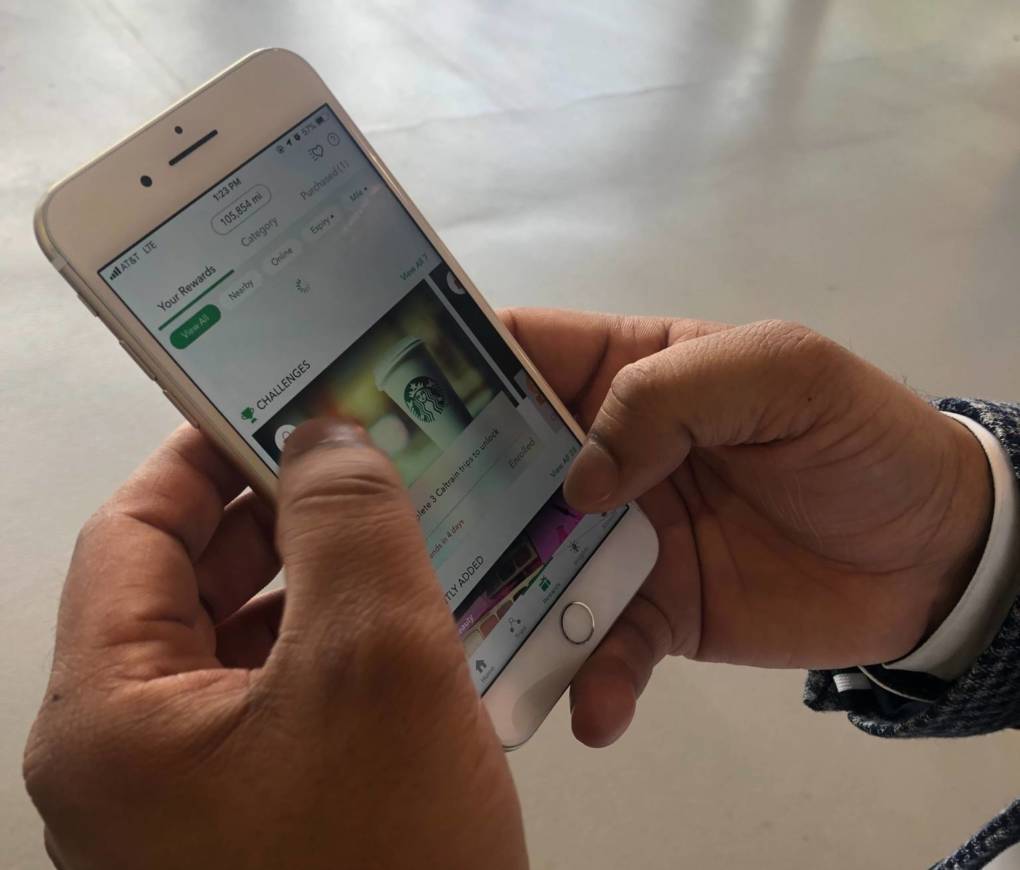
"caption": "Miles CEO Jigar Shah demonstrates how to use the app, which gives users \"miles\" based on how far they traveled and how they traveled. Users can then cash those miles in for rewards.",
"description": "Miles CEO Jigar Shah demonstrates how to use the app, which gives users \"miles\" based on how far they traveled and how they traveled. Users can then cash those miles in for rewards.",
"title": "RS38015_Jigar Shah Miles-qut",
"credit": "Sonja Hutson/KQED",
"status": "inherit",
"isLoading": false,
"fetchFailed": false
},
"news_11673255": {
"type": "attachments",
"id": "news_11673255",
"meta": {
"index": "attachments_1716263798",
"site": "news",
"id": "11673255",
"found": true
},
"parent": 11673252,
"imgSizes": {
"small": {
"file": "https://ww2.kqed.org/app/uploads/sites/10/2018/06/HelpSign-520x390.jpg",
"width": 520,
"mimeType": "image/jpeg",
"height": 390
},
"twentyfourteen-full-width": {
"file": "https://ww2.kqed.org/app/uploads/sites/10/2018/06/HelpSign-1038x576.jpg",
"width": 1038,
"mimeType": "image/jpeg",
"height": 576
},
"thumbnail": {
"file": "https://ww2.kqed.org/app/uploads/sites/10/2018/06/HelpSign-160x120.jpg",
"width": 160,
"mimeType": "image/jpeg",
"height": 120
},
"fd-sm": {
"file": "https://ww2.kqed.org/app/uploads/sites/10/2018/06/HelpSign-960x720.jpg",
"width": 960,
"mimeType": "image/jpeg",
"height": 720
},
"post-thumbnail": {
"file": "https://ww2.kqed.org/app/uploads/sites/10/2018/06/HelpSign-672x372.jpg",
"width": 672,
"mimeType": "image/jpeg",
"height": 372
},
"xsmall": {
"file": "https://ww2.kqed.org/app/uploads/sites/10/2018/06/HelpSign-375x281.jpg",
"width": 375,
"mimeType": "image/jpeg",
"height": 281
},
"kqedFullSize": {
"file": "https://ww2.kqed.org/app/uploads/sites/10/2018/06/HelpSign.jpg",
"width": 4032,
"height": 3024
},
"large": {
"file": "https://ww2.kqed.org/app/uploads/sites/10/2018/06/HelpSign-1020x765.jpg",
"width": 1020,
"mimeType": "image/jpeg",
"height": 765
},
"xlarge": {
"file": "https://ww2.kqed.org/app/uploads/sites/10/2018/06/HelpSign-1180x885.jpg",
"width": 1180,
"mimeType": "image/jpeg",
"height": 885
},
"complete_open_graph": {
"file": "https://ww2.kqed.org/app/uploads/sites/10/2018/06/HelpSign-1200x900.jpg",
"width": 1200,
"mimeType": "image/jpeg",
"height": 900
},
"guest-author-50": {
"file": "https://ww2.kqed.org/app/uploads/sites/10/2018/06/HelpSign-50x50.jpg",
"width": 50,
"mimeType": "image/jpeg",
"height": 50
},
"guest-author-96": {
"file": "https://ww2.kqed.org/app/uploads/sites/10/2018/06/HelpSign-96x96.jpg",
"width": 96,
"mimeType": "image/jpeg",
"height": 96
},
"medium": {
"file": "https://ww2.kqed.org/app/uploads/sites/10/2018/06/HelpSign-800x600.jpg",
"width": 800,
"mimeType": "image/jpeg",
"height": 600
},
"guest-author-64": {
"file": "https://ww2.kqed.org/app/uploads/sites/10/2018/06/HelpSign-64x64.jpg",
"width": 64,
"mimeType": "image/jpeg",
"height": 64
},
"guest-author-32": {
"file": "https://ww2.kqed.org/app/uploads/sites/10/2018/06/HelpSign-32x32.jpg",
"width": 32,
"mimeType": "image/jpeg",
"height": 32
},
"fd-lrg": {
"file": "https://ww2.kqed.org/app/uploads/sites/10/2018/06/HelpSign-1920x1440.jpg",
"width": 1920,
"mimeType": "image/jpeg",
"height": 1440
},
"fd-med": {
"file": "https://ww2.kqed.org/app/uploads/sites/10/2018/06/HelpSign-1180x885.jpg",
"width": 1180,
"mimeType": "image/jpeg",
"height": 885
},
"full-width": {
"file": "https://ww2.kqed.org/app/uploads/sites/10/2018/06/HelpSign-1920x1440.jpg",
"width": 1920,
"mimeType": "image/jpeg",
"height": 1440
},
"detail": {
"file": "https://ww2.kqed.org/app/uploads/sites/10/2018/06/HelpSign-150x150.jpg",
"width": 150,
"mimeType": "image/jpeg",
"height": 150
},
"guest-author-128": {
"file": "https://ww2.kqed.org/app/uploads/sites/10/2018/06/HelpSign-128x128.jpg",
"width": 128,
"mimeType": "image/jpeg",
"height": 128
},
"xxsmall": {
"file": "https://ww2.kqed.org/app/uploads/sites/10/2018/06/HelpSign-240x180.jpg",
"width": 240,
"mimeType": "image/jpeg",
"height": 180
}
},
"publishDate": 1528332961,
"modified": 1529346495,
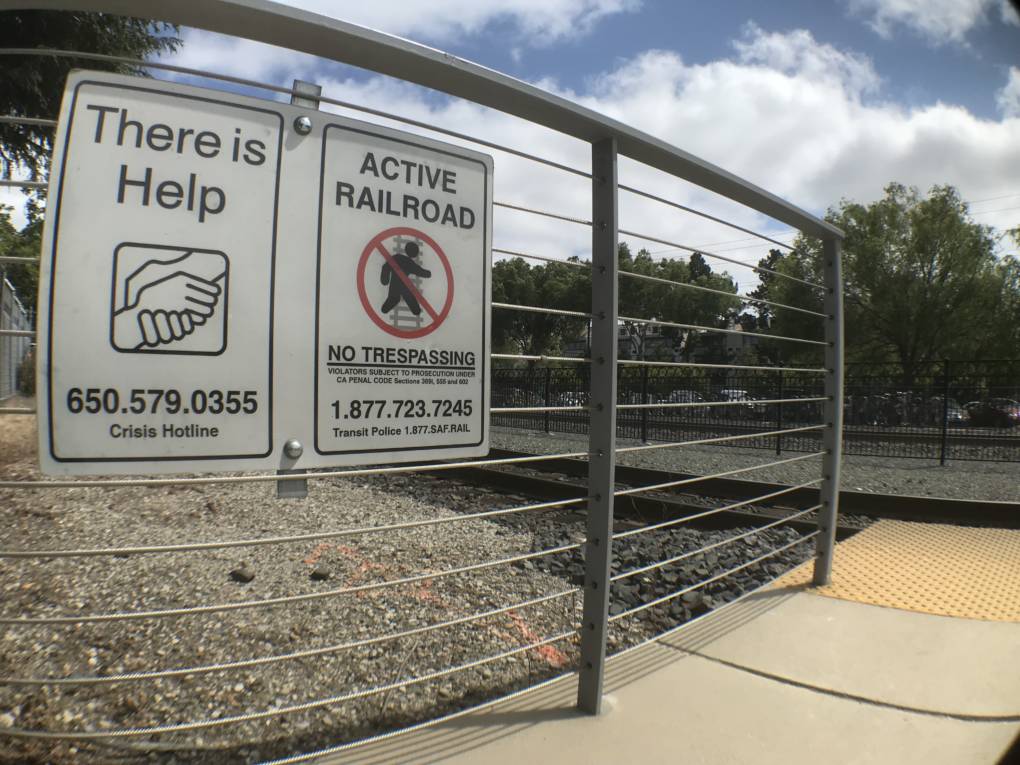
"caption": "A suicide helpline sign by the Caltrain tracks.",
"description": "A suicide helpline sign by the Caltrain tracks.",
"title": "HelpSign",
"credit": "Tonya Mosley/KQED",
"status": "inherit",
"isLoading": false,
"fetchFailed": false
}
},
"audioPlayerReducer": {
"postId": "stream_live",
"isPaused": true,
"isPlaying": false,
"pfsActive": false,
"pledgeModalIsOpen": true,
"playerDrawerIsOpen": false,
"liveAudioPlayStartedAt": 0,
"liveAudioPlayContext": ""
},
"authorsReducer": {
"danbrekke": {
"type": "authors",
"id": "222",
"meta": {
"index": "authors_1716337520",
"id": "222",
"found": true
},
"name": "Dan Brekke",
"firstName": "Dan",
"lastName": "Brekke",
"slug": "danbrekke",
"email": "dbrekke@kqed.org",
"display_author_email": true,
"staff_mastheads": [
"news",
"science"
],
"title": "KQED Editor and Reporter",
"bio": "Dan Brekke is a reporter and editor for KQED News, responsible for coverage of topics ranging from California water issues to the Bay Area's transportation challenges. In a newsroom career that began in Chicago in 1972, Dan has worked for \u003cem>The San Francisco Examiner,\u003c/em> Wired and TechTV and has been published in The New York Times, The New York Times Magazine, Business 2.0, Salon and elsewhere.\r\n\r\nSince joining KQED in 2007, Dan has reported, edited and produced both radio and online features and breaking news pieces. He has shared as both editor and reporter in four Society of Professional Journalists Norcal Excellence in Journalism awards and one Edward R. Murrow regional award. He was chosen for a spring 2017 residency at the Mesa Refuge to advance his research on California salmon.\r\n\r\nEmail Dan at: \u003ca href=\"mailto:dbrekke@kqed.org\">dbrekke@kqed.org\u003c/a>\r\n\r\n\u003cstrong>Twitter:\u003c/strong> \u003ca href=\"https://twitter.com/danbrekke\" rel=\"noopener noreferrer\">twitter.com/danbrekke\u003c/a>\r\n\u003cstrong>Facebook:\u003c/strong> \u003ca href=\"https://www.facebook.com/danbrekke\" rel=\"noopener noreferrer\">www.facebook.com/danbrekke\u003c/a>\r\n\u003cstrong>LinkedIn:\u003c/strong> \u003ca href=\"https://www.linkedin.com/in/danbrekke\" rel=\"noopener noreferrer\">www.linkedin.com/in/danbrekke\u003c/a>",
"avatar": "https://secure.gravatar.com/avatar/8f1f0d2a978fb3b23426c922c7e2af558fa36905b49c4ce76a97dc3c72d27226?s=600&d=mm&r=g",
"twitter": "danbrekke",
"bluesky": null,
"facebook": null,
"instagram": "https://www.instagram.com/dan.brekke/",
"linkedin": "https://www.linkedin.com/in/danbrekke/",
"sites": [
{
"site": "news",
"roles": [
"administrator",
"create_posts"
]
},
{
"site": "stateofhealth",
"roles": [
"editor"
]
},
{
"site": "science",
"roles": [
"editor"
]
},
{
"site": "quest",
"roles": [
"contributor"
]
},
{
"site": "food",
"roles": [
"contributor"
]
},
{
"site": "forum",
"roles": [
"contributor"
]
},
{
"site": "elections",
"roles": [
"editor"
]
},
{
"site": "liveblog",
"roles": [
"editor"
]
}
],
"headData": {
"title": "Dan Brekke | KQED",
"description": "KQED Editor and Reporter",
"ogImgSrc": "https://secure.gravatar.com/avatar/8f1f0d2a978fb3b23426c922c7e2af558fa36905b49c4ce76a97dc3c72d27226?s=600&d=mm&r=g",
"twImgSrc": "https://secure.gravatar.com/avatar/8f1f0d2a978fb3b23426c922c7e2af558fa36905b49c4ce76a97dc3c72d27226?s=600&d=mm&r=g"
},
"isLoading": false,
"link": "/author/danbrekke"
},
"katrinaschwartz": {
"type": "authors",
"id": "234",
"meta": {
"index": "authors_1716337520",
"id": "234",
"found": true
},
"name": "Katrina Schwartz",
"firstName": "Katrina",
"lastName": "Schwartz",
"slug": "katrinaschwartz",
"email": "kschwartz@kqed.org",
"display_author_email": false,
"staff_mastheads": [
"news"
],
"title": "Producer",
"bio": "Katrina Schwartz is a journalist based in San Francisco. She's worked at KPCC public radio in LA and has reported on air and online for KQED since 2010. She covered how teaching and learning is changing for MindShift between 2012 and 2020. She is the co-host of the MindShift podcast and now produces KQED's Bay Curious podcast.",
"avatar": "https://secure.gravatar.com/avatar/edb4ee79070447a018538c9aae6eeecf28786515b8a0c30e43b6b7dce5aa44c8?s=600&d=blank&r=g",
"twitter": "kschwart",
"bluesky": null,
"facebook": null,
"instagram": null,
"linkedin": null,
"sites": [
{
"site": "",
"roles": [
"editor"
]
},
{
"site": "news",
"roles": [
"editor"
]
},
{
"site": "mindshift",
"roles": [
"administrator"
]
},
{
"site": "stateofhealth",
"roles": [
"author"
]
},
{
"site": "science",
"roles": [
"editor"
]
}
],
"headData": {
"title": "Katrina Schwartz | KQED",
"description": "Producer",
"ogImgSrc": "https://secure.gravatar.com/avatar/edb4ee79070447a018538c9aae6eeecf28786515b8a0c30e43b6b7dce5aa44c8?s=600&d=blank&r=g",
"twImgSrc": "https://secure.gravatar.com/avatar/edb4ee79070447a018538c9aae6eeecf28786515b8a0c30e43b6b7dce5aa44c8?s=600&d=blank&r=g"
},
"isLoading": false,
"link": "/author/katrinaschwartz"
},
"kqednewsstaffandwires": {
"type": "authors",
"id": "237",
"meta": {
"index": "authors_1716337520",
"id": "237",
"found": true
},
"name": "KQED News Staff and Wires",
"firstName": "KQED News Staff and Wires",
"lastName": null,
"slug": "kqednewsstaffandwires",
"email": "onlinenewsstaff@kqed.org",
"display_author_email": false,
"staff_mastheads": [],
"title": null,
"bio": null,
"avatar": "https://secure.gravatar.com/avatar/72295af8ebbfbd19a4948f5271285664?s=600&d=blank&r=g",
"twitter": null,
"facebook": null,
"instagram": null,
"linkedin": null,
"sites": [
{
"site": "arts",
"roles": [
"contributor"
]
},
{
"site": "news",
"roles": [
"contributor"
]
},
{
"site": "lowdown",
"roles": [
"author"
]
},
{
"site": "stateofhealth",
"roles": [
"contributor"
]
},
{
"site": "food",
"roles": [
"author"
]
}
],
"headData": {
"title": "KQED News Staff and Wires | KQED",
"description": null,
"ogImgSrc": "https://secure.gravatar.com/avatar/72295af8ebbfbd19a4948f5271285664?s=600&d=blank&r=g",
"twImgSrc": "https://secure.gravatar.com/avatar/72295af8ebbfbd19a4948f5271285664?s=600&d=blank&r=g"
},
"isLoading": false,
"link": "/author/kqednewsstaffandwires"
},
"shutson": {
"type": "authors",
"id": "11216",
"meta": {
"index": "authors_1716337520",
"id": "11216",
"found": true
},
"name": "Sonja Hutson",
"firstName": "Sonja",
"lastName": "Hutson",
"slug": "shutson",
"email": "shutson@kqed.org",
"display_author_email": false,
"staff_mastheads": [],
"title": "KQED Contributor",
"bio": "Sonja Hutson is a former reporter for KQED's Silicon Valley desk and weekend newscasts. She primarily covers tech and housing. Sonja is a Bay Area native and now lives in San Francisco. When she's not working, you can find her camping, skiing, scuba diving, and struggling with the New York Times Crossword. Email: \u003ca href=\"mailto:shutson@kqed.org\">shutson@kqed.org. \u003c/a>Twitter: \u003ca href=\"https://twitter.com/SonjaHutson\">@SonjaHutson\u003c/a>",
"avatar": "https://secure.gravatar.com/avatar/7537c5e36818614e599b6c0f41d72b7a?s=600&d=blank&r=g",
"twitter": "SonjaHutson",
"facebook": null,
"instagram": null,
"linkedin": null,
"sites": [
{
"site": "arts",
"roles": [
"author"
]
},
{
"site": "news",
"roles": [
"subscriber"
]
}
],
"headData": {
"title": "Sonja Hutson | KQED",
"description": "KQED Contributor",
"ogImgSrc": "https://secure.gravatar.com/avatar/7537c5e36818614e599b6c0f41d72b7a?s=600&d=blank&r=g",
"twImgSrc": "https://secure.gravatar.com/avatar/7537c5e36818614e599b6c0f41d72b7a?s=600&d=blank&r=g"
},
"isLoading": false,
"link": "/author/shutson"
},
"tmosley": {
"type": "authors",
"id": "11373",
"meta": {
"index": "authors_1716337520",
"id": "11373",
"found": true
},
"name": "Tonya Mosley",
"firstName": "Tonya",
"lastName": "Mosley",
"slug": "tmosley",
"email": "tmosley@kqed.org",
"display_author_email": false,
"staff_mastheads": [],
"title": "KQED Contributor",
"bio": "Tonya Mosley is a former Silicon Valley bureau chief for KQED. She served as the senior editor, leading a team of journalists covering the impacts of technology companies on the South Bay and society. Tonya is also a former host and reporter for KQED.\r\n\r\nPrior to KQED, Tonya served as a television reporter & anchor for several media outlets, including Al Jazeera America.\r\n\r\nIn 2015, Tonya was awarded a John S. Knight Journalism Fellowship at Stanford University where she co-created a workshop for journalists on the impacts of implicit bias, and co-wrote a Belgian/American experimental study on the effects of protest coverage.\r\n\r\nTonya has won several national awards for her work, most recently an Emmy Award in 2016 for her televised piece \"Beyond Ferguson,\" and a national Edward R. Murrow award for her public radio series \"Black in Seattle.\"\r\n\r\nYou can reach Tonya at: tmosley@kqed.org.",
"avatar": "https://secure.gravatar.com/avatar/0b2ea2bbfed6bafaacd21e9398c68e5e?s=600&d=blank&r=g",
"twitter": "tonyamosley",
"facebook": null,
"instagram": null,
"linkedin": null,
"sites": [
{
"site": "arts",
"roles": [
"editor"
]
},
{
"site": "news",
"roles": [
"subscriber"
]
},
{
"site": "about",
"roles": [
"author"
]
},
{
"site": "forum",
"roles": [
"author"
]
}
],
"headData": {
"title": "Tonya Mosley | KQED",
"description": "KQED Contributor",
"ogImgSrc": "https://secure.gravatar.com/avatar/0b2ea2bbfed6bafaacd21e9398c68e5e?s=600&d=blank&r=g",
"twImgSrc": "https://secure.gravatar.com/avatar/0b2ea2bbfed6bafaacd21e9398c68e5e?s=600&d=blank&r=g"
},
"isLoading": false,
"link": "/author/tmosley"
}
},
"pagesReducer": {
"news_tag_caltrain": {
"type": "terms",
"id": "news_510",
"meta": {
"index": "terms_1716263798",
"site": "news",
"id": "510",
"score": 9.557084
},
"featImg": null,
"name": "Caltrain",
"description": null,
"taxonomy": "tag",
"headData": {
"twImgId": null,
"twTitle": null,
"ogTitle": null,
"ogImgId": null,
"twDescription": null,
"description": null,
"title": "Caltrain Archives | KQED News",
"ogDescription": null
},
"ttid": 519,
"slug": "caltrain",
"isLoading": false,
"title": "Caltrain",
"pageMeta": {
"site": "news",
"WpPageTemplate": "page-topic-editorial",
"currentPage": 2
},
"blocks": [
{
"blockName": "kqed/post-list",
"attrs": {
"layout": "cardArticle2",
"query": "posts/news?tag=caltrain",
"seeMore": false,
"paginated": true,
"page": 2
}
},
{
"blockName": "kqed/ad"
}
]
}
},
"pfsSessionReducer": {},
"postsReducer": {
"stream_live": {
"type": "live",
"id": "stream_live",
"audioUrl": "https://streams.kqed.org/kqedradio",
"title": "Live Stream",
"excerpt": "Live Stream information currently unavailable.",
"link": "/radio",
"featImg": "",
"label": {
"name": "KQED Live",
"link": "/"
}
},
"stream_kqedNewscast": {
"type": "posts",
"id": "stream_kqedNewscast",
"audioUrl": "https://www.kqed.org/.stream/anon/radio/RDnews/newscast.mp3?_=1",
"title": "KQED Newscast",
"featImg": "",
"label": {
"name": "88.5 FM",
"link": "/"
}
},
"news_11846906": {
"type": "posts",
"id": "news_11846906",
"meta": {
"index": "posts_1716263798",
"site": "news",
"id": "11846906",
"score": null,
"sort": [
1605056412000
]
},
"guestAuthors": [],
"slug": "caltrain-measure-rr-update-santa-clara-county-vote",
"title": "Why the Caltrain Sales Tax Wins Even If It 'Loses' in Santa Clara County",
"publishDate": 1605056412,
"format": "standard",
"headTitle": "Why the Caltrain Sales Tax Wins Even If It ‘Loses’ in Santa Clara County | KQED",
"labelTerm": {
"site": "news"
},
"content": "\u003cp>\u003ca href=\"https://www.kqed.org/news/11844943/measure-rr-caltrain-sales-tax-measure-results\" rel=\"noopener noreferrer\" target=\"_blank\">We told you last week\u003c/a> that Measure RR, the measure that would impose a one-eighth-cent sales tax to support Caltrain, looked like it was on its way to rather easily getting the two-thirds majority it needed from voters in Santa Clara, San Francisco and San Mateo counties. \u003c/p>\n\u003cp>That’s still true today, though there’s a little bit of a wrinkle in the results people have been asking us about. \u003c/p>\n\u003cp>As of Tuesday evening, with the most recent returns from all three counties, Measure RR was getting \u003ca href=\"https://docs.google.com/spreadsheets/d/1OzZ5GkhTE5dmNBaJV-2uivc65neiGO9mGeKQBzWHcg8/edit?usp=sharing\" rel=\"noopener noreferrer\" target=\"_blank\">a 69% “yes” vote\u003c/a>. That’s obviously well above the 66.66% threshold, and with a rapidly shrinking number of outstanding ballots to count, the tax is a done deal \u003c/p>\n\u003cp>But here’s the thing people are asking about: The vote in two of the three counties involved, San Francisco and San Mateo, is well above 70% “yes.” But the vote in the third county, Santa Clara, has actually dropped below the two-thirds threshold and now stands at 65.9%. \u003c/p>\n\u003cp>So, what gives? Does Measure RR go down to defeat if it fails to get a two-thirds vote in Santa Clara County?\u003c/p>\n\u003cp>[ad fullwidth]\u003c/p>\n\u003cp>\u003cstrong>The answer: No.\u003c/strong> The measure’s success or failure depends on the collective vote total from all three counties, which are joined together in a special district called the Peninsula Corridor Joint Powers Authority. \u003c/p>\n\u003cp>In essence, when voters cast their “yes” or “no” ballots on Measure RR, they were doing so not as citizens of San Mateo, Santa Clara or San Francisco counties but as residents of that special district. It’s the same basic process as voting in a legislative district that spans several counties: What decides the race is the district total, not the totals in each county.\u003c/p>\n\u003cp>[aside postID=news_11844943 hero='https://ww2.kqed.org/app/uploads/sites/10/2017/01/31909760916_d88814d339_o-1180x885.jpg']This isn’t the first time in recent Bay Area history that a multicounty tax measure has succeeded despite failing to get the needed vote in one or more of the counties involved. \u003c/p>\n\u003cp>For instance, BART’s $3.5 billion bond measure in 2016 (also called Measure RR) needed a two-thirds majority because it sought to impose parcel taxes in the three BART counties — Alameda, Contra Costa and San Francisco.\u003c/p>\n\u003cp>Voters in San Francisco and Alameda counties embraced the idea, giving it “yes” votes of 81.3% and 71.3% respectively. Contra Costa voters did not warm up to the idea quite so much, though 60.4% of them voted for it. The \u003ca href=\"https://www.kqed.org/news/11159698/bart-bond-measure-leads-in-early-vote-returns\" rel=\"noopener noreferrer\" target=\"_blank\">overall result\u003c/a> was a 70.5% bond approval in the three BART counties. \u003c/p>\n\u003cp>In 2018, Bay Area voters were asked to approve toll increases on the region’s state-owned bridges. The state law authorizing the measure, Regional Measure 3, effectively turned the nine Bay Area counties into a special district where a simple majority of all voters could approve the increases. \u003c/p>\n\u003cp>\u003ca href=\"https://www.kqed.org/news/11674221/the-regional-measure-3-victory-by-the-numbers\" rel=\"noopener noreferrer\" target=\"_blank\">The measure won 55% approval\u003c/a> in the region, though voters in two of the counties opposed it. In Contra Costa County, the vote was 55.5% “no.” In Solano, it was 70% against. (Although Regional Measure 3 passed, it’s been the subject of several court challenges. One, which argues the bridge toll increases are a tax requiring two-thirds voter approval, is headed to the state Supreme Court. In the meantime, the first round of higher tolls took effect last year and are being collected but not spent pending the outcome of the case). \u003c/p>\n\u003cp>You might ask who set up the rules for special district tax votes like the one involved in Caltrain’s Measure RR. The answer is, basically, we the voters.\u003c/p>\n\u003cp>\u003ca href=\"https://leginfo.legislature.ca.gov/faces/codes_displayText.xhtml?lawCode=CONS&article=XIII%20C\" rel=\"noopener noreferrer\" target=\"_blank\">Article XIIIC\u003c/a> of the California Constitution, approved by voters in 1996 as Proposition 218, sets out the basic rules for special district taxing authority and requirements for voter approval.\u003c/p>\n\u003cp>\u003c/p>\n",
"blocks": [],
"excerpt": "Measure RR is a lock to win even though it has not met the threshold for passage in one of the Bay Area's three Caltrain counties.",
"status": "publish",
"parent": 0,
"modified": 1728430512,
"stats": {
"hasAudio": false,
"hasVideo": false,
"hasChartOrMap": false,
"iframeSrcs": [],
"hasGoogleForm": false,
"hasGallery": false,
"hasHearkenModule": false,
"hasPolis": false,
"paragraphCount": 16,
"wordCount": 666
},
"headData": {
"title": "Why the Caltrain Sales Tax Wins Even If It 'Loses' in Santa Clara County | KQED",
"description": "Measure RR is a lock to win even though it has not met the threshold for passage in one of the Bay Area's three Caltrain counties.",
"ogTitle": "",
"ogDescription": "",
"ogImgId": "",
"twTitle": "",
"twDescription": "",
"twImgId": "",
"schema": {
"@context": "https://schema.org",
"@type": "NewsArticle",
"headline": "Why the Caltrain Sales Tax Wins Even If It 'Loses' in Santa Clara County",
"datePublished": "2020-11-10T17:00:12-08:00",
"dateModified": "2024-10-08T16:35:12-07:00",
"image": "https://cdn.kqed.org/wp-content/uploads/2020/02/KQED-OG-Image@1x.png",
"isAccessibleForFree": "True",
"publisher": {
"@type": "NewsMediaOrganization",
"@id": "https://www.kqed.org/#organization",
"name": "KQED",
"logo": "https://cdn.kqed.org/wp-content/uploads/2020/02/KQED-OG-Image@1x.png",
"url": "https://www.kqed.org",
"sameAs": [
"https://www.facebook.com/KQED",
"https://twitter.com/KQED",
"https://www.instagram.com/kqed/",
"https://www.tiktok.com/@kqedofficial",
"https://www.linkedin.com/company/kqed",
"https://www.youtube.com/channel/UCeC0IOo7i1P_61zVUWbJ4nw"
]
}
}
},
"sticky": false,
"path": "/news/11846906/caltrain-measure-rr-update-santa-clara-county-vote",
"audioTrackLength": null,
"parsedContent": [
{
"type": "contentString",
"content": "\u003cdiv class=\"post-body\">\u003cp>\u003cp>\u003ca href=\"https://www.kqed.org/news/11844943/measure-rr-caltrain-sales-tax-measure-results\" rel=\"noopener noreferrer\" target=\"_blank\">We told you last week\u003c/a> that Measure RR, the measure that would impose a one-eighth-cent sales tax to support Caltrain, looked like it was on its way to rather easily getting the two-thirds majority it needed from voters in Santa Clara, San Francisco and San Mateo counties. \u003c/p>\n\u003cp>That’s still true today, though there’s a little bit of a wrinkle in the results people have been asking us about. \u003c/p>\n\u003cp>As of Tuesday evening, with the most recent returns from all three counties, Measure RR was getting \u003ca href=\"https://docs.google.com/spreadsheets/d/1OzZ5GkhTE5dmNBaJV-2uivc65neiGO9mGeKQBzWHcg8/edit?usp=sharing\" rel=\"noopener noreferrer\" target=\"_blank\">a 69% “yes” vote\u003c/a>. That’s obviously well above the 66.66% threshold, and with a rapidly shrinking number of outstanding ballots to count, the tax is a done deal \u003c/p>\n\u003cp>But here’s the thing people are asking about: The vote in two of the three counties involved, San Francisco and San Mateo, is well above 70% “yes.” But the vote in the third county, Santa Clara, has actually dropped below the two-thirds threshold and now stands at 65.9%. \u003c/p>\n\u003cp>So, what gives? Does Measure RR go down to defeat if it fails to get a two-thirds vote in Santa Clara County?\u003c/p>\n\u003cp>\u003c/p>\u003c/div>",
"attributes": {
"named": {},
"numeric": []
}
},
{
"type": "component",
"content": "",
"name": "ad",
"attributes": {
"named": {
"label": "fullwidth"
},
"numeric": [
"fullwidth"
]
}
},
{
"type": "contentString",
"content": "\u003cdiv class=\"post-body\">\u003cp>\u003c/p>\n\u003cp>\u003cstrong>The answer: No.\u003c/strong> The measure’s success or failure depends on the collective vote total from all three counties, which are joined together in a special district called the Peninsula Corridor Joint Powers Authority. \u003c/p>\n\u003cp>In essence, when voters cast their “yes” or “no” ballots on Measure RR, they were doing so not as citizens of San Mateo, Santa Clara or San Francisco counties but as residents of that special district. It’s the same basic process as voting in a legislative district that spans several counties: What decides the race is the district total, not the totals in each county.\u003c/p>\n\u003cp>\u003c/p>\u003c/div>",
"attributes": {
"named": {},
"numeric": []
}
},
{
"type": "component",
"content": "",
"name": "aside",
"attributes": {
"named": {
"postid": "news_11844943",
"hero": "https://ww2.kqed.org/app/uploads/sites/10/2017/01/31909760916_d88814d339_o-1180x885.jpg",
"label": ""
},
"numeric": []
}
},
{
"type": "contentString",
"content": "\u003cdiv class=\"post-body\">\u003cp>This isn’t the first time in recent Bay Area history that a multicounty tax measure has succeeded despite failing to get the needed vote in one or more of the counties involved. \u003c/p>\n\u003cp>For instance, BART’s $3.5 billion bond measure in 2016 (also called Measure RR) needed a two-thirds majority because it sought to impose parcel taxes in the three BART counties — Alameda, Contra Costa and San Francisco.\u003c/p>\n\u003cp>Voters in San Francisco and Alameda counties embraced the idea, giving it “yes” votes of 81.3% and 71.3% respectively. Contra Costa voters did not warm up to the idea quite so much, though 60.4% of them voted for it. The \u003ca href=\"https://www.kqed.org/news/11159698/bart-bond-measure-leads-in-early-vote-returns\" rel=\"noopener noreferrer\" target=\"_blank\">overall result\u003c/a> was a 70.5% bond approval in the three BART counties. \u003c/p>\n\u003cp>In 2018, Bay Area voters were asked to approve toll increases on the region’s state-owned bridges. The state law authorizing the measure, Regional Measure 3, effectively turned the nine Bay Area counties into a special district where a simple majority of all voters could approve the increases. \u003c/p>\n\u003cp>\u003ca href=\"https://www.kqed.org/news/11674221/the-regional-measure-3-victory-by-the-numbers\" rel=\"noopener noreferrer\" target=\"_blank\">The measure won 55% approval\u003c/a> in the region, though voters in two of the counties opposed it. In Contra Costa County, the vote was 55.5% “no.” In Solano, it was 70% against. (Although Regional Measure 3 passed, it’s been the subject of several court challenges. One, which argues the bridge toll increases are a tax requiring two-thirds voter approval, is headed to the state Supreme Court. In the meantime, the first round of higher tolls took effect last year and are being collected but not spent pending the outcome of the case). \u003c/p>\n\u003cp>You might ask who set up the rules for special district tax votes like the one involved in Caltrain’s Measure RR. The answer is, basically, we the voters.\u003c/p>\n\u003cp>\u003ca href=\"https://leginfo.legislature.ca.gov/faces/codes_displayText.xhtml?lawCode=CONS&article=XIII%20C\" rel=\"noopener noreferrer\" target=\"_blank\">Article XIIIC\u003c/a> of the California Constitution, approved by voters in 1996 as Proposition 218, sets out the basic rules for special district taxing authority and requirements for voter approval.\u003c/p>\n\u003cp>\u003c/p>\n\u003c/div>\u003c/p>",
"attributes": {
"named": {},
"numeric": []
}
}
],
"link": "/news/11846906/caltrain-measure-rr-update-santa-clara-county-vote",
"authors": [
"222"
],
"categories": [
"news_8",
"news_1397"
],
"tags": [
"news_510",
"news_28756",
"news_19992"
],
"featImg": "news_11846971",
"label": "news"
},
"news_11845432": {
"type": "posts",
"id": "news_11845432",
"meta": {
"index": "posts_1716263798",
"site": "news",
"id": "11845432",
"score": null,
"sort": [
1604486770000
]
},
"guestAuthors": [],
"slug": "caltrains-lifeline-sales-tax-on-track-for-approval-by-voters",
"title": "Caltrain's 'Lifeline' Sales Tax on Track for Approval by Voters",
"publishDate": 1604486770,
"format": "standard",
"headTitle": "Caltrain’s ‘Lifeline’ Sales Tax on Track for Approval by Voters | KQED",
"labelTerm": {
"site": "news"
},
"content": "\u003cp>Voters in San Francisco, San Mateo and Santa Clara counties served by Caltrain appeared to have passed a new one-eighth-cent sales tax to fund improvements and expansion of the service. Supporters say the tax will help Caltrain survive a major drop in ridership due to the coronavirus pandemic and pave the way for ambitious expansions in decades to come.\u003c/p>\n\u003cp>Measure RR, which gives the three-decade-old transit agency its first dedicated source of funding, needed a two-thirds “yes” vote among all ballots cast in the three Caltrain counties to pass. With more than half of expected ballots counted in the three counties by 1:30 a.m. on Wednesday, the measure was passing with a 70.4% “yes” vote.\u003c/p>\n\u003cp>“It’s just phenomenal to have this level of support from the voters and the taxpayers,” said Dave Pine, a member of the San Mateo County Board of Supervisors and chair of the Peninsula Corridor Joint Powers Board that oversees Caltrain.\u003c/p>\n\u003cp>Read the full story \u003ca href=\"https://www.kqed.org/news/11844943/measure-rr-caltrain-sales-tax-measure-results\" target=\"_blank\" rel=\"noopener noreferrer\">here\u003c/a>.\u003c/p>\n\u003cp>[ad fullwidth]\u003c/p>\u003cp>\u003c/p>\n",
"blocks": [],
"excerpt": "Voters across three counties appeared to have passed a new one-eighth-cent sales tax to help fund Caltrain. ",
"status": "publish",
"parent": 0,
"modified": 1727130773,
"stats": {
"hasAudio": false,
"hasVideo": false,
"hasChartOrMap": false,
"iframeSrcs": [],
"hasGoogleForm": false,
"hasGallery": false,
"hasHearkenModule": false,
"hasPolis": false,
"paragraphCount": 6,
"wordCount": 178
},
"headData": {
"title": "Caltrain's 'Lifeline' Sales Tax on Track for Approval by Voters | KQED",
"description": "Voters across three counties appeared to have passed a new one-eighth-cent sales tax to help fund Caltrain. ",
"ogTitle": "",
"ogDescription": "",
"ogImgId": "",
"twTitle": "",
"twDescription": "",
"twImgId": "",
"schema": {
"@context": "https://schema.org",
"@type": "NewsArticle",
"headline": "Caltrain's 'Lifeline' Sales Tax on Track for Approval by Voters",
"datePublished": "2020-11-04T02:46:10-08:00",
"dateModified": "2024-09-23T15:32:53-07:00",
"image": "https://cdn.kqed.org/wp-content/uploads/2020/02/KQED-OG-Image@1x.png",
"isAccessibleForFree": "True",
"publisher": {
"@type": "NewsMediaOrganization",
"@id": "https://www.kqed.org/#organization",
"name": "KQED",
"logo": "https://cdn.kqed.org/wp-content/uploads/2020/02/KQED-OG-Image@1x.png",
"url": "https://www.kqed.org",
"sameAs": [
"https://www.facebook.com/KQED",
"https://twitter.com/KQED",
"https://www.instagram.com/kqed/",
"https://www.tiktok.com/@kqedofficial",
"https://www.linkedin.com/company/kqed",
"https://www.youtube.com/channel/UCeC0IOo7i1P_61zVUWbJ4nw"
]
}
}
},
"sticky": false,
"templateType": "standard",
"featuredImageType": "standard",
"justInHeadline": "Caltrain's 'lifeline' sales tax on track for approval by voters",
"excludeFromSiteSearch": "Include",
"articleAge": "0",
"path": "/news/11845432/caltrains-lifeline-sales-tax-on-track-for-approval-by-voters",
"audioTrackLength": null,
"parsedContent": [
{
"type": "contentString",
"content": "\u003cdiv class=\"post-body\">\u003cp>\u003cp>Voters in San Francisco, San Mateo and Santa Clara counties served by Caltrain appeared to have passed a new one-eighth-cent sales tax to fund improvements and expansion of the service. Supporters say the tax will help Caltrain survive a major drop in ridership due to the coronavirus pandemic and pave the way for ambitious expansions in decades to come.\u003c/p>\n\u003cp>Measure RR, which gives the three-decade-old transit agency its first dedicated source of funding, needed a two-thirds “yes” vote among all ballots cast in the three Caltrain counties to pass. With more than half of expected ballots counted in the three counties by 1:30 a.m. on Wednesday, the measure was passing with a 70.4% “yes” vote.\u003c/p>\n\u003cp>“It’s just phenomenal to have this level of support from the voters and the taxpayers,” said Dave Pine, a member of the San Mateo County Board of Supervisors and chair of the Peninsula Corridor Joint Powers Board that oversees Caltrain.\u003c/p>\n\u003cp>Read the full story \u003ca href=\"https://www.kqed.org/news/11844943/measure-rr-caltrain-sales-tax-measure-results\" target=\"_blank\" rel=\"noopener noreferrer\">here\u003c/a>.\u003c/p>\n\u003cp>\u003c/p>\u003c/div>",
"attributes": {
"named": {},
"numeric": []
}
},
{
"type": "component",
"content": "",
"name": "ad",
"attributes": {
"named": {
"label": "fullwidth"
},
"numeric": [
"fullwidth"
]
}
},
{
"type": "contentString",
"content": "\u003cdiv class=\"post-body\">\u003cp>\u003c/p>\u003cp>\u003c/p>\n\u003c/div>\u003c/p>",
"attributes": {
"named": {},
"numeric": []
}
}
],
"link": "/news/11845432/caltrains-lifeline-sales-tax-on-track-for-approval-by-voters",
"authors": [
"237"
],
"categories": [
"news_8"
],
"tags": [
"news_510",
"news_1533"
],
"featImg": "news_10875674",
"label": "news"
},
"news_11844943": {
"type": "posts",
"id": "news_11844943",
"meta": {
"index": "posts_1716263798",
"site": "news",
"id": "11844943",
"score": null,
"sort": [
1604481607000
]
},
"guestAuthors": [],
"slug": "measure-rr-caltrain-sales-tax-measure-results",
"title": "Caltrain's 'Lifeline' Sales Tax Appears to Be on Track for Approval",
"publishDate": 1604481607,
"format": "audio",
"headTitle": "Caltrain’s ‘Lifeline’ Sales Tax Appears to Be on Track for Approval | KQED",
"labelTerm": {
"site": "news"
},
"content": "\u003cp>\u003cem>Updated 9:45 a.m. Wednesday, Nov. 4\u003c/em>\u003c/p>\n\u003cp>Caltrain officials and supporters are breathing a sigh of relief after voters in the three counties served by the rail line appeared to have passed a new one-eighth-cent sales tax that the agency says will help it survive a major drop in ridership due to the coronavirus pandemic, and pave the way for an ambitious program of improvements and expansion in decades to come.\u003c/p>\n\u003cp>Measure RR, which gives the three-decade-old transit agency its first dedicated source of funding, needed a two-thirds “yes” vote among all ballots cast in the three Caltrain counties — San Francisco, San Mateo and Santa Clara — to pass. With well more than half of expected ballots counted in the three counties by 9:30 a.m. Wednesday, \u003ca href=\"https://docs.google.com/spreadsheets/d/1OzZ5GkhTE5dmNBaJV-2uivc65neiGO9mGeKQBzWHcg8/edit?usp=sharing\" rel=\"noopener noreferrer\" target=\"_blank\">the measure was passing\u003c/a> with a 70.4% “yes” vote. \u003c/p>\n\u003cp>[aside postID=\"news_11831788,news_11829125,news_11812847\" label=\"Caltrain's Measure RR\"]\u003c/p>\n\u003cp>The measure was getting 74% support in San Francisco, traditionally supportive of regional transportation measures, and 72.1% in San Mateo County, which made the initial local investment that bought the rail system from Southern Pacific in 1991 and which has run the agency ever since. The vote was closer — 67.4% “yes” — in Santa Clara County, where officials had expressed particularly vehement reservations about allowing San Mateo County to continue its role as Caltrain’s operator.\u003c/p>\n\u003cp>“It’s just phenomenal to have this level of support from the voters and the taxpayers,” said Dave Pine, a member of the San Mateo County Board of Supervisors and chair of the Peninsula Corridor Joint Powers Board that oversees Caltrain.\u003c/p>\n\u003cp>Rail agency officials and supporters had said the tax, which will raise an estimated $100 million a year for the next 30 years, would allow the system to weather the drastic decline in fare revenue that followed the onset of the coronavirus pandemic. The revenue is also intended to help pay for acquiring new electric trains and running more frequent service as part of a plan that would nearly quadruple daily ridership by the year 2040.\u003c/p>\n\u003cp>Historically, Caltrain has depended on fares to cover about 70% of its day-to-day operating costs — a \u003ca href=\"https://en.wikipedia.org/wiki/Farebox_recovery_ratio#:~:text=The%20farebox%20recovery%20ratio%20(also,by%20its%20total%20operating%20expenses.\" rel=\"noopener noreferrer\" target=\"_blank\">farebox-recovery level\u003c/a> that industry officials say is the highest among all major U.S. transit systems.\u003c/p>\n\u003cp>But once COVID-19 restrictions took effect, weekday ridership all but vanished, initially falling from about 65,000 a day to about 1,500, a 98% plunge. And despite the agency continuing to run 70 trains a day, average weekday ridership is still only about 3,500 — a 95% decrease.\u003c/p>\n\u003cp>Pine said the first order of business, now that the tax appears to have passed, is to get through the pandemic. \u003c/p>\n\u003cp>“Our greatest strength is also our Achilles’ heel in that 70% of our revenue is from riders, and we don’t have riders,” Pine said. “So we have our lifeline to make it through COVID, and then we’ll look forward to a future of expanded service, more frequent and faster trains and more ridership on the corridor.”\u003c/p>\n\u003cp>A poll conducted for Caltrain and \u003ca href=\"https://www.caltrain.com/Assets/_MarketDevelopment/pdf/Survey+of+Likely+November+2020+Voters+Regarding+a+Potential+Sales+Tax+for+Caltrain.pdf\" target=\"_blank\" rel=\"noopener noreferrer\">released in June\u003c/a> showed the tax falling just short of the required two-thirds majority, with 63% approval.\u003c/p>\n\u003cp>That level rose to 70% when survey respondents heard arguments for the measure — essentially that the tax would help Caltrain expand and improve as well as ease congestion on the region’s freeways. But a negative message — one emphasizing the uncertainties about transit ridership after the pandemic and questioning whether the tax is needed for a commuter rail system that serves a mostly affluent clientele — led support for the measure to drop below 60%.\u003c/p>\n\u003cp>Measure RR was supported by scores of elected officials in the three counties, from Sen. Dianne Feinstein to local town council members. Major business, environmental and transportation advocacy groups as well as some of the Bay Area’s wealthiest companies also endorsed the tax — and contributed to the “Save Caltrain” campaign’s $2.7 million war chest.\u003c/p>\n\u003cp>Most notable among individual supporters: Pine, the Caltrain board chair, who loaned the campaign $500,000 to help it keep ads on TV when other donations were slow to arrive. He said the campaign has repaid the loan.\u003c/p>\n\u003cp>The Silicon Valley Taxpayers Association led the unfunded opposition, which argued that a system running at just 5% capacity doesn’t need a tax boost and that the agency should be cutting its budget to get through the pandemic. Opponents also objected to an added sales tax as a funding mechanism, pointing out it’s a regressive levy that falls more heavily on lower-income taxpayers than on the affluent. \u003c/p>\n\u003cp>“Caltrain needs to just hunker down, sit back and wait and figure out what to do — cut back as much they can to keep going, but not go and start taking money from people who are losing their jobs and having to cut their own expenses,” said Eric Garris, who signed the “No on RR” argument on the San Francisco ballot. “… I’m betting on at least one-third of the people being smart enough to realize that these are just people asking them for more money because they’re worried about their jobs and they can take it from us.” \u003c/p>\n\u003cp>[ad fullwidth]\u003c/p>\n\u003cp>The agency has survived the pandemic downturn so far largely thanks to operating subsidies it gets from the three Caltrain counties, but mostly because of a federal CARES Act bailout that distributed $1.3 billion to Bay Area transit systems. Public transportation districts from across the country, including BART and Muni, have lobbied unsuccessfully for months to persuade Congress and the Trump administration to pass a second round of aid.\u003c/p>\n\u003cp>The uncertainty of future finances has prompted Caltrain staff to study different service scenarios, ranging from a total system shutdown to targeted reductions that would reduce weekday runs and expand the weekend schedule in a move \u003ca href=\"https://www.caltrain.com/about/MediaRelations/news/Caltrain_Considers_Changes_Aimed_at_Improving_Service_for_Essential_Workers_and_Transit_Dependent_Riders.html\" target=\"_blank\" rel=\"noopener noreferrer\">the agency says\u003c/a> would better serve lower-income riders and essential workers.\u003c/p>\n\u003cp>Measure RR’s path to the ballot began with Senate Bill 797, a 2017 bill by state Sen. Jerry Hill, D-San Mateo, that would allow the Caltrain board to place the one-eighth-cent tax on the ballot if the boards of supervisors \u003cem>and\u003c/em> transit agency boards in Santa Clara, San Mateo and San Francisco all approved the measure.\u003c/p>\n\u003cp>That requirement for six separate votes nearly derailed the measure when elected officials in both Santa Clara County and San Francisco insisted on a commitment to take away San Mateo County’s role as Caltrain manager. A special Caltrain board committee has begun work on the governance proposals, which under an August resolution are supposed to be decided on by the end of next year.\u003c/p>\n\u003cp>[ad floatright]\u003c/p>\n",
"blocks": [],
"excerpt": "Results early Wednesday showed one-eighth-cent sales tax measure winning with a \"yes\" vote of more than 70%. Supporters argued the measure would allow the commuter railroad to survive the coronavirus crisis and move ahead with future system improvements.",
"status": "publish",
"parent": 0,
"modified": 1728430574,
"stats": {
"hasAudio": false,
"hasVideo": false,
"hasChartOrMap": false,
"iframeSrcs": [],
"hasGoogleForm": false,
"hasGallery": false,
"hasHearkenModule": false,
"hasPolis": false,
"paragraphCount": 23,
"wordCount": 1168
},
"headData": {
"title": "Caltrain's 'Lifeline' Sales Tax Appears to Be on Track for Approval | KQED",
"description": "Results early Thursday showed one-eighth-cent sales tax measure winning with a "yes" vote of more than 70%.",
"ogTitle": "",
"ogDescription": "",
"ogImgId": "",
"twTitle": "",
"twDescription": "",
"twImgId": "",
"socialDescription": "Results early Thursday showed one-eighth-cent sales tax measure winning with a "yes" vote of more than 70%.",
"schema": {
"@context": "https://schema.org",
"@type": "NewsArticle",
"headline": "Caltrain's 'Lifeline' Sales Tax Appears to Be on Track for Approval",
"datePublished": "2020-11-04T01:20:07-08:00",
"dateModified": "2024-10-08T16:36:14-07:00",
"image": "https://cdn.kqed.org/wp-content/uploads/2020/02/KQED-OG-Image@1x.png",
"isAccessibleForFree": "True",
"publisher": {
"@type": "NewsMediaOrganization",
"@id": "https://www.kqed.org/#organization",
"name": "KQED",
"logo": "https://cdn.kqed.org/wp-content/uploads/2020/02/KQED-OG-Image@1x.png",
"url": "https://www.kqed.org",
"sameAs": [
"https://www.facebook.com/KQED",
"https://twitter.com/KQED",
"https://www.instagram.com/kqed/",
"https://www.tiktok.com/@kqedofficial",
"https://www.linkedin.com/company/kqed",
"https://www.youtube.com/channel/UCeC0IOo7i1P_61zVUWbJ4nw"
]
}
}
},
"audioUrl": "https://www.kqed.org/.stream/anon/radio/RDnews/2020/11/BrekkeVentonTransportationMeasure2Way.mp3",
"sticky": false,
"templateType": "standard",
"featuredImageType": "standard",
"path": "/news/11844943/measure-rr-caltrain-sales-tax-measure-results",
"audioTrackLength": null,
"parsedContent": [
{
"type": "contentString",
"content": "\u003cdiv class=\"post-body\">\u003cp>\u003cp>\u003cem>Updated 9:45 a.m. Wednesday, Nov. 4\u003c/em>\u003c/p>\n\u003cp>Caltrain officials and supporters are breathing a sigh of relief after voters in the three counties served by the rail line appeared to have passed a new one-eighth-cent sales tax that the agency says will help it survive a major drop in ridership due to the coronavirus pandemic, and pave the way for an ambitious program of improvements and expansion in decades to come.\u003c/p>\n\u003cp>Measure RR, which gives the three-decade-old transit agency its first dedicated source of funding, needed a two-thirds “yes” vote among all ballots cast in the three Caltrain counties — San Francisco, San Mateo and Santa Clara — to pass. With well more than half of expected ballots counted in the three counties by 9:30 a.m. Wednesday, \u003ca href=\"https://docs.google.com/spreadsheets/d/1OzZ5GkhTE5dmNBaJV-2uivc65neiGO9mGeKQBzWHcg8/edit?usp=sharing\" rel=\"noopener noreferrer\" target=\"_blank\">the measure was passing\u003c/a> with a 70.4% “yes” vote. \u003c/p>\n\u003cp>\u003c/p>\u003c/div>",
"attributes": {
"named": {},
"numeric": []
}
},
{
"type": "component",
"content": "",
"name": "aside",
"attributes": {
"named": {
"postid": "news_11831788,news_11829125,news_11812847",
"label": "Caltrain's Measure RR "
},
"numeric": []
}
},
{
"type": "contentString",
"content": "\u003cdiv class=\"post-body\">\u003cp>\u003c/p>\n\u003cp>The measure was getting 74% support in San Francisco, traditionally supportive of regional transportation measures, and 72.1% in San Mateo County, which made the initial local investment that bought the rail system from Southern Pacific in 1991 and which has run the agency ever since. The vote was closer — 67.4% “yes” — in Santa Clara County, where officials had expressed particularly vehement reservations about allowing San Mateo County to continue its role as Caltrain’s operator.\u003c/p>\n\u003cp>“It’s just phenomenal to have this level of support from the voters and the taxpayers,” said Dave Pine, a member of the San Mateo County Board of Supervisors and chair of the Peninsula Corridor Joint Powers Board that oversees Caltrain.\u003c/p>\n\u003cp>Rail agency officials and supporters had said the tax, which will raise an estimated $100 million a year for the next 30 years, would allow the system to weather the drastic decline in fare revenue that followed the onset of the coronavirus pandemic. The revenue is also intended to help pay for acquiring new electric trains and running more frequent service as part of a plan that would nearly quadruple daily ridership by the year 2040.\u003c/p>\n\u003cp>Historically, Caltrain has depended on fares to cover about 70% of its day-to-day operating costs — a \u003ca href=\"https://en.wikipedia.org/wiki/Farebox_recovery_ratio#:~:text=The%20farebox%20recovery%20ratio%20(also,by%20its%20total%20operating%20expenses.\" rel=\"noopener noreferrer\" target=\"_blank\">farebox-recovery level\u003c/a> that industry officials say is the highest among all major U.S. transit systems.\u003c/p>\n\u003cp>But once COVID-19 restrictions took effect, weekday ridership all but vanished, initially falling from about 65,000 a day to about 1,500, a 98% plunge. And despite the agency continuing to run 70 trains a day, average weekday ridership is still only about 3,500 — a 95% decrease.\u003c/p>\n\u003cp>Pine said the first order of business, now that the tax appears to have passed, is to get through the pandemic. \u003c/p>\n\u003cp>“Our greatest strength is also our Achilles’ heel in that 70% of our revenue is from riders, and we don’t have riders,” Pine said. “So we have our lifeline to make it through COVID, and then we’ll look forward to a future of expanded service, more frequent and faster trains and more ridership on the corridor.”\u003c/p>\n\u003cp>A poll conducted for Caltrain and \u003ca href=\"https://www.caltrain.com/Assets/_MarketDevelopment/pdf/Survey+of+Likely+November+2020+Voters+Regarding+a+Potential+Sales+Tax+for+Caltrain.pdf\" target=\"_blank\" rel=\"noopener noreferrer\">released in June\u003c/a> showed the tax falling just short of the required two-thirds majority, with 63% approval.\u003c/p>\n\u003cp>That level rose to 70% when survey respondents heard arguments for the measure — essentially that the tax would help Caltrain expand and improve as well as ease congestion on the region’s freeways. But a negative message — one emphasizing the uncertainties about transit ridership after the pandemic and questioning whether the tax is needed for a commuter rail system that serves a mostly affluent clientele — led support for the measure to drop below 60%.\u003c/p>\n\u003cp>Measure RR was supported by scores of elected officials in the three counties, from Sen. Dianne Feinstein to local town council members. Major business, environmental and transportation advocacy groups as well as some of the Bay Area’s wealthiest companies also endorsed the tax — and contributed to the “Save Caltrain” campaign’s $2.7 million war chest.\u003c/p>\n\u003cp>Most notable among individual supporters: Pine, the Caltrain board chair, who loaned the campaign $500,000 to help it keep ads on TV when other donations were slow to arrive. He said the campaign has repaid the loan.\u003c/p>\n\u003cp>The Silicon Valley Taxpayers Association led the unfunded opposition, which argued that a system running at just 5% capacity doesn’t need a tax boost and that the agency should be cutting its budget to get through the pandemic. Opponents also objected to an added sales tax as a funding mechanism, pointing out it’s a regressive levy that falls more heavily on lower-income taxpayers than on the affluent. \u003c/p>\n\u003cp>“Caltrain needs to just hunker down, sit back and wait and figure out what to do — cut back as much they can to keep going, but not go and start taking money from people who are losing their jobs and having to cut their own expenses,” said Eric Garris, who signed the “No on RR” argument on the San Francisco ballot. “… I’m betting on at least one-third of the people being smart enough to realize that these are just people asking them for more money because they’re worried about their jobs and they can take it from us.” \u003c/p>\n\u003cp>\u003c/p>\u003c/div>",
"attributes": {
"named": {},
"numeric": []
}
},
{
"type": "component",
"content": "",
"name": "ad",
"attributes": {
"named": {
"label": "fullwidth"
},
"numeric": [
"fullwidth"
]
}
},
{
"type": "contentString",
"content": "\u003cdiv class=\"post-body\">\u003cp>\u003c/p>\n\u003cp>The agency has survived the pandemic downturn so far largely thanks to operating subsidies it gets from the three Caltrain counties, but mostly because of a federal CARES Act bailout that distributed $1.3 billion to Bay Area transit systems. Public transportation districts from across the country, including BART and Muni, have lobbied unsuccessfully for months to persuade Congress and the Trump administration to pass a second round of aid.\u003c/p>\n\u003cp>The uncertainty of future finances has prompted Caltrain staff to study different service scenarios, ranging from a total system shutdown to targeted reductions that would reduce weekday runs and expand the weekend schedule in a move \u003ca href=\"https://www.caltrain.com/about/MediaRelations/news/Caltrain_Considers_Changes_Aimed_at_Improving_Service_for_Essential_Workers_and_Transit_Dependent_Riders.html\" target=\"_blank\" rel=\"noopener noreferrer\">the agency says\u003c/a> would better serve lower-income riders and essential workers.\u003c/p>\n\u003cp>Measure RR’s path to the ballot began with Senate Bill 797, a 2017 bill by state Sen. Jerry Hill, D-San Mateo, that would allow the Caltrain board to place the one-eighth-cent tax on the ballot if the boards of supervisors \u003cem>and\u003c/em> transit agency boards in Santa Clara, San Mateo and San Francisco all approved the measure.\u003c/p>\n\u003cp>That requirement for six separate votes nearly derailed the measure when elected officials in both Santa Clara County and San Francisco insisted on a commitment to take away San Mateo County’s role as Caltrain manager. A special Caltrain board committee has begun work on the governance proposals, which under an August resolution are supposed to be decided on by the end of next year.\u003c/p>\n\u003cp>\u003c/p>\u003c/div>",
"attributes": {
"named": {},
"numeric": []
}
},
{
"type": "component",
"content": "",
"name": "ad",
"attributes": {
"named": {
"label": "floatright"
},
"numeric": [
"floatright"
]
}
},
{
"type": "contentString",
"content": "\u003cdiv class=\"post-body\">\u003cp>\u003c/p>\n\u003c/div>\u003c/p>",
"attributes": {
"named": {},
"numeric": []
}
}
],
"link": "/news/11844943/measure-rr-caltrain-sales-tax-measure-results",
"authors": [
"222"
],
"categories": [
"news_8",
"news_1397"
],
"tags": [
"news_510",
"news_28756",
"news_19992",
"news_1764"
],
"featImg": "news_11254007",
"label": "news"
},
"news_11831788": {
"type": "posts",
"id": "news_11831788",
"meta": {
"index": "posts_1716263798",
"site": "news",
"id": "11831788",
"score": null,
"sort": [
1596562154000
]
},
"parent": 0,
"labelTerm": {
"site": "news"
},
"blocks": [],
"publishDate": 1596562154,
"format": "standard",
"disqusTitle": "With Caltrain in Funding Crisis, Counties Strike Deal to Put Sales Tax on November Ballot",
"title": "With Caltrain in Funding Crisis, Counties Strike Deal to Put Sales Tax on November Ballot",
"headTitle": "KQED News",
"content": "\u003cp>\u003cem>Updated 1:45 p.m. Tuesday\u003c/em>\u003c/p>\n\u003cp>Officials in San Mateo, San Francisco and Santa Clara counties have hammered out an agreement to put a Caltrain sales tax measure on the November ballot — a levy that supporters say is crucial for the rail agency to survive a pandemic-driven financial crisis and expand in the future. \u003c/p>\n\u003cp>The agreement, confirmed early Tuesday by officials from all three counties, resolves an impasse over how the rail agency is governed that had threatened to prevent voters from getting to decide on the one-eighth-cent sales tax. Assuming that all the agencies that must approve the ballot measure go along with the deal later this week, the levy still must win two-thirds approval at the ballot box. \u003c/p>\n\u003cp>San Jose Mayor Sam Liccardo, a member of the Santa Clara County Valley Transportation Authority board that will vote on the tax measure Wednesday, said the deal was the result \"of many hours of phone calls, shuttle diplomacy and redrafting by several of us through nights and weekends.\"\u003c/p>\n\u003cp>He said the agreement \"will enable Caltrain to expand its service with long-overdue reforms in governance that will enable greater accountability to taxpayers.\"\u003c/p>\n\u003cp>The deal provides the ballot measure will be \"clean,\" meaning that it will not include a series of last-minute conditions that San Francisco and Santa Clara officials had insisted upon to change how the rail agency is run. \u003c/p>\n\u003cp>[ad fullwidth]\u003c/p>\n\u003cp>The conditions, approved by the San Francisco Board of Supervisors last week as part of its proposed ballot measure, would require the three-county Peninsula Corridor Joint Powers Board that oversees Caltrain to begin the process of enacting governance changes at the rail agency. Those provisions, authored by San Francisco Supervisors Shamann Walton and Aaron Peskin, would restrict the use of the sales tax proceeds while those governance talks were underway. \u003c/p>\n\u003cp>San Mateo County, whose SamTrans transit district has run Caltrain since 1991, resisted those ballot conditions and insisted they were illegal under the 2017 state law that authorized the ballot measure. \u003c/p>\n\u003cp>The issue has taken on added urgency with Caltrain facing a plunge in ridership and fare revenue due to the pandemic. System patronage plummeted as much as 98% after coronavirus shelter-at-home orders were imposed across the Bay Area in March. \u003c/p>\n\u003cp>The ridership loss is especially problematic for Caltrain, which gets 70% of its operating funds from passenger fares. Unlike most other transit agencies, the railroad has no dedicated source of funding and has depended on federal pandemic relief funds to continue operations. Agency officials have warned that the system will run out of cash this fall and could be forced to drastically curtail or even suspend service. \u003c/p>\n\u003cp>The agreement will require a furious scramble by the seven different boards that, under the state law authorizing the tax measure, must act by Friday to put the measure on the ballot. \u003c/p>\n\u003cp>[aside label='Related Coverage' tag='caltrain']San Mateo County's Board of Supervisors and the SamTrans board approved a \"clean\" version of the tax measure earlier this year and don't need a further vote. \u003c/p>\n\u003cp>The Santa Clara County Board of Supervisors approved the the tax measure on Tuesday morning, and the Santa Clara County Valley Transportation Authority board will consider it on Thursday. \u003c/p>\n\u003cp>In San Francisco, the Board of Supervisors will hold a special meeting Friday to pass a resolution without the Caltrain governance conditions approved last week. The city's Municipal Transportation Agency board, which voted down the tax measure last week, will meet Wednesday to reconsider it. \u003c/p>\n\u003cp>And the Joint Powers Board overseeing Caltrain will meet Thursday to formally approve the tax measure and pass \u003ca href=\"https://assets.documentcloud.org/documents/7013547/Caltrain-Joint-Powers-Board-Governance-Resolution.pdf\" rel=\"noopener noreferrer\" target=\"_blank\">a separate resolution\u003c/a> committing the agency to reforming its governance structure. \u003c/p>\n\u003cp>The San Mateo County Transit District, or SamTrans, runs Caltrain — largely the result of the county paying for the line and never having been fully repaid. San Francisco and Santa Clara counties have argued that with their counties expected to pay about 80% of the estimated $108 million the tax will raise each year, they need to have a more meaningful voice in running the agency. \u003c/p>\n\u003cp>Among the changes sought by San Francisco Supervisor Shamann Walton and Santa Clara County Supervisor Cindy Chavez — both of whom serve on the Caltrain board — is the power to hire and fire the agency's CEO.\u003c/p>\n\u003cp>The resolution will also incorporate language limiting use of the sales tax proceeds pending enactment of the governance changes — due by Dec. 31, 2021 — and provide for immediate retention of counsel and auditor independent of SamTrans. \u003c/p>\n\u003cp>The Tuesday agreement also includes an undertaking by the parties to repay the $19.8 million San Mateo County is still owed for purchasing the Caltrain right-of-way from Southern Pacific in 1991. The source for that reimbursement is unclear. \u003c/p>\n\u003cp>Charles Stone, vice mayor of Belmont and a member of the Caltrain board, expressed some reservations about the repayment language. \u003c/p>\n\u003cp>That section says the Caltrain board will \"initiate efforts\" to reimburse SamTrans, including by \"prioritizing the payment of the (SamTrans) investment ... if the Caltrain tax measure is approved.\"\u003c/p>\n\u003cp>\"If that's meant to say the revenues from the one-eighth-cent sales tax should be used to pay back the SamTrans investment, that's saying that San Mateo County taxpayer money should be used to pay back the San Mateo County taxpayers,\" Stone said. \"I hope that's not what it's meant to say. If it is, it's a real problem.\" \u003c/p>\n\u003cp>But Walton said that's not the resolution's intention.\u003c/p>\n\u003cp>\"There's nothing in the resolution that leads me to believe we are discussing sales tax money going toward reimbursement for San Mateo County,\" he said. \"We're going to focus on a solution to make SamTrans and San Mateo County whole.\" He added that repaying San Mateo County for the initial investment that made Caltrain possible \"has never been a point of contention for me.\" \u003c/p>\n\u003cp>He said his push for a new governance agreement is \"really about making sure that all three (Caltrain) counties have an equitable say in management.\" \u003c/p>\n\u003cp>\u003c/p>\n",
"disqusIdentifier": "11831788 https://ww2.kqed.org/news/?p=11831788",
"disqusUrl": "https://ww2.kqed.org/news/2020/08/04/counties-strike-a-deal-to-allow-caltrain-sales-tax-to-appear-on-november-ballot/",
"stats": {
"hasVideo": false,
"hasChartOrMap": false,
"hasAudio": false,
"hasPolis": false,
"wordCount": 1018,
"hasGoogleForm": false,
"hasGallery": false,
"hasHearkenModule": false,
"iframeSrcs": [],
"paragraphCount": 27
},
"modified": 1596578227,
"excerpt": "Agreement between Santa Clara, San Mateo and San Francisco counties will allow voters to decide November sales tax measure and includes commitment to future changes in how Caltrain is managed.",
"headData": {
"twImgId": "",
"twTitle": "",
"ogTitle": "",
"ogImgId": "",
"twDescription": "",
"description": "Agreement between Santa Clara, San Mateo and San Francisco counties will allow voters to decide November sales tax measure and includes commitment to future changes in how Caltrain is managed.",
"title": "With Caltrain in Funding Crisis, Counties Strike Deal to Put Sales Tax on November Ballot | KQED",
"ogDescription": "",
"schema": {
"@context": "https://schema.org",
"@type": "NewsArticle",
"headline": "With Caltrain in Funding Crisis, Counties Strike Deal to Put Sales Tax on November Ballot",
"datePublished": "2020-08-04T10:29:14-07:00",
"dateModified": "2020-08-04T14:57:07-07:00",
"image": "https://cdn.kqed.org/wp-content/uploads/2020/02/KQED-OG-Image@1x.png",
"isAccessibleForFree": "True",
"publisher": {
"@type": "NewsMediaOrganization",
"@id": "https://www.kqed.org/#organization",
"name": "KQED",
"logo": "https://cdn.kqed.org/wp-content/uploads/2020/02/KQED-OG-Image@1x.png",
"url": "https://www.kqed.org",
"sameAs": [
"https://www.facebook.com/KQED",
"https://twitter.com/KQED",
"https://www.instagram.com/kqed/",
"https://www.tiktok.com/@kqedofficial",
"https://www.linkedin.com/company/kqed",
"https://www.youtube.com/channel/UCeC0IOo7i1P_61zVUWbJ4nw"
]
}
}
},
"guestAuthors": [],
"slug": "counties-strike-a-deal-to-allow-caltrain-sales-tax-to-appear-on-november-ballot",
"status": "publish",
"path": "/news/11831788/counties-strike-a-deal-to-allow-caltrain-sales-tax-to-appear-on-november-ballot",
"audioTrackLength": null,
"parsedContent": [
{
"type": "contentString",
"content": "\u003cdiv class=\"post-body\">\u003cp>\u003cp>\u003cem>Updated 1:45 p.m. Tuesday\u003c/em>\u003c/p>\n\u003cp>Officials in San Mateo, San Francisco and Santa Clara counties have hammered out an agreement to put a Caltrain sales tax measure on the November ballot — a levy that supporters say is crucial for the rail agency to survive a pandemic-driven financial crisis and expand in the future. \u003c/p>\n\u003cp>The agreement, confirmed early Tuesday by officials from all three counties, resolves an impasse over how the rail agency is governed that had threatened to prevent voters from getting to decide on the one-eighth-cent sales tax. Assuming that all the agencies that must approve the ballot measure go along with the deal later this week, the levy still must win two-thirds approval at the ballot box. \u003c/p>\n\u003cp>San Jose Mayor Sam Liccardo, a member of the Santa Clara County Valley Transportation Authority board that will vote on the tax measure Wednesday, said the deal was the result \"of many hours of phone calls, shuttle diplomacy and redrafting by several of us through nights and weekends.\"\u003c/p>\n\u003cp>He said the agreement \"will enable Caltrain to expand its service with long-overdue reforms in governance that will enable greater accountability to taxpayers.\"\u003c/p>\n\u003cp>The deal provides the ballot measure will be \"clean,\" meaning that it will not include a series of last-minute conditions that San Francisco and Santa Clara officials had insisted upon to change how the rail agency is run. \u003c/p>\n\u003cp>\u003c/p>\u003c/div>",
"attributes": {
"named": {},
"numeric": []
}
},
{
"type": "component",
"content": "",
"name": "ad",
"attributes": {
"named": {
"label": "fullwidth"
},
"numeric": [
"fullwidth"
]
}
},
{
"type": "contentString",
"content": "\u003cdiv class=\"post-body\">\u003cp>\u003c/p>\n\u003cp>The conditions, approved by the San Francisco Board of Supervisors last week as part of its proposed ballot measure, would require the three-county Peninsula Corridor Joint Powers Board that oversees Caltrain to begin the process of enacting governance changes at the rail agency. Those provisions, authored by San Francisco Supervisors Shamann Walton and Aaron Peskin, would restrict the use of the sales tax proceeds while those governance talks were underway. \u003c/p>\n\u003cp>San Mateo County, whose SamTrans transit district has run Caltrain since 1991, resisted those ballot conditions and insisted they were illegal under the 2017 state law that authorized the ballot measure. \u003c/p>\n\u003cp>The issue has taken on added urgency with Caltrain facing a plunge in ridership and fare revenue due to the pandemic. System patronage plummeted as much as 98% after coronavirus shelter-at-home orders were imposed across the Bay Area in March. \u003c/p>\n\u003cp>The ridership loss is especially problematic for Caltrain, which gets 70% of its operating funds from passenger fares. Unlike most other transit agencies, the railroad has no dedicated source of funding and has depended on federal pandemic relief funds to continue operations. Agency officials have warned that the system will run out of cash this fall and could be forced to drastically curtail or even suspend service. \u003c/p>\n\u003cp>The agreement will require a furious scramble by the seven different boards that, under the state law authorizing the tax measure, must act by Friday to put the measure on the ballot. \u003c/p>\n\u003cp>\u003c/p>\u003c/div>",
"attributes": {
"named": {},
"numeric": []
}
},
{
"type": "component",
"content": "",
"name": "aside",
"attributes": {
"named": {
"label": "Related Coverage ",
"tag": "caltrain"
},
"numeric": []
}
},
{
"type": "contentString",
"content": "\u003cdiv class=\"post-body\">\u003cp>San Mateo County's Board of Supervisors and the SamTrans board approved a \"clean\" version of the tax measure earlier this year and don't need a further vote. \u003c/p>\n\u003cp>The Santa Clara County Board of Supervisors approved the the tax measure on Tuesday morning, and the Santa Clara County Valley Transportation Authority board will consider it on Thursday. \u003c/p>\n\u003cp>In San Francisco, the Board of Supervisors will hold a special meeting Friday to pass a resolution without the Caltrain governance conditions approved last week. The city's Municipal Transportation Agency board, which voted down the tax measure last week, will meet Wednesday to reconsider it. \u003c/p>\n\u003cp>And the Joint Powers Board overseeing Caltrain will meet Thursday to formally approve the tax measure and pass \u003ca href=\"https://assets.documentcloud.org/documents/7013547/Caltrain-Joint-Powers-Board-Governance-Resolution.pdf\" rel=\"noopener noreferrer\" target=\"_blank\">a separate resolution\u003c/a> committing the agency to reforming its governance structure. \u003c/p>\n\u003cp>The San Mateo County Transit District, or SamTrans, runs Caltrain — largely the result of the county paying for the line and never having been fully repaid. San Francisco and Santa Clara counties have argued that with their counties expected to pay about 80% of the estimated $108 million the tax will raise each year, they need to have a more meaningful voice in running the agency. \u003c/p>\n\u003cp>Among the changes sought by San Francisco Supervisor Shamann Walton and Santa Clara County Supervisor Cindy Chavez — both of whom serve on the Caltrain board — is the power to hire and fire the agency's CEO.\u003c/p>\n\u003cp>The resolution will also incorporate language limiting use of the sales tax proceeds pending enactment of the governance changes — due by Dec. 31, 2021 — and provide for immediate retention of counsel and auditor independent of SamTrans. \u003c/p>\n\u003cp>The Tuesday agreement also includes an undertaking by the parties to repay the $19.8 million San Mateo County is still owed for purchasing the Caltrain right-of-way from Southern Pacific in 1991. The source for that reimbursement is unclear. \u003c/p>\n\u003cp>Charles Stone, vice mayor of Belmont and a member of the Caltrain board, expressed some reservations about the repayment language. \u003c/p>\n\u003cp>That section says the Caltrain board will \"initiate efforts\" to reimburse SamTrans, including by \"prioritizing the payment of the (SamTrans) investment ... if the Caltrain tax measure is approved.\"\u003c/p>\n\u003cp>\"If that's meant to say the revenues from the one-eighth-cent sales tax should be used to pay back the SamTrans investment, that's saying that San Mateo County taxpayer money should be used to pay back the San Mateo County taxpayers,\" Stone said. \"I hope that's not what it's meant to say. If it is, it's a real problem.\" \u003c/p>\n\u003cp>But Walton said that's not the resolution's intention.\u003c/p>\n\u003cp>\"There's nothing in the resolution that leads me to believe we are discussing sales tax money going toward reimbursement for San Mateo County,\" he said. \"We're going to focus on a solution to make SamTrans and San Mateo County whole.\" He added that repaying San Mateo County for the initial investment that made Caltrain possible \"has never been a point of contention for me.\" \u003c/p>\n\u003cp>He said his push for a new governance agreement is \"really about making sure that all three (Caltrain) counties have an equitable say in management.\" \u003c/p>\n\u003cp>\u003c/p>\n\u003c/div>\u003c/p>",
"attributes": {
"named": {},
"numeric": []
}
}
],
"link": "/news/11831788/counties-strike-a-deal-to-allow-caltrain-sales-tax-to-appear-on-november-ballot",
"authors": [
"222"
],
"categories": [
"news_8",
"news_1397"
],
"tags": [
"news_510",
"news_27626",
"news_38",
"news_551",
"news_18188",
"news_2684"
],
"featImg": "news_11472079",
"label": "news"
},
"news_11829125": {
"type": "posts",
"id": "news_11829125",
"meta": {
"index": "posts_1716263798",
"site": "news",
"id": "11829125",
"score": null,
"sort": [
1594862599000
]
},
"parent": 0,
"labelTerm": {
"site": "news"
},
"blocks": [],
"publishDate": 1594862599,
"format": "standard",
"disqusTitle": "Dispute Over Caltrain Management Threatens to Derail Planned Tax Measure",
"title": "Dispute Over Caltrain Management Threatens to Derail Planned Tax Measure",
"headTitle": "KQED News",
"content": "\u003cp>A three-county sales tax ballot measure that Caltrain proponents say is critical to help the Peninsula rail service survive the coronavirus crisis and meet its future expansion goals has been derailed by a dispute over how the agency is governed.\u003c/p>\n\u003cp>At the center of the controversy are two members of the San Francisco Board of Supervisors who argue that the city doesn't have enough of a say in how the rail agency is run despite contributing millions of dollars of operating support every year. The supervisors, Shamann Walton and Aaron Peskin, say a funding measure shouldn't go forward until that's fixed.\u003c/p>\n\u003cp>Caltrain and its supporters, including 10 state legislators from the three counties the system serves, are warning that the rail agency may have to shut down and that plans to modernize the system could be sidetracked for years to come unless the proposed one-eighth cent sale tax is passed. They say that although the issue of how Caltrain is managed is a legitimate one, it can be addressed without blocking the tax measure.\u003c/p>\n\u003cp>[pullquote align=\"right\" size=\"medium\" citation=\"San Francisco Supervisor Shamann Walton\"]'San Francisco voters and San Francisco leadership don't actually make decisions as to what happens with the railroad. But yet we pay millions of dollars into the railroad each year.'[/pullquote]\u003c/p>\n\u003cp>Caltrain is one of the transit operators hardest hit by the collapse of ridership during the shelter-at-home orders imposed in the Bay Area four months ago as the pandemic began to sweep across the region. Patronage on the system, which is heavily dependent on fare income and has no other dedicated source of funding, declined from about 65,000 riders a day to just 1,300, or 98%.\u003c/p>\n\u003cp>Caltrain's crisis is occurring even as it's in the midst of a $2 billion project to electrify its system and replace its aging fleet of train cars. Funds for most of that work has already been secured.\u003c/p>\n\u003cp>The governance dispute highlights the complex structure under which Caltrain is managed and operated.\u003c/p>\n\u003cp>Under a series of agreements dating back to 1991, the rail agency is operated by the San Mateo County Transit District, or SamTrans. That arrangement was made in part because SamTrans provided all of the local share of funding to purchase the Caltrain line from Southern Pacific — a contribution for which it has never been entirely repaid by San Francisco and Santa Clara counties.\u003c/p>\n\u003cp>A separate body, the Peninsula Corridor Joint Powers Board, also plays a role in Caltrain management, setting policy and approving budgets. But the board, which includes three members from each Caltrain county, lacks basic authority, such as hiring and firing the rail system's CEO, and has no role in its day-to-day operations.\u003c/p>\n\u003cp>[aside label=\"related coverage\" tag=\"transportation\"]Supervisor Walton, who is one of San Francisco's three representatives on the Joint Powers Board, cited that \"lopsided relationship\" in explaining why he decided not to introduce legislation Tuesday that would have begun the process of putting the tax measure on the ballot. He said other factors, such as the city's pandemic-fueled budget crisis and other taxes that may appear on the ballot, also influenced his decision.\u003c/p>\n\u003cp>\"I cannot support a one-eighth-cent tax for Caltrain here in San Francisco with these issues and due to the fact that San Francisco has no true voice on the Joint Powers Board,\" Walton said. \"This would be true taxation without representation.\"\u003c/p>\n\u003cp>He said that the current governance structure means that \"San Francisco voters and San Francisco leadership don't actually make decisions as to what happens with the railroad. But yet we pay millions of dollars into the railroad each year. This inequitable relationship has to change.\"\u003c/p>\n\u003cp>Peskin said opposing the Caltrain tax \"was not a decision we came to lightly.\" He insisted that he and Walton \"continue to support Caltrain as a regional resource\" but are determined to \"move the governance model and the funding model into the 21st century\" by creating an independent agency to run the rail service.\u003c/p>\n\u003cp>San Mateo County Board of Supervisors member Dave Pine, the chair of the Joint Powers Board, said while changes in governance need to be considered, he questions whether it makes sense to create what in essence would be a new transit agency while the region is in the beginning stages of trying to streamline and simplify its public transportation network.\u003c/p>\n\u003cp>\"The Bay Area has more than 20 different transit districts. There's a lot of discussion now about 'seamless Bay Area' and having fewer agencies instead of more,\" Pine said. \"It's no small thing to go and create a new transit agency.\"\u003c/p>\n\u003cp>[ad fullwidth]\u003cbr>\nThe two San Francisco supervisors drew intense criticism from rail advocates concerned that Caltrain could be on the brink of shutting down and from a group of 10 state legislators who sent a letter on Monday urging that officials in San Francisco, San Mateo and Santa Clara counties move quickly to place the sales tax measure on the ballot.\u003c/p>\n\u003cp>\"Look, we can have a conversation about governance going forward and how we reform that,\" said Assemblyman Kevin Mullin, D-San Mateo, one of those who signed the letter. \"But we can't be holding the system and the passengers hostage for parochial reasons.\"\u003c/p>\n\u003cp>[pullquote align=\"right\" size=\"medium\" citation=\"State Sen. Scott Wiener\"]'Without this funding we face the very real possibility of Caltrain failing. We can't afford that.'[/pullquote]State Sen. Scott Wiener, a former member of the San Francisco Board of Supervisors who also signed the letter, said he shared board members' frustration with Caltrain governance issues.\u003c/p>\n\u003cp>\"But the question before us is whether Caltrain is going to continue to exist as a regional rail system for the Bay Area,\" Wiener said. \"Without this funding we face the very real possibility of Caltrain failing. We can't afford that. Our transit systems are already struggling, they're already underfunded and we need to take every opportunity to inject new investment and support into the system.\"\u003c/p>\n\u003cp>Walton's decision not to introduce the tax measure on Tuesday doesn't necessarily kill it. The Board of Supervisors could take it up as an emergency measure that would require a two-thirds majority — eight of the board's 11 members — to move forward. Under board rules, that action would have to be taken by July 31.\u003c/p>\n\u003cp>\"The Board of Supervisors has not voted to reject anything,\" Wiener said. \"The board still has time to put this on the ballot, and I hope the board will do so.\"\u003c/p>\n\u003cp>[ad floatright]\u003c/p>\n",
"disqusIdentifier": "11829125 https://ww2.kqed.org/news/?p=11829125",
"disqusUrl": "https://ww2.kqed.org/news/2020/07/15/dispute-over-caltrain-management-threatens-to-derail-planned-tax-measure/",
"stats": {
"hasVideo": false,
"hasChartOrMap": false,
"hasAudio": false,
"hasPolis": false,
"wordCount": 1110,
"hasGoogleForm": false,
"hasGallery": false,
"hasHearkenModule": false,
"iframeSrcs": [],
"paragraphCount": 22
},
"modified": 1594914812,
"excerpt": "The San Francisco Board of Supervisors failed to take action on a proposed sales tax supporters say is critical to ensuring the Peninsula rail agency survives the coronavirus crisis. ",
"headData": {
"twImgId": "",
"twTitle": "",
"ogTitle": "",
"ogImgId": "",
"twDescription": "",
"description": "The San Francisco Board of Supervisors failed to take action on a proposed sales tax supporters say is critical to ensuring the Peninsula rail agency survives the coronavirus crisis. ",
"title": "Dispute Over Caltrain Management Threatens to Derail Planned Tax Measure | KQED",
"ogDescription": "",
"schema": {
"@context": "https://schema.org",
"@type": "NewsArticle",
"headline": "Dispute Over Caltrain Management Threatens to Derail Planned Tax Measure",
"datePublished": "2020-07-15T18:23:19-07:00",
"dateModified": "2020-07-16T08:53:32-07:00",
"image": "https://cdn.kqed.org/wp-content/uploads/2020/02/KQED-OG-Image@1x.png",
"isAccessibleForFree": "True",
"publisher": {
"@type": "NewsMediaOrganization",
"@id": "https://www.kqed.org/#organization",
"name": "KQED",
"logo": "https://cdn.kqed.org/wp-content/uploads/2020/02/KQED-OG-Image@1x.png",
"url": "https://www.kqed.org",
"sameAs": [
"https://www.facebook.com/KQED",
"https://twitter.com/KQED",
"https://www.instagram.com/kqed/",
"https://www.tiktok.com/@kqedofficial",
"https://www.linkedin.com/company/kqed",
"https://www.youtube.com/channel/UCeC0IOo7i1P_61zVUWbJ4nw"
]
}
}
},
"guestAuthors": [],
"slug": "dispute-over-caltrain-management-threatens-to-derail-planned-tax-measure",
"status": "publish",
"path": "/news/11829125/dispute-over-caltrain-management-threatens-to-derail-planned-tax-measure",
"audioTrackLength": null,
"parsedContent": [
{
"type": "contentString",
"content": "\u003cdiv class=\"post-body\">\u003cp>\u003cp>A three-county sales tax ballot measure that Caltrain proponents say is critical to help the Peninsula rail service survive the coronavirus crisis and meet its future expansion goals has been derailed by a dispute over how the agency is governed.\u003c/p>\n\u003cp>At the center of the controversy are two members of the San Francisco Board of Supervisors who argue that the city doesn't have enough of a say in how the rail agency is run despite contributing millions of dollars of operating support every year. The supervisors, Shamann Walton and Aaron Peskin, say a funding measure shouldn't go forward until that's fixed.\u003c/p>\n\u003cp>Caltrain and its supporters, including 10 state legislators from the three counties the system serves, are warning that the rail agency may have to shut down and that plans to modernize the system could be sidetracked for years to come unless the proposed one-eighth cent sale tax is passed. They say that although the issue of how Caltrain is managed is a legitimate one, it can be addressed without blocking the tax measure.\u003c/p>\n\u003cp>\u003c/p>\u003c/div>",
"attributes": {
"named": {},
"numeric": []
}
},
{
"type": "component",
"content": "'San Francisco voters and San Francisco leadership don't actually make decisions as to what happens with the railroad. But yet we pay millions of dollars into the railroad each year.'",
"name": "pullquote",
"attributes": {
"named": {
"align": "right",
"size": "medium",
"citation": "San Francisco Supervisor Shamann Walton",
"label": ""
},
"numeric": []
}
},
{
"type": "contentString",
"content": "\u003cdiv class=\"post-body\">\u003cp>\u003c/p>\n\u003cp>Caltrain is one of the transit operators hardest hit by the collapse of ridership during the shelter-at-home orders imposed in the Bay Area four months ago as the pandemic began to sweep across the region. Patronage on the system, which is heavily dependent on fare income and has no other dedicated source of funding, declined from about 65,000 riders a day to just 1,300, or 98%.\u003c/p>\n\u003cp>Caltrain's crisis is occurring even as it's in the midst of a $2 billion project to electrify its system and replace its aging fleet of train cars. Funds for most of that work has already been secured.\u003c/p>\n\u003cp>The governance dispute highlights the complex structure under which Caltrain is managed and operated.\u003c/p>\n\u003cp>Under a series of agreements dating back to 1991, the rail agency is operated by the San Mateo County Transit District, or SamTrans. That arrangement was made in part because SamTrans provided all of the local share of funding to purchase the Caltrain line from Southern Pacific — a contribution for which it has never been entirely repaid by San Francisco and Santa Clara counties.\u003c/p>\n\u003cp>A separate body, the Peninsula Corridor Joint Powers Board, also plays a role in Caltrain management, setting policy and approving budgets. But the board, which includes three members from each Caltrain county, lacks basic authority, such as hiring and firing the rail system's CEO, and has no role in its day-to-day operations.\u003c/p>\n\u003cp>\u003c/p>\u003c/div>",
"attributes": {
"named": {},
"numeric": []
}
},
{
"type": "component",
"content": "",
"name": "aside",
"attributes": {
"named": {
"label": "related coverage ",
"tag": "transportation"
},
"numeric": []
}
},
{
"type": "contentString",
"content": "\u003cdiv class=\"post-body\">\u003cp>Supervisor Walton, who is one of San Francisco's three representatives on the Joint Powers Board, cited that \"lopsided relationship\" in explaining why he decided not to introduce legislation Tuesday that would have begun the process of putting the tax measure on the ballot. He said other factors, such as the city's pandemic-fueled budget crisis and other taxes that may appear on the ballot, also influenced his decision.\u003c/p>\n\u003cp>\"I cannot support a one-eighth-cent tax for Caltrain here in San Francisco with these issues and due to the fact that San Francisco has no true voice on the Joint Powers Board,\" Walton said. \"This would be true taxation without representation.\"\u003c/p>\n\u003cp>He said that the current governance structure means that \"San Francisco voters and San Francisco leadership don't actually make decisions as to what happens with the railroad. But yet we pay millions of dollars into the railroad each year. This inequitable relationship has to change.\"\u003c/p>\n\u003cp>Peskin said opposing the Caltrain tax \"was not a decision we came to lightly.\" He insisted that he and Walton \"continue to support Caltrain as a regional resource\" but are determined to \"move the governance model and the funding model into the 21st century\" by creating an independent agency to run the rail service.\u003c/p>\n\u003cp>San Mateo County Board of Supervisors member Dave Pine, the chair of the Joint Powers Board, said while changes in governance need to be considered, he questions whether it makes sense to create what in essence would be a new transit agency while the region is in the beginning stages of trying to streamline and simplify its public transportation network.\u003c/p>\n\u003cp>\"The Bay Area has more than 20 different transit districts. There's a lot of discussion now about 'seamless Bay Area' and having fewer agencies instead of more,\" Pine said. \"It's no small thing to go and create a new transit agency.\"\u003c/p>\n\u003cp>\u003c/p>\u003c/div>",
"attributes": {
"named": {},
"numeric": []
}
},
{
"type": "component",
"content": "",
"name": "ad",
"attributes": {
"named": {
"label": "fullwidth"
},
"numeric": [
"fullwidth"
]
}
},
{
"type": "contentString",
"content": "\u003cdiv class=\"post-body\">\u003cp>\u003cbr>\nThe two San Francisco supervisors drew intense criticism from rail advocates concerned that Caltrain could be on the brink of shutting down and from a group of 10 state legislators who sent a letter on Monday urging that officials in San Francisco, San Mateo and Santa Clara counties move quickly to place the sales tax measure on the ballot.\u003c/p>\n\u003cp>\"Look, we can have a conversation about governance going forward and how we reform that,\" said Assemblyman Kevin Mullin, D-San Mateo, one of those who signed the letter. \"But we can't be holding the system and the passengers hostage for parochial reasons.\"\u003c/p>\n\u003cp>\u003c/p>\u003c/div>",
"attributes": {
"named": {},
"numeric": []
}
},
{
"type": "component",
"content": "'Without this funding we face the very real possibility of Caltrain failing. We can't afford that.'",
"name": "pullquote",
"attributes": {
"named": {
"align": "right",
"size": "medium",
"citation": "State Sen. Scott Wiener",
"label": ""
},
"numeric": []
}
},
{
"type": "contentString",
"content": "\u003cdiv class=\"post-body\">\u003cp>State Sen. Scott Wiener, a former member of the San Francisco Board of Supervisors who also signed the letter, said he shared board members' frustration with Caltrain governance issues.\u003c/p>\n\u003cp>\"But the question before us is whether Caltrain is going to continue to exist as a regional rail system for the Bay Area,\" Wiener said. \"Without this funding we face the very real possibility of Caltrain failing. We can't afford that. Our transit systems are already struggling, they're already underfunded and we need to take every opportunity to inject new investment and support into the system.\"\u003c/p>\n\u003cp>Walton's decision not to introduce the tax measure on Tuesday doesn't necessarily kill it. The Board of Supervisors could take it up as an emergency measure that would require a two-thirds majority — eight of the board's 11 members — to move forward. Under board rules, that action would have to be taken by July 31.\u003c/p>\n\u003cp>\"The Board of Supervisors has not voted to reject anything,\" Wiener said. \"The board still has time to put this on the ballot, and I hope the board will do so.\"\u003c/p>\n\u003cp>\u003c/p>\u003c/div>",
"attributes": {
"named": {},
"numeric": []
}
},
{
"type": "component",
"content": "",
"name": "ad",
"attributes": {
"named": {
"label": "floatright"
},
"numeric": [
"floatright"
]
}
},
{
"type": "contentString",
"content": "\u003cdiv class=\"post-body\">\u003cp>\u003c/p>\n\u003c/div>\u003c/p>",
"attributes": {
"named": {},
"numeric": []
}
}
],
"link": "/news/11829125/dispute-over-caltrain-management-threatens-to-derail-planned-tax-measure",
"authors": [
"222"
],
"categories": [
"news_8",
"news_1397"
],
"tags": [
"news_195",
"news_510",
"news_27350",
"news_27504",
"news_27626",
"news_1533",
"news_28121",
"news_2684",
"news_20517"
],
"featImg": "news_11254007",
"label": "news"
},
"news_11824758": {
"type": "posts",
"id": "news_11824758",
"meta": {
"index": "posts_1716263798",
"site": "news",
"id": "11824758",
"score": null,
"sort": [
1592492415000
]
},
"parent": 0,
"labelTerm": {
"site": "news"
},
"blocks": [],
"publishDate": 1592492415,
"format": "standard",
"disqusTitle": "How COVID-19 Hit Bay Area Public Transit Hard — and What That Means for You",
"title": "How COVID-19 Hit Bay Area Public Transit Hard — and What That Means for You",
"headTitle": "KQED News",
"content": "\u003cp>\u003cstrong>\u003cem>Skip to the Bay Area public transit you use: \u003c/em>\u003c/strong>\u003c/p>\n\u003cul>\n\u003cli>\u003cstrong>\u003ca href=\"#muni\">San Francisco Muni\u003c/a>\u003c/strong>\u003c/li>\n\u003cli>\u003cstrong>\u003ca href=\"#bart\">BART\u003c/a>\u003c/strong>\u003c/li>\n\u003cli>\u003cstrong>\u003ca href=\"#actransit\">AC Transit\u003c/a>\u003c/strong>\u003c/li>\n\u003cli>\u003cstrong>\u003ca href=\"#ferry\">Ferry Service\u003c/a>\u003c/strong>\u003c/li>\n\u003cli>\u003cstrong>\u003ca href=\"#caltrain\">Caltrain\u003c/a>\u003c/strong>\u003c/li>\n\u003c/ul>\n\u003cp>There’s no other way to put it: Bay Area transit agencies are struggling.\u003c/p>\n\u003cp>When the coronavirus pandemic hit, many businesses told employees to work from home. Local public health authorities mandated that non-essential workers stay home, too. Ridership on all Bay Area public transit systems plummeted as a result.\u003c/p>\n\u003cp>Agencies have struggled to maintain basic service, keep riders and workers safe and avoid mass layoffs. An infusion of emergency aid from the federal government allowed transit systems to survive, but getting back to “normal” is still far in the future. “We are now facing the complete economic devastation that is the aftermath of this pandemic,” San Francisco Municipal Transportation Agency Director of Transportation Jeffrey Tumlin said on Tuesday’s \u003ca href=\"https://www.kqed.org/forum/2010101877803/how-covid-19-is-changing-public-transit\">KQED Forum\u003c/a>.\u003c/p>\n\u003ch3>What About Safety?\u003c/h3>\n\u003cp>Transit operators have lost hundreds of millions of dollars in revenue since shelter-at-home orders were imposed in March. One of the major challenges they face now is convincing patrons that it’s safe to ride again, even with the coronavirus pandemic still simmering.\u003c/p>\n\u003cp>There’s some evidence that transit isn’t to blame for as much transmission of the coronavirus as authorities and the riding public might believe. Studies of outbreaks in various cities around the world have not detected infection clusters linked to public transportation. And a new article from \u003ca href=\"https://www.theatlantic.com/ideas/archive/2020/06/fear-transit-bad-cities/612979/\">The Atlantic\u003c/a> notes that the incidence of COVID-19 has been low in one of the world’s most crowded, transit-reliant cities:\u003c/p>\n\u003cblockquote>\u003cp>If transit itself were a global super-spreader, then a large outbreak would have been expected in Hong Kong, a city of 7.5 million people dependent on a public transportation system that, before the pandemic, was carrying \u003ca href=\"https://www.gov.hk/en/about/abouthk/factsheets/docs/transport.pdf\">12.9 million people a day\u003c/a>. Ridership there … fell considerably less than in other transit systems around the world. Yet Hong Kong has recorded only about \u003ca href=\"https://coronavirus.jhu.edu/map.html\">1,100 COVID-19 cases\u003c/a>, one-tenth the number in Kansas, which has fewer than half as many people. Replicating Hong Kong’s success may involve safety measures, such as mask wearing, that are not yet ingrained in the U.S., but the evidence only underscores that the coronavirus can spread outside of transit and dense urban environments—which are not inherently harmful.\u003c/p>\u003c/blockquote>\n\u003cp>Scroll down for a status report on the Bay Area’s biggest public transit providers, and see how your local service is being impacted — whether that's\u003cstrong> \u003ca href=\"#muni\">SF Muni\u003c/a>\u003c/strong>, \u003cstrong>\u003ca href=\"#bart\">BART\u003c/a>\u003c/strong>, \u003cstrong>\u003ca href=\"#actransit\">AC Transit\u003c/a>\u003c/strong>, \u003cstrong>\u003ca href=\"#ferry\">Bay Area ferries\u003c/a>\u003c/strong> or \u003cstrong>\u003ca href=\"#caltrain\">Caltrain\u003c/a>\u003c/strong>.\u003c/p>\n\u003cp>We've also got a look at \u003cstrong>\u003ca href=\"#next\">what could be next\u003c/a>\u003c/strong>.\u003c/p>\n\u003ch3>\u003ca id=\"muni\">\u003c/a>San Francisco Muni\u003c/h3>\n\u003cfigure id=\"attachment_11814785\" class=\"wp-caption alignnone\" style=\"max-width: 1920px\">\u003cimg class=\"size-full wp-image-11814785\" src=\"https://ww2.kqed.org/app/uploads/sites/10/2020/04/RS42247_009_KQED_SanFrancisco_Mission_03202020_9551-qut.jpg\" alt=\"\" width=\"1920\" height=\"1280\" srcset=\"https://ww2.kqed.org/app/uploads/sites/10/2020/04/RS42247_009_KQED_SanFrancisco_Mission_03202020_9551-qut.jpg 1920w, https://ww2.kqed.org/app/uploads/sites/10/2020/04/RS42247_009_KQED_SanFrancisco_Mission_03202020_9551-qut-160x107.jpg 160w, https://ww2.kqed.org/app/uploads/sites/10/2020/04/RS42247_009_KQED_SanFrancisco_Mission_03202020_9551-qut-800x533.jpg 800w, https://ww2.kqed.org/app/uploads/sites/10/2020/04/RS42247_009_KQED_SanFrancisco_Mission_03202020_9551-qut-1020x680.jpg 1020w\" sizes=\"(max-width: 1920px) 100vw, 1920px\">\u003cfigcaption class=\"wp-caption-text\">A Muni bus stops in front of the nightclub Bruno's, which has a sign that reads, 'Save Lives. Stay Home,' on Mission Street in San Francisco. \u003ccite>(Beth LaBerge/KQED)\u003c/cite>\u003c/figcaption>\u003c/figure>\n\u003cp>Muni has suspended its cable cars, streetcars and subway and light-rail lines — in addition to canceling service on 70 of 89 bus routes. Now, \u003ca href=\"https://www.sfmta.com/blog/muni-service-changes-starting-june-13\">some service is returning\u003c/a>, with a total of 25 lines running. Tumlin says the current all-bus system is safer because vehicles can operate with windows open, which circulates fresh air and reduces the chance of virus transmission on vehicles. However, he says maintaining 6 feet of social distancing on buses translates into an unsustainable 80% reduction in system capacity that will limit the agency's ability to resume more service.\u003c/p>\n\u003cp>[pullquote size='medium' align='left' citation=\"Jeffrey Tumlin, San Francisco Municipal Transportation Agency\"]'Our financial reality is that all of our sources of revenue are down by 30 to 100%, and many of those will not be coming back for a long time.'[/pullquote]\u003c/p>\n\u003cp>“Our financial reality is that all of our sources of revenue are down by 30 to 100%, and many of those will not be coming back for a long time,” Tumlin said. That means he doesn’t expect Muni will be able to restore all the lines it suspended for up to two years.\u003c/p>\n\u003cp>“This is the financial calamity that’s affecting so many households across the nation, and is also affecting every public agency,” Tumlin said.\u003c/p>\n\u003cp>He said Muni is doing everything it can to make buses safe to ride and to operate. Drivers have protective barriers, wear masks and keep the windows down to increase air circulation. Most buses have rear boarding to facilitate passengers spreading out. The buses are cleaned and sterilized at the end of every shift, about three times a day.\u003c/p>\n\u003cp>“And as far as we know, there are no cases of passengers having contracted COVID-19 on Muni,” Tumlin said. He added that there have been just 14 COVID-19 cases among the agency’s 6,000 employees, and all have recovered. None of those are believed to have contracted the virus in the workplace.\u003c/p>\n\u003cp>[aside label='Related Coverage' tag='coronavirus']\u003c/p>\n\u003cp>The pandemic has also revealed interesting equity patterns in ridership. Some lines, like those that run along Mission and out to Visitacion Valley have ridership levels almost at pre-pandemic levels. Muni has been adding service in those areas to reduce congestion.\u003c/p>\n\u003cp>“COVID has revealed the geography of essential workers,” Tumlin said.\u003c/p>\n\u003cp>Tumlin also noted that the SFMTA was not allowed to work on any street projects during shelter-in-place, which set the city back in terms of infrastructure to support biking and walking as alternatives to public transportation. However, the agency has closed streets like the Great Highway, Page, Shotwell and Sanchez to traffic — part of the \u003ca href=\"https://www.sfmta.com/projects/slow-streets-program\">Slow Streets program\u003c/a> — in order to make more safe spaces for residents to get outside and move.\u003c/p>\n\u003cp>“Our next step is to try and knit those pilot projects together, filling in critical gaps, to allow most San Franciscans on their own steam, to get to work, to get groceries, etc,” Tumlin said.\u003c/p>\n\u003cp>[pullquote size='medium' align='left' citation=\"Jeffrey Tumlin, San Francisco Municipal Transportation Agency\"]'Our next step is to try and knit those pilot projects together, filling in critical gaps, to allow most San Franciscans on their own steam, to get to work, to get groceries, etc,.'[/pullquote]\u003c/p>\n\u003cp>SFMTA is considering a massive network of protected bike lanes that could help make many more San Franciscans feel safer getting around by bike, scooter or on foot. He said they are beginning the political process to get approval for such a plan, but noted similar efforts in the past have come up against stiff pushback from citizens that don’t like change.\u003c/p>\n\u003cp>Many people wonder how agencies like Muni and BART will enforce safety protocols like mask-wearing. Tumlin acknowledges this is a delicate matter. Right now, most agencies do not want their frontline workers confronting passengers in order to make them wear masks. Tumlin says Muni drivers have even been assaulted when they tried to shame passengers into wearing masks. And the conversation about mask enforcement comes in the middle of a national reckoning with policing, making the matter even more complex.\u003c/p>\n\u003ch3>\u003ca id=\"bart\">\u003c/a>BART\u003c/h3>\n\u003cfigure id=\"attachment_11806560\" class=\"wp-caption alignnone\" style=\"max-width: 1920px\">\u003cimg class=\"wp-image-11806560 size-full\" style=\"font-weight: bold; background-color: transparent; color: #767676;\" src=\"https://ww2.kqed.org/app/uploads/sites/10/2020/03/RS41952_002_KQED_PublicTransit_03102020_6485-qut.jpg\" alt=\"A mostly empty BART train travels from Oakland to San Francisco on Tuesday, Mar. 10, 2020.\" width=\"1920\" height=\"1280\" srcset=\"https://ww2.kqed.org/app/uploads/sites/10/2020/03/RS41952_002_KQED_PublicTransit_03102020_6485-qut.jpg 1920w, https://ww2.kqed.org/app/uploads/sites/10/2020/03/RS41952_002_KQED_PublicTransit_03102020_6485-qut-160x107.jpg 160w, https://ww2.kqed.org/app/uploads/sites/10/2020/03/RS41952_002_KQED_PublicTransit_03102020_6485-qut-800x533.jpg 800w, https://ww2.kqed.org/app/uploads/sites/10/2020/03/RS41952_002_KQED_PublicTransit_03102020_6485-qut-1020x680.jpg 1020w\" sizes=\"(max-width: 1920px) 100vw, 1920px\">\u003cfigcaption class=\"wp-caption-text\">A mostly empty BART train travels from Oakland to San Francisco on March 10, 2020. \u003ccite>(Beth LaBerge/KQED)\u003c/cite>\u003c/figcaption>\u003c/figure>\n\u003cp>BART ridership, which averaged over 400,000 people per weekday in pre-pandemic times, dropped to the low 20,000s in April. It has inched up to about 40,000 now — but that's still 90% of its former level.\u003c/p>\n\u003cp>Because the agency depends heavily on fare dollars for daily operations, BART, too, slashed service on both its weekday and weekend schedules. The system is currently open from 5 a.m. through 9 p.m. weekdays and 8 a.m. to 9 p.m. on Saturday and Sunday. And instead of running trains every 15 minutes on each of its five lines, it cut service to once every 30 minutes, effectively cutting the number of trains it runs by half.\u003c/p>\n\u003cp>The agency, like others, is working hard to persuade riders it is safe to return to the trains. It has a \u003ca href=\"https://images.magnetmail.net/images/clients/BOMAsf/attach/BART_15_StepWelcomeBackFactSheet.pdf\">15-point plan \u003c/a>to ensure the safety of passengers, including things like fogging the trains every night, sanitizing all touch points at the end of every run, using the longest trains possible so riders can spread out and requiring masks. Some “Forum” listeners commented, though, that they haven’t seen much enforcement of the mask requirement.\u003c/p>\n\u003cp>But one sign of recovery: BART responded to increased ridership on its “Yellow” line, from Antioch to San Francisco International Airport, and has added trains in both the morning and afternoon between Pleasant Hill and Daly City. The new trains restore the former 15-minute headways between Pleasant Hill and the West Bay from 5 a.m. to 7:30 a.m. and from 3:40 p.m. to 5:10 p.m. weekdays.\u003c/p>\n\u003ch3>\u003ca id=\"actransit\">\u003c/a>AC Transit\u003c/h3>\n\u003cfigure id=\"attachment_121589\" class=\"wp-caption alignnone\" style=\"max-width: 1536px\">\u003cimg class=\"wp-image-121589 size-full\" src=\"https://ww2.kqed.org/app/uploads/sites/10/2013/12/RS7039_AC_Transit_14oct2013_0217_web.jpg\" alt=\"\" width=\"1536\" height=\"1024\">\u003cfigcaption class=\"wp-caption-text\">An AC Transit bus in downtown Oakland. \u003ccite>(Sara Bloomberg/KQED)\u003c/cite>\u003c/figcaption>\u003c/figure>\n\u003cp>AC Transit has not suffered quite the ridership loss that Muni has experienced, with patronage falling a maximum of about 83% in April and rebounding to a 72% loss by the end of May. But like Muni, the East Bay operator is running an essentially free service, with riders required to board through rear doors to maintain physical distancing from drivers.\u003c/p>\n\u003cp>AC Transit is running a Sunday schedule on its East Bay lines and is operating just three of its nearly 30 transbay routes — the F from Berkeley and Emeryville, the O from Fruitvale BART and Alameda and the NL from East Oakland. Popular routes like the double-decker J line through Berkeley are sidelined indefinitely.\u003c/p>\n\u003ch3>\u003ca id=\"ferry\">\u003c/a>Ferry Service\u003c/h3>\n\u003cfigure id=\"attachment_11765444\" class=\"wp-caption aligncenter\" style=\"max-width: 1920px\">\u003cimg class=\"wp-image-11765444 size-full\" src=\"https://ww2.kqed.org/app/uploads/sites/10/2019/08/richmondferry190729a.jpg\" alt=\"\" width=\"1920\" height=\"1372\" srcset=\"https://ww2.kqed.org/app/uploads/sites/10/2019/08/richmondferry190729a.jpg 1920w, https://ww2.kqed.org/app/uploads/sites/10/2019/08/richmondferry190729a-160x114.jpg 160w, https://ww2.kqed.org/app/uploads/sites/10/2019/08/richmondferry190729a-800x572.jpg 800w, https://ww2.kqed.org/app/uploads/sites/10/2019/08/richmondferry190729a-1020x729.jpg 1020w, https://ww2.kqed.org/app/uploads/sites/10/2019/08/richmondferry190729a-1200x858.jpg 1200w\" sizes=\"(max-width: 1920px) 100vw, 1920px\">\u003cfigcaption class=\"wp-caption-text\">The Richmond ferry terminal at the Craneway Pavilion, July 2019. \u003ccite>(Dan Brekke/KQED)\u003c/cite>\u003c/figcaption>\u003c/figure>\n\u003cp>Many Bay Area residents say the ferries are their favorite mode of public transit, but a 98% to 99% loss in ridership has forced both San Francisco Bay Ferry and Golden Gate Transit to suspend some service and significantly cut runs that continue.\u003c/p>\n\u003cp>But things are starting to turn around. S.F. Bay Ferry has restored some runs on its popular Vallejo-San Francisco route, and it resumed service Monday on its Richmond-San Francisco route with five weekday runs each way.\u003c/p>\n\u003cp>One piece of good news on the ferry front is that more money may be on the way to help facilitate S.F. Bay Ferry’s planned expansion. Regional Measure 3, a 2018 bridge toll increase to raise funds for dozens of regional transportation projects, would provide $300 million for the system. A lawsuit challenging the measure — and blocking release of funds — lost in San Francisco Superior Court and is now on appeal.\u003c/p>\n\u003ch3>\u003ca id=\"caltrain\">\u003c/a>Caltrain\u003c/h3>\n\u003cfigure id=\"attachment_11472079\" class=\"wp-caption alignnone\" style=\"max-width: 1280px\">\u003cimg class=\"size-full wp-image-11472079\" src=\"https://ww2.kqed.org/app/uploads/sites/10/2017/05/82410343_248ff2bc0e_o-1.jpg\" alt=\"\" width=\"1280\" height=\"960\" srcset=\"https://ww2.kqed.org/app/uploads/sites/10/2017/05/82410343_248ff2bc0e_o-1.jpg 1280w, https://ww2.kqed.org/app/uploads/sites/10/2017/05/82410343_248ff2bc0e_o-1-160x120.jpg 160w, https://ww2.kqed.org/app/uploads/sites/10/2017/05/82410343_248ff2bc0e_o-1-800x600.jpg 800w, https://ww2.kqed.org/app/uploads/sites/10/2017/05/82410343_248ff2bc0e_o-1-1020x765.jpg 1020w, https://ww2.kqed.org/app/uploads/sites/10/2017/05/82410343_248ff2bc0e_o-1-1180x885.jpg 1180w, https://ww2.kqed.org/app/uploads/sites/10/2017/05/82410343_248ff2bc0e_o-1-960x720.jpg 960w, https://ww2.kqed.org/app/uploads/sites/10/2017/05/82410343_248ff2bc0e_o-1-240x180.jpg 240w, https://ww2.kqed.org/app/uploads/sites/10/2017/05/82410343_248ff2bc0e_o-1-375x281.jpg 375w, https://ww2.kqed.org/app/uploads/sites/10/2017/05/82410343_248ff2bc0e_o-1-520x390.jpg 520w\" sizes=\"(max-width: 1280px) 100vw, 1280px\">\u003cfigcaption class=\"wp-caption-text\">Caltrain locomotives at San Francisco's Fourth Street/Townsend station. \u003ccite>(\u003ca href=\"https://flic.kr/p/8hnHZ\" target=\"_blank\">Todd Lappin\u003c/a>)\u003c/cite>\u003c/figcaption>\u003c/figure>\n\u003cp>Caltrain is in an even more precarious situation than other local transit agencies because it has no local tax revenue to help fund it.\u003c/p>\n\u003cp>There is discussion of a one-eighth cent sales tax in counties that Caltrain serves on the November ballot, which would help. However, during the pandemic Caltrain cut down to run fewer than 50 trains, about half of normal. Recently they’ve increased service to around 70 trains.\u003c/p>\n\u003cp>[ad fullwidth]\u003c/p>\n\u003ch3>\u003ca id=\"next\">\u003c/a>So... What's Next?\u003c/h3>\n\u003cfigure id=\"attachment_11814270\" class=\"wp-caption alignnone\" style=\"max-width: 1920px\">\u003cimg class=\"size-full wp-image-11814270\" src=\"https://ww2.kqed.org/app/uploads/sites/10/2020/04/RS42256_030_KQED_SanFrancisco_Mission_03202020_9678-qut.jpg\" alt=\"\" width=\"1920\" height=\"1280\" srcset=\"https://ww2.kqed.org/app/uploads/sites/10/2020/04/RS42256_030_KQED_SanFrancisco_Mission_03202020_9678-qut.jpg 1920w, https://ww2.kqed.org/app/uploads/sites/10/2020/04/RS42256_030_KQED_SanFrancisco_Mission_03202020_9678-qut-160x107.jpg 160w, https://ww2.kqed.org/app/uploads/sites/10/2020/04/RS42256_030_KQED_SanFrancisco_Mission_03202020_9678-qut-800x533.jpg 800w, https://ww2.kqed.org/app/uploads/sites/10/2020/04/RS42256_030_KQED_SanFrancisco_Mission_03202020_9678-qut-1020x680.jpg 1020w\" sizes=\"(max-width: 1920px) 100vw, 1920px\">\u003cfigcaption class=\"wp-caption-text\">The 24th Street BART Station in San Francisco on March 20, 2020. \u003ccite>(Beth LaBerge/KQED)\u003c/cite>\u003c/figcaption>\u003c/figure>\n\u003cp>All the local transit agencies are appealing for more federal funds to get them through the next few years. Without it, most agencies won’t be able to afford to return to pre-pandemic levels of service, especially because new cleaning and distancing rules cost money.\u003c/p>\n\u003cp>State Sen. Scott Wiener from San Francisco has \u003ca href=\"https://leginfo.legislature.ca.gov/faces/billCompareClient.xhtml?bill_id=201920200SB288\">introduced legislation\u003c/a> that would allow local agencies with readily available funds to use them quickly, sidestepping the often cumbersome and drawn out California Environmental Quality Act process. That bill has only just begun to make its way through the legislative process, and wouldn’t produce change until September or October at the earliest.\u003c/p>\n\u003cp>[ad floatright]\u003c/p>\n",
"disqusIdentifier": "11824758 https://ww2.kqed.org/news/?p=11824758",
"disqusUrl": "https://ww2.kqed.org/news/2020/06/18/how-coronavirus-is-affecting-public-transit-and-what-that-means-for-you/",
"stats": {
"hasVideo": false,
"hasChartOrMap": false,
"hasAudio": false,
"hasPolis": false,
"wordCount": 2008,
"hasGoogleForm": false,
"hasGallery": false,
"hasHearkenModule": false,
"iframeSrcs": [],
"paragraphCount": 38
},
"modified": 1610569205,
"excerpt": "From BART and Muni to Caltrain and the ferry, COVID-19's impact on Bay Area public transit has been stark. What does that mean for you, and what's next? ",
"headData": {
"twImgId": "",
"twTitle": "",
"ogTitle": "",
"ogImgId": "",
"twDescription": "",
"description": "From BART and Muni to Caltrain and the ferry, COVID-19's impact on Bay Area public transit has been stark. What does that mean for you, and what's next?",
"title": "How COVID-19 Hit Bay Area Public Transit Hard — and What That Means for You | KQED",
"ogDescription": "",
"schema": {
"@context": "https://schema.org",
"@type": "NewsArticle",
"headline": "How COVID-19 Hit Bay Area Public Transit Hard — and What That Means for You",
"datePublished": "2020-06-18T08:00:15-07:00",
"dateModified": "2021-01-13T12:20:05-08:00",
"image": "https://cdn.kqed.org/wp-content/uploads/2020/02/KQED-OG-Image@1x.png",
"isAccessibleForFree": "True",
"publisher": {
"@type": "NewsMediaOrganization",
"@id": "https://www.kqed.org/#organization",
"name": "KQED",
"logo": "https://cdn.kqed.org/wp-content/uploads/2020/02/KQED-OG-Image@1x.png",
"url": "https://www.kqed.org",
"sameAs": [
"https://www.facebook.com/KQED",
"https://twitter.com/KQED",
"https://www.instagram.com/kqed/",
"https://www.tiktok.com/@kqedofficial",
"https://www.linkedin.com/company/kqed",
"https://www.youtube.com/channel/UCeC0IOo7i1P_61zVUWbJ4nw"
]
}
}
},
"guestAuthors": [],
"slug": "how-coronavirus-is-affecting-public-transit-and-what-that-means-for-you",
"status": "publish",
"path": "/news/11824758/how-coronavirus-is-affecting-public-transit-and-what-that-means-for-you",
"audioTrackLength": null,
"parsedContent": [
{
"type": "contentString",
"content": "\u003cdiv class=\"post-body\">\u003cp>\u003cp>\u003cstrong>\u003cem>Skip to the Bay Area public transit you use: \u003c/em>\u003c/strong>\u003c/p>\n\u003cul>\n\u003cli>\u003cstrong>\u003ca href=\"#muni\">San Francisco Muni\u003c/a>\u003c/strong>\u003c/li>\n\u003cli>\u003cstrong>\u003ca href=\"#bart\">BART\u003c/a>\u003c/strong>\u003c/li>\n\u003cli>\u003cstrong>\u003ca href=\"#actransit\">AC Transit\u003c/a>\u003c/strong>\u003c/li>\n\u003cli>\u003cstrong>\u003ca href=\"#ferry\">Ferry Service\u003c/a>\u003c/strong>\u003c/li>\n\u003cli>\u003cstrong>\u003ca href=\"#caltrain\">Caltrain\u003c/a>\u003c/strong>\u003c/li>\n\u003c/ul>\n\u003cp>There’s no other way to put it: Bay Area transit agencies are struggling.\u003c/p>\n\u003cp>When the coronavirus pandemic hit, many businesses told employees to work from home. Local public health authorities mandated that non-essential workers stay home, too. Ridership on all Bay Area public transit systems plummeted as a result.\u003c/p>\n\u003cp>Agencies have struggled to maintain basic service, keep riders and workers safe and avoid mass layoffs. An infusion of emergency aid from the federal government allowed transit systems to survive, but getting back to “normal” is still far in the future. “We are now facing the complete economic devastation that is the aftermath of this pandemic,” San Francisco Municipal Transportation Agency Director of Transportation Jeffrey Tumlin said on Tuesday’s \u003ca href=\"https://www.kqed.org/forum/2010101877803/how-covid-19-is-changing-public-transit\">KQED Forum\u003c/a>.\u003c/p>\n\u003ch3>What About Safety?\u003c/h3>\n\u003cp>Transit operators have lost hundreds of millions of dollars in revenue since shelter-at-home orders were imposed in March. One of the major challenges they face now is convincing patrons that it’s safe to ride again, even with the coronavirus pandemic still simmering.\u003c/p>\n\u003cp>There’s some evidence that transit isn’t to blame for as much transmission of the coronavirus as authorities and the riding public might believe. Studies of outbreaks in various cities around the world have not detected infection clusters linked to public transportation. And a new article from \u003ca href=\"https://www.theatlantic.com/ideas/archive/2020/06/fear-transit-bad-cities/612979/\">The Atlantic\u003c/a> notes that the incidence of COVID-19 has been low in one of the world’s most crowded, transit-reliant cities:\u003c/p>\n\u003cblockquote>\u003cp>If transit itself were a global super-spreader, then a large outbreak would have been expected in Hong Kong, a city of 7.5 million people dependent on a public transportation system that, before the pandemic, was carrying \u003ca href=\"https://www.gov.hk/en/about/abouthk/factsheets/docs/transport.pdf\">12.9 million people a day\u003c/a>. Ridership there … fell considerably less than in other transit systems around the world. Yet Hong Kong has recorded only about \u003ca href=\"https://coronavirus.jhu.edu/map.html\">1,100 COVID-19 cases\u003c/a>, one-tenth the number in Kansas, which has fewer than half as many people. Replicating Hong Kong’s success may involve safety measures, such as mask wearing, that are not yet ingrained in the U.S., but the evidence only underscores that the coronavirus can spread outside of transit and dense urban environments—which are not inherently harmful.\u003c/p>\u003c/blockquote>\n\u003cp>Scroll down for a status report on the Bay Area’s biggest public transit providers, and see how your local service is being impacted — whether that's\u003cstrong> \u003ca href=\"#muni\">SF Muni\u003c/a>\u003c/strong>, \u003cstrong>\u003ca href=\"#bart\">BART\u003c/a>\u003c/strong>, \u003cstrong>\u003ca href=\"#actransit\">AC Transit\u003c/a>\u003c/strong>, \u003cstrong>\u003ca href=\"#ferry\">Bay Area ferries\u003c/a>\u003c/strong> or \u003cstrong>\u003ca href=\"#caltrain\">Caltrain\u003c/a>\u003c/strong>.\u003c/p>\n\u003cp>We've also got a look at \u003cstrong>\u003ca href=\"#next\">what could be next\u003c/a>\u003c/strong>.\u003c/p>\n\u003ch3>\u003ca id=\"muni\">\u003c/a>San Francisco Muni\u003c/h3>\n\u003cfigure id=\"attachment_11814785\" class=\"wp-caption alignnone\" style=\"max-width: 1920px\">\u003cimg class=\"size-full wp-image-11814785\" src=\"https://ww2.kqed.org/app/uploads/sites/10/2020/04/RS42247_009_KQED_SanFrancisco_Mission_03202020_9551-qut.jpg\" alt=\"\" width=\"1920\" height=\"1280\" srcset=\"https://ww2.kqed.org/app/uploads/sites/10/2020/04/RS42247_009_KQED_SanFrancisco_Mission_03202020_9551-qut.jpg 1920w, https://ww2.kqed.org/app/uploads/sites/10/2020/04/RS42247_009_KQED_SanFrancisco_Mission_03202020_9551-qut-160x107.jpg 160w, https://ww2.kqed.org/app/uploads/sites/10/2020/04/RS42247_009_KQED_SanFrancisco_Mission_03202020_9551-qut-800x533.jpg 800w, https://ww2.kqed.org/app/uploads/sites/10/2020/04/RS42247_009_KQED_SanFrancisco_Mission_03202020_9551-qut-1020x680.jpg 1020w\" sizes=\"(max-width: 1920px) 100vw, 1920px\">\u003cfigcaption class=\"wp-caption-text\">A Muni bus stops in front of the nightclub Bruno's, which has a sign that reads, 'Save Lives. Stay Home,' on Mission Street in San Francisco. \u003ccite>(Beth LaBerge/KQED)\u003c/cite>\u003c/figcaption>\u003c/figure>\n\u003cp>Muni has suspended its cable cars, streetcars and subway and light-rail lines — in addition to canceling service on 70 of 89 bus routes. Now, \u003ca href=\"https://www.sfmta.com/blog/muni-service-changes-starting-june-13\">some service is returning\u003c/a>, with a total of 25 lines running. Tumlin says the current all-bus system is safer because vehicles can operate with windows open, which circulates fresh air and reduces the chance of virus transmission on vehicles. However, he says maintaining 6 feet of social distancing on buses translates into an unsustainable 80% reduction in system capacity that will limit the agency's ability to resume more service.\u003c/p>\n\u003cp>\u003c/p>\u003c/div>",
"attributes": {
"named": {},
"numeric": []
}
},
{
"type": "component",
"content": "'Our financial reality is that all of our sources of revenue are down by 30 to 100%, and many of those will not be coming back for a long time.'",
"name": "pullquote",
"attributes": {
"named": {
"size": "medium",
"align": "left",
"citation": "Jeffrey Tumlin, San Francisco Municipal Transportation Agency",
"label": ""
},
"numeric": []
}
},
{
"type": "contentString",
"content": "\u003cdiv class=\"post-body\">\u003cp>\u003c/p>\n\u003cp>“Our financial reality is that all of our sources of revenue are down by 30 to 100%, and many of those will not be coming back for a long time,” Tumlin said. That means he doesn’t expect Muni will be able to restore all the lines it suspended for up to two years.\u003c/p>\n\u003cp>“This is the financial calamity that’s affecting so many households across the nation, and is also affecting every public agency,” Tumlin said.\u003c/p>\n\u003cp>He said Muni is doing everything it can to make buses safe to ride and to operate. Drivers have protective barriers, wear masks and keep the windows down to increase air circulation. Most buses have rear boarding to facilitate passengers spreading out. The buses are cleaned and sterilized at the end of every shift, about three times a day.\u003c/p>\n\u003cp>“And as far as we know, there are no cases of passengers having contracted COVID-19 on Muni,” Tumlin said. He added that there have been just 14 COVID-19 cases among the agency’s 6,000 employees, and all have recovered. None of those are believed to have contracted the virus in the workplace.\u003c/p>\n\u003cp>\u003c/p>\u003c/div>",
"attributes": {
"named": {},
"numeric": []
}
},
{
"type": "component",
"content": "",
"name": "aside",
"attributes": {
"named": {
"label": "Related Coverage ",
"tag": "coronavirus"
},
"numeric": []
}
},
{
"type": "contentString",
"content": "\u003cdiv class=\"post-body\">\u003cp>\u003c/p>\n\u003cp>The pandemic has also revealed interesting equity patterns in ridership. Some lines, like those that run along Mission and out to Visitacion Valley have ridership levels almost at pre-pandemic levels. Muni has been adding service in those areas to reduce congestion.\u003c/p>\n\u003cp>“COVID has revealed the geography of essential workers,” Tumlin said.\u003c/p>\n\u003cp>Tumlin also noted that the SFMTA was not allowed to work on any street projects during shelter-in-place, which set the city back in terms of infrastructure to support biking and walking as alternatives to public transportation. However, the agency has closed streets like the Great Highway, Page, Shotwell and Sanchez to traffic — part of the \u003ca href=\"https://www.sfmta.com/projects/slow-streets-program\">Slow Streets program\u003c/a> — in order to make more safe spaces for residents to get outside and move.\u003c/p>\n\u003cp>“Our next step is to try and knit those pilot projects together, filling in critical gaps, to allow most San Franciscans on their own steam, to get to work, to get groceries, etc,” Tumlin said.\u003c/p>\n\u003cp>\u003c/p>\u003c/div>",
"attributes": {
"named": {},
"numeric": []
}
},
{
"type": "component",
"content": "'Our next step is to try and knit those pilot projects together, filling in critical gaps, to allow most San Franciscans on their own steam, to get to work, to get groceries, etc,.'",
"name": "pullquote",
"attributes": {
"named": {
"size": "medium",
"align": "left",
"citation": "Jeffrey Tumlin, San Francisco Municipal Transportation Agency",
"label": ""
},
"numeric": []
}
},
{
"type": "contentString",
"content": "\u003cdiv class=\"post-body\">\u003cp>\u003c/p>\n\u003cp>SFMTA is considering a massive network of protected bike lanes that could help make many more San Franciscans feel safer getting around by bike, scooter or on foot. He said they are beginning the political process to get approval for such a plan, but noted similar efforts in the past have come up against stiff pushback from citizens that don’t like change.\u003c/p>\n\u003cp>Many people wonder how agencies like Muni and BART will enforce safety protocols like mask-wearing. Tumlin acknowledges this is a delicate matter. Right now, most agencies do not want their frontline workers confronting passengers in order to make them wear masks. Tumlin says Muni drivers have even been assaulted when they tried to shame passengers into wearing masks. And the conversation about mask enforcement comes in the middle of a national reckoning with policing, making the matter even more complex.\u003c/p>\n\u003ch3>\u003ca id=\"bart\">\u003c/a>BART\u003c/h3>\n\u003cfigure id=\"attachment_11806560\" class=\"wp-caption alignnone\" style=\"max-width: 1920px\">\u003cimg class=\"wp-image-11806560 size-full\" style=\"font-weight: bold; background-color: transparent; color: #767676;\" src=\"https://ww2.kqed.org/app/uploads/sites/10/2020/03/RS41952_002_KQED_PublicTransit_03102020_6485-qut.jpg\" alt=\"A mostly empty BART train travels from Oakland to San Francisco on Tuesday, Mar. 10, 2020.\" width=\"1920\" height=\"1280\" srcset=\"https://ww2.kqed.org/app/uploads/sites/10/2020/03/RS41952_002_KQED_PublicTransit_03102020_6485-qut.jpg 1920w, https://ww2.kqed.org/app/uploads/sites/10/2020/03/RS41952_002_KQED_PublicTransit_03102020_6485-qut-160x107.jpg 160w, https://ww2.kqed.org/app/uploads/sites/10/2020/03/RS41952_002_KQED_PublicTransit_03102020_6485-qut-800x533.jpg 800w, https://ww2.kqed.org/app/uploads/sites/10/2020/03/RS41952_002_KQED_PublicTransit_03102020_6485-qut-1020x680.jpg 1020w\" sizes=\"(max-width: 1920px) 100vw, 1920px\">\u003cfigcaption class=\"wp-caption-text\">A mostly empty BART train travels from Oakland to San Francisco on March 10, 2020. \u003ccite>(Beth LaBerge/KQED)\u003c/cite>\u003c/figcaption>\u003c/figure>\n\u003cp>BART ridership, which averaged over 400,000 people per weekday in pre-pandemic times, dropped to the low 20,000s in April. It has inched up to about 40,000 now — but that's still 90% of its former level.\u003c/p>\n\u003cp>Because the agency depends heavily on fare dollars for daily operations, BART, too, slashed service on both its weekday and weekend schedules. The system is currently open from 5 a.m. through 9 p.m. weekdays and 8 a.m. to 9 p.m. on Saturday and Sunday. And instead of running trains every 15 minutes on each of its five lines, it cut service to once every 30 minutes, effectively cutting the number of trains it runs by half.\u003c/p>\n\u003cp>The agency, like others, is working hard to persuade riders it is safe to return to the trains. It has a \u003ca href=\"https://images.magnetmail.net/images/clients/BOMAsf/attach/BART_15_StepWelcomeBackFactSheet.pdf\">15-point plan \u003c/a>to ensure the safety of passengers, including things like fogging the trains every night, sanitizing all touch points at the end of every run, using the longest trains possible so riders can spread out and requiring masks. Some “Forum” listeners commented, though, that they haven’t seen much enforcement of the mask requirement.\u003c/p>\n\u003cp>But one sign of recovery: BART responded to increased ridership on its “Yellow” line, from Antioch to San Francisco International Airport, and has added trains in both the morning and afternoon between Pleasant Hill and Daly City. The new trains restore the former 15-minute headways between Pleasant Hill and the West Bay from 5 a.m. to 7:30 a.m. and from 3:40 p.m. to 5:10 p.m. weekdays.\u003c/p>\n\u003ch3>\u003ca id=\"actransit\">\u003c/a>AC Transit\u003c/h3>\n\u003cfigure id=\"attachment_121589\" class=\"wp-caption alignnone\" style=\"max-width: 1536px\">\u003cimg class=\"wp-image-121589 size-full\" src=\"https://ww2.kqed.org/app/uploads/sites/10/2013/12/RS7039_AC_Transit_14oct2013_0217_web.jpg\" alt=\"\" width=\"1536\" height=\"1024\">\u003cfigcaption class=\"wp-caption-text\">An AC Transit bus in downtown Oakland. \u003ccite>(Sara Bloomberg/KQED)\u003c/cite>\u003c/figcaption>\u003c/figure>\n\u003cp>AC Transit has not suffered quite the ridership loss that Muni has experienced, with patronage falling a maximum of about 83% in April and rebounding to a 72% loss by the end of May. But like Muni, the East Bay operator is running an essentially free service, with riders required to board through rear doors to maintain physical distancing from drivers.\u003c/p>\n\u003cp>AC Transit is running a Sunday schedule on its East Bay lines and is operating just three of its nearly 30 transbay routes — the F from Berkeley and Emeryville, the O from Fruitvale BART and Alameda and the NL from East Oakland. Popular routes like the double-decker J line through Berkeley are sidelined indefinitely.\u003c/p>\n\u003ch3>\u003ca id=\"ferry\">\u003c/a>Ferry Service\u003c/h3>\n\u003cfigure id=\"attachment_11765444\" class=\"wp-caption aligncenter\" style=\"max-width: 1920px\">\u003cimg class=\"wp-image-11765444 size-full\" src=\"https://ww2.kqed.org/app/uploads/sites/10/2019/08/richmondferry190729a.jpg\" alt=\"\" width=\"1920\" height=\"1372\" srcset=\"https://ww2.kqed.org/app/uploads/sites/10/2019/08/richmondferry190729a.jpg 1920w, https://ww2.kqed.org/app/uploads/sites/10/2019/08/richmondferry190729a-160x114.jpg 160w, https://ww2.kqed.org/app/uploads/sites/10/2019/08/richmondferry190729a-800x572.jpg 800w, https://ww2.kqed.org/app/uploads/sites/10/2019/08/richmondferry190729a-1020x729.jpg 1020w, https://ww2.kqed.org/app/uploads/sites/10/2019/08/richmondferry190729a-1200x858.jpg 1200w\" sizes=\"(max-width: 1920px) 100vw, 1920px\">\u003cfigcaption class=\"wp-caption-text\">The Richmond ferry terminal at the Craneway Pavilion, July 2019. \u003ccite>(Dan Brekke/KQED)\u003c/cite>\u003c/figcaption>\u003c/figure>\n\u003cp>Many Bay Area residents say the ferries are their favorite mode of public transit, but a 98% to 99% loss in ridership has forced both San Francisco Bay Ferry and Golden Gate Transit to suspend some service and significantly cut runs that continue.\u003c/p>\n\u003cp>But things are starting to turn around. S.F. Bay Ferry has restored some runs on its popular Vallejo-San Francisco route, and it resumed service Monday on its Richmond-San Francisco route with five weekday runs each way.\u003c/p>\n\u003cp>One piece of good news on the ferry front is that more money may be on the way to help facilitate S.F. Bay Ferry’s planned expansion. Regional Measure 3, a 2018 bridge toll increase to raise funds for dozens of regional transportation projects, would provide $300 million for the system. A lawsuit challenging the measure — and blocking release of funds — lost in San Francisco Superior Court and is now on appeal.\u003c/p>\n\u003ch3>\u003ca id=\"caltrain\">\u003c/a>Caltrain\u003c/h3>\n\u003cfigure id=\"attachment_11472079\" class=\"wp-caption alignnone\" style=\"max-width: 1280px\">\u003cimg class=\"size-full wp-image-11472079\" src=\"https://ww2.kqed.org/app/uploads/sites/10/2017/05/82410343_248ff2bc0e_o-1.jpg\" alt=\"\" width=\"1280\" height=\"960\" srcset=\"https://ww2.kqed.org/app/uploads/sites/10/2017/05/82410343_248ff2bc0e_o-1.jpg 1280w, https://ww2.kqed.org/app/uploads/sites/10/2017/05/82410343_248ff2bc0e_o-1-160x120.jpg 160w, https://ww2.kqed.org/app/uploads/sites/10/2017/05/82410343_248ff2bc0e_o-1-800x600.jpg 800w, https://ww2.kqed.org/app/uploads/sites/10/2017/05/82410343_248ff2bc0e_o-1-1020x765.jpg 1020w, https://ww2.kqed.org/app/uploads/sites/10/2017/05/82410343_248ff2bc0e_o-1-1180x885.jpg 1180w, https://ww2.kqed.org/app/uploads/sites/10/2017/05/82410343_248ff2bc0e_o-1-960x720.jpg 960w, https://ww2.kqed.org/app/uploads/sites/10/2017/05/82410343_248ff2bc0e_o-1-240x180.jpg 240w, https://ww2.kqed.org/app/uploads/sites/10/2017/05/82410343_248ff2bc0e_o-1-375x281.jpg 375w, https://ww2.kqed.org/app/uploads/sites/10/2017/05/82410343_248ff2bc0e_o-1-520x390.jpg 520w\" sizes=\"(max-width: 1280px) 100vw, 1280px\">\u003cfigcaption class=\"wp-caption-text\">Caltrain locomotives at San Francisco's Fourth Street/Townsend station. \u003ccite>(\u003ca href=\"https://flic.kr/p/8hnHZ\" target=\"_blank\">Todd Lappin\u003c/a>)\u003c/cite>\u003c/figcaption>\u003c/figure>\n\u003cp>Caltrain is in an even more precarious situation than other local transit agencies because it has no local tax revenue to help fund it.\u003c/p>\n\u003cp>There is discussion of a one-eighth cent sales tax in counties that Caltrain serves on the November ballot, which would help. However, during the pandemic Caltrain cut down to run fewer than 50 trains, about half of normal. Recently they’ve increased service to around 70 trains.\u003c/p>\n\u003cp>\u003c/p>\u003c/div>",
"attributes": {
"named": {},
"numeric": []
}
},
{
"type": "component",
"content": "",
"name": "ad",
"attributes": {
"named": {
"label": "fullwidth"
},
"numeric": [
"fullwidth"
]
}
},
{
"type": "contentString",
"content": "\u003cdiv class=\"post-body\">\u003cp>\u003c/p>\n\u003ch3>\u003ca id=\"next\">\u003c/a>So... What's Next?\u003c/h3>\n\u003cfigure id=\"attachment_11814270\" class=\"wp-caption alignnone\" style=\"max-width: 1920px\">\u003cimg class=\"size-full wp-image-11814270\" src=\"https://ww2.kqed.org/app/uploads/sites/10/2020/04/RS42256_030_KQED_SanFrancisco_Mission_03202020_9678-qut.jpg\" alt=\"\" width=\"1920\" height=\"1280\" srcset=\"https://ww2.kqed.org/app/uploads/sites/10/2020/04/RS42256_030_KQED_SanFrancisco_Mission_03202020_9678-qut.jpg 1920w, https://ww2.kqed.org/app/uploads/sites/10/2020/04/RS42256_030_KQED_SanFrancisco_Mission_03202020_9678-qut-160x107.jpg 160w, https://ww2.kqed.org/app/uploads/sites/10/2020/04/RS42256_030_KQED_SanFrancisco_Mission_03202020_9678-qut-800x533.jpg 800w, https://ww2.kqed.org/app/uploads/sites/10/2020/04/RS42256_030_KQED_SanFrancisco_Mission_03202020_9678-qut-1020x680.jpg 1020w\" sizes=\"(max-width: 1920px) 100vw, 1920px\">\u003cfigcaption class=\"wp-caption-text\">The 24th Street BART Station in San Francisco on March 20, 2020. \u003ccite>(Beth LaBerge/KQED)\u003c/cite>\u003c/figcaption>\u003c/figure>\n\u003cp>All the local transit agencies are appealing for more federal funds to get them through the next few years. Without it, most agencies won’t be able to afford to return to pre-pandemic levels of service, especially because new cleaning and distancing rules cost money.\u003c/p>\n\u003cp>State Sen. Scott Wiener from San Francisco has \u003ca href=\"https://leginfo.legislature.ca.gov/faces/billCompareClient.xhtml?bill_id=201920200SB288\">introduced legislation\u003c/a> that would allow local agencies with readily available funds to use them quickly, sidestepping the often cumbersome and drawn out California Environmental Quality Act process. That bill has only just begun to make its way through the legislative process, and wouldn’t produce change until September or October at the earliest.\u003c/p>\n\u003cp>\u003c/p>\u003c/div>",
"attributes": {
"named": {},
"numeric": []
}
},
{
"type": "component",
"content": "",
"name": "ad",
"attributes": {
"named": {
"label": "floatright"
},
"numeric": [
"floatright"
]
}
},
{
"type": "contentString",
"content": "\u003cdiv class=\"post-body\">\u003cp>\u003c/p>\n\u003c/div>\u003c/p>",
"attributes": {
"named": {},
"numeric": []
}
}
],
"link": "/news/11824758/how-coronavirus-is-affecting-public-transit-and-what-that-means-for-you",
"authors": [
"234",
"222"
],
"categories": [
"news_8",
"news_1397"
],
"tags": [
"news_2505",
"news_269",
"news_510",
"news_27350",
"news_29029",
"news_27504",
"news_27645",
"news_320",
"news_27808",
"news_20887"
],
"featImg": "news_11824763",
"label": "news"
},
"news_11765027": {
"type": "posts",
"id": "news_11765027",
"meta": {
"index": "posts_1716263798",
"site": "news",
"id": "11765027",
"score": null,
"sort": [
1564704403000
]
},
"guestAuthors": [],
"slug": "answers-to-your-top-bay-area-transportation-questions",
"title": "'Is It Ever Going to Get Better?' Answers to Your Bay Area Transportation Questions",
"publishDate": 1564704403,
"format": "image",
"headTitle": "‘Is It Ever Going to Get Better?’ Answers to Your Bay Area Transportation Questions | KQED",
"labelTerm": {
"site": "news"
},
"content": "\u003cp>Long commutes, traffic woes and calls for more mass transit solutions. As the Bay Area gets bigger, the transportation problems \u003ca href=\"https://www.kqed.org/news/11735138/silicon-valley-leadership-group-polls-housing-traffic-taxes\" target=\"_blank\" rel=\"noopener\">seem to be getting worse\u003c/a>.\u003c/p>\n\u003cp>\u003ca href=\"https://www.kqed.org/author/danbrekke\" target=\"_blank\" rel=\"noopener\">Dan Brekke\u003c/a>, KQED’s resident and self-proclaimed transportation nerd, participated in a \u003ca href=\"https://www.reddit.com/r/bayarea/comments/ckrvj6/im_dan_brekke_reporter_with_kqed_the_bay_areas/?sort=new\" target=\"_blank\" rel=\"noopener\">Reddit AMA\u003c/a> Thursday to answer all of your burning transportation questions, from what the worst commutes are, to the future of public transit in the Bay Area.\u003c/p>\n\u003cp>Below are some highlights from the AMA, which have been edited and condensed for length and clarity.\u003c/p>\n\u003ch2>What is the worst commute you know about?\u003c/h2>\n\u003cp>Aren’t they all pretty bad? I mean, just about every bridge approach is stacked up well before dawn, and they often stay that way most of the day.\u003c/p>\n\u003cp>That said, my idea of the number one grimmest commute is the westbound trip from San Joaquin County (Stockton, Tracy, Patterson, etc.) across the Altamont Pass on I-580. It’s a long, long journey — a genuine supercommute in Census Bureau lingo — and if you listen to the morning traffic reports, it seems to slow to a crawl by 5 or 5:30 a.m. every day. The trip back east in the evening is epic, too, and many drivers figure they’re going to outsmart the crowd and take to some of the back roads — Tesla/Corral Hollow and Patterson Pass — to get back to the San Joaquin Valley. Problem is those roads are narrow and full of twists and turns, but people are driving them pretty hard anyway.\u003c/p>\n\u003cp>If you want a more objective answer to the question, the Metropolitan Transportation Commission ranks the \u003ca href=\"https://mtc.ca.gov/sites/default/files/top_10_congestion_locations-2017.pdf\" target=\"_blank\" rel=\"noopener\">top 10\u003c/a> and top 50 most congested locations in the Bay Area.\u003c/p>\n\u003cfigure id=\"attachment_11765036\" class=\"wp-caption aligncenter\" style=\"max-width: 800px\">\u003cimg loading=\"lazy\" decoding=\"async\" class=\"size-medium wp-image-11765036\" src=\"https://ww2.kqed.org/news/wp-content/uploads/sites/10/2019/08/RS5403_015-800x533.jpg\" alt='\"Is it ever going to get better?\" Dan Brekke tackled questions about Bay Area traffic during his Reddit AMA. ' width=\"800\" height=\"533\" srcset=\"https://cdn.kqed.org/wp-content/uploads/sites/10/2019/08/RS5403_015-800x533.jpg 800w, https://cdn.kqed.org/wp-content/uploads/sites/10/2019/08/RS5403_015-160x107.jpg 160w, https://cdn.kqed.org/wp-content/uploads/sites/10/2019/08/RS5403_015-1020x680.jpg 1020w, https://cdn.kqed.org/wp-content/uploads/sites/10/2019/08/RS5403_015-1200x800.jpg 1200w, https://cdn.kqed.org/wp-content/uploads/sites/10/2019/08/RS5403_015.jpg 1500w\" sizes=\"(max-width: 800px) 100vw, 800px\">\u003cfigcaption class=\"wp-caption-text\">“Is it ever going to get better?” Dan Brekke tackled your burning questions about Bay Area traffic during his Reddit AMA. \u003ccite>(Deborah Svoboda)\u003c/cite>\u003c/figcaption>\u003c/figure>\n\u003ch2>What are the biggest blockers to getting out of this traffic situation?\u003c/h2>\n\u003cp>The first thing that comes to mind is the fact we have so many different transit agencies — more than two dozen — and so many different government entities to coordinate. It has never really gone well, and the agency that manages federal and state funding for our regional projects — the Metropolitan Transportation Commission — must balance the scores (or hundreds) of local interests that compete for transportation cash.\u003c/p>\n\u003cp>Funding is always an issue, too, although Bay Area voters have proved pretty willing to get on board with sales taxes, parcel taxes, higher bridge tolls and other levies to help solve the many challenges we’re facing.\u003c/p>\n\u003cp>Then there’s the time it takes to get stuff built and online: There’s a consensus that the multiple levels of environmental and other regulatory approvals that are typically needed to build a project take a lot of time and extend the time it takes to build projects and adds to their expense.\u003c/p>\n\u003cp>That’s not always the case, though — the current Caltrain electrification project is an example of a project that secured funding and began work relatively quickly.\u003c/p>\n\u003cp>[ad fullwidth]\u003c/p>\n\u003ch2>Is it ever going to get better?\u003c/h2>\n\u003cp>It will. But don’t ask me when, exactly.\u003c/p>\n\u003cp>I’m sure we’ve all had the experience of being stuck in freeway traffic for no perceptible reason. But the reason is riding right there in the car with us — especially if you’re a solo driver. This is an incredibly attractive place to live still, even with all the seemingly intractable problems (housing costs, housing availability, homelessness, environmental decline) we face, and the reason we’re stuck in traffic is there are simply too many people just like us who want to be here.\u003c/p>\n\u003cp>Not to sermonize too much, things will get better when we all look at what we can do to improve the situation and act on it.\u003c/p>\n\u003cfigure id=\"attachment_11765042\" class=\"wp-caption aligncenter\" style=\"max-width: 800px\">\u003cimg loading=\"lazy\" decoding=\"async\" class=\"size-medium wp-image-11765042\" src=\"https://ww2.kqed.org/news/wp-content/uploads/sites/10/2019/08/RS6029_bartnostrike20130804-800x536.jpg\" alt=\"KQED's resident transit expert, Dan Brekke, answered your Bay Area transit questions, and many of them including questions about the future of BART and potential expansions.\" width=\"800\" height=\"536\">\u003cfigcaption class=\"wp-caption-text\">KQED’s resident transit expert, Dan Brekke, answered your Bay Area transit questions, and many of them were questions about the future of BART and potential expansions. \u003ccite>(Justin Sullivan/Getty Images)\u003c/cite>\u003c/figcaption>\u003c/figure>\n\u003ch2>How optimistic does it look to get more BART coverage in our lifetime? Like more places in the East Bay or San Francisco, or through the Peninsula to San Jose?\u003c/h2>\n\u003cp>That all depends on your life expectancy.\u003c/p>\n\u003cp>I doubt we’ll see BART going all the way down the Peninsula in the next decade or so. \u003c/p>\n\u003cp>One of the main reasons you’re unlikely to see BART extended down the Peninsula to San Jose is that for the time being at least, the agency seems to be more interested in investing in its core system rather than taking on new extensions. The most recent evidence of that change in thinking is the board’s decision to scrap a plan to build an expensive new extension to Livermore. Also, there’s an issue of redundancy — Caltrain is already in the corridor and in the process of beefing up its service.\u003c/p>\n\u003cp>Over the longer term, maybe the story will be different in the East Bay. As part of the planning for a second transbay crossing — likely a second rail tube — some planners have been sketching out new BART lines that would parallel and supplement the existing service.\u003c/p>\n\u003cp>Of course, you’re not going to wake up tomorrow morning, or probably any morning for years to come, before plans like that become reality.\u003c/p>\n\u003ch2>What is the very best cheese?\u003c/h2>\n\u003cp>Point Reyes Blue. Spread onto Acme’s cranberry walnut bread.\u003c/p>\n\u003cp>\u003cem>Dan Brekke answered many, many more of your transit questions, and you can \u003ca href=\"https://www.reddit.com/r/bayarea/comments/ckrvj6/im_dan_brekke_reporter_with_kqed_the_bay_areas\" target=\"_blank\" rel=\"noopener\">read all the answers here\u003c/a>.\u003c/em>\u003c/p>\n\u003cp>\u003c/p>\n",
"blocks": [],
"excerpt": "From BART expansions to questions about bundled passes and ferry service, Bay Area commuters submitted their top questions to Dan Brekke during our Reddit AMA. ",
"status": "publish",
"parent": 0,
"modified": 1721121838,
"stats": {
"hasAudio": false,
"hasVideo": false,
"hasChartOrMap": false,
"iframeSrcs": [],
"hasGoogleForm": false,
"hasGallery": false,
"hasHearkenModule": false,
"hasPolis": false,
"paragraphCount": 22,
"wordCount": 946
},
"headData": {
"title": "'Is It Ever Going to Get Better?' Answers to Your Bay Area Transportation Questions | KQED",
"description": "From BART expansions to questions about bundled passes and ferry service, Bay Area commuters submitted their top questions to Dan Brekke during our Reddit AMA. ",
"ogTitle": "",
"ogDescription": "",
"ogImgId": "",
"twTitle": "",
"twDescription": "",
"twImgId": "",
"schema": {
"@context": "https://schema.org",
"@type": "NewsArticle",
"headline": "'Is It Ever Going to Get Better?' Answers to Your Bay Area Transportation Questions",
"datePublished": "2019-08-01T17:06:43-07:00",
"dateModified": "2024-07-16T02:23:58-07:00",
"image": "https://cdn.kqed.org/wp-content/uploads/2020/02/KQED-OG-Image@1x.png",
"isAccessibleForFree": "True",
"publisher": {
"@type": "NewsMediaOrganization",
"@id": "https://www.kqed.org/#organization",
"name": "KQED",
"logo": "https://cdn.kqed.org/wp-content/uploads/2020/02/KQED-OG-Image@1x.png",
"url": "https://www.kqed.org",
"sameAs": [
"https://www.facebook.com/KQED",
"https://twitter.com/KQED",
"https://www.instagram.com/kqed/",
"https://www.tiktok.com/@kqedofficial",
"https://www.linkedin.com/company/kqed",
"https://www.youtube.com/channel/UCeC0IOo7i1P_61zVUWbJ4nw"
]
}
}
},
"sticky": false,
"path": "/news/11765027/answers-to-your-top-bay-area-transportation-questions",
"audioTrackLength": null,
"parsedContent": [
{
"type": "contentString",
"content": "\u003cdiv class=\"post-body\">\u003cp>\u003cp>Long commutes, traffic woes and calls for more mass transit solutions. As the Bay Area gets bigger, the transportation problems \u003ca href=\"https://www.kqed.org/news/11735138/silicon-valley-leadership-group-polls-housing-traffic-taxes\" target=\"_blank\" rel=\"noopener\">seem to be getting worse\u003c/a>.\u003c/p>\n\u003cp>\u003ca href=\"https://www.kqed.org/author/danbrekke\" target=\"_blank\" rel=\"noopener\">Dan Brekke\u003c/a>, KQED’s resident and self-proclaimed transportation nerd, participated in a \u003ca href=\"https://www.reddit.com/r/bayarea/comments/ckrvj6/im_dan_brekke_reporter_with_kqed_the_bay_areas/?sort=new\" target=\"_blank\" rel=\"noopener\">Reddit AMA\u003c/a> Thursday to answer all of your burning transportation questions, from what the worst commutes are, to the future of public transit in the Bay Area.\u003c/p>\n\u003cp>Below are some highlights from the AMA, which have been edited and condensed for length and clarity.\u003c/p>\n\u003ch2>What is the worst commute you know about?\u003c/h2>\n\u003cp>Aren’t they all pretty bad? I mean, just about every bridge approach is stacked up well before dawn, and they often stay that way most of the day.\u003c/p>\n\u003cp>That said, my idea of the number one grimmest commute is the westbound trip from San Joaquin County (Stockton, Tracy, Patterson, etc.) across the Altamont Pass on I-580. It’s a long, long journey — a genuine supercommute in Census Bureau lingo — and if you listen to the morning traffic reports, it seems to slow to a crawl by 5 or 5:30 a.m. every day. The trip back east in the evening is epic, too, and many drivers figure they’re going to outsmart the crowd and take to some of the back roads — Tesla/Corral Hollow and Patterson Pass — to get back to the San Joaquin Valley. Problem is those roads are narrow and full of twists and turns, but people are driving them pretty hard anyway.\u003c/p>\n\u003cp>If you want a more objective answer to the question, the Metropolitan Transportation Commission ranks the \u003ca href=\"https://mtc.ca.gov/sites/default/files/top_10_congestion_locations-2017.pdf\" target=\"_blank\" rel=\"noopener\">top 10\u003c/a> and top 50 most congested locations in the Bay Area.\u003c/p>\n\u003cfigure id=\"attachment_11765036\" class=\"wp-caption aligncenter\" style=\"max-width: 800px\">\u003cimg loading=\"lazy\" decoding=\"async\" class=\"size-medium wp-image-11765036\" src=\"https://ww2.kqed.org/news/wp-content/uploads/sites/10/2019/08/RS5403_015-800x533.jpg\" alt='\"Is it ever going to get better?\" Dan Brekke tackled questions about Bay Area traffic during his Reddit AMA. ' width=\"800\" height=\"533\" srcset=\"https://cdn.kqed.org/wp-content/uploads/sites/10/2019/08/RS5403_015-800x533.jpg 800w, https://cdn.kqed.org/wp-content/uploads/sites/10/2019/08/RS5403_015-160x107.jpg 160w, https://cdn.kqed.org/wp-content/uploads/sites/10/2019/08/RS5403_015-1020x680.jpg 1020w, https://cdn.kqed.org/wp-content/uploads/sites/10/2019/08/RS5403_015-1200x800.jpg 1200w, https://cdn.kqed.org/wp-content/uploads/sites/10/2019/08/RS5403_015.jpg 1500w\" sizes=\"(max-width: 800px) 100vw, 800px\">\u003cfigcaption class=\"wp-caption-text\">“Is it ever going to get better?” Dan Brekke tackled your burning questions about Bay Area traffic during his Reddit AMA. \u003ccite>(Deborah Svoboda)\u003c/cite>\u003c/figcaption>\u003c/figure>\n\u003ch2>What are the biggest blockers to getting out of this traffic situation?\u003c/h2>\n\u003cp>The first thing that comes to mind is the fact we have so many different transit agencies — more than two dozen — and so many different government entities to coordinate. It has never really gone well, and the agency that manages federal and state funding for our regional projects — the Metropolitan Transportation Commission — must balance the scores (or hundreds) of local interests that compete for transportation cash.\u003c/p>\n\u003cp>Funding is always an issue, too, although Bay Area voters have proved pretty willing to get on board with sales taxes, parcel taxes, higher bridge tolls and other levies to help solve the many challenges we’re facing.\u003c/p>\n\u003cp>Then there’s the time it takes to get stuff built and online: There’s a consensus that the multiple levels of environmental and other regulatory approvals that are typically needed to build a project take a lot of time and extend the time it takes to build projects and adds to their expense.\u003c/p>\n\u003cp>That’s not always the case, though — the current Caltrain electrification project is an example of a project that secured funding and began work relatively quickly.\u003c/p>\n\u003cp>\u003c/p>\u003c/div>",
"attributes": {
"named": {},
"numeric": []
}
},
{
"type": "component",
"content": "",
"name": "ad",
"attributes": {
"named": {
"label": "fullwidth"
},
"numeric": [
"fullwidth"
]
}
},
{
"type": "contentString",
"content": "\u003cdiv class=\"post-body\">\u003cp>\u003c/p>\n\u003ch2>Is it ever going to get better?\u003c/h2>\n\u003cp>It will. But don’t ask me when, exactly.\u003c/p>\n\u003cp>I’m sure we’ve all had the experience of being stuck in freeway traffic for no perceptible reason. But the reason is riding right there in the car with us — especially if you’re a solo driver. This is an incredibly attractive place to live still, even with all the seemingly intractable problems (housing costs, housing availability, homelessness, environmental decline) we face, and the reason we’re stuck in traffic is there are simply too many people just like us who want to be here.\u003c/p>\n\u003cp>Not to sermonize too much, things will get better when we all look at what we can do to improve the situation and act on it.\u003c/p>\n\u003cfigure id=\"attachment_11765042\" class=\"wp-caption aligncenter\" style=\"max-width: 800px\">\u003cimg loading=\"lazy\" decoding=\"async\" class=\"size-medium wp-image-11765042\" src=\"https://ww2.kqed.org/news/wp-content/uploads/sites/10/2019/08/RS6029_bartnostrike20130804-800x536.jpg\" alt=\"KQED's resident transit expert, Dan Brekke, answered your Bay Area transit questions, and many of them including questions about the future of BART and potential expansions.\" width=\"800\" height=\"536\">\u003cfigcaption class=\"wp-caption-text\">KQED’s resident transit expert, Dan Brekke, answered your Bay Area transit questions, and many of them were questions about the future of BART and potential expansions. \u003ccite>(Justin Sullivan/Getty Images)\u003c/cite>\u003c/figcaption>\u003c/figure>\n\u003ch2>How optimistic does it look to get more BART coverage in our lifetime? Like more places in the East Bay or San Francisco, or through the Peninsula to San Jose?\u003c/h2>\n\u003cp>That all depends on your life expectancy.\u003c/p>\n\u003cp>I doubt we’ll see BART going all the way down the Peninsula in the next decade or so. \u003c/p>\n\u003cp>One of the main reasons you’re unlikely to see BART extended down the Peninsula to San Jose is that for the time being at least, the agency seems to be more interested in investing in its core system rather than taking on new extensions. The most recent evidence of that change in thinking is the board’s decision to scrap a plan to build an expensive new extension to Livermore. Also, there’s an issue of redundancy — Caltrain is already in the corridor and in the process of beefing up its service.\u003c/p>\n\u003cp>Over the longer term, maybe the story will be different in the East Bay. As part of the planning for a second transbay crossing — likely a second rail tube — some planners have been sketching out new BART lines that would parallel and supplement the existing service.\u003c/p>\n\u003cp>Of course, you’re not going to wake up tomorrow morning, or probably any morning for years to come, before plans like that become reality.\u003c/p>\n\u003ch2>What is the very best cheese?\u003c/h2>\n\u003cp>Point Reyes Blue. Spread onto Acme’s cranberry walnut bread.\u003c/p>\n\u003cp>\u003cem>Dan Brekke answered many, many more of your transit questions, and you can \u003ca href=\"https://www.reddit.com/r/bayarea/comments/ckrvj6/im_dan_brekke_reporter_with_kqed_the_bay_areas\" target=\"_blank\" rel=\"noopener\">read all the answers here\u003c/a>.\u003c/em>\u003c/p>\n\u003cp>\u003c/p>\n\u003c/div>\u003c/p>",
"attributes": {
"named": {},
"numeric": []
}
}
],
"link": "/news/11765027/answers-to-your-top-bay-area-transportation-questions",
"authors": [
"222"
],
"categories": [
"news_8",
"news_1397"
],
"tags": [
"news_269",
"news_510",
"news_320",
"news_92",
"news_4520",
"news_2684",
"news_20517"
],
"featImg": "news_11765087",
"label": "news"
},
"news_11759464": {
"type": "posts",
"id": "news_11759464",
"meta": {
"index": "posts_1716263798",
"site": "news",
"id": "11759464",
"score": null,
"sort": [
1562459707000
]
},
"parent": 0,
"labelTerm": {
"site": "news",
"term": 72
},
"blocks": [],
"publishDate": 1562459707,
"format": "standard",
"disqusTitle": "Could Rewards Systems Get More People Using Public Transit?",
"title": "Could Rewards Systems Get More People Using Public Transit?",
"headTitle": "The California Report | KQED News",
"content": "\u003cp>Rewards programs have long been used by retail stores and cafes to incentivize customers to shop there more often. Could that work for public transit, too?\u003c/p>\n\u003cp>A new app called Miles is trying to do just that.\u003c/p>\n\u003cp>Here's how it works: the app automatically tracks your location and can detect whether you're driving, biking or using public transit, says CEO Jigar Shah. Then, you get \"miles\" based on how far you traveled and how you traveled.\u003c/p>\n\u003cp>Driving will get you the same the number of miles you traveled, taking public transit will get you triple and walking will get you 10 times as many as you actually walked. Then, users can cash those \"miles\" in for rewards like gift cards and promotions for stores, like 250 points for five dollars off cosmetics.\u003c/p>\n\u003cp>[aside tag='public-transit' label='public transportation in the bay area']\"So from the consumer perspective it's extremely simple that the more they use the transit services the more they contribute towards greener travel,\" Shah said. \"It's better for the consumers, better for the cities and transit operators and for us.\"\u003c/p>\n\u003cp>Miles makes money by collecting a fee from the companies who give out rewards on the app. It gives the companies a chance to publicize a new product or get people to use their service.\u003c/p>\n\u003cp>Miles recently partnered with CalTrain and SamTrans to give commuters extra rewards for riding with them.\u003c/p>\n\u003cp>But rewards apps like these only work if they can keep people engaged beyond the initial buzz of trying something new, according to Alex Bayen, director of UC Berkeley's Institute of Transportation Studies. He says there's three things that make people want to participate:\u003c/p>\n\u003col>\n\u003cli>\u003cstrong>Am I making enough money from this to make it worth my time?\u003c/strong> Everyone has a dollar value they attach to an hour of their time. Often it's what you charge for an hour of work. Here in the Bay Area, that tends to be very high. \"So clearly money by itself is not just going to be the factor by which people will keep engaged,\" Bayen said.\u003c/li>\n\u003cli>\u003cstrong>Gamification.\u003c/strong> This type of app is on the fringes of the gaming industry, Bayen said. But, nevertheless, the challenges and maps that Miles employs could be \"fun\" enough to keep people engaged like the app is a game.\u003c/li>\n\u003cli>\u003cstrong>Attaching other values to the program besides money.\u003c/strong> Miles, for example, incentivizes walking and biking by rewarding you with more \"miles\" than for other forms of transit. \"So people rationally might [say], 'Oh this app actually helps me behave better,' better being healthier,\" Bayen said.\u003c/li>\n\u003c/ol>\n\u003cp>Caltrain rider Tanya Kameswaran says she'd want the reward to be for something useful, like 10% off an Apple product. But it'd have to come quickly.\u003c/p>\n\u003cp>\"Probably every hundred miles,\" she said. \"Short attention span.\"\u003c/p>\n\u003cp>That's little faster than what Miles is offering. It typically takes a week of using the app to get a reward, according to Shah. But the app's roughly 5,000 Bay Area users do seem to think that's worth it.\u003c/p>\n\u003cp>[ad fullwidth]\u003c/p>\n\u003cp>\u003c/p>\n",
"disqusIdentifier": "11759464 https://ww2.kqed.org/news/?p=11759464",
"disqusUrl": "https://ww2.kqed.org/news/2019/07/06/could-rewards-systems-work-for-public-transit/",
"stats": {
"hasVideo": false,
"hasChartOrMap": false,
"hasAudio": false,
"hasPolis": false,
"wordCount": 518,
"hasGoogleForm": false,
"hasGallery": false,
"hasHearkenModule": false,
"iframeSrcs": [],
"paragraphCount": 13
},
"modified": 1562522746,
"excerpt": "A new app incentivizes walking and biking by rewarding you with more 'miles' than for other forms of transit.",
"headData": {
"twImgId": "",
"twTitle": "",
"ogTitle": "",
"ogImgId": "",
"twDescription": "",
"description": "A new app incentivizes walking and biking by rewarding you with more 'miles' than for other forms of transit.",
"title": "Could Rewards Systems Get More People Using Public Transit? | KQED",
"ogDescription": "",
"schema": {
"@context": "https://schema.org",
"@type": "NewsArticle",
"headline": "Could Rewards Systems Get More People Using Public Transit?",
"datePublished": "2019-07-06T17:35:07-07:00",
"dateModified": "2019-07-07T11:05:46-07:00",
"image": "https://cdn.kqed.org/wp-content/uploads/2020/02/KQED-OG-Image@1x.png",
"isAccessibleForFree": "True",
"publisher": {
"@type": "NewsMediaOrganization",
"@id": "https://www.kqed.org/#organization",
"name": "KQED",
"logo": "https://cdn.kqed.org/wp-content/uploads/2020/02/KQED-OG-Image@1x.png",
"url": "https://www.kqed.org",
"sameAs": [
"https://www.facebook.com/KQED",
"https://twitter.com/KQED",
"https://www.instagram.com/kqed/",
"https://www.tiktok.com/@kqedofficial",
"https://www.linkedin.com/company/kqed",
"https://www.youtube.com/channel/UCeC0IOo7i1P_61zVUWbJ4nw"
]
}
}
},
"guestAuthors": [],
"slug": "could-rewards-systems-work-for-public-transit",
"status": "publish",
"audioUrl": "https://www.kqed.org/.stream/anon/radio/RDnews/2019/07/835AMNewscast113917220190707T083809.mp3",
"audioTrackLength": 113,
"path": "/news/11759464/could-rewards-systems-work-for-public-transit",
"parsedContent": [
{
"type": "contentString",
"content": "\u003cdiv class=\"post-body\">\u003cp>\u003cp>Rewards programs have long been used by retail stores and cafes to incentivize customers to shop there more often. Could that work for public transit, too?\u003c/p>\n\u003cp>A new app called Miles is trying to do just that.\u003c/p>\n\u003cp>Here's how it works: the app automatically tracks your location and can detect whether you're driving, biking or using public transit, says CEO Jigar Shah. Then, you get \"miles\" based on how far you traveled and how you traveled.\u003c/p>\n\u003cp>Driving will get you the same the number of miles you traveled, taking public transit will get you triple and walking will get you 10 times as many as you actually walked. Then, users can cash those \"miles\" in for rewards like gift cards and promotions for stores, like 250 points for five dollars off cosmetics.\u003c/p>\n\u003cp>\u003c/p>\u003c/div>",
"attributes": {
"named": {},
"numeric": []
}
},
{
"type": "component",
"content": "",
"name": "aside",
"attributes": {
"named": {
"tag": "public-transit",
"label": "public transportation in the bay area "
},
"numeric": []
}
},
{
"type": "contentString",
"content": "\u003cdiv class=\"post-body\">\u003cp>\"So from the consumer perspective it's extremely simple that the more they use the transit services the more they contribute towards greener travel,\" Shah said. \"It's better for the consumers, better for the cities and transit operators and for us.\"\u003c/p>\n\u003cp>Miles makes money by collecting a fee from the companies who give out rewards on the app. It gives the companies a chance to publicize a new product or get people to use their service.\u003c/p>\n\u003cp>Miles recently partnered with CalTrain and SamTrans to give commuters extra rewards for riding with them.\u003c/p>\n\u003cp>But rewards apps like these only work if they can keep people engaged beyond the initial buzz of trying something new, according to Alex Bayen, director of UC Berkeley's Institute of Transportation Studies. He says there's three things that make people want to participate:\u003c/p>\n\u003col>\n\u003cli>\u003cstrong>Am I making enough money from this to make it worth my time?\u003c/strong> Everyone has a dollar value they attach to an hour of their time. Often it's what you charge for an hour of work. Here in the Bay Area, that tends to be very high. \"So clearly money by itself is not just going to be the factor by which people will keep engaged,\" Bayen said.\u003c/li>\n\u003cli>\u003cstrong>Gamification.\u003c/strong> This type of app is on the fringes of the gaming industry, Bayen said. But, nevertheless, the challenges and maps that Miles employs could be \"fun\" enough to keep people engaged like the app is a game.\u003c/li>\n\u003cli>\u003cstrong>Attaching other values to the program besides money.\u003c/strong> Miles, for example, incentivizes walking and biking by rewarding you with more \"miles\" than for other forms of transit. \"So people rationally might [say], 'Oh this app actually helps me behave better,' better being healthier,\" Bayen said.\u003c/li>\n\u003c/ol>\n\u003cp>Caltrain rider Tanya Kameswaran says she'd want the reward to be for something useful, like 10% off an Apple product. But it'd have to come quickly.\u003c/p>\n\u003cp>\"Probably every hundred miles,\" she said. \"Short attention span.\"\u003c/p>\n\u003cp>That's little faster than what Miles is offering. It typically takes a week of using the app to get a reward, according to Shah. But the app's roughly 5,000 Bay Area users do seem to think that's worth it.\u003c/p>\n\u003cp>\u003c/p>\u003c/div>",
"attributes": {
"named": {},
"numeric": []
}
},
{
"type": "component",
"content": "",
"name": "ad",
"attributes": {
"named": {
"label": "fullwidth"
},
"numeric": [
"fullwidth"
]
}
},
{
"type": "contentString",
"content": "\u003cdiv class=\"post-body\">\u003cp>\u003c/p>\n\u003cp>\u003c/p>\n\u003c/div>\u003c/p>",
"attributes": {
"named": {},
"numeric": []
}
}
],
"link": "/news/11759464/could-rewards-systems-work-for-public-transit",
"authors": [
"11216"
],
"programs": [
"news_72"
],
"categories": [
"news_8",
"news_248",
"news_1397"
],
"tags": [
"news_510",
"news_19542",
"news_1764",
"news_1533",
"news_3636",
"news_20517"
],
"featImg": "news_11759476",
"label": "news_72"
},
"news_11673252": {
"type": "posts",
"id": "news_11673252",
"meta": {
"index": "posts_1716263798",
"site": "news",
"id": "11673252",
"score": null,
"sort": [
1529413229000
]
},
"guestAuthors": [],
"slug": "suicide-by-train-will-technology-offer-a-solution",
"title": "Suicide by Train: Will Technology Offer a Solution?",
"publishDate": 1529413229,
"format": "audio",
"headTitle": "Suicide by Train: Will Technology Offer a Solution? | KQED",
"labelTerm": {
"site": "news"
},
"content": "\u003cp>Caroline Camhy didn’t have a plan the night she decided to grab a lawn chair and sit along the Caltrain tracks near her home. It was Oct. 20, 2009, and all she knew was that teenagers were killing themselves, and she had to do something.\u003c/p>\n\u003cp>“At that point I had a son coming into third grade and a son coming into fifth grade, and I started to think of what was going to happen,” says Camhy, at her home office in Palo Alto. “What was I doing? Why was I here? What was I doing here? And how could I continue to live here when, just down the street, students of our local high school and middle school were taking their lives?”\u003c/p>\n\u003cp>It didn’t take long for other moms and dads to join Camhy. They’d sit in the dead of night, watching the trains barrel down the tracks. “It’s very loud. And it’s very bright and it comes very fast and it takes a long time being out there to get used to the speed at which it comes,” says Camhy.\u003c/p>\n\u003cp>It was hard to see beyond a few feet. The light was almost blinding.\u003cbr>\nBut maybe, Camhy thought, their presence would be a deterrent. Maybe what’s really needed, she thought, is for someone to sit in a chair outside, when it’s cold, and “just be there.”\u003c/p>\n\u003cp>At the height of the TrackWatch program, 150 volunteers in rotating shifts kept watch over the tracks. Camhy did it for three years, even after the city added paid security guards. And the number of suicides at Palo Alto’s four train stops went down.\u003c/p>\n\u003cfigure id=\"attachment_11673626\" class=\"wp-caption alignright\" style=\"max-width: 320px\">\u003ca href=\"https://ww2.kqed.org/news/wp-content/uploads/sites/10/2018/06/Death-By-Train-infographic.png\">\u003cimg loading=\"lazy\" decoding=\"async\" class=\"wp-image-11673626\" src=\"https://ww2.kqed.org/news/wp-content/uploads/sites/10/2018/06/Death-By-Train-infographic-160x607.png\" alt=\"\" width=\"320\" height=\"1213\" srcset=\"https://cdn.kqed.org/wp-content/uploads/sites/10/2018/06/Death-By-Train-infographic-160x607.png 160w, https://cdn.kqed.org/wp-content/uploads/sites/10/2018/06/Death-By-Train-infographic.png 800w, https://cdn.kqed.org/wp-content/uploads/sites/10/2018/06/Death-By-Train-infographic-240x910.png 240w, https://cdn.kqed.org/wp-content/uploads/sites/10/2018/06/Death-By-Train-infographic-375x1422.png 375w, https://cdn.kqed.org/wp-content/uploads/sites/10/2018/06/Death-By-Train-infographic-520x1971.png 520w\" sizes=\"(max-width: 320px) 100vw, 320px\">\u003c/a>\u003cfigcaption class=\"wp-caption-text\">Click for a timeline of Caltrain suicides on the Peninsula from 2009-2018 \u003ccite>(Tonya Mosley)\u003c/cite>\u003c/figcaption>\u003c/figure>\n\u003cp>By 2012, volunteers began to peter out, and as Camhy’s children got older, they needed her around more. It also occurred to Camhy that simply having someone sitting along the tracks was an unsustainable solution to a much deeper problem.\u003c/p>\n\u003cp>[ad fullwidth]\u003c/p>\n\u003cp>“Today, I was outside and I drove by and I noticed a guard looking at his phone. So it is very difficult to be out there for hour after hour and in all kinds of weather,” says Camhy. “And after a while, you sit out there and nothing happens. Time after time and day after day, people begin to lose focus. And so the security guards were somewhat of a mixed bag.”\u003c/p>\n\u003cp>The city says there is no way to know for certain how much of a deterrent it has been to have people watching the tracks. While train deaths on the Peninsula have gone down, schools and community groups have also invested a lot in suicide prevention and education.\u003c/p>\n\u003ch3>Cameras replace the human eye\u003c/h3>\n\u003cp>For nearly 10 years security guards in Palo Alto have kept close watch of Caltrain crossings. This summer those guards will be replaced by cameras.\u003c/p>\n\u003cp>Over the spring, the city installed surveillance cameras at its four Caltrain stops. The city hired an outside surveillance company for $1.5 million to monitor the tracks 24 hours per day. The biggest advantage, the city believes, is that cameras will be more effective than human guards because they can detect movement at night and “see” up to 1,000 feet in each direction. Humans will monitor from a remote location, and will be able to talk through a speaker to those near or on the train tracks.\u003c/p>\n\u003cp>Palo Alto resident Mike Coffee walks across the tracks on his way to work and waves to the guards each morning.\u003c/p>\n\u003cp>“You could get into all sorts things like, how tech is always looking for some facile solution for a complex problem, and I suppose it’s better than nothing,” said Coffee. “It definitely feels like it’s treating the symptom rather than the disease.”\u003c/p>\n\u003cp>But as Camhy has learned, suicide is a complex phenomenon. She realized this all those years ago when she decided to place a lawn chair at the railroad tracks and watch.\u003c/p>\n\u003cp>“A lot of these things are just hope. We try, and we hope it works, and then we see where it works. We’ll see where it doesn’t work. We try and we hope again. That is really the nature of this whole process,” says Camhy. “And I think that this switch to the electronic surveillance is definitely part of it.”\u003c/p>\n\u003cp>The switch to electronic surveillance, she believes, is the next evolution as the Palo Alto community continues to work to understand the complexities of suicide.\u003c/p>\n\u003cp>\u003c/p>\n\u003cp>The cameras will replace the human guards at the start of the new school year, in late summer.\u003c/p>\n\n",
"blocks": [],
"excerpt": "For nearly 10 years, security guards in Palo Alto have kept close watch at Caltrain crossings. This summer, they'll be replaced by cameras.",
"status": "publish",
"parent": 0,
"modified": 1729029200,
"stats": {
"hasAudio": false,
"hasVideo": false,
"hasChartOrMap": false,
"iframeSrcs": [],
"hasGoogleForm": false,
"hasGallery": false,
"hasHearkenModule": false,
"hasPolis": false,
"paragraphCount": 18,
"wordCount": 813
},
"headData": {
"title": "Suicide by Train: Will Technology Offer a Solution? | KQED",
"description": "For nearly 10 years, security guards in Palo Alto have kept close watch at Caltrain crossings. This summer, they'll be replaced by cameras.",
"ogTitle": "",
"ogDescription": "",
"ogImgId": "",
"twTitle": "",
"twDescription": "",
"twImgId": "",
"schema": {
"@context": "https://schema.org",
"@type": "NewsArticle",
"headline": "Suicide by Train: Will Technology Offer a Solution?",
"datePublished": "2018-06-19T06:00:29-07:00",
"dateModified": "2024-10-15T14:53:20-07:00",
"image": "https://cdn.kqed.org/wp-content/uploads/2020/02/KQED-OG-Image@1x.png",
"isAccessibleForFree": "True",
"publisher": {
"@type": "NewsMediaOrganization",
"@id": "https://www.kqed.org/#organization",
"name": "KQED",
"logo": "https://cdn.kqed.org/wp-content/uploads/2020/02/KQED-OG-Image@1x.png",
"url": "https://www.kqed.org",
"sameAs": [
"https://www.facebook.com/KQED",
"https://twitter.com/KQED",
"https://www.instagram.com/kqed/",
"https://www.tiktok.com/@kqedofficial",
"https://www.linkedin.com/company/kqed",
"https://www.youtube.com/channel/UCeC0IOo7i1P_61zVUWbJ4nw"
]
}
}
},
"audioUrl": "https://www.kqed.org/.stream/anon/radio/RDnews/2018/06/MosleyPACaltrainCameras.mp3",
"sticky": false,
"path": "/news/11673252/suicide-by-train-will-technology-offer-a-solution",
"audioTrackLength": null,
"parsedContent": [
{
"type": "contentString",
"content": "\u003cdiv class=\"post-body\">\u003cp>\u003cp>Caroline Camhy didn’t have a plan the night she decided to grab a lawn chair and sit along the Caltrain tracks near her home. It was Oct. 20, 2009, and all she knew was that teenagers were killing themselves, and she had to do something.\u003c/p>\n\u003cp>“At that point I had a son coming into third grade and a son coming into fifth grade, and I started to think of what was going to happen,” says Camhy, at her home office in Palo Alto. “What was I doing? Why was I here? What was I doing here? And how could I continue to live here when, just down the street, students of our local high school and middle school were taking their lives?”\u003c/p>\n\u003cp>It didn’t take long for other moms and dads to join Camhy. They’d sit in the dead of night, watching the trains barrel down the tracks. “It’s very loud. And it’s very bright and it comes very fast and it takes a long time being out there to get used to the speed at which it comes,” says Camhy.\u003c/p>\n\u003cp>It was hard to see beyond a few feet. The light was almost blinding.\u003cbr>\nBut maybe, Camhy thought, their presence would be a deterrent. Maybe what’s really needed, she thought, is for someone to sit in a chair outside, when it’s cold, and “just be there.”\u003c/p>\n\u003cp>At the height of the TrackWatch program, 150 volunteers in rotating shifts kept watch over the tracks. Camhy did it for three years, even after the city added paid security guards. And the number of suicides at Palo Alto’s four train stops went down.\u003c/p>\n\u003cfigure id=\"attachment_11673626\" class=\"wp-caption alignright\" style=\"max-width: 320px\">\u003ca href=\"https://ww2.kqed.org/news/wp-content/uploads/sites/10/2018/06/Death-By-Train-infographic.png\">\u003cimg loading=\"lazy\" decoding=\"async\" class=\"wp-image-11673626\" src=\"https://ww2.kqed.org/news/wp-content/uploads/sites/10/2018/06/Death-By-Train-infographic-160x607.png\" alt=\"\" width=\"320\" height=\"1213\" srcset=\"https://cdn.kqed.org/wp-content/uploads/sites/10/2018/06/Death-By-Train-infographic-160x607.png 160w, https://cdn.kqed.org/wp-content/uploads/sites/10/2018/06/Death-By-Train-infographic.png 800w, https://cdn.kqed.org/wp-content/uploads/sites/10/2018/06/Death-By-Train-infographic-240x910.png 240w, https://cdn.kqed.org/wp-content/uploads/sites/10/2018/06/Death-By-Train-infographic-375x1422.png 375w, https://cdn.kqed.org/wp-content/uploads/sites/10/2018/06/Death-By-Train-infographic-520x1971.png 520w\" sizes=\"(max-width: 320px) 100vw, 320px\">\u003c/a>\u003cfigcaption class=\"wp-caption-text\">Click for a timeline of Caltrain suicides on the Peninsula from 2009-2018 \u003ccite>(Tonya Mosley)\u003c/cite>\u003c/figcaption>\u003c/figure>\n\u003cp>By 2012, volunteers began to peter out, and as Camhy’s children got older, they needed her around more. It also occurred to Camhy that simply having someone sitting along the tracks was an unsustainable solution to a much deeper problem.\u003c/p>\n\u003cp>\u003c/p>\u003c/div>",
"attributes": {
"named": {},
"numeric": []
}
},
{
"type": "component",
"content": "",
"name": "ad",
"attributes": {
"named": {
"label": "fullwidth"
},
"numeric": [
"fullwidth"
]
}
},
{
"type": "contentString",
"content": "\u003cdiv class=\"post-body\">\u003cp>\u003c/p>\n\u003cp>“Today, I was outside and I drove by and I noticed a guard looking at his phone. So it is very difficult to be out there for hour after hour and in all kinds of weather,” says Camhy. “And after a while, you sit out there and nothing happens. Time after time and day after day, people begin to lose focus. And so the security guards were somewhat of a mixed bag.”\u003c/p>\n\u003cp>The city says there is no way to know for certain how much of a deterrent it has been to have people watching the tracks. While train deaths on the Peninsula have gone down, schools and community groups have also invested a lot in suicide prevention and education.\u003c/p>\n\u003ch3>Cameras replace the human eye\u003c/h3>\n\u003cp>For nearly 10 years security guards in Palo Alto have kept close watch of Caltrain crossings. This summer those guards will be replaced by cameras.\u003c/p>\n\u003cp>Over the spring, the city installed surveillance cameras at its four Caltrain stops. The city hired an outside surveillance company for $1.5 million to monitor the tracks 24 hours per day. The biggest advantage, the city believes, is that cameras will be more effective than human guards because they can detect movement at night and “see” up to 1,000 feet in each direction. Humans will monitor from a remote location, and will be able to talk through a speaker to those near or on the train tracks.\u003c/p>\n\u003cp>Palo Alto resident Mike Coffee walks across the tracks on his way to work and waves to the guards each morning.\u003c/p>\n\u003cp>“You could get into all sorts things like, how tech is always looking for some facile solution for a complex problem, and I suppose it’s better than nothing,” said Coffee. “It definitely feels like it’s treating the symptom rather than the disease.”\u003c/p>\n\u003cp>But as Camhy has learned, suicide is a complex phenomenon. She realized this all those years ago when she decided to place a lawn chair at the railroad tracks and watch.\u003c/p>\n\u003cp>“A lot of these things are just hope. We try, and we hope it works, and then we see where it works. We’ll see where it doesn’t work. We try and we hope again. That is really the nature of this whole process,” says Camhy. “And I think that this switch to the electronic surveillance is definitely part of it.”\u003c/p>\n\u003cp>The switch to electronic surveillance, she believes, is the next evolution as the Palo Alto community continues to work to understand the complexities of suicide.\u003c/p>\n\u003cp>\u003c/p>\n\u003cp>The cameras will replace the human guards at the start of the new school year, in late summer.\u003c/p>\n\n\u003c/div>\u003c/p>",
"attributes": {
"named": {},
"numeric": []
}
}
],
"link": "/news/11673252/suicide-by-train-will-technology-offer-a-solution",
"authors": [
"11373"
],
"categories": [
"news_457",
"news_8",
"news_248"
],
"tags": [
"news_510",
"news_803",
"news_2883",
"news_23369",
"news_23379",
"news_1631"
],
"featImg": "news_11673255",
"label": "news"
},
"news_11668950": {
"type": "posts",
"id": "news_11668950",
"meta": {
"index": "posts_1716263798",
"site": "news",
"id": "11668950",
"score": null,
"sort": [
1526596181000
]
},
"guestAuthors": [],
"slug": "caltrain-says-bikes-first-experiment-is-helping-speed-up-boarding",
"title": "Caltrain Says 'Bikes First' Experiment Is Helping Speed Up Boarding",
"publishDate": 1526596181,
"format": "standard",
"headTitle": "Caltrain Says ‘Bikes First’ Experiment Is Helping Speed Up Boarding | KQED",
"labelTerm": {
"term": 72,
"site": "news"
},
"content": "\u003cp>Caltrain says a pilot program that aims to improve on-time performance by allowing bike commuters to board ahead of other passengers is working — and that it will expand the program next month.\u003c/p>\n\u003cp>The Peninsula transit agency launched the “Bikes Board First” pilot last month, targeting San Francisco-bound trains during the morning rush hour at three stations: Mountain View, Palo Alto and Redwood City.\u003c/p>\n\u003cp>In a presentation prepared for Thursday’s meeting of Caltrain’s Bicycle Advisory Committee, the agency says the program produced a marked improvement at two of the three pilot stations.\u003c/p>\n\u003cp>Average “dwell times” — the period trains spent idling during station stops — dropped a cumulative 2 minutes for eight Mountain View runs.\u003c/p>\n\u003cp>Caltrain spokesman Dan Lieberman described Mountain View as a “bike-intensive station” prone to longer delays than the other stations in the pilot. The dwell time on one usually slow-boarding run, the northbound 8:04 a.m. train, dropped from 2 minutes and 16 seconds to an average of 1 minute and 4 seconds.\u003c/p>\n\u003cp>[ad fullwidth]\u003c/p>\n\u003cp>The improvement at Redwood City was less dramatic — a cumulative 26-second cut in dwell times for nine trains. And the overall dwell time for 10 runs measured at Palo Alto actually increased by a total of 17 seconds.\u003c/p>\n\u003cp>“In general, it seems like a positive direction trend and one we want to keep going,” Lieberman said.\u003c/p>\n\u003cp>To do that, the agency will expand the Bikes Board First pilot to northbound trains at Sunnyvale and Hillsdale stations and to southbound trains at San Francisco’s 22nd Street station. The program is scheduled to begin at the three stations June 11.\u003c/p>\n\u003cp>Like the first round of the Bikes Board First effort, agency employees will be on hand at the three new locations to try to make sure cyclists have first crack at arriving trains.\u003c/p>\n\u003cp>No boarding help will be on hand at Mountain View, Palo Alto and Redwood City, Lieberman said.\u003c/p>\n\u003cp>“We’re hoping that the cultural shift has sunk in,” he said. “We will revisit that depending on how it goes. Hopefully people have gotten the message and that will stick.”\u003c/p>\n\u003cp>\u003c/p>\n\u003cp>Caltrain says bicycle commuters account for about 6,000 trips every weekday — about 10 percent of its daily ridership. \u003c/p>\n\n",
"blocks": [],
"excerpt": "Peninsula train agency is planning on expanding cyclists-first boarding based on results of pilot program.",
"status": "publish",
"parent": 0,
"modified": 1721116282,
"stats": {
"hasAudio": false,
"hasVideo": false,
"hasChartOrMap": false,
"iframeSrcs": [],
"hasGoogleForm": false,
"hasGallery": false,
"hasHearkenModule": false,
"hasPolis": false,
"paragraphCount": 14,
"wordCount": 394
},
"headData": {
"title": "Caltrain Says 'Bikes First' Experiment Is Helping Speed Up Boarding | KQED",
"description": "Peninsula train agency is planning on expanding cyclists-first boarding based on results of pilot program.",
"ogTitle": "",
"ogDescription": "",
"ogImgId": "",
"twTitle": "",
"twDescription": "",
"twImgId": "",
"schema": {
"@context": "https://schema.org",
"@type": "NewsArticle",
"headline": "Caltrain Says 'Bikes First' Experiment Is Helping Speed Up Boarding",
"datePublished": "2018-05-17T15:29:41-07:00",
"dateModified": "2024-07-16T00:51:22-07:00",
"image": "https://cdn.kqed.org/wp-content/uploads/2020/02/KQED-OG-Image@1x.png",
"isAccessibleForFree": "True",
"publisher": {
"@type": "NewsMediaOrganization",
"@id": "https://www.kqed.org/#organization",
"name": "KQED",
"logo": "https://cdn.kqed.org/wp-content/uploads/2020/02/KQED-OG-Image@1x.png",
"url": "https://www.kqed.org",
"sameAs": [
"https://www.facebook.com/KQED",
"https://twitter.com/KQED",
"https://www.instagram.com/kqed/",
"https://www.tiktok.com/@kqedofficial",
"https://www.linkedin.com/company/kqed",
"https://www.youtube.com/channel/UCeC0IOo7i1P_61zVUWbJ4nw"
]
}
}
},
"sticky": false,
"path": "/news/11668950/caltrain-says-bikes-first-experiment-is-helping-speed-up-boarding",
"audioTrackLength": null,
"parsedContent": [
{
"type": "contentString",
"content": "\u003cdiv class=\"post-body\">\u003cp>\u003cp>Caltrain says a pilot program that aims to improve on-time performance by allowing bike commuters to board ahead of other passengers is working — and that it will expand the program next month.\u003c/p>\n\u003cp>The Peninsula transit agency launched the “Bikes Board First” pilot last month, targeting San Francisco-bound trains during the morning rush hour at three stations: Mountain View, Palo Alto and Redwood City.\u003c/p>\n\u003cp>In a presentation prepared for Thursday’s meeting of Caltrain’s Bicycle Advisory Committee, the agency says the program produced a marked improvement at two of the three pilot stations.\u003c/p>\n\u003cp>Average “dwell times” — the period trains spent idling during station stops — dropped a cumulative 2 minutes for eight Mountain View runs.\u003c/p>\n\u003cp>Caltrain spokesman Dan Lieberman described Mountain View as a “bike-intensive station” prone to longer delays than the other stations in the pilot. The dwell time on one usually slow-boarding run, the northbound 8:04 a.m. train, dropped from 2 minutes and 16 seconds to an average of 1 minute and 4 seconds.\u003c/p>\n\u003cp>\u003c/p>\u003c/div>",
"attributes": {
"named": {},
"numeric": []
}
},
{
"type": "component",
"content": "",
"name": "ad",
"attributes": {
"named": {
"label": "fullwidth"
},
"numeric": [
"fullwidth"
]
}
},
{
"type": "contentString",
"content": "\u003cdiv class=\"post-body\">\u003cp>\u003c/p>\n\u003cp>The improvement at Redwood City was less dramatic — a cumulative 26-second cut in dwell times for nine trains. And the overall dwell time for 10 runs measured at Palo Alto actually increased by a total of 17 seconds.\u003c/p>\n\u003cp>“In general, it seems like a positive direction trend and one we want to keep going,” Lieberman said.\u003c/p>\n\u003cp>To do that, the agency will expand the Bikes Board First pilot to northbound trains at Sunnyvale and Hillsdale stations and to southbound trains at San Francisco’s 22nd Street station. The program is scheduled to begin at the three stations June 11.\u003c/p>\n\u003cp>Like the first round of the Bikes Board First effort, agency employees will be on hand at the three new locations to try to make sure cyclists have first crack at arriving trains.\u003c/p>\n\u003cp>No boarding help will be on hand at Mountain View, Palo Alto and Redwood City, Lieberman said.\u003c/p>\n\u003cp>“We’re hoping that the cultural shift has sunk in,” he said. “We will revisit that depending on how it goes. Hopefully people have gotten the message and that will stick.”\u003c/p>\n\u003cp>\u003c/p>\n\u003cp>Caltrain says bicycle commuters account for about 6,000 trips every weekday — about 10 percent of its daily ridership. \u003c/p>\n\n\u003c/div>\u003c/p>",
"attributes": {
"named": {},
"numeric": []
}
}
],
"link": "/news/11668950/caltrain-says-bikes-first-experiment-is-helping-speed-up-boarding",
"authors": [
"222"
],
"programs": [
"news_72"
],
"categories": [
"news_8",
"news_1397"
],
"tags": [
"news_510",
"news_20517"
],
"featImg": "news_11254007",
"label": "news_72"
},
"news_11471687": {
"type": "posts",
"id": "news_11471687",
"meta": {
"index": "posts_1716263798",
"site": "news",
"id": "11471687",
"score": null,
"sort": [
1495490667000
]
},
"guestAuthors": [],
"slug": "feds-approve-647-million-grant-for-caltrain-electrification-project",
"title": "Feds Approve $647 Million Grant for Caltrain Electrification Project",
"publishDate": 1495490667,
"format": "audio",
"headTitle": "Feds Approve $647 Million Grant for Caltrain Electrification Project | KQED",
"labelTerm": {
"term": 72,
"site": "news"
},
"content": "\u003cp>Federal transit officials announced Monday they’re approving Caltrain’s request for $647 million to help pay for electrifying the commuter railroad’s route from San Jose to San Francisco. \u003c/p>\n\u003cp>The approval won immediate praise from Bay Area elected officials and business leaders who had fought for the project’s approval after it encountered unexpected opposition in California’s Republican House delegation.\u003c/p>\n\u003cp>Carl Guardino, CEO of the Silicon Valley Leadership Group and one of Gov. Jerry Brown’s appointees to the California Transportation Commission, called it “incredible news for our economy and our quality of life.” \u003c/p>\n\u003cp>Caltrain has also lined up state, regional and local funding for the $2 billion project, which will allow the agency to replace aging, dirty diesel locomotives and modernize its fleet of passenger cars. With work expected to begin in the next month or so, Caltrain says the electrification work will be completed in 2021. \u003c/p>\n\u003cp>The agency has said the project, along with related improvements to its right of way, will allow it to dramatically increase daily ridership and reduce congestion on U.S. 101. \u003c/p>\n\u003cp>[ad fullwidth]\u003c/p>\n\u003cp>“This is like moving from a Model T to a Tesla,” Rep. Jackie Speier, D-San Mateo, said in a statement. “Each is beloved on its own terms, but only one can do the modern job of moving America forward.”\u003c/p>\n\u003cp>The federal approval of the project’s full-funding grant agreement was put on hold in February after all 14 Republican members of California’s House delegation urged Transportation Secretary Elaine Chao to reject it. Their objection: The Caltrain project will tie into the state’s planned high-speed rail network and will use some of the state’s voter-approved bullet-train bonds. They oppose further funding for the high-speed rail project, arguing it’s financially infeasible.\u003c/p>\n\u003cp>Chao then delayed action on the funding agreement, which was on the verge of approval when the Obama administration left office. The delay \u003ca href=\"https://ww2.kqed.org/news/2017/03/01/with-caltrain-project-in-danger-bay-area-delegation-plans-lobbying-trip-to-d-c/\" target=\"_blank\" rel=\"noopener\">led to calls\u003c/a> from Gov. Jerry Brown, California congressional Democrats, Bay Area elected officials, and business leaders in Silicon Valley and across the region to approve the project. \u003c/p>\n\u003cp>\u003ca href=\"http://www.nbcnews.com/meet-the-press/video/full-brown-interview-you-don-t-want-to-mess-with-california-905023555599\" target=\"_blank\" rel=\"noopener\">Brown called\u003c/a> the GOP attempt to stop funding for Caltrain electrification “a real test for Donald Trump. Does he believe in a shovel-ready construction project that will create American jobs, buy American products and is ready to go in a couple of months or not? Because the Republicans are only against it for purely crass political reasons.” \u003c/p>\n\u003cp>One sign that the electrification project might get the money came earlier this month, when Congress approved \u003ca href=\"https://ww2.kqed.org/news/2017/05/02/11437528/\" target=\"_blank\" rel=\"noopener\">a federal appropriations bill\u003c/a> including $100 million for Caltrain electrification in the current fiscal year. Another $74 million had already been appropriated pending approval of the funding agreement. \u003c/p>\n\u003cp>Brown issued a brief statement greeting the news the administration had agreed to fund the Caltrain project.\u003c/p>\n\u003cp>“Secretary Chao did the right thing,” the governor said. “This is not only good for California, it’s good for America.” \u003c/p>\n\u003cp>Although the battle over funding for Caltrain’s electrification appears to be over, more battles over federal financing of Bay Area transit projects are likely. \u003c/p>\n\u003cp>In a \u003ca href=\"https://ww2.kqed.org/news/2017/03/16/trump-transportation-plan-could-derail-bay-area-transit-projects/\" target=\"_blank\" rel=\"noopener\">preliminary budget\u003c/a> released in March, the Trump administration said it wants to eliminate the Federal Transit Administration’s Capital Investment Grant program. Those grants have helped pay for a long list of big-ticket transit projects in the region, including San Francisco’s Central Subway and BART’s extension to San Francisco International Airport.\u003c/p>\n\u003cp>The Santa Clara Valley Transportation Authority, which got one of the grants to help build the first phase of BART’s extension to San Jose’s Berryessa District, plans to apply for a $1.5 billion grant to extend BART to the city’s downtown transit center.\u003c/p>\n\u003cp>BART itself has been planning on applying for a Capital Investment Grant of up to $1 billion to modernize its train control system, upgrade its electrical equipment, finish work on a new maintenance center in Hayward and supplement its Fleet of the Future with 306 new train cars.\u003c/p>\n\u003cp>The Silicon Valley Leadership Group’s Guardino, for one, expressed optimism that Congress and federal transportation officials will continue to support important Bay Area transit improvements. \u003c/p>\n\u003cp>\u003c/p>\n\u003cp>“When we are basing it on good projects and good policy and we can keep raw politics out of the equation, we’re gonna win those efforts,” Guardino said. \u003c/p>\n\n",
"blocks": [],
"excerpt": "Project became center of political fight after GOP members of California's House delegation lobbied transportation secretary to kill funding. ",
"status": "publish",
"parent": 0,
"modified": 1729029590,
"stats": {
"hasAudio": false,
"hasVideo": false,
"hasChartOrMap": false,
"iframeSrcs": [],
"hasGoogleForm": false,
"hasGallery": false,
"hasHearkenModule": false,
"hasPolis": false,
"paragraphCount": 20,
"wordCount": 759
},
"headData": {
"title": "Feds Approve $647 Million Grant for Caltrain Electrification Project | KQED",
"description": "Project became center of political fight after GOP members of California's House delegation lobbied transportation secretary to kill funding. ",
"ogTitle": "",
"ogDescription": "",
"ogImgId": "",
"twTitle": "",
"twDescription": "",
"twImgId": "",
"schema": {
"@context": "https://schema.org",
"@type": "NewsArticle",
"headline": "Feds Approve $647 Million Grant for Caltrain Electrification Project",
"datePublished": "2017-05-22T15:04:27-07:00",
"dateModified": "2024-10-15T14:59:50-07:00",
"image": "https://cdn.kqed.org/wp-content/uploads/2020/02/KQED-OG-Image@1x.png",
"isAccessibleForFree": "True",
"publisher": {
"@type": "NewsMediaOrganization",
"@id": "https://www.kqed.org/#organization",
"name": "KQED",
"logo": "https://cdn.kqed.org/wp-content/uploads/2020/02/KQED-OG-Image@1x.png",
"url": "https://www.kqed.org",
"sameAs": [
"https://www.facebook.com/KQED",
"https://twitter.com/KQED",
"https://www.instagram.com/kqed/",
"https://www.tiktok.com/@kqedofficial",
"https://www.linkedin.com/company/kqed",
"https://www.youtube.com/channel/UCeC0IOo7i1P_61zVUWbJ4nw"
]
}
}
},
"audioUrl": "http://www.kqed.org/.stream/anon/radio/tcr/2017/05/2017-05-23c-tcr.mp3",
"guestFields": "0",
"sticky": false,
"path": "/news/11471687/feds-approve-647-million-grant-for-caltrain-electrification-project",
"audioTrackLength": null,
"parsedContent": [
{
"type": "contentString",
"content": "\u003cdiv class=\"post-body\">\u003cp>\u003cp>Federal transit officials announced Monday they’re approving Caltrain’s request for $647 million to help pay for electrifying the commuter railroad’s route from San Jose to San Francisco. \u003c/p>\n\u003cp>The approval won immediate praise from Bay Area elected officials and business leaders who had fought for the project’s approval after it encountered unexpected opposition in California’s Republican House delegation.\u003c/p>\n\u003cp>Carl Guardino, CEO of the Silicon Valley Leadership Group and one of Gov. Jerry Brown’s appointees to the California Transportation Commission, called it “incredible news for our economy and our quality of life.” \u003c/p>\n\u003cp>Caltrain has also lined up state, regional and local funding for the $2 billion project, which will allow the agency to replace aging, dirty diesel locomotives and modernize its fleet of passenger cars. With work expected to begin in the next month or so, Caltrain says the electrification work will be completed in 2021. \u003c/p>\n\u003cp>The agency has said the project, along with related improvements to its right of way, will allow it to dramatically increase daily ridership and reduce congestion on U.S. 101. \u003c/p>\n\u003cp>\u003c/p>\u003c/div>",
"attributes": {
"named": {},
"numeric": []
}
},
{
"type": "component",
"content": "",
"name": "ad",
"attributes": {
"named": {
"label": "fullwidth"
},
"numeric": [
"fullwidth"
]
}
},
{
"type": "contentString",
"content": "\u003cdiv class=\"post-body\">\u003cp>\u003c/p>\n\u003cp>“This is like moving from a Model T to a Tesla,” Rep. Jackie Speier, D-San Mateo, said in a statement. “Each is beloved on its own terms, but only one can do the modern job of moving America forward.”\u003c/p>\n\u003cp>The federal approval of the project’s full-funding grant agreement was put on hold in February after all 14 Republican members of California’s House delegation urged Transportation Secretary Elaine Chao to reject it. Their objection: The Caltrain project will tie into the state’s planned high-speed rail network and will use some of the state’s voter-approved bullet-train bonds. They oppose further funding for the high-speed rail project, arguing it’s financially infeasible.\u003c/p>\n\u003cp>Chao then delayed action on the funding agreement, which was on the verge of approval when the Obama administration left office. The delay \u003ca href=\"https://ww2.kqed.org/news/2017/03/01/with-caltrain-project-in-danger-bay-area-delegation-plans-lobbying-trip-to-d-c/\" target=\"_blank\" rel=\"noopener\">led to calls\u003c/a> from Gov. Jerry Brown, California congressional Democrats, Bay Area elected officials, and business leaders in Silicon Valley and across the region to approve the project. \u003c/p>\n\u003cp>\u003ca href=\"http://www.nbcnews.com/meet-the-press/video/full-brown-interview-you-don-t-want-to-mess-with-california-905023555599\" target=\"_blank\" rel=\"noopener\">Brown called\u003c/a> the GOP attempt to stop funding for Caltrain electrification “a real test for Donald Trump. Does he believe in a shovel-ready construction project that will create American jobs, buy American products and is ready to go in a couple of months or not? Because the Republicans are only against it for purely crass political reasons.” \u003c/p>\n\u003cp>One sign that the electrification project might get the money came earlier this month, when Congress approved \u003ca href=\"https://ww2.kqed.org/news/2017/05/02/11437528/\" target=\"_blank\" rel=\"noopener\">a federal appropriations bill\u003c/a> including $100 million for Caltrain electrification in the current fiscal year. Another $74 million had already been appropriated pending approval of the funding agreement. \u003c/p>\n\u003cp>Brown issued a brief statement greeting the news the administration had agreed to fund the Caltrain project.\u003c/p>\n\u003cp>“Secretary Chao did the right thing,” the governor said. “This is not only good for California, it’s good for America.” \u003c/p>\n\u003cp>Although the battle over funding for Caltrain’s electrification appears to be over, more battles over federal financing of Bay Area transit projects are likely. \u003c/p>\n\u003cp>In a \u003ca href=\"https://ww2.kqed.org/news/2017/03/16/trump-transportation-plan-could-derail-bay-area-transit-projects/\" target=\"_blank\" rel=\"noopener\">preliminary budget\u003c/a> released in March, the Trump administration said it wants to eliminate the Federal Transit Administration’s Capital Investment Grant program. Those grants have helped pay for a long list of big-ticket transit projects in the region, including San Francisco’s Central Subway and BART’s extension to San Francisco International Airport.\u003c/p>\n\u003cp>The Santa Clara Valley Transportation Authority, which got one of the grants to help build the first phase of BART’s extension to San Jose’s Berryessa District, plans to apply for a $1.5 billion grant to extend BART to the city’s downtown transit center.\u003c/p>\n\u003cp>BART itself has been planning on applying for a Capital Investment Grant of up to $1 billion to modernize its train control system, upgrade its electrical equipment, finish work on a new maintenance center in Hayward and supplement its Fleet of the Future with 306 new train cars.\u003c/p>\n\u003cp>The Silicon Valley Leadership Group’s Guardino, for one, expressed optimism that Congress and federal transportation officials will continue to support important Bay Area transit improvements. \u003c/p>\n\u003cp>\u003c/p>\n\u003cp>“When we are basing it on good projects and good policy and we can keep raw politics out of the equation, we’re gonna win those efforts,” Guardino said. \u003c/p>\n\n\u003c/div>\u003c/p>",
"attributes": {
"named": {},
"numeric": []
}
}
],
"link": "/news/11471687/feds-approve-647-million-grant-for-caltrain-electrification-project",
"authors": [
"222"
],
"programs": [
"news_6944",
"news_72"
],
"categories": [
"news_33520",
"news_13",
"news_248",
"news_1397"
],
"tags": [
"news_510",
"news_1631"
],
"featImg": "news_11472079",
"label": "news_72"
},
"news_11437528": {
"type": "posts",
"id": "news_11437528",
"meta": {
"index": "posts_1716263798",
"site": "news",
"id": "11437528",
"score": null,
"sort": [
1493770614000
]
},
"parent": 0,
"labelTerm": {
"site": "news",
"term": 72
},
"blocks": [],
"publishDate": 1493770614,
"format": "standard",
"disqusTitle": "House Spending Bill Includes $100 Million for Key Caltrain Project",
"title": "House Spending Bill Includes $100 Million for Key Caltrain Project",
"headTitle": "The California Report | KQED News",
"content": "\u003cp>\u003cem>Updated 7:25 a.m. Wednesday\u003c/em>\u003c/p>\n\u003cp>A House appropriations bill proposed this week as part of a package to fund federal government operations through the end of September contains what could be a welcome surprise for Caltrain.\u003c/p>\n\u003cp>\u003ca href=\"https://rules.house.gov/sites/republicans.rules.house.gov/files/115/OMNI/DIVISION%20K%20-%20THUD%20SOM%20OCR%20FY17.pdf\" target=\"_blank\">Legislation\u003c/a> from the House appropriations subcommittee on transportation includes $100 million for the Peninsula commuter railroad's planned electrification of its route from San Jose to San Francisco.\u003c/p>\n\u003cp>It's far from certain, however, that Caltrain will get to spend the money. Congress has yet to vote on the bill including the electrification funding -- a project that has faced unanimous opposition from the 14 Republicans in California's House delegation. And even if Congress approves the legislation and it's signed into law, the transit agency will receive the funds only if the Trump administration signs off on a $647 million grant agreement that's been on hold since February.\u003c/p>\n\u003cp>\"It's not a done deal, but it's good progress,\" said Caltrain spokeswoman Tasha Bartholomew. She added: \"We still have a long way to go.\"\u003c/p>\n\u003cp>[ad fullwidth]\u003c/p>\n\u003cp>Caltrain had secured Obama administration approval for the $647 million federal grant that would help pay for the line's electrification. The rest of the money for the $1.9 billion project would come from the California High-Speed Rail Authority, which would kick in $600 million in bond funds and use the electrified line in the future, and a variety of local and regional sources.\u003c/p>\n\u003cp>Caltrain says electrifying its line will allow it to modernize its fleet and increase passenger capacity 70 percent by 2040. The agency has said the project would create 9,600 jobs in 15 states. If funding is lined up, electrification work could begin this year, with a projected completion date of 2021.\u003c/p>\n\u003cp>\u003ca href=\"http://www.mercurynews.com/2017/02/07/california-republicans-want-trump-to-block-caltrain-electrification/\" target=\"_blank\">California's House Republicans pounced\u003c/a> on the connection to the state's high-speed rail project to urge Secretary of Transportation Elaine Chao to reject the grant.\u003c/p>\n\u003cp>The GOP contingent argued the public will be stuck with a huge bill for a system that will never work as promised. The delegation's letter said providing the requested electrification grant \"would be an irresponsible use of taxpayer dollars.\"\u003c/p>\n\u003cp>California's House Democrats, all 39 of them, answered with \u003ca href=\"http://www.mercurynews.com/wp-content/uploads/2017/02/ca-delegation-letter-to-secretary-chao-re-caltrain-2-3-17-2.pdf\" target=\"_blank\">a letter urging Chao\u003c/a> to approve the grant.\u003c/p>\n\u003cp>They said Republicans were guilty of \"a material misstatement of fact\" in characterizing the grant as intended primarily to aid the bullet train and that the project meets President Trump's declared goals for infrastructure investment.\u003c/p>\n\u003cp>\u003c/p>\n\u003cp>Chao has until June 30 to decide on the grant. That's also the deadline set in Caltrain's agreements with contractors for work to begin on the electrification project.\u003c/p>\n\n",
"disqusIdentifier": "11437528 https://ww2.kqed.org/news/?p=11437528",
"disqusUrl": "https://ww2.kqed.org/news/2017/05/02/house-spending-bill-includes-100-million-for-key-caltrain-project/",
"stats": {
"hasVideo": false,
"hasChartOrMap": false,
"hasAudio": false,
"hasPolis": false,
"wordCount": 444,
"hasGoogleForm": false,
"hasGallery": false,
"hasHearkenModule": false,
"iframeSrcs": [],
"paragraphCount": 14
},
"modified": 1493822201,
"excerpt": "Funding proposal would help electrification project get under way -- if it passes and grant gets final Transportation Department approval. ",
"headData": {
"twImgId": "",
"twTitle": "",
"ogTitle": "",
"ogImgId": "",
"twDescription": "",
"description": "Funding proposal would help electrification project get under way -- if it passes and grant gets final Transportation Department approval. ",
"title": "House Spending Bill Includes $100 Million for Key Caltrain Project | KQED",
"ogDescription": "",
"schema": {
"@context": "https://schema.org",
"@type": "NewsArticle",
"headline": "House Spending Bill Includes $100 Million for Key Caltrain Project",
"datePublished": "2017-05-02T17:16:54-07:00",
"dateModified": "2017-05-03T07:36:41-07:00",
"image": "https://cdn.kqed.org/wp-content/uploads/2020/02/KQED-OG-Image@1x.png",
"isAccessibleForFree": "True",
"publisher": {
"@type": "NewsMediaOrganization",
"@id": "https://www.kqed.org/#organization",
"name": "KQED",
"logo": "https://cdn.kqed.org/wp-content/uploads/2020/02/KQED-OG-Image@1x.png",
"url": "https://www.kqed.org",
"sameAs": [
"https://www.facebook.com/KQED",
"https://twitter.com/KQED",
"https://www.instagram.com/kqed/",
"https://www.tiktok.com/@kqedofficial",
"https://www.linkedin.com/company/kqed",
"https://www.youtube.com/channel/UCeC0IOo7i1P_61zVUWbJ4nw"
]
}
}
},
"guestAuthors": [],
"slug": "house-spending-bill-includes-100-million-for-key-caltrain-project",
"status": "publish",
"customPermalink": "2017/05/02/11437528/",
"path": "/news/11437528/house-spending-bill-includes-100-million-for-key-caltrain-project",
"audioTrackLength": null,
"parsedContent": [
{
"type": "contentString",
"content": "\u003cdiv class=\"post-body\">\u003cp>\u003cp>\u003cem>Updated 7:25 a.m. Wednesday\u003c/em>\u003c/p>\n\u003cp>A House appropriations bill proposed this week as part of a package to fund federal government operations through the end of September contains what could be a welcome surprise for Caltrain.\u003c/p>\n\u003cp>\u003ca href=\"https://rules.house.gov/sites/republicans.rules.house.gov/files/115/OMNI/DIVISION%20K%20-%20THUD%20SOM%20OCR%20FY17.pdf\" target=\"_blank\">Legislation\u003c/a> from the House appropriations subcommittee on transportation includes $100 million for the Peninsula commuter railroad's planned electrification of its route from San Jose to San Francisco.\u003c/p>\n\u003cp>It's far from certain, however, that Caltrain will get to spend the money. Congress has yet to vote on the bill including the electrification funding -- a project that has faced unanimous opposition from the 14 Republicans in California's House delegation. And even if Congress approves the legislation and it's signed into law, the transit agency will receive the funds only if the Trump administration signs off on a $647 million grant agreement that's been on hold since February.\u003c/p>\n\u003cp>\"It's not a done deal, but it's good progress,\" said Caltrain spokeswoman Tasha Bartholomew. She added: \"We still have a long way to go.\"\u003c/p>\n\u003cp>\u003c/p>\u003c/div>",
"attributes": {
"named": {},
"numeric": []
}
},
{
"type": "component",
"content": "",
"name": "ad",
"attributes": {
"named": {
"label": "fullwidth"
},
"numeric": [
"fullwidth"
]
}
},
{
"type": "contentString",
"content": "\u003cdiv class=\"post-body\">\u003cp>\u003c/p>\n\u003cp>Caltrain had secured Obama administration approval for the $647 million federal grant that would help pay for the line's electrification. The rest of the money for the $1.9 billion project would come from the California High-Speed Rail Authority, which would kick in $600 million in bond funds and use the electrified line in the future, and a variety of local and regional sources.\u003c/p>\n\u003cp>Caltrain says electrifying its line will allow it to modernize its fleet and increase passenger capacity 70 percent by 2040. The agency has said the project would create 9,600 jobs in 15 states. If funding is lined up, electrification work could begin this year, with a projected completion date of 2021.\u003c/p>\n\u003cp>\u003ca href=\"http://www.mercurynews.com/2017/02/07/california-republicans-want-trump-to-block-caltrain-electrification/\" target=\"_blank\">California's House Republicans pounced\u003c/a> on the connection to the state's high-speed rail project to urge Secretary of Transportation Elaine Chao to reject the grant.\u003c/p>\n\u003cp>The GOP contingent argued the public will be stuck with a huge bill for a system that will never work as promised. The delegation's letter said providing the requested electrification grant \"would be an irresponsible use of taxpayer dollars.\"\u003c/p>\n\u003cp>California's House Democrats, all 39 of them, answered with \u003ca href=\"http://www.mercurynews.com/wp-content/uploads/2017/02/ca-delegation-letter-to-secretary-chao-re-caltrain-2-3-17-2.pdf\" target=\"_blank\">a letter urging Chao\u003c/a> to approve the grant.\u003c/p>\n\u003cp>They said Republicans were guilty of \"a material misstatement of fact\" in characterizing the grant as intended primarily to aid the bullet train and that the project meets President Trump's declared goals for infrastructure investment.\u003c/p>\n\u003cp>\u003c/p>\n\u003cp>Chao has until June 30 to decide on the grant. That's also the deadline set in Caltrain's agreements with contractors for work to begin on the electrification project.\u003c/p>\n\n\u003c/div>\u003c/p>",
"attributes": {
"named": {},
"numeric": []
}
}
],
"link": "/news/11437528/house-spending-bill-includes-100-million-for-key-caltrain-project",
"authors": [
"222"
],
"programs": [
"news_6944",
"news_72"
],
"categories": [
"news_8",
"news_13",
"news_1397"
],
"tags": [
"news_510",
"news_20149"
],
"featImg": "news_11254007",
"label": "news_72"
}
},
"podcastsReducer": {
"isFetching": false,
"fetchFailed": false,
"hasFetched": false,
"podcasts": {}
},
"radioProgramsReducer": {
"isFetching": false,
"fetchFailed": false,
"hasFetched": false,
"radioPrograms": {}
},
"radioSearchSegmentsReducer": {},
"programsReducer": {
"all-things-considered": {
"id": "all-things-considered",
"title": "All Things Considered",
"info": "Every weekday, \u003cem>All Things Considered\u003c/em> hosts Robert Siegel, Audie Cornish, Ari Shapiro, and Kelly McEvers present the program's trademark mix of news, interviews, commentaries, reviews, and offbeat features. Michel Martin hosts on the weekends.",
"airtime": "MON-FRI 1pm-2pm, 4:30pm-6:30pm\u003cbr />SAT-SUN 5pm-6pm",
"imageSrc": "https://cdn.kqed.org/wp-content/uploads/2024/04/All-Things-Considered-Podcast-Tile-360x360-1.jpg",
"officialWebsiteLink": "https://www.npr.org/programs/all-things-considered/",
"meta": {
"site": "news",
"source": "npr"
},
"link": "/radio/program/all-things-considered"
},
"american-suburb-podcast": {
"id": "american-suburb-podcast",
"title": "American Suburb: The Podcast",
"tagline": "The flip side of gentrification, told through one town",
"info": "Gentrification is changing cities across America, forcing people from neighborhoods they have long called home. Call them the displaced. Now those priced out of the Bay Area are looking for a better life in an unlikely place. American Suburb follows this migration to one California town along the Delta, 45 miles from San Francisco. But is this once sleepy suburb ready for them?",
"imageSrc": "https://cdn.kqed.org/wp-content/uploads/2024/04/American-Suburb-Podcast-Tile-703x703-1.jpg",
"officialWebsiteLink": "/news/series/american-suburb-podcast",
"meta": {
"site": "news",
"source": "kqed",
"order": 19
},
"link": "/news/series/american-suburb-podcast/",
"subscribe": {
"npr": "https://rpb3r.app.goo.gl/RBrW",
"apple": "https://itunes.apple.com/WebObjects/MZStore.woa/wa/viewPodcast?mt=2&id=1287748328",
"tuneIn": "https://tunein.com/radio/American-Suburb-p1086805/",
"rss": "https://ww2.kqed.org/news/series/american-suburb-podcast/feed/podcast",
"google": "https://podcasts.google.com/feed/aHR0cHM6Ly9mZWVkcy5tZWdhcGhvbmUuZm0vS1FJTkMzMDExODgxNjA5"
}
},
"baycurious": {
"id": "baycurious",
"title": "Bay Curious",
"tagline": "Exploring the Bay Area, one question at a time",
"info": "KQED’s new podcast, Bay Curious, gets to the bottom of the mysteries — both profound and peculiar — that give the Bay Area its unique identity. And we’ll do it with your help! You ask the questions. You decide what Bay Curious investigates. And you join us on the journey to find the answers.",
"imageSrc": "https://cdn.kqed.org/wp-content/uploads/2024/04/Bay-Curious-Podcast-Tile-703x703-1.jpg",
"imageAlt": "KQED Bay Curious",
"officialWebsiteLink": "/news/series/baycurious",
"meta": {
"site": "news",
"source": "kqed",
"order": 3
},
"link": "/podcasts/baycurious",
"subscribe": {
"apple": "https://podcasts.apple.com/us/podcast/bay-curious/id1172473406",
"npr": "https://www.npr.org/podcasts/500557090/bay-curious",
"rss": "https://ww2.kqed.org/news/category/bay-curious-podcast/feed/podcast",
"amazon": "https://music.amazon.com/podcasts/9a90d476-aa04-455d-9a4c-0871ed6216d4/bay-curious",
"stitcher": "https://www.stitcher.com/podcast/kqed/bay-curious",
"spotify": "https://open.spotify.com/show/6O76IdmhixfijmhTZLIJ8k"
}
},
"bbc-world-service": {
"id": "bbc-world-service",
"title": "BBC World Service",
"info": "The day's top stories from BBC News compiled twice daily in the week, once at weekends.",
"airtime": "MON-FRI 9pm-10pm, TUE-FRI 1am-2am",
"imageSrc": "https://cdn.kqed.org/wp-content/uploads/2024/04/BBC-World-Service-Podcast-Tile-360x360-1.jpg",
"officialWebsiteLink": "https://www.bbc.co.uk/sounds/play/live:bbc_world_service",
"meta": {
"site": "news",
"source": "BBC World Service"
},
"link": "/radio/program/bbc-world-service",
"subscribe": {
"apple": "https://itunes.apple.com/us/podcast/global-news-podcast/id135067274?mt=2",
"tuneIn": "https://tunein.com/radio/BBC-World-Service-p455581/",
"rss": "https://podcasts.files.bbci.co.uk/p02nq0gn.rss"
}
},
"californiareport": {
"id": "californiareport",
"title": "The California Report",
"tagline": "California, day by day",
"info": "KQED’s statewide radio news program providing daily coverage of issues, trends and public policy decisions.",
"imageSrc": "https://cdn.kqed.org/wp-content/uploads/2024/04/The-California-Report-Podcast-Tile-703x703-1.jpg",
"imageAlt": "KQED The California Report",
"officialWebsiteLink": "/californiareport",
"meta": {
"site": "news",
"source": "kqed",
"order": 8
},
"link": "/californiareport",
"subscribe": {
"apple": "https://podcasts.apple.com/us/podcast/kqeds-the-california-report/id79681292",
"amazon": "https://music.amazon.com/podcasts/26099305-72af-4542-9dde-ac1807fe36d5/kqed-s-the-california-report",
"npr": "https://www.npr.org/podcasts/432285393/the-california-report",
"stitcher": "https://www.stitcher.com/podcast/kqedfm-kqeds-the-california-report-podcast-8838",
"rss": "https://ww2.kqed.org/news/tag/tcram/feed/podcast"
}
},
"californiareportmagazine": {
"id": "californiareportmagazine",
"title": "The California Report Magazine",
"tagline": "Your state, your stories",
"info": "Every week, The California Report Magazine takes you on a road trip for the ears: to visit the places and meet the people who make California unique. The in-depth storytelling podcast from the California Report.",
"airtime": "FRI 4:30pm-5pm, 6:30pm-7pm, 11pm-11:30pm",
"imageSrc": "https://cdn.kqed.org/wp-content/uploads/2024/04/The-California-Report-Magazine-Podcast-Tile-703x703-1.jpg",
"imageAlt": "KQED The California Report Magazine",
"officialWebsiteLink": "/californiareportmagazine",
"meta": {
"site": "news",
"source": "kqed",
"order": 10
},
"link": "/californiareportmagazine",
"subscribe": {
"apple": "https://podcasts.apple.com/us/podcast/the-california-report-magazine/id1314750545",
"google": "https://podcasts.google.com/feed/aHR0cHM6Ly9mZWVkcy5tZWdhcGhvbmUuZm0vS1FJTkM3NjkwNjk1OTAz",
"npr": "https://www.npr.org/podcasts/564733126/the-california-report-magazine",
"stitcher": "https://www.stitcher.com/podcast/kqed/the-california-report-magazine",
"rss": "https://ww2.kqed.org/news/tag/tcrmag/feed/podcast"
}
},
"city-arts": {
"id": "city-arts",
"title": "City Arts & Lectures",
"info": "A one-hour radio program to hear celebrated writers, artists and thinkers address contemporary ideas and values, often discussing the creative process. Please note: tapes or transcripts are not available",
"imageSrc": "https://ww2.kqed.org/radio/wp-content/uploads/sites/50/2018/05/cityartsandlecture-300x300.jpg",
"officialWebsiteLink": "https://www.cityarts.net/",
"airtime": "SUN 1pm-2pm, TUE 10pm, WED 1am",
"meta": {
"site": "news",
"source": "City Arts & Lectures"
},
"link": "https://www.cityarts.net",
"subscribe": {
"tuneIn": "https://tunein.com/radio/City-Arts-and-Lectures-p692/",
"rss": "https://www.cityarts.net/feed/"
}
},
"closealltabs": {
"id": "closealltabs",
"title": "Close All Tabs",
"tagline": "Your irreverent guide to the trends redefining our world",
"info": "Close All Tabs breaks down how digital culture shapes our world through thoughtful insights and irreverent humor.",
"imageSrc": "https://cdn.kqed.org/wp-content/uploads/2025/02/CAT_2_Tile-scaled.jpg",
"imageAlt": "KQED Close All Tabs",
"officialWebsiteLink": "/podcasts/closealltabs",
"meta": {
"site": "news",
"source": "kqed",
"order": 1
},
"link": "/podcasts/closealltabs",
"subscribe": {
"apple": "https://podcasts.apple.com/us/podcast/close-all-tabs/id214663465",
"rss": "https://feeds.megaphone.fm/KQINC6993880386",
"amazon": "https://music.amazon.com/podcasts/92d9d4ac-67a3-4eed-b10a-fb45d45b1ef2/close-all-tabs",
"spotify": "https://open.spotify.com/show/6LAJFHnGK1pYXYzv6SIol6?si=deb0cae19813417c"
}
},
"code-switch-life-kit": {
"id": "code-switch-life-kit",
"title": "Code Switch / Life Kit",
"info": "\u003cem>Code Switch\u003c/em>, which listeners will hear in the first part of the hour, has fearless and much-needed conversations about race. Hosted by journalists of color, the show tackles the subject of race head-on, exploring how it impacts every part of society — from politics and pop culture to history, sports and more.\u003cbr />\u003cbr />\u003cem>Life Kit\u003c/em>, which will be in the second part of the hour, guides you through spaces and feelings no one prepares you for — from finances to mental health, from workplace microaggressions to imposter syndrome, from relationships to parenting. The show features experts with real world experience and shares their knowledge. Because everyone needs a little help being human.\u003cbr />\u003cbr />\u003ca href=\"https://www.npr.org/podcasts/510312/codeswitch\">\u003cem>Code Switch\u003c/em> offical site and podcast\u003c/a>\u003cbr />\u003ca href=\"https://www.npr.org/lifekit\">\u003cem>Life Kit\u003c/em> offical site and podcast\u003c/a>\u003cbr />",
"airtime": "SUN 9pm-10pm",
"imageSrc": "https://cdn.kqed.org/wp-content/uploads/2024/04/Code-Switch-Life-Kit-Podcast-Tile-360x360-1.jpg",
"meta": {
"site": "radio",
"source": "npr"
},
"link": "/radio/program/code-switch-life-kit",
"subscribe": {
"apple": "https://podcasts.apple.com/podcast/1112190608?mt=2&at=11l79Y&ct=nprdirectory",
"google": "https://podcasts.google.com/feed/aHR0cHM6Ly93d3cubnByLm9yZy9yc3MvcG9kY2FzdC5waHA_aWQ9NTEwMzEy",
"spotify": "https://open.spotify.com/show/3bExJ9JQpkwNhoHvaIIuyV",
"rss": "https://feeds.npr.org/510312/podcast.xml"
}
},
"commonwealth-club": {
"id": "commonwealth-club",
"title": "Commonwealth Club of California Podcast",
"info": "The Commonwealth Club of California is the nation's oldest and largest public affairs forum. As a non-partisan forum, The Club brings to the public airwaves diverse viewpoints on important topics. The Club's weekly radio broadcast - the oldest in the U.S., dating back to 1924 - is carried across the nation on public radio stations and is now podcasting. Our website archive features audio of our recent programs, as well as selected speeches from our long and distinguished history. This podcast feed is usually updated twice a week and is always un-edited.",
"airtime": "THU 10pm, FRI 1am",
"imageSrc": "https://cdn.kqed.org/wp-content/uploads/2024/04/Commonwealth-Club-Podcast-Tile-360x360-1.jpg",
"officialWebsiteLink": "https://www.commonwealthclub.org/podcasts",
"meta": {
"site": "news",
"source": "Commonwealth Club of California"
},
"link": "/radio/program/commonwealth-club",
"subscribe": {
"apple": "https://itunes.apple.com/us/podcast/commonwealth-club-of-california-podcast/id976334034?mt=2",
"google": "https://podcasts.google.com/feed/aHR0cDovL3d3dy5jb21tb253ZWFsdGhjbHViLm9yZy9hdWRpby9wb2RjYXN0L3dlZWtseS54bWw",
"tuneIn": "https://tunein.com/radio/Commonwealth-Club-of-California-p1060/"
}
},
"forum": {
"id": "forum",
"title": "Forum",
"tagline": "The conversation starts here",
"info": "KQED’s live call-in program discussing local, state, national and international issues, as well as in-depth interviews.",
"airtime": "MON-FRI 9am-11am, 10pm-11pm",
"imageSrc": "https://cdn.kqed.org/wp-content/uploads/2024/04/Forum-Podcast-Tile-703x703-1.jpg",
"imageAlt": "KQED Forum with Mina Kim and Alexis Madrigal",
"officialWebsiteLink": "/forum",
"meta": {
"site": "news",
"source": "kqed",
"order": 9
},
"link": "/forum",
"subscribe": {
"apple": "https://podcasts.apple.com/us/podcast/kqeds-forum/id73329719",
"google": "https://podcasts.google.com/feed/aHR0cHM6Ly9mZWVkcy5tZWdhcGhvbmUuZm0vS1FJTkM5NTU3MzgxNjMz",
"npr": "https://www.npr.org/podcasts/432307980/forum",
"stitcher": "https://www.stitcher.com/podcast/kqedfm-kqeds-forum-podcast",
"rss": "https://feeds.megaphone.fm/KQINC9557381633"
}
},
"freakonomics-radio": {
"id": "freakonomics-radio",
"title": "Freakonomics Radio",
"info": "Freakonomics Radio is a one-hour award-winning podcast and public-radio project hosted by Stephen Dubner, with co-author Steve Levitt as a regular guest. It is produced in partnership with WNYC.",
"imageSrc": "https://ww2.kqed.org/news/wp-content/uploads/sites/10/2018/05/freakonomicsRadio.png",
"officialWebsiteLink": "http://freakonomics.com/",
"airtime": "SUN 1am-2am, SAT 3pm-4pm",
"meta": {
"site": "radio",
"source": "WNYC"
},
"link": "/radio/program/freakonomics-radio",
"subscribe": {
"npr": "https://rpb3r.app.goo.gl/4s8b",
"apple": "https://itunes.apple.com/us/podcast/freakonomics-radio/id354668519",
"tuneIn": "https://tunein.com/podcasts/WNYC-Podcasts/Freakonomics-Radio-p272293/",
"rss": "https://feeds.feedburner.com/freakonomicsradio"
}
},
"fresh-air": {
"id": "fresh-air",
"title": "Fresh Air",
"info": "Hosted by Terry Gross, \u003cem>Fresh Air from WHYY\u003c/em> is the Peabody Award-winning weekday magazine of contemporary arts and issues. One of public radio's most popular programs, Fresh Air features intimate conversations with today's biggest luminaries.",
"airtime": "MON-FRI 7pm-8pm",
"imageSrc": "https://cdn.kqed.org/wp-content/uploads/2024/04/Fresh-Air-Podcast-Tile-360x360-1.jpg",
"officialWebsiteLink": "https://www.npr.org/programs/fresh-air/",
"meta": {
"site": "radio",
"source": "npr"
},
"link": "/radio/program/fresh-air",
"subscribe": {
"npr": "https://rpb3r.app.goo.gl/4s8b",
"apple": "https://itunes.apple.com/WebObjects/MZStore.woa/wa/viewPodcast?s=143441&mt=2&id=214089682&at=11l79Y&ct=nprdirectory",
"tuneIn": "https://tunein.com/radio/Fresh-Air-p17/",
"rss": "https://feeds.npr.org/381444908/podcast.xml"
}
},
"here-and-now": {
"id": "here-and-now",
"title": "Here & Now",
"info": "A live production of NPR and WBUR Boston, in collaboration with stations across the country, Here & Now reflects the fluid world of news as it's happening in the middle of the day, with timely, in-depth news, interviews and conversation. Hosted by Robin Young, Jeremy Hobson and Tonya Mosley.",
"airtime": "MON-THU 11am-12pm",
"imageSrc": "https://cdn.kqed.org/wp-content/uploads/2024/04/Here-And-Now-Podcast-Tile-360x360-1.jpg",
"officialWebsiteLink": "http://www.wbur.org/hereandnow",
"meta": {
"site": "news",
"source": "npr"
},
"link": "/radio/program/here-and-now",
"subsdcribe": {
"apple": "https://itunes.apple.com/WebObjects/MZStore.woa/wa/viewPodcast?mt=2&id=426698661",
"tuneIn": "https://tunein.com/radio/Here--Now-p211/",
"rss": "https://feeds.npr.org/510051/podcast.xml"
}
},
"hidden-brain": {
"id": "hidden-brain",
"title": "Hidden Brain",
"info": "Shankar Vedantam uses science and storytelling to reveal the unconscious patterns that drive human behavior, shape our choices and direct our relationships.",
"imageSrc": "https://ww2.kqed.org/radio/wp-content/uploads/sites/50/2018/05/hiddenbrain.jpg",
"officialWebsiteLink": "https://www.npr.org/series/423302056/hidden-brain",
"airtime": "SUN 7pm-8pm",
"meta": {
"site": "news",
"source": "NPR"
},
"link": "/radio/program/hidden-brain",
"subscribe": {
"apple": "https://itunes.apple.com/us/podcast/hidden-brain/id1028908750?mt=2",
"tuneIn": "https://tunein.com/podcasts/Science-Podcasts/Hidden-Brain-p787503/",
"rss": "https://feeds.npr.org/510308/podcast.xml"
}
},
"how-i-built-this": {
"id": "how-i-built-this",
"title": "How I Built This with Guy Raz",
"info": "Guy Raz dives into the stories behind some of the world's best known companies. How I Built This weaves a narrative journey about innovators, entrepreneurs and idealists—and the movements they built.",
"imageSrc": "https://ww2.kqed.org/news/wp-content/uploads/sites/10/2018/05/howIBuiltThis.png",
"officialWebsiteLink": "https://www.npr.org/podcasts/510313/how-i-built-this",
"airtime": "SUN 7:30pm-8pm",
"meta": {
"site": "news",
"source": "npr"
},
"link": "/radio/program/how-i-built-this",
"subscribe": {
"npr": "https://rpb3r.app.goo.gl/3zxy",
"apple": "https://itunes.apple.com/us/podcast/how-i-built-this-with-guy-raz/id1150510297?mt=2",
"tuneIn": "https://tunein.com/podcasts/Arts--Culture-Podcasts/How-I-Built-This-p910896/",
"rss": "https://feeds.npr.org/510313/podcast.xml"
}
},
"hyphenacion": {
"id": "hyphenacion",
"title": "Hyphenación",
"tagline": "Where conversation and cultura meet",
"info": "What kind of no sabo word is Hyphenación? For us, it’s about living within a hyphenation. Like being a third-gen Mexican-American from the Texas border now living that Bay Area Chicano life. Like Xorje! Each week we bring together a couple of hyphenated Latinos to talk all about personal life choices: family, careers, relationships, belonging … everything is on the table. ",
"imageSrc": "https://cdn.kqed.org/wp-content/uploads/2025/03/Hyphenacion_FinalAssets_PodcastTile.png",
"imageAlt": "KQED Hyphenación",
"officialWebsiteLink": "/podcasts/hyphenacion",
"meta": {
"site": "news",
"source": "kqed",
"order": 15
},
"link": "/podcasts/hyphenacion",
"subscribe": {
"apple": "https://podcasts.apple.com/us/podcast/hyphenaci%C3%B3n/id1191591838",
"spotify": "https://open.spotify.com/show/2p3Fifq96nw9BPcmFdIq0o?si=39209f7b25774f38",
"youtube": "https://www.youtube.com/c/kqedarts",
"amazon": "https://music.amazon.com/podcasts/6c3dd23c-93fb-4aab-97ba-1725fa6315f1/hyphenaci%C3%B3n",
"rss": "https://feeds.megaphone.fm/KQINC2275451163"
}
},
"jerrybrown": {
"id": "jerrybrown",
"title": "The Political Mind of Jerry Brown",
"tagline": "Lessons from a lifetime in politics",
"info": "The Political Mind of Jerry Brown brings listeners the wisdom of the former Governor, Mayor, and presidential candidate. Scott Shafer interviewed Brown for more than 40 hours, covering the former governor's life and half-century in the political game – and Brown has some lessons he'd like to share. ",
"imageSrc": "https://cdn.kqed.org/wp-content/uploads/2024/04/The-Political-Mind-of-Jerry-Brown-Podcast-Tile-703x703-1.jpg",
"imageAlt": "KQED The Political Mind of Jerry Brown",
"officialWebsiteLink": "/podcasts/jerrybrown",
"meta": {
"site": "news",
"source": "kqed",
"order": 18
},
"link": "/podcasts/jerrybrown",
"subscribe": {
"npr": "https://www.npr.org/podcasts/790253322/the-political-mind-of-jerry-brown",
"apple": "https://itunes.apple.com/us/podcast/id1492194549",
"rss": "https://ww2.kqed.org/news/series/jerrybrown/feed/podcast/",
"tuneIn": "http://tun.in/pjGcK",
"stitcher": "https://www.stitcher.com/podcast/kqed/the-political-mind-of-jerry-brown",
"spotify": "https://open.spotify.com/show/54C1dmuyFyKMFttY6X2j6r?si=K8SgRCoISNK6ZbjpXrX5-w",
"amazon": "https://music.amazon.com/podcasts/44420f75-3b0e-4301-ab3b-16da6b09e543/the-political-mind-of-jerry-brown"
}
},
"latino-usa": {
"id": "latino-usa",
"title": "Latino USA",
"airtime": "MON 1am-2am, SUN 6pm-7pm",
"info": "Latino USA, the radio journal of news and culture, is the only national, English-language radio program produced from a Latino perspective.",
"imageSrc": "https://ww2.kqed.org/radio/wp-content/uploads/sites/50/2018/04/latinoUsa.jpg",
"officialWebsiteLink": "http://latinousa.org/",
"meta": {
"site": "news",
"source": "npr"
},
"link": "/radio/program/latino-usa",
"subscribe": {
"npr": "https://rpb3r.app.goo.gl/xtTd",
"apple": "https://itunes.apple.com/WebObjects/MZStore.woa/wa/viewPodcast?s=143441&mt=2&id=79681317&at=11l79Y&ct=nprdirectory",
"tuneIn": "https://tunein.com/radio/Latino-USA-p621/",
"rss": "https://feeds.npr.org/510016/podcast.xml"
}
},
"marketplace": {
"id": "marketplace",
"title": "Marketplace",
"info": "Our flagship program, helmed by Kai Ryssdal, examines what the day in money delivered, through stories, conversations, newsworthy numbers and more. Updated Monday through Friday at about 3:30 p.m. PT.",
"airtime": "MON-FRI 4pm-4:30pm, MON-WED 6:30pm-7pm",
"imageSrc": "https://cdn.kqed.org/wp-content/uploads/2024/04/Marketplace-Podcast-Tile-360x360-1.jpg",
"officialWebsiteLink": "https://www.marketplace.org/",
"meta": {
"site": "news",
"source": "American Public Media"
},
"link": "/radio/program/marketplace",
"subscribe": {
"apple": "https://itunes.apple.com/WebObjects/MZStore.woa/wa/viewPodcast?s=143441&mt=2&id=201853034&at=11l79Y&ct=nprdirectory",
"tuneIn": "https://tunein.com/radio/APM-Marketplace-p88/",
"rss": "https://feeds.publicradio.org/public_feeds/marketplace-pm/rss/rss"
}
},
"masters-of-scale": {
"id": "masters-of-scale",
"title": "Masters of Scale",
"info": "Masters of Scale is an original podcast in which LinkedIn co-founder and Greylock Partner Reid Hoffman sets out to describe and prove theories that explain how great entrepreneurs take their companies from zero to a gazillion in ingenious fashion.",
"airtime": "Every other Wednesday June 12 through October 16 at 8pm (repeats Thursdays at 2am)",
"imageSrc": "https://cdn.kqed.org/wp-content/uploads/2024/04/Masters-of-Scale-Podcast-Tile-360x360-1.jpg",
"officialWebsiteLink": "https://mastersofscale.com/",
"meta": {
"site": "radio",
"source": "WaitWhat"
},
"link": "/radio/program/masters-of-scale",
"subscribe": {
"apple": "http://mastersofscale.app.link/",
"rss": "https://rss.art19.com/masters-of-scale"
}
},
"mindshift": {
"id": "mindshift",
"title": "MindShift",
"tagline": "A podcast about the future of learning and how we raise our kids",
"info": "The MindShift podcast explores the innovations in education that are shaping how kids learn. Hosts Ki Sung and Katrina Schwartz introduce listeners to educators, researchers, parents and students who are developing effective ways to improve how kids learn. We cover topics like how fed-up administrators are developing surprising tactics to deal with classroom disruptions; how listening to podcasts are helping kids develop reading skills; the consequences of overparenting; and why interdisciplinary learning can engage students on all ends of the traditional achievement spectrum. This podcast is part of the MindShift education site, a division of KQED News. KQED is an NPR/PBS member station based in San Francisco. You can also visit the MindShift website for episodes and supplemental blog posts or tweet us \u003ca href=\"https://twitter.com/MindShiftKQED\">@MindShiftKQED\u003c/a> or visit us at \u003ca href=\"/mindshift\">MindShift.KQED.org\u003c/a>",
"imageSrc": "https://cdn.kqed.org/wp-content/uploads/2024/04/Mindshift-Podcast-Tile-703x703-1.jpg",
"imageAlt": "KQED MindShift: How We Will Learn",
"officialWebsiteLink": "/mindshift/",
"meta": {
"site": "news",
"source": "kqed",
"order": 12
},
"link": "/podcasts/mindshift",
"subscribe": {
"apple": "https://podcasts.apple.com/us/podcast/mindshift-podcast/id1078765985",
"google": "https://podcasts.google.com/feed/aHR0cHM6Ly9mZWVkcy5tZWdhcGhvbmUuZm0vS1FJTkM1NzY0NjAwNDI5",
"npr": "https://www.npr.org/podcasts/464615685/mind-shift-podcast",
"stitcher": "https://www.stitcher.com/podcast/kqed/stories-teachers-share",
"spotify": "https://open.spotify.com/show/0MxSpNYZKNprFLCl7eEtyx"
}
},
"morning-edition": {
"id": "morning-edition",
"title": "Morning Edition",
"info": "\u003cem>Morning Edition\u003c/em> takes listeners around the country and the world with multi-faceted stories and commentaries every weekday. Hosts Steve Inskeep, David Greene and Rachel Martin bring you the latest breaking news and features to prepare you for the day.",
"airtime": "MON-FRI 3am-9am",
"imageSrc": "https://cdn.kqed.org/wp-content/uploads/2024/04/Morning-Edition-Podcast-Tile-360x360-1.jpg",
"officialWebsiteLink": "https://www.npr.org/programs/morning-edition/",
"meta": {
"site": "news",
"source": "npr"
},
"link": "/radio/program/morning-edition"
},
"onourwatch": {
"id": "onourwatch",
"title": "On Our Watch",
"tagline": "Deeply-reported investigative journalism",
"info": "For decades, the process for how police police themselves has been inconsistent – if not opaque. In some states, like California, these proceedings were completely hidden. After a new police transparency law unsealed scores of internal affairs files, our reporters set out to examine these cases and the shadow world of police discipline. On Our Watch brings listeners into the rooms where officers are questioned and witnesses are interrogated to find out who this system is really protecting. Is it the officers, or the public they've sworn to serve?",
"imageSrc": "https://cdn.kqed.org/wp-content/uploads/2024/04/On-Our-Watch-Podcast-Tile-703x703-1.jpg",
"imageAlt": "On Our Watch from NPR and KQED",
"officialWebsiteLink": "/podcasts/onourwatch",
"meta": {
"site": "news",
"source": "kqed",
"order": 11
},
"link": "/podcasts/onourwatch",
"subscribe": {
"apple": "https://podcasts.apple.com/podcast/id1567098962",
"google": "https://podcasts.google.com/feed/aHR0cHM6Ly9mZWVkcy5ucHIub3JnLzUxMDM2MC9wb2RjYXN0LnhtbD9zYz1nb29nbGVwb2RjYXN0cw",
"npr": "https://rpb3r.app.goo.gl/onourwatch",
"spotify": "https://open.spotify.com/show/0OLWoyizopu6tY1XiuX70x",
"tuneIn": "https://tunein.com/radio/On-Our-Watch-p1436229/",
"stitcher": "https://www.stitcher.com/show/on-our-watch",
"rss": "https://feeds.npr.org/510360/podcast.xml"
}
},
"on-the-media": {
"id": "on-the-media",
"title": "On The Media",
"info": "Our weekly podcast explores how the media 'sausage' is made, casts an incisive eye on fluctuations in the marketplace of ideas, and examines threats to the freedom of information and expression in America and abroad. For one hour a week, the show tries to lift the veil from the process of \"making media,\" especially news media, because it's through that lens that we see the world and the world sees us",
"airtime": "SUN 2pm-3pm, MON 12am-1am",
"imageSrc": "https://ww2.kqed.org/radio/wp-content/uploads/sites/50/2018/04/onTheMedia.png",
"officialWebsiteLink": "https://www.wnycstudios.org/shows/otm",
"meta": {
"site": "news",
"source": "wnyc"
},
"link": "/radio/program/on-the-media",
"subscribe": {
"apple": "https://itunes.apple.com/us/podcast/on-the-media/id73330715?mt=2",
"tuneIn": "https://tunein.com/radio/On-the-Media-p69/",
"rss": "http://feeds.wnyc.org/onthemedia"
}
},
"pbs-newshour": {
"id": "pbs-newshour",
"title": "PBS NewsHour",
"info": "Analysis, background reports and updates from the PBS NewsHour putting today's news in context.",
"airtime": "MON-FRI 3pm-4pm",
"imageSrc": "https://cdn.kqed.org/wp-content/uploads/2024/04/PBS-News-Hour-Podcast-Tile-360x360-1.jpg",
"officialWebsiteLink": "https://www.pbs.org/newshour/",
"meta": {
"site": "news",
"source": "pbs"
},
"link": "/radio/program/pbs-newshour",
"subscribe": {
"apple": "https://itunes.apple.com/us/podcast/pbs-newshour-full-show/id394432287?mt=2",
"tuneIn": "https://tunein.com/radio/PBS-NewsHour---Full-Show-p425698/",
"rss": "https://www.pbs.org/newshour/feeds/rss/podcasts/show"
}
},
"perspectives": {
"id": "perspectives",
"title": "Perspectives",
"tagline": "KQED's series of daily listener commentaries since 1991",
"info": "KQED's series of daily listener commentaries since 1991.",
"imageSrc": "https://cdn.kqed.org/wp-content/uploads/2025/01/Perspectives_Tile_Final.jpg",
"imageAlt": "KQED Perspectives",
"officialWebsiteLink": "/perspectives/",
"meta": {
"site": "radio",
"source": "kqed",
"order": 14
},
"link": "/perspectives",
"subscribe": {
"apple": "https://podcasts.apple.com/us/podcast/id73801135",
"npr": "https://www.npr.org/podcasts/432309616/perspectives",
"rss": "https://ww2.kqed.org/perspectives/category/perspectives/feed/",
"google": "https://podcasts.google.com/feed/aHR0cHM6Ly93dzIua3FlZC5vcmcvcGVyc3BlY3RpdmVzL2NhdGVnb3J5L3BlcnNwZWN0aXZlcy9mZWVkLw"
}
},
"planet-money": {
"id": "planet-money",
"title": "Planet Money",
"info": "The economy explained. Imagine you could call up a friend and say, Meet me at the bar and tell me what's going on with the economy. Now imagine that's actually a fun evening.",
"airtime": "SUN 3pm-4pm",
"imageSrc": "https://ww2.kqed.org/radio/wp-content/uploads/sites/50/2018/04/planetmoney.jpg",
"officialWebsiteLink": "https://www.npr.org/sections/money/",
"meta": {
"site": "news",
"source": "npr"
},
"link": "/radio/program/planet-money",
"subscribe": {
"npr": "https://rpb3r.app.goo.gl/M4f5",
"apple": "https://itunes.apple.com/us/podcast/planet-money/id290783428?mt=2",
"tuneIn": "https://tunein.com/podcasts/Business--Economics-Podcasts/Planet-Money-p164680/",
"rss": "https://feeds.npr.org/510289/podcast.xml"
}
},
"politicalbreakdown": {
"id": "politicalbreakdown",
"title": "Political Breakdown",
"tagline": "Politics from a personal perspective",
"info": "Political Breakdown is a new series that explores the political intersection of California and the nation. Each week hosts Scott Shafer and Marisa Lagos are joined with a new special guest to unpack politics -- with personality — and offer an insider’s glimpse at how politics happens.",
"airtime": "THU 6:30pm-7pm",
"imageSrc": "https://cdn.kqed.org/wp-content/uploads/2024/04/Political-Breakdown-2024-Podcast-Tile-703x703-1.jpg",
"imageAlt": "KQED Political Breakdown",
"officialWebsiteLink": "/podcasts/politicalbreakdown",
"meta": {
"site": "radio",
"source": "kqed",
"order": 5
},
"link": "/podcasts/politicalbreakdown",
"subscribe": {
"apple": "https://podcasts.apple.com/us/podcast/political-breakdown/id1327641087",
"amazon": "https://music.amazon.com/podcasts/e0c2d153-ad36-4c8d-901d-f1da6a724824/political-breakdown",
"npr": "https://www.npr.org/podcasts/572155894/political-breakdown",
"stitcher": "https://www.stitcher.com/podcast/kqed/political-breakdown",
"spotify": "https://open.spotify.com/show/07RVyIjIdk2WDuVehvBMoN",
"rss": "https://ww2.kqed.org/news/tag/political-breakdown/feed/podcast"
}
},
"possible": {
"id": "possible",
"title": "Possible",
"info": "Possible is hosted by entrepreneur Reid Hoffman and writer Aria Finger. Together in Possible, Hoffman and Finger lead enlightening discussions about building a brighter collective future. The show features interviews with visionary guests like Trevor Noah, Sam Altman and Janette Sadik-Khan. Possible paints an optimistic portrait of the world we can create through science, policy, business, art and our shared humanity. It asks: What if everything goes right for once? How can we get there? Each episode also includes a short fiction story generated by advanced AI GPT-4, serving as a thought-provoking springboard to speculate how humanity could leverage technology for good.",
"airtime": "SUN 2pm",
"imageSrc": "https://cdn.kqed.org/wp-content/uploads/2024/04/Possible-Podcast-Tile-360x360-1.jpg",
"officialWebsiteLink": "https://www.possible.fm/",
"meta": {
"site": "news",
"source": "Possible"
},
"link": "/radio/program/possible",
"subscribe": {
"apple": "https://podcasts.apple.com/us/podcast/possible/id1677184070",
"spotify": "https://open.spotify.com/show/730YpdUSNlMyPQwNnyjp4k"
}
},
"pri-the-world": {
"id": "pri-the-world",
"title": "PRI's The World: Latest Edition",
"info": "Each weekday, host Marco Werman and his team of producers bring you the world's most interesting stories in an hour of radio that reminds us just how small our planet really is.",
"airtime": "MON-FRI 2pm-3pm",
"imageSrc": "https://cdn.kqed.org/wp-content/uploads/2024/04/The-World-Podcast-Tile-360x360-1.jpg",
"officialWebsiteLink": "https://www.pri.org/programs/the-world",
"meta": {
"site": "news",
"source": "PRI"
},
"link": "/radio/program/pri-the-world",
"subscribe": {
"apple": "https://itunes.apple.com/us/podcast/pris-the-world-latest-edition/id278196007?mt=2",
"tuneIn": "https://tunein.com/podcasts/News--Politics-Podcasts/PRIs-The-World-p24/",
"rss": "http://feeds.feedburner.com/pri/theworld"
}
},
"radiolab": {
"id": "radiolab",
"title": "Radiolab",
"info": "A two-time Peabody Award-winner, Radiolab is an investigation told through sounds and stories, and centered around one big idea. In the Radiolab world, information sounds like music and science and culture collide. Hosted by Jad Abumrad and Robert Krulwich, the show is designed for listeners who demand skepticism, but appreciate wonder. WNYC Studios is the producer of other leading podcasts including Freakonomics Radio, Death, Sex & Money, On the Media and many more.",
"airtime": "SUN 12am-1am, SAT 2pm-3pm",
"imageSrc": "https://ww2.kqed.org/radio/wp-content/uploads/sites/50/2018/04/radiolab1400.png",
"officialWebsiteLink": "https://www.wnycstudios.org/shows/radiolab/",
"meta": {
"site": "science",
"source": "WNYC"
},
"link": "/radio/program/radiolab",
"subscribe": {
"apple": "https://itunes.apple.com/us/podcast/radiolab/id152249110?mt=2",
"tuneIn": "https://tunein.com/radio/RadioLab-p68032/",
"rss": "https://feeds.wnyc.org/radiolab"
}
},
"reveal": {
"id": "reveal",
"title": "Reveal",
"info": "Created by The Center for Investigative Reporting and PRX, Reveal is public radios first one-hour weekly radio show and podcast dedicated to investigative reporting. Credible, fact based and without a partisan agenda, Reveal combines the power and artistry of driveway moment storytelling with data-rich reporting on critically important issues. The result is stories that inform and inspire, arming our listeners with information to right injustices, hold the powerful accountable and improve lives.Reveal is hosted by Al Letson and showcases the award-winning work of CIR and newsrooms large and small across the nation. In a radio and podcast market crowded with choices, Reveal focuses on important and often surprising stories that illuminate the world for our listeners.",
"airtime": "SAT 4pm-5pm",
"imageSrc": "https://ww2.kqed.org/radio/wp-content/uploads/sites/50/2018/04/reveal300px.png",
"officialWebsiteLink": "https://www.revealnews.org/episodes/",
"meta": {
"site": "news",
"source": "npr"
},
"link": "/radio/program/reveal",
"subscribe": {
"apple": "https://itunes.apple.com/us/podcast/reveal/id886009669",
"tuneIn": "https://tunein.com/radio/Reveal-p679597/",
"rss": "http://feeds.revealradio.org/revealpodcast"
}
},
"rightnowish": {
"id": "rightnowish",
"title": "Rightnowish",
"tagline": "Art is where you find it",
"info": "Rightnowish digs into life in the Bay Area right now… ish. Journalist Pendarvis Harshaw takes us to galleries painted on the sides of liquor stores in West Oakland. We'll dance in warehouses in the Bayview, make smoothies with kids in South Berkeley, and listen to classical music in a 1984 Cutlass Supreme in Richmond. Every week, Pen talks to movers and shakers about how the Bay Area shapes what they create, and how they shape the place we call home.",
"imageSrc": "https://cdn.kqed.org/wp-content/uploads/2024/04/Rightnowish-Podcast-Tile-500x500-1.jpg",
"imageAlt": "KQED Rightnowish with Pendarvis Harshaw",
"officialWebsiteLink": "/podcasts/rightnowish",
"meta": {
"site": "arts",
"source": "kqed",
"order": 16
},
"link": "/podcasts/rightnowish",
"subscribe": {
"npr": "https://www.npr.org/podcasts/721590300/rightnowish",
"rss": "https://ww2.kqed.org/arts/programs/rightnowish/feed/podcast",
"apple": "https://podcasts.apple.com/us/podcast/rightnowish/id1482187648",
"stitcher": "https://www.stitcher.com/podcast/kqed/rightnowish",
"google": "https://podcasts.google.com/feed/aHR0cHM6Ly9mZWVkcy5tZWdhcGhvbmUuZm0vS1FJTkMxMjU5MTY3NDc4",
"spotify": "https://open.spotify.com/show/7kEJuafTzTVan7B78ttz1I"
}
},
"science-friday": {
"id": "science-friday",
"title": "Science Friday",
"info": "Science Friday is a weekly science talk show, broadcast live over public radio stations nationwide. Each week, the show focuses on science topics that are in the news and tries to bring an educated, balanced discussion to bear on the scientific issues at hand. Panels of expert guests join host Ira Flatow, a veteran science journalist, to discuss science and to take questions from listeners during the call-in portion of the program.",
"airtime": "FRI 11am-1pm",
"imageSrc": "https://cdn.kqed.org/wp-content/uploads/2024/04/Science-Friday-Podcast-Tile-360x360-1.jpg",
"officialWebsiteLink": "https://www.wnycstudios.org/shows/science-friday",
"meta": {
"site": "news",
"source": "npr"
},
"link": "/radio/program/science-friday",
"subscribe": {
"apple": "https://itunes.apple.com/WebObjects/MZStore.woa/wa/viewPodcast?s=143441&mt=2&id=73329284&at=11l79Y&ct=nprdirectory",
"tuneIn": "https://tunein.com/radio/Science-Friday-p394/",
"rss": "http://feeds.wnyc.org/science-friday"
}
},
"snap-judgment": {
"id": "snap-judgment",
"title": "Snap Judgment",
"tagline": "Real stories with killer beats",
"info": "The Snap Judgment radio show and podcast mixes real stories with killer beats to produce cinematic, dramatic radio. Snap's musical brand of storytelling dares listeners to see the world through the eyes of another. This is storytelling... with a BEAT!! Snap first aired on public radio stations nationwide in July 2010. Today, Snap Judgment airs on over 450 public radio stations and is brought to the airwaves by KQED & PRX.",
"airtime": "SAT 1pm-2pm, 9pm-10pm",
"imageSrc": "https://cdn.kqed.org/wp-content/uploads/2024/05/Snap-Judgment-Podcast-Tile-703x703-1.jpg",
"imageAlt": "KQED Snap Judgment",
"officialWebsiteLink": "https://snapjudgment.org",
"meta": {
"site": "arts",
"source": "kqed",
"order": 4
},
"link": "https://snapjudgment.org",
"subscribe": {
"apple": "https://podcasts.apple.com/us/podcast/snap-judgment/id283657561",
"npr": "https://www.npr.org/podcasts/449018144/snap-judgment",
"stitcher": "https://www.pandora.com/podcast/snap-judgment/PC:241?source=stitcher-sunset",
"spotify": "https://open.spotify.com/show/3Cct7ZWmxHNAtLgBTqjC5v",
"rss": "https://snap.feed.snapjudgment.org/"
}
},
"soldout": {
"id": "soldout",
"title": "SOLD OUT: Rethinking Housing in America",
"tagline": "A new future for housing",
"info": "Sold Out: Rethinking Housing in America",
"imageSrc": "https://cdn.kqed.org/wp-content/uploads/2024/04/Sold-Out-Podcast-Tile-703x703-1.jpg",
"imageAlt": "KQED Sold Out: Rethinking Housing in America",
"officialWebsiteLink": "/podcasts/soldout",
"meta": {
"site": "news",
"source": "kqed",
"order": 13
},
"link": "/podcasts/soldout",
"subscribe": {
"npr": "https://www.npr.org/podcasts/911586047/s-o-l-d-o-u-t-a-new-future-for-housing",
"apple": "https://podcasts.apple.com/us/podcast/introducing-sold-out-rethinking-housing-in-america/id1531354937",
"rss": "https://feeds.megaphone.fm/soldout",
"spotify": "https://open.spotify.com/show/38dTBSk2ISFoPiyYNoKn1X",
"stitcher": "https://www.stitcher.com/podcast/kqed/sold-out-rethinking-housing-in-america",
"tunein": "https://tunein.com/radio/SOLD-OUT-Rethinking-Housing-in-America-p1365871/"
}
},
"spooked": {
"id": "spooked",
"title": "Spooked",
"tagline": "True-life supernatural stories",
"info": "",
"imageSrc": "https://cdn.kqed.org/wp-content/uploads/2024/10/Spooked-Podcast-Tile-703x703-1.jpg",
"imageAlt": "KQED Spooked",
"officialWebsiteLink": "https://spookedpodcast.org/",
"meta": {
"site": "news",
"source": "kqed",
"order": 7
},
"link": "https://spookedpodcast.org/",
"subscribe": {
"apple": "https://podcasts.apple.com/us/podcast/spooked/id1279361017",
"npr": "https://www.npr.org/podcasts/549547848/snap-judgment-presents-spooked",
"spotify": "https://open.spotify.com/show/76571Rfl3m7PLJQZKQIGCT",
"rss": "https://feeds.simplecast.com/TBotaapn"
}
},
"tech-nation": {
"id": "tech-nation",
"title": "Tech Nation Radio Podcast",
"info": "Tech Nation is a weekly public radio program, hosted by Dr. Moira Gunn. Founded in 1993, it has grown from a simple interview show to a multi-faceted production, featuring conversations with noted technology and science leaders, and a weekly science and technology-related commentary.",
"airtime": "FRI 10pm",
"imageSrc": "https://cdn.kqed.org/wp-content/uploads/2024/04/Tech-Nation-Radio-Podcast-Tile-360x360-1.jpg",
"officialWebsiteLink": "http://technation.podomatic.com/",
"meta": {
"site": "science",
"source": "Tech Nation Media"
},
"link": "/radio/program/tech-nation",
"subscribe": {
"rss": "https://technation.podomatic.com/rss2.xml"
}
},
"ted-radio-hour": {
"id": "ted-radio-hour",
"title": "TED Radio Hour",
"info": "The TED Radio Hour is a journey through fascinating ideas, astonishing inventions, fresh approaches to old problems, and new ways to think and create.",
"airtime": "SUN 3pm-4pm, SAT 10pm-11pm",
"imageSrc": "https://ww2.kqed.org/radio/wp-content/uploads/sites/50/2018/04/tedRadioHour.jpg",
"officialWebsiteLink": "https://www.npr.org/programs/ted-radio-hour/?showDate=2018-06-22",
"meta": {
"site": "news",
"source": "npr"
},
"link": "/radio/program/ted-radio-hour",
"subscribe": {
"npr": "https://rpb3r.app.goo.gl/8vsS",
"apple": "https://itunes.apple.com/WebObjects/MZStore.woa/wa/viewPodcast?s=143441&mt=2&id=523121474&at=11l79Y&ct=nprdirectory",
"tuneIn": "https://tunein.com/radio/TED-Radio-Hour-p418021/",
"rss": "https://feeds.npr.org/510298/podcast.xml"
}
},
"thebay": {
"id": "thebay",
"title": "The Bay",
"tagline": "Local news to keep you rooted",
"info": "Host Devin Katayama walks you through the biggest story of the day with reporters and newsmakers.",
"imageSrc": "https://cdn.kqed.org/wp-content/uploads/2024/04/The-Bay-Podcast-Tile-703x703-1.jpg",
"imageAlt": "KQED The Bay",
"officialWebsiteLink": "/podcasts/thebay",
"meta": {
"site": "radio",
"source": "kqed",
"order": 2
},
"link": "/podcasts/thebay",
"subscribe": {
"apple": "https://podcasts.apple.com/us/podcast/the-bay/id1350043452",
"amazon": "https://music.amazon.com/podcasts/d800ea4c-7a2c-42f2-b861-edaf78a5db0b/the-bay",
"npr": "https://www.npr.org/podcasts/586725995/the-bay",
"stitcher": "https://www.stitcher.com/podcast/kqed/the-bay",
"spotify": "https://open.spotify.com/show/4BIKBKIujizLHlIlBNaAqQ",
"rss": "https://feeds.megaphone.fm/KQINC8259786327"
}
},
"thelatest": {
"id": "thelatest",
"title": "The Latest",
"tagline": "Trusted local news in real time",
"info": "",
"imageSrc": "https://cdn.kqed.org/wp-content/uploads/2025/05/The-Latest-2025-Podcast-Tile-703x703-1.jpg",
"imageAlt": "KQED The Latest",
"officialWebsiteLink": "/thelatest",
"meta": {
"site": "news",
"source": "kqed",
"order": 6
},
"link": "/thelatest",
"subscribe": {
"apple": "https://podcasts.apple.com/us/podcast/the-latest-from-kqed/id1197721799",
"npr": "https://www.npr.org/podcasts/1257949365/the-latest-from-k-q-e-d",
"spotify": "https://open.spotify.com/show/5KIIXMgM9GTi5AepwOYvIZ?si=bd3053fec7244dba",
"rss": "https://feeds.megaphone.fm/KQINC9137121918"
}
},
"theleap": {
"id": "theleap",
"title": "The Leap",
"tagline": "What if you closed your eyes, and jumped?",
"info": "Stories about people making dramatic, risky changes, told by award-winning public radio reporter Judy Campbell.",
"imageSrc": "https://cdn.kqed.org/wp-content/uploads/2024/04/The-Leap-Podcast-Tile-703x703-1.jpg",
"imageAlt": "KQED The Leap",
"officialWebsiteLink": "/podcasts/theleap",
"meta": {
"site": "news",
"source": "kqed",
"order": 17
},
"link": "/podcasts/theleap",
"subscribe": {
"apple": "https://podcasts.apple.com/us/podcast/the-leap/id1046668171",
"npr": "https://www.npr.org/podcasts/447248267/the-leap",
"stitcher": "https://www.stitcher.com/podcast/kqed/the-leap",
"spotify": "https://open.spotify.com/show/3sSlVHHzU0ytLwuGs1SD1U",
"rss": "https://ww2.kqed.org/news/programs/the-leap/feed/podcast"
}
},
"the-moth-radio-hour": {
"id": "the-moth-radio-hour",
"title": "The Moth Radio Hour",
"info": "Since its launch in 1997, The Moth has presented thousands of true stories, told live and without notes, to standing-room-only crowds worldwide. Moth storytellers stand alone, under a spotlight, with only a microphone and a roomful of strangers. The storyteller and the audience embark on a high-wire act of shared experience which is both terrifying and exhilarating. Since 2008, The Moth podcast has featured many of our favorite stories told live on Moth stages around the country. For information on all of our programs and live events, visit themoth.org.",
"airtime": "SAT 8pm-9pm and SUN 11am-12pm",
"imageSrc": "https://ww2.kqed.org/radio/wp-content/uploads/sites/50/2018/04/theMoth.jpg",
"officialWebsiteLink": "https://themoth.org/",
"meta": {
"site": "arts",
"source": "prx"
},
"link": "/radio/program/the-moth-radio-hour",
"subscribe": {
"apple": "https://itunes.apple.com/us/podcast/the-moth-podcast/id275699983?mt=2",
"tuneIn": "https://tunein.com/radio/The-Moth-p273888/",
"rss": "http://feeds.themoth.org/themothpodcast"
}
},
"the-new-yorker-radio-hour": {
"id": "the-new-yorker-radio-hour",
"title": "The New Yorker Radio Hour",
"info": "The New Yorker Radio Hour is a weekly program presented by the magazine's editor, David Remnick, and produced by WNYC Studios and The New Yorker. Each episode features a diverse mix of interviews, profiles, storytelling, and an occasional burst of humor inspired by the magazine, and shaped by its writers, artists, and editors. This isn't a radio version of a magazine, but something all its own, reflecting the rich possibilities of audio storytelling and conversation. Theme music for the show was composed and performed by Merrill Garbus of tUnE-YArDs.",
"airtime": "SAT 10am-11am",
"imageSrc": "https://cdn.kqed.org/wp-content/uploads/2024/04/The-New-Yorker-Podcast-Tile-360x360-1.jpg",
"officialWebsiteLink": "https://www.wnycstudios.org/shows/tnyradiohour",
"meta": {
"site": "arts",
"source": "WNYC"
},
"link": "/radio/program/the-new-yorker-radio-hour",
"subscribe": {
"apple": "https://itunes.apple.com/us/podcast/id1050430296",
"tuneIn": "https://tunein.com/podcasts/WNYC-Podcasts/New-Yorker-Radio-Hour-p803804/",
"rss": "https://feeds.feedburner.com/newyorkerradiohour"
}
},
"the-sam-sanders-show": {
"id": "the-sam-sanders-show",
"title": "The Sam Sanders Show",
"info": "One of public radio's most dynamic voices, Sam Sanders helped launch The NPR Politics Podcast and hosted NPR's hit show It's Been A Minute. Now, the award-winning host returns with something brand new, The Sam Sanders Show. Every week, Sam Sanders and friends dig into the culture that shapes our lives: what's driving the biggest trends, how artists really think, and even the memes you can't stop scrolling past. Sam is beloved for his way of unpacking the world and bringing you up close to fresh currents and engaging conversations. The Sam Sanders Show is smart, funny and always a good time.",
"airtime": "FRI 12-1pm AND SAT 11am-12pm",
"imageSrc": "https://cdn.kqed.org/wp-content/uploads/2025/11/The-Sam-Sanders-Show-Podcast-Tile-400x400-1.jpg",
"officialWebsiteLink": "https://www.kcrw.com/shows/the-sam-sanders-show/latest",
"meta": {
"site": "arts",
"source": "KCRW"
},
"link": "https://www.kcrw.com/shows/the-sam-sanders-show/latest",
"subscribe": {
"rss": "https://feed.cdnstream1.com/zjb/feed/download/ac/28/59/ac28594c-e1d0-4231-8728-61865cdc80e8.xml"
}
},
"the-splendid-table": {
"id": "the-splendid-table",
"title": "The Splendid Table",
"info": "\u003cem>The Splendid Table\u003c/em> hosts our nation's conversations about cooking, sustainability and food culture.",
"imageSrc": "https://cdn.kqed.org/wp-content/uploads/2024/04/The-Splendid-Table-Podcast-Tile-360x360-1.jpg",
"officialWebsiteLink": "https://www.splendidtable.org/",
"airtime": "SUN 10-11 pm",
"meta": {
"site": "radio",
"source": "npr"
},
"link": "/radio/program/the-splendid-table"
},
"this-american-life": {
"id": "this-american-life",
"title": "This American Life",
"info": "This American Life is a weekly public radio show, heard by 2.2 million people on more than 500 stations. Another 2.5 million people download the weekly podcast. It is hosted by Ira Glass, produced in collaboration with Chicago Public Media, delivered to stations by PRX The Public Radio Exchange, and has won all of the major broadcasting awards.",
"airtime": "SAT 12pm-1pm, 7pm-8pm",
"imageSrc": "https://ww2.kqed.org/radio/wp-content/uploads/sites/50/2018/04/thisAmericanLife.png",
"officialWebsiteLink": "https://www.thisamericanlife.org/",
"meta": {
"site": "news",
"source": "wbez"
},
"link": "/radio/program/this-american-life",
"subscribe": {
"apple": "https://itunes.apple.com/WebObjects/MZStore.woa/wa/viewPodcast?s=143441&mt=2&id=201671138&at=11l79Y&ct=nprdirectory",
"rss": "https://www.thisamericanlife.org/podcast/rss.xml"
}
},
"tinydeskradio": {
"id": "tinydeskradio",
"title": "Tiny Desk Radio",
"info": "We're bringing the best of Tiny Desk to the airwaves, only on public radio.",
"airtime": "SUN 8pm and SAT 9pm",
"imageSrc": "https://cdn.kqed.org/wp-content/uploads/2025/04/300x300-For-Member-Station-Logo-Tiny-Desk-Radio-@2x.png",
"officialWebsiteLink": "https://www.npr.org/series/g-s1-52030/tiny-desk-radio",
"meta": {
"site": "news",
"source": "npr"
},
"link": "/radio/program/tinydeskradio",
"subscribe": {
"rss": "https://feeds.npr.org/g-s1-52030/rss.xml"
}
},
"wait-wait-dont-tell-me": {
"id": "wait-wait-dont-tell-me",
"title": "Wait Wait... Don't Tell Me!",
"info": "Peter Sagal and Bill Kurtis host the weekly NPR News quiz show alongside some of the best and brightest news and entertainment personalities.",
"airtime": "SUN 10am-11am, SAT 11am-12pm, SAT 6pm-7pm",
"imageSrc": "https://cdn.kqed.org/wp-content/uploads/2024/04/Wait-Wait-Podcast-Tile-300x300-1.jpg",
"officialWebsiteLink": "https://www.npr.org/programs/wait-wait-dont-tell-me/",
"meta": {
"site": "news",
"source": "npr"
},
"link": "/radio/program/wait-wait-dont-tell-me",
"subscribe": {
"npr": "https://rpb3r.app.goo.gl/Xogv",
"apple": "https://itunes.apple.com/WebObjects/MZStore.woa/wa/viewPodcast?s=143441&mt=2&id=121493804&at=11l79Y&ct=nprdirectory",
"tuneIn": "https://tunein.com/radio/Wait-Wait-Dont-Tell-Me-p46/",
"rss": "https://feeds.npr.org/344098539/podcast.xml"
}
},
"weekend-edition-saturday": {
"id": "weekend-edition-saturday",
"title": "Weekend Edition Saturday",
"info": "Weekend Edition Saturday wraps up the week's news and offers a mix of analysis and features on a wide range of topics, including arts, sports, entertainment, and human interest stories. The two-hour program is hosted by NPR's Peabody Award-winning Scott Simon.",
"airtime": "SAT 5am-10am",
"imageSrc": "https://cdn.kqed.org/wp-content/uploads/2024/04/Weekend-Edition-Podcast-Tile-360x360-1.jpg",
"officialWebsiteLink": "https://www.npr.org/programs/weekend-edition-saturday/",
"meta": {
"site": "news",
"source": "npr"
},
"link": "/radio/program/weekend-edition-saturday"
},
"weekend-edition-sunday": {
"id": "weekend-edition-sunday",
"title": "Weekend Edition Sunday",
"info": "Weekend Edition Sunday features interviews with newsmakers, artists, scientists, politicians, musicians, writers, theologians and historians. The program has covered news events from Nelson Mandela's 1990 release from a South African prison to the capture of Saddam Hussein.",
"airtime": "SUN 5am-10am",
"imageSrc": "https://cdn.kqed.org/wp-content/uploads/2024/04/Weekend-Edition-Podcast-Tile-360x360-1.jpg",
"officialWebsiteLink": "https://www.npr.org/programs/weekend-edition-sunday/",
"meta": {
"site": "news",
"source": "npr"
},
"link": "/radio/program/weekend-edition-sunday"
}
},
"racesReducer": {},
"racesGenElectionReducer": {},
"racesGenElection2026Reducer": {},
"racesGenElection2026PresidentialReducer": {},
"radioSchedulesReducer": {},
"listsReducer": {
"posts/news?tag=caltrain": {
"isFetching": false,
"latestQuery": {
"from": 12,
"size": 12
},
"vitalsOnly": false,
"totalRequested": 12,
"isLoading": false,
"isLoadingMore": true,
"total": {
"value": 44,
"relation": "eq"
},
"items": [
"news_11846906",
"news_11845432",
"news_11844943",
"news_11831788",
"news_11829125",
"news_11824758",
"news_11765027",
"news_11759464",
"news_11673252",
"news_11668950",
"news_11471687",
"news_11437528"
],
"complete": true
}
},
"recallGuideReducer": {
"intros": {},
"policy": {},
"candidates": {}
},
"savedArticleReducer": {
"articles": [],
"status": {}
},
"newslettersReducer": {
"isFetching": false,
"fetchFailed": false,
"hasFetched": false,
"newsletters": {},
"isSubscribing": false,
"isUnsubscribing": false,
"subscribedNewsletters": {}
},
"termsReducer": {
"about": {
"name": "About",
"type": "terms",
"id": "about",
"slug": "about",
"link": "/about",
"taxonomy": "site"
},
"arts": {
"name": "Arts & Culture",
"grouping": [
"arts",
"pop",
"trulyca"
],
"description": "KQED Arts provides daily in-depth coverage of the Bay Area's music, art, film, performing arts, literature and arts news, as well as cultural commentary and criticism.",
"type": "terms",
"id": "arts",
"slug": "arts",
"link": "/arts",
"taxonomy": "site"
},
"artschool": {
"name": "Art School",
"parent": "arts",
"type": "terms",
"id": "artschool",
"slug": "artschool",
"link": "/artschool",
"taxonomy": "site"
},
"bayareabites": {
"name": "KQED food",
"grouping": [
"food",
"bayareabites",
"checkplease"
],
"parent": "food",
"type": "terms",
"id": "bayareabites",
"slug": "bayareabites",
"link": "/food",
"taxonomy": "site"
},
"bayareahiphop": {
"name": "Bay Area Hiphop",
"type": "terms",
"id": "bayareahiphop",
"slug": "bayareahiphop",
"link": "/bayareahiphop",
"taxonomy": "site"
},
"campaign21": {
"name": "Campaign 21",
"type": "terms",
"id": "campaign21",
"slug": "campaign21",
"link": "/campaign21",
"taxonomy": "site"
},
"careers": {
"name": "Careers",
"type": "terms",
"id": "careers",
"slug": "careers",
"link": "/careers",
"taxonomy": "site"
},
"checkplease": {
"name": "KQED food",
"grouping": [
"food",
"bayareabites",
"checkplease"
],
"parent": "food",
"type": "terms",
"id": "checkplease",
"slug": "checkplease",
"link": "/food",
"taxonomy": "site"
},
"education": {
"name": "Education",
"grouping": [
"education"
],
"type": "terms",
"id": "education",
"slug": "education",
"link": "/education",
"taxonomy": "site"
},
"elections": {
"name": "Elections",
"type": "terms",
"id": "elections",
"slug": "elections",
"link": "/elections",
"taxonomy": "site"
},
"events": {
"name": "Events",
"type": "terms",
"id": "events",
"slug": "events",
"link": "/events",
"taxonomy": "site"
},
"event": {
"name": "Event",
"alias": "events",
"type": "terms",
"id": "event",
"slug": "event",
"link": "/event",
"taxonomy": "site"
},
"filmschoolshorts": {
"name": "Film School Shorts",
"type": "terms",
"id": "filmschoolshorts",
"slug": "filmschoolshorts",
"link": "/filmschoolshorts",
"taxonomy": "site"
},
"food": {
"name": "KQED food",
"grouping": [
"food",
"bayareabites",
"checkplease"
],
"type": "terms",
"id": "food",
"slug": "food",
"link": "/food",
"taxonomy": "site"
},
"forum": {
"name": "Forum",
"relatedContentQuery": "posts/forum?",
"parent": "news",
"type": "terms",
"id": "forum",
"slug": "forum",
"link": "/forum",
"taxonomy": "site"
},
"futureofyou": {
"name": "Future of You",
"grouping": [
"science",
"futureofyou"
],
"parent": "science",
"type": "terms",
"id": "futureofyou",
"slug": "futureofyou",
"link": "/futureofyou",
"taxonomy": "site"
},
"jpepinheart": {
"name": "KQED food",
"relatedContentQuery": "posts/food,bayareabites,checkplease",
"parent": "food",
"type": "terms",
"id": "jpepinheart",
"slug": "jpepinheart",
"link": "/food",
"taxonomy": "site"
},
"liveblog": {
"name": "Live Blog",
"type": "terms",
"id": "liveblog",
"slug": "liveblog",
"link": "/liveblog",
"taxonomy": "site"
},
"livetv": {
"name": "Live TV",
"parent": "tv",
"type": "terms",
"id": "livetv",
"slug": "livetv",
"link": "/livetv",
"taxonomy": "site"
},
"lowdown": {
"name": "The Lowdown",
"relatedContentQuery": "posts/lowdown?",
"parent": "news",
"type": "terms",
"id": "lowdown",
"slug": "lowdown",
"link": "/lowdown",
"taxonomy": "site"
},
"mindshift": {
"name": "Mindshift",
"parent": "news",
"description": "MindShift explores the future of education by highlighting the innovative – and sometimes counterintuitive – ways educators and parents are helping all children succeed.",
"type": "terms",
"id": "mindshift",
"slug": "mindshift",
"link": "/mindshift",
"taxonomy": "site"
},
"news": {
"name": "News",
"grouping": [
"news",
"forum"
],
"type": "terms",
"id": "news",
"slug": "news",
"link": "/news",
"taxonomy": "site"
},
"newsletters": {
"name": "newsletters",
"type": "terms",
"id": "newsletters",
"slug": "newsletters",
"link": "/newsletters",
"taxonomy": "site"
},
"perspectives": {
"name": "Perspectives",
"parent": "radio",
"type": "terms",
"id": "perspectives",
"slug": "perspectives",
"link": "/perspectives",
"taxonomy": "site"
},
"podcasts": {
"name": "Podcasts",
"type": "terms",
"id": "podcasts",
"slug": "podcasts",
"link": "/podcasts",
"taxonomy": "site"
},
"pop": {
"name": "Pop",
"parent": "arts",
"type": "terms",
"id": "pop",
"slug": "pop",
"link": "/pop",
"taxonomy": "site"
},
"pressroom": {
"name": "Pressroom",
"type": "terms",
"id": "pressroom",
"slug": "pressroom",
"link": "/pressroom",
"taxonomy": "site"
},
"quest": {
"name": "Quest",
"parent": "science",
"type": "terms",
"id": "quest",
"slug": "quest",
"link": "/quest",
"taxonomy": "site"
},
"radio": {
"name": "Radio",
"grouping": [
"forum",
"perspectives"
],
"description": "Listen to KQED Public Radio – home of Forum and The California Report – on 88.5 FM in San Francisco, 89.3 FM in Sacramento, 88.3 FM in Santa Rosa and 88.1 FM in Martinez.",
"type": "terms",
"id": "radio",
"slug": "radio",
"link": "/radio",
"taxonomy": "site"
},
"root": {
"name": "KQED",
"image": "https://ww2.kqed.org/app/uploads/2020/02/KQED-OG-Image@1x.png",
"imageWidth": 1200,
"imageHeight": 630,
"headData": {
"title": "KQED | News, Radio, Podcasts, TV | Public Media for Northern California",
"description": "KQED provides public radio, television, and independent reporting on issues that matter to the Bay Area. We’re the NPR and PBS member station for Northern California."
},
"type": "terms",
"id": "root",
"slug": "root",
"link": "/root",
"taxonomy": "site"
},
"science": {
"name": "Science",
"grouping": [
"science",
"futureofyou"
],
"description": "KQED Science brings you award-winning science and environment coverage from the Bay Area and beyond.",
"type": "terms",
"id": "science",
"slug": "science",
"link": "/science",
"taxonomy": "site"
},
"stateofhealth": {
"name": "State of Health",
"parent": "science",
"type": "terms",
"id": "stateofhealth",
"slug": "stateofhealth",
"link": "/stateofhealth",
"taxonomy": "site"
},
"support": {
"name": "Support",
"type": "terms",
"id": "support",
"slug": "support",
"link": "/support",
"taxonomy": "site"
},
"thedolist": {
"name": "The Do List",
"parent": "arts",
"type": "terms",
"id": "thedolist",
"slug": "thedolist",
"link": "/thedolist",
"taxonomy": "site"
},
"trulyca": {
"name": "Truly CA",
"grouping": [
"arts",
"pop",
"trulyca"
],
"parent": "arts",
"type": "terms",
"id": "trulyca",
"slug": "trulyca",
"link": "/trulyca",
"taxonomy": "site"
},
"tv": {
"name": "TV",
"type": "terms",
"id": "tv",
"slug": "tv",
"link": "/tv",
"taxonomy": "site"
},
"voterguide": {
"name": "Voter Guide",
"parent": "elections",
"alias": "elections",
"type": "terms",
"id": "voterguide",
"slug": "voterguide",
"link": "/voterguide",
"taxonomy": "site"
},
"guiaelectoral": {
"name": "Guia Electoral",
"parent": "elections",
"alias": "elections",
"type": "terms",
"id": "guiaelectoral",
"slug": "guiaelectoral",
"link": "/guiaelectoral",
"taxonomy": "site"
},
"news_tag_caltrain": {
"isLoading": true
},
"news_510": {
"type": "terms",
"id": "news_510",
"meta": {
"index": "terms_1716263798",
"site": "news",
"id": "510",
"found": true
},
"relationships": {},
"featImg": null,
"name": "Caltrain",
"description": null,
"taxonomy": "tag",
"headData": {
"twImgId": null,
"twTitle": null,
"ogTitle": null,
"ogImgId": null,
"twDescription": null,
"description": null,
"title": "Caltrain Archives | KQED News",
"ogDescription": null
},
"ttid": 519,
"slug": "caltrain",
"isLoading": false,
"link": "/news/tag/caltrain"
},
"news_8": {
"type": "terms",
"id": "news_8",
"meta": {
"index": "terms_1716263798",
"site": "news",
"id": "8",
"found": true
},
"relationships": {},
"featImg": null,
"name": "News",
"description": null,
"taxonomy": "category",
"headData": {
"twImgId": null,
"twTitle": null,
"ogTitle": null,
"ogImgId": null,
"twDescription": null,
"description": null,
"title": "News Archives | KQED News",
"ogDescription": null
},
"ttid": 8,
"slug": "news",
"isLoading": false,
"link": "/news/category/news"
},
"news_1397": {
"type": "terms",
"id": "news_1397",
"meta": {
"index": "terms_1716263798",
"site": "news",
"id": "1397",
"found": true
},
"relationships": {},
"featImg": null,
"name": "Transportation",
"description": null,
"taxonomy": "category",
"headData": {
"twImgId": null,
"twTitle": null,
"ogTitle": null,
"ogImgId": null,
"twDescription": null,
"description": null,
"title": "Transportation Archives | KQED News",
"ogDescription": null
},
"ttid": 1409,
"slug": "transportation",
"isLoading": false,
"link": "/news/category/transportation"
},
"news_28756": {
"type": "terms",
"id": "news_28756",
"meta": {
"index": "terms_1716263798",
"site": "news",
"id": "28756",
"found": true
},
"relationships": {},
"name": "Election 2020",
"slug": "election-2020",
"taxonomy": "tag",
"description": null,
"featImg": null,
"headData": {
"title": "Election 2020 | KQED News",
"description": null,
"ogTitle": null,
"ogDescription": null,
"ogImgId": null,
"twTitle": null,
"twDescription": null,
"twImgId": null
},
"ttid": 28773,
"isLoading": false,
"link": "/news/tag/election-2020"
},
"news_19992": {
"type": "terms",
"id": "news_19992",
"meta": {
"index": "terms_1716263798",
"site": "news",
"id": "19992",
"found": true
},
"relationships": {},
"featImg": null,
"name": "Measure RR",
"description": null,
"taxonomy": "tag",
"headData": {
"twImgId": null,
"twTitle": null,
"ogTitle": null,
"ogImgId": null,
"twDescription": null,
"description": null,
"title": "Measure RR Archives | KQED News",
"ogDescription": null
},
"ttid": 20009,
"slug": "measure-rr",
"isLoading": false,
"link": "/news/tag/measure-rr"
},
"news_1533": {
"type": "terms",
"id": "news_1533",
"meta": {
"index": "terms_1716263798",
"site": "news",
"id": "1533",
"found": true
},
"relationships": {},
"featImg": null,
"name": "public transportation",
"description": null,
"taxonomy": "tag",
"headData": {
"twImgId": null,
"twTitle": null,
"ogTitle": null,
"ogImgId": null,
"twDescription": null,
"description": null,
"title": "public transportation Archives | KQED News",
"ogDescription": null
},
"ttid": 1545,
"slug": "public-transportation",
"isLoading": false,
"link": "/news/tag/public-transportation"
},
"news_1764": {
"type": "terms",
"id": "news_1764",
"meta": {
"index": "terms_1716263798",
"site": "news",
"id": "1764",
"found": true
},
"relationships": {},
"featImg": null,
"name": "public transit",
"description": null,
"taxonomy": "tag",
"headData": {
"twImgId": null,
"twTitle": null,
"ogTitle": null,
"ogImgId": null,
"twDescription": null,
"description": null,
"title": "public transit Archives | KQED News",
"ogDescription": null
},
"ttid": 1777,
"slug": "public-transit",
"isLoading": false,
"link": "/news/tag/public-transit"
},
"news_27626": {
"type": "terms",
"id": "news_27626",
"meta": {
"index": "terms_1716263798",
"site": "news",
"id": "27626",
"found": true
},
"relationships": {},
"featImg": null,
"name": "featured-news",
"description": null,
"taxonomy": "tag",
"headData": {
"twImgId": null,
"twTitle": null,
"ogTitle": null,
"ogImgId": null,
"twDescription": null,
"description": null,
"title": "featured-news Archives | KQED News",
"ogDescription": null
},
"ttid": 27643,
"slug": "featured-news",
"isLoading": false,
"link": "/news/tag/featured-news"
},
"news_38": {
"type": "terms",
"id": "news_38",
"meta": {
"index": "terms_1716263798",
"site": "news",
"id": "38",
"found": true
},
"relationships": {},
"featImg": null,
"name": "San Francisco",
"description": null,
"taxonomy": "tag",
"headData": {
"twImgId": null,
"twTitle": null,
"ogTitle": null,
"ogImgId": null,
"twDescription": null,
"description": null,
"title": "San Francisco Archives | KQED News",
"ogDescription": null
},
"ttid": 58,
"slug": "san-francisco",
"isLoading": false,
"link": "/news/tag/san-francisco"
},
"news_551": {
"type": "terms",
"id": "news_551",
"meta": {
"index": "terms_1716263798",
"site": "news",
"id": "551",
"found": true
},
"relationships": {},
"featImg": null,
"name": "San Mateo County",
"description": null,
"taxonomy": "tag",
"headData": {
"twImgId": null,
"twTitle": null,
"ogTitle": null,
"ogImgId": null,
"twDescription": null,
"description": null,
"title": "San Mateo County Archives | KQED News",
"ogDescription": null
},
"ttid": 560,
"slug": "san-mateo-county",
"isLoading": false,
"link": "/news/tag/san-mateo-county"
},
"news_18188": {
"type": "terms",
"id": "news_18188",
"meta": {
"index": "terms_1716263798",
"site": "news",
"id": "18188",
"found": true
},
"relationships": {},
"featImg": null,
"name": "Santa Clara County",
"description": null,
"taxonomy": "tag",
"headData": {
"twImgId": null,
"twTitle": null,
"ogTitle": null,
"ogImgId": null,
"twDescription": null,
"description": null,
"title": "Santa Clara County Archives | KQED News",
"ogDescription": null
},
"ttid": 18222,
"slug": "santa-clara-county",
"isLoading": false,
"link": "/news/tag/santa-clara-county"
},
"news_2684": {
"type": "terms",
"id": "news_2684",
"meta": {
"index": "terms_1716263798",
"site": "news",
"id": "2684",
"found": true
},
"relationships": {},
"featImg": null,
"name": "transit",
"description": null,
"taxonomy": "tag",
"headData": {
"twImgId": null,
"twTitle": null,
"ogTitle": null,
"ogImgId": null,
"twDescription": null,
"description": null,
"title": "transit Archives | KQED News",
"ogDescription": null
},
"ttid": 2701,
"slug": "transit",
"isLoading": false,
"link": "/news/tag/transit"
},
"news_195": {
"type": "terms",
"id": "news_195",
"meta": {
"index": "terms_1716263798",
"site": "news",
"id": "195",
"found": true
},
"relationships": {},
"featImg": null,
"name": "Aaron Peskin",
"description": null,
"taxonomy": "tag",
"headData": {
"twImgId": null,
"twTitle": null,
"ogTitle": null,
"ogImgId": null,
"twDescription": null,
"description": null,
"title": "Aaron Peskin Archives | KQED News",
"ogDescription": null
},
"ttid": 203,
"slug": "aaron-peskin",
"isLoading": false,
"link": "/news/tag/aaron-peskin"
},
"news_27350": {
"type": "terms",
"id": "news_27350",
"meta": {
"index": "terms_1716263798",
"site": "news",
"id": "27350",
"found": true
},
"relationships": {},
"featImg": null,
"name": "coronavirus",
"description": null,
"taxonomy": "tag",
"headData": {
"twImgId": null,
"twTitle": null,
"ogTitle": null,
"ogImgId": null,
"twDescription": null,
"description": null,
"title": "coronavirus Archives | KQED News",
"ogDescription": null
},
"ttid": 27367,
"slug": "coronavirus",
"isLoading": false,
"link": "/news/tag/coronavirus"
},
"news_27504": {
"type": "terms",
"id": "news_27504",
"meta": {
"index": "terms_1716263798",
"site": "news",
"id": "27504",
"found": true
},
"relationships": {},
"featImg": null,
"name": "covid-19",
"description": null,
"taxonomy": "tag",
"headData": {
"twImgId": null,
"twTitle": null,
"ogTitle": null,
"ogImgId": null,
"twDescription": null,
"description": null,
"title": "covid-19 Archives | KQED News",
"ogDescription": null
},
"ttid": 27521,
"slug": "covid-19",
"isLoading": false,
"link": "/news/tag/covid-19"
},
"news_28121": {
"type": "terms",
"id": "news_28121",
"meta": {
"index": "terms_1716263798",
"site": "news",
"id": "28121",
"found": true
},
"relationships": {},
"name": "Shamann Walton",
"slug": "shamann-walton",
"taxonomy": "tag",
"description": null,
"featImg": null,
"headData": {
"title": "Shamann Walton | KQED News",
"description": null,
"ogTitle": null,
"ogDescription": null,
"ogImgId": null,
"twTitle": null,
"twDescription": null,
"twImgId": null,
"metaRobotsNoIndex": "noindex"
},
"ttid": 28138,
"isLoading": false,
"link": "/news/tag/shamann-walton"
},
"news_20517": {
"type": "terms",
"id": "news_20517",
"meta": {
"index": "terms_1716263798",
"site": "news",
"id": "20517",
"found": true
},
"relationships": {},
"featImg": null,
"name": "transportation",
"description": null,
"taxonomy": "tag",
"headData": {
"twImgId": null,
"twTitle": null,
"ogTitle": null,
"ogImgId": null,
"twDescription": null,
"description": null,
"title": "transportation Archives | KQED News",
"ogDescription": null
},
"ttid": 20534,
"slug": "transportation",
"isLoading": false,
"link": "/news/tag/transportation"
},
"news_2505": {
"type": "terms",
"id": "news_2505",
"meta": {
"index": "terms_1716263798",
"site": "news",
"id": "2505",
"found": true
},
"relationships": {},
"featImg": null,
"name": "AC Transit",
"description": null,
"taxonomy": "tag",
"headData": {
"twImgId": null,
"twTitle": null,
"ogTitle": null,
"ogImgId": null,
"twDescription": null,
"description": null,
"title": "AC Transit Archives | KQED News",
"ogDescription": null
},
"ttid": 2520,
"slug": "ac-transit",
"isLoading": false,
"link": "/news/tag/ac-transit"
},
"news_269": {
"type": "terms",
"id": "news_269",
"meta": {
"index": "terms_1716263798",
"site": "news",
"id": "269",
"found": true
},
"relationships": {},
"featImg": null,
"name": "BART",
"description": null,
"taxonomy": "tag",
"headData": {
"twImgId": null,
"twTitle": null,
"ogTitle": null,
"ogImgId": null,
"twDescription": null,
"description": null,
"title": "BART Archives | KQED News",
"ogDescription": null
},
"ttid": 277,
"slug": "bart",
"isLoading": false,
"link": "/news/tag/bart"
},
"news_29029": {
"type": "terms",
"id": "news_29029",
"meta": {
"index": "terms_1716263798",
"site": "news",
"id": "29029",
"found": true
},
"relationships": {},
"featImg": null,
"name": "Coronavirus Resources and Explainers",
"description": null,
"taxonomy": "tag",
"headData": {
"twImgId": null,
"twTitle": null,
"ogTitle": null,
"ogImgId": null,
"twDescription": null,
"description": null,
"title": "Coronavirus Resources and Explainers Archives | KQED News",
"ogDescription": null
},
"ttid": 29046,
"slug": "coronavirus-resources-and-explainers",
"isLoading": false,
"link": "/news/tag/coronavirus-resources-and-explainers"
},
"news_320": {
"type": "terms",
"id": "news_320",
"meta": {
"index": "terms_1716263798",
"site": "news",
"id": "320",
"found": true
},
"relationships": {},
"featImg": null,
"name": "Muni",
"description": null,
"taxonomy": "tag",
"headData": {
"twImgId": null,
"twTitle": null,
"ogTitle": null,
"ogImgId": null,
"twDescription": null,
"description": null,
"title": "Muni Archives | KQED News",
"ogDescription": null
},
"ttid": 328,
"slug": "muni",
"isLoading": false,
"link": "/news/tag/muni"
},
"news_27808": {
"type": "terms",
"id": "news_27808",
"meta": {
"index": "terms_1716263798",
"site": "news",
"id": "27808",
"found": true
},
"relationships": {},
"featImg": null,
"name": "resource",
"description": null,
"taxonomy": "tag",
"headData": {
"twImgId": null,
"twTitle": null,
"ogTitle": null,
"ogImgId": null,
"twDescription": null,
"description": null,
"title": "resource Archives | KQED News",
"ogDescription": null
},
"ttid": 27825,
"slug": "resource",
"isLoading": false,
"link": "/news/tag/resource"
},
"news_20887": {
"type": "terms",
"id": "news_20887",
"meta": {
"index": "terms_1716263798",
"site": "news",
"id": "20887",
"found": true
},
"relationships": {},
"featImg": null,
"name": "San Francisco Bay Ferry",
"description": null,
"taxonomy": "tag",
"headData": {
"twImgId": null,
"twTitle": null,
"ogTitle": null,
"ogImgId": null,
"twDescription": null,
"description": null,
"title": "San Francisco Bay Ferry Archives | KQED News",
"ogDescription": null
},
"ttid": 20904,
"slug": "san-francisco-bay-ferry",
"isLoading": false,
"link": "/news/tag/san-francisco-bay-ferry"
},
"news_92": {
"type": "terms",
"id": "news_92",
"meta": {
"index": "terms_1716263798",
"site": "news",
"id": "92",
"found": true
},
"relationships": {},
"featImg": null,
"name": "traffic",
"description": null,
"taxonomy": "tag",
"headData": {
"twImgId": null,
"twTitle": null,
"ogTitle": null,
"ogImgId": null,
"twDescription": null,
"description": null,
"title": "traffic Archives | KQED News",
"ogDescription": null
},
"ttid": 95,
"slug": "traffic",
"isLoading": false,
"link": "/news/tag/traffic"
},
"news_4520": {
"type": "terms",
"id": "news_4520",
"meta": {
"index": "terms_1716263798",
"site": "news",
"id": "4520",
"found": true
},
"relationships": {},
"featImg": null,
"name": "traffic congestion",
"description": null,
"taxonomy": "tag",
"headData": {
"twImgId": null,
"twTitle": null,
"ogTitle": null,
"ogImgId": null,
"twDescription": null,
"description": null,
"title": "traffic congestion Archives | KQED News",
"ogDescription": null
},
"ttid": 4539,
"slug": "traffic-congestion",
"isLoading": false,
"link": "/news/tag/traffic-congestion"
},
"news_72": {
"type": "terms",
"id": "news_72",
"meta": {
"index": "terms_1716263798",
"site": "news",
"id": "72",
"found": true
},
"relationships": {},
"featImg": "https://ww2.kqed.org/app/uploads/sites/10/2014/10/TCR-2-Logo-Web-Banners-03.png",
"name": "The California Report",
"description": null,
"taxonomy": "program",
"headData": {
"twImgId": null,
"twTitle": null,
"ogTitle": null,
"ogImgId": null,
"twDescription": null,
"description": null,
"title": "The California Report Archives | KQED News",
"ogDescription": null
},
"ttid": 6969,
"slug": "the-california-report",
"isLoading": false,
"link": "/news/program/the-california-report"
},
"news_248": {
"type": "terms",
"id": "news_248",
"meta": {
"index": "terms_1716263798",
"site": "news",
"id": "248",
"found": true
},
"relationships": {},
"featImg": null,
"name": "Technology",
"description": null,
"taxonomy": "category",
"headData": {
"twImgId": null,
"twTitle": null,
"ogTitle": null,
"ogImgId": null,
"twDescription": null,
"description": null,
"title": "Technology Archives | KQED News",
"ogDescription": null
},
"ttid": 256,
"slug": "technology",
"isLoading": false,
"link": "/news/category/technology"
},
"news_19542": {
"type": "terms",
"id": "news_19542",
"meta": {
"index": "terms_1716263798",
"site": "news",
"id": "19542",
"found": true
},
"relationships": {},
"featImg": null,
"name": "featured",
"description": null,
"taxonomy": "tag",
"headData": {
"twImgId": null,
"twTitle": null,
"ogTitle": null,
"ogImgId": null,
"twDescription": null,
"description": null,
"title": "featured Archives | KQED News",
"ogDescription": null
},
"ttid": 19559,
"slug": "featured",
"isLoading": false,
"link": "/news/tag/featured"
},
"news_3636": {
"type": "terms",
"id": "news_3636",
"meta": {
"index": "terms_1716263798",
"site": "news",
"id": "3636",
"found": true
},
"relationships": {},
"featImg": null,
"name": "samtrans",
"description": null,
"taxonomy": "tag",
"headData": {
"twImgId": null,
"twTitle": null,
"ogTitle": null,
"ogImgId": null,
"twDescription": null,
"description": null,
"title": "samtrans Archives | KQED News",
"ogDescription": null
},
"ttid": 3654,
"slug": "samtrans",
"isLoading": false,
"link": "/news/tag/samtrans"
},
"news_457": {
"type": "terms",
"id": "news_457",
"meta": {
"index": "terms_1716263798",
"site": "news",
"id": "457",
"found": true
},
"relationships": {},
"featImg": null,
"name": "Health",
"description": null,
"taxonomy": "category",
"headData": {
"twImgId": null,
"twTitle": null,
"ogTitle": null,
"ogImgId": null,
"twDescription": null,
"description": null,
"title": "Health Archives | KQED News",
"ogDescription": null
},
"ttid": 16998,
"slug": "health",
"isLoading": false,
"link": "/news/category/health"
},
"news_803": {
"type": "terms",
"id": "news_803",
"meta": {
"index": "terms_1716263798",
"site": "news",
"id": "803",
"found": true
},
"relationships": {},
"featImg": null,
"name": "Palo Alto",
"description": null,
"taxonomy": "tag",
"headData": {
"twImgId": null,
"twTitle": null,
"ogTitle": null,
"ogImgId": null,
"twDescription": null,
"description": null,
"title": "Palo Alto Archives | KQED News",
"ogDescription": null
},
"ttid": 813,
"slug": "palo-alto",
"isLoading": false,
"link": "/news/tag/palo-alto"
},
"news_2883": {
"type": "terms",
"id": "news_2883",
"meta": {
"index": "terms_1716263798",
"site": "news",
"id": "2883",
"found": true
},
"relationships": {},
"featImg": null,
"name": "suicide",
"description": null,
"taxonomy": "tag",
"headData": {
"twImgId": null,
"twTitle": null,
"ogTitle": null,
"ogImgId": null,
"twDescription": null,
"description": null,
"title": "suicide Archives | KQED News",
"ogDescription": null
},
"ttid": 2901,
"slug": "suicide",
"isLoading": false,
"link": "/news/tag/suicide"
},
"news_23369": {
"type": "terms",
"id": "news_23369",
"meta": {
"index": "terms_1716263798",
"site": "news",
"id": "23369",
"found": true
},
"relationships": {},
"featImg": null,
"name": "SV feature",
"description": null,
"taxonomy": "tag",
"headData": {
"twImgId": null,
"twTitle": null,
"ogTitle": null,
"ogImgId": null,
"twDescription": null,
"description": null,
"title": "SV feature Archives | KQED News",
"ogDescription": null
},
"ttid": 23386,
"slug": "sv-feature",
"isLoading": false,
"link": "/news/tag/sv-feature"
},
"news_23379": {
"type": "terms",
"id": "news_23379",
"meta": {
"index": "terms_1716263798",
"site": "news",
"id": "23379",
"found": true
},
"relationships": {},
"featImg": null,
"name": "svculture",
"description": null,
"taxonomy": "tag",
"headData": {
"twImgId": null,
"twTitle": null,
"ogTitle": null,
"ogImgId": null,
"twDescription": null,
"description": null,
"title": "svculture Archives | KQED News",
"ogDescription": null
},
"ttid": 23396,
"slug": "svculture",
"isLoading": false,
"link": "/news/tag/svculture"
},
"news_1631": {
"type": "terms",
"id": "news_1631",
"meta": {
"index": "terms_1716263798",
"site": "news",
"id": "1631",
"found": true
},
"relationships": {},
"name": "Technology",
"slug": "technology",
"taxonomy": "tag",
"description": null,
"featImg": null,
"headData": {
"title": "Technology | KQED News",
"description": null,
"ogTitle": null,
"ogDescription": null,
"ogImgId": null,
"twTitle": null,
"twDescription": null,
"twImgId": null
},
"ttid": 1643,
"isLoading": false,
"link": "/news/tag/technology"
},
"news_6944": {
"type": "terms",
"id": "news_6944",
"meta": {
"index": "terms_1716263798",
"site": "news",
"id": "6944",
"found": true
},
"relationships": {},
"featImg": "https://ww2.kqed.org/app/uploads/sites/10/2014/10/News-Fix-Logo-Web-Banners-04.png",
"name": "News Fix",
"description": null,
"taxonomy": "program",
"headData": {
"twImgId": null,
"twTitle": null,
"ogTitle": null,
"ogImgId": null,
"twDescription": null,
"description": "The News Fix is a daily news podcast from KQED that breaks down the latest headlines and provides in-depth analysis of the stories that matter to the Bay Area.",
"title": "News Fix - Daily Dose of Bay Area News | KQED",
"ogDescription": null
},
"ttid": 6968,
"slug": "news-fix",
"isLoading": false,
"link": "/news/program/news-fix"
},
"news_33520": {
"type": "terms",
"id": "news_33520",
"meta": {
"index": "terms_1716263798",
"site": "news",
"id": "33520",
"found": true
},
"relationships": {},
"featImg": null,
"name": "Podcast",
"description": null,
"taxonomy": "category",
"headData": {
"twImgId": null,
"twTitle": null,
"ogTitle": null,
"ogImgId": null,
"twDescription": null,
"description": null,
"title": "Podcast Archives | KQED News",
"ogDescription": null
},
"ttid": 33537,
"slug": "podcast",
"isLoading": false,
"link": "/news/category/podcast"
},
"news_13": {
"type": "terms",
"id": "news_13",
"meta": {
"index": "terms_1716263798",
"site": "news",
"id": "13",
"found": true
},
"relationships": {},
"name": "Politics",
"slug": "politics",
"taxonomy": "category",
"description": null,
"featImg": null,
"headData": {
"title": "Politics | KQED News",
"description": null,
"ogTitle": null,
"ogDescription": null,
"ogImgId": null,
"twTitle": null,
"twDescription": null,
"twImgId": null
},
"ttid": 13,
"isLoading": false,
"link": "/news/category/politics"
},
"news_20149": {
"type": "terms",
"id": "news_20149",
"meta": {
"index": "terms_1716263798",
"site": "news",
"id": "20149",
"found": true
},
"relationships": {},
"featImg": null,
"name": "Congress",
"description": null,
"taxonomy": "tag",
"headData": {
"twImgId": null,
"twTitle": null,
"ogTitle": null,
"ogImgId": null,
"twDescription": null,
"description": null,
"title": "Congress Archives | KQED News",
"ogDescription": null
},
"ttid": 20166,
"slug": "congress",
"isLoading": false,
"link": "/news/tag/congress"
}
},
"userPermissionsReducer": {
"wpLoggedIn": false
},
"eventsReducer": {},
"fssReducer": {},
"tvDailyScheduleReducer": {},
"tvWeeklyScheduleReducer": {},
"tvPrimetimeScheduleReducer": {},
"tvMonthlyScheduleReducer": {},
"userAccountReducer": {
"user": {
"email": null,
"emailStatus": "EMAIL_UNVALIDATED",
"loggedStatus": "LOGGED_OUT",
"loggingChecked": false,
"articles": [],
"firstName": null,
"lastName": null,
"phoneNumber": null,
"fetchingMembership": false,
"membershipError": false,
"memberships": [
{
"id": null,
"startDate": null,
"firstName": null,
"lastName": null,
"familyNumber": null,
"memberNumber": null,
"memberSince": null,
"expirationDate": null,
"pfsEligible": false,
"isSustaining": false,
"membershipLevel": "Prospect",
"membershipStatus": "Non Member",
"lastGiftDate": null,
"renewalDate": null,
"lastDonationAmount": null
}
]
},
"authModal": {
"isOpen": false,
"view": "LANDING_VIEW"
},
"error": null
},
"youthMediaReducer": {},
"checkPleaseReducer": {
"filterData": {
"region": {
"key": "Restaurant Region",
"filters": [
"Any Region"
]
},
"cuisine": {
"key": "Restaurant Cuisine",
"filters": [
"Any Cuisine"
]
}
},
"restaurantDataById": {},
"restaurantIdsSorted": [],
"error": null
},
"userAgentReducer": {
"userAgent": "Mozilla/5.0 AppleWebKit/537.36 (KHTML, like Gecko; compatible; ClaudeBot/1.0; +claudebot@anthropic.com)",
"isBot": true
},
"requestOutcomesReducer": {
"notFound": []
}
}