window.__IS_SSR__=true
window.__INITIAL_STATE__={
"attachmentsReducer": {
"audio_0": {
"type": "attachments",
"id": "audio_0",
"imgSizes": {
"kqedFullSize": {
"file": "https://ww2.kqed.org/news/wp-content/themes/KQED-unified/img/audio_bgs/background0.jpg"
}
}
},
"audio_1": {
"type": "attachments",
"id": "audio_1",
"imgSizes": {
"kqedFullSize": {
"file": "https://ww2.kqed.org/news/wp-content/themes/KQED-unified/img/audio_bgs/background1.jpg"
}
}
},
"audio_2": {
"type": "attachments",
"id": "audio_2",
"imgSizes": {
"kqedFullSize": {
"file": "https://ww2.kqed.org/news/wp-content/themes/KQED-unified/img/audio_bgs/background2.jpg"
}
}
},
"audio_3": {
"type": "attachments",
"id": "audio_3",
"imgSizes": {
"kqedFullSize": {
"file": "https://ww2.kqed.org/news/wp-content/themes/KQED-unified/img/audio_bgs/background3.jpg"
}
}
},
"audio_4": {
"type": "attachments",
"id": "audio_4",
"imgSizes": {
"kqedFullSize": {
"file": "https://ww2.kqed.org/news/wp-content/themes/KQED-unified/img/audio_bgs/background4.jpg"
}
}
},
"placeholder": {
"type": "attachments",
"id": "placeholder",
"imgSizes": {
"thumbnail": {
"file": "https://cdn.kqed.org/wp-content/uploads/2024/12/KQED-Default-Image-816638274-2000x1333-1-160x107.jpg",
"width": 160,
"height": 107,
"mimeType": "image/jpeg"
},
"medium": {
"file": "https://cdn.kqed.org/wp-content/uploads/2024/12/KQED-Default-Image-816638274-2000x1333-1-800x533.jpg",
"width": 800,
"height": 533,
"mimeType": "image/jpeg"
},
"medium_large": {
"file": "https://cdn.kqed.org/wp-content/uploads/2024/12/KQED-Default-Image-816638274-2000x1333-1-768x512.jpg",
"width": 768,
"height": 512,
"mimeType": "image/jpeg"
},
"large": {
"file": "https://cdn.kqed.org/wp-content/uploads/2024/12/KQED-Default-Image-816638274-2000x1333-1-1020x680.jpg",
"width": 1020,
"height": 680,
"mimeType": "image/jpeg"
},
"1536x1536": {
"file": "https://cdn.kqed.org/wp-content/uploads/2024/12/KQED-Default-Image-816638274-2000x1333-1-1536x1024.jpg",
"width": 1536,
"height": 1024,
"mimeType": "image/jpeg"
},
"fd-lrg": {
"file": "https://cdn.kqed.org/wp-content/uploads/2024/12/KQED-Default-Image-816638274-2000x1333-1-1536x1024.jpg",
"width": 1536,
"height": 1024,
"mimeType": "image/jpeg"
},
"fd-med": {
"file": "https://cdn.kqed.org/wp-content/uploads/2024/12/KQED-Default-Image-816638274-2000x1333-1-1020x680.jpg",
"width": 1020,
"height": 680,
"mimeType": "image/jpeg"
},
"fd-sm": {
"file": "https://cdn.kqed.org/wp-content/uploads/2024/12/KQED-Default-Image-816638274-2000x1333-1-800x533.jpg",
"width": 800,
"height": 533,
"mimeType": "image/jpeg"
},
"post-thumbnail": {
"file": "https://cdn.kqed.org/wp-content/uploads/2024/12/KQED-Default-Image-816638274-2000x1333-1-672x372.jpg",
"width": 672,
"height": 372,
"mimeType": "image/jpeg"
},
"twentyfourteen-full-width": {
"file": "https://cdn.kqed.org/wp-content/uploads/2024/12/KQED-Default-Image-816638274-2000x1333-1-1038x576.jpg",
"width": 1038,
"height": 576,
"mimeType": "image/jpeg"
},
"xxsmall": {
"file": "https://cdn.kqed.org/wp-content/uploads/2024/12/KQED-Default-Image-816638274-2000x1333-1-160x107.jpg",
"width": 160,
"height": 107,
"mimeType": "image/jpeg"
},
"xsmall": {
"file": "https://cdn.kqed.org/wp-content/uploads/2024/12/KQED-Default-Image-816638274-2000x1333-1-672x372.jpg",
"width": 672,
"height": 372,
"mimeType": "image/jpeg"
},
"small": {
"file": "https://cdn.kqed.org/wp-content/uploads/2024/12/KQED-Default-Image-816638274-2000x1333-1-672x372.jpg",
"width": 672,
"height": 372,
"mimeType": "image/jpeg"
},
"xlarge": {
"file": "https://cdn.kqed.org/wp-content/uploads/2024/12/KQED-Default-Image-816638274-2000x1333-1-1020x680.jpg",
"width": 1020,
"height": 680,
"mimeType": "image/jpeg"
},
"full-width": {
"file": "https://cdn.kqed.org/wp-content/uploads/2024/12/KQED-Default-Image-816638274-2000x1333-1-1920x1280.jpg",
"width": 1920,
"height": 1280,
"mimeType": "image/jpeg"
},
"guest-author-32": {
"file": "https://cdn.kqed.org/wp-content/uploads/2025/01/KQED-Default-Image-816638274-1333x1333-1-160x160.jpg",
"width": 32,
"height": 32,
"mimeType": "image/jpeg"
},
"guest-author-50": {
"file": "https://cdn.kqed.org/wp-content/uploads/2025/01/KQED-Default-Image-816638274-1333x1333-1-160x160.jpg",
"width": 50,
"height": 50,
"mimeType": "image/jpeg"
},
"guest-author-64": {
"file": "https://cdn.kqed.org/wp-content/uploads/2025/01/KQED-Default-Image-816638274-1333x1333-1-160x160.jpg",
"width": 64,
"height": 64,
"mimeType": "image/jpeg"
},
"guest-author-96": {
"file": "https://cdn.kqed.org/wp-content/uploads/2025/01/KQED-Default-Image-816638274-1333x1333-1-160x160.jpg",
"width": 96,
"height": 96,
"mimeType": "image/jpeg"
},
"guest-author-128": {
"file": "https://cdn.kqed.org/wp-content/uploads/2025/01/KQED-Default-Image-816638274-1333x1333-1-160x160.jpg",
"width": 128,
"height": 128,
"mimeType": "image/jpeg"
},
"detail": {
"file": "https://cdn.kqed.org/wp-content/uploads/2025/01/KQED-Default-Image-816638274-1333x1333-1-160x160.jpg",
"width": 160,
"height": 160,
"mimeType": "image/jpeg"
},
"kqedFullSize": {
"file": "https://cdn.kqed.org/wp-content/uploads/2024/12/KQED-Default-Image-816638274-2000x1333-1.jpg",
"width": 2000,
"height": 1333
}
}
},
"news_12055106": {
"type": "attachments",
"id": "news_12055106",
"meta": {
"index": "attachments_1716263798",
"site": "news",
"id": "12055106",
"found": true
},
"title": "250904-PRESIDIOHIKES-11-BL-KQED",
"publishDate": 1757351447,
"status": "inherit",
"parent": 12054079,
"modified": 1759962225,
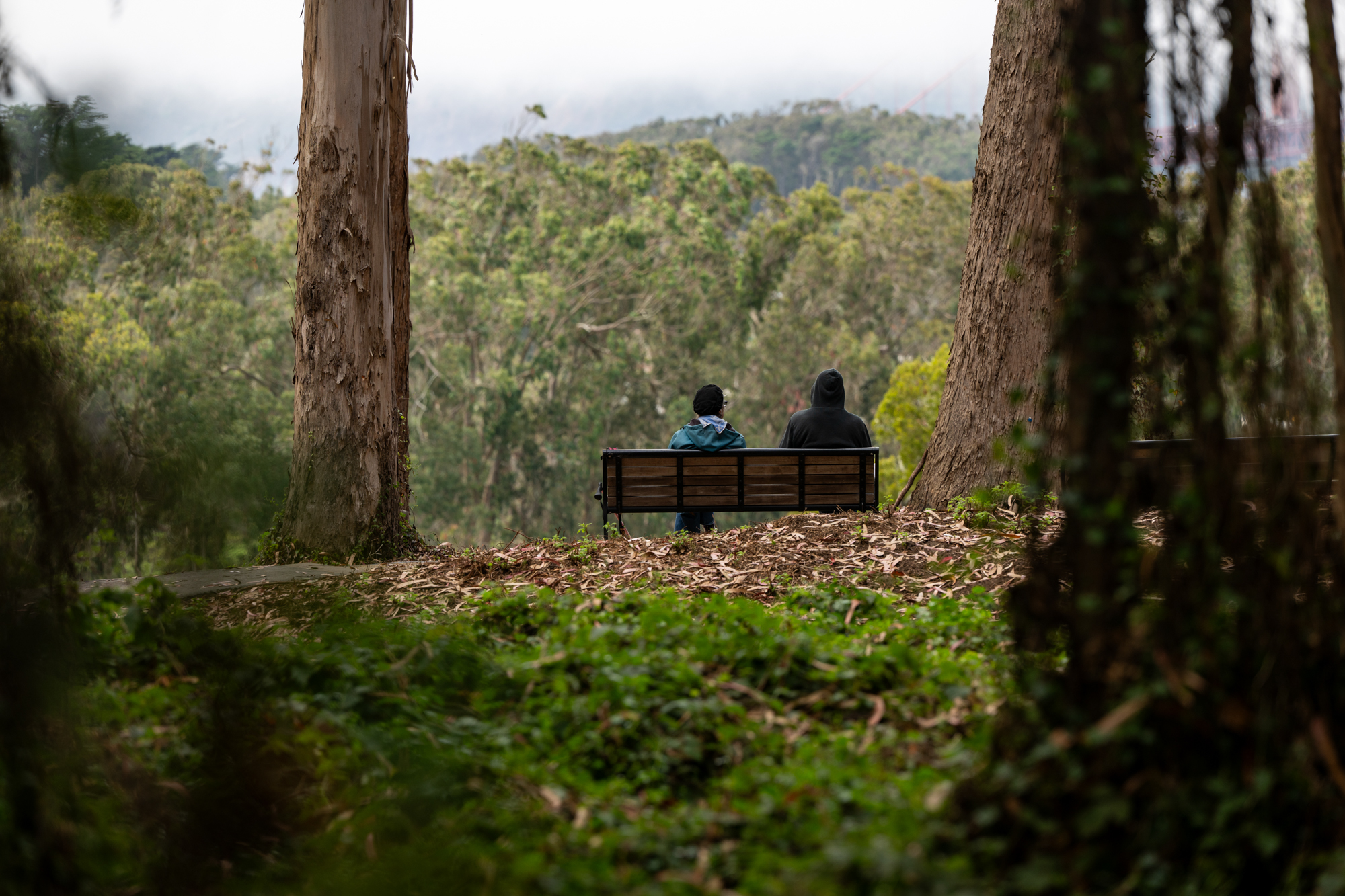
"caption": "Two people sit at Cemetery Overlook in the Presidio of San Francisco on Sept. 4, 2025, which looks out over the National Cemetery and the San Francisco Bay.",
"credit": "Beth LaBerge/KQED",
"altTag": null,
"description": null,
"imgSizes": {
"thumbnail": {
"file": "https://cdn.kqed.org/wp-content/uploads/sites/10/2025/09/250904-PRESIDIOHIKES-11-BL-KQED-160x107.jpg",
"width": 160,
"height": 107,
"mimeType": "image/jpeg"
},
"1536x1536": {
"file": "https://cdn.kqed.org/wp-content/uploads/sites/10/2025/09/250904-PRESIDIOHIKES-11-BL-KQED-1536x1024.jpg",
"width": 1536,
"height": 1024,
"mimeType": "image/jpeg"
},
"post-thumbnail": {
"file": "https://cdn.kqed.org/wp-content/uploads/sites/10/2025/09/250904-PRESIDIOHIKES-11-BL-KQED-672x372.jpg",
"width": 672,
"height": 372,
"mimeType": "image/jpeg"
},
"twentyfourteen-full-width": {
"file": "https://cdn.kqed.org/wp-content/uploads/sites/10/2025/09/250904-PRESIDIOHIKES-11-BL-KQED-1038x576.jpg",
"width": 1038,
"height": 576,
"mimeType": "image/jpeg"
},
"kqedFullSize": {
"file": "https://cdn.kqed.org/wp-content/uploads/sites/10/2025/09/250904-PRESIDIOHIKES-11-BL-KQED.jpg",
"width": 2000,
"height": 1333
}
},
"isLoading": false,
"fetchFailed": false
},
"news_12053411": {
"type": "attachments",
"id": "news_12053411",
"meta": {
"index": "attachments_1716263798",
"site": "news",
"id": "12053411",
"found": true
},
"title": "DSC02098",
"publishDate": 1755896823,
"status": "inherit",
"parent": 12053380,
"modified": 1755898471,
"caption": "California National Guard patrol downtown Los Angeles on June 18, 2025. ",
"credit": "Aisha Wallace-Palomares/KQED",
"altTag": null,
"description": null,
"imgSizes": {
"medium": {
"file": "https://cdn.kqed.org/wp-content/uploads/sites/10/2025/08/DSC02098-2000x1333.jpg",
"width": 2000,
"height": 1333,
"mimeType": "image/jpeg"
},
"large": {
"file": "https://cdn.kqed.org/wp-content/uploads/sites/10/2025/08/DSC02098-2000x1333.jpg",
"width": 2000,
"height": 1333,
"mimeType": "image/jpeg"
},
"thumbnail": {
"file": "https://cdn.kqed.org/wp-content/uploads/sites/10/2025/08/DSC02098-160x107.jpg",
"width": 160,
"height": 107,
"mimeType": "image/jpeg"
},
"1536x1536": {
"file": "https://cdn.kqed.org/wp-content/uploads/sites/10/2025/08/DSC02098-1536x1024.jpg",
"width": 1536,
"height": 1024,
"mimeType": "image/jpeg"
},
"2048x2048": {
"file": "https://cdn.kqed.org/wp-content/uploads/sites/10/2025/08/DSC02098-2048x1365.jpg",
"width": 2048,
"height": 1365,
"mimeType": "image/jpeg"
},
"post-thumbnail": {
"file": "https://cdn.kqed.org/wp-content/uploads/sites/10/2025/08/DSC02098-672x372.jpg",
"width": 672,
"height": 372,
"mimeType": "image/jpeg"
},
"twentyfourteen-full-width": {
"file": "https://cdn.kqed.org/wp-content/uploads/sites/10/2025/08/DSC02098-1038x576.jpg",
"width": 1038,
"height": 576,
"mimeType": "image/jpeg"
},
"full-width": {
"file": "https://cdn.kqed.org/wp-content/uploads/sites/10/2025/08/DSC02098-2000x1333.jpg",
"width": 2000,
"height": 1333,
"mimeType": "image/jpeg"
},
"kqedFullSize": {
"file": "https://cdn.kqed.org/wp-content/uploads/sites/10/2025/08/DSC02098-scaled-e1755897157954.jpg",
"width": 2000,
"height": 1334
}
},
"isLoading": false,
"fetchFailed": false
},
"news_12058835": {
"type": "attachments",
"id": "news_12058835",
"meta": {
"index": "attachments_1716263798",
"site": "news",
"id": "12058835",
"found": true
},
"title": "The Marina Motel at 2576 Lombard. Heritage photo.",
"publishDate": 1759787762,
"status": "inherit",
"parent": 12058829,
"modified": 1759949923,
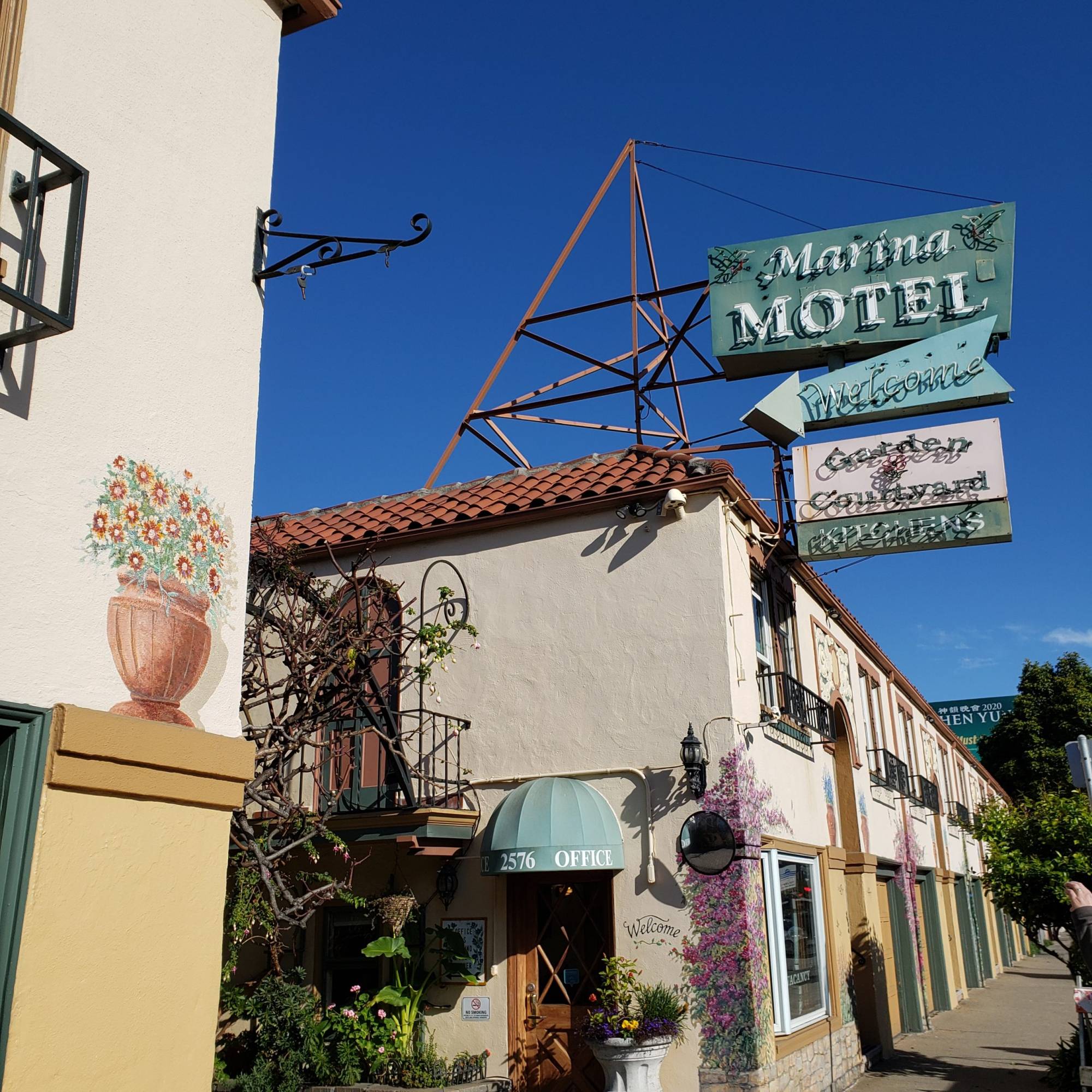
"caption": "The Marina Motel at 2576 Lombard St. in San Francisco. ",
"credit": "Courtesy of San Francisco Heritage",
"altTag": null,
"description": null,
"imgSizes": {
"medium": {
"file": "https://cdn.kqed.org/wp-content/uploads/sites/10/2025/10/The-Marina-Motel-at-2576-Lombard.-Heritage-photo-2000x2000.jpg",
"width": 2000,
"height": 2000,
"mimeType": "image/jpeg"
},
"large": {
"file": "https://cdn.kqed.org/wp-content/uploads/sites/10/2025/10/The-Marina-Motel-at-2576-Lombard.-Heritage-photo-2000x2000.jpg",
"width": 2000,
"height": 2000,
"mimeType": "image/jpeg"
},
"thumbnail": {
"file": "https://cdn.kqed.org/wp-content/uploads/sites/10/2025/10/The-Marina-Motel-at-2576-Lombard.-Heritage-photo-160x160.jpg",
"width": 160,
"height": 160,
"mimeType": "image/jpeg"
},
"1536x1536": {
"file": "https://cdn.kqed.org/wp-content/uploads/sites/10/2025/10/The-Marina-Motel-at-2576-Lombard.-Heritage-photo-1536x1536.jpg",
"width": 1536,
"height": 1536,
"mimeType": "image/jpeg"
},
"2048x2048": {
"file": "https://cdn.kqed.org/wp-content/uploads/sites/10/2025/10/The-Marina-Motel-at-2576-Lombard.-Heritage-photo-2048x2048.jpg",
"width": 2048,
"height": 2048,
"mimeType": "image/jpeg"
},
"post-thumbnail": {
"file": "https://cdn.kqed.org/wp-content/uploads/sites/10/2025/10/The-Marina-Motel-at-2576-Lombard.-Heritage-photo-672x372.jpg",
"width": 672,
"height": 372,
"mimeType": "image/jpeg"
},
"twentyfourteen-full-width": {
"file": "https://cdn.kqed.org/wp-content/uploads/sites/10/2025/10/The-Marina-Motel-at-2576-Lombard.-Heritage-photo-1038x576.jpg",
"width": 1038,
"height": 576,
"mimeType": "image/jpeg"
},
"full-width": {
"file": "https://cdn.kqed.org/wp-content/uploads/sites/10/2025/10/The-Marina-Motel-at-2576-Lombard.-Heritage-photo-2000x2000.jpg",
"width": 2000,
"height": 2000,
"mimeType": "image/jpeg"
},
"kqedFullSize": {
"file": "https://cdn.kqed.org/wp-content/uploads/sites/10/2025/10/The-Marina-Motel-at-2576-Lombard.-Heritage-photo-e1759787961707.jpg",
"width": 2000,
"height": 2000
}
},
"isLoading": false,
"fetchFailed": false
},
"news_12059164": {
"type": "attachments",
"id": "news_12059164",
"meta": {
"index": "attachments_1716263798",
"site": "news",
"id": "12059164",
"found": true
},
"title": "WIRED25 Work: Inside San Francisco's Most Innovative Workplaces",
"publishDate": 1759958711,
"status": "inherit",
"parent": 12059158,
"modified": 1759958792,
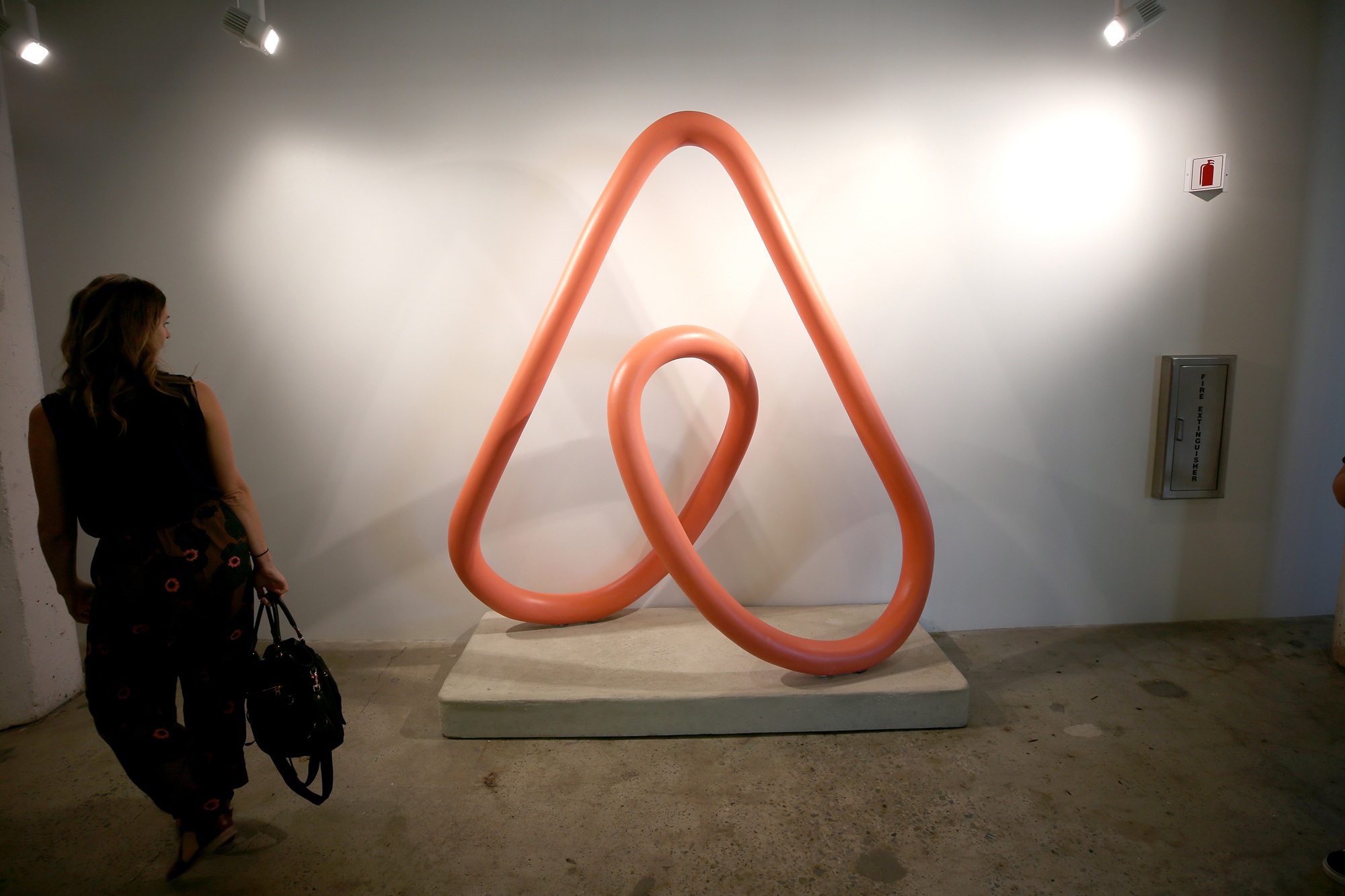
"caption": "Airbnb signage on display at WIRED25 offices on Oct. 12, 2018, in San Francisco, California. ",
"credit": "Phillip Faraone/Getty Images for WIRED25",
"altTag": null,
"description": null,
"imgSizes": {
"thumbnail": {
"file": "https://cdn.kqed.org/wp-content/uploads/sites/10/2025/10/AirbnbSFGetty-160x107.jpg",
"width": 160,
"height": 107,
"mimeType": "image/jpeg"
},
"1536x1536": {
"file": "https://cdn.kqed.org/wp-content/uploads/sites/10/2025/10/AirbnbSFGetty-1536x1024.jpg",
"width": 1536,
"height": 1024,
"mimeType": "image/jpeg"
},
"post-thumbnail": {
"file": "https://cdn.kqed.org/wp-content/uploads/sites/10/2025/10/AirbnbSFGetty-672x372.jpg",
"width": 672,
"height": 372,
"mimeType": "image/jpeg"
},
"twentyfourteen-full-width": {
"file": "https://cdn.kqed.org/wp-content/uploads/sites/10/2025/10/AirbnbSFGetty-1038x576.jpg",
"width": 1038,
"height": 576,
"mimeType": "image/jpeg"
},
"kqedFullSize": {
"file": "https://cdn.kqed.org/wp-content/uploads/sites/10/2025/10/AirbnbSFGetty.jpg",
"width": 2000,
"height": 1333
}
},
"isLoading": false,
"fetchFailed": false
},
"news_11979390": {
"type": "attachments",
"id": "news_11979390",
"meta": {
"index": "attachments_1716263798",
"site": "news",
"id": "11979390",
"found": true
},
"title": "hispanic college student doing some home works from home with laptop",
"publishDate": 1710374837,
"status": "inherit",
"parent": 11979367,
"modified": 1759874426,
"caption": "A glitch blocking mixed-status families has caused stress for many, but some steps can be taken in the meantime when it comes to the FAFSA application.",
"credit": "Carol Yepes/Getty Images",
"altTag": "A young woman with dark brown hair stares intently at her computer screen.",
"description": null,
"imgSizes": {
"medium": {
"file": "https://cdn.kqed.org/wp-content/uploads/sites/10/2024/03/GettyImages-1403066184-800x533.jpg",
"width": 800,
"height": 533,
"mimeType": "image/jpeg"
},
"large": {
"file": "https://cdn.kqed.org/wp-content/uploads/sites/10/2024/03/GettyImages-1403066184-1020x680.jpg",
"width": 1020,
"height": 680,
"mimeType": "image/jpeg"
},
"thumbnail": {
"file": "https://cdn.kqed.org/wp-content/uploads/sites/10/2024/03/GettyImages-1403066184-160x107.jpg",
"width": 160,
"height": 107,
"mimeType": "image/jpeg"
},
"1536x1536": {
"file": "https://cdn.kqed.org/wp-content/uploads/sites/10/2024/03/GettyImages-1403066184-1536x1024.jpg",
"width": 1536,
"height": 1024,
"mimeType": "image/jpeg"
},
"2048x2048": {
"file": "https://cdn.kqed.org/wp-content/uploads/sites/10/2024/03/GettyImages-1403066184-2048x1365.jpg",
"width": 2048,
"height": 1365,
"mimeType": "image/jpeg"
},
"post-thumbnail": {
"file": "https://cdn.kqed.org/wp-content/uploads/sites/10/2024/03/GettyImages-1403066184-672x372.jpg",
"width": 672,
"height": 372,
"mimeType": "image/jpeg"
},
"twentyfourteen-full-width": {
"file": "https://cdn.kqed.org/wp-content/uploads/sites/10/2024/03/GettyImages-1403066184-1038x576.jpg",
"width": 1038,
"height": 576,
"mimeType": "image/jpeg"
},
"full-width": {
"file": "https://cdn.kqed.org/wp-content/uploads/sites/10/2024/03/GettyImages-1403066184-1920x1280.jpg",
"width": 1920,
"height": 1280,
"mimeType": "image/jpeg"
},
"kqedFullSize": {
"file": "https://cdn.kqed.org/wp-content/uploads/sites/10/2024/03/GettyImages-1403066184.jpg",
"width": 2121,
"height": 1414
}
},
"isLoading": false,
"fetchFailed": false
},
"news_12022546": {
"type": "attachments",
"id": "news_12022546",
"meta": {
"index": "attachments_1716263798",
"site": "news",
"id": "12022546",
"found": true
},
"title": "Powerful Winds Fuel Multiple Fires Across Los Angeles Area",
"publishDate": 1737051131,
"status": "inherit",
"parent": 12022540,
"modified": 1759949175,
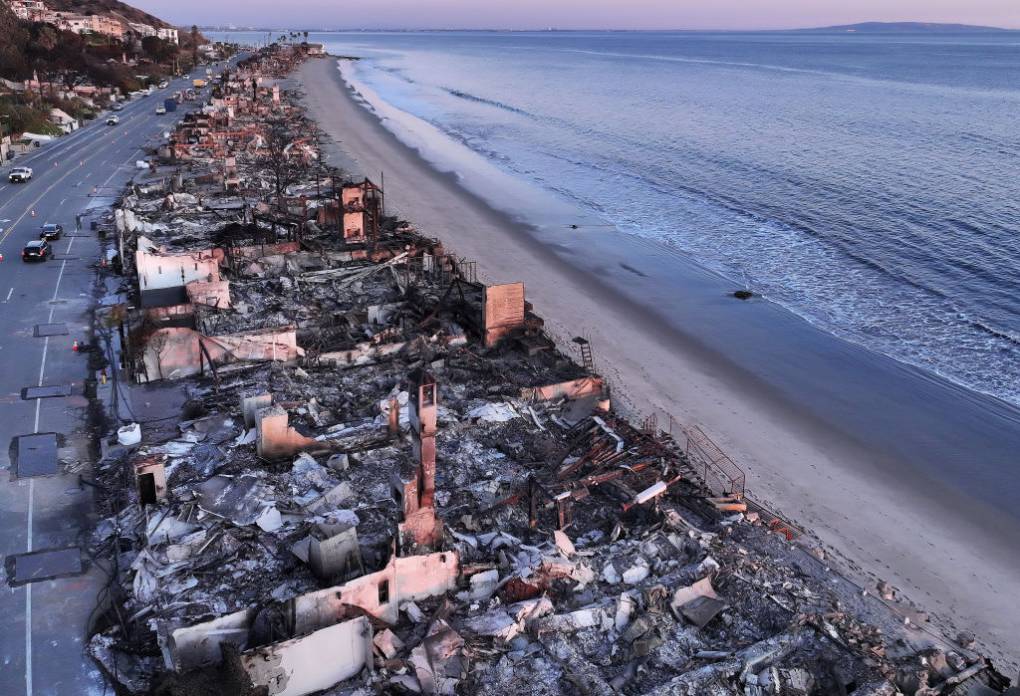
"caption": "An aerial view of beachfront homes that burned in the Palisades Fire on January 15, 2025 in Malibu, Los Angeles County. ",
"credit": "Mario Tama/Getty Images",
"altTag": null,
"description": null,
"imgSizes": {
"medium": {
"file": "https://cdn.kqed.org/wp-content/uploads/sites/10/2025/01/GettyImages-2194137909-800x546.jpg",
"width": 800,
"height": 546,
"mimeType": "image/jpeg"
},
"large": {
"file": "https://cdn.kqed.org/wp-content/uploads/sites/10/2025/01/GettyImages-2194137909-1020x696.jpg",
"width": 1020,
"height": 696,
"mimeType": "image/jpeg"
},
"thumbnail": {
"file": "https://cdn.kqed.org/wp-content/uploads/sites/10/2025/01/GettyImages-2194137909-160x109.jpg",
"width": 160,
"height": 109,
"mimeType": "image/jpeg"
},
"post-thumbnail": {
"file": "https://cdn.kqed.org/wp-content/uploads/sites/10/2025/01/GettyImages-2194137909-672x372.jpg",
"width": 672,
"height": 372,
"mimeType": "image/jpeg"
},
"twentyfourteen-full-width": {
"file": "https://cdn.kqed.org/wp-content/uploads/sites/10/2025/01/GettyImages-2194137909-1024x576.jpg",
"width": 1024,
"height": 576,
"mimeType": "image/jpeg"
},
"kqedFullSize": {
"file": "https://cdn.kqed.org/wp-content/uploads/sites/10/2025/01/GettyImages-2194137909.jpg",
"width": 1024,
"height": 699
}
},
"isLoading": false,
"fetchFailed": false
},
"news_12058946": {
"type": "attachments",
"id": "news_12058946",
"meta": {
"index": "attachments_1716263798",
"site": "news",
"id": "12058946",
"found": true
},
"title": "ICE in Little Tokyo",
"publishDate": 1759861710,
"status": "inherit",
"parent": 12058936,
"modified": 1759880054,
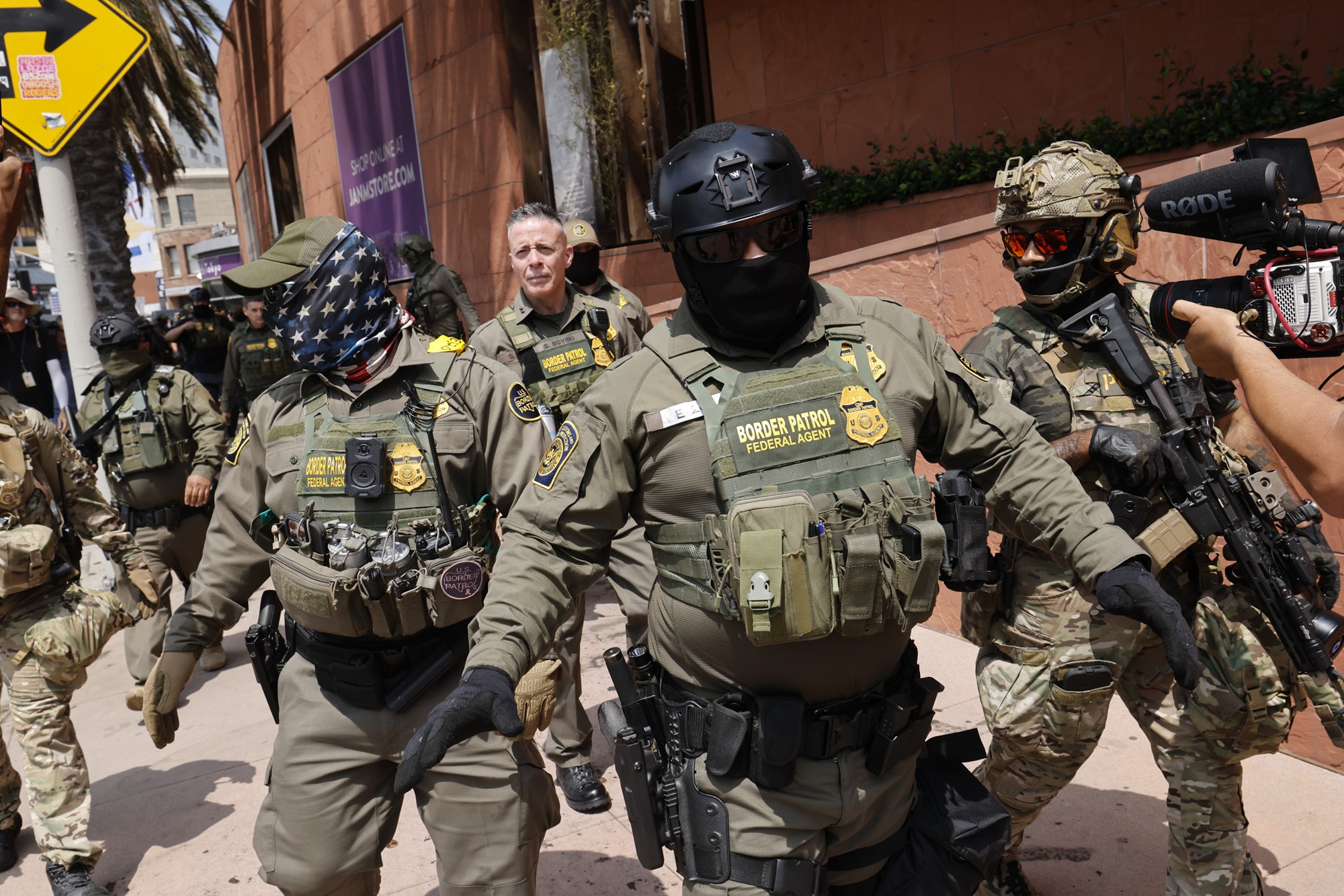
"caption": "Gregory Bovino, chief patrol agent of the El Centro sector (center), marches with federal agents to the Edward R. Roybal Federal Building after U.S. Border Patrol agents produced a show of force outside the Japanese American National Museum, where Gov. Newsom was holding a redistricting press conference on Aug. 14, 2025, in Los Angeles, California.",
"credit": "Carlin Stiehl/Los Angeles Times via Getty Images",
"altTag": null,
"description": null,
"imgSizes": {
"thumbnail": {
"file": "https://cdn.kqed.org/wp-content/uploads/sites/10/2025/10/BorderPatrolAgentsGetty-160x107.jpg",
"width": 160,
"height": 107,
"mimeType": "image/jpeg"
},
"1536x1536": {
"file": "https://cdn.kqed.org/wp-content/uploads/sites/10/2025/10/BorderPatrolAgentsGetty-1536x1025.jpg",
"width": 1536,
"height": 1025,
"mimeType": "image/jpeg"
},
"post-thumbnail": {
"file": "https://cdn.kqed.org/wp-content/uploads/sites/10/2025/10/BorderPatrolAgentsGetty-672x372.jpg",
"width": 672,
"height": 372,
"mimeType": "image/jpeg"
},
"twentyfourteen-full-width": {
"file": "https://cdn.kqed.org/wp-content/uploads/sites/10/2025/10/BorderPatrolAgentsGetty-1038x576.jpg",
"width": 1038,
"height": 576,
"mimeType": "image/jpeg"
},
"kqedFullSize": {
"file": "https://cdn.kqed.org/wp-content/uploads/sites/10/2025/10/BorderPatrolAgentsGetty.jpg",
"width": 2000,
"height": 1334
}
},
"isLoading": false,
"fetchFailed": false
},
"news_12057954": {
"type": "attachments",
"id": "news_12057954",
"meta": {
"index": "attachments_1716263798",
"site": "news",
"id": "12057954",
"found": true
},
"title": "20250923_MEDICAIDDISABILITY_GC-15-KQED",
"publishDate": 1759164379,
"status": "inherit",
"parent": 0,
"modified": 1759165152,
"caption": "Art student Douglas Morales, left, works on a painting in the art studio at the Arc in San Francisco on Sept. 23, 2025.",
"credit": "Gina Castro/KQED",
"altTag": null,
"description": null,
"imgSizes": {
"thumbnail": {
"file": "https://cdn.kqed.org/wp-content/uploads/sites/10/2025/09/20250923_MEDICAIDDISABILITY_GC-15-KQED-160x107.jpg",
"width": 160,
"height": 107,
"mimeType": "image/jpeg"
},
"1536x1536": {
"file": "https://cdn.kqed.org/wp-content/uploads/sites/10/2025/09/20250923_MEDICAIDDISABILITY_GC-15-KQED-1536x1024.jpg",
"width": 1536,
"height": 1024,
"mimeType": "image/jpeg"
},
"post-thumbnail": {
"file": "https://cdn.kqed.org/wp-content/uploads/sites/10/2025/09/20250923_MEDICAIDDISABILITY_GC-15-KQED-672x372.jpg",
"width": 672,
"height": 372,
"mimeType": "image/jpeg"
},
"twentyfourteen-full-width": {
"file": "https://cdn.kqed.org/wp-content/uploads/sites/10/2025/09/20250923_MEDICAIDDISABILITY_GC-15-KQED-1038x576.jpg",
"width": 1038,
"height": 576,
"mimeType": "image/jpeg"
},
"kqedFullSize": {
"file": "https://cdn.kqed.org/wp-content/uploads/sites/10/2025/09/20250923_MEDICAIDDISABILITY_GC-15-KQED.jpg",
"width": 2000,
"height": 1333
}
},
"isLoading": false,
"fetchFailed": false
},
"news_12010929": {
"type": "attachments",
"id": "news_12010929",
"meta": {
"index": "attachments_1716263798",
"site": "news",
"id": "12010929",
"found": true
},
"title": "004_Oakland_ItzelDiazandFamily_09092021_qed",
"publishDate": 1729795242,
"status": "inherit",
"parent": 12008332,
"modified": 1729795304,
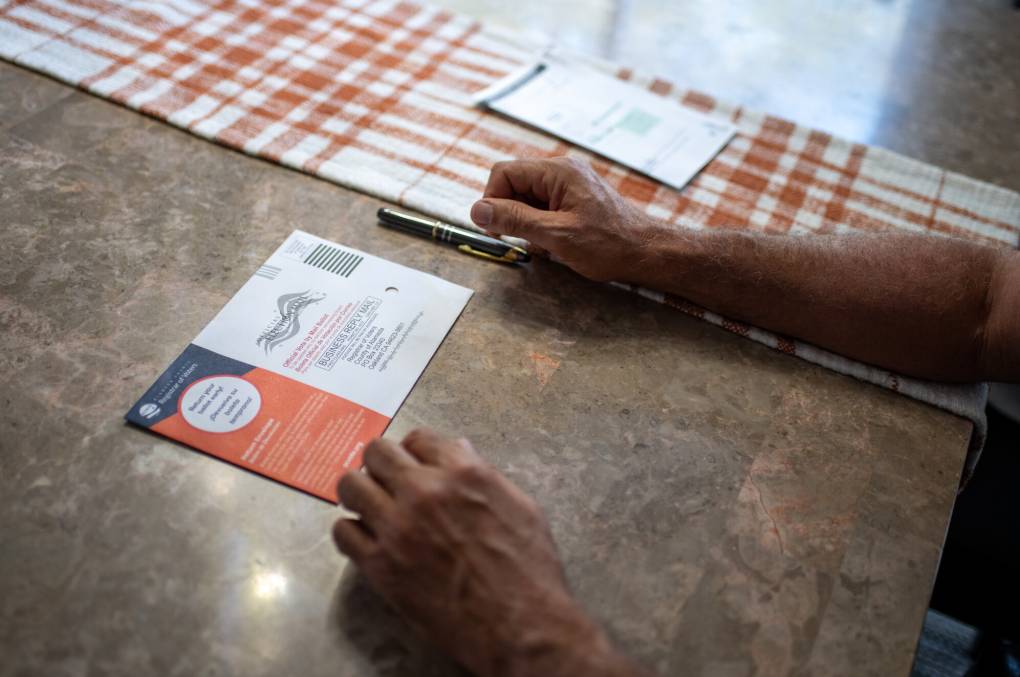
"caption": "A Bay Area resident prepares to fill out their mail-in ballot in 2021.",
"credit": "Beth LaBerge/KQED",
"altTag": null,
"description": null,
"imgSizes": {
"medium": {
"file": "https://cdn.kqed.org/wp-content/uploads/sites/10/2024/10/004_Oakland_ItzelDiazandFamily_09092021_qed-e1729796712493-800x531.jpg",
"width": 800,
"height": 531,
"mimeType": "image/jpeg"
},
"large": {
"file": "https://cdn.kqed.org/wp-content/uploads/sites/10/2024/10/004_Oakland_ItzelDiazandFamily_09092021_qed-e1729796712493-1020x677.jpg",
"width": 1020,
"height": 677,
"mimeType": "image/jpeg"
},
"thumbnail": {
"file": "https://cdn.kqed.org/wp-content/uploads/sites/10/2024/10/004_Oakland_ItzelDiazandFamily_09092021_qed-e1729796712493-160x106.jpg",
"width": 160,
"height": 106,
"mimeType": "image/jpeg"
},
"1536x1536": {
"file": "https://cdn.kqed.org/wp-content/uploads/sites/10/2024/10/004_Oakland_ItzelDiazandFamily_09092021_qed-e1729796712493-1536x1020.jpg",
"width": 1536,
"height": 1020,
"mimeType": "image/jpeg"
},
"post-thumbnail": {
"file": "https://cdn.kqed.org/wp-content/uploads/sites/10/2024/10/004_Oakland_ItzelDiazandFamily_09092021_qed-e1729796712493-672x372.jpg",
"width": 672,
"height": 372,
"mimeType": "image/jpeg"
},
"twentyfourteen-full-width": {
"file": "https://cdn.kqed.org/wp-content/uploads/sites/10/2024/10/004_Oakland_ItzelDiazandFamily_09092021_qed-e1729796712493-1038x576.jpg",
"width": 1038,
"height": 576,
"mimeType": "image/jpeg"
},
"full-width": {
"file": "https://cdn.kqed.org/wp-content/uploads/sites/10/2024/10/004_Oakland_ItzelDiazandFamily_09092021_qed-e1729796712493-1920x1275.jpg",
"width": 1920,
"height": 1275,
"mimeType": "image/jpeg"
},
"kqedFullSize": {
"file": "https://cdn.kqed.org/wp-content/uploads/sites/10/2024/10/004_Oakland_ItzelDiazandFamily_09092021_qed-e1729796712493.jpg",
"width": 1993,
"height": 1323
}
},
"isLoading": false,
"fetchFailed": false
},
"news_11773994": {
"type": "attachments",
"id": "news_11773994",
"meta": {
"index": "attachments_1716263798",
"site": "news",
"id": "11773994",
"found": true
},
"title": "Hundreds Of Flights In And Out Of San Francisco International Airport Delayed, As The Airport Works To Update Its Busiest Runway",
"publishDate": 1568327990,
"status": "inherit",
"parent": 11773957,
"modified": 1759883272,
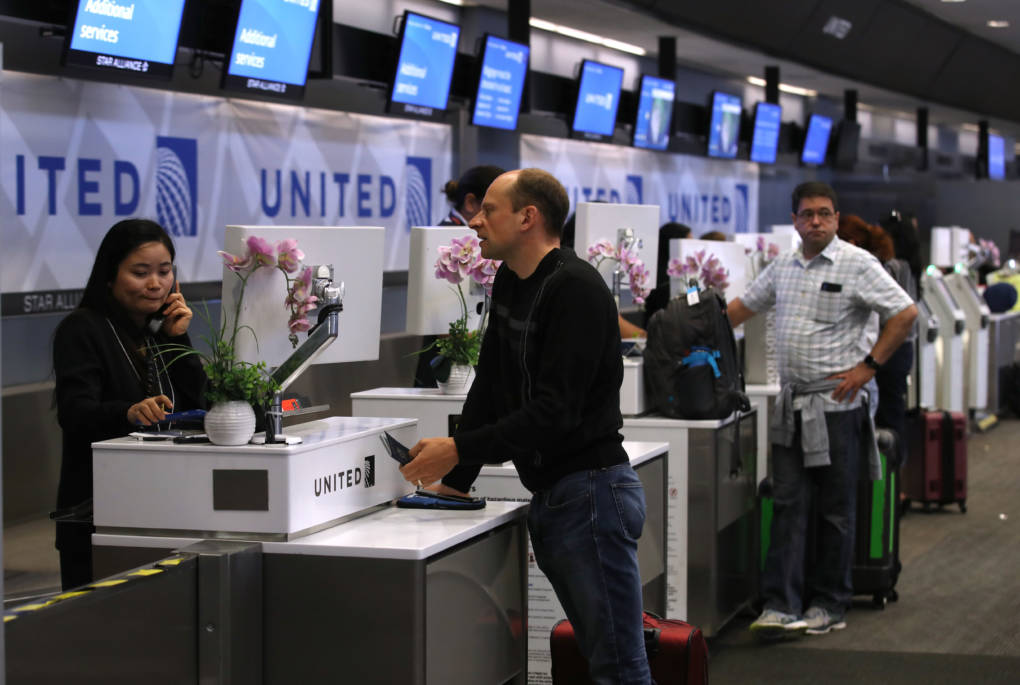
"caption": "A United Airlines customer talks to a ticket agent at San Francisco International Airport on Sept. 9, 2019, in San Francisco, California.",
"credit": "Justin Sullivan/Getty Images",
"altTag": null,
"description": null,
"imgSizes": {
"thumbnail": {
"file": "https://cdn.kqed.org/wp-content/uploads/sites/10/2019/09/GettyImages-1173446702-1-160x107.jpg",
"width": 160,
"height": 107,
"mimeType": "image/jpeg"
},
"medium": {
"file": "https://cdn.kqed.org/wp-content/uploads/sites/10/2019/09/GettyImages-1173446702-1-800x537.jpg",
"width": 800,
"height": 537,
"mimeType": "image/jpeg"
},
"large": {
"file": "https://cdn.kqed.org/wp-content/uploads/sites/10/2019/09/GettyImages-1173446702-1-1020x685.jpg",
"width": 1020,
"height": 685,
"mimeType": "image/jpeg"
},
"complete_open_graph": {
"file": "https://cdn.kqed.org/wp-content/uploads/sites/10/2019/09/GettyImages-1173446702-1-1200x805.jpg",
"width": 1200,
"height": 805,
"mimeType": "image/jpeg"
},
"post-thumbnail": {
"file": "https://cdn.kqed.org/wp-content/uploads/sites/10/2019/09/GettyImages-1173446702-1-672x372.jpg",
"width": 672,
"height": 372,
"mimeType": "image/jpeg"
},
"twentyfourteen-full-width": {
"file": "https://cdn.kqed.org/wp-content/uploads/sites/10/2019/09/GettyImages-1173446702-1-1038x576.jpg",
"width": 1038,
"height": 576,
"mimeType": "image/jpeg"
},
"full-width": {
"file": "https://cdn.kqed.org/wp-content/uploads/sites/10/2019/09/GettyImages-1173446702-1-1920x1289.jpg",
"width": 1920,
"height": 1289,
"mimeType": "image/jpeg"
},
"apple_news_ca_landscape_12_9": {
"file": "https://cdn.kqed.org/wp-content/uploads/sites/10/2019/09/GettyImages-1173446702-1-1832x1374.jpg",
"width": 1832,
"height": 1374,
"mimeType": "image/jpeg"
},
"apple_news_ca_landscape_9_7": {
"file": "https://cdn.kqed.org/wp-content/uploads/sites/10/2019/09/GettyImages-1173446702-1-1376x1032.jpg",
"width": 1376,
"height": 1032,
"mimeType": "image/jpeg"
},
"apple_news_ca_landscape_5_5": {
"file": "https://cdn.kqed.org/wp-content/uploads/sites/10/2019/09/GettyImages-1173446702-1-1044x783.jpg",
"width": 1044,
"height": 783,
"mimeType": "image/jpeg"
},
"apple_news_ca_landscape_4_7": {
"file": "https://cdn.kqed.org/wp-content/uploads/sites/10/2019/09/GettyImages-1173446702-1-632x474.jpg",
"width": 632,
"height": 474,
"mimeType": "image/jpeg"
},
"apple_news_ca_landscape_4_0": {
"file": "https://cdn.kqed.org/wp-content/uploads/sites/10/2019/09/GettyImages-1173446702-1-536x402.jpg",
"width": 536,
"height": 402,
"mimeType": "image/jpeg"
},
"apple_news_ca_portrait_12_9": {
"file": "https://cdn.kqed.org/wp-content/uploads/sites/10/2019/09/GettyImages-1173446702-1-1122x1496.jpg",
"width": 1122,
"height": 1496,
"mimeType": "image/jpeg"
},
"apple_news_ca_portrait_9_7": {
"file": "https://cdn.kqed.org/wp-content/uploads/sites/10/2019/09/GettyImages-1173446702-1-840x1120.jpg",
"width": 840,
"height": 1120,
"mimeType": "image/jpeg"
},
"apple_news_ca_portrait_5_5": {
"file": "https://cdn.kqed.org/wp-content/uploads/sites/10/2019/09/GettyImages-1173446702-1-687x916.jpg",
"width": 687,
"height": 916,
"mimeType": "image/jpeg"
},
"apple_news_ca_portrait_4_7": {
"file": "https://cdn.kqed.org/wp-content/uploads/sites/10/2019/09/GettyImages-1173446702-1-414x552.jpg",
"width": 414,
"height": 552,
"mimeType": "image/jpeg"
},
"apple_news_ca_portrait_4_0": {
"file": "https://cdn.kqed.org/wp-content/uploads/sites/10/2019/09/GettyImages-1173446702-1-354x472.jpg",
"width": 354,
"height": 472,
"mimeType": "image/jpeg"
},
"apple_news_ca_square_12_9": {
"file": "https://cdn.kqed.org/wp-content/uploads/sites/10/2019/09/GettyImages-1173446702-1-1472x1472.jpg",
"width": 1472,
"height": 1472,
"mimeType": "image/jpeg"
},
"apple_news_ca_square_9_7": {
"file": "https://cdn.kqed.org/wp-content/uploads/sites/10/2019/09/GettyImages-1173446702-1-1104x1104.jpg",
"width": 1104,
"height": 1104,
"mimeType": "image/jpeg"
},
"apple_news_ca_square_5_5": {
"file": "https://cdn.kqed.org/wp-content/uploads/sites/10/2019/09/GettyImages-1173446702-1-912x912.jpg",
"width": 912,
"height": 912,
"mimeType": "image/jpeg"
},
"apple_news_ca_square_4_7": {
"file": "https://cdn.kqed.org/wp-content/uploads/sites/10/2019/09/GettyImages-1173446702-1-550x550.jpg",
"width": 550,
"height": 550,
"mimeType": "image/jpeg"
},
"apple_news_ca_square_4_0": {
"file": "https://cdn.kqed.org/wp-content/uploads/sites/10/2019/09/GettyImages-1173446702-1-470x470.jpg",
"width": 470,
"height": 470,
"mimeType": "image/jpeg"
},
"kqedFullSize": {
"file": "https://cdn.kqed.org/wp-content/uploads/sites/10/2019/09/GettyImages-1173446702-1-e1568328016889.jpg",
"width": 1920,
"height": 1289
}
},
"isLoading": false,
"fetchFailed": false
},
"news_12058999": {
"type": "attachments",
"id": "news_12058999",
"meta": {
"index": "attachments_1716263798",
"site": "news",
"id": "12058999",
"found": true
},
"title": "TOPSHOT-SWEDEN-NOBEL-PRIZE-PHYSICS",
"publishDate": 1759871306,
"status": "inherit",
"parent": 12058994,
"modified": 1759871409,
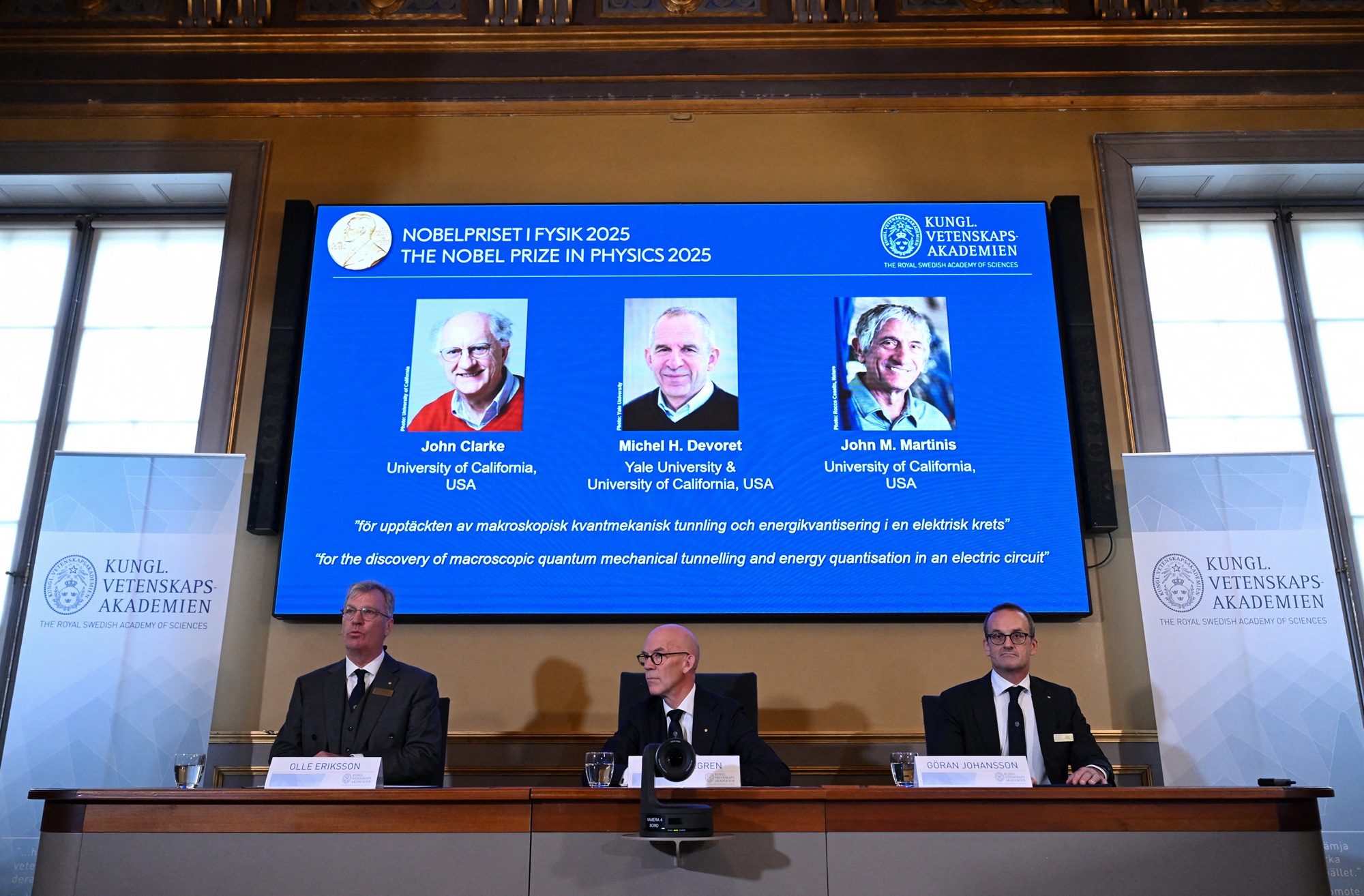
"caption": "Left to right: Olle Eriksson, Chair of the Nobel Committee for Physics, Hans Ellegren, Secretary General of The Royal Swedish Academy of Sciences, and Goeran Johansson, Member of the Nobel Committe for Physics, address a press conference to announce the winners of the 2025 Nobel Prize in Physics at the Royal Swedish Academy of Sciences in Stockholm, Sweden, on Oct. 7, 2025. John Clarke (UK), Michel H. Devoret (France) and John M. Martinis (US) win the Nobel Prize in Physics 2025, \"for the discovery of macroscopic quatum mechanical tunnelling and energy quantisation in an electric circuit.\"",
"credit": "Jonathan Nackstrand/AFP via Getty Images",
"altTag": null,
"description": null,
"imgSizes": {
"thumbnail": {
"file": "https://cdn.kqed.org/wp-content/uploads/sites/10/2025/10/NobelPrizePhysicsGetty1-160x105.jpg",
"width": 160,
"height": 105,
"mimeType": "image/jpeg"
},
"1536x1536": {
"file": "https://cdn.kqed.org/wp-content/uploads/sites/10/2025/10/NobelPrizePhysicsGetty1-1536x1009.jpg",
"width": 1536,
"height": 1009,
"mimeType": "image/jpeg"
},
"post-thumbnail": {
"file": "https://cdn.kqed.org/wp-content/uploads/sites/10/2025/10/NobelPrizePhysicsGetty1-672x372.jpg",
"width": 672,
"height": 372,
"mimeType": "image/jpeg"
},
"twentyfourteen-full-width": {
"file": "https://cdn.kqed.org/wp-content/uploads/sites/10/2025/10/NobelPrizePhysicsGetty1-1038x576.jpg",
"width": 1038,
"height": 576,
"mimeType": "image/jpeg"
},
"kqedFullSize": {
"file": "https://cdn.kqed.org/wp-content/uploads/sites/10/2025/10/NobelPrizePhysicsGetty1.jpg",
"width": 2000,
"height": 1314
}
},
"isLoading": false,
"fetchFailed": false
},
"news_12054634": {
"type": "attachments",
"id": "news_12054634",
"meta": {
"index": "attachments_1716263798",
"site": "news",
"id": "12054634",
"found": true
},
"title": "California Trump Newsom",
"publishDate": 1757009366,
"status": "inherit",
"parent": 12054630,
"modified": 1757009400,
"caption": "Gov. Gavin Newsom at a press conference to discuss the measures to redraw the state's Congressional districts and put new maps before voters in a special election, in Sacramento, California, on Aug. 21, 2025. ",
"credit": "Rich Pedroncelli/AP Photo",
"altTag": null,
"description": null,
"imgSizes": {
"thumbnail": {
"file": "https://cdn.kqed.org/wp-content/uploads/sites/10/2025/09/GavinNewsomAP-160x107.jpg",
"width": 160,
"height": 107,
"mimeType": "image/jpeg"
},
"1536x1536": {
"file": "https://cdn.kqed.org/wp-content/uploads/sites/10/2025/09/GavinNewsomAP-1536x1024.jpg",
"width": 1536,
"height": 1024,
"mimeType": "image/jpeg"
},
"post-thumbnail": {
"file": "https://cdn.kqed.org/wp-content/uploads/sites/10/2025/09/GavinNewsomAP-672x372.jpg",
"width": 672,
"height": 372,
"mimeType": "image/jpeg"
},
"twentyfourteen-full-width": {
"file": "https://cdn.kqed.org/wp-content/uploads/sites/10/2025/09/GavinNewsomAP-1038x576.jpg",
"width": 1038,
"height": 576,
"mimeType": "image/jpeg"
},
"kqedFullSize": {
"file": "https://cdn.kqed.org/wp-content/uploads/sites/10/2025/09/GavinNewsomAP.jpg",
"width": 2000,
"height": 1333
}
},
"isLoading": false,
"fetchFailed": false
}
},
"audioPlayerReducer": {
"postId": "stream_live",
"isPaused": true,
"isPlaying": false,
"pfsActive": false,
"pledgeModalIsOpen": true,
"playerDrawerIsOpen": false,
"liveAudioPlayStartedAt": 0,
"liveAudioPlayContext": ""
},
"authorsReducer": {
"byline_news_12059123": {
"type": "authors",
"id": "byline_news_12059123",
"meta": {
"override": true
},
"slug": "byline_news_12059123",
"name": "Jacob Margolis, LAist",
"isLoading": false
},
"gmarzorati": {
"type": "authors",
"id": "227",
"meta": {
"index": "authors_1716337520",
"id": "227",
"found": true
},
"name": "Guy Marzorati",
"firstName": "Guy",
"lastName": "Marzorati",
"slug": "gmarzorati",
"email": "gmarzorati@KQED.org",
"display_author_email": true,
"staff_mastheads": [
"news"
],
"title": "Correspondent",
"bio": "Guy Marzorati is a correspondent on KQED's California Politics and Government Desk, based in San Jose. A graduate of Santa Clara University, Guy joined KQED in 2013. He reports on state and local politics and produces KQED's digital voter guide.",
"avatar": "https://secure.gravatar.com/avatar/e7038b8dbfd55b104369b76b1cd0b9de?s=600&d=blank&r=g",
"twitter": "guymarzorati",
"facebook": null,
"instagram": null,
"linkedin": null,
"sites": [
{
"site": "",
"roles": [
"editor"
]
},
{
"site": "news",
"roles": [
"editor"
]
},
{
"site": "science",
"roles": [
"editor"
]
},
{
"site": "forum",
"roles": [
"editor"
]
},
{
"site": "elections",
"roles": [
"editor"
]
},
{
"site": "liveblog",
"roles": [
"editor"
]
}
],
"headData": {
"title": "Guy Marzorati | KQED",
"description": "Correspondent",
"ogImgSrc": "https://secure.gravatar.com/avatar/e7038b8dbfd55b104369b76b1cd0b9de?s=600&d=blank&r=g",
"twImgSrc": "https://secure.gravatar.com/avatar/e7038b8dbfd55b104369b76b1cd0b9de?s=600&d=blank&r=g"
},
"isLoading": false,
"link": "/author/gmarzorati"
},
"mlagos": {
"type": "authors",
"id": "3239",
"meta": {
"index": "authors_1716337520",
"id": "3239",
"found": true
},
"name": "Marisa Lagos",
"firstName": "Marisa",
"lastName": "Lagos",
"slug": "mlagos",
"email": "mlagos@kqed.org",
"display_author_email": false,
"staff_mastheads": [
"news"
],
"title": "KQED Contributor",
"bio": "Marisa Lagos is a correspondent for KQED’s California Politics and Government Desk and co-hosts the award-winning show and podcast, Political Breakdown. At KQED, Lagos also conducts reporting, analysis and investigations into state, local and national politics for radio, TV, online and onstage. In 2022, she and co-host, Scott Shafer, moderated the only gubernatorial debate in California. In 2020, the \u003ci>Washington Post\u003c/i> named her one of the top political journalists in California; she was nominated for a Peabody and won several other awards for her work investigating the 2017 California wildfires. She has worked at the \u003ci>San Francisco Chronicle\u003c/i>, \u003ci>San Francisco Examiner\u003c/i> and \u003ci>Los Angeles Times\u003c/i>. A UC Santa Barbara graduate, she lives in San Francisco with her two sons and husband.",
"avatar": "https://secure.gravatar.com/avatar/a261a0d3696fc066871ef96b85b5e7d2?s=600&d=blank&r=g",
"twitter": "@mlagos",
"facebook": null,
"instagram": null,
"linkedin": null,
"sites": [
{
"site": "arts",
"roles": [
"author"
]
},
{
"site": "news",
"roles": [
"editor"
]
},
{
"site": "science",
"roles": [
"editor"
]
},
{
"site": "forum",
"roles": [
"author"
]
},
{
"site": "liveblog",
"roles": [
"author"
]
}
],
"headData": {
"title": "Marisa Lagos | KQED",
"description": "KQED Contributor",
"ogImgSrc": "https://secure.gravatar.com/avatar/a261a0d3696fc066871ef96b85b5e7d2?s=600&d=blank&r=g",
"twImgSrc": "https://secure.gravatar.com/avatar/a261a0d3696fc066871ef96b85b5e7d2?s=600&d=blank&r=g"
},
"isLoading": false,
"link": "/author/mlagos"
},
"carlysevern": {
"type": "authors",
"id": "3243",
"meta": {
"index": "authors_1716337520",
"id": "3243",
"found": true
},
"name": "Carly Severn",
"firstName": "Carly",
"lastName": "Severn",
"slug": "carlysevern",
"email": "csevern@kqed.org",
"display_author_email": false,
"staff_mastheads": [
"news"
],
"title": "Senior Editor, Audience News ",
"bio": "Carly is KQED's Senior Editor of Audience News on the Digital News team, and has reported for the California Report Magazine, Bay Curious and KQED Arts. She's formerly the host of \u003ca href=\"http://ww2.kqed.org/pop/category/the-cooler/\" rel=\"noopener noreferrer\">The Cooler\u003c/a> podcast.",
"avatar": "https://secure.gravatar.com/avatar/2d8d6765f186e64c798cf7f0c8088a41?s=600&d=blank&r=g",
"twitter": "teacupinthebay",
"facebook": null,
"instagram": null,
"linkedin": null,
"sites": [
{
"site": "",
"roles": [
"editor"
]
},
{
"site": "arts",
"roles": [
"editor"
]
},
{
"site": "news",
"roles": [
"administrator"
]
},
{
"site": "pop",
"roles": [
"editor"
]
},
{
"site": "futureofyou",
"roles": [
"editor"
]
},
{
"site": "about",
"roles": [
"administrator"
]
},
{
"site": "mindshift",
"roles": [
"editor"
]
},
{
"site": "bayareabites",
"roles": [
"editor"
]
},
{
"site": "stateofhealth",
"roles": [
"editor"
]
},
{
"site": "science",
"roles": [
"editor"
]
},
{
"site": "food",
"roles": [
"contributor"
]
},
{
"site": "forum",
"roles": [
"editor"
]
},
{
"site": "perspectives",
"roles": [
"administrator"
]
},
{
"site": "liveblog",
"roles": [
"editor"
]
}
],
"headData": {
"title": "Carly Severn | KQED",
"description": "Senior Editor, Audience News ",
"ogImgSrc": "https://secure.gravatar.com/avatar/2d8d6765f186e64c798cf7f0c8088a41?s=600&d=blank&r=g",
"twImgSrc": "https://secure.gravatar.com/avatar/2d8d6765f186e64c798cf7f0c8088a41?s=600&d=blank&r=g"
},
"isLoading": false,
"link": "/author/carlysevern"
},
"ccabreralomeli": {
"type": "authors",
"id": "11708",
"meta": {
"index": "authors_1716337520",
"id": "11708",
"found": true
},
"name": "Carlos Cabrera-Lomelí",
"firstName": "Carlos",
"lastName": "Cabrera-Lomelí",
"slug": "ccabreralomeli",
"email": "ccabreralomeli@KQED.org",
"display_author_email": true,
"staff_mastheads": [
"news"
],
"title": "Community Reporter",
"bio": "Carlos Cabrera-Lomelí is a community reporter with KQED's digital engagement team. He also reports and co-produces for KQED's bilingual news hub KQED en Español. He grew up in San Francisco's Mission District and has previously worked with Univision, 48 Hills and REFORMA in Mexico City.",
"avatar": "https://secure.gravatar.com/avatar/c309be9665e484f887b818c89e273ecc673004f426f36b24d00a4d813a2e0518?s=600&d=blank&r=g",
"twitter": "@LomeliCabrera",
"bluesky": null,
"facebook": null,
"instagram": null,
"linkedin": null,
"sites": [
{
"site": "arts",
"roles": [
"editor"
]
},
{
"site": "news",
"roles": [
"editor"
]
},
{
"site": "about",
"roles": [
"editor"
]
},
{
"site": "science",
"roles": [
"editor"
]
},
{
"site": "perspectives",
"roles": [
"editor"
]
},
{
"site": "elections",
"roles": [
"editor"
]
},
{
"site": "liveblog",
"roles": [
"contributor"
]
}
],
"headData": {
"title": "Carlos Cabrera-Lomelí | KQED",
"description": "Community Reporter",
"ogImgSrc": "https://secure.gravatar.com/avatar/c309be9665e484f887b818c89e273ecc673004f426f36b24d00a4d813a2e0518?s=600&d=blank&r=g",
"twImgSrc": "https://secure.gravatar.com/avatar/c309be9665e484f887b818c89e273ecc673004f426f36b24d00a4d813a2e0518?s=600&d=blank&r=g"
},
"isLoading": false,
"link": "/author/ccabreralomeli"
},
"cbeale": {
"type": "authors",
"id": "11749",
"meta": {
"index": "authors_1716337520",
"id": "11749",
"found": true
},
"name": "Christopher Beale",
"firstName": "Christopher",
"lastName": "Beale",
"slug": "cbeale",
"email": "cbeale@kqed.org",
"display_author_email": true,
"staff_mastheads": [
"news"
],
"title": "Engineer/Producer/Reporter",
"bio": "\u003ca href=\"https://linktr.ee/realchrisjbeale\" rel=\"noopener noreferrer\">Christopher J. Beale\u003c/a> is an award winning journalist, audio engineer, and media host living in San Francisco. \r\n\r\nChristopher works primarily as an audio engineer at KQED and serves as the sound designer for both the Bay Curious and Rightnowish podcasts. He is the host and producer of the LGBTQIA podcast and radio segment \u003ca href=\"https://stereotypespodcast.org\">Stereotypes\u003c/a>.",
"avatar": "https://secure.gravatar.com/avatar/dc485bf84788eb7e7414eb638e72407e?s=600&d=blank&r=g",
"twitter": "realchrisjbeale",
"facebook": null,
"instagram": "http://instagram.com/realchrisjbeale",
"linkedin": null,
"sites": [
{
"site": "arts",
"roles": [
"contributor"
]
},
{
"site": "news",
"roles": [
"editor"
]
},
{
"site": "forum",
"roles": [
"editor"
]
}
],
"headData": {
"title": "Christopher Beale | KQED",
"description": "Engineer/Producer/Reporter",
"ogImgSrc": "https://secure.gravatar.com/avatar/dc485bf84788eb7e7414eb638e72407e?s=600&d=blank&r=g",
"twImgSrc": "https://secure.gravatar.com/avatar/dc485bf84788eb7e7414eb638e72407e?s=600&d=blank&r=g"
},
"isLoading": false,
"link": "/author/cbeale"
},
"jlara": {
"type": "authors",
"id": "11761",
"meta": {
"index": "authors_1716337520",
"id": "11761",
"found": true
},
"name": "Juan Carlos Lara",
"firstName": "Juan Carlos",
"lastName": "Lara",
"slug": "jlara",
"email": "jlara@kqed.org",
"display_author_email": false,
"staff_mastheads": [],
"title": "KQED Contributor",
"bio": null,
"avatar": "https://secure.gravatar.com/avatar/19e2052b9b05657c5ff2af2121846e9c?s=600&d=blank&r=g",
"twitter": null,
"facebook": null,
"instagram": null,
"linkedin": null,
"sites": [
{
"site": "arts",
"roles": [
"editor"
]
},
{
"site": "news",
"roles": [
"editor"
]
},
{
"site": "forum",
"roles": [
"editor"
]
},
{
"site": "liveblog",
"roles": [
"contributor"
]
}
],
"headData": {
"title": "Juan Carlos Lara | KQED",
"description": "KQED Contributor",
"ogImgSrc": "https://secure.gravatar.com/avatar/19e2052b9b05657c5ff2af2121846e9c?s=600&d=blank&r=g",
"twImgSrc": "https://secure.gravatar.com/avatar/19e2052b9b05657c5ff2af2121846e9c?s=600&d=blank&r=g"
},
"isLoading": false,
"link": "/author/jlara"
},
"ibloom": {
"type": "authors",
"id": "11805",
"meta": {
"index": "authors_1716337520",
"id": "11805",
"found": true
},
"name": "Izzy Bloom",
"firstName": "Izzy",
"lastName": "Bloom",
"slug": "ibloom",
"email": "ibloom@kqed.org",
"display_author_email": false,
"staff_mastheads": [],
"title": "KQED Reporter & Producer",
"bio": "Izzy is a reporter and producer on KQED's California Politics & Government Desk. She joined the desk in 2024 to produce Political Breakdown, covering local and national elections and attending the RNC and DNC in Milwaukee and Chicago. \r\n\r\nBefore that, Izzy was a producer on The California Report and reported long-form stories for The California Report Magazine. She was a finalist for the Third Coast/Richard H. Driehaus Foundation Competition and was awarded for her reporting on indigenous land back by the Society of Professional Journalists. Izzy received her master's in journalism from the University of California, Berkeley.",
"avatar": "https://secure.gravatar.com/avatar/cc4d272ca430783ee1a8efac470a6b1e0fdd082c3beb61da019801d0ff751c8c?s=600&d=blank&r=g",
"twitter": null,
"bluesky": null,
"facebook": null,
"instagram": null,
"linkedin": null,
"sites": [
{
"site": "news",
"roles": [
"editor"
]
},
{
"site": "perspectives",
"roles": [
"editor"
]
}
],
"headData": {
"title": "Izzy Bloom | KQED",
"description": "KQED Reporter & Producer",
"ogImgSrc": "https://secure.gravatar.com/avatar/cc4d272ca430783ee1a8efac470a6b1e0fdd082c3beb61da019801d0ff751c8c?s=600&d=blank&r=g",
"twImgSrc": "https://secure.gravatar.com/avatar/cc4d272ca430783ee1a8efac470a6b1e0fdd082c3beb61da019801d0ff751c8c?s=600&d=blank&r=g"
},
"isLoading": false,
"link": "/author/ibloom"
},
"nkhan": {
"type": "authors",
"id": "11867",
"meta": {
"index": "authors_1716337520",
"id": "11867",
"found": true
},
"name": "Nisa Khan",
"firstName": "Nisa",
"lastName": "Khan",
"slug": "nkhan",
"email": "nkhan@kqed.org",
"display_author_email": false,
"staff_mastheads": [],
"title": "KQED Contributor",
"bio": "Nisa Khan is a reporter for KQED's Audience News Desk. She was formerly a data reporter at Michigan Radio. She earned a Bachelor of Science in Information from the University of Michigan and a Master of Arts in Communication from Stanford University.",
"avatar": "https://secure.gravatar.com/avatar/a3bf1efcfbe7658d13a434cc54d0b2e3?s=600&d=blank&r=g",
"twitter": "mnisakhan",
"bluesky": null,
"facebook": null,
"instagram": null,
"linkedin": null,
"sites": [
{
"site": "arts",
"roles": [
"editor"
]
},
{
"site": "news",
"roles": [
"editor"
]
},
{
"site": "science",
"roles": [
"editor",
"author"
]
},
{
"site": "forum",
"roles": [
"editor"
]
},
{
"site": "liveblog",
"roles": [
"contributor"
]
}
],
"headData": {
"title": "Nisa Khan | KQED",
"description": "KQED Contributor",
"ogImgSrc": "https://secure.gravatar.com/avatar/a3bf1efcfbe7658d13a434cc54d0b2e3?s=600&d=blank&r=g",
"twImgSrc": "https://secure.gravatar.com/avatar/a3bf1efcfbe7658d13a434cc54d0b2e3?s=600&d=blank&r=g"
},
"isLoading": false,
"link": "/author/nkhan"
},
"kdebenedetti": {
"type": "authors",
"id": "11913",
"meta": {
"index": "authors_1716337520",
"id": "11913",
"found": true
},
"name": "Katie DeBenedetti",
"firstName": "Katie",
"lastName": "DeBenedetti",
"slug": "kdebenedetti",
"email": "kdebenedetti@kqed.org",
"display_author_email": false,
"staff_mastheads": [
"news",
"science"
],
"title": "KQED Contributor",
"bio": "Katie DeBenedetti is a digital reporter covering daily news for the Express Desk. Prior to joining KQED as a culture reporting intern in January 2024, she covered education and city government for the Napa Valley Register.",
"avatar": "https://secure.gravatar.com/avatar/6e31073cb8f7e4214ab03f42771d0f45?s=600&d=blank&r=g",
"twitter": null,
"facebook": null,
"instagram": null,
"linkedin": null,
"sites": [
{
"site": "news",
"roles": [
"author"
]
},
{
"site": "science",
"roles": [
"author"
]
},
{
"site": "liveblog",
"roles": [
"author"
]
}
],
"headData": {
"title": "Katie DeBenedetti | KQED",
"description": "KQED Contributor",
"ogImgSrc": "https://secure.gravatar.com/avatar/6e31073cb8f7e4214ab03f42771d0f45?s=600&d=blank&r=g",
"twImgSrc": "https://secure.gravatar.com/avatar/6e31073cb8f7e4214ab03f42771d0f45?s=600&d=blank&r=g"
},
"isLoading": false,
"link": "/author/kdebenedetti"
},
"gglueck": {
"type": "authors",
"id": "11946",
"meta": {
"index": "authors_1716337520",
"id": "11946",
"found": true
},
"name": "Gabriela Glueck",
"firstName": "Gabriela",
"lastName": "Glueck",
"slug": "gglueck",
"email": "gglueck@kqed.org",
"display_author_email": false,
"staff_mastheads": [
"news"
],
"title": "KQED Contributor",
"bio": null,
"avatar": "https://secure.gravatar.com/avatar/097b777fe1ad90e753bb1882b1ae01f3?s=600&d=blank&r=g",
"twitter": null,
"bluesky": null,
"facebook": null,
"instagram": null,
"linkedin": null,
"sites": [
{
"site": "news",
"roles": [
"editor"
]
}
],
"headData": {
"title": "Gabriela Glueck | KQED",
"description": "KQED Contributor",
"ogImgSrc": "https://secure.gravatar.com/avatar/097b777fe1ad90e753bb1882b1ae01f3?s=600&d=blank&r=g",
"twImgSrc": "https://secure.gravatar.com/avatar/097b777fe1ad90e753bb1882b1ae01f3?s=600&d=blank&r=g"
},
"isLoading": false,
"link": "/author/gglueck"
},
"sarahwright": {
"type": "authors",
"id": "11956",
"meta": {
"index": "authors_1716337520",
"id": "11956",
"found": true
},
"name": "Sarah Wright",
"firstName": "Sarah",
"lastName": "Wright",
"slug": "sarahwright",
"email": "swright@kqed.org",
"display_author_email": true,
"staff_mastheads": [],
"title": "Outdoors Engagement Reporter",
"bio": "Sarah Wright is KQED's Outdoors Engagement Reporter. Originally from Lake Tahoe, she completed a thru-hike of the Pacific Crest Trail in 2019 and was a U.S. Fulbright Program grantee to Argentina in 2023. Her journalism has appeared in The Guardian, The San Francisco Standard, The Palo Alto Weekly and the Half Moon Bay Review.",
"avatar": "https://secure.gravatar.com/avatar/c161a3d6441865cba25e6db4fa561099ad665799e9432e34da2b84d7e371524c?s=600&d=blank&r=g",
"twitter": null,
"bluesky": null,
"facebook": null,
"instagram": null,
"linkedin": null,
"sites": [
{
"site": "arts",
"roles": [
"editor"
]
},
{
"site": "news",
"roles": [
"editor"
]
},
{
"site": "science",
"roles": [
"contributor",
"author"
]
},
{
"site": "forum",
"roles": [
"editor"
]
}
],
"headData": {
"title": "Sarah Wright | KQED",
"description": "Outdoors Engagement Reporter",
"ogImgSrc": "https://secure.gravatar.com/avatar/c161a3d6441865cba25e6db4fa561099ad665799e9432e34da2b84d7e371524c?s=600&d=blank&r=g",
"twImgSrc": "https://secure.gravatar.com/avatar/c161a3d6441865cba25e6db4fa561099ad665799e9432e34da2b84d7e371524c?s=600&d=blank&r=g"
},
"isLoading": false,
"link": "/author/sarahwright"
}
},
"pagesReducer": {
"news_tag_california": {
"type": "terms",
"id": "news_18538",
"meta": {
"index": "terms_1716263798",
"site": "news",
"id": "18538",
"score": 6.8456693
},
"featImg": null,
"name": "California",
"description": null,
"taxonomy": "tag",
"headData": {
"twImgId": null,
"twTitle": null,
"ogTitle": null,
"ogImgId": null,
"twDescription": null,
"description": null,
"title": "California Archives | KQED News",
"ogDescription": null
},
"ttid": 31,
"slug": "california",
"isLoading": false,
"title": "California",
"pageMeta": {
"site": "news",
"WpPageTemplate": "page-topic-editorial",
"currentPage": 52
},
"blocks": [
{
"blockName": "kqed/post-list",
"attrs": {
"layout": "cardArticle2",
"query": "posts/news?tag=california",
"seeMore": false,
"paginated": true,
"page": 52
}
},
{
"blockName": "kqed/ad"
}
]
}
},
"pfsSessionReducer": {},
"postsReducer": {
"stream_live": {
"type": "live",
"id": "stream_live",
"audioUrl": "https://streams.kqed.org/kqedradio",
"title": "Live Stream",
"excerpt": "Live Stream information currently unavailable.",
"link": "/radio",
"featImg": "",
"label": {
"name": "KQED Live",
"link": "/"
}
},
"stream_kqedNewscast": {
"type": "posts",
"id": "stream_kqedNewscast",
"audioUrl": "https://www.kqed.org/.stream/anon/radio/RDnews/newscast.mp3?_=1",
"title": "KQED Newscast",
"featImg": "",
"label": {
"name": "88.5 FM",
"link": "/"
}
},
"news_12054079": {
"type": "posts",
"id": "news_12054079",
"meta": {
"index": "posts_1716263798",
"site": "news",
"id": "12054079",
"score": null,
"sort": [
1760035823000
]
},
"guestAuthors": [],
"slug": "best-hikes-san-francisco-presidio-views-trails-hiking",
"title": "4 Holiday Hikes to Explore the San Francisco Presidio, From Stunning Views to Historic Trails",
"publishDate": 1760035823,
"format": "standard",
"headTitle": "4 Holiday Hikes to Explore the San Francisco Presidio, From Stunning Views to Historic Trails | KQED",
"labelTerm": {
"site": "news"
},
"content": "\u003cp>If there’s one thing about San Francisco that’s unwaveringly impressive, it’s the city’s parks. Every resident has access to some kind of park \u003ca href=\"https://www.cbsnews.com/sanfrancisco/news/in-san-francisco-everyone-lives-within-a-10-minute-walk-of-a-park/\">within a 10-minute walk.\u003c/a>\u003c/p>\n\u003cp>And the west side of the city is particularly blessed — between sprawling Golden Gate Park (it’s bigger than Manhattan’s Central Park) and the Presidio, there are \u003ca href=\"https://sfrecpark.org/419/Who-We-Are\">more than 4,000 acres\u003c/a> of parkland in the city’s boundaries.\u003c/p>\n\u003cfigure id=\"attachment_12054109\" class=\"wp-caption alignnone\" style=\"max-width: 2000px\">\u003cimg loading=\"lazy\" decoding=\"async\" class=\"size-full wp-image-12054109\" src=\"https://cdn.kqed.org/wp-content/uploads/sites/10/2025/08/250604-HikingSFBluffs-03-BL_qed.jpg\" alt=\"\" width=\"2000\" height=\"1333\" srcset=\"https://cdn.kqed.org/wp-content/uploads/sites/10/2025/08/250604-HikingSFBluffs-03-BL_qed.jpg 2000w, https://cdn.kqed.org/wp-content/uploads/sites/10/2025/08/250604-HikingSFBluffs-03-BL_qed-160x107.jpg 160w, https://cdn.kqed.org/wp-content/uploads/sites/10/2025/08/250604-HikingSFBluffs-03-BL_qed-1536x1024.jpg 1536w\" sizes=\"auto, (max-width: 2000px) 100vw, 2000px\">\u003cfigcaption class=\"wp-caption-text\">A jogger runs along part of the Batteries to Bluffs Trail in the Presidio of San Francisco on June 4, 2025. The coastal path offers views of the Golden Gate Bridge and Pacific Ocean, access to historic military sites and Marshall’s Beach. \u003ccite>(Beth LaBerge/KQED)\u003c/cite>\u003c/figcaption>\u003c/figure>\n\u003cp>While Golden Gate Park boasts ample museums and is perfect for a long stroll, if you’re really trying to immerse yourself in nature, consider taking your next hike this holiday weekend to the Presidio, where wildness can be found around every corner.\u003c/p>\n\u003cp>[ad fullwidth]\u003c/p>\n\u003cp>A former U.S. Army site turned national park, the Presidio can feel shockingly wild for how urban it is. Getting lost in its tangles of \u003ca href=\"https://presidio.gov/about/sustainability/creating-a-sustainable-forest\">cypress, redwood and eucalyptus trees\u003c/a> is easy to do.\u003c/p>\n\u003cp>You may even see its \u003ca href=\"https://www.kqed.org/news/12046806/coyotes-are-in-pupping-season-in-the-bay-area-heres-how-to-keep-yourself-and-your-dog-safe\">infamous coyotes,\u003c/a> which inhabit the area and are often responsible for seasonal trail closures.\u003c/p>\n\u003cp>\u003cimg loading=\"lazy\" decoding=\"async\" class=\"aligncenter size-full wp-image-12054103\" src=\"https://cdn.kqed.org/wp-content/uploads/sites/10/2025/08/Trails-Map-Accessible.pdf.jpg\" alt=\"\" width=\"2000\" height=\"1294\" srcset=\"https://cdn.kqed.org/wp-content/uploads/sites/10/2025/08/Trails-Map-Accessible.pdf.jpg 2000w, https://cdn.kqed.org/wp-content/uploads/sites/10/2025/08/Trails-Map-Accessible.pdf-160x104.jpg 160w, https://cdn.kqed.org/wp-content/uploads/sites/10/2025/08/Trails-Map-Accessible.pdf-1536x994.jpg 1536w\" sizes=\"auto, (max-width: 2000px) 100vw, 2000px\">\u003c/p>\n\u003cp>The Presidio’s sheer size, however, can be initially daunting for many would-be explorers. Perhaps you’ve only visited \u003ca href=\"https://presidio.gov/explore/attractions/andy-goldsworthys-wood-line\">Andy Goldsworthy’s ever-decaying \u003cem>Wood Line\u003c/em>\u003c/a> while traveling on \u003ca href=\"https://presidio.gov/explore/attractions/lovers-lane-trail\">Lover’s Lane\u003c/a>, allegedly San Francisco’s oldest footpath. Or maybe you’ve taken on the popular \u003ca href=\"https://www.kqed.org/news/12042938/hiking-along-beautiful-bluffs-can-get-risky-heres-how-to-stay-safe\">Batteries to Bluffs\u003c/a> trail, or the stroll from Crissy Field along \u003ca href=\"https://presidio.gov/explore/attractions/golden-gate-promenade-bay-trail\">Golden Gate Promenade \u003c/a>to \u003ca href=\"https://presidio.gov/explore/attractions/fort-point-national-historic-site\">Fort Point\u003c/a> and the iconic bridge itself.\u003c/p>\n\u003cp>But head inland a bit and you’ll discover the park has far more than meets the eye, including a network of trails that take you through its most hidden, and some of its best, spots. Read on for four of the best hikes to discover the Presidio, from incredible views to off-the-beaten-path finds.\u003c/p>\n\u003cp>A word about safety: The Presidio is home to an active coyote population, so some sections of the park, like sections of the Park Trail and the Bay Area Ridge Trail, are closed to dogs in certain seasons to prevent dog-coyote conflicts. \u003ca href=\"https://presidio.gov/about/sustainability/coyotes-in-the-presidio\">Remember to check for closures\u003c/a> before heading out, keep your dog leashed and abide by all posted signs.\u003c/p>\n\u003ch2>For a Presidio hike with a ‘wilderness’ feel: The Ecology Trail\u003c/h2>\n\u003cp>One of the park’s shortest but most immersive trails is the \u003ca href=\"https://presidio.gov/explore/attractions/ecology-trail\">Ecology Trail\u003c/a>, which winds around a southeastern segment of the park and takes hikers through redwoods, native grasslands and even coastal wetland habitat.\u003c/p>\n\u003cp>The upper trail is pedestrian only, while the lower trail allows bikes. Stop at \u003ca href=\"https://presidio.gov/explore/attractions/inspiration-point-overlook\">Inspiration Point Overlook\u003c/a> for one of the best views in the park, overlooking Angel Island, the Palace of Fine Arts and Alcatraz.\u003c/p>\n\u003cfigure id=\"attachment_12055105\" class=\"wp-caption alignnone\" style=\"max-width: 2000px\">\u003cimg loading=\"lazy\" decoding=\"async\" class=\"size-full wp-image-12055105\" src=\"https://cdn.kqed.org/wp-content/uploads/sites/10/2025/09/250904-PRESIDIOHIKES-09-BL-KQED.jpg\" alt=\"\" width=\"2000\" height=\"1333\" srcset=\"https://cdn.kqed.org/wp-content/uploads/sites/10/2025/09/250904-PRESIDIOHIKES-09-BL-KQED.jpg 2000w, https://cdn.kqed.org/wp-content/uploads/sites/10/2025/09/250904-PRESIDIOHIKES-09-BL-KQED-160x107.jpg 160w, https://cdn.kqed.org/wp-content/uploads/sites/10/2025/09/250904-PRESIDIOHIKES-09-BL-KQED-1536x1024.jpg 1536w\" sizes=\"auto, (max-width: 2000px) 100vw, 2000px\">\u003cfigcaption class=\"wp-caption-text\">Upper Ecology Trail, near Inspiration Point, in the Presidio of San Francisco on Sept. 4, 2025. \u003ccite>(Beth LaBerge/KQED)\u003c/cite>\u003c/figcaption>\u003c/figure>\n\u003cp>Along the way, don’t forget to detour to \u003ca href=\"https://presidio.gov/explore/attractions/el-polin-spring\">El Polín Spring\u003c/a>, a natural spring that was foundational to the Indigenous people who lived in the area and the Spanish and U.S. armies who later occupied it.\u003c/p>\n\u003cp>Part of the Tennessee Hollow Watershed, the site of the spring was also home to \u003ca href=\"https://www.nps.gov/prsf/learn/historyculture/juana-briones.htm\">Doña Juana Briones de Miranda\u003c/a>, among the first settlers of then-Yerba Buena, who lived there with her family in the 1800s.\u003c/p>\n\u003cp>Presidio Trust spokesperson Lisa Petrie said when the park was first established, cleaning up and restoring native habitat to the spring and the surrounding ecosystem was a high priority.[aside postID=news_12052990 hero='https://cdn.kqed.org/wp-content/uploads/sites/10/2025/08/CampingGetty.jpg']Now, \u003ca href=\"https://presidio.gov/about/sustainability\">everything from great horned owls to frogs and even turtles\u003c/a> can be found there, and it’s also the site used to first reintroduce species that have been threatened back into the landscape.\u003c/p>\n\u003cp>“When the habitat was planted there, the area just started to thrive,” she said.\u003c/p>\n\u003cp>To get to the spring from the south, a zig-zagging trail winds downhill through scrubland to a boardwalk and the entrance of the spring, tucked away inside a sheltered oak-tree wildlife hub. Here, you’ll also find a “field station” housing materials for kids to learn about the spring.\u003c/p>\n\u003cp>Nearby signage, which details the importance of the water to native species and the people who lived nearby, encourages visitors to slow down and listen to the birds and the wind as it moves through the three main habitats of the area — wetland, coastal scrub and grassland.\u003c/p>\n\u003cp>“It just makes you feel like you’re in the wilderness,” Petrie said.\u003c/p>\n\u003cp>\u003cem>By the numbers: \u003c/em>The Ecology Trail is 1.4 miles in total and takes about half an hour to complete, but adding on a detour to El Polín Spring will tack on another 15–20 minutes or so.\u003c/p>\n\u003ch2>For a Presidio hike with history: The Park Trail\u003c/h2>\n\u003cp>Bisecting the park north-south is the \u003ca href=\"https://presidio.gov/explore/attractions/park-trail\">Park Trail\u003c/a>, which winds adjacent to the San Francisco National Cemetery, up to the Presidio Golf Course, around Mountain Lake and terminating at the former U.S. Marine Hospital — which is now housing for Presidio residents.\u003c/p>\n\u003cp>One major highlight of the trail is a quick detour to the \u003ca href=\"https://presidio.gov/explore/attractions/national-cemetery-overlook\">National Cemetery Overlook\u003c/a>, also accessible via the Bay Area Ridge Trail. The forest here is dense with green foliage and ivy crawling up eucalyptus trees. Above the cemetery is a place to sit and reflect or meander through a World War I monument adorned with excerpts from \u003ca href=\"https://www.nps.gov/wwim/learn/historyculture/young.htm\">Archibald MacLeish’s poem \u003cem>The Young Dead Soldiers Do Not Speak.\u003c/em>\u003c/a>\u003c/p>\n\u003cfigure id=\"attachment_12055107\" class=\"wp-caption alignnone\" style=\"max-width: 2000px\">\u003cimg loading=\"lazy\" decoding=\"async\" class=\"size-full wp-image-12055107\" src=\"https://cdn.kqed.org/wp-content/uploads/sites/10/2025/09/250904-PRESIDIOHIKES-13-BL-KQED.jpg\" alt=\"\" width=\"2000\" height=\"1333\" srcset=\"https://cdn.kqed.org/wp-content/uploads/sites/10/2025/09/250904-PRESIDIOHIKES-13-BL-KQED.jpg 2000w, https://cdn.kqed.org/wp-content/uploads/sites/10/2025/09/250904-PRESIDIOHIKES-13-BL-KQED-160x107.jpg 160w, https://cdn.kqed.org/wp-content/uploads/sites/10/2025/09/250904-PRESIDIOHIKES-13-BL-KQED-1536x1024.jpg 1536w\" sizes=\"auto, (max-width: 2000px) 100vw, 2000px\">\u003cfigcaption class=\"wp-caption-text\">Cemetery Overlook in the Presidio of San Francisco on Sept. 4, 2025, looks out over the National Cemetery and the San Francisco Bay. \u003ccite>(Beth LaBerge/KQED)\u003c/cite>\u003c/figcaption>\u003c/figure>\n\u003cp>Calvin Anderson, a San Francisco resident who was out walking to the overlook, said his son goes to school not too far away — so he often comes out to Inspiration Point and the Cemetery Overlook, both for the history and the views of the Golden Gate Bridge.\u003c/p>\n\u003cp>“I even have it tattooed on my arm,” he said of the bridge.\u003c/p>\n\u003cp>\u003c!-- iframe plugin v.4.3 wordpress.org/plugins/iframe/ -->\u003cbr>\n\u003ciframe loading=\"lazy\" src=\"https://www.google.com/maps/d/embed?mid=1WaXHWVkgLirukBHy8AuipWBKO60eYUY&ehbc=2E312F\" width=\"1920\" height=\"480\" scrolling=\"yes\" class=\"iframe-class\" frameborder=\"0\">\u003c/iframe>\u003c/p>\n\u003cp>It’s not the only homage along this trail to those lost. At its northernmost end, you’ll find a \u003ca href=\"https://presidio.gov/explore/attractions/presidio-pet-cemetery\">pet cemetery\u003c/a>. Then, as the Park Trail winds its way south, it passes near the \u003ca href=\"https://presidio.gov/explore/attractions/marine-cemetery-vista\">Marine Cemetery Vista\u003c/a> overlooking the park’s dune habitat, which honors merchant mariners who died at the nearby Marine Hospital, whose graves were rediscovered in 1989.\u003c/p>\n\u003cp>\u003cem>By the numbers: \u003c/em>The Park Trail winds north to south for 1.7 miles in total. Add on detours to the National Cemetery Overlook and Marine Cemetery Vista, and it’ll come out closer to 2–2.5 miles for a little under an hour of walking.\u003c/p>\n\u003ch2>For a Presidio hike with art: The Bay Area Ridge Trail\u003c/h2>\n\u003cp>The Bay Area Ridge Trail is a more than 500-mile network of trails that \u003ca href=\"https://ridgetrail.org/\">creates a ring around the entire Bay Area\u003c/a> — and\u003ca href=\"https://presidio.gov/explore/attractions/bay-area-ridge-trail\"> its Presidio segment \u003c/a>is a highlight.\u003c/p>\n\u003cp>Near its southern start, the trail passes next to \u003ca href=\"https://presidio.gov/explore/attractions/andy-goldsworthys-spire\">another Andy Goldsworthy sculpture called \u003cem>Spire\u003c/em>\u003c/a>\u003cem>. \u003c/em>The artist built this artwork from 37 Monterey cypress trees that had to be removed during the park’s restoration, and it’s now surrounded by new trees planted at the time.\u003c/p>\n\u003cfigure id=\"attachment_12055112\" class=\"wp-caption alignnone\" style=\"max-width: 2000px\">\u003cimg loading=\"lazy\" decoding=\"async\" class=\"size-full wp-image-12055112\" src=\"https://cdn.kqed.org/wp-content/uploads/sites/10/2025/09/250904-PRESIDIOHIKES-24-BL-KQED.jpg\" alt=\"\" width=\"2000\" height=\"1333\" srcset=\"https://cdn.kqed.org/wp-content/uploads/sites/10/2025/09/250904-PRESIDIOHIKES-24-BL-KQED.jpg 2000w, https://cdn.kqed.org/wp-content/uploads/sites/10/2025/09/250904-PRESIDIOHIKES-24-BL-KQED-160x107.jpg 160w, https://cdn.kqed.org/wp-content/uploads/sites/10/2025/09/250904-PRESIDIOHIKES-24-BL-KQED-1536x1024.jpg 1536w\" sizes=\"auto, (max-width: 2000px) 100vw, 2000px\">\u003cfigcaption class=\"wp-caption-text\">Tents are setup at Rob Hill Campground, above Immigrant Point Overlook, in the Presidio of San Francisco on Sept. 4, 2025. \u003ccite>(Beth LaBerge/KQED)\u003c/cite>\u003c/figcaption>\u003c/figure>\n\u003cp>As well as being an arresting sight, \u003cem>Spire \u003c/em>is “almost acting like a measuring stick to see the natural progression of the new trees that were planted,” Petrie said. “It’s just a striking moment to be able to consider the various life cycles of trees.”\u003c/p>\n\u003cp>In addition to the National Cemetery Overlook, along the way you’ll skirt the Presidio Golf Course — as well as the \u003ca href=\"https://presidio.gov/explore/attractions/rob-hill-campground\">Rob Hill Campground\u003c/a>, the highest point in the Presidio, which \u003ca href=\"https://rvparksf.com/\">until recently\u003c/a> was the only campground within the city. During World War II, it was a lookout that then became a campground maintained by the Boy Scouts.\u003c/p>\n\u003cp>Today, it welcomes up to 30 people at each site during the summer months. \u003ca href=\"https://www.recreation.gov/camping/campgrounds/10172170\">Rob Hill Group Campground reservations \u003c/a>get snapped up quickly on weekends, but tend to be easy to get on weekdays.\u003c/p>\n\u003cp>Behind the sites themselves is a dune restoration site and a forest with a fire circle. Petrie said if the weather is right, at nighttime while camping, you may even see stars and hear the evocative foghorn in the distance.\u003c/p>\n\u003cp>“You can also really hear the great horned owls up there,” she said.\u003c/p>\n\u003cp>\u003cem>By the numbers: \u003c/em>The total length of this section of the Bay Area Ridge Trail is just 2.5 miles, and takes just under an hour to complete from one end to the other. If you’re planning to hike it point to point, it’s easily accessible by public transit on both ends via the \u003ca href=\"https://www.sfmta.com/routes/1-california\">1 Muni bus\u003c/a> from the south and the \u003ca href=\"https://www.sfmta.com/routes/28-19th-avenue\">28 from the north near the Golden Gate Bridge.\u003c/a> Reservations at Rob Hill Campground cost $92 per night on weekdays and $240 on weekends.\u003c/p>\n\u003ch2>For a Presidio hike with stunning views: Juan Bautista de Anza National Historic Trail\u003c/h2>\n\u003cp>The 1,200-mile \u003ca href=\"https://presidio.gov/explore/attractions/juan-bautista-de-anza-national-historic-trail\">Juan Bautista de Anza Historic Trail \u003c/a>crosses three states and even an international border, \u003ca href=\"https://www.nps.gov/juba/planyourvisit/maps.htm\">following the colonizer’s route\u003c/a> from Sonora, Mexico, to San Francisco in 1776.\u003c/p>\n\u003cp>Luckily for you, its Presidio segment is just under three miles long, following the expedition’s route from Mountain Lake to the Golden Gate Bridge, with a whole lot of vistas along the way.\u003c/p>\n\u003cfigure id=\"attachment_12055110\" class=\"wp-caption alignnone\" style=\"max-width: 2000px\">\u003cimg loading=\"lazy\" decoding=\"async\" class=\"size-full wp-image-12055110\" src=\"https://cdn.kqed.org/wp-content/uploads/sites/10/2025/09/250904-PRESIDIOHIKES-21-BL-KQED.jpg\" alt=\"\" width=\"2000\" height=\"1333\" srcset=\"https://cdn.kqed.org/wp-content/uploads/sites/10/2025/09/250904-PRESIDIOHIKES-21-BL-KQED.jpg 2000w, https://cdn.kqed.org/wp-content/uploads/sites/10/2025/09/250904-PRESIDIOHIKES-21-BL-KQED-160x107.jpg 160w, https://cdn.kqed.org/wp-content/uploads/sites/10/2025/09/250904-PRESIDIOHIKES-21-BL-KQED-1536x1024.jpg 1536w\" sizes=\"auto, (max-width: 2000px) 100vw, 2000px\">\u003cfigcaption class=\"wp-caption-text\">A view from Immigrant Point Overlook in the Presidio of San Francisco on Sept. 4, 2025. \u003ccite>(Beth LaBerge/KQED)\u003c/cite>\u003c/figcaption>\u003c/figure>\n\u003cp>In total, the park has eight scenic overlooks, which Petrie said were key to transforming the Presidio from a military base to a national park site.\u003c/p>\n\u003cp>The least assuming but most unique is the \u003ca href=\"https://presidio.gov/explore/attractions/lobos-valley-overlook\">Lobos Valley Overlook\u003c/a>, which gives a rare west-facing view of Sea Cliff and the Legion of Honor Museum beyond.\u003c/p>\n\u003cp>Then, \u003ca href=\"https://presidio.gov/explore/attractions/immigrant-point-overlook\">Immigrant Point Overlook\u003c/a> perches hikers above the Batteries-to-Bluffs trails, where the expanse of the Pacific Ocean beyond dominates the view, honoring immigrants to the United States who landed on these shores.\u003c/p>\n\u003cp>You’ll also encounter the dramatic \u003ca href=\"https://presidio.gov/explore/attractions/pacific-overlook\">Pacific Overlook\u003c/a> and its hidden picnic tables, and the \u003ca href=\"https://presidio.gov/explore/attractions/golden-gate-overlook\">Golden Gate Overlook\u003c/a>, which Petrie highlighted as one of the most “unusual, head-on” views of the bridge in the park.\u003c/p>\n\u003cp>\u003c!-- iframe plugin v.4.3 wordpress.org/plugins/iframe/ -->\u003cbr>\n\u003ciframe loading=\"lazy\" src=\"https://www.google.com/maps/d/embed?mid=1cMScoOQYrt1ezTgUGz_2P_laW8aJMyg&ehbc=2E312F\" height=\"480\" width=\"100%\" scrolling=\"yes\" class=\"iframe-class\" frameborder=\"0\">\u003c/iframe>\u003c/p>\n\u003cp>While most of the trails in the park are up to two to three miles maximum, Petrie encouraged hikers to get creative to make a full day out of it.\u003c/p>\n\u003cp>“It’s amazing how you can do loops and put the trails together,” Petrie said.\u003c/p>\n\u003cp>\u003cem>By the numbers: \u003c/em>At almost three miles, this section of trail takes around an hour to complete. Don’t forget to stop at \u003ca href=\"https://presidio.gov/explore/attractions/mountain-lake\">Mountain Lake \u003c/a>on your way out for a chance to spot birds and frogs at one of the city’s last natural lakes.\u003c/p>\n\u003cp>https://docs.google.com/forms/d/e/1FAIpQLSeCeDp_MY_h4G6VWj_-VPl-BJlQ3Uya2H0vxRZZd_47BpXwVA/viewform?embedded=true\u003c/p>\n\u003cp>[ad floatright]\u003c/p>\n",
"blocks": [],
"excerpt": "There’s more to this national park than meets the eye. Here are four great trails for discovering the Presidio in San Francisco, from historical walks to stunning views.",
"status": "publish",
"parent": 0,
"modified": 1760040516,
"stats": {
"hasAudio": false,
"hasVideo": false,
"hasChartOrMap": true,
"iframeSrcs": [
"https://www.google.com/maps/d/embed"
],
"hasGoogleForm": true,
"hasGallery": false,
"hasHearkenModule": false,
"hasPolis": false,
"paragraphCount": 46,
"wordCount": 1930
},
"headData": {
"title": "4 Holiday Hikes to Explore the San Francisco Presidio, From Stunning Views to Historic Trails | KQED",
"description": "There’s more to this national park than meets the eye. Here are four great trails for discovering the Presidio in San Francisco, from historical walks to stunning views.",
"ogTitle": "",
"ogDescription": "",
"ogImgId": "",
"twTitle": "",
"twDescription": "",
"twImgId": "",
"schema": {
"@context": "https://schema.org",
"@type": "NewsArticle",
"headline": "4 Holiday Hikes to Explore the San Francisco Presidio, From Stunning Views to Historic Trails",
"datePublished": "2025-10-09T11:50:23-07:00",
"dateModified": "2025-10-09T13:08:36-07:00",
"image": "https://cdn.kqed.org/wp-content/uploads/2020/02/KQED-OG-Image@1x.png",
"isAccessibleForFree": "True",
"publisher": {
"@type": "NewsMediaOrganization",
"@id": "https://www.kqed.org/#organization",
"name": "KQED",
"logo": "https://cdn.kqed.org/wp-content/uploads/2020/02/KQED-OG-Image@1x.png",
"url": "https://www.kqed.org",
"sameAs": [
"https://www.facebook.com/KQED",
"https://twitter.com/KQED",
"https://www.instagram.com/kqed/",
"https://www.tiktok.com/@kqedofficial",
"https://www.linkedin.com/company/kqed",
"https://www.youtube.com/channel/UCeC0IOo7i1P_61zVUWbJ4nw"
]
}
}
},
"primaryCategory": {
"termId": 34168,
"slug": "guides-and-explainers",
"name": "Guides and Explainers"
},
"sticky": false,
"nprStoryId": "kqed-12054079",
"templateType": "standard",
"featuredImageType": "standard",
"excludeFromSiteSearch": "Include",
"articleAge": "0",
"path": "/news/12054079/best-hikes-san-francisco-presidio-views-trails-hiking",
"audioTrackLength": null,
"parsedContent": [
{
"type": "contentString",
"content": "\u003cdiv class=\"post-body\">\u003cp>\u003cp>If there’s one thing about San Francisco that’s unwaveringly impressive, it’s the city’s parks. Every resident has access to some kind of park \u003ca href=\"https://www.cbsnews.com/sanfrancisco/news/in-san-francisco-everyone-lives-within-a-10-minute-walk-of-a-park/\">within a 10-minute walk.\u003c/a>\u003c/p>\n\u003cp>And the west side of the city is particularly blessed — between sprawling Golden Gate Park (it’s bigger than Manhattan’s Central Park) and the Presidio, there are \u003ca href=\"https://sfrecpark.org/419/Who-We-Are\">more than 4,000 acres\u003c/a> of parkland in the city’s boundaries.\u003c/p>\n\u003cfigure id=\"attachment_12054109\" class=\"wp-caption alignnone\" style=\"max-width: 2000px\">\u003cimg loading=\"lazy\" decoding=\"async\" class=\"size-full wp-image-12054109\" src=\"https://cdn.kqed.org/wp-content/uploads/sites/10/2025/08/250604-HikingSFBluffs-03-BL_qed.jpg\" alt=\"\" width=\"2000\" height=\"1333\" srcset=\"https://cdn.kqed.org/wp-content/uploads/sites/10/2025/08/250604-HikingSFBluffs-03-BL_qed.jpg 2000w, https://cdn.kqed.org/wp-content/uploads/sites/10/2025/08/250604-HikingSFBluffs-03-BL_qed-160x107.jpg 160w, https://cdn.kqed.org/wp-content/uploads/sites/10/2025/08/250604-HikingSFBluffs-03-BL_qed-1536x1024.jpg 1536w\" sizes=\"auto, (max-width: 2000px) 100vw, 2000px\">\u003cfigcaption class=\"wp-caption-text\">A jogger runs along part of the Batteries to Bluffs Trail in the Presidio of San Francisco on June 4, 2025. The coastal path offers views of the Golden Gate Bridge and Pacific Ocean, access to historic military sites and Marshall’s Beach. \u003ccite>(Beth LaBerge/KQED)\u003c/cite>\u003c/figcaption>\u003c/figure>\n\u003cp>While Golden Gate Park boasts ample museums and is perfect for a long stroll, if you’re really trying to immerse yourself in nature, consider taking your next hike this holiday weekend to the Presidio, where wildness can be found around every corner.\u003c/p>\n\u003cp>\u003c/p>\u003c/div>",
"attributes": {
"named": {},
"numeric": []
}
},
{
"type": "component",
"content": "",
"name": "ad",
"attributes": {
"named": {
"label": "fullwidth"
},
"numeric": [
"fullwidth"
]
}
},
{
"type": "contentString",
"content": "\u003cdiv class=\"post-body\">\u003cp>\u003c/p>\n\u003cp>A former U.S. Army site turned national park, the Presidio can feel shockingly wild for how urban it is. Getting lost in its tangles of \u003ca href=\"https://presidio.gov/about/sustainability/creating-a-sustainable-forest\">cypress, redwood and eucalyptus trees\u003c/a> is easy to do.\u003c/p>\n\u003cp>You may even see its \u003ca href=\"https://www.kqed.org/news/12046806/coyotes-are-in-pupping-season-in-the-bay-area-heres-how-to-keep-yourself-and-your-dog-safe\">infamous coyotes,\u003c/a> which inhabit the area and are often responsible for seasonal trail closures.\u003c/p>\n\u003cp>\u003cimg loading=\"lazy\" decoding=\"async\" class=\"aligncenter size-full wp-image-12054103\" src=\"https://cdn.kqed.org/wp-content/uploads/sites/10/2025/08/Trails-Map-Accessible.pdf.jpg\" alt=\"\" width=\"2000\" height=\"1294\" srcset=\"https://cdn.kqed.org/wp-content/uploads/sites/10/2025/08/Trails-Map-Accessible.pdf.jpg 2000w, https://cdn.kqed.org/wp-content/uploads/sites/10/2025/08/Trails-Map-Accessible.pdf-160x104.jpg 160w, https://cdn.kqed.org/wp-content/uploads/sites/10/2025/08/Trails-Map-Accessible.pdf-1536x994.jpg 1536w\" sizes=\"auto, (max-width: 2000px) 100vw, 2000px\">\u003c/p>\n\u003cp>The Presidio’s sheer size, however, can be initially daunting for many would-be explorers. Perhaps you’ve only visited \u003ca href=\"https://presidio.gov/explore/attractions/andy-goldsworthys-wood-line\">Andy Goldsworthy’s ever-decaying \u003cem>Wood Line\u003c/em>\u003c/a> while traveling on \u003ca href=\"https://presidio.gov/explore/attractions/lovers-lane-trail\">Lover’s Lane\u003c/a>, allegedly San Francisco’s oldest footpath. Or maybe you’ve taken on the popular \u003ca href=\"https://www.kqed.org/news/12042938/hiking-along-beautiful-bluffs-can-get-risky-heres-how-to-stay-safe\">Batteries to Bluffs\u003c/a> trail, or the stroll from Crissy Field along \u003ca href=\"https://presidio.gov/explore/attractions/golden-gate-promenade-bay-trail\">Golden Gate Promenade \u003c/a>to \u003ca href=\"https://presidio.gov/explore/attractions/fort-point-national-historic-site\">Fort Point\u003c/a> and the iconic bridge itself.\u003c/p>\n\u003cp>But head inland a bit and you’ll discover the park has far more than meets the eye, including a network of trails that take you through its most hidden, and some of its best, spots. Read on for four of the best hikes to discover the Presidio, from incredible views to off-the-beaten-path finds.\u003c/p>\n\u003cp>A word about safety: The Presidio is home to an active coyote population, so some sections of the park, like sections of the Park Trail and the Bay Area Ridge Trail, are closed to dogs in certain seasons to prevent dog-coyote conflicts. \u003ca href=\"https://presidio.gov/about/sustainability/coyotes-in-the-presidio\">Remember to check for closures\u003c/a> before heading out, keep your dog leashed and abide by all posted signs.\u003c/p>\n\u003ch2>For a Presidio hike with a ‘wilderness’ feel: The Ecology Trail\u003c/h2>\n\u003cp>One of the park’s shortest but most immersive trails is the \u003ca href=\"https://presidio.gov/explore/attractions/ecology-trail\">Ecology Trail\u003c/a>, which winds around a southeastern segment of the park and takes hikers through redwoods, native grasslands and even coastal wetland habitat.\u003c/p>\n\u003cp>The upper trail is pedestrian only, while the lower trail allows bikes. Stop at \u003ca href=\"https://presidio.gov/explore/attractions/inspiration-point-overlook\">Inspiration Point Overlook\u003c/a> for one of the best views in the park, overlooking Angel Island, the Palace of Fine Arts and Alcatraz.\u003c/p>\n\u003cfigure id=\"attachment_12055105\" class=\"wp-caption alignnone\" style=\"max-width: 2000px\">\u003cimg loading=\"lazy\" decoding=\"async\" class=\"size-full wp-image-12055105\" src=\"https://cdn.kqed.org/wp-content/uploads/sites/10/2025/09/250904-PRESIDIOHIKES-09-BL-KQED.jpg\" alt=\"\" width=\"2000\" height=\"1333\" srcset=\"https://cdn.kqed.org/wp-content/uploads/sites/10/2025/09/250904-PRESIDIOHIKES-09-BL-KQED.jpg 2000w, https://cdn.kqed.org/wp-content/uploads/sites/10/2025/09/250904-PRESIDIOHIKES-09-BL-KQED-160x107.jpg 160w, https://cdn.kqed.org/wp-content/uploads/sites/10/2025/09/250904-PRESIDIOHIKES-09-BL-KQED-1536x1024.jpg 1536w\" sizes=\"auto, (max-width: 2000px) 100vw, 2000px\">\u003cfigcaption class=\"wp-caption-text\">Upper Ecology Trail, near Inspiration Point, in the Presidio of San Francisco on Sept. 4, 2025. \u003ccite>(Beth LaBerge/KQED)\u003c/cite>\u003c/figcaption>\u003c/figure>\n\u003cp>Along the way, don’t forget to detour to \u003ca href=\"https://presidio.gov/explore/attractions/el-polin-spring\">El Polín Spring\u003c/a>, a natural spring that was foundational to the Indigenous people who lived in the area and the Spanish and U.S. armies who later occupied it.\u003c/p>\n\u003cp>Part of the Tennessee Hollow Watershed, the site of the spring was also home to \u003ca href=\"https://www.nps.gov/prsf/learn/historyculture/juana-briones.htm\">Doña Juana Briones de Miranda\u003c/a>, among the first settlers of then-Yerba Buena, who lived there with her family in the 1800s.\u003c/p>\n\u003cp>Presidio Trust spokesperson Lisa Petrie said when the park was first established, cleaning up and restoring native habitat to the spring and the surrounding ecosystem was a high priority.\u003c/p>\u003c/div>",
"attributes": {
"named": {},
"numeric": []
}
},
{
"type": "component",
"content": "",
"name": "aside",
"attributes": {
"named": {
"postid": "news_12052990",
"hero": "https://cdn.kqed.org/wp-content/uploads/sites/10/2025/08/CampingGetty.jpg",
"label": ""
},
"numeric": []
}
},
{
"type": "contentString",
"content": "\u003cdiv class=\"post-body\">\u003cp>Now, \u003ca href=\"https://presidio.gov/about/sustainability\">everything from great horned owls to frogs and even turtles\u003c/a> can be found there, and it’s also the site used to first reintroduce species that have been threatened back into the landscape.\u003c/p>\n\u003cp>“When the habitat was planted there, the area just started to thrive,” she said.\u003c/p>\n\u003cp>To get to the spring from the south, a zig-zagging trail winds downhill through scrubland to a boardwalk and the entrance of the spring, tucked away inside a sheltered oak-tree wildlife hub. Here, you’ll also find a “field station” housing materials for kids to learn about the spring.\u003c/p>\n\u003cp>Nearby signage, which details the importance of the water to native species and the people who lived nearby, encourages visitors to slow down and listen to the birds and the wind as it moves through the three main habitats of the area — wetland, coastal scrub and grassland.\u003c/p>\n\u003cp>“It just makes you feel like you’re in the wilderness,” Petrie said.\u003c/p>\n\u003cp>\u003cem>By the numbers: \u003c/em>The Ecology Trail is 1.4 miles in total and takes about half an hour to complete, but adding on a detour to El Polín Spring will tack on another 15–20 minutes or so.\u003c/p>\n\u003ch2>For a Presidio hike with history: The Park Trail\u003c/h2>\n\u003cp>Bisecting the park north-south is the \u003ca href=\"https://presidio.gov/explore/attractions/park-trail\">Park Trail\u003c/a>, which winds adjacent to the San Francisco National Cemetery, up to the Presidio Golf Course, around Mountain Lake and terminating at the former U.S. Marine Hospital — which is now housing for Presidio residents.\u003c/p>\n\u003cp>One major highlight of the trail is a quick detour to the \u003ca href=\"https://presidio.gov/explore/attractions/national-cemetery-overlook\">National Cemetery Overlook\u003c/a>, also accessible via the Bay Area Ridge Trail. The forest here is dense with green foliage and ivy crawling up eucalyptus trees. Above the cemetery is a place to sit and reflect or meander through a World War I monument adorned with excerpts from \u003ca href=\"https://www.nps.gov/wwim/learn/historyculture/young.htm\">Archibald MacLeish’s poem \u003cem>The Young Dead Soldiers Do Not Speak.\u003c/em>\u003c/a>\u003c/p>\n\u003cfigure id=\"attachment_12055107\" class=\"wp-caption alignnone\" style=\"max-width: 2000px\">\u003cimg loading=\"lazy\" decoding=\"async\" class=\"size-full wp-image-12055107\" src=\"https://cdn.kqed.org/wp-content/uploads/sites/10/2025/09/250904-PRESIDIOHIKES-13-BL-KQED.jpg\" alt=\"\" width=\"2000\" height=\"1333\" srcset=\"https://cdn.kqed.org/wp-content/uploads/sites/10/2025/09/250904-PRESIDIOHIKES-13-BL-KQED.jpg 2000w, https://cdn.kqed.org/wp-content/uploads/sites/10/2025/09/250904-PRESIDIOHIKES-13-BL-KQED-160x107.jpg 160w, https://cdn.kqed.org/wp-content/uploads/sites/10/2025/09/250904-PRESIDIOHIKES-13-BL-KQED-1536x1024.jpg 1536w\" sizes=\"auto, (max-width: 2000px) 100vw, 2000px\">\u003cfigcaption class=\"wp-caption-text\">Cemetery Overlook in the Presidio of San Francisco on Sept. 4, 2025, looks out over the National Cemetery and the San Francisco Bay. \u003ccite>(Beth LaBerge/KQED)\u003c/cite>\u003c/figcaption>\u003c/figure>\n\u003cp>Calvin Anderson, a San Francisco resident who was out walking to the overlook, said his son goes to school not too far away — so he often comes out to Inspiration Point and the Cemetery Overlook, both for the history and the views of the Golden Gate Bridge.\u003c/p>\n\u003cp>“I even have it tattooed on my arm,” he said of the bridge.\u003c/p>\n\u003cp>\u003c!-- iframe plugin v.4.3 wordpress.org/plugins/iframe/ -->\u003cbr>\n\u003ciframe loading=\"lazy\" src=\"https://www.google.com/maps/d/embed?mid=1WaXHWVkgLirukBHy8AuipWBKO60eYUY&ehbc=2E312F\" width=\"1920\" height=\"480\" scrolling=\"yes\" class=\"iframe-class\" frameborder=\"0\">\u003c/iframe>\u003c/p>\n\u003cp>It’s not the only homage along this trail to those lost. At its northernmost end, you’ll find a \u003ca href=\"https://presidio.gov/explore/attractions/presidio-pet-cemetery\">pet cemetery\u003c/a>. Then, as the Park Trail winds its way south, it passes near the \u003ca href=\"https://presidio.gov/explore/attractions/marine-cemetery-vista\">Marine Cemetery Vista\u003c/a> overlooking the park’s dune habitat, which honors merchant mariners who died at the nearby Marine Hospital, whose graves were rediscovered in 1989.\u003c/p>\n\u003cp>\u003cem>By the numbers: \u003c/em>The Park Trail winds north to south for 1.7 miles in total. Add on detours to the National Cemetery Overlook and Marine Cemetery Vista, and it’ll come out closer to 2–2.5 miles for a little under an hour of walking.\u003c/p>\n\u003ch2>For a Presidio hike with art: The Bay Area Ridge Trail\u003c/h2>\n\u003cp>The Bay Area Ridge Trail is a more than 500-mile network of trails that \u003ca href=\"https://ridgetrail.org/\">creates a ring around the entire Bay Area\u003c/a> — and\u003ca href=\"https://presidio.gov/explore/attractions/bay-area-ridge-trail\"> its Presidio segment \u003c/a>is a highlight.\u003c/p>\n\u003cp>Near its southern start, the trail passes next to \u003ca href=\"https://presidio.gov/explore/attractions/andy-goldsworthys-spire\">another Andy Goldsworthy sculpture called \u003cem>Spire\u003c/em>\u003c/a>\u003cem>. \u003c/em>The artist built this artwork from 37 Monterey cypress trees that had to be removed during the park’s restoration, and it’s now surrounded by new trees planted at the time.\u003c/p>\n\u003cfigure id=\"attachment_12055112\" class=\"wp-caption alignnone\" style=\"max-width: 2000px\">\u003cimg loading=\"lazy\" decoding=\"async\" class=\"size-full wp-image-12055112\" src=\"https://cdn.kqed.org/wp-content/uploads/sites/10/2025/09/250904-PRESIDIOHIKES-24-BL-KQED.jpg\" alt=\"\" width=\"2000\" height=\"1333\" srcset=\"https://cdn.kqed.org/wp-content/uploads/sites/10/2025/09/250904-PRESIDIOHIKES-24-BL-KQED.jpg 2000w, https://cdn.kqed.org/wp-content/uploads/sites/10/2025/09/250904-PRESIDIOHIKES-24-BL-KQED-160x107.jpg 160w, https://cdn.kqed.org/wp-content/uploads/sites/10/2025/09/250904-PRESIDIOHIKES-24-BL-KQED-1536x1024.jpg 1536w\" sizes=\"auto, (max-width: 2000px) 100vw, 2000px\">\u003cfigcaption class=\"wp-caption-text\">Tents are setup at Rob Hill Campground, above Immigrant Point Overlook, in the Presidio of San Francisco on Sept. 4, 2025. \u003ccite>(Beth LaBerge/KQED)\u003c/cite>\u003c/figcaption>\u003c/figure>\n\u003cp>As well as being an arresting sight, \u003cem>Spire \u003c/em>is “almost acting like a measuring stick to see the natural progression of the new trees that were planted,” Petrie said. “It’s just a striking moment to be able to consider the various life cycles of trees.”\u003c/p>\n\u003cp>In addition to the National Cemetery Overlook, along the way you’ll skirt the Presidio Golf Course — as well as the \u003ca href=\"https://presidio.gov/explore/attractions/rob-hill-campground\">Rob Hill Campground\u003c/a>, the highest point in the Presidio, which \u003ca href=\"https://rvparksf.com/\">until recently\u003c/a> was the only campground within the city. During World War II, it was a lookout that then became a campground maintained by the Boy Scouts.\u003c/p>\n\u003cp>Today, it welcomes up to 30 people at each site during the summer months. \u003ca href=\"https://www.recreation.gov/camping/campgrounds/10172170\">Rob Hill Group Campground reservations \u003c/a>get snapped up quickly on weekends, but tend to be easy to get on weekdays.\u003c/p>\n\u003cp>Behind the sites themselves is a dune restoration site and a forest with a fire circle. Petrie said if the weather is right, at nighttime while camping, you may even see stars and hear the evocative foghorn in the distance.\u003c/p>\n\u003cp>“You can also really hear the great horned owls up there,” she said.\u003c/p>\n\u003cp>\u003cem>By the numbers: \u003c/em>The total length of this section of the Bay Area Ridge Trail is just 2.5 miles, and takes just under an hour to complete from one end to the other. If you’re planning to hike it point to point, it’s easily accessible by public transit on both ends via the \u003ca href=\"https://www.sfmta.com/routes/1-california\">1 Muni bus\u003c/a> from the south and the \u003ca href=\"https://www.sfmta.com/routes/28-19th-avenue\">28 from the north near the Golden Gate Bridge.\u003c/a> Reservations at Rob Hill Campground cost $92 per night on weekdays and $240 on weekends.\u003c/p>\n\u003ch2>For a Presidio hike with stunning views: Juan Bautista de Anza National Historic Trail\u003c/h2>\n\u003cp>The 1,200-mile \u003ca href=\"https://presidio.gov/explore/attractions/juan-bautista-de-anza-national-historic-trail\">Juan Bautista de Anza Historic Trail \u003c/a>crosses three states and even an international border, \u003ca href=\"https://www.nps.gov/juba/planyourvisit/maps.htm\">following the colonizer’s route\u003c/a> from Sonora, Mexico, to San Francisco in 1776.\u003c/p>\n\u003cp>Luckily for you, its Presidio segment is just under three miles long, following the expedition’s route from Mountain Lake to the Golden Gate Bridge, with a whole lot of vistas along the way.\u003c/p>\n\u003cfigure id=\"attachment_12055110\" class=\"wp-caption alignnone\" style=\"max-width: 2000px\">\u003cimg loading=\"lazy\" decoding=\"async\" class=\"size-full wp-image-12055110\" src=\"https://cdn.kqed.org/wp-content/uploads/sites/10/2025/09/250904-PRESIDIOHIKES-21-BL-KQED.jpg\" alt=\"\" width=\"2000\" height=\"1333\" srcset=\"https://cdn.kqed.org/wp-content/uploads/sites/10/2025/09/250904-PRESIDIOHIKES-21-BL-KQED.jpg 2000w, https://cdn.kqed.org/wp-content/uploads/sites/10/2025/09/250904-PRESIDIOHIKES-21-BL-KQED-160x107.jpg 160w, https://cdn.kqed.org/wp-content/uploads/sites/10/2025/09/250904-PRESIDIOHIKES-21-BL-KQED-1536x1024.jpg 1536w\" sizes=\"auto, (max-width: 2000px) 100vw, 2000px\">\u003cfigcaption class=\"wp-caption-text\">A view from Immigrant Point Overlook in the Presidio of San Francisco on Sept. 4, 2025. \u003ccite>(Beth LaBerge/KQED)\u003c/cite>\u003c/figcaption>\u003c/figure>\n\u003cp>In total, the park has eight scenic overlooks, which Petrie said were key to transforming the Presidio from a military base to a national park site.\u003c/p>\n\u003cp>The least assuming but most unique is the \u003ca href=\"https://presidio.gov/explore/attractions/lobos-valley-overlook\">Lobos Valley Overlook\u003c/a>, which gives a rare west-facing view of Sea Cliff and the Legion of Honor Museum beyond.\u003c/p>\n\u003cp>Then, \u003ca href=\"https://presidio.gov/explore/attractions/immigrant-point-overlook\">Immigrant Point Overlook\u003c/a> perches hikers above the Batteries-to-Bluffs trails, where the expanse of the Pacific Ocean beyond dominates the view, honoring immigrants to the United States who landed on these shores.\u003c/p>\n\u003cp>You’ll also encounter the dramatic \u003ca href=\"https://presidio.gov/explore/attractions/pacific-overlook\">Pacific Overlook\u003c/a> and its hidden picnic tables, and the \u003ca href=\"https://presidio.gov/explore/attractions/golden-gate-overlook\">Golden Gate Overlook\u003c/a>, which Petrie highlighted as one of the most “unusual, head-on” views of the bridge in the park.\u003c/p>\n\u003cp>\u003c!-- iframe plugin v.4.3 wordpress.org/plugins/iframe/ -->\u003cbr>\n\u003ciframe loading=\"lazy\" src=\"https://www.google.com/maps/d/embed?mid=1cMScoOQYrt1ezTgUGz_2P_laW8aJMyg&ehbc=2E312F\" height=\"480\" width=\"100%\" scrolling=\"yes\" class=\"iframe-class\" frameborder=\"0\">\u003c/iframe>\u003c/p>\n\u003cp>While most of the trails in the park are up to two to three miles maximum, Petrie encouraged hikers to get creative to make a full day out of it.\u003c/p>\n\u003cp>“It’s amazing how you can do loops and put the trails together,” Petrie said.\u003c/p>\n\u003cp>\u003cem>By the numbers: \u003c/em>At almost three miles, this section of trail takes around an hour to complete. Don’t forget to stop at \u003ca href=\"https://presidio.gov/explore/attractions/mountain-lake\">Mountain Lake \u003c/a>on your way out for a chance to spot birds and frogs at one of the city’s last natural lakes.\u003c/p>\u003c/p>\u003cp>\u003cdiv class='utils-parseShortcode-shortcodes-__shortcodes__shortcodeWrapper'>\n \u003ciframe\n src='https://docs.google.com/forms/d/e/1FAIpQLSeCeDp_MY_h4G6VWj_-VPl-BJlQ3Uya2H0vxRZZd_47BpXwVA/viewform?embedded=true?embedded=true'\n title='https://docs.google.com/forms/d/e/1FAIpQLSeCeDp_MY_h4G6VWj_-VPl-BJlQ3Uya2H0vxRZZd_47BpXwVA/viewform?embedded=true'\n width='760' height='500'\n frameborder='0'\n marginheight='0' marginwidth='0'>\u003c/iframe>\u003c/div>\u003c/p>\u003cp>\u003cp>\u003c/p>\u003c/div>",
"attributes": {
"named": {},
"numeric": []
}
},
{
"type": "component",
"content": "",
"name": "ad",
"attributes": {
"named": {
"label": "floatright"
},
"numeric": [
"floatright"
]
}
},
{
"type": "contentString",
"content": "\u003cdiv class=\"post-body\">\u003cp>\u003c/p>\n\u003c/div>\u003c/p>",
"attributes": {
"named": {},
"numeric": []
}
}
],
"link": "/news/12054079/best-hikes-san-francisco-presidio-views-trails-hiking",
"authors": [
"11956"
],
"categories": [
"news_31795",
"news_34168",
"news_28250",
"news_8"
],
"tags": [
"news_32707",
"news_18538",
"news_24345",
"news_29828",
"news_17925",
"news_21950",
"news_5663",
"news_38",
"news_4170"
],
"featImg": "news_12055106",
"label": "news"
},
"news_12059176": {
"type": "posts",
"id": "news_12059176",
"meta": {
"index": "posts_1716263798",
"site": "news",
"id": "12059176",
"score": null,
"sort": [
1760014848000
]
},
"guestAuthors": [],
"slug": "california-leads-resistance-as-trump-sends-troops-into-american-cities",
"title": "California Leads Resistance as Trump Sends Troops Into American Cities",
"publishDate": 1760014848,
"format": "standard",
"headTitle": "California Leads Resistance as Trump Sends Troops Into American Cities | KQED",
"labelTerm": {},
"content": "\u003cp>\u003cem>\u003cstrong>[This column was reported for Political Breakdown, a bimonthly newsletter offering analysis and context on Bay Area and California political news. \u003ca href=\"https://www.kqed.org/newsletters/political-breakdown\">Click here to subscribe\u003c/a>.]\u003c/strong>\u003c/em>\u003c/p>\n\u003cp>\u003cstrong>It’s a \u003ca href=\"https://www.kqed.org/news/12058799/trumps-national-guard-moves-are-part-of-a-dangerous-plan-california-ag-warns\">threat\u003c/a> President Trump has made before:\u003c/strong> He first publicly mused about using military troops to quell civilian protests in 2020, during his first term, when demonstrations roiled the nation after Minneapolis police killed George Floyd.\u003c/p>\n\u003cp>He didn’t send troops across the country, but did dispatch National Guard troops from 11 states to Washington, D.C., where they controversially helped clear protesters from Lafayette Square ahead of a presidential photo-op in front of a church. (An \u003ca href=\"https://www.npr.org/2021/06/09/1004832399/watchdog-report-says-police-did-not-clear-protesters-to-make-way-for-trump-last-\">investigation\u003c/a> later found that the park police and Guard members decided to disperse the crowd — using tear gas — independently of the president’s plans.)\u003c/p>\n\u003cp>It’s important to note that Washington, D.C., unlike cities in sovereign states, falls under greater federal control — the president commands the D.C. National Guard. Still, even before Trump’s reelection, pro-democracy experts saw the threats to use troops against civilians as part of a \u003ca href=\"https://www.kqed.org/news/11991317/protect-democracy-warns-how-trump-2-0-could-lead-to-authoritarianism\">troubling pattern of authoritarian tendencies\u003c/a>.\u003c/p>\n\u003cp>[ad fullwidth]\u003c/p>\n\u003cp>\u003cstrong>Things escalated in June, when Trump sent troops to L.A.:\u003c/strong> Trump said he was responding to “out-of-control” immigration protests when he \u003ca href=\"https://www.kqed.org/news/12043221/protesters-and-immigration-authorities-face-off-for-a-2nd-day-in-la-area-after-arrests\">seized control of the California National Guard\u003c/a> from Gov. Gavin Newsom and deployed Guard members — and eventually 700 U.S. Marines — to the nation’s second largest city. State and local officials disputed that the protests were beyond their control and \u003ca href=\"https://www.kqed.org/news/12043314/california-to-sue-trump-for-sending-national-guard-troops-into-la-after-ice-protests\">quickly sued\u003c/a>, asking a court to \u003ca href=\"https://www.kqed.org/news/12043548/california-asks-court-to-stop-national-guard-marines-from-patrolling-la-streets\">remove the troops\u003c/a> from the streets. While the state has had \u003ca href=\"https://www.kqed.org/news/12043935/how-solid-is-californias-legal-case-against-trump-deploying-troops-to-la\">success\u003c/a> in a district court, \u003ca href=\"https://www.kqed.org/news/12043920/judge-weighs-californias-lawsuit-over-trumps-troop-deployment-in-la\">an appeals court halted\u003c/a> the lower judge’s order to remove the troops.\u003c/p>\n\u003cp>After a \u003ca href=\"https://www.kqed.org/news/12051797/california-argues-trumps-use-of-troops-in-l-a-violated-federal-law\">three-day trial\u003c/a> in August, a judge \u003ca href=\"https://www.kqed.org/news/12054322/judge-rules-trump-violated-law-by-sending-troops-to-los-angeles\">ruled in favor of California\u003c/a>, ruling that Trump had violated federal law and ordering him to stop using troops for policing, but an appeals court paused that decision. The case is still pending and is expected to be heard by the Ninth Circuit Court of Appeals later this month.\u003c/p>\n\u003cp>But in general, some judges have appeared \u003ca href=\"https://www.kqed.org/news/12044621/appeals-court-hears-newsoms-case-against-trumps-national-guard-mobilization\">reticent to second-guess\u003c/a> the president’s authority on an issue related to national security.\u003c/p>\n\u003cfigure id=\"attachment_12059095\" class=\"wp-caption aligncenter\" style=\"max-width: 2560px\">\u003cimg loading=\"lazy\" decoding=\"async\" class=\"size-full wp-image-12059095\" src=\"https://cdn.kqed.org/wp-content/uploads/sites/10/2025/10/GettyImages-2220483644-scaled.jpg\" alt=\"\" width=\"2560\" height=\"1707\" srcset=\"https://cdn.kqed.org/wp-content/uploads/sites/10/2025/10/GettyImages-2220483644-scaled.jpg 2560w, https://cdn.kqed.org/wp-content/uploads/sites/10/2025/10/GettyImages-2220483644-2000x1333.jpg 2000w, https://cdn.kqed.org/wp-content/uploads/sites/10/2025/10/GettyImages-2220483644-160x107.jpg 160w, https://cdn.kqed.org/wp-content/uploads/sites/10/2025/10/GettyImages-2220483644-1536x1024.jpg 1536w, https://cdn.kqed.org/wp-content/uploads/sites/10/2025/10/GettyImages-2220483644-2048x1365.jpg 2048w\" sizes=\"auto, (max-width: 2560px) 100vw, 2560px\">\u003cfigcaption class=\"wp-caption-text\">Residents surround federal and Border Patrol agents as they plan their exit after an immigration raid on Atlantic Boulevard in Bell, California, on June 19, 2025. \u003ccite>(Genaro Molina/Los Angeles Times via Getty Images)\u003c/cite>\u003c/figcaption>\u003c/figure>\n\u003cp>\u003cstrong>First Washington, D.C., then an escalation with Oregon and Illinois:\u003c/strong> Trump argued that he needed troops in D.C. to combat crime — a rationale that shifted as he began sending forces to Portland and Chicago. He has claimed the troops are needed to protect immigration facilities and agents from protesters, though he often conflates crime and immigration enforcement.\u003c/p>\n\u003cp>The deployments have turned into a partisan showdown between blue states and red states, now playing out in multiple courts. California joined Oregon’s lawsuit after Trump \u003ca href=\"https://www.kqed.org/news/12058677/newsom-says-trump-is-sending-300-california-national-guard-members-to-oregon\">tried to send California Guard members to Portland\u003c/a>, successfully securing a temporary order \u003ca href=\"https://www.kqed.org/news/12058715/trumps-order-to-deploy-california-national-guard-to-oregon-sparks-legal-showdown\">blocking that deployment\u003c/a>. Chicago and Illinois were not successful. Both cases are moving through appeals court.[aside postID=news_12058715 hero='https://cdn.kqed.org/wp-content/uploads/sites/10/2025/10/AP25278748416734-scaled.jpg']Both cases are moving through appeals courts.\u003c/p>\n\u003cp>Republicans and Democrats are telling starkly different stories and military experts are concerned. The Trump administration insists the deployments are about public safety and the rule of law. On Monday, White House Press Secretary Karoline Leavitt said ICE facilities in Portland had been “under siege by these anarchists” for months and accused protesters of inciting violence.\u003c/p>\n\u003cp>Democrats, including California Attorney General Rob Bonta, see Trump’s moves as a precursor to potentially \u003ca href=\"https://www.kqed.org/news/12058799/trumps-national-guard-moves-are-part-of-a-dangerous-plan-california-ag-warns\">more frightening uses of the military\u003c/a>.\u003c/p>\n\u003cp>“Trump does think that the military is his personal police force and his personal army. And he wants that force behind his policy decisions,” Bonta said. “He wants to weaponize the military against blue states and blue cities…. he’s also, I think, socializing the idea of the military in American cities.”\u003c/p>\n\u003cp>Newsom and other Democrats have warned that Trump may use the troops to intimidate voters in blue states and to \u003ca href=\"https://www.sfchronicle.com/politics/article/proposition-50-election-newsom-trump-21088506.php\">suppress the vote\u003c/a> in November’s special election and beyond.\u003c/p>\n\u003cp>Bonta, though, said that the U.S. “is a nation that will never accept military rule.” And some former military leaders are speaking out. Retired Gen. Randy Manner, who will join Political Breakdown on Thursday, has warned that the president’s actions risk driving a wedge between the armed forces and the public.\u003c/p>\n\u003cp>\u003c/p>\n",
"blocks": [],
"excerpt": "President Trump’s decision to deploy U.S. troops to Los Angeles, Portland and Chicago has ignited legal battles with California and other blue states, escalating tensions over presidential power, immigration enforcement, and the use of the military in American cities.",
"status": "publish",
"parent": 0,
"modified": 1760027088,
"stats": {
"hasAudio": false,
"hasVideo": false,
"hasChartOrMap": false,
"iframeSrcs": [],
"hasGoogleForm": false,
"hasGallery": false,
"hasHearkenModule": false,
"hasPolis": false,
"paragraphCount": 16,
"wordCount": 781
},
"headData": {
"title": "California Leads Resistance as Trump Sends Troops Into American Cities | KQED",
"description": "President Trump’s decision to deploy U.S. troops to Los Angeles, Portland and Chicago has ignited legal battles with California and other blue states, escalating tensions over presidential power, immigration enforcement, and the use of the military in American cities.",
"ogTitle": "",
"ogDescription": "",
"ogImgId": "",
"twTitle": "",
"twDescription": "",
"twImgId": "",
"schema": {
"@context": "https://schema.org",
"@type": "NewsArticle",
"headline": "California Leads Resistance as Trump Sends Troops Into American Cities",
"datePublished": "2025-10-09T06:00:48-07:00",
"dateModified": "2025-10-09T09:24:48-07:00",
"image": "https://cdn.kqed.org/wp-content/uploads/2020/02/KQED-OG-Image@1x.png",
"isAccessibleForFree": "True",
"publisher": {
"@type": "NewsMediaOrganization",
"@id": "https://www.kqed.org/#organization",
"name": "KQED",
"logo": "https://cdn.kqed.org/wp-content/uploads/2020/02/KQED-OG-Image@1x.png",
"url": "https://www.kqed.org",
"sameAs": [
"https://www.facebook.com/KQED",
"https://twitter.com/KQED",
"https://www.instagram.com/kqed/",
"https://www.tiktok.com/@kqedofficial",
"https://www.linkedin.com/company/kqed",
"https://www.youtube.com/channel/UCeC0IOo7i1P_61zVUWbJ4nw"
]
}
}
},
"primaryCategory": {
"termId": 13,
"slug": "politics",
"name": "Politics"
},
"source": "COMMENTARY",
"sticky": false,
"nprStoryId": "kqed-12059176",
"templateType": "standard",
"featuredImageType": "standard",
"excludeFromSiteSearch": "Include",
"articleAge": "0",
"path": "/news/12059176/california-leads-resistance-as-trump-sends-troops-into-american-cities",
"audioTrackLength": null,
"parsedContent": [
{
"type": "contentString",
"content": "\u003cdiv class=\"post-body\">\u003cp>\u003cp>\u003cem>\u003cstrong>[This column was reported for Political Breakdown, a bimonthly newsletter offering analysis and context on Bay Area and California political news. \u003ca href=\"https://www.kqed.org/newsletters/political-breakdown\">Click here to subscribe\u003c/a>.]\u003c/strong>\u003c/em>\u003c/p>\n\u003cp>\u003cstrong>It’s a \u003ca href=\"https://www.kqed.org/news/12058799/trumps-national-guard-moves-are-part-of-a-dangerous-plan-california-ag-warns\">threat\u003c/a> President Trump has made before:\u003c/strong> He first publicly mused about using military troops to quell civilian protests in 2020, during his first term, when demonstrations roiled the nation after Minneapolis police killed George Floyd.\u003c/p>\n\u003cp>He didn’t send troops across the country, but did dispatch National Guard troops from 11 states to Washington, D.C., where they controversially helped clear protesters from Lafayette Square ahead of a presidential photo-op in front of a church. (An \u003ca href=\"https://www.npr.org/2021/06/09/1004832399/watchdog-report-says-police-did-not-clear-protesters-to-make-way-for-trump-last-\">investigation\u003c/a> later found that the park police and Guard members decided to disperse the crowd — using tear gas — independently of the president’s plans.)\u003c/p>\n\u003cp>It’s important to note that Washington, D.C., unlike cities in sovereign states, falls under greater federal control — the president commands the D.C. National Guard. Still, even before Trump’s reelection, pro-democracy experts saw the threats to use troops against civilians as part of a \u003ca href=\"https://www.kqed.org/news/11991317/protect-democracy-warns-how-trump-2-0-could-lead-to-authoritarianism\">troubling pattern of authoritarian tendencies\u003c/a>.\u003c/p>\n\u003cp>\u003c/p>\u003c/div>",
"attributes": {
"named": {},
"numeric": []
}
},
{
"type": "component",
"content": "",
"name": "ad",
"attributes": {
"named": {
"label": "fullwidth"
},
"numeric": [
"fullwidth"
]
}
},
{
"type": "contentString",
"content": "\u003cdiv class=\"post-body\">\u003cp>\u003c/p>\n\u003cp>\u003cstrong>Things escalated in June, when Trump sent troops to L.A.:\u003c/strong> Trump said he was responding to “out-of-control” immigration protests when he \u003ca href=\"https://www.kqed.org/news/12043221/protesters-and-immigration-authorities-face-off-for-a-2nd-day-in-la-area-after-arrests\">seized control of the California National Guard\u003c/a> from Gov. Gavin Newsom and deployed Guard members — and eventually 700 U.S. Marines — to the nation’s second largest city. State and local officials disputed that the protests were beyond their control and \u003ca href=\"https://www.kqed.org/news/12043314/california-to-sue-trump-for-sending-national-guard-troops-into-la-after-ice-protests\">quickly sued\u003c/a>, asking a court to \u003ca href=\"https://www.kqed.org/news/12043548/california-asks-court-to-stop-national-guard-marines-from-patrolling-la-streets\">remove the troops\u003c/a> from the streets. While the state has had \u003ca href=\"https://www.kqed.org/news/12043935/how-solid-is-californias-legal-case-against-trump-deploying-troops-to-la\">success\u003c/a> in a district court, \u003ca href=\"https://www.kqed.org/news/12043920/judge-weighs-californias-lawsuit-over-trumps-troop-deployment-in-la\">an appeals court halted\u003c/a> the lower judge’s order to remove the troops.\u003c/p>\n\u003cp>After a \u003ca href=\"https://www.kqed.org/news/12051797/california-argues-trumps-use-of-troops-in-l-a-violated-federal-law\">three-day trial\u003c/a> in August, a judge \u003ca href=\"https://www.kqed.org/news/12054322/judge-rules-trump-violated-law-by-sending-troops-to-los-angeles\">ruled in favor of California\u003c/a>, ruling that Trump had violated federal law and ordering him to stop using troops for policing, but an appeals court paused that decision. The case is still pending and is expected to be heard by the Ninth Circuit Court of Appeals later this month.\u003c/p>\n\u003cp>But in general, some judges have appeared \u003ca href=\"https://www.kqed.org/news/12044621/appeals-court-hears-newsoms-case-against-trumps-national-guard-mobilization\">reticent to second-guess\u003c/a> the president’s authority on an issue related to national security.\u003c/p>\n\u003cfigure id=\"attachment_12059095\" class=\"wp-caption aligncenter\" style=\"max-width: 2560px\">\u003cimg loading=\"lazy\" decoding=\"async\" class=\"size-full wp-image-12059095\" src=\"https://cdn.kqed.org/wp-content/uploads/sites/10/2025/10/GettyImages-2220483644-scaled.jpg\" alt=\"\" width=\"2560\" height=\"1707\" srcset=\"https://cdn.kqed.org/wp-content/uploads/sites/10/2025/10/GettyImages-2220483644-scaled.jpg 2560w, https://cdn.kqed.org/wp-content/uploads/sites/10/2025/10/GettyImages-2220483644-2000x1333.jpg 2000w, https://cdn.kqed.org/wp-content/uploads/sites/10/2025/10/GettyImages-2220483644-160x107.jpg 160w, https://cdn.kqed.org/wp-content/uploads/sites/10/2025/10/GettyImages-2220483644-1536x1024.jpg 1536w, https://cdn.kqed.org/wp-content/uploads/sites/10/2025/10/GettyImages-2220483644-2048x1365.jpg 2048w\" sizes=\"auto, (max-width: 2560px) 100vw, 2560px\">\u003cfigcaption class=\"wp-caption-text\">Residents surround federal and Border Patrol agents as they plan their exit after an immigration raid on Atlantic Boulevard in Bell, California, on June 19, 2025. \u003ccite>(Genaro Molina/Los Angeles Times via Getty Images)\u003c/cite>\u003c/figcaption>\u003c/figure>\n\u003cp>\u003cstrong>First Washington, D.C., then an escalation with Oregon and Illinois:\u003c/strong> Trump argued that he needed troops in D.C. to combat crime — a rationale that shifted as he began sending forces to Portland and Chicago. He has claimed the troops are needed to protect immigration facilities and agents from protesters, though he often conflates crime and immigration enforcement.\u003c/p>\n\u003cp>The deployments have turned into a partisan showdown between blue states and red states, now playing out in multiple courts. California joined Oregon’s lawsuit after Trump \u003ca href=\"https://www.kqed.org/news/12058677/newsom-says-trump-is-sending-300-california-national-guard-members-to-oregon\">tried to send California Guard members to Portland\u003c/a>, successfully securing a temporary order \u003ca href=\"https://www.kqed.org/news/12058715/trumps-order-to-deploy-california-national-guard-to-oregon-sparks-legal-showdown\">blocking that deployment\u003c/a>. Chicago and Illinois were not successful. Both cases are moving through appeals court.\u003c/p>\u003c/div>",
"attributes": {
"named": {},
"numeric": []
}
},
{
"type": "component",
"content": "",
"name": "aside",
"attributes": {
"named": {
"postid": "news_12058715",
"hero": "https://cdn.kqed.org/wp-content/uploads/sites/10/2025/10/AP25278748416734-scaled.jpg",
"label": ""
},
"numeric": []
}
},
{
"type": "contentString",
"content": "\u003cdiv class=\"post-body\">\u003cp>Both cases are moving through appeals courts.\u003c/p>\n\u003cp>Republicans and Democrats are telling starkly different stories and military experts are concerned. The Trump administration insists the deployments are about public safety and the rule of law. On Monday, White House Press Secretary Karoline Leavitt said ICE facilities in Portland had been “under siege by these anarchists” for months and accused protesters of inciting violence.\u003c/p>\n\u003cp>Democrats, including California Attorney General Rob Bonta, see Trump’s moves as a precursor to potentially \u003ca href=\"https://www.kqed.org/news/12058799/trumps-national-guard-moves-are-part-of-a-dangerous-plan-california-ag-warns\">more frightening uses of the military\u003c/a>.\u003c/p>\n\u003cp>“Trump does think that the military is his personal police force and his personal army. And he wants that force behind his policy decisions,” Bonta said. “He wants to weaponize the military against blue states and blue cities…. he’s also, I think, socializing the idea of the military in American cities.”\u003c/p>\n\u003cp>Newsom and other Democrats have warned that Trump may use the troops to intimidate voters in blue states and to \u003ca href=\"https://www.sfchronicle.com/politics/article/proposition-50-election-newsom-trump-21088506.php\">suppress the vote\u003c/a> in November’s special election and beyond.\u003c/p>\n\u003cp>Bonta, though, said that the U.S. “is a nation that will never accept military rule.” And some former military leaders are speaking out. Retired Gen. Randy Manner, who will join Political Breakdown on Thursday, has warned that the president’s actions risk driving a wedge between the armed forces and the public.\u003c/p>\n\u003cp>\u003c/p>\n\u003c/div>\u003c/p>",
"attributes": {
"named": {},
"numeric": []
}
}
],
"link": "/news/12059176/california-leads-resistance-as-trump-sends-troops-into-american-cities",
"authors": [
"3239"
],
"categories": [
"news_31795",
"news_1169",
"news_8",
"news_13"
],
"tags": [
"news_18538",
"news_1323",
"news_27626",
"news_34377",
"news_16",
"news_20202",
"news_17968"
],
"featImg": "news_12053411",
"label": "source_news_12059176"
},
"news_12058829": {
"type": "posts",
"id": "news_12058829",
"meta": {
"index": "posts_1716263798",
"site": "news",
"id": "12058829",
"score": null,
"sort": [
1760004034000
]
},
"guestAuthors": [],
"slug": "why-are-there-so-many-motels-on-san-franciscos-lombard-street",
"title": "Why Are There So Many Motels on San Francisco’s Lombard Street?",
"publishDate": 1760004034,
"format": "standard",
"headTitle": "Why Are There So Many Motels on San Francisco’s Lombard Street? | KQED",
"labelTerm": {},
"content": "\u003cp>\u003ca href=\"#episode-transcript\">\u003ci>View the full episode transcript.\u003c/i>\u003c/a>\u003c/p>\n\u003cp>Lombard Street is one of San Francisco’s most iconic thoroughfares.[baycuriouspodcastinfo]\u003cbr>\nBeautiful mansions and carefully trimmed hedges frame the winding brick lane. But after the curves end, the street continues, heading all the way to the Golden Gate Bridge.\u003c/p>\n\u003cp>If you’ve ever driven along this stretch through the Marina district, you might have noticed that dozens of motels dot the thoroughfare. Why so many in one place? That’s what Bay Curious question asker Nick Glasser wanted to know.\u003c/p>\n\u003cp>[ad fullwidth]\u003c/p>\n\u003cp>As is so often the case, San Francisco’s built environment is a product of its past. By the 1920s, America had entered the age of automobiles and highways began to connect places that had once seemed distant. And, in the early 1930s, engineers started planning for the construction of what was, at the time, going to be the longest suspension bridge in the world.\u003c/p>\n\u003cp>Now one of San Francisco’s most iconic landmarks, the Golden Gate Bridge would stretch across the channel of water between Marin County and San Francisco, formerly only connected by boat. And Lombard Street would be the main approach road leading to the bridge.\u003c/p>\n\u003cfigure id=\"attachment_12058836\" class=\"wp-caption aligncenter\" style=\"max-width: 945px\">\u003ca href=\"https://cdn.kqed.org/wp-content/uploads/sites/10/2025/10/LombardBrod.jpg\">\u003cimg loading=\"lazy\" decoding=\"async\" class=\"size-full wp-image-12058836\" src=\"https://cdn.kqed.org/wp-content/uploads/sites/10/2025/10/LombardBrod.jpg\" alt=\"\" width=\"945\" height=\"774\" srcset=\"https://cdn.kqed.org/wp-content/uploads/sites/10/2025/10/LombardBrod.jpg 945w, https://cdn.kqed.org/wp-content/uploads/sites/10/2025/10/LombardBrod-160x131.jpg 160w\" sizes=\"auto, (max-width: 945px) 100vw, 945px\">\u003c/a>\u003cfigcaption class=\"wp-caption-text\">A photo of the Marina Motel, on the corner of Lombard and Broderick streets, in 1940. Built by the son of a California Gold Rush miner, the historic Marina Motel was built to celebrate the opening of the Golden Gate Bridge in the late 1930s and is still run by the same family. \u003ccite>(Courtesy of San Francisco History Center, San Francisco Public Library)\u003c/cite>\u003c/figcaption>\u003c/figure>\n\u003cp>Back in 1939, Heidi Detjen’s grandfather could see the writing on the wall: when the bridge opened, visitors with cars would flood into San Francisco. They — and their cars — would need a place to stay. In 1939, just two years after the Bridge inauguration, he opened up the first motor lodge on Lombard Street. It was called the Marina Motel.\u003c/p>\n\u003cp>“He came out of retirement to build this after visiting a motor court yard,” Detjen said. Motor lodges offered direct access to the parking lot from each unit, making it an ideal choice for auto-crazed Americans.[aside postID=news_11907457 hero='https://ww2.kqed.org/app/uploads/sites/10/2022/03/garden-from-above-1020x574.jpeg']When the bridge opened, the once quiet, 2-lane Lombard Street was transformed into a buzzing thoroughfare. The city soon decided to widen the road to six lanes of traffic. To do that, they had to raze the buildings on the south side of Lombard to make space for the bigger road. That meant when the road construction was done, there were many open lots of land available to purchase.\u003c/p>\n\u003cp>“That’s when all these other motels appeared,” Detjen said. “In the old days, people literally got off the Golden Gate Bridge, and they went from motel to motel to motel to try to get the best rate.”\u003c/p>\n\u003cp>The Marina Motel is still in business today. Detjen has kept it in the family, bringing it with her into the 21st century. “I feel like I’m kind of holding up the legacy,” Detjen said. “My family has owned it since the 1930s, and I’m the third generation doing it, and now my daughters are involved as well. There’s a lot of heart that goes into this place.”\u003c/p>\n\u003cp>[baycuriousquestion]\u003c/p>\n\u003ch2 id=\"episode-transcript\">Episode Transcript\u003c/h2>\n\u003cp>\u003cb>Katrina Schwartz:\u003c/b>\u003cspan style=\"font-weight: 400\"> This is Bay Curious, the podcast that answers your questions about the San Francisco Bay Area. I’m Katrina Schwartz.\u003c/span>\u003c/p>\n\u003cp>\u003cspan style=\"font-weight: 400\">It’s hard to imagine life here in the Bay without the bridges that allow us to crisscross the water. Thousands of us do it every day. Sometimes it’s a real pain.\u003c/span>\u003c/p>\n\u003cp>\u003cb>Newscaster:\u003c/b>\u003cspan style=\"font-weight: 400\"> We have a real traffic mess on the Bay Bridge eastbound.\u003c/span>\u003c/p>\n\u003cp>\u003cb>Newscaster: \u003c/b>\u003cspan style=\"font-weight: 400\">Thousands of drivers got home late tonight after a protest over vaccine mandates sparked a chaotic scene.\u003c/span>\u003c/p>\n\u003cp>\u003cb>Newscaster: \u003c/b>\u003cspan style=\"font-weight: 400\">We continue to track major delays across the San Mateo Bridge; this has just been the headache of the morning.\u003c/span>\u003c/p>\n\u003cp>\u003cb>Katrina Schwartz: \u003c/b>\u003cspan style=\"font-weight: 400\">But since we all spend so much time sitting in bridge traffic, we get lots of questions about things you’ve noticed from your car windows. Like:\u003c/span>\u003c/p>\n\u003cp>\u003cb>Jessica Kariisa:\u003c/b>\u003cspan style=\"font-weight: 400\"> Why are there so many motels on Lombard Street as it approaches the Golden Gate Bridge?\u003c/span>\u003c/p>\n\u003cp>\u003cb>Katrina Schwartz: \u003c/b>\u003cspan style=\"font-weight: 400\">And…\u003c/span>\u003c/p>\n\u003cp>\u003cb>Gabriela Glueck: \u003c/b>\u003cspan style=\"font-weight: 400\">What was the original San Mateo-Hayward Bridge like?\u003c/span>\u003c/p>\n\u003cp>\u003cb>Katrina Schwartz: \u003c/b>\u003cspan style=\"font-weight: 400\">Today on the show, it’s a bridge-focused lightning round where we answer several of your questions. First, we’re going to tackle why there are so many motels on Lombard Street, and then we’re moving south to a bridge that doesn’t always get the recognition it deserves. Stay with us.\u003c/span>\u003c/p>\n\u003cp>\u003ci>\u003cspan style=\"font-weight: 400\">Sponsor break\u003c/span>\u003c/i>\u003c/p>\n\u003cp>\u003cb>Katrina Schwartz: \u003c/b>\u003cspan style=\"font-weight: 400\">These days, Lombard Street is best known for the short section that wiggles down a steep hill, beautiful mansions on each side. Cars line up for the chance to drive it. But just down the way from there, Lombard becomes a main thoroughfare to the Golden Gate Bridge. And dotted along it are dozens of motels. Why so many in one place? Bay Curious reporter and sound engineer Christopher Beale went to find out.\u003c/span>\u003c/p>\n\u003cp>\u003cb>Christopher Beale:\u003c/b>\u003cspan style=\"font-weight: 400\"> I thought the most obvious place to start to answer this question was to take a look for myself, so my partner and I decided to take a little drive down Lombard Street and just count how many hotels we saw.\u003c/span>\u003c/p>\n\u003cp>\u003cb>Christopher Beale: \u003c/b>\u003cspan style=\"font-weight: 400\">We’re gonna start at Franklin. I’m just curious how many we are going to get, there’s two and we haven’t even turned onto Lombard yet.\u003c/span>\u003c/p>\n\u003cp>\u003cb>Christopher Beale:\u003c/b>\u003cspan style=\"font-weight: 400\"> We drove west, towards the Golden Gate Bridge.\u003c/span>\u003c/p>\n\u003cp>\u003cb>Christopher Beale: \u003c/b>\u003cspan style=\"font-weight: 400\">All right, so there’s the San Francisco Bay Inn, the La Casa Inn.\u003c/span>\u003c/p>\n\u003cp>\u003ci>\u003cspan style=\"font-weight: 400\">Montage of counting motels\u003c/span>\u003c/i>\u003c/p>\n\u003cp>\u003cb>Christopher Beale: \u003c/b>\u003cspan style=\"font-weight: 400\">OK, counting all of these might take a while. \u003c/span>\u003c/p>\n\u003cp>\u003cb>Reagan Rockzsfforde: \u003c/b>\u003cspan style=\"font-weight: 400\">Well, you look on that side and I will look on this side.\u003c/span>\u003c/p>\n\u003cp>\u003cb>Christopher Beale: \u003c/b>\u003cspan style=\"font-weight: 400\">We’ll check in on this later, let’s get to the other part of the question. Why are these motels, or motor lodges, here in the first place?\u003c/span>\u003c/p>\n\u003cp>\u003cspan style=\"font-weight: 400\">By the 1920s, Americans were falling in love with the automobile, and highways began to snake across the United States, connecting people from coast to coast like never before.\u003c/span>\u003c/p>\n\u003cp>\u003cspan style=\"font-weight: 400\">In the early ’30s, plans were in place to build what was, at the time, the longest suspension bridge in the world, right here in San Francisco. \u003c/span>\u003c/p>\n\u003cp>\u003cspan style=\"font-weight: 400\">The Golden Gate Bridge would stretch across a narrow, deep channel of water long known as The Golden Gate, soaring high above the water, and allowing automobile traffic from Marin County into San Francisco. Lombard Street was going to be the main approach road for this massive bridge.\u003c/span>\u003c/p>\n\u003cp>\u003cb>Heidi Detjen:\u003c/b>\u003cspan style=\"font-weight: 400\"> There wasn’t a lot of people who lived over there then, so it was not a very busy road.\u003c/span>\u003c/p>\n\u003cp>\u003cb>Christopher Beale: \u003c/b>\u003cspan style=\"font-weight: 400\">That is Heidi Detjen. She is the owner of the first motor lodge to pop up on Lombard Street, it’s called the Marina Motel and Heidi’s grandfather started welcoming guests in 1939, just two years after the Golden Gate Bridge opened. Now, of course, her grandfather didn’t invent the concept of a motor lodge but…\u003c/span>\u003c/p>\n\u003cp>\u003cb>Heidi Detjen: \u003c/b>\u003cspan style=\"font-weight: 400\">He came out of retirement to build this after visiting a motor courtyard, I wanna say maybe Niagara Falls or something.\u003c/span>\u003c/p>\n\u003cp>\u003cb>Christopher Beale: \u003c/b>\u003cspan style=\"font-weight: 400\">A motor lodge, or a motel is a hotel that is specifically targeted at motorists, they usually offer direct access to the parking lot from the unit vs having to enter and exit through a more traditional hotel’s central lobby.\u003c/span>\u003c/p>\n\u003cp>\u003cspan style=\"font-weight: 400\">Heidi’s granddad believed that the Golden Gate Bridge would bring people in cars who needed a place to sleep, and that a motor lodge was just the thing to service those motorists. And boy was he right! \u003c/span>\u003c/p>\n\u003cp>\u003cspan style=\"font-weight: 400\">Once the bridge opened, Lombard Street got really busy, really fast! The Marina Motel was perfectly situated to take advantage of all that traffic along sleepy Lombard Street.\u003c/span>\u003c/p>\n\u003cp>\u003cb>Heidi Detjen: \u003c/b>\u003cspan style=\"font-weight: 400\">When they built this place, it was just a two-lane road with a lot of multi-story shingled housing along it.\u003c/span>\u003c/p>\n\u003cp>\u003cb>Christopher Beale: \u003c/b>\u003cspan style=\"font-weight: 400\">But right after the bridge opened, officials decided to expand Lombard Street.\u003c/span>\u003c/p>\n\u003cp>\u003cb>Heidi Detjen: \u003c/b>\u003cspan style=\"font-weight: 400\">And they pushed it from a two-lane road into a six-lane road.\u003c/span>\u003c/p>\n\u003cp>\u003cb>Christopher Beale: \u003c/b>\u003cspan style=\"font-weight: 400\">The south side of the street was bulldozed to make room for the new lanes of traffic. But the Marina Motel is on the north side of Lombard, closer to the Bay and the Palace of Fine Arts, so it wasn’t directly impacted until the road was finished, that is.\u003c/span>\u003c/p>\n\u003cp>\u003cb>Heidi Detjen: \u003c/b>\u003cspan style=\"font-weight: 400\">That’s when all these other motels appeared.\u003c/span>\u003c/p>\n\u003cp>\u003cb>Christopher Beale: \u003c/b>\u003cspan style=\"font-weight: 400\">It’s rare for land to be available at that scale in San Francisco, and before long, dozens of motor lodges of varying quality and price dotted the south side of Lombard Street, giving the Marina Motel some very real competition.\u003c/span>\u003c/p>\n\u003cp>\u003cb>Heidi Detjen: \u003c/b>\u003cspan style=\"font-weight: 400\">In the old days, people literally got off the Golden Gate Bridge, and they went from motel to motel to motel to try to get the best rate. Unfortunately, then we were on the wrong side. So as people were coming over the Golden Gate Bridge into San Francisco, they would go all to the motels on the other side, and we stood empty.\u003c/span>\u003c/p>\n\u003cp>\u003cb>Christopher Beale: \u003c/b>\u003cspan style=\"font-weight: 400\">The Marina Motel would go through ups and downs, but is still there today, and still in the family. Business has gotten easier thanks to the internet.\u003c/span>\u003c/p>\n\u003cp>\u003cb>Heidi Detjen: \u003c/b>\u003cspan style=\"font-weight: 400\">Nowadays, people can look your pictures up online. So we get a clientele who really appreciates that and appreciates the historic significance. \u003c/span>\u003c/p>\n\u003cp>\u003cb>Christopher Beale: \u003c/b>\u003cspan style=\"font-weight: 400\">So that covers how Lombard’s motor lodges got to be there in the first place, but just how many are we talking about here?\u003c/span>\u003c/p>\n\u003cp>\u003cspan style=\"font-weight: 400\">This is by no means an official count, but on our single road trip down Lombard that day, between Franklin and Chestnut streets, my partner and I counted…\u003c/span>\u003c/p>\n\u003cp>\u003cb>Christopher Beale: \u003c/b>\u003cspan style=\"font-weight: 400\">24, like old motor lodge style motels in just a mile or so. Yeah, I think that qualifies as a high concentration, don’t you? \u003c/span>\u003c/p>\n\u003cp>\u003cb>Reagan Rockzsfforde: \u003c/b>\u003cspan style=\"font-weight: 400\">Mm-hmm.\u003c/span>\u003c/p>\n\u003cp>\u003cb>Christopher Beale: \u003c/b>\u003cspan style=\"font-weight: 400\">Now, we’ve all heard the headlines about how hotels aren’t doing so well in a post-COVID era, but Heidi’s family has weathered ups and downs in the business before.\u003c/span>\u003c/p>\n\u003cp>\u003cb>Christopher Beale: \u003c/b>\u003cspan style=\"font-weight: 400\">Why do this in 2025?\u003c/span>\u003c/p>\n\u003cp>\u003cb>Heidi Detjen: \u003c/b>\u003cspan style=\"font-weight: 400\">Oh, this is the best business ever. People come here, they’re on vacation, they’re happy. I go home and I tell my family about it at the dinner table, like, oh, I met this scientist…\u003c/span>\u003c/p>\n\u003cp>\u003cb>Christopher Beale: \u003c/b>\u003cspan style=\"font-weight: 400\">The traffic from the Golden Gate Bridge is why these hotels popped up in the first place, and though these motor lodges are sort of a relic of a bygone era, Heidi said these days business is still thriving, possibly because of that fact. Nostalgia is in, so is free parking.\u003c/span>\u003c/p>\n\u003cp>\u003cb>Heidi Detjen: \u003c/b>\u003cspan style=\"font-weight: 400\">I feel like I’m kind of holding up the legacy. My family has owned it since the 1930s, and I’m the third generation doing it, and now my daughters are involved as well. There’s a lot of heart that goes into this place.\u003c/span>\u003c/p>\n\u003cp>\u003cb>Katrina Schwartz:\u003c/b>\u003cspan style=\"font-weight: 400\"> That was Bay Curious reporter and sound engineer Christopher Beale.\u003c/span>\u003c/p>\n\u003cp>\u003cspan style=\"font-weight: 400\">We just heard about the huge impact the Golden Gate Bridge had on the Marina neighborhood of San Francisco, now we’re going to turn to a bridge that doesn’t get nearly the same hype as its International Orange friend.\u003c/span>\u003c/p>\n\u003cp>\u003cspan style=\"font-weight: 400\">The San Mateo-Hayward Bridge. Today, it’s a fairly unassuming workhorse bridge. But did you know the original actually preceded the Golden Gate Bridge by almost a decade? It was once the longest bridge in North America. And one of the skinniest!\u003c/span>\u003c/p>\n\u003cp>\u003cspan style=\"font-weight: 400\">Kathleen McKusick of Redwood City used to work in biotech near Bridgeview Park in Foster City. Which is how she came to ask us this question:\u003c/span>\u003c/p>\n\u003cp>\u003cb>Kathleen McKusick: \u003c/b>\u003cspan style=\"font-weight: 400\">I stumbled across a remnant of the 1929 San Mateo Bridge about a dozen years ago. I would love to know more about that original bridge in its heyday. \u003c/span>\u003c/p>\n\u003cp>\u003cb>Katrina Schwartz:\u003c/b>\u003cspan style=\"font-weight: 400\"> Built in 1929 and then called the San Francisco Bay Toll-Bridge, we sent KQED’s Rachael Myrow to check it out. This story first aired in 2023.\u003c/span>\u003c/p>\n\u003cp>\u003cb>Rachael Myrow:\u003c/b>\u003cspan style=\"font-weight: 400\"> If you’ve walked or cycled along the Bay Trail on the Peninsula, you know it passes under the San Mateo-Hayward Bridge. \u003c/span>\u003c/p>\n\u003cp>\u003cb>Kathleen McKusick: \u003c/b>\u003cspan style=\"font-weight: 400\">My daughter and I were here on the weekend to ride bikes on the Bay Trail, and we went on the bikes a little farther than I usually went on foot, and here was this astonishing little piece of a bridge. Which raised all kinds of questions in my mind.\u003c/span>\u003c/p>\n\u003cp>\u003cb>Rachael Myrow: \u003c/b>\u003cspan style=\"font-weight: 400\">Kathleen McKusick Googled it, naturally, as did I, and there just isn’t a whole lot out there. The best resource? One article written a few years ago for the Hayward Historical Society, an article written by this guy.\u003c/span>\u003c/p>\n\u003cp>\u003cb>John Christian:\u003c/b>\u003cspan style=\"font-weight: 400\"> John Christian, formerly an archivist at the Hayward Historical Society.\u003c/span>\u003c/p>\n\u003cp>\u003cb>Rachael Myrow: \u003c/b>\u003cspan style=\"font-weight: 400\">We all met at the Bridgeview Park, where you can spy a little stub of the old bridge alongside the big new one. It’s a noisy park. You can hear the traffic from the new bridge, not to mention planes flying overhead from SFO.\u003c/span>\u003c/p>\n\u003cp>\u003cb>John Christian:\u003c/b>\u003cspan style=\"font-weight: 400\"> This is the first time I’ve been over here. I guess I’m too Hayward-centric. But yeah, I’ve never really seen it from this side, to be honest.\u003c/span>\u003c/p>\n\u003cp>\u003cb>Rachael Myrow: \u003c/b>\u003cspan style=\"font-weight: 400\">According to Christian, the Hayward-San Mateo Bridge was originally proposed in 1922 by the Oakland Chamber of Commerce as a way to jump-start commerce between the Peninsula and the East Bay. Construction began in December of 1927. Flash forward to March 2, 1929, and we have…\u003c/span>\u003c/p>\n\u003cp>\u003ci>\u003cspan style=\"font-weight: 400\">Old-timey music\u003c/span>\u003c/i>\u003c/p>\n\u003cp>\u003cb>Rachael Myrow: \u003c/b>\u003cspan style=\"font-weight: 400\">The grand opening of what was then called the San Francisco Bay Toll-Bridge! Now, quick production note. 1929 is a tricky time for sound reporters in the Bay. Much of the news footage from that era was still silent.\u003c/span>\u003c/p>\n\u003cp>\u003ci>\u003cspan style=\"font-weight: 400\">Archival recording of Calvin Coolidge talking\u003c/span>\u003c/i>\u003c/p>\n\u003cp>\u003cb>Rachael Myrow: \u003c/b>\u003cspan style=\"font-weight: 400\">What talkies there were typically brought sound to big, national news stories. But the Bridge opening in 1929 was a big deal for the Bay Area.\u003c/span>\u003c/p>\n\u003cp>\u003ci>\u003cspan style=\"font-weight: 400\">Sound of Morse code being sent over a telegraph\u003c/span>\u003c/i>\u003c/p>\n\u003cp>\u003cb>Rachael Myrow: \u003c/b>\u003cspan style=\"font-weight: 400\">And then-President Calvin Coolidge participated in the dedication by pressing a telegraph button in Washington, D.C., that directed the unfurling of an American flag from the bridge.\u003c/span>\u003c/p>\n\u003cp>\u003ci>\u003cspan style=\"font-weight: 400\">Sound of a flag unfurling sound, crowd says “Ahhhh”\u003c/span>\u003c/i>\u003c/p>\n\u003cp>\u003cb>Rachael Myrow: \u003c/b>\u003cspan style=\"font-weight: 400\">Then-San Francisco Mayor James Rolph, who was known to love attending celebrations of almost any kind, was the biggest local celebrity to show up in person.\u003c/span>\u003c/p>\n\u003cp>\u003ci>\u003cspan style=\"font-weight: 400\">Sounds of 1929 Ford AA Truck engine starting up\u003c/span>\u003c/i>\u003c/p>\n\u003cp>\u003cb>Rachael Myrow: \u003c/b>\u003cspan style=\"font-weight: 400\">Not unlike the Golden Gate Bridge to the north, this bridge helped farmers get their goods to market. In the 1920s, the region on both sides of the Bay was rural, as opposed to suburban, as it is today. Farms, orchards, canneries, salt harvesting. And maybe because it wasn’t designed primarily for commuter traffic, I think it’s worth noting that the original bridge was only 30 feet wide with just two lanes, and about 7 miles long.\u003c/span>\u003c/p>\n\u003cp>\u003cb>John Christian:\u003c/b>\u003cspan style=\"font-weight: 400\"> Looking at the new bridge, I mean, compared to the old bridge, this bridge is a monster. You know, this is like, six lanes. The original bridge would have been just two lanes, back and forth. \u003c/span>\u003c/p>\n\u003cp>\u003cb>Rachael Myrow (in the field): \u003c/b>\u003cspan style=\"font-weight: 400\">Petite, and also, I have to say, terrifying. Right? Two lanes, two lanes only, one going in one direction, one in the other. 30 feet wide, going over, over the Bay.\u003c/span>\u003c/p>\n\u003cp>\u003cb>John Christian:\u003c/b>\u003cspan style=\"font-weight: 400\"> Right.\u003c/span>\u003c/p>\n\u003cp>\u003ci>\u003cspan style=\"font-weight: 400\">Dramatic music swells\u003c/span>\u003c/i>\u003c/p>\n\u003cp>\u003cb>John Christian:\u003c/b>\u003cspan style=\"font-weight: 400\"> Yeah, I mean, it must have, I guess, you know, probably it was kind of fun, I guess. But yeah, probably a little horrifying.\u003c/span>\u003c/p>\n\u003cp>\u003cb>Rachael Myrow (in the field): \u003c/b>\u003cspan style=\"font-weight: 400\">Especially if there’s a stiff wind? Picking up off the water?\u003c/span>\u003c/p>\n\u003cp>\u003cb>John Christian:\u003c/b>\u003cspan style=\"font-weight: 400\"> Yeah, I mean…\u003c/span>\u003c/p>\n\u003cp>\u003cb>Rachael Myrow (in the field): \u003c/b>\u003cspan style=\"font-weight: 400\">Driving a Model T Ford?\u003c/span>\u003c/p>\n\u003cp>\u003cb>John Christian:\u003c/b>\u003cspan style=\"font-weight: 400\"> Nobody was blown into the water, as far as I can tell.\u003c/span>\u003c/p>\n\u003cp>\u003cb>Rachael Myrow: \u003c/b>\u003cspan style=\"font-weight: 400\">Fun fact: The original toll was 45 cents, about $8 in today’s money! So, Christian says, adjusted for inflation, it was more expensive to cross in 1929 than it is today! Takes the sting out of today’s $7 toll? Or maybe not.\u003c/span>\u003c/p>\n\u003cp>\u003cspan style=\"font-weight: 400\">Anyways, it wasn’t long before newspaper articles were calling the old bridge “antique.” By 1954, 7,400 cars and trucks were crossing every day. Because the rural towns on either side of the Bay did become suburbs.\u003c/span>\u003c/p>\n\u003cp>\u003cb>John Christian:\u003c/b>\u003cspan style=\"font-weight: 400\"> You know, it was a small bridge taking you to a small place, you know? And now it’s like, this massive, like, you know, city center to city center. \u003c/span>\u003c/p>\n\u003cp>\u003cb>Rachael Myrow: \u003c/b>\u003cspan style=\"font-weight: 400\">And the biggest complaint about this bridge was not how slender it was, but the electric drawbridge that went up on average 6 times a day to let marine traffic pass underneath. That brought cars and trucks on the bridge to a standstill.\u003c/span>\u003c/p>\n\u003cp>\u003cspan style=\"font-weight: 400\">So in 1961, the groundwork was laid for the construction of a wider, taller bridge, to be built just a few feet north of the original span. The old bridge was dismantled, piece by piece, except for the small bit you can still see from Bridgeview Park today. According to the state’s Department of Transportation, by the way, the new bridge is still the longest bridge in California.\u003c/span>\u003c/p>\n\u003cp>\u003cb>Rachael Myrow (in the field): \u003c/b>\u003cspan style=\"font-weight: 400\">So now that you know the full story, any thoughts?\u003c/span>\u003c/p>\n\u003cp>\u003cb>Kathleen McKusick: \u003c/b>\u003cspan style=\"font-weight: 400\">I really wish that the pier were open and I could walk out onto the bridge. That would be a dream come true.\u003c/span>\u003c/p>\n\u003cp>\u003cb>Katrina Schwartz: \u003c/b>\u003cspan style=\"font-weight: 400\">That story was reported by KQED’s Rachael Myrow.\u003c/span>\u003c/p>\n\u003cp>\u003cspan style=\"font-weight: 400\">Both of the questions in this episode won Bay Curious voting rounds. We’ve got a new set of questions up on our website right now, \u003c/span>\u003ca href=\"http://baycurious.org\">\u003cspan style=\"font-weight: 400\">BayCurious.org\u003c/span>\u003c/a>\u003cspan style=\"font-weight: 400\">. Head on over to cast your vote for what we should answer next. And be sure you follow Bay Curious so you never miss a new episode. \u003c/span>\u003c/p>\n\u003cp>\u003cspan style=\"font-weight: 400\">Our show is made in San Francisco at member-supported KQED. Bay Curious is made by Gabriela Glueck, Christopher Beale and me, Katrina Schwartz. With extra support from Maha Sanad, Katie Sprenger, Jen Chien, Ethan Toven-Lindsey and everyone on team KQED.\u003c/span>\u003c/p>\n\u003cp>\u003cspan style=\"font-weight: 400\">Have a great week!\u003c/span>\u003c/p>\n\u003cp>[ad floatright]\u003c/p>\n",
"blocks": [],
"excerpt": "If you’ve ever driven along this stretch through San Francisco's Marina neighborhood towards the Golden Gate Bridge, you might have noticed that dozens of motels dot the thoroughfare. Why so many in one place?",
"status": "publish",
"parent": 0,
"modified": 1760129862,
"stats": {
"hasAudio": false,
"hasVideo": false,
"hasChartOrMap": false,
"iframeSrcs": [],
"hasGoogleForm": false,
"hasGallery": false,
"hasHearkenModule": true,
"hasPolis": false,
"paragraphCount": 102,
"wordCount": 3209
},
"headData": {
"title": "Why Are There So Many Motels on San Francisco’s Lombard Street? | KQED",
"description": "If you’ve ever driven along this stretch through San Francisco's Marina neighborhood towards the Golden Gate Bridge, you might have noticed that dozens of motels dot the thoroughfare. Why so many in one place?",
"ogTitle": "",
"ogDescription": "",
"ogImgId": "",
"twTitle": "",
"twDescription": "",
"twImgId": "",
"schema": {
"@context": "https://schema.org",
"@type": "NewsArticle",
"headline": "Why Are There So Many Motels on San Francisco’s Lombard Street?",
"datePublished": "2025-10-09T03:00:34-07:00",
"dateModified": "2025-10-10T13:57:42-07:00",
"image": "https://cdn.kqed.org/wp-content/uploads/2020/02/KQED-OG-Image@1x.png",
"isAccessibleForFree": "True",
"publisher": {
"@type": "NewsMediaOrganization",
"@id": "https://www.kqed.org/#organization",
"name": "KQED",
"logo": "https://cdn.kqed.org/wp-content/uploads/2020/02/KQED-OG-Image@1x.png",
"url": "https://www.kqed.org",
"sameAs": [
"https://www.facebook.com/KQED",
"https://twitter.com/KQED",
"https://www.instagram.com/kqed/",
"https://www.tiktok.com/@kqedofficial",
"https://www.linkedin.com/company/kqed",
"https://www.youtube.com/channel/UCeC0IOo7i1P_61zVUWbJ4nw"
]
}
}
},
"primaryCategory": {
"termId": 33520,
"slug": "podcast",
"name": "Podcast"
},
"source": "Bay Curious",
"sourceUrl": "https://www.kqed.org/podcasts/baycurious",
"audioUrl": "https://dcs-spotify.megaphone.fm/KQINC9931080941.mp3?key=655a86b5926c0f7b389d53957094e461&request_event_id=13fc70ca-0890-4f41-982e-3c5abce47dba&session_id=6e1e16d3-d6d0-4c61-896d-fedc2da2daa7&timetoken=1759783097_16154104A857440C525E2B99D54EE7F1",
"sticky": false,
"templateType": "standard",
"featuredImageType": "standard",
"excludeFromSiteSearch": "Include",
"articleAge": "0",
"path": "/news/12058829/why-are-there-so-many-motels-on-san-franciscos-lombard-street",
"audioTrackLength": null,
"parsedContent": [
{
"type": "contentString",
"content": "\u003cdiv class=\"post-body\">\u003cp>\u003cp>\u003ca href=\"#episode-transcript\">\u003ci>View the full episode transcript.\u003c/i>\u003c/a>\u003c/p>\n\u003cp>Lombard Street is one of San Francisco’s most iconic thoroughfares.\u003c/p>\u003cp>\u003caside class=\"alignleft utils-parseShortcode-shortcodes-__bayCuriousPodcastShortcode__bayCurious\">\u003cimg src=https://cdn.kqed.org/wp-content/uploads/2023/02/bayCuriousLogo.png alt=\"Bay Curious Podcast\" loading=\"lazy\" />\n \u003ca href=\"/news/series/baycurious\">Bay Curious\u003c/a> is a podcast that answers your questions about the Bay Area.\n Subscribe on \u003ca href=\"https://itunes.apple.com/us/podcast/bay-curious/id1172473406\" target=\"_blank\" rel=\"noopener noreferrer\">Apple Podcasts\u003c/a>,\n \u003ca href=\"http://www.npr.org/podcasts/500557090/bay-curious\" target=\"_blank\" rel=\"noopener noreferrer\">NPR One\u003c/a> or your favorite podcast platform.\u003c/aside>\u003c/p>\u003cp>\u003cbr>\nBeautiful mansions and carefully trimmed hedges frame the winding brick lane. But after the curves end, the street continues, heading all the way to the Golden Gate Bridge.\u003c/p>\n\u003cp>If you’ve ever driven along this stretch through the Marina district, you might have noticed that dozens of motels dot the thoroughfare. Why so many in one place? That’s what Bay Curious question asker Nick Glasser wanted to know.\u003c/p>\n\u003cp>\u003c/p>\u003c/div>",
"attributes": {
"named": {},
"numeric": []
}
},
{
"type": "component",
"content": "",
"name": "ad",
"attributes": {
"named": {
"label": "fullwidth"
},
"numeric": [
"fullwidth"
]
}
},
{
"type": "contentString",
"content": "\u003cdiv class=\"post-body\">\u003cp>\u003c/p>\n\u003cp>As is so often the case, San Francisco’s built environment is a product of its past. By the 1920s, America had entered the age of automobiles and highways began to connect places that had once seemed distant. And, in the early 1930s, engineers started planning for the construction of what was, at the time, going to be the longest suspension bridge in the world.\u003c/p>\n\u003cp>Now one of San Francisco’s most iconic landmarks, the Golden Gate Bridge would stretch across the channel of water between Marin County and San Francisco, formerly only connected by boat. And Lombard Street would be the main approach road leading to the bridge.\u003c/p>\n\u003cfigure id=\"attachment_12058836\" class=\"wp-caption aligncenter\" style=\"max-width: 945px\">\u003ca href=\"https://cdn.kqed.org/wp-content/uploads/sites/10/2025/10/LombardBrod.jpg\">\u003cimg loading=\"lazy\" decoding=\"async\" class=\"size-full wp-image-12058836\" src=\"https://cdn.kqed.org/wp-content/uploads/sites/10/2025/10/LombardBrod.jpg\" alt=\"\" width=\"945\" height=\"774\" srcset=\"https://cdn.kqed.org/wp-content/uploads/sites/10/2025/10/LombardBrod.jpg 945w, https://cdn.kqed.org/wp-content/uploads/sites/10/2025/10/LombardBrod-160x131.jpg 160w\" sizes=\"auto, (max-width: 945px) 100vw, 945px\">\u003c/a>\u003cfigcaption class=\"wp-caption-text\">A photo of the Marina Motel, on the corner of Lombard and Broderick streets, in 1940. Built by the son of a California Gold Rush miner, the historic Marina Motel was built to celebrate the opening of the Golden Gate Bridge in the late 1930s and is still run by the same family. \u003ccite>(Courtesy of San Francisco History Center, San Francisco Public Library)\u003c/cite>\u003c/figcaption>\u003c/figure>\n\u003cp>Back in 1939, Heidi Detjen’s grandfather could see the writing on the wall: when the bridge opened, visitors with cars would flood into San Francisco. They — and their cars — would need a place to stay. In 1939, just two years after the Bridge inauguration, he opened up the first motor lodge on Lombard Street. It was called the Marina Motel.\u003c/p>\n\u003cp>“He came out of retirement to build this after visiting a motor court yard,” Detjen said. Motor lodges offered direct access to the parking lot from each unit, making it an ideal choice for auto-crazed Americans.\u003c/p>\u003c/div>",
"attributes": {
"named": {},
"numeric": []
}
},
{
"type": "component",
"content": "",
"name": "aside",
"attributes": {
"named": {
"postid": "news_11907457",
"hero": "https://ww2.kqed.org/app/uploads/sites/10/2022/03/garden-from-above-1020x574.jpeg",
"label": ""
},
"numeric": []
}
},
{
"type": "contentString",
"content": "\u003cdiv class=\"post-body\">\u003cp>When the bridge opened, the once quiet, 2-lane Lombard Street was transformed into a buzzing thoroughfare. The city soon decided to widen the road to six lanes of traffic. To do that, they had to raze the buildings on the south side of Lombard to make space for the bigger road. That meant when the road construction was done, there were many open lots of land available to purchase.\u003c/p>\n\u003cp>“That’s when all these other motels appeared,” Detjen said. “In the old days, people literally got off the Golden Gate Bridge, and they went from motel to motel to motel to try to get the best rate.”\u003c/p>\n\u003cp>The Marina Motel is still in business today. Detjen has kept it in the family, bringing it with her into the 21st century. “I feel like I’m kind of holding up the legacy,” Detjen said. “My family has owned it since the 1930s, and I’m the third generation doing it, and now my daughters are involved as well. There’s a lot of heart that goes into this place.”\u003c/p>\n\u003cp>\u003c/p>\u003c/div>",
"attributes": {
"named": {},
"numeric": []
}
},
{
"type": "component",
"content": "",
"name": "baycuriousquestion",
"attributes": {
"named": {
"label": ""
},
"numeric": []
}
},
{
"type": "contentString",
"content": "\u003cdiv class=\"post-body\">\u003c/div>",
"attributes": {
"named": {},
"numeric": []
}
},
{
"type": "contentString",
"content": "\u003cdiv class=\"post-content post-body\">\u003ch2 id=\"episode-transcript\">Episode Transcript\u003c/h2>\n\u003cp>\u003cb>Katrina Schwartz:\u003c/b>\u003cspan style=\"font-weight: 400\"> This is Bay Curious, the podcast that answers your questions about the San Francisco Bay Area. I’m Katrina Schwartz.\u003c/span>\u003c/p>\n\u003cp>\u003cspan style=\"font-weight: 400\">It’s hard to imagine life here in the Bay without the bridges that allow us to crisscross the water. Thousands of us do it every day. Sometimes it’s a real pain.\u003c/span>\u003c/p>\n\u003cp>\u003cb>Newscaster:\u003c/b>\u003cspan style=\"font-weight: 400\"> We have a real traffic mess on the Bay Bridge eastbound.\u003c/span>\u003c/p>\n\u003cp>\u003cb>Newscaster: \u003c/b>\u003cspan style=\"font-weight: 400\">Thousands of drivers got home late tonight after a protest over vaccine mandates sparked a chaotic scene.\u003c/span>\u003c/p>\n\u003cp>\u003cb>Newscaster: \u003c/b>\u003cspan style=\"font-weight: 400\">We continue to track major delays across the San Mateo Bridge; this has just been the headache of the morning.\u003c/span>\u003c/p>\n\u003cp>\u003cb>Katrina Schwartz: \u003c/b>\u003cspan style=\"font-weight: 400\">But since we all spend so much time sitting in bridge traffic, we get lots of questions about things you’ve noticed from your car windows. Like:\u003c/span>\u003c/p>\n\u003cp>\u003cb>Jessica Kariisa:\u003c/b>\u003cspan style=\"font-weight: 400\"> Why are there so many motels on Lombard Street as it approaches the Golden Gate Bridge?\u003c/span>\u003c/p>\n\u003cp>\u003cb>Katrina Schwartz: \u003c/b>\u003cspan style=\"font-weight: 400\">And…\u003c/span>\u003c/p>\n\u003cp>\u003cb>Gabriela Glueck: \u003c/b>\u003cspan style=\"font-weight: 400\">What was the original San Mateo-Hayward Bridge like?\u003c/span>\u003c/p>\n\u003cp>\u003cb>Katrina Schwartz: \u003c/b>\u003cspan style=\"font-weight: 400\">Today on the show, it’s a bridge-focused lightning round where we answer several of your questions. First, we’re going to tackle why there are so many motels on Lombard Street, and then we’re moving south to a bridge that doesn’t always get the recognition it deserves. Stay with us.\u003c/span>\u003c/p>\n\u003cp>\u003ci>\u003cspan style=\"font-weight: 400\">Sponsor break\u003c/span>\u003c/i>\u003c/p>\n\u003cp>\u003cb>Katrina Schwartz: \u003c/b>\u003cspan style=\"font-weight: 400\">These days, Lombard Street is best known for the short section that wiggles down a steep hill, beautiful mansions on each side. Cars line up for the chance to drive it. But just down the way from there, Lombard becomes a main thoroughfare to the Golden Gate Bridge. And dotted along it are dozens of motels. Why so many in one place? Bay Curious reporter and sound engineer Christopher Beale went to find out.\u003c/span>\u003c/p>\n\u003cp>\u003cb>Christopher Beale:\u003c/b>\u003cspan style=\"font-weight: 400\"> I thought the most obvious place to start to answer this question was to take a look for myself, so my partner and I decided to take a little drive down Lombard Street and just count how many hotels we saw.\u003c/span>\u003c/p>\n\u003cp>\u003cb>Christopher Beale: \u003c/b>\u003cspan style=\"font-weight: 400\">We’re gonna start at Franklin. I’m just curious how many we are going to get, there’s two and we haven’t even turned onto Lombard yet.\u003c/span>\u003c/p>\n\u003cp>\u003cb>Christopher Beale:\u003c/b>\u003cspan style=\"font-weight: 400\"> We drove west, towards the Golden Gate Bridge.\u003c/span>\u003c/p>\n\u003cp>\u003cb>Christopher Beale: \u003c/b>\u003cspan style=\"font-weight: 400\">All right, so there’s the San Francisco Bay Inn, the La Casa Inn.\u003c/span>\u003c/p>\n\u003cp>\u003ci>\u003cspan style=\"font-weight: 400\">Montage of counting motels\u003c/span>\u003c/i>\u003c/p>\n\u003cp>\u003cb>Christopher Beale: \u003c/b>\u003cspan style=\"font-weight: 400\">OK, counting all of these might take a while. \u003c/span>\u003c/p>\n\u003cp>\u003cb>Reagan Rockzsfforde: \u003c/b>\u003cspan style=\"font-weight: 400\">Well, you look on that side and I will look on this side.\u003c/span>\u003c/p>\n\u003cp>\u003cb>Christopher Beale: \u003c/b>\u003cspan style=\"font-weight: 400\">We’ll check in on this later, let’s get to the other part of the question. Why are these motels, or motor lodges, here in the first place?\u003c/span>\u003c/p>\n\u003cp>\u003cspan style=\"font-weight: 400\">By the 1920s, Americans were falling in love with the automobile, and highways began to snake across the United States, connecting people from coast to coast like never before.\u003c/span>\u003c/p>\n\u003cp>\u003cspan style=\"font-weight: 400\">In the early ’30s, plans were in place to build what was, at the time, the longest suspension bridge in the world, right here in San Francisco. \u003c/span>\u003c/p>\n\u003cp>\u003cspan style=\"font-weight: 400\">The Golden Gate Bridge would stretch across a narrow, deep channel of water long known as The Golden Gate, soaring high above the water, and allowing automobile traffic from Marin County into San Francisco. Lombard Street was going to be the main approach road for this massive bridge.\u003c/span>\u003c/p>\n\u003cp>\u003cb>Heidi Detjen:\u003c/b>\u003cspan style=\"font-weight: 400\"> There wasn’t a lot of people who lived over there then, so it was not a very busy road.\u003c/span>\u003c/p>\n\u003cp>\u003cb>Christopher Beale: \u003c/b>\u003cspan style=\"font-weight: 400\">That is Heidi Detjen. She is the owner of the first motor lodge to pop up on Lombard Street, it’s called the Marina Motel and Heidi’s grandfather started welcoming guests in 1939, just two years after the Golden Gate Bridge opened. Now, of course, her grandfather didn’t invent the concept of a motor lodge but…\u003c/span>\u003c/p>\n\u003cp>\u003cb>Heidi Detjen: \u003c/b>\u003cspan style=\"font-weight: 400\">He came out of retirement to build this after visiting a motor courtyard, I wanna say maybe Niagara Falls or something.\u003c/span>\u003c/p>\n\u003cp>\u003cb>Christopher Beale: \u003c/b>\u003cspan style=\"font-weight: 400\">A motor lodge, or a motel is a hotel that is specifically targeted at motorists, they usually offer direct access to the parking lot from the unit vs having to enter and exit through a more traditional hotel’s central lobby.\u003c/span>\u003c/p>\n\u003cp>\u003cspan style=\"font-weight: 400\">Heidi’s granddad believed that the Golden Gate Bridge would bring people in cars who needed a place to sleep, and that a motor lodge was just the thing to service those motorists. And boy was he right! \u003c/span>\u003c/p>\n\u003cp>\u003cspan style=\"font-weight: 400\">Once the bridge opened, Lombard Street got really busy, really fast! The Marina Motel was perfectly situated to take advantage of all that traffic along sleepy Lombard Street.\u003c/span>\u003c/p>\n\u003cp>\u003cb>Heidi Detjen: \u003c/b>\u003cspan style=\"font-weight: 400\">When they built this place, it was just a two-lane road with a lot of multi-story shingled housing along it.\u003c/span>\u003c/p>\n\u003cp>\u003cb>Christopher Beale: \u003c/b>\u003cspan style=\"font-weight: 400\">But right after the bridge opened, officials decided to expand Lombard Street.\u003c/span>\u003c/p>\n\u003cp>\u003cb>Heidi Detjen: \u003c/b>\u003cspan style=\"font-weight: 400\">And they pushed it from a two-lane road into a six-lane road.\u003c/span>\u003c/p>\n\u003cp>\u003cb>Christopher Beale: \u003c/b>\u003cspan style=\"font-weight: 400\">The south side of the street was bulldozed to make room for the new lanes of traffic. But the Marina Motel is on the north side of Lombard, closer to the Bay and the Palace of Fine Arts, so it wasn’t directly impacted until the road was finished, that is.\u003c/span>\u003c/p>\n\u003cp>\u003cb>Heidi Detjen: \u003c/b>\u003cspan style=\"font-weight: 400\">That’s when all these other motels appeared.\u003c/span>\u003c/p>\n\u003cp>\u003cb>Christopher Beale: \u003c/b>\u003cspan style=\"font-weight: 400\">It’s rare for land to be available at that scale in San Francisco, and before long, dozens of motor lodges of varying quality and price dotted the south side of Lombard Street, giving the Marina Motel some very real competition.\u003c/span>\u003c/p>\n\u003cp>\u003cb>Heidi Detjen: \u003c/b>\u003cspan style=\"font-weight: 400\">In the old days, people literally got off the Golden Gate Bridge, and they went from motel to motel to motel to try to get the best rate. Unfortunately, then we were on the wrong side. So as people were coming over the Golden Gate Bridge into San Francisco, they would go all to the motels on the other side, and we stood empty.\u003c/span>\u003c/p>\n\u003cp>\u003cb>Christopher Beale: \u003c/b>\u003cspan style=\"font-weight: 400\">The Marina Motel would go through ups and downs, but is still there today, and still in the family. Business has gotten easier thanks to the internet.\u003c/span>\u003c/p>\n\u003cp>\u003cb>Heidi Detjen: \u003c/b>\u003cspan style=\"font-weight: 400\">Nowadays, people can look your pictures up online. So we get a clientele who really appreciates that and appreciates the historic significance. \u003c/span>\u003c/p>\n\u003cp>\u003cb>Christopher Beale: \u003c/b>\u003cspan style=\"font-weight: 400\">So that covers how Lombard’s motor lodges got to be there in the first place, but just how many are we talking about here?\u003c/span>\u003c/p>\n\u003cp>\u003cspan style=\"font-weight: 400\">This is by no means an official count, but on our single road trip down Lombard that day, between Franklin and Chestnut streets, my partner and I counted…\u003c/span>\u003c/p>\n\u003cp>\u003cb>Christopher Beale: \u003c/b>\u003cspan style=\"font-weight: 400\">24, like old motor lodge style motels in just a mile or so. Yeah, I think that qualifies as a high concentration, don’t you? \u003c/span>\u003c/p>\n\u003cp>\u003cb>Reagan Rockzsfforde: \u003c/b>\u003cspan style=\"font-weight: 400\">Mm-hmm.\u003c/span>\u003c/p>\n\u003cp>\u003cb>Christopher Beale: \u003c/b>\u003cspan style=\"font-weight: 400\">Now, we’ve all heard the headlines about how hotels aren’t doing so well in a post-COVID era, but Heidi’s family has weathered ups and downs in the business before.\u003c/span>\u003c/p>\n\u003cp>\u003cb>Christopher Beale: \u003c/b>\u003cspan style=\"font-weight: 400\">Why do this in 2025?\u003c/span>\u003c/p>\n\u003cp>\u003cb>Heidi Detjen: \u003c/b>\u003cspan style=\"font-weight: 400\">Oh, this is the best business ever. People come here, they’re on vacation, they’re happy. I go home and I tell my family about it at the dinner table, like, oh, I met this scientist…\u003c/span>\u003c/p>\n\u003cp>\u003cb>Christopher Beale: \u003c/b>\u003cspan style=\"font-weight: 400\">The traffic from the Golden Gate Bridge is why these hotels popped up in the first place, and though these motor lodges are sort of a relic of a bygone era, Heidi said these days business is still thriving, possibly because of that fact. Nostalgia is in, so is free parking.\u003c/span>\u003c/p>\n\u003cp>\u003cb>Heidi Detjen: \u003c/b>\u003cspan style=\"font-weight: 400\">I feel like I’m kind of holding up the legacy. My family has owned it since the 1930s, and I’m the third generation doing it, and now my daughters are involved as well. There’s a lot of heart that goes into this place.\u003c/span>\u003c/p>\n\u003cp>\u003cb>Katrina Schwartz:\u003c/b>\u003cspan style=\"font-weight: 400\"> That was Bay Curious reporter and sound engineer Christopher Beale.\u003c/span>\u003c/p>\n\u003cp>\u003cspan style=\"font-weight: 400\">We just heard about the huge impact the Golden Gate Bridge had on the Marina neighborhood of San Francisco, now we’re going to turn to a bridge that doesn’t get nearly the same hype as its International Orange friend.\u003c/span>\u003c/p>\n\u003cp>\u003cspan style=\"font-weight: 400\">The San Mateo-Hayward Bridge. Today, it’s a fairly unassuming workhorse bridge. But did you know the original actually preceded the Golden Gate Bridge by almost a decade? It was once the longest bridge in North America. And one of the skinniest!\u003c/span>\u003c/p>\n\u003cp>\u003cspan style=\"font-weight: 400\">Kathleen McKusick of Redwood City used to work in biotech near Bridgeview Park in Foster City. Which is how she came to ask us this question:\u003c/span>\u003c/p>\n\u003cp>\u003cb>Kathleen McKusick: \u003c/b>\u003cspan style=\"font-weight: 400\">I stumbled across a remnant of the 1929 San Mateo Bridge about a dozen years ago. I would love to know more about that original bridge in its heyday. \u003c/span>\u003c/p>\n\u003cp>\u003cb>Katrina Schwartz:\u003c/b>\u003cspan style=\"font-weight: 400\"> Built in 1929 and then called the San Francisco Bay Toll-Bridge, we sent KQED’s Rachael Myrow to check it out. This story first aired in 2023.\u003c/span>\u003c/p>\n\u003cp>\u003cb>Rachael Myrow:\u003c/b>\u003cspan style=\"font-weight: 400\"> If you’ve walked or cycled along the Bay Trail on the Peninsula, you know it passes under the San Mateo-Hayward Bridge. \u003c/span>\u003c/p>\n\u003cp>\u003cb>Kathleen McKusick: \u003c/b>\u003cspan style=\"font-weight: 400\">My daughter and I were here on the weekend to ride bikes on the Bay Trail, and we went on the bikes a little farther than I usually went on foot, and here was this astonishing little piece of a bridge. Which raised all kinds of questions in my mind.\u003c/span>\u003c/p>\n\u003cp>\u003cb>Rachael Myrow: \u003c/b>\u003cspan style=\"font-weight: 400\">Kathleen McKusick Googled it, naturally, as did I, and there just isn’t a whole lot out there. The best resource? One article written a few years ago for the Hayward Historical Society, an article written by this guy.\u003c/span>\u003c/p>\n\u003cp>\u003cb>John Christian:\u003c/b>\u003cspan style=\"font-weight: 400\"> John Christian, formerly an archivist at the Hayward Historical Society.\u003c/span>\u003c/p>\n\u003cp>\u003cb>Rachael Myrow: \u003c/b>\u003cspan style=\"font-weight: 400\">We all met at the Bridgeview Park, where you can spy a little stub of the old bridge alongside the big new one. It’s a noisy park. You can hear the traffic from the new bridge, not to mention planes flying overhead from SFO.\u003c/span>\u003c/p>\n\u003cp>\u003cb>John Christian:\u003c/b>\u003cspan style=\"font-weight: 400\"> This is the first time I’ve been over here. I guess I’m too Hayward-centric. But yeah, I’ve never really seen it from this side, to be honest.\u003c/span>\u003c/p>\n\u003cp>\u003cb>Rachael Myrow: \u003c/b>\u003cspan style=\"font-weight: 400\">According to Christian, the Hayward-San Mateo Bridge was originally proposed in 1922 by the Oakland Chamber of Commerce as a way to jump-start commerce between the Peninsula and the East Bay. Construction began in December of 1927. Flash forward to March 2, 1929, and we have…\u003c/span>\u003c/p>\n\u003cp>\u003ci>\u003cspan style=\"font-weight: 400\">Old-timey music\u003c/span>\u003c/i>\u003c/p>\n\u003cp>\u003cb>Rachael Myrow: \u003c/b>\u003cspan style=\"font-weight: 400\">The grand opening of what was then called the San Francisco Bay Toll-Bridge! Now, quick production note. 1929 is a tricky time for sound reporters in the Bay. Much of the news footage from that era was still silent.\u003c/span>\u003c/p>\n\u003cp>\u003ci>\u003cspan style=\"font-weight: 400\">Archival recording of Calvin Coolidge talking\u003c/span>\u003c/i>\u003c/p>\n\u003cp>\u003cb>Rachael Myrow: \u003c/b>\u003cspan style=\"font-weight: 400\">What talkies there were typically brought sound to big, national news stories. But the Bridge opening in 1929 was a big deal for the Bay Area.\u003c/span>\u003c/p>\n\u003cp>\u003ci>\u003cspan style=\"font-weight: 400\">Sound of Morse code being sent over a telegraph\u003c/span>\u003c/i>\u003c/p>\n\u003cp>\u003cb>Rachael Myrow: \u003c/b>\u003cspan style=\"font-weight: 400\">And then-President Calvin Coolidge participated in the dedication by pressing a telegraph button in Washington, D.C., that directed the unfurling of an American flag from the bridge.\u003c/span>\u003c/p>\n\u003cp>\u003ci>\u003cspan style=\"font-weight: 400\">Sound of a flag unfurling sound, crowd says “Ahhhh”\u003c/span>\u003c/i>\u003c/p>\n\u003cp>\u003cb>Rachael Myrow: \u003c/b>\u003cspan style=\"font-weight: 400\">Then-San Francisco Mayor James Rolph, who was known to love attending celebrations of almost any kind, was the biggest local celebrity to show up in person.\u003c/span>\u003c/p>\n\u003cp>\u003ci>\u003cspan style=\"font-weight: 400\">Sounds of 1929 Ford AA Truck engine starting up\u003c/span>\u003c/i>\u003c/p>\n\u003cp>\u003cb>Rachael Myrow: \u003c/b>\u003cspan style=\"font-weight: 400\">Not unlike the Golden Gate Bridge to the north, this bridge helped farmers get their goods to market. In the 1920s, the region on both sides of the Bay was rural, as opposed to suburban, as it is today. Farms, orchards, canneries, salt harvesting. And maybe because it wasn’t designed primarily for commuter traffic, I think it’s worth noting that the original bridge was only 30 feet wide with just two lanes, and about 7 miles long.\u003c/span>\u003c/p>\n\u003cp>\u003cb>John Christian:\u003c/b>\u003cspan style=\"font-weight: 400\"> Looking at the new bridge, I mean, compared to the old bridge, this bridge is a monster. You know, this is like, six lanes. The original bridge would have been just two lanes, back and forth. \u003c/span>\u003c/p>\n\u003cp>\u003cb>Rachael Myrow (in the field): \u003c/b>\u003cspan style=\"font-weight: 400\">Petite, and also, I have to say, terrifying. Right? Two lanes, two lanes only, one going in one direction, one in the other. 30 feet wide, going over, over the Bay.\u003c/span>\u003c/p>\n\u003cp>\u003cb>John Christian:\u003c/b>\u003cspan style=\"font-weight: 400\"> Right.\u003c/span>\u003c/p>\n\u003cp>\u003ci>\u003cspan style=\"font-weight: 400\">Dramatic music swells\u003c/span>\u003c/i>\u003c/p>\n\u003cp>\u003cb>John Christian:\u003c/b>\u003cspan style=\"font-weight: 400\"> Yeah, I mean, it must have, I guess, you know, probably it was kind of fun, I guess. But yeah, probably a little horrifying.\u003c/span>\u003c/p>\n\u003cp>\u003cb>Rachael Myrow (in the field): \u003c/b>\u003cspan style=\"font-weight: 400\">Especially if there’s a stiff wind? Picking up off the water?\u003c/span>\u003c/p>\n\u003cp>\u003cb>John Christian:\u003c/b>\u003cspan style=\"font-weight: 400\"> Yeah, I mean…\u003c/span>\u003c/p>\n\u003cp>\u003cb>Rachael Myrow (in the field): \u003c/b>\u003cspan style=\"font-weight: 400\">Driving a Model T Ford?\u003c/span>\u003c/p>\n\u003cp>\u003cb>John Christian:\u003c/b>\u003cspan style=\"font-weight: 400\"> Nobody was blown into the water, as far as I can tell.\u003c/span>\u003c/p>\n\u003cp>\u003cb>Rachael Myrow: \u003c/b>\u003cspan style=\"font-weight: 400\">Fun fact: The original toll was 45 cents, about $8 in today’s money! So, Christian says, adjusted for inflation, it was more expensive to cross in 1929 than it is today! Takes the sting out of today’s $7 toll? Or maybe not.\u003c/span>\u003c/p>\n\u003cp>\u003cspan style=\"font-weight: 400\">Anyways, it wasn’t long before newspaper articles were calling the old bridge “antique.” By 1954, 7,400 cars and trucks were crossing every day. Because the rural towns on either side of the Bay did become suburbs.\u003c/span>\u003c/p>\n\u003cp>\u003cb>John Christian:\u003c/b>\u003cspan style=\"font-weight: 400\"> You know, it was a small bridge taking you to a small place, you know? And now it’s like, this massive, like, you know, city center to city center. \u003c/span>\u003c/p>\n\u003cp>\u003cb>Rachael Myrow: \u003c/b>\u003cspan style=\"font-weight: 400\">And the biggest complaint about this bridge was not how slender it was, but the electric drawbridge that went up on average 6 times a day to let marine traffic pass underneath. That brought cars and trucks on the bridge to a standstill.\u003c/span>\u003c/p>\n\u003cp>\u003cspan style=\"font-weight: 400\">So in 1961, the groundwork was laid for the construction of a wider, taller bridge, to be built just a few feet north of the original span. The old bridge was dismantled, piece by piece, except for the small bit you can still see from Bridgeview Park today. According to the state’s Department of Transportation, by the way, the new bridge is still the longest bridge in California.\u003c/span>\u003c/p>\n\u003cp>\u003cb>Rachael Myrow (in the field): \u003c/b>\u003cspan style=\"font-weight: 400\">So now that you know the full story, any thoughts?\u003c/span>\u003c/p>\n\u003cp>\u003cb>Kathleen McKusick: \u003c/b>\u003cspan style=\"font-weight: 400\">I really wish that the pier were open and I could walk out onto the bridge. That would be a dream come true.\u003c/span>\u003c/p>\n\u003cp>\u003cb>Katrina Schwartz: \u003c/b>\u003cspan style=\"font-weight: 400\">That story was reported by KQED’s Rachael Myrow.\u003c/span>\u003c/p>\n\u003cp>\u003cspan style=\"font-weight: 400\">Both of the questions in this episode won Bay Curious voting rounds. We’ve got a new set of questions up on our website right now, \u003c/span>\u003ca href=\"http://baycurious.org\">\u003cspan style=\"font-weight: 400\">BayCurious.org\u003c/span>\u003c/a>\u003cspan style=\"font-weight: 400\">. Head on over to cast your vote for what we should answer next. And be sure you follow Bay Curious so you never miss a new episode. \u003c/span>\u003c/p>\n\u003cp>\u003cspan style=\"font-weight: 400\">Our show is made in San Francisco at member-supported KQED. Bay Curious is made by Gabriela Glueck, Christopher Beale and me, Katrina Schwartz. With extra support from Maha Sanad, Katie Sprenger, Jen Chien, Ethan Toven-Lindsey and everyone on team KQED.\u003c/span>\u003c/p>\n\u003cp>\u003cspan style=\"font-weight: 400\">Have a great week!\u003c/span>\u003c/p>\n\u003cp>\u003c/p>\n\u003c/div>"
}
],
"link": "/news/12058829/why-are-there-so-many-motels-on-san-franciscos-lombard-street",
"authors": [
"11749",
"11946"
],
"programs": [
"news_33523",
"news_34552",
"news_28779"
],
"series": [
"news_17986"
],
"categories": [
"news_223",
"news_28250",
"news_8",
"news_33520"
],
"tags": [
"news_3631",
"news_18426",
"news_18538",
"news_25624",
"news_28426",
"news_38"
],
"featImg": "news_12058835",
"label": "source_news_12058829"
},
"news_12059158": {
"type": "posts",
"id": "news_12059158",
"meta": {
"index": "posts_1716263798",
"site": "news",
"id": "12059158",
"score": null,
"sort": [
1759968744000
]
},
"guestAuthors": [],
"slug": "sf-unions-call-for-boycott-of-airbnb-as-it-tries-to-claw-back-120-million-in-taxes",
"title": "SF Unions Call for Boycott of Airbnb as It Tries to Claw Back $120 Million in Taxes",
"publishDate": 1759968744,
"format": "standard",
"headTitle": "SF Unions Call for Boycott of Airbnb as It Tries to Claw Back $120 Million in Taxes | KQED",
"labelTerm": {
"site": "news"
},
"content": "\u003cp>\u003ca href=\"https://www.kqed.org/news/tag/san-francisco\">San Francisco\u003c/a> labor unions, advocacy groups and elected officials on Wednesday called for a boycott of Airbnb over the short-term rental company’s legal battle seeking a massive \u003ca href=\"https://www.kqed.org/news/12041773/san-francisco-mayor-daniel-lurie-plans-to-cut-1400-jobs-in-city-budget-proposal\">business tax refund\u003c/a> from the city.\u003c/p>\n\u003cp>The boycott campaign is the latest escalation in an effort to get Airbnb to drop the lawsuit it filed late last year, which aims to claw back $120 million that the company alleges it overpaid in business taxes.\u003c/p>\n\u003cp>Organized labor representatives and some Democrats have blamed the lawsuit, along with similar litigation from other major San Francisco tech companies, for \u003ca href=\"https://www.kqed.org/news/12042690/sf-labor-unions-community-groups-decry-budget-cuts-at-city-hall\">compounding a budget crunch\u003c/a> that saw some of the city’s most significant spending cuts in years.\u003c/p>\n\u003cp>[ad fullwidth]\u003c/p>\n\u003cp>“When a city that has given them so much now is facing a budget deficit of $800 million in the next two fiscal years, what did Airbnb do? They filed lawsuits against us so they don’t have to pay their fair share,” San Francisco Supervisor Connie Chan said, speaking in front of the company’s headquarters at a Wednesday press conference announcing the boycott campaign.\u003c/p>\n\u003cp>Boycott supporters say two-thirds of the money Airbnb wants returned is now tied up while the lawsuit plays out, meaning it can’t be used on city services and leaves San Francisco with less leeway to fill gaps left by President Trump’s funding cuts.\u003c/p>\n\u003cfigure id=\"attachment_11982523\" class=\"wp-caption aligncenter\" style=\"max-width: 2000px\">\u003cimg loading=\"lazy\" decoding=\"async\" class=\"size-full wp-image-11982523\" src=\"https://cdn.kqed.org/wp-content/uploads/sites/10/2024/04/240409-SF-LIBRARY-RALLY-MD-19-KQED-4.jpg\" alt=\"\" width=\"2000\" height=\"1333\" srcset=\"https://cdn.kqed.org/wp-content/uploads/sites/10/2024/04/240409-SF-LIBRARY-RALLY-MD-19-KQED-4.jpg 2000w, https://cdn.kqed.org/wp-content/uploads/sites/10/2024/04/240409-SF-LIBRARY-RALLY-MD-19-KQED-4-800x533.jpg 800w, https://cdn.kqed.org/wp-content/uploads/sites/10/2024/04/240409-SF-LIBRARY-RALLY-MD-19-KQED-4-1020x680.jpg 1020w, https://cdn.kqed.org/wp-content/uploads/sites/10/2024/04/240409-SF-LIBRARY-RALLY-MD-19-KQED-4-160x107.jpg 160w, https://cdn.kqed.org/wp-content/uploads/sites/10/2024/04/240409-SF-LIBRARY-RALLY-MD-19-KQED-4-1536x1024.jpg 1536w, https://cdn.kqed.org/wp-content/uploads/sites/10/2024/04/240409-SF-LIBRARY-RALLY-MD-19-KQED-4-1920x1280.jpg 1920w\" sizes=\"auto, (max-width: 2000px) 100vw, 2000px\">\u003cfigcaption class=\"wp-caption-text\">District 1 Supervisor Connie Chan speaks at a rally in front of San Francisco’s Main Library on Larkin Street on April 9, 2024. \u003ccite>(Martin do Nascimento/KQED)\u003c/cite>\u003c/figcaption>\u003c/figure>\n\u003cp>“Because of your lawsuits, you’re further cutting our services like Muni, like libraries,” Chan said. “But most importantly, as we’re fighting Trump, we need money to safeguard the Medicaid cuts that [are] going to hurt our families. We need to safeguard those food security programs that many of our families desperately need.”\u003c/p>\n\u003cp>\u003ca href=\"https://www.boycott-airbnb.org/home#why\">Organizers are asking residents\u003c/a> and visitors not to book rentals through Airbnb and, if they run a rental property, to remove it from the website.\u003c/p>\n\u003cp>Speakers at Wednesday’s boycott announcement also took the opportunity to call out Airbnb for past misdeeds.\u003c/p>\n\u003cp>The company and other short-term rental platforms have come under intense criticism for contributing to the housing affordability crisis and operating on the fringes of regulation in many cities. Following complaints from residents and others, San Francisco \u003ca href=\"https://www.kqed.org/news/11734283/a-\">began regulating short-term rentals\u003c/a> in 2015.[aside postID=news_12057448 hero='https://cdn.kqed.org/wp-content/uploads/sites/10/2025/06/250519-AffordableHousingFile-24-BL_qed-1020x680.jpg']“Ten and 15 years ago, there were a lot of companies that were coming in — technology companies that were disrupting marketplaces — and many of them were pursuing a business model of ‘ask forgiveness, not permission,’” Supervisor Matt Dorsey said Wednesday. “The worst offender was Airbnb.”\u003c/p>\n\u003cp>Fred Sherburn-Zimmer, the Housing Rights Committee’s director of policy and campaigns, said she also remembered Airbnb’s early impact on the city’s housing market.\u003c/p>\n\u003cp>“I over and over saw apartment after apartment evicted — long-term tenants in every neighborhood of this city whose landlords kicked them out because they could, then Airbnb’d the properties,” Sherburn-Zimmer said.\u003c/p>\n\u003cp>Organizers said they’re also boycotting the company due to Airbnb cofounder and board member Joe Gebbia’s ties to the Trump administration. Gebbia announced in February that he had joined the DOGE team led by Elon Musk that advocated for the \u003ca href=\"https://www.kqed.org/news/12038026/san-francisco-santa-clara-counties-sue-trump-over-mass-doge-led-firings\">mass firings of federal employees\u003c/a>.\u003c/p>\n\u003cp>Airbnb said Gebbia left his operating role at the company in 2022, but he remains on the company’s board of directors.\u003c/p>\n\u003cfigure id=\"attachment_12059163\" class=\"wp-caption aligncenter\" style=\"max-width: 2000px\">\u003cimg loading=\"lazy\" decoding=\"async\" class=\"size-full wp-image-12059163\" src=\"https://cdn.kqed.org/wp-content/uploads/sites/10/2025/10/AirbnbSFKQED.jpg\" alt=\"\" width=\"2000\" height=\"1500\" srcset=\"https://cdn.kqed.org/wp-content/uploads/sites/10/2025/10/AirbnbSFKQED.jpg 2000w, https://cdn.kqed.org/wp-content/uploads/sites/10/2025/10/AirbnbSFKQED-160x120.jpg 160w, https://cdn.kqed.org/wp-content/uploads/sites/10/2025/10/AirbnbSFKQED-1536x1152.jpg 1536w\" sizes=\"auto, (max-width: 2000px) 100vw, 2000px\">\u003cfigcaption class=\"wp-caption-text\">Activists, unions, advocacy groups and officials — including San Francisco Supervisor Matt Dorsey — rallied on Oct. 8, 2025, calling for a boycott of Airbnb over its ties to President Donald Trump’s anti-worker agenda, local business tax avoidance and its role in the housing crisis. \u003ccite>(Juan Carlos Lara/KQED)\u003c/cite>\u003c/figcaption>\u003c/figure>\n\u003cp>Airbnb declined to comment on its ongoing litigation against San Francisco, but in a statement, the company said it pays its taxes.\u003c/p>\n\u003cp>“In 2024, the company contributed more than $3.8 billion in total tax revenue to the state alone,” Airbnb wrote. “We will continue to work closely with local leaders to work towards the post-pandemic revitalization of the city we call home.”\u003c/p>\n\u003cp>According to the company’s lawsuit, the tax error stems from city officials misclassifying the type of business Airbnb is. The city denied Airbnb’s appeal of the classification.[aside postID=news_12057798 hero='https://cdn.kqed.org/wp-content/uploads/sites/10/2024/07/GettyImages-2003719181-1020x680.jpg']“In every tax matter, we strive to make sure taxes are levied correctly,” the San Francisco city attorney’s office wrote in a statement. “We work diligently to protect the City’s resources and ensure all taxpayers are following the law. This case is no different.”\u003c/p>\n\u003cp>Representatives for Airbnb and San Francisco met this week to discuss a possible trial schedule, with the trial currently set to begin in February.\u003c/p>\n\u003cp>Airbnb pointed out that they’re also not the only company suing to get back what they say were overpaid taxes.\u003c/p>\n\u003cp>Microsoft, Lyft and others filed similar lawsuits in the last year, saying San Francisco’s complicated tax laws resulted in incorrectly calculated business taxes.\u003c/p>\n\u003cp>Last November, San Francisco politicians and business leaders successfully pushed for the passage of Proposition M, which reworked and in some cases simplified the city’s tax codes.\u003c/p>\n\u003cp>Groups, including the Service Employees International Union Local 1021, say those changes benefitted major companies like Airbnb and Google, making the ongoing effort to recover some tax dollars more egregious.\u003c/p>\n\u003cp>“Airbnb is a guest and they must operate accordingly. They get to be in our city, they get to use our resources,” SEIU Local 1021 President Theresa Rutherford said. “And if they are not going to pay their fair share, then like all bad guests, you kick them out.”\u003c/p>\n\u003cp>\u003c/p>\n",
"blocks": [],
"excerpt": "The boycott campaign is the latest push to get Airbnb to drop its lawsuit against San Francisco, which organizers said was the company trying to avoid paying its fair share.",
"status": "publish",
"parent": 0,
"modified": 1759971229,
"stats": {
"hasAudio": false,
"hasVideo": false,
"hasChartOrMap": false,
"iframeSrcs": [],
"hasGoogleForm": false,
"hasGallery": false,
"hasHearkenModule": false,
"hasPolis": false,
"paragraphCount": 24,
"wordCount": 1030
},
"headData": {
"title": "SF Unions Call for Boycott of Airbnb as It Tries to Claw Back $120 Million in Taxes | KQED",
"description": "The boycott campaign is the latest push to get Airbnb to drop its lawsuit against San Francisco, which organizers said was the company trying to avoid paying its fair share.",
"ogTitle": "",
"ogDescription": "",
"ogImgId": "",
"twTitle": "",
"twDescription": "",
"twImgId": "",
"schema": {
"@context": "https://schema.org",
"@type": "NewsArticle",
"headline": "SF Unions Call for Boycott of Airbnb as It Tries to Claw Back $120 Million in Taxes",
"datePublished": "2025-10-08T17:12:24-07:00",
"dateModified": "2025-10-08T17:53:49-07:00",
"image": "https://cdn.kqed.org/wp-content/uploads/2020/02/KQED-OG-Image@1x.png",
"isAccessibleForFree": "True",
"publisher": {
"@type": "NewsMediaOrganization",
"@id": "https://www.kqed.org/#organization",
"name": "KQED",
"logo": "https://cdn.kqed.org/wp-content/uploads/2020/02/KQED-OG-Image@1x.png",
"url": "https://www.kqed.org",
"sameAs": [
"https://www.facebook.com/KQED",
"https://twitter.com/KQED",
"https://www.instagram.com/kqed/",
"https://www.tiktok.com/@kqedofficial",
"https://www.linkedin.com/company/kqed",
"https://www.youtube.com/channel/UCeC0IOo7i1P_61zVUWbJ4nw"
]
}
}
},
"primaryCategory": {
"termId": 6266,
"slug": "housing",
"name": "Housing"
},
"sticky": false,
"nprStoryId": "kqed-12059158",
"templateType": "standard",
"featuredImageType": "standard",
"excludeFromSiteSearch": "Include",
"articleAge": "0",
"path": "/news/12059158/sf-unions-call-for-boycott-of-airbnb-as-it-tries-to-claw-back-120-million-in-taxes",
"audioTrackLength": null,
"parsedContent": [
{
"type": "contentString",
"content": "\u003cdiv class=\"post-body\">\u003cp>\u003cp>\u003ca href=\"https://www.kqed.org/news/tag/san-francisco\">San Francisco\u003c/a> labor unions, advocacy groups and elected officials on Wednesday called for a boycott of Airbnb over the short-term rental company’s legal battle seeking a massive \u003ca href=\"https://www.kqed.org/news/12041773/san-francisco-mayor-daniel-lurie-plans-to-cut-1400-jobs-in-city-budget-proposal\">business tax refund\u003c/a> from the city.\u003c/p>\n\u003cp>The boycott campaign is the latest escalation in an effort to get Airbnb to drop the lawsuit it filed late last year, which aims to claw back $120 million that the company alleges it overpaid in business taxes.\u003c/p>\n\u003cp>Organized labor representatives and some Democrats have blamed the lawsuit, along with similar litigation from other major San Francisco tech companies, for \u003ca href=\"https://www.kqed.org/news/12042690/sf-labor-unions-community-groups-decry-budget-cuts-at-city-hall\">compounding a budget crunch\u003c/a> that saw some of the city’s most significant spending cuts in years.\u003c/p>\n\u003cp>\u003c/p>\u003c/div>",
"attributes": {
"named": {},
"numeric": []
}
},
{
"type": "component",
"content": "",
"name": "ad",
"attributes": {
"named": {
"label": "fullwidth"
},
"numeric": [
"fullwidth"
]
}
},
{
"type": "contentString",
"content": "\u003cdiv class=\"post-body\">\u003cp>\u003c/p>\n\u003cp>“When a city that has given them so much now is facing a budget deficit of $800 million in the next two fiscal years, what did Airbnb do? They filed lawsuits against us so they don’t have to pay their fair share,” San Francisco Supervisor Connie Chan said, speaking in front of the company’s headquarters at a Wednesday press conference announcing the boycott campaign.\u003c/p>\n\u003cp>Boycott supporters say two-thirds of the money Airbnb wants returned is now tied up while the lawsuit plays out, meaning it can’t be used on city services and leaves San Francisco with less leeway to fill gaps left by President Trump’s funding cuts.\u003c/p>\n\u003cfigure id=\"attachment_11982523\" class=\"wp-caption aligncenter\" style=\"max-width: 2000px\">\u003cimg loading=\"lazy\" decoding=\"async\" class=\"size-full wp-image-11982523\" src=\"https://cdn.kqed.org/wp-content/uploads/sites/10/2024/04/240409-SF-LIBRARY-RALLY-MD-19-KQED-4.jpg\" alt=\"\" width=\"2000\" height=\"1333\" srcset=\"https://cdn.kqed.org/wp-content/uploads/sites/10/2024/04/240409-SF-LIBRARY-RALLY-MD-19-KQED-4.jpg 2000w, https://cdn.kqed.org/wp-content/uploads/sites/10/2024/04/240409-SF-LIBRARY-RALLY-MD-19-KQED-4-800x533.jpg 800w, https://cdn.kqed.org/wp-content/uploads/sites/10/2024/04/240409-SF-LIBRARY-RALLY-MD-19-KQED-4-1020x680.jpg 1020w, https://cdn.kqed.org/wp-content/uploads/sites/10/2024/04/240409-SF-LIBRARY-RALLY-MD-19-KQED-4-160x107.jpg 160w, https://cdn.kqed.org/wp-content/uploads/sites/10/2024/04/240409-SF-LIBRARY-RALLY-MD-19-KQED-4-1536x1024.jpg 1536w, https://cdn.kqed.org/wp-content/uploads/sites/10/2024/04/240409-SF-LIBRARY-RALLY-MD-19-KQED-4-1920x1280.jpg 1920w\" sizes=\"auto, (max-width: 2000px) 100vw, 2000px\">\u003cfigcaption class=\"wp-caption-text\">District 1 Supervisor Connie Chan speaks at a rally in front of San Francisco’s Main Library on Larkin Street on April 9, 2024. \u003ccite>(Martin do Nascimento/KQED)\u003c/cite>\u003c/figcaption>\u003c/figure>\n\u003cp>“Because of your lawsuits, you’re further cutting our services like Muni, like libraries,” Chan said. “But most importantly, as we’re fighting Trump, we need money to safeguard the Medicaid cuts that [are] going to hurt our families. We need to safeguard those food security programs that many of our families desperately need.”\u003c/p>\n\u003cp>\u003ca href=\"https://www.boycott-airbnb.org/home#why\">Organizers are asking residents\u003c/a> and visitors not to book rentals through Airbnb and, if they run a rental property, to remove it from the website.\u003c/p>\n\u003cp>Speakers at Wednesday’s boycott announcement also took the opportunity to call out Airbnb for past misdeeds.\u003c/p>\n\u003cp>The company and other short-term rental platforms have come under intense criticism for contributing to the housing affordability crisis and operating on the fringes of regulation in many cities. Following complaints from residents and others, San Francisco \u003ca href=\"https://www.kqed.org/news/11734283/a-\">began regulating short-term rentals\u003c/a> in 2015.\u003c/p>\u003c/div>",
"attributes": {
"named": {},
"numeric": []
}
},
{
"type": "component",
"content": "",
"name": "aside",
"attributes": {
"named": {
"postid": "news_12057448",
"hero": "https://cdn.kqed.org/wp-content/uploads/sites/10/2025/06/250519-AffordableHousingFile-24-BL_qed-1020x680.jpg",
"label": ""
},
"numeric": []
}
},
{
"type": "contentString",
"content": "\u003cdiv class=\"post-body\">\u003cp>“Ten and 15 years ago, there were a lot of companies that were coming in — technology companies that were disrupting marketplaces — and many of them were pursuing a business model of ‘ask forgiveness, not permission,’” Supervisor Matt Dorsey said Wednesday. “The worst offender was Airbnb.”\u003c/p>\n\u003cp>Fred Sherburn-Zimmer, the Housing Rights Committee’s director of policy and campaigns, said she also remembered Airbnb’s early impact on the city’s housing market.\u003c/p>\n\u003cp>“I over and over saw apartment after apartment evicted — long-term tenants in every neighborhood of this city whose landlords kicked them out because they could, then Airbnb’d the properties,” Sherburn-Zimmer said.\u003c/p>\n\u003cp>Organizers said they’re also boycotting the company due to Airbnb cofounder and board member Joe Gebbia’s ties to the Trump administration. Gebbia announced in February that he had joined the DOGE team led by Elon Musk that advocated for the \u003ca href=\"https://www.kqed.org/news/12038026/san-francisco-santa-clara-counties-sue-trump-over-mass-doge-led-firings\">mass firings of federal employees\u003c/a>.\u003c/p>\n\u003cp>Airbnb said Gebbia left his operating role at the company in 2022, but he remains on the company’s board of directors.\u003c/p>\n\u003cfigure id=\"attachment_12059163\" class=\"wp-caption aligncenter\" style=\"max-width: 2000px\">\u003cimg loading=\"lazy\" decoding=\"async\" class=\"size-full wp-image-12059163\" src=\"https://cdn.kqed.org/wp-content/uploads/sites/10/2025/10/AirbnbSFKQED.jpg\" alt=\"\" width=\"2000\" height=\"1500\" srcset=\"https://cdn.kqed.org/wp-content/uploads/sites/10/2025/10/AirbnbSFKQED.jpg 2000w, https://cdn.kqed.org/wp-content/uploads/sites/10/2025/10/AirbnbSFKQED-160x120.jpg 160w, https://cdn.kqed.org/wp-content/uploads/sites/10/2025/10/AirbnbSFKQED-1536x1152.jpg 1536w\" sizes=\"auto, (max-width: 2000px) 100vw, 2000px\">\u003cfigcaption class=\"wp-caption-text\">Activists, unions, advocacy groups and officials — including San Francisco Supervisor Matt Dorsey — rallied on Oct. 8, 2025, calling for a boycott of Airbnb over its ties to President Donald Trump’s anti-worker agenda, local business tax avoidance and its role in the housing crisis. \u003ccite>(Juan Carlos Lara/KQED)\u003c/cite>\u003c/figcaption>\u003c/figure>\n\u003cp>Airbnb declined to comment on its ongoing litigation against San Francisco, but in a statement, the company said it pays its taxes.\u003c/p>\n\u003cp>“In 2024, the company contributed more than $3.8 billion in total tax revenue to the state alone,” Airbnb wrote. “We will continue to work closely with local leaders to work towards the post-pandemic revitalization of the city we call home.”\u003c/p>\n\u003cp>According to the company’s lawsuit, the tax error stems from city officials misclassifying the type of business Airbnb is. The city denied Airbnb’s appeal of the classification.\u003c/p>\u003c/div>",
"attributes": {
"named": {},
"numeric": []
}
},
{
"type": "component",
"content": "",
"name": "aside",
"attributes": {
"named": {
"postid": "news_12057798",
"hero": "https://cdn.kqed.org/wp-content/uploads/sites/10/2024/07/GettyImages-2003719181-1020x680.jpg",
"label": ""
},
"numeric": []
}
},
{
"type": "contentString",
"content": "\u003cdiv class=\"post-body\">\u003cp>“In every tax matter, we strive to make sure taxes are levied correctly,” the San Francisco city attorney’s office wrote in a statement. “We work diligently to protect the City’s resources and ensure all taxpayers are following the law. This case is no different.”\u003c/p>\n\u003cp>Representatives for Airbnb and San Francisco met this week to discuss a possible trial schedule, with the trial currently set to begin in February.\u003c/p>\n\u003cp>Airbnb pointed out that they’re also not the only company suing to get back what they say were overpaid taxes.\u003c/p>\n\u003cp>Microsoft, Lyft and others filed similar lawsuits in the last year, saying San Francisco’s complicated tax laws resulted in incorrectly calculated business taxes.\u003c/p>\n\u003cp>Last November, San Francisco politicians and business leaders successfully pushed for the passage of Proposition M, which reworked and in some cases simplified the city’s tax codes.\u003c/p>\n\u003cp>Groups, including the Service Employees International Union Local 1021, say those changes benefitted major companies like Airbnb and Google, making the ongoing effort to recover some tax dollars more egregious.\u003c/p>\n\u003cp>“Airbnb is a guest and they must operate accordingly. They get to be in our city, they get to use our resources,” SEIU Local 1021 President Theresa Rutherford said. “And if they are not going to pay their fair share, then like all bad guests, you kick them out.”\u003c/p>\n\u003cp>\u003c/p>\n\u003c/div>\u003c/p>",
"attributes": {
"named": {},
"numeric": []
}
}
],
"link": "/news/12059158/sf-unions-call-for-boycott-of-airbnb-as-it-tries-to-claw-back-120-million-in-taxes",
"authors": [
"11761"
],
"categories": [
"news_6266",
"news_34551",
"news_28250",
"news_8",
"news_13"
],
"tags": [
"news_3921",
"news_1735",
"news_1386",
"news_18538",
"news_1323",
"news_1775",
"news_21358",
"news_19904",
"news_17968",
"news_38"
],
"featImg": "news_12059164",
"label": "news"
},
"news_12059007": {
"type": "posts",
"id": "news_12059007",
"meta": {
"index": "posts_1716263798",
"site": "news",
"id": "12059007",
"score": null,
"sort": [
1759950029000
]
},
"guestAuthors": [],
"slug": "2026-2027-fafsa-open-deadlines-student-aid-application-cadaa",
"title": "The 2026-27 FAFSA Is Open. Mark These Deadlines on Your Calendar",
"publishDate": 1759950029,
"format": "standard",
"headTitle": "The 2026-27 FAFSA Is Open. Mark These Deadlines on Your Calendar | KQED",
"labelTerm": {
"site": "news"
},
"content": "\u003cp>For the first time since \u003ca href=\"https://www.kqed.org/news/11987754/californias-class-of-2024-lags-in-student-aid-applications-data-shows\">its glitchy revamp\u003c/a> two years ago, the Free Application for Federal Student Aid (FAFSA) is \u003ca href=\"https://fsapartners.ed.gov/home/\">open to students on time\u003c/a>.\u003c/p>\n\u003cp>The application launched last week on Oct. 1, on the same day \u003ca href=\"https://www.kqed.org/news/tag/government-shutdown\">the federal government shut down\u003c/a> after Congress failed to pass a stopgap funding bill.\u003c/p>\n\u003cp>But there’s good news for prospective college students: The shutdown doesn’t impact applying for FAFSA. Daisy Gonzales, Executive Director of the California Student Aid Commission (CSAC), said students can \u003ca href=\"https://fsapartners.ed.gov/knowledge-center/library/electronic-announcements/2025-10-01/government-lapse-appropriations-federal-student-aid-processing-and-customer-service-guidance\">still submit their forms\u003c/a>, and the agency “does not anticipate any disruption.”\u003c/p>\n\u003cp>[ad fullwidth]\u003c/p>\n\u003cp>“CSAC encourages students to be ready to apply for financial aid through the FAFSA,” Gonzales said in a statement. “Call centers will be open to answer any calls from both the Federal Student Aid and CSAC.”\u003c/p>\n\u003cp>The California DREAM Act, the \u003ca href=\"https://www.kqed.org/news/11979367/fafsa-2024-the-big-error-affecting-mixed-status-families-and-what-to-do-if-youre-an-affected-student\">state-based application\u003c/a> for undocumented students and students from mixed-status families, is also open. The state said that student\u003ca href=\"https://dream.csac.ca.gov/landing\"> “information is never shared with the federal government or used for immigration enforcement.” \u003c/a>\u003c/p>\n\u003cfigure id=\"attachment_11982309\" class=\"wp-caption aligncenter\" style=\"max-width: 2000px\">\u003cimg loading=\"lazy\" decoding=\"async\" class=\"size-full wp-image-11982309\" src=\"https://cdn.kqed.org/wp-content/uploads/sites/10/2024/04/240408-UCLAWSF-010-BL-KQED.jpg\" alt=\"\" width=\"2000\" height=\"1333\" srcset=\"https://cdn.kqed.org/wp-content/uploads/sites/10/2024/04/240408-UCLAWSF-010-BL-KQED.jpg 2000w, https://cdn.kqed.org/wp-content/uploads/sites/10/2024/04/240408-UCLAWSF-010-BL-KQED-800x533.jpg 800w, https://cdn.kqed.org/wp-content/uploads/sites/10/2024/04/240408-UCLAWSF-010-BL-KQED-1020x680.jpg 1020w, https://cdn.kqed.org/wp-content/uploads/sites/10/2024/04/240408-UCLAWSF-010-BL-KQED-160x107.jpg 160w, https://cdn.kqed.org/wp-content/uploads/sites/10/2024/04/240408-UCLAWSF-010-BL-KQED-1536x1024.jpg 1536w, https://cdn.kqed.org/wp-content/uploads/sites/10/2024/04/240408-UCLAWSF-010-BL-KQED-1920x1280.jpg 1920w\" sizes=\"auto, (max-width: 2000px) 100vw, 2000px\">\u003cfigcaption class=\"wp-caption-text\">Students outside of the University of California College of the Law in San Francisco on April 8, 2024. \u003ccite>(Beth LaBerge/KQED)\u003c/cite>\u003c/figcaption>\u003c/figure>\n\u003cp>While you have plenty of time to complete and submit the application, deadlines can creep up on you, especially after two cycles of delayed rollouts.\u003c/p>\n\u003cp>Keep reading for all the FAFSA and CADAA application deadlines to know for 2025, as well as other financial aid applications.\u003c/p>\n\u003ch2>What are the financial aid deadlines to know for 2025?\u003c/h2>\n\u003cp>What deadlines you should keep track of largely depends on what type of college or university you are hoping to enroll in. You should check directly with the school you’re interested in attending to make sure of their specific timings.\u003c/p>\n\u003cp>For the FAFSA, March 2, 2026, is \u003ca href=\"https://www.csac.ca.gov/post/important-dates-and-deadlines\">the priority deadline\u003c/a> for most colleges and institutions.\u003c/p>\n\u003cp>For students applying for state-based aid like CADAA, March 2, 2026, is the strict deadline.\u003c/p>\n\u003cfigure id=\"attachment_11968720\" class=\"wp-caption aligncenter\" style=\"max-width: 1920px\">\u003cimg loading=\"lazy\" decoding=\"async\" class=\"wp-image-11968720 size-full\" src=\"https://cdn.kqed.org/wp-content/uploads/sites/10/2023/11/IMG_0524.jpg\" alt=\"An illustration showing a pair of hands holding a yellow sheet of paper that reads FAFSA. In the background, a number of figures representing family members talk.\" width=\"1920\" height=\"1240\" srcset=\"https://cdn.kqed.org/wp-content/uploads/sites/10/2023/11/IMG_0524.jpg 1920w, https://cdn.kqed.org/wp-content/uploads/sites/10/2023/11/IMG_0524-800x517.jpg 800w, https://cdn.kqed.org/wp-content/uploads/sites/10/2023/11/IMG_0524-1020x659.jpg 1020w, https://cdn.kqed.org/wp-content/uploads/sites/10/2023/11/IMG_0524-160x103.jpg 160w, https://cdn.kqed.org/wp-content/uploads/sites/10/2023/11/IMG_0524-1536x992.jpg 1536w\" sizes=\"auto, (max-width: 1920px) 100vw, 1920px\">\u003cfigcaption class=\"wp-caption-text\">The FAFSA is now open on time. Here are the major student aid deadlines students need to know. \u003ccite>(Anna Vignet/KQED)\u003c/cite>\u003c/figcaption>\u003c/figure>\n\u003cp>The financial aid deadline for students going to community college is Sept. 2, 2026.\u003c/p>\n\u003cp>While some people may qualify for free community college through the California Promise Grant, they can only access this program by \u003ca href=\"https://www.ccsf.edu/california-college-promise-grant-ccpg\">applying to the FAFSA or CADAA\u003c/a> along with \u003ca href=\"https://home.cccapply.org/index.php/us/money/california-college-promise-grant\">the grant’s own application\u003c/a>.\u003c/p>\n\u003cp>Students hoping to go to a private institution should consider filling out the \u003ca href=\"https://cssprofile.collegeboard.org/getting-started\">CSS Profile\u003c/a> in addition to the FAFSA. The deadline for the CSS Profile, which is a separate aid application, is dependent on the \u003ca href=\"https://cssprofile.collegeboard.org/frequently-asked-questionshttps:/cssprofile.collegeboard.org/frequently-asked-questions\">private school’s own priority deadline\u003c/a>.\u003c/p>\n\u003ch2>I’m not sure I’m going to college. Should I follow these deadlines anyway?\u003c/h2>\n\u003cp>In \u003ca href=\"https://www.kqed.org/news/12018723/fafsa-2025-california-deadlines\">a 2024 interview with KQED\u003c/a>, Gonzales said that the biggest misconception people can make about the FAFSA is believing that they don’t qualify — whether that’s because their family is \u003ca href=\"https://www.csac.ca.gov/middle-class-scholarship\">middle class\u003c/a>, they’re thinking about joining the military or they’re going on a gap year.\u003c/p>\n\u003cp>Even if you’re uncertain about going to college at all, Gonzales said you should apply for FAFSA anyway. That way, you’ll have it completed in case they change your mind about your plans, and you’ll be sure you haven’t missed any deadlines.[aside postID=news_12058230 hero='https://cdn.kqed.org/wp-content/uploads/sites/10/2024/10/npr.brightspotcdn-copy-1-1020x681.jpg']“It’s never a bad idea to apply,” she said. And because “the aid here in California is very generous, very diverse,” many students — especially first-year college students — will qualify for some form of aid like grants, scholarships, subsidized loans or work-study, she said.\u003c/p>\n\u003cp>Among those programs is \u003ca href=\"https://www.csac.ca.gov/financial-aid-programshttps:/www.csac.ca.gov/financial-aid-programs\">the Cal Grant\u003c/a> — the \u003ca href=\"https://www.csac.ca.gov/cal-grants\">state-specific aid program\u003c/a> that California students can apply for through the FAFSA. Other programs include:\u003c/p>\n\u003cul>\n\u003cli>The Cal-HBCU program, which provides aid for California students transferring from California Community Colleges to a partnering Historically Black College.\u003c/li>\n\u003cli>A grant for foster youth under 26 that funds five years of schooling\u003c/li>\n\u003cli>Aid for undocumented students who also participate in community service\u003c/li>\n\u003cli>Grants for students who are also parents\u003c/li>\n\u003cli>Students planning to enter the teaching profession.\u003c/li>\n\u003c/ul>\n\u003ch2>What tax documents do I need to complete the FAFSA on time?\u003c/h2>\n\u003cp>First, a quick breakdown of tax vocabulary:\u003c/p>\n\u003cul>\n\u003cli>A W-2 form is a tax document that an employer gives workers once a year, which shows how much the employer paid the worker that year.\u003c/li>\n\u003cli>A 1040 form is a tax document, also known as a tax return, that a worker completes themselves, usually with the help of a tax expert. This document is sent to the IRS each year to confirm how much the worker got paid and how much they owe the government in taxes.\u003c/li>\n\u003c/ul>\n\u003cfigure id=\"attachment_12011586\" class=\"wp-caption aligncenter\" style=\"max-width: 2000px\">\u003cimg loading=\"lazy\" decoding=\"async\" class=\"size-full wp-image-12011586\" src=\"https://cdn.kqed.org/wp-content/uploads/sites/10/2024/10/241029-OAKLANDSCHOLARSHIPSTUDENTS-01-BL-KQED.jpg\" alt=\"\" width=\"2000\" height=\"1333\" srcset=\"https://cdn.kqed.org/wp-content/uploads/sites/10/2024/10/241029-OAKLANDSCHOLARSHIPSTUDENTS-01-BL-KQED.jpg 2000w, https://cdn.kqed.org/wp-content/uploads/sites/10/2024/10/241029-OAKLANDSCHOLARSHIPSTUDENTS-01-BL-KQED-800x533.jpg 800w, https://cdn.kqed.org/wp-content/uploads/sites/10/2024/10/241029-OAKLANDSCHOLARSHIPSTUDENTS-01-BL-KQED-1020x680.jpg 1020w, https://cdn.kqed.org/wp-content/uploads/sites/10/2024/10/241029-OAKLANDSCHOLARSHIPSTUDENTS-01-BL-KQED-160x107.jpg 160w, https://cdn.kqed.org/wp-content/uploads/sites/10/2024/10/241029-OAKLANDSCHOLARSHIPSTUDENTS-01-BL-KQED-1536x1024.jpg 1536w, https://cdn.kqed.org/wp-content/uploads/sites/10/2024/10/241029-OAKLANDSCHOLARSHIPSTUDENTS-01-BL-KQED-1920x1280.jpg 1920w\" sizes=\"auto, (max-width: 2000px) 100vw, 2000px\">\u003cfigcaption class=\"wp-caption-text\">The Northeastern University campus in Oakland on Oct. 29, 2024, formerly Mills College. \u003ccite>(Beth LaBerge/KQED)\u003c/cite>\u003c/figcaption>\u003c/figure>\n\u003cp>Most people in the U.S. receive a W-2 form and then complete a 1040 form themselves. FAFSA will ask parents to share information from last year’s documents. If the parents do not have this information, it could be for one of these reasons:\u003c/p>\n\u003cul>\n\u003cli>The parent is a gig worker, such as driving for Uber or doing deliveries for Grubhub; they most likely did not get a W-2 form. Instead, the company they work for gave them a 1099 form. Ask for “their 1099” instead.\u003c/li>\n\u003cli>The parents did not work last year and received unemployment benefits instead; they most likely did not get a W-2 form. In this case, the state government will have sent them a 1099-G form, which lists how much they received from unemployment benefits.\u003c/li>\n\u003c/ul>\n\u003cp>If a student’s parent has a W-2 form but does not have last year’s 1040 form, this probably means they haven’t filed their taxes yet. Colleges will still want to see their taxes, and applicants should ask their parents about scheduling an appointment with a tax preparer to catch up on this.\u003c/p>\n\u003cp>Many community organizations offer free tax filing services year-round. In the Bay Area, \u003ca href=\"https://uwba.org/freetaxhelp/\">United Way can connect people\u003c/a> to online and in-person tax help — and parents could potentially qualify to get cash back from the government when they file, based on their income and the size of the family.\u003c/p>\n\u003cp>If your family still needs to file their taxes, keep the schools you’re applying to updated about this.\u003c/p>\n\u003ch2>Resources for students applying for financial aid:\u003c/h2>\n\u003cp>For students and family members who still have questions, FAFSA resources state-wide and nationally include:\u003c/p>\n\u003cul>\n\u003cli>\u003ca href=\"https://www.ncan.org/news/687244/NCANs-2025-26-FAFSA-Page-A-How-To-Guide.htm\">The National College Attainment Network’s 2025–26 FAFSA Page: A How-To Guide\u003c/a>\u003c/li>\n\u003cli>\u003ca href=\"https://studentaid.gov/apply-for-aid/fafsa/filling-out/help\">FAFSA’s official FAQ\u003c/a> (with \u003ca href=\"https://studentaid.gov/help-center/contact\">the help center’s contact information\u003c/a>)\u003c/li>\n\u003cli>\u003ca href=\"https://www.csac.ca.gov/sites/default/files/file-attachments/spanish_paper_better_cadaa_2024-2025.pdf\">Solicitud Dream Act de California\u003c/a>\u003c/li>\n\u003cli>\u003ca href=\"https://www.csac.ca.gov/students\">California Student Aid Commission\u003c/a>\u003c/li>\n\u003cli>\u003ca href=\"https://www.csac.ca.gov/cash-college\">CSAC’s Cash for College\u003c/a>\u003c/li>\n\u003cli>\u003ca href=\"https://www.casfaa.org/\">California Association of Student Financial Aid Administrators\u003c/a>\u003c/li>\n\u003c/ul>\n\u003cp>[ad floatright]\u003c/p>\n",
"blocks": [],
"excerpt": "The FAFSA is now open on time. Here are the major student aid deadlines students need to know. \r\n",
"status": "publish",
"parent": 0,
"modified": 1759950417,
"stats": {
"hasAudio": false,
"hasVideo": false,
"hasChartOrMap": false,
"iframeSrcs": [],
"hasGoogleForm": false,
"hasGallery": false,
"hasHearkenModule": false,
"hasPolis": false,
"paragraphCount": 24,
"wordCount": 1179
},
"headData": {
"title": "The 2026-27 FAFSA Is Open. Mark These Deadlines on Your Calendar | KQED",
"description": "The FAFSA is now open on time. Here are the major student aid deadlines students need to know. \r\n",
"ogTitle": "",
"ogDescription": "",
"ogImgId": "",
"twTitle": "",
"twDescription": "",
"twImgId": "",
"schema": {
"@context": "https://schema.org",
"@type": "NewsArticle",
"headline": "The 2026-27 FAFSA Is Open. Mark These Deadlines on Your Calendar",
"datePublished": "2025-10-08T12:00:29-07:00",
"dateModified": "2025-10-08T12:06:57-07:00",
"image": "https://cdn.kqed.org/wp-content/uploads/2020/02/KQED-OG-Image@1x.png",
"isAccessibleForFree": "True",
"publisher": {
"@type": "NewsMediaOrganization",
"@id": "https://www.kqed.org/#organization",
"name": "KQED",
"logo": "https://cdn.kqed.org/wp-content/uploads/2020/02/KQED-OG-Image@1x.png",
"url": "https://www.kqed.org",
"sameAs": [
"https://www.facebook.com/KQED",
"https://twitter.com/KQED",
"https://www.instagram.com/kqed/",
"https://www.tiktok.com/@kqedofficial",
"https://www.linkedin.com/company/kqed",
"https://www.youtube.com/channel/UCeC0IOo7i1P_61zVUWbJ4nw"
]
}
}
},
"primaryCategory": {
"termId": 34168,
"slug": "guides-and-explainers",
"name": "Guides and Explainers"
},
"sticky": false,
"nprStoryId": "kqed-12059007",
"templateType": "standard",
"featuredImageType": "standard",
"excludeFromSiteSearch": "Include",
"articleAge": "0",
"path": "/news/12059007/2026-2027-fafsa-open-deadlines-student-aid-application-cadaa",
"audioTrackLength": null,
"parsedContent": [
{
"type": "contentString",
"content": "\u003cdiv class=\"post-body\">\u003cp>\u003cp>For the first time since \u003ca href=\"https://www.kqed.org/news/11987754/californias-class-of-2024-lags-in-student-aid-applications-data-shows\">its glitchy revamp\u003c/a> two years ago, the Free Application for Federal Student Aid (FAFSA) is \u003ca href=\"https://fsapartners.ed.gov/home/\">open to students on time\u003c/a>.\u003c/p>\n\u003cp>The application launched last week on Oct. 1, on the same day \u003ca href=\"https://www.kqed.org/news/tag/government-shutdown\">the federal government shut down\u003c/a> after Congress failed to pass a stopgap funding bill.\u003c/p>\n\u003cp>But there’s good news for prospective college students: The shutdown doesn’t impact applying for FAFSA. Daisy Gonzales, Executive Director of the California Student Aid Commission (CSAC), said students can \u003ca href=\"https://fsapartners.ed.gov/knowledge-center/library/electronic-announcements/2025-10-01/government-lapse-appropriations-federal-student-aid-processing-and-customer-service-guidance\">still submit their forms\u003c/a>, and the agency “does not anticipate any disruption.”\u003c/p>\n\u003cp>\u003c/p>\u003c/div>",
"attributes": {
"named": {},
"numeric": []
}
},
{
"type": "component",
"content": "",
"name": "ad",
"attributes": {
"named": {
"label": "fullwidth"
},
"numeric": [
"fullwidth"
]
}
},
{
"type": "contentString",
"content": "\u003cdiv class=\"post-body\">\u003cp>\u003c/p>\n\u003cp>“CSAC encourages students to be ready to apply for financial aid through the FAFSA,” Gonzales said in a statement. “Call centers will be open to answer any calls from both the Federal Student Aid and CSAC.”\u003c/p>\n\u003cp>The California DREAM Act, the \u003ca href=\"https://www.kqed.org/news/11979367/fafsa-2024-the-big-error-affecting-mixed-status-families-and-what-to-do-if-youre-an-affected-student\">state-based application\u003c/a> for undocumented students and students from mixed-status families, is also open. The state said that student\u003ca href=\"https://dream.csac.ca.gov/landing\"> “information is never shared with the federal government or used for immigration enforcement.” \u003c/a>\u003c/p>\n\u003cfigure id=\"attachment_11982309\" class=\"wp-caption aligncenter\" style=\"max-width: 2000px\">\u003cimg loading=\"lazy\" decoding=\"async\" class=\"size-full wp-image-11982309\" src=\"https://cdn.kqed.org/wp-content/uploads/sites/10/2024/04/240408-UCLAWSF-010-BL-KQED.jpg\" alt=\"\" width=\"2000\" height=\"1333\" srcset=\"https://cdn.kqed.org/wp-content/uploads/sites/10/2024/04/240408-UCLAWSF-010-BL-KQED.jpg 2000w, https://cdn.kqed.org/wp-content/uploads/sites/10/2024/04/240408-UCLAWSF-010-BL-KQED-800x533.jpg 800w, https://cdn.kqed.org/wp-content/uploads/sites/10/2024/04/240408-UCLAWSF-010-BL-KQED-1020x680.jpg 1020w, https://cdn.kqed.org/wp-content/uploads/sites/10/2024/04/240408-UCLAWSF-010-BL-KQED-160x107.jpg 160w, https://cdn.kqed.org/wp-content/uploads/sites/10/2024/04/240408-UCLAWSF-010-BL-KQED-1536x1024.jpg 1536w, https://cdn.kqed.org/wp-content/uploads/sites/10/2024/04/240408-UCLAWSF-010-BL-KQED-1920x1280.jpg 1920w\" sizes=\"auto, (max-width: 2000px) 100vw, 2000px\">\u003cfigcaption class=\"wp-caption-text\">Students outside of the University of California College of the Law in San Francisco on April 8, 2024. \u003ccite>(Beth LaBerge/KQED)\u003c/cite>\u003c/figcaption>\u003c/figure>\n\u003cp>While you have plenty of time to complete and submit the application, deadlines can creep up on you, especially after two cycles of delayed rollouts.\u003c/p>\n\u003cp>Keep reading for all the FAFSA and CADAA application deadlines to know for 2025, as well as other financial aid applications.\u003c/p>\n\u003ch2>What are the financial aid deadlines to know for 2025?\u003c/h2>\n\u003cp>What deadlines you should keep track of largely depends on what type of college or university you are hoping to enroll in. You should check directly with the school you’re interested in attending to make sure of their specific timings.\u003c/p>\n\u003cp>For the FAFSA, March 2, 2026, is \u003ca href=\"https://www.csac.ca.gov/post/important-dates-and-deadlines\">the priority deadline\u003c/a> for most colleges and institutions.\u003c/p>\n\u003cp>For students applying for state-based aid like CADAA, March 2, 2026, is the strict deadline.\u003c/p>\n\u003cfigure id=\"attachment_11968720\" class=\"wp-caption aligncenter\" style=\"max-width: 1920px\">\u003cimg loading=\"lazy\" decoding=\"async\" class=\"wp-image-11968720 size-full\" src=\"https://cdn.kqed.org/wp-content/uploads/sites/10/2023/11/IMG_0524.jpg\" alt=\"An illustration showing a pair of hands holding a yellow sheet of paper that reads FAFSA. In the background, a number of figures representing family members talk.\" width=\"1920\" height=\"1240\" srcset=\"https://cdn.kqed.org/wp-content/uploads/sites/10/2023/11/IMG_0524.jpg 1920w, https://cdn.kqed.org/wp-content/uploads/sites/10/2023/11/IMG_0524-800x517.jpg 800w, https://cdn.kqed.org/wp-content/uploads/sites/10/2023/11/IMG_0524-1020x659.jpg 1020w, https://cdn.kqed.org/wp-content/uploads/sites/10/2023/11/IMG_0524-160x103.jpg 160w, https://cdn.kqed.org/wp-content/uploads/sites/10/2023/11/IMG_0524-1536x992.jpg 1536w\" sizes=\"auto, (max-width: 1920px) 100vw, 1920px\">\u003cfigcaption class=\"wp-caption-text\">The FAFSA is now open on time. Here are the major student aid deadlines students need to know. \u003ccite>(Anna Vignet/KQED)\u003c/cite>\u003c/figcaption>\u003c/figure>\n\u003cp>The financial aid deadline for students going to community college is Sept. 2, 2026.\u003c/p>\n\u003cp>While some people may qualify for free community college through the California Promise Grant, they can only access this program by \u003ca href=\"https://www.ccsf.edu/california-college-promise-grant-ccpg\">applying to the FAFSA or CADAA\u003c/a> along with \u003ca href=\"https://home.cccapply.org/index.php/us/money/california-college-promise-grant\">the grant’s own application\u003c/a>.\u003c/p>\n\u003cp>Students hoping to go to a private institution should consider filling out the \u003ca href=\"https://cssprofile.collegeboard.org/getting-started\">CSS Profile\u003c/a> in addition to the FAFSA. The deadline for the CSS Profile, which is a separate aid application, is dependent on the \u003ca href=\"https://cssprofile.collegeboard.org/frequently-asked-questionshttps:/cssprofile.collegeboard.org/frequently-asked-questions\">private school’s own priority deadline\u003c/a>.\u003c/p>\n\u003ch2>I’m not sure I’m going to college. Should I follow these deadlines anyway?\u003c/h2>\n\u003cp>In \u003ca href=\"https://www.kqed.org/news/12018723/fafsa-2025-california-deadlines\">a 2024 interview with KQED\u003c/a>, Gonzales said that the biggest misconception people can make about the FAFSA is believing that they don’t qualify — whether that’s because their family is \u003ca href=\"https://www.csac.ca.gov/middle-class-scholarship\">middle class\u003c/a>, they’re thinking about joining the military or they’re going on a gap year.\u003c/p>\n\u003cp>Even if you’re uncertain about going to college at all, Gonzales said you should apply for FAFSA anyway. That way, you’ll have it completed in case they change your mind about your plans, and you’ll be sure you haven’t missed any deadlines.\u003c/p>\u003c/div>",
"attributes": {
"named": {},
"numeric": []
}
},
{
"type": "component",
"content": "",
"name": "aside",
"attributes": {
"named": {
"postid": "news_12058230",
"hero": "https://cdn.kqed.org/wp-content/uploads/sites/10/2024/10/npr.brightspotcdn-copy-1-1020x681.jpg",
"label": ""
},
"numeric": []
}
},
{
"type": "contentString",
"content": "\u003cdiv class=\"post-body\">\u003cp>“It’s never a bad idea to apply,” she said. And because “the aid here in California is very generous, very diverse,” many students — especially first-year college students — will qualify for some form of aid like grants, scholarships, subsidized loans or work-study, she said.\u003c/p>\n\u003cp>Among those programs is \u003ca href=\"https://www.csac.ca.gov/financial-aid-programshttps:/www.csac.ca.gov/financial-aid-programs\">the Cal Grant\u003c/a> — the \u003ca href=\"https://www.csac.ca.gov/cal-grants\">state-specific aid program\u003c/a> that California students can apply for through the FAFSA. Other programs include:\u003c/p>\n\u003cul>\n\u003cli>The Cal-HBCU program, which provides aid for California students transferring from California Community Colleges to a partnering Historically Black College.\u003c/li>\n\u003cli>A grant for foster youth under 26 that funds five years of schooling\u003c/li>\n\u003cli>Aid for undocumented students who also participate in community service\u003c/li>\n\u003cli>Grants for students who are also parents\u003c/li>\n\u003cli>Students planning to enter the teaching profession.\u003c/li>\n\u003c/ul>\n\u003ch2>What tax documents do I need to complete the FAFSA on time?\u003c/h2>\n\u003cp>First, a quick breakdown of tax vocabulary:\u003c/p>\n\u003cul>\n\u003cli>A W-2 form is a tax document that an employer gives workers once a year, which shows how much the employer paid the worker that year.\u003c/li>\n\u003cli>A 1040 form is a tax document, also known as a tax return, that a worker completes themselves, usually with the help of a tax expert. This document is sent to the IRS each year to confirm how much the worker got paid and how much they owe the government in taxes.\u003c/li>\n\u003c/ul>\n\u003cfigure id=\"attachment_12011586\" class=\"wp-caption aligncenter\" style=\"max-width: 2000px\">\u003cimg loading=\"lazy\" decoding=\"async\" class=\"size-full wp-image-12011586\" src=\"https://cdn.kqed.org/wp-content/uploads/sites/10/2024/10/241029-OAKLANDSCHOLARSHIPSTUDENTS-01-BL-KQED.jpg\" alt=\"\" width=\"2000\" height=\"1333\" srcset=\"https://cdn.kqed.org/wp-content/uploads/sites/10/2024/10/241029-OAKLANDSCHOLARSHIPSTUDENTS-01-BL-KQED.jpg 2000w, https://cdn.kqed.org/wp-content/uploads/sites/10/2024/10/241029-OAKLANDSCHOLARSHIPSTUDENTS-01-BL-KQED-800x533.jpg 800w, https://cdn.kqed.org/wp-content/uploads/sites/10/2024/10/241029-OAKLANDSCHOLARSHIPSTUDENTS-01-BL-KQED-1020x680.jpg 1020w, https://cdn.kqed.org/wp-content/uploads/sites/10/2024/10/241029-OAKLANDSCHOLARSHIPSTUDENTS-01-BL-KQED-160x107.jpg 160w, https://cdn.kqed.org/wp-content/uploads/sites/10/2024/10/241029-OAKLANDSCHOLARSHIPSTUDENTS-01-BL-KQED-1536x1024.jpg 1536w, https://cdn.kqed.org/wp-content/uploads/sites/10/2024/10/241029-OAKLANDSCHOLARSHIPSTUDENTS-01-BL-KQED-1920x1280.jpg 1920w\" sizes=\"auto, (max-width: 2000px) 100vw, 2000px\">\u003cfigcaption class=\"wp-caption-text\">The Northeastern University campus in Oakland on Oct. 29, 2024, formerly Mills College. \u003ccite>(Beth LaBerge/KQED)\u003c/cite>\u003c/figcaption>\u003c/figure>\n\u003cp>Most people in the U.S. receive a W-2 form and then complete a 1040 form themselves. FAFSA will ask parents to share information from last year’s documents. If the parents do not have this information, it could be for one of these reasons:\u003c/p>\n\u003cul>\n\u003cli>The parent is a gig worker, such as driving for Uber or doing deliveries for Grubhub; they most likely did not get a W-2 form. Instead, the company they work for gave them a 1099 form. Ask for “their 1099” instead.\u003c/li>\n\u003cli>The parents did not work last year and received unemployment benefits instead; they most likely did not get a W-2 form. In this case, the state government will have sent them a 1099-G form, which lists how much they received from unemployment benefits.\u003c/li>\n\u003c/ul>\n\u003cp>If a student’s parent has a W-2 form but does not have last year’s 1040 form, this probably means they haven’t filed their taxes yet. Colleges will still want to see their taxes, and applicants should ask their parents about scheduling an appointment with a tax preparer to catch up on this.\u003c/p>\n\u003cp>Many community organizations offer free tax filing services year-round. In the Bay Area, \u003ca href=\"https://uwba.org/freetaxhelp/\">United Way can connect people\u003c/a> to online and in-person tax help — and parents could potentially qualify to get cash back from the government when they file, based on their income and the size of the family.\u003c/p>\n\u003cp>If your family still needs to file their taxes, keep the schools you’re applying to updated about this.\u003c/p>\n\u003ch2>Resources for students applying for financial aid:\u003c/h2>\n\u003cp>For students and family members who still have questions, FAFSA resources state-wide and nationally include:\u003c/p>\n\u003cul>\n\u003cli>\u003ca href=\"https://www.ncan.org/news/687244/NCANs-2025-26-FAFSA-Page-A-How-To-Guide.htm\">The National College Attainment Network’s 2025–26 FAFSA Page: A How-To Guide\u003c/a>\u003c/li>\n\u003cli>\u003ca href=\"https://studentaid.gov/apply-for-aid/fafsa/filling-out/help\">FAFSA’s official FAQ\u003c/a> (with \u003ca href=\"https://studentaid.gov/help-center/contact\">the help center’s contact information\u003c/a>)\u003c/li>\n\u003cli>\u003ca href=\"https://www.csac.ca.gov/sites/default/files/file-attachments/spanish_paper_better_cadaa_2024-2025.pdf\">Solicitud Dream Act de California\u003c/a>\u003c/li>\n\u003cli>\u003ca href=\"https://www.csac.ca.gov/students\">California Student Aid Commission\u003c/a>\u003c/li>\n\u003cli>\u003ca href=\"https://www.csac.ca.gov/cash-college\">CSAC’s Cash for College\u003c/a>\u003c/li>\n\u003cli>\u003ca href=\"https://www.casfaa.org/\">California Association of Student Financial Aid Administrators\u003c/a>\u003c/li>\n\u003c/ul>\n\u003cp>\u003c/p>\u003c/div>",
"attributes": {
"named": {},
"numeric": []
}
},
{
"type": "component",
"content": "",
"name": "ad",
"attributes": {
"named": {
"label": "floatright"
},
"numeric": [
"floatright"
]
}
},
{
"type": "contentString",
"content": "\u003cdiv class=\"post-body\">\u003cp>\u003c/p>\n\u003c/div>\u003c/p>",
"attributes": {
"named": {},
"numeric": []
}
}
],
"link": "/news/12059007/2026-2027-fafsa-open-deadlines-student-aid-application-cadaa",
"authors": [
"11867",
"11708"
],
"categories": [
"news_31795",
"news_18540",
"news_34168",
"news_28250",
"news_8"
],
"tags": [
"news_32707",
"news_18538",
"news_18085",
"news_22810",
"news_20013",
"news_31715",
"news_35888",
"news_22697"
],
"featImg": "news_11979390",
"label": "news"
},
"news_12059123": {
"type": "posts",
"id": "news_12059123",
"meta": {
"index": "posts_1716263798",
"site": "news",
"id": "12059123",
"score": null,
"sort": [
1759947343000
]
},
"guestAuthors": [],
"slug": "uber-driver-charged-in-connection-with-starting-the-palisades-fire",
"title": "Uber Driver Charged in Connection With Starting the Palisades Fire",
"publishDate": 1759947343,
"format": "standard",
"headTitle": "Uber Driver Charged in Connection With Starting the Palisades Fire | KQED",
"labelTerm": {
"term": 24117,
"site": "news"
},
"content": "\u003cp>Nine months after the \u003ca href=\"https://www.kqed.org/news/tag/palisades-fire\">Palisades Fire ignited\u003c/a>, killing 12 and destroying more than 6,800 structures, authorities announced that they’ve arrested and charged 29-year-old Jonathan Rinderknecht in connection to starting the deadly blaze.\u003c/p>\n\u003cp>Acting U.S. Attorney Bill Essayli said Rinderknecht was arrested Tuesday in Florida. He has been \u003ca href=\"https://cdn.kqed.org/wp-content/uploads/sites/10/2025/10/usa-v-rinderknecht.pdf\">charged\u003c/a> with destruction of property by means of fire, which is a felony that carries a minimum sentence of five years in federal prison.\u003c/p>\n\u003cp>The Bureau of Alcohol, Tobacco, Firearms and Explosives has been investigating since January and has determined that it was a reignition of an earlier fire. Officials said at a news conference Wednesday that Rinderknecht started that fire six days earlier while working as an Uber driver — around midnight on Jan. 1 — after dropping off a passenger.\u003c/p>\n\u003cp>[ad fullwidth]\u003c/p>\n\u003cp>The 8-acre Lachman Fire didn’t spread far as L.A. city and county helicopters made water drops and hand crews cut a fire line, helping to contain the blaze before moving on to mop up. Firefighters then patrolled the burned area to extinguish smoldering stumps, logs and piles of ash, as there was a risk of reignition later.\u003c/p>\n\u003cp>That’s exactly what appears to have happened.\u003c/p>\n\u003cfigure id=\"attachment_12059124\" class=\"wp-caption aligncenter\" style=\"max-width: 1584px\">\u003ca href=\"https://cdn.kqed.org/wp-content/uploads/sites/10/2025/10/Mug-shot-firtes.jpeg\">\u003cimg loading=\"lazy\" decoding=\"async\" class=\"size-full wp-image-12059124\" src=\"https://cdn.kqed.org/wp-content/uploads/sites/10/2025/10/Mug-shot-firtes.jpeg\" alt=\"\" width=\"1584\" height=\"892\" srcset=\"https://cdn.kqed.org/wp-content/uploads/sites/10/2025/10/Mug-shot-firtes.jpeg 1584w, https://cdn.kqed.org/wp-content/uploads/sites/10/2025/10/Mug-shot-firtes-160x90.jpeg 160w, https://cdn.kqed.org/wp-content/uploads/sites/10/2025/10/Mug-shot-firtes-1536x865.jpeg 1536w\" sizes=\"auto, (max-width: 1584px) 100vw, 1584px\">\u003c/a>\u003cfigcaption class=\"wp-caption-text\">This undated photo provided by the U.S. Attorney’s Office shows Jonathan Rinderknecht, a suspect in the Palisades Fire. \u003ccite>(Courtesy U.S. Attorney's Office )\u003c/cite>\u003c/figcaption>\u003c/figure>\n\u003cp>According to Essayli, the fire smoldered underground until strong winds on Jan. 7 caused the fire to surface and spread, becoming one of the most destructive fires on record.\u003c/p>\n\u003cp>Speculation about the case of the fire had centered on fireworks, but Essayli said that authorities have no evidence that’s the case. Rinderknecht reportedly lived in the Pacific Palisades, but had relocated to Florida since then.\u003c/p>\n\u003cp>Authorities gave no potential motive. They projected AI images, said to have been generated by the suspect, at a news conference.\u003c/p>\n\u003cfigure id=\"attachment_12059125\" class=\"wp-caption aligncenter\" style=\"max-width: 1584px\">\u003ca href=\"https://cdn.kqed.org/wp-content/uploads/sites/10/2025/10/AI-gen-fires.jpeg\">\u003cimg loading=\"lazy\" decoding=\"async\" class=\"size-full wp-image-12059125\" src=\"https://cdn.kqed.org/wp-content/uploads/sites/10/2025/10/AI-gen-fires.jpeg\" alt=\"\" width=\"1584\" height=\"906\" srcset=\"https://cdn.kqed.org/wp-content/uploads/sites/10/2025/10/AI-gen-fires.jpeg 1584w, https://cdn.kqed.org/wp-content/uploads/sites/10/2025/10/AI-gen-fires-160x92.jpeg 160w, https://cdn.kqed.org/wp-content/uploads/sites/10/2025/10/AI-gen-fires-1536x879.jpeg 1536w\" sizes=\"auto, (max-width: 1584px) 100vw, 1584px\">\u003c/a>\u003cfigcaption class=\"wp-caption-text\">AI-generated images were displayed by federal officials when they announced the arrest of a man in connection with the Palisades Fire. \u003ccite>(Courtesy U.S. Attorney's Office)\u003c/cite>\u003c/figcaption>\u003c/figure>\n\u003cp>In a statement, Los Angeles Mayor Karen Bass thanked federal and local investigators for the work that led to the arrest.\u003c/p>\n\u003cp>“Each day that families are displaced is a day too long,” Bass said, “and as we are working tirelessly to bring Angelenos home, we are also working towards closure and towards justice — and today is a step forward in that process.”\u003c/p>\n\u003ch2>The backstory\u003c/h2>\n\u003cp>The Palisades Fire sparked about 10:30 a.m. on Jan. 7, amid a massive windstorm in Southern California. By the time it was fully contained 24 days later, the fire had burned more than 23,000 acres and destroyed more than 6,800 structures and damaging 937 more. Twelve people were killed.\u003cbr>\n[aside postID=news_12058885 hero='https://cdn.kqed.org/wp-content/uploads/sites/10/2025/01/ReligiousCenterFirePasadenaJewishTempleGetty-1020x671.jpg']An \u003ca href=\"https://laist.com/news/climate-environment/la-county-emergency-response-after-action-reports-woolsey-palisades-eaton\">LAist review of after-action reports\u003c/a> released following the January fires and the 2018 Woolsey Fire — which killed three people and destroyed nearly 2,000 structures across L.A. and Ventura counties — found similar shortfalls in L.A. County’s emergency response. The reports offer similar recommendations for how to fix the issues too.\u003c/p>\n\u003cp>The L.A. County Sheriff’s Department told LAist it isn’t “reasonable or appropriate” to compare the reports, a sentiment echoed by the county Fire Department, which said in a statement that “hurricane-force winds that caused a never-before-seen ember cast and house-to-house ignition, the idea that recommendations in the Woolsey After-Action Report are strikingly similar to those in the Eaton/Palisades wildfires, we disagree.”\u003c/p>\n\u003cp>After the announcement of the arrest in the Palisades Fire, Bass said the Los Angeles Fire Department’s after-action report would be released soon.\u003c/p>\n\u003cp>\u003c/p>\n",
"blocks": [],
"excerpt": "Nine months after the Palisades Fire ignited, killing 12 and destroying more than 6,800 structures, authorities announced that they've arrested and charged a suspect in connection to the start of the deadly blaze.\r\n\r\n",
"status": "publish",
"parent": 0,
"modified": 1759950200,
"stats": {
"hasAudio": false,
"hasVideo": false,
"hasChartOrMap": false,
"iframeSrcs": [],
"hasGoogleForm": false,
"hasGallery": false,
"hasHearkenModule": false,
"hasPolis": false,
"paragraphCount": 15,
"wordCount": 653
},
"headData": {
"title": "Uber Driver Charged in Connection With Starting the Palisades Fire | KQED",
"description": "Nine months after the Palisades Fire ignited, killing 12 and destroying more than 6,800 structures, authorities announced that they've arrested and charged a suspect in connection to the start of the deadly blaze.\r\n\r\n",
"ogTitle": "",
"ogDescription": "",
"ogImgId": "",
"twTitle": "",
"twDescription": "",
"twImgId": "",
"schema": {
"@context": "https://schema.org",
"@type": "NewsArticle",
"headline": "Uber Driver Charged in Connection With Starting the Palisades Fire",
"datePublished": "2025-10-08T11:15:43-07:00",
"dateModified": "2025-10-08T12:03:20-07:00",
"image": "https://cdn.kqed.org/wp-content/uploads/2020/02/KQED-OG-Image@1x.png",
"isAccessibleForFree": "True",
"publisher": {
"@type": "NewsMediaOrganization",
"@id": "https://www.kqed.org/#organization",
"name": "KQED",
"logo": "https://cdn.kqed.org/wp-content/uploads/2020/02/KQED-OG-Image@1x.png",
"url": "https://www.kqed.org",
"sameAs": [
"https://www.facebook.com/KQED",
"https://twitter.com/KQED",
"https://www.instagram.com/kqed/",
"https://www.tiktok.com/@kqedofficial",
"https://www.linkedin.com/company/kqed",
"https://www.youtube.com/channel/UCeC0IOo7i1P_61zVUWbJ4nw"
]
}
}
},
"primaryCategory": {
"termId": 34167,
"slug": "criminal-justice",
"name": "Criminal Justice"
},
"sticky": false,
"nprByline": "Jacob Margolis, LAist",
"nprStoryId": "kqed-12059123",
"templateType": "standard",
"featuredImageType": "standard",
"excludeFromSiteSearch": "Include",
"showOnAuthorArchivePages": "No",
"articleAge": "0",
"path": "/news/12059123/uber-driver-charged-in-connection-with-starting-the-palisades-fire",
"audioTrackLength": null,
"parsedContent": [
{
"type": "contentString",
"content": "\u003cdiv class=\"post-body\">\u003cp>\u003cp>Nine months after the \u003ca href=\"https://www.kqed.org/news/tag/palisades-fire\">Palisades Fire ignited\u003c/a>, killing 12 and destroying more than 6,800 structures, authorities announced that they’ve arrested and charged 29-year-old Jonathan Rinderknecht in connection to starting the deadly blaze.\u003c/p>\n\u003cp>Acting U.S. Attorney Bill Essayli said Rinderknecht was arrested Tuesday in Florida. He has been \u003ca href=\"https://cdn.kqed.org/wp-content/uploads/sites/10/2025/10/usa-v-rinderknecht.pdf\">charged\u003c/a> with destruction of property by means of fire, which is a felony that carries a minimum sentence of five years in federal prison.\u003c/p>\n\u003cp>The Bureau of Alcohol, Tobacco, Firearms and Explosives has been investigating since January and has determined that it was a reignition of an earlier fire. Officials said at a news conference Wednesday that Rinderknecht started that fire six days earlier while working as an Uber driver — around midnight on Jan. 1 — after dropping off a passenger.\u003c/p>\n\u003cp>\u003c/p>\u003c/div>",
"attributes": {
"named": {},
"numeric": []
}
},
{
"type": "component",
"content": "",
"name": "ad",
"attributes": {
"named": {
"label": "fullwidth"
},
"numeric": [
"fullwidth"
]
}
},
{
"type": "contentString",
"content": "\u003cdiv class=\"post-body\">\u003cp>\u003c/p>\n\u003cp>The 8-acre Lachman Fire didn’t spread far as L.A. city and county helicopters made water drops and hand crews cut a fire line, helping to contain the blaze before moving on to mop up. Firefighters then patrolled the burned area to extinguish smoldering stumps, logs and piles of ash, as there was a risk of reignition later.\u003c/p>\n\u003cp>That’s exactly what appears to have happened.\u003c/p>\n\u003cfigure id=\"attachment_12059124\" class=\"wp-caption aligncenter\" style=\"max-width: 1584px\">\u003ca href=\"https://cdn.kqed.org/wp-content/uploads/sites/10/2025/10/Mug-shot-firtes.jpeg\">\u003cimg loading=\"lazy\" decoding=\"async\" class=\"size-full wp-image-12059124\" src=\"https://cdn.kqed.org/wp-content/uploads/sites/10/2025/10/Mug-shot-firtes.jpeg\" alt=\"\" width=\"1584\" height=\"892\" srcset=\"https://cdn.kqed.org/wp-content/uploads/sites/10/2025/10/Mug-shot-firtes.jpeg 1584w, https://cdn.kqed.org/wp-content/uploads/sites/10/2025/10/Mug-shot-firtes-160x90.jpeg 160w, https://cdn.kqed.org/wp-content/uploads/sites/10/2025/10/Mug-shot-firtes-1536x865.jpeg 1536w\" sizes=\"auto, (max-width: 1584px) 100vw, 1584px\">\u003c/a>\u003cfigcaption class=\"wp-caption-text\">This undated photo provided by the U.S. Attorney’s Office shows Jonathan Rinderknecht, a suspect in the Palisades Fire. \u003ccite>(Courtesy U.S. Attorney's Office )\u003c/cite>\u003c/figcaption>\u003c/figure>\n\u003cp>According to Essayli, the fire smoldered underground until strong winds on Jan. 7 caused the fire to surface and spread, becoming one of the most destructive fires on record.\u003c/p>\n\u003cp>Speculation about the case of the fire had centered on fireworks, but Essayli said that authorities have no evidence that’s the case. Rinderknecht reportedly lived in the Pacific Palisades, but had relocated to Florida since then.\u003c/p>\n\u003cp>Authorities gave no potential motive. They projected AI images, said to have been generated by the suspect, at a news conference.\u003c/p>\n\u003cfigure id=\"attachment_12059125\" class=\"wp-caption aligncenter\" style=\"max-width: 1584px\">\u003ca href=\"https://cdn.kqed.org/wp-content/uploads/sites/10/2025/10/AI-gen-fires.jpeg\">\u003cimg loading=\"lazy\" decoding=\"async\" class=\"size-full wp-image-12059125\" src=\"https://cdn.kqed.org/wp-content/uploads/sites/10/2025/10/AI-gen-fires.jpeg\" alt=\"\" width=\"1584\" height=\"906\" srcset=\"https://cdn.kqed.org/wp-content/uploads/sites/10/2025/10/AI-gen-fires.jpeg 1584w, https://cdn.kqed.org/wp-content/uploads/sites/10/2025/10/AI-gen-fires-160x92.jpeg 160w, https://cdn.kqed.org/wp-content/uploads/sites/10/2025/10/AI-gen-fires-1536x879.jpeg 1536w\" sizes=\"auto, (max-width: 1584px) 100vw, 1584px\">\u003c/a>\u003cfigcaption class=\"wp-caption-text\">AI-generated images were displayed by federal officials when they announced the arrest of a man in connection with the Palisades Fire. \u003ccite>(Courtesy U.S. Attorney's Office)\u003c/cite>\u003c/figcaption>\u003c/figure>\n\u003cp>In a statement, Los Angeles Mayor Karen Bass thanked federal and local investigators for the work that led to the arrest.\u003c/p>\n\u003cp>“Each day that families are displaced is a day too long,” Bass said, “and as we are working tirelessly to bring Angelenos home, we are also working towards closure and towards justice — and today is a step forward in that process.”\u003c/p>\n\u003ch2>The backstory\u003c/h2>\n\u003cp>The Palisades Fire sparked about 10:30 a.m. on Jan. 7, amid a massive windstorm in Southern California. By the time it was fully contained 24 days later, the fire had burned more than 23,000 acres and destroyed more than 6,800 structures and damaging 937 more. Twelve people were killed.\u003cbr>\n\u003c/p>\u003c/div>",
"attributes": {
"named": {},
"numeric": []
}
},
{
"type": "component",
"content": "",
"name": "aside",
"attributes": {
"named": {
"postid": "news_12058885",
"hero": "https://cdn.kqed.org/wp-content/uploads/sites/10/2025/01/ReligiousCenterFirePasadenaJewishTempleGetty-1020x671.jpg",
"label": ""
},
"numeric": []
}
},
{
"type": "contentString",
"content": "\u003cdiv class=\"post-body\">\u003cp>An \u003ca href=\"https://laist.com/news/climate-environment/la-county-emergency-response-after-action-reports-woolsey-palisades-eaton\">LAist review of after-action reports\u003c/a> released following the January fires and the 2018 Woolsey Fire — which killed three people and destroyed nearly 2,000 structures across L.A. and Ventura counties — found similar shortfalls in L.A. County’s emergency response. The reports offer similar recommendations for how to fix the issues too.\u003c/p>\n\u003cp>The L.A. County Sheriff’s Department told LAist it isn’t “reasonable or appropriate” to compare the reports, a sentiment echoed by the county Fire Department, which said in a statement that “hurricane-force winds that caused a never-before-seen ember cast and house-to-house ignition, the idea that recommendations in the Woolsey After-Action Report are strikingly similar to those in the Eaton/Palisades wildfires, we disagree.”\u003c/p>\n\u003cp>After the announcement of the arrest in the Palisades Fire, Bass said the Los Angeles Fire Department’s after-action report would be released soon.\u003c/p>\n\u003cp>\u003c/p>\n\u003c/div>\u003c/p>",
"attributes": {
"named": {},
"numeric": []
}
}
],
"link": "/news/12059123/uber-driver-charged-in-connection-with-starting-the-palisades-fire",
"authors": [
"byline_news_12059123"
],
"categories": [
"news_31795",
"news_34165",
"news_34167",
"news_8"
],
"tags": [
"news_18538",
"news_19204",
"news_255",
"news_22434",
"news_21238",
"news_34879",
"news_4523",
"news_4463"
],
"affiliates": [
"news_24117"
],
"featImg": "news_12022546",
"label": "news_24117"
},
"news_12058936": {
"type": "posts",
"id": "news_12058936",
"meta": {
"index": "posts_1716263798",
"site": "news",
"id": "12058936",
"score": null,
"sort": [
1759939244000
]
},
"guestAuthors": [],
"slug": "masking-bill-fuels-california-legal-battle-over-federal-immigration-agents",
"title": "Masking Bill Fuels California Legal Battle Over Federal Immigration Agents",
"publishDate": 1759939244,
"format": "standard",
"headTitle": "Masking Bill Fuels California Legal Battle Over Federal Immigration Agents | KQED",
"labelTerm": {
"site": "news"
},
"content": "\u003cp>The videos have become almost routine: men in dark clothing and vests, \u003ca href=\"https://www.kqed.org/news/12044570/california-bill-would-prohibit-ice-officers-from-wearing-masks-in-the-state\">often wearing masks\u003c/a>, wrestling people to the ground and whisking them away in unmarked vehicles.\u003c/p>\n\u003cp>It could look like a kidnapping or a scene from a movie, but they are American immigration officers, and some of the people being swept up are U.S. citizens.\u003c/p>\n\u003cp>“That’s happening in the United States of America. Masked men jumping out of unmarked cars, people disappearing, no due process, no oversight, zero accountability,” California Gov. Gavin Newsom \u003ca href=\"https://www.youtube.com/watch?v=OC71635to-I\">said recently on “The Late Show with Stephen Colbert\u003c/a>.”\u003c/p>\n\u003cp>[ad fullwidth]\u003c/p>\n\u003cp>“We’re losing confidence and trust in law enforcement,” he said, citing incidents where federal officers \u003ca href=\"https://www.theguardian.com/us-news/2025/aug/29/immigration-agents-los-angeles-detention-damages-claim\">pointed guns\u003c/a> at a teenager. “We had a 15-year-old disabled kid in Los Angeles who was waiting for his sister to come out of high school and they pulled out guns on this kid. They pulled out guns and handcuffed this young child.”\u003c/p>\n\u003cp>In response to the scenes, Newsom signed a bill last month barring local and federal law enforcement from wearing masks while on duty.\u003c/p>\n\u003cfigure id=\"attachment_12046313\" class=\"wp-caption aligncenter\" style=\"max-width: 2000px\">\u003cimg loading=\"lazy\" decoding=\"async\" class=\"size-full wp-image-12046313\" src=\"https://cdn.kqed.org/wp-content/uploads/sites/10/2025/06/GavinNewsomGetty2.jpg\" alt=\"\" width=\"2000\" height=\"1333\" srcset=\"https://cdn.kqed.org/wp-content/uploads/sites/10/2025/06/GavinNewsomGetty2.jpg 2000w, https://cdn.kqed.org/wp-content/uploads/sites/10/2025/06/GavinNewsomGetty2-160x107.jpg 160w, https://cdn.kqed.org/wp-content/uploads/sites/10/2025/06/GavinNewsomGetty2-1536x1024.jpg 1536w\" sizes=\"auto, (max-width: 2000px) 100vw, 2000px\">\u003cfigcaption class=\"wp-caption-text\">Gov. Gavin Newsom speaks after U.S. District Judge Charles Breyer granted an emergency temporary restraining order to stop President Trump’s deployment of the California National Guard, on Thursday, June 12, 2025, at the California State Supreme Court building in San Francisco. \u003ccite>(Santiago Mejia/San Francisco Chronicle via Getty Images)\u003c/cite>\u003c/figcaption>\u003c/figure>\n\u003cp>The new law quickly drew fire from federal officials. Acting U.S. Attorney Bill Essayli instructed federal officers to \u003ca href=\"https://x.com/USAttyEssayli/status/1971625330722119843\">disregard\u003c/a> what he called a dangerous and unconstitutional law. In a recent \u003ca href=\"https://www.youtube.com/watch?v=fEbtGwPLi6E\">interview\u003c/a> on KCRA, Essayli accused California officials of passing the law because they “don’t want our immigration laws being enforced.”\u003c/p>\n\u003cp>“So they’re dehumanizing, and they’re delegitimizing the federal government. They call ICE agents kidnappers. They’re saying they’re making people disappear,” he said. “People are being arrested in compliance with federal law and the Constitution. … And all they’re doing with this bill and this rhetoric is putting the lives of our agents in danger.”\u003c/p>\n\u003ch2>California’s latest immigration battle\u003c/h2>\n\u003cp>The masking bill is the latest skirmish in an ongoing battle between California and the Trump administration over how federal law enforcement agencies operate in the state — a fight likely headed to court.\u003c/p>\n\u003cp>There’s already a \u003ca href=\"https://www.kqed.org/news/12054322/judge-rules-trump-violated-law-by-sending-troops-to-los-angeles\">pending federal lawsuit\u003c/a> over President Donald Trump’s decision to seize control of the California National Guard earlier this summer and deploy guard troops and U.S. Marines to assist in immigration raids.\u003c/p>\n\u003cfigure id=\"attachment_12058608\" class=\"wp-caption aligncenter\" style=\"max-width: 2000px\">\u003cimg loading=\"lazy\" decoding=\"async\" class=\"wp-image-12058608 size-full\" src=\"https://cdn.kqed.org/wp-content/uploads/sites/10/2025/10/GettyImages-2237687579-scaled-e1759877176351.jpg\" alt=\"\" width=\"2000\" height=\"1334\">\u003cfigcaption class=\"wp-caption-text\">Federal agents confront protesters outside of the U.S. Immigration and Customs Enforcement building on Sept. 28, 2025, in Portland, Oregon. In a Truth Social post on Sept. 27, President Donald Trump authorized the deployment of military troops to “protect war-ravaged Portland, and any of our ICE Facilities under siege from attack by Antifa, and other domestic terrorists.” \u003ccite>(Mathieu Lewis-Rolland/Getty Images)\u003c/cite>\u003c/figcaption>\u003c/figure>\n\u003cp>Last weekend, California also joined a lawsuit in Oregon challenging the president’s move to send National Guard troops into Portland. And \u003ca href=\"https://www.kqed.org/news/12031821/legal-showdown-over-sanctuary-laws-tests-federal-vs-state-power-again\">legal battles over the state’s sanctuary laws\u003c/a>, which prohibit state and local police from assisting in immigration enforcement, date back to Trump’s first term.\u003c/p>\n\u003cp>Essayli and other federal prosecutors have also \u003ca href=\"https://www.latimes.com/california/story/2025-07-23/protester-charges-essayli\">aggressively pursued criminal charges\u003c/a> against people who come into contact with federal officers, though many cases have been dismissed or reduced after grand juries \u003ca href=\"https://www.nytimes.com/2025/09/06/us/trump-dc-national-guard-grand-juries-crime.html\">declined to hand down indictments\u003c/a>. In some cases, evidence \u003ca href=\"https://www.theguardian.com/us-news/2025/jul/28/doj-la-protesters-false-claims\">contradicted\u003c/a> Immigration and Customs Enforcement and Department of Homeland Security agents’ claims.\u003c/p>\n\u003cp>Critics say the aggressive tactics and lack of identification by immigration officers raise questions about both the rights of Americans and the accountability of federal law enforcement officers.\u003c/p>\n\u003cfigure id=\"attachment_12000985\" class=\"wp-caption aligncenter\" style=\"max-width: 2000px\">\u003cimg loading=\"lazy\" decoding=\"async\" class=\"wp-image-12000985 size-full\" style=\"font-weight: bold;background-color: transparent;color: #767676\" src=\"https://cdn.kqed.org/wp-content/uploads/sites/10/2024/08/Scott_Wiener_20111118_1473_qed.jpg\" alt=\"\" width=\"2000\" height=\"1333\" srcset=\"https://cdn.kqed.org/wp-content/uploads/sites/10/2024/08/Scott_Wiener_20111118_1473_qed.jpg 2000w, https://cdn.kqed.org/wp-content/uploads/sites/10/2024/08/Scott_Wiener_20111118_1473_qed-800x533.jpg 800w, https://cdn.kqed.org/wp-content/uploads/sites/10/2024/08/Scott_Wiener_20111118_1473_qed-1020x680.jpg 1020w, https://cdn.kqed.org/wp-content/uploads/sites/10/2024/08/Scott_Wiener_20111118_1473_qed-160x107.jpg 160w, https://cdn.kqed.org/wp-content/uploads/sites/10/2024/08/Scott_Wiener_20111118_1473_qed-1536x1024.jpg 1536w, https://cdn.kqed.org/wp-content/uploads/sites/10/2024/08/Scott_Wiener_20111118_1473_qed-1920x1280.jpg 1920w\" sizes=\"auto, (max-width: 2000px) 100vw, 2000px\">\u003cfigcaption class=\"wp-caption-text\">Sen. Scott Wiener, a Democrat, wrote the No Secret Police Act (SB 627), barring law enforcement from wearing masks. \u003ccite>(Michelle Gachet/KQED)\u003c/cite>\u003c/figcaption>\u003c/figure>\n\u003cp>San Francisco state Sen. Scott Wiener, a Democrat, wrote the bill barring law enforcement from wearing masks. He said ICE’s “authoritarian tactics” are creating a combustible situation that makes law enforcement less safe by eroding trust with the public and opening the door to people \u003ca href=\"https://www.usatoday.com/story/news/nation/2025/04/25/ice-agent-impersonate-kidnapping-florida-woman/83271541007/\">impersonating law enforcement\u003c/a>. It also makes it nearly impossible for Americans to know whether the people detaining them are actually law enforcement, he said.\u003c/p>\n\u003cp>The city of San José also passed a policy last week aimed at forcing federal immigration agents to unmask and identify themselves when they are working in the city.\u003c/p>\n\u003cp>“This entire ICE operation, essentially secret police, is terrifying and scary. Having ICE agents, and lord knows who else, vigilantes, bounty hunters, having them patrolling, roving around neighborhoods and grabbing people out of bus stops, out of their front yards, out their workplaces — it’s absolutely terrifying,” Wiener said. “You can’t even see the face of the person you’re dealing with. You don’t know who you’re interacting with.”\u003c/p>\n\u003ch2>‘I’m a citizen. I am not doing anything wrong’\u003c/h2>\n\u003cp>U.S. citizens, including George Retes, are among those being caught up.\u003c/p>\n\u003cp>Retes, a 25-year-old Army veteran and security guard, was arrested in July during a raid on the Ventura County cannabis farm where he works as a security guard. He was held for three days before being released without charges. After he wrote an \u003ca href=\"https://www.sfchronicle.com/opinion/openforum/article/ice-racial-profiling-21045429.php\">op-ed\u003c/a> about his experience, DHS accused him of assault on the social media platform \u003ca href=\"https://x.com/DHSgov/status/1968378912326697368\">X\u003c/a>. No charges have been filed, according to his lawyers.\u003c/p>\n\u003cp>Retes said he tried to comply with orders as he approached the farm in his vehicle, but federal agents gave him contradictory commands before using tear gas, smashing his car window, pepper-spraying his face, pulling him out of the car and pinning him to the ground with their knees. He was transferred to a Los Angeles County facility and released without explanation.\u003c/p>\n\u003cfigure id=\"attachment_12059042\" class=\"wp-caption aligncenter\" style=\"max-width: 2000px\">\u003cimg loading=\"lazy\" decoding=\"async\" class=\"size-full wp-image-12059042\" src=\"https://cdn.kqed.org/wp-content/uploads/sites/10/2025/10/CamarilloCannabisFarmICEGetty.jpg\" alt=\"\" width=\"2000\" height=\"1307\" srcset=\"https://cdn.kqed.org/wp-content/uploads/sites/10/2025/10/CamarilloCannabisFarmICEGetty.jpg 2000w, https://cdn.kqed.org/wp-content/uploads/sites/10/2025/10/CamarilloCannabisFarmICEGetty-160x105.jpg 160w, https://cdn.kqed.org/wp-content/uploads/sites/10/2025/10/CamarilloCannabisFarmICEGetty-1536x1004.jpg 1536w\" sizes=\"auto, (max-width: 2000px) 100vw, 2000px\">\u003cfigcaption class=\"wp-caption-text\">Federal agents block a field and road during an ICE raid at a nearby licensed cannabis farm on July 10, 2025, near Camarillo, California. \u003ccite>(Mario Tama/Getty Images)\u003c/cite>\u003c/figcaption>\u003c/figure>\n\u003cp>Retes has filed a claim alleging unconstitutional detention — the precursor to a lawsuit — but his lawyers have been unable to identify the officers involved.\u003c/p>\n\u003cp>“I’m just trying to get to work. I’m a citizen. I am not doing anything wrong,” he said. “I thought everything was going to be OK.”\u003c/p>\n\u003cp>Retes missed his daughter’s third birthday during his detention, and was suspended from work for three weeks until he could prove he wasn’t charged with a crime.\u003c/p>\n\u003cp>Institute for Justice attorney Anya Bidwell, who represents Retes, alleged that his arrest and detention — and the threat of assault charges now being leveled at him — illustrate how ICE officers are comfortable acting with impunity.\u003c/p>\n\u003cfigure id=\"attachment_12047761\" class=\"wp-caption aligncenter\" style=\"max-width: 2000px\">\u003cimg loading=\"lazy\" decoding=\"async\" class=\"size-full wp-image-12047761\" src=\"https://cdn.kqed.org/wp-content/uploads/sites/10/2025/07/AP25192084195592-scaled-e1759878934178.jpg\" alt=\"\" width=\"2000\" height=\"1331\">\u003cfigcaption class=\"wp-caption-text\">A demonstrator stands in front of a military vehicle approaching a federal immigration agents raid in the agriculture area of Camarillo, California, on July 10, 2025. \u003ccite>(Michael Owen Baker/AP Photo)\u003c/cite>\u003c/figcaption>\u003c/figure>\n\u003cp>Bidwell said \u003ca href=\"https://www.ecfr.gov/current/title-8/chapter-I/subchapter-B/part-287/section-287.8#p-287.8%28c%29\">federal regulations\u003c/a> already require immigration officers to identify themselves when making arrests — a point noted in \u003ca href=\"https://www.kaine.senate.gov/press-releases/warner-kaine-push-ice-to-require-agents-identify-themselves-limit-use-of-masks-and-face-coverings-during-enforcement-operations\">a letter earlier this year\u003c/a> from Virginia Sens. Mark Warner and Tim Kaine, who demanded ICE agents unmask and identify themselves.\u003c/p>\n\u003cp>“This administration is kind of just exploiting the cracks that we have in the system,” Bidwell said. “Federal officials have such a high degree of immunity that they essentially don’t even care if they break the law.”\u003c/p>\n\u003cp>“They’re not following their own regulations,” she added. “But again, it doesn’t matter that they’re not following their own regulations, at least in their mind, because like, go ahead, sue me. What are you going to do?”\u003c/p>\n\u003ch2>Local police caught in the middle\u003c/h2>\n\u003cp>By contrast, local and state police in California are legally required to identify themselves in most cases, said Brian Marvel, president of the Peace Officers Research Association of California, or PORAC. The group represents 87,000 rank-and-file police officers in the state.\u003c/p>\n\u003cp>“You have to have either a badge or a name or identification indicating that you’re a peace officer in the state of California,” Marvel said, adding that after someone is arrested,” their name, their ID number and the agency they work for will be all available to that individual.”\u003c/p>\n\u003cfigure id=\"attachment_12055169\" class=\"wp-caption aligncenter\" style=\"max-width: 1999px\">\u003cimg loading=\"lazy\" decoding=\"async\" class=\"size-full wp-image-12055169\" src=\"https://cdn.kqed.org/wp-content/uploads/sites/10/2025/09/ICECMGETTY.jpg\" alt=\"\" width=\"1999\" height=\"1334\" srcset=\"https://cdn.kqed.org/wp-content/uploads/sites/10/2025/09/ICECMGETTY.jpg 1999w, https://cdn.kqed.org/wp-content/uploads/sites/10/2025/09/ICECMGETTY-160x107.jpg 160w, https://cdn.kqed.org/wp-content/uploads/sites/10/2025/09/ICECMGETTY-1536x1025.jpg 1536w\" sizes=\"auto, (max-width: 1999px) 100vw, 1999px\">\u003cfigcaption class=\"wp-caption-text\">A person is detained as clashes break out after U.S. Customs and Border Protection (CBP) officers attempted to raid a store in Bell, just south of Los Angeles, on June 20, 2025. \u003ccite>(Etienne Laurent/AFP via Getty Images)\u003c/cite>\u003c/figcaption>\u003c/figure>\n\u003cp>PORAC opposed the masking bill, arguing that it unfairly entangles local police in a broader political fight that’s really about federal authorities. Marvel said no California agency uses masks to conceal identity, but the law could expose officers to lawsuits even if they cover their faces for legitimate reasons, like cold weather or to protect their health and safety.\u003c/p>\n\u003cp>Federal officials have made clear they will not comply. Before Newsom signed the bill, Department of Homeland Security officials called on the governor to veto it. In \u003ca href=\"https://www.dhs.gov/news/2025/09/16/dhs-calls-governor-newsom-veto-californias-no-secret-police-act\">a statement\u003c/a>, DHS insisted federal agents do identify themselves but wear masks to prevent doxing and retaliation from “highly sophisticated gangs like Tren de Aragua and MS-13, criminal rings, murderers, and rapists.”\u003c/p>\n\u003cp>DHS Assistant Secretary Tricia McLaughlin went on to blame Wiener for violence against ICE agents, saying that his legislation “and rhetoric comparing them to ‘secret police’ — likening them to the Gestapo — is despicable.”[aside postID=news_12058586 hero='https://cdn.kqed.org/wp-content/uploads/sites/10/2025/10/IMG_1173-2000x1500.jpg']Wiener, who has himself been frequently targeted and doxed, said McLaughlin’s comments are meant to silence critics.\u003c/p>\n\u003cp>“None of us want anyone to be doxed,” he said. “Being a law enforcement officer has certain risks. Just like being an elected official has certain risks … Anyone who says, ‘I can only be a law enforcement officer on patrol if I wear a ski mask,’ I think that person needs to do some introspection and decide if law enforcement is really the right calling for them.”\u003c/p>\n\u003cp>Still, Wiener and others acknowledged that the public runs the risk of criminal charges if they don’t comply with a federal agent. Marvel, from PORAC, recommended compliance even if an agent refuses to show identification.\u003c/p>\n\u003cp>“Here in America, the likelihood of that actually being a legitimate kidnapping is pretty slight. So I would assume that they are legitimate law enforcement officers,” he said. “Compliance is the best route because it’s less likely to escalate a situation, less likely to turn into a violent altercation or an officer-involved shooting.”\u003c/p>\n\u003cp>UC Berkeley Law School Dean Erwin Chemerinsky said police have a clear obligation to identify themselves when arresting someone.\u003c/p>\n\u003cp>“If law enforcement personnel take somebody and arrest them, law enforcement personnel need to let them know that they have been arrested,” he said. “It’s the only way for somebody to know that they haven’t been kidnapped. And so when ICE agents in masks without identification are taking people into custody, that shouldn’t be deemed a lawful arrest.”\u003c/p>\n\u003cp>But Chemerinsky acknowledged the only recourse is a lawsuit or asking a judge to dismiss charges. Neither, he said, is a sure bet.\u003c/p>\n\u003cp>[ad floatright]\u003c/p>\n",
"blocks": [],
"excerpt": "California’s new law banning federal immigration agents from wearing masks heightens tensions with the Trump administration over ICE accountability, enforcement authority and public oversight. ",
"status": "publish",
"parent": 0,
"modified": 1766096405,
"stats": {
"hasAudio": false,
"hasVideo": false,
"hasChartOrMap": false,
"iframeSrcs": [],
"hasGoogleForm": false,
"hasGallery": false,
"hasHearkenModule": false,
"hasPolis": false,
"paragraphCount": 38,
"wordCount": 1951
},
"headData": {
"title": "Masking Bill Fuels California Legal Battle Over Federal Immigration Agents | KQED",
"description": "California’s new law banning federal immigration agents from wearing masks heightens tensions with the Trump administration over ICE accountability, enforcement authority and public oversight. ",
"ogTitle": "",
"ogDescription": "",
"ogImgId": "",
"twTitle": "",
"twDescription": "",
"twImgId": "",
"schema": {
"@context": "https://schema.org",
"@type": "NewsArticle",
"headline": "Masking Bill Fuels California Legal Battle Over Federal Immigration Agents",
"datePublished": "2025-10-08T09:00:44-07:00",
"dateModified": "2025-12-18T14:20:05-08:00",
"image": "https://cdn.kqed.org/wp-content/uploads/2020/02/KQED-OG-Image@1x.png",
"isAccessibleForFree": "True",
"publisher": {
"@type": "NewsMediaOrganization",
"@id": "https://www.kqed.org/#organization",
"name": "KQED",
"logo": "https://cdn.kqed.org/wp-content/uploads/2020/02/KQED-OG-Image@1x.png",
"url": "https://www.kqed.org",
"sameAs": [
"https://www.facebook.com/KQED",
"https://twitter.com/KQED",
"https://www.instagram.com/kqed/",
"https://www.tiktok.com/@kqedofficial",
"https://www.linkedin.com/company/kqed",
"https://www.youtube.com/channel/UCeC0IOo7i1P_61zVUWbJ4nw"
]
}
}
},
"primaryCategory": {
"termId": 13,
"slug": "politics",
"name": "Politics"
},
"audioUrl": "https://traffic.omny.fm/d/clips/0af137ef-751e-4b19-a055-aaef00d2d578/ffca7e9f-6831-41c5-bcaf-aaef00f5a073/85d46495-ba4f-4c59-8fee-b370010e89b6/audio.mp3",
"sticky": false,
"nprStoryId": "kqed-12058936",
"templateType": "standard",
"featuredImageType": "standard",
"excludeFromSiteSearch": "Include",
"articleAge": "0",
"path": "/news/12058936/masking-bill-fuels-california-legal-battle-over-federal-immigration-agents",
"audioTrackLength": null,
"parsedContent": [
{
"type": "contentString",
"content": "\u003cdiv class=\"post-body\">\u003cp>\u003cp>The videos have become almost routine: men in dark clothing and vests, \u003ca href=\"https://www.kqed.org/news/12044570/california-bill-would-prohibit-ice-officers-from-wearing-masks-in-the-state\">often wearing masks\u003c/a>, wrestling people to the ground and whisking them away in unmarked vehicles.\u003c/p>\n\u003cp>It could look like a kidnapping or a scene from a movie, but they are American immigration officers, and some of the people being swept up are U.S. citizens.\u003c/p>\n\u003cp>“That’s happening in the United States of America. Masked men jumping out of unmarked cars, people disappearing, no due process, no oversight, zero accountability,” California Gov. Gavin Newsom \u003ca href=\"https://www.youtube.com/watch?v=OC71635to-I\">said recently on “The Late Show with Stephen Colbert\u003c/a>.”\u003c/p>\n\u003cp>\u003c/p>\u003c/div>",
"attributes": {
"named": {},
"numeric": []
}
},
{
"type": "component",
"content": "",
"name": "ad",
"attributes": {
"named": {
"label": "fullwidth"
},
"numeric": [
"fullwidth"
]
}
},
{
"type": "contentString",
"content": "\u003cdiv class=\"post-body\">\u003cp>\u003c/p>\n\u003cp>“We’re losing confidence and trust in law enforcement,” he said, citing incidents where federal officers \u003ca href=\"https://www.theguardian.com/us-news/2025/aug/29/immigration-agents-los-angeles-detention-damages-claim\">pointed guns\u003c/a> at a teenager. “We had a 15-year-old disabled kid in Los Angeles who was waiting for his sister to come out of high school and they pulled out guns on this kid. They pulled out guns and handcuffed this young child.”\u003c/p>\n\u003cp>In response to the scenes, Newsom signed a bill last month barring local and federal law enforcement from wearing masks while on duty.\u003c/p>\n\u003cfigure id=\"attachment_12046313\" class=\"wp-caption aligncenter\" style=\"max-width: 2000px\">\u003cimg loading=\"lazy\" decoding=\"async\" class=\"size-full wp-image-12046313\" src=\"https://cdn.kqed.org/wp-content/uploads/sites/10/2025/06/GavinNewsomGetty2.jpg\" alt=\"\" width=\"2000\" height=\"1333\" srcset=\"https://cdn.kqed.org/wp-content/uploads/sites/10/2025/06/GavinNewsomGetty2.jpg 2000w, https://cdn.kqed.org/wp-content/uploads/sites/10/2025/06/GavinNewsomGetty2-160x107.jpg 160w, https://cdn.kqed.org/wp-content/uploads/sites/10/2025/06/GavinNewsomGetty2-1536x1024.jpg 1536w\" sizes=\"auto, (max-width: 2000px) 100vw, 2000px\">\u003cfigcaption class=\"wp-caption-text\">Gov. Gavin Newsom speaks after U.S. District Judge Charles Breyer granted an emergency temporary restraining order to stop President Trump’s deployment of the California National Guard, on Thursday, June 12, 2025, at the California State Supreme Court building in San Francisco. \u003ccite>(Santiago Mejia/San Francisco Chronicle via Getty Images)\u003c/cite>\u003c/figcaption>\u003c/figure>\n\u003cp>The new law quickly drew fire from federal officials. Acting U.S. Attorney Bill Essayli instructed federal officers to \u003ca href=\"https://x.com/USAttyEssayli/status/1971625330722119843\">disregard\u003c/a> what he called a dangerous and unconstitutional law. In a recent \u003ca href=\"https://www.youtube.com/watch?v=fEbtGwPLi6E\">interview\u003c/a> on KCRA, Essayli accused California officials of passing the law because they “don’t want our immigration laws being enforced.”\u003c/p>\n\u003cp>“So they’re dehumanizing, and they’re delegitimizing the federal government. They call ICE agents kidnappers. They’re saying they’re making people disappear,” he said. “People are being arrested in compliance with federal law and the Constitution. … And all they’re doing with this bill and this rhetoric is putting the lives of our agents in danger.”\u003c/p>\n\u003ch2>California’s latest immigration battle\u003c/h2>\n\u003cp>The masking bill is the latest skirmish in an ongoing battle between California and the Trump administration over how federal law enforcement agencies operate in the state — a fight likely headed to court.\u003c/p>\n\u003cp>There’s already a \u003ca href=\"https://www.kqed.org/news/12054322/judge-rules-trump-violated-law-by-sending-troops-to-los-angeles\">pending federal lawsuit\u003c/a> over President Donald Trump’s decision to seize control of the California National Guard earlier this summer and deploy guard troops and U.S. Marines to assist in immigration raids.\u003c/p>\n\u003cfigure id=\"attachment_12058608\" class=\"wp-caption aligncenter\" style=\"max-width: 2000px\">\u003cimg loading=\"lazy\" decoding=\"async\" class=\"wp-image-12058608 size-full\" src=\"https://cdn.kqed.org/wp-content/uploads/sites/10/2025/10/GettyImages-2237687579-scaled-e1759877176351.jpg\" alt=\"\" width=\"2000\" height=\"1334\">\u003cfigcaption class=\"wp-caption-text\">Federal agents confront protesters outside of the U.S. Immigration and Customs Enforcement building on Sept. 28, 2025, in Portland, Oregon. In a Truth Social post on Sept. 27, President Donald Trump authorized the deployment of military troops to “protect war-ravaged Portland, and any of our ICE Facilities under siege from attack by Antifa, and other domestic terrorists.” \u003ccite>(Mathieu Lewis-Rolland/Getty Images)\u003c/cite>\u003c/figcaption>\u003c/figure>\n\u003cp>Last weekend, California also joined a lawsuit in Oregon challenging the president’s move to send National Guard troops into Portland. And \u003ca href=\"https://www.kqed.org/news/12031821/legal-showdown-over-sanctuary-laws-tests-federal-vs-state-power-again\">legal battles over the state’s sanctuary laws\u003c/a>, which prohibit state and local police from assisting in immigration enforcement, date back to Trump’s first term.\u003c/p>\n\u003cp>Essayli and other federal prosecutors have also \u003ca href=\"https://www.latimes.com/california/story/2025-07-23/protester-charges-essayli\">aggressively pursued criminal charges\u003c/a> against people who come into contact with federal officers, though many cases have been dismissed or reduced after grand juries \u003ca href=\"https://www.nytimes.com/2025/09/06/us/trump-dc-national-guard-grand-juries-crime.html\">declined to hand down indictments\u003c/a>. In some cases, evidence \u003ca href=\"https://www.theguardian.com/us-news/2025/jul/28/doj-la-protesters-false-claims\">contradicted\u003c/a> Immigration and Customs Enforcement and Department of Homeland Security agents’ claims.\u003c/p>\n\u003cp>Critics say the aggressive tactics and lack of identification by immigration officers raise questions about both the rights of Americans and the accountability of federal law enforcement officers.\u003c/p>\n\u003cfigure id=\"attachment_12000985\" class=\"wp-caption aligncenter\" style=\"max-width: 2000px\">\u003cimg loading=\"lazy\" decoding=\"async\" class=\"wp-image-12000985 size-full\" style=\"font-weight: bold;background-color: transparent;color: #767676\" src=\"https://cdn.kqed.org/wp-content/uploads/sites/10/2024/08/Scott_Wiener_20111118_1473_qed.jpg\" alt=\"\" width=\"2000\" height=\"1333\" srcset=\"https://cdn.kqed.org/wp-content/uploads/sites/10/2024/08/Scott_Wiener_20111118_1473_qed.jpg 2000w, https://cdn.kqed.org/wp-content/uploads/sites/10/2024/08/Scott_Wiener_20111118_1473_qed-800x533.jpg 800w, https://cdn.kqed.org/wp-content/uploads/sites/10/2024/08/Scott_Wiener_20111118_1473_qed-1020x680.jpg 1020w, https://cdn.kqed.org/wp-content/uploads/sites/10/2024/08/Scott_Wiener_20111118_1473_qed-160x107.jpg 160w, https://cdn.kqed.org/wp-content/uploads/sites/10/2024/08/Scott_Wiener_20111118_1473_qed-1536x1024.jpg 1536w, https://cdn.kqed.org/wp-content/uploads/sites/10/2024/08/Scott_Wiener_20111118_1473_qed-1920x1280.jpg 1920w\" sizes=\"auto, (max-width: 2000px) 100vw, 2000px\">\u003cfigcaption class=\"wp-caption-text\">Sen. Scott Wiener, a Democrat, wrote the No Secret Police Act (SB 627), barring law enforcement from wearing masks. \u003ccite>(Michelle Gachet/KQED)\u003c/cite>\u003c/figcaption>\u003c/figure>\n\u003cp>San Francisco state Sen. Scott Wiener, a Democrat, wrote the bill barring law enforcement from wearing masks. He said ICE’s “authoritarian tactics” are creating a combustible situation that makes law enforcement less safe by eroding trust with the public and opening the door to people \u003ca href=\"https://www.usatoday.com/story/news/nation/2025/04/25/ice-agent-impersonate-kidnapping-florida-woman/83271541007/\">impersonating law enforcement\u003c/a>. It also makes it nearly impossible for Americans to know whether the people detaining them are actually law enforcement, he said.\u003c/p>\n\u003cp>The city of San José also passed a policy last week aimed at forcing federal immigration agents to unmask and identify themselves when they are working in the city.\u003c/p>\n\u003cp>“This entire ICE operation, essentially secret police, is terrifying and scary. Having ICE agents, and lord knows who else, vigilantes, bounty hunters, having them patrolling, roving around neighborhoods and grabbing people out of bus stops, out of their front yards, out their workplaces — it’s absolutely terrifying,” Wiener said. “You can’t even see the face of the person you’re dealing with. You don’t know who you’re interacting with.”\u003c/p>\n\u003ch2>‘I’m a citizen. I am not doing anything wrong’\u003c/h2>\n\u003cp>U.S. citizens, including George Retes, are among those being caught up.\u003c/p>\n\u003cp>Retes, a 25-year-old Army veteran and security guard, was arrested in July during a raid on the Ventura County cannabis farm where he works as a security guard. He was held for three days before being released without charges. After he wrote an \u003ca href=\"https://www.sfchronicle.com/opinion/openforum/article/ice-racial-profiling-21045429.php\">op-ed\u003c/a> about his experience, DHS accused him of assault on the social media platform \u003ca href=\"https://x.com/DHSgov/status/1968378912326697368\">X\u003c/a>. No charges have been filed, according to his lawyers.\u003c/p>\n\u003cp>Retes said he tried to comply with orders as he approached the farm in his vehicle, but federal agents gave him contradictory commands before using tear gas, smashing his car window, pepper-spraying his face, pulling him out of the car and pinning him to the ground with their knees. He was transferred to a Los Angeles County facility and released without explanation.\u003c/p>\n\u003cfigure id=\"attachment_12059042\" class=\"wp-caption aligncenter\" style=\"max-width: 2000px\">\u003cimg loading=\"lazy\" decoding=\"async\" class=\"size-full wp-image-12059042\" src=\"https://cdn.kqed.org/wp-content/uploads/sites/10/2025/10/CamarilloCannabisFarmICEGetty.jpg\" alt=\"\" width=\"2000\" height=\"1307\" srcset=\"https://cdn.kqed.org/wp-content/uploads/sites/10/2025/10/CamarilloCannabisFarmICEGetty.jpg 2000w, https://cdn.kqed.org/wp-content/uploads/sites/10/2025/10/CamarilloCannabisFarmICEGetty-160x105.jpg 160w, https://cdn.kqed.org/wp-content/uploads/sites/10/2025/10/CamarilloCannabisFarmICEGetty-1536x1004.jpg 1536w\" sizes=\"auto, (max-width: 2000px) 100vw, 2000px\">\u003cfigcaption class=\"wp-caption-text\">Federal agents block a field and road during an ICE raid at a nearby licensed cannabis farm on July 10, 2025, near Camarillo, California. \u003ccite>(Mario Tama/Getty Images)\u003c/cite>\u003c/figcaption>\u003c/figure>\n\u003cp>Retes has filed a claim alleging unconstitutional detention — the precursor to a lawsuit — but his lawyers have been unable to identify the officers involved.\u003c/p>\n\u003cp>“I’m just trying to get to work. I’m a citizen. I am not doing anything wrong,” he said. “I thought everything was going to be OK.”\u003c/p>\n\u003cp>Retes missed his daughter’s third birthday during his detention, and was suspended from work for three weeks until he could prove he wasn’t charged with a crime.\u003c/p>\n\u003cp>Institute for Justice attorney Anya Bidwell, who represents Retes, alleged that his arrest and detention — and the threat of assault charges now being leveled at him — illustrate how ICE officers are comfortable acting with impunity.\u003c/p>\n\u003cfigure id=\"attachment_12047761\" class=\"wp-caption aligncenter\" style=\"max-width: 2000px\">\u003cimg loading=\"lazy\" decoding=\"async\" class=\"size-full wp-image-12047761\" src=\"https://cdn.kqed.org/wp-content/uploads/sites/10/2025/07/AP25192084195592-scaled-e1759878934178.jpg\" alt=\"\" width=\"2000\" height=\"1331\">\u003cfigcaption class=\"wp-caption-text\">A demonstrator stands in front of a military vehicle approaching a federal immigration agents raid in the agriculture area of Camarillo, California, on July 10, 2025. \u003ccite>(Michael Owen Baker/AP Photo)\u003c/cite>\u003c/figcaption>\u003c/figure>\n\u003cp>Bidwell said \u003ca href=\"https://www.ecfr.gov/current/title-8/chapter-I/subchapter-B/part-287/section-287.8#p-287.8%28c%29\">federal regulations\u003c/a> already require immigration officers to identify themselves when making arrests — a point noted in \u003ca href=\"https://www.kaine.senate.gov/press-releases/warner-kaine-push-ice-to-require-agents-identify-themselves-limit-use-of-masks-and-face-coverings-during-enforcement-operations\">a letter earlier this year\u003c/a> from Virginia Sens. Mark Warner and Tim Kaine, who demanded ICE agents unmask and identify themselves.\u003c/p>\n\u003cp>“This administration is kind of just exploiting the cracks that we have in the system,” Bidwell said. “Federal officials have such a high degree of immunity that they essentially don’t even care if they break the law.”\u003c/p>\n\u003cp>“They’re not following their own regulations,” she added. “But again, it doesn’t matter that they’re not following their own regulations, at least in their mind, because like, go ahead, sue me. What are you going to do?”\u003c/p>\n\u003ch2>Local police caught in the middle\u003c/h2>\n\u003cp>By contrast, local and state police in California are legally required to identify themselves in most cases, said Brian Marvel, president of the Peace Officers Research Association of California, or PORAC. The group represents 87,000 rank-and-file police officers in the state.\u003c/p>\n\u003cp>“You have to have either a badge or a name or identification indicating that you’re a peace officer in the state of California,” Marvel said, adding that after someone is arrested,” their name, their ID number and the agency they work for will be all available to that individual.”\u003c/p>\n\u003cfigure id=\"attachment_12055169\" class=\"wp-caption aligncenter\" style=\"max-width: 1999px\">\u003cimg loading=\"lazy\" decoding=\"async\" class=\"size-full wp-image-12055169\" src=\"https://cdn.kqed.org/wp-content/uploads/sites/10/2025/09/ICECMGETTY.jpg\" alt=\"\" width=\"1999\" height=\"1334\" srcset=\"https://cdn.kqed.org/wp-content/uploads/sites/10/2025/09/ICECMGETTY.jpg 1999w, https://cdn.kqed.org/wp-content/uploads/sites/10/2025/09/ICECMGETTY-160x107.jpg 160w, https://cdn.kqed.org/wp-content/uploads/sites/10/2025/09/ICECMGETTY-1536x1025.jpg 1536w\" sizes=\"auto, (max-width: 1999px) 100vw, 1999px\">\u003cfigcaption class=\"wp-caption-text\">A person is detained as clashes break out after U.S. Customs and Border Protection (CBP) officers attempted to raid a store in Bell, just south of Los Angeles, on June 20, 2025. \u003ccite>(Etienne Laurent/AFP via Getty Images)\u003c/cite>\u003c/figcaption>\u003c/figure>\n\u003cp>PORAC opposed the masking bill, arguing that it unfairly entangles local police in a broader political fight that’s really about federal authorities. Marvel said no California agency uses masks to conceal identity, but the law could expose officers to lawsuits even if they cover their faces for legitimate reasons, like cold weather or to protect their health and safety.\u003c/p>\n\u003cp>Federal officials have made clear they will not comply. Before Newsom signed the bill, Department of Homeland Security officials called on the governor to veto it. In \u003ca href=\"https://www.dhs.gov/news/2025/09/16/dhs-calls-governor-newsom-veto-californias-no-secret-police-act\">a statement\u003c/a>, DHS insisted federal agents do identify themselves but wear masks to prevent doxing and retaliation from “highly sophisticated gangs like Tren de Aragua and MS-13, criminal rings, murderers, and rapists.”\u003c/p>\n\u003cp>DHS Assistant Secretary Tricia McLaughlin went on to blame Wiener for violence against ICE agents, saying that his legislation “and rhetoric comparing them to ‘secret police’ — likening them to the Gestapo — is despicable.”\u003c/p>\u003c/div>",
"attributes": {
"named": {},
"numeric": []
}
},
{
"type": "component",
"content": "",
"name": "aside",
"attributes": {
"named": {
"postid": "news_12058586",
"hero": "https://cdn.kqed.org/wp-content/uploads/sites/10/2025/10/IMG_1173-2000x1500.jpg",
"label": ""
},
"numeric": []
}
},
{
"type": "contentString",
"content": "\u003cdiv class=\"post-body\">\u003cp>Wiener, who has himself been frequently targeted and doxed, said McLaughlin’s comments are meant to silence critics.\u003c/p>\n\u003cp>“None of us want anyone to be doxed,” he said. “Being a law enforcement officer has certain risks. Just like being an elected official has certain risks … Anyone who says, ‘I can only be a law enforcement officer on patrol if I wear a ski mask,’ I think that person needs to do some introspection and decide if law enforcement is really the right calling for them.”\u003c/p>\n\u003cp>Still, Wiener and others acknowledged that the public runs the risk of criminal charges if they don’t comply with a federal agent. Marvel, from PORAC, recommended compliance even if an agent refuses to show identification.\u003c/p>\n\u003cp>“Here in America, the likelihood of that actually being a legitimate kidnapping is pretty slight. So I would assume that they are legitimate law enforcement officers,” he said. “Compliance is the best route because it’s less likely to escalate a situation, less likely to turn into a violent altercation or an officer-involved shooting.”\u003c/p>\n\u003cp>UC Berkeley Law School Dean Erwin Chemerinsky said police have a clear obligation to identify themselves when arresting someone.\u003c/p>\n\u003cp>“If law enforcement personnel take somebody and arrest them, law enforcement personnel need to let them know that they have been arrested,” he said. “It’s the only way for somebody to know that they haven’t been kidnapped. And so when ICE agents in masks without identification are taking people into custody, that shouldn’t be deemed a lawful arrest.”\u003c/p>\n\u003cp>But Chemerinsky acknowledged the only recourse is a lawsuit or asking a judge to dismiss charges. Neither, he said, is a sure bet.\u003c/p>\n\u003cp>\u003c/p>\u003c/div>",
"attributes": {
"named": {},
"numeric": []
}
},
{
"type": "component",
"content": "",
"name": "ad",
"attributes": {
"named": {
"label": "floatright"
},
"numeric": [
"floatright"
]
}
},
{
"type": "contentString",
"content": "\u003cdiv class=\"post-body\">\u003cp>\u003c/p>\n\u003c/div>\u003c/p>",
"attributes": {
"named": {},
"numeric": []
}
}
],
"link": "/news/12058936/masking-bill-fuels-california-legal-battle-over-federal-immigration-agents",
"authors": [
"3239"
],
"categories": [
"news_31795",
"news_1169",
"news_28250",
"news_8",
"news_13"
],
"tags": [
"news_18538",
"news_4750",
"news_1323",
"news_27626",
"news_34377",
"news_16",
"news_35606",
"news_20579",
"news_20202",
"news_17968",
"news_20529"
],
"featImg": "news_12058946",
"label": "news"
},
"news_12058930": {
"type": "posts",
"id": "news_12058930",
"meta": {
"index": "posts_1716263798",
"site": "news",
"id": "12058930",
"score": null,
"sort": [
1759928407000
]
},
"guestAuthors": [],
"slug": "medicaid-cuts-could-put-services-for-disabled-californians-at-risk",
"title": "For Californians With Disabilities, Medicaid Cuts Could Mean Losing Not Just Services — But Freedom",
"publishDate": 1759928407,
"format": "standard",
"headTitle": "For Californians With Disabilities, Medicaid Cuts Could Mean Losing Not Just Services — But Freedom | KQED",
"labelTerm": {
"site": "news"
},
"content": "\u003cp>A fall-themed Snoopy jazz playlist hums throughout the art studio, rising just above the soft scratching of brushes on canvas. One person uses purple paint to carefully outline Squidward, his fourth SpongeBob-themed painting. Another artist prefers to paint airplanes, having previously worked at the airport.\u003c/p>\n\u003cp>Ron Ansley’s specialty is abstract paintings, often inspired by Tiggy, his cat who passed away. Today, he’s using oil pastels to outline an illustration of plates and cups sprouting cactuses.\u003c/p>\n\u003cp>“Making art is what I call a relaxation stress breaker,” Ansley said. “Mostly, I just like to express myself in painting.”\u003c/p>\n\u003cp>[ad fullwidth]\u003c/p>\n\u003cp>Ansley, 64, has autism and several physical disabilities, including deep vein thrombosis and cataracts. Since 2019, he’s been attending art classes three days a week at The Arc \u003ca href=\"https://www.kqed.org/news/tag/san-francisco\">San Francisco\u003c/a>. As the local chapter of the national Arc organization, the nonprofit serves about 800 adults with intellectual and developmental disabilities in the \u003ca href=\"https://www.kqed.org/news/tag/bay-area\">Bay Area\u003c/a>. In addition to art, music and cooking classes, The Arc helps clients find jobs, pursue higher education and navigate their health care.\u003c/p>\n\u003cp>Now, programs like these are at risk nationwide. When President Donald Trump signed into law his sweeping policy bill, dubbed the One Big Beautiful Bill, it included roughly $1 trillion in federal Medicaid cuts over the next decade.\u003c/p>\n\u003cfigure id=\"attachment_12057949\" class=\"wp-caption aligncenter\" style=\"max-width: 2000px\">\u003cimg loading=\"lazy\" decoding=\"async\" class=\"size-full wp-image-12057949\" src=\"https://cdn.kqed.org/wp-content/uploads/sites/10/2025/09/20250923_MEDICAIDDISABILITY_GC-2-KQED.jpg\" alt=\"\" width=\"2000\" height=\"1333\" srcset=\"https://cdn.kqed.org/wp-content/uploads/sites/10/2025/09/20250923_MEDICAIDDISABILITY_GC-2-KQED.jpg 2000w, https://cdn.kqed.org/wp-content/uploads/sites/10/2025/09/20250923_MEDICAIDDISABILITY_GC-2-KQED-160x107.jpg 160w, https://cdn.kqed.org/wp-content/uploads/sites/10/2025/09/20250923_MEDICAIDDISABILITY_GC-2-KQED-1536x1024.jpg 1536w\" sizes=\"auto, (max-width: 2000px) 100vw, 2000px\">\u003cfigcaption class=\"wp-caption-text\">Ronald Albert Ansley, a student in ArtReach, shows his painting of glass vases in the art studio at the Arc in San Francisco on Sept. 23, 2025. \u003ccite>(Gina Castro/KQED)\u003c/cite>\u003c/figcaption>\u003c/figure>\n\u003cp>Medicaid, called Medi-Cal in California, is best known for helping low-income people access health care, but it also funds services for people with disabilities.\u003c/p>\n\u003cp>The White House website claims Trump’s megabill \u003ca href=\"https://www.whitehouse.gov/articles/2025/06/myth-vs-fact-the-one-big-beautiful-bill/\">won’t impact Americans with disabilities\u003c/a>: “Rest assured, those with disabilities receiving Medicaid will receive no loss or change in coverage.”\u003c/p>\n\u003cp>Policy experts, however, say that while nothing in the bill specifically targets disability services, they’re unlikely to be left unscathed.\u003c/p>\n\u003cp>“Because people with disabilities are more likely to depend on Medi-Cal compared to the general population, we would argue that any cuts to this funding would disproportionately harm folks with a disability,” said Adriana Ramos-Yamamoto, a senior policy analyst at the California Budget and Policy Center. “They’re essentially destabilizing a whole program and system that supports these communities.”[aside postID=news_12058418 hero='https://cdn.kqed.org/wp-content/uploads/sites/10/2025/10/250924-ELECTION-SJ-MEASURE-A_00613_TV-KQED.jpg']The California Department of Health Care Services (DHCS) estimates the state could \u003ca href=\"https://ahea.assembly.ca.gov/system/files/2025-08/dhcs-slide-presentation.pdf\">lose $30 billion a year\u003c/a> in federal MediCal funding for the next decade. It falls to state legislators to close that gap when they take on next year’s budget.\u003c/p>\n\u003cp>Ramos-Yamamoto expects the state will drain money from a benefit known as home- and community-based care, which \u003ca href=\"https://www.dhcs.ca.gov/dataandstats/dashboards/Pages/LTSS-Dashboard.aspx\">serves more than 900,000 Californians\u003c/a>, according to 2022 data from DHCS.\u003c/p>\n\u003cp>Home- and community-based services are programs like those provided by The Arc, which allow people to live and work in their homes and communities rather than in institutions like nursing homes.\u003c/p>\n\u003cp>“During tough budget years, these home- and community-based services are at risk because they’re optional services and when budgets are tight, those are often times on the chopping block,” Ramos-Yamamoto said.\u003c/p>\n\u003cp>Federal law requires states to provide certain benefits, like nursing home services, to receive matching Medicaid dollars. Other benefits, like home- and community-based services, are considered optional. That means states can make changes to them — limiting enrollment, reducing benefits or cutting them entirely — when they face budgetary emergencies.\u003c/p>\n\u003cp>“During the Great Recession, just about every state in the country ended up cutting some of their home- and community-based services,” said William Dow, a professor at the UC Berkeley School of Public Health. “And these account for about half of the Medicaid optional service spending nationwide, and so they’re just ripe for cutting.”\u003c/p>\n\u003cfigure id=\"attachment_12057948\" class=\"wp-caption aligncenter\" style=\"max-width: 2000px\">\u003cimg loading=\"lazy\" decoding=\"async\" class=\"size-full wp-image-12057948\" src=\"https://cdn.kqed.org/wp-content/uploads/sites/10/2025/09/20250923_MEDICAIDDISABILITY_GC-1-KQED.jpg\" alt=\"\" width=\"2000\" height=\"1333\" srcset=\"https://cdn.kqed.org/wp-content/uploads/sites/10/2025/09/20250923_MEDICAIDDISABILITY_GC-1-KQED.jpg 2000w, https://cdn.kqed.org/wp-content/uploads/sites/10/2025/09/20250923_MEDICAIDDISABILITY_GC-1-KQED-160x107.jpg 160w, https://cdn.kqed.org/wp-content/uploads/sites/10/2025/09/20250923_MEDICAIDDISABILITY_GC-1-KQED-1536x1024.jpg 1536w\" sizes=\"auto, (max-width: 2000px) 100vw, 2000px\">\u003cfigcaption class=\"wp-caption-text\">Wecley Borges, a student in ArtReach, paints in the art studio at the Arc in San Francisco on Sept. 23, 2025. \u003ccite>(Gina Castro/KQED)\u003c/cite>\u003c/figcaption>\u003c/figure>\n\u003cp>In an email to KQED, the White House disputed that Medicaid changes will jeopardize home- and community-based services and pointed to a \u003ca href=\"https://www.kff.org/medicaid/health-provisions-in-the-2025-federal-budget-reconciliation-law/#2ca666ac-5d15-4454-8973-241566e22bb5\">provision in the bill\u003c/a> providing additional funding to expand access to this care.\u003c/p>\n\u003cp>However, Ramos-Yamamoto said it’s unlikely states will spend limited resources to make new investments in these services while facing billions of dollars in cuts elsewhere.\u003c/p>\n\u003cp>“Despite there being some promising revisions related to this HCBS expansion … it is really insignificant compared to the amount that Republicans in Congress and the Trump administration are cutting from Medicaid overall,” Ramos-Yamamoto said.\u003c/p>\n\u003cp>Kristen Pedersen, executive director of The Arc San Francisco, said even before these changes to Medicaid, disability services were underfunded. Most of The Arc’s programs have a 12-month waitlist with over 125 people waiting.[aside postID=news_12048636 hero='https://cdn.kqed.org/wp-content/uploads/sites/10/2025/05/npr.brightspotcdn-1020x680.jpg']“What’s really concerning for us is… knowing that funding is going to be sparse for a system that’s already pretty anemic as it is,” Pedersen said.\u003c/p>\n\u003cp>Pederson is most worried about their clients with complex needs, like Ansley.\u003c/p>\n\u003cp>“I think those folks are very much at risk of ending up in institutional settings,” she said. “As the funding depletes and you aren’t able to pay direct service workers for very skilled work that they do to support these individuals, I think that options are going to really decrease.”\u003c/p>\n\u003cp>In addition to attending art classes, Ansley lives at The Arc’s affordable housing project in San Francisco. He receives care from direct support professionals who take him to the grocery store and help him with his laundry, budgeting and medications.\u003c/p>\n\u003cp>For Ansley, the thought of losing his independent living services is terrifying.\u003c/p>\n\u003cp>“I’m an independent man. I just have to stay independent,” Ansley said. “I don’t want to end up in no nursing home. If I end up in a nursing home, I’m a nobody. I am just a number.”\u003c/p>\n\u003cp>Ansley also relies on a health advocate named Arlo Beckman, who takes him to doctor’s appointments and coordinates his health care services like insurance renewal. Beckman said that although home- and community-based care is deemed optional, it’s vital to people’s quality of life.\u003c/p>\n\u003cfigure id=\"attachment_12057950\" class=\"wp-caption aligncenter\" style=\"max-width: 2000px\">\u003cimg loading=\"lazy\" decoding=\"async\" class=\"size-full wp-image-12057950\" src=\"https://cdn.kqed.org/wp-content/uploads/sites/10/2025/09/20250923_MEDICAIDDISABILITY_GC-7-KQED.jpg\" alt=\"\" width=\"2000\" height=\"1333\" srcset=\"https://cdn.kqed.org/wp-content/uploads/sites/10/2025/09/20250923_MEDICAIDDISABILITY_GC-7-KQED.jpg 2000w, https://cdn.kqed.org/wp-content/uploads/sites/10/2025/09/20250923_MEDICAIDDISABILITY_GC-7-KQED-160x107.jpg 160w, https://cdn.kqed.org/wp-content/uploads/sites/10/2025/09/20250923_MEDICAIDDISABILITY_GC-7-KQED-1536x1024.jpg 1536w\" sizes=\"auto, (max-width: 2000px) 100vw, 2000px\">\u003cfigcaption class=\"wp-caption-text\">Students Ruth Defoe, left, and Douglas Morales, right, work on art in the art studio at the Arc in San Francisco on Sept. 23, 2025. \u003ccite>(Gina Castro/KQED)\u003c/cite>\u003c/figcaption>\u003c/figure>\n\u003cp>“In this world, we all consider in-home supportive services to be critical to our participants’ lives and their well-being,” Beckman said.\u003c/p>\n\u003cp>Many of The Arc’s clients rely on this support to hold jobs, volunteer in their communities and go to school. Any reductions in funding could mean less staff available for individualized services and even longer waitlists.\u003c/p>\n\u003cp>“I find that the clients that are more homebound are sad, more frequently struggle with mental health issues,” Beckman said. “I think we’re at a point where we understand how significantly being social and getting outside and just moving in general impacts both physical and mental health.”\u003c/p>\n\u003cp>Many of the changes to Medicaid don’t go into effect until after the 2026 midterm elections, but advocates are already pushing state leaders to uphold obligations as laid out in the \u003ca href=\"https://www.dds.ca.gov/transparency/laws-regulations/lanterman-act-and-related-laws/\">Lanterman Act\u003c/a>.\u003c/p>\n\u003cfigure id=\"attachment_12057951\" class=\"wp-caption aligncenter\" style=\"max-width: 2000px\">\u003cimg loading=\"lazy\" decoding=\"async\" class=\"size-full wp-image-12057951\" src=\"https://cdn.kqed.org/wp-content/uploads/sites/10/2025/09/20250923_MEDICAIDDISABILITY_GC-9-KQED.jpg\" alt=\"\" width=\"2000\" height=\"1333\" srcset=\"https://cdn.kqed.org/wp-content/uploads/sites/10/2025/09/20250923_MEDICAIDDISABILITY_GC-9-KQED.jpg 2000w, https://cdn.kqed.org/wp-content/uploads/sites/10/2025/09/20250923_MEDICAIDDISABILITY_GC-9-KQED-160x107.jpg 160w, https://cdn.kqed.org/wp-content/uploads/sites/10/2025/09/20250923_MEDICAIDDISABILITY_GC-9-KQED-1536x1024.jpg 1536w\" sizes=\"auto, (max-width: 2000px) 100vw, 2000px\">\u003cfigcaption class=\"wp-caption-text\">Drawers with art students’ names taped in ArtReach Studios at the Arc in San Francisco on Sept. 23, 2025. \u003ccite>(Gina Castro/KQED)\u003c/cite>\u003c/figcaption>\u003c/figure>\n\u003cp>The landmark law, passed in California in 1969, ensures people with developmental disabilities have the support to live full and inclusive lives.\u003c/p>\n\u003cp>“We just want to make sure that the balancing of the budget isn’t done on the backs of people with disabilities,” Pedersen said.\u003c/p>\n\u003cp>To offset the impending damage of federal cuts, some health care advocates have proposed a \u003ca href=\"https://www.sacbee.com/news/politics-government/capitol-alert/article311855234.html\">ballot measure to raise taxes on the ultra-rich\u003c/a>.\u003c/p>\n\u003cp>Santa Clara County has already put the question before voters, placing a \u003ca href=\"https://www.kqed.org/news/12058418/santa-clara-county-sales-tax-measure-a-pitched-to-offset-deep-medicaid-cuts-measure-a\">sales tax measure on a November special election ballot\u003c/a> to support the county’s health care system.\u003c/p>\n\u003cfigure id=\"attachment_12057952\" class=\"wp-caption aligncenter\" style=\"max-width: 2000px\">\u003cimg loading=\"lazy\" decoding=\"async\" class=\"size-full wp-image-12057952\" src=\"https://cdn.kqed.org/wp-content/uploads/sites/10/2025/09/20250923_MEDICAIDDISABILITY_GC-11-KQED.jpg\" alt=\"\" width=\"2000\" height=\"1333\" srcset=\"https://cdn.kqed.org/wp-content/uploads/sites/10/2025/09/20250923_MEDICAIDDISABILITY_GC-11-KQED.jpg 2000w, https://cdn.kqed.org/wp-content/uploads/sites/10/2025/09/20250923_MEDICAIDDISABILITY_GC-11-KQED-160x107.jpg 160w, https://cdn.kqed.org/wp-content/uploads/sites/10/2025/09/20250923_MEDICAIDDISABILITY_GC-11-KQED-1536x1024.jpg 1536w\" sizes=\"auto, (max-width: 2000px) 100vw, 2000px\">\u003cfigcaption class=\"wp-caption-text\">Ronald Albert Ansley poses for a portrait at the Arc in San Francisco on Sept. 23, 2025. \u003ccite>(Gina Castro/KQED)\u003c/cite>\u003c/figcaption>\u003c/figure>\n\u003cp>Pedersen said her organization is also approaching 2026 gubernatorial candidates, asking them to make a campaign pledge to prioritize disability services.\u003c/p>\n\u003cp>“We don’t really have someone right now who’s taking up that mantle,” Pedersen said. “That’s something we’re really working on at The Arc California level and just educating our new legislators.”\u003c/p>\n\u003cp>For now, as they wait for state lawmakers to unveil their budget plan, the disability community has to sit with uncertainty and the fear of what’s to come.\u003c/p>\n\u003cp>“It’s like you have to choose: medicine or food. Medicine or art supplies. Medicine or laundry money. Medicine or bus rides. Medicine or paying your bills,” Ansley said. “It’s the worst thing that is going to ruin people’s physical health and their mental health. I don’t like it at all.”\u003c/p>\n\u003cp>[ad floatright]\u003c/p>\n",
"blocks": [],
"excerpt": "Medicaid helps pay for programs that allow disabled Californians to live and work in their homes and communities, rather than in institutions. But federal cuts might endanger those services.",
"status": "publish",
"parent": 0,
"modified": 1759948659,
"stats": {
"hasAudio": false,
"hasVideo": false,
"hasChartOrMap": false,
"iframeSrcs": [],
"hasGoogleForm": false,
"hasGallery": false,
"hasHearkenModule": false,
"hasPolis": false,
"paragraphCount": 38,
"wordCount": 1597
},
"headData": {
"title": "For Californians With Disabilities, Medicaid Cuts Could Mean Losing Not Just Services — But Freedom | KQED",
"description": "Medicaid helps pay for programs that allow disabled Californians to live and work in their homes and communities, rather than in institutions. But federal cuts might endanger those services.",
"ogTitle": "",
"ogDescription": "",
"ogImgId": "",
"twTitle": "",
"twDescription": "",
"twImgId": "",
"schema": {
"@context": "https://schema.org",
"@type": "NewsArticle",
"headline": "For Californians With Disabilities, Medicaid Cuts Could Mean Losing Not Just Services — But Freedom",
"datePublished": "2025-10-08T06:00:07-07:00",
"dateModified": "2025-10-08T11:37:39-07:00",
"image": "https://cdn.kqed.org/wp-content/uploads/2020/02/KQED-OG-Image@1x.png",
"isAccessibleForFree": "True",
"publisher": {
"@type": "NewsMediaOrganization",
"@id": "https://www.kqed.org/#organization",
"name": "KQED",
"logo": "https://cdn.kqed.org/wp-content/uploads/2020/02/KQED-OG-Image@1x.png",
"url": "https://www.kqed.org",
"sameAs": [
"https://www.facebook.com/KQED",
"https://twitter.com/KQED",
"https://www.instagram.com/kqed/",
"https://www.tiktok.com/@kqedofficial",
"https://www.linkedin.com/company/kqed",
"https://www.youtube.com/channel/UCeC0IOo7i1P_61zVUWbJ4nw"
]
}
}
},
"primaryCategory": {
"termId": 13,
"slug": "politics",
"name": "Politics"
},
"audioUrl": "https://traffic.omny.fm/d/clips/0af137ef-751e-4b19-a055-aaef00d2d578/ffca7e9f-6831-4[…]f-aaef00f5a073/ec0bc706-7ec0-46d7-8459-b36e011225a3/audio.mp3",
"sticky": false,
"nprStoryId": "kqed-12058930",
"templateType": "standard",
"featuredImageType": "standard",
"excludeFromSiteSearch": "Include",
"articleAge": "0",
"path": "/news/12058930/medicaid-cuts-could-put-services-for-disabled-californians-at-risk",
"audioTrackLength": null,
"parsedContent": [
{
"type": "contentString",
"content": "\u003cdiv class=\"post-body\">\u003cp>\u003cp>A fall-themed Snoopy jazz playlist hums throughout the art studio, rising just above the soft scratching of brushes on canvas. One person uses purple paint to carefully outline Squidward, his fourth SpongeBob-themed painting. Another artist prefers to paint airplanes, having previously worked at the airport.\u003c/p>\n\u003cp>Ron Ansley’s specialty is abstract paintings, often inspired by Tiggy, his cat who passed away. Today, he’s using oil pastels to outline an illustration of plates and cups sprouting cactuses.\u003c/p>\n\u003cp>“Making art is what I call a relaxation stress breaker,” Ansley said. “Mostly, I just like to express myself in painting.”\u003c/p>\n\u003cp>\u003c/p>\u003c/div>",
"attributes": {
"named": {},
"numeric": []
}
},
{
"type": "component",
"content": "",
"name": "ad",
"attributes": {
"named": {
"label": "fullwidth"
},
"numeric": [
"fullwidth"
]
}
},
{
"type": "contentString",
"content": "\u003cdiv class=\"post-body\">\u003cp>\u003c/p>\n\u003cp>Ansley, 64, has autism and several physical disabilities, including deep vein thrombosis and cataracts. Since 2019, he’s been attending art classes three days a week at The Arc \u003ca href=\"https://www.kqed.org/news/tag/san-francisco\">San Francisco\u003c/a>. As the local chapter of the national Arc organization, the nonprofit serves about 800 adults with intellectual and developmental disabilities in the \u003ca href=\"https://www.kqed.org/news/tag/bay-area\">Bay Area\u003c/a>. In addition to art, music and cooking classes, The Arc helps clients find jobs, pursue higher education and navigate their health care.\u003c/p>\n\u003cp>Now, programs like these are at risk nationwide. When President Donald Trump signed into law his sweeping policy bill, dubbed the One Big Beautiful Bill, it included roughly $1 trillion in federal Medicaid cuts over the next decade.\u003c/p>\n\u003cfigure id=\"attachment_12057949\" class=\"wp-caption aligncenter\" style=\"max-width: 2000px\">\u003cimg loading=\"lazy\" decoding=\"async\" class=\"size-full wp-image-12057949\" src=\"https://cdn.kqed.org/wp-content/uploads/sites/10/2025/09/20250923_MEDICAIDDISABILITY_GC-2-KQED.jpg\" alt=\"\" width=\"2000\" height=\"1333\" srcset=\"https://cdn.kqed.org/wp-content/uploads/sites/10/2025/09/20250923_MEDICAIDDISABILITY_GC-2-KQED.jpg 2000w, https://cdn.kqed.org/wp-content/uploads/sites/10/2025/09/20250923_MEDICAIDDISABILITY_GC-2-KQED-160x107.jpg 160w, https://cdn.kqed.org/wp-content/uploads/sites/10/2025/09/20250923_MEDICAIDDISABILITY_GC-2-KQED-1536x1024.jpg 1536w\" sizes=\"auto, (max-width: 2000px) 100vw, 2000px\">\u003cfigcaption class=\"wp-caption-text\">Ronald Albert Ansley, a student in ArtReach, shows his painting of glass vases in the art studio at the Arc in San Francisco on Sept. 23, 2025. \u003ccite>(Gina Castro/KQED)\u003c/cite>\u003c/figcaption>\u003c/figure>\n\u003cp>Medicaid, called Medi-Cal in California, is best known for helping low-income people access health care, but it also funds services for people with disabilities.\u003c/p>\n\u003cp>The White House website claims Trump’s megabill \u003ca href=\"https://www.whitehouse.gov/articles/2025/06/myth-vs-fact-the-one-big-beautiful-bill/\">won’t impact Americans with disabilities\u003c/a>: “Rest assured, those with disabilities receiving Medicaid will receive no loss or change in coverage.”\u003c/p>\n\u003cp>Policy experts, however, say that while nothing in the bill specifically targets disability services, they’re unlikely to be left unscathed.\u003c/p>\n\u003cp>“Because people with disabilities are more likely to depend on Medi-Cal compared to the general population, we would argue that any cuts to this funding would disproportionately harm folks with a disability,” said Adriana Ramos-Yamamoto, a senior policy analyst at the California Budget and Policy Center. “They’re essentially destabilizing a whole program and system that supports these communities.”\u003c/p>\u003c/div>",
"attributes": {
"named": {},
"numeric": []
}
},
{
"type": "component",
"content": "",
"name": "aside",
"attributes": {
"named": {
"postid": "news_12058418",
"hero": "https://cdn.kqed.org/wp-content/uploads/sites/10/2025/10/250924-ELECTION-SJ-MEASURE-A_00613_TV-KQED.jpg",
"label": ""
},
"numeric": []
}
},
{
"type": "contentString",
"content": "\u003cdiv class=\"post-body\">\u003cp>The California Department of Health Care Services (DHCS) estimates the state could \u003ca href=\"https://ahea.assembly.ca.gov/system/files/2025-08/dhcs-slide-presentation.pdf\">lose $30 billion a year\u003c/a> in federal MediCal funding for the next decade. It falls to state legislators to close that gap when they take on next year’s budget.\u003c/p>\n\u003cp>Ramos-Yamamoto expects the state will drain money from a benefit known as home- and community-based care, which \u003ca href=\"https://www.dhcs.ca.gov/dataandstats/dashboards/Pages/LTSS-Dashboard.aspx\">serves more than 900,000 Californians\u003c/a>, according to 2022 data from DHCS.\u003c/p>\n\u003cp>Home- and community-based services are programs like those provided by The Arc, which allow people to live and work in their homes and communities rather than in institutions like nursing homes.\u003c/p>\n\u003cp>“During tough budget years, these home- and community-based services are at risk because they’re optional services and when budgets are tight, those are often times on the chopping block,” Ramos-Yamamoto said.\u003c/p>\n\u003cp>Federal law requires states to provide certain benefits, like nursing home services, to receive matching Medicaid dollars. Other benefits, like home- and community-based services, are considered optional. That means states can make changes to them — limiting enrollment, reducing benefits or cutting them entirely — when they face budgetary emergencies.\u003c/p>\n\u003cp>“During the Great Recession, just about every state in the country ended up cutting some of their home- and community-based services,” said William Dow, a professor at the UC Berkeley School of Public Health. “And these account for about half of the Medicaid optional service spending nationwide, and so they’re just ripe for cutting.”\u003c/p>\n\u003cfigure id=\"attachment_12057948\" class=\"wp-caption aligncenter\" style=\"max-width: 2000px\">\u003cimg loading=\"lazy\" decoding=\"async\" class=\"size-full wp-image-12057948\" src=\"https://cdn.kqed.org/wp-content/uploads/sites/10/2025/09/20250923_MEDICAIDDISABILITY_GC-1-KQED.jpg\" alt=\"\" width=\"2000\" height=\"1333\" srcset=\"https://cdn.kqed.org/wp-content/uploads/sites/10/2025/09/20250923_MEDICAIDDISABILITY_GC-1-KQED.jpg 2000w, https://cdn.kqed.org/wp-content/uploads/sites/10/2025/09/20250923_MEDICAIDDISABILITY_GC-1-KQED-160x107.jpg 160w, https://cdn.kqed.org/wp-content/uploads/sites/10/2025/09/20250923_MEDICAIDDISABILITY_GC-1-KQED-1536x1024.jpg 1536w\" sizes=\"auto, (max-width: 2000px) 100vw, 2000px\">\u003cfigcaption class=\"wp-caption-text\">Wecley Borges, a student in ArtReach, paints in the art studio at the Arc in San Francisco on Sept. 23, 2025. \u003ccite>(Gina Castro/KQED)\u003c/cite>\u003c/figcaption>\u003c/figure>\n\u003cp>In an email to KQED, the White House disputed that Medicaid changes will jeopardize home- and community-based services and pointed to a \u003ca href=\"https://www.kff.org/medicaid/health-provisions-in-the-2025-federal-budget-reconciliation-law/#2ca666ac-5d15-4454-8973-241566e22bb5\">provision in the bill\u003c/a> providing additional funding to expand access to this care.\u003c/p>\n\u003cp>However, Ramos-Yamamoto said it’s unlikely states will spend limited resources to make new investments in these services while facing billions of dollars in cuts elsewhere.\u003c/p>\n\u003cp>“Despite there being some promising revisions related to this HCBS expansion … it is really insignificant compared to the amount that Republicans in Congress and the Trump administration are cutting from Medicaid overall,” Ramos-Yamamoto said.\u003c/p>\n\u003cp>Kristen Pedersen, executive director of The Arc San Francisco, said even before these changes to Medicaid, disability services were underfunded. Most of The Arc’s programs have a 12-month waitlist with over 125 people waiting.\u003c/p>\u003c/div>",
"attributes": {
"named": {},
"numeric": []
}
},
{
"type": "component",
"content": "",
"name": "aside",
"attributes": {
"named": {
"postid": "news_12048636",
"hero": "https://cdn.kqed.org/wp-content/uploads/sites/10/2025/05/npr.brightspotcdn-1020x680.jpg",
"label": ""
},
"numeric": []
}
},
{
"type": "contentString",
"content": "\u003cdiv class=\"post-body\">\u003cp>“What’s really concerning for us is… knowing that funding is going to be sparse for a system that’s already pretty anemic as it is,” Pedersen said.\u003c/p>\n\u003cp>Pederson is most worried about their clients with complex needs, like Ansley.\u003c/p>\n\u003cp>“I think those folks are very much at risk of ending up in institutional settings,” she said. “As the funding depletes and you aren’t able to pay direct service workers for very skilled work that they do to support these individuals, I think that options are going to really decrease.”\u003c/p>\n\u003cp>In addition to attending art classes, Ansley lives at The Arc’s affordable housing project in San Francisco. He receives care from direct support professionals who take him to the grocery store and help him with his laundry, budgeting and medications.\u003c/p>\n\u003cp>For Ansley, the thought of losing his independent living services is terrifying.\u003c/p>\n\u003cp>“I’m an independent man. I just have to stay independent,” Ansley said. “I don’t want to end up in no nursing home. If I end up in a nursing home, I’m a nobody. I am just a number.”\u003c/p>\n\u003cp>Ansley also relies on a health advocate named Arlo Beckman, who takes him to doctor’s appointments and coordinates his health care services like insurance renewal. Beckman said that although home- and community-based care is deemed optional, it’s vital to people’s quality of life.\u003c/p>\n\u003cfigure id=\"attachment_12057950\" class=\"wp-caption aligncenter\" style=\"max-width: 2000px\">\u003cimg loading=\"lazy\" decoding=\"async\" class=\"size-full wp-image-12057950\" src=\"https://cdn.kqed.org/wp-content/uploads/sites/10/2025/09/20250923_MEDICAIDDISABILITY_GC-7-KQED.jpg\" alt=\"\" width=\"2000\" height=\"1333\" srcset=\"https://cdn.kqed.org/wp-content/uploads/sites/10/2025/09/20250923_MEDICAIDDISABILITY_GC-7-KQED.jpg 2000w, https://cdn.kqed.org/wp-content/uploads/sites/10/2025/09/20250923_MEDICAIDDISABILITY_GC-7-KQED-160x107.jpg 160w, https://cdn.kqed.org/wp-content/uploads/sites/10/2025/09/20250923_MEDICAIDDISABILITY_GC-7-KQED-1536x1024.jpg 1536w\" sizes=\"auto, (max-width: 2000px) 100vw, 2000px\">\u003cfigcaption class=\"wp-caption-text\">Students Ruth Defoe, left, and Douglas Morales, right, work on art in the art studio at the Arc in San Francisco on Sept. 23, 2025. \u003ccite>(Gina Castro/KQED)\u003c/cite>\u003c/figcaption>\u003c/figure>\n\u003cp>“In this world, we all consider in-home supportive services to be critical to our participants’ lives and their well-being,” Beckman said.\u003c/p>\n\u003cp>Many of The Arc’s clients rely on this support to hold jobs, volunteer in their communities and go to school. Any reductions in funding could mean less staff available for individualized services and even longer waitlists.\u003c/p>\n\u003cp>“I find that the clients that are more homebound are sad, more frequently struggle with mental health issues,” Beckman said. “I think we’re at a point where we understand how significantly being social and getting outside and just moving in general impacts both physical and mental health.”\u003c/p>\n\u003cp>Many of the changes to Medicaid don’t go into effect until after the 2026 midterm elections, but advocates are already pushing state leaders to uphold obligations as laid out in the \u003ca href=\"https://www.dds.ca.gov/transparency/laws-regulations/lanterman-act-and-related-laws/\">Lanterman Act\u003c/a>.\u003c/p>\n\u003cfigure id=\"attachment_12057951\" class=\"wp-caption aligncenter\" style=\"max-width: 2000px\">\u003cimg loading=\"lazy\" decoding=\"async\" class=\"size-full wp-image-12057951\" src=\"https://cdn.kqed.org/wp-content/uploads/sites/10/2025/09/20250923_MEDICAIDDISABILITY_GC-9-KQED.jpg\" alt=\"\" width=\"2000\" height=\"1333\" srcset=\"https://cdn.kqed.org/wp-content/uploads/sites/10/2025/09/20250923_MEDICAIDDISABILITY_GC-9-KQED.jpg 2000w, https://cdn.kqed.org/wp-content/uploads/sites/10/2025/09/20250923_MEDICAIDDISABILITY_GC-9-KQED-160x107.jpg 160w, https://cdn.kqed.org/wp-content/uploads/sites/10/2025/09/20250923_MEDICAIDDISABILITY_GC-9-KQED-1536x1024.jpg 1536w\" sizes=\"auto, (max-width: 2000px) 100vw, 2000px\">\u003cfigcaption class=\"wp-caption-text\">Drawers with art students’ names taped in ArtReach Studios at the Arc in San Francisco on Sept. 23, 2025. \u003ccite>(Gina Castro/KQED)\u003c/cite>\u003c/figcaption>\u003c/figure>\n\u003cp>The landmark law, passed in California in 1969, ensures people with developmental disabilities have the support to live full and inclusive lives.\u003c/p>\n\u003cp>“We just want to make sure that the balancing of the budget isn’t done on the backs of people with disabilities,” Pedersen said.\u003c/p>\n\u003cp>To offset the impending damage of federal cuts, some health care advocates have proposed a \u003ca href=\"https://www.sacbee.com/news/politics-government/capitol-alert/article311855234.html\">ballot measure to raise taxes on the ultra-rich\u003c/a>.\u003c/p>\n\u003cp>Santa Clara County has already put the question before voters, placing a \u003ca href=\"https://www.kqed.org/news/12058418/santa-clara-county-sales-tax-measure-a-pitched-to-offset-deep-medicaid-cuts-measure-a\">sales tax measure on a November special election ballot\u003c/a> to support the county’s health care system.\u003c/p>\n\u003cfigure id=\"attachment_12057952\" class=\"wp-caption aligncenter\" style=\"max-width: 2000px\">\u003cimg loading=\"lazy\" decoding=\"async\" class=\"size-full wp-image-12057952\" src=\"https://cdn.kqed.org/wp-content/uploads/sites/10/2025/09/20250923_MEDICAIDDISABILITY_GC-11-KQED.jpg\" alt=\"\" width=\"2000\" height=\"1333\" srcset=\"https://cdn.kqed.org/wp-content/uploads/sites/10/2025/09/20250923_MEDICAIDDISABILITY_GC-11-KQED.jpg 2000w, https://cdn.kqed.org/wp-content/uploads/sites/10/2025/09/20250923_MEDICAIDDISABILITY_GC-11-KQED-160x107.jpg 160w, https://cdn.kqed.org/wp-content/uploads/sites/10/2025/09/20250923_MEDICAIDDISABILITY_GC-11-KQED-1536x1024.jpg 1536w\" sizes=\"auto, (max-width: 2000px) 100vw, 2000px\">\u003cfigcaption class=\"wp-caption-text\">Ronald Albert Ansley poses for a portrait at the Arc in San Francisco on Sept. 23, 2025. \u003ccite>(Gina Castro/KQED)\u003c/cite>\u003c/figcaption>\u003c/figure>\n\u003cp>Pedersen said her organization is also approaching 2026 gubernatorial candidates, asking them to make a campaign pledge to prioritize disability services.\u003c/p>\n\u003cp>“We don’t really have someone right now who’s taking up that mantle,” Pedersen said. “That’s something we’re really working on at The Arc California level and just educating our new legislators.”\u003c/p>\n\u003cp>For now, as they wait for state lawmakers to unveil their budget plan, the disability community has to sit with uncertainty and the fear of what’s to come.\u003c/p>\n\u003cp>“It’s like you have to choose: medicine or food. Medicine or art supplies. Medicine or laundry money. Medicine or bus rides. Medicine or paying your bills,” Ansley said. “It’s the worst thing that is going to ruin people’s physical health and their mental health. I don’t like it at all.”\u003c/p>\n\u003cp>\u003c/p>\u003c/div>",
"attributes": {
"named": {},
"numeric": []
}
},
{
"type": "component",
"content": "",
"name": "ad",
"attributes": {
"named": {
"label": "floatright"
},
"numeric": [
"floatright"
]
}
},
{
"type": "contentString",
"content": "\u003cdiv class=\"post-body\">\u003cp>\u003c/p>\n\u003c/div>\u003c/p>",
"attributes": {
"named": {},
"numeric": []
}
}
],
"link": "/news/12058930/medicaid-cuts-could-put-services-for-disabled-californians-at-risk",
"authors": [
"11805"
],
"categories": [
"news_31795",
"news_457",
"news_28250",
"news_8",
"news_13"
],
"tags": [
"news_19133",
"news_18538",
"news_21845",
"news_25262",
"news_1323",
"news_34377",
"news_18543",
"news_35118",
"news_2605",
"news_30761",
"news_20666",
"news_26763",
"news_17968",
"news_38"
],
"featImg": "news_12057954",
"label": "news"
},
"news_12058818": {
"type": "posts",
"id": "news_12058818",
"meta": {
"index": "posts_1716263798",
"site": "news",
"id": "12058818",
"score": null,
"sort": [
1759921247000
]
},
"guestAuthors": [],
"slug": "how-to-correct-fix-mistake-on-ballot-election-2025-prop-50",
"title": "Election 2025: How to Correct a Mistake on Your Ballot",
"publishDate": 1759921247,
"format": "standard",
"headTitle": "Election 2025: How to Correct a Mistake on Your Ballot | KQED",
"labelTerm": {
"site": "news"
},
"content": "\u003cp>\u003cem>\u003ca href=\"https://www.kqed.org/news/12060657/elecciones-2025-cometio-un-error-al-llenar-su-boleta-electoral-le-explicamos-como-corregirlo\">Leer en español\u003c/a>\u003c/em>\u003c/p>\n\u003cp>[dropcap]E[/dropcap]lection Day — your last day to vote — is on Tuesday, Nov. 4. And if you’re a registered California voter, your ballot should arrive in your mailbox soon.\u003c/p>\n\u003cp>But what if you make a mistake on your ballot as you’re filling it out? Or are you just not sure how to fill it out in the first place?\u003c/p>\n\u003cp>[ad fullwidth]\u003c/p>\n\u003cp>Keep reading to learn how to fill out your ballot, how important your signature is and your options if you need to start again with a fresh ballot. Or jump straight to:\u003c/p>\n\u003cul>\n\u003cli>\u003cstrong>\u003ca href=\"#how-to-correct-mistake-ballot\">What are my Bay Area county’s rules on fixing ballot mistakes?\u003c/a>\u003c/strong>\u003c/li>\n\u003cli>\u003cstrong>\u003ca href=\"#signature-problem-ballot\">What happens if I messed up my signature on my ballot?\u003c/a>\u003c/strong>\u003c/li>\n\u003cli>\u003cstrong>\u003ca href=\"#date-on-ballot-envelope\">I’m worried I wrote the wrong date on my ballot’s envelope\u003c/a>\u003c/strong>\u003c/li>\n\u003c/ul>\n\u003cp>If you’re looking for information about what’s on your ballot, take a look at KQED’s guides to:\u003c/p>\n\u003cul>\n\u003cli>\u003ca href=\"https://www.kqed.org/proposition-50\">Proposition 50\u003c/a>, which proposes redrawing California’s congressional district lines (for all California voters)\u003c/li>\n\u003cli>\u003ca href=\"https://www.kqed.org/measure-a\">Measure A,\u003c/a> which proposes Santa Clara County increases its sales tax to fund county services (for Santa Clara voters only.)\u003c/li>\n\u003c/ul>\n\u003cp>(And if you want to make sure you’re actually registered to vote correctly, \u003ca href=\"https://www.kqed.org/news/12003124/how-do-i-know-if-im-registered-to-vote-heres-how-to-check\">read our 2024 guide to checking your voter registration \u003c/a>— including why you might need to re-register.)\u003c/p>\n\u003cfigure id=\"attachment_12006905\" class=\"wp-caption alignnone\" style=\"max-width: 2000px\">\u003cimg loading=\"lazy\" decoding=\"async\" class=\"size-full wp-image-12006905\" src=\"https://cdn.kqed.org/wp-content/uploads/sites/10/2024/09/002_KQED_ElectionStockPhotos_TikaHall_10062020_qed.jpg\" alt=\"\" width=\"2000\" height=\"1333\" srcset=\"https://cdn.kqed.org/wp-content/uploads/sites/10/2024/09/002_KQED_ElectionStockPhotos_TikaHall_10062020_qed.jpg 2000w, https://cdn.kqed.org/wp-content/uploads/sites/10/2024/09/002_KQED_ElectionStockPhotos_TikaHall_10062020_qed-800x533.jpg 800w, https://cdn.kqed.org/wp-content/uploads/sites/10/2024/09/002_KQED_ElectionStockPhotos_TikaHall_10062020_qed-1020x680.jpg 1020w, https://cdn.kqed.org/wp-content/uploads/sites/10/2024/09/002_KQED_ElectionStockPhotos_TikaHall_10062020_qed-160x107.jpg 160w, https://cdn.kqed.org/wp-content/uploads/sites/10/2024/09/002_KQED_ElectionStockPhotos_TikaHall_10062020_qed-1536x1024.jpg 1536w, https://cdn.kqed.org/wp-content/uploads/sites/10/2024/09/002_KQED_ElectionStockPhotos_TikaHall_10062020_qed-1920x1280.jpg 1920w\" sizes=\"auto, (max-width: 2000px) 100vw, 2000px\">\u003cfigcaption class=\"wp-caption-text\">A San Francisco resident fills out their mail-in ballot. \u003ccite>(Beth LaBerge/KQED)\u003c/cite>\u003c/figcaption>\u003c/figure>\n\u003ch2>\u003ca id=\"how-to-correct-mistake-ballot\">\u003c/a>I messed up. How do I fix a mistake on my ballot?\u003c/h2>\n\u003cp>First, don’t panic.\u003c/p>\n\u003cp>People make mistakes on ballots, and they also find good ways to correct them. The job of county elections officials — once they’ve verified your signature — is to make sure your ballot can be read correctly. If that means that your corrections on your ballot have resulted in readability issues, officials working in teams of two will actually remake it for you according to the intent you’ve signaled with your corrections.\u003c/p>\n\u003cp>The main thing to know is that there’s no one-size-fits-all approach to fixing a mistake on your ballot in California — how a voter corrects a goof is up to the county, and those instructions vary from place to place.\u003c/p>\n\u003cp>Your own county’s advice for how to fix a mistake on your ballot is almost certainly printed \u003cem>on\u003c/em> your ballot, so check there first. But here’s what each county’s registrar told KQED in 2024 about fixing a mistake, so scroll down to find your county or use the quick links below. If they sent us a visual guide, we’ve included that, too.\u003c/p>\n\u003cp>And if you have a specific question about your ballot that isn’t answered here, you can always \u003ca href=\"#contact\">contact your local county elections office for advice and instructions\u003c/a>.\u003c/p>\n\u003cfigure id=\"attachment_11842571\" class=\"wp-caption alignnone\" style=\"max-width: 1920px\">\u003cimg loading=\"lazy\" decoding=\"async\" class=\"size-full wp-image-11842571\" src=\"https://ww2.kqed.org/app/uploads/sites/10/2020/10/RS45341_023_KQED_SanFrancisco_Election2020_TanyaYule_10092020-qut.jpg\" alt=\"\" width=\"1920\" height=\"1280\" srcset=\"https://cdn.kqed.org/wp-content/uploads/sites/10/2020/10/RS45341_023_KQED_SanFrancisco_Election2020_TanyaYule_10092020-qut.jpg 1920w, https://cdn.kqed.org/wp-content/uploads/sites/10/2020/10/RS45341_023_KQED_SanFrancisco_Election2020_TanyaYule_10092020-qut-800x533.jpg 800w, https://cdn.kqed.org/wp-content/uploads/sites/10/2020/10/RS45341_023_KQED_SanFrancisco_Election2020_TanyaYule_10092020-qut-1020x680.jpg 1020w, https://cdn.kqed.org/wp-content/uploads/sites/10/2020/10/RS45341_023_KQED_SanFrancisco_Election2020_TanyaYule_10092020-qut-160x107.jpg 160w, https://cdn.kqed.org/wp-content/uploads/sites/10/2020/10/RS45341_023_KQED_SanFrancisco_Election2020_TanyaYule_10092020-qut-1536x1024.jpg 1536w\" sizes=\"auto, (max-width: 1920px) 100vw, 1920px\">\u003cfigcaption class=\"wp-caption-text\">A San Francisco resident hands their mail-in ballot to a US Postal Service employee. \u003ccite>(Beth LaBerge/KQED)\u003c/cite>\u003c/figcaption>\u003c/figure>\n\u003cp>\u003cstrong>Alameda\u003c/strong>\u003c/p>\n\u003cp>Alameda County’s ballot instructs voters to request a fresh ballot if they make a mistake, rather than try to correct it.\u003c/p>\n\u003cp>\u003ca href=\"#how-to-get-new-ballot\">Jump straight to how you can get a new ballot\u003c/a>. You can also call the Alameda County Registrar of Voters at 510-267-8683 or 800-345-VOTE(8683) with questions about your individual ballot.\u003c/p>\n\u003cp>\u003cstrong>Contra Costa\u003c/strong>\u003c/p>\n\u003cp>If you make a mistake, Contra Costa County Registrar Kristin Connelly told KQED that “A simple X through the oval of the incorrect choice and a filled-in oval on their correct choice is enough.”\u003c/p>\n\u003cp>“[A]s long as we can determine what the voter’s intent is, we can make sure we count their vote correctly,” Connelly said. But if you’re still worried about your vote, you can always \u003ca href=\"#how-to-get-new-ballot\">ask for a replacement ballot,\u003c/a> to either mail back or use to vote in person.\u003c/p>\n\u003cp>“It’s totally up to the voter and what makes them comfortable and secure that their vote will be counted,” she said.\u003c/p>\n\u003cp>\u003cstrong>Napa\u003c/strong>\u003c/p>\n\u003cp>John Tuteur, Napa County Registrar of Voters, said that if someone makes a mistake on their ballot, like marking Yes when they meant to mark No, “they should circle the correct choice and draw an arrow to it.”\u003c/p>\n\u003cp>The county’s vote-counting machines — technically known as “optical scanner ballot tabulators” — will automatically flag and forward any ballot that shows an “overvote” like this (i.e., when a race has more answers than is permitted) to staff who are trained to adjudicate these things, and work out what that voter intended with their correction.\u003c/p>\n\u003cp>This process is all documented, Tuteur said, so elections staff always know which adjudicator reviewed which ballot and what they decided.\u003c/p>\n\u003cp>\u003cstrong>Santa Clara\u003c/strong>\u003c/p>\n\u003cp>Steve Goltiao, associate communications officer with Santa Clara County’s Registrar of Voters, said you can “correct it by crossing out the wrong choice and filling out the correct oval as shown in the picture” below. You should not sign or initial the correction, Goltiao said.\u003c/p>\n\u003cfigure id=\"attachment_12005425\" class=\"wp-caption alignnone\" style=\"max-width: 500px\">\u003cimg loading=\"lazy\" decoding=\"async\" class=\"size-full wp-image-12005425\" src=\"https://cdn.kqed.org/wp-content/uploads/sites/10/2024/09/Ballot-mistake-EDIT.png\" alt=\"\" width=\"500\" height=\"100\" srcset=\"https://cdn.kqed.org/wp-content/uploads/sites/10/2024/09/Ballot-mistake-EDIT.png 500w, https://cdn.kqed.org/wp-content/uploads/sites/10/2024/09/Ballot-mistake-EDIT-160x32.png 160w\" sizes=\"auto, (max-width: 500px) 100vw, 500px\">\u003cfigcaption class=\"wp-caption-text\">How Santa Clara County recommends voters correct their ballot. \u003ccite>(Santa Clara Department of Elections)\u003c/cite>\u003c/figcaption>\u003c/figure>\n\u003cp>You can also \u003ca href=\"#how-to-get-new-ballot\">request a replacement ballot\u003c/a> by calling 408-299-VOTE (8683) or toll-free 866-430-VOTE(8683). “Voters may also use the Remote Accessible Vote by Mail System (RAVBM) to download a copy of the ballot that can be printed and returned by mail,” Goltiao said. \u003ca href=\"https://vote.santaclaracounty.gov/vote-mail/how-mark-your-vote-mail-ballot\">Read more information for Santa Clara voters about marking and returning ballots.\u003c/a>\u003c/p>\n\u003cp>\u003cstrong>San Francisco\u003c/strong>\u003c/p>\n\u003cp>“[V]oters can \u003ca href=\"#how-to-get-new-ballot\">request replacement ballots\u003c/a> if they make a mistake marking a selection,” San Francisco Department of Elections Director John Arntz told KQED. You can request a new ballot in person at your polling place and, from the San Francisco elections office at City Hall, and by \u003ca href=\"https://www.sf.gov/departments/department-elections\">calling or emailing the Department of Election (scroll to the bottom of this link for contact details.) \u003c/a>You can also use their \u003ca href=\"https://sfelections.org/tools/portal/\">Voter Portal\u003c/a> online to request a replacement ballot.\u003c/p>\n\u003cp>But if a voter doesn’t want to — or can’t — request a replacement ballot, Arntz said, “We tell them they can also cross out the incorrect selection, fill in the correct oval, and note on the card they made a mistake.” The reason this is OK, Artnz said, is because the vote-counting machines will recognize and flag any ballot that contains more than the allowed number of votes for a particular race. The ballot is then “moved to manual review or adjudication,” and elections staffers will personally look at the ballot to work out what the voter meant.\u003c/p>\n\u003cp>“When voters indicate they made a mistake, our personnel will remedy the overvote to reflect the voters’ intent, and the card is then tabulated,” Artnz said.\u003c/p>\n\u003cp>\u003cstrong>San Mateo\u003c/strong>\u003c/p>\n\u003cfigure id=\"attachment_12006099\" class=\"wp-caption alignnone\" style=\"max-width: 1920px\">\u003cimg loading=\"lazy\" decoding=\"async\" class=\"size-full wp-image-12006099\" src=\"https://cdn.kqed.org/wp-content/uploads/sites/10/2024/09/San-Mateo-voting.png\" alt=\"\" width=\"1920\" height=\"431\" srcset=\"https://cdn.kqed.org/wp-content/uploads/sites/10/2024/09/San-Mateo-voting.png 1920w, https://cdn.kqed.org/wp-content/uploads/sites/10/2024/09/San-Mateo-voting-800x180.png 800w, https://cdn.kqed.org/wp-content/uploads/sites/10/2024/09/San-Mateo-voting-1020x229.png 1020w, https://cdn.kqed.org/wp-content/uploads/sites/10/2024/09/San-Mateo-voting-160x36.png 160w, https://cdn.kqed.org/wp-content/uploads/sites/10/2024/09/San-Mateo-voting-1536x345.png 1536w\" sizes=\"auto, (max-width: 1920px) 100vw, 1920px\">\u003cfigcaption class=\"wp-caption-text\">How San Mateo County recommends voters correct their ballot. \u003ccite>(San Mateo County)\u003c/cite>\u003c/figcaption>\u003c/figure>\n\u003cp>Mark Church, San Mateo County’s assessor-county clerk-recorder and chief elections officer told KQED that “any additional markings a voter makes including an ‘X’ through a selection choice on the ballot” will cause the ballot to get flagged and placed in a “challenged” status. Then your ballot is sent to one of the county’s adjudication stations, where a staffer will determine how you meant to vote with your markings.\u003c/p>\n\u003cp>“Thus, it is preferred that a voter \u003ca href=\"#how-to-get-new-ballot\">request a replacement ballot\u003c/a> if they make a mistake in marking their ballot,” Church said — which you can do in person by \u003ca href=\"https://caearlyvoting.sos.ca.gov/\">visiting one of the county’s 49 Vote Centers\u003c/a> or calling the Elections Office at 650-312-5222.\u003c/p>\n\u003cp>\u003cstrong>Solano\u003c/strong>\u003c/p>\n\u003cp>“[L]ike lots of things, it kind of depends on the case and how close to election day it is,” Solano County Assistant Registrar of Voters John Gardner told KQED. But as a general rule, he encourages Solano voters to \u003ca href=\"https://www.solanocounty.gov/government/registrar-voters\">“call our office and talk to staff so we can go through the options” or email them. \u003c/a>\u003c/p>\n\u003cp>Your options, which an elections staffer can go over with you, include writing notes on your ballot to make your intention clear (“i.e., add arrows to the correct choice and write ‘I want this one’ next to it or something like that,” Gardner said, so the human reviewing your ballot can understand it). You also will have ways to \u003ca href=\"#how-to-get-new-ballot\">receive a new ballot, \u003c/a>including requesting a totally fresh one, using a sample ballot or even printing a new one yourself from a secure site.\u003c/p>\n\u003cp>“[W]e do have a lot of options for voters, but it’s really best for them to get in touch with us to help them understand all the possibilities based on their situation and needs,” Gardner said.\u003c/p>\n\u003cp>\u003cstrong>Sonoma\u003c/strong>\u003c/p>\n\u003cp>“Voters should put an X over the incorrect choice and mark the correct one,” said Deva Proto, clerk-recorder-assessor and registrar of voters of Sonoma County. “Voters can also \u003ca href=\"#how-to-get-new-ballot\">request a replacement ballot\u003c/a>, if they feel more comfortable with that, or go to any in-person location to vote or get a replacement ballot.”\u003c/p>\n\u003cp>And remember, there’s \u003cem>always\u003c/em> this option …\u003c/p>\n\u003cp>\u003cstrong>Marin\u003c/strong>\u003c/p>\n\u003cp>Marin County voters “can X out the mistake and mark the correct vote,” Lynda Roberts, registrar of voters, told KQED. “As long as we can see their intent, we can count the vote.”\u003c/p>\n\u003cp>Marin voters “should not initial or write their name next to the change, however, since ballots are to remain anonymous,” Roberts said.\u003c/p>\n\u003ch2>\u003ca id=\"how-to-get-new-ballot\">\u003c/a>What if I just want a new ballot?\u003c/h2>\n\u003cp>If you’ve made a big mistake on your ballot — too big to fix — your best plan of action may be to focus on getting a new one. You can:\u003c/p>\n\u003cul>\n\u003cli>Call your county elections office and ask them to cancel that ballot and issue a new one to you\u003c/li>\n\u003cli>Go to your county elections office with your spoiled ballot during business hours and vote right there at the counter\u003c/li>\n\u003cli>Take advantage of the early voting options available in many counties\u003c/li>\n\u003cli>Go to a voting site on Election Day, turn in your spoiled ballot there and get a new ballot\u003c/li>\n\u003c/ul>\n\u003cp>You can also do this if you’ve accidentally damaged your ballot in some way (coffee spills happen.)\u003c/p>\n\u003cfigure id=\"attachment_11843241\" class=\"wp-caption alignnone\" style=\"max-width: 1920px\">\u003cimg loading=\"lazy\" decoding=\"async\" class=\"size-full wp-image-11843241\" src=\"https://ww2.kqed.org/app/uploads/sites/10/2020/10/RS45338_019_KQED_SanFrancisco_Election2020_TanyaYule_10092020-qut.jpg\" alt=\"\" width=\"1920\" height=\"1280\" srcset=\"https://cdn.kqed.org/wp-content/uploads/sites/10/2020/10/RS45338_019_KQED_SanFrancisco_Election2020_TanyaYule_10092020-qut.jpg 1920w, https://cdn.kqed.org/wp-content/uploads/sites/10/2020/10/RS45338_019_KQED_SanFrancisco_Election2020_TanyaYule_10092020-qut-800x533.jpg 800w, https://cdn.kqed.org/wp-content/uploads/sites/10/2020/10/RS45338_019_KQED_SanFrancisco_Election2020_TanyaYule_10092020-qut-1020x680.jpg 1020w, https://cdn.kqed.org/wp-content/uploads/sites/10/2020/10/RS45338_019_KQED_SanFrancisco_Election2020_TanyaYule_10092020-qut-160x107.jpg 160w, https://cdn.kqed.org/wp-content/uploads/sites/10/2020/10/RS45338_019_KQED_SanFrancisco_Election2020_TanyaYule_10092020-qut-1536x1024.jpg 1536w\" sizes=\"auto, (max-width: 1920px) 100vw, 1920px\">\u003cfigcaption class=\"wp-caption-text\">A San Francisco resident puts on an ‘I Voted!’ sticker after completing their mail-in ballot. \u003ccite>(Beth LaBerge/KQED)\u003c/cite>\u003c/figcaption>\u003c/figure>\n\u003ch2>\u003ca id=\"signature-problem-ballot\">\u003c/a>What if I have problems with my signature?\u003c/h2>\n\u003cp>When you’re done filling out your ballot, you must sign the envelope (\u003cem>not\u003c/em> the ballot itself, as they are meant to stay anonymous.)\u003c/p>\n\u003cp>But a few big mistakes people can make with their signatures are:\u003c/p>\n\u003cul>\n\u003cli>Forgetting to sign their ballot envelope\u003c/li>\n\u003cli>Accidentally signing the wrong ballot envelope in their household (i.e., mixing up your ballot with your partner’s or roommate’s ballot) or\u003c/li>\n\u003cli>Making a signature that doesn’t match the signature they made when they registered to vote.\u003c/li>\n\u003c/ul>\n\u003cp>Why \u003cem>wouldn’t\u003c/em> your signature match the one on file? If you registered to vote at a young age, maybe your signature has changed over time. Or perhaps you registered to vote at the DMV and provided your signature on a screen with a stylus, which doesn’t quite replicate how you’d make your signature with a pen on paper.\u003c/p>\n\u003cp>If you registered this way, one simple way to avoid any signature problems is to take a quick glance at the signature that’s on your driver’s license or state ID — because that’s usually the one you want your ballot signature to match.\u003c/p>\n\u003cp>Even if you didn’t register at the DMV, that signature on your most recent license or state ID is still very likely the one to emulate. That’s because when you register to vote online, your county elections office electronically requests a copy of the signature the DMV \u003cem>currently\u003c/em> has for you, and this information is regularly updated.\u003c/p>\n\u003cp>To further set your mind at rest, know that California isn’t an “exact match” state and doesn’t demand voters’ signatures 100% replicate the signature that’s on file.\u003c/p>\n\u003ch2>\u003cstrong>What if I just don’t know my ‘correct’ signature I’m registered to vote with?\u003c/strong>\u003c/h2>\n\u003cp>If you’re \u003cem>really\u003c/em> worried about the signature on your envelope not matching the signature you’re registered to vote with, there are two good solutions.\u003c/p>\n\u003cp>One: If it’s on or before Oct. 20, you can \u003ca href=\"https://www.kqed.org/news/12003124/how-do-i-know-if-im-registered-to-vote-heres-how-to-check\">re-register to vote with your current signature\u003c/a> to be sure that the state now has your most recent one on file. If you are re-registering after Oct. 20, you’d need to complete the \u003ca href=\"https://www.sos.ca.gov/elections/voter-registration/same-day-reg/\">same-day voter registration\u003c/a> process (also known as “conditional voting”) and request your ballot in person at your county elections office or polling location.\u003c/p>\n\u003cp>Two: In 2021, Kim Alexander, president of the nonpartisan \u003ca href=\"https://www.calvoter.org/\">California Voter Foundation\u003c/a>, told us there’s another solution if you’re worried about your signature: Go vote in person, if you’re able.\u003c/p>\n\u003cp>That’s because the signature only goes on your ballot’s \u003cem>envelope\u003c/em> — and if you’re voting in person, that ballot goes straight into the ballot box without needing an envelope at all.\u003c/p>\n\u003cp>“So if you want that satisfaction of seeing your ballot drop in the box and know that it’s not going to get held up because of some signature issue, you can go and vote in person,” Alexander said.\u003c/p>\n\u003ch2>\u003cstrong>Thanks, KQED: I already mailed my ballot, but now I’m paranoid about my signature. What if I messed it up?\u003c/strong>\u003c/h2>\n\u003cp>Rest assured: There’s a whole system in place to help you correct your mistake.\u003c/p>\n\u003cp>If your county’s election office detects a signature mismatch on your ballot, they’ll reach out to you via mail to verify and work with you to correct it so that your ballot can be counted after all. It’s called “curing” a ballot.\u003c/p>\n\u003cp>This system is also applied when it looks like a member of a voter’s family might have signed their ballot instead of the voter. This happens a \u003cem>surprising\u003c/em> amount when one household has several voters who all receive a ballot in the mail.\u003c/p>\n\u003cp>One way to get peace of mind: \u003ca href=\"https://california.ballottrax.net/voter/\">Sign up to track your ballot\u003c/a>, and you’ll find out about any issues with your ballot or your signature quickly.\u003c/p>\n\u003ch2>\u003ca id=\"date-on-ballot-envelope\">\u003c/a>I think I put the wrong date on my envelope\u003c/h2>\n\u003cp>First off, that date should be the date you signed your envelope — not your date of birth.\u003c/p>\n\u003cp>But if you’re worried you messed up the date, don’t worry. Elections officials said that the date they’re \u003cem>really\u003c/em> looking for is the date that the ballot is postmarked to make sure it was submitted on time.\u003c/p>\n\u003cp>Election officials will only truly scrutinize the date you’ve written if they receive your ballot \u003cem>after\u003c/em> Election Day.\u003c/p>\n\u003cp>And if you haven’t mailed your envelope yet, it’s an easy fix: Just clearly cross out the incorrect date on the envelope and write in the correct one above it.\u003c/p>\n\u003ch2>What if I use assistive technology to complete forms?\u003c/h2>\n\u003cp>Getting physical assistance with filling out your ballot from someone you trust is always fine, whether you’re voting at home or at a voting site. You just need to make sure your signature is your own and matches the one you’re registered to vote with.\u003c/p>\n\u003cp>Disabled voters can also choose to use the \u003ca href=\"https://www.sos.ca.gov/elections/voting-resources/remote-accessible-vote-mail\">Remote Accessible Vote-by-Mail \u003c/a>system to vote privately and independently at home, using their usual assistive device on their home computer to fill out the ballot on their screen and then print and mail it.\u003c/p>\n\u003cp>Every voting location in California is also equipped with an accessible voting unit. Here, voters who are blind, have low vision or have a disability that affects their dexterity can use an assistive device of their choice to vote privately and independently.\u003c/p>\n\u003ch2>How can I make sure my mail-in ballot gets there on time?\u003c/h2>\n\u003cp>Remember, one of the main reasons ballots are disqualified is because voters mail them too late — either after mailboxes have been collected on Election Day or after Election Day itself.\u003c/p>\n\u003cp>To be counted in this election, your ballot must be postmarked on Nov. 4 at the latest. Your ballot has seven days — until Nov. 11 \u003ca href=\"https://www.sos.ca.gov/elections/upcoming-elections/pres-prim-march-2024?mc_cid=638980d345&mc_eid=b5c444f6a0\">— \u003c/a>\u003ca href=\"https://www.sos.ca.gov/elections/upcoming-elections/pres-prim-march-2024?mc_cid=638980d345&mc_eid=b5c444f6a0\">to reach your county elections office.\u003c/a>\u003c/p>\n\u003cp>So in this election, it’s more important than ever to make sure you have a plan to vote on time — and if you’re not voting in person, that means making sure your ballot is in a USPS mailbox, \u003ca href=\"https://caearlyvoting.sos.ca.gov/\">a secure voting drop box, at a polling location\u003c/a> or your county elections office by the time polls close on Nov. 4.\u003c/p>\n\u003cp>If you’re choosing to mail your ballot via USPS, keep in mind that the Postal Service must postmark your ballot envelope by the end of Election Day for your vote to count — and the last collection at many mailboxes is 5 p.m. So if it’s getting late on Nov. 4, consider using a county drop box instead of a USPS mailbox.\u003c/p>\n\u003ch2>A few other common ballot mistakes to watch out for …\u003c/h2>\n\u003cp>\u003cstrong>Make sure you use a black or blue pen:\u003c/strong> It reads better, and it doesn’t slow workers down when they have to check to see what voter intent was. (Don’t use a felt-tip or a Sharpie that bleeds through the paper and marks other pages on your ballot.)\u003c/p>\n\u003cp>\u003cstrong>Don’t mail an empty envelope:\u003c/strong> It does happen. Keeping your envelope and your ballot together in your home might be a helpful way of avoiding this problem. And, of course, when you’re ready to mail your ballot, make sure it’s actually inside the envelope before you seal it.\u003c/p>\n\u003cp>\u003cstrong>Don’t bother with a stamp:\u003c/strong> Your ballot envelope is postage-paid. You don’t need it.\u003c/p>\n\u003cp>\u003cstrong>And again, make sure you’re filling out the ballot — and signing the envelope — with \u003cem>your\u003c/em> name on it:\u003c/strong> It’s common to see roommates or family members accidentally mix up their ballot materials on the kitchen counter. So make sure you’re filling out the ballot and signing the envelope that bears your name.\u003c/p>\n\u003cfigure id=\"attachment_11879395\" class=\"wp-caption alignnone\" style=\"max-width: 1920px\">\u003cimg loading=\"lazy\" decoding=\"async\" class=\"size-full wp-image-11879395\" src=\"https://ww2.kqed.org/app/uploads/sites/10/2021/06/Oakland-by-Beth.jpg\" alt=\"\" width=\"1920\" height=\"1280\" srcset=\"https://cdn.kqed.org/wp-content/uploads/sites/10/2021/06/Oakland-by-Beth.jpg 1920w, https://cdn.kqed.org/wp-content/uploads/sites/10/2021/06/Oakland-by-Beth-800x533.jpg 800w, https://cdn.kqed.org/wp-content/uploads/sites/10/2021/06/Oakland-by-Beth-1020x680.jpg 1020w, https://cdn.kqed.org/wp-content/uploads/sites/10/2021/06/Oakland-by-Beth-160x107.jpg 160w, https://cdn.kqed.org/wp-content/uploads/sites/10/2021/06/Oakland-by-Beth-1536x1024.jpg 1536w\" sizes=\"auto, (max-width: 1920px) 100vw, 1920px\">\u003cfigcaption class=\"wp-caption-text\">Bei Kao holds her ‘I Voted’ sticker after voting in Oakland on Oct. 27, 2020. \u003ccite>(Beth LaBerge/KQED)\u003c/cite>\u003c/figcaption>\u003c/figure>\n\u003ch2>And remember, you don’t \u003cem>have\u003c/em> to vote by mail\u003c/h2>\n\u003cp>Since 2020, \u003ca href=\"https://www.sos.ca.gov/elections/voter-registration/vote-mail\">every registered voter in California now receives a mail-in ballot by default \u003c/a>without having to request it as in previous years. But voting by mail is still one option open to you.\u003c/p>\n\u003cp>You can still absolutely vote in person, either at an early voting location before or on Election Day. If you live in Alameda, Marin, Napa, San Mateo, Santa Clara or Sonoma, Vote Centers in your county open on Oct. 25 (or earlier in some cases), where you can go in person. Assigned voting locations will open a little later in San Francisco, Contra Costa or Solano for those counties’ voters, although some early voting sites will be available in those counties — for example, at your county elections office.\u003c/p>\n\u003cp>\u003ca href=\"https://caearlyvoting.sos.ca.gov/\">See where early voting will open in your county.\u003c/a>\u003c/p>\n\u003ch2>\u003ca id=\"contact\">\u003c/a>Contact your county directly\u003c/h2>\n\u003cp>Across the Bay Area, elections officials are encouraging voters to reach out — early — with any questions or concerns. Here’s the contact information for your county:\u003c/p>\n\u003cul>\n\u003cli>\u003cstrong>\u003ca href=\"https://www.acvote.org/index\">Alameda\u003c/a>\u003c/strong>: For information about voting by mail, registration and polling place lookup, call 510-267-8683.\u003c/li>\n\u003cli>\u003cstrong>\u003ca href=\"https://www.cocovote.us\">Contra Costa\u003c/a>\u003c/strong>: Call 925-335-7800 or email voter.services@vote.cccounty.us.\u003c/li>\n\u003cli>\u003cstrong>\u003ca href=\"https://www.marincounty.org/depts/rv\">Marin\u003c/a>\u003c/strong>: Call 415-473-6456 or go to the Marin County elections webpage to \u003ca href=\"https://www.marincounty.org/depts/rv/contact-us\">send a form email\u003c/a>.\u003c/li>\n\u003cli>\u003cstrong>\u003ca href=\"https://www.countyofnapa.org/396/Elections\">Napa\u003c/a>\u003c/strong>: Call 707-253-4321 or email the elections office at elections@countyofnapa.org.\u003c/li>\n\u003cli>\u003cstrong>\u003ca href=\"https://sfelections.sfgov.org\">San Francisco\u003c/a>\u003c/strong>: Call 415-554-4375 or email sfvote@sfgov.org.\u003c/li>\n\u003cli>\u003cstrong>\u003ca href=\"https://www.smcacre.org/elections\">San Mateo\u003c/a>\u003c/strong>: Call 888-762-8683 or email registrar@smcacre.org.\u003c/li>\n\u003cli>\u003ca href=\"https://www.sccgov.org/sites/rov/Pages/Registrar-of-Voters.aspx\">\u003cstrong>Santa Clara\u003c/strong>\u003c/a>: Call toll-free at 866-430-VOTE (8683) or email registrar@rov.sccgov.org.\u003c/li>\n\u003cli>\u003cstrong>\u003ca href=\"https://www.solanocounty.com/depts/rov/default.asp\">Solano\u003c/a>\u003c/strong>\u003cstrong>: \u003c/strong>Call 707-784-6675 or 888-933-VOTE (8683). You can also email elections@solanocounty.com.\u003c/li>\n\u003cli>\u003cstrong>\u003ca href=\"https://sonomacounty.ca.gov/CRA/Registrar-of-Voters/\">Sonoma\u003c/a>\u003c/strong>: Call 707-565-6800 or toll-free at 800-750-8683.\u003c/li>\n\u003c/ul>\n\u003cp>The state also has a full list of \u003ca href=\"https://www.sos.ca.gov/elections/voting-resources/county-elections-offices/\">every county elections office in California\u003c/a>.\u003c/p>\n\u003cp>Bookmark \u003ca href=\"https://www.sos.ca.gov/elections/voting-resources/voting-california/election-dates-and-resources\">the state’s full list of deadlines for the Nov. 4 election.\u003c/a>\u003c/p>\n\u003cp>[ad floatright]\u003c/p>\n",
"blocks": [],
"excerpt": "You made a mistake on your ballot. What now? From signatures to how to correct an answer you didn't intend, we have answers to your questions about voting in the Nov. 4 election.",
"status": "publish",
"parent": 0,
"modified": 1760993287,
"stats": {
"hasAudio": false,
"hasVideo": false,
"hasChartOrMap": false,
"iframeSrcs": [],
"hasGoogleForm": false,
"hasGallery": false,
"hasHearkenModule": false,
"hasPolis": false,
"paragraphCount": 82,
"wordCount": 3513
},
"headData": {
"title": "Election 2025: How to Correct a Mistake on Your Ballot | KQED",
"description": "You made a mistake on your ballot. What now? From signatures to how to correct an answer you didn't intend, we have answers to your questions about voting in the Nov. 4 election.",
"ogTitle": "",
"ogDescription": "",
"ogImgId": "",
"twTitle": "",
"twDescription": "",
"twImgId": "",
"schema": {
"@context": "https://schema.org",
"@type": "NewsArticle",
"headline": "Election 2025: How to Correct a Mistake on Your Ballot",
"datePublished": "2025-10-08T04:00:47-07:00",
"dateModified": "2025-10-20T13:48:07-07:00",
"image": "https://cdn.kqed.org/wp-content/uploads/2020/02/KQED-OG-Image@1x.png",
"isAccessibleForFree": "True",
"publisher": {
"@type": "NewsMediaOrganization",
"@id": "https://www.kqed.org/#organization",
"name": "KQED",
"logo": "https://cdn.kqed.org/wp-content/uploads/2020/02/KQED-OG-Image@1x.png",
"url": "https://www.kqed.org",
"sameAs": [
"https://www.facebook.com/KQED",
"https://twitter.com/KQED",
"https://www.instagram.com/kqed/",
"https://www.tiktok.com/@kqedofficial",
"https://www.linkedin.com/company/kqed",
"https://www.youtube.com/channel/UCeC0IOo7i1P_61zVUWbJ4nw"
]
}
}
},
"primaryCategory": {
"termId": 8,
"slug": "news",
"name": "News"
},
"sticky": false,
"templateType": "standard",
"featuredImageType": "standard",
"excludeFromSiteSearch": "Include",
"articleAge": "0",
"path": "/news/12058818/how-to-correct-fix-mistake-on-ballot-election-2025-prop-50",
"audioTrackLength": null,
"parsedContent": [
{
"type": "contentString",
"content": "\u003cdiv class=\"post-body\">\u003cp>\u003cp>\u003cem>\u003ca href=\"https://www.kqed.org/news/12060657/elecciones-2025-cometio-un-error-al-llenar-su-boleta-electoral-le-explicamos-como-corregirlo\">Leer en español\u003c/a>\u003c/em>\u003c/p>\n\u003cp>\u003c/p>\u003cp>\u003cspan class=\"utils-parseShortcode-shortcodes-__dropcapShortcode__dropcap\">E\u003c/span>\u003c/p>\u003cp>lection Day — your last day to vote — is on Tuesday, Nov. 4. And if you’re a registered California voter, your ballot should arrive in your mailbox soon.\u003c/p>\n\u003cp>But what if you make a mistake on your ballot as you’re filling it out? Or are you just not sure how to fill it out in the first place?\u003c/p>\n\u003cp>\u003c/p>\u003c/div>",
"attributes": {
"named": {},
"numeric": []
}
},
{
"type": "component",
"content": "",
"name": "ad",
"attributes": {
"named": {
"label": "fullwidth"
},
"numeric": [
"fullwidth"
]
}
},
{
"type": "contentString",
"content": "\u003cdiv class=\"post-body\">\u003cp>\u003c/p>\n\u003cp>Keep reading to learn how to fill out your ballot, how important your signature is and your options if you need to start again with a fresh ballot. Or jump straight to:\u003c/p>\n\u003cul>\n\u003cli>\u003cstrong>\u003ca href=\"#how-to-correct-mistake-ballot\">What are my Bay Area county’s rules on fixing ballot mistakes?\u003c/a>\u003c/strong>\u003c/li>\n\u003cli>\u003cstrong>\u003ca href=\"#signature-problem-ballot\">What happens if I messed up my signature on my ballot?\u003c/a>\u003c/strong>\u003c/li>\n\u003cli>\u003cstrong>\u003ca href=\"#date-on-ballot-envelope\">I’m worried I wrote the wrong date on my ballot’s envelope\u003c/a>\u003c/strong>\u003c/li>\n\u003c/ul>\n\u003cp>If you’re looking for information about what’s on your ballot, take a look at KQED’s guides to:\u003c/p>\n\u003cul>\n\u003cli>\u003ca href=\"https://www.kqed.org/proposition-50\">Proposition 50\u003c/a>, which proposes redrawing California’s congressional district lines (for all California voters)\u003c/li>\n\u003cli>\u003ca href=\"https://www.kqed.org/measure-a\">Measure A,\u003c/a> which proposes Santa Clara County increases its sales tax to fund county services (for Santa Clara voters only.)\u003c/li>\n\u003c/ul>\n\u003cp>(And if you want to make sure you’re actually registered to vote correctly, \u003ca href=\"https://www.kqed.org/news/12003124/how-do-i-know-if-im-registered-to-vote-heres-how-to-check\">read our 2024 guide to checking your voter registration \u003c/a>— including why you might need to re-register.)\u003c/p>\n\u003cfigure id=\"attachment_12006905\" class=\"wp-caption alignnone\" style=\"max-width: 2000px\">\u003cimg loading=\"lazy\" decoding=\"async\" class=\"size-full wp-image-12006905\" src=\"https://cdn.kqed.org/wp-content/uploads/sites/10/2024/09/002_KQED_ElectionStockPhotos_TikaHall_10062020_qed.jpg\" alt=\"\" width=\"2000\" height=\"1333\" srcset=\"https://cdn.kqed.org/wp-content/uploads/sites/10/2024/09/002_KQED_ElectionStockPhotos_TikaHall_10062020_qed.jpg 2000w, https://cdn.kqed.org/wp-content/uploads/sites/10/2024/09/002_KQED_ElectionStockPhotos_TikaHall_10062020_qed-800x533.jpg 800w, https://cdn.kqed.org/wp-content/uploads/sites/10/2024/09/002_KQED_ElectionStockPhotos_TikaHall_10062020_qed-1020x680.jpg 1020w, https://cdn.kqed.org/wp-content/uploads/sites/10/2024/09/002_KQED_ElectionStockPhotos_TikaHall_10062020_qed-160x107.jpg 160w, https://cdn.kqed.org/wp-content/uploads/sites/10/2024/09/002_KQED_ElectionStockPhotos_TikaHall_10062020_qed-1536x1024.jpg 1536w, https://cdn.kqed.org/wp-content/uploads/sites/10/2024/09/002_KQED_ElectionStockPhotos_TikaHall_10062020_qed-1920x1280.jpg 1920w\" sizes=\"auto, (max-width: 2000px) 100vw, 2000px\">\u003cfigcaption class=\"wp-caption-text\">A San Francisco resident fills out their mail-in ballot. \u003ccite>(Beth LaBerge/KQED)\u003c/cite>\u003c/figcaption>\u003c/figure>\n\u003ch2>\u003ca id=\"how-to-correct-mistake-ballot\">\u003c/a>I messed up. How do I fix a mistake on my ballot?\u003c/h2>\n\u003cp>First, don’t panic.\u003c/p>\n\u003cp>People make mistakes on ballots, and they also find good ways to correct them. The job of county elections officials — once they’ve verified your signature — is to make sure your ballot can be read correctly. If that means that your corrections on your ballot have resulted in readability issues, officials working in teams of two will actually remake it for you according to the intent you’ve signaled with your corrections.\u003c/p>\n\u003cp>The main thing to know is that there’s no one-size-fits-all approach to fixing a mistake on your ballot in California — how a voter corrects a goof is up to the county, and those instructions vary from place to place.\u003c/p>\n\u003cp>Your own county’s advice for how to fix a mistake on your ballot is almost certainly printed \u003cem>on\u003c/em> your ballot, so check there first. But here’s what each county’s registrar told KQED in 2024 about fixing a mistake, so scroll down to find your county or use the quick links below. If they sent us a visual guide, we’ve included that, too.\u003c/p>\n\u003cp>And if you have a specific question about your ballot that isn’t answered here, you can always \u003ca href=\"#contact\">contact your local county elections office for advice and instructions\u003c/a>.\u003c/p>\n\u003cfigure id=\"attachment_11842571\" class=\"wp-caption alignnone\" style=\"max-width: 1920px\">\u003cimg loading=\"lazy\" decoding=\"async\" class=\"size-full wp-image-11842571\" src=\"https://ww2.kqed.org/app/uploads/sites/10/2020/10/RS45341_023_KQED_SanFrancisco_Election2020_TanyaYule_10092020-qut.jpg\" alt=\"\" width=\"1920\" height=\"1280\" srcset=\"https://cdn.kqed.org/wp-content/uploads/sites/10/2020/10/RS45341_023_KQED_SanFrancisco_Election2020_TanyaYule_10092020-qut.jpg 1920w, https://cdn.kqed.org/wp-content/uploads/sites/10/2020/10/RS45341_023_KQED_SanFrancisco_Election2020_TanyaYule_10092020-qut-800x533.jpg 800w, https://cdn.kqed.org/wp-content/uploads/sites/10/2020/10/RS45341_023_KQED_SanFrancisco_Election2020_TanyaYule_10092020-qut-1020x680.jpg 1020w, https://cdn.kqed.org/wp-content/uploads/sites/10/2020/10/RS45341_023_KQED_SanFrancisco_Election2020_TanyaYule_10092020-qut-160x107.jpg 160w, https://cdn.kqed.org/wp-content/uploads/sites/10/2020/10/RS45341_023_KQED_SanFrancisco_Election2020_TanyaYule_10092020-qut-1536x1024.jpg 1536w\" sizes=\"auto, (max-width: 1920px) 100vw, 1920px\">\u003cfigcaption class=\"wp-caption-text\">A San Francisco resident hands their mail-in ballot to a US Postal Service employee. \u003ccite>(Beth LaBerge/KQED)\u003c/cite>\u003c/figcaption>\u003c/figure>\n\u003cp>\u003cstrong>Alameda\u003c/strong>\u003c/p>\n\u003cp>Alameda County’s ballot instructs voters to request a fresh ballot if they make a mistake, rather than try to correct it.\u003c/p>\n\u003cp>\u003ca href=\"#how-to-get-new-ballot\">Jump straight to how you can get a new ballot\u003c/a>. You can also call the Alameda County Registrar of Voters at 510-267-8683 or 800-345-VOTE(8683) with questions about your individual ballot.\u003c/p>\n\u003cp>\u003cstrong>Contra Costa\u003c/strong>\u003c/p>\n\u003cp>If you make a mistake, Contra Costa County Registrar Kristin Connelly told KQED that “A simple X through the oval of the incorrect choice and a filled-in oval on their correct choice is enough.”\u003c/p>\n\u003cp>“[A]s long as we can determine what the voter’s intent is, we can make sure we count their vote correctly,” Connelly said. But if you’re still worried about your vote, you can always \u003ca href=\"#how-to-get-new-ballot\">ask for a replacement ballot,\u003c/a> to either mail back or use to vote in person.\u003c/p>\n\u003cp>“It’s totally up to the voter and what makes them comfortable and secure that their vote will be counted,” she said.\u003c/p>\n\u003cp>\u003cstrong>Napa\u003c/strong>\u003c/p>\n\u003cp>John Tuteur, Napa County Registrar of Voters, said that if someone makes a mistake on their ballot, like marking Yes when they meant to mark No, “they should circle the correct choice and draw an arrow to it.”\u003c/p>\n\u003cp>The county’s vote-counting machines — technically known as “optical scanner ballot tabulators” — will automatically flag and forward any ballot that shows an “overvote” like this (i.e., when a race has more answers than is permitted) to staff who are trained to adjudicate these things, and work out what that voter intended with their correction.\u003c/p>\n\u003cp>This process is all documented, Tuteur said, so elections staff always know which adjudicator reviewed which ballot and what they decided.\u003c/p>\n\u003cp>\u003cstrong>Santa Clara\u003c/strong>\u003c/p>\n\u003cp>Steve Goltiao, associate communications officer with Santa Clara County’s Registrar of Voters, said you can “correct it by crossing out the wrong choice and filling out the correct oval as shown in the picture” below. You should not sign or initial the correction, Goltiao said.\u003c/p>\n\u003cfigure id=\"attachment_12005425\" class=\"wp-caption alignnone\" style=\"max-width: 500px\">\u003cimg loading=\"lazy\" decoding=\"async\" class=\"size-full wp-image-12005425\" src=\"https://cdn.kqed.org/wp-content/uploads/sites/10/2024/09/Ballot-mistake-EDIT.png\" alt=\"\" width=\"500\" height=\"100\" srcset=\"https://cdn.kqed.org/wp-content/uploads/sites/10/2024/09/Ballot-mistake-EDIT.png 500w, https://cdn.kqed.org/wp-content/uploads/sites/10/2024/09/Ballot-mistake-EDIT-160x32.png 160w\" sizes=\"auto, (max-width: 500px) 100vw, 500px\">\u003cfigcaption class=\"wp-caption-text\">How Santa Clara County recommends voters correct their ballot. \u003ccite>(Santa Clara Department of Elections)\u003c/cite>\u003c/figcaption>\u003c/figure>\n\u003cp>You can also \u003ca href=\"#how-to-get-new-ballot\">request a replacement ballot\u003c/a> by calling 408-299-VOTE (8683) or toll-free 866-430-VOTE(8683). “Voters may also use the Remote Accessible Vote by Mail System (RAVBM) to download a copy of the ballot that can be printed and returned by mail,” Goltiao said. \u003ca href=\"https://vote.santaclaracounty.gov/vote-mail/how-mark-your-vote-mail-ballot\">Read more information for Santa Clara voters about marking and returning ballots.\u003c/a>\u003c/p>\n\u003cp>\u003cstrong>San Francisco\u003c/strong>\u003c/p>\n\u003cp>“[V]oters can \u003ca href=\"#how-to-get-new-ballot\">request replacement ballots\u003c/a> if they make a mistake marking a selection,” San Francisco Department of Elections Director John Arntz told KQED. You can request a new ballot in person at your polling place and, from the San Francisco elections office at City Hall, and by \u003ca href=\"https://www.sf.gov/departments/department-elections\">calling or emailing the Department of Election (scroll to the bottom of this link for contact details.) \u003c/a>You can also use their \u003ca href=\"https://sfelections.org/tools/portal/\">Voter Portal\u003c/a> online to request a replacement ballot.\u003c/p>\n\u003cp>But if a voter doesn’t want to — or can’t — request a replacement ballot, Arntz said, “We tell them they can also cross out the incorrect selection, fill in the correct oval, and note on the card they made a mistake.” The reason this is OK, Artnz said, is because the vote-counting machines will recognize and flag any ballot that contains more than the allowed number of votes for a particular race. The ballot is then “moved to manual review or adjudication,” and elections staffers will personally look at the ballot to work out what the voter meant.\u003c/p>\n\u003cp>“When voters indicate they made a mistake, our personnel will remedy the overvote to reflect the voters’ intent, and the card is then tabulated,” Artnz said.\u003c/p>\n\u003cp>\u003cstrong>San Mateo\u003c/strong>\u003c/p>\n\u003cfigure id=\"attachment_12006099\" class=\"wp-caption alignnone\" style=\"max-width: 1920px\">\u003cimg loading=\"lazy\" decoding=\"async\" class=\"size-full wp-image-12006099\" src=\"https://cdn.kqed.org/wp-content/uploads/sites/10/2024/09/San-Mateo-voting.png\" alt=\"\" width=\"1920\" height=\"431\" srcset=\"https://cdn.kqed.org/wp-content/uploads/sites/10/2024/09/San-Mateo-voting.png 1920w, https://cdn.kqed.org/wp-content/uploads/sites/10/2024/09/San-Mateo-voting-800x180.png 800w, https://cdn.kqed.org/wp-content/uploads/sites/10/2024/09/San-Mateo-voting-1020x229.png 1020w, https://cdn.kqed.org/wp-content/uploads/sites/10/2024/09/San-Mateo-voting-160x36.png 160w, https://cdn.kqed.org/wp-content/uploads/sites/10/2024/09/San-Mateo-voting-1536x345.png 1536w\" sizes=\"auto, (max-width: 1920px) 100vw, 1920px\">\u003cfigcaption class=\"wp-caption-text\">How San Mateo County recommends voters correct their ballot. \u003ccite>(San Mateo County)\u003c/cite>\u003c/figcaption>\u003c/figure>\n\u003cp>Mark Church, San Mateo County’s assessor-county clerk-recorder and chief elections officer told KQED that “any additional markings a voter makes including an ‘X’ through a selection choice on the ballot” will cause the ballot to get flagged and placed in a “challenged” status. Then your ballot is sent to one of the county’s adjudication stations, where a staffer will determine how you meant to vote with your markings.\u003c/p>\n\u003cp>“Thus, it is preferred that a voter \u003ca href=\"#how-to-get-new-ballot\">request a replacement ballot\u003c/a> if they make a mistake in marking their ballot,” Church said — which you can do in person by \u003ca href=\"https://caearlyvoting.sos.ca.gov/\">visiting one of the county’s 49 Vote Centers\u003c/a> or calling the Elections Office at 650-312-5222.\u003c/p>\n\u003cp>\u003cstrong>Solano\u003c/strong>\u003c/p>\n\u003cp>“[L]ike lots of things, it kind of depends on the case and how close to election day it is,” Solano County Assistant Registrar of Voters John Gardner told KQED. But as a general rule, he encourages Solano voters to \u003ca href=\"https://www.solanocounty.gov/government/registrar-voters\">“call our office and talk to staff so we can go through the options” or email them. \u003c/a>\u003c/p>\n\u003cp>Your options, which an elections staffer can go over with you, include writing notes on your ballot to make your intention clear (“i.e., add arrows to the correct choice and write ‘I want this one’ next to it or something like that,” Gardner said, so the human reviewing your ballot can understand it). You also will have ways to \u003ca href=\"#how-to-get-new-ballot\">receive a new ballot, \u003c/a>including requesting a totally fresh one, using a sample ballot or even printing a new one yourself from a secure site.\u003c/p>\n\u003cp>“[W]e do have a lot of options for voters, but it’s really best for them to get in touch with us to help them understand all the possibilities based on their situation and needs,” Gardner said.\u003c/p>\n\u003cp>\u003cstrong>Sonoma\u003c/strong>\u003c/p>\n\u003cp>“Voters should put an X over the incorrect choice and mark the correct one,” said Deva Proto, clerk-recorder-assessor and registrar of voters of Sonoma County. “Voters can also \u003ca href=\"#how-to-get-new-ballot\">request a replacement ballot\u003c/a>, if they feel more comfortable with that, or go to any in-person location to vote or get a replacement ballot.”\u003c/p>\n\u003cp>And remember, there’s \u003cem>always\u003c/em> this option …\u003c/p>\n\u003cp>\u003cstrong>Marin\u003c/strong>\u003c/p>\n\u003cp>Marin County voters “can X out the mistake and mark the correct vote,” Lynda Roberts, registrar of voters, told KQED. “As long as we can see their intent, we can count the vote.”\u003c/p>\n\u003cp>Marin voters “should not initial or write their name next to the change, however, since ballots are to remain anonymous,” Roberts said.\u003c/p>\n\u003ch2>\u003ca id=\"how-to-get-new-ballot\">\u003c/a>What if I just want a new ballot?\u003c/h2>\n\u003cp>If you’ve made a big mistake on your ballot — too big to fix — your best plan of action may be to focus on getting a new one. You can:\u003c/p>\n\u003cul>\n\u003cli>Call your county elections office and ask them to cancel that ballot and issue a new one to you\u003c/li>\n\u003cli>Go to your county elections office with your spoiled ballot during business hours and vote right there at the counter\u003c/li>\n\u003cli>Take advantage of the early voting options available in many counties\u003c/li>\n\u003cli>Go to a voting site on Election Day, turn in your spoiled ballot there and get a new ballot\u003c/li>\n\u003c/ul>\n\u003cp>You can also do this if you’ve accidentally damaged your ballot in some way (coffee spills happen.)\u003c/p>\n\u003cfigure id=\"attachment_11843241\" class=\"wp-caption alignnone\" style=\"max-width: 1920px\">\u003cimg loading=\"lazy\" decoding=\"async\" class=\"size-full wp-image-11843241\" src=\"https://ww2.kqed.org/app/uploads/sites/10/2020/10/RS45338_019_KQED_SanFrancisco_Election2020_TanyaYule_10092020-qut.jpg\" alt=\"\" width=\"1920\" height=\"1280\" srcset=\"https://cdn.kqed.org/wp-content/uploads/sites/10/2020/10/RS45338_019_KQED_SanFrancisco_Election2020_TanyaYule_10092020-qut.jpg 1920w, https://cdn.kqed.org/wp-content/uploads/sites/10/2020/10/RS45338_019_KQED_SanFrancisco_Election2020_TanyaYule_10092020-qut-800x533.jpg 800w, https://cdn.kqed.org/wp-content/uploads/sites/10/2020/10/RS45338_019_KQED_SanFrancisco_Election2020_TanyaYule_10092020-qut-1020x680.jpg 1020w, https://cdn.kqed.org/wp-content/uploads/sites/10/2020/10/RS45338_019_KQED_SanFrancisco_Election2020_TanyaYule_10092020-qut-160x107.jpg 160w, https://cdn.kqed.org/wp-content/uploads/sites/10/2020/10/RS45338_019_KQED_SanFrancisco_Election2020_TanyaYule_10092020-qut-1536x1024.jpg 1536w\" sizes=\"auto, (max-width: 1920px) 100vw, 1920px\">\u003cfigcaption class=\"wp-caption-text\">A San Francisco resident puts on an ‘I Voted!’ sticker after completing their mail-in ballot. \u003ccite>(Beth LaBerge/KQED)\u003c/cite>\u003c/figcaption>\u003c/figure>\n\u003ch2>\u003ca id=\"signature-problem-ballot\">\u003c/a>What if I have problems with my signature?\u003c/h2>\n\u003cp>When you’re done filling out your ballot, you must sign the envelope (\u003cem>not\u003c/em> the ballot itself, as they are meant to stay anonymous.)\u003c/p>\n\u003cp>But a few big mistakes people can make with their signatures are:\u003c/p>\n\u003cul>\n\u003cli>Forgetting to sign their ballot envelope\u003c/li>\n\u003cli>Accidentally signing the wrong ballot envelope in their household (i.e., mixing up your ballot with your partner’s or roommate’s ballot) or\u003c/li>\n\u003cli>Making a signature that doesn’t match the signature they made when they registered to vote.\u003c/li>\n\u003c/ul>\n\u003cp>Why \u003cem>wouldn’t\u003c/em> your signature match the one on file? If you registered to vote at a young age, maybe your signature has changed over time. Or perhaps you registered to vote at the DMV and provided your signature on a screen with a stylus, which doesn’t quite replicate how you’d make your signature with a pen on paper.\u003c/p>\n\u003cp>If you registered this way, one simple way to avoid any signature problems is to take a quick glance at the signature that’s on your driver’s license or state ID — because that’s usually the one you want your ballot signature to match.\u003c/p>\n\u003cp>Even if you didn’t register at the DMV, that signature on your most recent license or state ID is still very likely the one to emulate. That’s because when you register to vote online, your county elections office electronically requests a copy of the signature the DMV \u003cem>currently\u003c/em> has for you, and this information is regularly updated.\u003c/p>\n\u003cp>To further set your mind at rest, know that California isn’t an “exact match” state and doesn’t demand voters’ signatures 100% replicate the signature that’s on file.\u003c/p>\n\u003ch2>\u003cstrong>What if I just don’t know my ‘correct’ signature I’m registered to vote with?\u003c/strong>\u003c/h2>\n\u003cp>If you’re \u003cem>really\u003c/em> worried about the signature on your envelope not matching the signature you’re registered to vote with, there are two good solutions.\u003c/p>\n\u003cp>One: If it’s on or before Oct. 20, you can \u003ca href=\"https://www.kqed.org/news/12003124/how-do-i-know-if-im-registered-to-vote-heres-how-to-check\">re-register to vote with your current signature\u003c/a> to be sure that the state now has your most recent one on file. If you are re-registering after Oct. 20, you’d need to complete the \u003ca href=\"https://www.sos.ca.gov/elections/voter-registration/same-day-reg/\">same-day voter registration\u003c/a> process (also known as “conditional voting”) and request your ballot in person at your county elections office or polling location.\u003c/p>\n\u003cp>Two: In 2021, Kim Alexander, president of the nonpartisan \u003ca href=\"https://www.calvoter.org/\">California Voter Foundation\u003c/a>, told us there’s another solution if you’re worried about your signature: Go vote in person, if you’re able.\u003c/p>\n\u003cp>That’s because the signature only goes on your ballot’s \u003cem>envelope\u003c/em> — and if you’re voting in person, that ballot goes straight into the ballot box without needing an envelope at all.\u003c/p>\n\u003cp>“So if you want that satisfaction of seeing your ballot drop in the box and know that it’s not going to get held up because of some signature issue, you can go and vote in person,” Alexander said.\u003c/p>\n\u003ch2>\u003cstrong>Thanks, KQED: I already mailed my ballot, but now I’m paranoid about my signature. What if I messed it up?\u003c/strong>\u003c/h2>\n\u003cp>Rest assured: There’s a whole system in place to help you correct your mistake.\u003c/p>\n\u003cp>If your county’s election office detects a signature mismatch on your ballot, they’ll reach out to you via mail to verify and work with you to correct it so that your ballot can be counted after all. It’s called “curing” a ballot.\u003c/p>\n\u003cp>This system is also applied when it looks like a member of a voter’s family might have signed their ballot instead of the voter. This happens a \u003cem>surprising\u003c/em> amount when one household has several voters who all receive a ballot in the mail.\u003c/p>\n\u003cp>One way to get peace of mind: \u003ca href=\"https://california.ballottrax.net/voter/\">Sign up to track your ballot\u003c/a>, and you’ll find out about any issues with your ballot or your signature quickly.\u003c/p>\n\u003ch2>\u003ca id=\"date-on-ballot-envelope\">\u003c/a>I think I put the wrong date on my envelope\u003c/h2>\n\u003cp>First off, that date should be the date you signed your envelope — not your date of birth.\u003c/p>\n\u003cp>But if you’re worried you messed up the date, don’t worry. Elections officials said that the date they’re \u003cem>really\u003c/em> looking for is the date that the ballot is postmarked to make sure it was submitted on time.\u003c/p>\n\u003cp>Election officials will only truly scrutinize the date you’ve written if they receive your ballot \u003cem>after\u003c/em> Election Day.\u003c/p>\n\u003cp>And if you haven’t mailed your envelope yet, it’s an easy fix: Just clearly cross out the incorrect date on the envelope and write in the correct one above it.\u003c/p>\n\u003ch2>What if I use assistive technology to complete forms?\u003c/h2>\n\u003cp>Getting physical assistance with filling out your ballot from someone you trust is always fine, whether you’re voting at home or at a voting site. You just need to make sure your signature is your own and matches the one you’re registered to vote with.\u003c/p>\n\u003cp>Disabled voters can also choose to use the \u003ca href=\"https://www.sos.ca.gov/elections/voting-resources/remote-accessible-vote-mail\">Remote Accessible Vote-by-Mail \u003c/a>system to vote privately and independently at home, using their usual assistive device on their home computer to fill out the ballot on their screen and then print and mail it.\u003c/p>\n\u003cp>Every voting location in California is also equipped with an accessible voting unit. Here, voters who are blind, have low vision or have a disability that affects their dexterity can use an assistive device of their choice to vote privately and independently.\u003c/p>\n\u003ch2>How can I make sure my mail-in ballot gets there on time?\u003c/h2>\n\u003cp>Remember, one of the main reasons ballots are disqualified is because voters mail them too late — either after mailboxes have been collected on Election Day or after Election Day itself.\u003c/p>\n\u003cp>To be counted in this election, your ballot must be postmarked on Nov. 4 at the latest. Your ballot has seven days — until Nov. 11 \u003ca href=\"https://www.sos.ca.gov/elections/upcoming-elections/pres-prim-march-2024?mc_cid=638980d345&mc_eid=b5c444f6a0\">— \u003c/a>\u003ca href=\"https://www.sos.ca.gov/elections/upcoming-elections/pres-prim-march-2024?mc_cid=638980d345&mc_eid=b5c444f6a0\">to reach your county elections office.\u003c/a>\u003c/p>\n\u003cp>So in this election, it’s more important than ever to make sure you have a plan to vote on time — and if you’re not voting in person, that means making sure your ballot is in a USPS mailbox, \u003ca href=\"https://caearlyvoting.sos.ca.gov/\">a secure voting drop box, at a polling location\u003c/a> or your county elections office by the time polls close on Nov. 4.\u003c/p>\n\u003cp>If you’re choosing to mail your ballot via USPS, keep in mind that the Postal Service must postmark your ballot envelope by the end of Election Day for your vote to count — and the last collection at many mailboxes is 5 p.m. So if it’s getting late on Nov. 4, consider using a county drop box instead of a USPS mailbox.\u003c/p>\n\u003ch2>A few other common ballot mistakes to watch out for …\u003c/h2>\n\u003cp>\u003cstrong>Make sure you use a black or blue pen:\u003c/strong> It reads better, and it doesn’t slow workers down when they have to check to see what voter intent was. (Don’t use a felt-tip or a Sharpie that bleeds through the paper and marks other pages on your ballot.)\u003c/p>\n\u003cp>\u003cstrong>Don’t mail an empty envelope:\u003c/strong> It does happen. Keeping your envelope and your ballot together in your home might be a helpful way of avoiding this problem. And, of course, when you’re ready to mail your ballot, make sure it’s actually inside the envelope before you seal it.\u003c/p>\n\u003cp>\u003cstrong>Don’t bother with a stamp:\u003c/strong> Your ballot envelope is postage-paid. You don’t need it.\u003c/p>\n\u003cp>\u003cstrong>And again, make sure you’re filling out the ballot — and signing the envelope — with \u003cem>your\u003c/em> name on it:\u003c/strong> It’s common to see roommates or family members accidentally mix up their ballot materials on the kitchen counter. So make sure you’re filling out the ballot and signing the envelope that bears your name.\u003c/p>\n\u003cfigure id=\"attachment_11879395\" class=\"wp-caption alignnone\" style=\"max-width: 1920px\">\u003cimg loading=\"lazy\" decoding=\"async\" class=\"size-full wp-image-11879395\" src=\"https://ww2.kqed.org/app/uploads/sites/10/2021/06/Oakland-by-Beth.jpg\" alt=\"\" width=\"1920\" height=\"1280\" srcset=\"https://cdn.kqed.org/wp-content/uploads/sites/10/2021/06/Oakland-by-Beth.jpg 1920w, https://cdn.kqed.org/wp-content/uploads/sites/10/2021/06/Oakland-by-Beth-800x533.jpg 800w, https://cdn.kqed.org/wp-content/uploads/sites/10/2021/06/Oakland-by-Beth-1020x680.jpg 1020w, https://cdn.kqed.org/wp-content/uploads/sites/10/2021/06/Oakland-by-Beth-160x107.jpg 160w, https://cdn.kqed.org/wp-content/uploads/sites/10/2021/06/Oakland-by-Beth-1536x1024.jpg 1536w\" sizes=\"auto, (max-width: 1920px) 100vw, 1920px\">\u003cfigcaption class=\"wp-caption-text\">Bei Kao holds her ‘I Voted’ sticker after voting in Oakland on Oct. 27, 2020. \u003ccite>(Beth LaBerge/KQED)\u003c/cite>\u003c/figcaption>\u003c/figure>\n\u003ch2>And remember, you don’t \u003cem>have\u003c/em> to vote by mail\u003c/h2>\n\u003cp>Since 2020, \u003ca href=\"https://www.sos.ca.gov/elections/voter-registration/vote-mail\">every registered voter in California now receives a mail-in ballot by default \u003c/a>without having to request it as in previous years. But voting by mail is still one option open to you.\u003c/p>\n\u003cp>You can still absolutely vote in person, either at an early voting location before or on Election Day. If you live in Alameda, Marin, Napa, San Mateo, Santa Clara or Sonoma, Vote Centers in your county open on Oct. 25 (or earlier in some cases), where you can go in person. Assigned voting locations will open a little later in San Francisco, Contra Costa or Solano for those counties’ voters, although some early voting sites will be available in those counties — for example, at your county elections office.\u003c/p>\n\u003cp>\u003ca href=\"https://caearlyvoting.sos.ca.gov/\">See where early voting will open in your county.\u003c/a>\u003c/p>\n\u003ch2>\u003ca id=\"contact\">\u003c/a>Contact your county directly\u003c/h2>\n\u003cp>Across the Bay Area, elections officials are encouraging voters to reach out — early — with any questions or concerns. Here’s the contact information for your county:\u003c/p>\n\u003cul>\n\u003cli>\u003cstrong>\u003ca href=\"https://www.acvote.org/index\">Alameda\u003c/a>\u003c/strong>: For information about voting by mail, registration and polling place lookup, call 510-267-8683.\u003c/li>\n\u003cli>\u003cstrong>\u003ca href=\"https://www.cocovote.us\">Contra Costa\u003c/a>\u003c/strong>: Call 925-335-7800 or email voter.services@vote.cccounty.us.\u003c/li>\n\u003cli>\u003cstrong>\u003ca href=\"https://www.marincounty.org/depts/rv\">Marin\u003c/a>\u003c/strong>: Call 415-473-6456 or go to the Marin County elections webpage to \u003ca href=\"https://www.marincounty.org/depts/rv/contact-us\">send a form email\u003c/a>.\u003c/li>\n\u003cli>\u003cstrong>\u003ca href=\"https://www.countyofnapa.org/396/Elections\">Napa\u003c/a>\u003c/strong>: Call 707-253-4321 or email the elections office at elections@countyofnapa.org.\u003c/li>\n\u003cli>\u003cstrong>\u003ca href=\"https://sfelections.sfgov.org\">San Francisco\u003c/a>\u003c/strong>: Call 415-554-4375 or email sfvote@sfgov.org.\u003c/li>\n\u003cli>\u003cstrong>\u003ca href=\"https://www.smcacre.org/elections\">San Mateo\u003c/a>\u003c/strong>: Call 888-762-8683 or email registrar@smcacre.org.\u003c/li>\n\u003cli>\u003ca href=\"https://www.sccgov.org/sites/rov/Pages/Registrar-of-Voters.aspx\">\u003cstrong>Santa Clara\u003c/strong>\u003c/a>: Call toll-free at 866-430-VOTE (8683) or email registrar@rov.sccgov.org.\u003c/li>\n\u003cli>\u003cstrong>\u003ca href=\"https://www.solanocounty.com/depts/rov/default.asp\">Solano\u003c/a>\u003c/strong>\u003cstrong>: \u003c/strong>Call 707-784-6675 or 888-933-VOTE (8683). You can also email elections@solanocounty.com.\u003c/li>\n\u003cli>\u003cstrong>\u003ca href=\"https://sonomacounty.ca.gov/CRA/Registrar-of-Voters/\">Sonoma\u003c/a>\u003c/strong>: Call 707-565-6800 or toll-free at 800-750-8683.\u003c/li>\n\u003c/ul>\n\u003cp>The state also has a full list of \u003ca href=\"https://www.sos.ca.gov/elections/voting-resources/county-elections-offices/\">every county elections office in California\u003c/a>.\u003c/p>\n\u003cp>Bookmark \u003ca href=\"https://www.sos.ca.gov/elections/voting-resources/voting-california/election-dates-and-resources\">the state’s full list of deadlines for the Nov. 4 election.\u003c/a>\u003c/p>\n\u003cp>\u003c/p>\u003c/div>",
"attributes": {
"named": {},
"numeric": []
}
},
{
"type": "component",
"content": "",
"name": "ad",
"attributes": {
"named": {
"label": "floatright"
},
"numeric": [
"floatright"
]
}
},
{
"type": "contentString",
"content": "\u003cdiv class=\"post-body\">\u003cp>\u003c/p>\n\u003c/div>\u003c/p>",
"attributes": {
"named": {},
"numeric": []
}
}
],
"link": "/news/12058818/how-to-correct-fix-mistake-on-ballot-election-2025-prop-50",
"authors": [
"3243",
"227"
],
"categories": [
"news_34168",
"news_8",
"news_13"
],
"tags": [
"news_32707",
"news_18538",
"news_35929",
"news_28639",
"news_28403",
"news_23969",
"news_17968",
"news_2027"
],
"featImg": "news_12010929",
"label": "news"
},
"news_12058887": {
"type": "posts",
"id": "news_12058887",
"meta": {
"index": "posts_1716263798",
"site": "news",
"id": "12058887",
"score": null,
"sort": [
1759887057000
]
},
"guestAuthors": [],
"slug": "flight-delays-government-shutdown-air-traffic-controllers-sfo-oak-sjc",
"title": "Will My Flight Be Delayed During the Shutdown? Here's How to Check",
"publishDate": 1759887057,
"format": "standard",
"headTitle": "Will My Flight Be Delayed During the Shutdown? Here’s How to Check | KQED",
"labelTerm": {
"site": "news"
},
"content": "\u003cp>Travelers across the U.S. are feeling the effects \u003ca href=\"https://www.kqed.org/news/12057777/with-a-government-shutdown-looming-heres-how-the-bay-area-could-be-affected\">of the government shutdown\u003c/a> as air traffic controllers are calling out sick, said the nation’s top transportation official.\u003c/p>\n\u003cp>At a Monday press conference, Transportation Secretary Sean Duffy said there has already been a small uptick in controllers — essential federal employees who are required to work without pay throughout the shutdown — calling out sick in a few places.\u003c/p>\n\u003cp>Hollywood Burbank Airport’s air traffic control tower sat empty on Monday evening, \u003ca href=\"https://www.nytimes.com/2025/10/06/us/politics/flight-delays-faa-shutdown.html\">reported the \u003cem>New York Times\u003c/em>\u003c/a>. Flight management at Burbank was instead performed by workers at the Southern California Terminal Radar Approach Control in San Diego, resulting in average incoming delays of around two and a half hours.\u003c/p>\n\u003cp>On Tuesday, the Federal Aviation Administration reported more staffing issues at airports in Nashville, Boston, Dallas, Chicago and Philadelphia, and at its air traffic control centers in Atlanta, Houston and the Dallas-Fort Worth area.\u003c/p>\n\u003cp>[ad fullwidth]\u003c/p>\n\u003cp>“Is our airspace unsafe? No, but if we think there’s issues with the airspace, we will shut it down – we will close it down, we will delay,” Duffy said.\u003c/p>\n\u003cul>\n\u003cli>\u003cstrong>Jump straight to: \u003ca href=\"#Howtocheckwhatshappeningatyourairport\">How to check what’s happening at your airport\u003c/a>\u003c/strong>\u003c/li>\n\u003c/ul>\n\u003cp>An FAA spokesperson confirmed “increased staffing shortages across the system” to KQED. In this event, “the FAA slows traffic into some airports to ensure safe operations.”\u003c/p>\n\u003cfigure id=\"attachment_12057833\" class=\"wp-caption aligncenter\" style=\"max-width: 1999px\">\u003cimg loading=\"lazy\" decoding=\"async\" class=\"size-full wp-image-12057833\" src=\"https://cdn.kqed.org/wp-content/uploads/sites/10/2025/09/240412-OAKAirport-027-BL_qed.jpg\" alt=\"\" width=\"1999\" height=\"1333\" srcset=\"https://cdn.kqed.org/wp-content/uploads/sites/10/2025/09/240412-OAKAirport-027-BL_qed.jpg 1999w, https://cdn.kqed.org/wp-content/uploads/sites/10/2025/09/240412-OAKAirport-027-BL_qed-160x107.jpg 160w, https://cdn.kqed.org/wp-content/uploads/sites/10/2025/09/240412-OAKAirport-027-BL_qed-1536x1024.jpg 1536w\" sizes=\"auto, (max-width: 1999px) 100vw, 1999px\">\u003cfigcaption class=\"wp-caption-text\">Passengers walk into the Oakland International Airport in Oakland on April 12, 2024. \u003ccite>(Beth LaBerge/KQED)\u003c/cite>\u003c/figcaption>\u003c/figure>\n\u003cp>During the last government shutdown in 2018 and 2019, \u003ca href=\"https://www.youtube.com/watch?v=d8rLnDwqO2k\">air traffic controllers calling in sick \u003c/a>caused \u003ca href=\"https://www.cnn.com/2019/02/06/politics/ten-air-traffic-controllers-shutdown\">widespread flight delays and cancellations\u003c/a>.\u003c/p>\n\u003cp>This hasn’t played out in major Bay Area airports yet. On Monday, a spokesperson for San Francisco International Airport said it hadn’t “received any such reports locally” when it came to staffing issues. The spokesperson also attributed \u003ca href=\"https://nasstatus.faa.gov/\">any delays seen at SFO on Wednesday\u003c/a> to weather.\u003c/p>\n\u003cp>An Oakland San Francisco Bay Airport spokesperson told KQED Monday the airport didn’t expect “any screening or air traffic control services to be interrupted” due to the shutdown. At San José Mineta International Airport, “it’s business as usual,” a spokesperson said.\u003c/p>\n\u003cp>Keep reading for how to make sure you’re aware of any flight delays that might affect your upcoming journey — at either your point of departure or your destination — during the government shutdown.\u003c/p>\n\u003ch2>\u003ca id=\"Howtocheckwhatshappeningatyourairport\">\u003c/a>Check your airport with the FAA’s National Airspace System Status tool\u003c/h2>\n\u003cp>The FAA’s \u003ca href=\"https://nasstatus.faa.gov/\">National Airspace System Status\u003c/a> site allows passengers to see “active airport events” that might affect their flight — including staffing issues and weather.\u003c/p>\n\u003cfigure id=\"attachment_12050041\" class=\"wp-caption aligncenter\" style=\"max-width: 2000px\">\u003cimg loading=\"lazy\" decoding=\"async\" class=\"size-full wp-image-12050041\" src=\"https://cdn.kqed.org/wp-content/uploads/sites/10/2025/07/DeltaSFOGetty.jpg\" alt=\"\" width=\"2000\" height=\"1332\" srcset=\"https://cdn.kqed.org/wp-content/uploads/sites/10/2025/07/DeltaSFOGetty.jpg 2000w, https://cdn.kqed.org/wp-content/uploads/sites/10/2025/07/DeltaSFOGetty-160x107.jpg 160w, https://cdn.kqed.org/wp-content/uploads/sites/10/2025/07/DeltaSFOGetty-1536x1023.jpg 1536w\" sizes=\"auto, (max-width: 2000px) 100vw, 2000px\">\u003cfigcaption class=\"wp-caption-text\">A Delta Airlines plane lands at San Francisco International Airport (SFO) in San Francisco, California, on July 24, 2025. \u003ccite>(Tayfun Coskun/Anadolu via Getty Images)\u003c/cite>\u003c/figcaption>\u003c/figure>\n\u003cp>The tool only uses three-letter airport codes, so make sure you know the code for the airport you’re departing and arriving from (i.e., “SFO” for San Francisco International Airport).\u003c/p>\n\u003cp>You can also use\u003ca href=\"https://nasstatus.faa.gov/map\"> the FAA’s map view\u003c/a> of affected airports.\u003c/p>\n\u003ch2>Keep a watchful eye on your flight’s status\u003c/h2>\n\u003cp>If you haven’t already, sign up for email or text alerts direct from your airline so you’re informed about possible delays or cancellations as soon as possible.\u003c/p>\n\u003cp>You can also check the status of your flight on each airport’s website. In the Bay Area, use:\u003c/p>\n\u003cul>\n\u003cli>\u003ca href=\"https://www.flysfo.com/passengers/flight-info/flight-status\">SFO Flight Status \u003c/a>\u003c/li>\n\u003cli>\u003ca href=\"https://www.iflyoak.com/fly/flight-status/\">OAK Flight Status\u003c/a>\u003c/li>\n\u003cli>\u003ca href=\"https://www.flysanjose.com/flight-status\">SJC Flight Status\u003c/a>\u003c/li>\n\u003c/ul>\n\u003cp>Googling your flight number — for example, “UA246” for United flight 246 — will also show you a live flight tracker, using data from flight data company \u003ca href=\"http://oag.com\">OAG\u003c/a>.\u003c/p>\n\u003ch2>Check live TSA wait times (where you can)\u003c/h2>\n\u003cp>TSA employees are federal workers who, like air traffic controllers, are generally working without pay through the shutdown. A TSA spokesperson told KQED last week that around 61,000 of the agency’s 64,000 employees are considered essential, “and TSA will continue operations to keep the traveling public safe” — with the agency’s remaining employees temporarily furloughed.[aside postID=news_12058508 hero='https://cdn.kqed.org/wp-content/uploads/sites/10/2025/10/YosemiteGetty.jpg']“While TSA is prepared to continue screening about 2.5M passengers a day, an extended shutdown could mean longer wait times at airports,” warned the spokesperson. \u003ca href=\"https://www.kqed.org/news/11962810/government-shutdown-from-national-parks-and-air-travel-to-immigration-how-california-could-be-affected\">As KQED has reported during previous shutdown threats\u003c/a>, this does raise the possibility that these staff may call in sick, potentially causing delays.\u003c/p>\n\u003cp>\u003ca href=\"https://www.tsa.gov/mobile\">The TSA’s own MyTSA app \u003c/a>usually tracks wait times at airports around the United States. However, a message on the app’s homepage said that “this website will not be actively managed” during the shutdown.\u003c/p>\n\u003cp>While SFO, OAK and SJC don’t publish security wait times on their sites, some other airports do — for example, like \u003ca href=\"https://www.jfkairport.com/\">JFK International Airport\u003c/a> — so it’s worth checking your departure airport’s website before you fly.\u003c/p>\n\u003cp>(And a reminder that if you’re flying out of SFO, any long security lines you find yourself in won’t actually be due to the shutdown — because a\u003ca href=\"https://www.flysfo.com/about/airport-operations/safety-security#:~:text=Security%20Screening,website%20for%20helpful%20travel%20tips.\"> private company under contract with TSA does SFO’s bagging and screening\u003c/a>, and these workers will continue to be paid during the shutdown.)\u003c/p>\n\u003ch2>Using small rural airports? Be especially vigilant for delays\u003c/h2>\n\u003cp>Many small rural airports around the U.S. are subsidized by \u003ca href=\"https://www.transportation.gov/policy/aviation-policy/small-community-rural-air-service/essential-air-service\">the Essential Air Service program\u003c/a>, which supports airline service to small communities.\u003c/p>\n\u003cp>But if the shutdown continues, “that money runs out this Sunday,” warned Secretary Duffy on Tuesday.\u003c/p>\n\u003cfigure id=\"attachment_12048867\" class=\"wp-caption aligncenter\" style=\"max-width: 1800px\">\u003cimg loading=\"lazy\" decoding=\"async\" class=\"size-full wp-image-12048867\" src=\"https://cdn.kqed.org/wp-content/uploads/sites/10/2025/07/npr.brightspotcdn-5-copy.jpg\" alt=\"\" width=\"1800\" height=\"1200\" srcset=\"https://cdn.kqed.org/wp-content/uploads/sites/10/2025/07/npr.brightspotcdn-5-copy.jpg 1800w, https://cdn.kqed.org/wp-content/uploads/sites/10/2025/07/npr.brightspotcdn-5-copy-160x107.jpg 160w, https://cdn.kqed.org/wp-content/uploads/sites/10/2025/07/npr.brightspotcdn-5-copy-1536x1024.jpg 1536w\" sizes=\"auto, (max-width: 1800px) 100vw, 1800px\">\u003cfigcaption class=\"wp-caption-text\">Planes are parked at Newark Liberty International Airport. \u003ccite>(Andres Kudacki/Getty Images)\u003c/cite>\u003c/figcaption>\u003c/figure>\n\u003cp>The program is especially important in Alaska, where flying is the only way to travel between many communities. In California,\u003ca href=\"https://www.transportation.gov/sites/dot.gov/files/2022-01/Current%20list%20of%20EAS-Eligible%20communities%20excl%20AK%20%20HI_Dec2021_0.pdf\"> these small airports include\u003c/a> Crescent City, El Centro and Merced.\u003c/p>\n\u003cp>If your journey relies on connections between smaller airports, be especially on the lookout for delays or cancellations.\u003c/p>\n\u003cp>\u003cem>This story contains reporting from The Associated Press and KQED’s Ted Goldberg.\u003c/em>\u003c/p>\n\u003cp>\u003c/p>\n",
"blocks": [],
"excerpt": "With aviation staff starting to call in sick, travelers throughout the U.S. can check if their flights will be delayed by staffing shortages during the government shutdown.",
"status": "publish",
"parent": 0,
"modified": 1761760555,
"stats": {
"hasAudio": false,
"hasVideo": false,
"hasChartOrMap": false,
"iframeSrcs": [],
"hasGoogleForm": false,
"hasGallery": false,
"hasHearkenModule": false,
"hasPolis": false,
"paragraphCount": 27,
"wordCount": 1028
},
"headData": {
"title": "Will My Flight Be Delayed During the Shutdown? Here's How to Check | KQED",
"description": "With aviation staff starting to call in sick, travelers throughout the U.S. can check if their flights will be delayed by staffing shortages during the government shutdown.",
"ogTitle": "",
"ogDescription": "",
"ogImgId": "",
"twTitle": "",
"twDescription": "",
"twImgId": "",
"schema": {
"@context": "https://schema.org",
"@type": "NewsArticle",
"headline": "Will My Flight Be Delayed During the Shutdown? Here's How to Check",
"datePublished": "2025-10-07T18:30:57-07:00",
"dateModified": "2025-10-29T10:55:55-07:00",
"image": "https://cdn.kqed.org/wp-content/uploads/2020/02/KQED-OG-Image@1x.png",
"isAccessibleForFree": "True",
"publisher": {
"@type": "NewsMediaOrganization",
"@id": "https://www.kqed.org/#organization",
"name": "KQED",
"logo": "https://cdn.kqed.org/wp-content/uploads/2020/02/KQED-OG-Image@1x.png",
"url": "https://www.kqed.org",
"sameAs": [
"https://www.facebook.com/KQED",
"https://twitter.com/KQED",
"https://www.instagram.com/kqed/",
"https://www.tiktok.com/@kqedofficial",
"https://www.linkedin.com/company/kqed",
"https://www.youtube.com/channel/UCeC0IOo7i1P_61zVUWbJ4nw"
]
}
}
},
"primaryCategory": {
"termId": 34168,
"slug": "guides-and-explainers",
"name": "Guides and Explainers"
},
"sticky": false,
"nprStoryId": "kqed-12058887",
"templateType": "standard",
"featuredImageType": "standard",
"excludeFromSiteSearch": "Include",
"articleAge": "0",
"path": "/news/12058887/flight-delays-government-shutdown-air-traffic-controllers-sfo-oak-sjc",
"audioTrackLength": null,
"parsedContent": [
{
"type": "contentString",
"content": "\u003cdiv class=\"post-body\">\u003cp>\u003cp>Travelers across the U.S. are feeling the effects \u003ca href=\"https://www.kqed.org/news/12057777/with-a-government-shutdown-looming-heres-how-the-bay-area-could-be-affected\">of the government shutdown\u003c/a> as air traffic controllers are calling out sick, said the nation’s top transportation official.\u003c/p>\n\u003cp>At a Monday press conference, Transportation Secretary Sean Duffy said there has already been a small uptick in controllers — essential federal employees who are required to work without pay throughout the shutdown — calling out sick in a few places.\u003c/p>\n\u003cp>Hollywood Burbank Airport’s air traffic control tower sat empty on Monday evening, \u003ca href=\"https://www.nytimes.com/2025/10/06/us/politics/flight-delays-faa-shutdown.html\">reported the \u003cem>New York Times\u003c/em>\u003c/a>. Flight management at Burbank was instead performed by workers at the Southern California Terminal Radar Approach Control in San Diego, resulting in average incoming delays of around two and a half hours.\u003c/p>\n\u003cp>On Tuesday, the Federal Aviation Administration reported more staffing issues at airports in Nashville, Boston, Dallas, Chicago and Philadelphia, and at its air traffic control centers in Atlanta, Houston and the Dallas-Fort Worth area.\u003c/p>\n\u003cp>\u003c/p>\u003c/div>",
"attributes": {
"named": {},
"numeric": []
}
},
{
"type": "component",
"content": "",
"name": "ad",
"attributes": {
"named": {
"label": "fullwidth"
},
"numeric": [
"fullwidth"
]
}
},
{
"type": "contentString",
"content": "\u003cdiv class=\"post-body\">\u003cp>\u003c/p>\n\u003cp>“Is our airspace unsafe? No, but if we think there’s issues with the airspace, we will shut it down – we will close it down, we will delay,” Duffy said.\u003c/p>\n\u003cul>\n\u003cli>\u003cstrong>Jump straight to: \u003ca href=\"#Howtocheckwhatshappeningatyourairport\">How to check what’s happening at your airport\u003c/a>\u003c/strong>\u003c/li>\n\u003c/ul>\n\u003cp>An FAA spokesperson confirmed “increased staffing shortages across the system” to KQED. In this event, “the FAA slows traffic into some airports to ensure safe operations.”\u003c/p>\n\u003cfigure id=\"attachment_12057833\" class=\"wp-caption aligncenter\" style=\"max-width: 1999px\">\u003cimg loading=\"lazy\" decoding=\"async\" class=\"size-full wp-image-12057833\" src=\"https://cdn.kqed.org/wp-content/uploads/sites/10/2025/09/240412-OAKAirport-027-BL_qed.jpg\" alt=\"\" width=\"1999\" height=\"1333\" srcset=\"https://cdn.kqed.org/wp-content/uploads/sites/10/2025/09/240412-OAKAirport-027-BL_qed.jpg 1999w, https://cdn.kqed.org/wp-content/uploads/sites/10/2025/09/240412-OAKAirport-027-BL_qed-160x107.jpg 160w, https://cdn.kqed.org/wp-content/uploads/sites/10/2025/09/240412-OAKAirport-027-BL_qed-1536x1024.jpg 1536w\" sizes=\"auto, (max-width: 1999px) 100vw, 1999px\">\u003cfigcaption class=\"wp-caption-text\">Passengers walk into the Oakland International Airport in Oakland on April 12, 2024. \u003ccite>(Beth LaBerge/KQED)\u003c/cite>\u003c/figcaption>\u003c/figure>\n\u003cp>During the last government shutdown in 2018 and 2019, \u003ca href=\"https://www.youtube.com/watch?v=d8rLnDwqO2k\">air traffic controllers calling in sick \u003c/a>caused \u003ca href=\"https://www.cnn.com/2019/02/06/politics/ten-air-traffic-controllers-shutdown\">widespread flight delays and cancellations\u003c/a>.\u003c/p>\n\u003cp>This hasn’t played out in major Bay Area airports yet. On Monday, a spokesperson for San Francisco International Airport said it hadn’t “received any such reports locally” when it came to staffing issues. The spokesperson also attributed \u003ca href=\"https://nasstatus.faa.gov/\">any delays seen at SFO on Wednesday\u003c/a> to weather.\u003c/p>\n\u003cp>An Oakland San Francisco Bay Airport spokesperson told KQED Monday the airport didn’t expect “any screening or air traffic control services to be interrupted” due to the shutdown. At San José Mineta International Airport, “it’s business as usual,” a spokesperson said.\u003c/p>\n\u003cp>Keep reading for how to make sure you’re aware of any flight delays that might affect your upcoming journey — at either your point of departure or your destination — during the government shutdown.\u003c/p>\n\u003ch2>\u003ca id=\"Howtocheckwhatshappeningatyourairport\">\u003c/a>Check your airport with the FAA’s National Airspace System Status tool\u003c/h2>\n\u003cp>The FAA’s \u003ca href=\"https://nasstatus.faa.gov/\">National Airspace System Status\u003c/a> site allows passengers to see “active airport events” that might affect their flight — including staffing issues and weather.\u003c/p>\n\u003cfigure id=\"attachment_12050041\" class=\"wp-caption aligncenter\" style=\"max-width: 2000px\">\u003cimg loading=\"lazy\" decoding=\"async\" class=\"size-full wp-image-12050041\" src=\"https://cdn.kqed.org/wp-content/uploads/sites/10/2025/07/DeltaSFOGetty.jpg\" alt=\"\" width=\"2000\" height=\"1332\" srcset=\"https://cdn.kqed.org/wp-content/uploads/sites/10/2025/07/DeltaSFOGetty.jpg 2000w, https://cdn.kqed.org/wp-content/uploads/sites/10/2025/07/DeltaSFOGetty-160x107.jpg 160w, https://cdn.kqed.org/wp-content/uploads/sites/10/2025/07/DeltaSFOGetty-1536x1023.jpg 1536w\" sizes=\"auto, (max-width: 2000px) 100vw, 2000px\">\u003cfigcaption class=\"wp-caption-text\">A Delta Airlines plane lands at San Francisco International Airport (SFO) in San Francisco, California, on July 24, 2025. \u003ccite>(Tayfun Coskun/Anadolu via Getty Images)\u003c/cite>\u003c/figcaption>\u003c/figure>\n\u003cp>The tool only uses three-letter airport codes, so make sure you know the code for the airport you’re departing and arriving from (i.e., “SFO” for San Francisco International Airport).\u003c/p>\n\u003cp>You can also use\u003ca href=\"https://nasstatus.faa.gov/map\"> the FAA’s map view\u003c/a> of affected airports.\u003c/p>\n\u003ch2>Keep a watchful eye on your flight’s status\u003c/h2>\n\u003cp>If you haven’t already, sign up for email or text alerts direct from your airline so you’re informed about possible delays or cancellations as soon as possible.\u003c/p>\n\u003cp>You can also check the status of your flight on each airport’s website. In the Bay Area, use:\u003c/p>\n\u003cul>\n\u003cli>\u003ca href=\"https://www.flysfo.com/passengers/flight-info/flight-status\">SFO Flight Status \u003c/a>\u003c/li>\n\u003cli>\u003ca href=\"https://www.iflyoak.com/fly/flight-status/\">OAK Flight Status\u003c/a>\u003c/li>\n\u003cli>\u003ca href=\"https://www.flysanjose.com/flight-status\">SJC Flight Status\u003c/a>\u003c/li>\n\u003c/ul>\n\u003cp>Googling your flight number — for example, “UA246” for United flight 246 — will also show you a live flight tracker, using data from flight data company \u003ca href=\"http://oag.com\">OAG\u003c/a>.\u003c/p>\n\u003ch2>Check live TSA wait times (where you can)\u003c/h2>\n\u003cp>TSA employees are federal workers who, like air traffic controllers, are generally working without pay through the shutdown. A TSA spokesperson told KQED last week that around 61,000 of the agency’s 64,000 employees are considered essential, “and TSA will continue operations to keep the traveling public safe” — with the agency’s remaining employees temporarily furloughed.\u003c/p>\u003c/div>",
"attributes": {
"named": {},
"numeric": []
}
},
{
"type": "component",
"content": "",
"name": "aside",
"attributes": {
"named": {
"postid": "news_12058508",
"hero": "https://cdn.kqed.org/wp-content/uploads/sites/10/2025/10/YosemiteGetty.jpg",
"label": ""
},
"numeric": []
}
},
{
"type": "contentString",
"content": "\u003cdiv class=\"post-body\">\u003cp>“While TSA is prepared to continue screening about 2.5M passengers a day, an extended shutdown could mean longer wait times at airports,” warned the spokesperson. \u003ca href=\"https://www.kqed.org/news/11962810/government-shutdown-from-national-parks-and-air-travel-to-immigration-how-california-could-be-affected\">As KQED has reported during previous shutdown threats\u003c/a>, this does raise the possibility that these staff may call in sick, potentially causing delays.\u003c/p>\n\u003cp>\u003ca href=\"https://www.tsa.gov/mobile\">The TSA’s own MyTSA app \u003c/a>usually tracks wait times at airports around the United States. However, a message on the app’s homepage said that “this website will not be actively managed” during the shutdown.\u003c/p>\n\u003cp>While SFO, OAK and SJC don’t publish security wait times on their sites, some other airports do — for example, like \u003ca href=\"https://www.jfkairport.com/\">JFK International Airport\u003c/a> — so it’s worth checking your departure airport’s website before you fly.\u003c/p>\n\u003cp>(And a reminder that if you’re flying out of SFO, any long security lines you find yourself in won’t actually be due to the shutdown — because a\u003ca href=\"https://www.flysfo.com/about/airport-operations/safety-security#:~:text=Security%20Screening,website%20for%20helpful%20travel%20tips.\"> private company under contract with TSA does SFO’s bagging and screening\u003c/a>, and these workers will continue to be paid during the shutdown.)\u003c/p>\n\u003ch2>Using small rural airports? Be especially vigilant for delays\u003c/h2>\n\u003cp>Many small rural airports around the U.S. are subsidized by \u003ca href=\"https://www.transportation.gov/policy/aviation-policy/small-community-rural-air-service/essential-air-service\">the Essential Air Service program\u003c/a>, which supports airline service to small communities.\u003c/p>\n\u003cp>But if the shutdown continues, “that money runs out this Sunday,” warned Secretary Duffy on Tuesday.\u003c/p>\n\u003cfigure id=\"attachment_12048867\" class=\"wp-caption aligncenter\" style=\"max-width: 1800px\">\u003cimg loading=\"lazy\" decoding=\"async\" class=\"size-full wp-image-12048867\" src=\"https://cdn.kqed.org/wp-content/uploads/sites/10/2025/07/npr.brightspotcdn-5-copy.jpg\" alt=\"\" width=\"1800\" height=\"1200\" srcset=\"https://cdn.kqed.org/wp-content/uploads/sites/10/2025/07/npr.brightspotcdn-5-copy.jpg 1800w, https://cdn.kqed.org/wp-content/uploads/sites/10/2025/07/npr.brightspotcdn-5-copy-160x107.jpg 160w, https://cdn.kqed.org/wp-content/uploads/sites/10/2025/07/npr.brightspotcdn-5-copy-1536x1024.jpg 1536w\" sizes=\"auto, (max-width: 1800px) 100vw, 1800px\">\u003cfigcaption class=\"wp-caption-text\">Planes are parked at Newark Liberty International Airport. \u003ccite>(Andres Kudacki/Getty Images)\u003c/cite>\u003c/figcaption>\u003c/figure>\n\u003cp>The program is especially important in Alaska, where flying is the only way to travel between many communities. In California,\u003ca href=\"https://www.transportation.gov/sites/dot.gov/files/2022-01/Current%20list%20of%20EAS-Eligible%20communities%20excl%20AK%20%20HI_Dec2021_0.pdf\"> these small airports include\u003c/a> Crescent City, El Centro and Merced.\u003c/p>\n\u003cp>If your journey relies on connections between smaller airports, be especially on the lookout for delays or cancellations.\u003c/p>\n\u003cp>\u003cem>This story contains reporting from The Associated Press and KQED’s Ted Goldberg.\u003c/em>\u003c/p>\n\u003cp>\u003c/p>\n\u003c/div>\u003c/p>",
"attributes": {
"named": {},
"numeric": []
}
}
],
"link": "/news/12058887/flight-delays-government-shutdown-air-traffic-controllers-sfo-oak-sjc",
"authors": [
"3243"
],
"categories": [
"news_31795",
"news_34168",
"news_28250",
"news_8",
"news_13",
"news_1397"
],
"tags": [
"news_20281",
"news_32707",
"news_36020",
"news_18538",
"news_1323",
"news_35888",
"news_27626",
"news_1204",
"news_33915",
"news_17968",
"news_508",
"news_2767",
"news_20517",
"news_1855"
],
"featImg": "news_11773994",
"label": "news"
},
"news_12058994": {
"type": "posts",
"id": "news_12058994",
"meta": {
"index": "posts_1716263798",
"site": "news",
"id": "12058994",
"score": null,
"sort": [
1759871759000
]
},
"guestAuthors": [],
"slug": "uc-scientists-win-nobel-prize-for-showing-bizarre-workings-of-quantum-world",
"title": "UC Scientists Win Nobel Prize for Showing ‘Bizarre’ Workings of Quantum World",
"publishDate": 1759871759,
"format": "standard",
"headTitle": "UC Scientists Win Nobel Prize for Showing ‘Bizarre’ Workings of Quantum World | KQED",
"labelTerm": {
"site": "news"
},
"content": "\u003cp>Three \u003ca href=\"https://www.kqed.org/news/tag/university-of-california\">University of California\u003c/a> scientists were awarded the 2025 Nobel Prize in physics for a series of experiments they conducted in the 1980s that laid the groundwork for modern quantum computing.\u003c/p>\n\u003cp>John Clarke of UC Berkeley and Michel H. Devoret and John M. Martinis of UC Santa Barbara were honored Tuesday for their work demonstrating some of the “bizarre” — and traditionally microscopic — properties of the quantum world at the macroscopic level for the first time.\u003c/p>\n\u003cp>“It had never occurred to me in any way that this might be the basis of a Nobel Prize,” Clarke, who served as the principal of the group, said while \u003ca href=\"https://www.youtube.com/watch?v=m9FUkAis62s&t=1151s\">accepting the prize\u003c/a> on the scientists’ behalf. “To put it mildly, it was the surprise of my life.”\u003c/p>\n\u003cp>[ad fullwidth]\u003c/p>\n\u003cp>Clarke, who has been a part of Berkeley’s physics faculty since 1969, led multiple efforts to try to demonstrate quantum tunneling — the phenomenon that some particles can move through barriers classical physics would assume can’t be breached — at a macro level in the 1980s.\u003c/p>\n\u003cp>Scientists had previously proved that while a ball thrown against a wall, for example, always bounces back, a single particle thrown against an equivalent barrier in its microscopic world sometimes passes through.\u003c/p>\n\u003cfigure id=\"attachment_12059002\" class=\"wp-caption aligncenter\" style=\"max-width: 2000px\">\u003cimg loading=\"lazy\" decoding=\"async\" class=\"size-full wp-image-12059002\" src=\"https://cdn.kqed.org/wp-content/uploads/sites/10/2025/10/NobelPrizePhysicsAP1.jpg\" alt=\"\" width=\"2000\" height=\"1333\" srcset=\"https://cdn.kqed.org/wp-content/uploads/sites/10/2025/10/NobelPrizePhysicsAP1.jpg 2000w, https://cdn.kqed.org/wp-content/uploads/sites/10/2025/10/NobelPrizePhysicsAP1-160x107.jpg 160w, https://cdn.kqed.org/wp-content/uploads/sites/10/2025/10/NobelPrizePhysicsAP1-1536x1024.jpg 1536w\" sizes=\"auto, (max-width: 2000px) 100vw, 2000px\">\u003cfigcaption class=\"wp-caption-text\">John Martinis stands with his wife Jean in their living room after winning the Nobel Prize in Physics for his work on quantum tunneling on Tuesday, Oct. 7, 2025, in Santa Barbara, California. \u003ccite>(Mark J. Terrill/AP Photo)\u003c/cite>\u003c/figcaption>\u003c/figure>\n\u003cp>In 1984 and 1985, Clarke, along with Martinis, who was a graduate student at the time, and Devoret, then a postdoctoral fellow, developed a model that showed the phenomenon in a way visible to the naked eye.\u003c/p>\n\u003cp>They designed an electrical circuit featuring two semiconductors that was able to conduct an electrical current without electrical resistance.\u003c/p>\n\u003cp>“The system [they created] shows its quantum character by using tunnelling to escape the zero-voltage state, generating an electrical voltage,” the Nobel committee wrote about the work.[aside postID=science_1998619 hero='https://cdn.kqed.org/wp-content/uploads/sites/35/2025/09/20250925_MARSSATELLITE_GC-3-KQED.jpg']The committee explained that quantum mechanics can be challenging to study, since it describes properties that are significant on the scale of single particles, which are sometimes smaller than can be seen using an optical microscope.\u003c/p>\n\u003cp>The scientists’ demonstration of the strange quantum tunneling process at a more visible scale “laid the foundation for exploring macroscopic quantum physics in superconducting circuits,” the Nobel committee wrote in its announcement of the award on Tuesday.\u003c/p>\n\u003cp>“A major question in physics is the maximum size of a system that can demonstrate quantum mechanical effects,” the announcement said. “This year’s Nobel Prize laureates conducted experiments with an electrical circuit in which they demonstrated both quantum mechanical tunnelling and quantised energy levels in a system big enough to be held in the hand.”\u003c/p>\n\u003cp>According to the committee, the scientists’ experiments provided opportunities for further developments in quantum technology, including in quantum cryptography, which is a method of data encryption and secure communication, and quantum computers and sensors, which can perform calculations that are impossible on traditional computers and have been \u003ca href=\"https://www.youtube.com/watch?v=B3U1NDUiwSA&t=259s\">used to make advances\u003c/a> in artificial intelligence, cybersecurity and new drug design.\u003c/p>\n\u003cp>Olle Eriksson, the chair of the Nobel Committee for Physics, called their work “enormously useful, as quantum mechanics is the foundation of all digital technology.”\u003c/p>\n\u003cp>\u003c/p>\n",
"blocks": [],
"excerpt": "John Clarke of UC Berkeley and Michel H. Devoret and John M. Martinis of UC Santa Barbara won the Nobel Prize in physics for their experiments in the 1980s.",
"status": "publish",
"parent": 0,
"modified": 1759874147,
"stats": {
"hasAudio": false,
"hasVideo": false,
"hasChartOrMap": false,
"iframeSrcs": [],
"hasGoogleForm": false,
"hasGallery": false,
"hasHearkenModule": false,
"hasPolis": false,
"paragraphCount": 14,
"wordCount": 583
},
"headData": {
"title": "UC Scientists Win Nobel Prize for Showing ‘Bizarre’ Workings of Quantum World | KQED",
"description": "John Clarke of UC Berkeley and Michel H. Devoret and John M. Martinis of UC Santa Barbara won the Nobel Prize in physics for their experiments in the 1980s.",
"ogTitle": "",
"ogDescription": "",
"ogImgId": "",
"twTitle": "",
"twDescription": "",
"twImgId": "",
"schema": {
"@context": "https://schema.org",
"@type": "NewsArticle",
"headline": "UC Scientists Win Nobel Prize for Showing ‘Bizarre’ Workings of Quantum World",
"datePublished": "2025-10-07T14:15:59-07:00",
"dateModified": "2025-10-07T14:55:47-07:00",
"image": "https://cdn.kqed.org/wp-content/uploads/2020/02/KQED-OG-Image@1x.png",
"isAccessibleForFree": "True",
"publisher": {
"@type": "NewsMediaOrganization",
"@id": "https://www.kqed.org/#organization",
"name": "KQED",
"logo": "https://cdn.kqed.org/wp-content/uploads/2020/02/KQED-OG-Image@1x.png",
"url": "https://www.kqed.org",
"sameAs": [
"https://www.facebook.com/KQED",
"https://twitter.com/KQED",
"https://www.instagram.com/kqed/",
"https://www.tiktok.com/@kqedofficial",
"https://www.linkedin.com/company/kqed",
"https://www.youtube.com/channel/UCeC0IOo7i1P_61zVUWbJ4nw"
]
}
}
},
"primaryCategory": {
"termId": 18540,
"slug": "education",
"name": "Education"
},
"sticky": false,
"nprStoryId": "kqed-12058994",
"templateType": "standard",
"featuredImageType": "standard",
"excludeFromSiteSearch": "Include",
"articleAge": "0",
"path": "/news/12058994/uc-scientists-win-nobel-prize-for-showing-bizarre-workings-of-quantum-world",
"audioTrackLength": null,
"parsedContent": [
{
"type": "contentString",
"content": "\u003cdiv class=\"post-body\">\u003cp>\u003cp>Three \u003ca href=\"https://www.kqed.org/news/tag/university-of-california\">University of California\u003c/a> scientists were awarded the 2025 Nobel Prize in physics for a series of experiments they conducted in the 1980s that laid the groundwork for modern quantum computing.\u003c/p>\n\u003cp>John Clarke of UC Berkeley and Michel H. Devoret and John M. Martinis of UC Santa Barbara were honored Tuesday for their work demonstrating some of the “bizarre” — and traditionally microscopic — properties of the quantum world at the macroscopic level for the first time.\u003c/p>\n\u003cp>“It had never occurred to me in any way that this might be the basis of a Nobel Prize,” Clarke, who served as the principal of the group, said while \u003ca href=\"https://www.youtube.com/watch?v=m9FUkAis62s&t=1151s\">accepting the prize\u003c/a> on the scientists’ behalf. “To put it mildly, it was the surprise of my life.”\u003c/p>\n\u003cp>\u003c/p>\u003c/div>",
"attributes": {
"named": {},
"numeric": []
}
},
{
"type": "component",
"content": "",
"name": "ad",
"attributes": {
"named": {
"label": "fullwidth"
},
"numeric": [
"fullwidth"
]
}
},
{
"type": "contentString",
"content": "\u003cdiv class=\"post-body\">\u003cp>\u003c/p>\n\u003cp>Clarke, who has been a part of Berkeley’s physics faculty since 1969, led multiple efforts to try to demonstrate quantum tunneling — the phenomenon that some particles can move through barriers classical physics would assume can’t be breached — at a macro level in the 1980s.\u003c/p>\n\u003cp>Scientists had previously proved that while a ball thrown against a wall, for example, always bounces back, a single particle thrown against an equivalent barrier in its microscopic world sometimes passes through.\u003c/p>\n\u003cfigure id=\"attachment_12059002\" class=\"wp-caption aligncenter\" style=\"max-width: 2000px\">\u003cimg loading=\"lazy\" decoding=\"async\" class=\"size-full wp-image-12059002\" src=\"https://cdn.kqed.org/wp-content/uploads/sites/10/2025/10/NobelPrizePhysicsAP1.jpg\" alt=\"\" width=\"2000\" height=\"1333\" srcset=\"https://cdn.kqed.org/wp-content/uploads/sites/10/2025/10/NobelPrizePhysicsAP1.jpg 2000w, https://cdn.kqed.org/wp-content/uploads/sites/10/2025/10/NobelPrizePhysicsAP1-160x107.jpg 160w, https://cdn.kqed.org/wp-content/uploads/sites/10/2025/10/NobelPrizePhysicsAP1-1536x1024.jpg 1536w\" sizes=\"auto, (max-width: 2000px) 100vw, 2000px\">\u003cfigcaption class=\"wp-caption-text\">John Martinis stands with his wife Jean in their living room after winning the Nobel Prize in Physics for his work on quantum tunneling on Tuesday, Oct. 7, 2025, in Santa Barbara, California. \u003ccite>(Mark J. Terrill/AP Photo)\u003c/cite>\u003c/figcaption>\u003c/figure>\n\u003cp>In 1984 and 1985, Clarke, along with Martinis, who was a graduate student at the time, and Devoret, then a postdoctoral fellow, developed a model that showed the phenomenon in a way visible to the naked eye.\u003c/p>\n\u003cp>They designed an electrical circuit featuring two semiconductors that was able to conduct an electrical current without electrical resistance.\u003c/p>\n\u003cp>“The system [they created] shows its quantum character by using tunnelling to escape the zero-voltage state, generating an electrical voltage,” the Nobel committee wrote about the work.\u003c/p>\u003c/div>",
"attributes": {
"named": {},
"numeric": []
}
},
{
"type": "component",
"content": "",
"name": "aside",
"attributes": {
"named": {
"postid": "science_1998619",
"hero": "https://cdn.kqed.org/wp-content/uploads/sites/35/2025/09/20250925_MARSSATELLITE_GC-3-KQED.jpg",
"label": ""
},
"numeric": []
}
},
{
"type": "contentString",
"content": "\u003cdiv class=\"post-body\">\u003cp>The committee explained that quantum mechanics can be challenging to study, since it describes properties that are significant on the scale of single particles, which are sometimes smaller than can be seen using an optical microscope.\u003c/p>\n\u003cp>The scientists’ demonstration of the strange quantum tunneling process at a more visible scale “laid the foundation for exploring macroscopic quantum physics in superconducting circuits,” the Nobel committee wrote in its announcement of the award on Tuesday.\u003c/p>\n\u003cp>“A major question in physics is the maximum size of a system that can demonstrate quantum mechanical effects,” the announcement said. “This year’s Nobel Prize laureates conducted experiments with an electrical circuit in which they demonstrated both quantum mechanical tunnelling and quantised energy levels in a system big enough to be held in the hand.”\u003c/p>\n\u003cp>According to the committee, the scientists’ experiments provided opportunities for further developments in quantum technology, including in quantum cryptography, which is a method of data encryption and secure communication, and quantum computers and sensors, which can perform calculations that are impossible on traditional computers and have been \u003ca href=\"https://www.youtube.com/watch?v=B3U1NDUiwSA&t=259s\">used to make advances\u003c/a> in artificial intelligence, cybersecurity and new drug design.\u003c/p>\n\u003cp>Olle Eriksson, the chair of the Nobel Committee for Physics, called their work “enormously useful, as quantum mechanics is the foundation of all digital technology.”\u003c/p>\n\u003cp>\u003c/p>\n\u003c/div>\u003c/p>",
"attributes": {
"named": {},
"numeric": []
}
}
],
"link": "/news/12058994/uc-scientists-win-nobel-prize-for-showing-bizarre-workings-of-quantum-world",
"authors": [
"11913"
],
"categories": [
"news_31795",
"news_18540",
"news_28250",
"news_8",
"news_356",
"news_248"
],
"tags": [
"news_18538",
"news_20013",
"news_28199",
"news_3332",
"news_1631",
"news_17597"
],
"featImg": "news_12058999",
"label": "news"
},
"news_12058779": {
"type": "posts",
"id": "news_12058779",
"meta": {
"index": "posts_1716263798",
"site": "news",
"id": "12058779",
"score": null,
"sort": [
1759868791000
]
},
"guestAuthors": [],
"slug": "newsoms-veto-of-sober-housing-bill-sparks-a-backlash-in-sf",
"title": "Newsom’s Veto of Sober Housing Bill Sparks a Backlash in SF",
"publishDate": 1759868791,
"format": "standard",
"headTitle": "Newsom’s Veto of Sober Housing Bill Sparks a Backlash in SF | KQED",
"labelTerm": {
"site": "news"
},
"content": "\u003cp>After Gov. \u003ca href=\"https://www.kqed.org/news/tag/gavin-newsom\">Gavin Newsom\u003c/a> last week vetoed an initiative aimed at expanding sober housing in California, San Francisco supervisors are proposing new legislation that would all but bar new city money from funding supportive housing developments that don’t \u003ca href=\"https://www.kqed.org/news/12034006/san-francisco-mans-housing-struggle-relapse-put-him-back-on-streets\">require residents to be drug-free\u003c/a>.\u003c/p>\n\u003cp>“Today, San Francisco’s exclusively drug-tolerant [permanent supportive housing] model is blamed for disproportionate rates of fatal overdoses, chaotic and too often violent\u003c/p>\n\u003cp>neighborhood conditions, and a wide range of drug-driven public safety challenges,” Supervisor Matt Dorsey said in a statement. “It’s time to deliver the drug-free options [permanent supportive housing] residents have long been asking for.”\u003c/p>\n\u003cp>[ad fullwidth]\u003c/p>\n\u003cp>For about a decade, California has required supportive housing programs that utilize state funding to follow a “Housing First” framework, which aims to remove barriers to housing by requiring programs to accept tenants regardless of their credit score, criminal history or drug use, among other conditions.\u003c/p>\n\u003cp>The San Francisco legislation, co-sponsored by Board President Rafael Mandelman, aims to expand the availability of drug-free supportive housing in the city, despite Newsom’s veto of the state bill.\u003c/p>\n\u003cfigure id=\"attachment_12027566\" class=\"wp-caption aligncenter\" style=\"max-width: 2000px\">\u003cimg loading=\"lazy\" decoding=\"async\" class=\"size-full wp-image-12027566\" src=\"https://cdn.kqed.org/wp-content/uploads/sites/10/2025/02/250218-SFDowntown-14-BL.jpg\" alt=\"\" width=\"2000\" height=\"1333\" srcset=\"https://cdn.kqed.org/wp-content/uploads/sites/10/2025/02/250218-SFDowntown-14-BL.jpg 2000w, https://cdn.kqed.org/wp-content/uploads/sites/10/2025/02/250218-SFDowntown-14-BL-800x533.jpg 800w, https://cdn.kqed.org/wp-content/uploads/sites/10/2025/02/250218-SFDowntown-14-BL-1020x680.jpg 1020w, https://cdn.kqed.org/wp-content/uploads/sites/10/2025/02/250218-SFDowntown-14-BL-160x107.jpg 160w, https://cdn.kqed.org/wp-content/uploads/sites/10/2025/02/250218-SFDowntown-14-BL-1536x1024.jpg 1536w, https://cdn.kqed.org/wp-content/uploads/sites/10/2025/02/250218-SFDowntown-14-BL-1920x1280.jpg 1920w\" sizes=\"auto, (max-width: 2000px) 100vw, 2000px\">\u003cfigcaption class=\"wp-caption-text\">Assemblymember Matt Haney speaks during a press conference announcing legislation to increase nightlife in Downtown San Francisco to help the recovery of the neighborhood, in Union Square, San Francisco, on Feb. 18, 2025. \u003ccite>(Beth LaBerge/KQED)\u003c/cite>\u003c/figcaption>\u003c/figure>\n\u003cp>Assemblymember Matt Haney’s \u003ca href=\"https://leginfo.legislature.ca.gov/faces/billNavClient.xhtml?bill_id=202520260AB255\">AB 255\u003c/a>, which would have allowed cities and counties to use up to 10% of state supportive housing dollars to fund sober living centers, was returned unsigned by Gov. Gavin Newsom on Sept. 30.\u003c/p>\n\u003cp>Haney and other San Francisco leaders have long \u003ca href=\"https://www.kqed.org/news/11990693/san-francisco-lawmakers-want-sober-housing-to-be-part-of-homelessness-plan\">advocated for the expansion of state-funded sober living programs\u003c/a>, which many believe are prohibited by California’s Housing First framework.\u003c/p>\n\u003cp>The California Interagency Council on Homelessness, which oversees the implementation of those guidelines in the state, said the intention is to provide housing as a starting place for all people, including those who want to seek recovery, instead of using housing as a “reward” for achieving recovery.\u003c/p>\n\u003cp>Many housing providers have interpreted the framework to mean they could not bar a new tenant, or evict an existing one, if they were not sober — which Haney said creates living environments that make it difficult for many people trying to get sober.[aside postID=news_12057616 hero='https://cdn.kqed.org/wp-content/uploads/sites/10/2025/08/250826_SFHARMREDUCTION00437_TV-KQED-1.jpg']“If you know you need to get off of and away from drugs, you shouldn’t be forced into housing where drug use is allowed and where recovery is not supported,” he said. “Some folks won’t go into housing because they know that it actually is dangerous for them because they’re still experiencing an addiction. … This isn’t about having zero tolerance to drug use. It’s about having environments where recovery is explicitly supported, and that is the goal.”\u003c/p>\n\u003cp>But according to Newsom, jurisdictions can already use state dollars to “support recovery housing.”\u003c/p>\n\u003cp>“That was news to most cities and counties,” Haney said after \u003ca href=\"https://leginfo.legislature.ca.gov/faces/billNavClient.xhtml?bill_id=202520260AB255\">AB 255\u003c/a> was vetoed.\u003c/p>\n\u003cp>Newsom said in his veto message that he believes “recovery-focused” housing is essential, but that Haney’s legislation would require the state to establish a separate — and costly — certification and oversight process. The Senate Appropriations Committee estimated that creating the new regulatory system would have cost more than $4 million in its first year.\u003c/p>\n\u003cp>Instead, he pointed to guidance the California Interagency Council on Homelessness published in July, which allows jurisdictions to access state funding for recovery housing already.\u003c/p>\n\u003cfigure id=\"attachment_11962415\" class=\"wp-caption aligncenter\" style=\"max-width: 2000px\">\u003cimg loading=\"lazy\" decoding=\"async\" class=\"size-full wp-image-11962415\" src=\"https://cdn.kqed.org/wp-content/uploads/sites/10/2023/09/230925-ENCAMPMENT-SAN-FRANCISCO-GETTY-KQED.jpg\" alt=\"A series of tents lined up along a city sidewalk.\" width=\"2000\" height=\"1333\" srcset=\"https://cdn.kqed.org/wp-content/uploads/sites/10/2023/09/230925-ENCAMPMENT-SAN-FRANCISCO-GETTY-KQED.jpg 2000w, https://cdn.kqed.org/wp-content/uploads/sites/10/2023/09/230925-ENCAMPMENT-SAN-FRANCISCO-GETTY-KQED-800x533.jpg 800w, https://cdn.kqed.org/wp-content/uploads/sites/10/2023/09/230925-ENCAMPMENT-SAN-FRANCISCO-GETTY-KQED-1020x680.jpg 1020w, https://cdn.kqed.org/wp-content/uploads/sites/10/2023/09/230925-ENCAMPMENT-SAN-FRANCISCO-GETTY-KQED-160x107.jpg 160w, https://cdn.kqed.org/wp-content/uploads/sites/10/2023/09/230925-ENCAMPMENT-SAN-FRANCISCO-GETTY-KQED-1536x1024.jpg 1536w, https://cdn.kqed.org/wp-content/uploads/sites/10/2023/09/230925-ENCAMPMENT-SAN-FRANCISCO-GETTY-KQED-1920x1280.jpg 1920w\" sizes=\"auto, (max-width: 2000px) 100vw, 2000px\">\u003cfigcaption class=\"wp-caption-text\">A homeless encampment on a sidewalk in San Francisco on Sept. 2, 2023. \u003ccite>(Tayfun Coskun/Anadolu Agency via Getty Images)\u003c/cite>\u003c/figcaption>\u003c/figure>\n\u003cp>According to the guidance, recovery housing programs “may include sobriety requirements; however, the decision to pursue sobriety must be made by the participant.”\u003c/p>\n\u003cp>The idea, it said, is that choice is central to the Housing First framework — “This includes the choice to participate in recovery housing and sober living programs, programs with a focus on implementing harm reduction methods, or other programs.”\u003c/p>\n\u003cp>“People using substances or in recovery from substance use disorders have diverse needs, goals, and interests and should be provided with meaningful choice within the housing and services options available to them,” the guidance continues.\u003c/p>\n\u003cp>After the veto, Haney and San Francisco Mayor Daniel Lurie, who co-sponsored the bill, both said they were disappointed but would continue to create housing “across the spectrum” at the city level.\u003c/p>\n\u003cp>The legislation announced Tuesday appears poised to do just that.[aside postID=news_12057448 hero='https://cdn.kqed.org/wp-content/uploads/sites/10/2025/06/250519-AffordableHousingFile-24-BL_qed-1020x680.jpg']Dorsey said he and Mandelman — with support from Supervisors Stephen Sherrill and Danny Sauter — would propose legislation to prevent San Francisco officials from using city dollars to open new non-sober housing.\u003c/p>\n\u003cp>The city already generates independent revenue for sober housing through Proposition C, which voters passed in 2018.\u003c/p>\n\u003cp>Lurie said that since he took office, “We’ve stood up over 300 new beds, the right kind of beds, treatment beds, recovery beds.”\u003c/p>\n\u003cp>He’s not offered a new drug-free supportive program that provides the sort of permanent housing that Dorsey’s proposal would apply to, though.\u003c/p>\n\u003cp>If passed, it would prohibit the use of city funds for drug-tolerant permanent supportive housing sites and more clearly separate the models of permanent supportive housing projects in the city.\u003c/p>\n\u003cp>According to Dorsey’s office, there would be three: state-funded housing that prohibits evictions of tenants found using illegal drugs; drug-free sites that disallow use of illegal drugs but allow legal substances like alcohol and marijuana; and sober, recovery-oriented housing.\u003c/p>\n\u003cp>The effort — and sobriety restrictions on housing in general — could invite more pushback from homelessness advocates, like Coalition on Homelessness Executive Director Jennifer Friedenbach, who opposed the less-restrictive Assembly bill.\u003c/p>\n\u003cp>“Some people are at a place where they would love to have sober housing, so let’s do that, but let’s not rob Peter to pay Paul,” she said. “Let’s find funding for that and expand it so there are those options available for people.”\u003c/p>\n\u003cp>Haney pushed back on Friedenbach’s assertion that his state bill would have carved out a portion of already-thin funding exclusively for those in recovery. Dorsey’s forthcoming city legislation, on the other hand, would appear to do so.\u003c/p>\n\u003cp>\u003cem>KQED’s \u003c/em>\u003ca href=\"https://www.kqed.org/author/abandlamudi\">\u003cem>Adhiti Bandlamudi\u003c/em>\u003c/a>\u003cem> contributed to this report.\u003c/em>\u003c/p>\n\u003cp>[ad floatright]\u003c/p>\n",
"blocks": [],
"excerpt": "San Francisco supervisors are proposing new legislation that seeks to push city dollars toward drug-free supportive housing.",
"status": "publish",
"parent": 0,
"modified": 1759872012,
"stats": {
"hasAudio": false,
"hasVideo": false,
"hasChartOrMap": false,
"iframeSrcs": [],
"hasGoogleForm": false,
"hasGallery": false,
"hasHearkenModule": false,
"hasPolis": false,
"paragraphCount": 29,
"wordCount": 1133
},
"headData": {
"title": "Newsom’s Veto of Sober Housing Bill Sparks a Backlash in SF | KQED",
"description": "San Francisco supervisors are proposing new legislation that seeks to push city dollars toward drug-free supportive housing.",
"ogTitle": "",
"ogDescription": "",
"ogImgId": "",
"twTitle": "",
"twDescription": "",
"twImgId": "",
"schema": {
"@context": "https://schema.org",
"@type": "NewsArticle",
"headline": "Newsom’s Veto of Sober Housing Bill Sparks a Backlash in SF",
"datePublished": "2025-10-07T13:26:31-07:00",
"dateModified": "2025-10-07T14:20:12-07:00",
"image": "https://cdn.kqed.org/wp-content/uploads/2020/02/KQED-OG-Image@1x.png",
"isAccessibleForFree": "True",
"publisher": {
"@type": "NewsMediaOrganization",
"@id": "https://www.kqed.org/#organization",
"name": "KQED",
"logo": "https://cdn.kqed.org/wp-content/uploads/2020/02/KQED-OG-Image@1x.png",
"url": "https://www.kqed.org",
"sameAs": [
"https://www.facebook.com/KQED",
"https://twitter.com/KQED",
"https://www.instagram.com/kqed/",
"https://www.tiktok.com/@kqedofficial",
"https://www.linkedin.com/company/kqed",
"https://www.youtube.com/channel/UCeC0IOo7i1P_61zVUWbJ4nw"
]
}
}
},
"primaryCategory": {
"termId": 6266,
"slug": "housing",
"name": "Housing"
},
"sticky": false,
"nprStoryId": "kqed-12058779",
"templateType": "standard",
"featuredImageType": "standard",
"excludeFromSiteSearch": "Include",
"articleAge": "0",
"path": "/news/12058779/newsoms-veto-of-sober-housing-bill-sparks-a-backlash-in-sf",
"audioTrackLength": null,
"parsedContent": [
{
"type": "contentString",
"content": "\u003cdiv class=\"post-body\">\u003cp>\u003cp>After Gov. \u003ca href=\"https://www.kqed.org/news/tag/gavin-newsom\">Gavin Newsom\u003c/a> last week vetoed an initiative aimed at expanding sober housing in California, San Francisco supervisors are proposing new legislation that would all but bar new city money from funding supportive housing developments that don’t \u003ca href=\"https://www.kqed.org/news/12034006/san-francisco-mans-housing-struggle-relapse-put-him-back-on-streets\">require residents to be drug-free\u003c/a>.\u003c/p>\n\u003cp>“Today, San Francisco’s exclusively drug-tolerant [permanent supportive housing] model is blamed for disproportionate rates of fatal overdoses, chaotic and too often violent\u003c/p>\n\u003cp>neighborhood conditions, and a wide range of drug-driven public safety challenges,” Supervisor Matt Dorsey said in a statement. “It’s time to deliver the drug-free options [permanent supportive housing] residents have long been asking for.”\u003c/p>\n\u003cp>\u003c/p>\u003c/div>",
"attributes": {
"named": {},
"numeric": []
}
},
{
"type": "component",
"content": "",
"name": "ad",
"attributes": {
"named": {
"label": "fullwidth"
},
"numeric": [
"fullwidth"
]
}
},
{
"type": "contentString",
"content": "\u003cdiv class=\"post-body\">\u003cp>\u003c/p>\n\u003cp>For about a decade, California has required supportive housing programs that utilize state funding to follow a “Housing First” framework, which aims to remove barriers to housing by requiring programs to accept tenants regardless of their credit score, criminal history or drug use, among other conditions.\u003c/p>\n\u003cp>The San Francisco legislation, co-sponsored by Board President Rafael Mandelman, aims to expand the availability of drug-free supportive housing in the city, despite Newsom’s veto of the state bill.\u003c/p>\n\u003cfigure id=\"attachment_12027566\" class=\"wp-caption aligncenter\" style=\"max-width: 2000px\">\u003cimg loading=\"lazy\" decoding=\"async\" class=\"size-full wp-image-12027566\" src=\"https://cdn.kqed.org/wp-content/uploads/sites/10/2025/02/250218-SFDowntown-14-BL.jpg\" alt=\"\" width=\"2000\" height=\"1333\" srcset=\"https://cdn.kqed.org/wp-content/uploads/sites/10/2025/02/250218-SFDowntown-14-BL.jpg 2000w, https://cdn.kqed.org/wp-content/uploads/sites/10/2025/02/250218-SFDowntown-14-BL-800x533.jpg 800w, https://cdn.kqed.org/wp-content/uploads/sites/10/2025/02/250218-SFDowntown-14-BL-1020x680.jpg 1020w, https://cdn.kqed.org/wp-content/uploads/sites/10/2025/02/250218-SFDowntown-14-BL-160x107.jpg 160w, https://cdn.kqed.org/wp-content/uploads/sites/10/2025/02/250218-SFDowntown-14-BL-1536x1024.jpg 1536w, https://cdn.kqed.org/wp-content/uploads/sites/10/2025/02/250218-SFDowntown-14-BL-1920x1280.jpg 1920w\" sizes=\"auto, (max-width: 2000px) 100vw, 2000px\">\u003cfigcaption class=\"wp-caption-text\">Assemblymember Matt Haney speaks during a press conference announcing legislation to increase nightlife in Downtown San Francisco to help the recovery of the neighborhood, in Union Square, San Francisco, on Feb. 18, 2025. \u003ccite>(Beth LaBerge/KQED)\u003c/cite>\u003c/figcaption>\u003c/figure>\n\u003cp>Assemblymember Matt Haney’s \u003ca href=\"https://leginfo.legislature.ca.gov/faces/billNavClient.xhtml?bill_id=202520260AB255\">AB 255\u003c/a>, which would have allowed cities and counties to use up to 10% of state supportive housing dollars to fund sober living centers, was returned unsigned by Gov. Gavin Newsom on Sept. 30.\u003c/p>\n\u003cp>Haney and other San Francisco leaders have long \u003ca href=\"https://www.kqed.org/news/11990693/san-francisco-lawmakers-want-sober-housing-to-be-part-of-homelessness-plan\">advocated for the expansion of state-funded sober living programs\u003c/a>, which many believe are prohibited by California’s Housing First framework.\u003c/p>\n\u003cp>The California Interagency Council on Homelessness, which oversees the implementation of those guidelines in the state, said the intention is to provide housing as a starting place for all people, including those who want to seek recovery, instead of using housing as a “reward” for achieving recovery.\u003c/p>\n\u003cp>Many housing providers have interpreted the framework to mean they could not bar a new tenant, or evict an existing one, if they were not sober — which Haney said creates living environments that make it difficult for many people trying to get sober.\u003c/p>\u003c/div>",
"attributes": {
"named": {},
"numeric": []
}
},
{
"type": "component",
"content": "",
"name": "aside",
"attributes": {
"named": {
"postid": "news_12057616",
"hero": "https://cdn.kqed.org/wp-content/uploads/sites/10/2025/08/250826_SFHARMREDUCTION00437_TV-KQED-1.jpg",
"label": ""
},
"numeric": []
}
},
{
"type": "contentString",
"content": "\u003cdiv class=\"post-body\">\u003cp>“If you know you need to get off of and away from drugs, you shouldn’t be forced into housing where drug use is allowed and where recovery is not supported,” he said. “Some folks won’t go into housing because they know that it actually is dangerous for them because they’re still experiencing an addiction. … This isn’t about having zero tolerance to drug use. It’s about having environments where recovery is explicitly supported, and that is the goal.”\u003c/p>\n\u003cp>But according to Newsom, jurisdictions can already use state dollars to “support recovery housing.”\u003c/p>\n\u003cp>“That was news to most cities and counties,” Haney said after \u003ca href=\"https://leginfo.legislature.ca.gov/faces/billNavClient.xhtml?bill_id=202520260AB255\">AB 255\u003c/a> was vetoed.\u003c/p>\n\u003cp>Newsom said in his veto message that he believes “recovery-focused” housing is essential, but that Haney’s legislation would require the state to establish a separate — and costly — certification and oversight process. The Senate Appropriations Committee estimated that creating the new regulatory system would have cost more than $4 million in its first year.\u003c/p>\n\u003cp>Instead, he pointed to guidance the California Interagency Council on Homelessness published in July, which allows jurisdictions to access state funding for recovery housing already.\u003c/p>\n\u003cfigure id=\"attachment_11962415\" class=\"wp-caption aligncenter\" style=\"max-width: 2000px\">\u003cimg loading=\"lazy\" decoding=\"async\" class=\"size-full wp-image-11962415\" src=\"https://cdn.kqed.org/wp-content/uploads/sites/10/2023/09/230925-ENCAMPMENT-SAN-FRANCISCO-GETTY-KQED.jpg\" alt=\"A series of tents lined up along a city sidewalk.\" width=\"2000\" height=\"1333\" srcset=\"https://cdn.kqed.org/wp-content/uploads/sites/10/2023/09/230925-ENCAMPMENT-SAN-FRANCISCO-GETTY-KQED.jpg 2000w, https://cdn.kqed.org/wp-content/uploads/sites/10/2023/09/230925-ENCAMPMENT-SAN-FRANCISCO-GETTY-KQED-800x533.jpg 800w, https://cdn.kqed.org/wp-content/uploads/sites/10/2023/09/230925-ENCAMPMENT-SAN-FRANCISCO-GETTY-KQED-1020x680.jpg 1020w, https://cdn.kqed.org/wp-content/uploads/sites/10/2023/09/230925-ENCAMPMENT-SAN-FRANCISCO-GETTY-KQED-160x107.jpg 160w, https://cdn.kqed.org/wp-content/uploads/sites/10/2023/09/230925-ENCAMPMENT-SAN-FRANCISCO-GETTY-KQED-1536x1024.jpg 1536w, https://cdn.kqed.org/wp-content/uploads/sites/10/2023/09/230925-ENCAMPMENT-SAN-FRANCISCO-GETTY-KQED-1920x1280.jpg 1920w\" sizes=\"auto, (max-width: 2000px) 100vw, 2000px\">\u003cfigcaption class=\"wp-caption-text\">A homeless encampment on a sidewalk in San Francisco on Sept. 2, 2023. \u003ccite>(Tayfun Coskun/Anadolu Agency via Getty Images)\u003c/cite>\u003c/figcaption>\u003c/figure>\n\u003cp>According to the guidance, recovery housing programs “may include sobriety requirements; however, the decision to pursue sobriety must be made by the participant.”\u003c/p>\n\u003cp>The idea, it said, is that choice is central to the Housing First framework — “This includes the choice to participate in recovery housing and sober living programs, programs with a focus on implementing harm reduction methods, or other programs.”\u003c/p>\n\u003cp>“People using substances or in recovery from substance use disorders have diverse needs, goals, and interests and should be provided with meaningful choice within the housing and services options available to them,” the guidance continues.\u003c/p>\n\u003cp>After the veto, Haney and San Francisco Mayor Daniel Lurie, who co-sponsored the bill, both said they were disappointed but would continue to create housing “across the spectrum” at the city level.\u003c/p>\n\u003cp>The legislation announced Tuesday appears poised to do just that.\u003c/p>\u003c/div>",
"attributes": {
"named": {},
"numeric": []
}
},
{
"type": "component",
"content": "",
"name": "aside",
"attributes": {
"named": {
"postid": "news_12057448",
"hero": "https://cdn.kqed.org/wp-content/uploads/sites/10/2025/06/250519-AffordableHousingFile-24-BL_qed-1020x680.jpg",
"label": ""
},
"numeric": []
}
},
{
"type": "contentString",
"content": "\u003cdiv class=\"post-body\">\u003cp>Dorsey said he and Mandelman — with support from Supervisors Stephen Sherrill and Danny Sauter — would propose legislation to prevent San Francisco officials from using city dollars to open new non-sober housing.\u003c/p>\n\u003cp>The city already generates independent revenue for sober housing through Proposition C, which voters passed in 2018.\u003c/p>\n\u003cp>Lurie said that since he took office, “We’ve stood up over 300 new beds, the right kind of beds, treatment beds, recovery beds.”\u003c/p>\n\u003cp>He’s not offered a new drug-free supportive program that provides the sort of permanent housing that Dorsey’s proposal would apply to, though.\u003c/p>\n\u003cp>If passed, it would prohibit the use of city funds for drug-tolerant permanent supportive housing sites and more clearly separate the models of permanent supportive housing projects in the city.\u003c/p>\n\u003cp>According to Dorsey’s office, there would be three: state-funded housing that prohibits evictions of tenants found using illegal drugs; drug-free sites that disallow use of illegal drugs but allow legal substances like alcohol and marijuana; and sober, recovery-oriented housing.\u003c/p>\n\u003cp>The effort — and sobriety restrictions on housing in general — could invite more pushback from homelessness advocates, like Coalition on Homelessness Executive Director Jennifer Friedenbach, who opposed the less-restrictive Assembly bill.\u003c/p>\n\u003cp>“Some people are at a place where they would love to have sober housing, so let’s do that, but let’s not rob Peter to pay Paul,” she said. “Let’s find funding for that and expand it so there are those options available for people.”\u003c/p>\n\u003cp>Haney pushed back on Friedenbach’s assertion that his state bill would have carved out a portion of already-thin funding exclusively for those in recovery. Dorsey’s forthcoming city legislation, on the other hand, would appear to do so.\u003c/p>\n\u003cp>\u003cem>KQED’s \u003c/em>\u003ca href=\"https://www.kqed.org/author/abandlamudi\">\u003cem>Adhiti Bandlamudi\u003c/em>\u003c/a>\u003cem> contributed to this report.\u003c/em>\u003c/p>\n\u003cp>\u003c/p>\u003c/div>",
"attributes": {
"named": {},
"numeric": []
}
},
{
"type": "component",
"content": "",
"name": "ad",
"attributes": {
"named": {
"label": "floatright"
},
"numeric": [
"floatright"
]
}
},
{
"type": "contentString",
"content": "\u003cdiv class=\"post-body\">\u003cp>\u003c/p>\n\u003c/div>\u003c/p>",
"attributes": {
"named": {},
"numeric": []
}
}
],
"link": "/news/12058779/newsoms-veto-of-sober-housing-bill-sparks-a-backlash-in-sf",
"authors": [
"11913"
],
"categories": [
"news_31795",
"news_6266",
"news_28250",
"news_8",
"news_13"
],
"tags": [
"news_3921",
"news_18538",
"news_34055",
"news_27626",
"news_16",
"news_1775",
"news_35856",
"news_25468",
"news_38"
],
"featImg": "news_12054634",
"label": "news"
}
},
"podcastsReducer": {
"isFetching": false,
"fetchFailed": false,
"hasFetched": false,
"podcasts": {}
},
"radioProgramsReducer": {
"isFetching": false,
"fetchFailed": false,
"hasFetched": false,
"radioPrograms": {}
},
"programsReducer": {
"all-things-considered": {
"id": "all-things-considered",
"title": "All Things Considered",
"info": "Every weekday, \u003cem>All Things Considered\u003c/em> hosts Robert Siegel, Audie Cornish, Ari Shapiro, and Kelly McEvers present the program's trademark mix of news, interviews, commentaries, reviews, and offbeat features. Michel Martin hosts on the weekends.",
"airtime": "MON-FRI 1pm-2pm, 4:30pm-6:30pm\u003cbr />SAT-SUN 5pm-6pm",
"imageSrc": "https://cdn.kqed.org/wp-content/uploads/2024/04/All-Things-Considered-Podcast-Tile-360x360-1.jpg",
"officialWebsiteLink": "https://www.npr.org/programs/all-things-considered/",
"meta": {
"site": "news",
"source": "npr"
},
"link": "/radio/program/all-things-considered"
},
"american-suburb-podcast": {
"id": "american-suburb-podcast",
"title": "American Suburb: The Podcast",
"tagline": "The flip side of gentrification, told through one town",
"info": "Gentrification is changing cities across America, forcing people from neighborhoods they have long called home. Call them the displaced. Now those priced out of the Bay Area are looking for a better life in an unlikely place. American Suburb follows this migration to one California town along the Delta, 45 miles from San Francisco. But is this once sleepy suburb ready for them?",
"imageSrc": "https://cdn.kqed.org/wp-content/uploads/2024/04/American-Suburb-Podcast-Tile-703x703-1.jpg",
"officialWebsiteLink": "/news/series/american-suburb-podcast",
"meta": {
"site": "news",
"source": "kqed",
"order": 19
},
"link": "/news/series/american-suburb-podcast/",
"subscribe": {
"npr": "https://rpb3r.app.goo.gl/RBrW",
"apple": "https://itunes.apple.com/WebObjects/MZStore.woa/wa/viewPodcast?mt=2&id=1287748328",
"tuneIn": "https://tunein.com/radio/American-Suburb-p1086805/",
"rss": "https://ww2.kqed.org/news/series/american-suburb-podcast/feed/podcast",
"google": "https://podcasts.google.com/feed/aHR0cHM6Ly9mZWVkcy5tZWdhcGhvbmUuZm0vS1FJTkMzMDExODgxNjA5"
}
},
"baycurious": {
"id": "baycurious",
"title": "Bay Curious",
"tagline": "Exploring the Bay Area, one question at a time",
"info": "KQED’s new podcast, Bay Curious, gets to the bottom of the mysteries — both profound and peculiar — that give the Bay Area its unique identity. And we’ll do it with your help! You ask the questions. You decide what Bay Curious investigates. And you join us on the journey to find the answers.",
"imageSrc": "https://cdn.kqed.org/wp-content/uploads/2024/04/Bay-Curious-Podcast-Tile-703x703-1.jpg",
"imageAlt": "KQED Bay Curious",
"officialWebsiteLink": "/news/series/baycurious",
"meta": {
"site": "news",
"source": "kqed",
"order": 3
},
"link": "/podcasts/baycurious",
"subscribe": {
"apple": "https://podcasts.apple.com/us/podcast/bay-curious/id1172473406",
"npr": "https://www.npr.org/podcasts/500557090/bay-curious",
"rss": "https://ww2.kqed.org/news/category/bay-curious-podcast/feed/podcast",
"amazon": "https://music.amazon.com/podcasts/9a90d476-aa04-455d-9a4c-0871ed6216d4/bay-curious",
"stitcher": "https://www.stitcher.com/podcast/kqed/bay-curious",
"spotify": "https://open.spotify.com/show/6O76IdmhixfijmhTZLIJ8k"
}
},
"bbc-world-service": {
"id": "bbc-world-service",
"title": "BBC World Service",
"info": "The day's top stories from BBC News compiled twice daily in the week, once at weekends.",
"airtime": "MON-FRI 9pm-10pm, TUE-FRI 1am-2am",
"imageSrc": "https://cdn.kqed.org/wp-content/uploads/2024/04/BBC-World-Service-Podcast-Tile-360x360-1.jpg",
"officialWebsiteLink": "https://www.bbc.co.uk/sounds/play/live:bbc_world_service",
"meta": {
"site": "news",
"source": "BBC World Service"
},
"link": "/radio/program/bbc-world-service",
"subscribe": {
"apple": "https://itunes.apple.com/us/podcast/global-news-podcast/id135067274?mt=2",
"tuneIn": "https://tunein.com/radio/BBC-World-Service-p455581/",
"rss": "https://podcasts.files.bbci.co.uk/p02nq0gn.rss"
}
},
"californiareport": {
"id": "californiareport",
"title": "The California Report",
"tagline": "California, day by day",
"info": "KQED’s statewide radio news program providing daily coverage of issues, trends and public policy decisions.",
"imageSrc": "https://cdn.kqed.org/wp-content/uploads/2024/04/The-California-Report-Podcast-Tile-703x703-1.jpg",
"imageAlt": "KQED The California Report",
"officialWebsiteLink": "/californiareport",
"meta": {
"site": "news",
"source": "kqed",
"order": 8
},
"link": "/californiareport",
"subscribe": {
"apple": "https://podcasts.apple.com/us/podcast/kqeds-the-california-report/id79681292",
"amazon": "https://music.amazon.com/podcasts/26099305-72af-4542-9dde-ac1807fe36d5/kqed-s-the-california-report",
"npr": "https://www.npr.org/podcasts/432285393/the-california-report",
"stitcher": "https://www.stitcher.com/podcast/kqedfm-kqeds-the-california-report-podcast-8838",
"rss": "https://ww2.kqed.org/news/tag/tcram/feed/podcast"
}
},
"californiareportmagazine": {
"id": "californiareportmagazine",
"title": "The California Report Magazine",
"tagline": "Your state, your stories",
"info": "Every week, The California Report Magazine takes you on a road trip for the ears: to visit the places and meet the people who make California unique. The in-depth storytelling podcast from the California Report.",
"airtime": "FRI 4:30pm-5pm, 6:30pm-7pm, 11pm-11:30pm",
"imageSrc": "https://cdn.kqed.org/wp-content/uploads/2024/04/The-California-Report-Magazine-Podcast-Tile-703x703-1.jpg",
"imageAlt": "KQED The California Report Magazine",
"officialWebsiteLink": "/californiareportmagazine",
"meta": {
"site": "news",
"source": "kqed",
"order": 10
},
"link": "/californiareportmagazine",
"subscribe": {
"apple": "https://podcasts.apple.com/us/podcast/the-california-report-magazine/id1314750545",
"google": "https://podcasts.google.com/feed/aHR0cHM6Ly9mZWVkcy5tZWdhcGhvbmUuZm0vS1FJTkM3NjkwNjk1OTAz",
"npr": "https://www.npr.org/podcasts/564733126/the-california-report-magazine",
"stitcher": "https://www.stitcher.com/podcast/kqed/the-california-report-magazine",
"rss": "https://ww2.kqed.org/news/tag/tcrmag/feed/podcast"
}
},
"city-arts": {
"id": "city-arts",
"title": "City Arts & Lectures",
"info": "A one-hour radio program to hear celebrated writers, artists and thinkers address contemporary ideas and values, often discussing the creative process. Please note: tapes or transcripts are not available",
"imageSrc": "https://ww2.kqed.org/radio/wp-content/uploads/sites/50/2018/05/cityartsandlecture-300x300.jpg",
"officialWebsiteLink": "https://www.cityarts.net/",
"airtime": "SUN 1pm-2pm, TUE 10pm, WED 1am",
"meta": {
"site": "news",
"source": "City Arts & Lectures"
},
"link": "https://www.cityarts.net",
"subscribe": {
"tuneIn": "https://tunein.com/radio/City-Arts-and-Lectures-p692/",
"rss": "https://www.cityarts.net/feed/"
}
},
"closealltabs": {
"id": "closealltabs",
"title": "Close All Tabs",
"tagline": "Your irreverent guide to the trends redefining our world",
"info": "Close All Tabs breaks down how digital culture shapes our world through thoughtful insights and irreverent humor.",
"imageSrc": "https://cdn.kqed.org/wp-content/uploads/2025/02/CAT_2_Tile-scaled.jpg",
"imageAlt": "KQED Close All Tabs",
"officialWebsiteLink": "/podcasts/closealltabs",
"meta": {
"site": "news",
"source": "kqed",
"order": 1
},
"link": "/podcasts/closealltabs",
"subscribe": {
"apple": "https://podcasts.apple.com/us/podcast/close-all-tabs/id214663465",
"rss": "https://feeds.megaphone.fm/KQINC6993880386",
"amazon": "https://music.amazon.com/podcasts/92d9d4ac-67a3-4eed-b10a-fb45d45b1ef2/close-all-tabs",
"spotify": "https://open.spotify.com/show/6LAJFHnGK1pYXYzv6SIol6?si=deb0cae19813417c"
}
},
"code-switch-life-kit": {
"id": "code-switch-life-kit",
"title": "Code Switch / Life Kit",
"info": "\u003cem>Code Switch\u003c/em>, which listeners will hear in the first part of the hour, has fearless and much-needed conversations about race. Hosted by journalists of color, the show tackles the subject of race head-on, exploring how it impacts every part of society — from politics and pop culture to history, sports and more.\u003cbr />\u003cbr />\u003cem>Life Kit\u003c/em>, which will be in the second part of the hour, guides you through spaces and feelings no one prepares you for — from finances to mental health, from workplace microaggressions to imposter syndrome, from relationships to parenting. The show features experts with real world experience and shares their knowledge. Because everyone needs a little help being human.\u003cbr />\u003cbr />\u003ca href=\"https://www.npr.org/podcasts/510312/codeswitch\">\u003cem>Code Switch\u003c/em> offical site and podcast\u003c/a>\u003cbr />\u003ca href=\"https://www.npr.org/lifekit\">\u003cem>Life Kit\u003c/em> offical site and podcast\u003c/a>\u003cbr />",
"airtime": "SUN 9pm-10pm",
"imageSrc": "https://cdn.kqed.org/wp-content/uploads/2024/04/Code-Switch-Life-Kit-Podcast-Tile-360x360-1.jpg",
"meta": {
"site": "radio",
"source": "npr"
},
"link": "/radio/program/code-switch-life-kit",
"subscribe": {
"apple": "https://podcasts.apple.com/podcast/1112190608?mt=2&at=11l79Y&ct=nprdirectory",
"google": "https://podcasts.google.com/feed/aHR0cHM6Ly93d3cubnByLm9yZy9yc3MvcG9kY2FzdC5waHA_aWQ9NTEwMzEy",
"spotify": "https://open.spotify.com/show/3bExJ9JQpkwNhoHvaIIuyV",
"rss": "https://feeds.npr.org/510312/podcast.xml"
}
},
"commonwealth-club": {
"id": "commonwealth-club",
"title": "Commonwealth Club of California Podcast",
"info": "The Commonwealth Club of California is the nation's oldest and largest public affairs forum. As a non-partisan forum, The Club brings to the public airwaves diverse viewpoints on important topics. The Club's weekly radio broadcast - the oldest in the U.S., dating back to 1924 - is carried across the nation on public radio stations and is now podcasting. Our website archive features audio of our recent programs, as well as selected speeches from our long and distinguished history. This podcast feed is usually updated twice a week and is always un-edited.",
"airtime": "THU 10pm, FRI 1am",
"imageSrc": "https://cdn.kqed.org/wp-content/uploads/2024/04/Commonwealth-Club-Podcast-Tile-360x360-1.jpg",
"officialWebsiteLink": "https://www.commonwealthclub.org/podcasts",
"meta": {
"site": "news",
"source": "Commonwealth Club of California"
},
"link": "/radio/program/commonwealth-club",
"subscribe": {
"apple": "https://itunes.apple.com/us/podcast/commonwealth-club-of-california-podcast/id976334034?mt=2",
"google": "https://podcasts.google.com/feed/aHR0cDovL3d3dy5jb21tb253ZWFsdGhjbHViLm9yZy9hdWRpby9wb2RjYXN0L3dlZWtseS54bWw",
"tuneIn": "https://tunein.com/radio/Commonwealth-Club-of-California-p1060/"
}
},
"forum": {
"id": "forum",
"title": "Forum",
"tagline": "The conversation starts here",
"info": "KQED’s live call-in program discussing local, state, national and international issues, as well as in-depth interviews.",
"airtime": "MON-FRI 9am-11am, 10pm-11pm",
"imageSrc": "https://cdn.kqed.org/wp-content/uploads/2024/04/Forum-Podcast-Tile-703x703-1.jpg",
"imageAlt": "KQED Forum with Mina Kim and Alexis Madrigal",
"officialWebsiteLink": "/forum",
"meta": {
"site": "news",
"source": "kqed",
"order": 9
},
"link": "/forum",
"subscribe": {
"apple": "https://podcasts.apple.com/us/podcast/kqeds-forum/id73329719",
"google": "https://podcasts.google.com/feed/aHR0cHM6Ly9mZWVkcy5tZWdhcGhvbmUuZm0vS1FJTkM5NTU3MzgxNjMz",
"npr": "https://www.npr.org/podcasts/432307980/forum",
"stitcher": "https://www.stitcher.com/podcast/kqedfm-kqeds-forum-podcast",
"rss": "https://feeds.megaphone.fm/KQINC9557381633"
}
},
"freakonomics-radio": {
"id": "freakonomics-radio",
"title": "Freakonomics Radio",
"info": "Freakonomics Radio is a one-hour award-winning podcast and public-radio project hosted by Stephen Dubner, with co-author Steve Levitt as a regular guest. It is produced in partnership with WNYC.",
"imageSrc": "https://ww2.kqed.org/news/wp-content/uploads/sites/10/2018/05/freakonomicsRadio.png",
"officialWebsiteLink": "http://freakonomics.com/",
"airtime": "SUN 1am-2am, SAT 3pm-4pm",
"meta": {
"site": "radio",
"source": "WNYC"
},
"link": "/radio/program/freakonomics-radio",
"subscribe": {
"npr": "https://rpb3r.app.goo.gl/4s8b",
"apple": "https://itunes.apple.com/us/podcast/freakonomics-radio/id354668519",
"tuneIn": "https://tunein.com/podcasts/WNYC-Podcasts/Freakonomics-Radio-p272293/",
"rss": "https://feeds.feedburner.com/freakonomicsradio"
}
},
"fresh-air": {
"id": "fresh-air",
"title": "Fresh Air",
"info": "Hosted by Terry Gross, \u003cem>Fresh Air from WHYY\u003c/em> is the Peabody Award-winning weekday magazine of contemporary arts and issues. One of public radio's most popular programs, Fresh Air features intimate conversations with today's biggest luminaries.",
"airtime": "MON-FRI 7pm-8pm",
"imageSrc": "https://cdn.kqed.org/wp-content/uploads/2024/04/Fresh-Air-Podcast-Tile-360x360-1.jpg",
"officialWebsiteLink": "https://www.npr.org/programs/fresh-air/",
"meta": {
"site": "radio",
"source": "npr"
},
"link": "/radio/program/fresh-air",
"subscribe": {
"npr": "https://rpb3r.app.goo.gl/4s8b",
"apple": "https://itunes.apple.com/WebObjects/MZStore.woa/wa/viewPodcast?s=143441&mt=2&id=214089682&at=11l79Y&ct=nprdirectory",
"tuneIn": "https://tunein.com/radio/Fresh-Air-p17/",
"rss": "https://feeds.npr.org/381444908/podcast.xml"
}
},
"here-and-now": {
"id": "here-and-now",
"title": "Here & Now",
"info": "A live production of NPR and WBUR Boston, in collaboration with stations across the country, Here & Now reflects the fluid world of news as it's happening in the middle of the day, with timely, in-depth news, interviews and conversation. Hosted by Robin Young, Jeremy Hobson and Tonya Mosley.",
"airtime": "MON-THU 11am-12pm",
"imageSrc": "https://cdn.kqed.org/wp-content/uploads/2024/04/Here-And-Now-Podcast-Tile-360x360-1.jpg",
"officialWebsiteLink": "http://www.wbur.org/hereandnow",
"meta": {
"site": "news",
"source": "npr"
},
"link": "/radio/program/here-and-now",
"subsdcribe": {
"apple": "https://itunes.apple.com/WebObjects/MZStore.woa/wa/viewPodcast?mt=2&id=426698661",
"tuneIn": "https://tunein.com/radio/Here--Now-p211/",
"rss": "https://feeds.npr.org/510051/podcast.xml"
}
},
"hidden-brain": {
"id": "hidden-brain",
"title": "Hidden Brain",
"info": "Shankar Vedantam uses science and storytelling to reveal the unconscious patterns that drive human behavior, shape our choices and direct our relationships.",
"imageSrc": "https://ww2.kqed.org/radio/wp-content/uploads/sites/50/2018/05/hiddenbrain.jpg",
"officialWebsiteLink": "https://www.npr.org/series/423302056/hidden-brain",
"airtime": "SUN 7pm-8pm",
"meta": {
"site": "news",
"source": "NPR"
},
"link": "/radio/program/hidden-brain",
"subscribe": {
"apple": "https://itunes.apple.com/us/podcast/hidden-brain/id1028908750?mt=2",
"tuneIn": "https://tunein.com/podcasts/Science-Podcasts/Hidden-Brain-p787503/",
"rss": "https://feeds.npr.org/510308/podcast.xml"
}
},
"how-i-built-this": {
"id": "how-i-built-this",
"title": "How I Built This with Guy Raz",
"info": "Guy Raz dives into the stories behind some of the world's best known companies. How I Built This weaves a narrative journey about innovators, entrepreneurs and idealists—and the movements they built.",
"imageSrc": "https://ww2.kqed.org/news/wp-content/uploads/sites/10/2018/05/howIBuiltThis.png",
"officialWebsiteLink": "https://www.npr.org/podcasts/510313/how-i-built-this",
"airtime": "SUN 7:30pm-8pm",
"meta": {
"site": "news",
"source": "npr"
},
"link": "/radio/program/how-i-built-this",
"subscribe": {
"npr": "https://rpb3r.app.goo.gl/3zxy",
"apple": "https://itunes.apple.com/us/podcast/how-i-built-this-with-guy-raz/id1150510297?mt=2",
"tuneIn": "https://tunein.com/podcasts/Arts--Culture-Podcasts/How-I-Built-This-p910896/",
"rss": "https://feeds.npr.org/510313/podcast.xml"
}
},
"hyphenacion": {
"id": "hyphenacion",
"title": "Hyphenación",
"tagline": "Where conversation and cultura meet",
"info": "What kind of no sabo word is Hyphenación? For us, it’s about living within a hyphenation. Like being a third-gen Mexican-American from the Texas border now living that Bay Area Chicano life. Like Xorje! Each week we bring together a couple of hyphenated Latinos to talk all about personal life choices: family, careers, relationships, belonging … everything is on the table. ",
"imageSrc": "https://cdn.kqed.org/wp-content/uploads/2025/03/Hyphenacion_FinalAssets_PodcastTile.png",
"imageAlt": "KQED Hyphenación",
"officialWebsiteLink": "/podcasts/hyphenacion",
"meta": {
"site": "news",
"source": "kqed",
"order": 15
},
"link": "/podcasts/hyphenacion",
"subscribe": {
"apple": "https://podcasts.apple.com/us/podcast/hyphenaci%C3%B3n/id1191591838",
"spotify": "https://open.spotify.com/show/2p3Fifq96nw9BPcmFdIq0o?si=39209f7b25774f38",
"youtube": "https://www.youtube.com/c/kqedarts",
"amazon": "https://music.amazon.com/podcasts/6c3dd23c-93fb-4aab-97ba-1725fa6315f1/hyphenaci%C3%B3n",
"rss": "https://feeds.megaphone.fm/KQINC2275451163"
}
},
"jerrybrown": {
"id": "jerrybrown",
"title": "The Political Mind of Jerry Brown",
"tagline": "Lessons from a lifetime in politics",
"info": "The Political Mind of Jerry Brown brings listeners the wisdom of the former Governor, Mayor, and presidential candidate. Scott Shafer interviewed Brown for more than 40 hours, covering the former governor's life and half-century in the political game – and Brown has some lessons he'd like to share. ",
"imageSrc": "https://cdn.kqed.org/wp-content/uploads/2024/04/The-Political-Mind-of-Jerry-Brown-Podcast-Tile-703x703-1.jpg",
"imageAlt": "KQED The Political Mind of Jerry Brown",
"officialWebsiteLink": "/podcasts/jerrybrown",
"meta": {
"site": "news",
"source": "kqed",
"order": 18
},
"link": "/podcasts/jerrybrown",
"subscribe": {
"npr": "https://www.npr.org/podcasts/790253322/the-political-mind-of-jerry-brown",
"apple": "https://itunes.apple.com/us/podcast/id1492194549",
"rss": "https://ww2.kqed.org/news/series/jerrybrown/feed/podcast/",
"tuneIn": "http://tun.in/pjGcK",
"stitcher": "https://www.stitcher.com/podcast/kqed/the-political-mind-of-jerry-brown",
"spotify": "https://open.spotify.com/show/54C1dmuyFyKMFttY6X2j6r?si=K8SgRCoISNK6ZbjpXrX5-w",
"amazon": "https://music.amazon.com/podcasts/44420f75-3b0e-4301-ab3b-16da6b09e543/the-political-mind-of-jerry-brown"
}
},
"latino-usa": {
"id": "latino-usa",
"title": "Latino USA",
"airtime": "MON 1am-2am, SUN 6pm-7pm",
"info": "Latino USA, the radio journal of news and culture, is the only national, English-language radio program produced from a Latino perspective.",
"imageSrc": "https://ww2.kqed.org/radio/wp-content/uploads/sites/50/2018/04/latinoUsa.jpg",
"officialWebsiteLink": "http://latinousa.org/",
"meta": {
"site": "news",
"source": "npr"
},
"link": "/radio/program/latino-usa",
"subscribe": {
"npr": "https://rpb3r.app.goo.gl/xtTd",
"apple": "https://itunes.apple.com/WebObjects/MZStore.woa/wa/viewPodcast?s=143441&mt=2&id=79681317&at=11l79Y&ct=nprdirectory",
"tuneIn": "https://tunein.com/radio/Latino-USA-p621/",
"rss": "https://feeds.npr.org/510016/podcast.xml"
}
},
"marketplace": {
"id": "marketplace",
"title": "Marketplace",
"info": "Our flagship program, helmed by Kai Ryssdal, examines what the day in money delivered, through stories, conversations, newsworthy numbers and more. Updated Monday through Friday at about 3:30 p.m. PT.",
"airtime": "MON-FRI 4pm-4:30pm, MON-WED 6:30pm-7pm",
"imageSrc": "https://cdn.kqed.org/wp-content/uploads/2024/04/Marketplace-Podcast-Tile-360x360-1.jpg",
"officialWebsiteLink": "https://www.marketplace.org/",
"meta": {
"site": "news",
"source": "American Public Media"
},
"link": "/radio/program/marketplace",
"subscribe": {
"apple": "https://itunes.apple.com/WebObjects/MZStore.woa/wa/viewPodcast?s=143441&mt=2&id=201853034&at=11l79Y&ct=nprdirectory",
"tuneIn": "https://tunein.com/radio/APM-Marketplace-p88/",
"rss": "https://feeds.publicradio.org/public_feeds/marketplace-pm/rss/rss"
}
},
"masters-of-scale": {
"id": "masters-of-scale",
"title": "Masters of Scale",
"info": "Masters of Scale is an original podcast in which LinkedIn co-founder and Greylock Partner Reid Hoffman sets out to describe and prove theories that explain how great entrepreneurs take their companies from zero to a gazillion in ingenious fashion.",
"airtime": "Every other Wednesday June 12 through October 16 at 8pm (repeats Thursdays at 2am)",
"imageSrc": "https://cdn.kqed.org/wp-content/uploads/2024/04/Masters-of-Scale-Podcast-Tile-360x360-1.jpg",
"officialWebsiteLink": "https://mastersofscale.com/",
"meta": {
"site": "radio",
"source": "WaitWhat"
},
"link": "/radio/program/masters-of-scale",
"subscribe": {
"apple": "http://mastersofscale.app.link/",
"rss": "https://rss.art19.com/masters-of-scale"
}
},
"mindshift": {
"id": "mindshift",
"title": "MindShift",
"tagline": "A podcast about the future of learning and how we raise our kids",
"info": "The MindShift podcast explores the innovations in education that are shaping how kids learn. Hosts Ki Sung and Katrina Schwartz introduce listeners to educators, researchers, parents and students who are developing effective ways to improve how kids learn. We cover topics like how fed-up administrators are developing surprising tactics to deal with classroom disruptions; how listening to podcasts are helping kids develop reading skills; the consequences of overparenting; and why interdisciplinary learning can engage students on all ends of the traditional achievement spectrum. This podcast is part of the MindShift education site, a division of KQED News. KQED is an NPR/PBS member station based in San Francisco. You can also visit the MindShift website for episodes and supplemental blog posts or tweet us \u003ca href=\"https://twitter.com/MindShiftKQED\">@MindShiftKQED\u003c/a> or visit us at \u003ca href=\"/mindshift\">MindShift.KQED.org\u003c/a>",
"imageSrc": "https://cdn.kqed.org/wp-content/uploads/2024/04/Mindshift-Podcast-Tile-703x703-1.jpg",
"imageAlt": "KQED MindShift: How We Will Learn",
"officialWebsiteLink": "/mindshift/",
"meta": {
"site": "news",
"source": "kqed",
"order": 12
},
"link": "/podcasts/mindshift",
"subscribe": {
"apple": "https://podcasts.apple.com/us/podcast/mindshift-podcast/id1078765985",
"google": "https://podcasts.google.com/feed/aHR0cHM6Ly9mZWVkcy5tZWdhcGhvbmUuZm0vS1FJTkM1NzY0NjAwNDI5",
"npr": "https://www.npr.org/podcasts/464615685/mind-shift-podcast",
"stitcher": "https://www.stitcher.com/podcast/kqed/stories-teachers-share",
"spotify": "https://open.spotify.com/show/0MxSpNYZKNprFLCl7eEtyx"
}
},
"morning-edition": {
"id": "morning-edition",
"title": "Morning Edition",
"info": "\u003cem>Morning Edition\u003c/em> takes listeners around the country and the world with multi-faceted stories and commentaries every weekday. Hosts Steve Inskeep, David Greene and Rachel Martin bring you the latest breaking news and features to prepare you for the day.",
"airtime": "MON-FRI 3am-9am",
"imageSrc": "https://cdn.kqed.org/wp-content/uploads/2024/04/Morning-Edition-Podcast-Tile-360x360-1.jpg",
"officialWebsiteLink": "https://www.npr.org/programs/morning-edition/",
"meta": {
"site": "news",
"source": "npr"
},
"link": "/radio/program/morning-edition"
},
"onourwatch": {
"id": "onourwatch",
"title": "On Our Watch",
"tagline": "Deeply-reported investigative journalism",
"info": "For decades, the process for how police police themselves has been inconsistent – if not opaque. In some states, like California, these proceedings were completely hidden. After a new police transparency law unsealed scores of internal affairs files, our reporters set out to examine these cases and the shadow world of police discipline. On Our Watch brings listeners into the rooms where officers are questioned and witnesses are interrogated to find out who this system is really protecting. Is it the officers, or the public they've sworn to serve?",
"imageSrc": "https://cdn.kqed.org/wp-content/uploads/2024/04/On-Our-Watch-Podcast-Tile-703x703-1.jpg",
"imageAlt": "On Our Watch from NPR and KQED",
"officialWebsiteLink": "/podcasts/onourwatch",
"meta": {
"site": "news",
"source": "kqed",
"order": 11
},
"link": "/podcasts/onourwatch",
"subscribe": {
"apple": "https://podcasts.apple.com/podcast/id1567098962",
"google": "https://podcasts.google.com/feed/aHR0cHM6Ly9mZWVkcy5ucHIub3JnLzUxMDM2MC9wb2RjYXN0LnhtbD9zYz1nb29nbGVwb2RjYXN0cw",
"npr": "https://rpb3r.app.goo.gl/onourwatch",
"spotify": "https://open.spotify.com/show/0OLWoyizopu6tY1XiuX70x",
"tuneIn": "https://tunein.com/radio/On-Our-Watch-p1436229/",
"stitcher": "https://www.stitcher.com/show/on-our-watch",
"rss": "https://feeds.npr.org/510360/podcast.xml"
}
},
"on-the-media": {
"id": "on-the-media",
"title": "On The Media",
"info": "Our weekly podcast explores how the media 'sausage' is made, casts an incisive eye on fluctuations in the marketplace of ideas, and examines threats to the freedom of information and expression in America and abroad. For one hour a week, the show tries to lift the veil from the process of \"making media,\" especially news media, because it's through that lens that we see the world and the world sees us",
"airtime": "SUN 2pm-3pm, MON 12am-1am",
"imageSrc": "https://ww2.kqed.org/radio/wp-content/uploads/sites/50/2018/04/onTheMedia.png",
"officialWebsiteLink": "https://www.wnycstudios.org/shows/otm",
"meta": {
"site": "news",
"source": "wnyc"
},
"link": "/radio/program/on-the-media",
"subscribe": {
"apple": "https://itunes.apple.com/us/podcast/on-the-media/id73330715?mt=2",
"tuneIn": "https://tunein.com/radio/On-the-Media-p69/",
"rss": "http://feeds.wnyc.org/onthemedia"
}
},
"pbs-newshour": {
"id": "pbs-newshour",
"title": "PBS NewsHour",
"info": "Analysis, background reports and updates from the PBS NewsHour putting today's news in context.",
"airtime": "MON-FRI 3pm-4pm",
"imageSrc": "https://cdn.kqed.org/wp-content/uploads/2024/04/PBS-News-Hour-Podcast-Tile-360x360-1.jpg",
"officialWebsiteLink": "https://www.pbs.org/newshour/",
"meta": {
"site": "news",
"source": "pbs"
},
"link": "/radio/program/pbs-newshour",
"subscribe": {
"apple": "https://itunes.apple.com/us/podcast/pbs-newshour-full-show/id394432287?mt=2",
"tuneIn": "https://tunein.com/radio/PBS-NewsHour---Full-Show-p425698/",
"rss": "https://www.pbs.org/newshour/feeds/rss/podcasts/show"
}
},
"perspectives": {
"id": "perspectives",
"title": "Perspectives",
"tagline": "KQED's series of daily listener commentaries since 1991",
"info": "KQED's series of daily listener commentaries since 1991.",
"imageSrc": "https://cdn.kqed.org/wp-content/uploads/2025/01/Perspectives_Tile_Final.jpg",
"imageAlt": "KQED Perspectives",
"officialWebsiteLink": "/perspectives/",
"meta": {
"site": "radio",
"source": "kqed",
"order": 14
},
"link": "/perspectives",
"subscribe": {
"apple": "https://podcasts.apple.com/us/podcast/id73801135",
"npr": "https://www.npr.org/podcasts/432309616/perspectives",
"rss": "https://ww2.kqed.org/perspectives/category/perspectives/feed/",
"google": "https://podcasts.google.com/feed/aHR0cHM6Ly93dzIua3FlZC5vcmcvcGVyc3BlY3RpdmVzL2NhdGVnb3J5L3BlcnNwZWN0aXZlcy9mZWVkLw"
}
},
"planet-money": {
"id": "planet-money",
"title": "Planet Money",
"info": "The economy explained. Imagine you could call up a friend and say, Meet me at the bar and tell me what's going on with the economy. Now imagine that's actually a fun evening.",
"airtime": "SUN 3pm-4pm",
"imageSrc": "https://ww2.kqed.org/radio/wp-content/uploads/sites/50/2018/04/planetmoney.jpg",
"officialWebsiteLink": "https://www.npr.org/sections/money/",
"meta": {
"site": "news",
"source": "npr"
},
"link": "/radio/program/planet-money",
"subscribe": {
"npr": "https://rpb3r.app.goo.gl/M4f5",
"apple": "https://itunes.apple.com/us/podcast/planet-money/id290783428?mt=2",
"tuneIn": "https://tunein.com/podcasts/Business--Economics-Podcasts/Planet-Money-p164680/",
"rss": "https://feeds.npr.org/510289/podcast.xml"
}
},
"politicalbreakdown": {
"id": "politicalbreakdown",
"title": "Political Breakdown",
"tagline": "Politics from a personal perspective",
"info": "Political Breakdown is a new series that explores the political intersection of California and the nation. Each week hosts Scott Shafer and Marisa Lagos are joined with a new special guest to unpack politics -- with personality — and offer an insider’s glimpse at how politics happens.",
"airtime": "THU 6:30pm-7pm",
"imageSrc": "https://cdn.kqed.org/wp-content/uploads/2024/04/Political-Breakdown-2024-Podcast-Tile-703x703-1.jpg",
"imageAlt": "KQED Political Breakdown",
"officialWebsiteLink": "/podcasts/politicalbreakdown",
"meta": {
"site": "radio",
"source": "kqed",
"order": 5
},
"link": "/podcasts/politicalbreakdown",
"subscribe": {
"apple": "https://podcasts.apple.com/us/podcast/political-breakdown/id1327641087",
"amazon": "https://music.amazon.com/podcasts/e0c2d153-ad36-4c8d-901d-f1da6a724824/political-breakdown",
"npr": "https://www.npr.org/podcasts/572155894/political-breakdown",
"stitcher": "https://www.stitcher.com/podcast/kqed/political-breakdown",
"spotify": "https://open.spotify.com/show/07RVyIjIdk2WDuVehvBMoN",
"rss": "https://ww2.kqed.org/news/tag/political-breakdown/feed/podcast"
}
},
"possible": {
"id": "possible",
"title": "Possible",
"info": "Possible is hosted by entrepreneur Reid Hoffman and writer Aria Finger. Together in Possible, Hoffman and Finger lead enlightening discussions about building a brighter collective future. The show features interviews with visionary guests like Trevor Noah, Sam Altman and Janette Sadik-Khan. Possible paints an optimistic portrait of the world we can create through science, policy, business, art and our shared humanity. It asks: What if everything goes right for once? How can we get there? Each episode also includes a short fiction story generated by advanced AI GPT-4, serving as a thought-provoking springboard to speculate how humanity could leverage technology for good.",
"airtime": "SUN 2pm",
"imageSrc": "https://cdn.kqed.org/wp-content/uploads/2024/04/Possible-Podcast-Tile-360x360-1.jpg",
"officialWebsiteLink": "https://www.possible.fm/",
"meta": {
"site": "news",
"source": "Possible"
},
"link": "/radio/program/possible",
"subscribe": {
"apple": "https://podcasts.apple.com/us/podcast/possible/id1677184070",
"spotify": "https://open.spotify.com/show/730YpdUSNlMyPQwNnyjp4k"
}
},
"pri-the-world": {
"id": "pri-the-world",
"title": "PRI's The World: Latest Edition",
"info": "Each weekday, host Marco Werman and his team of producers bring you the world's most interesting stories in an hour of radio that reminds us just how small our planet really is.",
"airtime": "MON-FRI 2pm-3pm",
"imageSrc": "https://cdn.kqed.org/wp-content/uploads/2024/04/The-World-Podcast-Tile-360x360-1.jpg",
"officialWebsiteLink": "https://www.pri.org/programs/the-world",
"meta": {
"site": "news",
"source": "PRI"
},
"link": "/radio/program/pri-the-world",
"subscribe": {
"apple": "https://itunes.apple.com/us/podcast/pris-the-world-latest-edition/id278196007?mt=2",
"tuneIn": "https://tunein.com/podcasts/News--Politics-Podcasts/PRIs-The-World-p24/",
"rss": "http://feeds.feedburner.com/pri/theworld"
}
},
"radiolab": {
"id": "radiolab",
"title": "Radiolab",
"info": "A two-time Peabody Award-winner, Radiolab is an investigation told through sounds and stories, and centered around one big idea. In the Radiolab world, information sounds like music and science and culture collide. Hosted by Jad Abumrad and Robert Krulwich, the show is designed for listeners who demand skepticism, but appreciate wonder. WNYC Studios is the producer of other leading podcasts including Freakonomics Radio, Death, Sex & Money, On the Media and many more.",
"airtime": "SUN 12am-1am, SAT 2pm-3pm",
"imageSrc": "https://ww2.kqed.org/radio/wp-content/uploads/sites/50/2018/04/radiolab1400.png",
"officialWebsiteLink": "https://www.wnycstudios.org/shows/radiolab/",
"meta": {
"site": "science",
"source": "WNYC"
},
"link": "/radio/program/radiolab",
"subscribe": {
"apple": "https://itunes.apple.com/us/podcast/radiolab/id152249110?mt=2",
"tuneIn": "https://tunein.com/radio/RadioLab-p68032/",
"rss": "https://feeds.wnyc.org/radiolab"
}
},
"reveal": {
"id": "reveal",
"title": "Reveal",
"info": "Created by The Center for Investigative Reporting and PRX, Reveal is public radios first one-hour weekly radio show and podcast dedicated to investigative reporting. Credible, fact based and without a partisan agenda, Reveal combines the power and artistry of driveway moment storytelling with data-rich reporting on critically important issues. The result is stories that inform and inspire, arming our listeners with information to right injustices, hold the powerful accountable and improve lives.Reveal is hosted by Al Letson and showcases the award-winning work of CIR and newsrooms large and small across the nation. In a radio and podcast market crowded with choices, Reveal focuses on important and often surprising stories that illuminate the world for our listeners.",
"airtime": "SAT 4pm-5pm",
"imageSrc": "https://ww2.kqed.org/radio/wp-content/uploads/sites/50/2018/04/reveal300px.png",
"officialWebsiteLink": "https://www.revealnews.org/episodes/",
"meta": {
"site": "news",
"source": "npr"
},
"link": "/radio/program/reveal",
"subscribe": {
"apple": "https://itunes.apple.com/us/podcast/reveal/id886009669",
"tuneIn": "https://tunein.com/radio/Reveal-p679597/",
"rss": "http://feeds.revealradio.org/revealpodcast"
}
},
"rightnowish": {
"id": "rightnowish",
"title": "Rightnowish",
"tagline": "Art is where you find it",
"info": "Rightnowish digs into life in the Bay Area right now… ish. Journalist Pendarvis Harshaw takes us to galleries painted on the sides of liquor stores in West Oakland. We'll dance in warehouses in the Bayview, make smoothies with kids in South Berkeley, and listen to classical music in a 1984 Cutlass Supreme in Richmond. Every week, Pen talks to movers and shakers about how the Bay Area shapes what they create, and how they shape the place we call home.",
"imageSrc": "https://cdn.kqed.org/wp-content/uploads/2024/04/Rightnowish-Podcast-Tile-500x500-1.jpg",
"imageAlt": "KQED Rightnowish with Pendarvis Harshaw",
"officialWebsiteLink": "/podcasts/rightnowish",
"meta": {
"site": "arts",
"source": "kqed",
"order": 16
},
"link": "/podcasts/rightnowish",
"subscribe": {
"npr": "https://www.npr.org/podcasts/721590300/rightnowish",
"rss": "https://ww2.kqed.org/arts/programs/rightnowish/feed/podcast",
"apple": "https://podcasts.apple.com/us/podcast/rightnowish/id1482187648",
"stitcher": "https://www.stitcher.com/podcast/kqed/rightnowish",
"google": "https://podcasts.google.com/feed/aHR0cHM6Ly9mZWVkcy5tZWdhcGhvbmUuZm0vS1FJTkMxMjU5MTY3NDc4",
"spotify": "https://open.spotify.com/show/7kEJuafTzTVan7B78ttz1I"
}
},
"science-friday": {
"id": "science-friday",
"title": "Science Friday",
"info": "Science Friday is a weekly science talk show, broadcast live over public radio stations nationwide. Each week, the show focuses on science topics that are in the news and tries to bring an educated, balanced discussion to bear on the scientific issues at hand. Panels of expert guests join host Ira Flatow, a veteran science journalist, to discuss science and to take questions from listeners during the call-in portion of the program.",
"airtime": "FRI 11am-1pm",
"imageSrc": "https://cdn.kqed.org/wp-content/uploads/2024/04/Science-Friday-Podcast-Tile-360x360-1.jpg",
"officialWebsiteLink": "https://www.wnycstudios.org/shows/science-friday",
"meta": {
"site": "news",
"source": "npr"
},
"link": "/radio/program/science-friday",
"subscribe": {
"apple": "https://itunes.apple.com/WebObjects/MZStore.woa/wa/viewPodcast?s=143441&mt=2&id=73329284&at=11l79Y&ct=nprdirectory",
"tuneIn": "https://tunein.com/radio/Science-Friday-p394/",
"rss": "http://feeds.wnyc.org/science-friday"
}
},
"snap-judgment": {
"id": "snap-judgment",
"title": "Snap Judgment",
"tagline": "Real stories with killer beats",
"info": "The Snap Judgment radio show and podcast mixes real stories with killer beats to produce cinematic, dramatic radio. Snap's musical brand of storytelling dares listeners to see the world through the eyes of another. This is storytelling... with a BEAT!! Snap first aired on public radio stations nationwide in July 2010. Today, Snap Judgment airs on over 450 public radio stations and is brought to the airwaves by KQED & PRX.",
"airtime": "SAT 1pm-2pm, 9pm-10pm",
"imageSrc": "https://cdn.kqed.org/wp-content/uploads/2024/05/Snap-Judgment-Podcast-Tile-703x703-1.jpg",
"imageAlt": "KQED Snap Judgment",
"officialWebsiteLink": "https://snapjudgment.org",
"meta": {
"site": "arts",
"source": "kqed",
"order": 4
},
"link": "https://snapjudgment.org",
"subscribe": {
"apple": "https://podcasts.apple.com/us/podcast/snap-judgment/id283657561",
"npr": "https://www.npr.org/podcasts/449018144/snap-judgment",
"stitcher": "https://www.pandora.com/podcast/snap-judgment/PC:241?source=stitcher-sunset",
"spotify": "https://open.spotify.com/show/3Cct7ZWmxHNAtLgBTqjC5v",
"rss": "https://snap.feed.snapjudgment.org/"
}
},
"soldout": {
"id": "soldout",
"title": "SOLD OUT: Rethinking Housing in America",
"tagline": "A new future for housing",
"info": "Sold Out: Rethinking Housing in America",
"imageSrc": "https://cdn.kqed.org/wp-content/uploads/2024/04/Sold-Out-Podcast-Tile-703x703-1.jpg",
"imageAlt": "KQED Sold Out: Rethinking Housing in America",
"officialWebsiteLink": "/podcasts/soldout",
"meta": {
"site": "news",
"source": "kqed",
"order": 13
},
"link": "/podcasts/soldout",
"subscribe": {
"npr": "https://www.npr.org/podcasts/911586047/s-o-l-d-o-u-t-a-new-future-for-housing",
"apple": "https://podcasts.apple.com/us/podcast/introducing-sold-out-rethinking-housing-in-america/id1531354937",
"rss": "https://feeds.megaphone.fm/soldout",
"spotify": "https://open.spotify.com/show/38dTBSk2ISFoPiyYNoKn1X",
"stitcher": "https://www.stitcher.com/podcast/kqed/sold-out-rethinking-housing-in-america",
"tunein": "https://tunein.com/radio/SOLD-OUT-Rethinking-Housing-in-America-p1365871/"
}
},
"spooked": {
"id": "spooked",
"title": "Spooked",
"tagline": "True-life supernatural stories",
"info": "",
"imageSrc": "https://cdn.kqed.org/wp-content/uploads/2024/10/Spooked-Podcast-Tile-703x703-1.jpg",
"imageAlt": "KQED Spooked",
"officialWebsiteLink": "https://spookedpodcast.org/",
"meta": {
"site": "news",
"source": "kqed",
"order": 7
},
"link": "https://spookedpodcast.org/",
"subscribe": {
"apple": "https://podcasts.apple.com/us/podcast/spooked/id1279361017",
"npr": "https://www.npr.org/podcasts/549547848/snap-judgment-presents-spooked",
"spotify": "https://open.spotify.com/show/76571Rfl3m7PLJQZKQIGCT",
"rss": "https://feeds.simplecast.com/TBotaapn"
}
},
"tech-nation": {
"id": "tech-nation",
"title": "Tech Nation Radio Podcast",
"info": "Tech Nation is a weekly public radio program, hosted by Dr. Moira Gunn. Founded in 1993, it has grown from a simple interview show to a multi-faceted production, featuring conversations with noted technology and science leaders, and a weekly science and technology-related commentary.",
"airtime": "FRI 10pm",
"imageSrc": "https://cdn.kqed.org/wp-content/uploads/2024/04/Tech-Nation-Radio-Podcast-Tile-360x360-1.jpg",
"officialWebsiteLink": "http://technation.podomatic.com/",
"meta": {
"site": "science",
"source": "Tech Nation Media"
},
"link": "/radio/program/tech-nation",
"subscribe": {
"rss": "https://technation.podomatic.com/rss2.xml"
}
},
"ted-radio-hour": {
"id": "ted-radio-hour",
"title": "TED Radio Hour",
"info": "The TED Radio Hour is a journey through fascinating ideas, astonishing inventions, fresh approaches to old problems, and new ways to think and create.",
"airtime": "SUN 3pm-4pm, SAT 10pm-11pm",
"imageSrc": "https://ww2.kqed.org/radio/wp-content/uploads/sites/50/2018/04/tedRadioHour.jpg",
"officialWebsiteLink": "https://www.npr.org/programs/ted-radio-hour/?showDate=2018-06-22",
"meta": {
"site": "news",
"source": "npr"
},
"link": "/radio/program/ted-radio-hour",
"subscribe": {
"npr": "https://rpb3r.app.goo.gl/8vsS",
"apple": "https://itunes.apple.com/WebObjects/MZStore.woa/wa/viewPodcast?s=143441&mt=2&id=523121474&at=11l79Y&ct=nprdirectory",
"tuneIn": "https://tunein.com/radio/TED-Radio-Hour-p418021/",
"rss": "https://feeds.npr.org/510298/podcast.xml"
}
},
"thebay": {
"id": "thebay",
"title": "The Bay",
"tagline": "Local news to keep you rooted",
"info": "Host Devin Katayama walks you through the biggest story of the day with reporters and newsmakers.",
"imageSrc": "https://cdn.kqed.org/wp-content/uploads/2024/04/The-Bay-Podcast-Tile-703x703-1.jpg",
"imageAlt": "KQED The Bay",
"officialWebsiteLink": "/podcasts/thebay",
"meta": {
"site": "radio",
"source": "kqed",
"order": 2
},
"link": "/podcasts/thebay",
"subscribe": {
"apple": "https://podcasts.apple.com/us/podcast/the-bay/id1350043452",
"amazon": "https://music.amazon.com/podcasts/d800ea4c-7a2c-42f2-b861-edaf78a5db0b/the-bay",
"npr": "https://www.npr.org/podcasts/586725995/the-bay",
"stitcher": "https://www.stitcher.com/podcast/kqed/the-bay",
"spotify": "https://open.spotify.com/show/4BIKBKIujizLHlIlBNaAqQ",
"rss": "https://feeds.megaphone.fm/KQINC8259786327"
}
},
"thelatest": {
"id": "thelatest",
"title": "The Latest",
"tagline": "Trusted local news in real time",
"info": "",
"imageSrc": "https://cdn.kqed.org/wp-content/uploads/2025/05/The-Latest-2025-Podcast-Tile-703x703-1.jpg",
"imageAlt": "KQED The Latest",
"officialWebsiteLink": "/thelatest",
"meta": {
"site": "news",
"source": "kqed",
"order": 6
},
"link": "/thelatest",
"subscribe": {
"apple": "https://podcasts.apple.com/us/podcast/the-latest-from-kqed/id1197721799",
"npr": "https://www.npr.org/podcasts/1257949365/the-latest-from-k-q-e-d",
"spotify": "https://open.spotify.com/show/5KIIXMgM9GTi5AepwOYvIZ?si=bd3053fec7244dba",
"rss": "https://feeds.megaphone.fm/KQINC9137121918"
}
},
"theleap": {
"id": "theleap",
"title": "The Leap",
"tagline": "What if you closed your eyes, and jumped?",
"info": "Stories about people making dramatic, risky changes, told by award-winning public radio reporter Judy Campbell.",
"imageSrc": "https://cdn.kqed.org/wp-content/uploads/2024/04/The-Leap-Podcast-Tile-703x703-1.jpg",
"imageAlt": "KQED The Leap",
"officialWebsiteLink": "/podcasts/theleap",
"meta": {
"site": "news",
"source": "kqed",
"order": 17
},
"link": "/podcasts/theleap",
"subscribe": {
"apple": "https://podcasts.apple.com/us/podcast/the-leap/id1046668171",
"npr": "https://www.npr.org/podcasts/447248267/the-leap",
"stitcher": "https://www.stitcher.com/podcast/kqed/the-leap",
"spotify": "https://open.spotify.com/show/3sSlVHHzU0ytLwuGs1SD1U",
"rss": "https://ww2.kqed.org/news/programs/the-leap/feed/podcast"
}
},
"the-moth-radio-hour": {
"id": "the-moth-radio-hour",
"title": "The Moth Radio Hour",
"info": "Since its launch in 1997, The Moth has presented thousands of true stories, told live and without notes, to standing-room-only crowds worldwide. Moth storytellers stand alone, under a spotlight, with only a microphone and a roomful of strangers. The storyteller and the audience embark on a high-wire act of shared experience which is both terrifying and exhilarating. Since 2008, The Moth podcast has featured many of our favorite stories told live on Moth stages around the country. For information on all of our programs and live events, visit themoth.org.",
"airtime": "SAT 8pm-9pm and SUN 11am-12pm",
"imageSrc": "https://ww2.kqed.org/radio/wp-content/uploads/sites/50/2018/04/theMoth.jpg",
"officialWebsiteLink": "https://themoth.org/",
"meta": {
"site": "arts",
"source": "prx"
},
"link": "/radio/program/the-moth-radio-hour",
"subscribe": {
"apple": "https://itunes.apple.com/us/podcast/the-moth-podcast/id275699983?mt=2",
"tuneIn": "https://tunein.com/radio/The-Moth-p273888/",
"rss": "http://feeds.themoth.org/themothpodcast"
}
},
"the-new-yorker-radio-hour": {
"id": "the-new-yorker-radio-hour",
"title": "The New Yorker Radio Hour",
"info": "The New Yorker Radio Hour is a weekly program presented by the magazine's editor, David Remnick, and produced by WNYC Studios and The New Yorker. Each episode features a diverse mix of interviews, profiles, storytelling, and an occasional burst of humor inspired by the magazine, and shaped by its writers, artists, and editors. This isn't a radio version of a magazine, but something all its own, reflecting the rich possibilities of audio storytelling and conversation. Theme music for the show was composed and performed by Merrill Garbus of tUnE-YArDs.",
"airtime": "SAT 10am-11am",
"imageSrc": "https://cdn.kqed.org/wp-content/uploads/2024/04/The-New-Yorker-Podcast-Tile-360x360-1.jpg",
"officialWebsiteLink": "https://www.wnycstudios.org/shows/tnyradiohour",
"meta": {
"site": "arts",
"source": "WNYC"
},
"link": "/radio/program/the-new-yorker-radio-hour",
"subscribe": {
"apple": "https://itunes.apple.com/us/podcast/id1050430296",
"tuneIn": "https://tunein.com/podcasts/WNYC-Podcasts/New-Yorker-Radio-Hour-p803804/",
"rss": "https://feeds.feedburner.com/newyorkerradiohour"
}
},
"the-sam-sanders-show": {
"id": "the-sam-sanders-show",
"title": "The Sam Sanders Show",
"info": "One of public radio's most dynamic voices, Sam Sanders helped launch The NPR Politics Podcast and hosted NPR's hit show It's Been A Minute. Now, the award-winning host returns with something brand new, The Sam Sanders Show. Every week, Sam Sanders and friends dig into the culture that shapes our lives: what's driving the biggest trends, how artists really think, and even the memes you can't stop scrolling past. Sam is beloved for his way of unpacking the world and bringing you up close to fresh currents and engaging conversations. The Sam Sanders Show is smart, funny and always a good time.",
"airtime": "FRI 12-1pm AND SAT 11am-12pm",
"imageSrc": "https://cdn.kqed.org/wp-content/uploads/2025/11/The-Sam-Sanders-Show-Podcast-Tile-400x400-1.jpg",
"officialWebsiteLink": "https://www.kcrw.com/shows/the-sam-sanders-show/latest",
"meta": {
"site": "arts",
"source": "KCRW"
},
"link": "https://www.kcrw.com/shows/the-sam-sanders-show/latest",
"subscribe": {
"rss": "https://feed.cdnstream1.com/zjb/feed/download/ac/28/59/ac28594c-e1d0-4231-8728-61865cdc80e8.xml"
}
},
"the-splendid-table": {
"id": "the-splendid-table",
"title": "The Splendid Table",
"info": "\u003cem>The Splendid Table\u003c/em> hosts our nation's conversations about cooking, sustainability and food culture.",
"imageSrc": "https://cdn.kqed.org/wp-content/uploads/2024/04/The-Splendid-Table-Podcast-Tile-360x360-1.jpg",
"officialWebsiteLink": "https://www.splendidtable.org/",
"airtime": "SUN 10-11 pm",
"meta": {
"site": "radio",
"source": "npr"
},
"link": "/radio/program/the-splendid-table"
},
"this-american-life": {
"id": "this-american-life",
"title": "This American Life",
"info": "This American Life is a weekly public radio show, heard by 2.2 million people on more than 500 stations. Another 2.5 million people download the weekly podcast. It is hosted by Ira Glass, produced in collaboration with Chicago Public Media, delivered to stations by PRX The Public Radio Exchange, and has won all of the major broadcasting awards.",
"airtime": "SAT 12pm-1pm, 7pm-8pm",
"imageSrc": "https://ww2.kqed.org/radio/wp-content/uploads/sites/50/2018/04/thisAmericanLife.png",
"officialWebsiteLink": "https://www.thisamericanlife.org/",
"meta": {
"site": "news",
"source": "wbez"
},
"link": "/radio/program/this-american-life",
"subscribe": {
"apple": "https://itunes.apple.com/WebObjects/MZStore.woa/wa/viewPodcast?s=143441&mt=2&id=201671138&at=11l79Y&ct=nprdirectory",
"rss": "https://www.thisamericanlife.org/podcast/rss.xml"
}
},
"tinydeskradio": {
"id": "tinydeskradio",
"title": "Tiny Desk Radio",
"info": "We're bringing the best of Tiny Desk to the airwaves, only on public radio.",
"airtime": "SUN 8pm and SAT 9pm",
"imageSrc": "https://cdn.kqed.org/wp-content/uploads/2025/04/300x300-For-Member-Station-Logo-Tiny-Desk-Radio-@2x.png",
"officialWebsiteLink": "https://www.npr.org/series/g-s1-52030/tiny-desk-radio",
"meta": {
"site": "news",
"source": "npr"
},
"link": "/radio/program/tinydeskradio",
"subscribe": {
"rss": "https://feeds.npr.org/g-s1-52030/rss.xml"
}
},
"wait-wait-dont-tell-me": {
"id": "wait-wait-dont-tell-me",
"title": "Wait Wait... Don't Tell Me!",
"info": "Peter Sagal and Bill Kurtis host the weekly NPR News quiz show alongside some of the best and brightest news and entertainment personalities.",
"airtime": "SUN 10am-11am, SAT 11am-12pm, SAT 6pm-7pm",
"imageSrc": "https://cdn.kqed.org/wp-content/uploads/2024/04/Wait-Wait-Podcast-Tile-300x300-1.jpg",
"officialWebsiteLink": "https://www.npr.org/programs/wait-wait-dont-tell-me/",
"meta": {
"site": "news",
"source": "npr"
},
"link": "/radio/program/wait-wait-dont-tell-me",
"subscribe": {
"npr": "https://rpb3r.app.goo.gl/Xogv",
"apple": "https://itunes.apple.com/WebObjects/MZStore.woa/wa/viewPodcast?s=143441&mt=2&id=121493804&at=11l79Y&ct=nprdirectory",
"tuneIn": "https://tunein.com/radio/Wait-Wait-Dont-Tell-Me-p46/",
"rss": "https://feeds.npr.org/344098539/podcast.xml"
}
},
"weekend-edition-saturday": {
"id": "weekend-edition-saturday",
"title": "Weekend Edition Saturday",
"info": "Weekend Edition Saturday wraps up the week's news and offers a mix of analysis and features on a wide range of topics, including arts, sports, entertainment, and human interest stories. The two-hour program is hosted by NPR's Peabody Award-winning Scott Simon.",
"airtime": "SAT 5am-10am",
"imageSrc": "https://cdn.kqed.org/wp-content/uploads/2024/04/Weekend-Edition-Podcast-Tile-360x360-1.jpg",
"officialWebsiteLink": "https://www.npr.org/programs/weekend-edition-saturday/",
"meta": {
"site": "news",
"source": "npr"
},
"link": "/radio/program/weekend-edition-saturday"
},
"weekend-edition-sunday": {
"id": "weekend-edition-sunday",
"title": "Weekend Edition Sunday",
"info": "Weekend Edition Sunday features interviews with newsmakers, artists, scientists, politicians, musicians, writers, theologians and historians. The program has covered news events from Nelson Mandela's 1990 release from a South African prison to the capture of Saddam Hussein.",
"airtime": "SUN 5am-10am",
"imageSrc": "https://cdn.kqed.org/wp-content/uploads/2024/04/Weekend-Edition-Podcast-Tile-360x360-1.jpg",
"officialWebsiteLink": "https://www.npr.org/programs/weekend-edition-sunday/",
"meta": {
"site": "news",
"source": "npr"
},
"link": "/radio/program/weekend-edition-sunday"
}
},
"racesReducer": {},
"racesGenElectionReducer": {},
"racesGenElection2026Reducer": {},
"radioSchedulesReducer": {},
"listsReducer": {
"posts/news?tag=california": {
"isFetching": false,
"latestQuery": {
"from": 612,
"size": 12
},
"vitalsOnly": false,
"totalRequested": 12,
"isLoading": false,
"isLoadingMore": true,
"total": {
"value": 2770,
"relation": "eq"
},
"items": [
"news_12054079",
"news_12059176",
"news_12058829",
"news_12059158",
"news_12059007",
"news_12059123",
"news_12058936",
"news_12058930",
"news_12058818",
"news_12058887",
"news_12058994",
"news_12058779"
],
"complete": true
}
},
"recallGuideReducer": {
"intros": {},
"policy": {},
"candidates": {}
},
"savedArticleReducer": {
"articles": [],
"status": {}
},
"newslettersReducer": {
"isFetching": false,
"fetchFailed": false,
"hasFetched": false,
"newsletters": {},
"isSubscribing": false,
"isUnsubscribing": false,
"subscribedNewsletters": {}
},
"termsReducer": {
"about": {
"name": "About",
"type": "terms",
"id": "about",
"slug": "about",
"link": "/about",
"taxonomy": "site"
},
"arts": {
"name": "Arts & Culture",
"grouping": [
"arts",
"pop",
"trulyca"
],
"description": "KQED Arts provides daily in-depth coverage of the Bay Area's music, art, film, performing arts, literature and arts news, as well as cultural commentary and criticism.",
"type": "terms",
"id": "arts",
"slug": "arts",
"link": "/arts",
"taxonomy": "site"
},
"artschool": {
"name": "Art School",
"parent": "arts",
"type": "terms",
"id": "artschool",
"slug": "artschool",
"link": "/artschool",
"taxonomy": "site"
},
"bayareabites": {
"name": "KQED food",
"grouping": [
"food",
"bayareabites",
"checkplease"
],
"parent": "food",
"type": "terms",
"id": "bayareabites",
"slug": "bayareabites",
"link": "/food",
"taxonomy": "site"
},
"bayareahiphop": {
"name": "Bay Area Hiphop",
"type": "terms",
"id": "bayareahiphop",
"slug": "bayareahiphop",
"link": "/bayareahiphop",
"taxonomy": "site"
},
"campaign21": {
"name": "Campaign 21",
"type": "terms",
"id": "campaign21",
"slug": "campaign21",
"link": "/campaign21",
"taxonomy": "site"
},
"careers": {
"name": "Careers",
"type": "terms",
"id": "careers",
"slug": "careers",
"link": "/careers",
"taxonomy": "site"
},
"checkplease": {
"name": "KQED food",
"grouping": [
"food",
"bayareabites",
"checkplease"
],
"parent": "food",
"type": "terms",
"id": "checkplease",
"slug": "checkplease",
"link": "/food",
"taxonomy": "site"
},
"education": {
"name": "Education",
"grouping": [
"education"
],
"type": "terms",
"id": "education",
"slug": "education",
"link": "/education",
"taxonomy": "site"
},
"elections": {
"name": "Elections",
"type": "terms",
"id": "elections",
"slug": "elections",
"link": "/elections",
"taxonomy": "site"
},
"events": {
"name": "Events",
"type": "terms",
"id": "events",
"slug": "events",
"link": "/events",
"taxonomy": "site"
},
"event": {
"name": "Event",
"alias": "events",
"type": "terms",
"id": "event",
"slug": "event",
"link": "/event",
"taxonomy": "site"
},
"filmschoolshorts": {
"name": "Film School Shorts",
"type": "terms",
"id": "filmschoolshorts",
"slug": "filmschoolshorts",
"link": "/filmschoolshorts",
"taxonomy": "site"
},
"food": {
"name": "KQED food",
"grouping": [
"food",
"bayareabites",
"checkplease"
],
"type": "terms",
"id": "food",
"slug": "food",
"link": "/food",
"taxonomy": "site"
},
"forum": {
"name": "Forum",
"relatedContentQuery": "posts/forum?",
"parent": "news",
"type": "terms",
"id": "forum",
"slug": "forum",
"link": "/forum",
"taxonomy": "site"
},
"futureofyou": {
"name": "Future of You",
"grouping": [
"science",
"futureofyou"
],
"parent": "science",
"type": "terms",
"id": "futureofyou",
"slug": "futureofyou",
"link": "/futureofyou",
"taxonomy": "site"
},
"jpepinheart": {
"name": "KQED food",
"relatedContentQuery": "posts/food,bayareabites,checkplease",
"parent": "food",
"type": "terms",
"id": "jpepinheart",
"slug": "jpepinheart",
"link": "/food",
"taxonomy": "site"
},
"liveblog": {
"name": "Live Blog",
"type": "terms",
"id": "liveblog",
"slug": "liveblog",
"link": "/liveblog",
"taxonomy": "site"
},
"livetv": {
"name": "Live TV",
"parent": "tv",
"type": "terms",
"id": "livetv",
"slug": "livetv",
"link": "/livetv",
"taxonomy": "site"
},
"lowdown": {
"name": "The Lowdown",
"relatedContentQuery": "posts/lowdown?",
"parent": "news",
"type": "terms",
"id": "lowdown",
"slug": "lowdown",
"link": "/lowdown",
"taxonomy": "site"
},
"mindshift": {
"name": "Mindshift",
"parent": "news",
"description": "MindShift explores the future of education by highlighting the innovative – and sometimes counterintuitive – ways educators and parents are helping all children succeed.",
"type": "terms",
"id": "mindshift",
"slug": "mindshift",
"link": "/mindshift",
"taxonomy": "site"
},
"news": {
"name": "News",
"grouping": [
"news",
"forum"
],
"type": "terms",
"id": "news",
"slug": "news",
"link": "/news",
"taxonomy": "site"
},
"newsletters": {
"name": "newsletters",
"type": "terms",
"id": "newsletters",
"slug": "newsletters",
"link": "/newsletters",
"taxonomy": "site"
},
"perspectives": {
"name": "Perspectives",
"parent": "radio",
"type": "terms",
"id": "perspectives",
"slug": "perspectives",
"link": "/perspectives",
"taxonomy": "site"
},
"podcasts": {
"name": "Podcasts",
"type": "terms",
"id": "podcasts",
"slug": "podcasts",
"link": "/podcasts",
"taxonomy": "site"
},
"pop": {
"name": "Pop",
"parent": "arts",
"type": "terms",
"id": "pop",
"slug": "pop",
"link": "/pop",
"taxonomy": "site"
},
"pressroom": {
"name": "Pressroom",
"type": "terms",
"id": "pressroom",
"slug": "pressroom",
"link": "/pressroom",
"taxonomy": "site"
},
"quest": {
"name": "Quest",
"parent": "science",
"type": "terms",
"id": "quest",
"slug": "quest",
"link": "/quest",
"taxonomy": "site"
},
"radio": {
"name": "Radio",
"grouping": [
"forum",
"perspectives"
],
"description": "Listen to KQED Public Radio – home of Forum and The California Report – on 88.5 FM in San Francisco, 89.3 FM in Sacramento, 88.3 FM in Santa Rosa and 88.1 FM in Martinez.",
"type": "terms",
"id": "radio",
"slug": "radio",
"link": "/radio",
"taxonomy": "site"
},
"root": {
"name": "KQED",
"image": "https://ww2.kqed.org/app/uploads/2020/02/KQED-OG-Image@1x.png",
"imageWidth": 1200,
"imageHeight": 630,
"headData": {
"title": "KQED | News, Radio, Podcasts, TV | Public Media for Northern California",
"description": "KQED provides public radio, television, and independent reporting on issues that matter to the Bay Area. We’re the NPR and PBS member station for Northern California."
},
"type": "terms",
"id": "root",
"slug": "root",
"link": "/root",
"taxonomy": "site"
},
"science": {
"name": "Science",
"grouping": [
"science",
"futureofyou"
],
"description": "KQED Science brings you award-winning science and environment coverage from the Bay Area and beyond.",
"type": "terms",
"id": "science",
"slug": "science",
"link": "/science",
"taxonomy": "site"
},
"stateofhealth": {
"name": "State of Health",
"parent": "science",
"type": "terms",
"id": "stateofhealth",
"slug": "stateofhealth",
"link": "/stateofhealth",
"taxonomy": "site"
},
"support": {
"name": "Support",
"type": "terms",
"id": "support",
"slug": "support",
"link": "/support",
"taxonomy": "site"
},
"thedolist": {
"name": "The Do List",
"parent": "arts",
"type": "terms",
"id": "thedolist",
"slug": "thedolist",
"link": "/thedolist",
"taxonomy": "site"
},
"trulyca": {
"name": "Truly CA",
"grouping": [
"arts",
"pop",
"trulyca"
],
"parent": "arts",
"type": "terms",
"id": "trulyca",
"slug": "trulyca",
"link": "/trulyca",
"taxonomy": "site"
},
"tv": {
"name": "TV",
"type": "terms",
"id": "tv",
"slug": "tv",
"link": "/tv",
"taxonomy": "site"
},
"voterguide": {
"name": "Voter Guide",
"parent": "elections",
"alias": "elections",
"type": "terms",
"id": "voterguide",
"slug": "voterguide",
"link": "/voterguide",
"taxonomy": "site"
},
"guiaelectoral": {
"name": "Guia Electoral",
"parent": "elections",
"alias": "elections",
"type": "terms",
"id": "guiaelectoral",
"slug": "guiaelectoral",
"link": "/guiaelectoral",
"taxonomy": "site"
},
"news_tag_california": {
"isLoading": true
},
"news_18538": {
"type": "terms",
"id": "news_18538",
"meta": {
"index": "terms_1716263798",
"site": "news",
"id": "18538",
"found": true
},
"relationships": {},
"featImg": null,
"name": "California",
"description": null,
"taxonomy": "tag",
"headData": {
"twImgId": null,
"twTitle": null,
"ogTitle": null,
"ogImgId": null,
"twDescription": null,
"description": null,
"title": "California Archives | KQED News",
"ogDescription": null
},
"ttid": 31,
"slug": "california",
"isLoading": false,
"link": "/news/tag/california"
},
"source_news_12059176": {
"type": "terms",
"id": "source_news_12059176",
"meta": {
"override": true
},
"name": "COMMENTARY",
"isLoading": false
},
"source_news_12058829": {
"type": "terms",
"id": "source_news_12058829",
"meta": {
"override": true
},
"name": "Bay Curious",
"link": "https://www.kqed.org/podcasts/baycurious",
"isLoading": false
},
"news_31795": {
"type": "terms",
"id": "news_31795",
"meta": {
"index": "terms_1716263798",
"site": "news",
"id": "31795",
"found": true
},
"relationships": {},
"featImg": null,
"name": "California",
"description": null,
"taxonomy": "category",
"headData": {
"twImgId": null,
"twTitle": null,
"ogTitle": null,
"ogImgId": null,
"twDescription": null,
"description": null,
"title": "California Archives | KQED News",
"ogDescription": null
},
"ttid": 31812,
"slug": "california",
"isLoading": false,
"link": "/news/category/california"
},
"news_34168": {
"type": "terms",
"id": "news_34168",
"meta": {
"index": "terms_1716263798",
"site": "news",
"id": "34168",
"found": true
},
"relationships": {},
"name": "Guides and Explainers",
"slug": "guides-and-explainers",
"taxonomy": "category",
"description": null,
"featImg": null,
"headData": {
"title": "Guides and Explainers Archives | KQED News",
"description": null,
"ogTitle": null,
"ogDescription": null,
"ogImgId": null,
"twTitle": null,
"twDescription": null,
"twImgId": null
},
"ttid": 34185,
"isLoading": false,
"link": "/news/category/guides-and-explainers"
},
"news_28250": {
"type": "terms",
"id": "news_28250",
"meta": {
"index": "terms_1716263798",
"site": "news",
"id": "28250",
"found": true
},
"relationships": {},
"featImg": null,
"name": "Local",
"description": null,
"taxonomy": "category",
"headData": {
"twImgId": null,
"twTitle": null,
"ogTitle": null,
"ogImgId": null,
"twDescription": null,
"description": null,
"title": "Local Archives | KQED News",
"ogDescription": null
},
"ttid": 28267,
"slug": "local",
"isLoading": false,
"link": "/news/category/local"
},
"news_8": {
"type": "terms",
"id": "news_8",
"meta": {
"index": "terms_1716263798",
"site": "news",
"id": "8",
"found": true
},
"relationships": {},
"featImg": null,
"name": "News",
"description": null,
"taxonomy": "category",
"headData": {
"twImgId": null,
"twTitle": null,
"ogTitle": null,
"ogImgId": null,
"twDescription": null,
"description": null,
"title": "News Archives | KQED News",
"ogDescription": null
},
"ttid": 8,
"slug": "news",
"isLoading": false,
"link": "/news/category/news"
},
"news_32707": {
"type": "terms",
"id": "news_32707",
"meta": {
"index": "terms_1716263798",
"site": "news",
"id": "32707",
"found": true
},
"relationships": {},
"featImg": null,
"name": "audience-news",
"description": null,
"taxonomy": "tag",
"headData": {
"twImgId": null,
"twTitle": null,
"ogTitle": null,
"ogImgId": null,
"twDescription": null,
"description": null,
"title": "audience-news Archives | KQED News",
"ogDescription": null
},
"ttid": 32724,
"slug": "audience-news",
"isLoading": false,
"link": "/news/tag/audience-news"
},
"news_24345": {
"type": "terms",
"id": "news_24345",
"meta": {
"index": "terms_1716263798",
"site": "news",
"id": "24345",
"found": true
},
"relationships": {},
"featImg": null,
"name": "California State Parks",
"description": null,
"taxonomy": "tag",
"headData": {
"twImgId": null,
"twTitle": null,
"ogTitle": null,
"ogImgId": null,
"twDescription": null,
"description": null,
"title": "California State Parks Archives | KQED News",
"ogDescription": null
},
"ttid": 24362,
"slug": "california-state-parks",
"isLoading": false,
"link": "/news/tag/california-state-parks"
},
"news_29828": {
"type": "terms",
"id": "news_29828",
"meta": {
"index": "terms_1716263798",
"site": "news",
"id": "29828",
"found": true
},
"relationships": {},
"featImg": null,
"name": "hikes",
"description": null,
"taxonomy": "tag",
"headData": {
"twImgId": null,
"twTitle": null,
"ogTitle": null,
"ogImgId": null,
"twDescription": null,
"description": null,
"title": "hikes Archives | KQED News",
"ogDescription": null
},
"ttid": 29845,
"slug": "hikes",
"isLoading": false,
"link": "/news/tag/hikes"
},
"news_17925": {
"type": "terms",
"id": "news_17925",
"meta": {
"index": "terms_1716263798",
"site": "news",
"id": "17925",
"found": true
},
"relationships": {},
"featImg": null,
"name": "hiking",
"description": null,
"taxonomy": "tag",
"headData": {
"twImgId": null,
"twTitle": null,
"ogTitle": null,
"ogImgId": null,
"twDescription": null,
"description": null,
"title": "hiking Archives | KQED News",
"ogDescription": null
},
"ttid": 17959,
"slug": "hiking",
"isLoading": false,
"link": "/news/tag/hiking"
},
"news_21950": {
"type": "terms",
"id": "news_21950",
"meta": {
"index": "terms_1716263798",
"site": "news",
"id": "21950",
"found": true
},
"relationships": {},
"featImg": null,
"name": "nature",
"description": null,
"taxonomy": "tag",
"headData": {
"twImgId": null,
"twTitle": null,
"ogTitle": null,
"ogImgId": null,
"twDescription": null,
"description": null,
"title": "nature Archives | KQED News",
"ogDescription": null
},
"ttid": 21967,
"slug": "nature",
"isLoading": false,
"link": "/news/tag/nature"
},
"news_5663": {
"type": "terms",
"id": "news_5663",
"meta": {
"index": "terms_1716263798",
"site": "news",
"id": "5663",
"found": true
},
"relationships": {},
"featImg": null,
"name": "Presidio",
"description": null,
"taxonomy": "tag",
"headData": {
"twImgId": null,
"twTitle": null,
"ogTitle": null,
"ogImgId": null,
"twDescription": null,
"description": null,
"title": "Presidio Archives | KQED News",
"ogDescription": null
},
"ttid": 5687,
"slug": "presidio",
"isLoading": false,
"link": "/news/tag/presidio"
},
"news_38": {
"type": "terms",
"id": "news_38",
"meta": {
"index": "terms_1716263798",
"site": "news",
"id": "38",
"found": true
},
"relationships": {},
"featImg": null,
"name": "San Francisco",
"description": null,
"taxonomy": "tag",
"headData": {
"twImgId": null,
"twTitle": null,
"ogTitle": null,
"ogImgId": null,
"twDescription": null,
"description": null,
"title": "San Francisco Archives | KQED News",
"ogDescription": null
},
"ttid": 58,
"slug": "san-francisco",
"isLoading": false,
"link": "/news/tag/san-francisco"
},
"news_4170": {
"type": "terms",
"id": "news_4170",
"meta": {
"index": "terms_1716263798",
"site": "news",
"id": "4170",
"found": true
},
"relationships": {},
"featImg": null,
"name": "the Presidio",
"description": null,
"taxonomy": "tag",
"headData": {
"twImgId": null,
"twTitle": null,
"ogTitle": null,
"ogImgId": null,
"twDescription": null,
"description": null,
"title": "the Presidio Archives | KQED News",
"ogDescription": null
},
"ttid": 4189,
"slug": "the-presidio",
"isLoading": false,
"link": "/news/tag/the-presidio"
},
"news_33738": {
"type": "terms",
"id": "news_33738",
"meta": {
"index": "terms_1716263798",
"site": "news",
"id": "33738",
"found": true
},
"relationships": {},
"featImg": null,
"name": "California",
"description": null,
"taxonomy": "interest",
"headData": {
"twImgId": null,
"twTitle": null,
"ogTitle": null,
"ogImgId": null,
"twDescription": null,
"description": null,
"title": "California Archives | KQED News",
"ogDescription": null
},
"ttid": 33755,
"slug": "california",
"isLoading": false,
"link": "/news/interest/california"
},
"news_33733": {
"type": "terms",
"id": "news_33733",
"meta": {
"index": "terms_1716263798",
"site": "news",
"id": "33733",
"found": true
},
"relationships": {},
"featImg": null,
"name": "News",
"description": null,
"taxonomy": "interest",
"headData": {
"twImgId": null,
"twTitle": null,
"ogTitle": null,
"ogImgId": null,
"twDescription": null,
"description": null,
"title": "News Archives | KQED News",
"ogDescription": null
},
"ttid": 33750,
"slug": "news",
"isLoading": false,
"link": "/news/interest/news"
},
"news_33729": {
"type": "terms",
"id": "news_33729",
"meta": {
"index": "terms_1716263798",
"site": "news",
"id": "33729",
"found": true
},
"relationships": {},
"featImg": null,
"name": "San Francisco",
"description": null,
"taxonomy": "interest",
"headData": {
"twImgId": null,
"twTitle": null,
"ogTitle": null,
"ogImgId": null,
"twDescription": null,
"description": null,
"title": "San Francisco Archives | KQED News",
"ogDescription": null
},
"ttid": 33746,
"slug": "san-francisco",
"isLoading": false,
"link": "/news/interest/san-francisco"
},
"news_1169": {
"type": "terms",
"id": "news_1169",
"meta": {
"index": "terms_1716263798",
"site": "news",
"id": "1169",
"found": true
},
"relationships": {},
"featImg": null,
"name": "Immigration",
"description": null,
"taxonomy": "category",
"headData": {
"twImgId": null,
"twTitle": null,
"ogTitle": null,
"ogImgId": null,
"twDescription": null,
"description": null,
"title": "Immigration Archives | KQED News",
"ogDescription": null
},
"ttid": 1180,
"slug": "immigration",
"isLoading": false,
"link": "/news/category/immigration"
},
"news_13": {
"type": "terms",
"id": "news_13",
"meta": {
"index": "terms_1716263798",
"site": "news",
"id": "13",
"found": true
},
"relationships": {},
"name": "Politics",
"slug": "politics",
"taxonomy": "category",
"description": null,
"featImg": null,
"headData": {
"title": "Politics | KQED News",
"description": null,
"ogTitle": null,
"ogDescription": null,
"ogImgId": null,
"twTitle": null,
"twDescription": null,
"twImgId": null
},
"ttid": 13,
"isLoading": false,
"link": "/news/category/politics"
},
"news_1323": {
"type": "terms",
"id": "news_1323",
"meta": {
"index": "terms_1716263798",
"site": "news",
"id": "1323",
"found": true
},
"relationships": {},
"featImg": null,
"name": "Donald Trump",
"description": null,
"taxonomy": "tag",
"headData": {
"twImgId": null,
"twTitle": null,
"ogTitle": null,
"ogImgId": null,
"twDescription": null,
"description": null,
"title": "Donald Trump Archives | KQED News",
"ogDescription": null
},
"ttid": 1335,
"slug": "donald-trump",
"isLoading": false,
"link": "/news/tag/donald-trump"
},
"news_27626": {
"type": "terms",
"id": "news_27626",
"meta": {
"index": "terms_1716263798",
"site": "news",
"id": "27626",
"found": true
},
"relationships": {},
"featImg": null,
"name": "featured-news",
"description": null,
"taxonomy": "tag",
"headData": {
"twImgId": null,
"twTitle": null,
"ogTitle": null,
"ogImgId": null,
"twDescription": null,
"description": null,
"title": "featured-news Archives | KQED News",
"ogDescription": null
},
"ttid": 27643,
"slug": "featured-news",
"isLoading": false,
"link": "/news/tag/featured-news"
},
"news_34377": {
"type": "terms",
"id": "news_34377",
"meta": {
"index": "terms_1716263798",
"site": "news",
"id": "34377",
"found": true
},
"relationships": {},
"name": "featured-politics",
"slug": "featured-politics",
"taxonomy": "tag",
"description": null,
"featImg": null,
"headData": {
"title": "featured-politics Archives | KQED News",
"description": null,
"ogTitle": null,
"ogDescription": null,
"ogImgId": null,
"twTitle": null,
"twDescription": null,
"twImgId": null
},
"ttid": 34394,
"isLoading": false,
"link": "/news/tag/featured-politics"
},
"news_16": {
"type": "terms",
"id": "news_16",
"meta": {
"index": "terms_1716263798",
"site": "news",
"id": "16",
"found": true
},
"relationships": {},
"featImg": null,
"name": "Gavin Newsom",
"description": null,
"taxonomy": "tag",
"headData": {
"twImgId": null,
"twTitle": null,
"ogTitle": null,
"ogImgId": null,
"twDescription": null,
"description": null,
"title": "Gavin Newsom Archives | KQED News",
"ogDescription": null
},
"ttid": 16,
"slug": "gavin-newsom",
"isLoading": false,
"link": "/news/tag/gavin-newsom"
},
"news_20202": {
"type": "terms",
"id": "news_20202",
"meta": {
"index": "terms_1716263798",
"site": "news",
"id": "20202",
"found": true
},
"relationships": {},
"featImg": null,
"name": "immigration",
"description": null,
"taxonomy": "tag",
"headData": {
"twImgId": null,
"twTitle": null,
"ogTitle": null,
"ogImgId": null,
"twDescription": null,
"description": null,
"title": "immigration Archives | KQED News",
"ogDescription": null
},
"ttid": 20219,
"slug": "immigration",
"isLoading": false,
"link": "/news/tag/immigration"
},
"news_17968": {
"type": "terms",
"id": "news_17968",
"meta": {
"index": "terms_1716263798",
"site": "news",
"id": "17968",
"found": true
},
"relationships": {},
"name": "Politics",
"slug": "politics",
"taxonomy": "tag",
"description": null,
"featImg": null,
"headData": {
"title": "Politics | KQED News",
"description": null,
"ogTitle": null,
"ogDescription": null,
"ogImgId": null,
"twTitle": null,
"twDescription": null,
"twImgId": null
},
"ttid": 18002,
"isLoading": false,
"link": "/news/tag/politics"
},
"news_33734": {
"type": "terms",
"id": "news_33734",
"meta": {
"index": "terms_1716263798",
"site": "news",
"id": "33734",
"found": true
},
"relationships": {},
"featImg": null,
"name": "Local Politics",
"description": null,
"taxonomy": "interest",
"headData": {
"twImgId": null,
"twTitle": null,
"ogTitle": null,
"ogImgId": null,
"twDescription": null,
"description": null,
"title": "Local Politics Archives | KQED News",
"ogDescription": null
},
"ttid": 33751,
"slug": "local-politics",
"isLoading": false,
"link": "/news/interest/local-politics"
},
"news_33523": {
"type": "terms",
"id": "news_33523",
"meta": {
"index": "terms_1716263798",
"site": "news",
"id": "33523",
"found": true
},
"relationships": {},
"featImg": null,
"name": "Bay Curious",
"description": null,
"taxonomy": "program",
"headData": {
"twImgId": null,
"twTitle": null,
"ogTitle": null,
"ogImgId": null,
"twDescription": null,
"description": null,
"title": "Bay Curious Archives | KQED News",
"ogDescription": null
},
"ttid": 33540,
"slug": "bay-curious",
"isLoading": false,
"link": "/news/program/bay-curious"
},
"news_34552": {
"type": "terms",
"id": "news_34552",
"meta": {
"index": "terms_1716263798",
"site": "news",
"id": "34552",
"found": true
},
"relationships": {},
"name": "baycurious",
"slug": "baycurious",
"taxonomy": "program",
"description": null,
"featImg": null,
"headData": {
"title": "baycurious | KQED News",
"description": null,
"ogTitle": null,
"ogDescription": null,
"ogImgId": null,
"twTitle": null,
"twDescription": null,
"twImgId": null
},
"ttid": 34569,
"isLoading": false,
"link": "/news/program/baycurious"
},
"news_28779": {
"type": "terms",
"id": "news_28779",
"meta": {
"index": "terms_1716263798",
"site": "news",
"id": "28779",
"found": true
},
"relationships": {},
"featImg": null,
"name": "The Bay",
"description": null,
"taxonomy": "program",
"headData": {
"twImgId": null,
"twTitle": null,
"ogTitle": null,
"ogImgId": null,
"twDescription": null,
"description": "The Bay is a daily news and culture program from KQED that covers the latest headlines, trends, and stories that matter to the Bay Area.",
"title": "The Bay Area Archives | KQED",
"ogDescription": null
},
"ttid": 28796,
"slug": "the-bay",
"isLoading": false,
"link": "/news/program/the-bay"
},
"news_17986": {
"type": "terms",
"id": "news_17986",
"meta": {
"index": "terms_1716263798",
"site": "news",
"id": "17986",
"found": true
},
"relationships": {},
"featImg": "https://ww2.kqed.org/app/uploads/sites/10/2016/11/BayCuriousLogoFinal01-e1493662037229.png",
"name": "Bay Curious",
"description": "\u003ch2>A podcast exploring the Bay Area one question at a time\u003c/h2>\r\n\r\n\u003caside>\r\n\u003cdiv style=\"width: 100%; padding-right: 20px;\">\r\n\r\nKQED’s \u003cstrong>Bay Curious\u003c/strong> gets to the bottom of the mysteries — both profound and peculiar — that give the Bay Area its unique identity. And we’ll do it with your help! You ask the questions. You decide what Bay Curious investigates. And you join us on the journey to find the answers.\r\n\u003cbr />\r\n\u003cspan class=\"alignleft\">\u003ca href=\"https://itunes.apple.com/us/podcast/id1172473406\">\u003cimg width=\"75px\" src=\"https://ww2.kqed.org/news/wp-content/uploads/sites/10/2016/11/DownloadOniTunes_100x100.png\">\u003c/a> \u003ca href=\"https://goo.gl/app/playmusic?ibi=com.google.PlayMusic&isi=691797987&ius=googleplaymusic&link=https://play.google.com/music/m/Ipi2mc5aqfen4nr2daayiziiyuy?t%3DBay_Curious\">\u003cimg width=\"75px\" src=\"https://ww2.kqed.org/news/wp-content/uploads/sites/10/2016/11/Google_Play_100x100.png\">\u003c/a>\u003c/span>\u003c/div>\r\n\u003c/aside> \r\n\u003ch2>What's your question?\u003c/h2>\r\n\u003cdiv id=\"huxq6\" class=\"curiosity-module\" data-pym-src=\"//modules.wearehearken.com/kqed/curiosity_modules/133\">\u003c/div>\r\n\u003cscript src=\"//assets.wearehearken.com/production/thirdparty/p.m.js\">\u003c/script>\r\n\u003ch2>Bay Curious monthly newsletter\u003c/h2>\r\nWe're launching it soon! \u003ca href=\"https://docs.google.com/forms/d/e/1FAIpQLSdEtzbyNbSQkRHCCAkKhoGiAl3Bd0zWxhk0ZseJ1KH_o_ZDjQ/viewform\" target=\"_blank\">Sign up\u003c/a> so you don't miss it when it drops.\r\n",
"taxonomy": "series",
"headData": {
"twImgId": null,
"twTitle": null,
"ogTitle": null,
"ogImgId": null,
"twDescription": null,
"description": "A podcast exploring the Bay Area one question at a time KQED’s Bay Curious gets to the bottom of the mysteries — both profound and peculiar — that give the Bay Area its unique identity. And we’ll do it with your help! You ask the questions. You decide what Bay Curious investigates. And you join us on the journey to find the answers. What's your question? Bay Curious monthly newsletter We're launching it soon! Sign up so you don't miss it when it drops.",
"title": "Bay Curious Archives | KQED News",
"ogDescription": null
},
"ttid": 18020,
"slug": "baycurious",
"isLoading": false,
"link": "/news/series/baycurious"
},
"news_223": {
"type": "terms",
"id": "news_223",
"meta": {
"index": "terms_1716263798",
"site": "news",
"id": "223",
"found": true
},
"relationships": {},
"featImg": null,
"name": "Arts and Culture",
"description": null,
"taxonomy": "category",
"headData": {
"twImgId": null,
"twTitle": null,
"ogTitle": null,
"ogImgId": null,
"twDescription": null,
"description": null,
"title": "Arts and Culture Archives | KQED News",
"ogDescription": null
},
"ttid": 231,
"slug": "arts-and-culture",
"isLoading": false,
"link": "/news/category/arts-and-culture"
},
"news_33520": {
"type": "terms",
"id": "news_33520",
"meta": {
"index": "terms_1716263798",
"site": "news",
"id": "33520",
"found": true
},
"relationships": {},
"featImg": null,
"name": "Podcast",
"description": null,
"taxonomy": "category",
"headData": {
"twImgId": null,
"twTitle": null,
"ogTitle": null,
"ogImgId": null,
"twDescription": null,
"description": null,
"title": "Podcast Archives | KQED News",
"ogDescription": null
},
"ttid": 33537,
"slug": "podcast",
"isLoading": false,
"link": "/news/category/podcast"
},
"news_3631": {
"type": "terms",
"id": "news_3631",
"meta": {
"index": "terms_1716263798",
"site": "news",
"id": "3631",
"found": true
},
"relationships": {},
"featImg": null,
"name": "Bay Area History",
"description": null,
"taxonomy": "tag",
"headData": {
"twImgId": null,
"twTitle": null,
"ogTitle": null,
"ogImgId": null,
"twDescription": null,
"description": null,
"title": "Bay Area History Archives | KQED News",
"ogDescription": null
},
"ttid": 3649,
"slug": "bay-area-history",
"isLoading": false,
"link": "/news/tag/bay-area-history"
},
"news_18426": {
"type": "terms",
"id": "news_18426",
"meta": {
"index": "terms_1716263798",
"site": "news",
"id": "18426",
"found": true
},
"relationships": {},
"featImg": null,
"name": "Bay Curious",
"description": null,
"taxonomy": "tag",
"headData": {
"twImgId": null,
"twTitle": null,
"ogTitle": null,
"ogImgId": null,
"twDescription": null,
"description": null,
"title": "Bay Curious Archives | KQED News",
"ogDescription": null
},
"ttid": 18460,
"slug": "bay-curious",
"isLoading": false,
"link": "/news/tag/bay-curious"
},
"news_25624": {
"type": "terms",
"id": "news_25624",
"meta": {
"index": "terms_1716263798",
"site": "news",
"id": "25624",
"found": true
},
"relationships": {},
"name": "Lombard Street",
"slug": "lombard-street",
"taxonomy": "tag",
"description": null,
"featImg": null,
"headData": {
"title": "Lombard Street | KQED News",
"description": null,
"ogTitle": null,
"ogDescription": null,
"ogImgId": null,
"twTitle": null,
"twDescription": null,
"twImgId": null,
"metaRobotsNoIndex": "noindex"
},
"ttid": 25641,
"isLoading": false,
"link": "/news/tag/lombard-street"
},
"news_28426": {
"type": "terms",
"id": "news_28426",
"meta": {
"index": "terms_1716263798",
"site": "news",
"id": "28426",
"found": true
},
"relationships": {},
"featImg": null,
"name": "podcast",
"description": null,
"taxonomy": "tag",
"headData": {
"twImgId": null,
"twTitle": null,
"ogTitle": null,
"ogImgId": null,
"twDescription": null,
"description": null,
"title": "podcast Archives | KQED News",
"ogDescription": null
},
"ttid": 28443,
"slug": "podcast",
"isLoading": false,
"link": "/news/tag/podcast"
},
"news_33736": {
"type": "terms",
"id": "news_33736",
"meta": {
"index": "terms_1716263798",
"site": "news",
"id": "33736",
"found": true
},
"relationships": {},
"featImg": null,
"name": "Arts and Culture",
"description": null,
"taxonomy": "interest",
"headData": {
"twImgId": null,
"twTitle": null,
"ogTitle": null,
"ogImgId": null,
"twDescription": null,
"description": null,
"title": "Arts and Culture Archives | KQED News",
"ogDescription": null
},
"ttid": 33753,
"slug": "arts-and-culture",
"isLoading": false,
"link": "/news/interest/arts-and-culture"
},
"news_6266": {
"type": "terms",
"id": "news_6266",
"meta": {
"index": "terms_1716263798",
"site": "news",
"id": "6266",
"found": true
},
"relationships": {},
"featImg": null,
"name": "Housing",
"description": null,
"taxonomy": "category",
"headData": {
"twImgId": null,
"twTitle": null,
"ogTitle": null,
"ogImgId": null,
"twDescription": null,
"description": null,
"title": "Housing Archives | KQED News",
"ogDescription": null
},
"ttid": 6290,
"slug": "housing",
"isLoading": false,
"link": "/news/category/housing"
},
"news_34551": {
"type": "terms",
"id": "news_34551",
"meta": {
"index": "terms_1716263798",
"site": "news",
"id": "34551",
"found": true
},
"relationships": {},
"name": "Labor",
"slug": "labor",
"taxonomy": "category",
"description": "We examine worker safety, workplace regulation, employment trends and union organizing.",
"featImg": null,
"headData": {
"title": "Labor | KQED News",
"description": "We examine worker safety, workplace regulation, employment trends and union organizing.",
"ogTitle": null,
"ogDescription": null,
"ogImgId": null,
"twTitle": null,
"twDescription": null,
"twImgId": null
},
"ttid": 34568,
"isLoading": false,
"link": "/news/category/labor"
},
"news_3921": {
"type": "terms",
"id": "news_3921",
"meta": {
"index": "terms_1716263798",
"site": "news",
"id": "3921",
"found": true
},
"relationships": {},
"featImg": null,
"name": "affordable housing",
"description": null,
"taxonomy": "tag",
"headData": {
"twImgId": null,
"twTitle": null,
"ogTitle": null,
"ogImgId": null,
"twDescription": null,
"description": null,
"title": "affordable housing Archives | KQED News",
"ogDescription": null
},
"ttid": 3940,
"slug": "affordable-housing",
"isLoading": false,
"link": "/news/tag/affordable-housing"
},
"news_1735": {
"type": "terms",
"id": "news_1735",
"meta": {
"index": "terms_1716263798",
"site": "news",
"id": "1735",
"found": true
},
"relationships": {},
"featImg": null,
"name": "Airbnb",
"description": null,
"taxonomy": "tag",
"headData": {
"twImgId": null,
"twTitle": null,
"ogTitle": null,
"ogImgId": null,
"twDescription": null,
"description": null,
"title": "Airbnb Archives | KQED News",
"ogDescription": null
},
"ttid": 1747,
"slug": "airbnb",
"isLoading": false,
"link": "/news/tag/airbnb"
},
"news_1386": {
"type": "terms",
"id": "news_1386",
"meta": {
"index": "terms_1716263798",
"site": "news",
"id": "1386",
"found": true
},
"relationships": {},
"featImg": null,
"name": "Bay Area",
"description": null,
"taxonomy": "tag",
"headData": {
"twImgId": null,
"twTitle": null,
"ogTitle": null,
"ogImgId": null,
"twDescription": null,
"description": null,
"title": "Bay Area Archives | KQED News",
"ogDescription": null
},
"ttid": 1398,
"slug": "bay-area",
"isLoading": false,
"link": "/news/tag/bay-area"
},
"news_1775": {
"type": "terms",
"id": "news_1775",
"meta": {
"index": "terms_1716263798",
"site": "news",
"id": "1775",
"found": true
},
"relationships": {},
"featImg": null,
"name": "housing",
"description": null,
"taxonomy": "tag",
"headData": {
"twImgId": null,
"twTitle": null,
"ogTitle": null,
"ogImgId": null,
"twDescription": null,
"description": null,
"title": "housing Archives | KQED News",
"ogDescription": null
},
"ttid": 1790,
"slug": "housing",
"isLoading": false,
"link": "/news/tag/housing"
},
"news_21358": {
"type": "terms",
"id": "news_21358",
"meta": {
"index": "terms_1716263798",
"site": "news",
"id": "21358",
"found": true
},
"relationships": {},
"featImg": null,
"name": "housing crisis",
"description": null,
"taxonomy": "tag",
"headData": {
"twImgId": null,
"twTitle": null,
"ogTitle": null,
"ogImgId": null,
"twDescription": null,
"description": null,
"title": "housing crisis Archives | KQED News",
"ogDescription": null
},
"ttid": 21375,
"slug": "housing-crisis",
"isLoading": false,
"link": "/news/tag/housing-crisis"
},
"news_19904": {
"type": "terms",
"id": "news_19904",
"meta": {
"index": "terms_1716263798",
"site": "news",
"id": "19904",
"found": true
},
"relationships": {},
"name": "Labor",
"slug": "labor",
"taxonomy": "tag",
"description": null,
"featImg": null,
"headData": {
"title": "Labor | KQED News",
"description": null,
"ogTitle": null,
"ogDescription": null,
"ogImgId": null,
"twTitle": null,
"twDescription": null,
"twImgId": null
},
"ttid": 19921,
"isLoading": false,
"link": "/news/tag/labor"
},
"news_33739": {
"type": "terms",
"id": "news_33739",
"meta": {
"index": "terms_1716263798",
"site": "news",
"id": "33739",
"found": true
},
"relationships": {},
"featImg": null,
"name": "Housing",
"description": null,
"taxonomy": "interest",
"headData": {
"twImgId": null,
"twTitle": null,
"ogTitle": null,
"ogImgId": null,
"twDescription": null,
"description": null,
"title": "Housing Archives | KQED News",
"ogDescription": null
},
"ttid": 33756,
"slug": "housing",
"isLoading": false,
"link": "/news/interest/housing"
},
"news_18540": {
"type": "terms",
"id": "news_18540",
"meta": {
"index": "terms_1716263798",
"site": "news",
"id": "18540",
"found": true
},
"relationships": {},
"featImg": null,
"name": "Education",
"description": null,
"taxonomy": "category",
"headData": {
"twImgId": null,
"twTitle": null,
"ogTitle": null,
"ogImgId": null,
"twDescription": null,
"description": null,
"title": "Education Archives | KQED News",
"ogDescription": null
},
"ttid": 2595,
"slug": "education",
"isLoading": false,
"link": "/news/category/education"
},
"news_18085": {
"type": "terms",
"id": "news_18085",
"meta": {
"index": "terms_1716263798",
"site": "news",
"id": "18085",
"found": true
},
"relationships": {},
"name": "College",
"slug": "college",
"taxonomy": "tag",
"description": null,
"featImg": null,
"headData": {
"title": "College | KQED News",
"description": null,
"ogTitle": null,
"ogDescription": null,
"ogImgId": null,
"twTitle": null,
"twDescription": null,
"twImgId": null
},
"ttid": 18119,
"isLoading": false,
"link": "/news/tag/college"
},
"news_22810": {
"type": "terms",
"id": "news_22810",
"meta": {
"index": "terms_1716263798",
"site": "news",
"id": "22810",
"found": true
},
"relationships": {},
"featImg": null,
"name": "college access",
"description": null,
"taxonomy": "tag",
"headData": {
"twImgId": null,
"twTitle": null,
"ogTitle": null,
"ogImgId": null,
"twDescription": null,
"description": null,
"title": "college access Archives | KQED News",
"ogDescription": null
},
"ttid": 22827,
"slug": "college-access",
"isLoading": false,
"link": "/news/tag/college-access"
},
"news_20013": {
"type": "terms",
"id": "news_20013",
"meta": {
"index": "terms_1716263798",
"site": "news",
"id": "20013",
"found": true
},
"relationships": {},
"featImg": null,
"name": "education",
"description": null,
"taxonomy": "tag",
"headData": {
"twImgId": null,
"twTitle": null,
"ogTitle": null,
"ogImgId": null,
"twDescription": null,
"description": null,
"title": "education Archives | KQED News",
"ogDescription": null
},
"ttid": 20030,
"slug": "education",
"isLoading": false,
"link": "/news/tag/education"
},
"news_31715": {
"type": "terms",
"id": "news_31715",
"meta": {
"index": "terms_1716263798",
"site": "news",
"id": "31715",
"found": true
},
"relationships": {},
"featImg": null,
"name": "FAFSA",
"description": null,
"taxonomy": "tag",
"headData": {
"twImgId": null,
"twTitle": null,
"ogTitle": null,
"ogImgId": null,
"twDescription": null,
"description": null,
"title": "FAFSA Archives | KQED News",
"ogDescription": null
},
"ttid": 31732,
"slug": "fafsa",
"isLoading": false,
"link": "/news/tag/fafsa"
},
"news_35888": {
"type": "terms",
"id": "news_35888",
"meta": {
"index": "terms_1716263798",
"site": "news",
"id": "35888",
"found": true
},
"relationships": {},
"name": "featured-audience-news",
"slug": "featured-audience-news",
"taxonomy": "tag",
"description": null,
"featImg": null,
"headData": {
"title": "featured-audience-news | KQED News",
"description": null,
"ogTitle": null,
"ogDescription": null,
"ogImgId": null,
"twTitle": null,
"twDescription": null,
"twImgId": null
},
"ttid": 35905,
"isLoading": false,
"link": "/news/tag/featured-audience-news"
},
"news_22697": {
"type": "terms",
"id": "news_22697",
"meta": {
"index": "terms_1716263798",
"site": "news",
"id": "22697",
"found": true
},
"relationships": {},
"featImg": null,
"name": "financial aid",
"description": null,
"taxonomy": "tag",
"headData": {
"twImgId": null,
"twTitle": null,
"ogTitle": null,
"ogImgId": null,
"twDescription": null,
"description": null,
"title": "financial aid Archives | KQED News",
"ogDescription": null
},
"ttid": 22714,
"slug": "financial-aid",
"isLoading": false,
"link": "/news/tag/financial-aid"
},
"news_33746": {
"type": "terms",
"id": "news_33746",
"meta": {
"index": "terms_1716263798",
"site": "news",
"id": "33746",
"found": true
},
"relationships": {},
"featImg": null,
"name": "Education",
"description": null,
"taxonomy": "interest",
"headData": {
"twImgId": null,
"twTitle": null,
"ogTitle": null,
"ogImgId": null,
"twDescription": null,
"description": null,
"title": "Education Archives | KQED News",
"ogDescription": null
},
"ttid": 33763,
"slug": "education",
"isLoading": false,
"link": "/news/interest/education"
},
"news_34165": {
"type": "terms",
"id": "news_34165",
"meta": {
"index": "terms_1716263798",
"site": "news",
"id": "34165",
"found": true
},
"relationships": {},
"name": "Climate",
"slug": "climate",
"taxonomy": "category",
"description": null,
"featImg": null,
"headData": {
"title": "Climate Archives | KQED News",
"description": null,
"ogTitle": null,
"ogDescription": null,
"ogImgId": null,
"twTitle": null,
"twDescription": null,
"twImgId": null
},
"ttid": 34182,
"isLoading": false,
"link": "/news/category/climate"
},
"news_34167": {
"type": "terms",
"id": "news_34167",
"meta": {
"index": "terms_1716263798",
"site": "news",
"id": "34167",
"found": true
},
"relationships": {},
"name": "Criminal Justice",
"slug": "criminal-justice",
"taxonomy": "category",
"description": null,
"featImg": null,
"headData": {
"title": "Criminal Justice Archives | KQED News",
"description": null,
"ogTitle": null,
"ogDescription": null,
"ogImgId": null,
"twTitle": null,
"twDescription": null,
"twImgId": null
},
"ttid": 34184,
"isLoading": false,
"link": "/news/category/criminal-justice"
},
"news_19204": {
"type": "terms",
"id": "news_19204",
"meta": {
"index": "terms_1716263798",
"site": "news",
"id": "19204",
"found": true
},
"relationships": {},
"featImg": null,
"name": "climate",
"description": null,
"taxonomy": "tag",
"headData": {
"twImgId": null,
"twTitle": null,
"ogTitle": null,
"ogImgId": null,
"twDescription": null,
"description": null,
"title": "climate Archives | KQED News",
"ogDescription": null
},
"ttid": 19221,
"slug": "climate",
"isLoading": false,
"link": "/news/tag/climate"
},
"news_255": {
"type": "terms",
"id": "news_255",
"meta": {
"index": "terms_1716263798",
"site": "news",
"id": "255",
"found": true
},
"relationships": {},
"featImg": null,
"name": "climate change",
"description": null,
"taxonomy": "tag",
"headData": {
"twImgId": null,
"twTitle": null,
"ogTitle": null,
"ogImgId": null,
"twDescription": null,
"description": null,
"title": "climate change Archives | KQED News",
"ogDescription": null
},
"ttid": 263,
"slug": "climate-change",
"isLoading": false,
"link": "/news/tag/climate-change"
},
"news_22434": {
"type": "terms",
"id": "news_22434",
"meta": {
"index": "terms_1716263798",
"site": "news",
"id": "22434",
"found": true
},
"relationships": {},
"featImg": null,
"name": "death",
"description": null,
"taxonomy": "tag",
"headData": {
"twImgId": null,
"twTitle": null,
"ogTitle": null,
"ogImgId": null,
"twDescription": null,
"description": null,
"title": "death Archives | KQED News",
"ogDescription": null
},
"ttid": 22451,
"slug": "death",
"isLoading": false,
"link": "/news/tag/death"
},
"news_21238": {
"type": "terms",
"id": "news_21238",
"meta": {
"index": "terms_1716263798",
"site": "news",
"id": "21238",
"found": true
},
"relationships": {},
"featImg": null,
"name": "Los Angeles County",
"description": null,
"taxonomy": "tag",
"headData": {
"twImgId": null,
"twTitle": null,
"ogTitle": null,
"ogImgId": null,
"twDescription": null,
"description": null,
"title": "Los Angeles County Archives | KQED News",
"ogDescription": null
},
"ttid": 21255,
"slug": "los-angeles-county",
"isLoading": false,
"link": "/news/tag/los-angeles-county"
},
"news_34879": {
"type": "terms",
"id": "news_34879",
"meta": {
"index": "terms_1716263798",
"site": "news",
"id": "34879",
"found": true
},
"relationships": {},
"name": "Palisades Fire",
"slug": "palisades-fire",
"taxonomy": "tag",
"description": null,
"featImg": null,
"headData": {
"title": "Palisades Fire | KQED News",
"description": null,
"ogTitle": null,
"ogDescription": null,
"ogImgId": null,
"twTitle": null,
"twDescription": null,
"twImgId": null
},
"ttid": 34896,
"isLoading": false,
"link": "/news/tag/palisades-fire"
},
"news_4523": {
"type": "terms",
"id": "news_4523",
"meta": {
"index": "terms_1716263798",
"site": "news",
"id": "4523",
"found": true
},
"relationships": {},
"featImg": null,
"name": "Uber",
"description": null,
"taxonomy": "tag",
"headData": {
"twImgId": null,
"twTitle": null,
"ogTitle": null,
"ogImgId": null,
"twDescription": null,
"description": null,
"title": "Uber Archives | KQED News",
"ogDescription": null
},
"ttid": 4542,
"slug": "uber",
"isLoading": false,
"link": "/news/tag/uber"
},
"news_4463": {
"type": "terms",
"id": "news_4463",
"meta": {
"index": "terms_1716263798",
"site": "news",
"id": "4463",
"found": true
},
"relationships": {},
"featImg": null,
"name": "wildfires",
"description": null,
"taxonomy": "tag",
"headData": {
"twImgId": null,
"twTitle": null,
"ogTitle": null,
"ogImgId": null,
"twDescription": null,
"description": null,
"title": "wildfires Archives | KQED News",
"ogDescription": null
},
"ttid": 4482,
"slug": "wildfires",
"isLoading": false,
"link": "/news/tag/wildfires"
},
"news_24117": {
"type": "terms",
"id": "news_24117",
"meta": {
"index": "terms_1716263798",
"site": "news",
"id": "24117",
"found": true
},
"relationships": {},
"featImg": null,
"name": "LAist",
"description": null,
"taxonomy": "affiliate",
"headData": {
"twImgId": null,
"twTitle": null,
"ogTitle": null,
"ogImgId": null,
"twDescription": null,
"description": null,
"title": "LAist Archives | KQED Arts",
"ogDescription": null
},
"ttid": 24134,
"slug": "laist",
"isLoading": false,
"link": "/news/affiliate/laist"
},
"news_33750": {
"type": "terms",
"id": "news_33750",
"meta": {
"index": "terms_1716263798",
"site": "news",
"id": "33750",
"found": true
},
"relationships": {},
"featImg": null,
"name": "Climate",
"description": null,
"taxonomy": "interest",
"headData": {
"twImgId": null,
"twTitle": null,
"ogTitle": null,
"ogImgId": null,
"twDescription": null,
"description": null,
"title": "Climate Archives | KQED News",
"ogDescription": null
},
"ttid": 33767,
"slug": "climate",
"isLoading": false,
"link": "/news/interest/climate"
},
"news_4750": {
"type": "terms",
"id": "news_4750",
"meta": {
"index": "terms_1716263798",
"site": "news",
"id": "4750",
"found": true
},
"relationships": {},
"featImg": null,
"name": "civil rights",
"description": null,
"taxonomy": "tag",
"headData": {
"twImgId": null,
"twTitle": null,
"ogTitle": null,
"ogImgId": null,
"twDescription": null,
"description": null,
"title": "civil rights Archives | KQED News",
"ogDescription": null
},
"ttid": 4769,
"slug": "civil-rights",
"isLoading": false,
"link": "/news/tag/civil-rights"
},
"news_35606": {
"type": "terms",
"id": "news_35606",
"meta": {
"index": "terms_1716263798",
"site": "news",
"id": "35606",
"found": true
},
"relationships": {},
"name": "ICE raids",
"slug": "ice-raids",
"taxonomy": "tag",
"description": null,
"featImg": null,
"headData": {
"title": "ICE raids | KQED News",
"description": null,
"ogTitle": null,
"ogDescription": null,
"ogImgId": null,
"twTitle": null,
"twDescription": null,
"twImgId": null
},
"ttid": 35623,
"isLoading": false,
"link": "/news/tag/ice-raids"
},
"news_20579": {
"type": "terms",
"id": "news_20579",
"meta": {
"index": "terms_1716263798",
"site": "news",
"id": "20579",
"found": true
},
"relationships": {},
"featImg": null,
"name": "immigrant rights",
"description": null,
"taxonomy": "tag",
"headData": {
"twImgId": null,
"twTitle": null,
"ogTitle": null,
"ogImgId": null,
"twDescription": null,
"description": null,
"title": "immigrant rights Archives | KQED News",
"ogDescription": null
},
"ttid": 20596,
"slug": "immigrant-rights",
"isLoading": false,
"link": "/news/tag/immigrant-rights"
},
"news_20529": {
"type": "terms",
"id": "news_20529",
"meta": {
"index": "terms_1716263798",
"site": "news",
"id": "20529",
"found": true
},
"relationships": {},
"featImg": null,
"name": "U.S. Immigration and Customs Enforcement",
"description": null,
"taxonomy": "tag",
"headData": {
"twImgId": null,
"twTitle": null,
"ogTitle": null,
"ogImgId": null,
"twDescription": null,
"description": null,
"title": "U.S. Immigration and Customs Enforcement Archives | KQED News",
"ogDescription": null
},
"ttid": 20546,
"slug": "u-s-immigration-and-customs-enforcement",
"isLoading": false,
"link": "/news/tag/u-s-immigration-and-customs-enforcement"
},
"news_33748": {
"type": "terms",
"id": "news_33748",
"meta": {
"index": "terms_1716263798",
"site": "news",
"id": "33748",
"found": true
},
"relationships": {},
"featImg": null,
"name": "Immigration",
"description": null,
"taxonomy": "interest",
"headData": {
"twImgId": null,
"twTitle": null,
"ogTitle": null,
"ogImgId": null,
"twDescription": null,
"description": null,
"title": "Immigration Archives | KQED News",
"ogDescription": null
},
"ttid": 33765,
"slug": "immigration",
"isLoading": false,
"link": "/news/interest/immigration"
},
"news_457": {
"type": "terms",
"id": "news_457",
"meta": {
"index": "terms_1716263798",
"site": "news",
"id": "457",
"found": true
},
"relationships": {},
"featImg": null,
"name": "Health",
"description": null,
"taxonomy": "category",
"headData": {
"twImgId": null,
"twTitle": null,
"ogTitle": null,
"ogImgId": null,
"twDescription": null,
"description": null,
"title": "Health Archives | KQED News",
"ogDescription": null
},
"ttid": 16998,
"slug": "health",
"isLoading": false,
"link": "/news/category/health"
},
"news_19133": {
"type": "terms",
"id": "news_19133",
"meta": {
"index": "terms_1716263798",
"site": "news",
"id": "19133",
"found": true
},
"relationships": {},
"featImg": null,
"name": "Arts",
"description": null,
"taxonomy": "tag",
"headData": {
"twImgId": null,
"twTitle": null,
"ogTitle": null,
"ogImgId": null,
"twDescription": null,
"description": null,
"title": "Arts Archives | KQED News",
"ogDescription": null
},
"ttid": 19150,
"slug": "arts",
"isLoading": false,
"link": "/news/tag/arts"
},
"news_21845": {
"type": "terms",
"id": "news_21845",
"meta": {
"index": "terms_1716263798",
"site": "news",
"id": "21845",
"found": true
},
"relationships": {},
"featImg": null,
"name": "disability",
"description": null,
"taxonomy": "tag",
"headData": {
"twImgId": null,
"twTitle": null,
"ogTitle": null,
"ogImgId": null,
"twDescription": null,
"description": null,
"title": "disability Archives | KQED News",
"ogDescription": null
},
"ttid": 21862,
"slug": "disability",
"isLoading": false,
"link": "/news/tag/disability"
},
"news_25262": {
"type": "terms",
"id": "news_25262",
"meta": {
"index": "terms_1716263798",
"site": "news",
"id": "25262",
"found": true
},
"relationships": {},
"featImg": null,
"name": "disability rights",
"description": null,
"taxonomy": "tag",
"headData": {
"twImgId": null,
"twTitle": null,
"ogTitle": null,
"ogImgId": null,
"twDescription": null,
"description": null,
"title": "disability rights Archives | KQED News",
"ogDescription": null
},
"ttid": 25279,
"slug": "disability-rights",
"isLoading": false,
"link": "/news/tag/disability-rights"
},
"news_18543": {
"type": "terms",
"id": "news_18543",
"meta": {
"index": "terms_1716263798",
"site": "news",
"id": "18543",
"found": true
},
"relationships": {},
"featImg": null,
"name": "Health",
"description": null,
"taxonomy": "tag",
"headData": {
"twImgId": null,
"twTitle": null,
"ogTitle": null,
"ogImgId": null,
"twDescription": null,
"description": null,
"title": "Health Archives | KQED News",
"ogDescription": null
},
"ttid": 466,
"slug": "health",
"isLoading": false,
"link": "/news/tag/health"
},
"news_35118": {
"type": "terms",
"id": "news_35118",
"meta": {
"index": "terms_1716263798",
"site": "news",
"id": "35118",
"found": true
},
"relationships": {},
"name": "health care",
"slug": "health-care",
"taxonomy": "tag",
"description": null,
"featImg": null,
"headData": {
"title": "health care | KQED News",
"description": null,
"ogTitle": null,
"ogDescription": null,
"ogImgId": null,
"twTitle": null,
"twDescription": null,
"twImgId": null
},
"ttid": 35135,
"isLoading": false,
"link": "/news/tag/health-care"
},
"news_2605": {
"type": "terms",
"id": "news_2605",
"meta": {
"index": "terms_1716263798",
"site": "news",
"id": "2605",
"found": true
},
"relationships": {},
"featImg": null,
"name": "Medi-Cal",
"description": null,
"taxonomy": "tag",
"headData": {
"twImgId": null,
"twTitle": null,
"ogTitle": null,
"ogImgId": null,
"twDescription": null,
"description": null,
"title": "Medi-Cal Archives | KQED News",
"ogDescription": null
},
"ttid": 2621,
"slug": "medi-cal",
"isLoading": false,
"link": "/news/tag/medi-cal"
},
"news_30761": {
"type": "terms",
"id": "news_30761",
"meta": {
"index": "terms_1716263798",
"site": "news",
"id": "30761",
"found": true
},
"relationships": {},
"featImg": null,
"name": "Medi-Cal coverage",
"description": null,
"taxonomy": "tag",
"headData": {
"twImgId": null,
"twTitle": null,
"ogTitle": null,
"ogImgId": null,
"twDescription": null,
"description": null,
"title": "Medi-Cal coverage Archives | KQED News",
"ogDescription": null
},
"ttid": 30778,
"slug": "medi-cal-coverage",
"isLoading": false,
"link": "/news/tag/medi-cal-coverage"
},
"news_20666": {
"type": "terms",
"id": "news_20666",
"meta": {
"index": "terms_1716263798",
"site": "news",
"id": "20666",
"found": true
},
"relationships": {},
"featImg": null,
"name": "Medicaid",
"description": null,
"taxonomy": "tag",
"headData": {
"twImgId": null,
"twTitle": null,
"ogTitle": null,
"ogImgId": null,
"twDescription": null,
"description": null,
"title": "Medicaid Archives | KQED News",
"ogDescription": null
},
"ttid": 20683,
"slug": "medicaid",
"isLoading": false,
"link": "/news/tag/medicaid"
},
"news_26763": {
"type": "terms",
"id": "news_26763",
"meta": {
"index": "terms_1716263798",
"site": "news",
"id": "26763",
"found": true
},
"relationships": {},
"featImg": null,
"name": "Medicare",
"description": null,
"taxonomy": "tag",
"headData": {
"twImgId": null,
"twTitle": null,
"ogTitle": null,
"ogImgId": null,
"twDescription": null,
"description": null,
"title": "Medicare Archives | KQED News",
"ogDescription": null
},
"ttid": 26780,
"slug": "medicare",
"isLoading": false,
"link": "/news/tag/medicare"
},
"news_33747": {
"type": "terms",
"id": "news_33747",
"meta": {
"index": "terms_1716263798",
"site": "news",
"id": "33747",
"found": true
},
"relationships": {},
"featImg": null,
"name": "Health",
"description": null,
"taxonomy": "interest",
"headData": {
"twImgId": null,
"twTitle": null,
"ogTitle": null,
"ogImgId": null,
"twDescription": null,
"description": null,
"title": "Health Archives | KQED News",
"ogDescription": null
},
"ttid": 33764,
"slug": "health",
"isLoading": false,
"link": "/news/interest/health"
},
"news_35929": {
"type": "terms",
"id": "news_35929",
"meta": {
"index": "terms_1716263798",
"site": "news",
"id": "35929",
"found": true
},
"relationships": {},
"name": "Election 2025",
"slug": "election-2025",
"taxonomy": "tag",
"description": null,
"featImg": null,
"headData": {
"title": "Election 2025 | KQED News",
"description": null,
"ogTitle": null,
"ogDescription": null,
"ogImgId": null,
"twTitle": null,
"twDescription": null,
"twImgId": null
},
"ttid": 35946,
"isLoading": false,
"link": "/news/tag/election-2025"
},
"news_28639": {
"type": "terms",
"id": "news_28639",
"meta": {
"index": "terms_1716263798",
"site": "news",
"id": "28639",
"found": true
},
"relationships": {},
"featImg": null,
"name": "Election Explainers",
"description": null,
"taxonomy": "tag",
"headData": {
"twImgId": null,
"twTitle": null,
"ogTitle": null,
"ogImgId": null,
"twDescription": null,
"description": null,
"title": "Election Explainers Archives | KQED News",
"ogDescription": null
},
"ttid": 28656,
"slug": "election-explainers",
"isLoading": false,
"link": "/news/tag/election-explainers"
},
"news_28403": {
"type": "terms",
"id": "news_28403",
"meta": {
"index": "terms_1716263798",
"site": "news",
"id": "28403",
"found": true
},
"relationships": {},
"featImg": null,
"name": "mail-in voting",
"description": null,
"taxonomy": "tag",
"headData": {
"twImgId": null,
"twTitle": null,
"ogTitle": null,
"ogImgId": null,
"twDescription": null,
"description": null,
"title": "mail-in voting Archives | KQED News",
"ogDescription": null
},
"ttid": 28420,
"slug": "mail-in-voting",
"isLoading": false,
"link": "/news/tag/mail-in-voting"
},
"news_23969": {
"type": "terms",
"id": "news_23969",
"meta": {
"index": "terms_1716263798",
"site": "news",
"id": "23969",
"found": true
},
"relationships": {},
"featImg": null,
"name": "midterms",
"description": null,
"taxonomy": "tag",
"headData": {
"twImgId": null,
"twTitle": null,
"ogTitle": null,
"ogImgId": null,
"twDescription": null,
"description": null,
"title": "midterms Archives | KQED News",
"ogDescription": null
},
"ttid": 23986,
"slug": "midterms",
"isLoading": false,
"link": "/news/tag/midterms"
},
"news_2027": {
"type": "terms",
"id": "news_2027",
"meta": {
"index": "terms_1716263798",
"site": "news",
"id": "2027",
"found": true
},
"relationships": {},
"featImg": null,
"name": "voting",
"description": null,
"taxonomy": "tag",
"headData": {
"twImgId": null,
"twTitle": null,
"ogTitle": null,
"ogImgId": null,
"twDescription": null,
"description": null,
"title": "voting Archives | KQED News",
"ogDescription": null
},
"ttid": 2042,
"slug": "voting",
"isLoading": false,
"link": "/news/tag/voting"
},
"news_1397": {
"type": "terms",
"id": "news_1397",
"meta": {
"index": "terms_1716263798",
"site": "news",
"id": "1397",
"found": true
},
"relationships": {},
"featImg": null,
"name": "Transportation",
"description": null,
"taxonomy": "category",
"headData": {
"twImgId": null,
"twTitle": null,
"ogTitle": null,
"ogImgId": null,
"twDescription": null,
"description": null,
"title": "Transportation Archives | KQED News",
"ogDescription": null
},
"ttid": 1409,
"slug": "transportation",
"isLoading": false,
"link": "/news/category/transportation"
},
"news_20281": {
"type": "terms",
"id": "news_20281",
"meta": {
"index": "terms_1716263798",
"site": "news",
"id": "20281",
"found": true
},
"relationships": {},
"featImg": null,
"name": "air travel",
"description": null,
"taxonomy": "tag",
"headData": {
"twImgId": null,
"twTitle": null,
"ogTitle": null,
"ogImgId": null,
"twDescription": null,
"description": null,
"title": "air travel Archives | KQED News",
"ogDescription": null
},
"ttid": 20298,
"slug": "air-travel",
"isLoading": false,
"link": "/news/tag/air-travel"
},
"news_36020": {
"type": "terms",
"id": "news_36020",
"meta": {
"index": "terms_1716263798",
"site": "news",
"id": "36020",
"found": true
},
"relationships": {},
"name": "audience-shutdown",
"slug": "audience-shutdown",
"taxonomy": "tag",
"description": null,
"featImg": null,
"headData": {
"title": "audience-shutdown | KQED News",
"description": null,
"ogTitle": null,
"ogDescription": null,
"ogImgId": null,
"twTitle": null,
"twDescription": null,
"twImgId": null
},
"ttid": 36037,
"isLoading": false,
"link": "/news/tag/audience-shutdown"
},
"news_1204": {
"type": "terms",
"id": "news_1204",
"meta": {
"index": "terms_1716263798",
"site": "news",
"id": "1204",
"found": true
},
"relationships": {},
"featImg": null,
"name": "government shutdown",
"description": null,
"taxonomy": "tag",
"headData": {
"twImgId": null,
"twTitle": null,
"ogTitle": null,
"ogImgId": null,
"twDescription": null,
"description": null,
"title": "government shutdown Archives | KQED News",
"ogDescription": null
},
"ttid": 1216,
"slug": "government-shutdown",
"isLoading": false,
"link": "/news/tag/government-shutdown"
},
"news_33915": {
"type": "terms",
"id": "news_33915",
"meta": {
"index": "terms_1716263798",
"site": "news",
"id": "33915",
"found": true
},
"relationships": {},
"featImg": null,
"name": "Oakland Airport",
"description": null,
"taxonomy": "tag",
"headData": {
"twImgId": null,
"twTitle": null,
"ogTitle": null,
"ogImgId": null,
"twDescription": null,
"description": null,
"title": "Oakland Airport Archives | KQED News",
"ogDescription": null
},
"ttid": 33932,
"slug": "oakland-airport",
"isLoading": false,
"link": "/news/tag/oakland-airport"
},
"news_508": {
"type": "terms",
"id": "news_508",
"meta": {
"index": "terms_1716263798",
"site": "news",
"id": "508",
"found": true
},
"relationships": {},
"featImg": null,
"name": "San Francisco Airport",
"description": null,
"taxonomy": "tag",
"headData": {
"twImgId": null,
"twTitle": null,
"ogTitle": null,
"ogImgId": null,
"twDescription": null,
"description": null,
"title": "San Francisco Airport Archives | KQED News",
"ogDescription": null
},
"ttid": 517,
"slug": "san-francisco-airport",
"isLoading": false,
"link": "/news/tag/san-francisco-airport"
},
"news_2767": {
"type": "terms",
"id": "news_2767",
"meta": {
"index": "terms_1716263798",
"site": "news",
"id": "2767",
"found": true
},
"relationships": {},
"featImg": null,
"name": "San Francisco international Airport",
"description": null,
"taxonomy": "tag",
"headData": {
"twImgId": null,
"twTitle": null,
"ogTitle": null,
"ogImgId": null,
"twDescription": null,
"description": null,
"title": "San Francisco international Airport Archives | KQED News",
"ogDescription": null
},
"ttid": 2785,
"slug": "san-francisco-international-airport",
"isLoading": false,
"link": "/news/tag/san-francisco-international-airport"
},
"news_20517": {
"type": "terms",
"id": "news_20517",
"meta": {
"index": "terms_1716263798",
"site": "news",
"id": "20517",
"found": true
},
"relationships": {},
"featImg": null,
"name": "transportation",
"description": null,
"taxonomy": "tag",
"headData": {
"twImgId": null,
"twTitle": null,
"ogTitle": null,
"ogImgId": null,
"twDescription": null,
"description": null,
"title": "transportation Archives | KQED News",
"ogDescription": null
},
"ttid": 20534,
"slug": "transportation",
"isLoading": false,
"link": "/news/tag/transportation"
},
"news_1855": {
"type": "terms",
"id": "news_1855",
"meta": {
"index": "terms_1716263798",
"site": "news",
"id": "1855",
"found": true
},
"relationships": {},
"featImg": null,
"name": "travel",
"description": null,
"taxonomy": "tag",
"headData": {
"twImgId": null,
"twTitle": null,
"ogTitle": null,
"ogImgId": null,
"twDescription": null,
"description": null,
"title": "travel Archives | KQED News",
"ogDescription": null
},
"ttid": 1870,
"slug": "travel",
"isLoading": false,
"link": "/news/tag/travel"
},
"news_356": {
"type": "terms",
"id": "news_356",
"meta": {
"index": "terms_1716263798",
"site": "news",
"id": "356",
"found": true
},
"relationships": {},
"featImg": null,
"name": "Science",
"description": null,
"taxonomy": "category",
"headData": {
"twImgId": null,
"twTitle": null,
"ogTitle": null,
"ogImgId": null,
"twDescription": null,
"description": null,
"title": "Science Archives | KQED News",
"ogDescription": null
},
"ttid": 364,
"slug": "science",
"isLoading": false,
"link": "/news/category/science"
},
"news_248": {
"type": "terms",
"id": "news_248",
"meta": {
"index": "terms_1716263798",
"site": "news",
"id": "248",
"found": true
},
"relationships": {},
"featImg": null,
"name": "Technology",
"description": null,
"taxonomy": "category",
"headData": {
"twImgId": null,
"twTitle": null,
"ogTitle": null,
"ogImgId": null,
"twDescription": null,
"description": null,
"title": "Technology Archives | KQED News",
"ogDescription": null
},
"ttid": 256,
"slug": "technology",
"isLoading": false,
"link": "/news/category/technology"
},
"news_28199": {
"type": "terms",
"id": "news_28199",
"meta": {
"index": "terms_1716263798",
"site": "news",
"id": "28199",
"found": true
},
"relationships": {},
"featImg": null,
"name": "featured-science",
"description": null,
"taxonomy": "tag",
"headData": {
"twImgId": null,
"twTitle": null,
"ogTitle": null,
"ogImgId": null,
"twDescription": null,
"description": null,
"title": "featured-science Archives | KQED News",
"ogDescription": null
},
"ttid": 28216,
"slug": "featured-science",
"isLoading": false,
"link": "/news/tag/featured-science"
},
"news_3332": {
"type": "terms",
"id": "news_3332",
"meta": {
"index": "terms_1716263798",
"site": "news",
"id": "3332",
"found": true
},
"relationships": {},
"featImg": null,
"name": "Nobel Prize",
"description": null,
"taxonomy": "tag",
"headData": {
"twImgId": null,
"twTitle": null,
"ogTitle": null,
"ogImgId": null,
"twDescription": null,
"description": null,
"title": "Nobel Prize Archives | KQED News",
"ogDescription": null
},
"ttid": 3350,
"slug": "nobel-prize",
"isLoading": false,
"link": "/news/tag/nobel-prize"
},
"news_1631": {
"type": "terms",
"id": "news_1631",
"meta": {
"index": "terms_1716263798",
"site": "news",
"id": "1631",
"found": true
},
"relationships": {},
"name": "Technology",
"slug": "technology",
"taxonomy": "tag",
"description": null,
"featImg": null,
"headData": {
"title": "Technology | KQED News",
"description": null,
"ogTitle": null,
"ogDescription": null,
"ogImgId": null,
"twTitle": null,
"twDescription": null,
"twImgId": null
},
"ttid": 1643,
"isLoading": false,
"link": "/news/tag/technology"
},
"news_17597": {
"type": "terms",
"id": "news_17597",
"meta": {
"index": "terms_1716263798",
"site": "news",
"id": "17597",
"found": true
},
"relationships": {},
"featImg": null,
"name": "UC Berkeley",
"description": null,
"taxonomy": "tag",
"headData": {
"twImgId": null,
"twTitle": null,
"ogTitle": null,
"ogImgId": null,
"twDescription": null,
"description": null,
"title": "UC Berkeley Archives | KQED News",
"ogDescription": null
},
"ttid": 17631,
"slug": "uc-berkeley",
"isLoading": false,
"link": "/news/tag/uc-berkeley"
},
"news_33742": {
"type": "terms",
"id": "news_33742",
"meta": {
"index": "terms_1716263798",
"site": "news",
"id": "33742",
"found": true
},
"relationships": {},
"featImg": null,
"name": "Berkeley",
"description": null,
"taxonomy": "interest",
"headData": {
"twImgId": null,
"twTitle": null,
"ogTitle": null,
"ogImgId": null,
"twDescription": null,
"description": null,
"title": "Berkeley Archives | KQED News",
"ogDescription": null
},
"ttid": 33759,
"slug": "berkeley",
"isLoading": false,
"link": "/news/interest/berkeley"
},
"news_33737": {
"type": "terms",
"id": "news_33737",
"meta": {
"index": "terms_1716263798",
"site": "news",
"id": "33737",
"found": true
},
"relationships": {},
"featImg": null,
"name": "Science",
"description": null,
"taxonomy": "interest",
"headData": {
"twImgId": null,
"twTitle": null,
"ogTitle": null,
"ogImgId": null,
"twDescription": null,
"description": null,
"title": "Science Archives | KQED News",
"ogDescription": null
},
"ttid": 33754,
"slug": "science",
"isLoading": false,
"link": "/news/interest/science"
},
"news_34055": {
"type": "terms",
"id": "news_34055",
"meta": {
"index": "terms_1716263798",
"site": "news",
"id": "34055",
"found": true
},
"relationships": {},
"name": "Daniel Lurie",
"slug": "daniel-lurie",
"taxonomy": "tag",
"description": null,
"featImg": null,
"headData": {
"title": "Daniel Lurie | KQED News",
"description": null,
"ogTitle": null,
"ogDescription": null,
"ogImgId": null,
"twTitle": null,
"twDescription": null,
"twImgId": null
},
"ttid": 34072,
"isLoading": false,
"link": "/news/tag/daniel-lurie"
},
"news_35856": {
"type": "terms",
"id": "news_35856",
"meta": {
"index": "terms_1716263798",
"site": "news",
"id": "35856",
"found": true
},
"relationships": {},
"name": "Housing First",
"slug": "housing-first",
"taxonomy": "tag",
"description": null,
"featImg": null,
"headData": {
"title": "Housing First | KQED News",
"description": null,
"ogTitle": null,
"ogDescription": null,
"ogImgId": null,
"twTitle": null,
"twDescription": null,
"twImgId": null
},
"ttid": 35873,
"isLoading": false,
"link": "/news/tag/housing-first"
},
"news_25468": {
"type": "terms",
"id": "news_25468",
"meta": {
"index": "terms_1716263798",
"site": "news",
"id": "25468",
"found": true
},
"relationships": {},
"featImg": null,
"name": "Matt Haney",
"description": null,
"taxonomy": "tag",
"headData": {
"twImgId": null,
"twTitle": null,
"ogTitle": null,
"ogImgId": null,
"twDescription": null,
"description": null,
"title": "Matt Haney Archives | KQED News",
"ogDescription": null
},
"ttid": 25485,
"slug": "matt-haney",
"isLoading": false,
"link": "/news/tag/matt-haney"
}
},
"userPermissionsReducer": {
"wpLoggedIn": false
},
"eventsReducer": {},
"fssReducer": {},
"tvDailyScheduleReducer": {},
"tvWeeklyScheduleReducer": {},
"tvPrimetimeScheduleReducer": {},
"tvMonthlyScheduleReducer": {},
"userAccountReducer": {
"user": {
"email": null,
"emailStatus": "EMAIL_UNVALIDATED",
"loggedStatus": "LOGGED_OUT",
"loggingChecked": false,
"articles": [],
"firstName": null,
"lastName": null,
"phoneNumber": null,
"fetchingMembership": false,
"membershipError": false,
"memberships": [
{
"id": null,
"startDate": null,
"firstName": null,
"lastName": null,
"familyNumber": null,
"memberNumber": null,
"memberSince": null,
"expirationDate": null,
"pfsEligible": false,
"isSustaining": false,
"membershipLevel": "Prospect",
"membershipStatus": "Non Member",
"lastGiftDate": null,
"renewalDate": null,
"lastDonationAmount": null
}
]
},
"authModal": {
"isOpen": false,
"view": "LANDING_VIEW"
},
"error": null
},
"youthMediaReducer": {},
"checkPleaseReducer": {
"filterData": {
"region": {
"key": "Restaurant Region",
"filters": [
"Any Region"
]
},
"cuisine": {
"key": "Restaurant Cuisine",
"filters": [
"Any Cuisine"
]
}
},
"restaurantDataById": {},
"restaurantIdsSorted": [],
"error": null
},
"userAgentReducer": {
"userAgent": "Mozilla/5.0 AppleWebKit/537.36 (KHTML, like Gecko; compatible; ClaudeBot/1.0; +claudebot@anthropic.com)",
"isBot": true
}
}