window.__IS_SSR__=true
window.__INITIAL_STATE__={
"attachmentsReducer": {
"audio_0": {
"type": "attachments",
"id": "audio_0",
"imgSizes": {
"kqedFullSize": {
"file": "https://ww2.kqed.org/news/wp-content/themes/KQED-unified/img/audio_bgs/background0.jpg"
}
}
},
"audio_1": {
"type": "attachments",
"id": "audio_1",
"imgSizes": {
"kqedFullSize": {
"file": "https://ww2.kqed.org/news/wp-content/themes/KQED-unified/img/audio_bgs/background1.jpg"
}
}
},
"audio_2": {
"type": "attachments",
"id": "audio_2",
"imgSizes": {
"kqedFullSize": {
"file": "https://ww2.kqed.org/news/wp-content/themes/KQED-unified/img/audio_bgs/background2.jpg"
}
}
},
"audio_3": {
"type": "attachments",
"id": "audio_3",
"imgSizes": {
"kqedFullSize": {
"file": "https://ww2.kqed.org/news/wp-content/themes/KQED-unified/img/audio_bgs/background3.jpg"
}
}
},
"audio_4": {
"type": "attachments",
"id": "audio_4",
"imgSizes": {
"kqedFullSize": {
"file": "https://ww2.kqed.org/news/wp-content/themes/KQED-unified/img/audio_bgs/background4.jpg"
}
}
},
"placeholder": {
"type": "attachments",
"id": "placeholder",
"imgSizes": {
"thumbnail": {
"file": "https://cdn.kqed.org/wp-content/uploads/2024/12/KQED-Default-Image-816638274-2000x1333-1-160x107.jpg",
"width": 160,
"height": 107,
"mimeType": "image/jpeg"
},
"medium": {
"file": "https://cdn.kqed.org/wp-content/uploads/2024/12/KQED-Default-Image-816638274-2000x1333-1-800x533.jpg",
"width": 800,
"height": 533,
"mimeType": "image/jpeg"
},
"medium_large": {
"file": "https://cdn.kqed.org/wp-content/uploads/2024/12/KQED-Default-Image-816638274-2000x1333-1-768x512.jpg",
"width": 768,
"height": 512,
"mimeType": "image/jpeg"
},
"large": {
"file": "https://cdn.kqed.org/wp-content/uploads/2024/12/KQED-Default-Image-816638274-2000x1333-1-1020x680.jpg",
"width": 1020,
"height": 680,
"mimeType": "image/jpeg"
},
"1536x1536": {
"file": "https://cdn.kqed.org/wp-content/uploads/2024/12/KQED-Default-Image-816638274-2000x1333-1-1536x1024.jpg",
"width": 1536,
"height": 1024,
"mimeType": "image/jpeg"
},
"fd-lrg": {
"file": "https://cdn.kqed.org/wp-content/uploads/2024/12/KQED-Default-Image-816638274-2000x1333-1-1536x1024.jpg",
"width": 1536,
"height": 1024,
"mimeType": "image/jpeg"
},
"fd-med": {
"file": "https://cdn.kqed.org/wp-content/uploads/2024/12/KQED-Default-Image-816638274-2000x1333-1-1020x680.jpg",
"width": 1020,
"height": 680,
"mimeType": "image/jpeg"
},
"fd-sm": {
"file": "https://cdn.kqed.org/wp-content/uploads/2024/12/KQED-Default-Image-816638274-2000x1333-1-800x533.jpg",
"width": 800,
"height": 533,
"mimeType": "image/jpeg"
},
"post-thumbnail": {
"file": "https://cdn.kqed.org/wp-content/uploads/2024/12/KQED-Default-Image-816638274-2000x1333-1-672x372.jpg",
"width": 672,
"height": 372,
"mimeType": "image/jpeg"
},
"twentyfourteen-full-width": {
"file": "https://cdn.kqed.org/wp-content/uploads/2024/12/KQED-Default-Image-816638274-2000x1333-1-1038x576.jpg",
"width": 1038,
"height": 576,
"mimeType": "image/jpeg"
},
"xxsmall": {
"file": "https://cdn.kqed.org/wp-content/uploads/2024/12/KQED-Default-Image-816638274-2000x1333-1-160x107.jpg",
"width": 160,
"height": 107,
"mimeType": "image/jpeg"
},
"xsmall": {
"file": "https://cdn.kqed.org/wp-content/uploads/2024/12/KQED-Default-Image-816638274-2000x1333-1-672x372.jpg",
"width": 672,
"height": 372,
"mimeType": "image/jpeg"
},
"small": {
"file": "https://cdn.kqed.org/wp-content/uploads/2024/12/KQED-Default-Image-816638274-2000x1333-1-672x372.jpg",
"width": 672,
"height": 372,
"mimeType": "image/jpeg"
},
"xlarge": {
"file": "https://cdn.kqed.org/wp-content/uploads/2024/12/KQED-Default-Image-816638274-2000x1333-1-1020x680.jpg",
"width": 1020,
"height": 680,
"mimeType": "image/jpeg"
},
"full-width": {
"file": "https://cdn.kqed.org/wp-content/uploads/2024/12/KQED-Default-Image-816638274-2000x1333-1-1920x1280.jpg",
"width": 1920,
"height": 1280,
"mimeType": "image/jpeg"
},
"guest-author-32": {
"file": "https://cdn.kqed.org/wp-content/uploads/2025/01/KQED-Default-Image-816638274-1333x1333-1-160x160.jpg",
"width": 32,
"height": 32,
"mimeType": "image/jpeg"
},
"guest-author-50": {
"file": "https://cdn.kqed.org/wp-content/uploads/2025/01/KQED-Default-Image-816638274-1333x1333-1-160x160.jpg",
"width": 50,
"height": 50,
"mimeType": "image/jpeg"
},
"guest-author-64": {
"file": "https://cdn.kqed.org/wp-content/uploads/2025/01/KQED-Default-Image-816638274-1333x1333-1-160x160.jpg",
"width": 64,
"height": 64,
"mimeType": "image/jpeg"
},
"guest-author-96": {
"file": "https://cdn.kqed.org/wp-content/uploads/2025/01/KQED-Default-Image-816638274-1333x1333-1-160x160.jpg",
"width": 96,
"height": 96,
"mimeType": "image/jpeg"
},
"guest-author-128": {
"file": "https://cdn.kqed.org/wp-content/uploads/2025/01/KQED-Default-Image-816638274-1333x1333-1-160x160.jpg",
"width": 128,
"height": 128,
"mimeType": "image/jpeg"
},
"detail": {
"file": "https://cdn.kqed.org/wp-content/uploads/2025/01/KQED-Default-Image-816638274-1333x1333-1-160x160.jpg",
"width": 160,
"height": 160,
"mimeType": "image/jpeg"
},
"kqedFullSize": {
"file": "https://cdn.kqed.org/wp-content/uploads/2024/12/KQED-Default-Image-816638274-2000x1333-1.jpg",
"width": 2000,
"height": 1333
}
}
},
"news_12030577": {
"type": "attachments",
"id": "news_12030577",
"meta": {
"index": "attachments_1716263798",
"site": "news",
"id": "12030577",
"found": true
},
"title": "241120-StormHitsBayArea-09-BL_qed",
"publishDate": 1741627569,
"status": "inherit",
"parent": 12030575,
"modified": 1741627579,
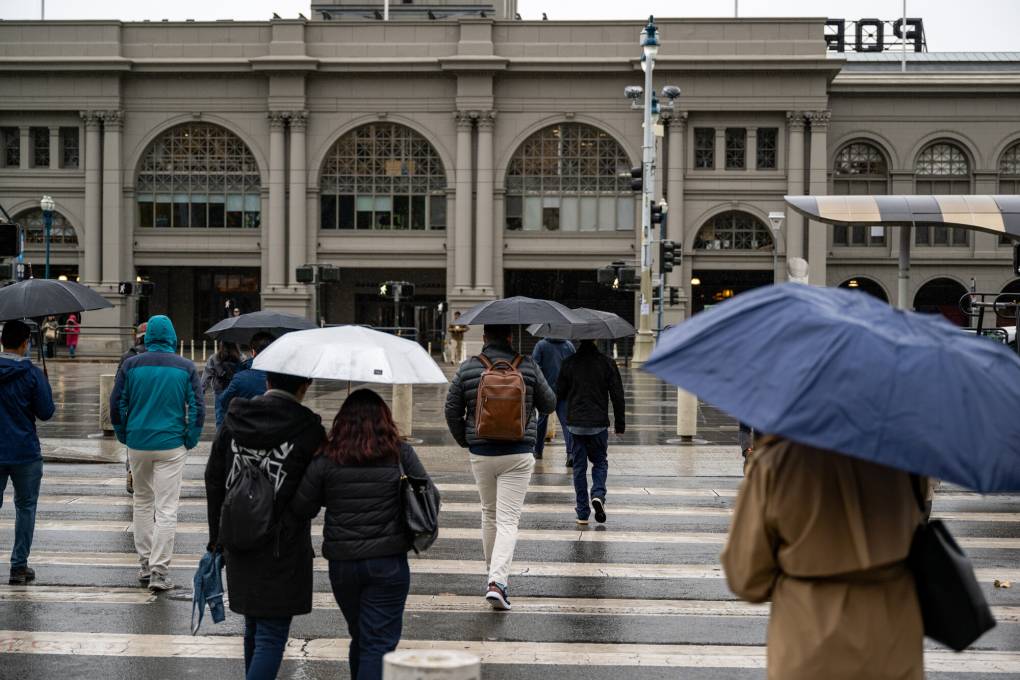
"caption": "People with umbrellas walk across the Embarcadero in San Francisco on Nov. 20, 2024. Back-to-back storms across the Bay Area will bring widespread rainfall this week, potential snow and a slight chance of flash floods. The storms will also drop snow across the Sierra Nevada.\r\n",
"credit": "Beth LaBerge/KQED",
"altTag": null,
"description": null,
"imgSizes": {
"medium": {
"file": "https://cdn.kqed.org/wp-content/uploads/sites/10/2025/03/241120-StormHitsBayArea-09-BL_qed-800x533.jpg",
"width": 800,
"height": 533,
"mimeType": "image/jpeg"
},
"large": {
"file": "https://cdn.kqed.org/wp-content/uploads/sites/10/2025/03/241120-StormHitsBayArea-09-BL_qed-1020x680.jpg",
"width": 1020,
"height": 680,
"mimeType": "image/jpeg"
},
"thumbnail": {
"file": "https://cdn.kqed.org/wp-content/uploads/sites/10/2025/03/241120-StormHitsBayArea-09-BL_qed-160x107.jpg",
"width": 160,
"height": 107,
"mimeType": "image/jpeg"
},
"1536x1536": {
"file": "https://cdn.kqed.org/wp-content/uploads/sites/10/2025/03/241120-StormHitsBayArea-09-BL_qed-1536x1024.jpg",
"width": 1536,
"height": 1024,
"mimeType": "image/jpeg"
},
"post-thumbnail": {
"file": "https://cdn.kqed.org/wp-content/uploads/sites/10/2025/03/241120-StormHitsBayArea-09-BL_qed-672x372.jpg",
"width": 672,
"height": 372,
"mimeType": "image/jpeg"
},
"twentyfourteen-full-width": {
"file": "https://cdn.kqed.org/wp-content/uploads/sites/10/2025/03/241120-StormHitsBayArea-09-BL_qed-1038x576.jpg",
"width": 1038,
"height": 576,
"mimeType": "image/jpeg"
},
"full-width": {
"file": "https://cdn.kqed.org/wp-content/uploads/sites/10/2025/03/241120-StormHitsBayArea-09-BL_qed-1920x1280.jpg",
"width": 1920,
"height": 1280,
"mimeType": "image/jpeg"
},
"kqedFullSize": {
"file": "https://cdn.kqed.org/wp-content/uploads/sites/10/2025/03/241120-StormHitsBayArea-09-BL_qed.jpg",
"width": 2000,
"height": 1333
}
},
"isLoading": false,
"fetchFailed": false
},
"news_12030307": {
"type": "attachments",
"id": "news_12030307",
"meta": {
"index": "attachments_1716263798",
"site": "news",
"id": "12030307",
"found": true
},
"title": "20250130-JSeiHome-JY-1927",
"publishDate": 1741374115,
"status": "inherit",
"parent": 0,
"modified": 1741375519,
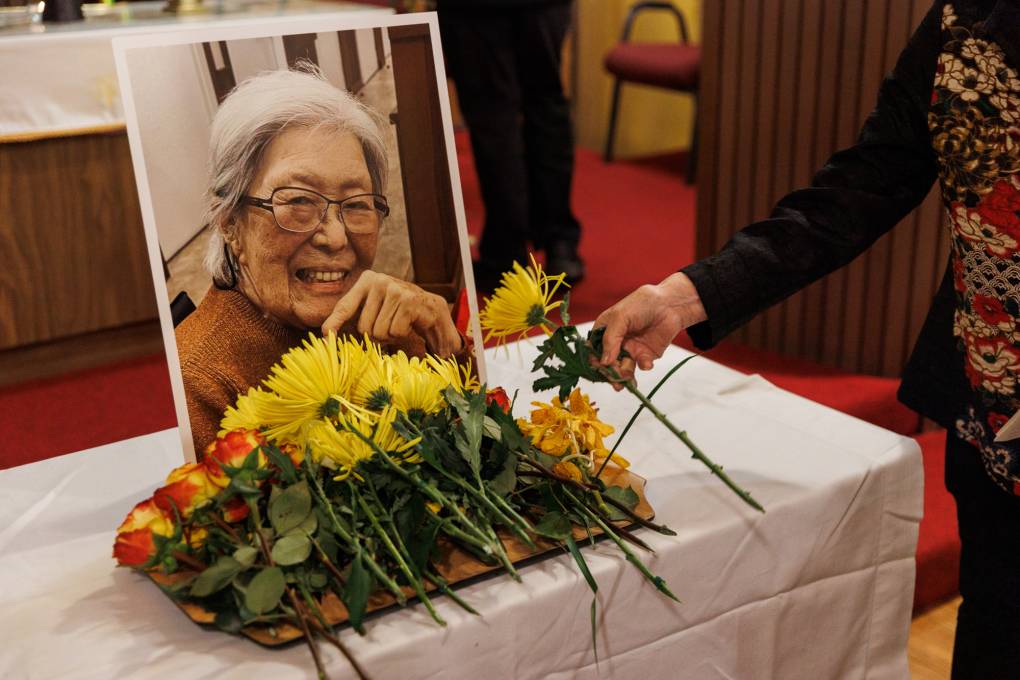
"caption": "Flowers are placed at a photo of J-Sei Home resident Ruth Fukuchi during her memorial service at Sycamore Congregational Church in El Cerrito, California, on Thursday, Jan. 30, 2025. Fukuchi resided at J-Sei Home from 2021 until her death in December.",
"credit": "Juliana Yamada/KQED",
"altTag": null,
"description": null,
"imgSizes": {
"medium": {
"file": "https://cdn.kqed.org/wp-content/uploads/sites/10/2025/03/20250130-JSeiHome-JY-1927-800x533.jpg",
"width": 800,
"height": 533,
"mimeType": "image/jpeg"
},
"large": {
"file": "https://cdn.kqed.org/wp-content/uploads/sites/10/2025/03/20250130-JSeiHome-JY-1927-1020x680.jpg",
"width": 1020,
"height": 680,
"mimeType": "image/jpeg"
},
"thumbnail": {
"file": "https://cdn.kqed.org/wp-content/uploads/sites/10/2025/03/20250130-JSeiHome-JY-1927-160x107.jpg",
"width": 160,
"height": 107,
"mimeType": "image/jpeg"
},
"1536x1536": {
"file": "https://cdn.kqed.org/wp-content/uploads/sites/10/2025/03/20250130-JSeiHome-JY-1927-1536x1024.jpg",
"width": 1536,
"height": 1024,
"mimeType": "image/jpeg"
},
"post-thumbnail": {
"file": "https://cdn.kqed.org/wp-content/uploads/sites/10/2025/03/20250130-JSeiHome-JY-1927-672x372.jpg",
"width": 672,
"height": 372,
"mimeType": "image/jpeg"
},
"twentyfourteen-full-width": {
"file": "https://cdn.kqed.org/wp-content/uploads/sites/10/2025/03/20250130-JSeiHome-JY-1927-1038x576.jpg",
"width": 1038,
"height": 576,
"mimeType": "image/jpeg"
},
"full-width": {
"file": "https://cdn.kqed.org/wp-content/uploads/sites/10/2025/03/20250130-JSeiHome-JY-1927-1920x1280.jpg",
"width": 1920,
"height": 1280,
"mimeType": "image/jpeg"
},
"kqedFullSize": {
"file": "https://cdn.kqed.org/wp-content/uploads/sites/10/2025/03/20250130-JSeiHome-JY-1927.jpg",
"width": 2000,
"height": 1333
}
},
"isLoading": false,
"fetchFailed": false
},
"news_12027414": {
"type": "attachments",
"id": "news_12027414",
"meta": {
"index": "attachments_1716263798",
"site": "news",
"id": "12027414",
"found": true
},
"title": "20241215-JSEI-JY-917",
"publishDate": 1739804952,
"status": "inherit",
"parent": 12025613,
"modified": 1741375858,
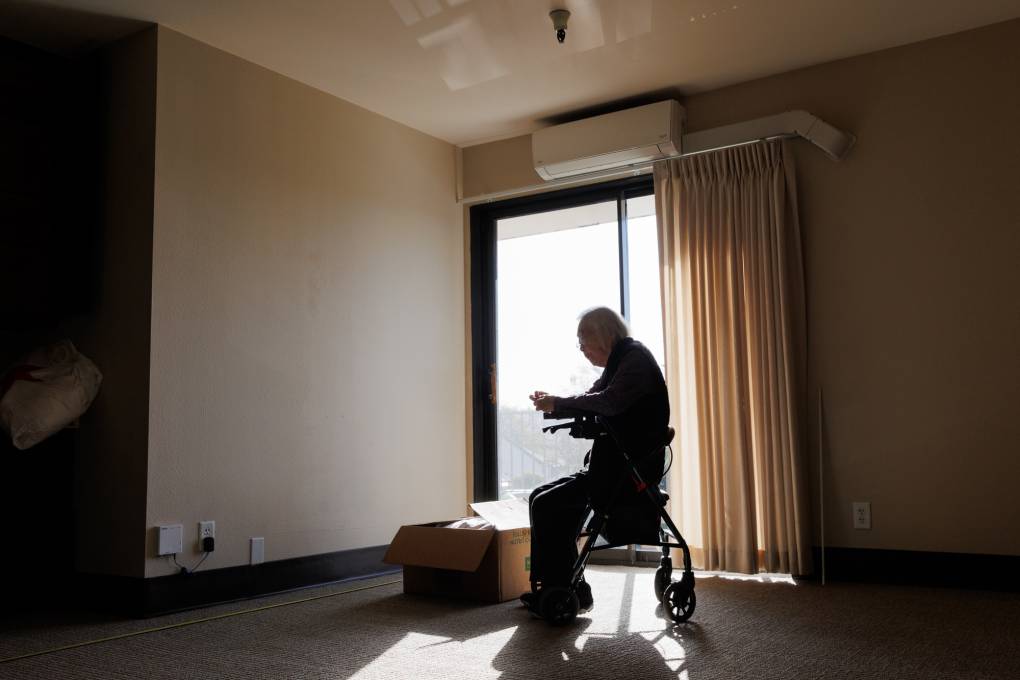
"caption": "Grace Aikawa looks around at her empty room at her new care facility in Castro Valley, California, on Sunday, Dec. 15, 2024.",
"credit": "Juliana Yamada/KQED",
"altTag": null,
"description": null,
"imgSizes": {
"medium": {
"file": "https://cdn.kqed.org/wp-content/uploads/sites/10/2025/02/20241215-JSEI-JY-917-800x533.jpg",
"width": 800,
"height": 533,
"mimeType": "image/jpeg"
},
"large": {
"file": "https://cdn.kqed.org/wp-content/uploads/sites/10/2025/02/20241215-JSEI-JY-917-1020x680.jpg",
"width": 1020,
"height": 680,
"mimeType": "image/jpeg"
},
"thumbnail": {
"file": "https://cdn.kqed.org/wp-content/uploads/sites/10/2025/02/20241215-JSEI-JY-917-160x107.jpg",
"width": 160,
"height": 107,
"mimeType": "image/jpeg"
},
"1536x1536": {
"file": "https://cdn.kqed.org/wp-content/uploads/sites/10/2025/02/20241215-JSEI-JY-917-1536x1024.jpg",
"width": 1536,
"height": 1024,
"mimeType": "image/jpeg"
},
"post-thumbnail": {
"file": "https://cdn.kqed.org/wp-content/uploads/sites/10/2025/02/20241215-JSEI-JY-917-672x372.jpg",
"width": 672,
"height": 372,
"mimeType": "image/jpeg"
},
"twentyfourteen-full-width": {
"file": "https://cdn.kqed.org/wp-content/uploads/sites/10/2025/02/20241215-JSEI-JY-917-1038x576.jpg",
"width": 1038,
"height": 576,
"mimeType": "image/jpeg"
},
"full-width": {
"file": "https://cdn.kqed.org/wp-content/uploads/sites/10/2025/02/20241215-JSEI-JY-917-1920x1280.jpg",
"width": 1920,
"height": 1280,
"mimeType": "image/jpeg"
},
"kqedFullSize": {
"file": "https://cdn.kqed.org/wp-content/uploads/sites/10/2025/02/20241215-JSEI-JY-917.jpg",
"width": 2000,
"height": 1333
}
},
"isLoading": false,
"fetchFailed": false
},
"news_12030368": {
"type": "attachments",
"id": "news_12030368",
"meta": {
"index": "attachments_1716263798",
"site": "news",
"id": "12030368",
"found": true
},
"title": "President Trump Hosts Ukrainian President Zelensky At The White House",
"publishDate": 1741381161,
"status": "inherit",
"parent": 12030273,
"modified": 1741401644,
"caption": "US President Donald Trump and Ukrainian President Volodymyr Zelensky meet in the Oval Office at the White House on Feb. 28, 202,5, in Washington, DC. ",
"credit": "Andrew Harnik/Getty Images",
"altTag": null,
"description": null,
"imgSizes": {
"medium": {
"file": "https://cdn.kqed.org/wp-content/uploads/sites/10/2025/03/GettyImages-2202530063-800x561.jpg",
"width": 800,
"height": 561,
"mimeType": "image/jpeg"
},
"large": {
"file": "https://cdn.kqed.org/wp-content/uploads/sites/10/2025/03/GettyImages-2202530063-1020x715.jpg",
"width": 1020,
"height": 715,
"mimeType": "image/jpeg"
},
"thumbnail": {
"file": "https://cdn.kqed.org/wp-content/uploads/sites/10/2025/03/GettyImages-2202530063-160x112.jpg",
"width": 160,
"height": 112,
"mimeType": "image/jpeg"
},
"1536x1536": {
"file": "https://cdn.kqed.org/wp-content/uploads/sites/10/2025/03/GettyImages-2202530063-1536x1076.jpg",
"width": 1536,
"height": 1076,
"mimeType": "image/jpeg"
},
"2048x2048": {
"file": "https://cdn.kqed.org/wp-content/uploads/sites/10/2025/03/GettyImages-2202530063-2048x1435.jpg",
"width": 2048,
"height": 1435,
"mimeType": "image/jpeg"
},
"post-thumbnail": {
"file": "https://cdn.kqed.org/wp-content/uploads/sites/10/2025/03/GettyImages-2202530063-672x372.jpg",
"width": 672,
"height": 372,
"mimeType": "image/jpeg"
},
"twentyfourteen-full-width": {
"file": "https://cdn.kqed.org/wp-content/uploads/sites/10/2025/03/GettyImages-2202530063-1038x576.jpg",
"width": 1038,
"height": 576,
"mimeType": "image/jpeg"
},
"full-width": {
"file": "https://cdn.kqed.org/wp-content/uploads/sites/10/2025/03/GettyImages-2202530063-1920x1345.jpg",
"width": 1920,
"height": 1345,
"mimeType": "image/jpeg"
},
"kqedFullSize": {
"file": "https://cdn.kqed.org/wp-content/uploads/sites/10/2025/03/GettyImages-2202530063-scaled-e1741381201419.jpg",
"width": 2000,
"height": 1402
}
},
"isLoading": false,
"fetchFailed": false
},
"news_12030026": {
"type": "attachments",
"id": "news_12030026",
"meta": {
"index": "attachments_1716263798",
"site": "news",
"id": "12030026",
"found": true
},
"title": "20250210_Unhoused-Ban_DMB_00270_qed",
"publishDate": 1741282743,
"status": "inherit",
"parent": 12030023,
"modified": 1741282816,
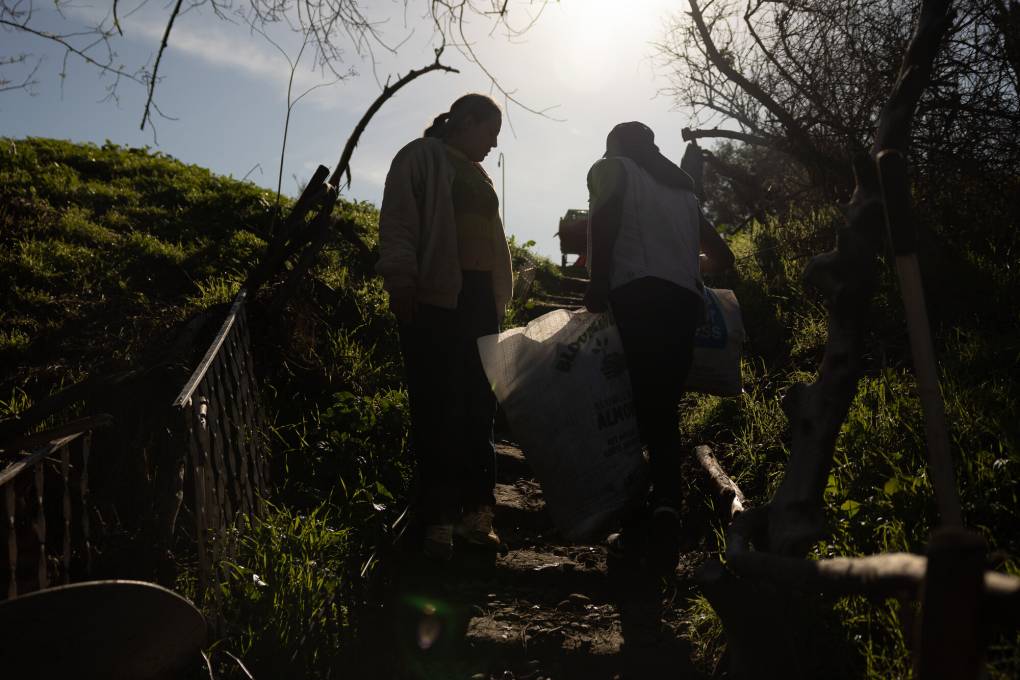
"caption": "Two unhoused residents clean up a makeshift shelter near Quarry Lakes Drive in Fremont, California, on Monday, Feb. 10, 2025. ",
"credit": "David M. Barreda/KQED",
"altTag": null,
"description": null,
"imgSizes": {
"medium": {
"file": "https://cdn.kqed.org/wp-content/uploads/sites/10/2025/03/20250210_Unhoused-Ban_DMB_00270_qed-800x533.jpg",
"width": 800,
"height": 533,
"mimeType": "image/jpeg"
},
"large": {
"file": "https://cdn.kqed.org/wp-content/uploads/sites/10/2025/03/20250210_Unhoused-Ban_DMB_00270_qed-1020x680.jpg",
"width": 1020,
"height": 680,
"mimeType": "image/jpeg"
},
"thumbnail": {
"file": "https://cdn.kqed.org/wp-content/uploads/sites/10/2025/03/20250210_Unhoused-Ban_DMB_00270_qed-160x107.jpg",
"width": 160,
"height": 107,
"mimeType": "image/jpeg"
},
"1536x1536": {
"file": "https://cdn.kqed.org/wp-content/uploads/sites/10/2025/03/20250210_Unhoused-Ban_DMB_00270_qed-1536x1024.jpg",
"width": 1536,
"height": 1024,
"mimeType": "image/jpeg"
},
"post-thumbnail": {
"file": "https://cdn.kqed.org/wp-content/uploads/sites/10/2025/03/20250210_Unhoused-Ban_DMB_00270_qed-672x372.jpg",
"width": 672,
"height": 372,
"mimeType": "image/jpeg"
},
"twentyfourteen-full-width": {
"file": "https://cdn.kqed.org/wp-content/uploads/sites/10/2025/03/20250210_Unhoused-Ban_DMB_00270_qed-1038x576.jpg",
"width": 1038,
"height": 576,
"mimeType": "image/jpeg"
},
"full-width": {
"file": "https://cdn.kqed.org/wp-content/uploads/sites/10/2025/03/20250210_Unhoused-Ban_DMB_00270_qed-1920x1280.jpg",
"width": 1920,
"height": 1280,
"mimeType": "image/jpeg"
},
"kqedFullSize": {
"file": "https://cdn.kqed.org/wp-content/uploads/sites/10/2025/03/20250210_Unhoused-Ban_DMB_00270_qed.jpg",
"width": 2000,
"height": 1333
}
},
"isLoading": false,
"fetchFailed": false
},
"news_12029848": {
"type": "attachments",
"id": "news_12029848",
"meta": {
"index": "attachments_1716263798",
"site": "news",
"id": "12029848",
"found": true
},
"title": "Kindergarten students at Crestmoor Elementary School, march outside for a recess break, in San Bruno, Ca., on Thursday April 19, 2012. The school located in the neighborhood of the 2010 San Bruno gas pipeline explosion is being considered for closure by",
"publishDate": 1741204470,
"status": "inherit",
"parent": 12029822,
"modified": 1741204664,
"caption": "Kindergarten students at a school in the San Bruno Park Elementary School District run outside for recess in San Bruno, California, on April 19, 2012. ",
"credit": "Michael Macor/The San Francisco Chronicle via Getty Images",
"altTag": null,
"description": null,
"imgSizes": {
"medium": {
"file": "https://cdn.kqed.org/wp-content/uploads/sites/10/2025/03/SanBrunoElementaryGetty-800x532.jpg",
"width": 800,
"height": 532,
"mimeType": "image/jpeg"
},
"large": {
"file": "https://cdn.kqed.org/wp-content/uploads/sites/10/2025/03/SanBrunoElementaryGetty-1020x678.jpg",
"width": 1020,
"height": 678,
"mimeType": "image/jpeg"
},
"thumbnail": {
"file": "https://cdn.kqed.org/wp-content/uploads/sites/10/2025/03/SanBrunoElementaryGetty-160x106.jpg",
"width": 160,
"height": 106,
"mimeType": "image/jpeg"
},
"1536x1536": {
"file": "https://cdn.kqed.org/wp-content/uploads/sites/10/2025/03/SanBrunoElementaryGetty-1536x1021.jpg",
"width": 1536,
"height": 1021,
"mimeType": "image/jpeg"
},
"post-thumbnail": {
"file": "https://cdn.kqed.org/wp-content/uploads/sites/10/2025/03/SanBrunoElementaryGetty-672x372.jpg",
"width": 672,
"height": 372,
"mimeType": "image/jpeg"
},
"twentyfourteen-full-width": {
"file": "https://cdn.kqed.org/wp-content/uploads/sites/10/2025/03/SanBrunoElementaryGetty-1038x576.jpg",
"width": 1038,
"height": 576,
"mimeType": "image/jpeg"
},
"full-width": {
"file": "https://cdn.kqed.org/wp-content/uploads/sites/10/2025/03/SanBrunoElementaryGetty-1920x1276.jpg",
"width": 1920,
"height": 1276,
"mimeType": "image/jpeg"
},
"kqedFullSize": {
"file": "https://cdn.kqed.org/wp-content/uploads/sites/10/2025/03/SanBrunoElementaryGetty.jpg",
"width": 2000,
"height": 1329
}
},
"isLoading": false,
"fetchFailed": false
},
"news_12029443": {
"type": "attachments",
"id": "news_12029443",
"meta": {
"index": "attachments_1716263798",
"site": "news",
"id": "12029443",
"found": true
},
"title": "20241122_NorcalStorm_GC-7_qed",
"publishDate": 1741024106,
"status": "inherit",
"parent": 12029441,
"modified": 1741024140,
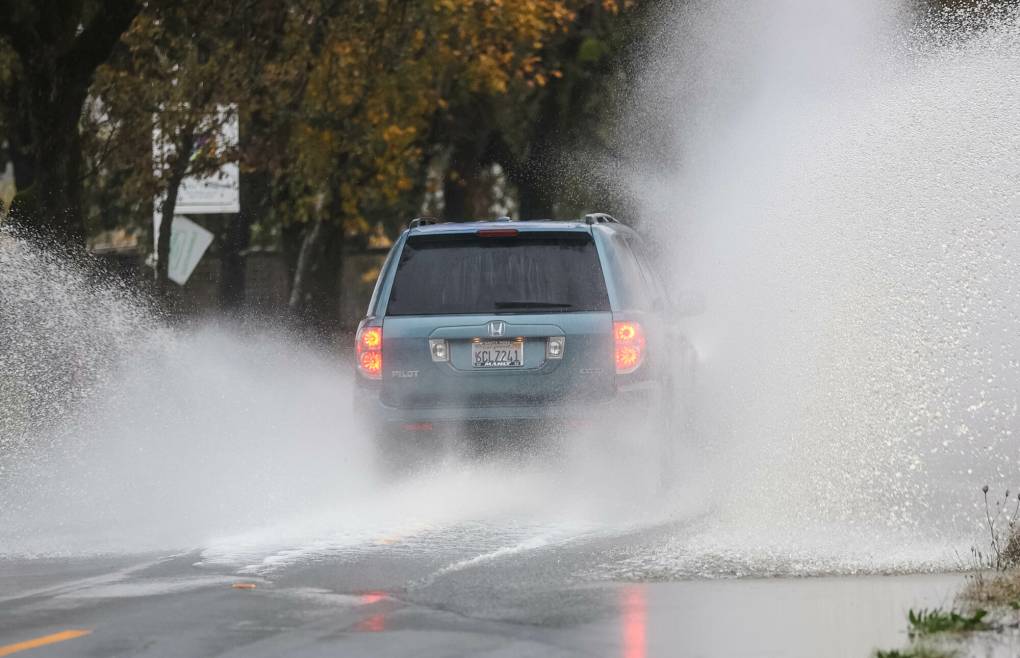
"caption": "A car drives through a puddle on Piner Road in Santa Rosa during an atmospheric river storm affecting the Bay Area on Nov. 22, 2024. ",
"credit": "Gina Castro/KQED",
"altTag": null,
"description": null,
"imgSizes": {
"medium": {
"file": "https://cdn.kqed.org/wp-content/uploads/sites/10/2025/03/20241122_NorcalStorm_GC-7_qed-800x516.jpg",
"width": 800,
"height": 516,
"mimeType": "image/jpeg"
},
"large": {
"file": "https://cdn.kqed.org/wp-content/uploads/sites/10/2025/03/20241122_NorcalStorm_GC-7_qed-1020x658.jpg",
"width": 1020,
"height": 658,
"mimeType": "image/jpeg"
},
"thumbnail": {
"file": "https://cdn.kqed.org/wp-content/uploads/sites/10/2025/03/20241122_NorcalStorm_GC-7_qed-160x103.jpg",
"width": 160,
"height": 103,
"mimeType": "image/jpeg"
},
"1536x1536": {
"file": "https://cdn.kqed.org/wp-content/uploads/sites/10/2025/03/20241122_NorcalStorm_GC-7_qed-1536x991.jpg",
"width": 1536,
"height": 991,
"mimeType": "image/jpeg"
},
"post-thumbnail": {
"file": "https://cdn.kqed.org/wp-content/uploads/sites/10/2025/03/20241122_NorcalStorm_GC-7_qed-672x372.jpg",
"width": 672,
"height": 372,
"mimeType": "image/jpeg"
},
"twentyfourteen-full-width": {
"file": "https://cdn.kqed.org/wp-content/uploads/sites/10/2025/03/20241122_NorcalStorm_GC-7_qed-1038x576.jpg",
"width": 1038,
"height": 576,
"mimeType": "image/jpeg"
},
"full-width": {
"file": "https://cdn.kqed.org/wp-content/uploads/sites/10/2025/03/20241122_NorcalStorm_GC-7_qed-1920x1239.jpg",
"width": 1920,
"height": 1239,
"mimeType": "image/jpeg"
},
"kqedFullSize": {
"file": "https://cdn.kqed.org/wp-content/uploads/sites/10/2025/03/20241122_NorcalStorm_GC-7_qed.jpg",
"width": 2000,
"height": 1291
}
},
"isLoading": false,
"fetchFailed": false
},
"news_12029225": {
"type": "attachments",
"id": "news_12029225",
"meta": {
"index": "attachments_1716263798",
"site": "news",
"id": "12029225",
"found": true
},
"title": "Trump Consumer Financial Protection Bureau",
"publishDate": 1740771717,
"status": "inherit",
"parent": 12028122,
"modified": 1740774381,
"caption": "A security officer works inside the Consumer Financial Protection Bureau (CFPB) building headquarters on Monday, Feb. 10, 2025.",
"credit": "Jacquelyn Martin/AP Photo",
"altTag": null,
"description": null,
"imgSizes": {
"medium": {
"file": "https://cdn.kqed.org/wp-content/uploads/sites/10/2025/02/CFPBAP-800x533.jpg",
"width": 800,
"height": 533,
"mimeType": "image/jpeg"
},
"large": {
"file": "https://cdn.kqed.org/wp-content/uploads/sites/10/2025/02/CFPBAP-1020x680.jpg",
"width": 1020,
"height": 680,
"mimeType": "image/jpeg"
},
"thumbnail": {
"file": "https://cdn.kqed.org/wp-content/uploads/sites/10/2025/02/CFPBAP-160x107.jpg",
"width": 160,
"height": 107,
"mimeType": "image/jpeg"
},
"1536x1536": {
"file": "https://cdn.kqed.org/wp-content/uploads/sites/10/2025/02/CFPBAP-1536x1024.jpg",
"width": 1536,
"height": 1024,
"mimeType": "image/jpeg"
},
"post-thumbnail": {
"file": "https://cdn.kqed.org/wp-content/uploads/sites/10/2025/02/CFPBAP-672x372.jpg",
"width": 672,
"height": 372,
"mimeType": "image/jpeg"
},
"twentyfourteen-full-width": {
"file": "https://cdn.kqed.org/wp-content/uploads/sites/10/2025/02/CFPBAP-1038x576.jpg",
"width": 1038,
"height": 576,
"mimeType": "image/jpeg"
},
"full-width": {
"file": "https://cdn.kqed.org/wp-content/uploads/sites/10/2025/02/CFPBAP-1920x1280.jpg",
"width": 1920,
"height": 1280,
"mimeType": "image/jpeg"
},
"kqedFullSize": {
"file": "https://cdn.kqed.org/wp-content/uploads/sites/10/2025/02/CFPBAP.jpg",
"width": 2000,
"height": 1333
}
},
"isLoading": false,
"fetchFailed": false
},
"news_12029189": {
"type": "attachments",
"id": "news_12029189",
"meta": {
"index": "attachments_1716263798",
"site": "news",
"id": "12029189",
"found": true
},
"title": "NOAA Earth System Research Laboratory",
"publishDate": 1740766106,
"status": "inherit",
"parent": 12029178,
"modified": 1740766133,
"caption": "National Oceanic & Atmospheric Administration Earth System Research Laboratory in Boulder, Colorado.",
"credit": "Byunghwan Lim/Getty Images",
"altTag": null,
"description": null,
"imgSizes": {
"medium": {
"file": "https://cdn.kqed.org/wp-content/uploads/sites/10/2025/02/NOAAGetty-800x533.jpg",
"width": 800,
"height": 533,
"mimeType": "image/jpeg"
},
"large": {
"file": "https://cdn.kqed.org/wp-content/uploads/sites/10/2025/02/NOAAGetty-1020x680.jpg",
"width": 1020,
"height": 680,
"mimeType": "image/jpeg"
},
"thumbnail": {
"file": "https://cdn.kqed.org/wp-content/uploads/sites/10/2025/02/NOAAGetty-160x107.jpg",
"width": 160,
"height": 107,
"mimeType": "image/jpeg"
},
"1536x1536": {
"file": "https://cdn.kqed.org/wp-content/uploads/sites/10/2025/02/NOAAGetty-1536x1024.jpg",
"width": 1536,
"height": 1024,
"mimeType": "image/jpeg"
},
"post-thumbnail": {
"file": "https://cdn.kqed.org/wp-content/uploads/sites/10/2025/02/NOAAGetty-672x372.jpg",
"width": 672,
"height": 372,
"mimeType": "image/jpeg"
},
"twentyfourteen-full-width": {
"file": "https://cdn.kqed.org/wp-content/uploads/sites/10/2025/02/NOAAGetty-1038x576.jpg",
"width": 1038,
"height": 576,
"mimeType": "image/jpeg"
},
"full-width": {
"file": "https://cdn.kqed.org/wp-content/uploads/sites/10/2025/02/NOAAGetty-1920x1280.jpg",
"width": 1920,
"height": 1280,
"mimeType": "image/jpeg"
},
"kqedFullSize": {
"file": "https://cdn.kqed.org/wp-content/uploads/sites/10/2025/02/NOAAGetty.jpg",
"width": 2000,
"height": 1333
}
},
"isLoading": false,
"fetchFailed": false
},
"news_12028319": {
"type": "attachments",
"id": "news_12028319",
"meta": {
"index": "attachments_1716263798",
"site": "news",
"id": "12028319",
"found": true
},
"title": "241009-SFUSDClosuresMarch-38-BL_qed",
"publishDate": 1740421432,
"status": "inherit",
"parent": 12028317,
"modified": 1740601322,
"caption": "Teachers, K–5 students and their families at Harvey Milk Civil Rights Academy rally at Harvey Milk Plaza in the Castro neighborhood of San Francisco on Oct. 9, 2024, to protest against the potential closure of the school. The school is on the list of 11 San Francisco campuses that could close after this academic year as the district grapples with declining enrollment and a budget deficit.",
"credit": "Beth LaBerge/KQED",
"altTag": null,
"description": null,
"imgSizes": {
"medium": {
"file": "https://cdn.kqed.org/wp-content/uploads/sites/10/2025/02/241009-SFUSDClosuresMarch-38-BL_qed-800x533.jpg",
"width": 800,
"height": 533,
"mimeType": "image/jpeg"
},
"large": {
"file": "https://cdn.kqed.org/wp-content/uploads/sites/10/2025/02/241009-SFUSDClosuresMarch-38-BL_qed-1020x680.jpg",
"width": 1020,
"height": 680,
"mimeType": "image/jpeg"
},
"thumbnail": {
"file": "https://cdn.kqed.org/wp-content/uploads/sites/10/2025/02/241009-SFUSDClosuresMarch-38-BL_qed-160x107.jpg",
"width": 160,
"height": 107,
"mimeType": "image/jpeg"
},
"1536x1536": {
"file": "https://cdn.kqed.org/wp-content/uploads/sites/10/2025/02/241009-SFUSDClosuresMarch-38-BL_qed-1536x1024.jpg",
"width": 1536,
"height": 1024,
"mimeType": "image/jpeg"
},
"post-thumbnail": {
"file": "https://cdn.kqed.org/wp-content/uploads/sites/10/2025/02/241009-SFUSDClosuresMarch-38-BL_qed-672x372.jpg",
"width": 672,
"height": 372,
"mimeType": "image/jpeg"
},
"twentyfourteen-full-width": {
"file": "https://cdn.kqed.org/wp-content/uploads/sites/10/2025/02/241009-SFUSDClosuresMarch-38-BL_qed-1038x576.jpg",
"width": 1038,
"height": 576,
"mimeType": "image/jpeg"
},
"full-width": {
"file": "https://cdn.kqed.org/wp-content/uploads/sites/10/2025/02/241009-SFUSDClosuresMarch-38-BL_qed-1920x1280.jpg",
"width": 1920,
"height": 1280,
"mimeType": "image/jpeg"
},
"kqedFullSize": {
"file": "https://cdn.kqed.org/wp-content/uploads/sites/10/2025/02/241009-SFUSDClosuresMarch-38-BL_qed.jpg",
"width": 2000,
"height": 1333
}
},
"isLoading": false,
"fetchFailed": false
},
"news_12028595": {
"type": "attachments",
"id": "news_12028595",
"meta": {
"index": "attachments_1716263798",
"site": "news",
"id": "12028595",
"found": true
},
"title": "US-ENVIRONMENT-FIRE-CLIMATE",
"publishDate": 1740528421,
"status": "inherit",
"parent": 12028548,
"modified": 1740528478,
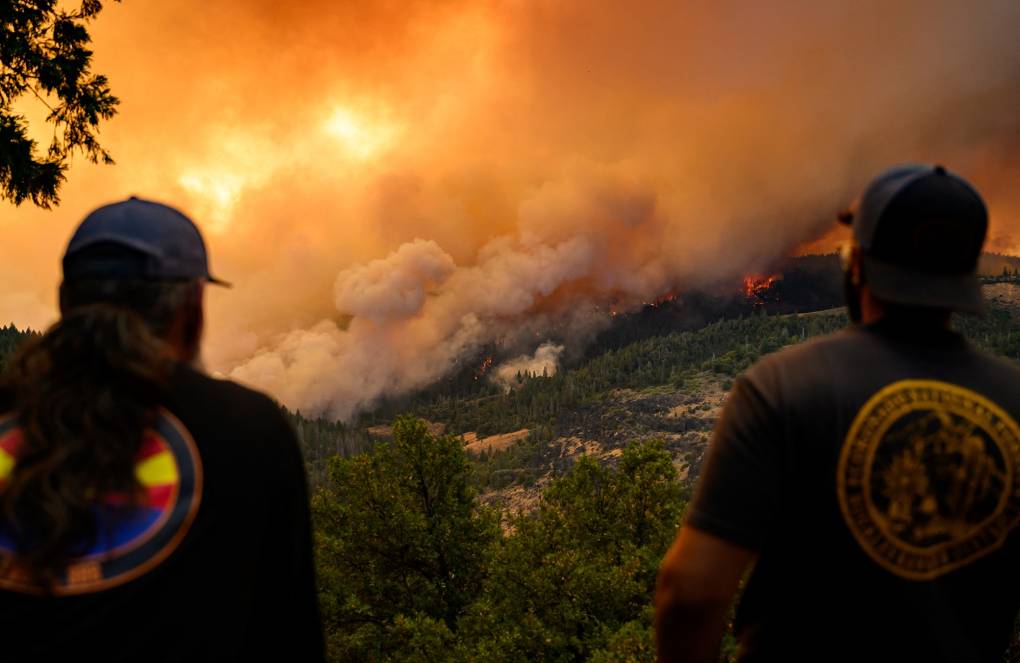
"caption": "Firefighters watch as flames and smoke move through a valley in the Forest Ranch area of Butte County as the Park Fire continued to burn near Chico, California, on July 26, 2024. ",
"credit": "Josh Edelson/AFP via Getty Images",
"altTag": null,
"description": null,
"imgSizes": {
"medium": {
"file": "https://cdn.kqed.org/wp-content/uploads/sites/10/2025/02/ButteCountyFireGetty-800x520.jpg",
"width": 800,
"height": 520,
"mimeType": "image/jpeg"
},
"large": {
"file": "https://cdn.kqed.org/wp-content/uploads/sites/10/2025/02/ButteCountyFireGetty-1020x663.jpg",
"width": 1020,
"height": 663,
"mimeType": "image/jpeg"
},
"thumbnail": {
"file": "https://cdn.kqed.org/wp-content/uploads/sites/10/2025/02/ButteCountyFireGetty-160x104.jpg",
"width": 160,
"height": 104,
"mimeType": "image/jpeg"
},
"1536x1536": {
"file": "https://cdn.kqed.org/wp-content/uploads/sites/10/2025/02/ButteCountyFireGetty-1536x998.jpg",
"width": 1536,
"height": 998,
"mimeType": "image/jpeg"
},
"post-thumbnail": {
"file": "https://cdn.kqed.org/wp-content/uploads/sites/10/2025/02/ButteCountyFireGetty-672x372.jpg",
"width": 672,
"height": 372,
"mimeType": "image/jpeg"
},
"twentyfourteen-full-width": {
"file": "https://cdn.kqed.org/wp-content/uploads/sites/10/2025/02/ButteCountyFireGetty-1038x576.jpg",
"width": 1038,
"height": 576,
"mimeType": "image/jpeg"
},
"full-width": {
"file": "https://cdn.kqed.org/wp-content/uploads/sites/10/2025/02/ButteCountyFireGetty-1920x1248.jpg",
"width": 1920,
"height": 1248,
"mimeType": "image/jpeg"
},
"kqedFullSize": {
"file": "https://cdn.kqed.org/wp-content/uploads/sites/10/2025/02/ButteCountyFireGetty.jpg",
"width": 2000,
"height": 1300
}
},
"isLoading": false,
"fetchFailed": false
},
"news_12028517": {
"type": "attachments",
"id": "news_12028517",
"meta": {
"index": "attachments_1716263798",
"site": "news",
"id": "12028517",
"found": true
},
"title": "230601-MindShift-33-BL_qed (1)",
"publishDate": 1740518063,
"status": "inherit",
"parent": 12028442,
"modified": 1740518151,
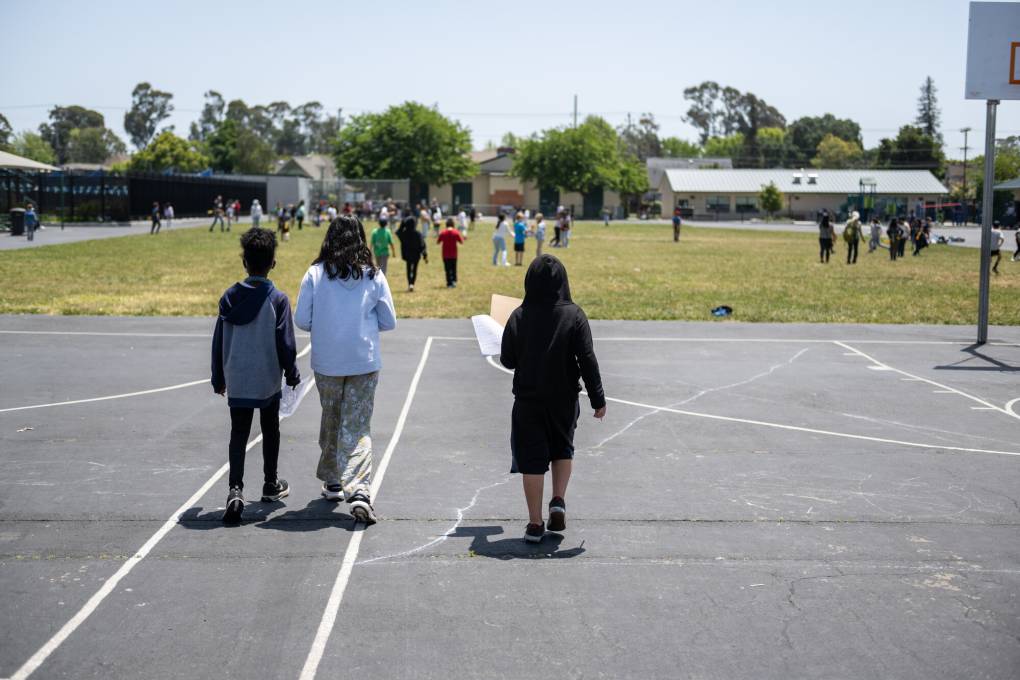
"caption": "Students complete an outdoor assignment activity in the schoolyard at an elementary school in San Leandro, California, on June 1, 2023. ",
"credit": "Beth LaBerge/KQED",
"altTag": null,
"description": null,
"imgSizes": {
"medium": {
"file": "https://cdn.kqed.org/wp-content/uploads/sites/10/2025/02/230601-MindShift-33-BL_qed-1-800x533.jpg",
"width": 800,
"height": 533,
"mimeType": "image/jpeg"
},
"large": {
"file": "https://cdn.kqed.org/wp-content/uploads/sites/10/2025/02/230601-MindShift-33-BL_qed-1-1020x680.jpg",
"width": 1020,
"height": 680,
"mimeType": "image/jpeg"
},
"thumbnail": {
"file": "https://cdn.kqed.org/wp-content/uploads/sites/10/2025/02/230601-MindShift-33-BL_qed-1-160x107.jpg",
"width": 160,
"height": 107,
"mimeType": "image/jpeg"
},
"1536x1536": {
"file": "https://cdn.kqed.org/wp-content/uploads/sites/10/2025/02/230601-MindShift-33-BL_qed-1-1536x1024.jpg",
"width": 1536,
"height": 1024,
"mimeType": "image/jpeg"
},
"post-thumbnail": {
"file": "https://cdn.kqed.org/wp-content/uploads/sites/10/2025/02/230601-MindShift-33-BL_qed-1-672x372.jpg",
"width": 672,
"height": 372,
"mimeType": "image/jpeg"
},
"twentyfourteen-full-width": {
"file": "https://cdn.kqed.org/wp-content/uploads/sites/10/2025/02/230601-MindShift-33-BL_qed-1-1038x576.jpg",
"width": 1038,
"height": 576,
"mimeType": "image/jpeg"
},
"full-width": {
"file": "https://cdn.kqed.org/wp-content/uploads/sites/10/2025/02/230601-MindShift-33-BL_qed-1-1920x1280.jpg",
"width": 1920,
"height": 1280,
"mimeType": "image/jpeg"
},
"kqedFullSize": {
"file": "https://cdn.kqed.org/wp-content/uploads/sites/10/2025/02/230601-MindShift-33-BL_qed-1.jpg",
"width": 2000,
"height": 1333
}
},
"isLoading": false,
"fetchFailed": false
}
},
"audioPlayerReducer": {
"postId": "stream_live",
"isPaused": true,
"isPlaying": false,
"pfsActive": false,
"pledgeModalIsOpen": true,
"playerDrawerIsOpen": false,
"liveAudioPlayStartedAt": 0,
"liveAudioPlayContext": ""
},
"authorsReducer": {
"tychehendricks": {
"type": "authors",
"id": "259",
"meta": {
"index": "authors_1716337520",
"id": "259",
"found": true
},
"name": "Tyche Hendricks",
"firstName": "Tyche",
"lastName": "Hendricks",
"slug": "tychehendricks",
"email": "thendricks@kqed.org",
"display_author_email": true,
"staff_mastheads": [
"news"
],
"title": "KQED Senior Editor, Immigration",
"bio": "\u003cspan style=\"font-weight: 400;\">Tyche Hendricks is KQED’s senior editor for immigration, leading coverage of the policy and politics that affect California’s immigrant communities. Her work for KQED’s radio and online audiences is also carried on NPR and other national outlets. She has been recognized with awards from the Radio and Television News Directors Association, the Society for Professional Journalists; the Education Writers Association; the Best of the West and the National Federation of Community Broadcasters. Before joining KQED in 2010, Tyche spent more than a dozen years as a newspaper reporter, notably at the \u003c/span>\u003ci>\u003cspan style=\"font-weight: 400;\">San Francisco Chronicle\u003c/span>\u003c/i>\u003cspan style=\"font-weight: 400;\">. At different times she has covered criminal justice, government and politics and urban planning. Tyche has taught in the MFA Creative Writing program at the University of San Francisco and at UC Berkeley’s Graduate School of Journalism, where she was co-director of a national immigration symposium for professional journalists. She is the author of \u003c/span>\u003ci>\u003cspan style=\"font-weight: 400;\">The Wind Doesn't Need a Passport: Stories from the U.S.-Mexico Borderlands\u003c/span>\u003c/i>\u003cspan style=\"font-weight: 400;\"> (University of California Press). \u003c/span>",
"avatar": "https://secure.gravatar.com/avatar/b8ee458e2731c2d43df86882ce17267e?s=600&d=blank&r=g",
"twitter": "tychehendricks",
"facebook": null,
"instagram": null,
"linkedin": null,
"sites": [
{
"site": "news",
"roles": [
"editor"
]
},
{
"site": "stateofhealth",
"roles": [
"editor"
]
}
],
"headData": {
"title": "Tyche Hendricks | KQED",
"description": "KQED Senior Editor, Immigration",
"ogImgSrc": "https://secure.gravatar.com/avatar/b8ee458e2731c2d43df86882ce17267e?s=600&d=blank&r=g",
"twImgSrc": "https://secure.gravatar.com/avatar/b8ee458e2731c2d43df86882ce17267e?s=600&d=blank&r=g"
},
"isLoading": false,
"link": "/author/tychehendricks"
},
"matthewgreen": {
"type": "authors",
"id": "1263",
"meta": {
"index": "authors_1716337520",
"id": "1263",
"found": true
},
"name": "Matthew Green",
"firstName": "Matthew",
"lastName": "Green",
"slug": "matthewgreen",
"email": "mgreen@kqed.org",
"display_author_email": false,
"staff_mastheads": [],
"title": "KQED Editor/Reporter",
"bio": "Matthew Green is a digital media producer for KQED News. He previously produced \u003ca href=\"http://www.kqed.org/lowdown\">The Lowdown\u003c/a>, KQED’s multimedia news education blog. Matthew's written for numerous Bay Area publications, including the Oakland Tribune and San Francisco Chronicle. He also taught journalism classes at Fremont High School in East Oakland.\r\n\r\nEmail: mgreen@kqed.org; Twitter: @MGreenKQED",
"avatar": "https://secure.gravatar.com/avatar/3bf498d1267ca02c8494f33d8cfc575e?s=600&d=blank&r=g",
"twitter": "MGreenKQED",
"facebook": null,
"instagram": null,
"linkedin": null,
"sites": [
{
"site": "news",
"roles": []
},
{
"site": "lowdown",
"roles": []
},
{
"site": "science",
"roles": []
},
{
"site": "education",
"roles": []
},
{
"site": "quest",
"roles": []
},
{
"site": "liveblog",
"roles": []
}
],
"headData": {
"title": "Matthew Green | KQED",
"description": "KQED Editor/Reporter",
"ogImgSrc": "https://secure.gravatar.com/avatar/3bf498d1267ca02c8494f33d8cfc575e?s=600&d=blank&r=g",
"twImgSrc": "https://secure.gravatar.com/avatar/3bf498d1267ca02c8494f33d8cfc575e?s=600&d=blank&r=g"
},
"isLoading": false,
"link": "/author/matthewgreen"
},
"clei": {
"type": "authors",
"id": "8617",
"meta": {
"index": "authors_1716337520",
"id": "8617",
"found": true
},
"name": "Cecilia Lei",
"firstName": "Cecilia",
"lastName": "Lei",
"slug": "clei",
"email": "clei@KQED.org",
"display_author_email": false,
"staff_mastheads": [],
"title": "KQED Contributor",
"bio": "Cecilia Lei is an on-call host and producer for KQED News and Podcasts. Previously, she was the executive producer and host of the San Francisco Chronicle's daily news podcast, 'Fifth and Mission'. Cecilia is a graduate of UC Berkeley’s Graduate School of Journalism and the former president of the Asian American Journalists Association San Francisco Bay Area chapter.",
"avatar": "https://secure.gravatar.com/avatar/40975f1f88fccf628ee537bf6ffc2af8?s=600&d=blank&r=g",
"twitter": null,
"facebook": null,
"instagram": null,
"linkedin": null,
"sites": [
{
"site": "arts",
"roles": [
"contributor"
]
},
{
"site": "news",
"roles": [
"author",
"read_private_posts"
]
},
{
"site": "about",
"roles": [
"editor"
]
}
],
"headData": {
"title": "Cecilia Lei | KQED",
"description": "KQED Contributor",
"ogImgSrc": "https://secure.gravatar.com/avatar/40975f1f88fccf628ee537bf6ffc2af8?s=600&d=blank&r=g",
"twImgSrc": "https://secure.gravatar.com/avatar/40975f1f88fccf628ee537bf6ffc2af8?s=600&d=blank&r=g"
},
"isLoading": false,
"link": "/author/clei"
},
"fjhabvala": {
"type": "authors",
"id": "8659",
"meta": {
"index": "authors_1716337520",
"id": "8659",
"found": true
},
"name": "Farida Jhabvala Romero",
"firstName": "Farida",
"lastName": "Jhabvala Romero",
"slug": "fjhabvala",
"email": "fjhabvala@kqed.org",
"display_author_email": true,
"staff_mastheads": [
"news"
],
"title": "KQED Contributor",
"bio": "Farida Jhabvala Romero is a Labor Correspondent for KQED. She previously covered immigration. Farida was \u003ca href=\"https://www.ccnma.org/2022-most-influential-latina-journalists\">named\u003c/a> one of the 10 Most Influential Latina Journalists in California in 2022 by the California Chicano News Media Association. Her work has won awards from the Society of Professional Journalists (Northern California), as well as a national and regional Edward M. Murrow Award for the collaborative reporting projects “Dangerous Air” and “Graying California.” Before joining KQED, Farida worked as a producer at Radio Bilingüe, a national public radio network. Farida earned her master’s degree in journalism from Stanford University.",
"avatar": "https://secure.gravatar.com/avatar/f9f022d4e2609741874222a1e9d41f48fea74011aa7c615eef91d9a50c944ebe?s=600&d=blank&r=g",
"twitter": "FaridaJhabvala",
"bluesky": null,
"facebook": null,
"instagram": null,
"linkedin": "https://www.linkedin.com/in/faridajhabvala/",
"sites": [
{
"site": "news",
"roles": [
"editor"
]
},
{
"site": "stateofhealth",
"roles": [
"author"
]
},
{
"site": "liveblog",
"roles": [
"author"
]
}
],
"headData": {
"title": "Farida Jhabvala Romero | KQED",
"description": "KQED Contributor",
"ogImgSrc": "https://secure.gravatar.com/avatar/f9f022d4e2609741874222a1e9d41f48fea74011aa7c615eef91d9a50c944ebe?s=600&d=blank&r=g",
"twImgSrc": "https://secure.gravatar.com/avatar/f9f022d4e2609741874222a1e9d41f48fea74011aa7c615eef91d9a50c944ebe?s=600&d=blank&r=g"
},
"isLoading": false,
"link": "/author/fjhabvala"
},
"dventon": {
"type": "authors",
"id": "11088",
"meta": {
"index": "authors_1716337520",
"id": "11088",
"found": true
},
"name": "Danielle Venton",
"firstName": "Danielle",
"lastName": "Venton",
"slug": "dventon",
"email": "dventon@kqed.org",
"display_author_email": true,
"staff_mastheads": [
"science"
],
"title": "Science reporter",
"bio": "Danielle Venton is a reporter for KQED Science. She covers wildfires, space and oceans (though she is prone to sea sickness).\r\n\r\nBefore joining KQED in 2015, Danielle was a staff reporter at KRCB in Sonoma County and a freelancer. She studied science communication at UC Santa Cruz and formerly worked at CERN in Geneva, Switzerland where she wrote about computing. She lives in Sonoma County and enjoys backpacking.",
"avatar": "https://secure.gravatar.com/avatar/37b292b5c40c8d93959c4f48d73b5286f41b7abd8588277e941905a3ed4c801c?s=600&d=blank&r=g",
"twitter": "DanielleVenton",
"bluesky": null,
"facebook": null,
"instagram": null,
"linkedin": null,
"sites": [
{
"site": "arts",
"roles": [
"contributor"
]
},
{
"site": "news",
"roles": [
"editor"
]
},
{
"site": "futureofyou",
"roles": [
"editor"
]
},
{
"site": "science",
"roles": [
"editor"
]
},
{
"site": "liveblog",
"roles": [
"contributor"
]
}
],
"headData": {
"title": "Danielle Venton | KQED",
"description": "Science reporter",
"ogImgSrc": "https://secure.gravatar.com/avatar/37b292b5c40c8d93959c4f48d73b5286f41b7abd8588277e941905a3ed4c801c?s=600&d=blank&r=g",
"twImgSrc": "https://secure.gravatar.com/avatar/37b292b5c40c8d93959c4f48d73b5286f41b7abd8588277e941905a3ed4c801c?s=600&d=blank&r=g"
},
"isLoading": false,
"link": "/author/dventon"
},
"vrancano": {
"type": "authors",
"id": "11276",
"meta": {
"index": "authors_1716337520",
"id": "11276",
"found": true
},
"name": "Vanessa Rancaño",
"firstName": "Vanessa",
"lastName": "Rancaño",
"slug": "vrancano",
"email": "vrancano@kqed.org",
"display_author_email": false,
"staff_mastheads": [
"news"
],
"title": "Reporter",
"bio": "Vanessa Rancaño is a features reporter for KQED. She’s also covered homelessness and education for the station and reported from the Central Valley. Her work has aired across public radio, from flagship national news shows to longform narrative podcasts. Before taking up a mic, she worked as a freelance print journalist. She’s been recognized with a number of national and regional awards. Vanessa grew up in California's Central Valley. She's a former NPR Kroc Fellow, and a graduate of the UC Berkeley Graduate School of Journalism.",
"avatar": "https://secure.gravatar.com/avatar/b3a383dfb0e7ee1c17568f2cf067904ab654d6e3de9743fc661f3c788ade1bed?s=600&d=blank&r=g",
"twitter": "vanessarancano",
"bluesky": null,
"facebook": null,
"instagram": null,
"linkedin": null,
"sites": [
{
"site": "arts",
"roles": [
"editor"
]
},
{
"site": "news",
"roles": [
"editor"
]
},
{
"site": "liveblog",
"roles": [
"contributor"
]
}
],
"headData": {
"title": "Vanessa Rancaño | KQED",
"description": "Reporter",
"ogImgSrc": "https://secure.gravatar.com/avatar/b3a383dfb0e7ee1c17568f2cf067904ab654d6e3de9743fc661f3c788ade1bed?s=600&d=blank&r=g",
"twImgSrc": "https://secure.gravatar.com/avatar/b3a383dfb0e7ee1c17568f2cf067904ab654d6e3de9743fc661f3c788ade1bed?s=600&d=blank&r=g"
},
"isLoading": false,
"link": "/author/vrancano"
},
"eromero": {
"type": "authors",
"id": "11746",
"meta": {
"index": "authors_1716337520",
"id": "11746",
"found": true
},
"name": "Ezra David Romero",
"firstName": "Ezra David",
"lastName": "Romero",
"slug": "eromero",
"email": "eromero@kqed.org",
"display_author_email": true,
"staff_mastheads": [
"news",
"science"
],
"title": "Climate Reporter",
"bio": "Ezra David Romero is a climate reporter for KQED News. He covers the absence and excess of water in the Bay Area — think sea level rise, flooding and drought. For nearly a decade he’s covered how warming temperatures are altering the lives of Californians. He’s reported on farmers worried their pistachio trees aren’t getting enough sleep, families desperate for water, scientists studying dying giant sequoias, and alongside firefighters containing wildfires. His work has appeared on local stations across California and nationally on public radio shows like Morning Edition, Here and Now, All Things Considered and Science Friday. ",
"avatar": "https://secure.gravatar.com/avatar/c76404d287c10ed40224227551ac36e24352c7306f106632caf6fead76f8801f?s=600&d=blank&r=g",
"twitter": "ezraromero",
"bluesky": null,
"facebook": null,
"instagram": null,
"linkedin": null,
"sites": [
{
"site": "arts",
"roles": [
"editor"
]
},
{
"site": "news",
"roles": [
"editor"
]
},
{
"site": "science",
"roles": [
"editor"
]
},
{
"site": "liveblog",
"roles": [
"author"
]
}
],
"headData": {
"title": "Ezra David Romero | KQED",
"description": "Climate Reporter",
"ogImgSrc": "https://secure.gravatar.com/avatar/c76404d287c10ed40224227551ac36e24352c7306f106632caf6fead76f8801f?s=600&d=blank&r=g",
"twImgSrc": "https://secure.gravatar.com/avatar/c76404d287c10ed40224227551ac36e24352c7306f106632caf6fead76f8801f?s=600&d=blank&r=g"
},
"isLoading": false,
"link": "/author/eromero"
},
"jyamada": {
"type": "authors",
"id": "11876",
"meta": {
"index": "authors_1716337520",
"id": "11876",
"found": true
},
"name": "Juliana Yamada",
"firstName": "Juliana",
"lastName": "Yamada",
"slug": "jyamada",
"email": "julianayamada@kqed.org",
"display_author_email": false,
"staff_mastheads": [],
"title": "KQED Photojournalist",
"bio": null,
"avatar": "https://secure.gravatar.com/avatar/cf3070075b6f3d12aac4e1e40079b3ba5fd828442b579f0ce48c293178a5f269?s=600&d=blank&r=g",
"twitter": "julianayphoto",
"bluesky": null,
"facebook": null,
"instagram": "https://www.instagram.com/julianayamadaphoto/",
"linkedin": null,
"sites": [
{
"site": "arts",
"roles": [
"editor"
]
},
{
"site": "news",
"roles": [
"editor"
]
},
{
"site": "science",
"roles": [
"editor"
]
},
{
"site": "perspectives",
"roles": [
"editor"
]
}
],
"headData": {
"title": "Juliana Yamada | KQED",
"description": "KQED Photojournalist",
"ogImgSrc": "https://secure.gravatar.com/avatar/cf3070075b6f3d12aac4e1e40079b3ba5fd828442b579f0ce48c293178a5f269?s=600&d=blank&r=g",
"twImgSrc": "https://secure.gravatar.com/avatar/cf3070075b6f3d12aac4e1e40079b3ba5fd828442b579f0ce48c293178a5f269?s=600&d=blank&r=g"
},
"isLoading": false,
"link": "/author/jyamada"
},
"jgeha": {
"type": "authors",
"id": "11906",
"meta": {
"index": "authors_1716337520",
"id": "11906",
"found": true
},
"name": "Joseph Geha",
"firstName": "Joseph",
"lastName": "Geha",
"slug": "jgeha",
"email": "jgeha@kqed.org",
"display_author_email": false,
"staff_mastheads": [
"news",
"science"
],
"title": "KQED Contributor",
"bio": null,
"avatar": "https://secure.gravatar.com/avatar/ea84d2b6dd93d6369d453edf19dd583f117cd1759d2d9c9c92f9de77017354fe?s=600&d=blank&r=g",
"twitter": null,
"bluesky": null,
"facebook": null,
"instagram": null,
"linkedin": null,
"sites": [
{
"site": "news",
"roles": [
"editor"
]
},
{
"site": "liveblog",
"roles": [
"author"
]
}
],
"headData": {
"title": "Joseph Geha | KQED",
"description": "KQED Contributor",
"ogImgSrc": "https://secure.gravatar.com/avatar/ea84d2b6dd93d6369d453edf19dd583f117cd1759d2d9c9c92f9de77017354fe?s=600&d=blank&r=g",
"twImgSrc": "https://secure.gravatar.com/avatar/ea84d2b6dd93d6369d453edf19dd583f117cd1759d2d9c9c92f9de77017354fe?s=600&d=blank&r=g"
},
"isLoading": false,
"link": "/author/jgeha"
},
"kdebenedetti": {
"type": "authors",
"id": "11913",
"meta": {
"index": "authors_1716337520",
"id": "11913",
"found": true
},
"name": "Katie DeBenedetti",
"firstName": "Katie",
"lastName": "DeBenedetti",
"slug": "kdebenedetti",
"email": "kdebenedetti@kqed.org",
"display_author_email": false,
"staff_mastheads": [
"news",
"science"
],
"title": "KQED Contributor",
"bio": "Katie DeBenedetti is a digital reporter covering daily news for the Express Desk. Prior to joining KQED as a culture reporting intern in January 2024, she covered education and city government for the Napa Valley Register.",
"avatar": "https://secure.gravatar.com/avatar/6e31073cb8f7e4214ab03f42771d0f45?s=600&d=blank&r=g",
"twitter": null,
"facebook": null,
"instagram": null,
"linkedin": null,
"sites": [
{
"site": "news",
"roles": [
"author"
]
},
{
"site": "science",
"roles": [
"author"
]
},
{
"site": "liveblog",
"roles": [
"author"
]
}
],
"headData": {
"title": "Katie DeBenedetti | KQED",
"description": "KQED Contributor",
"ogImgSrc": "https://secure.gravatar.com/avatar/6e31073cb8f7e4214ab03f42771d0f45?s=600&d=blank&r=g",
"twImgSrc": "https://secure.gravatar.com/avatar/6e31073cb8f7e4214ab03f42771d0f45?s=600&d=blank&r=g"
},
"isLoading": false,
"link": "/author/kdebenedetti"
}
},
"pagesReducer": {
"news_tag_bay-area": {
"type": "terms",
"id": "news_1386",
"meta": {
"index": "terms_1716263798",
"site": "news",
"id": "1386",
"score": 7.788453
},
"featImg": null,
"name": "Bay Area",
"description": null,
"taxonomy": "tag",
"headData": {
"twImgId": null,
"twTitle": null,
"ogTitle": null,
"ogImgId": null,
"twDescription": null,
"description": null,
"title": "Bay Area Archives | KQED News",
"ogDescription": null
},
"ttid": 1398,
"slug": "bay-area",
"isLoading": false,
"title": "Bay Area",
"pageMeta": {
"site": "news",
"WpPageTemplate": "page-topic-editorial",
"currentPage": 77
},
"blocks": [
{
"blockName": "kqed/post-list",
"attrs": {
"layout": "cardArticle2",
"query": "posts/news?tag=bay-area",
"seeMore": false,
"paginated": true,
"page": 77
}
},
{
"blockName": "kqed/ad"
}
]
}
},
"pfsSessionReducer": {},
"postsReducer": {
"stream_live": {
"type": "live",
"id": "stream_live",
"audioUrl": "https://streams.kqed.org/kqedradio",
"title": "Live Stream",
"excerpt": "Live Stream information currently unavailable.",
"link": "/radio",
"featImg": "",
"label": {
"name": "KQED Live",
"link": "/"
}
},
"stream_kqedNewscast": {
"type": "posts",
"id": "stream_kqedNewscast",
"audioUrl": "https://www.kqed.org/.stream/anon/radio/RDnews/newscast.mp3?_=1",
"title": "KQED Newscast",
"featImg": "",
"label": {
"name": "88.5 FM",
"link": "/"
}
},
"news_12030575": {
"type": "posts",
"id": "news_12030575",
"meta": {
"index": "posts_1716263798",
"site": "news",
"id": "12030575",
"score": null,
"sort": [
1741633264000
]
},
"guestAuthors": [],
"slug": "bay-area-braces-for-rain-snow-potential-flooding",
"title": "‘A Conveyor Belt of Storms’: Bay Area Braces for Rain, Snow and Potential Flooding",
"publishDate": 1741633264,
"format": "standard",
"headTitle": "‘A Conveyor Belt of Storms’: Bay Area Braces for Rain, Snow and Potential Flooding | KQED",
"labelTerm": {
"site": "news"
},
"content": "\u003cp>Back-to-back storms will bring widespread rainfall, potential snow at high elevations and a slight chance of flash floods across the Bay Area this week.\u003c/p>\n\u003cp>The storms will also drop a fresh blanket of pearlescent snow across the Sierra Nevada, according to the National Weather Service — giving a boost to \u003ca href=\"https://www.kqed.org/news/12029075/california-snowpack-rebounds-amid-a-wobbly-winter-with-more-storms-on-the-way\">the state’s snowpack\u003c/a>, which has been \u003ca href=\"https://cdec.water.ca.gov/snowapp/sweq.action\">hovering around average\u003c/a>.\u003c/p>\n\u003cp>“We’re setting up for a conveyor belt of storm systems,” said Brayden Murdock, a meteorologist with the weather service’s Bay Area office.\u003c/p>\n\u003cp>[ad fullwidth]\u003c/p>\n\u003cp>In the Bay Area, forecasters expect the heaviest rain on Wednesday into early Thursday — up to an inch in populated areas and 2 inches at higher elevations, like Mount Tamalpais. There will be a slight chance of thunderstorms, as well as gusty winds and high surf.\u003c/p>\n\u003cp>While the coastal range could get up to 4 inches, meteorologists said the East and South Bay could see moderate to heavy rainfall on Wednesday, with gusts of up to 80 mph.\u003c/p>\n\u003cfigure id=\"attachment_11622415\" class=\"wp-caption aligncenter\" style=\"max-width: 1920px\">\u003cimg loading=\"lazy\" decoding=\"async\" class=\"size-full wp-image-11622415\" src=\"https://cdn.kqed.org/wp-content/uploads/sites/10/2017/10/15359812401_c1ee1788cd_o-1-e1532569326843.jpg\" alt=\"\" width=\"1920\" height=\"1280\">\u003cfigcaption class=\"wp-caption-text\">The Big Sur coastline. \u003ccite>(Ashley Spratt, \u003ca href=\"https://flic.kr/p/ppi46K\">USFWS\u003c/a>, \u003ca href=\"http://creativecommons.org/licenses/by/4.0/\">CC BY\u003c/a>)\u003c/cite>\u003c/figcaption>\u003c/figure>\n\u003cp>The early-week system could also cause minor flooding in areas with poor drainage systems, and the Weather Prediction Center forecasts a 5% probability of rainfall exceeding its flash flood guidance.\u003c/p>\n\u003cp>Murdock said snow could also fall at elevations above 2,500 feet in places like Mount Hamilton in the South Bay and the Big Sur coast.\u003c/p>\n\u003cp>[aside postID=news_12029178 hero='https://cdn.kqed.org/wp-content/uploads/sites/10/2025/02/NOAAGetty-1020x680.jpg']\u003c/p>\n\u003cp>“There could be some snow on those mountain tops, especially the highest of the high elevations for the areas to the south,” he said.\u003c/p>\n\u003cp>A second round of rainfall arrives Friday morning as a weak surface cold front extends from southern Oregon through the region. The storm will likely drop just as much rain as the first system.\u003c/p>\n\u003cp>By Sunday morning, forecasters expect a third storm to park over the Bay Area. Meteorologists said it is too early to tell how the storm will play out, but they expect multiple rounds of impactful rainfall, especially across the North Bay.\u003c/p>\n\u003cp>“We’re looking at a pretty wet environment into next week; maybe our first real break will be next Wednesday,” Murdock said.\u003c/p>\n\u003cp>During the first round of rain, Murdock expects only nuisance flooding. But as back-to-back storms hit, the flood risk may grow into next week, he said, “especially in urban environments — if there’s not enough of a break in between, it’s harder to drain that water out of those areas.”\u003c/p>\n\u003ch2>Potential for the snowpack to rebound\u003c/h2>\n\u003cp>Forecasters expect the first storm to drop up to 4 feet of snow at the highest peaks of the Sierra starting Wednesday. By Thursday morning, the snow line could drop to 2,000 feet as the system progresses.\u003c/p>\n\u003cp>A winter storm watch is in effect for much of the mountain region from 10 p.m. Tuesday through 10 p.m. Thursday.\u003c/p>\n\u003cfigure id=\"attachment_11955232\" class=\"wp-caption aligncenter\" style=\"max-width: 2000px\">\u003cimg loading=\"lazy\" decoding=\"async\" class=\"size-full wp-image-11955232\" src=\"https://cdn.kqed.org/wp-content/uploads/sites/10/2023/07/230501-DWR-Snow-Survey-KJ-0107-KQED.jpg\" alt=\"A snow-covered foreground with green pine trees in the background and a small river running between.\" width=\"2000\" height=\"1333\" srcset=\"https://cdn.kqed.org/wp-content/uploads/sites/10/2023/07/230501-DWR-Snow-Survey-KJ-0107-KQED.jpg 2000w, https://cdn.kqed.org/wp-content/uploads/sites/10/2023/07/230501-DWR-Snow-Survey-KJ-0107-KQED-800x533.jpg 800w, https://cdn.kqed.org/wp-content/uploads/sites/10/2023/07/230501-DWR-Snow-Survey-KJ-0107-KQED-1020x680.jpg 1020w, https://cdn.kqed.org/wp-content/uploads/sites/10/2023/07/230501-DWR-Snow-Survey-KJ-0107-KQED-160x107.jpg 160w, https://cdn.kqed.org/wp-content/uploads/sites/10/2023/07/230501-DWR-Snow-Survey-KJ-0107-KQED-1536x1024.jpg 1536w, https://cdn.kqed.org/wp-content/uploads/sites/10/2023/07/230501-DWR-Snow-Survey-KJ-0107-KQED-1920x1280.jpg 1920w\" sizes=\"auto, (max-width: 2000px) 100vw, 2000px\">\u003cfigcaption class=\"wp-caption-text\">Snow runoff near the California Department of Water Resources snow survey site at Phillips Station in the Sierra Nevada Mountains on May 1, 2023. \u003ccite>(Ken James/California Department of Water Resources)\u003c/cite>\u003c/figcaption>\u003c/figure>\n\u003cp>“It’s an above-average snow event, but nothing historic for the Sierra,” said Dakari Anderson, a meteorologist with the weather service’s Sacramento office.\u003c/p>\n\u003cp>Snowfall in the Sierra on Wednesday will be thick, Anderson said, with up to 70% of rates exceeding 2 inches per hour. He also said the heavy snowfall and gusty winds of up to 60 miles per hour may likely create significant visibility issues and whiteout conditions.\u003c/p>\n\u003cp>Travel impacts are expected Wednesday into Thursday, and people \u003ca href=\"https://www.kqed.org/news/11937204/lake-tahoe-weather-forecast-road-conditions-snow-chains\">driving to Lake Tahoe\u003c/a> on Interstate 80 or Highway 50 could experience delays and chain controls.\u003c/p>\n\u003cp>“We expect snow-covered and slippery roads,” Anderson said. “The snow will be heaviest in the afternoon commute hours.”\u003c/p>\n\u003cp>https://twitter.com/nwsreno/status/1898838994198450639?s=46&t=8L9OHVE58oUXKjH2wCBDtA\u003c/p>\n\u003cp>Altogether, more than a foot of snow could fall in the Tahoe basin and several feet across the Sierra crests, said GiGi Giralte, a meteorologist with the weather service’s Reno office. She adds that the storms in the Tahoe area will drop more fluffy, dry snow than storms earlier in the winter.\u003c/p>\n\u003cp>At least two additional storms will \u003ca href=\"https://www.kqed.org/news/12029075/california-snowpack-rebounds-amid-a-wobbly-winter-with-more-storms-on-the-way\">add to the snowpack\u003c/a> this weekend into next week, with snow in the foothills on Friday. As a result, Giralte said the best time to travel across the Sierra is before Wednesday afternoon or next week.\u003c/p>\n\u003cp>“We’ve got a lot of weather going on in the Sierra this week,” she said. “We could be seeing snowpack levels get back up to normal for the Sierra with this system.”\u003c/p>\n\u003cp>Courtney Carpenter, warning coordination meteorologist with the weather service’s Sacramento office, said all the snow over the next week is good news for building the snowpack.\u003c/p>\n\u003cp>“It’s a little bit of a miracle March good news for our Sierra snowpack,” she said.\u003c/p>\n\u003cp>Carpenter said the region is forecast to dry out by mid to late March with near-normal rain and snow conditions.\u003c/p>\n\u003cp>\u003c/p>\n",
"blocks": [],
"excerpt": "Back-to-back storms across the Bay Area will bring widespread rainfall, potential snow and a slight chance of flash floods. The storms will also drop snow across the Sierra Nevada.",
"status": "publish",
"parent": 0,
"modified": 1741640717,
"stats": {
"hasAudio": false,
"hasVideo": false,
"hasChartOrMap": false,
"iframeSrcs": [],
"hasGoogleForm": false,
"hasGallery": false,
"hasHearkenModule": false,
"hasPolis": false,
"paragraphCount": 27,
"wordCount": 876
},
"headData": {
"title": "‘A Conveyor Belt of Storms’: Bay Area Braces for Rain, Snow and Potential Flooding | KQED",
"description": "Back-to-back storms across the Bay Area will bring widespread rainfall, potential snow and a slight chance of flash floods. The storms will also drop snow across the Sierra Nevada.",
"ogTitle": "",
"ogDescription": "",
"ogImgId": "",
"twTitle": "",
"twDescription": "",
"twImgId": "",
"schema": {
"@context": "https://schema.org",
"@type": "NewsArticle",
"headline": "‘A Conveyor Belt of Storms’: Bay Area Braces for Rain, Snow and Potential Flooding",
"datePublished": "2025-03-10T12:01:04-07:00",
"dateModified": "2025-03-10T14:05:17-07:00",
"image": "https://cdn.kqed.org/wp-content/uploads/2020/02/KQED-OG-Image@1x.png",
"isAccessibleForFree": "True",
"publisher": {
"@type": "NewsMediaOrganization",
"@id": "https://www.kqed.org/#organization",
"name": "KQED",
"logo": "https://cdn.kqed.org/wp-content/uploads/2020/02/KQED-OG-Image@1x.png",
"url": "https://www.kqed.org",
"sameAs": [
"https://www.facebook.com/KQED",
"https://twitter.com/KQED",
"https://www.instagram.com/kqed/",
"https://www.tiktok.com/@kqedofficial",
"https://www.linkedin.com/company/kqed",
"https://www.youtube.com/channel/UCeC0IOo7i1P_61zVUWbJ4nw"
]
}
}
},
"sticky": false,
"nprStoryId": "kqed-12030575",
"templateType": "standard",
"featuredImageType": "standard",
"excludeFromSiteSearch": "Include",
"articleAge": "0",
"path": "/news/12030575/bay-area-braces-for-rain-snow-potential-flooding",
"audioTrackLength": null,
"parsedContent": [
{
"type": "contentString",
"content": "\u003cdiv class=\"post-body\">\u003cp>\u003cp>Back-to-back storms will bring widespread rainfall, potential snow at high elevations and a slight chance of flash floods across the Bay Area this week.\u003c/p>\n\u003cp>The storms will also drop a fresh blanket of pearlescent snow across the Sierra Nevada, according to the National Weather Service — giving a boost to \u003ca href=\"https://www.kqed.org/news/12029075/california-snowpack-rebounds-amid-a-wobbly-winter-with-more-storms-on-the-way\">the state’s snowpack\u003c/a>, which has been \u003ca href=\"https://cdec.water.ca.gov/snowapp/sweq.action\">hovering around average\u003c/a>.\u003c/p>\n\u003cp>“We’re setting up for a conveyor belt of storm systems,” said Brayden Murdock, a meteorologist with the weather service’s Bay Area office.\u003c/p>\n\u003cp>\u003c/p>\u003c/div>",
"attributes": {
"named": {},
"numeric": []
}
},
{
"type": "component",
"content": "",
"name": "ad",
"attributes": {
"named": {
"label": "fullwidth"
},
"numeric": [
"fullwidth"
]
}
},
{
"type": "contentString",
"content": "\u003cdiv class=\"post-body\">\u003cp>\u003c/p>\n\u003cp>In the Bay Area, forecasters expect the heaviest rain on Wednesday into early Thursday — up to an inch in populated areas and 2 inches at higher elevations, like Mount Tamalpais. There will be a slight chance of thunderstorms, as well as gusty winds and high surf.\u003c/p>\n\u003cp>While the coastal range could get up to 4 inches, meteorologists said the East and South Bay could see moderate to heavy rainfall on Wednesday, with gusts of up to 80 mph.\u003c/p>\n\u003cfigure id=\"attachment_11622415\" class=\"wp-caption aligncenter\" style=\"max-width: 1920px\">\u003cimg loading=\"lazy\" decoding=\"async\" class=\"size-full wp-image-11622415\" src=\"https://cdn.kqed.org/wp-content/uploads/sites/10/2017/10/15359812401_c1ee1788cd_o-1-e1532569326843.jpg\" alt=\"\" width=\"1920\" height=\"1280\">\u003cfigcaption class=\"wp-caption-text\">The Big Sur coastline. \u003ccite>(Ashley Spratt, \u003ca href=\"https://flic.kr/p/ppi46K\">USFWS\u003c/a>, \u003ca href=\"http://creativecommons.org/licenses/by/4.0/\">CC BY\u003c/a>)\u003c/cite>\u003c/figcaption>\u003c/figure>\n\u003cp>The early-week system could also cause minor flooding in areas with poor drainage systems, and the Weather Prediction Center forecasts a 5% probability of rainfall exceeding its flash flood guidance.\u003c/p>\n\u003cp>Murdock said snow could also fall at elevations above 2,500 feet in places like Mount Hamilton in the South Bay and the Big Sur coast.\u003c/p>\n\u003cp>\u003c/p>\u003c/div>",
"attributes": {
"named": {},
"numeric": []
}
},
{
"type": "component",
"content": "",
"name": "aside",
"attributes": {
"named": {
"postid": "news_12029178",
"hero": "https://cdn.kqed.org/wp-content/uploads/sites/10/2025/02/NOAAGetty-1020x680.jpg",
"label": ""
},
"numeric": []
}
},
{
"type": "contentString",
"content": "\u003cdiv class=\"post-body\">\u003cp>\u003c/p>\n\u003cp>“There could be some snow on those mountain tops, especially the highest of the high elevations for the areas to the south,” he said.\u003c/p>\n\u003cp>A second round of rainfall arrives Friday morning as a weak surface cold front extends from southern Oregon through the region. The storm will likely drop just as much rain as the first system.\u003c/p>\n\u003cp>By Sunday morning, forecasters expect a third storm to park over the Bay Area. Meteorologists said it is too early to tell how the storm will play out, but they expect multiple rounds of impactful rainfall, especially across the North Bay.\u003c/p>\n\u003cp>“We’re looking at a pretty wet environment into next week; maybe our first real break will be next Wednesday,” Murdock said.\u003c/p>\n\u003cp>During the first round of rain, Murdock expects only nuisance flooding. But as back-to-back storms hit, the flood risk may grow into next week, he said, “especially in urban environments — if there’s not enough of a break in between, it’s harder to drain that water out of those areas.”\u003c/p>\n\u003ch2>Potential for the snowpack to rebound\u003c/h2>\n\u003cp>Forecasters expect the first storm to drop up to 4 feet of snow at the highest peaks of the Sierra starting Wednesday. By Thursday morning, the snow line could drop to 2,000 feet as the system progresses.\u003c/p>\n\u003cp>A winter storm watch is in effect for much of the mountain region from 10 p.m. Tuesday through 10 p.m. Thursday.\u003c/p>\n\u003cfigure id=\"attachment_11955232\" class=\"wp-caption aligncenter\" style=\"max-width: 2000px\">\u003cimg loading=\"lazy\" decoding=\"async\" class=\"size-full wp-image-11955232\" src=\"https://cdn.kqed.org/wp-content/uploads/sites/10/2023/07/230501-DWR-Snow-Survey-KJ-0107-KQED.jpg\" alt=\"A snow-covered foreground with green pine trees in the background and a small river running between.\" width=\"2000\" height=\"1333\" srcset=\"https://cdn.kqed.org/wp-content/uploads/sites/10/2023/07/230501-DWR-Snow-Survey-KJ-0107-KQED.jpg 2000w, https://cdn.kqed.org/wp-content/uploads/sites/10/2023/07/230501-DWR-Snow-Survey-KJ-0107-KQED-800x533.jpg 800w, https://cdn.kqed.org/wp-content/uploads/sites/10/2023/07/230501-DWR-Snow-Survey-KJ-0107-KQED-1020x680.jpg 1020w, https://cdn.kqed.org/wp-content/uploads/sites/10/2023/07/230501-DWR-Snow-Survey-KJ-0107-KQED-160x107.jpg 160w, https://cdn.kqed.org/wp-content/uploads/sites/10/2023/07/230501-DWR-Snow-Survey-KJ-0107-KQED-1536x1024.jpg 1536w, https://cdn.kqed.org/wp-content/uploads/sites/10/2023/07/230501-DWR-Snow-Survey-KJ-0107-KQED-1920x1280.jpg 1920w\" sizes=\"auto, (max-width: 2000px) 100vw, 2000px\">\u003cfigcaption class=\"wp-caption-text\">Snow runoff near the California Department of Water Resources snow survey site at Phillips Station in the Sierra Nevada Mountains on May 1, 2023. \u003ccite>(Ken James/California Department of Water Resources)\u003c/cite>\u003c/figcaption>\u003c/figure>\n\u003cp>“It’s an above-average snow event, but nothing historic for the Sierra,” said Dakari Anderson, a meteorologist with the weather service’s Sacramento office.\u003c/p>\n\u003cp>Snowfall in the Sierra on Wednesday will be thick, Anderson said, with up to 70% of rates exceeding 2 inches per hour. He also said the heavy snowfall and gusty winds of up to 60 miles per hour may likely create significant visibility issues and whiteout conditions.\u003c/p>\n\u003cp>Travel impacts are expected Wednesday into Thursday, and people \u003ca href=\"https://www.kqed.org/news/11937204/lake-tahoe-weather-forecast-road-conditions-snow-chains\">driving to Lake Tahoe\u003c/a> on Interstate 80 or Highway 50 could experience delays and chain controls.\u003c/p>\n\u003cp>“We expect snow-covered and slippery roads,” Anderson said. “The snow will be heaviest in the afternoon commute hours.”\u003c/p>\u003c/p>\u003c/div>",
"attributes": {
"named": {},
"numeric": []
}
},
{
"type": "component",
"content": "",
"name": "singleTwitterStatus",
"attributes": {
"named": {
"id": "1898838994198450639"
},
"numeric": []
}
},
{
"type": "contentString",
"content": "\u003cdiv class=\"post-body\">\u003cp>\n\u003cp>Altogether, more than a foot of snow could fall in the Tahoe basin and several feet across the Sierra crests, said GiGi Giralte, a meteorologist with the weather service’s Reno office. She adds that the storms in the Tahoe area will drop more fluffy, dry snow than storms earlier in the winter.\u003c/p>\n\u003cp>At least two additional storms will \u003ca href=\"https://www.kqed.org/news/12029075/california-snowpack-rebounds-amid-a-wobbly-winter-with-more-storms-on-the-way\">add to the snowpack\u003c/a> this weekend into next week, with snow in the foothills on Friday. As a result, Giralte said the best time to travel across the Sierra is before Wednesday afternoon or next week.\u003c/p>\n\u003cp>“We’ve got a lot of weather going on in the Sierra this week,” she said. “We could be seeing snowpack levels get back up to normal for the Sierra with this system.”\u003c/p>\n\u003cp>Courtney Carpenter, warning coordination meteorologist with the weather service’s Sacramento office, said all the snow over the next week is good news for building the snowpack.\u003c/p>\n\u003cp>“It’s a little bit of a miracle March good news for our Sierra snowpack,” she said.\u003c/p>\n\u003cp>Carpenter said the region is forecast to dry out by mid to late March with near-normal rain and snow conditions.\u003c/p>\n\u003cp>\u003c/p>\n\u003c/div>\u003c/p>",
"attributes": {
"named": {},
"numeric": []
}
}
],
"link": "/news/12030575/bay-area-braces-for-rain-snow-potential-flooding",
"authors": [
"11746"
],
"categories": [
"news_34165",
"news_8",
"news_356"
],
"tags": [
"news_1386",
"news_34945",
"news_19204",
"news_255",
"news_27626",
"news_28199",
"news_465",
"news_30125",
"news_3"
],
"featImg": "news_12030577",
"label": "news"
},
"news_12025613": {
"type": "posts",
"id": "news_12025613",
"meta": {
"index": "posts_1716263798",
"site": "news",
"id": "12025613",
"score": null,
"sort": [
1741604400000
]
},
"guestAuthors": [],
"slug": "j-sei-home-closes-after-30-years-leaving-bay-area-japanese-seniors-in-need",
"title": "J-Sei Home Closes After 30 Years, Leaving Bay Area Japanese Seniors in Need",
"publishDate": 1741604400,
"format": "standard",
"headTitle": "J-Sei Home Closes After 30 Years, Leaving Bay Area Japanese Seniors in Need | KQED",
"labelTerm": {
"site": "news"
},
"content": "\u003cp>\u003cem>\u003cstrong>[This is the second story of a two-part project that explores the influence and importance of culture in end-of-life care. \u003ca href=\"https://www.kqed.org/news/12027418/japanese-american-seniors-caregivers-say-goodbye-j-sei-home\">Part one was published Sunday\u003c/a>.]\u003c/strong>\u003c/em>\u003c/p>\n\u003cp>In late January, about a hundred people — mostly East Bay \u003ca href=\"https://www.kqed.org/news/12021919/bay-area-japanese-americans-draw-on-wwii-trauma-resist-deportation-threats\">Japanese American\u003c/a> community members — gathered at Sycamore Congregational Church in El Cerrito to honor Ruth Sato Fukuchi.\u003c/p>\n\u003cp>Fukuchi, a former microbiologist, was remembered for her youthful spirit and for being a consummate learner, even late in life. When she was in her mid-70s, she picked up the ukulele and played with the Sentimental Strummers band for seven years.\u003c/p>\n\u003cp>Fukuchi was 90 when she passed away in December at J-Sei Home, a small, tight-knit senior residential care facility in Hayward where she had performed with her ukulele group before she moved in herself in 2021.\u003c/p>\n\u003cp>[ad fullwidth]\u003c/p>\n\u003cp>For decades, Bay Area Japanese American families have sought culturally sensitive senior care facilities like J-Sei Home for aging loved ones. Community members said that about a decade ago, there were approximately 10 Japanese senior care homes in the region. Today, that number has declined by about half.\u003c/p>\n\u003cp>The most recent closure came in January, when the last residents of J-Sei Home moved out, and the facility permanently closed its doors after 30 years of operation.\u003c/p>\n\u003cfigure id=\"attachment_12030308\" class=\"wp-caption aligncenter\" style=\"max-width: 2000px\">\u003cimg loading=\"lazy\" decoding=\"async\" class=\"size-full wp-image-12030308\" src=\"https://cdn.kqed.org/wp-content/uploads/sites/10/2025/03/jsei_JY_086.jpg\" alt=\"\" width=\"2000\" height=\"1333\" srcset=\"https://cdn.kqed.org/wp-content/uploads/sites/10/2025/03/jsei_JY_086.jpg 2000w, https://cdn.kqed.org/wp-content/uploads/sites/10/2025/03/jsei_JY_086-800x533.jpg 800w, https://cdn.kqed.org/wp-content/uploads/sites/10/2025/03/jsei_JY_086-1020x680.jpg 1020w, https://cdn.kqed.org/wp-content/uploads/sites/10/2025/03/jsei_JY_086-160x107.jpg 160w, https://cdn.kqed.org/wp-content/uploads/sites/10/2025/03/jsei_JY_086-1536x1024.jpg 1536w, https://cdn.kqed.org/wp-content/uploads/sites/10/2025/03/jsei_JY_086-1920x1280.jpg 1920w\" sizes=\"auto, (max-width: 2000px) 100vw, 2000px\">\u003cfigcaption class=\"wp-caption-text\">Caregiver Hiroko Okamoto wheels Ruth Fukuchi away as she waves goodbye to the birds in the yard at J-Sei Home in Hayward in February 2024. \u003ccite>(Juliana Yamada/KQED)\u003c/cite>\u003c/figcaption>\u003c/figure>\n\u003cp>A majority of the displaced residents were Japanese Americans in their 90s and had cognitive impairment.\u003c/p>\n\u003cp>“J-Sei Home was a very special place. The caregivers treated each resident like family,” said Matt Fukuchi, Fukuchi’s son, during his closing remarks at the memorial. “The quality of life that she had the last couple of years, she couldn’t have gotten that anywhere else.”\u003c/p>\n\u003cp>Families like the Fukuchis appreciated how their loved ones were cared for at J-Sei Home. They had tender caregivers who spoke Japanese. They ate familiar comfort foods like miso soup and pickled vegetables, and they participated in daily activities such as drum circles and singing Japanese songs.\u003c/p>\n\u003cfigure id=\"attachment_12027414\" class=\"wp-caption aligncenter\" style=\"max-width: 2000px\">\u003cimg loading=\"lazy\" decoding=\"async\" class=\"size-full wp-image-12027414\" src=\"https://cdn.kqed.org/wp-content/uploads/sites/10/2025/02/20241215-JSEI-JY-917.jpg\" alt=\"\" width=\"2000\" height=\"1333\" srcset=\"https://cdn.kqed.org/wp-content/uploads/sites/10/2025/02/20241215-JSEI-JY-917.jpg 2000w, https://cdn.kqed.org/wp-content/uploads/sites/10/2025/02/20241215-JSEI-JY-917-800x533.jpg 800w, https://cdn.kqed.org/wp-content/uploads/sites/10/2025/02/20241215-JSEI-JY-917-1020x680.jpg 1020w, https://cdn.kqed.org/wp-content/uploads/sites/10/2025/02/20241215-JSEI-JY-917-160x107.jpg 160w, https://cdn.kqed.org/wp-content/uploads/sites/10/2025/02/20241215-JSEI-JY-917-1536x1024.jpg 1536w, https://cdn.kqed.org/wp-content/uploads/sites/10/2025/02/20241215-JSEI-JY-917-1920x1280.jpg 1920w\" sizes=\"auto, (max-width: 2000px) 100vw, 2000px\">\u003cfigcaption class=\"wp-caption-text\">Grace Aikawa looks around at her empty room at her new care facility in Castro Valley in December. \u003ccite>(Juliana Yamada/KQED)\u003c/cite>\u003c/figcaption>\u003c/figure>\n\u003cp>Diane Wong, the executive director of J-Sei, an Emeryville-based Japanese American community organization that primarily serves seniors, said the decision to close their Hayward facility, one of its core services, was difficult but necessary.\u003c/p>\n\u003cp>“For the past 13, 14 years, we could never break even,” she said. “We weren’t getting enough people into the facility, costs are rising, and so we could see the future.”\u003c/p>\n\u003cp>In addition to financial challenges — notably, increased costs in staffing — Wong said that J-Sei Home’s closure could be attributed to significant demographic changes as the Japanese American population has become more diverse and acculturated.\u003c/p>\n\u003cfigure id=\"attachment_12030305\" class=\"wp-caption aligncenter\" style=\"max-width: 2000px\">\u003cimg loading=\"lazy\" decoding=\"async\" class=\"size-full wp-image-12030305\" src=\"https://cdn.kqed.org/wp-content/uploads/sites/10/2025/03/20241215-JSEI-JY-1224.jpg\" alt=\"\" width=\"2000\" height=\"1333\" srcset=\"https://cdn.kqed.org/wp-content/uploads/sites/10/2025/03/20241215-JSEI-JY-1224.jpg 2000w, https://cdn.kqed.org/wp-content/uploads/sites/10/2025/03/20241215-JSEI-JY-1224-800x533.jpg 800w, https://cdn.kqed.org/wp-content/uploads/sites/10/2025/03/20241215-JSEI-JY-1224-1020x680.jpg 1020w, https://cdn.kqed.org/wp-content/uploads/sites/10/2025/03/20241215-JSEI-JY-1224-160x107.jpg 160w, https://cdn.kqed.org/wp-content/uploads/sites/10/2025/03/20241215-JSEI-JY-1224-1536x1024.jpg 1536w, https://cdn.kqed.org/wp-content/uploads/sites/10/2025/03/20241215-JSEI-JY-1224-1920x1280.jpg 1920w\" sizes=\"auto, (max-width: 2000px) 100vw, 2000px\">\u003cfigcaption class=\"wp-caption-text\">Grace Aikawa eats a turkey sandwich for lunch at the dining hall of her new care facility in Castro Valley. \u003ccite>(Juliana Yamada/KQED)\u003c/cite>\u003c/figcaption>\u003c/figure>\n\u003cfigure id=\"attachment_12030309\" class=\"wp-caption aligncenter\" style=\"max-width: 2000px\">\u003cimg loading=\"lazy\" decoding=\"async\" class=\"size-full wp-image-12030309\" src=\"https://cdn.kqed.org/wp-content/uploads/sites/10/2025/03/jsei_JY_036_duo.jpg\" alt=\"\" width=\"2000\" height=\"660\" srcset=\"https://cdn.kqed.org/wp-content/uploads/sites/10/2025/03/jsei_JY_036_duo.jpg 2000w, https://cdn.kqed.org/wp-content/uploads/sites/10/2025/03/jsei_JY_036_duo-800x264.jpg 800w, https://cdn.kqed.org/wp-content/uploads/sites/10/2025/03/jsei_JY_036_duo-1020x337.jpg 1020w, https://cdn.kqed.org/wp-content/uploads/sites/10/2025/03/jsei_JY_036_duo-160x53.jpg 160w, https://cdn.kqed.org/wp-content/uploads/sites/10/2025/03/jsei_JY_036_duo-1536x507.jpg 1536w, https://cdn.kqed.org/wp-content/uploads/sites/10/2025/03/jsei_JY_036_duo-1920x634.jpg 1920w\" sizes=\"auto, (max-width: 2000px) 100vw, 2000px\">\u003cfigcaption class=\"wp-caption-text\">(Left) A plate of Osechi Ryori is on the menu for Oshogatsu, or Japanese New Year, at J Sei Home in January 2024. Each part of the osechi meal symbolizes good fortune and luck for the coming year. (Right) Sawako Issacs guides Kazue Granich’s hand to her mug at J Sei Home. At J-Sei Home residents would often look after the other residents when caregivers were busy. \u003ccite>(Juliana Yamada/KQED)\u003c/cite>\u003c/figcaption>\u003c/figure>\n\u003cp>After World War II, Bay Area Japanese American organizations formed to serve first-generation Japanese immigrants or the Issei generation.\u003c/p>\n\u003cp>Today, they’re at a crossroads because the needs of the community have shifted, forcing some organizations to adapt their original missions and shrinking certain services that used to be critical lifelines for the community.\u003c/p>\n\u003ch2>A comfortable place to age\u003c/h2>\n\u003cp>J-Sei Home’s origin traces back to two youth-led organizations that later merged to become J-Sei: East Bay Japanese for Action and East Bay Issei Housing, which were founded in the 1970s by the Sansei, or second-generation Japanese Americans.\u003c/p>\n\u003cp>Young Japanese American student activists in the Bay Area recognized the need for targeted social services for their immigrant elders. They were inspired by the community activism of the late 1960s when the \u003ca href=\"https://www.kqed.org/news/11830384/how-the-longest-student-strike-in-u-s-history-created-ethnic-studies\">Third World Liberation Front student strikes\u003c/a> established ethnic studies departments at UC Berkeley and San Francisco State University.\u003c/p>\n\u003cfigure id=\"attachment_12030268\" class=\"wp-caption aligncenter\" style=\"max-width: 2000px\">\u003cimg loading=\"lazy\" decoding=\"async\" class=\"size-full wp-image-12030268\" src=\"https://cdn.kqed.org/wp-content/uploads/sites/10/2025/03/Community-Meeting-Tad-Hirota.jpg\" alt=\"\" width=\"2000\" height=\"1333\" srcset=\"https://cdn.kqed.org/wp-content/uploads/sites/10/2025/03/Community-Meeting-Tad-Hirota.jpg 2000w, https://cdn.kqed.org/wp-content/uploads/sites/10/2025/03/Community-Meeting-Tad-Hirota-800x533.jpg 800w, https://cdn.kqed.org/wp-content/uploads/sites/10/2025/03/Community-Meeting-Tad-Hirota-1020x680.jpg 1020w, https://cdn.kqed.org/wp-content/uploads/sites/10/2025/03/Community-Meeting-Tad-Hirota-160x107.jpg 160w, https://cdn.kqed.org/wp-content/uploads/sites/10/2025/03/Community-Meeting-Tad-Hirota-1536x1024.jpg 1536w, https://cdn.kqed.org/wp-content/uploads/sites/10/2025/03/Community-Meeting-Tad-Hirota-1920x1280.jpg 1920w\" sizes=\"auto, (max-width: 2000px) 100vw, 2000px\">\u003cfigcaption class=\"wp-caption-text\">East Bay Japanese for Action organizers meet with community leaders to discuss needs of seniors, organizing of future events, community support and how to proceed with an organization in Oakland in 1971. From left are: Murayo Sawai, Tad Hirota, Dennis Yotsuya, Peter Horikoshi and Janice Nakao. \u003ccite>(Courtesy of J-Sei Home)\u003c/cite>\u003c/figcaption>\u003c/figure>\n\u003cp>“There was still a lot of racism and distrust,” Wong said. “A lot of young people involved saw their family members who needed help.”\u003c/p>\n\u003cp>Peter Horikoshi said that learning Asian American history as a UC Berkeley undergraduate and witnessing the groundswell of student movements opened his eyes to his own community’s needs.\u003c/p>\n\u003cp>“We clearly saw that we had a lot in common with African Americans, Latinos and Native Americans,” said Horikoshi, a 73-year-old Alameda resident, adding that he and his peers particularly \u003ca href=\"https://www.kqed.org/arts/13867337/the-black-panther-partys-free-breakfast-program-a-50-year-old-blueprint\">drew inspiration from the Black Panther Party\u003c/a>. “They were offering free [breakfast] for kids and really trying to help out their communities, and we thought that’s a good model to follow.”\u003c/p>\n\u003cfigure id=\"attachment_12030269\" class=\"wp-caption aligncenter\" style=\"max-width: 800px\">\u003cimg loading=\"lazy\" decoding=\"async\" class=\"size-full wp-image-12030269\" src=\"https://cdn.kqed.org/wp-content/uploads/sites/10/2025/03/Berkeley-Center-Ribbon-Fish-L.jpg\" alt=\"\" width=\"800\" height=\"533\" srcset=\"https://cdn.kqed.org/wp-content/uploads/sites/10/2025/03/Berkeley-Center-Ribbon-Fish-L.jpg 800w, https://cdn.kqed.org/wp-content/uploads/sites/10/2025/03/Berkeley-Center-Ribbon-Fish-L-160x107.jpg 160w\" sizes=\"auto, (max-width: 800px) 100vw, 800px\">\u003cfigcaption class=\"wp-caption-text\">Dennis Yotsuya, left, leads a craft session on making ribbon fish at the Berkeley Senior Center in 1971. \u003ccite>(Courtesy of J-Sei Home)\u003c/cite>\u003c/figcaption>\u003c/figure>\n\u003cfigure id=\"attachment_12030270\" class=\"wp-caption aligncenter\" style=\"max-width: 2000px\">\u003cimg loading=\"lazy\" decoding=\"async\" class=\"wp-image-12030270 size-full\" src=\"https://cdn.kqed.org/wp-content/uploads/sites/10/2025/03/PICT1424_duo.jpg\" alt=\"\" width=\"2000\" height=\"665\" srcset=\"https://cdn.kqed.org/wp-content/uploads/sites/10/2025/03/PICT1424_duo.jpg 2000w, https://cdn.kqed.org/wp-content/uploads/sites/10/2025/03/PICT1424_duo-800x266.jpg 800w, https://cdn.kqed.org/wp-content/uploads/sites/10/2025/03/PICT1424_duo-1020x339.jpg 1020w, https://cdn.kqed.org/wp-content/uploads/sites/10/2025/03/PICT1424_duo-160x53.jpg 160w, https://cdn.kqed.org/wp-content/uploads/sites/10/2025/03/PICT1424_duo-1536x511.jpg 1536w, https://cdn.kqed.org/wp-content/uploads/sites/10/2025/03/PICT1424_duo-1920x638.jpg 1920w\" sizes=\"auto, (max-width: 2000px) 100vw, 2000px\">\u003cfigcaption class=\"wp-caption-text\">(Left) PJ Hirabayashi (then Nakanishi), center, stands with Peter Horikoshi, left, playing a guitar wearing an anti-nuclear weapons headband that reads, “No More Hiroshima Nagasaki,” circa 1970s. (Right) A picnic of the Japanese American Issei community. \u003ccite>(Courtesy of Tets Maniwa)\u003c/cite>\u003c/figcaption>\u003c/figure>\n\u003cp>Horikoshi was a founding member of EBJA, which began planning field trips for seniors in 1971, including ferry rides to Angel Island and picnics at Lake Temescal in Oakland.\u003c/p>\n\u003cp>Many of the elders who participated were survivors of \u003ca href=\"https://www.kqed.org/news/12021919/bay-area-japanese-americans-draw-on-wwii-trauma-resist-deportation-threats\">World War II incarceration\u003c/a>. Some were war brides, Japanese immigrant women who had married American servicemen and left their country and families behind. The women faced language barriers and social isolation, even within the Japanese community.\u003c/p>\n\u003cp>“We heard these stories over and over about how they worked so hard when they first came over,” Horikoshi said. “The Japanese American-established organizations at that time were really not doing that much for them either, and so we thought, ‘We’re young, and we have the time.’”\u003c/p>\n\u003cp>The East Bay Japanese American population was much more spread out compared to San Francisco, where Japantown served as a community anchor. In the East Bay, Japanese temples and churches were the community’s key congregation points until student activists united the organizations around the common cause of helping immigrant seniors.\u003c/p>\n\u003cfigure id=\"attachment_12030323\" class=\"wp-caption aligncenter\" style=\"max-width: 2000px\">\u003cimg loading=\"lazy\" decoding=\"async\" class=\"size-full wp-image-12030323\" src=\"https://cdn.kqed.org/wp-content/uploads/sites/10/2025/03/Issei-Terrace-Dedication-2-Nov-4-1984.jpg\" alt=\"\" width=\"2000\" height=\"1382\" srcset=\"https://cdn.kqed.org/wp-content/uploads/sites/10/2025/03/Issei-Terrace-Dedication-2-Nov-4-1984.jpg 2000w, https://cdn.kqed.org/wp-content/uploads/sites/10/2025/03/Issei-Terrace-Dedication-2-Nov-4-1984-800x553.jpg 800w, https://cdn.kqed.org/wp-content/uploads/sites/10/2025/03/Issei-Terrace-Dedication-2-Nov-4-1984-1020x705.jpg 1020w, https://cdn.kqed.org/wp-content/uploads/sites/10/2025/03/Issei-Terrace-Dedication-2-Nov-4-1984-160x111.jpg 160w, https://cdn.kqed.org/wp-content/uploads/sites/10/2025/03/Issei-Terrace-Dedication-2-Nov-4-1984-1536x1061.jpg 1536w, https://cdn.kqed.org/wp-content/uploads/sites/10/2025/03/Issei-Terrace-Dedication-2-Nov-4-1984-1920x1327.jpg 1920w\" sizes=\"auto, (max-width: 2000px) 100vw, 2000px\">\u003cfigcaption class=\"wp-caption-text\">The East Bay Issei Terrace dedication ceremony was held in Hayward in November 1984. The project was a collaboration of East Bay Japanese for Action, East Bay Issei Housing and Eden Housing, Inc. \u003ccite>(Courtesy of J-Sei Home)\u003c/cite>\u003c/figcaption>\u003c/figure>\n\u003cp>The young organizers established Japanese American senior community centers in Berkeley, El Cerrito and Hayward. EBJA organizers also created bilingual services to help Japanese seniors navigate health and social programs. They began a meal program where seniors would enjoy lunches and socialize.\u003c/p>\n\u003cp>Then, the students turned to another critical need: housing.\u003c/p>\n\u003cp>In 1978, EBIH was formed to address housing security for Japanese seniors. Wong said community members complained that while there were some senior homes available, “the language, food and activities just didn’t mesh or feel comfortable for people.” Having lived through the racism of World War II, the seniors sought a safe and comfortable place to age.\u003c/p>\n\u003cp>“The whole approach of the work is to create something where people’s histories are celebrated, their sense of being is honored,” Wong said.\u003c/p>\n\u003cfigure id=\"attachment_12027449\" class=\"wp-caption aligncenter\" style=\"max-width: 2000px\">\u003cimg loading=\"lazy\" decoding=\"async\" class=\"size-full wp-image-12027449\" src=\"https://cdn.kqed.org/wp-content/uploads/sites/10/2025/02/jsei_JY_317.jpg\" alt=\"\" width=\"2000\" height=\"1333\" srcset=\"https://cdn.kqed.org/wp-content/uploads/sites/10/2025/02/jsei_JY_317.jpg 2000w, https://cdn.kqed.org/wp-content/uploads/sites/10/2025/02/jsei_JY_317-800x533.jpg 800w, https://cdn.kqed.org/wp-content/uploads/sites/10/2025/02/jsei_JY_317-1020x680.jpg 1020w, https://cdn.kqed.org/wp-content/uploads/sites/10/2025/02/jsei_JY_317-160x107.jpg 160w, https://cdn.kqed.org/wp-content/uploads/sites/10/2025/02/jsei_JY_317-1536x1024.jpg 1536w, https://cdn.kqed.org/wp-content/uploads/sites/10/2025/02/jsei_JY_317-1920x1280.jpg 1920w\" sizes=\"auto, (max-width: 2000px) 100vw, 2000px\">\u003cfigcaption class=\"wp-caption-text\">The Japanese-imported roof at J-Sei Home in Hayward, California, on Thursday, Oct. 31, 2024. \u003ccite>(Juliana Yamada/KQED)\u003c/cite>\u003c/figcaption>\u003c/figure>\n\u003cp>Robert Sakai, one of EBIH’s co-founders, became aware of the lack of community housing for Japanese seniors when his mother’s friend had a hard time finding a place to live. As a young real estate lawyer, he met with other concerned organizers and formed EBIH to consolidate resources to establish a senior housing program.\u003c/p>\n\u003cp>“We felt that we needed to recruit the JACL chapters and Japanese American churches in Alameda and Contra Costa counties,” Sakai said, referring to the Japanese American Citizens League. “As far as I know, that was the first time that the East Bay Japanese American community was united to work on anything, much less a single real estate project.”\u003c/p>\n\u003cp>Sakai and others recruited 23 Japanese American organizations to raise money to purchase a property in Hayward, which became an affordable senior housing site that was designed and tailored for low-income Japanese elders. Years later, the group purchased a smaller ranch-style home across the street to address the needs of Japanese seniors who could not live independently. In 1994, the building that became J-Sei Home opened.\u003c/p>\n\u003ch2>‘The family’s getting smaller’\u003c/h2>\n\u003cp>When vascular dementia and other medical issues led Fukuchi to require extensive assisted living services in 2021, J-Sei Home was an obvious choice. Multiple generations of the Fukuchi family had already been active in the J-Sei community. Fukuchi participated in the organization’s social activities, and her husband, Tak, was a driver for J-Sei’s meal delivery program.\u003c/p>\n\u003cp>The exorbitant costs and burden of round-the-clock senior caregiving can be overwhelming for any family member, especially when the senior’s quality of life depends on access to familiar cultural comforts.\u003c/p>\n\u003cfigure id=\"attachment_12030312\" class=\"wp-caption aligncenter\" style=\"max-width: 2000px\">\u003cimg loading=\"lazy\" decoding=\"async\" class=\"size-full wp-image-12030312\" src=\"https://cdn.kqed.org/wp-content/uploads/sites/10/2025/03/jsei_JY_083.jpg\" alt=\"\" width=\"2000\" height=\"1333\" srcset=\"https://cdn.kqed.org/wp-content/uploads/sites/10/2025/03/jsei_JY_083.jpg 2000w, https://cdn.kqed.org/wp-content/uploads/sites/10/2025/03/jsei_JY_083-800x533.jpg 800w, https://cdn.kqed.org/wp-content/uploads/sites/10/2025/03/jsei_JY_083-1020x680.jpg 1020w, https://cdn.kqed.org/wp-content/uploads/sites/10/2025/03/jsei_JY_083-160x107.jpg 160w, https://cdn.kqed.org/wp-content/uploads/sites/10/2025/03/jsei_JY_083-1536x1024.jpg 1536w, https://cdn.kqed.org/wp-content/uploads/sites/10/2025/03/jsei_JY_083-1920x1280.jpg 1920w\" sizes=\"auto, (max-width: 2000px) 100vw, 2000px\">\u003cfigcaption class=\"wp-caption-text\">The onset of dementia and other medical issues required Ruth Fukuchi’s family to seek an assisted living alternative for her. Her family was already connected to the J-Sei community. \u003ccite>(Juliana Yamada/KQED)\u003c/cite>\u003c/figcaption>\u003c/figure>\n\u003cp>Cathy Fukuchi-Wong, Fukuchi’s daughter, said she’s eternally grateful that the J-Sei Home caregivers could provide for her mother in ways she could not.\u003c/p>\n\u003cp>“My mom did express several times that she wanted to come live with me. But the reality is, there’s no way we could’ve done that because she needed so much care,” Fukuchi-Wong said.\u003c/p>\n\u003cp>Fukuchi lived at J-Sei Home for three years. Her daughter said the personalized caregiving provided by the staff allowed her to enjoy her mother and be present. Fukuchi had almost daily visits from her son, Matt Fukuchi, and Fukuchi-Wong, who commuted to Hayward from their respective homes in San Ramon and Marin.\u003c/p>\n\u003cp>While he sympathizes with J-Sei Home’s financial concerns, Matt Fukuchi said he was upset initially when he learned of the decision to close.\u003c/p>\n\u003cfigure id=\"attachment_12030314\" class=\"wp-caption aligncenter\" style=\"max-width: 2000px\">\u003cimg loading=\"lazy\" decoding=\"async\" class=\"size-full wp-image-12030314\" src=\"https://cdn.kqed.org/wp-content/uploads/sites/10/2025/03/jsei_JY_099.jpg\" alt=\"\" width=\"2000\" height=\"1333\" srcset=\"https://cdn.kqed.org/wp-content/uploads/sites/10/2025/03/jsei_JY_099.jpg 2000w, https://cdn.kqed.org/wp-content/uploads/sites/10/2025/03/jsei_JY_099-800x533.jpg 800w, https://cdn.kqed.org/wp-content/uploads/sites/10/2025/03/jsei_JY_099-1020x680.jpg 1020w, https://cdn.kqed.org/wp-content/uploads/sites/10/2025/03/jsei_JY_099-160x107.jpg 160w, https://cdn.kqed.org/wp-content/uploads/sites/10/2025/03/jsei_JY_099-1536x1024.jpg 1536w, https://cdn.kqed.org/wp-content/uploads/sites/10/2025/03/jsei_JY_099-1920x1280.jpg 1920w\" sizes=\"auto, (max-width: 2000px) 100vw, 2000px\">\u003cfigcaption class=\"wp-caption-text\">Cathy Fukuchi-Wong reads Vogue with her mother, Ruth, at J-Sei Home in February 2024. Fukuchi-Wong said that the J-Sei Home caregivers could provide for her mother in ways she could not. \u003ccite>(Juliana Yamada/KQED)\u003c/cite>\u003c/figcaption>\u003c/figure>\n\u003cp>“I was wondering why they didn’t try to find someone else to operate it because it seemed like there were families that were interested in having their parents go to J-Sei,” he said.\u003c/p>\n\u003cp>But Wong asserts there’s been declining interest in J-Sei Home in recent years. She cited an organizational survey that was sent to over 550 active J-Sei members in 2024, which gauged whether they needed a facility like J-Sei Home in the future. A majority said no.\u003c/p>\n\u003cp>Wong said J-Sei is now focusing on home delivery meals to address food security for Asian seniors in the East Bay and providing more support for family caregivers. She said the shift makes sense to meet the community’s current needs.\u003c/p>\n\u003cp>[aside postID=news_11952398 hero='https://ww2.kqed.org/app/uploads/sites/10/2023/06/Screen-Shot-2023-05-30-at-4.19.34-PM-1020x571.png']\u003c/p>\n\u003cp>“The cost factor is going to be a big challenge for society in general,” Wong said, referring to senior care. “How are we going to do this at home? What’s the role of the family? We know that public systems of funding aren’t really keeping up with the need.”\u003c/p>\n\u003cp>Families said that J-Sei Home’s costs were significantly more affordable compared to other traditional care homes. Fukuchi-Wong told KQED that the direct, culturally sensitive care her mother received was “a steal” for what they paid.\u003c/p>\n\u003cp>After J-Sei announced the closure, residents and their families were given about five months to find an alternate facility. Before her mother’s death, Fukuchi-Wong anxiously toured homes around the Bay Area.\u003c/p>\n\u003cp>“I hit the bricks,” said Fukuchi-Wong, who described the search to find a facility similar to J-Sei Home as a struggle. “Some of those places are pretty ragged and so it was hard to see some of the conditions where these people lived.”\u003c/p>\n\u003cfigure id=\"attachment_12030315\" class=\"wp-caption aligncenter\" style=\"max-width: 2000px\">\u003cimg loading=\"lazy\" decoding=\"async\" class=\"size-full wp-image-12030315\" src=\"https://cdn.kqed.org/wp-content/uploads/sites/10/2025/03/jsei_JY_326.jpg\" alt=\"\" width=\"2000\" height=\"1333\" srcset=\"https://cdn.kqed.org/wp-content/uploads/sites/10/2025/03/jsei_JY_326.jpg 2000w, https://cdn.kqed.org/wp-content/uploads/sites/10/2025/03/jsei_JY_326-800x533.jpg 800w, https://cdn.kqed.org/wp-content/uploads/sites/10/2025/03/jsei_JY_326-1020x680.jpg 1020w, https://cdn.kqed.org/wp-content/uploads/sites/10/2025/03/jsei_JY_326-160x107.jpg 160w, https://cdn.kqed.org/wp-content/uploads/sites/10/2025/03/jsei_JY_326-1536x1024.jpg 1536w, https://cdn.kqed.org/wp-content/uploads/sites/10/2025/03/jsei_JY_326-1920x1280.jpg 1920w\" sizes=\"auto, (max-width: 2000px) 100vw, 2000px\">\u003cfigcaption class=\"wp-caption-text\">Caregiver Amparo Chow helps Kazue Granich rise from her seat at J-Sei Home in Hayward on Nov. 14, 2024. \u003ccite>(Juliana Yamada/KQED)\u003c/cite>\u003c/figcaption>\u003c/figure>\n\u003cp>Fukuchi-Wong said her mother needed to engage in social activities and eat traditional foods that would suit her appetite. Fukuchi-Wong’s first choice was Kimochi Home in San Mateo, another Japanese culturally sensitive senior care home, but there was a 40-person waiting list.\u003c/p>\n\u003cp>Fukuchi noticed that her J-Sei Home friends were starting to move out. Caregivers and families shared emotional and tearful goodbyes as residents left.\u003c/p>\n\u003cp>“The family’s getting smaller,” Fukuchi, who began eating less and sleeping more, said to her daughter.\u003c/p>\n\u003cp>She was one of the last residents at the facility before she passed away.\u003c/p>\n\u003cfigure id=\"attachment_12030306\" class=\"wp-caption aligncenter\" style=\"max-width: 2000px\">\u003cimg loading=\"lazy\" decoding=\"async\" class=\"size-full wp-image-12030306\" src=\"https://cdn.kqed.org/wp-content/uploads/sites/10/2025/03/20241219-JSEI-JY-314.jpg\" alt=\"\" width=\"2000\" height=\"1333\" srcset=\"https://cdn.kqed.org/wp-content/uploads/sites/10/2025/03/20241219-JSEI-JY-314.jpg 2000w, https://cdn.kqed.org/wp-content/uploads/sites/10/2025/03/20241219-JSEI-JY-314-800x533.jpg 800w, https://cdn.kqed.org/wp-content/uploads/sites/10/2025/03/20241219-JSEI-JY-314-1020x680.jpg 1020w, https://cdn.kqed.org/wp-content/uploads/sites/10/2025/03/20241219-JSEI-JY-314-160x107.jpg 160w, https://cdn.kqed.org/wp-content/uploads/sites/10/2025/03/20241219-JSEI-JY-314-1536x1024.jpg 1536w, https://cdn.kqed.org/wp-content/uploads/sites/10/2025/03/20241219-JSEI-JY-314-1920x1280.jpg 1920w\" sizes=\"auto, (max-width: 2000px) 100vw, 2000px\">\u003cfigcaption class=\"wp-caption-text\">Charles Granich, right, shows his mother, Kazue Granich, left, her room at her new care home, RN3 Loving Care Homes, a senior assisted living facility in the El Cerrito hills in December 2024.\u003c/figcaption>\u003c/figure>\n\u003cp>Ron Salvador, the former administrator of J-Sei Home, spoke to KQED about a week after J-Sei announced the home’s closure. He expressed concern about the future care of the residents. He said that at J-Sei Home, the caregiver-to-resident ratio was almost one-to-one.\u003c/p>\n\u003cp>“It’s just sad when you see a specialty facility like this close down. It affects the whole community,” Salvador told KQED in October. “We’re worried about [the residents] because they became a family here.”\u003c/p>\n\u003cp>J-Sei assisted residents as they searched for new facilities and navigated moving logistics. By January, most of them had moved into traditional assisted living facilities.\u003c/p>\n\u003cp>At 101, Kazue Granich was J-Sei Home’s oldest resident and lived there for over seven years. Though she was mostly quiet, she was known for being the loudest karaoke singer. She relocated to RN3 Loving Care Homes, a senior assisted living facility in the El Cerrito hills.\u003c/p>\n\u003cp>While visiting her mother’s new home from out of town, Granich’s daughter, Sandy Granich, told a KQED reporter that Granich appeared to be skinnier and not as talkative as she used to be. One of her brothers, who is local and visits more often, had warned Sandy that their mother had grown quieter and more listless since leaving J-Sei Home.\u003c/p>\n\u003cp>When asked how the facility compared to J-Sei Home, Sandy Granich said, “I feel like there was more camaraderie over there,” as she scanned RN3’s living room where other nearby residents sat quietly and alone.\u003c/p>\n\u003ch2>A niche in the world of senior care\u003c/h2>\n\u003cp>On a recent morning in San Francisco, a dozen seniors — most of them in their 90s — played a bean bag toss game, cheering for one another as part of their daily 10 a.m. activity at Kimochi Home’s Japantown location. The Japanese senior care facility opened in 1983, about a decade before J-Sei Home.\u003c/p>\n\u003cp>The seniors sat in a circle, and one by one — with the help of staff members and a volunteer — they shuffled or pushed their walkers to the center of the circle to play.\u003c/p>\n\u003cfigure id=\"attachment_12028194\" class=\"wp-caption aligncenter\" style=\"max-width: 2000px\">\u003cimg loading=\"lazy\" decoding=\"async\" class=\"size-full wp-image-12028194\" src=\"https://cdn.kqed.org/wp-content/uploads/sites/10/2025/02/250220-ClosingJSei-07.jpg\" alt=\"\" width=\"2000\" height=\"1333\" srcset=\"https://cdn.kqed.org/wp-content/uploads/sites/10/2025/02/250220-ClosingJSei-07.jpg 2000w, https://cdn.kqed.org/wp-content/uploads/sites/10/2025/02/250220-ClosingJSei-07-800x533.jpg 800w, https://cdn.kqed.org/wp-content/uploads/sites/10/2025/02/250220-ClosingJSei-07-1020x680.jpg 1020w, https://cdn.kqed.org/wp-content/uploads/sites/10/2025/02/250220-ClosingJSei-07-160x107.jpg 160w, https://cdn.kqed.org/wp-content/uploads/sites/10/2025/02/250220-ClosingJSei-07-1536x1024.jpg 1536w, https://cdn.kqed.org/wp-content/uploads/sites/10/2025/02/250220-ClosingJSei-07-1920x1280.jpg 1920w\" sizes=\"auto, (max-width: 2000px) 100vw, 2000px\">\u003cfigcaption class=\"wp-caption-text\">Residents participate in a game at Kimochi Home, a senior living community in San Francisco’s Japantown neighborhood, February 2025. Established in 1971, Kimochi provides programs and services to Bay Area seniors, honoring the Japanese tradition of respect and care for elders. \u003ccite>(Beth LaBerge/KQED)\u003c/cite>\u003c/figcaption>\u003c/figure>\n\u003cp>“Rooting each other on during the activities and building that sense of community … that’s really important and the foundation of what Kimochi Home wanted to be,” said Linda Ishii, the home’s director of residential services.\u003c/p>\n\u003cp>Ishii is a San Francisco Japantown native who has worked with Kimochi for over two decades. She said the seniors at Kimochi Home are mostly Nisei, or second generation, and Shin-Issei, Japanese immigrants who arrived in the U.S. after World War II. The oldest Kimochi resident is 106.\u003c/p>\n\u003cp>The two-story building is cozy and light-filled. There is a dedicated space for activities and exercise, TV lounges play Japanese-language programming and the walls are adorned with traditional Japanese decorations.\u003c/p>\n\u003cfigure id=\"attachment_12028199\" class=\"wp-caption aligncenter\" style=\"max-width: 2000px\">\u003cimg loading=\"lazy\" decoding=\"async\" class=\"size-full wp-image-12028199\" src=\"https://cdn.kqed.org/wp-content/uploads/sites/10/2025/02/250220-ClosingJSei-26.jpg\" alt=\"\" width=\"2000\" height=\"1333\" srcset=\"https://cdn.kqed.org/wp-content/uploads/sites/10/2025/02/250220-ClosingJSei-26.jpg 2000w, https://cdn.kqed.org/wp-content/uploads/sites/10/2025/02/250220-ClosingJSei-26-800x533.jpg 800w, https://cdn.kqed.org/wp-content/uploads/sites/10/2025/02/250220-ClosingJSei-26-1020x680.jpg 1020w, https://cdn.kqed.org/wp-content/uploads/sites/10/2025/02/250220-ClosingJSei-26-160x107.jpg 160w, https://cdn.kqed.org/wp-content/uploads/sites/10/2025/02/250220-ClosingJSei-26-1536x1024.jpg 1536w, https://cdn.kqed.org/wp-content/uploads/sites/10/2025/02/250220-ClosingJSei-26-1920x1280.jpg 1920w\" sizes=\"auto, (max-width: 2000px) 100vw, 2000px\">\u003cfigcaption class=\"wp-caption-text\">Kimochi Home is located in San Francisco’s Japantown neighborhood. \u003ccite>(Beth LaBerge/KQED)\u003c/cite>\u003c/figcaption>\u003c/figure>\n\u003cp>Most of the residents are Japanese, but Ishii said Kimochi occasionally has residents who are Black, Latino, Filipino and other races and ethnicities. Though the focus of Kimochi Home is providing care for Japanese and Japanese Americans, Ishii said any senior can benefit from their care.\u003c/p>\n\u003cp>“That is our niche in the whole world of senior care,” Ishii said. “It is focused on the care their loved one is receiving and if they’re going to feel comfortable within the space.”\u003c/p>\n\u003cp>She said she was saddened to learn of J-Sei Home’s recent closure and provided tours to a few of the families looking for a new home for their seniors.\u003c/p>\n\u003cp>“It’s always a loss to the community as a whole to have such a well-established home close,” Ishii said.\u003c/p>\n\u003cfigure id=\"attachment_12028196\" class=\"wp-caption aligncenter\" style=\"max-width: 2000px\">\u003cimg loading=\"lazy\" decoding=\"async\" class=\"size-full wp-image-12028196\" src=\"https://cdn.kqed.org/wp-content/uploads/sites/10/2025/02/250220-ClosingJSei-17.jpg\" alt=\"\" width=\"2000\" height=\"1333\" srcset=\"https://cdn.kqed.org/wp-content/uploads/sites/10/2025/02/250220-ClosingJSei-17.jpg 2000w, https://cdn.kqed.org/wp-content/uploads/sites/10/2025/02/250220-ClosingJSei-17-800x533.jpg 800w, https://cdn.kqed.org/wp-content/uploads/sites/10/2025/02/250220-ClosingJSei-17-1020x680.jpg 1020w, https://cdn.kqed.org/wp-content/uploads/sites/10/2025/02/250220-ClosingJSei-17-160x107.jpg 160w, https://cdn.kqed.org/wp-content/uploads/sites/10/2025/02/250220-ClosingJSei-17-1536x1024.jpg 1536w, https://cdn.kqed.org/wp-content/uploads/sites/10/2025/02/250220-ClosingJSei-17-1920x1280.jpg 1920w\" sizes=\"auto, (max-width: 2000px) 100vw, 2000px\">\u003cfigcaption class=\"wp-caption-text\">Residents participate in Radio Taiso, an exercise routine practiced in Japan, at Kimochi Home where the focus is providing care for Japanese and Japanese Americans. \u003ccite>(Beth LaBerge/KQED)\u003c/cite>\u003c/figcaption>\u003c/figure>\n\u003cp>After their morning activity, the seniors transitioned to chair exercises, where they watched \u003cem>Radio Taiso\u003c/em>, a Japanese exercise program on TV. The residents alternated between seated stretches and raising their arms in unison until it was time for lunch.\u003c/p>\n\u003cp>The residents slowly made their way to the dining room, shuffling down a hallway in a line, some with their walkers, as staff members waited patiently nearby to assist as needed.\u003c/p>\n\u003cp>“Nothing moves fast around here,” Ishii said with a laugh. “There will come a time when they can no longer do it, so it takes them a while to get down the hall, but they’re doing it. That’s the most important thing, to let them have the ability to know that they can do it.”\u003c/p>\n\u003cfigure id=\"attachment_12028198\" class=\"wp-caption aligncenter\" style=\"max-width: 2000px\">\u003cimg loading=\"lazy\" decoding=\"async\" class=\"size-full wp-image-12028198\" src=\"https://cdn.kqed.org/wp-content/uploads/sites/10/2025/02/250220-ClosingJSei-20.jpg\" alt=\"\" width=\"2000\" height=\"1333\" srcset=\"https://cdn.kqed.org/wp-content/uploads/sites/10/2025/02/250220-ClosingJSei-20.jpg 2000w, https://cdn.kqed.org/wp-content/uploads/sites/10/2025/02/250220-ClosingJSei-20-800x533.jpg 800w, https://cdn.kqed.org/wp-content/uploads/sites/10/2025/02/250220-ClosingJSei-20-1020x680.jpg 1020w, https://cdn.kqed.org/wp-content/uploads/sites/10/2025/02/250220-ClosingJSei-20-160x107.jpg 160w, https://cdn.kqed.org/wp-content/uploads/sites/10/2025/02/250220-ClosingJSei-20-1536x1024.jpg 1536w, https://cdn.kqed.org/wp-content/uploads/sites/10/2025/02/250220-ClosingJSei-20-1920x1280.jpg 1920w\" sizes=\"auto, (max-width: 2000px) 100vw, 2000px\">\u003cfigcaption class=\"wp-caption-text\">Linda Ishii, director of residential services, speaks with a resident at Kimochi Home, where “[n]othing moves fast,” she said. \u003ccite>(Beth LaBerge/KQED)\u003c/cite>\u003c/figcaption>\u003c/figure>\n\u003cp>Like J-Sei Home, Kimochi Home also faces rising costs and staffing challenges that were accelerated during the pandemic. She said keeping the home afloat is a balancing act because the facility is dedicated to keeping rates low to remain accessible to the community. Costs are out-of-pocket at Kimochi Home, as they were for J-Sei Home.\u003c/p>\n\u003cp>Ishii said that she still fields calls daily from families who are looking for a place for their Japanese elders. There are dozens of people on waitlists for both Kimochi Home locations.\u003c/p>\n\u003cp>Ishii remains committed to her work, which she said is her way of giving back to elders who “paved the way for us to be here.”\u003c/p>\n\u003cp>She considers it her responsibility.\u003c/p>\n\u003cp>“If we see that we’re not getting contacted by families and seniors anymore, then it’s time to look at something else or try to transform to a different program … but I’m hoping that’s many, many, many years down the road.”\u003c/p>\n\u003cp>\u003cem>Photographer \u003ca href=\"https://www.julianayamada.com/\">Juliana Yamada\u003c/a> contributed to this story.\u003c/em>\u003c/p>\n\u003cp>[ad floatright]\u003c/p>\n",
"blocks": [],
"excerpt": "Sensitive senior care options for Bay Area Japanese American families are dwindling. A decade ago, there were about 10 facilities in the region. Only half remain. ",
"status": "publish",
"parent": 0,
"modified": 1757719869,
"stats": {
"hasAudio": false,
"hasVideo": false,
"hasChartOrMap": false,
"iframeSrcs": [],
"hasGoogleForm": false,
"hasGallery": false,
"hasHearkenModule": false,
"hasPolis": false,
"paragraphCount": 74,
"wordCount": 3464
},
"headData": {
"title": "J-Sei Home Closes After 30 Years, Leaving Bay Area Japanese Seniors in Need | KQED",
"description": "Sensitive senior care options for Bay Area Japanese American families are dwindling. A decade ago, there were about 10 facilities in the region. Only half remain. ",
"ogTitle": "",
"ogDescription": "",
"ogImgId": "",
"twTitle": "",
"twDescription": "",
"twImgId": "",
"schema": {
"@context": "https://schema.org",
"@type": "NewsArticle",
"headline": "J-Sei Home Closes After 30 Years, Leaving Bay Area Japanese Seniors in Need",
"datePublished": "2025-03-10T04:00:00-07:00",
"dateModified": "2025-09-12T16:31:09-07:00",
"image": "https://cdn.kqed.org/wp-content/uploads/2020/02/KQED-OG-Image@1x.png",
"isAccessibleForFree": "True",
"publisher": {
"@type": "NewsMediaOrganization",
"@id": "https://www.kqed.org/#organization",
"name": "KQED",
"logo": "https://cdn.kqed.org/wp-content/uploads/2020/02/KQED-OG-Image@1x.png",
"url": "https://www.kqed.org",
"sameAs": [
"https://www.facebook.com/KQED",
"https://twitter.com/KQED",
"https://www.instagram.com/kqed/",
"https://www.tiktok.com/@kqedofficial",
"https://www.linkedin.com/company/kqed",
"https://www.youtube.com/channel/UCeC0IOo7i1P_61zVUWbJ4nw"
]
}
}
},
"primaryCategory": {
"termId": 8,
"slug": "news",
"name": "News"
},
"audioUrl": "https://traffic.omny.fm/d/clips/0af137ef-751e-4b19-a055-aaef00d2d578/ffca7e9f-6831-41c5-bcaf-aaef00f5a073/fda4dc20-c628-43e8-8bb3-b2c80184072a/audio.mp3?accessToken=eyJhbGciOiJIUzI1NiIsImtpZCI6IjlzYTZ6N20wdUVtT0VhcnZBUGdxVHciLCJ0eXAiOiJKV1QifQ.eyJjbGlwIjoiZmRhNGRjMjAtYzYyOC00M2U4LThiYjMtYjJjODAxODQwNzJhIiwiYWRzIjowfQ.6iRGeWXctoEbc_GgFXXSXk1xxKiVfB2-FcmVWTBHenM",
"sticky": false,
"nprStoryId": "kqed-12025613",
"templateType": "standard",
"featuredImageType": "standard",
"excludeFromSiteSearch": "Include",
"articleAge": "0",
"path": "/news/12025613/j-sei-home-closes-after-30-years-leaving-bay-area-japanese-seniors-in-need",
"audioTrackLength": null,
"parsedContent": [
{
"type": "contentString",
"content": "\u003cdiv class=\"post-body\">\u003cp>\u003cp>\u003cem>\u003cstrong>[This is the second story of a two-part project that explores the influence and importance of culture in end-of-life care. \u003ca href=\"https://www.kqed.org/news/12027418/japanese-american-seniors-caregivers-say-goodbye-j-sei-home\">Part one was published Sunday\u003c/a>.]\u003c/strong>\u003c/em>\u003c/p>\n\u003cp>In late January, about a hundred people — mostly East Bay \u003ca href=\"https://www.kqed.org/news/12021919/bay-area-japanese-americans-draw-on-wwii-trauma-resist-deportation-threats\">Japanese American\u003c/a> community members — gathered at Sycamore Congregational Church in El Cerrito to honor Ruth Sato Fukuchi.\u003c/p>\n\u003cp>Fukuchi, a former microbiologist, was remembered for her youthful spirit and for being a consummate learner, even late in life. When she was in her mid-70s, she picked up the ukulele and played with the Sentimental Strummers band for seven years.\u003c/p>\n\u003cp>Fukuchi was 90 when she passed away in December at J-Sei Home, a small, tight-knit senior residential care facility in Hayward where she had performed with her ukulele group before she moved in herself in 2021.\u003c/p>\n\u003cp>\u003c/p>\u003c/div>",
"attributes": {
"named": {},
"numeric": []
}
},
{
"type": "component",
"content": "",
"name": "ad",
"attributes": {
"named": {
"label": "fullwidth"
},
"numeric": [
"fullwidth"
]
}
},
{
"type": "contentString",
"content": "\u003cdiv class=\"post-body\">\u003cp>\u003c/p>\n\u003cp>For decades, Bay Area Japanese American families have sought culturally sensitive senior care facilities like J-Sei Home for aging loved ones. Community members said that about a decade ago, there were approximately 10 Japanese senior care homes in the region. Today, that number has declined by about half.\u003c/p>\n\u003cp>The most recent closure came in January, when the last residents of J-Sei Home moved out, and the facility permanently closed its doors after 30 years of operation.\u003c/p>\n\u003cfigure id=\"attachment_12030308\" class=\"wp-caption aligncenter\" style=\"max-width: 2000px\">\u003cimg loading=\"lazy\" decoding=\"async\" class=\"size-full wp-image-12030308\" src=\"https://cdn.kqed.org/wp-content/uploads/sites/10/2025/03/jsei_JY_086.jpg\" alt=\"\" width=\"2000\" height=\"1333\" srcset=\"https://cdn.kqed.org/wp-content/uploads/sites/10/2025/03/jsei_JY_086.jpg 2000w, https://cdn.kqed.org/wp-content/uploads/sites/10/2025/03/jsei_JY_086-800x533.jpg 800w, https://cdn.kqed.org/wp-content/uploads/sites/10/2025/03/jsei_JY_086-1020x680.jpg 1020w, https://cdn.kqed.org/wp-content/uploads/sites/10/2025/03/jsei_JY_086-160x107.jpg 160w, https://cdn.kqed.org/wp-content/uploads/sites/10/2025/03/jsei_JY_086-1536x1024.jpg 1536w, https://cdn.kqed.org/wp-content/uploads/sites/10/2025/03/jsei_JY_086-1920x1280.jpg 1920w\" sizes=\"auto, (max-width: 2000px) 100vw, 2000px\">\u003cfigcaption class=\"wp-caption-text\">Caregiver Hiroko Okamoto wheels Ruth Fukuchi away as she waves goodbye to the birds in the yard at J-Sei Home in Hayward in February 2024. \u003ccite>(Juliana Yamada/KQED)\u003c/cite>\u003c/figcaption>\u003c/figure>\n\u003cp>A majority of the displaced residents were Japanese Americans in their 90s and had cognitive impairment.\u003c/p>\n\u003cp>“J-Sei Home was a very special place. The caregivers treated each resident like family,” said Matt Fukuchi, Fukuchi’s son, during his closing remarks at the memorial. “The quality of life that she had the last couple of years, she couldn’t have gotten that anywhere else.”\u003c/p>\n\u003cp>Families like the Fukuchis appreciated how their loved ones were cared for at J-Sei Home. They had tender caregivers who spoke Japanese. They ate familiar comfort foods like miso soup and pickled vegetables, and they participated in daily activities such as drum circles and singing Japanese songs.\u003c/p>\n\u003cfigure id=\"attachment_12027414\" class=\"wp-caption aligncenter\" style=\"max-width: 2000px\">\u003cimg loading=\"lazy\" decoding=\"async\" class=\"size-full wp-image-12027414\" src=\"https://cdn.kqed.org/wp-content/uploads/sites/10/2025/02/20241215-JSEI-JY-917.jpg\" alt=\"\" width=\"2000\" height=\"1333\" srcset=\"https://cdn.kqed.org/wp-content/uploads/sites/10/2025/02/20241215-JSEI-JY-917.jpg 2000w, https://cdn.kqed.org/wp-content/uploads/sites/10/2025/02/20241215-JSEI-JY-917-800x533.jpg 800w, https://cdn.kqed.org/wp-content/uploads/sites/10/2025/02/20241215-JSEI-JY-917-1020x680.jpg 1020w, https://cdn.kqed.org/wp-content/uploads/sites/10/2025/02/20241215-JSEI-JY-917-160x107.jpg 160w, https://cdn.kqed.org/wp-content/uploads/sites/10/2025/02/20241215-JSEI-JY-917-1536x1024.jpg 1536w, https://cdn.kqed.org/wp-content/uploads/sites/10/2025/02/20241215-JSEI-JY-917-1920x1280.jpg 1920w\" sizes=\"auto, (max-width: 2000px) 100vw, 2000px\">\u003cfigcaption class=\"wp-caption-text\">Grace Aikawa looks around at her empty room at her new care facility in Castro Valley in December. \u003ccite>(Juliana Yamada/KQED)\u003c/cite>\u003c/figcaption>\u003c/figure>\n\u003cp>Diane Wong, the executive director of J-Sei, an Emeryville-based Japanese American community organization that primarily serves seniors, said the decision to close their Hayward facility, one of its core services, was difficult but necessary.\u003c/p>\n\u003cp>“For the past 13, 14 years, we could never break even,” she said. “We weren’t getting enough people into the facility, costs are rising, and so we could see the future.”\u003c/p>\n\u003cp>In addition to financial challenges — notably, increased costs in staffing — Wong said that J-Sei Home’s closure could be attributed to significant demographic changes as the Japanese American population has become more diverse and acculturated.\u003c/p>\n\u003cfigure id=\"attachment_12030305\" class=\"wp-caption aligncenter\" style=\"max-width: 2000px\">\u003cimg loading=\"lazy\" decoding=\"async\" class=\"size-full wp-image-12030305\" src=\"https://cdn.kqed.org/wp-content/uploads/sites/10/2025/03/20241215-JSEI-JY-1224.jpg\" alt=\"\" width=\"2000\" height=\"1333\" srcset=\"https://cdn.kqed.org/wp-content/uploads/sites/10/2025/03/20241215-JSEI-JY-1224.jpg 2000w, https://cdn.kqed.org/wp-content/uploads/sites/10/2025/03/20241215-JSEI-JY-1224-800x533.jpg 800w, https://cdn.kqed.org/wp-content/uploads/sites/10/2025/03/20241215-JSEI-JY-1224-1020x680.jpg 1020w, https://cdn.kqed.org/wp-content/uploads/sites/10/2025/03/20241215-JSEI-JY-1224-160x107.jpg 160w, https://cdn.kqed.org/wp-content/uploads/sites/10/2025/03/20241215-JSEI-JY-1224-1536x1024.jpg 1536w, https://cdn.kqed.org/wp-content/uploads/sites/10/2025/03/20241215-JSEI-JY-1224-1920x1280.jpg 1920w\" sizes=\"auto, (max-width: 2000px) 100vw, 2000px\">\u003cfigcaption class=\"wp-caption-text\">Grace Aikawa eats a turkey sandwich for lunch at the dining hall of her new care facility in Castro Valley. \u003ccite>(Juliana Yamada/KQED)\u003c/cite>\u003c/figcaption>\u003c/figure>\n\u003cfigure id=\"attachment_12030309\" class=\"wp-caption aligncenter\" style=\"max-width: 2000px\">\u003cimg loading=\"lazy\" decoding=\"async\" class=\"size-full wp-image-12030309\" src=\"https://cdn.kqed.org/wp-content/uploads/sites/10/2025/03/jsei_JY_036_duo.jpg\" alt=\"\" width=\"2000\" height=\"660\" srcset=\"https://cdn.kqed.org/wp-content/uploads/sites/10/2025/03/jsei_JY_036_duo.jpg 2000w, https://cdn.kqed.org/wp-content/uploads/sites/10/2025/03/jsei_JY_036_duo-800x264.jpg 800w, https://cdn.kqed.org/wp-content/uploads/sites/10/2025/03/jsei_JY_036_duo-1020x337.jpg 1020w, https://cdn.kqed.org/wp-content/uploads/sites/10/2025/03/jsei_JY_036_duo-160x53.jpg 160w, https://cdn.kqed.org/wp-content/uploads/sites/10/2025/03/jsei_JY_036_duo-1536x507.jpg 1536w, https://cdn.kqed.org/wp-content/uploads/sites/10/2025/03/jsei_JY_036_duo-1920x634.jpg 1920w\" sizes=\"auto, (max-width: 2000px) 100vw, 2000px\">\u003cfigcaption class=\"wp-caption-text\">(Left) A plate of Osechi Ryori is on the menu for Oshogatsu, or Japanese New Year, at J Sei Home in January 2024. Each part of the osechi meal symbolizes good fortune and luck for the coming year. (Right) Sawako Issacs guides Kazue Granich’s hand to her mug at J Sei Home. At J-Sei Home residents would often look after the other residents when caregivers were busy. \u003ccite>(Juliana Yamada/KQED)\u003c/cite>\u003c/figcaption>\u003c/figure>\n\u003cp>After World War II, Bay Area Japanese American organizations formed to serve first-generation Japanese immigrants or the Issei generation.\u003c/p>\n\u003cp>Today, they’re at a crossroads because the needs of the community have shifted, forcing some organizations to adapt their original missions and shrinking certain services that used to be critical lifelines for the community.\u003c/p>\n\u003ch2>A comfortable place to age\u003c/h2>\n\u003cp>J-Sei Home’s origin traces back to two youth-led organizations that later merged to become J-Sei: East Bay Japanese for Action and East Bay Issei Housing, which were founded in the 1970s by the Sansei, or second-generation Japanese Americans.\u003c/p>\n\u003cp>Young Japanese American student activists in the Bay Area recognized the need for targeted social services for their immigrant elders. They were inspired by the community activism of the late 1960s when the \u003ca href=\"https://www.kqed.org/news/11830384/how-the-longest-student-strike-in-u-s-history-created-ethnic-studies\">Third World Liberation Front student strikes\u003c/a> established ethnic studies departments at UC Berkeley and San Francisco State University.\u003c/p>\n\u003cfigure id=\"attachment_12030268\" class=\"wp-caption aligncenter\" style=\"max-width: 2000px\">\u003cimg loading=\"lazy\" decoding=\"async\" class=\"size-full wp-image-12030268\" src=\"https://cdn.kqed.org/wp-content/uploads/sites/10/2025/03/Community-Meeting-Tad-Hirota.jpg\" alt=\"\" width=\"2000\" height=\"1333\" srcset=\"https://cdn.kqed.org/wp-content/uploads/sites/10/2025/03/Community-Meeting-Tad-Hirota.jpg 2000w, https://cdn.kqed.org/wp-content/uploads/sites/10/2025/03/Community-Meeting-Tad-Hirota-800x533.jpg 800w, https://cdn.kqed.org/wp-content/uploads/sites/10/2025/03/Community-Meeting-Tad-Hirota-1020x680.jpg 1020w, https://cdn.kqed.org/wp-content/uploads/sites/10/2025/03/Community-Meeting-Tad-Hirota-160x107.jpg 160w, https://cdn.kqed.org/wp-content/uploads/sites/10/2025/03/Community-Meeting-Tad-Hirota-1536x1024.jpg 1536w, https://cdn.kqed.org/wp-content/uploads/sites/10/2025/03/Community-Meeting-Tad-Hirota-1920x1280.jpg 1920w\" sizes=\"auto, (max-width: 2000px) 100vw, 2000px\">\u003cfigcaption class=\"wp-caption-text\">East Bay Japanese for Action organizers meet with community leaders to discuss needs of seniors, organizing of future events, community support and how to proceed with an organization in Oakland in 1971. From left are: Murayo Sawai, Tad Hirota, Dennis Yotsuya, Peter Horikoshi and Janice Nakao. \u003ccite>(Courtesy of J-Sei Home)\u003c/cite>\u003c/figcaption>\u003c/figure>\n\u003cp>“There was still a lot of racism and distrust,” Wong said. “A lot of young people involved saw their family members who needed help.”\u003c/p>\n\u003cp>Peter Horikoshi said that learning Asian American history as a UC Berkeley undergraduate and witnessing the groundswell of student movements opened his eyes to his own community’s needs.\u003c/p>\n\u003cp>“We clearly saw that we had a lot in common with African Americans, Latinos and Native Americans,” said Horikoshi, a 73-year-old Alameda resident, adding that he and his peers particularly \u003ca href=\"https://www.kqed.org/arts/13867337/the-black-panther-partys-free-breakfast-program-a-50-year-old-blueprint\">drew inspiration from the Black Panther Party\u003c/a>. “They were offering free [breakfast] for kids and really trying to help out their communities, and we thought that’s a good model to follow.”\u003c/p>\n\u003cfigure id=\"attachment_12030269\" class=\"wp-caption aligncenter\" style=\"max-width: 800px\">\u003cimg loading=\"lazy\" decoding=\"async\" class=\"size-full wp-image-12030269\" src=\"https://cdn.kqed.org/wp-content/uploads/sites/10/2025/03/Berkeley-Center-Ribbon-Fish-L.jpg\" alt=\"\" width=\"800\" height=\"533\" srcset=\"https://cdn.kqed.org/wp-content/uploads/sites/10/2025/03/Berkeley-Center-Ribbon-Fish-L.jpg 800w, https://cdn.kqed.org/wp-content/uploads/sites/10/2025/03/Berkeley-Center-Ribbon-Fish-L-160x107.jpg 160w\" sizes=\"auto, (max-width: 800px) 100vw, 800px\">\u003cfigcaption class=\"wp-caption-text\">Dennis Yotsuya, left, leads a craft session on making ribbon fish at the Berkeley Senior Center in 1971. \u003ccite>(Courtesy of J-Sei Home)\u003c/cite>\u003c/figcaption>\u003c/figure>\n\u003cfigure id=\"attachment_12030270\" class=\"wp-caption aligncenter\" style=\"max-width: 2000px\">\u003cimg loading=\"lazy\" decoding=\"async\" class=\"wp-image-12030270 size-full\" src=\"https://cdn.kqed.org/wp-content/uploads/sites/10/2025/03/PICT1424_duo.jpg\" alt=\"\" width=\"2000\" height=\"665\" srcset=\"https://cdn.kqed.org/wp-content/uploads/sites/10/2025/03/PICT1424_duo.jpg 2000w, https://cdn.kqed.org/wp-content/uploads/sites/10/2025/03/PICT1424_duo-800x266.jpg 800w, https://cdn.kqed.org/wp-content/uploads/sites/10/2025/03/PICT1424_duo-1020x339.jpg 1020w, https://cdn.kqed.org/wp-content/uploads/sites/10/2025/03/PICT1424_duo-160x53.jpg 160w, https://cdn.kqed.org/wp-content/uploads/sites/10/2025/03/PICT1424_duo-1536x511.jpg 1536w, https://cdn.kqed.org/wp-content/uploads/sites/10/2025/03/PICT1424_duo-1920x638.jpg 1920w\" sizes=\"auto, (max-width: 2000px) 100vw, 2000px\">\u003cfigcaption class=\"wp-caption-text\">(Left) PJ Hirabayashi (then Nakanishi), center, stands with Peter Horikoshi, left, playing a guitar wearing an anti-nuclear weapons headband that reads, “No More Hiroshima Nagasaki,” circa 1970s. (Right) A picnic of the Japanese American Issei community. \u003ccite>(Courtesy of Tets Maniwa)\u003c/cite>\u003c/figcaption>\u003c/figure>\n\u003cp>Horikoshi was a founding member of EBJA, which began planning field trips for seniors in 1971, including ferry rides to Angel Island and picnics at Lake Temescal in Oakland.\u003c/p>\n\u003cp>Many of the elders who participated were survivors of \u003ca href=\"https://www.kqed.org/news/12021919/bay-area-japanese-americans-draw-on-wwii-trauma-resist-deportation-threats\">World War II incarceration\u003c/a>. Some were war brides, Japanese immigrant women who had married American servicemen and left their country and families behind. The women faced language barriers and social isolation, even within the Japanese community.\u003c/p>\n\u003cp>“We heard these stories over and over about how they worked so hard when they first came over,” Horikoshi said. “The Japanese American-established organizations at that time were really not doing that much for them either, and so we thought, ‘We’re young, and we have the time.’”\u003c/p>\n\u003cp>The East Bay Japanese American population was much more spread out compared to San Francisco, where Japantown served as a community anchor. In the East Bay, Japanese temples and churches were the community’s key congregation points until student activists united the organizations around the common cause of helping immigrant seniors.\u003c/p>\n\u003cfigure id=\"attachment_12030323\" class=\"wp-caption aligncenter\" style=\"max-width: 2000px\">\u003cimg loading=\"lazy\" decoding=\"async\" class=\"size-full wp-image-12030323\" src=\"https://cdn.kqed.org/wp-content/uploads/sites/10/2025/03/Issei-Terrace-Dedication-2-Nov-4-1984.jpg\" alt=\"\" width=\"2000\" height=\"1382\" srcset=\"https://cdn.kqed.org/wp-content/uploads/sites/10/2025/03/Issei-Terrace-Dedication-2-Nov-4-1984.jpg 2000w, https://cdn.kqed.org/wp-content/uploads/sites/10/2025/03/Issei-Terrace-Dedication-2-Nov-4-1984-800x553.jpg 800w, https://cdn.kqed.org/wp-content/uploads/sites/10/2025/03/Issei-Terrace-Dedication-2-Nov-4-1984-1020x705.jpg 1020w, https://cdn.kqed.org/wp-content/uploads/sites/10/2025/03/Issei-Terrace-Dedication-2-Nov-4-1984-160x111.jpg 160w, https://cdn.kqed.org/wp-content/uploads/sites/10/2025/03/Issei-Terrace-Dedication-2-Nov-4-1984-1536x1061.jpg 1536w, https://cdn.kqed.org/wp-content/uploads/sites/10/2025/03/Issei-Terrace-Dedication-2-Nov-4-1984-1920x1327.jpg 1920w\" sizes=\"auto, (max-width: 2000px) 100vw, 2000px\">\u003cfigcaption class=\"wp-caption-text\">The East Bay Issei Terrace dedication ceremony was held in Hayward in November 1984. The project was a collaboration of East Bay Japanese for Action, East Bay Issei Housing and Eden Housing, Inc. \u003ccite>(Courtesy of J-Sei Home)\u003c/cite>\u003c/figcaption>\u003c/figure>\n\u003cp>The young organizers established Japanese American senior community centers in Berkeley, El Cerrito and Hayward. EBJA organizers also created bilingual services to help Japanese seniors navigate health and social programs. They began a meal program where seniors would enjoy lunches and socialize.\u003c/p>\n\u003cp>Then, the students turned to another critical need: housing.\u003c/p>\n\u003cp>In 1978, EBIH was formed to address housing security for Japanese seniors. Wong said community members complained that while there were some senior homes available, “the language, food and activities just didn’t mesh or feel comfortable for people.” Having lived through the racism of World War II, the seniors sought a safe and comfortable place to age.\u003c/p>\n\u003cp>“The whole approach of the work is to create something where people’s histories are celebrated, their sense of being is honored,” Wong said.\u003c/p>\n\u003cfigure id=\"attachment_12027449\" class=\"wp-caption aligncenter\" style=\"max-width: 2000px\">\u003cimg loading=\"lazy\" decoding=\"async\" class=\"size-full wp-image-12027449\" src=\"https://cdn.kqed.org/wp-content/uploads/sites/10/2025/02/jsei_JY_317.jpg\" alt=\"\" width=\"2000\" height=\"1333\" srcset=\"https://cdn.kqed.org/wp-content/uploads/sites/10/2025/02/jsei_JY_317.jpg 2000w, https://cdn.kqed.org/wp-content/uploads/sites/10/2025/02/jsei_JY_317-800x533.jpg 800w, https://cdn.kqed.org/wp-content/uploads/sites/10/2025/02/jsei_JY_317-1020x680.jpg 1020w, https://cdn.kqed.org/wp-content/uploads/sites/10/2025/02/jsei_JY_317-160x107.jpg 160w, https://cdn.kqed.org/wp-content/uploads/sites/10/2025/02/jsei_JY_317-1536x1024.jpg 1536w, https://cdn.kqed.org/wp-content/uploads/sites/10/2025/02/jsei_JY_317-1920x1280.jpg 1920w\" sizes=\"auto, (max-width: 2000px) 100vw, 2000px\">\u003cfigcaption class=\"wp-caption-text\">The Japanese-imported roof at J-Sei Home in Hayward, California, on Thursday, Oct. 31, 2024. \u003ccite>(Juliana Yamada/KQED)\u003c/cite>\u003c/figcaption>\u003c/figure>\n\u003cp>Robert Sakai, one of EBIH’s co-founders, became aware of the lack of community housing for Japanese seniors when his mother’s friend had a hard time finding a place to live. As a young real estate lawyer, he met with other concerned organizers and formed EBIH to consolidate resources to establish a senior housing program.\u003c/p>\n\u003cp>“We felt that we needed to recruit the JACL chapters and Japanese American churches in Alameda and Contra Costa counties,” Sakai said, referring to the Japanese American Citizens League. “As far as I know, that was the first time that the East Bay Japanese American community was united to work on anything, much less a single real estate project.”\u003c/p>\n\u003cp>Sakai and others recruited 23 Japanese American organizations to raise money to purchase a property in Hayward, which became an affordable senior housing site that was designed and tailored for low-income Japanese elders. Years later, the group purchased a smaller ranch-style home across the street to address the needs of Japanese seniors who could not live independently. In 1994, the building that became J-Sei Home opened.\u003c/p>\n\u003ch2>‘The family’s getting smaller’\u003c/h2>\n\u003cp>When vascular dementia and other medical issues led Fukuchi to require extensive assisted living services in 2021, J-Sei Home was an obvious choice. Multiple generations of the Fukuchi family had already been active in the J-Sei community. Fukuchi participated in the organization’s social activities, and her husband, Tak, was a driver for J-Sei’s meal delivery program.\u003c/p>\n\u003cp>The exorbitant costs and burden of round-the-clock senior caregiving can be overwhelming for any family member, especially when the senior’s quality of life depends on access to familiar cultural comforts.\u003c/p>\n\u003cfigure id=\"attachment_12030312\" class=\"wp-caption aligncenter\" style=\"max-width: 2000px\">\u003cimg loading=\"lazy\" decoding=\"async\" class=\"size-full wp-image-12030312\" src=\"https://cdn.kqed.org/wp-content/uploads/sites/10/2025/03/jsei_JY_083.jpg\" alt=\"\" width=\"2000\" height=\"1333\" srcset=\"https://cdn.kqed.org/wp-content/uploads/sites/10/2025/03/jsei_JY_083.jpg 2000w, https://cdn.kqed.org/wp-content/uploads/sites/10/2025/03/jsei_JY_083-800x533.jpg 800w, https://cdn.kqed.org/wp-content/uploads/sites/10/2025/03/jsei_JY_083-1020x680.jpg 1020w, https://cdn.kqed.org/wp-content/uploads/sites/10/2025/03/jsei_JY_083-160x107.jpg 160w, https://cdn.kqed.org/wp-content/uploads/sites/10/2025/03/jsei_JY_083-1536x1024.jpg 1536w, https://cdn.kqed.org/wp-content/uploads/sites/10/2025/03/jsei_JY_083-1920x1280.jpg 1920w\" sizes=\"auto, (max-width: 2000px) 100vw, 2000px\">\u003cfigcaption class=\"wp-caption-text\">The onset of dementia and other medical issues required Ruth Fukuchi’s family to seek an assisted living alternative for her. Her family was already connected to the J-Sei community. \u003ccite>(Juliana Yamada/KQED)\u003c/cite>\u003c/figcaption>\u003c/figure>\n\u003cp>Cathy Fukuchi-Wong, Fukuchi’s daughter, said she’s eternally grateful that the J-Sei Home caregivers could provide for her mother in ways she could not.\u003c/p>\n\u003cp>“My mom did express several times that she wanted to come live with me. But the reality is, there’s no way we could’ve done that because she needed so much care,” Fukuchi-Wong said.\u003c/p>\n\u003cp>Fukuchi lived at J-Sei Home for three years. Her daughter said the personalized caregiving provided by the staff allowed her to enjoy her mother and be present. Fukuchi had almost daily visits from her son, Matt Fukuchi, and Fukuchi-Wong, who commuted to Hayward from their respective homes in San Ramon and Marin.\u003c/p>\n\u003cp>While he sympathizes with J-Sei Home’s financial concerns, Matt Fukuchi said he was upset initially when he learned of the decision to close.\u003c/p>\n\u003cfigure id=\"attachment_12030314\" class=\"wp-caption aligncenter\" style=\"max-width: 2000px\">\u003cimg loading=\"lazy\" decoding=\"async\" class=\"size-full wp-image-12030314\" src=\"https://cdn.kqed.org/wp-content/uploads/sites/10/2025/03/jsei_JY_099.jpg\" alt=\"\" width=\"2000\" height=\"1333\" srcset=\"https://cdn.kqed.org/wp-content/uploads/sites/10/2025/03/jsei_JY_099.jpg 2000w, https://cdn.kqed.org/wp-content/uploads/sites/10/2025/03/jsei_JY_099-800x533.jpg 800w, https://cdn.kqed.org/wp-content/uploads/sites/10/2025/03/jsei_JY_099-1020x680.jpg 1020w, https://cdn.kqed.org/wp-content/uploads/sites/10/2025/03/jsei_JY_099-160x107.jpg 160w, https://cdn.kqed.org/wp-content/uploads/sites/10/2025/03/jsei_JY_099-1536x1024.jpg 1536w, https://cdn.kqed.org/wp-content/uploads/sites/10/2025/03/jsei_JY_099-1920x1280.jpg 1920w\" sizes=\"auto, (max-width: 2000px) 100vw, 2000px\">\u003cfigcaption class=\"wp-caption-text\">Cathy Fukuchi-Wong reads Vogue with her mother, Ruth, at J-Sei Home in February 2024. Fukuchi-Wong said that the J-Sei Home caregivers could provide for her mother in ways she could not. \u003ccite>(Juliana Yamada/KQED)\u003c/cite>\u003c/figcaption>\u003c/figure>\n\u003cp>“I was wondering why they didn’t try to find someone else to operate it because it seemed like there were families that were interested in having their parents go to J-Sei,” he said.\u003c/p>\n\u003cp>But Wong asserts there’s been declining interest in J-Sei Home in recent years. She cited an organizational survey that was sent to over 550 active J-Sei members in 2024, which gauged whether they needed a facility like J-Sei Home in the future. A majority said no.\u003c/p>\n\u003cp>Wong said J-Sei is now focusing on home delivery meals to address food security for Asian seniors in the East Bay and providing more support for family caregivers. She said the shift makes sense to meet the community’s current needs.\u003c/p>\n\u003cp>\u003c/p>\u003c/div>",
"attributes": {
"named": {},
"numeric": []
}
},
{
"type": "component",
"content": "",
"name": "aside",
"attributes": {
"named": {
"postid": "news_11952398",
"hero": "https://ww2.kqed.org/app/uploads/sites/10/2023/06/Screen-Shot-2023-05-30-at-4.19.34-PM-1020x571.png",
"label": ""
},
"numeric": []
}
},
{
"type": "contentString",
"content": "\u003cdiv class=\"post-body\">\u003cp>\u003c/p>\n\u003cp>“The cost factor is going to be a big challenge for society in general,” Wong said, referring to senior care. “How are we going to do this at home? What’s the role of the family? We know that public systems of funding aren’t really keeping up with the need.”\u003c/p>\n\u003cp>Families said that J-Sei Home’s costs were significantly more affordable compared to other traditional care homes. Fukuchi-Wong told KQED that the direct, culturally sensitive care her mother received was “a steal” for what they paid.\u003c/p>\n\u003cp>After J-Sei announced the closure, residents and their families were given about five months to find an alternate facility. Before her mother’s death, Fukuchi-Wong anxiously toured homes around the Bay Area.\u003c/p>\n\u003cp>“I hit the bricks,” said Fukuchi-Wong, who described the search to find a facility similar to J-Sei Home as a struggle. “Some of those places are pretty ragged and so it was hard to see some of the conditions where these people lived.”\u003c/p>\n\u003cfigure id=\"attachment_12030315\" class=\"wp-caption aligncenter\" style=\"max-width: 2000px\">\u003cimg loading=\"lazy\" decoding=\"async\" class=\"size-full wp-image-12030315\" src=\"https://cdn.kqed.org/wp-content/uploads/sites/10/2025/03/jsei_JY_326.jpg\" alt=\"\" width=\"2000\" height=\"1333\" srcset=\"https://cdn.kqed.org/wp-content/uploads/sites/10/2025/03/jsei_JY_326.jpg 2000w, https://cdn.kqed.org/wp-content/uploads/sites/10/2025/03/jsei_JY_326-800x533.jpg 800w, https://cdn.kqed.org/wp-content/uploads/sites/10/2025/03/jsei_JY_326-1020x680.jpg 1020w, https://cdn.kqed.org/wp-content/uploads/sites/10/2025/03/jsei_JY_326-160x107.jpg 160w, https://cdn.kqed.org/wp-content/uploads/sites/10/2025/03/jsei_JY_326-1536x1024.jpg 1536w, https://cdn.kqed.org/wp-content/uploads/sites/10/2025/03/jsei_JY_326-1920x1280.jpg 1920w\" sizes=\"auto, (max-width: 2000px) 100vw, 2000px\">\u003cfigcaption class=\"wp-caption-text\">Caregiver Amparo Chow helps Kazue Granich rise from her seat at J-Sei Home in Hayward on Nov. 14, 2024. \u003ccite>(Juliana Yamada/KQED)\u003c/cite>\u003c/figcaption>\u003c/figure>\n\u003cp>Fukuchi-Wong said her mother needed to engage in social activities and eat traditional foods that would suit her appetite. Fukuchi-Wong’s first choice was Kimochi Home in San Mateo, another Japanese culturally sensitive senior care home, but there was a 40-person waiting list.\u003c/p>\n\u003cp>Fukuchi noticed that her J-Sei Home friends were starting to move out. Caregivers and families shared emotional and tearful goodbyes as residents left.\u003c/p>\n\u003cp>“The family’s getting smaller,” Fukuchi, who began eating less and sleeping more, said to her daughter.\u003c/p>\n\u003cp>She was one of the last residents at the facility before she passed away.\u003c/p>\n\u003cfigure id=\"attachment_12030306\" class=\"wp-caption aligncenter\" style=\"max-width: 2000px\">\u003cimg loading=\"lazy\" decoding=\"async\" class=\"size-full wp-image-12030306\" src=\"https://cdn.kqed.org/wp-content/uploads/sites/10/2025/03/20241219-JSEI-JY-314.jpg\" alt=\"\" width=\"2000\" height=\"1333\" srcset=\"https://cdn.kqed.org/wp-content/uploads/sites/10/2025/03/20241219-JSEI-JY-314.jpg 2000w, https://cdn.kqed.org/wp-content/uploads/sites/10/2025/03/20241219-JSEI-JY-314-800x533.jpg 800w, https://cdn.kqed.org/wp-content/uploads/sites/10/2025/03/20241219-JSEI-JY-314-1020x680.jpg 1020w, https://cdn.kqed.org/wp-content/uploads/sites/10/2025/03/20241219-JSEI-JY-314-160x107.jpg 160w, https://cdn.kqed.org/wp-content/uploads/sites/10/2025/03/20241219-JSEI-JY-314-1536x1024.jpg 1536w, https://cdn.kqed.org/wp-content/uploads/sites/10/2025/03/20241219-JSEI-JY-314-1920x1280.jpg 1920w\" sizes=\"auto, (max-width: 2000px) 100vw, 2000px\">\u003cfigcaption class=\"wp-caption-text\">Charles Granich, right, shows his mother, Kazue Granich, left, her room at her new care home, RN3 Loving Care Homes, a senior assisted living facility in the El Cerrito hills in December 2024.\u003c/figcaption>\u003c/figure>\n\u003cp>Ron Salvador, the former administrator of J-Sei Home, spoke to KQED about a week after J-Sei announced the home’s closure. He expressed concern about the future care of the residents. He said that at J-Sei Home, the caregiver-to-resident ratio was almost one-to-one.\u003c/p>\n\u003cp>“It’s just sad when you see a specialty facility like this close down. It affects the whole community,” Salvador told KQED in October. “We’re worried about [the residents] because they became a family here.”\u003c/p>\n\u003cp>J-Sei assisted residents as they searched for new facilities and navigated moving logistics. By January, most of them had moved into traditional assisted living facilities.\u003c/p>\n\u003cp>At 101, Kazue Granich was J-Sei Home’s oldest resident and lived there for over seven years. Though she was mostly quiet, she was known for being the loudest karaoke singer. She relocated to RN3 Loving Care Homes, a senior assisted living facility in the El Cerrito hills.\u003c/p>\n\u003cp>While visiting her mother’s new home from out of town, Granich’s daughter, Sandy Granich, told a KQED reporter that Granich appeared to be skinnier and not as talkative as she used to be. One of her brothers, who is local and visits more often, had warned Sandy that their mother had grown quieter and more listless since leaving J-Sei Home.\u003c/p>\n\u003cp>When asked how the facility compared to J-Sei Home, Sandy Granich said, “I feel like there was more camaraderie over there,” as she scanned RN3’s living room where other nearby residents sat quietly and alone.\u003c/p>\n\u003ch2>A niche in the world of senior care\u003c/h2>\n\u003cp>On a recent morning in San Francisco, a dozen seniors — most of them in their 90s — played a bean bag toss game, cheering for one another as part of their daily 10 a.m. activity at Kimochi Home’s Japantown location. The Japanese senior care facility opened in 1983, about a decade before J-Sei Home.\u003c/p>\n\u003cp>The seniors sat in a circle, and one by one — with the help of staff members and a volunteer — they shuffled or pushed their walkers to the center of the circle to play.\u003c/p>\n\u003cfigure id=\"attachment_12028194\" class=\"wp-caption aligncenter\" style=\"max-width: 2000px\">\u003cimg loading=\"lazy\" decoding=\"async\" class=\"size-full wp-image-12028194\" src=\"https://cdn.kqed.org/wp-content/uploads/sites/10/2025/02/250220-ClosingJSei-07.jpg\" alt=\"\" width=\"2000\" height=\"1333\" srcset=\"https://cdn.kqed.org/wp-content/uploads/sites/10/2025/02/250220-ClosingJSei-07.jpg 2000w, https://cdn.kqed.org/wp-content/uploads/sites/10/2025/02/250220-ClosingJSei-07-800x533.jpg 800w, https://cdn.kqed.org/wp-content/uploads/sites/10/2025/02/250220-ClosingJSei-07-1020x680.jpg 1020w, https://cdn.kqed.org/wp-content/uploads/sites/10/2025/02/250220-ClosingJSei-07-160x107.jpg 160w, https://cdn.kqed.org/wp-content/uploads/sites/10/2025/02/250220-ClosingJSei-07-1536x1024.jpg 1536w, https://cdn.kqed.org/wp-content/uploads/sites/10/2025/02/250220-ClosingJSei-07-1920x1280.jpg 1920w\" sizes=\"auto, (max-width: 2000px) 100vw, 2000px\">\u003cfigcaption class=\"wp-caption-text\">Residents participate in a game at Kimochi Home, a senior living community in San Francisco’s Japantown neighborhood, February 2025. Established in 1971, Kimochi provides programs and services to Bay Area seniors, honoring the Japanese tradition of respect and care for elders. \u003ccite>(Beth LaBerge/KQED)\u003c/cite>\u003c/figcaption>\u003c/figure>\n\u003cp>“Rooting each other on during the activities and building that sense of community … that’s really important and the foundation of what Kimochi Home wanted to be,” said Linda Ishii, the home’s director of residential services.\u003c/p>\n\u003cp>Ishii is a San Francisco Japantown native who has worked with Kimochi for over two decades. She said the seniors at Kimochi Home are mostly Nisei, or second generation, and Shin-Issei, Japanese immigrants who arrived in the U.S. after World War II. The oldest Kimochi resident is 106.\u003c/p>\n\u003cp>The two-story building is cozy and light-filled. There is a dedicated space for activities and exercise, TV lounges play Japanese-language programming and the walls are adorned with traditional Japanese decorations.\u003c/p>\n\u003cfigure id=\"attachment_12028199\" class=\"wp-caption aligncenter\" style=\"max-width: 2000px\">\u003cimg loading=\"lazy\" decoding=\"async\" class=\"size-full wp-image-12028199\" src=\"https://cdn.kqed.org/wp-content/uploads/sites/10/2025/02/250220-ClosingJSei-26.jpg\" alt=\"\" width=\"2000\" height=\"1333\" srcset=\"https://cdn.kqed.org/wp-content/uploads/sites/10/2025/02/250220-ClosingJSei-26.jpg 2000w, https://cdn.kqed.org/wp-content/uploads/sites/10/2025/02/250220-ClosingJSei-26-800x533.jpg 800w, https://cdn.kqed.org/wp-content/uploads/sites/10/2025/02/250220-ClosingJSei-26-1020x680.jpg 1020w, https://cdn.kqed.org/wp-content/uploads/sites/10/2025/02/250220-ClosingJSei-26-160x107.jpg 160w, https://cdn.kqed.org/wp-content/uploads/sites/10/2025/02/250220-ClosingJSei-26-1536x1024.jpg 1536w, https://cdn.kqed.org/wp-content/uploads/sites/10/2025/02/250220-ClosingJSei-26-1920x1280.jpg 1920w\" sizes=\"auto, (max-width: 2000px) 100vw, 2000px\">\u003cfigcaption class=\"wp-caption-text\">Kimochi Home is located in San Francisco’s Japantown neighborhood. \u003ccite>(Beth LaBerge/KQED)\u003c/cite>\u003c/figcaption>\u003c/figure>\n\u003cp>Most of the residents are Japanese, but Ishii said Kimochi occasionally has residents who are Black, Latino, Filipino and other races and ethnicities. Though the focus of Kimochi Home is providing care for Japanese and Japanese Americans, Ishii said any senior can benefit from their care.\u003c/p>\n\u003cp>“That is our niche in the whole world of senior care,” Ishii said. “It is focused on the care their loved one is receiving and if they’re going to feel comfortable within the space.”\u003c/p>\n\u003cp>She said she was saddened to learn of J-Sei Home’s recent closure and provided tours to a few of the families looking for a new home for their seniors.\u003c/p>\n\u003cp>“It’s always a loss to the community as a whole to have such a well-established home close,” Ishii said.\u003c/p>\n\u003cfigure id=\"attachment_12028196\" class=\"wp-caption aligncenter\" style=\"max-width: 2000px\">\u003cimg loading=\"lazy\" decoding=\"async\" class=\"size-full wp-image-12028196\" src=\"https://cdn.kqed.org/wp-content/uploads/sites/10/2025/02/250220-ClosingJSei-17.jpg\" alt=\"\" width=\"2000\" height=\"1333\" srcset=\"https://cdn.kqed.org/wp-content/uploads/sites/10/2025/02/250220-ClosingJSei-17.jpg 2000w, https://cdn.kqed.org/wp-content/uploads/sites/10/2025/02/250220-ClosingJSei-17-800x533.jpg 800w, https://cdn.kqed.org/wp-content/uploads/sites/10/2025/02/250220-ClosingJSei-17-1020x680.jpg 1020w, https://cdn.kqed.org/wp-content/uploads/sites/10/2025/02/250220-ClosingJSei-17-160x107.jpg 160w, https://cdn.kqed.org/wp-content/uploads/sites/10/2025/02/250220-ClosingJSei-17-1536x1024.jpg 1536w, https://cdn.kqed.org/wp-content/uploads/sites/10/2025/02/250220-ClosingJSei-17-1920x1280.jpg 1920w\" sizes=\"auto, (max-width: 2000px) 100vw, 2000px\">\u003cfigcaption class=\"wp-caption-text\">Residents participate in Radio Taiso, an exercise routine practiced in Japan, at Kimochi Home where the focus is providing care for Japanese and Japanese Americans. \u003ccite>(Beth LaBerge/KQED)\u003c/cite>\u003c/figcaption>\u003c/figure>\n\u003cp>After their morning activity, the seniors transitioned to chair exercises, where they watched \u003cem>Radio Taiso\u003c/em>, a Japanese exercise program on TV. The residents alternated between seated stretches and raising their arms in unison until it was time for lunch.\u003c/p>\n\u003cp>The residents slowly made their way to the dining room, shuffling down a hallway in a line, some with their walkers, as staff members waited patiently nearby to assist as needed.\u003c/p>\n\u003cp>“Nothing moves fast around here,” Ishii said with a laugh. “There will come a time when they can no longer do it, so it takes them a while to get down the hall, but they’re doing it. That’s the most important thing, to let them have the ability to know that they can do it.”\u003c/p>\n\u003cfigure id=\"attachment_12028198\" class=\"wp-caption aligncenter\" style=\"max-width: 2000px\">\u003cimg loading=\"lazy\" decoding=\"async\" class=\"size-full wp-image-12028198\" src=\"https://cdn.kqed.org/wp-content/uploads/sites/10/2025/02/250220-ClosingJSei-20.jpg\" alt=\"\" width=\"2000\" height=\"1333\" srcset=\"https://cdn.kqed.org/wp-content/uploads/sites/10/2025/02/250220-ClosingJSei-20.jpg 2000w, https://cdn.kqed.org/wp-content/uploads/sites/10/2025/02/250220-ClosingJSei-20-800x533.jpg 800w, https://cdn.kqed.org/wp-content/uploads/sites/10/2025/02/250220-ClosingJSei-20-1020x680.jpg 1020w, https://cdn.kqed.org/wp-content/uploads/sites/10/2025/02/250220-ClosingJSei-20-160x107.jpg 160w, https://cdn.kqed.org/wp-content/uploads/sites/10/2025/02/250220-ClosingJSei-20-1536x1024.jpg 1536w, https://cdn.kqed.org/wp-content/uploads/sites/10/2025/02/250220-ClosingJSei-20-1920x1280.jpg 1920w\" sizes=\"auto, (max-width: 2000px) 100vw, 2000px\">\u003cfigcaption class=\"wp-caption-text\">Linda Ishii, director of residential services, speaks with a resident at Kimochi Home, where “[n]othing moves fast,” she said. \u003ccite>(Beth LaBerge/KQED)\u003c/cite>\u003c/figcaption>\u003c/figure>\n\u003cp>Like J-Sei Home, Kimochi Home also faces rising costs and staffing challenges that were accelerated during the pandemic. She said keeping the home afloat is a balancing act because the facility is dedicated to keeping rates low to remain accessible to the community. Costs are out-of-pocket at Kimochi Home, as they were for J-Sei Home.\u003c/p>\n\u003cp>Ishii said that she still fields calls daily from families who are looking for a place for their Japanese elders. There are dozens of people on waitlists for both Kimochi Home locations.\u003c/p>\n\u003cp>Ishii remains committed to her work, which she said is her way of giving back to elders who “paved the way for us to be here.”\u003c/p>\n\u003cp>She considers it her responsibility.\u003c/p>\n\u003cp>“If we see that we’re not getting contacted by families and seniors anymore, then it’s time to look at something else or try to transform to a different program … but I’m hoping that’s many, many, many years down the road.”\u003c/p>\n\u003cp>\u003cem>Photographer \u003ca href=\"https://www.julianayamada.com/\">Juliana Yamada\u003c/a> contributed to this story.\u003c/em>\u003c/p>\n\u003cp>\u003c/p>\u003c/div>",
"attributes": {
"named": {},
"numeric": []
}
},
{
"type": "component",
"content": "",
"name": "ad",
"attributes": {
"named": {
"label": "floatright"
},
"numeric": [
"floatright"
]
}
},
{
"type": "contentString",
"content": "\u003cdiv class=\"post-body\">\u003cp>\u003c/p>\n\u003c/div>\u003c/p>",
"attributes": {
"named": {},
"numeric": []
}
}
],
"link": "/news/12025613/j-sei-home-closes-after-30-years-leaving-bay-area-japanese-seniors-in-need",
"authors": [
"8617"
],
"categories": [
"news_31795",
"news_6266",
"news_8"
],
"tags": [
"news_3921",
"news_1386",
"news_18538",
"news_22973",
"news_22072",
"news_33935",
"news_27626",
"news_18543",
"news_17856",
"news_19960",
"news_25798"
],
"featImg": "news_12030307",
"label": "news"
},
"news_12027418": {
"type": "posts",
"id": "news_12027418",
"meta": {
"index": "posts_1716263798",
"site": "news",
"id": "12027418",
"score": null,
"sort": [
1741525230000
]
},
"guestAuthors": [],
"slug": "japanese-american-seniors-caregivers-say-goodbye-j-sei-home",
"title": "‘Like Family’: Japanese American Seniors and Caregivers Say Goodbye to J-Sei Home",
"publishDate": 1741525230,
"format": "standard",
"headTitle": "‘Like Family’: Japanese American Seniors and Caregivers Say Goodbye to J-Sei Home | KQED",
"labelTerm": {
"site": "news"
},
"content": "\u003cp>\u003cem>\u003cstrong>[This is the first story of a two-part project that explores the influence and importance of culture in end-of-life care. \u003ca href=\"https://www.kqed.org/news/12025613/j-sei-home-closes-after-30-years-leaving-bay-area-japanese-seniors-in-need\">Part two will be published Monday\u003c/a>.] \u003c/strong>\u003c/em>\u003c/p>\n\u003cp>J-Sei Home was a 14-bed residential care facility for the elderly geared toward \u003ca href=\"https://www.kqed.org/news/tag/japanese-americans\">Japanese Americans\u003c/a> in Hayward, California.\u003c/p>\n\u003cp>The residents ate Japanese meals, walked through the Japanese garden, watched Japanese TV programs, celebrated Japanese holidays and spoke Japanese with the staff. Residents were embraced by the tight-knit community of caregivers and staff, whether they lived there for seven years or nine months.\u003c/p>\n\u003cp>In October 2024, J-Sei Home announced that it was closing because of financial instability. Families had five months to find new facilities for their loved ones. By the end of January, J-Sei Home was empty.\u003c/p>\n\u003cp>Photographer \u003ca href=\"https://www.julianayamada.com/\">Juliana Yamada\u003c/a> spent 13 months documenting the lives of the facility’s residents and staff.\u003c/p>\n\u003cp>[ad fullwidth]\u003c/p>\n\u003ch2>Grace Aikawa, 96\u003c/h2>\n\u003cfigure id=\"attachment_12027417\" class=\"wp-caption aligncenter\" style=\"max-width: 2000px\">\u003ca href=\"https://cdn.kqed.org/wp-content/uploads/sites/10/2025/02/jsei_JY_278.jpg\">\u003cimg loading=\"lazy\" decoding=\"async\" class=\"wp-image-12027417 size-full\" src=\"https://cdn.kqed.org/wp-content/uploads/sites/10/2025/02/jsei_JY_278.jpg\" alt=\"\" width=\"2000\" height=\"1333\" srcset=\"https://cdn.kqed.org/wp-content/uploads/sites/10/2025/02/jsei_JY_278.jpg 2000w, https://cdn.kqed.org/wp-content/uploads/sites/10/2025/02/jsei_JY_278-800x533.jpg 800w, https://cdn.kqed.org/wp-content/uploads/sites/10/2025/02/jsei_JY_278-1020x680.jpg 1020w, https://cdn.kqed.org/wp-content/uploads/sites/10/2025/02/jsei_JY_278-160x107.jpg 160w, https://cdn.kqed.org/wp-content/uploads/sites/10/2025/02/jsei_JY_278-1536x1024.jpg 1536w, https://cdn.kqed.org/wp-content/uploads/sites/10/2025/02/jsei_JY_278-1920x1280.jpg 1920w\" sizes=\"auto, (max-width: 2000px) 100vw, 2000px\">\u003c/a>\u003cfigcaption class=\"wp-caption-text\">Grace Aikawa poses for a portrait in the garden at J-Sei Home in Hayward, California, last October. That month, the board announced they were closing the facility due to financial instability. \u003ccite>(Juliana Yamada/KQED)\u003c/cite>\u003c/figcaption>\u003c/figure>\n\u003cp>Grace Aikawa was born in 1928 in San José, California, but grew up more than 100 miles north in the town of Loomis, a commercial and cultural center for Japanese families.\u003c/p>\n\u003cp>When Executive Order 9066 was signed during World War II, Aikawa and her family were forcibly relocated, and she spent her high school years at the Granada War Relocation Center, commonly known as Camp Amache, in eastern Colorado. Aikawa and her husband raised four children in the Oakland hills, where she lived until moving to J-Sei Home in March 2024.\u003c/p>\n\u003cfigure id=\"attachment_12027416\" class=\"wp-caption aligncenter\" style=\"max-width: 2000px\">\u003cimg loading=\"lazy\" decoding=\"async\" class=\"wp-image-12027416 size-full\" src=\"https://cdn.kqed.org/wp-content/uploads/sites/10/2025/02/jsei_JY_147.jpg\" alt=\"\" width=\"2000\" height=\"1333\" srcset=\"https://cdn.kqed.org/wp-content/uploads/sites/10/2025/02/jsei_JY_147.jpg 2000w, https://cdn.kqed.org/wp-content/uploads/sites/10/2025/02/jsei_JY_147-800x533.jpg 800w, https://cdn.kqed.org/wp-content/uploads/sites/10/2025/02/jsei_JY_147-1020x680.jpg 1020w, https://cdn.kqed.org/wp-content/uploads/sites/10/2025/02/jsei_JY_147-160x107.jpg 160w, https://cdn.kqed.org/wp-content/uploads/sites/10/2025/02/jsei_JY_147-1536x1024.jpg 1536w, https://cdn.kqed.org/wp-content/uploads/sites/10/2025/02/jsei_JY_147-1920x1280.jpg 1920w\" sizes=\"auto, (max-width: 2000px) 100vw, 2000px\">\u003cfigcaption class=\"wp-caption-text\">Administrator Ron Salvador shows new resident Grace Aikawa the view from her room as she moves into J-Sei Home in Hayward, California, on Wednesday, March 27, 2024. \u003ccite>(Juliana Yamada/KQED)\u003c/cite>\u003c/figcaption>\u003c/figure>\n\u003cp>Aikawa quickly made friends at J-Sei Home and settled into her activities and habits. She and her next-door neighbor Emiko Roaden, 93, took walks in the yard together after each meal, feeding the stray cats kibble and scraps of meat or fish. Aikawa spent days working on puzzles or crocheting in front of the TV.\u003c/p>\n\u003cp>She spent most evenings with fellow resident Sawako Issacs, watching \u003cem>Jeopardy\u003c/em> and \u003cem>Wheel of Fortune\u003c/em> while the rest of the house got ready for bed. Aikawa’s daughter, Kim Aikawa-Olin, said her mom loved living in the community and was fortunate to move into the same new facility as Roaden — once again as next-door neighbors.\u003c/p>\n\u003cfigure id=\"attachment_12027421\" class=\"wp-caption aligncenter\" style=\"max-width: 2000px\">\u003cimg loading=\"lazy\" decoding=\"async\" class=\"size-full wp-image-12027421\" src=\"https://cdn.kqed.org/wp-content/uploads/sites/10/2025/02/20241215-JSEI-JY-966_duo.jpg\" alt=\"\" width=\"2000\" height=\"660\" srcset=\"https://cdn.kqed.org/wp-content/uploads/sites/10/2025/02/20241215-JSEI-JY-966_duo.jpg 2000w, https://cdn.kqed.org/wp-content/uploads/sites/10/2025/02/20241215-JSEI-JY-966_duo-800x264.jpg 800w, https://cdn.kqed.org/wp-content/uploads/sites/10/2025/02/20241215-JSEI-JY-966_duo-1020x337.jpg 1020w, https://cdn.kqed.org/wp-content/uploads/sites/10/2025/02/20241215-JSEI-JY-966_duo-160x53.jpg 160w, https://cdn.kqed.org/wp-content/uploads/sites/10/2025/02/20241215-JSEI-JY-966_duo-1536x507.jpg 1536w, https://cdn.kqed.org/wp-content/uploads/sites/10/2025/02/20241215-JSEI-JY-966_duo-1920x634.jpg 1920w\" sizes=\"auto, (max-width: 2000px) 100vw, 2000px\">\u003cfigcaption class=\"wp-caption-text\">(Left) Caregivers Nida Maagma, left, and Imelda Merritt, center, cry as resident Aikawa, right, moves out of J-Sei Home in December 2024. Aikawa lived at J-Sei Home for only about nine months. (Right) Aikawa’s family helps move her into her new care facility in the Castro Valley. \u003ccite>(Juliana Yamada/KQED)\u003c/cite>\u003c/figcaption>\u003c/figure>\n\u003cfigure id=\"attachment_12027411\" class=\"wp-caption aligncenter\" style=\"max-width: 2000px\">\u003cimg loading=\"lazy\" decoding=\"async\" class=\"size-full wp-image-12027411\" src=\"https://cdn.kqed.org/wp-content/uploads/sites/10/2025/02/20241215-JSEI-JY-026.jpg\" alt=\"\" width=\"2000\" height=\"1333\" srcset=\"https://cdn.kqed.org/wp-content/uploads/sites/10/2025/02/20241215-JSEI-JY-026.jpg 2000w, https://cdn.kqed.org/wp-content/uploads/sites/10/2025/02/20241215-JSEI-JY-026-800x533.jpg 800w, https://cdn.kqed.org/wp-content/uploads/sites/10/2025/02/20241215-JSEI-JY-026-1020x680.jpg 1020w, https://cdn.kqed.org/wp-content/uploads/sites/10/2025/02/20241215-JSEI-JY-026-160x107.jpg 160w, https://cdn.kqed.org/wp-content/uploads/sites/10/2025/02/20241215-JSEI-JY-026-1536x1024.jpg 1536w, https://cdn.kqed.org/wp-content/uploads/sites/10/2025/02/20241215-JSEI-JY-026-1920x1280.jpg 1920w\" sizes=\"auto, (max-width: 2000px) 100vw, 2000px\">\u003cfigcaption class=\"wp-caption-text\">From left to right: Karen Aikawa-Simkover, Kim Aikawa-Olin and Mark Aikawa prepare to move the final boxes of their mother’s belongings out of J-Sei Home. \u003ccite>(Juliana Yamada/KQED)\u003c/cite>\u003c/figcaption>\u003c/figure>\n\u003cfigure id=\"attachment_12027412\" class=\"wp-caption aligncenter\" style=\"max-width: 800px\">\u003cimg loading=\"lazy\" decoding=\"async\" class=\"wp-image-12027412 size-medium\" src=\"https://cdn.kqed.org/wp-content/uploads/sites/10/2025/02/20241215-JSEI-JY-528-800x533.jpg\" alt=\"\" width=\"800\" height=\"533\" srcset=\"https://cdn.kqed.org/wp-content/uploads/sites/10/2025/02/20241215-JSEI-JY-528-800x533.jpg 800w, https://cdn.kqed.org/wp-content/uploads/sites/10/2025/02/20241215-JSEI-JY-528-1020x680.jpg 1020w, https://cdn.kqed.org/wp-content/uploads/sites/10/2025/02/20241215-JSEI-JY-528-160x107.jpg 160w, https://cdn.kqed.org/wp-content/uploads/sites/10/2025/02/20241215-JSEI-JY-528-1536x1024.jpg 1536w, https://cdn.kqed.org/wp-content/uploads/sites/10/2025/02/20241215-JSEI-JY-528-1920x1280.jpg 1920w, https://cdn.kqed.org/wp-content/uploads/sites/10/2025/02/20241215-JSEI-JY-528.jpg 2000w\" sizes=\"auto, (max-width: 800px) 100vw, 800px\">\u003cfigcaption class=\"wp-caption-text\">Aikawa holds hands with her friend and neighbor Sawako Issacs, 91, as they watch TV together for the last time before Aikawa moved out of J-Sei Home. The two watched TV together nightly, often being the last two residents awake. \u003ccite>(Juliana Yamada/KQED)\u003c/cite>\u003c/figcaption>\u003c/figure>\n\u003ch2>Kazue Granich, 101\u003c/h2>\n\u003cfigure id=\"attachment_12027424\" class=\"wp-caption aligncenter\" style=\"max-width: 2000px\">\u003cimg loading=\"lazy\" decoding=\"async\" class=\"size-full wp-image-12027424\" src=\"https://cdn.kqed.org/wp-content/uploads/sites/10/2025/02/jsei_JY_126.jpg\" alt=\"\" width=\"2000\" height=\"1333\" srcset=\"https://cdn.kqed.org/wp-content/uploads/sites/10/2025/02/jsei_JY_126.jpg 2000w, https://cdn.kqed.org/wp-content/uploads/sites/10/2025/02/jsei_JY_126-800x533.jpg 800w, https://cdn.kqed.org/wp-content/uploads/sites/10/2025/02/jsei_JY_126-1020x680.jpg 1020w, https://cdn.kqed.org/wp-content/uploads/sites/10/2025/02/jsei_JY_126-160x107.jpg 160w, https://cdn.kqed.org/wp-content/uploads/sites/10/2025/02/jsei_JY_126-1536x1024.jpg 1536w, https://cdn.kqed.org/wp-content/uploads/sites/10/2025/02/jsei_JY_126-1920x1280.jpg 1920w\" sizes=\"auto, (max-width: 2000px) 100vw, 2000px\">\u003cfigcaption class=\"wp-caption-text\">Caregiver Amparo Chow helps Kazue Granich, 101, eat lunch at J-Sei Home on Friday, March 15, 2024. \u003ccite>(Juliana Yamada/KQED)\u003c/cite>\u003c/figcaption>\u003c/figure>\n\u003cp>Kazue Granich was J-Sei Home’s oldest resident and, possibly, the shortest at just shy of 5 feet tall. She lived there for over seven years.\u003c/p>\n\u003cp>Born and raised on the Big Island of Hawaii, Granich obtained her bachelor’s degree from the University of Hawaii before earning a master’s degree at Columbia University. She and her husband, Michael, had three children and moved to the Bay Area in the early 1950s.\u003c/p>\n\u003cfigure id=\"attachment_12027426\" class=\"wp-caption aligncenter\" style=\"max-width: 2000px\">\u003cimg loading=\"lazy\" decoding=\"async\" class=\"size-full wp-image-12027426\" src=\"https://cdn.kqed.org/wp-content/uploads/sites/10/2025/02/20241219-JSEI-JY-130.jpg\" alt=\"\" width=\"2000\" height=\"1333\" srcset=\"https://cdn.kqed.org/wp-content/uploads/sites/10/2025/02/20241219-JSEI-JY-130.jpg 2000w, https://cdn.kqed.org/wp-content/uploads/sites/10/2025/02/20241219-JSEI-JY-130-800x533.jpg 800w, https://cdn.kqed.org/wp-content/uploads/sites/10/2025/02/20241219-JSEI-JY-130-1020x680.jpg 1020w, https://cdn.kqed.org/wp-content/uploads/sites/10/2025/02/20241219-JSEI-JY-130-160x107.jpg 160w, https://cdn.kqed.org/wp-content/uploads/sites/10/2025/02/20241219-JSEI-JY-130-1536x1024.jpg 1536w, https://cdn.kqed.org/wp-content/uploads/sites/10/2025/02/20241219-JSEI-JY-130-1920x1280.jpg 1920w\" sizes=\"auto, (max-width: 2000px) 100vw, 2000px\">\u003cfigcaption class=\"wp-caption-text\">Caregiver Rose Velasco, left, and son Charles Granich, right, help Kazue Granich to the car as she moves out of J-Sei Home in December 2024. Granich lived at J-Sei Home for seven years but had to find a new home when the facility announced its closure. \u003ccite>(Juliana Yamada/KQED)\u003c/cite>\u003c/figcaption>\u003c/figure>\n\u003cp>Granich was a special education teacher for the majority of her career and loved teaching and learning new arts and crafts. She was an avid swimmer at the Berkeley YMCA.\u003c/p>\n\u003cp>While at J-Sei Home, Granich was normally in her designated recliner in the living room, watching the other residents or resting. In the past few years, she has become less conversational. However, she would become instantly animated during visits with her children.\u003c/p>\n\u003cfigure id=\"attachment_12027425\" class=\"wp-caption aligncenter\" style=\"max-width: 2000px\">\u003cimg loading=\"lazy\" decoding=\"async\" class=\"size-full wp-image-12027425\" src=\"https://cdn.kqed.org/wp-content/uploads/sites/10/2025/02/jsei_JY_133.jpg\" alt=\"\" width=\"2000\" height=\"1333\" srcset=\"https://cdn.kqed.org/wp-content/uploads/sites/10/2025/02/jsei_JY_133.jpg 2000w, https://cdn.kqed.org/wp-content/uploads/sites/10/2025/02/jsei_JY_133-800x533.jpg 800w, https://cdn.kqed.org/wp-content/uploads/sites/10/2025/02/jsei_JY_133-1020x680.jpg 1020w, https://cdn.kqed.org/wp-content/uploads/sites/10/2025/02/jsei_JY_133-160x107.jpg 160w, https://cdn.kqed.org/wp-content/uploads/sites/10/2025/02/jsei_JY_133-1536x1024.jpg 1536w, https://cdn.kqed.org/wp-content/uploads/sites/10/2025/02/jsei_JY_133-1920x1280.jpg 1920w\" sizes=\"auto, (max-width: 2000px) 100vw, 2000px\">\u003cfigcaption class=\"wp-caption-text\">Kazi Okamoto, 9, and Momo Okamoto, 8, play with a recliner chair next to Granich in the living room at J-Sei Home. The Okamotos’ mother, Hiroko, is one of the caregivers at J-Sei Home. \u003ccite>(Juliana Yamada/KQED)\u003c/cite>\u003c/figcaption>\u003c/figure>\n\u003cp>While Granich isn’t a woman of many words, she was J-Sei Home’s loudest karaoke singer. Once or twice a week, caregiver Fumi Tsuchiya would lead the residents in karaoke through the J-Sei songbook. Granich would belt the lyrics to “You are My Sunshine” and “Somewhere Over the Rainbow.”\u003c/p>\n\u003cfigure id=\"attachment_12027422\" class=\"wp-caption aligncenter\" style=\"max-width: 2560px\">\u003cimg loading=\"lazy\" decoding=\"async\" class=\"wp-image-12027422 size-full\" src=\"https://cdn.kqed.org/wp-content/uploads/sites/10/2025/02/jsei_JY_173_duo-scaled.jpg\" alt=\"\" width=\"2560\" height=\"845\" srcset=\"https://cdn.kqed.org/wp-content/uploads/sites/10/2025/02/jsei_JY_173_duo-scaled.jpg 2560w, https://cdn.kqed.org/wp-content/uploads/sites/10/2025/02/jsei_JY_173_duo-800x264.jpg 800w, https://cdn.kqed.org/wp-content/uploads/sites/10/2025/02/jsei_JY_173_duo-1020x337.jpg 1020w, https://cdn.kqed.org/wp-content/uploads/sites/10/2025/02/jsei_JY_173_duo-160x53.jpg 160w, https://cdn.kqed.org/wp-content/uploads/sites/10/2025/02/jsei_JY_173_duo-1536x507.jpg 1536w, https://cdn.kqed.org/wp-content/uploads/sites/10/2025/02/jsei_JY_173_duo-2048x676.jpg 2048w, https://cdn.kqed.org/wp-content/uploads/sites/10/2025/02/jsei_JY_173_duo-1920x634.jpg 1920w\" sizes=\"auto, (max-width: 2560px) 100vw, 2560px\">\u003cfigcaption class=\"wp-caption-text\">(Left) Caregiver Fumi Tsuchiya sings karaoke with Granich at J-Sei Home last year. Granich preferred singing karaoke to conversations most days. (Right) Granich is helped into the car by caregiver Hiroko Okamoto, left, and her son Charles, right, as she moves out of J-Sei Home. \u003ccite>(Juliana Yamada/KQED)\u003c/cite>\u003c/figcaption>\u003c/figure>\n\u003cfigure id=\"attachment_12027423\" class=\"wp-caption aligncenter\" style=\"max-width: 2000px\">\u003cimg loading=\"lazy\" decoding=\"async\" class=\"wp-image-12027423 size-full\" src=\"https://cdn.kqed.org/wp-content/uploads/sites/10/2025/02/20250130-JSeiHome-JY-711.jpg\" alt=\"\" width=\"2000\" height=\"1333\" srcset=\"https://cdn.kqed.org/wp-content/uploads/sites/10/2025/02/20250130-JSeiHome-JY-711.jpg 2000w, https://cdn.kqed.org/wp-content/uploads/sites/10/2025/02/20250130-JSeiHome-JY-711-800x533.jpg 800w, https://cdn.kqed.org/wp-content/uploads/sites/10/2025/02/20250130-JSeiHome-JY-711-1020x680.jpg 1020w, https://cdn.kqed.org/wp-content/uploads/sites/10/2025/02/20250130-JSeiHome-JY-711-160x107.jpg 160w, https://cdn.kqed.org/wp-content/uploads/sites/10/2025/02/20250130-JSeiHome-JY-711-1536x1024.jpg 1536w, https://cdn.kqed.org/wp-content/uploads/sites/10/2025/02/20250130-JSeiHome-JY-711-1920x1280.jpg 1920w\" sizes=\"auto, (max-width: 2000px) 100vw, 2000px\">\u003cfigcaption class=\"wp-caption-text\">Sandy Granich, right, sits with her mother, Kazue Granich, at RN Loving Care Home in El Cerrito, California, in January 2025. Her mother has been less engaged and talkative since leaving J-Sei Home. \u003ccite>(Juliana Yamada/KQED)\u003c/cite>\u003c/figcaption>\u003c/figure>\n\u003ch2>Emiko Roaden, 93\u003c/h2>\n\u003cfigure id=\"attachment_12027429\" class=\"wp-caption aligncenter\" style=\"max-width: 2000px\">\u003cimg loading=\"lazy\" decoding=\"async\" class=\"wp-image-12027429 size-full\" src=\"https://cdn.kqed.org/wp-content/uploads/sites/10/2025/02/jsei_JY_195_duo.jpg\" alt=\"\" width=\"2000\" height=\"1339\" srcset=\"https://cdn.kqed.org/wp-content/uploads/sites/10/2025/02/jsei_JY_195_duo.jpg 2000w, https://cdn.kqed.org/wp-content/uploads/sites/10/2025/02/jsei_JY_195_duo-800x536.jpg 800w, https://cdn.kqed.org/wp-content/uploads/sites/10/2025/02/jsei_JY_195_duo-1020x683.jpg 1020w, https://cdn.kqed.org/wp-content/uploads/sites/10/2025/02/jsei_JY_195_duo-160x107.jpg 160w, https://cdn.kqed.org/wp-content/uploads/sites/10/2025/02/jsei_JY_195_duo-1536x1028.jpg 1536w, https://cdn.kqed.org/wp-content/uploads/sites/10/2025/02/jsei_JY_195_duo-1920x1285.jpg 1920w\" sizes=\"auto, (max-width: 2000px) 100vw, 2000px\">\u003cfigcaption class=\"wp-caption-text\">(Clockwise from top left) Emiko Roaden’s old photos are displayed in her room. Roaden holds a photo of her younger self, wearing a dress she made. Roaden was a skilled seamstress, making many clothes for herself throughout her life. Photos from Roaden’s past are on display on a wooden shelf. A wedding day photograph of Roaden and her late husband Don circa 1963. \u003ccite>(Juliana Yamada/KQED)\u003c/cite>\u003c/figcaption>\u003c/figure>\n\u003cp>Emiko Roaden was the fashionista of J-Sei Home. Originally from Hakata, a ward in Fukuoka, Japan, Roaden moved to the United States in 1938.\u003c/p>\n\u003cp>[aside postID=news_12021919 hero='https://cdn.kqed.org/wp-content/uploads/sites/10/2025/01/20250115_JapaneseAmericanActivism_GC-47-1020x680.jpg']\u003c/p>\n\u003cp>In 1963, she married her husband, Don, and they bought a house in San Leandro, where they lived for more than 50 years. Roaden was a skilled seamstress and homemaker, keeping a meticulous home and garden, according to Craig Wenger, her best friend’s son.\u003c/p>\n\u003cp>She moved to J-Sei Home in 2023 after Don passed away. Her closet was filled with sweaters she had knitted and crocheted and a jewelry collection that spanned decades, much of which her husband had carved and polished. Photos from her life decorated her room.\u003c/p>\n\u003cp>She was always proud to show photos of her husband and her younger self, including photographs showcasing her handmade clothing. Roaden loved taking walks in the yard at J-Sei Home and was thrilled to gain a walking partner when Grace Aikawa moved in. She and Aikawa became close.\u003c/p>\n\u003cp>When J-Sei Home announced its closure, the two were lucky enough to move into a new care facility together in Castro Valley.\u003c/p>\n\u003ch2>Ruth Fukuchi, 90\u003c/h2>\n\u003cfigure id=\"attachment_12027444\" class=\"wp-caption aligncenter\" style=\"max-width: 2000px\">\u003cimg loading=\"lazy\" decoding=\"async\" class=\"wp-image-12027444 size-full\" src=\"https://cdn.kqed.org/wp-content/uploads/sites/10/2025/02/jsei_JY_270.jpg\" alt=\"\" width=\"2000\" height=\"1333\" srcset=\"https://cdn.kqed.org/wp-content/uploads/sites/10/2025/02/jsei_JY_270.jpg 2000w, https://cdn.kqed.org/wp-content/uploads/sites/10/2025/02/jsei_JY_270-800x533.jpg 800w, https://cdn.kqed.org/wp-content/uploads/sites/10/2025/02/jsei_JY_270-1020x680.jpg 1020w, https://cdn.kqed.org/wp-content/uploads/sites/10/2025/02/jsei_JY_270-160x107.jpg 160w, https://cdn.kqed.org/wp-content/uploads/sites/10/2025/02/jsei_JY_270-1536x1024.jpg 1536w, https://cdn.kqed.org/wp-content/uploads/sites/10/2025/02/jsei_JY_270-1920x1280.jpg 1920w\" sizes=\"auto, (max-width: 2000px) 100vw, 2000px\">\u003cfigcaption class=\"wp-caption-text\">Resident Ruth Fukuchi, 90, poses for a portrait at J-Sei Home in October 2024. \u003ccite>(Juliana Yamada/KQED)\u003c/cite>\u003c/figcaption>\u003c/figure>\n\u003cp>Ruth Fukuchi was 8 when her family was incarcerated at the Poston War Relocation Center in Arizona during World War II. Fukuchi earned a degree in microbiology from UC Berkeley, becoming a successful microbiologist in Berkeley and Richmond.\u003c/p>\n\u003cp>She and her husband, Tak, raised two children, Cathy Fukuchi-Wong and Matt Fukuchi. Fukuchi developed vascular dementia in her later years and eventually needed more care than her family could offer.\u003c/p>\n\u003cfigure id=\"attachment_12027438\" class=\"wp-caption aligncenter\" style=\"max-width: 2000px\">\u003cimg loading=\"lazy\" decoding=\"async\" class=\"size-full wp-image-12027438\" src=\"https://cdn.kqed.org/wp-content/uploads/sites/10/2025/02/jsei_JY_167_duo.jpg\" alt=\"\" width=\"2000\" height=\"660\" srcset=\"https://cdn.kqed.org/wp-content/uploads/sites/10/2025/02/jsei_JY_167_duo.jpg 2000w, https://cdn.kqed.org/wp-content/uploads/sites/10/2025/02/jsei_JY_167_duo-800x264.jpg 800w, https://cdn.kqed.org/wp-content/uploads/sites/10/2025/02/jsei_JY_167_duo-1020x337.jpg 1020w, https://cdn.kqed.org/wp-content/uploads/sites/10/2025/02/jsei_JY_167_duo-160x53.jpg 160w, https://cdn.kqed.org/wp-content/uploads/sites/10/2025/02/jsei_JY_167_duo-1536x507.jpg 1536w, https://cdn.kqed.org/wp-content/uploads/sites/10/2025/02/jsei_JY_167_duo-1920x634.jpg 1920w\" sizes=\"auto, (max-width: 2000px) 100vw, 2000px\">\u003cfigcaption class=\"wp-caption-text\">(Left) Cathy Fukuchi-Wong speaks to her mother, Ruth Fukuchi, during a visit at J Sei Home in May 2024. Fukuchi-Wong drove from Marin almost every day to visit her mother because she said she knew she wasn’t “getting more days with her, but less.” (Right) Fukuchi flips through a book of tulips at J-Sei Home. While other residents watch TV, Fukuchi often reads newspapers, magazines and books. \u003ccite>(Juliana Yamada/KQED)\u003c/cite>\u003c/figcaption>\u003c/figure>\n\u003cp>J-Sei Home was an obvious choice for Fukuchi’s children, as their family has been involved with the organization for generations. Fukuchi moved to J-Sei Home in 2021 and remained there until her death on Dec. 29, 2024.\u003c/p>\n\u003cp>The caregivers and staff compassionately helped Fukuchi with her basic needs. Fukuchi-Wong said the care meant everything to their family. “I don’t think you can get this sort of family feeling anywhere else.”\u003c/p>\n\u003cfigure id=\"attachment_12027442\" class=\"wp-caption aligncenter\" style=\"max-width: 2000px\">\u003cimg loading=\"lazy\" decoding=\"async\" class=\"size-full wp-image-12027442\" src=\"https://cdn.kqed.org/wp-content/uploads/sites/10/2025/02/jsei_JY_223.jpg\" alt=\"\" width=\"2000\" height=\"1333\" srcset=\"https://cdn.kqed.org/wp-content/uploads/sites/10/2025/02/jsei_JY_223.jpg 2000w, https://cdn.kqed.org/wp-content/uploads/sites/10/2025/02/jsei_JY_223-800x533.jpg 800w, https://cdn.kqed.org/wp-content/uploads/sites/10/2025/02/jsei_JY_223-1020x680.jpg 1020w, https://cdn.kqed.org/wp-content/uploads/sites/10/2025/02/jsei_JY_223-160x107.jpg 160w, https://cdn.kqed.org/wp-content/uploads/sites/10/2025/02/jsei_JY_223-1536x1024.jpg 1536w, https://cdn.kqed.org/wp-content/uploads/sites/10/2025/02/jsei_JY_223-1920x1280.jpg 1920w\" sizes=\"auto, (max-width: 2000px) 100vw, 2000px\">\u003cfigcaption class=\"wp-caption-text\">J-Sei Home caregiver Fumi Tsuchiya helps Ruth Fukuchi out of her wheelchair before bed on Friday, Aug. 9, 2024. Fukuchi relied completely on the J-Sei staff for daily tasks. \u003ccite>(Juliana Yamada/KQED)\u003c/cite>\u003c/figcaption>\u003c/figure>\n\u003cfigure id=\"attachment_12027437\" class=\"wp-caption aligncenter\" style=\"max-width: 2560px\">\u003cimg loading=\"lazy\" decoding=\"async\" class=\"size-full wp-image-12027437\" src=\"https://cdn.kqed.org/wp-content/uploads/sites/10/2025/02/jsei_JY_212_duo-scaled.jpg\" alt=\"\" width=\"2560\" height=\"845\" srcset=\"https://cdn.kqed.org/wp-content/uploads/sites/10/2025/02/jsei_JY_212_duo-scaled.jpg 2560w, https://cdn.kqed.org/wp-content/uploads/sites/10/2025/02/jsei_JY_212_duo-800x264.jpg 800w, https://cdn.kqed.org/wp-content/uploads/sites/10/2025/02/jsei_JY_212_duo-1020x337.jpg 1020w, https://cdn.kqed.org/wp-content/uploads/sites/10/2025/02/jsei_JY_212_duo-160x53.jpg 160w, https://cdn.kqed.org/wp-content/uploads/sites/10/2025/02/jsei_JY_212_duo-1536x507.jpg 1536w, https://cdn.kqed.org/wp-content/uploads/sites/10/2025/02/jsei_JY_212_duo-2048x676.jpg 2048w, https://cdn.kqed.org/wp-content/uploads/sites/10/2025/02/jsei_JY_212_duo-1920x634.jpg 1920w\" sizes=\"auto, (max-width: 2560px) 100vw, 2560px\">\u003cfigcaption class=\"wp-caption-text\">(Left) Sonata Hospice licensed vocational nurse Danilo Valle changes a dressing on Fukuchi’s leg at J-Sei Home. (Right) Tsuchiya helps Fukuchi brush her teeth after dinner. \u003ccite>(Juliana Yamada/KQED)\u003c/cite>\u003c/figcaption>\u003c/figure>\n\u003cfigure id=\"attachment_12027441\" class=\"wp-caption aligncenter\" style=\"max-width: 2000px\">\u003cimg loading=\"lazy\" decoding=\"async\" class=\"size-full wp-image-12027441\" src=\"https://cdn.kqed.org/wp-content/uploads/sites/10/2025/02/20241225-JSEI-JY-058.jpg\" alt=\"\" width=\"2000\" height=\"1333\" srcset=\"https://cdn.kqed.org/wp-content/uploads/sites/10/2025/02/20241225-JSEI-JY-058.jpg 2000w, https://cdn.kqed.org/wp-content/uploads/sites/10/2025/02/20241225-JSEI-JY-058-800x533.jpg 800w, https://cdn.kqed.org/wp-content/uploads/sites/10/2025/02/20241225-JSEI-JY-058-1020x680.jpg 1020w, https://cdn.kqed.org/wp-content/uploads/sites/10/2025/02/20241225-JSEI-JY-058-160x107.jpg 160w, https://cdn.kqed.org/wp-content/uploads/sites/10/2025/02/20241225-JSEI-JY-058-1536x1024.jpg 1536w, https://cdn.kqed.org/wp-content/uploads/sites/10/2025/02/20241225-JSEI-JY-058-1920x1280.jpg 1920w\" sizes=\"auto, (max-width: 2000px) 100vw, 2000px\">\u003cfigcaption class=\"wp-caption-text\">Fukuchi-Wong offers her mom tea as she lies in bed at J-Sei Home on Christmas Day 2024. In Fukuchi’s final days, she only wanted to eat Japanese arare, rice crackers, beef donburi or rice bowls, and drink green tea. \u003ccite>(Juliana Yamada/KQED)\u003c/cite>\u003c/figcaption>\u003c/figure>\n\u003cfigure id=\"attachment_12027440\" class=\"wp-caption aligncenter\" style=\"max-width: 2000px\">\u003cimg loading=\"lazy\" decoding=\"async\" class=\"size-full wp-image-12027440\" src=\"https://cdn.kqed.org/wp-content/uploads/sites/10/2025/02/20250130-JSeiHome-JY-1742.jpg\" alt=\"\" width=\"2000\" height=\"1333\" srcset=\"https://cdn.kqed.org/wp-content/uploads/sites/10/2025/02/20250130-JSeiHome-JY-1742.jpg 2000w, https://cdn.kqed.org/wp-content/uploads/sites/10/2025/02/20250130-JSeiHome-JY-1742-800x533.jpg 800w, https://cdn.kqed.org/wp-content/uploads/sites/10/2025/02/20250130-JSeiHome-JY-1742-1020x680.jpg 1020w, https://cdn.kqed.org/wp-content/uploads/sites/10/2025/02/20250130-JSeiHome-JY-1742-160x107.jpg 160w, https://cdn.kqed.org/wp-content/uploads/sites/10/2025/02/20250130-JSeiHome-JY-1742-1536x1024.jpg 1536w, https://cdn.kqed.org/wp-content/uploads/sites/10/2025/02/20250130-JSeiHome-JY-1742-1920x1280.jpg 1920w\" sizes=\"auto, (max-width: 2000px) 100vw, 2000px\">\u003cfigcaption class=\"wp-caption-text\">Mourners lined up to offer flowers and pay their respects to Fukuchi and her family at Sycamore Congregational Church in El Cerrito in January. \u003ccite>(Juliana Yamada/KQED)\u003c/cite>\u003c/figcaption>\u003c/figure>\n\u003cfigure id=\"attachment_12027439\" class=\"wp-caption aligncenter\" style=\"max-width: 2000px\">\u003cimg loading=\"lazy\" decoding=\"async\" class=\"size-full wp-image-12027439\" src=\"https://cdn.kqed.org/wp-content/uploads/sites/10/2025/02/20250130-JSeiHome-JY-1708.jpg\" alt=\"\" width=\"2000\" height=\"1333\" srcset=\"https://cdn.kqed.org/wp-content/uploads/sites/10/2025/02/20250130-JSeiHome-JY-1708.jpg 2000w, https://cdn.kqed.org/wp-content/uploads/sites/10/2025/02/20250130-JSeiHome-JY-1708-800x533.jpg 800w, https://cdn.kqed.org/wp-content/uploads/sites/10/2025/02/20250130-JSeiHome-JY-1708-1020x680.jpg 1020w, https://cdn.kqed.org/wp-content/uploads/sites/10/2025/02/20250130-JSeiHome-JY-1708-160x107.jpg 160w, https://cdn.kqed.org/wp-content/uploads/sites/10/2025/02/20250130-JSeiHome-JY-1708-1536x1024.jpg 1536w, https://cdn.kqed.org/wp-content/uploads/sites/10/2025/02/20250130-JSeiHome-JY-1708-1920x1280.jpg 1920w\" sizes=\"auto, (max-width: 2000px) 100vw, 2000px\">\u003cfigcaption class=\"wp-caption-text\">A “Dear Grammy” sash decorates a wreath of flowers at the memorial service. Fukuchi is survived by three grandchildren: Lauren, Rex and Vanessa. \u003ccite>(Juliana Yamada/KQED)\u003c/cite>\u003c/figcaption>\u003c/figure>\n\u003cp>\u003ci>This piece was made possible by the help of \u003ca href=\"https://www.womenphotograph.com/\" target=\"_blank\" rel=\"noopener\">Women Photograph\u003c/a>.\u003c/i>\u003c/p>\n\u003cp>[ad floatright]\u003c/p>\n",
"blocks": [],
"excerpt": "For more than a year, KQED documented the closure of J-Sei Home, a residential care facility for elderly Japanese Americans in Hayward.",
"status": "publish",
"parent": 0,
"modified": 1741894313,
"stats": {
"hasAudio": false,
"hasVideo": false,
"hasChartOrMap": false,
"iframeSrcs": [],
"hasGoogleForm": false,
"hasGallery": false,
"hasHearkenModule": false,
"hasPolis": false,
"paragraphCount": 27,
"wordCount": 1677
},
"headData": {
"title": "‘Like Family’: Japanese American Seniors and Caregivers Say Goodbye to J-Sei Home | KQED",
"description": "For more than a year, KQED documented the closure of J-Sei Home, a residential care facility for elderly Japanese Americans in Hayward.",
"ogTitle": "",
"ogDescription": "",
"ogImgId": "",
"twTitle": "",
"twDescription": "",
"twImgId": "",
"schema": {
"@context": "https://schema.org",
"@type": "NewsArticle",
"headline": "‘Like Family’: Japanese American Seniors and Caregivers Say Goodbye to J-Sei Home",
"datePublished": "2025-03-09T06:00:30-07:00",
"dateModified": "2025-03-13T12:31:53-07:00",
"image": "https://cdn.kqed.org/wp-content/uploads/2020/02/KQED-OG-Image@1x.png",
"isAccessibleForFree": "True",
"publisher": {
"@type": "NewsMediaOrganization",
"@id": "https://www.kqed.org/#organization",
"name": "KQED",
"logo": "https://cdn.kqed.org/wp-content/uploads/2020/02/KQED-OG-Image@1x.png",
"url": "https://www.kqed.org",
"sameAs": [
"https://www.facebook.com/KQED",
"https://twitter.com/KQED",
"https://www.instagram.com/kqed/",
"https://www.tiktok.com/@kqedofficial",
"https://www.linkedin.com/company/kqed",
"https://www.youtube.com/channel/UCeC0IOo7i1P_61zVUWbJ4nw"
]
}
}
},
"sticky": false,
"nprStoryId": "kqed-12027418",
"templateType": "standard",
"featuredImageType": "standard",
"excludeFromSiteSearch": "Include",
"articleAge": "0",
"path": "/news/12027418/japanese-american-seniors-caregivers-say-goodbye-j-sei-home",
"audioTrackLength": null,
"parsedContent": [
{
"type": "contentString",
"content": "\u003cdiv class=\"post-body\">\u003cp>\u003cp>\u003cem>\u003cstrong>[This is the first story of a two-part project that explores the influence and importance of culture in end-of-life care. \u003ca href=\"https://www.kqed.org/news/12025613/j-sei-home-closes-after-30-years-leaving-bay-area-japanese-seniors-in-need\">Part two will be published Monday\u003c/a>.] \u003c/strong>\u003c/em>\u003c/p>\n\u003cp>J-Sei Home was a 14-bed residential care facility for the elderly geared toward \u003ca href=\"https://www.kqed.org/news/tag/japanese-americans\">Japanese Americans\u003c/a> in Hayward, California.\u003c/p>\n\u003cp>The residents ate Japanese meals, walked through the Japanese garden, watched Japanese TV programs, celebrated Japanese holidays and spoke Japanese with the staff. Residents were embraced by the tight-knit community of caregivers and staff, whether they lived there for seven years or nine months.\u003c/p>\n\u003cp>In October 2024, J-Sei Home announced that it was closing because of financial instability. Families had five months to find new facilities for their loved ones. By the end of January, J-Sei Home was empty.\u003c/p>\n\u003cp>Photographer \u003ca href=\"https://www.julianayamada.com/\">Juliana Yamada\u003c/a> spent 13 months documenting the lives of the facility’s residents and staff.\u003c/p>\n\u003cp>\u003c/p>\u003c/div>",
"attributes": {
"named": {},
"numeric": []
}
},
{
"type": "component",
"content": "",
"name": "ad",
"attributes": {
"named": {
"label": "fullwidth"
},
"numeric": [
"fullwidth"
]
}
},
{
"type": "contentString",
"content": "\u003cdiv class=\"post-body\">\u003cp>\u003c/p>\n\u003ch2>Grace Aikawa, 96\u003c/h2>\n\u003cfigure id=\"attachment_12027417\" class=\"wp-caption aligncenter\" style=\"max-width: 2000px\">\u003ca href=\"https://cdn.kqed.org/wp-content/uploads/sites/10/2025/02/jsei_JY_278.jpg\">\u003cimg loading=\"lazy\" decoding=\"async\" class=\"wp-image-12027417 size-full\" src=\"https://cdn.kqed.org/wp-content/uploads/sites/10/2025/02/jsei_JY_278.jpg\" alt=\"\" width=\"2000\" height=\"1333\" srcset=\"https://cdn.kqed.org/wp-content/uploads/sites/10/2025/02/jsei_JY_278.jpg 2000w, https://cdn.kqed.org/wp-content/uploads/sites/10/2025/02/jsei_JY_278-800x533.jpg 800w, https://cdn.kqed.org/wp-content/uploads/sites/10/2025/02/jsei_JY_278-1020x680.jpg 1020w, https://cdn.kqed.org/wp-content/uploads/sites/10/2025/02/jsei_JY_278-160x107.jpg 160w, https://cdn.kqed.org/wp-content/uploads/sites/10/2025/02/jsei_JY_278-1536x1024.jpg 1536w, https://cdn.kqed.org/wp-content/uploads/sites/10/2025/02/jsei_JY_278-1920x1280.jpg 1920w\" sizes=\"auto, (max-width: 2000px) 100vw, 2000px\">\u003c/a>\u003cfigcaption class=\"wp-caption-text\">Grace Aikawa poses for a portrait in the garden at J-Sei Home in Hayward, California, last October. That month, the board announced they were closing the facility due to financial instability. \u003ccite>(Juliana Yamada/KQED)\u003c/cite>\u003c/figcaption>\u003c/figure>\n\u003cp>Grace Aikawa was born in 1928 in San José, California, but grew up more than 100 miles north in the town of Loomis, a commercial and cultural center for Japanese families.\u003c/p>\n\u003cp>When Executive Order 9066 was signed during World War II, Aikawa and her family were forcibly relocated, and she spent her high school years at the Granada War Relocation Center, commonly known as Camp Amache, in eastern Colorado. Aikawa and her husband raised four children in the Oakland hills, where she lived until moving to J-Sei Home in March 2024.\u003c/p>\n\u003cfigure id=\"attachment_12027416\" class=\"wp-caption aligncenter\" style=\"max-width: 2000px\">\u003cimg loading=\"lazy\" decoding=\"async\" class=\"wp-image-12027416 size-full\" src=\"https://cdn.kqed.org/wp-content/uploads/sites/10/2025/02/jsei_JY_147.jpg\" alt=\"\" width=\"2000\" height=\"1333\" srcset=\"https://cdn.kqed.org/wp-content/uploads/sites/10/2025/02/jsei_JY_147.jpg 2000w, https://cdn.kqed.org/wp-content/uploads/sites/10/2025/02/jsei_JY_147-800x533.jpg 800w, https://cdn.kqed.org/wp-content/uploads/sites/10/2025/02/jsei_JY_147-1020x680.jpg 1020w, https://cdn.kqed.org/wp-content/uploads/sites/10/2025/02/jsei_JY_147-160x107.jpg 160w, https://cdn.kqed.org/wp-content/uploads/sites/10/2025/02/jsei_JY_147-1536x1024.jpg 1536w, https://cdn.kqed.org/wp-content/uploads/sites/10/2025/02/jsei_JY_147-1920x1280.jpg 1920w\" sizes=\"auto, (max-width: 2000px) 100vw, 2000px\">\u003cfigcaption class=\"wp-caption-text\">Administrator Ron Salvador shows new resident Grace Aikawa the view from her room as she moves into J-Sei Home in Hayward, California, on Wednesday, March 27, 2024. \u003ccite>(Juliana Yamada/KQED)\u003c/cite>\u003c/figcaption>\u003c/figure>\n\u003cp>Aikawa quickly made friends at J-Sei Home and settled into her activities and habits. She and her next-door neighbor Emiko Roaden, 93, took walks in the yard together after each meal, feeding the stray cats kibble and scraps of meat or fish. Aikawa spent days working on puzzles or crocheting in front of the TV.\u003c/p>\n\u003cp>She spent most evenings with fellow resident Sawako Issacs, watching \u003cem>Jeopardy\u003c/em> and \u003cem>Wheel of Fortune\u003c/em> while the rest of the house got ready for bed. Aikawa’s daughter, Kim Aikawa-Olin, said her mom loved living in the community and was fortunate to move into the same new facility as Roaden — once again as next-door neighbors.\u003c/p>\n\u003cfigure id=\"attachment_12027421\" class=\"wp-caption aligncenter\" style=\"max-width: 2000px\">\u003cimg loading=\"lazy\" decoding=\"async\" class=\"size-full wp-image-12027421\" src=\"https://cdn.kqed.org/wp-content/uploads/sites/10/2025/02/20241215-JSEI-JY-966_duo.jpg\" alt=\"\" width=\"2000\" height=\"660\" srcset=\"https://cdn.kqed.org/wp-content/uploads/sites/10/2025/02/20241215-JSEI-JY-966_duo.jpg 2000w, https://cdn.kqed.org/wp-content/uploads/sites/10/2025/02/20241215-JSEI-JY-966_duo-800x264.jpg 800w, https://cdn.kqed.org/wp-content/uploads/sites/10/2025/02/20241215-JSEI-JY-966_duo-1020x337.jpg 1020w, https://cdn.kqed.org/wp-content/uploads/sites/10/2025/02/20241215-JSEI-JY-966_duo-160x53.jpg 160w, https://cdn.kqed.org/wp-content/uploads/sites/10/2025/02/20241215-JSEI-JY-966_duo-1536x507.jpg 1536w, https://cdn.kqed.org/wp-content/uploads/sites/10/2025/02/20241215-JSEI-JY-966_duo-1920x634.jpg 1920w\" sizes=\"auto, (max-width: 2000px) 100vw, 2000px\">\u003cfigcaption class=\"wp-caption-text\">(Left) Caregivers Nida Maagma, left, and Imelda Merritt, center, cry as resident Aikawa, right, moves out of J-Sei Home in December 2024. Aikawa lived at J-Sei Home for only about nine months. (Right) Aikawa’s family helps move her into her new care facility in the Castro Valley. \u003ccite>(Juliana Yamada/KQED)\u003c/cite>\u003c/figcaption>\u003c/figure>\n\u003cfigure id=\"attachment_12027411\" class=\"wp-caption aligncenter\" style=\"max-width: 2000px\">\u003cimg loading=\"lazy\" decoding=\"async\" class=\"size-full wp-image-12027411\" src=\"https://cdn.kqed.org/wp-content/uploads/sites/10/2025/02/20241215-JSEI-JY-026.jpg\" alt=\"\" width=\"2000\" height=\"1333\" srcset=\"https://cdn.kqed.org/wp-content/uploads/sites/10/2025/02/20241215-JSEI-JY-026.jpg 2000w, https://cdn.kqed.org/wp-content/uploads/sites/10/2025/02/20241215-JSEI-JY-026-800x533.jpg 800w, https://cdn.kqed.org/wp-content/uploads/sites/10/2025/02/20241215-JSEI-JY-026-1020x680.jpg 1020w, https://cdn.kqed.org/wp-content/uploads/sites/10/2025/02/20241215-JSEI-JY-026-160x107.jpg 160w, https://cdn.kqed.org/wp-content/uploads/sites/10/2025/02/20241215-JSEI-JY-026-1536x1024.jpg 1536w, https://cdn.kqed.org/wp-content/uploads/sites/10/2025/02/20241215-JSEI-JY-026-1920x1280.jpg 1920w\" sizes=\"auto, (max-width: 2000px) 100vw, 2000px\">\u003cfigcaption class=\"wp-caption-text\">From left to right: Karen Aikawa-Simkover, Kim Aikawa-Olin and Mark Aikawa prepare to move the final boxes of their mother’s belongings out of J-Sei Home. \u003ccite>(Juliana Yamada/KQED)\u003c/cite>\u003c/figcaption>\u003c/figure>\n\u003cfigure id=\"attachment_12027412\" class=\"wp-caption aligncenter\" style=\"max-width: 800px\">\u003cimg loading=\"lazy\" decoding=\"async\" class=\"wp-image-12027412 size-medium\" src=\"https://cdn.kqed.org/wp-content/uploads/sites/10/2025/02/20241215-JSEI-JY-528-800x533.jpg\" alt=\"\" width=\"800\" height=\"533\" srcset=\"https://cdn.kqed.org/wp-content/uploads/sites/10/2025/02/20241215-JSEI-JY-528-800x533.jpg 800w, https://cdn.kqed.org/wp-content/uploads/sites/10/2025/02/20241215-JSEI-JY-528-1020x680.jpg 1020w, https://cdn.kqed.org/wp-content/uploads/sites/10/2025/02/20241215-JSEI-JY-528-160x107.jpg 160w, https://cdn.kqed.org/wp-content/uploads/sites/10/2025/02/20241215-JSEI-JY-528-1536x1024.jpg 1536w, https://cdn.kqed.org/wp-content/uploads/sites/10/2025/02/20241215-JSEI-JY-528-1920x1280.jpg 1920w, https://cdn.kqed.org/wp-content/uploads/sites/10/2025/02/20241215-JSEI-JY-528.jpg 2000w\" sizes=\"auto, (max-width: 800px) 100vw, 800px\">\u003cfigcaption class=\"wp-caption-text\">Aikawa holds hands with her friend and neighbor Sawako Issacs, 91, as they watch TV together for the last time before Aikawa moved out of J-Sei Home. The two watched TV together nightly, often being the last two residents awake. \u003ccite>(Juliana Yamada/KQED)\u003c/cite>\u003c/figcaption>\u003c/figure>\n\u003ch2>Kazue Granich, 101\u003c/h2>\n\u003cfigure id=\"attachment_12027424\" class=\"wp-caption aligncenter\" style=\"max-width: 2000px\">\u003cimg loading=\"lazy\" decoding=\"async\" class=\"size-full wp-image-12027424\" src=\"https://cdn.kqed.org/wp-content/uploads/sites/10/2025/02/jsei_JY_126.jpg\" alt=\"\" width=\"2000\" height=\"1333\" srcset=\"https://cdn.kqed.org/wp-content/uploads/sites/10/2025/02/jsei_JY_126.jpg 2000w, https://cdn.kqed.org/wp-content/uploads/sites/10/2025/02/jsei_JY_126-800x533.jpg 800w, https://cdn.kqed.org/wp-content/uploads/sites/10/2025/02/jsei_JY_126-1020x680.jpg 1020w, https://cdn.kqed.org/wp-content/uploads/sites/10/2025/02/jsei_JY_126-160x107.jpg 160w, https://cdn.kqed.org/wp-content/uploads/sites/10/2025/02/jsei_JY_126-1536x1024.jpg 1536w, https://cdn.kqed.org/wp-content/uploads/sites/10/2025/02/jsei_JY_126-1920x1280.jpg 1920w\" sizes=\"auto, (max-width: 2000px) 100vw, 2000px\">\u003cfigcaption class=\"wp-caption-text\">Caregiver Amparo Chow helps Kazue Granich, 101, eat lunch at J-Sei Home on Friday, March 15, 2024. \u003ccite>(Juliana Yamada/KQED)\u003c/cite>\u003c/figcaption>\u003c/figure>\n\u003cp>Kazue Granich was J-Sei Home’s oldest resident and, possibly, the shortest at just shy of 5 feet tall. She lived there for over seven years.\u003c/p>\n\u003cp>Born and raised on the Big Island of Hawaii, Granich obtained her bachelor’s degree from the University of Hawaii before earning a master’s degree at Columbia University. She and her husband, Michael, had three children and moved to the Bay Area in the early 1950s.\u003c/p>\n\u003cfigure id=\"attachment_12027426\" class=\"wp-caption aligncenter\" style=\"max-width: 2000px\">\u003cimg loading=\"lazy\" decoding=\"async\" class=\"size-full wp-image-12027426\" src=\"https://cdn.kqed.org/wp-content/uploads/sites/10/2025/02/20241219-JSEI-JY-130.jpg\" alt=\"\" width=\"2000\" height=\"1333\" srcset=\"https://cdn.kqed.org/wp-content/uploads/sites/10/2025/02/20241219-JSEI-JY-130.jpg 2000w, https://cdn.kqed.org/wp-content/uploads/sites/10/2025/02/20241219-JSEI-JY-130-800x533.jpg 800w, https://cdn.kqed.org/wp-content/uploads/sites/10/2025/02/20241219-JSEI-JY-130-1020x680.jpg 1020w, https://cdn.kqed.org/wp-content/uploads/sites/10/2025/02/20241219-JSEI-JY-130-160x107.jpg 160w, https://cdn.kqed.org/wp-content/uploads/sites/10/2025/02/20241219-JSEI-JY-130-1536x1024.jpg 1536w, https://cdn.kqed.org/wp-content/uploads/sites/10/2025/02/20241219-JSEI-JY-130-1920x1280.jpg 1920w\" sizes=\"auto, (max-width: 2000px) 100vw, 2000px\">\u003cfigcaption class=\"wp-caption-text\">Caregiver Rose Velasco, left, and son Charles Granich, right, help Kazue Granich to the car as she moves out of J-Sei Home in December 2024. Granich lived at J-Sei Home for seven years but had to find a new home when the facility announced its closure. \u003ccite>(Juliana Yamada/KQED)\u003c/cite>\u003c/figcaption>\u003c/figure>\n\u003cp>Granich was a special education teacher for the majority of her career and loved teaching and learning new arts and crafts. She was an avid swimmer at the Berkeley YMCA.\u003c/p>\n\u003cp>While at J-Sei Home, Granich was normally in her designated recliner in the living room, watching the other residents or resting. In the past few years, she has become less conversational. However, she would become instantly animated during visits with her children.\u003c/p>\n\u003cfigure id=\"attachment_12027425\" class=\"wp-caption aligncenter\" style=\"max-width: 2000px\">\u003cimg loading=\"lazy\" decoding=\"async\" class=\"size-full wp-image-12027425\" src=\"https://cdn.kqed.org/wp-content/uploads/sites/10/2025/02/jsei_JY_133.jpg\" alt=\"\" width=\"2000\" height=\"1333\" srcset=\"https://cdn.kqed.org/wp-content/uploads/sites/10/2025/02/jsei_JY_133.jpg 2000w, https://cdn.kqed.org/wp-content/uploads/sites/10/2025/02/jsei_JY_133-800x533.jpg 800w, https://cdn.kqed.org/wp-content/uploads/sites/10/2025/02/jsei_JY_133-1020x680.jpg 1020w, https://cdn.kqed.org/wp-content/uploads/sites/10/2025/02/jsei_JY_133-160x107.jpg 160w, https://cdn.kqed.org/wp-content/uploads/sites/10/2025/02/jsei_JY_133-1536x1024.jpg 1536w, https://cdn.kqed.org/wp-content/uploads/sites/10/2025/02/jsei_JY_133-1920x1280.jpg 1920w\" sizes=\"auto, (max-width: 2000px) 100vw, 2000px\">\u003cfigcaption class=\"wp-caption-text\">Kazi Okamoto, 9, and Momo Okamoto, 8, play with a recliner chair next to Granich in the living room at J-Sei Home. The Okamotos’ mother, Hiroko, is one of the caregivers at J-Sei Home. \u003ccite>(Juliana Yamada/KQED)\u003c/cite>\u003c/figcaption>\u003c/figure>\n\u003cp>While Granich isn’t a woman of many words, she was J-Sei Home’s loudest karaoke singer. Once or twice a week, caregiver Fumi Tsuchiya would lead the residents in karaoke through the J-Sei songbook. Granich would belt the lyrics to “You are My Sunshine” and “Somewhere Over the Rainbow.”\u003c/p>\n\u003cfigure id=\"attachment_12027422\" class=\"wp-caption aligncenter\" style=\"max-width: 2560px\">\u003cimg loading=\"lazy\" decoding=\"async\" class=\"wp-image-12027422 size-full\" src=\"https://cdn.kqed.org/wp-content/uploads/sites/10/2025/02/jsei_JY_173_duo-scaled.jpg\" alt=\"\" width=\"2560\" height=\"845\" srcset=\"https://cdn.kqed.org/wp-content/uploads/sites/10/2025/02/jsei_JY_173_duo-scaled.jpg 2560w, https://cdn.kqed.org/wp-content/uploads/sites/10/2025/02/jsei_JY_173_duo-800x264.jpg 800w, https://cdn.kqed.org/wp-content/uploads/sites/10/2025/02/jsei_JY_173_duo-1020x337.jpg 1020w, https://cdn.kqed.org/wp-content/uploads/sites/10/2025/02/jsei_JY_173_duo-160x53.jpg 160w, https://cdn.kqed.org/wp-content/uploads/sites/10/2025/02/jsei_JY_173_duo-1536x507.jpg 1536w, https://cdn.kqed.org/wp-content/uploads/sites/10/2025/02/jsei_JY_173_duo-2048x676.jpg 2048w, https://cdn.kqed.org/wp-content/uploads/sites/10/2025/02/jsei_JY_173_duo-1920x634.jpg 1920w\" sizes=\"auto, (max-width: 2560px) 100vw, 2560px\">\u003cfigcaption class=\"wp-caption-text\">(Left) Caregiver Fumi Tsuchiya sings karaoke with Granich at J-Sei Home last year. Granich preferred singing karaoke to conversations most days. (Right) Granich is helped into the car by caregiver Hiroko Okamoto, left, and her son Charles, right, as she moves out of J-Sei Home. \u003ccite>(Juliana Yamada/KQED)\u003c/cite>\u003c/figcaption>\u003c/figure>\n\u003cfigure id=\"attachment_12027423\" class=\"wp-caption aligncenter\" style=\"max-width: 2000px\">\u003cimg loading=\"lazy\" decoding=\"async\" class=\"wp-image-12027423 size-full\" src=\"https://cdn.kqed.org/wp-content/uploads/sites/10/2025/02/20250130-JSeiHome-JY-711.jpg\" alt=\"\" width=\"2000\" height=\"1333\" srcset=\"https://cdn.kqed.org/wp-content/uploads/sites/10/2025/02/20250130-JSeiHome-JY-711.jpg 2000w, https://cdn.kqed.org/wp-content/uploads/sites/10/2025/02/20250130-JSeiHome-JY-711-800x533.jpg 800w, https://cdn.kqed.org/wp-content/uploads/sites/10/2025/02/20250130-JSeiHome-JY-711-1020x680.jpg 1020w, https://cdn.kqed.org/wp-content/uploads/sites/10/2025/02/20250130-JSeiHome-JY-711-160x107.jpg 160w, https://cdn.kqed.org/wp-content/uploads/sites/10/2025/02/20250130-JSeiHome-JY-711-1536x1024.jpg 1536w, https://cdn.kqed.org/wp-content/uploads/sites/10/2025/02/20250130-JSeiHome-JY-711-1920x1280.jpg 1920w\" sizes=\"auto, (max-width: 2000px) 100vw, 2000px\">\u003cfigcaption class=\"wp-caption-text\">Sandy Granich, right, sits with her mother, Kazue Granich, at RN Loving Care Home in El Cerrito, California, in January 2025. Her mother has been less engaged and talkative since leaving J-Sei Home. \u003ccite>(Juliana Yamada/KQED)\u003c/cite>\u003c/figcaption>\u003c/figure>\n\u003ch2>Emiko Roaden, 93\u003c/h2>\n\u003cfigure id=\"attachment_12027429\" class=\"wp-caption aligncenter\" style=\"max-width: 2000px\">\u003cimg loading=\"lazy\" decoding=\"async\" class=\"wp-image-12027429 size-full\" src=\"https://cdn.kqed.org/wp-content/uploads/sites/10/2025/02/jsei_JY_195_duo.jpg\" alt=\"\" width=\"2000\" height=\"1339\" srcset=\"https://cdn.kqed.org/wp-content/uploads/sites/10/2025/02/jsei_JY_195_duo.jpg 2000w, https://cdn.kqed.org/wp-content/uploads/sites/10/2025/02/jsei_JY_195_duo-800x536.jpg 800w, https://cdn.kqed.org/wp-content/uploads/sites/10/2025/02/jsei_JY_195_duo-1020x683.jpg 1020w, https://cdn.kqed.org/wp-content/uploads/sites/10/2025/02/jsei_JY_195_duo-160x107.jpg 160w, https://cdn.kqed.org/wp-content/uploads/sites/10/2025/02/jsei_JY_195_duo-1536x1028.jpg 1536w, https://cdn.kqed.org/wp-content/uploads/sites/10/2025/02/jsei_JY_195_duo-1920x1285.jpg 1920w\" sizes=\"auto, (max-width: 2000px) 100vw, 2000px\">\u003cfigcaption class=\"wp-caption-text\">(Clockwise from top left) Emiko Roaden’s old photos are displayed in her room. Roaden holds a photo of her younger self, wearing a dress she made. Roaden was a skilled seamstress, making many clothes for herself throughout her life. Photos from Roaden’s past are on display on a wooden shelf. A wedding day photograph of Roaden and her late husband Don circa 1963. \u003ccite>(Juliana Yamada/KQED)\u003c/cite>\u003c/figcaption>\u003c/figure>\n\u003cp>Emiko Roaden was the fashionista of J-Sei Home. Originally from Hakata, a ward in Fukuoka, Japan, Roaden moved to the United States in 1938.\u003c/p>\n\u003cp>\u003c/p>\u003c/div>",
"attributes": {
"named": {},
"numeric": []
}
},
{
"type": "component",
"content": "",
"name": "aside",
"attributes": {
"named": {
"postid": "news_12021919",
"hero": "https://cdn.kqed.org/wp-content/uploads/sites/10/2025/01/20250115_JapaneseAmericanActivism_GC-47-1020x680.jpg",
"label": ""
},
"numeric": []
}
},
{
"type": "contentString",
"content": "\u003cdiv class=\"post-body\">\u003cp>\u003c/p>\n\u003cp>In 1963, she married her husband, Don, and they bought a house in San Leandro, where they lived for more than 50 years. Roaden was a skilled seamstress and homemaker, keeping a meticulous home and garden, according to Craig Wenger, her best friend’s son.\u003c/p>\n\u003cp>She moved to J-Sei Home in 2023 after Don passed away. Her closet was filled with sweaters she had knitted and crocheted and a jewelry collection that spanned decades, much of which her husband had carved and polished. Photos from her life decorated her room.\u003c/p>\n\u003cp>She was always proud to show photos of her husband and her younger self, including photographs showcasing her handmade clothing. Roaden loved taking walks in the yard at J-Sei Home and was thrilled to gain a walking partner when Grace Aikawa moved in. She and Aikawa became close.\u003c/p>\n\u003cp>When J-Sei Home announced its closure, the two were lucky enough to move into a new care facility together in Castro Valley.\u003c/p>\n\u003ch2>Ruth Fukuchi, 90\u003c/h2>\n\u003cfigure id=\"attachment_12027444\" class=\"wp-caption aligncenter\" style=\"max-width: 2000px\">\u003cimg loading=\"lazy\" decoding=\"async\" class=\"wp-image-12027444 size-full\" src=\"https://cdn.kqed.org/wp-content/uploads/sites/10/2025/02/jsei_JY_270.jpg\" alt=\"\" width=\"2000\" height=\"1333\" srcset=\"https://cdn.kqed.org/wp-content/uploads/sites/10/2025/02/jsei_JY_270.jpg 2000w, https://cdn.kqed.org/wp-content/uploads/sites/10/2025/02/jsei_JY_270-800x533.jpg 800w, https://cdn.kqed.org/wp-content/uploads/sites/10/2025/02/jsei_JY_270-1020x680.jpg 1020w, https://cdn.kqed.org/wp-content/uploads/sites/10/2025/02/jsei_JY_270-160x107.jpg 160w, https://cdn.kqed.org/wp-content/uploads/sites/10/2025/02/jsei_JY_270-1536x1024.jpg 1536w, https://cdn.kqed.org/wp-content/uploads/sites/10/2025/02/jsei_JY_270-1920x1280.jpg 1920w\" sizes=\"auto, (max-width: 2000px) 100vw, 2000px\">\u003cfigcaption class=\"wp-caption-text\">Resident Ruth Fukuchi, 90, poses for a portrait at J-Sei Home in October 2024. \u003ccite>(Juliana Yamada/KQED)\u003c/cite>\u003c/figcaption>\u003c/figure>\n\u003cp>Ruth Fukuchi was 8 when her family was incarcerated at the Poston War Relocation Center in Arizona during World War II. Fukuchi earned a degree in microbiology from UC Berkeley, becoming a successful microbiologist in Berkeley and Richmond.\u003c/p>\n\u003cp>She and her husband, Tak, raised two children, Cathy Fukuchi-Wong and Matt Fukuchi. Fukuchi developed vascular dementia in her later years and eventually needed more care than her family could offer.\u003c/p>\n\u003cfigure id=\"attachment_12027438\" class=\"wp-caption aligncenter\" style=\"max-width: 2000px\">\u003cimg loading=\"lazy\" decoding=\"async\" class=\"size-full wp-image-12027438\" src=\"https://cdn.kqed.org/wp-content/uploads/sites/10/2025/02/jsei_JY_167_duo.jpg\" alt=\"\" width=\"2000\" height=\"660\" srcset=\"https://cdn.kqed.org/wp-content/uploads/sites/10/2025/02/jsei_JY_167_duo.jpg 2000w, https://cdn.kqed.org/wp-content/uploads/sites/10/2025/02/jsei_JY_167_duo-800x264.jpg 800w, https://cdn.kqed.org/wp-content/uploads/sites/10/2025/02/jsei_JY_167_duo-1020x337.jpg 1020w, https://cdn.kqed.org/wp-content/uploads/sites/10/2025/02/jsei_JY_167_duo-160x53.jpg 160w, https://cdn.kqed.org/wp-content/uploads/sites/10/2025/02/jsei_JY_167_duo-1536x507.jpg 1536w, https://cdn.kqed.org/wp-content/uploads/sites/10/2025/02/jsei_JY_167_duo-1920x634.jpg 1920w\" sizes=\"auto, (max-width: 2000px) 100vw, 2000px\">\u003cfigcaption class=\"wp-caption-text\">(Left) Cathy Fukuchi-Wong speaks to her mother, Ruth Fukuchi, during a visit at J Sei Home in May 2024. Fukuchi-Wong drove from Marin almost every day to visit her mother because she said she knew she wasn’t “getting more days with her, but less.” (Right) Fukuchi flips through a book of tulips at J-Sei Home. While other residents watch TV, Fukuchi often reads newspapers, magazines and books. \u003ccite>(Juliana Yamada/KQED)\u003c/cite>\u003c/figcaption>\u003c/figure>\n\u003cp>J-Sei Home was an obvious choice for Fukuchi’s children, as their family has been involved with the organization for generations. Fukuchi moved to J-Sei Home in 2021 and remained there until her death on Dec. 29, 2024.\u003c/p>\n\u003cp>The caregivers and staff compassionately helped Fukuchi with her basic needs. Fukuchi-Wong said the care meant everything to their family. “I don’t think you can get this sort of family feeling anywhere else.”\u003c/p>\n\u003cfigure id=\"attachment_12027442\" class=\"wp-caption aligncenter\" style=\"max-width: 2000px\">\u003cimg loading=\"lazy\" decoding=\"async\" class=\"size-full wp-image-12027442\" src=\"https://cdn.kqed.org/wp-content/uploads/sites/10/2025/02/jsei_JY_223.jpg\" alt=\"\" width=\"2000\" height=\"1333\" srcset=\"https://cdn.kqed.org/wp-content/uploads/sites/10/2025/02/jsei_JY_223.jpg 2000w, https://cdn.kqed.org/wp-content/uploads/sites/10/2025/02/jsei_JY_223-800x533.jpg 800w, https://cdn.kqed.org/wp-content/uploads/sites/10/2025/02/jsei_JY_223-1020x680.jpg 1020w, https://cdn.kqed.org/wp-content/uploads/sites/10/2025/02/jsei_JY_223-160x107.jpg 160w, https://cdn.kqed.org/wp-content/uploads/sites/10/2025/02/jsei_JY_223-1536x1024.jpg 1536w, https://cdn.kqed.org/wp-content/uploads/sites/10/2025/02/jsei_JY_223-1920x1280.jpg 1920w\" sizes=\"auto, (max-width: 2000px) 100vw, 2000px\">\u003cfigcaption class=\"wp-caption-text\">J-Sei Home caregiver Fumi Tsuchiya helps Ruth Fukuchi out of her wheelchair before bed on Friday, Aug. 9, 2024. Fukuchi relied completely on the J-Sei staff for daily tasks. \u003ccite>(Juliana Yamada/KQED)\u003c/cite>\u003c/figcaption>\u003c/figure>\n\u003cfigure id=\"attachment_12027437\" class=\"wp-caption aligncenter\" style=\"max-width: 2560px\">\u003cimg loading=\"lazy\" decoding=\"async\" class=\"size-full wp-image-12027437\" src=\"https://cdn.kqed.org/wp-content/uploads/sites/10/2025/02/jsei_JY_212_duo-scaled.jpg\" alt=\"\" width=\"2560\" height=\"845\" srcset=\"https://cdn.kqed.org/wp-content/uploads/sites/10/2025/02/jsei_JY_212_duo-scaled.jpg 2560w, https://cdn.kqed.org/wp-content/uploads/sites/10/2025/02/jsei_JY_212_duo-800x264.jpg 800w, https://cdn.kqed.org/wp-content/uploads/sites/10/2025/02/jsei_JY_212_duo-1020x337.jpg 1020w, https://cdn.kqed.org/wp-content/uploads/sites/10/2025/02/jsei_JY_212_duo-160x53.jpg 160w, https://cdn.kqed.org/wp-content/uploads/sites/10/2025/02/jsei_JY_212_duo-1536x507.jpg 1536w, https://cdn.kqed.org/wp-content/uploads/sites/10/2025/02/jsei_JY_212_duo-2048x676.jpg 2048w, https://cdn.kqed.org/wp-content/uploads/sites/10/2025/02/jsei_JY_212_duo-1920x634.jpg 1920w\" sizes=\"auto, (max-width: 2560px) 100vw, 2560px\">\u003cfigcaption class=\"wp-caption-text\">(Left) Sonata Hospice licensed vocational nurse Danilo Valle changes a dressing on Fukuchi’s leg at J-Sei Home. (Right) Tsuchiya helps Fukuchi brush her teeth after dinner. \u003ccite>(Juliana Yamada/KQED)\u003c/cite>\u003c/figcaption>\u003c/figure>\n\u003cfigure id=\"attachment_12027441\" class=\"wp-caption aligncenter\" style=\"max-width: 2000px\">\u003cimg loading=\"lazy\" decoding=\"async\" class=\"size-full wp-image-12027441\" src=\"https://cdn.kqed.org/wp-content/uploads/sites/10/2025/02/20241225-JSEI-JY-058.jpg\" alt=\"\" width=\"2000\" height=\"1333\" srcset=\"https://cdn.kqed.org/wp-content/uploads/sites/10/2025/02/20241225-JSEI-JY-058.jpg 2000w, https://cdn.kqed.org/wp-content/uploads/sites/10/2025/02/20241225-JSEI-JY-058-800x533.jpg 800w, https://cdn.kqed.org/wp-content/uploads/sites/10/2025/02/20241225-JSEI-JY-058-1020x680.jpg 1020w, https://cdn.kqed.org/wp-content/uploads/sites/10/2025/02/20241225-JSEI-JY-058-160x107.jpg 160w, https://cdn.kqed.org/wp-content/uploads/sites/10/2025/02/20241225-JSEI-JY-058-1536x1024.jpg 1536w, https://cdn.kqed.org/wp-content/uploads/sites/10/2025/02/20241225-JSEI-JY-058-1920x1280.jpg 1920w\" sizes=\"auto, (max-width: 2000px) 100vw, 2000px\">\u003cfigcaption class=\"wp-caption-text\">Fukuchi-Wong offers her mom tea as she lies in bed at J-Sei Home on Christmas Day 2024. In Fukuchi’s final days, she only wanted to eat Japanese arare, rice crackers, beef donburi or rice bowls, and drink green tea. \u003ccite>(Juliana Yamada/KQED)\u003c/cite>\u003c/figcaption>\u003c/figure>\n\u003cfigure id=\"attachment_12027440\" class=\"wp-caption aligncenter\" style=\"max-width: 2000px\">\u003cimg loading=\"lazy\" decoding=\"async\" class=\"size-full wp-image-12027440\" src=\"https://cdn.kqed.org/wp-content/uploads/sites/10/2025/02/20250130-JSeiHome-JY-1742.jpg\" alt=\"\" width=\"2000\" height=\"1333\" srcset=\"https://cdn.kqed.org/wp-content/uploads/sites/10/2025/02/20250130-JSeiHome-JY-1742.jpg 2000w, https://cdn.kqed.org/wp-content/uploads/sites/10/2025/02/20250130-JSeiHome-JY-1742-800x533.jpg 800w, https://cdn.kqed.org/wp-content/uploads/sites/10/2025/02/20250130-JSeiHome-JY-1742-1020x680.jpg 1020w, https://cdn.kqed.org/wp-content/uploads/sites/10/2025/02/20250130-JSeiHome-JY-1742-160x107.jpg 160w, https://cdn.kqed.org/wp-content/uploads/sites/10/2025/02/20250130-JSeiHome-JY-1742-1536x1024.jpg 1536w, https://cdn.kqed.org/wp-content/uploads/sites/10/2025/02/20250130-JSeiHome-JY-1742-1920x1280.jpg 1920w\" sizes=\"auto, (max-width: 2000px) 100vw, 2000px\">\u003cfigcaption class=\"wp-caption-text\">Mourners lined up to offer flowers and pay their respects to Fukuchi and her family at Sycamore Congregational Church in El Cerrito in January. \u003ccite>(Juliana Yamada/KQED)\u003c/cite>\u003c/figcaption>\u003c/figure>\n\u003cfigure id=\"attachment_12027439\" class=\"wp-caption aligncenter\" style=\"max-width: 2000px\">\u003cimg loading=\"lazy\" decoding=\"async\" class=\"size-full wp-image-12027439\" src=\"https://cdn.kqed.org/wp-content/uploads/sites/10/2025/02/20250130-JSeiHome-JY-1708.jpg\" alt=\"\" width=\"2000\" height=\"1333\" srcset=\"https://cdn.kqed.org/wp-content/uploads/sites/10/2025/02/20250130-JSeiHome-JY-1708.jpg 2000w, https://cdn.kqed.org/wp-content/uploads/sites/10/2025/02/20250130-JSeiHome-JY-1708-800x533.jpg 800w, https://cdn.kqed.org/wp-content/uploads/sites/10/2025/02/20250130-JSeiHome-JY-1708-1020x680.jpg 1020w, https://cdn.kqed.org/wp-content/uploads/sites/10/2025/02/20250130-JSeiHome-JY-1708-160x107.jpg 160w, https://cdn.kqed.org/wp-content/uploads/sites/10/2025/02/20250130-JSeiHome-JY-1708-1536x1024.jpg 1536w, https://cdn.kqed.org/wp-content/uploads/sites/10/2025/02/20250130-JSeiHome-JY-1708-1920x1280.jpg 1920w\" sizes=\"auto, (max-width: 2000px) 100vw, 2000px\">\u003cfigcaption class=\"wp-caption-text\">A “Dear Grammy” sash decorates a wreath of flowers at the memorial service. Fukuchi is survived by three grandchildren: Lauren, Rex and Vanessa. \u003ccite>(Juliana Yamada/KQED)\u003c/cite>\u003c/figcaption>\u003c/figure>\n\u003cp>\u003ci>This piece was made possible by the help of \u003ca href=\"https://www.womenphotograph.com/\" target=\"_blank\" rel=\"noopener\">Women Photograph\u003c/a>.\u003c/i>\u003c/p>\n\u003cp>\u003c/p>\u003c/div>",
"attributes": {
"named": {},
"numeric": []
}
},
{
"type": "component",
"content": "",
"name": "ad",
"attributes": {
"named": {
"label": "floatright"
},
"numeric": [
"floatright"
]
}
},
{
"type": "contentString",
"content": "\u003cdiv class=\"post-body\">\u003cp>\u003c/p>\n\u003c/div>\u003c/p>",
"attributes": {
"named": {},
"numeric": []
}
}
],
"link": "/news/12027418/japanese-american-seniors-caregivers-say-goodbye-j-sei-home",
"authors": [
"11876"
],
"categories": [
"news_223",
"news_1169",
"news_8"
],
"tags": [
"news_1386",
"news_35161",
"news_22960",
"news_22973",
"news_18352",
"news_22072",
"news_460",
"news_27626",
"news_34512",
"news_20202",
"news_17856",
"news_2672",
"news_2923"
],
"featImg": "news_12027414",
"label": "news"
},
"news_12030273": {
"type": "posts",
"id": "news_12030273",
"meta": {
"index": "posts_1716263798",
"site": "news",
"id": "12030273",
"score": null,
"sort": [
1741381429000
]
},
"guestAuthors": [],
"slug": "if-trump-revokes-ukrainian-refugees-legal-status-many-in-california-fear-deportation",
"title": "If Trump Revokes Ukrainian Refugees’ Legal Status, Many in California Fear Deportation",
"publishDate": 1741381429,
"format": "standard",
"headTitle": "If Trump Revokes Ukrainian Refugees’ Legal Status, Many in California Fear Deportation | KQED",
"labelTerm": {
"site": "news"
},
"content": "\u003cp>Panic is surging in Northern California’s Ukrainian community over reports that the Trump administration may soon revoke humanitarian parole for 280,000 people who fled \u003ca href=\"https://www.kqed.org/news/12029087/where-does-trumps-pivot-to-russia-leave-europe-nato-and-ukraine\">the war in Ukraine\u003c/a> and potentially deport them.\u003c/p>\n\u003cp>Many Ukrainians are full of questions, including whether they will be forcibly detained or deported if parole is revoked and what will happen to their U.S.-born children, said Karen Bird, an immigration lawyer with Jewish Family and Community Services in Concord. She said she’s encouraging Ukrainian clients to apply for any other kind of immigration status they might qualify for, but the options are few.\u003c/p>\n\u003cp>“Anxiety levels are off the charts,” she said. “My heart breaks for my clients. In the past few weeks, they have had their fears increase about the war in Ukraine, and now they fear they’ll have to leave the safety and homes they have here in the U.S. I pray the U.S. doesn’t abandon them.”\u003c/p>\n\u003cp>[ad fullwidth]\u003c/p>\n\u003cp>The Ukrainians were granted temporary protection in the U.S. and work authorization under a Biden-era program called \u003ca href=\"https://www.dhs.gov/sites/default/files/2024-12/2024_1104_dmo_plcy_uniting_for_ukraine_process_overview_and_assessment.pdf\">Uniting for Ukraine (PDF)\u003c/a>. President Donald Trump \u003ca href=\"https://www.whitehouse.gov/presidential-actions/2025/01/securing-our-borders/\">halted the program\u003c/a> on his first day in office but didn’t immediately revoke parole status for Ukrainians.\u003c/p>\n\u003cp>On Thursday, \u003ca href=\"https://www.usnews.com/news/world/articles/2025-03-06/exclusive-trump-plans-to-revoke-legal-status-of-ukrainians-who-fled-to-us-sources-say\">Reuters first reported\u003c/a> that the administration was planning to terminate parole for Ukrainians as soon as April, as part of a plan to revoke humanitarian protection for 1.8 million people who obtained it under the Biden administration, including Afghans, Cubans, Haitians, Nicaraguans and Venezuelans. The news agency cited four unnamed sources familiar with the matter, including a senior Trump administration official.\u003c/p>\n\u003cfigure id=\"attachment_12019641\" class=\"wp-caption alignnone\" style=\"max-width: 1600px\">\u003ca href=\"https://cdn.kqed.org/wp-content/uploads/sites/10/2024/12/npr.brightspotcdn-copy-4.jpg\">\u003cimg loading=\"lazy\" decoding=\"async\" class=\"size-full wp-image-12019641\" src=\"https://cdn.kqed.org/wp-content/uploads/sites/10/2024/12/npr.brightspotcdn-copy-4.jpg\" alt=\"\" width=\"1600\" height=\"1067\" srcset=\"https://cdn.kqed.org/wp-content/uploads/sites/10/2024/12/npr.brightspotcdn-copy-4.jpg 1600w, https://cdn.kqed.org/wp-content/uploads/sites/10/2024/12/npr.brightspotcdn-copy-4-800x534.jpg 800w, https://cdn.kqed.org/wp-content/uploads/sites/10/2024/12/npr.brightspotcdn-copy-4-1020x680.jpg 1020w, https://cdn.kqed.org/wp-content/uploads/sites/10/2024/12/npr.brightspotcdn-copy-4-160x107.jpg 160w, https://cdn.kqed.org/wp-content/uploads/sites/10/2024/12/npr.brightspotcdn-copy-4-1536x1024.jpg 1536w\" sizes=\"auto, (max-width: 1600px) 100vw, 1600px\">\u003c/a>\u003cfigcaption class=\"wp-caption-text\">Oksana Demidenko hangs traditional Ukrainian embroidered shirts at her home in Richmond on Dec. 17, 2024. Hanging from the closet is a sign made by her Uniting for Ukraine sponsor, Mary Wogec, welcoming her and her cats to the United States. \u003ccite>(Beth LaBerge for NPR)\u003c/cite>\u003c/figcaption>\u003c/figure>\n\u003cp>White House press secretary Karoline Leavitt \u003ca href=\"https://x.com/PressSec/status/1897667362897219916\">disputed the report in a social media post\u003c/a>, calling it “fake news” and saying “no decision has been made at this time.”\u003c/p>\n\u003cp>Later that day, Reuters reported that \u003ca href=\"https://www.reuters.com/world/us/trump-plans-revoke-legal-status-ukrainians-who-fled-us-sources-say-2025-03-06/\">Trump told reporters\u003c/a> in the Oval Office he would decide soon, saying, “We’re not looking to hurt anybody, we’re certainly not looking to hurt them.”\u003c/p>\n\u003cp>The growing insecurity over parole comes at a time when many Ukrainians in the U.S. are frantic over Trump’s halt to military aid and intelligence for Ukraine as Russia continues its bombardment, three years after invading the country.\u003c/p>\n\u003cp>“Witnessing what this administration is doing against the victims is very painful,” said Ulyana Balaban, a lawyer from Ukraine who’s now a U.S. citizen raising a family in San José. “They are punishing Ukrainians. The people I know, my friends who came here, they work. They’re not using any taxpayers’ money. It’s just not fair to treat people like that.”\u003c/p>\n\u003cp>Balaban, 44, said her mother lives in a Russian-occupied area of the city of Kherson, and soldiers frequently come into her house and check every room. Her cousins, a maternity nurse and a fisherman, were tortured and murdered by Russian troops, she said.[aside postID=news_11986437 hero='https://cdn.kqed.org/wp-content/uploads/sites/10/2024/04/240429-CENTRAL-AMERICAN-MINORS-MD-01-KQED-1020x680.jpg']She fears her autistic brother, who is with her in San José under \u003ca href=\"https://www.kqed.org/news/12019638\">a different humanitarian program called Temporary Protected Status\u003c/a>, could be sent back there.\u003c/p>\n\u003cp>“They try to recruit young men to join the Russian Army. So my brother does not have a place to go back home,” Balaban said. “We’re desperate. I don’t know what to do.”\u003c/p>\n\u003cp>Ruslan Gurzhiy, the editor of the news organization Slavic Sacramento, said the majority of Ukrainians with parole are women with children who are now in local schools. At a recent online forum for leaders in California’s Ukrainian diaspora, many of those women voiced concerns and anxiety, he said.\u003c/p>\n\u003cp>“Psychologically, mentally, they’ve had traumas. They lost their homes. Some of them lost their husbands in Ukraine,” he said. “And now the United States would send them back to Ukraine?”\u003c/p>\n\u003cp>Lesia Kotova, a Bay Area software analyst, grew up in Zaporizhzhya, another Ukrainian city now occupied by Russia. She said she lived for years in Moscow before fleeing growing repression under President Vladimir Putin.\u003c/p>\n\u003cp>Now, in Palo Alto, she was able to sponsor her mother for parole under the Uniting for Ukraine program. But their family home in Zaporizhzhya was destroyed by bombs, leaving nothing to return to.\u003c/p>\n\u003cp>She called Trump’s withdrawal of support for Ukraine’s defense and threats to revoke humanitarian parole “ruthless.”\u003c/p>\n\u003cp>“People feel fear,” she said. “And they’re really surprised by such ‘Russian behavior’ from the government of the best country in the world.”\u003c/p>\n\u003cp>For her part, Balaban said she felt a sense of welcome when she became a U.S. citizen, but now she questions the promise of America as a place of refuge.\u003c/p>\n\u003cp>“I always thought that this country was safe for other people … sort of like an umbrella for those who were seeking asylum and help,” she said. “And right now, I just don’t feel that way.”\u003c/p>\n\u003cp>\u003c/p>\n",
"blocks": [],
"excerpt": "The Trump administration is reportedly considering revoking humanitarian parole for Ukrainians as soon as April. 'Anxiety levels are off the charts,' one immigration lawyer said.",
"status": "publish",
"parent": 0,
"modified": 1741402213,
"stats": {
"hasAudio": false,
"hasVideo": false,
"hasChartOrMap": false,
"iframeSrcs": [],
"hasGoogleForm": false,
"hasGallery": false,
"hasHearkenModule": false,
"hasPolis": false,
"paragraphCount": 21,
"wordCount": 924
},
"headData": {
"title": "If Trump Revokes Ukrainian Refugees’ Legal Status, Many in California Fear Deportation | KQED",
"description": "The Trump administration is reportedly considering revoking humanitarian parole for Ukrainians as soon as April. 'Anxiety levels are off the charts,' one immigration lawyer said.",
"ogTitle": "",
"ogDescription": "",
"ogImgId": "",
"twTitle": "",
"twDescription": "",
"twImgId": "",
"schema": {
"@context": "https://schema.org",
"@type": "NewsArticle",
"headline": "If Trump Revokes Ukrainian Refugees’ Legal Status, Many in California Fear Deportation",
"datePublished": "2025-03-07T13:03:49-08:00",
"dateModified": "2025-03-07T18:50:13-08:00",
"image": "https://cdn.kqed.org/wp-content/uploads/2020/02/KQED-OG-Image@1x.png",
"isAccessibleForFree": "True",
"publisher": {
"@type": "NewsMediaOrganization",
"@id": "https://www.kqed.org/#organization",
"name": "KQED",
"logo": "https://cdn.kqed.org/wp-content/uploads/2020/02/KQED-OG-Image@1x.png",
"url": "https://www.kqed.org",
"sameAs": [
"https://www.facebook.com/KQED",
"https://twitter.com/KQED",
"https://www.instagram.com/kqed/",
"https://www.tiktok.com/@kqedofficial",
"https://www.linkedin.com/company/kqed",
"https://www.youtube.com/channel/UCeC0IOo7i1P_61zVUWbJ4nw"
]
}
}
},
"audioUrl": "https://traffic.omny.fm/d/clips/0af137ef-751e-4b19-a055-aaef00d2d578/ffca7e9f-6831-41c5-bcaf-aaef00f5a073/1bccf76f-1905-4b2e-ae11-b299016d92ae/audio.mp3",
"sticky": false,
"nprStoryId": "kqed-12030273",
"templateType": "standard",
"featuredImageType": "standard",
"excludeFromSiteSearch": "Include",
"articleAge": "0",
"path": "/news/12030273/if-trump-revokes-ukrainian-refugees-legal-status-many-in-california-fear-deportation",
"audioTrackLength": null,
"parsedContent": [
{
"type": "contentString",
"content": "\u003cdiv class=\"post-body\">\u003cp>\u003cp>Panic is surging in Northern California’s Ukrainian community over reports that the Trump administration may soon revoke humanitarian parole for 280,000 people who fled \u003ca href=\"https://www.kqed.org/news/12029087/where-does-trumps-pivot-to-russia-leave-europe-nato-and-ukraine\">the war in Ukraine\u003c/a> and potentially deport them.\u003c/p>\n\u003cp>Many Ukrainians are full of questions, including whether they will be forcibly detained or deported if parole is revoked and what will happen to their U.S.-born children, said Karen Bird, an immigration lawyer with Jewish Family and Community Services in Concord. She said she’s encouraging Ukrainian clients to apply for any other kind of immigration status they might qualify for, but the options are few.\u003c/p>\n\u003cp>“Anxiety levels are off the charts,” she said. “My heart breaks for my clients. In the past few weeks, they have had their fears increase about the war in Ukraine, and now they fear they’ll have to leave the safety and homes they have here in the U.S. I pray the U.S. doesn’t abandon them.”\u003c/p>\n\u003cp>\u003c/p>\u003c/div>",
"attributes": {
"named": {},
"numeric": []
}
},
{
"type": "component",
"content": "",
"name": "ad",
"attributes": {
"named": {
"label": "fullwidth"
},
"numeric": [
"fullwidth"
]
}
},
{
"type": "contentString",
"content": "\u003cdiv class=\"post-body\">\u003cp>\u003c/p>\n\u003cp>The Ukrainians were granted temporary protection in the U.S. and work authorization under a Biden-era program called \u003ca href=\"https://www.dhs.gov/sites/default/files/2024-12/2024_1104_dmo_plcy_uniting_for_ukraine_process_overview_and_assessment.pdf\">Uniting for Ukraine (PDF)\u003c/a>. President Donald Trump \u003ca href=\"https://www.whitehouse.gov/presidential-actions/2025/01/securing-our-borders/\">halted the program\u003c/a> on his first day in office but didn’t immediately revoke parole status for Ukrainians.\u003c/p>\n\u003cp>On Thursday, \u003ca href=\"https://www.usnews.com/news/world/articles/2025-03-06/exclusive-trump-plans-to-revoke-legal-status-of-ukrainians-who-fled-to-us-sources-say\">Reuters first reported\u003c/a> that the administration was planning to terminate parole for Ukrainians as soon as April, as part of a plan to revoke humanitarian protection for 1.8 million people who obtained it under the Biden administration, including Afghans, Cubans, Haitians, Nicaraguans and Venezuelans. The news agency cited four unnamed sources familiar with the matter, including a senior Trump administration official.\u003c/p>\n\u003cfigure id=\"attachment_12019641\" class=\"wp-caption alignnone\" style=\"max-width: 1600px\">\u003ca href=\"https://cdn.kqed.org/wp-content/uploads/sites/10/2024/12/npr.brightspotcdn-copy-4.jpg\">\u003cimg loading=\"lazy\" decoding=\"async\" class=\"size-full wp-image-12019641\" src=\"https://cdn.kqed.org/wp-content/uploads/sites/10/2024/12/npr.brightspotcdn-copy-4.jpg\" alt=\"\" width=\"1600\" height=\"1067\" srcset=\"https://cdn.kqed.org/wp-content/uploads/sites/10/2024/12/npr.brightspotcdn-copy-4.jpg 1600w, https://cdn.kqed.org/wp-content/uploads/sites/10/2024/12/npr.brightspotcdn-copy-4-800x534.jpg 800w, https://cdn.kqed.org/wp-content/uploads/sites/10/2024/12/npr.brightspotcdn-copy-4-1020x680.jpg 1020w, https://cdn.kqed.org/wp-content/uploads/sites/10/2024/12/npr.brightspotcdn-copy-4-160x107.jpg 160w, https://cdn.kqed.org/wp-content/uploads/sites/10/2024/12/npr.brightspotcdn-copy-4-1536x1024.jpg 1536w\" sizes=\"auto, (max-width: 1600px) 100vw, 1600px\">\u003c/a>\u003cfigcaption class=\"wp-caption-text\">Oksana Demidenko hangs traditional Ukrainian embroidered shirts at her home in Richmond on Dec. 17, 2024. Hanging from the closet is a sign made by her Uniting for Ukraine sponsor, Mary Wogec, welcoming her and her cats to the United States. \u003ccite>(Beth LaBerge for NPR)\u003c/cite>\u003c/figcaption>\u003c/figure>\n\u003cp>White House press secretary Karoline Leavitt \u003ca href=\"https://x.com/PressSec/status/1897667362897219916\">disputed the report in a social media post\u003c/a>, calling it “fake news” and saying “no decision has been made at this time.”\u003c/p>\n\u003cp>Later that day, Reuters reported that \u003ca href=\"https://www.reuters.com/world/us/trump-plans-revoke-legal-status-ukrainians-who-fled-us-sources-say-2025-03-06/\">Trump told reporters\u003c/a> in the Oval Office he would decide soon, saying, “We’re not looking to hurt anybody, we’re certainly not looking to hurt them.”\u003c/p>\n\u003cp>The growing insecurity over parole comes at a time when many Ukrainians in the U.S. are frantic over Trump’s halt to military aid and intelligence for Ukraine as Russia continues its bombardment, three years after invading the country.\u003c/p>\n\u003cp>“Witnessing what this administration is doing against the victims is very painful,” said Ulyana Balaban, a lawyer from Ukraine who’s now a U.S. citizen raising a family in San José. “They are punishing Ukrainians. The people I know, my friends who came here, they work. They’re not using any taxpayers’ money. It’s just not fair to treat people like that.”\u003c/p>\n\u003cp>Balaban, 44, said her mother lives in a Russian-occupied area of the city of Kherson, and soldiers frequently come into her house and check every room. Her cousins, a maternity nurse and a fisherman, were tortured and murdered by Russian troops, she said.\u003c/p>\u003c/div>",
"attributes": {
"named": {},
"numeric": []
}
},
{
"type": "component",
"content": "",
"name": "aside",
"attributes": {
"named": {
"postid": "news_11986437",
"hero": "https://cdn.kqed.org/wp-content/uploads/sites/10/2024/04/240429-CENTRAL-AMERICAN-MINORS-MD-01-KQED-1020x680.jpg",
"label": ""
},
"numeric": []
}
},
{
"type": "contentString",
"content": "\u003cdiv class=\"post-body\">\u003cp>She fears her autistic brother, who is with her in San José under \u003ca href=\"https://www.kqed.org/news/12019638\">a different humanitarian program called Temporary Protected Status\u003c/a>, could be sent back there.\u003c/p>\n\u003cp>“They try to recruit young men to join the Russian Army. So my brother does not have a place to go back home,” Balaban said. “We’re desperate. I don’t know what to do.”\u003c/p>\n\u003cp>Ruslan Gurzhiy, the editor of the news organization Slavic Sacramento, said the majority of Ukrainians with parole are women with children who are now in local schools. At a recent online forum for leaders in California’s Ukrainian diaspora, many of those women voiced concerns and anxiety, he said.\u003c/p>\n\u003cp>“Psychologically, mentally, they’ve had traumas. They lost their homes. Some of them lost their husbands in Ukraine,” he said. “And now the United States would send them back to Ukraine?”\u003c/p>\n\u003cp>Lesia Kotova, a Bay Area software analyst, grew up in Zaporizhzhya, another Ukrainian city now occupied by Russia. She said she lived for years in Moscow before fleeing growing repression under President Vladimir Putin.\u003c/p>\n\u003cp>Now, in Palo Alto, she was able to sponsor her mother for parole under the Uniting for Ukraine program. But their family home in Zaporizhzhya was destroyed by bombs, leaving nothing to return to.\u003c/p>\n\u003cp>She called Trump’s withdrawal of support for Ukraine’s defense and threats to revoke humanitarian parole “ruthless.”\u003c/p>\n\u003cp>“People feel fear,” she said. “And they’re really surprised by such ‘Russian behavior’ from the government of the best country in the world.”\u003c/p>\n\u003cp>For her part, Balaban said she felt a sense of welcome when she became a U.S. citizen, but now she questions the promise of America as a place of refuge.\u003c/p>\n\u003cp>“I always thought that this country was safe for other people … sort of like an umbrella for those who were seeking asylum and help,” she said. “And right now, I just don’t feel that way.”\u003c/p>\n\u003cp>\u003c/p>\n\u003c/div>\u003c/p>",
"attributes": {
"named": {},
"numeric": []
}
}
],
"link": "/news/12030273/if-trump-revokes-ukrainian-refugees-legal-status-many-in-california-fear-deportation",
"authors": [
"259"
],
"categories": [
"news_31795",
"news_1169",
"news_8"
],
"tags": [
"news_1386",
"news_18538",
"news_1323",
"news_27626",
"news_20202",
"news_17996",
"news_26723"
],
"featImg": "news_12030368",
"label": "news"
},
"news_12030023": {
"type": "posts",
"id": "news_12030023",
"meta": {
"index": "posts_1716263798",
"site": "news",
"id": "12030023",
"score": null,
"sort": [
1741304431000
]
},
"guestAuthors": [],
"slug": "unhoused-advocates-sue-fremont-over-camping-ban",
"title": "Controversial Fremont Camping Ban on Hold Amid Legal Challenge",
"publishDate": 1741304431,
"format": "standard",
"headTitle": "Controversial Fremont Camping Ban on Hold Amid Legal Challenge | KQED",
"labelTerm": {
"site": "news"
},
"content": "\u003cp>\u003cem>Updated 5:30 p.m. Thursday\u003c/em>\u003c/p>\n\u003cp>A \u003ca href=\"https://www.kqed.org/news/12026580/this-bay-area-city-just-passed-the-most-extreme-encampment-ban-in-california\">controversial camping ban\u003c/a> in Fremont was put on hold Thursday amid a legal challenge from advocates for unhoused residents.\u003c/p>\n\u003cp>The California Homeless Union, along with other local unhoused advocacy and faith-based organizations, filed a complaint on Tuesday in federal court seeking an injunction against the ban, which the group alleges is unduly harsh and violates a host of civil rights and religious freedom laws.\u003c/p>\n\u003cp>The lawsuit asked the court to stop “what will otherwise be a completely preventable humanitarian crisis in the city of Fremont.” On Thursday, both parties agreed to pause litigation until the council’s final action on proposed amendments that sought to address the most contentious provision in the law. Fremont’s city attorney also agreed to recommend the city not enforce the ordinance, which goes into effect on March 13, until any changes are finalized.\u003c/p>\n\u003cp>[ad fullwidth]\u003c/p>\n\u003cp>The law would make it illegal to store personal property, including camping gear, on public land. Because of this provision, the lawsuit alleges unhoused people who take even “rudimentary precautions against the elements will be arrested and their property will be seized.”\u003c/p>\n\u003cp>“This particular ordinance is so broad, far-reaching, and punitive,” said Andrea Henson, one of the attorneys who filed the complaint, noting that the ban also applies to anyone living temporarily outdoors or using “camp paraphernalia.”\u003c/p>\n\u003cp>The suit was filed on the same day city leaders voted to support eliminating a clause in the new law that some advocates said would have allowed the city to arrest or fine people for providing tents, blankets, food, or other supplies to people experiencing homelessness, punishable by up to six months in jail or a fine of up to $1,000.\u003c/p>\n\u003cp>The provision raised alarms with advocates and volunteers, who said it could have a chilling effect on outreach, food distribution and other efforts to provide much-needed help to unhoused people.\u003c/p>\n\u003cp>But city leaders have pushed back on that characterization, claiming the ordinance’s language was being “weaponized” or misinterpreted. The city also issued a lengthy explanation of its intent after the law’s approval on Feb. 11, saying the ban “does not criminalize service workers.”\u003c/p>\n\u003cp>On Tuesday, however, the city council ceded to those concerns, voting to remove the “aiding and abetting” section in an amendment that will need to be formally adopted at an upcoming meeting.\u003c/p>\n\u003cp>“We are doing a good thing here by clarifying our intent,” Mayor Raj Salwan said. “We have said it at least 20 times.”\u003c/p>\n\u003cp>Despite striking the controversial clause from the camping ordinance, the city’s general municipal code contains a similar provision, and some residents and Henson said that could effectively allow for the same enforcement.\u003c/p>\n\u003cp>“For us, nothing has been changed, this is all fluid and moving very fast,” Henson said. “People are worried, volunteers are worried.”\u003c/p>\n\u003cp>Fremont is one of several cities across California that have cracked down on encampments since the Supreme Court gave local officials more power to do so last summer.\u003c/p>\n\u003cp>While some residents have embraced the more aggressive laws in the hopes of seeing large, sprawling encampments cleared, many advocates and faith leaders have recoiled at Fremont’s approach.\u003c/p>\n\u003cp>“This is such a poorly crafted ordinance through and through,” Vivian Wan, CEO of Abode Services, said at the council meeting. Abode runs a shelter and other housing programs in the city.\u003c/p>\n\u003cp>“If you wanted to actually solve a problem and bring people together like leaders are supposed to, you would have actually had that conversation before this ordinance was passed,” she added.\u003c/p>\n\u003cp>Richard Godfrey, a resident, said at the meeting the city is gaining a reputation as one of the harshest in the nation when it comes to homelessness.\u003c/p>\n\u003cp>“I would suggest that we have been taking baby steps towards an authoritative police state rather than giant steps toward a truly compassionate city,” Godfrey said.[aside postID=news_12026580 hero='https://cdn.kqed.org/wp-content/uploads/sites/10/2025/02/20250210_Unhoused-Ban_DMB_00250-1020x680.jpg']Even some council members appeared to be reconsidering elements of the law they voted to support just last month, such as Kathy Kimberlin and Teresa Keng.\u003c/p>\n\u003cp>They both indicated Tuesday they would support changing the law to remove the threat of a misdemeanor and arrest, and instead make camping ban violations punishable only by citation or infraction. However, the council majority did not support weakening the penalty.\u003c/p>\n\u003cp>“I just don’t think anything above (a citation) is going to change anything anyway,” Kimberlin said. “The fines probably aren’t going to be paid, anything is not going to be paid, and going to jail is not going to help.”\u003c/p>\n\u003cp>Councilmember Yang Shao asked Police Chief Sean Washington, “Is our citation paper soft enough so they can use it as toilet paper?”\u003c/p>\n\u003cp>Kimberlin gasped and said, “Oh my stars.” An audience member was heard saying, “That was inappropriate.”\u003c/p>\n\u003cp>Some experts said that since the Supreme Court’s ruling, cities and counties have been experimenting with how far their laws policing homelessness can go. Laura Riley, director of the Clinical Program at Berkeley Law, said lawsuits like the one filed by the California Homeless Union can help counterbalance these new ordinances.\u003c/p>\n\u003cp>“Hopefully, the pushback in the form of lawsuits like this will show that there are legal boundaries that should not be crossed,” Riley said. “What exactly those are; we have to wait to see what the courts do. But I do think it shows that municipalities can’t criminalize homelessness in a way that’s unchecked.”\u003c/p>\n\u003cp>\u003c/p>\n",
"blocks": [],
"excerpt": "The lawsuit, from advocates for unhoused residents, alleged the law violates a slew of laws and civil rights and was filed on the same day city leaders opted to strike one of the ban’s most contentious provisions.",
"status": "publish",
"parent": 0,
"modified": 1741407330,
"stats": {
"hasAudio": false,
"hasVideo": false,
"hasChartOrMap": false,
"iframeSrcs": [],
"hasGoogleForm": false,
"hasGallery": false,
"hasHearkenModule": false,
"hasPolis": false,
"paragraphCount": 27,
"wordCount": 975
},
"headData": {
"title": "Controversial Fremont Camping Ban on Hold Amid Legal Challenge | KQED",
"description": "The lawsuit, from advocates for unhoused residents, alleged the law violates a slew of laws and civil rights and was filed on the same day city leaders opted to strike one of the ban’s most contentious provisions.",
"ogTitle": "",
"ogDescription": "",
"ogImgId": "",
"twTitle": "",
"twDescription": "",
"twImgId": "",
"schema": {
"@context": "https://schema.org",
"@type": "NewsArticle",
"headline": "Controversial Fremont Camping Ban on Hold Amid Legal Challenge",
"datePublished": "2025-03-06T15:40:31-08:00",
"dateModified": "2025-03-07T20:15:30-08:00",
"image": "https://cdn.kqed.org/wp-content/uploads/2020/02/KQED-OG-Image@1x.png",
"isAccessibleForFree": "True",
"publisher": {
"@type": "NewsMediaOrganization",
"@id": "https://www.kqed.org/#organization",
"name": "KQED",
"logo": "https://cdn.kqed.org/wp-content/uploads/2020/02/KQED-OG-Image@1x.png",
"url": "https://www.kqed.org",
"sameAs": [
"https://www.facebook.com/KQED",
"https://twitter.com/KQED",
"https://www.instagram.com/kqed/",
"https://www.tiktok.com/@kqedofficial",
"https://www.linkedin.com/company/kqed",
"https://www.youtube.com/channel/UCeC0IOo7i1P_61zVUWbJ4nw"
]
}
}
},
"sticky": false,
"nprStoryId": "kqed-12030023",
"templateType": "standard",
"featuredImageType": "standard",
"excludeFromSiteSearch": "Include",
"articleAge": "0",
"path": "/news/12030023/unhoused-advocates-sue-fremont-over-camping-ban",
"audioTrackLength": null,
"parsedContent": [
{
"type": "contentString",
"content": "\u003cdiv class=\"post-body\">\u003cp>\u003cp>\u003cem>Updated 5:30 p.m. Thursday\u003c/em>\u003c/p>\n\u003cp>A \u003ca href=\"https://www.kqed.org/news/12026580/this-bay-area-city-just-passed-the-most-extreme-encampment-ban-in-california\">controversial camping ban\u003c/a> in Fremont was put on hold Thursday amid a legal challenge from advocates for unhoused residents.\u003c/p>\n\u003cp>The California Homeless Union, along with other local unhoused advocacy and faith-based organizations, filed a complaint on Tuesday in federal court seeking an injunction against the ban, which the group alleges is unduly harsh and violates a host of civil rights and religious freedom laws.\u003c/p>\n\u003cp>The lawsuit asked the court to stop “what will otherwise be a completely preventable humanitarian crisis in the city of Fremont.” On Thursday, both parties agreed to pause litigation until the council’s final action on proposed amendments that sought to address the most contentious provision in the law. Fremont’s city attorney also agreed to recommend the city not enforce the ordinance, which goes into effect on March 13, until any changes are finalized.\u003c/p>\n\u003cp>\u003c/p>\u003c/div>",
"attributes": {
"named": {},
"numeric": []
}
},
{
"type": "component",
"content": "",
"name": "ad",
"attributes": {
"named": {
"label": "fullwidth"
},
"numeric": [
"fullwidth"
]
}
},
{
"type": "contentString",
"content": "\u003cdiv class=\"post-body\">\u003cp>\u003c/p>\n\u003cp>The law would make it illegal to store personal property, including camping gear, on public land. Because of this provision, the lawsuit alleges unhoused people who take even “rudimentary precautions against the elements will be arrested and their property will be seized.”\u003c/p>\n\u003cp>“This particular ordinance is so broad, far-reaching, and punitive,” said Andrea Henson, one of the attorneys who filed the complaint, noting that the ban also applies to anyone living temporarily outdoors or using “camp paraphernalia.”\u003c/p>\n\u003cp>The suit was filed on the same day city leaders voted to support eliminating a clause in the new law that some advocates said would have allowed the city to arrest or fine people for providing tents, blankets, food, or other supplies to people experiencing homelessness, punishable by up to six months in jail or a fine of up to $1,000.\u003c/p>\n\u003cp>The provision raised alarms with advocates and volunteers, who said it could have a chilling effect on outreach, food distribution and other efforts to provide much-needed help to unhoused people.\u003c/p>\n\u003cp>But city leaders have pushed back on that characterization, claiming the ordinance’s language was being “weaponized” or misinterpreted. The city also issued a lengthy explanation of its intent after the law’s approval on Feb. 11, saying the ban “does not criminalize service workers.”\u003c/p>\n\u003cp>On Tuesday, however, the city council ceded to those concerns, voting to remove the “aiding and abetting” section in an amendment that will need to be formally adopted at an upcoming meeting.\u003c/p>\n\u003cp>“We are doing a good thing here by clarifying our intent,” Mayor Raj Salwan said. “We have said it at least 20 times.”\u003c/p>\n\u003cp>Despite striking the controversial clause from the camping ordinance, the city’s general municipal code contains a similar provision, and some residents and Henson said that could effectively allow for the same enforcement.\u003c/p>\n\u003cp>“For us, nothing has been changed, this is all fluid and moving very fast,” Henson said. “People are worried, volunteers are worried.”\u003c/p>\n\u003cp>Fremont is one of several cities across California that have cracked down on encampments since the Supreme Court gave local officials more power to do so last summer.\u003c/p>\n\u003cp>While some residents have embraced the more aggressive laws in the hopes of seeing large, sprawling encampments cleared, many advocates and faith leaders have recoiled at Fremont’s approach.\u003c/p>\n\u003cp>“This is such a poorly crafted ordinance through and through,” Vivian Wan, CEO of Abode Services, said at the council meeting. Abode runs a shelter and other housing programs in the city.\u003c/p>\n\u003cp>“If you wanted to actually solve a problem and bring people together like leaders are supposed to, you would have actually had that conversation before this ordinance was passed,” she added.\u003c/p>\n\u003cp>Richard Godfrey, a resident, said at the meeting the city is gaining a reputation as one of the harshest in the nation when it comes to homelessness.\u003c/p>\n\u003cp>“I would suggest that we have been taking baby steps towards an authoritative police state rather than giant steps toward a truly compassionate city,” Godfrey said.\u003c/p>\u003c/div>",
"attributes": {
"named": {},
"numeric": []
}
},
{
"type": "component",
"content": "",
"name": "aside",
"attributes": {
"named": {
"postid": "news_12026580",
"hero": "https://cdn.kqed.org/wp-content/uploads/sites/10/2025/02/20250210_Unhoused-Ban_DMB_00250-1020x680.jpg",
"label": ""
},
"numeric": []
}
},
{
"type": "contentString",
"content": "\u003cdiv class=\"post-body\">\u003cp>Even some council members appeared to be reconsidering elements of the law they voted to support just last month, such as Kathy Kimberlin and Teresa Keng.\u003c/p>\n\u003cp>They both indicated Tuesday they would support changing the law to remove the threat of a misdemeanor and arrest, and instead make camping ban violations punishable only by citation or infraction. However, the council majority did not support weakening the penalty.\u003c/p>\n\u003cp>“I just don’t think anything above (a citation) is going to change anything anyway,” Kimberlin said. “The fines probably aren’t going to be paid, anything is not going to be paid, and going to jail is not going to help.”\u003c/p>\n\u003cp>Councilmember Yang Shao asked Police Chief Sean Washington, “Is our citation paper soft enough so they can use it as toilet paper?”\u003c/p>\n\u003cp>Kimberlin gasped and said, “Oh my stars.” An audience member was heard saying, “That was inappropriate.”\u003c/p>\n\u003cp>Some experts said that since the Supreme Court’s ruling, cities and counties have been experimenting with how far their laws policing homelessness can go. Laura Riley, director of the Clinical Program at Berkeley Law, said lawsuits like the one filed by the California Homeless Union can help counterbalance these new ordinances.\u003c/p>\n\u003cp>“Hopefully, the pushback in the form of lawsuits like this will show that there are legal boundaries that should not be crossed,” Riley said. “What exactly those are; we have to wait to see what the courts do. But I do think it shows that municipalities can’t criminalize homelessness in a way that’s unchecked.”\u003c/p>\n\u003cp>\u003c/p>\n\u003c/div>\u003c/p>",
"attributes": {
"named": {},
"numeric": []
}
}
],
"link": "/news/12030023/unhoused-advocates-sue-fremont-over-camping-ban",
"authors": [
"11276",
"11906"
],
"categories": [
"news_31795",
"news_6266",
"news_6188",
"news_8"
],
"tags": [
"news_3921",
"news_1386",
"news_35094",
"news_27626",
"news_66",
"news_21214",
"news_1775",
"news_21891"
],
"featImg": "news_12030026",
"label": "news"
},
"news_12029822": {
"type": "posts",
"id": "news_12029822",
"meta": {
"index": "posts_1716263798",
"site": "news",
"id": "12029822",
"score": null,
"sort": [
1741221742000
]
},
"guestAuthors": [],
"slug": "2-families-sue-san-bruno-school-district-over-teachers-sexual-abuse-students",
"title": "2 Families Sue San Bruno School District Over Teacher's Sexual Abuse of Students",
"publishDate": 1741221742,
"format": "standard",
"headTitle": "2 Families Sue San Bruno School District Over Teacher’s Sexual Abuse of Students | KQED",
"labelTerm": {
"site": "news"
},
"content": "\u003cp>The families of two San Bruno \u003ca href=\"https://www.kqed.org/educationnews\">elementary school students\u003c/a>, who were molested by their teacher in 2023, are suing the city’s school district for allegedly failing to respond to multiple complaints of inappropriate sexual behavior.\u003c/p>\n\u003cp>The civil lawsuit, filed this week in San Mateo Superior Court, claims that school administrators in the San Bruno Park School District began receiving complaints about teacher Jeremy Pakyin Yeh inappropriately touching female students as early as 2017 but took no action to stop it.\u003c/p>\n\u003cp>The suit comes less than a week after a jury found Yeh, 34, guilty of molesting four female students over a multi-year period, including touching them on their genitals and pulling down one student’s pants while hugging her.\u003c/p>\n\u003cp>On Friday, \u003ca href=\"https://www.mercurynews.com/2025/03/01/san-bruno-school-teacher-convicted-of-molesting-four-students/\">Yeh was convicted\u003c/a> on all 17 counts of felony child molestation. He faces up to 425 years in prison.\u003c/p>\n\u003cp>[ad fullwidth]\u003c/p>\n\u003cp>The two girls represented in the civil lawsuit filed this week were molested by Yeh in 2023 when they were students in his first and second-grade class at Allen Elementary School. In April 2023, shortly after they came forward, \u003ca href=\"https://www.mercurynews.com/2023/04/14/san-bruno-teacher-arrested-on-suspicion-of-sexual-abuse/\">Yeh was arrested\u003c/a> by San Bruno Police on school grounds.\u003c/p>\n\u003cp>“My two clients weren’t abused until 2023, and it was known six years earlier that this guy was bad news,” said Bobby Thompson, an attorney representing the two families. “So they should have never, ever been touched in the first place. It’s so preventable.”\u003c/p>\n\u003cp>He added, “I’ve been doing this for 25 years, and this is one of the most egregious cases I’ve ever had of an administrator dropping the ball.”\u003c/p>\n\u003cp>[aside postID=news_12029333 hero='https://cdn.kqed.org/wp-content/uploads/sites/10/2025/02/20241211-OUSDMergerVote-JY-026_qed-1020x680.jpg']\u003c/p>\n\u003cp>The families of the two other children victimized by Yeh had filed separate civil cases against the district. All four students are referred to anonymously in court documents because they are still minors.\u003c/p>\n\u003cp>In a statement announcing the newest lawsuit, a parent of one of the victims said the school should have prevented their daughter from being harmed.\u003c/p>\n\u003cp>“But they chose to protect this evil man,” the parent said. “We just don’t understand that.”\u003c/p>\n\u003cp>School and district administrators dismissed complaints from the first two girls, who came forward in 2018 and 2022, and even referred to the first student as a liar before disciplining her, prosecutors said during Yeh’s criminal trial.\u003c/p>\n\u003cp>The \u003ca href=\"https://cdn.kqed.org/wp-content/uploads/sites/10/2025/03/Complaint.pdf\">lawsuit filed this week\u003c/a> alleges that administrators “covered up and concealed Jeremy Yeh’s inappropriate and abhorrent conduct, failed to document, investigate, or respond to prevent further incidents of sexual misconduct of minor students, and failed to comply with their mandatory duties to report suspected and known abuse of children to law enforcement and child welfare agencies.”\u003c/p>\n\u003cp>School district officials did not respond to KQED’s multiple requests for comment.\u003c/p>\n\u003cp>“I think that the science is pretty clear that kids don’t make this stuff up. They don’t even have the vocabulary when they’re 6 or 7 to talk about sex or sexual touching in any sort of real way,” Thompson said. “It’s not their job to investigate whether the kid’s telling the truth or not.\u003c/p>\n\u003cp>“It’s their job to report it to the authorities who are trained to do investigations. … And they didn’t do it in this case.”\u003c/p>\n\u003cp>Thompson said his clients are seeking monetary compensation from the district for the preventable trauma they experienced.\u003c/p>\n\u003cp>“Unfortunately, that’s all we can do — is make the school district pay our clients,” he said. “The more money we can make them pay, the bigger the lesson they’re going to learn so this doesn’t happen in the future.”\u003c/p>\n\u003cp>\u003c/p>\n",
"blocks": [],
"excerpt": "The suit comes less than a week after a jury found Jeremy Yeh, a former teacher at Allen Elementary School, guilty of molesting four female students.\r\n",
"status": "publish",
"parent": 0,
"modified": 1741224732,
"stats": {
"hasAudio": false,
"hasVideo": false,
"hasChartOrMap": false,
"iframeSrcs": [],
"hasGoogleForm": false,
"hasGallery": false,
"hasHearkenModule": false,
"hasPolis": false,
"paragraphCount": 20,
"wordCount": 661
},
"headData": {
"title": "2 Families Sue San Bruno School District Over Teacher's Sexual Abuse of Students | KQED",
"description": "The suit comes less than a week after a jury found Jeremy Yeh, a former teacher at Allen Elementary School, guilty of molesting four female students.\r\n",
"ogTitle": "",
"ogDescription": "",
"ogImgId": "",
"twTitle": "",
"twDescription": "",
"twImgId": "",
"schema": {
"@context": "https://schema.org",
"@type": "NewsArticle",
"headline": "2 Families Sue San Bruno School District Over Teacher's Sexual Abuse of Students",
"datePublished": "2025-03-05T16:42:22-08:00",
"dateModified": "2025-03-05T17:32:12-08:00",
"image": "https://cdn.kqed.org/wp-content/uploads/2020/02/KQED-OG-Image@1x.png",
"isAccessibleForFree": "True",
"publisher": {
"@type": "NewsMediaOrganization",
"@id": "https://www.kqed.org/#organization",
"name": "KQED",
"logo": "https://cdn.kqed.org/wp-content/uploads/2020/02/KQED-OG-Image@1x.png",
"url": "https://www.kqed.org",
"sameAs": [
"https://www.facebook.com/KQED",
"https://twitter.com/KQED",
"https://www.instagram.com/kqed/",
"https://www.tiktok.com/@kqedofficial",
"https://www.linkedin.com/company/kqed",
"https://www.youtube.com/channel/UCeC0IOo7i1P_61zVUWbJ4nw"
]
}
}
},
"sticky": false,
"nprStoryId": "kqed-12029822",
"templateType": "standard",
"featuredImageType": "standard",
"excludeFromSiteSearch": "Include",
"articleAge": "0",
"path": "/news/12029822/2-families-sue-san-bruno-school-district-over-teachers-sexual-abuse-students",
"audioTrackLength": null,
"parsedContent": [
{
"type": "contentString",
"content": "\u003cdiv class=\"post-body\">\u003cp>\u003cp>The families of two San Bruno \u003ca href=\"https://www.kqed.org/educationnews\">elementary school students\u003c/a>, who were molested by their teacher in 2023, are suing the city’s school district for allegedly failing to respond to multiple complaints of inappropriate sexual behavior.\u003c/p>\n\u003cp>The civil lawsuit, filed this week in San Mateo Superior Court, claims that school administrators in the San Bruno Park School District began receiving complaints about teacher Jeremy Pakyin Yeh inappropriately touching female students as early as 2017 but took no action to stop it.\u003c/p>\n\u003cp>The suit comes less than a week after a jury found Yeh, 34, guilty of molesting four female students over a multi-year period, including touching them on their genitals and pulling down one student’s pants while hugging her.\u003c/p>\n\u003cp>On Friday, \u003ca href=\"https://www.mercurynews.com/2025/03/01/san-bruno-school-teacher-convicted-of-molesting-four-students/\">Yeh was convicted\u003c/a> on all 17 counts of felony child molestation. He faces up to 425 years in prison.\u003c/p>\n\u003cp>\u003c/p>\u003c/div>",
"attributes": {
"named": {},
"numeric": []
}
},
{
"type": "component",
"content": "",
"name": "ad",
"attributes": {
"named": {
"label": "fullwidth"
},
"numeric": [
"fullwidth"
]
}
},
{
"type": "contentString",
"content": "\u003cdiv class=\"post-body\">\u003cp>\u003c/p>\n\u003cp>The two girls represented in the civil lawsuit filed this week were molested by Yeh in 2023 when they were students in his first and second-grade class at Allen Elementary School. In April 2023, shortly after they came forward, \u003ca href=\"https://www.mercurynews.com/2023/04/14/san-bruno-teacher-arrested-on-suspicion-of-sexual-abuse/\">Yeh was arrested\u003c/a> by San Bruno Police on school grounds.\u003c/p>\n\u003cp>“My two clients weren’t abused until 2023, and it was known six years earlier that this guy was bad news,” said Bobby Thompson, an attorney representing the two families. “So they should have never, ever been touched in the first place. It’s so preventable.”\u003c/p>\n\u003cp>He added, “I’ve been doing this for 25 years, and this is one of the most egregious cases I’ve ever had of an administrator dropping the ball.”\u003c/p>\n\u003cp>\u003c/p>\u003c/div>",
"attributes": {
"named": {},
"numeric": []
}
},
{
"type": "component",
"content": "",
"name": "aside",
"attributes": {
"named": {
"postid": "news_12029333",
"hero": "https://cdn.kqed.org/wp-content/uploads/sites/10/2025/02/20241211-OUSDMergerVote-JY-026_qed-1020x680.jpg",
"label": ""
},
"numeric": []
}
},
{
"type": "contentString",
"content": "\u003cdiv class=\"post-body\">\u003cp>\u003c/p>\n\u003cp>The families of the two other children victimized by Yeh had filed separate civil cases against the district. All four students are referred to anonymously in court documents because they are still minors.\u003c/p>\n\u003cp>In a statement announcing the newest lawsuit, a parent of one of the victims said the school should have prevented their daughter from being harmed.\u003c/p>\n\u003cp>“But they chose to protect this evil man,” the parent said. “We just don’t understand that.”\u003c/p>\n\u003cp>School and district administrators dismissed complaints from the first two girls, who came forward in 2018 and 2022, and even referred to the first student as a liar before disciplining her, prosecutors said during Yeh’s criminal trial.\u003c/p>\n\u003cp>The \u003ca href=\"https://cdn.kqed.org/wp-content/uploads/sites/10/2025/03/Complaint.pdf\">lawsuit filed this week\u003c/a> alleges that administrators “covered up and concealed Jeremy Yeh’s inappropriate and abhorrent conduct, failed to document, investigate, or respond to prevent further incidents of sexual misconduct of minor students, and failed to comply with their mandatory duties to report suspected and known abuse of children to law enforcement and child welfare agencies.”\u003c/p>\n\u003cp>School district officials did not respond to KQED’s multiple requests for comment.\u003c/p>\n\u003cp>“I think that the science is pretty clear that kids don’t make this stuff up. They don’t even have the vocabulary when they’re 6 or 7 to talk about sex or sexual touching in any sort of real way,” Thompson said. “It’s not their job to investigate whether the kid’s telling the truth or not.\u003c/p>\n\u003cp>“It’s their job to report it to the authorities who are trained to do investigations. … And they didn’t do it in this case.”\u003c/p>\n\u003cp>Thompson said his clients are seeking monetary compensation from the district for the preventable trauma they experienced.\u003c/p>\n\u003cp>“Unfortunately, that’s all we can do — is make the school district pay our clients,” he said. “The more money we can make them pay, the bigger the lesson they’re going to learn so this doesn’t happen in the future.”\u003c/p>\n\u003cp>\u003c/p>\n\u003c/div>\u003c/p>",
"attributes": {
"named": {},
"numeric": []
}
}
],
"link": "/news/12029822/2-families-sue-san-bruno-school-district-over-teachers-sexual-abuse-students",
"authors": [
"1263"
],
"categories": [
"news_31795",
"news_18540",
"news_8"
],
"tags": [
"news_1386",
"news_18538",
"news_5559",
"news_17725",
"news_20013",
"news_19954",
"news_20199",
"news_930",
"news_2700",
"news_21285"
],
"featImg": "news_12029848",
"label": "news"
},
"news_12029441": {
"type": "posts",
"id": "news_12029441",
"meta": {
"index": "posts_1716263798",
"site": "news",
"id": "12029441",
"score": null,
"sort": [
1741031722000
]
},
"guestAuthors": [],
"slug": "california-weather-colder-rainier-after-hint-spring",
"title": "California Weather to Get Colder and Rainier After a Hint of Spring",
"publishDate": 1741031722,
"format": "standard",
"headTitle": "California Weather to Get Colder and Rainier After a Hint of Spring | KQED",
"labelTerm": {
"site": "news"
},
"content": "\u003cp>The Bay Area’s sunny spring weather last week seems to have been a tease, with rain dotting the current forecast while meteorologists warn that the first half of the month at least looks dreary.\u003c/p>\n\u003cp>“It looks like we’re gonna be cold and wet,” said Dylan Flynn, a meteorologist at the \u003ca href=\"https://www.kqed.org/news/tag/national-weather-service\">National Weather Service\u003c/a>’s Bay Area office. “Colder than average and wetter than average, at least through the middle of the month.”\u003c/p>\n\u003cp>After some early morning rain on Monday, the rest of the day should be pretty dry across the Bay Area, with only slight chances of spotty showers in Monterey County. When the rain returns later in the week, it will be unusually focused on Southern California, dropping just about an inch across Northern California counties that bore the brunt of February’s winter weather.\u003c/p>\n\u003cp>[ad fullwidth]\u003c/p>\n\u003cp>The National Weather Service said there’s about a 50% chance the Bay Area will get light rain on Tuesday before the odds increase throughout Wednesday and into Thursday morning.\u003c/p>\n\u003cp>Most of the rainfall will occur south of San José, and the Santa Cruz Mountains and Monterey’s Santa Lucia Mountains could get about an inch of rainfall. Throughout the north and east Bay Area and San Francisco, just about a quarter to half an inch could fall.\u003c/p>\n\u003cfigure id=\"attachment_12015646\" class=\"wp-caption aligncenter\" style=\"max-width: 2000px\">\u003cimg loading=\"lazy\" decoding=\"async\" class=\"size-full wp-image-12015646\" src=\"https://cdn.kqed.org/wp-content/uploads/sites/10/2024/11/241122-StormHitsBayArea-37-BL.jpg\" alt=\"\" width=\"2000\" height=\"1333\" srcset=\"https://cdn.kqed.org/wp-content/uploads/sites/10/2024/11/241122-StormHitsBayArea-37-BL.jpg 2000w, https://cdn.kqed.org/wp-content/uploads/sites/10/2024/11/241122-StormHitsBayArea-37-BL-800x533.jpg 800w, https://cdn.kqed.org/wp-content/uploads/sites/10/2024/11/241122-StormHitsBayArea-37-BL-1020x680.jpg 1020w, https://cdn.kqed.org/wp-content/uploads/sites/10/2024/11/241122-StormHitsBayArea-37-BL-160x107.jpg 160w, https://cdn.kqed.org/wp-content/uploads/sites/10/2024/11/241122-StormHitsBayArea-37-BL-1536x1024.jpg 1536w, https://cdn.kqed.org/wp-content/uploads/sites/10/2024/11/241122-StormHitsBayArea-37-BL-1920x1280.jpg 1920w\" sizes=\"auto, (max-width: 2000px) 100vw, 2000px\">\u003cfigcaption class=\"wp-caption-text\">Water spills over the Highway 101 overpass in San Francisco on Nov. 22, 2024, during a storm bringing heavy rain and strong winds to the Bay Area. \u003ccite>(Beth LaBerge/KQED)\u003c/cite>\u003c/figcaption>\u003c/figure>\n\u003cp>Monitoring the rainfall in the Santa Cruz Mountains over the next few days could be more difficult than usual after the NWS’s radar on Mount Umunhum, just south of San José, \u003ca href=\"https://x.com/NWSBayArea/status/1895941600813203859\">went down\u003c/a> Saturday. It is one of 160 radars across the state that help meteorologists track rainfall by examining particles in raindrops and snow.\u003c/p>\n\u003cp>“Some of our components wore out, and we needed to order replacements, so as soon as the replacements come in, we’re sending our technicians up to get it repaired,” Flynn said. He said it’s not uncommon for the radars to need maintenance, especially since they are often on mountaintops and spin constantly.\u003c/p>\n\u003cp>“It’s unfortunate when we don’t have a replacement part on hand, and there’s rain also coming because that’s where we really rely on the radar to see through the clouds and what’s happening in the rain,” Flynn told KQED.\u003c/p>\n\u003cp>[aside postID=news_12029178 hero='https://cdn.kqed.org/wp-content/uploads/sites/10/2025/02/NOAAGetty-1020x680.jpg']\u003c/p>\n\u003cp>He said that the replacement part is expected to arrive in the next day or so and that NWS is working to have the radar repaired before the next round of rain begins Wednesday.\u003c/p>\n\u003cp>Flynn called the series of showers “beneficial rains” that won’t mirror \u003ca href=\"https://www.kqed.org/news/12026874/bay-area-heavy-rain-flooding-landslides-thousands-without-power\">February’s deluges\u003c/a> — less than half an inch of rainfall is predicted throughout most of the Bay Area, and the San Mateo and Santa Clara coasts are expected to top out at about one inch.\u003c/p>\n\u003cp>These are “amounts that are noticeable, measurable, might not be the most comfortable thing to go and walk your dog in, but it’s not a big flooding concern,” Flynn said. “It more helps fill up the reservoirs, it’s good as we get to the drier months ahead for the state.”\u003c/p>\n\u003cp>Unlike the atmospheric river-fueled storms that have dominated the Bay Area’s winter weather so far, this series will bring more evenly distributed rain throughout the state, with the low-pressure systems hanging in the Central Valley and reaching Southern California. The storms will also be considerably colder since there’s less moisture gathering in the air.\u003c/p>\n\u003cp>That means the Sierra Nevada can expect significant snowfall throughout the week after getting 6 to 12 inches around the mountains this past weekend.\u003c/p>\n\u003cp>“I would assume it’ll [be] pretty much on par with what we got over the weekend for each of these [systems],” Flynn said.\u003c/p>\n\u003cp>Friday and Saturday should be dry — though cold and windy — before rain returns Sunday, dropping up to an inch of rain across the Bay Area. Flynn said the National Weather Service is starting to see hints that a larger storm system could be gearing up to hit the region in the middle of next week.\u003c/p>\n\u003cp>“Enjoy the short periods of dry weather,” the NWS’s forecast discussion said Monday.\u003c/p>\n\u003cp>\u003c/p>\n",
"blocks": [],
"excerpt": "Rain is dotting the forecast for the Bay Area and other parts of the state, but monitoring it could be more difficult after a weather service radar went down.",
"status": "publish",
"parent": 0,
"modified": 1741033330,
"stats": {
"hasAudio": false,
"hasVideo": false,
"hasChartOrMap": false,
"iframeSrcs": [],
"hasGoogleForm": false,
"hasGallery": false,
"hasHearkenModule": false,
"hasPolis": false,
"paragraphCount": 19,
"wordCount": 773
},
"headData": {
"title": "California Weather to Get Colder and Rainier After a Hint of Spring | KQED",
"description": "Rain is dotting the forecast for the Bay Area and other parts of the state, but monitoring it could be more difficult after a weather service radar went down.",
"ogTitle": "",
"ogDescription": "",
"ogImgId": "",
"twTitle": "",
"twDescription": "",
"twImgId": "",
"schema": {
"@context": "https://schema.org",
"@type": "NewsArticle",
"headline": "California Weather to Get Colder and Rainier After a Hint of Spring",
"datePublished": "2025-03-03T11:55:22-08:00",
"dateModified": "2025-03-03T12:22:10-08:00",
"image": "https://cdn.kqed.org/wp-content/uploads/2020/02/KQED-OG-Image@1x.png",
"isAccessibleForFree": "True",
"publisher": {
"@type": "NewsMediaOrganization",
"@id": "https://www.kqed.org/#organization",
"name": "KQED",
"logo": "https://cdn.kqed.org/wp-content/uploads/2020/02/KQED-OG-Image@1x.png",
"url": "https://www.kqed.org",
"sameAs": [
"https://www.facebook.com/KQED",
"https://twitter.com/KQED",
"https://www.instagram.com/kqed/",
"https://www.tiktok.com/@kqedofficial",
"https://www.linkedin.com/company/kqed",
"https://www.youtube.com/channel/UCeC0IOo7i1P_61zVUWbJ4nw"
]
}
}
},
"sticky": false,
"nprStoryId": "kqed-12029441",
"templateType": "standard",
"featuredImageType": "standard",
"excludeFromSiteSearch": "Include",
"articleAge": "0",
"path": "/news/12029441/california-weather-colder-rainier-after-hint-spring",
"audioTrackLength": null,
"parsedContent": [
{
"type": "contentString",
"content": "\u003cdiv class=\"post-body\">\u003cp>\u003cp>The Bay Area’s sunny spring weather last week seems to have been a tease, with rain dotting the current forecast while meteorologists warn that the first half of the month at least looks dreary.\u003c/p>\n\u003cp>“It looks like we’re gonna be cold and wet,” said Dylan Flynn, a meteorologist at the \u003ca href=\"https://www.kqed.org/news/tag/national-weather-service\">National Weather Service\u003c/a>’s Bay Area office. “Colder than average and wetter than average, at least through the middle of the month.”\u003c/p>\n\u003cp>After some early morning rain on Monday, the rest of the day should be pretty dry across the Bay Area, with only slight chances of spotty showers in Monterey County. When the rain returns later in the week, it will be unusually focused on Southern California, dropping just about an inch across Northern California counties that bore the brunt of February’s winter weather.\u003c/p>\n\u003cp>\u003c/p>\u003c/div>",
"attributes": {
"named": {},
"numeric": []
}
},
{
"type": "component",
"content": "",
"name": "ad",
"attributes": {
"named": {
"label": "fullwidth"
},
"numeric": [
"fullwidth"
]
}
},
{
"type": "contentString",
"content": "\u003cdiv class=\"post-body\">\u003cp>\u003c/p>\n\u003cp>The National Weather Service said there’s about a 50% chance the Bay Area will get light rain on Tuesday before the odds increase throughout Wednesday and into Thursday morning.\u003c/p>\n\u003cp>Most of the rainfall will occur south of San José, and the Santa Cruz Mountains and Monterey’s Santa Lucia Mountains could get about an inch of rainfall. Throughout the north and east Bay Area and San Francisco, just about a quarter to half an inch could fall.\u003c/p>\n\u003cfigure id=\"attachment_12015646\" class=\"wp-caption aligncenter\" style=\"max-width: 2000px\">\u003cimg loading=\"lazy\" decoding=\"async\" class=\"size-full wp-image-12015646\" src=\"https://cdn.kqed.org/wp-content/uploads/sites/10/2024/11/241122-StormHitsBayArea-37-BL.jpg\" alt=\"\" width=\"2000\" height=\"1333\" srcset=\"https://cdn.kqed.org/wp-content/uploads/sites/10/2024/11/241122-StormHitsBayArea-37-BL.jpg 2000w, https://cdn.kqed.org/wp-content/uploads/sites/10/2024/11/241122-StormHitsBayArea-37-BL-800x533.jpg 800w, https://cdn.kqed.org/wp-content/uploads/sites/10/2024/11/241122-StormHitsBayArea-37-BL-1020x680.jpg 1020w, https://cdn.kqed.org/wp-content/uploads/sites/10/2024/11/241122-StormHitsBayArea-37-BL-160x107.jpg 160w, https://cdn.kqed.org/wp-content/uploads/sites/10/2024/11/241122-StormHitsBayArea-37-BL-1536x1024.jpg 1536w, https://cdn.kqed.org/wp-content/uploads/sites/10/2024/11/241122-StormHitsBayArea-37-BL-1920x1280.jpg 1920w\" sizes=\"auto, (max-width: 2000px) 100vw, 2000px\">\u003cfigcaption class=\"wp-caption-text\">Water spills over the Highway 101 overpass in San Francisco on Nov. 22, 2024, during a storm bringing heavy rain and strong winds to the Bay Area. \u003ccite>(Beth LaBerge/KQED)\u003c/cite>\u003c/figcaption>\u003c/figure>\n\u003cp>Monitoring the rainfall in the Santa Cruz Mountains over the next few days could be more difficult than usual after the NWS’s radar on Mount Umunhum, just south of San José, \u003ca href=\"https://x.com/NWSBayArea/status/1895941600813203859\">went down\u003c/a> Saturday. It is one of 160 radars across the state that help meteorologists track rainfall by examining particles in raindrops and snow.\u003c/p>\n\u003cp>“Some of our components wore out, and we needed to order replacements, so as soon as the replacements come in, we’re sending our technicians up to get it repaired,” Flynn said. He said it’s not uncommon for the radars to need maintenance, especially since they are often on mountaintops and spin constantly.\u003c/p>\n\u003cp>“It’s unfortunate when we don’t have a replacement part on hand, and there’s rain also coming because that’s where we really rely on the radar to see through the clouds and what’s happening in the rain,” Flynn told KQED.\u003c/p>\n\u003cp>\u003c/p>\u003c/div>",
"attributes": {
"named": {},
"numeric": []
}
},
{
"type": "component",
"content": "",
"name": "aside",
"attributes": {
"named": {
"postid": "news_12029178",
"hero": "https://cdn.kqed.org/wp-content/uploads/sites/10/2025/02/NOAAGetty-1020x680.jpg",
"label": ""
},
"numeric": []
}
},
{
"type": "contentString",
"content": "\u003cdiv class=\"post-body\">\u003cp>\u003c/p>\n\u003cp>He said that the replacement part is expected to arrive in the next day or so and that NWS is working to have the radar repaired before the next round of rain begins Wednesday.\u003c/p>\n\u003cp>Flynn called the series of showers “beneficial rains” that won’t mirror \u003ca href=\"https://www.kqed.org/news/12026874/bay-area-heavy-rain-flooding-landslides-thousands-without-power\">February’s deluges\u003c/a> — less than half an inch of rainfall is predicted throughout most of the Bay Area, and the San Mateo and Santa Clara coasts are expected to top out at about one inch.\u003c/p>\n\u003cp>These are “amounts that are noticeable, measurable, might not be the most comfortable thing to go and walk your dog in, but it’s not a big flooding concern,” Flynn said. “It more helps fill up the reservoirs, it’s good as we get to the drier months ahead for the state.”\u003c/p>\n\u003cp>Unlike the atmospheric river-fueled storms that have dominated the Bay Area’s winter weather so far, this series will bring more evenly distributed rain throughout the state, with the low-pressure systems hanging in the Central Valley and reaching Southern California. The storms will also be considerably colder since there’s less moisture gathering in the air.\u003c/p>\n\u003cp>That means the Sierra Nevada can expect significant snowfall throughout the week after getting 6 to 12 inches around the mountains this past weekend.\u003c/p>\n\u003cp>“I would assume it’ll [be] pretty much on par with what we got over the weekend for each of these [systems],” Flynn said.\u003c/p>\n\u003cp>Friday and Saturday should be dry — though cold and windy — before rain returns Sunday, dropping up to an inch of rain across the Bay Area. Flynn said the National Weather Service is starting to see hints that a larger storm system could be gearing up to hit the region in the middle of next week.\u003c/p>\n\u003cp>“Enjoy the short periods of dry weather,” the NWS’s forecast discussion said Monday.\u003c/p>\n\u003cp>\u003c/p>\n\u003c/div>\u003c/p>",
"attributes": {
"named": {},
"numeric": []
}
}
],
"link": "/news/12029441/california-weather-colder-rainier-after-hint-spring",
"authors": [
"11913"
],
"categories": [
"news_34165",
"news_28250",
"news_8"
],
"tags": [
"news_20061",
"news_1386",
"news_34945",
"news_19204",
"news_255",
"news_27626",
"news_28199",
"news_461",
"news_465",
"news_30125",
"news_18541",
"news_21285",
"news_3"
],
"featImg": "news_12029443",
"label": "news"
},
"news_12028122": {
"type": "posts",
"id": "news_12028122",
"meta": {
"index": "posts_1716263798",
"site": "news",
"id": "12028122",
"score": null,
"sort": [
1741003248000
]
},
"guestAuthors": [],
"slug": "trump-weakens-cfpb-watchdog-raising-fears-consumers",
"title": "Trump Weakens CFPB Watchdog, Raising Fears of ‘Open Season’ on Consumers",
"publishDate": 1741003248,
"format": "standard",
"headTitle": "Trump Weakens CFPB Watchdog, Raising Fears of ‘Open Season’ on Consumers | KQED",
"labelTerm": {
"site": "news"
},
"content": "\u003cp>The \u003ca href=\"https://www.kqed.org/news/tag/donald-trump\">Trump administration\u003c/a> claimed in court last week that it is not dismantling the sole federal agency tasked with protecting consumers from unfair financial practices, despite ordering its employees to stop working weeks ago and firing more than a hundred.\u003c/p>\n\u003cp>Consumer advocates worry that paralyzing the Consumer Financial Protection Bureau will leave millions of Americans with little recourse if they face fraud, credit report errors, predatory lending and other financial abuses. The CFPB has halted work on dozens of enforcement actions that sought relief for consumers.\u003c/p>\n\u003cp>The CFPB’s estimated 38 pending federal lawsuits included a filing against Capital One, alleging the bank cheated customers out of $2 billion in interest payments. Last week, the agency \u003ca href=\"https://www.npr.org/2025/02/27/nx-s1-5311561/cfpb-confirmation-mckernan-lawsuits-capital-one\">dropped cases\u003c/a> against Capital One and four other lenders.\u003c/p>\n\u003cp>[ad fullwidth]\u003c/p>\n\u003cp>“To me, it’s like open season on consumers. And apparently, this administration does not care,” said Dalié Jiménez, a former CFPB staffer who now teaches law at UC Irvine. “This completely incentivizes people who want to break the law.”\u003c/p>\n\u003cp>In December, the CFPB \u003ca href=\"https://www.consumerfinance.gov/about-us/newsroom/cfpb-sues-comerica-bank-for-systematically-failing-disabled-and-older-americans/\">filed a lawsuit\u003c/a> against Comerica Bank for “failing 3.4 million Direct Express cardholders, primarily unbanked Americans receiving federal benefits.”\u003c/p>\n\u003cp>The agency alleged the bank charged illegal ATM fees and mishandled fraud complaints, among other infractions. Millions of seniors and disabled Americans who receive their benefits on Comerica Bank’s prepaid debit cards were unable to access their funds or get timely assistance when trying to report unauthorized transactions, errors in their account or stolen cards.\u003c/p>\n\u003cfigure id=\"attachment_12029205\" class=\"wp-caption aligncenter\" style=\"max-width: 2000px\">\u003cimg loading=\"lazy\" decoding=\"async\" class=\"size-full wp-image-12029205\" src=\"https://cdn.kqed.org/wp-content/uploads/sites/10/2025/02/250227-ABUSED-BANK-CUSTOMERS-MD-01.jpg\" alt=\"\" width=\"2000\" height=\"1333\" srcset=\"https://cdn.kqed.org/wp-content/uploads/sites/10/2025/02/250227-ABUSED-BANK-CUSTOMERS-MD-01.jpg 2000w, https://cdn.kqed.org/wp-content/uploads/sites/10/2025/02/250227-ABUSED-BANK-CUSTOMERS-MD-01-800x533.jpg 800w, https://cdn.kqed.org/wp-content/uploads/sites/10/2025/02/250227-ABUSED-BANK-CUSTOMERS-MD-01-1020x680.jpg 1020w, https://cdn.kqed.org/wp-content/uploads/sites/10/2025/02/250227-ABUSED-BANK-CUSTOMERS-MD-01-160x107.jpg 160w, https://cdn.kqed.org/wp-content/uploads/sites/10/2025/02/250227-ABUSED-BANK-CUSTOMERS-MD-01-1536x1024.jpg 1536w, https://cdn.kqed.org/wp-content/uploads/sites/10/2025/02/250227-ABUSED-BANK-CUSTOMERS-MD-01-1920x1280.jpg 1920w\" sizes=\"auto, (max-width: 2000px) 100vw, 2000px\">\u003cfigcaption class=\"wp-caption-text\">Joan oustide her Comerica Bank location in San Leandro on Feb. 27, 2025. \u003ccite>(Martin do Nascimento/KQED)\u003c/cite>\u003c/figcaption>\u003c/figure>\n\u003cp>For Joan, an East Oakland resident, a yearslong ordeal to resolve similar issues with Comerica was so taxing that she became rail-thin and lost her hair. Even now, speaking about her experience brings her to tears.\u003c/p>\n\u003cp>“I was hysterical. I was trying to figure out how I’m going to pay for this, pay for that. Where is my money at?” said the former postal service worker who has received disability benefits for more than a decade. “It’s stressful. You get depressed — crying — and you don’t know what to do.”\u003c/p>\n\u003cp>On March 3, 2022, the 63-year-old woman couldn’t withdraw her disability benefits from an ATM near her home. The $1,600 she receives monthly from the federal government is her only income. She couldn’t get through to a representative on Comerica’s helpline. She had to borrow money from friends to pay rent and bills.[aside postID=forum_2010101908851 hero='https://cdn.kqed.org/wp-content/uploads/sites/43/2025/02/russelvought-1020x574.jpg']She later learned a person in San Jose had fraudulently taken $1,000 from her account. Comerica declined her fraud claim. KQED is withholding the woman’s full name because she fears becoming a fraud target again.\u003c/p>\n\u003cp>Comerica filed a lawsuit against the watchdog agency, arguing it overstepped its authority. Conservatives have long targeted the CFPB, claiming it lacks accountability. \u003ca href=\"https://www.kqed.org/news/11998288/what-is-project-2025-donald-trump-heritage-foundation-director-steps-down\">Project 2025\u003c/a>, a right-wing policy blueprint, called for the CFPB’s \u003ca href=\"https://static.project2025.org/2025_MandateForLeadership_CHAPTER-27.pdf#page=9\">dissolution\u003c/a>, referring to it as an unconstitutional and damaging agency.\u003c/p>\n\u003cp>Russell Vought, a Project 2025 co-author who was installed as the agency’s acting director on Feb. 7, ordered the bureau’s 1,700 full-time employees to cease investigations, litigation, enforcement actions, rulemaking and other work and closed the CFPB’s headquarters and regional offices.\u003c/p>\n\u003cp>The National Treasury Employees Union, which represents agency staffers, estimates 300 probationary and term employees were fired.\u003c/p>\n\u003cp>“Essentially, we’ve been told that the work we do every day to protect American consumers — no, we’re not allowed to do that,” said Solange Hilfinger-Pardo, a CFPB enforcement attorney in San Francisco for four years and an NTEU chapter 335 member. “And, of course, if we’re not there to do the work, then all of these cases just go away.”\u003c/p>\n\u003cfigure id=\"attachment_12029220\" class=\"wp-caption aligncenter\" style=\"max-width: 2000px\">\u003cimg loading=\"lazy\" decoding=\"async\" class=\"wp-image-12029220 size-full\" src=\"https://cdn.kqed.org/wp-content/uploads/sites/10/2025/02/250227-ABUSED-BANK-CUSTOMERS-MD-05.jpg\" alt=\"\" width=\"2000\" height=\"1333\" srcset=\"https://cdn.kqed.org/wp-content/uploads/sites/10/2025/02/250227-ABUSED-BANK-CUSTOMERS-MD-05.jpg 2000w, https://cdn.kqed.org/wp-content/uploads/sites/10/2025/02/250227-ABUSED-BANK-CUSTOMERS-MD-05-800x533.jpg 800w, https://cdn.kqed.org/wp-content/uploads/sites/10/2025/02/250227-ABUSED-BANK-CUSTOMERS-MD-05-1020x680.jpg 1020w, https://cdn.kqed.org/wp-content/uploads/sites/10/2025/02/250227-ABUSED-BANK-CUSTOMERS-MD-05-160x107.jpg 160w, https://cdn.kqed.org/wp-content/uploads/sites/10/2025/02/250227-ABUSED-BANK-CUSTOMERS-MD-05-1536x1024.jpg 1536w, https://cdn.kqed.org/wp-content/uploads/sites/10/2025/02/250227-ABUSED-BANK-CUSTOMERS-MD-05-1920x1280.jpg 1920w\" sizes=\"auto, (max-width: 2000px) 100vw, 2000px\">\u003cfigcaption class=\"wp-caption-text\">Joan outside her home in Oakland on Feb. 27, 2025. \u003ccite>(Martin do Nascimento/KQED)\u003c/cite>\u003c/figcaption>\u003c/figure>\n\u003cp>Congress created the CFPB in response to the 2008 financial crisis to stop the kind of predatory lending practices that fueled the worst economic downturn since the Great Depression. Since it began operating in 2010, the bureau has recovered \u003ca href=\"https://www.consumerfinance.gov/about-us/the-bureau/\">more than $21 billion\u003c/a> for Americans, including monetary compensation and canceled debts.\u003c/p>\n\u003cp>The agency has collected an additional $5 billion in civil penalties to reimburse consumers after businesses that broke the law went bankrupt, closed down or didn’t have enough funds for restitution. Nearly \u003ca href=\"https://www.consumerfinance.gov/enforcement/payments-harmed-consumers/civil-penalty-fund/\">$270 million\u003c/a> was distributed to California residents.\u003c/p>\n\u003cp>A federal judge in Washington, D.C., temporarily halted the administration from mass firing more agency employees, deleting CFPB records and defunding the agency after the NTEU and others sued. In court documents filed Feb. 24, the Trump administration said it intends to keep the agency operating, but on a “substantially more streamlined form.” A hearing in the case was set for today.[aside postID=news_12029178 hero='https://cdn.kqed.org/wp-content/uploads/sites/10/2025/02/NOAAGetty-1020x680.jpg']In its lawsuit against Comerica, the CFPB alleged the bank had subjected benefits recipients to excessive phone wait times, sometimes for hours, and dropped nearly 25 million customer-service calls.\u003c/p>\n\u003cp>From 2008 until last year, Comerica had an exclusive contract for the Direct Express program. The bank, a subsidiary of Comerica Incorporated, reported total assets of about $84 billion in 2022 and deposits of more than $71 billion.\u003c/p>\n\u003cp>“We will continue to vigorously defend our record as the financial agent for the Direct Express program and remain committed to serving our cardholders,” Nicole Idzi Hogan, a Comerica spokesperson, said in a statement, adding that the bank has worked hard to address issues in the program.\u003c/p>\n\u003cp>“Throughout the CFPB’s investigation, we have cooperated by sharing information and data to illustrate the unique nature of this program and the fact that we operate with the oversight of the Fiscal Service,” she continued. “Despite our good faith efforts to provide this critical context, the CFPB has consistently ignored our arguments and documentation.”\u003c/p>\n\u003cp>In November, the Bank of New York Mellon Corporation was selected as the new Direct Express manager. Comerica signed a three-year contract extension to transition the services to BNY.\u003c/p>\n\u003cfigure id=\"attachment_12029206\" class=\"wp-caption aligncenter\" style=\"max-width: 2000px\">\u003cimg loading=\"lazy\" decoding=\"async\" class=\"wp-image-12029206 size-full\" src=\"https://cdn.kqed.org/wp-content/uploads/sites/10/2025/02/250227-ABUSED-BANK-CUSTOMERS-MD-02.jpg\" alt=\"\" width=\"2000\" height=\"1333\" srcset=\"https://cdn.kqed.org/wp-content/uploads/sites/10/2025/02/250227-ABUSED-BANK-CUSTOMERS-MD-02.jpg 2000w, https://cdn.kqed.org/wp-content/uploads/sites/10/2025/02/250227-ABUSED-BANK-CUSTOMERS-MD-02-800x533.jpg 800w, https://cdn.kqed.org/wp-content/uploads/sites/10/2025/02/250227-ABUSED-BANK-CUSTOMERS-MD-02-1020x680.jpg 1020w, https://cdn.kqed.org/wp-content/uploads/sites/10/2025/02/250227-ABUSED-BANK-CUSTOMERS-MD-02-160x107.jpg 160w, https://cdn.kqed.org/wp-content/uploads/sites/10/2025/02/250227-ABUSED-BANK-CUSTOMERS-MD-02-1536x1024.jpg 1536w, https://cdn.kqed.org/wp-content/uploads/sites/10/2025/02/250227-ABUSED-BANK-CUSTOMERS-MD-02-1920x1280.jpg 1920w\" sizes=\"auto, (max-width: 2000px) 100vw, 2000px\">\u003cfigcaption class=\"wp-caption-text\">In December, the CFPB filed a lawsuit against Comerica Bank, alleging it failed 3.4 million Direct Express cardholders — primarily unbanked Americans relying on federal benefits. \u003ccite>(Martin do Nascimento/KQED)\u003c/cite>\u003c/figcaption>\u003c/figure>\n\u003cp>Joan said she tried for months to get Comerica to reimburse her. She was the fourth federal benefit recipient to seek help from the East Bay Community Law Center, according to Desiree Nguyen Orth, who directs the consumer justice unit at the Berkeley nonprofit.\u003c/p>\n\u003cp>Nguyen Orth was one of the lawyers who assisted her in filing a complaint with the CFPB, reaching a settlement last month after suing the bank. Nguyen Orth is concerned for consumers that small nonprofits like hers won’t be able to reach because they lack the kinds of resources, subpoena power and authority of the CFPB.\u003c/p>\n\u003cp>“We just cannot compete with banks who can afford to hire white-shoe law firms that have an endless supply of lawyers,” said Nguyen Orth, a lecturer at the UC Berkeley Law School. “There are millions of people who need this kind of help, and we are so far under-resourced.\u003c/p>\n\u003cp>“This is why the agency exists. This is why they are a watchdog. They are the resource that we pay for as taxpayers to hold companies accountable.”\u003c/p>\n\u003cp>California consumers can file complaints about financial products and services to local district attorneys’ offices, the Attorney General’s office and the California Department of Financial Protection and Innovation.\u003c/p>\n\u003cp>But, in general, national banks are primarily under the purview of federal regulators, though the state of California can pursue legal action in certain circumstances, Mark Leyes, a spokesperson with the DFPI, said in a statement.\u003c/p>\n\u003cp>“California has some of the most robust financial protections for consumers in the country. The Department of Financial Protection and Innovation (DFPI) is steadfast in its commitment to serve California communities using its broad authorities, regardless of potential changes in federal policy,” Leyes said.\u003c/p>\n\u003cp>[ad floatright]\u003c/p>\n",
"blocks": [],
"excerpt": "Denied access to her disability benefits, an East Oakland woman struggled to pay rent. Then, the East Bay Community Law Center and the Consumer Financial Protection Bureau stepped in. ",
"status": "publish",
"parent": 0,
"modified": 1741024362,
"stats": {
"hasAudio": false,
"hasVideo": false,
"hasChartOrMap": false,
"iframeSrcs": [],
"hasGoogleForm": false,
"hasGallery": false,
"hasHearkenModule": false,
"hasPolis": false,
"paragraphCount": 29,
"wordCount": 1408
},
"headData": {
"title": "Trump Weakens CFPB Watchdog, Raising Fears of ‘Open Season’ on Consumers | KQED",
"description": "Denied access to her disability benefits, an East Oakland woman struggled to pay rent. Then, the East Bay Community Law Center and the Consumer Financial Protection Bureau stepped in. ",
"ogTitle": "",
"ogDescription": "",
"ogImgId": "",
"twTitle": "",
"twDescription": "",
"twImgId": "",
"schema": {
"@context": "https://schema.org",
"@type": "NewsArticle",
"headline": "Trump Weakens CFPB Watchdog, Raising Fears of ‘Open Season’ on Consumers",
"datePublished": "2025-03-03T04:00:48-08:00",
"dateModified": "2025-03-03T09:52:42-08:00",
"image": "https://cdn.kqed.org/wp-content/uploads/2020/02/KQED-OG-Image@1x.png",
"isAccessibleForFree": "True",
"publisher": {
"@type": "NewsMediaOrganization",
"@id": "https://www.kqed.org/#organization",
"name": "KQED",
"logo": "https://cdn.kqed.org/wp-content/uploads/2020/02/KQED-OG-Image@1x.png",
"url": "https://www.kqed.org",
"sameAs": [
"https://www.facebook.com/KQED",
"https://twitter.com/KQED",
"https://www.instagram.com/kqed/",
"https://www.tiktok.com/@kqedofficial",
"https://www.linkedin.com/company/kqed",
"https://www.youtube.com/channel/UCeC0IOo7i1P_61zVUWbJ4nw"
]
}
}
},
"audioUrl": "https://traffic.omny.fm/d/clips/0af137ef-751e-4b19-a055-aaef00d2d578/ffca7e9f-6831-41c5-bcaf-aaef00f5a073/c73cf6b8-e616-46de-bec8-b2910141d20c/audio.mp3",
"sticky": false,
"nprStoryId": "kqed-12028122",
"templateType": "standard",
"featuredImageType": "standard",
"excludeFromSiteSearch": "Include",
"articleAge": "0",
"path": "/news/12028122/trump-weakens-cfpb-watchdog-raising-fears-consumers",
"audioTrackLength": null,
"parsedContent": [
{
"type": "contentString",
"content": "\u003cdiv class=\"post-body\">\u003cp>\u003cp>The \u003ca href=\"https://www.kqed.org/news/tag/donald-trump\">Trump administration\u003c/a> claimed in court last week that it is not dismantling the sole federal agency tasked with protecting consumers from unfair financial practices, despite ordering its employees to stop working weeks ago and firing more than a hundred.\u003c/p>\n\u003cp>Consumer advocates worry that paralyzing the Consumer Financial Protection Bureau will leave millions of Americans with little recourse if they face fraud, credit report errors, predatory lending and other financial abuses. The CFPB has halted work on dozens of enforcement actions that sought relief for consumers.\u003c/p>\n\u003cp>The CFPB’s estimated 38 pending federal lawsuits included a filing against Capital One, alleging the bank cheated customers out of $2 billion in interest payments. Last week, the agency \u003ca href=\"https://www.npr.org/2025/02/27/nx-s1-5311561/cfpb-confirmation-mckernan-lawsuits-capital-one\">dropped cases\u003c/a> against Capital One and four other lenders.\u003c/p>\n\u003cp>\u003c/p>\u003c/div>",
"attributes": {
"named": {},
"numeric": []
}
},
{
"type": "component",
"content": "",
"name": "ad",
"attributes": {
"named": {
"label": "fullwidth"
},
"numeric": [
"fullwidth"
]
}
},
{
"type": "contentString",
"content": "\u003cdiv class=\"post-body\">\u003cp>\u003c/p>\n\u003cp>“To me, it’s like open season on consumers. And apparently, this administration does not care,” said Dalié Jiménez, a former CFPB staffer who now teaches law at UC Irvine. “This completely incentivizes people who want to break the law.”\u003c/p>\n\u003cp>In December, the CFPB \u003ca href=\"https://www.consumerfinance.gov/about-us/newsroom/cfpb-sues-comerica-bank-for-systematically-failing-disabled-and-older-americans/\">filed a lawsuit\u003c/a> against Comerica Bank for “failing 3.4 million Direct Express cardholders, primarily unbanked Americans receiving federal benefits.”\u003c/p>\n\u003cp>The agency alleged the bank charged illegal ATM fees and mishandled fraud complaints, among other infractions. Millions of seniors and disabled Americans who receive their benefits on Comerica Bank’s prepaid debit cards were unable to access their funds or get timely assistance when trying to report unauthorized transactions, errors in their account or stolen cards.\u003c/p>\n\u003cfigure id=\"attachment_12029205\" class=\"wp-caption aligncenter\" style=\"max-width: 2000px\">\u003cimg loading=\"lazy\" decoding=\"async\" class=\"size-full wp-image-12029205\" src=\"https://cdn.kqed.org/wp-content/uploads/sites/10/2025/02/250227-ABUSED-BANK-CUSTOMERS-MD-01.jpg\" alt=\"\" width=\"2000\" height=\"1333\" srcset=\"https://cdn.kqed.org/wp-content/uploads/sites/10/2025/02/250227-ABUSED-BANK-CUSTOMERS-MD-01.jpg 2000w, https://cdn.kqed.org/wp-content/uploads/sites/10/2025/02/250227-ABUSED-BANK-CUSTOMERS-MD-01-800x533.jpg 800w, https://cdn.kqed.org/wp-content/uploads/sites/10/2025/02/250227-ABUSED-BANK-CUSTOMERS-MD-01-1020x680.jpg 1020w, https://cdn.kqed.org/wp-content/uploads/sites/10/2025/02/250227-ABUSED-BANK-CUSTOMERS-MD-01-160x107.jpg 160w, https://cdn.kqed.org/wp-content/uploads/sites/10/2025/02/250227-ABUSED-BANK-CUSTOMERS-MD-01-1536x1024.jpg 1536w, https://cdn.kqed.org/wp-content/uploads/sites/10/2025/02/250227-ABUSED-BANK-CUSTOMERS-MD-01-1920x1280.jpg 1920w\" sizes=\"auto, (max-width: 2000px) 100vw, 2000px\">\u003cfigcaption class=\"wp-caption-text\">Joan oustide her Comerica Bank location in San Leandro on Feb. 27, 2025. \u003ccite>(Martin do Nascimento/KQED)\u003c/cite>\u003c/figcaption>\u003c/figure>\n\u003cp>For Joan, an East Oakland resident, a yearslong ordeal to resolve similar issues with Comerica was so taxing that she became rail-thin and lost her hair. Even now, speaking about her experience brings her to tears.\u003c/p>\n\u003cp>“I was hysterical. I was trying to figure out how I’m going to pay for this, pay for that. Where is my money at?” said the former postal service worker who has received disability benefits for more than a decade. “It’s stressful. You get depressed — crying — and you don’t know what to do.”\u003c/p>\n\u003cp>On March 3, 2022, the 63-year-old woman couldn’t withdraw her disability benefits from an ATM near her home. The $1,600 she receives monthly from the federal government is her only income. She couldn’t get through to a representative on Comerica’s helpline. She had to borrow money from friends to pay rent and bills.\u003c/p>\u003c/div>",
"attributes": {
"named": {},
"numeric": []
}
},
{
"type": "component",
"content": "",
"name": "aside",
"attributes": {
"named": {
"postid": "forum_2010101908851",
"hero": "https://cdn.kqed.org/wp-content/uploads/sites/43/2025/02/russelvought-1020x574.jpg",
"label": ""
},
"numeric": []
}
},
{
"type": "contentString",
"content": "\u003cdiv class=\"post-body\">\u003cp>She later learned a person in San Jose had fraudulently taken $1,000 from her account. Comerica declined her fraud claim. KQED is withholding the woman’s full name because she fears becoming a fraud target again.\u003c/p>\n\u003cp>Comerica filed a lawsuit against the watchdog agency, arguing it overstepped its authority. Conservatives have long targeted the CFPB, claiming it lacks accountability. \u003ca href=\"https://www.kqed.org/news/11998288/what-is-project-2025-donald-trump-heritage-foundation-director-steps-down\">Project 2025\u003c/a>, a right-wing policy blueprint, called for the CFPB’s \u003ca href=\"https://static.project2025.org/2025_MandateForLeadership_CHAPTER-27.pdf#page=9\">dissolution\u003c/a>, referring to it as an unconstitutional and damaging agency.\u003c/p>\n\u003cp>Russell Vought, a Project 2025 co-author who was installed as the agency’s acting director on Feb. 7, ordered the bureau’s 1,700 full-time employees to cease investigations, litigation, enforcement actions, rulemaking and other work and closed the CFPB’s headquarters and regional offices.\u003c/p>\n\u003cp>The National Treasury Employees Union, which represents agency staffers, estimates 300 probationary and term employees were fired.\u003c/p>\n\u003cp>“Essentially, we’ve been told that the work we do every day to protect American consumers — no, we’re not allowed to do that,” said Solange Hilfinger-Pardo, a CFPB enforcement attorney in San Francisco for four years and an NTEU chapter 335 member. “And, of course, if we’re not there to do the work, then all of these cases just go away.”\u003c/p>\n\u003cfigure id=\"attachment_12029220\" class=\"wp-caption aligncenter\" style=\"max-width: 2000px\">\u003cimg loading=\"lazy\" decoding=\"async\" class=\"wp-image-12029220 size-full\" src=\"https://cdn.kqed.org/wp-content/uploads/sites/10/2025/02/250227-ABUSED-BANK-CUSTOMERS-MD-05.jpg\" alt=\"\" width=\"2000\" height=\"1333\" srcset=\"https://cdn.kqed.org/wp-content/uploads/sites/10/2025/02/250227-ABUSED-BANK-CUSTOMERS-MD-05.jpg 2000w, https://cdn.kqed.org/wp-content/uploads/sites/10/2025/02/250227-ABUSED-BANK-CUSTOMERS-MD-05-800x533.jpg 800w, https://cdn.kqed.org/wp-content/uploads/sites/10/2025/02/250227-ABUSED-BANK-CUSTOMERS-MD-05-1020x680.jpg 1020w, https://cdn.kqed.org/wp-content/uploads/sites/10/2025/02/250227-ABUSED-BANK-CUSTOMERS-MD-05-160x107.jpg 160w, https://cdn.kqed.org/wp-content/uploads/sites/10/2025/02/250227-ABUSED-BANK-CUSTOMERS-MD-05-1536x1024.jpg 1536w, https://cdn.kqed.org/wp-content/uploads/sites/10/2025/02/250227-ABUSED-BANK-CUSTOMERS-MD-05-1920x1280.jpg 1920w\" sizes=\"auto, (max-width: 2000px) 100vw, 2000px\">\u003cfigcaption class=\"wp-caption-text\">Joan outside her home in Oakland on Feb. 27, 2025. \u003ccite>(Martin do Nascimento/KQED)\u003c/cite>\u003c/figcaption>\u003c/figure>\n\u003cp>Congress created the CFPB in response to the 2008 financial crisis to stop the kind of predatory lending practices that fueled the worst economic downturn since the Great Depression. Since it began operating in 2010, the bureau has recovered \u003ca href=\"https://www.consumerfinance.gov/about-us/the-bureau/\">more than $21 billion\u003c/a> for Americans, including monetary compensation and canceled debts.\u003c/p>\n\u003cp>The agency has collected an additional $5 billion in civil penalties to reimburse consumers after businesses that broke the law went bankrupt, closed down or didn’t have enough funds for restitution. Nearly \u003ca href=\"https://www.consumerfinance.gov/enforcement/payments-harmed-consumers/civil-penalty-fund/\">$270 million\u003c/a> was distributed to California residents.\u003c/p>\n\u003cp>A federal judge in Washington, D.C., temporarily halted the administration from mass firing more agency employees, deleting CFPB records and defunding the agency after the NTEU and others sued. In court documents filed Feb. 24, the Trump administration said it intends to keep the agency operating, but on a “substantially more streamlined form.” A hearing in the case was set for today.\u003c/p>\u003c/div>",
"attributes": {
"named": {},
"numeric": []
}
},
{
"type": "component",
"content": "",
"name": "aside",
"attributes": {
"named": {
"postid": "news_12029178",
"hero": "https://cdn.kqed.org/wp-content/uploads/sites/10/2025/02/NOAAGetty-1020x680.jpg",
"label": ""
},
"numeric": []
}
},
{
"type": "contentString",
"content": "\u003cdiv class=\"post-body\">\u003cp>In its lawsuit against Comerica, the CFPB alleged the bank had subjected benefits recipients to excessive phone wait times, sometimes for hours, and dropped nearly 25 million customer-service calls.\u003c/p>\n\u003cp>From 2008 until last year, Comerica had an exclusive contract for the Direct Express program. The bank, a subsidiary of Comerica Incorporated, reported total assets of about $84 billion in 2022 and deposits of more than $71 billion.\u003c/p>\n\u003cp>“We will continue to vigorously defend our record as the financial agent for the Direct Express program and remain committed to serving our cardholders,” Nicole Idzi Hogan, a Comerica spokesperson, said in a statement, adding that the bank has worked hard to address issues in the program.\u003c/p>\n\u003cp>“Throughout the CFPB’s investigation, we have cooperated by sharing information and data to illustrate the unique nature of this program and the fact that we operate with the oversight of the Fiscal Service,” she continued. “Despite our good faith efforts to provide this critical context, the CFPB has consistently ignored our arguments and documentation.”\u003c/p>\n\u003cp>In November, the Bank of New York Mellon Corporation was selected as the new Direct Express manager. Comerica signed a three-year contract extension to transition the services to BNY.\u003c/p>\n\u003cfigure id=\"attachment_12029206\" class=\"wp-caption aligncenter\" style=\"max-width: 2000px\">\u003cimg loading=\"lazy\" decoding=\"async\" class=\"wp-image-12029206 size-full\" src=\"https://cdn.kqed.org/wp-content/uploads/sites/10/2025/02/250227-ABUSED-BANK-CUSTOMERS-MD-02.jpg\" alt=\"\" width=\"2000\" height=\"1333\" srcset=\"https://cdn.kqed.org/wp-content/uploads/sites/10/2025/02/250227-ABUSED-BANK-CUSTOMERS-MD-02.jpg 2000w, https://cdn.kqed.org/wp-content/uploads/sites/10/2025/02/250227-ABUSED-BANK-CUSTOMERS-MD-02-800x533.jpg 800w, https://cdn.kqed.org/wp-content/uploads/sites/10/2025/02/250227-ABUSED-BANK-CUSTOMERS-MD-02-1020x680.jpg 1020w, https://cdn.kqed.org/wp-content/uploads/sites/10/2025/02/250227-ABUSED-BANK-CUSTOMERS-MD-02-160x107.jpg 160w, https://cdn.kqed.org/wp-content/uploads/sites/10/2025/02/250227-ABUSED-BANK-CUSTOMERS-MD-02-1536x1024.jpg 1536w, https://cdn.kqed.org/wp-content/uploads/sites/10/2025/02/250227-ABUSED-BANK-CUSTOMERS-MD-02-1920x1280.jpg 1920w\" sizes=\"auto, (max-width: 2000px) 100vw, 2000px\">\u003cfigcaption class=\"wp-caption-text\">In December, the CFPB filed a lawsuit against Comerica Bank, alleging it failed 3.4 million Direct Express cardholders — primarily unbanked Americans relying on federal benefits. \u003ccite>(Martin do Nascimento/KQED)\u003c/cite>\u003c/figcaption>\u003c/figure>\n\u003cp>Joan said she tried for months to get Comerica to reimburse her. She was the fourth federal benefit recipient to seek help from the East Bay Community Law Center, according to Desiree Nguyen Orth, who directs the consumer justice unit at the Berkeley nonprofit.\u003c/p>\n\u003cp>Nguyen Orth was one of the lawyers who assisted her in filing a complaint with the CFPB, reaching a settlement last month after suing the bank. Nguyen Orth is concerned for consumers that small nonprofits like hers won’t be able to reach because they lack the kinds of resources, subpoena power and authority of the CFPB.\u003c/p>\n\u003cp>“We just cannot compete with banks who can afford to hire white-shoe law firms that have an endless supply of lawyers,” said Nguyen Orth, a lecturer at the UC Berkeley Law School. “There are millions of people who need this kind of help, and we are so far under-resourced.\u003c/p>\n\u003cp>“This is why the agency exists. This is why they are a watchdog. They are the resource that we pay for as taxpayers to hold companies accountable.”\u003c/p>\n\u003cp>California consumers can file complaints about financial products and services to local district attorneys’ offices, the Attorney General’s office and the California Department of Financial Protection and Innovation.\u003c/p>\n\u003cp>But, in general, national banks are primarily under the purview of federal regulators, though the state of California can pursue legal action in certain circumstances, Mark Leyes, a spokesperson with the DFPI, said in a statement.\u003c/p>\n\u003cp>“California has some of the most robust financial protections for consumers in the country. The Department of Financial Protection and Innovation (DFPI) is steadfast in its commitment to serve California communities using its broad authorities, regardless of potential changes in federal policy,” Leyes said.\u003c/p>\n\u003cp>\u003c/p>\u003c/div>",
"attributes": {
"named": {},
"numeric": []
}
},
{
"type": "component",
"content": "",
"name": "ad",
"attributes": {
"named": {
"label": "floatright"
},
"numeric": [
"floatright"
]
}
},
{
"type": "contentString",
"content": "\u003cdiv class=\"post-body\">\u003cp>\u003c/p>\n\u003c/div>\u003c/p>",
"attributes": {
"named": {},
"numeric": []
}
}
],
"link": "/news/12028122/trump-weakens-cfpb-watchdog-raising-fears-consumers",
"authors": [
"8659"
],
"categories": [
"news_31795",
"news_8",
"news_13"
],
"tags": [
"news_1386",
"news_18538",
"news_35068",
"news_1323",
"news_18545",
"news_27626",
"news_34377",
"news_34054",
"news_17968"
],
"featImg": "news_12029225",
"label": "news"
},
"news_12029178": {
"type": "posts",
"id": "news_12029178",
"meta": {
"index": "posts_1716263798",
"site": "news",
"id": "12029178",
"score": null,
"sort": [
1740766679000
]
},
"guestAuthors": [],
"slug": "trumps-mass-layoffs-noaa-cut-into-bay-area-weather-service",
"title": "Trump’s Mass Layoffs at NOAA Cut Into the Bay Area Weather Service",
"publishDate": 1740766679,
"format": "standard",
"headTitle": "Trump’s Mass Layoffs at NOAA Cut Into the Bay Area Weather Service | KQED",
"labelTerm": {
"site": "news"
},
"content": "\u003cp>\u003cem>Updated 12:20 p.m. Tuesday\u003c/em>\u003c/p>\n\u003cp>Hundreds of employees were believed to have been fired from the National Oceanic and Atmospheric Administration, one of the world’s preeminent climate research institutions, as part of the Trump administration’s latest \u003ca href=\"https://www.kqed.org/forum/2010101909033/trump-purge-hits-bay-area-federal-workers\">mass culling of the federal workforce\u003c/a>.\u003c/p>\n\u003cp>They include at least three people at the \u003ca href=\"https://www.kqed.org/news/tag/national-weather-service\">National Weather Service\u003c/a>’s Bay Area office — a meteorologist, an administrative support assistant and a facilities technician. The three employees were relatively new to their jobs and received emails notifying them of their termination before their supervisors were aware.\u003c/p>\n\u003cp>They were given until 5 p.m. Thursday before being locked out of their emails and accounts, according to Dalton Behringer, the Bay Area office’s union steward for the National Weather Service Employees Organization.\u003c/p>\n\u003cp>[ad fullwidth]\u003c/p>\n\u003cp>Across the country, around 800 probationary employees at NOAA were reportedly fired. The agency, which employs around 12,000 people, includes federal meteorologists who provide daily forecasts, issue \u003ca href=\"https://www.kqed.org/news/12022118/particularly-dangerous-situation-red-flag-warning-and-other-wildfire-terms-explained\">red flag warnings\u003c/a> for high fire danger, alert residents to \u003ca href=\"https://www.kqed.org/news/12026803/one-of-the-years-strongest-storms-is-about-to-hit-the-bay-area\">critical storm and weather threats\u003c/a>, and collect data on water, climate and river levels.\u003c/p>\n\u003cp>“This is very clearly not what you want to do if you want to remove the fat,” said Daniel Swain, a climate scientist with the University of California Agriculture and Natural Resources and UCLA. “This is what you would do if you want to purposefully kneecap a well-functioning public agency. It’s really impossible at this point to see it as anything other than that.”\u003c/p>\n\u003cp>Swain said the cuts would exacerbate staffing shortages and strain the weather service’s ability to provide critical information to the public.\u003c/p>\n\u003cp>[aside postID=news_12029016 hero='https://cdn.kqed.org/wp-content/uploads/sites/10/2024/11/005_KQED_StanfordGradUnion_05302023_qed-1020x680.jpg']\u003c/p>\n\u003cp>“It may mean that meteorologists are put in a really difficult position, where they’re trying their best, and they’re still not able to keep up,” he said. “They may still miss things. And that, first of all, will be a personally terrible feeling for those meteorologists who might miss a severe weather event, a tornado on the radar screen, or a flash flood warning.”\u003c/p>\n\u003cp>The Bay Area NWS office, which serves more than 8 million residents across 11 counties in the San Francisco and Monterey Bay regions, was already down one meteorologist, Behringer said. It will now operate with a staff of 22, with 20% of the remaining employees eligible for retirement.\u003c/p>\n\u003cp>Behringer, a meteorologist for the Bay Area office, spoke to KQED after hours in his union capacity.\u003c/p>\n\u003cp>The work of the fired employees “is going to get spread to those of us who are already overworked, and we’re understaffed,” he said.\u003c/p>\n\u003cp>Weather service offices from Eureka to Los Angeles may also have lost staff, Behringer said, but he could not confirm it.\u003c/p>\n\u003cfigure id=\"attachment_11647575\" class=\"wp-caption aligncenter\" style=\"max-width: 1920px\">\u003cimg loading=\"lazy\" decoding=\"async\" class=\"size-full wp-image-11647575\" src=\"https://cdn.kqed.org/wp-content/uploads/sites/10/2018/02/DK_Snow_Survey_8309_02_01_2018-e1517527035156.jpg\" alt=\"\" width=\"1920\" height=\"1280\">\u003cfigcaption class=\"wp-caption-text\">Warning Coordination Meteorologists with the National Weather Service and the General Forecaster National Weather Service help California’s chief of the Cooperative Snow Surveys Program with the second snow survey of the 2018 snow season at Phillips Station in the Sierra Nevada. \u003ccite>(Dale Kolke/California Department of Water Resources)\u003c/cite>\u003c/figcaption>\u003c/figure>\n\u003cp>The full impact of the layoffs will not be known for weeks. Behringer said weather service products such as those offered to schools and in multiple languages could disappear, and community engagement might be scaled back.\u003c/p>\n\u003cp>Some offices could be asked to expand their forecast areas to fill in gaps. The additional workload and loss of expertise could slow the dissemination of critical weather data.\u003c/p>\n\u003cp>“A big part of our work is aligned with emergency management so that we can work eye to eye with them,” Behringer said. “With reduced staffing levels, that hinders our ability to not only do outreach but also limits our ability to get in the field.\u003c/p>\n\u003cp>“If suddenly our office has to start covering areas we’re not as familiar with weather-wise, we could definitely see a degradation in our service,” he said.\u003c/p>\n\u003cp>The layoff emails stated that the employees were “not fit for continued employment because your ability, knowledge and/or skills do not fit the agency’s current needs,” Behringer said.[aside postID=news_12028300 hero='https://cdn.kqed.org/wp-content/uploads/sites/10/2025/02/PresidioSFGetty-1020x693.jpg']The cuts come after Howard Lutnick was sworn in as secretary of the Commerce Department, which oversees NOAA, last week.\u003c/p>\n\u003cp>Rep. Jared Huffman, a Democrat who represents communities from the Golden Gate Bridge to the Oregon border, called the firings a “betrayal of the American people, and it will not stand.”\u003c/p>\n\u003cp>“If we were looking for a point at which this crazy DOGE exercise really backfired into people’s lives, I think you’ve found it with NOAA and with many of these cuts,” said Huffman, the ranking member of the House Natural Resources Committee.\u003c/p>\n\u003cp>He took aim at the Department of Government Efficiency, the newly formed entity behind the Trump administration’s \u003ca href=\"https://www.kqed.org/news/12029015/us-judge-in-san-francisco-will-hear-union-request-to-halt-trump-mass-firings\">slashing of the federal workforce\u003c/a>, which is overseen by billionaire Tesla CEO Elon Musk.\u003c/p>\n\u003cp>“The tech bros at DOGE just have no concept of any of this,” said Huffman. “These layoffs will absolutely translate into direct impacts to people’s lives, to our economy, and to our way of life.”\u003c/p>\n\u003cp>He is particularly worried about how the loss of a meteorologist could affect local forecasting, especially during fire season.\u003c/p>\n\u003cp>“We’re going to head into fire season, for example, without the data and the science that we need to be safe,” he said.\u003c/p>\n\u003cp>Rep. Zoe Lofgren, a Democrat who represents communities in Monterey, San Benito, Santa Clara and Santa Cruz counties, told KQED she learned of the firings when her staff received a call from a NOAA employee who monitors tsunami threats.\u003c/p>\n\u003cp>“This is really heedless firing, and unfortunately, we don’t even know how many people have been fired,” said Lofgren, the ranking member of the House Science, Space and Technology Committee. “We need to know what’s coming at us so that we can prepare and have people safe to evacuate if they need to.”\u003c/p>\n\u003cp>Lofgren said she and other lawmakers plan to fight the firings and pursue litigation.\u003c/p>\n\u003cp>“This is not the way to run a government,” she said. “If they want to change the government, they should do it properly by going in, repealing the law if they don’t like it, and passing a new one.”\u003c/p>\n\u003cp>Behringer, the NWS Bay Area union steward, said he is reminded that he took the same oath as the president to defend the Constitution, which he takes seriously.\u003c/p>\n\u003cp>“We are sticking by that for now as long as we can, but as far as the union is concerned and what will happen with these appeals in the coming days or with pushing back against these illegal terminations, we will just have to wait and see,” he said.\u003c/p>\n\u003cp>\u003cem>March 4: This story was updated after the National Weather Service added that a third Bay Area employee was fired last week, after it had initially said two.\u003c/em>\u003c/p>\n\u003cp>[ad floatright]\u003c/p>\n",
"blocks": [],
"excerpt": "Hundreds of workers at the climate research agency are being fired, including at least three Bay Area weather service employees, raising concerns about NOAA’s ability to serve the public.",
"status": "publish",
"parent": 0,
"modified": 1741119860,
"stats": {
"hasAudio": false,
"hasVideo": false,
"hasChartOrMap": false,
"iframeSrcs": [],
"hasGoogleForm": false,
"hasGallery": false,
"hasHearkenModule": false,
"hasPolis": false,
"paragraphCount": 33,
"wordCount": 1219
},
"headData": {
"title": "Trump’s Mass Layoffs at NOAA Cut Into the Bay Area Weather Service | KQED",
"description": "Hundreds of workers at the climate research agency are being fired, including at least three Bay Area weather service employees, raising concerns about NOAA’s ability to serve the public.",
"ogTitle": "",
"ogDescription": "",
"ogImgId": "",
"twTitle": "",
"twDescription": "",
"twImgId": "",
"schema": {
"@context": "https://schema.org",
"@type": "NewsArticle",
"headline": "Trump’s Mass Layoffs at NOAA Cut Into the Bay Area Weather Service",
"datePublished": "2025-02-28T10:17:59-08:00",
"dateModified": "2025-03-04T12:24:20-08:00",
"image": "https://cdn.kqed.org/wp-content/uploads/2020/02/KQED-OG-Image@1x.png",
"isAccessibleForFree": "True",
"publisher": {
"@type": "NewsMediaOrganization",
"@id": "https://www.kqed.org/#organization",
"name": "KQED",
"logo": "https://cdn.kqed.org/wp-content/uploads/2020/02/KQED-OG-Image@1x.png",
"url": "https://www.kqed.org",
"sameAs": [
"https://www.facebook.com/KQED",
"https://twitter.com/KQED",
"https://www.instagram.com/kqed/",
"https://www.tiktok.com/@kqedofficial",
"https://www.linkedin.com/company/kqed",
"https://www.youtube.com/channel/UCeC0IOo7i1P_61zVUWbJ4nw"
]
}
}
},
"sticky": false,
"nprStoryId": "kqed-12029178",
"templateType": "standard",
"featuredImageType": "standard",
"excludeFromSiteSearch": "Include",
"articleAge": "0",
"path": "/news/12029178/trumps-mass-layoffs-noaa-cut-into-bay-area-weather-service",
"audioTrackLength": null,
"parsedContent": [
{
"type": "contentString",
"content": "\u003cdiv class=\"post-body\">\u003cp>\u003cp>\u003cem>Updated 12:20 p.m. Tuesday\u003c/em>\u003c/p>\n\u003cp>Hundreds of employees were believed to have been fired from the National Oceanic and Atmospheric Administration, one of the world’s preeminent climate research institutions, as part of the Trump administration’s latest \u003ca href=\"https://www.kqed.org/forum/2010101909033/trump-purge-hits-bay-area-federal-workers\">mass culling of the federal workforce\u003c/a>.\u003c/p>\n\u003cp>They include at least three people at the \u003ca href=\"https://www.kqed.org/news/tag/national-weather-service\">National Weather Service\u003c/a>’s Bay Area office — a meteorologist, an administrative support assistant and a facilities technician. The three employees were relatively new to their jobs and received emails notifying them of their termination before their supervisors were aware.\u003c/p>\n\u003cp>They were given until 5 p.m. Thursday before being locked out of their emails and accounts, according to Dalton Behringer, the Bay Area office’s union steward for the National Weather Service Employees Organization.\u003c/p>\n\u003cp>\u003c/p>\u003c/div>",
"attributes": {
"named": {},
"numeric": []
}
},
{
"type": "component",
"content": "",
"name": "ad",
"attributes": {
"named": {
"label": "fullwidth"
},
"numeric": [
"fullwidth"
]
}
},
{
"type": "contentString",
"content": "\u003cdiv class=\"post-body\">\u003cp>\u003c/p>\n\u003cp>Across the country, around 800 probationary employees at NOAA were reportedly fired. The agency, which employs around 12,000 people, includes federal meteorologists who provide daily forecasts, issue \u003ca href=\"https://www.kqed.org/news/12022118/particularly-dangerous-situation-red-flag-warning-and-other-wildfire-terms-explained\">red flag warnings\u003c/a> for high fire danger, alert residents to \u003ca href=\"https://www.kqed.org/news/12026803/one-of-the-years-strongest-storms-is-about-to-hit-the-bay-area\">critical storm and weather threats\u003c/a>, and collect data on water, climate and river levels.\u003c/p>\n\u003cp>“This is very clearly not what you want to do if you want to remove the fat,” said Daniel Swain, a climate scientist with the University of California Agriculture and Natural Resources and UCLA. “This is what you would do if you want to purposefully kneecap a well-functioning public agency. It’s really impossible at this point to see it as anything other than that.”\u003c/p>\n\u003cp>Swain said the cuts would exacerbate staffing shortages and strain the weather service’s ability to provide critical information to the public.\u003c/p>\n\u003cp>\u003c/p>\u003c/div>",
"attributes": {
"named": {},
"numeric": []
}
},
{
"type": "component",
"content": "",
"name": "aside",
"attributes": {
"named": {
"postid": "news_12029016",
"hero": "https://cdn.kqed.org/wp-content/uploads/sites/10/2024/11/005_KQED_StanfordGradUnion_05302023_qed-1020x680.jpg",
"label": ""
},
"numeric": []
}
},
{
"type": "contentString",
"content": "\u003cdiv class=\"post-body\">\u003cp>\u003c/p>\n\u003cp>“It may mean that meteorologists are put in a really difficult position, where they’re trying their best, and they’re still not able to keep up,” he said. “They may still miss things. And that, first of all, will be a personally terrible feeling for those meteorologists who might miss a severe weather event, a tornado on the radar screen, or a flash flood warning.”\u003c/p>\n\u003cp>The Bay Area NWS office, which serves more than 8 million residents across 11 counties in the San Francisco and Monterey Bay regions, was already down one meteorologist, Behringer said. It will now operate with a staff of 22, with 20% of the remaining employees eligible for retirement.\u003c/p>\n\u003cp>Behringer, a meteorologist for the Bay Area office, spoke to KQED after hours in his union capacity.\u003c/p>\n\u003cp>The work of the fired employees “is going to get spread to those of us who are already overworked, and we’re understaffed,” he said.\u003c/p>\n\u003cp>Weather service offices from Eureka to Los Angeles may also have lost staff, Behringer said, but he could not confirm it.\u003c/p>\n\u003cfigure id=\"attachment_11647575\" class=\"wp-caption aligncenter\" style=\"max-width: 1920px\">\u003cimg loading=\"lazy\" decoding=\"async\" class=\"size-full wp-image-11647575\" src=\"https://cdn.kqed.org/wp-content/uploads/sites/10/2018/02/DK_Snow_Survey_8309_02_01_2018-e1517527035156.jpg\" alt=\"\" width=\"1920\" height=\"1280\">\u003cfigcaption class=\"wp-caption-text\">Warning Coordination Meteorologists with the National Weather Service and the General Forecaster National Weather Service help California’s chief of the Cooperative Snow Surveys Program with the second snow survey of the 2018 snow season at Phillips Station in the Sierra Nevada. \u003ccite>(Dale Kolke/California Department of Water Resources)\u003c/cite>\u003c/figcaption>\u003c/figure>\n\u003cp>The full impact of the layoffs will not be known for weeks. Behringer said weather service products such as those offered to schools and in multiple languages could disappear, and community engagement might be scaled back.\u003c/p>\n\u003cp>Some offices could be asked to expand their forecast areas to fill in gaps. The additional workload and loss of expertise could slow the dissemination of critical weather data.\u003c/p>\n\u003cp>“A big part of our work is aligned with emergency management so that we can work eye to eye with them,” Behringer said. “With reduced staffing levels, that hinders our ability to not only do outreach but also limits our ability to get in the field.\u003c/p>\n\u003cp>“If suddenly our office has to start covering areas we’re not as familiar with weather-wise, we could definitely see a degradation in our service,” he said.\u003c/p>\n\u003cp>The layoff emails stated that the employees were “not fit for continued employment because your ability, knowledge and/or skills do not fit the agency’s current needs,” Behringer said.\u003c/p>\u003c/div>",
"attributes": {
"named": {},
"numeric": []
}
},
{
"type": "component",
"content": "",
"name": "aside",
"attributes": {
"named": {
"postid": "news_12028300",
"hero": "https://cdn.kqed.org/wp-content/uploads/sites/10/2025/02/PresidioSFGetty-1020x693.jpg",
"label": ""
},
"numeric": []
}
},
{
"type": "contentString",
"content": "\u003cdiv class=\"post-body\">\u003cp>The cuts come after Howard Lutnick was sworn in as secretary of the Commerce Department, which oversees NOAA, last week.\u003c/p>\n\u003cp>Rep. Jared Huffman, a Democrat who represents communities from the Golden Gate Bridge to the Oregon border, called the firings a “betrayal of the American people, and it will not stand.”\u003c/p>\n\u003cp>“If we were looking for a point at which this crazy DOGE exercise really backfired into people’s lives, I think you’ve found it with NOAA and with many of these cuts,” said Huffman, the ranking member of the House Natural Resources Committee.\u003c/p>\n\u003cp>He took aim at the Department of Government Efficiency, the newly formed entity behind the Trump administration’s \u003ca href=\"https://www.kqed.org/news/12029015/us-judge-in-san-francisco-will-hear-union-request-to-halt-trump-mass-firings\">slashing of the federal workforce\u003c/a>, which is overseen by billionaire Tesla CEO Elon Musk.\u003c/p>\n\u003cp>“The tech bros at DOGE just have no concept of any of this,” said Huffman. “These layoffs will absolutely translate into direct impacts to people’s lives, to our economy, and to our way of life.”\u003c/p>\n\u003cp>He is particularly worried about how the loss of a meteorologist could affect local forecasting, especially during fire season.\u003c/p>\n\u003cp>“We’re going to head into fire season, for example, without the data and the science that we need to be safe,” he said.\u003c/p>\n\u003cp>Rep. Zoe Lofgren, a Democrat who represents communities in Monterey, San Benito, Santa Clara and Santa Cruz counties, told KQED she learned of the firings when her staff received a call from a NOAA employee who monitors tsunami threats.\u003c/p>\n\u003cp>“This is really heedless firing, and unfortunately, we don’t even know how many people have been fired,” said Lofgren, the ranking member of the House Science, Space and Technology Committee. “We need to know what’s coming at us so that we can prepare and have people safe to evacuate if they need to.”\u003c/p>\n\u003cp>Lofgren said she and other lawmakers plan to fight the firings and pursue litigation.\u003c/p>\n\u003cp>“This is not the way to run a government,” she said. “If they want to change the government, they should do it properly by going in, repealing the law if they don’t like it, and passing a new one.”\u003c/p>\n\u003cp>Behringer, the NWS Bay Area union steward, said he is reminded that he took the same oath as the president to defend the Constitution, which he takes seriously.\u003c/p>\n\u003cp>“We are sticking by that for now as long as we can, but as far as the union is concerned and what will happen with these appeals in the coming days or with pushing back against these illegal terminations, we will just have to wait and see,” he said.\u003c/p>\n\u003cp>\u003cem>March 4: This story was updated after the National Weather Service added that a third Bay Area employee was fired last week, after it had initially said two.\u003c/em>\u003c/p>\n\u003cp>\u003c/p>\u003c/div>",
"attributes": {
"named": {},
"numeric": []
}
},
{
"type": "component",
"content": "",
"name": "ad",
"attributes": {
"named": {
"label": "floatright"
},
"numeric": [
"floatright"
]
}
},
{
"type": "contentString",
"content": "\u003cdiv class=\"post-body\">\u003cp>\u003c/p>\n\u003c/div>\u003c/p>",
"attributes": {
"named": {},
"numeric": []
}
}
],
"link": "/news/12029178/trumps-mass-layoffs-noaa-cut-into-bay-area-weather-service",
"authors": [
"11746"
],
"categories": [
"news_8",
"news_13",
"news_356"
],
"tags": [
"news_1386",
"news_19204",
"news_255",
"news_1323",
"news_27626",
"news_34377",
"news_461",
"news_19092",
"news_22531",
"news_17968"
],
"featImg": "news_12029189",
"label": "news"
},
"news_12028317": {
"type": "posts",
"id": "news_12028317",
"meta": {
"index": "posts_1716263798",
"site": "news",
"id": "12028317",
"score": null,
"sort": [
1740600715000
]
},
"guestAuthors": [],
"slug": "sf-schools-brace-hundreds-layoffs-including-teachers-librarians-counselors",
"title": "SF Schools Brace for Hundreds of Layoffs, Including Teachers and Counselors",
"publishDate": 1740600715,
"format": "standard",
"headTitle": "SF Schools Brace for Hundreds of Layoffs, Including Teachers and Counselors | KQED",
"labelTerm": {
"site": "news"
},
"content": "\u003cp>\u003cem>Updated 12:30 p.m. Thursday\u003c/em>\u003c/p>\n\u003cp>San Francisco’s school board on Tuesday night \u003ca href=\"https://www.kqed.org/news/12028309/sf-school-board-must-consider-worst-case-scenario-over-800-layoffs\">approved a plan to send layoff notices\u003c/a> to hundreds of educators and other employees amid a major budget shortfall, raising concerns from school workers and families about diminishing student services.\u003c/p>\n\u003cp>The final number of layoffs at the end of the year will almost certainly be lower, the district said, but its workforce is still going to shrink. Tuesday’s unanimous vote allows the \u003ca href=\"https://www.kqed.org/news/tag/sfusd\">San Francisco Unified School District\u003c/a> to issue preliminary notices to 559 employees, but it hopes to find not-yet-guaranteed restricted funding to rescind notices for some of the 280 included support staff. Classroom educators are also included, with 115 credentialed teaching positions that won’t be budgeted for next year.\u003c/p>\n\u003cp>The layoffs are the board’s first major budget decision of the year as SFUSD rushes to patch a $113 million deficit and regain local control over its spending. Without major changes, the district has reported, it could run out of cash by the middle of next year.\u003c/p>\n\u003cp>[ad fullwidth]\u003c/p>\n\u003cp>“The district has experienced a significant decline in overall enrollment consistent with statewide trends, and yet we’ve kept staffing levels largely the same,” said Board President Phil Kim. “It simply is not sustainable.”\u003c/p>\n\u003cp>While it’s unclear whether the cuts will come mostly from pink slips, voluntary departures or SFUSD’s \u003ca href=\"https://www.kqed.org/news/12017631/embattled-sf-school-district-offer-hundreds-buyouts-potential-layoffs\">early retirement buyout\u003c/a> plan — which Superintendent Maria Su confirmed Tuesday received more than the minimum 314 applications to go forward — there will be fewer staff positions in the district next year.\u003c/p>\n\u003cfigure id=\"attachment_12010494\" class=\"wp-caption aligncenter\" style=\"max-width: 2000px\">\u003cimg loading=\"lazy\" decoding=\"async\" class=\"size-full wp-image-12010494\" src=\"https://cdn.kqed.org/wp-content/uploads/sites/10/2024/10/241021-SFUSD-BREED-STATE-PRESSER-MD-04-KQED-1.jpg\" alt=\"\" width=\"2000\" height=\"1333\" srcset=\"https://cdn.kqed.org/wp-content/uploads/sites/10/2024/10/241021-SFUSD-BREED-STATE-PRESSER-MD-04-KQED-1.jpg 2000w, https://cdn.kqed.org/wp-content/uploads/sites/10/2024/10/241021-SFUSD-BREED-STATE-PRESSER-MD-04-KQED-1-800x533.jpg 800w, https://cdn.kqed.org/wp-content/uploads/sites/10/2024/10/241021-SFUSD-BREED-STATE-PRESSER-MD-04-KQED-1-1020x680.jpg 1020w, https://cdn.kqed.org/wp-content/uploads/sites/10/2024/10/241021-SFUSD-BREED-STATE-PRESSER-MD-04-KQED-1-160x107.jpg 160w, https://cdn.kqed.org/wp-content/uploads/sites/10/2024/10/241021-SFUSD-BREED-STATE-PRESSER-MD-04-KQED-1-1536x1024.jpg 1536w, https://cdn.kqed.org/wp-content/uploads/sites/10/2024/10/241021-SFUSD-BREED-STATE-PRESSER-MD-04-KQED-1-1920x1280.jpg 1920w\" sizes=\"auto, (max-width: 2000px) 100vw, 2000px\">\u003cfigcaption class=\"wp-caption-text\">Maria Su speaks at a press event in front of the SFUSD offices in San Francisco on Oct. 21, 2024. \u003ccite>(Martin do Nascimento/KQED)\u003c/cite>\u003c/figcaption>\u003c/figure>\n\u003cp>This could force schools to have more combined-grade classes or fewer full-time support staff, such as English language arts specialists and social workers.\u003c/p>\n\u003cp>Art teacher Laura Simon said Visitacion Valley Middle School is at risk of losing a full-time counselor and nurse.\u003c/p>\n\u003cp>“My school nurse helped me get vaccinated so that I could come to school, she helped my family find a clinic so that we could go see a doctor — so many of our newcomer students wrote that same thing,” Simon said during the board meeting, reading notes from students. “‘The nurse is always there for me; she talked to me about substance abuse and my feelings; she makes my school feel safe.’”\u003c/p>\n\u003cp>Tara Ramos, who has been the librarian at Sanchez Middle School for a decade, said the most notable effect on students would be a lack of enrichment opportunities. Librarian roles, which weren’t included in the preliminary layoff notices approved Tuesday, could be redistributed based on the district’s new staffing model.\u003c/p>\n\u003cp>“My only role would probably end up being to just release teachers,” Ramos told KQED. Four days a week, she hosts a whole grade level in the library for almost two hours while their teachers have a planning meeting. But she said this isn’t the part of her job that inspires her — or the students.\u003c/p>\n\u003cp>“I wouldn’t be able to do any book clubs, I wouldn’t be able to do any special projects. I’ll have no opportunities for collaboration with teachers, to make connections between what I’m doing in library class and what the kids are doing in classrooms,” she continued. “It’s just going to be very basic, and it kind of feels like I’m more of like a substitute than a librarian.”\u003c/p>\n\u003cp>[aside postID=news_12028309 hero='https://cdn.kqed.org/wp-content/uploads/sites/10/2025/02/241023-SFUSDSuperintendent-12-BL_qed-1020x680.jpg']\u003c/p>\n\u003cp>In the school budgets sent to schools last week, Sanchez is budgeted to have a librarian three days a week, according to Ramos. If she takes that role, she would work at another school the other two days.\u003c/p>\n\u003cp>Under that schedule, Ramos said she probably wouldn’t work with the second and third-grade classes like she has this year — taking them on curriculum-relevant field trips like Mondays to the African American Art and Culture Complex in the Fillmore during second grade’s history of San Francisco unit.\u003c/p>\n\u003cp>She also wouldn’t host book clubs, which have helped coax some of her more hesitant readers into becoming bookworms but require individualized attention as she gets to know what excites students about reading.\u003c/p>\n\u003cfigure id=\"attachment_12008731\" class=\"wp-caption aligncenter\" style=\"max-width: 2000px\">\u003cimg loading=\"lazy\" decoding=\"async\" class=\"size-full wp-image-12008731\" src=\"https://cdn.kqed.org/wp-content/uploads/sites/10/2024/10/SFUSDStudentsFamiliesGetty.jpg\" alt=\"\" width=\"2000\" height=\"1333\" srcset=\"https://cdn.kqed.org/wp-content/uploads/sites/10/2024/10/SFUSDStudentsFamiliesGetty.jpg 2000w, https://cdn.kqed.org/wp-content/uploads/sites/10/2024/10/SFUSDStudentsFamiliesGetty-800x533.jpg 800w, https://cdn.kqed.org/wp-content/uploads/sites/10/2024/10/SFUSDStudentsFamiliesGetty-1020x680.jpg 1020w, https://cdn.kqed.org/wp-content/uploads/sites/10/2024/10/SFUSDStudentsFamiliesGetty-160x107.jpg 160w, https://cdn.kqed.org/wp-content/uploads/sites/10/2024/10/SFUSDStudentsFamiliesGetty-1536x1024.jpg 1536w, https://cdn.kqed.org/wp-content/uploads/sites/10/2024/10/SFUSDStudentsFamiliesGetty-1920x1280.jpg 1920w\" sizes=\"auto, (max-width: 2000px) 100vw, 2000px\">\u003cfigcaption class=\"wp-caption-text\">Students and parents protest San Francisco Unified School District for closures in San Francisco on Sept. 24, 2024. Educators claim that the California Department of Education is blocking SFUSD from hiring critical staff such as counselors, nurses, social workers and psychologists. \u003ccite>(Tayfun Coskun/Anadolu via Getty Images)\u003c/cite>\u003c/figcaption>\u003c/figure>\n\u003cp>Assistant principals, who focus on issues like chronic absenteeism and managing individualized education programs for students with disabilities, are also not included in the district’s preliminary staffing model. Earlier this month, the school board approved 149 administrator layoffs — all positions considered supplemental by the state and that SFUSD can’t afford to pay for with general funds under its bare-bones staffing plan, according to Su.\u003c/p>\n\u003cp>That fund — which comes from local property taxes and the state — would guarantee the staffing of classroom teachers, a principal, a clerk and janitorial staff at each school site, which are the requirements for “keeping the lights on.”[aside postID=news_12027158 hero='https://cdn.kqed.org/wp-content/uploads/sites/10/2024/10/241010-SFUSDClosures-11-BL_qed-1020x680.jpg']Other roles would be filled only if the district can find restricted money to allocate to them. Ramos’ position will likely be covered by the Public Education Enrichment Fund, which comes from the city and a portion of which must be used for sports, libraries, arts and music.\u003c/p>\n\u003cp>Parents, teachers and board members have repeatedly implored district staff to cut contracts and positions in the central office first so that SFUSD doesn’t have to issue and later rescind as many layoff notices — which hurts morale and is likely to lead educators to look for jobs elsewhere.\u003c/p>\n\u003cp>Receiving a pink slip — and not knowing whether it will be rescinded — “often causes a lot of anxiety and, of course, a real reaction of folks to seek employment elsewhere,” said teachers union president Cassondra Curiel before the vote. “For these layoffs to be coming in at almost 400 when we know that annually in a regular school year, 400 of our educators churn out of education in San Francisco Unified … we really find this to be an unnecessarily high number.”\u003c/p>\n\u003cp>Su said her team would turn to reductions in the central office next but had to look at teacher staffing first because the state requires districts to send out preliminary notices for those positions by March 15.\u003c/p>\n\u003cp>The total number of educators that will be cut — and how many will be through layoffs — won’t be clear until May, when Gov. Gavin Newsom releases his state budget revision and the district has a better understanding of its attrition and retirement rates. A final vote on layoff notices has to happen before May 15.\u003c/p>\n\u003cp>“We need to see the central office reductions. We need to see the contract reductions,” board member Matt Alexander told Su and the budget team, adding that he felt uncomfortable supporting the layoffs while these cuts remained up in the air. “If we get to May 15, I’m not going to vote for this same number of layoffs unless the data shows that that’s what needs to happen — but there needs to be a lot more evidence.”\u003c/p>\n\u003cp>\u003cem>Feb. 27: This story was updated to clarify that school librarian cuts were not included in the layoff notices approved Tuesday night. Instead, campuses could have reduced and redistributed librarian roles under the district’s overall staffing model for next year.\u003c/em>\u003c/p>\n\u003cp>[ad floatright]\u003c/p>\n",
"blocks": [],
"excerpt": "San Francisco’s school board approved a plan to send preliminary layoff notices to 559 employees, although the final number is likely to be lower.",
"status": "publish",
"parent": 0,
"modified": 1740688522,
"stats": {
"hasAudio": false,
"hasVideo": false,
"hasChartOrMap": false,
"iframeSrcs": [],
"hasGoogleForm": false,
"hasGallery": false,
"hasHearkenModule": false,
"hasPolis": false,
"paragraphCount": 26,
"wordCount": 1362
},
"headData": {
"title": "SF Schools Brace for Hundreds of Layoffs, Including Teachers and Counselors | KQED",
"description": "San Francisco’s school board approved a plan to send preliminary layoff notices to 559 employees, although the final number is likely to be lower.",
"ogTitle": "",
"ogDescription": "",
"ogImgId": "",
"twTitle": "",
"twDescription": "",
"twImgId": "",
"schema": {
"@context": "https://schema.org",
"@type": "NewsArticle",
"headline": "SF Schools Brace for Hundreds of Layoffs, Including Teachers and Counselors",
"datePublished": "2025-02-26T12:11:55-08:00",
"dateModified": "2025-02-27T12:35:22-08:00",
"image": "https://cdn.kqed.org/wp-content/uploads/2020/02/KQED-OG-Image@1x.png",
"isAccessibleForFree": "True",
"publisher": {
"@type": "NewsMediaOrganization",
"@id": "https://www.kqed.org/#organization",
"name": "KQED",
"logo": "https://cdn.kqed.org/wp-content/uploads/2020/02/KQED-OG-Image@1x.png",
"url": "https://www.kqed.org",
"sameAs": [
"https://www.facebook.com/KQED",
"https://twitter.com/KQED",
"https://www.instagram.com/kqed/",
"https://www.tiktok.com/@kqedofficial",
"https://www.linkedin.com/company/kqed",
"https://www.youtube.com/channel/UCeC0IOo7i1P_61zVUWbJ4nw"
]
}
}
},
"sticky": false,
"nprStoryId": "kqed-12028317",
"excludeFromSiteSearch": "Include",
"articleAge": "0",
"path": "/news/12028317/sf-schools-brace-hundreds-layoffs-including-teachers-librarians-counselors",
"audioTrackLength": null,
"parsedContent": [
{
"type": "contentString",
"content": "\u003cdiv class=\"post-body\">\u003cp>\u003cp>\u003cem>Updated 12:30 p.m. Thursday\u003c/em>\u003c/p>\n\u003cp>San Francisco’s school board on Tuesday night \u003ca href=\"https://www.kqed.org/news/12028309/sf-school-board-must-consider-worst-case-scenario-over-800-layoffs\">approved a plan to send layoff notices\u003c/a> to hundreds of educators and other employees amid a major budget shortfall, raising concerns from school workers and families about diminishing student services.\u003c/p>\n\u003cp>The final number of layoffs at the end of the year will almost certainly be lower, the district said, but its workforce is still going to shrink. Tuesday’s unanimous vote allows the \u003ca href=\"https://www.kqed.org/news/tag/sfusd\">San Francisco Unified School District\u003c/a> to issue preliminary notices to 559 employees, but it hopes to find not-yet-guaranteed restricted funding to rescind notices for some of the 280 included support staff. Classroom educators are also included, with 115 credentialed teaching positions that won’t be budgeted for next year.\u003c/p>\n\u003cp>The layoffs are the board’s first major budget decision of the year as SFUSD rushes to patch a $113 million deficit and regain local control over its spending. Without major changes, the district has reported, it could run out of cash by the middle of next year.\u003c/p>\n\u003cp>\u003c/p>\u003c/div>",
"attributes": {
"named": {},
"numeric": []
}
},
{
"type": "component",
"content": "",
"name": "ad",
"attributes": {
"named": {
"label": "fullwidth"
},
"numeric": [
"fullwidth"
]
}
},
{
"type": "contentString",
"content": "\u003cdiv class=\"post-body\">\u003cp>\u003c/p>\n\u003cp>“The district has experienced a significant decline in overall enrollment consistent with statewide trends, and yet we’ve kept staffing levels largely the same,” said Board President Phil Kim. “It simply is not sustainable.”\u003c/p>\n\u003cp>While it’s unclear whether the cuts will come mostly from pink slips, voluntary departures or SFUSD’s \u003ca href=\"https://www.kqed.org/news/12017631/embattled-sf-school-district-offer-hundreds-buyouts-potential-layoffs\">early retirement buyout\u003c/a> plan — which Superintendent Maria Su confirmed Tuesday received more than the minimum 314 applications to go forward — there will be fewer staff positions in the district next year.\u003c/p>\n\u003cfigure id=\"attachment_12010494\" class=\"wp-caption aligncenter\" style=\"max-width: 2000px\">\u003cimg loading=\"lazy\" decoding=\"async\" class=\"size-full wp-image-12010494\" src=\"https://cdn.kqed.org/wp-content/uploads/sites/10/2024/10/241021-SFUSD-BREED-STATE-PRESSER-MD-04-KQED-1.jpg\" alt=\"\" width=\"2000\" height=\"1333\" srcset=\"https://cdn.kqed.org/wp-content/uploads/sites/10/2024/10/241021-SFUSD-BREED-STATE-PRESSER-MD-04-KQED-1.jpg 2000w, https://cdn.kqed.org/wp-content/uploads/sites/10/2024/10/241021-SFUSD-BREED-STATE-PRESSER-MD-04-KQED-1-800x533.jpg 800w, https://cdn.kqed.org/wp-content/uploads/sites/10/2024/10/241021-SFUSD-BREED-STATE-PRESSER-MD-04-KQED-1-1020x680.jpg 1020w, https://cdn.kqed.org/wp-content/uploads/sites/10/2024/10/241021-SFUSD-BREED-STATE-PRESSER-MD-04-KQED-1-160x107.jpg 160w, https://cdn.kqed.org/wp-content/uploads/sites/10/2024/10/241021-SFUSD-BREED-STATE-PRESSER-MD-04-KQED-1-1536x1024.jpg 1536w, https://cdn.kqed.org/wp-content/uploads/sites/10/2024/10/241021-SFUSD-BREED-STATE-PRESSER-MD-04-KQED-1-1920x1280.jpg 1920w\" sizes=\"auto, (max-width: 2000px) 100vw, 2000px\">\u003cfigcaption class=\"wp-caption-text\">Maria Su speaks at a press event in front of the SFUSD offices in San Francisco on Oct. 21, 2024. \u003ccite>(Martin do Nascimento/KQED)\u003c/cite>\u003c/figcaption>\u003c/figure>\n\u003cp>This could force schools to have more combined-grade classes or fewer full-time support staff, such as English language arts specialists and social workers.\u003c/p>\n\u003cp>Art teacher Laura Simon said Visitacion Valley Middle School is at risk of losing a full-time counselor and nurse.\u003c/p>\n\u003cp>“My school nurse helped me get vaccinated so that I could come to school, she helped my family find a clinic so that we could go see a doctor — so many of our newcomer students wrote that same thing,” Simon said during the board meeting, reading notes from students. “‘The nurse is always there for me; she talked to me about substance abuse and my feelings; she makes my school feel safe.’”\u003c/p>\n\u003cp>Tara Ramos, who has been the librarian at Sanchez Middle School for a decade, said the most notable effect on students would be a lack of enrichment opportunities. Librarian roles, which weren’t included in the preliminary layoff notices approved Tuesday, could be redistributed based on the district’s new staffing model.\u003c/p>\n\u003cp>“My only role would probably end up being to just release teachers,” Ramos told KQED. Four days a week, she hosts a whole grade level in the library for almost two hours while their teachers have a planning meeting. But she said this isn’t the part of her job that inspires her — or the students.\u003c/p>\n\u003cp>“I wouldn’t be able to do any book clubs, I wouldn’t be able to do any special projects. I’ll have no opportunities for collaboration with teachers, to make connections between what I’m doing in library class and what the kids are doing in classrooms,” she continued. “It’s just going to be very basic, and it kind of feels like I’m more of like a substitute than a librarian.”\u003c/p>\n\u003cp>\u003c/p>\u003c/div>",
"attributes": {
"named": {},
"numeric": []
}
},
{
"type": "component",
"content": "",
"name": "aside",
"attributes": {
"named": {
"postid": "news_12028309",
"hero": "https://cdn.kqed.org/wp-content/uploads/sites/10/2025/02/241023-SFUSDSuperintendent-12-BL_qed-1020x680.jpg",
"label": ""
},
"numeric": []
}
},
{
"type": "contentString",
"content": "\u003cdiv class=\"post-body\">\u003cp>\u003c/p>\n\u003cp>In the school budgets sent to schools last week, Sanchez is budgeted to have a librarian three days a week, according to Ramos. If she takes that role, she would work at another school the other two days.\u003c/p>\n\u003cp>Under that schedule, Ramos said she probably wouldn’t work with the second and third-grade classes like she has this year — taking them on curriculum-relevant field trips like Mondays to the African American Art and Culture Complex in the Fillmore during second grade’s history of San Francisco unit.\u003c/p>\n\u003cp>She also wouldn’t host book clubs, which have helped coax some of her more hesitant readers into becoming bookworms but require individualized attention as she gets to know what excites students about reading.\u003c/p>\n\u003cfigure id=\"attachment_12008731\" class=\"wp-caption aligncenter\" style=\"max-width: 2000px\">\u003cimg loading=\"lazy\" decoding=\"async\" class=\"size-full wp-image-12008731\" src=\"https://cdn.kqed.org/wp-content/uploads/sites/10/2024/10/SFUSDStudentsFamiliesGetty.jpg\" alt=\"\" width=\"2000\" height=\"1333\" srcset=\"https://cdn.kqed.org/wp-content/uploads/sites/10/2024/10/SFUSDStudentsFamiliesGetty.jpg 2000w, https://cdn.kqed.org/wp-content/uploads/sites/10/2024/10/SFUSDStudentsFamiliesGetty-800x533.jpg 800w, https://cdn.kqed.org/wp-content/uploads/sites/10/2024/10/SFUSDStudentsFamiliesGetty-1020x680.jpg 1020w, https://cdn.kqed.org/wp-content/uploads/sites/10/2024/10/SFUSDStudentsFamiliesGetty-160x107.jpg 160w, https://cdn.kqed.org/wp-content/uploads/sites/10/2024/10/SFUSDStudentsFamiliesGetty-1536x1024.jpg 1536w, https://cdn.kqed.org/wp-content/uploads/sites/10/2024/10/SFUSDStudentsFamiliesGetty-1920x1280.jpg 1920w\" sizes=\"auto, (max-width: 2000px) 100vw, 2000px\">\u003cfigcaption class=\"wp-caption-text\">Students and parents protest San Francisco Unified School District for closures in San Francisco on Sept. 24, 2024. Educators claim that the California Department of Education is blocking SFUSD from hiring critical staff such as counselors, nurses, social workers and psychologists. \u003ccite>(Tayfun Coskun/Anadolu via Getty Images)\u003c/cite>\u003c/figcaption>\u003c/figure>\n\u003cp>Assistant principals, who focus on issues like chronic absenteeism and managing individualized education programs for students with disabilities, are also not included in the district’s preliminary staffing model. Earlier this month, the school board approved 149 administrator layoffs — all positions considered supplemental by the state and that SFUSD can’t afford to pay for with general funds under its bare-bones staffing plan, according to Su.\u003c/p>\n\u003cp>That fund — which comes from local property taxes and the state — would guarantee the staffing of classroom teachers, a principal, a clerk and janitorial staff at each school site, which are the requirements for “keeping the lights on.”\u003c/p>\u003c/div>",
"attributes": {
"named": {},
"numeric": []
}
},
{
"type": "component",
"content": "",
"name": "aside",
"attributes": {
"named": {
"postid": "news_12027158",
"hero": "https://cdn.kqed.org/wp-content/uploads/sites/10/2024/10/241010-SFUSDClosures-11-BL_qed-1020x680.jpg",
"label": ""
},
"numeric": []
}
},
{
"type": "contentString",
"content": "\u003cdiv class=\"post-body\">\u003cp>Other roles would be filled only if the district can find restricted money to allocate to them. Ramos’ position will likely be covered by the Public Education Enrichment Fund, which comes from the city and a portion of which must be used for sports, libraries, arts and music.\u003c/p>\n\u003cp>Parents, teachers and board members have repeatedly implored district staff to cut contracts and positions in the central office first so that SFUSD doesn’t have to issue and later rescind as many layoff notices — which hurts morale and is likely to lead educators to look for jobs elsewhere.\u003c/p>\n\u003cp>Receiving a pink slip — and not knowing whether it will be rescinded — “often causes a lot of anxiety and, of course, a real reaction of folks to seek employment elsewhere,” said teachers union president Cassondra Curiel before the vote. “For these layoffs to be coming in at almost 400 when we know that annually in a regular school year, 400 of our educators churn out of education in San Francisco Unified … we really find this to be an unnecessarily high number.”\u003c/p>\n\u003cp>Su said her team would turn to reductions in the central office next but had to look at teacher staffing first because the state requires districts to send out preliminary notices for those positions by March 15.\u003c/p>\n\u003cp>The total number of educators that will be cut — and how many will be through layoffs — won’t be clear until May, when Gov. Gavin Newsom releases his state budget revision and the district has a better understanding of its attrition and retirement rates. A final vote on layoff notices has to happen before May 15.\u003c/p>\n\u003cp>“We need to see the central office reductions. We need to see the contract reductions,” board member Matt Alexander told Su and the budget team, adding that he felt uncomfortable supporting the layoffs while these cuts remained up in the air. “If we get to May 15, I’m not going to vote for this same number of layoffs unless the data shows that that’s what needs to happen — but there needs to be a lot more evidence.”\u003c/p>\n\u003cp>\u003cem>Feb. 27: This story was updated to clarify that school librarian cuts were not included in the layoff notices approved Tuesday night. Instead, campuses could have reduced and redistributed librarian roles under the district’s overall staffing model for next year.\u003c/em>\u003c/p>\n\u003cp>\u003c/p>\u003c/div>",
"attributes": {
"named": {},
"numeric": []
}
},
{
"type": "component",
"content": "",
"name": "ad",
"attributes": {
"named": {
"label": "floatright"
},
"numeric": [
"floatright"
]
}
},
{
"type": "contentString",
"content": "\u003cdiv class=\"post-body\">\u003cp>\u003c/p>\n\u003c/div>\u003c/p>",
"attributes": {
"named": {},
"numeric": []
}
}
],
"link": "/news/12028317/sf-schools-brace-hundreds-layoffs-including-teachers-librarians-counselors",
"authors": [
"11913"
],
"categories": [
"news_18540",
"news_28250",
"news_8"
],
"tags": [
"news_1386",
"news_20013",
"news_27626",
"news_19904",
"news_352",
"news_38",
"news_29330",
"news_30812",
"news_3946",
"news_1290"
],
"featImg": "news_12028319",
"label": "news"
},
"news_12028548": {
"type": "posts",
"id": "news_12028548",
"meta": {
"index": "posts_1716263798",
"site": "news",
"id": "12028548",
"score": null,
"sort": [
1740528695000
]
},
"guestAuthors": [],
"slug": "new-maps-update-bay-area-fire-hazard-zones-1st-time-over-decade",
"title": "New Maps Update Bay Area Fire Hazard Zones for 1st Time in Over a Decade",
"publishDate": 1740528695,
"format": "standard",
"headTitle": "New Maps Update Bay Area Fire Hazard Zones for 1st Time in Over a Decade | KQED",
"labelTerm": {
"site": "news"
},
"content": "\u003cp>The California Department of Forestry and Fire Protection this week issued long-anticipated new versions of maps outlining areas of fire hazard in the \u003ca href=\"https://www.kqed.org/news/tag/bay-area\">Bay Area\u003c/a> and much of the North Coast.\u003c/p>\n\u003cp>The maps, which Cal Fire is \u003ca href=\"https://www.kqed.org/science/1979560/cal-fire-fumbles-key-responsibilities-to-prevent-catastrophic-wildfires-despite-historic-budget\">supposed to update every five years\u003c/a> but last did so in 2007, are used to establish the building codes that new communities and homes must adhere to.\u003c/p>\n\u003cp>“In the last decade, we’ve seen a significant change in our climate, in our weather conditions that have all impacted the severity of wildfires,“ said Daniel Berlant, state fire marshal. “These maps have been really important for us to get out the door so that we can reflect those mitigation changes that need to occur.”\u003c/p>\n\u003cp>[ad fullwidth]\u003c/p>\n\u003cp>The new maps are based on the best available science and technology, offering a fine-grained view of an area’s fire hazard, Berlant said.\u003c/p>\n\u003cp>An interactive version of the Cal Fire maps is available \u003ca href=\"https://experience.arcgis.com/experience/6a9cb66bb1824cd98756812af41292a0\">here\u003c/a>. For the purposes of these maps, the word “hazard” does not exactly mean “risk.” Hazard incorporates topography, climate and dominant vegetation type (elements of the natural environment that are not easily changed). Risk, on the other hand, depends on these hazards plus ways the environment has been altered, whether by buildings, landscaping or mitigation projects.\u003c/p>\n\u003cp>They’re the second phase of Cal Fire’s maps update. Last year, the agency updated its \u003ca href=\"https://calfire-forestry.maps.arcgis.com/apps/webappviewer/index.html?id=988d431a42b242b29d89597ab693d008\">maps for the State Responsibility Area\u003c/a>, the one-third of the state where Cal Fire has responsibility for preventing and protecting against wildfires. These new maps cover areas that are protected by local fire departments.\u003c/p>\n\u003cp>\u003c!-- iframe plugin v.4.3 wordpress.org/plugins/iframe/ -->\u003cbr>\n\u003ciframe loading=\"lazy\" src=\"https://kqedsf.maps.arcgis.com/apps/instant/basic/index.html?appid=82d450fa0ec846d1912766f930163710\" width=\"1000\" height=\"750\" frameborder=\"0\" style=\"border:0\" scrolling=\"yes\" class=\"iframe-class\">\u003c/iframe>\u003c/p>\n\u003cp>\u003cem>Source: \u003ca href=\"https://osfm.fire.ca.gov/what-we-do/community-wildfire-preparedness-and-mitigation/fire-hazard-severity-zones\">Cal Fire\u003c/a> | Map by Matthew Green/KQED\u003c/em>\u003c/p>\n\u003cp>A frequent concern voiced by members of the public is that these maps will cause their insurance company to raise their rates or change their policy. \u003ca href=\"https://34c031f8-c9fd-4018-8c5a-4159cdff6b0d-cdn-endpoint.azureedge.net/-/media/osfm-website/what-we-do/community-wildfire-preparedness-and-mitigation/fire-hazard-severity-zones/cdi-fhsz.pdf?rev=caf1f81c5a1247a785bd94ab86f9d69d&hash=3D39394A7206776CF73EA2B2A614B84D\">A Q&A from California’s Department of Insurance \u003c/a>seeks to quell these fears, pointing out that insurance companies use their own maps — similar but proprietarily developed — in deciding which properties they’ll underwrite.\u003c/p>\n\u003cp>While previous maps only had two levels of fire hazard, these new ones have three. Homes that now find themselves in “very high” fire hazard zones will be subject to new defensible space requirements.\u003c/p>\n\u003cp>[aside postID=news_12026808 hero='https://cdn.kqed.org/wp-content/uploads/sites/10/2025/01/AP25016123557665-1020x680.jpg']\u003c/p>\n\u003cp>With the release of these maps on Monday, cities and counties are required within 30 days to hold a public hearing and make them available to the general public. Then, they have 120 days to go through the process of adopting the maps, with the ability to add extra protections and put them into their local ordinance.\u003c/p>\n\u003cp>The maps covering the Bay Area and North Coast come two weeks after Cal Fire released updated maps for much of the rest of Northern California, from the Sacramento Valley to the Oregon border, on Feb. 10. Maps covering broadly the Central Coast and inland will be released March 10, with southern and eastern California arriving March 24.\u003c/p>\n\u003cp>\u003c/p>\n",
"blocks": [],
"excerpt": "California fire officials issued long-anticipated new versions of maps outlining areas of fire hazard, which will inform local building codes and protections. ",
"status": "publish",
"parent": 0,
"modified": 1740600613,
"stats": {
"hasAudio": false,
"hasVideo": false,
"hasChartOrMap": true,
"iframeSrcs": [
"https://kqedsf.maps.arcgis.com/apps/instant/basic/index.html"
],
"hasGoogleForm": false,
"hasGallery": false,
"hasHearkenModule": false,
"hasPolis": false,
"paragraphCount": 15,
"wordCount": 520
},
"headData": {
"title": "New Maps Update Bay Area Fire Hazard Zones for 1st Time in Over a Decade | KQED",
"description": "California fire officials issued long-anticipated new versions of maps outlining areas of fire hazard, which will inform local building codes and protections. ",
"ogTitle": "",
"ogDescription": "",
"ogImgId": "",
"twTitle": "",
"twDescription": "",
"twImgId": "",
"schema": {
"@context": "https://schema.org",
"@type": "NewsArticle",
"headline": "New Maps Update Bay Area Fire Hazard Zones for 1st Time in Over a Decade",
"datePublished": "2025-02-25T16:11:35-08:00",
"dateModified": "2025-02-26T12:10:13-08:00",
"image": "https://cdn.kqed.org/wp-content/uploads/2020/02/KQED-OG-Image@1x.png",
"isAccessibleForFree": "True",
"publisher": {
"@type": "NewsMediaOrganization",
"@id": "https://www.kqed.org/#organization",
"name": "KQED",
"logo": "https://cdn.kqed.org/wp-content/uploads/2020/02/KQED-OG-Image@1x.png",
"url": "https://www.kqed.org",
"sameAs": [
"https://www.facebook.com/KQED",
"https://twitter.com/KQED",
"https://www.instagram.com/kqed/",
"https://www.tiktok.com/@kqedofficial",
"https://www.linkedin.com/company/kqed",
"https://www.youtube.com/channel/UCeC0IOo7i1P_61zVUWbJ4nw"
]
}
}
},
"sticky": false,
"nprStoryId": "kqed-12028548",
"excludeFromSiteSearch": "Include",
"articleAge": "0",
"path": "/news/12028548/new-maps-update-bay-area-fire-hazard-zones-1st-time-over-decade",
"audioTrackLength": null,
"parsedContent": [
{
"type": "contentString",
"content": "\u003cdiv class=\"post-body\">\u003cp>\u003cp>The California Department of Forestry and Fire Protection this week issued long-anticipated new versions of maps outlining areas of fire hazard in the \u003ca href=\"https://www.kqed.org/news/tag/bay-area\">Bay Area\u003c/a> and much of the North Coast.\u003c/p>\n\u003cp>The maps, which Cal Fire is \u003ca href=\"https://www.kqed.org/science/1979560/cal-fire-fumbles-key-responsibilities-to-prevent-catastrophic-wildfires-despite-historic-budget\">supposed to update every five years\u003c/a> but last did so in 2007, are used to establish the building codes that new communities and homes must adhere to.\u003c/p>\n\u003cp>“In the last decade, we’ve seen a significant change in our climate, in our weather conditions that have all impacted the severity of wildfires,“ said Daniel Berlant, state fire marshal. “These maps have been really important for us to get out the door so that we can reflect those mitigation changes that need to occur.”\u003c/p>\n\u003cp>\u003c/p>\u003c/div>",
"attributes": {
"named": {},
"numeric": []
}
},
{
"type": "component",
"content": "",
"name": "ad",
"attributes": {
"named": {
"label": "fullwidth"
},
"numeric": [
"fullwidth"
]
}
},
{
"type": "contentString",
"content": "\u003cdiv class=\"post-body\">\u003cp>\u003c/p>\n\u003cp>The new maps are based on the best available science and technology, offering a fine-grained view of an area’s fire hazard, Berlant said.\u003c/p>\n\u003cp>An interactive version of the Cal Fire maps is available \u003ca href=\"https://experience.arcgis.com/experience/6a9cb66bb1824cd98756812af41292a0\">here\u003c/a>. For the purposes of these maps, the word “hazard” does not exactly mean “risk.” Hazard incorporates topography, climate and dominant vegetation type (elements of the natural environment that are not easily changed). Risk, on the other hand, depends on these hazards plus ways the environment has been altered, whether by buildings, landscaping or mitigation projects.\u003c/p>\n\u003cp>They’re the second phase of Cal Fire’s maps update. Last year, the agency updated its \u003ca href=\"https://calfire-forestry.maps.arcgis.com/apps/webappviewer/index.html?id=988d431a42b242b29d89597ab693d008\">maps for the State Responsibility Area\u003c/a>, the one-third of the state where Cal Fire has responsibility for preventing and protecting against wildfires. These new maps cover areas that are protected by local fire departments.\u003c/p>\n\u003cp>\u003c!-- iframe plugin v.4.3 wordpress.org/plugins/iframe/ -->\u003cbr>\n\u003ciframe loading=\"lazy\" src=\"https://kqedsf.maps.arcgis.com/apps/instant/basic/index.html?appid=82d450fa0ec846d1912766f930163710\" width=\"1000\" height=\"750\" frameborder=\"0\" style=\"border:0\" scrolling=\"yes\" class=\"iframe-class\">\u003c/iframe>\u003c/p>\n\u003cp>\u003cem>Source: \u003ca href=\"https://osfm.fire.ca.gov/what-we-do/community-wildfire-preparedness-and-mitigation/fire-hazard-severity-zones\">Cal Fire\u003c/a> | Map by Matthew Green/KQED\u003c/em>\u003c/p>\n\u003cp>A frequent concern voiced by members of the public is that these maps will cause their insurance company to raise their rates or change their policy. \u003ca href=\"https://34c031f8-c9fd-4018-8c5a-4159cdff6b0d-cdn-endpoint.azureedge.net/-/media/osfm-website/what-we-do/community-wildfire-preparedness-and-mitigation/fire-hazard-severity-zones/cdi-fhsz.pdf?rev=caf1f81c5a1247a785bd94ab86f9d69d&hash=3D39394A7206776CF73EA2B2A614B84D\">A Q&A from California’s Department of Insurance \u003c/a>seeks to quell these fears, pointing out that insurance companies use their own maps — similar but proprietarily developed — in deciding which properties they’ll underwrite.\u003c/p>\n\u003cp>While previous maps only had two levels of fire hazard, these new ones have three. Homes that now find themselves in “very high” fire hazard zones will be subject to new defensible space requirements.\u003c/p>\n\u003cp>\u003c/p>\u003c/div>",
"attributes": {
"named": {},
"numeric": []
}
},
{
"type": "component",
"content": "",
"name": "aside",
"attributes": {
"named": {
"postid": "news_12026808",
"hero": "https://cdn.kqed.org/wp-content/uploads/sites/10/2025/01/AP25016123557665-1020x680.jpg",
"label": ""
},
"numeric": []
}
},
{
"type": "contentString",
"content": "\u003cdiv class=\"post-body\">\u003cp>\u003c/p>\n\u003cp>With the release of these maps on Monday, cities and counties are required within 30 days to hold a public hearing and make them available to the general public. Then, they have 120 days to go through the process of adopting the maps, with the ability to add extra protections and put them into their local ordinance.\u003c/p>\n\u003cp>The maps covering the Bay Area and North Coast come two weeks after Cal Fire released updated maps for much of the rest of Northern California, from the Sacramento Valley to the Oregon border, on Feb. 10. Maps covering broadly the Central Coast and inland will be released March 10, with southern and eastern California arriving March 24.\u003c/p>\n\u003cp>\u003c/p>\n\u003c/div>\u003c/p>",
"attributes": {
"named": {},
"numeric": []
}
}
],
"link": "/news/12028548/new-maps-update-bay-area-fire-hazard-zones-1st-time-over-decade",
"authors": [
"11088"
],
"categories": [
"news_31795",
"news_34165",
"news_8"
],
"tags": [
"news_1386",
"news_6383",
"news_18538",
"news_29278",
"news_19204",
"news_28199",
"news_4463"
],
"featImg": "news_12028595",
"label": "news"
},
"news_12028442": {
"type": "posts",
"id": "news_12028442",
"meta": {
"index": "posts_1716263798",
"site": "news",
"id": "12028442",
"score": null,
"sort": [
1740524985000
]
},
"guestAuthors": [],
"slug": "san-leandro-schools-tried-uplift-black-boys-now-they-face-discrimination-complaint",
"title": "San Leandro Schools Tried to Uplift Black Boys. Now They Face a Discrimination Complaint",
"publishDate": 1740524985,
"format": "standard",
"headTitle": "San Leandro Schools Tried to Uplift Black Boys. Now They Face a Discrimination Complaint | KQED",
"labelTerm": {
"site": "news"
},
"content": "\u003cp>A conservative parents group is targeting new enrichment programming for Black boys at two \u003ca href=\"https://www.kqed.org/news/tag/san-leandro\">San Leandro\u003c/a> schools, alleging in a civil rights complaint that the initiative discriminates against other students.\u003c/p>\n\u003cp>In the complaint filed with the U.S. Department of Education on Monday, Parents Defending Education said the race-based affinity programs, which it said are only open to Black students and teachers, violate equal rights protections under the Civil Rights Act and 14th Amendment.\u003c/p>\n\u003cp>The programs come from \u003ca href=\"https://www.kqed.org/arts/13952712/kingmakers-of-oakland-black-history-month-film-festival-music-videos\">Kingmakers of Oakland\u003c/a>, a nonprofit that contracted with San Leandro’s Halkin Elementary School and John Muir Middle School at the start of this school year to roll out a curriculum taught by Black male teachers to Black boys that includes “Black history, cultural knowledge, positive self-identity, literacy and academic mentoring,” according to CEO Christopher Chatmon’s proposal.\u003c/p>\n\u003cp>[ad fullwidth]\u003c/p>\n\u003cp>Parents Defending Education said that the specialized course and additional services, with a combined budget of nearly $75,000, “confer a benefit that is not accessible to the entire student and educator body.” The complaint alleges that the San Leandro Unified School District is violating Title VI of the Civil Rights Act, which bars racial discrimination in programs and activities that receive federal funding.\u003c/p>\n\u003cp>Neither Kingmakers nor the San Leandro school district responded to requests for comment.\u003c/p>\n\u003cp>But Travis Bristol, a professor at UC Berkeley’s School of Education, said the district’s curriculum geared toward Black boys helps equalize the education system, which has historically failed marginalized groups.\u003c/p>\n\u003cfigure id=\"attachment_12016443\" class=\"wp-caption aligncenter\" style=\"max-width: 2000px\">\u003cimg loading=\"lazy\" decoding=\"async\" class=\"wp-image-12016443 size-full\" src=\"https://cdn.kqed.org/wp-content/uploads/sites/10/2024/12/ClassroomSanctuarySpace.jpg\" alt=\"\" width=\"2000\" height=\"1500\" srcset=\"https://cdn.kqed.org/wp-content/uploads/sites/10/2024/12/ClassroomSanctuarySpace.jpg 2000w, https://cdn.kqed.org/wp-content/uploads/sites/10/2024/12/ClassroomSanctuarySpace-800x600.jpg 800w, https://cdn.kqed.org/wp-content/uploads/sites/10/2024/12/ClassroomSanctuarySpace-1020x765.jpg 1020w, https://cdn.kqed.org/wp-content/uploads/sites/10/2024/12/ClassroomSanctuarySpace-160x120.jpg 160w, https://cdn.kqed.org/wp-content/uploads/sites/10/2024/12/ClassroomSanctuarySpace-1536x1152.jpg 1536w, https://cdn.kqed.org/wp-content/uploads/sites/10/2024/12/ClassroomSanctuarySpace-1920x1440.jpg 1920w\" sizes=\"auto, (max-width: 2000px) 100vw, 2000px\">\u003cfigcaption class=\"wp-caption-text\">Parents Defending Education has filed a civil rights complaint against a San Leandro school program that provides Black boys with cultural education and academic mentoring, arguing it discriminates against other students. \u003ccite>(Daisy Nguyen/ KQED)\u003c/cite>\u003c/figcaption>\u003c/figure>\n\u003cp>“What these programs do is they identify the groups that have been the most marginalized based on how they perform in school, based on their experiences outside of school,” Bristol told KQED. “And they say, ‘How do we identify the groups who are at the margins? And how do we help school districts include them to bring them to the center so that they can pursue happiness?’”\u003c/p>\n\u003cp>The curriculum — and Kingmakers organization — grew from the Oakland Unified School District’s first-of-its-kind African American Male Achievement Program, which started in 2010. The program led to a significant reduction in the number of Black students who dropped out of high schools in Oakland, especially in ninth grade, according to \u003ca href=\"https://news.stanford.edu/stories/2019/10/access-program-black-male-students-lowered-high-school-dropout-rates\">research by Stanford’s Center for Education Policy Analysis\u003c/a>. The graduation rate among Black boys in OUSD increased from 46% in 2010 to 69% in 2019.\u003c/p>\n\u003cp>In San Leandro, the contract with Kingmakers gives Halkin Elementary and John Muir Middle access to the classroom curriculum and funds a facilitator position to work with both schools, as well as some annual campus events and training for school staff.\u003c/p>\n\u003cp>“If the curriculum improved outcomes for Black boys, why wouldn’t you want Black boys to do better in school?” Bristol asked.\u003c/p>\n\u003cp>[aside postID=news_12028309 hero='https://cdn.kqed.org/wp-content/uploads/sites/10/2025/02/241023-SFUSDSuperintendent-12-BL_qed-1020x680.jpg']\u003c/p>\n\u003cp>In its complaint, Parents Defending Education calls itself “an interested third-party organization with members who are parents of school children throughout the country.” It is not clear whether any in the group have children in San Leandro schools.\u003c/p>\n\u003cp>The group cited a 2015 decision by the Department of Education finding that a Black Lives Matter assembly hosted “for African American students only” in the suburbs of Chicago violated Title VI and the Equal Protection Clause of the 14th Amendment.\u003c/p>\n\u003cp>The Department of Education’s Office for Civil Rights decided in that case that the district did not assess whether there were “race-neutral alternatives” to the event, and the district agreed to host programming open to all students regardless of race in the future.\u003c/p>\n\u003cp>Bristol said that there probably are some components of the Kingmakers’ curriculum in San Leandro that should be taught to all students.\u003c/p>\n\u003cp>“I believe that we owe it to white children to understand and not have a fairytale rendering of U.S. history that centers only white people and the accomplishments of white people,” he told KQED. “Such a fairytale rendering of history for white children does not set them up for success when they go to college, when they sit in my classroom at UC Berkeley, because such a rendering of history is inaccurate. And then when they [do] have to engage with an accurate telling of history, there becomes a great deal of cognitive dissonance.\u003c/p>\n\u003cp>“I think we see some of that playing out on the national stage.”\u003c/p>\n\u003cp>The complaint comes as the Trump administration’s Department of Education has called on school districts to \u003ca href=\"https://www.kqed.org/news/12027218/how-trumps-drastic-k-12-plans-will-and-wont-change-california-schools\">eliminate diversity, equity and inclusion programs\u003c/a> across the country. The department said it would begin assessing districts’ compliance with the demand on Feb. 28.\u003c/p>\n\u003cp>Craig Trainor, the department’s acting assistant secretary for civil rights, said that DEI programs have discriminated against white and Asian students and “indoctrinated students” with a “false premise” of structural racism.\u003c/p>\n\u003cp>The Department of Education has already dissolved two DEI-related councils, canceled trainings, placed employees in DEI roles on paid administrative leave and withdrawn an equity action plan.\u003c/p>\n\u003cp>Rolling back these programs — at both the school district and federal levels — makes schools more, not less, unequal, according to Bristol.\u003c/p>\n\u003cp>“The whole purpose of a democracy is to ensure that everyone is included, that we have diverse perspectives, that everyone feels like they have an equitable and equal opportunity to participate and that they are included,” Bristol said. “That’s what diversity, equity, and inclusion is.\u003c/p>\n\u003cp>“Schools are broken, and they haven’t served the unique needs of Black boys, and in order to fix it, we have to spend special attention and target it.”\u003c/p>\n\u003cp>\u003c/p>\n",
"blocks": [],
"excerpt": "The conservative parents group’s complaint with the U.S. Department of Education alleges that the program, taught by Black male educators to Black boys, violates equal rights protections.",
"status": "publish",
"parent": 0,
"modified": 1740612951,
"stats": {
"hasAudio": false,
"hasVideo": false,
"hasChartOrMap": false,
"iframeSrcs": [],
"hasGoogleForm": false,
"hasGallery": false,
"hasHearkenModule": false,
"hasPolis": false,
"paragraphCount": 25,
"wordCount": 1015
},
"headData": {
"title": "San Leandro Schools Tried to Uplift Black Boys. Now They Face a Discrimination Complaint | KQED",
"description": "The conservative parents group’s complaint with the U.S. Department of Education alleges that the program, taught by Black male educators to Black boys, violates equal rights protections.",
"ogTitle": "",
"ogDescription": "",
"ogImgId": "",
"twTitle": "",
"twDescription": "",
"twImgId": "",
"schema": {
"@context": "https://schema.org",
"@type": "NewsArticle",
"headline": "San Leandro Schools Tried to Uplift Black Boys. Now They Face a Discrimination Complaint",
"datePublished": "2025-02-25T15:09:45-08:00",
"dateModified": "2025-02-26T15:35:51-08:00",
"image": "https://cdn.kqed.org/wp-content/uploads/2020/02/KQED-OG-Image@1x.png",
"isAccessibleForFree": "True",
"publisher": {
"@type": "NewsMediaOrganization",
"@id": "https://www.kqed.org/#organization",
"name": "KQED",
"logo": "https://cdn.kqed.org/wp-content/uploads/2020/02/KQED-OG-Image@1x.png",
"url": "https://www.kqed.org",
"sameAs": [
"https://www.facebook.com/KQED",
"https://twitter.com/KQED",
"https://www.instagram.com/kqed/",
"https://www.tiktok.com/@kqedofficial",
"https://www.linkedin.com/company/kqed",
"https://www.youtube.com/channel/UCeC0IOo7i1P_61zVUWbJ4nw"
]
}
}
},
"sticky": false,
"nprStoryId": "kqed-12028442",
"excludeFromSiteSearch": "Include",
"articleAge": "0",
"path": "/news/12028442/san-leandro-schools-tried-uplift-black-boys-now-they-face-discrimination-complaint",
"audioTrackLength": null,
"parsedContent": [
{
"type": "contentString",
"content": "\u003cdiv class=\"post-body\">\u003cp>\u003cp>A conservative parents group is targeting new enrichment programming for Black boys at two \u003ca href=\"https://www.kqed.org/news/tag/san-leandro\">San Leandro\u003c/a> schools, alleging in a civil rights complaint that the initiative discriminates against other students.\u003c/p>\n\u003cp>In the complaint filed with the U.S. Department of Education on Monday, Parents Defending Education said the race-based affinity programs, which it said are only open to Black students and teachers, violate equal rights protections under the Civil Rights Act and 14th Amendment.\u003c/p>\n\u003cp>The programs come from \u003ca href=\"https://www.kqed.org/arts/13952712/kingmakers-of-oakland-black-history-month-film-festival-music-videos\">Kingmakers of Oakland\u003c/a>, a nonprofit that contracted with San Leandro’s Halkin Elementary School and John Muir Middle School at the start of this school year to roll out a curriculum taught by Black male teachers to Black boys that includes “Black history, cultural knowledge, positive self-identity, literacy and academic mentoring,” according to CEO Christopher Chatmon’s proposal.\u003c/p>\n\u003cp>\u003c/p>\u003c/div>",
"attributes": {
"named": {},
"numeric": []
}
},
{
"type": "component",
"content": "",
"name": "ad",
"attributes": {
"named": {
"label": "fullwidth"
},
"numeric": [
"fullwidth"
]
}
},
{
"type": "contentString",
"content": "\u003cdiv class=\"post-body\">\u003cp>\u003c/p>\n\u003cp>Parents Defending Education said that the specialized course and additional services, with a combined budget of nearly $75,000, “confer a benefit that is not accessible to the entire student and educator body.” The complaint alleges that the San Leandro Unified School District is violating Title VI of the Civil Rights Act, which bars racial discrimination in programs and activities that receive federal funding.\u003c/p>\n\u003cp>Neither Kingmakers nor the San Leandro school district responded to requests for comment.\u003c/p>\n\u003cp>But Travis Bristol, a professor at UC Berkeley’s School of Education, said the district’s curriculum geared toward Black boys helps equalize the education system, which has historically failed marginalized groups.\u003c/p>\n\u003cfigure id=\"attachment_12016443\" class=\"wp-caption aligncenter\" style=\"max-width: 2000px\">\u003cimg loading=\"lazy\" decoding=\"async\" class=\"wp-image-12016443 size-full\" src=\"https://cdn.kqed.org/wp-content/uploads/sites/10/2024/12/ClassroomSanctuarySpace.jpg\" alt=\"\" width=\"2000\" height=\"1500\" srcset=\"https://cdn.kqed.org/wp-content/uploads/sites/10/2024/12/ClassroomSanctuarySpace.jpg 2000w, https://cdn.kqed.org/wp-content/uploads/sites/10/2024/12/ClassroomSanctuarySpace-800x600.jpg 800w, https://cdn.kqed.org/wp-content/uploads/sites/10/2024/12/ClassroomSanctuarySpace-1020x765.jpg 1020w, https://cdn.kqed.org/wp-content/uploads/sites/10/2024/12/ClassroomSanctuarySpace-160x120.jpg 160w, https://cdn.kqed.org/wp-content/uploads/sites/10/2024/12/ClassroomSanctuarySpace-1536x1152.jpg 1536w, https://cdn.kqed.org/wp-content/uploads/sites/10/2024/12/ClassroomSanctuarySpace-1920x1440.jpg 1920w\" sizes=\"auto, (max-width: 2000px) 100vw, 2000px\">\u003cfigcaption class=\"wp-caption-text\">Parents Defending Education has filed a civil rights complaint against a San Leandro school program that provides Black boys with cultural education and academic mentoring, arguing it discriminates against other students. \u003ccite>(Daisy Nguyen/ KQED)\u003c/cite>\u003c/figcaption>\u003c/figure>\n\u003cp>“What these programs do is they identify the groups that have been the most marginalized based on how they perform in school, based on their experiences outside of school,” Bristol told KQED. “And they say, ‘How do we identify the groups who are at the margins? And how do we help school districts include them to bring them to the center so that they can pursue happiness?’”\u003c/p>\n\u003cp>The curriculum — and Kingmakers organization — grew from the Oakland Unified School District’s first-of-its-kind African American Male Achievement Program, which started in 2010. The program led to a significant reduction in the number of Black students who dropped out of high schools in Oakland, especially in ninth grade, according to \u003ca href=\"https://news.stanford.edu/stories/2019/10/access-program-black-male-students-lowered-high-school-dropout-rates\">research by Stanford’s Center for Education Policy Analysis\u003c/a>. The graduation rate among Black boys in OUSD increased from 46% in 2010 to 69% in 2019.\u003c/p>\n\u003cp>In San Leandro, the contract with Kingmakers gives Halkin Elementary and John Muir Middle access to the classroom curriculum and funds a facilitator position to work with both schools, as well as some annual campus events and training for school staff.\u003c/p>\n\u003cp>“If the curriculum improved outcomes for Black boys, why wouldn’t you want Black boys to do better in school?” Bristol asked.\u003c/p>\n\u003cp>\u003c/p>\u003c/div>",
"attributes": {
"named": {},
"numeric": []
}
},
{
"type": "component",
"content": "",
"name": "aside",
"attributes": {
"named": {
"postid": "news_12028309",
"hero": "https://cdn.kqed.org/wp-content/uploads/sites/10/2025/02/241023-SFUSDSuperintendent-12-BL_qed-1020x680.jpg",
"label": ""
},
"numeric": []
}
},
{
"type": "contentString",
"content": "\u003cdiv class=\"post-body\">\u003cp>\u003c/p>\n\u003cp>In its complaint, Parents Defending Education calls itself “an interested third-party organization with members who are parents of school children throughout the country.” It is not clear whether any in the group have children in San Leandro schools.\u003c/p>\n\u003cp>The group cited a 2015 decision by the Department of Education finding that a Black Lives Matter assembly hosted “for African American students only” in the suburbs of Chicago violated Title VI and the Equal Protection Clause of the 14th Amendment.\u003c/p>\n\u003cp>The Department of Education’s Office for Civil Rights decided in that case that the district did not assess whether there were “race-neutral alternatives” to the event, and the district agreed to host programming open to all students regardless of race in the future.\u003c/p>\n\u003cp>Bristol said that there probably are some components of the Kingmakers’ curriculum in San Leandro that should be taught to all students.\u003c/p>\n\u003cp>“I believe that we owe it to white children to understand and not have a fairytale rendering of U.S. history that centers only white people and the accomplishments of white people,” he told KQED. “Such a fairytale rendering of history for white children does not set them up for success when they go to college, when they sit in my classroom at UC Berkeley, because such a rendering of history is inaccurate. And then when they [do] have to engage with an accurate telling of history, there becomes a great deal of cognitive dissonance.\u003c/p>\n\u003cp>“I think we see some of that playing out on the national stage.”\u003c/p>\n\u003cp>The complaint comes as the Trump administration’s Department of Education has called on school districts to \u003ca href=\"https://www.kqed.org/news/12027218/how-trumps-drastic-k-12-plans-will-and-wont-change-california-schools\">eliminate diversity, equity and inclusion programs\u003c/a> across the country. The department said it would begin assessing districts’ compliance with the demand on Feb. 28.\u003c/p>\n\u003cp>Craig Trainor, the department’s acting assistant secretary for civil rights, said that DEI programs have discriminated against white and Asian students and “indoctrinated students” with a “false premise” of structural racism.\u003c/p>\n\u003cp>The Department of Education has already dissolved two DEI-related councils, canceled trainings, placed employees in DEI roles on paid administrative leave and withdrawn an equity action plan.\u003c/p>\n\u003cp>Rolling back these programs — at both the school district and federal levels — makes schools more, not less, unequal, according to Bristol.\u003c/p>\n\u003cp>“The whole purpose of a democracy is to ensure that everyone is included, that we have diverse perspectives, that everyone feels like they have an equitable and equal opportunity to participate and that they are included,” Bristol said. “That’s what diversity, equity, and inclusion is.\u003c/p>\n\u003cp>“Schools are broken, and they haven’t served the unique needs of Black boys, and in order to fix it, we have to spend special attention and target it.”\u003c/p>\n\u003cp>\u003c/p>\n\u003c/div>\u003c/p>",
"attributes": {
"named": {},
"numeric": []
}
}
],
"link": "/news/12028442/san-leandro-schools-tried-uplift-black-boys-now-they-face-discrimination-complaint",
"authors": [
"11913"
],
"categories": [
"news_31795",
"news_18540",
"news_8"
],
"tags": [
"news_1386",
"news_4750",
"news_20013",
"news_34054",
"news_23276",
"news_3457"
],
"featImg": "news_12028517",
"label": "news"
}
},
"podcastsReducer": {
"isFetching": false,
"fetchFailed": false,
"hasFetched": false,
"podcasts": {}
},
"radioProgramsReducer": {
"isFetching": false,
"fetchFailed": false,
"hasFetched": false,
"radioPrograms": {}
},
"radioSearchSegmentsReducer": {},
"programsReducer": {
"all-things-considered": {
"id": "all-things-considered",
"title": "All Things Considered",
"info": "Every weekday, \u003cem>All Things Considered\u003c/em> hosts Robert Siegel, Audie Cornish, Ari Shapiro, and Kelly McEvers present the program's trademark mix of news, interviews, commentaries, reviews, and offbeat features. Michel Martin hosts on the weekends.",
"airtime": "MON-FRI 1pm-2pm, 4:30pm-6:30pm\u003cbr />SAT-SUN 5pm-6pm",
"imageSrc": "https://cdn.kqed.org/wp-content/uploads/2024/04/All-Things-Considered-Podcast-Tile-360x360-1.jpg",
"officialWebsiteLink": "https://www.npr.org/programs/all-things-considered/",
"meta": {
"site": "news",
"source": "npr"
},
"link": "/radio/program/all-things-considered"
},
"american-suburb-podcast": {
"id": "american-suburb-podcast",
"title": "American Suburb: The Podcast",
"tagline": "The flip side of gentrification, told through one town",
"info": "Gentrification is changing cities across America, forcing people from neighborhoods they have long called home. Call them the displaced. Now those priced out of the Bay Area are looking for a better life in an unlikely place. American Suburb follows this migration to one California town along the Delta, 45 miles from San Francisco. But is this once sleepy suburb ready for them?",
"imageSrc": "https://cdn.kqed.org/wp-content/uploads/2024/04/American-Suburb-Podcast-Tile-703x703-1.jpg",
"officialWebsiteLink": "/news/series/american-suburb-podcast",
"meta": {
"site": "news",
"source": "kqed",
"order": 19
},
"link": "/news/series/american-suburb-podcast/",
"subscribe": {
"npr": "https://rpb3r.app.goo.gl/RBrW",
"apple": "https://itunes.apple.com/WebObjects/MZStore.woa/wa/viewPodcast?mt=2&id=1287748328",
"tuneIn": "https://tunein.com/radio/American-Suburb-p1086805/",
"rss": "https://ww2.kqed.org/news/series/american-suburb-podcast/feed/podcast",
"google": "https://podcasts.google.com/feed/aHR0cHM6Ly9mZWVkcy5tZWdhcGhvbmUuZm0vS1FJTkMzMDExODgxNjA5"
}
},
"baycurious": {
"id": "baycurious",
"title": "Bay Curious",
"tagline": "Exploring the Bay Area, one question at a time",
"info": "KQED’s new podcast, Bay Curious, gets to the bottom of the mysteries — both profound and peculiar — that give the Bay Area its unique identity. And we’ll do it with your help! You ask the questions. You decide what Bay Curious investigates. And you join us on the journey to find the answers.",
"imageSrc": "https://cdn.kqed.org/wp-content/uploads/2024/04/Bay-Curious-Podcast-Tile-703x703-1.jpg",
"imageAlt": "KQED Bay Curious",
"officialWebsiteLink": "/news/series/baycurious",
"meta": {
"site": "news",
"source": "kqed",
"order": 3
},
"link": "/podcasts/baycurious",
"subscribe": {
"apple": "https://podcasts.apple.com/us/podcast/bay-curious/id1172473406",
"npr": "https://www.npr.org/podcasts/500557090/bay-curious",
"rss": "https://ww2.kqed.org/news/category/bay-curious-podcast/feed/podcast",
"amazon": "https://music.amazon.com/podcasts/9a90d476-aa04-455d-9a4c-0871ed6216d4/bay-curious",
"stitcher": "https://www.stitcher.com/podcast/kqed/bay-curious",
"spotify": "https://open.spotify.com/show/6O76IdmhixfijmhTZLIJ8k"
}
},
"bbc-world-service": {
"id": "bbc-world-service",
"title": "BBC World Service",
"info": "The day's top stories from BBC News compiled twice daily in the week, once at weekends.",
"airtime": "MON-FRI 9pm-10pm, TUE-FRI 1am-2am",
"imageSrc": "https://cdn.kqed.org/wp-content/uploads/2024/04/BBC-World-Service-Podcast-Tile-360x360-1.jpg",
"officialWebsiteLink": "https://www.bbc.co.uk/sounds/play/live:bbc_world_service",
"meta": {
"site": "news",
"source": "BBC World Service"
},
"link": "/radio/program/bbc-world-service",
"subscribe": {
"apple": "https://itunes.apple.com/us/podcast/global-news-podcast/id135067274?mt=2",
"tuneIn": "https://tunein.com/radio/BBC-World-Service-p455581/",
"rss": "https://podcasts.files.bbci.co.uk/p02nq0gn.rss"
}
},
"californiareport": {
"id": "californiareport",
"title": "The California Report",
"tagline": "California, day by day",
"info": "KQED’s statewide radio news program providing daily coverage of issues, trends and public policy decisions.",
"imageSrc": "https://cdn.kqed.org/wp-content/uploads/2024/04/The-California-Report-Podcast-Tile-703x703-1.jpg",
"imageAlt": "KQED The California Report",
"officialWebsiteLink": "/californiareport",
"meta": {
"site": "news",
"source": "kqed",
"order": 8
},
"link": "/californiareport",
"subscribe": {
"apple": "https://podcasts.apple.com/us/podcast/kqeds-the-california-report/id79681292",
"amazon": "https://music.amazon.com/podcasts/26099305-72af-4542-9dde-ac1807fe36d5/kqed-s-the-california-report",
"npr": "https://www.npr.org/podcasts/432285393/the-california-report",
"stitcher": "https://www.stitcher.com/podcast/kqedfm-kqeds-the-california-report-podcast-8838",
"rss": "https://ww2.kqed.org/news/tag/tcram/feed/podcast"
}
},
"californiareportmagazine": {
"id": "californiareportmagazine",
"title": "The California Report Magazine",
"tagline": "Your state, your stories",
"info": "Every week, The California Report Magazine takes you on a road trip for the ears: to visit the places and meet the people who make California unique. The in-depth storytelling podcast from the California Report.",
"airtime": "FRI 4:30pm-5pm, 6:30pm-7pm, 11pm-11:30pm",
"imageSrc": "https://cdn.kqed.org/wp-content/uploads/2024/04/The-California-Report-Magazine-Podcast-Tile-703x703-1.jpg",
"imageAlt": "KQED The California Report Magazine",
"officialWebsiteLink": "/californiareportmagazine",
"meta": {
"site": "news",
"source": "kqed",
"order": 10
},
"link": "/californiareportmagazine",
"subscribe": {
"apple": "https://podcasts.apple.com/us/podcast/the-california-report-magazine/id1314750545",
"google": "https://podcasts.google.com/feed/aHR0cHM6Ly9mZWVkcy5tZWdhcGhvbmUuZm0vS1FJTkM3NjkwNjk1OTAz",
"npr": "https://www.npr.org/podcasts/564733126/the-california-report-magazine",
"stitcher": "https://www.stitcher.com/podcast/kqed/the-california-report-magazine",
"rss": "https://ww2.kqed.org/news/tag/tcrmag/feed/podcast"
}
},
"city-arts": {
"id": "city-arts",
"title": "City Arts & Lectures",
"info": "A one-hour radio program to hear celebrated writers, artists and thinkers address contemporary ideas and values, often discussing the creative process. Please note: tapes or transcripts are not available",
"imageSrc": "https://ww2.kqed.org/radio/wp-content/uploads/sites/50/2018/05/cityartsandlecture-300x300.jpg",
"officialWebsiteLink": "https://www.cityarts.net/",
"airtime": "SUN 1pm-2pm, TUE 10pm, WED 1am",
"meta": {
"site": "news",
"source": "City Arts & Lectures"
},
"link": "https://www.cityarts.net",
"subscribe": {
"tuneIn": "https://tunein.com/radio/City-Arts-and-Lectures-p692/",
"rss": "https://www.cityarts.net/feed/"
}
},
"closealltabs": {
"id": "closealltabs",
"title": "Close All Tabs",
"tagline": "Your irreverent guide to the trends redefining our world",
"info": "Close All Tabs breaks down how digital culture shapes our world through thoughtful insights and irreverent humor.",
"imageSrc": "https://cdn.kqed.org/wp-content/uploads/2025/02/CAT_2_Tile-scaled.jpg",
"imageAlt": "KQED Close All Tabs",
"officialWebsiteLink": "/podcasts/closealltabs",
"meta": {
"site": "news",
"source": "kqed",
"order": 1
},
"link": "/podcasts/closealltabs",
"subscribe": {
"apple": "https://podcasts.apple.com/us/podcast/close-all-tabs/id214663465",
"rss": "https://feeds.megaphone.fm/KQINC6993880386",
"amazon": "https://music.amazon.com/podcasts/92d9d4ac-67a3-4eed-b10a-fb45d45b1ef2/close-all-tabs",
"spotify": "https://open.spotify.com/show/6LAJFHnGK1pYXYzv6SIol6?si=deb0cae19813417c"
}
},
"code-switch-life-kit": {
"id": "code-switch-life-kit",
"title": "Code Switch / Life Kit",
"info": "\u003cem>Code Switch\u003c/em>, which listeners will hear in the first part of the hour, has fearless and much-needed conversations about race. Hosted by journalists of color, the show tackles the subject of race head-on, exploring how it impacts every part of society — from politics and pop culture to history, sports and more.\u003cbr />\u003cbr />\u003cem>Life Kit\u003c/em>, which will be in the second part of the hour, guides you through spaces and feelings no one prepares you for — from finances to mental health, from workplace microaggressions to imposter syndrome, from relationships to parenting. The show features experts with real world experience and shares their knowledge. Because everyone needs a little help being human.\u003cbr />\u003cbr />\u003ca href=\"https://www.npr.org/podcasts/510312/codeswitch\">\u003cem>Code Switch\u003c/em> offical site and podcast\u003c/a>\u003cbr />\u003ca href=\"https://www.npr.org/lifekit\">\u003cem>Life Kit\u003c/em> offical site and podcast\u003c/a>\u003cbr />",
"airtime": "SUN 9pm-10pm",
"imageSrc": "https://cdn.kqed.org/wp-content/uploads/2024/04/Code-Switch-Life-Kit-Podcast-Tile-360x360-1.jpg",
"meta": {
"site": "radio",
"source": "npr"
},
"link": "/radio/program/code-switch-life-kit",
"subscribe": {
"apple": "https://podcasts.apple.com/podcast/1112190608?mt=2&at=11l79Y&ct=nprdirectory",
"google": "https://podcasts.google.com/feed/aHR0cHM6Ly93d3cubnByLm9yZy9yc3MvcG9kY2FzdC5waHA_aWQ9NTEwMzEy",
"spotify": "https://open.spotify.com/show/3bExJ9JQpkwNhoHvaIIuyV",
"rss": "https://feeds.npr.org/510312/podcast.xml"
}
},
"commonwealth-club": {
"id": "commonwealth-club",
"title": "Commonwealth Club of California Podcast",
"info": "The Commonwealth Club of California is the nation's oldest and largest public affairs forum. As a non-partisan forum, The Club brings to the public airwaves diverse viewpoints on important topics. The Club's weekly radio broadcast - the oldest in the U.S., dating back to 1924 - is carried across the nation on public radio stations and is now podcasting. Our website archive features audio of our recent programs, as well as selected speeches from our long and distinguished history. This podcast feed is usually updated twice a week and is always un-edited.",
"airtime": "THU 10pm, FRI 1am",
"imageSrc": "https://cdn.kqed.org/wp-content/uploads/2024/04/Commonwealth-Club-Podcast-Tile-360x360-1.jpg",
"officialWebsiteLink": "https://www.commonwealthclub.org/podcasts",
"meta": {
"site": "news",
"source": "Commonwealth Club of California"
},
"link": "/radio/program/commonwealth-club",
"subscribe": {
"apple": "https://itunes.apple.com/us/podcast/commonwealth-club-of-california-podcast/id976334034?mt=2",
"google": "https://podcasts.google.com/feed/aHR0cDovL3d3dy5jb21tb253ZWFsdGhjbHViLm9yZy9hdWRpby9wb2RjYXN0L3dlZWtseS54bWw",
"tuneIn": "https://tunein.com/radio/Commonwealth-Club-of-California-p1060/"
}
},
"forum": {
"id": "forum",
"title": "Forum",
"tagline": "The conversation starts here",
"info": "KQED’s live call-in program discussing local, state, national and international issues, as well as in-depth interviews.",
"airtime": "MON-FRI 9am-11am, 10pm-11pm",
"imageSrc": "https://cdn.kqed.org/wp-content/uploads/2024/04/Forum-Podcast-Tile-703x703-1.jpg",
"imageAlt": "KQED Forum with Mina Kim and Alexis Madrigal",
"officialWebsiteLink": "/forum",
"meta": {
"site": "news",
"source": "kqed",
"order": 9
},
"link": "/forum",
"subscribe": {
"apple": "https://podcasts.apple.com/us/podcast/kqeds-forum/id73329719",
"google": "https://podcasts.google.com/feed/aHR0cHM6Ly9mZWVkcy5tZWdhcGhvbmUuZm0vS1FJTkM5NTU3MzgxNjMz",
"npr": "https://www.npr.org/podcasts/432307980/forum",
"stitcher": "https://www.stitcher.com/podcast/kqedfm-kqeds-forum-podcast",
"rss": "https://feeds.megaphone.fm/KQINC9557381633"
}
},
"freakonomics-radio": {
"id": "freakonomics-radio",
"title": "Freakonomics Radio",
"info": "Freakonomics Radio is a one-hour award-winning podcast and public-radio project hosted by Stephen Dubner, with co-author Steve Levitt as a regular guest. It is produced in partnership with WNYC.",
"imageSrc": "https://ww2.kqed.org/news/wp-content/uploads/sites/10/2018/05/freakonomicsRadio.png",
"officialWebsiteLink": "http://freakonomics.com/",
"airtime": "SUN 1am-2am, SAT 3pm-4pm",
"meta": {
"site": "radio",
"source": "WNYC"
},
"link": "/radio/program/freakonomics-radio",
"subscribe": {
"npr": "https://rpb3r.app.goo.gl/4s8b",
"apple": "https://itunes.apple.com/us/podcast/freakonomics-radio/id354668519",
"tuneIn": "https://tunein.com/podcasts/WNYC-Podcasts/Freakonomics-Radio-p272293/",
"rss": "https://feeds.feedburner.com/freakonomicsradio"
}
},
"fresh-air": {
"id": "fresh-air",
"title": "Fresh Air",
"info": "Hosted by Terry Gross, \u003cem>Fresh Air from WHYY\u003c/em> is the Peabody Award-winning weekday magazine of contemporary arts and issues. One of public radio's most popular programs, Fresh Air features intimate conversations with today's biggest luminaries.",
"airtime": "MON-FRI 7pm-8pm",
"imageSrc": "https://cdn.kqed.org/wp-content/uploads/2024/04/Fresh-Air-Podcast-Tile-360x360-1.jpg",
"officialWebsiteLink": "https://www.npr.org/programs/fresh-air/",
"meta": {
"site": "radio",
"source": "npr"
},
"link": "/radio/program/fresh-air",
"subscribe": {
"npr": "https://rpb3r.app.goo.gl/4s8b",
"apple": "https://itunes.apple.com/WebObjects/MZStore.woa/wa/viewPodcast?s=143441&mt=2&id=214089682&at=11l79Y&ct=nprdirectory",
"tuneIn": "https://tunein.com/radio/Fresh-Air-p17/",
"rss": "https://feeds.npr.org/381444908/podcast.xml"
}
},
"here-and-now": {
"id": "here-and-now",
"title": "Here & Now",
"info": "A live production of NPR and WBUR Boston, in collaboration with stations across the country, Here & Now reflects the fluid world of news as it's happening in the middle of the day, with timely, in-depth news, interviews and conversation. Hosted by Robin Young, Jeremy Hobson and Tonya Mosley.",
"airtime": "MON-THU 11am-12pm",
"imageSrc": "https://cdn.kqed.org/wp-content/uploads/2024/04/Here-And-Now-Podcast-Tile-360x360-1.jpg",
"officialWebsiteLink": "http://www.wbur.org/hereandnow",
"meta": {
"site": "news",
"source": "npr"
},
"link": "/radio/program/here-and-now",
"subsdcribe": {
"apple": "https://itunes.apple.com/WebObjects/MZStore.woa/wa/viewPodcast?mt=2&id=426698661",
"tuneIn": "https://tunein.com/radio/Here--Now-p211/",
"rss": "https://feeds.npr.org/510051/podcast.xml"
}
},
"hidden-brain": {
"id": "hidden-brain",
"title": "Hidden Brain",
"info": "Shankar Vedantam uses science and storytelling to reveal the unconscious patterns that drive human behavior, shape our choices and direct our relationships.",
"imageSrc": "https://ww2.kqed.org/radio/wp-content/uploads/sites/50/2018/05/hiddenbrain.jpg",
"officialWebsiteLink": "https://www.npr.org/series/423302056/hidden-brain",
"airtime": "SUN 7pm-8pm",
"meta": {
"site": "news",
"source": "NPR"
},
"link": "/radio/program/hidden-brain",
"subscribe": {
"apple": "https://itunes.apple.com/us/podcast/hidden-brain/id1028908750?mt=2",
"tuneIn": "https://tunein.com/podcasts/Science-Podcasts/Hidden-Brain-p787503/",
"rss": "https://feeds.npr.org/510308/podcast.xml"
}
},
"how-i-built-this": {
"id": "how-i-built-this",
"title": "How I Built This with Guy Raz",
"info": "Guy Raz dives into the stories behind some of the world's best known companies. How I Built This weaves a narrative journey about innovators, entrepreneurs and idealists—and the movements they built.",
"imageSrc": "https://ww2.kqed.org/news/wp-content/uploads/sites/10/2018/05/howIBuiltThis.png",
"officialWebsiteLink": "https://www.npr.org/podcasts/510313/how-i-built-this",
"airtime": "SUN 7:30pm-8pm",
"meta": {
"site": "news",
"source": "npr"
},
"link": "/radio/program/how-i-built-this",
"subscribe": {
"npr": "https://rpb3r.app.goo.gl/3zxy",
"apple": "https://itunes.apple.com/us/podcast/how-i-built-this-with-guy-raz/id1150510297?mt=2",
"tuneIn": "https://tunein.com/podcasts/Arts--Culture-Podcasts/How-I-Built-This-p910896/",
"rss": "https://feeds.npr.org/510313/podcast.xml"
}
},
"hyphenacion": {
"id": "hyphenacion",
"title": "Hyphenación",
"tagline": "Where conversation and cultura meet",
"info": "What kind of no sabo word is Hyphenación? For us, it’s about living within a hyphenation. Like being a third-gen Mexican-American from the Texas border now living that Bay Area Chicano life. Like Xorje! Each week we bring together a couple of hyphenated Latinos to talk all about personal life choices: family, careers, relationships, belonging … everything is on the table. ",
"imageSrc": "https://cdn.kqed.org/wp-content/uploads/2025/03/Hyphenacion_FinalAssets_PodcastTile.png",
"imageAlt": "KQED Hyphenación",
"officialWebsiteLink": "/podcasts/hyphenacion",
"meta": {
"site": "news",
"source": "kqed",
"order": 15
},
"link": "/podcasts/hyphenacion",
"subscribe": {
"apple": "https://podcasts.apple.com/us/podcast/hyphenaci%C3%B3n/id1191591838",
"spotify": "https://open.spotify.com/show/2p3Fifq96nw9BPcmFdIq0o?si=39209f7b25774f38",
"youtube": "https://www.youtube.com/c/kqedarts",
"amazon": "https://music.amazon.com/podcasts/6c3dd23c-93fb-4aab-97ba-1725fa6315f1/hyphenaci%C3%B3n",
"rss": "https://feeds.megaphone.fm/KQINC2275451163"
}
},
"jerrybrown": {
"id": "jerrybrown",
"title": "The Political Mind of Jerry Brown",
"tagline": "Lessons from a lifetime in politics",
"info": "The Political Mind of Jerry Brown brings listeners the wisdom of the former Governor, Mayor, and presidential candidate. Scott Shafer interviewed Brown for more than 40 hours, covering the former governor's life and half-century in the political game – and Brown has some lessons he'd like to share. ",
"imageSrc": "https://cdn.kqed.org/wp-content/uploads/2024/04/The-Political-Mind-of-Jerry-Brown-Podcast-Tile-703x703-1.jpg",
"imageAlt": "KQED The Political Mind of Jerry Brown",
"officialWebsiteLink": "/podcasts/jerrybrown",
"meta": {
"site": "news",
"source": "kqed",
"order": 18
},
"link": "/podcasts/jerrybrown",
"subscribe": {
"npr": "https://www.npr.org/podcasts/790253322/the-political-mind-of-jerry-brown",
"apple": "https://itunes.apple.com/us/podcast/id1492194549",
"rss": "https://ww2.kqed.org/news/series/jerrybrown/feed/podcast/",
"tuneIn": "http://tun.in/pjGcK",
"stitcher": "https://www.stitcher.com/podcast/kqed/the-political-mind-of-jerry-brown",
"spotify": "https://open.spotify.com/show/54C1dmuyFyKMFttY6X2j6r?si=K8SgRCoISNK6ZbjpXrX5-w",
"amazon": "https://music.amazon.com/podcasts/44420f75-3b0e-4301-ab3b-16da6b09e543/the-political-mind-of-jerry-brown"
}
},
"latino-usa": {
"id": "latino-usa",
"title": "Latino USA",
"airtime": "MON 1am-2am, SUN 6pm-7pm",
"info": "Latino USA, the radio journal of news and culture, is the only national, English-language radio program produced from a Latino perspective.",
"imageSrc": "https://ww2.kqed.org/radio/wp-content/uploads/sites/50/2018/04/latinoUsa.jpg",
"officialWebsiteLink": "http://latinousa.org/",
"meta": {
"site": "news",
"source": "npr"
},
"link": "/radio/program/latino-usa",
"subscribe": {
"npr": "https://rpb3r.app.goo.gl/xtTd",
"apple": "https://itunes.apple.com/WebObjects/MZStore.woa/wa/viewPodcast?s=143441&mt=2&id=79681317&at=11l79Y&ct=nprdirectory",
"tuneIn": "https://tunein.com/radio/Latino-USA-p621/",
"rss": "https://feeds.npr.org/510016/podcast.xml"
}
},
"marketplace": {
"id": "marketplace",
"title": "Marketplace",
"info": "Our flagship program, helmed by Kai Ryssdal, examines what the day in money delivered, through stories, conversations, newsworthy numbers and more. Updated Monday through Friday at about 3:30 p.m. PT.",
"airtime": "MON-FRI 4pm-4:30pm, MON-WED 6:30pm-7pm",
"imageSrc": "https://cdn.kqed.org/wp-content/uploads/2024/04/Marketplace-Podcast-Tile-360x360-1.jpg",
"officialWebsiteLink": "https://www.marketplace.org/",
"meta": {
"site": "news",
"source": "American Public Media"
},
"link": "/radio/program/marketplace",
"subscribe": {
"apple": "https://itunes.apple.com/WebObjects/MZStore.woa/wa/viewPodcast?s=143441&mt=2&id=201853034&at=11l79Y&ct=nprdirectory",
"tuneIn": "https://tunein.com/radio/APM-Marketplace-p88/",
"rss": "https://feeds.publicradio.org/public_feeds/marketplace-pm/rss/rss"
}
},
"masters-of-scale": {
"id": "masters-of-scale",
"title": "Masters of Scale",
"info": "Masters of Scale is an original podcast in which LinkedIn co-founder and Greylock Partner Reid Hoffman sets out to describe and prove theories that explain how great entrepreneurs take their companies from zero to a gazillion in ingenious fashion.",
"airtime": "Every other Wednesday June 12 through October 16 at 8pm (repeats Thursdays at 2am)",
"imageSrc": "https://cdn.kqed.org/wp-content/uploads/2024/04/Masters-of-Scale-Podcast-Tile-360x360-1.jpg",
"officialWebsiteLink": "https://mastersofscale.com/",
"meta": {
"site": "radio",
"source": "WaitWhat"
},
"link": "/radio/program/masters-of-scale",
"subscribe": {
"apple": "http://mastersofscale.app.link/",
"rss": "https://rss.art19.com/masters-of-scale"
}
},
"mindshift": {
"id": "mindshift",
"title": "MindShift",
"tagline": "A podcast about the future of learning and how we raise our kids",
"info": "The MindShift podcast explores the innovations in education that are shaping how kids learn. Hosts Ki Sung and Katrina Schwartz introduce listeners to educators, researchers, parents and students who are developing effective ways to improve how kids learn. We cover topics like how fed-up administrators are developing surprising tactics to deal with classroom disruptions; how listening to podcasts are helping kids develop reading skills; the consequences of overparenting; and why interdisciplinary learning can engage students on all ends of the traditional achievement spectrum. This podcast is part of the MindShift education site, a division of KQED News. KQED is an NPR/PBS member station based in San Francisco. You can also visit the MindShift website for episodes and supplemental blog posts or tweet us \u003ca href=\"https://twitter.com/MindShiftKQED\">@MindShiftKQED\u003c/a> or visit us at \u003ca href=\"/mindshift\">MindShift.KQED.org\u003c/a>",
"imageSrc": "https://cdn.kqed.org/wp-content/uploads/2024/04/Mindshift-Podcast-Tile-703x703-1.jpg",
"imageAlt": "KQED MindShift: How We Will Learn",
"officialWebsiteLink": "/mindshift/",
"meta": {
"site": "news",
"source": "kqed",
"order": 12
},
"link": "/podcasts/mindshift",
"subscribe": {
"apple": "https://podcasts.apple.com/us/podcast/mindshift-podcast/id1078765985",
"google": "https://podcasts.google.com/feed/aHR0cHM6Ly9mZWVkcy5tZWdhcGhvbmUuZm0vS1FJTkM1NzY0NjAwNDI5",
"npr": "https://www.npr.org/podcasts/464615685/mind-shift-podcast",
"stitcher": "https://www.stitcher.com/podcast/kqed/stories-teachers-share",
"spotify": "https://open.spotify.com/show/0MxSpNYZKNprFLCl7eEtyx"
}
},
"morning-edition": {
"id": "morning-edition",
"title": "Morning Edition",
"info": "\u003cem>Morning Edition\u003c/em> takes listeners around the country and the world with multi-faceted stories and commentaries every weekday. Hosts Steve Inskeep, David Greene and Rachel Martin bring you the latest breaking news and features to prepare you for the day.",
"airtime": "MON-FRI 3am-9am",
"imageSrc": "https://cdn.kqed.org/wp-content/uploads/2024/04/Morning-Edition-Podcast-Tile-360x360-1.jpg",
"officialWebsiteLink": "https://www.npr.org/programs/morning-edition/",
"meta": {
"site": "news",
"source": "npr"
},
"link": "/radio/program/morning-edition"
},
"onourwatch": {
"id": "onourwatch",
"title": "On Our Watch",
"tagline": "Deeply-reported investigative journalism",
"info": "For decades, the process for how police police themselves has been inconsistent – if not opaque. In some states, like California, these proceedings were completely hidden. After a new police transparency law unsealed scores of internal affairs files, our reporters set out to examine these cases and the shadow world of police discipline. On Our Watch brings listeners into the rooms where officers are questioned and witnesses are interrogated to find out who this system is really protecting. Is it the officers, or the public they've sworn to serve?",
"imageSrc": "https://cdn.kqed.org/wp-content/uploads/2024/04/On-Our-Watch-Podcast-Tile-703x703-1.jpg",
"imageAlt": "On Our Watch from NPR and KQED",
"officialWebsiteLink": "/podcasts/onourwatch",
"meta": {
"site": "news",
"source": "kqed",
"order": 11
},
"link": "/podcasts/onourwatch",
"subscribe": {
"apple": "https://podcasts.apple.com/podcast/id1567098962",
"google": "https://podcasts.google.com/feed/aHR0cHM6Ly9mZWVkcy5ucHIub3JnLzUxMDM2MC9wb2RjYXN0LnhtbD9zYz1nb29nbGVwb2RjYXN0cw",
"npr": "https://rpb3r.app.goo.gl/onourwatch",
"spotify": "https://open.spotify.com/show/0OLWoyizopu6tY1XiuX70x",
"tuneIn": "https://tunein.com/radio/On-Our-Watch-p1436229/",
"stitcher": "https://www.stitcher.com/show/on-our-watch",
"rss": "https://feeds.npr.org/510360/podcast.xml"
}
},
"on-the-media": {
"id": "on-the-media",
"title": "On The Media",
"info": "Our weekly podcast explores how the media 'sausage' is made, casts an incisive eye on fluctuations in the marketplace of ideas, and examines threats to the freedom of information and expression in America and abroad. For one hour a week, the show tries to lift the veil from the process of \"making media,\" especially news media, because it's through that lens that we see the world and the world sees us",
"airtime": "SUN 2pm-3pm, MON 12am-1am",
"imageSrc": "https://ww2.kqed.org/radio/wp-content/uploads/sites/50/2018/04/onTheMedia.png",
"officialWebsiteLink": "https://www.wnycstudios.org/shows/otm",
"meta": {
"site": "news",
"source": "wnyc"
},
"link": "/radio/program/on-the-media",
"subscribe": {
"apple": "https://itunes.apple.com/us/podcast/on-the-media/id73330715?mt=2",
"tuneIn": "https://tunein.com/radio/On-the-Media-p69/",
"rss": "http://feeds.wnyc.org/onthemedia"
}
},
"pbs-newshour": {
"id": "pbs-newshour",
"title": "PBS NewsHour",
"info": "Analysis, background reports and updates from the PBS NewsHour putting today's news in context.",
"airtime": "MON-FRI 3pm-4pm",
"imageSrc": "https://cdn.kqed.org/wp-content/uploads/2024/04/PBS-News-Hour-Podcast-Tile-360x360-1.jpg",
"officialWebsiteLink": "https://www.pbs.org/newshour/",
"meta": {
"site": "news",
"source": "pbs"
},
"link": "/radio/program/pbs-newshour",
"subscribe": {
"apple": "https://itunes.apple.com/us/podcast/pbs-newshour-full-show/id394432287?mt=2",
"tuneIn": "https://tunein.com/radio/PBS-NewsHour---Full-Show-p425698/",
"rss": "https://www.pbs.org/newshour/feeds/rss/podcasts/show"
}
},
"perspectives": {
"id": "perspectives",
"title": "Perspectives",
"tagline": "KQED's series of daily listener commentaries since 1991",
"info": "KQED's series of daily listener commentaries since 1991.",
"imageSrc": "https://cdn.kqed.org/wp-content/uploads/2025/01/Perspectives_Tile_Final.jpg",
"imageAlt": "KQED Perspectives",
"officialWebsiteLink": "/perspectives/",
"meta": {
"site": "radio",
"source": "kqed",
"order": 14
},
"link": "/perspectives",
"subscribe": {
"apple": "https://podcasts.apple.com/us/podcast/id73801135",
"npr": "https://www.npr.org/podcasts/432309616/perspectives",
"rss": "https://ww2.kqed.org/perspectives/category/perspectives/feed/",
"google": "https://podcasts.google.com/feed/aHR0cHM6Ly93dzIua3FlZC5vcmcvcGVyc3BlY3RpdmVzL2NhdGVnb3J5L3BlcnNwZWN0aXZlcy9mZWVkLw"
}
},
"planet-money": {
"id": "planet-money",
"title": "Planet Money",
"info": "The economy explained. Imagine you could call up a friend and say, Meet me at the bar and tell me what's going on with the economy. Now imagine that's actually a fun evening.",
"airtime": "SUN 3pm-4pm",
"imageSrc": "https://ww2.kqed.org/radio/wp-content/uploads/sites/50/2018/04/planetmoney.jpg",
"officialWebsiteLink": "https://www.npr.org/sections/money/",
"meta": {
"site": "news",
"source": "npr"
},
"link": "/radio/program/planet-money",
"subscribe": {
"npr": "https://rpb3r.app.goo.gl/M4f5",
"apple": "https://itunes.apple.com/us/podcast/planet-money/id290783428?mt=2",
"tuneIn": "https://tunein.com/podcasts/Business--Economics-Podcasts/Planet-Money-p164680/",
"rss": "https://feeds.npr.org/510289/podcast.xml"
}
},
"politicalbreakdown": {
"id": "politicalbreakdown",
"title": "Political Breakdown",
"tagline": "Politics from a personal perspective",
"info": "Political Breakdown is a new series that explores the political intersection of California and the nation. Each week hosts Scott Shafer and Marisa Lagos are joined with a new special guest to unpack politics -- with personality — and offer an insider’s glimpse at how politics happens.",
"airtime": "THU 6:30pm-7pm",
"imageSrc": "https://cdn.kqed.org/wp-content/uploads/2024/04/Political-Breakdown-2024-Podcast-Tile-703x703-1.jpg",
"imageAlt": "KQED Political Breakdown",
"officialWebsiteLink": "/podcasts/politicalbreakdown",
"meta": {
"site": "radio",
"source": "kqed",
"order": 5
},
"link": "/podcasts/politicalbreakdown",
"subscribe": {
"apple": "https://podcasts.apple.com/us/podcast/political-breakdown/id1327641087",
"amazon": "https://music.amazon.com/podcasts/e0c2d153-ad36-4c8d-901d-f1da6a724824/political-breakdown",
"npr": "https://www.npr.org/podcasts/572155894/political-breakdown",
"stitcher": "https://www.stitcher.com/podcast/kqed/political-breakdown",
"spotify": "https://open.spotify.com/show/07RVyIjIdk2WDuVehvBMoN",
"rss": "https://ww2.kqed.org/news/tag/political-breakdown/feed/podcast"
}
},
"possible": {
"id": "possible",
"title": "Possible",
"info": "Possible is hosted by entrepreneur Reid Hoffman and writer Aria Finger. Together in Possible, Hoffman and Finger lead enlightening discussions about building a brighter collective future. The show features interviews with visionary guests like Trevor Noah, Sam Altman and Janette Sadik-Khan. Possible paints an optimistic portrait of the world we can create through science, policy, business, art and our shared humanity. It asks: What if everything goes right for once? How can we get there? Each episode also includes a short fiction story generated by advanced AI GPT-4, serving as a thought-provoking springboard to speculate how humanity could leverage technology for good.",
"airtime": "SUN 2pm",
"imageSrc": "https://cdn.kqed.org/wp-content/uploads/2024/04/Possible-Podcast-Tile-360x360-1.jpg",
"officialWebsiteLink": "https://www.possible.fm/",
"meta": {
"site": "news",
"source": "Possible"
},
"link": "/radio/program/possible",
"subscribe": {
"apple": "https://podcasts.apple.com/us/podcast/possible/id1677184070",
"spotify": "https://open.spotify.com/show/730YpdUSNlMyPQwNnyjp4k"
}
},
"pri-the-world": {
"id": "pri-the-world",
"title": "PRI's The World: Latest Edition",
"info": "Each weekday, host Marco Werman and his team of producers bring you the world's most interesting stories in an hour of radio that reminds us just how small our planet really is.",
"airtime": "MON-FRI 2pm-3pm",
"imageSrc": "https://cdn.kqed.org/wp-content/uploads/2024/04/The-World-Podcast-Tile-360x360-1.jpg",
"officialWebsiteLink": "https://www.pri.org/programs/the-world",
"meta": {
"site": "news",
"source": "PRI"
},
"link": "/radio/program/pri-the-world",
"subscribe": {
"apple": "https://itunes.apple.com/us/podcast/pris-the-world-latest-edition/id278196007?mt=2",
"tuneIn": "https://tunein.com/podcasts/News--Politics-Podcasts/PRIs-The-World-p24/",
"rss": "http://feeds.feedburner.com/pri/theworld"
}
},
"radiolab": {
"id": "radiolab",
"title": "Radiolab",
"info": "A two-time Peabody Award-winner, Radiolab is an investigation told through sounds and stories, and centered around one big idea. In the Radiolab world, information sounds like music and science and culture collide. Hosted by Jad Abumrad and Robert Krulwich, the show is designed for listeners who demand skepticism, but appreciate wonder. WNYC Studios is the producer of other leading podcasts including Freakonomics Radio, Death, Sex & Money, On the Media and many more.",
"airtime": "SUN 12am-1am, SAT 2pm-3pm",
"imageSrc": "https://ww2.kqed.org/radio/wp-content/uploads/sites/50/2018/04/radiolab1400.png",
"officialWebsiteLink": "https://www.wnycstudios.org/shows/radiolab/",
"meta": {
"site": "science",
"source": "WNYC"
},
"link": "/radio/program/radiolab",
"subscribe": {
"apple": "https://itunes.apple.com/us/podcast/radiolab/id152249110?mt=2",
"tuneIn": "https://tunein.com/radio/RadioLab-p68032/",
"rss": "https://feeds.wnyc.org/radiolab"
}
},
"reveal": {
"id": "reveal",
"title": "Reveal",
"info": "Created by The Center for Investigative Reporting and PRX, Reveal is public radios first one-hour weekly radio show and podcast dedicated to investigative reporting. Credible, fact based and without a partisan agenda, Reveal combines the power and artistry of driveway moment storytelling with data-rich reporting on critically important issues. The result is stories that inform and inspire, arming our listeners with information to right injustices, hold the powerful accountable and improve lives.Reveal is hosted by Al Letson and showcases the award-winning work of CIR and newsrooms large and small across the nation. In a radio and podcast market crowded with choices, Reveal focuses on important and often surprising stories that illuminate the world for our listeners.",
"airtime": "SAT 4pm-5pm",
"imageSrc": "https://ww2.kqed.org/radio/wp-content/uploads/sites/50/2018/04/reveal300px.png",
"officialWebsiteLink": "https://www.revealnews.org/episodes/",
"meta": {
"site": "news",
"source": "npr"
},
"link": "/radio/program/reveal",
"subscribe": {
"apple": "https://itunes.apple.com/us/podcast/reveal/id886009669",
"tuneIn": "https://tunein.com/radio/Reveal-p679597/",
"rss": "http://feeds.revealradio.org/revealpodcast"
}
},
"rightnowish": {
"id": "rightnowish",
"title": "Rightnowish",
"tagline": "Art is where you find it",
"info": "Rightnowish digs into life in the Bay Area right now… ish. Journalist Pendarvis Harshaw takes us to galleries painted on the sides of liquor stores in West Oakland. We'll dance in warehouses in the Bayview, make smoothies with kids in South Berkeley, and listen to classical music in a 1984 Cutlass Supreme in Richmond. Every week, Pen talks to movers and shakers about how the Bay Area shapes what they create, and how they shape the place we call home.",
"imageSrc": "https://cdn.kqed.org/wp-content/uploads/2024/04/Rightnowish-Podcast-Tile-500x500-1.jpg",
"imageAlt": "KQED Rightnowish with Pendarvis Harshaw",
"officialWebsiteLink": "/podcasts/rightnowish",
"meta": {
"site": "arts",
"source": "kqed",
"order": 16
},
"link": "/podcasts/rightnowish",
"subscribe": {
"npr": "https://www.npr.org/podcasts/721590300/rightnowish",
"rss": "https://ww2.kqed.org/arts/programs/rightnowish/feed/podcast",
"apple": "https://podcasts.apple.com/us/podcast/rightnowish/id1482187648",
"stitcher": "https://www.stitcher.com/podcast/kqed/rightnowish",
"google": "https://podcasts.google.com/feed/aHR0cHM6Ly9mZWVkcy5tZWdhcGhvbmUuZm0vS1FJTkMxMjU5MTY3NDc4",
"spotify": "https://open.spotify.com/show/7kEJuafTzTVan7B78ttz1I"
}
},
"science-friday": {
"id": "science-friday",
"title": "Science Friday",
"info": "Science Friday is a weekly science talk show, broadcast live over public radio stations nationwide. Each week, the show focuses on science topics that are in the news and tries to bring an educated, balanced discussion to bear on the scientific issues at hand. Panels of expert guests join host Ira Flatow, a veteran science journalist, to discuss science and to take questions from listeners during the call-in portion of the program.",
"airtime": "FRI 11am-1pm",
"imageSrc": "https://cdn.kqed.org/wp-content/uploads/2024/04/Science-Friday-Podcast-Tile-360x360-1.jpg",
"officialWebsiteLink": "https://www.wnycstudios.org/shows/science-friday",
"meta": {
"site": "news",
"source": "npr"
},
"link": "/radio/program/science-friday",
"subscribe": {
"apple": "https://itunes.apple.com/WebObjects/MZStore.woa/wa/viewPodcast?s=143441&mt=2&id=73329284&at=11l79Y&ct=nprdirectory",
"tuneIn": "https://tunein.com/radio/Science-Friday-p394/",
"rss": "http://feeds.wnyc.org/science-friday"
}
},
"snap-judgment": {
"id": "snap-judgment",
"title": "Snap Judgment",
"tagline": "Real stories with killer beats",
"info": "The Snap Judgment radio show and podcast mixes real stories with killer beats to produce cinematic, dramatic radio. Snap's musical brand of storytelling dares listeners to see the world through the eyes of another. This is storytelling... with a BEAT!! Snap first aired on public radio stations nationwide in July 2010. Today, Snap Judgment airs on over 450 public radio stations and is brought to the airwaves by KQED & PRX.",
"airtime": "SAT 1pm-2pm, 9pm-10pm",
"imageSrc": "https://cdn.kqed.org/wp-content/uploads/2024/05/Snap-Judgment-Podcast-Tile-703x703-1.jpg",
"imageAlt": "KQED Snap Judgment",
"officialWebsiteLink": "https://snapjudgment.org",
"meta": {
"site": "arts",
"source": "kqed",
"order": 4
},
"link": "https://snapjudgment.org",
"subscribe": {
"apple": "https://podcasts.apple.com/us/podcast/snap-judgment/id283657561",
"npr": "https://www.npr.org/podcasts/449018144/snap-judgment",
"stitcher": "https://www.pandora.com/podcast/snap-judgment/PC:241?source=stitcher-sunset",
"spotify": "https://open.spotify.com/show/3Cct7ZWmxHNAtLgBTqjC5v",
"rss": "https://snap.feed.snapjudgment.org/"
}
},
"soldout": {
"id": "soldout",
"title": "SOLD OUT: Rethinking Housing in America",
"tagline": "A new future for housing",
"info": "Sold Out: Rethinking Housing in America",
"imageSrc": "https://cdn.kqed.org/wp-content/uploads/2024/04/Sold-Out-Podcast-Tile-703x703-1.jpg",
"imageAlt": "KQED Sold Out: Rethinking Housing in America",
"officialWebsiteLink": "/podcasts/soldout",
"meta": {
"site": "news",
"source": "kqed",
"order": 13
},
"link": "/podcasts/soldout",
"subscribe": {
"npr": "https://www.npr.org/podcasts/911586047/s-o-l-d-o-u-t-a-new-future-for-housing",
"apple": "https://podcasts.apple.com/us/podcast/introducing-sold-out-rethinking-housing-in-america/id1531354937",
"rss": "https://feeds.megaphone.fm/soldout",
"spotify": "https://open.spotify.com/show/38dTBSk2ISFoPiyYNoKn1X",
"stitcher": "https://www.stitcher.com/podcast/kqed/sold-out-rethinking-housing-in-america",
"tunein": "https://tunein.com/radio/SOLD-OUT-Rethinking-Housing-in-America-p1365871/"
}
},
"spooked": {
"id": "spooked",
"title": "Spooked",
"tagline": "True-life supernatural stories",
"info": "",
"imageSrc": "https://cdn.kqed.org/wp-content/uploads/2024/10/Spooked-Podcast-Tile-703x703-1.jpg",
"imageAlt": "KQED Spooked",
"officialWebsiteLink": "https://spookedpodcast.org/",
"meta": {
"site": "news",
"source": "kqed",
"order": 7
},
"link": "https://spookedpodcast.org/",
"subscribe": {
"apple": "https://podcasts.apple.com/us/podcast/spooked/id1279361017",
"npr": "https://www.npr.org/podcasts/549547848/snap-judgment-presents-spooked",
"spotify": "https://open.spotify.com/show/76571Rfl3m7PLJQZKQIGCT",
"rss": "https://feeds.simplecast.com/TBotaapn"
}
},
"tech-nation": {
"id": "tech-nation",
"title": "Tech Nation Radio Podcast",
"info": "Tech Nation is a weekly public radio program, hosted by Dr. Moira Gunn. Founded in 1993, it has grown from a simple interview show to a multi-faceted production, featuring conversations with noted technology and science leaders, and a weekly science and technology-related commentary.",
"airtime": "FRI 10pm",
"imageSrc": "https://cdn.kqed.org/wp-content/uploads/2024/04/Tech-Nation-Radio-Podcast-Tile-360x360-1.jpg",
"officialWebsiteLink": "http://technation.podomatic.com/",
"meta": {
"site": "science",
"source": "Tech Nation Media"
},
"link": "/radio/program/tech-nation",
"subscribe": {
"rss": "https://technation.podomatic.com/rss2.xml"
}
},
"ted-radio-hour": {
"id": "ted-radio-hour",
"title": "TED Radio Hour",
"info": "The TED Radio Hour is a journey through fascinating ideas, astonishing inventions, fresh approaches to old problems, and new ways to think and create.",
"airtime": "SUN 3pm-4pm, SAT 10pm-11pm",
"imageSrc": "https://ww2.kqed.org/radio/wp-content/uploads/sites/50/2018/04/tedRadioHour.jpg",
"officialWebsiteLink": "https://www.npr.org/programs/ted-radio-hour/?showDate=2018-06-22",
"meta": {
"site": "news",
"source": "npr"
},
"link": "/radio/program/ted-radio-hour",
"subscribe": {
"npr": "https://rpb3r.app.goo.gl/8vsS",
"apple": "https://itunes.apple.com/WebObjects/MZStore.woa/wa/viewPodcast?s=143441&mt=2&id=523121474&at=11l79Y&ct=nprdirectory",
"tuneIn": "https://tunein.com/radio/TED-Radio-Hour-p418021/",
"rss": "https://feeds.npr.org/510298/podcast.xml"
}
},
"thebay": {
"id": "thebay",
"title": "The Bay",
"tagline": "Local news to keep you rooted",
"info": "Host Devin Katayama walks you through the biggest story of the day with reporters and newsmakers.",
"imageSrc": "https://cdn.kqed.org/wp-content/uploads/2024/04/The-Bay-Podcast-Tile-703x703-1.jpg",
"imageAlt": "KQED The Bay",
"officialWebsiteLink": "/podcasts/thebay",
"meta": {
"site": "radio",
"source": "kqed",
"order": 2
},
"link": "/podcasts/thebay",
"subscribe": {
"apple": "https://podcasts.apple.com/us/podcast/the-bay/id1350043452",
"amazon": "https://music.amazon.com/podcasts/d800ea4c-7a2c-42f2-b861-edaf78a5db0b/the-bay",
"npr": "https://www.npr.org/podcasts/586725995/the-bay",
"stitcher": "https://www.stitcher.com/podcast/kqed/the-bay",
"spotify": "https://open.spotify.com/show/4BIKBKIujizLHlIlBNaAqQ",
"rss": "https://feeds.megaphone.fm/KQINC8259786327"
}
},
"thelatest": {
"id": "thelatest",
"title": "The Latest",
"tagline": "Trusted local news in real time",
"info": "",
"imageSrc": "https://cdn.kqed.org/wp-content/uploads/2025/05/The-Latest-2025-Podcast-Tile-703x703-1.jpg",
"imageAlt": "KQED The Latest",
"officialWebsiteLink": "/thelatest",
"meta": {
"site": "news",
"source": "kqed",
"order": 6
},
"link": "/thelatest",
"subscribe": {
"apple": "https://podcasts.apple.com/us/podcast/the-latest-from-kqed/id1197721799",
"npr": "https://www.npr.org/podcasts/1257949365/the-latest-from-k-q-e-d",
"spotify": "https://open.spotify.com/show/5KIIXMgM9GTi5AepwOYvIZ?si=bd3053fec7244dba",
"rss": "https://feeds.megaphone.fm/KQINC9137121918"
}
},
"theleap": {
"id": "theleap",
"title": "The Leap",
"tagline": "What if you closed your eyes, and jumped?",
"info": "Stories about people making dramatic, risky changes, told by award-winning public radio reporter Judy Campbell.",
"imageSrc": "https://cdn.kqed.org/wp-content/uploads/2024/04/The-Leap-Podcast-Tile-703x703-1.jpg",
"imageAlt": "KQED The Leap",
"officialWebsiteLink": "/podcasts/theleap",
"meta": {
"site": "news",
"source": "kqed",
"order": 17
},
"link": "/podcasts/theleap",
"subscribe": {
"apple": "https://podcasts.apple.com/us/podcast/the-leap/id1046668171",
"npr": "https://www.npr.org/podcasts/447248267/the-leap",
"stitcher": "https://www.stitcher.com/podcast/kqed/the-leap",
"spotify": "https://open.spotify.com/show/3sSlVHHzU0ytLwuGs1SD1U",
"rss": "https://ww2.kqed.org/news/programs/the-leap/feed/podcast"
}
},
"the-moth-radio-hour": {
"id": "the-moth-radio-hour",
"title": "The Moth Radio Hour",
"info": "Since its launch in 1997, The Moth has presented thousands of true stories, told live and without notes, to standing-room-only crowds worldwide. Moth storytellers stand alone, under a spotlight, with only a microphone and a roomful of strangers. The storyteller and the audience embark on a high-wire act of shared experience which is both terrifying and exhilarating. Since 2008, The Moth podcast has featured many of our favorite stories told live on Moth stages around the country. For information on all of our programs and live events, visit themoth.org.",
"airtime": "SAT 8pm-9pm and SUN 11am-12pm",
"imageSrc": "https://ww2.kqed.org/radio/wp-content/uploads/sites/50/2018/04/theMoth.jpg",
"officialWebsiteLink": "https://themoth.org/",
"meta": {
"site": "arts",
"source": "prx"
},
"link": "/radio/program/the-moth-radio-hour",
"subscribe": {
"apple": "https://itunes.apple.com/us/podcast/the-moth-podcast/id275699983?mt=2",
"tuneIn": "https://tunein.com/radio/The-Moth-p273888/",
"rss": "http://feeds.themoth.org/themothpodcast"
}
},
"the-new-yorker-radio-hour": {
"id": "the-new-yorker-radio-hour",
"title": "The New Yorker Radio Hour",
"info": "The New Yorker Radio Hour is a weekly program presented by the magazine's editor, David Remnick, and produced by WNYC Studios and The New Yorker. Each episode features a diverse mix of interviews, profiles, storytelling, and an occasional burst of humor inspired by the magazine, and shaped by its writers, artists, and editors. This isn't a radio version of a magazine, but something all its own, reflecting the rich possibilities of audio storytelling and conversation. Theme music for the show was composed and performed by Merrill Garbus of tUnE-YArDs.",
"airtime": "SAT 10am-11am",
"imageSrc": "https://cdn.kqed.org/wp-content/uploads/2024/04/The-New-Yorker-Podcast-Tile-360x360-1.jpg",
"officialWebsiteLink": "https://www.wnycstudios.org/shows/tnyradiohour",
"meta": {
"site": "arts",
"source": "WNYC"
},
"link": "/radio/program/the-new-yorker-radio-hour",
"subscribe": {
"apple": "https://itunes.apple.com/us/podcast/id1050430296",
"tuneIn": "https://tunein.com/podcasts/WNYC-Podcasts/New-Yorker-Radio-Hour-p803804/",
"rss": "https://feeds.feedburner.com/newyorkerradiohour"
}
},
"the-sam-sanders-show": {
"id": "the-sam-sanders-show",
"title": "The Sam Sanders Show",
"info": "One of public radio's most dynamic voices, Sam Sanders helped launch The NPR Politics Podcast and hosted NPR's hit show It's Been A Minute. Now, the award-winning host returns with something brand new, The Sam Sanders Show. Every week, Sam Sanders and friends dig into the culture that shapes our lives: what's driving the biggest trends, how artists really think, and even the memes you can't stop scrolling past. Sam is beloved for his way of unpacking the world and bringing you up close to fresh currents and engaging conversations. The Sam Sanders Show is smart, funny and always a good time.",
"airtime": "FRI 12-1pm AND SAT 11am-12pm",
"imageSrc": "https://cdn.kqed.org/wp-content/uploads/2025/11/The-Sam-Sanders-Show-Podcast-Tile-400x400-1.jpg",
"officialWebsiteLink": "https://www.kcrw.com/shows/the-sam-sanders-show/latest",
"meta": {
"site": "arts",
"source": "KCRW"
},
"link": "https://www.kcrw.com/shows/the-sam-sanders-show/latest",
"subscribe": {
"rss": "https://feed.cdnstream1.com/zjb/feed/download/ac/28/59/ac28594c-e1d0-4231-8728-61865cdc80e8.xml"
}
},
"the-splendid-table": {
"id": "the-splendid-table",
"title": "The Splendid Table",
"info": "\u003cem>The Splendid Table\u003c/em> hosts our nation's conversations about cooking, sustainability and food culture.",
"imageSrc": "https://cdn.kqed.org/wp-content/uploads/2024/04/The-Splendid-Table-Podcast-Tile-360x360-1.jpg",
"officialWebsiteLink": "https://www.splendidtable.org/",
"airtime": "SUN 10-11 pm",
"meta": {
"site": "radio",
"source": "npr"
},
"link": "/radio/program/the-splendid-table"
},
"this-american-life": {
"id": "this-american-life",
"title": "This American Life",
"info": "This American Life is a weekly public radio show, heard by 2.2 million people on more than 500 stations. Another 2.5 million people download the weekly podcast. It is hosted by Ira Glass, produced in collaboration with Chicago Public Media, delivered to stations by PRX The Public Radio Exchange, and has won all of the major broadcasting awards.",
"airtime": "SAT 12pm-1pm, 7pm-8pm",
"imageSrc": "https://ww2.kqed.org/radio/wp-content/uploads/sites/50/2018/04/thisAmericanLife.png",
"officialWebsiteLink": "https://www.thisamericanlife.org/",
"meta": {
"site": "news",
"source": "wbez"
},
"link": "/radio/program/this-american-life",
"subscribe": {
"apple": "https://itunes.apple.com/WebObjects/MZStore.woa/wa/viewPodcast?s=143441&mt=2&id=201671138&at=11l79Y&ct=nprdirectory",
"rss": "https://www.thisamericanlife.org/podcast/rss.xml"
}
},
"tinydeskradio": {
"id": "tinydeskradio",
"title": "Tiny Desk Radio",
"info": "We're bringing the best of Tiny Desk to the airwaves, only on public radio.",
"airtime": "SUN 8pm and SAT 9pm",
"imageSrc": "https://cdn.kqed.org/wp-content/uploads/2025/04/300x300-For-Member-Station-Logo-Tiny-Desk-Radio-@2x.png",
"officialWebsiteLink": "https://www.npr.org/series/g-s1-52030/tiny-desk-radio",
"meta": {
"site": "news",
"source": "npr"
},
"link": "/radio/program/tinydeskradio",
"subscribe": {
"rss": "https://feeds.npr.org/g-s1-52030/rss.xml"
}
},
"wait-wait-dont-tell-me": {
"id": "wait-wait-dont-tell-me",
"title": "Wait Wait... Don't Tell Me!",
"info": "Peter Sagal and Bill Kurtis host the weekly NPR News quiz show alongside some of the best and brightest news and entertainment personalities.",
"airtime": "SUN 10am-11am, SAT 11am-12pm, SAT 6pm-7pm",
"imageSrc": "https://cdn.kqed.org/wp-content/uploads/2024/04/Wait-Wait-Podcast-Tile-300x300-1.jpg",
"officialWebsiteLink": "https://www.npr.org/programs/wait-wait-dont-tell-me/",
"meta": {
"site": "news",
"source": "npr"
},
"link": "/radio/program/wait-wait-dont-tell-me",
"subscribe": {
"npr": "https://rpb3r.app.goo.gl/Xogv",
"apple": "https://itunes.apple.com/WebObjects/MZStore.woa/wa/viewPodcast?s=143441&mt=2&id=121493804&at=11l79Y&ct=nprdirectory",
"tuneIn": "https://tunein.com/radio/Wait-Wait-Dont-Tell-Me-p46/",
"rss": "https://feeds.npr.org/344098539/podcast.xml"
}
},
"weekend-edition-saturday": {
"id": "weekend-edition-saturday",
"title": "Weekend Edition Saturday",
"info": "Weekend Edition Saturday wraps up the week's news and offers a mix of analysis and features on a wide range of topics, including arts, sports, entertainment, and human interest stories. The two-hour program is hosted by NPR's Peabody Award-winning Scott Simon.",
"airtime": "SAT 5am-10am",
"imageSrc": "https://cdn.kqed.org/wp-content/uploads/2024/04/Weekend-Edition-Podcast-Tile-360x360-1.jpg",
"officialWebsiteLink": "https://www.npr.org/programs/weekend-edition-saturday/",
"meta": {
"site": "news",
"source": "npr"
},
"link": "/radio/program/weekend-edition-saturday"
},
"weekend-edition-sunday": {
"id": "weekend-edition-sunday",
"title": "Weekend Edition Sunday",
"info": "Weekend Edition Sunday features interviews with newsmakers, artists, scientists, politicians, musicians, writers, theologians and historians. The program has covered news events from Nelson Mandela's 1990 release from a South African prison to the capture of Saddam Hussein.",
"airtime": "SUN 5am-10am",
"imageSrc": "https://cdn.kqed.org/wp-content/uploads/2024/04/Weekend-Edition-Podcast-Tile-360x360-1.jpg",
"officialWebsiteLink": "https://www.npr.org/programs/weekend-edition-sunday/",
"meta": {
"site": "news",
"source": "npr"
},
"link": "/radio/program/weekend-edition-sunday"
}
},
"racesReducer": {},
"racesGenElectionReducer": {},
"racesGenElection2026Reducer": {},
"radioSchedulesReducer": {},
"listsReducer": {
"posts/news?tag=bay-area": {
"isFetching": false,
"latestQuery": {
"from": 912,
"size": 12
},
"vitalsOnly": false,
"totalRequested": 12,
"isLoading": false,
"isLoadingMore": true,
"total": {
"value": 1216,
"relation": "eq"
},
"items": [
"news_12030575",
"news_12025613",
"news_12027418",
"news_12030273",
"news_12030023",
"news_12029822",
"news_12029441",
"news_12028122",
"news_12029178",
"news_12028317",
"news_12028548",
"news_12028442"
],
"complete": true
}
},
"recallGuideReducer": {
"intros": {},
"policy": {},
"candidates": {}
},
"savedArticleReducer": {
"articles": [],
"status": {}
},
"newslettersReducer": {
"isFetching": false,
"fetchFailed": false,
"hasFetched": false,
"newsletters": {},
"isSubscribing": false,
"isUnsubscribing": false,
"subscribedNewsletters": {}
},
"termsReducer": {
"about": {
"name": "About",
"type": "terms",
"id": "about",
"slug": "about",
"link": "/about",
"taxonomy": "site"
},
"arts": {
"name": "Arts & Culture",
"grouping": [
"arts",
"pop",
"trulyca"
],
"description": "KQED Arts provides daily in-depth coverage of the Bay Area's music, art, film, performing arts, literature and arts news, as well as cultural commentary and criticism.",
"type": "terms",
"id": "arts",
"slug": "arts",
"link": "/arts",
"taxonomy": "site"
},
"artschool": {
"name": "Art School",
"parent": "arts",
"type": "terms",
"id": "artschool",
"slug": "artschool",
"link": "/artschool",
"taxonomy": "site"
},
"bayareabites": {
"name": "KQED food",
"grouping": [
"food",
"bayareabites",
"checkplease"
],
"parent": "food",
"type": "terms",
"id": "bayareabites",
"slug": "bayareabites",
"link": "/food",
"taxonomy": "site"
},
"bayareahiphop": {
"name": "Bay Area Hiphop",
"type": "terms",
"id": "bayareahiphop",
"slug": "bayareahiphop",
"link": "/bayareahiphop",
"taxonomy": "site"
},
"campaign21": {
"name": "Campaign 21",
"type": "terms",
"id": "campaign21",
"slug": "campaign21",
"link": "/campaign21",
"taxonomy": "site"
},
"careers": {
"name": "Careers",
"type": "terms",
"id": "careers",
"slug": "careers",
"link": "/careers",
"taxonomy": "site"
},
"checkplease": {
"name": "KQED food",
"grouping": [
"food",
"bayareabites",
"checkplease"
],
"parent": "food",
"type": "terms",
"id": "checkplease",
"slug": "checkplease",
"link": "/food",
"taxonomy": "site"
},
"education": {
"name": "Education",
"grouping": [
"education"
],
"type": "terms",
"id": "education",
"slug": "education",
"link": "/education",
"taxonomy": "site"
},
"elections": {
"name": "Elections",
"type": "terms",
"id": "elections",
"slug": "elections",
"link": "/elections",
"taxonomy": "site"
},
"events": {
"name": "Events",
"type": "terms",
"id": "events",
"slug": "events",
"link": "/events",
"taxonomy": "site"
},
"event": {
"name": "Event",
"alias": "events",
"type": "terms",
"id": "event",
"slug": "event",
"link": "/event",
"taxonomy": "site"
},
"filmschoolshorts": {
"name": "Film School Shorts",
"type": "terms",
"id": "filmschoolshorts",
"slug": "filmschoolshorts",
"link": "/filmschoolshorts",
"taxonomy": "site"
},
"food": {
"name": "KQED food",
"grouping": [
"food",
"bayareabites",
"checkplease"
],
"type": "terms",
"id": "food",
"slug": "food",
"link": "/food",
"taxonomy": "site"
},
"forum": {
"name": "Forum",
"relatedContentQuery": "posts/forum?",
"parent": "news",
"type": "terms",
"id": "forum",
"slug": "forum",
"link": "/forum",
"taxonomy": "site"
},
"futureofyou": {
"name": "Future of You",
"grouping": [
"science",
"futureofyou"
],
"parent": "science",
"type": "terms",
"id": "futureofyou",
"slug": "futureofyou",
"link": "/futureofyou",
"taxonomy": "site"
},
"jpepinheart": {
"name": "KQED food",
"relatedContentQuery": "posts/food,bayareabites,checkplease",
"parent": "food",
"type": "terms",
"id": "jpepinheart",
"slug": "jpepinheart",
"link": "/food",
"taxonomy": "site"
},
"liveblog": {
"name": "Live Blog",
"type": "terms",
"id": "liveblog",
"slug": "liveblog",
"link": "/liveblog",
"taxonomy": "site"
},
"livetv": {
"name": "Live TV",
"parent": "tv",
"type": "terms",
"id": "livetv",
"slug": "livetv",
"link": "/livetv",
"taxonomy": "site"
},
"lowdown": {
"name": "The Lowdown",
"relatedContentQuery": "posts/lowdown?",
"parent": "news",
"type": "terms",
"id": "lowdown",
"slug": "lowdown",
"link": "/lowdown",
"taxonomy": "site"
},
"mindshift": {
"name": "Mindshift",
"parent": "news",
"description": "MindShift explores the future of education by highlighting the innovative – and sometimes counterintuitive – ways educators and parents are helping all children succeed.",
"type": "terms",
"id": "mindshift",
"slug": "mindshift",
"link": "/mindshift",
"taxonomy": "site"
},
"news": {
"name": "News",
"grouping": [
"news",
"forum"
],
"type": "terms",
"id": "news",
"slug": "news",
"link": "/news",
"taxonomy": "site"
},
"newsletters": {
"name": "newsletters",
"type": "terms",
"id": "newsletters",
"slug": "newsletters",
"link": "/newsletters",
"taxonomy": "site"
},
"perspectives": {
"name": "Perspectives",
"parent": "radio",
"type": "terms",
"id": "perspectives",
"slug": "perspectives",
"link": "/perspectives",
"taxonomy": "site"
},
"podcasts": {
"name": "Podcasts",
"type": "terms",
"id": "podcasts",
"slug": "podcasts",
"link": "/podcasts",
"taxonomy": "site"
},
"pop": {
"name": "Pop",
"parent": "arts",
"type": "terms",
"id": "pop",
"slug": "pop",
"link": "/pop",
"taxonomy": "site"
},
"pressroom": {
"name": "Pressroom",
"type": "terms",
"id": "pressroom",
"slug": "pressroom",
"link": "/pressroom",
"taxonomy": "site"
},
"quest": {
"name": "Quest",
"parent": "science",
"type": "terms",
"id": "quest",
"slug": "quest",
"link": "/quest",
"taxonomy": "site"
},
"radio": {
"name": "Radio",
"grouping": [
"forum",
"perspectives"
],
"description": "Listen to KQED Public Radio – home of Forum and The California Report – on 88.5 FM in San Francisco, 89.3 FM in Sacramento, 88.3 FM in Santa Rosa and 88.1 FM in Martinez.",
"type": "terms",
"id": "radio",
"slug": "radio",
"link": "/radio",
"taxonomy": "site"
},
"root": {
"name": "KQED",
"image": "https://ww2.kqed.org/app/uploads/2020/02/KQED-OG-Image@1x.png",
"imageWidth": 1200,
"imageHeight": 630,
"headData": {
"title": "KQED | News, Radio, Podcasts, TV | Public Media for Northern California",
"description": "KQED provides public radio, television, and independent reporting on issues that matter to the Bay Area. We’re the NPR and PBS member station for Northern California."
},
"type": "terms",
"id": "root",
"slug": "root",
"link": "/root",
"taxonomy": "site"
},
"science": {
"name": "Science",
"grouping": [
"science",
"futureofyou"
],
"description": "KQED Science brings you award-winning science and environment coverage from the Bay Area and beyond.",
"type": "terms",
"id": "science",
"slug": "science",
"link": "/science",
"taxonomy": "site"
},
"stateofhealth": {
"name": "State of Health",
"parent": "science",
"type": "terms",
"id": "stateofhealth",
"slug": "stateofhealth",
"link": "/stateofhealth",
"taxonomy": "site"
},
"support": {
"name": "Support",
"type": "terms",
"id": "support",
"slug": "support",
"link": "/support",
"taxonomy": "site"
},
"thedolist": {
"name": "The Do List",
"parent": "arts",
"type": "terms",
"id": "thedolist",
"slug": "thedolist",
"link": "/thedolist",
"taxonomy": "site"
},
"trulyca": {
"name": "Truly CA",
"grouping": [
"arts",
"pop",
"trulyca"
],
"parent": "arts",
"type": "terms",
"id": "trulyca",
"slug": "trulyca",
"link": "/trulyca",
"taxonomy": "site"
},
"tv": {
"name": "TV",
"type": "terms",
"id": "tv",
"slug": "tv",
"link": "/tv",
"taxonomy": "site"
},
"voterguide": {
"name": "Voter Guide",
"parent": "elections",
"alias": "elections",
"type": "terms",
"id": "voterguide",
"slug": "voterguide",
"link": "/voterguide",
"taxonomy": "site"
},
"guiaelectoral": {
"name": "Guia Electoral",
"parent": "elections",
"alias": "elections",
"type": "terms",
"id": "guiaelectoral",
"slug": "guiaelectoral",
"link": "/guiaelectoral",
"taxonomy": "site"
},
"news_tag_bay-area": {
"isLoading": true
},
"news_1386": {
"type": "terms",
"id": "news_1386",
"meta": {
"index": "terms_1716263798",
"site": "news",
"id": "1386",
"found": true
},
"relationships": {},
"featImg": null,
"name": "Bay Area",
"description": null,
"taxonomy": "tag",
"headData": {
"twImgId": null,
"twTitle": null,
"ogTitle": null,
"ogImgId": null,
"twDescription": null,
"description": null,
"title": "Bay Area Archives | KQED News",
"ogDescription": null
},
"ttid": 1398,
"slug": "bay-area",
"isLoading": false,
"link": "/news/tag/bay-area"
},
"news_34165": {
"type": "terms",
"id": "news_34165",
"meta": {
"index": "terms_1716263798",
"site": "news",
"id": "34165",
"found": true
},
"relationships": {},
"name": "Climate",
"slug": "climate",
"taxonomy": "category",
"description": null,
"featImg": null,
"headData": {
"title": "Climate Archives | KQED News",
"description": null,
"ogTitle": null,
"ogDescription": null,
"ogImgId": null,
"twTitle": null,
"twDescription": null,
"twImgId": null
},
"ttid": 34182,
"isLoading": false,
"link": "/news/category/climate"
},
"news_8": {
"type": "terms",
"id": "news_8",
"meta": {
"index": "terms_1716263798",
"site": "news",
"id": "8",
"found": true
},
"relationships": {},
"featImg": null,
"name": "News",
"description": null,
"taxonomy": "category",
"headData": {
"twImgId": null,
"twTitle": null,
"ogTitle": null,
"ogImgId": null,
"twDescription": null,
"description": null,
"title": "News Archives | KQED News",
"ogDescription": null
},
"ttid": 8,
"slug": "news",
"isLoading": false,
"link": "/news/category/news"
},
"news_356": {
"type": "terms",
"id": "news_356",
"meta": {
"index": "terms_1716263798",
"site": "news",
"id": "356",
"found": true
},
"relationships": {},
"featImg": null,
"name": "Science",
"description": null,
"taxonomy": "category",
"headData": {
"twImgId": null,
"twTitle": null,
"ogTitle": null,
"ogImgId": null,
"twDescription": null,
"description": null,
"title": "Science Archives | KQED News",
"ogDescription": null
},
"ttid": 364,
"slug": "science",
"isLoading": false,
"link": "/news/category/science"
},
"news_34945": {
"type": "terms",
"id": "news_34945",
"meta": {
"index": "terms_1716263798",
"site": "news",
"id": "34945",
"found": true
},
"relationships": {},
"name": "bay area weather",
"slug": "bay-area-weather",
"taxonomy": "tag",
"description": null,
"featImg": null,
"headData": {
"title": "bay area weather | KQED News",
"description": null,
"ogTitle": null,
"ogDescription": null,
"ogImgId": null,
"twTitle": null,
"twDescription": null,
"twImgId": null
},
"ttid": 34962,
"isLoading": false,
"link": "/news/tag/bay-area-weather"
},
"news_19204": {
"type": "terms",
"id": "news_19204",
"meta": {
"index": "terms_1716263798",
"site": "news",
"id": "19204",
"found": true
},
"relationships": {},
"featImg": null,
"name": "climate",
"description": null,
"taxonomy": "tag",
"headData": {
"twImgId": null,
"twTitle": null,
"ogTitle": null,
"ogImgId": null,
"twDescription": null,
"description": null,
"title": "climate Archives | KQED News",
"ogDescription": null
},
"ttid": 19221,
"slug": "climate",
"isLoading": false,
"link": "/news/tag/climate"
},
"news_255": {
"type": "terms",
"id": "news_255",
"meta": {
"index": "terms_1716263798",
"site": "news",
"id": "255",
"found": true
},
"relationships": {},
"featImg": null,
"name": "climate change",
"description": null,
"taxonomy": "tag",
"headData": {
"twImgId": null,
"twTitle": null,
"ogTitle": null,
"ogImgId": null,
"twDescription": null,
"description": null,
"title": "climate change Archives | KQED News",
"ogDescription": null
},
"ttid": 263,
"slug": "climate-change",
"isLoading": false,
"link": "/news/tag/climate-change"
},
"news_27626": {
"type": "terms",
"id": "news_27626",
"meta": {
"index": "terms_1716263798",
"site": "news",
"id": "27626",
"found": true
},
"relationships": {},
"featImg": null,
"name": "featured-news",
"description": null,
"taxonomy": "tag",
"headData": {
"twImgId": null,
"twTitle": null,
"ogTitle": null,
"ogImgId": null,
"twDescription": null,
"description": null,
"title": "featured-news Archives | KQED News",
"ogDescription": null
},
"ttid": 27643,
"slug": "featured-news",
"isLoading": false,
"link": "/news/tag/featured-news"
},
"news_28199": {
"type": "terms",
"id": "news_28199",
"meta": {
"index": "terms_1716263798",
"site": "news",
"id": "28199",
"found": true
},
"relationships": {},
"featImg": null,
"name": "featured-science",
"description": null,
"taxonomy": "tag",
"headData": {
"twImgId": null,
"twTitle": null,
"ogTitle": null,
"ogImgId": null,
"twDescription": null,
"description": null,
"title": "featured-science Archives | KQED News",
"ogDescription": null
},
"ttid": 28216,
"slug": "featured-science",
"isLoading": false,
"link": "/news/tag/featured-science"
},
"news_465": {
"type": "terms",
"id": "news_465",
"meta": {
"index": "terms_1716263798",
"site": "news",
"id": "465",
"found": true
},
"relationships": {},
"featImg": null,
"name": "rain",
"description": null,
"taxonomy": "tag",
"headData": {
"twImgId": null,
"twTitle": null,
"ogTitle": null,
"ogImgId": null,
"twDescription": null,
"description": null,
"title": "rain Archives | KQED News",
"ogDescription": null
},
"ttid": 474,
"slug": "rain",
"isLoading": false,
"link": "/news/tag/rain"
},
"news_30125": {
"type": "terms",
"id": "news_30125",
"meta": {
"index": "terms_1716263798",
"site": "news",
"id": "30125",
"found": true
},
"relationships": {},
"featImg": null,
"name": "rain storm",
"description": null,
"taxonomy": "tag",
"headData": {
"twImgId": null,
"twTitle": null,
"ogTitle": null,
"ogImgId": null,
"twDescription": null,
"description": null,
"title": "rain storm Archives | KQED News",
"ogDescription": null
},
"ttid": 30142,
"slug": "rain-storm",
"isLoading": false,
"link": "/news/tag/rain-storm"
},
"news_3": {
"type": "terms",
"id": "news_3",
"meta": {
"index": "terms_1716263798",
"site": "news",
"id": "3",
"found": true
},
"relationships": {},
"featImg": null,
"name": "weather",
"description": null,
"taxonomy": "tag",
"headData": {
"twImgId": null,
"twTitle": null,
"ogTitle": null,
"ogImgId": null,
"twDescription": null,
"description": null,
"title": "weather Archives | KQED News",
"ogDescription": null
},
"ttid": 3,
"slug": "weather",
"isLoading": false,
"link": "/news/tag/weather"
},
"news_33738": {
"type": "terms",
"id": "news_33738",
"meta": {
"index": "terms_1716263798",
"site": "news",
"id": "33738",
"found": true
},
"relationships": {},
"featImg": null,
"name": "California",
"description": null,
"taxonomy": "interest",
"headData": {
"twImgId": null,
"twTitle": null,
"ogTitle": null,
"ogImgId": null,
"twDescription": null,
"description": null,
"title": "California Archives | KQED News",
"ogDescription": null
},
"ttid": 33755,
"slug": "california",
"isLoading": false,
"link": "/news/interest/california"
},
"news_33750": {
"type": "terms",
"id": "news_33750",
"meta": {
"index": "terms_1716263798",
"site": "news",
"id": "33750",
"found": true
},
"relationships": {},
"featImg": null,
"name": "Climate",
"description": null,
"taxonomy": "interest",
"headData": {
"twImgId": null,
"twTitle": null,
"ogTitle": null,
"ogImgId": null,
"twDescription": null,
"description": null,
"title": "Climate Archives | KQED News",
"ogDescription": null
},
"ttid": 33767,
"slug": "climate",
"isLoading": false,
"link": "/news/interest/climate"
},
"news_33733": {
"type": "terms",
"id": "news_33733",
"meta": {
"index": "terms_1716263798",
"site": "news",
"id": "33733",
"found": true
},
"relationships": {},
"featImg": null,
"name": "News",
"description": null,
"taxonomy": "interest",
"headData": {
"twImgId": null,
"twTitle": null,
"ogTitle": null,
"ogImgId": null,
"twDescription": null,
"description": null,
"title": "News Archives | KQED News",
"ogDescription": null
},
"ttid": 33750,
"slug": "news",
"isLoading": false,
"link": "/news/interest/news"
},
"news_31795": {
"type": "terms",
"id": "news_31795",
"meta": {
"index": "terms_1716263798",
"site": "news",
"id": "31795",
"found": true
},
"relationships": {},
"featImg": null,
"name": "California",
"description": null,
"taxonomy": "category",
"headData": {
"twImgId": null,
"twTitle": null,
"ogTitle": null,
"ogImgId": null,
"twDescription": null,
"description": null,
"title": "California Archives | KQED News",
"ogDescription": null
},
"ttid": 31812,
"slug": "california",
"isLoading": false,
"link": "/news/category/california"
},
"news_6266": {
"type": "terms",
"id": "news_6266",
"meta": {
"index": "terms_1716263798",
"site": "news",
"id": "6266",
"found": true
},
"relationships": {},
"featImg": null,
"name": "Housing",
"description": null,
"taxonomy": "category",
"headData": {
"twImgId": null,
"twTitle": null,
"ogTitle": null,
"ogImgId": null,
"twDescription": null,
"description": null,
"title": "Housing Archives | KQED News",
"ogDescription": null
},
"ttid": 6290,
"slug": "housing",
"isLoading": false,
"link": "/news/category/housing"
},
"news_3921": {
"type": "terms",
"id": "news_3921",
"meta": {
"index": "terms_1716263798",
"site": "news",
"id": "3921",
"found": true
},
"relationships": {},
"featImg": null,
"name": "affordable housing",
"description": null,
"taxonomy": "tag",
"headData": {
"twImgId": null,
"twTitle": null,
"ogTitle": null,
"ogImgId": null,
"twDescription": null,
"description": null,
"title": "affordable housing Archives | KQED News",
"ogDescription": null
},
"ttid": 3940,
"slug": "affordable-housing",
"isLoading": false,
"link": "/news/tag/affordable-housing"
},
"news_18538": {
"type": "terms",
"id": "news_18538",
"meta": {
"index": "terms_1716263798",
"site": "news",
"id": "18538",
"found": true
},
"relationships": {},
"featImg": null,
"name": "California",
"description": null,
"taxonomy": "tag",
"headData": {
"twImgId": null,
"twTitle": null,
"ogTitle": null,
"ogImgId": null,
"twDescription": null,
"description": null,
"title": "California Archives | KQED News",
"ogDescription": null
},
"ttid": 31,
"slug": "california",
"isLoading": false,
"link": "/news/tag/california"
},
"news_22973": {
"type": "terms",
"id": "news_22973",
"meta": {
"index": "terms_1716263798",
"site": "news",
"id": "22973",
"found": true
},
"relationships": {},
"featImg": null,
"name": "culture",
"description": null,
"taxonomy": "tag",
"headData": {
"twImgId": null,
"twTitle": null,
"ogTitle": null,
"ogImgId": null,
"twDescription": null,
"description": null,
"title": "culture Archives | KQED News",
"ogDescription": null
},
"ttid": 22990,
"slug": "culture",
"isLoading": false,
"link": "/news/tag/culture"
},
"news_22072": {
"type": "terms",
"id": "news_22072",
"meta": {
"index": "terms_1716263798",
"site": "news",
"id": "22072",
"found": true
},
"relationships": {},
"featImg": null,
"name": "elderly",
"description": null,
"taxonomy": "tag",
"headData": {
"twImgId": null,
"twTitle": null,
"ogTitle": null,
"ogImgId": null,
"twDescription": null,
"description": null,
"title": "elderly Archives | KQED News",
"ogDescription": null
},
"ttid": 22089,
"slug": "elderly",
"isLoading": false,
"link": "/news/tag/elderly"
},
"news_33935": {
"type": "terms",
"id": "news_33935",
"meta": {
"index": "terms_1716263798",
"site": "news",
"id": "33935",
"found": true
},
"relationships": {},
"featImg": null,
"name": "featured-california-reparations",
"description": null,
"taxonomy": "tag",
"headData": {
"twImgId": null,
"twTitle": null,
"ogTitle": null,
"ogImgId": null,
"twDescription": null,
"description": null,
"title": "featured-california-reparations Archives | KQED News",
"ogDescription": null
},
"ttid": 33952,
"slug": "featured-california-reparations",
"isLoading": false,
"link": "/news/tag/featured-california-reparations"
},
"news_18543": {
"type": "terms",
"id": "news_18543",
"meta": {
"index": "terms_1716263798",
"site": "news",
"id": "18543",
"found": true
},
"relationships": {},
"featImg": null,
"name": "Health",
"description": null,
"taxonomy": "tag",
"headData": {
"twImgId": null,
"twTitle": null,
"ogTitle": null,
"ogImgId": null,
"twDescription": null,
"description": null,
"title": "Health Archives | KQED News",
"ogDescription": null
},
"ttid": 466,
"slug": "health",
"isLoading": false,
"link": "/news/tag/health"
},
"news_17856": {
"type": "terms",
"id": "news_17856",
"meta": {
"index": "terms_1716263798",
"site": "news",
"id": "17856",
"found": true
},
"relationships": {},
"featImg": null,
"name": "Japanese Americans",
"description": null,
"taxonomy": "tag",
"headData": {
"twImgId": null,
"twTitle": null,
"ogTitle": null,
"ogImgId": null,
"twDescription": null,
"description": null,
"title": "Japanese Americans Archives | KQED News",
"ogDescription": null
},
"ttid": 17890,
"slug": "japanese-americans",
"isLoading": false,
"link": "/news/tag/japanese-americans"
},
"news_19960": {
"type": "terms",
"id": "news_19960",
"meta": {
"index": "terms_1716263798",
"site": "news",
"id": "19960",
"found": true
},
"relationships": {},
"featImg": null,
"name": "public health",
"description": null,
"taxonomy": "tag",
"headData": {
"twImgId": null,
"twTitle": null,
"ogTitle": null,
"ogImgId": null,
"twDescription": null,
"description": null,
"title": "public health Archives | KQED News",
"ogDescription": null
},
"ttid": 19977,
"slug": "public-health",
"isLoading": false,
"link": "/news/tag/public-health"
},
"news_25798": {
"type": "terms",
"id": "news_25798",
"meta": {
"index": "terms_1716263798",
"site": "news",
"id": "25798",
"found": true
},
"relationships": {},
"featImg": null,
"name": "senior citizens",
"description": null,
"taxonomy": "tag",
"headData": {
"twImgId": null,
"twTitle": null,
"ogTitle": null,
"ogImgId": null,
"twDescription": null,
"description": null,
"title": "senior citizens Archives | KQED News",
"ogDescription": null
},
"ttid": 25815,
"slug": "senior-citizens",
"isLoading": false,
"link": "/news/tag/senior-citizens"
},
"news_33739": {
"type": "terms",
"id": "news_33739",
"meta": {
"index": "terms_1716263798",
"site": "news",
"id": "33739",
"found": true
},
"relationships": {},
"featImg": null,
"name": "Housing",
"description": null,
"taxonomy": "interest",
"headData": {
"twImgId": null,
"twTitle": null,
"ogTitle": null,
"ogImgId": null,
"twDescription": null,
"description": null,
"title": "Housing Archives | KQED News",
"ogDescription": null
},
"ttid": 33756,
"slug": "housing",
"isLoading": false,
"link": "/news/interest/housing"
},
"news_223": {
"type": "terms",
"id": "news_223",
"meta": {
"index": "terms_1716263798",
"site": "news",
"id": "223",
"found": true
},
"relationships": {},
"featImg": null,
"name": "Arts and Culture",
"description": null,
"taxonomy": "category",
"headData": {
"twImgId": null,
"twTitle": null,
"ogTitle": null,
"ogImgId": null,
"twDescription": null,
"description": null,
"title": "Arts and Culture Archives | KQED News",
"ogDescription": null
},
"ttid": 231,
"slug": "arts-and-culture",
"isLoading": false,
"link": "/news/category/arts-and-culture"
},
"news_1169": {
"type": "terms",
"id": "news_1169",
"meta": {
"index": "terms_1716263798",
"site": "news",
"id": "1169",
"found": true
},
"relationships": {},
"featImg": null,
"name": "Immigration",
"description": null,
"taxonomy": "category",
"headData": {
"twImgId": null,
"twTitle": null,
"ogTitle": null,
"ogImgId": null,
"twDescription": null,
"description": null,
"title": "Immigration Archives | KQED News",
"ogDescription": null
},
"ttid": 1180,
"slug": "immigration",
"isLoading": false,
"link": "/news/category/immigration"
},
"news_35161": {
"type": "terms",
"id": "news_35161",
"meta": {
"index": "terms_1716263798",
"site": "news",
"id": "35161",
"found": true
},
"relationships": {},
"name": "california re",
"slug": "california-re",
"taxonomy": "tag",
"description": null,
"featImg": null,
"headData": {
"title": "california re | KQED News",
"description": null,
"ogTitle": null,
"ogDescription": null,
"ogImgId": null,
"twTitle": null,
"twDescription": null,
"twImgId": null
},
"ttid": 35178,
"isLoading": false,
"link": "/news/tag/california-re"
},
"news_22960": {
"type": "terms",
"id": "news_22960",
"meta": {
"index": "terms_1716263798",
"site": "news",
"id": "22960",
"found": true
},
"relationships": {},
"featImg": null,
"name": "community",
"description": null,
"taxonomy": "tag",
"headData": {
"twImgId": null,
"twTitle": null,
"ogTitle": null,
"ogImgId": null,
"twDescription": null,
"description": null,
"title": "community Archives | KQED News",
"ogDescription": null
},
"ttid": 22977,
"slug": "community",
"isLoading": false,
"link": "/news/tag/community"
},
"news_18352": {
"type": "terms",
"id": "news_18352",
"meta": {
"index": "terms_1716263798",
"site": "news",
"id": "18352",
"found": true
},
"relationships": {},
"featImg": null,
"name": "East Bay",
"description": null,
"taxonomy": "tag",
"headData": {
"twImgId": null,
"twTitle": null,
"ogTitle": null,
"ogImgId": null,
"twDescription": null,
"description": null,
"title": "East Bay Archives | KQED News",
"ogDescription": null
},
"ttid": 18386,
"slug": "east-bay",
"isLoading": false,
"link": "/news/tag/east-bay"
},
"news_460": {
"type": "terms",
"id": "news_460",
"meta": {
"index": "terms_1716263798",
"site": "news",
"id": "460",
"found": true
},
"relationships": {},
"featImg": null,
"name": "Emeryville",
"description": null,
"taxonomy": "tag",
"headData": {
"twImgId": null,
"twTitle": null,
"ogTitle": null,
"ogImgId": null,
"twDescription": null,
"description": null,
"title": "Emeryville Archives | KQED News",
"ogDescription": null
},
"ttid": 469,
"slug": "emeryville",
"isLoading": false,
"link": "/news/tag/emeryville"
},
"news_34512": {
"type": "terms",
"id": "news_34512",
"meta": {
"index": "terms_1716263798",
"site": "news",
"id": "34512",
"found": true
},
"relationships": {},
"name": "featured-reparations",
"slug": "featured-reparations",
"taxonomy": "tag",
"description": null,
"featImg": null,
"headData": {
"title": "featured-reparations | KQED News",
"description": null,
"ogTitle": null,
"ogDescription": null,
"ogImgId": null,
"twTitle": null,
"twDescription": null,
"twImgId": null
},
"ttid": 34529,
"isLoading": false,
"link": "/news/tag/featured-reparations"
},
"news_20202": {
"type": "terms",
"id": "news_20202",
"meta": {
"index": "terms_1716263798",
"site": "news",
"id": "20202",
"found": true
},
"relationships": {},
"featImg": null,
"name": "immigration",
"description": null,
"taxonomy": "tag",
"headData": {
"twImgId": null,
"twTitle": null,
"ogTitle": null,
"ogImgId": null,
"twDescription": null,
"description": null,
"title": "immigration Archives | KQED News",
"ogDescription": null
},
"ttid": 20219,
"slug": "immigration",
"isLoading": false,
"link": "/news/tag/immigration"
},
"news_2672": {
"type": "terms",
"id": "news_2672",
"meta": {
"index": "terms_1716263798",
"site": "news",
"id": "2672",
"found": true
},
"relationships": {},
"featImg": null,
"name": "Photography",
"description": "Witness the Bay Area through captivating images and compelling narratives. Explore the latest visually-driven storytelling by KQED and immerse yourself in the heart of our community.",
"taxonomy": "tag",
"headData": {
"twImgId": null,
"twTitle": null,
"ogTitle": null,
"ogImgId": null,
"twDescription": null,
"description": "Witness the Bay Area through captivating images and compelling narratives. Explore the latest visually-driven storytelling by KQED and immerse yourself in the heart of our community.",
"title": "Photography Archives | KQED News",
"ogDescription": null
},
"ttid": 2689,
"slug": "photography",
"isLoading": false,
"link": "/news/tag/photography"
},
"news_2923": {
"type": "terms",
"id": "news_2923",
"meta": {
"index": "terms_1716263798",
"site": "news",
"id": "2923",
"found": true
},
"relationships": {},
"featImg": null,
"name": "reparations",
"description": null,
"taxonomy": "tag",
"headData": {
"twImgId": null,
"twTitle": null,
"ogTitle": null,
"ogImgId": null,
"twDescription": null,
"description": null,
"title": "reparations Archives | KQED News",
"ogDescription": null
},
"ttid": 2941,
"slug": "reparations",
"isLoading": false,
"link": "/news/tag/reparations"
},
"news_33736": {
"type": "terms",
"id": "news_33736",
"meta": {
"index": "terms_1716263798",
"site": "news",
"id": "33736",
"found": true
},
"relationships": {},
"featImg": null,
"name": "Arts and Culture",
"description": null,
"taxonomy": "interest",
"headData": {
"twImgId": null,
"twTitle": null,
"ogTitle": null,
"ogImgId": null,
"twDescription": null,
"description": null,
"title": "Arts and Culture Archives | KQED News",
"ogDescription": null
},
"ttid": 33753,
"slug": "arts-and-culture",
"isLoading": false,
"link": "/news/interest/arts-and-culture"
},
"news_33741": {
"type": "terms",
"id": "news_33741",
"meta": {
"index": "terms_1716263798",
"site": "news",
"id": "33741",
"found": true
},
"relationships": {},
"featImg": null,
"name": "East Bay",
"description": null,
"taxonomy": "interest",
"headData": {
"twImgId": null,
"twTitle": null,
"ogTitle": null,
"ogImgId": null,
"twDescription": null,
"description": null,
"title": "East Bay Archives | KQED News",
"ogDescription": null
},
"ttid": 33758,
"slug": "east-bay",
"isLoading": false,
"link": "/news/interest/east-bay"
},
"news_33748": {
"type": "terms",
"id": "news_33748",
"meta": {
"index": "terms_1716263798",
"site": "news",
"id": "33748",
"found": true
},
"relationships": {},
"featImg": null,
"name": "Immigration",
"description": null,
"taxonomy": "interest",
"headData": {
"twImgId": null,
"twTitle": null,
"ogTitle": null,
"ogImgId": null,
"twDescription": null,
"description": null,
"title": "Immigration Archives | KQED News",
"ogDescription": null
},
"ttid": 33765,
"slug": "immigration",
"isLoading": false,
"link": "/news/interest/immigration"
},
"news_1323": {
"type": "terms",
"id": "news_1323",
"meta": {
"index": "terms_1716263798",
"site": "news",
"id": "1323",
"found": true
},
"relationships": {},
"featImg": null,
"name": "Donald Trump",
"description": null,
"taxonomy": "tag",
"headData": {
"twImgId": null,
"twTitle": null,
"ogTitle": null,
"ogImgId": null,
"twDescription": null,
"description": null,
"title": "Donald Trump Archives | KQED News",
"ogDescription": null
},
"ttid": 1335,
"slug": "donald-trump",
"isLoading": false,
"link": "/news/tag/donald-trump"
},
"news_17996": {
"type": "terms",
"id": "news_17996",
"meta": {
"index": "terms_1716263798",
"site": "news",
"id": "17996",
"found": true
},
"relationships": {},
"featImg": null,
"name": "News",
"description": null,
"taxonomy": "tag",
"headData": {
"twImgId": null,
"twTitle": null,
"ogTitle": null,
"ogImgId": null,
"twDescription": null,
"description": null,
"title": "News Archives | KQED News",
"ogDescription": null
},
"ttid": 18030,
"slug": "news",
"isLoading": false,
"link": "/news/tag/news"
},
"news_26723": {
"type": "terms",
"id": "news_26723",
"meta": {
"index": "terms_1716263798",
"site": "news",
"id": "26723",
"found": true
},
"relationships": {},
"featImg": null,
"name": "ukraine",
"description": null,
"taxonomy": "tag",
"headData": {
"twImgId": null,
"twTitle": null,
"ogTitle": null,
"ogImgId": null,
"twDescription": null,
"description": null,
"title": "ukraine Archives | KQED News",
"ogDescription": null
},
"ttid": 26740,
"slug": "ukraine",
"isLoading": false,
"link": "/news/tag/ukraine"
},
"news_6188": {
"type": "terms",
"id": "news_6188",
"meta": {
"index": "terms_1716263798",
"site": "news",
"id": "6188",
"found": true
},
"relationships": {},
"featImg": null,
"name": "Law and Justice",
"description": null,
"taxonomy": "category",
"headData": {
"twImgId": null,
"twTitle": null,
"ogTitle": null,
"ogImgId": null,
"twDescription": null,
"description": null,
"title": "Law and Justice Archives | KQED News",
"ogDescription": null
},
"ttid": 6212,
"slug": "law-and-justice",
"isLoading": false,
"link": "/news/category/law-and-justice"
},
"news_35094": {
"type": "terms",
"id": "news_35094",
"meta": {
"index": "terms_1716263798",
"site": "news",
"id": "35094",
"found": true
},
"relationships": {},
"name": "encampment sweeps",
"slug": "encampment-sweeps",
"taxonomy": "tag",
"description": null,
"featImg": null,
"headData": {
"title": "encampment sweeps | KQED News",
"description": null,
"ogTitle": null,
"ogDescription": null,
"ogImgId": null,
"twTitle": null,
"twDescription": null,
"twImgId": null
},
"ttid": 35111,
"isLoading": false,
"link": "/news/tag/encampment-sweeps"
},
"news_66": {
"type": "terms",
"id": "news_66",
"meta": {
"index": "terms_1716263798",
"site": "news",
"id": "66",
"found": true
},
"relationships": {},
"featImg": null,
"name": "Fremont",
"description": null,
"taxonomy": "tag",
"headData": {
"twImgId": null,
"twTitle": null,
"ogTitle": null,
"ogImgId": null,
"twDescription": null,
"description": null,
"title": "Fremont Archives | KQED News",
"ogDescription": null
},
"ttid": 67,
"slug": "fremont",
"isLoading": false,
"link": "/news/tag/fremont"
},
"news_21214": {
"type": "terms",
"id": "news_21214",
"meta": {
"index": "terms_1716263798",
"site": "news",
"id": "21214",
"found": true
},
"relationships": {},
"featImg": null,
"name": "homeless encampments",
"description": null,
"taxonomy": "tag",
"headData": {
"twImgId": null,
"twTitle": null,
"ogTitle": null,
"ogImgId": null,
"twDescription": null,
"description": null,
"title": "homeless encampments Archives | KQED News",
"ogDescription": null
},
"ttid": 21231,
"slug": "homeless-encampments",
"isLoading": false,
"link": "/news/tag/homeless-encampments"
},
"news_1775": {
"type": "terms",
"id": "news_1775",
"meta": {
"index": "terms_1716263798",
"site": "news",
"id": "1775",
"found": true
},
"relationships": {},
"featImg": null,
"name": "housing",
"description": null,
"taxonomy": "tag",
"headData": {
"twImgId": null,
"twTitle": null,
"ogTitle": null,
"ogImgId": null,
"twDescription": null,
"description": null,
"title": "housing Archives | KQED News",
"ogDescription": null
},
"ttid": 1790,
"slug": "housing",
"isLoading": false,
"link": "/news/tag/housing"
},
"news_21891": {
"type": "terms",
"id": "news_21891",
"meta": {
"index": "terms_1716263798",
"site": "news",
"id": "21891",
"found": true
},
"relationships": {},
"featImg": null,
"name": "lawsuits",
"description": null,
"taxonomy": "tag",
"headData": {
"twImgId": null,
"twTitle": null,
"ogTitle": null,
"ogImgId": null,
"twDescription": null,
"description": null,
"title": "lawsuits Archives | KQED News",
"ogDescription": null
},
"ttid": 21908,
"slug": "lawsuits",
"isLoading": false,
"link": "/news/tag/lawsuits"
},
"news_18540": {
"type": "terms",
"id": "news_18540",
"meta": {
"index": "terms_1716263798",
"site": "news",
"id": "18540",
"found": true
},
"relationships": {},
"featImg": null,
"name": "Education",
"description": null,
"taxonomy": "category",
"headData": {
"twImgId": null,
"twTitle": null,
"ogTitle": null,
"ogImgId": null,
"twDescription": null,
"description": null,
"title": "Education Archives | KQED News",
"ogDescription": null
},
"ttid": 2595,
"slug": "education",
"isLoading": false,
"link": "/news/category/education"
},
"news_5559": {
"type": "terms",
"id": "news_5559",
"meta": {
"index": "terms_1716263798",
"site": "news",
"id": "5559",
"found": true
},
"relationships": {},
"featImg": null,
"name": "child abuse",
"description": null,
"taxonomy": "tag",
"headData": {
"twImgId": null,
"twTitle": null,
"ogTitle": null,
"ogImgId": null,
"twDescription": null,
"description": null,
"title": "child abuse Archives | KQED News",
"ogDescription": null
},
"ttid": 5582,
"slug": "child-abuse",
"isLoading": false,
"link": "/news/tag/child-abuse"
},
"news_17725": {
"type": "terms",
"id": "news_17725",
"meta": {
"index": "terms_1716263798",
"site": "news",
"id": "17725",
"found": true
},
"relationships": {},
"featImg": null,
"name": "criminal justice",
"description": null,
"taxonomy": "tag",
"headData": {
"twImgId": null,
"twTitle": null,
"ogTitle": null,
"ogImgId": null,
"twDescription": null,
"description": null,
"title": "criminal justice Archives | KQED News",
"ogDescription": null
},
"ttid": 17759,
"slug": "criminal-justice",
"isLoading": false,
"link": "/news/tag/criminal-justice"
},
"news_20013": {
"type": "terms",
"id": "news_20013",
"meta": {
"index": "terms_1716263798",
"site": "news",
"id": "20013",
"found": true
},
"relationships": {},
"featImg": null,
"name": "education",
"description": null,
"taxonomy": "tag",
"headData": {
"twImgId": null,
"twTitle": null,
"ogTitle": null,
"ogImgId": null,
"twDescription": null,
"description": null,
"title": "education Archives | KQED News",
"ogDescription": null
},
"ttid": 20030,
"slug": "education",
"isLoading": false,
"link": "/news/tag/education"
},
"news_19954": {
"type": "terms",
"id": "news_19954",
"meta": {
"index": "terms_1716263798",
"site": "news",
"id": "19954",
"found": true
},
"relationships": {},
"featImg": null,
"name": "Law and Justice",
"description": null,
"taxonomy": "tag",
"headData": {
"twImgId": null,
"twTitle": null,
"ogTitle": null,
"ogImgId": null,
"twDescription": null,
"description": null,
"title": "Law and Justice Archives | KQED News",
"ogDescription": null
},
"ttid": 19971,
"slug": "law-and-justice",
"isLoading": false,
"link": "/news/tag/law-and-justice"
},
"news_20199": {
"type": "terms",
"id": "news_20199",
"meta": {
"index": "terms_1716263798",
"site": "news",
"id": "20199",
"found": true
},
"relationships": {},
"featImg": null,
"name": "lawsuit",
"description": null,
"taxonomy": "tag",
"headData": {
"twImgId": null,
"twTitle": null,
"ogTitle": null,
"ogImgId": null,
"twDescription": null,
"description": null,
"title": "lawsuit Archives | KQED News",
"ogDescription": null
},
"ttid": 20216,
"slug": "lawsuit",
"isLoading": false,
"link": "/news/tag/lawsuit"
},
"news_930": {
"type": "terms",
"id": "news_930",
"meta": {
"index": "terms_1716263798",
"site": "news",
"id": "930",
"found": true
},
"relationships": {},
"featImg": null,
"name": "san bruno",
"description": null,
"taxonomy": "tag",
"headData": {
"twImgId": null,
"twTitle": null,
"ogTitle": null,
"ogImgId": null,
"twDescription": null,
"description": null,
"title": "san bruno Archives | KQED News",
"ogDescription": null
},
"ttid": 940,
"slug": "san-bruno",
"isLoading": false,
"link": "/news/tag/san-bruno"
},
"news_2700": {
"type": "terms",
"id": "news_2700",
"meta": {
"index": "terms_1716263798",
"site": "news",
"id": "2700",
"found": true
},
"relationships": {},
"featImg": null,
"name": "sexual abuse",
"description": null,
"taxonomy": "tag",
"headData": {
"twImgId": null,
"twTitle": null,
"ogTitle": null,
"ogImgId": null,
"twDescription": null,
"description": null,
"title": "sexual abuse Archives | KQED News",
"ogDescription": null
},
"ttid": 2718,
"slug": "sexual-abuse",
"isLoading": false,
"link": "/news/tag/sexual-abuse"
},
"news_21285": {
"type": "terms",
"id": "news_21285",
"meta": {
"index": "terms_1716263798",
"site": "news",
"id": "21285",
"found": true
},
"relationships": {},
"featImg": null,
"name": "South Bay",
"description": null,
"taxonomy": "tag",
"headData": {
"twImgId": null,
"twTitle": null,
"ogTitle": null,
"ogImgId": null,
"twDescription": null,
"description": null,
"title": "South Bay Archives | KQED News",
"ogDescription": null
},
"ttid": 21302,
"slug": "south-bay",
"isLoading": false,
"link": "/news/tag/south-bay"
},
"news_33745": {
"type": "terms",
"id": "news_33745",
"meta": {
"index": "terms_1716263798",
"site": "news",
"id": "33745",
"found": true
},
"relationships": {},
"featImg": null,
"name": "Criminal Justice",
"description": null,
"taxonomy": "interest",
"headData": {
"twImgId": null,
"twTitle": null,
"ogTitle": null,
"ogImgId": null,
"twDescription": null,
"description": null,
"title": "Criminal Justice Archives | KQED News",
"ogDescription": null
},
"ttid": 33762,
"slug": "criminal-justice",
"isLoading": false,
"link": "/news/interest/criminal-justice"
},
"news_33731": {
"type": "terms",
"id": "news_33731",
"meta": {
"index": "terms_1716263798",
"site": "news",
"id": "33731",
"found": true
},
"relationships": {},
"featImg": null,
"name": "South Bay",
"description": null,
"taxonomy": "interest",
"headData": {
"twImgId": null,
"twTitle": null,
"ogTitle": null,
"ogImgId": null,
"twDescription": null,
"description": null,
"title": "South Bay Archives | KQED News",
"ogDescription": null
},
"ttid": 33748,
"slug": "south-bay",
"isLoading": false,
"link": "/news/interest/south-bay"
},
"news_28250": {
"type": "terms",
"id": "news_28250",
"meta": {
"index": "terms_1716263798",
"site": "news",
"id": "28250",
"found": true
},
"relationships": {},
"featImg": null,
"name": "Local",
"description": null,
"taxonomy": "category",
"headData": {
"twImgId": null,
"twTitle": null,
"ogTitle": null,
"ogImgId": null,
"twDescription": null,
"description": null,
"title": "Local Archives | KQED News",
"ogDescription": null
},
"ttid": 28267,
"slug": "local",
"isLoading": false,
"link": "/news/category/local"
},
"news_20061": {
"type": "terms",
"id": "news_20061",
"meta": {
"index": "terms_1716263798",
"site": "news",
"id": "20061",
"found": true
},
"relationships": {},
"featImg": null,
"name": "Atmospheric River",
"description": null,
"taxonomy": "tag",
"headData": {
"twImgId": null,
"twTitle": null,
"ogTitle": null,
"ogImgId": null,
"twDescription": null,
"description": null,
"title": "Atmospheric River Archives | KQED News",
"ogDescription": null
},
"ttid": 20078,
"slug": "atmospheric-river",
"isLoading": false,
"link": "/news/tag/atmospheric-river"
},
"news_461": {
"type": "terms",
"id": "news_461",
"meta": {
"index": "terms_1716263798",
"site": "news",
"id": "461",
"found": true
},
"relationships": {},
"featImg": null,
"name": "National Weather Service",
"description": null,
"taxonomy": "tag",
"headData": {
"twImgId": null,
"twTitle": null,
"ogTitle": null,
"ogImgId": null,
"twDescription": null,
"description": null,
"title": "National Weather Service Archives | KQED News",
"ogDescription": null
},
"ttid": 470,
"slug": "national-weather-service",
"isLoading": false,
"link": "/news/tag/national-weather-service"
},
"news_18541": {
"type": "terms",
"id": "news_18541",
"meta": {
"index": "terms_1716263798",
"site": "news",
"id": "18541",
"found": true
},
"relationships": {},
"featImg": null,
"name": "San Jose",
"description": null,
"taxonomy": "tag",
"headData": {
"twImgId": null,
"twTitle": null,
"ogTitle": null,
"ogImgId": null,
"twDescription": null,
"description": null,
"title": "San Jose Archives | KQED News",
"ogDescription": null
},
"ttid": 91,
"slug": "san-jose",
"isLoading": false,
"link": "/news/tag/san-jose"
},
"news_13": {
"type": "terms",
"id": "news_13",
"meta": {
"index": "terms_1716263798",
"site": "news",
"id": "13",
"found": true
},
"relationships": {},
"name": "Politics",
"slug": "politics",
"taxonomy": "category",
"description": null,
"featImg": null,
"headData": {
"title": "Politics | KQED News",
"description": null,
"ogTitle": null,
"ogDescription": null,
"ogImgId": null,
"twTitle": null,
"twDescription": null,
"twImgId": null
},
"ttid": 13,
"isLoading": false,
"link": "/news/category/politics"
},
"news_35068": {
"type": "terms",
"id": "news_35068",
"meta": {
"index": "terms_1716263798",
"site": "news",
"id": "35068",
"found": true
},
"relationships": {},
"name": "consumer",
"slug": "consumer",
"taxonomy": "tag",
"description": null,
"featImg": null,
"headData": {
"title": "consumer | KQED News",
"description": null,
"ogTitle": null,
"ogDescription": null,
"ogImgId": null,
"twTitle": null,
"twDescription": null,
"twImgId": null
},
"ttid": 35085,
"isLoading": false,
"link": "/news/tag/consumer"
},
"news_18545": {
"type": "terms",
"id": "news_18545",
"meta": {
"index": "terms_1716263798",
"site": "news",
"id": "18545",
"found": true
},
"relationships": {},
"featImg": null,
"name": "Economy",
"description": null,
"taxonomy": "tag",
"headData": {
"twImgId": null,
"twTitle": null,
"ogTitle": null,
"ogImgId": null,
"twDescription": null,
"description": null,
"title": "Economy Archives | KQED News",
"ogDescription": null
},
"ttid": 1771,
"slug": "economy",
"isLoading": false,
"link": "/news/tag/economy"
},
"news_34377": {
"type": "terms",
"id": "news_34377",
"meta": {
"index": "terms_1716263798",
"site": "news",
"id": "34377",
"found": true
},
"relationships": {},
"name": "featured-politics",
"slug": "featured-politics",
"taxonomy": "tag",
"description": null,
"featImg": null,
"headData": {
"title": "featured-politics Archives | KQED News",
"description": null,
"ogTitle": null,
"ogDescription": null,
"ogImgId": null,
"twTitle": null,
"twDescription": null,
"twImgId": null
},
"ttid": 34394,
"isLoading": false,
"link": "/news/tag/featured-politics"
},
"news_34054": {
"type": "terms",
"id": "news_34054",
"meta": {
"index": "terms_1716263798",
"site": "news",
"id": "34054",
"found": true
},
"relationships": {},
"featImg": null,
"name": "oakland",
"description": null,
"taxonomy": "tag",
"headData": {
"twImgId": null,
"twTitle": null,
"ogTitle": null,
"ogImgId": null,
"twDescription": null,
"description": null,
"title": "oakland Archives | KQED News",
"ogDescription": null
},
"ttid": 34071,
"slug": "oakland",
"isLoading": false,
"link": "/news/tag/oakland"
},
"news_17968": {
"type": "terms",
"id": "news_17968",
"meta": {
"index": "terms_1716263798",
"site": "news",
"id": "17968",
"found": true
},
"relationships": {},
"name": "Politics",
"slug": "politics",
"taxonomy": "tag",
"description": null,
"featImg": null,
"headData": {
"title": "Politics | KQED News",
"description": null,
"ogTitle": null,
"ogDescription": null,
"ogImgId": null,
"twTitle": null,
"twDescription": null,
"twImgId": null
},
"ttid": 18002,
"isLoading": false,
"link": "/news/tag/politics"
},
"news_33730": {
"type": "terms",
"id": "news_33730",
"meta": {
"index": "terms_1716263798",
"site": "news",
"id": "33730",
"found": true
},
"relationships": {},
"featImg": null,
"name": "Oakland",
"description": null,
"taxonomy": "interest",
"headData": {
"twImgId": null,
"twTitle": null,
"ogTitle": null,
"ogImgId": null,
"twDescription": null,
"description": null,
"title": "Oakland Archives | KQED News",
"ogDescription": null
},
"ttid": 33747,
"slug": "oakland",
"isLoading": false,
"link": "/news/interest/oakland"
},
"news_19092": {
"type": "terms",
"id": "news_19092",
"meta": {
"index": "terms_1716263798",
"site": "news",
"id": "19092",
"found": true
},
"relationships": {},
"featImg": null,
"name": "NOAA",
"description": null,
"taxonomy": "tag",
"headData": {
"twImgId": null,
"twTitle": null,
"ogTitle": null,
"ogImgId": null,
"twDescription": null,
"description": null,
"title": "NOAA Archives | KQED News",
"ogDescription": null
},
"ttid": 19109,
"slug": "noaa",
"isLoading": false,
"link": "/news/tag/noaa"
},
"news_22531": {
"type": "terms",
"id": "news_22531",
"meta": {
"index": "terms_1716263798",
"site": "news",
"id": "22531",
"found": true
},
"relationships": {},
"featImg": null,
"name": "oceans",
"description": null,
"taxonomy": "tag",
"headData": {
"twImgId": null,
"twTitle": null,
"ogTitle": null,
"ogImgId": null,
"twDescription": null,
"description": null,
"title": "oceans Archives | KQED News",
"ogDescription": null
},
"ttid": 22548,
"slug": "oceans",
"isLoading": false,
"link": "/news/tag/oceans"
},
"news_33734": {
"type": "terms",
"id": "news_33734",
"meta": {
"index": "terms_1716263798",
"site": "news",
"id": "33734",
"found": true
},
"relationships": {},
"featImg": null,
"name": "Local Politics",
"description": null,
"taxonomy": "interest",
"headData": {
"twImgId": null,
"twTitle": null,
"ogTitle": null,
"ogImgId": null,
"twDescription": null,
"description": null,
"title": "Local Politics Archives | KQED News",
"ogDescription": null
},
"ttid": 33751,
"slug": "local-politics",
"isLoading": false,
"link": "/news/interest/local-politics"
},
"news_33737": {
"type": "terms",
"id": "news_33737",
"meta": {
"index": "terms_1716263798",
"site": "news",
"id": "33737",
"found": true
},
"relationships": {},
"featImg": null,
"name": "Science",
"description": null,
"taxonomy": "interest",
"headData": {
"twImgId": null,
"twTitle": null,
"ogTitle": null,
"ogImgId": null,
"twDescription": null,
"description": null,
"title": "Science Archives | KQED News",
"ogDescription": null
},
"ttid": 33754,
"slug": "science",
"isLoading": false,
"link": "/news/interest/science"
},
"news_19904": {
"type": "terms",
"id": "news_19904",
"meta": {
"index": "terms_1716263798",
"site": "news",
"id": "19904",
"found": true
},
"relationships": {},
"name": "Labor",
"slug": "labor",
"taxonomy": "tag",
"description": null,
"featImg": null,
"headData": {
"title": "Labor | KQED News",
"description": null,
"ogTitle": null,
"ogDescription": null,
"ogImgId": null,
"twTitle": null,
"twDescription": null,
"twImgId": null
},
"ttid": 19921,
"isLoading": false,
"link": "/news/tag/labor"
},
"news_352": {
"type": "terms",
"id": "news_352",
"meta": {
"index": "terms_1716263798",
"site": "news",
"id": "352",
"found": true
},
"relationships": {},
"featImg": null,
"name": "layoffs",
"description": null,
"taxonomy": "tag",
"headData": {
"twImgId": null,
"twTitle": null,
"ogTitle": null,
"ogImgId": null,
"twDescription": null,
"description": null,
"title": "layoffs Archives | KQED News",
"ogDescription": null
},
"ttid": 360,
"slug": "layoffs",
"isLoading": false,
"link": "/news/tag/layoffs"
},
"news_38": {
"type": "terms",
"id": "news_38",
"meta": {
"index": "terms_1716263798",
"site": "news",
"id": "38",
"found": true
},
"relationships": {},
"featImg": null,
"name": "San Francisco",
"description": null,
"taxonomy": "tag",
"headData": {
"twImgId": null,
"twTitle": null,
"ogTitle": null,
"ogImgId": null,
"twDescription": null,
"description": null,
"title": "San Francisco Archives | KQED News",
"ogDescription": null
},
"ttid": 58,
"slug": "san-francisco",
"isLoading": false,
"link": "/news/tag/san-francisco"
},
"news_29330": {
"type": "terms",
"id": "news_29330",
"meta": {
"index": "terms_1716263798",
"site": "news",
"id": "29330",
"found": true
},
"relationships": {},
"featImg": null,
"name": "San Francisco Board of Education",
"description": null,
"taxonomy": "tag",
"headData": {
"twImgId": null,
"twTitle": null,
"ogTitle": null,
"ogImgId": null,
"twDescription": null,
"description": null,
"title": "San Francisco Board of Education Archives | KQED News",
"ogDescription": null
},
"ttid": 29347,
"slug": "san-francisco-board-of-education",
"isLoading": false,
"link": "/news/tag/san-francisco-board-of-education"
},
"news_30812": {
"type": "terms",
"id": "news_30812",
"meta": {
"index": "terms_1716263798",
"site": "news",
"id": "30812",
"found": true
},
"relationships": {},
"featImg": null,
"name": "san francisco teachers",
"description": null,
"taxonomy": "tag",
"headData": {
"twImgId": null,
"twTitle": null,
"ogTitle": null,
"ogImgId": null,
"twDescription": null,
"description": null,
"title": "san francisco teachers Archives | KQED News",
"ogDescription": null
},
"ttid": 30829,
"slug": "san-francisco-teachers",
"isLoading": false,
"link": "/news/tag/san-francisco-teachers"
},
"news_3946": {
"type": "terms",
"id": "news_3946",
"meta": {
"index": "terms_1716263798",
"site": "news",
"id": "3946",
"found": true
},
"relationships": {},
"featImg": null,
"name": "San Francisco Unified School District",
"description": null,
"taxonomy": "tag",
"headData": {
"twImgId": null,
"twTitle": null,
"ogTitle": null,
"ogImgId": null,
"twDescription": null,
"description": null,
"title": "San Francisco Unified School District Archives | KQED News",
"ogDescription": null
},
"ttid": 3965,
"slug": "san-francisco-unified-school-district",
"isLoading": false,
"link": "/news/tag/san-francisco-unified-school-district"
},
"news_1290": {
"type": "terms",
"id": "news_1290",
"meta": {
"index": "terms_1716263798",
"site": "news",
"id": "1290",
"found": true
},
"relationships": {},
"featImg": null,
"name": "SFUSD",
"description": null,
"taxonomy": "tag",
"headData": {
"twImgId": null,
"twTitle": null,
"ogTitle": null,
"ogImgId": null,
"twDescription": null,
"description": null,
"title": "SFUSD Archives | KQED News",
"ogDescription": null
},
"ttid": 1302,
"slug": "sfusd",
"isLoading": false,
"link": "/news/tag/sfusd"
},
"news_33746": {
"type": "terms",
"id": "news_33746",
"meta": {
"index": "terms_1716263798",
"site": "news",
"id": "33746",
"found": true
},
"relationships": {},
"featImg": null,
"name": "Education",
"description": null,
"taxonomy": "interest",
"headData": {
"twImgId": null,
"twTitle": null,
"ogTitle": null,
"ogImgId": null,
"twDescription": null,
"description": null,
"title": "Education Archives | KQED News",
"ogDescription": null
},
"ttid": 33763,
"slug": "education",
"isLoading": false,
"link": "/news/interest/education"
},
"news_33729": {
"type": "terms",
"id": "news_33729",
"meta": {
"index": "terms_1716263798",
"site": "news",
"id": "33729",
"found": true
},
"relationships": {},
"featImg": null,
"name": "San Francisco",
"description": null,
"taxonomy": "interest",
"headData": {
"twImgId": null,
"twTitle": null,
"ogTitle": null,
"ogImgId": null,
"twDescription": null,
"description": null,
"title": "San Francisco Archives | KQED News",
"ogDescription": null
},
"ttid": 33746,
"slug": "san-francisco",
"isLoading": false,
"link": "/news/interest/san-francisco"
},
"news_6383": {
"type": "terms",
"id": "news_6383",
"meta": {
"index": "terms_1716263798",
"site": "news",
"id": "6383",
"found": true
},
"relationships": {},
"featImg": null,
"name": "Cal Fire",
"description": null,
"taxonomy": "tag",
"headData": {
"twImgId": null,
"twTitle": null,
"ogTitle": null,
"ogImgId": null,
"twDescription": null,
"description": null,
"title": "Cal Fire Archives | KQED News",
"ogDescription": null
},
"ttid": 6407,
"slug": "cal-fire",
"isLoading": false,
"link": "/news/tag/cal-fire"
},
"news_29278": {
"type": "terms",
"id": "news_29278",
"meta": {
"index": "terms_1716263798",
"site": "news",
"id": "29278",
"found": true
},
"relationships": {},
"featImg": null,
"name": "Central Coast",
"description": null,
"taxonomy": "tag",
"headData": {
"twImgId": null,
"twTitle": null,
"ogTitle": null,
"ogImgId": null,
"twDescription": null,
"description": null,
"title": "Central Coast Archives | KQED News",
"ogDescription": null
},
"ttid": 29295,
"slug": "central-coast",
"isLoading": false,
"link": "/news/tag/central-coast"
},
"news_4463": {
"type": "terms",
"id": "news_4463",
"meta": {
"index": "terms_1716263798",
"site": "news",
"id": "4463",
"found": true
},
"relationships": {},
"featImg": null,
"name": "wildfires",
"description": null,
"taxonomy": "tag",
"headData": {
"twImgId": null,
"twTitle": null,
"ogTitle": null,
"ogImgId": null,
"twDescription": null,
"description": null,
"title": "wildfires Archives | KQED News",
"ogDescription": null
},
"ttid": 4482,
"slug": "wildfires",
"isLoading": false,
"link": "/news/tag/wildfires"
},
"news_4750": {
"type": "terms",
"id": "news_4750",
"meta": {
"index": "terms_1716263798",
"site": "news",
"id": "4750",
"found": true
},
"relationships": {},
"featImg": null,
"name": "civil rights",
"description": null,
"taxonomy": "tag",
"headData": {
"twImgId": null,
"twTitle": null,
"ogTitle": null,
"ogImgId": null,
"twDescription": null,
"description": null,
"title": "civil rights Archives | KQED News",
"ogDescription": null
},
"ttid": 4769,
"slug": "civil-rights",
"isLoading": false,
"link": "/news/tag/civil-rights"
},
"news_23276": {
"type": "terms",
"id": "news_23276",
"meta": {
"index": "terms_1716263798",
"site": "news",
"id": "23276",
"found": true
},
"relationships": {},
"featImg": null,
"name": "San Leandro",
"description": null,
"taxonomy": "tag",
"headData": {
"twImgId": null,
"twTitle": null,
"ogTitle": null,
"ogImgId": null,
"twDescription": null,
"description": null,
"title": "San Leandro Archives | KQED News",
"ogDescription": null
},
"ttid": 23293,
"slug": "san-leandro",
"isLoading": false,
"link": "/news/tag/san-leandro"
},
"news_3457": {
"type": "terms",
"id": "news_3457",
"meta": {
"index": "terms_1716263798",
"site": "news",
"id": "3457",
"found": true
},
"relationships": {},
"name": "Students",
"slug": "students",
"taxonomy": "tag",
"description": null,
"featImg": null,
"headData": {
"title": "Students | KQED News",
"description": null,
"ogTitle": null,
"ogDescription": null,
"ogImgId": null,
"twTitle": null,
"twDescription": null,
"twImgId": null
},
"ttid": 3475,
"isLoading": false,
"link": "/news/tag/students"
}
},
"userPermissionsReducer": {
"wpLoggedIn": false
},
"eventsReducer": {},
"fssReducer": {},
"tvDailyScheduleReducer": {},
"tvWeeklyScheduleReducer": {},
"tvPrimetimeScheduleReducer": {},
"tvMonthlyScheduleReducer": {},
"userAccountReducer": {
"user": {
"email": null,
"emailStatus": "EMAIL_UNVALIDATED",
"loggedStatus": "LOGGED_OUT",
"loggingChecked": false,
"articles": [],
"firstName": null,
"lastName": null,
"phoneNumber": null,
"fetchingMembership": false,
"membershipError": false,
"memberships": [
{
"id": null,
"startDate": null,
"firstName": null,
"lastName": null,
"familyNumber": null,
"memberNumber": null,
"memberSince": null,
"expirationDate": null,
"pfsEligible": false,
"isSustaining": false,
"membershipLevel": "Prospect",
"membershipStatus": "Non Member",
"lastGiftDate": null,
"renewalDate": null,
"lastDonationAmount": null
}
]
},
"authModal": {
"isOpen": false,
"view": "LANDING_VIEW"
},
"error": null
},
"youthMediaReducer": {},
"checkPleaseReducer": {
"filterData": {
"region": {
"key": "Restaurant Region",
"filters": [
"Any Region"
]
},
"cuisine": {
"key": "Restaurant Cuisine",
"filters": [
"Any Cuisine"
]
}
},
"restaurantDataById": {},
"restaurantIdsSorted": [],
"error": null
},
"userAgentReducer": {
"userAgent": "Mozilla/5.0 AppleWebKit/537.36 (KHTML, like Gecko; compatible; ClaudeBot/1.0; +claudebot@anthropic.com)",
"isBot": true
},
"requestOutcomesReducer": {
"notFound": []
}
}