window.__IS_SSR__=true
window.__INITIAL_STATE__={
"attachmentsReducer": {
"audio_0": {
"type": "attachments",
"id": "audio_0",
"imgSizes": {
"kqedFullSize": {
"file": "https://ww2.kqed.org/news/wp-content/themes/KQED-unified/img/audio_bgs/background0.jpg"
}
}
},
"audio_1": {
"type": "attachments",
"id": "audio_1",
"imgSizes": {
"kqedFullSize": {
"file": "https://ww2.kqed.org/news/wp-content/themes/KQED-unified/img/audio_bgs/background1.jpg"
}
}
},
"audio_2": {
"type": "attachments",
"id": "audio_2",
"imgSizes": {
"kqedFullSize": {
"file": "https://ww2.kqed.org/news/wp-content/themes/KQED-unified/img/audio_bgs/background2.jpg"
}
}
},
"audio_3": {
"type": "attachments",
"id": "audio_3",
"imgSizes": {
"kqedFullSize": {
"file": "https://ww2.kqed.org/news/wp-content/themes/KQED-unified/img/audio_bgs/background3.jpg"
}
}
},
"audio_4": {
"type": "attachments",
"id": "audio_4",
"imgSizes": {
"kqedFullSize": {
"file": "https://ww2.kqed.org/news/wp-content/themes/KQED-unified/img/audio_bgs/background4.jpg"
}
}
},
"placeholder": {
"type": "attachments",
"id": "placeholder",
"imgSizes": {
"thumbnail": {
"file": "https://cdn.kqed.org/wp-content/uploads/2024/12/KQED-Default-Image-816638274-2000x1333-1-160x107.jpg",
"width": 160,
"height": 107,
"mimeType": "image/jpeg"
},
"medium": {
"file": "https://cdn.kqed.org/wp-content/uploads/2024/12/KQED-Default-Image-816638274-2000x1333-1-800x533.jpg",
"width": 800,
"height": 533,
"mimeType": "image/jpeg"
},
"medium_large": {
"file": "https://cdn.kqed.org/wp-content/uploads/2024/12/KQED-Default-Image-816638274-2000x1333-1-768x512.jpg",
"width": 768,
"height": 512,
"mimeType": "image/jpeg"
},
"large": {
"file": "https://cdn.kqed.org/wp-content/uploads/2024/12/KQED-Default-Image-816638274-2000x1333-1-1020x680.jpg",
"width": 1020,
"height": 680,
"mimeType": "image/jpeg"
},
"1536x1536": {
"file": "https://cdn.kqed.org/wp-content/uploads/2024/12/KQED-Default-Image-816638274-2000x1333-1-1536x1024.jpg",
"width": 1536,
"height": 1024,
"mimeType": "image/jpeg"
},
"fd-lrg": {
"file": "https://cdn.kqed.org/wp-content/uploads/2024/12/KQED-Default-Image-816638274-2000x1333-1-1536x1024.jpg",
"width": 1536,
"height": 1024,
"mimeType": "image/jpeg"
},
"fd-med": {
"file": "https://cdn.kqed.org/wp-content/uploads/2024/12/KQED-Default-Image-816638274-2000x1333-1-1020x680.jpg",
"width": 1020,
"height": 680,
"mimeType": "image/jpeg"
},
"fd-sm": {
"file": "https://cdn.kqed.org/wp-content/uploads/2024/12/KQED-Default-Image-816638274-2000x1333-1-800x533.jpg",
"width": 800,
"height": 533,
"mimeType": "image/jpeg"
},
"post-thumbnail": {
"file": "https://cdn.kqed.org/wp-content/uploads/2024/12/KQED-Default-Image-816638274-2000x1333-1-672x372.jpg",
"width": 672,
"height": 372,
"mimeType": "image/jpeg"
},
"twentyfourteen-full-width": {
"file": "https://cdn.kqed.org/wp-content/uploads/2024/12/KQED-Default-Image-816638274-2000x1333-1-1038x576.jpg",
"width": 1038,
"height": 576,
"mimeType": "image/jpeg"
},
"xxsmall": {
"file": "https://cdn.kqed.org/wp-content/uploads/2024/12/KQED-Default-Image-816638274-2000x1333-1-160x107.jpg",
"width": 160,
"height": 107,
"mimeType": "image/jpeg"
},
"xsmall": {
"file": "https://cdn.kqed.org/wp-content/uploads/2024/12/KQED-Default-Image-816638274-2000x1333-1-672x372.jpg",
"width": 672,
"height": 372,
"mimeType": "image/jpeg"
},
"small": {
"file": "https://cdn.kqed.org/wp-content/uploads/2024/12/KQED-Default-Image-816638274-2000x1333-1-672x372.jpg",
"width": 672,
"height": 372,
"mimeType": "image/jpeg"
},
"xlarge": {
"file": "https://cdn.kqed.org/wp-content/uploads/2024/12/KQED-Default-Image-816638274-2000x1333-1-1020x680.jpg",
"width": 1020,
"height": 680,
"mimeType": "image/jpeg"
},
"full-width": {
"file": "https://cdn.kqed.org/wp-content/uploads/2024/12/KQED-Default-Image-816638274-2000x1333-1-1920x1280.jpg",
"width": 1920,
"height": 1280,
"mimeType": "image/jpeg"
},
"guest-author-32": {
"file": "https://cdn.kqed.org/wp-content/uploads/2025/01/KQED-Default-Image-816638274-1333x1333-1-160x160.jpg",
"width": 32,
"height": 32,
"mimeType": "image/jpeg"
},
"guest-author-50": {
"file": "https://cdn.kqed.org/wp-content/uploads/2025/01/KQED-Default-Image-816638274-1333x1333-1-160x160.jpg",
"width": 50,
"height": 50,
"mimeType": "image/jpeg"
},
"guest-author-64": {
"file": "https://cdn.kqed.org/wp-content/uploads/2025/01/KQED-Default-Image-816638274-1333x1333-1-160x160.jpg",
"width": 64,
"height": 64,
"mimeType": "image/jpeg"
},
"guest-author-96": {
"file": "https://cdn.kqed.org/wp-content/uploads/2025/01/KQED-Default-Image-816638274-1333x1333-1-160x160.jpg",
"width": 96,
"height": 96,
"mimeType": "image/jpeg"
},
"guest-author-128": {
"file": "https://cdn.kqed.org/wp-content/uploads/2025/01/KQED-Default-Image-816638274-1333x1333-1-160x160.jpg",
"width": 128,
"height": 128,
"mimeType": "image/jpeg"
},
"detail": {
"file": "https://cdn.kqed.org/wp-content/uploads/2025/01/KQED-Default-Image-816638274-1333x1333-1-160x160.jpg",
"width": 160,
"height": 160,
"mimeType": "image/jpeg"
},
"kqedFullSize": {
"file": "https://cdn.kqed.org/wp-content/uploads/2024/12/KQED-Default-Image-816638274-2000x1333-1.jpg",
"width": 2000,
"height": 1333
}
}
},
"news_12036904": {
"type": "attachments",
"id": "news_12036904",
"meta": {
"index": "attachments_1716263798",
"site": "news",
"id": "12036904",
"found": true
},
"title": "250418-SFPDFILE-25-BL-KQED",
"publishDate": 1745245504,
"status": "inherit",
"parent": 0,
"modified": 1745245570,
"caption": "Police vehicles sit in the lot at the Mission Police Station of the San Francisco Police Department in San Francisco on April 18, 2025.\r\n",
"credit": "Beth LaBerge/KQED",
"altTag": null,
"description": null,
"imgSizes": {
"medium": {
"file": "https://cdn.kqed.org/wp-content/uploads/sites/10/2025/04/250418-SFPDFILE-25-BL-KQED-800x533.jpg",
"width": 800,
"height": 533,
"mimeType": "image/jpeg"
},
"large": {
"file": "https://cdn.kqed.org/wp-content/uploads/sites/10/2025/04/250418-SFPDFILE-25-BL-KQED-1020x680.jpg",
"width": 1020,
"height": 680,
"mimeType": "image/jpeg"
},
"thumbnail": {
"file": "https://cdn.kqed.org/wp-content/uploads/sites/10/2025/04/250418-SFPDFILE-25-BL-KQED-160x107.jpg",
"width": 160,
"height": 107,
"mimeType": "image/jpeg"
},
"1536x1536": {
"file": "https://cdn.kqed.org/wp-content/uploads/sites/10/2025/04/250418-SFPDFILE-25-BL-KQED-1536x1024.jpg",
"width": 1536,
"height": 1024,
"mimeType": "image/jpeg"
},
"post-thumbnail": {
"file": "https://cdn.kqed.org/wp-content/uploads/sites/10/2025/04/250418-SFPDFILE-25-BL-KQED-672x372.jpg",
"width": 672,
"height": 372,
"mimeType": "image/jpeg"
},
"twentyfourteen-full-width": {
"file": "https://cdn.kqed.org/wp-content/uploads/sites/10/2025/04/250418-SFPDFILE-25-BL-KQED-1038x576.jpg",
"width": 1038,
"height": 576,
"mimeType": "image/jpeg"
},
"full-width": {
"file": "https://cdn.kqed.org/wp-content/uploads/sites/10/2025/04/250418-SFPDFILE-25-BL-KQED-1920x1280.jpg",
"width": 1920,
"height": 1280,
"mimeType": "image/jpeg"
},
"kqedFullSize": {
"file": "https://cdn.kqed.org/wp-content/uploads/sites/10/2025/04/250418-SFPDFILE-25-BL-KQED.jpg",
"width": 2000,
"height": 1333
}
},
"isLoading": false,
"fetchFailed": false
},
"news_12079178": {
"type": "attachments",
"id": "news_12079178",
"meta": {
"index": "attachments_1716263798",
"site": "news",
"id": "12079178",
"found": true
},
"title": "260408-I80Closure-11-BL_qed",
"publishDate": 1775691060,
"status": "inherit",
"parent": 12079845,
"modified": 1776359876,
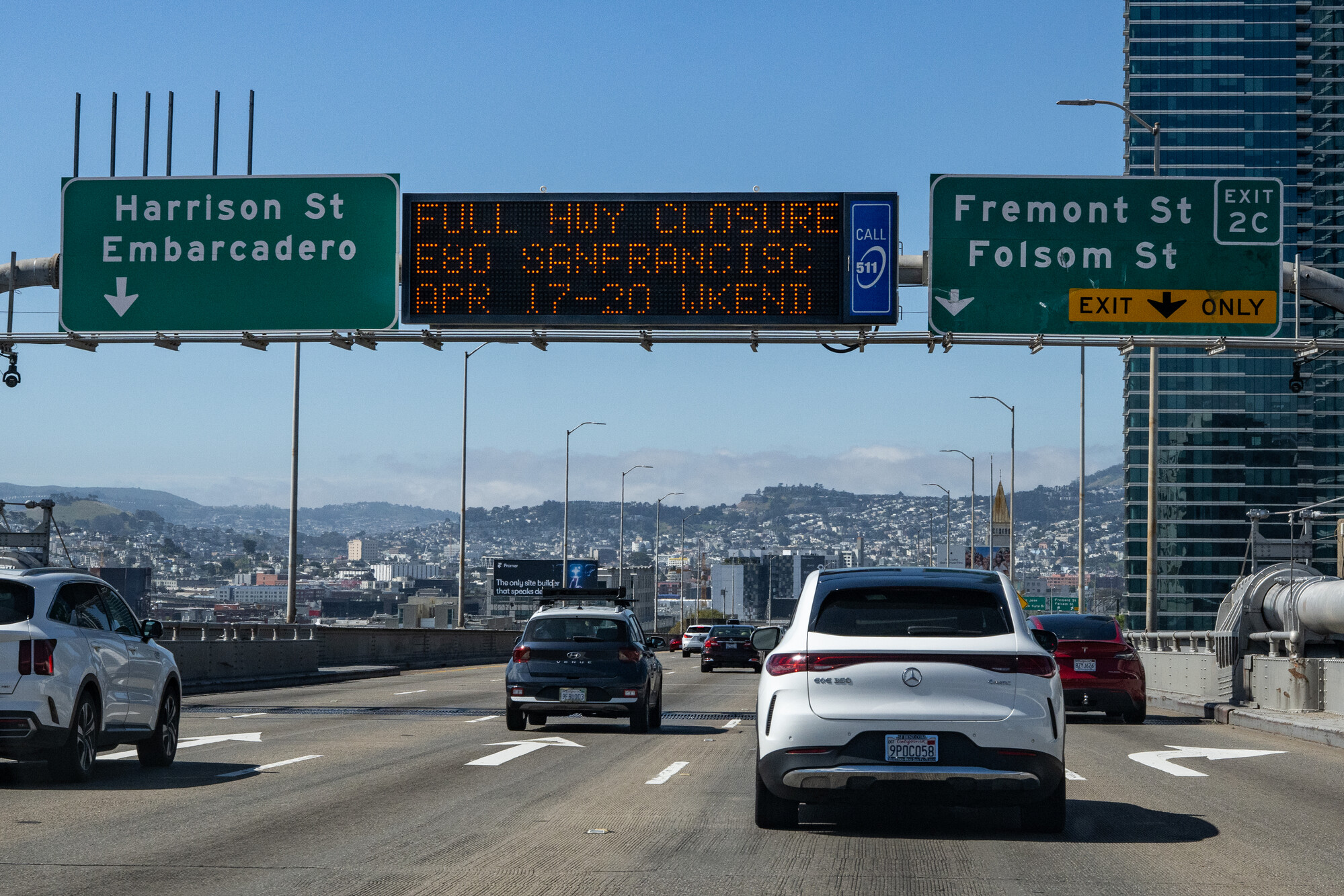
"caption": "A sign announces a closure on I-80 on April 8, 2026. Eastbound lanes are scheduled to close from 11 p.m. April 17 to 6 a.m. April 20 for planned construction work, with detours in place during the closure.",
"credit": "Beth LaBerge/KQED",
"altTag": null,
"description": null,
"imgSizes": {
"thumbnail": {
"file": "https://cdn.kqed.org/wp-content/uploads/sites/10/2026/04/260408-I80Closure-11-BL_qed-160x107.jpg",
"width": 160,
"height": 107,
"mimeType": "image/jpeg"
},
"1536x1536": {
"file": "https://cdn.kqed.org/wp-content/uploads/sites/10/2026/04/260408-I80Closure-11-BL_qed-1536x1024.jpg",
"width": 1536,
"height": 1024,
"mimeType": "image/jpeg"
},
"post-thumbnail": {
"file": "https://cdn.kqed.org/wp-content/uploads/sites/10/2026/04/260408-I80Closure-11-BL_qed-672x372.jpg",
"width": 672,
"height": 372,
"mimeType": "image/jpeg"
},
"twentyfourteen-full-width": {
"file": "https://cdn.kqed.org/wp-content/uploads/sites/10/2026/04/260408-I80Closure-11-BL_qed-1038x576.jpg",
"width": 1038,
"height": 576,
"mimeType": "image/jpeg"
},
"npr-cds-wide": {
"file": "https://cdn.kqed.org/wp-content/uploads/sites/10/2026/04/260408-I80Closure-11-BL_qed-1200x675.jpg",
"width": 1200,
"height": 675,
"mimeType": "image/jpeg"
},
"npr-cds-square": {
"file": "https://cdn.kqed.org/wp-content/uploads/sites/10/2026/04/260408-I80Closure-11-BL_qed-600x600.jpg",
"width": 600,
"height": 600,
"mimeType": "image/jpeg"
},
"kqedFullSize": {
"file": "https://cdn.kqed.org/wp-content/uploads/sites/10/2026/04/260408-I80Closure-11-BL_qed.jpg",
"width": 1999,
"height": 1333
}
},
"isLoading": false,
"fetchFailed": false
},
"news_11975694": {
"type": "attachments",
"id": "news_11975694",
"meta": {
"index": "attachments_1716263798",
"site": "news",
"id": "11975694",
"found": true
},
"title": "The Chevron Richmond Refinery on Oct. 27, 2023.",
"publishDate": 1707850099,
"status": "inherit",
"parent": 0,
"modified": 1729870037,
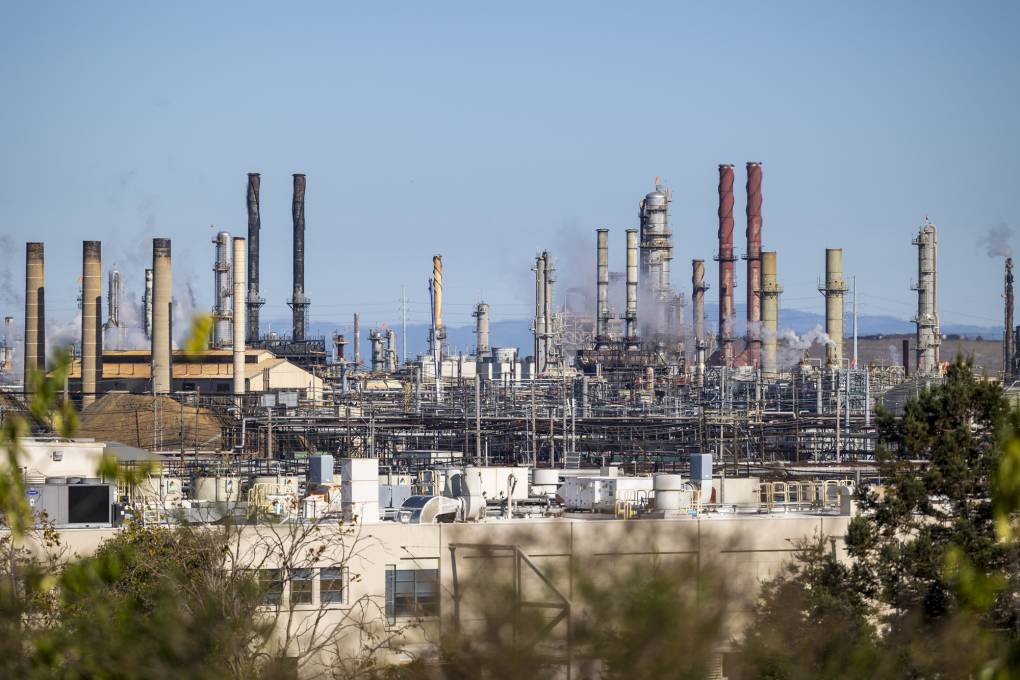
"caption": "The Chevron refinery in Richmond on Oct. 27, 2023.",
"credit": "Martin do Nascimento/KQED",
"altTag": null,
"description": null,
"imgSizes": {
"medium": {
"file": "https://cdn.kqed.org/wp-content/uploads/sites/10/2024/02/231027-CHEVRON-RICHMOND-REFINERY-MD-01-KQED-800x533.jpg",
"width": 800,
"height": 533,
"mimeType": "image/jpeg"
},
"large": {
"file": "https://cdn.kqed.org/wp-content/uploads/sites/10/2024/02/231027-CHEVRON-RICHMOND-REFINERY-MD-01-KQED-1020x680.jpg",
"width": 1020,
"height": 680,
"mimeType": "image/jpeg"
},
"thumbnail": {
"file": "https://cdn.kqed.org/wp-content/uploads/sites/10/2024/02/231027-CHEVRON-RICHMOND-REFINERY-MD-01-KQED-160x107.jpg",
"width": 160,
"height": 107,
"mimeType": "image/jpeg"
},
"1536x1536": {
"file": "https://cdn.kqed.org/wp-content/uploads/sites/10/2024/02/231027-CHEVRON-RICHMOND-REFINERY-MD-01-KQED-1536x1024.jpg",
"width": 1536,
"height": 1024,
"mimeType": "image/jpeg"
},
"post-thumbnail": {
"file": "https://cdn.kqed.org/wp-content/uploads/sites/10/2024/02/231027-CHEVRON-RICHMOND-REFINERY-MD-01-KQED-672x372.jpg",
"width": 672,
"height": 372,
"mimeType": "image/jpeg"
},
"twentyfourteen-full-width": {
"file": "https://cdn.kqed.org/wp-content/uploads/sites/10/2024/02/231027-CHEVRON-RICHMOND-REFINERY-MD-01-KQED-1038x576.jpg",
"width": 1038,
"height": 576,
"mimeType": "image/jpeg"
},
"full-width": {
"file": "https://cdn.kqed.org/wp-content/uploads/sites/10/2024/02/231027-CHEVRON-RICHMOND-REFINERY-MD-01-KQED-1920x1280.jpg",
"width": 1920,
"height": 1280,
"mimeType": "image/jpeg"
},
"kqedFullSize": {
"file": "https://cdn.kqed.org/wp-content/uploads/sites/10/2024/02/231027-CHEVRON-RICHMOND-REFINERY-MD-01-KQED.jpg",
"width": 2000,
"height": 1333
}
},
"isLoading": false,
"fetchFailed": false
},
"news_12018119": {
"type": "attachments",
"id": "news_12018119",
"meta": {
"index": "attachments_1716263798",
"site": "news",
"id": "12018119",
"found": true
},
"title": "240412-OAKAirport-007-BL_qed (1)",
"publishDate": 1734112139,
"status": "inherit",
"parent": 12018113,
"modified": 1734112156,
"caption": "Signs direct passengers to terminals at Oakland International Airport in Oakland on April 12, 2024.",
"credit": "Beth LaBerge/KQED",
"altTag": null,
"description": null,
"imgSizes": {
"medium": {
"file": "https://cdn.kqed.org/wp-content/uploads/sites/10/2024/12/240412-OAKAirport-007-BL_qed-1-800x533.jpg",
"width": 800,
"height": 533,
"mimeType": "image/jpeg"
},
"large": {
"file": "https://cdn.kqed.org/wp-content/uploads/sites/10/2024/12/240412-OAKAirport-007-BL_qed-1-1020x680.jpg",
"width": 1020,
"height": 680,
"mimeType": "image/jpeg"
},
"thumbnail": {
"file": "https://cdn.kqed.org/wp-content/uploads/sites/10/2024/12/240412-OAKAirport-007-BL_qed-1-160x107.jpg",
"width": 160,
"height": 107,
"mimeType": "image/jpeg"
},
"1536x1536": {
"file": "https://cdn.kqed.org/wp-content/uploads/sites/10/2024/12/240412-OAKAirport-007-BL_qed-1-1536x1024.jpg",
"width": 1536,
"height": 1024,
"mimeType": "image/jpeg"
},
"post-thumbnail": {
"file": "https://cdn.kqed.org/wp-content/uploads/sites/10/2024/12/240412-OAKAirport-007-BL_qed-1-672x372.jpg",
"width": 672,
"height": 372,
"mimeType": "image/jpeg"
},
"twentyfourteen-full-width": {
"file": "https://cdn.kqed.org/wp-content/uploads/sites/10/2024/12/240412-OAKAirport-007-BL_qed-1-1038x576.jpg",
"width": 1038,
"height": 576,
"mimeType": "image/jpeg"
},
"full-width": {
"file": "https://cdn.kqed.org/wp-content/uploads/sites/10/2024/12/240412-OAKAirport-007-BL_qed-1-1920x1280.jpg",
"width": 1920,
"height": 1280,
"mimeType": "image/jpeg"
},
"kqedFullSize": {
"file": "https://cdn.kqed.org/wp-content/uploads/sites/10/2024/12/240412-OAKAirport-007-BL_qed-1.jpg",
"width": 1999,
"height": 1333
}
},
"isLoading": false,
"fetchFailed": false
},
"news_12079586": {
"type": "attachments",
"id": "news_12079586",
"meta": {
"index": "attachments_1716263798",
"site": "news",
"id": "12079586",
"found": true
},
"title": "041226Affordability series teacher housing_GH_002_qed",
"publishDate": 1776032850,
"status": "inherit",
"parent": 0,
"modified": 1776101928,
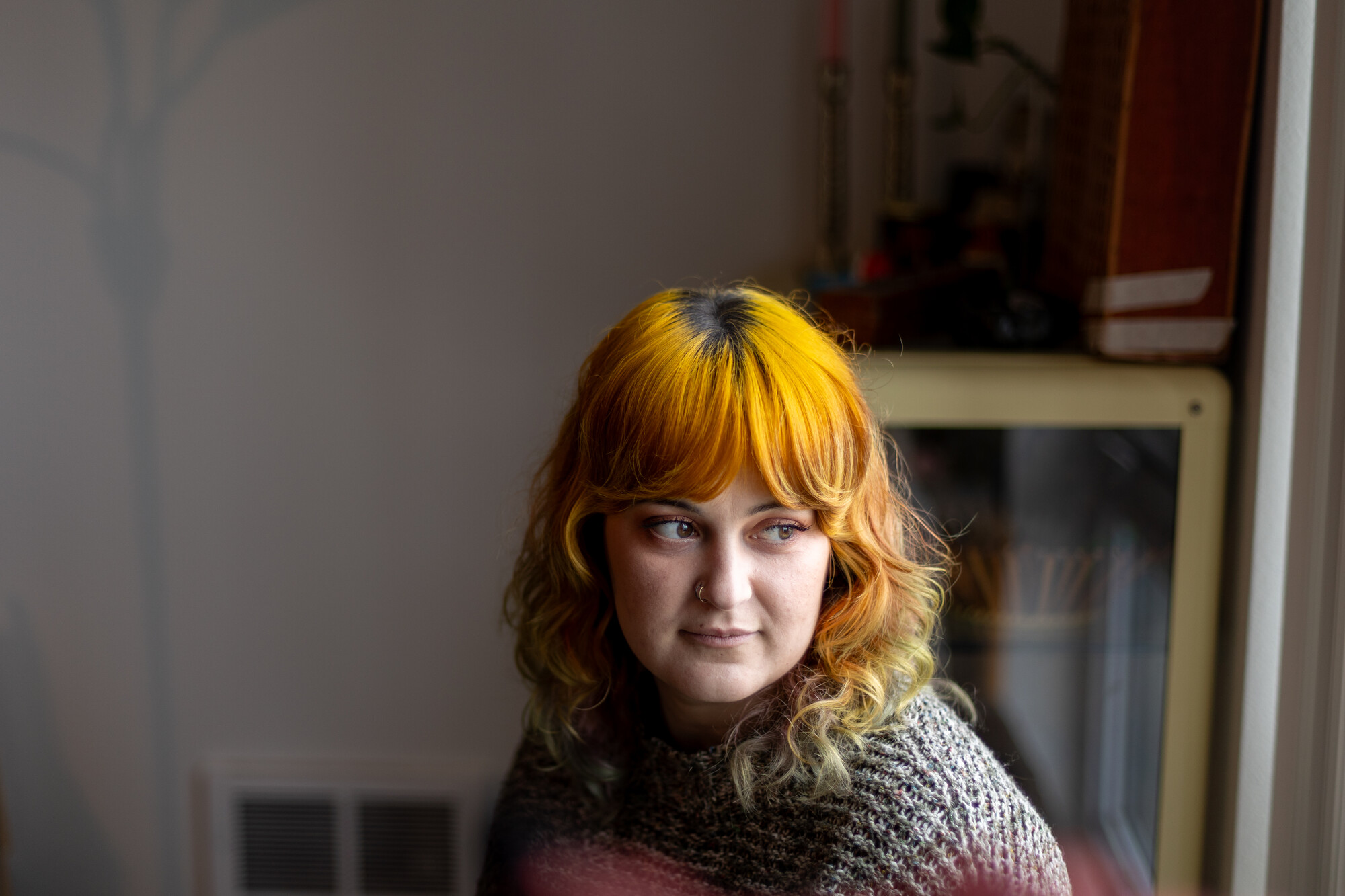
"caption": "Shayla Putnam, a ceramics teacher at George Washington High School, in her apartment at Shirley Chisholm Village on April 12, 2026, in San Francisco.",
"credit": "Gustavo Hernandez/KQED",
"altTag": null,
"description": null,
"imgSizes": {
"thumbnail": {
"file": "https://cdn.kqed.org/wp-content/uploads/sites/10/2026/04/041226Affordability-series-teacher-housing_GH_002_qed-160x107.jpg",
"width": 160,
"height": 107,
"mimeType": "image/jpeg"
},
"1536x1536": {
"file": "https://cdn.kqed.org/wp-content/uploads/sites/10/2026/04/041226Affordability-series-teacher-housing_GH_002_qed-1536x1024.jpg",
"width": 1536,
"height": 1024,
"mimeType": "image/jpeg"
},
"post-thumbnail": {
"file": "https://cdn.kqed.org/wp-content/uploads/sites/10/2026/04/041226Affordability-series-teacher-housing_GH_002_qed-672x372.jpg",
"width": 672,
"height": 372,
"mimeType": "image/jpeg"
},
"twentyfourteen-full-width": {
"file": "https://cdn.kqed.org/wp-content/uploads/sites/10/2026/04/041226Affordability-series-teacher-housing_GH_002_qed-1038x576.jpg",
"width": 1038,
"height": 576,
"mimeType": "image/jpeg"
},
"npr-cds-wide": {
"file": "https://cdn.kqed.org/wp-content/uploads/sites/10/2026/04/041226Affordability-series-teacher-housing_GH_002_qed-1200x675.jpg",
"width": 1200,
"height": 675,
"mimeType": "image/jpeg"
},
"npr-cds-square": {
"file": "https://cdn.kqed.org/wp-content/uploads/sites/10/2026/04/041226Affordability-series-teacher-housing_GH_002_qed-600x600.jpg",
"width": 600,
"height": 600,
"mimeType": "image/jpeg"
},
"kqedFullSize": {
"file": "https://cdn.kqed.org/wp-content/uploads/sites/10/2026/04/041226Affordability-series-teacher-housing_GH_002_qed.jpg",
"width": 2000,
"height": 1333
}
},
"isLoading": false,
"fetchFailed": false
},
"news_12079247": {
"type": "attachments",
"id": "news_12079247",
"meta": {
"index": "attachments_1716263798",
"site": "news",
"id": "12079247",
"found": true
},
"title": "033026Trans affordability _GH_010_qed",
"publishDate": 1775754755,
"status": "inherit",
"parent": 0,
"modified": 1775754955,
"caption": "Liam Chavez swims across the bay with “Chorizo” trailing behind him at Robert W. Crown Memorial State Beach in Alameda, CA on March 30, 2026.",
"credit": "Gustavo Hernandez/KQED",
"altTag": null,
"description": null,
"imgSizes": {
"thumbnail": {
"file": "https://cdn.kqed.org/wp-content/uploads/sites/10/2026/04/033026Trans-affordability-_GH_010_qed-160x107.jpg",
"width": 160,
"height": 107,
"mimeType": "image/jpeg"
},
"1536x1536": {
"file": "https://cdn.kqed.org/wp-content/uploads/sites/10/2026/04/033026Trans-affordability-_GH_010_qed-1536x1024.jpg",
"width": 1536,
"height": 1024,
"mimeType": "image/jpeg"
},
"post-thumbnail": {
"file": "https://cdn.kqed.org/wp-content/uploads/sites/10/2026/04/033026Trans-affordability-_GH_010_qed-672x372.jpg",
"width": 672,
"height": 372,
"mimeType": "image/jpeg"
},
"twentyfourteen-full-width": {
"file": "https://cdn.kqed.org/wp-content/uploads/sites/10/2026/04/033026Trans-affordability-_GH_010_qed-1038x576.jpg",
"width": 1038,
"height": 576,
"mimeType": "image/jpeg"
},
"npr-cds-wide": {
"file": "https://cdn.kqed.org/wp-content/uploads/sites/10/2026/04/033026Trans-affordability-_GH_010_qed-1200x675.jpg",
"width": 1200,
"height": 675,
"mimeType": "image/jpeg"
},
"npr-cds-square": {
"file": "https://cdn.kqed.org/wp-content/uploads/sites/10/2026/04/033026Trans-affordability-_GH_010_qed-600x600.jpg",
"width": 600,
"height": 600,
"mimeType": "image/jpeg"
},
"kqedFullSize": {
"file": "https://cdn.kqed.org/wp-content/uploads/sites/10/2026/04/033026Trans-affordability-_GH_010_qed.jpg",
"width": 2000,
"height": 1333
}
},
"isLoading": false,
"fetchFailed": false
},
"news_12079265": {
"type": "attachments",
"id": "news_12079265",
"meta": {
"index": "attachments_1716263798",
"site": "news",
"id": "12079265",
"found": true
},
"title": "Max Kirkeberg Ties_horizontal",
"publishDate": 1775756635,
"status": "inherit",
"parent": 12078966,
"modified": 1775756681,
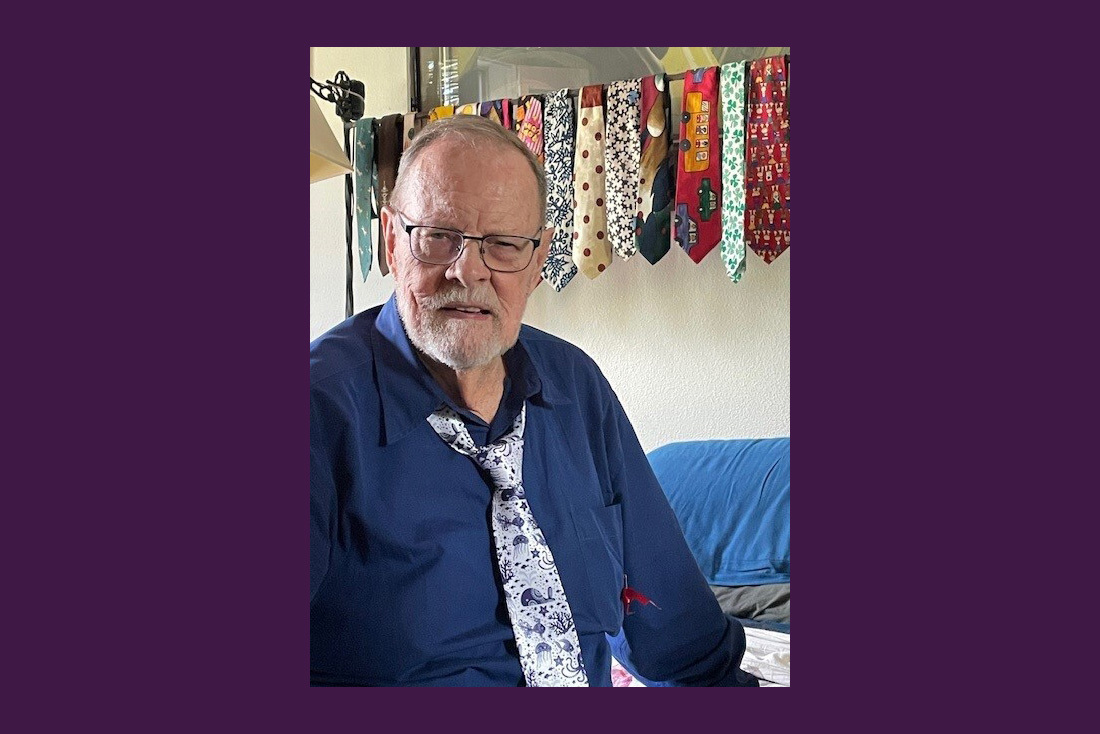
"caption": "San Francisco State Geography Professor Max Kirkeberg was known for his extensive neck tie collection. Students said he wore a different one of his 600 ties to class each day.",
"credit": "Courtesy of San Francisco State University",
"altTag": null,
"description": null,
"imgSizes": {
"thumbnail": {
"file": "https://cdn.kqed.org/wp-content/uploads/sites/10/2026/04/Max-Kirkeberg-Ties_horizontal-160x107.jpg",
"width": 160,
"height": 107,
"mimeType": "image/jpeg"
},
"post-thumbnail": {
"file": "https://cdn.kqed.org/wp-content/uploads/sites/10/2026/04/Max-Kirkeberg-Ties_horizontal-672x372.jpg",
"width": 672,
"height": 372,
"mimeType": "image/jpeg"
},
"twentyfourteen-full-width": {
"file": "https://cdn.kqed.org/wp-content/uploads/sites/10/2026/04/Max-Kirkeberg-Ties_horizontal-1038x576.jpg",
"width": 1038,
"height": 576,
"mimeType": "image/jpeg"
},
"npr-cds-wide": {
"file": "https://cdn.kqed.org/wp-content/uploads/sites/10/2026/04/Max-Kirkeberg-Ties_horizontal-1100x675.jpg",
"width": 1100,
"height": 675,
"mimeType": "image/jpeg"
},
"npr-cds-square": {
"file": "https://cdn.kqed.org/wp-content/uploads/sites/10/2026/04/Max-Kirkeberg-Ties_horizontal-600x600.jpg",
"width": 600,
"height": 600,
"mimeType": "image/jpeg"
},
"kqedFullSize": {
"file": "https://cdn.kqed.org/wp-content/uploads/sites/10/2026/04/Max-Kirkeberg-Ties_horizontal.jpg",
"width": 1100,
"height": 734
}
},
"isLoading": false,
"fetchFailed": false
},
"news_12078433": {
"type": "attachments",
"id": "news_12078433",
"meta": {
"index": "attachments_1716263798",
"site": "news",
"id": "12078433",
"found": true
},
"title": "012426_FREEOAKLANDUP_GH_011-KQED",
"publishDate": 1775137637,
"status": "inherit",
"parent": 0,
"modified": 1775137651,
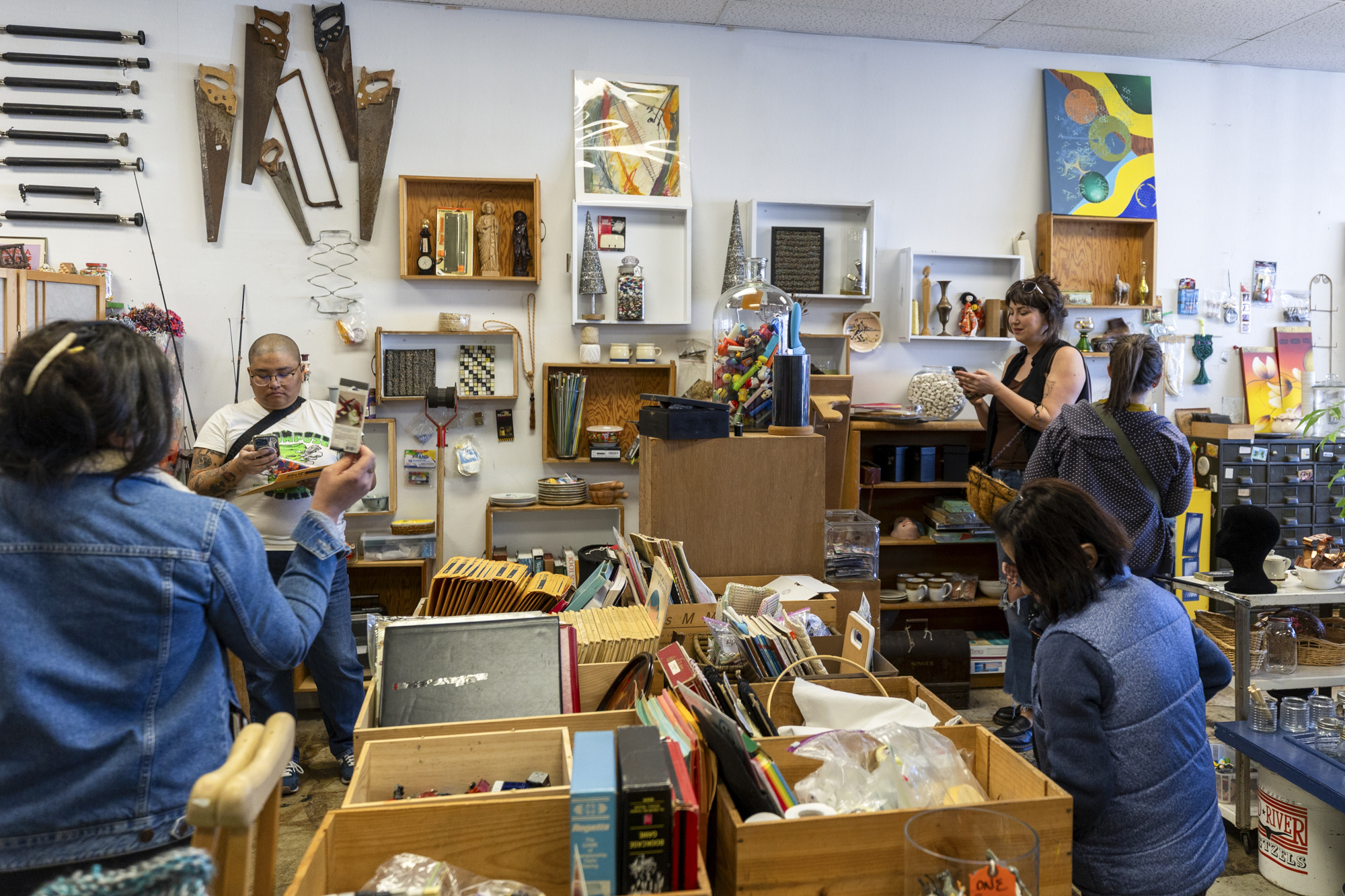
"caption": "Customers browse donated items inside Free Oakland UP in Oakland on Jan. 24, 2026.",
"credit": "Gustavo Hernandez/KQED",
"altTag": null,
"description": null,
"imgSizes": {
"thumbnail": {
"file": "https://cdn.kqed.org/wp-content/uploads/sites/10/2026/04/012426_FREEOAKLANDUP_GH_011-KQED-160x107.jpg",
"width": 160,
"height": 107,
"mimeType": "image/jpeg"
},
"1536x1536": {
"file": "https://cdn.kqed.org/wp-content/uploads/sites/10/2026/04/012426_FREEOAKLANDUP_GH_011-KQED-1536x1024.jpg",
"width": 1536,
"height": 1024,
"mimeType": "image/jpeg"
},
"post-thumbnail": {
"file": "https://cdn.kqed.org/wp-content/uploads/sites/10/2026/04/012426_FREEOAKLANDUP_GH_011-KQED-672x372.jpg",
"width": 672,
"height": 372,
"mimeType": "image/jpeg"
},
"twentyfourteen-full-width": {
"file": "https://cdn.kqed.org/wp-content/uploads/sites/10/2026/04/012426_FREEOAKLANDUP_GH_011-KQED-1038x576.jpg",
"width": 1038,
"height": 576,
"mimeType": "image/jpeg"
},
"npr-cds-wide": {
"file": "https://cdn.kqed.org/wp-content/uploads/sites/10/2026/04/012426_FREEOAKLANDUP_GH_011-KQED-1200x675.jpg",
"width": 1200,
"height": 675,
"mimeType": "image/jpeg"
},
"npr-cds-square": {
"file": "https://cdn.kqed.org/wp-content/uploads/sites/10/2026/04/012426_FREEOAKLANDUP_GH_011-KQED-600x600.jpg",
"width": 600,
"height": 600,
"mimeType": "image/jpeg"
},
"kqedFullSize": {
"file": "https://cdn.kqed.org/wp-content/uploads/sites/10/2026/04/012426_FREEOAKLANDUP_GH_011-KQED.jpg",
"width": 2000,
"height": 1333
}
},
"isLoading": false,
"fetchFailed": false
},
"news_12079117": {
"type": "attachments",
"id": "news_12079117",
"meta": {
"index": "attachments_1716263798",
"site": "news",
"id": "12079117",
"found": true
},
"title": "040726Bay Curious_Cambrian Plaza_GH_019_qed",
"publishDate": 1775671518,
"status": "inherit",
"parent": 0,
"modified": 1775677248,
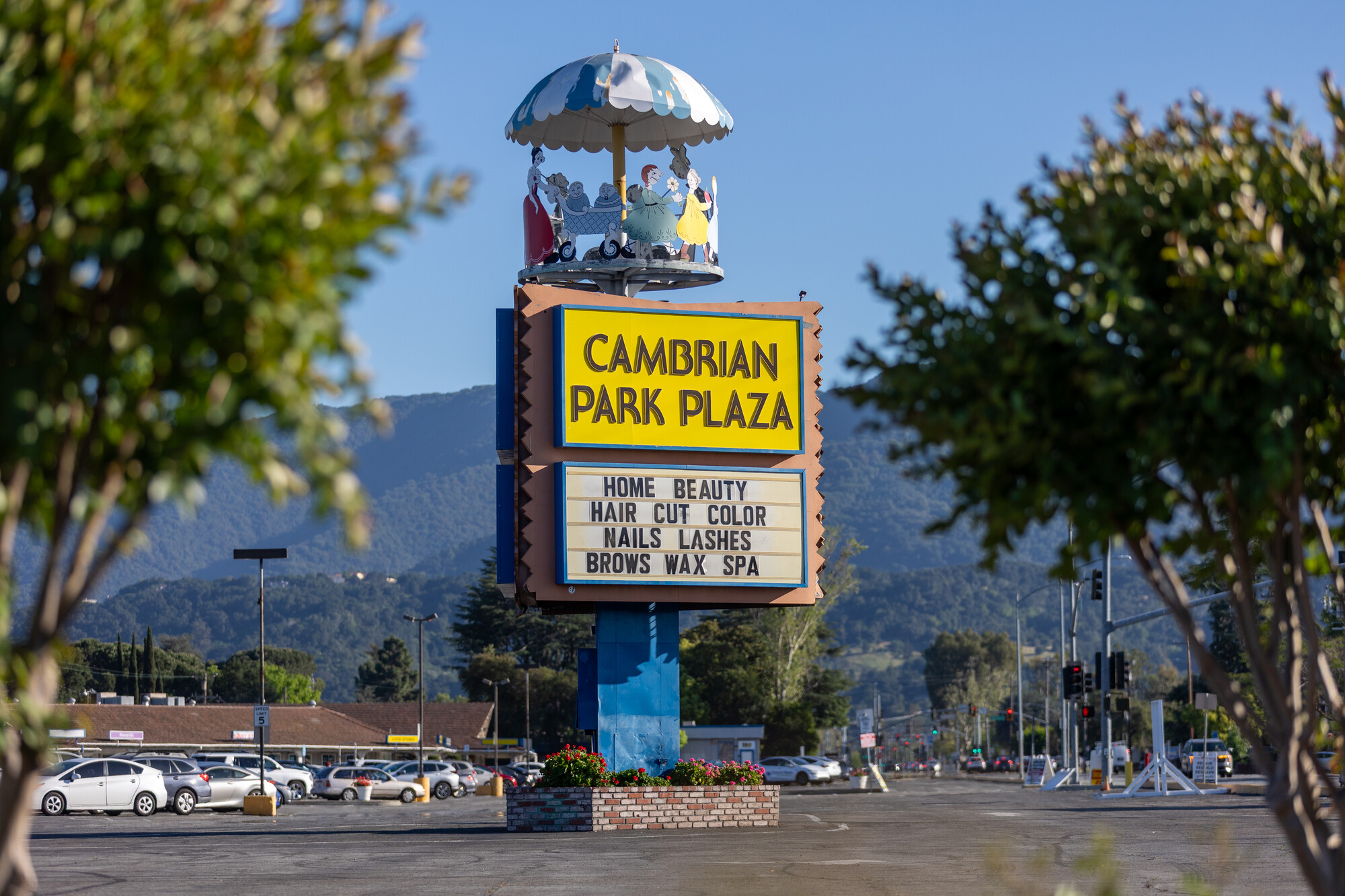
"caption": "The Cambrian Park Plaza sign, built in 1953 with the shopping center, features a rotating carousel and received historic status in 2016, on April 7, 2026, in San José.",
"credit": "Gustavo Hernandez/KQED",
"altTag": null,
"description": null,
"imgSizes": {
"thumbnail": {
"file": "https://cdn.kqed.org/wp-content/uploads/sites/10/2026/04/040726Bay-Curious_Cambrian-Plaza_GH_019_qed-160x107.jpg",
"width": 160,
"height": 107,
"mimeType": "image/jpeg"
},
"1536x1536": {
"file": "https://cdn.kqed.org/wp-content/uploads/sites/10/2026/04/040726Bay-Curious_Cambrian-Plaza_GH_019_qed-1536x1024.jpg",
"width": 1536,
"height": 1024,
"mimeType": "image/jpeg"
},
"post-thumbnail": {
"file": "https://cdn.kqed.org/wp-content/uploads/sites/10/2026/04/040726Bay-Curious_Cambrian-Plaza_GH_019_qed-672x372.jpg",
"width": 672,
"height": 372,
"mimeType": "image/jpeg"
},
"twentyfourteen-full-width": {
"file": "https://cdn.kqed.org/wp-content/uploads/sites/10/2026/04/040726Bay-Curious_Cambrian-Plaza_GH_019_qed-1038x576.jpg",
"width": 1038,
"height": 576,
"mimeType": "image/jpeg"
},
"npr-cds-wide": {
"file": "https://cdn.kqed.org/wp-content/uploads/sites/10/2026/04/040726Bay-Curious_Cambrian-Plaza_GH_019_qed-1200x675.jpg",
"width": 1200,
"height": 675,
"mimeType": "image/jpeg"
},
"npr-cds-square": {
"file": "https://cdn.kqed.org/wp-content/uploads/sites/10/2026/04/040726Bay-Curious_Cambrian-Plaza_GH_019_qed-600x600.jpg",
"width": 600,
"height": 600,
"mimeType": "image/jpeg"
},
"kqedFullSize": {
"file": "https://cdn.kqed.org/wp-content/uploads/sites/10/2026/04/040726Bay-Curious_Cambrian-Plaza_GH_019_qed.jpg",
"width": 2000,
"height": 1333
}
},
"isLoading": false,
"fetchFailed": false
},
"news_12078463": {
"type": "attachments",
"id": "news_12078463",
"meta": {
"index": "attachments_1716263798",
"site": "news",
"id": "12078463",
"found": true
},
"title": "260401-AFFORDABILITYCHILDCARE00263_TV-KQED",
"publishDate": 1775151774,
"status": "inherit",
"parent": 0,
"modified": 1775151813,
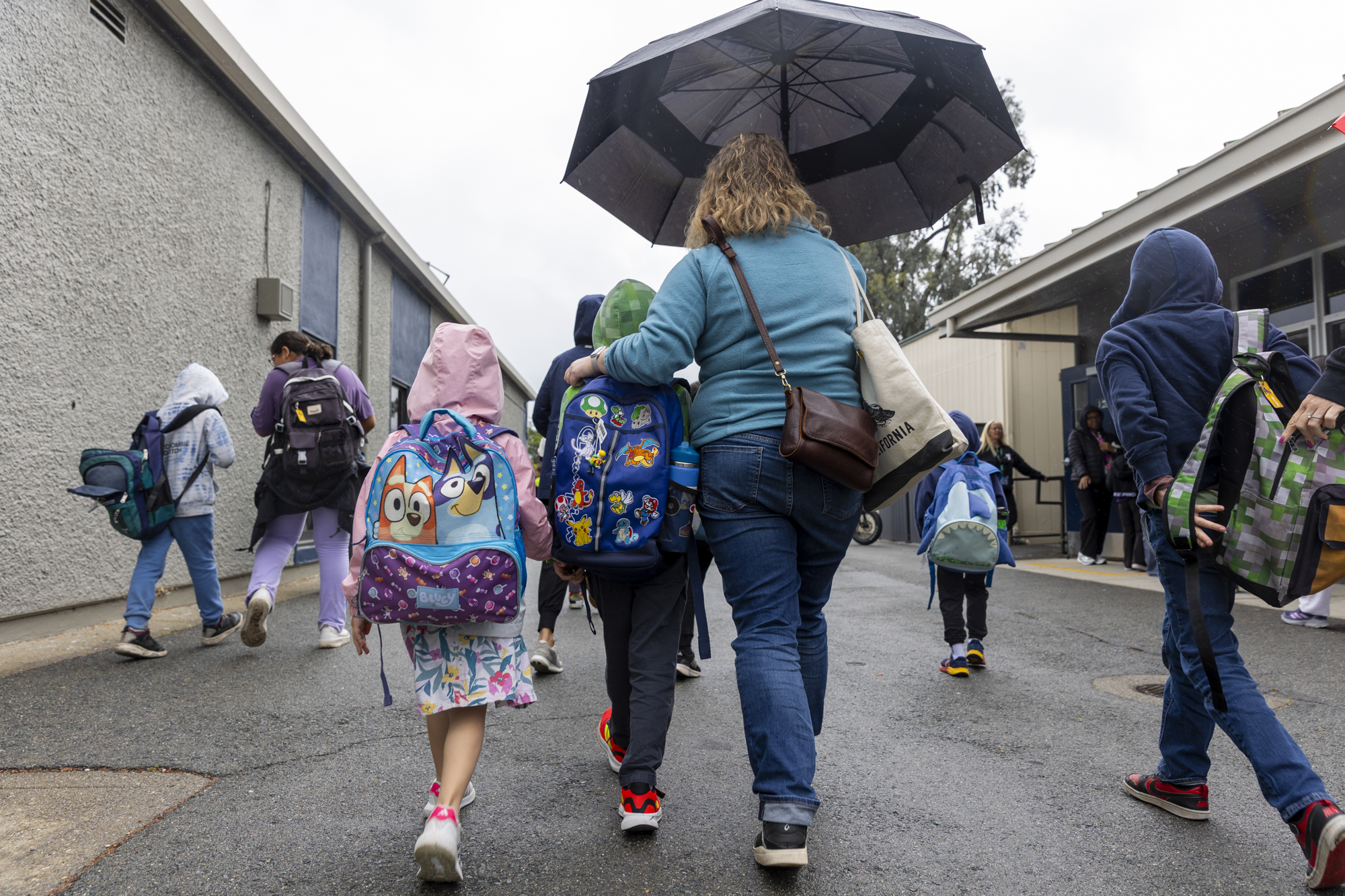
"caption": "Annie Malekzadeh, a mom who quit her teaching job to save on childcare and is now pursuing her master’s degree in mathematics, walks her kids through the rain at school pick up time at Valhalla Elementary School in Pleasant Hill on April 1, 2026.",
"credit": "Tâm Vũ/KQED",
"altTag": null,
"description": null,
"imgSizes": {
"thumbnail": {
"file": "https://cdn.kqed.org/wp-content/uploads/sites/10/2026/04/260401-AFFORDABILITYCHILDCARE00263_TV-KQED-160x107.jpg",
"width": 160,
"height": 107,
"mimeType": "image/jpeg"
},
"1536x1536": {
"file": "https://cdn.kqed.org/wp-content/uploads/sites/10/2026/04/260401-AFFORDABILITYCHILDCARE00263_TV-KQED-1536x1024.jpg",
"width": 1536,
"height": 1024,
"mimeType": "image/jpeg"
},
"post-thumbnail": {
"file": "https://cdn.kqed.org/wp-content/uploads/sites/10/2026/04/260401-AFFORDABILITYCHILDCARE00263_TV-KQED-672x372.jpg",
"width": 672,
"height": 372,
"mimeType": "image/jpeg"
},
"twentyfourteen-full-width": {
"file": "https://cdn.kqed.org/wp-content/uploads/sites/10/2026/04/260401-AFFORDABILITYCHILDCARE00263_TV-KQED-1038x576.jpg",
"width": 1038,
"height": 576,
"mimeType": "image/jpeg"
},
"npr-cds-wide": {
"file": "https://cdn.kqed.org/wp-content/uploads/sites/10/2026/04/260401-AFFORDABILITYCHILDCARE00263_TV-KQED-1200x675.jpg",
"width": 1200,
"height": 675,
"mimeType": "image/jpeg"
},
"npr-cds-square": {
"file": "https://cdn.kqed.org/wp-content/uploads/sites/10/2026/04/260401-AFFORDABILITYCHILDCARE00263_TV-KQED-600x600.jpg",
"width": 600,
"height": 600,
"mimeType": "image/jpeg"
},
"kqedFullSize": {
"file": "https://cdn.kqed.org/wp-content/uploads/sites/10/2026/04/260401-AFFORDABILITYCHILDCARE00263_TV-KQED.jpg",
"width": 2000,
"height": 1333
}
},
"isLoading": false,
"fetchFailed": false
},
"news_12040469": {
"type": "attachments",
"id": "news_12040469",
"meta": {
"index": "attachments_1716263798",
"site": "news",
"id": "12040469",
"found": true
},
"title": "GettyImages-517005006_qed",
"publishDate": 1747413582,
"status": "inherit",
"parent": 12040111,
"modified": 1747413752,
"caption": null,
"credit": "iStock / Getty Images ",
"altTag": null,
"description": "A Northern Pacific Rattlesnake found in California extends its forked tongue in a defensive posture.",
"imgSizes": {
"medium": {
"file": "https://cdn.kqed.org/wp-content/uploads/sites/10/2025/05/GettyImages-517005006_qed-800x533.jpg",
"width": 800,
"height": 533,
"mimeType": "image/jpeg"
},
"large": {
"file": "https://cdn.kqed.org/wp-content/uploads/sites/10/2025/05/GettyImages-517005006_qed-1020x680.jpg",
"width": 1020,
"height": 680,
"mimeType": "image/jpeg"
},
"thumbnail": {
"file": "https://cdn.kqed.org/wp-content/uploads/sites/10/2025/05/GettyImages-517005006_qed-160x107.jpg",
"width": 160,
"height": 107,
"mimeType": "image/jpeg"
},
"1536x1536": {
"file": "https://cdn.kqed.org/wp-content/uploads/sites/10/2025/05/GettyImages-517005006_qed-1536x1024.jpg",
"width": 1536,
"height": 1024,
"mimeType": "image/jpeg"
},
"post-thumbnail": {
"file": "https://cdn.kqed.org/wp-content/uploads/sites/10/2025/05/GettyImages-517005006_qed-672x372.jpg",
"width": 672,
"height": 372,
"mimeType": "image/jpeg"
},
"twentyfourteen-full-width": {
"file": "https://cdn.kqed.org/wp-content/uploads/sites/10/2025/05/GettyImages-517005006_qed-1038x576.jpg",
"width": 1038,
"height": 576,
"mimeType": "image/jpeg"
},
"full-width": {
"file": "https://cdn.kqed.org/wp-content/uploads/sites/10/2025/05/GettyImages-517005006_qed-1920x1280.jpg",
"width": 1920,
"height": 1280,
"mimeType": "image/jpeg"
},
"kqedFullSize": {
"file": "https://cdn.kqed.org/wp-content/uploads/sites/10/2025/05/GettyImages-517005006_qed.jpg",
"width": 1999,
"height": 1333
}
},
"isLoading": false,
"fetchFailed": false
},
"news_12078864": {
"type": "attachments",
"id": "news_12078864",
"meta": {
"index": "attachments_1716263798",
"site": "news",
"id": "12078864",
"found": true
},
"title": "An e-bike parked in Mill Valley on July 24, 2025.",
"publishDate": 1775512916,
"status": "inherit",
"parent": 12078862,
"modified": 1775512931,
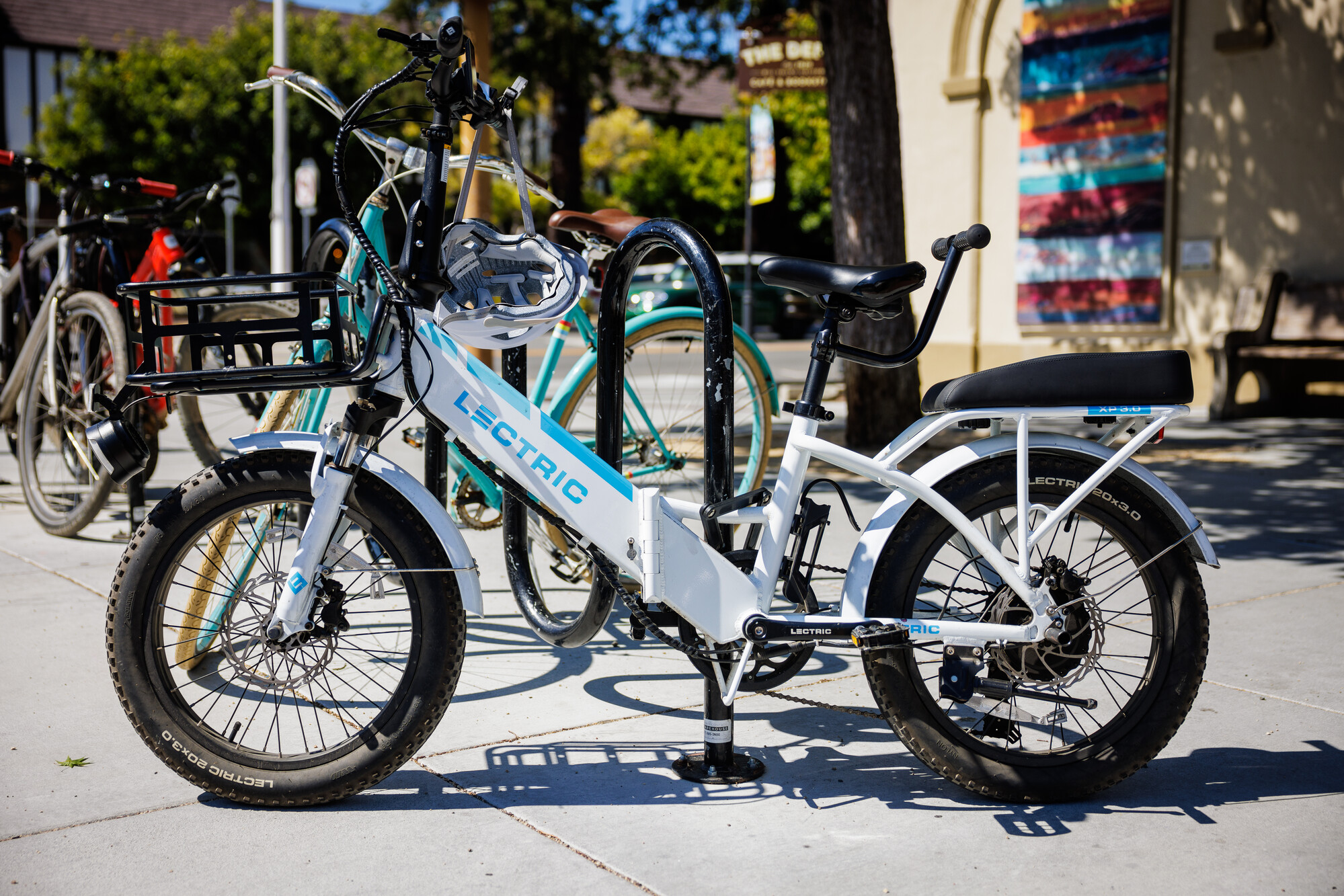
"caption": "An e-bike parked in Mill Valley on July 24, 2025.",
"credit": "Martin do Nascimento/KQED",
"altTag": null,
"description": null,
"imgSizes": {
"thumbnail": {
"file": "https://cdn.kqed.org/wp-content/uploads/sites/10/2026/04/250724-MARIN-EBIKES-MD-06_qed-160x107.jpg",
"width": 160,
"height": 107,
"mimeType": "image/jpeg"
},
"1536x1536": {
"file": "https://cdn.kqed.org/wp-content/uploads/sites/10/2026/04/250724-MARIN-EBIKES-MD-06_qed-1536x1024.jpg",
"width": 1536,
"height": 1024,
"mimeType": "image/jpeg"
},
"post-thumbnail": {
"file": "https://cdn.kqed.org/wp-content/uploads/sites/10/2026/04/250724-MARIN-EBIKES-MD-06_qed-672x372.jpg",
"width": 672,
"height": 372,
"mimeType": "image/jpeg"
},
"twentyfourteen-full-width": {
"file": "https://cdn.kqed.org/wp-content/uploads/sites/10/2026/04/250724-MARIN-EBIKES-MD-06_qed-1038x576.jpg",
"width": 1038,
"height": 576,
"mimeType": "image/jpeg"
},
"npr-cds-wide": {
"file": "https://cdn.kqed.org/wp-content/uploads/sites/10/2026/04/250724-MARIN-EBIKES-MD-06_qed-1200x675.jpg",
"width": 1200,
"height": 675,
"mimeType": "image/jpeg"
},
"npr-cds-square": {
"file": "https://cdn.kqed.org/wp-content/uploads/sites/10/2026/04/250724-MARIN-EBIKES-MD-06_qed-600x600.jpg",
"width": 600,
"height": 600,
"mimeType": "image/jpeg"
},
"kqedFullSize": {
"file": "https://cdn.kqed.org/wp-content/uploads/sites/10/2026/04/250724-MARIN-EBIKES-MD-06_qed.jpg",
"width": 1999,
"height": 1333
}
},
"isLoading": false,
"fetchFailed": false
}
},
"audioPlayerReducer": {
"postId": "stream_live",
"isPaused": true,
"isPlaying": false,
"pfsActive": false,
"pledgeModalIsOpen": true,
"playerDrawerIsOpen": false,
"liveAudioPlayStartedAt": 0,
"liveAudioPlayContext": ""
},
"authorsReducer": {
"katrinaschwartz": {
"type": "authors",
"id": "234",
"meta": {
"index": "authors_1716337520",
"id": "234",
"found": true
},
"name": "Katrina Schwartz",
"firstName": "Katrina",
"lastName": "Schwartz",
"slug": "katrinaschwartz",
"email": "kschwartz@kqed.org",
"display_author_email": false,
"staff_mastheads": [
"news"
],
"title": "Producer",
"bio": "Katrina Schwartz is a journalist based in San Francisco. She's worked at KPCC public radio in LA and has reported on air and online for KQED since 2010. She covered how teaching and learning is changing for MindShift between 2012 and 2020. She is the co-host of the MindShift podcast and now produces KQED's Bay Curious podcast.",
"avatar": "https://secure.gravatar.com/avatar/edb4ee79070447a018538c9aae6eeecf28786515b8a0c30e43b6b7dce5aa44c8?s=600&d=blank&r=g",
"twitter": "kschwart",
"bluesky": null,
"facebook": null,
"instagram": null,
"linkedin": null,
"sites": [
{
"site": "",
"roles": [
"editor"
]
},
{
"site": "news",
"roles": [
"editor"
]
},
{
"site": "mindshift",
"roles": [
"administrator"
]
},
{
"site": "stateofhealth",
"roles": [
"author"
]
},
{
"site": "science",
"roles": [
"editor"
]
}
],
"headData": {
"title": "Katrina Schwartz | KQED",
"description": "Producer",
"ogImgSrc": "https://secure.gravatar.com/avatar/edb4ee79070447a018538c9aae6eeecf28786515b8a0c30e43b6b7dce5aa44c8?s=600&d=blank&r=g",
"twImgSrc": "https://secure.gravatar.com/avatar/edb4ee79070447a018538c9aae6eeecf28786515b8a0c30e43b6b7dce5aa44c8?s=600&d=blank&r=g"
},
"isLoading": false,
"link": "/author/katrinaschwartz"
},
"tgoldberg": {
"type": "authors",
"id": "258",
"meta": {
"index": "authors_1716337520",
"id": "258",
"found": true
},
"name": "Ted Goldberg",
"firstName": "Ted",
"lastName": "Goldberg",
"slug": "tgoldberg",
"email": "tgoldberg@kqed.org",
"display_author_email": true,
"staff_mastheads": [
"news"
],
"title": "KQED Managing Editor, News and Newscasts",
"bio": "Ted Goldberg is Managing Editor of News and Newscasts at KQED. His main reporting beat is the Bay Area's oil refining industry.\r\n\r\nPrior to joining KQED in 2014, Ted worked at CBS News and WCBS AM in New York and Bay City News and KCBS Radio in San Francisco. He graduated from Oberlin College in Ohio in 1998.",
"avatar": "https://secure.gravatar.com/avatar/30ce2e4fe89135e104f89be2394d16225b9d36c121b5b3cb7651ce642978b96f?s=600&d=blank&r=g",
"twitter": "TedrickG",
"bluesky": null,
"facebook": null,
"instagram": null,
"linkedin": null,
"sites": [
{
"site": "news",
"roles": [
"editor"
]
},
{
"site": "science",
"roles": [
"editor"
]
}
],
"headData": {
"title": "Ted Goldberg | KQED",
"description": "KQED Managing Editor, News and Newscasts",
"ogImgSrc": "https://secure.gravatar.com/avatar/30ce2e4fe89135e104f89be2394d16225b9d36c121b5b3cb7651ce642978b96f?s=600&d=blank&r=g",
"twImgSrc": "https://secure.gravatar.com/avatar/30ce2e4fe89135e104f89be2394d16225b9d36c121b5b3cb7651ce642978b96f?s=600&d=blank&r=g"
},
"isLoading": false,
"link": "/author/tgoldberg"
},
"vrancano": {
"type": "authors",
"id": "11276",
"meta": {
"index": "authors_1716337520",
"id": "11276",
"found": true
},
"name": "Vanessa Rancaño",
"firstName": "Vanessa",
"lastName": "Rancaño",
"slug": "vrancano",
"email": "vrancano@kqed.org",
"display_author_email": false,
"staff_mastheads": [
"news"
],
"title": "Reporter",
"bio": "Vanessa Rancaño is a features reporter for KQED. She’s also covered homelessness and education for the station and reported from the Central Valley. Her work has aired across public radio, from flagship national news shows to longform narrative podcasts. Before taking up a mic, she worked as a freelance print journalist. She’s been recognized with a number of national and regional awards. Vanessa grew up in California's Central Valley. She's a former NPR Kroc Fellow, and a graduate of the UC Berkeley Graduate School of Journalism.",
"avatar": "https://secure.gravatar.com/avatar/b3a383dfb0e7ee1c17568f2cf067904ab654d6e3de9743fc661f3c788ade1bed?s=600&d=blank&r=g",
"twitter": "vanessarancano",
"bluesky": null,
"facebook": null,
"instagram": null,
"linkedin": null,
"sites": [
{
"site": "arts",
"roles": [
"editor"
]
},
{
"site": "news",
"roles": [
"editor"
]
},
{
"site": "liveblog",
"roles": [
"contributor"
]
}
],
"headData": {
"title": "Vanessa Rancaño | KQED",
"description": "Reporter",
"ogImgSrc": "https://secure.gravatar.com/avatar/b3a383dfb0e7ee1c17568f2cf067904ab654d6e3de9743fc661f3c788ade1bed?s=600&d=blank&r=g",
"twImgSrc": "https://secure.gravatar.com/avatar/b3a383dfb0e7ee1c17568f2cf067904ab654d6e3de9743fc661f3c788ade1bed?s=600&d=blank&r=g"
},
"isLoading": false,
"link": "/author/vrancano"
},
"daisynguyen": {
"type": "authors",
"id": "11829",
"meta": {
"index": "authors_1716337520",
"id": "11829",
"found": true
},
"name": "Daisy Nguyen",
"firstName": "Daisy",
"lastName": "Nguyen",
"slug": "daisynguyen",
"email": "daisynguyen@kqed.org",
"display_author_email": true,
"staff_mastheads": [
"news"
],
"title": "KQED Contributor",
"bio": "I have covered early childhood education and child care for KQED since 2022. I focus on policies aimed at increasing access to early care and education and how they shape individual lives. I've been a journalist for more than two decades, with most of that time devoted to covering breaking news throughout California for The Associated Press. I grew up in San Francisco and studied at UC Davis and Columbia University's Graduate School of Journalism. I live in Oakland with my husband and two kids.",
"avatar": "https://secure.gravatar.com/avatar/2da2127c27f7143b53ebd419800fd55f?s=600&d=blank&r=g",
"twitter": null,
"facebook": null,
"instagram": null,
"linkedin": "https://www.linkedin.com/in/daisynguyen/",
"sites": [
{
"site": "news",
"roles": [
"author"
]
},
{
"site": "liveblog",
"roles": [
"author"
]
}
],
"headData": {
"title": "Daisy Nguyen | KQED",
"description": "KQED Contributor",
"ogImgSrc": "https://secure.gravatar.com/avatar/2da2127c27f7143b53ebd419800fd55f?s=600&d=blank&r=g",
"twImgSrc": "https://secure.gravatar.com/avatar/2da2127c27f7143b53ebd419800fd55f?s=600&d=blank&r=g"
},
"isLoading": false,
"link": "/author/daisynguyen"
},
"jgeha": {
"type": "authors",
"id": "11906",
"meta": {
"index": "authors_1716337520",
"id": "11906",
"found": true
},
"name": "Joseph Geha",
"firstName": "Joseph",
"lastName": "Geha",
"slug": "jgeha",
"email": "jgeha@kqed.org",
"display_author_email": false,
"staff_mastheads": [
"news",
"science"
],
"title": "KQED Contributor",
"bio": null,
"avatar": "https://secure.gravatar.com/avatar/ea84d2b6dd93d6369d453edf19dd583f117cd1759d2d9c9c92f9de77017354fe?s=600&d=blank&r=g",
"twitter": null,
"bluesky": null,
"facebook": null,
"instagram": null,
"linkedin": null,
"sites": [
{
"site": "news",
"roles": [
"editor"
]
},
{
"site": "liveblog",
"roles": [
"author"
]
}
],
"headData": {
"title": "Joseph Geha | KQED",
"description": "KQED Contributor",
"ogImgSrc": "https://secure.gravatar.com/avatar/ea84d2b6dd93d6369d453edf19dd583f117cd1759d2d9c9c92f9de77017354fe?s=600&d=blank&r=g",
"twImgSrc": "https://secure.gravatar.com/avatar/ea84d2b6dd93d6369d453edf19dd583f117cd1759d2d9c9c92f9de77017354fe?s=600&d=blank&r=g"
},
"isLoading": false,
"link": "/author/jgeha"
},
"kdebenedetti": {
"type": "authors",
"id": "11913",
"meta": {
"index": "authors_1716337520",
"id": "11913",
"found": true
},
"name": "Katie DeBenedetti",
"firstName": "Katie",
"lastName": "DeBenedetti",
"slug": "kdebenedetti",
"email": "kdebenedetti@kqed.org",
"display_author_email": false,
"staff_mastheads": [
"news",
"science"
],
"title": "KQED Contributor",
"bio": "Katie DeBenedetti is a digital reporter covering daily news for the Express Desk. Prior to joining KQED as a culture reporting intern in January 2024, she covered education and city government for the Napa Valley Register.",
"avatar": "https://secure.gravatar.com/avatar/6e31073cb8f7e4214ab03f42771d0f45?s=600&d=blank&r=g",
"twitter": null,
"facebook": null,
"instagram": null,
"linkedin": null,
"sites": [
{
"site": "news",
"roles": [
"author"
]
},
{
"site": "science",
"roles": [
"author"
]
},
{
"site": "liveblog",
"roles": [
"author"
]
}
],
"headData": {
"title": "Katie DeBenedetti | KQED",
"description": "KQED Contributor",
"ogImgSrc": "https://secure.gravatar.com/avatar/6e31073cb8f7e4214ab03f42771d0f45?s=600&d=blank&r=g",
"twImgSrc": "https://secure.gravatar.com/avatar/6e31073cb8f7e4214ab03f42771d0f45?s=600&d=blank&r=g"
},
"isLoading": false,
"link": "/author/kdebenedetti"
},
"emanoukian": {
"type": "authors",
"id": "11925",
"meta": {
"index": "authors_1716337520",
"id": "11925",
"found": true
},
"name": "Elize Manoukian",
"firstName": "Elize",
"lastName": "Manoukian",
"slug": "emanoukian",
"email": "emanoukian@KQED.org",
"display_author_email": false,
"staff_mastheads": [
"news"
],
"title": "Digital News Editor",
"bio": "Elize Manoukian is an award-winning audio producer and Senior Editor on the Express Desk, KQED's digital news platform. Her work has appeared on KPFA, Interlochen Public Radio, Oregon Public Broadcast, the New York Daily News, LA Times and the San Diego Union-Tribune.",
"avatar": "https://secure.gravatar.com/avatar/4525f1a8e46ccb30933b32653d9772064cfefe3fa655eb45b3b3a80341f6bdad?s=600&d=blank&r=g",
"twitter": null,
"bluesky": null,
"facebook": null,
"instagram": null,
"linkedin": null,
"sites": [
{
"site": "arts",
"roles": [
"editor"
]
},
{
"site": "news",
"roles": [
"editor"
]
},
{
"site": "science",
"roles": [
"editor"
]
}
],
"headData": {
"title": "Elize Manoukian | KQED",
"description": "Digital News Editor",
"ogImgSrc": "https://secure.gravatar.com/avatar/4525f1a8e46ccb30933b32653d9772064cfefe3fa655eb45b3b3a80341f6bdad?s=600&d=blank&r=g",
"twImgSrc": "https://secure.gravatar.com/avatar/4525f1a8e46ccb30933b32653d9772064cfefe3fa655eb45b3b3a80341f6bdad?s=600&d=blank&r=g"
},
"isLoading": false,
"link": "/author/emanoukian"
},
"sarahwright": {
"type": "authors",
"id": "11956",
"meta": {
"index": "authors_1716337520",
"id": "11956",
"found": true
},
"name": "Sarah Wright",
"firstName": "Sarah",
"lastName": "Wright",
"slug": "sarahwright",
"email": "swright@kqed.org",
"display_author_email": true,
"staff_mastheads": [],
"title": "Outdoors Engagement Reporter",
"bio": "Sarah Wright is KQED's Outdoors Engagement Reporter. Originally from Lake Tahoe, she completed a thru-hike of the Pacific Crest Trail in 2019 and was a U.S. Fulbright Program grantee to Argentina in 2023. Her journalism has appeared in The Guardian, The San Francisco Standard, The Palo Alto Weekly and the Half Moon Bay Review.",
"avatar": "https://secure.gravatar.com/avatar/c161a3d6441865cba25e6db4fa561099ad665799e9432e34da2b84d7e371524c?s=600&d=blank&r=g",
"twitter": null,
"bluesky": null,
"facebook": null,
"instagram": null,
"linkedin": null,
"sites": [
{
"site": "arts",
"roles": [
"editor"
]
},
{
"site": "news",
"roles": [
"editor"
]
},
{
"site": "science",
"roles": [
"contributor",
"author"
]
},
{
"site": "forum",
"roles": [
"editor"
]
}
],
"headData": {
"title": "Sarah Wright | KQED",
"description": "Outdoors Engagement Reporter",
"ogImgSrc": "https://secure.gravatar.com/avatar/c161a3d6441865cba25e6db4fa561099ad665799e9432e34da2b84d7e371524c?s=600&d=blank&r=g",
"twImgSrc": "https://secure.gravatar.com/avatar/c161a3d6441865cba25e6db4fa561099ad665799e9432e34da2b84d7e371524c?s=600&d=blank&r=g"
},
"isLoading": false,
"link": "/author/sarahwright"
},
"sprabha": {
"type": "authors",
"id": "11976",
"meta": {
"index": "authors_1716337520",
"id": "11976",
"found": true
},
"name": "Srishti Prabha",
"firstName": "Srishti",
"lastName": "Prabha",
"slug": "sprabha",
"email": "sprabha@KQED.org",
"display_author_email": false,
"staff_mastheads": [],
"title": "KQED Contributor",
"bio": "Srishti Prabha is a producer and reporter for KQED news and podcasts. They also work on longform human-interest features as a Beat Reporting Fellow with KALW. Their reporting has appeared on NPR, Morning Edition, All Things Considered, The California Report Magazine, and more. Most recently, Prabha covered education for CapRadio as a Report for America corps member, focusing on issues affecting communities of color in the Sacramento region. They previously served as managing editor of India Currents, where they reported on immigration, cultural identity, and health in South Asian communities. Prabha's work has been recognized by the San Francisco Press Club, the California News Publishers Association, and the Edward R. Murrow Awards.",
"avatar": "https://secure.gravatar.com/avatar/cc4d8ef770090714faad7e1d24857f806d09340456c5734167b9a6361b175d7d?s=600&d=blank&r=g",
"twitter": null,
"bluesky": null,
"facebook": null,
"instagram": null,
"linkedin": null,
"sites": [
{
"site": "news",
"roles": [
"editor"
]
}
],
"headData": {
"title": "Srishti Prabha | KQED",
"description": "KQED Contributor",
"ogImgSrc": "https://secure.gravatar.com/avatar/cc4d8ef770090714faad7e1d24857f806d09340456c5734167b9a6361b175d7d?s=600&d=blank&r=g",
"twImgSrc": "https://secure.gravatar.com/avatar/cc4d8ef770090714faad7e1d24857f806d09340456c5734167b9a6361b175d7d?s=600&d=blank&r=g"
},
"isLoading": false,
"link": "/author/sprabha"
}
},
"pagesReducer": {
"news_tag_bay-area": {
"type": "terms",
"id": "news_1386",
"meta": {
"index": "terms_1716263798",
"site": "news",
"id": "1386",
"score": 7.788433
},
"featImg": null,
"name": "Bay Area",
"description": null,
"taxonomy": "tag",
"headData": {
"twImgId": null,
"twTitle": null,
"ogTitle": null,
"ogImgId": null,
"twDescription": null,
"description": null,
"title": "Bay Area Archives | KQED News",
"ogDescription": null
},
"ttid": 1398,
"slug": "bay-area",
"isLoading": false,
"title": "Bay Area",
"pageMeta": {
"site": "news",
"WpPageTemplate": "page-topic-editorial",
"currentPage": 27
},
"blocks": [
{
"blockName": "kqed/post-list",
"attrs": {
"layout": "cardArticle2",
"query": "posts/news?tag=bay-area",
"seeMore": false,
"paginated": true,
"page": 27
}
},
{
"blockName": "kqed/ad"
}
]
}
},
"pfsSessionReducer": {},
"postsReducer": {
"stream_live": {
"type": "live",
"id": "stream_live",
"audioUrl": "https://streams.kqed.org/kqedradio",
"title": "Live Stream",
"excerpt": "Live Stream information currently unavailable.",
"link": "/radio",
"featImg": "",
"label": {
"name": "KQED Live",
"link": "/"
}
},
"stream_kqedNewscast": {
"type": "posts",
"id": "stream_kqedNewscast",
"audioUrl": "https://www.kqed.org/.stream/anon/radio/RDnews/newscast.mp3?_=1",
"title": "KQED Newscast",
"featImg": "",
"label": {
"name": "88.5 FM",
"link": "/"
}
},
"news_12080023": {
"type": "posts",
"id": "news_12080023",
"meta": {
"index": "posts_1716263798",
"site": "news",
"id": "12080023",
"score": null,
"sort": [
1776277510000
]
},
"guestAuthors": [],
"slug": "san-francisco-police-to-investigate-fatal-soma-hit-and-run-as-a-murder",
"title": "San Francisco Police to Investigate Fatal SoMa Hit-and-Run as a Murder",
"publishDate": 1776277510,
"format": "standard",
"headTitle": "San Francisco Police to Investigate Fatal SoMa Hit-and-Run as a Murder | KQED",
"labelTerm": {
"site": "news"
},
"content": "\u003cp>A fatal hit-and-run in \u003ca href=\"https://www.kqed.org/news/tag/san-francisco\">San Francisco’s\u003c/a> \u003ca href=\"https://www.kqed.org/news/tag/soma\">South of Market\u003c/a> neighborhood on Monday is being investigated as a homicide, according to police.\u003c/p>\n\u003cp>Valentino Amil, 30, was arrested on suspicion of murder after he allegedly struck a pedestrian with his car on Mission Street and South Van Ness Avenue on Monday afternoon.\u003c/p>\n\u003cp>San Francisco police said they responded just after 3:20 p.m. Monday, when first responders pronounced the victim dead on the scene. Officers identified the vehicle, located it on the freeway and arrested the driver on murder and felony hit-and-run charges. He is currently being held in San Francisco County Jail without bail.\u003c/p>\n\u003cp>[ad fullwidth]\u003c/p>\n\u003cp>Video footage obtained by the \u003ca href=\"https://sfstandard.com/2026/04/14/san-francisco-fatal-hit-and-run-soma/\">\u003cem>San Francisco Standard\u003c/em>\u003c/a> shows a black Mercedes sedan beginning to pull out of the Tower Car Wash parking lot onto Mission Street when a person approaches the front of the car.\u003c/p>\n\u003cp>The pedestrian stops briefly at the driver’s side window before moving in front of the vehicle. The video does not contain audio, and it’s unclear if the driver and pedestrian exchanged words.\u003c/p>\n\u003cp>As the person slowly walks in front of the sedan, the driver pauses, then accelerates onto Mission Street, knocking the pedestrian onto the hood of the car. The person appears to slide off to the front right side of the vehicle, which continues driving ahead, crushing the pedestrian under the car’s wheels before leaving them in the road and fleeing.\u003c/p>\n\u003cp>The Office of the Chief Medical Examiner identified the victim on Tuesday as Dannielle Spillman, 74.[aside postID=news_12077174 hero='https://cdn.kqed.org/wp-content/uploads/sites/10/2026/03/MaryFongLauGetty.jpg']According to Seth Morris, Amil’s defense attorney, he was departing with his wife and two children, aged 11 and four months, for a trip to Disneyland at the time of the incident. They had stopped to fill up on gas.\u003c/p>\n\u003cp>Morris said while at the car wash, an individual, “appearing homeless, intoxicated and belligerent,” aggressively approached the vehicle. He said that witnesses indicated the person pulled on the vehicle’s doors, climbed on the hood and appeared to douse the car with a liquid, which Amil feared was gasoline.\u003c/p>\n\u003cp>“At that moment, [Amil] believed his family was about to be violently attacked,” Morris said in a statement. “He acted out of instinct and fear, trying to remove his children from what he perceived to be an immediate and life-threatening situation.”\u003c/p>\n\u003cp>It’s unclear from the video footage whether the victim grabbed the car or poured a liquid on it. The police department has not provided any further details about what led to the incident, but said an investigation led by the homicide detail is ongoing.\u003c/p>\n\u003cp>San Francisco District Attorney Brooke Jenkins said her office was currently reviewing the case.\u003c/p>\n\u003cp>The death marks San Francisco’s \u003ca href=\"https://www.kqed.org/forum/2010101913450/san-francisco-has-tried-to-make-its-streets-safer-for-pedestrians-has-it-worked\">eighth pedestrian fatality\u003c/a> so far this year. The intersection of Mission Street and South Van Ness is along San Francisco’s High Injury Network, the 13% of streets where more than 75% of fatal and severe injury collisions occur. SoMa is a hotspot, according to pedestrian advocacy group WalkSF, because the streets are designed for industrial uses and have a high volume of vehicle traffic. It’s also one of the neighborhoods with the largest unhoused populations.\u003c/p>\n\u003cp>“This neighborhood and everyone who lives there deserves more solutions to keep them safe,” said Jodie Medeiros, the executive director of WalkSF. The hit-and-run marks the eighth pedestrian fatality so far this year.\u003c/p>\n\u003cp>\u003c/p>\n",
"blocks": [],
"excerpt": "Security footage shows the driver pausing before striking the pedestrian, crushing the person under the car’s wheels, before driving off.",
"status": "publish",
"parent": 0,
"modified": 1776359087,
"stats": {
"hasAudio": false,
"hasVideo": false,
"hasChartOrMap": false,
"iframeSrcs": [],
"hasGoogleForm": false,
"hasGallery": false,
"hasHearkenModule": false,
"hasPolis": false,
"paragraphCount": 15,
"wordCount": 602
},
"headData": {
"title": "San Francisco Police to Investigate Fatal SoMa Hit-and-Run as a Murder | KQED",
"description": "Security footage shows the driver pausing before striking the pedestrian, crushing the person under the car’s wheels, before driving off.",
"ogTitle": "",
"ogDescription": "",
"ogImgId": "",
"twTitle": "",
"twDescription": "",
"twImgId": "",
"schema": {
"@context": "https://schema.org",
"@type": "NewsArticle",
"headline": "San Francisco Police to Investigate Fatal SoMa Hit-and-Run as a Murder",
"datePublished": "2026-04-15T11:25:10-07:00",
"dateModified": "2026-04-16T10:04:47-07:00",
"image": "https://cdn.kqed.org/wp-content/uploads/2020/02/KQED-OG-Image@1x.png",
"isAccessibleForFree": "True",
"publisher": {
"@type": "NewsMediaOrganization",
"@id": "https://www.kqed.org/#organization",
"name": "KQED",
"logo": "https://cdn.kqed.org/wp-content/uploads/2020/02/KQED-OG-Image@1x.png",
"url": "https://www.kqed.org",
"sameAs": [
"https://www.facebook.com/KQED",
"https://twitter.com/KQED",
"https://www.instagram.com/kqed/",
"https://www.tiktok.com/@kqedofficial",
"https://www.linkedin.com/company/kqed",
"https://www.youtube.com/channel/UCeC0IOo7i1P_61zVUWbJ4nw"
]
}
}
},
"primaryCategory": {
"termId": 34167,
"slug": "criminal-justice",
"name": "Criminal Justice"
},
"sticky": false,
"nprStoryId": "kqed-12080023",
"templateType": "standard",
"featuredImageType": "standard",
"excludeFromSiteSearch": "Include",
"articleAge": "0",
"path": "/news/12080023/san-francisco-police-to-investigate-fatal-soma-hit-and-run-as-a-murder",
"audioTrackLength": null,
"parsedContent": [
{
"type": "contentString",
"content": "\u003cdiv class=\"post-body\">\u003cp>\u003cp>A fatal hit-and-run in \u003ca href=\"https://www.kqed.org/news/tag/san-francisco\">San Francisco’s\u003c/a> \u003ca href=\"https://www.kqed.org/news/tag/soma\">South of Market\u003c/a> neighborhood on Monday is being investigated as a homicide, according to police.\u003c/p>\n\u003cp>Valentino Amil, 30, was arrested on suspicion of murder after he allegedly struck a pedestrian with his car on Mission Street and South Van Ness Avenue on Monday afternoon.\u003c/p>\n\u003cp>San Francisco police said they responded just after 3:20 p.m. Monday, when first responders pronounced the victim dead on the scene. Officers identified the vehicle, located it on the freeway and arrested the driver on murder and felony hit-and-run charges. He is currently being held in San Francisco County Jail without bail.\u003c/p>\n\u003cp>\u003c/p>\u003c/div>",
"attributes": {
"named": {},
"numeric": []
}
},
{
"type": "component",
"content": "",
"name": "ad",
"attributes": {
"named": {
"label": "fullwidth"
},
"numeric": [
"fullwidth"
]
}
},
{
"type": "contentString",
"content": "\u003cdiv class=\"post-body\">\u003cp>\u003c/p>\n\u003cp>Video footage obtained by the \u003ca href=\"https://sfstandard.com/2026/04/14/san-francisco-fatal-hit-and-run-soma/\">\u003cem>San Francisco Standard\u003c/em>\u003c/a> shows a black Mercedes sedan beginning to pull out of the Tower Car Wash parking lot onto Mission Street when a person approaches the front of the car.\u003c/p>\n\u003cp>The pedestrian stops briefly at the driver’s side window before moving in front of the vehicle. The video does not contain audio, and it’s unclear if the driver and pedestrian exchanged words.\u003c/p>\n\u003cp>As the person slowly walks in front of the sedan, the driver pauses, then accelerates onto Mission Street, knocking the pedestrian onto the hood of the car. The person appears to slide off to the front right side of the vehicle, which continues driving ahead, crushing the pedestrian under the car’s wheels before leaving them in the road and fleeing.\u003c/p>\n\u003cp>The Office of the Chief Medical Examiner identified the victim on Tuesday as Dannielle Spillman, 74.\u003c/p>\u003c/div>",
"attributes": {
"named": {},
"numeric": []
}
},
{
"type": "component",
"content": "",
"name": "aside",
"attributes": {
"named": {
"postid": "news_12077174",
"hero": "https://cdn.kqed.org/wp-content/uploads/sites/10/2026/03/MaryFongLauGetty.jpg",
"label": ""
},
"numeric": []
}
},
{
"type": "contentString",
"content": "\u003cdiv class=\"post-body\">\u003cp>According to Seth Morris, Amil’s defense attorney, he was departing with his wife and two children, aged 11 and four months, for a trip to Disneyland at the time of the incident. They had stopped to fill up on gas.\u003c/p>\n\u003cp>Morris said while at the car wash, an individual, “appearing homeless, intoxicated and belligerent,” aggressively approached the vehicle. He said that witnesses indicated the person pulled on the vehicle’s doors, climbed on the hood and appeared to douse the car with a liquid, which Amil feared was gasoline.\u003c/p>\n\u003cp>“At that moment, [Amil] believed his family was about to be violently attacked,” Morris said in a statement. “He acted out of instinct and fear, trying to remove his children from what he perceived to be an immediate and life-threatening situation.”\u003c/p>\n\u003cp>It’s unclear from the video footage whether the victim grabbed the car or poured a liquid on it. The police department has not provided any further details about what led to the incident, but said an investigation led by the homicide detail is ongoing.\u003c/p>\n\u003cp>San Francisco District Attorney Brooke Jenkins said her office was currently reviewing the case.\u003c/p>\n\u003cp>The death marks San Francisco’s \u003ca href=\"https://www.kqed.org/forum/2010101913450/san-francisco-has-tried-to-make-its-streets-safer-for-pedestrians-has-it-worked\">eighth pedestrian fatality\u003c/a> so far this year. The intersection of Mission Street and South Van Ness is along San Francisco’s High Injury Network, the 13% of streets where more than 75% of fatal and severe injury collisions occur. SoMa is a hotspot, according to pedestrian advocacy group WalkSF, because the streets are designed for industrial uses and have a high volume of vehicle traffic. It’s also one of the neighborhoods with the largest unhoused populations.\u003c/p>\n\u003cp>“This neighborhood and everyone who lives there deserves more solutions to keep them safe,” said Jodie Medeiros, the executive director of WalkSF. The hit-and-run marks the eighth pedestrian fatality so far this year.\u003c/p>\n\u003cp>\u003c/p>\n\u003c/div>\u003c/p>",
"attributes": {
"named": {},
"numeric": []
}
}
],
"link": "/news/12080023/san-francisco-police-to-investigate-fatal-soma-hit-and-run-as-a-murder",
"authors": [
"11913"
],
"categories": [
"news_34167",
"news_28250",
"news_8"
],
"tags": [
"news_1386",
"news_17626",
"news_17725",
"news_5270",
"news_3574",
"news_5535",
"news_22456",
"news_38",
"news_545",
"news_20331",
"news_6544"
],
"featImg": "news_12036904",
"label": "news"
},
"news_12078991": {
"type": "posts",
"id": "news_12078991",
"meta": {
"index": "posts_1716263798",
"site": "news",
"id": "12078991",
"score": null,
"sort": [
1776268811000
]
},
"guestAuthors": [],
"slug": "i80-101-closure-san-francisco-weekend-april-17-18-19-bay-bridge-detour-traffic-alternative-route",
"title": "I-80 Closure: What to Know About Travel Through San Francisco This Weekend",
"publishDate": 1776268811,
"format": "standard",
"headTitle": "I-80 Closure: What to Know About Travel Through San Francisco This Weekend | KQED",
"labelTerm": {
"site": "news"
},
"content": "\u003cp>\u003ca href=\"https://www.kqed.org/news/tag/bay-area\">Bay Area\u003c/a> residents hoping to cruise through the city to Oakland this weekend may want to ditch their cars and hop on public transit, as a key stretch of eastbound Interstate 80 through San Francisco will be closed to traffic from Friday night through early Monday.\u003c/p>\n\u003cp>Motorists are strongly advised to avoid the area around I-80 in San Francisco and the interchange with U.S. Highway 101 for the entire weekend of April 17–19. For those committed to driving, expect heavy delays and budget extra travel time, \u003ca href=\"https://dot.ca.gov/caltrans-near-me/district-4/d4-news/2026-03-19-i80-eb-bayshore-weekend-closure\">Caltrans \u003c/a>said.\u003c/p>\n\u003cp>“We are trying to get the motorists to just avoid that area and choose not to drive. And if they do drive, to use one of the detours,” said Lori Shepherd, Caltrans’ public information officer for San Francisco County. “That would be really a great way to save themselves a lot of headaches.”\u003c/p>\n\u003cp>[ad fullwidth]\u003c/p>\n\u003cp>The closures are part of what Caltrans calls “The Fab Rehab,” the agency’s ongoing \u003ca href=\"https://dot.ca.gov/caltrans-near-me/district-4/d4-projects/d4-san-francisco-freeway-and-road-rehabilitation/d4-central-freeway-viaduct-rehab\">repair \u003c/a>of crucial viaducts near downtown, where I-80 intersects with U.S. 101 near the San Francisco–Oakland Bay Bridge.\u003c/p>\n\u003cp>Keep reading for what to know about the I-80 closure and how it could affect your weekend.\u003c/p>\n\u003cul>\n\u003cli>\u003cstrong>Jump straight to: \u003ca href=\"#HowmuchcouldtheBayBridgebeaffectedbytheI80closure\"> How could the Bay Bridge be affected by the I-80 closure?\u003c/a>\u003c/strong>\u003c/li>\n\u003c/ul>\n\u003ch2>What part of I-80 will be closed this weekend?\u003c/h2>\n\u003cp>Caltrans has planned a full weekend closure of about 1.6 miles of eastbound I-80, from 17th Street to 4th Street.\u003c/p>\n\u003cp>The connector ramps from northbound U.S. 101 at 17th Street and southbound U.S. 101 near Bryant Street will also be closed.\u003c/p>\n\u003cfigure id=\"attachment_12080104\" class=\"wp-caption aligncenter\" style=\"max-width: 1920px\">\u003cimg loading=\"lazy\" decoding=\"async\" class=\"size-full wp-image-12080104\" src=\"https://cdn.kqed.org/wp-content/uploads/sites/10/2026/04/I-80-Closure_3-1.jpg\" alt=\"\" width=\"1920\" height=\"1240\" srcset=\"https://cdn.kqed.org/wp-content/uploads/sites/10/2026/04/I-80-Closure_3-1.jpg 1920w, https://cdn.kqed.org/wp-content/uploads/sites/10/2026/04/I-80-Closure_3-1-160x103.jpg 160w, https://cdn.kqed.org/wp-content/uploads/sites/10/2026/04/I-80-Closure_3-1-1536x992.jpg 1536w\" sizes=\"auto, (max-width: 1920px) 100vw, 1920px\">\u003cfigcaption class=\"wp-caption-text\">The stretch of I-80 through San Francisco which will be closed this weekend. \u003ccite>(Darren Tu/KQED)\u003c/cite>\u003c/figcaption>\u003c/figure>\n\u003cp>For motorists traveling north on U.S. 101 through San Francisco, approaching the I-80 connector, Vermont Street will be the final exit.\u003c/p>\n\u003cp>Those who miss Vermont will be directed to take the 9th Street off-ramp and redirected through Bryant Street to reenter eastbound I-80 at the 5th Street on-ramp.\u003c/p>\n\u003cp>(Drivers should only take the 5th Street on-ramp if they wish to get onto the Bay Bridge, as there are no more exits to San Francisco on this part of eastbound I-80.)\u003c/p>\n\u003ch2>When exactly will the I-80 closure start and end?\u003c/h2>\n\u003cp>The 55-hour closure will start at 11:00 p.m. Friday, April 17, and end at 6:00 a.m. Monday, April 20.\u003c/p>\n\u003cp>While you may see trucks and maintenance crews entering the site beforehand, work doesn’t begin until the posted time, Shepherd said.\u003c/p>\n\u003cblockquote class=\"tiktok-embed\" style=\"max-width: 605px; min-width: 325px;\" cite=\"https://www.tiktok.com/@kqednews/video/7629799718335417631\" data-video-id=\"7629799718335417631\">\n\u003csection>\u003ca title=\"@kqednews\" href=\"https://www.tiktok.com/@kqednews?refer=embed\" target=\"_blank\" rel=\"noopener\">@kqednews\u003c/a>Bay Area residents hoping to cruise through the city to Oakland this weekend may want to ditch their cars and hop on public transit, as a key stretch of eastbound Interstate 80 through San Francisco will be closed to traffic from Friday night through early Monday. Motorists are strongly advised to avoid the area around I-80 in San Francisco and the interchange with U.S. Highway 101 for the entire weekend of April 17–19. For those committed to driving, expect heavy delays and budget extra travel time, Caltrans said. “We are trying to get the motorists to just avoid that area and choose not to drive. And if they do drive, to use one of the detours,” said Lori Shepherd, Caltrans’ public information officer for San Francisco County. “That would be really a great way to save themselves a lot of headaches.” The closures are part of what Caltrans calls “The Fab Rehab,” the agency’s ongoing repair of crucial viaducts near downtown, where I-80 intersects with U.S. 101 near the San Francisco–Oakland Bay Bridge. For the full guide on the closure, visit kqed.org.\u003ca title=\"♬ original sound - KQED News\" href=\"https://www.tiktok.com/music/original-sound-7629799749847206687?refer=embed\" target=\"_blank\" rel=\"noopener\">♬ original sound – KQED News\u003c/a>\n\u003c/section>\n\u003c/blockquote>\n\u003cp>[tiktok]\u003c/p>\n\u003ch2>\u003ca id=\"HowmuchcouldtheBayBridgebeaffectedbytheI80closure\">\u003c/a>How much could the Bay Bridge be affected by the I-80 closure?\u003c/h2>\n\u003cp>To be clear, the Bay Bridge will be open — but getting \u003cem>to \u003c/em>it through San Francisco will be a traffic nightmare.\u003c/p>\n\u003cp>Westbound I-80 will not be closed, so although people exiting the Bay Bridge into San Francisco will not have their routes affected by the closure, they’re still likely to face increased traffic in the area.\u003c/p>\n\u003ch2>What detours and alternative routes are recommended during the I-80 closure?\u003c/h2>\n\u003cp>https://www.youtube.com/watch?v=FkDZn-lpB0E\u003c/p>\n\u003cp>For a detour from southbound U.S. 101 to eastbound I-80, people can take Folsom Street through SoMa to the Essex Street eastbound I-80 on-ramp.\u003c/p>\n\u003cp>From northbound U.S. 101, take the 9th Street-Civic Center exit. Continue straight onto Bryant Street, then take the 5th Street eastbound I-80 on-ramp onto the Bay Bridge.\u003c/p>\n\u003ch2>Who will be most affected by the I-80 closure?\u003c/h2>\n\u003cp>Caltrans said roughly 55,000 cars typically use that stretch of freeway during peak weekend hours, from 10 a.m. to 6 p.m.\u003c/p>\n\u003cfigure id=\"attachment_12079179\" class=\"wp-caption aligncenter\" style=\"max-width: 2000px\">\u003cimg loading=\"lazy\" decoding=\"async\" class=\"size-full wp-image-12079179\" src=\"https://cdn.kqed.org/wp-content/uploads/sites/10/2026/04/260408-I80Closure-14-BL_qed.jpg\" alt=\"\" width=\"2000\" height=\"1333\" srcset=\"https://cdn.kqed.org/wp-content/uploads/sites/10/2026/04/260408-I80Closure-14-BL_qed.jpg 2000w, https://cdn.kqed.org/wp-content/uploads/sites/10/2026/04/260408-I80Closure-14-BL_qed-160x107.jpg 160w, https://cdn.kqed.org/wp-content/uploads/sites/10/2026/04/260408-I80Closure-14-BL_qed-1536x1024.jpg 1536w\" sizes=\"auto, (max-width: 2000px) 100vw, 2000px\">\u003cfigcaption class=\"wp-caption-text\">A sign announces a closure on I-80 on April 8, 2026. Eastbound lanes are scheduled to close from 11 p.m. April 17 to 6 a.m. April 20 for planned construction work, with detours in place during the closure. \u003ccite>(Beth LaBerge/KQED)\u003c/cite>\u003c/figcaption>\u003c/figure>\n\u003cp>While Shepherd emphasized that everyone driving into San Francisco and using its high-traffic arteries south of Market Street that weekend will run into detours and heavy traffic, he said the following travelers will likely be most affected:\u003c/p>\n\u003cul>\n\u003cli>People coming up from the Peninsula and the South Bay\u003c/li>\n\u003cli>Those heading across the Bay Bridge\u003c/li>\n\u003cli>Travelers heading north from San Francisco International Airport\u003c/li>\n\u003c/ul>\n\u003cp>Since the eastbound I-80 closure will last until 6 a.m. Monday, April 20, the earliest commuters traveling on the Bay Bridge and through the city that morning could find themselves affected by the final hours of the closure.\u003c/p>\n\u003ch2>Will public transit be affected by the I-80 closure?\u003c/h2>\n\u003cp>No, public transit will not be affected, although BART, Caltrain, Muni and SamTrans could see higher-than-usual ridership with drivers avoiding the roads that weekend.\u003c/p>\n\u003cp>Michael Roccaforte, a spokesperson for the San Francisco Municipal Transportation Agency, emphasized that Muni Metro will be travelers’ best option for a “fast and easy trip” through SoMa, using the T Third/Central Subway or N Judah lines between the Caltrain depot at 4th and King streets, and the Market Street Subway.\u003c/p>\n\u003cfigure id=\"attachment_12065067\" class=\"wp-caption aligncenter\" style=\"max-width: 2000px\">\u003cimg loading=\"lazy\" decoding=\"async\" class=\"size-full wp-image-12065067\" src=\"https://cdn.kqed.org/wp-content/uploads/sites/10/2025/11/20241204-BART-JY-032_qed.jpg\" alt=\"\" width=\"2000\" height=\"1333\" srcset=\"https://cdn.kqed.org/wp-content/uploads/sites/10/2025/11/20241204-BART-JY-032_qed.jpg 2000w, https://cdn.kqed.org/wp-content/uploads/sites/10/2025/11/20241204-BART-JY-032_qed-160x107.jpg 160w, https://cdn.kqed.org/wp-content/uploads/sites/10/2025/11/20241204-BART-JY-032_qed-1536x1024.jpg 1536w\" sizes=\"auto, (max-width: 2000px) 100vw, 2000px\">\u003cfigcaption class=\"wp-caption-text\">A passenger walks through the fare gate at Montgomery BART Station in San Francisco, on Dec. 4, 2024. \u003ccite>(Juliana Yamada/KQED)\u003c/cite>\u003c/figcaption>\u003c/figure>\n\u003cp>“The SFMTA will be ready to support people traveling in the city during the Caltrans closures,” Roccaforte said. “SFMTA parking control officers will be out directing traffic to keep pedestrians and traffic moving safely.”\u003c/p>\n\u003cp>BART also canceled planned single-tracking scheduled to replace lighting in order to open up trains for travelers who decide to commute in and out of the city that weekend, spokesperson Anna Duckworth said.\u003c/p>\n\u003cp>Randol White, a SamTrans spokesperson, said the closures are not expected to affect any weekend routes. However, “diversions from the closures could cause heavy traffic for our Route 292, which follows Mission Street through the affected area. Folsom Street is the suggested detour for drivers, but some of that extra surface street traffic could spill over to Mission.”\u003c/p>\n\u003ch2>What parts of San Francisco will be most affected by traffic from the I-80 closure detours? How bad could traffic get?\u003c/h2>\n\u003cp>Significant congestion and heavy travel delays are expected across SoMa, Mission Bay and surrounding corridors.\u003c/p>\n\u003cp>The severity of those delays, Shepherd warned, will depend on how many people choose to drive and use the detours — “which is why we’re really, really urging motorists that weekend not to be in that area and to use public transportation.”\u003c/p>\n\u003cp>“We’ve got a wonderful public transportation system, with BART and Bay ferries and Muni,” Shepherd said.\u003c/p>\n\u003ch2>What public events are happening in the Bay Area that weekend that could be affected by the I-80 closure?\u003c/h2>\n\u003cp>While there are no home games for the Giants, Warriors or Valkyries that weekend, there are a host of other events that could draw major crowds.\u003c/p>\n\u003cp>It’s the last weekend of the beloved\u003ca href=\"https://sfcherryblossom.org/\"> Northern California Cherry Blossom Festival\u003c/a> in Japantown, including the Sunday grand parade. At the same time, San Francisco will host the \u003ca href=\"https://sanfranciscoartfair.com/\">annual Art Fair\u003c/a> at Fort Mason.\u003c/p>\n\u003cfigure id=\"attachment_12036759\" class=\"wp-caption aligncenter\" style=\"max-width: 2560px\">\u003cimg loading=\"lazy\" decoding=\"async\" class=\"size-full wp-image-12036759\" src=\"https://cdn.kqed.org/wp-content/uploads/sites/10/2025/04/sf-art-fair-4-17-25-drew-bird-086-scaled.jpg\" alt=\"\" width=\"2560\" height=\"1708\" srcset=\"https://cdn.kqed.org/wp-content/uploads/sites/10/2025/04/sf-art-fair-4-17-25-drew-bird-086-scaled.jpg 2560w, https://cdn.kqed.org/wp-content/uploads/sites/10/2025/04/sf-art-fair-4-17-25-drew-bird-086-800x534.jpg 800w, https://cdn.kqed.org/wp-content/uploads/sites/10/2025/04/sf-art-fair-4-17-25-drew-bird-086-1020x680.jpg 1020w, https://cdn.kqed.org/wp-content/uploads/sites/10/2025/04/sf-art-fair-4-17-25-drew-bird-086-160x107.jpg 160w, https://cdn.kqed.org/wp-content/uploads/sites/10/2025/04/sf-art-fair-4-17-25-drew-bird-086-1536x1025.jpg 1536w, https://cdn.kqed.org/wp-content/uploads/sites/10/2025/04/sf-art-fair-4-17-25-drew-bird-086-2048x1366.jpg 2048w, https://cdn.kqed.org/wp-content/uploads/sites/10/2025/04/sf-art-fair-4-17-25-drew-bird-086-1920x1281.jpg 1920w\" sizes=\"auto, (max-width: 2560px) 100vw, 2560px\">\u003cfigcaption class=\"wp-caption-text\">The San Francisco Art Fair at the Fort Mason Festival Pavilion. \u003ccite>(Photography by Drew Bird, Courtesy of Art Market Productions.)\u003c/cite>\u003c/figcaption>\u003c/figure>\n\u003cp>And while San Francisco’s official 4/20 celebration on Hippie Hill has been canceled for the third year in a row, the party is far from over — the city has reintroduced the festivities as\u003ca href=\"https://sfspacewalk.com/\"> SF Space Walk\u003c/a>, a week of events culminating with a celebration at Divisadero Street dispensary Basa SF and an afterparty at barcade Emporium on Monday.\u003c/p>\n\u003ch2>What’s the reason for the closure?\u003c/h2>\n\u003cp>Maintenance crews will place polyester overlays and a new bridge joint onto the viaducts, which were originally built 71 years ago.\u003c/p>\n\u003cp>The project is part of a larger series of renovations Caltrans is spearheading throughout San Francisco, which began in October 2025.\u003c/p>\n\u003cp>These include four major corridors:\u003c/p>\n\u003cul>\n\u003cli>19th Avenue Repave: Rehabilitation of the entire length of pavement along 19th Avenue from Golden Gate Park to San Francisco State University, and upgrading facilities to ADA standards.\u003c/li>\n\u003cli>U.S. 101 Bayshore Rehabilitation Project: Improvements to the drainage systems; lane replacement with reinforced concrete paving and paving of freeway shoulder, ramps and mainline; and addition of new signage/striping/safety devices.\u003c/li>\n\u003cli>I-80 Central Freeway/U.S. 101 Viaduct Project: An overhaul of freeway decks and bridge rails, reconstruction of joints and addition of polyester overlay.\u003c/li>\n\u003cli>I-280 at Farallones Street Pedestrian Overcrossing Rehabilitation: Construction of a new pedestrian overcrossing at Interstate 280 near Cayuga Park.\u003c/li>\n\u003c/ul>\n\u003cfigure id=\"attachment_12079175\" class=\"wp-caption aligncenter\" style=\"max-width: 2000px\">\u003cimg loading=\"lazy\" decoding=\"async\" class=\"size-full wp-image-12079175\" src=\"https://cdn.kqed.org/wp-content/uploads/sites/10/2026/04/260408-I80Closure-02-BL_qed.jpg\" alt=\"\" width=\"2000\" height=\"1333\" srcset=\"https://cdn.kqed.org/wp-content/uploads/sites/10/2026/04/260408-I80Closure-02-BL_qed.jpg 2000w, https://cdn.kqed.org/wp-content/uploads/sites/10/2026/04/260408-I80Closure-02-BL_qed-160x107.jpg 160w, https://cdn.kqed.org/wp-content/uploads/sites/10/2026/04/260408-I80Closure-02-BL_qed-1536x1024.jpg 1536w\" sizes=\"auto, (max-width: 2000px) 100vw, 2000px\">\u003cfigcaption class=\"wp-caption-text\">The 9th Street onramp for eastbound I-80 in San Francisco on April 8, 2026. Eastbound lanes are scheduled to close from 11 p.m. April 17 to 6 a.m. April 20 for planned construction work, with detours in place during the closure. \u003ccite>(Beth LaBerge/KQED)\u003c/cite>\u003c/figcaption>\u003c/figure>\n\u003cp>Shepherd said the projects are necessary to make the structures usable for the next half-century.\u003c/p>\n\u003cp>“These are all … desperately needed to bring these structures up to code,” Shepherd said. “They’ve been strong and reliable for many, many years, but it’s time now to go and make sure that they’re rehabilitated.”\u003c/p>\n\u003cp>The first two projects are already underway, and the closures next weekend kick off the reconstruction of the viaduct project. The pedestrian overpass reconstruction is expected to start later this year.\u003c/p>\n\u003cp>As part of these improvements, overnight lane closures will continue through October 2026 on U.S. 101 and I-80.\u003c/p>\n\u003cp>Work is scheduled nightly from 10:00 p.m. to 6 a.m. During those hours, lanes 1 and 2 between U.S. 101 and the 4th Street/Bryant off-ramp will be closed, leaving one lane open for traffic. Drivers should expect reduced speeds, possible delays and shifting traffic patterns through the work zone.\u003c/p>\n\u003ch2>Why is this closure taking place over this weekend?\u003c/h2>\n\u003cp>Shepherd said Caltrans considered high-traffic events, school holidays and weather forecasts to determine a time when travelers would be least affected by the closure.\u003c/p>\n\u003cp>“Everyone loves San Francisco, so people are coming here all the time,” Shepherd said. “We just want them to be aware for this particular weekend to consider public transportation and consider another way to get in and get around.”\u003c/p>\n\u003cp>\u003cem>KQED’s \u003c/em>\u003ca href=\"https://www.kqed.org/author/tgoldberg\">\u003cem>Ted Goldberg\u003c/em>\u003c/a>\u003cem>, \u003c/em>\u003ca href=\"https://www.kqed.org/author/carlysevern\">\u003cem>Carly Severn\u003c/em>\u003c/a>\u003cem>, \u003c/em>\u003ca href=\"https://www.kqed.org/author/aaliahmad\">\u003cem>Ayah Ali-Ahmad\u003c/em>\u003c/a>\u003cem> and \u003c/em>\u003ca href=\"https://www.kqed.org/author/adahlstromeckman\">\u003cem>Azul Dahlstrom-Eckman\u003c/em>\u003c/a>\u003cem> contributed to this report.\u003c/em>\u003c/p>\n\u003cp>[ad floatright]\u003c/p>\n",
"blocks": [],
"excerpt": "Almost 2 miles of Interstate 80 will be closed on the weekend of April 17-19. Here’s what to know about the closure, traffic and detours.",
"status": "publish",
"parent": 0,
"modified": 1776626355,
"stats": {
"hasAudio": false,
"hasVideo": true,
"hasChartOrMap": false,
"iframeSrcs": [],
"hasGoogleForm": false,
"hasGallery": false,
"hasHearkenModule": false,
"hasPolis": false,
"paragraphCount": 44,
"wordCount": 1965
},
"headData": {
"title": "I-80 Closure: What to Know About Travel Through San Francisco This Weekend | KQED",
"description": "Almost 2 miles of Interstate 80 will be closed on the weekend of April 17-19. Here’s what to know about the closure, traffic and detours.",
"ogTitle": "",
"ogDescription": "",
"ogImgId": "",
"twTitle": "",
"twDescription": "",
"twImgId": "",
"schema": {
"@context": "https://schema.org",
"@type": "NewsArticle",
"headline": "I-80 Closure: What to Know About Travel Through San Francisco This Weekend",
"datePublished": "2026-04-15T09:00:11-07:00",
"dateModified": "2026-04-19T12:19:15-07:00",
"image": "https://cdn.kqed.org/wp-content/uploads/2020/02/KQED-OG-Image@1x.png",
"isAccessibleForFree": "True",
"publisher": {
"@type": "NewsMediaOrganization",
"@id": "https://www.kqed.org/#organization",
"name": "KQED",
"logo": "https://cdn.kqed.org/wp-content/uploads/2020/02/KQED-OG-Image@1x.png",
"url": "https://www.kqed.org",
"sameAs": [
"https://www.facebook.com/KQED",
"https://twitter.com/KQED",
"https://www.instagram.com/kqed/",
"https://www.tiktok.com/@kqedofficial",
"https://www.linkedin.com/company/kqed",
"https://www.youtube.com/channel/UCeC0IOo7i1P_61zVUWbJ4nw"
]
}
}
},
"primaryCategory": {
"termId": 1397,
"slug": "transportation",
"name": "Transportation"
},
"sticky": false,
"nprStoryId": "kqed-12078991",
"templateType": "standard",
"featuredImageType": "standard",
"excludeFromSiteSearch": "Include",
"articleAge": "0",
"path": "/news/12078991/i80-101-closure-san-francisco-weekend-april-17-18-19-bay-bridge-detour-traffic-alternative-route",
"audioTrackLength": null,
"parsedContent": [
{
"type": "contentString",
"content": "\u003cdiv class=\"post-body\">\u003cp>\u003cp>\u003ca href=\"https://www.kqed.org/news/tag/bay-area\">Bay Area\u003c/a> residents hoping to cruise through the city to Oakland this weekend may want to ditch their cars and hop on public transit, as a key stretch of eastbound Interstate 80 through San Francisco will be closed to traffic from Friday night through early Monday.\u003c/p>\n\u003cp>Motorists are strongly advised to avoid the area around I-80 in San Francisco and the interchange with U.S. Highway 101 for the entire weekend of April 17–19. For those committed to driving, expect heavy delays and budget extra travel time, \u003ca href=\"https://dot.ca.gov/caltrans-near-me/district-4/d4-news/2026-03-19-i80-eb-bayshore-weekend-closure\">Caltrans \u003c/a>said.\u003c/p>\n\u003cp>“We are trying to get the motorists to just avoid that area and choose not to drive. And if they do drive, to use one of the detours,” said Lori Shepherd, Caltrans’ public information officer for San Francisco County. “That would be really a great way to save themselves a lot of headaches.”\u003c/p>\n\u003cp>\u003c/p>\u003c/div>",
"attributes": {
"named": {},
"numeric": []
}
},
{
"type": "component",
"content": "",
"name": "ad",
"attributes": {
"named": {
"label": "fullwidth"
},
"numeric": [
"fullwidth"
]
}
},
{
"type": "contentString",
"content": "\u003cdiv class=\"post-body\">\u003cp>\u003c/p>\n\u003cp>The closures are part of what Caltrans calls “The Fab Rehab,” the agency’s ongoing \u003ca href=\"https://dot.ca.gov/caltrans-near-me/district-4/d4-projects/d4-san-francisco-freeway-and-road-rehabilitation/d4-central-freeway-viaduct-rehab\">repair \u003c/a>of crucial viaducts near downtown, where I-80 intersects with U.S. 101 near the San Francisco–Oakland Bay Bridge.\u003c/p>\n\u003cp>Keep reading for what to know about the I-80 closure and how it could affect your weekend.\u003c/p>\n\u003cul>\n\u003cli>\u003cstrong>Jump straight to: \u003ca href=\"#HowmuchcouldtheBayBridgebeaffectedbytheI80closure\"> How could the Bay Bridge be affected by the I-80 closure?\u003c/a>\u003c/strong>\u003c/li>\n\u003c/ul>\n\u003ch2>What part of I-80 will be closed this weekend?\u003c/h2>\n\u003cp>Caltrans has planned a full weekend closure of about 1.6 miles of eastbound I-80, from 17th Street to 4th Street.\u003c/p>\n\u003cp>The connector ramps from northbound U.S. 101 at 17th Street and southbound U.S. 101 near Bryant Street will also be closed.\u003c/p>\n\u003cfigure id=\"attachment_12080104\" class=\"wp-caption aligncenter\" style=\"max-width: 1920px\">\u003cimg loading=\"lazy\" decoding=\"async\" class=\"size-full wp-image-12080104\" src=\"https://cdn.kqed.org/wp-content/uploads/sites/10/2026/04/I-80-Closure_3-1.jpg\" alt=\"\" width=\"1920\" height=\"1240\" srcset=\"https://cdn.kqed.org/wp-content/uploads/sites/10/2026/04/I-80-Closure_3-1.jpg 1920w, https://cdn.kqed.org/wp-content/uploads/sites/10/2026/04/I-80-Closure_3-1-160x103.jpg 160w, https://cdn.kqed.org/wp-content/uploads/sites/10/2026/04/I-80-Closure_3-1-1536x992.jpg 1536w\" sizes=\"auto, (max-width: 1920px) 100vw, 1920px\">\u003cfigcaption class=\"wp-caption-text\">The stretch of I-80 through San Francisco which will be closed this weekend. \u003ccite>(Darren Tu/KQED)\u003c/cite>\u003c/figcaption>\u003c/figure>\n\u003cp>For motorists traveling north on U.S. 101 through San Francisco, approaching the I-80 connector, Vermont Street will be the final exit.\u003c/p>\n\u003cp>Those who miss Vermont will be directed to take the 9th Street off-ramp and redirected through Bryant Street to reenter eastbound I-80 at the 5th Street on-ramp.\u003c/p>\n\u003cp>(Drivers should only take the 5th Street on-ramp if they wish to get onto the Bay Bridge, as there are no more exits to San Francisco on this part of eastbound I-80.)\u003c/p>\n\u003ch2>When exactly will the I-80 closure start and end?\u003c/h2>\n\u003cp>The 55-hour closure will start at 11:00 p.m. Friday, April 17, and end at 6:00 a.m. Monday, April 20.\u003c/p>\n\u003cp>While you may see trucks and maintenance crews entering the site beforehand, work doesn’t begin until the posted time, Shepherd said.\u003c/p>\n\u003cblockquote class=\"tiktok-embed\" style=\"max-width: 605px; min-width: 325px;\" cite=\"https://www.tiktok.com/@kqednews/video/7629799718335417631\" data-video-id=\"7629799718335417631\">\n\u003csection>\u003ca title=\"@kqednews\" href=\"https://www.tiktok.com/@kqednews?refer=embed\" target=\"_blank\" rel=\"noopener\">@kqednews\u003c/a>Bay Area residents hoping to cruise through the city to Oakland this weekend may want to ditch their cars and hop on public transit, as a key stretch of eastbound Interstate 80 through San Francisco will be closed to traffic from Friday night through early Monday. Motorists are strongly advised to avoid the area around I-80 in San Francisco and the interchange with U.S. Highway 101 for the entire weekend of April 17–19. For those committed to driving, expect heavy delays and budget extra travel time, Caltrans said. “We are trying to get the motorists to just avoid that area and choose not to drive. And if they do drive, to use one of the detours,” said Lori Shepherd, Caltrans’ public information officer for San Francisco County. “That would be really a great way to save themselves a lot of headaches.” The closures are part of what Caltrans calls “The Fab Rehab,” the agency’s ongoing repair of crucial viaducts near downtown, where I-80 intersects with U.S. 101 near the San Francisco–Oakland Bay Bridge. For the full guide on the closure, visit kqed.org.\u003ca title=\"♬ original sound - KQED News\" href=\"https://www.tiktok.com/music/original-sound-7629799749847206687?refer=embed\" target=\"_blank\" rel=\"noopener\">♬ original sound – KQED News\u003c/a>\n\u003c/section>\n\u003c/blockquote>\n\u003cp>\u003c/p>\u003c/div>",
"attributes": {
"named": {},
"numeric": []
}
},
{
"type": "component",
"content": "",
"name": "tiktok",
"attributes": {
"named": {
"label": ""
},
"numeric": []
}
},
{
"type": "contentString",
"content": "\u003cdiv class=\"post-body\">\u003cp>\u003c/p>\n\u003ch2>\u003ca id=\"HowmuchcouldtheBayBridgebeaffectedbytheI80closure\">\u003c/a>How much could the Bay Bridge be affected by the I-80 closure?\u003c/h2>\n\u003cp>To be clear, the Bay Bridge will be open — but getting \u003cem>to \u003c/em>it through San Francisco will be a traffic nightmare.\u003c/p>\n\u003cp>Westbound I-80 will not be closed, so although people exiting the Bay Bridge into San Francisco will not have their routes affected by the closure, they’re still likely to face increased traffic in the area.\u003c/p>\n\u003ch2>What detours and alternative routes are recommended during the I-80 closure?\u003c/h2>\u003c/p>\u003cp>\u003cspan class='utils-parseShortcode-shortcodes-__youtubeShortcode__embedYoutube'>\n \u003cspan class='utils-parseShortcode-shortcodes-__youtubeShortcode__embedYoutubeInside'>\n \u003ciframe\n loading='lazy'\n class='utils-parseShortcode-shortcodes-__youtubeShortcode__youtubePlayer'\n type='text/html'\n src='//www.youtube.com/embed/FkDZn-lpB0E'\n title='//www.youtube.com/embed/FkDZn-lpB0E'\n allowfullscreen='true'\n style='border:0;'>\u003c/iframe>\n \u003c/span>\n \u003c/span>\u003c/p>\u003cp>\u003cp>For a detour from southbound U.S. 101 to eastbound I-80, people can take Folsom Street through SoMa to the Essex Street eastbound I-80 on-ramp.\u003c/p>\n\u003cp>From northbound U.S. 101, take the 9th Street-Civic Center exit. Continue straight onto Bryant Street, then take the 5th Street eastbound I-80 on-ramp onto the Bay Bridge.\u003c/p>\n\u003ch2>Who will be most affected by the I-80 closure?\u003c/h2>\n\u003cp>Caltrans said roughly 55,000 cars typically use that stretch of freeway during peak weekend hours, from 10 a.m. to 6 p.m.\u003c/p>\n\u003cfigure id=\"attachment_12079179\" class=\"wp-caption aligncenter\" style=\"max-width: 2000px\">\u003cimg loading=\"lazy\" decoding=\"async\" class=\"size-full wp-image-12079179\" src=\"https://cdn.kqed.org/wp-content/uploads/sites/10/2026/04/260408-I80Closure-14-BL_qed.jpg\" alt=\"\" width=\"2000\" height=\"1333\" srcset=\"https://cdn.kqed.org/wp-content/uploads/sites/10/2026/04/260408-I80Closure-14-BL_qed.jpg 2000w, https://cdn.kqed.org/wp-content/uploads/sites/10/2026/04/260408-I80Closure-14-BL_qed-160x107.jpg 160w, https://cdn.kqed.org/wp-content/uploads/sites/10/2026/04/260408-I80Closure-14-BL_qed-1536x1024.jpg 1536w\" sizes=\"auto, (max-width: 2000px) 100vw, 2000px\">\u003cfigcaption class=\"wp-caption-text\">A sign announces a closure on I-80 on April 8, 2026. Eastbound lanes are scheduled to close from 11 p.m. April 17 to 6 a.m. April 20 for planned construction work, with detours in place during the closure. \u003ccite>(Beth LaBerge/KQED)\u003c/cite>\u003c/figcaption>\u003c/figure>\n\u003cp>While Shepherd emphasized that everyone driving into San Francisco and using its high-traffic arteries south of Market Street that weekend will run into detours and heavy traffic, he said the following travelers will likely be most affected:\u003c/p>\n\u003cul>\n\u003cli>People coming up from the Peninsula and the South Bay\u003c/li>\n\u003cli>Those heading across the Bay Bridge\u003c/li>\n\u003cli>Travelers heading north from San Francisco International Airport\u003c/li>\n\u003c/ul>\n\u003cp>Since the eastbound I-80 closure will last until 6 a.m. Monday, April 20, the earliest commuters traveling on the Bay Bridge and through the city that morning could find themselves affected by the final hours of the closure.\u003c/p>\n\u003ch2>Will public transit be affected by the I-80 closure?\u003c/h2>\n\u003cp>No, public transit will not be affected, although BART, Caltrain, Muni and SamTrans could see higher-than-usual ridership with drivers avoiding the roads that weekend.\u003c/p>\n\u003cp>Michael Roccaforte, a spokesperson for the San Francisco Municipal Transportation Agency, emphasized that Muni Metro will be travelers’ best option for a “fast and easy trip” through SoMa, using the T Third/Central Subway or N Judah lines between the Caltrain depot at 4th and King streets, and the Market Street Subway.\u003c/p>\n\u003cfigure id=\"attachment_12065067\" class=\"wp-caption aligncenter\" style=\"max-width: 2000px\">\u003cimg loading=\"lazy\" decoding=\"async\" class=\"size-full wp-image-12065067\" src=\"https://cdn.kqed.org/wp-content/uploads/sites/10/2025/11/20241204-BART-JY-032_qed.jpg\" alt=\"\" width=\"2000\" height=\"1333\" srcset=\"https://cdn.kqed.org/wp-content/uploads/sites/10/2025/11/20241204-BART-JY-032_qed.jpg 2000w, https://cdn.kqed.org/wp-content/uploads/sites/10/2025/11/20241204-BART-JY-032_qed-160x107.jpg 160w, https://cdn.kqed.org/wp-content/uploads/sites/10/2025/11/20241204-BART-JY-032_qed-1536x1024.jpg 1536w\" sizes=\"auto, (max-width: 2000px) 100vw, 2000px\">\u003cfigcaption class=\"wp-caption-text\">A passenger walks through the fare gate at Montgomery BART Station in San Francisco, on Dec. 4, 2024. \u003ccite>(Juliana Yamada/KQED)\u003c/cite>\u003c/figcaption>\u003c/figure>\n\u003cp>“The SFMTA will be ready to support people traveling in the city during the Caltrans closures,” Roccaforte said. “SFMTA parking control officers will be out directing traffic to keep pedestrians and traffic moving safely.”\u003c/p>\n\u003cp>BART also canceled planned single-tracking scheduled to replace lighting in order to open up trains for travelers who decide to commute in and out of the city that weekend, spokesperson Anna Duckworth said.\u003c/p>\n\u003cp>Randol White, a SamTrans spokesperson, said the closures are not expected to affect any weekend routes. However, “diversions from the closures could cause heavy traffic for our Route 292, which follows Mission Street through the affected area. Folsom Street is the suggested detour for drivers, but some of that extra surface street traffic could spill over to Mission.”\u003c/p>\n\u003ch2>What parts of San Francisco will be most affected by traffic from the I-80 closure detours? How bad could traffic get?\u003c/h2>\n\u003cp>Significant congestion and heavy travel delays are expected across SoMa, Mission Bay and surrounding corridors.\u003c/p>\n\u003cp>The severity of those delays, Shepherd warned, will depend on how many people choose to drive and use the detours — “which is why we’re really, really urging motorists that weekend not to be in that area and to use public transportation.”\u003c/p>\n\u003cp>“We’ve got a wonderful public transportation system, with BART and Bay ferries and Muni,” Shepherd said.\u003c/p>\n\u003ch2>What public events are happening in the Bay Area that weekend that could be affected by the I-80 closure?\u003c/h2>\n\u003cp>While there are no home games for the Giants, Warriors or Valkyries that weekend, there are a host of other events that could draw major crowds.\u003c/p>\n\u003cp>It’s the last weekend of the beloved\u003ca href=\"https://sfcherryblossom.org/\"> Northern California Cherry Blossom Festival\u003c/a> in Japantown, including the Sunday grand parade. At the same time, San Francisco will host the \u003ca href=\"https://sanfranciscoartfair.com/\">annual Art Fair\u003c/a> at Fort Mason.\u003c/p>\n\u003cfigure id=\"attachment_12036759\" class=\"wp-caption aligncenter\" style=\"max-width: 2560px\">\u003cimg loading=\"lazy\" decoding=\"async\" class=\"size-full wp-image-12036759\" src=\"https://cdn.kqed.org/wp-content/uploads/sites/10/2025/04/sf-art-fair-4-17-25-drew-bird-086-scaled.jpg\" alt=\"\" width=\"2560\" height=\"1708\" srcset=\"https://cdn.kqed.org/wp-content/uploads/sites/10/2025/04/sf-art-fair-4-17-25-drew-bird-086-scaled.jpg 2560w, https://cdn.kqed.org/wp-content/uploads/sites/10/2025/04/sf-art-fair-4-17-25-drew-bird-086-800x534.jpg 800w, https://cdn.kqed.org/wp-content/uploads/sites/10/2025/04/sf-art-fair-4-17-25-drew-bird-086-1020x680.jpg 1020w, https://cdn.kqed.org/wp-content/uploads/sites/10/2025/04/sf-art-fair-4-17-25-drew-bird-086-160x107.jpg 160w, https://cdn.kqed.org/wp-content/uploads/sites/10/2025/04/sf-art-fair-4-17-25-drew-bird-086-1536x1025.jpg 1536w, https://cdn.kqed.org/wp-content/uploads/sites/10/2025/04/sf-art-fair-4-17-25-drew-bird-086-2048x1366.jpg 2048w, https://cdn.kqed.org/wp-content/uploads/sites/10/2025/04/sf-art-fair-4-17-25-drew-bird-086-1920x1281.jpg 1920w\" sizes=\"auto, (max-width: 2560px) 100vw, 2560px\">\u003cfigcaption class=\"wp-caption-text\">The San Francisco Art Fair at the Fort Mason Festival Pavilion. \u003ccite>(Photography by Drew Bird, Courtesy of Art Market Productions.)\u003c/cite>\u003c/figcaption>\u003c/figure>\n\u003cp>And while San Francisco’s official 4/20 celebration on Hippie Hill has been canceled for the third year in a row, the party is far from over — the city has reintroduced the festivities as\u003ca href=\"https://sfspacewalk.com/\"> SF Space Walk\u003c/a>, a week of events culminating with a celebration at Divisadero Street dispensary Basa SF and an afterparty at barcade Emporium on Monday.\u003c/p>\n\u003ch2>What’s the reason for the closure?\u003c/h2>\n\u003cp>Maintenance crews will place polyester overlays and a new bridge joint onto the viaducts, which were originally built 71 years ago.\u003c/p>\n\u003cp>The project is part of a larger series of renovations Caltrans is spearheading throughout San Francisco, which began in October 2025.\u003c/p>\n\u003cp>These include four major corridors:\u003c/p>\n\u003cul>\n\u003cli>19th Avenue Repave: Rehabilitation of the entire length of pavement along 19th Avenue from Golden Gate Park to San Francisco State University, and upgrading facilities to ADA standards.\u003c/li>\n\u003cli>U.S. 101 Bayshore Rehabilitation Project: Improvements to the drainage systems; lane replacement with reinforced concrete paving and paving of freeway shoulder, ramps and mainline; and addition of new signage/striping/safety devices.\u003c/li>\n\u003cli>I-80 Central Freeway/U.S. 101 Viaduct Project: An overhaul of freeway decks and bridge rails, reconstruction of joints and addition of polyester overlay.\u003c/li>\n\u003cli>I-280 at Farallones Street Pedestrian Overcrossing Rehabilitation: Construction of a new pedestrian overcrossing at Interstate 280 near Cayuga Park.\u003c/li>\n\u003c/ul>\n\u003cfigure id=\"attachment_12079175\" class=\"wp-caption aligncenter\" style=\"max-width: 2000px\">\u003cimg loading=\"lazy\" decoding=\"async\" class=\"size-full wp-image-12079175\" src=\"https://cdn.kqed.org/wp-content/uploads/sites/10/2026/04/260408-I80Closure-02-BL_qed.jpg\" alt=\"\" width=\"2000\" height=\"1333\" srcset=\"https://cdn.kqed.org/wp-content/uploads/sites/10/2026/04/260408-I80Closure-02-BL_qed.jpg 2000w, https://cdn.kqed.org/wp-content/uploads/sites/10/2026/04/260408-I80Closure-02-BL_qed-160x107.jpg 160w, https://cdn.kqed.org/wp-content/uploads/sites/10/2026/04/260408-I80Closure-02-BL_qed-1536x1024.jpg 1536w\" sizes=\"auto, (max-width: 2000px) 100vw, 2000px\">\u003cfigcaption class=\"wp-caption-text\">The 9th Street onramp for eastbound I-80 in San Francisco on April 8, 2026. Eastbound lanes are scheduled to close from 11 p.m. April 17 to 6 a.m. April 20 for planned construction work, with detours in place during the closure. \u003ccite>(Beth LaBerge/KQED)\u003c/cite>\u003c/figcaption>\u003c/figure>\n\u003cp>Shepherd said the projects are necessary to make the structures usable for the next half-century.\u003c/p>\n\u003cp>“These are all … desperately needed to bring these structures up to code,” Shepherd said. “They’ve been strong and reliable for many, many years, but it’s time now to go and make sure that they’re rehabilitated.”\u003c/p>\n\u003cp>The first two projects are already underway, and the closures next weekend kick off the reconstruction of the viaduct project. The pedestrian overpass reconstruction is expected to start later this year.\u003c/p>\n\u003cp>As part of these improvements, overnight lane closures will continue through October 2026 on U.S. 101 and I-80.\u003c/p>\n\u003cp>Work is scheduled nightly from 10:00 p.m. to 6 a.m. During those hours, lanes 1 and 2 between U.S. 101 and the 4th Street/Bryant off-ramp will be closed, leaving one lane open for traffic. Drivers should expect reduced speeds, possible delays and shifting traffic patterns through the work zone.\u003c/p>\n\u003ch2>Why is this closure taking place over this weekend?\u003c/h2>\n\u003cp>Shepherd said Caltrans considered high-traffic events, school holidays and weather forecasts to determine a time when travelers would be least affected by the closure.\u003c/p>\n\u003cp>“Everyone loves San Francisco, so people are coming here all the time,” Shepherd said. “We just want them to be aware for this particular weekend to consider public transportation and consider another way to get in and get around.”\u003c/p>\n\u003cp>\u003cem>KQED’s \u003c/em>\u003ca href=\"https://www.kqed.org/author/tgoldberg\">\u003cem>Ted Goldberg\u003c/em>\u003c/a>\u003cem>, \u003c/em>\u003ca href=\"https://www.kqed.org/author/carlysevern\">\u003cem>Carly Severn\u003c/em>\u003c/a>\u003cem>, \u003c/em>\u003ca href=\"https://www.kqed.org/author/aaliahmad\">\u003cem>Ayah Ali-Ahmad\u003c/em>\u003c/a>\u003cem> and \u003c/em>\u003ca href=\"https://www.kqed.org/author/adahlstromeckman\">\u003cem>Azul Dahlstrom-Eckman\u003c/em>\u003c/a>\u003cem> contributed to this report.\u003c/em>\u003c/p>\n\u003cp>\u003c/p>\u003c/div>",
"attributes": {
"named": {},
"numeric": []
}
},
{
"type": "component",
"content": "",
"name": "ad",
"attributes": {
"named": {
"label": "floatright"
},
"numeric": [
"floatright"
]
}
},
{
"type": "contentString",
"content": "\u003cdiv class=\"post-body\">\u003cp>\u003c/p>\n\u003c/div>\u003c/p>",
"attributes": {
"named": {},
"numeric": []
}
}
],
"link": "/news/12078991/i80-101-closure-san-francisco-weekend-april-17-18-19-bay-bridge-detour-traffic-alternative-route",
"authors": [
"11925"
],
"categories": [
"news_34168",
"news_28250",
"news_8",
"news_1397"
],
"tags": [
"news_32707",
"news_269",
"news_1386",
"news_4090",
"news_17768",
"news_35888",
"news_22417",
"news_2480",
"news_1764",
"news_1533",
"news_31012",
"news_38",
"news_21285",
"news_92",
"news_4520",
"news_20517"
],
"featImg": "news_12079178",
"label": "news"
},
"news_12079764": {
"type": "posts",
"id": "news_12079764",
"meta": {
"index": "posts_1716263798",
"site": "news",
"id": "12079764",
"score": null,
"sort": [
1776263417000
]
},
"guestAuthors": [],
"slug": "pollution-release-at-chevrons-richmond-refinery-was-triggered-by-a-bird-company-says",
"title": "Pollution Release at Chevron’s Richmond Refinery Was Triggered by a Bird",
"publishDate": 1776263417,
"format": "standard",
"headTitle": "Pollution Release at Chevron’s Richmond Refinery Was Triggered by a Bird | KQED",
"labelTerm": {
"site": "news"
},
"content": "\u003cp>One of the largest refineries on the West Coast lost electricity earlier this year and belched out \u003ca href=\"https://www.kqed.org/news/11887837/chevron-pbf-sue-air-district-over-new-bay-area-refinery-pollution-rule\">pollution for hours\u003c/a>, thanks in part to an animal.\u003c/p>\n\u003cp>A power outage at \u003ca href=\"https://www.kqed.org/news/tag/chevron-refinery\">Chevron’s refinery\u003c/a> in Richmond on Jan. 9 led to a flaring operation that released more than 3,000 pounds of sulfur dioxide into the air, the company has told regulators.\u003c/p>\n\u003cp>Pacific Gas and Electric provides power to the refinery from two power lines. The day before the outage, the utility removed one of those lines for maintenance. The second line then experienced a “sudden fault,” which meant Chevron lost all of the outside electricity it relies on, according to a \u003ca href=\"https://www.baaqmd.gov/~/media/files/compliance-and-enforcement/flares/causal-reports/2026/2026_0109_a0010_s6039_01-pdf.pdf?rev=3152a6f8241b441881ac0325c87c7944&sc_lang=en\">report\u003c/a> the refinery filed with the Bay Area Air District.\u003c/p>\n\u003cp>[ad fullwidth]\u003c/p>\n\u003cp>With no outside power, Chevron sent gases to its flares for the next eight hours.\u003c/p>\n\u003cp>“It appears a bird contact was what triggered the safety relay on the second source, so we have a cause,” said Tamar Sarkissian, a PG&E spokesperson.\u003c/p>\n\u003cp>The bird was a raptor, Sarkissian said, that came in contact with “a wire and tower at the same time” and caused, basically, a short circuit that immediately interrupted “the flow of electricity on that line, as a safety measure.”\u003c/p>\n\u003cfigure id=\"attachment_12079878\" class=\"wp-caption aligncenter\" style=\"max-width: 2000px\">\u003cimg loading=\"lazy\" decoding=\"async\" class=\"wp-image-12079878 size-full\" src=\"https://cdn.kqed.org/wp-content/uploads/sites/10/2026/04/260414-CHEVRON-FLARE-TH-KQED.jpg\" alt=\"\" width=\"2000\" height=\"1500\" srcset=\"https://cdn.kqed.org/wp-content/uploads/sites/10/2026/04/260414-CHEVRON-FLARE-TH-KQED.jpg 2000w, https://cdn.kqed.org/wp-content/uploads/sites/10/2026/04/260414-CHEVRON-FLARE-TH-KQED-160x120.jpg 160w, https://cdn.kqed.org/wp-content/uploads/sites/10/2026/04/260414-CHEVRON-FLARE-TH-KQED-1536x1152.jpg 1536w\" sizes=\"auto, (max-width: 2000px) 100vw, 2000px\">\u003cfigcaption class=\"wp-caption-text\">Smoke from a refinery flaring operation at Chevron’s Richmond refinery on Jan. 9, 2026. It was triggered by a bird contacting power equipment. \u003ccite>(Tyche Hendricks/KQED)\u003c/cite>\u003c/figcaption>\u003c/figure>\n\u003cp>When the flaring took place, Chevron issued a \u003ca href=\"https://www.cchealth.org/health-and-safety-information/hazmat-programs/community-warning-system\">Level One Community Warning System alert\u003c/a> to notify county residents of the incident. The smoke coming from Chevron’s flares in San Francisco Bay could be seen by people on the Bay Bridge.\u003c/p>\n\u003cp>The air district and the California Public Utilities Commission are investigating the incident.\u003c/p>\n\u003cp>When inhaled, sulfur dioxide can cause wheezing, shortness of breath, chest tightness and other harmful effects on the lungs, \u003ca href=\"https://www.lung.org/clean-air/outdoors/what-makes-air-unhealthy/sulfur-dioxide\">according to the American Lung Association\u003c/a>.\u003c/p>\n\u003cp>The Chevron refinery has a power system on site known as a “cogeneration plant” that creates its own electricity, but it does not provide enough to power the entire facility.[aside postID=news_11981762 hero='https://cdn.kqed.org/wp-content/uploads/sites/10/2024/04/231027-CHEVRON-RICHMOND-REFINERY-MD-03_qut-1020x680.jpg']“We also need external electricity,” said Caitlin Powell, a Chevron Richmond representative.\u003c/p>\n\u003cp>The company emphasized that the refinery’s flare system, a safety technique aimed at preventing the buildup of pressure inside a refinery, successfully averted a bigger facility problem during the January incident.\u003c/p>\n\u003cp>The loss of outside power meant the refinery had to suddenly shut down its units, leaving gases building up pressure in the facility that needed to be vented into the atmosphere.\u003c/p>\n\u003cp>“Our flares and safety systems are designed to protect our workforce, the community and our equipment during operational disruptions, even those externally caused. We are proud of our team’s quick work to keep the refinery operating safely,” Powell said in a statement.\u003c/p>\n\u003cp>The number of flaring incidents at Chevron’s Richmond refinery has dropped significantly in recent years. The refinery logged close to 40 flaring events in 2019, more than any other petroleum processing facility in the Bay Area.\u003c/p>\n\u003cp>Chevron had just 10 such incidents in 2024, according to air district \u003ca href=\"https://www.baaqmd.gov/~/media/files/board-of-directors/2026/ssc_presentations_040826_op-pdf.pdf?rev=d82f2f8d99a544688521705d6b1ef253&sc_lang=en\">data\u003c/a> presented to an agency committee last week.\u003c/p>\n\u003cp>\u003c/p>\n",
"blocks": [],
"excerpt": "A raptor came in contact with electricity infrastructure outside Chevron’s Richmond refinery, cutting power to the facility and triggering the release of thousands of pounds of sulfur dioxide. ",
"status": "publish",
"parent": 0,
"modified": 1776221502,
"stats": {
"hasAudio": false,
"hasVideo": false,
"hasChartOrMap": false,
"iframeSrcs": [],
"hasGoogleForm": false,
"hasGallery": false,
"hasHearkenModule": false,
"hasPolis": false,
"paragraphCount": 17,
"wordCount": 560
},
"headData": {
"title": "Pollution Release at Chevron’s Richmond Refinery Was Triggered by a Bird | KQED",
"description": "A raptor came in contact with electricity infrastructure outside Chevron’s Richmond refinery, cutting power to the facility and triggering the release of thousands of pounds of sulfur dioxide. ",
"ogTitle": "",
"ogDescription": "",
"ogImgId": "",
"twTitle": "",
"twDescription": "",
"twImgId": "",
"schema": {
"@context": "https://schema.org",
"@type": "NewsArticle",
"headline": "Pollution Release at Chevron’s Richmond Refinery Was Triggered by a Bird",
"datePublished": "2026-04-15T07:30:17-07:00",
"dateModified": "2026-04-14T19:51:42-07:00",
"image": "https://cdn.kqed.org/wp-content/uploads/2020/02/KQED-OG-Image@1x.png",
"isAccessibleForFree": "True",
"publisher": {
"@type": "NewsMediaOrganization",
"@id": "https://www.kqed.org/#organization",
"name": "KQED",
"logo": "https://cdn.kqed.org/wp-content/uploads/2020/02/KQED-OG-Image@1x.png",
"url": "https://www.kqed.org",
"sameAs": [
"https://www.facebook.com/KQED",
"https://twitter.com/KQED",
"https://www.instagram.com/kqed/",
"https://www.tiktok.com/@kqedofficial",
"https://www.linkedin.com/company/kqed",
"https://www.youtube.com/channel/UCeC0IOo7i1P_61zVUWbJ4nw"
]
}
}
},
"primaryCategory": {
"termId": 19906,
"slug": "environment",
"name": "Environment"
},
"sticky": false,
"templateType": "standard",
"featuredImageType": "standard",
"excludeFromSiteSearch": "Include",
"articleAge": "0",
"path": "/news/12079764/pollution-release-at-chevrons-richmond-refinery-was-triggered-by-a-bird-company-says",
"audioTrackLength": null,
"parsedContent": [
{
"type": "contentString",
"content": "\u003cdiv class=\"post-body\">\u003cp>\u003cp>One of the largest refineries on the West Coast lost electricity earlier this year and belched out \u003ca href=\"https://www.kqed.org/news/11887837/chevron-pbf-sue-air-district-over-new-bay-area-refinery-pollution-rule\">pollution for hours\u003c/a>, thanks in part to an animal.\u003c/p>\n\u003cp>A power outage at \u003ca href=\"https://www.kqed.org/news/tag/chevron-refinery\">Chevron’s refinery\u003c/a> in Richmond on Jan. 9 led to a flaring operation that released more than 3,000 pounds of sulfur dioxide into the air, the company has told regulators.\u003c/p>\n\u003cp>Pacific Gas and Electric provides power to the refinery from two power lines. The day before the outage, the utility removed one of those lines for maintenance. The second line then experienced a “sudden fault,” which meant Chevron lost all of the outside electricity it relies on, according to a \u003ca href=\"https://www.baaqmd.gov/~/media/files/compliance-and-enforcement/flares/causal-reports/2026/2026_0109_a0010_s6039_01-pdf.pdf?rev=3152a6f8241b441881ac0325c87c7944&sc_lang=en\">report\u003c/a> the refinery filed with the Bay Area Air District.\u003c/p>\n\u003cp>\u003c/p>\u003c/div>",
"attributes": {
"named": {},
"numeric": []
}
},
{
"type": "component",
"content": "",
"name": "ad",
"attributes": {
"named": {
"label": "fullwidth"
},
"numeric": [
"fullwidth"
]
}
},
{
"type": "contentString",
"content": "\u003cdiv class=\"post-body\">\u003cp>\u003c/p>\n\u003cp>With no outside power, Chevron sent gases to its flares for the next eight hours.\u003c/p>\n\u003cp>“It appears a bird contact was what triggered the safety relay on the second source, so we have a cause,” said Tamar Sarkissian, a PG&E spokesperson.\u003c/p>\n\u003cp>The bird was a raptor, Sarkissian said, that came in contact with “a wire and tower at the same time” and caused, basically, a short circuit that immediately interrupted “the flow of electricity on that line, as a safety measure.”\u003c/p>\n\u003cfigure id=\"attachment_12079878\" class=\"wp-caption aligncenter\" style=\"max-width: 2000px\">\u003cimg loading=\"lazy\" decoding=\"async\" class=\"wp-image-12079878 size-full\" src=\"https://cdn.kqed.org/wp-content/uploads/sites/10/2026/04/260414-CHEVRON-FLARE-TH-KQED.jpg\" alt=\"\" width=\"2000\" height=\"1500\" srcset=\"https://cdn.kqed.org/wp-content/uploads/sites/10/2026/04/260414-CHEVRON-FLARE-TH-KQED.jpg 2000w, https://cdn.kqed.org/wp-content/uploads/sites/10/2026/04/260414-CHEVRON-FLARE-TH-KQED-160x120.jpg 160w, https://cdn.kqed.org/wp-content/uploads/sites/10/2026/04/260414-CHEVRON-FLARE-TH-KQED-1536x1152.jpg 1536w\" sizes=\"auto, (max-width: 2000px) 100vw, 2000px\">\u003cfigcaption class=\"wp-caption-text\">Smoke from a refinery flaring operation at Chevron’s Richmond refinery on Jan. 9, 2026. It was triggered by a bird contacting power equipment. \u003ccite>(Tyche Hendricks/KQED)\u003c/cite>\u003c/figcaption>\u003c/figure>\n\u003cp>When the flaring took place, Chevron issued a \u003ca href=\"https://www.cchealth.org/health-and-safety-information/hazmat-programs/community-warning-system\">Level One Community Warning System alert\u003c/a> to notify county residents of the incident. The smoke coming from Chevron’s flares in San Francisco Bay could be seen by people on the Bay Bridge.\u003c/p>\n\u003cp>The air district and the California Public Utilities Commission are investigating the incident.\u003c/p>\n\u003cp>When inhaled, sulfur dioxide can cause wheezing, shortness of breath, chest tightness and other harmful effects on the lungs, \u003ca href=\"https://www.lung.org/clean-air/outdoors/what-makes-air-unhealthy/sulfur-dioxide\">according to the American Lung Association\u003c/a>.\u003c/p>\n\u003cp>The Chevron refinery has a power system on site known as a “cogeneration plant” that creates its own electricity, but it does not provide enough to power the entire facility.\u003c/p>\u003c/div>",
"attributes": {
"named": {},
"numeric": []
}
},
{
"type": "component",
"content": "",
"name": "aside",
"attributes": {
"named": {
"postid": "news_11981762",
"hero": "https://cdn.kqed.org/wp-content/uploads/sites/10/2024/04/231027-CHEVRON-RICHMOND-REFINERY-MD-03_qut-1020x680.jpg",
"label": ""
},
"numeric": []
}
},
{
"type": "contentString",
"content": "\u003cdiv class=\"post-body\">\u003cp>“We also need external electricity,” said Caitlin Powell, a Chevron Richmond representative.\u003c/p>\n\u003cp>The company emphasized that the refinery’s flare system, a safety technique aimed at preventing the buildup of pressure inside a refinery, successfully averted a bigger facility problem during the January incident.\u003c/p>\n\u003cp>The loss of outside power meant the refinery had to suddenly shut down its units, leaving gases building up pressure in the facility that needed to be vented into the atmosphere.\u003c/p>\n\u003cp>“Our flares and safety systems are designed to protect our workforce, the community and our equipment during operational disruptions, even those externally caused. We are proud of our team’s quick work to keep the refinery operating safely,” Powell said in a statement.\u003c/p>\n\u003cp>The number of flaring incidents at Chevron’s Richmond refinery has dropped significantly in recent years. The refinery logged close to 40 flaring events in 2019, more than any other petroleum processing facility in the Bay Area.\u003c/p>\n\u003cp>Chevron had just 10 such incidents in 2024, according to air district \u003ca href=\"https://www.baaqmd.gov/~/media/files/board-of-directors/2026/ssc_presentations_040826_op-pdf.pdf?rev=d82f2f8d99a544688521705d6b1ef253&sc_lang=en\">data\u003c/a> presented to an agency committee last week.\u003c/p>\n\u003cp>\u003c/p>\n\u003c/div>\u003c/p>",
"attributes": {
"named": {},
"numeric": []
}
}
],
"link": "/news/12079764/pollution-release-at-chevrons-richmond-refinery-was-triggered-by-a-bird-company-says",
"authors": [
"258"
],
"categories": [
"news_19906",
"news_457",
"news_8"
],
"tags": [
"news_2036",
"news_1386",
"news_424",
"news_4223",
"news_29152",
"news_18352",
"news_20023",
"news_18543",
"news_140",
"news_2920",
"news_19960",
"news_579"
],
"featImg": "news_11975694",
"label": "news"
},
"news_12079892": {
"type": "posts",
"id": "news_12079892",
"meta": {
"index": "posts_1716263798",
"site": "news",
"id": "12079892",
"score": null,
"sort": [
1776204923000
]
},
"guestAuthors": [],
"slug": "oakland-airport-plans-a-big-expansion-environmental-groups-want-to-hit-pause",
"title": "Oakland Airport Plans a Big Expansion. Environmental Groups Want to Hit Pause",
"publishDate": 1776204923,
"format": "standard",
"headTitle": "Oakland Airport Plans a Big Expansion. Environmental Groups Want to Hit Pause | KQED",
"labelTerm": {
"site": "news"
},
"content": "\u003cp>Environmental groups are asking an \u003ca href=\"https://www.kqed.org/news/tag/oakland\">Oakland\u003c/a> judge to halt the city’s major airport expansion, which would significantly increase air travel through the East Bay.\u003c/p>\n\u003cp>Three lawsuits opposing \u003ca href=\"https://www.kqed.org/news/tag/oakland-airport\">Oakland San Francisco Bay Airport\u003c/a>’s major renovation say the Port of Oakland violated environmental laws when it approved plans for the modernization project and argue that it should not be allowed to move forward without further assessment by public health experts.\u003c/p>\n\u003cp>Communities for a Better Environment, Advocates for the Environment, and Stop OAK Expansion Coalition also say the project will exacerbate poor environmental health impacts in already disproportionately polluted neighborhoods of East Oakland. The groups’ lawsuits were heard simultaneously on Tuesday.\u003c/p>\n\u003cp>[ad fullwidth]\u003c/p>\n\u003cp>“This expansion should not happen until there is an objective health impact assessment conducted by people with the public health expertise to make a prediction of what … based on data and research, the impact would be on the people who live near the airport,” said Dr. Mark Jacobson, a professor of medicine emeritus at UC San Francisco and a member of the Stop OAK Expansion Coalition.\u003c/p>\n\u003cp>The airport modernization project includes planned renovations to its two terminals, which opened in 1962 and 1985, upgrades for aging facilities, an expanded international arrivals area and 16 new gates — about a 55% increase from the airport’s current 29.\u003c/p>\n\u003cp>The Port of Oakland said the renovation is meant to “meet the regional demand and provide a world class experience” for fliers.\u003c/p>\n\u003cfigure id=\"attachment_12065092\" class=\"wp-caption aligncenter\" style=\"max-width: 2000px\">\u003cimg loading=\"lazy\" decoding=\"async\" class=\"size-full wp-image-12065092\" src=\"https://cdn.kqed.org/wp-content/uploads/sites/10/2025/11/OaklandAirportGetty.jpg\" alt=\"\" width=\"2000\" height=\"1346\" srcset=\"https://cdn.kqed.org/wp-content/uploads/sites/10/2025/11/OaklandAirportGetty.jpg 2000w, https://cdn.kqed.org/wp-content/uploads/sites/10/2025/11/OaklandAirportGetty-160x108.jpg 160w, https://cdn.kqed.org/wp-content/uploads/sites/10/2025/11/OaklandAirportGetty-1536x1034.jpg 1536w\" sizes=\"auto, (max-width: 2000px) 100vw, 2000px\">\u003cfigcaption class=\"wp-caption-text\">A traveler walks through baggage claim in Terminal 2 at Oakland International Airport on April 12, 2024, in Oakland, California. \u003ccite>(Justin Sullivan/Getty Images)\u003c/cite>\u003c/figcaption>\u003c/figure>\n\u003cp>The groups that filed suit allege that an environmental review certified by the Port of Oakland is inadequate and are asking the court to require a health impact assessment conducted by the Alameda County Public Health Department.\u003c/p>\n\u003cp>According to Jacobson, a health impact report, separate from the environmental impact report, would take into consideration the underlying health of populations expected to be most affected by the expansion.\u003c/p>\n\u003cp>East Oakland, a predominantly Black and Latino community, “already bears the brunt of toxic land uses and other environmental stressors,” the lawsuits say.[aside postID=news_12056544 hero='https://cdn.kqed.org/wp-content/uploads/sites/10/2025/09/250918-Oakland-Arms-Folo-JCL-01-KQED.jpg']“The health of community members living near Oakland Airport is already severely compromised by existing airport operations, nearby transportation corridors and industrial activities,” Communities for a Better Environment argued in its legal complaint.\u003c/p>\n\u003cp>East Oakland residents who live closest to the airport are in the 100th percentile of asthma rates in the state, according to the suit. Some of the area’s neighborhoods are also ranked among the \u003ca href=\"https://experience.arcgis.com/experience/11d2f52282a54ceebcac7428e6184203/page/CalEnviroScreen-4_0\">most burdened by multiple sources of pollution in California\u003c/a>, according to a mapping tool created by the California Environmental Protection Agency.\u003c/p>\n\u003cp>Jacobson said neighborhoods adjacent to the airport have the highest rate of mortality due to heart attacks and the highest rate of pediatric emergency room visits for asthma exacerbations in Alameda County.\u003c/p>\n\u003cp>The harmful health effects are largely due to the ultrafine particles, or small bits of carbon, that are released into the atmosphere when airplane fuel combusts, he said. The particles are associated with increased risk of heart attack, atherosclerotic disease and lung disease.\u003c/p>\n\u003cp>Jacobson also said airplane exhaust releases benzene, a carcinogen that causes lymphoma and leukemia.\u003c/p>\n\u003cp>While neighboring Alameda has developed a noise abatement policy with the Port of Oakland, Gustavo Gutierrez, an East Oakland organizer with Communities for a Better Environment, said similar settlements weren’t offered to Oakland neighborhoods.\u003c/p>\n\u003cfigure id=\"attachment_12036220\" class=\"wp-caption aligncenter\" style=\"max-width: 2000px\">\u003cimg loading=\"lazy\" decoding=\"async\" class=\"size-full wp-image-12036220\" src=\"https://cdn.kqed.org/wp-content/uploads/sites/10/2025/04/250306-PORT-OF-OAKLAND-MD-04_qed.jpg\" alt=\"\" width=\"2000\" height=\"1333\" srcset=\"https://cdn.kqed.org/wp-content/uploads/sites/10/2025/04/250306-PORT-OF-OAKLAND-MD-04_qed.jpg 2000w, https://cdn.kqed.org/wp-content/uploads/sites/10/2025/04/250306-PORT-OF-OAKLAND-MD-04_qed-800x533.jpg 800w, https://cdn.kqed.org/wp-content/uploads/sites/10/2025/04/250306-PORT-OF-OAKLAND-MD-04_qed-1020x680.jpg 1020w, https://cdn.kqed.org/wp-content/uploads/sites/10/2025/04/250306-PORT-OF-OAKLAND-MD-04_qed-160x107.jpg 160w, https://cdn.kqed.org/wp-content/uploads/sites/10/2025/04/250306-PORT-OF-OAKLAND-MD-04_qed-1536x1024.jpg 1536w, https://cdn.kqed.org/wp-content/uploads/sites/10/2025/04/250306-PORT-OF-OAKLAND-MD-04_qed-1920x1280.jpg 1920w\" sizes=\"auto, (max-width: 2000px) 100vw, 2000px\">\u003cfigcaption class=\"wp-caption-text\">The Port of Oakland on March 6, 2025. \u003ccite>(Martin do Nascimento/KQED)\u003c/cite>\u003c/figcaption>\u003c/figure>\n\u003cp>Organizers have raised concerns that the settlement with Alameda could increase air traffic over some East Oakland neighborhoods, but airport officials say that’s not true. According to the Port of Oakland, the Federal Aviation Administration’s air traffic plan for the Oakland airport does not route planes over the East Oakland flatlands, and the project does not propose any changes to the current air traffic routes.\u003c/p>\n\u003cp>OAK flight maps show that planes departing from its commercial runway take off northwest, over the San Francisco Bay, and the majority of arrivals approach the airport from the south. Because of the runway configurations at San Francisco International Airport, some flights leaving from SFO do follow departure paths over the East Bay, including Oakland.\u003c/p>\n\u003cp>Throughout the environmental review process, Gutierrez said the nonprofit and a coalition of activists opposed to the expansion pushed for a health impact report, but the port refused to conduct one, in part leading to the suit.\u003c/p>\n\u003cfigure id=\"attachment_12052396\" class=\"wp-caption aligncenter\" style=\"max-width: 2000px\">\u003cimg loading=\"lazy\" decoding=\"async\" class=\"size-full wp-image-12052396\" src=\"https://cdn.kqed.org/wp-content/uploads/sites/10/2025/08/230928-EAGLE-ROCK-SETTLE-MD-07_qed.jpg\" alt=\"\" width=\"2000\" height=\"1333\" srcset=\"https://cdn.kqed.org/wp-content/uploads/sites/10/2025/08/230928-EAGLE-ROCK-SETTLE-MD-07_qed.jpg 2000w, https://cdn.kqed.org/wp-content/uploads/sites/10/2025/08/230928-EAGLE-ROCK-SETTLE-MD-07_qed-160x107.jpg 160w, https://cdn.kqed.org/wp-content/uploads/sites/10/2025/08/230928-EAGLE-ROCK-SETTLE-MD-07_qed-1536x1024.jpg 1536w\" sizes=\"auto, (max-width: 2000px) 100vw, 2000px\">\u003cfigcaption class=\"wp-caption-text\">Trucks leave the Port of Oakland on Sept. 28, 2023. \u003ccite>(Martin do Nascimento/KQED)\u003c/cite>\u003c/figcaption>\u003c/figure>\n\u003cp>He said the nonprofit also pursued the suit because the environmental impact review that the port completed “grossly understates what the scope of the project is.”\u003c/p>\n\u003cp>Port of Oakland spokesperson Justin Berton said the port’s “outreach and community engagement efforts with residents exceeded requirements” during the environmental impact review process.\u003c/p>\n\u003cp>“The Port met with several groups over several years to discuss noise abatement, air quality, and other environmental resources of concern that was in the EIR,” he said in a statement.\u003c/p>\n\u003cp>The lawsuit from Communities for a Better Environment argues that the report provides an incomplete description of the modernization project, including the scope of its expansion of activity, and relies on outdated airport activity data from before the COVID-19 pandemic, which reflects higher rates of travel.\u003c/p>\n\u003cfigure id=\"attachment_12047651\" class=\"wp-caption aligncenter\" style=\"max-width: 2000px\">\u003cimg loading=\"lazy\" decoding=\"async\" class=\"size-full wp-image-12047651\" src=\"https://cdn.kqed.org/wp-content/uploads/sites/10/2025/07/003_KQED_Oakland_Airport_04142020_qed.jpg\" alt=\"\" width=\"2000\" height=\"1333\" srcset=\"https://cdn.kqed.org/wp-content/uploads/sites/10/2025/07/003_KQED_Oakland_Airport_04142020_qed.jpg 2000w, https://cdn.kqed.org/wp-content/uploads/sites/10/2025/07/003_KQED_Oakland_Airport_04142020_qed-160x107.jpg 160w, https://cdn.kqed.org/wp-content/uploads/sites/10/2025/07/003_KQED_Oakland_Airport_04142020_qed-1536x1024.jpg 1536w\" sizes=\"auto, (max-width: 2000px) 100vw, 2000px\">\u003cfigcaption class=\"wp-caption-text\">Oakland International Airport on April 14, 2020. \u003ccite>(Beth LaBerge/KQED)\u003c/cite>\u003c/figcaption>\u003c/figure>\n\u003cp>Gutierrez said increasing air travel would also increase the number of freight trucks in the area, since the Oakland airport is a hub for FedEx.\u003c/p>\n\u003cp>In a statement, Berton said the environmental impact review certified by the port’s Board of Commissioners followed a “comprehensive review by staff.”\u003c/p>\n\u003cp>“The Final [Environmental Impact Report] was based on substantial evidence and expert analysis, and the Port looks forward to defending the EIR and the project in public hearings,” he said via email.\u003c/p>\n\u003cp>\u003cem>April 17: This story was updated with additional comments from the Port of Oakland about flight paths over the city.\u003c/em>\u003c/p>\n\u003cp>\u003c/p>\n",
"blocks": [],
"excerpt": "Three lawsuits are asking a judge to require additional assessment of public health impacts on surrounding neighborhoods before allowing the modernization project to move forward.",
"status": "publish",
"parent": 0,
"modified": 1776467600,
"stats": {
"hasAudio": false,
"hasVideo": false,
"hasChartOrMap": false,
"iframeSrcs": [],
"hasGoogleForm": false,
"hasGallery": false,
"hasHearkenModule": false,
"hasPolis": false,
"paragraphCount": 27,
"wordCount": 1045
},
"headData": {
"title": "Oakland Airport Plans a Big Expansion. Environmental Groups Want to Hit Pause | KQED",
"description": "Three lawsuits are asking a judge to require additional assessment of public health impacts on surrounding neighborhoods before allowing the modernization project to move forward.",
"ogTitle": "",
"ogDescription": "",
"ogImgId": "",
"twTitle": "",
"twDescription": "",
"twImgId": "",
"schema": {
"@context": "https://schema.org",
"@type": "NewsArticle",
"headline": "Oakland Airport Plans a Big Expansion. Environmental Groups Want to Hit Pause",
"datePublished": "2026-04-14T15:15:23-07:00",
"dateModified": "2026-04-17T16:13:20-07:00",
"image": "https://cdn.kqed.org/wp-content/uploads/2020/02/KQED-OG-Image@1x.png",
"isAccessibleForFree": "True",
"publisher": {
"@type": "NewsMediaOrganization",
"@id": "https://www.kqed.org/#organization",
"name": "KQED",
"logo": "https://cdn.kqed.org/wp-content/uploads/2020/02/KQED-OG-Image@1x.png",
"url": "https://www.kqed.org",
"sameAs": [
"https://www.facebook.com/KQED",
"https://twitter.com/KQED",
"https://www.instagram.com/kqed/",
"https://www.tiktok.com/@kqedofficial",
"https://www.linkedin.com/company/kqed",
"https://www.youtube.com/channel/UCeC0IOo7i1P_61zVUWbJ4nw"
]
}
}
},
"primaryCategory": {
"termId": 457,
"slug": "health",
"name": "Health"
},
"sticky": false,
"nprStoryId": "kqed-12079892",
"templateType": "standard",
"featuredImageType": "standard",
"excludeFromSiteSearch": "Include",
"articleAge": "0",
"path": "/news/12079892/oakland-airport-plans-a-big-expansion-environmental-groups-want-to-hit-pause",
"audioTrackLength": null,
"parsedContent": [
{
"type": "contentString",
"content": "\u003cdiv class=\"post-body\">\u003cp>\u003cp>Environmental groups are asking an \u003ca href=\"https://www.kqed.org/news/tag/oakland\">Oakland\u003c/a> judge to halt the city’s major airport expansion, which would significantly increase air travel through the East Bay.\u003c/p>\n\u003cp>Three lawsuits opposing \u003ca href=\"https://www.kqed.org/news/tag/oakland-airport\">Oakland San Francisco Bay Airport\u003c/a>’s major renovation say the Port of Oakland violated environmental laws when it approved plans for the modernization project and argue that it should not be allowed to move forward without further assessment by public health experts.\u003c/p>\n\u003cp>Communities for a Better Environment, Advocates for the Environment, and Stop OAK Expansion Coalition also say the project will exacerbate poor environmental health impacts in already disproportionately polluted neighborhoods of East Oakland. The groups’ lawsuits were heard simultaneously on Tuesday.\u003c/p>\n\u003cp>\u003c/p>\u003c/div>",
"attributes": {
"named": {},
"numeric": []
}
},
{
"type": "component",
"content": "",
"name": "ad",
"attributes": {
"named": {
"label": "fullwidth"
},
"numeric": [
"fullwidth"
]
}
},
{
"type": "contentString",
"content": "\u003cdiv class=\"post-body\">\u003cp>\u003c/p>\n\u003cp>“This expansion should not happen until there is an objective health impact assessment conducted by people with the public health expertise to make a prediction of what … based on data and research, the impact would be on the people who live near the airport,” said Dr. Mark Jacobson, a professor of medicine emeritus at UC San Francisco and a member of the Stop OAK Expansion Coalition.\u003c/p>\n\u003cp>The airport modernization project includes planned renovations to its two terminals, which opened in 1962 and 1985, upgrades for aging facilities, an expanded international arrivals area and 16 new gates — about a 55% increase from the airport’s current 29.\u003c/p>\n\u003cp>The Port of Oakland said the renovation is meant to “meet the regional demand and provide a world class experience” for fliers.\u003c/p>\n\u003cfigure id=\"attachment_12065092\" class=\"wp-caption aligncenter\" style=\"max-width: 2000px\">\u003cimg loading=\"lazy\" decoding=\"async\" class=\"size-full wp-image-12065092\" src=\"https://cdn.kqed.org/wp-content/uploads/sites/10/2025/11/OaklandAirportGetty.jpg\" alt=\"\" width=\"2000\" height=\"1346\" srcset=\"https://cdn.kqed.org/wp-content/uploads/sites/10/2025/11/OaklandAirportGetty.jpg 2000w, https://cdn.kqed.org/wp-content/uploads/sites/10/2025/11/OaklandAirportGetty-160x108.jpg 160w, https://cdn.kqed.org/wp-content/uploads/sites/10/2025/11/OaklandAirportGetty-1536x1034.jpg 1536w\" sizes=\"auto, (max-width: 2000px) 100vw, 2000px\">\u003cfigcaption class=\"wp-caption-text\">A traveler walks through baggage claim in Terminal 2 at Oakland International Airport on April 12, 2024, in Oakland, California. \u003ccite>(Justin Sullivan/Getty Images)\u003c/cite>\u003c/figcaption>\u003c/figure>\n\u003cp>The groups that filed suit allege that an environmental review certified by the Port of Oakland is inadequate and are asking the court to require a health impact assessment conducted by the Alameda County Public Health Department.\u003c/p>\n\u003cp>According to Jacobson, a health impact report, separate from the environmental impact report, would take into consideration the underlying health of populations expected to be most affected by the expansion.\u003c/p>\n\u003cp>East Oakland, a predominantly Black and Latino community, “already bears the brunt of toxic land uses and other environmental stressors,” the lawsuits say.\u003c/p>\u003c/div>",
"attributes": {
"named": {},
"numeric": []
}
},
{
"type": "component",
"content": "",
"name": "aside",
"attributes": {
"named": {
"postid": "news_12056544",
"hero": "https://cdn.kqed.org/wp-content/uploads/sites/10/2025/09/250918-Oakland-Arms-Folo-JCL-01-KQED.jpg",
"label": ""
},
"numeric": []
}
},
{
"type": "contentString",
"content": "\u003cdiv class=\"post-body\">\u003cp>“The health of community members living near Oakland Airport is already severely compromised by existing airport operations, nearby transportation corridors and industrial activities,” Communities for a Better Environment argued in its legal complaint.\u003c/p>\n\u003cp>East Oakland residents who live closest to the airport are in the 100th percentile of asthma rates in the state, according to the suit. Some of the area’s neighborhoods are also ranked among the \u003ca href=\"https://experience.arcgis.com/experience/11d2f52282a54ceebcac7428e6184203/page/CalEnviroScreen-4_0\">most burdened by multiple sources of pollution in California\u003c/a>, according to a mapping tool created by the California Environmental Protection Agency.\u003c/p>\n\u003cp>Jacobson said neighborhoods adjacent to the airport have the highest rate of mortality due to heart attacks and the highest rate of pediatric emergency room visits for asthma exacerbations in Alameda County.\u003c/p>\n\u003cp>The harmful health effects are largely due to the ultrafine particles, or small bits of carbon, that are released into the atmosphere when airplane fuel combusts, he said. The particles are associated with increased risk of heart attack, atherosclerotic disease and lung disease.\u003c/p>\n\u003cp>Jacobson also said airplane exhaust releases benzene, a carcinogen that causes lymphoma and leukemia.\u003c/p>\n\u003cp>While neighboring Alameda has developed a noise abatement policy with the Port of Oakland, Gustavo Gutierrez, an East Oakland organizer with Communities for a Better Environment, said similar settlements weren’t offered to Oakland neighborhoods.\u003c/p>\n\u003cfigure id=\"attachment_12036220\" class=\"wp-caption aligncenter\" style=\"max-width: 2000px\">\u003cimg loading=\"lazy\" decoding=\"async\" class=\"size-full wp-image-12036220\" src=\"https://cdn.kqed.org/wp-content/uploads/sites/10/2025/04/250306-PORT-OF-OAKLAND-MD-04_qed.jpg\" alt=\"\" width=\"2000\" height=\"1333\" srcset=\"https://cdn.kqed.org/wp-content/uploads/sites/10/2025/04/250306-PORT-OF-OAKLAND-MD-04_qed.jpg 2000w, https://cdn.kqed.org/wp-content/uploads/sites/10/2025/04/250306-PORT-OF-OAKLAND-MD-04_qed-800x533.jpg 800w, https://cdn.kqed.org/wp-content/uploads/sites/10/2025/04/250306-PORT-OF-OAKLAND-MD-04_qed-1020x680.jpg 1020w, https://cdn.kqed.org/wp-content/uploads/sites/10/2025/04/250306-PORT-OF-OAKLAND-MD-04_qed-160x107.jpg 160w, https://cdn.kqed.org/wp-content/uploads/sites/10/2025/04/250306-PORT-OF-OAKLAND-MD-04_qed-1536x1024.jpg 1536w, https://cdn.kqed.org/wp-content/uploads/sites/10/2025/04/250306-PORT-OF-OAKLAND-MD-04_qed-1920x1280.jpg 1920w\" sizes=\"auto, (max-width: 2000px) 100vw, 2000px\">\u003cfigcaption class=\"wp-caption-text\">The Port of Oakland on March 6, 2025. \u003ccite>(Martin do Nascimento/KQED)\u003c/cite>\u003c/figcaption>\u003c/figure>\n\u003cp>Organizers have raised concerns that the settlement with Alameda could increase air traffic over some East Oakland neighborhoods, but airport officials say that’s not true. According to the Port of Oakland, the Federal Aviation Administration’s air traffic plan for the Oakland airport does not route planes over the East Oakland flatlands, and the project does not propose any changes to the current air traffic routes.\u003c/p>\n\u003cp>OAK flight maps show that planes departing from its commercial runway take off northwest, over the San Francisco Bay, and the majority of arrivals approach the airport from the south. Because of the runway configurations at San Francisco International Airport, some flights leaving from SFO do follow departure paths over the East Bay, including Oakland.\u003c/p>\n\u003cp>Throughout the environmental review process, Gutierrez said the nonprofit and a coalition of activists opposed to the expansion pushed for a health impact report, but the port refused to conduct one, in part leading to the suit.\u003c/p>\n\u003cfigure id=\"attachment_12052396\" class=\"wp-caption aligncenter\" style=\"max-width: 2000px\">\u003cimg loading=\"lazy\" decoding=\"async\" class=\"size-full wp-image-12052396\" src=\"https://cdn.kqed.org/wp-content/uploads/sites/10/2025/08/230928-EAGLE-ROCK-SETTLE-MD-07_qed.jpg\" alt=\"\" width=\"2000\" height=\"1333\" srcset=\"https://cdn.kqed.org/wp-content/uploads/sites/10/2025/08/230928-EAGLE-ROCK-SETTLE-MD-07_qed.jpg 2000w, https://cdn.kqed.org/wp-content/uploads/sites/10/2025/08/230928-EAGLE-ROCK-SETTLE-MD-07_qed-160x107.jpg 160w, https://cdn.kqed.org/wp-content/uploads/sites/10/2025/08/230928-EAGLE-ROCK-SETTLE-MD-07_qed-1536x1024.jpg 1536w\" sizes=\"auto, (max-width: 2000px) 100vw, 2000px\">\u003cfigcaption class=\"wp-caption-text\">Trucks leave the Port of Oakland on Sept. 28, 2023. \u003ccite>(Martin do Nascimento/KQED)\u003c/cite>\u003c/figcaption>\u003c/figure>\n\u003cp>He said the nonprofit also pursued the suit because the environmental impact review that the port completed “grossly understates what the scope of the project is.”\u003c/p>\n\u003cp>Port of Oakland spokesperson Justin Berton said the port’s “outreach and community engagement efforts with residents exceeded requirements” during the environmental impact review process.\u003c/p>\n\u003cp>“The Port met with several groups over several years to discuss noise abatement, air quality, and other environmental resources of concern that was in the EIR,” he said in a statement.\u003c/p>\n\u003cp>The lawsuit from Communities for a Better Environment argues that the report provides an incomplete description of the modernization project, including the scope of its expansion of activity, and relies on outdated airport activity data from before the COVID-19 pandemic, which reflects higher rates of travel.\u003c/p>\n\u003cfigure id=\"attachment_12047651\" class=\"wp-caption aligncenter\" style=\"max-width: 2000px\">\u003cimg loading=\"lazy\" decoding=\"async\" class=\"size-full wp-image-12047651\" src=\"https://cdn.kqed.org/wp-content/uploads/sites/10/2025/07/003_KQED_Oakland_Airport_04142020_qed.jpg\" alt=\"\" width=\"2000\" height=\"1333\" srcset=\"https://cdn.kqed.org/wp-content/uploads/sites/10/2025/07/003_KQED_Oakland_Airport_04142020_qed.jpg 2000w, https://cdn.kqed.org/wp-content/uploads/sites/10/2025/07/003_KQED_Oakland_Airport_04142020_qed-160x107.jpg 160w, https://cdn.kqed.org/wp-content/uploads/sites/10/2025/07/003_KQED_Oakland_Airport_04142020_qed-1536x1024.jpg 1536w\" sizes=\"auto, (max-width: 2000px) 100vw, 2000px\">\u003cfigcaption class=\"wp-caption-text\">Oakland International Airport on April 14, 2020. \u003ccite>(Beth LaBerge/KQED)\u003c/cite>\u003c/figcaption>\u003c/figure>\n\u003cp>Gutierrez said increasing air travel would also increase the number of freight trucks in the area, since the Oakland airport is a hub for FedEx.\u003c/p>\n\u003cp>In a statement, Berton said the environmental impact review certified by the port’s Board of Commissioners followed a “comprehensive review by staff.”\u003c/p>\n\u003cp>“The Final [Environmental Impact Report] was based on substantial evidence and expert analysis, and the Port looks forward to defending the EIR and the project in public hearings,” he said via email.\u003c/p>\n\u003cp>\u003cem>April 17: This story was updated with additional comments from the Port of Oakland about flight paths over the city.\u003c/em>\u003c/p>\n\u003cp>\u003c/p>\n\u003c/div>\u003c/p>",
"attributes": {
"named": {},
"numeric": []
}
}
],
"link": "/news/12079892/oakland-airport-plans-a-big-expansion-environmental-groups-want-to-hit-pause",
"authors": [
"11913"
],
"categories": [
"news_457",
"news_28250",
"news_8",
"news_1397"
],
"tags": [
"news_2036",
"news_20281",
"news_36369",
"news_1386",
"news_18352",
"news_18543",
"news_34054",
"news_33915",
"news_2920",
"news_19960",
"news_34040",
"news_20517"
],
"featImg": "news_12018119",
"label": "news"
},
"news_12079098": {
"type": "posts",
"id": "news_12079098",
"meta": {
"index": "posts_1716263798",
"site": "news",
"id": "12079098",
"score": null,
"sort": [
1776088840000
]
},
"guestAuthors": [],
"slug": "when-teachers-cant-afford-to-live-in-the-bay-area-districts-get-into-the-housing-game",
"title": "When Teachers Can’t Afford to Live in the Bay Area, Districts Get Into the Housing Game",
"publishDate": 1776088840,
"format": "standard",
"headTitle": "When Teachers Can’t Afford to Live in the Bay Area, Districts Get Into the Housing Game | KQED",
"labelTerm": {
"site": "news"
},
"content": "\u003cp>\u003cem>This story is part of \u003c/em>\u003ca href=\"https://www.kqed.org/affordability\">\u003cstrong>\u003cem>How We Get By\u003c/em>\u003c/strong>\u003c/a>\u003cem>, a KQED series exploring how people are coping with rising costs in the Bay Area and California. Find the \u003c/em>\u003ca href=\"https://www.kqed.org/affordability\">\u003cem>full series here\u003c/em>\u003c/a>\u003cem>.\u003c/em>\u003c/p>\n\u003cp>Last year, Ms. Hernandez’s son began to ask her where he would attend high school.\u003c/p>\n\u003cp>His curiosity brought forward a bigger question looming in her mind: Was their family going to be able to stay in San Francisco at all?\u003c/p>\n\u003cp>“I’m sorry, baby, but I don’t know,” she told her middle-schooler. “I don’t know if we’re going to continue to be living in the city; things are going to be too expensive here.”\u003c/p>\n\u003cp>At the time, the \u003ca href=\"https://www.kqed.org/news/tag/san-francisco-unified-school-district\">San Francisco Unified School District\u003c/a> paraeducator and her husband had lived in the Bay Area for two decades, mostly in the city. For the last 10 years, they’d shared a two-bedroom apartment in the Outer Mission, paying about $3,000 a month in rent.\u003c/p>\n\u003cp>[ad fullwidth]\u003c/p>\n\u003cp>The building was aging, the family was growing tired of struggles with their landlord, and they wanted to be in a neighborhood that felt safer. For years, though, finding another apartment in their price range seemed impossible.\u003c/p>\n\u003cp>“At one point we even wondered if we wanted to stay here or move even across the country,” Hernandez, who asked to be identified by only her last name because of ongoing litigation with a previous landlord, told KQED.\u003c/p>\n\u003cp>Multiple affordable housing applications had gotten her no further than long waiting lists and only a few calls back to apply. Then, in May, MidPen Housing called to say her family had been selected for a unit in a new affordable housing development that gives priority to school district staff.\u003c/p>\n\u003cfigure id=\"attachment_12079592\" class=\"wp-caption aligncenter\" style=\"max-width: 2000px\">\u003cimg loading=\"lazy\" decoding=\"async\" class=\"wp-image-12079592 size-full\" src=\"https://cdn.kqed.org/wp-content/uploads/sites/10/2026/04/041226Affordability-series-teacher-housing_GH_016_qed.jpg\" alt=\"\" width=\"2000\" height=\"1333\" srcset=\"https://cdn.kqed.org/wp-content/uploads/sites/10/2026/04/041226Affordability-series-teacher-housing_GH_016_qed.jpg 2000w, https://cdn.kqed.org/wp-content/uploads/sites/10/2026/04/041226Affordability-series-teacher-housing_GH_016_qed-160x107.jpg 160w, https://cdn.kqed.org/wp-content/uploads/sites/10/2026/04/041226Affordability-series-teacher-housing_GH_016_qed-1536x1024.jpg 1536w\" sizes=\"auto, (max-width: 2000px) 100vw, 2000px\">\u003cfigcaption class=\"wp-caption-text\">Shirley Chisholm Village, an affordable housing development that gives priority to San Francisco Unified School District educators, on April 12, 2026, in San Francisco. \u003ccite>(Gustavo Hernandez/KQED)\u003c/cite>\u003c/figcaption>\u003c/figure>\n\u003cp>“I felt like I was dreaming,” she said.\u003c/p>\n\u003cp>Hernandez remembers picking her son up from school after they got the keys, ordering pizza and bringing him to the building near Ocean Beach as a surprise. “This is going to be your new house,” she told him, hopeful that he’d attend high school in their new neighborhood.\u003c/p>\n\u003cp>The new, five-story apartment building, nestled between the Sunset District’s signature two-story single-family homes and a burgeoning number of neighborhood restaurants, bookstores and coffee shops, is now home to more than 100 SFUSD employees.\u003c/p>\n\u003cp>The \u003ca href=\"https://www.midpen-housing.org/shirley-chisholm-village/\">Shirley Chisholm Village development\u003c/a> sprang from a partnership between the school district and the city’s affordable housing program that was announced in 2015. It’s part of a growing number of teacher housing projects cropping up throughout the Bay Area as the \u003ca href=\"https://www.kqed.org/affordability\">cost of living in the region continues to climb\u003c/a>, often outpacing the salaries of essential education workers.\u003c/p>\n\u003cp>According to Sarah Karlinsky, the director of research and policy at UC Berkeley’s Terner Center for Housing Innovation, the trend follows many universities and public sector employers, who have provided housing options for decades — both because of sky-high costs and a shortage of units in urban areas.[aside postID=news_12075761 hero='https://cdn.kqed.org/wp-content/uploads/sites/10/2026/04/260401-AFFORDABILITYCHILDCARE00263_TV-KQED.jpg']“Many of us are familiar with this idea of the ‘company town,’” she said. “When there’s a large-scale employer and they want to make sure they can attract talent and workers … they need to ensure their workers have housing. Even if you think about building the railroads, large infrastructure projects involve thinking about where workers might live.”\u003c/p>\n\u003cp>In recent years, even companies in higher-paying sectors like tech have sought to help house their employees because of the lack of housing stock.\u003c/p>\n\u003cp>School districts are among the latest to pursue the model as they find themselves with vacant properties and employees who say they can’t afford to live near work or, in some cases, stay in the profession.\u003c/p>\n\u003cp>Sarita Lavin, an ethnic studies teacher at George Washington High School, has worked in SFUSD for five years and lived in San Francisco for more than 10, but she said that before she moved into Shirley Chisholm Village, she was considering leaving both.\u003c/p>\n\u003cp>She’d lived with roommates for a decade, navigating the usual cohabitating strifes like dirty dishes in the sink and uninvited guests, as well as some less common circumstances — like a pet reptile on the loose.\u003c/p>\n\u003cp>“There’s nothing like opening a cabinet and having a six-foot African king snake looking at you,” Lavin said. “That was the big moment where I was like, ‘Maybe it’s time for me to really start thinking about independent living.’”\u003c/p>\n\u003cp>Lavin said the Sunset District apartment, which is considered affordable, still costs more than half of her monthly take-home income at about $2,500 a month. But it’s a far cry from the rates she saw on Craigslist and Zillow when she started looking at studios and one-bedrooms. Those, which she said could top $3,000, are “totally out of the price range for teachers.”\u003c/p>\n\u003cfigure id=\"attachment_12079591\" class=\"wp-caption aligncenter\" style=\"max-width: 2000px\">\u003cimg loading=\"lazy\" decoding=\"async\" class=\"wp-image-12079591 size-full\" src=\"https://cdn.kqed.org/wp-content/uploads/sites/10/2026/04/041226Affordability-series-teacher-housing_GH_015_qed.jpg\" alt=\"\" width=\"2000\" height=\"1333\" srcset=\"https://cdn.kqed.org/wp-content/uploads/sites/10/2026/04/041226Affordability-series-teacher-housing_GH_015_qed.jpg 2000w, https://cdn.kqed.org/wp-content/uploads/sites/10/2026/04/041226Affordability-series-teacher-housing_GH_015_qed-160x107.jpg 160w, https://cdn.kqed.org/wp-content/uploads/sites/10/2026/04/041226Affordability-series-teacher-housing_GH_015_qed-1536x1024.jpg 1536w\" sizes=\"auto, (max-width: 2000px) 100vw, 2000px\">\u003cfigcaption class=\"wp-caption-text\">Shirley Chisholm Village has units designated for various income levels between 40% to 120% of the area median income, with priority to San Francisco Unified School District educators. \u003ccite>(Gustavo Hernandez/KQED)\u003c/cite>\u003c/figcaption>\u003c/figure>\n\u003cp>She makes the cost work in part because it was important to her to stay in the city.\u003c/p>\n\u003cp>“It just felt like a place where my family had roots in the U.S.,” said Lavin, whose mother immigrated from Guatemala to Pacifica.\u003c/p>\n\u003cp>Lavin grew up in Oakland but moved to the Inland Empire at 11, after her family was priced out. She said they spent a lot of their time in San Francisco, though, so she felt drawn to move here more than a decade ago to attend college.\u003c/p>\n\u003cp>In her last apartment, Lavin paid $1,100 a month, plus about $200 to $300 in utilities, for a room with two roommates — a low outlier among city rents, because the three tenants split the cost of their space equitably based on their salaries.\u003c/p>\n\u003cp>But as she got older, it became increasingly important to have her own space.\u003c/p>\n\u003cp>“I was really thinking, if I can’t get this place, then I might want to start looking outside of San Francisco, move maybe out to the East Bay and leave SFUSD, because it’s just too unaffordable to live here,” Lavin said.\u003c/p>\n\u003cp>“Now I kind of feel like maybe I don’t need an exit strategy,” she said.\u003c/p>\n\u003ch2>Seeing results, but challenges remain\u003c/h2>\n\u003cp>Throughout the 2010s, Jefferson Union High School District was losing and replacing about 25% of its employees every year across its five campuses in Daly City and Pacifica.\u003c/p>\n\u003cp>“When we surveyed our staff, we found that the number one reason that they were leaving our district was long commutes and housing affordability,” said Denise Shreve, the district’s director of housing.\u003c/p>\n\u003cp>Jefferson Union, the lowest-funded high school district in San Mateo County, “had to be creative” to retain teachers and recruit new ones, Shreve said. That led to a plan to build affordable housing.\u003c/p>\n\u003cp>In 2018, the district was one of the first in the nation to pass a bond measure to fund affordable teacher housing, generating about $33 million. Shreve said it borrowed an additional $40 million or so through certificates of participation, a \u003ca href=\"https://www.investopedia.com/terms/c/certificateofparticipation.asp\">form of municipal financing\u003c/a> often used as an alternative to traditional voter-approved bonds.\u003c/p>\n\u003cp>The district broke ground in 2020 on a 122-unit development at its Serramonte Del Rey campus in Daly City, which opened in 2022 with all of its one- to three-bedroom units filled.\u003c/p>\n\u003cp>Just two years later, the district began the school year without any job openings. “We were completely, fully staffed. Before we had staff housing, that was unheard of,” Shreve said.\u003c/p>\n\u003cp>Other districts across the Bay Area have also pursued similar projects in recent years. Neighboring Jefferson Elementary School District opened 56 apartments for staff in 2024. Santa Clara Unified School District was one of the first in the state to provide housing for teachers, constructing 40 units in 2001 and 30 more in 2008.\u003c/p>\n\u003cp>Earlier this month, an Oakland nonprofit announced it had purchased an apartment complex that it would turn into housing for \u003ca href=\"https://www.kqed.org/news/12078453/one-way-to-help-oakland-teachers-salaries-go-further-affordable-housing\">Oakland Unified School District employees\u003c/a>, pricing units at 30% of their household income. The 33-unit building in the Temescal District is the first that the Oakland Fund for Public Innovation’s Rooted program has acquired as part of its effort to purchase 150 residential units in the next three years.\u003c/p>\n\u003cp>When SFUSD began work on the Shirley Chisholm development, it cited many of the same challenges.\u003c/p>\n\u003cp>At the time, more than 64% of district teachers surveyed said they spent more than 30% of their income on rent, and about 15% spent 50% or more.\u003c/p>\n\u003cfigure id=\"attachment_12079588\" class=\"wp-caption aligncenter\" style=\"max-width: 1999px\">\u003cimg loading=\"lazy\" decoding=\"async\" class=\"size-full wp-image-12079588\" src=\"https://cdn.kqed.org/wp-content/uploads/sites/10/2026/04/041226Affordability-series-teacher-housing_GH_009_qed.jpg\" alt=\"\" width=\"1999\" height=\"1333\" srcset=\"https://cdn.kqed.org/wp-content/uploads/sites/10/2026/04/041226Affordability-series-teacher-housing_GH_009_qed.jpg 1999w, https://cdn.kqed.org/wp-content/uploads/sites/10/2026/04/041226Affordability-series-teacher-housing_GH_009_qed-160x107.jpg 160w, https://cdn.kqed.org/wp-content/uploads/sites/10/2026/04/041226Affordability-series-teacher-housing_GH_009_qed-1536x1024.jpg 1536w\" sizes=\"auto, (max-width: 1999px) 100vw, 1999px\">\u003cfigcaption class=\"wp-caption-text\">Teacher Shayla Putnam walks through a courtyard at Shirley Chisholm Village on April 12, 2026, in San Francisco. \u003ccite>(Gustavo Hernandez/KQED)\u003c/cite>\u003c/figcaption>\u003c/figure>\n\u003cp>In a resolution committing to pursue workforce housing that was passed the previous year, the San Francisco school board said, “High housing costs are a significant contributing factor to SFUSD educators’ ability to remain in San Francisco and remain employed with SFUSD, risking dire and unpredictable negative effects on the quality of SFUSD education when educators can no longer afford to live here.”\u003c/p>\n\u003cp>Still, workforce housing has not completely solved the problem for teachers in areas with a high cost of living. For those like Lavin, even an affordable housing unit can take up a large chunk of their take-home salary. And in San Francisco, many teachers, especially those with more experience, make too much to qualify for some of the units in Shirley Chisholm Village.\u003c/p>\n\u003cp>The building has units designated for various income levels between 40% to 120% of the area median income. For a single person, that equates to an annual salary between $41,130 and $130,900.\u003c/p>\n\u003cp>This year, fully credentialed \u003ca href=\"https://www.sfusd.edu/information-employees/labor-relations/labor-partners/uesf-certificated#78271\">teacher salaries\u003c/a> ranged from $81,350 to $134,762, meaning that even entry-level teachers are ineligible for 34 of the affordable apartments. And as educators — especially those with more post-college credits — gain seniority, they surpass the income threshold for more units.\u003c/p>\n\u003cp>While SFUSD educators have priority for the building, about 10% of its units are occupied by non-SFUSD renters, most of whom have priority for specially designed ADA units. Of the 115 units that house SFUSD employees, many are occupied by support staffers who make lower salaries, such as paraeducators.\u003c/p>\n\u003cp>Because the district’s housing is operated in partnership with the city, residents have to go through San Francisco’s affordable housing lottery to apply for a unit.\u003c/p>\n\u003cp>Lavin and Hernandez said that the process took months, and they had to provide a lot of information that the district already knows, like income.\u003c/p>\n\u003cp>Some of these issues are less pervasive in districts like Jefferson Union, which operates its housing independently, with the help of a property manager. It designates about two-thirds of its units for certificated teachers, while the rest are available to paraeducators and other staff.\u003c/p>\n\u003cp>As a smaller district, it’s also able to have a bigger impact. While about a quarter of the staff lives in Jefferson Union’s workforce housing, only about 115 of more than 6,000 SFUSD employees live in its apartment complex.\u003c/p>\n\u003cp>In 2018, SFUSD set a goal of developing more than 500 housing units by 2030, and the district said it is exploring additional sites and partnerships to expand. It’s already broken ground on a second subsidized housing development in the Western Addition, which will add 75 more apartment units. And it’s identified \u003ca href=\"https://www.sfusd.edu/about-sfusd/sfusd-news/press-releases/2024-04-04-sfusd-identifies-additional-sites-educator-housing#:~:text=In%20October%202023%2C%20SFUSD%20formed,enable%20the%20development%20of%20housing.\">multiple other district-owned properties\u003c/a> throughout the city for future projects.\u003c/p>\n\u003cp>Before pursuing future projects, the district said it will conduct a “thorough analysis — including surveying staff — to understand the needs and preferences” of educators.\u003c/p>\n\u003cp>But the demand is clear. Nearly 15% of SFUSD’s workforce applied for the Shirley Chisholm Village complex, and about 395 district employees are on the waitlist.\u003c/p>\n\u003cfigure id=\"attachment_12079589\" class=\"wp-caption aligncenter\" style=\"max-width: 1999px\">\u003cimg loading=\"lazy\" decoding=\"async\" class=\"size-full wp-image-12079589\" src=\"https://cdn.kqed.org/wp-content/uploads/sites/10/2026/04/041226Affordability-series-teacher-housing_GH_010_qed.jpg\" alt=\"\" width=\"1999\" height=\"1333\" srcset=\"https://cdn.kqed.org/wp-content/uploads/sites/10/2026/04/041226Affordability-series-teacher-housing_GH_010_qed.jpg 1999w, https://cdn.kqed.org/wp-content/uploads/sites/10/2026/04/041226Affordability-series-teacher-housing_GH_010_qed-160x107.jpg 160w, https://cdn.kqed.org/wp-content/uploads/sites/10/2026/04/041226Affordability-series-teacher-housing_GH_010_qed-1536x1024.jpg 1536w\" sizes=\"auto, (max-width: 1999px) 100vw, 1999px\">\u003cfigcaption class=\"wp-caption-text\">Teacher Shayla Putnam stands outside Shirley Chisholm Village on April 12, 2026, in San Francisco. \u003ccite>(Gustavo Hernandez/KQED)\u003c/cite>\u003c/figcaption>\u003c/figure>\n\u003cp>Shayla Putnam, who teaches ceramics at George Washington High School, said securing a spot there felt like “hard work paid off.”\u003c/p>\n\u003cp>Putnam is the main earner for her and her partner, who have bounced around to one-bedroom apartments in the city for five years. Even at the below-market rates at Shirley Chisholm Village, they could only afford a one-bedroom unit, but she said amenities like a dishwasher and in-building laundry, as well as a measurably larger living space, have made a huge difference.\u003c/p>\n\u003cp>“Having the extra space does bring a quality of life that I haven’t necessarily experienced in the city,” she said.\u003c/p>\n\u003cp>Her partner, who is an artist, has a dedicated workspace, and they were able to get a kitchen table for the first time. The bathroom is also big enough to move around comfortably — “you could spin in here with your arms out,” Putnam said.\u003c/p>\n\u003cp>Plus, they save about $300 a month compared to their last apartment, which was also in the Sunset.\u003c/p>\n\u003cp>“I have a little more leeway,” Putnam said. “It’s the difference [between] literally cooking food every night versus being like, ‘We can eat out at this locally-owned business, we can have this coffee shop’ — those little things that make life worth living rather than scraping by.”\u003c/p>\n\u003cp>[ad floatright]\u003c/p>\n",
"blocks": [],
"excerpt": "A growing number of affordable housing developments meant for school staffers are cropping up around the Bay Area as the region’s cost of living continues to soar.",
"status": "publish",
"parent": 0,
"modified": 1776126315,
"stats": {
"hasAudio": false,
"hasVideo": false,
"hasChartOrMap": false,
"iframeSrcs": [],
"hasGoogleForm": false,
"hasGallery": false,
"hasHearkenModule": false,
"hasPolis": false,
"paragraphCount": 56,
"wordCount": 2341
},
"headData": {
"title": "When Teachers Can’t Afford to Live in the Bay Area, Districts Get Into the Housing Game | KQED",
"description": "A growing number of affordable housing developments meant for school staffers are cropping up around the Bay Area as the region’s cost of living continues to soar.",
"ogTitle": "",
"ogDescription": "",
"ogImgId": "",
"twTitle": "",
"twDescription": "",
"twImgId": "",
"schema": {
"@context": "https://schema.org",
"@type": "NewsArticle",
"headline": "When Teachers Can’t Afford to Live in the Bay Area, Districts Get Into the Housing Game",
"datePublished": "2026-04-13T07:00:40-07:00",
"dateModified": "2026-04-13T17:25:15-07:00",
"image": "https://cdn.kqed.org/wp-content/uploads/2020/02/KQED-OG-Image@1x.png",
"isAccessibleForFree": "True",
"publisher": {
"@type": "NewsMediaOrganization",
"@id": "https://www.kqed.org/#organization",
"name": "KQED",
"logo": "https://cdn.kqed.org/wp-content/uploads/2020/02/KQED-OG-Image@1x.png",
"url": "https://www.kqed.org",
"sameAs": [
"https://www.facebook.com/KQED",
"https://twitter.com/KQED",
"https://www.instagram.com/kqed/",
"https://www.tiktok.com/@kqedofficial",
"https://www.linkedin.com/company/kqed",
"https://www.youtube.com/channel/UCeC0IOo7i1P_61zVUWbJ4nw"
]
}
}
},
"primaryCategory": {
"termId": 6266,
"slug": "housing",
"name": "Housing"
},
"audioUrl": "https://traffic.omny.fm/d/clips/0af137ef-751e-4b19-a055-aaef00d2d578/ffca7e9f-6831-41c5-bcaf-aaef00f5a073/c8c2a58f-3692-457f-b6ef-b42c0004966f/audio.mp3",
"sticky": false,
"nprStoryId": "kqed-12079098",
"templateType": "standard",
"featuredImageType": "standard",
"excludeFromSiteSearch": "Include",
"articleAge": "0",
"path": "/news/12079098/when-teachers-cant-afford-to-live-in-the-bay-area-districts-get-into-the-housing-game",
"audioTrackLength": null,
"parsedContent": [
{
"type": "contentString",
"content": "\u003cdiv class=\"post-body\">\u003cp>\u003cp>\u003cem>This story is part of \u003c/em>\u003ca href=\"https://www.kqed.org/affordability\">\u003cstrong>\u003cem>How We Get By\u003c/em>\u003c/strong>\u003c/a>\u003cem>, a KQED series exploring how people are coping with rising costs in the Bay Area and California. Find the \u003c/em>\u003ca href=\"https://www.kqed.org/affordability\">\u003cem>full series here\u003c/em>\u003c/a>\u003cem>.\u003c/em>\u003c/p>\n\u003cp>Last year, Ms. Hernandez’s son began to ask her where he would attend high school.\u003c/p>\n\u003cp>His curiosity brought forward a bigger question looming in her mind: Was their family going to be able to stay in San Francisco at all?\u003c/p>\n\u003cp>“I’m sorry, baby, but I don’t know,” she told her middle-schooler. “I don’t know if we’re going to continue to be living in the city; things are going to be too expensive here.”\u003c/p>\n\u003cp>At the time, the \u003ca href=\"https://www.kqed.org/news/tag/san-francisco-unified-school-district\">San Francisco Unified School District\u003c/a> paraeducator and her husband had lived in the Bay Area for two decades, mostly in the city. For the last 10 years, they’d shared a two-bedroom apartment in the Outer Mission, paying about $3,000 a month in rent.\u003c/p>\n\u003cp>\u003c/p>\u003c/div>",
"attributes": {
"named": {},
"numeric": []
}
},
{
"type": "component",
"content": "",
"name": "ad",
"attributes": {
"named": {
"label": "fullwidth"
},
"numeric": [
"fullwidth"
]
}
},
{
"type": "contentString",
"content": "\u003cdiv class=\"post-body\">\u003cp>\u003c/p>\n\u003cp>The building was aging, the family was growing tired of struggles with their landlord, and they wanted to be in a neighborhood that felt safer. For years, though, finding another apartment in their price range seemed impossible.\u003c/p>\n\u003cp>“At one point we even wondered if we wanted to stay here or move even across the country,” Hernandez, who asked to be identified by only her last name because of ongoing litigation with a previous landlord, told KQED.\u003c/p>\n\u003cp>Multiple affordable housing applications had gotten her no further than long waiting lists and only a few calls back to apply. Then, in May, MidPen Housing called to say her family had been selected for a unit in a new affordable housing development that gives priority to school district staff.\u003c/p>\n\u003cfigure id=\"attachment_12079592\" class=\"wp-caption aligncenter\" style=\"max-width: 2000px\">\u003cimg loading=\"lazy\" decoding=\"async\" class=\"wp-image-12079592 size-full\" src=\"https://cdn.kqed.org/wp-content/uploads/sites/10/2026/04/041226Affordability-series-teacher-housing_GH_016_qed.jpg\" alt=\"\" width=\"2000\" height=\"1333\" srcset=\"https://cdn.kqed.org/wp-content/uploads/sites/10/2026/04/041226Affordability-series-teacher-housing_GH_016_qed.jpg 2000w, https://cdn.kqed.org/wp-content/uploads/sites/10/2026/04/041226Affordability-series-teacher-housing_GH_016_qed-160x107.jpg 160w, https://cdn.kqed.org/wp-content/uploads/sites/10/2026/04/041226Affordability-series-teacher-housing_GH_016_qed-1536x1024.jpg 1536w\" sizes=\"auto, (max-width: 2000px) 100vw, 2000px\">\u003cfigcaption class=\"wp-caption-text\">Shirley Chisholm Village, an affordable housing development that gives priority to San Francisco Unified School District educators, on April 12, 2026, in San Francisco. \u003ccite>(Gustavo Hernandez/KQED)\u003c/cite>\u003c/figcaption>\u003c/figure>\n\u003cp>“I felt like I was dreaming,” she said.\u003c/p>\n\u003cp>Hernandez remembers picking her son up from school after they got the keys, ordering pizza and bringing him to the building near Ocean Beach as a surprise. “This is going to be your new house,” she told him, hopeful that he’d attend high school in their new neighborhood.\u003c/p>\n\u003cp>The new, five-story apartment building, nestled between the Sunset District’s signature two-story single-family homes and a burgeoning number of neighborhood restaurants, bookstores and coffee shops, is now home to more than 100 SFUSD employees.\u003c/p>\n\u003cp>The \u003ca href=\"https://www.midpen-housing.org/shirley-chisholm-village/\">Shirley Chisholm Village development\u003c/a> sprang from a partnership between the school district and the city’s affordable housing program that was announced in 2015. It’s part of a growing number of teacher housing projects cropping up throughout the Bay Area as the \u003ca href=\"https://www.kqed.org/affordability\">cost of living in the region continues to climb\u003c/a>, often outpacing the salaries of essential education workers.\u003c/p>\n\u003cp>According to Sarah Karlinsky, the director of research and policy at UC Berkeley’s Terner Center for Housing Innovation, the trend follows many universities and public sector employers, who have provided housing options for decades — both because of sky-high costs and a shortage of units in urban areas.\u003c/p>\u003c/div>",
"attributes": {
"named": {},
"numeric": []
}
},
{
"type": "component",
"content": "",
"name": "aside",
"attributes": {
"named": {
"postid": "news_12075761",
"hero": "https://cdn.kqed.org/wp-content/uploads/sites/10/2026/04/260401-AFFORDABILITYCHILDCARE00263_TV-KQED.jpg",
"label": ""
},
"numeric": []
}
},
{
"type": "contentString",
"content": "\u003cdiv class=\"post-body\">\u003cp>“Many of us are familiar with this idea of the ‘company town,’” she said. “When there’s a large-scale employer and they want to make sure they can attract talent and workers … they need to ensure their workers have housing. Even if you think about building the railroads, large infrastructure projects involve thinking about where workers might live.”\u003c/p>\n\u003cp>In recent years, even companies in higher-paying sectors like tech have sought to help house their employees because of the lack of housing stock.\u003c/p>\n\u003cp>School districts are among the latest to pursue the model as they find themselves with vacant properties and employees who say they can’t afford to live near work or, in some cases, stay in the profession.\u003c/p>\n\u003cp>Sarita Lavin, an ethnic studies teacher at George Washington High School, has worked in SFUSD for five years and lived in San Francisco for more than 10, but she said that before she moved into Shirley Chisholm Village, she was considering leaving both.\u003c/p>\n\u003cp>She’d lived with roommates for a decade, navigating the usual cohabitating strifes like dirty dishes in the sink and uninvited guests, as well as some less common circumstances — like a pet reptile on the loose.\u003c/p>\n\u003cp>“There’s nothing like opening a cabinet and having a six-foot African king snake looking at you,” Lavin said. “That was the big moment where I was like, ‘Maybe it’s time for me to really start thinking about independent living.’”\u003c/p>\n\u003cp>Lavin said the Sunset District apartment, which is considered affordable, still costs more than half of her monthly take-home income at about $2,500 a month. But it’s a far cry from the rates she saw on Craigslist and Zillow when she started looking at studios and one-bedrooms. Those, which she said could top $3,000, are “totally out of the price range for teachers.”\u003c/p>\n\u003cfigure id=\"attachment_12079591\" class=\"wp-caption aligncenter\" style=\"max-width: 2000px\">\u003cimg loading=\"lazy\" decoding=\"async\" class=\"wp-image-12079591 size-full\" src=\"https://cdn.kqed.org/wp-content/uploads/sites/10/2026/04/041226Affordability-series-teacher-housing_GH_015_qed.jpg\" alt=\"\" width=\"2000\" height=\"1333\" srcset=\"https://cdn.kqed.org/wp-content/uploads/sites/10/2026/04/041226Affordability-series-teacher-housing_GH_015_qed.jpg 2000w, https://cdn.kqed.org/wp-content/uploads/sites/10/2026/04/041226Affordability-series-teacher-housing_GH_015_qed-160x107.jpg 160w, https://cdn.kqed.org/wp-content/uploads/sites/10/2026/04/041226Affordability-series-teacher-housing_GH_015_qed-1536x1024.jpg 1536w\" sizes=\"auto, (max-width: 2000px) 100vw, 2000px\">\u003cfigcaption class=\"wp-caption-text\">Shirley Chisholm Village has units designated for various income levels between 40% to 120% of the area median income, with priority to San Francisco Unified School District educators. \u003ccite>(Gustavo Hernandez/KQED)\u003c/cite>\u003c/figcaption>\u003c/figure>\n\u003cp>She makes the cost work in part because it was important to her to stay in the city.\u003c/p>\n\u003cp>“It just felt like a place where my family had roots in the U.S.,” said Lavin, whose mother immigrated from Guatemala to Pacifica.\u003c/p>\n\u003cp>Lavin grew up in Oakland but moved to the Inland Empire at 11, after her family was priced out. She said they spent a lot of their time in San Francisco, though, so she felt drawn to move here more than a decade ago to attend college.\u003c/p>\n\u003cp>In her last apartment, Lavin paid $1,100 a month, plus about $200 to $300 in utilities, for a room with two roommates — a low outlier among city rents, because the three tenants split the cost of their space equitably based on their salaries.\u003c/p>\n\u003cp>But as she got older, it became increasingly important to have her own space.\u003c/p>\n\u003cp>“I was really thinking, if I can’t get this place, then I might want to start looking outside of San Francisco, move maybe out to the East Bay and leave SFUSD, because it’s just too unaffordable to live here,” Lavin said.\u003c/p>\n\u003cp>“Now I kind of feel like maybe I don’t need an exit strategy,” she said.\u003c/p>\n\u003ch2>Seeing results, but challenges remain\u003c/h2>\n\u003cp>Throughout the 2010s, Jefferson Union High School District was losing and replacing about 25% of its employees every year across its five campuses in Daly City and Pacifica.\u003c/p>\n\u003cp>“When we surveyed our staff, we found that the number one reason that they were leaving our district was long commutes and housing affordability,” said Denise Shreve, the district’s director of housing.\u003c/p>\n\u003cp>Jefferson Union, the lowest-funded high school district in San Mateo County, “had to be creative” to retain teachers and recruit new ones, Shreve said. That led to a plan to build affordable housing.\u003c/p>\n\u003cp>In 2018, the district was one of the first in the nation to pass a bond measure to fund affordable teacher housing, generating about $33 million. Shreve said it borrowed an additional $40 million or so through certificates of participation, a \u003ca href=\"https://www.investopedia.com/terms/c/certificateofparticipation.asp\">form of municipal financing\u003c/a> often used as an alternative to traditional voter-approved bonds.\u003c/p>\n\u003cp>The district broke ground in 2020 on a 122-unit development at its Serramonte Del Rey campus in Daly City, which opened in 2022 with all of its one- to three-bedroom units filled.\u003c/p>\n\u003cp>Just two years later, the district began the school year without any job openings. “We were completely, fully staffed. Before we had staff housing, that was unheard of,” Shreve said.\u003c/p>\n\u003cp>Other districts across the Bay Area have also pursued similar projects in recent years. Neighboring Jefferson Elementary School District opened 56 apartments for staff in 2024. Santa Clara Unified School District was one of the first in the state to provide housing for teachers, constructing 40 units in 2001 and 30 more in 2008.\u003c/p>\n\u003cp>Earlier this month, an Oakland nonprofit announced it had purchased an apartment complex that it would turn into housing for \u003ca href=\"https://www.kqed.org/news/12078453/one-way-to-help-oakland-teachers-salaries-go-further-affordable-housing\">Oakland Unified School District employees\u003c/a>, pricing units at 30% of their household income. The 33-unit building in the Temescal District is the first that the Oakland Fund for Public Innovation’s Rooted program has acquired as part of its effort to purchase 150 residential units in the next three years.\u003c/p>\n\u003cp>When SFUSD began work on the Shirley Chisholm development, it cited many of the same challenges.\u003c/p>\n\u003cp>At the time, more than 64% of district teachers surveyed said they spent more than 30% of their income on rent, and about 15% spent 50% or more.\u003c/p>\n\u003cfigure id=\"attachment_12079588\" class=\"wp-caption aligncenter\" style=\"max-width: 1999px\">\u003cimg loading=\"lazy\" decoding=\"async\" class=\"size-full wp-image-12079588\" src=\"https://cdn.kqed.org/wp-content/uploads/sites/10/2026/04/041226Affordability-series-teacher-housing_GH_009_qed.jpg\" alt=\"\" width=\"1999\" height=\"1333\" srcset=\"https://cdn.kqed.org/wp-content/uploads/sites/10/2026/04/041226Affordability-series-teacher-housing_GH_009_qed.jpg 1999w, https://cdn.kqed.org/wp-content/uploads/sites/10/2026/04/041226Affordability-series-teacher-housing_GH_009_qed-160x107.jpg 160w, https://cdn.kqed.org/wp-content/uploads/sites/10/2026/04/041226Affordability-series-teacher-housing_GH_009_qed-1536x1024.jpg 1536w\" sizes=\"auto, (max-width: 1999px) 100vw, 1999px\">\u003cfigcaption class=\"wp-caption-text\">Teacher Shayla Putnam walks through a courtyard at Shirley Chisholm Village on April 12, 2026, in San Francisco. \u003ccite>(Gustavo Hernandez/KQED)\u003c/cite>\u003c/figcaption>\u003c/figure>\n\u003cp>In a resolution committing to pursue workforce housing that was passed the previous year, the San Francisco school board said, “High housing costs are a significant contributing factor to SFUSD educators’ ability to remain in San Francisco and remain employed with SFUSD, risking dire and unpredictable negative effects on the quality of SFUSD education when educators can no longer afford to live here.”\u003c/p>\n\u003cp>Still, workforce housing has not completely solved the problem for teachers in areas with a high cost of living. For those like Lavin, even an affordable housing unit can take up a large chunk of their take-home salary. And in San Francisco, many teachers, especially those with more experience, make too much to qualify for some of the units in Shirley Chisholm Village.\u003c/p>\n\u003cp>The building has units designated for various income levels between 40% to 120% of the area median income. For a single person, that equates to an annual salary between $41,130 and $130,900.\u003c/p>\n\u003cp>This year, fully credentialed \u003ca href=\"https://www.sfusd.edu/information-employees/labor-relations/labor-partners/uesf-certificated#78271\">teacher salaries\u003c/a> ranged from $81,350 to $134,762, meaning that even entry-level teachers are ineligible for 34 of the affordable apartments. And as educators — especially those with more post-college credits — gain seniority, they surpass the income threshold for more units.\u003c/p>\n\u003cp>While SFUSD educators have priority for the building, about 10% of its units are occupied by non-SFUSD renters, most of whom have priority for specially designed ADA units. Of the 115 units that house SFUSD employees, many are occupied by support staffers who make lower salaries, such as paraeducators.\u003c/p>\n\u003cp>Because the district’s housing is operated in partnership with the city, residents have to go through San Francisco’s affordable housing lottery to apply for a unit.\u003c/p>\n\u003cp>Lavin and Hernandez said that the process took months, and they had to provide a lot of information that the district already knows, like income.\u003c/p>\n\u003cp>Some of these issues are less pervasive in districts like Jefferson Union, which operates its housing independently, with the help of a property manager. It designates about two-thirds of its units for certificated teachers, while the rest are available to paraeducators and other staff.\u003c/p>\n\u003cp>As a smaller district, it’s also able to have a bigger impact. While about a quarter of the staff lives in Jefferson Union’s workforce housing, only about 115 of more than 6,000 SFUSD employees live in its apartment complex.\u003c/p>\n\u003cp>In 2018, SFUSD set a goal of developing more than 500 housing units by 2030, and the district said it is exploring additional sites and partnerships to expand. It’s already broken ground on a second subsidized housing development in the Western Addition, which will add 75 more apartment units. And it’s identified \u003ca href=\"https://www.sfusd.edu/about-sfusd/sfusd-news/press-releases/2024-04-04-sfusd-identifies-additional-sites-educator-housing#:~:text=In%20October%202023%2C%20SFUSD%20formed,enable%20the%20development%20of%20housing.\">multiple other district-owned properties\u003c/a> throughout the city for future projects.\u003c/p>\n\u003cp>Before pursuing future projects, the district said it will conduct a “thorough analysis — including surveying staff — to understand the needs and preferences” of educators.\u003c/p>\n\u003cp>But the demand is clear. Nearly 15% of SFUSD’s workforce applied for the Shirley Chisholm Village complex, and about 395 district employees are on the waitlist.\u003c/p>\n\u003cfigure id=\"attachment_12079589\" class=\"wp-caption aligncenter\" style=\"max-width: 1999px\">\u003cimg loading=\"lazy\" decoding=\"async\" class=\"size-full wp-image-12079589\" src=\"https://cdn.kqed.org/wp-content/uploads/sites/10/2026/04/041226Affordability-series-teacher-housing_GH_010_qed.jpg\" alt=\"\" width=\"1999\" height=\"1333\" srcset=\"https://cdn.kqed.org/wp-content/uploads/sites/10/2026/04/041226Affordability-series-teacher-housing_GH_010_qed.jpg 1999w, https://cdn.kqed.org/wp-content/uploads/sites/10/2026/04/041226Affordability-series-teacher-housing_GH_010_qed-160x107.jpg 160w, https://cdn.kqed.org/wp-content/uploads/sites/10/2026/04/041226Affordability-series-teacher-housing_GH_010_qed-1536x1024.jpg 1536w\" sizes=\"auto, (max-width: 1999px) 100vw, 1999px\">\u003cfigcaption class=\"wp-caption-text\">Teacher Shayla Putnam stands outside Shirley Chisholm Village on April 12, 2026, in San Francisco. \u003ccite>(Gustavo Hernandez/KQED)\u003c/cite>\u003c/figcaption>\u003c/figure>\n\u003cp>Shayla Putnam, who teaches ceramics at George Washington High School, said securing a spot there felt like “hard work paid off.”\u003c/p>\n\u003cp>Putnam is the main earner for her and her partner, who have bounced around to one-bedroom apartments in the city for five years. Even at the below-market rates at Shirley Chisholm Village, they could only afford a one-bedroom unit, but she said amenities like a dishwasher and in-building laundry, as well as a measurably larger living space, have made a huge difference.\u003c/p>\n\u003cp>“Having the extra space does bring a quality of life that I haven’t necessarily experienced in the city,” she said.\u003c/p>\n\u003cp>Her partner, who is an artist, has a dedicated workspace, and they were able to get a kitchen table for the first time. The bathroom is also big enough to move around comfortably — “you could spin in here with your arms out,” Putnam said.\u003c/p>\n\u003cp>Plus, they save about $300 a month compared to their last apartment, which was also in the Sunset.\u003c/p>\n\u003cp>“I have a little more leeway,” Putnam said. “It’s the difference [between] literally cooking food every night versus being like, ‘We can eat out at this locally-owned business, we can have this coffee shop’ — those little things that make life worth living rather than scraping by.”\u003c/p>\n\u003cp>\u003c/p>\u003c/div>",
"attributes": {
"named": {},
"numeric": []
}
},
{
"type": "component",
"content": "",
"name": "ad",
"attributes": {
"named": {
"label": "floatright"
},
"numeric": [
"floatright"
]
}
},
{
"type": "contentString",
"content": "\u003cdiv class=\"post-body\">\u003cp>\u003c/p>\n\u003c/div>\u003c/p>",
"attributes": {
"named": {},
"numeric": []
}
}
],
"link": "/news/12079098/when-teachers-cant-afford-to-live-in-the-bay-area-districts-get-into-the-housing-game",
"authors": [
"11913"
],
"categories": [
"news_6266",
"news_34551",
"news_28250",
"news_8"
],
"tags": [
"news_26598",
"news_3921",
"news_1386",
"news_18538",
"news_20013",
"news_36350",
"news_27626",
"news_1775",
"news_19904",
"news_3946",
"news_1290",
"news_2044",
"news_3733"
],
"featImg": "news_12079586",
"label": "news"
},
"news_12078932": {
"type": "posts",
"id": "news_12078932",
"meta": {
"index": "posts_1716263798",
"site": "news",
"id": "12078932",
"score": null,
"sort": [
1775829651000
]
},
"guestAuthors": [],
"slug": "the-bay-area-is-expensive-what-do-you-do-when-its-the-only-place-that-feels-safe",
"title": "The Trans ‘Tax’: Why Feeling Safe Can Mean Paying More to Live in the Bay",
"publishDate": 1775829651,
"format": "standard",
"headTitle": "The Trans ‘Tax’: Why Feeling Safe Can Mean Paying More to Live in the Bay | KQED",
"labelTerm": {
"site": "news"
},
"content": "\u003cp>\u003cem>This story is part of \u003cstrong>\u003ca href=\"https://www.kqed.org/affordability\">How We Get By\u003c/a>\u003c/strong>, a KQED series exploring how people are coping with rising costs in the Bay Area and California. Find the \u003ca href=\"https://www.kqed.org/affordability\">full series here\u003c/a>.\u003c/em>\u003c/p>\n\u003cp>From a young age, Liam Chavez felt different from the people around him.\u003c/p>\n\u003cp>Growing up in Thousand Oaks, he got bullied. In high school, he didn’t know anyone who was openly gay or queer. “I didn’t really fit in,” said Chavez, 28. “It was really hard.”\u003c/p>\n\u003cp>He was sure something was wrong with him. It wasn’t until he moved to \u003ca href=\"https://www.kqed.org/news/tag/berkeley\">Berkeley \u003c/a>a decade ago for college that he felt like he was home. “A lot of people I meet are surprised to learn I didn’t grow up here because I enjoy it so much and fit in so well,” Chavez said.\u003c/p>\n\u003cp>For the first time, he’d found the language and the identity that matched his experience. “Basically, the day that I found out that trans men existed, I realized I was a trans man,” he said.\u003c/p>\n\u003cp>[ad fullwidth]\u003c/p>\n\u003cp>But staying here has come at a real cost.\u003c/p>\n\u003cp>When he came out to his family, they cut him off. His parents told him it was Berkeley’s fault, “that I’ve been brainwashed,” he said. His father refused to come to his graduation, and he said he’s hardly spoken to either parent since.\u003c/p>\n\u003cp>Fresh out of school, he felt overwhelmed. He struggled to find his financial footing, knowing nobody was there to catch him if he fell. At the same time, he was trying to heal from the trauma of a sexual assault by another college student, and he had developed chronic migraines.\u003c/p>\n\u003cp>“If I go back to that time, I just remember terror,” he said.\u003c/p>\n\u003cfigure id=\"attachment_12079248\" class=\"wp-caption aligncenter\" style=\"max-width: 2000px\">\u003cimg loading=\"lazy\" decoding=\"async\" class=\"size-full wp-image-12079248\" src=\"https://cdn.kqed.org/wp-content/uploads/sites/10/2026/04/040826TransAffordability-_GH_003_qed.jpg\" alt=\"\" width=\"2000\" height=\"1333\" srcset=\"https://cdn.kqed.org/wp-content/uploads/sites/10/2026/04/040826TransAffordability-_GH_003_qed.jpg 2000w, https://cdn.kqed.org/wp-content/uploads/sites/10/2026/04/040826TransAffordability-_GH_003_qed-160x107.jpg 160w, https://cdn.kqed.org/wp-content/uploads/sites/10/2026/04/040826TransAffordability-_GH_003_qed-1536x1024.jpg 1536w\" sizes=\"auto, (max-width: 2000px) 100vw, 2000px\">\u003cfigcaption class=\"wp-caption-text\">Liam Chavez examines yarn for an upcoming artisans fair on April 8, 2026, at Avenue Yarn in Albany, California. \u003ccite>(Gustavo Hernandez/KQED)\u003c/cite>\u003c/figcaption>\u003c/figure>\n\u003cp>With no family support and significant medical expenses, including medication for his migraines and therapy, in part for the assault, the gap between what he earned and what he needed to live widened fast. But he couldn’t go home, and leaving the state for somewhere cheaper didn’t feel like an option.\u003c/p>\n\u003cp>When Chavez was transitioning, his doctor sat him down and issued some advice: Don’t leave California, at least not for a while. “I think she was right,” Chavez said.\u003c/p>\n\u003cp>While the Bay Area is one of the most expensive places to live in the country, transgender Californians like Chavez have found that the calculation of whether to stay or go is about more than rent prices.[aside postID=news_12078915 hero='https://cdn.kqed.org/wp-content/uploads/sites/10/2026/04/012426_FREEOAKLANDUP_GH_011-KQED.jpg']In \u003ca href=\"https://williamsinstitute.law.ucla.edu/publications/transgender-moving-desire/\">a national survey\u003c/a> conducted following the 2024 presidential election, nearly half of trans respondents said they had already moved, or were considering moving, in search of a more trans-friendly community.\u003c/p>\n\u003cp>To afford life here, Chavez patched together part-time work as a tutor and dog sitter and picked up random gigs on Craigslist. His friends joked that he was always hustling. “I had no choice,” he said. “I had to, and it was exhausting.”\u003c/p>\n\u003cp>When it still wasn’t enough, he turned to credit cards. He charged food, gas and rent until he owed close to $15,000, on top of his student loan debt. “It felt crushing,” he said. “It felt like I could never get out from under that money.”\u003c/p>\n\u003cp>\u003ca href=\"https://williamsinstitute.law.ucla.edu/publications/lgbt-poverty-us/\">Research has found\u003c/a> that nearly 1 in 3 transgender Americans lives in poverty — double the rate of cisgender straight people.\u003c/p>\n\u003cp>“Whether you’re looking at individual income, household income, food insecurity or housing instability, what you’ll see among trans people are much higher rates of economic vulnerability,” said Brad Sears, a distinguished scholar at the Williams Institute at UCLA School of Law.\u003c/p>\n\u003cp>The reason for these discrepancies lies, in part, in demographics. Research from the Williams Institute found that, compared with cisgender straight men, transgender people are more likely to be young and people of color, and almost twice as likely to be living with a disability — all factors that can make it more difficult to achieve financial stability.\u003c/p>\n\u003cfigure id=\"attachment_12079250\" class=\"wp-caption aligncenter\" style=\"max-width: 1999px\">\u003cimg loading=\"lazy\" decoding=\"async\" class=\"size-full wp-image-12079250\" src=\"https://cdn.kqed.org/wp-content/uploads/sites/10/2026/04/040826TransAffordability-_GH_007_qed.jpg\" alt=\"\" width=\"1999\" height=\"1333\" srcset=\"https://cdn.kqed.org/wp-content/uploads/sites/10/2026/04/040826TransAffordability-_GH_007_qed.jpg 1999w, https://cdn.kqed.org/wp-content/uploads/sites/10/2026/04/040826TransAffordability-_GH_007_qed-160x107.jpg 160w, https://cdn.kqed.org/wp-content/uploads/sites/10/2026/04/040826TransAffordability-_GH_007_qed-1536x1024.jpg 1536w\" sizes=\"auto, (max-width: 1999px) 100vw, 1999px\">\u003cfigcaption class=\"wp-caption-text\">Liam Chavez and Avenue Yarn employee Leti Iversen compare yarn colors on April 8, 2026, in Albany, California. \u003ccite>(Gustavo Hernandez/KQED)\u003c/cite>\u003c/figcaption>\u003c/figure>\n\u003cp>But even when researchers compared people with the same education, age, race and disability status, they found that transgender people still have 70% higher odds of living in poverty than cisgender straight men.\u003c/p>\n\u003cp>Sears attributes this to the unique layer of discrimination that transgender people face. “The pathways to poverty really start with [family] rejection, over-criminalization, homelessness … while trans people are still young,” he said. “That continues into adult life, where you continue to see high rates of discrimination in all parts of life, including housing, but particularly in the workplace.”\u003c/p>\n\u003cp>Addressing these disparities, he said, means working with parents to decrease family rejection, and with law enforcement — “so it’s not a crime to be walking while trans” — in order to keep trans people out of the foster care and criminal justice systems, “which are just huge predictors for future poverty.”\u003c/p>\n\u003cfigure id=\"attachment_12079251\" class=\"wp-caption aligncenter\" style=\"max-width: 1999px\">\u003cimg loading=\"lazy\" decoding=\"async\" class=\"size-full wp-image-12079251\" src=\"https://cdn.kqed.org/wp-content/uploads/sites/10/2026/04/040826TransAffordability-_GH_008_qed.jpg\" alt=\"\" width=\"1999\" height=\"1333\" srcset=\"https://cdn.kqed.org/wp-content/uploads/sites/10/2026/04/040826TransAffordability-_GH_008_qed.jpg 1999w, https://cdn.kqed.org/wp-content/uploads/sites/10/2026/04/040826TransAffordability-_GH_008_qed-160x107.jpg 160w, https://cdn.kqed.org/wp-content/uploads/sites/10/2026/04/040826TransAffordability-_GH_008_qed-1536x1024.jpg 1536w\" sizes=\"auto, (max-width: 1999px) 100vw, 1999px\">\u003cfigcaption class=\"wp-caption-text\">Liam Chavez speaks with Avenue Yarn employee Leti Iversen on April 8, 2026, in Albany, California. \u003ccite>(Gustavo Hernandez/KQED)\u003c/cite>\u003c/figcaption>\u003c/figure>\n\u003cp>Workplace protections also make a big difference. Although federal employment protections prohibit discrimination based on sexual orientation or gender identity, the Trump administration has sought to \u003ca href=\"https://www.aclu.org/news/lgbtq-rights/trumps-executive-orders-promoting-sex-discrimination-explained\">limit and roll back safeguards\u003c/a> for transgender Americans.\u003c/p>\n\u003cp>California, meanwhile, has one of the country’s strongest \u003ca href=\"https://transgenderlawcenter.org/resources/employment/know-your-rights/faq-the-gender-nondiscrimination-act/\">nondiscrimination frameworks for transgender people\u003c/a>, and some Bay Area cities add \u003ca href=\"https://www.sf.gov/san-francisco-all-gender-restroom-ordinance?utm_source=chatgpt.com\">additional\u003c/a> protection \u003ca href=\"https://berkeleyca.gov/your-government/our-work/title-vi-nondiscrimination-policy#:~:text=The%20City%20of%20Berkeley%20is,Rights%20Restoration%20Act%20of%201987\">through\u003c/a> local \u003ca href=\"https://www.oaklandca.gov/files/assets/city/v/1/employment-investigations-and-civil-rights-compliance/documents/working-for-oakland/workplace-amp-employment-standards/employment-investigations-and-civil-rights-compliance/city-of-oakland-gender-inclusion-policy-ai-73.pdf\">policies\u003c/a>.\u003c/p>\n\u003cp>Sears said having a gender identity nondiscrimination policy is a good start, but workplaces should also have a plan in place to support employees who want to transition by doing things like ensuring there’s an appropriate bathroom available and providing colleagues with training. “Visible support from leadership at the top is one of the biggest things that make a difference,” he said.\u003c/p>\n\u003ch2>‘A whole future that I can think about’\u003c/h2>\n\u003cp>For Chavez, the turning point came when, out of desperation, he called the free, 24-hour 211 helpline that connects callers to social services. The operator referred him to a nonprofit credit counseling agency, Money Management International, where a counselor helped him build a monthly budget and negotiated with his creditors to cut his interest rates.\u003c/p>\n\u003cp>The agency consolidated his debt into a single monthly payment automatically drafted from his bank account — something that credit counseling agencies have set up in agreements with major creditors to help close accounts and dig borrowers out of crushing debt.\u003c/p>\n\u003cfigure id=\"attachment_12079242\" class=\"wp-caption aligncenter\" style=\"max-width: 2000px\">\u003cimg loading=\"lazy\" decoding=\"async\" class=\"size-full wp-image-12079242\" src=\"https://cdn.kqed.org/wp-content/uploads/sites/10/2026/04/033026Trans-affordability-_GH_001_qed.jpg\" alt=\"\" width=\"2000\" height=\"1333\" srcset=\"https://cdn.kqed.org/wp-content/uploads/sites/10/2026/04/033026Trans-affordability-_GH_001_qed.jpg 2000w, https://cdn.kqed.org/wp-content/uploads/sites/10/2026/04/033026Trans-affordability-_GH_001_qed-160x107.jpg 160w, https://cdn.kqed.org/wp-content/uploads/sites/10/2026/04/033026Trans-affordability-_GH_001_qed-1536x1024.jpg 1536w\" sizes=\"auto, (max-width: 2000px) 100vw, 2000px\">\u003cfigcaption class=\"wp-caption-text\">Liam Chavez opens the trunk of his car as he prepares for a morning swim at Robert W. Crown Memorial State Beach on March 30, 2026. \u003ccite>(Gustavo Hernandez/KQED)\u003c/cite>\u003c/figcaption>\u003c/figure>\n\u003cp>“These creditors know that when people come to us, they’re not just getting plugged into this affordable repayment plan, but they’re also getting budgeting advice and advice that helps people achieve financial stability, which makes it more likely that they will repay the debt that they owe when presented with more affordable repayment terms,” said Bruce McClary, a spokesperson for the National Foundation for Credit Counseling.\u003c/p>\n\u003cp>Chavez said the counselor’s debt management plan helps hold him accountable, and the low monthly payment has allowed him to chip away at his balance. “That’s really helped because it’s really the interest that is just like a killer,” Chavez said.\u003c/p>\n\u003cp>Three years later, he has paid off more than $10,000. “I really want to be debt-free,” he said. “And I’m so close.”\u003c/p>\n\u003cp>Much of Chavez’s life today is structured around that goal.[aside postID=news_12075761 hero='https://cdn.kqed.org/wp-content/uploads/sites/10/2026/04/260401-AFFORDABILITYCHILDCARE00263_TV-KQED.jpg']At home in Oakland, he tracks every dollar in a spreadsheet: rent, insurance, groceries, savings, income from his job and side gigs like a pet-sitting job he recently took on. “I’m actually pretty comfortable this month, which I’m kind of like, whoa, this is new,” he said, laughing.\u003c/p>\n\u003cp>To cut costs, he keeps his heater off and uses an electric blanket. He buys clothes, furniture and appliances secondhand. Groceries come from a mix of bulk purchases, discount markets and Trader Joe’s. When money gets tight, he turns to food pantries.\u003c/p>\n\u003cp>“I just visited a couple weeks ago because I had some unexpected expenses and I was really hungry and I needed to eat,” he said.\u003c/p>\n\u003cp>He shares a one-bedroom apartment with Erasmo, a 7-year-old Greek tortoise he got during a difficult stretch in college. “I thought to myself, it might be good to have somebody to be responsible to, another creature,” Chavez said. “In order to take care of him, I have to take care of myself.”\u003c/p>\n\u003cp>The tortoise’s name means “beloved” in Greek, and Chavez has a custom bumper sticker on his car that reads: My tortoise is smarter than your honor student.\u003c/p>\n\u003cp>Today, Chavez has a full-time job at UC Berkeley’s School of Public Health, where he administers grant funding to students working on community health projects and helps them manage budgets — skills he’s honed through hard experience.\u003c/p>\n\u003cp>Recently, he ran his salary through an online calculator and was surprised to find himself labeled middle class, like his family had been growing up.\u003c/p>\n\u003cfigure id=\"attachment_12079296\" class=\"wp-caption aligncenter\" style=\"max-width: 1999px\">\u003cimg loading=\"lazy\" decoding=\"async\" class=\"size-full wp-image-12079296\" src=\"https://cdn.kqed.org/wp-content/uploads/sites/10/2026/04/033026Trans-affordability-_GH_012_qed.jpg\" alt=\"\" width=\"1999\" height=\"1333\" srcset=\"https://cdn.kqed.org/wp-content/uploads/sites/10/2026/04/033026Trans-affordability-_GH_012_qed.jpg 1999w, https://cdn.kqed.org/wp-content/uploads/sites/10/2026/04/033026Trans-affordability-_GH_012_qed-160x107.jpg 160w, https://cdn.kqed.org/wp-content/uploads/sites/10/2026/04/033026Trans-affordability-_GH_012_qed-1536x1024.jpg 1536w\" sizes=\"auto, (max-width: 1999px) 100vw, 1999px\">\u003cfigcaption class=\"wp-caption-text\">Liam Chavez swims in the bay at Robert W. Crown Memorial State Beach in Alameda on March 30, 2026. He says open water swimming helps him manage stress and reconnect with his body. \u003ccite>(Gustavo Hernandez/KQED)\u003c/cite>\u003c/figcaption>\u003c/figure>\n\u003cp>“I was like, really?” he said. “Because … I think about my family, they could go out and buy their RV, and they could go on vacations. But I don’t do any of it.”\u003c/p>\n\u003cp>Even small splurges require planning. Instead of credit cards, Chavez sometimes uses “buy now, pay later services” to spread out costs, like when he bought a hot pink inflatable flamingo-shaped buoy that he named Chorizo, which bobs along behind him to keep him safe on his open-water swims off Crown Beach in Alameda.\u003c/p>\n\u003cp>He’s been swimming since he was a kid. As an adult, it’s become a kind of therapy. “Sport has been such an instrumental way of me reclaiming my bodily autonomy and my power,” he said. It’s one of the small, hard-won pleasures that make staying in the Bay Area feel worth it.\u003c/p>\n\u003cfigure id=\"attachment_12079297\" class=\"wp-caption aligncenter\" style=\"max-width: 1999px\">\u003cimg loading=\"lazy\" decoding=\"async\" class=\"size-full wp-image-12079297\" src=\"https://cdn.kqed.org/wp-content/uploads/sites/10/2026/04/033026Trans-affordability-_GH_013_qed.jpg\" alt=\"\" width=\"1999\" height=\"1333\" srcset=\"https://cdn.kqed.org/wp-content/uploads/sites/10/2026/04/033026Trans-affordability-_GH_013_qed.jpg 1999w, https://cdn.kqed.org/wp-content/uploads/sites/10/2026/04/033026Trans-affordability-_GH_013_qed-160x107.jpg 160w, https://cdn.kqed.org/wp-content/uploads/sites/10/2026/04/033026Trans-affordability-_GH_013_qed-1536x1024.jpg 1536w\" sizes=\"auto, (max-width: 1999px) 100vw, 1999px\">\u003cfigcaption class=\"wp-caption-text\">Liam Chavez swims across the bay with “Chorizo” trailing behind him at Robert W. Crown Memorial State Beach in Alameda on March 30, 2026. \u003ccite>(Gustavo Hernandez/KQED)\u003c/cite>\u003c/figcaption>\u003c/figure>\n\u003cp>In his spare time, he volunteers on a crisis line for sexual assault survivors. He said he recently took a call from someone whose circumstances closely mirrored his own. “It was incredible that I could answer that call and be their advocate and be their support,” he said.\u003c/p>\n\u003cp>He’s considering pursuing a master’s degree in social work or public health once his debt is paid off — a path he hopes will lead him to a stable career.\u003c/p>\n\u003cp>“It’s kinda been crazy for me to think about, like, oh wow, I actually have a whole future that I can think about,” he said. “I can have professional aspirations now instead of just thinking about: Where’s my next meal? How am I gonna pay the rent?”\u003c/p>\n\u003cp>Some months, Chavez is still living with little room to spare. His medical expenses remain high, and the cost of living continues to climb. But for the first time in years, he said, “I think I see a light at the end of the tunnel.”\u003c/p>\n\u003cp>[ad floatright]\u003c/p>\n",
"blocks": [],
"excerpt": "For many people, staying in the Bay Area despite soaring costs is a choice. But for some transgender Californians in the current political climate, it’s also a matter of safety. ",
"status": "publish",
"parent": 0,
"modified": 1776287574,
"stats": {
"hasAudio": false,
"hasVideo": false,
"hasChartOrMap": false,
"iframeSrcs": [],
"hasGoogleForm": false,
"hasGallery": false,
"hasHearkenModule": false,
"hasPolis": false,
"paragraphCount": 44,
"wordCount": 2069
},
"headData": {
"title": "The Trans ‘Tax’: Why Feeling Safe Can Mean Paying More to Live in the Bay | KQED",
"description": "For many people, staying in the Bay Area despite soaring costs is a choice. But for some transgender Californians in the current political climate, it’s also a matter of safety. ",
"ogTitle": "",
"ogDescription": "",
"ogImgId": "",
"twTitle": "",
"twDescription": "",
"twImgId": "",
"schema": {
"@context": "https://schema.org",
"@type": "NewsArticle",
"headline": "The Trans ‘Tax’: Why Feeling Safe Can Mean Paying More to Live in the Bay",
"datePublished": "2026-04-10T07:00:51-07:00",
"dateModified": "2026-04-15T14:12:54-07:00",
"image": "https://cdn.kqed.org/wp-content/uploads/2020/02/KQED-OG-Image@1x.png",
"isAccessibleForFree": "True",
"publisher": {
"@type": "NewsMediaOrganization",
"@id": "https://www.kqed.org/#organization",
"name": "KQED",
"logo": "https://cdn.kqed.org/wp-content/uploads/2020/02/KQED-OG-Image@1x.png",
"url": "https://www.kqed.org",
"sameAs": [
"https://www.facebook.com/KQED",
"https://twitter.com/KQED",
"https://www.instagram.com/kqed/",
"https://www.tiktok.com/@kqedofficial",
"https://www.linkedin.com/company/kqed",
"https://www.youtube.com/channel/UCeC0IOo7i1P_61zVUWbJ4nw"
]
}
}
},
"primaryCategory": {
"termId": 28250,
"slug": "local",
"name": "Local"
},
"audioUrl": "https://traffic.omny.fm/d/clips/0af137ef-751e-4b19-a055-aaef00d2d578/ffca7e9f-6831-41c5-bcaf-aaef00f5a073/6d42b96a-7ba5-4aaa-8ab7-b42501715dad/audio.mp3",
"sticky": false,
"nprStoryId": "kqed-12078932",
"templateType": "standard",
"featuredImageType": "standard",
"excludeFromSiteSearch": "Include",
"articleAge": "0",
"path": "/news/12078932/the-bay-area-is-expensive-what-do-you-do-when-its-the-only-place-that-feels-safe",
"audioTrackLength": null,
"parsedContent": [
{
"type": "contentString",
"content": "\u003cdiv class=\"post-body\">\u003cp>\u003cp>\u003cem>This story is part of \u003cstrong>\u003ca href=\"https://www.kqed.org/affordability\">How We Get By\u003c/a>\u003c/strong>, a KQED series exploring how people are coping with rising costs in the Bay Area and California. Find the \u003ca href=\"https://www.kqed.org/affordability\">full series here\u003c/a>.\u003c/em>\u003c/p>\n\u003cp>From a young age, Liam Chavez felt different from the people around him.\u003c/p>\n\u003cp>Growing up in Thousand Oaks, he got bullied. In high school, he didn’t know anyone who was openly gay or queer. “I didn’t really fit in,” said Chavez, 28. “It was really hard.”\u003c/p>\n\u003cp>He was sure something was wrong with him. It wasn’t until he moved to \u003ca href=\"https://www.kqed.org/news/tag/berkeley\">Berkeley \u003c/a>a decade ago for college that he felt like he was home. “A lot of people I meet are surprised to learn I didn’t grow up here because I enjoy it so much and fit in so well,” Chavez said.\u003c/p>\n\u003cp>For the first time, he’d found the language and the identity that matched his experience. “Basically, the day that I found out that trans men existed, I realized I was a trans man,” he said.\u003c/p>\n\u003cp>\u003c/p>\u003c/div>",
"attributes": {
"named": {},
"numeric": []
}
},
{
"type": "component",
"content": "",
"name": "ad",
"attributes": {
"named": {
"label": "fullwidth"
},
"numeric": [
"fullwidth"
]
}
},
{
"type": "contentString",
"content": "\u003cdiv class=\"post-body\">\u003cp>\u003c/p>\n\u003cp>But staying here has come at a real cost.\u003c/p>\n\u003cp>When he came out to his family, they cut him off. His parents told him it was Berkeley’s fault, “that I’ve been brainwashed,” he said. His father refused to come to his graduation, and he said he’s hardly spoken to either parent since.\u003c/p>\n\u003cp>Fresh out of school, he felt overwhelmed. He struggled to find his financial footing, knowing nobody was there to catch him if he fell. At the same time, he was trying to heal from the trauma of a sexual assault by another college student, and he had developed chronic migraines.\u003c/p>\n\u003cp>“If I go back to that time, I just remember terror,” he said.\u003c/p>\n\u003cfigure id=\"attachment_12079248\" class=\"wp-caption aligncenter\" style=\"max-width: 2000px\">\u003cimg loading=\"lazy\" decoding=\"async\" class=\"size-full wp-image-12079248\" src=\"https://cdn.kqed.org/wp-content/uploads/sites/10/2026/04/040826TransAffordability-_GH_003_qed.jpg\" alt=\"\" width=\"2000\" height=\"1333\" srcset=\"https://cdn.kqed.org/wp-content/uploads/sites/10/2026/04/040826TransAffordability-_GH_003_qed.jpg 2000w, https://cdn.kqed.org/wp-content/uploads/sites/10/2026/04/040826TransAffordability-_GH_003_qed-160x107.jpg 160w, https://cdn.kqed.org/wp-content/uploads/sites/10/2026/04/040826TransAffordability-_GH_003_qed-1536x1024.jpg 1536w\" sizes=\"auto, (max-width: 2000px) 100vw, 2000px\">\u003cfigcaption class=\"wp-caption-text\">Liam Chavez examines yarn for an upcoming artisans fair on April 8, 2026, at Avenue Yarn in Albany, California. \u003ccite>(Gustavo Hernandez/KQED)\u003c/cite>\u003c/figcaption>\u003c/figure>\n\u003cp>With no family support and significant medical expenses, including medication for his migraines and therapy, in part for the assault, the gap between what he earned and what he needed to live widened fast. But he couldn’t go home, and leaving the state for somewhere cheaper didn’t feel like an option.\u003c/p>\n\u003cp>When Chavez was transitioning, his doctor sat him down and issued some advice: Don’t leave California, at least not for a while. “I think she was right,” Chavez said.\u003c/p>\n\u003cp>While the Bay Area is one of the most expensive places to live in the country, transgender Californians like Chavez have found that the calculation of whether to stay or go is about more than rent prices.\u003c/p>\u003c/div>",
"attributes": {
"named": {},
"numeric": []
}
},
{
"type": "component",
"content": "",
"name": "aside",
"attributes": {
"named": {
"postid": "news_12078915",
"hero": "https://cdn.kqed.org/wp-content/uploads/sites/10/2026/04/012426_FREEOAKLANDUP_GH_011-KQED.jpg",
"label": ""
},
"numeric": []
}
},
{
"type": "contentString",
"content": "\u003cdiv class=\"post-body\">\u003cp>In \u003ca href=\"https://williamsinstitute.law.ucla.edu/publications/transgender-moving-desire/\">a national survey\u003c/a> conducted following the 2024 presidential election, nearly half of trans respondents said they had already moved, or were considering moving, in search of a more trans-friendly community.\u003c/p>\n\u003cp>To afford life here, Chavez patched together part-time work as a tutor and dog sitter and picked up random gigs on Craigslist. His friends joked that he was always hustling. “I had no choice,” he said. “I had to, and it was exhausting.”\u003c/p>\n\u003cp>When it still wasn’t enough, he turned to credit cards. He charged food, gas and rent until he owed close to $15,000, on top of his student loan debt. “It felt crushing,” he said. “It felt like I could never get out from under that money.”\u003c/p>\n\u003cp>\u003ca href=\"https://williamsinstitute.law.ucla.edu/publications/lgbt-poverty-us/\">Research has found\u003c/a> that nearly 1 in 3 transgender Americans lives in poverty — double the rate of cisgender straight people.\u003c/p>\n\u003cp>“Whether you’re looking at individual income, household income, food insecurity or housing instability, what you’ll see among trans people are much higher rates of economic vulnerability,” said Brad Sears, a distinguished scholar at the Williams Institute at UCLA School of Law.\u003c/p>\n\u003cp>The reason for these discrepancies lies, in part, in demographics. Research from the Williams Institute found that, compared with cisgender straight men, transgender people are more likely to be young and people of color, and almost twice as likely to be living with a disability — all factors that can make it more difficult to achieve financial stability.\u003c/p>\n\u003cfigure id=\"attachment_12079250\" class=\"wp-caption aligncenter\" style=\"max-width: 1999px\">\u003cimg loading=\"lazy\" decoding=\"async\" class=\"size-full wp-image-12079250\" src=\"https://cdn.kqed.org/wp-content/uploads/sites/10/2026/04/040826TransAffordability-_GH_007_qed.jpg\" alt=\"\" width=\"1999\" height=\"1333\" srcset=\"https://cdn.kqed.org/wp-content/uploads/sites/10/2026/04/040826TransAffordability-_GH_007_qed.jpg 1999w, https://cdn.kqed.org/wp-content/uploads/sites/10/2026/04/040826TransAffordability-_GH_007_qed-160x107.jpg 160w, https://cdn.kqed.org/wp-content/uploads/sites/10/2026/04/040826TransAffordability-_GH_007_qed-1536x1024.jpg 1536w\" sizes=\"auto, (max-width: 1999px) 100vw, 1999px\">\u003cfigcaption class=\"wp-caption-text\">Liam Chavez and Avenue Yarn employee Leti Iversen compare yarn colors on April 8, 2026, in Albany, California. \u003ccite>(Gustavo Hernandez/KQED)\u003c/cite>\u003c/figcaption>\u003c/figure>\n\u003cp>But even when researchers compared people with the same education, age, race and disability status, they found that transgender people still have 70% higher odds of living in poverty than cisgender straight men.\u003c/p>\n\u003cp>Sears attributes this to the unique layer of discrimination that transgender people face. “The pathways to poverty really start with [family] rejection, over-criminalization, homelessness … while trans people are still young,” he said. “That continues into adult life, where you continue to see high rates of discrimination in all parts of life, including housing, but particularly in the workplace.”\u003c/p>\n\u003cp>Addressing these disparities, he said, means working with parents to decrease family rejection, and with law enforcement — “so it’s not a crime to be walking while trans” — in order to keep trans people out of the foster care and criminal justice systems, “which are just huge predictors for future poverty.”\u003c/p>\n\u003cfigure id=\"attachment_12079251\" class=\"wp-caption aligncenter\" style=\"max-width: 1999px\">\u003cimg loading=\"lazy\" decoding=\"async\" class=\"size-full wp-image-12079251\" src=\"https://cdn.kqed.org/wp-content/uploads/sites/10/2026/04/040826TransAffordability-_GH_008_qed.jpg\" alt=\"\" width=\"1999\" height=\"1333\" srcset=\"https://cdn.kqed.org/wp-content/uploads/sites/10/2026/04/040826TransAffordability-_GH_008_qed.jpg 1999w, https://cdn.kqed.org/wp-content/uploads/sites/10/2026/04/040826TransAffordability-_GH_008_qed-160x107.jpg 160w, https://cdn.kqed.org/wp-content/uploads/sites/10/2026/04/040826TransAffordability-_GH_008_qed-1536x1024.jpg 1536w\" sizes=\"auto, (max-width: 1999px) 100vw, 1999px\">\u003cfigcaption class=\"wp-caption-text\">Liam Chavez speaks with Avenue Yarn employee Leti Iversen on April 8, 2026, in Albany, California. \u003ccite>(Gustavo Hernandez/KQED)\u003c/cite>\u003c/figcaption>\u003c/figure>\n\u003cp>Workplace protections also make a big difference. Although federal employment protections prohibit discrimination based on sexual orientation or gender identity, the Trump administration has sought to \u003ca href=\"https://www.aclu.org/news/lgbtq-rights/trumps-executive-orders-promoting-sex-discrimination-explained\">limit and roll back safeguards\u003c/a> for transgender Americans.\u003c/p>\n\u003cp>California, meanwhile, has one of the country’s strongest \u003ca href=\"https://transgenderlawcenter.org/resources/employment/know-your-rights/faq-the-gender-nondiscrimination-act/\">nondiscrimination frameworks for transgender people\u003c/a>, and some Bay Area cities add \u003ca href=\"https://www.sf.gov/san-francisco-all-gender-restroom-ordinance?utm_source=chatgpt.com\">additional\u003c/a> protection \u003ca href=\"https://berkeleyca.gov/your-government/our-work/title-vi-nondiscrimination-policy#:~:text=The%20City%20of%20Berkeley%20is,Rights%20Restoration%20Act%20of%201987\">through\u003c/a> local \u003ca href=\"https://www.oaklandca.gov/files/assets/city/v/1/employment-investigations-and-civil-rights-compliance/documents/working-for-oakland/workplace-amp-employment-standards/employment-investigations-and-civil-rights-compliance/city-of-oakland-gender-inclusion-policy-ai-73.pdf\">policies\u003c/a>.\u003c/p>\n\u003cp>Sears said having a gender identity nondiscrimination policy is a good start, but workplaces should also have a plan in place to support employees who want to transition by doing things like ensuring there’s an appropriate bathroom available and providing colleagues with training. “Visible support from leadership at the top is one of the biggest things that make a difference,” he said.\u003c/p>\n\u003ch2>‘A whole future that I can think about’\u003c/h2>\n\u003cp>For Chavez, the turning point came when, out of desperation, he called the free, 24-hour 211 helpline that connects callers to social services. The operator referred him to a nonprofit credit counseling agency, Money Management International, where a counselor helped him build a monthly budget and negotiated with his creditors to cut his interest rates.\u003c/p>\n\u003cp>The agency consolidated his debt into a single monthly payment automatically drafted from his bank account — something that credit counseling agencies have set up in agreements with major creditors to help close accounts and dig borrowers out of crushing debt.\u003c/p>\n\u003cfigure id=\"attachment_12079242\" class=\"wp-caption aligncenter\" style=\"max-width: 2000px\">\u003cimg loading=\"lazy\" decoding=\"async\" class=\"size-full wp-image-12079242\" src=\"https://cdn.kqed.org/wp-content/uploads/sites/10/2026/04/033026Trans-affordability-_GH_001_qed.jpg\" alt=\"\" width=\"2000\" height=\"1333\" srcset=\"https://cdn.kqed.org/wp-content/uploads/sites/10/2026/04/033026Trans-affordability-_GH_001_qed.jpg 2000w, https://cdn.kqed.org/wp-content/uploads/sites/10/2026/04/033026Trans-affordability-_GH_001_qed-160x107.jpg 160w, https://cdn.kqed.org/wp-content/uploads/sites/10/2026/04/033026Trans-affordability-_GH_001_qed-1536x1024.jpg 1536w\" sizes=\"auto, (max-width: 2000px) 100vw, 2000px\">\u003cfigcaption class=\"wp-caption-text\">Liam Chavez opens the trunk of his car as he prepares for a morning swim at Robert W. Crown Memorial State Beach on March 30, 2026. \u003ccite>(Gustavo Hernandez/KQED)\u003c/cite>\u003c/figcaption>\u003c/figure>\n\u003cp>“These creditors know that when people come to us, they’re not just getting plugged into this affordable repayment plan, but they’re also getting budgeting advice and advice that helps people achieve financial stability, which makes it more likely that they will repay the debt that they owe when presented with more affordable repayment terms,” said Bruce McClary, a spokesperson for the National Foundation for Credit Counseling.\u003c/p>\n\u003cp>Chavez said the counselor’s debt management plan helps hold him accountable, and the low monthly payment has allowed him to chip away at his balance. “That’s really helped because it’s really the interest that is just like a killer,” Chavez said.\u003c/p>\n\u003cp>Three years later, he has paid off more than $10,000. “I really want to be debt-free,” he said. “And I’m so close.”\u003c/p>\n\u003cp>Much of Chavez’s life today is structured around that goal.\u003c/p>\u003c/div>",
"attributes": {
"named": {},
"numeric": []
}
},
{
"type": "component",
"content": "",
"name": "aside",
"attributes": {
"named": {
"postid": "news_12075761",
"hero": "https://cdn.kqed.org/wp-content/uploads/sites/10/2026/04/260401-AFFORDABILITYCHILDCARE00263_TV-KQED.jpg",
"label": ""
},
"numeric": []
}
},
{
"type": "contentString",
"content": "\u003cdiv class=\"post-body\">\u003cp>At home in Oakland, he tracks every dollar in a spreadsheet: rent, insurance, groceries, savings, income from his job and side gigs like a pet-sitting job he recently took on. “I’m actually pretty comfortable this month, which I’m kind of like, whoa, this is new,” he said, laughing.\u003c/p>\n\u003cp>To cut costs, he keeps his heater off and uses an electric blanket. He buys clothes, furniture and appliances secondhand. Groceries come from a mix of bulk purchases, discount markets and Trader Joe’s. When money gets tight, he turns to food pantries.\u003c/p>\n\u003cp>“I just visited a couple weeks ago because I had some unexpected expenses and I was really hungry and I needed to eat,” he said.\u003c/p>\n\u003cp>He shares a one-bedroom apartment with Erasmo, a 7-year-old Greek tortoise he got during a difficult stretch in college. “I thought to myself, it might be good to have somebody to be responsible to, another creature,” Chavez said. “In order to take care of him, I have to take care of myself.”\u003c/p>\n\u003cp>The tortoise’s name means “beloved” in Greek, and Chavez has a custom bumper sticker on his car that reads: My tortoise is smarter than your honor student.\u003c/p>\n\u003cp>Today, Chavez has a full-time job at UC Berkeley’s School of Public Health, where he administers grant funding to students working on community health projects and helps them manage budgets — skills he’s honed through hard experience.\u003c/p>\n\u003cp>Recently, he ran his salary through an online calculator and was surprised to find himself labeled middle class, like his family had been growing up.\u003c/p>\n\u003cfigure id=\"attachment_12079296\" class=\"wp-caption aligncenter\" style=\"max-width: 1999px\">\u003cimg loading=\"lazy\" decoding=\"async\" class=\"size-full wp-image-12079296\" src=\"https://cdn.kqed.org/wp-content/uploads/sites/10/2026/04/033026Trans-affordability-_GH_012_qed.jpg\" alt=\"\" width=\"1999\" height=\"1333\" srcset=\"https://cdn.kqed.org/wp-content/uploads/sites/10/2026/04/033026Trans-affordability-_GH_012_qed.jpg 1999w, https://cdn.kqed.org/wp-content/uploads/sites/10/2026/04/033026Trans-affordability-_GH_012_qed-160x107.jpg 160w, https://cdn.kqed.org/wp-content/uploads/sites/10/2026/04/033026Trans-affordability-_GH_012_qed-1536x1024.jpg 1536w\" sizes=\"auto, (max-width: 1999px) 100vw, 1999px\">\u003cfigcaption class=\"wp-caption-text\">Liam Chavez swims in the bay at Robert W. Crown Memorial State Beach in Alameda on March 30, 2026. He says open water swimming helps him manage stress and reconnect with his body. \u003ccite>(Gustavo Hernandez/KQED)\u003c/cite>\u003c/figcaption>\u003c/figure>\n\u003cp>“I was like, really?” he said. “Because … I think about my family, they could go out and buy their RV, and they could go on vacations. But I don’t do any of it.”\u003c/p>\n\u003cp>Even small splurges require planning. Instead of credit cards, Chavez sometimes uses “buy now, pay later services” to spread out costs, like when he bought a hot pink inflatable flamingo-shaped buoy that he named Chorizo, which bobs along behind him to keep him safe on his open-water swims off Crown Beach in Alameda.\u003c/p>\n\u003cp>He’s been swimming since he was a kid. As an adult, it’s become a kind of therapy. “Sport has been such an instrumental way of me reclaiming my bodily autonomy and my power,” he said. It’s one of the small, hard-won pleasures that make staying in the Bay Area feel worth it.\u003c/p>\n\u003cfigure id=\"attachment_12079297\" class=\"wp-caption aligncenter\" style=\"max-width: 1999px\">\u003cimg loading=\"lazy\" decoding=\"async\" class=\"size-full wp-image-12079297\" src=\"https://cdn.kqed.org/wp-content/uploads/sites/10/2026/04/033026Trans-affordability-_GH_013_qed.jpg\" alt=\"\" width=\"1999\" height=\"1333\" srcset=\"https://cdn.kqed.org/wp-content/uploads/sites/10/2026/04/033026Trans-affordability-_GH_013_qed.jpg 1999w, https://cdn.kqed.org/wp-content/uploads/sites/10/2026/04/033026Trans-affordability-_GH_013_qed-160x107.jpg 160w, https://cdn.kqed.org/wp-content/uploads/sites/10/2026/04/033026Trans-affordability-_GH_013_qed-1536x1024.jpg 1536w\" sizes=\"auto, (max-width: 1999px) 100vw, 1999px\">\u003cfigcaption class=\"wp-caption-text\">Liam Chavez swims across the bay with “Chorizo” trailing behind him at Robert W. Crown Memorial State Beach in Alameda on March 30, 2026. \u003ccite>(Gustavo Hernandez/KQED)\u003c/cite>\u003c/figcaption>\u003c/figure>\n\u003cp>In his spare time, he volunteers on a crisis line for sexual assault survivors. He said he recently took a call from someone whose circumstances closely mirrored his own. “It was incredible that I could answer that call and be their advocate and be their support,” he said.\u003c/p>\n\u003cp>He’s considering pursuing a master’s degree in social work or public health once his debt is paid off — a path he hopes will lead him to a stable career.\u003c/p>\n\u003cp>“It’s kinda been crazy for me to think about, like, oh wow, I actually have a whole future that I can think about,” he said. “I can have professional aspirations now instead of just thinking about: Where’s my next meal? How am I gonna pay the rent?”\u003c/p>\n\u003cp>Some months, Chavez is still living with little room to spare. His medical expenses remain high, and the cost of living continues to climb. But for the first time in years, he said, “I think I see a light at the end of the tunnel.”\u003c/p>\n\u003cp>\u003c/p>\u003c/div>",
"attributes": {
"named": {},
"numeric": []
}
},
{
"type": "component",
"content": "",
"name": "ad",
"attributes": {
"named": {
"label": "floatright"
},
"numeric": [
"floatright"
]
}
},
{
"type": "contentString",
"content": "\u003cdiv class=\"post-body\">\u003cp>\u003c/p>\n\u003c/div>\u003c/p>",
"attributes": {
"named": {},
"numeric": []
}
}
],
"link": "/news/12078932/the-bay-area-is-expensive-what-do-you-do-when-its-the-only-place-that-feels-safe",
"authors": [
"11276"
],
"categories": [
"news_1758",
"news_28250",
"news_8"
],
"tags": [
"news_26598",
"news_18848",
"news_260",
"news_1386",
"news_129",
"news_20382",
"news_18352",
"news_18545",
"news_36350",
"news_20004",
"news_34572",
"news_35628"
],
"featImg": "news_12079247",
"label": "news"
},
"news_12078966": {
"type": "posts",
"id": "news_12078966",
"meta": {
"index": "posts_1716263798",
"site": "news",
"id": "12078966",
"score": null,
"sort": [
1775761748000
]
},
"guestAuthors": [],
"slug": "max-kirkeberg-sf-state-professor-who-chronicled-the-city-on-foot-dies-at-93",
"title": "Max Kirkeberg, SF State Professor Who Chronicled the City on Foot, Dies at 93",
"publishDate": 1775761748,
"format": "standard",
"headTitle": "Max Kirkeberg, SF State Professor Who Chronicled the City on Foot, Dies at 93 | KQED",
"labelTerm": {
"site": "news"
},
"content": "\u003cp>Max Kirkeberg, a \u003ca href=\"https://www.kqed.org/news/tag/san-francisco-state-university\">San Francisco State University\u003c/a> professor known for his famed walking-tour classes and extensive archive of the city’s architecture, died this week. He was 93.\u003c/p>\n\u003cp>Kirkeberg came to San Francisco in 1965 while writing his doctoral thesis on the impact of oral history in preserving a region’s story. He began a decadeslong career as a professor at San Francisco State, where for more than 40 years, he taught local geography and history to rapt cohorts of undergraduate students and, later, older adults by taking to the city streets.\u003c/p>\n\u003cp>His well-known “San Francisco on Foot” course launched in the early ’70s, leading students on hourslong excursions through the city’s neighborhoods and sharing the lesser-known history of famous sites like the Painted Ladies. On a 2003 tour of the homes on Alamo Square’s Postcard Row — covered in \u003ca href=\"https://magazine.sfsu.edu/archive/archive/sp_sum_03/kirkeberg.html\">a \u003cem>San Francisco State Magazine \u003c/em>article\u003c/a> about the course — he told his class that in 1894, a famed Victorian on the street sold for just $4,000.\u003c/p>\n\u003cp>[ad fullwidth]\u003c/p>\n\u003cp>Rachel Cunningham, an alumna of the university’s Geography Department, said Kirkeberg roamed the halls “like a magical geography fairy godmother,” handing out free pastries and donning a different necktie each day.\u003c/p>\n\u003cp>At the end of each semester, he was known to pin up the ties he’d worn to class — he never wore one of his 600 twice in one session — and ask students to vote for their favorite.\u003c/p>\n\u003cp>“His joy and care was contagious, and every day that I saw Max, I knew was going to be a good day,” Cunningham said.\u003c/p>\n\u003cp>Professor Nancy Wilkinson, who shared an office with Kirkeberg for more than 10 years, said watching him work shaped her teaching style.\u003c/p>\n\u003cfigure id=\"attachment_12079269\" class=\"wp-caption aligncenter\" style=\"max-width: 2560px\">\u003cimg loading=\"lazy\" decoding=\"async\" class=\"size-full wp-image-12079269\" src=\"https://cdn.kqed.org/wp-content/uploads/sites/10/2026/04/Kirkeberg-AIDS-walk-1_a-scaled.jpg\" alt=\"\" width=\"2560\" height=\"1920\" srcset=\"https://cdn.kqed.org/wp-content/uploads/sites/10/2026/04/Kirkeberg-AIDS-walk-1_a-scaled.jpg 2560w, https://cdn.kqed.org/wp-content/uploads/sites/10/2026/04/Kirkeberg-AIDS-walk-1_a-2000x1500.jpg 2000w, https://cdn.kqed.org/wp-content/uploads/sites/10/2026/04/Kirkeberg-AIDS-walk-1_a-160x120.jpg 160w, https://cdn.kqed.org/wp-content/uploads/sites/10/2026/04/Kirkeberg-AIDS-walk-1_a-1536x1152.jpg 1536w, https://cdn.kqed.org/wp-content/uploads/sites/10/2026/04/Kirkeberg-AIDS-walk-1_a-2048x1536.jpg 2048w\" sizes=\"auto, (max-width: 2560px) 100vw, 2560px\">\u003cfigcaption class=\"wp-caption-text\">Kirkeberg founded and led the St. Francis Lutheran Church and SFSU Geography Department AIDS Walk team. The group competed in San Francisco’s annual AIDS Walk for decades, raising more than $1 million for AIDS research and care. \u003ccite>(Courtesy of Andrea Dransfield Kraus)\u003c/cite>\u003c/figcaption>\u003c/figure>\n\u003cp>“After every class that he taught, Max would come back to the office, and he’d pull out a little notebook, and he would start writing down, ‘This was the class today, this was a topic and this is what went well and this what I would change next time,’” she said. “Seeing somebody that was still both that excited and that devoted to teaching after all those years was just the coolest inspiration for me.”\u003c/p>\n\u003cp>She described Kirkeberg’s class as a “cult classic.” “Once people had heard about it, they really sought out and tried to take [it],” she said.\u003c/p>\n\u003cp>Kirkeberg was also always willing to lead a neighborhood tour outside of class for visiting alumni, or a colleague — like Wilkinson — whose in-laws were in town.\u003c/p>\n\u003cp>“Max was my witness at my wedding at City Hall; Max held the baby shower for my first kid,” she told KQED.\u003c/p>\n\u003cp>Born in 1933 in a small town in southern Iowa, Kirkeberg attended Augustana College in Illinois, where he majored in geography, history and political science. After being drafted into the Army, he went on to get a graduate degree in geography from the University of Wisconsin, Madison, according to a \u003ca href=\"https://environment.sfsu.edu/max-kirkeberg-scholarship\">biography on San Francisco State’s website\u003c/a>.[aside postID=news_12061272 hero='https://cdn.kqed.org/wp-content/uploads/sites/10/2025/10/033_KQED_SanFrancisco_SFSU_03112020_6923_qed.jpg']Once he was in San Francisco, according to his bio, Kirkeberg came out as a gay man. And at SF State, he found a family of his own.\u003c/p>\n\u003cp>“I met Max in the courtyard at SFSU,” said Kirkeberg’s husband, Gabriel Proo, who was celebrating the graduation of a former student of Kirkeberg’s at the time. “She would complain about him, because he’d make fun of her for arriving late … and I said, ‘Joan, you never told me he was gay.’”\u003c/p>\n\u003cp>Proo said the two realized they had much in common.\u003c/p>\n\u003cp>“We both had this great passion for San Francisco — the freedom, the architecture, the history … the beauty of the city, the climate,” Proo said. “He was just so in love with the city.”\u003c/p>\n\u003cp>Kirkeberg could often be found spending long days in the College of Health and Social Sciences building, digitizing his massive archive of photographs documenting San Francisco’s ever-shifting landscape. Nearly 60,000 slides of his work, collected through his field classes, walking tours and related lectures, are cataloged through SF State as \u003ca href=\"https://diva.sfsu.edu/collections/kirkeberg\">the Max Kirkeberg Collection\u003c/a>.\u003c/p>\n\u003cp>The archive includes collections dedicated to different parts of the Mission District and Bernal Heights, various city neighborhoods, as well as the Castro Theatre and Alcatraz Island. It’s listed on the San Francisco Public Library site and \u003ca href=\"https://web.archive.org/web/20190818194309/http:/bernalhistoryproject.org/image.php?img=/images/alemanyislais.jpg\">has been used\u003c/a> for smaller \u003ca href=\"https://web.archive.org/web/20190718181152/http:/bernalhistoryproject.org/image.php?img=/images/montcalmperalta93.jpg\">neighborhood history projects\u003c/a>, like one by residents of \u003ca href=\"https://web.archive.org/web/20190325215116/https:/www.bernalhistoryproject.org/\">Bernal Heights\u003c/a> — \u003ca href=\"https://diva.sfsu.edu/collections/kirkeberg/11363?vpage=1\">his former home\u003c/a> — that began in 2009.\u003c/p>\n\u003cp>“As he toured San Francisco’s many neighborhoods repeatedly, he became aware that the city, like most cities, was changing,” an introduction to the collection reads. “Gentrification, ethnic succession, industrial abandonment or conversion, the shift in workforce demographics, the rise and decline of the hippy era, the growth of gay San Francisco, and countless other socio-economic factors and events contributed to this change.”\u003c/p>\n\u003cp>Kirkeberg officially retired as a professor in 2002 but continued to teach “San Francisco on Foot” and a series of shorter, neighborhood-specific walking tour courses for adults through SF State’s Osher Lifelong Learning Institute.\u003c/p>\n\u003cfigure id=\"attachment_12079274\" class=\"wp-caption aligncenter\" style=\"max-width: 1392px\">\u003cimg loading=\"lazy\" decoding=\"async\" class=\"size-full wp-image-12079274\" src=\"https://cdn.kqed.org/wp-content/uploads/sites/10/2026/04/Castro1.jpg\" alt=\"\" width=\"1392\" height=\"922\" srcset=\"https://cdn.kqed.org/wp-content/uploads/sites/10/2026/04/Castro1.jpg 1392w, https://cdn.kqed.org/wp-content/uploads/sites/10/2026/04/Castro1-160x106.jpg 160w\" sizes=\"auto, (max-width: 1392px) 100vw, 1392px\">\u003cfigcaption class=\"wp-caption-text\">Looking north at the east side of the Castro; Note the laundromat at the middle of the scene. As Castro gentrifies, laundromats on the main streets disappear. \u003ccite>(Courtesy of the Max Kirkeberg Collection)\u003c/cite>\u003c/figcaption>\u003c/figure>\n\u003cp>Jaqcueline Proctor, one of his OLLI students, said she began taking classes at the university specifically to enroll in one of Kirkeberg’s courses in the late 2000s. She took nearly every one he offered in the ensuing years.\u003c/p>\n\u003cp>“They were just extraordinary,” Proctor told KQED.\u003c/p>\n\u003cp>Her favorites were a course chronicling the redevelopment of Moscone Center and the surrounding area, and another on the commercial corridor of Valencia Street. Now lined with upscale consignment shops and trendy wine bars and restaurants, the street was home to a number of mortuaries 100 years ago, when a streetcar ran down the common funeral procession route to Colma.\u003c/p>\n\u003cp>Kirkeberg’s six-week OLLI sessions usually focused on a single city district, Proctor said, during which he would alternate between classroom lectures featuring his tens of thousands of photos of the city and adventures to those places, sprinkling in little-known history.\u003c/p>\n\u003cp>“One of the fun things I really learned living in the city and doing all the walking is that all the commercial streets are in the valleys,” she said. “I live by West Portal, and it’s like, ‘Oh yeah, West Portal’s pretty flat, but everything around it is uphill.’”\u003c/p>\n\u003cp>According to the SF State magazine story, Kirkeberg taught that people don’t like to shop — or tour — uphill. The magazine said he had a rule against inclines in his courses’ routes, though Proctor remembers a few.\u003c/p>\n\u003cfigure id=\"attachment_12079272\" class=\"wp-caption aligncenter\" style=\"max-width: 2000px\">\u003cimg loading=\"lazy\" decoding=\"async\" class=\"size-full wp-image-12079272\" src=\"https://cdn.kqed.org/wp-content/uploads/sites/10/2026/04/SFState.jpg\" alt=\"\" width=\"2000\" height=\"1500\" srcset=\"https://cdn.kqed.org/wp-content/uploads/sites/10/2026/04/SFState.jpg 2000w, https://cdn.kqed.org/wp-content/uploads/sites/10/2026/04/SFState-160x120.jpg 160w, https://cdn.kqed.org/wp-content/uploads/sites/10/2026/04/SFState-1536x1152.jpg 1536w\" sizes=\"auto, (max-width: 2000px) 100vw, 2000px\">\u003cfigcaption class=\"wp-caption-text\">Kirkeberg, left, with St. Francis Lutheran Pastor Jim DeLange. \u003ccite>(Courtesy of Valerie Wagner)\u003c/cite>\u003c/figcaption>\u003c/figure>\n\u003cp>Easygoing, warm and funny, Kirkeberg created a community among his students, Proctor said. A group of about five of them still meet for walks weekly, years after he retired fully and moved to Oregon in 2019.\u003c/p>\n\u003cp>“Pretty much everybody in the class did all his classes,” Porter told KQED.\u003c/p>\n\u003cp>Ann Scalf, another former OLLI student, said that even after Kirkeberg moved away, he and “a bunch of us ‘Max groupies’” would gather for lunch in the Castro when he visited San Francisco.\u003c/p>\n\u003cp>His legacy is also still felt across the San Francisco State campus.\u003c/p>\n\u003cp>Last year, he and Proo \u003ca href=\"https://develop.sfsu.edu/news/angela-tafur-first-kirkeberg-scholar-leads-with-purpose\">established the Max Kirkeberg Scholarship\u003c/a>, an annual grant awarded to a School of the Environment student whose work aligns “with the dedication to the lived and changing environment of the Bay Area,” according to the university.\u003c/p>\n\u003cfigure id=\"attachment_12079276\" class=\"wp-caption aligncenter\" style=\"max-width: 1415px\">\u003cimg loading=\"lazy\" decoding=\"async\" class=\"size-full wp-image-12079276\" src=\"https://cdn.kqed.org/wp-content/uploads/sites/10/2026/04/alcatrazisland.jpg\" alt=\"\" width=\"1415\" height=\"938\" srcset=\"https://cdn.kqed.org/wp-content/uploads/sites/10/2026/04/alcatrazisland.jpg 1415w, https://cdn.kqed.org/wp-content/uploads/sites/10/2026/04/alcatrazisland-160x106.jpg 160w\" sizes=\"auto, (max-width: 1415px) 100vw, 1415px\">\u003cfigcaption class=\"wp-caption-text\">Penitentiary sign at Alcatraz Federal Penitentiary, 1981. \u003ccite>(Courtesy of the Max Kirkeberg Collection)\u003c/cite>\u003c/figcaption>\u003c/figure>\n\u003cp>“As a first-generation college student, Max’s scholarship has helped me fund my last semesters of college, leading me closer to my goal in being the first in my family to graduate,” said Angela Tafur, who was the inaugural recipient of the scholarship last spring. “I cannot wait to see how future SFSU students will benefit. … His legacy and passion for geography lives on in this department in many wonderful ways.”\u003c/p>\n\u003cp>Kirkeberg also founded and led a team in San Francisco’s annual AIDS Walk for 40 years, merging two of his communities: the SF State Geography Department and his congregation at St. Francis Lutheran Church.\u003c/p>\n\u003cp>“He always said that the young people at the university would walk, and the old people had money,” Proo said. “That was a good combination.”\u003c/p>\n\u003cp>Over the decades, the team raised more than a million dollars, about a third of which Proo said Kirkeberg solicited himself.\u003c/p>\n\u003cfigure id=\"attachment_12079277\" class=\"wp-caption aligncenter\" style=\"max-width: 1518px\">\u003cimg loading=\"lazy\" decoding=\"async\" class=\"size-full wp-image-12079277\" src=\"https://cdn.kqed.org/wp-content/uploads/sites/10/2026/04/AlamoSq.jpg\" alt=\"\" width=\"1518\" height=\"1000\" srcset=\"https://cdn.kqed.org/wp-content/uploads/sites/10/2026/04/AlamoSq.jpg 1518w, https://cdn.kqed.org/wp-content/uploads/sites/10/2026/04/AlamoSq-160x105.jpg 160w\" sizes=\"auto, (max-width: 1518px) 100vw, 1518px\">\u003cfigcaption class=\"wp-caption-text\">A 1979 telephoto from the 20th floor of 100 Van Ness of the Alamo Square area, east of Alamo Square. The street running along the left side is Hayes Street. Trees in the upper middle are from Alamo Square. \u003ccite>(Courtesy of the Max Kirkeberg Collection)\u003c/cite>\u003c/figcaption>\u003c/figure>\n\u003cp>“Max was truly a larger-than-life figure whose presence could be felt across campus, in the church, and throughout the broader community,” said Andrea Dransfield Kraus, an SF State Geography Department alumna and the team’s co-captain for many years. “Max’s commitment to community, remembrance, and collective action touched countless lives.”\u003c/p>\n\u003cp>For Kirkeberg, the AIDS crisis was personal; he lost his former partner and multiple friends to the disease.\u003c/p>\n\u003cp>“Max made our AIDS Walk team as large as possible, raising tens of thousands of dollars each year,” said Valerie Wagner, the St. Francis congregation’s president. She noted that the team often finished among the likes of Chevron and Bank of America in the walk’s top fundraisers.\u003c/p>\n\u003cp>Kirkeberg was a devoted member of the church and a weekly volunteer at its Sunday morning free breakfast program, Wagner said, adding that he “once organized a bus tour for the congregation so he could show us notable sites.”\u003c/p>\n\u003cp>“Max was Lutheran to the core, as a Norwegian-Swede from Iowa but also a very cool San Franciscan,” she said on behalf of the congregation. “We will all miss Max very much and are deeply grateful for his leadership and witness.”\u003c/p>\n\u003cp>\u003cem>April 16: A previous version of this story misidentified SFSU professor Nancy Wilkinson as Laura Wilkinson.\u003c/em>\u003c/p>\n\u003cp>[ad floatright]\u003c/p>\n",
"blocks": [],
"excerpt": "Kirkeberg’s “San Francisco on Foot” course was a hit for decades, leading students on hourslong excursions through the city’s lesser-known history and changing landscape.",
"status": "publish",
"parent": 0,
"modified": 1776384803,
"stats": {
"hasAudio": false,
"hasVideo": false,
"hasChartOrMap": false,
"iframeSrcs": [],
"hasGoogleForm": false,
"hasGallery": false,
"hasHearkenModule": false,
"hasPolis": false,
"paragraphCount": 42,
"wordCount": 1864
},
"headData": {
"title": "Max Kirkeberg, SF State Professor Who Chronicled the City on Foot, Dies at 93 | KQED",
"description": "Kirkeberg’s “San Francisco on Foot” course was a hit for decades, leading students on hourslong excursions through the city’s lesser-known history and changing landscape.",
"ogTitle": "",
"ogDescription": "",
"ogImgId": "",
"twTitle": "",
"twDescription": "",
"twImgId": "",
"schema": {
"@context": "https://schema.org",
"@type": "NewsArticle",
"headline": "Max Kirkeberg, SF State Professor Who Chronicled the City on Foot, Dies at 93",
"datePublished": "2026-04-09T12:09:08-07:00",
"dateModified": "2026-04-16T17:13:23-07:00",
"image": "https://cdn.kqed.org/wp-content/uploads/2020/02/KQED-OG-Image@1x.png",
"isAccessibleForFree": "True",
"publisher": {
"@type": "NewsMediaOrganization",
"@id": "https://www.kqed.org/#organization",
"name": "KQED",
"logo": "https://cdn.kqed.org/wp-content/uploads/2020/02/KQED-OG-Image@1x.png",
"url": "https://www.kqed.org",
"sameAs": [
"https://www.facebook.com/KQED",
"https://twitter.com/KQED",
"https://www.instagram.com/kqed/",
"https://www.tiktok.com/@kqedofficial",
"https://www.linkedin.com/company/kqed",
"https://www.youtube.com/channel/UCeC0IOo7i1P_61zVUWbJ4nw"
]
}
}
},
"primaryCategory": {
"termId": 28250,
"slug": "local",
"name": "Local"
},
"sticky": false,
"nprStoryId": "kqed-12078966",
"templateType": "standard",
"featuredImageType": "standard",
"excludeFromSiteSearch": "Include",
"articleAge": "0",
"path": "/news/12078966/max-kirkeberg-sf-state-professor-who-chronicled-the-city-on-foot-dies-at-93",
"audioTrackLength": null,
"parsedContent": [
{
"type": "contentString",
"content": "\u003cdiv class=\"post-body\">\u003cp>\u003cp>Max Kirkeberg, a \u003ca href=\"https://www.kqed.org/news/tag/san-francisco-state-university\">San Francisco State University\u003c/a> professor known for his famed walking-tour classes and extensive archive of the city’s architecture, died this week. He was 93.\u003c/p>\n\u003cp>Kirkeberg came to San Francisco in 1965 while writing his doctoral thesis on the impact of oral history in preserving a region’s story. He began a decadeslong career as a professor at San Francisco State, where for more than 40 years, he taught local geography and history to rapt cohorts of undergraduate students and, later, older adults by taking to the city streets.\u003c/p>\n\u003cp>His well-known “San Francisco on Foot” course launched in the early ’70s, leading students on hourslong excursions through the city’s neighborhoods and sharing the lesser-known history of famous sites like the Painted Ladies. On a 2003 tour of the homes on Alamo Square’s Postcard Row — covered in \u003ca href=\"https://magazine.sfsu.edu/archive/archive/sp_sum_03/kirkeberg.html\">a \u003cem>San Francisco State Magazine \u003c/em>article\u003c/a> about the course — he told his class that in 1894, a famed Victorian on the street sold for just $4,000.\u003c/p>\n\u003cp>\u003c/p>\u003c/div>",
"attributes": {
"named": {},
"numeric": []
}
},
{
"type": "component",
"content": "",
"name": "ad",
"attributes": {
"named": {
"label": "fullwidth"
},
"numeric": [
"fullwidth"
]
}
},
{
"type": "contentString",
"content": "\u003cdiv class=\"post-body\">\u003cp>\u003c/p>\n\u003cp>Rachel Cunningham, an alumna of the university’s Geography Department, said Kirkeberg roamed the halls “like a magical geography fairy godmother,” handing out free pastries and donning a different necktie each day.\u003c/p>\n\u003cp>At the end of each semester, he was known to pin up the ties he’d worn to class — he never wore one of his 600 twice in one session — and ask students to vote for their favorite.\u003c/p>\n\u003cp>“His joy and care was contagious, and every day that I saw Max, I knew was going to be a good day,” Cunningham said.\u003c/p>\n\u003cp>Professor Nancy Wilkinson, who shared an office with Kirkeberg for more than 10 years, said watching him work shaped her teaching style.\u003c/p>\n\u003cfigure id=\"attachment_12079269\" class=\"wp-caption aligncenter\" style=\"max-width: 2560px\">\u003cimg loading=\"lazy\" decoding=\"async\" class=\"size-full wp-image-12079269\" src=\"https://cdn.kqed.org/wp-content/uploads/sites/10/2026/04/Kirkeberg-AIDS-walk-1_a-scaled.jpg\" alt=\"\" width=\"2560\" height=\"1920\" srcset=\"https://cdn.kqed.org/wp-content/uploads/sites/10/2026/04/Kirkeberg-AIDS-walk-1_a-scaled.jpg 2560w, https://cdn.kqed.org/wp-content/uploads/sites/10/2026/04/Kirkeberg-AIDS-walk-1_a-2000x1500.jpg 2000w, https://cdn.kqed.org/wp-content/uploads/sites/10/2026/04/Kirkeberg-AIDS-walk-1_a-160x120.jpg 160w, https://cdn.kqed.org/wp-content/uploads/sites/10/2026/04/Kirkeberg-AIDS-walk-1_a-1536x1152.jpg 1536w, https://cdn.kqed.org/wp-content/uploads/sites/10/2026/04/Kirkeberg-AIDS-walk-1_a-2048x1536.jpg 2048w\" sizes=\"auto, (max-width: 2560px) 100vw, 2560px\">\u003cfigcaption class=\"wp-caption-text\">Kirkeberg founded and led the St. Francis Lutheran Church and SFSU Geography Department AIDS Walk team. The group competed in San Francisco’s annual AIDS Walk for decades, raising more than $1 million for AIDS research and care. \u003ccite>(Courtesy of Andrea Dransfield Kraus)\u003c/cite>\u003c/figcaption>\u003c/figure>\n\u003cp>“After every class that he taught, Max would come back to the office, and he’d pull out a little notebook, and he would start writing down, ‘This was the class today, this was a topic and this is what went well and this what I would change next time,’” she said. “Seeing somebody that was still both that excited and that devoted to teaching after all those years was just the coolest inspiration for me.”\u003c/p>\n\u003cp>She described Kirkeberg’s class as a “cult classic.” “Once people had heard about it, they really sought out and tried to take [it],” she said.\u003c/p>\n\u003cp>Kirkeberg was also always willing to lead a neighborhood tour outside of class for visiting alumni, or a colleague — like Wilkinson — whose in-laws were in town.\u003c/p>\n\u003cp>“Max was my witness at my wedding at City Hall; Max held the baby shower for my first kid,” she told KQED.\u003c/p>\n\u003cp>Born in 1933 in a small town in southern Iowa, Kirkeberg attended Augustana College in Illinois, where he majored in geography, history and political science. After being drafted into the Army, he went on to get a graduate degree in geography from the University of Wisconsin, Madison, according to a \u003ca href=\"https://environment.sfsu.edu/max-kirkeberg-scholarship\">biography on San Francisco State’s website\u003c/a>.\u003c/p>\u003c/div>",
"attributes": {
"named": {},
"numeric": []
}
},
{
"type": "component",
"content": "",
"name": "aside",
"attributes": {
"named": {
"postid": "news_12061272",
"hero": "https://cdn.kqed.org/wp-content/uploads/sites/10/2025/10/033_KQED_SanFrancisco_SFSU_03112020_6923_qed.jpg",
"label": ""
},
"numeric": []
}
},
{
"type": "contentString",
"content": "\u003cdiv class=\"post-body\">\u003cp>Once he was in San Francisco, according to his bio, Kirkeberg came out as a gay man. And at SF State, he found a family of his own.\u003c/p>\n\u003cp>“I met Max in the courtyard at SFSU,” said Kirkeberg’s husband, Gabriel Proo, who was celebrating the graduation of a former student of Kirkeberg’s at the time. “She would complain about him, because he’d make fun of her for arriving late … and I said, ‘Joan, you never told me he was gay.’”\u003c/p>\n\u003cp>Proo said the two realized they had much in common.\u003c/p>\n\u003cp>“We both had this great passion for San Francisco — the freedom, the architecture, the history … the beauty of the city, the climate,” Proo said. “He was just so in love with the city.”\u003c/p>\n\u003cp>Kirkeberg could often be found spending long days in the College of Health and Social Sciences building, digitizing his massive archive of photographs documenting San Francisco’s ever-shifting landscape. Nearly 60,000 slides of his work, collected through his field classes, walking tours and related lectures, are cataloged through SF State as \u003ca href=\"https://diva.sfsu.edu/collections/kirkeberg\">the Max Kirkeberg Collection\u003c/a>.\u003c/p>\n\u003cp>The archive includes collections dedicated to different parts of the Mission District and Bernal Heights, various city neighborhoods, as well as the Castro Theatre and Alcatraz Island. It’s listed on the San Francisco Public Library site and \u003ca href=\"https://web.archive.org/web/20190818194309/http:/bernalhistoryproject.org/image.php?img=/images/alemanyislais.jpg\">has been used\u003c/a> for smaller \u003ca href=\"https://web.archive.org/web/20190718181152/http:/bernalhistoryproject.org/image.php?img=/images/montcalmperalta93.jpg\">neighborhood history projects\u003c/a>, like one by residents of \u003ca href=\"https://web.archive.org/web/20190325215116/https:/www.bernalhistoryproject.org/\">Bernal Heights\u003c/a> — \u003ca href=\"https://diva.sfsu.edu/collections/kirkeberg/11363?vpage=1\">his former home\u003c/a> — that began in 2009.\u003c/p>\n\u003cp>“As he toured San Francisco’s many neighborhoods repeatedly, he became aware that the city, like most cities, was changing,” an introduction to the collection reads. “Gentrification, ethnic succession, industrial abandonment or conversion, the shift in workforce demographics, the rise and decline of the hippy era, the growth of gay San Francisco, and countless other socio-economic factors and events contributed to this change.”\u003c/p>\n\u003cp>Kirkeberg officially retired as a professor in 2002 but continued to teach “San Francisco on Foot” and a series of shorter, neighborhood-specific walking tour courses for adults through SF State’s Osher Lifelong Learning Institute.\u003c/p>\n\u003cfigure id=\"attachment_12079274\" class=\"wp-caption aligncenter\" style=\"max-width: 1392px\">\u003cimg loading=\"lazy\" decoding=\"async\" class=\"size-full wp-image-12079274\" src=\"https://cdn.kqed.org/wp-content/uploads/sites/10/2026/04/Castro1.jpg\" alt=\"\" width=\"1392\" height=\"922\" srcset=\"https://cdn.kqed.org/wp-content/uploads/sites/10/2026/04/Castro1.jpg 1392w, https://cdn.kqed.org/wp-content/uploads/sites/10/2026/04/Castro1-160x106.jpg 160w\" sizes=\"auto, (max-width: 1392px) 100vw, 1392px\">\u003cfigcaption class=\"wp-caption-text\">Looking north at the east side of the Castro; Note the laundromat at the middle of the scene. As Castro gentrifies, laundromats on the main streets disappear. \u003ccite>(Courtesy of the Max Kirkeberg Collection)\u003c/cite>\u003c/figcaption>\u003c/figure>\n\u003cp>Jaqcueline Proctor, one of his OLLI students, said she began taking classes at the university specifically to enroll in one of Kirkeberg’s courses in the late 2000s. She took nearly every one he offered in the ensuing years.\u003c/p>\n\u003cp>“They were just extraordinary,” Proctor told KQED.\u003c/p>\n\u003cp>Her favorites were a course chronicling the redevelopment of Moscone Center and the surrounding area, and another on the commercial corridor of Valencia Street. Now lined with upscale consignment shops and trendy wine bars and restaurants, the street was home to a number of mortuaries 100 years ago, when a streetcar ran down the common funeral procession route to Colma.\u003c/p>\n\u003cp>Kirkeberg’s six-week OLLI sessions usually focused on a single city district, Proctor said, during which he would alternate between classroom lectures featuring his tens of thousands of photos of the city and adventures to those places, sprinkling in little-known history.\u003c/p>\n\u003cp>“One of the fun things I really learned living in the city and doing all the walking is that all the commercial streets are in the valleys,” she said. “I live by West Portal, and it’s like, ‘Oh yeah, West Portal’s pretty flat, but everything around it is uphill.’”\u003c/p>\n\u003cp>According to the SF State magazine story, Kirkeberg taught that people don’t like to shop — or tour — uphill. The magazine said he had a rule against inclines in his courses’ routes, though Proctor remembers a few.\u003c/p>\n\u003cfigure id=\"attachment_12079272\" class=\"wp-caption aligncenter\" style=\"max-width: 2000px\">\u003cimg loading=\"lazy\" decoding=\"async\" class=\"size-full wp-image-12079272\" src=\"https://cdn.kqed.org/wp-content/uploads/sites/10/2026/04/SFState.jpg\" alt=\"\" width=\"2000\" height=\"1500\" srcset=\"https://cdn.kqed.org/wp-content/uploads/sites/10/2026/04/SFState.jpg 2000w, https://cdn.kqed.org/wp-content/uploads/sites/10/2026/04/SFState-160x120.jpg 160w, https://cdn.kqed.org/wp-content/uploads/sites/10/2026/04/SFState-1536x1152.jpg 1536w\" sizes=\"auto, (max-width: 2000px) 100vw, 2000px\">\u003cfigcaption class=\"wp-caption-text\">Kirkeberg, left, with St. Francis Lutheran Pastor Jim DeLange. \u003ccite>(Courtesy of Valerie Wagner)\u003c/cite>\u003c/figcaption>\u003c/figure>\n\u003cp>Easygoing, warm and funny, Kirkeberg created a community among his students, Proctor said. A group of about five of them still meet for walks weekly, years after he retired fully and moved to Oregon in 2019.\u003c/p>\n\u003cp>“Pretty much everybody in the class did all his classes,” Porter told KQED.\u003c/p>\n\u003cp>Ann Scalf, another former OLLI student, said that even after Kirkeberg moved away, he and “a bunch of us ‘Max groupies’” would gather for lunch in the Castro when he visited San Francisco.\u003c/p>\n\u003cp>His legacy is also still felt across the San Francisco State campus.\u003c/p>\n\u003cp>Last year, he and Proo \u003ca href=\"https://develop.sfsu.edu/news/angela-tafur-first-kirkeberg-scholar-leads-with-purpose\">established the Max Kirkeberg Scholarship\u003c/a>, an annual grant awarded to a School of the Environment student whose work aligns “with the dedication to the lived and changing environment of the Bay Area,” according to the university.\u003c/p>\n\u003cfigure id=\"attachment_12079276\" class=\"wp-caption aligncenter\" style=\"max-width: 1415px\">\u003cimg loading=\"lazy\" decoding=\"async\" class=\"size-full wp-image-12079276\" src=\"https://cdn.kqed.org/wp-content/uploads/sites/10/2026/04/alcatrazisland.jpg\" alt=\"\" width=\"1415\" height=\"938\" srcset=\"https://cdn.kqed.org/wp-content/uploads/sites/10/2026/04/alcatrazisland.jpg 1415w, https://cdn.kqed.org/wp-content/uploads/sites/10/2026/04/alcatrazisland-160x106.jpg 160w\" sizes=\"auto, (max-width: 1415px) 100vw, 1415px\">\u003cfigcaption class=\"wp-caption-text\">Penitentiary sign at Alcatraz Federal Penitentiary, 1981. \u003ccite>(Courtesy of the Max Kirkeberg Collection)\u003c/cite>\u003c/figcaption>\u003c/figure>\n\u003cp>“As a first-generation college student, Max’s scholarship has helped me fund my last semesters of college, leading me closer to my goal in being the first in my family to graduate,” said Angela Tafur, who was the inaugural recipient of the scholarship last spring. “I cannot wait to see how future SFSU students will benefit. … His legacy and passion for geography lives on in this department in many wonderful ways.”\u003c/p>\n\u003cp>Kirkeberg also founded and led a team in San Francisco’s annual AIDS Walk for 40 years, merging two of his communities: the SF State Geography Department and his congregation at St. Francis Lutheran Church.\u003c/p>\n\u003cp>“He always said that the young people at the university would walk, and the old people had money,” Proo said. “That was a good combination.”\u003c/p>\n\u003cp>Over the decades, the team raised more than a million dollars, about a third of which Proo said Kirkeberg solicited himself.\u003c/p>\n\u003cfigure id=\"attachment_12079277\" class=\"wp-caption aligncenter\" style=\"max-width: 1518px\">\u003cimg loading=\"lazy\" decoding=\"async\" class=\"size-full wp-image-12079277\" src=\"https://cdn.kqed.org/wp-content/uploads/sites/10/2026/04/AlamoSq.jpg\" alt=\"\" width=\"1518\" height=\"1000\" srcset=\"https://cdn.kqed.org/wp-content/uploads/sites/10/2026/04/AlamoSq.jpg 1518w, https://cdn.kqed.org/wp-content/uploads/sites/10/2026/04/AlamoSq-160x105.jpg 160w\" sizes=\"auto, (max-width: 1518px) 100vw, 1518px\">\u003cfigcaption class=\"wp-caption-text\">A 1979 telephoto from the 20th floor of 100 Van Ness of the Alamo Square area, east of Alamo Square. The street running along the left side is Hayes Street. Trees in the upper middle are from Alamo Square. \u003ccite>(Courtesy of the Max Kirkeberg Collection)\u003c/cite>\u003c/figcaption>\u003c/figure>\n\u003cp>“Max was truly a larger-than-life figure whose presence could be felt across campus, in the church, and throughout the broader community,” said Andrea Dransfield Kraus, an SF State Geography Department alumna and the team’s co-captain for many years. “Max’s commitment to community, remembrance, and collective action touched countless lives.”\u003c/p>\n\u003cp>For Kirkeberg, the AIDS crisis was personal; he lost his former partner and multiple friends to the disease.\u003c/p>\n\u003cp>“Max made our AIDS Walk team as large as possible, raising tens of thousands of dollars each year,” said Valerie Wagner, the St. Francis congregation’s president. She noted that the team often finished among the likes of Chevron and Bank of America in the walk’s top fundraisers.\u003c/p>\n\u003cp>Kirkeberg was a devoted member of the church and a weekly volunteer at its Sunday morning free breakfast program, Wagner said, adding that he “once organized a bus tour for the congregation so he could show us notable sites.”\u003c/p>\n\u003cp>“Max was Lutheran to the core, as a Norwegian-Swede from Iowa but also a very cool San Franciscan,” she said on behalf of the congregation. “We will all miss Max very much and are deeply grateful for his leadership and witness.”\u003c/p>\n\u003cp>\u003cem>April 16: A previous version of this story misidentified SFSU professor Nancy Wilkinson as Laura Wilkinson.\u003c/em>\u003c/p>\n\u003cp>\u003c/p>\u003c/div>",
"attributes": {
"named": {},
"numeric": []
}
},
{
"type": "component",
"content": "",
"name": "ad",
"attributes": {
"named": {
"label": "floatright"
},
"numeric": [
"floatright"
]
}
},
{
"type": "contentString",
"content": "\u003cdiv class=\"post-body\">\u003cp>\u003c/p>\n\u003c/div>\u003c/p>",
"attributes": {
"named": {},
"numeric": []
}
}
],
"link": "/news/12078966/max-kirkeberg-sf-state-professor-who-chronicled-the-city-on-foot-dies-at-93",
"authors": [
"11913"
],
"categories": [
"news_18540",
"news_28250",
"news_8"
],
"tags": [
"news_1386",
"news_20013",
"news_22012",
"news_1773",
"news_38",
"news_1260",
"news_2200"
],
"featImg": "news_12079265",
"label": "news"
},
"news_12078915": {
"type": "posts",
"id": "news_12078915",
"meta": {
"index": "posts_1716263798",
"site": "news",
"id": "12078915",
"score": null,
"sort": [
1775743243000
]
},
"guestAuthors": [],
"slug": "in-east-oakland-a-store-where-1-item-is-always-free",
"title": "In East Oakland, a Store Where 1 Item Is Always Free",
"publishDate": 1775743243,
"format": "standard",
"headTitle": "In East Oakland, a Store Where 1 Item Is Always Free | KQED",
"labelTerm": {
"term": 26731,
"site": "news"
},
"content": "\u003cp>\u003cem>This story is part of \u003cstrong>\u003ca href=\"https://www.kqed.org/affordability\">How We Get By\u003c/a>\u003c/strong>, a KQED series exploring how people are coping with rising costs in the Bay Area and California. Find the \u003ca href=\"https://www.kqed.org/affordability\">full series here\u003c/a>.\u003c/em>\u003c/p>\n\u003cp>On a recent Saturday afternoon, people moved shoulder to shoulder through a small shop in \u003ca href=\"https://www.kqed.org/news/tag/east-oakland\">East Oakland\u003c/a>, pausing at tables, lifting objects, and deciding what to take with them.\u003c/p>\n\u003cp>The space resembled a grandmother’s attic, crowded with mismatched objects: glassware stacked beside old electronics, knitted hats next to typewriters and rotary phones.\u003c/p>\n\u003cp>[ad fullwidth]\u003c/p>\n\u003cp>One elementary school-aged girl gripped a lock-and-key set, turning it over in her hands as if testing its purpose.\u003c/p>\n\u003cp>“I guess I could put it on my suitcase,” she said. When asked who wouldn’t be allowed to open it, she didn’t hesitate: “Anybody!”\u003c/p>\n\u003cp>Moments later, she walked out of the store without paying.\u003c/p>\n\u003cp>That’s how it works here.\u003c/p>\n\u003cfigure id=\"attachment_12071057\" class=\"wp-caption aligncenter\" style=\"max-width: 2000px\">\u003cimg loading=\"lazy\" decoding=\"async\" class=\"size-full wp-image-12071057\" src=\"https://cdn.kqed.org/wp-content/uploads/sites/10/2026/01/012426_FREEOAKLANDUP_GH_005-KQED.jpg\" alt=\"\" width=\"2000\" height=\"1333\" srcset=\"https://cdn.kqed.org/wp-content/uploads/sites/10/2026/01/012426_FREEOAKLANDUP_GH_005-KQED.jpg 2000w, https://cdn.kqed.org/wp-content/uploads/sites/10/2026/01/012426_FREEOAKLANDUP_GH_005-KQED-160x107.jpg 160w, https://cdn.kqed.org/wp-content/uploads/sites/10/2026/01/012426_FREEOAKLANDUP_GH_005-KQED-1536x1024.jpg 1536w\" sizes=\"auto, (max-width: 2000px) 100vw, 2000px\">\u003cfigcaption class=\"wp-caption-text\">Boxes filled with donated art supplies line the sidewalk outside Free Oakland UP in Oakland on Jan. 24, 2026 \u003ccite>(Gustavo Hernandez/KQED)\u003c/cite>\u003c/figcaption>\u003c/figure>\n\u003cp>In a city grappling with rising costs and displacement, \u003ca href=\"https://www.instagram.com/freeoaklandup/\">Free Oakland UP\u003c/a> offers a hybrid model of mutual aid and art: a storefront where goods circulate freely, customers pay what they can and community interaction is as central as the items themselves.\u003c/p>\n\u003cp>“The ‘UP’ stands for Utopian Project,” said Jocelyn Meggait, an artist and the founder of Free Oakland UP. “Wouldn’t it be great if everything was free — your housing, your medical, everything?”\u003c/p>\n\u003ch2>From art experiment to Oakland storefront\u003c/h2>\n\u003cp>The store reflects Meggait’s background as a social practice artist — someone who builds experiences rather than physical art pieces. The idea first took shape nearly 15 years ago, when she was pursuing her Master of Fine Arts at Mills College in Oakland.\u003c/p>\n\u003cp>“I did start it out as a response to the economy,” she said. “After the crash in 2008, everyone was freaking out.”\u003c/p>\n\u003cfigure id=\"attachment_12071058\" class=\"wp-caption aligncenter\" style=\"max-width: 2000px\">\u003cimg loading=\"lazy\" decoding=\"async\" class=\"size-full wp-image-12071058\" src=\"https://cdn.kqed.org/wp-content/uploads/sites/10/2026/01/012426_FREEOAKLANDUP_GH_007-KQED.jpg\" alt=\"\" width=\"2000\" height=\"1333\" srcset=\"https://cdn.kqed.org/wp-content/uploads/sites/10/2026/01/012426_FREEOAKLANDUP_GH_007-KQED.jpg 2000w, https://cdn.kqed.org/wp-content/uploads/sites/10/2026/01/012426_FREEOAKLANDUP_GH_007-KQED-160x107.jpg 160w, https://cdn.kqed.org/wp-content/uploads/sites/10/2026/01/012426_FREEOAKLANDUP_GH_007-KQED-1536x1024.jpg 1536w\" sizes=\"auto, (max-width: 2000px) 100vw, 2000px\">\u003cfigcaption class=\"wp-caption-text\">Jocelyn Meggait, the creator of Free Oakland UP, poses inside the store where donated items are sorted and future art projects are developed in Oakland on Jan. 24, 2026. \u003ccite>(Gustavo Hernandez/KQED)\u003c/cite>\u003c/figcaption>\u003c/figure>\n\u003cp>For her master’s thesis, she created a “free pile” inside the school’s art museum — a curated installation where visitors could take one item, no more.\u003c/p>\n\u003cp>“I liked the idea of it being in a gallery or museum where you’re not allowed to touch anything,” she said, “let alone take something for free.”\u003c/p>\n\u003cp>That one-item limit was intentional. It forced visitors to weigh their choices and needs — whether they wanted to walk away with a piece of art or a mug. For Meggait, the project extends beyond that single choice.\u003c/p>\n\u003cfigure id=\"attachment_12071055\" class=\"wp-caption aligncenter\" style=\"max-width: 2000px\">\u003cimg loading=\"lazy\" decoding=\"async\" class=\"size-full wp-image-12071055\" src=\"https://cdn.kqed.org/wp-content/uploads/sites/10/2026/01/012426_FREEOAKLANDUP_GH_002-KQED.jpg\" alt=\"\" width=\"2000\" height=\"1333\" srcset=\"https://cdn.kqed.org/wp-content/uploads/sites/10/2026/01/012426_FREEOAKLANDUP_GH_002-KQED.jpg 2000w, https://cdn.kqed.org/wp-content/uploads/sites/10/2026/01/012426_FREEOAKLANDUP_GH_002-KQED-160x107.jpg 160w, https://cdn.kqed.org/wp-content/uploads/sites/10/2026/01/012426_FREEOAKLANDUP_GH_002-KQED-1536x1024.jpg 1536w\" sizes=\"auto, (max-width: 2000px) 100vw, 2000px\">\u003cfigcaption class=\"wp-caption-text\">An ongoing project by artist Jocelyn Meggait, the creator of Free Oakland UP, hangs inside the space in Oakland on Jan. 24, 2026. \u003ccite>(Gustavo Hernandez/KQED)\u003c/cite>\u003c/figcaption>\u003c/figure>\n\u003cp>“It’s about the economy, and it’s about the environment — keeping stuff out of the landfill, reusing, upcycling, the whole circular economy of it,” she said.\u003c/p>\n\u003cp>After graduate school, Meggait expanded the concept into pop-ups across California, bringing the free-store model to places like Lake Tahoe and Venice Beach. In 2014, she settled on a permanent storefront in Oakland.\u003c/p>\n\u003cp>“When I found it, I was so excited,” she said. “The neighborhood is great because [this area] needs something to get the community out and get people talking to each other.”\u003c/p>\n\u003ch2>A third space in a city under pressure\u003c/h2>\n\u003cp>Free Oakland UP sits in a quiet strip mall near an ice cream shop, an auto repair shop and a bodega. Meggait’s operation runs on small donations from customers, arts grants and plant sales, but she said it’s been hard to maintain.\u003c/p>\n\u003cp>“The business model has changed just because I’ve had to adapt to paying rent and my rent has just been raised,” she said, adding that now the shop is open an extra day in order to afford the rent.\u003c/p>\n\u003cfigure id=\"attachment_12071056\" class=\"wp-caption aligncenter\" style=\"max-width: 2000px\">\u003cimg loading=\"lazy\" decoding=\"async\" class=\"size-full wp-image-12071056\" src=\"https://cdn.kqed.org/wp-content/uploads/sites/10/2026/01/012426_FREEOAKLANDUP_GH_004-KQED.jpg\" alt=\"\" width=\"2000\" height=\"1333\" srcset=\"https://cdn.kqed.org/wp-content/uploads/sites/10/2026/01/012426_FREEOAKLANDUP_GH_004-KQED.jpg 2000w, https://cdn.kqed.org/wp-content/uploads/sites/10/2026/01/012426_FREEOAKLANDUP_GH_004-KQED-160x107.jpg 160w, https://cdn.kqed.org/wp-content/uploads/sites/10/2026/01/012426_FREEOAKLANDUP_GH_004-KQED-1536x1024.jpg 1536w\" sizes=\"auto, (max-width: 2000px) 100vw, 2000px\">\u003cfigcaption class=\"wp-caption-text\">Jacques Lafontant, a frequent patron of Free Oakland UP and Oakland resident, holds a copy of his favorite book, “The Story of the Exposition,” inside the store in Oakland on Jan. 24, 2026. \u003ccite>(Gustavo Hernandez/KQED)\u003c/cite>\u003c/figcaption>\u003c/figure>\n\u003cp>Oakland has faced a deepening affordability crisis for years, with its unhoused population \u003ca href=\"https://www.oaklandca.gov/Community/The-Unhoused-Community/Homelessness-and-Encampment-Response/Oaklands-Response-to-Homelessness#:~:text=@oaklandca.gov.-,Our%20Response,more%20people%20in%20their%20homes.\">doubling over the past decade\u003c/a>.\u003c/p>\n\u003cp>A \u003ca href=\"https://ccrl.stanford.edu/publications/residential-and-neighborhood-instability-in-oakland\">2021 Stanford report\u003c/a> found that East Oakland experiences some of the highest levels of financial instability and disinvestment in the region.\u003c/p>\n\u003cp>Here, Free Oakland UP stands out — a quirky, kooky, joyful space where people can find objects and community.[aside postID=news_12041474 hero='https://cdn.kqed.org/wp-content/uploads/sites/10/2024/10/241010-RISEEASTDEEPDOWN-43-BL-KQED-1020x680.jpg']“It’s like an intersection between three or four different neighborhoods,” said Jacques Lafontant, a longtime Oakland resident. “People from different communities and socioeconomic environments come here and mix.”\u003c/p>\n\u003cp>What draws people in may be the objects, but what lingers is something less tangible — the conversations that form around them.\u003c/p>\n\u003cp>“[I asked] someone last week …‘what are you going to do with those 20 Pez dispensers?’” said Angie Fryer, who lives two blocks away. “That’s not a conversation you’re going to strike up at the grocery store line.”\u003c/p>\n\u003cp>But what keeps the space alive isn’t just money — it’s movement.\u003c/p>\n\u003cp>Deborah Campbell regularly donates items to the store and picks up materials to bring to the \u003ca href=\"https://www.creativegrowth.org/\">Creative Growth Art Center\u003c/a>, where adults with developmental disabilities make and sell artwork.\u003c/p>\n\u003cp>“I wish there was more of this going on,” she said. “I think this activates a community spirit.”\u003c/p>\n\u003cp>Others come with no specific purpose at all.\u003c/p>\n\u003cp>“For window shopping,” said Niem Nguyen, who has lived in the neighborhood for 25 years. “Just for fun and for a happy day.”\u003c/p>\n\u003cfigure id=\"attachment_12071059\" class=\"wp-caption aligncenter\" style=\"max-width: 2000px\">\u003cimg loading=\"lazy\" decoding=\"async\" class=\"size-full wp-image-12071059\" src=\"https://cdn.kqed.org/wp-content/uploads/sites/10/2026/01/012426_FREEOAKLANDUP_GH_008-KQED.jpg\" alt=\"\" width=\"2000\" height=\"1333\" srcset=\"https://cdn.kqed.org/wp-content/uploads/sites/10/2026/01/012426_FREEOAKLANDUP_GH_008-KQED.jpg 2000w, https://cdn.kqed.org/wp-content/uploads/sites/10/2026/01/012426_FREEOAKLANDUP_GH_008-KQED-160x107.jpg 160w, https://cdn.kqed.org/wp-content/uploads/sites/10/2026/01/012426_FREEOAKLANDUP_GH_008-KQED-1536x1024.jpg 1536w\" sizes=\"auto, (max-width: 2000px) 100vw, 2000px\">\u003cfigcaption class=\"wp-caption-text\">A repurposed filing cabinet holds old circuit boards at Free Oakland UP in Oakland on Jan. 24, 2026. \u003ccite>(Gustavo Hernandez/KQED)\u003c/cite>\u003c/figcaption>\u003c/figure>\n\u003cp>Over time, Meggait has become a central figure within that ecosystem — a shopkeeper, a therapist, a confidant.\u003c/p>\n\u003cp>“When you come in here, you realize she knows everybody,” Fryer said. “And if it’s their first visit, she knows that too.”\u003c/p>\n\u003cp>Meggait sees that role a little differently.\u003c/p>\n\u003cp>“I hear people’s stories and their secrets,” she said. “I’m like somebody’s grandma. You can tell Grandma anything.”\u003c/p>\n\u003cfigure id=\"attachment_12071061\" class=\"wp-caption aligncenter\" style=\"max-width: 2000px\">\u003cimg loading=\"lazy\" decoding=\"async\" class=\"size-full wp-image-12071061\" src=\"https://cdn.kqed.org/wp-content/uploads/sites/10/2026/01/012426_FREEOAKLANDUP_GH_012-KQED.jpg\" alt=\"\" width=\"2000\" height=\"1333\" srcset=\"https://cdn.kqed.org/wp-content/uploads/sites/10/2026/01/012426_FREEOAKLANDUP_GH_012-KQED.jpg 2000w, https://cdn.kqed.org/wp-content/uploads/sites/10/2026/01/012426_FREEOAKLANDUP_GH_012-KQED-160x107.jpg 160w, https://cdn.kqed.org/wp-content/uploads/sites/10/2026/01/012426_FREEOAKLANDUP_GH_012-KQED-1536x1024.jpg 1536w\" sizes=\"auto, (max-width: 2000px) 100vw, 2000px\">\u003cfigcaption class=\"wp-caption-text\">A customer places a doll into a box of vintage handmade dolls inside Free Oakland UP in Oakland on Jan. 24, 2026. \u003ccite>(Gustavo Hernandez/KQED)\u003c/cite>\u003c/figcaption>\u003c/figure>\n\u003cp>More than a decade after opening the storefront, Meggait said the concept still surprises people.\u003c/p>\n\u003cp>“When I first opened, my customers thought I was insane,” she said. “My family up in Canada thinks I’m insane.”\u003c/p>\n\u003cp>But, she said, “I’m still here, so it seems to be working.”\u003c/p>\n\u003cp>In a city where scarcity can define daily choices, Free Oakland UP offers a different framework — one rooted in a free exchange of goods and the added bonus of community.\u003c/p>\n\u003cp>[ad floatright]\u003c/p>\n",
"blocks": [],
"excerpt": "Free Oakland UP in East Oakland is a free store and community space where shoppers can take one item at no cost, blending mutual aid, affordability and sustainable reuse in a city facing displacement and rising living costs.",
"status": "publish",
"parent": 0,
"modified": 1778104351,
"stats": {
"hasAudio": false,
"hasVideo": false,
"hasChartOrMap": false,
"iframeSrcs": [],
"hasGoogleForm": false,
"hasGallery": false,
"hasHearkenModule": false,
"hasPolis": false,
"paragraphCount": 39,
"wordCount": 1243
},
"headData": {
"title": "In East Oakland, a Store Where 1 Item Is Always Free | KQED",
"description": "Free Oakland UP in East Oakland is a free store and community space where shoppers can take one item at no cost, blending mutual aid, affordability and sustainable reuse in a city facing displacement and rising living costs.",
"ogTitle": "",
"ogDescription": "",
"ogImgId": "",
"twTitle": "",
"twDescription": "",
"twImgId": "",
"schema": {
"@context": "https://schema.org",
"@type": "NewsArticle",
"headline": "In East Oakland, a Store Where 1 Item Is Always Free",
"datePublished": "2026-04-09T07:00:43-07:00",
"dateModified": "2026-05-06T14:52:31-07:00",
"image": "https://cdn.kqed.org/wp-content/uploads/2020/02/KQED-OG-Image@1x.png",
"isAccessibleForFree": "True",
"publisher": {
"@type": "NewsMediaOrganization",
"@id": "https://www.kqed.org/#organization",
"name": "KQED",
"logo": "https://cdn.kqed.org/wp-content/uploads/2020/02/KQED-OG-Image@1x.png",
"url": "https://www.kqed.org",
"sameAs": [
"https://www.facebook.com/KQED",
"https://twitter.com/KQED",
"https://www.instagram.com/kqed/",
"https://www.tiktok.com/@kqedofficial",
"https://www.linkedin.com/company/kqed",
"https://www.youtube.com/channel/UCeC0IOo7i1P_61zVUWbJ4nw"
]
}
}
},
"primaryCategory": {
"termId": 28250,
"slug": "local",
"name": "Local"
},
"audioUrl": "https://traffic.omny.fm/d/clips/0af137ef-751e-4b19-a055-aaef00d2d578/ffca7e9f-6831-41c5-bcaf-aaef00f5a073/a0be14ca-a92d-472a-9ccc-b42501715dae/audio.mp3",
"sticky": false,
"nprStoryId": "kqed-12078915",
"templateType": "standard",
"featuredImageType": "standard",
"excludeFromSiteSearch": "Include",
"articleAge": "0",
"path": "/news/12078915/in-east-oakland-a-store-where-1-item-is-always-free",
"audioTrackLength": null,
"parsedContent": [
{
"type": "contentString",
"content": "\u003cdiv class=\"post-body\">\u003cp>\u003cp>\u003cem>This story is part of \u003cstrong>\u003ca href=\"https://www.kqed.org/affordability\">How We Get By\u003c/a>\u003c/strong>, a KQED series exploring how people are coping with rising costs in the Bay Area and California. Find the \u003ca href=\"https://www.kqed.org/affordability\">full series here\u003c/a>.\u003c/em>\u003c/p>\n\u003cp>On a recent Saturday afternoon, people moved shoulder to shoulder through a small shop in \u003ca href=\"https://www.kqed.org/news/tag/east-oakland\">East Oakland\u003c/a>, pausing at tables, lifting objects, and deciding what to take with them.\u003c/p>\n\u003cp>The space resembled a grandmother’s attic, crowded with mismatched objects: glassware stacked beside old electronics, knitted hats next to typewriters and rotary phones.\u003c/p>\n\u003cp>\u003c/p>\u003c/div>",
"attributes": {
"named": {},
"numeric": []
}
},
{
"type": "component",
"content": "",
"name": "ad",
"attributes": {
"named": {
"label": "fullwidth"
},
"numeric": [
"fullwidth"
]
}
},
{
"type": "contentString",
"content": "\u003cdiv class=\"post-body\">\u003cp>\u003c/p>\n\u003cp>One elementary school-aged girl gripped a lock-and-key set, turning it over in her hands as if testing its purpose.\u003c/p>\n\u003cp>“I guess I could put it on my suitcase,” she said. When asked who wouldn’t be allowed to open it, she didn’t hesitate: “Anybody!”\u003c/p>\n\u003cp>Moments later, she walked out of the store without paying.\u003c/p>\n\u003cp>That’s how it works here.\u003c/p>\n\u003cfigure id=\"attachment_12071057\" class=\"wp-caption aligncenter\" style=\"max-width: 2000px\">\u003cimg loading=\"lazy\" decoding=\"async\" class=\"size-full wp-image-12071057\" src=\"https://cdn.kqed.org/wp-content/uploads/sites/10/2026/01/012426_FREEOAKLANDUP_GH_005-KQED.jpg\" alt=\"\" width=\"2000\" height=\"1333\" srcset=\"https://cdn.kqed.org/wp-content/uploads/sites/10/2026/01/012426_FREEOAKLANDUP_GH_005-KQED.jpg 2000w, https://cdn.kqed.org/wp-content/uploads/sites/10/2026/01/012426_FREEOAKLANDUP_GH_005-KQED-160x107.jpg 160w, https://cdn.kqed.org/wp-content/uploads/sites/10/2026/01/012426_FREEOAKLANDUP_GH_005-KQED-1536x1024.jpg 1536w\" sizes=\"auto, (max-width: 2000px) 100vw, 2000px\">\u003cfigcaption class=\"wp-caption-text\">Boxes filled with donated art supplies line the sidewalk outside Free Oakland UP in Oakland on Jan. 24, 2026 \u003ccite>(Gustavo Hernandez/KQED)\u003c/cite>\u003c/figcaption>\u003c/figure>\n\u003cp>In a city grappling with rising costs and displacement, \u003ca href=\"https://www.instagram.com/freeoaklandup/\">Free Oakland UP\u003c/a> offers a hybrid model of mutual aid and art: a storefront where goods circulate freely, customers pay what they can and community interaction is as central as the items themselves.\u003c/p>\n\u003cp>“The ‘UP’ stands for Utopian Project,” said Jocelyn Meggait, an artist and the founder of Free Oakland UP. “Wouldn’t it be great if everything was free — your housing, your medical, everything?”\u003c/p>\n\u003ch2>From art experiment to Oakland storefront\u003c/h2>\n\u003cp>The store reflects Meggait’s background as a social practice artist — someone who builds experiences rather than physical art pieces. The idea first took shape nearly 15 years ago, when she was pursuing her Master of Fine Arts at Mills College in Oakland.\u003c/p>\n\u003cp>“I did start it out as a response to the economy,” she said. “After the crash in 2008, everyone was freaking out.”\u003c/p>\n\u003cfigure id=\"attachment_12071058\" class=\"wp-caption aligncenter\" style=\"max-width: 2000px\">\u003cimg loading=\"lazy\" decoding=\"async\" class=\"size-full wp-image-12071058\" src=\"https://cdn.kqed.org/wp-content/uploads/sites/10/2026/01/012426_FREEOAKLANDUP_GH_007-KQED.jpg\" alt=\"\" width=\"2000\" height=\"1333\" srcset=\"https://cdn.kqed.org/wp-content/uploads/sites/10/2026/01/012426_FREEOAKLANDUP_GH_007-KQED.jpg 2000w, https://cdn.kqed.org/wp-content/uploads/sites/10/2026/01/012426_FREEOAKLANDUP_GH_007-KQED-160x107.jpg 160w, https://cdn.kqed.org/wp-content/uploads/sites/10/2026/01/012426_FREEOAKLANDUP_GH_007-KQED-1536x1024.jpg 1536w\" sizes=\"auto, (max-width: 2000px) 100vw, 2000px\">\u003cfigcaption class=\"wp-caption-text\">Jocelyn Meggait, the creator of Free Oakland UP, poses inside the store where donated items are sorted and future art projects are developed in Oakland on Jan. 24, 2026. \u003ccite>(Gustavo Hernandez/KQED)\u003c/cite>\u003c/figcaption>\u003c/figure>\n\u003cp>For her master’s thesis, she created a “free pile” inside the school’s art museum — a curated installation where visitors could take one item, no more.\u003c/p>\n\u003cp>“I liked the idea of it being in a gallery or museum where you’re not allowed to touch anything,” she said, “let alone take something for free.”\u003c/p>\n\u003cp>That one-item limit was intentional. It forced visitors to weigh their choices and needs — whether they wanted to walk away with a piece of art or a mug. For Meggait, the project extends beyond that single choice.\u003c/p>\n\u003cfigure id=\"attachment_12071055\" class=\"wp-caption aligncenter\" style=\"max-width: 2000px\">\u003cimg loading=\"lazy\" decoding=\"async\" class=\"size-full wp-image-12071055\" src=\"https://cdn.kqed.org/wp-content/uploads/sites/10/2026/01/012426_FREEOAKLANDUP_GH_002-KQED.jpg\" alt=\"\" width=\"2000\" height=\"1333\" srcset=\"https://cdn.kqed.org/wp-content/uploads/sites/10/2026/01/012426_FREEOAKLANDUP_GH_002-KQED.jpg 2000w, https://cdn.kqed.org/wp-content/uploads/sites/10/2026/01/012426_FREEOAKLANDUP_GH_002-KQED-160x107.jpg 160w, https://cdn.kqed.org/wp-content/uploads/sites/10/2026/01/012426_FREEOAKLANDUP_GH_002-KQED-1536x1024.jpg 1536w\" sizes=\"auto, (max-width: 2000px) 100vw, 2000px\">\u003cfigcaption class=\"wp-caption-text\">An ongoing project by artist Jocelyn Meggait, the creator of Free Oakland UP, hangs inside the space in Oakland on Jan. 24, 2026. \u003ccite>(Gustavo Hernandez/KQED)\u003c/cite>\u003c/figcaption>\u003c/figure>\n\u003cp>“It’s about the economy, and it’s about the environment — keeping stuff out of the landfill, reusing, upcycling, the whole circular economy of it,” she said.\u003c/p>\n\u003cp>After graduate school, Meggait expanded the concept into pop-ups across California, bringing the free-store model to places like Lake Tahoe and Venice Beach. In 2014, she settled on a permanent storefront in Oakland.\u003c/p>\n\u003cp>“When I found it, I was so excited,” she said. “The neighborhood is great because [this area] needs something to get the community out and get people talking to each other.”\u003c/p>\n\u003ch2>A third space in a city under pressure\u003c/h2>\n\u003cp>Free Oakland UP sits in a quiet strip mall near an ice cream shop, an auto repair shop and a bodega. Meggait’s operation runs on small donations from customers, arts grants and plant sales, but she said it’s been hard to maintain.\u003c/p>\n\u003cp>“The business model has changed just because I’ve had to adapt to paying rent and my rent has just been raised,” she said, adding that now the shop is open an extra day in order to afford the rent.\u003c/p>\n\u003cfigure id=\"attachment_12071056\" class=\"wp-caption aligncenter\" style=\"max-width: 2000px\">\u003cimg loading=\"lazy\" decoding=\"async\" class=\"size-full wp-image-12071056\" src=\"https://cdn.kqed.org/wp-content/uploads/sites/10/2026/01/012426_FREEOAKLANDUP_GH_004-KQED.jpg\" alt=\"\" width=\"2000\" height=\"1333\" srcset=\"https://cdn.kqed.org/wp-content/uploads/sites/10/2026/01/012426_FREEOAKLANDUP_GH_004-KQED.jpg 2000w, https://cdn.kqed.org/wp-content/uploads/sites/10/2026/01/012426_FREEOAKLANDUP_GH_004-KQED-160x107.jpg 160w, https://cdn.kqed.org/wp-content/uploads/sites/10/2026/01/012426_FREEOAKLANDUP_GH_004-KQED-1536x1024.jpg 1536w\" sizes=\"auto, (max-width: 2000px) 100vw, 2000px\">\u003cfigcaption class=\"wp-caption-text\">Jacques Lafontant, a frequent patron of Free Oakland UP and Oakland resident, holds a copy of his favorite book, “The Story of the Exposition,” inside the store in Oakland on Jan. 24, 2026. \u003ccite>(Gustavo Hernandez/KQED)\u003c/cite>\u003c/figcaption>\u003c/figure>\n\u003cp>Oakland has faced a deepening affordability crisis for years, with its unhoused population \u003ca href=\"https://www.oaklandca.gov/Community/The-Unhoused-Community/Homelessness-and-Encampment-Response/Oaklands-Response-to-Homelessness#:~:text=@oaklandca.gov.-,Our%20Response,more%20people%20in%20their%20homes.\">doubling over the past decade\u003c/a>.\u003c/p>\n\u003cp>A \u003ca href=\"https://ccrl.stanford.edu/publications/residential-and-neighborhood-instability-in-oakland\">2021 Stanford report\u003c/a> found that East Oakland experiences some of the highest levels of financial instability and disinvestment in the region.\u003c/p>\n\u003cp>Here, Free Oakland UP stands out — a quirky, kooky, joyful space where people can find objects and community.\u003c/p>\u003c/div>",
"attributes": {
"named": {},
"numeric": []
}
},
{
"type": "component",
"content": "",
"name": "aside",
"attributes": {
"named": {
"postid": "news_12041474",
"hero": "https://cdn.kqed.org/wp-content/uploads/sites/10/2024/10/241010-RISEEASTDEEPDOWN-43-BL-KQED-1020x680.jpg",
"label": ""
},
"numeric": []
}
},
{
"type": "contentString",
"content": "\u003cdiv class=\"post-body\">\u003cp>“It’s like an intersection between three or four different neighborhoods,” said Jacques Lafontant, a longtime Oakland resident. “People from different communities and socioeconomic environments come here and mix.”\u003c/p>\n\u003cp>What draws people in may be the objects, but what lingers is something less tangible — the conversations that form around them.\u003c/p>\n\u003cp>“[I asked] someone last week …‘what are you going to do with those 20 Pez dispensers?’” said Angie Fryer, who lives two blocks away. “That’s not a conversation you’re going to strike up at the grocery store line.”\u003c/p>\n\u003cp>But what keeps the space alive isn’t just money — it’s movement.\u003c/p>\n\u003cp>Deborah Campbell regularly donates items to the store and picks up materials to bring to the \u003ca href=\"https://www.creativegrowth.org/\">Creative Growth Art Center\u003c/a>, where adults with developmental disabilities make and sell artwork.\u003c/p>\n\u003cp>“I wish there was more of this going on,” she said. “I think this activates a community spirit.”\u003c/p>\n\u003cp>Others come with no specific purpose at all.\u003c/p>\n\u003cp>“For window shopping,” said Niem Nguyen, who has lived in the neighborhood for 25 years. “Just for fun and for a happy day.”\u003c/p>\n\u003cfigure id=\"attachment_12071059\" class=\"wp-caption aligncenter\" style=\"max-width: 2000px\">\u003cimg loading=\"lazy\" decoding=\"async\" class=\"size-full wp-image-12071059\" src=\"https://cdn.kqed.org/wp-content/uploads/sites/10/2026/01/012426_FREEOAKLANDUP_GH_008-KQED.jpg\" alt=\"\" width=\"2000\" height=\"1333\" srcset=\"https://cdn.kqed.org/wp-content/uploads/sites/10/2026/01/012426_FREEOAKLANDUP_GH_008-KQED.jpg 2000w, https://cdn.kqed.org/wp-content/uploads/sites/10/2026/01/012426_FREEOAKLANDUP_GH_008-KQED-160x107.jpg 160w, https://cdn.kqed.org/wp-content/uploads/sites/10/2026/01/012426_FREEOAKLANDUP_GH_008-KQED-1536x1024.jpg 1536w\" sizes=\"auto, (max-width: 2000px) 100vw, 2000px\">\u003cfigcaption class=\"wp-caption-text\">A repurposed filing cabinet holds old circuit boards at Free Oakland UP in Oakland on Jan. 24, 2026. \u003ccite>(Gustavo Hernandez/KQED)\u003c/cite>\u003c/figcaption>\u003c/figure>\n\u003cp>Over time, Meggait has become a central figure within that ecosystem — a shopkeeper, a therapist, a confidant.\u003c/p>\n\u003cp>“When you come in here, you realize she knows everybody,” Fryer said. “And if it’s their first visit, she knows that too.”\u003c/p>\n\u003cp>Meggait sees that role a little differently.\u003c/p>\n\u003cp>“I hear people’s stories and their secrets,” she said. “I’m like somebody’s grandma. You can tell Grandma anything.”\u003c/p>\n\u003cfigure id=\"attachment_12071061\" class=\"wp-caption aligncenter\" style=\"max-width: 2000px\">\u003cimg loading=\"lazy\" decoding=\"async\" class=\"size-full wp-image-12071061\" src=\"https://cdn.kqed.org/wp-content/uploads/sites/10/2026/01/012426_FREEOAKLANDUP_GH_012-KQED.jpg\" alt=\"\" width=\"2000\" height=\"1333\" srcset=\"https://cdn.kqed.org/wp-content/uploads/sites/10/2026/01/012426_FREEOAKLANDUP_GH_012-KQED.jpg 2000w, https://cdn.kqed.org/wp-content/uploads/sites/10/2026/01/012426_FREEOAKLANDUP_GH_012-KQED-160x107.jpg 160w, https://cdn.kqed.org/wp-content/uploads/sites/10/2026/01/012426_FREEOAKLANDUP_GH_012-KQED-1536x1024.jpg 1536w\" sizes=\"auto, (max-width: 2000px) 100vw, 2000px\">\u003cfigcaption class=\"wp-caption-text\">A customer places a doll into a box of vintage handmade dolls inside Free Oakland UP in Oakland on Jan. 24, 2026. \u003ccite>(Gustavo Hernandez/KQED)\u003c/cite>\u003c/figcaption>\u003c/figure>\n\u003cp>More than a decade after opening the storefront, Meggait said the concept still surprises people.\u003c/p>\n\u003cp>“When I first opened, my customers thought I was insane,” she said. “My family up in Canada thinks I’m insane.”\u003c/p>\n\u003cp>But, she said, “I’m still here, so it seems to be working.”\u003c/p>\n\u003cp>In a city where scarcity can define daily choices, Free Oakland UP offers a different framework — one rooted in a free exchange of goods and the added bonus of community.\u003c/p>\n\u003cp>\u003c/p>\u003c/div>",
"attributes": {
"named": {},
"numeric": []
}
},
{
"type": "component",
"content": "",
"name": "ad",
"attributes": {
"named": {
"label": "floatright"
},
"numeric": [
"floatright"
]
}
},
{
"type": "contentString",
"content": "\u003cdiv class=\"post-body\">\u003cp>\u003c/p>\n\u003c/div>\u003c/p>",
"attributes": {
"named": {},
"numeric": []
}
}
],
"link": "/news/12078915/in-east-oakland-a-store-where-1-item-is-always-free",
"authors": [
"11976"
],
"programs": [
"news_72",
"news_26731"
],
"categories": [
"news_1758",
"news_28250"
],
"tags": [
"news_26598",
"news_1386",
"news_18538",
"news_18352",
"news_18066",
"news_36350",
"news_27626",
"news_34054",
"news_27734",
"news_30233",
"news_30162"
],
"featImg": "news_12078433",
"label": "news_26731"
},
"news_12079104": {
"type": "posts",
"id": "news_12079104",
"meta": {
"index": "posts_1716263798",
"site": "news",
"id": "12079104",
"score": null,
"sort": [
1775728819000
]
},
"guestAuthors": [],
"slug": "cambrian-park-plaza-a-beloved-san-jose-strip-mall-awaits-a-new-future",
"title": "Cambrian Park Plaza, A Beloved San José Strip Mall, Awaits a New Future",
"publishDate": 1775728819,
"format": "audio",
"headTitle": "Cambrian Park Plaza, A Beloved San José Strip Mall, Awaits a New Future | KQED",
"labelTerm": {},
"content": "\u003cp>\u003cem>\u003ca href=\"#Viewthefullepisodetranscript\">View the full episode transcript.\u003c/a>\u003c/em>\u003c/p>\n\u003cp>The first thing a lot of people notice about Cambrian Park Plaza on the west side of \u003ca href=\"https://www.kqed.org/news/tag/san-jose\">San José\u003c/a> is the sign.\u003c/p>\n\u003cp>It’s big; it’s yellow; and it has a carousel on top, complete with playful figures encircling the outside. At one point, the carousel actually rotated — but like many things in this shopping plaza — it has seen better days.\u003c/p>\n\u003cp>The plaza itself is low slung with a massive parking lot that is often empty. Storefronts are made of brick and nestle under a covered walkway. It’s not your average strip mall with a big grocery store at the center and smaller chains flanking it. Instead, there’s a bit more charm. Shops are clustered around little courtyards with white picket fences, picnic benches and trees. Some stores have window boxes with flowers. There are roses and palm trees. It’s quaint, but faded.\u003c/p>\n\u003cp>[ad fullwidth]\u003c/p>\n\u003cp>“It has a circus slash English garden theme, cottage theme,” Connie Young said. “I was like, ‘This seems like an interesting place, and a place that has a lot of history.’”\u003c/p>\n\u003cp>Young was visiting Cambrian Park to volunteer at the \u003ca href=\"https://www.ibokrescue.org/info/display?PageID=21948\">Itty Bitty Orphan Kitty Cafe\u003c/a>, a pet adoption organization located in the plaza. She was surprised to see many nostalgic memories of the place online. She wanted to learn more.\u003c/p>\n\u003cfigure id=\"attachment_12079115\" class=\"wp-caption aligncenter\" style=\"max-width: 1999px\">\u003ca href=\"https://cdn.kqed.org/wp-content/uploads/sites/10/2026/04/040726Bay-Curious_Cambrian-Plaza_GH_015_qed.jpg\">\u003cimg loading=\"lazy\" decoding=\"async\" class=\"size-full wp-image-12079115\" src=\"https://cdn.kqed.org/wp-content/uploads/sites/10/2026/04/040726Bay-Curious_Cambrian-Plaza_GH_015_qed.jpg\" alt=\"\" width=\"1999\" height=\"1333\" srcset=\"https://cdn.kqed.org/wp-content/uploads/sites/10/2026/04/040726Bay-Curious_Cambrian-Plaza_GH_015_qed.jpg 1999w, https://cdn.kqed.org/wp-content/uploads/sites/10/2026/04/040726Bay-Curious_Cambrian-Plaza_GH_015_qed-160x107.jpg 160w, https://cdn.kqed.org/wp-content/uploads/sites/10/2026/04/040726Bay-Curious_Cambrian-Plaza_GH_015_qed-1536x1024.jpg 1536w\" sizes=\"auto, (max-width: 1999px) 100vw, 1999px\">\u003c/a>\u003cfigcaption class=\"wp-caption-text\">A covered walkway lined with storefronts stretches through Cambrian Park Plaza on April 7, 2026, in San José. \u003ccite>(Gustavo Hernandez/KQED)\u003c/cite>\u003c/figcaption>\u003c/figure>\n\u003cp>“There seem to be a lot of people who are mourning the loss of Cambrian Park Plaza, a 1950s era strip mall in San José that is set to be demolished for housing and retail space,” she wrote in to \u003ca href=\"https://www.kqed.org/podcasts/baycurious\">Bay Curious\u003c/a>. “What’s the history of that place?”\u003c/p>\n\u003ch2>\u003cstrong>Valley of Heart’s Delight\u003c/strong>\u003c/h2>\n\u003cp>The Cambrian Park neighborhood represents the quintessential story of San José development. For a long time, San José was small, an agricultural center for the many orchards and farms nearby. But after World War II, the Defense industry was booming and more people were moving to the area for jobs. The city manager at the time, Dutch Hammond, wanted to create the Los Angeles of Northern California.\u003c/p>\n\u003cp>“Largely what got developed here was track housing, which was very cheap to build,” said Michael Brillot, a retired San José city planner. “You just knock down the cherry orchard or the apricot and prune orchard, and you plop in houses like you build Model T Fords on an assembly line, except the workers move as opposed to the product.”[aside postID=news_12077572 hero='https://cdn.kqed.org/wp-content/uploads/sites/10/2025/10/251027-ALMADENQUICKSILVER00034_TV-KQED.jpg'] The push was to develop outwards from San José’s core and to build enough housing to supply the workforce to places like Sunnyvale and Cupertino.\u003c/p>\n\u003cp>The Cambrian Park neighborhood — and its shopping mall — was part of that history. A large landowner named Paul Schaeffer owned the orchards that became Cambrian Park. He decided to tear out the trees and build houses.\u003c/p>\n\u003cp>“He recognized people need to buy stuff,” said Peter Clarke, a Cambrian Park resident and member of the Friends of Cambrian Park group. “They need a post office and a grocery store. So he assembled this particular plaza as the only real center in this area.”\u003c/p>\n\u003cp>At the time, many families only had one car. It was common for the breadwinner to drive north to work while the other parent stayed home with the children. During its heyday, Cambrian Park Plaza had everything families needed within walking distance of their home — a grocery store, a hardware store, clothing stores, a post office, a bowling alley, even doctors’ and dentists’ offices.\u003c/p>\n\u003cp>“This was the downtown,” said Bob Burres, another local resident. “There is no ‘main street’ in the Cambrian Park area. This was it.”\u003c/p>\n\u003ch2>\u003cstrong>A slow decline\u003c/strong>\u003c/h2>\n\u003cp>That remained true for decades, but over time, the plaza began to fade and social patterns changed. People drove more and further for things, making the plaza less central to their needs. The Schaeffer family retained ownership of the plaza \u003ca href=\"https://www.bizjournals.com/sanjose/news/2022/08/05/structures-cambrian-timeline.html\">until 2015\u003c/a>. Peter Clarke guesses that it was passive income for owner Paul Schaeffer and his wife in their later years. But when they died, their children sold the plaza to a developer.\u003c/p>\n\u003cp>“When it was bought, and people said, ‘We’re going to redevelop it,’ we were in favor,” Peter Clarke said.\u003c/p>\n\u003cfigure id=\"attachment_12079113\" class=\"wp-caption aligncenter\" style=\"max-width: 1999px\">\u003ca href=\"https://cdn.kqed.org/wp-content/uploads/sites/10/2026/04/040726Bay-Curious_Cambrian-Plaza_GH_013_qed.jpg\">\u003cimg loading=\"lazy\" decoding=\"async\" class=\"size-full wp-image-12079113\" src=\"https://cdn.kqed.org/wp-content/uploads/sites/10/2026/04/040726Bay-Curious_Cambrian-Plaza_GH_013_qed.jpg\" alt=\"\" width=\"1999\" height=\"1333\" srcset=\"https://cdn.kqed.org/wp-content/uploads/sites/10/2026/04/040726Bay-Curious_Cambrian-Plaza_GH_013_qed.jpg 1999w, https://cdn.kqed.org/wp-content/uploads/sites/10/2026/04/040726Bay-Curious_Cambrian-Plaza_GH_013_qed-160x107.jpg 160w, https://cdn.kqed.org/wp-content/uploads/sites/10/2026/04/040726Bay-Curious_Cambrian-Plaza_GH_013_qed-1536x1024.jpg 1536w\" sizes=\"auto, (max-width: 1999px) 100vw, 1999px\">\u003c/a>\u003cfigcaption class=\"wp-caption-text\">The Cambrian Park Plaza sign, built in 1953 with the shopping center, features a rotating carousel and received historic status in 2016, on April 7, 2026, in San José. \u003ccite>(Gustavo Hernandez/KQED)\u003c/cite>\u003c/figcaption>\u003c/figure>\n\u003cp>Many Cambrian Park residents were ready for an updated space that might once again be the center of community life. The Friends of Cambrian Park group stayed involved as the developer, Texas-based Weingarten Realty, proposed various uses for the property. But residents did not like early proposals that resembled more traditional strip malls.\u003c/p>\n\u003cp>“The community was very clear,” Clarke said. “They wanted to see a place that was a location that people would come to linger at, that had sit-down dining. They didn’t want more fast food.”\u003c/p>\n\u003cp>They wanted something like \u003ca href=\"https://www.thepruneyard.com/\">The Pruneyard\u003c/a> in Campbell or the Los Gatos’ downtown, two locations residents currently go to for entertainment and dining.\u003c/p>\n\u003ch2>\u003cstrong>An iterative process\u003c/strong>\u003c/h2>\n\u003cp>\u003ca href=\"https://www.bizjournals.com/sanjose/news/2022/08/05/structures-cambrian-timeline.html\">Over many years,\u003c/a> after lots of city planning meetings featuring \u003cem>some\u003c/em> yelling, there’s finally a proposal on the table that many residents can get behind. It was approved by the city council in 2022.\u003c/p>\n\u003cp>The new development would include underground parking, retail with apartments built above, a central plaza, a hotel, an assisted living facility, 48 single-family homes and 25 townhouses.[aside postID=news_12078615 hero='https://cdn.kqed.org/wp-content/uploads/sites/10/2026/04/260320-KOGURACOMPANY00242_TV-KQED.jpg'] But four years later and nothing has been built yet.\u003c/p>\n\u003cp>“The plan that you can look through on the city’s website is not economically feasible to build,” said Kelly Snider, a professor at San José State University and a development consultant. “There’s just a lot going on in a very small parcel. It’s a little bit of a Frankenstein.”\u003c/p>\n\u003cp>She said no one developer specializes in all those various uses. On top of that, very few big projects like this are moving forward anywhere in the Bay Area. The economics just don’t work out.\u003c/p>\n\u003cp>Interest rates are high, construction materials and labor are expensive and people’s work and consumer habits have changed. Brick-and-mortar retail stores have a lot of competition online. There’s fewer business travelers in San José. More people are working remotely, so office spaces sit empty.\u003c/p>\n\u003ch2>\u003cstrong>Will the Cambrian Park project ever get built?\u003c/strong>\u003c/h2>\n\u003cp>“I think that the interest rates, at some point, [will] come down,” Brilliot said. “And I think some projects will come back. But I think it’s gonna be slower, more flat growth. And because of that, I don’t think you’re gonna see a massive amount of development like you did in the dot-com boom when things were just going crazy.”\u003c/p>\n\u003cp>For their part, Bob Burres and Peter Clarke are waiting nervously to see how it all turns out. They know that of all the elements in the approved plan, the single-family homes and townhouses will be the easiest for the developer to recoup investment. After all, housing is always in demand in the Bay Area.\u003c/p>\n\u003cfigure id=\"attachment_12079109\" class=\"wp-caption aligncenter\" style=\"max-width: 2000px\">\u003ca href=\"https://cdn.kqed.org/wp-content/uploads/sites/10/2026/04/040726Bay-Curious_Cambrian-Plaza_GH_005_qed.jpg\">\u003cimg loading=\"lazy\" decoding=\"async\" class=\"size-full wp-image-12079109\" src=\"https://cdn.kqed.org/wp-content/uploads/sites/10/2026/04/040726Bay-Curious_Cambrian-Plaza_GH_005_qed.jpg\" alt=\"\" width=\"2000\" height=\"1333\" srcset=\"https://cdn.kqed.org/wp-content/uploads/sites/10/2026/04/040726Bay-Curious_Cambrian-Plaza_GH_005_qed.jpg 2000w, https://cdn.kqed.org/wp-content/uploads/sites/10/2026/04/040726Bay-Curious_Cambrian-Plaza_GH_005_qed-160x107.jpg 160w, https://cdn.kqed.org/wp-content/uploads/sites/10/2026/04/040726Bay-Curious_Cambrian-Plaza_GH_005_qed-1536x1024.jpg 1536w\" sizes=\"auto, (max-width: 2000px) 100vw, 2000px\">\u003c/a>\u003cfigcaption class=\"wp-caption-text\">Red roses rise above a white picket fence in a garden at Cambrian Park Plaza on April 7, 2026, in San José. \u003ccite>(Gustavo Hernandez/KQED)\u003c/cite>\u003c/figcaption>\u003c/figure>\n\u003cp>“Once you put up housing on any piece of commercial land, it’s never going to be commercial again,” Peter Clarke said.\u003c/p>\n\u003cp>And if that happens, the neighbors’ dream of a central gathering spot — like the Pruneyard — will never come to be.\u003c/p>\n\u003cp>The permit for the current \u003ca href=\"https://www.sanjoseca.gov/your-government/departments-offices/planning-building-code-enforcement/planning-division/major-development-projects/cambrian-park-plaza-signature-project\">Cambrian Park Signature Project\u003c/a> will expire in 2028. But the developer recently applied to alter the permit so they can build the housing part of the plan first and extend the permit up to 4 years in the process.\u003c/p>\n\u003cp>The city is currently reviewing the proposal.\u003c/p>\n\u003cp>\u003cem>*An earlier version of this article called this project the “Cambrian Park Urban Village” when in fact its official name is “Cambrian Park Signature Project.” A Signature Project is one element of a larger urban village area. We regret the error.\u003c/em>\u003c/p>\n\u003cp>[baycuriousquestion]\u003c/p>\n\u003ch2>\u003ca id=\"Viewthefullepisodetranscript\">\u003c/a>Episode transcript\u003c/h2>\n\u003cp>\u003cb>Olivia Allen-Price: \u003c/b>\u003cspan style=\"font-weight: 400;\">Sometimes questions come from the most random places.\u003c/span>\u003c/p>\n\u003cp>\u003cb>Connie Young: \u003c/b>\u003cspan style=\"font-weight: 400;\">I volunteer for a San José-based kitten rescue and it’s called Itty Bitty Orphan Kitty Cafe. \u003c/span>\u003c/p>\n\u003cp>\u003cb>Olivia Allen-Price: \u003c/b>\u003cspan style=\"font-weight: 400;\">This is Connie Young, from Mountain View.\u003c/span>\u003c/p>\n\u003cp>\u003cb>Connie Young: \u003c/b>\u003cspan style=\"font-weight: 400;\">So we have adoptable foster kittens that come every weekend. And there’s two playrooms. And you can book a 50-minute slot.\u003c/span>\u003c/p>\n\u003cp>\u003cb>Olivia Allen-Price: \u003c/b>\u003cspan style=\"font-weight: 400;\">The kitten cafe where she volunteers is located in Cambrian Park Plaza on the west side of San José.\u003c/span>\u003c/p>\n\u003cp>\u003cb>Connie Young: \u003c/b>\u003cspan style=\"font-weight: 400;\">So I went there to volunteer and I saw that plaza and it was kind of different than the other strip mall plazas in the area. \u003c/span>\u003c/p>\n\u003cp>\u003cb>Olivia Allen-Price: \u003c/b>\u003cspan style=\"font-weight: 400;\">Cambrian Park Plaza isn’t one long flat fronted building like a typical strip mall. It was built to mimic the experience of a town’s main street, so the facade turns often, creating little plazas with white picket fences and brickwork. There are window boxes and roses.\u003c/span>\u003c/p>\n\u003cp>\u003cb>Connie Young: \u003c/b>\u003cspan style=\"font-weight: 400;\">It has kind of like a circus slash like English garden theme, cottage theme.\u003c/span>\u003c/p>\n\u003cp>\u003cb>Olivia Allen-Price: \u003c/b>\u003cspan style=\"font-weight: 400;\">Circus because one of the defining features of this plaza is a huge yellow sign with a carousel on top. The figures \u003c/span>\u003ci>\u003cspan style=\"font-weight: 400;\">used\u003c/span>\u003c/i>\u003cspan style=\"font-weight: 400;\"> to rotate, although like many things in this plaza, it has seen better days.\u003c/span>\u003c/p>\n\u003cp>\u003cb>Connie Young: \u003c/b>\u003cspan style=\"font-weight: 400;\">I was like, this seems like an interesting place and a place that has a lot of history. \u003c/span>\u003c/p>\n\u003cp>\u003cb>Olivia Allen-Price: \u003c/b>\u003cspan style=\"font-weight: 400;\">This shopping mall is slated for redevelopment, and Connie wants to know more about its history and what it could become. Connie also noticed that online many people have shared fond memories of this plaza’s heyday in the 1960s, 70s and 80s. Let’s hear a few…\u003c/span>\u003c/p>\n\u003cp>\u003cb>Jaime Portillo: \u003c/b>\u003cspan style=\"font-weight: 400;\">I remember driving by Cambrian Plaza and seeing the carousel from when we first arrived in San José.\u003c/span>\u003cb> \u003c/b>\u003c/p>\n\u003cp>\u003cb>Carolyn Robinson: \u003c/b>\u003cspan style=\"font-weight: 400;\">There was always a grocery store there when I was a little kid. So we’d walk up to the grocery store to do our shopping for the day. \u003c/span>\u003c/p>\n\u003cp>\u003cb>Jaime Portillo: \u003c/b>\u003cspan style=\"font-weight: 400;\">It was a go-to. I mean, you could do everything there. You could go to a delicatessen and get your meats and cheeses, \u003c/span>\u003c/p>\n\u003cp>\u003cb>Carolyn Robinson:\u003c/b>\u003cspan style=\"font-weight: 400;\"> There was Ben Franklin, which was the coolest store on the face of the planet. It was like a dime store and you could get anything there.\u003c/span>\u003c/p>\n\u003cp>\u003cb>Janet Gillis: \u003c/b>\u003cspan style=\"font-weight: 400;\">There were hardware stores there. There were pet shops, as I said, the clothing stores, very lot of practical things that, you know, people would need.\u003c/span>\u003c/p>\n\u003cp>\u003cb>Jaime Portillo: \u003c/b>\u003cspan style=\"font-weight: 400;\">And it was in walking distance.\u003c/span>\u003c/p>\n\u003cp>\u003cb>Carolyn Robinson: \u003c/b>\u003cspan style=\"font-weight: 400;\">The minute I think of the smell of bubblegum ice cream, which for a four-year-old that was like Nirvana, I picture myself inside that ice cream parlor. \u003c/span>\u003c/p>\n\u003cp>\u003cb>Jaime Portillo: \u003c/b>\u003cspan style=\"font-weight: 400;\">I remember going to the bowling alley. We used to go there a lot during high school and hang out with the other teenagers.\u003c/span>\u003c/p>\n\u003cp>\u003cb>Carolyn Robinson: \u003c/b>\u003cspan style=\"font-weight: 400;\">To this day remember the sound of the pins hitting the the back wall and the balls striking and people laughing and having a good time. \u003c/span>\u003c/p>\n\u003cp>\u003cb>Janet Gillis: \u003c/b>\u003cspan style=\"font-weight: 400;\">We’d go down in a little group of you know five or six or eight kids and be back before dinner. \u003c/span>\u003c/p>\n\u003cp>\u003cb>Carolyn Robinson: \u003c/b>\u003cspan style=\"font-weight: 400;\">There were so many things that, that as a kid, it made my life feel a little bit bigger and richer.\u003c/span>\u003c/p>\n\u003cp>\u003cb>Olivia Allen-Price: \u003c/b>\u003cspan style=\"font-weight: 400;\">Those were nearby residents Jaime Portillo, Carolyn Robinson and Janet Gillis sharing their memories.\u003c/span>\u003c/p>\n\u003cp>\u003cb>Olivia Allen-Price: \u003c/b>\u003cspan style=\"font-weight: 400;\">Bay Curious editor and producer Katrina Schwartz headed to San José to find out more about the fate of Cambrian Park Plaza. \u003c/span>\u003c/p>\n\u003cp>\u003cb>Katrina Schwartz: \u003c/b>\u003cspan style=\"font-weight: 400;\">The first Cambrian Park neighbors I meet are characters…they’ve been attending city meetings and organizing their neighbors to influence what gets built here for years. And they aren’t shy about some of the tactics they used..\u003c/span>\u003c/p>\n\u003cp>\u003cb>Bob Burres: \u003c/b>\u003cspan style=\"font-weight: 400;\">I’m the guy who kicked over the apple cart, repeatedly. \u003c/span>\u003c/p>\n\u003cp>\u003cb>Katrina Schwartz: \u003c/b>\u003cspan style=\"font-weight: 400;\">This is Bob Burres — a proud instigator. His friend and neighbor, Peter Clarke, has a different approach he says…\u003c/span>\u003c/p>\n\u003cp>\u003cb>Bob Burres: \u003c/b>\u003cspan style=\"font-weight: 400;\">He’s nice, he’s polite, he’s a proper English gentleman.\u003c/span>\u003c/p>\n\u003cp>\u003cb>Peter Clarke: \u003c/b>\u003cspan style=\"font-weight: 400;\">I am the Brit, which is the funny accent.\u003c/span>\u003c/p>\n\u003cp>\u003cb>Katrina Schwartz: \u003c/b>\u003cspan style=\"font-weight: 400;\">Bob and Peter like this neighborhood for its views of the mountains and quiet, neighborly charm. \u003c/span>\u003c/p>\n\u003cp>\u003cb>Peter Clarke: \u003c/b>\u003cspan style=\"font-weight: 400;\">This area was originally all farmland. Then the farmers decided they could make more money by essentially selling up and having housing developed on the periphery. \u003c/span>\u003c/p>\n\u003cp>\u003cb>Katrina Schwartz:\u003c/b>\u003cspan style=\"font-weight: 400;\"> The guy who owned all the land that became the neighborhood of Cambrian Park was named Paul Schaeffer.\u003c/span>\u003c/p>\n\u003cp>\u003cb>Peter Clarke: \u003c/b>\u003cspan style=\"font-weight: 400;\">But then he recognized, you know, people need to buy stuff.\u003c/span>\u003c/p>\n\u003cp>\u003cb>Bob Burres: \u003c/b>\u003cspan style=\"font-weight: 400;\">This area was the heart of Cambrian Park. This was the downtown. There is no main street in Cambrian park area. This was it. \u003c/span>\u003c/p>\n\u003cp>\u003cb>Katrina Schwartz: \u003c/b>\u003cspan style=\"font-weight: 400;\">As Peter and Bob are showing me around it’s clear this mall is no longer the heart of the neighborhood. But the neighbors hope it could be again. \u003c/span>\u003c/p>\n\u003cp>\u003cb>Bob Burres: \u003c/b>\u003cspan style=\"font-weight: 400;\">As you go through you see there’s numerous little plazas and sitting spaces all around.\u003c/span>\u003c/p>\n\u003cp>\u003cb>Katrina Schwartz: \u003c/b>\u003cspan style=\"font-weight: 400;\">The plaza has a faded quality. We walk down the outside of the building, which has covered walkways that protect us from the rain that’s falling. Many storefronts are empty and I hear just as much about what it \u003c/span>\u003ci>\u003cspan style=\"font-weight: 400;\">used to be\u003c/span>\u003c/i>\u003cspan style=\"font-weight: 400;\"> as what it is now.\u003c/span>\u003c/p>\n\u003cp>\u003cb>Bob Burres: \u003c/b>\u003cspan style=\"font-weight: 400;\">This used to be the Cambrian Post office for years.\u003c/span>\u003cspan style=\"font-weight: 400;\">\u003cbr>\n\u003c/span>\u003c/p>\n\u003cp>\u003cb>Peter Clarke: \u003c/b>\u003cspan style=\"font-weight: 400;\">That used to be a Mexican restaurant, but closed down.\u003c/span>\u003c/p>\n\u003cp>\u003cb>Katrina Schwartz: \u003c/b>\u003cspan style=\"font-weight: 400;\">The things that are left… a boxing gym, a pet adoption agency, a store for kids baseball gear…are on short term leases. \u003c/span>\u003c/p>\n\u003cp>\u003cb>Bob Burres: \u003c/b>\u003cspan style=\"font-weight: 400;\">You can’t put a lot of investment into a retail space for a six month lease.\u003c/span>\u003c/p>\n\u003cp>\u003cb>Katrina Schwartz: \u003c/b>\u003cspan style=\"font-weight: 400;\">Peter and Bob have both lived in Cambrian Park for 30 years… but even back in the late 80s and early 90s the plaza was already in slow decline. The Schaeffer family owned it for most of its existence, but stopped keeping it up in later years. When Paul Schaffer and his wife died, their children sold it to a developer.\u003c/span>\u003c/p>\n\u003cp>\u003cb>Peter Clarke: \u003c/b>\u003cspan style=\"font-weight: 400;\">When it was bought and people said we’re going to redevelop it, we were in favor.\u003c/span>\u003c/p>\n\u003cp>\u003cb>Katrina Schwartz: \u003c/b>\u003cspan style=\"font-weight: 400;\">Peter and Bob are part of a group called the Friends of Cambrian Park Plaza. They’ve been pushing the city and developers to create a vibrant place to live, shop and gather.\u003c/span>\u003c/p>\n\u003cp>\u003cb>Peter Clarke:\u003c/b>\u003cspan style=\"font-weight: 400;\"> We have hopes that something beautiful will come out. \u003c/span>\u003c/p>\n\u003cp>\u003cb>Katrina Schwartz: \u003c/b>\u003cspan style=\"font-weight: 400;\">They look to a place like The Pruneyard in Campbell as their model. It’s got local businesses alongside chains..and is a pleasant place to hang out.We’ll dig into the details of what could be built here and explore why achieving that vision could be a tough sell in San José right now. All that, coming up.\u003c/span>\u003c/p>\n\u003cp>\u003cspan style=\"font-weight: 400;\">SPONSOR MESSAGE\u003c/span>\u003c/p>\n\u003cp>\u003cb>Katrina Schwartz: \u003c/b>\u003cspan style=\"font-weight: 400;\">Almost a million people live in San José. It’s the largest city in Northern California, but its development hasn’t followed the pattern of a typical big city. That’s why despite being dubbed the Heart of Silicon Valley…many people think a more apt term would be “the bedroom” of Silicon Valley. \u003c/span>\u003c/p>\n\u003cp>\u003cb>Michael Brilliot: \u003c/b>\u003cspan style=\"font-weight: 400;\">If you look at San José, it very much feels like you’re in the San Fernando Valley or somewhere in Los Angeles, not the old urban part, but the more auto suburban track housing part of LA. \u003c/span>\u003c/p>\n\u003cp>\u003cb>Katrina Schwartz: \u003c/b>\u003cspan style=\"font-weight: 400;\">Michel Brilliot worked for the city of San José for 27 years…retiring as the deputy director of long range projects. He says the sprawling, residential character of the city can be traced back to one man\u003c/span>\u003c/p>\n\u003cp>\u003cb>Michalel Brilliot: \u003c/b>\u003cspan style=\"font-weight: 400;\">Dutch Hammond. \u003c/span>\u003c/p>\n\u003cp>\u003cb>Katrina Schwartz: \u003c/b>\u003cspan style=\"font-weight: 400;\">Like Cambrian Park, the rest of San José was mostly agricultural. Before Dutch Hammond came along, there were fruit trees as far as the eye could see. But after World War II, the defense industry was booming and Hammond understood its workers needed somewhere to live. \u003c/span>\u003c/p>\n\u003cp>\u003cb>Michael Brilliot: \u003c/b>\u003cspan style=\"font-weight: 400;\">Largely what got developed here was track housing which was very cheap to build you just knock down the cherry orchard or the apricot and prune orchard and you just you plop in houses like you build model t fords on an assembly line except the workers move as opposed to the product.\u003c/span>\u003c/p>\n\u003cp>\u003cb>Katrina Schwartz: \u003c/b>\u003cspan style=\"font-weight: 400;\">The Cambrian Park neighborhood was part of this era…built in the late 1950s. The homes are largely ranch style with yards and garages. \u003c/span>\u003c/p>\n\u003cp>\u003cb>Michael Brilliot: \u003c/b>\u003cspan style=\"font-weight: 400;\">People historically would have a family and settle down and work and they would drive north for their job in what became and is now Silicon Valley. And that to a large extent has not changed.\u003c/span>\u003c/p>\n\u003cp>\u003cb>Katrina Schwartz: \u003c/b>\u003cspan style=\"font-weight: 400;\">The problem with that, Michael says, is that running a city that is mostly residential, with few big businesses, is expensive. Residents want services.\u003c/span>\u003c/p>\n\u003cp>\u003cb>Michael Brilliot: \u003c/b>\u003cspan style=\"font-weight: 400;\">They want code enforcement to deal with the RV that someone’s living in down the street or parks and maintaining the parks and they want libraries and. So they want all these things which cost money. Businesses generally don’t want as much services from the city.\u003c/span>\u003c/p>\n\u003cp>\u003cb>Katrina Schwartz: \u003c/b>\u003cspan style=\"font-weight: 400;\">As early as the 1970s, San José city leaders realized it needed a better balance of businesses and homes. The goal was to bring more jobs into the city itself, to increase the tax base and to reduce congestion on the roads. Those are still the goals of city planners, says Michael.\u003c/span>\u003c/p>\n\u003cp>\u003cb>Michael Brilliot: \u003c/b>\u003cspan style=\"font-weight: 400;\">And the idea now is really to, instead of growing out, growing up, and growing up really along transit corridors and transit stations and in the downtown and create these places that are called urban villages.\u003c/span>\u003c/p>\n\u003cp>\u003cb>Katrina Schwartz: \u003c/b>\u003cspan style=\"font-weight: 400;\">The proposed plan for Cambrian Park Plaza is one of these urban villages – a cluster of amenities, housing and jobs near a transit corridor.\u003c/span>\u003c/p>\n\u003cp>\u003ci>\u003cspan style=\"font-weight: 400;\">Music to emphasize back and forth\u003c/span>\u003c/i>\u003c/p>\n\u003cp>\u003cb>Katrina Schwartz: \u003c/b>\u003cspan style=\"font-weight: 400;\">It would have underground parking with retail above.\u003c/span>\u003c/p>\n\u003cp>\u003cb>Peter Clarke: \u003c/b>\u003cspan style=\"font-weight: 400;\">A six-story apartment block on top of retail. \u003c/span>\u003c/p>\n\u003cp>\u003cb>Katrina Schwartz: \u003c/b>\u003cspan style=\"font-weight: 400;\">Shops would be built around a central plaza for families and neighbors to gather. Then there’d be…\u003c/span>\u003c/p>\n\u003cp>\u003cb>Peter Clarke: \u003c/b>\u003cspan style=\"font-weight: 400;\">An assisted living building\u003c/span>\u003c/p>\n\u003cp>\u003cb>Katrina Schwartz: \u003c/b>\u003cspan style=\"font-weight: 400;\">48 single family homes, 25 townhouses, and…\u003c/span>\u003c/p>\n\u003cp>\u003cb>Peter Clarke: \u003c/b>\u003cspan style=\"font-weight: 400;\">A hotel.\u003c/span>\u003c/p>\n\u003cp>\u003ci>\u003cspan style=\"font-weight: 400;\">Music ends\u003c/span>\u003c/i>\u003c/p>\n\u003cp>\u003cb>Katrina Schwartz: \u003c/b>\u003cspan style=\"font-weight: 400;\">But nothing has actually been built by the developer, Kimco Realty.\u003c/span>\u003c/p>\n\u003cp>\u003cb>Michael Brilliot: \u003c/b>\u003cspan style=\"font-weight: 400;\">So we’ve seen very little higher density projects break ground. \u003c/span>\u003c/p>\n\u003cp>\u003cb>Kelly Snider:\u003c/b>\u003cspan style=\"font-weight: 400;\"> The plan that you can look through on the city’s website is not economically feasible to build.\u003c/span>\u003c/p>\n\u003cp>\u003cb>Katrina Schwartz: \u003c/b>\u003cspan style=\"font-weight: 400;\">Kelly Snider is an adjunct professor at San José State and a development consultant. \u003c/span>\u003c/p>\n\u003cp>\u003cb>Kelly Snider: \u003c/b>\u003cspan style=\"font-weight: 400;\">There’s just a lot going on in a very small parcel. It’s a little bit of a Frankenstein.\u003c/span>\u003c/p>\n\u003cp>\u003cb>Katrina Schwartz: \u003c/b>\u003cspan style=\"font-weight: 400;\">Kelly says there’s no one developer who specializes in so many different types of buildings…hotels, assisted living, single family homes… retail..they’re all very different. And the economic picture right now makes it \u003c/span>\u003ci>\u003cspan style=\"font-weight: 400;\">even less likely \u003c/span>\u003c/i>\u003cspan style=\"font-weight: 400;\">this project will be completed anytime soon. It’s a story we see around the Bay Area. Labor is expensive. Construction materials cost more than ever… and interest rates aren’t favorable. Plus, Michael Brilliot says, the population of San José is now shrinking, not growing.\u003c/span> \u003cspan style=\"font-weight: 400;\">So, will the Cambrian Park urban village ever get built?\u003c/span>\u003c/p>\n\u003cp>\u003cb>Michael Brilliot: \u003c/b>\u003cspan style=\"font-weight: 400;\">I think that when the interest rates, at some point, they’ll come down. And I think some projects will come back. \u003c/span>\u003c/p>\n\u003cp>\u003cspan style=\"font-weight: 400;\">But I think it’s gonna be a slower, more flat growth and because of that, I don’t think you’re gonna see masses of amount of development like you did in the dot-com boom when things were just going crazy. \u003c/span>\u003c/p>\n\u003cp>\u003cb>Katrina Schwartz: \u003c/b>\u003cspan style=\"font-weight: 400;\">In a post-COVID world, it may not make sense to build hotels and offices. Brick and mortar stores have to compete with online retailers. It’s a different real estate picture now than when this plan was conceived a few years ago.\u003c/span>\u003c/p>\n\u003cp>\u003cb>Katrina Schwartz: \u003c/b>\u003cspan style=\"font-weight: 400;\">Bob Burres, Peter Clarke and the other Friends of Cambrian Park are watching this play out nervously. They worry the only economically feasible thing to do with the property is to build townhouses…after all, in the Bay Area, housing is always in high demand.\u003c/span>\u003c/p>\n\u003cp>\u003cb>Bob Burres: \u003c/b>\u003cspan style=\"font-weight: 400;\">One of the things that we have heard over and over from the folks in the city is developers come in with fairly grand plans. And they’re gonna do some housing, and they’re going to do some sort of commercial, and they are going to something else. Well, housing is the only thing that’s profitable. And so they decide to build, we’re going to build the housing first. And then phase two and phase three will have these other things. They build the housing and then they say, sorry, it doesn’t pencil and they abandon the project. \u003c/span>\u003c/p>\n\u003cp>\u003cb>Peter Clarke: \u003c/b>\u003cspan style=\"font-weight: 400;\">Once you put up housing on any piece of commercial land it’s never going to be commercial again.\u003c/span>\u003c/p>\n\u003cp>\u003cb>Katrina Schwartz: \u003c/b>\u003cspan style=\"font-weight: 400;\">And if that happens, their dream of a gathering spot like the one in Campbell…the Pruneyard…will never become a reality. \u003c/span>\u003c/p>\n\u003cp>\u003cb>Katrina Schwartz: \u003c/b>\u003cspan style=\"font-weight: 400;\">I brought all this back to Connie Young, our question asker. \u003c/span>\u003c/p>\n\u003cp>\u003cb>Connie Young: \u003c/b>\u003cspan style=\"font-weight: 400;\">I can see why they would want to kind of redevelop it into something more community focused. \u003c/span>\u003c/p>\n\u003cp>\u003cb>Katrina Schwartz: \u003c/b>\u003cspan style=\"font-weight: 400;\">Connie grew up in the South Bay and remembers wishing there was more to do…more places she could go without a ride from her parents. Now she’s living in Mountain View and has enjoyed the way streets have been closed downtown to make space for dining and gathering.\u003c/span>\u003c/p>\n\u003cp>\u003cb>Connie Young: \u003c/b>\u003cspan style=\"font-weight: 400;\">I feel like that’s what the South Bay is missing in a lot of the cities, especially San José, like a central plaza or the neighborhood where everybody gathers in the evening and their kids run around and play. \u003c/span>\u003c/p>\n\u003cp>\u003cb>Katrina Schwartz: \u003c/b>\u003cspan style=\"font-weight: 400;\">The permit for the current Cambrian Park Urban Village plan will expire in 2028. Getting new ones would be expensive for the developer…maybe that’s why the company recently applied to alter the permit so they can build the housing part of the plan first and extend the permit up to 4 years in the process. The city is currently reviewing the proposal.\u003c/span>\u003c/p>\n\u003cp>\u003cb>Olivia Allen-Price: \u003c/b>\u003cspan style=\"font-weight: 400;\">That was Bay Curious editor and producer, Katrina Schwartz. Thanks to Connie Young for asking this week’s question. It was selected by you in a monthly voting round on Bay \u003c/span>\u003ca href=\"http://curious.org\">\u003cspan style=\"font-weight: 400;\">Curious.or\u003c/span>\u003c/a>\u003cspan style=\"font-weight: 400;\">g. That’s one of the things I think makes Bay Curious unique… it is driven by you – your questions, about your community. And, it’s funded by you too. We need your support to keep things going, so please consider making a donation to KQED today. It only takes a few minutes. You can do it right from your phone. \u003c/span>\u003ca href=\"http://kqed.org/donate\">\u003cspan style=\"font-weight: 400;\">KQED.org/donate\u003c/span>\u003c/a>\u003cspan style=\"font-weight: 400;\"> is the place to do it. Thanks!\u003c/span>\u003c/p>\n\u003cp>\u003cspan style=\"font-weight: 400;\">Bay Curious is made in San Francisco at member-supported KQED. \u003c/span>\u003cspan style=\"font-weight: 400;\">\u003cbr>\n\u003c/span>\u003cspan style=\"font-weight: 400;\">\u003cbr>\n\u003c/span>\u003cspan style=\"font-weight: 400;\">Our show is produced by Christopher Beale, Katrina Schwartz and Olivia Allen-Price.\u003c/span>\u003c/p>\n\u003cp>\u003cspan style=\"font-weight: 400;\">With extra support from Maha Sanad, Jen Chien, Katie Sprenger, Ethan Toven-Lindsey and everyone on team KQED.\u003c/span>\u003cspan style=\"font-weight: 400;\">\u003cbr>\n\u003c/span>\u003cspan style=\"font-weight: 400;\">\u003cbr>\n\u003c/span>\u003cspan style=\"font-weight: 400;\">Some members of the KQED podcast team are represented by The Screen Actors Guild, American Federation of Television and Radio Artists, San Francisco Northern California Local.\u003c/span>\u003cspan style=\"font-weight: 400;\">\u003cbr>\n\u003c/span>\u003cspan style=\"font-weight: 400;\">\u003cbr>\n\u003c/span>\u003cspan style=\"font-weight: 400;\">I’m Olivia Allen-Price. Have a great week!\u003c/span>\u003c/p>\n\u003cp>[ad floatright]\u003c/p>\n",
"blocks": [],
"excerpt": "Redevelopment in the Bay Area is hard. The story of the one neighborhood in the South Bay can show us why.",
"status": "publish",
"parent": 0,
"modified": 1776108197,
"stats": {
"hasAudio": false,
"hasVideo": false,
"hasChartOrMap": false,
"iframeSrcs": [],
"hasGoogleForm": false,
"hasGallery": false,
"hasHearkenModule": true,
"hasPolis": false,
"paragraphCount": 122,
"wordCount": 4223
},
"headData": {
"title": "Cambrian Park Plaza, A Beloved San José Strip Mall, Awaits a New Future | KQED",
"description": "Redevelopment in the Bay Area is hard. The story of the one neighborhood in the South Bay can show us why.",
"ogTitle": "",
"ogDescription": "",
"ogImgId": "",
"twTitle": "",
"twDescription": "",
"twImgId": "",
"schema": {
"@context": "https://schema.org",
"@type": "NewsArticle",
"headline": "Cambrian Park Plaza, A Beloved San José Strip Mall, Awaits a New Future",
"datePublished": "2026-04-09T03:00:19-07:00",
"dateModified": "2026-04-13T12:23:17-07:00",
"image": "https://cdn.kqed.org/wp-content/uploads/2020/02/KQED-OG-Image@1x.png",
"isAccessibleForFree": "True",
"publisher": {
"@type": "NewsMediaOrganization",
"@id": "https://www.kqed.org/#organization",
"name": "KQED",
"logo": "https://cdn.kqed.org/wp-content/uploads/2020/02/KQED-OG-Image@1x.png",
"url": "https://www.kqed.org",
"sameAs": [
"https://www.facebook.com/KQED",
"https://twitter.com/KQED",
"https://www.instagram.com/kqed/",
"https://www.tiktok.com/@kqedofficial",
"https://www.linkedin.com/company/kqed",
"https://www.youtube.com/channel/UCeC0IOo7i1P_61zVUWbJ4nw"
]
}
}
},
"primaryCategory": {
"termId": 33520,
"slug": "podcast",
"name": "Podcast"
},
"source": "Bay Curious",
"sourceUrl": "https://www.kqed.org/podcasts/baycurious",
"audioUrl": "https://www.podtrac.com/pts/redirect.mp3/pdst.fm/e/traffic.megaphone.fm/KQINC7543626906.mp3?updated=1775667642",
"sticky": false,
"templateType": "standard",
"featuredImageType": "standard",
"excludeFromSiteSearch": "Include",
"articleAge": "0",
"path": "/news/12079104/cambrian-park-plaza-a-beloved-san-jose-strip-mall-awaits-a-new-future",
"audioTrackLength": null,
"parsedContent": [
{
"type": "contentString",
"content": "\u003cdiv class=\"post-body\">\u003cp>\u003cp>\u003cem>\u003ca href=\"#Viewthefullepisodetranscript\">View the full episode transcript.\u003c/a>\u003c/em>\u003c/p>\n\u003cp>The first thing a lot of people notice about Cambrian Park Plaza on the west side of \u003ca href=\"https://www.kqed.org/news/tag/san-jose\">San José\u003c/a> is the sign.\u003c/p>\n\u003cp>It’s big; it’s yellow; and it has a carousel on top, complete with playful figures encircling the outside. At one point, the carousel actually rotated — but like many things in this shopping plaza — it has seen better days.\u003c/p>\n\u003cp>The plaza itself is low slung with a massive parking lot that is often empty. Storefronts are made of brick and nestle under a covered walkway. It’s not your average strip mall with a big grocery store at the center and smaller chains flanking it. Instead, there’s a bit more charm. Shops are clustered around little courtyards with white picket fences, picnic benches and trees. Some stores have window boxes with flowers. There are roses and palm trees. It’s quaint, but faded.\u003c/p>\n\u003cp>\u003c/p>\u003c/div>",
"attributes": {
"named": {},
"numeric": []
}
},
{
"type": "component",
"content": "",
"name": "ad",
"attributes": {
"named": {
"label": "fullwidth"
},
"numeric": [
"fullwidth"
]
}
},
{
"type": "contentString",
"content": "\u003cdiv class=\"post-body\">\u003cp>\u003c/p>\n\u003cp>“It has a circus slash English garden theme, cottage theme,” Connie Young said. “I was like, ‘This seems like an interesting place, and a place that has a lot of history.’”\u003c/p>\n\u003cp>Young was visiting Cambrian Park to volunteer at the \u003ca href=\"https://www.ibokrescue.org/info/display?PageID=21948\">Itty Bitty Orphan Kitty Cafe\u003c/a>, a pet adoption organization located in the plaza. She was surprised to see many nostalgic memories of the place online. She wanted to learn more.\u003c/p>\n\u003cfigure id=\"attachment_12079115\" class=\"wp-caption aligncenter\" style=\"max-width: 1999px\">\u003ca href=\"https://cdn.kqed.org/wp-content/uploads/sites/10/2026/04/040726Bay-Curious_Cambrian-Plaza_GH_015_qed.jpg\">\u003cimg loading=\"lazy\" decoding=\"async\" class=\"size-full wp-image-12079115\" src=\"https://cdn.kqed.org/wp-content/uploads/sites/10/2026/04/040726Bay-Curious_Cambrian-Plaza_GH_015_qed.jpg\" alt=\"\" width=\"1999\" height=\"1333\" srcset=\"https://cdn.kqed.org/wp-content/uploads/sites/10/2026/04/040726Bay-Curious_Cambrian-Plaza_GH_015_qed.jpg 1999w, https://cdn.kqed.org/wp-content/uploads/sites/10/2026/04/040726Bay-Curious_Cambrian-Plaza_GH_015_qed-160x107.jpg 160w, https://cdn.kqed.org/wp-content/uploads/sites/10/2026/04/040726Bay-Curious_Cambrian-Plaza_GH_015_qed-1536x1024.jpg 1536w\" sizes=\"auto, (max-width: 1999px) 100vw, 1999px\">\u003c/a>\u003cfigcaption class=\"wp-caption-text\">A covered walkway lined with storefronts stretches through Cambrian Park Plaza on April 7, 2026, in San José. \u003ccite>(Gustavo Hernandez/KQED)\u003c/cite>\u003c/figcaption>\u003c/figure>\n\u003cp>“There seem to be a lot of people who are mourning the loss of Cambrian Park Plaza, a 1950s era strip mall in San José that is set to be demolished for housing and retail space,” she wrote in to \u003ca href=\"https://www.kqed.org/podcasts/baycurious\">Bay Curious\u003c/a>. “What’s the history of that place?”\u003c/p>\n\u003ch2>\u003cstrong>Valley of Heart’s Delight\u003c/strong>\u003c/h2>\n\u003cp>The Cambrian Park neighborhood represents the quintessential story of San José development. For a long time, San José was small, an agricultural center for the many orchards and farms nearby. But after World War II, the Defense industry was booming and more people were moving to the area for jobs. The city manager at the time, Dutch Hammond, wanted to create the Los Angeles of Northern California.\u003c/p>\n\u003cp>“Largely what got developed here was track housing, which was very cheap to build,” said Michael Brillot, a retired San José city planner. “You just knock down the cherry orchard or the apricot and prune orchard, and you plop in houses like you build Model T Fords on an assembly line, except the workers move as opposed to the product.”\u003c/p>\u003c/div>",
"attributes": {
"named": {},
"numeric": []
}
},
{
"type": "component",
"content": "",
"name": "aside",
"attributes": {
"named": {
"postid": "news_12077572",
"hero": "https://cdn.kqed.org/wp-content/uploads/sites/10/2025/10/251027-ALMADENQUICKSILVER00034_TV-KQED.jpg",
"label": ""
},
"numeric": []
}
},
{
"type": "contentString",
"content": "\u003cdiv class=\"post-body\">\u003cp> The push was to develop outwards from San José’s core and to build enough housing to supply the workforce to places like Sunnyvale and Cupertino.\u003c/p>\n\u003cp>The Cambrian Park neighborhood — and its shopping mall — was part of that history. A large landowner named Paul Schaeffer owned the orchards that became Cambrian Park. He decided to tear out the trees and build houses.\u003c/p>\n\u003cp>“He recognized people need to buy stuff,” said Peter Clarke, a Cambrian Park resident and member of the Friends of Cambrian Park group. “They need a post office and a grocery store. So he assembled this particular plaza as the only real center in this area.”\u003c/p>\n\u003cp>At the time, many families only had one car. It was common for the breadwinner to drive north to work while the other parent stayed home with the children. During its heyday, Cambrian Park Plaza had everything families needed within walking distance of their home — a grocery store, a hardware store, clothing stores, a post office, a bowling alley, even doctors’ and dentists’ offices.\u003c/p>\n\u003cp>“This was the downtown,” said Bob Burres, another local resident. “There is no ‘main street’ in the Cambrian Park area. This was it.”\u003c/p>\n\u003ch2>\u003cstrong>A slow decline\u003c/strong>\u003c/h2>\n\u003cp>That remained true for decades, but over time, the plaza began to fade and social patterns changed. People drove more and further for things, making the plaza less central to their needs. The Schaeffer family retained ownership of the plaza \u003ca href=\"https://www.bizjournals.com/sanjose/news/2022/08/05/structures-cambrian-timeline.html\">until 2015\u003c/a>. Peter Clarke guesses that it was passive income for owner Paul Schaeffer and his wife in their later years. But when they died, their children sold the plaza to a developer.\u003c/p>\n\u003cp>“When it was bought, and people said, ‘We’re going to redevelop it,’ we were in favor,” Peter Clarke said.\u003c/p>\n\u003cfigure id=\"attachment_12079113\" class=\"wp-caption aligncenter\" style=\"max-width: 1999px\">\u003ca href=\"https://cdn.kqed.org/wp-content/uploads/sites/10/2026/04/040726Bay-Curious_Cambrian-Plaza_GH_013_qed.jpg\">\u003cimg loading=\"lazy\" decoding=\"async\" class=\"size-full wp-image-12079113\" src=\"https://cdn.kqed.org/wp-content/uploads/sites/10/2026/04/040726Bay-Curious_Cambrian-Plaza_GH_013_qed.jpg\" alt=\"\" width=\"1999\" height=\"1333\" srcset=\"https://cdn.kqed.org/wp-content/uploads/sites/10/2026/04/040726Bay-Curious_Cambrian-Plaza_GH_013_qed.jpg 1999w, https://cdn.kqed.org/wp-content/uploads/sites/10/2026/04/040726Bay-Curious_Cambrian-Plaza_GH_013_qed-160x107.jpg 160w, https://cdn.kqed.org/wp-content/uploads/sites/10/2026/04/040726Bay-Curious_Cambrian-Plaza_GH_013_qed-1536x1024.jpg 1536w\" sizes=\"auto, (max-width: 1999px) 100vw, 1999px\">\u003c/a>\u003cfigcaption class=\"wp-caption-text\">The Cambrian Park Plaza sign, built in 1953 with the shopping center, features a rotating carousel and received historic status in 2016, on April 7, 2026, in San José. \u003ccite>(Gustavo Hernandez/KQED)\u003c/cite>\u003c/figcaption>\u003c/figure>\n\u003cp>Many Cambrian Park residents were ready for an updated space that might once again be the center of community life. The Friends of Cambrian Park group stayed involved as the developer, Texas-based Weingarten Realty, proposed various uses for the property. But residents did not like early proposals that resembled more traditional strip malls.\u003c/p>\n\u003cp>“The community was very clear,” Clarke said. “They wanted to see a place that was a location that people would come to linger at, that had sit-down dining. They didn’t want more fast food.”\u003c/p>\n\u003cp>They wanted something like \u003ca href=\"https://www.thepruneyard.com/\">The Pruneyard\u003c/a> in Campbell or the Los Gatos’ downtown, two locations residents currently go to for entertainment and dining.\u003c/p>\n\u003ch2>\u003cstrong>An iterative process\u003c/strong>\u003c/h2>\n\u003cp>\u003ca href=\"https://www.bizjournals.com/sanjose/news/2022/08/05/structures-cambrian-timeline.html\">Over many years,\u003c/a> after lots of city planning meetings featuring \u003cem>some\u003c/em> yelling, there’s finally a proposal on the table that many residents can get behind. It was approved by the city council in 2022.\u003c/p>\n\u003cp>The new development would include underground parking, retail with apartments built above, a central plaza, a hotel, an assisted living facility, 48 single-family homes and 25 townhouses.\u003c/p>\u003c/div>",
"attributes": {
"named": {},
"numeric": []
}
},
{
"type": "component",
"content": "",
"name": "aside",
"attributes": {
"named": {
"postid": "news_12078615",
"hero": "https://cdn.kqed.org/wp-content/uploads/sites/10/2026/04/260320-KOGURACOMPANY00242_TV-KQED.jpg",
"label": ""
},
"numeric": []
}
},
{
"type": "contentString",
"content": "\u003cdiv class=\"post-body\">\u003cp> But four years later and nothing has been built yet.\u003c/p>\n\u003cp>“The plan that you can look through on the city’s website is not economically feasible to build,” said Kelly Snider, a professor at San José State University and a development consultant. “There’s just a lot going on in a very small parcel. It’s a little bit of a Frankenstein.”\u003c/p>\n\u003cp>She said no one developer specializes in all those various uses. On top of that, very few big projects like this are moving forward anywhere in the Bay Area. The economics just don’t work out.\u003c/p>\n\u003cp>Interest rates are high, construction materials and labor are expensive and people’s work and consumer habits have changed. Brick-and-mortar retail stores have a lot of competition online. There’s fewer business travelers in San José. More people are working remotely, so office spaces sit empty.\u003c/p>\n\u003ch2>\u003cstrong>Will the Cambrian Park project ever get built?\u003c/strong>\u003c/h2>\n\u003cp>“I think that the interest rates, at some point, [will] come down,” Brilliot said. “And I think some projects will come back. But I think it’s gonna be slower, more flat growth. And because of that, I don’t think you’re gonna see a massive amount of development like you did in the dot-com boom when things were just going crazy.”\u003c/p>\n\u003cp>For their part, Bob Burres and Peter Clarke are waiting nervously to see how it all turns out. They know that of all the elements in the approved plan, the single-family homes and townhouses will be the easiest for the developer to recoup investment. After all, housing is always in demand in the Bay Area.\u003c/p>\n\u003cfigure id=\"attachment_12079109\" class=\"wp-caption aligncenter\" style=\"max-width: 2000px\">\u003ca href=\"https://cdn.kqed.org/wp-content/uploads/sites/10/2026/04/040726Bay-Curious_Cambrian-Plaza_GH_005_qed.jpg\">\u003cimg loading=\"lazy\" decoding=\"async\" class=\"size-full wp-image-12079109\" src=\"https://cdn.kqed.org/wp-content/uploads/sites/10/2026/04/040726Bay-Curious_Cambrian-Plaza_GH_005_qed.jpg\" alt=\"\" width=\"2000\" height=\"1333\" srcset=\"https://cdn.kqed.org/wp-content/uploads/sites/10/2026/04/040726Bay-Curious_Cambrian-Plaza_GH_005_qed.jpg 2000w, https://cdn.kqed.org/wp-content/uploads/sites/10/2026/04/040726Bay-Curious_Cambrian-Plaza_GH_005_qed-160x107.jpg 160w, https://cdn.kqed.org/wp-content/uploads/sites/10/2026/04/040726Bay-Curious_Cambrian-Plaza_GH_005_qed-1536x1024.jpg 1536w\" sizes=\"auto, (max-width: 2000px) 100vw, 2000px\">\u003c/a>\u003cfigcaption class=\"wp-caption-text\">Red roses rise above a white picket fence in a garden at Cambrian Park Plaza on April 7, 2026, in San José. \u003ccite>(Gustavo Hernandez/KQED)\u003c/cite>\u003c/figcaption>\u003c/figure>\n\u003cp>“Once you put up housing on any piece of commercial land, it’s never going to be commercial again,” Peter Clarke said.\u003c/p>\n\u003cp>And if that happens, the neighbors’ dream of a central gathering spot — like the Pruneyard — will never come to be.\u003c/p>\n\u003cp>The permit for the current \u003ca href=\"https://www.sanjoseca.gov/your-government/departments-offices/planning-building-code-enforcement/planning-division/major-development-projects/cambrian-park-plaza-signature-project\">Cambrian Park Signature Project\u003c/a> will expire in 2028. But the developer recently applied to alter the permit so they can build the housing part of the plan first and extend the permit up to 4 years in the process.\u003c/p>\n\u003cp>The city is currently reviewing the proposal.\u003c/p>\n\u003cp>\u003cem>*An earlier version of this article called this project the “Cambrian Park Urban Village” when in fact its official name is “Cambrian Park Signature Project.” A Signature Project is one element of a larger urban village area. We regret the error.\u003c/em>\u003c/p>\n\u003cp>\u003c/p>\u003c/div>",
"attributes": {
"named": {},
"numeric": []
}
},
{
"type": "component",
"content": "",
"name": "baycuriousquestion",
"attributes": {
"named": {
"label": ""
},
"numeric": []
}
},
{
"type": "contentString",
"content": "\u003cdiv class=\"post-body\">\u003cp>\u003c/p>\n\u003ch2>\u003ca id=\"Viewthefullepisodetranscript\">\u003c/a>Episode transcript\u003c/h2>\n\u003cp>\u003cb>Olivia Allen-Price: \u003c/b>\u003cspan style=\"font-weight: 400;\">Sometimes questions come from the most random places.\u003c/span>\u003c/p>\n\u003cp>\u003cb>Connie Young: \u003c/b>\u003cspan style=\"font-weight: 400;\">I volunteer for a San José-based kitten rescue and it’s called Itty Bitty Orphan Kitty Cafe. \u003c/span>\u003c/p>\n\u003cp>\u003cb>Olivia Allen-Price: \u003c/b>\u003cspan style=\"font-weight: 400;\">This is Connie Young, from Mountain View.\u003c/span>\u003c/p>\n\u003cp>\u003cb>Connie Young: \u003c/b>\u003cspan style=\"font-weight: 400;\">So we have adoptable foster kittens that come every weekend. And there’s two playrooms. And you can book a 50-minute slot.\u003c/span>\u003c/p>\n\u003cp>\u003cb>Olivia Allen-Price: \u003c/b>\u003cspan style=\"font-weight: 400;\">The kitten cafe where she volunteers is located in Cambrian Park Plaza on the west side of San José.\u003c/span>\u003c/p>\n\u003cp>\u003cb>Connie Young: \u003c/b>\u003cspan style=\"font-weight: 400;\">So I went there to volunteer and I saw that plaza and it was kind of different than the other strip mall plazas in the area. \u003c/span>\u003c/p>\n\u003cp>\u003cb>Olivia Allen-Price: \u003c/b>\u003cspan style=\"font-weight: 400;\">Cambrian Park Plaza isn’t one long flat fronted building like a typical strip mall. It was built to mimic the experience of a town’s main street, so the facade turns often, creating little plazas with white picket fences and brickwork. There are window boxes and roses.\u003c/span>\u003c/p>\n\u003cp>\u003cb>Connie Young: \u003c/b>\u003cspan style=\"font-weight: 400;\">It has kind of like a circus slash like English garden theme, cottage theme.\u003c/span>\u003c/p>\n\u003cp>\u003cb>Olivia Allen-Price: \u003c/b>\u003cspan style=\"font-weight: 400;\">Circus because one of the defining features of this plaza is a huge yellow sign with a carousel on top. The figures \u003c/span>\u003ci>\u003cspan style=\"font-weight: 400;\">used\u003c/span>\u003c/i>\u003cspan style=\"font-weight: 400;\"> to rotate, although like many things in this plaza, it has seen better days.\u003c/span>\u003c/p>\n\u003cp>\u003cb>Connie Young: \u003c/b>\u003cspan style=\"font-weight: 400;\">I was like, this seems like an interesting place and a place that has a lot of history. \u003c/span>\u003c/p>\n\u003cp>\u003cb>Olivia Allen-Price: \u003c/b>\u003cspan style=\"font-weight: 400;\">This shopping mall is slated for redevelopment, and Connie wants to know more about its history and what it could become. Connie also noticed that online many people have shared fond memories of this plaza’s heyday in the 1960s, 70s and 80s. Let’s hear a few…\u003c/span>\u003c/p>\n\u003cp>\u003cb>Jaime Portillo: \u003c/b>\u003cspan style=\"font-weight: 400;\">I remember driving by Cambrian Plaza and seeing the carousel from when we first arrived in San José.\u003c/span>\u003cb> \u003c/b>\u003c/p>\n\u003cp>\u003cb>Carolyn Robinson: \u003c/b>\u003cspan style=\"font-weight: 400;\">There was always a grocery store there when I was a little kid. So we’d walk up to the grocery store to do our shopping for the day. \u003c/span>\u003c/p>\n\u003cp>\u003cb>Jaime Portillo: \u003c/b>\u003cspan style=\"font-weight: 400;\">It was a go-to. I mean, you could do everything there. You could go to a delicatessen and get your meats and cheeses, \u003c/span>\u003c/p>\n\u003cp>\u003cb>Carolyn Robinson:\u003c/b>\u003cspan style=\"font-weight: 400;\"> There was Ben Franklin, which was the coolest store on the face of the planet. It was like a dime store and you could get anything there.\u003c/span>\u003c/p>\n\u003cp>\u003cb>Janet Gillis: \u003c/b>\u003cspan style=\"font-weight: 400;\">There were hardware stores there. There were pet shops, as I said, the clothing stores, very lot of practical things that, you know, people would need.\u003c/span>\u003c/p>\n\u003cp>\u003cb>Jaime Portillo: \u003c/b>\u003cspan style=\"font-weight: 400;\">And it was in walking distance.\u003c/span>\u003c/p>\n\u003cp>\u003cb>Carolyn Robinson: \u003c/b>\u003cspan style=\"font-weight: 400;\">The minute I think of the smell of bubblegum ice cream, which for a four-year-old that was like Nirvana, I picture myself inside that ice cream parlor. \u003c/span>\u003c/p>\n\u003cp>\u003cb>Jaime Portillo: \u003c/b>\u003cspan style=\"font-weight: 400;\">I remember going to the bowling alley. We used to go there a lot during high school and hang out with the other teenagers.\u003c/span>\u003c/p>\n\u003cp>\u003cb>Carolyn Robinson: \u003c/b>\u003cspan style=\"font-weight: 400;\">To this day remember the sound of the pins hitting the the back wall and the balls striking and people laughing and having a good time. \u003c/span>\u003c/p>\n\u003cp>\u003cb>Janet Gillis: \u003c/b>\u003cspan style=\"font-weight: 400;\">We’d go down in a little group of you know five or six or eight kids and be back before dinner. \u003c/span>\u003c/p>\n\u003cp>\u003cb>Carolyn Robinson: \u003c/b>\u003cspan style=\"font-weight: 400;\">There were so many things that, that as a kid, it made my life feel a little bit bigger and richer.\u003c/span>\u003c/p>\n\u003cp>\u003cb>Olivia Allen-Price: \u003c/b>\u003cspan style=\"font-weight: 400;\">Those were nearby residents Jaime Portillo, Carolyn Robinson and Janet Gillis sharing their memories.\u003c/span>\u003c/p>\n\u003cp>\u003cb>Olivia Allen-Price: \u003c/b>\u003cspan style=\"font-weight: 400;\">Bay Curious editor and producer Katrina Schwartz headed to San José to find out more about the fate of Cambrian Park Plaza. \u003c/span>\u003c/p>\n\u003cp>\u003cb>Katrina Schwartz: \u003c/b>\u003cspan style=\"font-weight: 400;\">The first Cambrian Park neighbors I meet are characters…they’ve been attending city meetings and organizing their neighbors to influence what gets built here for years. And they aren’t shy about some of the tactics they used..\u003c/span>\u003c/p>\n\u003cp>\u003cb>Bob Burres: \u003c/b>\u003cspan style=\"font-weight: 400;\">I’m the guy who kicked over the apple cart, repeatedly. \u003c/span>\u003c/p>\n\u003cp>\u003cb>Katrina Schwartz: \u003c/b>\u003cspan style=\"font-weight: 400;\">This is Bob Burres — a proud instigator. His friend and neighbor, Peter Clarke, has a different approach he says…\u003c/span>\u003c/p>\n\u003cp>\u003cb>Bob Burres: \u003c/b>\u003cspan style=\"font-weight: 400;\">He’s nice, he’s polite, he’s a proper English gentleman.\u003c/span>\u003c/p>\n\u003cp>\u003cb>Peter Clarke: \u003c/b>\u003cspan style=\"font-weight: 400;\">I am the Brit, which is the funny accent.\u003c/span>\u003c/p>\n\u003cp>\u003cb>Katrina Schwartz: \u003c/b>\u003cspan style=\"font-weight: 400;\">Bob and Peter like this neighborhood for its views of the mountains and quiet, neighborly charm. \u003c/span>\u003c/p>\n\u003cp>\u003cb>Peter Clarke: \u003c/b>\u003cspan style=\"font-weight: 400;\">This area was originally all farmland. Then the farmers decided they could make more money by essentially selling up and having housing developed on the periphery. \u003c/span>\u003c/p>\n\u003cp>\u003cb>Katrina Schwartz:\u003c/b>\u003cspan style=\"font-weight: 400;\"> The guy who owned all the land that became the neighborhood of Cambrian Park was named Paul Schaeffer.\u003c/span>\u003c/p>\n\u003cp>\u003cb>Peter Clarke: \u003c/b>\u003cspan style=\"font-weight: 400;\">But then he recognized, you know, people need to buy stuff.\u003c/span>\u003c/p>\n\u003cp>\u003cb>Bob Burres: \u003c/b>\u003cspan style=\"font-weight: 400;\">This area was the heart of Cambrian Park. This was the downtown. There is no main street in Cambrian park area. This was it. \u003c/span>\u003c/p>\n\u003cp>\u003cb>Katrina Schwartz: \u003c/b>\u003cspan style=\"font-weight: 400;\">As Peter and Bob are showing me around it’s clear this mall is no longer the heart of the neighborhood. But the neighbors hope it could be again. \u003c/span>\u003c/p>\n\u003cp>\u003cb>Bob Burres: \u003c/b>\u003cspan style=\"font-weight: 400;\">As you go through you see there’s numerous little plazas and sitting spaces all around.\u003c/span>\u003c/p>\n\u003cp>\u003cb>Katrina Schwartz: \u003c/b>\u003cspan style=\"font-weight: 400;\">The plaza has a faded quality. We walk down the outside of the building, which has covered walkways that protect us from the rain that’s falling. Many storefronts are empty and I hear just as much about what it \u003c/span>\u003ci>\u003cspan style=\"font-weight: 400;\">used to be\u003c/span>\u003c/i>\u003cspan style=\"font-weight: 400;\"> as what it is now.\u003c/span>\u003c/p>\n\u003cp>\u003cb>Bob Burres: \u003c/b>\u003cspan style=\"font-weight: 400;\">This used to be the Cambrian Post office for years.\u003c/span>\u003cspan style=\"font-weight: 400;\">\u003cbr>\n\u003c/span>\u003c/p>\n\u003cp>\u003cb>Peter Clarke: \u003c/b>\u003cspan style=\"font-weight: 400;\">That used to be a Mexican restaurant, but closed down.\u003c/span>\u003c/p>\n\u003cp>\u003cb>Katrina Schwartz: \u003c/b>\u003cspan style=\"font-weight: 400;\">The things that are left… a boxing gym, a pet adoption agency, a store for kids baseball gear…are on short term leases. \u003c/span>\u003c/p>\n\u003cp>\u003cb>Bob Burres: \u003c/b>\u003cspan style=\"font-weight: 400;\">You can’t put a lot of investment into a retail space for a six month lease.\u003c/span>\u003c/p>\n\u003cp>\u003cb>Katrina Schwartz: \u003c/b>\u003cspan style=\"font-weight: 400;\">Peter and Bob have both lived in Cambrian Park for 30 years… but even back in the late 80s and early 90s the plaza was already in slow decline. The Schaeffer family owned it for most of its existence, but stopped keeping it up in later years. When Paul Schaffer and his wife died, their children sold it to a developer.\u003c/span>\u003c/p>\n\u003cp>\u003cb>Peter Clarke: \u003c/b>\u003cspan style=\"font-weight: 400;\">When it was bought and people said we’re going to redevelop it, we were in favor.\u003c/span>\u003c/p>\n\u003cp>\u003cb>Katrina Schwartz: \u003c/b>\u003cspan style=\"font-weight: 400;\">Peter and Bob are part of a group called the Friends of Cambrian Park Plaza. They’ve been pushing the city and developers to create a vibrant place to live, shop and gather.\u003c/span>\u003c/p>\n\u003cp>\u003cb>Peter Clarke:\u003c/b>\u003cspan style=\"font-weight: 400;\"> We have hopes that something beautiful will come out. \u003c/span>\u003c/p>\n\u003cp>\u003cb>Katrina Schwartz: \u003c/b>\u003cspan style=\"font-weight: 400;\">They look to a place like The Pruneyard in Campbell as their model. It’s got local businesses alongside chains..and is a pleasant place to hang out.We’ll dig into the details of what could be built here and explore why achieving that vision could be a tough sell in San José right now. All that, coming up.\u003c/span>\u003c/p>\n\u003cp>\u003cspan style=\"font-weight: 400;\">SPONSOR MESSAGE\u003c/span>\u003c/p>\n\u003cp>\u003cb>Katrina Schwartz: \u003c/b>\u003cspan style=\"font-weight: 400;\">Almost a million people live in San José. It’s the largest city in Northern California, but its development hasn’t followed the pattern of a typical big city. That’s why despite being dubbed the Heart of Silicon Valley…many people think a more apt term would be “the bedroom” of Silicon Valley. \u003c/span>\u003c/p>\n\u003cp>\u003cb>Michael Brilliot: \u003c/b>\u003cspan style=\"font-weight: 400;\">If you look at San José, it very much feels like you’re in the San Fernando Valley or somewhere in Los Angeles, not the old urban part, but the more auto suburban track housing part of LA. \u003c/span>\u003c/p>\n\u003cp>\u003cb>Katrina Schwartz: \u003c/b>\u003cspan style=\"font-weight: 400;\">Michel Brilliot worked for the city of San José for 27 years…retiring as the deputy director of long range projects. He says the sprawling, residential character of the city can be traced back to one man\u003c/span>\u003c/p>\n\u003cp>\u003cb>Michalel Brilliot: \u003c/b>\u003cspan style=\"font-weight: 400;\">Dutch Hammond. \u003c/span>\u003c/p>\n\u003cp>\u003cb>Katrina Schwartz: \u003c/b>\u003cspan style=\"font-weight: 400;\">Like Cambrian Park, the rest of San José was mostly agricultural. Before Dutch Hammond came along, there were fruit trees as far as the eye could see. But after World War II, the defense industry was booming and Hammond understood its workers needed somewhere to live. \u003c/span>\u003c/p>\n\u003cp>\u003cb>Michael Brilliot: \u003c/b>\u003cspan style=\"font-weight: 400;\">Largely what got developed here was track housing which was very cheap to build you just knock down the cherry orchard or the apricot and prune orchard and you just you plop in houses like you build model t fords on an assembly line except the workers move as opposed to the product.\u003c/span>\u003c/p>\n\u003cp>\u003cb>Katrina Schwartz: \u003c/b>\u003cspan style=\"font-weight: 400;\">The Cambrian Park neighborhood was part of this era…built in the late 1950s. The homes are largely ranch style with yards and garages. \u003c/span>\u003c/p>\n\u003cp>\u003cb>Michael Brilliot: \u003c/b>\u003cspan style=\"font-weight: 400;\">People historically would have a family and settle down and work and they would drive north for their job in what became and is now Silicon Valley. And that to a large extent has not changed.\u003c/span>\u003c/p>\n\u003cp>\u003cb>Katrina Schwartz: \u003c/b>\u003cspan style=\"font-weight: 400;\">The problem with that, Michael says, is that running a city that is mostly residential, with few big businesses, is expensive. Residents want services.\u003c/span>\u003c/p>\n\u003cp>\u003cb>Michael Brilliot: \u003c/b>\u003cspan style=\"font-weight: 400;\">They want code enforcement to deal with the RV that someone’s living in down the street or parks and maintaining the parks and they want libraries and. So they want all these things which cost money. Businesses generally don’t want as much services from the city.\u003c/span>\u003c/p>\n\u003cp>\u003cb>Katrina Schwartz: \u003c/b>\u003cspan style=\"font-weight: 400;\">As early as the 1970s, San José city leaders realized it needed a better balance of businesses and homes. The goal was to bring more jobs into the city itself, to increase the tax base and to reduce congestion on the roads. Those are still the goals of city planners, says Michael.\u003c/span>\u003c/p>\n\u003cp>\u003cb>Michael Brilliot: \u003c/b>\u003cspan style=\"font-weight: 400;\">And the idea now is really to, instead of growing out, growing up, and growing up really along transit corridors and transit stations and in the downtown and create these places that are called urban villages.\u003c/span>\u003c/p>\n\u003cp>\u003cb>Katrina Schwartz: \u003c/b>\u003cspan style=\"font-weight: 400;\">The proposed plan for Cambrian Park Plaza is one of these urban villages – a cluster of amenities, housing and jobs near a transit corridor.\u003c/span>\u003c/p>\n\u003cp>\u003ci>\u003cspan style=\"font-weight: 400;\">Music to emphasize back and forth\u003c/span>\u003c/i>\u003c/p>\n\u003cp>\u003cb>Katrina Schwartz: \u003c/b>\u003cspan style=\"font-weight: 400;\">It would have underground parking with retail above.\u003c/span>\u003c/p>\n\u003cp>\u003cb>Peter Clarke: \u003c/b>\u003cspan style=\"font-weight: 400;\">A six-story apartment block on top of retail. \u003c/span>\u003c/p>\n\u003cp>\u003cb>Katrina Schwartz: \u003c/b>\u003cspan style=\"font-weight: 400;\">Shops would be built around a central plaza for families and neighbors to gather. Then there’d be…\u003c/span>\u003c/p>\n\u003cp>\u003cb>Peter Clarke: \u003c/b>\u003cspan style=\"font-weight: 400;\">An assisted living building\u003c/span>\u003c/p>\n\u003cp>\u003cb>Katrina Schwartz: \u003c/b>\u003cspan style=\"font-weight: 400;\">48 single family homes, 25 townhouses, and…\u003c/span>\u003c/p>\n\u003cp>\u003cb>Peter Clarke: \u003c/b>\u003cspan style=\"font-weight: 400;\">A hotel.\u003c/span>\u003c/p>\n\u003cp>\u003ci>\u003cspan style=\"font-weight: 400;\">Music ends\u003c/span>\u003c/i>\u003c/p>\n\u003cp>\u003cb>Katrina Schwartz: \u003c/b>\u003cspan style=\"font-weight: 400;\">But nothing has actually been built by the developer, Kimco Realty.\u003c/span>\u003c/p>\n\u003cp>\u003cb>Michael Brilliot: \u003c/b>\u003cspan style=\"font-weight: 400;\">So we’ve seen very little higher density projects break ground. \u003c/span>\u003c/p>\n\u003cp>\u003cb>Kelly Snider:\u003c/b>\u003cspan style=\"font-weight: 400;\"> The plan that you can look through on the city’s website is not economically feasible to build.\u003c/span>\u003c/p>\n\u003cp>\u003cb>Katrina Schwartz: \u003c/b>\u003cspan style=\"font-weight: 400;\">Kelly Snider is an adjunct professor at San José State and a development consultant. \u003c/span>\u003c/p>\n\u003cp>\u003cb>Kelly Snider: \u003c/b>\u003cspan style=\"font-weight: 400;\">There’s just a lot going on in a very small parcel. It’s a little bit of a Frankenstein.\u003c/span>\u003c/p>\n\u003cp>\u003cb>Katrina Schwartz: \u003c/b>\u003cspan style=\"font-weight: 400;\">Kelly says there’s no one developer who specializes in so many different types of buildings…hotels, assisted living, single family homes… retail..they’re all very different. And the economic picture right now makes it \u003c/span>\u003ci>\u003cspan style=\"font-weight: 400;\">even less likely \u003c/span>\u003c/i>\u003cspan style=\"font-weight: 400;\">this project will be completed anytime soon. It’s a story we see around the Bay Area. Labor is expensive. Construction materials cost more than ever… and interest rates aren’t favorable. Plus, Michael Brilliot says, the population of San José is now shrinking, not growing.\u003c/span> \u003cspan style=\"font-weight: 400;\">So, will the Cambrian Park urban village ever get built?\u003c/span>\u003c/p>\n\u003cp>\u003cb>Michael Brilliot: \u003c/b>\u003cspan style=\"font-weight: 400;\">I think that when the interest rates, at some point, they’ll come down. And I think some projects will come back. \u003c/span>\u003c/p>\n\u003cp>\u003cspan style=\"font-weight: 400;\">But I think it’s gonna be a slower, more flat growth and because of that, I don’t think you’re gonna see masses of amount of development like you did in the dot-com boom when things were just going crazy. \u003c/span>\u003c/p>\n\u003cp>\u003cb>Katrina Schwartz: \u003c/b>\u003cspan style=\"font-weight: 400;\">In a post-COVID world, it may not make sense to build hotels and offices. Brick and mortar stores have to compete with online retailers. It’s a different real estate picture now than when this plan was conceived a few years ago.\u003c/span>\u003c/p>\n\u003cp>\u003cb>Katrina Schwartz: \u003c/b>\u003cspan style=\"font-weight: 400;\">Bob Burres, Peter Clarke and the other Friends of Cambrian Park are watching this play out nervously. They worry the only economically feasible thing to do with the property is to build townhouses…after all, in the Bay Area, housing is always in high demand.\u003c/span>\u003c/p>\n\u003cp>\u003cb>Bob Burres: \u003c/b>\u003cspan style=\"font-weight: 400;\">One of the things that we have heard over and over from the folks in the city is developers come in with fairly grand plans. And they’re gonna do some housing, and they’re going to do some sort of commercial, and they are going to something else. Well, housing is the only thing that’s profitable. And so they decide to build, we’re going to build the housing first. And then phase two and phase three will have these other things. They build the housing and then they say, sorry, it doesn’t pencil and they abandon the project. \u003c/span>\u003c/p>\n\u003cp>\u003cb>Peter Clarke: \u003c/b>\u003cspan style=\"font-weight: 400;\">Once you put up housing on any piece of commercial land it’s never going to be commercial again.\u003c/span>\u003c/p>\n\u003cp>\u003cb>Katrina Schwartz: \u003c/b>\u003cspan style=\"font-weight: 400;\">And if that happens, their dream of a gathering spot like the one in Campbell…the Pruneyard…will never become a reality. \u003c/span>\u003c/p>\n\u003cp>\u003cb>Katrina Schwartz: \u003c/b>\u003cspan style=\"font-weight: 400;\">I brought all this back to Connie Young, our question asker. \u003c/span>\u003c/p>\n\u003cp>\u003cb>Connie Young: \u003c/b>\u003cspan style=\"font-weight: 400;\">I can see why they would want to kind of redevelop it into something more community focused. \u003c/span>\u003c/p>\n\u003cp>\u003cb>Katrina Schwartz: \u003c/b>\u003cspan style=\"font-weight: 400;\">Connie grew up in the South Bay and remembers wishing there was more to do…more places she could go without a ride from her parents. Now she’s living in Mountain View and has enjoyed the way streets have been closed downtown to make space for dining and gathering.\u003c/span>\u003c/p>\n\u003cp>\u003cb>Connie Young: \u003c/b>\u003cspan style=\"font-weight: 400;\">I feel like that’s what the South Bay is missing in a lot of the cities, especially San José, like a central plaza or the neighborhood where everybody gathers in the evening and their kids run around and play. \u003c/span>\u003c/p>\n\u003cp>\u003cb>Katrina Schwartz: \u003c/b>\u003cspan style=\"font-weight: 400;\">The permit for the current Cambrian Park Urban Village plan will expire in 2028. Getting new ones would be expensive for the developer…maybe that’s why the company recently applied to alter the permit so they can build the housing part of the plan first and extend the permit up to 4 years in the process. The city is currently reviewing the proposal.\u003c/span>\u003c/p>\n\u003cp>\u003cb>Olivia Allen-Price: \u003c/b>\u003cspan style=\"font-weight: 400;\">That was Bay Curious editor and producer, Katrina Schwartz. Thanks to Connie Young for asking this week’s question. It was selected by you in a monthly voting round on Bay \u003c/span>\u003ca href=\"http://curious.org\">\u003cspan style=\"font-weight: 400;\">Curious.or\u003c/span>\u003c/a>\u003cspan style=\"font-weight: 400;\">g. That’s one of the things I think makes Bay Curious unique… it is driven by you – your questions, about your community. And, it’s funded by you too. We need your support to keep things going, so please consider making a donation to KQED today. It only takes a few minutes. You can do it right from your phone. \u003c/span>\u003ca href=\"http://kqed.org/donate\">\u003cspan style=\"font-weight: 400;\">KQED.org/donate\u003c/span>\u003c/a>\u003cspan style=\"font-weight: 400;\"> is the place to do it. Thanks!\u003c/span>\u003c/p>\n\u003cp>\u003cspan style=\"font-weight: 400;\">Bay Curious is made in San Francisco at member-supported KQED. \u003c/span>\u003cspan style=\"font-weight: 400;\">\u003cbr>\n\u003c/span>\u003cspan style=\"font-weight: 400;\">\u003cbr>\n\u003c/span>\u003cspan style=\"font-weight: 400;\">Our show is produced by Christopher Beale, Katrina Schwartz and Olivia Allen-Price.\u003c/span>\u003c/p>\n\u003cp>\u003cspan style=\"font-weight: 400;\">With extra support from Maha Sanad, Jen Chien, Katie Sprenger, Ethan Toven-Lindsey and everyone on team KQED.\u003c/span>\u003cspan style=\"font-weight: 400;\">\u003cbr>\n\u003c/span>\u003cspan style=\"font-weight: 400;\">\u003cbr>\n\u003c/span>\u003cspan style=\"font-weight: 400;\">Some members of the KQED podcast team are represented by The Screen Actors Guild, American Federation of Television and Radio Artists, San Francisco Northern California Local.\u003c/span>\u003cspan style=\"font-weight: 400;\">\u003cbr>\n\u003c/span>\u003cspan style=\"font-weight: 400;\">\u003cbr>\n\u003c/span>\u003cspan style=\"font-weight: 400;\">I’m Olivia Allen-Price. Have a great week!\u003c/span>\u003c/p>\n\u003cp>\u003c/p>\u003c/div>",
"attributes": {
"named": {},
"numeric": []
}
},
{
"type": "component",
"content": "",
"name": "ad",
"attributes": {
"named": {
"label": "floatright"
},
"numeric": [
"floatright"
]
}
},
{
"type": "contentString",
"content": "\u003cdiv class=\"post-body\">\u003cp>\u003c/p>\n\u003c/div>\u003c/p>",
"attributes": {
"named": {},
"numeric": []
}
}
],
"link": "/news/12079104/cambrian-park-plaza-a-beloved-san-jose-strip-mall-awaits-a-new-future",
"authors": [
"234"
],
"programs": [
"news_33523",
"news_34552",
"news_28779"
],
"series": [
"news_17986"
],
"categories": [
"news_6266",
"news_8",
"news_33520"
],
"tags": [
"news_1386",
"news_18426",
"news_18538",
"news_21863",
"news_1775",
"news_18541"
],
"featImg": "news_12079117",
"label": "source_news_12079104"
},
"news_12075761": {
"type": "posts",
"id": "news_12075761",
"meta": {
"index": "posts_1716263798",
"site": "news",
"id": "12075761",
"score": null,
"sort": [
1775656815000
]
},
"guestAuthors": [],
"slug": "when-child-care-costs-half-a-paycheck-bay-area-parents-must-choose-kids-or-career",
"title": "When Child Care Costs Half a Paycheck, Bay Area Parents Must Choose: Kids or Career",
"publishDate": 1775656815,
"format": "standard",
"headTitle": "When Child Care Costs Half a Paycheck, Bay Area Parents Must Choose: Kids or Career | KQED",
"labelTerm": {
"site": "news"
},
"content": "\u003cp>\u003cem>This story is part of \u003cstrong>\u003ca href=\"https://www.kqed.org/affordability\">How We Get By\u003c/a>\u003c/strong>, a KQED series exploring how people are coping with rising costs in the Bay Area and California. Find the \u003ca href=\"https://www.kqed.org/affordability\">full series here\u003c/a>.\u003c/em>\u003c/p>\n\u003cp>Annie Malekzadeh was shopping at a Joanne Fabrics store in \u003ca href=\"https://www.kqed.org/news/tag/concord\">Concord\u003c/a> a couple of years ago when she had an encounter that stung her.\u003c/p>\n\u003cp>An older woman who saw her pregnant while pushing her toddler son in a shopping cart, told her: “I don’t know why you would want more than two [children]. It’s basically impossible in the Bay Area.”\u003c/p>\n\u003cp>“At the time I was like, how dare she?” she said. “But now I’m like, oh, [she] was right. It’s really hard.”\u003c/p>\n\u003cp>Malekzadeh wound up having another baby, and the decision to have three kids pushed her child care expenses to roughly $56,000 a year and ultimately changed the course of her career.\u003c/p>\n\u003cp>[ad fullwidth]\u003c/p>\n\u003cp>\u003ca href=\"https://www.kqed.org/news/12061802/how-are-child-care-costs-affecting-the-lives-of-bay-area-families-you-told-us\">Rising child care costs in the Bay Area\u003c/a> are forcing parents to make painful tradeoffs, either by passing up career opportunities, cutting back work hours, or quitting altogether. For families with multiple young children, these expenses can surpass a parent’s entire salary, disproportionately affecting mothers and shaping their long-term economic security.\u003c/p>\n\u003cp>Malekzadeh’s story is just one example of how the gap between what families can afford and the actual cost of care is pushing parents to find creative solutions — and prompting calls for systemic change.\u003c/p>\n\u003cp>Child care has long been expensive for parents, but recently it’s been even more so.\u003c/p>\n\u003cfigure id=\"attachment_12078461\" class=\"wp-caption aligncenter\" style=\"max-width: 2000px\">\u003cimg loading=\"lazy\" decoding=\"async\" class=\"size-full wp-image-12078461\" src=\"https://cdn.kqed.org/wp-content/uploads/sites/10/2026/04/260401-AFFORDABILITYCHILDCARE00035_TV-KQED.jpg\" alt=\"\" width=\"2000\" height=\"1333\" srcset=\"https://cdn.kqed.org/wp-content/uploads/sites/10/2026/04/260401-AFFORDABILITYCHILDCARE00035_TV-KQED.jpg 2000w, https://cdn.kqed.org/wp-content/uploads/sites/10/2026/04/260401-AFFORDABILITYCHILDCARE00035_TV-KQED-160x107.jpg 160w, https://cdn.kqed.org/wp-content/uploads/sites/10/2026/04/260401-AFFORDABILITYCHILDCARE00035_TV-KQED-1536x1024.jpg 1536w\" sizes=\"auto, (max-width: 2000px) 100vw, 2000px\">\u003cfigcaption class=\"wp-caption-text\">Annie Malekzadeh, a mom who quit her teaching job to save on child care and is now pursuing her master’s degree in mathematics, studies at Pleasant Hill Library in Pleasant Hill on April 1, 2026. \u003ccite>(Tâm Vũ/KQED)\u003c/cite>\u003c/figcaption>\u003c/figure>\n\u003cp>Prices shot up almost 30% between 2020 and 2024, outpacing inflation by 7 percentage points, according to \u003ca href=\"https://www.childcareaware.org/price-landscape24/\">a survey of child care resource and referral organizations \u003c/a>around the country. In just the last year, 40% of child care programs in California \u003ca href=\"https://www.naeyc.org/sites/default/files/wysiwyg/user-174467/2026_survey_brief.pdf\">reported raising tuition \u003c/a>to offset rising operating costs like insurance and food.\u003c/p>\n\u003cp>Four years ago, Malekzadeh was a math teacher at a private middle school, earning roughly $32,000 annually and working 25 hours per week. At the time, her son was in kindergarten and her daughter in preschool. Her husband is a psychiatrist, she said, and because he earned more money and worked more hours, most of the parenting responsibilities went to her.\u003c/p>\n\u003cp>With their joint income, the cost of preschool and before- and afterschool care was manageable for the Pleasant Hill couple. But when their baby boy came along in July 2022, and needed full-time infant care, the amount for all three kids’ care — about $4,700 per month — was almost double her teacher’s salary.[aside postID=news_12070762 hero='https://cdn.kqed.org/wp-content/uploads/sites/10/2026/01/240911-CHILDCARE-REAX-MD-01_qed.jpg']“It didn’t make sense,” she said. “My job wasn’t really making enough of a contribution to justify that kind of expense.”\u003c/p>\n\u003cp>By the time the school year ended, Malekzadeh decided to quit, even though she didn’t want to leave a profession she loved.\u003c/p>\n\u003cp>“My grandparents were both educators,” she said. “They were beloved by their community, and they were really excited when I chose to become a teacher. So that was my plan, and I didn’t ever expect to deviate from that.”\u003c/p>\n\u003cp>The move is saving about $600 a week in child care. The older two are in public school, and the youngest is still in preschool. While he’s in care, Malekzadeh takes classes at Diablo Valley College as she pursues a master’s degree in math, which she hopes will ultimately lead to a higher-paying job to make up for time away from the labor market.\u003c/p>\n\u003cp>“When you quit to stay home with your kids, it creates gaps in your resume that a lot of places don’t necessarily look nicely at,” Melakzadeh said. “You have to have some kind of explanation for that, which might translate into less pay.”\u003c/p>\n\u003cp>Child care prices vary by region and depend on a child’s age and the type of provider. In California, full-time infant care in 2024 cost an average of $22,628, which is 16% of the average married couple’s income and 50% of a single parent’s. Bay Area families pay the highest child care prices \u003ca href=\"https://tootris.com/edu/blog/parents/cost-of-child-care-in-california-by-city-age-and-type-of-care-provider/?utm_source=chatgpt.com\">compared to other parts of California\u003c/a>.\u003c/p>\n\u003cfigure id=\"attachment_12078462\" class=\"wp-caption aligncenter\" style=\"max-width: 2000px\">\u003cimg loading=\"lazy\" decoding=\"async\" class=\"wp-image-12078462 size-full\" src=\"https://cdn.kqed.org/wp-content/uploads/sites/10/2026/04/260401-AFFORDABILITYCHILDCARE00228_TV-KQED.jpg\" alt=\"\" width=\"2000\" height=\"1333\" srcset=\"https://cdn.kqed.org/wp-content/uploads/sites/10/2026/04/260401-AFFORDABILITYCHILDCARE00228_TV-KQED.jpg 2000w, https://cdn.kqed.org/wp-content/uploads/sites/10/2026/04/260401-AFFORDABILITYCHILDCARE00228_TV-KQED-160x107.jpg 160w, https://cdn.kqed.org/wp-content/uploads/sites/10/2026/04/260401-AFFORDABILITYCHILDCARE00228_TV-KQED-1536x1024.jpg 1536w\" sizes=\"auto, (max-width: 2000px) 100vw, 2000px\">\u003cfigcaption class=\"wp-caption-text\">Annie Malekzadeh plays a card game with her daughter as they wait for her older son to finish school at Valhalla Elementary School in Pleasant Hill on April 1, 2026. \u003ccite>(Tâm Vũ/KQED)\u003c/cite>\u003c/figcaption>\u003c/figure>\n\u003cp>The spike in prices came as companies began mandating employees return to work and \u003ca href=\"https://rapidsurveyproject.com/wp-content/uploads/2024/11/arpa-funding-factsheet-aug2023.pdf\">child care providers lost federal funds\u003c/a> meant to help them recover from the pandemic. Less flexibility and high costs led to a decline in labor force participation for moms of children under the age of 5, and college-educated moms in particular, according to\u003ca href=\"https://kpmg.com/us/en/articles/2025/october-2025-the-great-exit.html\"> an analysis by the financial firm KPMG.\u003c/a>\u003c/p>\n\u003cp>Their labor force participation declined by 2.3 percentage points, while the number of college-educated dads of young children who were working or seeking a job continued to increase.\u003c/p>\n\u003cp>“Families are facing child care prices that are higher than the price of rent or mortgage. So this is a huge problem. It’s one of the biggest expenses in a family’s budgets,” said Julie Kashen, a researcher at The Century Foundation.\u003c/p>\n\u003cfigure id=\"attachment_12078476\" class=\"wp-caption aligncenter\" style=\"max-width: 2000px\">\u003cimg loading=\"lazy\" decoding=\"async\" class=\"size-full wp-image-12078476\" src=\"https://cdn.kqed.org/wp-content/uploads/sites/10/2026/04/251027-CHILD-CARE-PRICES-MD-04-KQED.jpg\" alt=\"\" width=\"2000\" height=\"1334\" srcset=\"https://cdn.kqed.org/wp-content/uploads/sites/10/2026/04/251027-CHILD-CARE-PRICES-MD-04-KQED.jpg 2000w, https://cdn.kqed.org/wp-content/uploads/sites/10/2026/04/251027-CHILD-CARE-PRICES-MD-04-KQED-160x107.jpg 160w, https://cdn.kqed.org/wp-content/uploads/sites/10/2026/04/251027-CHILD-CARE-PRICES-MD-04-KQED-1536x1025.jpg 1536w\" sizes=\"auto, (max-width: 2000px) 100vw, 2000px\">\u003cfigcaption class=\"wp-caption-text\">Nolan Cruz eats oatmeal for breakfast in the morning on Oct. 27, 2025. \u003ccite>(Martin do Nascimento/KQED)\u003c/cite>\u003c/figcaption>\u003c/figure>\n\u003cp>The progressive think tank conducted an October survey of 1,400 voters about their affordability concerns. Kashen said that while all families are facing rising costs, it’s women who experience a greater threat to their economic security.\u003c/p>\n\u003cp>“Women are faring worse in terms of taking on debt to cover their basics, borrowing from friends and families to pay the bills,” she said. “So when you add child care on top of that, I think it’s incredibly challenging.”\u003c/p>\n\u003cp>Those challenges led Amy Cruz to walk away from a six-figure nursing job to freelance as a dance teacher and care for her 3-year-old son, Nolan.\u003c/p>\n\u003cfigure id=\"attachment_12078474\" class=\"wp-caption aligncenter\" style=\"max-width: 2000px\">\u003cimg loading=\"lazy\" decoding=\"async\" class=\"size-full wp-image-12078474\" src=\"https://cdn.kqed.org/wp-content/uploads/sites/10/2026/04/251027-CHILD-CARE-PRICES-MD-02-KQED.jpg\" alt=\"\" width=\"2000\" height=\"1346\" srcset=\"https://cdn.kqed.org/wp-content/uploads/sites/10/2026/04/251027-CHILD-CARE-PRICES-MD-02-KQED.jpg 2000w, https://cdn.kqed.org/wp-content/uploads/sites/10/2026/04/251027-CHILD-CARE-PRICES-MD-02-KQED-160x108.jpg 160w, https://cdn.kqed.org/wp-content/uploads/sites/10/2026/04/251027-CHILD-CARE-PRICES-MD-02-KQED-1536x1034.jpg 1536w\" sizes=\"auto, (max-width: 2000px) 100vw, 2000px\">\u003cfigcaption class=\"wp-caption-text\">Brandon and Nolan Cruz cook oatmeal for breakfast on Oct. 27, 2025. \u003ccite>(Martin do Nascimento/KQED)\u003c/cite>\u003c/figcaption>\u003c/figure>\n\u003cp>Until he was about two years old, Cruz paid $3,000 per month to share a nanny with another family for just four days a week of child care (on the fifth day, she leaned on family members to look after him). While child care wasn’t the only reason she left her job, it was a significant factor.\u003c/p>\n\u003cp>“Essentially, half of my monthly income was going to child care,” Cruz said. “Watching that much money leave our account every month was tough.”\u003c/p>\n\u003cp>Once Nolan was old enough to start preschool, she enrolled him in a three-day program near her Berkeley home, which cut her child care costs in half. When he’s there, she teaches dance — something she did professionally before going to nursing school — to afford his tuition. With a second baby on the way, she also figured that it was “worth it to make a little less money but be able to be with my kids more.”\u003c/p>\n\u003cfigure id=\"attachment_12078475\" class=\"wp-caption aligncenter\" style=\"max-width: 2000px\">\u003cimg loading=\"lazy\" decoding=\"async\" class=\"size-full wp-image-12078475\" src=\"https://cdn.kqed.org/wp-content/uploads/sites/10/2026/04/251027-CHILD-CARE-PRICES-MD-03-KQED.jpg\" alt=\"\" width=\"2000\" height=\"1334\" srcset=\"https://cdn.kqed.org/wp-content/uploads/sites/10/2026/04/251027-CHILD-CARE-PRICES-MD-03-KQED.jpg 2000w, https://cdn.kqed.org/wp-content/uploads/sites/10/2026/04/251027-CHILD-CARE-PRICES-MD-03-KQED-160x107.jpg 160w, https://cdn.kqed.org/wp-content/uploads/sites/10/2026/04/251027-CHILD-CARE-PRICES-MD-03-KQED-1536x1025.jpg 1536w\" sizes=\"auto, (max-width: 2000px) 100vw, 2000px\">\u003cfigcaption class=\"wp-caption-text\">Amy Cruz picks raspberries for her son Nolan’s breakfast in the morning on Oct. 27, 2025. \u003ccite>(Martin do Nascimento/KQED)\u003c/cite>\u003c/figcaption>\u003c/figure>\n\u003cp>Economists call child care a broken market because the actual cost of providing care is a lot more than what families can afford to pay. In California, \u003ca href=\"https://rrnetwork.org/assets/general-files/California.pdf\">the demand for licensed infant care exceeds supply\u003c/a> because it’s the most expensive and labor-intensive. Babies need constant care, and California has strict rules limiting the number of children each adult can care for in a licensed child care home or center.\u003c/p>\n\u003cp>At the same time, low pay and benefits have made it tough for child care providers to attract or retain early educators. In January, nearly half of providers said they didn’t have enough staff to enroll children at capacity, according to a survey by the National Association for the Education of Young Children.\u003c/p>\n\u003cp>“For providers, energy costs, food, insurance have all gone up,” said Matthew Nestler, senior economist at KPMG. “They can’t necessarily raise their workers’ wages to the degree that they would like to.”\u003c/p>\n\u003cfigure id=\"attachment_12078473\" class=\"wp-caption aligncenter\" style=\"max-width: 2000px\">\u003cimg loading=\"lazy\" decoding=\"async\" class=\"size-full wp-image-12078473\" src=\"https://cdn.kqed.org/wp-content/uploads/sites/10/2026/04/251027-CHILD-CARE-PRICES-MD-01-KQED.jpg\" alt=\"\" width=\"2000\" height=\"1334\" srcset=\"https://cdn.kqed.org/wp-content/uploads/sites/10/2026/04/251027-CHILD-CARE-PRICES-MD-01-KQED.jpg 2000w, https://cdn.kqed.org/wp-content/uploads/sites/10/2026/04/251027-CHILD-CARE-PRICES-MD-01-KQED-160x107.jpg 160w, https://cdn.kqed.org/wp-content/uploads/sites/10/2026/04/251027-CHILD-CARE-PRICES-MD-01-KQED-1536x1025.jpg 1536w\" sizes=\"auto, (max-width: 2000px) 100vw, 2000px\">\u003cfigcaption class=\"wp-caption-text\">(From left) Brandon, Amy and Nolan Cruz prepare breakfast and pack a lunch for Nolan in the morning on Oct. 27, 2025. \u003ccite>(Martin do Nascimento/KQED)\u003c/cite>\u003c/figcaption>\u003c/figure>\n\u003cp>The shortage can cause parents to weave in and out of the workforce. Malezadeh first left her job when her eldest child was born eight years ago, and she couldn’t find an open infant care slot when her maternity leave ended. She didn’t know she had to reserve months in advance.\u003c/p>\n\u003cp>“We didn’t actually find any kind of daycare spot for him until he was two, and by then, I was already expecting my second child,” she said.\u003c/p>\n\u003cp>Malekzadeh stayed out of teaching for four years and went back to work when her first two kids were a little older.\u003c/p>\n\u003cp>But after a year, the costs of infant care for her youngest, combined with her older children’s care, were too great, and she left her job again.[aside postID=news_12078480 hero='https://cdn.kqed.org/wp-content/uploads/sites/10/2026/04/AffordabilitySeriesIntro_Lede.jpg']Kashen, from The Century Foundation, said public investment can help close the gap between what parents like Malekzadeh and Cruz can afford and what it actually costs to provide child care. As an example, she pointed to New Mexico’s recent move to offer free child care for all residents.\u003c/p>\n\u003cp>“When governments invest in child care, that is the biggest thing that we can do because right now what we have is essentially a DIY, do-it-yourself, system for families where everyone’s on their own,” she said.\u003c/p>\n\u003cp>Last month, Cruz gave birth to a daughter. During her pregnancy, she considered becoming a nanny so she could take care of her baby alongside someone else’s, allowing her to make some money. She also thought about continuing to teach dance part-time, and while she’s at work, trading child care responsibilities with other parents.\u003c/p>\n\u003cp>“I’ve been thinking about it more and more, because I can make more money teaching dance than doing my own nanny share,” Cruz said.\u003c/p>\n\u003cp>Building a community with other parents has helped Malekzadeh get by when she’s in a child care pinch.\u003c/p>\n\u003cp>“If you’re gonna be five minutes late to pick up, you have to have someone else that you can text, and be like, ‘Can you grab my kid for me real quick?’” she said.\u003c/p>\n\u003cfigure id=\"attachment_12078901\" class=\"wp-caption aligncenter\" style=\"max-width: 2000px\">\u003cimg loading=\"lazy\" decoding=\"async\" class=\"size-full wp-image-12078901\" src=\"https://cdn.kqed.org/wp-content/uploads/sites/10/2026/04/260401-affordabilitychildcare00326_TV_qed.jpg\" alt=\"\" width=\"2000\" height=\"1333\" srcset=\"https://cdn.kqed.org/wp-content/uploads/sites/10/2026/04/260401-affordabilitychildcare00326_TV_qed.jpg 2000w, https://cdn.kqed.org/wp-content/uploads/sites/10/2026/04/260401-affordabilitychildcare00326_TV_qed-160x107.jpg 160w, https://cdn.kqed.org/wp-content/uploads/sites/10/2026/04/260401-affordabilitychildcare00326_TV_qed-1536x1024.jpg 1536w\" sizes=\"auto, (max-width: 2000px) 100vw, 2000px\">\u003cfigcaption class=\"wp-caption-text\">Annie Malekzadeh walks her kids home after school in Pleasant Hill on April 1, 2026. \u003ccite>(Tâm Vũ/KQED)\u003c/cite>\u003c/figcaption>\u003c/figure>\n\u003cp>Malekzadeh tutors on the side to make some money and said she’s constantly revising the family budget as grocery and health insurance prices go up.\u003c/p>\n\u003cp>“I’m looking at where can we cut costs and what bundle can I use or coupon can I use to save money? I do most of our shopping at Costco now because buying in bulk is usually cheaper,” she said.\u003c/p>\n\u003cp>Her family is also taking fewer trips, but Malezadeh said, despite these compromises, she’s grateful she has been able to afford raising three kids.\u003c/p>\n\u003cp>“I feel very fortunate that I got through having our second kid and didn’t feel done,” she said. “Instead of living with the potential of regretting it for the rest of my life, I was able to say, ‘Hey, can we have another one? Can we work that into the budget?’”\u003c/p>\n\u003cp>[ad floatright]\u003c/p>\n",
"blocks": [],
"excerpt": "Rising child care prices leave many Bay Area parents with little choice, but to turn down career opportunities, cut back hours, quit or come up with creative solutions.",
"status": "publish",
"parent": 0,
"modified": 1775686479,
"stats": {
"hasAudio": false,
"hasVideo": false,
"hasChartOrMap": false,
"iframeSrcs": [],
"hasGoogleForm": false,
"hasGallery": false,
"hasHearkenModule": false,
"hasPolis": false,
"paragraphCount": 43,
"wordCount": 2073
},
"headData": {
"title": "When Child Care Costs Half a Paycheck, Bay Area Parents Must Choose: Kids or Career | KQED",
"description": "Rising child care prices leave many Bay Area parents with little choice, but to turn down career opportunities, cut back hours, quit or come up with creative solutions.",
"ogTitle": "",
"ogDescription": "",
"ogImgId": "",
"twTitle": "",
"twDescription": "",
"twImgId": "",
"schema": {
"@context": "https://schema.org",
"@type": "NewsArticle",
"headline": "When Child Care Costs Half a Paycheck, Bay Area Parents Must Choose: Kids or Career",
"datePublished": "2026-04-08T07:00:15-07:00",
"dateModified": "2026-04-08T15:14:39-07:00",
"image": "https://cdn.kqed.org/wp-content/uploads/2020/02/KQED-OG-Image@1x.png",
"isAccessibleForFree": "True",
"publisher": {
"@type": "NewsMediaOrganization",
"@id": "https://www.kqed.org/#organization",
"name": "KQED",
"logo": "https://cdn.kqed.org/wp-content/uploads/2020/02/KQED-OG-Image@1x.png",
"url": "https://www.kqed.org",
"sameAs": [
"https://www.facebook.com/KQED",
"https://twitter.com/KQED",
"https://www.instagram.com/kqed/",
"https://www.tiktok.com/@kqedofficial",
"https://www.linkedin.com/company/kqed",
"https://www.youtube.com/channel/UCeC0IOo7i1P_61zVUWbJ4nw"
]
}
}
},
"primaryCategory": {
"termId": 34551,
"slug": "labor",
"name": "Labor"
},
"audioUrl": "https://traffic.omny.fm/d/clips/0af137ef-751e-4b19-a055-aaef00d2d578/ffca7e9f-6831-41c5-bcaf-aaef00f5a073/eef960ee-ebb7-46c9-8baf-b425015525f5/audio.mp3",
"sticky": false,
"nprStoryId": "kqed-12075761",
"templateType": "standard",
"featuredImageType": "standard",
"excludeFromSiteSearch": "Include",
"articleAge": "0",
"path": "/news/12075761/when-child-care-costs-half-a-paycheck-bay-area-parents-must-choose-kids-or-career",
"audioTrackLength": null,
"parsedContent": [
{
"type": "contentString",
"content": "\u003cdiv class=\"post-body\">\u003cp>\u003cp>\u003cem>This story is part of \u003cstrong>\u003ca href=\"https://www.kqed.org/affordability\">How We Get By\u003c/a>\u003c/strong>, a KQED series exploring how people are coping with rising costs in the Bay Area and California. Find the \u003ca href=\"https://www.kqed.org/affordability\">full series here\u003c/a>.\u003c/em>\u003c/p>\n\u003cp>Annie Malekzadeh was shopping at a Joanne Fabrics store in \u003ca href=\"https://www.kqed.org/news/tag/concord\">Concord\u003c/a> a couple of years ago when she had an encounter that stung her.\u003c/p>\n\u003cp>An older woman who saw her pregnant while pushing her toddler son in a shopping cart, told her: “I don’t know why you would want more than two [children]. It’s basically impossible in the Bay Area.”\u003c/p>\n\u003cp>“At the time I was like, how dare she?” she said. “But now I’m like, oh, [she] was right. It’s really hard.”\u003c/p>\n\u003cp>Malekzadeh wound up having another baby, and the decision to have three kids pushed her child care expenses to roughly $56,000 a year and ultimately changed the course of her career.\u003c/p>\n\u003cp>\u003c/p>\u003c/div>",
"attributes": {
"named": {},
"numeric": []
}
},
{
"type": "component",
"content": "",
"name": "ad",
"attributes": {
"named": {
"label": "fullwidth"
},
"numeric": [
"fullwidth"
]
}
},
{
"type": "contentString",
"content": "\u003cdiv class=\"post-body\">\u003cp>\u003c/p>\n\u003cp>\u003ca href=\"https://www.kqed.org/news/12061802/how-are-child-care-costs-affecting-the-lives-of-bay-area-families-you-told-us\">Rising child care costs in the Bay Area\u003c/a> are forcing parents to make painful tradeoffs, either by passing up career opportunities, cutting back work hours, or quitting altogether. For families with multiple young children, these expenses can surpass a parent’s entire salary, disproportionately affecting mothers and shaping their long-term economic security.\u003c/p>\n\u003cp>Malekzadeh’s story is just one example of how the gap between what families can afford and the actual cost of care is pushing parents to find creative solutions — and prompting calls for systemic change.\u003c/p>\n\u003cp>Child care has long been expensive for parents, but recently it’s been even more so.\u003c/p>\n\u003cfigure id=\"attachment_12078461\" class=\"wp-caption aligncenter\" style=\"max-width: 2000px\">\u003cimg loading=\"lazy\" decoding=\"async\" class=\"size-full wp-image-12078461\" src=\"https://cdn.kqed.org/wp-content/uploads/sites/10/2026/04/260401-AFFORDABILITYCHILDCARE00035_TV-KQED.jpg\" alt=\"\" width=\"2000\" height=\"1333\" srcset=\"https://cdn.kqed.org/wp-content/uploads/sites/10/2026/04/260401-AFFORDABILITYCHILDCARE00035_TV-KQED.jpg 2000w, https://cdn.kqed.org/wp-content/uploads/sites/10/2026/04/260401-AFFORDABILITYCHILDCARE00035_TV-KQED-160x107.jpg 160w, https://cdn.kqed.org/wp-content/uploads/sites/10/2026/04/260401-AFFORDABILITYCHILDCARE00035_TV-KQED-1536x1024.jpg 1536w\" sizes=\"auto, (max-width: 2000px) 100vw, 2000px\">\u003cfigcaption class=\"wp-caption-text\">Annie Malekzadeh, a mom who quit her teaching job to save on child care and is now pursuing her master’s degree in mathematics, studies at Pleasant Hill Library in Pleasant Hill on April 1, 2026. \u003ccite>(Tâm Vũ/KQED)\u003c/cite>\u003c/figcaption>\u003c/figure>\n\u003cp>Prices shot up almost 30% between 2020 and 2024, outpacing inflation by 7 percentage points, according to \u003ca href=\"https://www.childcareaware.org/price-landscape24/\">a survey of child care resource and referral organizations \u003c/a>around the country. In just the last year, 40% of child care programs in California \u003ca href=\"https://www.naeyc.org/sites/default/files/wysiwyg/user-174467/2026_survey_brief.pdf\">reported raising tuition \u003c/a>to offset rising operating costs like insurance and food.\u003c/p>\n\u003cp>Four years ago, Malekzadeh was a math teacher at a private middle school, earning roughly $32,000 annually and working 25 hours per week. At the time, her son was in kindergarten and her daughter in preschool. Her husband is a psychiatrist, she said, and because he earned more money and worked more hours, most of the parenting responsibilities went to her.\u003c/p>\n\u003cp>With their joint income, the cost of preschool and before- and afterschool care was manageable for the Pleasant Hill couple. But when their baby boy came along in July 2022, and needed full-time infant care, the amount for all three kids’ care — about $4,700 per month — was almost double her teacher’s salary.\u003c/p>\u003c/div>",
"attributes": {
"named": {},
"numeric": []
}
},
{
"type": "component",
"content": "",
"name": "aside",
"attributes": {
"named": {
"postid": "news_12070762",
"hero": "https://cdn.kqed.org/wp-content/uploads/sites/10/2026/01/240911-CHILDCARE-REAX-MD-01_qed.jpg",
"label": ""
},
"numeric": []
}
},
{
"type": "contentString",
"content": "\u003cdiv class=\"post-body\">\u003cp>“It didn’t make sense,” she said. “My job wasn’t really making enough of a contribution to justify that kind of expense.”\u003c/p>\n\u003cp>By the time the school year ended, Malekzadeh decided to quit, even though she didn’t want to leave a profession she loved.\u003c/p>\n\u003cp>“My grandparents were both educators,” she said. “They were beloved by their community, and they were really excited when I chose to become a teacher. So that was my plan, and I didn’t ever expect to deviate from that.”\u003c/p>\n\u003cp>The move is saving about $600 a week in child care. The older two are in public school, and the youngest is still in preschool. While he’s in care, Malekzadeh takes classes at Diablo Valley College as she pursues a master’s degree in math, which she hopes will ultimately lead to a higher-paying job to make up for time away from the labor market.\u003c/p>\n\u003cp>“When you quit to stay home with your kids, it creates gaps in your resume that a lot of places don’t necessarily look nicely at,” Melakzadeh said. “You have to have some kind of explanation for that, which might translate into less pay.”\u003c/p>\n\u003cp>Child care prices vary by region and depend on a child’s age and the type of provider. In California, full-time infant care in 2024 cost an average of $22,628, which is 16% of the average married couple’s income and 50% of a single parent’s. Bay Area families pay the highest child care prices \u003ca href=\"https://tootris.com/edu/blog/parents/cost-of-child-care-in-california-by-city-age-and-type-of-care-provider/?utm_source=chatgpt.com\">compared to other parts of California\u003c/a>.\u003c/p>\n\u003cfigure id=\"attachment_12078462\" class=\"wp-caption aligncenter\" style=\"max-width: 2000px\">\u003cimg loading=\"lazy\" decoding=\"async\" class=\"wp-image-12078462 size-full\" src=\"https://cdn.kqed.org/wp-content/uploads/sites/10/2026/04/260401-AFFORDABILITYCHILDCARE00228_TV-KQED.jpg\" alt=\"\" width=\"2000\" height=\"1333\" srcset=\"https://cdn.kqed.org/wp-content/uploads/sites/10/2026/04/260401-AFFORDABILITYCHILDCARE00228_TV-KQED.jpg 2000w, https://cdn.kqed.org/wp-content/uploads/sites/10/2026/04/260401-AFFORDABILITYCHILDCARE00228_TV-KQED-160x107.jpg 160w, https://cdn.kqed.org/wp-content/uploads/sites/10/2026/04/260401-AFFORDABILITYCHILDCARE00228_TV-KQED-1536x1024.jpg 1536w\" sizes=\"auto, (max-width: 2000px) 100vw, 2000px\">\u003cfigcaption class=\"wp-caption-text\">Annie Malekzadeh plays a card game with her daughter as they wait for her older son to finish school at Valhalla Elementary School in Pleasant Hill on April 1, 2026. \u003ccite>(Tâm Vũ/KQED)\u003c/cite>\u003c/figcaption>\u003c/figure>\n\u003cp>The spike in prices came as companies began mandating employees return to work and \u003ca href=\"https://rapidsurveyproject.com/wp-content/uploads/2024/11/arpa-funding-factsheet-aug2023.pdf\">child care providers lost federal funds\u003c/a> meant to help them recover from the pandemic. Less flexibility and high costs led to a decline in labor force participation for moms of children under the age of 5, and college-educated moms in particular, according to\u003ca href=\"https://kpmg.com/us/en/articles/2025/october-2025-the-great-exit.html\"> an analysis by the financial firm KPMG.\u003c/a>\u003c/p>\n\u003cp>Their labor force participation declined by 2.3 percentage points, while the number of college-educated dads of young children who were working or seeking a job continued to increase.\u003c/p>\n\u003cp>“Families are facing child care prices that are higher than the price of rent or mortgage. So this is a huge problem. It’s one of the biggest expenses in a family’s budgets,” said Julie Kashen, a researcher at The Century Foundation.\u003c/p>\n\u003cfigure id=\"attachment_12078476\" class=\"wp-caption aligncenter\" style=\"max-width: 2000px\">\u003cimg loading=\"lazy\" decoding=\"async\" class=\"size-full wp-image-12078476\" src=\"https://cdn.kqed.org/wp-content/uploads/sites/10/2026/04/251027-CHILD-CARE-PRICES-MD-04-KQED.jpg\" alt=\"\" width=\"2000\" height=\"1334\" srcset=\"https://cdn.kqed.org/wp-content/uploads/sites/10/2026/04/251027-CHILD-CARE-PRICES-MD-04-KQED.jpg 2000w, https://cdn.kqed.org/wp-content/uploads/sites/10/2026/04/251027-CHILD-CARE-PRICES-MD-04-KQED-160x107.jpg 160w, https://cdn.kqed.org/wp-content/uploads/sites/10/2026/04/251027-CHILD-CARE-PRICES-MD-04-KQED-1536x1025.jpg 1536w\" sizes=\"auto, (max-width: 2000px) 100vw, 2000px\">\u003cfigcaption class=\"wp-caption-text\">Nolan Cruz eats oatmeal for breakfast in the morning on Oct. 27, 2025. \u003ccite>(Martin do Nascimento/KQED)\u003c/cite>\u003c/figcaption>\u003c/figure>\n\u003cp>The progressive think tank conducted an October survey of 1,400 voters about their affordability concerns. Kashen said that while all families are facing rising costs, it’s women who experience a greater threat to their economic security.\u003c/p>\n\u003cp>“Women are faring worse in terms of taking on debt to cover their basics, borrowing from friends and families to pay the bills,” she said. “So when you add child care on top of that, I think it’s incredibly challenging.”\u003c/p>\n\u003cp>Those challenges led Amy Cruz to walk away from a six-figure nursing job to freelance as a dance teacher and care for her 3-year-old son, Nolan.\u003c/p>\n\u003cfigure id=\"attachment_12078474\" class=\"wp-caption aligncenter\" style=\"max-width: 2000px\">\u003cimg loading=\"lazy\" decoding=\"async\" class=\"size-full wp-image-12078474\" src=\"https://cdn.kqed.org/wp-content/uploads/sites/10/2026/04/251027-CHILD-CARE-PRICES-MD-02-KQED.jpg\" alt=\"\" width=\"2000\" height=\"1346\" srcset=\"https://cdn.kqed.org/wp-content/uploads/sites/10/2026/04/251027-CHILD-CARE-PRICES-MD-02-KQED.jpg 2000w, https://cdn.kqed.org/wp-content/uploads/sites/10/2026/04/251027-CHILD-CARE-PRICES-MD-02-KQED-160x108.jpg 160w, https://cdn.kqed.org/wp-content/uploads/sites/10/2026/04/251027-CHILD-CARE-PRICES-MD-02-KQED-1536x1034.jpg 1536w\" sizes=\"auto, (max-width: 2000px) 100vw, 2000px\">\u003cfigcaption class=\"wp-caption-text\">Brandon and Nolan Cruz cook oatmeal for breakfast on Oct. 27, 2025. \u003ccite>(Martin do Nascimento/KQED)\u003c/cite>\u003c/figcaption>\u003c/figure>\n\u003cp>Until he was about two years old, Cruz paid $3,000 per month to share a nanny with another family for just four days a week of child care (on the fifth day, she leaned on family members to look after him). While child care wasn’t the only reason she left her job, it was a significant factor.\u003c/p>\n\u003cp>“Essentially, half of my monthly income was going to child care,” Cruz said. “Watching that much money leave our account every month was tough.”\u003c/p>\n\u003cp>Once Nolan was old enough to start preschool, she enrolled him in a three-day program near her Berkeley home, which cut her child care costs in half. When he’s there, she teaches dance — something she did professionally before going to nursing school — to afford his tuition. With a second baby on the way, she also figured that it was “worth it to make a little less money but be able to be with my kids more.”\u003c/p>\n\u003cfigure id=\"attachment_12078475\" class=\"wp-caption aligncenter\" style=\"max-width: 2000px\">\u003cimg loading=\"lazy\" decoding=\"async\" class=\"size-full wp-image-12078475\" src=\"https://cdn.kqed.org/wp-content/uploads/sites/10/2026/04/251027-CHILD-CARE-PRICES-MD-03-KQED.jpg\" alt=\"\" width=\"2000\" height=\"1334\" srcset=\"https://cdn.kqed.org/wp-content/uploads/sites/10/2026/04/251027-CHILD-CARE-PRICES-MD-03-KQED.jpg 2000w, https://cdn.kqed.org/wp-content/uploads/sites/10/2026/04/251027-CHILD-CARE-PRICES-MD-03-KQED-160x107.jpg 160w, https://cdn.kqed.org/wp-content/uploads/sites/10/2026/04/251027-CHILD-CARE-PRICES-MD-03-KQED-1536x1025.jpg 1536w\" sizes=\"auto, (max-width: 2000px) 100vw, 2000px\">\u003cfigcaption class=\"wp-caption-text\">Amy Cruz picks raspberries for her son Nolan’s breakfast in the morning on Oct. 27, 2025. \u003ccite>(Martin do Nascimento/KQED)\u003c/cite>\u003c/figcaption>\u003c/figure>\n\u003cp>Economists call child care a broken market because the actual cost of providing care is a lot more than what families can afford to pay. In California, \u003ca href=\"https://rrnetwork.org/assets/general-files/California.pdf\">the demand for licensed infant care exceeds supply\u003c/a> because it’s the most expensive and labor-intensive. Babies need constant care, and California has strict rules limiting the number of children each adult can care for in a licensed child care home or center.\u003c/p>\n\u003cp>At the same time, low pay and benefits have made it tough for child care providers to attract or retain early educators. In January, nearly half of providers said they didn’t have enough staff to enroll children at capacity, according to a survey by the National Association for the Education of Young Children.\u003c/p>\n\u003cp>“For providers, energy costs, food, insurance have all gone up,” said Matthew Nestler, senior economist at KPMG. “They can’t necessarily raise their workers’ wages to the degree that they would like to.”\u003c/p>\n\u003cfigure id=\"attachment_12078473\" class=\"wp-caption aligncenter\" style=\"max-width: 2000px\">\u003cimg loading=\"lazy\" decoding=\"async\" class=\"size-full wp-image-12078473\" src=\"https://cdn.kqed.org/wp-content/uploads/sites/10/2026/04/251027-CHILD-CARE-PRICES-MD-01-KQED.jpg\" alt=\"\" width=\"2000\" height=\"1334\" srcset=\"https://cdn.kqed.org/wp-content/uploads/sites/10/2026/04/251027-CHILD-CARE-PRICES-MD-01-KQED.jpg 2000w, https://cdn.kqed.org/wp-content/uploads/sites/10/2026/04/251027-CHILD-CARE-PRICES-MD-01-KQED-160x107.jpg 160w, https://cdn.kqed.org/wp-content/uploads/sites/10/2026/04/251027-CHILD-CARE-PRICES-MD-01-KQED-1536x1025.jpg 1536w\" sizes=\"auto, (max-width: 2000px) 100vw, 2000px\">\u003cfigcaption class=\"wp-caption-text\">(From left) Brandon, Amy and Nolan Cruz prepare breakfast and pack a lunch for Nolan in the morning on Oct. 27, 2025. \u003ccite>(Martin do Nascimento/KQED)\u003c/cite>\u003c/figcaption>\u003c/figure>\n\u003cp>The shortage can cause parents to weave in and out of the workforce. Malezadeh first left her job when her eldest child was born eight years ago, and she couldn’t find an open infant care slot when her maternity leave ended. She didn’t know she had to reserve months in advance.\u003c/p>\n\u003cp>“We didn’t actually find any kind of daycare spot for him until he was two, and by then, I was already expecting my second child,” she said.\u003c/p>\n\u003cp>Malekzadeh stayed out of teaching for four years and went back to work when her first two kids were a little older.\u003c/p>\n\u003cp>But after a year, the costs of infant care for her youngest, combined with her older children’s care, were too great, and she left her job again.\u003c/p>\u003c/div>",
"attributes": {
"named": {},
"numeric": []
}
},
{
"type": "component",
"content": "",
"name": "aside",
"attributes": {
"named": {
"postid": "news_12078480",
"hero": "https://cdn.kqed.org/wp-content/uploads/sites/10/2026/04/AffordabilitySeriesIntro_Lede.jpg",
"label": ""
},
"numeric": []
}
},
{
"type": "contentString",
"content": "\u003cdiv class=\"post-body\">\u003cp>Kashen, from The Century Foundation, said public investment can help close the gap between what parents like Malekzadeh and Cruz can afford and what it actually costs to provide child care. As an example, she pointed to New Mexico’s recent move to offer free child care for all residents.\u003c/p>\n\u003cp>“When governments invest in child care, that is the biggest thing that we can do because right now what we have is essentially a DIY, do-it-yourself, system for families where everyone’s on their own,” she said.\u003c/p>\n\u003cp>Last month, Cruz gave birth to a daughter. During her pregnancy, she considered becoming a nanny so she could take care of her baby alongside someone else’s, allowing her to make some money. She also thought about continuing to teach dance part-time, and while she’s at work, trading child care responsibilities with other parents.\u003c/p>\n\u003cp>“I’ve been thinking about it more and more, because I can make more money teaching dance than doing my own nanny share,” Cruz said.\u003c/p>\n\u003cp>Building a community with other parents has helped Malekzadeh get by when she’s in a child care pinch.\u003c/p>\n\u003cp>“If you’re gonna be five minutes late to pick up, you have to have someone else that you can text, and be like, ‘Can you grab my kid for me real quick?’” she said.\u003c/p>\n\u003cfigure id=\"attachment_12078901\" class=\"wp-caption aligncenter\" style=\"max-width: 2000px\">\u003cimg loading=\"lazy\" decoding=\"async\" class=\"size-full wp-image-12078901\" src=\"https://cdn.kqed.org/wp-content/uploads/sites/10/2026/04/260401-affordabilitychildcare00326_TV_qed.jpg\" alt=\"\" width=\"2000\" height=\"1333\" srcset=\"https://cdn.kqed.org/wp-content/uploads/sites/10/2026/04/260401-affordabilitychildcare00326_TV_qed.jpg 2000w, https://cdn.kqed.org/wp-content/uploads/sites/10/2026/04/260401-affordabilitychildcare00326_TV_qed-160x107.jpg 160w, https://cdn.kqed.org/wp-content/uploads/sites/10/2026/04/260401-affordabilitychildcare00326_TV_qed-1536x1024.jpg 1536w\" sizes=\"auto, (max-width: 2000px) 100vw, 2000px\">\u003cfigcaption class=\"wp-caption-text\">Annie Malekzadeh walks her kids home after school in Pleasant Hill on April 1, 2026. \u003ccite>(Tâm Vũ/KQED)\u003c/cite>\u003c/figcaption>\u003c/figure>\n\u003cp>Malekzadeh tutors on the side to make some money and said she’s constantly revising the family budget as grocery and health insurance prices go up.\u003c/p>\n\u003cp>“I’m looking at where can we cut costs and what bundle can I use or coupon can I use to save money? I do most of our shopping at Costco now because buying in bulk is usually cheaper,” she said.\u003c/p>\n\u003cp>Her family is also taking fewer trips, but Malezadeh said, despite these compromises, she’s grateful she has been able to afford raising three kids.\u003c/p>\n\u003cp>“I feel very fortunate that I got through having our second kid and didn’t feel done,” she said. “Instead of living with the potential of regretting it for the rest of my life, I was able to say, ‘Hey, can we have another one? Can we work that into the budget?’”\u003c/p>\n\u003cp>\u003c/p>\u003c/div>",
"attributes": {
"named": {},
"numeric": []
}
},
{
"type": "component",
"content": "",
"name": "ad",
"attributes": {
"named": {
"label": "floatright"
},
"numeric": [
"floatright"
]
}
},
{
"type": "contentString",
"content": "\u003cdiv class=\"post-body\">\u003cp>\u003c/p>\n\u003c/div>\u003c/p>",
"attributes": {
"named": {},
"numeric": []
}
}
],
"link": "/news/12075761/when-child-care-costs-half-a-paycheck-bay-area-parents-must-choose-kids-or-career",
"authors": [
"11829"
],
"categories": [
"news_31795",
"news_1758",
"news_6266",
"news_34551",
"news_28250"
],
"tags": [
"news_26598",
"news_25647",
"news_1386",
"news_20754",
"news_18053",
"news_32102",
"news_32928",
"news_18352",
"news_23333",
"news_36350",
"news_19904",
"news_21789",
"news_689",
"news_28373"
],
"featImg": "news_12078463",
"label": "news"
},
"news_12040111": {
"type": "posts",
"id": "news_12040111",
"meta": {
"index": "posts_1716263798",
"site": "news",
"id": "12040111",
"score": null,
"sort": [
1775595475000
]
},
"guestAuthors": [],
"slug": "rattlesnakes-bay-area-warning-venom-bites-rattlesnake-vs-gophersnake",
"title": "If You Encounter a Rattlesnake in the Bay Area, What Should You Do?",
"publishDate": 1775595475,
"format": "standard",
"headTitle": "If You Encounter a Rattlesnake in the Bay Area, What Should You Do? | KQED",
"labelTerm": {
"site": "news"
},
"content": "\u003cp>With summer and warmer temperatures just around the corner, the Bay Area’s \u003ca href=\"https://www.kqed.org/science/1985496/best-bay-area-hikes-wildlife-near-me\">parks and trails are starting to bustle even more with wildlife\u003c/a>.\u003c/p>\n\u003cp>But there are a few critters that hikers should look to avoid — and rattlesnakes are definitely one of them.\u003c/p>\n\u003cp>On Monday, the \u003ca href=\"https://www.ebparks.org/about-us/whats-new/news/rattlesnake-advisory\">East Bay Regional Parks District issued an advisory\u003c/a> warning hikers about the potential dangers of encountering rattlesnakes on local trails, stressing the threat these venomous creatures can pose.\u003c/p>\n\u003cp>[ad fullwidth]\u003c/p>\n\u003cul>\n\u003cli>\u003cstrong>Jump to: \u003ca href=\"#rattlesnake-bite-what-to-do\">What should I do if a rattlesnake bites me?\u003c/a>\u003c/strong>\u003c/li>\n\u003c/ul>\n\u003cp>And\u003ca href=\"https://www.theguardian.com/us-news/2026/apr/06/california-sixth-person-bitten-rattlesnake\"> two people \u003c/a>have already died in 2026 after being bitten by rattlesnakes in California, both in Ventura County.\u003c/p>\n\u003cp>Native to California and the Bay Area, rattlesnakes are common on local trails in areas like \u003ca href=\"https://www.ebparks.org/maps\">Anthony Chabot, Tilden and Diablo Foothills regional parks\u003c/a> – but you should take them seriously, EBRPD spokesperson Dave Mason told KQED in 2025.\u003c/p>\n\u003cp>“It’s definitely important to be cautious for us humans – and also our pets,” he said.\u003c/p>\n\u003cp>So if you or your pup stumble across a rattlesnake in the wild, what should you do?\u003c/p>\n\u003ch2>\u003cstrong>First off: How can I recognize a rattlesnake?\u003c/strong>\u003c/h2>\n\u003cp>\u003ca href=\"https://www.ebparks.org/sites/default/files/common_snakes.pdf\">The rattlesnakes local to the Bay Area\u003c/a> tend to be brown or black, matching the general color of the soil they inhabit. Their skin is dull-colored with large blotches, and their head is flat and triangular with folds of skin at its tail forming a “rattle.”\u003c/p>\n\u003cp>However, you may be more likely to recognize a rattlesnake by ear. True to their name, \u003ca href=\"https://www.youtube.com/watch?v=d0nYnVPba4g\">they make a “rattling” sound\u003c/a> that makes them easy to distinguish from other, less harmful snakes:\u003c/p>\n\u003cp>https://www.youtube.com/watch?v=d0nYnVPba4g\u003c/p>\n\u003cp>\u003ca href=\"https://www.youtube.com/watch?v=E2bBSdxIEjs\">Rattlesnakes are often confused with gopher snakes\u003c/a>, which have similar coloration and length. The key differences to keep are the gopher snake’s glossy skin and more slender head and body. Unlike rattlesnakes, gopher snakes are not venomous.\u003c/p>\n\u003ch2>\u003cstrong>When should I most watch out for rattlesnakes — and where? \u003c/strong>\u003c/h2>\n\u003cp>EBRPD’s Mason said that like all reptiles, rattlesnakes become more active in warmer weather — as do humans. This is the reason that \u003ca href=\"https://calpoison.org/about-rattlesnakes\">encounters between the two species tend to happen most between April and October\u003c/a>.\u003c/p>\n\u003cp>While snakes can be found all over these East Bay parks and preserves, many encounters happen out on hiking trails and fire roads, Mason said — often in grassy areas. This is why he advises: “Don’t go off the trails into the grass.”\u003c/p>\n\u003cfigure id=\"attachment_11743401\" class=\"wp-caption aligncenter\" style=\"max-width: 1335px\">\u003cimg loading=\"lazy\" decoding=\"async\" class=\"size-full wp-image-11743401\" src=\"https://cdn.kqed.org/wp-content/uploads/sites/10/2019/04/image-from-ios-1-_wide-a3f0899f95013c976164e2ee22a7ab7e85f9be71-e1556467826638.png\" alt=\"\" width=\"1335\" height=\"751\">\u003cfigcaption class=\"wp-caption-text\">Photographer Michael Lee Jackson hops out of his Toyota to capture a closer view of a rattlesnake sunning itself on the dirt road. \u003ccite>(Kirk Siegler/NPR)\u003c/cite>\u003c/figcaption>\u003c/figure>\n\u003cp>In addition to staying on designated trails, try to scan the ground while walking. When sitting down, examine your chosen spot first and try not to put your hands or feet anywhere you can’t clearly see. Keep your dog on a leash to keep yourself and your pet safe.\u003c/p>\n\u003cp>Remember, hiking alone means it might be harder to find speedy medical attention if you do get bitten — so consider finding a hiking buddy during these warmer months when the risks of rattlesnake encounters are higher.\u003c/p>\n\u003ch2>\u003cstrong>What should I do if I see a rattlesnake?\u003c/strong>\u003c/h2>\n\u003cp>Give the snake plenty of space immediately, Mason advised. Do not try to capture or harm a snake.\u003c/p>\n\u003cp>Often, you will hear a rattlesnake before you see it — so when that happens, “be wary, look around and get away from it as quickly as possible,” he said. “Go around it. Leave it alone. They are part of nature.”\u003c/p>\n\u003cp>If you’re out hiking with your dog and you see a snake, calmly and slowly steer them away from it. \u003ca href=\"https://napahumane.org/rattlesnake-season-safety-tips-and-rattlesnake-avoidance-training-options/\">Some experts even recommend rattlesnake avoidance training\u003c/a> for your dog. If you’re interested, make sure you find a certified training professional using humane science-based methods, which can help teach dogs to respond to scents and cues to avoid bites.\u003c/p>\n\u003ch2>\u003cstrong>\u003ca id=\"rattlesnake-bite-what-to-do\">\u003c/a>If a rattlesnake bites me, what should I do?\u003c/strong>\u003c/h2>\n\u003cp>\u003ca href=\"https://www.fs.usda.gov/Internet/FSE_DOCUMENTS/stelprdb5393596.pdf\">Around 8,000 people in the U.S. are bitten by rattlesnakes every year\u003c/a>, usually on the hands, feet and ankles. Somewhere between 5 and 15 of those cases are fatal each year, according to \u003ca href=\"https://www.cdc.gov/niosh/outdoor-workers/about/venomous-snakes.html\">the Centers for Disease Control and Prevention\u003c/a> and the Food and Drug Administration.\u003c/p>\n\u003cp>Usually, rattlesnake bites will leave two puncture marks, and you’ll feel an intense, burning pain. If this happens, “focus on how to get medical attention as soon as possible,” Mason said.[aside postID=news_12035515 hero='https://cdn.kqed.org/wp-content/uploads/sites/10/2025/04/GettyImages-1366211065_qed-1020x681.jpg']After immediately calling 911, try to sit or lie down, keeping the bite below your heart. Most importantly, keep the area of the bite in a neutral, comfortable position. If possible, you should gently wash the wound with any clean water you have nearby — like from your water bottle or a fast-moving stream — and soap if you have it.\u003c/p>\n\u003cp>\u003ca href=\"https://www.cdc.gov/niosh/outdoor-workers/about/venomous-snakes.html\">The CDC recommends\u003c/a> taking note of the time the bite occurred by actually writing it on your skin next to the wound and removing any jewelry or watches that might constrict swelling. Around 25% of bites are “dry,” meaning the snake did not use venom, but even those bites still need to be treated.\u003c/p>\n\u003cp>EBRPD advised against using tourniquets or snakebite kits (more on this below) and said \u003cem>not \u003c/em>to try sucking out the venom. You also shouldn’t take any medications like ibuprofen or acetaminophen.\u003c/p>\n\u003cp>If you’re bitten while hiking alone, walk slowly to get help. While this might feel counterintuitive, the CDC warns that running increases your heart rate and could spread the venom more quickly throughout your body, as could driving yourself to the hospital.\u003c/p>\n\u003cp>\u003ca href=\"https://www.ebparks.org/sites/default/files/common_snakes.pdf\">Other types of snake bites\u003c/a> — like a bite from the Pacific gopher snake — can be treated with soap and water, but medical attention is still advised.\u003c/p>\n\u003cp>\u003cstrong>Why shouldn’t I use a snakebite kit?\u003c/strong>\u003c/p>\n\u003cp>Experts \u003ca href=\"https://www.snakebitefoundation.org/blog/the-truth-about-commercial-snakebite-kits-including-the-venom-extractor\">warn against using commercially sold snakebite kits\u003c/a>. While the idea of “sucking out the poison” using a tool seems like a solution, the reality is that snake venom instantly diffuses away from the wound and cannot be extracted this way.\u003c/p>\n\u003cp>In some cases, extraction tools can even force the venom further into your body or harm the site of the bite. \u003ca href=\"https://www.ncbi.nlm.nih.gov/books/NBK431065/\">The antivenom you receive at the hospital is most effective\u003c/a> the sooner it is administered, so getting help should be your first priority.\u003c/p>\n\u003ch2>Other potential risks for Bay Area hikers to watch for\u003c/h2>\n\u003cfigure id=\"attachment_11801419\" class=\"wp-caption aligncenter\" style=\"max-width: 1200px\">\u003cimg loading=\"lazy\" decoding=\"async\" class=\"size-full wp-image-11801419\" src=\"https://cdn.kqed.org/wp-content/uploads/sites/10/2020/02/RS41107_Coyote-Pair-qut.jpg\" alt=\"\" width=\"1200\" height=\"900\" srcset=\"https://cdn.kqed.org/wp-content/uploads/sites/10/2020/02/RS41107_Coyote-Pair-qut.jpg 1200w, https://cdn.kqed.org/wp-content/uploads/sites/10/2020/02/RS41107_Coyote-Pair-qut-160x120.jpg 160w, https://cdn.kqed.org/wp-content/uploads/sites/10/2020/02/RS41107_Coyote-Pair-qut-800x600.jpg 800w, https://cdn.kqed.org/wp-content/uploads/sites/10/2020/02/RS41107_Coyote-Pair-qut-1020x765.jpg 1020w, https://cdn.kqed.org/wp-content/uploads/sites/10/2020/02/RS41107_Coyote-Pair-qut-1044x783.jpg 1044w, https://cdn.kqed.org/wp-content/uploads/sites/10/2020/02/RS41107_Coyote-Pair-qut-632x474.jpg 632w, https://cdn.kqed.org/wp-content/uploads/sites/10/2020/02/RS41107_Coyote-Pair-qut-536x402.jpg 536w\" sizes=\"auto, (max-width: 1200px) 100vw, 1200px\">\u003cfigcaption class=\"wp-caption-text\">A coyote pair enjoys a relaxed afternoon in a secluded part of a park. \u003ccite>(Courtesy of Janet Kessler)\u003c/cite>\u003c/figcaption>\u003c/figure>\n\u003cp>\u003cstrong>Poison oak\u003c/strong>\u003c/p>\n\u003cp>\u003ca href=\"https://ipm.ucanr.edu/PMG/PESTNOTES/pn7431.html\">Poison oak,\u003c/a> whose three-sided leaves look oily, will leave a reaction on most peoples’ skin. Staying on trail is your best bet to avoid a rash, but if you do touch any irritating plants, wash your skin immediately and see a doctor if the rash spreads.\u003c/p>\n\u003cp>\u003cstrong>Ticks\u003c/strong>\u003c/p>\n\u003cp>\u003ca href=\"https://www.bayarealyme.org/about-lyme/what-causes-lyme-disease/blacklegged-tick/\">Ticks, which position themselves on long grasses hoping to grab hold as you brush by, can carry Lyme disease\u003c/a>. Wear long-sleeved clothing, use insect repellent and stay on trails to avoid ticks.\u003c/p>\n\u003cp>In addition to staying on designated trails and out of dense foliage, Mason advises checking yourself and your pets for ticks after any outdoor activity.\u003c/p>\n\u003cp>“Give them a once-over, once you get back to your car or back away from the trail,” Mason said.\u003c/p>\n\u003cp>If you do find a tick on your skin, remove it using tweezers or a tissue and scrape the skin (a credit card works great for this) to remove any of its body parts left behind. Then wash your hands and the bite area thoroughly, and seek medical attention if you later recognize \u003ca href=\"https://www.cdc.gov/lyme/signs-symptoms/index.html\">any symptoms of Lyme disease\u003c/a>, which include a rash, fever, headache and stiffness around the bite area.\u003c/p>\n\u003cfigure id=\"attachment_11880481\" class=\"wp-caption aligncenter\" style=\"max-width: 800px\">\u003cimg loading=\"lazy\" decoding=\"async\" class=\"size-full wp-image-11880481\" src=\"https://cdn.kqed.org/wp-content/uploads/sites/10/2021/07/ticks_types-jpeg.jpg\" alt=\"\" width=\"800\" height=\"531\" srcset=\"https://cdn.kqed.org/wp-content/uploads/sites/10/2021/07/ticks_types-jpeg.jpg 800w, https://cdn.kqed.org/wp-content/uploads/sites/10/2021/07/ticks_types-jpeg-160x106.jpg 160w\" sizes=\"auto, (max-width: 800px) 100vw, 800px\">\u003cfigcaption class=\"wp-caption-text\">Six common types of adult female ticks. Top row, left to right: Lone star, Black-legged, Asian long-horned. Bottom row, left to right: Gulf coast, American dog, Rocky mountain wood \u003ccite>((Top row, left to right) Public Health Image Library, Wikimedia Commons, James Gathany/CDC (Bottom row, left to right) Public Health Image Library, Patrick Gorring/iNaturalist, Public Health Image Library)\u003c/cite>\u003c/figcaption>\u003c/figure>\n\u003cp>\u003cstrong>Roaming animals\u003c/strong>\u003c/p>\n\u003cp>The parks department advises keeping your distance around cattle and avoiding getting between a mother and her calf. Don’t try to touch or pet cows, and keep dogs and kids away.\u003c/p>\n\u003cp>\u003ca href=\"https://www.ebparks.org/safety/wildlife-encounters\">That goes for any other wild animals, too\u003c/a>. Coyotes, deer and mountain lions all inhabit local parks but should never be fed, approached or petted. Even though most aren’t dangerous by nature, they can become unpredictable if surprised.\u003c/p>\n\u003cp>“The important thing really is knowing that when you’re going out there that you’re in a wild area — and to be cautious of your surroundings,” Mason said.\u003c/p>\n\u003cp>https://docs.google.com/forms/d/e/1FAIpQLSeCeDp_MY_h4G6VWj_-VPl-BJlQ3Uya2H0vxRZZd_47BpXwVA/viewform?embedded=true\u003c/p>\n\u003cp>[ad floatright]\u003c/p>\n",
"blocks": [],
"excerpt": "With another alert for rattlesnake activity issued for the East Bay, here’s how to stay aware while hiking in the Bay Area this spring – and what to do if you’re bitten.",
"status": "publish",
"parent": 0,
"modified": 1775848207,
"stats": {
"hasAudio": false,
"hasVideo": true,
"hasChartOrMap": false,
"iframeSrcs": [],
"hasGoogleForm": true,
"hasGallery": false,
"hasHearkenModule": false,
"hasPolis": false,
"paragraphCount": 39,
"wordCount": 1512
},
"headData": {
"title": "If You Encounter a Rattlesnake in the Bay Area, What Should You Do? | KQED",
"description": "With another alert for rattlesnake activity issued for the East Bay, here’s how to stay aware while hiking in the Bay Area this spring – and what to do if you’re bitten.",
"ogTitle": "",
"ogDescription": "",
"ogImgId": "",
"twTitle": "",
"twDescription": "",
"twImgId": "",
"schema": {
"@context": "https://schema.org",
"@type": "NewsArticle",
"headline": "If You Encounter a Rattlesnake in the Bay Area, What Should You Do?",
"datePublished": "2026-04-07T13:57:55-07:00",
"dateModified": "2026-04-10T12:10:07-07:00",
"image": "https://cdn.kqed.org/wp-content/uploads/2020/02/KQED-OG-Image@1x.png",
"isAccessibleForFree": "True",
"publisher": {
"@type": "NewsMediaOrganization",
"@id": "https://www.kqed.org/#organization",
"name": "KQED",
"logo": "https://cdn.kqed.org/wp-content/uploads/2020/02/KQED-OG-Image@1x.png",
"url": "https://www.kqed.org",
"sameAs": [
"https://www.facebook.com/KQED",
"https://twitter.com/KQED",
"https://www.instagram.com/kqed/",
"https://www.tiktok.com/@kqedofficial",
"https://www.linkedin.com/company/kqed",
"https://www.youtube.com/channel/UCeC0IOo7i1P_61zVUWbJ4nw"
]
}
}
},
"primaryCategory": {
"termId": 34168,
"slug": "guides-and-explainers",
"name": "Guides and Explainers"
},
"sticky": false,
"nprStoryId": "kqed-12040111",
"templateType": "standard",
"featuredImageType": "standard",
"excludeFromSiteSearch": "Include",
"articleAge": "0",
"path": "/news/12040111/rattlesnakes-bay-area-warning-venom-bites-rattlesnake-vs-gophersnake",
"audioTrackLength": null,
"parsedContent": [
{
"type": "contentString",
"content": "\u003cdiv class=\"post-body\">\u003cp>\u003cp>With summer and warmer temperatures just around the corner, the Bay Area’s \u003ca href=\"https://www.kqed.org/science/1985496/best-bay-area-hikes-wildlife-near-me\">parks and trails are starting to bustle even more with wildlife\u003c/a>.\u003c/p>\n\u003cp>But there are a few critters that hikers should look to avoid — and rattlesnakes are definitely one of them.\u003c/p>\n\u003cp>On Monday, the \u003ca href=\"https://www.ebparks.org/about-us/whats-new/news/rattlesnake-advisory\">East Bay Regional Parks District issued an advisory\u003c/a> warning hikers about the potential dangers of encountering rattlesnakes on local trails, stressing the threat these venomous creatures can pose.\u003c/p>\n\u003cp>\u003c/p>\u003c/div>",
"attributes": {
"named": {},
"numeric": []
}
},
{
"type": "component",
"content": "",
"name": "ad",
"attributes": {
"named": {
"label": "fullwidth"
},
"numeric": [
"fullwidth"
]
}
},
{
"type": "contentString",
"content": "\u003cdiv class=\"post-body\">\u003cp>\u003c/p>\n\u003cul>\n\u003cli>\u003cstrong>Jump to: \u003ca href=\"#rattlesnake-bite-what-to-do\">What should I do if a rattlesnake bites me?\u003c/a>\u003c/strong>\u003c/li>\n\u003c/ul>\n\u003cp>And\u003ca href=\"https://www.theguardian.com/us-news/2026/apr/06/california-sixth-person-bitten-rattlesnake\"> two people \u003c/a>have already died in 2026 after being bitten by rattlesnakes in California, both in Ventura County.\u003c/p>\n\u003cp>Native to California and the Bay Area, rattlesnakes are common on local trails in areas like \u003ca href=\"https://www.ebparks.org/maps\">Anthony Chabot, Tilden and Diablo Foothills regional parks\u003c/a> – but you should take them seriously, EBRPD spokesperson Dave Mason told KQED in 2025.\u003c/p>\n\u003cp>“It’s definitely important to be cautious for us humans – and also our pets,” he said.\u003c/p>\n\u003cp>So if you or your pup stumble across a rattlesnake in the wild, what should you do?\u003c/p>\n\u003ch2>\u003cstrong>First off: How can I recognize a rattlesnake?\u003c/strong>\u003c/h2>\n\u003cp>\u003ca href=\"https://www.ebparks.org/sites/default/files/common_snakes.pdf\">The rattlesnakes local to the Bay Area\u003c/a> tend to be brown or black, matching the general color of the soil they inhabit. Their skin is dull-colored with large blotches, and their head is flat and triangular with folds of skin at its tail forming a “rattle.”\u003c/p>\n\u003cp>However, you may be more likely to recognize a rattlesnake by ear. True to their name, \u003ca href=\"https://www.youtube.com/watch?v=d0nYnVPba4g\">they make a “rattling” sound\u003c/a> that makes them easy to distinguish from other, less harmful snakes:\u003c/p>\u003c/p>\u003cp>\u003cspan class='utils-parseShortcode-shortcodes-__youtubeShortcode__embedYoutube'>\n \u003cspan class='utils-parseShortcode-shortcodes-__youtubeShortcode__embedYoutubeInside'>\n \u003ciframe\n loading='lazy'\n class='utils-parseShortcode-shortcodes-__youtubeShortcode__youtubePlayer'\n type='text/html'\n src='//www.youtube.com/embed/d0nYnVPba4g'\n title='//www.youtube.com/embed/d0nYnVPba4g'\n allowfullscreen='true'\n style='border:0;'>\u003c/iframe>\n \u003c/span>\n \u003c/span>\u003c/p>\u003cp>\u003cp>\u003ca href=\"https://www.youtube.com/watch?v=E2bBSdxIEjs\">Rattlesnakes are often confused with gopher snakes\u003c/a>, which have similar coloration and length. The key differences to keep are the gopher snake’s glossy skin and more slender head and body. Unlike rattlesnakes, gopher snakes are not venomous.\u003c/p>\n\u003ch2>\u003cstrong>When should I most watch out for rattlesnakes — and where? \u003c/strong>\u003c/h2>\n\u003cp>EBRPD’s Mason said that like all reptiles, rattlesnakes become more active in warmer weather — as do humans. This is the reason that \u003ca href=\"https://calpoison.org/about-rattlesnakes\">encounters between the two species tend to happen most between April and October\u003c/a>.\u003c/p>\n\u003cp>While snakes can be found all over these East Bay parks and preserves, many encounters happen out on hiking trails and fire roads, Mason said — often in grassy areas. This is why he advises: “Don’t go off the trails into the grass.”\u003c/p>\n\u003cfigure id=\"attachment_11743401\" class=\"wp-caption aligncenter\" style=\"max-width: 1335px\">\u003cimg loading=\"lazy\" decoding=\"async\" class=\"size-full wp-image-11743401\" src=\"https://cdn.kqed.org/wp-content/uploads/sites/10/2019/04/image-from-ios-1-_wide-a3f0899f95013c976164e2ee22a7ab7e85f9be71-e1556467826638.png\" alt=\"\" width=\"1335\" height=\"751\">\u003cfigcaption class=\"wp-caption-text\">Photographer Michael Lee Jackson hops out of his Toyota to capture a closer view of a rattlesnake sunning itself on the dirt road. \u003ccite>(Kirk Siegler/NPR)\u003c/cite>\u003c/figcaption>\u003c/figure>\n\u003cp>In addition to staying on designated trails, try to scan the ground while walking. When sitting down, examine your chosen spot first and try not to put your hands or feet anywhere you can’t clearly see. Keep your dog on a leash to keep yourself and your pet safe.\u003c/p>\n\u003cp>Remember, hiking alone means it might be harder to find speedy medical attention if you do get bitten — so consider finding a hiking buddy during these warmer months when the risks of rattlesnake encounters are higher.\u003c/p>\n\u003ch2>\u003cstrong>What should I do if I see a rattlesnake?\u003c/strong>\u003c/h2>\n\u003cp>Give the snake plenty of space immediately, Mason advised. Do not try to capture or harm a snake.\u003c/p>\n\u003cp>Often, you will hear a rattlesnake before you see it — so when that happens, “be wary, look around and get away from it as quickly as possible,” he said. “Go around it. Leave it alone. They are part of nature.”\u003c/p>\n\u003cp>If you’re out hiking with your dog and you see a snake, calmly and slowly steer them away from it. \u003ca href=\"https://napahumane.org/rattlesnake-season-safety-tips-and-rattlesnake-avoidance-training-options/\">Some experts even recommend rattlesnake avoidance training\u003c/a> for your dog. If you’re interested, make sure you find a certified training professional using humane science-based methods, which can help teach dogs to respond to scents and cues to avoid bites.\u003c/p>\n\u003ch2>\u003cstrong>\u003ca id=\"rattlesnake-bite-what-to-do\">\u003c/a>If a rattlesnake bites me, what should I do?\u003c/strong>\u003c/h2>\n\u003cp>\u003ca href=\"https://www.fs.usda.gov/Internet/FSE_DOCUMENTS/stelprdb5393596.pdf\">Around 8,000 people in the U.S. are bitten by rattlesnakes every year\u003c/a>, usually on the hands, feet and ankles. Somewhere between 5 and 15 of those cases are fatal each year, according to \u003ca href=\"https://www.cdc.gov/niosh/outdoor-workers/about/venomous-snakes.html\">the Centers for Disease Control and Prevention\u003c/a> and the Food and Drug Administration.\u003c/p>\n\u003cp>Usually, rattlesnake bites will leave two puncture marks, and you’ll feel an intense, burning pain. If this happens, “focus on how to get medical attention as soon as possible,” Mason said.\u003c/p>\u003c/div>",
"attributes": {
"named": {},
"numeric": []
}
},
{
"type": "component",
"content": "",
"name": "aside",
"attributes": {
"named": {
"postid": "news_12035515",
"hero": "https://cdn.kqed.org/wp-content/uploads/sites/10/2025/04/GettyImages-1366211065_qed-1020x681.jpg",
"label": ""
},
"numeric": []
}
},
{
"type": "contentString",
"content": "\u003cdiv class=\"post-body\">\u003cp>After immediately calling 911, try to sit or lie down, keeping the bite below your heart. Most importantly, keep the area of the bite in a neutral, comfortable position. If possible, you should gently wash the wound with any clean water you have nearby — like from your water bottle or a fast-moving stream — and soap if you have it.\u003c/p>\n\u003cp>\u003ca href=\"https://www.cdc.gov/niosh/outdoor-workers/about/venomous-snakes.html\">The CDC recommends\u003c/a> taking note of the time the bite occurred by actually writing it on your skin next to the wound and removing any jewelry or watches that might constrict swelling. Around 25% of bites are “dry,” meaning the snake did not use venom, but even those bites still need to be treated.\u003c/p>\n\u003cp>EBRPD advised against using tourniquets or snakebite kits (more on this below) and said \u003cem>not \u003c/em>to try sucking out the venom. You also shouldn’t take any medications like ibuprofen or acetaminophen.\u003c/p>\n\u003cp>If you’re bitten while hiking alone, walk slowly to get help. While this might feel counterintuitive, the CDC warns that running increases your heart rate and could spread the venom more quickly throughout your body, as could driving yourself to the hospital.\u003c/p>\n\u003cp>\u003ca href=\"https://www.ebparks.org/sites/default/files/common_snakes.pdf\">Other types of snake bites\u003c/a> — like a bite from the Pacific gopher snake — can be treated with soap and water, but medical attention is still advised.\u003c/p>\n\u003cp>\u003cstrong>Why shouldn’t I use a snakebite kit?\u003c/strong>\u003c/p>\n\u003cp>Experts \u003ca href=\"https://www.snakebitefoundation.org/blog/the-truth-about-commercial-snakebite-kits-including-the-venom-extractor\">warn against using commercially sold snakebite kits\u003c/a>. While the idea of “sucking out the poison” using a tool seems like a solution, the reality is that snake venom instantly diffuses away from the wound and cannot be extracted this way.\u003c/p>\n\u003cp>In some cases, extraction tools can even force the venom further into your body or harm the site of the bite. \u003ca href=\"https://www.ncbi.nlm.nih.gov/books/NBK431065/\">The antivenom you receive at the hospital is most effective\u003c/a> the sooner it is administered, so getting help should be your first priority.\u003c/p>\n\u003ch2>Other potential risks for Bay Area hikers to watch for\u003c/h2>\n\u003cfigure id=\"attachment_11801419\" class=\"wp-caption aligncenter\" style=\"max-width: 1200px\">\u003cimg loading=\"lazy\" decoding=\"async\" class=\"size-full wp-image-11801419\" src=\"https://cdn.kqed.org/wp-content/uploads/sites/10/2020/02/RS41107_Coyote-Pair-qut.jpg\" alt=\"\" width=\"1200\" height=\"900\" srcset=\"https://cdn.kqed.org/wp-content/uploads/sites/10/2020/02/RS41107_Coyote-Pair-qut.jpg 1200w, https://cdn.kqed.org/wp-content/uploads/sites/10/2020/02/RS41107_Coyote-Pair-qut-160x120.jpg 160w, https://cdn.kqed.org/wp-content/uploads/sites/10/2020/02/RS41107_Coyote-Pair-qut-800x600.jpg 800w, https://cdn.kqed.org/wp-content/uploads/sites/10/2020/02/RS41107_Coyote-Pair-qut-1020x765.jpg 1020w, https://cdn.kqed.org/wp-content/uploads/sites/10/2020/02/RS41107_Coyote-Pair-qut-1044x783.jpg 1044w, https://cdn.kqed.org/wp-content/uploads/sites/10/2020/02/RS41107_Coyote-Pair-qut-632x474.jpg 632w, https://cdn.kqed.org/wp-content/uploads/sites/10/2020/02/RS41107_Coyote-Pair-qut-536x402.jpg 536w\" sizes=\"auto, (max-width: 1200px) 100vw, 1200px\">\u003cfigcaption class=\"wp-caption-text\">A coyote pair enjoys a relaxed afternoon in a secluded part of a park. \u003ccite>(Courtesy of Janet Kessler)\u003c/cite>\u003c/figcaption>\u003c/figure>\n\u003cp>\u003cstrong>Poison oak\u003c/strong>\u003c/p>\n\u003cp>\u003ca href=\"https://ipm.ucanr.edu/PMG/PESTNOTES/pn7431.html\">Poison oak,\u003c/a> whose three-sided leaves look oily, will leave a reaction on most peoples’ skin. Staying on trail is your best bet to avoid a rash, but if you do touch any irritating plants, wash your skin immediately and see a doctor if the rash spreads.\u003c/p>\n\u003cp>\u003cstrong>Ticks\u003c/strong>\u003c/p>\n\u003cp>\u003ca href=\"https://www.bayarealyme.org/about-lyme/what-causes-lyme-disease/blacklegged-tick/\">Ticks, which position themselves on long grasses hoping to grab hold as you brush by, can carry Lyme disease\u003c/a>. Wear long-sleeved clothing, use insect repellent and stay on trails to avoid ticks.\u003c/p>\n\u003cp>In addition to staying on designated trails and out of dense foliage, Mason advises checking yourself and your pets for ticks after any outdoor activity.\u003c/p>\n\u003cp>“Give them a once-over, once you get back to your car or back away from the trail,” Mason said.\u003c/p>\n\u003cp>If you do find a tick on your skin, remove it using tweezers or a tissue and scrape the skin (a credit card works great for this) to remove any of its body parts left behind. Then wash your hands and the bite area thoroughly, and seek medical attention if you later recognize \u003ca href=\"https://www.cdc.gov/lyme/signs-symptoms/index.html\">any symptoms of Lyme disease\u003c/a>, which include a rash, fever, headache and stiffness around the bite area.\u003c/p>\n\u003cfigure id=\"attachment_11880481\" class=\"wp-caption aligncenter\" style=\"max-width: 800px\">\u003cimg loading=\"lazy\" decoding=\"async\" class=\"size-full wp-image-11880481\" src=\"https://cdn.kqed.org/wp-content/uploads/sites/10/2021/07/ticks_types-jpeg.jpg\" alt=\"\" width=\"800\" height=\"531\" srcset=\"https://cdn.kqed.org/wp-content/uploads/sites/10/2021/07/ticks_types-jpeg.jpg 800w, https://cdn.kqed.org/wp-content/uploads/sites/10/2021/07/ticks_types-jpeg-160x106.jpg 160w\" sizes=\"auto, (max-width: 800px) 100vw, 800px\">\u003cfigcaption class=\"wp-caption-text\">Six common types of adult female ticks. Top row, left to right: Lone star, Black-legged, Asian long-horned. Bottom row, left to right: Gulf coast, American dog, Rocky mountain wood \u003ccite>((Top row, left to right) Public Health Image Library, Wikimedia Commons, James Gathany/CDC (Bottom row, left to right) Public Health Image Library, Patrick Gorring/iNaturalist, Public Health Image Library)\u003c/cite>\u003c/figcaption>\u003c/figure>\n\u003cp>\u003cstrong>Roaming animals\u003c/strong>\u003c/p>\n\u003cp>The parks department advises keeping your distance around cattle and avoiding getting between a mother and her calf. Don’t try to touch or pet cows, and keep dogs and kids away.\u003c/p>\n\u003cp>\u003ca href=\"https://www.ebparks.org/safety/wildlife-encounters\">That goes for any other wild animals, too\u003c/a>. Coyotes, deer and mountain lions all inhabit local parks but should never be fed, approached or petted. Even though most aren’t dangerous by nature, they can become unpredictable if surprised.\u003c/p>\n\u003cp>“The important thing really is knowing that when you’re going out there that you’re in a wild area — and to be cautious of your surroundings,” Mason said.\u003c/p>\u003c/p>\u003cp>\u003cdiv class='utils-parseShortcode-shortcodes-__shortcodes__shortcodeWrapper'>\n \u003ciframe\n src='https://docs.google.com/forms/d/e/1FAIpQLSeCeDp_MY_h4G6VWj_-VPl-BJlQ3Uya2H0vxRZZd_47BpXwVA/viewform?embedded=true?embedded=true'\n title='https://docs.google.com/forms/d/e/1FAIpQLSeCeDp_MY_h4G6VWj_-VPl-BJlQ3Uya2H0vxRZZd_47BpXwVA/viewform?embedded=true'\n width='760' height='500'\n frameborder='0'\n marginheight='0' marginwidth='0'>\u003c/iframe>\u003c/div>\u003c/p>\u003cp>\u003cp>\u003c/p>\u003c/div>",
"attributes": {
"named": {},
"numeric": []
}
},
{
"type": "component",
"content": "",
"name": "ad",
"attributes": {
"named": {
"label": "floatright"
},
"numeric": [
"floatright"
]
}
},
{
"type": "contentString",
"content": "\u003cdiv class=\"post-body\">\u003cp>\u003c/p>\n\u003c/div>\u003c/p>",
"attributes": {
"named": {},
"numeric": []
}
}
],
"link": "/news/12040111/rattlesnakes-bay-area-warning-venom-bites-rattlesnake-vs-gophersnake",
"authors": [
"11956"
],
"categories": [
"news_31795",
"news_19906",
"news_34168"
],
"tags": [
"news_18132",
"news_32707",
"news_1386",
"news_18538",
"news_35888",
"news_17925",
"news_22456",
"news_34112",
"news_34111"
],
"featImg": "news_12040469",
"label": "news"
},
"news_12078862": {
"type": "posts",
"id": "news_12078862",
"meta": {
"index": "posts_1716263798",
"site": "news",
"id": "12078862",
"score": null,
"sort": [
1775581246000
]
},
"guestAuthors": [],
"slug": "fire-bike-officials-urge-caution-after-e-bike-fire-death-in-san-jose",
"title": "Fire, Bike Officials Urge Caution After E-Bike Fire Death in San José",
"publishDate": 1775581246,
"format": "standard",
"headTitle": "Fire, Bike Officials Urge Caution After E-Bike Fire Death in San José | KQED",
"labelTerm": {
"site": "news"
},
"content": "\u003cp>Fire officials and bike advocates are warning people to take precautions when buying, charging and storing \u003ca href=\"https://www.kqed.org/news/tag/e-bikes\">e-bikes\u003c/a> following the death of a man who tried to extinguish a battery fire in the \u003ca href=\"https://www.kqed.org/news/tag/south-bay\">South Bay\u003c/a> last week.\u003c/p>\n\u003cp>As the popularity of e-bikes grows, so does the risk of fires from damaged, failing or lower-quality battery packs that power them. Taking safety measures, such as never leaving an e-bike charging unattended, can help reduce the likelihood of a fire, injuries or death if the batteries do ignite, officials said.\u003c/p>\n\u003cp>“All across the country, we’re seeing a rapid increase in lithium-ion battery fires,” San José Fire Department Battalion Chief Jeff Fielding said Monday during a news conference. “It is becoming a much more common problem.”\u003c/p>\n\u003cp>[ad fullwidth]\u003c/p>\n\u003cp>Around 8:30 a.m. on Friday, fire officials received reports of a fire in an apartment on Norwalk Drive in West San José. Firefighters arrived to find one person collapsed in a hallway, and another who had escaped the fire.\u003c/p>\n\u003cp>According to the incident report from SJFD, a woman who lived in the apartment told fire investigators she heard “buzzing and popping” coming from the e-bike, and it immediately caught fire, looking like “it had fireworks coming from it.”\u003c/p>\n\u003cp>The woman ran to the balcony, while a man came out of a bedroom and tried to extinguish the fire amid thick smoke. The man went out to the balcony briefly, as he was struggling to breathe, then went back in to attempt to control the fire before going to the hallway, where he collapsed, officials and the report said.\u003c/p>\n\u003cfigure id=\"attachment_12078946\" class=\"wp-caption aligncenter\" style=\"max-width: 1770px\">\u003cimg loading=\"lazy\" decoding=\"async\" class=\"size-full wp-image-12078946\" src=\"https://cdn.kqed.org/wp-content/uploads/sites/10/2026/04/260406-EBIKEFIRE-KQED-1_qed.jpg\" alt=\"\" width=\"1770\" height=\"1333\" srcset=\"https://cdn.kqed.org/wp-content/uploads/sites/10/2026/04/260406-EBIKEFIRE-KQED-1_qed.jpg 1770w, https://cdn.kqed.org/wp-content/uploads/sites/10/2026/04/260406-EBIKEFIRE-KQED-1_qed-160x120.jpg 160w, https://cdn.kqed.org/wp-content/uploads/sites/10/2026/04/260406-EBIKEFIRE-KQED-1_qed-1536x1157.jpg 1536w\" sizes=\"auto, (max-width: 1770px) 100vw, 1770px\">\u003cfigcaption class=\"wp-caption-text\">Battalion Chief Jeff Fielding of the San José Fire Department speaks about an e-bike fire during a press conference on April 6, 2026. \u003ccite>(Joseph Geha/KQED)\u003c/cite>\u003c/figcaption>\u003c/figure>\n\u003cp>A neighbor ran to the balcony to rescue the woman, and then performed CPR on the man, who was taken by paramedics to a hospital, where he was pronounced dead a short time later. He has not yet been publicly identified.\u003c/p>\n\u003cp>The fire department said the cause of the fire was the failure of the battery, which ignited while it was plugged into a wall outlet. The crews were able to contain the fire quickly enough that there was little damage to the structure, and it didn’t spread outside of the apartment where the bike was stored.\u003c/p>\n\u003cp>Fielding said that when lithium-ion batteries fail or catch fire, they do so with little to no warning.\u003c/p>\n\u003cp>“The fire spreads very rapidly and produces a very large amount of toxic smoke that spreads very quickly,” he said. ”It can overwhelm victims very quickly and can also make it very, very difficult to escape the fire.”\u003c/p>\n\u003cp>“There’s a lot of toxic chemicals in them, a lot of heavy metals, a lot of different chemicals in that smoke that is very, very much different than traditional structure-fire smoke, which is what makes them so deadly,” he said.[aside postID=news_12070694 hero='https://cdn.kqed.org/wp-content/uploads/sites/10/2025/08/250805-MARINEBIKES-03-KQED-1.jpg']Lithium-ion batteries power many consumer products, from cell phones to vacuum cleaners, as well as electric vehicles, and the e-bike market is a fast-growing one.\u003c/p>\n\u003cp>Battery packs for e-bikes are much larger than those for personal electronics, and they are exposed to the elements more. Bicycle advocates and fire officials have raised concerns about regulations on manufacturing standards, user modifications to enhance speed or power and the risk of damage to the batteries from impacts.\u003c/p>\n\u003cp>Fielding said if e-bike users notice a battery beginning to show signs that it might be damaged, like an odor, bulging shape, or if it is starting to smoke, and they have time, they can take it outside to avoid a fire in a living space. But more often, he said, firefighters recommend simply evacuating.\u003c/p>\n\u003cp>“Try and enclose that living space and get out. Your life is not worth any property, so close that living place, shut all the doors, get out and call 911. It’s the best advice,” he said.\u003c/p>\n\u003cp>There have been an estimated 198,000 lithium-ion battery fires in structures since 2011, according to an \u003ca href=\"https://www.nist.gov/publications/understanding-risk-lithium-ion-battery-fires-multi-source-data-analysis\">analysis\u003c/a> of multiple data sources on such incidents by the National Institute of Standards and Technology last month.\u003c/p>\n\u003cp>Consumer-level lithium-ion battery fires appear to be growing at a rate of about 10% per year, the analysis said. Fires starting with e-bikes and micromobility devices “are among the leading causes of home-related lithium-ion battery fires, especially in urban areas,” the analysis said.\u003c/p>\n\u003cfigure id=\"attachment_12078945\" class=\"wp-caption alignleft\" style=\"max-width: 1066px\">\u003cimg loading=\"lazy\" decoding=\"async\" class=\"size-full wp-image-12078945\" src=\"https://cdn.kqed.org/wp-content/uploads/sites/10/2026/04/260406-EBIKEFIRE-KQED-2_qed.jpg\" alt=\"\" width=\"1066\" height=\"1333\" srcset=\"https://cdn.kqed.org/wp-content/uploads/sites/10/2026/04/260406-EBIKEFIRE-KQED-2_qed.jpg 1066w, https://cdn.kqed.org/wp-content/uploads/sites/10/2026/04/260406-EBIKEFIRE-KQED-2_qed-160x200.jpg 160w\" sizes=\"auto, (max-width: 1066px) 100vw, 1066px\">\u003cfigcaption class=\"wp-caption-text\">The San José Fire Department shared this photo of an e-bike that ignited causing a fire at an apartment on Friday, April 3, 2026. \u003ccite>(Courtesy of San José Fire Department)\u003c/cite>\u003c/figcaption>\u003c/figure>\n\u003cp>Fielding and biking advocates said following some simple steps can help avoid a fire in the first place, including only charging e-bike batteries under supervision.\u003c/p>\n\u003cp>“When a lithium e-bike battery is plugged in for too long, it can get overheated and for a variety of reasons, it can catch on fire. Not leaving your battery plugged in overnight is key, and then keeping an eye on it while it’s charging is very important,” said Jared Sanchez, the policy director at the nonprofit California Bicycle Coalition, known as CalBike.\u003c/p>\n\u003cp>In 2024, California passed SB 1271, a law that went into effect this year and requires all e-bikes sold in the state to include batteries that meet certain standards based on lab testing. But Sanchez said it’s still important to verify that an e-bike a rider is considering buying or renting meets and displays those certifications, and to use manufacturer parts if anything needs to be replaced.\u003c/p>\n\u003cp>“As we often see, most battery fires are in unregulated or aftermarket products that will often be more likely to catch fire than the certified ones,” he said. “Make sure the battery is designed for the motor for your particular bike. Extension cords have been linked to battery fires, so always plug in your battery charger directly into an outlet.”\u003c/p>\n\u003cp>After a fire sparked by a lithium-ion battery displaced dozens of residents of an apartment building in the Tenderloin neighborhood of San Francisco, lawmakers there are \u003ca href=\"https://www.kqed.org/news/12078969/sf-legislation-aims-to-crack-down-on-uncertified-batteries-as-fires-grow-more-common\">considering legislation\u003c/a> to outlaw uncertified batteries and devices in the city.\u003c/p>\n\u003cp>A good way for cyclists to ensure they are purchasing a quality product is to buy directly from a reputable bike store or dealer. They will be required to follow the laws around battery certification, he said.\u003c/p>\n\u003cp>If you’re concerned about making the right choices, you can also seek help or advice from local organizations, like the Silicon Valley Bicycle Coalition, which offers an “\u003ca href=\"https://bikesiliconvalley.org/learn-ride/learn\">E-Bike Basics\u003c/a>” class in San Mateo and Santa Clara counties.\u003c/p>\n\u003cp>“As we see e-bikes really surge in popularity, it’s so important that people know what they’re buying so that they can use this transportation tool that really does have the power to be transformative safely and effectively and never put themselves in harm’s way,” said Amy Thomson, the policy director at Silicon Valley Bicycle Coalition.\u003c/p>\n\u003cfigure id=\"attachment_12051118\" class=\"wp-caption aligncenter\" style=\"max-width: 2000px\">\u003cimg loading=\"lazy\" decoding=\"async\" class=\"size-full wp-image-12051118\" src=\"https://cdn.kqed.org/wp-content/uploads/sites/10/2025/08/250729-MARINEBIKES-03-KQED.jpg\" alt=\"\" width=\"2000\" height=\"1333\" srcset=\"https://cdn.kqed.org/wp-content/uploads/sites/10/2025/08/250729-MARINEBIKES-03-KQED.jpg 2000w, https://cdn.kqed.org/wp-content/uploads/sites/10/2025/08/250729-MARINEBIKES-03-KQED-160x107.jpg 160w, https://cdn.kqed.org/wp-content/uploads/sites/10/2025/08/250729-MARINEBIKES-03-KQED-1536x1024.jpg 1536w\" sizes=\"auto, (max-width: 2000px) 100vw, 2000px\">\u003cfigcaption class=\"wp-caption-text\">An electric bicycle sits on display at Tam Bikes in Mill Valley on July 29, 2025. \u003ccite>(Beth LaBerge/KQED)\u003c/cite>\u003c/figcaption>\u003c/figure>\n\u003cp>She said the class helps people understand what they’re buying, including whether the products have the proper \u003ca href=\"https://www.kqed.org/news/12070694/these-bay-area-researchers-say-the-e-bike-problem-may-be-an-e-moto-problem\">power levels\u003c/a>. Many products on the market have motors with too much power and too high a top speed — above 28 miles per hour — to be classified as an e-bike in California. Instead, experts say those devices are more akin to an e-motorcycle or an e-moped.\u003c/p>\n\u003cp>“There are a lot of options out there, and not all of them are legitimate. We see e-devices called e-bikes when they are not legal e-bikes. And you run the same risk with the battery that’s inside the bike,” Thomson said.\u003c/p>\n\u003cp>Thomson said that because an e-bike can be plugged in, some consumers might think it can be treated like any rechargeable home item.\u003c/p>\n\u003cp>“This is a transportation tool. It’s a powerful device, and that brings us really great mobility in terms of getting places more comfortably, in terms of carrying heavy objects or putting children on the back,” she said. “But that does require more powerful batteries, and so it is necessary to know what you’re buying and take a look at the instructions on how to charge it, how to take care of it.”\u003c/p>\n\u003cp>[ad floatright]\u003c/p>\n",
"blocks": [],
"excerpt": "Lithium-ion batteries pose a dangerous fire risk if damaged or overheated, and create toxic plumes of smoke. ",
"status": "publish",
"parent": 0,
"modified": 1775620771,
"stats": {
"hasAudio": false,
"hasVideo": false,
"hasChartOrMap": false,
"iframeSrcs": [],
"hasGoogleForm": false,
"hasGallery": false,
"hasHearkenModule": false,
"hasPolis": false,
"paragraphCount": 30,
"wordCount": 1483
},
"headData": {
"title": "Fire, Bike Officials Urge Caution After E-Bike Fire Death in San José | KQED",
"description": "Lithium-ion batteries pose a dangerous fire risk if damaged or overheated, and create toxic plumes of smoke. ",
"ogTitle": "",
"ogDescription": "",
"ogImgId": "",
"twTitle": "",
"twDescription": "",
"twImgId": "",
"schema": {
"@context": "https://schema.org",
"@type": "NewsArticle",
"headline": "Fire, Bike Officials Urge Caution After E-Bike Fire Death in San José",
"datePublished": "2026-04-07T10:00:46-07:00",
"dateModified": "2026-04-07T20:59:31-07:00",
"image": "https://cdn.kqed.org/wp-content/uploads/2020/02/KQED-OG-Image@1x.png",
"isAccessibleForFree": "True",
"publisher": {
"@type": "NewsMediaOrganization",
"@id": "https://www.kqed.org/#organization",
"name": "KQED",
"logo": "https://cdn.kqed.org/wp-content/uploads/2020/02/KQED-OG-Image@1x.png",
"url": "https://www.kqed.org",
"sameAs": [
"https://www.facebook.com/KQED",
"https://twitter.com/KQED",
"https://www.instagram.com/kqed/",
"https://www.tiktok.com/@kqedofficial",
"https://www.linkedin.com/company/kqed",
"https://www.youtube.com/channel/UCeC0IOo7i1P_61zVUWbJ4nw"
]
}
}
},
"primaryCategory": {
"termId": 1397,
"slug": "transportation",
"name": "Transportation"
},
"sticky": false,
"nprStoryId": "kqed-12078862",
"templateType": "standard",
"featuredImageType": "standard",
"excludeFromSiteSearch": "Include",
"articleAge": "0",
"path": "/news/12078862/fire-bike-officials-urge-caution-after-e-bike-fire-death-in-san-jose",
"audioTrackLength": null,
"parsedContent": [
{
"type": "contentString",
"content": "\u003cdiv class=\"post-body\">\u003cp>\u003cp>Fire officials and bike advocates are warning people to take precautions when buying, charging and storing \u003ca href=\"https://www.kqed.org/news/tag/e-bikes\">e-bikes\u003c/a> following the death of a man who tried to extinguish a battery fire in the \u003ca href=\"https://www.kqed.org/news/tag/south-bay\">South Bay\u003c/a> last week.\u003c/p>\n\u003cp>As the popularity of e-bikes grows, so does the risk of fires from damaged, failing or lower-quality battery packs that power them. Taking safety measures, such as never leaving an e-bike charging unattended, can help reduce the likelihood of a fire, injuries or death if the batteries do ignite, officials said.\u003c/p>\n\u003cp>“All across the country, we’re seeing a rapid increase in lithium-ion battery fires,” San José Fire Department Battalion Chief Jeff Fielding said Monday during a news conference. “It is becoming a much more common problem.”\u003c/p>\n\u003cp>\u003c/p>\u003c/div>",
"attributes": {
"named": {},
"numeric": []
}
},
{
"type": "component",
"content": "",
"name": "ad",
"attributes": {
"named": {
"label": "fullwidth"
},
"numeric": [
"fullwidth"
]
}
},
{
"type": "contentString",
"content": "\u003cdiv class=\"post-body\">\u003cp>\u003c/p>\n\u003cp>Around 8:30 a.m. on Friday, fire officials received reports of a fire in an apartment on Norwalk Drive in West San José. Firefighters arrived to find one person collapsed in a hallway, and another who had escaped the fire.\u003c/p>\n\u003cp>According to the incident report from SJFD, a woman who lived in the apartment told fire investigators she heard “buzzing and popping” coming from the e-bike, and it immediately caught fire, looking like “it had fireworks coming from it.”\u003c/p>\n\u003cp>The woman ran to the balcony, while a man came out of a bedroom and tried to extinguish the fire amid thick smoke. The man went out to the balcony briefly, as he was struggling to breathe, then went back in to attempt to control the fire before going to the hallway, where he collapsed, officials and the report said.\u003c/p>\n\u003cfigure id=\"attachment_12078946\" class=\"wp-caption aligncenter\" style=\"max-width: 1770px\">\u003cimg loading=\"lazy\" decoding=\"async\" class=\"size-full wp-image-12078946\" src=\"https://cdn.kqed.org/wp-content/uploads/sites/10/2026/04/260406-EBIKEFIRE-KQED-1_qed.jpg\" alt=\"\" width=\"1770\" height=\"1333\" srcset=\"https://cdn.kqed.org/wp-content/uploads/sites/10/2026/04/260406-EBIKEFIRE-KQED-1_qed.jpg 1770w, https://cdn.kqed.org/wp-content/uploads/sites/10/2026/04/260406-EBIKEFIRE-KQED-1_qed-160x120.jpg 160w, https://cdn.kqed.org/wp-content/uploads/sites/10/2026/04/260406-EBIKEFIRE-KQED-1_qed-1536x1157.jpg 1536w\" sizes=\"auto, (max-width: 1770px) 100vw, 1770px\">\u003cfigcaption class=\"wp-caption-text\">Battalion Chief Jeff Fielding of the San José Fire Department speaks about an e-bike fire during a press conference on April 6, 2026. \u003ccite>(Joseph Geha/KQED)\u003c/cite>\u003c/figcaption>\u003c/figure>\n\u003cp>A neighbor ran to the balcony to rescue the woman, and then performed CPR on the man, who was taken by paramedics to a hospital, where he was pronounced dead a short time later. He has not yet been publicly identified.\u003c/p>\n\u003cp>The fire department said the cause of the fire was the failure of the battery, which ignited while it was plugged into a wall outlet. The crews were able to contain the fire quickly enough that there was little damage to the structure, and it didn’t spread outside of the apartment where the bike was stored.\u003c/p>\n\u003cp>Fielding said that when lithium-ion batteries fail or catch fire, they do so with little to no warning.\u003c/p>\n\u003cp>“The fire spreads very rapidly and produces a very large amount of toxic smoke that spreads very quickly,” he said. ”It can overwhelm victims very quickly and can also make it very, very difficult to escape the fire.”\u003c/p>\n\u003cp>“There’s a lot of toxic chemicals in them, a lot of heavy metals, a lot of different chemicals in that smoke that is very, very much different than traditional structure-fire smoke, which is what makes them so deadly,” he said.\u003c/p>\u003c/div>",
"attributes": {
"named": {},
"numeric": []
}
},
{
"type": "component",
"content": "",
"name": "aside",
"attributes": {
"named": {
"postid": "news_12070694",
"hero": "https://cdn.kqed.org/wp-content/uploads/sites/10/2025/08/250805-MARINEBIKES-03-KQED-1.jpg",
"label": ""
},
"numeric": []
}
},
{
"type": "contentString",
"content": "\u003cdiv class=\"post-body\">\u003cp>Lithium-ion batteries power many consumer products, from cell phones to vacuum cleaners, as well as electric vehicles, and the e-bike market is a fast-growing one.\u003c/p>\n\u003cp>Battery packs for e-bikes are much larger than those for personal electronics, and they are exposed to the elements more. Bicycle advocates and fire officials have raised concerns about regulations on manufacturing standards, user modifications to enhance speed or power and the risk of damage to the batteries from impacts.\u003c/p>\n\u003cp>Fielding said if e-bike users notice a battery beginning to show signs that it might be damaged, like an odor, bulging shape, or if it is starting to smoke, and they have time, they can take it outside to avoid a fire in a living space. But more often, he said, firefighters recommend simply evacuating.\u003c/p>\n\u003cp>“Try and enclose that living space and get out. Your life is not worth any property, so close that living place, shut all the doors, get out and call 911. It’s the best advice,” he said.\u003c/p>\n\u003cp>There have been an estimated 198,000 lithium-ion battery fires in structures since 2011, according to an \u003ca href=\"https://www.nist.gov/publications/understanding-risk-lithium-ion-battery-fires-multi-source-data-analysis\">analysis\u003c/a> of multiple data sources on such incidents by the National Institute of Standards and Technology last month.\u003c/p>\n\u003cp>Consumer-level lithium-ion battery fires appear to be growing at a rate of about 10% per year, the analysis said. Fires starting with e-bikes and micromobility devices “are among the leading causes of home-related lithium-ion battery fires, especially in urban areas,” the analysis said.\u003c/p>\n\u003cfigure id=\"attachment_12078945\" class=\"wp-caption alignleft\" style=\"max-width: 1066px\">\u003cimg loading=\"lazy\" decoding=\"async\" class=\"size-full wp-image-12078945\" src=\"https://cdn.kqed.org/wp-content/uploads/sites/10/2026/04/260406-EBIKEFIRE-KQED-2_qed.jpg\" alt=\"\" width=\"1066\" height=\"1333\" srcset=\"https://cdn.kqed.org/wp-content/uploads/sites/10/2026/04/260406-EBIKEFIRE-KQED-2_qed.jpg 1066w, https://cdn.kqed.org/wp-content/uploads/sites/10/2026/04/260406-EBIKEFIRE-KQED-2_qed-160x200.jpg 160w\" sizes=\"auto, (max-width: 1066px) 100vw, 1066px\">\u003cfigcaption class=\"wp-caption-text\">The San José Fire Department shared this photo of an e-bike that ignited causing a fire at an apartment on Friday, April 3, 2026. \u003ccite>(Courtesy of San José Fire Department)\u003c/cite>\u003c/figcaption>\u003c/figure>\n\u003cp>Fielding and biking advocates said following some simple steps can help avoid a fire in the first place, including only charging e-bike batteries under supervision.\u003c/p>\n\u003cp>“When a lithium e-bike battery is plugged in for too long, it can get overheated and for a variety of reasons, it can catch on fire. Not leaving your battery plugged in overnight is key, and then keeping an eye on it while it’s charging is very important,” said Jared Sanchez, the policy director at the nonprofit California Bicycle Coalition, known as CalBike.\u003c/p>\n\u003cp>In 2024, California passed SB 1271, a law that went into effect this year and requires all e-bikes sold in the state to include batteries that meet certain standards based on lab testing. But Sanchez said it’s still important to verify that an e-bike a rider is considering buying or renting meets and displays those certifications, and to use manufacturer parts if anything needs to be replaced.\u003c/p>\n\u003cp>“As we often see, most battery fires are in unregulated or aftermarket products that will often be more likely to catch fire than the certified ones,” he said. “Make sure the battery is designed for the motor for your particular bike. Extension cords have been linked to battery fires, so always plug in your battery charger directly into an outlet.”\u003c/p>\n\u003cp>After a fire sparked by a lithium-ion battery displaced dozens of residents of an apartment building in the Tenderloin neighborhood of San Francisco, lawmakers there are \u003ca href=\"https://www.kqed.org/news/12078969/sf-legislation-aims-to-crack-down-on-uncertified-batteries-as-fires-grow-more-common\">considering legislation\u003c/a> to outlaw uncertified batteries and devices in the city.\u003c/p>\n\u003cp>A good way for cyclists to ensure they are purchasing a quality product is to buy directly from a reputable bike store or dealer. They will be required to follow the laws around battery certification, he said.\u003c/p>\n\u003cp>If you’re concerned about making the right choices, you can also seek help or advice from local organizations, like the Silicon Valley Bicycle Coalition, which offers an “\u003ca href=\"https://bikesiliconvalley.org/learn-ride/learn\">E-Bike Basics\u003c/a>” class in San Mateo and Santa Clara counties.\u003c/p>\n\u003cp>“As we see e-bikes really surge in popularity, it’s so important that people know what they’re buying so that they can use this transportation tool that really does have the power to be transformative safely and effectively and never put themselves in harm’s way,” said Amy Thomson, the policy director at Silicon Valley Bicycle Coalition.\u003c/p>\n\u003cfigure id=\"attachment_12051118\" class=\"wp-caption aligncenter\" style=\"max-width: 2000px\">\u003cimg loading=\"lazy\" decoding=\"async\" class=\"size-full wp-image-12051118\" src=\"https://cdn.kqed.org/wp-content/uploads/sites/10/2025/08/250729-MARINEBIKES-03-KQED.jpg\" alt=\"\" width=\"2000\" height=\"1333\" srcset=\"https://cdn.kqed.org/wp-content/uploads/sites/10/2025/08/250729-MARINEBIKES-03-KQED.jpg 2000w, https://cdn.kqed.org/wp-content/uploads/sites/10/2025/08/250729-MARINEBIKES-03-KQED-160x107.jpg 160w, https://cdn.kqed.org/wp-content/uploads/sites/10/2025/08/250729-MARINEBIKES-03-KQED-1536x1024.jpg 1536w\" sizes=\"auto, (max-width: 2000px) 100vw, 2000px\">\u003cfigcaption class=\"wp-caption-text\">An electric bicycle sits on display at Tam Bikes in Mill Valley on July 29, 2025. \u003ccite>(Beth LaBerge/KQED)\u003c/cite>\u003c/figcaption>\u003c/figure>\n\u003cp>She said the class helps people understand what they’re buying, including whether the products have the proper \u003ca href=\"https://www.kqed.org/news/12070694/these-bay-area-researchers-say-the-e-bike-problem-may-be-an-e-moto-problem\">power levels\u003c/a>. Many products on the market have motors with too much power and too high a top speed — above 28 miles per hour — to be classified as an e-bike in California. Instead, experts say those devices are more akin to an e-motorcycle or an e-moped.\u003c/p>\n\u003cp>“There are a lot of options out there, and not all of them are legitimate. We see e-devices called e-bikes when they are not legal e-bikes. And you run the same risk with the battery that’s inside the bike,” Thomson said.\u003c/p>\n\u003cp>Thomson said that because an e-bike can be plugged in, some consumers might think it can be treated like any rechargeable home item.\u003c/p>\n\u003cp>“This is a transportation tool. It’s a powerful device, and that brings us really great mobility in terms of getting places more comfortably, in terms of carrying heavy objects or putting children on the back,” she said. “But that does require more powerful batteries, and so it is necessary to know what you’re buying and take a look at the instructions on how to charge it, how to take care of it.”\u003c/p>\n\u003cp>\u003c/p>\u003c/div>",
"attributes": {
"named": {},
"numeric": []
}
},
{
"type": "component",
"content": "",
"name": "ad",
"attributes": {
"named": {
"label": "floatright"
},
"numeric": [
"floatright"
]
}
},
{
"type": "contentString",
"content": "\u003cdiv class=\"post-body\">\u003cp>\u003c/p>\n\u003c/div>\u003c/p>",
"attributes": {
"named": {},
"numeric": []
}
}
],
"link": "/news/12078862/fire-bike-officials-urge-caution-after-e-bike-fire-death-in-san-jose",
"authors": [
"11906"
],
"categories": [
"news_28250",
"news_8",
"news_248",
"news_1397"
],
"tags": [
"news_1386",
"news_18956",
"news_36306",
"news_4462",
"news_34990",
"news_22456",
"news_18541",
"news_667",
"news_21285",
"news_20517"
],
"featImg": "news_12078864",
"label": "news"
}
},
"podcastsReducer": {
"isFetching": false,
"fetchFailed": false,
"hasFetched": false,
"podcasts": {}
},
"radioProgramsReducer": {
"isFetching": false,
"fetchFailed": false,
"hasFetched": false,
"radioPrograms": {}
},
"radioSearchSegmentsReducer": {},
"programsReducer": {
"all-things-considered": {
"id": "all-things-considered",
"title": "All Things Considered",
"info": "Every weekday, \u003cem>All Things Considered\u003c/em> hosts Robert Siegel, Audie Cornish, Ari Shapiro, and Kelly McEvers present the program's trademark mix of news, interviews, commentaries, reviews, and offbeat features. Michel Martin hosts on the weekends.",
"airtime": "MON-FRI 1pm-2pm, 4:30pm-6:30pm\u003cbr />SAT-SUN 5pm-6pm",
"imageSrc": "https://cdn.kqed.org/wp-content/uploads/2024/04/All-Things-Considered-Podcast-Tile-360x360-1.jpg",
"officialWebsiteLink": "https://www.npr.org/programs/all-things-considered/",
"meta": {
"site": "news",
"source": "npr"
},
"link": "/radio/program/all-things-considered"
},
"american-suburb-podcast": {
"id": "american-suburb-podcast",
"title": "American Suburb: The Podcast",
"tagline": "The flip side of gentrification, told through one town",
"info": "Gentrification is changing cities across America, forcing people from neighborhoods they have long called home. Call them the displaced. Now those priced out of the Bay Area are looking for a better life in an unlikely place. American Suburb follows this migration to one California town along the Delta, 45 miles from San Francisco. But is this once sleepy suburb ready for them?",
"imageSrc": "https://cdn.kqed.org/wp-content/uploads/2024/04/American-Suburb-Podcast-Tile-703x703-1.jpg",
"officialWebsiteLink": "/news/series/american-suburb-podcast",
"meta": {
"site": "news",
"source": "kqed",
"order": 19
},
"link": "/news/series/american-suburb-podcast/",
"subscribe": {
"npr": "https://rpb3r.app.goo.gl/RBrW",
"apple": "https://itunes.apple.com/WebObjects/MZStore.woa/wa/viewPodcast?mt=2&id=1287748328",
"tuneIn": "https://tunein.com/radio/American-Suburb-p1086805/",
"rss": "https://ww2.kqed.org/news/series/american-suburb-podcast/feed/podcast",
"google": "https://podcasts.google.com/feed/aHR0cHM6Ly9mZWVkcy5tZWdhcGhvbmUuZm0vS1FJTkMzMDExODgxNjA5"
}
},
"baycurious": {
"id": "baycurious",
"title": "Bay Curious",
"tagline": "Exploring the Bay Area, one question at a time",
"info": "KQED’s new podcast, Bay Curious, gets to the bottom of the mysteries — both profound and peculiar — that give the Bay Area its unique identity. And we’ll do it with your help! You ask the questions. You decide what Bay Curious investigates. And you join us on the journey to find the answers.",
"imageSrc": "https://cdn.kqed.org/wp-content/uploads/2024/04/Bay-Curious-Podcast-Tile-703x703-1.jpg",
"imageAlt": "KQED Bay Curious",
"officialWebsiteLink": "/news/series/baycurious",
"meta": {
"site": "news",
"source": "kqed",
"order": 3
},
"link": "/podcasts/baycurious",
"subscribe": {
"apple": "https://podcasts.apple.com/us/podcast/bay-curious/id1172473406",
"npr": "https://www.npr.org/podcasts/500557090/bay-curious",
"rss": "https://ww2.kqed.org/news/category/bay-curious-podcast/feed/podcast",
"amazon": "https://music.amazon.com/podcasts/9a90d476-aa04-455d-9a4c-0871ed6216d4/bay-curious",
"stitcher": "https://www.stitcher.com/podcast/kqed/bay-curious",
"spotify": "https://open.spotify.com/show/6O76IdmhixfijmhTZLIJ8k"
}
},
"bbc-world-service": {
"id": "bbc-world-service",
"title": "BBC World Service",
"info": "The day's top stories from BBC News compiled twice daily in the week, once at weekends.",
"airtime": "MON-FRI 9pm-10pm, TUE-FRI 1am-2am",
"imageSrc": "https://cdn.kqed.org/wp-content/uploads/2024/04/BBC-World-Service-Podcast-Tile-360x360-1.jpg",
"officialWebsiteLink": "https://www.bbc.co.uk/sounds/play/live:bbc_world_service",
"meta": {
"site": "news",
"source": "BBC World Service"
},
"link": "/radio/program/bbc-world-service",
"subscribe": {
"apple": "https://itunes.apple.com/us/podcast/global-news-podcast/id135067274?mt=2",
"tuneIn": "https://tunein.com/radio/BBC-World-Service-p455581/",
"rss": "https://podcasts.files.bbci.co.uk/p02nq0gn.rss"
}
},
"californiareport": {
"id": "californiareport",
"title": "The California Report",
"tagline": "California, day by day",
"info": "KQED’s statewide radio news program providing daily coverage of issues, trends and public policy decisions.",
"imageSrc": "https://cdn.kqed.org/wp-content/uploads/2024/04/The-California-Report-Podcast-Tile-703x703-1.jpg",
"imageAlt": "KQED The California Report",
"officialWebsiteLink": "/californiareport",
"meta": {
"site": "news",
"source": "kqed",
"order": 8
},
"link": "/californiareport",
"subscribe": {
"apple": "https://podcasts.apple.com/us/podcast/kqeds-the-california-report/id79681292",
"amazon": "https://music.amazon.com/podcasts/26099305-72af-4542-9dde-ac1807fe36d5/kqed-s-the-california-report",
"npr": "https://www.npr.org/podcasts/432285393/the-california-report",
"stitcher": "https://www.stitcher.com/podcast/kqedfm-kqeds-the-california-report-podcast-8838",
"rss": "https://ww2.kqed.org/news/tag/tcram/feed/podcast"
}
},
"californiareportmagazine": {
"id": "californiareportmagazine",
"title": "The California Report Magazine",
"tagline": "Your state, your stories",
"info": "Every week, The California Report Magazine takes you on a road trip for the ears: to visit the places and meet the people who make California unique. The in-depth storytelling podcast from the California Report.",
"airtime": "FRI 4:30pm-5pm, 6:30pm-7pm, 11pm-11:30pm",
"imageSrc": "https://cdn.kqed.org/wp-content/uploads/2024/04/The-California-Report-Magazine-Podcast-Tile-703x703-1.jpg",
"imageAlt": "KQED The California Report Magazine",
"officialWebsiteLink": "/californiareportmagazine",
"meta": {
"site": "news",
"source": "kqed",
"order": 10
},
"link": "/californiareportmagazine",
"subscribe": {
"apple": "https://podcasts.apple.com/us/podcast/the-california-report-magazine/id1314750545",
"google": "https://podcasts.google.com/feed/aHR0cHM6Ly9mZWVkcy5tZWdhcGhvbmUuZm0vS1FJTkM3NjkwNjk1OTAz",
"npr": "https://www.npr.org/podcasts/564733126/the-california-report-magazine",
"stitcher": "https://www.stitcher.com/podcast/kqed/the-california-report-magazine",
"rss": "https://ww2.kqed.org/news/tag/tcrmag/feed/podcast"
}
},
"city-arts": {
"id": "city-arts",
"title": "City Arts & Lectures",
"info": "A one-hour radio program to hear celebrated writers, artists and thinkers address contemporary ideas and values, often discussing the creative process. Please note: tapes or transcripts are not available",
"imageSrc": "https://ww2.kqed.org/radio/wp-content/uploads/sites/50/2018/05/cityartsandlecture-300x300.jpg",
"officialWebsiteLink": "https://www.cityarts.net/",
"airtime": "SUN 1pm-2pm, TUE 10pm, WED 1am",
"meta": {
"site": "news",
"source": "City Arts & Lectures"
},
"link": "https://www.cityarts.net",
"subscribe": {
"tuneIn": "https://tunein.com/radio/City-Arts-and-Lectures-p692/",
"rss": "https://www.cityarts.net/feed/"
}
},
"closealltabs": {
"id": "closealltabs",
"title": "Close All Tabs",
"tagline": "Your irreverent guide to the trends redefining our world",
"info": "Close All Tabs breaks down how digital culture shapes our world through thoughtful insights and irreverent humor.",
"imageSrc": "https://cdn.kqed.org/wp-content/uploads/2025/02/CAT_2_Tile-scaled.jpg",
"imageAlt": "KQED Close All Tabs",
"officialWebsiteLink": "/podcasts/closealltabs",
"meta": {
"site": "news",
"source": "kqed",
"order": 1
},
"link": "/podcasts/closealltabs",
"subscribe": {
"apple": "https://podcasts.apple.com/us/podcast/close-all-tabs/id214663465",
"rss": "https://feeds.megaphone.fm/KQINC6993880386",
"amazon": "https://music.amazon.com/podcasts/92d9d4ac-67a3-4eed-b10a-fb45d45b1ef2/close-all-tabs",
"spotify": "https://open.spotify.com/show/6LAJFHnGK1pYXYzv6SIol6?si=deb0cae19813417c"
}
},
"code-switch-life-kit": {
"id": "code-switch-life-kit",
"title": "Code Switch / Life Kit",
"info": "\u003cem>Code Switch\u003c/em>, which listeners will hear in the first part of the hour, has fearless and much-needed conversations about race. Hosted by journalists of color, the show tackles the subject of race head-on, exploring how it impacts every part of society — from politics and pop culture to history, sports and more.\u003cbr />\u003cbr />\u003cem>Life Kit\u003c/em>, which will be in the second part of the hour, guides you through spaces and feelings no one prepares you for — from finances to mental health, from workplace microaggressions to imposter syndrome, from relationships to parenting. The show features experts with real world experience and shares their knowledge. Because everyone needs a little help being human.\u003cbr />\u003cbr />\u003ca href=\"https://www.npr.org/podcasts/510312/codeswitch\">\u003cem>Code Switch\u003c/em> offical site and podcast\u003c/a>\u003cbr />\u003ca href=\"https://www.npr.org/lifekit\">\u003cem>Life Kit\u003c/em> offical site and podcast\u003c/a>\u003cbr />",
"airtime": "SUN 9pm-10pm",
"imageSrc": "https://cdn.kqed.org/wp-content/uploads/2024/04/Code-Switch-Life-Kit-Podcast-Tile-360x360-1.jpg",
"meta": {
"site": "radio",
"source": "npr"
},
"link": "/radio/program/code-switch-life-kit",
"subscribe": {
"apple": "https://podcasts.apple.com/podcast/1112190608?mt=2&at=11l79Y&ct=nprdirectory",
"google": "https://podcasts.google.com/feed/aHR0cHM6Ly93d3cubnByLm9yZy9yc3MvcG9kY2FzdC5waHA_aWQ9NTEwMzEy",
"spotify": "https://open.spotify.com/show/3bExJ9JQpkwNhoHvaIIuyV",
"rss": "https://feeds.npr.org/510312/podcast.xml"
}
},
"commonwealth-club": {
"id": "commonwealth-club",
"title": "Commonwealth Club of California Podcast",
"info": "The Commonwealth Club of California is the nation's oldest and largest public affairs forum. As a non-partisan forum, The Club brings to the public airwaves diverse viewpoints on important topics. The Club's weekly radio broadcast - the oldest in the U.S., dating back to 1924 - is carried across the nation on public radio stations and is now podcasting. Our website archive features audio of our recent programs, as well as selected speeches from our long and distinguished history. This podcast feed is usually updated twice a week and is always un-edited.",
"airtime": "THU 10pm, FRI 1am",
"imageSrc": "https://cdn.kqed.org/wp-content/uploads/2024/04/Commonwealth-Club-Podcast-Tile-360x360-1.jpg",
"officialWebsiteLink": "https://www.commonwealthclub.org/podcasts",
"meta": {
"site": "news",
"source": "Commonwealth Club of California"
},
"link": "/radio/program/commonwealth-club",
"subscribe": {
"apple": "https://itunes.apple.com/us/podcast/commonwealth-club-of-california-podcast/id976334034?mt=2",
"google": "https://podcasts.google.com/feed/aHR0cDovL3d3dy5jb21tb253ZWFsdGhjbHViLm9yZy9hdWRpby9wb2RjYXN0L3dlZWtseS54bWw",
"tuneIn": "https://tunein.com/radio/Commonwealth-Club-of-California-p1060/"
}
},
"forum": {
"id": "forum",
"title": "Forum",
"tagline": "The conversation starts here",
"info": "KQED’s live call-in program discussing local, state, national and international issues, as well as in-depth interviews.",
"airtime": "MON-FRI 9am-11am, 10pm-11pm",
"imageSrc": "https://cdn.kqed.org/wp-content/uploads/2024/04/Forum-Podcast-Tile-703x703-1.jpg",
"imageAlt": "KQED Forum with Mina Kim and Alexis Madrigal",
"officialWebsiteLink": "/forum",
"meta": {
"site": "news",
"source": "kqed",
"order": 9
},
"link": "/forum",
"subscribe": {
"apple": "https://podcasts.apple.com/us/podcast/kqeds-forum/id73329719",
"google": "https://podcasts.google.com/feed/aHR0cHM6Ly9mZWVkcy5tZWdhcGhvbmUuZm0vS1FJTkM5NTU3MzgxNjMz",
"npr": "https://www.npr.org/podcasts/432307980/forum",
"stitcher": "https://www.stitcher.com/podcast/kqedfm-kqeds-forum-podcast",
"rss": "https://feeds.megaphone.fm/KQINC9557381633"
}
},
"freakonomics-radio": {
"id": "freakonomics-radio",
"title": "Freakonomics Radio",
"info": "Freakonomics Radio is a one-hour award-winning podcast and public-radio project hosted by Stephen Dubner, with co-author Steve Levitt as a regular guest. It is produced in partnership with WNYC.",
"imageSrc": "https://ww2.kqed.org/news/wp-content/uploads/sites/10/2018/05/freakonomicsRadio.png",
"officialWebsiteLink": "http://freakonomics.com/",
"airtime": "SUN 1am-2am, SAT 3pm-4pm",
"meta": {
"site": "radio",
"source": "WNYC"
},
"link": "/radio/program/freakonomics-radio",
"subscribe": {
"npr": "https://rpb3r.app.goo.gl/4s8b",
"apple": "https://itunes.apple.com/us/podcast/freakonomics-radio/id354668519",
"tuneIn": "https://tunein.com/podcasts/WNYC-Podcasts/Freakonomics-Radio-p272293/",
"rss": "https://feeds.feedburner.com/freakonomicsradio"
}
},
"fresh-air": {
"id": "fresh-air",
"title": "Fresh Air",
"info": "Hosted by Terry Gross, \u003cem>Fresh Air from WHYY\u003c/em> is the Peabody Award-winning weekday magazine of contemporary arts and issues. One of public radio's most popular programs, Fresh Air features intimate conversations with today's biggest luminaries.",
"airtime": "MON-FRI 7pm-8pm",
"imageSrc": "https://cdn.kqed.org/wp-content/uploads/2024/04/Fresh-Air-Podcast-Tile-360x360-1.jpg",
"officialWebsiteLink": "https://www.npr.org/programs/fresh-air/",
"meta": {
"site": "radio",
"source": "npr"
},
"link": "/radio/program/fresh-air",
"subscribe": {
"npr": "https://rpb3r.app.goo.gl/4s8b",
"apple": "https://itunes.apple.com/WebObjects/MZStore.woa/wa/viewPodcast?s=143441&mt=2&id=214089682&at=11l79Y&ct=nprdirectory",
"tuneIn": "https://tunein.com/radio/Fresh-Air-p17/",
"rss": "https://feeds.npr.org/381444908/podcast.xml"
}
},
"here-and-now": {
"id": "here-and-now",
"title": "Here & Now",
"info": "A live production of NPR and WBUR Boston, in collaboration with stations across the country, Here & Now reflects the fluid world of news as it's happening in the middle of the day, with timely, in-depth news, interviews and conversation. Hosted by Robin Young, Jeremy Hobson and Tonya Mosley.",
"airtime": "MON-THU 11am-12pm",
"imageSrc": "https://cdn.kqed.org/wp-content/uploads/2024/04/Here-And-Now-Podcast-Tile-360x360-1.jpg",
"officialWebsiteLink": "http://www.wbur.org/hereandnow",
"meta": {
"site": "news",
"source": "npr"
},
"link": "/radio/program/here-and-now",
"subsdcribe": {
"apple": "https://itunes.apple.com/WebObjects/MZStore.woa/wa/viewPodcast?mt=2&id=426698661",
"tuneIn": "https://tunein.com/radio/Here--Now-p211/",
"rss": "https://feeds.npr.org/510051/podcast.xml"
}
},
"hidden-brain": {
"id": "hidden-brain",
"title": "Hidden Brain",
"info": "Shankar Vedantam uses science and storytelling to reveal the unconscious patterns that drive human behavior, shape our choices and direct our relationships.",
"imageSrc": "https://ww2.kqed.org/radio/wp-content/uploads/sites/50/2018/05/hiddenbrain.jpg",
"officialWebsiteLink": "https://www.npr.org/series/423302056/hidden-brain",
"airtime": "SUN 7pm-8pm",
"meta": {
"site": "news",
"source": "NPR"
},
"link": "/radio/program/hidden-brain",
"subscribe": {
"apple": "https://itunes.apple.com/us/podcast/hidden-brain/id1028908750?mt=2",
"tuneIn": "https://tunein.com/podcasts/Science-Podcasts/Hidden-Brain-p787503/",
"rss": "https://feeds.npr.org/510308/podcast.xml"
}
},
"how-i-built-this": {
"id": "how-i-built-this",
"title": "How I Built This with Guy Raz",
"info": "Guy Raz dives into the stories behind some of the world's best known companies. How I Built This weaves a narrative journey about innovators, entrepreneurs and idealists—and the movements they built.",
"imageSrc": "https://ww2.kqed.org/news/wp-content/uploads/sites/10/2018/05/howIBuiltThis.png",
"officialWebsiteLink": "https://www.npr.org/podcasts/510313/how-i-built-this",
"airtime": "SUN 7:30pm-8pm",
"meta": {
"site": "news",
"source": "npr"
},
"link": "/radio/program/how-i-built-this",
"subscribe": {
"npr": "https://rpb3r.app.goo.gl/3zxy",
"apple": "https://itunes.apple.com/us/podcast/how-i-built-this-with-guy-raz/id1150510297?mt=2",
"tuneIn": "https://tunein.com/podcasts/Arts--Culture-Podcasts/How-I-Built-This-p910896/",
"rss": "https://feeds.npr.org/510313/podcast.xml"
}
},
"hyphenacion": {
"id": "hyphenacion",
"title": "Hyphenación",
"tagline": "Where conversation and cultura meet",
"info": "What kind of no sabo word is Hyphenación? For us, it’s about living within a hyphenation. Like being a third-gen Mexican-American from the Texas border now living that Bay Area Chicano life. Like Xorje! Each week we bring together a couple of hyphenated Latinos to talk all about personal life choices: family, careers, relationships, belonging … everything is on the table. ",
"imageSrc": "https://cdn.kqed.org/wp-content/uploads/2025/03/Hyphenacion_FinalAssets_PodcastTile.png",
"imageAlt": "KQED Hyphenación",
"officialWebsiteLink": "/podcasts/hyphenacion",
"meta": {
"site": "news",
"source": "kqed",
"order": 15
},
"link": "/podcasts/hyphenacion",
"subscribe": {
"apple": "https://podcasts.apple.com/us/podcast/hyphenaci%C3%B3n/id1191591838",
"spotify": "https://open.spotify.com/show/2p3Fifq96nw9BPcmFdIq0o?si=39209f7b25774f38",
"youtube": "https://www.youtube.com/c/kqedarts",
"amazon": "https://music.amazon.com/podcasts/6c3dd23c-93fb-4aab-97ba-1725fa6315f1/hyphenaci%C3%B3n",
"rss": "https://feeds.megaphone.fm/KQINC2275451163"
}
},
"jerrybrown": {
"id": "jerrybrown",
"title": "The Political Mind of Jerry Brown",
"tagline": "Lessons from a lifetime in politics",
"info": "The Political Mind of Jerry Brown brings listeners the wisdom of the former Governor, Mayor, and presidential candidate. Scott Shafer interviewed Brown for more than 40 hours, covering the former governor's life and half-century in the political game – and Brown has some lessons he'd like to share. ",
"imageSrc": "https://cdn.kqed.org/wp-content/uploads/2024/04/The-Political-Mind-of-Jerry-Brown-Podcast-Tile-703x703-1.jpg",
"imageAlt": "KQED The Political Mind of Jerry Brown",
"officialWebsiteLink": "/podcasts/jerrybrown",
"meta": {
"site": "news",
"source": "kqed",
"order": 18
},
"link": "/podcasts/jerrybrown",
"subscribe": {
"npr": "https://www.npr.org/podcasts/790253322/the-political-mind-of-jerry-brown",
"apple": "https://itunes.apple.com/us/podcast/id1492194549",
"rss": "https://ww2.kqed.org/news/series/jerrybrown/feed/podcast/",
"tuneIn": "http://tun.in/pjGcK",
"stitcher": "https://www.stitcher.com/podcast/kqed/the-political-mind-of-jerry-brown",
"spotify": "https://open.spotify.com/show/54C1dmuyFyKMFttY6X2j6r?si=K8SgRCoISNK6ZbjpXrX5-w",
"amazon": "https://music.amazon.com/podcasts/44420f75-3b0e-4301-ab3b-16da6b09e543/the-political-mind-of-jerry-brown"
}
},
"latino-usa": {
"id": "latino-usa",
"title": "Latino USA",
"airtime": "MON 1am-2am, SUN 6pm-7pm",
"info": "Latino USA, the radio journal of news and culture, is the only national, English-language radio program produced from a Latino perspective.",
"imageSrc": "https://ww2.kqed.org/radio/wp-content/uploads/sites/50/2018/04/latinoUsa.jpg",
"officialWebsiteLink": "http://latinousa.org/",
"meta": {
"site": "news",
"source": "npr"
},
"link": "/radio/program/latino-usa",
"subscribe": {
"npr": "https://rpb3r.app.goo.gl/xtTd",
"apple": "https://itunes.apple.com/WebObjects/MZStore.woa/wa/viewPodcast?s=143441&mt=2&id=79681317&at=11l79Y&ct=nprdirectory",
"tuneIn": "https://tunein.com/radio/Latino-USA-p621/",
"rss": "https://feeds.npr.org/510016/podcast.xml"
}
},
"marketplace": {
"id": "marketplace",
"title": "Marketplace",
"info": "Our flagship program, helmed by Kai Ryssdal, examines what the day in money delivered, through stories, conversations, newsworthy numbers and more. Updated Monday through Friday at about 3:30 p.m. PT.",
"airtime": "MON-FRI 4pm-4:30pm, MON-WED 6:30pm-7pm",
"imageSrc": "https://cdn.kqed.org/wp-content/uploads/2024/04/Marketplace-Podcast-Tile-360x360-1.jpg",
"officialWebsiteLink": "https://www.marketplace.org/",
"meta": {
"site": "news",
"source": "American Public Media"
},
"link": "/radio/program/marketplace",
"subscribe": {
"apple": "https://itunes.apple.com/WebObjects/MZStore.woa/wa/viewPodcast?s=143441&mt=2&id=201853034&at=11l79Y&ct=nprdirectory",
"tuneIn": "https://tunein.com/radio/APM-Marketplace-p88/",
"rss": "https://feeds.publicradio.org/public_feeds/marketplace-pm/rss/rss"
}
},
"masters-of-scale": {
"id": "masters-of-scale",
"title": "Masters of Scale",
"info": "Masters of Scale is an original podcast in which LinkedIn co-founder and Greylock Partner Reid Hoffman sets out to describe and prove theories that explain how great entrepreneurs take their companies from zero to a gazillion in ingenious fashion.",
"airtime": "Every other Wednesday June 12 through October 16 at 8pm (repeats Thursdays at 2am)",
"imageSrc": "https://cdn.kqed.org/wp-content/uploads/2024/04/Masters-of-Scale-Podcast-Tile-360x360-1.jpg",
"officialWebsiteLink": "https://mastersofscale.com/",
"meta": {
"site": "radio",
"source": "WaitWhat"
},
"link": "/radio/program/masters-of-scale",
"subscribe": {
"apple": "http://mastersofscale.app.link/",
"rss": "https://rss.art19.com/masters-of-scale"
}
},
"mindshift": {
"id": "mindshift",
"title": "MindShift",
"tagline": "A podcast about the future of learning and how we raise our kids",
"info": "The MindShift podcast explores the innovations in education that are shaping how kids learn. Hosts Ki Sung and Katrina Schwartz introduce listeners to educators, researchers, parents and students who are developing effective ways to improve how kids learn. We cover topics like how fed-up administrators are developing surprising tactics to deal with classroom disruptions; how listening to podcasts are helping kids develop reading skills; the consequences of overparenting; and why interdisciplinary learning can engage students on all ends of the traditional achievement spectrum. This podcast is part of the MindShift education site, a division of KQED News. KQED is an NPR/PBS member station based in San Francisco. You can also visit the MindShift website for episodes and supplemental blog posts or tweet us \u003ca href=\"https://twitter.com/MindShiftKQED\">@MindShiftKQED\u003c/a> or visit us at \u003ca href=\"/mindshift\">MindShift.KQED.org\u003c/a>",
"imageSrc": "https://cdn.kqed.org/wp-content/uploads/2024/04/Mindshift-Podcast-Tile-703x703-1.jpg",
"imageAlt": "KQED MindShift: How We Will Learn",
"officialWebsiteLink": "/mindshift/",
"meta": {
"site": "news",
"source": "kqed",
"order": 12
},
"link": "/podcasts/mindshift",
"subscribe": {
"apple": "https://podcasts.apple.com/us/podcast/mindshift-podcast/id1078765985",
"google": "https://podcasts.google.com/feed/aHR0cHM6Ly9mZWVkcy5tZWdhcGhvbmUuZm0vS1FJTkM1NzY0NjAwNDI5",
"npr": "https://www.npr.org/podcasts/464615685/mind-shift-podcast",
"stitcher": "https://www.stitcher.com/podcast/kqed/stories-teachers-share",
"spotify": "https://open.spotify.com/show/0MxSpNYZKNprFLCl7eEtyx"
}
},
"morning-edition": {
"id": "morning-edition",
"title": "Morning Edition",
"info": "\u003cem>Morning Edition\u003c/em> takes listeners around the country and the world with multi-faceted stories and commentaries every weekday. Hosts Steve Inskeep, David Greene and Rachel Martin bring you the latest breaking news and features to prepare you for the day.",
"airtime": "MON-FRI 3am-9am",
"imageSrc": "https://cdn.kqed.org/wp-content/uploads/2024/04/Morning-Edition-Podcast-Tile-360x360-1.jpg",
"officialWebsiteLink": "https://www.npr.org/programs/morning-edition/",
"meta": {
"site": "news",
"source": "npr"
},
"link": "/radio/program/morning-edition"
},
"onourwatch": {
"id": "onourwatch",
"title": "On Our Watch",
"tagline": "Deeply-reported investigative journalism",
"info": "For decades, the process for how police police themselves has been inconsistent – if not opaque. In some states, like California, these proceedings were completely hidden. After a new police transparency law unsealed scores of internal affairs files, our reporters set out to examine these cases and the shadow world of police discipline. On Our Watch brings listeners into the rooms where officers are questioned and witnesses are interrogated to find out who this system is really protecting. Is it the officers, or the public they've sworn to serve?",
"imageSrc": "https://cdn.kqed.org/wp-content/uploads/2024/04/On-Our-Watch-Podcast-Tile-703x703-1.jpg",
"imageAlt": "On Our Watch from NPR and KQED",
"officialWebsiteLink": "/podcasts/onourwatch",
"meta": {
"site": "news",
"source": "kqed",
"order": 11
},
"link": "/podcasts/onourwatch",
"subscribe": {
"apple": "https://podcasts.apple.com/podcast/id1567098962",
"google": "https://podcasts.google.com/feed/aHR0cHM6Ly9mZWVkcy5ucHIub3JnLzUxMDM2MC9wb2RjYXN0LnhtbD9zYz1nb29nbGVwb2RjYXN0cw",
"npr": "https://rpb3r.app.goo.gl/onourwatch",
"spotify": "https://open.spotify.com/show/0OLWoyizopu6tY1XiuX70x",
"tuneIn": "https://tunein.com/radio/On-Our-Watch-p1436229/",
"stitcher": "https://www.stitcher.com/show/on-our-watch",
"rss": "https://feeds.npr.org/510360/podcast.xml"
}
},
"on-the-media": {
"id": "on-the-media",
"title": "On The Media",
"info": "Our weekly podcast explores how the media 'sausage' is made, casts an incisive eye on fluctuations in the marketplace of ideas, and examines threats to the freedom of information and expression in America and abroad. For one hour a week, the show tries to lift the veil from the process of \"making media,\" especially news media, because it's through that lens that we see the world and the world sees us",
"airtime": "SUN 2pm-3pm, MON 12am-1am",
"imageSrc": "https://ww2.kqed.org/radio/wp-content/uploads/sites/50/2018/04/onTheMedia.png",
"officialWebsiteLink": "https://www.wnycstudios.org/shows/otm",
"meta": {
"site": "news",
"source": "wnyc"
},
"link": "/radio/program/on-the-media",
"subscribe": {
"apple": "https://itunes.apple.com/us/podcast/on-the-media/id73330715?mt=2",
"tuneIn": "https://tunein.com/radio/On-the-Media-p69/",
"rss": "http://feeds.wnyc.org/onthemedia"
}
},
"pbs-newshour": {
"id": "pbs-newshour",
"title": "PBS NewsHour",
"info": "Analysis, background reports and updates from the PBS NewsHour putting today's news in context.",
"airtime": "MON-FRI 3pm-4pm",
"imageSrc": "https://cdn.kqed.org/wp-content/uploads/2024/04/PBS-News-Hour-Podcast-Tile-360x360-1.jpg",
"officialWebsiteLink": "https://www.pbs.org/newshour/",
"meta": {
"site": "news",
"source": "pbs"
},
"link": "/radio/program/pbs-newshour",
"subscribe": {
"apple": "https://itunes.apple.com/us/podcast/pbs-newshour-full-show/id394432287?mt=2",
"tuneIn": "https://tunein.com/radio/PBS-NewsHour---Full-Show-p425698/",
"rss": "https://www.pbs.org/newshour/feeds/rss/podcasts/show"
}
},
"perspectives": {
"id": "perspectives",
"title": "Perspectives",
"tagline": "KQED's series of daily listener commentaries since 1991",
"info": "KQED's series of daily listener commentaries since 1991.",
"imageSrc": "https://cdn.kqed.org/wp-content/uploads/2025/01/Perspectives_Tile_Final.jpg",
"imageAlt": "KQED Perspectives",
"officialWebsiteLink": "/perspectives/",
"meta": {
"site": "radio",
"source": "kqed",
"order": 14
},
"link": "/perspectives",
"subscribe": {
"apple": "https://podcasts.apple.com/us/podcast/id73801135",
"npr": "https://www.npr.org/podcasts/432309616/perspectives",
"rss": "https://ww2.kqed.org/perspectives/category/perspectives/feed/",
"google": "https://podcasts.google.com/feed/aHR0cHM6Ly93dzIua3FlZC5vcmcvcGVyc3BlY3RpdmVzL2NhdGVnb3J5L3BlcnNwZWN0aXZlcy9mZWVkLw"
}
},
"planet-money": {
"id": "planet-money",
"title": "Planet Money",
"info": "The economy explained. Imagine you could call up a friend and say, Meet me at the bar and tell me what's going on with the economy. Now imagine that's actually a fun evening.",
"airtime": "SUN 3pm-4pm",
"imageSrc": "https://ww2.kqed.org/radio/wp-content/uploads/sites/50/2018/04/planetmoney.jpg",
"officialWebsiteLink": "https://www.npr.org/sections/money/",
"meta": {
"site": "news",
"source": "npr"
},
"link": "/radio/program/planet-money",
"subscribe": {
"npr": "https://rpb3r.app.goo.gl/M4f5",
"apple": "https://itunes.apple.com/us/podcast/planet-money/id290783428?mt=2",
"tuneIn": "https://tunein.com/podcasts/Business--Economics-Podcasts/Planet-Money-p164680/",
"rss": "https://feeds.npr.org/510289/podcast.xml"
}
},
"politicalbreakdown": {
"id": "politicalbreakdown",
"title": "Political Breakdown",
"tagline": "Politics from a personal perspective",
"info": "Political Breakdown is a new series that explores the political intersection of California and the nation. Each week hosts Scott Shafer and Marisa Lagos are joined with a new special guest to unpack politics -- with personality — and offer an insider’s glimpse at how politics happens.",
"airtime": "THU 6:30pm-7pm",
"imageSrc": "https://cdn.kqed.org/wp-content/uploads/2024/04/Political-Breakdown-2024-Podcast-Tile-703x703-1.jpg",
"imageAlt": "KQED Political Breakdown",
"officialWebsiteLink": "/podcasts/politicalbreakdown",
"meta": {
"site": "radio",
"source": "kqed",
"order": 5
},
"link": "/podcasts/politicalbreakdown",
"subscribe": {
"apple": "https://podcasts.apple.com/us/podcast/political-breakdown/id1327641087",
"amazon": "https://music.amazon.com/podcasts/e0c2d153-ad36-4c8d-901d-f1da6a724824/political-breakdown",
"npr": "https://www.npr.org/podcasts/572155894/political-breakdown",
"stitcher": "https://www.stitcher.com/podcast/kqed/political-breakdown",
"spotify": "https://open.spotify.com/show/07RVyIjIdk2WDuVehvBMoN",
"rss": "https://ww2.kqed.org/news/tag/political-breakdown/feed/podcast"
}
},
"possible": {
"id": "possible",
"title": "Possible",
"info": "Possible is hosted by entrepreneur Reid Hoffman and writer Aria Finger. Together in Possible, Hoffman and Finger lead enlightening discussions about building a brighter collective future. The show features interviews with visionary guests like Trevor Noah, Sam Altman and Janette Sadik-Khan. Possible paints an optimistic portrait of the world we can create through science, policy, business, art and our shared humanity. It asks: What if everything goes right for once? How can we get there? Each episode also includes a short fiction story generated by advanced AI GPT-4, serving as a thought-provoking springboard to speculate how humanity could leverage technology for good.",
"airtime": "SUN 2pm",
"imageSrc": "https://cdn.kqed.org/wp-content/uploads/2024/04/Possible-Podcast-Tile-360x360-1.jpg",
"officialWebsiteLink": "https://www.possible.fm/",
"meta": {
"site": "news",
"source": "Possible"
},
"link": "/radio/program/possible",
"subscribe": {
"apple": "https://podcasts.apple.com/us/podcast/possible/id1677184070",
"spotify": "https://open.spotify.com/show/730YpdUSNlMyPQwNnyjp4k"
}
},
"pri-the-world": {
"id": "pri-the-world",
"title": "PRI's The World: Latest Edition",
"info": "Each weekday, host Marco Werman and his team of producers bring you the world's most interesting stories in an hour of radio that reminds us just how small our planet really is.",
"airtime": "MON-FRI 2pm-3pm",
"imageSrc": "https://cdn.kqed.org/wp-content/uploads/2024/04/The-World-Podcast-Tile-360x360-1.jpg",
"officialWebsiteLink": "https://www.pri.org/programs/the-world",
"meta": {
"site": "news",
"source": "PRI"
},
"link": "/radio/program/pri-the-world",
"subscribe": {
"apple": "https://itunes.apple.com/us/podcast/pris-the-world-latest-edition/id278196007?mt=2",
"tuneIn": "https://tunein.com/podcasts/News--Politics-Podcasts/PRIs-The-World-p24/",
"rss": "http://feeds.feedburner.com/pri/theworld"
}
},
"radiolab": {
"id": "radiolab",
"title": "Radiolab",
"info": "A two-time Peabody Award-winner, Radiolab is an investigation told through sounds and stories, and centered around one big idea. In the Radiolab world, information sounds like music and science and culture collide. Hosted by Jad Abumrad and Robert Krulwich, the show is designed for listeners who demand skepticism, but appreciate wonder. WNYC Studios is the producer of other leading podcasts including Freakonomics Radio, Death, Sex & Money, On the Media and many more.",
"airtime": "SUN 12am-1am, SAT 2pm-3pm",
"imageSrc": "https://ww2.kqed.org/radio/wp-content/uploads/sites/50/2018/04/radiolab1400.png",
"officialWebsiteLink": "https://www.wnycstudios.org/shows/radiolab/",
"meta": {
"site": "science",
"source": "WNYC"
},
"link": "/radio/program/radiolab",
"subscribe": {
"apple": "https://itunes.apple.com/us/podcast/radiolab/id152249110?mt=2",
"tuneIn": "https://tunein.com/radio/RadioLab-p68032/",
"rss": "https://feeds.wnyc.org/radiolab"
}
},
"reveal": {
"id": "reveal",
"title": "Reveal",
"info": "Created by The Center for Investigative Reporting and PRX, Reveal is public radios first one-hour weekly radio show and podcast dedicated to investigative reporting. Credible, fact based and without a partisan agenda, Reveal combines the power and artistry of driveway moment storytelling with data-rich reporting on critically important issues. The result is stories that inform and inspire, arming our listeners with information to right injustices, hold the powerful accountable and improve lives.Reveal is hosted by Al Letson and showcases the award-winning work of CIR and newsrooms large and small across the nation. In a radio and podcast market crowded with choices, Reveal focuses on important and often surprising stories that illuminate the world for our listeners.",
"airtime": "SAT 4pm-5pm",
"imageSrc": "https://ww2.kqed.org/radio/wp-content/uploads/sites/50/2018/04/reveal300px.png",
"officialWebsiteLink": "https://www.revealnews.org/episodes/",
"meta": {
"site": "news",
"source": "npr"
},
"link": "/radio/program/reveal",
"subscribe": {
"apple": "https://itunes.apple.com/us/podcast/reveal/id886009669",
"tuneIn": "https://tunein.com/radio/Reveal-p679597/",
"rss": "http://feeds.revealradio.org/revealpodcast"
}
},
"rightnowish": {
"id": "rightnowish",
"title": "Rightnowish",
"tagline": "Art is where you find it",
"info": "Rightnowish digs into life in the Bay Area right now… ish. Journalist Pendarvis Harshaw takes us to galleries painted on the sides of liquor stores in West Oakland. We'll dance in warehouses in the Bayview, make smoothies with kids in South Berkeley, and listen to classical music in a 1984 Cutlass Supreme in Richmond. Every week, Pen talks to movers and shakers about how the Bay Area shapes what they create, and how they shape the place we call home.",
"imageSrc": "https://cdn.kqed.org/wp-content/uploads/2024/04/Rightnowish-Podcast-Tile-500x500-1.jpg",
"imageAlt": "KQED Rightnowish with Pendarvis Harshaw",
"officialWebsiteLink": "/podcasts/rightnowish",
"meta": {
"site": "arts",
"source": "kqed",
"order": 16
},
"link": "/podcasts/rightnowish",
"subscribe": {
"npr": "https://www.npr.org/podcasts/721590300/rightnowish",
"rss": "https://ww2.kqed.org/arts/programs/rightnowish/feed/podcast",
"apple": "https://podcasts.apple.com/us/podcast/rightnowish/id1482187648",
"stitcher": "https://www.stitcher.com/podcast/kqed/rightnowish",
"google": "https://podcasts.google.com/feed/aHR0cHM6Ly9mZWVkcy5tZWdhcGhvbmUuZm0vS1FJTkMxMjU5MTY3NDc4",
"spotify": "https://open.spotify.com/show/7kEJuafTzTVan7B78ttz1I"
}
},
"science-friday": {
"id": "science-friday",
"title": "Science Friday",
"info": "Science Friday is a weekly science talk show, broadcast live over public radio stations nationwide. Each week, the show focuses on science topics that are in the news and tries to bring an educated, balanced discussion to bear on the scientific issues at hand. Panels of expert guests join host Ira Flatow, a veteran science journalist, to discuss science and to take questions from listeners during the call-in portion of the program.",
"airtime": "FRI 11am-1pm",
"imageSrc": "https://cdn.kqed.org/wp-content/uploads/2024/04/Science-Friday-Podcast-Tile-360x360-1.jpg",
"officialWebsiteLink": "https://www.wnycstudios.org/shows/science-friday",
"meta": {
"site": "news",
"source": "npr"
},
"link": "/radio/program/science-friday",
"subscribe": {
"apple": "https://itunes.apple.com/WebObjects/MZStore.woa/wa/viewPodcast?s=143441&mt=2&id=73329284&at=11l79Y&ct=nprdirectory",
"tuneIn": "https://tunein.com/radio/Science-Friday-p394/",
"rss": "http://feeds.wnyc.org/science-friday"
}
},
"snap-judgment": {
"id": "snap-judgment",
"title": "Snap Judgment",
"tagline": "Real stories with killer beats",
"info": "The Snap Judgment radio show and podcast mixes real stories with killer beats to produce cinematic, dramatic radio. Snap's musical brand of storytelling dares listeners to see the world through the eyes of another. This is storytelling... with a BEAT!! Snap first aired on public radio stations nationwide in July 2010. Today, Snap Judgment airs on over 450 public radio stations and is brought to the airwaves by KQED & PRX.",
"airtime": "SAT 1pm-2pm, 9pm-10pm",
"imageSrc": "https://cdn.kqed.org/wp-content/uploads/2024/05/Snap-Judgment-Podcast-Tile-703x703-1.jpg",
"imageAlt": "KQED Snap Judgment",
"officialWebsiteLink": "https://snapjudgment.org",
"meta": {
"site": "arts",
"source": "kqed",
"order": 4
},
"link": "https://snapjudgment.org",
"subscribe": {
"apple": "https://podcasts.apple.com/us/podcast/snap-judgment/id283657561",
"npr": "https://www.npr.org/podcasts/449018144/snap-judgment",
"stitcher": "https://www.pandora.com/podcast/snap-judgment/PC:241?source=stitcher-sunset",
"spotify": "https://open.spotify.com/show/3Cct7ZWmxHNAtLgBTqjC5v",
"rss": "https://snap.feed.snapjudgment.org/"
}
},
"soldout": {
"id": "soldout",
"title": "SOLD OUT: Rethinking Housing in America",
"tagline": "A new future for housing",
"info": "Sold Out: Rethinking Housing in America",
"imageSrc": "https://cdn.kqed.org/wp-content/uploads/2024/04/Sold-Out-Podcast-Tile-703x703-1.jpg",
"imageAlt": "KQED Sold Out: Rethinking Housing in America",
"officialWebsiteLink": "/podcasts/soldout",
"meta": {
"site": "news",
"source": "kqed",
"order": 13
},
"link": "/podcasts/soldout",
"subscribe": {
"npr": "https://www.npr.org/podcasts/911586047/s-o-l-d-o-u-t-a-new-future-for-housing",
"apple": "https://podcasts.apple.com/us/podcast/introducing-sold-out-rethinking-housing-in-america/id1531354937",
"rss": "https://feeds.megaphone.fm/soldout",
"spotify": "https://open.spotify.com/show/38dTBSk2ISFoPiyYNoKn1X",
"stitcher": "https://www.stitcher.com/podcast/kqed/sold-out-rethinking-housing-in-america",
"tunein": "https://tunein.com/radio/SOLD-OUT-Rethinking-Housing-in-America-p1365871/"
}
},
"spooked": {
"id": "spooked",
"title": "Spooked",
"tagline": "True-life supernatural stories",
"info": "",
"imageSrc": "https://cdn.kqed.org/wp-content/uploads/2024/10/Spooked-Podcast-Tile-703x703-1.jpg",
"imageAlt": "KQED Spooked",
"officialWebsiteLink": "https://spookedpodcast.org/",
"meta": {
"site": "news",
"source": "kqed",
"order": 7
},
"link": "https://spookedpodcast.org/",
"subscribe": {
"apple": "https://podcasts.apple.com/us/podcast/spooked/id1279361017",
"npr": "https://www.npr.org/podcasts/549547848/snap-judgment-presents-spooked",
"spotify": "https://open.spotify.com/show/76571Rfl3m7PLJQZKQIGCT",
"rss": "https://feeds.simplecast.com/TBotaapn"
}
},
"tech-nation": {
"id": "tech-nation",
"title": "Tech Nation Radio Podcast",
"info": "Tech Nation is a weekly public radio program, hosted by Dr. Moira Gunn. Founded in 1993, it has grown from a simple interview show to a multi-faceted production, featuring conversations with noted technology and science leaders, and a weekly science and technology-related commentary.",
"airtime": "FRI 10pm",
"imageSrc": "https://cdn.kqed.org/wp-content/uploads/2024/04/Tech-Nation-Radio-Podcast-Tile-360x360-1.jpg",
"officialWebsiteLink": "http://technation.podomatic.com/",
"meta": {
"site": "science",
"source": "Tech Nation Media"
},
"link": "/radio/program/tech-nation",
"subscribe": {
"rss": "https://technation.podomatic.com/rss2.xml"
}
},
"ted-radio-hour": {
"id": "ted-radio-hour",
"title": "TED Radio Hour",
"info": "The TED Radio Hour is a journey through fascinating ideas, astonishing inventions, fresh approaches to old problems, and new ways to think and create.",
"airtime": "SUN 3pm-4pm, SAT 10pm-11pm",
"imageSrc": "https://ww2.kqed.org/radio/wp-content/uploads/sites/50/2018/04/tedRadioHour.jpg",
"officialWebsiteLink": "https://www.npr.org/programs/ted-radio-hour/?showDate=2018-06-22",
"meta": {
"site": "news",
"source": "npr"
},
"link": "/radio/program/ted-radio-hour",
"subscribe": {
"npr": "https://rpb3r.app.goo.gl/8vsS",
"apple": "https://itunes.apple.com/WebObjects/MZStore.woa/wa/viewPodcast?s=143441&mt=2&id=523121474&at=11l79Y&ct=nprdirectory",
"tuneIn": "https://tunein.com/radio/TED-Radio-Hour-p418021/",
"rss": "https://feeds.npr.org/510298/podcast.xml"
}
},
"thebay": {
"id": "thebay",
"title": "The Bay",
"tagline": "Local news to keep you rooted",
"info": "Host Devin Katayama walks you through the biggest story of the day with reporters and newsmakers.",
"imageSrc": "https://cdn.kqed.org/wp-content/uploads/2024/04/The-Bay-Podcast-Tile-703x703-1.jpg",
"imageAlt": "KQED The Bay",
"officialWebsiteLink": "/podcasts/thebay",
"meta": {
"site": "radio",
"source": "kqed",
"order": 2
},
"link": "/podcasts/thebay",
"subscribe": {
"apple": "https://podcasts.apple.com/us/podcast/the-bay/id1350043452",
"amazon": "https://music.amazon.com/podcasts/d800ea4c-7a2c-42f2-b861-edaf78a5db0b/the-bay",
"npr": "https://www.npr.org/podcasts/586725995/the-bay",
"stitcher": "https://www.stitcher.com/podcast/kqed/the-bay",
"spotify": "https://open.spotify.com/show/4BIKBKIujizLHlIlBNaAqQ",
"rss": "https://feeds.megaphone.fm/KQINC8259786327"
}
},
"thelatest": {
"id": "thelatest",
"title": "The Latest",
"tagline": "Trusted local news in real time",
"info": "",
"imageSrc": "https://cdn.kqed.org/wp-content/uploads/2025/05/The-Latest-2025-Podcast-Tile-703x703-1.jpg",
"imageAlt": "KQED The Latest",
"officialWebsiteLink": "/thelatest",
"meta": {
"site": "news",
"source": "kqed",
"order": 6
},
"link": "/thelatest",
"subscribe": {
"apple": "https://podcasts.apple.com/us/podcast/the-latest-from-kqed/id1197721799",
"npr": "https://www.npr.org/podcasts/1257949365/the-latest-from-k-q-e-d",
"spotify": "https://open.spotify.com/show/5KIIXMgM9GTi5AepwOYvIZ?si=bd3053fec7244dba",
"rss": "https://feeds.megaphone.fm/KQINC9137121918"
}
},
"theleap": {
"id": "theleap",
"title": "The Leap",
"tagline": "What if you closed your eyes, and jumped?",
"info": "Stories about people making dramatic, risky changes, told by award-winning public radio reporter Judy Campbell.",
"imageSrc": "https://cdn.kqed.org/wp-content/uploads/2024/04/The-Leap-Podcast-Tile-703x703-1.jpg",
"imageAlt": "KQED The Leap",
"officialWebsiteLink": "/podcasts/theleap",
"meta": {
"site": "news",
"source": "kqed",
"order": 17
},
"link": "/podcasts/theleap",
"subscribe": {
"apple": "https://podcasts.apple.com/us/podcast/the-leap/id1046668171",
"npr": "https://www.npr.org/podcasts/447248267/the-leap",
"stitcher": "https://www.stitcher.com/podcast/kqed/the-leap",
"spotify": "https://open.spotify.com/show/3sSlVHHzU0ytLwuGs1SD1U",
"rss": "https://ww2.kqed.org/news/programs/the-leap/feed/podcast"
}
},
"the-moth-radio-hour": {
"id": "the-moth-radio-hour",
"title": "The Moth Radio Hour",
"info": "Since its launch in 1997, The Moth has presented thousands of true stories, told live and without notes, to standing-room-only crowds worldwide. Moth storytellers stand alone, under a spotlight, with only a microphone and a roomful of strangers. The storyteller and the audience embark on a high-wire act of shared experience which is both terrifying and exhilarating. Since 2008, The Moth podcast has featured many of our favorite stories told live on Moth stages around the country. For information on all of our programs and live events, visit themoth.org.",
"airtime": "SAT 8pm-9pm and SUN 11am-12pm",
"imageSrc": "https://ww2.kqed.org/radio/wp-content/uploads/sites/50/2018/04/theMoth.jpg",
"officialWebsiteLink": "https://themoth.org/",
"meta": {
"site": "arts",
"source": "prx"
},
"link": "/radio/program/the-moth-radio-hour",
"subscribe": {
"apple": "https://itunes.apple.com/us/podcast/the-moth-podcast/id275699983?mt=2",
"tuneIn": "https://tunein.com/radio/The-Moth-p273888/",
"rss": "http://feeds.themoth.org/themothpodcast"
}
},
"the-new-yorker-radio-hour": {
"id": "the-new-yorker-radio-hour",
"title": "The New Yorker Radio Hour",
"info": "The New Yorker Radio Hour is a weekly program presented by the magazine's editor, David Remnick, and produced by WNYC Studios and The New Yorker. Each episode features a diverse mix of interviews, profiles, storytelling, and an occasional burst of humor inspired by the magazine, and shaped by its writers, artists, and editors. This isn't a radio version of a magazine, but something all its own, reflecting the rich possibilities of audio storytelling and conversation. Theme music for the show was composed and performed by Merrill Garbus of tUnE-YArDs.",
"airtime": "SAT 10am-11am",
"imageSrc": "https://cdn.kqed.org/wp-content/uploads/2024/04/The-New-Yorker-Podcast-Tile-360x360-1.jpg",
"officialWebsiteLink": "https://www.wnycstudios.org/shows/tnyradiohour",
"meta": {
"site": "arts",
"source": "WNYC"
},
"link": "/radio/program/the-new-yorker-radio-hour",
"subscribe": {
"apple": "https://itunes.apple.com/us/podcast/id1050430296",
"tuneIn": "https://tunein.com/podcasts/WNYC-Podcasts/New-Yorker-Radio-Hour-p803804/",
"rss": "https://feeds.feedburner.com/newyorkerradiohour"
}
},
"the-sam-sanders-show": {
"id": "the-sam-sanders-show",
"title": "The Sam Sanders Show",
"info": "One of public radio's most dynamic voices, Sam Sanders helped launch The NPR Politics Podcast and hosted NPR's hit show It's Been A Minute. Now, the award-winning host returns with something brand new, The Sam Sanders Show. Every week, Sam Sanders and friends dig into the culture that shapes our lives: what's driving the biggest trends, how artists really think, and even the memes you can't stop scrolling past. Sam is beloved for his way of unpacking the world and bringing you up close to fresh currents and engaging conversations. The Sam Sanders Show is smart, funny and always a good time.",
"airtime": "FRI 12-1pm AND SAT 11am-12pm",
"imageSrc": "https://cdn.kqed.org/wp-content/uploads/2025/11/The-Sam-Sanders-Show-Podcast-Tile-400x400-1.jpg",
"officialWebsiteLink": "https://www.kcrw.com/shows/the-sam-sanders-show/latest",
"meta": {
"site": "arts",
"source": "KCRW"
},
"link": "https://www.kcrw.com/shows/the-sam-sanders-show/latest",
"subscribe": {
"rss": "https://feed.cdnstream1.com/zjb/feed/download/ac/28/59/ac28594c-e1d0-4231-8728-61865cdc80e8.xml"
}
},
"the-splendid-table": {
"id": "the-splendid-table",
"title": "The Splendid Table",
"info": "\u003cem>The Splendid Table\u003c/em> hosts our nation's conversations about cooking, sustainability and food culture.",
"imageSrc": "https://cdn.kqed.org/wp-content/uploads/2024/04/The-Splendid-Table-Podcast-Tile-360x360-1.jpg",
"officialWebsiteLink": "https://www.splendidtable.org/",
"airtime": "SUN 10-11 pm",
"meta": {
"site": "radio",
"source": "npr"
},
"link": "/radio/program/the-splendid-table"
},
"this-american-life": {
"id": "this-american-life",
"title": "This American Life",
"info": "This American Life is a weekly public radio show, heard by 2.2 million people on more than 500 stations. Another 2.5 million people download the weekly podcast. It is hosted by Ira Glass, produced in collaboration with Chicago Public Media, delivered to stations by PRX The Public Radio Exchange, and has won all of the major broadcasting awards.",
"airtime": "SAT 12pm-1pm, 7pm-8pm",
"imageSrc": "https://ww2.kqed.org/radio/wp-content/uploads/sites/50/2018/04/thisAmericanLife.png",
"officialWebsiteLink": "https://www.thisamericanlife.org/",
"meta": {
"site": "news",
"source": "wbez"
},
"link": "/radio/program/this-american-life",
"subscribe": {
"apple": "https://itunes.apple.com/WebObjects/MZStore.woa/wa/viewPodcast?s=143441&mt=2&id=201671138&at=11l79Y&ct=nprdirectory",
"rss": "https://www.thisamericanlife.org/podcast/rss.xml"
}
},
"tinydeskradio": {
"id": "tinydeskradio",
"title": "Tiny Desk Radio",
"info": "We're bringing the best of Tiny Desk to the airwaves, only on public radio.",
"airtime": "SUN 8pm and SAT 9pm",
"imageSrc": "https://cdn.kqed.org/wp-content/uploads/2025/04/300x300-For-Member-Station-Logo-Tiny-Desk-Radio-@2x.png",
"officialWebsiteLink": "https://www.npr.org/series/g-s1-52030/tiny-desk-radio",
"meta": {
"site": "news",
"source": "npr"
},
"link": "/radio/program/tinydeskradio",
"subscribe": {
"rss": "https://feeds.npr.org/g-s1-52030/rss.xml"
}
},
"wait-wait-dont-tell-me": {
"id": "wait-wait-dont-tell-me",
"title": "Wait Wait... Don't Tell Me!",
"info": "Peter Sagal and Bill Kurtis host the weekly NPR News quiz show alongside some of the best and brightest news and entertainment personalities.",
"airtime": "SUN 10am-11am, SAT 11am-12pm, SAT 6pm-7pm",
"imageSrc": "https://cdn.kqed.org/wp-content/uploads/2024/04/Wait-Wait-Podcast-Tile-300x300-1.jpg",
"officialWebsiteLink": "https://www.npr.org/programs/wait-wait-dont-tell-me/",
"meta": {
"site": "news",
"source": "npr"
},
"link": "/radio/program/wait-wait-dont-tell-me",
"subscribe": {
"npr": "https://rpb3r.app.goo.gl/Xogv",
"apple": "https://itunes.apple.com/WebObjects/MZStore.woa/wa/viewPodcast?s=143441&mt=2&id=121493804&at=11l79Y&ct=nprdirectory",
"tuneIn": "https://tunein.com/radio/Wait-Wait-Dont-Tell-Me-p46/",
"rss": "https://feeds.npr.org/344098539/podcast.xml"
}
},
"weekend-edition-saturday": {
"id": "weekend-edition-saturday",
"title": "Weekend Edition Saturday",
"info": "Weekend Edition Saturday wraps up the week's news and offers a mix of analysis and features on a wide range of topics, including arts, sports, entertainment, and human interest stories. The two-hour program is hosted by NPR's Peabody Award-winning Scott Simon.",
"airtime": "SAT 5am-10am",
"imageSrc": "https://cdn.kqed.org/wp-content/uploads/2024/04/Weekend-Edition-Podcast-Tile-360x360-1.jpg",
"officialWebsiteLink": "https://www.npr.org/programs/weekend-edition-saturday/",
"meta": {
"site": "news",
"source": "npr"
},
"link": "/radio/program/weekend-edition-saturday"
},
"weekend-edition-sunday": {
"id": "weekend-edition-sunday",
"title": "Weekend Edition Sunday",
"info": "Weekend Edition Sunday features interviews with newsmakers, artists, scientists, politicians, musicians, writers, theologians and historians. The program has covered news events from Nelson Mandela's 1990 release from a South African prison to the capture of Saddam Hussein.",
"airtime": "SUN 5am-10am",
"imageSrc": "https://cdn.kqed.org/wp-content/uploads/2024/04/Weekend-Edition-Podcast-Tile-360x360-1.jpg",
"officialWebsiteLink": "https://www.npr.org/programs/weekend-edition-sunday/",
"meta": {
"site": "news",
"source": "npr"
},
"link": "/radio/program/weekend-edition-sunday"
}
},
"racesReducer": {},
"racesGenElectionReducer": {},
"racesGenElection2026Reducer": {},
"radioSchedulesReducer": {},
"listsReducer": {
"posts/news?tag=bay-area": {
"isFetching": false,
"latestQuery": {
"from": 312,
"size": 12
},
"vitalsOnly": false,
"totalRequested": 12,
"isLoading": false,
"isLoadingMore": true,
"total": {
"value": 1215,
"relation": "eq"
},
"items": [
"news_12080023",
"news_12078991",
"news_12079764",
"news_12079892",
"news_12079098",
"news_12078932",
"news_12078966",
"news_12078915",
"news_12079104",
"news_12075761",
"news_12040111",
"news_12078862"
],
"complete": true
}
},
"recallGuideReducer": {
"intros": {},
"policy": {},
"candidates": {}
},
"savedArticleReducer": {
"articles": [],
"status": {}
},
"newslettersReducer": {
"isFetching": false,
"fetchFailed": false,
"hasFetched": false,
"newsletters": {},
"isSubscribing": false,
"isUnsubscribing": false,
"subscribedNewsletters": {}
},
"termsReducer": {
"about": {
"name": "About",
"type": "terms",
"id": "about",
"slug": "about",
"link": "/about",
"taxonomy": "site"
},
"arts": {
"name": "Arts & Culture",
"grouping": [
"arts",
"pop",
"trulyca"
],
"description": "KQED Arts provides daily in-depth coverage of the Bay Area's music, art, film, performing arts, literature and arts news, as well as cultural commentary and criticism.",
"type": "terms",
"id": "arts",
"slug": "arts",
"link": "/arts",
"taxonomy": "site"
},
"artschool": {
"name": "Art School",
"parent": "arts",
"type": "terms",
"id": "artschool",
"slug": "artschool",
"link": "/artschool",
"taxonomy": "site"
},
"bayareabites": {
"name": "KQED food",
"grouping": [
"food",
"bayareabites",
"checkplease"
],
"parent": "food",
"type": "terms",
"id": "bayareabites",
"slug": "bayareabites",
"link": "/food",
"taxonomy": "site"
},
"bayareahiphop": {
"name": "Bay Area Hiphop",
"type": "terms",
"id": "bayareahiphop",
"slug": "bayareahiphop",
"link": "/bayareahiphop",
"taxonomy": "site"
},
"campaign21": {
"name": "Campaign 21",
"type": "terms",
"id": "campaign21",
"slug": "campaign21",
"link": "/campaign21",
"taxonomy": "site"
},
"careers": {
"name": "Careers",
"type": "terms",
"id": "careers",
"slug": "careers",
"link": "/careers",
"taxonomy": "site"
},
"checkplease": {
"name": "KQED food",
"grouping": [
"food",
"bayareabites",
"checkplease"
],
"parent": "food",
"type": "terms",
"id": "checkplease",
"slug": "checkplease",
"link": "/food",
"taxonomy": "site"
},
"education": {
"name": "Education",
"grouping": [
"education"
],
"type": "terms",
"id": "education",
"slug": "education",
"link": "/education",
"taxonomy": "site"
},
"elections": {
"name": "Elections",
"type": "terms",
"id": "elections",
"slug": "elections",
"link": "/elections",
"taxonomy": "site"
},
"events": {
"name": "Events",
"type": "terms",
"id": "events",
"slug": "events",
"link": "/events",
"taxonomy": "site"
},
"event": {
"name": "Event",
"alias": "events",
"type": "terms",
"id": "event",
"slug": "event",
"link": "/event",
"taxonomy": "site"
},
"filmschoolshorts": {
"name": "Film School Shorts",
"type": "terms",
"id": "filmschoolshorts",
"slug": "filmschoolshorts",
"link": "/filmschoolshorts",
"taxonomy": "site"
},
"food": {
"name": "KQED food",
"grouping": [
"food",
"bayareabites",
"checkplease"
],
"type": "terms",
"id": "food",
"slug": "food",
"link": "/food",
"taxonomy": "site"
},
"forum": {
"name": "Forum",
"relatedContentQuery": "posts/forum?",
"parent": "news",
"type": "terms",
"id": "forum",
"slug": "forum",
"link": "/forum",
"taxonomy": "site"
},
"futureofyou": {
"name": "Future of You",
"grouping": [
"science",
"futureofyou"
],
"parent": "science",
"type": "terms",
"id": "futureofyou",
"slug": "futureofyou",
"link": "/futureofyou",
"taxonomy": "site"
},
"jpepinheart": {
"name": "KQED food",
"relatedContentQuery": "posts/food,bayareabites,checkplease",
"parent": "food",
"type": "terms",
"id": "jpepinheart",
"slug": "jpepinheart",
"link": "/food",
"taxonomy": "site"
},
"liveblog": {
"name": "Live Blog",
"type": "terms",
"id": "liveblog",
"slug": "liveblog",
"link": "/liveblog",
"taxonomy": "site"
},
"livetv": {
"name": "Live TV",
"parent": "tv",
"type": "terms",
"id": "livetv",
"slug": "livetv",
"link": "/livetv",
"taxonomy": "site"
},
"lowdown": {
"name": "The Lowdown",
"relatedContentQuery": "posts/lowdown?",
"parent": "news",
"type": "terms",
"id": "lowdown",
"slug": "lowdown",
"link": "/lowdown",
"taxonomy": "site"
},
"mindshift": {
"name": "Mindshift",
"parent": "news",
"description": "MindShift explores the future of education by highlighting the innovative – and sometimes counterintuitive – ways educators and parents are helping all children succeed.",
"type": "terms",
"id": "mindshift",
"slug": "mindshift",
"link": "/mindshift",
"taxonomy": "site"
},
"news": {
"name": "News",
"grouping": [
"news",
"forum"
],
"type": "terms",
"id": "news",
"slug": "news",
"link": "/news",
"taxonomy": "site"
},
"newsletters": {
"name": "newsletters",
"type": "terms",
"id": "newsletters",
"slug": "newsletters",
"link": "/newsletters",
"taxonomy": "site"
},
"perspectives": {
"name": "Perspectives",
"parent": "radio",
"type": "terms",
"id": "perspectives",
"slug": "perspectives",
"link": "/perspectives",
"taxonomy": "site"
},
"podcasts": {
"name": "Podcasts",
"type": "terms",
"id": "podcasts",
"slug": "podcasts",
"link": "/podcasts",
"taxonomy": "site"
},
"pop": {
"name": "Pop",
"parent": "arts",
"type": "terms",
"id": "pop",
"slug": "pop",
"link": "/pop",
"taxonomy": "site"
},
"pressroom": {
"name": "Pressroom",
"type": "terms",
"id": "pressroom",
"slug": "pressroom",
"link": "/pressroom",
"taxonomy": "site"
},
"quest": {
"name": "Quest",
"parent": "science",
"type": "terms",
"id": "quest",
"slug": "quest",
"link": "/quest",
"taxonomy": "site"
},
"radio": {
"name": "Radio",
"grouping": [
"forum",
"perspectives"
],
"description": "Listen to KQED Public Radio – home of Forum and The California Report – on 88.5 FM in San Francisco, 89.3 FM in Sacramento, 88.3 FM in Santa Rosa and 88.1 FM in Martinez.",
"type": "terms",
"id": "radio",
"slug": "radio",
"link": "/radio",
"taxonomy": "site"
},
"root": {
"name": "KQED",
"image": "https://ww2.kqed.org/app/uploads/2020/02/KQED-OG-Image@1x.png",
"imageWidth": 1200,
"imageHeight": 630,
"headData": {
"title": "KQED | News, Radio, Podcasts, TV | Public Media for Northern California",
"description": "KQED provides public radio, television, and independent reporting on issues that matter to the Bay Area. We’re the NPR and PBS member station for Northern California."
},
"type": "terms",
"id": "root",
"slug": "root",
"link": "/root",
"taxonomy": "site"
},
"science": {
"name": "Science",
"grouping": [
"science",
"futureofyou"
],
"description": "KQED Science brings you award-winning science and environment coverage from the Bay Area and beyond.",
"type": "terms",
"id": "science",
"slug": "science",
"link": "/science",
"taxonomy": "site"
},
"stateofhealth": {
"name": "State of Health",
"parent": "science",
"type": "terms",
"id": "stateofhealth",
"slug": "stateofhealth",
"link": "/stateofhealth",
"taxonomy": "site"
},
"support": {
"name": "Support",
"type": "terms",
"id": "support",
"slug": "support",
"link": "/support",
"taxonomy": "site"
},
"thedolist": {
"name": "The Do List",
"parent": "arts",
"type": "terms",
"id": "thedolist",
"slug": "thedolist",
"link": "/thedolist",
"taxonomy": "site"
},
"trulyca": {
"name": "Truly CA",
"grouping": [
"arts",
"pop",
"trulyca"
],
"parent": "arts",
"type": "terms",
"id": "trulyca",
"slug": "trulyca",
"link": "/trulyca",
"taxonomy": "site"
},
"tv": {
"name": "TV",
"type": "terms",
"id": "tv",
"slug": "tv",
"link": "/tv",
"taxonomy": "site"
},
"voterguide": {
"name": "Voter Guide",
"parent": "elections",
"alias": "elections",
"type": "terms",
"id": "voterguide",
"slug": "voterguide",
"link": "/voterguide",
"taxonomy": "site"
},
"guiaelectoral": {
"name": "Guia Electoral",
"parent": "elections",
"alias": "elections",
"type": "terms",
"id": "guiaelectoral",
"slug": "guiaelectoral",
"link": "/guiaelectoral",
"taxonomy": "site"
},
"news_tag_bay-area": {
"isLoading": true
},
"news_1386": {
"type": "terms",
"id": "news_1386",
"meta": {
"index": "terms_1716263798",
"site": "news",
"id": "1386",
"found": true
},
"relationships": {},
"featImg": null,
"name": "Bay Area",
"description": null,
"taxonomy": "tag",
"headData": {
"twImgId": null,
"twTitle": null,
"ogTitle": null,
"ogImgId": null,
"twDescription": null,
"description": null,
"title": "Bay Area Archives | KQED News",
"ogDescription": null
},
"ttid": 1398,
"slug": "bay-area",
"isLoading": false,
"link": "/news/tag/bay-area"
},
"source_news_12079104": {
"type": "terms",
"id": "source_news_12079104",
"meta": {
"override": true
},
"name": "Bay Curious",
"link": "https://www.kqed.org/podcasts/baycurious",
"isLoading": false
},
"news_34167": {
"type": "terms",
"id": "news_34167",
"meta": {
"index": "terms_1716263798",
"site": "news",
"id": "34167",
"found": true
},
"relationships": {},
"name": "Criminal Justice",
"slug": "criminal-justice",
"taxonomy": "category",
"description": null,
"featImg": null,
"headData": {
"title": "Criminal Justice Archives | KQED News",
"description": null,
"ogTitle": null,
"ogDescription": null,
"ogImgId": null,
"twTitle": null,
"twDescription": null,
"twImgId": null
},
"ttid": 34184,
"isLoading": false,
"link": "/news/category/criminal-justice"
},
"news_28250": {
"type": "terms",
"id": "news_28250",
"meta": {
"index": "terms_1716263798",
"site": "news",
"id": "28250",
"found": true
},
"relationships": {},
"featImg": null,
"name": "Local",
"description": null,
"taxonomy": "category",
"headData": {
"twImgId": null,
"twTitle": null,
"ogTitle": null,
"ogImgId": null,
"twDescription": null,
"description": null,
"title": "Local Archives | KQED News",
"ogDescription": null
},
"ttid": 28267,
"slug": "local",
"isLoading": false,
"link": "/news/category/local"
},
"news_8": {
"type": "terms",
"id": "news_8",
"meta": {
"index": "terms_1716263798",
"site": "news",
"id": "8",
"found": true
},
"relationships": {},
"featImg": null,
"name": "News",
"description": null,
"taxonomy": "category",
"headData": {
"twImgId": null,
"twTitle": null,
"ogTitle": null,
"ogImgId": null,
"twDescription": null,
"description": null,
"title": "News Archives | KQED News",
"ogDescription": null
},
"ttid": 8,
"slug": "news",
"isLoading": false,
"link": "/news/category/news"
},
"news_17626": {
"type": "terms",
"id": "news_17626",
"meta": {
"index": "terms_1716263798",
"site": "news",
"id": "17626",
"found": true
},
"relationships": {},
"featImg": null,
"name": "crime",
"description": null,
"taxonomy": "tag",
"headData": {
"twImgId": null,
"twTitle": null,
"ogTitle": null,
"ogImgId": null,
"twDescription": null,
"description": null,
"title": "crime Archives | KQED News",
"ogDescription": null
},
"ttid": 17660,
"slug": "crime",
"isLoading": false,
"link": "/news/tag/crime"
},
"news_17725": {
"type": "terms",
"id": "news_17725",
"meta": {
"index": "terms_1716263798",
"site": "news",
"id": "17725",
"found": true
},
"relationships": {},
"featImg": null,
"name": "criminal justice",
"description": null,
"taxonomy": "tag",
"headData": {
"twImgId": null,
"twTitle": null,
"ogTitle": null,
"ogImgId": null,
"twDescription": null,
"description": null,
"title": "criminal justice Archives | KQED News",
"ogDescription": null
},
"ttid": 17759,
"slug": "criminal-justice",
"isLoading": false,
"link": "/news/tag/criminal-justice"
},
"news_5270": {
"type": "terms",
"id": "news_5270",
"meta": {
"index": "terms_1716263798",
"site": "news",
"id": "5270",
"found": true
},
"relationships": {},
"featImg": null,
"name": "Mission District",
"description": null,
"taxonomy": "tag",
"headData": {
"twImgId": null,
"twTitle": null,
"ogTitle": null,
"ogImgId": null,
"twDescription": null,
"description": null,
"title": "Mission District Archives | KQED News",
"ogDescription": null
},
"ttid": 5292,
"slug": "mission-district",
"isLoading": false,
"link": "/news/tag/mission-district"
},
"news_3574": {
"type": "terms",
"id": "news_3574",
"meta": {
"index": "terms_1716263798",
"site": "news",
"id": "3574",
"found": true
},
"relationships": {},
"featImg": null,
"name": "murder",
"description": null,
"taxonomy": "tag",
"headData": {
"twImgId": null,
"twTitle": null,
"ogTitle": null,
"ogImgId": null,
"twDescription": null,
"description": null,
"title": "murder Archives | KQED News",
"ogDescription": null
},
"ttid": 3592,
"slug": "murder",
"isLoading": false,
"link": "/news/tag/murder"
},
"news_5535": {
"type": "terms",
"id": "news_5535",
"meta": {
"index": "terms_1716263798",
"site": "news",
"id": "5535",
"found": true
},
"relationships": {},
"featImg": null,
"name": "pedestrian safety",
"description": null,
"taxonomy": "tag",
"headData": {
"twImgId": null,
"twTitle": null,
"ogTitle": null,
"ogImgId": null,
"twDescription": null,
"description": null,
"title": "pedestrian safety Archives | KQED News",
"ogDescription": null
},
"ttid": 5558,
"slug": "pedestrian-safety",
"isLoading": false,
"link": "/news/tag/pedestrian-safety"
},
"news_22456": {
"type": "terms",
"id": "news_22456",
"meta": {
"index": "terms_1716263798",
"site": "news",
"id": "22456",
"found": true
},
"relationships": {},
"featImg": null,
"name": "public safety",
"description": null,
"taxonomy": "tag",
"headData": {
"twImgId": null,
"twTitle": null,
"ogTitle": null,
"ogImgId": null,
"twDescription": null,
"description": null,
"title": "public safety Archives | KQED News",
"ogDescription": null
},
"ttid": 22473,
"slug": "public-safety",
"isLoading": false,
"link": "/news/tag/public-safety"
},
"news_38": {
"type": "terms",
"id": "news_38",
"meta": {
"index": "terms_1716263798",
"site": "news",
"id": "38",
"found": true
},
"relationships": {},
"featImg": null,
"name": "San Francisco",
"description": null,
"taxonomy": "tag",
"headData": {
"twImgId": null,
"twTitle": null,
"ogTitle": null,
"ogImgId": null,
"twDescription": null,
"description": null,
"title": "San Francisco Archives | KQED News",
"ogDescription": null
},
"ttid": 58,
"slug": "san-francisco",
"isLoading": false,
"link": "/news/tag/san-francisco"
},
"news_545": {
"type": "terms",
"id": "news_545",
"meta": {
"index": "terms_1716263798",
"site": "news",
"id": "545",
"found": true
},
"relationships": {},
"featImg": null,
"name": "San Francisco Police Department",
"description": null,
"taxonomy": "tag",
"headData": {
"twImgId": null,
"twTitle": null,
"ogTitle": null,
"ogImgId": null,
"twDescription": null,
"description": null,
"title": "San Francisco Police Department Archives | KQED News",
"ogDescription": null
},
"ttid": 554,
"slug": "san-francisco-police-department",
"isLoading": false,
"link": "/news/tag/san-francisco-police-department"
},
"news_20331": {
"type": "terms",
"id": "news_20331",
"meta": {
"index": "terms_1716263798",
"site": "news",
"id": "20331",
"found": true
},
"relationships": {},
"featImg": null,
"name": "SFPD",
"description": null,
"taxonomy": "tag",
"headData": {
"twImgId": null,
"twTitle": null,
"ogTitle": null,
"ogImgId": null,
"twDescription": null,
"description": null,
"title": "SFPD Archives | KQED News",
"ogDescription": null
},
"ttid": 20348,
"slug": "sfpd",
"isLoading": false,
"link": "/news/tag/sfpd"
},
"news_6544": {
"type": "terms",
"id": "news_6544",
"meta": {
"index": "terms_1716263798",
"site": "news",
"id": "6544",
"found": true
},
"relationships": {},
"featImg": null,
"name": "SOMA",
"description": null,
"taxonomy": "tag",
"headData": {
"twImgId": null,
"twTitle": null,
"ogTitle": null,
"ogImgId": null,
"twDescription": null,
"description": null,
"title": "SOMA Archives | KQED News",
"ogDescription": null
},
"ttid": 6568,
"slug": "soma",
"isLoading": false,
"link": "/news/tag/soma"
},
"news_33745": {
"type": "terms",
"id": "news_33745",
"meta": {
"index": "terms_1716263798",
"site": "news",
"id": "33745",
"found": true
},
"relationships": {},
"featImg": null,
"name": "Criminal Justice",
"description": null,
"taxonomy": "interest",
"headData": {
"twImgId": null,
"twTitle": null,
"ogTitle": null,
"ogImgId": null,
"twDescription": null,
"description": null,
"title": "Criminal Justice Archives | KQED News",
"ogDescription": null
},
"ttid": 33762,
"slug": "criminal-justice",
"isLoading": false,
"link": "/news/interest/criminal-justice"
},
"news_33733": {
"type": "terms",
"id": "news_33733",
"meta": {
"index": "terms_1716263798",
"site": "news",
"id": "33733",
"found": true
},
"relationships": {},
"featImg": null,
"name": "News",
"description": null,
"taxonomy": "interest",
"headData": {
"twImgId": null,
"twTitle": null,
"ogTitle": null,
"ogImgId": null,
"twDescription": null,
"description": null,
"title": "News Archives | KQED News",
"ogDescription": null
},
"ttid": 33750,
"slug": "news",
"isLoading": false,
"link": "/news/interest/news"
},
"news_33729": {
"type": "terms",
"id": "news_33729",
"meta": {
"index": "terms_1716263798",
"site": "news",
"id": "33729",
"found": true
},
"relationships": {},
"featImg": null,
"name": "San Francisco",
"description": null,
"taxonomy": "interest",
"headData": {
"twImgId": null,
"twTitle": null,
"ogTitle": null,
"ogImgId": null,
"twDescription": null,
"description": null,
"title": "San Francisco Archives | KQED News",
"ogDescription": null
},
"ttid": 33746,
"slug": "san-francisco",
"isLoading": false,
"link": "/news/interest/san-francisco"
},
"news_34168": {
"type": "terms",
"id": "news_34168",
"meta": {
"index": "terms_1716263798",
"site": "news",
"id": "34168",
"found": true
},
"relationships": {},
"name": "Guides and Explainers",
"slug": "guides-and-explainers",
"taxonomy": "category",
"description": null,
"featImg": null,
"headData": {
"title": "Guides and Explainers Archives | KQED News",
"description": null,
"ogTitle": null,
"ogDescription": null,
"ogImgId": null,
"twTitle": null,
"twDescription": null,
"twImgId": null
},
"ttid": 34185,
"isLoading": false,
"link": "/news/category/guides-and-explainers"
},
"news_1397": {
"type": "terms",
"id": "news_1397",
"meta": {
"index": "terms_1716263798",
"site": "news",
"id": "1397",
"found": true
},
"relationships": {},
"featImg": null,
"name": "Transportation",
"description": null,
"taxonomy": "category",
"headData": {
"twImgId": null,
"twTitle": null,
"ogTitle": null,
"ogImgId": null,
"twDescription": null,
"description": null,
"title": "Transportation Archives | KQED News",
"ogDescription": null
},
"ttid": 1409,
"slug": "transportation",
"isLoading": false,
"link": "/news/category/transportation"
},
"news_32707": {
"type": "terms",
"id": "news_32707",
"meta": {
"index": "terms_1716263798",
"site": "news",
"id": "32707",
"found": true
},
"relationships": {},
"featImg": null,
"name": "audience-news",
"description": null,
"taxonomy": "tag",
"headData": {
"twImgId": null,
"twTitle": null,
"ogTitle": null,
"ogImgId": null,
"twDescription": null,
"description": null,
"title": "audience-news Archives | KQED News",
"ogDescription": null
},
"ttid": 32724,
"slug": "audience-news",
"isLoading": false,
"link": "/news/tag/audience-news"
},
"news_269": {
"type": "terms",
"id": "news_269",
"meta": {
"index": "terms_1716263798",
"site": "news",
"id": "269",
"found": true
},
"relationships": {},
"featImg": null,
"name": "BART",
"description": null,
"taxonomy": "tag",
"headData": {
"twImgId": null,
"twTitle": null,
"ogTitle": null,
"ogImgId": null,
"twDescription": null,
"description": null,
"title": "BART Archives | KQED News",
"ogDescription": null
},
"ttid": 277,
"slug": "bart",
"isLoading": false,
"link": "/news/tag/bart"
},
"news_4090": {
"type": "terms",
"id": "news_4090",
"meta": {
"index": "terms_1716263798",
"site": "news",
"id": "4090",
"found": true
},
"relationships": {},
"featImg": null,
"name": "Bay Area Traffic",
"description": null,
"taxonomy": "tag",
"headData": {
"twImgId": null,
"twTitle": null,
"ogTitle": null,
"ogImgId": null,
"twDescription": null,
"description": "KQED's Bay Area Traffic is your go-to source for the latest updates on traffic conditions. We share real-time traffic reports to help commuters stay informed.",
"title": "Bay Area Traffic Archives | KQED News",
"ogDescription": null
},
"ttid": 4109,
"slug": "bay-area-traffic",
"isLoading": false,
"link": "/news/tag/bay-area-traffic"
},
"news_17768": {
"type": "terms",
"id": "news_17768",
"meta": {
"index": "terms_1716263798",
"site": "news",
"id": "17768",
"found": true
},
"relationships": {},
"featImg": null,
"name": "commuting",
"description": null,
"taxonomy": "tag",
"headData": {
"twImgId": null,
"twTitle": null,
"ogTitle": null,
"ogImgId": null,
"twDescription": null,
"description": null,
"title": "commuting Archives | KQED News",
"ogDescription": null
},
"ttid": 17802,
"slug": "commuting",
"isLoading": false,
"link": "/news/tag/commuting"
},
"news_35888": {
"type": "terms",
"id": "news_35888",
"meta": {
"index": "terms_1716263798",
"site": "news",
"id": "35888",
"found": true
},
"relationships": {},
"name": "featured-audience-news",
"slug": "featured-audience-news",
"taxonomy": "tag",
"description": null,
"featImg": null,
"headData": {
"title": "featured-audience-news | KQED News",
"description": null,
"ogTitle": null,
"ogDescription": null,
"ogImgId": null,
"twTitle": null,
"twDescription": null,
"twImgId": null
},
"ttid": 35905,
"isLoading": false,
"link": "/news/tag/featured-audience-news"
},
"news_22417": {
"type": "terms",
"id": "news_22417",
"meta": {
"index": "terms_1716263798",
"site": "news",
"id": "22417",
"found": true
},
"relationships": {},
"name": "Highway 101",
"slug": "highway-101",
"taxonomy": "tag",
"description": null,
"featImg": null,
"headData": {
"title": "Highway 101 | KQED News",
"description": null,
"ogTitle": null,
"ogDescription": null,
"ogImgId": null,
"twTitle": null,
"twDescription": null,
"twImgId": null,
"metaRobotsNoIndex": "noindex"
},
"ttid": 22434,
"isLoading": false,
"link": "/news/tag/highway-101"
},
"news_2480": {
"type": "terms",
"id": "news_2480",
"meta": {
"index": "terms_1716263798",
"site": "news",
"id": "2480",
"found": true
},
"relationships": {},
"featImg": null,
"name": "I-80",
"description": null,
"taxonomy": "tag",
"headData": {
"twImgId": null,
"twTitle": null,
"ogTitle": null,
"ogImgId": null,
"twDescription": null,
"description": null,
"title": "I-80 Archives | KQED News",
"ogDescription": null
},
"ttid": 2495,
"slug": "i-80",
"isLoading": false,
"link": "/news/tag/i-80"
},
"news_1764": {
"type": "terms",
"id": "news_1764",
"meta": {
"index": "terms_1716263798",
"site": "news",
"id": "1764",
"found": true
},
"relationships": {},
"featImg": null,
"name": "public transit",
"description": null,
"taxonomy": "tag",
"headData": {
"twImgId": null,
"twTitle": null,
"ogTitle": null,
"ogImgId": null,
"twDescription": null,
"description": null,
"title": "public transit Archives | KQED News",
"ogDescription": null
},
"ttid": 1777,
"slug": "public-transit",
"isLoading": false,
"link": "/news/tag/public-transit"
},
"news_1533": {
"type": "terms",
"id": "news_1533",
"meta": {
"index": "terms_1716263798",
"site": "news",
"id": "1533",
"found": true
},
"relationships": {},
"featImg": null,
"name": "public transportation",
"description": null,
"taxonomy": "tag",
"headData": {
"twImgId": null,
"twTitle": null,
"ogTitle": null,
"ogImgId": null,
"twDescription": null,
"description": null,
"title": "public transportation Archives | KQED News",
"ogDescription": null
},
"ttid": 1545,
"slug": "public-transportation",
"isLoading": false,
"link": "/news/tag/public-transportation"
},
"news_31012": {
"type": "terms",
"id": "news_31012",
"meta": {
"index": "terms_1716263798",
"site": "news",
"id": "31012",
"found": true
},
"relationships": {},
"name": "road closure",
"slug": "road-closure",
"taxonomy": "tag",
"description": null,
"featImg": null,
"headData": {
"title": "road closure | KQED News",
"description": null,
"ogTitle": null,
"ogDescription": null,
"ogImgId": null,
"twTitle": null,
"twDescription": null,
"twImgId": null,
"metaRobotsNoIndex": "noindex"
},
"ttid": 31029,
"isLoading": false,
"link": "/news/tag/road-closure"
},
"news_21285": {
"type": "terms",
"id": "news_21285",
"meta": {
"index": "terms_1716263798",
"site": "news",
"id": "21285",
"found": true
},
"relationships": {},
"featImg": null,
"name": "South Bay",
"description": null,
"taxonomy": "tag",
"headData": {
"twImgId": null,
"twTitle": null,
"ogTitle": null,
"ogImgId": null,
"twDescription": null,
"description": null,
"title": "South Bay Archives | KQED News",
"ogDescription": null
},
"ttid": 21302,
"slug": "south-bay",
"isLoading": false,
"link": "/news/tag/south-bay"
},
"news_92": {
"type": "terms",
"id": "news_92",
"meta": {
"index": "terms_1716263798",
"site": "news",
"id": "92",
"found": true
},
"relationships": {},
"featImg": null,
"name": "traffic",
"description": null,
"taxonomy": "tag",
"headData": {
"twImgId": null,
"twTitle": null,
"ogTitle": null,
"ogImgId": null,
"twDescription": null,
"description": null,
"title": "traffic Archives | KQED News",
"ogDescription": null
},
"ttid": 95,
"slug": "traffic",
"isLoading": false,
"link": "/news/tag/traffic"
},
"news_4520": {
"type": "terms",
"id": "news_4520",
"meta": {
"index": "terms_1716263798",
"site": "news",
"id": "4520",
"found": true
},
"relationships": {},
"featImg": null,
"name": "traffic congestion",
"description": null,
"taxonomy": "tag",
"headData": {
"twImgId": null,
"twTitle": null,
"ogTitle": null,
"ogImgId": null,
"twDescription": null,
"description": null,
"title": "traffic congestion Archives | KQED News",
"ogDescription": null
},
"ttid": 4539,
"slug": "traffic-congestion",
"isLoading": false,
"link": "/news/tag/traffic-congestion"
},
"news_20517": {
"type": "terms",
"id": "news_20517",
"meta": {
"index": "terms_1716263798",
"site": "news",
"id": "20517",
"found": true
},
"relationships": {},
"featImg": null,
"name": "transportation",
"description": null,
"taxonomy": "tag",
"headData": {
"twImgId": null,
"twTitle": null,
"ogTitle": null,
"ogImgId": null,
"twDescription": null,
"description": null,
"title": "transportation Archives | KQED News",
"ogDescription": null
},
"ttid": 20534,
"slug": "transportation",
"isLoading": false,
"link": "/news/tag/transportation"
},
"news_33731": {
"type": "terms",
"id": "news_33731",
"meta": {
"index": "terms_1716263798",
"site": "news",
"id": "33731",
"found": true
},
"relationships": {},
"featImg": null,
"name": "South Bay",
"description": null,
"taxonomy": "interest",
"headData": {
"twImgId": null,
"twTitle": null,
"ogTitle": null,
"ogImgId": null,
"twDescription": null,
"description": null,
"title": "South Bay Archives | KQED News",
"ogDescription": null
},
"ttid": 33748,
"slug": "south-bay",
"isLoading": false,
"link": "/news/interest/south-bay"
},
"news_19906": {
"type": "terms",
"id": "news_19906",
"meta": {
"index": "terms_1716263798",
"site": "news",
"id": "19906",
"found": true
},
"relationships": {},
"featImg": null,
"name": "Environment",
"description": null,
"taxonomy": "category",
"headData": {
"twImgId": null,
"twTitle": null,
"ogTitle": null,
"ogImgId": null,
"twDescription": null,
"description": null,
"title": "Environment Archives | KQED News",
"ogDescription": null
},
"ttid": 19923,
"slug": "environment",
"isLoading": false,
"link": "/news/category/environment"
},
"news_457": {
"type": "terms",
"id": "news_457",
"meta": {
"index": "terms_1716263798",
"site": "news",
"id": "457",
"found": true
},
"relationships": {},
"featImg": null,
"name": "Health",
"description": null,
"taxonomy": "category",
"headData": {
"twImgId": null,
"twTitle": null,
"ogTitle": null,
"ogImgId": null,
"twDescription": null,
"description": null,
"title": "Health Archives | KQED News",
"ogDescription": null
},
"ttid": 16998,
"slug": "health",
"isLoading": false,
"link": "/news/category/health"
},
"news_2036": {
"type": "terms",
"id": "news_2036",
"meta": {
"index": "terms_1716263798",
"site": "news",
"id": "2036",
"found": true
},
"relationships": {},
"featImg": null,
"name": "air pollution",
"description": null,
"taxonomy": "tag",
"headData": {
"twImgId": null,
"twTitle": null,
"ogTitle": null,
"ogImgId": null,
"twDescription": null,
"description": null,
"title": "air pollution Archives | KQED News",
"ogDescription": null
},
"ttid": 2051,
"slug": "air-pollution",
"isLoading": false,
"link": "/news/tag/air-pollution"
},
"news_424": {
"type": "terms",
"id": "news_424",
"meta": {
"index": "terms_1716263798",
"site": "news",
"id": "424",
"found": true
},
"relationships": {},
"featImg": null,
"name": "Chevron",
"description": null,
"taxonomy": "tag",
"headData": {
"twImgId": null,
"twTitle": null,
"ogTitle": null,
"ogImgId": null,
"twDescription": null,
"description": null,
"title": "Chevron Archives | KQED News",
"ogDescription": null
},
"ttid": 433,
"slug": "chevron",
"isLoading": false,
"link": "/news/tag/chevron"
},
"news_4223": {
"type": "terms",
"id": "news_4223",
"meta": {
"index": "terms_1716263798",
"site": "news",
"id": "4223",
"found": true
},
"relationships": {},
"featImg": null,
"name": "Chevron refinery",
"description": null,
"taxonomy": "tag",
"headData": {
"twImgId": null,
"twTitle": null,
"ogTitle": null,
"ogImgId": null,
"twDescription": null,
"description": null,
"title": "Chevron refinery Archives | KQED News",
"ogDescription": null
},
"ttid": 4242,
"slug": "chevron-refinery",
"isLoading": false,
"link": "/news/tag/chevron-refinery"
},
"news_29152": {
"type": "terms",
"id": "news_29152",
"meta": {
"index": "terms_1716263798",
"site": "news",
"id": "29152",
"found": true
},
"relationships": {},
"featImg": null,
"name": "Chevron Richmond refinery",
"description": null,
"taxonomy": "tag",
"headData": {
"twImgId": null,
"twTitle": null,
"ogTitle": null,
"ogImgId": null,
"twDescription": null,
"description": null,
"title": "Chevron Richmond refinery Archives | KQED News",
"ogDescription": null
},
"ttid": 29169,
"slug": "chevron-richmond-refinery",
"isLoading": false,
"link": "/news/tag/chevron-richmond-refinery"
},
"news_18352": {
"type": "terms",
"id": "news_18352",
"meta": {
"index": "terms_1716263798",
"site": "news",
"id": "18352",
"found": true
},
"relationships": {},
"featImg": null,
"name": "East Bay",
"description": null,
"taxonomy": "tag",
"headData": {
"twImgId": null,
"twTitle": null,
"ogTitle": null,
"ogImgId": null,
"twDescription": null,
"description": null,
"title": "East Bay Archives | KQED News",
"ogDescription": null
},
"ttid": 18386,
"slug": "east-bay",
"isLoading": false,
"link": "/news/tag/east-bay"
},
"news_20023": {
"type": "terms",
"id": "news_20023",
"meta": {
"index": "terms_1716263798",
"site": "news",
"id": "20023",
"found": true
},
"relationships": {},
"featImg": null,
"name": "environment",
"description": null,
"taxonomy": "tag",
"headData": {
"twImgId": null,
"twTitle": null,
"ogTitle": null,
"ogImgId": null,
"twDescription": null,
"description": null,
"title": "environment Archives | KQED News",
"ogDescription": null
},
"ttid": 20040,
"slug": "environment",
"isLoading": false,
"link": "/news/tag/environment"
},
"news_18543": {
"type": "terms",
"id": "news_18543",
"meta": {
"index": "terms_1716263798",
"site": "news",
"id": "18543",
"found": true
},
"relationships": {},
"featImg": null,
"name": "Health",
"description": null,
"taxonomy": "tag",
"headData": {
"twImgId": null,
"twTitle": null,
"ogTitle": null,
"ogImgId": null,
"twDescription": null,
"description": null,
"title": "Health Archives | KQED News",
"ogDescription": null
},
"ttid": 466,
"slug": "health",
"isLoading": false,
"link": "/news/tag/health"
},
"news_140": {
"type": "terms",
"id": "news_140",
"meta": {
"index": "terms_1716263798",
"site": "news",
"id": "140",
"found": true
},
"relationships": {},
"featImg": null,
"name": "PG&E",
"description": null,
"taxonomy": "tag",
"headData": {
"twImgId": null,
"twTitle": null,
"ogTitle": null,
"ogImgId": null,
"twDescription": null,
"description": null,
"title": "PG&E Archives | KQED News",
"ogDescription": null
},
"ttid": 144,
"slug": "pge",
"isLoading": false,
"link": "/news/tag/pge"
},
"news_2920": {
"type": "terms",
"id": "news_2920",
"meta": {
"index": "terms_1716263798",
"site": "news",
"id": "2920",
"found": true
},
"relationships": {},
"featImg": null,
"name": "pollution",
"description": null,
"taxonomy": "tag",
"headData": {
"twImgId": null,
"twTitle": null,
"ogTitle": null,
"ogImgId": null,
"twDescription": null,
"description": null,
"title": "pollution Archives | KQED News",
"ogDescription": null
},
"ttid": 2938,
"slug": "pollution",
"isLoading": false,
"link": "/news/tag/pollution"
},
"news_19960": {
"type": "terms",
"id": "news_19960",
"meta": {
"index": "terms_1716263798",
"site": "news",
"id": "19960",
"found": true
},
"relationships": {},
"featImg": null,
"name": "public health",
"description": null,
"taxonomy": "tag",
"headData": {
"twImgId": null,
"twTitle": null,
"ogTitle": null,
"ogImgId": null,
"twDescription": null,
"description": null,
"title": "public health Archives | KQED News",
"ogDescription": null
},
"ttid": 19977,
"slug": "public-health",
"isLoading": false,
"link": "/news/tag/public-health"
},
"news_579": {
"type": "terms",
"id": "news_579",
"meta": {
"index": "terms_1716263798",
"site": "news",
"id": "579",
"found": true
},
"relationships": {},
"featImg": null,
"name": "Richmond",
"description": null,
"taxonomy": "tag",
"headData": {
"twImgId": null,
"twTitle": null,
"ogTitle": null,
"ogImgId": null,
"twDescription": null,
"description": null,
"title": "Richmond Archives | KQED News",
"ogDescription": null
},
"ttid": 2717,
"slug": "richmond",
"isLoading": false,
"link": "/news/tag/richmond"
},
"news_33741": {
"type": "terms",
"id": "news_33741",
"meta": {
"index": "terms_1716263798",
"site": "news",
"id": "33741",
"found": true
},
"relationships": {},
"featImg": null,
"name": "East Bay",
"description": null,
"taxonomy": "interest",
"headData": {
"twImgId": null,
"twTitle": null,
"ogTitle": null,
"ogImgId": null,
"twDescription": null,
"description": null,
"title": "East Bay Archives | KQED News",
"ogDescription": null
},
"ttid": 33758,
"slug": "east-bay",
"isLoading": false,
"link": "/news/interest/east-bay"
},
"news_33747": {
"type": "terms",
"id": "news_33747",
"meta": {
"index": "terms_1716263798",
"site": "news",
"id": "33747",
"found": true
},
"relationships": {},
"featImg": null,
"name": "Health",
"description": null,
"taxonomy": "interest",
"headData": {
"twImgId": null,
"twTitle": null,
"ogTitle": null,
"ogImgId": null,
"twDescription": null,
"description": null,
"title": "Health Archives | KQED News",
"ogDescription": null
},
"ttid": 33764,
"slug": "health",
"isLoading": false,
"link": "/news/interest/health"
},
"news_20281": {
"type": "terms",
"id": "news_20281",
"meta": {
"index": "terms_1716263798",
"site": "news",
"id": "20281",
"found": true
},
"relationships": {},
"featImg": null,
"name": "air travel",
"description": null,
"taxonomy": "tag",
"headData": {
"twImgId": null,
"twTitle": null,
"ogTitle": null,
"ogImgId": null,
"twDescription": null,
"description": null,
"title": "air travel Archives | KQED News",
"ogDescription": null
},
"ttid": 20298,
"slug": "air-travel",
"isLoading": false,
"link": "/news/tag/air-travel"
},
"news_36369": {
"type": "terms",
"id": "news_36369",
"meta": {
"index": "terms_1716263798",
"site": "news",
"id": "36369",
"found": true
},
"relationships": {},
"name": "airports",
"slug": "airports",
"taxonomy": "tag",
"description": null,
"featImg": null,
"headData": {
"title": "airports | KQED News",
"description": null,
"ogTitle": null,
"ogDescription": null,
"ogImgId": null,
"twTitle": null,
"twDescription": null,
"twImgId": null
},
"ttid": 36386,
"isLoading": false,
"link": "/news/tag/airports"
},
"news_34054": {
"type": "terms",
"id": "news_34054",
"meta": {
"index": "terms_1716263798",
"site": "news",
"id": "34054",
"found": true
},
"relationships": {},
"featImg": null,
"name": "oakland",
"description": null,
"taxonomy": "tag",
"headData": {
"twImgId": null,
"twTitle": null,
"ogTitle": null,
"ogImgId": null,
"twDescription": null,
"description": null,
"title": "oakland Archives | KQED News",
"ogDescription": null
},
"ttid": 34071,
"slug": "oakland",
"isLoading": false,
"link": "/news/tag/oakland"
},
"news_33915": {
"type": "terms",
"id": "news_33915",
"meta": {
"index": "terms_1716263798",
"site": "news",
"id": "33915",
"found": true
},
"relationships": {},
"featImg": null,
"name": "Oakland Airport",
"description": null,
"taxonomy": "tag",
"headData": {
"twImgId": null,
"twTitle": null,
"ogTitle": null,
"ogImgId": null,
"twDescription": null,
"description": null,
"title": "Oakland Airport Archives | KQED News",
"ogDescription": null
},
"ttid": 33932,
"slug": "oakland-airport",
"isLoading": false,
"link": "/news/tag/oakland-airport"
},
"news_34040": {
"type": "terms",
"id": "news_34040",
"meta": {
"index": "terms_1716263798",
"site": "news",
"id": "34040",
"found": true
},
"relationships": {},
"featImg": null,
"name": "San Francisco Bay Oakland International Airport",
"description": null,
"taxonomy": "tag",
"headData": {
"twImgId": null,
"twTitle": null,
"ogTitle": null,
"ogImgId": null,
"twDescription": null,
"description": null,
"title": "San Francisco Bay Oakland International Airport Archives | KQED News",
"ogDescription": null
},
"ttid": 34057,
"slug": "san-francisco-bay-oakland-international-airport",
"isLoading": false,
"link": "/news/tag/san-francisco-bay-oakland-international-airport"
},
"news_33730": {
"type": "terms",
"id": "news_33730",
"meta": {
"index": "terms_1716263798",
"site": "news",
"id": "33730",
"found": true
},
"relationships": {},
"featImg": null,
"name": "Oakland",
"description": null,
"taxonomy": "interest",
"headData": {
"twImgId": null,
"twTitle": null,
"ogTitle": null,
"ogImgId": null,
"twDescription": null,
"description": null,
"title": "Oakland Archives | KQED News",
"ogDescription": null
},
"ttid": 33747,
"slug": "oakland",
"isLoading": false,
"link": "/news/interest/oakland"
},
"news_6266": {
"type": "terms",
"id": "news_6266",
"meta": {
"index": "terms_1716263798",
"site": "news",
"id": "6266",
"found": true
},
"relationships": {},
"featImg": null,
"name": "Housing",
"description": null,
"taxonomy": "category",
"headData": {
"twImgId": null,
"twTitle": null,
"ogTitle": null,
"ogImgId": null,
"twDescription": null,
"description": null,
"title": "Housing Archives | KQED News",
"ogDescription": null
},
"ttid": 6290,
"slug": "housing",
"isLoading": false,
"link": "/news/category/housing"
},
"news_34551": {
"type": "terms",
"id": "news_34551",
"meta": {
"index": "terms_1716263798",
"site": "news",
"id": "34551",
"found": true
},
"relationships": {},
"name": "Labor",
"slug": "labor",
"taxonomy": "category",
"description": "We examine worker safety, workplace regulation, employment trends and union organizing.",
"featImg": null,
"headData": {
"title": "Labor | KQED News",
"description": "We examine worker safety, workplace regulation, employment trends and union organizing.",
"ogTitle": null,
"ogDescription": null,
"ogImgId": null,
"twTitle": null,
"twDescription": null,
"twImgId": null
},
"ttid": 34568,
"isLoading": false,
"link": "/news/category/labor"
},
"news_26598": {
"type": "terms",
"id": "news_26598",
"meta": {
"index": "terms_1716263798",
"site": "news",
"id": "26598",
"found": true
},
"relationships": {},
"name": "affordability",
"slug": "affordability",
"taxonomy": "tag",
"description": null,
"featImg": null,
"headData": {
"title": "affordability | KQED News",
"description": null,
"ogTitle": null,
"ogDescription": null,
"ogImgId": null,
"twTitle": null,
"twDescription": null,
"twImgId": null,
"metaRobotsNoIndex": "noindex"
},
"ttid": 26615,
"isLoading": false,
"link": "/news/tag/affordability"
},
"news_3921": {
"type": "terms",
"id": "news_3921",
"meta": {
"index": "terms_1716263798",
"site": "news",
"id": "3921",
"found": true
},
"relationships": {},
"featImg": null,
"name": "affordable housing",
"description": null,
"taxonomy": "tag",
"headData": {
"twImgId": null,
"twTitle": null,
"ogTitle": null,
"ogImgId": null,
"twDescription": null,
"description": null,
"title": "affordable housing Archives | KQED News",
"ogDescription": null
},
"ttid": 3940,
"slug": "affordable-housing",
"isLoading": false,
"link": "/news/tag/affordable-housing"
},
"news_18538": {
"type": "terms",
"id": "news_18538",
"meta": {
"index": "terms_1716263798",
"site": "news",
"id": "18538",
"found": true
},
"relationships": {},
"featImg": null,
"name": "California",
"description": null,
"taxonomy": "tag",
"headData": {
"twImgId": null,
"twTitle": null,
"ogTitle": null,
"ogImgId": null,
"twDescription": null,
"description": null,
"title": "California Archives | KQED News",
"ogDescription": null
},
"ttid": 31,
"slug": "california",
"isLoading": false,
"link": "/news/tag/california"
},
"news_20013": {
"type": "terms",
"id": "news_20013",
"meta": {
"index": "terms_1716263798",
"site": "news",
"id": "20013",
"found": true
},
"relationships": {},
"featImg": null,
"name": "education",
"description": null,
"taxonomy": "tag",
"headData": {
"twImgId": null,
"twTitle": null,
"ogTitle": null,
"ogImgId": null,
"twDescription": null,
"description": null,
"title": "education Archives | KQED News",
"ogDescription": null
},
"ttid": 20030,
"slug": "education",
"isLoading": false,
"link": "/news/tag/education"
},
"news_36350": {
"type": "terms",
"id": "news_36350",
"meta": {
"index": "terms_1716263798",
"site": "news",
"id": "36350",
"found": true
},
"relationships": {},
"name": "featured-affordability",
"slug": "featured-affordability",
"taxonomy": "tag",
"description": null,
"featImg": null,
"headData": {
"title": "featured-affordability | KQED News",
"description": null,
"ogTitle": null,
"ogDescription": null,
"ogImgId": null,
"twTitle": null,
"twDescription": null,
"twImgId": null
},
"ttid": 36367,
"isLoading": false,
"link": "/news/tag/featured-affordability"
},
"news_27626": {
"type": "terms",
"id": "news_27626",
"meta": {
"index": "terms_1716263798",
"site": "news",
"id": "27626",
"found": true
},
"relationships": {},
"featImg": null,
"name": "featured-news",
"description": null,
"taxonomy": "tag",
"headData": {
"twImgId": null,
"twTitle": null,
"ogTitle": null,
"ogImgId": null,
"twDescription": null,
"description": null,
"title": "featured-news Archives | KQED News",
"ogDescription": null
},
"ttid": 27643,
"slug": "featured-news",
"isLoading": false,
"link": "/news/tag/featured-news"
},
"news_1775": {
"type": "terms",
"id": "news_1775",
"meta": {
"index": "terms_1716263798",
"site": "news",
"id": "1775",
"found": true
},
"relationships": {},
"featImg": null,
"name": "housing",
"description": null,
"taxonomy": "tag",
"headData": {
"twImgId": null,
"twTitle": null,
"ogTitle": null,
"ogImgId": null,
"twDescription": null,
"description": null,
"title": "housing Archives | KQED News",
"ogDescription": null
},
"ttid": 1790,
"slug": "housing",
"isLoading": false,
"link": "/news/tag/housing"
},
"news_19904": {
"type": "terms",
"id": "news_19904",
"meta": {
"index": "terms_1716263798",
"site": "news",
"id": "19904",
"found": true
},
"relationships": {},
"name": "Labor",
"slug": "labor",
"taxonomy": "tag",
"description": null,
"featImg": null,
"headData": {
"title": "Labor | KQED News",
"description": null,
"ogTitle": null,
"ogDescription": null,
"ogImgId": null,
"twTitle": null,
"twDescription": null,
"twImgId": null
},
"ttid": 19921,
"isLoading": false,
"link": "/news/tag/labor"
},
"news_3946": {
"type": "terms",
"id": "news_3946",
"meta": {
"index": "terms_1716263798",
"site": "news",
"id": "3946",
"found": true
},
"relationships": {},
"featImg": null,
"name": "San Francisco Unified School District",
"description": null,
"taxonomy": "tag",
"headData": {
"twImgId": null,
"twTitle": null,
"ogTitle": null,
"ogImgId": null,
"twDescription": null,
"description": null,
"title": "San Francisco Unified School District Archives | KQED News",
"ogDescription": null
},
"ttid": 3965,
"slug": "san-francisco-unified-school-district",
"isLoading": false,
"link": "/news/tag/san-francisco-unified-school-district"
},
"news_1290": {
"type": "terms",
"id": "news_1290",
"meta": {
"index": "terms_1716263798",
"site": "news",
"id": "1290",
"found": true
},
"relationships": {},
"featImg": null,
"name": "SFUSD",
"description": null,
"taxonomy": "tag",
"headData": {
"twImgId": null,
"twTitle": null,
"ogTitle": null,
"ogImgId": null,
"twDescription": null,
"description": null,
"title": "SFUSD Archives | KQED News",
"ogDescription": null
},
"ttid": 1302,
"slug": "sfusd",
"isLoading": false,
"link": "/news/tag/sfusd"
},
"news_2044": {
"type": "terms",
"id": "news_2044",
"meta": {
"index": "terms_1716263798",
"site": "news",
"id": "2044",
"found": true
},
"relationships": {},
"featImg": null,
"name": "teachers",
"description": null,
"taxonomy": "tag",
"headData": {
"twImgId": null,
"twTitle": null,
"ogTitle": null,
"ogImgId": null,
"twDescription": null,
"description": null,
"title": "teachers Archives | KQED News",
"ogDescription": null
},
"ttid": 2059,
"slug": "teachers",
"isLoading": false,
"link": "/news/tag/teachers"
},
"news_3733": {
"type": "terms",
"id": "news_3733",
"meta": {
"index": "terms_1716263798",
"site": "news",
"id": "3733",
"found": true
},
"relationships": {},
"featImg": null,
"name": "wages",
"description": null,
"taxonomy": "tag",
"headData": {
"twImgId": null,
"twTitle": null,
"ogTitle": null,
"ogImgId": null,
"twDescription": null,
"description": null,
"title": "wages Archives | KQED News",
"ogDescription": null
},
"ttid": 3751,
"slug": "wages",
"isLoading": false,
"link": "/news/tag/wages"
},
"news_33738": {
"type": "terms",
"id": "news_33738",
"meta": {
"index": "terms_1716263798",
"site": "news",
"id": "33738",
"found": true
},
"relationships": {},
"featImg": null,
"name": "California",
"description": null,
"taxonomy": "interest",
"headData": {
"twImgId": null,
"twTitle": null,
"ogTitle": null,
"ogImgId": null,
"twDescription": null,
"description": null,
"title": "California Archives | KQED News",
"ogDescription": null
},
"ttid": 33755,
"slug": "california",
"isLoading": false,
"link": "/news/interest/california"
},
"news_33739": {
"type": "terms",
"id": "news_33739",
"meta": {
"index": "terms_1716263798",
"site": "news",
"id": "33739",
"found": true
},
"relationships": {},
"featImg": null,
"name": "Housing",
"description": null,
"taxonomy": "interest",
"headData": {
"twImgId": null,
"twTitle": null,
"ogTitle": null,
"ogImgId": null,
"twDescription": null,
"description": null,
"title": "Housing Archives | KQED News",
"ogDescription": null
},
"ttid": 33756,
"slug": "housing",
"isLoading": false,
"link": "/news/interest/housing"
},
"news_1758": {
"type": "terms",
"id": "news_1758",
"meta": {
"index": "terms_1716263798",
"site": "news",
"id": "1758",
"found": true
},
"relationships": {},
"featImg": null,
"name": "Economy",
"description": null,
"taxonomy": "category",
"headData": {
"twImgId": null,
"twTitle": null,
"ogTitle": null,
"ogImgId": null,
"twDescription": null,
"description": "Full coverage of the economy",
"title": "Economy Archives | KQED News",
"ogDescription": null
},
"ttid": 2648,
"slug": "economy",
"isLoading": false,
"link": "/news/category/economy"
},
"news_18848": {
"type": "terms",
"id": "news_18848",
"meta": {
"index": "terms_1716263798",
"site": "news",
"id": "18848",
"found": true
},
"relationships": {},
"featImg": null,
"name": "Alameda",
"description": null,
"taxonomy": "tag",
"headData": {
"twImgId": null,
"twTitle": null,
"ogTitle": null,
"ogImgId": null,
"twDescription": null,
"description": null,
"title": "Alameda Archives | KQED News",
"ogDescription": null
},
"ttid": 18865,
"slug": "alameda",
"isLoading": false,
"link": "/news/tag/alameda"
},
"news_260": {
"type": "terms",
"id": "news_260",
"meta": {
"index": "terms_1716263798",
"site": "news",
"id": "260",
"found": true
},
"relationships": {},
"featImg": null,
"name": "Alameda County",
"description": null,
"taxonomy": "tag",
"headData": {
"twImgId": null,
"twTitle": null,
"ogTitle": null,
"ogImgId": null,
"twDescription": null,
"description": null,
"title": "Alameda County Archives | KQED News",
"ogDescription": null
},
"ttid": 268,
"slug": "alameda-county",
"isLoading": false,
"link": "/news/tag/alameda-county"
},
"news_129": {
"type": "terms",
"id": "news_129",
"meta": {
"index": "terms_1716263798",
"site": "news",
"id": "129",
"found": true
},
"relationships": {},
"featImg": null,
"name": "Berkeley",
"description": null,
"taxonomy": "tag",
"headData": {
"twImgId": null,
"twTitle": null,
"ogTitle": null,
"ogImgId": null,
"twDescription": null,
"description": null,
"title": "Berkeley Archives | KQED News",
"ogDescription": null
},
"ttid": 133,
"slug": "berkeley",
"isLoading": false,
"link": "/news/tag/berkeley"
},
"news_20382": {
"type": "terms",
"id": "news_20382",
"meta": {
"index": "terms_1716263798",
"site": "news",
"id": "20382",
"found": true
},
"relationships": {},
"featImg": null,
"name": "debt",
"description": null,
"taxonomy": "tag",
"headData": {
"twImgId": null,
"twTitle": null,
"ogTitle": null,
"ogImgId": null,
"twDescription": null,
"description": null,
"title": "debt Archives | KQED News",
"ogDescription": null
},
"ttid": 20399,
"slug": "debt",
"isLoading": false,
"link": "/news/tag/debt"
},
"news_18545": {
"type": "terms",
"id": "news_18545",
"meta": {
"index": "terms_1716263798",
"site": "news",
"id": "18545",
"found": true
},
"relationships": {},
"featImg": null,
"name": "Economy",
"description": null,
"taxonomy": "tag",
"headData": {
"twImgId": null,
"twTitle": null,
"ogTitle": null,
"ogImgId": null,
"twDescription": null,
"description": null,
"title": "Economy Archives | KQED News",
"ogDescription": null
},
"ttid": 1771,
"slug": "economy",
"isLoading": false,
"link": "/news/tag/economy"
},
"news_20004": {
"type": "terms",
"id": "news_20004",
"meta": {
"index": "terms_1716263798",
"site": "news",
"id": "20004",
"found": true
},
"relationships": {},
"featImg": null,
"name": "LGBTQ",
"description": null,
"taxonomy": "tag",
"headData": {
"twImgId": null,
"twTitle": null,
"ogTitle": null,
"ogImgId": null,
"twDescription": null,
"description": null,
"title": "LGBTQ Archives | KQED News",
"ogDescription": null
},
"ttid": 20021,
"slug": "lgbtq",
"isLoading": false,
"link": "/news/tag/lgbtq"
},
"news_34572": {
"type": "terms",
"id": "news_34572",
"meta": {
"index": "terms_1716263798",
"site": "news",
"id": "34572",
"found": true
},
"relationships": {},
"name": "medical debt",
"slug": "medical-debt",
"taxonomy": "tag",
"description": null,
"featImg": null,
"headData": {
"title": "medical debt | KQED News",
"description": null,
"ogTitle": null,
"ogDescription": null,
"ogImgId": null,
"twTitle": null,
"twDescription": null,
"twImgId": null
},
"ttid": 34589,
"isLoading": false,
"link": "/news/tag/medical-debt"
},
"news_35628": {
"type": "terms",
"id": "news_35628",
"meta": {
"index": "terms_1716263798",
"site": "news",
"id": "35628",
"found": true
},
"relationships": {},
"name": "transgender rights",
"slug": "transgender-rights",
"taxonomy": "tag",
"description": null,
"featImg": null,
"headData": {
"title": "transgender rights | KQED News",
"description": null,
"ogTitle": null,
"ogDescription": null,
"ogImgId": null,
"twTitle": null,
"twDescription": null,
"twImgId": null
},
"ttid": 35645,
"isLoading": false,
"link": "/news/tag/transgender-rights"
},
"news_18540": {
"type": "terms",
"id": "news_18540",
"meta": {
"index": "terms_1716263798",
"site": "news",
"id": "18540",
"found": true
},
"relationships": {},
"featImg": null,
"name": "Education",
"description": null,
"taxonomy": "category",
"headData": {
"twImgId": null,
"twTitle": null,
"ogTitle": null,
"ogImgId": null,
"twDescription": null,
"description": null,
"title": "Education Archives | KQED News",
"ogDescription": null
},
"ttid": 2595,
"slug": "education",
"isLoading": false,
"link": "/news/category/education"
},
"news_22012": {
"type": "terms",
"id": "news_22012",
"meta": {
"index": "terms_1716263798",
"site": "news",
"id": "22012",
"found": true
},
"relationships": {},
"featImg": null,
"name": "obituaries",
"description": null,
"taxonomy": "tag",
"headData": {
"twImgId": null,
"twTitle": null,
"ogTitle": null,
"ogImgId": null,
"twDescription": null,
"description": null,
"title": "obituaries Archives | KQED News",
"ogDescription": null
},
"ttid": 22029,
"slug": "obituaries",
"isLoading": false,
"link": "/news/tag/obituaries"
},
"news_1773": {
"type": "terms",
"id": "news_1773",
"meta": {
"index": "terms_1716263798",
"site": "news",
"id": "1773",
"found": true
},
"relationships": {},
"featImg": null,
"name": "obituary",
"description": null,
"taxonomy": "tag",
"headData": {
"twImgId": null,
"twTitle": null,
"ogTitle": null,
"ogImgId": null,
"twDescription": null,
"description": null,
"title": "obituary Archives | KQED News",
"ogDescription": null
},
"ttid": 1788,
"slug": "obituary",
"isLoading": false,
"link": "/news/tag/obituary"
},
"news_1260": {
"type": "terms",
"id": "news_1260",
"meta": {
"index": "terms_1716263798",
"site": "news",
"id": "1260",
"found": true
},
"relationships": {},
"featImg": null,
"name": "San Francisco State",
"description": null,
"taxonomy": "tag",
"headData": {
"twImgId": null,
"twTitle": null,
"ogTitle": null,
"ogImgId": null,
"twDescription": null,
"description": null,
"title": "San Francisco State Archives | KQED News",
"ogDescription": null
},
"ttid": 1272,
"slug": "san-francisco-state",
"isLoading": false,
"link": "/news/tag/san-francisco-state"
},
"news_2200": {
"type": "terms",
"id": "news_2200",
"meta": {
"index": "terms_1716263798",
"site": "news",
"id": "2200",
"found": true
},
"relationships": {},
"featImg": null,
"name": "San Francisco State University",
"description": null,
"taxonomy": "tag",
"headData": {
"twImgId": null,
"twTitle": null,
"ogTitle": null,
"ogImgId": null,
"twDescription": null,
"description": null,
"title": "San Francisco State University Archives | KQED News",
"ogDescription": null
},
"ttid": 2215,
"slug": "san-francisco-state-university",
"isLoading": false,
"link": "/news/tag/san-francisco-state-university"
},
"news_33746": {
"type": "terms",
"id": "news_33746",
"meta": {
"index": "terms_1716263798",
"site": "news",
"id": "33746",
"found": true
},
"relationships": {},
"featImg": null,
"name": "Education",
"description": null,
"taxonomy": "interest",
"headData": {
"twImgId": null,
"twTitle": null,
"ogTitle": null,
"ogImgId": null,
"twDescription": null,
"description": null,
"title": "Education Archives | KQED News",
"ogDescription": null
},
"ttid": 33763,
"slug": "education",
"isLoading": false,
"link": "/news/interest/education"
},
"news_72": {
"type": "terms",
"id": "news_72",
"meta": {
"index": "terms_1716263798",
"site": "news",
"id": "72",
"found": true
},
"relationships": {},
"featImg": "https://ww2.kqed.org/app/uploads/sites/10/2014/10/TCR-2-Logo-Web-Banners-03.png",
"name": "The California Report",
"description": null,
"taxonomy": "program",
"headData": {
"twImgId": null,
"twTitle": null,
"ogTitle": null,
"ogImgId": null,
"twDescription": null,
"description": null,
"title": "The California Report Archives | KQED News",
"ogDescription": null
},
"ttid": 6969,
"slug": "the-california-report",
"isLoading": false,
"link": "/news/program/the-california-report"
},
"news_26731": {
"type": "terms",
"id": "news_26731",
"meta": {
"index": "terms_1716263798",
"site": "news",
"id": "26731",
"found": true
},
"relationships": {},
"featImg": null,
"name": "The California Report Magazine",
"description": null,
"taxonomy": "program",
"headData": {
"twImgId": null,
"twTitle": null,
"ogTitle": null,
"ogImgId": null,
"twDescription": null,
"description": null,
"title": "The California Report Magazine Archives | KQED News",
"ogDescription": null
},
"ttid": 26748,
"slug": "the-california-report-magazine",
"isLoading": false,
"link": "/news/program/the-california-report-magazine"
},
"news_18066": {
"type": "terms",
"id": "news_18066",
"meta": {
"index": "terms_1716263798",
"site": "news",
"id": "18066",
"found": true
},
"relationships": {},
"featImg": null,
"name": "east oakland",
"description": null,
"taxonomy": "tag",
"headData": {
"twImgId": null,
"twTitle": null,
"ogTitle": null,
"ogImgId": null,
"twDescription": null,
"description": null,
"title": "east oakland Archives | KQED News",
"ogDescription": null
},
"ttid": 18100,
"slug": "east-oakland",
"isLoading": false,
"link": "/news/tag/east-oakland"
},
"news_27734": {
"type": "terms",
"id": "news_27734",
"meta": {
"index": "terms_1716263798",
"site": "news",
"id": "27734",
"found": true
},
"relationships": {},
"featImg": null,
"name": "small businesses",
"description": null,
"taxonomy": "tag",
"headData": {
"twImgId": null,
"twTitle": null,
"ogTitle": null,
"ogImgId": null,
"twDescription": null,
"description": null,
"title": "small businesses Archives | KQED News",
"ogDescription": null
},
"ttid": 27751,
"slug": "small-businesses",
"isLoading": false,
"link": "/news/tag/small-businesses"
},
"news_30233": {
"type": "terms",
"id": "news_30233",
"meta": {
"index": "terms_1716263798",
"site": "news",
"id": "30233",
"found": true
},
"relationships": {},
"featImg": null,
"name": "TCR Mag",
"description": null,
"taxonomy": "tag",
"headData": {
"twImgId": null,
"twTitle": null,
"ogTitle": null,
"ogImgId": null,
"twDescription": null,
"description": null,
"title": "TCR Mag Archives | KQED News",
"ogDescription": null
},
"ttid": 30250,
"slug": "tcr-mag",
"isLoading": false,
"link": "/news/tag/tcr-mag"
},
"news_30162": {
"type": "terms",
"id": "news_30162",
"meta": {
"index": "terms_1716263798",
"site": "news",
"id": "30162",
"found": true
},
"relationships": {},
"featImg": null,
"name": "The California Report Magazine",
"description": null,
"taxonomy": "tag",
"headData": {
"twImgId": null,
"twTitle": null,
"ogTitle": null,
"ogImgId": null,
"twDescription": null,
"description": null,
"title": "The California Report Magazine Archives | KQED News",
"ogDescription": null
},
"ttid": 30179,
"slug": "the-california-report-magazine",
"isLoading": false,
"link": "/news/tag/the-california-report-magazine"
},
"news_33523": {
"type": "terms",
"id": "news_33523",
"meta": {
"index": "terms_1716263798",
"site": "news",
"id": "33523",
"found": true
},
"relationships": {},
"featImg": null,
"name": "Bay Curious",
"description": null,
"taxonomy": "program",
"headData": {
"twImgId": null,
"twTitle": null,
"ogTitle": null,
"ogImgId": null,
"twDescription": null,
"description": null,
"title": "Bay Curious Archives | KQED News",
"ogDescription": null
},
"ttid": 33540,
"slug": "bay-curious",
"isLoading": false,
"link": "/news/program/bay-curious"
},
"news_34552": {
"type": "terms",
"id": "news_34552",
"meta": {
"index": "terms_1716263798",
"site": "news",
"id": "34552",
"found": true
},
"relationships": {},
"name": "baycurious",
"slug": "baycurious",
"taxonomy": "program",
"description": null,
"featImg": null,
"headData": {
"title": "baycurious | KQED News",
"description": null,
"ogTitle": null,
"ogDescription": null,
"ogImgId": null,
"twTitle": null,
"twDescription": null,
"twImgId": null
},
"ttid": 34569,
"isLoading": false,
"link": "/news/program/baycurious"
},
"news_28779": {
"type": "terms",
"id": "news_28779",
"meta": {
"index": "terms_1716263798",
"site": "news",
"id": "28779",
"found": true
},
"relationships": {},
"featImg": null,
"name": "The Bay",
"description": null,
"taxonomy": "program",
"headData": {
"twImgId": null,
"twTitle": null,
"ogTitle": null,
"ogImgId": null,
"twDescription": null,
"description": "The Bay is a daily news and culture program from KQED that covers the latest headlines, trends, and stories that matter to the Bay Area.",
"title": "The Bay Area Archives | KQED",
"ogDescription": null
},
"ttid": 28796,
"slug": "the-bay",
"isLoading": false,
"link": "/news/program/the-bay"
},
"news_17986": {
"type": "terms",
"id": "news_17986",
"meta": {
"index": "terms_1716263798",
"site": "news",
"id": "17986",
"found": true
},
"relationships": {},
"featImg": "https://ww2.kqed.org/app/uploads/sites/10/2016/11/BayCuriousLogoFinal01-e1493662037229.png",
"name": "Bay Curious",
"description": "\u003ch2>A podcast exploring the Bay Area one question at a time\u003c/h2>\r\n\r\n\u003caside>\r\n\u003cdiv style=\"width: 100%; padding-right: 20px;\">\r\n\r\nKQED’s \u003cstrong>Bay Curious\u003c/strong> gets to the bottom of the mysteries — both profound and peculiar — that give the Bay Area its unique identity. And we’ll do it with your help! You ask the questions. You decide what Bay Curious investigates. And you join us on the journey to find the answers.\r\n\u003cbr />\r\n\u003cspan class=\"alignleft\">\u003ca href=\"https://itunes.apple.com/us/podcast/id1172473406\">\u003cimg width=\"75px\" src=\"https://ww2.kqed.org/news/wp-content/uploads/sites/10/2016/11/DownloadOniTunes_100x100.png\">\u003c/a> \u003ca href=\"https://goo.gl/app/playmusic?ibi=com.google.PlayMusic&isi=691797987&ius=googleplaymusic&link=https://play.google.com/music/m/Ipi2mc5aqfen4nr2daayiziiyuy?t%3DBay_Curious\">\u003cimg width=\"75px\" src=\"https://ww2.kqed.org/news/wp-content/uploads/sites/10/2016/11/Google_Play_100x100.png\">\u003c/a>\u003c/span>\u003c/div>\r\n\u003c/aside> \r\n\u003ch2>What's your question?\u003c/h2>\r\n\u003cdiv id=\"huxq6\" class=\"curiosity-module\" data-pym-src=\"//modules.wearehearken.com/kqed/curiosity_modules/133\">\u003c/div>\r\n\u003cscript src=\"//assets.wearehearken.com/production/thirdparty/p.m.js\">\u003c/script>\r\n\u003ch2>Bay Curious monthly newsletter\u003c/h2>\r\nWe're launching it soon! \u003ca href=\"https://docs.google.com/forms/d/e/1FAIpQLSdEtzbyNbSQkRHCCAkKhoGiAl3Bd0zWxhk0ZseJ1KH_o_ZDjQ/viewform\" target=\"_blank\">Sign up\u003c/a> so you don't miss it when it drops.\r\n",
"taxonomy": "series",
"headData": {
"twImgId": null,
"twTitle": null,
"ogTitle": null,
"ogImgId": null,
"twDescription": null,
"description": "A podcast exploring the Bay Area one question at a time KQED’s Bay Curious gets to the bottom of the mysteries — both profound and peculiar — that give the Bay Area its unique identity. And we’ll do it with your help! You ask the questions. You decide what Bay Curious investigates. And you join us on the journey to find the answers. What's your question? Bay Curious monthly newsletter We're launching it soon! Sign up so you don't miss it when it drops.",
"title": "Bay Curious Archives | KQED News",
"ogDescription": null
},
"ttid": 18020,
"slug": "baycurious",
"isLoading": false,
"link": "/news/series/baycurious"
},
"news_33520": {
"type": "terms",
"id": "news_33520",
"meta": {
"index": "terms_1716263798",
"site": "news",
"id": "33520",
"found": true
},
"relationships": {},
"featImg": null,
"name": "Podcast",
"description": null,
"taxonomy": "category",
"headData": {
"twImgId": null,
"twTitle": null,
"ogTitle": null,
"ogImgId": null,
"twDescription": null,
"description": null,
"title": "Podcast Archives | KQED News",
"ogDescription": null
},
"ttid": 33537,
"slug": "podcast",
"isLoading": false,
"link": "/news/category/podcast"
},
"news_18426": {
"type": "terms",
"id": "news_18426",
"meta": {
"index": "terms_1716263798",
"site": "news",
"id": "18426",
"found": true
},
"relationships": {},
"featImg": null,
"name": "Bay Curious",
"description": null,
"taxonomy": "tag",
"headData": {
"twImgId": null,
"twTitle": null,
"ogTitle": null,
"ogImgId": null,
"twDescription": null,
"description": null,
"title": "Bay Curious Archives | KQED News",
"ogDescription": null
},
"ttid": 18460,
"slug": "bay-curious",
"isLoading": false,
"link": "/news/tag/bay-curious"
},
"news_21863": {
"type": "terms",
"id": "news_21863",
"meta": {
"index": "terms_1716263798",
"site": "news",
"id": "21863",
"found": true
},
"relationships": {},
"featImg": null,
"name": "development",
"description": null,
"taxonomy": "tag",
"headData": {
"twImgId": null,
"twTitle": null,
"ogTitle": null,
"ogImgId": null,
"twDescription": null,
"description": null,
"title": "development Archives | KQED News",
"ogDescription": null
},
"ttid": 21880,
"slug": "development",
"isLoading": false,
"link": "/news/tag/development"
},
"news_18541": {
"type": "terms",
"id": "news_18541",
"meta": {
"index": "terms_1716263798",
"site": "news",
"id": "18541",
"found": true
},
"relationships": {},
"featImg": null,
"name": "San Jose",
"description": null,
"taxonomy": "tag",
"headData": {
"twImgId": null,
"twTitle": null,
"ogTitle": null,
"ogImgId": null,
"twDescription": null,
"description": null,
"title": "San Jose Archives | KQED News",
"ogDescription": null
},
"ttid": 91,
"slug": "san-jose",
"isLoading": false,
"link": "/news/tag/san-jose"
},
"news_31795": {
"type": "terms",
"id": "news_31795",
"meta": {
"index": "terms_1716263798",
"site": "news",
"id": "31795",
"found": true
},
"relationships": {},
"featImg": null,
"name": "California",
"description": null,
"taxonomy": "category",
"headData": {
"twImgId": null,
"twTitle": null,
"ogTitle": null,
"ogImgId": null,
"twDescription": null,
"description": null,
"title": "California Archives | KQED News",
"ogDescription": null
},
"ttid": 31812,
"slug": "california",
"isLoading": false,
"link": "/news/category/california"
},
"news_25647": {
"type": "terms",
"id": "news_25647",
"meta": {
"index": "terms_1716263798",
"site": "news",
"id": "25647",
"found": true
},
"relationships": {},
"name": "affordable child care",
"slug": "affordable-child-care",
"taxonomy": "tag",
"description": null,
"featImg": null,
"headData": {
"title": "affordable child care | KQED News",
"description": null,
"ogTitle": null,
"ogDescription": null,
"ogImgId": null,
"twTitle": null,
"twDescription": null,
"twImgId": null,
"metaRobotsNoIndex": "noindex"
},
"ttid": 25664,
"isLoading": false,
"link": "/news/tag/affordable-child-care"
},
"news_20754": {
"type": "terms",
"id": "news_20754",
"meta": {
"index": "terms_1716263798",
"site": "news",
"id": "20754",
"found": true
},
"relationships": {},
"featImg": null,
"name": "child care",
"description": null,
"taxonomy": "tag",
"headData": {
"twImgId": null,
"twTitle": null,
"ogTitle": null,
"ogImgId": null,
"twDescription": null,
"description": null,
"title": "child care Archives | KQED News",
"ogDescription": null
},
"ttid": 20771,
"slug": "child-care",
"isLoading": false,
"link": "/news/tag/child-care"
},
"news_18053": {
"type": "terms",
"id": "news_18053",
"meta": {
"index": "terms_1716263798",
"site": "news",
"id": "18053",
"found": true
},
"relationships": {},
"featImg": null,
"name": "Concord",
"description": null,
"taxonomy": "tag",
"headData": {
"twImgId": null,
"twTitle": null,
"ogTitle": null,
"ogImgId": null,
"twDescription": null,
"description": null,
"title": "Concord Archives | KQED News",
"ogDescription": null
},
"ttid": 18087,
"slug": "concord",
"isLoading": false,
"link": "/news/tag/concord"
},
"news_32102": {
"type": "terms",
"id": "news_32102",
"meta": {
"index": "terms_1716263798",
"site": "news",
"id": "32102",
"found": true
},
"relationships": {},
"featImg": null,
"name": "early childhood education and care",
"description": null,
"taxonomy": "tag",
"headData": {
"twImgId": null,
"twTitle": null,
"ogTitle": null,
"ogImgId": null,
"twDescription": null,
"description": null,
"title": "early childhood education and care Archives | KQED News",
"ogDescription": null
},
"ttid": 32119,
"slug": "early-childhood-education-and-care",
"isLoading": false,
"link": "/news/tag/early-childhood-education-and-care"
},
"news_32928": {
"type": "terms",
"id": "news_32928",
"meta": {
"index": "terms_1716263798",
"site": "news",
"id": "32928",
"found": true
},
"relationships": {},
"featImg": null,
"name": "early childhood services",
"description": null,
"taxonomy": "tag",
"headData": {
"twImgId": null,
"twTitle": null,
"ogTitle": null,
"ogImgId": null,
"twDescription": null,
"description": null,
"title": "early childhood services Archives | KQED News",
"ogDescription": null
},
"ttid": 32945,
"slug": "early-childhood-services",
"isLoading": false,
"link": "/news/tag/early-childhood-services"
},
"news_23333": {
"type": "terms",
"id": "news_23333",
"meta": {
"index": "terms_1716263798",
"site": "news",
"id": "23333",
"found": true
},
"relationships": {},
"featImg": null,
"name": "families",
"description": null,
"taxonomy": "tag",
"headData": {
"twImgId": null,
"twTitle": null,
"ogTitle": null,
"ogImgId": null,
"twDescription": null,
"description": null,
"title": "families Archives | KQED News",
"ogDescription": null
},
"ttid": 23350,
"slug": "families",
"isLoading": false,
"link": "/news/tag/families"
},
"news_21789": {
"type": "terms",
"id": "news_21789",
"meta": {
"index": "terms_1716263798",
"site": "news",
"id": "21789",
"found": true
},
"relationships": {},
"featImg": null,
"name": "nurses",
"description": null,
"taxonomy": "tag",
"headData": {
"twImgId": null,
"twTitle": null,
"ogTitle": null,
"ogImgId": null,
"twDescription": null,
"description": null,
"title": "nurses Archives | KQED News",
"ogDescription": null
},
"ttid": 21806,
"slug": "nurses",
"isLoading": false,
"link": "/news/tag/nurses"
},
"news_689": {
"type": "terms",
"id": "news_689",
"meta": {
"index": "terms_1716263798",
"site": "news",
"id": "689",
"found": true
},
"relationships": {},
"featImg": null,
"name": "Parenting",
"description": null,
"taxonomy": "tag",
"headData": {
"twImgId": null,
"twTitle": null,
"ogTitle": null,
"ogImgId": null,
"twDescription": null,
"description": null,
"title": "Parenting Archives | KQED News",
"ogDescription": null
},
"ttid": 698,
"slug": "parenting",
"isLoading": false,
"link": "/news/tag/parenting"
},
"news_28373": {
"type": "terms",
"id": "news_28373",
"meta": {
"index": "terms_1716263798",
"site": "news",
"id": "28373",
"found": true
},
"relationships": {},
"featImg": null,
"name": "parents",
"description": null,
"taxonomy": "tag",
"headData": {
"twImgId": null,
"twTitle": null,
"ogTitle": null,
"ogImgId": null,
"twDescription": null,
"description": null,
"title": "parents Archives | KQED News",
"ogDescription": null
},
"ttid": 28390,
"slug": "parents",
"isLoading": false,
"link": "/news/tag/parents"
},
"news_18132": {
"type": "terms",
"id": "news_18132",
"meta": {
"index": "terms_1716263798",
"site": "news",
"id": "18132",
"found": true
},
"relationships": {},
"featImg": null,
"name": "animals",
"description": null,
"taxonomy": "tag",
"headData": {
"twImgId": null,
"twTitle": null,
"ogTitle": null,
"ogImgId": null,
"twDescription": null,
"description": null,
"title": "animals Archives | KQED News",
"ogDescription": null
},
"ttid": 18166,
"slug": "animals",
"isLoading": false,
"link": "/news/tag/animals"
},
"news_17925": {
"type": "terms",
"id": "news_17925",
"meta": {
"index": "terms_1716263798",
"site": "news",
"id": "17925",
"found": true
},
"relationships": {},
"featImg": null,
"name": "hiking",
"description": null,
"taxonomy": "tag",
"headData": {
"twImgId": null,
"twTitle": null,
"ogTitle": null,
"ogImgId": null,
"twDescription": null,
"description": null,
"title": "hiking Archives | KQED News",
"ogDescription": null
},
"ttid": 17959,
"slug": "hiking",
"isLoading": false,
"link": "/news/tag/hiking"
},
"news_34112": {
"type": "terms",
"id": "news_34112",
"meta": {
"index": "terms_1716263798",
"site": "news",
"id": "34112",
"found": true
},
"relationships": {},
"name": "Rattlesnakes",
"slug": "rattlesnakes",
"taxonomy": "tag",
"description": null,
"featImg": null,
"headData": {
"title": "Rattlesnakes Archives | KQED News",
"description": null,
"ogTitle": null,
"ogDescription": null,
"ogImgId": null,
"twTitle": null,
"twDescription": null,
"twImgId": null
},
"ttid": 34129,
"isLoading": false,
"link": "/news/tag/rattlesnakes"
},
"news_34111": {
"type": "terms",
"id": "news_34111",
"meta": {
"index": "terms_1716263798",
"site": "news",
"id": "34111",
"found": true
},
"relationships": {},
"name": "Snakes",
"slug": "snakes",
"taxonomy": "tag",
"description": null,
"featImg": null,
"headData": {
"title": "Snakes | KQED News",
"description": null,
"ogTitle": null,
"ogDescription": null,
"ogImgId": null,
"twTitle": null,
"twDescription": null,
"twImgId": null,
"metaRobotsNoIndex": "noindex"
},
"ttid": 34128,
"isLoading": false,
"link": "/news/tag/snakes"
},
"news_33750": {
"type": "terms",
"id": "news_33750",
"meta": {
"index": "terms_1716263798",
"site": "news",
"id": "33750",
"found": true
},
"relationships": {},
"featImg": null,
"name": "Climate",
"description": null,
"taxonomy": "interest",
"headData": {
"twImgId": null,
"twTitle": null,
"ogTitle": null,
"ogImgId": null,
"twDescription": null,
"description": null,
"title": "Climate Archives | KQED News",
"ogDescription": null
},
"ttid": 33767,
"slug": "climate",
"isLoading": false,
"link": "/news/interest/climate"
},
"news_248": {
"type": "terms",
"id": "news_248",
"meta": {
"index": "terms_1716263798",
"site": "news",
"id": "248",
"found": true
},
"relationships": {},
"featImg": null,
"name": "Technology",
"description": null,
"taxonomy": "category",
"headData": {
"twImgId": null,
"twTitle": null,
"ogTitle": null,
"ogImgId": null,
"twDescription": null,
"description": null,
"title": "Technology Archives | KQED News",
"ogDescription": null
},
"ttid": 256,
"slug": "technology",
"isLoading": false,
"link": "/news/category/technology"
},
"news_18956": {
"type": "terms",
"id": "news_18956",
"meta": {
"index": "terms_1716263798",
"site": "news",
"id": "18956",
"found": true
},
"relationships": {},
"featImg": null,
"name": "bike safety",
"description": null,
"taxonomy": "tag",
"headData": {
"twImgId": null,
"twTitle": null,
"ogTitle": null,
"ogImgId": null,
"twDescription": null,
"description": null,
"title": "bike safety Archives | KQED News",
"ogDescription": null
},
"ttid": 18973,
"slug": "bike-safety",
"isLoading": false,
"link": "/news/tag/bike-safety"
},
"news_36306": {
"type": "terms",
"id": "news_36306",
"meta": {
"index": "terms_1716263798",
"site": "news",
"id": "36306",
"found": true
},
"relationships": {},
"name": "e-bikes",
"slug": "e-bikes",
"taxonomy": "tag",
"description": null,
"featImg": null,
"headData": {
"title": "e-bikes | KQED News",
"description": null,
"ogTitle": null,
"ogDescription": null,
"ogImgId": null,
"twTitle": null,
"twDescription": null,
"twImgId": null
},
"ttid": 36323,
"isLoading": false,
"link": "/news/tag/e-bikes"
},
"news_4462": {
"type": "terms",
"id": "news_4462",
"meta": {
"index": "terms_1716263798",
"site": "news",
"id": "4462",
"found": true
},
"relationships": {},
"featImg": null,
"name": "fires",
"description": null,
"taxonomy": "tag",
"headData": {
"twImgId": null,
"twTitle": null,
"ogTitle": null,
"ogImgId": null,
"twDescription": null,
"description": null,
"title": "fires Archives | KQED News",
"ogDescription": null
},
"ttid": 4481,
"slug": "fires",
"isLoading": false,
"link": "/news/tag/fires"
},
"news_34990": {
"type": "terms",
"id": "news_34990",
"meta": {
"index": "terms_1716263798",
"site": "news",
"id": "34990",
"found": true
},
"relationships": {},
"name": "lithium",
"slug": "lithium",
"taxonomy": "tag",
"description": null,
"featImg": null,
"headData": {
"title": "lithium | KQED News",
"description": null,
"ogTitle": null,
"ogDescription": null,
"ogImgId": null,
"twTitle": null,
"twDescription": null,
"twImgId": null
},
"ttid": 35007,
"isLoading": false,
"link": "/news/tag/lithium"
},
"news_667": {
"type": "terms",
"id": "news_667",
"meta": {
"index": "terms_1716263798",
"site": "news",
"id": "667",
"found": true
},
"relationships": {},
"featImg": null,
"name": "San Jose police",
"description": null,
"taxonomy": "tag",
"headData": {
"twImgId": null,
"twTitle": null,
"ogTitle": null,
"ogImgId": null,
"twDescription": null,
"description": null,
"title": "San Jose police Archives | KQED News",
"ogDescription": null
},
"ttid": 676,
"slug": "san-jose-police",
"isLoading": false,
"link": "/news/tag/san-jose-police"
},
"news_33732": {
"type": "terms",
"id": "news_33732",
"meta": {
"index": "terms_1716263798",
"site": "news",
"id": "33732",
"found": true
},
"relationships": {},
"featImg": null,
"name": "Technology",
"description": null,
"taxonomy": "interest",
"headData": {
"twImgId": null,
"twTitle": null,
"ogTitle": null,
"ogImgId": null,
"twDescription": null,
"description": null,
"title": "Technology Archives | KQED News",
"ogDescription": null
},
"ttid": 33749,
"slug": "technology",
"isLoading": false,
"link": "/news/interest/technology"
}
},
"userPermissionsReducer": {
"wpLoggedIn": false
},
"eventsReducer": {},
"fssReducer": {},
"tvDailyScheduleReducer": {},
"tvWeeklyScheduleReducer": {},
"tvPrimetimeScheduleReducer": {},
"tvMonthlyScheduleReducer": {},
"userAccountReducer": {
"user": {
"email": null,
"emailStatus": "EMAIL_UNVALIDATED",
"loggedStatus": "LOGGED_OUT",
"loggingChecked": false,
"articles": [],
"firstName": null,
"lastName": null,
"phoneNumber": null,
"fetchingMembership": false,
"membershipError": false,
"memberships": [
{
"id": null,
"startDate": null,
"firstName": null,
"lastName": null,
"familyNumber": null,
"memberNumber": null,
"memberSince": null,
"expirationDate": null,
"pfsEligible": false,
"isSustaining": false,
"membershipLevel": "Prospect",
"membershipStatus": "Non Member",
"lastGiftDate": null,
"renewalDate": null,
"lastDonationAmount": null
}
]
},
"authModal": {
"isOpen": false,
"view": "LANDING_VIEW"
},
"error": null
},
"youthMediaReducer": {},
"checkPleaseReducer": {
"filterData": {
"region": {
"key": "Restaurant Region",
"filters": [
"Any Region"
]
},
"cuisine": {
"key": "Restaurant Cuisine",
"filters": [
"Any Cuisine"
]
}
},
"restaurantDataById": {},
"restaurantIdsSorted": [],
"error": null
},
"userAgentReducer": {
"userAgent": "Mozilla/5.0 AppleWebKit/537.36 (KHTML, like Gecko; compatible; ClaudeBot/1.0; +claudebot@anthropic.com)",
"isBot": true
},
"requestOutcomesReducer": {
"notFound": []
}
}