window.__IS_SSR__=true
window.__INITIAL_STATE__={
"attachmentsReducer": {
"audio_0": {
"type": "attachments",
"id": "audio_0",
"imgSizes": {
"kqedFullSize": {
"file": "https://ww2.kqed.org/news/wp-content/themes/KQED-unified/img/audio_bgs/background0.jpg"
}
}
},
"audio_1": {
"type": "attachments",
"id": "audio_1",
"imgSizes": {
"kqedFullSize": {
"file": "https://ww2.kqed.org/news/wp-content/themes/KQED-unified/img/audio_bgs/background1.jpg"
}
}
},
"audio_2": {
"type": "attachments",
"id": "audio_2",
"imgSizes": {
"kqedFullSize": {
"file": "https://ww2.kqed.org/news/wp-content/themes/KQED-unified/img/audio_bgs/background2.jpg"
}
}
},
"audio_3": {
"type": "attachments",
"id": "audio_3",
"imgSizes": {
"kqedFullSize": {
"file": "https://ww2.kqed.org/news/wp-content/themes/KQED-unified/img/audio_bgs/background3.jpg"
}
}
},
"audio_4": {
"type": "attachments",
"id": "audio_4",
"imgSizes": {
"kqedFullSize": {
"file": "https://ww2.kqed.org/news/wp-content/themes/KQED-unified/img/audio_bgs/background4.jpg"
}
}
},
"placeholder": {
"type": "attachments",
"id": "placeholder",
"imgSizes": {
"thumbnail": {
"file": "https://cdn.kqed.org/wp-content/uploads/2024/12/KQED-Default-Image-816638274-2000x1333-1-160x107.jpg",
"width": 160,
"height": 107,
"mimeType": "image/jpeg"
},
"medium": {
"file": "https://cdn.kqed.org/wp-content/uploads/2024/12/KQED-Default-Image-816638274-2000x1333-1-800x533.jpg",
"width": 800,
"height": 533,
"mimeType": "image/jpeg"
},
"medium_large": {
"file": "https://cdn.kqed.org/wp-content/uploads/2024/12/KQED-Default-Image-816638274-2000x1333-1-768x512.jpg",
"width": 768,
"height": 512,
"mimeType": "image/jpeg"
},
"large": {
"file": "https://cdn.kqed.org/wp-content/uploads/2024/12/KQED-Default-Image-816638274-2000x1333-1-1020x680.jpg",
"width": 1020,
"height": 680,
"mimeType": "image/jpeg"
},
"1536x1536": {
"file": "https://cdn.kqed.org/wp-content/uploads/2024/12/KQED-Default-Image-816638274-2000x1333-1-1536x1024.jpg",
"width": 1536,
"height": 1024,
"mimeType": "image/jpeg"
},
"fd-lrg": {
"file": "https://cdn.kqed.org/wp-content/uploads/2024/12/KQED-Default-Image-816638274-2000x1333-1-1536x1024.jpg",
"width": 1536,
"height": 1024,
"mimeType": "image/jpeg"
},
"fd-med": {
"file": "https://cdn.kqed.org/wp-content/uploads/2024/12/KQED-Default-Image-816638274-2000x1333-1-1020x680.jpg",
"width": 1020,
"height": 680,
"mimeType": "image/jpeg"
},
"fd-sm": {
"file": "https://cdn.kqed.org/wp-content/uploads/2024/12/KQED-Default-Image-816638274-2000x1333-1-800x533.jpg",
"width": 800,
"height": 533,
"mimeType": "image/jpeg"
},
"post-thumbnail": {
"file": "https://cdn.kqed.org/wp-content/uploads/2024/12/KQED-Default-Image-816638274-2000x1333-1-672x372.jpg",
"width": 672,
"height": 372,
"mimeType": "image/jpeg"
},
"twentyfourteen-full-width": {
"file": "https://cdn.kqed.org/wp-content/uploads/2024/12/KQED-Default-Image-816638274-2000x1333-1-1038x576.jpg",
"width": 1038,
"height": 576,
"mimeType": "image/jpeg"
},
"xxsmall": {
"file": "https://cdn.kqed.org/wp-content/uploads/2024/12/KQED-Default-Image-816638274-2000x1333-1-160x107.jpg",
"width": 160,
"height": 107,
"mimeType": "image/jpeg"
},
"xsmall": {
"file": "https://cdn.kqed.org/wp-content/uploads/2024/12/KQED-Default-Image-816638274-2000x1333-1-672x372.jpg",
"width": 672,
"height": 372,
"mimeType": "image/jpeg"
},
"small": {
"file": "https://cdn.kqed.org/wp-content/uploads/2024/12/KQED-Default-Image-816638274-2000x1333-1-672x372.jpg",
"width": 672,
"height": 372,
"mimeType": "image/jpeg"
},
"xlarge": {
"file": "https://cdn.kqed.org/wp-content/uploads/2024/12/KQED-Default-Image-816638274-2000x1333-1-1020x680.jpg",
"width": 1020,
"height": 680,
"mimeType": "image/jpeg"
},
"full-width": {
"file": "https://cdn.kqed.org/wp-content/uploads/2024/12/KQED-Default-Image-816638274-2000x1333-1-1920x1280.jpg",
"width": 1920,
"height": 1280,
"mimeType": "image/jpeg"
},
"guest-author-32": {
"file": "https://cdn.kqed.org/wp-content/uploads/2025/01/KQED-Default-Image-816638274-1333x1333-1-160x160.jpg",
"width": 32,
"height": 32,
"mimeType": "image/jpeg"
},
"guest-author-50": {
"file": "https://cdn.kqed.org/wp-content/uploads/2025/01/KQED-Default-Image-816638274-1333x1333-1-160x160.jpg",
"width": 50,
"height": 50,
"mimeType": "image/jpeg"
},
"guest-author-64": {
"file": "https://cdn.kqed.org/wp-content/uploads/2025/01/KQED-Default-Image-816638274-1333x1333-1-160x160.jpg",
"width": 64,
"height": 64,
"mimeType": "image/jpeg"
},
"guest-author-96": {
"file": "https://cdn.kqed.org/wp-content/uploads/2025/01/KQED-Default-Image-816638274-1333x1333-1-160x160.jpg",
"width": 96,
"height": 96,
"mimeType": "image/jpeg"
},
"guest-author-128": {
"file": "https://cdn.kqed.org/wp-content/uploads/2025/01/KQED-Default-Image-816638274-1333x1333-1-160x160.jpg",
"width": 128,
"height": 128,
"mimeType": "image/jpeg"
},
"detail": {
"file": "https://cdn.kqed.org/wp-content/uploads/2025/01/KQED-Default-Image-816638274-1333x1333-1-160x160.jpg",
"width": 160,
"height": 160,
"mimeType": "image/jpeg"
},
"kqedFullSize": {
"file": "https://cdn.kqed.org/wp-content/uploads/2024/12/KQED-Default-Image-816638274-2000x1333-1.jpg",
"width": 2000,
"height": 1333
}
}
},
"news_11785867": {
"type": "attachments",
"id": "news_11785867",
"meta": {
"index": "attachments_1716263798",
"site": "news",
"id": "11785867",
"found": true
},
"parent": 11785824,
"imgSizes": {
"apple_news_ca_landscape_5_5": {
"file": "https://ww2.kqed.org/app/uploads/sites/10/2019/11/Screen-Shot-2019-11-08-at-2.07.04-PM-1044x783.png",
"width": 1044,
"mimeType": "image/png",
"height": 783
},
"apple_news_ca_square_4_0": {
"file": "https://ww2.kqed.org/app/uploads/sites/10/2019/11/Screen-Shot-2019-11-08-at-2.07.04-PM-470x470.png",
"width": 470,
"mimeType": "image/png",
"height": 470
},
"twentyfourteen-full-width": {
"file": "https://ww2.kqed.org/app/uploads/sites/10/2019/11/Screen-Shot-2019-11-08-at-2.07.04-PM-1038x576.png",
"width": 1038,
"mimeType": "image/png",
"height": 576
},
"thumbnail": {
"file": "https://ww2.kqed.org/app/uploads/sites/10/2019/11/Screen-Shot-2019-11-08-at-2.07.04-PM-160x125.png",
"width": 160,
"mimeType": "image/png",
"height": 125
},
"post-thumbnail": {
"file": "https://ww2.kqed.org/app/uploads/sites/10/2019/11/Screen-Shot-2019-11-08-at-2.07.04-PM-672x372.png",
"width": 672,
"mimeType": "image/png",
"height": 372
},
"kqedFullSize": {
"file": "https://ww2.kqed.org/app/uploads/sites/10/2019/11/Screen-Shot-2019-11-08-at-2.07.04-PM.png",
"width": 1188,
"height": 926
},
"apple_news_ca_landscape_4_7": {
"file": "https://ww2.kqed.org/app/uploads/sites/10/2019/11/Screen-Shot-2019-11-08-at-2.07.04-PM-632x474.png",
"width": 632,
"mimeType": "image/png",
"height": 474
},
"large": {
"file": "https://ww2.kqed.org/app/uploads/sites/10/2019/11/Screen-Shot-2019-11-08-at-2.07.04-PM-1020x795.png",
"width": 1020,
"mimeType": "image/png",
"height": 795
},
"apple_news_ca_landscape_4_0": {
"file": "https://ww2.kqed.org/app/uploads/sites/10/2019/11/Screen-Shot-2019-11-08-at-2.07.04-PM-536x402.png",
"width": 536,
"mimeType": "image/png",
"height": 402
},
"apple_news_ca_portrait_12_9": {
"file": "https://ww2.kqed.org/app/uploads/sites/10/2019/11/Screen-Shot-2019-11-08-at-2.07.04-PM-1122x926.png",
"width": 1122,
"mimeType": "image/png",
"height": 926
},
"medium": {
"file": "https://ww2.kqed.org/app/uploads/sites/10/2019/11/Screen-Shot-2019-11-08-at-2.07.04-PM-800x624.png",
"width": 800,
"mimeType": "image/png",
"height": 624
},
"apple_news_ca_portrait_4_0": {
"file": "https://ww2.kqed.org/app/uploads/sites/10/2019/11/Screen-Shot-2019-11-08-at-2.07.04-PM-354x472.png",
"width": 354,
"mimeType": "image/png",
"height": 472
},
"apple_news_ca_portrait_9_7": {
"file": "https://ww2.kqed.org/app/uploads/sites/10/2019/11/Screen-Shot-2019-11-08-at-2.07.04-PM-840x926.png",
"width": 840,
"mimeType": "image/png",
"height": 926
},
"apple_news_ca_square_9_7": {
"file": "https://ww2.kqed.org/app/uploads/sites/10/2019/11/Screen-Shot-2019-11-08-at-2.07.04-PM-1104x926.png",
"width": 1104,
"mimeType": "image/png",
"height": 926
},
"apple_news_ca_portrait_4_7": {
"file": "https://ww2.kqed.org/app/uploads/sites/10/2019/11/Screen-Shot-2019-11-08-at-2.07.04-PM-414x552.png",
"width": 414,
"mimeType": "image/png",
"height": 552
},
"apple_news_ca_portrait_5_5": {
"file": "https://ww2.kqed.org/app/uploads/sites/10/2019/11/Screen-Shot-2019-11-08-at-2.07.04-PM-687x916.png",
"width": 687,
"mimeType": "image/png",
"height": 916
},
"apple_news_ca_square_4_7": {
"file": "https://ww2.kqed.org/app/uploads/sites/10/2019/11/Screen-Shot-2019-11-08-at-2.07.04-PM-550x550.png",
"width": 550,
"mimeType": "image/png",
"height": 550
},
"apple_news_ca_square_5_5": {
"file": "https://ww2.kqed.org/app/uploads/sites/10/2019/11/Screen-Shot-2019-11-08-at-2.07.04-PM-912x912.png",
"width": 912,
"mimeType": "image/png",
"height": 912
}
},
"publishDate": 1573251109,
"modified": 1573252932,
"caption": "A BART officer detains man on Pleasant Hill Station platform for eating, an apparently infrequently enforced violation of state law. ",
"description": null,
"title": "BART-Sandwich",
"credit": "\u003ca href=\"https://www.facebook.com/7husal0t7/videos/pcb.2520780144653829/2520765981321912/?type=3&theater\" target=\"_blank\">'Bill Gluckman' via Facebook\u003c/a>",
"status": "inherit",
"isLoading": false,
"fetchFailed": false
},
"news_11785609": {
"type": "attachments",
"id": "news_11785609",
"meta": {
"index": "attachments_1716263798",
"site": "news",
"id": "11785609",
"found": true
},
"parent": 11785596,
"imgSizes": {
"apple_news_ca_landscape_5_5": {
"file": "https://ww2.kqed.org/app/uploads/sites/10/2019/11/bartpriority_110719_final-1044x783.jpg",
"width": 1044,
"mimeType": "image/jpeg",
"height": 783
},
"apple_news_ca_square_4_0": {
"file": "https://ww2.kqed.org/app/uploads/sites/10/2019/11/bartpriority_110719_final-470x470.jpg",
"width": 470,
"mimeType": "image/jpeg",
"height": 470
},
"twentyfourteen-full-width": {
"file": "https://ww2.kqed.org/app/uploads/sites/10/2019/11/bartpriority_110719_final-1038x576.jpg",
"width": 1038,
"mimeType": "image/jpeg",
"height": 576
},
"thumbnail": {
"file": "https://ww2.kqed.org/app/uploads/sites/10/2019/11/bartpriority_110719_final-160x94.jpg",
"width": 160,
"mimeType": "image/jpeg",
"height": 94
},
"post-thumbnail": {
"file": "https://ww2.kqed.org/app/uploads/sites/10/2019/11/bartpriority_110719_final-672x372.jpg",
"width": 672,
"mimeType": "image/jpeg",
"height": 372
},
"kqedFullSize": {
"file": "https://ww2.kqed.org/app/uploads/sites/10/2019/11/bartpriority_110719_final.jpg",
"width": 1920,
"height": 1127
},
"apple_news_ca_landscape_4_7": {
"file": "https://ww2.kqed.org/app/uploads/sites/10/2019/11/bartpriority_110719_final-632x474.jpg",
"width": 632,
"mimeType": "image/jpeg",
"height": 474
},
"large": {
"file": "https://ww2.kqed.org/app/uploads/sites/10/2019/11/bartpriority_110719_final-1020x599.jpg",
"width": 1020,
"mimeType": "image/jpeg",
"height": 599
},
"complete_open_graph": {
"file": "https://ww2.kqed.org/app/uploads/sites/10/2019/11/bartpriority_110719_final-1200x704.jpg",
"width": 1200,
"mimeType": "image/jpeg",
"height": 704
},
"apple_news_ca_landscape_4_0": {
"file": "https://ww2.kqed.org/app/uploads/sites/10/2019/11/bartpriority_110719_final-536x402.jpg",
"width": 536,
"mimeType": "image/jpeg",
"height": 402
},
"apple_news_ca_portrait_12_9": {
"file": "https://ww2.kqed.org/app/uploads/sites/10/2019/11/bartpriority_110719_final-1122x1127.jpg",
"width": 1122,
"mimeType": "image/jpeg",
"height": 1127
},
"medium": {
"file": "https://ww2.kqed.org/app/uploads/sites/10/2019/11/bartpriority_110719_final-800x470.jpg",
"width": 800,
"mimeType": "image/jpeg",
"height": 470
},
"apple_news_ca_portrait_4_0": {
"file": "https://ww2.kqed.org/app/uploads/sites/10/2019/11/bartpriority_110719_final-354x472.jpg",
"width": 354,
"mimeType": "image/jpeg",
"height": 472
},
"apple_news_ca_portrait_9_7": {
"file": "https://ww2.kqed.org/app/uploads/sites/10/2019/11/bartpriority_110719_final-840x1120.jpg",
"width": 840,
"mimeType": "image/jpeg",
"height": 1120
},
"apple_news_ca_landscape_12_9": {
"file": "https://ww2.kqed.org/app/uploads/sites/10/2019/11/bartpriority_110719_final-1832x1127.jpg",
"width": 1832,
"mimeType": "image/jpeg",
"height": 1127
},
"apple_news_ca_square_9_7": {
"file": "https://ww2.kqed.org/app/uploads/sites/10/2019/11/bartpriority_110719_final-1104x1104.jpg",
"width": 1104,
"mimeType": "image/jpeg",
"height": 1104
},
"apple_news_ca_portrait_4_7": {
"file": "https://ww2.kqed.org/app/uploads/sites/10/2019/11/bartpriority_110719_final-414x552.jpg",
"width": 414,
"mimeType": "image/jpeg",
"height": 552
},
"apple_news_ca_square_12_9": {
"file": "https://ww2.kqed.org/app/uploads/sites/10/2019/11/bartpriority_110719_final-1472x1127.jpg",
"width": 1472,
"mimeType": "image/jpeg",
"height": 1127
},
"apple_news_ca_portrait_5_5": {
"file": "https://ww2.kqed.org/app/uploads/sites/10/2019/11/bartpriority_110719_final-687x916.jpg",
"width": 687,
"mimeType": "image/jpeg",
"height": 916
},
"full-width": {
"file": "https://ww2.kqed.org/app/uploads/sites/10/2019/11/bartpriority_110719_final-1920x1127.jpg",
"width": 1920,
"mimeType": "image/jpeg",
"height": 1127
},
"apple_news_ca_square_4_7": {
"file": "https://ww2.kqed.org/app/uploads/sites/10/2019/11/bartpriority_110719_final-550x550.jpg",
"width": 550,
"mimeType": "image/jpeg",
"height": 550
},
"apple_news_ca_landscape_9_7": {
"file": "https://ww2.kqed.org/app/uploads/sites/10/2019/11/bartpriority_110719_final-1376x1032.jpg",
"width": 1376,
"mimeType": "image/jpeg",
"height": 1032
},
"apple_news_ca_square_5_5": {
"file": "https://ww2.kqed.org/app/uploads/sites/10/2019/11/bartpriority_110719_final-912x912.jpg",
"width": 912,
"mimeType": "image/jpeg",
"height": 912
}
},
"publishDate": 1573164070,
"modified": 1573164092,
"caption": null,
"description": null,
"title": "bartpriority_110719_final",
"credit": null,
"status": "inherit",
"isLoading": false,
"fetchFailed": false
},
"news_11785501": {
"type": "attachments",
"id": "news_11785501",
"meta": {
"index": "attachments_1716263798",
"site": "news",
"id": "11785501",
"found": true
},
"parent": 0,
"imgSizes": {
"apple_news_ca_landscape_5_5": {
"file": "https://ww2.kqed.org/app/uploads/sites/10/2019/11/bartpony191106a-1044x783.jpg",
"width": 1044,
"mimeType": "image/jpeg",
"height": 783
},
"apple_news_ca_square_4_0": {
"file": "https://ww2.kqed.org/app/uploads/sites/10/2019/11/bartpony191106a-470x470.jpg",
"width": 470,
"mimeType": "image/jpeg",
"height": 470
},
"twentyfourteen-full-width": {
"file": "https://ww2.kqed.org/app/uploads/sites/10/2019/11/bartpony191106a-1038x576.jpg",
"width": 1038,
"mimeType": "image/jpeg",
"height": 576
},
"thumbnail": {
"file": "https://ww2.kqed.org/app/uploads/sites/10/2019/11/bartpony191106a-160x115.jpg",
"width": 160,
"mimeType": "image/jpeg",
"height": 115
},
"post-thumbnail": {
"file": "https://ww2.kqed.org/app/uploads/sites/10/2019/11/bartpony191106a-672x372.jpg",
"width": 672,
"mimeType": "image/jpeg",
"height": 372
},
"kqedFullSize": {
"file": "https://ww2.kqed.org/app/uploads/sites/10/2019/11/bartpony191106a.jpg",
"width": 1920,
"height": 1379
},
"apple_news_ca_landscape_4_7": {
"file": "https://ww2.kqed.org/app/uploads/sites/10/2019/11/bartpony191106a-632x474.jpg",
"width": 632,
"mimeType": "image/jpeg",
"height": 474
},
"large": {
"file": "https://ww2.kqed.org/app/uploads/sites/10/2019/11/bartpony191106a-1020x733.jpg",
"width": 1020,
"mimeType": "image/jpeg",
"height": 733
},
"complete_open_graph": {
"file": "https://ww2.kqed.org/app/uploads/sites/10/2019/11/bartpony191106a-1200x862.jpg",
"width": 1200,
"mimeType": "image/jpeg",
"height": 862
},
"apple_news_ca_landscape_4_0": {
"file": "https://ww2.kqed.org/app/uploads/sites/10/2019/11/bartpony191106a-536x402.jpg",
"width": 536,
"mimeType": "image/jpeg",
"height": 402
},
"apple_news_ca_portrait_12_9": {
"file": "https://ww2.kqed.org/app/uploads/sites/10/2019/11/bartpony191106a-1122x1379.jpg",
"width": 1122,
"mimeType": "image/jpeg",
"height": 1379
},
"medium": {
"file": "https://ww2.kqed.org/app/uploads/sites/10/2019/11/bartpony191106a-800x575.jpg",
"width": 800,
"mimeType": "image/jpeg",
"height": 575
},
"apple_news_ca_portrait_4_0": {
"file": "https://ww2.kqed.org/app/uploads/sites/10/2019/11/bartpony191106a-354x472.jpg",
"width": 354,
"mimeType": "image/jpeg",
"height": 472
},
"apple_news_ca_portrait_9_7": {
"file": "https://ww2.kqed.org/app/uploads/sites/10/2019/11/bartpony191106a-840x1120.jpg",
"width": 840,
"mimeType": "image/jpeg",
"height": 1120
},
"apple_news_ca_landscape_12_9": {
"file": "https://ww2.kqed.org/app/uploads/sites/10/2019/11/bartpony191106a-1832x1374.jpg",
"width": 1832,
"mimeType": "image/jpeg",
"height": 1374
},
"apple_news_ca_square_9_7": {
"file": "https://ww2.kqed.org/app/uploads/sites/10/2019/11/bartpony191106a-1104x1104.jpg",
"width": 1104,
"mimeType": "image/jpeg",
"height": 1104
},
"apple_news_ca_portrait_4_7": {
"file": "https://ww2.kqed.org/app/uploads/sites/10/2019/11/bartpony191106a-414x552.jpg",
"width": 414,
"mimeType": "image/jpeg",
"height": 552
},
"apple_news_ca_square_12_9": {
"file": "https://ww2.kqed.org/app/uploads/sites/10/2019/11/bartpony191106a-1472x1379.jpg",
"width": 1472,
"mimeType": "image/jpeg",
"height": 1379
},
"apple_news_ca_portrait_5_5": {
"file": "https://ww2.kqed.org/app/uploads/sites/10/2019/11/bartpony191106a-687x916.jpg",
"width": 687,
"mimeType": "image/jpeg",
"height": 916
},
"full-width": {
"file": "https://ww2.kqed.org/app/uploads/sites/10/2019/11/bartpony191106a-1920x1379.jpg",
"width": 1920,
"mimeType": "image/jpeg",
"height": 1379
},
"apple_news_ca_square_4_7": {
"file": "https://ww2.kqed.org/app/uploads/sites/10/2019/11/bartpony191106a-550x550.jpg",
"width": 550,
"mimeType": "image/jpeg",
"height": 550
},
"apple_news_ca_landscape_9_7": {
"file": "https://ww2.kqed.org/app/uploads/sites/10/2019/11/bartpony191106a-1376x1032.jpg",
"width": 1376,
"mimeType": "image/jpeg",
"height": 1032
},
"apple_news_ca_square_5_5": {
"file": "https://ww2.kqed.org/app/uploads/sites/10/2019/11/bartpony191106a-912x912.jpg",
"width": 912,
"mimeType": "image/jpeg",
"height": 912
}
},
"publishDate": 1573104608,
"modified": 1573105035,
"caption": "Sweets, the \"BART pony,\" at home in Solano County paddock. ",
"description": null,
"title": "BART Pony",
"credit": "Dan Brekke/KQED",
"status": "inherit",
"isLoading": false,
"fetchFailed": false
},
"news_11784799": {
"type": "attachments",
"id": "news_11784799",
"meta": {
"index": "attachments_1716263798",
"site": "news",
"id": "11784799",
"found": true
},
"parent": 11784787,
"imgSizes": {
"apple_news_ca_landscape_5_5": {
"file": "https://ww2.kqed.org/app/uploads/sites/10/2019/11/Screen-Shot-2019-11-04-at-11.59.38-AM-1044x783.jpg",
"width": 1044,
"mimeType": "image/jpeg",
"height": 783
},
"apple_news_ca_square_4_0": {
"file": "https://ww2.kqed.org/app/uploads/sites/10/2019/11/Screen-Shot-2019-11-04-at-11.59.38-AM-470x470.jpg",
"width": 470,
"mimeType": "image/jpeg",
"height": 470
},
"twentyfourteen-full-width": {
"file": "https://ww2.kqed.org/app/uploads/sites/10/2019/11/Screen-Shot-2019-11-04-at-11.59.38-AM-1038x576.jpg",
"width": 1038,
"mimeType": "image/jpeg",
"height": 576
},
"thumbnail": {
"file": "https://ww2.kqed.org/app/uploads/sites/10/2019/11/Screen-Shot-2019-11-04-at-11.59.38-AM-160x103.jpg",
"width": 160,
"mimeType": "image/jpeg",
"height": 103
},
"post-thumbnail": {
"file": "https://ww2.kqed.org/app/uploads/sites/10/2019/11/Screen-Shot-2019-11-04-at-11.59.38-AM-672x372.jpg",
"width": 672,
"mimeType": "image/jpeg",
"height": 372
},
"kqedFullSize": {
"file": "https://ww2.kqed.org/app/uploads/sites/10/2019/11/Screen-Shot-2019-11-04-at-11.59.38-AM.jpg",
"width": 1958,
"height": 1256
},
"apple_news_ca_landscape_4_7": {
"file": "https://ww2.kqed.org/app/uploads/sites/10/2019/11/Screen-Shot-2019-11-04-at-11.59.38-AM-632x474.jpg",
"width": 632,
"mimeType": "image/jpeg",
"height": 474
},
"large": {
"file": "https://ww2.kqed.org/app/uploads/sites/10/2019/11/Screen-Shot-2019-11-04-at-11.59.38-AM-1020x654.jpg",
"width": 1020,
"mimeType": "image/jpeg",
"height": 654
},
"complete_open_graph": {
"file": "https://ww2.kqed.org/app/uploads/sites/10/2019/11/Screen-Shot-2019-11-04-at-11.59.38-AM-1200x770.jpg",
"width": 1200,
"mimeType": "image/jpeg",
"height": 770
},
"apple_news_ca_landscape_4_0": {
"file": "https://ww2.kqed.org/app/uploads/sites/10/2019/11/Screen-Shot-2019-11-04-at-11.59.38-AM-536x402.jpg",
"width": 536,
"mimeType": "image/jpeg",
"height": 402
},
"apple_news_ca_portrait_12_9": {
"file": "https://ww2.kqed.org/app/uploads/sites/10/2019/11/Screen-Shot-2019-11-04-at-11.59.38-AM-1122x1256.jpg",
"width": 1122,
"mimeType": "image/jpeg",
"height": 1256
},
"medium": {
"file": "https://ww2.kqed.org/app/uploads/sites/10/2019/11/Screen-Shot-2019-11-04-at-11.59.38-AM-800x513.jpg",
"width": 800,
"mimeType": "image/jpeg",
"height": 513
},
"apple_news_ca_portrait_4_0": {
"file": "https://ww2.kqed.org/app/uploads/sites/10/2019/11/Screen-Shot-2019-11-04-at-11.59.38-AM-354x472.jpg",
"width": 354,
"mimeType": "image/jpeg",
"height": 472
},
"apple_news_ca_portrait_9_7": {
"file": "https://ww2.kqed.org/app/uploads/sites/10/2019/11/Screen-Shot-2019-11-04-at-11.59.38-AM-840x1120.jpg",
"width": 840,
"mimeType": "image/jpeg",
"height": 1120
},
"apple_news_ca_landscape_12_9": {
"file": "https://ww2.kqed.org/app/uploads/sites/10/2019/11/Screen-Shot-2019-11-04-at-11.59.38-AM-1832x1256.jpg",
"width": 1832,
"mimeType": "image/jpeg",
"height": 1256
},
"apple_news_ca_square_9_7": {
"file": "https://ww2.kqed.org/app/uploads/sites/10/2019/11/Screen-Shot-2019-11-04-at-11.59.38-AM-1104x1104.jpg",
"width": 1104,
"mimeType": "image/jpeg",
"height": 1104
},
"apple_news_ca_portrait_4_7": {
"file": "https://ww2.kqed.org/app/uploads/sites/10/2019/11/Screen-Shot-2019-11-04-at-11.59.38-AM-414x552.jpg",
"width": 414,
"mimeType": "image/jpeg",
"height": 552
},
"apple_news_ca_square_12_9": {
"file": "https://ww2.kqed.org/app/uploads/sites/10/2019/11/Screen-Shot-2019-11-04-at-11.59.38-AM-1472x1256.jpg",
"width": 1472,
"mimeType": "image/jpeg",
"height": 1256
},
"apple_news_ca_portrait_5_5": {
"file": "https://ww2.kqed.org/app/uploads/sites/10/2019/11/Screen-Shot-2019-11-04-at-11.59.38-AM-687x916.jpg",
"width": 687,
"mimeType": "image/jpeg",
"height": 916
},
"full-width": {
"file": "https://ww2.kqed.org/app/uploads/sites/10/2019/11/Screen-Shot-2019-11-04-at-11.59.38-AM-1920x1232.jpg",
"width": 1920,
"mimeType": "image/jpeg",
"height": 1232
},
"apple_news_ca_square_4_7": {
"file": "https://ww2.kqed.org/app/uploads/sites/10/2019/11/Screen-Shot-2019-11-04-at-11.59.38-AM-550x550.jpg",
"width": 550,
"mimeType": "image/jpeg",
"height": 550
},
"apple_news_ca_landscape_9_7": {
"file": "https://ww2.kqed.org/app/uploads/sites/10/2019/11/Screen-Shot-2019-11-04-at-11.59.38-AM-1376x1032.jpg",
"width": 1376,
"mimeType": "image/jpeg",
"height": 1032
},
"apple_news_ca_square_5_5": {
"file": "https://ww2.kqed.org/app/uploads/sites/10/2019/11/Screen-Shot-2019-11-04-at-11.59.38-AM-912x912.jpg",
"width": 912,
"mimeType": "image/jpeg",
"height": 912
}
},
"publishDate": 1572897738,
"modified": 1572912399,
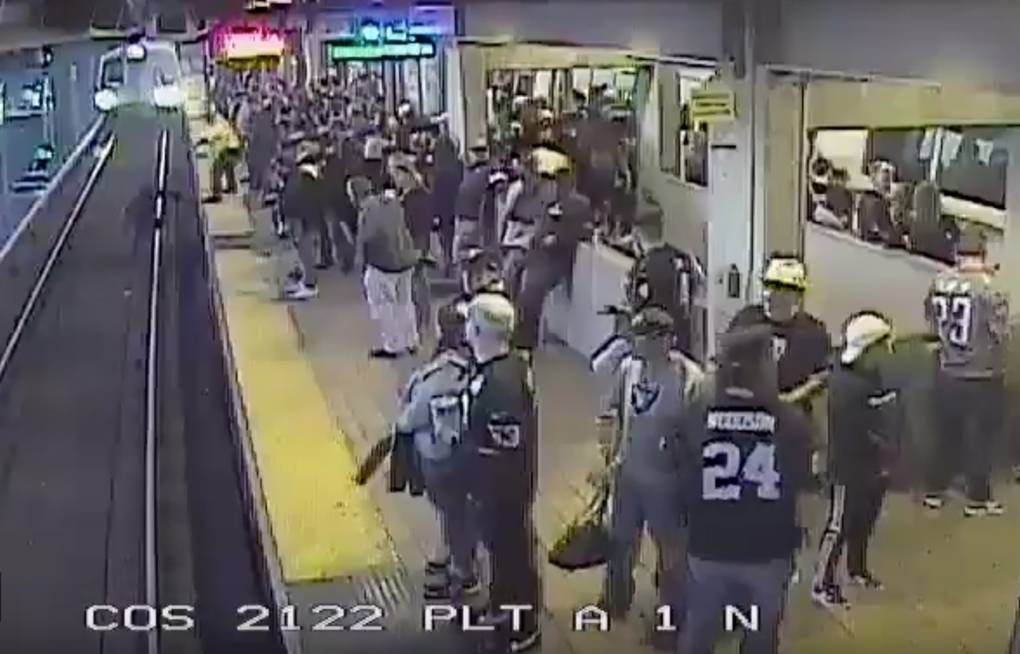
"caption": "BART security footage captured worker John O'Connor pulling a man up off the tracks at the Oakland Coliseum Station on Sunday seconds before a train arrives.",
"description": "BART security footage captured worker John O'Connor pulling a man up off the tracks at the Oakland Coliseum station on Sunday seconds before a train arrives.",
"title": "Screen Shot 2019-11-04 at 11.59.38 AM",
"credit": "BART/Twitter",
"status": "inherit",
"isLoading": false,
"fetchFailed": false
},
"news_11777245": {
"type": "attachments",
"id": "news_11777245",
"meta": {
"index": "attachments_1716263798",
"site": "news",
"id": "11777245",
"found": true
},
"parent": 11777237,
"imgSizes": {
"apple_news_ca_landscape_5_5": {
"file": "https://ww2.kqed.org/app/uploads/sites/10/2019/09/map-2-1044x591.png",
"width": 1044,
"mimeType": "image/png",
"height": 591
},
"apple_news_ca_square_4_0": {
"file": "https://ww2.kqed.org/app/uploads/sites/10/2019/09/map-2-470x470.png",
"width": 470,
"mimeType": "image/png",
"height": 470
},
"twentyfourteen-full-width": {
"file": "https://ww2.kqed.org/app/uploads/sites/10/2019/09/map-2-1038x576.png",
"width": 1038,
"mimeType": "image/png",
"height": 576
},
"thumbnail": {
"file": "https://ww2.kqed.org/app/uploads/sites/10/2019/09/map-2-160x81.png",
"width": 160,
"mimeType": "image/png",
"height": 81
},
"post-thumbnail": {
"file": "https://ww2.kqed.org/app/uploads/sites/10/2019/09/map-2-672x372.png",
"width": 672,
"mimeType": "image/png",
"height": 372
},
"kqedFullSize": {
"file": "https://ww2.kqed.org/app/uploads/sites/10/2019/09/map-2.png",
"width": 1166,
"height": 591
},
"apple_news_ca_landscape_4_7": {
"file": "https://ww2.kqed.org/app/uploads/sites/10/2019/09/map-2-632x474.png",
"width": 632,
"mimeType": "image/png",
"height": 474
},
"large": {
"file": "https://ww2.kqed.org/app/uploads/sites/10/2019/09/map-2-1020x517.png",
"width": 1020,
"mimeType": "image/png",
"height": 517
},
"apple_news_ca_landscape_4_0": {
"file": "https://ww2.kqed.org/app/uploads/sites/10/2019/09/map-2-536x402.png",
"width": 536,
"mimeType": "image/png",
"height": 402
},
"apple_news_ca_portrait_12_9": {
"file": "https://ww2.kqed.org/app/uploads/sites/10/2019/09/map-2-1122x591.png",
"width": 1122,
"mimeType": "image/png",
"height": 591
},
"medium": {
"file": "https://ww2.kqed.org/app/uploads/sites/10/2019/09/map-2-800x405.png",
"width": 800,
"mimeType": "image/png",
"height": 405
},
"apple_news_ca_portrait_4_0": {
"file": "https://ww2.kqed.org/app/uploads/sites/10/2019/09/map-2-354x472.png",
"width": 354,
"mimeType": "image/png",
"height": 472
},
"apple_news_ca_portrait_9_7": {
"file": "https://ww2.kqed.org/app/uploads/sites/10/2019/09/map-2-840x591.png",
"width": 840,
"mimeType": "image/png",
"height": 591
},
"apple_news_ca_square_9_7": {
"file": "https://ww2.kqed.org/app/uploads/sites/10/2019/09/map-2-1104x591.png",
"width": 1104,
"mimeType": "image/png",
"height": 591
},
"apple_news_ca_portrait_4_7": {
"file": "https://ww2.kqed.org/app/uploads/sites/10/2019/09/map-2-414x552.png",
"width": 414,
"mimeType": "image/png",
"height": 552
},
"apple_news_ca_portrait_5_5": {
"file": "https://ww2.kqed.org/app/uploads/sites/10/2019/09/map-2-687x591.png",
"width": 687,
"mimeType": "image/png",
"height": 591
},
"apple_news_ca_square_4_7": {
"file": "https://ww2.kqed.org/app/uploads/sites/10/2019/09/map-2-550x550.png",
"width": 550,
"mimeType": "image/png",
"height": 550
},
"apple_news_ca_square_5_5": {
"file": "https://ww2.kqed.org/app/uploads/sites/10/2019/09/map-2-912x591.png",
"width": 912,
"mimeType": "image/png",
"height": 591
}
},
"publishDate": 1569771782,
"modified": 1569771819,
"caption": "A screengrab of the PG&E outage map, taken at 8:35 a.m. on Sunday, September 29, 2019. ",
"description": null,
"title": "map 2",
"credit": "PG&E Outage Map",
"status": "inherit",
"isLoading": false,
"fetchFailed": false
},
"news_11756864": {
"type": "attachments",
"id": "news_11756864",
"meta": {
"index": "attachments_1716263798",
"site": "news",
"id": "11756864",
"found": true
},
"parent": 11756855,
"imgSizes": {
"apple_news_ca_landscape_5_5": {
"file": "https://ww2.kqed.org/app/uploads/sites/10/2019/06/40761569103_49642bfced_o-1044x783.jpg",
"width": 1044,
"mimeType": "image/jpeg",
"height": 783
},
"apple_news_ca_square_4_0": {
"file": "https://ww2.kqed.org/app/uploads/sites/10/2019/06/40761569103_49642bfced_o-470x470.jpg",
"width": 470,
"mimeType": "image/jpeg",
"height": 470
},
"twentyfourteen-full-width": {
"file": "https://ww2.kqed.org/app/uploads/sites/10/2019/06/40761569103_49642bfced_o-1038x576.jpg",
"width": 1038,
"mimeType": "image/jpeg",
"height": 576
},
"thumbnail": {
"file": "https://ww2.kqed.org/app/uploads/sites/10/2019/06/40761569103_49642bfced_o-160x107.jpg",
"width": 160,
"mimeType": "image/jpeg",
"height": 107
},
"post-thumbnail": {
"file": "https://ww2.kqed.org/app/uploads/sites/10/2019/06/40761569103_49642bfced_o-672x372.jpg",
"width": 672,
"mimeType": "image/jpeg",
"height": 372
},
"kqedFullSize": {
"file": "https://ww2.kqed.org/app/uploads/sites/10/2019/06/40761569103_49642bfced_o-e1561403710931.jpg",
"width": 1920,
"height": 1284
},
"apple_news_ca_landscape_4_7": {
"file": "https://ww2.kqed.org/app/uploads/sites/10/2019/06/40761569103_49642bfced_o-632x474.jpg",
"width": 632,
"mimeType": "image/jpeg",
"height": 474
},
"large": {
"file": "https://ww2.kqed.org/app/uploads/sites/10/2019/06/40761569103_49642bfced_o-1020x682.jpg",
"width": 1020,
"mimeType": "image/jpeg",
"height": 682
},
"complete_open_graph": {
"file": "https://ww2.kqed.org/app/uploads/sites/10/2019/06/40761569103_49642bfced_o-1200x803.jpg",
"width": 1200,
"mimeType": "image/jpeg",
"height": 803
},
"apple_news_ca_landscape_4_0": {
"file": "https://ww2.kqed.org/app/uploads/sites/10/2019/06/40761569103_49642bfced_o-536x402.jpg",
"width": 536,
"mimeType": "image/jpeg",
"height": 402
},
"apple_news_ca_portrait_12_9": {
"file": "https://ww2.kqed.org/app/uploads/sites/10/2019/06/40761569103_49642bfced_o-1122x1496.jpg",
"width": 1122,
"mimeType": "image/jpeg",
"height": 1496
},
"medium": {
"file": "https://ww2.kqed.org/app/uploads/sites/10/2019/06/40761569103_49642bfced_o-800x535.jpg",
"width": 800,
"mimeType": "image/jpeg",
"height": 535
},
"apple_news_ca_portrait_4_0": {
"file": "https://ww2.kqed.org/app/uploads/sites/10/2019/06/40761569103_49642bfced_o-354x472.jpg",
"width": 354,
"mimeType": "image/jpeg",
"height": 472
},
"apple_news_ca_portrait_9_7": {
"file": "https://ww2.kqed.org/app/uploads/sites/10/2019/06/40761569103_49642bfced_o-840x1120.jpg",
"width": 840,
"mimeType": "image/jpeg",
"height": 1120
},
"apple_news_ca_landscape_12_9": {
"file": "https://ww2.kqed.org/app/uploads/sites/10/2019/06/40761569103_49642bfced_o-1832x1374.jpg",
"width": 1832,
"mimeType": "image/jpeg",
"height": 1374
},
"apple_news_ca_square_9_7": {
"file": "https://ww2.kqed.org/app/uploads/sites/10/2019/06/40761569103_49642bfced_o-1104x1104.jpg",
"width": 1104,
"mimeType": "image/jpeg",
"height": 1104
},
"apple_news_ca_portrait_4_7": {
"file": "https://ww2.kqed.org/app/uploads/sites/10/2019/06/40761569103_49642bfced_o-414x552.jpg",
"width": 414,
"mimeType": "image/jpeg",
"height": 552
},
"apple_news_ca_square_12_9": {
"file": "https://ww2.kqed.org/app/uploads/sites/10/2019/06/40761569103_49642bfced_o-1472x1472.jpg",
"width": 1472,
"mimeType": "image/jpeg",
"height": 1472
},
"apple_news_ca_portrait_5_5": {
"file": "https://ww2.kqed.org/app/uploads/sites/10/2019/06/40761569103_49642bfced_o-687x916.jpg",
"width": 687,
"mimeType": "image/jpeg",
"height": 916
},
"full-width": {
"file": "https://ww2.kqed.org/app/uploads/sites/10/2019/06/40761569103_49642bfced_o-1920x1284.jpg",
"width": 1920,
"mimeType": "image/jpeg",
"height": 1284
},
"apple_news_ca_square_4_7": {
"file": "https://ww2.kqed.org/app/uploads/sites/10/2019/06/40761569103_49642bfced_o-550x550.jpg",
"width": 550,
"mimeType": "image/jpeg",
"height": 550
},
"apple_news_ca_landscape_9_7": {
"file": "https://ww2.kqed.org/app/uploads/sites/10/2019/06/40761569103_49642bfced_o-1376x1032.jpg",
"width": 1376,
"mimeType": "image/jpeg",
"height": 1032
},
"apple_news_ca_square_5_5": {
"file": "https://ww2.kqed.org/app/uploads/sites/10/2019/06/40761569103_49642bfced_o-912x912.jpg",
"width": 912,
"mimeType": "image/jpeg",
"height": 912
}
},
"publishDate": 1561403597,
"modified": 1561406318,
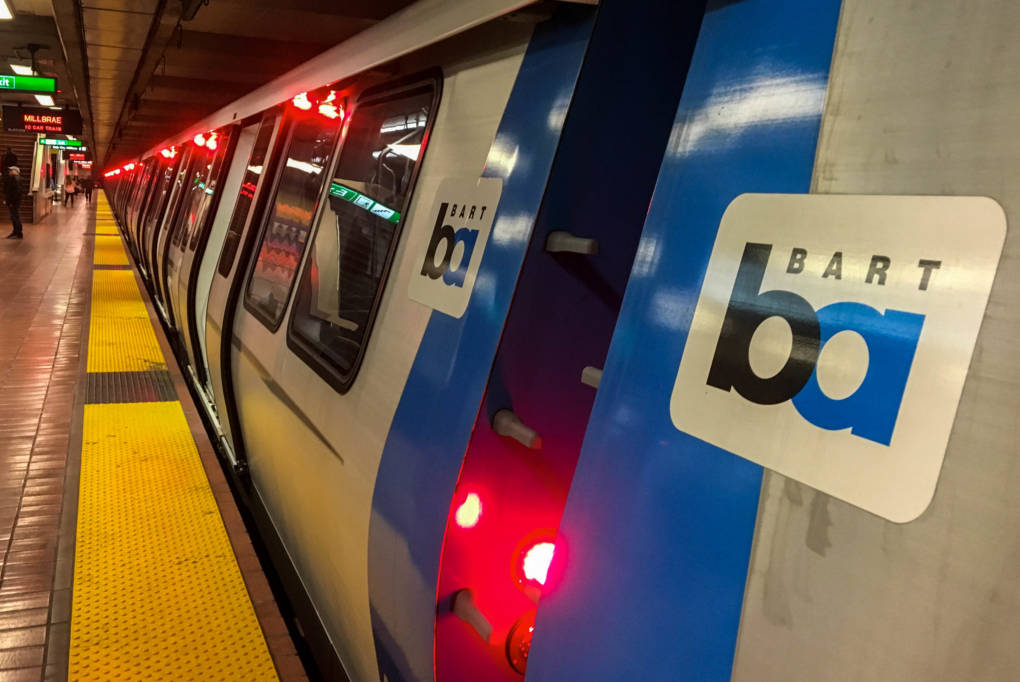
"caption": "One of BART's new Fleet of the Future trains at San Francisco's 16th Street/Mission Station.",
"description": null,
"title": "BART-Fleet of the Future",
"credit": "Dan Brekke/KQED",
"status": "inherit",
"isLoading": false,
"fetchFailed": false
},
"news_11764575": {
"type": "attachments",
"id": "news_11764575",
"meta": {
"index": "attachments_1716263798",
"site": "news",
"id": "11764575",
"found": true
},
"parent": 11763171,
"imgSizes": {
"apple_news_ca_landscape_5_5": {
"file": "https://ww2.kqed.org/app/uploads/sites/10/2019/07/BART3-2-1044x783.jpg",
"width": 1044,
"mimeType": "image/jpeg",
"height": 783
},
"apple_news_ca_square_4_0": {
"file": "https://ww2.kqed.org/app/uploads/sites/10/2019/07/BART3-2-470x470.jpg",
"width": 470,
"mimeType": "image/jpeg",
"height": 470
},
"twentyfourteen-full-width": {
"file": "https://ww2.kqed.org/app/uploads/sites/10/2019/07/BART3-2-1038x576.jpg",
"width": 1038,
"mimeType": "image/jpeg",
"height": 576
},
"thumbnail": {
"file": "https://ww2.kqed.org/app/uploads/sites/10/2019/07/BART3-2-160x120.jpg",
"width": 160,
"mimeType": "image/jpeg",
"height": 120
},
"post-thumbnail": {
"file": "https://ww2.kqed.org/app/uploads/sites/10/2019/07/BART3-2-672x372.jpg",
"width": 672,
"mimeType": "image/jpeg",
"height": 372
},
"kqedFullSize": {
"file": "https://ww2.kqed.org/app/uploads/sites/10/2019/07/BART3-2.jpg",
"width": 1920,
"height": 1440
},
"apple_news_ca_landscape_4_7": {
"file": "https://ww2.kqed.org/app/uploads/sites/10/2019/07/BART3-2-632x474.jpg",
"width": 632,
"mimeType": "image/jpeg",
"height": 474
},
"large": {
"file": "https://ww2.kqed.org/app/uploads/sites/10/2019/07/BART3-2-1020x765.jpg",
"width": 1020,
"mimeType": "image/jpeg",
"height": 765
},
"complete_open_graph": {
"file": "https://ww2.kqed.org/app/uploads/sites/10/2019/07/BART3-2-1200x900.jpg",
"width": 1200,
"mimeType": "image/jpeg",
"height": 900
},
"apple_news_ca_landscape_4_0": {
"file": "https://ww2.kqed.org/app/uploads/sites/10/2019/07/BART3-2-536x402.jpg",
"width": 536,
"mimeType": "image/jpeg",
"height": 402
},
"apple_news_ca_portrait_12_9": {
"file": "https://ww2.kqed.org/app/uploads/sites/10/2019/07/BART3-2-1122x1440.jpg",
"width": 1122,
"mimeType": "image/jpeg",
"height": 1440
},
"medium": {
"file": "https://ww2.kqed.org/app/uploads/sites/10/2019/07/BART3-2-800x600.jpg",
"width": 800,
"mimeType": "image/jpeg",
"height": 600
},
"apple_news_ca_portrait_4_0": {
"file": "https://ww2.kqed.org/app/uploads/sites/10/2019/07/BART3-2-354x472.jpg",
"width": 354,
"mimeType": "image/jpeg",
"height": 472
},
"apple_news_ca_portrait_9_7": {
"file": "https://ww2.kqed.org/app/uploads/sites/10/2019/07/BART3-2-840x1120.jpg",
"width": 840,
"mimeType": "image/jpeg",
"height": 1120
},
"apple_news_ca_landscape_12_9": {
"file": "https://ww2.kqed.org/app/uploads/sites/10/2019/07/BART3-2-1832x1374.jpg",
"width": 1832,
"mimeType": "image/jpeg",
"height": 1374
},
"apple_news_ca_square_9_7": {
"file": "https://ww2.kqed.org/app/uploads/sites/10/2019/07/BART3-2-1104x1104.jpg",
"width": 1104,
"mimeType": "image/jpeg",
"height": 1104
},
"apple_news_ca_portrait_4_7": {
"file": "https://ww2.kqed.org/app/uploads/sites/10/2019/07/BART3-2-414x552.jpg",
"width": 414,
"mimeType": "image/jpeg",
"height": 552
},
"apple_news_ca_square_12_9": {
"file": "https://ww2.kqed.org/app/uploads/sites/10/2019/07/BART3-2-1472x1440.jpg",
"width": 1472,
"mimeType": "image/jpeg",
"height": 1440
},
"apple_news_ca_portrait_5_5": {
"file": "https://ww2.kqed.org/app/uploads/sites/10/2019/07/BART3-2-687x916.jpg",
"width": 687,
"mimeType": "image/jpeg",
"height": 916
},
"full-width": {
"file": "https://ww2.kqed.org/app/uploads/sites/10/2019/07/BART3-2-1920x1440.jpg",
"width": 1920,
"mimeType": "image/jpeg",
"height": 1440
},
"apple_news_ca_square_4_7": {
"file": "https://ww2.kqed.org/app/uploads/sites/10/2019/07/BART3-2-550x550.jpg",
"width": 550,
"mimeType": "image/jpeg",
"height": 550
},
"apple_news_ca_landscape_9_7": {
"file": "https://ww2.kqed.org/app/uploads/sites/10/2019/07/BART3-2-1376x1032.jpg",
"width": 1376,
"mimeType": "image/jpeg",
"height": 1032
},
"apple_news_ca_square_5_5": {
"file": "https://ww2.kqed.org/app/uploads/sites/10/2019/07/BART3-2-912x912.jpg",
"width": 912,
"mimeType": "image/jpeg",
"height": 912
}
},
"publishDate": 1564598839,
"modified": 1568141939,
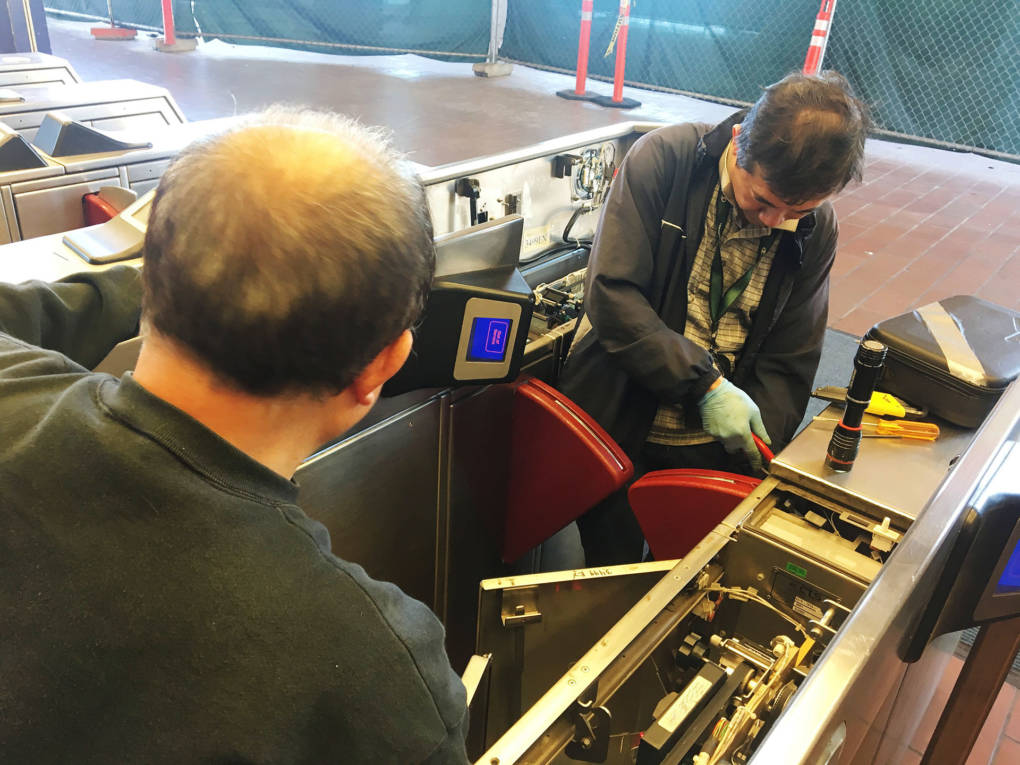
"caption": "A BART repair crew fixing one of the new gate prototypes at Fruitvale Station.",
"description": null,
"title": "BART-Fruitvale Station-Fare Gates",
"credit": "Matthew Green/KQED",
"status": "inherit",
"isLoading": false,
"fetchFailed": false
},
"news_11767447": {
"type": "attachments",
"id": "news_11767447",
"meta": {
"index": "attachments_1716263798",
"site": "news",
"id": "11767447",
"found": true
},
"parent": 11767445,
"imgSizes": {
"apple_news_ca_square_4_0": {
"file": "https://ww2.kqed.org/app/uploads/sites/10/2019/08/C35-crane-470x470.png",
"width": 470,
"mimeType": "image/png",
"height": 470
},
"twentyfourteen-full-width": {
"file": "https://ww2.kqed.org/app/uploads/sites/10/2019/08/C35-crane-896x576.png",
"width": 896,
"mimeType": "image/png",
"height": 576
},
"thumbnail": {
"file": "https://ww2.kqed.org/app/uploads/sites/10/2019/08/C35-crane-160x120.png",
"width": 160,
"mimeType": "image/png",
"height": 120
},
"post-thumbnail": {
"file": "https://ww2.kqed.org/app/uploads/sites/10/2019/08/C35-crane-672x372.png",
"width": 672,
"mimeType": "image/png",
"height": 372
},
"kqedFullSize": {
"file": "https://ww2.kqed.org/app/uploads/sites/10/2019/08/C35-crane.png",
"width": 896,
"height": 673
},
"apple_news_ca_landscape_4_7": {
"file": "https://ww2.kqed.org/app/uploads/sites/10/2019/08/C35-crane-632x474.png",
"width": 632,
"mimeType": "image/png",
"height": 474
},
"apple_news_ca_landscape_4_0": {
"file": "https://ww2.kqed.org/app/uploads/sites/10/2019/08/C35-crane-536x402.png",
"width": 536,
"mimeType": "image/png",
"height": 402
},
"medium": {
"file": "https://ww2.kqed.org/app/uploads/sites/10/2019/08/C35-crane-800x601.png",
"width": 800,
"mimeType": "image/png",
"height": 601
},
"apple_news_ca_portrait_4_0": {
"file": "https://ww2.kqed.org/app/uploads/sites/10/2019/08/C35-crane-354x472.png",
"width": 354,
"mimeType": "image/png",
"height": 472
},
"apple_news_ca_portrait_9_7": {
"file": "https://ww2.kqed.org/app/uploads/sites/10/2019/08/C35-crane-840x673.png",
"width": 840,
"mimeType": "image/png",
"height": 673
},
"apple_news_ca_portrait_4_7": {
"file": "https://ww2.kqed.org/app/uploads/sites/10/2019/08/C35-crane-414x552.png",
"width": 414,
"mimeType": "image/png",
"height": 552
},
"apple_news_ca_portrait_5_5": {
"file": "https://ww2.kqed.org/app/uploads/sites/10/2019/08/C35-crane-687x673.png",
"width": 687,
"mimeType": "image/png",
"height": 673
},
"apple_news_ca_square_4_7": {
"file": "https://ww2.kqed.org/app/uploads/sites/10/2019/08/C35-crane-550x550.png",
"width": 550,
"mimeType": "image/png",
"height": 550
}
},
"publishDate": 1565742611,
"modified": 1565743086,
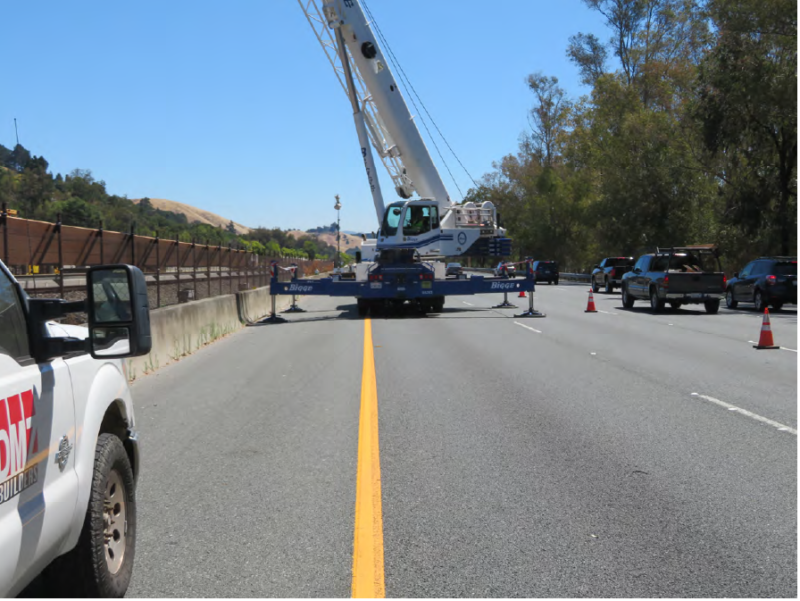
"caption": "The 265-ton crane BART will deploy in eastbound lanes of Highway 24 during a rail replacement project near the Lafayette station on six weekends through mid-October. The crane is shown during work at the site in early August 2019. ",
"description": null,
"title": "BART-Crane-Highway 24",
"credit": "BART",
"status": "inherit",
"isLoading": false,
"fetchFailed": false
},
"news_11765087": {
"type": "attachments",
"id": "news_11765087",
"meta": {
"index": "attachments_1716263798",
"site": "news",
"id": "11765087",
"found": true
},
"parent": 11765027,
"imgSizes": {
"apple_news_ca_landscape_5_5": {
"file": "https://ww2.kqed.org/app/uploads/sites/10/2019/08/Bridge-Bay-Area-Traffic-Jam-1044x783.jpg",
"width": 1044,
"mimeType": "image/jpeg",
"height": 783
},
"apple_news_ca_square_4_0": {
"file": "https://ww2.kqed.org/app/uploads/sites/10/2019/08/Bridge-Bay-Area-Traffic-Jam-470x470.jpg",
"width": 470,
"mimeType": "image/jpeg",
"height": 470
},
"twentyfourteen-full-width": {
"file": "https://ww2.kqed.org/app/uploads/sites/10/2019/08/Bridge-Bay-Area-Traffic-Jam-1038x576.jpg",
"width": 1038,
"mimeType": "image/jpeg",
"height": 576
},
"thumbnail": {
"file": "https://ww2.kqed.org/app/uploads/sites/10/2019/08/Bridge-Bay-Area-Traffic-Jam-160x76.jpg",
"width": 160,
"mimeType": "image/jpeg",
"height": 76
},
"post-thumbnail": {
"file": "https://ww2.kqed.org/app/uploads/sites/10/2019/08/Bridge-Bay-Area-Traffic-Jam-672x372.jpg",
"width": 672,
"mimeType": "image/jpeg",
"height": 372
},
"kqedFullSize": {
"file": "https://ww2.kqed.org/app/uploads/sites/10/2019/08/Bridge-Bay-Area-Traffic-Jam.jpg",
"width": 1920,
"height": 908
},
"apple_news_ca_landscape_4_7": {
"file": "https://ww2.kqed.org/app/uploads/sites/10/2019/08/Bridge-Bay-Area-Traffic-Jam-632x474.jpg",
"width": 632,
"mimeType": "image/jpeg",
"height": 474
},
"large": {
"file": "https://ww2.kqed.org/app/uploads/sites/10/2019/08/Bridge-Bay-Area-Traffic-Jam-1020x482.jpg",
"width": 1020,
"mimeType": "image/jpeg",
"height": 482
},
"complete_open_graph": {
"file": "https://ww2.kqed.org/app/uploads/sites/10/2019/08/Bridge-Bay-Area-Traffic-Jam-1200x568.jpg",
"width": 1200,
"mimeType": "image/jpeg",
"height": 568
},
"apple_news_ca_landscape_4_0": {
"file": "https://ww2.kqed.org/app/uploads/sites/10/2019/08/Bridge-Bay-Area-Traffic-Jam-536x402.jpg",
"width": 536,
"mimeType": "image/jpeg",
"height": 402
},
"apple_news_ca_portrait_12_9": {
"file": "https://ww2.kqed.org/app/uploads/sites/10/2019/08/Bridge-Bay-Area-Traffic-Jam-1122x908.jpg",
"width": 1122,
"mimeType": "image/jpeg",
"height": 908
},
"medium": {
"file": "https://ww2.kqed.org/app/uploads/sites/10/2019/08/Bridge-Bay-Area-Traffic-Jam-800x378.jpg",
"width": 800,
"mimeType": "image/jpeg",
"height": 378
},
"apple_news_ca_portrait_4_0": {
"file": "https://ww2.kqed.org/app/uploads/sites/10/2019/08/Bridge-Bay-Area-Traffic-Jam-354x472.jpg",
"width": 354,
"mimeType": "image/jpeg",
"height": 472
},
"apple_news_ca_portrait_9_7": {
"file": "https://ww2.kqed.org/app/uploads/sites/10/2019/08/Bridge-Bay-Area-Traffic-Jam-840x908.jpg",
"width": 840,
"mimeType": "image/jpeg",
"height": 908
},
"apple_news_ca_landscape_12_9": {
"file": "https://ww2.kqed.org/app/uploads/sites/10/2019/08/Bridge-Bay-Area-Traffic-Jam-1832x908.jpg",
"width": 1832,
"mimeType": "image/jpeg",
"height": 908
},
"apple_news_ca_square_9_7": {
"file": "https://ww2.kqed.org/app/uploads/sites/10/2019/08/Bridge-Bay-Area-Traffic-Jam-1104x908.jpg",
"width": 1104,
"mimeType": "image/jpeg",
"height": 908
},
"apple_news_ca_portrait_4_7": {
"file": "https://ww2.kqed.org/app/uploads/sites/10/2019/08/Bridge-Bay-Area-Traffic-Jam-414x552.jpg",
"width": 414,
"mimeType": "image/jpeg",
"height": 552
},
"apple_news_ca_square_12_9": {
"file": "https://ww2.kqed.org/app/uploads/sites/10/2019/08/Bridge-Bay-Area-Traffic-Jam-1472x908.jpg",
"width": 1472,
"mimeType": "image/jpeg",
"height": 908
},
"apple_news_ca_portrait_5_5": {
"file": "https://ww2.kqed.org/app/uploads/sites/10/2019/08/Bridge-Bay-Area-Traffic-Jam-687x908.jpg",
"width": 687,
"mimeType": "image/jpeg",
"height": 908
},
"full-width": {
"file": "https://ww2.kqed.org/app/uploads/sites/10/2019/08/Bridge-Bay-Area-Traffic-Jam-1920x908.jpg",
"width": 1920,
"mimeType": "image/jpeg",
"height": 908
},
"apple_news_ca_square_4_7": {
"file": "https://ww2.kqed.org/app/uploads/sites/10/2019/08/Bridge-Bay-Area-Traffic-Jam-550x550.jpg",
"width": 550,
"mimeType": "image/jpeg",
"height": 550
},
"apple_news_ca_landscape_9_7": {
"file": "https://ww2.kqed.org/app/uploads/sites/10/2019/08/Bridge-Bay-Area-Traffic-Jam-1376x908.jpg",
"width": 1376,
"mimeType": "image/jpeg",
"height": 908
},
"apple_news_ca_square_5_5": {
"file": "https://ww2.kqed.org/app/uploads/sites/10/2019/08/Bridge-Bay-Area-Traffic-Jam-912x908.jpg",
"width": 912,
"mimeType": "image/jpeg",
"height": 908
}
},
"publishDate": 1564703869,
"modified": 1564703892,
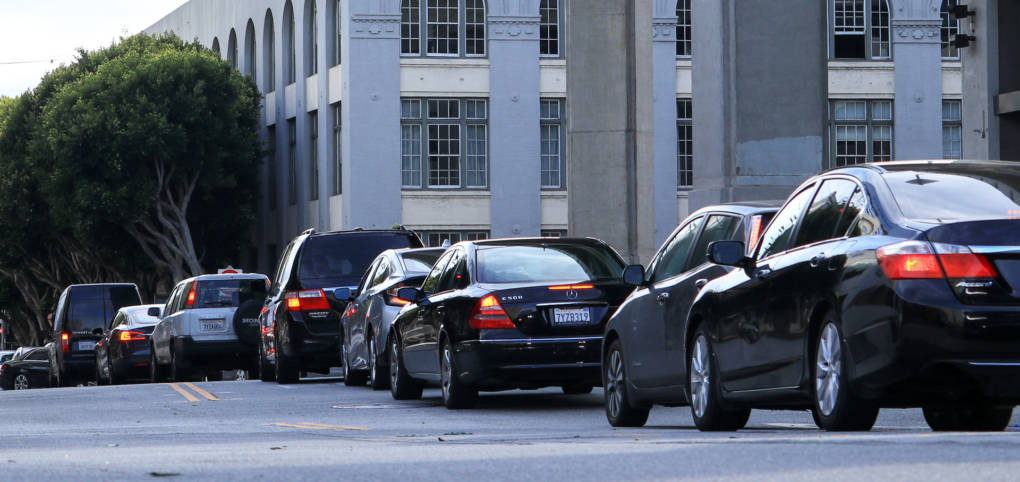
"caption": "Traffic piles up near an entrance to the Bay Bridge on Bryant Street in downtown San Francisco during rush hour on May 13, 2019.",
"description": "Traffic piles up near an entrance to the Bay Bridge on Bryant Street in downtown San Francisco during rush hour on May 13, 2019.",
"title": "Bridge-Bay-Area-Traffic-Jam",
"credit": "Sruti Mamidanna/KQED",
"status": "inherit",
"isLoading": false,
"fetchFailed": false
},
"news_11763976": {
"type": "attachments",
"id": "news_11763976",
"meta": {
"index": "attachments_1716263798",
"site": "news",
"id": "11763976",
"found": true
},
"parent": 11763171,
"imgSizes": {
"apple_news_ca_landscape_5_5": {
"file": "https://ww2.kqed.org/app/uploads/sites/10/2019/07/BARTfeature-e1564427092922-1044x783.jpg",
"width": 1044,
"mimeType": "image/jpeg",
"height": 783
},
"apple_news_ca_square_4_0": {
"file": "https://ww2.kqed.org/app/uploads/sites/10/2019/07/BARTfeature-e1564427092922-470x470.jpg",
"width": 470,
"mimeType": "image/jpeg",
"height": 470
},
"twentyfourteen-full-width": {
"file": "https://ww2.kqed.org/app/uploads/sites/10/2019/07/BARTfeature-e1564427092922-1038x576.jpg",
"width": 1038,
"mimeType": "image/jpeg",
"height": 576
},
"thumbnail": {
"file": "https://ww2.kqed.org/app/uploads/sites/10/2019/07/BARTfeature-e1564427092922-160x118.jpg",
"width": 160,
"mimeType": "image/jpeg",
"height": 118
},
"post-thumbnail": {
"file": "https://ww2.kqed.org/app/uploads/sites/10/2019/07/BARTfeature-e1564427092922-672x372.jpg",
"width": 672,
"mimeType": "image/jpeg",
"height": 372
},
"kqedFullSize": {
"file": "https://ww2.kqed.org/app/uploads/sites/10/2019/07/BARTfeature-e1564427092922.jpg",
"width": 1920,
"height": 1420
},
"apple_news_ca_landscape_4_7": {
"file": "https://ww2.kqed.org/app/uploads/sites/10/2019/07/BARTfeature-e1564427092922-632x474.jpg",
"width": 632,
"mimeType": "image/jpeg",
"height": 474
},
"large": {
"file": "https://ww2.kqed.org/app/uploads/sites/10/2019/07/BARTfeature-e1564427092922-1020x754.jpg",
"width": 1020,
"mimeType": "image/jpeg",
"height": 754
},
"complete_open_graph": {
"file": "https://ww2.kqed.org/app/uploads/sites/10/2019/07/BARTfeature-e1564427092922-1200x888.jpg",
"width": 1200,
"mimeType": "image/jpeg",
"height": 888
},
"apple_news_ca_landscape_4_0": {
"file": "https://ww2.kqed.org/app/uploads/sites/10/2019/07/BARTfeature-e1564427092922-536x402.jpg",
"width": 536,
"mimeType": "image/jpeg",
"height": 402
},
"apple_news_ca_portrait_12_9": {
"file": "https://ww2.kqed.org/app/uploads/sites/10/2019/07/BARTfeature-e1564427092922-1122x1420.jpg",
"width": 1122,
"mimeType": "image/jpeg",
"height": 1420
},
"medium": {
"file": "https://ww2.kqed.org/app/uploads/sites/10/2019/07/BARTfeature-e1564427092922-800x592.jpg",
"width": 800,
"mimeType": "image/jpeg",
"height": 592
},
"apple_news_ca_portrait_4_0": {
"file": "https://ww2.kqed.org/app/uploads/sites/10/2019/07/BARTfeature-e1564427092922-354x472.jpg",
"width": 354,
"mimeType": "image/jpeg",
"height": 472
},
"apple_news_ca_portrait_9_7": {
"file": "https://ww2.kqed.org/app/uploads/sites/10/2019/07/BARTfeature-e1564427092922-840x1120.jpg",
"width": 840,
"mimeType": "image/jpeg",
"height": 1120
},
"apple_news_ca_landscape_12_9": {
"file": "https://ww2.kqed.org/app/uploads/sites/10/2019/07/BARTfeature-e1564427092922-1832x1374.jpg",
"width": 1832,
"mimeType": "image/jpeg",
"height": 1374
},
"apple_news_ca_square_9_7": {
"file": "https://ww2.kqed.org/app/uploads/sites/10/2019/07/BARTfeature-e1564427092922-1104x1104.jpg",
"width": 1104,
"mimeType": "image/jpeg",
"height": 1104
},
"apple_news_ca_portrait_4_7": {
"file": "https://ww2.kqed.org/app/uploads/sites/10/2019/07/BARTfeature-e1564427092922-414x552.jpg",
"width": 414,
"mimeType": "image/jpeg",
"height": 552
},
"apple_news_ca_square_12_9": {
"file": "https://ww2.kqed.org/app/uploads/sites/10/2019/07/BARTfeature-e1564427092922-1472x1420.jpg",
"width": 1472,
"mimeType": "image/jpeg",
"height": 1420
},
"apple_news_ca_portrait_5_5": {
"file": "https://ww2.kqed.org/app/uploads/sites/10/2019/07/BARTfeature-e1564427092922-687x916.jpg",
"width": 687,
"mimeType": "image/jpeg",
"height": 916
},
"full-width": {
"file": "https://ww2.kqed.org/app/uploads/sites/10/2019/07/BARTfeature-e1564427092922-1920x1420.jpg",
"width": 1920,
"mimeType": "image/jpeg",
"height": 1420
},
"apple_news_ca_square_4_7": {
"file": "https://ww2.kqed.org/app/uploads/sites/10/2019/07/BARTfeature-e1564427092922-550x550.jpg",
"width": 550,
"mimeType": "image/jpeg",
"height": 550
},
"apple_news_ca_landscape_9_7": {
"file": "https://ww2.kqed.org/app/uploads/sites/10/2019/07/BARTfeature-e1564427092922-1376x1032.jpg",
"width": 1376,
"mimeType": "image/jpeg",
"height": 1032
},
"apple_news_ca_square_5_5": {
"file": "https://ww2.kqed.org/app/uploads/sites/10/2019/07/BARTfeature-e1564427092922-912x912.jpg",
"width": 912,
"mimeType": "image/jpeg",
"height": 912
}
},
"publishDate": 1564427006,
"modified": 1564441133,
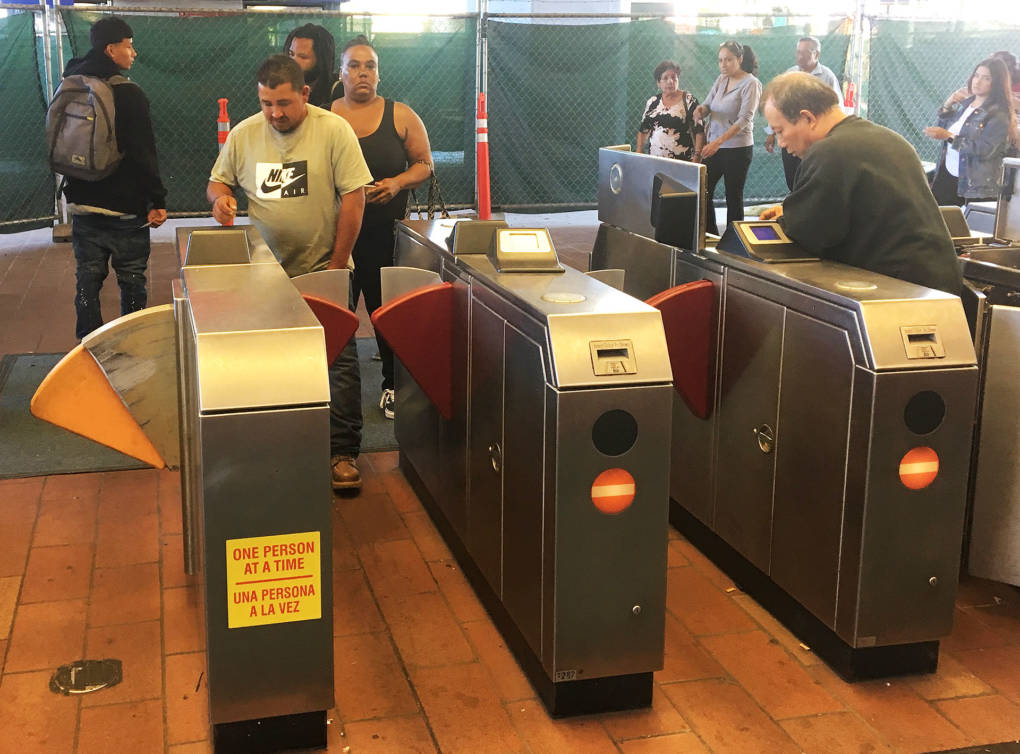
"caption": "BART riders wait to use a limited number of newly modified fare gates at Fruitvale Station, as repairman fixes one of several malfunctioning machines.\n",
"description": null,
"title": "BARTfeature",
"credit": "Matthew Green/KQED",
"status": "inherit",
"isLoading": false,
"fetchFailed": false
},
"news_11762814": {
"type": "attachments",
"id": "news_11762814",
"meta": {
"index": "attachments_1716263798",
"site": "news",
"id": "11762814",
"found": true
},
"parent": 11762806,
"imgSizes": {
"apple_news_ca_landscape_5_5": {
"file": "https://ww2.kqed.org/app/uploads/sites/10/2019/07/bartevasion_072219_final-1044x783.jpg",
"width": 1044,
"mimeType": "image/jpeg",
"height": 783
},
"apple_news_ca_square_4_0": {
"file": "https://ww2.kqed.org/app/uploads/sites/10/2019/07/bartevasion_072219_final-470x470.jpg",
"width": 470,
"mimeType": "image/jpeg",
"height": 470
},
"twentyfourteen-full-width": {
"file": "https://ww2.kqed.org/app/uploads/sites/10/2019/07/bartevasion_072219_final-1038x576.jpg",
"width": 1038,
"mimeType": "image/jpeg",
"height": 576
},
"thumbnail": {
"file": "https://ww2.kqed.org/app/uploads/sites/10/2019/07/bartevasion_072219_final-160x119.jpg",
"width": 160,
"mimeType": "image/jpeg",
"height": 119
},
"post-thumbnail": {
"file": "https://ww2.kqed.org/app/uploads/sites/10/2019/07/bartevasion_072219_final-672x372.jpg",
"width": 672,
"mimeType": "image/jpeg",
"height": 372
},
"kqedFullSize": {
"file": "https://ww2.kqed.org/app/uploads/sites/10/2019/07/bartevasion_072219_final.jpg",
"width": 1920,
"height": 1433
},
"apple_news_ca_landscape_4_7": {
"file": "https://ww2.kqed.org/app/uploads/sites/10/2019/07/bartevasion_072219_final-632x474.jpg",
"width": 632,
"mimeType": "image/jpeg",
"height": 474
},
"large": {
"file": "https://ww2.kqed.org/app/uploads/sites/10/2019/07/bartevasion_072219_final-1020x761.jpg",
"width": 1020,
"mimeType": "image/jpeg",
"height": 761
},
"complete_open_graph": {
"file": "https://ww2.kqed.org/app/uploads/sites/10/2019/07/bartevasion_072219_final-1200x896.jpg",
"width": 1200,
"mimeType": "image/jpeg",
"height": 896
},
"apple_news_ca_landscape_4_0": {
"file": "https://ww2.kqed.org/app/uploads/sites/10/2019/07/bartevasion_072219_final-536x402.jpg",
"width": 536,
"mimeType": "image/jpeg",
"height": 402
},
"apple_news_ca_portrait_12_9": {
"file": "https://ww2.kqed.org/app/uploads/sites/10/2019/07/bartevasion_072219_final-1122x1433.jpg",
"width": 1122,
"mimeType": "image/jpeg",
"height": 1433
},
"medium": {
"file": "https://ww2.kqed.org/app/uploads/sites/10/2019/07/bartevasion_072219_final-800x597.jpg",
"width": 800,
"mimeType": "image/jpeg",
"height": 597
},
"apple_news_ca_portrait_4_0": {
"file": "https://ww2.kqed.org/app/uploads/sites/10/2019/07/bartevasion_072219_final-354x472.jpg",
"width": 354,
"mimeType": "image/jpeg",
"height": 472
},
"apple_news_ca_portrait_9_7": {
"file": "https://ww2.kqed.org/app/uploads/sites/10/2019/07/bartevasion_072219_final-840x1120.jpg",
"width": 840,
"mimeType": "image/jpeg",
"height": 1120
},
"apple_news_ca_landscape_12_9": {
"file": "https://ww2.kqed.org/app/uploads/sites/10/2019/07/bartevasion_072219_final-1832x1374.jpg",
"width": 1832,
"mimeType": "image/jpeg",
"height": 1374
},
"apple_news_ca_square_9_7": {
"file": "https://ww2.kqed.org/app/uploads/sites/10/2019/07/bartevasion_072219_final-1104x1104.jpg",
"width": 1104,
"mimeType": "image/jpeg",
"height": 1104
},
"apple_news_ca_portrait_4_7": {
"file": "https://ww2.kqed.org/app/uploads/sites/10/2019/07/bartevasion_072219_final-414x552.jpg",
"width": 414,
"mimeType": "image/jpeg",
"height": 552
},
"apple_news_ca_square_12_9": {
"file": "https://ww2.kqed.org/app/uploads/sites/10/2019/07/bartevasion_072219_final-1472x1433.jpg",
"width": 1472,
"mimeType": "image/jpeg",
"height": 1433
},
"apple_news_ca_portrait_5_5": {
"file": "https://ww2.kqed.org/app/uploads/sites/10/2019/07/bartevasion_072219_final-687x916.jpg",
"width": 687,
"mimeType": "image/jpeg",
"height": 916
},
"full-width": {
"file": "https://ww2.kqed.org/app/uploads/sites/10/2019/07/bartevasion_072219_final-1920x1433.jpg",
"width": 1920,
"mimeType": "image/jpeg",
"height": 1433
},
"apple_news_ca_square_4_7": {
"file": "https://ww2.kqed.org/app/uploads/sites/10/2019/07/bartevasion_072219_final-550x550.jpg",
"width": 550,
"mimeType": "image/jpeg",
"height": 550
},
"apple_news_ca_landscape_9_7": {
"file": "https://ww2.kqed.org/app/uploads/sites/10/2019/07/bartevasion_072219_final-1376x1032.jpg",
"width": 1376,
"mimeType": "image/jpeg",
"height": 1032
},
"apple_news_ca_square_5_5": {
"file": "https://ww2.kqed.org/app/uploads/sites/10/2019/07/bartevasion_072219_final-912x912.jpg",
"width": 912,
"mimeType": "image/jpeg",
"height": 912
}
},
"publishDate": 1563836924,
"modified": 1563836959,
"caption": null,
"description": null,
"title": "bartevasion_072219_final",
"credit": null,
"status": "inherit",
"isLoading": false,
"fetchFailed": false
},
"news_11762731": {
"type": "attachments",
"id": "news_11762731",
"meta": {
"index": "attachments_1716263798",
"site": "news",
"id": "11762731",
"found": true
},
"parent": 11762715,
"imgSizes": {
"apple_news_ca_square_4_0": {
"file": "https://ww2.kqed.org/app/uploads/sites/10/2019/07/bartpigeon-470x470.jpg",
"width": 470,
"mimeType": "image/jpeg",
"height": 470
},
"thumbnail": {
"file": "https://ww2.kqed.org/app/uploads/sites/10/2019/07/bartpigeon-160x105.jpg",
"width": 160,
"mimeType": "image/jpeg",
"height": 105
},
"post-thumbnail": {
"file": "https://ww2.kqed.org/app/uploads/sites/10/2019/07/bartpigeon-672x372.jpg",
"width": 672,
"mimeType": "image/jpeg",
"height": 372
},
"kqedFullSize": {
"file": "https://ww2.kqed.org/app/uploads/sites/10/2019/07/bartpigeon.jpg",
"width": 768,
"height": 505
},
"apple_news_ca_landscape_4_7": {
"file": "https://ww2.kqed.org/app/uploads/sites/10/2019/07/bartpigeon-632x474.jpg",
"width": 632,
"mimeType": "image/jpeg",
"height": 474
},
"apple_news_ca_portrait_4_7": {
"file": "https://ww2.kqed.org/app/uploads/sites/10/2019/07/bartpigeon-414x505.jpg",
"width": 414,
"mimeType": "image/jpeg",
"height": 505
},
"apple_news_ca_portrait_5_5": {
"file": "https://ww2.kqed.org/app/uploads/sites/10/2019/07/bartpigeon-687x505.jpg",
"width": 687,
"mimeType": "image/jpeg",
"height": 505
},
"apple_news_ca_square_4_7": {
"file": "https://ww2.kqed.org/app/uploads/sites/10/2019/07/bartpigeon-550x505.jpg",
"width": 550,
"mimeType": "image/jpeg",
"height": 505
},
"apple_news_ca_landscape_4_0": {
"file": "https://ww2.kqed.org/app/uploads/sites/10/2019/07/bartpigeon-536x402.jpg",
"width": 536,
"mimeType": "image/jpeg",
"height": 402
},
"apple_news_ca_portrait_4_0": {
"file": "https://ww2.kqed.org/app/uploads/sites/10/2019/07/bartpigeon-354x472.jpg",
"width": 354,
"mimeType": "image/jpeg",
"height": 472
}
},
"publishDate": 1563821012,
"modified": 1563842211,
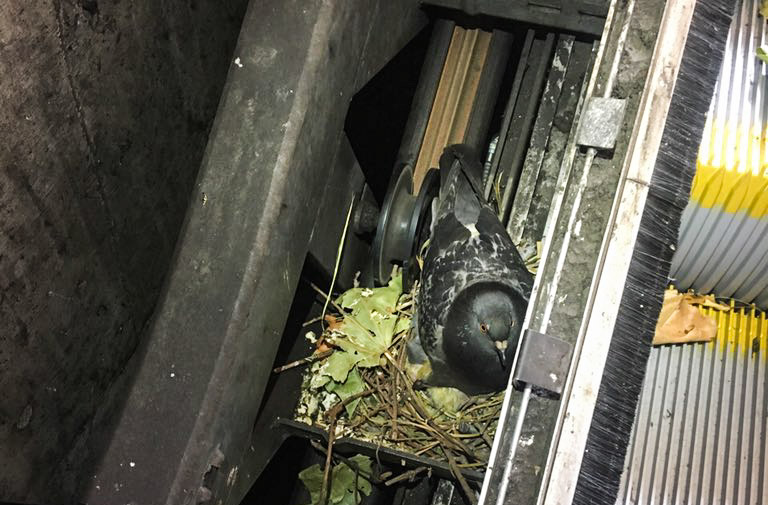
"caption": "A rock pigeon, aka Columbia livia, nesting in an escalator at BART's 24th/Mission station. The agency says the pigeon, which raised two hatchlings before departing in mid-July, delayed completion of an escalator overhaul by a month. ",
"description": null,
"title": "BART-Rock Pigeon",
"credit": "BART via Twitter",
"status": "inherit",
"isLoading": false,
"fetchFailed": false
}
},
"audioPlayerReducer": {
"postId": "stream_live",
"isPaused": true,
"isPlaying": false,
"pfsActive": false,
"pledgeModalIsOpen": true,
"playerDrawerIsOpen": false,
"liveAudioPlayStartedAt": 0,
"liveAudioPlayContext": ""
},
"authorsReducer": {
"byline_news_11777237": {
"type": "authors",
"id": "byline_news_11777237",
"meta": {
"override": true
},
"slug": "byline_news_11777237",
"name": "Bay City News Service, KQED Staff",
"isLoading": false
},
"danbrekke": {
"type": "authors",
"id": "222",
"meta": {
"index": "authors_1716337520",
"id": "222",
"found": true
},
"name": "Dan Brekke",
"firstName": "Dan",
"lastName": "Brekke",
"slug": "danbrekke",
"email": "dbrekke@kqed.org",
"display_author_email": true,
"staff_mastheads": [
"news",
"science"
],
"title": "KQED Editor and Reporter",
"bio": "Dan Brekke is a reporter and editor for KQED News, responsible for coverage of topics ranging from California water issues to the Bay Area's transportation challenges. In a newsroom career that began in Chicago in 1972, Dan has worked for \u003cem>The San Francisco Examiner,\u003c/em> Wired and TechTV and has been published in The New York Times, The New York Times Magazine, Business 2.0, Salon and elsewhere.\r\n\r\nSince joining KQED in 2007, Dan has reported, edited and produced both radio and online features and breaking news pieces. He has shared as both editor and reporter in four Society of Professional Journalists Norcal Excellence in Journalism awards and one Edward R. Murrow regional award. He was chosen for a spring 2017 residency at the Mesa Refuge to advance his research on California salmon.\r\n\r\nEmail Dan at: \u003ca href=\"mailto:dbrekke@kqed.org\">dbrekke@kqed.org\u003c/a>\r\n\r\n\u003cstrong>Twitter:\u003c/strong> \u003ca href=\"https://twitter.com/danbrekke\" rel=\"noopener noreferrer\">twitter.com/danbrekke\u003c/a>\r\n\u003cstrong>Facebook:\u003c/strong> \u003ca href=\"https://www.facebook.com/danbrekke\" rel=\"noopener noreferrer\">www.facebook.com/danbrekke\u003c/a>\r\n\u003cstrong>LinkedIn:\u003c/strong> \u003ca href=\"https://www.linkedin.com/in/danbrekke\" rel=\"noopener noreferrer\">www.linkedin.com/in/danbrekke\u003c/a>",
"avatar": "https://secure.gravatar.com/avatar/8f1f0d2a978fb3b23426c922c7e2af558fa36905b49c4ce76a97dc3c72d27226?s=600&d=mm&r=g",
"twitter": "danbrekke",
"bluesky": null,
"facebook": null,
"instagram": "https://www.instagram.com/dan.brekke/",
"linkedin": "https://www.linkedin.com/in/danbrekke/",
"sites": [
{
"site": "news",
"roles": [
"administrator",
"create_posts"
]
},
{
"site": "stateofhealth",
"roles": [
"editor"
]
},
{
"site": "science",
"roles": [
"editor"
]
},
{
"site": "quest",
"roles": [
"contributor"
]
},
{
"site": "food",
"roles": [
"contributor"
]
},
{
"site": "forum",
"roles": [
"contributor"
]
},
{
"site": "elections",
"roles": [
"editor"
]
},
{
"site": "liveblog",
"roles": [
"editor"
]
}
],
"headData": {
"title": "Dan Brekke | KQED",
"description": "KQED Editor and Reporter",
"ogImgSrc": "https://secure.gravatar.com/avatar/8f1f0d2a978fb3b23426c922c7e2af558fa36905b49c4ce76a97dc3c72d27226?s=600&d=mm&r=g",
"twImgSrc": "https://secure.gravatar.com/avatar/8f1f0d2a978fb3b23426c922c7e2af558fa36905b49c4ce76a97dc3c72d27226?s=600&d=mm&r=g"
},
"isLoading": false,
"link": "/author/danbrekke"
},
"kqednewsstaffandwires": {
"type": "authors",
"id": "237",
"meta": {
"index": "authors_1716337520",
"id": "237",
"found": true
},
"name": "KQED News Staff and Wires",
"firstName": "KQED News Staff and Wires",
"lastName": null,
"slug": "kqednewsstaffandwires",
"email": "onlinenewsstaff@kqed.org",
"display_author_email": false,
"staff_mastheads": [],
"title": null,
"bio": null,
"avatar": "https://secure.gravatar.com/avatar/72295af8ebbfbd19a4948f5271285664?s=600&d=blank&r=g",
"twitter": null,
"facebook": null,
"instagram": null,
"linkedin": null,
"sites": [
{
"site": "arts",
"roles": [
"contributor"
]
},
{
"site": "news",
"roles": [
"contributor"
]
},
{
"site": "lowdown",
"roles": [
"author"
]
},
{
"site": "stateofhealth",
"roles": [
"contributor"
]
},
{
"site": "food",
"roles": [
"author"
]
}
],
"headData": {
"title": "KQED News Staff and Wires | KQED",
"description": null,
"ogImgSrc": "https://secure.gravatar.com/avatar/72295af8ebbfbd19a4948f5271285664?s=600&d=blank&r=g",
"twImgSrc": "https://secure.gravatar.com/avatar/72295af8ebbfbd19a4948f5271285664?s=600&d=blank&r=g"
},
"isLoading": false,
"link": "/author/kqednewsstaffandwires"
},
"matthewgreen": {
"type": "authors",
"id": "1263",
"meta": {
"index": "authors_1716337520",
"id": "1263",
"found": true
},
"name": "Matthew Green",
"firstName": "Matthew",
"lastName": "Green",
"slug": "matthewgreen",
"email": "mgreen@kqed.org",
"display_author_email": false,
"staff_mastheads": [],
"title": "KQED Editor/Reporter",
"bio": "Matthew Green is a digital media producer for KQED News. He previously produced \u003ca href=\"http://www.kqed.org/lowdown\">The Lowdown\u003c/a>, KQED’s multimedia news education blog. Matthew's written for numerous Bay Area publications, including the Oakland Tribune and San Francisco Chronicle. He also taught journalism classes at Fremont High School in East Oakland.\r\n\r\nEmail: mgreen@kqed.org; Twitter: @MGreenKQED",
"avatar": "https://secure.gravatar.com/avatar/3bf498d1267ca02c8494f33d8cfc575e?s=600&d=blank&r=g",
"twitter": "MGreenKQED",
"facebook": null,
"instagram": null,
"linkedin": null,
"sites": [
{
"site": "news",
"roles": []
},
{
"site": "lowdown",
"roles": []
},
{
"site": "science",
"roles": []
},
{
"site": "education",
"roles": []
},
{
"site": "quest",
"roles": []
},
{
"site": "liveblog",
"roles": []
}
],
"headData": {
"title": "Matthew Green | KQED",
"description": "KQED Editor/Reporter",
"ogImgSrc": "https://secure.gravatar.com/avatar/3bf498d1267ca02c8494f33d8cfc575e?s=600&d=blank&r=g",
"twImgSrc": "https://secure.gravatar.com/avatar/3bf498d1267ca02c8494f33d8cfc575e?s=600&d=blank&r=g"
},
"isLoading": false,
"link": "/author/matthewgreen"
},
"markfiore": {
"type": "authors",
"id": "3236",
"meta": {
"index": "authors_1716337520",
"id": "3236",
"found": true
},
"name": "Mark Fiore",
"firstName": "Mark",
"lastName": "Fiore",
"slug": "markfiore",
"email": "mark@markfiore.com",
"display_author_email": false,
"staff_mastheads": [
"news"
],
"title": "KQED News Cartoonist",
"bio": "\u003ca href=\"http://www.MarkFiore.com\">MarkFiore.com\u003c/a> | \u003ca href=\"https://twitter.com/markfiore\">Follow on Twitter\u003c/a> | \u003ca href=\"https://www.facebook.com/pages/Mark-Fiore-Animated-Political-Cartoons/94451707396?ref=bookmarks\">Facebook\u003c/a> | \u003ca href=\"mailto:mark@markfiore.com\">email\u003c/a>\r\n\r\nPulitzer Prize-winner, Mark Fiore, who the Wall Street Journal has called “the undisputed guru of the form,” creates animated political cartoons in San Francisco, where his work has been featured regularly on the San Francisco Chronicle’s web site, SFGate.com. His work has appeared on Newsweek.com, Slate.com, CBSNews.com, MotherJones.com, DailyKos.com and NPR’s web site. Fiore’s political animation has appeared on CNN, Frontline, Bill Moyers Journal, Salon.com and cable and broadcast outlets across the globe.\r\n\r\nBeginning his professional life by drawing traditional political cartoons for newspapers, Fiore’s work appeared in publications ranging from the Washington Post to the Los Angeles Times. In the late 1990s, he began to experiment with animating political cartoons and, after a short stint at the San Jose Mercury News as their staff cartoonist, Fiore devoted all his energies to animation.\r\nGrowing up in California, Fiore also spent a good portion of his life in the backwoods of Idaho. It was this combination that shaped him politically. Mark majored in political science at Colorado College, where, in a perfect send-off for a cartoonist, he received his diploma in 1991 as commencement speaker Dick Cheney smiled approvingly.\r\nMark Fiore was awarded the Pulitzer Prize for political cartooning in 2010, a Robert F. Kennedy Journalism Award in 2004 and has twice received an Online Journalism Award for commentary from the Online News Association (2002, 2008). Fiore has received two awards for his work in new media from the National Cartoonists Society (2001, 2002), and in 2006 received The James Madison Freedom of Information Award from The Society of Professional Journalists.",
"avatar": "https://secure.gravatar.com/avatar/fc4e2a612b15b67bad0c6f0e1db4ca9b?s=600&d=blank&r=g",
"twitter": "MarkFiore",
"facebook": null,
"instagram": "https://www.instagram.com/markfiore/?hl=en",
"linkedin": null,
"sites": [
{
"site": "arts",
"roles": [
"contributor"
]
},
{
"site": "news",
"roles": [
"editor"
]
},
{
"site": "futureofyou",
"roles": [
"editor"
]
},
{
"site": "science",
"roles": [
"editor"
]
}
],
"headData": {
"title": "Mark Fiore | KQED",
"description": "KQED News Cartoonist",
"ogImgSrc": "https://secure.gravatar.com/avatar/fc4e2a612b15b67bad0c6f0e1db4ca9b?s=600&d=blank&r=g",
"twImgSrc": "https://secure.gravatar.com/avatar/fc4e2a612b15b67bad0c6f0e1db4ca9b?s=600&d=blank&r=g"
},
"isLoading": false,
"link": "/author/markfiore"
}
},
"pagesReducer": {
"news_tag_bart": {
"type": "terms",
"id": "news_269",
"meta": {
"index": "terms_1716263798",
"site": "news",
"id": "269",
"score": 8.558313
},
"featImg": null,
"name": "BART",
"description": null,
"taxonomy": "tag",
"headData": {
"twImgId": null,
"twTitle": null,
"ogTitle": null,
"ogImgId": null,
"twDescription": null,
"description": null,
"title": "BART Archives | KQED News",
"ogDescription": null
},
"ttid": 277,
"slug": "bart",
"isLoading": false,
"title": "BART",
"pageMeta": {
"site": "news",
"WpPageTemplate": "page-topic-editorial",
"currentPage": 14
},
"blocks": [
{
"blockName": "kqed/post-list",
"attrs": {
"layout": "cardArticle2",
"query": "posts/news?tag=bart",
"seeMore": false,
"paginated": true,
"page": 14
}
},
{
"blockName": "kqed/ad"
}
]
}
},
"pfsSessionReducer": {},
"postsReducer": {
"stream_live": {
"type": "live",
"id": "stream_live",
"audioUrl": "https://streams.kqed.org/kqedradio",
"title": "Live Stream",
"excerpt": "Live Stream information currently unavailable.",
"link": "/radio",
"featImg": "",
"label": {
"name": "KQED Live",
"link": "/"
}
},
"stream_kqedNewscast": {
"type": "posts",
"id": "stream_kqedNewscast",
"audioUrl": "https://www.kqed.org/.stream/anon/radio/RDnews/newscast.mp3?_=1",
"title": "KQED Newscast",
"featImg": "",
"label": {
"name": "88.5 FM",
"link": "/"
}
},
"news_11785824": {
"type": "posts",
"id": "news_11785824",
"meta": {
"index": "posts_1716263798",
"site": "news",
"id": "11785824",
"score": null,
"sort": [
1573256124000
]
},
"parent": 0,
"labelTerm": {
"site": "news"
},
"blocks": [],
"publishDate": 1573256124,
"format": "standard",
"disqusTitle": "BART Officers Detain, Handcuff and Cite Man Spotted Eating Sandwich on Platform",
"title": "BART Officers Detain, Handcuff and Cite Man Spotted Eating Sandwich on Platform",
"headTitle": "KQED News",
"content": "\u003cp>\u003cstrong>Update, 3:45 p.m. Monday, Nov. 11: \u003c/strong> BART's top official, General Manager Robert Powers, issued \u003ca href=\"https://www.kqed.org/news/11786100/bart-says-its-sorry-about-detaining-man-for-eating-but-hes-not-buying-apology\" rel=\"noopener\" target=\"_blank\">a public apology\u003c/a> Monday to a man detained and handcuffed last week after one of the transit agency's police officers spotted him eating a sandwich on a train platform. \u003c/p>\n\u003cp>The Nov. 4 incident sparked a social media backlash against BART and prompted at least one \u003ca href=\"https://abcnews.go.com/US/bart-riders-hold-lunchtime-eat-protest-man-detained/story?id=66911537\" rel=\"noopener\" target=\"_blank\">\"eat-in\" protest\u003c/a> in response. \u003c/p>\n\u003cp>Powers said in his statement that although eating in BART's paid areas is banned that he was \"disappointed\" in how the encounter between Officer D. McCormick and passenger Steve Foster unfolded. \u003c/p>\n\u003cp>\"The officer was doing his job but context is key,\" Powers' statement said. \"Enforcement of infractions such as eating and drinking inside our paid area should not be used to prevent us from delivering on our mission to provide safe, reliable, and clean transportation. We have to read each situation and allow people to get where they are going on time and safely. ... I apologize to Mr. Foster, our riders, employees, and the public who have had an emotional reaction to the video.\u003c/p>\n\u003cp>\u003cem>Original post, updated 12:40 p.m. Sunday, Nov. 10\u003c/em>\u003c/p>\n\u003cp>[ad fullwidth]\u003c/p>\n\u003cp>BART says it's looking into an incident earlier this week in which a man was detained and handcuffed after a transit agency police officer spotted him eating a breakfast sandwich.\u003c/p>\n\u003cp>BART spokeswoman Alicia Trost said videos of the incident, which occurred about 8 a.m. Monday on the platform of the Pleasant Hill Station, has been forwarded to the agency's independent police auditor for review.\u003c/p>\n\u003cp>One video, posted Friday to Facebook and Twitter, shows the sandwich-eating man, who appears to be African American, protesting that he had been singled out by the BART police officer, who appears to be white.\u003c/p>\n\u003cp>\u003ca href=\"https://www.facebook.com/7husal0t7/posts/2520780144653829\" target=\"_blank\" rel=\"noopener\">Videos of the incident\u003c/a> first appeared on the Facebook account of \"Bill Gluckman\" — an apparent pseudonym. At one point in the video, the man gives his first name as \"Steve.\" The principal officer in the case, identified by his nameplate as D. McCormick, later refers to the man as \"Mr. Foster.\"\u003c/p>\n\u003cp>The platform video begins after McCormick had made contact with the man. \u003ca href=\"https://leginfo.legislature.ca.gov/faces/codes_displaySection.xhtml?lawCode=PEN§ionNum=640\" rel=\"noopener\" target=\"_blank\">California law\u003c/a> makes it an infraction to eat or drink \"in or on a (transit) system facility or vehicle in areas where those activities are prohibited by that system.\" \u003c/p>\n\u003cp>\"You're eating,\" the officer says, restraining the man by holding his backpack. \"So what?\" the man replies. \"It's against the law. ... It's a violation of California law. I have the right to detain you,\" the officer says. \"No you don't,\" the man responds. \"Can you please let my backpack go?\" A moment later, the officer calls for backup and tells the man he's \"going to jail\" for resisting arrest.\u003c/p>\n\u003cp>https://twitter.com/ToneOliver/status/1192863750040109056\u003c/p>\n\u003cp>The \u003ca href=\"https://www.facebook.com/7husal0t7/videos/pcb.2520780144653829/2520765981321912/?type=3&theater\" target=\"_blank\" rel=\"noopener\">longer version of the footage\u003c/a>, on Facebook, shows the dispute continuing for more than seven minutes before other officers arrive. At one point, after McCormick had asked for the man's name, the man bursts out with a series of homophobic slurs.\u003c/p>\n\u003cp>\"I've missed two trains because of your old faggot ass,\" he says. \"You f___in' fag. Ask your mama what my name is, that's what you can do.\"\u003c/p>\n\u003cp>Eventually, three more officers arrive on the scene. One handcuffs the man and leads him from the platform. \u003c/p>\n\u003cp>In \u003ca href=\"https://www.facebook.com/7husal0t7/videos/pcb.2520780144653829/2520766257988551/?type=3&theater\" target=\"_blank\" rel=\"noopener\">a second video\u003c/a>, McCormick explains to a woman who was apparently accompanying the man that he had gone to the platform because of a report of a possibly intoxicated woman. While walking down the platform, he said, he encountered the man eating the sandwich.\u003c/p>\n\u003cp>\"So you decided to forget about the bitch that's drunk and wanted to f__k with him for eating a sandwich?\" the woman asks. \"... So you decided to turn and focus on the black guy eating a sandwich?\"\u003c/p>\n\u003cp>\"He was directly in front of me, and I simply asked him, 'Hey, there's no eating on BART,' \" McCormick says.\u003c/p>\n\u003cp>BART said in a tweet that \"no matter how you feel about eating on BART, the officer saw someone eating and asked him to stop, when he didn't he was given a citation.\" The agency said the man was handcuffed after he initially refused to provide his name.\u003c/p>\n\u003cp>https://twitter.com/SFBART/status/1192898150744215552\u003c/p>\n\u003cp>Trost said the man was cited for an alleged violation of state \u003ca href=\"https://leginfo.legislature.ca.gov/faces/codes_displaySection.xhtml?lawCode=PEN§ionNum=640\" target=\"_blank\" rel=\"noopener\">penal code section 640(b)(1)\u003c/a>, which allows transit agencies to prohibit eating or drinking on trains and in stations. The maximum penalty for a first-time violation is $250 or 48 hours of community service.\u003c/p>\n\u003cp>BART's independent police auditor, Russell Bloom, said his office is collecting evidence on the incident before deciding whether to launch a formal investigation. The evidence includes video from social media and footage from cameras at the station and officers' body cameras.\u003c/p>\n\u003cp>Although frequent BART patrons can testify that eating and drinking on trains and station platforms is an everyday occurrence, citations for eating or drinking in the system's paid areas appear to be exceedingly rare. Trost said it would take a California Public Records Act request to produce a number of cited eating or drinking offenses, but added \"we do enforce and if an officer sees someone eating they issue a citation.\"\u003c/p>\n\u003cp>\u003c/p>\n\u003cp>\u003ca href=\"https://www.sfgate.com/bayarea/article/It-s-really-hard-to-get-fined-by-BART-for-bad-11821144.php\" target=\"_blank\" rel=\"noopener\">An SFGATE inquiry\u003c/a> into the issue a couple of years ago found that the agency issued 11 eating/drinking citations in the final nine months of 2016, equivalent to one every 8 million rides.\u003c/p>\n\n",
"disqusIdentifier": "11785824 https://ww2.kqed.org/news/?p=11785824",
"disqusUrl": "https://ww2.kqed.org/news/2019/11/08/bart-officers-detain-handcuff-and-cite-man-for-eating-sandwich-on-platform/",
"stats": {
"hasVideo": false,
"hasChartOrMap": false,
"hasAudio": false,
"hasPolis": false,
"wordCount": 916,
"hasGoogleForm": false,
"hasGallery": false,
"hasHearkenModule": false,
"iframeSrcs": [],
"paragraphCount": 24
},
"modified": 1573533570,
"excerpt": "Agency's independent police auditor gathering evidence on incident in which man wound up in handcuffs after encounter with officer. ",
"headData": {
"twImgId": "",
"twTitle": "",
"ogTitle": "",
"ogImgId": "",
"twDescription": "",
"description": "Agency's independent police auditor gathering evidence on incident in which man wound up in handcuffs after encounter with officer. ",
"title": "BART Officers Detain, Handcuff and Cite Man Spotted Eating Sandwich on Platform | KQED",
"ogDescription": "",
"schema": {
"@context": "https://schema.org",
"@type": "NewsArticle",
"headline": "BART Officers Detain, Handcuff and Cite Man Spotted Eating Sandwich on Platform",
"datePublished": "2019-11-08T15:35:24-08:00",
"dateModified": "2019-11-11T20:39:30-08:00",
"image": "https://cdn.kqed.org/wp-content/uploads/2020/02/KQED-OG-Image@1x.png",
"isAccessibleForFree": "True",
"publisher": {
"@type": "NewsMediaOrganization",
"@id": "https://www.kqed.org/#organization",
"name": "KQED",
"logo": "https://cdn.kqed.org/wp-content/uploads/2020/02/KQED-OG-Image@1x.png",
"url": "https://www.kqed.org",
"sameAs": [
"https://www.facebook.com/KQED",
"https://twitter.com/KQED",
"https://www.instagram.com/kqed/",
"https://www.tiktok.com/@kqedofficial",
"https://www.linkedin.com/company/kqed",
"https://www.youtube.com/channel/UCeC0IOo7i1P_61zVUWbJ4nw"
]
}
}
},
"guestAuthors": [],
"slug": "bart-officers-detain-handcuff-and-cite-man-for-eating-sandwich-on-platform",
"status": "publish",
"path": "/news/11785824/bart-officers-detain-handcuff-and-cite-man-for-eating-sandwich-on-platform",
"audioTrackLength": null,
"parsedContent": [
{
"type": "contentString",
"content": "\u003cdiv class=\"post-body\">\u003cp>\u003cp>\u003cstrong>Update, 3:45 p.m. Monday, Nov. 11: \u003c/strong> BART's top official, General Manager Robert Powers, issued \u003ca href=\"https://www.kqed.org/news/11786100/bart-says-its-sorry-about-detaining-man-for-eating-but-hes-not-buying-apology\" rel=\"noopener\" target=\"_blank\">a public apology\u003c/a> Monday to a man detained and handcuffed last week after one of the transit agency's police officers spotted him eating a sandwich on a train platform. \u003c/p>\n\u003cp>The Nov. 4 incident sparked a social media backlash against BART and prompted at least one \u003ca href=\"https://abcnews.go.com/US/bart-riders-hold-lunchtime-eat-protest-man-detained/story?id=66911537\" rel=\"noopener\" target=\"_blank\">\"eat-in\" protest\u003c/a> in response. \u003c/p>\n\u003cp>Powers said in his statement that although eating in BART's paid areas is banned that he was \"disappointed\" in how the encounter between Officer D. McCormick and passenger Steve Foster unfolded. \u003c/p>\n\u003cp>\"The officer was doing his job but context is key,\" Powers' statement said. \"Enforcement of infractions such as eating and drinking inside our paid area should not be used to prevent us from delivering on our mission to provide safe, reliable, and clean transportation. We have to read each situation and allow people to get where they are going on time and safely. ... I apologize to Mr. Foster, our riders, employees, and the public who have had an emotional reaction to the video.\u003c/p>\n\u003cp>\u003cem>Original post, updated 12:40 p.m. Sunday, Nov. 10\u003c/em>\u003c/p>\n\u003cp>\u003c/p>\u003c/div>",
"attributes": {
"named": {},
"numeric": []
}
},
{
"type": "component",
"content": "",
"name": "ad",
"attributes": {
"named": {
"label": "fullwidth"
},
"numeric": [
"fullwidth"
]
}
},
{
"type": "contentString",
"content": "\u003cdiv class=\"post-body\">\u003cp>\u003c/p>\n\u003cp>BART says it's looking into an incident earlier this week in which a man was detained and handcuffed after a transit agency police officer spotted him eating a breakfast sandwich.\u003c/p>\n\u003cp>BART spokeswoman Alicia Trost said videos of the incident, which occurred about 8 a.m. Monday on the platform of the Pleasant Hill Station, has been forwarded to the agency's independent police auditor for review.\u003c/p>\n\u003cp>One video, posted Friday to Facebook and Twitter, shows the sandwich-eating man, who appears to be African American, protesting that he had been singled out by the BART police officer, who appears to be white.\u003c/p>\n\u003cp>\u003ca href=\"https://www.facebook.com/7husal0t7/posts/2520780144653829\" target=\"_blank\" rel=\"noopener\">Videos of the incident\u003c/a> first appeared on the Facebook account of \"Bill Gluckman\" — an apparent pseudonym. At one point in the video, the man gives his first name as \"Steve.\" The principal officer in the case, identified by his nameplate as D. McCormick, later refers to the man as \"Mr. Foster.\"\u003c/p>\n\u003cp>The platform video begins after McCormick had made contact with the man. \u003ca href=\"https://leginfo.legislature.ca.gov/faces/codes_displaySection.xhtml?lawCode=PEN§ionNum=640\" rel=\"noopener\" target=\"_blank\">California law\u003c/a> makes it an infraction to eat or drink \"in or on a (transit) system facility or vehicle in areas where those activities are prohibited by that system.\" \u003c/p>\n\u003cp>\"You're eating,\" the officer says, restraining the man by holding his backpack. \"So what?\" the man replies. \"It's against the law. ... It's a violation of California law. I have the right to detain you,\" the officer says. \"No you don't,\" the man responds. \"Can you please let my backpack go?\" A moment later, the officer calls for backup and tells the man he's \"going to jail\" for resisting arrest.\u003c/p>\u003c/p>\u003c/div>",
"attributes": {
"named": {},
"numeric": []
}
},
{
"type": "component",
"content": "",
"name": "singleTwitterStatus",
"attributes": {
"named": {
"id": "1192863750040109056"
},
"numeric": []
}
},
{
"type": "contentString",
"content": "\u003cdiv class=\"post-body\">\u003cp>\n\u003cp>The \u003ca href=\"https://www.facebook.com/7husal0t7/videos/pcb.2520780144653829/2520765981321912/?type=3&theater\" target=\"_blank\" rel=\"noopener\">longer version of the footage\u003c/a>, on Facebook, shows the dispute continuing for more than seven minutes before other officers arrive. At one point, after McCormick had asked for the man's name, the man bursts out with a series of homophobic slurs.\u003c/p>\n\u003cp>\"I've missed two trains because of your old faggot ass,\" he says. \"You f___in' fag. Ask your mama what my name is, that's what you can do.\"\u003c/p>\n\u003cp>Eventually, three more officers arrive on the scene. One handcuffs the man and leads him from the platform. \u003c/p>\n\u003cp>In \u003ca href=\"https://www.facebook.com/7husal0t7/videos/pcb.2520780144653829/2520766257988551/?type=3&theater\" target=\"_blank\" rel=\"noopener\">a second video\u003c/a>, McCormick explains to a woman who was apparently accompanying the man that he had gone to the platform because of a report of a possibly intoxicated woman. While walking down the platform, he said, he encountered the man eating the sandwich.\u003c/p>\n\u003cp>\"So you decided to forget about the bitch that's drunk and wanted to f__k with him for eating a sandwich?\" the woman asks. \"... So you decided to turn and focus on the black guy eating a sandwich?\"\u003c/p>\n\u003cp>\"He was directly in front of me, and I simply asked him, 'Hey, there's no eating on BART,' \" McCormick says.\u003c/p>\n\u003cp>BART said in a tweet that \"no matter how you feel about eating on BART, the officer saw someone eating and asked him to stop, when he didn't he was given a citation.\" The agency said the man was handcuffed after he initially refused to provide his name.\u003c/p>\u003c/p>\u003c/div>",
"attributes": {
"named": {},
"numeric": []
}
},
{
"type": "component",
"content": "",
"name": "singleTwitterStatus",
"attributes": {
"named": {
"id": "1192898150744215552"
},
"numeric": []
}
},
{
"type": "contentString",
"content": "\u003cdiv class=\"post-body\">\u003cp>\n\u003cp>Trost said the man was cited for an alleged violation of state \u003ca href=\"https://leginfo.legislature.ca.gov/faces/codes_displaySection.xhtml?lawCode=PEN§ionNum=640\" target=\"_blank\" rel=\"noopener\">penal code section 640(b)(1)\u003c/a>, which allows transit agencies to prohibit eating or drinking on trains and in stations. The maximum penalty for a first-time violation is $250 or 48 hours of community service.\u003c/p>\n\u003cp>BART's independent police auditor, Russell Bloom, said his office is collecting evidence on the incident before deciding whether to launch a formal investigation. The evidence includes video from social media and footage from cameras at the station and officers' body cameras.\u003c/p>\n\u003cp>Although frequent BART patrons can testify that eating and drinking on trains and station platforms is an everyday occurrence, citations for eating or drinking in the system's paid areas appear to be exceedingly rare. Trost said it would take a California Public Records Act request to produce a number of cited eating or drinking offenses, but added \"we do enforce and if an officer sees someone eating they issue a citation.\"\u003c/p>\n\u003cp>\u003c/p>\n\u003cp>\u003ca href=\"https://www.sfgate.com/bayarea/article/It-s-really-hard-to-get-fined-by-BART-for-bad-11821144.php\" target=\"_blank\" rel=\"noopener\">An SFGATE inquiry\u003c/a> into the issue a couple of years ago found that the agency issued 11 eating/drinking citations in the final nine months of 2016, equivalent to one every 8 million rides.\u003c/p>\n\n\u003c/div>\u003c/p>",
"attributes": {
"named": {},
"numeric": []
}
}
],
"link": "/news/11785824/bart-officers-detain-handcuff-and-cite-man-for-eating-sandwich-on-platform",
"authors": [
"222"
],
"categories": [
"news_6188",
"news_8",
"news_1397"
],
"tags": [
"news_269",
"news_2684"
],
"featImg": "news_11785867",
"label": "news"
},
"news_11785596": {
"type": "posts",
"id": "news_11785596",
"meta": {
"index": "posts_1716263798",
"site": "news",
"id": "11785596",
"score": null,
"sort": [
1573165384000
]
},
"guestAuthors": [],
"slug": "giddyup-bart-pony",
"title": "Giddyup, 'BART Pony!'",
"publishDate": 1573165384,
"format": "standard",
"headTitle": "Giddyup, ‘BART Pony!’ | KQED",
"labelTerm": {
"term": 18515,
"site": "news"
},
"content": "\u003cp>The social media star “BART Pony” wasn’t riding public transit just for kicks.\u003c/p>\n\u003cp>It turns out the miniature horse named “Sweets” is training to be a service animal — and calmly riding with human commuters is part of her training.\u003c/p>\n\u003cp>KQED News’ Dan Brekke \u003ca href=\"http://bit.ly/fiorebartpony\" target=\"_blank\" rel=\"noopener\">tracked down the now-famous Sweets\u003c/a> in the hills of Solano County.\u003c/p>\n\u003cp>[ad fullwidth]\u003c/p>\n\u003cp>\u003c/p>\n",
"blocks": [],
"excerpt": "The social media star \"BART Pony\" wasn't riding public transit just for kicks. It turns out the mini-horse named \"Sweets\" is training to be a service animal – and calmly riding with human commuters is part of her training.",
"status": "publish",
"parent": 0,
"modified": 1721123674,
"stats": {
"hasAudio": false,
"hasVideo": false,
"hasChartOrMap": false,
"iframeSrcs": [],
"hasGoogleForm": false,
"hasGallery": false,
"hasHearkenModule": false,
"hasPolis": false,
"paragraphCount": 5,
"wordCount": 65
},
"headData": {
"title": "Giddyup, 'BART Pony!' | KQED",
"description": "The social media star "BART Pony" wasn't riding public transit just for kicks. It turns out the mini-horse named "Sweets" is training to be a service animal – and calmly riding with human commuters is part of her training.",
"ogTitle": "",
"ogDescription": "",
"ogImgId": "",
"twTitle": "",
"twDescription": "",
"twImgId": "",
"schema": {
"@context": "https://schema.org",
"@type": "NewsArticle",
"headline": "Giddyup, 'BART Pony!'",
"datePublished": "2019-11-07T14:23:04-08:00",
"dateModified": "2024-07-16T02:54:34-07:00",
"image": "https://cdn.kqed.org/wp-content/uploads/2020/02/KQED-OG-Image@1x.png",
"isAccessibleForFree": "True",
"publisher": {
"@type": "NewsMediaOrganization",
"@id": "https://www.kqed.org/#organization",
"name": "KQED",
"logo": "https://cdn.kqed.org/wp-content/uploads/2020/02/KQED-OG-Image@1x.png",
"url": "https://www.kqed.org",
"sameAs": [
"https://www.facebook.com/KQED",
"https://twitter.com/KQED",
"https://www.instagram.com/kqed/",
"https://www.tiktok.com/@kqedofficial",
"https://www.linkedin.com/company/kqed",
"https://www.youtube.com/channel/UCeC0IOo7i1P_61zVUWbJ4nw"
]
}
}
},
"sticky": false,
"path": "/news/11785596/giddyup-bart-pony",
"audioTrackLength": null,
"parsedContent": [
{
"type": "contentString",
"content": "\u003cdiv class=\"post-body\">\u003cp>\u003cp>The social media star “BART Pony” wasn’t riding public transit just for kicks.\u003c/p>\n\u003cp>It turns out the miniature horse named “Sweets” is training to be a service animal — and calmly riding with human commuters is part of her training.\u003c/p>\n\u003cp>KQED News’ Dan Brekke \u003ca href=\"http://bit.ly/fiorebartpony\" target=\"_blank\" rel=\"noopener\">tracked down the now-famous Sweets\u003c/a> in the hills of Solano County.\u003c/p>\n\u003cp>\u003c/p>\u003c/div>",
"attributes": {
"named": {},
"numeric": []
}
},
{
"type": "component",
"content": "",
"name": "ad",
"attributes": {
"named": {
"label": "fullwidth"
},
"numeric": [
"fullwidth"
]
}
},
{
"type": "contentString",
"content": "\u003cdiv class=\"post-body\">\u003cp>\u003c/p>\n\u003cp>\u003c/p>\n\u003c/div>\u003c/p>",
"attributes": {
"named": {},
"numeric": []
}
}
],
"link": "/news/11785596/giddyup-bart-pony",
"authors": [
"3236"
],
"series": [
"news_18515"
],
"categories": [
"news_457",
"news_8",
"news_1397"
],
"tags": [
"news_26991",
"news_269",
"news_29228",
"news_25262",
"news_20949"
],
"featImg": "news_11785609",
"label": "news_18515"
},
"news_11785505": {
"type": "posts",
"id": "news_11785505",
"meta": {
"index": "posts_1716263798",
"site": "news",
"id": "11785505",
"score": null,
"sort": [
1573154482000
]
},
"guestAuthors": [],
"slug": "for-the-bart-pony-riding-on-train-was-work-not-play",
"title": "For the 'BART Pony,' Riding on Train Was Work, Not Play",
"publishDate": 1573154482,
"format": "standard",
"headTitle": "For the ‘BART Pony,’ Riding on Train Was Work, Not Play | KQED",
"labelTerm": {
"site": "news"
},
"content": "\u003cp>So, you want to know about Sweets, the miniature wonder horse, also known as “the BART pony,” and how she wound up riding the train back and forth Tuesday through the Transbay Tube?\u003c/p>\n\u003cp>Here are the basics:\u003c/p>\n\u003cul>\n\u003cli>Sweets is a 4-year-old mare.\u003c/li>\n\u003cli>She was rescued last year from a hoarding situation in Texas.\u003c/li>\n\u003cli>She’s in training to be a service animal. (It came as news to me and probably many others that miniature horses qualify to work in that capacity under the Americans With Disabilities Act.)\u003c/li>\n\u003cli>She’s not entirely housebroken.\u003c/li>\n\u003cli>She can ride an escalator.\u003c/li>\n\u003cli>She wears sneakers sometimes.\u003c/li>\n\u003cli>And to a non-horse person, me, she seems amiable, gentle and curious. But she doesn’t have much to say about her sudden celebrity.\u003c/li>\n\u003c/ul>\n\u003cp>For the details, let’s turn to Vanessa Gilliam, a muscle therapist, theatrical stagehand and bartender and Sweets’ trainer, who introduced the Horse of the Hour and a stablemate at their leafy corral in the Solano County hills.\u003c/p>\n\u003cp>https://twitter.com/rodrlou/status/1191817989747699712\u003c/p>\n\u003cp>Gilliam says the path that led to Tuesday’s Oakland-San Francisco round trip started as serendipity: After seeing a Netflix documentary on dogs earlier this year, she started thinking about working with service animals. \u003c/p>\n\u003cp>Several days later she saw \u003ca href=\"https://www.facebook.com/permalink.php?story_fbid=2246175798768454&id=191085114277543&__xts__%5B0%5D=68.ARCETl8MVmIsXvkLyL6KbAvdwpdsNWweupRLpHHk2mw18n_G-AGpa33XqHQwnaQsGiYc9qenWW5Vjfv7n0VKIXWaXdapmbpYReQRiHQ9KR-aAaBNfrHO6HM4_T0s3kmk6naxsvxYtklK_GiwwPaQXCmo_YBSRquggJbY5FcWHusoLRzRPdaOBkgMZ7XAJNSstRqi7pN82evqe4SIxT3oBx0kVN_9Zvj9Io7QExsTl5oTxJHoKL1YqeC7eTAFhj-MeO4sn4BT3UTvI8LOKwOAxhhFQVXJQaacwfJ-DutndSbSP8xuYjRihFa-N3sRL52Aqwpn0TJm0JznXNEOGNixsyBcPQ&__tn__=-R\" rel=\"noopener\" target=\"_blank\">an online post\u003c/a> from a friend who runs a horse rescue ranch in Monterey County. The friend was in the process of bringing more than 30 miniature horses seized in \u003ca href=\"https://abc13.com/pets-animals/nearly-300-dogs-and-mini-horses-rescued-in-grimes-county/3974589/\" rel=\"noopener\" target=\"_blank\">a Texas hoarding case\u003c/a> to California. \u003c/p>\n\u003cp>Gilliam, who had run her own equine and canine rescue program near San Luis Obispo before moving to the Bay Area, knew that miniature horses qualified as service animals under the Americans With Disabilities Act. That history and the sudden appearance of a herd of tiny horses at her friend’s ranch gave her an idea. \u003c/p>\n\u003cp>“I thought, ‘Hey, miniature horses are ADA compliant, so let’s go pick some out and give it a whirl,’ ” Gilliam said. She wound up adopting two minis, as the small horses are often called: a 9-year-old chocolate brown gelding she named Cuzzi and a 4-year-old pinto mare she called Sweets. \u003c/p>\n\u003cp>She started training the horses in March, a difficult process for animals coming from a situation in which they had been neglected. \u003c/p>\n\u003cp>Cuzzi — the name rhymes with Suzie — was sociable from the beginning, Gilliam says. Sweets “took a lot longer to warm up.” \u003c/p>\n\u003cp>“We would go in her stall, and she would run to the back of it, and we had to work on, ‘Hey, you can trust me, I’m OK, I’m not going to hurt you,’ ” she said.\u003c/p>\n\u003cfigure id=\"attachment_11785500\" class=\"wp-caption alignnone\" style=\"max-width: 800px\">\u003ca href=\"https://ww2.kqed.org/news/wp-content/uploads/sites/10/2019/11/bartpony191106d.jpg\">\u003cimg loading=\"lazy\" decoding=\"async\" src=\"https://ww2.kqed.org/news/wp-content/uploads/sites/10/2019/11/bartpony191106d-800x592.jpg\" alt=\"\" width=\"800\" height=\"592\" class=\"size-medium wp-image-11785500\" srcset=\"https://cdn.kqed.org/wp-content/uploads/sites/10/2019/11/bartpony191106d-800x592.jpg 800w, https://cdn.kqed.org/wp-content/uploads/sites/10/2019/11/bartpony191106d-160x118.jpg 160w, https://cdn.kqed.org/wp-content/uploads/sites/10/2019/11/bartpony191106d-1020x754.jpg 1020w, https://cdn.kqed.org/wp-content/uploads/sites/10/2019/11/bartpony191106d-1200x887.jpg 1200w, https://cdn.kqed.org/wp-content/uploads/sites/10/2019/11/bartpony191106d.jpg 1919w\" sizes=\"(max-width: 800px) 100vw, 800px\">\u003c/a>\u003cfigcaption class=\"wp-caption-text\">Sweets, the celebrated transit-riding miniature horse, and her trainer, Vanessa Gilliam. \u003ccite>(Dan Brekke/KQED)\u003c/cite>\u003c/figcaption>\u003c/figure>\n\u003cp>Gilliam says Cuzzi is probably unsuited to become a service animal. He’s friendly enough, but he tends to be skittish in unfamiliar situations. For instance, when Gilliam and a friend took the horses on an outing. \u003c/p>\n\u003cp>“We tried taking them to the movies — ‘The Lion King,’ which is, ironically, really kind of hilarious,” she said. “But his nerves were too much, so we stayed for two previews and then left. You don’t know how they’re going to act until you take them to that situation. You prepare them as best you can at home by throwing everything you can at them.”\u003c/p>\n\u003cp>How exactly did Cuzzi exhibit nerves? \u003c/p>\n\u003cp>“Lots of defecating,” Gilliam said. “Every boom and light flash, he got startled.”\u003c/p>\n\u003cp>By contrast, Sweets was so calm at the theater that she appeared ready to fall asleep. Gilliam says that’s one of the horse’s characteristics that made it plausible to her take on a more challenging adventure. \u003c/p>\n\u003cp>“Service ponies need to be able to go into heavily populated areas, ride on public transportation and aid people,” Gilliam said. She describes Sweets’ work role, when she’s ready to take it on, as being “a mobility support animal — trained to help people getting around.” \u003c/p>\n\u003cp>Miniature horses appear to have debuted as service animals in the United States about 20 years ago. That’s when a North Carolina horse trainer and a visually impaired Maine client \u003ca href=\"https://www.latimes.com/archives/la-xpm-2001-mar-21-cl-40402-story.html\" rel=\"noopener\" target=\"_blank\">made headlines\u003c/a> when they took a miniature horse named Cuddles on a trip that involved airline flights and riding Atlanta’s MARTA transit system. \u003c/p>\n\u003cp>The client in that case, Dan Shaw, said one of the reasons he thought he’d prefer a mini horse to a dog as a service animal was its lifespan. \u003c/p>\n\u003cp>“Horses live 35 to 40 years,” he told the Los Angeles Times. “I’m an animal lover. To lose a dog after eight to 10 years, and then have another to train, and have to do that three or four times in my lifetime … that’s painful.”\u003c/p>\n\u003cp>Gilliam says horses have a vision advantage over dogs, too. Their eyes, positioned on the sides of their heads, give them a 350-degree field of vision. \u003c/p>\n\u003cp>She believes equines are fundamentally different from canines in another important way, too. \u003c/p>\n\u003cp>“They are prey animals, where dogs are predators,” she said. “That means they are going to be more alert to potential dangers.”\u003c/p>\n\u003cp>Armed with those qualities, and eminently intelligent and trainable, miniature horses now appear more often as service animals — on \u003ca href=\"https://www.businessinsider.com/american-airlines-passenger-takes-horse-service-animal-flight-2019-9\" rel=\"noopener\" target=\"_blank\">planes\u003c/a>, on \u003ca href=\"https://www.youtube.com/watch?v=JnQ3YbdI2nc\" rel=\"noopener\" target=\"_blank\">trains\u003c/a> and in \u003ca href=\"https://www.orlandosentinel.com/opinion/os-ae-service-horse-florida-restaurant-20180619-story.html\" rel=\"noopener\" target=\"_blank\">restaurants\u003c/a>.\u003c/p>\n\u003cp>And now on BART. Gilliam says that Tuesday trip had a couple of goals. \u003c/p>\n\u003cp>“We had just bought a new set of tennis shoes for her, and we were just testing out her maneuverability in her new sneakers,” she said. \u003c/p>\n\u003cp>But there was a bigger aim, for both horse and trainer, than trying out new shoes. \u003c/p>\n\u003cp>“The whole experience was about trust,” Gilliam said. “How much does she trust us? How comfortable is she? How can we manage her stress? How can we expose her to things and make it not stressful next time?” \u003c/p>\n\u003cp>How did the journey unfold? \u003c/p>\n\u003cp>Gilliam says she and a friend drove the 200-pound Sweets in a minivan from her barn near Fairfield to MacArthur BART in Oakland. Unable to find parking there after the morning rush hour, they drove to the Rockridge Station and parked nearby. \u003c/p>\n\u003cp>From there, they brought Sweets up to the fare gate and then to the platform on the station elevators. They immediately drew the attention of both BART employees and patrons, whom Gilliam says were overwhelmingly curious and friendly.\u003c/p>\n\u003cp>Leg one of the trip was from Rockridge to Montgomery Station in downtown San Francisco. After doing an errand there, Gilliam, Sweets and friend strolled down Market Street to BART’s Embarcadero Station for the ride back to Oakland. Back at Rockridge, Sweets tried something new, leaving the station via the down escalator. \u003c/p>\n\u003cp>The trip wasn’t problem-free. Under federal \u003ca href=\"https://www.ada.gov/service_animals_2010.htm\" rel=\"noopener\" target=\"_blank\">ADA regulations\u003c/a>, the No. 1 requirement for miniature horses working as service animals is that they be housebroken. And Sweets didn’t pass that test Tuesday, defecating on both train trips and peeing while riding on a BART elevator.\u003c/p>\n\u003cfigure id=\"attachment_11785504\" class=\"wp-caption alignnone\" style=\"max-width: 800px\">\u003ca href=\"https://ww2.kqed.org/news/wp-content/uploads/sites/10/2019/11/bartpony191106f.jpg\">\u003cimg loading=\"lazy\" decoding=\"async\" src=\"https://ww2.kqed.org/news/wp-content/uploads/sites/10/2019/11/bartpony191106f-800x607.jpg\" alt=\"\" width=\"800\" height=\"607\" class=\"size-medium wp-image-11785504\" srcset=\"https://cdn.kqed.org/wp-content/uploads/sites/10/2019/11/bartpony191106f-800x607.jpg 800w, https://cdn.kqed.org/wp-content/uploads/sites/10/2019/11/bartpony191106f-160x121.jpg 160w, https://cdn.kqed.org/wp-content/uploads/sites/10/2019/11/bartpony191106f-1020x774.jpg 1020w, https://cdn.kqed.org/wp-content/uploads/sites/10/2019/11/bartpony191106f-1200x911.jpg 1200w, https://cdn.kqed.org/wp-content/uploads/sites/10/2019/11/bartpony191106f.jpg 1920w\" sizes=\"(max-width: 800px) 100vw, 800px\">\u003c/a>\u003cfigcaption class=\"wp-caption-text\">Vanessa Gilliam and Sweets, the rescued miniature horse she’s been training for work as a service animal. Sweets became a BART celebrity during a Nov. 5 ride from Oakland to San Francisco and back. \u003ccite>(Dan Brekke/KQED)\u003c/cite>\u003c/figcaption>\u003c/figure>\n\u003cp>“Putting her in those stressful situations, she did have a couple accidents,” Gilliam said of the onboard episodes. “But we had a poop catcher, and anything that missed the poop catcher we immediately cleaned up and sanitized.” She added that an attendant on the elevator waved off her offer to deal with that mess, too.\u003c/p>\n\u003cp>Correcting that shortcoming in Sweets’ travel manners “is definitely the next thing we will be focusing on,” Gilliam said, adding that the horse is an excellent student. \u003c/p>\n\u003cp>“She’s so smart and has such a good work ethic and is so willing to just do anything to please us, it’s amazing,” she said.\u003c/p>\n\u003cp>With more work to do, Gilliam says she has not placed Sweets with a client — yet. But she says mini horses have a future as service animals.\u003c/p>\n\u003cp>“I think these animals are incredibly smart and adaptable to being useful service animals, so I think people are going to be seeing more,” she said. “And I’m sure there are a lot of people out there who want to see Sweets out on BART as ‘the BART pony’ again.”\u003c/p>\n\u003cp>[ad fullwidth]\u003c/p>\n\u003cp>[ad floatright]\u003c/p>\n",
"blocks": [],
"excerpt": "A miniature horse called Sweets became a social media darling after appearing on BART earlier this week. The ride was part of the horse's training for its future role as service animal. ",
"status": "publish",
"parent": 0,
"modified": 1721123678,
"stats": {
"hasAudio": false,
"hasVideo": false,
"hasChartOrMap": false,
"iframeSrcs": [],
"hasGoogleForm": false,
"hasGallery": false,
"hasHearkenModule": false,
"hasPolis": false,
"paragraphCount": 39,
"wordCount": 1481
},
"headData": {
"title": "For the 'BART Pony,' Riding on Train Was Work, Not Play | KQED",
"description": "A miniature horse called Sweets became a social media darling after appearing on BART earlier this week. The ride was part of the horse's training for its future role as service animal. ",
"ogTitle": "",
"ogDescription": "",
"ogImgId": "",
"twTitle": "",
"twDescription": "",
"twImgId": "",
"schema": {
"@context": "https://schema.org",
"@type": "NewsArticle",
"headline": "For the 'BART Pony,' Riding on Train Was Work, Not Play",
"datePublished": "2019-11-07T11:21:22-08:00",
"dateModified": "2024-07-16T02:54:38-07:00",
"image": "https://cdn.kqed.org/wp-content/uploads/2020/02/KQED-OG-Image@1x.png",
"isAccessibleForFree": "True",
"publisher": {
"@type": "NewsMediaOrganization",
"@id": "https://www.kqed.org/#organization",
"name": "KQED",
"logo": "https://cdn.kqed.org/wp-content/uploads/2020/02/KQED-OG-Image@1x.png",
"url": "https://www.kqed.org",
"sameAs": [
"https://www.facebook.com/KQED",
"https://twitter.com/KQED",
"https://www.instagram.com/kqed/",
"https://www.tiktok.com/@kqedofficial",
"https://www.linkedin.com/company/kqed",
"https://www.youtube.com/channel/UCeC0IOo7i1P_61zVUWbJ4nw"
]
}
}
},
"audioUrl": "https://www.kqed.org/.stream/anon/radio/RDnews/2019/11/BrekkeBARTPony.mp3",
"sticky": false,
"audioTrackLength": 168,
"path": "/news/11785505/for-the-bart-pony-riding-on-train-was-work-not-play",
"audioDuration": 169000,
"parsedContent": [
{
"type": "contentString",
"content": "\u003cdiv class=\"post-body\">\u003cp>\u003cp>So, you want to know about Sweets, the miniature wonder horse, also known as “the BART pony,” and how she wound up riding the train back and forth Tuesday through the Transbay Tube?\u003c/p>\n\u003cp>Here are the basics:\u003c/p>\n\u003cul>\n\u003cli>Sweets is a 4-year-old mare.\u003c/li>\n\u003cli>She was rescued last year from a hoarding situation in Texas.\u003c/li>\n\u003cli>She’s in training to be a service animal. (It came as news to me and probably many others that miniature horses qualify to work in that capacity under the Americans With Disabilities Act.)\u003c/li>\n\u003cli>She’s not entirely housebroken.\u003c/li>\n\u003cli>She can ride an escalator.\u003c/li>\n\u003cli>She wears sneakers sometimes.\u003c/li>\n\u003cli>And to a non-horse person, me, she seems amiable, gentle and curious. But she doesn’t have much to say about her sudden celebrity.\u003c/li>\n\u003c/ul>\n\u003cp>For the details, let’s turn to Vanessa Gilliam, a muscle therapist, theatrical stagehand and bartender and Sweets’ trainer, who introduced the Horse of the Hour and a stablemate at their leafy corral in the Solano County hills.\u003c/p>\u003c/p>\u003c/div>",
"attributes": {
"named": {},
"numeric": []
}
},
{
"type": "component",
"content": "",
"name": "singleTwitterStatus",
"attributes": {
"named": {
"id": "1191817989747699712"
},
"numeric": []
}
},
{
"type": "contentString",
"content": "\u003cdiv class=\"post-body\">\u003cp>\n\u003cp>Gilliam says the path that led to Tuesday’s Oakland-San Francisco round trip started as serendipity: After seeing a Netflix documentary on dogs earlier this year, she started thinking about working with service animals. \u003c/p>\n\u003cp>Several days later she saw \u003ca href=\"https://www.facebook.com/permalink.php?story_fbid=2246175798768454&id=191085114277543&__xts__%5B0%5D=68.ARCETl8MVmIsXvkLyL6KbAvdwpdsNWweupRLpHHk2mw18n_G-AGpa33XqHQwnaQsGiYc9qenWW5Vjfv7n0VKIXWaXdapmbpYReQRiHQ9KR-aAaBNfrHO6HM4_T0s3kmk6naxsvxYtklK_GiwwPaQXCmo_YBSRquggJbY5FcWHusoLRzRPdaOBkgMZ7XAJNSstRqi7pN82evqe4SIxT3oBx0kVN_9Zvj9Io7QExsTl5oTxJHoKL1YqeC7eTAFhj-MeO4sn4BT3UTvI8LOKwOAxhhFQVXJQaacwfJ-DutndSbSP8xuYjRihFa-N3sRL52Aqwpn0TJm0JznXNEOGNixsyBcPQ&__tn__=-R\" rel=\"noopener\" target=\"_blank\">an online post\u003c/a> from a friend who runs a horse rescue ranch in Monterey County. The friend was in the process of bringing more than 30 miniature horses seized in \u003ca href=\"https://abc13.com/pets-animals/nearly-300-dogs-and-mini-horses-rescued-in-grimes-county/3974589/\" rel=\"noopener\" target=\"_blank\">a Texas hoarding case\u003c/a> to California. \u003c/p>\n\u003cp>Gilliam, who had run her own equine and canine rescue program near San Luis Obispo before moving to the Bay Area, knew that miniature horses qualified as service animals under the Americans With Disabilities Act. That history and the sudden appearance of a herd of tiny horses at her friend’s ranch gave her an idea. \u003c/p>\n\u003cp>“I thought, ‘Hey, miniature horses are ADA compliant, so let’s go pick some out and give it a whirl,’ ” Gilliam said. She wound up adopting two minis, as the small horses are often called: a 9-year-old chocolate brown gelding she named Cuzzi and a 4-year-old pinto mare she called Sweets. \u003c/p>\n\u003cp>She started training the horses in March, a difficult process for animals coming from a situation in which they had been neglected. \u003c/p>\n\u003cp>Cuzzi — the name rhymes with Suzie — was sociable from the beginning, Gilliam says. Sweets “took a lot longer to warm up.” \u003c/p>\n\u003cp>“We would go in her stall, and she would run to the back of it, and we had to work on, ‘Hey, you can trust me, I’m OK, I’m not going to hurt you,’ ” she said.\u003c/p>\n\u003cfigure id=\"attachment_11785500\" class=\"wp-caption alignnone\" style=\"max-width: 800px\">\u003ca href=\"https://ww2.kqed.org/news/wp-content/uploads/sites/10/2019/11/bartpony191106d.jpg\">\u003cimg loading=\"lazy\" decoding=\"async\" src=\"https://ww2.kqed.org/news/wp-content/uploads/sites/10/2019/11/bartpony191106d-800x592.jpg\" alt=\"\" width=\"800\" height=\"592\" class=\"size-medium wp-image-11785500\" srcset=\"https://cdn.kqed.org/wp-content/uploads/sites/10/2019/11/bartpony191106d-800x592.jpg 800w, https://cdn.kqed.org/wp-content/uploads/sites/10/2019/11/bartpony191106d-160x118.jpg 160w, https://cdn.kqed.org/wp-content/uploads/sites/10/2019/11/bartpony191106d-1020x754.jpg 1020w, https://cdn.kqed.org/wp-content/uploads/sites/10/2019/11/bartpony191106d-1200x887.jpg 1200w, https://cdn.kqed.org/wp-content/uploads/sites/10/2019/11/bartpony191106d.jpg 1919w\" sizes=\"(max-width: 800px) 100vw, 800px\">\u003c/a>\u003cfigcaption class=\"wp-caption-text\">Sweets, the celebrated transit-riding miniature horse, and her trainer, Vanessa Gilliam. \u003ccite>(Dan Brekke/KQED)\u003c/cite>\u003c/figcaption>\u003c/figure>\n\u003cp>Gilliam says Cuzzi is probably unsuited to become a service animal. He’s friendly enough, but he tends to be skittish in unfamiliar situations. For instance, when Gilliam and a friend took the horses on an outing. \u003c/p>\n\u003cp>“We tried taking them to the movies — ‘The Lion King,’ which is, ironically, really kind of hilarious,” she said. “But his nerves were too much, so we stayed for two previews and then left. You don’t know how they’re going to act until you take them to that situation. You prepare them as best you can at home by throwing everything you can at them.”\u003c/p>\n\u003cp>How exactly did Cuzzi exhibit nerves? \u003c/p>\n\u003cp>“Lots of defecating,” Gilliam said. “Every boom and light flash, he got startled.”\u003c/p>\n\u003cp>By contrast, Sweets was so calm at the theater that she appeared ready to fall asleep. Gilliam says that’s one of the horse’s characteristics that made it plausible to her take on a more challenging adventure. \u003c/p>\n\u003cp>“Service ponies need to be able to go into heavily populated areas, ride on public transportation and aid people,” Gilliam said. She describes Sweets’ work role, when she’s ready to take it on, as being “a mobility support animal — trained to help people getting around.” \u003c/p>\n\u003cp>Miniature horses appear to have debuted as service animals in the United States about 20 years ago. That’s when a North Carolina horse trainer and a visually impaired Maine client \u003ca href=\"https://www.latimes.com/archives/la-xpm-2001-mar-21-cl-40402-story.html\" rel=\"noopener\" target=\"_blank\">made headlines\u003c/a> when they took a miniature horse named Cuddles on a trip that involved airline flights and riding Atlanta’s MARTA transit system. \u003c/p>\n\u003cp>The client in that case, Dan Shaw, said one of the reasons he thought he’d prefer a mini horse to a dog as a service animal was its lifespan. \u003c/p>\n\u003cp>“Horses live 35 to 40 years,” he told the Los Angeles Times. “I’m an animal lover. To lose a dog after eight to 10 years, and then have another to train, and have to do that three or four times in my lifetime … that’s painful.”\u003c/p>\n\u003cp>Gilliam says horses have a vision advantage over dogs, too. Their eyes, positioned on the sides of their heads, give them a 350-degree field of vision. \u003c/p>\n\u003cp>She believes equines are fundamentally different from canines in another important way, too. \u003c/p>\n\u003cp>“They are prey animals, where dogs are predators,” she said. “That means they are going to be more alert to potential dangers.”\u003c/p>\n\u003cp>Armed with those qualities, and eminently intelligent and trainable, miniature horses now appear more often as service animals — on \u003ca href=\"https://www.businessinsider.com/american-airlines-passenger-takes-horse-service-animal-flight-2019-9\" rel=\"noopener\" target=\"_blank\">planes\u003c/a>, on \u003ca href=\"https://www.youtube.com/watch?v=JnQ3YbdI2nc\" rel=\"noopener\" target=\"_blank\">trains\u003c/a> and in \u003ca href=\"https://www.orlandosentinel.com/opinion/os-ae-service-horse-florida-restaurant-20180619-story.html\" rel=\"noopener\" target=\"_blank\">restaurants\u003c/a>.\u003c/p>\n\u003cp>And now on BART. Gilliam says that Tuesday trip had a couple of goals. \u003c/p>\n\u003cp>“We had just bought a new set of tennis shoes for her, and we were just testing out her maneuverability in her new sneakers,” she said. \u003c/p>\n\u003cp>But there was a bigger aim, for both horse and trainer, than trying out new shoes. \u003c/p>\n\u003cp>“The whole experience was about trust,” Gilliam said. “How much does she trust us? How comfortable is she? How can we manage her stress? How can we expose her to things and make it not stressful next time?” \u003c/p>\n\u003cp>How did the journey unfold? \u003c/p>\n\u003cp>Gilliam says she and a friend drove the 200-pound Sweets in a minivan from her barn near Fairfield to MacArthur BART in Oakland. Unable to find parking there after the morning rush hour, they drove to the Rockridge Station and parked nearby. \u003c/p>\n\u003cp>From there, they brought Sweets up to the fare gate and then to the platform on the station elevators. They immediately drew the attention of both BART employees and patrons, whom Gilliam says were overwhelmingly curious and friendly.\u003c/p>\n\u003cp>Leg one of the trip was from Rockridge to Montgomery Station in downtown San Francisco. After doing an errand there, Gilliam, Sweets and friend strolled down Market Street to BART’s Embarcadero Station for the ride back to Oakland. Back at Rockridge, Sweets tried something new, leaving the station via the down escalator. \u003c/p>\n\u003cp>The trip wasn’t problem-free. Under federal \u003ca href=\"https://www.ada.gov/service_animals_2010.htm\" rel=\"noopener\" target=\"_blank\">ADA regulations\u003c/a>, the No. 1 requirement for miniature horses working as service animals is that they be housebroken. And Sweets didn’t pass that test Tuesday, defecating on both train trips and peeing while riding on a BART elevator.\u003c/p>\n\u003cfigure id=\"attachment_11785504\" class=\"wp-caption alignnone\" style=\"max-width: 800px\">\u003ca href=\"https://ww2.kqed.org/news/wp-content/uploads/sites/10/2019/11/bartpony191106f.jpg\">\u003cimg loading=\"lazy\" decoding=\"async\" src=\"https://ww2.kqed.org/news/wp-content/uploads/sites/10/2019/11/bartpony191106f-800x607.jpg\" alt=\"\" width=\"800\" height=\"607\" class=\"size-medium wp-image-11785504\" srcset=\"https://cdn.kqed.org/wp-content/uploads/sites/10/2019/11/bartpony191106f-800x607.jpg 800w, https://cdn.kqed.org/wp-content/uploads/sites/10/2019/11/bartpony191106f-160x121.jpg 160w, https://cdn.kqed.org/wp-content/uploads/sites/10/2019/11/bartpony191106f-1020x774.jpg 1020w, https://cdn.kqed.org/wp-content/uploads/sites/10/2019/11/bartpony191106f-1200x911.jpg 1200w, https://cdn.kqed.org/wp-content/uploads/sites/10/2019/11/bartpony191106f.jpg 1920w\" sizes=\"(max-width: 800px) 100vw, 800px\">\u003c/a>\u003cfigcaption class=\"wp-caption-text\">Vanessa Gilliam and Sweets, the rescued miniature horse she’s been training for work as a service animal. Sweets became a BART celebrity during a Nov. 5 ride from Oakland to San Francisco and back. \u003ccite>(Dan Brekke/KQED)\u003c/cite>\u003c/figcaption>\u003c/figure>\n\u003cp>“Putting her in those stressful situations, she did have a couple accidents,” Gilliam said of the onboard episodes. “But we had a poop catcher, and anything that missed the poop catcher we immediately cleaned up and sanitized.” She added that an attendant on the elevator waved off her offer to deal with that mess, too.\u003c/p>\n\u003cp>Correcting that shortcoming in Sweets’ travel manners “is definitely the next thing we will be focusing on,” Gilliam said, adding that the horse is an excellent student. \u003c/p>\n\u003cp>“She’s so smart and has such a good work ethic and is so willing to just do anything to please us, it’s amazing,” she said.\u003c/p>\n\u003cp>With more work to do, Gilliam says she has not placed Sweets with a client — yet. But she says mini horses have a future as service animals.\u003c/p>\n\u003cp>“I think these animals are incredibly smart and adaptable to being useful service animals, so I think people are going to be seeing more,” she said. “And I’m sure there are a lot of people out there who want to see Sweets out on BART as ‘the BART pony’ again.”\u003c/p>\n\u003cp>\u003c/p>\u003c/div>",
"attributes": {
"named": {},
"numeric": []
}
},
{
"type": "component",
"content": "",
"name": "ad",
"attributes": {
"named": {
"label": "fullwidth"
},
"numeric": [
"fullwidth"
]
}
},
{
"type": "contentString",
"content": "\u003cdiv class=\"post-body\">\u003cp>\u003c/p>\n\u003cp>\u003c/p>\u003c/div>",
"attributes": {
"named": {},
"numeric": []
}
},
{
"type": "component",
"content": "",
"name": "ad",
"attributes": {
"named": {
"label": "floatright"
},
"numeric": [
"floatright"
]
}
},
{
"type": "contentString",
"content": "\u003cdiv class=\"post-body\">\u003cp>\u003c/p>\n\u003c/div>\u003c/p>",
"attributes": {
"named": {},
"numeric": []
}
}
],
"link": "/news/11785505/for-the-bart-pony-riding-on-train-was-work-not-play",
"authors": [
"222"
],
"categories": [
"news_8",
"news_1397"
],
"tags": [
"news_26991",
"news_269",
"news_29228",
"news_26777",
"news_2684"
],
"featImg": "news_11785501",
"label": "news"
},
"news_11784787": {
"type": "posts",
"id": "news_11784787",
"meta": {
"index": "posts_1716263798",
"site": "news",
"id": "11784787",
"score": null,
"sort": [
1572899146000
]
},
"parent": 0,
"labelTerm": {
"site": "news"
},
"blocks": [],
"publishDate": 1572899146,
"format": "aside",
"disqusTitle": "Dramatic Video Shows BART Worker Saving Man Who Fell in Front of Train",
"title": "Dramatic Video Shows BART Worker Saving Man Who Fell in Front of Train",
"headTitle": "KQED News",
"content": "\u003cp>A BART transportation supervisor is being called a hero after pulling a man up from the tracks just seconds before a train sped through.\u003c/p>\n\u003cp>John O'Connor's quick thinking likely saved the man's life on Sunday evening at Oakland's Coliseum Station. Video from a BART security camera shows O'Connor jumping forward to help the man scramble back up onto the platform just seconds before the train arrives.\u003c/p>\n\u003cp>The man's name has not been released.\u003c/p>\n\u003cp>https://www.youtube.com/watch?v=WFUNxRhVPAg\u003c/p>\n\u003cp>According to a BART spokesperson, the man, who appeared to be in his 20s, was very intoxicated and accidentally misstepped, falling into the trackway while a train was approaching around 5:20 p.m. Sunday.\u003c/p>\n\u003cp>O'Connor, who has worked for BART for 24 years, was managing crowd control at the station after the Oakland Raiders game against the Detroit Lions.\u003c/p>\n\u003cp>After the man fell, O'Connor quickly grabbed him by the shoulders and pulled him up, rolling him onto the platform. The two hugged, surrounded by an awed crowd — a moment that was caught on camera by a witness catching the train home.\u003c/p>\n\u003cp>https://twitter.com/SFBART/status/1191424214617743376\u003c/p>\n\u003cp>Witness Tony Badilla also noted it was O'Connor's attentiveness that allowed him to act so quickly. Badilla said, \u003ca href=\"https://twitter.com/TonyBadilla/status/1191206850185662465\" target=\"_blank\" rel=\"noopener\">on Twitter\u003c/a>, \"He was actively keeping the postgame crowd clear from danger while helping riders to their trains. The positive outcome of this event is a direct result of John's attentiveness!\"\u003c/p>\n\u003cp>As the man approached the edge of the platform, people in the station were yelling at him to get back and that a train was coming.\u003c/p>\n\u003cp>O'Connor, who worked as a BART train operator before being promoted to supervisor, said he saw the man fall out of the corner of his eye and saw the train coming.\u003c/p>\n\u003cp>\"I was standing on the yellow strip, telling people to stay back, looking (north) toward Lake Merritt when, in my peripheral vision, I saw him fall—almost like he missed a step going up a stairway, and he ended up in the trackway,\" said O'Connor. \"Everybody was telling him, 'Get out of the trackway, a train's coming.' \"\u003c/p>\n\u003cp>\"I thought the train was going to cut him in half, honestly. I didn’t want to see this guy die,\" he said.\u003c/p>\n\u003cp>The man was taken to the hospital for a medical evaluation, according to BART officials. There were no injuries. BART officials also noted someone falling onto tracks accidentally is rare.\u003c/p>\n\u003cp>O'Connor was honored at a press conference Monday at the Oakland Coliseum. The Antioch resident said, as a former train operator, he also knew the horror the operators feel at seeing someone on the tracks in front of them.\u003c/p>\n\u003cp>Even after the video went viral online, though, O'Connor remained humble about his act of heroism.\u003c/p>\n\u003cp>\"I just did what I did,\" he said. \"I just thank God I was there.\"\u003c/p>\n\u003cp>\u003cem>Bay City News contributed to this report.\u003c/em>\u003c/p>\n\u003cp>[ad fullwidth]\u003c/p>\n\u003cp>\u003c/p>\n",
"disqusIdentifier": "11784787 https://ww2.kqed.org/news/?p=11784787",
"disqusUrl": "https://ww2.kqed.org/news/2019/11/04/bart-worker-saves-man-who-fell-in-front-of-oncoming-train/",
"stats": {
"hasVideo": true,
"hasChartOrMap": false,
"hasAudio": false,
"hasPolis": false,
"wordCount": 504,
"hasGoogleForm": false,
"hasGallery": false,
"hasHearkenModule": false,
"iframeSrcs": [],
"paragraphCount": 18
},
"modified": 1572913164,
"excerpt": "BART supervisor John O'Connor rushed to pull a man off the tracks just before a train came through the Oakland Coliseum Station late Sunday afternoon.",
"headData": {
"twImgId": "",
"twTitle": "",
"ogTitle": "",
"ogImgId": "",
"twDescription": "",
"description": "BART supervisor John O'Connor rushed to pull a man off the tracks just before a train came through the Oakland Coliseum Station late Sunday afternoon.",
"title": "Dramatic Video Shows BART Worker Saving Man Who Fell in Front of Train | KQED",
"ogDescription": "",
"schema": {
"@context": "https://schema.org",
"@type": "NewsArticle",
"headline": "Dramatic Video Shows BART Worker Saving Man Who Fell in Front of Train",
"datePublished": "2019-11-04T12:25:46-08:00",
"dateModified": "2019-11-04T16:19:24-08:00",
"image": "https://cdn.kqed.org/wp-content/uploads/2020/02/KQED-OG-Image@1x.png",
"isAccessibleForFree": "True",
"publisher": {
"@type": "NewsMediaOrganization",
"@id": "https://www.kqed.org/#organization",
"name": "KQED",
"logo": "https://cdn.kqed.org/wp-content/uploads/2020/02/KQED-OG-Image@1x.png",
"url": "https://www.kqed.org",
"sameAs": [
"https://www.facebook.com/KQED",
"https://twitter.com/KQED",
"https://www.instagram.com/kqed/",
"https://www.tiktok.com/@kqedofficial",
"https://www.linkedin.com/company/kqed",
"https://www.youtube.com/channel/UCeC0IOo7i1P_61zVUWbJ4nw"
]
}
}
},
"guestAuthors": [],
"slug": "bart-worker-saves-man-who-fell-in-front-of-oncoming-train",
"status": "publish",
"path": "/news/11784787/bart-worker-saves-man-who-fell-in-front-of-oncoming-train",
"audioTrackLength": null,
"parsedContent": [
{
"type": "contentString",
"content": "\u003cdiv class=\"post-body\">\u003cp>\u003cp>A BART transportation supervisor is being called a hero after pulling a man up from the tracks just seconds before a train sped through.\u003c/p>\n\u003cp>John O'Connor's quick thinking likely saved the man's life on Sunday evening at Oakland's Coliseum Station. Video from a BART security camera shows O'Connor jumping forward to help the man scramble back up onto the platform just seconds before the train arrives.\u003c/p>\n\u003cp>The man's name has not been released.\u003c/p>\u003c/p>\u003cp>\u003cspan class='utils-parseShortcode-shortcodes-__youtubeShortcode__embedYoutube'>\n \u003cspan class='utils-parseShortcode-shortcodes-__youtubeShortcode__embedYoutubeInside'>\n \u003ciframe\n loading='lazy'\n class='utils-parseShortcode-shortcodes-__youtubeShortcode__youtubePlayer'\n type='text/html'\n src='//www.youtube.com/embed/WFUNxRhVPAg'\n title='//www.youtube.com/embed/WFUNxRhVPAg'\n allowfullscreen='true'\n style='border:0;'>\u003c/iframe>\n \u003c/span>\n \u003c/span>\u003c/p>\u003cp>\u003cp>According to a BART spokesperson, the man, who appeared to be in his 20s, was very intoxicated and accidentally misstepped, falling into the trackway while a train was approaching around 5:20 p.m. Sunday.\u003c/p>\n\u003cp>O'Connor, who has worked for BART for 24 years, was managing crowd control at the station after the Oakland Raiders game against the Detroit Lions.\u003c/p>\n\u003cp>After the man fell, O'Connor quickly grabbed him by the shoulders and pulled him up, rolling him onto the platform. The two hugged, surrounded by an awed crowd — a moment that was caught on camera by a witness catching the train home.\u003c/p>\u003c/p>\u003c/div>",
"attributes": {
"named": {},
"numeric": []
}
},
{
"type": "component",
"content": "",
"name": "singleTwitterStatus",
"attributes": {
"named": {
"id": "1191424214617743376"
},
"numeric": []
}
},
{
"type": "contentString",
"content": "\u003cdiv class=\"post-body\">\u003cp>\n\u003cp>Witness Tony Badilla also noted it was O'Connor's attentiveness that allowed him to act so quickly. Badilla said, \u003ca href=\"https://twitter.com/TonyBadilla/status/1191206850185662465\" target=\"_blank\" rel=\"noopener\">on Twitter\u003c/a>, \"He was actively keeping the postgame crowd clear from danger while helping riders to their trains. The positive outcome of this event is a direct result of John's attentiveness!\"\u003c/p>\n\u003cp>As the man approached the edge of the platform, people in the station were yelling at him to get back and that a train was coming.\u003c/p>\n\u003cp>O'Connor, who worked as a BART train operator before being promoted to supervisor, said he saw the man fall out of the corner of his eye and saw the train coming.\u003c/p>\n\u003cp>\"I was standing on the yellow strip, telling people to stay back, looking (north) toward Lake Merritt when, in my peripheral vision, I saw him fall—almost like he missed a step going up a stairway, and he ended up in the trackway,\" said O'Connor. \"Everybody was telling him, 'Get out of the trackway, a train's coming.' \"\u003c/p>\n\u003cp>\"I thought the train was going to cut him in half, honestly. I didn’t want to see this guy die,\" he said.\u003c/p>\n\u003cp>The man was taken to the hospital for a medical evaluation, according to BART officials. There were no injuries. BART officials also noted someone falling onto tracks accidentally is rare.\u003c/p>\n\u003cp>O'Connor was honored at a press conference Monday at the Oakland Coliseum. The Antioch resident said, as a former train operator, he also knew the horror the operators feel at seeing someone on the tracks in front of them.\u003c/p>\n\u003cp>Even after the video went viral online, though, O'Connor remained humble about his act of heroism.\u003c/p>\n\u003cp>\"I just did what I did,\" he said. \"I just thank God I was there.\"\u003c/p>\n\u003cp>\u003cem>Bay City News contributed to this report.\u003c/em>\u003c/p>\n\u003cp>\u003c/p>\u003c/div>",
"attributes": {
"named": {},
"numeric": []
}
},
{
"type": "component",
"content": "",
"name": "ad",
"attributes": {
"named": {
"label": "fullwidth"
},
"numeric": [
"fullwidth"
]
}
},
{
"type": "contentString",
"content": "\u003cdiv class=\"post-body\">\u003cp>\u003c/p>\n\u003cp>\u003c/p>\n\u003c/div>\u003c/p>",
"attributes": {
"named": {},
"numeric": []
}
}
],
"link": "/news/11784787/bart-worker-saves-man-who-fell-in-front-of-oncoming-train",
"authors": [
"237"
],
"categories": [
"news_8",
"news_1397"
],
"tags": [
"news_269",
"news_17596"
],
"featImg": "news_11784799",
"label": "news"
},
"news_11777237": {
"type": "posts",
"id": "news_11777237",
"meta": {
"index": "posts_1716263798",
"site": "news",
"id": "11777237",
"score": null,
"sort": [
1569771468000
]
},
"parent": 0,
"labelTerm": {
"site": "news"
},
"blocks": [],
"publishDate": 1569771468,
"format": "standard",
"disqusTitle": "Major PG&E Outage in East Bay Left 50,000 Without Power",
"title": "Major PG&E Outage in East Bay Left 50,000 Without Power",
"headTitle": "KQED News",
"content": "\u003cp>\u003cem>This story was updated at 11:15 a.m., Sunday.\u003c/em>\u003c/p>\n\u003cp>A major \u003ca href=\"https://m.pge.com/#outages\" target=\"_blank\" rel=\"noopener\">outage\u003c/a> Sunday morning cut power to thousands of customers in Albany, Berkeley, El Cerrito, Kensington, Oakland, San Pablo and Richmond, according to a PG&E spokesperson.\u003c/p>\n\u003cp>The company reported power was restored to all customers affected by 11:10 a.m.\u003c/p>\n\u003cp>The highest number of reported customers affected was of 50,000 at 8:50 a.m.\u003c/p>\n\u003cp>In Berkeley, 33,000 customers were left without power service at the earlier hours of the outage, the highest of all cities affected.\u003c/p>\n\u003cp>[ad fullwidth]\u003c/p>\n\u003cp>https://twitter.com/PGE4Me/status/1178353155697991681\u003c/p>\n\u003cp>The outage began at 7:37 a.m. according to the PG&E outage map, and included 25,000 accounts in Berkeley, where the outage began, 19,000 in El Cerrito and 3,500 in Richmond.\u003c/p>\n\u003cp>Equipment failure at a subsation in El Cerrito was the cause of the outage, said the PG&E spokesperson told KQED News.\u003c/p>\n\u003cp>https://twitter.com/SFBART/status/1178357131491381248\u003c/p>\n\u003cp>\u003c/p>\n\u003cp>According to a tweet from BART, the Downtown Berkeley station was down Sunday morning due to the outage and was reopened at 10 a.m.\u003c/p>\n\n",
"disqusIdentifier": "11777237 https://ww2.kqed.org/news/?p=11777237",
"disqusUrl": "https://ww2.kqed.org/news/2019/09/29/major-pge-outage-in-east-bay-affects-berkeley-richmond-el-cerrito/",
"stats": {
"hasVideo": false,
"hasChartOrMap": false,
"hasAudio": false,
"hasPolis": false,
"wordCount": 194,
"hasGoogleForm": false,
"hasGallery": false,
"hasHearkenModule": false,
"iframeSrcs": [],
"paragraphCount": 10
},
"modified": 1569787829,
"excerpt": "A major outage affected the East Bay Sunday morning, leaving thousands without power and shutting down the Downtown Berkeley BART station. ",
"headData": {
"twImgId": "",
"twTitle": "",
"ogTitle": "",
"ogImgId": "",
"twDescription": "",
"description": "A major outage affected the East Bay Sunday morning, leaving thousands without power and shutting down the Downtown Berkeley BART station. ",
"title": "Major PG&E Outage in East Bay Left 50,000 Without Power | KQED",
"ogDescription": "",
"schema": {
"@context": "https://schema.org",
"@type": "NewsArticle",
"headline": "Major PG&E Outage in East Bay Left 50,000 Without Power",
"datePublished": "2019-09-29T08:37:48-07:00",
"dateModified": "2019-09-29T13:10:29-07:00",
"image": "https://cdn.kqed.org/wp-content/uploads/2020/02/KQED-OG-Image@1x.png",
"isAccessibleForFree": "True",
"publisher": {
"@type": "NewsMediaOrganization",
"@id": "https://www.kqed.org/#organization",
"name": "KQED",
"logo": "https://cdn.kqed.org/wp-content/uploads/2020/02/KQED-OG-Image@1x.png",
"url": "https://www.kqed.org",
"sameAs": [
"https://www.facebook.com/KQED",
"https://twitter.com/KQED",
"https://www.instagram.com/kqed/",
"https://www.tiktok.com/@kqedofficial",
"https://www.linkedin.com/company/kqed",
"https://www.youtube.com/channel/UCeC0IOo7i1P_61zVUWbJ4nw"
]
}
}
},
"guestAuthors": [],
"slug": "major-pge-outage-in-east-bay-affects-berkeley-richmond-el-cerrito",
"status": "publish",
"nprByline": "Bay City News Service, KQED Staff",
"path": "/news/11777237/major-pge-outage-in-east-bay-affects-berkeley-richmond-el-cerrito",
"audioTrackLength": null,
"parsedContent": [
{
"type": "contentString",
"content": "\u003cdiv class=\"post-body\">\u003cp>\u003cp>\u003cem>This story was updated at 11:15 a.m., Sunday.\u003c/em>\u003c/p>\n\u003cp>A major \u003ca href=\"https://m.pge.com/#outages\" target=\"_blank\" rel=\"noopener\">outage\u003c/a> Sunday morning cut power to thousands of customers in Albany, Berkeley, El Cerrito, Kensington, Oakland, San Pablo and Richmond, according to a PG&E spokesperson.\u003c/p>\n\u003cp>The company reported power was restored to all customers affected by 11:10 a.m.\u003c/p>\n\u003cp>The highest number of reported customers affected was of 50,000 at 8:50 a.m.\u003c/p>\n\u003cp>In Berkeley, 33,000 customers were left without power service at the earlier hours of the outage, the highest of all cities affected.\u003c/p>\n\u003cp>\u003c/p>\u003c/div>",
"attributes": {
"named": {},
"numeric": []
}
},
{
"type": "component",
"content": "",
"name": "ad",
"attributes": {
"named": {
"label": "fullwidth"
},
"numeric": [
"fullwidth"
]
}
},
{
"type": "contentString",
"content": "\u003cdiv class=\"post-body\">\u003cp>\u003c/p>\u003c/p>\u003c/div>",
"attributes": {
"named": {},
"numeric": []
}
},
{
"type": "component",
"content": "",
"name": "singleTwitterStatus",
"attributes": {
"named": {
"id": "1178353155697991681"
},
"numeric": []
}
},
{
"type": "contentString",
"content": "\u003cdiv class=\"post-body\">\u003cp>\n\u003cp>The outage began at 7:37 a.m. according to the PG&E outage map, and included 25,000 accounts in Berkeley, where the outage began, 19,000 in El Cerrito and 3,500 in Richmond.\u003c/p>\n\u003cp>Equipment failure at a subsation in El Cerrito was the cause of the outage, said the PG&E spokesperson told KQED News.\u003c/p>\u003c/p>\u003c/div>",
"attributes": {
"named": {},
"numeric": []
}
},
{
"type": "component",
"content": "",
"name": "singleTwitterStatus",
"attributes": {
"named": {
"id": "1178357131491381248"
},
"numeric": []
}
},
{
"type": "contentString",
"content": "\u003cdiv class=\"post-body\">\u003cp>\n\u003cp>\u003c/p>\n\u003cp>According to a tweet from BART, the Downtown Berkeley station was down Sunday morning due to the outage and was reopened at 10 a.m.\u003c/p>\n\n\u003c/div>\u003c/p>",
"attributes": {
"named": {},
"numeric": []
}
}
],
"link": "/news/11777237/major-pge-outage-in-east-bay-affects-berkeley-richmond-el-cerrito",
"authors": [
"byline_news_11777237"
],
"categories": [
"news_6266",
"news_8"
],
"tags": [
"news_269",
"news_19542",
"news_140",
"news_1084"
],
"featImg": "news_11777245",
"label": "news"
},
"news_11773888": {
"type": "posts",
"id": "news_11773888",
"meta": {
"index": "posts_1716263798",
"site": "news",
"id": "11773888",
"score": null,
"sort": [
1568330120000
]
},
"guestAuthors": [],
"slug": "bart-train-operators-sound-alarm-about-new-no-exit-cars",
"title": "BART Train Operators Sound Alarm About Locked Doors on New Cars",
"publishDate": 1568330120,
"format": "standard",
"headTitle": "BART Train Operators Sound Alarm About Locked Doors on New Cars | KQED",
"labelTerm": {
"site": "news"
},
"content": "\u003cp>\u003cem>Updated, 7:25 p.m. Thursday, Sept. 12\u003c/em>\u003c/p>\n\u003cp>BART train operators are warning that the way the agency is deploying one type of car in its new fleet poses a serious safety hazard for riders — and they’re calling on the district’s board of directors to do something about it.\u003c/p>\n\u003cp>The operators say that locked doors on some of the new cars could make it much more difficult to evacuate trains in an emergency and pose a potentially deadly hazard for passengers, first responders and transit staff.\u003c/p>\n\u003cp>Responding to those concerns, first raised publicly in July and brought up again at the district’s board of directors meeting on Thursday, BART said both the cars and its emergency procedures are safe.\u003c/p>\n\u003cp>The issue involves how BART is using new cars that can be operated either as cabs, placed at each end of a train, or as standard cars positioned in the middle of a train’s lineup.\u003c/p>\n\u003cp>[ad fullwidth]\u003c/p>\n\u003cp>But those new hybrid cab cars — called “D” cars — differ from BART’s legacy rolling stock and other new Fleet of the Future vehicles, called “E” cars, in several key respects.\u003c/p>\n\u003cp>The door at the car’s cab end is locked and thus prevents movement to the next car on the train unless an operator or other employee manually releases it. The D cars also lack a covered passage between cars, and to move from one D car to another involves stepping across the steel coupler that connects the vehicles.\u003c/p>\n\u003cp>Members of Amalgamated Transit Union Local 1555 told the board on July 25 that BART’s practice of placing the D cars in the middle of the trains poses a grave safety risk.\u003c/p>\n\u003cp>Michael Granat, a 29-year BART train operator, told the board in his July presentation the dangers range from the difficulty of opening the locked doors quickly in an emergency, to police officers being unable to easily move from car to car to respond to onboard incidents, to the possibility of smoke infiltrating the D cars during a fire because of their lack of a covered passage between vehicles.\u003c/p>\n\u003cp>Granat said the consequences could be dire.\u003c/p>\n\u003cp>“My fellow safety-sensitive workers and myself are here to warn you that if trains continue to run with D cars in the middle, someone will eventually die as a result,” Granat told the board. “When this happens, I think you’ll have to ask yourselves what you did to prevent it. You have the power to stop this right now.”\u003c/p>\n\u003cp>On Thursday, seven weeks after his first presentation, Granat appeared before the board again, presenting a picture of what he called “the dramatic gap” between D cars positioned in the middle of a train.\u003c/p>\n\u003cp>The quick fix the union has suggested — and that Granat reiterated Thursday — is for BART to use the D cars only on the ends of trains, at least until the agency can explore the issue and whether there are safety workarounds.\u003c/p>\n\u003cp>“There is a non-engineering solution, which is just to use D cars as end cars and E cars as pass-through cars until we have all that in place,” Granat told the board. “Otherwise, what I think we’re really doing is testing equipment with passengers on board. I don’t think anyone here should feel comfortable with that.”\u003c/p>\n\u003cp>At July’s meeting, board member Mark Foley, joined by directors Rebecca Saltzman and Debora Allen, made a formal request for a staff report on the issue. BART General Manager Robert Powers said the report will be presented sometime in November.\u003c/p>\n\u003cp>“We need this report back so we can figure out what’s being done, how this is being studied, how the decision were made — get more details on it,” Saltzman said in an interview after Thursday’s meeting.\u003c/p>\n\u003cp>Foley said after the session he asked for a management report because train operators had raised “a legitimate issue that we need to sort of nip in the bud. We’re at the beginning of the Fleet of the Future trains arriving, and if there’s a design or a configuration change we need to make, then we should really be doing that proactively and not waiting for something to go wrong.”\u003c/p>\n\u003cp>BART spokeswoman Alicia Trost said that the ATU and its members have “partnered with us on the design of the new cars from the very beginning.”\u003c/p>\n\u003cp>“The cars are safe, and our current emergency procedures are safe,” she said. Trost also pointed out that the one end of the D cars remains unlocked when the vehicles are positioned in the middle of the train and added that the cars’ side doors can also be used when passengers need be be evacuated. \u003c/p>\n\u003cp>But she acknowledged that trains configured with D cars positioned in the middle of the lineup “requires different evacuation procedures and we continue to work with the union to refine these procedures.”\u003c/p>\n\u003cp>BART introduced the new cars, manufactured by Montreal-based Bombardier, early last year. So far, the agency has taken delivery of 105 of the vehicles, with 48 in service. It plans to purchase as many as 1,200 new cars over the next decade.\u003c/p>\n\u003cp>\u003c/p>\n\u003cp>\u003cstrong>Updates\u003c/strong>\u003cbr>\n\u003cem>7:25 p.m. Thursday: \u003c/em>\u003cbr>\n\u003cstrong>*\u003c/strong>Headline changed from “BART Train Operators Sound Alarm About New ‘No Exit’ Cars” to “BART Train Operators Sound Alarm About Locked Doors on New Cars.”\u003cbr>\n\u003cstrong>*\u003c/strong>Story revised to add new statement from BART about the exits available on the new D cars. \u003c/p>\n\n",
"blocks": [],
"excerpt": "Workers say locked doors in the middle of some trains, and other potential safety issues, could endanger passengers, first responders and district staff. ",
"status": "publish",
"parent": 0,
"modified": 1721110872,
"stats": {
"hasAudio": false,
"hasVideo": false,
"hasChartOrMap": false,
"iframeSrcs": [],
"hasGoogleForm": false,
"hasGallery": false,
"hasHearkenModule": false,
"hasPolis": false,
"paragraphCount": 24,
"wordCount": 963
},
"headData": {
"title": "BART Train Operators Sound Alarm About Locked Doors on New Cars | KQED",
"description": "Workers say locked doors in the middle of some trains, and other potential safety issues, could endanger passengers, first responders and district staff. ",
"ogTitle": "",
"ogDescription": "",
"ogImgId": "",
"twTitle": "",
"twDescription": "",
"twImgId": "",
"schema": {
"@context": "https://schema.org",
"@type": "NewsArticle",
"headline": "BART Train Operators Sound Alarm About Locked Doors on New Cars",
"datePublished": "2019-09-12T16:15:20-07:00",
"dateModified": "2024-07-15T23:21:12-07:00",
"image": "https://cdn.kqed.org/wp-content/uploads/2020/02/KQED-OG-Image@1x.png",
"isAccessibleForFree": "True",
"publisher": {
"@type": "NewsMediaOrganization",
"@id": "https://www.kqed.org/#organization",
"name": "KQED",
"logo": "https://cdn.kqed.org/wp-content/uploads/2020/02/KQED-OG-Image@1x.png",
"url": "https://www.kqed.org",
"sameAs": [
"https://www.facebook.com/KQED",
"https://twitter.com/KQED",
"https://www.instagram.com/kqed/",
"https://www.tiktok.com/@kqedofficial",
"https://www.linkedin.com/company/kqed",
"https://www.youtube.com/channel/UCeC0IOo7i1P_61zVUWbJ4nw"
]
}
}
},
"sticky": false,
"path": "/news/11773888/bart-train-operators-sound-alarm-about-new-no-exit-cars",
"audioTrackLength": null,
"parsedContent": [
{
"type": "contentString",
"content": "\u003cdiv class=\"post-body\">\u003cp>\u003cp>\u003cem>Updated, 7:25 p.m. Thursday, Sept. 12\u003c/em>\u003c/p>\n\u003cp>BART train operators are warning that the way the agency is deploying one type of car in its new fleet poses a serious safety hazard for riders — and they’re calling on the district’s board of directors to do something about it.\u003c/p>\n\u003cp>The operators say that locked doors on some of the new cars could make it much more difficult to evacuate trains in an emergency and pose a potentially deadly hazard for passengers, first responders and transit staff.\u003c/p>\n\u003cp>Responding to those concerns, first raised publicly in July and brought up again at the district’s board of directors meeting on Thursday, BART said both the cars and its emergency procedures are safe.\u003c/p>\n\u003cp>The issue involves how BART is using new cars that can be operated either as cabs, placed at each end of a train, or as standard cars positioned in the middle of a train’s lineup.\u003c/p>\n\u003cp>\u003c/p>\u003c/div>",
"attributes": {
"named": {},
"numeric": []
}
},
{
"type": "component",
"content": "",
"name": "ad",
"attributes": {
"named": {
"label": "fullwidth"
},
"numeric": [
"fullwidth"
]
}
},
{
"type": "contentString",
"content": "\u003cdiv class=\"post-body\">\u003cp>\u003c/p>\n\u003cp>But those new hybrid cab cars — called “D” cars — differ from BART’s legacy rolling stock and other new Fleet of the Future vehicles, called “E” cars, in several key respects.\u003c/p>\n\u003cp>The door at the car’s cab end is locked and thus prevents movement to the next car on the train unless an operator or other employee manually releases it. The D cars also lack a covered passage between cars, and to move from one D car to another involves stepping across the steel coupler that connects the vehicles.\u003c/p>\n\u003cp>Members of Amalgamated Transit Union Local 1555 told the board on July 25 that BART’s practice of placing the D cars in the middle of the trains poses a grave safety risk.\u003c/p>\n\u003cp>Michael Granat, a 29-year BART train operator, told the board in his July presentation the dangers range from the difficulty of opening the locked doors quickly in an emergency, to police officers being unable to easily move from car to car to respond to onboard incidents, to the possibility of smoke infiltrating the D cars during a fire because of their lack of a covered passage between vehicles.\u003c/p>\n\u003cp>Granat said the consequences could be dire.\u003c/p>\n\u003cp>“My fellow safety-sensitive workers and myself are here to warn you that if trains continue to run with D cars in the middle, someone will eventually die as a result,” Granat told the board. “When this happens, I think you’ll have to ask yourselves what you did to prevent it. You have the power to stop this right now.”\u003c/p>\n\u003cp>On Thursday, seven weeks after his first presentation, Granat appeared before the board again, presenting a picture of what he called “the dramatic gap” between D cars positioned in the middle of a train.\u003c/p>\n\u003cp>The quick fix the union has suggested — and that Granat reiterated Thursday — is for BART to use the D cars only on the ends of trains, at least until the agency can explore the issue and whether there are safety workarounds.\u003c/p>\n\u003cp>“There is a non-engineering solution, which is just to use D cars as end cars and E cars as pass-through cars until we have all that in place,” Granat told the board. “Otherwise, what I think we’re really doing is testing equipment with passengers on board. I don’t think anyone here should feel comfortable with that.”\u003c/p>\n\u003cp>At July’s meeting, board member Mark Foley, joined by directors Rebecca Saltzman and Debora Allen, made a formal request for a staff report on the issue. BART General Manager Robert Powers said the report will be presented sometime in November.\u003c/p>\n\u003cp>“We need this report back so we can figure out what’s being done, how this is being studied, how the decision were made — get more details on it,” Saltzman said in an interview after Thursday’s meeting.\u003c/p>\n\u003cp>Foley said after the session he asked for a management report because train operators had raised “a legitimate issue that we need to sort of nip in the bud. We’re at the beginning of the Fleet of the Future trains arriving, and if there’s a design or a configuration change we need to make, then we should really be doing that proactively and not waiting for something to go wrong.”\u003c/p>\n\u003cp>BART spokeswoman Alicia Trost said that the ATU and its members have “partnered with us on the design of the new cars from the very beginning.”\u003c/p>\n\u003cp>“The cars are safe, and our current emergency procedures are safe,” she said. Trost also pointed out that the one end of the D cars remains unlocked when the vehicles are positioned in the middle of the train and added that the cars’ side doors can also be used when passengers need be be evacuated. \u003c/p>\n\u003cp>But she acknowledged that trains configured with D cars positioned in the middle of the lineup “requires different evacuation procedures and we continue to work with the union to refine these procedures.”\u003c/p>\n\u003cp>BART introduced the new cars, manufactured by Montreal-based Bombardier, early last year. So far, the agency has taken delivery of 105 of the vehicles, with 48 in service. It plans to purchase as many as 1,200 new cars over the next decade.\u003c/p>\n\u003cp>\u003c/p>\n\u003cp>\u003cstrong>Updates\u003c/strong>\u003cbr>\n\u003cem>7:25 p.m. Thursday: \u003c/em>\u003cbr>\n\u003cstrong>*\u003c/strong>Headline changed from “BART Train Operators Sound Alarm About New ‘No Exit’ Cars” to “BART Train Operators Sound Alarm About Locked Doors on New Cars.”\u003cbr>\n\u003cstrong>*\u003c/strong>Story revised to add new statement from BART about the exits available on the new D cars. \u003c/p>\n\n\u003c/div>\u003c/p>",
"attributes": {
"named": {},
"numeric": []
}
}
],
"link": "/news/11773888/bart-train-operators-sound-alarm-about-new-no-exit-cars",
"authors": [
"222"
],
"categories": [
"news_8",
"news_1397"
],
"tags": [
"news_269",
"news_2684"
],
"featImg": "news_11756864",
"label": "news"
},
"news_11773379": {
"type": "posts",
"id": "news_11773379",
"meta": {
"index": "posts_1716263798",
"site": "news",
"id": "11773379",
"score": null,
"sort": [
1568142669000
]
},
"guestAuthors": [],
"slug": "after-constant-repair-issues-and-ridicule-bart-scraps-fruitvale-fare-gate-test",
"title": "After Constant Repair Issues – and Some Ridicule – BART Scraps Fruitvale Fare Gates",
"publishDate": 1568142669,
"format": "standard",
"headTitle": "After Constant Repair Issues – and Some Ridicule – BART Scraps Fruitvale Fare Gates | KQED",
"labelTerm": {
"site": "news"
},
"content": "\u003cp>BART has decided to scrap a set of sometimes \u003ca href=\"https://www.kqed.org/arts/13861966/barts-fare-evasion-crackdown-exposes-the-deadly-elegance-of-hostile-design\" target=\"_blank\" rel=\"noopener\">criticized\u003c/a>, often \u003ca href=\"https://www.kqed.org/news/11763171/a-complete-joke-bart-riders-pan-new-pop-up-fare-gates-at-fruitvale-station\" target=\"_blank\" rel=\"noopener\">mocked\u003c/a> experimental fare gates at Oakland’s Fruitvale Station after encountering chronic maintenance problems with the devices.\u003c/p>\n\u003cp>The test mechanisms feature a fin that pops up from the top of the main gate barrier as it closes — thus, in theory, discouraging those who might be inclined to jump over them. They were installed in July as part of BART’s search for ways to reduce fare evasion on the system.\u003c/p>\n\u003cp>[aside postID=\"news_11763171,arts_13861966\" label=\"BART Takes on Fare Evasion\"]\u003c/p>\n\u003cp>Tamar Allen, the agency’s assistant director for operations, said in a memo to the BART board of directors last week that the gates appeared to have reduced fare evasion at Fruitvale by 17 percent.\u003c/p>\n\u003cp>But Allen said the pop-up mechanism was finicky and suggested it was hard for BART technicians to maintain the precise timing necessary for the fins to always retract properly.\u003c/p>\n\u003cp>The other major issue involved people who aren’t fazed by the fins and have no compunction about vaulting over them.\u003c/p>\n\u003cp>“The pop-up mechanisms are regularly kicked by individuals jumping over the barriers,” Allen told the board. “Although several steps have been taken to strengthen the mechanisms, considerable maintenance is still required to constantly fix damage.”\u003c/p>\n\u003cp>All in all, she said, the gates pose “an unreasonable maintenance burden” and thus are not viable for continued use.\u003c/p>\n\u003cp>However, a set of test gates installed in late June at Richmond Station remain in place. Those gates feature a different approach — essentially, a double stack of the conventional fare gates — to make it harder to enter or leave the station without paying.\u003c/p>\n\u003cp>In a report to the board on July 25, Allen said a preliminary review found that the fare evasion at Richmond had fallen 55 to 60 percent after installation of the stacked gates. \u003c/p>\n\u003cfigure id=\"attachment_11773416\" class=\"wp-caption alignnone\" style=\"max-width: 800px\">\u003ca href=\"https://ww2.kqed.org/news/wp-content/uploads/sites/10/2019/09/richmondbart190703.jpg\">\u003cimg loading=\"lazy\" decoding=\"async\" class=\"size-medium wp-image-11773416\" src=\"https://ww2.kqed.org/news/wp-content/uploads/sites/10/2019/09/richmondbart190703-800x588.jpg\" alt=\"\" width=\"800\" height=\"588\" srcset=\"https://cdn.kqed.org/wp-content/uploads/sites/10/2019/09/richmondbart190703-800x588.jpg 800w, https://cdn.kqed.org/wp-content/uploads/sites/10/2019/09/richmondbart190703-160x118.jpg 160w, https://cdn.kqed.org/wp-content/uploads/sites/10/2019/09/richmondbart190703-1020x749.jpg 1020w, https://cdn.kqed.org/wp-content/uploads/sites/10/2019/09/richmondbart190703-1200x881.jpg 1200w, https://cdn.kqed.org/wp-content/uploads/sites/10/2019/09/richmondbart190703.jpg 1920w\" sizes=\"(max-width: 800px) 100vw, 800px\">\u003c/a>\u003cfigcaption class=\"wp-caption-text\">Experimental double-decker fare gates installed at BART’s Richmond Station. \u003ccite>(Dan Brekke/KQED)\u003c/cite>\u003c/figcaption>\u003c/figure>\n\u003cp>On social media and elsewhere, the Fruitvale gates were often ridiculed for their ineffectiveness. Some people easily jumped the fins, and other patrons were nonplussed when the barriers did not open as expected. A BART station agent called the gates “\u003ca href=\"https://www.kqed.org/news/11763171/a-complete-joke-bart-riders-pan-new-pop-up-fare-gates-at-fruitvale-station\" target=\"_blank\" rel=\"noopener\">a complete joke\u003c/a>.”\u003c/p>\n\u003cp>Some have also criticized the Fruitvale and Richmond gates as an example of “\u003ca href=\"https://www.kqed.org/arts/13861966/barts-fare-evasion-crackdown-exposes-the-deadly-elegance-of-hostile-design\" target=\"_blank\" rel=\"noopener\">hostile design\u003c/a>” – elements built into public amenities that often target homeless residents or others living in poverty.\u003c/p>\n\u003cp>BART staff is scheduled to deliver a report on the test gates to the agency’s elected board of directors on Sept. 26.\u003c/p>\n\u003cp>[ad fullwidth]\u003c/p>\n\u003cp>\u003c/p>\n",
"blocks": [],
"excerpt": "BART operations manager says mechanisms, which showed some success reducing fare evasion, are frequently kicked by people jumping over them. ",
"status": "publish",
"parent": 0,
"modified": 1721111942,
"stats": {
"hasAudio": false,
"hasVideo": false,
"hasChartOrMap": false,
"iframeSrcs": [],
"hasGoogleForm": false,
"hasGallery": false,
"hasHearkenModule": false,
"hasPolis": false,
"paragraphCount": 15,
"wordCount": 441
},
"headData": {
"title": "After Constant Repair Issues – and Some Ridicule – BART Scraps Fruitvale Fare Gates | KQED",
"description": "BART operations manager says mechanisms, which showed some success reducing fare evasion, are frequently kicked by people jumping over them. ",
"ogTitle": "",
"ogDescription": "",
"ogImgId": "",
"twTitle": "",
"twDescription": "",
"twImgId": "",
"schema": {
"@context": "https://schema.org",
"@type": "NewsArticle",
"headline": "After Constant Repair Issues – and Some Ridicule – BART Scraps Fruitvale Fare Gates",
"datePublished": "2019-09-10T12:11:09-07:00",
"dateModified": "2024-07-15T23:39:02-07:00",
"image": "https://cdn.kqed.org/wp-content/uploads/2020/02/KQED-OG-Image@1x.png",
"isAccessibleForFree": "True",
"publisher": {
"@type": "NewsMediaOrganization",
"@id": "https://www.kqed.org/#organization",
"name": "KQED",
"logo": "https://cdn.kqed.org/wp-content/uploads/2020/02/KQED-OG-Image@1x.png",
"url": "https://www.kqed.org",
"sameAs": [
"https://www.facebook.com/KQED",
"https://twitter.com/KQED",
"https://www.instagram.com/kqed/",
"https://www.tiktok.com/@kqedofficial",
"https://www.linkedin.com/company/kqed",
"https://www.youtube.com/channel/UCeC0IOo7i1P_61zVUWbJ4nw"
]
}
}
},
"sticky": false,
"path": "/news/11773379/after-constant-repair-issues-and-ridicule-bart-scraps-fruitvale-fare-gate-test",
"audioTrackLength": null,
"parsedContent": [
{
"type": "contentString",
"content": "\u003cdiv class=\"post-body\">\u003cp>\u003cp>BART has decided to scrap a set of sometimes \u003ca href=\"https://www.kqed.org/arts/13861966/barts-fare-evasion-crackdown-exposes-the-deadly-elegance-of-hostile-design\" target=\"_blank\" rel=\"noopener\">criticized\u003c/a>, often \u003ca href=\"https://www.kqed.org/news/11763171/a-complete-joke-bart-riders-pan-new-pop-up-fare-gates-at-fruitvale-station\" target=\"_blank\" rel=\"noopener\">mocked\u003c/a> experimental fare gates at Oakland’s Fruitvale Station after encountering chronic maintenance problems with the devices.\u003c/p>\n\u003cp>The test mechanisms feature a fin that pops up from the top of the main gate barrier as it closes — thus, in theory, discouraging those who might be inclined to jump over them. They were installed in July as part of BART’s search for ways to reduce fare evasion on the system.\u003c/p>\n\u003cp>\u003c/p>\u003c/div>",
"attributes": {
"named": {},
"numeric": []
}
},
{
"type": "component",
"content": "",
"name": "aside",
"attributes": {
"named": {
"postid": "news_11763171,arts_13861966",
"label": "BART Takes on Fare Evasion "
},
"numeric": []
}
},
{
"type": "contentString",
"content": "\u003cdiv class=\"post-body\">\u003cp>\u003c/p>\n\u003cp>Tamar Allen, the agency’s assistant director for operations, said in a memo to the BART board of directors last week that the gates appeared to have reduced fare evasion at Fruitvale by 17 percent.\u003c/p>\n\u003cp>But Allen said the pop-up mechanism was finicky and suggested it was hard for BART technicians to maintain the precise timing necessary for the fins to always retract properly.\u003c/p>\n\u003cp>The other major issue involved people who aren’t fazed by the fins and have no compunction about vaulting over them.\u003c/p>\n\u003cp>“The pop-up mechanisms are regularly kicked by individuals jumping over the barriers,” Allen told the board. “Although several steps have been taken to strengthen the mechanisms, considerable maintenance is still required to constantly fix damage.”\u003c/p>\n\u003cp>All in all, she said, the gates pose “an unreasonable maintenance burden” and thus are not viable for continued use.\u003c/p>\n\u003cp>However, a set of test gates installed in late June at Richmond Station remain in place. Those gates feature a different approach — essentially, a double stack of the conventional fare gates — to make it harder to enter or leave the station without paying.\u003c/p>\n\u003cp>In a report to the board on July 25, Allen said a preliminary review found that the fare evasion at Richmond had fallen 55 to 60 percent after installation of the stacked gates. \u003c/p>\n\u003cfigure id=\"attachment_11773416\" class=\"wp-caption alignnone\" style=\"max-width: 800px\">\u003ca href=\"https://ww2.kqed.org/news/wp-content/uploads/sites/10/2019/09/richmondbart190703.jpg\">\u003cimg loading=\"lazy\" decoding=\"async\" class=\"size-medium wp-image-11773416\" src=\"https://ww2.kqed.org/news/wp-content/uploads/sites/10/2019/09/richmondbart190703-800x588.jpg\" alt=\"\" width=\"800\" height=\"588\" srcset=\"https://cdn.kqed.org/wp-content/uploads/sites/10/2019/09/richmondbart190703-800x588.jpg 800w, https://cdn.kqed.org/wp-content/uploads/sites/10/2019/09/richmondbart190703-160x118.jpg 160w, https://cdn.kqed.org/wp-content/uploads/sites/10/2019/09/richmondbart190703-1020x749.jpg 1020w, https://cdn.kqed.org/wp-content/uploads/sites/10/2019/09/richmondbart190703-1200x881.jpg 1200w, https://cdn.kqed.org/wp-content/uploads/sites/10/2019/09/richmondbart190703.jpg 1920w\" sizes=\"(max-width: 800px) 100vw, 800px\">\u003c/a>\u003cfigcaption class=\"wp-caption-text\">Experimental double-decker fare gates installed at BART’s Richmond Station. \u003ccite>(Dan Brekke/KQED)\u003c/cite>\u003c/figcaption>\u003c/figure>\n\u003cp>On social media and elsewhere, the Fruitvale gates were often ridiculed for their ineffectiveness. Some people easily jumped the fins, and other patrons were nonplussed when the barriers did not open as expected. A BART station agent called the gates “\u003ca href=\"https://www.kqed.org/news/11763171/a-complete-joke-bart-riders-pan-new-pop-up-fare-gates-at-fruitvale-station\" target=\"_blank\" rel=\"noopener\">a complete joke\u003c/a>.”\u003c/p>\n\u003cp>Some have also criticized the Fruitvale and Richmond gates as an example of “\u003ca href=\"https://www.kqed.org/arts/13861966/barts-fare-evasion-crackdown-exposes-the-deadly-elegance-of-hostile-design\" target=\"_blank\" rel=\"noopener\">hostile design\u003c/a>” – elements built into public amenities that often target homeless residents or others living in poverty.\u003c/p>\n\u003cp>BART staff is scheduled to deliver a report on the test gates to the agency’s elected board of directors on Sept. 26.\u003c/p>\n\u003cp>\u003c/p>\u003c/div>",
"attributes": {
"named": {},
"numeric": []
}
},
{
"type": "component",
"content": "",
"name": "ad",
"attributes": {
"named": {
"label": "fullwidth"
},
"numeric": [
"fullwidth"
]
}
},
{
"type": "contentString",
"content": "\u003cdiv class=\"post-body\">\u003cp>\u003c/p>\n\u003cp>\u003c/p>\n\u003c/div>\u003c/p>",
"attributes": {
"named": {},
"numeric": []
}
}
],
"link": "/news/11773379/after-constant-repair-issues-and-ridicule-bart-scraps-fruitvale-fare-gate-test",
"authors": [
"222"
],
"categories": [
"news_8",
"news_1397"
],
"tags": [
"news_269",
"news_17725",
"news_20013",
"news_85"
],
"featImg": "news_11764575",
"label": "news"
},
"news_11767445": {
"type": "posts",
"id": "news_11767445",
"meta": {
"index": "posts_1716263798",
"site": "news",
"id": "11767445",
"score": null,
"sort": [
1565819705000
]
},
"parent": 0,
"labelTerm": {
"site": "news"
},
"blocks": [],
"publishDate": 1565819705,
"format": "standard",
"disqusTitle": "Big BART Project in Lafayette Promises Major Weekend Delays for Riders – and Drivers",
"title": "Big BART Project in Lafayette Promises Major Weekend Delays for Riders – and Drivers",
"headTitle": "KQED News",
"content": "\u003cp>BART is giving riders a heads-up that a major reconstruction project on its Antioch-Millbrae line will have a major impact on weekend trips in Contra Costa County starting this Friday night. \u003c/p>\n\u003cp>But the project — which will replace a mile of nearly 50-year-old rails, electrical equipment and other trackside gear near the Lafayette Station — includes a major wrinkle: two lanes of the adjacent freeway, Highway 24, will also be shut down for six separate weekends between now and late October. \u003c/p>\n\u003cp>And that means that drivers headed eastbound from Oakland through the Caldecott Tunnel into Contra Costa County may see some major delays on their weekend trips during the project, which begins at 11 p.m. this Friday night.\u003c/p>\n\u003cp>[aside label=\"More BART Coverage\" tag=\"bart\"]\u003c/p>\n\u003cp>The weekend lane closures are necessary because BART needs to use a 265-ton crane to facilitate the work, which will involve lifting hundreds of 80-foot rail sections, each weighing thousands of pounds, into place. The only place to put the crane: in two left-hand lanes of eastbound Highway 24. \u003c/p>\n\u003cp>Both BART and Caltrans are trying to get the word out that travelers, and especially drivers, should prepare for the delays and avoid the area if they can. \u003c/p>\n\u003cp>\"We do expect that if motorists don't take other routes, we're going to very quickly get to a 30-minute backup that will be 3 miles or more long, almost all the way back to the Caldecott Tunnel,\" Bart Ney, spokesman for Caltrans District 4, said Tuesday. \"That's what we saw when there was a trial run of the work a couple weekends ago.\"\u003c/p>\n\u003cp>Ney said Caltrans will monitor the backup and has worked out a plan with BART if it's worse than expected. \u003c/p>\n\u003cp>\"If we see that type of backup again, we can call into them and have them pick up half the closure\" — one lane — and restore the traffic through the area,\" Ney said. \u003c/p>\n\u003cp>BART spokesman Chris Filippi said that having to reduce the closure from two lanes to one will affect the project's work schedule.\u003c/p>\n\u003cp>\"If that happens, it will slow down the work, because we'll have to restage some of the equipment, we'll have to move things around,\" Filippi said. \u003c/p>\n\u003cp>[ad fullwidth]\u003c/p>\n\u003cp>BART riders on the Antioch-Millbrae line can also expect long delays getting through Contra Costa County.\u003c/p>\n\u003cp> On the six weekends where tracks will be completely shut down, no trains will run between the Orinda and Walnut Creek stations. BART will provide buses between those points -- but the buses from Orinda will be forced to go through whatever traffic jam forms on eastbound Highway 24. \u003c/p>\n\u003cp>\"The buses are free, but they're going to get stuck in traffic,\" Filippi said. \"When we've done past track shutdowns, we've told folks on BART to expect delays of about 20 minutes. But in this case we're more than doubling it — we're going to 40 minutes and telling people that it could even go above that, to 40 minutes or more.\" \u003c/p>\n\u003cp>BART says the six weekends on which the tracks will be completely shut down are: \u003c/p>\n\u003cul>\n\u003cli>This weekend, Aug. 17-18\u003c/li>\n\u003cli>Labor Day weekend, Aug. 31-Sept. 2\u003c/li>\n\u003cli>Sept. 14-15\u003c/li>\n\u003cli>Sept. 28-29\u003c/li>\n\u003cli>Oct. 12-13\u003c/li>\n\u003cli>Oct. 26-27\u003c/li>\n\u003c/ul>\n\u003cp>On each shutdown weekend, BART plans to begin work and close two eastbound Highway 24 lanes at 11 p.m. on Friday evenings. The two lanes — the No. 1 and 2 lanes, or those on the left of the roadway — will remain closed until Monday mornings, when one lane will reopen at 6 a.m. and the second at 7 a.m. \u003c/p>\n\u003cp>The project will also affect Highway 24 traffic and BART service on four other weekends, with the agency single-tracking trains on four upcoming Saturdays: Aug. 24, Sept. 7, Sept. 21 and Oct. 19. Overnight shutdowns of two of the freeway's eastbound lanes will occur on those dates, too, running from 11 p.m. on Friday evenings to 7 a.m. Saturday mornings and 11 p.m. Saturday evenings through 9 a.m. Sunday mornings. \u003c/p>\n\u003cp>BART is paying for the work with funds from 2016's $3.5 Measure RR. That $3.5 billion measure will also pay for the next round of BART track replacement, scheduled sometime next year near the Orinda Station. \u003c/p>\n\u003cp>\u003c/p>\n",
"disqusIdentifier": "11767445 https://ww2.kqed.org/news/?p=11767445",
"disqusUrl": "https://ww2.kqed.org/news/2019/08/14/big-bart-project-in-lafayette-promises-major-weekend-delays-for-riders-and-drivers/",
"stats": {
"hasVideo": false,
"hasChartOrMap": false,
"hasAudio": false,
"hasPolis": false,
"wordCount": 735,
"hasGoogleForm": false,
"hasGallery": false,
"hasHearkenModule": false,
"iframeSrcs": [],
"paragraphCount": 20
},
"modified": 1565821946,
"excerpt": "Reconstruction of a mile of track and replacement of worn-out electrical equipment will require partial closure of Highway 24 for half a dozen upcoming weekends. ",
"headData": {
"twImgId": "",
"twTitle": "",
"ogTitle": "",
"ogImgId": "",
"twDescription": "",
"description": "Reconstruction of a mile of track and replacement of worn-out electrical equipment will require partial closure of Highway 24 for half a dozen upcoming weekends. ",
"title": "Big BART Project in Lafayette Promises Major Weekend Delays for Riders – and Drivers | KQED",
"ogDescription": "",
"schema": {
"@context": "https://schema.org",
"@type": "NewsArticle",
"headline": "Big BART Project in Lafayette Promises Major Weekend Delays for Riders – and Drivers",
"datePublished": "2019-08-14T14:55:05-07:00",
"dateModified": "2019-08-14T15:32:26-07:00",
"image": "https://cdn.kqed.org/wp-content/uploads/2020/02/KQED-OG-Image@1x.png",
"isAccessibleForFree": "True",
"publisher": {
"@type": "NewsMediaOrganization",
"@id": "https://www.kqed.org/#organization",
"name": "KQED",
"logo": "https://cdn.kqed.org/wp-content/uploads/2020/02/KQED-OG-Image@1x.png",
"url": "https://www.kqed.org",
"sameAs": [
"https://www.facebook.com/KQED",
"https://twitter.com/KQED",
"https://www.instagram.com/kqed/",
"https://www.tiktok.com/@kqedofficial",
"https://www.linkedin.com/company/kqed",
"https://www.youtube.com/channel/UCeC0IOo7i1P_61zVUWbJ4nw"
]
}
}
},
"guestAuthors": [],
"slug": "big-bart-project-in-lafayette-promises-major-weekend-delays-for-riders-and-drivers",
"status": "publish",
"path": "/news/11767445/big-bart-project-in-lafayette-promises-major-weekend-delays-for-riders-and-drivers",
"audioTrackLength": null,
"parsedContent": [
{
"type": "contentString",
"content": "\u003cdiv class=\"post-body\">\u003cp>\u003cp>BART is giving riders a heads-up that a major reconstruction project on its Antioch-Millbrae line will have a major impact on weekend trips in Contra Costa County starting this Friday night. \u003c/p>\n\u003cp>But the project — which will replace a mile of nearly 50-year-old rails, electrical equipment and other trackside gear near the Lafayette Station — includes a major wrinkle: two lanes of the adjacent freeway, Highway 24, will also be shut down for six separate weekends between now and late October. \u003c/p>\n\u003cp>And that means that drivers headed eastbound from Oakland through the Caldecott Tunnel into Contra Costa County may see some major delays on their weekend trips during the project, which begins at 11 p.m. this Friday night.\u003c/p>\n\u003cp>\u003c/p>\u003c/div>",
"attributes": {
"named": {},
"numeric": []
}
},
{
"type": "component",
"content": "",
"name": "aside",
"attributes": {
"named": {
"label": "More BART Coverage ",
"tag": "bart"
},
"numeric": []
}
},
{
"type": "contentString",
"content": "\u003cdiv class=\"post-body\">\u003cp>\u003c/p>\n\u003cp>The weekend lane closures are necessary because BART needs to use a 265-ton crane to facilitate the work, which will involve lifting hundreds of 80-foot rail sections, each weighing thousands of pounds, into place. The only place to put the crane: in two left-hand lanes of eastbound Highway 24. \u003c/p>\n\u003cp>Both BART and Caltrans are trying to get the word out that travelers, and especially drivers, should prepare for the delays and avoid the area if they can. \u003c/p>\n\u003cp>\"We do expect that if motorists don't take other routes, we're going to very quickly get to a 30-minute backup that will be 3 miles or more long, almost all the way back to the Caldecott Tunnel,\" Bart Ney, spokesman for Caltrans District 4, said Tuesday. \"That's what we saw when there was a trial run of the work a couple weekends ago.\"\u003c/p>\n\u003cp>Ney said Caltrans will monitor the backup and has worked out a plan with BART if it's worse than expected. \u003c/p>\n\u003cp>\"If we see that type of backup again, we can call into them and have them pick up half the closure\" — one lane — and restore the traffic through the area,\" Ney said. \u003c/p>\n\u003cp>BART spokesman Chris Filippi said that having to reduce the closure from two lanes to one will affect the project's work schedule.\u003c/p>\n\u003cp>\"If that happens, it will slow down the work, because we'll have to restage some of the equipment, we'll have to move things around,\" Filippi said. \u003c/p>\n\u003cp>\u003c/p>\u003c/div>",
"attributes": {
"named": {},
"numeric": []
}
},
{
"type": "component",
"content": "",
"name": "ad",
"attributes": {
"named": {
"label": "fullwidth"
},
"numeric": [
"fullwidth"
]
}
},
{
"type": "contentString",
"content": "\u003cdiv class=\"post-body\">\u003cp>\u003c/p>\n\u003cp>BART riders on the Antioch-Millbrae line can also expect long delays getting through Contra Costa County.\u003c/p>\n\u003cp> On the six weekends where tracks will be completely shut down, no trains will run between the Orinda and Walnut Creek stations. BART will provide buses between those points -- but the buses from Orinda will be forced to go through whatever traffic jam forms on eastbound Highway 24. \u003c/p>\n\u003cp>\"The buses are free, but they're going to get stuck in traffic,\" Filippi said. \"When we've done past track shutdowns, we've told folks on BART to expect delays of about 20 minutes. But in this case we're more than doubling it — we're going to 40 minutes and telling people that it could even go above that, to 40 minutes or more.\" \u003c/p>\n\u003cp>BART says the six weekends on which the tracks will be completely shut down are: \u003c/p>\n\u003cul>\n\u003cli>This weekend, Aug. 17-18\u003c/li>\n\u003cli>Labor Day weekend, Aug. 31-Sept. 2\u003c/li>\n\u003cli>Sept. 14-15\u003c/li>\n\u003cli>Sept. 28-29\u003c/li>\n\u003cli>Oct. 12-13\u003c/li>\n\u003cli>Oct. 26-27\u003c/li>\n\u003c/ul>\n\u003cp>On each shutdown weekend, BART plans to begin work and close two eastbound Highway 24 lanes at 11 p.m. on Friday evenings. The two lanes — the No. 1 and 2 lanes, or those on the left of the roadway — will remain closed until Monday mornings, when one lane will reopen at 6 a.m. and the second at 7 a.m. \u003c/p>\n\u003cp>The project will also affect Highway 24 traffic and BART service on four other weekends, with the agency single-tracking trains on four upcoming Saturdays: Aug. 24, Sept. 7, Sept. 21 and Oct. 19. Overnight shutdowns of two of the freeway's eastbound lanes will occur on those dates, too, running from 11 p.m. on Friday evenings to 7 a.m. Saturday mornings and 11 p.m. Saturday evenings through 9 a.m. Sunday mornings. \u003c/p>\n\u003cp>BART is paying for the work with funds from 2016's $3.5 Measure RR. That $3.5 billion measure will also pay for the next round of BART track replacement, scheduled sometime next year near the Orinda Station. \u003c/p>\n\u003cp>\u003c/p>\n\u003c/div>\u003c/p>",
"attributes": {
"named": {},
"numeric": []
}
}
],
"link": "/news/11767445/big-bart-project-in-lafayette-promises-major-weekend-delays-for-riders-and-drivers",
"authors": [
"222"
],
"categories": [
"news_8",
"news_1397"
],
"tags": [
"news_269",
"news_943",
"news_19992"
],
"featImg": "news_11767447",
"label": "news"
},
"news_11765027": {
"type": "posts",
"id": "news_11765027",
"meta": {
"index": "posts_1716263798",
"site": "news",
"id": "11765027",
"score": null,
"sort": [
1564704403000
]
},
"guestAuthors": [],
"slug": "answers-to-your-top-bay-area-transportation-questions",
"title": "'Is It Ever Going to Get Better?' Answers to Your Bay Area Transportation Questions",
"publishDate": 1564704403,
"format": "image",
"headTitle": "‘Is It Ever Going to Get Better?’ Answers to Your Bay Area Transportation Questions | KQED",
"labelTerm": {
"site": "news"
},
"content": "\u003cp>Long commutes, traffic woes and calls for more mass transit solutions. As the Bay Area gets bigger, the transportation problems \u003ca href=\"https://www.kqed.org/news/11735138/silicon-valley-leadership-group-polls-housing-traffic-taxes\" target=\"_blank\" rel=\"noopener\">seem to be getting worse\u003c/a>.\u003c/p>\n\u003cp>\u003ca href=\"https://www.kqed.org/author/danbrekke\" target=\"_blank\" rel=\"noopener\">Dan Brekke\u003c/a>, KQED’s resident and self-proclaimed transportation nerd, participated in a \u003ca href=\"https://www.reddit.com/r/bayarea/comments/ckrvj6/im_dan_brekke_reporter_with_kqed_the_bay_areas/?sort=new\" target=\"_blank\" rel=\"noopener\">Reddit AMA\u003c/a> Thursday to answer all of your burning transportation questions, from what the worst commutes are, to the future of public transit in the Bay Area.\u003c/p>\n\u003cp>Below are some highlights from the AMA, which have been edited and condensed for length and clarity.\u003c/p>\n\u003ch2>What is the worst commute you know about?\u003c/h2>\n\u003cp>Aren’t they all pretty bad? I mean, just about every bridge approach is stacked up well before dawn, and they often stay that way most of the day.\u003c/p>\n\u003cp>That said, my idea of the number one grimmest commute is the westbound trip from San Joaquin County (Stockton, Tracy, Patterson, etc.) across the Altamont Pass on I-580. It’s a long, long journey — a genuine supercommute in Census Bureau lingo — and if you listen to the morning traffic reports, it seems to slow to a crawl by 5 or 5:30 a.m. every day. The trip back east in the evening is epic, too, and many drivers figure they’re going to outsmart the crowd and take to some of the back roads — Tesla/Corral Hollow and Patterson Pass — to get back to the San Joaquin Valley. Problem is those roads are narrow and full of twists and turns, but people are driving them pretty hard anyway.\u003c/p>\n\u003cp>If you want a more objective answer to the question, the Metropolitan Transportation Commission ranks the \u003ca href=\"https://mtc.ca.gov/sites/default/files/top_10_congestion_locations-2017.pdf\" target=\"_blank\" rel=\"noopener\">top 10\u003c/a> and top 50 most congested locations in the Bay Area.\u003c/p>\n\u003cfigure id=\"attachment_11765036\" class=\"wp-caption aligncenter\" style=\"max-width: 800px\">\u003cimg loading=\"lazy\" decoding=\"async\" class=\"size-medium wp-image-11765036\" src=\"https://ww2.kqed.org/news/wp-content/uploads/sites/10/2019/08/RS5403_015-800x533.jpg\" alt='\"Is it ever going to get better?\" Dan Brekke tackled questions about Bay Area traffic during his Reddit AMA. ' width=\"800\" height=\"533\" srcset=\"https://cdn.kqed.org/wp-content/uploads/sites/10/2019/08/RS5403_015-800x533.jpg 800w, https://cdn.kqed.org/wp-content/uploads/sites/10/2019/08/RS5403_015-160x107.jpg 160w, https://cdn.kqed.org/wp-content/uploads/sites/10/2019/08/RS5403_015-1020x680.jpg 1020w, https://cdn.kqed.org/wp-content/uploads/sites/10/2019/08/RS5403_015-1200x800.jpg 1200w, https://cdn.kqed.org/wp-content/uploads/sites/10/2019/08/RS5403_015.jpg 1500w\" sizes=\"(max-width: 800px) 100vw, 800px\">\u003cfigcaption class=\"wp-caption-text\">“Is it ever going to get better?” Dan Brekke tackled your burning questions about Bay Area traffic during his Reddit AMA. \u003ccite>(Deborah Svoboda)\u003c/cite>\u003c/figcaption>\u003c/figure>\n\u003ch2>What are the biggest blockers to getting out of this traffic situation?\u003c/h2>\n\u003cp>The first thing that comes to mind is the fact we have so many different transit agencies — more than two dozen — and so many different government entities to coordinate. It has never really gone well, and the agency that manages federal and state funding for our regional projects — the Metropolitan Transportation Commission — must balance the scores (or hundreds) of local interests that compete for transportation cash.\u003c/p>\n\u003cp>Funding is always an issue, too, although Bay Area voters have proved pretty willing to get on board with sales taxes, parcel taxes, higher bridge tolls and other levies to help solve the many challenges we’re facing.\u003c/p>\n\u003cp>Then there’s the time it takes to get stuff built and online: There’s a consensus that the multiple levels of environmental and other regulatory approvals that are typically needed to build a project take a lot of time and extend the time it takes to build projects and adds to their expense.\u003c/p>\n\u003cp>That’s not always the case, though — the current Caltrain electrification project is an example of a project that secured funding and began work relatively quickly.\u003c/p>\n\u003cp>[ad fullwidth]\u003c/p>\n\u003ch2>Is it ever going to get better?\u003c/h2>\n\u003cp>It will. But don’t ask me when, exactly.\u003c/p>\n\u003cp>I’m sure we’ve all had the experience of being stuck in freeway traffic for no perceptible reason. But the reason is riding right there in the car with us — especially if you’re a solo driver. This is an incredibly attractive place to live still, even with all the seemingly intractable problems (housing costs, housing availability, homelessness, environmental decline) we face, and the reason we’re stuck in traffic is there are simply too many people just like us who want to be here.\u003c/p>\n\u003cp>Not to sermonize too much, things will get better when we all look at what we can do to improve the situation and act on it.\u003c/p>\n\u003cfigure id=\"attachment_11765042\" class=\"wp-caption aligncenter\" style=\"max-width: 800px\">\u003cimg loading=\"lazy\" decoding=\"async\" class=\"size-medium wp-image-11765042\" src=\"https://ww2.kqed.org/news/wp-content/uploads/sites/10/2019/08/RS6029_bartnostrike20130804-800x536.jpg\" alt=\"KQED's resident transit expert, Dan Brekke, answered your Bay Area transit questions, and many of them including questions about the future of BART and potential expansions.\" width=\"800\" height=\"536\">\u003cfigcaption class=\"wp-caption-text\">KQED’s resident transit expert, Dan Brekke, answered your Bay Area transit questions, and many of them were questions about the future of BART and potential expansions. \u003ccite>(Justin Sullivan/Getty Images)\u003c/cite>\u003c/figcaption>\u003c/figure>\n\u003ch2>How optimistic does it look to get more BART coverage in our lifetime? Like more places in the East Bay or San Francisco, or through the Peninsula to San Jose?\u003c/h2>\n\u003cp>That all depends on your life expectancy.\u003c/p>\n\u003cp>I doubt we’ll see BART going all the way down the Peninsula in the next decade or so. \u003c/p>\n\u003cp>One of the main reasons you’re unlikely to see BART extended down the Peninsula to San Jose is that for the time being at least, the agency seems to be more interested in investing in its core system rather than taking on new extensions. The most recent evidence of that change in thinking is the board’s decision to scrap a plan to build an expensive new extension to Livermore. Also, there’s an issue of redundancy — Caltrain is already in the corridor and in the process of beefing up its service.\u003c/p>\n\u003cp>Over the longer term, maybe the story will be different in the East Bay. As part of the planning for a second transbay crossing — likely a second rail tube — some planners have been sketching out new BART lines that would parallel and supplement the existing service.\u003c/p>\n\u003cp>Of course, you’re not going to wake up tomorrow morning, or probably any morning for years to come, before plans like that become reality.\u003c/p>\n\u003ch2>What is the very best cheese?\u003c/h2>\n\u003cp>Point Reyes Blue. Spread onto Acme’s cranberry walnut bread.\u003c/p>\n\u003cp>\u003cem>Dan Brekke answered many, many more of your transit questions, and you can \u003ca href=\"https://www.reddit.com/r/bayarea/comments/ckrvj6/im_dan_brekke_reporter_with_kqed_the_bay_areas\" target=\"_blank\" rel=\"noopener\">read all the answers here\u003c/a>.\u003c/em>\u003c/p>\n\u003cp>\u003c/p>\n",
"blocks": [],
"excerpt": "From BART expansions to questions about bundled passes and ferry service, Bay Area commuters submitted their top questions to Dan Brekke during our Reddit AMA. ",
"status": "publish",
"parent": 0,
"modified": 1721121838,
"stats": {
"hasAudio": false,
"hasVideo": false,
"hasChartOrMap": false,
"iframeSrcs": [],
"hasGoogleForm": false,
"hasGallery": false,
"hasHearkenModule": false,
"hasPolis": false,
"paragraphCount": 22,
"wordCount": 946
},
"headData": {
"title": "'Is It Ever Going to Get Better?' Answers to Your Bay Area Transportation Questions | KQED",
"description": "From BART expansions to questions about bundled passes and ferry service, Bay Area commuters submitted their top questions to Dan Brekke during our Reddit AMA. ",
"ogTitle": "",
"ogDescription": "",
"ogImgId": "",
"twTitle": "",
"twDescription": "",
"twImgId": "",
"schema": {
"@context": "https://schema.org",
"@type": "NewsArticle",
"headline": "'Is It Ever Going to Get Better?' Answers to Your Bay Area Transportation Questions",
"datePublished": "2019-08-01T17:06:43-07:00",
"dateModified": "2024-07-16T02:23:58-07:00",
"image": "https://cdn.kqed.org/wp-content/uploads/2020/02/KQED-OG-Image@1x.png",
"isAccessibleForFree": "True",
"publisher": {
"@type": "NewsMediaOrganization",
"@id": "https://www.kqed.org/#organization",
"name": "KQED",
"logo": "https://cdn.kqed.org/wp-content/uploads/2020/02/KQED-OG-Image@1x.png",
"url": "https://www.kqed.org",
"sameAs": [
"https://www.facebook.com/KQED",
"https://twitter.com/KQED",
"https://www.instagram.com/kqed/",
"https://www.tiktok.com/@kqedofficial",
"https://www.linkedin.com/company/kqed",
"https://www.youtube.com/channel/UCeC0IOo7i1P_61zVUWbJ4nw"
]
}
}
},
"sticky": false,
"path": "/news/11765027/answers-to-your-top-bay-area-transportation-questions",
"audioTrackLength": null,
"parsedContent": [
{
"type": "contentString",
"content": "\u003cdiv class=\"post-body\">\u003cp>\u003cp>Long commutes, traffic woes and calls for more mass transit solutions. As the Bay Area gets bigger, the transportation problems \u003ca href=\"https://www.kqed.org/news/11735138/silicon-valley-leadership-group-polls-housing-traffic-taxes\" target=\"_blank\" rel=\"noopener\">seem to be getting worse\u003c/a>.\u003c/p>\n\u003cp>\u003ca href=\"https://www.kqed.org/author/danbrekke\" target=\"_blank\" rel=\"noopener\">Dan Brekke\u003c/a>, KQED’s resident and self-proclaimed transportation nerd, participated in a \u003ca href=\"https://www.reddit.com/r/bayarea/comments/ckrvj6/im_dan_brekke_reporter_with_kqed_the_bay_areas/?sort=new\" target=\"_blank\" rel=\"noopener\">Reddit AMA\u003c/a> Thursday to answer all of your burning transportation questions, from what the worst commutes are, to the future of public transit in the Bay Area.\u003c/p>\n\u003cp>Below are some highlights from the AMA, which have been edited and condensed for length and clarity.\u003c/p>\n\u003ch2>What is the worst commute you know about?\u003c/h2>\n\u003cp>Aren’t they all pretty bad? I mean, just about every bridge approach is stacked up well before dawn, and they often stay that way most of the day.\u003c/p>\n\u003cp>That said, my idea of the number one grimmest commute is the westbound trip from San Joaquin County (Stockton, Tracy, Patterson, etc.) across the Altamont Pass on I-580. It’s a long, long journey — a genuine supercommute in Census Bureau lingo — and if you listen to the morning traffic reports, it seems to slow to a crawl by 5 or 5:30 a.m. every day. The trip back east in the evening is epic, too, and many drivers figure they’re going to outsmart the crowd and take to some of the back roads — Tesla/Corral Hollow and Patterson Pass — to get back to the San Joaquin Valley. Problem is those roads are narrow and full of twists and turns, but people are driving them pretty hard anyway.\u003c/p>\n\u003cp>If you want a more objective answer to the question, the Metropolitan Transportation Commission ranks the \u003ca href=\"https://mtc.ca.gov/sites/default/files/top_10_congestion_locations-2017.pdf\" target=\"_blank\" rel=\"noopener\">top 10\u003c/a> and top 50 most congested locations in the Bay Area.\u003c/p>\n\u003cfigure id=\"attachment_11765036\" class=\"wp-caption aligncenter\" style=\"max-width: 800px\">\u003cimg loading=\"lazy\" decoding=\"async\" class=\"size-medium wp-image-11765036\" src=\"https://ww2.kqed.org/news/wp-content/uploads/sites/10/2019/08/RS5403_015-800x533.jpg\" alt='\"Is it ever going to get better?\" Dan Brekke tackled questions about Bay Area traffic during his Reddit AMA. ' width=\"800\" height=\"533\" srcset=\"https://cdn.kqed.org/wp-content/uploads/sites/10/2019/08/RS5403_015-800x533.jpg 800w, https://cdn.kqed.org/wp-content/uploads/sites/10/2019/08/RS5403_015-160x107.jpg 160w, https://cdn.kqed.org/wp-content/uploads/sites/10/2019/08/RS5403_015-1020x680.jpg 1020w, https://cdn.kqed.org/wp-content/uploads/sites/10/2019/08/RS5403_015-1200x800.jpg 1200w, https://cdn.kqed.org/wp-content/uploads/sites/10/2019/08/RS5403_015.jpg 1500w\" sizes=\"(max-width: 800px) 100vw, 800px\">\u003cfigcaption class=\"wp-caption-text\">“Is it ever going to get better?” Dan Brekke tackled your burning questions about Bay Area traffic during his Reddit AMA. \u003ccite>(Deborah Svoboda)\u003c/cite>\u003c/figcaption>\u003c/figure>\n\u003ch2>What are the biggest blockers to getting out of this traffic situation?\u003c/h2>\n\u003cp>The first thing that comes to mind is the fact we have so many different transit agencies — more than two dozen — and so many different government entities to coordinate. It has never really gone well, and the agency that manages federal and state funding for our regional projects — the Metropolitan Transportation Commission — must balance the scores (or hundreds) of local interests that compete for transportation cash.\u003c/p>\n\u003cp>Funding is always an issue, too, although Bay Area voters have proved pretty willing to get on board with sales taxes, parcel taxes, higher bridge tolls and other levies to help solve the many challenges we’re facing.\u003c/p>\n\u003cp>Then there’s the time it takes to get stuff built and online: There’s a consensus that the multiple levels of environmental and other regulatory approvals that are typically needed to build a project take a lot of time and extend the time it takes to build projects and adds to their expense.\u003c/p>\n\u003cp>That’s not always the case, though — the current Caltrain electrification project is an example of a project that secured funding and began work relatively quickly.\u003c/p>\n\u003cp>\u003c/p>\u003c/div>",
"attributes": {
"named": {},
"numeric": []
}
},
{
"type": "component",
"content": "",
"name": "ad",
"attributes": {
"named": {
"label": "fullwidth"
},
"numeric": [
"fullwidth"
]
}
},
{
"type": "contentString",
"content": "\u003cdiv class=\"post-body\">\u003cp>\u003c/p>\n\u003ch2>Is it ever going to get better?\u003c/h2>\n\u003cp>It will. But don’t ask me when, exactly.\u003c/p>\n\u003cp>I’m sure we’ve all had the experience of being stuck in freeway traffic for no perceptible reason. But the reason is riding right there in the car with us — especially if you’re a solo driver. This is an incredibly attractive place to live still, even with all the seemingly intractable problems (housing costs, housing availability, homelessness, environmental decline) we face, and the reason we’re stuck in traffic is there are simply too many people just like us who want to be here.\u003c/p>\n\u003cp>Not to sermonize too much, things will get better when we all look at what we can do to improve the situation and act on it.\u003c/p>\n\u003cfigure id=\"attachment_11765042\" class=\"wp-caption aligncenter\" style=\"max-width: 800px\">\u003cimg loading=\"lazy\" decoding=\"async\" class=\"size-medium wp-image-11765042\" src=\"https://ww2.kqed.org/news/wp-content/uploads/sites/10/2019/08/RS6029_bartnostrike20130804-800x536.jpg\" alt=\"KQED's resident transit expert, Dan Brekke, answered your Bay Area transit questions, and many of them including questions about the future of BART and potential expansions.\" width=\"800\" height=\"536\">\u003cfigcaption class=\"wp-caption-text\">KQED’s resident transit expert, Dan Brekke, answered your Bay Area transit questions, and many of them were questions about the future of BART and potential expansions. \u003ccite>(Justin Sullivan/Getty Images)\u003c/cite>\u003c/figcaption>\u003c/figure>\n\u003ch2>How optimistic does it look to get more BART coverage in our lifetime? Like more places in the East Bay or San Francisco, or through the Peninsula to San Jose?\u003c/h2>\n\u003cp>That all depends on your life expectancy.\u003c/p>\n\u003cp>I doubt we’ll see BART going all the way down the Peninsula in the next decade or so. \u003c/p>\n\u003cp>One of the main reasons you’re unlikely to see BART extended down the Peninsula to San Jose is that for the time being at least, the agency seems to be more interested in investing in its core system rather than taking on new extensions. The most recent evidence of that change in thinking is the board’s decision to scrap a plan to build an expensive new extension to Livermore. Also, there’s an issue of redundancy — Caltrain is already in the corridor and in the process of beefing up its service.\u003c/p>\n\u003cp>Over the longer term, maybe the story will be different in the East Bay. As part of the planning for a second transbay crossing — likely a second rail tube — some planners have been sketching out new BART lines that would parallel and supplement the existing service.\u003c/p>\n\u003cp>Of course, you’re not going to wake up tomorrow morning, or probably any morning for years to come, before plans like that become reality.\u003c/p>\n\u003ch2>What is the very best cheese?\u003c/h2>\n\u003cp>Point Reyes Blue. Spread onto Acme’s cranberry walnut bread.\u003c/p>\n\u003cp>\u003cem>Dan Brekke answered many, many more of your transit questions, and you can \u003ca href=\"https://www.reddit.com/r/bayarea/comments/ckrvj6/im_dan_brekke_reporter_with_kqed_the_bay_areas\" target=\"_blank\" rel=\"noopener\">read all the answers here\u003c/a>.\u003c/em>\u003c/p>\n\u003cp>\u003c/p>\n\u003c/div>\u003c/p>",
"attributes": {
"named": {},
"numeric": []
}
}
],
"link": "/news/11765027/answers-to-your-top-bay-area-transportation-questions",
"authors": [
"222"
],
"categories": [
"news_8",
"news_1397"
],
"tags": [
"news_269",
"news_510",
"news_320",
"news_92",
"news_4520",
"news_2684",
"news_20517"
],
"featImg": "news_11765087",
"label": "news"
},
"news_11763171": {
"type": "posts",
"id": "news_11763171",
"meta": {
"index": "posts_1716263798",
"site": "news",
"id": "11763171",
"score": null,
"sort": [
1564405207000
]
},
"guestAuthors": [],
"slug": "a-complete-joke-bart-riders-pan-new-pop-up-fare-gates-at-fruitvale-station",
"title": "'A Complete Joke': BART Riders Pan New 'Pop-Up' Fare Gates at Fruitvale Station",
"publishDate": 1564405207,
"format": "standard",
"headTitle": "‘A Complete Joke’: BART Riders Pan New ‘Pop-Up’ Fare Gates at Fruitvale Station | KQED",
"labelTerm": {
"site": "news"
},
"content": "\u003cp>My survey was informal and unscientific, but the results were nevertheless definitive: None — not one — of the 20-some BART passengers I queried as they entered or exited Fruitvale Station on a recent weekday afternoon thought the new ticket-gate prototypes would do a thing to prevent fare evasion.\u003c/p>\n\u003cp>“I thought they were going to be higher,” said Don Walker, an Oakland native. “If someone really wants to jump the fare gate, they will. I’m 62 years old and I could pole-vault over there right now.”\u003c/p>\n\u003cp>As if on cue, a shirtless man approached the gate, took a step back, and vaulted cleanly over the roughly 4-inch metal plates protruding from the middle of the gates.\u003c/p>\n\u003cp>“This sh– don’t work,” he said on landing, then walked briskly toward the stairs leading up to the platform.\u003c/p>\n\u003cp>“People are still going to find a way through,” said Tre Holland, as he reached for his Clipper card. “People still gonna do what they want. It is what it is.”\u003c/p>\n\u003cp>BART estimates that it loses as much as $25 million a year to fare evasion, and has taken measures since early last year to stem what it calls “an epidemic” that creates a perception of lawlessness among paying riders.\u003c/p>\n\u003cp>The agency has deployed a small team of fare inspectors who rove stations and trains and require passengers to show proof of payment, an effort backed up by intermittent fare enforcement sweeps at some stations.\u003c/p>\n\u003cp>Last winter BART also \u003ca href=\"https://www.bart.gov/about/projects/fare-evasion\" target=\"_blank\" rel=\"noopener\">retrofitted existing fare gates\u003c/a> at several stations, including Embarcadero and Antioch, increasing the air pressure used to cinch the barrier closed in an effort to thwart forced entry.\u003c/p>\n\u003cp>In June, it installed its first prototype of a more dramatically modified fare gate, at Richmond Station — a set of double-decker wedges that open and close at waist and chest level, and on Twitter were quickly dubbed “skull-crushers.”\u003c/p>\n\u003cp>“They need to rebuild them like they do it in France,” said Karen Marie Schroeder, referring to the full-length glass gates in the Paris Metro. She glanced at the new gates at Fruitvale and admitted she hadn’t even initially noticed the difference. “This is just a ridiculous system.”\u003c/p>\n\u003cp>https://twitter.com/jef_poskanzer/status/1152751258517688321\u003c/p>\n\u003cp>The model being tested at Fruitvale, which social media critics have called, among other things, the “reverse guillotine,” was installed in mid-July. When the original orange triangular-wedged fare gate arms snap closed, a slanted metal plate, resembling a shark’s fin, pops out of the top, switchblade-style, slightly raising the clearance height. It drops down again when the arms open.\u003c/p>\n\u003cp>https://youtu.be/3XImFeBrctw\u003c/p>\n\u003cp>Yet, over the course of an hour, I counted at least 15 fare evaders. A few jumped over the gates, while the rest “piggybacked” behind paying customers or simply strolled through the emergency gate next to the agent’s booth after reaching over the top and hitting the release bar to open it.\u003c/p>\n\u003cp>During that time, not one person was stopped or questioned, and no BART police officers were visible in the immediate vicinity.\u003c/p>\n\u003cp>“It’s so frustrating,” said a BART station agent who didn’t want her name used because, she said, she was not technically allowed to speak to the press. “That gate doesn’t stop anybody. This is just a complete joke. We look like we have egg on our face.”\u003c/p>\n\u003cp>In the weeks since they were installed, she said, the metal plates have consistently malfunctioned, requiring ongoing visits from repair crews — including one that was busy trying to fix several damaged gates while I was there. Some gates appeared to function only intermittently, to the seeming bewilderment of some riders as they tried to legitimately enter the station.\u003c/p>\n\u003cfigure id=\"attachment_11763982\" class=\"wp-caption alignnone\" style=\"max-width: 1843px\">\u003ca href=\"https://ww2.kqed.org/news/wp-content/uploads/sites/10/2019/07/BART-2-e1564427524208.jpg\">\u003cimg loading=\"lazy\" decoding=\"async\" class=\"wp-image-11763982 size-full\" src=\"https://ww2.kqed.org/news/wp-content/uploads/sites/10/2019/07/BART-2-e1564598670547.jpg\" alt=\"\" width=\"1843\" height=\"1132\" srcset=\"https://cdn.kqed.org/wp-content/uploads/sites/10/2019/07/BART-2-e1564598670547.jpg 1843w, https://cdn.kqed.org/wp-content/uploads/sites/10/2019/07/BART-2-e1564598670547-160x98.jpg 160w, https://cdn.kqed.org/wp-content/uploads/sites/10/2019/07/BART-2-e1564598670547-800x491.jpg 800w, https://cdn.kqed.org/wp-content/uploads/sites/10/2019/07/BART-2-e1564598670547-1020x627.jpg 1020w, https://cdn.kqed.org/wp-content/uploads/sites/10/2019/07/BART-2-e1564598670547-1200x737.jpg 1200w\" sizes=\"(max-width: 1843px) 100vw, 1843px\">\u003c/a>\u003cfigcaption class=\"wp-caption-text\">A man reaches over the emergency gate to open it and walk through without paying his fare, directly in front of the station agent. \u003ccite>(Matthew Green/KQED)\u003c/cite>\u003c/figcaption>\u003c/figure>\n\u003cp>The agent said in the 25 years she’s worked for BART, she’s never seen fare evasion as bad as it has been in recent years.\u003c/p>\n\u003cp>“I mean, look, it’s a free-for-all. You can do whatever you want,” she said, scowling, as a man leisurely walked through the swinging door directly in front of her. “And we’re not allowed to say anything. … That’s why they’re doing it.”\u003c/p>\n\u003cp>In an effort to prevent assaults on station agents, BART prohibits them from confronting fare evaders. Some agents page the police when they see a violation, but even that, said the Fruitvale agent, is now discouraged.\u003c/p>\n\u003cp>“It’s grown so much, it’s honestly the norm. I’m really surprised people are still paying at all,” she said. And, she thinks, it will only get worse when BART raises fares in January. “[BART is] always crying poor, and here’s a lot of their money.”\u003c/p>\n\u003cp>She described seeing a well-dressed man in a suit and tie walk through the gate every day for months. When he finally got caught and slapped with a $75 ticket, he told the inspector he’d be glad to pay it, given all the money he’d saved from the free rides.\u003c/p>\n\u003cp>The prototypes at Richmond and Fruitvale stations have been lambasted on social media as examples of “\u003ca href=\"https://www.kqed.org/arts/13861966/barts-fare-evasion-crackdown-exposes-the-deadly-elegance-of-hostile-design\">hostile design\u003c/a>” that alienates the poor and people with disabilities. Some critics have also questioned BART’s decision to test them at two stations with high rates of minority ridership.\u003c/p>\n\u003cp>“Don’t like it,” said a young man who had literally just walked through the door without paying. “Psychologically, it’s messed up. You don’t see these in Pleasanton. It’s gentrification.”\u003c/p>\n\u003cp>BART emphasizes that both are pilots that were thoughtfully designed by in-house engineers and vetted for safety. And because they’re built into the existing fare gates, they’re significantly more affordable than a wholesale replacement of the 600 fare gates in the system, which the agency estimates could cost as much as $200 million\u003cstrong>.\u003c/strong> By contrast, the two prototypes were about $200,000 to build and install, said BART spokeswoman Alicia Trost.\u003c/p>\n\u003cp>“First, they are a pilot,” Trost said. “The idea is, what can we do to prevent people from hopping over the gate or pushing through? And so we are monitoring it very closely and talking with station managers.”\u003c/p>\n\u003cp>Trost said the new designs are in part a response to a recent survey of riders, who overwhelmingly expressed concern about fare evasion and the uptick in theft, vagrancy and drug use they believe is linked to it.\u003c/p>\n\u003cfigure id=\"attachment_11764575\" class=\"wp-caption alignnone\" style=\"max-width: 1920px\">\u003ca href=\"https://ww2.kqed.org/news/wp-content/uploads/sites/10/2019/07/BART3-2.jpg\">\u003cimg loading=\"lazy\" decoding=\"async\" class=\"size-full wp-image-11764575\" src=\"https://ww2.kqed.org/news/wp-content/uploads/sites/10/2019/07/BART3-2.jpg\" alt=\"\" width=\"1920\" height=\"1440\" srcset=\"https://cdn.kqed.org/wp-content/uploads/sites/10/2019/07/BART3-2.jpg 1920w, https://cdn.kqed.org/wp-content/uploads/sites/10/2019/07/BART3-2-160x120.jpg 160w, https://cdn.kqed.org/wp-content/uploads/sites/10/2019/07/BART3-2-800x600.jpg 800w, https://cdn.kqed.org/wp-content/uploads/sites/10/2019/07/BART3-2-1020x765.jpg 1020w, https://cdn.kqed.org/wp-content/uploads/sites/10/2019/07/BART3-2-1200x900.jpg 1200w, https://cdn.kqed.org/wp-content/uploads/sites/10/2019/07/BART3-2-1832x1374.jpg 1832w, https://cdn.kqed.org/wp-content/uploads/sites/10/2019/07/BART3-2-1376x1032.jpg 1376w, https://cdn.kqed.org/wp-content/uploads/sites/10/2019/07/BART3-2-1044x783.jpg 1044w, https://cdn.kqed.org/wp-content/uploads/sites/10/2019/07/BART3-2-632x474.jpg 632w, https://cdn.kqed.org/wp-content/uploads/sites/10/2019/07/BART3-2-536x402.jpg 536w\" sizes=\"(max-width: 1920px) 100vw, 1920px\">\u003c/a>\u003cfigcaption class=\"wp-caption-text\">A BART repair crew fixing one of the new gate prototypes at Fruitvale Station. \u003ccite>(Matthew Green/KQED)\u003c/cite>\u003c/figcaption>\u003c/figure>\n\u003cp>BART chose to pilot the prototypes at Richmond and Fruitvale stations based on factors like passenger volume and the number of ticket-gate arrays, Trost said. (Fruitvale, for instance, has only one set of gates and Richmond is a relatively low-traffic station). Reports from station agents of high rates of fare evasion at those stations also factored into the decision, she said.\u003c/p>\n\u003cp>BART’s board will ultimately vote on how to proceed with a larger overhaul of gates throughout the system, Trost said, although it’s not clear when that decision will be made.\u003c/p>\n\u003cp>“One of the realities of BART is that we don’t get the same level of government subsidies as many other transit agencies,” Trost said, noting that more than 75% of operating costs are paid by fares. “That’s how much we rely on fares, and why we have to get a handle on it. Without fares, we can’t pay for service.”\u003c/p>\n\u003cp>And while it would be effective to have a police officer stationed at every set of fare gates, she added, that’s simply not feasible. There just aren’t enough of them.\u003c/p>\n\u003cp>“We just added 19 new [police officer] positions for this fiscal year,” she said. “But we’ll never have enough officers to be at every station. Our officers remain very mobile.”\u003c/p>\n\u003cp>Back at Fruitvale Station, I lingered to watch a handful more riders beat the fare.\u003c/p>\n\u003cp>“It’s not going to work,” said a young woman, assessing BART’s latest strategy, as she stood in front of the gate, shuffling through her handbag. She waited for a paying passenger to come in and then quickly piggybacked through the gate behind him.\u003c/p>\n\u003cp>On the other side, she looked back at me with a sly grin.\u003c/p>\n\u003cp>“See,” she said. And then she hustled to catch her train.\u003cbr>\n[ad fullwidth]\u003c/p>\n\u003cp>[ad floatright]\u003c/p>\n",
"blocks": [],
"excerpt": "Over the course of an hour, I counted no less than 15 fare evaders. A few jumped over the gates, the rest either \"piggybacked\" behind paying customers or just walked through the swinging gate next to the agent's booth.",
"status": "publish",
"parent": 0,
"modified": 1721111947,
"stats": {
"hasAudio": false,
"hasVideo": false,
"hasChartOrMap": false,
"iframeSrcs": [],
"hasGoogleForm": false,
"hasGallery": false,
"hasHearkenModule": false,
"hasPolis": false,
"paragraphCount": 35,
"wordCount": 1520
},
"headData": {
"title": "'A Complete Joke': BART Riders Pan New 'Pop-Up' Fare Gates at Fruitvale Station | KQED",
"description": "Over the course of an hour, I counted no less than 15 fare evaders. A few jumped over the gates, the rest either "piggybacked" behind paying customers or just walked through the swinging gate next to the agent's booth.",
"ogTitle": "",
"ogDescription": "",
"ogImgId": "",
"twTitle": "",
"twDescription": "",
"twImgId": "",
"schema": {
"@context": "https://schema.org",
"@type": "NewsArticle",
"headline": "'A Complete Joke': BART Riders Pan New 'Pop-Up' Fare Gates at Fruitvale Station",
"datePublished": "2019-07-29T06:00:07-07:00",
"dateModified": "2024-07-15T23:39:07-07:00",
"image": "https://cdn.kqed.org/wp-content/uploads/2020/02/KQED-OG-Image@1x.png",
"isAccessibleForFree": "True",
"publisher": {
"@type": "NewsMediaOrganization",
"@id": "https://www.kqed.org/#organization",
"name": "KQED",
"logo": "https://cdn.kqed.org/wp-content/uploads/2020/02/KQED-OG-Image@1x.png",
"url": "https://www.kqed.org",
"sameAs": [
"https://www.facebook.com/KQED",
"https://twitter.com/KQED",
"https://www.instagram.com/kqed/",
"https://www.tiktok.com/@kqedofficial",
"https://www.linkedin.com/company/kqed",
"https://www.youtube.com/channel/UCeC0IOo7i1P_61zVUWbJ4nw"
]
}
}
},
"sticky": false,
"path": "/news/11763171/a-complete-joke-bart-riders-pan-new-pop-up-fare-gates-at-fruitvale-station",
"audioTrackLength": null,
"parsedContent": [
{
"type": "contentString",
"content": "\u003cdiv class=\"post-body\">\u003cp>\u003cp>My survey was informal and unscientific, but the results were nevertheless definitive: None — not one — of the 20-some BART passengers I queried as they entered or exited Fruitvale Station on a recent weekday afternoon thought the new ticket-gate prototypes would do a thing to prevent fare evasion.\u003c/p>\n\u003cp>“I thought they were going to be higher,” said Don Walker, an Oakland native. “If someone really wants to jump the fare gate, they will. I’m 62 years old and I could pole-vault over there right now.”\u003c/p>\n\u003cp>As if on cue, a shirtless man approached the gate, took a step back, and vaulted cleanly over the roughly 4-inch metal plates protruding from the middle of the gates.\u003c/p>\n\u003cp>“This sh– don’t work,” he said on landing, then walked briskly toward the stairs leading up to the platform.\u003c/p>\n\u003cp>“People are still going to find a way through,” said Tre Holland, as he reached for his Clipper card. “People still gonna do what they want. It is what it is.”\u003c/p>\n\u003cp>BART estimates that it loses as much as $25 million a year to fare evasion, and has taken measures since early last year to stem what it calls “an epidemic” that creates a perception of lawlessness among paying riders.\u003c/p>\n\u003cp>The agency has deployed a small team of fare inspectors who rove stations and trains and require passengers to show proof of payment, an effort backed up by intermittent fare enforcement sweeps at some stations.\u003c/p>\n\u003cp>Last winter BART also \u003ca href=\"https://www.bart.gov/about/projects/fare-evasion\" target=\"_blank\" rel=\"noopener\">retrofitted existing fare gates\u003c/a> at several stations, including Embarcadero and Antioch, increasing the air pressure used to cinch the barrier closed in an effort to thwart forced entry.\u003c/p>\n\u003cp>In June, it installed its first prototype of a more dramatically modified fare gate, at Richmond Station — a set of double-decker wedges that open and close at waist and chest level, and on Twitter were quickly dubbed “skull-crushers.”\u003c/p>\n\u003cp>“They need to rebuild them like they do it in France,” said Karen Marie Schroeder, referring to the full-length glass gates in the Paris Metro. She glanced at the new gates at Fruitvale and admitted she hadn’t even initially noticed the difference. “This is just a ridiculous system.”\u003c/p>\u003c/p>\u003c/div>",
"attributes": {
"named": {},
"numeric": []
}
},
{
"type": "component",
"content": "",
"name": "singleTwitterStatus",
"attributes": {
"named": {
"id": "1152751258517688321"
},
"numeric": []
}
},
{
"type": "contentString",
"content": "\u003cdiv class=\"post-body\">\u003cp>\n\u003cp>The model being tested at Fruitvale, which social media critics have called, among other things, the “reverse guillotine,” was installed in mid-July. When the original orange triangular-wedged fare gate arms snap closed, a slanted metal plate, resembling a shark’s fin, pops out of the top, switchblade-style, slightly raising the clearance height. It drops down again when the arms open.\u003c/p>\u003c/p>\u003cp>\u003cspan class='utils-parseShortcode-shortcodes-__youtubeShortcode__embedYoutube'>\n \u003cspan class='utils-parseShortcode-shortcodes-__youtubeShortcode__embedYoutubeInside'>\n \u003ciframe\n loading='lazy'\n class='utils-parseShortcode-shortcodes-__youtubeShortcode__youtubePlayer'\n type='text/html'\n src='//www.youtube.com/embed/3XImFeBrctw'\n title='//www.youtube.com/embed/3XImFeBrctw'\n allowfullscreen='true'\n style='border:0;'>\u003c/iframe>\n \u003c/span>\n \u003c/span>\u003c/p>\u003cp>\u003cp>Yet, over the course of an hour, I counted at least 15 fare evaders. A few jumped over the gates, while the rest “piggybacked” behind paying customers or simply strolled through the emergency gate next to the agent’s booth after reaching over the top and hitting the release bar to open it.\u003c/p>\n\u003cp>During that time, not one person was stopped or questioned, and no BART police officers were visible in the immediate vicinity.\u003c/p>\n\u003cp>“It’s so frustrating,” said a BART station agent who didn’t want her name used because, she said, she was not technically allowed to speak to the press. “That gate doesn’t stop anybody. This is just a complete joke. We look like we have egg on our face.”\u003c/p>\n\u003cp>In the weeks since they were installed, she said, the metal plates have consistently malfunctioned, requiring ongoing visits from repair crews — including one that was busy trying to fix several damaged gates while I was there. Some gates appeared to function only intermittently, to the seeming bewilderment of some riders as they tried to legitimately enter the station.\u003c/p>\n\u003cfigure id=\"attachment_11763982\" class=\"wp-caption alignnone\" style=\"max-width: 1843px\">\u003ca href=\"https://ww2.kqed.org/news/wp-content/uploads/sites/10/2019/07/BART-2-e1564427524208.jpg\">\u003cimg loading=\"lazy\" decoding=\"async\" class=\"wp-image-11763982 size-full\" src=\"https://ww2.kqed.org/news/wp-content/uploads/sites/10/2019/07/BART-2-e1564598670547.jpg\" alt=\"\" width=\"1843\" height=\"1132\" srcset=\"https://cdn.kqed.org/wp-content/uploads/sites/10/2019/07/BART-2-e1564598670547.jpg 1843w, https://cdn.kqed.org/wp-content/uploads/sites/10/2019/07/BART-2-e1564598670547-160x98.jpg 160w, https://cdn.kqed.org/wp-content/uploads/sites/10/2019/07/BART-2-e1564598670547-800x491.jpg 800w, https://cdn.kqed.org/wp-content/uploads/sites/10/2019/07/BART-2-e1564598670547-1020x627.jpg 1020w, https://cdn.kqed.org/wp-content/uploads/sites/10/2019/07/BART-2-e1564598670547-1200x737.jpg 1200w\" sizes=\"(max-width: 1843px) 100vw, 1843px\">\u003c/a>\u003cfigcaption class=\"wp-caption-text\">A man reaches over the emergency gate to open it and walk through without paying his fare, directly in front of the station agent. \u003ccite>(Matthew Green/KQED)\u003c/cite>\u003c/figcaption>\u003c/figure>\n\u003cp>The agent said in the 25 years she’s worked for BART, she’s never seen fare evasion as bad as it has been in recent years.\u003c/p>\n\u003cp>“I mean, look, it’s a free-for-all. You can do whatever you want,” she said, scowling, as a man leisurely walked through the swinging door directly in front of her. “And we’re not allowed to say anything. … That’s why they’re doing it.”\u003c/p>\n\u003cp>In an effort to prevent assaults on station agents, BART prohibits them from confronting fare evaders. Some agents page the police when they see a violation, but even that, said the Fruitvale agent, is now discouraged.\u003c/p>\n\u003cp>“It’s grown so much, it’s honestly the norm. I’m really surprised people are still paying at all,” she said. And, she thinks, it will only get worse when BART raises fares in January. “[BART is] always crying poor, and here’s a lot of their money.”\u003c/p>\n\u003cp>She described seeing a well-dressed man in a suit and tie walk through the gate every day for months. When he finally got caught and slapped with a $75 ticket, he told the inspector he’d be glad to pay it, given all the money he’d saved from the free rides.\u003c/p>\n\u003cp>The prototypes at Richmond and Fruitvale stations have been lambasted on social media as examples of “\u003ca href=\"https://www.kqed.org/arts/13861966/barts-fare-evasion-crackdown-exposes-the-deadly-elegance-of-hostile-design\">hostile design\u003c/a>” that alienates the poor and people with disabilities. Some critics have also questioned BART’s decision to test them at two stations with high rates of minority ridership.\u003c/p>\n\u003cp>“Don’t like it,” said a young man who had literally just walked through the door without paying. “Psychologically, it’s messed up. You don’t see these in Pleasanton. It’s gentrification.”\u003c/p>\n\u003cp>BART emphasizes that both are pilots that were thoughtfully designed by in-house engineers and vetted for safety. And because they’re built into the existing fare gates, they’re significantly more affordable than a wholesale replacement of the 600 fare gates in the system, which the agency estimates could cost as much as $200 million\u003cstrong>.\u003c/strong> By contrast, the two prototypes were about $200,000 to build and install, said BART spokeswoman Alicia Trost.\u003c/p>\n\u003cp>“First, they are a pilot,” Trost said. “The idea is, what can we do to prevent people from hopping over the gate or pushing through? And so we are monitoring it very closely and talking with station managers.”\u003c/p>\n\u003cp>Trost said the new designs are in part a response to a recent survey of riders, who overwhelmingly expressed concern about fare evasion and the uptick in theft, vagrancy and drug use they believe is linked to it.\u003c/p>\n\u003cfigure id=\"attachment_11764575\" class=\"wp-caption alignnone\" style=\"max-width: 1920px\">\u003ca href=\"https://ww2.kqed.org/news/wp-content/uploads/sites/10/2019/07/BART3-2.jpg\">\u003cimg loading=\"lazy\" decoding=\"async\" class=\"size-full wp-image-11764575\" src=\"https://ww2.kqed.org/news/wp-content/uploads/sites/10/2019/07/BART3-2.jpg\" alt=\"\" width=\"1920\" height=\"1440\" srcset=\"https://cdn.kqed.org/wp-content/uploads/sites/10/2019/07/BART3-2.jpg 1920w, https://cdn.kqed.org/wp-content/uploads/sites/10/2019/07/BART3-2-160x120.jpg 160w, https://cdn.kqed.org/wp-content/uploads/sites/10/2019/07/BART3-2-800x600.jpg 800w, https://cdn.kqed.org/wp-content/uploads/sites/10/2019/07/BART3-2-1020x765.jpg 1020w, https://cdn.kqed.org/wp-content/uploads/sites/10/2019/07/BART3-2-1200x900.jpg 1200w, https://cdn.kqed.org/wp-content/uploads/sites/10/2019/07/BART3-2-1832x1374.jpg 1832w, https://cdn.kqed.org/wp-content/uploads/sites/10/2019/07/BART3-2-1376x1032.jpg 1376w, https://cdn.kqed.org/wp-content/uploads/sites/10/2019/07/BART3-2-1044x783.jpg 1044w, https://cdn.kqed.org/wp-content/uploads/sites/10/2019/07/BART3-2-632x474.jpg 632w, https://cdn.kqed.org/wp-content/uploads/sites/10/2019/07/BART3-2-536x402.jpg 536w\" sizes=\"(max-width: 1920px) 100vw, 1920px\">\u003c/a>\u003cfigcaption class=\"wp-caption-text\">A BART repair crew fixing one of the new gate prototypes at Fruitvale Station. \u003ccite>(Matthew Green/KQED)\u003c/cite>\u003c/figcaption>\u003c/figure>\n\u003cp>BART chose to pilot the prototypes at Richmond and Fruitvale stations based on factors like passenger volume and the number of ticket-gate arrays, Trost said. (Fruitvale, for instance, has only one set of gates and Richmond is a relatively low-traffic station). Reports from station agents of high rates of fare evasion at those stations also factored into the decision, she said.\u003c/p>\n\u003cp>BART’s board will ultimately vote on how to proceed with a larger overhaul of gates throughout the system, Trost said, although it’s not clear when that decision will be made.\u003c/p>\n\u003cp>“One of the realities of BART is that we don’t get the same level of government subsidies as many other transit agencies,” Trost said, noting that more than 75% of operating costs are paid by fares. “That’s how much we rely on fares, and why we have to get a handle on it. Without fares, we can’t pay for service.”\u003c/p>\n\u003cp>And while it would be effective to have a police officer stationed at every set of fare gates, she added, that’s simply not feasible. There just aren’t enough of them.\u003c/p>\n\u003cp>“We just added 19 new [police officer] positions for this fiscal year,” she said. “But we’ll never have enough officers to be at every station. Our officers remain very mobile.”\u003c/p>\n\u003cp>Back at Fruitvale Station, I lingered to watch a handful more riders beat the fare.\u003c/p>\n\u003cp>“It’s not going to work,” said a young woman, assessing BART’s latest strategy, as she stood in front of the gate, shuffling through her handbag. She waited for a paying passenger to come in and then quickly piggybacked through the gate behind him.\u003c/p>\n\u003cp>On the other side, she looked back at me with a sly grin.\u003c/p>\n\u003cp>“See,” she said. And then she hustled to catch her train.\u003cbr>\n\u003c/p>\u003c/div>",
"attributes": {
"named": {},
"numeric": []
}
},
{
"type": "component",
"content": "",
"name": "ad",
"attributes": {
"named": {
"label": "fullwidth"
},
"numeric": [
"fullwidth"
]
}
},
{
"type": "contentString",
"content": "\u003cdiv class=\"post-body\">\u003cp>\u003c/p>\n\u003cp>\u003c/p>\u003c/div>",
"attributes": {
"named": {},
"numeric": []
}
},
{
"type": "component",
"content": "",
"name": "ad",
"attributes": {
"named": {
"label": "floatright"
},
"numeric": [
"floatright"
]
}
},
{
"type": "contentString",
"content": "\u003cdiv class=\"post-body\">\u003cp>\u003c/p>\n\u003c/div>\u003c/p>",
"attributes": {
"named": {},
"numeric": []
}
}
],
"link": "/news/11763171/a-complete-joke-bart-riders-pan-new-pop-up-fare-gates-at-fruitvale-station",
"authors": [
"1263"
],
"categories": [
"news_8",
"news_1397"
],
"tags": [
"news_269",
"news_17725",
"news_4598"
],
"featImg": "news_11763976",
"label": "news"
},
"news_11762806": {
"type": "posts",
"id": "news_11762806",
"meta": {
"index": "posts_1716263798",
"site": "news",
"id": "11762806",
"score": null,
"sort": [
1563837730000
]
},
"guestAuthors": [],
"slug": "the-pigeon-who-forgot-to-duck",
"title": "The Pigeon Who Forgot to Duck",
"publishDate": 1563837730,
"format": "standard",
"headTitle": "The Pigeon Who Forgot to Duck | KQED",
"labelTerm": {
"term": 18515,
"site": "news"
},
"content": "\u003cp>Did you hear about the \u003ca href=\"http://bit.ly/fiorebartpigeon\" target=\"_blank\" rel=\"noopener\">nesting pigeon\u003c/a> that kept a BART escalator shut down?\u003c/p>\n\u003cp>Let’s hope the pigeon doesn’t tangle with the “inverted guillotine” gates designed to stop fare evasion.\u003c/p>\n\u003cp>In truth, BART escalators are known more for their pigeons than for their reliable service.\u003c/p>\n\u003cp>If you haven’t seen them yet, BART’s blades of metal are a sight to behold.\u003c/p>\n\u003cp>https://twitter.com/LinaBlanco/status/1152333254298521600\u003c/p>\n\u003cp>[ad fullwidth]\u003c/p>\n\u003cp>\u003c/p>\n",
"blocks": [],
"excerpt": "Did you hear about the nesting pigeon that kept a BART escalator shut down? Let's hope the pigeon doesn't tangle with the 'inverted guillotine' gates designed to stop fare evasion.",
"status": "publish",
"parent": 0,
"modified": 1721111952,
"stats": {
"hasAudio": false,
"hasVideo": false,
"hasChartOrMap": false,
"iframeSrcs": [],
"hasGoogleForm": false,
"hasGallery": false,
"hasHearkenModule": false,
"hasPolis": false,
"paragraphCount": 6,
"wordCount": 78
},
"headData": {
"title": "The Pigeon Who Forgot to Duck | KQED",
"description": "Did you hear about the nesting pigeon that kept a BART escalator shut down? Let's hope the pigeon doesn't tangle with the 'inverted guillotine' gates designed to stop fare evasion.",
"ogTitle": "",
"ogDescription": "",
"ogImgId": "",
"twTitle": "",
"twDescription": "",
"twImgId": "",
"schema": {
"@context": "https://schema.org",
"@type": "NewsArticle",
"headline": "The Pigeon Who Forgot to Duck",
"datePublished": "2019-07-22T16:22:10-07:00",
"dateModified": "2024-07-15T23:39:12-07:00",
"image": "https://cdn.kqed.org/wp-content/uploads/2020/02/KQED-OG-Image@1x.png",
"isAccessibleForFree": "True",
"publisher": {
"@type": "NewsMediaOrganization",
"@id": "https://www.kqed.org/#organization",
"name": "KQED",
"logo": "https://cdn.kqed.org/wp-content/uploads/2020/02/KQED-OG-Image@1x.png",
"url": "https://www.kqed.org",
"sameAs": [
"https://www.facebook.com/KQED",
"https://twitter.com/KQED",
"https://www.instagram.com/kqed/",
"https://www.tiktok.com/@kqedofficial",
"https://www.linkedin.com/company/kqed",
"https://www.youtube.com/channel/UCeC0IOo7i1P_61zVUWbJ4nw"
]
}
}
},
"sticky": false,
"path": "/news/11762806/the-pigeon-who-forgot-to-duck",
"audioTrackLength": null,
"parsedContent": [
{
"type": "contentString",
"content": "\u003cdiv class=\"post-body\">\u003cp>\u003cp>Did you hear about the \u003ca href=\"http://bit.ly/fiorebartpigeon\" target=\"_blank\" rel=\"noopener\">nesting pigeon\u003c/a> that kept a BART escalator shut down?\u003c/p>\n\u003cp>Let’s hope the pigeon doesn’t tangle with the “inverted guillotine” gates designed to stop fare evasion.\u003c/p>\n\u003cp>In truth, BART escalators are known more for their pigeons than for their reliable service.\u003c/p>\n\u003cp>If you haven’t seen them yet, BART’s blades of metal are a sight to behold.\u003c/p>\u003c/p>\u003c/div>",
"attributes": {
"named": {},
"numeric": []
}
},
{
"type": "component",
"content": "",
"name": "singleTwitterStatus",
"attributes": {
"named": {
"id": "1152333254298521600"
},
"numeric": []
}
},
{
"type": "contentString",
"content": "\u003cdiv class=\"post-body\">\u003cp>\n\u003cp>\u003c/p>\u003c/div>",
"attributes": {
"named": {},
"numeric": []
}
},
{
"type": "component",
"content": "",
"name": "ad",
"attributes": {
"named": {
"label": "fullwidth"
},
"numeric": [
"fullwidth"
]
}
},
{
"type": "contentString",
"content": "\u003cdiv class=\"post-body\">\u003cp>\u003c/p>\n\u003cp>\u003c/p>\n\u003c/div>\u003c/p>",
"attributes": {
"named": {},
"numeric": []
}
}
],
"link": "/news/11762806/the-pigeon-who-forgot-to-duck",
"authors": [
"3236"
],
"series": [
"news_18515"
],
"categories": [
"news_8",
"news_1397"
],
"tags": [
"news_269",
"news_17725",
"news_20949"
],
"featImg": "news_11762814",
"label": "news_18515"
},
"news_11762715": {
"type": "posts",
"id": "news_11762715",
"meta": {
"index": "posts_1716263798",
"site": "news",
"id": "11762715",
"score": null,
"sort": [
1563822619000
]
},
"parent": 0,
"labelTerm": {
"site": "news"
},
"blocks": [],
"publishDate": 1563822619,
"format": "standard",
"disqusTitle": "BART: Nesting Pigeons Got in the Way of S.F. Escalator Repair Project",
"title": "BART: Nesting Pigeons Got in the Way of S.F. Escalator Repair Project",
"headTitle": "KQED News",
"content": "\u003cp>We've heard of all sorts of reasons for service or projects at BART getting slowed down or postponed — everything from people trying to walk through the Transbay Tube to trees falling on tracks to hard-to-trace electrical gremlins.\u003c/p>\n\u003cp>And BART's escalators have had a reputation for breakdowns and long drawn-out repairs for reasons ranging from station patrons doing \u003ca href=\"https://www.sfgate.com/bayarea/article/Human-waste-shuts-down-BART-escalators-3735981.php\" target=\"_blank\" rel=\"noopener\">rude, unspeakably filthy things\u003c/a> to \u003ca href=\"https://www.kqed.org/news/10969699/at-barts-16th-mission-station-the-rapture-is-nigh\" target=\"_blank\" rel=\"noopener\">a lack of available parts\u003c/a> for the aging equipment.\u003c/p>\n\u003cp>But here's something new: BART says that an escalator upgrade at its 24th/Mission Station has been delayed for more than a month by a family of pigeons — pigeons! — that took up housekeeping right in the middle of the moving stairway's mechanical works.\u003c/p>\n\u003cp>The pigeon-prompted postponement came to this news organization's attention via a brief exchange on Twitter.\u003c/p>\n\u003cp>A patron tweeted the agency during the Monday morning commute, asking why the escalator at the northeast corner of the station remained closed a week after it was due to be replaced and back in service.\u003c/p>\n\u003cp>https://twitter.com/_meglet/status/1153328611564240897\u003c/p>\n\u003cp>The agency responded that work was halted for weeks because \"a pigeon set up a nest by the escalator and laid two eggs.\"\u003c/p>\n\u003cp>BART also said that \"by federal law, we can’t disturb an active nest and monitored the nest every day.\"\u003c/p>\n\u003cp>https://twitter.com/SFBART/status/1153346085403762690\u003c/p>\n\u003cp>It's not clear what law or regulation protects the birds — formally known as \u003ca href=\"https://www.allaboutbirds.org/guide/Rock_Pigeon/overview\" target=\"_blank\" rel=\"noopener\">rock pigeons\u003c/a>, or Columbia livia. They are among the dozens of non-native species \u003cem>not\u003c/em> protected from disturbance under the federal Migratory Bird Treaty Act.\u003c/p>\n\u003cp>\"Crews told us they had to stop work because of the nest,\" BART spokeswoman Alicia Trost said in an email Monday. \"We will inquire about which laws prompted this.\"\u003c/p>\n\u003cp>The agency added a pigeon family update, with assurances that last week \"the two hatchlings and momma pigeon flew away and we’re moving forward again.\"\u003c/p>\n\u003cp>Work on the northeast escalator is now scheduled to be complete in about a month, BART says.\u003c/p>\n\u003cp>As to how and why the pigeons chose to make a train station escalator their home, maybe they just feel like they fit into the general BART milieu. Here's what the Cornell Lab of Ornithology has to say about the birds' nest selection strategy and housekeeping habits:\u003c/p>\n\u003cblockquote>\u003cp>Males typically choose the nest site, then sit in place and coo to attract a mate. The site is a nook, cranny, or ledge on either cliffs or manmade structures, often beneath eaves or an overhang. Pigeons may nest in stairwells, in rooms of abandoned buildings, or rain gutters.\u003c/p>\n\u003cp>During nest building, the female sits on the nest and makes a flimsy platform of straw, stems, and sticks from materials brought to her one at a time by the male. Pigeons reuse their nests many times, and they don't carry away the feces of their nestlings the way many birds do. This means that over time the lightweight nest grows into a sturdy, potlike mound, sometimes incorporating unhatched eggs and mummies of dead nestlings.\u003c/p>\u003c/blockquote>\n\u003cp>[ad fullwidth]\u003c/p>\n\u003cp>\u003c/p>\n",
"disqusIdentifier": "11762715 https://ww2.kqed.org/news/?p=11762715",
"disqusUrl": "https://ww2.kqed.org/news/2019/07/22/bart-nesting-pigeons-got-in-the-way-of-s-f-escalator-repair-project/",
"stats": {
"hasVideo": false,
"hasChartOrMap": false,
"hasAudio": false,
"hasPolis": false,
"wordCount": 521,
"hasGoogleForm": false,
"hasGallery": false,
"hasHearkenModule": false,
"iframeSrcs": [],
"paragraphCount": 16
},
"modified": 1563903183,
"excerpt": "Agency says pigeons nested in machinery at the 24th/Mission Station, delaying project by a month while birds raised hatchlings. ",
"headData": {
"twImgId": "",
"twTitle": "",
"ogTitle": "",
"ogImgId": "",
"twDescription": "",
"description": "Agency says pigeons nested in machinery at the 24th/Mission Station, delaying project by a month while birds raised hatchlings. ",
"title": "BART: Nesting Pigeons Got in the Way of S.F. Escalator Repair Project | KQED",
"ogDescription": "",
"schema": {
"@context": "https://schema.org",
"@type": "NewsArticle",
"headline": "BART: Nesting Pigeons Got in the Way of S.F. Escalator Repair Project",
"datePublished": "2019-07-22T12:10:19-07:00",
"dateModified": "2019-07-23T10:33:03-07:00",
"image": "https://cdn.kqed.org/wp-content/uploads/2020/02/KQED-OG-Image@1x.png",
"isAccessibleForFree": "True",
"publisher": {
"@type": "NewsMediaOrganization",
"@id": "https://www.kqed.org/#organization",
"name": "KQED",
"logo": "https://cdn.kqed.org/wp-content/uploads/2020/02/KQED-OG-Image@1x.png",
"url": "https://www.kqed.org",
"sameAs": [
"https://www.facebook.com/KQED",
"https://twitter.com/KQED",
"https://www.instagram.com/kqed/",
"https://www.tiktok.com/@kqedofficial",
"https://www.linkedin.com/company/kqed",
"https://www.youtube.com/channel/UCeC0IOo7i1P_61zVUWbJ4nw"
]
}
}
},
"guestAuthors": [],
"slug": "bart-nesting-pigeons-got-in-the-way-of-s-f-escalator-repair-project",
"status": "publish",
"path": "/news/11762715/bart-nesting-pigeons-got-in-the-way-of-s-f-escalator-repair-project",
"audioTrackLength": null,
"parsedContent": [
{
"type": "contentString",
"content": "\u003cdiv class=\"post-body\">\u003cp>\u003cp>We've heard of all sorts of reasons for service or projects at BART getting slowed down or postponed — everything from people trying to walk through the Transbay Tube to trees falling on tracks to hard-to-trace electrical gremlins.\u003c/p>\n\u003cp>And BART's escalators have had a reputation for breakdowns and long drawn-out repairs for reasons ranging from station patrons doing \u003ca href=\"https://www.sfgate.com/bayarea/article/Human-waste-shuts-down-BART-escalators-3735981.php\" target=\"_blank\" rel=\"noopener\">rude, unspeakably filthy things\u003c/a> to \u003ca href=\"https://www.kqed.org/news/10969699/at-barts-16th-mission-station-the-rapture-is-nigh\" target=\"_blank\" rel=\"noopener\">a lack of available parts\u003c/a> for the aging equipment.\u003c/p>\n\u003cp>But here's something new: BART says that an escalator upgrade at its 24th/Mission Station has been delayed for more than a month by a family of pigeons — pigeons! — that took up housekeeping right in the middle of the moving stairway's mechanical works.\u003c/p>\n\u003cp>The pigeon-prompted postponement came to this news organization's attention via a brief exchange on Twitter.\u003c/p>\n\u003cp>A patron tweeted the agency during the Monday morning commute, asking why the escalator at the northeast corner of the station remained closed a week after it was due to be replaced and back in service.\u003c/p>\u003c/p>\u003c/div>",
"attributes": {
"named": {},
"numeric": []
}
},
{
"type": "component",
"content": "",
"name": "singleTwitterStatus",
"attributes": {
"named": {
"id": "1153328611564240897"
},
"numeric": []
}
},
{
"type": "contentString",
"content": "\u003cdiv class=\"post-body\">\u003cp>\n\u003cp>The agency responded that work was halted for weeks because \"a pigeon set up a nest by the escalator and laid two eggs.\"\u003c/p>\n\u003cp>BART also said that \"by federal law, we can’t disturb an active nest and monitored the nest every day.\"\u003c/p>\u003c/p>\u003c/div>",
"attributes": {
"named": {},
"numeric": []
}
},
{
"type": "component",
"content": "",
"name": "singleTwitterStatus",
"attributes": {
"named": {
"id": "1153346085403762690"
},
"numeric": []
}
},
{
"type": "contentString",
"content": "\u003cdiv class=\"post-body\">\u003cp>\n\u003cp>It's not clear what law or regulation protects the birds — formally known as \u003ca href=\"https://www.allaboutbirds.org/guide/Rock_Pigeon/overview\" target=\"_blank\" rel=\"noopener\">rock pigeons\u003c/a>, or Columbia livia. They are among the dozens of non-native species \u003cem>not\u003c/em> protected from disturbance under the federal Migratory Bird Treaty Act.\u003c/p>\n\u003cp>\"Crews told us they had to stop work because of the nest,\" BART spokeswoman Alicia Trost said in an email Monday. \"We will inquire about which laws prompted this.\"\u003c/p>\n\u003cp>The agency added a pigeon family update, with assurances that last week \"the two hatchlings and momma pigeon flew away and we’re moving forward again.\"\u003c/p>\n\u003cp>Work on the northeast escalator is now scheduled to be complete in about a month, BART says.\u003c/p>\n\u003cp>As to how and why the pigeons chose to make a train station escalator their home, maybe they just feel like they fit into the general BART milieu. Here's what the Cornell Lab of Ornithology has to say about the birds' nest selection strategy and housekeeping habits:\u003c/p>\n\u003cblockquote>\u003cp>Males typically choose the nest site, then sit in place and coo to attract a mate. The site is a nook, cranny, or ledge on either cliffs or manmade structures, often beneath eaves or an overhang. Pigeons may nest in stairwells, in rooms of abandoned buildings, or rain gutters.\u003c/p>\n\u003cp>During nest building, the female sits on the nest and makes a flimsy platform of straw, stems, and sticks from materials brought to her one at a time by the male. Pigeons reuse their nests many times, and they don't carry away the feces of their nestlings the way many birds do. This means that over time the lightweight nest grows into a sturdy, potlike mound, sometimes incorporating unhatched eggs and mummies of dead nestlings.\u003c/p>\u003c/blockquote>\n\u003cp>\u003c/p>\u003c/div>",
"attributes": {
"named": {},
"numeric": []
}
},
{
"type": "component",
"content": "",
"name": "ad",
"attributes": {
"named": {
"label": "fullwidth"
},
"numeric": [
"fullwidth"
]
}
},
{
"type": "contentString",
"content": "\u003cdiv class=\"post-body\">\u003cp>\u003c/p>\n\u003cp>\u003c/p>\n\u003c/div>\u003c/p>",
"attributes": {
"named": {},
"numeric": []
}
}
],
"link": "/news/11762715/bart-nesting-pigeons-got-in-the-way-of-s-f-escalator-repair-project",
"authors": [
"222"
],
"categories": [
"news_8",
"news_1397"
],
"tags": [
"news_269",
"news_1421"
],
"featImg": "news_11762731",
"label": "news"
}
},
"podcastsReducer": {
"isFetching": false,
"fetchFailed": false,
"hasFetched": false,
"podcasts": {}
},
"radioProgramsReducer": {
"isFetching": false,
"fetchFailed": false,
"hasFetched": false,
"radioPrograms": {}
},
"radioSearchSegmentsReducer": {},
"programsReducer": {
"all-things-considered": {
"id": "all-things-considered",
"title": "All Things Considered",
"info": "Every weekday, \u003cem>All Things Considered\u003c/em> hosts Robert Siegel, Audie Cornish, Ari Shapiro, and Kelly McEvers present the program's trademark mix of news, interviews, commentaries, reviews, and offbeat features. Michel Martin hosts on the weekends.",
"airtime": "MON-FRI 1pm-2pm, 4:30pm-6:30pm\u003cbr />SAT-SUN 5pm-6pm",
"imageSrc": "https://cdn.kqed.org/wp-content/uploads/2024/04/All-Things-Considered-Podcast-Tile-360x360-1.jpg",
"officialWebsiteLink": "https://www.npr.org/programs/all-things-considered/",
"meta": {
"site": "news",
"source": "npr"
},
"link": "/radio/program/all-things-considered"
},
"american-suburb-podcast": {
"id": "american-suburb-podcast",
"title": "American Suburb: The Podcast",
"tagline": "The flip side of gentrification, told through one town",
"info": "Gentrification is changing cities across America, forcing people from neighborhoods they have long called home. Call them the displaced. Now those priced out of the Bay Area are looking for a better life in an unlikely place. American Suburb follows this migration to one California town along the Delta, 45 miles from San Francisco. But is this once sleepy suburb ready for them?",
"imageSrc": "https://cdn.kqed.org/wp-content/uploads/2024/04/American-Suburb-Podcast-Tile-703x703-1.jpg",
"officialWebsiteLink": "/news/series/american-suburb-podcast",
"meta": {
"site": "news",
"source": "kqed",
"order": 19
},
"link": "/news/series/american-suburb-podcast/",
"subscribe": {
"npr": "https://rpb3r.app.goo.gl/RBrW",
"apple": "https://itunes.apple.com/WebObjects/MZStore.woa/wa/viewPodcast?mt=2&id=1287748328",
"tuneIn": "https://tunein.com/radio/American-Suburb-p1086805/",
"rss": "https://ww2.kqed.org/news/series/american-suburb-podcast/feed/podcast",
"google": "https://podcasts.google.com/feed/aHR0cHM6Ly9mZWVkcy5tZWdhcGhvbmUuZm0vS1FJTkMzMDExODgxNjA5"
}
},
"baycurious": {
"id": "baycurious",
"title": "Bay Curious",
"tagline": "Exploring the Bay Area, one question at a time",
"info": "KQED’s new podcast, Bay Curious, gets to the bottom of the mysteries — both profound and peculiar — that give the Bay Area its unique identity. And we’ll do it with your help! You ask the questions. You decide what Bay Curious investigates. And you join us on the journey to find the answers.",
"imageSrc": "https://cdn.kqed.org/wp-content/uploads/2024/04/Bay-Curious-Podcast-Tile-703x703-1.jpg",
"imageAlt": "KQED Bay Curious",
"officialWebsiteLink": "/news/series/baycurious",
"meta": {
"site": "news",
"source": "kqed",
"order": 3
},
"link": "/podcasts/baycurious",
"subscribe": {
"apple": "https://podcasts.apple.com/us/podcast/bay-curious/id1172473406",
"npr": "https://www.npr.org/podcasts/500557090/bay-curious",
"rss": "https://ww2.kqed.org/news/category/bay-curious-podcast/feed/podcast",
"amazon": "https://music.amazon.com/podcasts/9a90d476-aa04-455d-9a4c-0871ed6216d4/bay-curious",
"stitcher": "https://www.stitcher.com/podcast/kqed/bay-curious",
"spotify": "https://open.spotify.com/show/6O76IdmhixfijmhTZLIJ8k"
}
},
"bbc-world-service": {
"id": "bbc-world-service",
"title": "BBC World Service",
"info": "The day's top stories from BBC News compiled twice daily in the week, once at weekends.",
"airtime": "MON-FRI 9pm-10pm, TUE-FRI 1am-2am",
"imageSrc": "https://cdn.kqed.org/wp-content/uploads/2024/04/BBC-World-Service-Podcast-Tile-360x360-1.jpg",
"officialWebsiteLink": "https://www.bbc.co.uk/sounds/play/live:bbc_world_service",
"meta": {
"site": "news",
"source": "BBC World Service"
},
"link": "/radio/program/bbc-world-service",
"subscribe": {
"apple": "https://itunes.apple.com/us/podcast/global-news-podcast/id135067274?mt=2",
"tuneIn": "https://tunein.com/radio/BBC-World-Service-p455581/",
"rss": "https://podcasts.files.bbci.co.uk/p02nq0gn.rss"
}
},
"californiareport": {
"id": "californiareport",
"title": "The California Report",
"tagline": "California, day by day",
"info": "KQED’s statewide radio news program providing daily coverage of issues, trends and public policy decisions.",
"imageSrc": "https://cdn.kqed.org/wp-content/uploads/2024/04/The-California-Report-Podcast-Tile-703x703-1.jpg",
"imageAlt": "KQED The California Report",
"officialWebsiteLink": "/californiareport",
"meta": {
"site": "news",
"source": "kqed",
"order": 8
},
"link": "/californiareport",
"subscribe": {
"apple": "https://podcasts.apple.com/us/podcast/kqeds-the-california-report/id79681292",
"amazon": "https://music.amazon.com/podcasts/26099305-72af-4542-9dde-ac1807fe36d5/kqed-s-the-california-report",
"npr": "https://www.npr.org/podcasts/432285393/the-california-report",
"stitcher": "https://www.stitcher.com/podcast/kqedfm-kqeds-the-california-report-podcast-8838",
"rss": "https://ww2.kqed.org/news/tag/tcram/feed/podcast"
}
},
"californiareportmagazine": {
"id": "californiareportmagazine",
"title": "The California Report Magazine",
"tagline": "Your state, your stories",
"info": "Every week, The California Report Magazine takes you on a road trip for the ears: to visit the places and meet the people who make California unique. The in-depth storytelling podcast from the California Report.",
"airtime": "FRI 4:30pm-5pm, 6:30pm-7pm, 11pm-11:30pm",
"imageSrc": "https://cdn.kqed.org/wp-content/uploads/2024/04/The-California-Report-Magazine-Podcast-Tile-703x703-1.jpg",
"imageAlt": "KQED The California Report Magazine",
"officialWebsiteLink": "/californiareportmagazine",
"meta": {
"site": "news",
"source": "kqed",
"order": 10
},
"link": "/californiareportmagazine",
"subscribe": {
"apple": "https://podcasts.apple.com/us/podcast/the-california-report-magazine/id1314750545",
"google": "https://podcasts.google.com/feed/aHR0cHM6Ly9mZWVkcy5tZWdhcGhvbmUuZm0vS1FJTkM3NjkwNjk1OTAz",
"npr": "https://www.npr.org/podcasts/564733126/the-california-report-magazine",
"stitcher": "https://www.stitcher.com/podcast/kqed/the-california-report-magazine",
"rss": "https://ww2.kqed.org/news/tag/tcrmag/feed/podcast"
}
},
"city-arts": {
"id": "city-arts",
"title": "City Arts & Lectures",
"info": "A one-hour radio program to hear celebrated writers, artists and thinkers address contemporary ideas and values, often discussing the creative process. Please note: tapes or transcripts are not available",
"imageSrc": "https://ww2.kqed.org/radio/wp-content/uploads/sites/50/2018/05/cityartsandlecture-300x300.jpg",
"officialWebsiteLink": "https://www.cityarts.net/",
"airtime": "SUN 1pm-2pm, TUE 10pm, WED 1am",
"meta": {
"site": "news",
"source": "City Arts & Lectures"
},
"link": "https://www.cityarts.net",
"subscribe": {
"tuneIn": "https://tunein.com/radio/City-Arts-and-Lectures-p692/",
"rss": "https://www.cityarts.net/feed/"
}
},
"closealltabs": {
"id": "closealltabs",
"title": "Close All Tabs",
"tagline": "Your irreverent guide to the trends redefining our world",
"info": "Close All Tabs breaks down how digital culture shapes our world through thoughtful insights and irreverent humor.",
"imageSrc": "https://cdn.kqed.org/wp-content/uploads/2025/02/CAT_2_Tile-scaled.jpg",
"imageAlt": "KQED Close All Tabs",
"officialWebsiteLink": "/podcasts/closealltabs",
"meta": {
"site": "news",
"source": "kqed",
"order": 1
},
"link": "/podcasts/closealltabs",
"subscribe": {
"apple": "https://podcasts.apple.com/us/podcast/close-all-tabs/id214663465",
"rss": "https://feeds.megaphone.fm/KQINC6993880386",
"amazon": "https://music.amazon.com/podcasts/92d9d4ac-67a3-4eed-b10a-fb45d45b1ef2/close-all-tabs",
"spotify": "https://open.spotify.com/show/6LAJFHnGK1pYXYzv6SIol6?si=deb0cae19813417c"
}
},
"code-switch-life-kit": {
"id": "code-switch-life-kit",
"title": "Code Switch / Life Kit",
"info": "\u003cem>Code Switch\u003c/em>, which listeners will hear in the first part of the hour, has fearless and much-needed conversations about race. Hosted by journalists of color, the show tackles the subject of race head-on, exploring how it impacts every part of society — from politics and pop culture to history, sports and more.\u003cbr />\u003cbr />\u003cem>Life Kit\u003c/em>, which will be in the second part of the hour, guides you through spaces and feelings no one prepares you for — from finances to mental health, from workplace microaggressions to imposter syndrome, from relationships to parenting. The show features experts with real world experience and shares their knowledge. Because everyone needs a little help being human.\u003cbr />\u003cbr />\u003ca href=\"https://www.npr.org/podcasts/510312/codeswitch\">\u003cem>Code Switch\u003c/em> offical site and podcast\u003c/a>\u003cbr />\u003ca href=\"https://www.npr.org/lifekit\">\u003cem>Life Kit\u003c/em> offical site and podcast\u003c/a>\u003cbr />",
"airtime": "SUN 9pm-10pm",
"imageSrc": "https://cdn.kqed.org/wp-content/uploads/2024/04/Code-Switch-Life-Kit-Podcast-Tile-360x360-1.jpg",
"meta": {
"site": "radio",
"source": "npr"
},
"link": "/radio/program/code-switch-life-kit",
"subscribe": {
"apple": "https://podcasts.apple.com/podcast/1112190608?mt=2&at=11l79Y&ct=nprdirectory",
"google": "https://podcasts.google.com/feed/aHR0cHM6Ly93d3cubnByLm9yZy9yc3MvcG9kY2FzdC5waHA_aWQ9NTEwMzEy",
"spotify": "https://open.spotify.com/show/3bExJ9JQpkwNhoHvaIIuyV",
"rss": "https://feeds.npr.org/510312/podcast.xml"
}
},
"commonwealth-club": {
"id": "commonwealth-club",
"title": "Commonwealth Club of California Podcast",
"info": "The Commonwealth Club of California is the nation's oldest and largest public affairs forum. As a non-partisan forum, The Club brings to the public airwaves diverse viewpoints on important topics. The Club's weekly radio broadcast - the oldest in the U.S., dating back to 1924 - is carried across the nation on public radio stations and is now podcasting. Our website archive features audio of our recent programs, as well as selected speeches from our long and distinguished history. This podcast feed is usually updated twice a week and is always un-edited.",
"airtime": "THU 10pm, FRI 1am",
"imageSrc": "https://cdn.kqed.org/wp-content/uploads/2024/04/Commonwealth-Club-Podcast-Tile-360x360-1.jpg",
"officialWebsiteLink": "https://www.commonwealthclub.org/podcasts",
"meta": {
"site": "news",
"source": "Commonwealth Club of California"
},
"link": "/radio/program/commonwealth-club",
"subscribe": {
"apple": "https://itunes.apple.com/us/podcast/commonwealth-club-of-california-podcast/id976334034?mt=2",
"google": "https://podcasts.google.com/feed/aHR0cDovL3d3dy5jb21tb253ZWFsdGhjbHViLm9yZy9hdWRpby9wb2RjYXN0L3dlZWtseS54bWw",
"tuneIn": "https://tunein.com/radio/Commonwealth-Club-of-California-p1060/"
}
},
"forum": {
"id": "forum",
"title": "Forum",
"tagline": "The conversation starts here",
"info": "KQED’s live call-in program discussing local, state, national and international issues, as well as in-depth interviews.",
"airtime": "MON-FRI 9am-11am, 10pm-11pm",
"imageSrc": "https://cdn.kqed.org/wp-content/uploads/2024/04/Forum-Podcast-Tile-703x703-1.jpg",
"imageAlt": "KQED Forum with Mina Kim and Alexis Madrigal",
"officialWebsiteLink": "/forum",
"meta": {
"site": "news",
"source": "kqed",
"order": 9
},
"link": "/forum",
"subscribe": {
"apple": "https://podcasts.apple.com/us/podcast/kqeds-forum/id73329719",
"google": "https://podcasts.google.com/feed/aHR0cHM6Ly9mZWVkcy5tZWdhcGhvbmUuZm0vS1FJTkM5NTU3MzgxNjMz",
"npr": "https://www.npr.org/podcasts/432307980/forum",
"stitcher": "https://www.stitcher.com/podcast/kqedfm-kqeds-forum-podcast",
"rss": "https://feeds.megaphone.fm/KQINC9557381633"
}
},
"freakonomics-radio": {
"id": "freakonomics-radio",
"title": "Freakonomics Radio",
"info": "Freakonomics Radio is a one-hour award-winning podcast and public-radio project hosted by Stephen Dubner, with co-author Steve Levitt as a regular guest. It is produced in partnership with WNYC.",
"imageSrc": "https://ww2.kqed.org/news/wp-content/uploads/sites/10/2018/05/freakonomicsRadio.png",
"officialWebsiteLink": "http://freakonomics.com/",
"airtime": "SUN 1am-2am, SAT 3pm-4pm",
"meta": {
"site": "radio",
"source": "WNYC"
},
"link": "/radio/program/freakonomics-radio",
"subscribe": {
"npr": "https://rpb3r.app.goo.gl/4s8b",
"apple": "https://itunes.apple.com/us/podcast/freakonomics-radio/id354668519",
"tuneIn": "https://tunein.com/podcasts/WNYC-Podcasts/Freakonomics-Radio-p272293/",
"rss": "https://feeds.feedburner.com/freakonomicsradio"
}
},
"fresh-air": {
"id": "fresh-air",
"title": "Fresh Air",
"info": "Hosted by Terry Gross, \u003cem>Fresh Air from WHYY\u003c/em> is the Peabody Award-winning weekday magazine of contemporary arts and issues. One of public radio's most popular programs, Fresh Air features intimate conversations with today's biggest luminaries.",
"airtime": "MON-FRI 7pm-8pm",
"imageSrc": "https://cdn.kqed.org/wp-content/uploads/2024/04/Fresh-Air-Podcast-Tile-360x360-1.jpg",
"officialWebsiteLink": "https://www.npr.org/programs/fresh-air/",
"meta": {
"site": "radio",
"source": "npr"
},
"link": "/radio/program/fresh-air",
"subscribe": {
"npr": "https://rpb3r.app.goo.gl/4s8b",
"apple": "https://itunes.apple.com/WebObjects/MZStore.woa/wa/viewPodcast?s=143441&mt=2&id=214089682&at=11l79Y&ct=nprdirectory",
"tuneIn": "https://tunein.com/radio/Fresh-Air-p17/",
"rss": "https://feeds.npr.org/381444908/podcast.xml"
}
},
"here-and-now": {
"id": "here-and-now",
"title": "Here & Now",
"info": "A live production of NPR and WBUR Boston, in collaboration with stations across the country, Here & Now reflects the fluid world of news as it's happening in the middle of the day, with timely, in-depth news, interviews and conversation. Hosted by Robin Young, Jeremy Hobson and Tonya Mosley.",
"airtime": "MON-THU 11am-12pm",
"imageSrc": "https://cdn.kqed.org/wp-content/uploads/2024/04/Here-And-Now-Podcast-Tile-360x360-1.jpg",
"officialWebsiteLink": "http://www.wbur.org/hereandnow",
"meta": {
"site": "news",
"source": "npr"
},
"link": "/radio/program/here-and-now",
"subsdcribe": {
"apple": "https://itunes.apple.com/WebObjects/MZStore.woa/wa/viewPodcast?mt=2&id=426698661",
"tuneIn": "https://tunein.com/radio/Here--Now-p211/",
"rss": "https://feeds.npr.org/510051/podcast.xml"
}
},
"hidden-brain": {
"id": "hidden-brain",
"title": "Hidden Brain",
"info": "Shankar Vedantam uses science and storytelling to reveal the unconscious patterns that drive human behavior, shape our choices and direct our relationships.",
"imageSrc": "https://ww2.kqed.org/radio/wp-content/uploads/sites/50/2018/05/hiddenbrain.jpg",
"officialWebsiteLink": "https://www.npr.org/series/423302056/hidden-brain",
"airtime": "SUN 7pm-8pm",
"meta": {
"site": "news",
"source": "NPR"
},
"link": "/radio/program/hidden-brain",
"subscribe": {
"apple": "https://itunes.apple.com/us/podcast/hidden-brain/id1028908750?mt=2",
"tuneIn": "https://tunein.com/podcasts/Science-Podcasts/Hidden-Brain-p787503/",
"rss": "https://feeds.npr.org/510308/podcast.xml"
}
},
"how-i-built-this": {
"id": "how-i-built-this",
"title": "How I Built This with Guy Raz",
"info": "Guy Raz dives into the stories behind some of the world's best known companies. How I Built This weaves a narrative journey about innovators, entrepreneurs and idealists—and the movements they built.",
"imageSrc": "https://ww2.kqed.org/news/wp-content/uploads/sites/10/2018/05/howIBuiltThis.png",
"officialWebsiteLink": "https://www.npr.org/podcasts/510313/how-i-built-this",
"airtime": "SUN 7:30pm-8pm",
"meta": {
"site": "news",
"source": "npr"
},
"link": "/radio/program/how-i-built-this",
"subscribe": {
"npr": "https://rpb3r.app.goo.gl/3zxy",
"apple": "https://itunes.apple.com/us/podcast/how-i-built-this-with-guy-raz/id1150510297?mt=2",
"tuneIn": "https://tunein.com/podcasts/Arts--Culture-Podcasts/How-I-Built-This-p910896/",
"rss": "https://feeds.npr.org/510313/podcast.xml"
}
},
"hyphenacion": {
"id": "hyphenacion",
"title": "Hyphenación",
"tagline": "Where conversation and cultura meet",
"info": "What kind of no sabo word is Hyphenación? For us, it’s about living within a hyphenation. Like being a third-gen Mexican-American from the Texas border now living that Bay Area Chicano life. Like Xorje! Each week we bring together a couple of hyphenated Latinos to talk all about personal life choices: family, careers, relationships, belonging … everything is on the table. ",
"imageSrc": "https://cdn.kqed.org/wp-content/uploads/2025/03/Hyphenacion_FinalAssets_PodcastTile.png",
"imageAlt": "KQED Hyphenación",
"officialWebsiteLink": "/podcasts/hyphenacion",
"meta": {
"site": "news",
"source": "kqed",
"order": 15
},
"link": "/podcasts/hyphenacion",
"subscribe": {
"apple": "https://podcasts.apple.com/us/podcast/hyphenaci%C3%B3n/id1191591838",
"spotify": "https://open.spotify.com/show/2p3Fifq96nw9BPcmFdIq0o?si=39209f7b25774f38",
"youtube": "https://www.youtube.com/c/kqedarts",
"amazon": "https://music.amazon.com/podcasts/6c3dd23c-93fb-4aab-97ba-1725fa6315f1/hyphenaci%C3%B3n",
"rss": "https://feeds.megaphone.fm/KQINC2275451163"
}
},
"jerrybrown": {
"id": "jerrybrown",
"title": "The Political Mind of Jerry Brown",
"tagline": "Lessons from a lifetime in politics",
"info": "The Political Mind of Jerry Brown brings listeners the wisdom of the former Governor, Mayor, and presidential candidate. Scott Shafer interviewed Brown for more than 40 hours, covering the former governor's life and half-century in the political game – and Brown has some lessons he'd like to share. ",
"imageSrc": "https://cdn.kqed.org/wp-content/uploads/2024/04/The-Political-Mind-of-Jerry-Brown-Podcast-Tile-703x703-1.jpg",
"imageAlt": "KQED The Political Mind of Jerry Brown",
"officialWebsiteLink": "/podcasts/jerrybrown",
"meta": {
"site": "news",
"source": "kqed",
"order": 18
},
"link": "/podcasts/jerrybrown",
"subscribe": {
"npr": "https://www.npr.org/podcasts/790253322/the-political-mind-of-jerry-brown",
"apple": "https://itunes.apple.com/us/podcast/id1492194549",
"rss": "https://ww2.kqed.org/news/series/jerrybrown/feed/podcast/",
"tuneIn": "http://tun.in/pjGcK",
"stitcher": "https://www.stitcher.com/podcast/kqed/the-political-mind-of-jerry-brown",
"spotify": "https://open.spotify.com/show/54C1dmuyFyKMFttY6X2j6r?si=K8SgRCoISNK6ZbjpXrX5-w",
"amazon": "https://music.amazon.com/podcasts/44420f75-3b0e-4301-ab3b-16da6b09e543/the-political-mind-of-jerry-brown"
}
},
"latino-usa": {
"id": "latino-usa",
"title": "Latino USA",
"airtime": "MON 1am-2am, SUN 6pm-7pm",
"info": "Latino USA, the radio journal of news and culture, is the only national, English-language radio program produced from a Latino perspective.",
"imageSrc": "https://ww2.kqed.org/radio/wp-content/uploads/sites/50/2018/04/latinoUsa.jpg",
"officialWebsiteLink": "http://latinousa.org/",
"meta": {
"site": "news",
"source": "npr"
},
"link": "/radio/program/latino-usa",
"subscribe": {
"npr": "https://rpb3r.app.goo.gl/xtTd",
"apple": "https://itunes.apple.com/WebObjects/MZStore.woa/wa/viewPodcast?s=143441&mt=2&id=79681317&at=11l79Y&ct=nprdirectory",
"tuneIn": "https://tunein.com/radio/Latino-USA-p621/",
"rss": "https://feeds.npr.org/510016/podcast.xml"
}
},
"marketplace": {
"id": "marketplace",
"title": "Marketplace",
"info": "Our flagship program, helmed by Kai Ryssdal, examines what the day in money delivered, through stories, conversations, newsworthy numbers and more. Updated Monday through Friday at about 3:30 p.m. PT.",
"airtime": "MON-FRI 4pm-4:30pm, MON-WED 6:30pm-7pm",
"imageSrc": "https://cdn.kqed.org/wp-content/uploads/2024/04/Marketplace-Podcast-Tile-360x360-1.jpg",
"officialWebsiteLink": "https://www.marketplace.org/",
"meta": {
"site": "news",
"source": "American Public Media"
},
"link": "/radio/program/marketplace",
"subscribe": {
"apple": "https://itunes.apple.com/WebObjects/MZStore.woa/wa/viewPodcast?s=143441&mt=2&id=201853034&at=11l79Y&ct=nprdirectory",
"tuneIn": "https://tunein.com/radio/APM-Marketplace-p88/",
"rss": "https://feeds.publicradio.org/public_feeds/marketplace-pm/rss/rss"
}
},
"masters-of-scale": {
"id": "masters-of-scale",
"title": "Masters of Scale",
"info": "Masters of Scale is an original podcast in which LinkedIn co-founder and Greylock Partner Reid Hoffman sets out to describe and prove theories that explain how great entrepreneurs take their companies from zero to a gazillion in ingenious fashion.",
"airtime": "Every other Wednesday June 12 through October 16 at 8pm (repeats Thursdays at 2am)",
"imageSrc": "https://cdn.kqed.org/wp-content/uploads/2024/04/Masters-of-Scale-Podcast-Tile-360x360-1.jpg",
"officialWebsiteLink": "https://mastersofscale.com/",
"meta": {
"site": "radio",
"source": "WaitWhat"
},
"link": "/radio/program/masters-of-scale",
"subscribe": {
"apple": "http://mastersofscale.app.link/",
"rss": "https://rss.art19.com/masters-of-scale"
}
},
"mindshift": {
"id": "mindshift",
"title": "MindShift",
"tagline": "A podcast about the future of learning and how we raise our kids",
"info": "The MindShift podcast explores the innovations in education that are shaping how kids learn. Hosts Ki Sung and Katrina Schwartz introduce listeners to educators, researchers, parents and students who are developing effective ways to improve how kids learn. We cover topics like how fed-up administrators are developing surprising tactics to deal with classroom disruptions; how listening to podcasts are helping kids develop reading skills; the consequences of overparenting; and why interdisciplinary learning can engage students on all ends of the traditional achievement spectrum. This podcast is part of the MindShift education site, a division of KQED News. KQED is an NPR/PBS member station based in San Francisco. You can also visit the MindShift website for episodes and supplemental blog posts or tweet us \u003ca href=\"https://twitter.com/MindShiftKQED\">@MindShiftKQED\u003c/a> or visit us at \u003ca href=\"/mindshift\">MindShift.KQED.org\u003c/a>",
"imageSrc": "https://cdn.kqed.org/wp-content/uploads/2024/04/Mindshift-Podcast-Tile-703x703-1.jpg",
"imageAlt": "KQED MindShift: How We Will Learn",
"officialWebsiteLink": "/mindshift/",
"meta": {
"site": "news",
"source": "kqed",
"order": 12
},
"link": "/podcasts/mindshift",
"subscribe": {
"apple": "https://podcasts.apple.com/us/podcast/mindshift-podcast/id1078765985",
"google": "https://podcasts.google.com/feed/aHR0cHM6Ly9mZWVkcy5tZWdhcGhvbmUuZm0vS1FJTkM1NzY0NjAwNDI5",
"npr": "https://www.npr.org/podcasts/464615685/mind-shift-podcast",
"stitcher": "https://www.stitcher.com/podcast/kqed/stories-teachers-share",
"spotify": "https://open.spotify.com/show/0MxSpNYZKNprFLCl7eEtyx"
}
},
"morning-edition": {
"id": "morning-edition",
"title": "Morning Edition",
"info": "\u003cem>Morning Edition\u003c/em> takes listeners around the country and the world with multi-faceted stories and commentaries every weekday. Hosts Steve Inskeep, David Greene and Rachel Martin bring you the latest breaking news and features to prepare you for the day.",
"airtime": "MON-FRI 3am-9am",
"imageSrc": "https://cdn.kqed.org/wp-content/uploads/2024/04/Morning-Edition-Podcast-Tile-360x360-1.jpg",
"officialWebsiteLink": "https://www.npr.org/programs/morning-edition/",
"meta": {
"site": "news",
"source": "npr"
},
"link": "/radio/program/morning-edition"
},
"onourwatch": {
"id": "onourwatch",
"title": "On Our Watch",
"tagline": "Deeply-reported investigative journalism",
"info": "For decades, the process for how police police themselves has been inconsistent – if not opaque. In some states, like California, these proceedings were completely hidden. After a new police transparency law unsealed scores of internal affairs files, our reporters set out to examine these cases and the shadow world of police discipline. On Our Watch brings listeners into the rooms where officers are questioned and witnesses are interrogated to find out who this system is really protecting. Is it the officers, or the public they've sworn to serve?",
"imageSrc": "https://cdn.kqed.org/wp-content/uploads/2024/04/On-Our-Watch-Podcast-Tile-703x703-1.jpg",
"imageAlt": "On Our Watch from NPR and KQED",
"officialWebsiteLink": "/podcasts/onourwatch",
"meta": {
"site": "news",
"source": "kqed",
"order": 11
},
"link": "/podcasts/onourwatch",
"subscribe": {
"apple": "https://podcasts.apple.com/podcast/id1567098962",
"google": "https://podcasts.google.com/feed/aHR0cHM6Ly9mZWVkcy5ucHIub3JnLzUxMDM2MC9wb2RjYXN0LnhtbD9zYz1nb29nbGVwb2RjYXN0cw",
"npr": "https://rpb3r.app.goo.gl/onourwatch",
"spotify": "https://open.spotify.com/show/0OLWoyizopu6tY1XiuX70x",
"tuneIn": "https://tunein.com/radio/On-Our-Watch-p1436229/",
"stitcher": "https://www.stitcher.com/show/on-our-watch",
"rss": "https://feeds.npr.org/510360/podcast.xml"
}
},
"on-the-media": {
"id": "on-the-media",
"title": "On The Media",
"info": "Our weekly podcast explores how the media 'sausage' is made, casts an incisive eye on fluctuations in the marketplace of ideas, and examines threats to the freedom of information and expression in America and abroad. For one hour a week, the show tries to lift the veil from the process of \"making media,\" especially news media, because it's through that lens that we see the world and the world sees us",
"airtime": "SUN 2pm-3pm, MON 12am-1am",
"imageSrc": "https://ww2.kqed.org/radio/wp-content/uploads/sites/50/2018/04/onTheMedia.png",
"officialWebsiteLink": "https://www.wnycstudios.org/shows/otm",
"meta": {
"site": "news",
"source": "wnyc"
},
"link": "/radio/program/on-the-media",
"subscribe": {
"apple": "https://itunes.apple.com/us/podcast/on-the-media/id73330715?mt=2",
"tuneIn": "https://tunein.com/radio/On-the-Media-p69/",
"rss": "http://feeds.wnyc.org/onthemedia"
}
},
"pbs-newshour": {
"id": "pbs-newshour",
"title": "PBS NewsHour",
"info": "Analysis, background reports and updates from the PBS NewsHour putting today's news in context.",
"airtime": "MON-FRI 3pm-4pm",
"imageSrc": "https://cdn.kqed.org/wp-content/uploads/2024/04/PBS-News-Hour-Podcast-Tile-360x360-1.jpg",
"officialWebsiteLink": "https://www.pbs.org/newshour/",
"meta": {
"site": "news",
"source": "pbs"
},
"link": "/radio/program/pbs-newshour",
"subscribe": {
"apple": "https://itunes.apple.com/us/podcast/pbs-newshour-full-show/id394432287?mt=2",
"tuneIn": "https://tunein.com/radio/PBS-NewsHour---Full-Show-p425698/",
"rss": "https://www.pbs.org/newshour/feeds/rss/podcasts/show"
}
},
"perspectives": {
"id": "perspectives",
"title": "Perspectives",
"tagline": "KQED's series of daily listener commentaries since 1991",
"info": "KQED's series of daily listener commentaries since 1991.",
"imageSrc": "https://cdn.kqed.org/wp-content/uploads/2025/01/Perspectives_Tile_Final.jpg",
"imageAlt": "KQED Perspectives",
"officialWebsiteLink": "/perspectives/",
"meta": {
"site": "radio",
"source": "kqed",
"order": 14
},
"link": "/perspectives",
"subscribe": {
"apple": "https://podcasts.apple.com/us/podcast/id73801135",
"npr": "https://www.npr.org/podcasts/432309616/perspectives",
"rss": "https://ww2.kqed.org/perspectives/category/perspectives/feed/",
"google": "https://podcasts.google.com/feed/aHR0cHM6Ly93dzIua3FlZC5vcmcvcGVyc3BlY3RpdmVzL2NhdGVnb3J5L3BlcnNwZWN0aXZlcy9mZWVkLw"
}
},
"planet-money": {
"id": "planet-money",
"title": "Planet Money",
"info": "The economy explained. Imagine you could call up a friend and say, Meet me at the bar and tell me what's going on with the economy. Now imagine that's actually a fun evening.",
"airtime": "SUN 3pm-4pm",
"imageSrc": "https://ww2.kqed.org/radio/wp-content/uploads/sites/50/2018/04/planetmoney.jpg",
"officialWebsiteLink": "https://www.npr.org/sections/money/",
"meta": {
"site": "news",
"source": "npr"
},
"link": "/radio/program/planet-money",
"subscribe": {
"npr": "https://rpb3r.app.goo.gl/M4f5",
"apple": "https://itunes.apple.com/us/podcast/planet-money/id290783428?mt=2",
"tuneIn": "https://tunein.com/podcasts/Business--Economics-Podcasts/Planet-Money-p164680/",
"rss": "https://feeds.npr.org/510289/podcast.xml"
}
},
"politicalbreakdown": {
"id": "politicalbreakdown",
"title": "Political Breakdown",
"tagline": "Politics from a personal perspective",
"info": "Political Breakdown is a new series that explores the political intersection of California and the nation. Each week hosts Scott Shafer and Marisa Lagos are joined with a new special guest to unpack politics -- with personality — and offer an insider’s glimpse at how politics happens.",
"airtime": "THU 6:30pm-7pm",
"imageSrc": "https://cdn.kqed.org/wp-content/uploads/2024/04/Political-Breakdown-2024-Podcast-Tile-703x703-1.jpg",
"imageAlt": "KQED Political Breakdown",
"officialWebsiteLink": "/podcasts/politicalbreakdown",
"meta": {
"site": "radio",
"source": "kqed",
"order": 5
},
"link": "/podcasts/politicalbreakdown",
"subscribe": {
"apple": "https://podcasts.apple.com/us/podcast/political-breakdown/id1327641087",
"amazon": "https://music.amazon.com/podcasts/e0c2d153-ad36-4c8d-901d-f1da6a724824/political-breakdown",
"npr": "https://www.npr.org/podcasts/572155894/political-breakdown",
"stitcher": "https://www.stitcher.com/podcast/kqed/political-breakdown",
"spotify": "https://open.spotify.com/show/07RVyIjIdk2WDuVehvBMoN",
"rss": "https://ww2.kqed.org/news/tag/political-breakdown/feed/podcast"
}
},
"possible": {
"id": "possible",
"title": "Possible",
"info": "Possible is hosted by entrepreneur Reid Hoffman and writer Aria Finger. Together in Possible, Hoffman and Finger lead enlightening discussions about building a brighter collective future. The show features interviews with visionary guests like Trevor Noah, Sam Altman and Janette Sadik-Khan. Possible paints an optimistic portrait of the world we can create through science, policy, business, art and our shared humanity. It asks: What if everything goes right for once? How can we get there? Each episode also includes a short fiction story generated by advanced AI GPT-4, serving as a thought-provoking springboard to speculate how humanity could leverage technology for good.",
"airtime": "SUN 2pm",
"imageSrc": "https://cdn.kqed.org/wp-content/uploads/2024/04/Possible-Podcast-Tile-360x360-1.jpg",
"officialWebsiteLink": "https://www.possible.fm/",
"meta": {
"site": "news",
"source": "Possible"
},
"link": "/radio/program/possible",
"subscribe": {
"apple": "https://podcasts.apple.com/us/podcast/possible/id1677184070",
"spotify": "https://open.spotify.com/show/730YpdUSNlMyPQwNnyjp4k"
}
},
"pri-the-world": {
"id": "pri-the-world",
"title": "PRI's The World: Latest Edition",
"info": "Each weekday, host Marco Werman and his team of producers bring you the world's most interesting stories in an hour of radio that reminds us just how small our planet really is.",
"airtime": "MON-FRI 2pm-3pm",
"imageSrc": "https://cdn.kqed.org/wp-content/uploads/2024/04/The-World-Podcast-Tile-360x360-1.jpg",
"officialWebsiteLink": "https://www.pri.org/programs/the-world",
"meta": {
"site": "news",
"source": "PRI"
},
"link": "/radio/program/pri-the-world",
"subscribe": {
"apple": "https://itunes.apple.com/us/podcast/pris-the-world-latest-edition/id278196007?mt=2",
"tuneIn": "https://tunein.com/podcasts/News--Politics-Podcasts/PRIs-The-World-p24/",
"rss": "http://feeds.feedburner.com/pri/theworld"
}
},
"radiolab": {
"id": "radiolab",
"title": "Radiolab",
"info": "A two-time Peabody Award-winner, Radiolab is an investigation told through sounds and stories, and centered around one big idea. In the Radiolab world, information sounds like music and science and culture collide. Hosted by Jad Abumrad and Robert Krulwich, the show is designed for listeners who demand skepticism, but appreciate wonder. WNYC Studios is the producer of other leading podcasts including Freakonomics Radio, Death, Sex & Money, On the Media and many more.",
"airtime": "SUN 12am-1am, SAT 2pm-3pm",
"imageSrc": "https://ww2.kqed.org/radio/wp-content/uploads/sites/50/2018/04/radiolab1400.png",
"officialWebsiteLink": "https://www.wnycstudios.org/shows/radiolab/",
"meta": {
"site": "science",
"source": "WNYC"
},
"link": "/radio/program/radiolab",
"subscribe": {
"apple": "https://itunes.apple.com/us/podcast/radiolab/id152249110?mt=2",
"tuneIn": "https://tunein.com/radio/RadioLab-p68032/",
"rss": "https://feeds.wnyc.org/radiolab"
}
},
"reveal": {
"id": "reveal",
"title": "Reveal",
"info": "Created by The Center for Investigative Reporting and PRX, Reveal is public radios first one-hour weekly radio show and podcast dedicated to investigative reporting. Credible, fact based and without a partisan agenda, Reveal combines the power and artistry of driveway moment storytelling with data-rich reporting on critically important issues. The result is stories that inform and inspire, arming our listeners with information to right injustices, hold the powerful accountable and improve lives.Reveal is hosted by Al Letson and showcases the award-winning work of CIR and newsrooms large and small across the nation. In a radio and podcast market crowded with choices, Reveal focuses on important and often surprising stories that illuminate the world for our listeners.",
"airtime": "SAT 4pm-5pm",
"imageSrc": "https://ww2.kqed.org/radio/wp-content/uploads/sites/50/2018/04/reveal300px.png",
"officialWebsiteLink": "https://www.revealnews.org/episodes/",
"meta": {
"site": "news",
"source": "npr"
},
"link": "/radio/program/reveal",
"subscribe": {
"apple": "https://itunes.apple.com/us/podcast/reveal/id886009669",
"tuneIn": "https://tunein.com/radio/Reveal-p679597/",
"rss": "http://feeds.revealradio.org/revealpodcast"
}
},
"rightnowish": {
"id": "rightnowish",
"title": "Rightnowish",
"tagline": "Art is where you find it",
"info": "Rightnowish digs into life in the Bay Area right now… ish. Journalist Pendarvis Harshaw takes us to galleries painted on the sides of liquor stores in West Oakland. We'll dance in warehouses in the Bayview, make smoothies with kids in South Berkeley, and listen to classical music in a 1984 Cutlass Supreme in Richmond. Every week, Pen talks to movers and shakers about how the Bay Area shapes what they create, and how they shape the place we call home.",
"imageSrc": "https://cdn.kqed.org/wp-content/uploads/2024/04/Rightnowish-Podcast-Tile-500x500-1.jpg",
"imageAlt": "KQED Rightnowish with Pendarvis Harshaw",
"officialWebsiteLink": "/podcasts/rightnowish",
"meta": {
"site": "arts",
"source": "kqed",
"order": 16
},
"link": "/podcasts/rightnowish",
"subscribe": {
"npr": "https://www.npr.org/podcasts/721590300/rightnowish",
"rss": "https://ww2.kqed.org/arts/programs/rightnowish/feed/podcast",
"apple": "https://podcasts.apple.com/us/podcast/rightnowish/id1482187648",
"stitcher": "https://www.stitcher.com/podcast/kqed/rightnowish",
"google": "https://podcasts.google.com/feed/aHR0cHM6Ly9mZWVkcy5tZWdhcGhvbmUuZm0vS1FJTkMxMjU5MTY3NDc4",
"spotify": "https://open.spotify.com/show/7kEJuafTzTVan7B78ttz1I"
}
},
"science-friday": {
"id": "science-friday",
"title": "Science Friday",
"info": "Science Friday is a weekly science talk show, broadcast live over public radio stations nationwide. Each week, the show focuses on science topics that are in the news and tries to bring an educated, balanced discussion to bear on the scientific issues at hand. Panels of expert guests join host Ira Flatow, a veteran science journalist, to discuss science and to take questions from listeners during the call-in portion of the program.",
"airtime": "FRI 11am-1pm",
"imageSrc": "https://cdn.kqed.org/wp-content/uploads/2024/04/Science-Friday-Podcast-Tile-360x360-1.jpg",
"officialWebsiteLink": "https://www.wnycstudios.org/shows/science-friday",
"meta": {
"site": "news",
"source": "npr"
},
"link": "/radio/program/science-friday",
"subscribe": {
"apple": "https://itunes.apple.com/WebObjects/MZStore.woa/wa/viewPodcast?s=143441&mt=2&id=73329284&at=11l79Y&ct=nprdirectory",
"tuneIn": "https://tunein.com/radio/Science-Friday-p394/",
"rss": "http://feeds.wnyc.org/science-friday"
}
},
"snap-judgment": {
"id": "snap-judgment",
"title": "Snap Judgment",
"tagline": "Real stories with killer beats",
"info": "The Snap Judgment radio show and podcast mixes real stories with killer beats to produce cinematic, dramatic radio. Snap's musical brand of storytelling dares listeners to see the world through the eyes of another. This is storytelling... with a BEAT!! Snap first aired on public radio stations nationwide in July 2010. Today, Snap Judgment airs on over 450 public radio stations and is brought to the airwaves by KQED & PRX.",
"airtime": "SAT 1pm-2pm, 9pm-10pm",
"imageSrc": "https://cdn.kqed.org/wp-content/uploads/2024/05/Snap-Judgment-Podcast-Tile-703x703-1.jpg",
"imageAlt": "KQED Snap Judgment",
"officialWebsiteLink": "https://snapjudgment.org",
"meta": {
"site": "arts",
"source": "kqed",
"order": 4
},
"link": "https://snapjudgment.org",
"subscribe": {
"apple": "https://podcasts.apple.com/us/podcast/snap-judgment/id283657561",
"npr": "https://www.npr.org/podcasts/449018144/snap-judgment",
"stitcher": "https://www.pandora.com/podcast/snap-judgment/PC:241?source=stitcher-sunset",
"spotify": "https://open.spotify.com/show/3Cct7ZWmxHNAtLgBTqjC5v",
"rss": "https://snap.feed.snapjudgment.org/"
}
},
"soldout": {
"id": "soldout",
"title": "SOLD OUT: Rethinking Housing in America",
"tagline": "A new future for housing",
"info": "Sold Out: Rethinking Housing in America",
"imageSrc": "https://cdn.kqed.org/wp-content/uploads/2024/04/Sold-Out-Podcast-Tile-703x703-1.jpg",
"imageAlt": "KQED Sold Out: Rethinking Housing in America",
"officialWebsiteLink": "/podcasts/soldout",
"meta": {
"site": "news",
"source": "kqed",
"order": 13
},
"link": "/podcasts/soldout",
"subscribe": {
"npr": "https://www.npr.org/podcasts/911586047/s-o-l-d-o-u-t-a-new-future-for-housing",
"apple": "https://podcasts.apple.com/us/podcast/introducing-sold-out-rethinking-housing-in-america/id1531354937",
"rss": "https://feeds.megaphone.fm/soldout",
"spotify": "https://open.spotify.com/show/38dTBSk2ISFoPiyYNoKn1X",
"stitcher": "https://www.stitcher.com/podcast/kqed/sold-out-rethinking-housing-in-america",
"tunein": "https://tunein.com/radio/SOLD-OUT-Rethinking-Housing-in-America-p1365871/"
}
},
"spooked": {
"id": "spooked",
"title": "Spooked",
"tagline": "True-life supernatural stories",
"info": "",
"imageSrc": "https://cdn.kqed.org/wp-content/uploads/2024/10/Spooked-Podcast-Tile-703x703-1.jpg",
"imageAlt": "KQED Spooked",
"officialWebsiteLink": "https://spookedpodcast.org/",
"meta": {
"site": "news",
"source": "kqed",
"order": 7
},
"link": "https://spookedpodcast.org/",
"subscribe": {
"apple": "https://podcasts.apple.com/us/podcast/spooked/id1279361017",
"npr": "https://www.npr.org/podcasts/549547848/snap-judgment-presents-spooked",
"spotify": "https://open.spotify.com/show/76571Rfl3m7PLJQZKQIGCT",
"rss": "https://feeds.simplecast.com/TBotaapn"
}
},
"tech-nation": {
"id": "tech-nation",
"title": "Tech Nation Radio Podcast",
"info": "Tech Nation is a weekly public radio program, hosted by Dr. Moira Gunn. Founded in 1993, it has grown from a simple interview show to a multi-faceted production, featuring conversations with noted technology and science leaders, and a weekly science and technology-related commentary.",
"airtime": "FRI 10pm",
"imageSrc": "https://cdn.kqed.org/wp-content/uploads/2024/04/Tech-Nation-Radio-Podcast-Tile-360x360-1.jpg",
"officialWebsiteLink": "http://technation.podomatic.com/",
"meta": {
"site": "science",
"source": "Tech Nation Media"
},
"link": "/radio/program/tech-nation",
"subscribe": {
"rss": "https://technation.podomatic.com/rss2.xml"
}
},
"ted-radio-hour": {
"id": "ted-radio-hour",
"title": "TED Radio Hour",
"info": "The TED Radio Hour is a journey through fascinating ideas, astonishing inventions, fresh approaches to old problems, and new ways to think and create.",
"airtime": "SUN 3pm-4pm, SAT 10pm-11pm",
"imageSrc": "https://ww2.kqed.org/radio/wp-content/uploads/sites/50/2018/04/tedRadioHour.jpg",
"officialWebsiteLink": "https://www.npr.org/programs/ted-radio-hour/?showDate=2018-06-22",
"meta": {
"site": "news",
"source": "npr"
},
"link": "/radio/program/ted-radio-hour",
"subscribe": {
"npr": "https://rpb3r.app.goo.gl/8vsS",
"apple": "https://itunes.apple.com/WebObjects/MZStore.woa/wa/viewPodcast?s=143441&mt=2&id=523121474&at=11l79Y&ct=nprdirectory",
"tuneIn": "https://tunein.com/radio/TED-Radio-Hour-p418021/",
"rss": "https://feeds.npr.org/510298/podcast.xml"
}
},
"thebay": {
"id": "thebay",
"title": "The Bay",
"tagline": "Local news to keep you rooted",
"info": "Host Devin Katayama walks you through the biggest story of the day with reporters and newsmakers.",
"imageSrc": "https://cdn.kqed.org/wp-content/uploads/2024/04/The-Bay-Podcast-Tile-703x703-1.jpg",
"imageAlt": "KQED The Bay",
"officialWebsiteLink": "/podcasts/thebay",
"meta": {
"site": "radio",
"source": "kqed",
"order": 2
},
"link": "/podcasts/thebay",
"subscribe": {
"apple": "https://podcasts.apple.com/us/podcast/the-bay/id1350043452",
"amazon": "https://music.amazon.com/podcasts/d800ea4c-7a2c-42f2-b861-edaf78a5db0b/the-bay",
"npr": "https://www.npr.org/podcasts/586725995/the-bay",
"stitcher": "https://www.stitcher.com/podcast/kqed/the-bay",
"spotify": "https://open.spotify.com/show/4BIKBKIujizLHlIlBNaAqQ",
"rss": "https://feeds.megaphone.fm/KQINC8259786327"
}
},
"thelatest": {
"id": "thelatest",
"title": "The Latest",
"tagline": "Trusted local news in real time",
"info": "",
"imageSrc": "https://cdn.kqed.org/wp-content/uploads/2025/05/The-Latest-2025-Podcast-Tile-703x703-1.jpg",
"imageAlt": "KQED The Latest",
"officialWebsiteLink": "/thelatest",
"meta": {
"site": "news",
"source": "kqed",
"order": 6
},
"link": "/thelatest",
"subscribe": {
"apple": "https://podcasts.apple.com/us/podcast/the-latest-from-kqed/id1197721799",
"npr": "https://www.npr.org/podcasts/1257949365/the-latest-from-k-q-e-d",
"spotify": "https://open.spotify.com/show/5KIIXMgM9GTi5AepwOYvIZ?si=bd3053fec7244dba",
"rss": "https://feeds.megaphone.fm/KQINC9137121918"
}
},
"theleap": {
"id": "theleap",
"title": "The Leap",
"tagline": "What if you closed your eyes, and jumped?",
"info": "Stories about people making dramatic, risky changes, told by award-winning public radio reporter Judy Campbell.",
"imageSrc": "https://cdn.kqed.org/wp-content/uploads/2024/04/The-Leap-Podcast-Tile-703x703-1.jpg",
"imageAlt": "KQED The Leap",
"officialWebsiteLink": "/podcasts/theleap",
"meta": {
"site": "news",
"source": "kqed",
"order": 17
},
"link": "/podcasts/theleap",
"subscribe": {
"apple": "https://podcasts.apple.com/us/podcast/the-leap/id1046668171",
"npr": "https://www.npr.org/podcasts/447248267/the-leap",
"stitcher": "https://www.stitcher.com/podcast/kqed/the-leap",
"spotify": "https://open.spotify.com/show/3sSlVHHzU0ytLwuGs1SD1U",
"rss": "https://ww2.kqed.org/news/programs/the-leap/feed/podcast"
}
},
"the-moth-radio-hour": {
"id": "the-moth-radio-hour",
"title": "The Moth Radio Hour",
"info": "Since its launch in 1997, The Moth has presented thousands of true stories, told live and without notes, to standing-room-only crowds worldwide. Moth storytellers stand alone, under a spotlight, with only a microphone and a roomful of strangers. The storyteller and the audience embark on a high-wire act of shared experience which is both terrifying and exhilarating. Since 2008, The Moth podcast has featured many of our favorite stories told live on Moth stages around the country. For information on all of our programs and live events, visit themoth.org.",
"airtime": "SAT 8pm-9pm and SUN 11am-12pm",
"imageSrc": "https://ww2.kqed.org/radio/wp-content/uploads/sites/50/2018/04/theMoth.jpg",
"officialWebsiteLink": "https://themoth.org/",
"meta": {
"site": "arts",
"source": "prx"
},
"link": "/radio/program/the-moth-radio-hour",
"subscribe": {
"apple": "https://itunes.apple.com/us/podcast/the-moth-podcast/id275699983?mt=2",
"tuneIn": "https://tunein.com/radio/The-Moth-p273888/",
"rss": "http://feeds.themoth.org/themothpodcast"
}
},
"the-new-yorker-radio-hour": {
"id": "the-new-yorker-radio-hour",
"title": "The New Yorker Radio Hour",
"info": "The New Yorker Radio Hour is a weekly program presented by the magazine's editor, David Remnick, and produced by WNYC Studios and The New Yorker. Each episode features a diverse mix of interviews, profiles, storytelling, and an occasional burst of humor inspired by the magazine, and shaped by its writers, artists, and editors. This isn't a radio version of a magazine, but something all its own, reflecting the rich possibilities of audio storytelling and conversation. Theme music for the show was composed and performed by Merrill Garbus of tUnE-YArDs.",
"airtime": "SAT 10am-11am",
"imageSrc": "https://cdn.kqed.org/wp-content/uploads/2024/04/The-New-Yorker-Podcast-Tile-360x360-1.jpg",
"officialWebsiteLink": "https://www.wnycstudios.org/shows/tnyradiohour",
"meta": {
"site": "arts",
"source": "WNYC"
},
"link": "/radio/program/the-new-yorker-radio-hour",
"subscribe": {
"apple": "https://itunes.apple.com/us/podcast/id1050430296",
"tuneIn": "https://tunein.com/podcasts/WNYC-Podcasts/New-Yorker-Radio-Hour-p803804/",
"rss": "https://feeds.feedburner.com/newyorkerradiohour"
}
},
"the-sam-sanders-show": {
"id": "the-sam-sanders-show",
"title": "The Sam Sanders Show",
"info": "One of public radio's most dynamic voices, Sam Sanders helped launch The NPR Politics Podcast and hosted NPR's hit show It's Been A Minute. Now, the award-winning host returns with something brand new, The Sam Sanders Show. Every week, Sam Sanders and friends dig into the culture that shapes our lives: what's driving the biggest trends, how artists really think, and even the memes you can't stop scrolling past. Sam is beloved for his way of unpacking the world and bringing you up close to fresh currents and engaging conversations. The Sam Sanders Show is smart, funny and always a good time.",
"airtime": "FRI 12-1pm AND SAT 11am-12pm",
"imageSrc": "https://cdn.kqed.org/wp-content/uploads/2025/11/The-Sam-Sanders-Show-Podcast-Tile-400x400-1.jpg",
"officialWebsiteLink": "https://www.kcrw.com/shows/the-sam-sanders-show/latest",
"meta": {
"site": "arts",
"source": "KCRW"
},
"link": "https://www.kcrw.com/shows/the-sam-sanders-show/latest",
"subscribe": {
"rss": "https://feed.cdnstream1.com/zjb/feed/download/ac/28/59/ac28594c-e1d0-4231-8728-61865cdc80e8.xml"
}
},
"the-splendid-table": {
"id": "the-splendid-table",
"title": "The Splendid Table",
"info": "\u003cem>The Splendid Table\u003c/em> hosts our nation's conversations about cooking, sustainability and food culture.",
"imageSrc": "https://cdn.kqed.org/wp-content/uploads/2024/04/The-Splendid-Table-Podcast-Tile-360x360-1.jpg",
"officialWebsiteLink": "https://www.splendidtable.org/",
"airtime": "SUN 10-11 pm",
"meta": {
"site": "radio",
"source": "npr"
},
"link": "/radio/program/the-splendid-table"
},
"this-american-life": {
"id": "this-american-life",
"title": "This American Life",
"info": "This American Life is a weekly public radio show, heard by 2.2 million people on more than 500 stations. Another 2.5 million people download the weekly podcast. It is hosted by Ira Glass, produced in collaboration with Chicago Public Media, delivered to stations by PRX The Public Radio Exchange, and has won all of the major broadcasting awards.",
"airtime": "SAT 12pm-1pm, 7pm-8pm",
"imageSrc": "https://ww2.kqed.org/radio/wp-content/uploads/sites/50/2018/04/thisAmericanLife.png",
"officialWebsiteLink": "https://www.thisamericanlife.org/",
"meta": {
"site": "news",
"source": "wbez"
},
"link": "/radio/program/this-american-life",
"subscribe": {
"apple": "https://itunes.apple.com/WebObjects/MZStore.woa/wa/viewPodcast?s=143441&mt=2&id=201671138&at=11l79Y&ct=nprdirectory",
"rss": "https://www.thisamericanlife.org/podcast/rss.xml"
}
},
"tinydeskradio": {
"id": "tinydeskradio",
"title": "Tiny Desk Radio",
"info": "We're bringing the best of Tiny Desk to the airwaves, only on public radio.",
"airtime": "SUN 8pm and SAT 9pm",
"imageSrc": "https://cdn.kqed.org/wp-content/uploads/2025/04/300x300-For-Member-Station-Logo-Tiny-Desk-Radio-@2x.png",
"officialWebsiteLink": "https://www.npr.org/series/g-s1-52030/tiny-desk-radio",
"meta": {
"site": "news",
"source": "npr"
},
"link": "/radio/program/tinydeskradio",
"subscribe": {
"rss": "https://feeds.npr.org/g-s1-52030/rss.xml"
}
},
"wait-wait-dont-tell-me": {
"id": "wait-wait-dont-tell-me",
"title": "Wait Wait... Don't Tell Me!",
"info": "Peter Sagal and Bill Kurtis host the weekly NPR News quiz show alongside some of the best and brightest news and entertainment personalities.",
"airtime": "SUN 10am-11am, SAT 11am-12pm, SAT 6pm-7pm",
"imageSrc": "https://cdn.kqed.org/wp-content/uploads/2024/04/Wait-Wait-Podcast-Tile-300x300-1.jpg",
"officialWebsiteLink": "https://www.npr.org/programs/wait-wait-dont-tell-me/",
"meta": {
"site": "news",
"source": "npr"
},
"link": "/radio/program/wait-wait-dont-tell-me",
"subscribe": {
"npr": "https://rpb3r.app.goo.gl/Xogv",
"apple": "https://itunes.apple.com/WebObjects/MZStore.woa/wa/viewPodcast?s=143441&mt=2&id=121493804&at=11l79Y&ct=nprdirectory",
"tuneIn": "https://tunein.com/radio/Wait-Wait-Dont-Tell-Me-p46/",
"rss": "https://feeds.npr.org/344098539/podcast.xml"
}
},
"weekend-edition-saturday": {
"id": "weekend-edition-saturday",
"title": "Weekend Edition Saturday",
"info": "Weekend Edition Saturday wraps up the week's news and offers a mix of analysis and features on a wide range of topics, including arts, sports, entertainment, and human interest stories. The two-hour program is hosted by NPR's Peabody Award-winning Scott Simon.",
"airtime": "SAT 5am-10am",
"imageSrc": "https://cdn.kqed.org/wp-content/uploads/2024/04/Weekend-Edition-Podcast-Tile-360x360-1.jpg",
"officialWebsiteLink": "https://www.npr.org/programs/weekend-edition-saturday/",
"meta": {
"site": "news",
"source": "npr"
},
"link": "/radio/program/weekend-edition-saturday"
},
"weekend-edition-sunday": {
"id": "weekend-edition-sunday",
"title": "Weekend Edition Sunday",
"info": "Weekend Edition Sunday features interviews with newsmakers, artists, scientists, politicians, musicians, writers, theologians and historians. The program has covered news events from Nelson Mandela's 1990 release from a South African prison to the capture of Saddam Hussein.",
"airtime": "SUN 5am-10am",
"imageSrc": "https://cdn.kqed.org/wp-content/uploads/2024/04/Weekend-Edition-Podcast-Tile-360x360-1.jpg",
"officialWebsiteLink": "https://www.npr.org/programs/weekend-edition-sunday/",
"meta": {
"site": "news",
"source": "npr"
},
"link": "/radio/program/weekend-edition-sunday"
}
},
"racesReducer": {},
"racesGenElectionReducer": {},
"racesGenElection2026Reducer": {},
"racesGenElection2026PresidentialReducer": {},
"radioSchedulesReducer": {},
"listsReducer": {
"posts/news?tag=bart": {
"isFetching": false,
"latestQuery": {
"from": 156,
"size": 12
},
"vitalsOnly": false,
"totalRequested": 12,
"isLoading": false,
"isLoadingMore": true,
"total": {
"value": 481,
"relation": "eq"
},
"items": [
"news_11785824",
"news_11785596",
"news_11785505",
"news_11784787",
"news_11777237",
"news_11773888",
"news_11773379",
"news_11767445",
"news_11765027",
"news_11763171",
"news_11762806",
"news_11762715"
],
"complete": true
}
},
"recallGuideReducer": {
"intros": {},
"policy": {},
"candidates": {}
},
"savedArticleReducer": {
"articles": [],
"status": {}
},
"newslettersReducer": {
"isFetching": false,
"fetchFailed": false,
"hasFetched": false,
"newsletters": {},
"isSubscribing": false,
"isUnsubscribing": false,
"subscribedNewsletters": {}
},
"termsReducer": {
"about": {
"name": "About",
"type": "terms",
"id": "about",
"slug": "about",
"link": "/about",
"taxonomy": "site"
},
"arts": {
"name": "Arts & Culture",
"grouping": [
"arts",
"pop",
"trulyca"
],
"description": "KQED Arts provides daily in-depth coverage of the Bay Area's music, art, film, performing arts, literature and arts news, as well as cultural commentary and criticism.",
"type": "terms",
"id": "arts",
"slug": "arts",
"link": "/arts",
"taxonomy": "site"
},
"artschool": {
"name": "Art School",
"parent": "arts",
"type": "terms",
"id": "artschool",
"slug": "artschool",
"link": "/artschool",
"taxonomy": "site"
},
"bayareabites": {
"name": "KQED food",
"grouping": [
"food",
"bayareabites",
"checkplease"
],
"parent": "food",
"type": "terms",
"id": "bayareabites",
"slug": "bayareabites",
"link": "/food",
"taxonomy": "site"
},
"bayareahiphop": {
"name": "Bay Area Hiphop",
"type": "terms",
"id": "bayareahiphop",
"slug": "bayareahiphop",
"link": "/bayareahiphop",
"taxonomy": "site"
},
"campaign21": {
"name": "Campaign 21",
"type": "terms",
"id": "campaign21",
"slug": "campaign21",
"link": "/campaign21",
"taxonomy": "site"
},
"careers": {
"name": "Careers",
"type": "terms",
"id": "careers",
"slug": "careers",
"link": "/careers",
"taxonomy": "site"
},
"checkplease": {
"name": "KQED food",
"grouping": [
"food",
"bayareabites",
"checkplease"
],
"parent": "food",
"type": "terms",
"id": "checkplease",
"slug": "checkplease",
"link": "/food",
"taxonomy": "site"
},
"education": {
"name": "Education",
"grouping": [
"education"
],
"type": "terms",
"id": "education",
"slug": "education",
"link": "/education",
"taxonomy": "site"
},
"elections": {
"name": "Elections",
"type": "terms",
"id": "elections",
"slug": "elections",
"link": "/elections",
"taxonomy": "site"
},
"events": {
"name": "Events",
"type": "terms",
"id": "events",
"slug": "events",
"link": "/events",
"taxonomy": "site"
},
"event": {
"name": "Event",
"alias": "events",
"type": "terms",
"id": "event",
"slug": "event",
"link": "/event",
"taxonomy": "site"
},
"filmschoolshorts": {
"name": "Film School Shorts",
"type": "terms",
"id": "filmschoolshorts",
"slug": "filmschoolshorts",
"link": "/filmschoolshorts",
"taxonomy": "site"
},
"food": {
"name": "KQED food",
"grouping": [
"food",
"bayareabites",
"checkplease"
],
"type": "terms",
"id": "food",
"slug": "food",
"link": "/food",
"taxonomy": "site"
},
"forum": {
"name": "Forum",
"relatedContentQuery": "posts/forum?",
"parent": "news",
"type": "terms",
"id": "forum",
"slug": "forum",
"link": "/forum",
"taxonomy": "site"
},
"futureofyou": {
"name": "Future of You",
"grouping": [
"science",
"futureofyou"
],
"parent": "science",
"type": "terms",
"id": "futureofyou",
"slug": "futureofyou",
"link": "/futureofyou",
"taxonomy": "site"
},
"jpepinheart": {
"name": "KQED food",
"relatedContentQuery": "posts/food,bayareabites,checkplease",
"parent": "food",
"type": "terms",
"id": "jpepinheart",
"slug": "jpepinheart",
"link": "/food",
"taxonomy": "site"
},
"liveblog": {
"name": "Live Blog",
"type": "terms",
"id": "liveblog",
"slug": "liveblog",
"link": "/liveblog",
"taxonomy": "site"
},
"livetv": {
"name": "Live TV",
"parent": "tv",
"type": "terms",
"id": "livetv",
"slug": "livetv",
"link": "/livetv",
"taxonomy": "site"
},
"lowdown": {
"name": "The Lowdown",
"relatedContentQuery": "posts/lowdown?",
"parent": "news",
"type": "terms",
"id": "lowdown",
"slug": "lowdown",
"link": "/lowdown",
"taxonomy": "site"
},
"mindshift": {
"name": "Mindshift",
"parent": "news",
"description": "MindShift explores the future of education by highlighting the innovative – and sometimes counterintuitive – ways educators and parents are helping all children succeed.",
"type": "terms",
"id": "mindshift",
"slug": "mindshift",
"link": "/mindshift",
"taxonomy": "site"
},
"news": {
"name": "News",
"grouping": [
"news",
"forum"
],
"type": "terms",
"id": "news",
"slug": "news",
"link": "/news",
"taxonomy": "site"
},
"newsletters": {
"name": "newsletters",
"type": "terms",
"id": "newsletters",
"slug": "newsletters",
"link": "/newsletters",
"taxonomy": "site"
},
"perspectives": {
"name": "Perspectives",
"parent": "radio",
"type": "terms",
"id": "perspectives",
"slug": "perspectives",
"link": "/perspectives",
"taxonomy": "site"
},
"podcasts": {
"name": "Podcasts",
"type": "terms",
"id": "podcasts",
"slug": "podcasts",
"link": "/podcasts",
"taxonomy": "site"
},
"pop": {
"name": "Pop",
"parent": "arts",
"type": "terms",
"id": "pop",
"slug": "pop",
"link": "/pop",
"taxonomy": "site"
},
"pressroom": {
"name": "Pressroom",
"type": "terms",
"id": "pressroom",
"slug": "pressroom",
"link": "/pressroom",
"taxonomy": "site"
},
"quest": {
"name": "Quest",
"parent": "science",
"type": "terms",
"id": "quest",
"slug": "quest",
"link": "/quest",
"taxonomy": "site"
},
"radio": {
"name": "Radio",
"grouping": [
"forum",
"perspectives"
],
"description": "Listen to KQED Public Radio – home of Forum and The California Report – on 88.5 FM in San Francisco, 89.3 FM in Sacramento, 88.3 FM in Santa Rosa and 88.1 FM in Martinez.",
"type": "terms",
"id": "radio",
"slug": "radio",
"link": "/radio",
"taxonomy": "site"
},
"root": {
"name": "KQED",
"image": "https://ww2.kqed.org/app/uploads/2020/02/KQED-OG-Image@1x.png",
"imageWidth": 1200,
"imageHeight": 630,
"headData": {
"title": "KQED | News, Radio, Podcasts, TV | Public Media for Northern California",
"description": "KQED provides public radio, television, and independent reporting on issues that matter to the Bay Area. We’re the NPR and PBS member station for Northern California."
},
"type": "terms",
"id": "root",
"slug": "root",
"link": "/root",
"taxonomy": "site"
},
"science": {
"name": "Science",
"grouping": [
"science",
"futureofyou"
],
"description": "KQED Science brings you award-winning science and environment coverage from the Bay Area and beyond.",
"type": "terms",
"id": "science",
"slug": "science",
"link": "/science",
"taxonomy": "site"
},
"stateofhealth": {
"name": "State of Health",
"parent": "science",
"type": "terms",
"id": "stateofhealth",
"slug": "stateofhealth",
"link": "/stateofhealth",
"taxonomy": "site"
},
"support": {
"name": "Support",
"type": "terms",
"id": "support",
"slug": "support",
"link": "/support",
"taxonomy": "site"
},
"thedolist": {
"name": "The Do List",
"parent": "arts",
"type": "terms",
"id": "thedolist",
"slug": "thedolist",
"link": "/thedolist",
"taxonomy": "site"
},
"trulyca": {
"name": "Truly CA",
"grouping": [
"arts",
"pop",
"trulyca"
],
"parent": "arts",
"type": "terms",
"id": "trulyca",
"slug": "trulyca",
"link": "/trulyca",
"taxonomy": "site"
},
"tv": {
"name": "TV",
"type": "terms",
"id": "tv",
"slug": "tv",
"link": "/tv",
"taxonomy": "site"
},
"voterguide": {
"name": "Voter Guide",
"parent": "elections",
"alias": "elections",
"type": "terms",
"id": "voterguide",
"slug": "voterguide",
"link": "/voterguide",
"taxonomy": "site"
},
"guiaelectoral": {
"name": "Guia Electoral",
"parent": "elections",
"alias": "elections",
"type": "terms",
"id": "guiaelectoral",
"slug": "guiaelectoral",
"link": "/guiaelectoral",
"taxonomy": "site"
},
"news_tag_bart": {
"isLoading": true
},
"news_269": {
"type": "terms",
"id": "news_269",
"meta": {
"index": "terms_1716263798",
"site": "news",
"id": "269",
"found": true
},
"relationships": {},
"featImg": null,
"name": "BART",
"description": null,
"taxonomy": "tag",
"headData": {
"twImgId": null,
"twTitle": null,
"ogTitle": null,
"ogImgId": null,
"twDescription": null,
"description": null,
"title": "BART Archives | KQED News",
"ogDescription": null
},
"ttid": 277,
"slug": "bart",
"isLoading": false,
"link": "/news/tag/bart"
},
"news_6188": {
"type": "terms",
"id": "news_6188",
"meta": {
"index": "terms_1716263798",
"site": "news",
"id": "6188",
"found": true
},
"relationships": {},
"featImg": null,
"name": "Law and Justice",
"description": null,
"taxonomy": "category",
"headData": {
"twImgId": null,
"twTitle": null,
"ogTitle": null,
"ogImgId": null,
"twDescription": null,
"description": null,
"title": "Law and Justice Archives | KQED News",
"ogDescription": null
},
"ttid": 6212,
"slug": "law-and-justice",
"isLoading": false,
"link": "/news/category/law-and-justice"
},
"news_8": {
"type": "terms",
"id": "news_8",
"meta": {
"index": "terms_1716263798",
"site": "news",
"id": "8",
"found": true
},
"relationships": {},
"featImg": null,
"name": "News",
"description": null,
"taxonomy": "category",
"headData": {
"twImgId": null,
"twTitle": null,
"ogTitle": null,
"ogImgId": null,
"twDescription": null,
"description": null,
"title": "News Archives | KQED News",
"ogDescription": null
},
"ttid": 8,
"slug": "news",
"isLoading": false,
"link": "/news/category/news"
},
"news_1397": {
"type": "terms",
"id": "news_1397",
"meta": {
"index": "terms_1716263798",
"site": "news",
"id": "1397",
"found": true
},
"relationships": {},
"featImg": null,
"name": "Transportation",
"description": null,
"taxonomy": "category",
"headData": {
"twImgId": null,
"twTitle": null,
"ogTitle": null,
"ogImgId": null,
"twDescription": null,
"description": null,
"title": "Transportation Archives | KQED News",
"ogDescription": null
},
"ttid": 1409,
"slug": "transportation",
"isLoading": false,
"link": "/news/category/transportation"
},
"news_2684": {
"type": "terms",
"id": "news_2684",
"meta": {
"index": "terms_1716263798",
"site": "news",
"id": "2684",
"found": true
},
"relationships": {},
"featImg": null,
"name": "transit",
"description": null,
"taxonomy": "tag",
"headData": {
"twImgId": null,
"twTitle": null,
"ogTitle": null,
"ogImgId": null,
"twDescription": null,
"description": null,
"title": "transit Archives | KQED News",
"ogDescription": null
},
"ttid": 2701,
"slug": "transit",
"isLoading": false,
"link": "/news/tag/transit"
},
"news_18515": {
"type": "terms",
"id": "news_18515",
"meta": {
"index": "terms_1716263798",
"site": "news",
"id": "18515",
"found": true
},
"relationships": {},
"featImg": "https://ww2.kqed.org/app/uploads/sites/10/2015/09/DrawnBayHeader.jpg",
"name": "Mark Fiore: Drawn to the Bay",
"description": "\"Mark Fiore: Drawn to the Bay\" is a look at the Bay Area through the eyes of a longtime local cartoonist. Sometimes current, sometimes quirky, always interesting and engaging, you can find Drawn to the Bay here and on KQED’s Facebook, Twitter and Instagram feeds Monday through Friday. Mark Fiore is a Pulitzer Prize-winning political animator and cartoonist who hatched in California before the Intertubes were even invented.\r\n",
"taxonomy": "series",
"headData": {
"twImgId": null,
"twTitle": null,
"ogTitle": null,
"ogImgId": null,
"twDescription": null,
"description": "\"Mark Fiore: Drawn to the Bay\" is a look at the Bay Area through the eyes of a longtime local cartoonist. Sometimes current, sometimes quirky, always interesting and engaging, you can find Drawn to the Bay here and on KQED’s Facebook, Twitter and Instagram feeds Monday through Friday. Mark Fiore is a Pulitzer Prize-winning political animator and cartoonist who hatched in California before the Intertubes were even invented.",
"title": "Mark Fiore: Drawn to the Bay Archives | KQED News",
"ogDescription": null
},
"ttid": 18549,
"slug": "mark-fiore-drawn-to-the-bay",
"isLoading": false,
"link": "/news/series/mark-fiore-drawn-to-the-bay"
},
"news_457": {
"type": "terms",
"id": "news_457",
"meta": {
"index": "terms_1716263798",
"site": "news",
"id": "457",
"found": true
},
"relationships": {},
"featImg": null,
"name": "Health",
"description": null,
"taxonomy": "category",
"headData": {
"twImgId": null,
"twTitle": null,
"ogTitle": null,
"ogImgId": null,
"twDescription": null,
"description": null,
"title": "Health Archives | KQED News",
"ogDescription": null
},
"ttid": 16998,
"slug": "health",
"isLoading": false,
"link": "/news/category/health"
},
"news_26991": {
"type": "terms",
"id": "news_26991",
"meta": {
"index": "terms_1716263798",
"site": "news",
"id": "26991",
"found": true
},
"relationships": {},
"featImg": null,
"name": "Americans With Disabilities Act",
"description": null,
"taxonomy": "tag",
"headData": {
"twImgId": null,
"twTitle": null,
"ogTitle": null,
"ogImgId": null,
"twDescription": null,
"description": null,
"title": "Americans With Disabilities Act Archives | KQED News",
"ogDescription": null
},
"ttid": 27008,
"slug": "americans-with-disabilities-act",
"isLoading": false,
"link": "/news/tag/americans-with-disabilities-act"
},
"news_29228": {
"type": "terms",
"id": "news_29228",
"meta": {
"index": "terms_1716263798",
"site": "news",
"id": "29228",
"found": true
},
"relationships": {},
"featImg": null,
"name": "disability community",
"description": null,
"taxonomy": "tag",
"headData": {
"twImgId": null,
"twTitle": null,
"ogTitle": null,
"ogImgId": null,
"twDescription": null,
"description": null,
"title": "disability community Archives | KQED News",
"ogDescription": null
},
"ttid": 29245,
"slug": "disability-community",
"isLoading": false,
"link": "/news/tag/disability-community"
},
"news_25262": {
"type": "terms",
"id": "news_25262",
"meta": {
"index": "terms_1716263798",
"site": "news",
"id": "25262",
"found": true
},
"relationships": {},
"featImg": null,
"name": "disability rights",
"description": null,
"taxonomy": "tag",
"headData": {
"twImgId": null,
"twTitle": null,
"ogTitle": null,
"ogImgId": null,
"twDescription": null,
"description": null,
"title": "disability rights Archives | KQED News",
"ogDescription": null
},
"ttid": 25279,
"slug": "disability-rights",
"isLoading": false,
"link": "/news/tag/disability-rights"
},
"news_20949": {
"type": "terms",
"id": "news_20949",
"meta": {
"index": "terms_1716263798",
"site": "news",
"id": "20949",
"found": true
},
"relationships": {},
"featImg": null,
"name": "mark-fiore-drawn-to-the-bay-featured",
"description": null,
"taxonomy": "tag",
"headData": {
"twImgId": null,
"twTitle": null,
"ogTitle": null,
"ogImgId": null,
"twDescription": null,
"description": null,
"title": "mark-fiore-drawn-to-the-bay-featured Archives | KQED News",
"ogDescription": null
},
"ttid": 20966,
"slug": "mark-fiore-drawn-to-the-bay-featured",
"isLoading": false,
"link": "/news/tag/mark-fiore-drawn-to-the-bay-featured"
},
"news_26777": {
"type": "terms",
"id": "news_26777",
"meta": {
"index": "terms_1716263798",
"site": "news",
"id": "26777",
"found": true
},
"relationships": {},
"featImg": null,
"name": "SEG_B",
"description": null,
"taxonomy": "tag",
"headData": {
"twImgId": null,
"twTitle": null,
"ogTitle": null,
"ogImgId": null,
"twDescription": null,
"description": null,
"title": "SEG_B Archives | KQED News",
"ogDescription": null
},
"ttid": 26794,
"slug": "seg_b",
"isLoading": false,
"link": "/news/tag/seg_b"
},
"news_17596": {
"type": "terms",
"id": "news_17596",
"meta": {
"index": "terms_1716263798",
"site": "news",
"id": "17596",
"found": true
},
"relationships": {},
"featImg": null,
"name": "Oakland Coliseum",
"description": null,
"taxonomy": "tag",
"headData": {
"twImgId": null,
"twTitle": null,
"ogTitle": null,
"ogImgId": null,
"twDescription": null,
"description": null,
"title": "Oakland Coliseum Archives | KQED News",
"ogDescription": null
},
"ttid": 17630,
"slug": "oakland-coliseum",
"isLoading": false,
"link": "/news/tag/oakland-coliseum"
},
"news_6266": {
"type": "terms",
"id": "news_6266",
"meta": {
"index": "terms_1716263798",
"site": "news",
"id": "6266",
"found": true
},
"relationships": {},
"featImg": null,
"name": "Housing",
"description": null,
"taxonomy": "category",
"headData": {
"twImgId": null,
"twTitle": null,
"ogTitle": null,
"ogImgId": null,
"twDescription": null,
"description": null,
"title": "Housing Archives | KQED News",
"ogDescription": null
},
"ttid": 6290,
"slug": "housing",
"isLoading": false,
"link": "/news/category/housing"
},
"news_19542": {
"type": "terms",
"id": "news_19542",
"meta": {
"index": "terms_1716263798",
"site": "news",
"id": "19542",
"found": true
},
"relationships": {},
"featImg": null,
"name": "featured",
"description": null,
"taxonomy": "tag",
"headData": {
"twImgId": null,
"twTitle": null,
"ogTitle": null,
"ogImgId": null,
"twDescription": null,
"description": null,
"title": "featured Archives | KQED News",
"ogDescription": null
},
"ttid": 19559,
"slug": "featured",
"isLoading": false,
"link": "/news/tag/featured"
},
"news_140": {
"type": "terms",
"id": "news_140",
"meta": {
"index": "terms_1716263798",
"site": "news",
"id": "140",
"found": true
},
"relationships": {},
"featImg": null,
"name": "PG&E",
"description": null,
"taxonomy": "tag",
"headData": {
"twImgId": null,
"twTitle": null,
"ogTitle": null,
"ogImgId": null,
"twDescription": null,
"description": null,
"title": "PG&E Archives | KQED News",
"ogDescription": null
},
"ttid": 144,
"slug": "pge",
"isLoading": false,
"link": "/news/tag/pge"
},
"news_1084": {
"type": "terms",
"id": "news_1084",
"meta": {
"index": "terms_1716263798",
"site": "news",
"id": "1084",
"found": true
},
"relationships": {},
"featImg": null,
"name": "power outage",
"description": null,
"taxonomy": "tag",
"headData": {
"twImgId": null,
"twTitle": null,
"ogTitle": null,
"ogImgId": null,
"twDescription": null,
"description": null,
"title": "power outage Archives | KQED News",
"ogDescription": null
},
"ttid": 1095,
"slug": "power-outage",
"isLoading": false,
"link": "/news/tag/power-outage"
},
"news_17725": {
"type": "terms",
"id": "news_17725",
"meta": {
"index": "terms_1716263798",
"site": "news",
"id": "17725",
"found": true
},
"relationships": {},
"featImg": null,
"name": "criminal justice",
"description": null,
"taxonomy": "tag",
"headData": {
"twImgId": null,
"twTitle": null,
"ogTitle": null,
"ogImgId": null,
"twDescription": null,
"description": null,
"title": "criminal justice Archives | KQED News",
"ogDescription": null
},
"ttid": 17759,
"slug": "criminal-justice",
"isLoading": false,
"link": "/news/tag/criminal-justice"
},
"news_20013": {
"type": "terms",
"id": "news_20013",
"meta": {
"index": "terms_1716263798",
"site": "news",
"id": "20013",
"found": true
},
"relationships": {},
"featImg": null,
"name": "education",
"description": null,
"taxonomy": "tag",
"headData": {
"twImgId": null,
"twTitle": null,
"ogTitle": null,
"ogImgId": null,
"twDescription": null,
"description": null,
"title": "education Archives | KQED News",
"ogDescription": null
},
"ttid": 20030,
"slug": "education",
"isLoading": false,
"link": "/news/tag/education"
},
"news_85": {
"type": "terms",
"id": "news_85",
"meta": {
"index": "terms_1716263798",
"site": "news",
"id": "85",
"found": true
},
"relationships": {},
"featImg": null,
"name": "Fruitvale",
"description": null,
"taxonomy": "tag",
"headData": {
"twImgId": null,
"twTitle": null,
"ogTitle": null,
"ogImgId": null,
"twDescription": null,
"description": null,
"title": "Fruitvale Archives | KQED News",
"ogDescription": null
},
"ttid": 87,
"slug": "fruitvale",
"isLoading": false,
"link": "/news/tag/fruitvale"
},
"news_943": {
"type": "terms",
"id": "news_943",
"meta": {
"index": "terms_1716263798",
"site": "news",
"id": "943",
"found": true
},
"relationships": {},
"featImg": null,
"name": "Caltrans",
"description": null,
"taxonomy": "tag",
"headData": {
"twImgId": null,
"twTitle": null,
"ogTitle": null,
"ogImgId": null,
"twDescription": null,
"description": null,
"title": "Caltrans Archives | KQED News",
"ogDescription": null
},
"ttid": 953,
"slug": "caltrans",
"isLoading": false,
"link": "/news/tag/caltrans"
},
"news_19992": {
"type": "terms",
"id": "news_19992",
"meta": {
"index": "terms_1716263798",
"site": "news",
"id": "19992",
"found": true
},
"relationships": {},
"featImg": null,
"name": "Measure RR",
"description": null,
"taxonomy": "tag",
"headData": {
"twImgId": null,
"twTitle": null,
"ogTitle": null,
"ogImgId": null,
"twDescription": null,
"description": null,
"title": "Measure RR Archives | KQED News",
"ogDescription": null
},
"ttid": 20009,
"slug": "measure-rr",
"isLoading": false,
"link": "/news/tag/measure-rr"
},
"news_510": {
"type": "terms",
"id": "news_510",
"meta": {
"index": "terms_1716263798",
"site": "news",
"id": "510",
"found": true
},
"relationships": {},
"featImg": null,
"name": "Caltrain",
"description": null,
"taxonomy": "tag",
"headData": {
"twImgId": null,
"twTitle": null,
"ogTitle": null,
"ogImgId": null,
"twDescription": null,
"description": null,
"title": "Caltrain Archives | KQED News",
"ogDescription": null
},
"ttid": 519,
"slug": "caltrain",
"isLoading": false,
"link": "/news/tag/caltrain"
},
"news_320": {
"type": "terms",
"id": "news_320",
"meta": {
"index": "terms_1716263798",
"site": "news",
"id": "320",
"found": true
},
"relationships": {},
"featImg": null,
"name": "Muni",
"description": null,
"taxonomy": "tag",
"headData": {
"twImgId": null,
"twTitle": null,
"ogTitle": null,
"ogImgId": null,
"twDescription": null,
"description": null,
"title": "Muni Archives | KQED News",
"ogDescription": null
},
"ttid": 328,
"slug": "muni",
"isLoading": false,
"link": "/news/tag/muni"
},
"news_92": {
"type": "terms",
"id": "news_92",
"meta": {
"index": "terms_1716263798",
"site": "news",
"id": "92",
"found": true
},
"relationships": {},
"featImg": null,
"name": "traffic",
"description": null,
"taxonomy": "tag",
"headData": {
"twImgId": null,
"twTitle": null,
"ogTitle": null,
"ogImgId": null,
"twDescription": null,
"description": null,
"title": "traffic Archives | KQED News",
"ogDescription": null
},
"ttid": 95,
"slug": "traffic",
"isLoading": false,
"link": "/news/tag/traffic"
},
"news_4520": {
"type": "terms",
"id": "news_4520",
"meta": {
"index": "terms_1716263798",
"site": "news",
"id": "4520",
"found": true
},
"relationships": {},
"featImg": null,
"name": "traffic congestion",
"description": null,
"taxonomy": "tag",
"headData": {
"twImgId": null,
"twTitle": null,
"ogTitle": null,
"ogImgId": null,
"twDescription": null,
"description": null,
"title": "traffic congestion Archives | KQED News",
"ogDescription": null
},
"ttid": 4539,
"slug": "traffic-congestion",
"isLoading": false,
"link": "/news/tag/traffic-congestion"
},
"news_20517": {
"type": "terms",
"id": "news_20517",
"meta": {
"index": "terms_1716263798",
"site": "news",
"id": "20517",
"found": true
},
"relationships": {},
"featImg": null,
"name": "transportation",
"description": null,
"taxonomy": "tag",
"headData": {
"twImgId": null,
"twTitle": null,
"ogTitle": null,
"ogImgId": null,
"twDescription": null,
"description": null,
"title": "transportation Archives | KQED News",
"ogDescription": null
},
"ttid": 20534,
"slug": "transportation",
"isLoading": false,
"link": "/news/tag/transportation"
},
"news_4598": {
"type": "terms",
"id": "news_4598",
"meta": {
"index": "terms_1716263798",
"site": "news",
"id": "4598",
"found": true
},
"relationships": {},
"name": "fruitvale station",
"slug": "fruitvale-station",
"taxonomy": "tag",
"description": null,
"featImg": null,
"headData": {
"title": "fruitvale station | KQED News",
"description": null,
"ogTitle": null,
"ogDescription": null,
"ogImgId": null,
"twTitle": null,
"twDescription": null,
"twImgId": null,
"metaRobotsNoIndex": "noindex"
},
"ttid": 4617,
"isLoading": false,
"link": "/news/tag/fruitvale-station"
},
"news_1421": {
"type": "terms",
"id": "news_1421",
"meta": {
"index": "terms_1716263798",
"site": "news",
"id": "1421",
"found": true
},
"relationships": {},
"featImg": null,
"name": "wildlife",
"description": null,
"taxonomy": "tag",
"headData": {
"twImgId": null,
"twTitle": null,
"ogTitle": null,
"ogImgId": null,
"twDescription": null,
"description": null,
"title": "wildlife Archives | KQED News",
"ogDescription": null
},
"ttid": 1433,
"slug": "wildlife",
"isLoading": false,
"link": "/news/tag/wildlife"
}
},
"userPermissionsReducer": {
"wpLoggedIn": false
},
"eventsReducer": {},
"fssReducer": {},
"tvDailyScheduleReducer": {},
"tvWeeklyScheduleReducer": {},
"tvPrimetimeScheduleReducer": {},
"tvMonthlyScheduleReducer": {},
"userAccountReducer": {
"user": {
"email": null,
"emailStatus": "EMAIL_UNVALIDATED",
"loggedStatus": "LOGGED_OUT",
"loggingChecked": false,
"articles": [],
"firstName": null,
"lastName": null,
"phoneNumber": null,
"fetchingMembership": false,
"membershipError": false,
"memberships": [
{
"id": null,
"startDate": null,
"firstName": null,
"lastName": null,
"familyNumber": null,
"memberNumber": null,
"memberSince": null,
"expirationDate": null,
"pfsEligible": false,
"isSustaining": false,
"membershipLevel": "Prospect",
"membershipStatus": "Non Member",
"lastGiftDate": null,
"renewalDate": null,
"lastDonationAmount": null
}
]
},
"authModal": {
"isOpen": false,
"view": "LANDING_VIEW"
},
"error": null
},
"youthMediaReducer": {},
"checkPleaseReducer": {
"filterData": {
"region": {
"key": "Restaurant Region",
"filters": [
"Any Region"
]
},
"cuisine": {
"key": "Restaurant Cuisine",
"filters": [
"Any Cuisine"
]
}
},
"restaurantDataById": {},
"restaurantIdsSorted": [],
"error": null
},
"userAgentReducer": {
"userAgent": "Mozilla/5.0 AppleWebKit/537.36 (KHTML, like Gecko; compatible; ClaudeBot/1.0; +claudebot@anthropic.com)",
"isBot": true
},
"requestOutcomesReducer": {
"notFound": []
}
}