window.__IS_SSR__=true
window.__INITIAL_STATE__={
"attachmentsReducer": {
"audio_0": {
"type": "attachments",
"id": "audio_0",
"imgSizes": {
"kqedFullSize": {
"file": "https://ww2.kqed.org/news/wp-content/themes/KQED-unified/img/audio_bgs/background0.jpg"
}
}
},
"audio_1": {
"type": "attachments",
"id": "audio_1",
"imgSizes": {
"kqedFullSize": {
"file": "https://ww2.kqed.org/news/wp-content/themes/KQED-unified/img/audio_bgs/background1.jpg"
}
}
},
"audio_2": {
"type": "attachments",
"id": "audio_2",
"imgSizes": {
"kqedFullSize": {
"file": "https://ww2.kqed.org/news/wp-content/themes/KQED-unified/img/audio_bgs/background2.jpg"
}
}
},
"audio_3": {
"type": "attachments",
"id": "audio_3",
"imgSizes": {
"kqedFullSize": {
"file": "https://ww2.kqed.org/news/wp-content/themes/KQED-unified/img/audio_bgs/background3.jpg"
}
}
},
"audio_4": {
"type": "attachments",
"id": "audio_4",
"imgSizes": {
"kqedFullSize": {
"file": "https://ww2.kqed.org/news/wp-content/themes/KQED-unified/img/audio_bgs/background4.jpg"
}
}
},
"placeholder": {
"type": "attachments",
"id": "placeholder",
"imgSizes": {
"thumbnail": {
"file": "https://cdn.kqed.org/wp-content/uploads/2024/12/KQED-Default-Image-816638274-2000x1333-1-160x107.jpg",
"width": 160,
"height": 107,
"mimeType": "image/jpeg"
},
"medium": {
"file": "https://cdn.kqed.org/wp-content/uploads/2024/12/KQED-Default-Image-816638274-2000x1333-1-800x533.jpg",
"width": 800,
"height": 533,
"mimeType": "image/jpeg"
},
"medium_large": {
"file": "https://cdn.kqed.org/wp-content/uploads/2024/12/KQED-Default-Image-816638274-2000x1333-1-768x512.jpg",
"width": 768,
"height": 512,
"mimeType": "image/jpeg"
},
"large": {
"file": "https://cdn.kqed.org/wp-content/uploads/2024/12/KQED-Default-Image-816638274-2000x1333-1-1020x680.jpg",
"width": 1020,
"height": 680,
"mimeType": "image/jpeg"
},
"1536x1536": {
"file": "https://cdn.kqed.org/wp-content/uploads/2024/12/KQED-Default-Image-816638274-2000x1333-1-1536x1024.jpg",
"width": 1536,
"height": 1024,
"mimeType": "image/jpeg"
},
"fd-lrg": {
"file": "https://cdn.kqed.org/wp-content/uploads/2024/12/KQED-Default-Image-816638274-2000x1333-1-1536x1024.jpg",
"width": 1536,
"height": 1024,
"mimeType": "image/jpeg"
},
"fd-med": {
"file": "https://cdn.kqed.org/wp-content/uploads/2024/12/KQED-Default-Image-816638274-2000x1333-1-1020x680.jpg",
"width": 1020,
"height": 680,
"mimeType": "image/jpeg"
},
"fd-sm": {
"file": "https://cdn.kqed.org/wp-content/uploads/2024/12/KQED-Default-Image-816638274-2000x1333-1-800x533.jpg",
"width": 800,
"height": 533,
"mimeType": "image/jpeg"
},
"post-thumbnail": {
"file": "https://cdn.kqed.org/wp-content/uploads/2024/12/KQED-Default-Image-816638274-2000x1333-1-672x372.jpg",
"width": 672,
"height": 372,
"mimeType": "image/jpeg"
},
"twentyfourteen-full-width": {
"file": "https://cdn.kqed.org/wp-content/uploads/2024/12/KQED-Default-Image-816638274-2000x1333-1-1038x576.jpg",
"width": 1038,
"height": 576,
"mimeType": "image/jpeg"
},
"xxsmall": {
"file": "https://cdn.kqed.org/wp-content/uploads/2024/12/KQED-Default-Image-816638274-2000x1333-1-160x107.jpg",
"width": 160,
"height": 107,
"mimeType": "image/jpeg"
},
"xsmall": {
"file": "https://cdn.kqed.org/wp-content/uploads/2024/12/KQED-Default-Image-816638274-2000x1333-1-672x372.jpg",
"width": 672,
"height": 372,
"mimeType": "image/jpeg"
},
"small": {
"file": "https://cdn.kqed.org/wp-content/uploads/2024/12/KQED-Default-Image-816638274-2000x1333-1-672x372.jpg",
"width": 672,
"height": 372,
"mimeType": "image/jpeg"
},
"xlarge": {
"file": "https://cdn.kqed.org/wp-content/uploads/2024/12/KQED-Default-Image-816638274-2000x1333-1-1020x680.jpg",
"width": 1020,
"height": 680,
"mimeType": "image/jpeg"
},
"full-width": {
"file": "https://cdn.kqed.org/wp-content/uploads/2024/12/KQED-Default-Image-816638274-2000x1333-1-1920x1280.jpg",
"width": 1920,
"height": 1280,
"mimeType": "image/jpeg"
},
"guest-author-32": {
"file": "https://cdn.kqed.org/wp-content/uploads/2025/01/KQED-Default-Image-816638274-1333x1333-1-160x160.jpg",
"width": 32,
"height": 32,
"mimeType": "image/jpeg"
},
"guest-author-50": {
"file": "https://cdn.kqed.org/wp-content/uploads/2025/01/KQED-Default-Image-816638274-1333x1333-1-160x160.jpg",
"width": 50,
"height": 50,
"mimeType": "image/jpeg"
},
"guest-author-64": {
"file": "https://cdn.kqed.org/wp-content/uploads/2025/01/KQED-Default-Image-816638274-1333x1333-1-160x160.jpg",
"width": 64,
"height": 64,
"mimeType": "image/jpeg"
},
"guest-author-96": {
"file": "https://cdn.kqed.org/wp-content/uploads/2025/01/KQED-Default-Image-816638274-1333x1333-1-160x160.jpg",
"width": 96,
"height": 96,
"mimeType": "image/jpeg"
},
"guest-author-128": {
"file": "https://cdn.kqed.org/wp-content/uploads/2025/01/KQED-Default-Image-816638274-1333x1333-1-160x160.jpg",
"width": 128,
"height": 128,
"mimeType": "image/jpeg"
},
"detail": {
"file": "https://cdn.kqed.org/wp-content/uploads/2025/01/KQED-Default-Image-816638274-1333x1333-1-160x160.jpg",
"width": 160,
"height": 160,
"mimeType": "image/jpeg"
},
"kqedFullSize": {
"file": "https://cdn.kqed.org/wp-content/uploads/2024/12/KQED-Default-Image-816638274-2000x1333-1.jpg",
"width": 2000,
"height": 1333
}
}
},
"news_11909700": {
"type": "attachments",
"id": "news_11909700",
"meta": {
"index": "attachments_1716263798",
"site": "news",
"id": "11909700",
"found": true
},
"parent": 11909538,
"imgSizes": {
"thumbnail": {
"file": "https://ww2.kqed.org/app/uploads/sites/10/2022/03/KQED-Live-Finding-Asylum-in-California24-160x107.jpg",
"width": 160,
"mimeType": "image/jpeg",
"height": 107
},
"post-thumbnail": {
"file": "https://ww2.kqed.org/app/uploads/sites/10/2022/03/KQED-Live-Finding-Asylum-in-California24-672x372.jpg",
"width": 672,
"mimeType": "image/jpeg",
"height": 372
},
"kqedFullSize": {
"file": "https://ww2.kqed.org/app/uploads/sites/10/2022/03/KQED-Live-Finding-Asylum-in-California24.jpg",
"width": 800,
"height": 533
}
},
"publishDate": 1648591690,
"modified": 1648663003,
"caption": "KQED Newsroom's Priya David Clemens (right) interviews (from left) Tyche Hendricks, Fouzia Azizi and Caleb Duarte at a KQED Live event on March 23, 2022.",
"description": null,
"title": "KQED Live- Finding Asylum in California24",
"credit": "Estefany Gonzalez/KQED",
"status": "inherit",
"altTag": "Four people are on stage seated having a conversation.",
"isLoading": false,
"fetchFailed": false
},
"news_11909544": {
"type": "attachments",
"id": "news_11909544",
"meta": {
"index": "attachments_1716263798",
"site": "news",
"id": "11909544",
"found": true
},
"parent": 11909515,
"imgSizes": {
"twentyfourteen-full-width": {
"file": "https://ww2.kqed.org/app/uploads/sites/10/2022/03/Maryna-L-with-an-interpreter-at-JFC-in-San-Diego-1038x576.jpg",
"width": 1038,
"mimeType": "image/jpeg",
"height": 576
},
"thumbnail": {
"file": "https://ww2.kqed.org/app/uploads/sites/10/2022/03/Maryna-L-with-an-interpreter-at-JFC-in-San-Diego-160x106.jpg",
"width": 160,
"mimeType": "image/jpeg",
"height": 106
},
"post-thumbnail": {
"file": "https://ww2.kqed.org/app/uploads/sites/10/2022/03/Maryna-L-with-an-interpreter-at-JFC-in-San-Diego-672x372.jpg",
"width": 672,
"mimeType": "image/jpeg",
"height": 372
},
"kqedFullSize": {
"file": "https://ww2.kqed.org/app/uploads/sites/10/2022/03/Maryna-L-with-an-interpreter-at-JFC-in-San-Diego-scaled.jpg",
"width": 2560,
"height": 1703
},
"2048x2048": {
"file": "https://ww2.kqed.org/app/uploads/sites/10/2022/03/Maryna-L-with-an-interpreter-at-JFC-in-San-Diego-2048x1363.jpg",
"width": 2048,
"mimeType": "image/jpeg",
"height": 1363
},
"large": {
"file": "https://ww2.kqed.org/app/uploads/sites/10/2022/03/Maryna-L-with-an-interpreter-at-JFC-in-San-Diego-1020x679.jpg",
"width": 1020,
"mimeType": "image/jpeg",
"height": 679
},
"1536x1536": {
"file": "https://ww2.kqed.org/app/uploads/sites/10/2022/03/Maryna-L-with-an-interpreter-at-JFC-in-San-Diego-1536x1022.jpg",
"width": 1536,
"mimeType": "image/jpeg",
"height": 1022
},
"full-width": {
"file": "https://ww2.kqed.org/app/uploads/sites/10/2022/03/Maryna-L-with-an-interpreter-at-JFC-in-San-Diego-1920x1278.jpg",
"width": 1920,
"mimeType": "image/jpeg",
"height": 1278
},
"medium": {
"file": "https://ww2.kqed.org/app/uploads/sites/10/2022/03/Maryna-L-with-an-interpreter-at-JFC-in-San-Diego-800x532.jpg",
"width": 800,
"mimeType": "image/jpeg",
"height": 532
}
},
"publishDate": 1648497048,
"modified": 1648504850,
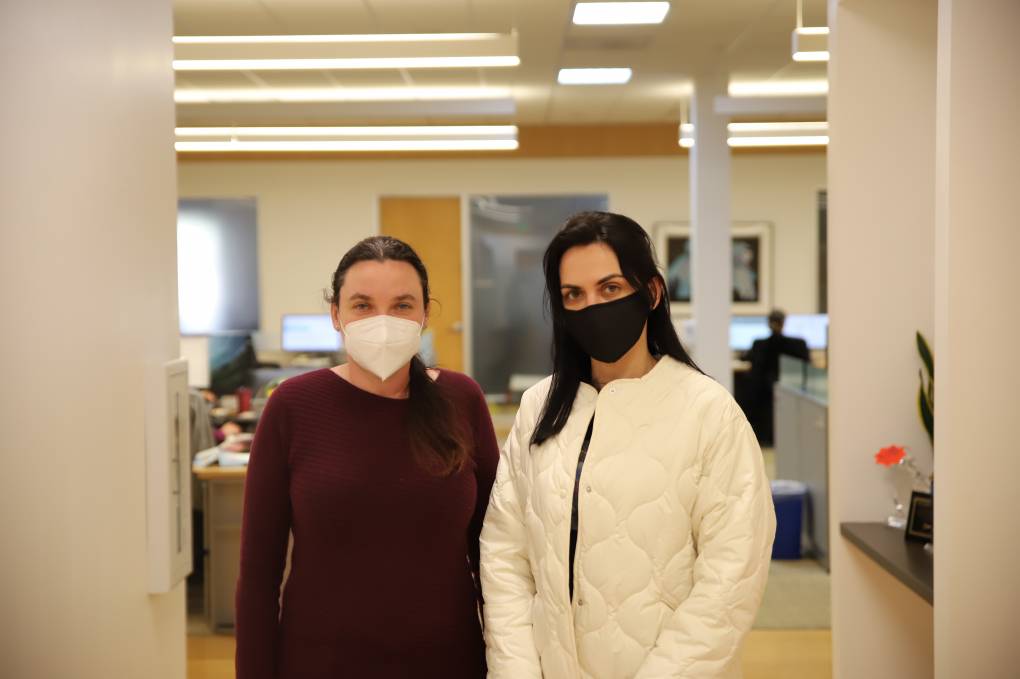
"caption": "Maryna (right) stands alongside Ilona Sokolinsky, a staff member at Jewish Family Service of San Diego, who acted as her interpreter for an interview with KQED.",
"description": null,
"title": "Maryna (right), a Ukrainian asylum seeker, meets with staff at Jewish Family Service in San Diego in March 2022 (DATE TBD). Ilona Sokolinsky (left), JFS Senior Grant Accountant, interpreted for her.",
"credit": "Max Rivlin-Nadler",
"status": "inherit",
"altTag": "Two women stand together in a building. The woman on the right has a black face mask and a white jacket. The woman on the left has a white face mask and dark-colored shirt.",
"isLoading": false,
"fetchFailed": false
},
"news_11909338": {
"type": "attachments",
"id": "news_11909338",
"meta": {
"index": "attachments_1716263798",
"site": "news",
"id": "11909338",
"found": true
},
"parent": 11909334,
"imgSizes": {
"twentyfourteen-full-width": {
"file": "https://ww2.kqed.org/app/uploads/sites/10/2022/03/Finding-Asylum_horizontal-1038x576.png",
"width": 1038,
"mimeType": "image/png",
"height": 576
},
"thumbnail": {
"file": "https://ww2.kqed.org/app/uploads/sites/10/2022/03/Finding-Asylum_horizontal-160x90.png",
"width": 160,
"mimeType": "image/png",
"height": 90
},
"post-thumbnail": {
"file": "https://ww2.kqed.org/app/uploads/sites/10/2022/03/Finding-Asylum_horizontal-672x372.png",
"width": 672,
"mimeType": "image/png",
"height": 372
},
"kqedFullSize": {
"file": "https://ww2.kqed.org/app/uploads/sites/10/2022/03/Finding-Asylum_horizontal.png",
"width": 1920,
"height": 1080
},
"large": {
"file": "https://ww2.kqed.org/app/uploads/sites/10/2022/03/Finding-Asylum_horizontal-1020x574.png",
"width": 1020,
"mimeType": "image/png",
"height": 574
},
"1536x1536": {
"file": "https://ww2.kqed.org/app/uploads/sites/10/2022/03/Finding-Asylum_horizontal-1536x864.png",
"width": 1536,
"mimeType": "image/png",
"height": 864
},
"medium": {
"file": "https://ww2.kqed.org/app/uploads/sites/10/2022/03/Finding-Asylum_horizontal-800x450.png",
"width": 800,
"mimeType": "image/png",
"height": 450
}
},
"publishDate": 1648242163,
"modified": 1648242227,
"caption": "Landing in a new country is never easy — even if you’re landing in a place like the Bay Area – which is already home to so many immigrants, refugees, and people who’ve sought asylum. \n",
"description": null,
"title": "Finding-Asylum_horizontal",
"credit": "KQED Live",
"status": "inherit",
"altTag": null,
"isLoading": false,
"fetchFailed": false
},
"news_11900569": {
"type": "attachments",
"id": "news_11900569",
"meta": {
"index": "attachments_1716263798",
"site": "news",
"id": "11900569",
"found": true
},
"parent": 11900546,
"imgSizes": {
"twentyfourteen-full-width": {
"file": "https://ww2.kqed.org/app/uploads/sites/10/2021/12/PabloLopezMakesCalls1-1-1038x576.jpg",
"width": 1038,
"mimeType": "image/jpeg",
"height": 576
},
"thumbnail": {
"file": "https://ww2.kqed.org/app/uploads/sites/10/2021/12/PabloLopezMakesCalls1-1-160x107.jpg",
"width": 160,
"mimeType": "image/jpeg",
"height": 107
},
"post-thumbnail": {
"file": "https://ww2.kqed.org/app/uploads/sites/10/2021/12/PabloLopezMakesCalls1-1-672x372.jpg",
"width": 672,
"mimeType": "image/jpeg",
"height": 372
},
"kqedFullSize": {
"file": "https://ww2.kqed.org/app/uploads/sites/10/2021/12/PabloLopezMakesCalls1-1.jpg",
"width": 1920,
"height": 1279
},
"large": {
"file": "https://ww2.kqed.org/app/uploads/sites/10/2021/12/PabloLopezMakesCalls1-1-1020x679.jpg",
"width": 1020,
"mimeType": "image/jpeg",
"height": 679
},
"1536x1536": {
"file": "https://ww2.kqed.org/app/uploads/sites/10/2021/12/PabloLopezMakesCalls1-1-1536x1023.jpg",
"width": 1536,
"mimeType": "image/jpeg",
"height": 1023
},
"medium": {
"file": "https://ww2.kqed.org/app/uploads/sites/10/2021/12/PabloLopezMakesCalls1-1-800x533.jpg",
"width": 800,
"mimeType": "image/jpeg",
"height": 533
}
},
"publishDate": 1640906933,
"modified": 1640911642,
"caption": "Pablo López makes phone calls to immigration lawyers, looking for help with his asylum claim, as he stands on the balcony of a friend's apartment in Walnut Creek on Nov. 9, 2021. López says he fled political violence in Nicaragua and asked KQED to use a variation on his name to protect his identity because he fears for his family's safety — and his own if he were forced to return to Nicaragua.",
"description": "Pablo López makes phone calls to immigration lawyers, looking for help with his asylum claim, as he stands on the balcony of a friend's apartment in Walnut Creek on Nov. 9, 2021.",
"title": "PabloLopezMakesCalls1",
"credit": "Tyche Hendricks/KQED",
"status": "inherit",
"altTag": "A person has their back to the camera as they talk on the phone outside a house on a sunny day.",
"isLoading": false,
"fetchFailed": false
},
"news_11900543": {
"type": "attachments",
"id": "news_11900543",
"meta": {
"index": "attachments_1716263798",
"site": "news",
"id": "11900543",
"found": true
},
"parent": 11900535,
"imgSizes": {
"twentyfourteen-full-width": {
"file": "https://ww2.kqed.org/app/uploads/sites/10/2021/12/RosaDiaz3-1038x576.jpg",
"width": 1038,
"mimeType": "image/jpeg",
"height": 576
},
"thumbnail": {
"file": "https://ww2.kqed.org/app/uploads/sites/10/2021/12/RosaDiaz3-160x114.jpg",
"width": 160,
"mimeType": "image/jpeg",
"height": 114
},
"post-thumbnail": {
"file": "https://ww2.kqed.org/app/uploads/sites/10/2021/12/RosaDiaz3-672x372.jpg",
"width": 672,
"mimeType": "image/jpeg",
"height": 372
},
"kqedFullSize": {
"file": "https://ww2.kqed.org/app/uploads/sites/10/2021/12/RosaDiaz3.jpg",
"width": 1200,
"height": 857
},
"large": {
"file": "https://ww2.kqed.org/app/uploads/sites/10/2021/12/RosaDiaz3-1020x728.jpg",
"width": 1020,
"mimeType": "image/jpeg",
"height": 728
},
"medium": {
"file": "https://ww2.kqed.org/app/uploads/sites/10/2021/12/RosaDiaz3-800x571.jpg",
"width": 800,
"mimeType": "image/jpeg",
"height": 571
}
},
"publishDate": 1640896703,
"modified": 1640896778,
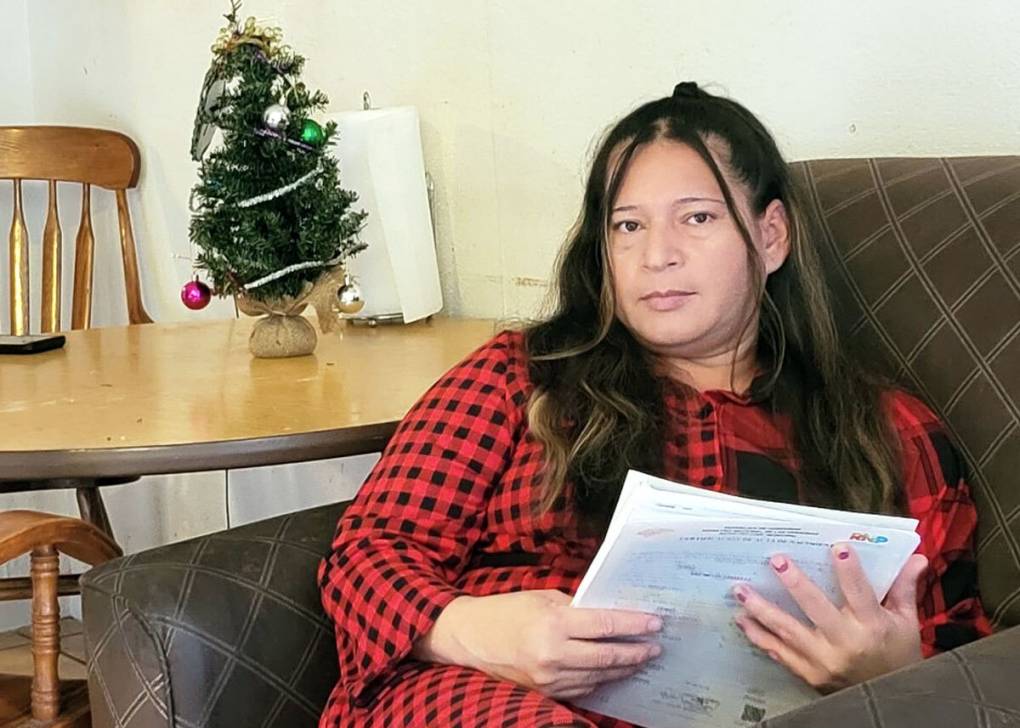
"caption": "Sitting in her home in Colusa County on Dec. 29, 2021, Rosa Díaz holds the papers she was given by immigration officials when she fled Honduras and asked for asylum at the U.S. border. Díaz was ordered deported 'in absentia' when she missed a hearing in immigration court due to a clerical error in her address.",
"description": null,
"title": "RosaDiaz3",
"credit": "Courtesy of Rosa Díaz",
"status": "inherit",
"altTag": "A woman sits in a red plaid dress holding papers with a Christmas tree in the background.",
"isLoading": false,
"fetchFailed": false
},
"news_11897940": {
"type": "attachments",
"id": "news_11897940",
"meta": {
"index": "attachments_1716263798",
"site": "news",
"id": "11897940",
"found": true
},
"parent": 11897929,
"imgSizes": {
"twentyfourteen-full-width": {
"file": "https://ww2.kqed.org/app/uploads/sites/10/2021/12/remain_120221_final-1038x576.png",
"width": 1038,
"mimeType": "image/png",
"height": 576
},
"thumbnail": {
"file": "https://ww2.kqed.org/app/uploads/sites/10/2021/12/remain_120221_final-160x111.png",
"width": 160,
"mimeType": "image/png",
"height": 111
},
"post-thumbnail": {
"file": "https://ww2.kqed.org/app/uploads/sites/10/2021/12/remain_120221_final-672x372.png",
"width": 672,
"mimeType": "image/png",
"height": 372
},
"kqedFullSize": {
"file": "https://ww2.kqed.org/app/uploads/sites/10/2021/12/remain_120221_final.png",
"width": 1920,
"height": 1330
},
"large": {
"file": "https://ww2.kqed.org/app/uploads/sites/10/2021/12/remain_120221_final-1020x707.png",
"width": 1020,
"mimeType": "image/png",
"height": 707
},
"1536x1536": {
"file": "https://ww2.kqed.org/app/uploads/sites/10/2021/12/remain_120221_final-1536x1064.png",
"width": 1536,
"mimeType": "image/png",
"height": 1064
},
"medium": {
"file": "https://ww2.kqed.org/app/uploads/sites/10/2021/12/remain_120221_final-800x554.png",
"width": 800,
"mimeType": "image/png",
"height": 554
}
},
"publishDate": 1638491313,
"modified": 1638491417,
"caption": null,
"description": null,
"title": "remain_120221_final",
"credit": null,
"status": "inherit",
"altTag": "Cartoon: shows \"then\" and \"now\" images of a \"remain in Mexico\" immigration sign. The Trump-era sign says things like \"rapists\" and \"murderers\" while the current Biden sign apologizes yet still calls on asylum-seekers to remain in Mexico.",
"isLoading": false,
"fetchFailed": false
},
"news_11897505": {
"type": "attachments",
"id": "news_11897505",
"meta": {
"index": "attachments_1716263798",
"site": "news",
"id": "11897505",
"found": true
},
"parent": 11897503,
"imgSizes": {
"twentyfourteen-full-width": {
"file": "https://ww2.kqed.org/app/uploads/sites/10/2021/11/IMG-5192-1038x576.jpeg",
"width": 1038,
"mimeType": "image/jpeg",
"height": 576
},
"thumbnail": {
"file": "https://ww2.kqed.org/app/uploads/sites/10/2021/11/IMG-5192-160x120.jpeg",
"width": 160,
"mimeType": "image/jpeg",
"height": 120
},
"post-thumbnail": {
"file": "https://ww2.kqed.org/app/uploads/sites/10/2021/11/IMG-5192-672x372.jpeg",
"width": 672,
"mimeType": "image/jpeg",
"height": 372
},
"kqedFullSize": {
"file": "https://ww2.kqed.org/app/uploads/sites/10/2021/11/IMG-5192.jpeg",
"width": 1280,
"height": 960
},
"large": {
"file": "https://ww2.kqed.org/app/uploads/sites/10/2021/11/IMG-5192-1020x765.jpeg",
"width": 1020,
"mimeType": "image/jpeg",
"height": 765
},
"medium": {
"file": "https://ww2.kqed.org/app/uploads/sites/10/2021/11/IMG-5192-800x600.jpeg",
"width": 800,
"mimeType": "image/jpeg",
"height": 600
}
},
"publishDate": 1638058270,
"modified": 1638058363,
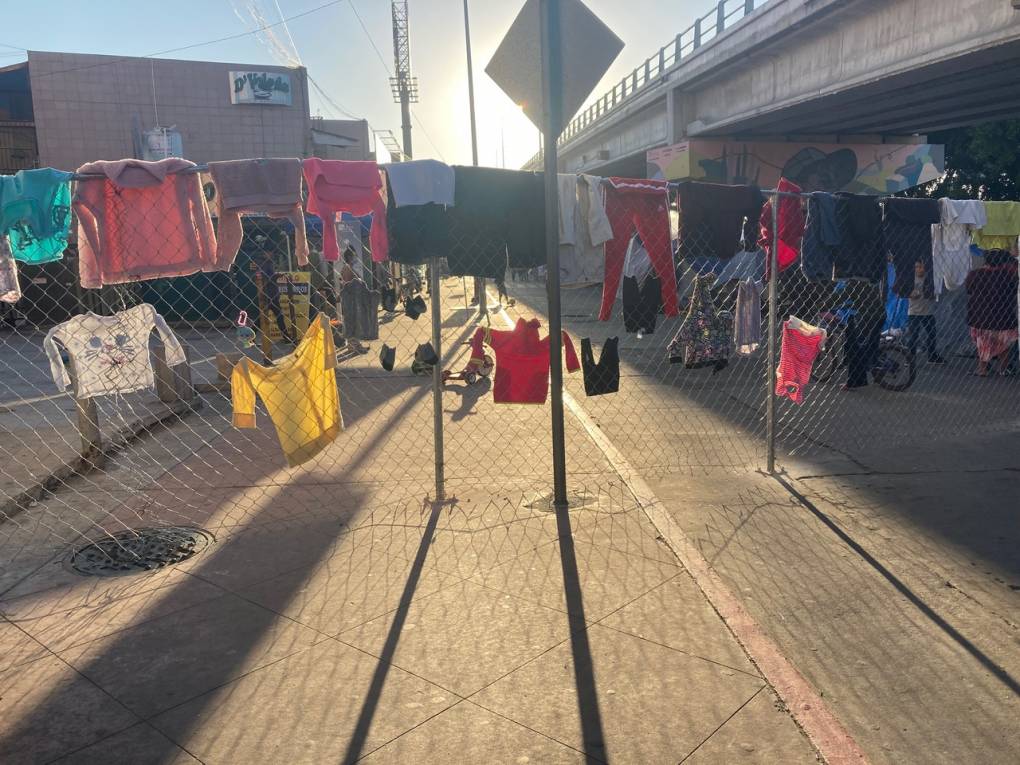
"caption": "Clothes hang to dry on a fence surrounding a migrant encampment just feet from the U.S.-Mexico border in Tijuana.",
"description": null,
"title": "Tijuana clothes.",
"credit": "Max Rivlin-Nadler",
"status": "inherit",
"altTag": "Clothes hang across the top of a chain-link fence in a photo taken as the sun was setting, gold-tinted light floods the concrete from behind the clothes. A freeway can be seen on the right side of the frame, in the background, a low building in the background to the left.",
"isLoading": false,
"fetchFailed": false
},
"news_11894481": {
"type": "attachments",
"id": "news_11894481",
"meta": {
"index": "attachments_1716263798",
"site": "news",
"id": "11894481",
"found": true
},
"parent": 11894472,
"imgSizes": {
"twentyfourteen-full-width": {
"file": "https://ww2.kqed.org/app/uploads/sites/10/2021/10/Ziad_Reslan-1038x576.jpg",
"width": 1038,
"mimeType": "image/jpeg",
"height": 576
},
"thumbnail": {
"file": "https://ww2.kqed.org/app/uploads/sites/10/2021/10/Ziad_Reslan-160x119.jpg",
"width": 160,
"mimeType": "image/jpeg",
"height": 119
},
"post-thumbnail": {
"file": "https://ww2.kqed.org/app/uploads/sites/10/2021/10/Ziad_Reslan-672x372.jpg",
"width": 672,
"mimeType": "image/jpeg",
"height": 372
},
"kqedFullSize": {
"file": "https://ww2.kqed.org/app/uploads/sites/10/2021/10/Ziad_Reslan.jpg",
"width": 2028,
"height": 1510
},
"large": {
"file": "https://ww2.kqed.org/app/uploads/sites/10/2021/10/Ziad_Reslan-1020x759.jpg",
"width": 1020,
"mimeType": "image/jpeg",
"height": 759
},
"1536x1536": {
"file": "https://ww2.kqed.org/app/uploads/sites/10/2021/10/Ziad_Reslan-1536x1144.jpg",
"width": 1536,
"mimeType": "image/jpeg",
"height": 1144
},
"full-width": {
"file": "https://ww2.kqed.org/app/uploads/sites/10/2021/10/Ziad_Reslan-1920x1430.jpg",
"width": 1920,
"mimeType": "image/jpeg",
"height": 1430
},
"medium": {
"file": "https://ww2.kqed.org/app/uploads/sites/10/2021/10/Ziad_Reslan-800x596.jpg",
"width": 800,
"mimeType": "image/jpeg",
"height": 596
}
},
"publishDate": 1635703950,
"modified": 1635801194,
"caption": "Ziad Reslan along with supporters reached Daly City around 11 a.m. on Sunday, October 31, 2021. Reslan is walking nearly 40 miles from San Francisco to Mountain View to raise funds for LGBTQ+ refugees. ",
"description": null,
"title": "Ziad_Reslan",
"credit": "Photo courtesy of Ziad Reslan",
"status": "inherit",
"altTag": "Five people look joyous and somewhat tired while standing next to a sign that says \"Daly City: Gateway to the Peninsula\"",
"isLoading": false,
"fetchFailed": false
},
"news_11886356": {
"type": "attachments",
"id": "news_11886356",
"meta": {
"index": "attachments_1716263798",
"site": "news",
"id": "11886356",
"found": true
},
"parent": 11886227,
"imgSizes": {
"twentyfourteen-full-width": {
"file": "https://ww2.kqed.org/app/uploads/sites/10/2021/08/RS51127_010_SanJose_Immigration_08232021-qut-1038x576.jpg",
"width": 1038,
"mimeType": "image/jpeg",
"height": 576
},
"thumbnail": {
"file": "https://ww2.kqed.org/app/uploads/sites/10/2021/08/RS51127_010_SanJose_Immigration_08232021-qut-160x107.jpg",
"width": 160,
"mimeType": "image/jpeg",
"height": 107
},
"post-thumbnail": {
"file": "https://ww2.kqed.org/app/uploads/sites/10/2021/08/RS51127_010_SanJose_Immigration_08232021-qut-672x372.jpg",
"width": 672,
"mimeType": "image/jpeg",
"height": 372
},
"kqedFullSize": {
"file": "https://ww2.kqed.org/app/uploads/sites/10/2021/08/RS51127_010_SanJose_Immigration_08232021-qut.jpg",
"width": 1920,
"height": 1280
},
"large": {
"file": "https://ww2.kqed.org/app/uploads/sites/10/2021/08/RS51127_010_SanJose_Immigration_08232021-qut-1020x680.jpg",
"width": 1020,
"mimeType": "image/jpeg",
"height": 680
},
"1536x1536": {
"file": "https://ww2.kqed.org/app/uploads/sites/10/2021/08/RS51127_010_SanJose_Immigration_08232021-qut-1536x1024.jpg",
"width": 1536,
"mimeType": "image/jpeg",
"height": 1024
},
"medium": {
"file": "https://ww2.kqed.org/app/uploads/sites/10/2021/08/RS51127_010_SanJose_Immigration_08232021-qut-800x533.jpg",
"width": 800,
"mimeType": "image/jpeg",
"height": 533
}
},
"publishDate": 1629934598,
"modified": 1630015502,
"caption": "Herrera and Gonzalez hold hands in their yard on Aug. 23, 2021. The couple, along with their three children, fled Mexico and are seeking asylum in the U.S. But their case has dragged on for six years in immigration court. ",
"description": null,
"title": "RS51127_010_SanJose_Immigration_08232021-qut",
"credit": "Beth LaBerge/KQED",
"status": "inherit",
"altTag": null,
"isLoading": false,
"fetchFailed": false
},
"news_11883280": {
"type": "attachments",
"id": "news_11883280",
"meta": {
"index": "attachments_1716263798",
"site": "news",
"id": "11883280",
"found": true
},
"parent": 11883227,
"imgSizes": {
"twentyfourteen-full-width": {
"file": "https://ww2.kqed.org/app/uploads/sites/10/2021/07/GettyImages-1150824330-1038x576.jpg",
"width": 1038,
"mimeType": "image/jpeg",
"height": 576
},
"thumbnail": {
"file": "https://ww2.kqed.org/app/uploads/sites/10/2021/07/GettyImages-1150824330-160x107.jpg",
"width": 160,
"mimeType": "image/jpeg",
"height": 107
},
"post-thumbnail": {
"file": "https://ww2.kqed.org/app/uploads/sites/10/2021/07/GettyImages-1150824330-672x372.jpg",
"width": 672,
"mimeType": "image/jpeg",
"height": 372
},
"kqedFullSize": {
"file": "https://ww2.kqed.org/app/uploads/sites/10/2021/07/GettyImages-1150824330-scaled.jpg",
"width": 2560,
"height": 1708
},
"2048x2048": {
"file": "https://ww2.kqed.org/app/uploads/sites/10/2021/07/GettyImages-1150824330-2048x1366.jpg",
"width": 2048,
"mimeType": "image/jpeg",
"height": 1366
},
"large": {
"file": "https://ww2.kqed.org/app/uploads/sites/10/2021/07/GettyImages-1150824330-1020x680.jpg",
"width": 1020,
"mimeType": "image/jpeg",
"height": 680
},
"1536x1536": {
"file": "https://ww2.kqed.org/app/uploads/sites/10/2021/07/GettyImages-1150824330-1536x1025.jpg",
"width": 1536,
"mimeType": "image/jpeg",
"height": 1025
},
"full-width": {
"file": "https://ww2.kqed.org/app/uploads/sites/10/2021/07/GettyImages-1150824330-1920x1281.jpg",
"width": 1920,
"mimeType": "image/jpeg",
"height": 1281
},
"medium": {
"file": "https://ww2.kqed.org/app/uploads/sites/10/2021/07/GettyImages-1150824330-800x534.jpg",
"width": 800,
"mimeType": "image/jpeg",
"height": 534
}
},
"publishDate": 1627692250,
"modified": 1627692453,
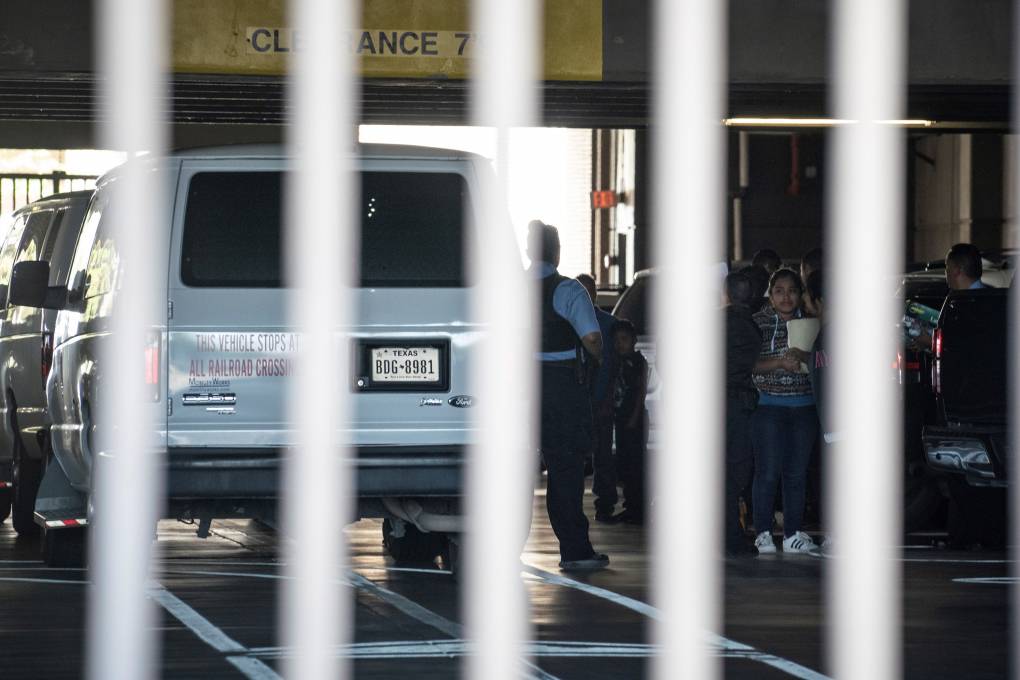
"caption": "Migrants who are seeking asylum in the United States get out of vans that brought them to the Richard C. White Federal Buidling in downtown El Paso, Texas on June 12, 2019. \n",
"description": "Migrants who are seeking asylum in the United States get out of vans that brought them to the Richard C. White Federal Buidling in downtown El Paso on June 12, 2019. \n",
"title": "US-MEXICO-IMMIGRATION-YOLANDA-RIGHTS",
"credit": "Paul Ratje/AFP/Getty Images",
"status": "inherit",
"altTag": "Migrants outside of a van at a federal building in El Paso, Texas",
"isLoading": false,
"fetchFailed": false
},
"news_11882784": {
"type": "attachments",
"id": "news_11882784",
"meta": {
"index": "attachments_1716263798",
"site": "news",
"id": "11882784",
"found": true
},
"parent": 11882773,
"imgSizes": {
"twentyfourteen-full-width": {
"file": "https://ww2.kqed.org/app/uploads/sites/10/2021/07/GettyImages-1330157179-1024x576.jpg",
"width": 1024,
"mimeType": "image/jpeg",
"height": 576
},
"thumbnail": {
"file": "https://ww2.kqed.org/app/uploads/sites/10/2021/07/GettyImages-1330157179-160x106.jpg",
"width": 160,
"mimeType": "image/jpeg",
"height": 106
},
"post-thumbnail": {
"file": "https://ww2.kqed.org/app/uploads/sites/10/2021/07/GettyImages-1330157179-672x372.jpg",
"width": 672,
"mimeType": "image/jpeg",
"height": 372
},
"kqedFullSize": {
"file": "https://ww2.kqed.org/app/uploads/sites/10/2021/07/GettyImages-1330157179.jpg",
"width": 1024,
"height": 681
},
"large": {
"file": "https://ww2.kqed.org/app/uploads/sites/10/2021/07/GettyImages-1330157179-1020x678.jpg",
"width": 1020,
"mimeType": "image/jpeg",
"height": 678
},
"medium": {
"file": "https://ww2.kqed.org/app/uploads/sites/10/2021/07/GettyImages-1330157179-800x532.jpg",
"width": 800,
"mimeType": "image/jpeg",
"height": 532
}
},
"publishDate": 1627500361,
"modified": 1627501925,
"caption": "The sun begins to set beyond the U.S.-Mexico border barrier running into the Pacific Ocean on July 22, 2021 in Tijuana, Mexico. While the Biden administration has haltingly restarted the asylum system along the southwest border, only a small number of asylum-seekers whose situations are considered the most urgent have been allowed to cross the border with Title 42 exceptions. Thousands of asylum-seekers remain stuck in Tijuana in precarious conditions.",
"description": null,
"title": "Migrants Huddle In Camps And Shelters In Tijuana Waiting To Cross Into U.S.",
"credit": "Mario Tama/Getty Images",
"status": "inherit",
"altTag": null,
"isLoading": false,
"fetchFailed": false
},
"news_11882451": {
"type": "attachments",
"id": "news_11882451",
"meta": {
"index": "attachments_1716263798",
"site": "news",
"id": "11882451",
"found": true
},
"parent": 11882438,
"imgSizes": {
"twentyfourteen-full-width": {
"file": "https://ww2.kqed.org/app/uploads/sites/10/2021/07/GettyImages-1330156267-1038x576.jpg",
"width": 1038,
"mimeType": "image/jpeg",
"height": 576
},
"thumbnail": {
"file": "https://ww2.kqed.org/app/uploads/sites/10/2021/07/GettyImages-1330156267-160x90.jpg",
"width": 160,
"mimeType": "image/jpeg",
"height": 90
},
"post-thumbnail": {
"file": "https://ww2.kqed.org/app/uploads/sites/10/2021/07/GettyImages-1330156267-672x372.jpg",
"width": 672,
"mimeType": "image/jpeg",
"height": 372
},
"kqedFullSize": {
"file": "https://ww2.kqed.org/app/uploads/sites/10/2021/07/GettyImages-1330156267.jpg",
"width": 1920,
"height": 1080
},
"large": {
"file": "https://ww2.kqed.org/app/uploads/sites/10/2021/07/GettyImages-1330156267-1020x574.jpg",
"width": 1020,
"mimeType": "image/jpeg",
"height": 574
},
"1536x1536": {
"file": "https://ww2.kqed.org/app/uploads/sites/10/2021/07/GettyImages-1330156267-1536x864.jpg",
"width": 1536,
"mimeType": "image/jpeg",
"height": 864
},
"medium": {
"file": "https://ww2.kqed.org/app/uploads/sites/10/2021/07/GettyImages-1330156267-800x450.jpg",
"width": 800,
"mimeType": "image/jpeg",
"height": 450
}
},
"publishDate": 1627333769,
"modified": 1627338271,
"caption": "Musicians play on July 22, 2021 in Tijuana, Mexico, for beachgoers near the U.S.-Mexico border barrier painted with a mural (R) depicting people who arrived in the U.S. illegally as children and were deported as adults.",
"description": null,
"title": "GettyImages-1330156267",
"credit": "Mario Tama/Getty Images",
"status": "inherit",
"altTag": null,
"isLoading": false,
"fetchFailed": false
}
},
"audioPlayerReducer": {
"postId": "stream_live",
"isPaused": true,
"isPlaying": false,
"pfsActive": false,
"pledgeModalIsOpen": true,
"playerDrawerIsOpen": false,
"liveAudioPlayStartedAt": 0,
"liveAudioPlayContext": ""
},
"authorsReducer": {
"byline_news_11909515": {
"type": "authors",
"id": "byline_news_11909515",
"meta": {
"override": true
},
"slug": "byline_news_11909515",
"name": "Max Rivlin-Nadler",
"isLoading": false
},
"byline_news_11897503": {
"type": "authors",
"id": "byline_news_11897503",
"meta": {
"override": true
},
"slug": "byline_news_11897503",
"name": "Max Rivlin-Nadler",
"isLoading": false
},
"byline_news_11882773": {
"type": "authors",
"id": "byline_news_11882773",
"meta": {
"override": true
},
"slug": "byline_news_11882773",
"name": "Franco Ordoñez\u003cbr>NPR",
"isLoading": false
},
"byline_news_11882438": {
"type": "authors",
"id": "byline_news_11882438",
"meta": {
"override": true
},
"slug": "byline_news_11882438",
"name": "Franco Ordoñez",
"isLoading": false
},
"tychehendricks": {
"type": "authors",
"id": "259",
"meta": {
"index": "authors_1716337520",
"id": "259",
"found": true
},
"name": "Tyche Hendricks",
"firstName": "Tyche",
"lastName": "Hendricks",
"slug": "tychehendricks",
"email": "thendricks@kqed.org",
"display_author_email": true,
"staff_mastheads": [
"news"
],
"title": "KQED Senior Editor, Immigration",
"bio": "\u003cspan style=\"font-weight: 400;\">Tyche Hendricks is KQED’s senior editor for immigration, leading coverage of the policy and politics that affect California’s immigrant communities. Her work for KQED’s radio and online audiences is also carried on NPR and other national outlets. She has been recognized with awards from the Radio and Television News Directors Association, the Society for Professional Journalists; the Education Writers Association; the Best of the West and the National Federation of Community Broadcasters. Before joining KQED in 2010, Tyche spent more than a dozen years as a newspaper reporter, notably at the \u003c/span>\u003ci>\u003cspan style=\"font-weight: 400;\">San Francisco Chronicle\u003c/span>\u003c/i>\u003cspan style=\"font-weight: 400;\">. At different times she has covered criminal justice, government and politics and urban planning. Tyche has taught in the MFA Creative Writing program at the University of San Francisco and at UC Berkeley’s Graduate School of Journalism, where she was co-director of a national immigration symposium for professional journalists. She is the author of \u003c/span>\u003ci>\u003cspan style=\"font-weight: 400;\">The Wind Doesn't Need a Passport: Stories from the U.S.-Mexico Borderlands\u003c/span>\u003c/i>\u003cspan style=\"font-weight: 400;\"> (University of California Press). \u003c/span>",
"avatar": "https://secure.gravatar.com/avatar/b8ee458e2731c2d43df86882ce17267e?s=600&d=blank&r=g",
"twitter": "tychehendricks",
"facebook": null,
"instagram": null,
"linkedin": null,
"sites": [
{
"site": "news",
"roles": [
"editor"
]
},
{
"site": "stateofhealth",
"roles": [
"editor"
]
}
],
"headData": {
"title": "Tyche Hendricks | KQED",
"description": "KQED Senior Editor, Immigration",
"ogImgSrc": "https://secure.gravatar.com/avatar/b8ee458e2731c2d43df86882ce17267e?s=600&d=blank&r=g",
"twImgSrc": "https://secure.gravatar.com/avatar/b8ee458e2731c2d43df86882ce17267e?s=600&d=blank&r=g"
},
"isLoading": false,
"link": "/author/tychehendricks"
},
"markfiore": {
"type": "authors",
"id": "3236",
"meta": {
"index": "authors_1716337520",
"id": "3236",
"found": true
},
"name": "Mark Fiore",
"firstName": "Mark",
"lastName": "Fiore",
"slug": "markfiore",
"email": "mark@markfiore.com",
"display_author_email": false,
"staff_mastheads": [
"news"
],
"title": "KQED News Cartoonist",
"bio": "\u003ca href=\"http://www.MarkFiore.com\">MarkFiore.com\u003c/a> | \u003ca href=\"https://twitter.com/markfiore\">Follow on Twitter\u003c/a> | \u003ca href=\"https://www.facebook.com/pages/Mark-Fiore-Animated-Political-Cartoons/94451707396?ref=bookmarks\">Facebook\u003c/a> | \u003ca href=\"mailto:mark@markfiore.com\">email\u003c/a>\r\n\r\nPulitzer Prize-winner, Mark Fiore, who the Wall Street Journal has called “the undisputed guru of the form,” creates animated political cartoons in San Francisco, where his work has been featured regularly on the San Francisco Chronicle’s web site, SFGate.com. His work has appeared on Newsweek.com, Slate.com, CBSNews.com, MotherJones.com, DailyKos.com and NPR’s web site. Fiore’s political animation has appeared on CNN, Frontline, Bill Moyers Journal, Salon.com and cable and broadcast outlets across the globe.\r\n\r\nBeginning his professional life by drawing traditional political cartoons for newspapers, Fiore’s work appeared in publications ranging from the Washington Post to the Los Angeles Times. In the late 1990s, he began to experiment with animating political cartoons and, after a short stint at the San Jose Mercury News as their staff cartoonist, Fiore devoted all his energies to animation.\r\nGrowing up in California, Fiore also spent a good portion of his life in the backwoods of Idaho. It was this combination that shaped him politically. Mark majored in political science at Colorado College, where, in a perfect send-off for a cartoonist, he received his diploma in 1991 as commencement speaker Dick Cheney smiled approvingly.\r\nMark Fiore was awarded the Pulitzer Prize for political cartooning in 2010, a Robert F. Kennedy Journalism Award in 2004 and has twice received an Online Journalism Award for commentary from the Online News Association (2002, 2008). Fiore has received two awards for his work in new media from the National Cartoonists Society (2001, 2002), and in 2006 received The James Madison Freedom of Information Award from The Society of Professional Journalists.",
"avatar": "https://secure.gravatar.com/avatar/fc4e2a612b15b67bad0c6f0e1db4ca9b?s=600&d=blank&r=g",
"twitter": "MarkFiore",
"facebook": null,
"instagram": "https://www.instagram.com/markfiore/?hl=en",
"linkedin": null,
"sites": [
{
"site": "arts",
"roles": [
"contributor"
]
},
{
"site": "news",
"roles": [
"editor"
]
},
{
"site": "futureofyou",
"roles": [
"editor"
]
},
{
"site": "science",
"roles": [
"editor"
]
}
],
"headData": {
"title": "Mark Fiore | KQED",
"description": "KQED News Cartoonist",
"ogImgSrc": "https://secure.gravatar.com/avatar/fc4e2a612b15b67bad0c6f0e1db4ca9b?s=600&d=blank&r=g",
"twImgSrc": "https://secure.gravatar.com/avatar/fc4e2a612b15b67bad0c6f0e1db4ca9b?s=600&d=blank&r=g"
},
"isLoading": false,
"link": "/author/markfiore"
},
"ecruzguevarra": {
"type": "authors",
"id": "8654",
"meta": {
"index": "authors_1716337520",
"id": "8654",
"found": true
},
"name": "Ericka Cruz Guevarra",
"firstName": "Ericka",
"lastName": "Cruz Guevarra",
"slug": "ecruzguevarra",
"email": "ecruzguevarra@kqed.org",
"display_author_email": true,
"staff_mastheads": [
"news"
],
"title": "Producer, The Bay Podcast",
"bio": "Ericka Cruz Guevarra is host of \u003ca href=\"https://www.kqed.org/podcasts/thebay\">\u003cem>The Bay\u003c/em>\u003c/a> podcast at KQED. Before host, she was the show’s producer. Her work in that capacity includes a three-part reported series on policing in Vallejo, which won a 2020 excellence in journalism award from the Society of Professional Journalists. Ericka has worked as a breaking news reporter at Oregon Public Broadcasting, helped produce the Code Switch podcast, and was KQED’s inaugural Raul Ramirez Diversity Fund intern. She’s also an alumna of NPR’s Next Generation Radio program. Send her an email if you have strong feelings about whether Fairfield and Suisun City are the Bay. Ericka is represented by SAG-AFTRA.",
"avatar": "https://secure.gravatar.com/avatar/accefc1de4bafc7e234b69bcb9b6f6536c130fd84709bc3069ef11a78787e1bb?s=600&d=blank&r=g",
"twitter": "NotoriousECG",
"bluesky": null,
"facebook": null,
"instagram": null,
"linkedin": null,
"sites": [
{
"site": "arts",
"roles": [
"subscriber"
]
},
{
"site": "news",
"roles": [
"editor",
"manage_categories"
]
},
{
"site": "futureofyou",
"roles": [
"subscriber"
]
},
{
"site": "stateofhealth",
"roles": [
"subscriber"
]
},
{
"site": "science",
"roles": [
"editor"
]
},
{
"site": "forum",
"roles": [
"subscriber"
]
}
],
"headData": {
"title": "Ericka Cruz Guevarra | KQED",
"description": "Producer, The Bay Podcast",
"ogImgSrc": "https://secure.gravatar.com/avatar/accefc1de4bafc7e234b69bcb9b6f6536c130fd84709bc3069ef11a78787e1bb?s=600&d=blank&r=g",
"twImgSrc": "https://secure.gravatar.com/avatar/accefc1de4bafc7e234b69bcb9b6f6536c130fd84709bc3069ef11a78787e1bb?s=600&d=blank&r=g"
},
"isLoading": false,
"link": "/author/ecruzguevarra"
},
"lsarah": {
"type": "authors",
"id": "11626",
"meta": {
"index": "authors_1716337520",
"id": "11626",
"found": true
},
"name": "Lakshmi Sarah",
"firstName": "Lakshmi",
"lastName": "Sarah",
"slug": "lsarah",
"email": "lsarah@kqed.org",
"display_author_email": false,
"staff_mastheads": [],
"title": "Digital Producer",
"bio": "Lakshmi Sarah is an educator, author and journalist with a focus on innovative storytelling. She has worked with newspapers, radio and magazines from Ahmedabad, India to Los Angeles, California. She has written and produced for Die Zeit, Global Voices, AJ+, KQED, Fusion Media Group and the New York Times.",
"avatar": "https://secure.gravatar.com/avatar/652dcaecd8b28826fc17a8b2d6bb4e93?s=600&d=blank&r=g",
"twitter": "lakitalki",
"facebook": null,
"instagram": "https://www.instagram.com/laki.talki/",
"linkedin": "https://www.linkedin.com/in/lakisarah/",
"sites": [
{
"site": "arts",
"roles": []
},
{
"site": "news",
"roles": []
},
{
"site": "bayareabites",
"roles": []
},
{
"site": "science",
"roles": []
}
],
"headData": {
"title": "Lakshmi Sarah | KQED",
"description": "Digital Producer",
"ogImgSrc": "https://secure.gravatar.com/avatar/652dcaecd8b28826fc17a8b2d6bb4e93?s=600&d=blank&r=g",
"twImgSrc": "https://secure.gravatar.com/avatar/652dcaecd8b28826fc17a8b2d6bb4e93?s=600&d=blank&r=g"
},
"isLoading": false,
"link": "/author/lsarah"
},
"amontecillo": {
"type": "authors",
"id": "11649",
"meta": {
"index": "authors_1716337520",
"id": "11649",
"found": true
},
"name": "Alan Montecillo",
"firstName": "Alan",
"lastName": "Montecillo",
"slug": "amontecillo",
"email": "amontecillo@kqed.org",
"display_author_email": false,
"staff_mastheads": [
"news"
],
"title": "KQED Contributor",
"bio": "Alan Montecillo is the senior editor of \u003cem>\u003ca href=\"http://kqed.org/thebay\">The Bay\u003c/a>, \u003c/em> KQED's local news podcast. Before moving to the Bay Area, he worked as a senior talk show producer for WILL in Champaign-Urbana, Illinois and at Oregon Public Broadcasting in Portland, Oregon. He has won journalism awards from the Society of Professional Journalists Northern California, the Public Media Journalists Association, The Signal Awards, and has also received a regional Edward R. Murrow award. Alan is a Filipino American from Hong Kong and a graduate of Reed College.",
"avatar": "https://secure.gravatar.com/avatar/268f53a2066899ea9efdd8a5900218b17c822d9862cbc9326cccec53ef41d349?s=600&d=blank&r=g",
"twitter": "alanmontecillo",
"bluesky": null,
"facebook": null,
"instagram": null,
"linkedin": null,
"sites": [
{
"site": "",
"roles": [
"editor"
]
},
{
"site": "news",
"roles": [
"editor",
"manage_categories"
]
}
],
"headData": {
"title": "Alan Montecillo | KQED",
"description": "KQED Contributor",
"ogImgSrc": "https://secure.gravatar.com/avatar/268f53a2066899ea9efdd8a5900218b17c822d9862cbc9326cccec53ef41d349?s=600&d=blank&r=g",
"twImgSrc": "https://secure.gravatar.com/avatar/268f53a2066899ea9efdd8a5900218b17c822d9862cbc9326cccec53ef41d349?s=600&d=blank&r=g"
},
"isLoading": false,
"link": "/author/amontecillo"
},
"jrodriguez": {
"type": "authors",
"id": "11690",
"meta": {
"index": "authors_1716337520",
"id": "11690",
"found": true
},
"name": "Joe Fitzgerald Rodriguez",
"firstName": "Joe",
"lastName": "Fitzgerald Rodriguez",
"slug": "jrodriguez",
"email": "jrodriguez@kqed.org",
"display_author_email": true,
"staff_mastheads": [
"news"
],
"title": "Reporter and Producer",
"bio": "Joe Fitzgerald Rodriguez is a reporter and digital producer for KQED covering politics. Joe most recently wrote for the \u003cem>San Francisco Examiner\u003c/em> as a political columnist covering The City. He was raised in San Francisco and has spent his reporting career in his beloved, foggy, city by the bay. Joe was 12-years-old when he conducted his first interview in journalism, grilling former San Francisco Mayor Willie Brown for the Marina Middle School newspaper, \u003cem>The Penguin Press, \u003c/em>and he continues to report on the San Francisco Bay Area to this day.",
"avatar": "https://secure.gravatar.com/avatar/2247beb0564c1e9c62228d5649d2edac?s=600&d=blank&r=g",
"twitter": "FitztheReporter",
"facebook": null,
"instagram": "https://www.instagram.com/fitzthereporter/",
"linkedin": null,
"sites": [
{
"site": "",
"roles": [
"editor"
]
},
{
"site": "arts",
"roles": [
"editor"
]
},
{
"site": "news",
"roles": [
"editor"
]
},
{
"site": "science",
"roles": [
"editor"
]
},
{
"site": "elections",
"roles": [
"editor"
]
},
{
"site": "liveblog",
"roles": [
"editor"
]
}
],
"headData": {
"title": "Joe Fitzgerald Rodriguez | KQED",
"description": "Reporter and Producer",
"ogImgSrc": "https://secure.gravatar.com/avatar/2247beb0564c1e9c62228d5649d2edac?s=600&d=blank&r=g",
"twImgSrc": "https://secure.gravatar.com/avatar/2247beb0564c1e9c62228d5649d2edac?s=600&d=blank&r=g"
},
"isLoading": false,
"link": "/author/jrodriguez"
},
"cbeale": {
"type": "authors",
"id": "11749",
"meta": {
"index": "authors_1716337520",
"id": "11749",
"found": true
},
"name": "Christopher Beale",
"firstName": "Christopher",
"lastName": "Beale",
"slug": "cbeale",
"email": "cbeale@kqed.org",
"display_author_email": true,
"staff_mastheads": [
"news"
],
"title": "Engineer/Producer/Reporter",
"bio": "\u003ca href=\"https://linktr.ee/realchrisjbeale\" rel=\"noopener noreferrer\">Christopher J. Beale\u003c/a> is an award winning journalist, audio engineer, and media host living in San Francisco. \r\n\r\nChristopher works primarily as an audio engineer at KQED and serves as the sound designer for both the Bay Curious and Rightnowish podcasts. He is the host and producer of the LGBTQIA podcast and radio segment \u003ca href=\"https://stereotypespodcast.org\">Stereotypes\u003c/a>.",
"avatar": "https://secure.gravatar.com/avatar/dc485bf84788eb7e7414eb638e72407e?s=600&d=blank&r=g",
"twitter": "realchrisjbeale",
"facebook": null,
"instagram": "http://instagram.com/realchrisjbeale",
"linkedin": null,
"sites": [
{
"site": "arts",
"roles": [
"contributor"
]
},
{
"site": "news",
"roles": [
"editor"
]
},
{
"site": "forum",
"roles": [
"editor"
]
}
],
"headData": {
"title": "Christopher Beale | KQED",
"description": "Engineer/Producer/Reporter",
"ogImgSrc": "https://secure.gravatar.com/avatar/dc485bf84788eb7e7414eb638e72407e?s=600&d=blank&r=g",
"twImgSrc": "https://secure.gravatar.com/avatar/dc485bf84788eb7e7414eb638e72407e?s=600&d=blank&r=g"
},
"isLoading": false,
"link": "/author/cbeale"
}
},
"pagesReducer": {
"news_tag_asylum": {
"type": "terms",
"id": "news_23087",
"meta": {
"index": "terms_1716263798",
"site": "news",
"id": "23087",
"score": 9.892343
},
"featImg": null,
"name": "Asylum",
"description": null,
"taxonomy": "tag",
"headData": {
"twImgId": null,
"twTitle": null,
"ogTitle": null,
"ogImgId": null,
"twDescription": null,
"description": null,
"title": "Asylum Archives | KQED News",
"ogDescription": null
},
"ttid": 23104,
"slug": "asylum",
"isLoading": false,
"title": "Asylum",
"pageMeta": {
"site": "news",
"WpPageTemplate": "page-topic-editorial",
"currentPage": 2
},
"blocks": [
{
"blockName": "kqed/post-list",
"attrs": {
"layout": "cardArticle2",
"query": "posts/news?tag=asylum",
"seeMore": false,
"paginated": true,
"page": 2
}
},
{
"blockName": "kqed/ad"
}
]
}
},
"pfsSessionReducer": {},
"postsReducer": {
"stream_live": {
"type": "live",
"id": "stream_live",
"audioUrl": "https://streams.kqed.org/kqedradio",
"title": "Live Stream",
"excerpt": "Live Stream information currently unavailable.",
"link": "/radio",
"featImg": "",
"label": {
"name": "KQED Live",
"link": "/"
}
},
"stream_kqedNewscast": {
"type": "posts",
"id": "stream_kqedNewscast",
"audioUrl": "https://www.kqed.org/.stream/anon/radio/RDnews/newscast.mp3?_=1",
"title": "KQED Newscast",
"featImg": "",
"label": {
"name": "88.5 FM",
"link": "/"
}
},
"news_11909538": {
"type": "posts",
"id": "news_11909538",
"meta": {
"index": "posts_1716263798",
"site": "news",
"id": "11909538",
"score": null,
"sort": [
1648598763000
]
},
"parent": 0,
"labelTerm": {
"site": "news"
},
"blocks": [],
"publishDate": 1648598763,
"format": "aside",
"disqusTitle": "'The Situation Was Not Different': For Afghan Refugee in California, Ukrainian Crisis Hits Close to Home",
"title": "'The Situation Was Not Different': For Afghan Refugee in California, Ukrainian Crisis Hits Close to Home",
"headTitle": "KQED News",
"content": "\u003cp>https://youtu.be/KxL3Wz8Cge4?t=687\u003c/p>\n\u003cp>From Ukraine to Afghanistan, Mexico and beyond, KQED Live's \"Finding Asylum in California\" event touched on asylum broadly as well as the U.S. immigration court system, the role of social media, and art.\u003c/p>\n\u003cp>Aiming to see the path of asylum-seekers to California through different lenses,\u003ca href=\"https://www.kqed.org/kqednewsroom\"> KQED Newsroom host Priya David Clemens\u003c/a> interviewed on stage Fouzia Azizi, director of refugee services at Jewish Family and Community Services East Bay, as well as \u003ca href=\"https://www.fresnocitycollege.edu/campus-life/events-and-places/art-space-gallery-exhibits/past-exhibits/2020-caleb-duarte.html\">Fresno City College professor and artist Caleb Duarte\u003c/a> and \u003ca href=\"https://www.kqed.org/author/tychehendricks\">KQED Immigration Senior Editor Tyche Hendricks\u003c/a>.[pullquote size=\"medium\" align=\"right\" citation=\"Caleb Duarte, artist\"]'We as artists, our tool is the image, the painted image, the ability to tell stories through simple actions that are kind of sometimes absurd actions that really change, can possibly change someone's perspective.'[/pullquote]\u003c/p>\n\u003cp>Azizi helps find homes and support for those fleeing war-torn counties. That's here and now. But when Azizi saw photos and videos of the war in Ukraine, it brought her back to her time growing up in Afghanistan, she told a virtual KQED audience on a livestream last week.\u003c/p>\n\u003cp>\"It's [taking] me back to all those memories that I had when I was in Afghanistan as a young girl seeing Russian soldiers all over the city,\" she said. \"What I see and witness right now with Ukraine, my heart goes to these people. But the situation was not different in Afghanistan.\"\u003c/p>\n\u003cp>Caleb Duarte, who grew up in both Mexico and the U.S., is known for painting, public sculptures and community performances across the globe in places like Cuba, Honduras and India. He said \u003ca href=\"https://www.youtube.com/watch?v=StqAYgy-tts\">his work tries to explore the human condition\u003c/a> while empowering others to exercise art: political prisoners, children, people in disability centers. His aim is to go past the hopelessness, to see evidence of power, resistance and survival.\u003c/p>\n\u003cp>\"We as artists, our tool is the image, the painted image, the ability to tell stories through simple actions that are kind of sometimes absurd actions that really change, can possibly change someone's perspective,\" Duarte said.\u003c/p>\n\u003cp>A 2021 project he worked on called \"\u003ca href=\"https://www.calebduarte.org/tijuan\">Burning Houses\u003c/a>\" saw Duarte and asylum-seekers in Tijuana create small, symbolic houses with the families of refugees camping at the border to highlight the hope they have for their children: to seek a new life. Duarte said he considers the project \"invisible theater,\" with the audience being asylum-seekers.\u003c/p>\n\u003cp>\"We decided to carry the houses through the camp and straight to the U.S.-Mexican border as a symbol as evidence of resistance, of survival, also evidence of joy,\" Duarte said.\u003c/p>\n\u003cp>The community artists then burnt the homes at the U.S.-Mexican border.\u003c/p>\n\u003cp>\"Generally, we think of the idea of burning as such a destructive act, but it seems like you were really working to reclaim that. Why burn them?\" KQED's Clemens asked Duarte.\u003c/p>\n\u003cfigure id=\"attachment_11909581\" class=\"wp-caption alignnone\" style=\"max-width: 1274px\">\u003cimg class=\"size-full wp-image-11909581\" src=\"https://ww2.kqed.org/app/uploads/sites/10/2022/03/HomeProject1.jpg\" alt=\"People carry small house-like structures as a form of art on tall, 10-foot stilts, along a beach, with the sun setting in the background.\" width=\"1274\" height=\"664\" srcset=\"https://ww2.kqed.org/app/uploads/sites/10/2022/03/HomeProject1.jpg 1274w, https://ww2.kqed.org/app/uploads/sites/10/2022/03/HomeProject1-800x417.jpg 800w, https://ww2.kqed.org/app/uploads/sites/10/2022/03/HomeProject1-1020x532.jpg 1020w, https://ww2.kqed.org/app/uploads/sites/10/2022/03/HomeProject1-160x83.jpg 160w\" sizes=\"(max-width: 1274px) 100vw, 1274px\">\u003cfigcaption class=\"wp-caption-text\">Asylum-seekers carry their homes-as-art to the U.S.-Mexico border as part of Caleb Duarte's 'Burning Homes' community art project. \u003ccite>(Courtesy Caleb Duarte)\u003c/cite>\u003c/figcaption>\u003c/figure>\n\u003cp>Duarte pointed to a statement made by U.S. Vice President Kamala Harris, who told Guatemalan immigrants at the time, \"\u003ca href=\"https://www.npr.org/2021/06/07/1004074139/harris-tells-guatemalans-not-to-migrate-to-the-united-states\">Do not come\u003c/a>.\" The artists hoped to \u003ca href=\"https://www.theguardian.com/us-news/2018/dec/19/central-america-migrants-us-foreign-policy\">point to intervention from the U.S. into Central America\u003c/a> throughout history, Duarte said.[aside tag=\"immigration\" label=\"More immigration coverage\"]\"This was kind of a way of mirroring that violence,\" he said.\u003c/p>\n\u003cp>The KQED Live event also explored the policy side of the same asylum and refugee struggles. Hendricks, the KQED senior editor, joined the stage to talk about her work tracking dysfunction in U.S. immigration courts.\u003c/p>\n\u003cp>That may touch close to home for KQED's audience. \"There's 1.7 million [immigration] cases backlogged in the U.S. San Francisco has a big court and one of the worst backlogs here as well,\" Hendricks said.\u003c/p>\n\u003cp>Understaffing and underfunding are realities for the immigration court system, Hendricks said. But the Trump administration also began prosecuting \"a lot more people.\" The backlog can be felt keenly by individuals trying to navigate the system.\u003c/p>\n\u003cp>\"The delays lead to these effects where, people that I've met who are preparing to make their asylum case, they prepare and prepare, if they have a lawyer, and their cases are rescheduled and canceled. And there's sort of a trauma to going back through this,\" Hendricks said.\u003c/p>\n\u003cp>And that's if a person is fortunate enough to get representation at all: There isn't a right to appointed counsel if someone can't afford a lawyer — and when they can't, that's when things can take a turn for the worse.\u003c/p>\n\u003cfigure id=\"attachment_11909570\" class=\"wp-caption alignnone\" style=\"max-width: 1274px\">\u003cimg class=\"wp-image-11909570 size-full\" src=\"https://ww2.kqed.org/app/uploads/sites/10/2022/03/KQEDlive1.jpg\" alt=\"Four panelists sit on a stage at KQED's The Commons, speaking with one another. \" width=\"1274\" height=\"664\" srcset=\"https://ww2.kqed.org/app/uploads/sites/10/2022/03/KQEDlive1.jpg 1274w, https://ww2.kqed.org/app/uploads/sites/10/2022/03/KQEDlive1-800x417.jpg 800w, https://ww2.kqed.org/app/uploads/sites/10/2022/03/KQEDlive1-1020x532.jpg 1020w, https://ww2.kqed.org/app/uploads/sites/10/2022/03/KQEDlive1-160x83.jpg 160w\" sizes=\"(max-width: 1274px) 100vw, 1274px\">\u003cfigcaption class=\"wp-caption-text\">KQED Newsroom's Priya David Clemens (right) interviews (from left) Tyche Hendricks, Fouzia Azizi and Caleb Duarte at a KQED Live event. \u003ccite>(KQED)\u003c/cite>\u003c/figcaption>\u003c/figure>\n\u003cp>Hendricks said she did a recent story on a Honduran woman, Rosa Díaz, \u003ca href=\"https://www.kqed.org/news/11900535/a-simple-paperwork-error-can-get-asylum-seekers-deported-rosa-diaz-got-lucky-on-a-lunch-break\">who came across the border with her children, fleeing violence and seeking asylum\u003c/a>. But a clerical error recorded her wrong address — listing her contact info as Los Angeles, instead of the city of Maxwell — and she wasn't notified of her hearing time.\u003c/p>\n\u003cp>When Díaz didn't show up, immigration officials ordered her deported in her absence.\u003c/p>\n\u003cp>\"She went to her next [Immigration and Customs Enforcement] check-in and they said, 'We're going to deport you today.' Her children were back home some 50 miles away. She walked out of the office and burst into tears,\" Hendricks said.\u003c/p>\n\u003cp>Immigrant advocates and nonprofit legal services were able to help the woman, saving her from deportation. But it was a lucky break, Hendricks said, and not an opportunity all will have.\u003c/p>\n\u003cp>\"That, to me, speaks to the dysfunction in the courts and the lack of due process,\" Hendricks said.\u003c/p>\n\u003cp>\u003ca href=\"https://youtu.be/KxL3Wz8Cge4?t=687\">\u003cem>Watch the full virtual event from KQED Live, 'Finding Asylum in California,' on YouTube.\u003c/em>\u003c/a>\u003c/p>\n\u003cp>[ad fullwidth]\u003c/p>\n\u003cp>\u003c/p>\n",
"disqusIdentifier": "11909538 https://ww2.kqed.org/news/?p=11909538",
"disqusUrl": "https://ww2.kqed.org/news/2022/03/29/the-situation-was-not-different-for-afghan-refugee-in-california-ukrainian-crisis-hits-close-to-home/",
"stats": {
"hasVideo": false,
"hasChartOrMap": false,
"hasAudio": false,
"hasPolis": false,
"wordCount": 985,
"hasGoogleForm": false,
"hasGallery": false,
"hasHearkenModule": false,
"iframeSrcs": [],
"paragraphCount": 24
},
"modified": 1648668864,
"excerpt": "KQED Live's 'Finding Asylum in California' event touched on asylum from Ukraine to Afghanistan, Mexico and beyond, including the U.S. immigration court system, the role of social media, and art's role in highlighting hope for asylum-seekers.",
"headData": {
"twImgId": "",
"twTitle": "",
"ogTitle": "",
"ogImgId": "",
"twDescription": "",
"description": "KQED Live's 'Finding Asylum in California' event touched on asylum from Ukraine to Afghanistan, Mexico and beyond, including the U.S. immigration court system, the role of social media, and art's role in highlighting hope for asylum-seekers.",
"title": "'The Situation Was Not Different': For Afghan Refugee in California, Ukrainian Crisis Hits Close to Home | KQED",
"ogDescription": "",
"schema": {
"@context": "https://schema.org",
"@type": "NewsArticle",
"headline": "'The Situation Was Not Different': For Afghan Refugee in California, Ukrainian Crisis Hits Close to Home",
"datePublished": "2022-03-29T17:06:03-07:00",
"dateModified": "2022-03-30T12:34:24-07:00",
"image": "https://cdn.kqed.org/wp-content/uploads/2020/02/KQED-OG-Image@1x.png",
"isAccessibleForFree": "True",
"publisher": {
"@type": "NewsMediaOrganization",
"@id": "https://www.kqed.org/#organization",
"name": "KQED",
"logo": "https://cdn.kqed.org/wp-content/uploads/2020/02/KQED-OG-Image@1x.png",
"url": "https://www.kqed.org",
"sameAs": [
"https://www.facebook.com/KQED",
"https://twitter.com/KQED",
"https://www.instagram.com/kqed/",
"https://www.tiktok.com/@kqedofficial",
"https://www.linkedin.com/company/kqed",
"https://www.youtube.com/channel/UCeC0IOo7i1P_61zVUWbJ4nw"
]
}
}
},
"guestAuthors": [],
"slug": "the-situation-was-not-different-for-afghan-refugee-in-california-ukrainian-crisis-hits-close-to-home",
"status": "publish",
"videoEmbed": "https://youtu.be/KxL3Wz8Cge4?t=687",
"excludeFromSiteSearch": "Include",
"path": "/news/11909538/the-situation-was-not-different-for-afghan-refugee-in-california-ukrainian-crisis-hits-close-to-home",
"audioTrackLength": null,
"parsedContent": [
{
"type": "contentString",
"content": "\u003cdiv class=\"post-body\">\u003cp>\u003c/p>\u003cp>\u003cspan class='utils-parseShortcode-shortcodes-__youtubeShortcode__embedYoutube'>\n \u003cspan class='utils-parseShortcode-shortcodes-__youtubeShortcode__embedYoutubeInside'>\n \u003ciframe\n loading='lazy'\n class='utils-parseShortcode-shortcodes-__youtubeShortcode__youtubePlayer'\n type='text/html'\n src='//www.youtube.com/embed/KxL3Wz8Cge4'\n title='//www.youtube.com/embed/KxL3Wz8Cge4'\n allowfullscreen='true'\n style='border:0;'>\u003c/iframe>\n \u003c/span>\n \u003c/span>\u003c/p>\u003cp>\u003cp>From Ukraine to Afghanistan, Mexico and beyond, KQED Live's \"Finding Asylum in California\" event touched on asylum broadly as well as the U.S. immigration court system, the role of social media, and art.\u003c/p>\n\u003cp>Aiming to see the path of asylum-seekers to California through different lenses,\u003ca href=\"https://www.kqed.org/kqednewsroom\"> KQED Newsroom host Priya David Clemens\u003c/a> interviewed on stage Fouzia Azizi, director of refugee services at Jewish Family and Community Services East Bay, as well as \u003ca href=\"https://www.fresnocitycollege.edu/campus-life/events-and-places/art-space-gallery-exhibits/past-exhibits/2020-caleb-duarte.html\">Fresno City College professor and artist Caleb Duarte\u003c/a> and \u003ca href=\"https://www.kqed.org/author/tychehendricks\">KQED Immigration Senior Editor Tyche Hendricks\u003c/a>.\u003c/p>\u003c/div>",
"attributes": {
"named": {},
"numeric": []
}
},
{
"type": "component",
"content": "'We as artists, our tool is the image, the painted image, the ability to tell stories through simple actions that are kind of sometimes absurd actions that really change, can possibly change someone's perspective.'",
"name": "pullquote",
"attributes": {
"named": {
"size": "medium",
"align": "right",
"citation": "Caleb Duarte, artist",
"label": ""
},
"numeric": []
}
},
{
"type": "contentString",
"content": "\u003cdiv class=\"post-body\">\u003cp>\u003c/p>\n\u003cp>Azizi helps find homes and support for those fleeing war-torn counties. That's here and now. But when Azizi saw photos and videos of the war in Ukraine, it brought her back to her time growing up in Afghanistan, she told a virtual KQED audience on a livestream last week.\u003c/p>\n\u003cp>\"It's [taking] me back to all those memories that I had when I was in Afghanistan as a young girl seeing Russian soldiers all over the city,\" she said. \"What I see and witness right now with Ukraine, my heart goes to these people. But the situation was not different in Afghanistan.\"\u003c/p>\n\u003cp>Caleb Duarte, who grew up in both Mexico and the U.S., is known for painting, public sculptures and community performances across the globe in places like Cuba, Honduras and India. He said \u003ca href=\"https://www.youtube.com/watch?v=StqAYgy-tts\">his work tries to explore the human condition\u003c/a> while empowering others to exercise art: political prisoners, children, people in disability centers. His aim is to go past the hopelessness, to see evidence of power, resistance and survival.\u003c/p>\n\u003cp>\"We as artists, our tool is the image, the painted image, the ability to tell stories through simple actions that are kind of sometimes absurd actions that really change, can possibly change someone's perspective,\" Duarte said.\u003c/p>\n\u003cp>A 2021 project he worked on called \"\u003ca href=\"https://www.calebduarte.org/tijuan\">Burning Houses\u003c/a>\" saw Duarte and asylum-seekers in Tijuana create small, symbolic houses with the families of refugees camping at the border to highlight the hope they have for their children: to seek a new life. Duarte said he considers the project \"invisible theater,\" with the audience being asylum-seekers.\u003c/p>\n\u003cp>\"We decided to carry the houses through the camp and straight to the U.S.-Mexican border as a symbol as evidence of resistance, of survival, also evidence of joy,\" Duarte said.\u003c/p>\n\u003cp>The community artists then burnt the homes at the U.S.-Mexican border.\u003c/p>\n\u003cp>\"Generally, we think of the idea of burning as such a destructive act, but it seems like you were really working to reclaim that. Why burn them?\" KQED's Clemens asked Duarte.\u003c/p>\n\u003cfigure id=\"attachment_11909581\" class=\"wp-caption alignnone\" style=\"max-width: 1274px\">\u003cimg class=\"size-full wp-image-11909581\" src=\"https://ww2.kqed.org/app/uploads/sites/10/2022/03/HomeProject1.jpg\" alt=\"People carry small house-like structures as a form of art on tall, 10-foot stilts, along a beach, with the sun setting in the background.\" width=\"1274\" height=\"664\" srcset=\"https://ww2.kqed.org/app/uploads/sites/10/2022/03/HomeProject1.jpg 1274w, https://ww2.kqed.org/app/uploads/sites/10/2022/03/HomeProject1-800x417.jpg 800w, https://ww2.kqed.org/app/uploads/sites/10/2022/03/HomeProject1-1020x532.jpg 1020w, https://ww2.kqed.org/app/uploads/sites/10/2022/03/HomeProject1-160x83.jpg 160w\" sizes=\"(max-width: 1274px) 100vw, 1274px\">\u003cfigcaption class=\"wp-caption-text\">Asylum-seekers carry their homes-as-art to the U.S.-Mexico border as part of Caleb Duarte's 'Burning Homes' community art project. \u003ccite>(Courtesy Caleb Duarte)\u003c/cite>\u003c/figcaption>\u003c/figure>\n\u003cp>Duarte pointed to a statement made by U.S. Vice President Kamala Harris, who told Guatemalan immigrants at the time, \"\u003ca href=\"https://www.npr.org/2021/06/07/1004074139/harris-tells-guatemalans-not-to-migrate-to-the-united-states\">Do not come\u003c/a>.\" The artists hoped to \u003ca href=\"https://www.theguardian.com/us-news/2018/dec/19/central-america-migrants-us-foreign-policy\">point to intervention from the U.S. into Central America\u003c/a> throughout history, Duarte said.\u003c/p>\u003c/div>",
"attributes": {
"named": {},
"numeric": []
}
},
{
"type": "component",
"content": "",
"name": "aside",
"attributes": {
"named": {
"tag": "immigration",
"label": "More immigration coverage "
},
"numeric": []
}
},
{
"type": "contentString",
"content": "\u003cdiv class=\"post-body\">\u003cp>\"This was kind of a way of mirroring that violence,\" he said.\u003c/p>\n\u003cp>The KQED Live event also explored the policy side of the same asylum and refugee struggles. Hendricks, the KQED senior editor, joined the stage to talk about her work tracking dysfunction in U.S. immigration courts.\u003c/p>\n\u003cp>That may touch close to home for KQED's audience. \"There's 1.7 million [immigration] cases backlogged in the U.S. San Francisco has a big court and one of the worst backlogs here as well,\" Hendricks said.\u003c/p>\n\u003cp>Understaffing and underfunding are realities for the immigration court system, Hendricks said. But the Trump administration also began prosecuting \"a lot more people.\" The backlog can be felt keenly by individuals trying to navigate the system.\u003c/p>\n\u003cp>\"The delays lead to these effects where, people that I've met who are preparing to make their asylum case, they prepare and prepare, if they have a lawyer, and their cases are rescheduled and canceled. And there's sort of a trauma to going back through this,\" Hendricks said.\u003c/p>\n\u003cp>And that's if a person is fortunate enough to get representation at all: There isn't a right to appointed counsel if someone can't afford a lawyer — and when they can't, that's when things can take a turn for the worse.\u003c/p>\n\u003cfigure id=\"attachment_11909570\" class=\"wp-caption alignnone\" style=\"max-width: 1274px\">\u003cimg class=\"wp-image-11909570 size-full\" src=\"https://ww2.kqed.org/app/uploads/sites/10/2022/03/KQEDlive1.jpg\" alt=\"Four panelists sit on a stage at KQED's The Commons, speaking with one another. \" width=\"1274\" height=\"664\" srcset=\"https://ww2.kqed.org/app/uploads/sites/10/2022/03/KQEDlive1.jpg 1274w, https://ww2.kqed.org/app/uploads/sites/10/2022/03/KQEDlive1-800x417.jpg 800w, https://ww2.kqed.org/app/uploads/sites/10/2022/03/KQEDlive1-1020x532.jpg 1020w, https://ww2.kqed.org/app/uploads/sites/10/2022/03/KQEDlive1-160x83.jpg 160w\" sizes=\"(max-width: 1274px) 100vw, 1274px\">\u003cfigcaption class=\"wp-caption-text\">KQED Newsroom's Priya David Clemens (right) interviews (from left) Tyche Hendricks, Fouzia Azizi and Caleb Duarte at a KQED Live event. \u003ccite>(KQED)\u003c/cite>\u003c/figcaption>\u003c/figure>\n\u003cp>Hendricks said she did a recent story on a Honduran woman, Rosa Díaz, \u003ca href=\"https://www.kqed.org/news/11900535/a-simple-paperwork-error-can-get-asylum-seekers-deported-rosa-diaz-got-lucky-on-a-lunch-break\">who came across the border with her children, fleeing violence and seeking asylum\u003c/a>. But a clerical error recorded her wrong address — listing her contact info as Los Angeles, instead of the city of Maxwell — and she wasn't notified of her hearing time.\u003c/p>\n\u003cp>When Díaz didn't show up, immigration officials ordered her deported in her absence.\u003c/p>\n\u003cp>\"She went to her next [Immigration and Customs Enforcement] check-in and they said, 'We're going to deport you today.' Her children were back home some 50 miles away. She walked out of the office and burst into tears,\" Hendricks said.\u003c/p>\n\u003cp>Immigrant advocates and nonprofit legal services were able to help the woman, saving her from deportation. But it was a lucky break, Hendricks said, and not an opportunity all will have.\u003c/p>\n\u003cp>\"That, to me, speaks to the dysfunction in the courts and the lack of due process,\" Hendricks said.\u003c/p>\n\u003cp>\u003ca href=\"https://youtu.be/KxL3Wz8Cge4?t=687\">\u003cem>Watch the full virtual event from KQED Live, 'Finding Asylum in California,' on YouTube.\u003c/em>\u003c/a>\u003c/p>\n\u003cp>\u003c/p>\u003c/div>",
"attributes": {
"named": {},
"numeric": []
}
},
{
"type": "component",
"content": "",
"name": "ad",
"attributes": {
"named": {
"label": "fullwidth"
},
"numeric": [
"fullwidth"
]
}
},
{
"type": "contentString",
"content": "\u003cdiv class=\"post-body\">\u003cp>\u003c/p>\n\u003cp>\u003c/p>\n\u003c/div>\u003c/p>",
"attributes": {
"named": {},
"numeric": []
}
}
],
"link": "/news/11909538/the-situation-was-not-different-for-afghan-refugee-in-california-ukrainian-crisis-hits-close-to-home",
"authors": [
"11690"
],
"categories": [
"news_1169",
"news_8"
],
"tags": [
"news_19537",
"news_20257",
"news_23087",
"news_20202",
"news_30871",
"news_4593",
"news_30872"
],
"featImg": "news_11909700",
"label": "news"
},
"news_11909515": {
"type": "posts",
"id": "news_11909515",
"meta": {
"index": "posts_1716263798",
"site": "news",
"id": "11909515",
"score": null,
"sort": [
1648500709000
]
},
"guestAuthors": [],
"slug": "ukrainians-cross-california-border-even-as-pandemic-policy-keeps-other-asylum-seekers-out",
"title": "Ukrainians Cross California Border, Even As Pandemic Policy Keeps Other Asylum-Seekers Out",
"publishDate": 1648500709,
"format": "standard",
"headTitle": "Ukrainians Cross California Border, Even As Pandemic Policy Keeps Other Asylum-Seekers Out | KQED",
"labelTerm": {
"site": "news"
},
"content": "\u003cp>It’s well after midnight at a border crossing in Tijuana, Mexico, on a recent Saturday night. A group of migrants are huddled under blankets near the San Ysidro port of entry. They say they’re from Russia and Belarus, and they’ve come here to ask for asylum in the United States. But the door to the U.S., just feet away from where they’re camped out, is still closed to them.\u003c/p>\n\u003cp>That’s because of \u003ca href=\"https://uscode.house.gov/view.xhtml?hl=false&edition=prelim&req=granuleid%3AUSC-prelim-title42-section265&num=0&saved=%7CKHRpdGxlOjQyIHNlY3Rpb246MjY0IGVkaXRpb246cHJlbGltKQ%3D%3D%7C%7C%7C0%7Cfalse%7Cprelim\">Title 42\u003c/a>, a public health code intended to prevent the spread of disease that’s being used to block the entry of migrants without visas. The policy was imposed by the Centers for Disease Control and Prevention, \u003ca href=\"https://apnews.com/article/virus-outbreak-pandemics-public-health-new-york-health-4ef0c6c5263815a26f8aa17f6ea490ae\">under pressure\u003c/a> from the Trump White House, at the start of the pandemic two years ago. And while COVID-19 restrictions have been lifted in much of the U.S., Title 42 is still in place. But it’s \u003ca href=\"https://www.cdc.gov/coronavirus/2019-ncov/more/pdf/NoticeUnaccompaniedChildren-update.pdf\">subject to review\u003c/a> by the end of this month.[pullquote size=\"medium\" align=\"right\" citation=\"Kate Clark, attorney, Jewish Family Service of San Diego\"]‘Many times [migrants] will try to seek asylum at the port, and they’re denied, and so they’re forced to grapple with going between ports.’[/pullquote]\u003c/p>\n\u003cp>Also, two weeks ago, the Department of Homeland Security issued \u003ca href=\"https://drive.google.com/file/d/1glEe8MnsNWR15BsfQtiaSR75yKBrCuqe/view\">an extraordinary exception for Ukrainians\u003c/a>, saying they — and only they — could be exempted from Title 42. That means something resembling the normal asylum process is restored for them.\u003c/p>\n\u003cp>Title 42 has been used to expel people \u003ca href=\"https://www.cbp.gov/newsroom/stats/southwest-land-border-encounters\">more than 1.7 million times\u003c/a>, without allowing them the opportunity to request asylum. Eastern Europeans — the same as Central Americans, Haitians and other asylum-seekers who have arrived in the thousands at the U.S.-Mexico border — are now increasingly desperate to cross. And some are trying dangerous methods to get into the United States.\u003c/p>\n\u003cfigure id=\"attachment_11909546\" class=\"wp-caption aligncenter\" style=\"max-width: 800px\">\u003ca href=\"https://ww2.kqed.org/app/uploads/sites/10/2022/03/IMG_7212-scaled.jpg\">\u003cimg loading=\"lazy\" decoding=\"async\" class=\"wp-image-11909546 size-medium\" src=\"https://ww2.kqed.org/app/uploads/sites/10/2022/03/IMG_7212-800x600.jpg\" alt=\"Cars are seen in front of barricades with razor wire.\" width=\"800\" height=\"600\" srcset=\"https://cdn.kqed.org/wp-content/uploads/sites/10/2022/03/IMG_7212-800x600.jpg 800w, https://cdn.kqed.org/wp-content/uploads/sites/10/2022/03/IMG_7212-1020x765.jpg 1020w, https://cdn.kqed.org/wp-content/uploads/sites/10/2022/03/IMG_7212-160x120.jpg 160w, https://cdn.kqed.org/wp-content/uploads/sites/10/2022/03/IMG_7212-1536x1152.jpg 1536w, https://cdn.kqed.org/wp-content/uploads/sites/10/2022/03/IMG_7212-2048x1536.jpg 2048w, https://cdn.kqed.org/wp-content/uploads/sites/10/2022/03/IMG_7212-1920x1440.jpg 1920w\" sizes=\"(max-width: 800px) 100vw, 800px\">\u003c/a>\u003cfigcaption class=\"wp-caption-text\">Cars line up at the automobile crossing at the San Ysidro port of entry, where Customs and Border Protection recently added cement blocks and concertina wire, on Thursday, March 10, 2022. \u003ccite>(Max Rivlin-Nadler)\u003c/cite>\u003c/figcaption>\u003c/figure>\n\u003cp>“Legal ways that would normally be afforded to people seeking protection are not available,” said Kate Clark, an attorney with Jewish Family Service of San Diego. Her organization provides shelter and assistance to every asylum-seeker that passes through San Diego County.\u003c/p>\n\u003cp>Since January, more than 1,000 Russians and over 450 Ukrainians have crossed the San Diego-Tijuana border, according to Jewish Family Service.\u003c/p>\n\u003cp>“Many times [migrants] will try to seek asylum at the port, and they’re denied, and so they’re forced to grapple with going between ports,” Clark said, “whether it be through the high desert or through another way that, quite frankly, risks their lives.”\u003c/p>\n\u003cp>For Ukrainians and other Eastern Europeans, the challenge has just been to get onto U.S. soil. As part of an agreement with the United States, Mexico won’t accept Eastern European asylum-seekers if the U.S. doesn’t want to admit them under Title 42. Mexicans and Central Americans, by contrast, have been promptly expelled back to Mexico, though the Biden administration has made exceptions for unaccompanied children and many families.\u003c/p>\n\u003cp>One strategy used by Russians and, until recently, Ukrainians, is to buy or rent a car in Tijuana, and drive past an initial checkpoint at the port of entry before asking for protection. In September, one Ukrainian asylum-seeker even went so far as to ram his car into the car in front of him to make sure he was firmly in the U.S.\u003c/p>\n\u003cp>“Really, it was a miracle that we were able to get past the [American] border officials. They didn’t ask for my documents,” said Maryna, a Ukrainian asylum-seeker who made it to the U.S. before the exception from DHS. She left Vyshneve, a small city near Kyiv, in early March as Russian bombs began to fall. (KQED is using only her first name because of safety concerns for her parents and husband, who are still in Ukraine.)\u003c/p>\n\u003cp>Maryna and her two young daughters fled to Germany, then flew to Mexico City. After a final flight to Tijuana, a family friend crossed over from San Diego and drove them back to California through the port of entry.\u003c/p>\n\u003cp>“They just saw that a U.S. citizen was behind the wheel, and they let us through,” she told me through an interpreter.\u003c/p>\n\u003cfigure id=\"attachment_11909547\" class=\"wp-caption aligncenter\" style=\"max-width: 800px\">\u003ca href=\"https://ww2.kqed.org/app/uploads/sites/10/2022/03/IMG_7291-scaled.jpg\">\u003cimg loading=\"lazy\" decoding=\"async\" class=\"wp-image-11909547 size-medium\" src=\"https://ww2.kqed.org/app/uploads/sites/10/2022/03/IMG_7291-800x600.jpg\" alt=\"A man and woman are standing close together with other people around them next to a metal gate.\" width=\"800\" height=\"600\" srcset=\"https://cdn.kqed.org/wp-content/uploads/sites/10/2022/03/IMG_7291-800x600.jpg 800w, https://cdn.kqed.org/wp-content/uploads/sites/10/2022/03/IMG_7291-1020x765.jpg 1020w, https://cdn.kqed.org/wp-content/uploads/sites/10/2022/03/IMG_7291-160x120.jpg 160w, https://cdn.kqed.org/wp-content/uploads/sites/10/2022/03/IMG_7291-1536x1152.jpg 1536w, https://cdn.kqed.org/wp-content/uploads/sites/10/2022/03/IMG_7291-2048x1536.jpg 2048w, https://cdn.kqed.org/wp-content/uploads/sites/10/2022/03/IMG_7291-1920x1440.jpg 1920w\" sizes=\"(max-width: 800px) 100vw, 800px\">\u003c/a>\u003cfigcaption class=\"wp-caption-text\">An unidentified Ukrainian couple waits at the pedestrian crossing at the San Ysidro port of entry, as Eastern Europeans try to find safety in the United States, on Thursday, March 10, 2022. \u003ccite>(Max Rivlin-Nadler)\u003c/cite>\u003c/figcaption>\u003c/figure>\n\u003cp>Once at the passport control booth on U.S. soil, Maryna told Customs and Border Protection officers they were seeking asylum.\u003c/p>\n\u003cp>She’s relieved that she and her daughters reached the U.S., but as she looks out at the beautiful spring weather in San Diego, she says her mind is constantly elsewhere.\u003c/p>\n\u003cp>“At night, I couldn’t sleep because of the emotions, because [my family] is far away and we’re already here,” she said. “Yes, everything is pretty, everything is great here, but I can’t enjoy it or relax.”\u003c/p>\n\u003cp>The preferential treatment Ukrainians are now receiving has left migrants from other countries — many of whom have been waiting months, if not years — baffled and frustrated.\u003c/p>\n\u003cp>One woman turned back under Title 42 is Jackie, 21, from Michoacán, Mexico. She said she came to Tijuana a year ago, fleeing cartel violence, and lives in a crowded shelter, with no timetable on when she can enter the United States. We’re only using her first name because she fears for her safety.\u003c/p>\n\u003cp>During her wait in Tijuana, she has slept in a dangerous encampment near the border, and has had to relocate multiple times after being confronted by Mexican police. She told me last November that when she tried to cross the border into the United States, Border Patrol agents were insulting and dismissive.\u003c/p>\n\u003cp>“They were very racist to me,” Jackie said. “They treated my family like insects.”\u003c/p>\n\u003cp>Erika Pinheiro, an attorney with Al Otro Lado, a legal aid group that assists asylum-seekers in Tijuana, said she has seen Eastern Europeans receive much better treatment than other migrants.\u003c/p>\n\u003cp>“What I’ve personally observed is that CBP tends to be more polite or tell them to wait,” she said. “But when we see Central American or Black migrants approach the port of entry, they’re told to leave, they’re screamed at.”\u003c/p>\n\u003cp>Earlier this month, several U.S. senators, including majority leader Chuck Shumer and California’s Alex Padilla, \u003ca href=\"https://www.menendez.senate.gov/newsroom/press/menendez-schumer-booker-and-padilla-joint-statement-on-recent-court-decisions-on-title-42\">called on the Biden administration\u003c/a> to end Title 42. The CDC must reassess the policy every 60 days, and the current review period ends March 30.\u003c/p>\n\u003cp>[ad fullwidth]\u003c/p>\n\u003cp>[ad floatright]\u003c/p>\n",
"blocks": [],
"excerpt": "Ukrainians are exempted from Title 42, the public health law imposed by former President Trump that has blocked most asylum-seekers for two years. Now the policy is up for review and, amid stark contrasts in how different migrants are treated, pressure is growing to lift it.",
"status": "publish",
"parent": 0,
"modified": 1721158526,
"stats": {
"hasAudio": false,
"hasVideo": false,
"hasChartOrMap": false,
"iframeSrcs": [],
"hasGoogleForm": false,
"hasGallery": false,
"hasHearkenModule": false,
"hasPolis": false,
"paragraphCount": 24,
"wordCount": 1181
},
"headData": {
"title": "Ukrainians Cross California Border, Even As Pandemic Policy Keeps Other Asylum-Seekers Out | KQED",
"description": "Ukrainians are exempted from Title 42, the public health law imposed by former President Trump that has blocked most asylum-seekers for two years. Now the policy is up for review and, amid stark contrasts in how different migrants are treated, pressure is growing to lift it.",
"ogTitle": "",
"ogDescription": "",
"ogImgId": "",
"twTitle": "",
"twDescription": "",
"twImgId": "",
"schema": {
"@context": "https://schema.org",
"@type": "NewsArticle",
"headline": "Ukrainians Cross California Border, Even As Pandemic Policy Keeps Other Asylum-Seekers Out",
"datePublished": "2022-03-28T13:51:49-07:00",
"dateModified": "2024-07-16T12:35:26-07:00",
"image": "https://cdn.kqed.org/wp-content/uploads/2020/02/KQED-OG-Image@1x.png",
"isAccessibleForFree": "True",
"publisher": {
"@type": "NewsMediaOrganization",
"@id": "https://www.kqed.org/#organization",
"name": "KQED",
"logo": "https://cdn.kqed.org/wp-content/uploads/2020/02/KQED-OG-Image@1x.png",
"url": "https://www.kqed.org",
"sameAs": [
"https://www.facebook.com/KQED",
"https://twitter.com/KQED",
"https://www.instagram.com/kqed/",
"https://www.tiktok.com/@kqedofficial",
"https://www.linkedin.com/company/kqed",
"https://www.youtube.com/channel/UCeC0IOo7i1P_61zVUWbJ4nw"
]
}
}
},
"audioUrl": "https:// https://traffic.omny.fm/d/clips/0af137ef-751e-4b19-a055-aaef00d2d578/ffca7e9f-6831-4[…]f-aaef00f5a073/52f42773-3275-4af2-a412-ae620101c024/audio.mp3",
"sticky": false,
"nprByline": "Max Rivlin-Nadler",
"excludeFromSiteSearch": "Include",
"showOnAuthorArchivePages": "No",
"path": "/news/11909515/ukrainians-cross-california-border-even-as-pandemic-policy-keeps-other-asylum-seekers-out",
"audioTrackLength": null,
"parsedContent": [
{
"type": "contentString",
"content": "\u003cdiv class=\"post-body\">\u003cp>\u003cp>It’s well after midnight at a border crossing in Tijuana, Mexico, on a recent Saturday night. A group of migrants are huddled under blankets near the San Ysidro port of entry. They say they’re from Russia and Belarus, and they’ve come here to ask for asylum in the United States. But the door to the U.S., just feet away from where they’re camped out, is still closed to them.\u003c/p>\n\u003cp>That’s because of \u003ca href=\"https://uscode.house.gov/view.xhtml?hl=false&edition=prelim&req=granuleid%3AUSC-prelim-title42-section265&num=0&saved=%7CKHRpdGxlOjQyIHNlY3Rpb246MjY0IGVkaXRpb246cHJlbGltKQ%3D%3D%7C%7C%7C0%7Cfalse%7Cprelim\">Title 42\u003c/a>, a public health code intended to prevent the spread of disease that’s being used to block the entry of migrants without visas. The policy was imposed by the Centers for Disease Control and Prevention, \u003ca href=\"https://apnews.com/article/virus-outbreak-pandemics-public-health-new-york-health-4ef0c6c5263815a26f8aa17f6ea490ae\">under pressure\u003c/a> from the Trump White House, at the start of the pandemic two years ago. And while COVID-19 restrictions have been lifted in much of the U.S., Title 42 is still in place. But it’s \u003ca href=\"https://www.cdc.gov/coronavirus/2019-ncov/more/pdf/NoticeUnaccompaniedChildren-update.pdf\">subject to review\u003c/a> by the end of this month.\u003c/p>\u003c/div>",
"attributes": {
"named": {},
"numeric": []
}
},
{
"type": "component",
"content": "‘Many times [migrants] will try to seek asylum at the port, and they’re denied, and so they’re forced to grapple with going between ports.’",
"name": "pullquote",
"attributes": {
"named": {
"size": "medium",
"align": "right",
"citation": "Kate Clark, attorney, Jewish Family Service of San Diego",
"label": ""
},
"numeric": []
}
},
{
"type": "contentString",
"content": "\u003cdiv class=\"post-body\">\u003cp>\u003c/p>\n\u003cp>Also, two weeks ago, the Department of Homeland Security issued \u003ca href=\"https://drive.google.com/file/d/1glEe8MnsNWR15BsfQtiaSR75yKBrCuqe/view\">an extraordinary exception for Ukrainians\u003c/a>, saying they — and only they — could be exempted from Title 42. That means something resembling the normal asylum process is restored for them.\u003c/p>\n\u003cp>Title 42 has been used to expel people \u003ca href=\"https://www.cbp.gov/newsroom/stats/southwest-land-border-encounters\">more than 1.7 million times\u003c/a>, without allowing them the opportunity to request asylum. Eastern Europeans — the same as Central Americans, Haitians and other asylum-seekers who have arrived in the thousands at the U.S.-Mexico border — are now increasingly desperate to cross. And some are trying dangerous methods to get into the United States.\u003c/p>\n\u003cfigure id=\"attachment_11909546\" class=\"wp-caption aligncenter\" style=\"max-width: 800px\">\u003ca href=\"https://ww2.kqed.org/app/uploads/sites/10/2022/03/IMG_7212-scaled.jpg\">\u003cimg loading=\"lazy\" decoding=\"async\" class=\"wp-image-11909546 size-medium\" src=\"https://ww2.kqed.org/app/uploads/sites/10/2022/03/IMG_7212-800x600.jpg\" alt=\"Cars are seen in front of barricades with razor wire.\" width=\"800\" height=\"600\" srcset=\"https://cdn.kqed.org/wp-content/uploads/sites/10/2022/03/IMG_7212-800x600.jpg 800w, https://cdn.kqed.org/wp-content/uploads/sites/10/2022/03/IMG_7212-1020x765.jpg 1020w, https://cdn.kqed.org/wp-content/uploads/sites/10/2022/03/IMG_7212-160x120.jpg 160w, https://cdn.kqed.org/wp-content/uploads/sites/10/2022/03/IMG_7212-1536x1152.jpg 1536w, https://cdn.kqed.org/wp-content/uploads/sites/10/2022/03/IMG_7212-2048x1536.jpg 2048w, https://cdn.kqed.org/wp-content/uploads/sites/10/2022/03/IMG_7212-1920x1440.jpg 1920w\" sizes=\"(max-width: 800px) 100vw, 800px\">\u003c/a>\u003cfigcaption class=\"wp-caption-text\">Cars line up at the automobile crossing at the San Ysidro port of entry, where Customs and Border Protection recently added cement blocks and concertina wire, on Thursday, March 10, 2022. \u003ccite>(Max Rivlin-Nadler)\u003c/cite>\u003c/figcaption>\u003c/figure>\n\u003cp>“Legal ways that would normally be afforded to people seeking protection are not available,” said Kate Clark, an attorney with Jewish Family Service of San Diego. Her organization provides shelter and assistance to every asylum-seeker that passes through San Diego County.\u003c/p>\n\u003cp>Since January, more than 1,000 Russians and over 450 Ukrainians have crossed the San Diego-Tijuana border, according to Jewish Family Service.\u003c/p>\n\u003cp>“Many times [migrants] will try to seek asylum at the port, and they’re denied, and so they’re forced to grapple with going between ports,” Clark said, “whether it be through the high desert or through another way that, quite frankly, risks their lives.”\u003c/p>\n\u003cp>For Ukrainians and other Eastern Europeans, the challenge has just been to get onto U.S. soil. As part of an agreement with the United States, Mexico won’t accept Eastern European asylum-seekers if the U.S. doesn’t want to admit them under Title 42. Mexicans and Central Americans, by contrast, have been promptly expelled back to Mexico, though the Biden administration has made exceptions for unaccompanied children and many families.\u003c/p>\n\u003cp>One strategy used by Russians and, until recently, Ukrainians, is to buy or rent a car in Tijuana, and drive past an initial checkpoint at the port of entry before asking for protection. In September, one Ukrainian asylum-seeker even went so far as to ram his car into the car in front of him to make sure he was firmly in the U.S.\u003c/p>\n\u003cp>“Really, it was a miracle that we were able to get past the [American] border officials. They didn’t ask for my documents,” said Maryna, a Ukrainian asylum-seeker who made it to the U.S. before the exception from DHS. She left Vyshneve, a small city near Kyiv, in early March as Russian bombs began to fall. (KQED is using only her first name because of safety concerns for her parents and husband, who are still in Ukraine.)\u003c/p>\n\u003cp>Maryna and her two young daughters fled to Germany, then flew to Mexico City. After a final flight to Tijuana, a family friend crossed over from San Diego and drove them back to California through the port of entry.\u003c/p>\n\u003cp>“They just saw that a U.S. citizen was behind the wheel, and they let us through,” she told me through an interpreter.\u003c/p>\n\u003cfigure id=\"attachment_11909547\" class=\"wp-caption aligncenter\" style=\"max-width: 800px\">\u003ca href=\"https://ww2.kqed.org/app/uploads/sites/10/2022/03/IMG_7291-scaled.jpg\">\u003cimg loading=\"lazy\" decoding=\"async\" class=\"wp-image-11909547 size-medium\" src=\"https://ww2.kqed.org/app/uploads/sites/10/2022/03/IMG_7291-800x600.jpg\" alt=\"A man and woman are standing close together with other people around them next to a metal gate.\" width=\"800\" height=\"600\" srcset=\"https://cdn.kqed.org/wp-content/uploads/sites/10/2022/03/IMG_7291-800x600.jpg 800w, https://cdn.kqed.org/wp-content/uploads/sites/10/2022/03/IMG_7291-1020x765.jpg 1020w, https://cdn.kqed.org/wp-content/uploads/sites/10/2022/03/IMG_7291-160x120.jpg 160w, https://cdn.kqed.org/wp-content/uploads/sites/10/2022/03/IMG_7291-1536x1152.jpg 1536w, https://cdn.kqed.org/wp-content/uploads/sites/10/2022/03/IMG_7291-2048x1536.jpg 2048w, https://cdn.kqed.org/wp-content/uploads/sites/10/2022/03/IMG_7291-1920x1440.jpg 1920w\" sizes=\"(max-width: 800px) 100vw, 800px\">\u003c/a>\u003cfigcaption class=\"wp-caption-text\">An unidentified Ukrainian couple waits at the pedestrian crossing at the San Ysidro port of entry, as Eastern Europeans try to find safety in the United States, on Thursday, March 10, 2022. \u003ccite>(Max Rivlin-Nadler)\u003c/cite>\u003c/figcaption>\u003c/figure>\n\u003cp>Once at the passport control booth on U.S. soil, Maryna told Customs and Border Protection officers they were seeking asylum.\u003c/p>\n\u003cp>She’s relieved that she and her daughters reached the U.S., but as she looks out at the beautiful spring weather in San Diego, she says her mind is constantly elsewhere.\u003c/p>\n\u003cp>“At night, I couldn’t sleep because of the emotions, because [my family] is far away and we’re already here,” she said. “Yes, everything is pretty, everything is great here, but I can’t enjoy it or relax.”\u003c/p>\n\u003cp>The preferential treatment Ukrainians are now receiving has left migrants from other countries — many of whom have been waiting months, if not years — baffled and frustrated.\u003c/p>\n\u003cp>One woman turned back under Title 42 is Jackie, 21, from Michoacán, Mexico. She said she came to Tijuana a year ago, fleeing cartel violence, and lives in a crowded shelter, with no timetable on when she can enter the United States. We’re only using her first name because she fears for her safety.\u003c/p>\n\u003cp>During her wait in Tijuana, she has slept in a dangerous encampment near the border, and has had to relocate multiple times after being confronted by Mexican police. She told me last November that when she tried to cross the border into the United States, Border Patrol agents were insulting and dismissive.\u003c/p>\n\u003cp>“They were very racist to me,” Jackie said. “They treated my family like insects.”\u003c/p>\n\u003cp>Erika Pinheiro, an attorney with Al Otro Lado, a legal aid group that assists asylum-seekers in Tijuana, said she has seen Eastern Europeans receive much better treatment than other migrants.\u003c/p>\n\u003cp>“What I’ve personally observed is that CBP tends to be more polite or tell them to wait,” she said. “But when we see Central American or Black migrants approach the port of entry, they’re told to leave, they’re screamed at.”\u003c/p>\n\u003cp>Earlier this month, several U.S. senators, including majority leader Chuck Shumer and California’s Alex Padilla, \u003ca href=\"https://www.menendez.senate.gov/newsroom/press/menendez-schumer-booker-and-padilla-joint-statement-on-recent-court-decisions-on-title-42\">called on the Biden administration\u003c/a> to end Title 42. The CDC must reassess the policy every 60 days, and the current review period ends March 30.\u003c/p>\n\u003cp>\u003c/p>\u003c/div>",
"attributes": {
"named": {},
"numeric": []
}
},
{
"type": "component",
"content": "",
"name": "ad",
"attributes": {
"named": {
"label": "fullwidth"
},
"numeric": [
"fullwidth"
]
}
},
{
"type": "contentString",
"content": "\u003cdiv class=\"post-body\">\u003cp>\u003c/p>\n\u003cp>\u003c/p>\u003c/div>",
"attributes": {
"named": {},
"numeric": []
}
},
{
"type": "component",
"content": "",
"name": "ad",
"attributes": {
"named": {
"label": "floatright"
},
"numeric": [
"floatright"
]
}
},
{
"type": "contentString",
"content": "\u003cdiv class=\"post-body\">\u003cp>\u003c/p>\n\u003c/div>\u003c/p>",
"attributes": {
"named": {},
"numeric": []
}
}
],
"link": "/news/11909515/ukrainians-cross-california-border-even-as-pandemic-policy-keeps-other-asylum-seekers-out",
"authors": [
"byline_news_11909515"
],
"categories": [
"news_8"
],
"tags": [
"news_23087",
"news_26233",
"news_23653",
"news_20458",
"news_20202",
"news_24942",
"news_18121",
"news_30868",
"news_30818"
],
"featImg": "news_11909544",
"label": "news"
},
"news_11909334": {
"type": "posts",
"id": "news_11909334",
"meta": {
"index": "posts_1716263798",
"site": "news",
"id": "11909334",
"score": null,
"sort": [
1648461602000
]
},
"parent": 0,
"labelTerm": {},
"blocks": [],
"publishDate": 1648461602,
"format": "audio",
"title": "KQED Live: Finding Asylum in California",
"headTitle": "KQED Live: Finding Asylum in California | KQED",
"content": "\u003cp>\u003cspan style=\"font-weight: 400\">Landing in a new country is never easy, even if you’re landing in a place like the Bay Area, which is already home to so many immigrants, refugees, and people who’ve sought asylum. And b\u003c/span>\u003cspan style=\"font-weight: 400\">etween Russia’s invasion of Ukraine, chaos in Afghanistan, and the ongoing crisis at the US-Mexico border, this topic has been on our minds a lot.\u003c/span>\u003c/p>\n\u003cp>On Wednesday, March 23, KQED Live held an event called \u003ca href=\"https://www.youtube.com/watch?v=KxL3Wz8Cge4\">\u003cem>Finding Asylum in California\u003c/em>\u003c/a>. It included visual art by \u003ca href=\"https://www.calebduarte.org/?utm_medium=Email&utm_source=ExactTarget&utm_campaign=20220302_Events_EventsEblast&mc_key=003i000000UOJUpAAP\">Caleb Duarte\u003c/a>, and a discussion moderated by KQED Newsroom host Priya David Clemens. That discussion also included KQED immigration senior editor \u003ca href=\"https://twitter.com/tychehendricks\">Tyche Hendricks\u003c/a> and \u003ca href=\"https://jfcs-eastbay.org\">JFCS East Bay\u003c/a> refugee resettlement director Fouzia Azizi. Today, we’re sharing that conversation on the show.\u003c/p>\n\u003cp>\u003cspan style=\"font-weight: 400\">For more information about live events at KQED, visit \u003ca href=\"https://www.kqed.org/events\">https://www.kqed.org/events\u003c/a>\u003c/span>\u003c/p>\n\u003cp>\u003ca href=\"https://bit.ly/3Dh9Ndr\" target=\"_blank\" rel=\"noopener noreferrer\">\u003cem>Episode Transcript \u003c/em>\u003c/a>\u003c/p>\n\u003cdiv class=\"card card--enclosed grey\">\n\u003cp id=\"embed-code\" class=\"inconsolata\">\n\u003c!-- iframe plugin v.4.3 wordpress.org/plugins/iframe/ -->\u003cbr>\n\u003ciframe loading=\"lazy\" frameborder=\"0\" height=\"200\" scrolling=\"no\" src=\"https://playlist.megaphone.fm?e=KQINC2779408177&light=true\" width=\"100%\" class=\"iframe-class\">\u003c/iframe>\n\u003c/p>\n\u003c/div>\n\u003cp>[ad fullwidth]\u003c/p>\u003cp>\u003c/p>\n",
"stats": {
"hasVideo": false,
"hasChartOrMap": false,
"hasAudio": true,
"hasPolis": false,
"wordCount": 148,
"hasGoogleForm": false,
"hasGallery": false,
"hasHearkenModule": false,
"iframeSrcs": [],
"paragraphCount": 6
},
"modified": 1700690702,
"excerpt": null,
"headData": {
"twImgId": "",
"twTitle": "",
"ogTitle": "",
"ogImgId": "",
"twDescription": "",
"description": "Landing in a new country is never easy, even if you’re landing in a place like the Bay Area, which is already home to so many immigrants, refugees, and people who’ve sought asylum. And between Russia's invasion of Ukraine, chaos in Afghanistan, and the ongoing crisis at the US-Mexico border, this topic has been on",
"title": "KQED Live: Finding Asylum in California | KQED",
"ogDescription": "",
"schema": {
"@context": "https://schema.org",
"@type": "NewsArticle",
"headline": "KQED Live: Finding Asylum in California",
"datePublished": "2022-03-28T03:00:02-07:00",
"dateModified": "2023-11-22T14:05:02-08:00",
"image": "https://cdn.kqed.org/wp-content/uploads/2020/02/KQED-OG-Image@1x.png",
"isAccessibleForFree": "True",
"publisher": {
"@type": "NewsMediaOrganization",
"@id": "https://www.kqed.org/#organization",
"name": "KQED",
"logo": "https://cdn.kqed.org/wp-content/uploads/2020/02/KQED-OG-Image@1x.png",
"url": "https://www.kqed.org",
"sameAs": [
"https://www.facebook.com/KQED",
"https://twitter.com/KQED",
"https://www.instagram.com/kqed/",
"https://www.tiktok.com/@kqedofficial",
"https://www.linkedin.com/company/kqed",
"https://www.youtube.com/channel/UCeC0IOo7i1P_61zVUWbJ4nw"
]
}
}
},
"guestAuthors": [],
"slug": "kqed-live-finding-asylum-in-california",
"status": "publish",
"sourceUrl": "https://www.kqed.org/podcasts/thebay",
"audioUrl": "https://www.podtrac.com/pts/redirect.mp3/traffic.megaphone.fm/KQINC2779408177.mp3",
"excludeFromSiteSearch": "Include",
"source": "The Bay",
"path": "/news/11909334/kqed-live-finding-asylum-in-california",
"audioTrackLength": null,
"parsedContent": [
{
"type": "contentString",
"content": "\u003cdiv class=\"post-body\">\u003cp>\u003cp>\u003cspan style=\"font-weight: 400\">Landing in a new country is never easy, even if you’re landing in a place like the Bay Area, which is already home to so many immigrants, refugees, and people who’ve sought asylum. And b\u003c/span>\u003cspan style=\"font-weight: 400\">etween Russia’s invasion of Ukraine, chaos in Afghanistan, and the ongoing crisis at the US-Mexico border, this topic has been on our minds a lot.\u003c/span>\u003c/p>\n\u003cp>On Wednesday, March 23, KQED Live held an event called \u003ca href=\"https://www.youtube.com/watch?v=KxL3Wz8Cge4\">\u003cem>Finding Asylum in California\u003c/em>\u003c/a>. It included visual art by \u003ca href=\"https://www.calebduarte.org/?utm_medium=Email&utm_source=ExactTarget&utm_campaign=20220302_Events_EventsEblast&mc_key=003i000000UOJUpAAP\">Caleb Duarte\u003c/a>, and a discussion moderated by KQED Newsroom host Priya David Clemens. That discussion also included KQED immigration senior editor \u003ca href=\"https://twitter.com/tychehendricks\">Tyche Hendricks\u003c/a> and \u003ca href=\"https://jfcs-eastbay.org\">JFCS East Bay\u003c/a> refugee resettlement director Fouzia Azizi. Today, we’re sharing that conversation on the show.\u003c/p>\n\u003cp>\u003cspan style=\"font-weight: 400\">For more information about live events at KQED, visit \u003ca href=\"https://www.kqed.org/events\">https://www.kqed.org/events\u003c/a>\u003c/span>\u003c/p>\n\u003cp>\u003ca href=\"https://bit.ly/3Dh9Ndr\" target=\"_blank\" rel=\"noopener noreferrer\">\u003cem>Episode Transcript \u003c/em>\u003c/a>\u003c/p>\n\u003cdiv class=\"card card--enclosed grey\">\n\u003cp id=\"embed-code\" class=\"inconsolata\">\n\u003c!-- iframe plugin v.4.3 wordpress.org/plugins/iframe/ -->\u003cbr>\n\u003ciframe loading=\"lazy\" frameborder=\"0\" height=\"200\" scrolling=\"no\" src=\"https://playlist.megaphone.fm?e=KQINC2779408177&light=true\" width=\"100%\" class=\"iframe-class\">\u003c/iframe>\n\u003c/p>\n\u003c/div>\n\u003cp>\u003c/p>\u003c/div>",
"attributes": {
"named": {},
"numeric": []
}
},
{
"type": "component",
"content": "",
"name": "ad",
"attributes": {
"named": {
"label": "fullwidth"
},
"numeric": [
"fullwidth"
]
}
},
{
"type": "contentString",
"content": "\u003cdiv class=\"post-body\">\u003cp>\u003c/p>\u003cp>\u003c/p>\n\u003c/div>\u003c/p>",
"attributes": {
"named": {},
"numeric": []
}
}
],
"link": "/news/11909334/kqed-live-finding-asylum-in-california",
"authors": [
"8654",
"11649"
],
"programs": [
"news_28779"
],
"categories": [
"news_1169",
"news_8",
"news_33520"
],
"tags": [
"news_23087",
"news_1386",
"news_20202",
"news_22598"
],
"featImg": "news_11909338",
"label": "source_news_11909334"
},
"news_11901984": {
"type": "posts",
"id": "news_11901984",
"meta": {
"index": "posts_1716263798",
"site": "news",
"id": "11901984",
"score": null,
"sort": [
1642590029000
]
},
"parent": 0,
"labelTerm": {},
"blocks": [],
"publishDate": 1642590029,
"format": "audio",
"title": "For Asylum Seekers, Finding a Lawyer is Essential to Avoid Deportation",
"headTitle": "For Asylum Seekers, Finding a Lawyer is Essential to Avoid Deportation | KQED",
"content": "\u003cp>The U.S. currently has an immigration court backlog that surpasses 1.5 million cases — and that includes many people who are seeking asylum from violence or persecution in their home countries.\u003c/p>\n\u003cp>In northern California, asylum cases are typically heard at an immigration court in San Francisco’s Financial District. That’s where KQED immigration editor Tyche Hendricks met Pablo López, a Nicaraguan man living in Walnut Creek as he awaits his opportunity to make his case before an immigration judge. But a recent attempt by the Biden Administration to speed up asylum claims is putting pressure on people like Pablo to find a lawyer ASAP, to better his chances of winning his claim.\u003c/p>\n\u003cp>\u003cstrong>Guest: \u003c/strong>\u003ca href=\"https://twitter.com/tychehendricks\">Tyche Hendricks\u003c/a>, KQED immigration editor\u003c/p>\n\u003cp id=\"embed-code\" class=\"inconsolata\">\n\u003c!-- iframe plugin v.4.3 wordpress.org/plugins/iframe/ -->\u003cbr>\n\u003ciframe loading=\"lazy\" frameborder=\"0\" height=\"200\" scrolling=\"no\" src=\"https://playlist.megaphone.fm?e=KQINC5165988214&light=true\" width=\"100%\" class=\"iframe-class\">\u003c/iframe>\n\u003c/p>\n\u003cp>\u003cstrong>Links:\u003c/strong>\u003c/p>\n\u003cul>\n\u003cli>\u003ca href=\"https://www.kqed.org/news/11900546/i-hope-a-lawyer-will-answer-asylum-seekers-risk-deportation-in-expedited-process\" target=\"_blank\" rel=\"noopener noreferrer\">‘I Hope a Lawyer Will Answer’: Asylum Seekers Risk Deportation in Expedited Process\u003c/a>\u003c/li>\n\u003cli>\u003ca href=\"https://www.kqed.org/news/11900535/a-simple-paperwork-error-can-get-asylum-seekers-deported-rosa-diaz-got-lucky-on-a-lunch-break\" target=\"_blank\" rel=\"noopener noreferrer\">A Simple Paperwork Error Can Get Asylum Seekers Deported. Rosa Díaz Got Lucky on a Lunch Break\u003c/a>\u003c/li>\n\u003c/ul>\n\u003cp>\u003ci>Follow \u003c/i>\u003ca href=\"https://www.kqed.org/news/tag/the-bay\">\u003ci>The Bay\u003c/i>\u003c/a>\u003ci> to hear more local Bay Area stories like this one. New episodes are released Monday, Wednesday and Friday at 3 a.m. Find The Bay on \u003c/i>\u003ca href=\"https://podcasts.apple.com/us/podcast/the-bay/id1350043452?mt=2\">\u003ci>Apple Podcasts\u003c/i>\u003c/a>\u003ci>, \u003c/i>\u003ca href=\"https://open.spotify.com/show/4BIKBKIujizLHlIlBNaAqQ\">\u003ci>Spotify\u003c/i>\u003c/a>\u003ci>, \u003c/i>\u003ca href=\"https://www.stitcher.com/podcast/kqed/the-bay\">\u003ci>Stitcher\u003c/i>\u003c/a>\u003ci>, NPR One or via \u003c/i>\u003ca href=\"https://www.amazon.com/KQED-The-Bay-Flash-Briefing/dp/B07H6YYV23\">\u003ci>Alexa\u003c/i>\u003c/a>.\u003c/p>\n\u003cp>[ad fullwidth]\u003c/p>\n\u003cp>\u003cem> \u003c/em>\u003c/p>\n\u003cp> \u003c/p>\n\u003cp>\u003c/p>\n\u003cp> \u003c/p>\n\n",
"stats": {
"hasVideo": false,
"hasChartOrMap": false,
"hasAudio": true,
"hasPolis": false,
"wordCount": 203,
"hasGoogleForm": false,
"hasGallery": false,
"hasHearkenModule": false,
"iframeSrcs": [],
"paragraphCount": 7
},
"modified": 1700690877,
"excerpt": null,
"headData": {
"twImgId": "",
"twTitle": "",
"ogTitle": "",
"ogImgId": "",
"twDescription": "",
"description": "The U.S. currently has an immigration court backlog that surpasses 1.5 million cases — and that includes many people who are seeking asylum from violence or persecution in their home countries. In northern California, asylum cases are typically heard at an immigration court in San Francisco’s Financial District. That’s where KQED immigration editor Tyche Hendricks",
"title": "For Asylum Seekers, Finding a Lawyer is Essential to Avoid Deportation | KQED",
"ogDescription": "",
"schema": {
"@context": "https://schema.org",
"@type": "NewsArticle",
"headline": "For Asylum Seekers, Finding a Lawyer is Essential to Avoid Deportation",
"datePublished": "2022-01-19T03:00:29-08:00",
"dateModified": "2023-11-22T14:07:57-08:00",
"image": "https://cdn.kqed.org/wp-content/uploads/2020/02/KQED-OG-Image@1x.png",
"isAccessibleForFree": "True",
"publisher": {
"@type": "NewsMediaOrganization",
"@id": "https://www.kqed.org/#organization",
"name": "KQED",
"logo": "https://cdn.kqed.org/wp-content/uploads/2020/02/KQED-OG-Image@1x.png",
"url": "https://www.kqed.org",
"sameAs": [
"https://www.facebook.com/KQED",
"https://twitter.com/KQED",
"https://www.instagram.com/kqed/",
"https://www.tiktok.com/@kqedofficial",
"https://www.linkedin.com/company/kqed",
"https://www.youtube.com/channel/UCeC0IOo7i1P_61zVUWbJ4nw"
]
}
}
},
"guestAuthors": [],
"slug": "for-asylum-seekers-finding-a-lawyer",
"status": "publish",
"sourceUrl": "https://www.kqed.org/podcasts/thebay",
"audioUrl": "https://www.podtrac.com/pts/redirect.mp3/traffic.megaphone.fm/KQINC5165988214.mp3?updated=1642550532",
"excludeFromSiteSearch": "Include",
"source": "The Bay",
"path": "/news/11901984/for-asylum-seekers-finding-a-lawyer",
"audioTrackLength": null,
"parsedContent": [
{
"type": "contentString",
"content": "\u003cdiv class=\"post-body\">\u003cp>\u003cp>The U.S. currently has an immigration court backlog that surpasses 1.5 million cases — and that includes many people who are seeking asylum from violence or persecution in their home countries.\u003c/p>\n\u003cp>In northern California, asylum cases are typically heard at an immigration court in San Francisco’s Financial District. That’s where KQED immigration editor Tyche Hendricks met Pablo López, a Nicaraguan man living in Walnut Creek as he awaits his opportunity to make his case before an immigration judge. But a recent attempt by the Biden Administration to speed up asylum claims is putting pressure on people like Pablo to find a lawyer ASAP, to better his chances of winning his claim.\u003c/p>\n\u003cp>\u003cstrong>Guest: \u003c/strong>\u003ca href=\"https://twitter.com/tychehendricks\">Tyche Hendricks\u003c/a>, KQED immigration editor\u003c/p>\n\u003cp id=\"embed-code\" class=\"inconsolata\">\n\u003c!-- iframe plugin v.4.3 wordpress.org/plugins/iframe/ -->\u003cbr>\n\u003ciframe loading=\"lazy\" frameborder=\"0\" height=\"200\" scrolling=\"no\" src=\"https://playlist.megaphone.fm?e=KQINC5165988214&light=true\" width=\"100%\" class=\"iframe-class\">\u003c/iframe>\n\u003c/p>\n\u003cp>\u003cstrong>Links:\u003c/strong>\u003c/p>\n\u003cul>\n\u003cli>\u003ca href=\"https://www.kqed.org/news/11900546/i-hope-a-lawyer-will-answer-asylum-seekers-risk-deportation-in-expedited-process\" target=\"_blank\" rel=\"noopener noreferrer\">‘I Hope a Lawyer Will Answer’: Asylum Seekers Risk Deportation in Expedited Process\u003c/a>\u003c/li>\n\u003cli>\u003ca href=\"https://www.kqed.org/news/11900535/a-simple-paperwork-error-can-get-asylum-seekers-deported-rosa-diaz-got-lucky-on-a-lunch-break\" target=\"_blank\" rel=\"noopener noreferrer\">A Simple Paperwork Error Can Get Asylum Seekers Deported. Rosa Díaz Got Lucky on a Lunch Break\u003c/a>\u003c/li>\n\u003c/ul>\n\u003cp>\u003ci>Follow \u003c/i>\u003ca href=\"https://www.kqed.org/news/tag/the-bay\">\u003ci>The Bay\u003c/i>\u003c/a>\u003ci> to hear more local Bay Area stories like this one. New episodes are released Monday, Wednesday and Friday at 3 a.m. Find The Bay on \u003c/i>\u003ca href=\"https://podcasts.apple.com/us/podcast/the-bay/id1350043452?mt=2\">\u003ci>Apple Podcasts\u003c/i>\u003c/a>\u003ci>, \u003c/i>\u003ca href=\"https://open.spotify.com/show/4BIKBKIujizLHlIlBNaAqQ\">\u003ci>Spotify\u003c/i>\u003c/a>\u003ci>, \u003c/i>\u003ca href=\"https://www.stitcher.com/podcast/kqed/the-bay\">\u003ci>Stitcher\u003c/i>\u003c/a>\u003ci>, NPR One or via \u003c/i>\u003ca href=\"https://www.amazon.com/KQED-The-Bay-Flash-Briefing/dp/B07H6YYV23\">\u003ci>Alexa\u003c/i>\u003c/a>.\u003c/p>\n\u003cp>\u003c/p>\u003c/div>",
"attributes": {
"named": {},
"numeric": []
}
},
{
"type": "component",
"content": "",
"name": "ad",
"attributes": {
"named": {
"label": "fullwidth"
},
"numeric": [
"fullwidth"
]
}
},
{
"type": "contentString",
"content": "\u003cdiv class=\"post-body\">\u003cp>\u003c/p>\n\u003cp>\u003cem> \u003c/em>\u003c/p>\n\u003cp> \u003c/p>\n\u003cp>\u003c/p>\n\u003cp> \u003c/p>\n\n\u003c/div>\u003c/p>",
"attributes": {
"named": {},
"numeric": []
}
}
],
"link": "/news/11901984/for-asylum-seekers-finding-a-lawyer",
"authors": [
"8654",
"259",
"11749",
"11649"
],
"programs": [
"news_28779"
],
"categories": [
"news_8",
"news_33520"
],
"tags": [
"news_23087",
"news_20202",
"news_22598"
],
"featImg": "news_11900569",
"label": "source_news_11901984"
},
"news_11900535": {
"type": "posts",
"id": "news_11900535",
"meta": {
"index": "posts_1716263798",
"site": "news",
"id": "11900535",
"score": null,
"sort": [
1641304831000
]
},
"parent": 0,
"labelTerm": {
"site": "news"
},
"blocks": [],
"publishDate": 1641304831,
"format": "audio",
"disqusTitle": "A Simple Paperwork Error Can Get Asylum Seekers Deported. Rosa Díaz Got Lucky on a Lunch Break",
"title": "A Simple Paperwork Error Can Get Asylum Seekers Deported. Rosa Díaz Got Lucky on a Lunch Break",
"headTitle": "KQED News",
"content": "\u003cp>Rosa Díaz vividly remembers the summer day in 2019 when she showed up for an appointment at the Sacramento office of U.S. Immigration and Customs Enforcement.\u003c/p>\n\u003cp>“The surprise I got on July 12 was that I was going to be deported,” she said, speaking in Spanish.\u003c/p>\n\u003cp>An ICE officer told her that a judge had ordered her removed from the country after she missed an immigration court hearing in Los Angeles the previous November. Díaz was stunned.\u003c/p>\n\u003cp>She had left Honduras with her three children in 2018 after police failed to protect her from an abusive partner who beat her close to death while she was pregnant with her youngest child. Over two weeks, they walked, got rides and took buses to the U.S. border, hoping to find protection. They were sent to an ICE family detention center in Texas for three weeks.\u003c/p>\n\u003cp>Before she was released from detention, Díaz, 40, gave ICE agents the phone number for her adult son, who lived in Maxwell, a town in rural Colusa County in the Sacramento Valley. Her son provided officials with his address, where his mom and siblings would be living. But the address ICE sent to the immigration court got botched: ICE listed the city as Los Angeles.\u003c/p>\n\u003cp>“I never received a notice of that hearing. If I had, I would have been there,” Díaz said. “My intention was to do things the right way.” [pullquote size=\"medium\" align=\"right\" citation=\"Rosa Díaz, asylum seeker from Honduras\"]'I never received a notice of that hearing. If I had, I would have been there.'[/pullquote]\u003c/p>\n\u003cp>When she was released from detention with a temporary status called “parole,” she was given a year before she had to check in with ICE. Díaz said she thought she had already been granted asylum.\u003c/p>\n\u003cp>“When a person first gets here, they don't know how things work, and nobody explained it to me,” she said.\u003c/p>\n\u003cp>The asylum process can be baffling, and, as Díaz learned, navigating it without a lawyer can be disastrous. Unlike in criminal cases, people in federal immigration court have no right to a court-appointed lawyer if they can’t find their own.\u003c/p>\n\u003cp>Like Díaz, thousands of newly arrived \u003ca href=\"https://trac.syr.edu/phptools/immigration/asylum/\">asylum seekers never get their day in court\u003c/a>. They can be tripped up by paperwork, and a clerical error can be enough to get them deported.\u003c/p>\n\u003cp>Last year a third of all immigrants in asylum cases did not have representation, according to data analyzed by the \u003ca href=\"https://trac.syr.edu/aboutTRACgeneral.html\" target=\"_blank\" rel=\"noopener noreferrer\">Transactional Records Access Clearinghouse\u003c/a>, or TRAC, a research center at Syracuse University. And over the past two decades, just 10% of asylum seekers without legal representation won their cases, while those with lawyers were nearly four times as likely to win protection, according to \u003ca href=\"https://trac.syr.edu/phptools/immigration/asyfile/\" target=\"_blank\" rel=\"noopener noreferrer\">TRAC’s data\u003c/a>.\u003c/p>\n\u003ch3>The luckiest lunch break\u003c/h3>\n\u003cp>After passing an initial asylum screening, Díaz and her kids were released from family detention on June 20, 2018, and told to check in with ICE before her one-year parole document expired. So on June 13, 2019, Díaz voluntarily went to the ICE office in Sacramento. She was instructed to return on June 20 with all her documents, which she did. That day, ICE officials put her in a GPS ankle monitor. On July 12, they summoned her again, and that’s when she learned she had been ordered deported “in absentia” by a Los Angeles immigration judge on Nov. 27, 2018.\u003c/p>\n\u003cp>ICE officials told Díaz they planned to deport her that same day. But first, the office was closing for lunch.\u003c/p>\n\u003cp>“I went outside, sat down and burst into tears,” Díaz said. “I cried because I had gotten all the way here with my three children and I couldn’t imagine taking them back to Honduras.”\u003c/p>\n\u003cp>A pair of immigrant rights advocates with \u003ca href=\"https://www.norcalresist.org/\" target=\"_blank\" rel=\"noopener noreferrer\">NorCal Resist\u003c/a> who were leafleting outside the ICE building stopped to check on Díaz, said Katie Fleming, director of the \u003ca href=\"https://www.crlaf.org/removal-defense-representation\" target=\"_blank\" rel=\"noopener noreferrer\">removal defense program\u003c/a> at the California Rural Legal Assistance Foundation in Sacramento. The advocates drove her to Fleming’s office and made an urgent plea for legal help.\u003c/p>\n\u003cp>“We were able to talk to her and then advocate with ICE to give her a few more days to be able to try to reopen that removal proceeding because she did not know about it,” Fleming said.\u003c/p>\n\u003cp>The swift response by the activists and lawyers was an incredible stroke of luck for Díaz. Attorneys succeeded in reopening her case. And in March, with Fleming representing her, she won asylum for herself and her children.\u003c/p>\n\u003cp>But what Díaz experienced is common for asylum seekers without a lawyer. Fleming said Díaz’s case shows how even people with legitimate claims to asylum can be ordered deported without getting a chance to make their case to a judge.\u003c/p>\n\u003cp>“She didn’t understand, as most people don’t, what the next process entailed in terms of applying for asylum,” she continued. “She didn’t realize that going to an ICE office is different from going to court.”\u003c/p>\n\u003cp>[pullquote size='large' align='right']Judge Phan turned to a towering stack of blue folders for those not present. Then she signed deportation orders for 23 people who failed to appear.[/pullquote]\u003c/p>\n\u003cp>Immigrant rights advocates have long argued for universal access to counsel for people in removal proceedings. In a \u003ca href=\"https://www.americanbar.org/content/dam/aba/administrative/immigration/achieving_americas_immigration_promise.pdf\" target=\"_blank\" rel=\"noopener noreferrer\">January 2021 report\u003c/a>, the American Bar Association made a series of recommendations for how the incoming administration of President Joe Biden could make the immigration system more fair and efficient by providing government funding for lawyers, among other things.\u003c/p>\n\u003cp>The stakes for people who are deported can include persecution, torture and death, the report noted.\u003c/p>\n\u003cp>“Unrepresented individuals in removal proceedings are inherently disadvantaged in an adversarial system in which the government is always represented by an experienced attorney,” the report warned.\u003c/p>\n\u003cp>The \u003ca href=\"https://www.whitehouse.gov/briefing-room/statements-releases/2021/07/27/fact-sheet-the-biden-administration-blueprint-for-a-fair-orderly-and-humane-immigration-system/\" target=\"_blank\" rel=\"noopener noreferrer\">Biden administration has asked Congress\u003c/a> to budget $15 million to provide representation to families and children, and $23 million for legal orientation programs, but Congress has yet to act.\u003c/p>\n\u003ch3>Deported in absentia\u003c/h3>\n\u003cp>When a person fails to appear for a hearing in immigration court, they can be ordered removed from the country in absentia. That’s what happened to Díaz, and it’s been happening with alarming regularity at San Francisco’s immigration court, according to Milli Atkinson, who runs the \u003ca href=\"https://www.sfbar.org/jdc/immigrant-legal-defense/\" target=\"_blank\" rel=\"noopener noreferrer\">Immigrant Legal Defense Program\u003c/a> at the Bar Association of San Francisco.\u003c/p>\n\u003cp>Atkinson said judges handed out scores of deportation orders in absentia from August to November under a new system ostensibly aimed at correcting bad addresses when mail was returned as undeliverable.\u003c/p>\n\u003cp>“What the court started doing in August is purposely taking cases that they knew people were unlikely to get their mail and rescheduling their hearing and sending a new notice out to an address that the court knows is incorrect,” Atkinson said. “Some of the judges were just reading off their names and their case numbers and ordering them removed in bunches, without looking at the individual file, making sure the information was all correct and really making no attempt to contact the individuals.”\u003c/p>\n\u003cp>It’s a self-defeating system, Atkinson said, because most immigrants never get the new notice, so they miss their new court date.\u003c/p>\n\u003cp>She acknowledged that it’s the responsibility of individuals to notify the court within five days every time they move. But many people in removal proceedings are checking in regularly with ICE under a supervision program, she said.\u003c/p>\n\u003cp>“A lot of times ICE and the government attorneys have information about where these people are and what their current addresses are, and they have no legal obligation to share those with the court,” she said.[aside postID=news_11886227]At one “returned notice” hearing in San Francisco in late October, Judge Susan Phan had 31 cases on her afternoon docket, but only six of the people were present.\u003c/p>\n\u003cp>One woman in the courtroom was Nichol Valencia, a fluent English speaker originally from the Philippines who’s married to a U.S. Coast Guard officer. She said she learned that her December hearing date had been rescheduled for October when she checked the court’s website, concerned that COVID-19 might interfere with court business.\u003c/p>\n\u003cp>“We called you in today because we were concerned you were not getting hearing notices,” Phan told Valencia. “Even though you submitted your new address to the ICE officer, you have to separately submit it to the court.”\u003c/p>\n\u003cp>“I did submit a blue form to the court,” responded Valencia, who again provided her new address.\u003c/p>\n\u003cp>After scheduling a new hearing for Valencia in February, Judge Phan turned to a towering stack of blue folders for those not present. She rescheduled two cases, telling the ICE prosecutor he needed to provide more evidence. Then Phan signed deportation orders for 23 people who failed to appear.\u003c/p>\n\u003cp>Atkinson said she thinks the new system was an effort to cope with the court’s massive backlog, which recently surpassed 1.5 million cases. [aside postID=news_11883227]\u003c/p>\n\u003cp>“This was a way to help some cases get back on track that might have otherwise lost contact with the court, but the actual result is they’re deporting people in very high numbers,” she said.\u003c/p>\n\u003cp>In November, Atkinson sent a letter on behalf of a group of Bay Area legal advocates to the presiding judge for the San Francisco court expressing “grave concerns” about the returned notice dockets, arguing they violate the constitutional due process rights of people who are ordered deported in absentia.\u003c/p>\n\u003cp>In addition, the letter said, the COVID-19 pandemic has caused housing instability for many immigrants and restricted their access to legal services, two reasons the court should be more understanding.\u003c/p>\n\u003cp>In December, an official for the court system replied, calling the approach a “longstanding practice” for immigration courts throughout the country.\u003c/p>\n\u003cp>Courts “routinely create dockets for cases with returned hearing notices for efficiency and docket management,” wrote Alexis Fooshé, the communications and legislative affairs division chief of the Executive Office for Immigration Review. “Like every case before the court, immigration judges make decisions based on the specific and unique factors of each case in accordance with applicable law.”[aside tag=\"immigration, migration\" label=\"Related Coverage\"]Atkinson said if people in immigration proceedings had the right to court-appointed counsel, attorneys would help with the simple but essential task of keeping contact information current.\u003c/p>\n\u003cp>“And all of your mail would go to the lawyer’s office, so that would be a huge problem solved right there,” she said.\u003c/p>\n\u003cp>Díaz did not have a lawyer to sort out the mess caused when ICE erroneously entered her brother’s address. She’s grateful that the two advocates stopped to help when they saw her weeping outside the Sacramento ICE office.\u003c/p>\n\u003cp>“If they hadn’t been there, I wouldn’t be here,” she said. “I’d be back in my country and God knows what would have happened to me there.”\u003c/p>\n\u003cp>[ad fullwidth]\u003c/p>\n\u003cp>[ad floatright]\u003c/p>\n",
"disqusIdentifier": "11900535 https://ww2.kqed.org/news/?p=11900535",
"disqusUrl": "https://ww2.kqed.org/news/2022/01/04/a-simple-paperwork-error-can-get-asylum-seekers-deported-rosa-diaz-got-lucky-on-a-lunch-break/",
"stats": {
"hasVideo": false,
"hasChartOrMap": false,
"hasAudio": false,
"hasPolis": false,
"wordCount": 1932,
"hasGoogleForm": false,
"hasGallery": false,
"hasHearkenModule": false,
"iframeSrcs": [],
"paragraphCount": 45
},
"modified": 1662486872,
"excerpt": "Navigating immigration court can be bewildering — but without a lawyer, it can be disastrous, and some newly arrived asylum seekers never even get their day in court. One woman, Rosa Díaz, got lucky.",
"headData": {
"twImgId": "",
"twTitle": "",
"ogTitle": "",
"ogImgId": "",
"twDescription": "",
"description": "Navigating immigration court can be bewildering — but without a lawyer, it can be disastrous, and some newly arrived asylum seekers never even get their day in court. One woman, Rosa Díaz, got lucky.",
"title": "A Simple Paperwork Error Can Get Asylum Seekers Deported. Rosa Díaz Got Lucky on a Lunch Break | KQED",
"ogDescription": "",
"schema": {
"@context": "https://schema.org",
"@type": "NewsArticle",
"headline": "A Simple Paperwork Error Can Get Asylum Seekers Deported. Rosa Díaz Got Lucky on a Lunch Break",
"datePublished": "2022-01-04T06:00:31-08:00",
"dateModified": "2022-09-06T10:54:32-07:00",
"image": "https://cdn.kqed.org/wp-content/uploads/2020/02/KQED-OG-Image@1x.png",
"isAccessibleForFree": "True",
"publisher": {
"@type": "NewsMediaOrganization",
"@id": "https://www.kqed.org/#organization",
"name": "KQED",
"logo": "https://cdn.kqed.org/wp-content/uploads/2020/02/KQED-OG-Image@1x.png",
"url": "https://www.kqed.org",
"sameAs": [
"https://www.facebook.com/KQED",
"https://twitter.com/KQED",
"https://www.instagram.com/kqed/",
"https://www.tiktok.com/@kqedofficial",
"https://www.linkedin.com/company/kqed",
"https://www.youtube.com/channel/UCeC0IOo7i1P_61zVUWbJ4nw"
]
}
}
},
"guestAuthors": [],
"slug": "a-simple-paperwork-error-can-get-asylum-seekers-deported-rosa-diaz-got-lucky-on-a-lunch-break",
"status": "publish",
"audioUrl": "https://traffic.omny.fm/d/clips/0af137ef-751e-4b19-a055-aaef00d2d578/ffca7e9f-6831-4[…]f-aaef00f5a073/ca3e7708-155d-436a-8ba7-ae0501329ede/audio.mp3",
"excludeFromSiteSearch": "Include",
"path": "/news/11900535/a-simple-paperwork-error-can-get-asylum-seekers-deported-rosa-diaz-got-lucky-on-a-lunch-break",
"audioTrackLength": null,
"parsedContent": [
{
"type": "contentString",
"content": "\u003cdiv class=\"post-body\">\u003cp>\u003cp>Rosa Díaz vividly remembers the summer day in 2019 when she showed up for an appointment at the Sacramento office of U.S. Immigration and Customs Enforcement.\u003c/p>\n\u003cp>“The surprise I got on July 12 was that I was going to be deported,” she said, speaking in Spanish.\u003c/p>\n\u003cp>An ICE officer told her that a judge had ordered her removed from the country after she missed an immigration court hearing in Los Angeles the previous November. Díaz was stunned.\u003c/p>\n\u003cp>She had left Honduras with her three children in 2018 after police failed to protect her from an abusive partner who beat her close to death while she was pregnant with her youngest child. Over two weeks, they walked, got rides and took buses to the U.S. border, hoping to find protection. They were sent to an ICE family detention center in Texas for three weeks.\u003c/p>\n\u003cp>Before she was released from detention, Díaz, 40, gave ICE agents the phone number for her adult son, who lived in Maxwell, a town in rural Colusa County in the Sacramento Valley. Her son provided officials with his address, where his mom and siblings would be living. But the address ICE sent to the immigration court got botched: ICE listed the city as Los Angeles.\u003c/p>\n\u003cp>“I never received a notice of that hearing. If I had, I would have been there,” Díaz said. “My intention was to do things the right way.” \u003c/p>\u003c/div>",
"attributes": {
"named": {},
"numeric": []
}
},
{
"type": "component",
"content": "'I never received a notice of that hearing. If I had, I would have been there.'",
"name": "pullquote",
"attributes": {
"named": {
"size": "medium",
"align": "right",
"citation": "Rosa Díaz, asylum seeker from Honduras",
"label": ""
},
"numeric": []
}
},
{
"type": "contentString",
"content": "\u003cdiv class=\"post-body\">\u003cp>\u003c/p>\n\u003cp>When she was released from detention with a temporary status called “parole,” she was given a year before she had to check in with ICE. Díaz said she thought she had already been granted asylum.\u003c/p>\n\u003cp>“When a person first gets here, they don't know how things work, and nobody explained it to me,” she said.\u003c/p>\n\u003cp>The asylum process can be baffling, and, as Díaz learned, navigating it without a lawyer can be disastrous. Unlike in criminal cases, people in federal immigration court have no right to a court-appointed lawyer if they can’t find their own.\u003c/p>\n\u003cp>Like Díaz, thousands of newly arrived \u003ca href=\"https://trac.syr.edu/phptools/immigration/asylum/\">asylum seekers never get their day in court\u003c/a>. They can be tripped up by paperwork, and a clerical error can be enough to get them deported.\u003c/p>\n\u003cp>Last year a third of all immigrants in asylum cases did not have representation, according to data analyzed by the \u003ca href=\"https://trac.syr.edu/aboutTRACgeneral.html\" target=\"_blank\" rel=\"noopener noreferrer\">Transactional Records Access Clearinghouse\u003c/a>, or TRAC, a research center at Syracuse University. And over the past two decades, just 10% of asylum seekers without legal representation won their cases, while those with lawyers were nearly four times as likely to win protection, according to \u003ca href=\"https://trac.syr.edu/phptools/immigration/asyfile/\" target=\"_blank\" rel=\"noopener noreferrer\">TRAC’s data\u003c/a>.\u003c/p>\n\u003ch3>The luckiest lunch break\u003c/h3>\n\u003cp>After passing an initial asylum screening, Díaz and her kids were released from family detention on June 20, 2018, and told to check in with ICE before her one-year parole document expired. So on June 13, 2019, Díaz voluntarily went to the ICE office in Sacramento. She was instructed to return on June 20 with all her documents, which she did. That day, ICE officials put her in a GPS ankle monitor. On July 12, they summoned her again, and that’s when she learned she had been ordered deported “in absentia” by a Los Angeles immigration judge on Nov. 27, 2018.\u003c/p>\n\u003cp>ICE officials told Díaz they planned to deport her that same day. But first, the office was closing for lunch.\u003c/p>\n\u003cp>“I went outside, sat down and burst into tears,” Díaz said. “I cried because I had gotten all the way here with my three children and I couldn’t imagine taking them back to Honduras.”\u003c/p>\n\u003cp>A pair of immigrant rights advocates with \u003ca href=\"https://www.norcalresist.org/\" target=\"_blank\" rel=\"noopener noreferrer\">NorCal Resist\u003c/a> who were leafleting outside the ICE building stopped to check on Díaz, said Katie Fleming, director of the \u003ca href=\"https://www.crlaf.org/removal-defense-representation\" target=\"_blank\" rel=\"noopener noreferrer\">removal defense program\u003c/a> at the California Rural Legal Assistance Foundation in Sacramento. The advocates drove her to Fleming’s office and made an urgent plea for legal help.\u003c/p>\n\u003cp>“We were able to talk to her and then advocate with ICE to give her a few more days to be able to try to reopen that removal proceeding because she did not know about it,” Fleming said.\u003c/p>\n\u003cp>The swift response by the activists and lawyers was an incredible stroke of luck for Díaz. Attorneys succeeded in reopening her case. And in March, with Fleming representing her, she won asylum for herself and her children.\u003c/p>\n\u003cp>But what Díaz experienced is common for asylum seekers without a lawyer. Fleming said Díaz’s case shows how even people with legitimate claims to asylum can be ordered deported without getting a chance to make their case to a judge.\u003c/p>\n\u003cp>“She didn’t understand, as most people don’t, what the next process entailed in terms of applying for asylum,” she continued. “She didn’t realize that going to an ICE office is different from going to court.”\u003c/p>\n\u003cp>\u003c/p>\u003c/div>",
"attributes": {
"named": {},
"numeric": []
}
},
{
"type": "component",
"content": "Judge Phan turned to a towering stack of blue folders for those not present. Then she signed deportation orders for 23 people who failed to appear.",
"name": "pullquote",
"attributes": {
"named": {
"size": "large",
"align": "right",
"label": ""
},
"numeric": []
}
},
{
"type": "contentString",
"content": "\u003cdiv class=\"post-body\">\u003cp>\u003c/p>\n\u003cp>Immigrant rights advocates have long argued for universal access to counsel for people in removal proceedings. In a \u003ca href=\"https://www.americanbar.org/content/dam/aba/administrative/immigration/achieving_americas_immigration_promise.pdf\" target=\"_blank\" rel=\"noopener noreferrer\">January 2021 report\u003c/a>, the American Bar Association made a series of recommendations for how the incoming administration of President Joe Biden could make the immigration system more fair and efficient by providing government funding for lawyers, among other things.\u003c/p>\n\u003cp>The stakes for people who are deported can include persecution, torture and death, the report noted.\u003c/p>\n\u003cp>“Unrepresented individuals in removal proceedings are inherently disadvantaged in an adversarial system in which the government is always represented by an experienced attorney,” the report warned.\u003c/p>\n\u003cp>The \u003ca href=\"https://www.whitehouse.gov/briefing-room/statements-releases/2021/07/27/fact-sheet-the-biden-administration-blueprint-for-a-fair-orderly-and-humane-immigration-system/\" target=\"_blank\" rel=\"noopener noreferrer\">Biden administration has asked Congress\u003c/a> to budget $15 million to provide representation to families and children, and $23 million for legal orientation programs, but Congress has yet to act.\u003c/p>\n\u003ch3>Deported in absentia\u003c/h3>\n\u003cp>When a person fails to appear for a hearing in immigration court, they can be ordered removed from the country in absentia. That’s what happened to Díaz, and it’s been happening with alarming regularity at San Francisco’s immigration court, according to Milli Atkinson, who runs the \u003ca href=\"https://www.sfbar.org/jdc/immigrant-legal-defense/\" target=\"_blank\" rel=\"noopener noreferrer\">Immigrant Legal Defense Program\u003c/a> at the Bar Association of San Francisco.\u003c/p>\n\u003cp>Atkinson said judges handed out scores of deportation orders in absentia from August to November under a new system ostensibly aimed at correcting bad addresses when mail was returned as undeliverable.\u003c/p>\n\u003cp>“What the court started doing in August is purposely taking cases that they knew people were unlikely to get their mail and rescheduling their hearing and sending a new notice out to an address that the court knows is incorrect,” Atkinson said. “Some of the judges were just reading off their names and their case numbers and ordering them removed in bunches, without looking at the individual file, making sure the information was all correct and really making no attempt to contact the individuals.”\u003c/p>\n\u003cp>It’s a self-defeating system, Atkinson said, because most immigrants never get the new notice, so they miss their new court date.\u003c/p>\n\u003cp>She acknowledged that it’s the responsibility of individuals to notify the court within five days every time they move. But many people in removal proceedings are checking in regularly with ICE under a supervision program, she said.\u003c/p>\n\u003cp>“A lot of times ICE and the government attorneys have information about where these people are and what their current addresses are, and they have no legal obligation to share those with the court,” she said.\u003c/p>\u003c/div>",
"attributes": {
"named": {},
"numeric": []
}
},
{
"type": "component",
"content": "",
"name": "aside",
"attributes": {
"named": {
"postid": "news_11886227",
"label": ""
},
"numeric": []
}
},
{
"type": "contentString",
"content": "\u003cdiv class=\"post-body\">\u003cp>At one “returned notice” hearing in San Francisco in late October, Judge Susan Phan had 31 cases on her afternoon docket, but only six of the people were present.\u003c/p>\n\u003cp>One woman in the courtroom was Nichol Valencia, a fluent English speaker originally from the Philippines who’s married to a U.S. Coast Guard officer. She said she learned that her December hearing date had been rescheduled for October when she checked the court’s website, concerned that COVID-19 might interfere with court business.\u003c/p>\n\u003cp>“We called you in today because we were concerned you were not getting hearing notices,” Phan told Valencia. “Even though you submitted your new address to the ICE officer, you have to separately submit it to the court.”\u003c/p>\n\u003cp>“I did submit a blue form to the court,” responded Valencia, who again provided her new address.\u003c/p>\n\u003cp>After scheduling a new hearing for Valencia in February, Judge Phan turned to a towering stack of blue folders for those not present. She rescheduled two cases, telling the ICE prosecutor he needed to provide more evidence. Then Phan signed deportation orders for 23 people who failed to appear.\u003c/p>\n\u003cp>Atkinson said she thinks the new system was an effort to cope with the court’s massive backlog, which recently surpassed 1.5 million cases. \u003c/p>\u003c/div>",
"attributes": {
"named": {},
"numeric": []
}
},
{
"type": "component",
"content": "",
"name": "aside",
"attributes": {
"named": {
"postid": "news_11883227",
"label": ""
},
"numeric": []
}
},
{
"type": "contentString",
"content": "\u003cdiv class=\"post-body\">\u003cp>\u003c/p>\n\u003cp>“This was a way to help some cases get back on track that might have otherwise lost contact with the court, but the actual result is they’re deporting people in very high numbers,” she said.\u003c/p>\n\u003cp>In November, Atkinson sent a letter on behalf of a group of Bay Area legal advocates to the presiding judge for the San Francisco court expressing “grave concerns” about the returned notice dockets, arguing they violate the constitutional due process rights of people who are ordered deported in absentia.\u003c/p>\n\u003cp>In addition, the letter said, the COVID-19 pandemic has caused housing instability for many immigrants and restricted their access to legal services, two reasons the court should be more understanding.\u003c/p>\n\u003cp>In December, an official for the court system replied, calling the approach a “longstanding practice” for immigration courts throughout the country.\u003c/p>\n\u003cp>Courts “routinely create dockets for cases with returned hearing notices for efficiency and docket management,” wrote Alexis Fooshé, the communications and legislative affairs division chief of the Executive Office for Immigration Review. “Like every case before the court, immigration judges make decisions based on the specific and unique factors of each case in accordance with applicable law.”\u003c/p>\u003c/div>",
"attributes": {
"named": {},
"numeric": []
}
},
{
"type": "component",
"content": "",
"name": "aside",
"attributes": {
"named": {
"tag": "immigration, migration",
"label": "Related Coverage "
},
"numeric": []
}
},
{
"type": "contentString",
"content": "\u003cdiv class=\"post-body\">\u003cp>Atkinson said if people in immigration proceedings had the right to court-appointed counsel, attorneys would help with the simple but essential task of keeping contact information current.\u003c/p>\n\u003cp>“And all of your mail would go to the lawyer’s office, so that would be a huge problem solved right there,” she said.\u003c/p>\n\u003cp>Díaz did not have a lawyer to sort out the mess caused when ICE erroneously entered her brother’s address. She’s grateful that the two advocates stopped to help when they saw her weeping outside the Sacramento ICE office.\u003c/p>\n\u003cp>“If they hadn’t been there, I wouldn’t be here,” she said. “I’d be back in my country and God knows what would have happened to me there.”\u003c/p>\n\u003cp>\u003c/p>\u003c/div>",
"attributes": {
"named": {},
"numeric": []
}
},
{
"type": "component",
"content": "",
"name": "ad",
"attributes": {
"named": {
"label": "fullwidth"
},
"numeric": [
"fullwidth"
]
}
},
{
"type": "contentString",
"content": "\u003cdiv class=\"post-body\">\u003cp>\u003c/p>\n\u003cp>\u003c/p>\u003c/div>",
"attributes": {
"named": {},
"numeric": []
}
},
{
"type": "component",
"content": "",
"name": "ad",
"attributes": {
"named": {
"label": "floatright"
},
"numeric": [
"floatright"
]
}
},
{
"type": "contentString",
"content": "\u003cdiv class=\"post-body\">\u003cp>\u003c/p>\n\u003c/div>\u003c/p>",
"attributes": {
"named": {},
"numeric": []
}
}
],
"link": "/news/11900535/a-simple-paperwork-error-can-get-asylum-seekers-deported-rosa-diaz-got-lucky-on-a-lunch-break",
"authors": [
"259"
],
"categories": [
"news_1169",
"news_6188",
"news_28250",
"news_8"
],
"tags": [
"news_23087",
"news_19542",
"news_29720",
"news_27626",
"news_21027",
"news_20202",
"news_25409",
"news_25296",
"news_38"
],
"featImg": "news_11900543",
"label": "news"
},
"news_11897929": {
"type": "posts",
"id": "news_11897929",
"meta": {
"index": "posts_1716263798",
"site": "news",
"id": "11897929",
"score": null,
"sort": [
1638493657000
]
},
"parent": 0,
"labelTerm": {
"site": "news",
"term": 18515
},
"blocks": [],
"publishDate": 1638493657,
"format": "aside",
"disqusTitle": "Still Remaining",
"title": "Still Remaining",
"headTitle": "Mark Fiore: Drawn to the Bay | KQED News",
"content": "\u003cp>\u003ca href=\"https://ww2.kqed.org/app/uploads/sites/10/2021/12/remain_120221_final.png\">\u003cimg class=\"alignnone size-full wp-image-11897940\" src=\"https://ww2.kqed.org/app/uploads/sites/10/2021/12/remain_120221_final.png\" alt='Cartoon: shows \"then\" and \"now\" images of a \"remain in Mexico\" immigration sign. The Trump-era sign says things like \"rapists\" and \"murderers\" while the current Biden sign apologizes yet still calls on asylum-seekers to remain in Mexico.' width=\"1920\" height=\"1330\" srcset=\"https://ww2.kqed.org/app/uploads/sites/10/2021/12/remain_120221_final.png 1920w, https://ww2.kqed.org/app/uploads/sites/10/2021/12/remain_120221_final-800x554.png 800w, https://ww2.kqed.org/app/uploads/sites/10/2021/12/remain_120221_final-1020x707.png 1020w, https://ww2.kqed.org/app/uploads/sites/10/2021/12/remain_120221_final-160x111.png 160w, https://ww2.kqed.org/app/uploads/sites/10/2021/12/remain_120221_final-1536x1064.png 1536w\" sizes=\"(max-width: 1920px) 100vw, 1920px\">\u003c/a>\u003c/p>\n\u003cp>After suspending the Trump-era \"Remain in Mexico\" policy on President Biden's first day in office, his \u003ca href=\"https://bit.ly/fiorebidenremainmexico\">administration was forced to reinstate it due to a lawsuit brought by Texas and Missouri\u003c/a>.\u003c/p>\n\u003cp>The revived policy forces asylum-seekers, many fleeing violence and oppression, to stay in Mexico while they seek asylum in the United States.\u003c/p>\n\u003cp>This isn't just a bureaucratic hassle for people waiting for their immigration cases to be heard.\u003c/p>\n\u003cp>\u003ca href=\"https://www.humanrightsfirst.org/campaign/remain-mexico\">Human Rights First documented over 1,500 cases of \"violent attacks\"\u003c/a> on migrants who were waiting on the Mexico side of the border.\u003c/p>\n\u003cp>Even though Trump may be out of office, the damage caused by his policies is still with us.\u003c/p>\n\u003cp>And last time I checked, Missouri didn't even share a border with Mexico.\u003c/p>\n\u003cp>[ad fullwidth]\u003c/p>\n\u003cp>\u003c/p>\n",
"disqusIdentifier": "11897929 https://ww2.kqed.org/news/?p=11897929",
"disqusUrl": "https://ww2.kqed.org/news/2021/12/02/still-remaining/",
"stats": {
"hasVideo": false,
"hasChartOrMap": false,
"hasAudio": false,
"hasPolis": false,
"wordCount": 130,
"hasGoogleForm": false,
"hasGallery": false,
"hasHearkenModule": false,
"iframeSrcs": [],
"paragraphCount": 9
},
"modified": 1638833112,
"excerpt": "After suspending the Trump-era \"Remain in Mexico\" policy on President Biden's first day in office, his administration was forced to reinstate it due to a lawsuit brought by Texas and Missouri. ",
"headData": {
"twImgId": "",
"twTitle": "",
"ogTitle": "",
"ogImgId": "",
"twDescription": "",
"description": "After suspending the Trump-era "Remain in Mexico" policy on President Biden's first day in office, his administration was forced to reinstate it due to a lawsuit brought by Texas and Missouri. ",
"title": "Still Remaining | KQED",
"ogDescription": "",
"schema": {
"@context": "https://schema.org",
"@type": "NewsArticle",
"headline": "Still Remaining",
"datePublished": "2021-12-02T17:07:37-08:00",
"dateModified": "2021-12-06T15:25:12-08:00",
"image": "https://cdn.kqed.org/wp-content/uploads/2020/02/KQED-OG-Image@1x.png",
"isAccessibleForFree": "True",
"publisher": {
"@type": "NewsMediaOrganization",
"@id": "https://www.kqed.org/#organization",
"name": "KQED",
"logo": "https://cdn.kqed.org/wp-content/uploads/2020/02/KQED-OG-Image@1x.png",
"url": "https://www.kqed.org",
"sameAs": [
"https://www.facebook.com/KQED",
"https://twitter.com/KQED",
"https://www.instagram.com/kqed/",
"https://www.tiktok.com/@kqedofficial",
"https://www.linkedin.com/company/kqed",
"https://www.youtube.com/channel/UCeC0IOo7i1P_61zVUWbJ4nw"
]
}
}
},
"guestAuthors": [],
"slug": "still-remaining",
"status": "publish",
"excludeFromSiteSearch": "Include",
"path": "/news/11897929/still-remaining",
"audioTrackLength": null,
"parsedContent": [
{
"type": "contentString",
"content": "\u003cdiv class=\"post-body\">\u003cp>\u003cp>\u003ca href=\"https://ww2.kqed.org/app/uploads/sites/10/2021/12/remain_120221_final.png\">\u003cimg class=\"alignnone size-full wp-image-11897940\" src=\"https://ww2.kqed.org/app/uploads/sites/10/2021/12/remain_120221_final.png\" alt='Cartoon: shows \"then\" and \"now\" images of a \"remain in Mexico\" immigration sign. The Trump-era sign says things like \"rapists\" and \"murderers\" while the current Biden sign apologizes yet still calls on asylum-seekers to remain in Mexico.' width=\"1920\" height=\"1330\" srcset=\"https://ww2.kqed.org/app/uploads/sites/10/2021/12/remain_120221_final.png 1920w, https://ww2.kqed.org/app/uploads/sites/10/2021/12/remain_120221_final-800x554.png 800w, https://ww2.kqed.org/app/uploads/sites/10/2021/12/remain_120221_final-1020x707.png 1020w, https://ww2.kqed.org/app/uploads/sites/10/2021/12/remain_120221_final-160x111.png 160w, https://ww2.kqed.org/app/uploads/sites/10/2021/12/remain_120221_final-1536x1064.png 1536w\" sizes=\"(max-width: 1920px) 100vw, 1920px\">\u003c/a>\u003c/p>\n\u003cp>After suspending the Trump-era \"Remain in Mexico\" policy on President Biden's first day in office, his \u003ca href=\"https://bit.ly/fiorebidenremainmexico\">administration was forced to reinstate it due to a lawsuit brought by Texas and Missouri\u003c/a>.\u003c/p>\n\u003cp>The revived policy forces asylum-seekers, many fleeing violence and oppression, to stay in Mexico while they seek asylum in the United States.\u003c/p>\n\u003cp>This isn't just a bureaucratic hassle for people waiting for their immigration cases to be heard.\u003c/p>\n\u003cp>\u003ca href=\"https://www.humanrightsfirst.org/campaign/remain-mexico\">Human Rights First documented over 1,500 cases of \"violent attacks\"\u003c/a> on migrants who were waiting on the Mexico side of the border.\u003c/p>\n\u003cp>Even though Trump may be out of office, the damage caused by his policies is still with us.\u003c/p>\n\u003cp>And last time I checked, Missouri didn't even share a border with Mexico.\u003c/p>\n\u003cp>\u003c/p>\u003c/div>",
"attributes": {
"named": {},
"numeric": []
}
},
{
"type": "component",
"content": "",
"name": "ad",
"attributes": {
"named": {
"label": "fullwidth"
},
"numeric": [
"fullwidth"
]
}
},
{
"type": "contentString",
"content": "\u003cdiv class=\"post-body\">\u003cp>\u003c/p>\n\u003cp>\u003c/p>\n\u003c/div>\u003c/p>",
"attributes": {
"named": {},
"numeric": []
}
}
],
"link": "/news/11897929/still-remaining",
"authors": [
"3236"
],
"series": [
"news_18515"
],
"categories": [
"news_1169",
"news_6188",
"news_13"
],
"tags": [
"news_23087",
"news_26233",
"news_23653",
"news_20458",
"news_1323",
"news_717",
"news_20949",
"news_2403",
"news_23978",
"news_26112",
"news_21038"
],
"featImg": "news_11897940",
"label": "news_18515"
},
"news_11897503": {
"type": "posts",
"id": "news_11897503",
"meta": {
"index": "posts_1716263798",
"site": "news",
"id": "11897503",
"score": null,
"sort": [
1638198040000
]
},
"guestAuthors": [],
"slug": "in-tijuana-desperate-asylum-seekers-prepare-for-the-return-of-remain-in-mexico",
"title": "In Tijuana, Desperate Asylum Seekers Prepare for the Return of 'Remain in Mexico'",
"publishDate": 1638198040,
"format": "standard",
"headTitle": "In Tijuana, Desperate Asylum Seekers Prepare for the Return of ‘Remain in Mexico’ | KQED",
"labelTerm": {
"term": 72,
"site": "news"
},
"content": "\u003cp>Perched on a wall near her tent, just feet from the border wall separating Tijuana and San Diego, Chantal tells me she fled Honduras two years ago because she was kicked out of her home by her father and later beaten on the streets because of her gender identity.\u003c/p>\n\u003cp>The 23-year-old transgender woman, who wouldn’t give her full name because she’s afraid of being tracked down by Honduran gangs, has been living in a crowded migrant encampment in Tijuana for a month. And she’s intent on seeking asylum in the United States. She says she has family in the U.S., but that’s not why she’s trying to get there.\u003c/p>\n\u003cp>“They don’t approve of me either, because they’re very Christian,” she says, explaining that her gender identity isn’t in line with their beliefs.\u003c/p>\n\u003cp>In Mexico, Chantal says she was briefly abducted by a gang and has been beaten up on the streets of Tijuana.\u003c/p>\n\u003cp>“It’s very dangerous to be waiting in Mexico, just as dangerous as it was living in Honduras,” she tells me.\u003c/p>\n\u003cp>[ad fullwidth]\u003c/p>\n\u003cp>She’s been trying to enter the United States for months, but each time she’s been turned back because of a U.S. policy known as Title 42. That WWII-era public health statute, meant to prevent the spread of communicable disease, has been deployed during the pandemic to block almost all people — including most asylum seekers — from crossing the border without authorization.\u003c/p>\n\u003cp>Chantal is still hoping to find safety in the U.S. At this point, though, the only route she can see is through the resumption of one of the most dangerous policies of the Trump administration, known as “Remain in Mexico.”\u003c/p>\n\u003cp>From January 2019 to March 2020, more than 60,000 migrants were placed under Remain in Mexico, officially called the \u003ca href=\"https://www.dhs.gov/news/2019/01/24/migrant-protection-protocols\">Migrant Protection Protocols\u003c/a>, or MPP. The policy consigned many of these asylum seekers to waiting months in makeshift camps in Mexican cities with high crime rates along the border. [aside tag=\"immigration\" label=\"More coverage\"]\u003c/p>\n\u003cp>During that time, the group Human Rights First counted \u003ca href=\"https://www.humanrightsfirst.org/sites/default/files/PubliclyReportedMPPAttacks2.19.2021.pdf\">more than 1,500 reports of rape, murder and other violence against asylum seekers\u003c/a> in the program.\u003c/p>\n\u003cp>“People are living in conditions that are best described as prolonged episodes of The Hunger Games, while trying to fight their case,” said Nicole Ramos, a lawyer with Al Otro Lado, one of the few groups that provides legal services to migrants in Tijuana.\u003c/p>\n\u003cp>Waiting in Mexican border cities is not only dangerous, she says, but makes it almost impossible to find legal representation in the United States. \u003ca href=\"https://www.americanimmigrationcouncil.org/research/migrant-protection-protocols#:~:text=Through%20the%20end%20of%20December,experienced%20extreme%20danger%20in%20Mexico.\">Only 7% of MPP asylum seekers had a lawyer\u003c/a>, contributing to less than 1% of migrants actually winning their asylum cases while enrolled in Remain in Mexico. By contrast, \u003ca href=\"https://trac.syr.edu/phptools/immigration/asylum/\">closer to a third of asylum seekers overall won their cases during the same period\u003c/a>.\u003c/p>\n\u003cp>President Joe Biden campaigned on ending the MPP program, and in June his Secretary of Homeland Security issued a memo rescinding the program.\u003c/p>\n\u003cp>Several states, including Texas, challenged the rescission in federal court. And in August, a Trump-appointed federal judge sided with the states and ordered the Biden administration to restart the program as soon as possible. The U.S. Supreme Court refused to intervene, allowing the Texas ruling to go into effect.\u003c/p>\n\u003cp>While \u003ca href=\"https://www.dhs.gov/news/2021/10/29/dhs-issues-new-memo-terminate-mpp\">the Biden administration continues trying to terminate the program\u003c/a> in a way that will satisfy the courts, Homeland Security officials are also taking steps to reimplement Remain in Mexico, as ordered.\u003c/p>\n\u003cp>Last month, in an attempt to make the program as humane as possible, they convened a meeting with Al Otro Lado and other immigrant legal aid groups and asked them to provide assistance to asylum seekers in MPP. The organizations refused and walked out of the meeting.\u003c/p>\n\u003cp>“We are not going to touch that program,” Ramos said. “We feel like our resources are better used conducting human rights monitoring and interviews … and looking at ways to destroy the program.”\u003c/p>\n\u003cp>Federal officials, meanwhile, have been negotiating with the Mexican government to resume receiving migrants under MPP in the next few weeks.\u003c/p>\n\u003cp>Lawyers in San Diego say they’ve been told by federal officials that immigration judges have been designated and courtrooms have already been set aside.\u003c/p>\n\u003cp>Kate Clark, the lead immigration attorney with Jewish Family Service of San Diego, says the resumption of a program they oppose leaves legal service providers in a difficult spot.\u003c/p>\n\u003cp>“You can’t make an inhumane program humane,” she said. “That’s the hard line for us.”\u003c/p>\n\u003cp>But there may be ways her organization will get involved to help asylum seekers who end up in the program. Once migrants are placed in Remain in Mexico, she says, there are a few things lawyers can try to get them out of the program and into the U.S., in spite of Title 42, to continue their asylum cases from a safer location.\u003c/p>\n\u003cp>“Whether in the future we’re involved with submitting parole requests … that’s something for us to consider,” Clark said.[pullquote size=\"medium\" align=\"right\" citation=\"Nicole Ramos, attorney\"]‘People are living in conditions that are best described as prolonged episodes of The Hunger Games, while trying to fight their case.’[/pullquote]\u003c/p>\n\u003cp>At the Casa del Migrante shelter that sits on a hill beside the Tijuana River, lawyer Kathy Kruger says she will provide people with legal assistance if they are placed in Remain in Mexico. She works with migrants each day and knows their options are limited, and, she says, over the past two years, they’ve been given a lot of false hope about the asylum system along the border.\u003c/p>\n\u003cp>Earlier this year, the Biden administration began allowing people who had been in the original Remain in Mexico program to enter the U.S. and continue pursuing asylum from there. That approach ended with the Texas judge’s ruling this summer.\u003c/p>\n\u003cp>Now with Title 42, the public health policy, still blocking would-be asylum seekers from getting across the border, Kruger says she understands that some migrants may see a renewed Remain in Mexico program as their only hope to eventually win protection in the U.S.\u003c/p>\n\u003cp>“If they still want to do it, you just have to try to facilitate them for a smooth way of doing it,” Kruger said. “Everything that they went through made them take that decision.”\u003c/p>\n\u003cp>At the Tijuana migrant encampment, Chantal and others feel time is running out. There are plans to close the camp in the coming weeks and a fence has been built around it, meaning that no new migrants can enter the encampment, which has existed since February.\u003c/p>\n\u003cp>Chantal says she needs to take a step, any step, to begin her asylum claim.\u003c/p>\n\u003cp>“If there’s asylum in the United States, then I have to ask for it,” she says.\u003c/p>\n\u003cp>She pulls out her phone to show me what she looks like when she feels most comfortable. In the photo, she’s wearing makeup, and a long dress. In Mexico, though, she’s sticking to a sweatshirt and jeans, and just a little eye shadow, trying to keep a low profile and avoid being attacked.\u003c/p>\n\u003cp>“I want to dress like a woman, but I can’t here,” she tells me.\u003c/p>\n\u003cp>[ad floatright]\u003c/p>\n\u003cp>She knows that entering the Remain in Mexico program won’t get her out of Tijuana immediately, but it may be the only concrete step she has right now.\u003c/p>\n\n",
"blocks": [],
"excerpt": "As the controversial Trump-era program seems on the verge of restarting, migrants and their advocates are split about what to do.",
"status": "publish",
"parent": 0,
"modified": 1738777503,
"stats": {
"hasAudio": false,
"hasVideo": false,
"hasChartOrMap": false,
"iframeSrcs": [],
"hasGoogleForm": false,
"hasGallery": false,
"hasHearkenModule": false,
"hasPolis": false,
"paragraphCount": 34,
"wordCount": 1303
},
"headData": {
"title": "In Tijuana, Desperate Asylum Seekers Prepare for the Return of 'Remain in Mexico' | KQED",
"description": "As the controversial Trump-era program seems on the verge of restarting, migrants and their advocates are split about what to do.",
"ogTitle": "",
"ogDescription": "",
"ogImgId": "",
"twTitle": "",
"twDescription": "",
"twImgId": "",
"schema": {
"@context": "https://schema.org",
"@type": "NewsArticle",
"headline": "In Tijuana, Desperate Asylum Seekers Prepare for the Return of 'Remain in Mexico'",
"datePublished": "2021-11-29T07:00:40-08:00",
"dateModified": "2025-02-05T09:45:03-08:00",
"image": "https://cdn.kqed.org/wp-content/uploads/2020/02/KQED-OG-Image@1x.png",
"isAccessibleForFree": "True",
"publisher": {
"@type": "NewsMediaOrganization",
"@id": "https://www.kqed.org/#organization",
"name": "KQED",
"logo": "https://cdn.kqed.org/wp-content/uploads/2020/02/KQED-OG-Image@1x.png",
"url": "https://www.kqed.org",
"sameAs": [
"https://www.facebook.com/KQED",
"https://twitter.com/KQED",
"https://www.instagram.com/kqed/",
"https://www.tiktok.com/@kqedofficial",
"https://www.linkedin.com/company/kqed",
"https://www.youtube.com/channel/UCeC0IOo7i1P_61zVUWbJ4nw"
]
}
}
},
"audioUrl": "https://traffic.omny.fm/d/clips/0af137ef-751e-4b19-a055-aaef00d2d578/ffca7e9f-6831-4[…]f-aaef00f5a073/a22fad07-d24c-4f30-96c9-adef010fd881/audio.mp3",
"sticky": false,
"nprByline": "Max Rivlin-Nadler",
"excludeFromSiteSearch": "Include",
"showOnAuthorArchivePages": "No",
"path": "/news/11897503/in-tijuana-desperate-asylum-seekers-prepare-for-the-return-of-remain-in-mexico",
"audioTrackLength": null,
"parsedContent": [
{
"type": "contentString",
"content": "\u003cdiv class=\"post-body\">\u003cp>\u003cp>Perched on a wall near her tent, just feet from the border wall separating Tijuana and San Diego, Chantal tells me she fled Honduras two years ago because she was kicked out of her home by her father and later beaten on the streets because of her gender identity.\u003c/p>\n\u003cp>The 23-year-old transgender woman, who wouldn’t give her full name because she’s afraid of being tracked down by Honduran gangs, has been living in a crowded migrant encampment in Tijuana for a month. And she’s intent on seeking asylum in the United States. She says she has family in the U.S., but that’s not why she’s trying to get there.\u003c/p>\n\u003cp>“They don’t approve of me either, because they’re very Christian,” she says, explaining that her gender identity isn’t in line with their beliefs.\u003c/p>\n\u003cp>In Mexico, Chantal says she was briefly abducted by a gang and has been beaten up on the streets of Tijuana.\u003c/p>\n\u003cp>“It’s very dangerous to be waiting in Mexico, just as dangerous as it was living in Honduras,” she tells me.\u003c/p>\n\u003cp>\u003c/p>\u003c/div>",
"attributes": {
"named": {},
"numeric": []
}
},
{
"type": "component",
"content": "",
"name": "ad",
"attributes": {
"named": {
"label": "fullwidth"
},
"numeric": [
"fullwidth"
]
}
},
{
"type": "contentString",
"content": "\u003cdiv class=\"post-body\">\u003cp>\u003c/p>\n\u003cp>She’s been trying to enter the United States for months, but each time she’s been turned back because of a U.S. policy known as Title 42. That WWII-era public health statute, meant to prevent the spread of communicable disease, has been deployed during the pandemic to block almost all people — including most asylum seekers — from crossing the border without authorization.\u003c/p>\n\u003cp>Chantal is still hoping to find safety in the U.S. At this point, though, the only route she can see is through the resumption of one of the most dangerous policies of the Trump administration, known as “Remain in Mexico.”\u003c/p>\n\u003cp>From January 2019 to March 2020, more than 60,000 migrants were placed under Remain in Mexico, officially called the \u003ca href=\"https://www.dhs.gov/news/2019/01/24/migrant-protection-protocols\">Migrant Protection Protocols\u003c/a>, or MPP. The policy consigned many of these asylum seekers to waiting months in makeshift camps in Mexican cities with high crime rates along the border. \u003c/p>\u003c/div>",
"attributes": {
"named": {},
"numeric": []
}
},
{
"type": "component",
"content": "",
"name": "aside",
"attributes": {
"named": {
"tag": "immigration",
"label": "More coverage "
},
"numeric": []
}
},
{
"type": "contentString",
"content": "\u003cdiv class=\"post-body\">\u003cp>\u003c/p>\n\u003cp>During that time, the group Human Rights First counted \u003ca href=\"https://www.humanrightsfirst.org/sites/default/files/PubliclyReportedMPPAttacks2.19.2021.pdf\">more than 1,500 reports of rape, murder and other violence against asylum seekers\u003c/a> in the program.\u003c/p>\n\u003cp>“People are living in conditions that are best described as prolonged episodes of The Hunger Games, while trying to fight their case,” said Nicole Ramos, a lawyer with Al Otro Lado, one of the few groups that provides legal services to migrants in Tijuana.\u003c/p>\n\u003cp>Waiting in Mexican border cities is not only dangerous, she says, but makes it almost impossible to find legal representation in the United States. \u003ca href=\"https://www.americanimmigrationcouncil.org/research/migrant-protection-protocols#:~:text=Through%20the%20end%20of%20December,experienced%20extreme%20danger%20in%20Mexico.\">Only 7% of MPP asylum seekers had a lawyer\u003c/a>, contributing to less than 1% of migrants actually winning their asylum cases while enrolled in Remain in Mexico. By contrast, \u003ca href=\"https://trac.syr.edu/phptools/immigration/asylum/\">closer to a third of asylum seekers overall won their cases during the same period\u003c/a>.\u003c/p>\n\u003cp>President Joe Biden campaigned on ending the MPP program, and in June his Secretary of Homeland Security issued a memo rescinding the program.\u003c/p>\n\u003cp>Several states, including Texas, challenged the rescission in federal court. And in August, a Trump-appointed federal judge sided with the states and ordered the Biden administration to restart the program as soon as possible. The U.S. Supreme Court refused to intervene, allowing the Texas ruling to go into effect.\u003c/p>\n\u003cp>While \u003ca href=\"https://www.dhs.gov/news/2021/10/29/dhs-issues-new-memo-terminate-mpp\">the Biden administration continues trying to terminate the program\u003c/a> in a way that will satisfy the courts, Homeland Security officials are also taking steps to reimplement Remain in Mexico, as ordered.\u003c/p>\n\u003cp>Last month, in an attempt to make the program as humane as possible, they convened a meeting with Al Otro Lado and other immigrant legal aid groups and asked them to provide assistance to asylum seekers in MPP. The organizations refused and walked out of the meeting.\u003c/p>\n\u003cp>“We are not going to touch that program,” Ramos said. “We feel like our resources are better used conducting human rights monitoring and interviews … and looking at ways to destroy the program.”\u003c/p>\n\u003cp>Federal officials, meanwhile, have been negotiating with the Mexican government to resume receiving migrants under MPP in the next few weeks.\u003c/p>\n\u003cp>Lawyers in San Diego say they’ve been told by federal officials that immigration judges have been designated and courtrooms have already been set aside.\u003c/p>\n\u003cp>Kate Clark, the lead immigration attorney with Jewish Family Service of San Diego, says the resumption of a program they oppose leaves legal service providers in a difficult spot.\u003c/p>\n\u003cp>“You can’t make an inhumane program humane,” she said. “That’s the hard line for us.”\u003c/p>\n\u003cp>But there may be ways her organization will get involved to help asylum seekers who end up in the program. Once migrants are placed in Remain in Mexico, she says, there are a few things lawyers can try to get them out of the program and into the U.S., in spite of Title 42, to continue their asylum cases from a safer location.\u003c/p>\n\u003cp>“Whether in the future we’re involved with submitting parole requests … that’s something for us to consider,” Clark said.\u003c/p>\u003c/div>",
"attributes": {
"named": {},
"numeric": []
}
},
{
"type": "component",
"content": "‘People are living in conditions that are best described as prolonged episodes of The Hunger Games, while trying to fight their case.’",
"name": "pullquote",
"attributes": {
"named": {
"size": "medium",
"align": "right",
"citation": "Nicole Ramos, attorney",
"label": ""
},
"numeric": []
}
},
{
"type": "contentString",
"content": "\u003cdiv class=\"post-body\">\u003cp>\u003c/p>\n\u003cp>At the Casa del Migrante shelter that sits on a hill beside the Tijuana River, lawyer Kathy Kruger says she will provide people with legal assistance if they are placed in Remain in Mexico. She works with migrants each day and knows their options are limited, and, she says, over the past two years, they’ve been given a lot of false hope about the asylum system along the border.\u003c/p>\n\u003cp>Earlier this year, the Biden administration began allowing people who had been in the original Remain in Mexico program to enter the U.S. and continue pursuing asylum from there. That approach ended with the Texas judge’s ruling this summer.\u003c/p>\n\u003cp>Now with Title 42, the public health policy, still blocking would-be asylum seekers from getting across the border, Kruger says she understands that some migrants may see a renewed Remain in Mexico program as their only hope to eventually win protection in the U.S.\u003c/p>\n\u003cp>“If they still want to do it, you just have to try to facilitate them for a smooth way of doing it,” Kruger said. “Everything that they went through made them take that decision.”\u003c/p>\n\u003cp>At the Tijuana migrant encampment, Chantal and others feel time is running out. There are plans to close the camp in the coming weeks and a fence has been built around it, meaning that no new migrants can enter the encampment, which has existed since February.\u003c/p>\n\u003cp>Chantal says she needs to take a step, any step, to begin her asylum claim.\u003c/p>\n\u003cp>“If there’s asylum in the United States, then I have to ask for it,” she says.\u003c/p>\n\u003cp>She pulls out her phone to show me what she looks like when she feels most comfortable. In the photo, she’s wearing makeup, and a long dress. In Mexico, though, she’s sticking to a sweatshirt and jeans, and just a little eye shadow, trying to keep a low profile and avoid being attacked.\u003c/p>\n\u003cp>“I want to dress like a woman, but I can’t here,” she tells me.\u003c/p>\n\u003cp>\u003c/p>\u003c/div>",
"attributes": {
"named": {},
"numeric": []
}
},
{
"type": "component",
"content": "",
"name": "ad",
"attributes": {
"named": {
"label": "floatright"
},
"numeric": [
"floatright"
]
}
},
{
"type": "contentString",
"content": "\u003cdiv class=\"post-body\">\u003cp>\u003c/p>\n\u003cp>She knows that entering the Remain in Mexico program won’t get her out of Tijuana immediately, but it may be the only concrete step she has right now.\u003c/p>\n\n\u003c/div>\u003c/p>",
"attributes": {
"named": {},
"numeric": []
}
}
],
"link": "/news/11897503/in-tijuana-desperate-asylum-seekers-prepare-for-the-return-of-remain-in-mexico",
"authors": [
"byline_news_11897503"
],
"programs": [
"news_72"
],
"categories": [
"news_1169",
"news_8",
"news_33520"
],
"tags": [
"news_23087",
"news_26233",
"news_20202",
"news_717",
"news_24941",
"news_26112",
"news_21998",
"news_2486"
],
"featImg": "news_11897505",
"label": "news_72"
},
"news_11894472": {
"type": "posts",
"id": "news_11894472",
"meta": {
"index": "posts_1716263798",
"site": "news",
"id": "11894472",
"score": null,
"sort": [
1635709634000
]
},
"guestAuthors": [],
"slug": "walking-from-san-francisco-to-mountain-view-as-an-ode-to-lgbtq-afghans-and-refugees",
"title": "SF Resident Walks 40 Miles as an 'Ode' to LGBTQ+ Afghans and Refugees",
"publishDate": 1635709634,
"format": "audio",
"headTitle": "SF Resident Walks 40 Miles as an ‘Ode’ to LGBTQ+ Afghans and Refugees | KQED",
"labelTerm": {
"site": "news"
},
"content": "\u003cp>Starting at 8 a.m. on Sunday, Oct. 31, Ziad Reslan began walking nearly 40 miles from San Francisco to Mountain View to raise money for LGBTQ+ Afghans and refugees who have been affected by the Taliban’s takeover in Afghanistan two months ago.\u003c/p>\n\u003cp>Despite a coalition of U.S. troops and their allies airlifting over 100,000 people out of Afghanistan in August, many Afghans who identify as LGBTQ+ were unable to flee and remain in the country fearing persecution.\u003c/p>\n\u003cp>“Of all the bad news we’ve gotten over the last two years, nothing has been harder to hear than what happened in Afghanistan,” Reslan said.\u003c/p>\n\u003cp>According to a \u003ca href=\"https://williamsinstitute.law.ucla.edu/wp-content/uploads/Asylum-LGBT-Claims-Mar-2021.pdf\" target=\"_blank\" rel=\"noopener noreferrer\">March 2021 report by the Williams Institute at UCLA School of Law\u003c/a>, consensual same-sex conduct is criminalized in as many as 69 countries, and when people are convicted, at least 10 countries still use the death penalty.\u003c/p>\n\u003cp>Reslan, who grew up in Beirut with a Syrian father and Lebanese mother, came to the U.S. at age 17. As an out gay man, he said he’s been thinking of the LGBTQ+ refugees whose experiences have been much harder, “with so many countries criminalizing their very existence.” His walk he said, is an “ode” to the many miles refugees must cross every day to get to safety. [pullquote size=\"medium\" align=\"right\" citation=\"Ziad Reslan, San Francisco resident walking to Mountain View\"]‘We complain about traffic. We complain about staying on 101, but people who don’t have a choice have to run from their country and have to walk many, many, many more miles just to get to safety.’[/pullquote]\u003c/p>\n\u003cp>“Being a gay Arab man who grew up in the Middle East, I honestly cannot think of a better place to be out and gay than San Francisco,” Reslan said. For him, it’s this dichotomy that prompted him to bring attention to the many members of the LGBTQ+ community around the world who don’t enjoy the same freedoms.\u003c/p>\n\u003cp>For many tech workers and Googlers like Reslan, the commute along the peninsula to Mountain View is a familiar journey. “We complain about traffic. We complain about staying on 101, but people who don’t have a choice have to run from their country and have to walk many, many, many more miles just to get to safety,” Reslan said.\u003c/p>\n\u003cp>The idea started just 10 days ago, but already he’s raised over $3,500 through his \u003ca href=\"https://www.gofundme.com/f/walking-for-lgbtqplus-refugees\" target=\"_blank\" rel=\"noopener noreferrer\">GoFundMe\u003c/a> campaign and $22,000 internally through Google matching grants. All proceeds will go to a San Francisco-based organization called \u003ca class=\"c-link\" href=\"https://www.rainbow-street.org/\" target=\"_blank\" rel=\"noopener noreferrer\" data-stringify-link=\"https://www.rainbow-street.org/\" data-sk=\"tooltip_parent\" data-remove-tab-index=\"true\">Rainbow Street\u003c/a> that works specifically with LGBTQ+ refugees from the Middle East and North Africa.\u003c/p>\n\u003cp>“We as an organization envision a world where queer people everywhere can live with dignity,” said Alex Sayde, who is on the board of the organization. Rainbow Street partners with activists and care providers in the region to provide immediate and long-term solutions for queer and trans people “experiencing persecution or disenfranchisement,” he said.\u003c/p>\n\u003cp>“Usually we work with people who are in crisis or those who face immediate danger,” he added.\u003c/p>\n\u003cp>Though Rainbow Street doesn’t have staff on the ground in Afghanistan, they have received requests for assistance from those fleeing Afghanistan, Sayde said. And while he noted that there are many organizations focusing on migration assistance and resettlement, one of the reasons Rainbow Street exists is to fill the gap in providing support for those “first steps when a queer person in the region is in crisis,” he said. “Many people will eventually need to speak to a lawyer if they want to migrate, but that first night they may not even know where to find a lawyer.” Sayde will join Reslan for part of the walk. [aside tag=\"refugee, afghanistan\" label=\"More Related Stories\"]Reslan’s walk comes in the wake of efforts by the \u003ca href=\"https://www.hrc.org/\" target=\"_blank\" rel=\"noopener noreferrer\">Human Rights Campaign\u003c/a> to bring attention to the plight of Afghans following the Taliban’s takeover. At the end of October HRC, along with several other human rights organizations, \u003ca href=\"https://www.hrc.org/press-releases/human-rights-campaign-and-national-advocacy-partners-galvanize-10-000-supporters-urging-biden-harris-administration-to-protect-lgbtqi-afghans\" target=\"_blank\" rel=\"noopener noreferrer\">presented the Biden-Harris administration with 10,500 signatures on a petition\u003c/a> urging the adoption of a \u003ca href=\"https://hrc-prod-requests.s3-us-west-2.amazonaws.com/LGBTQI-Afghan-Refugee-Letter.pdf\" target=\"_blank\" rel=\"noopener noreferrer\">10-point action\u003c/a> plan on behalf of LGBTQ+ Afghans.\u003c/p>\n\u003cp>The first point asks the administration to prioritize the evacuation and resettlement of “vulnerable refugee populations, including LGBTQI people” and ensure that short stays in other countries are temporary by speeding up the refugee process. Thousands of Afghan refugees are \u003ca href=\"https://www.vox.com/22728486/afghanistan-evacuation-us-military-bases-refugee-resettlement-fort-bliss-fort-pickett\" target=\"_blank\" rel=\"noopener noreferrer\">still on U.S. military bases\u003c/a>. The U.S. has also recently begun rolling out \u003ca href=\"https://www.state.gov/launch-of-the-sponsor-circle-program-for-afghans/\" target=\"_blank\" rel=\"noopener noreferrer\">new forms of sponsorship\u003c/a> allowing communities to sponsor Afghans through a new program called \u003ca href=\"https://www.sponsorcircles.org/\" target=\"_blank\" rel=\"noopener noreferrer\">sponsor circles\u003c/a>.\u003c/p>\n\u003cp>In San Francisco, Reslan said the most important thing for him is “just to think for one day of how hard it is to be an asylum seeker, how hard it is to be a refugee.” Through his walk, he’s hoping to reconnect with where he’s from and “celebrate the freedoms we have here,” he said.\u003c/p>\n\u003cp>The journey for Reslan, and roughly 10 others who will be joining him at different times along the way, is expected to take at least 12 hours. He’s hoping to be done shortly after 9 p.m. on Sunday.[ad fullwidth]\u003c/p>\n\u003cp>\u003c/p>\n",
"blocks": [],
"excerpt": "Starting at 8 a.m., Ziad Reslan, a San Francisco-based Google employee began walking nearly 40 miles from San Francisco to Mountain View to raise awareness and money for LGBTQ+ Afghans and refugees in the Middle East and North Africa.",
"status": "publish",
"parent": 0,
"modified": 1721158058,
"stats": {
"hasAudio": false,
"hasVideo": false,
"hasChartOrMap": false,
"iframeSrcs": [],
"hasGoogleForm": false,
"hasGallery": false,
"hasHearkenModule": false,
"hasPolis": false,
"paragraphCount": 15,
"wordCount": 919
},
"headData": {
"title": "SF Resident Walks 40 Miles as an 'Ode' to LGBTQ+ Afghans and Refugees | KQED",
"description": "Starting at 8 a.m., Ziad Reslan, a San Francisco-based Google employee began walking nearly 40 miles from San Francisco to Mountain View to raise awareness and money for LGBTQ+ Afghans and refugees in the Middle East and North Africa.",
"ogTitle": "",
"ogDescription": "",
"ogImgId": "",
"twTitle": "",
"twDescription": "",
"twImgId": "",
"schema": {
"@context": "https://schema.org",
"@type": "NewsArticle",
"headline": "SF Resident Walks 40 Miles as an 'Ode' to LGBTQ+ Afghans and Refugees",
"datePublished": "2021-10-31T12:47:14-07:00",
"dateModified": "2024-07-16T12:27:38-07:00",
"image": "https://cdn.kqed.org/wp-content/uploads/2020/02/KQED-OG-Image@1x.png",
"isAccessibleForFree": "True",
"publisher": {
"@type": "NewsMediaOrganization",
"@id": "https://www.kqed.org/#organization",
"name": "KQED",
"logo": "https://cdn.kqed.org/wp-content/uploads/2020/02/KQED-OG-Image@1x.png",
"url": "https://www.kqed.org",
"sameAs": [
"https://www.facebook.com/KQED",
"https://twitter.com/KQED",
"https://www.instagram.com/kqed/",
"https://www.tiktok.com/@kqedofficial",
"https://www.linkedin.com/company/kqed",
"https://www.youtube.com/channel/UCeC0IOo7i1P_61zVUWbJ4nw"
]
}
}
},
"audioUrl": "https://www.kqed.org/.stream/anon/radio/RDnews/2021/11/SarahLGBTQWalking.mp3",
"sticky": false,
"excludeFromSiteSearch": "Include",
"path": "/news/11894472/walking-from-san-francisco-to-mountain-view-as-an-ode-to-lgbtq-afghans-and-refugees",
"audioTrackLength": null,
"parsedContent": [
{
"type": "contentString",
"content": "\u003cdiv class=\"post-body\">\u003cp>\u003cp>Starting at 8 a.m. on Sunday, Oct. 31, Ziad Reslan began walking nearly 40 miles from San Francisco to Mountain View to raise money for LGBTQ+ Afghans and refugees who have been affected by the Taliban’s takeover in Afghanistan two months ago.\u003c/p>\n\u003cp>Despite a coalition of U.S. troops and their allies airlifting over 100,000 people out of Afghanistan in August, many Afghans who identify as LGBTQ+ were unable to flee and remain in the country fearing persecution.\u003c/p>\n\u003cp>“Of all the bad news we’ve gotten over the last two years, nothing has been harder to hear than what happened in Afghanistan,” Reslan said.\u003c/p>\n\u003cp>According to a \u003ca href=\"https://williamsinstitute.law.ucla.edu/wp-content/uploads/Asylum-LGBT-Claims-Mar-2021.pdf\" target=\"_blank\" rel=\"noopener noreferrer\">March 2021 report by the Williams Institute at UCLA School of Law\u003c/a>, consensual same-sex conduct is criminalized in as many as 69 countries, and when people are convicted, at least 10 countries still use the death penalty.\u003c/p>\n\u003cp>Reslan, who grew up in Beirut with a Syrian father and Lebanese mother, came to the U.S. at age 17. As an out gay man, he said he’s been thinking of the LGBTQ+ refugees whose experiences have been much harder, “with so many countries criminalizing their very existence.” His walk he said, is an “ode” to the many miles refugees must cross every day to get to safety. \u003c/p>\u003c/div>",
"attributes": {
"named": {},
"numeric": []
}
},
{
"type": "component",
"content": "‘We complain about traffic. We complain about staying on 101, but people who don’t have a choice have to run from their country and have to walk many, many, many more miles just to get to safety.’",
"name": "pullquote",
"attributes": {
"named": {
"size": "medium",
"align": "right",
"citation": "Ziad Reslan, San Francisco resident walking to Mountain View",
"label": ""
},
"numeric": []
}
},
{
"type": "contentString",
"content": "\u003cdiv class=\"post-body\">\u003cp>\u003c/p>\n\u003cp>“Being a gay Arab man who grew up in the Middle East, I honestly cannot think of a better place to be out and gay than San Francisco,” Reslan said. For him, it’s this dichotomy that prompted him to bring attention to the many members of the LGBTQ+ community around the world who don’t enjoy the same freedoms.\u003c/p>\n\u003cp>For many tech workers and Googlers like Reslan, the commute along the peninsula to Mountain View is a familiar journey. “We complain about traffic. We complain about staying on 101, but people who don’t have a choice have to run from their country and have to walk many, many, many more miles just to get to safety,” Reslan said.\u003c/p>\n\u003cp>The idea started just 10 days ago, but already he’s raised over $3,500 through his \u003ca href=\"https://www.gofundme.com/f/walking-for-lgbtqplus-refugees\" target=\"_blank\" rel=\"noopener noreferrer\">GoFundMe\u003c/a> campaign and $22,000 internally through Google matching grants. All proceeds will go to a San Francisco-based organization called \u003ca class=\"c-link\" href=\"https://www.rainbow-street.org/\" target=\"_blank\" rel=\"noopener noreferrer\" data-stringify-link=\"https://www.rainbow-street.org/\" data-sk=\"tooltip_parent\" data-remove-tab-index=\"true\">Rainbow Street\u003c/a> that works specifically with LGBTQ+ refugees from the Middle East and North Africa.\u003c/p>\n\u003cp>“We as an organization envision a world where queer people everywhere can live with dignity,” said Alex Sayde, who is on the board of the organization. Rainbow Street partners with activists and care providers in the region to provide immediate and long-term solutions for queer and trans people “experiencing persecution or disenfranchisement,” he said.\u003c/p>\n\u003cp>“Usually we work with people who are in crisis or those who face immediate danger,” he added.\u003c/p>\n\u003cp>Though Rainbow Street doesn’t have staff on the ground in Afghanistan, they have received requests for assistance from those fleeing Afghanistan, Sayde said. And while he noted that there are many organizations focusing on migration assistance and resettlement, one of the reasons Rainbow Street exists is to fill the gap in providing support for those “first steps when a queer person in the region is in crisis,” he said. “Many people will eventually need to speak to a lawyer if they want to migrate, but that first night they may not even know where to find a lawyer.” Sayde will join Reslan for part of the walk. \u003c/p>\u003c/div>",
"attributes": {
"named": {},
"numeric": []
}
},
{
"type": "component",
"content": "",
"name": "aside",
"attributes": {
"named": {
"tag": "refugee, afghanistan",
"label": "More Related Stories "
},
"numeric": []
}
},
{
"type": "contentString",
"content": "\u003cdiv class=\"post-body\">\u003cp>Reslan’s walk comes in the wake of efforts by the \u003ca href=\"https://www.hrc.org/\" target=\"_blank\" rel=\"noopener noreferrer\">Human Rights Campaign\u003c/a> to bring attention to the plight of Afghans following the Taliban’s takeover. At the end of October HRC, along with several other human rights organizations, \u003ca href=\"https://www.hrc.org/press-releases/human-rights-campaign-and-national-advocacy-partners-galvanize-10-000-supporters-urging-biden-harris-administration-to-protect-lgbtqi-afghans\" target=\"_blank\" rel=\"noopener noreferrer\">presented the Biden-Harris administration with 10,500 signatures on a petition\u003c/a> urging the adoption of a \u003ca href=\"https://hrc-prod-requests.s3-us-west-2.amazonaws.com/LGBTQI-Afghan-Refugee-Letter.pdf\" target=\"_blank\" rel=\"noopener noreferrer\">10-point action\u003c/a> plan on behalf of LGBTQ+ Afghans.\u003c/p>\n\u003cp>The first point asks the administration to prioritize the evacuation and resettlement of “vulnerable refugee populations, including LGBTQI people” and ensure that short stays in other countries are temporary by speeding up the refugee process. Thousands of Afghan refugees are \u003ca href=\"https://www.vox.com/22728486/afghanistan-evacuation-us-military-bases-refugee-resettlement-fort-bliss-fort-pickett\" target=\"_blank\" rel=\"noopener noreferrer\">still on U.S. military bases\u003c/a>. The U.S. has also recently begun rolling out \u003ca href=\"https://www.state.gov/launch-of-the-sponsor-circle-program-for-afghans/\" target=\"_blank\" rel=\"noopener noreferrer\">new forms of sponsorship\u003c/a> allowing communities to sponsor Afghans through a new program called \u003ca href=\"https://www.sponsorcircles.org/\" target=\"_blank\" rel=\"noopener noreferrer\">sponsor circles\u003c/a>.\u003c/p>\n\u003cp>In San Francisco, Reslan said the most important thing for him is “just to think for one day of how hard it is to be an asylum seeker, how hard it is to be a refugee.” Through his walk, he’s hoping to reconnect with where he’s from and “celebrate the freedoms we have here,” he said.\u003c/p>\n\u003cp>The journey for Reslan, and roughly 10 others who will be joining him at different times along the way, is expected to take at least 12 hours. He’s hoping to be done shortly after 9 p.m. on Sunday.\u003c/p>\u003c/div>",
"attributes": {
"named": {},
"numeric": []
}
},
{
"type": "component",
"content": "",
"name": "ad",
"attributes": {
"named": {
"label": "fullwidth"
},
"numeric": [
"fullwidth"
]
}
},
{
"type": "contentString",
"content": "\u003cdiv class=\"post-body\">\u003cp>\u003c/p>\n\u003cp>\u003c/p>\n\u003c/div>\u003c/p>",
"attributes": {
"named": {},
"numeric": []
}
}
],
"link": "/news/11894472/walking-from-san-francisco-to-mountain-view-as-an-ode-to-lgbtq-afghans-and-refugees",
"authors": [
"11626"
],
"categories": [
"news_1169",
"news_6188",
"news_28250",
"news_8"
],
"tags": [
"news_19537",
"news_23087",
"news_20004",
"news_20463"
],
"featImg": "news_11894481",
"label": "news"
},
"news_11886227": {
"type": "posts",
"id": "news_11886227",
"meta": {
"index": "posts_1716263798",
"site": "news",
"id": "11886227",
"score": null,
"sort": [
1629937901000
]
},
"guestAuthors": [],
"slug": "like-living-through-it-all-over-again-new-biden-plan-could-ease-impact-on-asylum-seekers-asked-to-recount-their-trauma",
"title": "'Like Living Through It All Over Again': New Biden Plan Could Ease Impact on Asylum Seekers Asked to Recount Their Trauma",
"publishDate": 1629937901,
"format": "audio",
"headTitle": "‘Like Living Through It All Over Again’: New Biden Plan Could Ease Impact on Asylum Seekers Asked to Recount Their Trauma | KQED",
"labelTerm": {
"term": 72,
"site": "news"
},
"content": "\u003cp>In 2015 a man named Herrera fled to the U.S. with his family after he says he became the target of political violence in his hometown in central Mexico. When they reached the San Francisco Bay Area, he applied for asylum. But security still feels elusive: His case in immigration court has dragged on for six years, and it involves grueling cross-examinations that he says rekindle the terror he experienced.\u003c/p>\n\u003cp>“I didn’t want to remember the kidnapping or anything else because it’s really ugly,” said Herrera, now 50 and a construction worker in San José. “But I have to keep opening up the trunk and pulling out those memories.”\u003c/p>\n\u003cp>[pullquote size='medium' align='right' citation=\"Herrera, asylum seeker\"]‘I have to keep opening up the trunk and pulling out those memories.’[/pullquote]\u003c/p>\n\u003cp>He says a ruthless mob attacked his home one night, bashing in doors and windows, and kidnapped him for days over his involvement with a rival political campaign. When authorities told him they couldn’t protect him or his wife and three kids, he said he knew he had to get them to safety. Herrera spoke to KQED on the condition that he only be identified by one of his last names, because of fear that divulging his identity could hurt his asylum case.\u003c/p>\n\u003cp>With a \u003ca href=\"https://www.justice.gov/eoir/page/file/1106366/download\">growing number of asylum seekers\u003c/a> at the U.S.-Mexico border, and U.S. immigration courts mired in an \u003ca href=\"https://trac.syr.edu/phptools/immigration/court_backlog/\">epic backlog\u003c/a> of nearly 1.4 million cases, the Biden administration has proposed a fundamental change in the way asylum cases are decided. The \u003ca href=\"https://www.dhs.gov/news/2021/08/18/dhs-and-doj-publish-notice-proposed-rulemaking-make-asylum-process-more-efficient\">plan\u003c/a>, announced last week, aims to speed up the process and reduce pressure on the courts. It could also make the experience more humane for migrants fleeing persecution, like Herrera.\u003c/p>\n\u003cp>[ad fullwidth]\u003c/p>\n\u003ch2>The trauma is hard to shake\u003c/h2>\n\u003cp>Three hours into his last hearing, Herrera broke down sobbing on the witness stand, recalled his pro bono lawyer, Abby Sullivan Engen, a supervising immigration attorney with Oakland-based Centro Legal de la Raza. She said she asked the judge for a break but was denied.\u003c/p>\n\u003cp>“[The judge] instead helped him to focus on his breathing and asked that he keep recounting his traumatic story,” said Sullivan Engen, who found the experience disturbing. “The prosecutor’s sight remained fixed on her computer and desk, never once looking at this man crying profusely on the witness stand.”\u003c/p>\n\u003cp>Just recounting the hostile questioning he experienced in immigration court, and his inability to satisfy the Immigration and Customs Enforcement prosecutor with every detail of the violence he suffered, was agitating for Herrera. In the middle of an interview with KQED over Zoom, he stopped suddenly, wiped his face and walked away, eventually returning with a bottle of cold water to drink.\u003c/p>\n\u003cfigure id=\"attachment_11886302\" class=\"wp-caption aligncenter\" style=\"max-width: 1920px\">\u003cimg loading=\"lazy\" decoding=\"async\" class=\"size-full wp-image-11886302\" src=\"https://ww2.kqed.org/app/uploads/sites/10/2021/08/RS51133_016_SanJose_Immigration_08232021-qut.jpg\" alt=\"\" width=\"1920\" height=\"1280\" srcset=\"https://cdn.kqed.org/wp-content/uploads/sites/10/2021/08/RS51133_016_SanJose_Immigration_08232021-qut.jpg 1920w, https://cdn.kqed.org/wp-content/uploads/sites/10/2021/08/RS51133_016_SanJose_Immigration_08232021-qut-800x533.jpg 800w, https://cdn.kqed.org/wp-content/uploads/sites/10/2021/08/RS51133_016_SanJose_Immigration_08232021-qut-1020x680.jpg 1020w, https://cdn.kqed.org/wp-content/uploads/sites/10/2021/08/RS51133_016_SanJose_Immigration_08232021-qut-160x107.jpg 160w, https://cdn.kqed.org/wp-content/uploads/sites/10/2021/08/RS51133_016_SanJose_Immigration_08232021-qut-1536x1024.jpg 1536w\" sizes=\"(max-width: 1920px) 100vw, 1920px\">\u003cfigcaption class=\"wp-caption-text\">Herrera and Gonzalez watch their son jump on the trampoline at their home on August 23, 2021. \u003ccite>(Beth LaBerge/KQED)\u003c/cite>\u003c/figcaption>\u003c/figure>\n\u003cp>Herrera’s wife — whom KQED agreed to refer to only by her last name, Gonzalez, so as not to jeopardize the case — remained on the living room couch.\u003c/p>\n\u003cp>“He’s still really traumatized,” she said. “We’ve been through a lot, and each time we have to present it in court, it’s like living through it all over again.”\u003c/p>\n\u003cp>Gonzalez said what’s hardest to see is the anxiety her children suffer each time their parents prepare to go to court. She said they’re still haunted by memories of watching the angry mob kidnap their father and threaten to burn them alive in their house.\u003c/p>\n\u003cp>“Our children ask, ‘Mami, what’s going to happen if we have to go back there? Are we going to have to go live there again?'” she said.\u003c/p>\n\u003ch2>Different systems for different asylum seekers\u003c/h2>\n\u003cp>Herrera was one of almost 64,000 people who applied for asylum in 2015 after reaching the U.S.-Mexico border. In 2020, the number was close to 200,000. And all of those cases must go through the immigration court system, where overstretched judges are often rushed and hearings are routinely delayed for months or years.\u003c/p>\n\u003cp>But not every asylum seeker goes through immigration court — only people who seek refuge at the time they are entering the country. The process is different for those who request protection after they’re already in the U.S. — on a student visa or as a tourist, for example. Those applicants are interviewed in an office setting by an asylum officer employed by U.S. Citizenship and Immigration Services.\u003c/p>\n\u003cp>The \u003ca href=\"https://www.federalregister.gov/documents/2021/08/20/2021-17779/procedures-for-credible-fear-screening-and-consideration-of-asylum-withholding-of-removal-and-cat\">proposed rule\u003c/a> by the Department of Justice, which oversees the immigration courts, and the Department of Homeland Security, where U.S.C.I.S. is located, was published Aug. 20 in the Federal Register. It would send everyone who claims asylum at the border to the U.S.C.I.S. asylum office as well. One primary objective: Officials say adjudications would move faster than in immigration court, allowing cases to be decided in months, rather than years.\u003c/p>\n\u003cp>[pullquote size='medium' align='right' citation=\"Homeland Security Secretary Alejandro Mayorkas\"]‘We are building an immigration system that is designed to ensure due process, respect human dignity, and promote equity.’[/pullquote]\u003c/p>\n\u003cp>“Individuals who are eligible will receive relief more swiftly, while those who are not eligible will be expeditiously removed,” said Homeland Security Secretary Alejandro Mayorkas in a statement. “We are building an immigration system that is designed to ensure due process, respect human dignity, and promote equity.”\u003c/p>\n\u003cp>The plan would help restore credibility to an immigration system that’s “pretty badly broken,” says Doris Meissner, a senior fellow at the Migration Policy Institute in Washington, D.C., who has advocated for such a reform for several years.\u003c/p>\n\u003cp>“The Biden administration’s new rule represents a fundamental retooling of the asylum system that preserves asylum as a bedrock element of the U.S. immigration system while also recognizing that a secure border and deterring unlawful crossings are legitimate and necessary attributes of an effective, credible immigration system,” Meissner wrote in a recent \u003ca href=\"https://www.migrationpolicy.org/news/biden-asylum-processing-proposed-rule\">commentary\u003c/a>.\u003c/p>\n\u003cp>All asylum seekers must prove they meet the legal definition of a refugee: that they have suffered persecution, or fear that they will suffer persecution, in their home country due to their race, religion, nationality, political opinion or membership in a particular social group.\u003c/p>\n\u003cp>Having your case heard by a U.S.C.I.S. asylum officer doesn’t mean you’re more likely to be granted asylum, though. The annual approval rate from 2012 to 2020 in immigration court ranged from 26% to 53%. At U.S.C.I.S., it ranged from 27% to 48%.\u003c/p>\n\u003cp>But asylum officers have more specialized training on asylum law and country conditions around the world, according to Meissner. And supervision in the U.S.C.I.S. asylum division leads to greater consistency in asylum decisions compared to immigration courts, where the \u003ca href=\"https://trac.syr.edu/immigration/reports/judge2020/denialrates.html\">approval rates\u003c/a> of individual judges can vary from 0.9% of all cases to 96.7%, she said.\u003c/p>\n\u003cp>[aside label=\"Related Stories\" tag=\"asylum-seeker\"]\u003c/p>\n\u003cp>The proposed rule would only affect future cases, not those currently in immigration court. But Sullivan Engen says if Herrera could have made his case to an asylum officer, rather than before a judge and a prosecutor, it would have been much less harrowing for him.\u003c/p>\n\u003cp>“I won’t say that it’s completely non-adversarial because sometimes the officers do ask questions in a manner that’s a little bit more like a prosecutor. But as a general rule, the asylum officer’s task is to elicit the story,” she said. “The applicant doesn’t feel like they’re being grilled in the same way. A lot of the officers have training in trauma-informed approaches to interviewing … It’s just night and day.”\u003c/p>\n\u003cp>Diego Aranda-Teixeira is a supervising attorney with Al Otro Lado, a cross-border legal services agency with offices in San Diego, Los Angeles and Tijuana. He says another important aspect of the Biden plan is that it would also allow the government to release some asylum seekers who’d otherwise be locked up while their cases proceed. The rule doesn’t require releasing detainees, but it gives officials leeway to decide that “detention is unavailable or impracticable.”\u003c/p>\n\u003cp>“People are actively harmed by detention,” said Aranda-Teixeira. “It’s bad for their mental health and really bad for their immigration case, because if you’re new to the country and you’re detained, who are you going to call? There are no public defenders for immigration … When people get released, that really improves the chances they will get some kind of help.”\u003c/p>\n\u003ch2>Questions of due process\u003c/h2>\n\u003cp>But not all immigrant advocates are convinced the new system would be an improvement.\u003c/p>\n\u003cp>Dulce Garcia, a San Diego immigration attorney and executive director of the advocacy group Border Angels, has seen the work of U.S.C.I.S. asylum officers up close when they perform another of their functions: conducting initial screenings, called “credible fear interviews,” of people who ask for asylum at the border. She said she often finds problems with those screenings, and that makes her skeptical about expanding the role of asylum officers further.\u003c/p>\n\u003cp>“We’ve seen on the ground, those of us that work at the border, when you give so much power to someone in an arbitrary system, things usually go wrong and they don’t favor migrants,” she said. “If we’re going to rework the system, I think there are better ways to do so.”\u003c/p>\n\u003cp>[pullquote size='medium' align='right' citation=\"Dulce Garcia, Director of Border Angels\"]‘If we’re going to rework the system, I think there are better ways to do so.’[/pullquote]\u003c/p>\n\u003cp>Garcia said she would rather see a broader overhaul to make the immigration courts independent of the Department of Justice and to build in greater due process protections. That’s a plan that has been endorsed by the American Bar Association and others, but would require Congress to act.\u003c/p>\n\u003cp>Human Rights First, a U.S.-based international human rights nonprofit, has also raised concerns. The group said it welcomed the proposal to allow asylum seekers to present their claims in the “less traumatizing, non-adversarial setting” of the U.S.C.I.S. asylum office. However, it criticized the government’s plan to continue to subject unauthorized migrants at the border to a fast-track deportation process known as “expedited removal,” unless they pass their initial asylum screening.\u003c/p>\n\u003cp>“The proposed rule could be used and abused to rush asylum seekers through adjudications without sufficient time to secure legal representation, gather evidence or prepare their cases, leading U.S. agencies to return to persecution people who actually do qualify for asylum,” said Eleanor Acer, the group’s senior director for refugee protection, in a \u003ca href=\"https://www.humanrightsfirst.org/press-release/human-rights-first-expresses-concern-some-proposed-asylum-changes\">statement\u003c/a>.\u003c/p>\n\u003cp>[aside label=\"Immigration Stories\" tag=\"immigration\"]\u003c/p>\n\u003cp>A provision that allows people to request an administrative review — but not a full appeal in immigration court — if their claim is denied by U.S.C.I.S. also raised a red flag.\u003c/p>\n\u003cp>“The proposal’s restriction on access to immigration court hearings … could limit their ability to present crucial evidence,” Acer said.\u003c/p>\n\u003cp>Criticism also came from groups that favor further restrictions on immigration. The Center for Immigration Studies in Washington, D.C., \u003ca href=\"https://cis.org/Arthur/DHSDOJ-Propose-Changes-Asylum-Process-Border\">argued\u003c/a> that the proposed rule would give asylum seekers too much of a right to appeal and found fault with the rule for expanding discretion to release asylum seekers from detention.\u003c/p>\n\u003cp>Members of the public have until Oct. 19 to \u003ca href=\"https://www.federalregister.gov/documents/2021/08/20/2021-17779/procedures-for-credible-fear-screening-and-consideration-of-asylum-withholding-of-removal-and-cat\">submit comments\u003c/a> on the proposed rule.\u003c/p>\n\u003ch2>New funding for asylum officers needed\u003c/h2>\n\u003cp>If the new plan goes into effect, the job of the nation’s nearly 800 asylum officers would expand by perhaps 150,000 claims per year, according to U.S.C.I.S. The agency currently has 350,000 pending cases, and the only way to actually speed up asylum adjudications under the new system would be to hire more staff. U.S.C.I.S. has announced plans to add 1,000 more asylum officers and 1,000 support staff to meet the workload. But that will depend on new funding, something Biden has requested of Congress.\u003c/p>\n\u003cp>[pullquote size='medium' align='right' citation=\"Herrera, asylum seeker\"]‘I wish that whatever’s going to happen, would just happen.’[/pullquote]\u003c/p>\n\u003cp>U.S.C.I.S. asylum offices are located in San Francisco, Los Angeles and nine other major cities. Asylum officers also travel to perform interviews at additional U.S.C.I.S. field offices around the country.\u003c/p>\n\u003cp>As the Biden proposal makes its way through the federal rulemaking process, those currently seeking asylum through the overtaxed immigration courts must continue to wait. For Herrera, the six long years have been hard to bear.\u003c/p>\n\u003cp>“It’s difficult,” he said. “For me personally, I wish that whatever’s going to happen, would just happen.”\u003c/p>\n\u003cp>[ad floatright]\u003c/p>\n",
"blocks": [],
"excerpt": "Administration officials say the plan would lead to swifter decisions by shifting most asylum cases out of immigration court to non-adversarial interviews.",
"status": "publish",
"parent": 0,
"modified": 1721152401,
"stats": {
"hasAudio": false,
"hasVideo": false,
"hasChartOrMap": false,
"iframeSrcs": [],
"hasGoogleForm": false,
"hasGallery": false,
"hasHearkenModule": false,
"hasPolis": false,
"paragraphCount": 46,
"wordCount": 2248
},
"headData": {
"title": "'Like Living Through It All Over Again': New Biden Plan Could Ease Impact on Asylum Seekers Asked to Recount Their Trauma | KQED",
"description": "Administration officials say the plan would lead to swifter decisions by shifting most asylum cases out of immigration court to non-adversarial interviews.",
"ogTitle": "",
"ogDescription": "",
"ogImgId": "",
"twTitle": "",
"twDescription": "",
"twImgId": "",
"schema": {
"@context": "https://schema.org",
"@type": "NewsArticle",
"headline": "'Like Living Through It All Over Again': New Biden Plan Could Ease Impact on Asylum Seekers Asked to Recount Their Trauma",
"datePublished": "2021-08-25T17:31:41-07:00",
"dateModified": "2024-07-16T10:53:21-07:00",
"image": "https://cdn.kqed.org/wp-content/uploads/2020/02/KQED-OG-Image@1x.png",
"isAccessibleForFree": "True",
"publisher": {
"@type": "NewsMediaOrganization",
"@id": "https://www.kqed.org/#organization",
"name": "KQED",
"logo": "https://cdn.kqed.org/wp-content/uploads/2020/02/KQED-OG-Image@1x.png",
"url": "https://www.kqed.org",
"sameAs": [
"https://www.facebook.com/KQED",
"https://twitter.com/KQED",
"https://www.instagram.com/kqed/",
"https://www.tiktok.com/@kqedofficial",
"https://www.linkedin.com/company/kqed",
"https://www.youtube.com/channel/UCeC0IOo7i1P_61zVUWbJ4nw"
]
}
}
},
"audioUrl": "https://traffic.omny.fm/d/clips/0af137ef-751e-4b19-a055-aaef00d2d578/ffca7e9f-6831-41c5-bcaf-aaef00f5a073/51991678-2330-4fd4-99ae-ad90010cd8f0/audio.mp3",
"sticky": false,
"path": "/news/11886227/like-living-through-it-all-over-again-new-biden-plan-could-ease-impact-on-asylum-seekers-asked-to-recount-their-trauma",
"audioTrackLength": null,
"parsedContent": [
{
"type": "contentString",
"content": "\u003cdiv class=\"post-body\">\u003cp>\u003cp>In 2015 a man named Herrera fled to the U.S. with his family after he says he became the target of political violence in his hometown in central Mexico. When they reached the San Francisco Bay Area, he applied for asylum. But security still feels elusive: His case in immigration court has dragged on for six years, and it involves grueling cross-examinations that he says rekindle the terror he experienced.\u003c/p>\n\u003cp>“I didn’t want to remember the kidnapping or anything else because it’s really ugly,” said Herrera, now 50 and a construction worker in San José. “But I have to keep opening up the trunk and pulling out those memories.”\u003c/p>\n\u003cp>\u003c/p>\u003c/div>",
"attributes": {
"named": {},
"numeric": []
}
},
{
"type": "component",
"content": "‘I have to keep opening up the trunk and pulling out those memories.’",
"name": "pullquote",
"attributes": {
"named": {
"size": "medium",
"align": "right",
"citation": "Herrera, asylum seeker",
"label": ""
},
"numeric": []
}
},
{
"type": "contentString",
"content": "\u003cdiv class=\"post-body\">\u003cp>\u003c/p>\n\u003cp>He says a ruthless mob attacked his home one night, bashing in doors and windows, and kidnapped him for days over his involvement with a rival political campaign. When authorities told him they couldn’t protect him or his wife and three kids, he said he knew he had to get them to safety. Herrera spoke to KQED on the condition that he only be identified by one of his last names, because of fear that divulging his identity could hurt his asylum case.\u003c/p>\n\u003cp>With a \u003ca href=\"https://www.justice.gov/eoir/page/file/1106366/download\">growing number of asylum seekers\u003c/a> at the U.S.-Mexico border, and U.S. immigration courts mired in an \u003ca href=\"https://trac.syr.edu/phptools/immigration/court_backlog/\">epic backlog\u003c/a> of nearly 1.4 million cases, the Biden administration has proposed a fundamental change in the way asylum cases are decided. The \u003ca href=\"https://www.dhs.gov/news/2021/08/18/dhs-and-doj-publish-notice-proposed-rulemaking-make-asylum-process-more-efficient\">plan\u003c/a>, announced last week, aims to speed up the process and reduce pressure on the courts. It could also make the experience more humane for migrants fleeing persecution, like Herrera.\u003c/p>\n\u003cp>\u003c/p>\u003c/div>",
"attributes": {
"named": {},
"numeric": []
}
},
{
"type": "component",
"content": "",
"name": "ad",
"attributes": {
"named": {
"label": "fullwidth"
},
"numeric": [
"fullwidth"
]
}
},
{
"type": "contentString",
"content": "\u003cdiv class=\"post-body\">\u003cp>\u003c/p>\n\u003ch2>The trauma is hard to shake\u003c/h2>\n\u003cp>Three hours into his last hearing, Herrera broke down sobbing on the witness stand, recalled his pro bono lawyer, Abby Sullivan Engen, a supervising immigration attorney with Oakland-based Centro Legal de la Raza. She said she asked the judge for a break but was denied.\u003c/p>\n\u003cp>“[The judge] instead helped him to focus on his breathing and asked that he keep recounting his traumatic story,” said Sullivan Engen, who found the experience disturbing. “The prosecutor’s sight remained fixed on her computer and desk, never once looking at this man crying profusely on the witness stand.”\u003c/p>\n\u003cp>Just recounting the hostile questioning he experienced in immigration court, and his inability to satisfy the Immigration and Customs Enforcement prosecutor with every detail of the violence he suffered, was agitating for Herrera. In the middle of an interview with KQED over Zoom, he stopped suddenly, wiped his face and walked away, eventually returning with a bottle of cold water to drink.\u003c/p>\n\u003cfigure id=\"attachment_11886302\" class=\"wp-caption aligncenter\" style=\"max-width: 1920px\">\u003cimg loading=\"lazy\" decoding=\"async\" class=\"size-full wp-image-11886302\" src=\"https://ww2.kqed.org/app/uploads/sites/10/2021/08/RS51133_016_SanJose_Immigration_08232021-qut.jpg\" alt=\"\" width=\"1920\" height=\"1280\" srcset=\"https://cdn.kqed.org/wp-content/uploads/sites/10/2021/08/RS51133_016_SanJose_Immigration_08232021-qut.jpg 1920w, https://cdn.kqed.org/wp-content/uploads/sites/10/2021/08/RS51133_016_SanJose_Immigration_08232021-qut-800x533.jpg 800w, https://cdn.kqed.org/wp-content/uploads/sites/10/2021/08/RS51133_016_SanJose_Immigration_08232021-qut-1020x680.jpg 1020w, https://cdn.kqed.org/wp-content/uploads/sites/10/2021/08/RS51133_016_SanJose_Immigration_08232021-qut-160x107.jpg 160w, https://cdn.kqed.org/wp-content/uploads/sites/10/2021/08/RS51133_016_SanJose_Immigration_08232021-qut-1536x1024.jpg 1536w\" sizes=\"(max-width: 1920px) 100vw, 1920px\">\u003cfigcaption class=\"wp-caption-text\">Herrera and Gonzalez watch their son jump on the trampoline at their home on August 23, 2021. \u003ccite>(Beth LaBerge/KQED)\u003c/cite>\u003c/figcaption>\u003c/figure>\n\u003cp>Herrera’s wife — whom KQED agreed to refer to only by her last name, Gonzalez, so as not to jeopardize the case — remained on the living room couch.\u003c/p>\n\u003cp>“He’s still really traumatized,” she said. “We’ve been through a lot, and each time we have to present it in court, it’s like living through it all over again.”\u003c/p>\n\u003cp>Gonzalez said what’s hardest to see is the anxiety her children suffer each time their parents prepare to go to court. She said they’re still haunted by memories of watching the angry mob kidnap their father and threaten to burn them alive in their house.\u003c/p>\n\u003cp>“Our children ask, ‘Mami, what’s going to happen if we have to go back there? Are we going to have to go live there again?'” she said.\u003c/p>\n\u003ch2>Different systems for different asylum seekers\u003c/h2>\n\u003cp>Herrera was one of almost 64,000 people who applied for asylum in 2015 after reaching the U.S.-Mexico border. In 2020, the number was close to 200,000. And all of those cases must go through the immigration court system, where overstretched judges are often rushed and hearings are routinely delayed for months or years.\u003c/p>\n\u003cp>But not every asylum seeker goes through immigration court — only people who seek refuge at the time they are entering the country. The process is different for those who request protection after they’re already in the U.S. — on a student visa or as a tourist, for example. Those applicants are interviewed in an office setting by an asylum officer employed by U.S. Citizenship and Immigration Services.\u003c/p>\n\u003cp>The \u003ca href=\"https://www.federalregister.gov/documents/2021/08/20/2021-17779/procedures-for-credible-fear-screening-and-consideration-of-asylum-withholding-of-removal-and-cat\">proposed rule\u003c/a> by the Department of Justice, which oversees the immigration courts, and the Department of Homeland Security, where U.S.C.I.S. is located, was published Aug. 20 in the Federal Register. It would send everyone who claims asylum at the border to the U.S.C.I.S. asylum office as well. One primary objective: Officials say adjudications would move faster than in immigration court, allowing cases to be decided in months, rather than years.\u003c/p>\n\u003cp>\u003c/p>\u003c/div>",
"attributes": {
"named": {},
"numeric": []
}
},
{
"type": "component",
"content": "‘We are building an immigration system that is designed to ensure due process, respect human dignity, and promote equity.’",
"name": "pullquote",
"attributes": {
"named": {
"size": "medium",
"align": "right",
"citation": "Homeland Security Secretary Alejandro Mayorkas",
"label": ""
},
"numeric": []
}
},
{
"type": "contentString",
"content": "\u003cdiv class=\"post-body\">\u003cp>\u003c/p>\n\u003cp>“Individuals who are eligible will receive relief more swiftly, while those who are not eligible will be expeditiously removed,” said Homeland Security Secretary Alejandro Mayorkas in a statement. “We are building an immigration system that is designed to ensure due process, respect human dignity, and promote equity.”\u003c/p>\n\u003cp>The plan would help restore credibility to an immigration system that’s “pretty badly broken,” says Doris Meissner, a senior fellow at the Migration Policy Institute in Washington, D.C., who has advocated for such a reform for several years.\u003c/p>\n\u003cp>“The Biden administration’s new rule represents a fundamental retooling of the asylum system that preserves asylum as a bedrock element of the U.S. immigration system while also recognizing that a secure border and deterring unlawful crossings are legitimate and necessary attributes of an effective, credible immigration system,” Meissner wrote in a recent \u003ca href=\"https://www.migrationpolicy.org/news/biden-asylum-processing-proposed-rule\">commentary\u003c/a>.\u003c/p>\n\u003cp>All asylum seekers must prove they meet the legal definition of a refugee: that they have suffered persecution, or fear that they will suffer persecution, in their home country due to their race, religion, nationality, political opinion or membership in a particular social group.\u003c/p>\n\u003cp>Having your case heard by a U.S.C.I.S. asylum officer doesn’t mean you’re more likely to be granted asylum, though. The annual approval rate from 2012 to 2020 in immigration court ranged from 26% to 53%. At U.S.C.I.S., it ranged from 27% to 48%.\u003c/p>\n\u003cp>But asylum officers have more specialized training on asylum law and country conditions around the world, according to Meissner. And supervision in the U.S.C.I.S. asylum division leads to greater consistency in asylum decisions compared to immigration courts, where the \u003ca href=\"https://trac.syr.edu/immigration/reports/judge2020/denialrates.html\">approval rates\u003c/a> of individual judges can vary from 0.9% of all cases to 96.7%, she said.\u003c/p>\n\u003cp>\u003c/p>\u003c/div>",
"attributes": {
"named": {},
"numeric": []
}
},
{
"type": "component",
"content": "",
"name": "aside",
"attributes": {
"named": {
"label": "Related Stories ",
"tag": "asylum-seeker"
},
"numeric": []
}
},
{
"type": "contentString",
"content": "\u003cdiv class=\"post-body\">\u003cp>\u003c/p>\n\u003cp>The proposed rule would only affect future cases, not those currently in immigration court. But Sullivan Engen says if Herrera could have made his case to an asylum officer, rather than before a judge and a prosecutor, it would have been much less harrowing for him.\u003c/p>\n\u003cp>“I won’t say that it’s completely non-adversarial because sometimes the officers do ask questions in a manner that’s a little bit more like a prosecutor. But as a general rule, the asylum officer’s task is to elicit the story,” she said. “The applicant doesn’t feel like they’re being grilled in the same way. A lot of the officers have training in trauma-informed approaches to interviewing … It’s just night and day.”\u003c/p>\n\u003cp>Diego Aranda-Teixeira is a supervising attorney with Al Otro Lado, a cross-border legal services agency with offices in San Diego, Los Angeles and Tijuana. He says another important aspect of the Biden plan is that it would also allow the government to release some asylum seekers who’d otherwise be locked up while their cases proceed. The rule doesn’t require releasing detainees, but it gives officials leeway to decide that “detention is unavailable or impracticable.”\u003c/p>\n\u003cp>“People are actively harmed by detention,” said Aranda-Teixeira. “It’s bad for their mental health and really bad for their immigration case, because if you’re new to the country and you’re detained, who are you going to call? There are no public defenders for immigration … When people get released, that really improves the chances they will get some kind of help.”\u003c/p>\n\u003ch2>Questions of due process\u003c/h2>\n\u003cp>But not all immigrant advocates are convinced the new system would be an improvement.\u003c/p>\n\u003cp>Dulce Garcia, a San Diego immigration attorney and executive director of the advocacy group Border Angels, has seen the work of U.S.C.I.S. asylum officers up close when they perform another of their functions: conducting initial screenings, called “credible fear interviews,” of people who ask for asylum at the border. She said she often finds problems with those screenings, and that makes her skeptical about expanding the role of asylum officers further.\u003c/p>\n\u003cp>“We’ve seen on the ground, those of us that work at the border, when you give so much power to someone in an arbitrary system, things usually go wrong and they don’t favor migrants,” she said. “If we’re going to rework the system, I think there are better ways to do so.”\u003c/p>\n\u003cp>\u003c/p>\u003c/div>",
"attributes": {
"named": {},
"numeric": []
}
},
{
"type": "component",
"content": "‘If we’re going to rework the system, I think there are better ways to do so.’",
"name": "pullquote",
"attributes": {
"named": {
"size": "medium",
"align": "right",
"citation": "Dulce Garcia, Director of Border Angels",
"label": ""
},
"numeric": []
}
},
{
"type": "contentString",
"content": "\u003cdiv class=\"post-body\">\u003cp>\u003c/p>\n\u003cp>Garcia said she would rather see a broader overhaul to make the immigration courts independent of the Department of Justice and to build in greater due process protections. That’s a plan that has been endorsed by the American Bar Association and others, but would require Congress to act.\u003c/p>\n\u003cp>Human Rights First, a U.S.-based international human rights nonprofit, has also raised concerns. The group said it welcomed the proposal to allow asylum seekers to present their claims in the “less traumatizing, non-adversarial setting” of the U.S.C.I.S. asylum office. However, it criticized the government’s plan to continue to subject unauthorized migrants at the border to a fast-track deportation process known as “expedited removal,” unless they pass their initial asylum screening.\u003c/p>\n\u003cp>“The proposed rule could be used and abused to rush asylum seekers through adjudications without sufficient time to secure legal representation, gather evidence or prepare their cases, leading U.S. agencies to return to persecution people who actually do qualify for asylum,” said Eleanor Acer, the group’s senior director for refugee protection, in a \u003ca href=\"https://www.humanrightsfirst.org/press-release/human-rights-first-expresses-concern-some-proposed-asylum-changes\">statement\u003c/a>.\u003c/p>\n\u003cp>\u003c/p>\u003c/div>",
"attributes": {
"named": {},
"numeric": []
}
},
{
"type": "component",
"content": "",
"name": "aside",
"attributes": {
"named": {
"label": "Immigration Stories ",
"tag": "immigration"
},
"numeric": []
}
},
{
"type": "contentString",
"content": "\u003cdiv class=\"post-body\">\u003cp>\u003c/p>\n\u003cp>A provision that allows people to request an administrative review — but not a full appeal in immigration court — if their claim is denied by U.S.C.I.S. also raised a red flag.\u003c/p>\n\u003cp>“The proposal’s restriction on access to immigration court hearings … could limit their ability to present crucial evidence,” Acer said.\u003c/p>\n\u003cp>Criticism also came from groups that favor further restrictions on immigration. The Center for Immigration Studies in Washington, D.C., \u003ca href=\"https://cis.org/Arthur/DHSDOJ-Propose-Changes-Asylum-Process-Border\">argued\u003c/a> that the proposed rule would give asylum seekers too much of a right to appeal and found fault with the rule for expanding discretion to release asylum seekers from detention.\u003c/p>\n\u003cp>Members of the public have until Oct. 19 to \u003ca href=\"https://www.federalregister.gov/documents/2021/08/20/2021-17779/procedures-for-credible-fear-screening-and-consideration-of-asylum-withholding-of-removal-and-cat\">submit comments\u003c/a> on the proposed rule.\u003c/p>\n\u003ch2>New funding for asylum officers needed\u003c/h2>\n\u003cp>If the new plan goes into effect, the job of the nation’s nearly 800 asylum officers would expand by perhaps 150,000 claims per year, according to U.S.C.I.S. The agency currently has 350,000 pending cases, and the only way to actually speed up asylum adjudications under the new system would be to hire more staff. U.S.C.I.S. has announced plans to add 1,000 more asylum officers and 1,000 support staff to meet the workload. But that will depend on new funding, something Biden has requested of Congress.\u003c/p>\n\u003cp>\u003c/p>\u003c/div>",
"attributes": {
"named": {},
"numeric": []
}
},
{
"type": "component",
"content": "‘I wish that whatever’s going to happen, would just happen.’",
"name": "pullquote",
"attributes": {
"named": {
"size": "medium",
"align": "right",
"citation": "Herrera, asylum seeker",
"label": ""
},
"numeric": []
}
},
{
"type": "contentString",
"content": "\u003cdiv class=\"post-body\">\u003cp>\u003c/p>\n\u003cp>U.S.C.I.S. asylum offices are located in San Francisco, Los Angeles and nine other major cities. Asylum officers also travel to perform interviews at additional U.S.C.I.S. field offices around the country.\u003c/p>\n\u003cp>As the Biden proposal makes its way through the federal rulemaking process, those currently seeking asylum through the overtaxed immigration courts must continue to wait. For Herrera, the six long years have been hard to bear.\u003c/p>\n\u003cp>“It’s difficult,” he said. “For me personally, I wish that whatever’s going to happen, would just happen.”\u003c/p>\n\u003cp>\u003c/p>\u003c/div>",
"attributes": {
"named": {},
"numeric": []
}
},
{
"type": "component",
"content": "",
"name": "ad",
"attributes": {
"named": {
"label": "floatright"
},
"numeric": [
"floatright"
]
}
},
{
"type": "contentString",
"content": "\u003cdiv class=\"post-body\">\u003cp>\u003c/p>\n\u003c/div>\u003c/p>",
"attributes": {
"named": {},
"numeric": []
}
}
],
"link": "/news/11886227/like-living-through-it-all-over-again-new-biden-plan-could-ease-impact-on-asylum-seekers-asked-to-recount-their-trauma",
"authors": [
"259"
],
"programs": [
"news_72"
],
"categories": [
"news_1169",
"news_6188",
"news_8"
],
"tags": [
"news_23087",
"news_26233",
"news_20458",
"news_18538",
"news_24239",
"news_27626",
"news_20202",
"news_6883",
"news_22226",
"news_20058",
"news_22530",
"news_21628",
"news_26537"
],
"featImg": "news_11886356",
"label": "news_72"
},
"news_11883227": {
"type": "posts",
"id": "news_11883227",
"meta": {
"index": "posts_1716263798",
"site": "news",
"id": "11883227",
"score": null,
"sort": [
1627747217000
]
},
"guestAuthors": [],
"slug": "backlogged-immigration-courts-could-get-help-from-biden-plan-but-some-want-a-total-overhaul",
"title": "Backlogged Immigration Courts Could Get Help From Biden Plan, But Some Want a Total Overhaul",
"publishDate": 1627747217,
"format": "audio",
"headTitle": "Backlogged Immigration Courts Could Get Help From Biden Plan, But Some Want a Total Overhaul | KQED",
"labelTerm": {
"site": "news"
},
"content": "\u003cp>If you are an immigrant requesting asylum or fighting deportation before the federal immigration court in San Francisco, it’s likely to take nearly three years for your case to be resolved — the \u003ca href=\"https://trac.syr.edu/phptools/immigration/court_backlog/court_proctime_outcome.php\">average processing time\u003c/a>, as of June, was 1,057 days.\u003c/p>\n\u003cp>That’s because the San Francisco court’s 26 judges are working their way through close to 76,000 cases — the third highest \u003ca href=\"https://trac.syr.edu/phptools/immigration/court_backlog/\">number of pending cases\u003c/a> in the country, after New York and Miami. Nationwide, the backlog has grown to an unprecedented 1.3 million cases, more than twice what it was when President Donald Trump took office.\u003c/p>\n\u003cp>What’s at stake, says Doris Meissner, a senior fellow at the Migration Policy Institute in Washington DC, is the credibility of the entire immigration system — both for the individuals whose futures are on the line, and for broader public confidence.\u003c/p>\n\u003cp>[ad fullwidth]\u003c/p>\n\u003cp>“It’s a system that is pretty badly broken,” said Meissner, who ran the former Immigration and Naturalization Service under President Bill Clinton. “So people who are waiting for decisions can be waiting for years at a time. The degree to which those decisions are delayed means that the full functioning of immigration as a system has an incredibly weak link.”\u003c/p>\n\u003cp>[pullquote size='medium' align='right' citation=\"Doris Meissner, Migration Policy Institute\"]‘It’s a system that is pretty badly broken. So people who are waiting for decisions can be waiting for years at a time.’[/pullquote]\u003c/p>\n\u003cp>But the nation’s immigration courts may soon be in for some big changes that not only address the backlog but could also tackle the very structure of how justice is delivered to millions of immigrants fighting for the right to live legally in the United States.\u003c/p>\n\u003cp>In recent weeks, U.S. Attorney General Merrick Garland reversed several Trump-era decisions that had made winning asylum nearly impossible, especially for victims of domestic violence or gang violence. He also overturned a policy of former Attorney General Jeff Sessions that had stripped discretion from immigration judges over how they handle the flow of cases on their dockets.\u003c/p>\n\u003cp>And this week, in a \u003ca href=\"https://www.whitehouse.gov/briefing-room/statements-releases/2021/07/27/fact-sheet-the-biden-administration-blueprint-for-a-fair-orderly-and-humane-immigration-system/\">“blueprint”\u003c/a> for managing migration, President Joe Biden outlined a focus for improving the functioning of the immigration courts — especially the way asylum cases are decided.\u003c/p>\n\u003cp>\u003cstrong>Pandemic compounds backlog\u003c/strong>\u003c/p>\n\u003cp>The epic case backlog results from a convergence of factors.\u003c/p>\n\u003cp>Immigration enforcement, which had increased under President Barack Obama, \u003ca href=\"https://www.justice.gov/eoir/page/file/1242166/download\">ballooned\u003c/a> during the presidency of Donald Trump. Trump ended Obama-era prosecution priorities that focused on immigrants with serious criminal histories, and instead pursued deportation of any undocumented immigrant. As of last December, \u003ca href=\"https://trac.syr.edu/immigration/reports/637/\">more than 98%\u003c/a> of the cases in immigration court were for people whose only charge was an immigration violation, according to an analysis by the Transactional Records Access Clearinghouse at Syracuse University.\u003c/p>\n\u003cp>Also in the past several years, a much larger share of the migrants arriving at the U.S.-Mexico border are people requesting asylum, rather than trying to evade border authorities to come work or join family in the U.S. And if migrants can establish a “credible fear” of persecution in a screening interview with an asylum officer, they can’t be quickly removed from the country. Instead, \u003ca href=\"https://www.justice.gov/eoir/page/file/1106366/download\">their cases\u003c/a> go straight into the immigration court system.\u003c/p>\n\u003cp>[aside label=\"Related Stories\" tag=\"immigration-courts\"]\u003c/p>\n\u003cp>But that court system is chronically underfunded, with not enough judges or support staff, according to a \u003ca href=\"https://www.americanbar.org/content/dam/aba/publications/commission_on_immigration/2019_reforming_the_immigration_system_volume_2.pdf\">2019 report\u003c/a> by the American Bar Association. While the Trump administration hired more judges and imposed a case completion quota on judges meant to speed up their work, neither made a dent in the backlog. Meanwhile the ABA report found that hiring practices became politicized and the administration’s policies threatened due process.\u003c/p>\n\u003cp>On top of all of that came the COVID-19 pandemic, which led to months of closed courts, suspended hearings and delayed processing.\u003c/p>\n\u003cp>While many state and federal courts moved quickly to conduct hearings over video conference calls, the Executive Office of Immigration Review, as the immigration court system is known, was behind the curve, according to longtime San Francisco immigration judge, Dana Leigh Marks, who is the executive vice president of the National Association of Immigration Judges.\u003c/p>\n\u003cp>“What the pandemic and quarantine restrictions revealed is just how abysmally prepared EOIR has been from the technology aspect,” said Marks, speaking in her role with the NAIJ, the judge’s union. “And we do not have universal electronic filing… so there’s roughly a million cases or more that are still paper-based. And that really makes hearings from a judge’s home much more problematic.”\u003c/p>\n\u003cp>\u003cstrong>More judges, plus asylum officers who can decide claims\u003c/strong>\u003c/p>\n\u003cp>Biden has proposed increasing the budget to hire an additional 100 immigration judges, above the current 539, as well as more support staff. He would increase legal representation for immigrants, and create a dedicated court docket for asylum cases. But the biggest change would be to empower asylum officers to decide asylum claims that are currently handled by immigration judges.\u003c/p>\n\u003cp>The \u003ca href=\"https://www.uscis.gov/sites/default/files/document/foia/USCIS_asylum_officers-Representative_Biggs.pdf\">nearly 800 asylum officers\u003c/a>, who work for U.S. Citizenship and Immigration Services, a part of the Department of Homeland Security, already conduct those initial credible fear screenings at the border. And they adjudicate the cases of people who claim asylum while already present in the U.S. But under the current system, if someone asks for asylum as they’re entering the country at a border, they have to make their case before an immigration judge.\u003c/p>\n\u003cp>[aside label=\"More Coverage\" tag=\"immigration\"]\u003c/p>\n\u003cp>A third to a half of all the new cases in immigration court in the last few years have been asylum applications. Transferring those to asylum officers could make a big difference in reducing the court backlog, says Meissner, who has been advocating for such a change. And, she says, there are other advantages.\u003c/p>\n\u003cp>“It’s an interview process rather than a courtroom process… and it is more suitable for asylum seekers to be able to lay out their case and the reasons,” she said. “And asylum officers do only asylum cases, so that’s their full training. They’re very well trained.”\u003c/p>\n\u003cp>And if a person’s case is denied by an asylum officer, they still have the right to appeal to an immigration judge.\u003c/p>\n\u003cp>Meissner said she expects the administration will soon issue a proposed new rule to make this change.\u003c/p>\n\u003cp>Advocates for asylum seekers are also looking forward to seeing new regulations from the Biden administration in another area: establishing clear eligibility standards for asylum so as to prevent future instances where an attorney general can override decades of case law, as Sessions did in the case of a Salvadoran woman fleeing domestic violence, known as the \u003ca href=\"https://www.kqed.org/news/11871547/immigrant-advocates-urge-biden-administration-to-end-trump-bar-on-asylum-for-domestic-violence-victims\">Matter of A-B-\u003c/a>.\u003c/p>\n\u003cp>Karen Musalo, director of the Center on Gender and Refugee Studies at UC Hastings in San Francisco, said she was relieved when Garland reversed that ruling in June, but she called that just a first step in restoring fairness to the asylum system.\u003c/p>\n\u003cp>“What is much more important is asylum regulations that specifically look at aligning U.S. law with international norms,” she said. “We need to get the law back on track.”\u003c/p>\n\u003cp>[pullquote size='medium' align='right' citation=\"Karen Musalo, Center on Gender and Refugee Studies at UC Hastings\"]‘What is much more important is asylum regulations that specifically look at aligning U.S. law with international norms. We need to get the law back on track.’[/pullquote]\u003c/p>\n\u003cp>That regulation is being drafted jointly by the departments of Justice and Homeland Security and is expected by late October, she said.\u003c/p>\n\u003cp>Musalo also called on the Biden administration to improve training and oversight for immigration judges, who are appointed to the bench by the U.S. attorney general. The fact that asylum grant rates vary wildly between judges suggests that rulings can be influenced by political leanings more than an impartial application of the law, she said.\u003c/p>\n\u003cp>“You could have very good rules and laws, but if you don’t have fair, unbiased, competent, professional individuals applying the rules in the law, you don’t solve the problems,” she said. “How can you have a fair game when the referee is unfair?”\u003c/p>\n\u003cp>\u003cstrong>Overhauling the entire immigration court system?\u003c/strong>\u003c/p>\n\u003cp>Some say the need for change goes beyond better staffing and training, and beyond measures to reduce the case backlog. They say the very structure of the immigration court system undermines its independence and compromises justice for immigrants.\u003c/p>\n\u003cp>The court agency, EOIR, is a branch of the Department of Justice, which is a law enforcement agency and part of the executive branch, not the judicial branch where federal civil and criminal courts are located. Immigration courts are part of an administrative law system, more like the one that handles appeals of Social Security decisions, for example. The federal rules of evidence don’t apply in immigration court. And though immigrants have the right to be represented by a lawyer, they don’t have the right to counsel at government expense if they can’t afford their own lawyer, the way a criminal defendant does.\u003c/p>\n\u003cp>[pullquote size='medium' align='right' citation=\"Dana Leigh Marks, National Association of Immigration Judges\"]‘It’s an uncomfortable and inappropriate placement for a neutral court system. And that’s the inherent structural flaw that we need Congress to fix.’[/pullquote]\u003c/p>\n\u003cp>Legal organizations including the American Bar Association, the American Immigration Lawyers Association and NAIJ, the judges’ union, have long called on Congress to overhaul the immigration courts by taking them out of the Department of Justice altogether. And this summer there’s a move to do just that.\u003c/p>\n\u003cp>Rep. Zoe Lofgren, D-San Jose, the chair of the House immigration subcommittee, will soon introduce a bill to make the immigration court system a so-called Article I court, akin to federal tax court or bankruptcy court. Staff involved in drafting the bill say the new system would better protect due process of law and would be shielded from political pressure from presidents, be they Democratic or Republican.\u003c/p>\n\u003cp>Some observers, including Meissner and Musalo, say such a change is needed but they aren’t convinced the bill could win enough support to pass.\u003c/p>\n\u003cp>But Marks, the immigration judge, says the current dysfunction shows how badly the immigration courts are compromised and how urgently they need independence from the Department of Justice.\u003c/p>\n\u003cp>“It’s an uncomfortable and inappropriate placement for a neutral court system. And that’s the inherent structural flaw that we need Congress to fix,” she said. “I really feel like it is an idea whose time has come… now.”\u003c/p>\n\u003cp>[ad floatright]\u003c/p>\n",
"blocks": [],
"excerpt": "A Biden plan to empower asylum officers could help reduce an unprecedented case backlog. But some say the dysfunction in immigration courts goes deeper, and San Jose Rep. Zoe Lofgren is drafting a bill to make the courts truly independent.",
"status": "publish",
"parent": 0,
"modified": 1721157571,
"stats": {
"hasAudio": false,
"hasVideo": false,
"hasChartOrMap": false,
"iframeSrcs": [],
"hasGoogleForm": false,
"hasGallery": false,
"hasHearkenModule": false,
"hasPolis": false,
"paragraphCount": 43,
"wordCount": 1836
},
"headData": {
"title": "Backlogged Immigration Courts Could Get Help From Biden Plan, But Some Want a Total Overhaul | KQED",
"description": "A Biden plan to empower asylum officers could help reduce an unprecedented case backlog. But some say the dysfunction in immigration courts goes deeper, and San Jose Rep. Zoe Lofgren is drafting a bill to make the courts truly independent.",
"ogTitle": "",
"ogDescription": "",
"ogImgId": "",
"twTitle": "",
"twDescription": "",
"twImgId": "",
"schema": {
"@context": "https://schema.org",
"@type": "NewsArticle",
"headline": "Backlogged Immigration Courts Could Get Help From Biden Plan, But Some Want a Total Overhaul",
"datePublished": "2021-07-31T09:00:17-07:00",
"dateModified": "2024-07-16T12:19:31-07:00",
"image": "https://cdn.kqed.org/wp-content/uploads/2020/02/KQED-OG-Image@1x.png",
"isAccessibleForFree": "True",
"publisher": {
"@type": "NewsMediaOrganization",
"@id": "https://www.kqed.org/#organization",
"name": "KQED",
"logo": "https://cdn.kqed.org/wp-content/uploads/2020/02/KQED-OG-Image@1x.png",
"url": "https://www.kqed.org",
"sameAs": [
"https://www.facebook.com/KQED",
"https://twitter.com/KQED",
"https://www.instagram.com/kqed/",
"https://www.tiktok.com/@kqedofficial",
"https://www.linkedin.com/company/kqed",
"https://www.youtube.com/channel/UCeC0IOo7i1P_61zVUWbJ4nw"
]
}
}
},
"audioUrl": "https://traffic.omny.fm/d/clips/0af137ef-751e-4b19-a055-aaef00d2d578/ffca7e9f-6831-4[…]f-aaef00f5a073/354e6a2f-59a9-4aae-b6db-ad75011ce789/audio.mp3",
"sticky": false,
"path": "/news/11883227/backlogged-immigration-courts-could-get-help-from-biden-plan-but-some-want-a-total-overhaul",
"audioTrackLength": null,
"parsedContent": [
{
"type": "contentString",
"content": "\u003cdiv class=\"post-body\">\u003cp>\u003cp>If you are an immigrant requesting asylum or fighting deportation before the federal immigration court in San Francisco, it’s likely to take nearly three years for your case to be resolved — the \u003ca href=\"https://trac.syr.edu/phptools/immigration/court_backlog/court_proctime_outcome.php\">average processing time\u003c/a>, as of June, was 1,057 days.\u003c/p>\n\u003cp>That’s because the San Francisco court’s 26 judges are working their way through close to 76,000 cases — the third highest \u003ca href=\"https://trac.syr.edu/phptools/immigration/court_backlog/\">number of pending cases\u003c/a> in the country, after New York and Miami. Nationwide, the backlog has grown to an unprecedented 1.3 million cases, more than twice what it was when President Donald Trump took office.\u003c/p>\n\u003cp>What’s at stake, says Doris Meissner, a senior fellow at the Migration Policy Institute in Washington DC, is the credibility of the entire immigration system — both for the individuals whose futures are on the line, and for broader public confidence.\u003c/p>\n\u003cp>\u003c/p>\u003c/div>",
"attributes": {
"named": {},
"numeric": []
}
},
{
"type": "component",
"content": "",
"name": "ad",
"attributes": {
"named": {
"label": "fullwidth"
},
"numeric": [
"fullwidth"
]
}
},
{
"type": "contentString",
"content": "\u003cdiv class=\"post-body\">\u003cp>\u003c/p>\n\u003cp>“It’s a system that is pretty badly broken,” said Meissner, who ran the former Immigration and Naturalization Service under President Bill Clinton. “So people who are waiting for decisions can be waiting for years at a time. The degree to which those decisions are delayed means that the full functioning of immigration as a system has an incredibly weak link.”\u003c/p>\n\u003cp>\u003c/p>\u003c/div>",
"attributes": {
"named": {},
"numeric": []
}
},
{
"type": "component",
"content": "‘It’s a system that is pretty badly broken. So people who are waiting for decisions can be waiting for years at a time.’",
"name": "pullquote",
"attributes": {
"named": {
"size": "medium",
"align": "right",
"citation": "Doris Meissner, Migration Policy Institute",
"label": ""
},
"numeric": []
}
},
{
"type": "contentString",
"content": "\u003cdiv class=\"post-body\">\u003cp>\u003c/p>\n\u003cp>But the nation’s immigration courts may soon be in for some big changes that not only address the backlog but could also tackle the very structure of how justice is delivered to millions of immigrants fighting for the right to live legally in the United States.\u003c/p>\n\u003cp>In recent weeks, U.S. Attorney General Merrick Garland reversed several Trump-era decisions that had made winning asylum nearly impossible, especially for victims of domestic violence or gang violence. He also overturned a policy of former Attorney General Jeff Sessions that had stripped discretion from immigration judges over how they handle the flow of cases on their dockets.\u003c/p>\n\u003cp>And this week, in a \u003ca href=\"https://www.whitehouse.gov/briefing-room/statements-releases/2021/07/27/fact-sheet-the-biden-administration-blueprint-for-a-fair-orderly-and-humane-immigration-system/\">“blueprint”\u003c/a> for managing migration, President Joe Biden outlined a focus for improving the functioning of the immigration courts — especially the way asylum cases are decided.\u003c/p>\n\u003cp>\u003cstrong>Pandemic compounds backlog\u003c/strong>\u003c/p>\n\u003cp>The epic case backlog results from a convergence of factors.\u003c/p>\n\u003cp>Immigration enforcement, which had increased under President Barack Obama, \u003ca href=\"https://www.justice.gov/eoir/page/file/1242166/download\">ballooned\u003c/a> during the presidency of Donald Trump. Trump ended Obama-era prosecution priorities that focused on immigrants with serious criminal histories, and instead pursued deportation of any undocumented immigrant. As of last December, \u003ca href=\"https://trac.syr.edu/immigration/reports/637/\">more than 98%\u003c/a> of the cases in immigration court were for people whose only charge was an immigration violation, according to an analysis by the Transactional Records Access Clearinghouse at Syracuse University.\u003c/p>\n\u003cp>Also in the past several years, a much larger share of the migrants arriving at the U.S.-Mexico border are people requesting asylum, rather than trying to evade border authorities to come work or join family in the U.S. And if migrants can establish a “credible fear” of persecution in a screening interview with an asylum officer, they can’t be quickly removed from the country. Instead, \u003ca href=\"https://www.justice.gov/eoir/page/file/1106366/download\">their cases\u003c/a> go straight into the immigration court system.\u003c/p>\n\u003cp>\u003c/p>\u003c/div>",
"attributes": {
"named": {},
"numeric": []
}
},
{
"type": "component",
"content": "",
"name": "aside",
"attributes": {
"named": {
"label": "Related Stories ",
"tag": "immigration-courts"
},
"numeric": []
}
},
{
"type": "contentString",
"content": "\u003cdiv class=\"post-body\">\u003cp>\u003c/p>\n\u003cp>But that court system is chronically underfunded, with not enough judges or support staff, according to a \u003ca href=\"https://www.americanbar.org/content/dam/aba/publications/commission_on_immigration/2019_reforming_the_immigration_system_volume_2.pdf\">2019 report\u003c/a> by the American Bar Association. While the Trump administration hired more judges and imposed a case completion quota on judges meant to speed up their work, neither made a dent in the backlog. Meanwhile the ABA report found that hiring practices became politicized and the administration’s policies threatened due process.\u003c/p>\n\u003cp>On top of all of that came the COVID-19 pandemic, which led to months of closed courts, suspended hearings and delayed processing.\u003c/p>\n\u003cp>While many state and federal courts moved quickly to conduct hearings over video conference calls, the Executive Office of Immigration Review, as the immigration court system is known, was behind the curve, according to longtime San Francisco immigration judge, Dana Leigh Marks, who is the executive vice president of the National Association of Immigration Judges.\u003c/p>\n\u003cp>“What the pandemic and quarantine restrictions revealed is just how abysmally prepared EOIR has been from the technology aspect,” said Marks, speaking in her role with the NAIJ, the judge’s union. “And we do not have universal electronic filing… so there’s roughly a million cases or more that are still paper-based. And that really makes hearings from a judge’s home much more problematic.”\u003c/p>\n\u003cp>\u003cstrong>More judges, plus asylum officers who can decide claims\u003c/strong>\u003c/p>\n\u003cp>Biden has proposed increasing the budget to hire an additional 100 immigration judges, above the current 539, as well as more support staff. He would increase legal representation for immigrants, and create a dedicated court docket for asylum cases. But the biggest change would be to empower asylum officers to decide asylum claims that are currently handled by immigration judges.\u003c/p>\n\u003cp>The \u003ca href=\"https://www.uscis.gov/sites/default/files/document/foia/USCIS_asylum_officers-Representative_Biggs.pdf\">nearly 800 asylum officers\u003c/a>, who work for U.S. Citizenship and Immigration Services, a part of the Department of Homeland Security, already conduct those initial credible fear screenings at the border. And they adjudicate the cases of people who claim asylum while already present in the U.S. But under the current system, if someone asks for asylum as they’re entering the country at a border, they have to make their case before an immigration judge.\u003c/p>\n\u003cp>\u003c/p>\u003c/div>",
"attributes": {
"named": {},
"numeric": []
}
},
{
"type": "component",
"content": "",
"name": "aside",
"attributes": {
"named": {
"label": "More Coverage ",
"tag": "immigration"
},
"numeric": []
}
},
{
"type": "contentString",
"content": "\u003cdiv class=\"post-body\">\u003cp>\u003c/p>\n\u003cp>A third to a half of all the new cases in immigration court in the last few years have been asylum applications. Transferring those to asylum officers could make a big difference in reducing the court backlog, says Meissner, who has been advocating for such a change. And, she says, there are other advantages.\u003c/p>\n\u003cp>“It’s an interview process rather than a courtroom process… and it is more suitable for asylum seekers to be able to lay out their case and the reasons,” she said. “And asylum officers do only asylum cases, so that’s their full training. They’re very well trained.”\u003c/p>\n\u003cp>And if a person’s case is denied by an asylum officer, they still have the right to appeal to an immigration judge.\u003c/p>\n\u003cp>Meissner said she expects the administration will soon issue a proposed new rule to make this change.\u003c/p>\n\u003cp>Advocates for asylum seekers are also looking forward to seeing new regulations from the Biden administration in another area: establishing clear eligibility standards for asylum so as to prevent future instances where an attorney general can override decades of case law, as Sessions did in the case of a Salvadoran woman fleeing domestic violence, known as the \u003ca href=\"https://www.kqed.org/news/11871547/immigrant-advocates-urge-biden-administration-to-end-trump-bar-on-asylum-for-domestic-violence-victims\">Matter of A-B-\u003c/a>.\u003c/p>\n\u003cp>Karen Musalo, director of the Center on Gender and Refugee Studies at UC Hastings in San Francisco, said she was relieved when Garland reversed that ruling in June, but she called that just a first step in restoring fairness to the asylum system.\u003c/p>\n\u003cp>“What is much more important is asylum regulations that specifically look at aligning U.S. law with international norms,” she said. “We need to get the law back on track.”\u003c/p>\n\u003cp>\u003c/p>\u003c/div>",
"attributes": {
"named": {},
"numeric": []
}
},
{
"type": "component",
"content": "‘What is much more important is asylum regulations that specifically look at aligning U.S. law with international norms. We need to get the law back on track.’",
"name": "pullquote",
"attributes": {
"named": {
"size": "medium",
"align": "right",
"citation": "Karen Musalo, Center on Gender and Refugee Studies at UC Hastings",
"label": ""
},
"numeric": []
}
},
{
"type": "contentString",
"content": "\u003cdiv class=\"post-body\">\u003cp>\u003c/p>\n\u003cp>That regulation is being drafted jointly by the departments of Justice and Homeland Security and is expected by late October, she said.\u003c/p>\n\u003cp>Musalo also called on the Biden administration to improve training and oversight for immigration judges, who are appointed to the bench by the U.S. attorney general. The fact that asylum grant rates vary wildly between judges suggests that rulings can be influenced by political leanings more than an impartial application of the law, she said.\u003c/p>\n\u003cp>“You could have very good rules and laws, but if you don’t have fair, unbiased, competent, professional individuals applying the rules in the law, you don’t solve the problems,” she said. “How can you have a fair game when the referee is unfair?”\u003c/p>\n\u003cp>\u003cstrong>Overhauling the entire immigration court system?\u003c/strong>\u003c/p>\n\u003cp>Some say the need for change goes beyond better staffing and training, and beyond measures to reduce the case backlog. They say the very structure of the immigration court system undermines its independence and compromises justice for immigrants.\u003c/p>\n\u003cp>The court agency, EOIR, is a branch of the Department of Justice, which is a law enforcement agency and part of the executive branch, not the judicial branch where federal civil and criminal courts are located. Immigration courts are part of an administrative law system, more like the one that handles appeals of Social Security decisions, for example. The federal rules of evidence don’t apply in immigration court. And though immigrants have the right to be represented by a lawyer, they don’t have the right to counsel at government expense if they can’t afford their own lawyer, the way a criminal defendant does.\u003c/p>\n\u003cp>\u003c/p>\u003c/div>",
"attributes": {
"named": {},
"numeric": []
}
},
{
"type": "component",
"content": "‘It’s an uncomfortable and inappropriate placement for a neutral court system. And that’s the inherent structural flaw that we need Congress to fix.’",
"name": "pullquote",
"attributes": {
"named": {
"size": "medium",
"align": "right",
"citation": "Dana Leigh Marks, National Association of Immigration Judges",
"label": ""
},
"numeric": []
}
},
{
"type": "contentString",
"content": "\u003cdiv class=\"post-body\">\u003cp>\u003c/p>\n\u003cp>Legal organizations including the American Bar Association, the American Immigration Lawyers Association and NAIJ, the judges’ union, have long called on Congress to overhaul the immigration courts by taking them out of the Department of Justice altogether. And this summer there’s a move to do just that.\u003c/p>\n\u003cp>Rep. Zoe Lofgren, D-San Jose, the chair of the House immigration subcommittee, will soon introduce a bill to make the immigration court system a so-called Article I court, akin to federal tax court or bankruptcy court. Staff involved in drafting the bill say the new system would better protect due process of law and would be shielded from political pressure from presidents, be they Democratic or Republican.\u003c/p>\n\u003cp>Some observers, including Meissner and Musalo, say such a change is needed but they aren’t convinced the bill could win enough support to pass.\u003c/p>\n\u003cp>But Marks, the immigration judge, says the current dysfunction shows how badly the immigration courts are compromised and how urgently they need independence from the Department of Justice.\u003c/p>\n\u003cp>“It’s an uncomfortable and inappropriate placement for a neutral court system. And that’s the inherent structural flaw that we need Congress to fix,” she said. “I really feel like it is an idea whose time has come… now.”\u003c/p>\n\u003cp>\u003c/p>\u003c/div>",
"attributes": {
"named": {},
"numeric": []
}
},
{
"type": "component",
"content": "",
"name": "ad",
"attributes": {
"named": {
"label": "floatright"
},
"numeric": [
"floatright"
]
}
},
{
"type": "contentString",
"content": "\u003cdiv class=\"post-body\">\u003cp>\u003c/p>\n\u003c/div>\u003c/p>",
"attributes": {
"named": {},
"numeric": []
}
}
],
"link": "/news/11883227/backlogged-immigration-courts-could-get-help-from-biden-plan-but-some-want-a-total-overhaul",
"authors": [
"259"
],
"categories": [
"news_1169",
"news_6188",
"news_8"
],
"tags": [
"news_23087",
"news_20202",
"news_6883",
"news_20377",
"news_22226",
"news_20058",
"news_26537"
],
"featImg": "news_11883280",
"label": "news"
},
"news_11882773": {
"type": "posts",
"id": "news_11882773",
"meta": {
"index": "posts_1716263798",
"site": "news",
"id": "11882773",
"score": null,
"sort": [
1627501090000
]
},
"parent": 0,
"labelTerm": {},
"blocks": [],
"publishDate": 1627501090,
"format": "standard",
"disqusTitle": "Biden Plan Aims to Speed Up Consideration of Many Asylum Claims",
"title": "Biden Plan Aims to Speed Up Consideration of Many Asylum Claims",
"headTitle": "KQED News",
"content": "\u003cp>The White House is moving forward on a plan to have Department of Homeland Security asylum officers take over cases on the southern United States border, a change that would shift future asylum cases out of backlogged immigration courts.\u003c/p>\n\u003cp>The Biden administration's \u003ca href=\"https://www.reginfo.gov/public/do/eAgendaViewRule?pubId=202104&RIN=1125-AB20\">measure\u003c/a> is one of a series of moves to speed up consideration of asylum claims, steps it says would reduce the backlog and make the immigration system more orderly and fair.\u003c/p>\n\u003cp>As NPR \u003ca href=\"https://www.npr.org/2021/04/01/982795844/biden-administration-considers-overhaul-of-asylum-system-at-southern-border\">reported this spring\u003c/a>, the asylum officer move has been under consideration since before President Biden took office.\u003c/p>\n\u003cp>\"The administration is committed to fairly and efficiently considering asylum claims. Asylum and other legal migration pathways should remain available to those seeking protection. But those not seeking protection or who don't qualify will be returned to their country of origin,\" the White House said in a \u003ca href=\"https://www.whitehouse.gov/briefing-room/statements-releases/2021/07/27/fact-sheet-the-biden-administration-blueprint-for-a-fair-orderly-and-humane-immigration-system/\">statement\u003c/a> Tuesday.\u003c/p>\n\u003cp>Currently, asylum-seekers are turned away at the border because of Title 42, a public health order put in place by the Trump administration during the pandemic. But normally, asylum-seekers who can show what's known as \"credible fear\" are allowed to enter the country and await a court date, which can take years.\u003c/p>\n\u003cp>[ad fullwidth]\u003c/p>\n\u003cp>The new measure would vastly expand the number of officers who can determine whether a migrant at the southern U.S. border is eligible for asylum.\u003c/p>\n\u003cp>[aside label=\"related coverage\" tag=\"immigration\"]Right now, there are only \u003ca href=\"https://www.justice.gov/eoir/page/file/1242156/download\">about 540 immigration judges\u003c/a> handling nearly 1.3 million cases.\u003c/p>\n\u003cp>\"The system that we have now, which was built decades ago during the Cold War, is not functioning,\" said Cecilia Muñoz, who served as President Barack Obama's top immigration adviser and worked on the Biden transition team.\u003c/p>\n\u003cp>\"The notion that you can wait so long before you even have a chance to make your case, it kind of makes a mockery of what it is that we're trying to do,\" she said.\u003c/p>\n\u003cp>The plan the Biden administration is pursuing \u003ca href=\"https://www.migrationpolicy.org/research/us-asylum-system-crisis-charting-way-forward\">is based largely on the one\u003c/a> authored by Doris Meissner, a former commissioner of what was then called the Immigration and Naturalization Service, during the Clinton administration. Biden endorsed the plan when he was running for president.\u003c/p>\n\u003cp>\"The facts on the ground right now are if you get here, you'll be able to stay,\" Meissner said. \"That's not what our system allows for. That is not to say that people are not leaving for good reasons. There are reasons why people leave that are very sympathetic, but that does not necessarily translate into their being eligible for asylum status in the United States.\"\u003c/p>\n\u003cp>The number of pending cases in the immigration court system has exploded over the past decade, \u003ca href=\"https://www.justice.gov/eoir/page/file/1242166/download\">from more than 262,000 in 2010 to 1.26 million in 2020\u003c/a>.\u003c/p>\n\u003cp>Currently asylum officers on the border handle credible fear decisions, but then refer the cases to immigration courts.\u003c/p>\n\u003cp>https://youtu.be/mQnem4VxlBQ\u003c/p>\n\u003cp>But Meissner, who is now a senior fellow at the Migration Policy Institute, notes there are many more asylum officers with a much smaller caseload.\u003c/p>\n\u003cp>And she added they're doing this kind of work for non-border cases, including granting asylum for tens of thousands of people who are already in the U.S.\u003c/p>\n\u003cp>In 2019, asylum officers granted asylum to nearly 30,000 applicants from places such as Venezuela, China, Egypt, Turkey and Russia. This included grants of asylum to more than 3,200 applicants from Mexico, Guatemala, El Salvador and Honduras who were already in the U.S. when they applied.\u003c/p>\n\u003cp>There are concerns with the new plan. Some advocates fear it could be used in a way to speed up deportations without due process.\u003c/p>\n\u003cp>Meissner agrees that asylum-seekers' rights must be protected, including having access to legal advice and the ability to appeal.\u003c/p>\n\u003cp>\u003c/p>\n\u003cp>But she said it must be done \"in a timely fashion, within a couple of months rather than years into the future. So that they can get on with their lives if they're approved for asylum, but they're returned to their countries if they're not.\"\u003c/p>\n\u003cdiv class=\"fullattribution\">Copyright 2021 NPR. To see more, visit https://www.npr.org.\u003cimg src=\"https://www.google-analytics.com/__utm.gif?utmac=UA-5828686-4&utmdt=A+White+House+Plan+Aims+To+Speed+Up+Consideration+Of+Many+Asylum+Claims&utme=8(APIKey)9(MDAxOTAwOTE4MDEyMTkxMDAzNjczZDljZA004)\">\u003c/div>\n\n",
"disqusIdentifier": "11882773 https://ww2.kqed.org/news/?p=11882773",
"disqusUrl": "https://ww2.kqed.org/news/2021/07/28/biden-plan-aims-to-speed-up-consideration-of-many-asylum-claims/",
"stats": {
"hasVideo": false,
"hasChartOrMap": false,
"hasAudio": false,
"hasPolis": false,
"wordCount": 693,
"hasGoogleForm": false,
"hasGallery": false,
"hasHearkenModule": false,
"iframeSrcs": [],
"paragraphCount": 21
},
"modified": 1627502531,
"excerpt": "The new measure would vastly expand the number of officers who can determine whether a migrant at the southern U.S. border is eligible for asylum.",
"headData": {
"twImgId": "",
"twTitle": "",
"ogTitle": "",
"ogImgId": "",
"twDescription": "",
"description": "The new measure would vastly expand the number of officers who can determine whether a migrant at the southern U.S. border is eligible for asylum.",
"title": "Biden Plan Aims to Speed Up Consideration of Many Asylum Claims | KQED",
"ogDescription": "",
"schema": {
"@context": "https://schema.org",
"@type": "NewsArticle",
"headline": "Biden Plan Aims to Speed Up Consideration of Many Asylum Claims",
"datePublished": "2021-07-28T12:38:10-07:00",
"dateModified": "2021-07-28T13:02:11-07:00",
"image": "https://cdn.kqed.org/wp-content/uploads/2020/02/KQED-OG-Image@1x.png",
"isAccessibleForFree": "True",
"publisher": {
"@type": "NewsMediaOrganization",
"@id": "https://www.kqed.org/#organization",
"name": "KQED",
"logo": "https://cdn.kqed.org/wp-content/uploads/2020/02/KQED-OG-Image@1x.png",
"url": "https://www.kqed.org",
"sameAs": [
"https://www.facebook.com/KQED",
"https://twitter.com/KQED",
"https://www.instagram.com/kqed/",
"https://www.tiktok.com/@kqedofficial",
"https://www.linkedin.com/company/kqed",
"https://www.youtube.com/channel/UCeC0IOo7i1P_61zVUWbJ4nw"
]
}
}
},
"guestAuthors": [],
"slug": "biden-plan-aims-to-speed-up-consideration-of-many-asylum-claims",
"status": "publish",
"nprApiLink": "http://api.npr.org/query?id=1021459810&apiKey=MDAxOTAwOTE4MDEyMTkxMDAzNjczZDljZA004",
"nprStoryDate": "Wed, 28 Jul 2021 05:00:00 -0400",
"nprLastModifiedDate": "Wed, 28 Jul 2021 06:49:28 -0400",
"nprHtmlLink": "https://www.npr.org/2021/07/28/1021459810/a-white-house-plan-aims-to-speed-up-consideration-of-many-asylum-claims?ft=nprml&f=1021459810",
"nprAudio": "https://ondemand.npr.org/anon.npr-mp3/npr/me/2021/07/20210728_me_a_white_house_plan_aims_to_speed_up_consideration_of_many_asylum_claims.mp3?orgId=1&topicId=1014&d=124&p=3&story=1021459810&ft=nprml&f=1021459810",
"nprImageAgency": "CNP/Bloomberg via Getty Images",
"source": "NPR",
"nprAudioM3u": "http://api.npr.org/m3u/11021600497-30fd9e.m3u?orgId=1&topicId=1014&d=124&p=3&story=1021459810&ft=nprml&f=1021459810",
"nprStoryId": "1021459810",
"sourceUrl": "https://www.npr.org",
"nprByline": "Franco Ordoñez\u003cbr>NPR",
"nprImageCredit": "Alex Edelman",
"nprRetrievedStory": "1",
"nprPubDate": "Wed, 28 Jul 2021 08:36:00 -0400",
"path": "/news/11882773/biden-plan-aims-to-speed-up-consideration-of-many-asylum-claims",
"audioUrl": "https://ondemand.npr.org/anon.npr-mp3/npr/me/2021/07/20210728_me_a_white_house_plan_aims_to_speed_up_consideration_of_many_asylum_claims.mp3?orgId=1&topicId=1014&d=124&p=3&story=1021459810&ft=nprml&f=1021459810",
"audioTrackLength": null,
"parsedContent": [
{
"type": "contentString",
"content": "\u003cdiv class=\"post-body\">\u003cp>\u003cp>The White House is moving forward on a plan to have Department of Homeland Security asylum officers take over cases on the southern United States border, a change that would shift future asylum cases out of backlogged immigration courts.\u003c/p>\n\u003cp>The Biden administration's \u003ca href=\"https://www.reginfo.gov/public/do/eAgendaViewRule?pubId=202104&RIN=1125-AB20\">measure\u003c/a> is one of a series of moves to speed up consideration of asylum claims, steps it says would reduce the backlog and make the immigration system more orderly and fair.\u003c/p>\n\u003cp>As NPR \u003ca href=\"https://www.npr.org/2021/04/01/982795844/biden-administration-considers-overhaul-of-asylum-system-at-southern-border\">reported this spring\u003c/a>, the asylum officer move has been under consideration since before President Biden took office.\u003c/p>\n\u003cp>\"The administration is committed to fairly and efficiently considering asylum claims. Asylum and other legal migration pathways should remain available to those seeking protection. But those not seeking protection or who don't qualify will be returned to their country of origin,\" the White House said in a \u003ca href=\"https://www.whitehouse.gov/briefing-room/statements-releases/2021/07/27/fact-sheet-the-biden-administration-blueprint-for-a-fair-orderly-and-humane-immigration-system/\">statement\u003c/a> Tuesday.\u003c/p>\n\u003cp>Currently, asylum-seekers are turned away at the border because of Title 42, a public health order put in place by the Trump administration during the pandemic. But normally, asylum-seekers who can show what's known as \"credible fear\" are allowed to enter the country and await a court date, which can take years.\u003c/p>\n\u003cp>\u003c/p>\u003c/div>",
"attributes": {
"named": {},
"numeric": []
}
},
{
"type": "component",
"content": "",
"name": "ad",
"attributes": {
"named": {
"label": "fullwidth"
},
"numeric": [
"fullwidth"
]
}
},
{
"type": "contentString",
"content": "\u003cdiv class=\"post-body\">\u003cp>\u003c/p>\n\u003cp>The new measure would vastly expand the number of officers who can determine whether a migrant at the southern U.S. border is eligible for asylum.\u003c/p>\n\u003cp>\u003c/p>\u003c/div>",
"attributes": {
"named": {},
"numeric": []
}
},
{
"type": "component",
"content": "",
"name": "aside",
"attributes": {
"named": {
"label": "related coverage ",
"tag": "immigration"
},
"numeric": []
}
},
{
"type": "contentString",
"content": "\u003cdiv class=\"post-body\">\u003cp>Right now, there are only \u003ca href=\"https://www.justice.gov/eoir/page/file/1242156/download\">about 540 immigration judges\u003c/a> handling nearly 1.3 million cases.\u003c/p>\n\u003cp>\"The system that we have now, which was built decades ago during the Cold War, is not functioning,\" said Cecilia Muñoz, who served as President Barack Obama's top immigration adviser and worked on the Biden transition team.\u003c/p>\n\u003cp>\"The notion that you can wait so long before you even have a chance to make your case, it kind of makes a mockery of what it is that we're trying to do,\" she said.\u003c/p>\n\u003cp>The plan the Biden administration is pursuing \u003ca href=\"https://www.migrationpolicy.org/research/us-asylum-system-crisis-charting-way-forward\">is based largely on the one\u003c/a> authored by Doris Meissner, a former commissioner of what was then called the Immigration and Naturalization Service, during the Clinton administration. Biden endorsed the plan when he was running for president.\u003c/p>\n\u003cp>\"The facts on the ground right now are if you get here, you'll be able to stay,\" Meissner said. \"That's not what our system allows for. That is not to say that people are not leaving for good reasons. There are reasons why people leave that are very sympathetic, but that does not necessarily translate into their being eligible for asylum status in the United States.\"\u003c/p>\n\u003cp>The number of pending cases in the immigration court system has exploded over the past decade, \u003ca href=\"https://www.justice.gov/eoir/page/file/1242166/download\">from more than 262,000 in 2010 to 1.26 million in 2020\u003c/a>.\u003c/p>\n\u003cp>Currently asylum officers on the border handle credible fear decisions, but then refer the cases to immigration courts.\u003c/p>\u003c/p>\u003cp>\u003cspan class='utils-parseShortcode-shortcodes-__youtubeShortcode__embedYoutube'>\n \u003cspan class='utils-parseShortcode-shortcodes-__youtubeShortcode__embedYoutubeInside'>\n \u003ciframe\n loading='lazy'\n class='utils-parseShortcode-shortcodes-__youtubeShortcode__youtubePlayer'\n type='text/html'\n src='//www.youtube.com/embed/mQnem4VxlBQ'\n title='//www.youtube.com/embed/mQnem4VxlBQ'\n allowfullscreen='true'\n style='border:0;'>\u003c/iframe>\n \u003c/span>\n \u003c/span>\u003c/p>\u003cp>\u003cp>But Meissner, who is now a senior fellow at the Migration Policy Institute, notes there are many more asylum officers with a much smaller caseload.\u003c/p>\n\u003cp>And she added they're doing this kind of work for non-border cases, including granting asylum for tens of thousands of people who are already in the U.S.\u003c/p>\n\u003cp>In 2019, asylum officers granted asylum to nearly 30,000 applicants from places such as Venezuela, China, Egypt, Turkey and Russia. This included grants of asylum to more than 3,200 applicants from Mexico, Guatemala, El Salvador and Honduras who were already in the U.S. when they applied.\u003c/p>\n\u003cp>There are concerns with the new plan. Some advocates fear it could be used in a way to speed up deportations without due process.\u003c/p>\n\u003cp>Meissner agrees that asylum-seekers' rights must be protected, including having access to legal advice and the ability to appeal.\u003c/p>\n\u003cp>\u003c/p>\n\u003cp>But she said it must be done \"in a timely fashion, within a couple of months rather than years into the future. So that they can get on with their lives if they're approved for asylum, but they're returned to their countries if they're not.\"\u003c/p>\n\u003cdiv class=\"fullattribution\">Copyright 2021 NPR. To see more, visit https://www.npr.org.\u003cimg src=\"https://www.google-analytics.com/__utm.gif?utmac=UA-5828686-4&utmdt=A+White+House+Plan+Aims+To+Speed+Up+Consideration+Of+Many+Asylum+Claims&utme=8(APIKey)9(MDAxOTAwOTE4MDEyMTkxMDAzNjczZDljZA004)\">\u003c/div>\n\n\u003c/div>\u003c/p>",
"attributes": {
"named": {},
"numeric": []
}
}
],
"link": "/news/11882773/biden-plan-aims-to-speed-up-consideration-of-many-asylum-claims",
"authors": [
"byline_news_11882773"
],
"categories": [
"news_1169",
"news_8"
],
"tags": [
"news_23087",
"news_23653",
"news_29052",
"news_20202"
],
"featImg": "news_11882784",
"label": "source_news_11882773"
},
"news_11882438": {
"type": "posts",
"id": "news_11882438",
"meta": {
"index": "posts_1716263798",
"site": "news",
"id": "11882438",
"score": null,
"sort": [
1627334132000
]
},
"guestAuthors": [],
"slug": "pressure-is-building-on-biden-to-do-more-for-asylum-seekers-and-migrants",
"title": "Pressure Is Building on Biden to Do More for Asylum-Seekers and Migrants",
"publishDate": 1627334132,
"format": "standard",
"headTitle": "Pressure Is Building on Biden to Do More for Asylum-Seekers and Migrants | KQED",
"labelTerm": {},
"content": "\u003cp>President Biden is in a tough place on immigration.\u003c/p>\n\u003cp>On the one side, he faces growing pressure from supporters who want his administration to stop turning away asylum-seekers — and to invest more political capital on creating a pathway to citizenship for the nation’s 11 million undocumented immigrants.\u003c/p>\n\u003cp>On the other side, critics want him to do more to stop what has turned into the largest wave of migrants arriving at the border in recent history, with border agents averaging 6,000 encounters with migrants every day last month. [pullquote size=\"medium\" align=\"right\" citation=\"Dylan Corbett, executive director of the Hope Border Institute\"]‘One of the most damaging legacies from the Trump administration is the goal posts were moved in such a way that we further limited the rights of asylum-seekers and migrants at the border.’[/pullquote]\u003c/p>\n\u003cp>It’s against this backdrop that Biden is set to give remarks on Monday to the nation’s largest Latino advocacy organization, UnidosUS. But some of Biden’s supporters hope his speech is directed more broadly to the American people — particularly to swing voters who are concerned about migration yet recognize the value of immigrants in their communities, and not just his base.\u003c/p>\n\u003cp>“This has to be a speech to suburban families, to rural families,” said Ali Noorani of the National Immigration Forum, “who are asking questions of, ‘OK, as a nation, are we going to be safe and secure under the Biden administration? And are we going to be able to treat the immigrants who I’ve come to know and love through church, through work, through school — are we going to treat them compassionately?’ ”\u003c/p>\n\u003cp>[ad fullwidth]\u003c/p>\n\u003cp>Noorani said Biden needs the backing of a much broader swath of Americans if he wants to build the support he needs to address immigration issues.\u003c/p>\n\u003ch3>Supporters Want More Action on Immigration Promises\u003c/h3>\n\u003cp>Since taking office, Biden has followed through on several campaign promises, including stopping construction on the border wall. He ended a Trump administration program that required asylum-seekers to remain in Mexico as they waited for their cases to be heard. And he created a task force to reunite immigrant children and parents who were separated at the U.S.-Mexico border.\u003c/p>\n\u003cp>But legislation to create a pathway to citizenship for the 11 million undocumented immigrants has gone almost nowhere. Smaller legislative packages that protected farmworkers and younger immigrants brought to the country illegally as children have also stalled.\u003c/p>\n\u003cp>Finding a way to protect those younger immigrants has become even more important to Biden’s supporters after a federal judge in Texas ruled this month that the program created to protect them was unconstitutional.\u003c/p>\n\u003cp>The administration has \u003ca href=\"https://www.npr.org/2021/07/16/987132269/federal-judge-rules-daca-unlawful-but-current-recipients-safe-for-now\" target=\"_blank\" rel=\"noopener noreferrer\">vowed to appeal the decision\u003c/a> and also supports efforts by Democratic lawmakers to try fold the issue into a massive budget reconciliation package this summer.\u003c/p>\n\u003cp>In the past week, however, Biden has twice questioned whether the Senate rules would allow such a move.\u003c/p>\n\u003ch3>Supporters Want the Asylum System Restored\u003c/h3>\n\u003cp>Biden’s prerecorded remarks to the virtual conference are not expected to be lengthy. And it’s unlikely he will address the fate of a Trump-era pandemic rule that has been kept in place, allowing his administration to quickly turn away tens of thousands of people seeking asylum.\u003c/p>\n\u003cp>That rule, known as Title 42, has angered some supporters who see it less as a public health measure and more of a convenient way to deter migration and keep political opponents at bay.\u003c/p>\n\u003cp>“One of the most damaging legacies from the Trump administration is the goal posts were moved in such a way that we further limited the rights of asylum-seekers and migrants at the border,” said Dylan Corbett, executive director of the Hope Border Institute.\u003c/p>\n\u003cp>“And if we don’t have the political courage to at least restore the modicum of rights that asylum-seekers have at the border, the moving of those goal posts and the eroding of those rights will be the new normal,” he said.\u003c/p>\n\u003ch3>Pandemic Relief Likely to Be a Focus\u003c/h3>\n\u003cp>Those attending the virtual conference will, of course, be interested in what Biden has to say about pandemic relief as well. The pandemic has had a disproportionate impact on Latino families, said Clarissa Martinez De Castro, deputy vice president of policy and advocacy at UnidosUS.[aside tag=\"immigration, migration\" label=\"More Related Stories\"] \u003c/p>\n\u003cp>“While immigration packs a powerful punch and it is incredibly important for Latinos, we care deeply about the economy and jobs,” Martinez said. “We care deeply about how we’re going to recover from the pandemic and about health care, particularly the cost of health care, and all of those things are interconnected and they also intersect with the most vulnerable among us who are immigrants and the undocumented.” \u003c/p>\n\u003cp>There are obvious political reasons to address the fastest-growing population in the country.\u003c/p>\n\u003cp>Matt Barreto, a Democratic pollster who advised the Biden campaign, said political parties need to engage with the community well ahead of elections, noting the large number of first-time voters who are Latino.\u003c/p>\n\u003cp>\u003c/p>\n\u003cp>“Because of that churn of new citizens and young people, you can’t take the Latino vote for granted,” he said.\u003c/p>\n\u003cdiv class=\"fullattribution\">Copyright 2021 NPR. To see more, visit https://www.npr.org.\u003cimg decoding=\"async\" src=\"https://www.google-analytics.com/__utm.gif?utmac=UA-5828686-4&utmdt=Pressure+Is+Building+On+Biden+To+Do+More+For+Asylum-Seekers+And+Migrants&utme=8(APIKey)9(MDAxOTAwOTE4MDEyMTkxMDAzNjczZDljZA004)\">\u003c/div>\n\n",
"blocks": [],
"excerpt": "President Biden will give remarks Monday to the nation's largest Latino civil rights group. He's under pressure to make good on his promises to fix the immigration system.",
"status": "publish",
"parent": 0,
"modified": 1722644885,
"stats": {
"hasAudio": false,
"hasVideo": false,
"hasChartOrMap": false,
"iframeSrcs": [],
"hasGoogleForm": false,
"hasGallery": false,
"hasHearkenModule": false,
"hasPolis": false,
"paragraphCount": 22,
"wordCount": 908
},
"headData": {
"title": "Pressure Is Building on Biden to Do More for Asylum-Seekers and Migrants | KQED",
"description": "President Biden will give remarks Monday to the nation's largest Latino civil rights group. He's under pressure to make good on his promises to fix the immigration system.",
"ogTitle": "",
"ogDescription": "",
"ogImgId": "",
"twTitle": "",
"twDescription": "",
"twImgId": "",
"schema": {
"@context": "https://schema.org",
"@type": "NewsArticle",
"headline": "Pressure Is Building on Biden to Do More for Asylum-Seekers and Migrants",
"datePublished": "2021-07-26T14:15:32-07:00",
"dateModified": "2024-08-02T17:28:05-07:00",
"image": "https://cdn.kqed.org/wp-content/uploads/2020/02/KQED-OG-Image@1x.png",
"isAccessibleForFree": "True",
"publisher": {
"@type": "NewsMediaOrganization",
"@id": "https://www.kqed.org/#organization",
"name": "KQED",
"logo": "https://cdn.kqed.org/wp-content/uploads/2020/02/KQED-OG-Image@1x.png",
"url": "https://www.kqed.org",
"sameAs": [
"https://www.facebook.com/KQED",
"https://twitter.com/KQED",
"https://www.instagram.com/kqed/",
"https://www.tiktok.com/@kqedofficial",
"https://www.linkedin.com/company/kqed",
"https://www.youtube.com/channel/UCeC0IOo7i1P_61zVUWbJ4nw"
]
}
}
},
"source": "NPR",
"sourceUrl": "https://www.npr.org/",
"sticky": false,
"nprImageCredit": "Susan Walsh",
"nprByline": "Franco Ordoñez",
"nprImageAgency": "AP",
"nprStoryId": "1019791575",
"nprApiLink": "http://api.npr.org/query?id=1019791575&apiKey=MDAxOTAwOTE4MDEyMTkxMDAzNjczZDljZA004",
"nprHtmlLink": "https://www.npr.org/2021/07/26/1019791575/pressure-is-building-on-biden-to-do-more-for-asylum-seekers-and-migrants?ft=nprml&f=1019791575",
"nprRetrievedStory": "1",
"nprPubDate": "Mon, 26 Jul 2021 11:48:00 -0400",
"nprStoryDate": "Mon, 26 Jul 2021 05:00:00 -0400",
"nprLastModifiedDate": "Mon, 26 Jul 2021 06:50:42 -0400",
"nprAudio": "https://ondemand.npr.org/anon.npr-mp3/npr/me/2021/07/20210726_me_pressure_is_building_on_biden_to_do_more_for_asylum-seekers_and_migrants.mp3?orgId=1&topicId=1014&d=233&p=3&story=1019791575&ft=nprml&f=1019791575",
"nprAudioM3u": "http://api.npr.org/m3u/11020612187-81a02a.m3u?orgId=1&topicId=1014&d=233&p=3&story=1019791575&ft=nprml&f=1019791575",
"path": "/news/11882438/pressure-is-building-on-biden-to-do-more-for-asylum-seekers-and-migrants",
"audioUrl": "https://ondemand.npr.org/anon.npr-mp3/npr/me/2021/07/20210726_me_pressure_is_building_on_biden_to_do_more_for_asylum-seekers_and_migrants.mp3?orgId=1&topicId=1014&d=233&p=3&story=1019791575&ft=nprml&f=1019791575",
"audioTrackLength": null,
"parsedContent": [
{
"type": "contentString",
"content": "\u003cdiv class=\"post-body\">\u003cp>\u003cp>President Biden is in a tough place on immigration.\u003c/p>\n\u003cp>On the one side, he faces growing pressure from supporters who want his administration to stop turning away asylum-seekers — and to invest more political capital on creating a pathway to citizenship for the nation’s 11 million undocumented immigrants.\u003c/p>\n\u003cp>On the other side, critics want him to do more to stop what has turned into the largest wave of migrants arriving at the border in recent history, with border agents averaging 6,000 encounters with migrants every day last month. \u003c/p>\u003c/div>",
"attributes": {
"named": {},
"numeric": []
}
},
{
"type": "component",
"content": "‘One of the most damaging legacies from the Trump administration is the goal posts were moved in such a way that we further limited the rights of asylum-seekers and migrants at the border.’",
"name": "pullquote",
"attributes": {
"named": {
"size": "medium",
"align": "right",
"citation": "Dylan Corbett, executive director of the Hope Border Institute",
"label": ""
},
"numeric": []
}
},
{
"type": "contentString",
"content": "\u003cdiv class=\"post-body\">\u003cp>\u003c/p>\n\u003cp>It’s against this backdrop that Biden is set to give remarks on Monday to the nation’s largest Latino advocacy organization, UnidosUS. But some of Biden’s supporters hope his speech is directed more broadly to the American people — particularly to swing voters who are concerned about migration yet recognize the value of immigrants in their communities, and not just his base.\u003c/p>\n\u003cp>“This has to be a speech to suburban families, to rural families,” said Ali Noorani of the National Immigration Forum, “who are asking questions of, ‘OK, as a nation, are we going to be safe and secure under the Biden administration? And are we going to be able to treat the immigrants who I’ve come to know and love through church, through work, through school — are we going to treat them compassionately?’ ”\u003c/p>\n\u003cp>\u003c/p>\u003c/div>",
"attributes": {
"named": {},
"numeric": []
}
},
{
"type": "component",
"content": "",
"name": "ad",
"attributes": {
"named": {
"label": "fullwidth"
},
"numeric": [
"fullwidth"
]
}
},
{
"type": "contentString",
"content": "\u003cdiv class=\"post-body\">\u003cp>\u003c/p>\n\u003cp>Noorani said Biden needs the backing of a much broader swath of Americans if he wants to build the support he needs to address immigration issues.\u003c/p>\n\u003ch3>Supporters Want More Action on Immigration Promises\u003c/h3>\n\u003cp>Since taking office, Biden has followed through on several campaign promises, including stopping construction on the border wall. He ended a Trump administration program that required asylum-seekers to remain in Mexico as they waited for their cases to be heard. And he created a task force to reunite immigrant children and parents who were separated at the U.S.-Mexico border.\u003c/p>\n\u003cp>But legislation to create a pathway to citizenship for the 11 million undocumented immigrants has gone almost nowhere. Smaller legislative packages that protected farmworkers and younger immigrants brought to the country illegally as children have also stalled.\u003c/p>\n\u003cp>Finding a way to protect those younger immigrants has become even more important to Biden’s supporters after a federal judge in Texas ruled this month that the program created to protect them was unconstitutional.\u003c/p>\n\u003cp>The administration has \u003ca href=\"https://www.npr.org/2021/07/16/987132269/federal-judge-rules-daca-unlawful-but-current-recipients-safe-for-now\" target=\"_blank\" rel=\"noopener noreferrer\">vowed to appeal the decision\u003c/a> and also supports efforts by Democratic lawmakers to try fold the issue into a massive budget reconciliation package this summer.\u003c/p>\n\u003cp>In the past week, however, Biden has twice questioned whether the Senate rules would allow such a move.\u003c/p>\n\u003ch3>Supporters Want the Asylum System Restored\u003c/h3>\n\u003cp>Biden’s prerecorded remarks to the virtual conference are not expected to be lengthy. And it’s unlikely he will address the fate of a Trump-era pandemic rule that has been kept in place, allowing his administration to quickly turn away tens of thousands of people seeking asylum.\u003c/p>\n\u003cp>That rule, known as Title 42, has angered some supporters who see it less as a public health measure and more of a convenient way to deter migration and keep political opponents at bay.\u003c/p>\n\u003cp>“One of the most damaging legacies from the Trump administration is the goal posts were moved in such a way that we further limited the rights of asylum-seekers and migrants at the border,” said Dylan Corbett, executive director of the Hope Border Institute.\u003c/p>\n\u003cp>“And if we don’t have the political courage to at least restore the modicum of rights that asylum-seekers have at the border, the moving of those goal posts and the eroding of those rights will be the new normal,” he said.\u003c/p>\n\u003ch3>Pandemic Relief Likely to Be a Focus\u003c/h3>\n\u003cp>Those attending the virtual conference will, of course, be interested in what Biden has to say about pandemic relief as well. The pandemic has had a disproportionate impact on Latino families, said Clarissa Martinez De Castro, deputy vice president of policy and advocacy at UnidosUS.\u003c/p>\u003c/div>",
"attributes": {
"named": {},
"numeric": []
}
},
{
"type": "component",
"content": "",
"name": "aside",
"attributes": {
"named": {
"tag": "immigration, migration",
"label": "More Related Stories "
},
"numeric": []
}
},
{
"type": "contentString",
"content": "\u003cdiv class=\"post-body\">\u003cp> \u003c/p>\n\u003cp>“While immigration packs a powerful punch and it is incredibly important for Latinos, we care deeply about the economy and jobs,” Martinez said. “We care deeply about how we’re going to recover from the pandemic and about health care, particularly the cost of health care, and all of those things are interconnected and they also intersect with the most vulnerable among us who are immigrants and the undocumented.” \u003c/p>\n\u003cp>There are obvious political reasons to address the fastest-growing population in the country.\u003c/p>\n\u003cp>Matt Barreto, a Democratic pollster who advised the Biden campaign, said political parties need to engage with the community well ahead of elections, noting the large number of first-time voters who are Latino.\u003c/p>\n\u003cp>\u003c/p>\n\u003cp>“Because of that churn of new citizens and young people, you can’t take the Latino vote for granted,” he said.\u003c/p>\n\u003cdiv class=\"fullattribution\">Copyright 2021 NPR. To see more, visit https://www.npr.org.\u003cimg decoding=\"async\" src=\"https://www.google-analytics.com/__utm.gif?utmac=UA-5828686-4&utmdt=Pressure+Is+Building+On+Biden+To+Do+More+For+Asylum-Seekers+And+Migrants&utme=8(APIKey)9(MDAxOTAwOTE4MDEyMTkxMDAzNjczZDljZA004)\">\u003c/div>\n\n\u003c/div>\u003c/p>",
"attributes": {
"named": {},
"numeric": []
}
}
],
"link": "/news/11882438/pressure-is-building-on-biden-to-do-more-for-asylum-seekers-and-migrants",
"authors": [
"byline_news_11882438"
],
"categories": [
"news_1169",
"news_6188",
"news_8",
"news_13"
],
"tags": [
"news_23087",
"news_20202",
"news_717",
"news_25296"
],
"featImg": "news_11882451",
"label": "source_news_11882438"
}
},
"podcastsReducer": {
"isFetching": false,
"fetchFailed": false,
"hasFetched": false,
"podcasts": {}
},
"radioProgramsReducer": {
"isFetching": false,
"fetchFailed": false,
"hasFetched": false,
"radioPrograms": {}
},
"radioSearchSegmentsReducer": {},
"programsReducer": {
"all-things-considered": {
"id": "all-things-considered",
"title": "All Things Considered",
"info": "Every weekday, \u003cem>All Things Considered\u003c/em> hosts Robert Siegel, Audie Cornish, Ari Shapiro, and Kelly McEvers present the program's trademark mix of news, interviews, commentaries, reviews, and offbeat features. Michel Martin hosts on the weekends.",
"airtime": "MON-FRI 1pm-2pm, 4:30pm-6:30pm\u003cbr />SAT-SUN 5pm-6pm",
"imageSrc": "https://cdn.kqed.org/wp-content/uploads/2024/04/All-Things-Considered-Podcast-Tile-360x360-1.jpg",
"officialWebsiteLink": "https://www.npr.org/programs/all-things-considered/",
"meta": {
"site": "news",
"source": "npr"
},
"link": "/radio/program/all-things-considered"
},
"american-suburb-podcast": {
"id": "american-suburb-podcast",
"title": "American Suburb: The Podcast",
"tagline": "The flip side of gentrification, told through one town",
"info": "Gentrification is changing cities across America, forcing people from neighborhoods they have long called home. Call them the displaced. Now those priced out of the Bay Area are looking for a better life in an unlikely place. American Suburb follows this migration to one California town along the Delta, 45 miles from San Francisco. But is this once sleepy suburb ready for them?",
"imageSrc": "https://cdn.kqed.org/wp-content/uploads/2024/04/American-Suburb-Podcast-Tile-703x703-1.jpg",
"officialWebsiteLink": "/news/series/american-suburb-podcast",
"meta": {
"site": "news",
"source": "kqed",
"order": 19
},
"link": "/news/series/american-suburb-podcast/",
"subscribe": {
"npr": "https://rpb3r.app.goo.gl/RBrW",
"apple": "https://itunes.apple.com/WebObjects/MZStore.woa/wa/viewPodcast?mt=2&id=1287748328",
"tuneIn": "https://tunein.com/radio/American-Suburb-p1086805/",
"rss": "https://ww2.kqed.org/news/series/american-suburb-podcast/feed/podcast",
"google": "https://podcasts.google.com/feed/aHR0cHM6Ly9mZWVkcy5tZWdhcGhvbmUuZm0vS1FJTkMzMDExODgxNjA5"
}
},
"baycurious": {
"id": "baycurious",
"title": "Bay Curious",
"tagline": "Exploring the Bay Area, one question at a time",
"info": "KQED’s new podcast, Bay Curious, gets to the bottom of the mysteries — both profound and peculiar — that give the Bay Area its unique identity. And we’ll do it with your help! You ask the questions. You decide what Bay Curious investigates. And you join us on the journey to find the answers.",
"imageSrc": "https://cdn.kqed.org/wp-content/uploads/2024/04/Bay-Curious-Podcast-Tile-703x703-1.jpg",
"imageAlt": "KQED Bay Curious",
"officialWebsiteLink": "/news/series/baycurious",
"meta": {
"site": "news",
"source": "kqed",
"order": 3
},
"link": "/podcasts/baycurious",
"subscribe": {
"apple": "https://podcasts.apple.com/us/podcast/bay-curious/id1172473406",
"npr": "https://www.npr.org/podcasts/500557090/bay-curious",
"rss": "https://ww2.kqed.org/news/category/bay-curious-podcast/feed/podcast",
"amazon": "https://music.amazon.com/podcasts/9a90d476-aa04-455d-9a4c-0871ed6216d4/bay-curious",
"stitcher": "https://www.stitcher.com/podcast/kqed/bay-curious",
"spotify": "https://open.spotify.com/show/6O76IdmhixfijmhTZLIJ8k"
}
},
"bbc-world-service": {
"id": "bbc-world-service",
"title": "BBC World Service",
"info": "The day's top stories from BBC News compiled twice daily in the week, once at weekends.",
"airtime": "MON-FRI 9pm-10pm, TUE-FRI 1am-2am",
"imageSrc": "https://cdn.kqed.org/wp-content/uploads/2024/04/BBC-World-Service-Podcast-Tile-360x360-1.jpg",
"officialWebsiteLink": "https://www.bbc.co.uk/sounds/play/live:bbc_world_service",
"meta": {
"site": "news",
"source": "BBC World Service"
},
"link": "/radio/program/bbc-world-service",
"subscribe": {
"apple": "https://itunes.apple.com/us/podcast/global-news-podcast/id135067274?mt=2",
"tuneIn": "https://tunein.com/radio/BBC-World-Service-p455581/",
"rss": "https://podcasts.files.bbci.co.uk/p02nq0gn.rss"
}
},
"californiareport": {
"id": "californiareport",
"title": "The California Report",
"tagline": "California, day by day",
"info": "KQED’s statewide radio news program providing daily coverage of issues, trends and public policy decisions.",
"imageSrc": "https://cdn.kqed.org/wp-content/uploads/2024/04/The-California-Report-Podcast-Tile-703x703-1.jpg",
"imageAlt": "KQED The California Report",
"officialWebsiteLink": "/californiareport",
"meta": {
"site": "news",
"source": "kqed",
"order": 8
},
"link": "/californiareport",
"subscribe": {
"apple": "https://podcasts.apple.com/us/podcast/kqeds-the-california-report/id79681292",
"amazon": "https://music.amazon.com/podcasts/26099305-72af-4542-9dde-ac1807fe36d5/kqed-s-the-california-report",
"npr": "https://www.npr.org/podcasts/432285393/the-california-report",
"stitcher": "https://www.stitcher.com/podcast/kqedfm-kqeds-the-california-report-podcast-8838",
"rss": "https://ww2.kqed.org/news/tag/tcram/feed/podcast"
}
},
"californiareportmagazine": {
"id": "californiareportmagazine",
"title": "The California Report Magazine",
"tagline": "Your state, your stories",
"info": "Every week, The California Report Magazine takes you on a road trip for the ears: to visit the places and meet the people who make California unique. The in-depth storytelling podcast from the California Report.",
"airtime": "FRI 4:30pm-5pm, 6:30pm-7pm, 11pm-11:30pm",
"imageSrc": "https://cdn.kqed.org/wp-content/uploads/2024/04/The-California-Report-Magazine-Podcast-Tile-703x703-1.jpg",
"imageAlt": "KQED The California Report Magazine",
"officialWebsiteLink": "/californiareportmagazine",
"meta": {
"site": "news",
"source": "kqed",
"order": 10
},
"link": "/californiareportmagazine",
"subscribe": {
"apple": "https://podcasts.apple.com/us/podcast/the-california-report-magazine/id1314750545",
"google": "https://podcasts.google.com/feed/aHR0cHM6Ly9mZWVkcy5tZWdhcGhvbmUuZm0vS1FJTkM3NjkwNjk1OTAz",
"npr": "https://www.npr.org/podcasts/564733126/the-california-report-magazine",
"stitcher": "https://www.stitcher.com/podcast/kqed/the-california-report-magazine",
"rss": "https://ww2.kqed.org/news/tag/tcrmag/feed/podcast"
}
},
"city-arts": {
"id": "city-arts",
"title": "City Arts & Lectures",
"info": "A one-hour radio program to hear celebrated writers, artists and thinkers address contemporary ideas and values, often discussing the creative process. Please note: tapes or transcripts are not available",
"imageSrc": "https://ww2.kqed.org/radio/wp-content/uploads/sites/50/2018/05/cityartsandlecture-300x300.jpg",
"officialWebsiteLink": "https://www.cityarts.net/",
"airtime": "SUN 1pm-2pm, TUE 10pm, WED 1am",
"meta": {
"site": "news",
"source": "City Arts & Lectures"
},
"link": "https://www.cityarts.net",
"subscribe": {
"tuneIn": "https://tunein.com/radio/City-Arts-and-Lectures-p692/",
"rss": "https://www.cityarts.net/feed/"
}
},
"closealltabs": {
"id": "closealltabs",
"title": "Close All Tabs",
"tagline": "Your irreverent guide to the trends redefining our world",
"info": "Close All Tabs breaks down how digital culture shapes our world through thoughtful insights and irreverent humor.",
"imageSrc": "https://cdn.kqed.org/wp-content/uploads/2025/02/CAT_2_Tile-scaled.jpg",
"imageAlt": "KQED Close All Tabs",
"officialWebsiteLink": "/podcasts/closealltabs",
"meta": {
"site": "news",
"source": "kqed",
"order": 1
},
"link": "/podcasts/closealltabs",
"subscribe": {
"apple": "https://podcasts.apple.com/us/podcast/close-all-tabs/id214663465",
"rss": "https://feeds.megaphone.fm/KQINC6993880386",
"amazon": "https://music.amazon.com/podcasts/92d9d4ac-67a3-4eed-b10a-fb45d45b1ef2/close-all-tabs",
"spotify": "https://open.spotify.com/show/6LAJFHnGK1pYXYzv6SIol6?si=deb0cae19813417c"
}
},
"code-switch-life-kit": {
"id": "code-switch-life-kit",
"title": "Code Switch / Life Kit",
"info": "\u003cem>Code Switch\u003c/em>, which listeners will hear in the first part of the hour, has fearless and much-needed conversations about race. Hosted by journalists of color, the show tackles the subject of race head-on, exploring how it impacts every part of society — from politics and pop culture to history, sports and more.\u003cbr />\u003cbr />\u003cem>Life Kit\u003c/em>, which will be in the second part of the hour, guides you through spaces and feelings no one prepares you for — from finances to mental health, from workplace microaggressions to imposter syndrome, from relationships to parenting. The show features experts with real world experience and shares their knowledge. Because everyone needs a little help being human.\u003cbr />\u003cbr />\u003ca href=\"https://www.npr.org/podcasts/510312/codeswitch\">\u003cem>Code Switch\u003c/em> offical site and podcast\u003c/a>\u003cbr />\u003ca href=\"https://www.npr.org/lifekit\">\u003cem>Life Kit\u003c/em> offical site and podcast\u003c/a>\u003cbr />",
"airtime": "SUN 9pm-10pm",
"imageSrc": "https://cdn.kqed.org/wp-content/uploads/2024/04/Code-Switch-Life-Kit-Podcast-Tile-360x360-1.jpg",
"meta": {
"site": "radio",
"source": "npr"
},
"link": "/radio/program/code-switch-life-kit",
"subscribe": {
"apple": "https://podcasts.apple.com/podcast/1112190608?mt=2&at=11l79Y&ct=nprdirectory",
"google": "https://podcasts.google.com/feed/aHR0cHM6Ly93d3cubnByLm9yZy9yc3MvcG9kY2FzdC5waHA_aWQ9NTEwMzEy",
"spotify": "https://open.spotify.com/show/3bExJ9JQpkwNhoHvaIIuyV",
"rss": "https://feeds.npr.org/510312/podcast.xml"
}
},
"commonwealth-club": {
"id": "commonwealth-club",
"title": "Commonwealth Club of California Podcast",
"info": "The Commonwealth Club of California is the nation's oldest and largest public affairs forum. As a non-partisan forum, The Club brings to the public airwaves diverse viewpoints on important topics. The Club's weekly radio broadcast - the oldest in the U.S., dating back to 1924 - is carried across the nation on public radio stations and is now podcasting. Our website archive features audio of our recent programs, as well as selected speeches from our long and distinguished history. This podcast feed is usually updated twice a week and is always un-edited.",
"airtime": "THU 10pm, FRI 1am",
"imageSrc": "https://cdn.kqed.org/wp-content/uploads/2024/04/Commonwealth-Club-Podcast-Tile-360x360-1.jpg",
"officialWebsiteLink": "https://www.commonwealthclub.org/podcasts",
"meta": {
"site": "news",
"source": "Commonwealth Club of California"
},
"link": "/radio/program/commonwealth-club",
"subscribe": {
"apple": "https://itunes.apple.com/us/podcast/commonwealth-club-of-california-podcast/id976334034?mt=2",
"google": "https://podcasts.google.com/feed/aHR0cDovL3d3dy5jb21tb253ZWFsdGhjbHViLm9yZy9hdWRpby9wb2RjYXN0L3dlZWtseS54bWw",
"tuneIn": "https://tunein.com/radio/Commonwealth-Club-of-California-p1060/"
}
},
"forum": {
"id": "forum",
"title": "Forum",
"tagline": "The conversation starts here",
"info": "KQED’s live call-in program discussing local, state, national and international issues, as well as in-depth interviews.",
"airtime": "MON-FRI 9am-11am, 10pm-11pm",
"imageSrc": "https://cdn.kqed.org/wp-content/uploads/2024/04/Forum-Podcast-Tile-703x703-1.jpg",
"imageAlt": "KQED Forum with Mina Kim and Alexis Madrigal",
"officialWebsiteLink": "/forum",
"meta": {
"site": "news",
"source": "kqed",
"order": 9
},
"link": "/forum",
"subscribe": {
"apple": "https://podcasts.apple.com/us/podcast/kqeds-forum/id73329719",
"google": "https://podcasts.google.com/feed/aHR0cHM6Ly9mZWVkcy5tZWdhcGhvbmUuZm0vS1FJTkM5NTU3MzgxNjMz",
"npr": "https://www.npr.org/podcasts/432307980/forum",
"stitcher": "https://www.stitcher.com/podcast/kqedfm-kqeds-forum-podcast",
"rss": "https://feeds.megaphone.fm/KQINC9557381633"
}
},
"freakonomics-radio": {
"id": "freakonomics-radio",
"title": "Freakonomics Radio",
"info": "Freakonomics Radio is a one-hour award-winning podcast and public-radio project hosted by Stephen Dubner, with co-author Steve Levitt as a regular guest. It is produced in partnership with WNYC.",
"imageSrc": "https://ww2.kqed.org/news/wp-content/uploads/sites/10/2018/05/freakonomicsRadio.png",
"officialWebsiteLink": "http://freakonomics.com/",
"airtime": "SUN 1am-2am, SAT 3pm-4pm",
"meta": {
"site": "radio",
"source": "WNYC"
},
"link": "/radio/program/freakonomics-radio",
"subscribe": {
"npr": "https://rpb3r.app.goo.gl/4s8b",
"apple": "https://itunes.apple.com/us/podcast/freakonomics-radio/id354668519",
"tuneIn": "https://tunein.com/podcasts/WNYC-Podcasts/Freakonomics-Radio-p272293/",
"rss": "https://feeds.feedburner.com/freakonomicsradio"
}
},
"fresh-air": {
"id": "fresh-air",
"title": "Fresh Air",
"info": "Hosted by Terry Gross, \u003cem>Fresh Air from WHYY\u003c/em> is the Peabody Award-winning weekday magazine of contemporary arts and issues. One of public radio's most popular programs, Fresh Air features intimate conversations with today's biggest luminaries.",
"airtime": "MON-FRI 7pm-8pm",
"imageSrc": "https://cdn.kqed.org/wp-content/uploads/2024/04/Fresh-Air-Podcast-Tile-360x360-1.jpg",
"officialWebsiteLink": "https://www.npr.org/programs/fresh-air/",
"meta": {
"site": "radio",
"source": "npr"
},
"link": "/radio/program/fresh-air",
"subscribe": {
"npr": "https://rpb3r.app.goo.gl/4s8b",
"apple": "https://itunes.apple.com/WebObjects/MZStore.woa/wa/viewPodcast?s=143441&mt=2&id=214089682&at=11l79Y&ct=nprdirectory",
"tuneIn": "https://tunein.com/radio/Fresh-Air-p17/",
"rss": "https://feeds.npr.org/381444908/podcast.xml"
}
},
"here-and-now": {
"id": "here-and-now",
"title": "Here & Now",
"info": "A live production of NPR and WBUR Boston, in collaboration with stations across the country, Here & Now reflects the fluid world of news as it's happening in the middle of the day, with timely, in-depth news, interviews and conversation. Hosted by Robin Young, Jeremy Hobson and Tonya Mosley.",
"airtime": "MON-THU 11am-12pm",
"imageSrc": "https://cdn.kqed.org/wp-content/uploads/2024/04/Here-And-Now-Podcast-Tile-360x360-1.jpg",
"officialWebsiteLink": "http://www.wbur.org/hereandnow",
"meta": {
"site": "news",
"source": "npr"
},
"link": "/radio/program/here-and-now",
"subsdcribe": {
"apple": "https://itunes.apple.com/WebObjects/MZStore.woa/wa/viewPodcast?mt=2&id=426698661",
"tuneIn": "https://tunein.com/radio/Here--Now-p211/",
"rss": "https://feeds.npr.org/510051/podcast.xml"
}
},
"hidden-brain": {
"id": "hidden-brain",
"title": "Hidden Brain",
"info": "Shankar Vedantam uses science and storytelling to reveal the unconscious patterns that drive human behavior, shape our choices and direct our relationships.",
"imageSrc": "https://ww2.kqed.org/radio/wp-content/uploads/sites/50/2018/05/hiddenbrain.jpg",
"officialWebsiteLink": "https://www.npr.org/series/423302056/hidden-brain",
"airtime": "SUN 7pm-8pm",
"meta": {
"site": "news",
"source": "NPR"
},
"link": "/radio/program/hidden-brain",
"subscribe": {
"apple": "https://itunes.apple.com/us/podcast/hidden-brain/id1028908750?mt=2",
"tuneIn": "https://tunein.com/podcasts/Science-Podcasts/Hidden-Brain-p787503/",
"rss": "https://feeds.npr.org/510308/podcast.xml"
}
},
"how-i-built-this": {
"id": "how-i-built-this",
"title": "How I Built This with Guy Raz",
"info": "Guy Raz dives into the stories behind some of the world's best known companies. How I Built This weaves a narrative journey about innovators, entrepreneurs and idealists—and the movements they built.",
"imageSrc": "https://ww2.kqed.org/news/wp-content/uploads/sites/10/2018/05/howIBuiltThis.png",
"officialWebsiteLink": "https://www.npr.org/podcasts/510313/how-i-built-this",
"airtime": "SUN 7:30pm-8pm",
"meta": {
"site": "news",
"source": "npr"
},
"link": "/radio/program/how-i-built-this",
"subscribe": {
"npr": "https://rpb3r.app.goo.gl/3zxy",
"apple": "https://itunes.apple.com/us/podcast/how-i-built-this-with-guy-raz/id1150510297?mt=2",
"tuneIn": "https://tunein.com/podcasts/Arts--Culture-Podcasts/How-I-Built-This-p910896/",
"rss": "https://feeds.npr.org/510313/podcast.xml"
}
},
"hyphenacion": {
"id": "hyphenacion",
"title": "Hyphenación",
"tagline": "Where conversation and cultura meet",
"info": "What kind of no sabo word is Hyphenación? For us, it’s about living within a hyphenation. Like being a third-gen Mexican-American from the Texas border now living that Bay Area Chicano life. Like Xorje! Each week we bring together a couple of hyphenated Latinos to talk all about personal life choices: family, careers, relationships, belonging … everything is on the table. ",
"imageSrc": "https://cdn.kqed.org/wp-content/uploads/2025/03/Hyphenacion_FinalAssets_PodcastTile.png",
"imageAlt": "KQED Hyphenación",
"officialWebsiteLink": "/podcasts/hyphenacion",
"meta": {
"site": "news",
"source": "kqed",
"order": 15
},
"link": "/podcasts/hyphenacion",
"subscribe": {
"apple": "https://podcasts.apple.com/us/podcast/hyphenaci%C3%B3n/id1191591838",
"spotify": "https://open.spotify.com/show/2p3Fifq96nw9BPcmFdIq0o?si=39209f7b25774f38",
"youtube": "https://www.youtube.com/c/kqedarts",
"amazon": "https://music.amazon.com/podcasts/6c3dd23c-93fb-4aab-97ba-1725fa6315f1/hyphenaci%C3%B3n",
"rss": "https://feeds.megaphone.fm/KQINC2275451163"
}
},
"jerrybrown": {
"id": "jerrybrown",
"title": "The Political Mind of Jerry Brown",
"tagline": "Lessons from a lifetime in politics",
"info": "The Political Mind of Jerry Brown brings listeners the wisdom of the former Governor, Mayor, and presidential candidate. Scott Shafer interviewed Brown for more than 40 hours, covering the former governor's life and half-century in the political game – and Brown has some lessons he'd like to share. ",
"imageSrc": "https://cdn.kqed.org/wp-content/uploads/2024/04/The-Political-Mind-of-Jerry-Brown-Podcast-Tile-703x703-1.jpg",
"imageAlt": "KQED The Political Mind of Jerry Brown",
"officialWebsiteLink": "/podcasts/jerrybrown",
"meta": {
"site": "news",
"source": "kqed",
"order": 18
},
"link": "/podcasts/jerrybrown",
"subscribe": {
"npr": "https://www.npr.org/podcasts/790253322/the-political-mind-of-jerry-brown",
"apple": "https://itunes.apple.com/us/podcast/id1492194549",
"rss": "https://ww2.kqed.org/news/series/jerrybrown/feed/podcast/",
"tuneIn": "http://tun.in/pjGcK",
"stitcher": "https://www.stitcher.com/podcast/kqed/the-political-mind-of-jerry-brown",
"spotify": "https://open.spotify.com/show/54C1dmuyFyKMFttY6X2j6r?si=K8SgRCoISNK6ZbjpXrX5-w",
"amazon": "https://music.amazon.com/podcasts/44420f75-3b0e-4301-ab3b-16da6b09e543/the-political-mind-of-jerry-brown"
}
},
"latino-usa": {
"id": "latino-usa",
"title": "Latino USA",
"airtime": "MON 1am-2am, SUN 6pm-7pm",
"info": "Latino USA, the radio journal of news and culture, is the only national, English-language radio program produced from a Latino perspective.",
"imageSrc": "https://ww2.kqed.org/radio/wp-content/uploads/sites/50/2018/04/latinoUsa.jpg",
"officialWebsiteLink": "http://latinousa.org/",
"meta": {
"site": "news",
"source": "npr"
},
"link": "/radio/program/latino-usa",
"subscribe": {
"npr": "https://rpb3r.app.goo.gl/xtTd",
"apple": "https://itunes.apple.com/WebObjects/MZStore.woa/wa/viewPodcast?s=143441&mt=2&id=79681317&at=11l79Y&ct=nprdirectory",
"tuneIn": "https://tunein.com/radio/Latino-USA-p621/",
"rss": "https://feeds.npr.org/510016/podcast.xml"
}
},
"marketplace": {
"id": "marketplace",
"title": "Marketplace",
"info": "Our flagship program, helmed by Kai Ryssdal, examines what the day in money delivered, through stories, conversations, newsworthy numbers and more. Updated Monday through Friday at about 3:30 p.m. PT.",
"airtime": "MON-FRI 4pm-4:30pm, MON-WED 6:30pm-7pm",
"imageSrc": "https://cdn.kqed.org/wp-content/uploads/2024/04/Marketplace-Podcast-Tile-360x360-1.jpg",
"officialWebsiteLink": "https://www.marketplace.org/",
"meta": {
"site": "news",
"source": "American Public Media"
},
"link": "/radio/program/marketplace",
"subscribe": {
"apple": "https://itunes.apple.com/WebObjects/MZStore.woa/wa/viewPodcast?s=143441&mt=2&id=201853034&at=11l79Y&ct=nprdirectory",
"tuneIn": "https://tunein.com/radio/APM-Marketplace-p88/",
"rss": "https://feeds.publicradio.org/public_feeds/marketplace-pm/rss/rss"
}
},
"masters-of-scale": {
"id": "masters-of-scale",
"title": "Masters of Scale",
"info": "Masters of Scale is an original podcast in which LinkedIn co-founder and Greylock Partner Reid Hoffman sets out to describe and prove theories that explain how great entrepreneurs take their companies from zero to a gazillion in ingenious fashion.",
"airtime": "Every other Wednesday June 12 through October 16 at 8pm (repeats Thursdays at 2am)",
"imageSrc": "https://cdn.kqed.org/wp-content/uploads/2024/04/Masters-of-Scale-Podcast-Tile-360x360-1.jpg",
"officialWebsiteLink": "https://mastersofscale.com/",
"meta": {
"site": "radio",
"source": "WaitWhat"
},
"link": "/radio/program/masters-of-scale",
"subscribe": {
"apple": "http://mastersofscale.app.link/",
"rss": "https://rss.art19.com/masters-of-scale"
}
},
"mindshift": {
"id": "mindshift",
"title": "MindShift",
"tagline": "A podcast about the future of learning and how we raise our kids",
"info": "The MindShift podcast explores the innovations in education that are shaping how kids learn. Hosts Ki Sung and Katrina Schwartz introduce listeners to educators, researchers, parents and students who are developing effective ways to improve how kids learn. We cover topics like how fed-up administrators are developing surprising tactics to deal with classroom disruptions; how listening to podcasts are helping kids develop reading skills; the consequences of overparenting; and why interdisciplinary learning can engage students on all ends of the traditional achievement spectrum. This podcast is part of the MindShift education site, a division of KQED News. KQED is an NPR/PBS member station based in San Francisco. You can also visit the MindShift website for episodes and supplemental blog posts or tweet us \u003ca href=\"https://twitter.com/MindShiftKQED\">@MindShiftKQED\u003c/a> or visit us at \u003ca href=\"/mindshift\">MindShift.KQED.org\u003c/a>",
"imageSrc": "https://cdn.kqed.org/wp-content/uploads/2024/04/Mindshift-Podcast-Tile-703x703-1.jpg",
"imageAlt": "KQED MindShift: How We Will Learn",
"officialWebsiteLink": "/mindshift/",
"meta": {
"site": "news",
"source": "kqed",
"order": 12
},
"link": "/podcasts/mindshift",
"subscribe": {
"apple": "https://podcasts.apple.com/us/podcast/mindshift-podcast/id1078765985",
"google": "https://podcasts.google.com/feed/aHR0cHM6Ly9mZWVkcy5tZWdhcGhvbmUuZm0vS1FJTkM1NzY0NjAwNDI5",
"npr": "https://www.npr.org/podcasts/464615685/mind-shift-podcast",
"stitcher": "https://www.stitcher.com/podcast/kqed/stories-teachers-share",
"spotify": "https://open.spotify.com/show/0MxSpNYZKNprFLCl7eEtyx"
}
},
"morning-edition": {
"id": "morning-edition",
"title": "Morning Edition",
"info": "\u003cem>Morning Edition\u003c/em> takes listeners around the country and the world with multi-faceted stories and commentaries every weekday. Hosts Steve Inskeep, David Greene and Rachel Martin bring you the latest breaking news and features to prepare you for the day.",
"airtime": "MON-FRI 3am-9am",
"imageSrc": "https://cdn.kqed.org/wp-content/uploads/2024/04/Morning-Edition-Podcast-Tile-360x360-1.jpg",
"officialWebsiteLink": "https://www.npr.org/programs/morning-edition/",
"meta": {
"site": "news",
"source": "npr"
},
"link": "/radio/program/morning-edition"
},
"onourwatch": {
"id": "onourwatch",
"title": "On Our Watch",
"tagline": "Deeply-reported investigative journalism",
"info": "For decades, the process for how police police themselves has been inconsistent – if not opaque. In some states, like California, these proceedings were completely hidden. After a new police transparency law unsealed scores of internal affairs files, our reporters set out to examine these cases and the shadow world of police discipline. On Our Watch brings listeners into the rooms where officers are questioned and witnesses are interrogated to find out who this system is really protecting. Is it the officers, or the public they've sworn to serve?",
"imageSrc": "https://cdn.kqed.org/wp-content/uploads/2024/04/On-Our-Watch-Podcast-Tile-703x703-1.jpg",
"imageAlt": "On Our Watch from NPR and KQED",
"officialWebsiteLink": "/podcasts/onourwatch",
"meta": {
"site": "news",
"source": "kqed",
"order": 11
},
"link": "/podcasts/onourwatch",
"subscribe": {
"apple": "https://podcasts.apple.com/podcast/id1567098962",
"google": "https://podcasts.google.com/feed/aHR0cHM6Ly9mZWVkcy5ucHIub3JnLzUxMDM2MC9wb2RjYXN0LnhtbD9zYz1nb29nbGVwb2RjYXN0cw",
"npr": "https://rpb3r.app.goo.gl/onourwatch",
"spotify": "https://open.spotify.com/show/0OLWoyizopu6tY1XiuX70x",
"tuneIn": "https://tunein.com/radio/On-Our-Watch-p1436229/",
"stitcher": "https://www.stitcher.com/show/on-our-watch",
"rss": "https://feeds.npr.org/510360/podcast.xml"
}
},
"on-the-media": {
"id": "on-the-media",
"title": "On The Media",
"info": "Our weekly podcast explores how the media 'sausage' is made, casts an incisive eye on fluctuations in the marketplace of ideas, and examines threats to the freedom of information and expression in America and abroad. For one hour a week, the show tries to lift the veil from the process of \"making media,\" especially news media, because it's through that lens that we see the world and the world sees us",
"airtime": "SUN 2pm-3pm, MON 12am-1am",
"imageSrc": "https://ww2.kqed.org/radio/wp-content/uploads/sites/50/2018/04/onTheMedia.png",
"officialWebsiteLink": "https://www.wnycstudios.org/shows/otm",
"meta": {
"site": "news",
"source": "wnyc"
},
"link": "/radio/program/on-the-media",
"subscribe": {
"apple": "https://itunes.apple.com/us/podcast/on-the-media/id73330715?mt=2",
"tuneIn": "https://tunein.com/radio/On-the-Media-p69/",
"rss": "http://feeds.wnyc.org/onthemedia"
}
},
"pbs-newshour": {
"id": "pbs-newshour",
"title": "PBS NewsHour",
"info": "Analysis, background reports and updates from the PBS NewsHour putting today's news in context.",
"airtime": "MON-FRI 3pm-4pm",
"imageSrc": "https://cdn.kqed.org/wp-content/uploads/2024/04/PBS-News-Hour-Podcast-Tile-360x360-1.jpg",
"officialWebsiteLink": "https://www.pbs.org/newshour/",
"meta": {
"site": "news",
"source": "pbs"
},
"link": "/radio/program/pbs-newshour",
"subscribe": {
"apple": "https://itunes.apple.com/us/podcast/pbs-newshour-full-show/id394432287?mt=2",
"tuneIn": "https://tunein.com/radio/PBS-NewsHour---Full-Show-p425698/",
"rss": "https://www.pbs.org/newshour/feeds/rss/podcasts/show"
}
},
"perspectives": {
"id": "perspectives",
"title": "Perspectives",
"tagline": "KQED's series of daily listener commentaries since 1991",
"info": "KQED's series of daily listener commentaries since 1991.",
"imageSrc": "https://cdn.kqed.org/wp-content/uploads/2025/01/Perspectives_Tile_Final.jpg",
"imageAlt": "KQED Perspectives",
"officialWebsiteLink": "/perspectives/",
"meta": {
"site": "radio",
"source": "kqed",
"order": 14
},
"link": "/perspectives",
"subscribe": {
"apple": "https://podcasts.apple.com/us/podcast/id73801135",
"npr": "https://www.npr.org/podcasts/432309616/perspectives",
"rss": "https://ww2.kqed.org/perspectives/category/perspectives/feed/",
"google": "https://podcasts.google.com/feed/aHR0cHM6Ly93dzIua3FlZC5vcmcvcGVyc3BlY3RpdmVzL2NhdGVnb3J5L3BlcnNwZWN0aXZlcy9mZWVkLw"
}
},
"planet-money": {
"id": "planet-money",
"title": "Planet Money",
"info": "The economy explained. Imagine you could call up a friend and say, Meet me at the bar and tell me what's going on with the economy. Now imagine that's actually a fun evening.",
"airtime": "SUN 3pm-4pm",
"imageSrc": "https://ww2.kqed.org/radio/wp-content/uploads/sites/50/2018/04/planetmoney.jpg",
"officialWebsiteLink": "https://www.npr.org/sections/money/",
"meta": {
"site": "news",
"source": "npr"
},
"link": "/radio/program/planet-money",
"subscribe": {
"npr": "https://rpb3r.app.goo.gl/M4f5",
"apple": "https://itunes.apple.com/us/podcast/planet-money/id290783428?mt=2",
"tuneIn": "https://tunein.com/podcasts/Business--Economics-Podcasts/Planet-Money-p164680/",
"rss": "https://feeds.npr.org/510289/podcast.xml"
}
},
"politicalbreakdown": {
"id": "politicalbreakdown",
"title": "Political Breakdown",
"tagline": "Politics from a personal perspective",
"info": "Political Breakdown is a new series that explores the political intersection of California and the nation. Each week hosts Scott Shafer and Marisa Lagos are joined with a new special guest to unpack politics -- with personality — and offer an insider’s glimpse at how politics happens.",
"airtime": "THU 6:30pm-7pm",
"imageSrc": "https://cdn.kqed.org/wp-content/uploads/2024/04/Political-Breakdown-2024-Podcast-Tile-703x703-1.jpg",
"imageAlt": "KQED Political Breakdown",
"officialWebsiteLink": "/podcasts/politicalbreakdown",
"meta": {
"site": "radio",
"source": "kqed",
"order": 5
},
"link": "/podcasts/politicalbreakdown",
"subscribe": {
"apple": "https://podcasts.apple.com/us/podcast/political-breakdown/id1327641087",
"amazon": "https://music.amazon.com/podcasts/e0c2d153-ad36-4c8d-901d-f1da6a724824/political-breakdown",
"npr": "https://www.npr.org/podcasts/572155894/political-breakdown",
"stitcher": "https://www.stitcher.com/podcast/kqed/political-breakdown",
"spotify": "https://open.spotify.com/show/07RVyIjIdk2WDuVehvBMoN",
"rss": "https://ww2.kqed.org/news/tag/political-breakdown/feed/podcast"
}
},
"possible": {
"id": "possible",
"title": "Possible",
"info": "Possible is hosted by entrepreneur Reid Hoffman and writer Aria Finger. Together in Possible, Hoffman and Finger lead enlightening discussions about building a brighter collective future. The show features interviews with visionary guests like Trevor Noah, Sam Altman and Janette Sadik-Khan. Possible paints an optimistic portrait of the world we can create through science, policy, business, art and our shared humanity. It asks: What if everything goes right for once? How can we get there? Each episode also includes a short fiction story generated by advanced AI GPT-4, serving as a thought-provoking springboard to speculate how humanity could leverage technology for good.",
"airtime": "SUN 2pm",
"imageSrc": "https://cdn.kqed.org/wp-content/uploads/2024/04/Possible-Podcast-Tile-360x360-1.jpg",
"officialWebsiteLink": "https://www.possible.fm/",
"meta": {
"site": "news",
"source": "Possible"
},
"link": "/radio/program/possible",
"subscribe": {
"apple": "https://podcasts.apple.com/us/podcast/possible/id1677184070",
"spotify": "https://open.spotify.com/show/730YpdUSNlMyPQwNnyjp4k"
}
},
"pri-the-world": {
"id": "pri-the-world",
"title": "PRI's The World: Latest Edition",
"info": "Each weekday, host Marco Werman and his team of producers bring you the world's most interesting stories in an hour of radio that reminds us just how small our planet really is.",
"airtime": "MON-FRI 2pm-3pm",
"imageSrc": "https://cdn.kqed.org/wp-content/uploads/2024/04/The-World-Podcast-Tile-360x360-1.jpg",
"officialWebsiteLink": "https://www.pri.org/programs/the-world",
"meta": {
"site": "news",
"source": "PRI"
},
"link": "/radio/program/pri-the-world",
"subscribe": {
"apple": "https://itunes.apple.com/us/podcast/pris-the-world-latest-edition/id278196007?mt=2",
"tuneIn": "https://tunein.com/podcasts/News--Politics-Podcasts/PRIs-The-World-p24/",
"rss": "http://feeds.feedburner.com/pri/theworld"
}
},
"radiolab": {
"id": "radiolab",
"title": "Radiolab",
"info": "A two-time Peabody Award-winner, Radiolab is an investigation told through sounds and stories, and centered around one big idea. In the Radiolab world, information sounds like music and science and culture collide. Hosted by Jad Abumrad and Robert Krulwich, the show is designed for listeners who demand skepticism, but appreciate wonder. WNYC Studios is the producer of other leading podcasts including Freakonomics Radio, Death, Sex & Money, On the Media and many more.",
"airtime": "SUN 12am-1am, SAT 2pm-3pm",
"imageSrc": "https://ww2.kqed.org/radio/wp-content/uploads/sites/50/2018/04/radiolab1400.png",
"officialWebsiteLink": "https://www.wnycstudios.org/shows/radiolab/",
"meta": {
"site": "science",
"source": "WNYC"
},
"link": "/radio/program/radiolab",
"subscribe": {
"apple": "https://itunes.apple.com/us/podcast/radiolab/id152249110?mt=2",
"tuneIn": "https://tunein.com/radio/RadioLab-p68032/",
"rss": "https://feeds.wnyc.org/radiolab"
}
},
"reveal": {
"id": "reveal",
"title": "Reveal",
"info": "Created by The Center for Investigative Reporting and PRX, Reveal is public radios first one-hour weekly radio show and podcast dedicated to investigative reporting. Credible, fact based and without a partisan agenda, Reveal combines the power and artistry of driveway moment storytelling with data-rich reporting on critically important issues. The result is stories that inform and inspire, arming our listeners with information to right injustices, hold the powerful accountable and improve lives.Reveal is hosted by Al Letson and showcases the award-winning work of CIR and newsrooms large and small across the nation. In a radio and podcast market crowded with choices, Reveal focuses on important and often surprising stories that illuminate the world for our listeners.",
"airtime": "SAT 4pm-5pm",
"imageSrc": "https://ww2.kqed.org/radio/wp-content/uploads/sites/50/2018/04/reveal300px.png",
"officialWebsiteLink": "https://www.revealnews.org/episodes/",
"meta": {
"site": "news",
"source": "npr"
},
"link": "/radio/program/reveal",
"subscribe": {
"apple": "https://itunes.apple.com/us/podcast/reveal/id886009669",
"tuneIn": "https://tunein.com/radio/Reveal-p679597/",
"rss": "http://feeds.revealradio.org/revealpodcast"
}
},
"rightnowish": {
"id": "rightnowish",
"title": "Rightnowish",
"tagline": "Art is where you find it",
"info": "Rightnowish digs into life in the Bay Area right now… ish. Journalist Pendarvis Harshaw takes us to galleries painted on the sides of liquor stores in West Oakland. We'll dance in warehouses in the Bayview, make smoothies with kids in South Berkeley, and listen to classical music in a 1984 Cutlass Supreme in Richmond. Every week, Pen talks to movers and shakers about how the Bay Area shapes what they create, and how they shape the place we call home.",
"imageSrc": "https://cdn.kqed.org/wp-content/uploads/2024/04/Rightnowish-Podcast-Tile-500x500-1.jpg",
"imageAlt": "KQED Rightnowish with Pendarvis Harshaw",
"officialWebsiteLink": "/podcasts/rightnowish",
"meta": {
"site": "arts",
"source": "kqed",
"order": 16
},
"link": "/podcasts/rightnowish",
"subscribe": {
"npr": "https://www.npr.org/podcasts/721590300/rightnowish",
"rss": "https://ww2.kqed.org/arts/programs/rightnowish/feed/podcast",
"apple": "https://podcasts.apple.com/us/podcast/rightnowish/id1482187648",
"stitcher": "https://www.stitcher.com/podcast/kqed/rightnowish",
"google": "https://podcasts.google.com/feed/aHR0cHM6Ly9mZWVkcy5tZWdhcGhvbmUuZm0vS1FJTkMxMjU5MTY3NDc4",
"spotify": "https://open.spotify.com/show/7kEJuafTzTVan7B78ttz1I"
}
},
"science-friday": {
"id": "science-friday",
"title": "Science Friday",
"info": "Science Friday is a weekly science talk show, broadcast live over public radio stations nationwide. Each week, the show focuses on science topics that are in the news and tries to bring an educated, balanced discussion to bear on the scientific issues at hand. Panels of expert guests join host Ira Flatow, a veteran science journalist, to discuss science and to take questions from listeners during the call-in portion of the program.",
"airtime": "FRI 11am-1pm",
"imageSrc": "https://cdn.kqed.org/wp-content/uploads/2024/04/Science-Friday-Podcast-Tile-360x360-1.jpg",
"officialWebsiteLink": "https://www.wnycstudios.org/shows/science-friday",
"meta": {
"site": "news",
"source": "npr"
},
"link": "/radio/program/science-friday",
"subscribe": {
"apple": "https://itunes.apple.com/WebObjects/MZStore.woa/wa/viewPodcast?s=143441&mt=2&id=73329284&at=11l79Y&ct=nprdirectory",
"tuneIn": "https://tunein.com/radio/Science-Friday-p394/",
"rss": "http://feeds.wnyc.org/science-friday"
}
},
"snap-judgment": {
"id": "snap-judgment",
"title": "Snap Judgment",
"tagline": "Real stories with killer beats",
"info": "The Snap Judgment radio show and podcast mixes real stories with killer beats to produce cinematic, dramatic radio. Snap's musical brand of storytelling dares listeners to see the world through the eyes of another. This is storytelling... with a BEAT!! Snap first aired on public radio stations nationwide in July 2010. Today, Snap Judgment airs on over 450 public radio stations and is brought to the airwaves by KQED & PRX.",
"airtime": "SAT 1pm-2pm, 9pm-10pm",
"imageSrc": "https://cdn.kqed.org/wp-content/uploads/2024/05/Snap-Judgment-Podcast-Tile-703x703-1.jpg",
"imageAlt": "KQED Snap Judgment",
"officialWebsiteLink": "https://snapjudgment.org",
"meta": {
"site": "arts",
"source": "kqed",
"order": 4
},
"link": "https://snapjudgment.org",
"subscribe": {
"apple": "https://podcasts.apple.com/us/podcast/snap-judgment/id283657561",
"npr": "https://www.npr.org/podcasts/449018144/snap-judgment",
"stitcher": "https://www.pandora.com/podcast/snap-judgment/PC:241?source=stitcher-sunset",
"spotify": "https://open.spotify.com/show/3Cct7ZWmxHNAtLgBTqjC5v",
"rss": "https://snap.feed.snapjudgment.org/"
}
},
"soldout": {
"id": "soldout",
"title": "SOLD OUT: Rethinking Housing in America",
"tagline": "A new future for housing",
"info": "Sold Out: Rethinking Housing in America",
"imageSrc": "https://cdn.kqed.org/wp-content/uploads/2024/04/Sold-Out-Podcast-Tile-703x703-1.jpg",
"imageAlt": "KQED Sold Out: Rethinking Housing in America",
"officialWebsiteLink": "/podcasts/soldout",
"meta": {
"site": "news",
"source": "kqed",
"order": 13
},
"link": "/podcasts/soldout",
"subscribe": {
"npr": "https://www.npr.org/podcasts/911586047/s-o-l-d-o-u-t-a-new-future-for-housing",
"apple": "https://podcasts.apple.com/us/podcast/introducing-sold-out-rethinking-housing-in-america/id1531354937",
"rss": "https://feeds.megaphone.fm/soldout",
"spotify": "https://open.spotify.com/show/38dTBSk2ISFoPiyYNoKn1X",
"stitcher": "https://www.stitcher.com/podcast/kqed/sold-out-rethinking-housing-in-america",
"tunein": "https://tunein.com/radio/SOLD-OUT-Rethinking-Housing-in-America-p1365871/"
}
},
"spooked": {
"id": "spooked",
"title": "Spooked",
"tagline": "True-life supernatural stories",
"info": "",
"imageSrc": "https://cdn.kqed.org/wp-content/uploads/2024/10/Spooked-Podcast-Tile-703x703-1.jpg",
"imageAlt": "KQED Spooked",
"officialWebsiteLink": "https://spookedpodcast.org/",
"meta": {
"site": "news",
"source": "kqed",
"order": 7
},
"link": "https://spookedpodcast.org/",
"subscribe": {
"apple": "https://podcasts.apple.com/us/podcast/spooked/id1279361017",
"npr": "https://www.npr.org/podcasts/549547848/snap-judgment-presents-spooked",
"spotify": "https://open.spotify.com/show/76571Rfl3m7PLJQZKQIGCT",
"rss": "https://feeds.simplecast.com/TBotaapn"
}
},
"tech-nation": {
"id": "tech-nation",
"title": "Tech Nation Radio Podcast",
"info": "Tech Nation is a weekly public radio program, hosted by Dr. Moira Gunn. Founded in 1993, it has grown from a simple interview show to a multi-faceted production, featuring conversations with noted technology and science leaders, and a weekly science and technology-related commentary.",
"airtime": "FRI 10pm",
"imageSrc": "https://cdn.kqed.org/wp-content/uploads/2024/04/Tech-Nation-Radio-Podcast-Tile-360x360-1.jpg",
"officialWebsiteLink": "http://technation.podomatic.com/",
"meta": {
"site": "science",
"source": "Tech Nation Media"
},
"link": "/radio/program/tech-nation",
"subscribe": {
"rss": "https://technation.podomatic.com/rss2.xml"
}
},
"ted-radio-hour": {
"id": "ted-radio-hour",
"title": "TED Radio Hour",
"info": "The TED Radio Hour is a journey through fascinating ideas, astonishing inventions, fresh approaches to old problems, and new ways to think and create.",
"airtime": "SUN 3pm-4pm, SAT 10pm-11pm",
"imageSrc": "https://ww2.kqed.org/radio/wp-content/uploads/sites/50/2018/04/tedRadioHour.jpg",
"officialWebsiteLink": "https://www.npr.org/programs/ted-radio-hour/?showDate=2018-06-22",
"meta": {
"site": "news",
"source": "npr"
},
"link": "/radio/program/ted-radio-hour",
"subscribe": {
"npr": "https://rpb3r.app.goo.gl/8vsS",
"apple": "https://itunes.apple.com/WebObjects/MZStore.woa/wa/viewPodcast?s=143441&mt=2&id=523121474&at=11l79Y&ct=nprdirectory",
"tuneIn": "https://tunein.com/radio/TED-Radio-Hour-p418021/",
"rss": "https://feeds.npr.org/510298/podcast.xml"
}
},
"thebay": {
"id": "thebay",
"title": "The Bay",
"tagline": "Local news to keep you rooted",
"info": "Host Devin Katayama walks you through the biggest story of the day with reporters and newsmakers.",
"imageSrc": "https://cdn.kqed.org/wp-content/uploads/2024/04/The-Bay-Podcast-Tile-703x703-1.jpg",
"imageAlt": "KQED The Bay",
"officialWebsiteLink": "/podcasts/thebay",
"meta": {
"site": "radio",
"source": "kqed",
"order": 2
},
"link": "/podcasts/thebay",
"subscribe": {
"apple": "https://podcasts.apple.com/us/podcast/the-bay/id1350043452",
"amazon": "https://music.amazon.com/podcasts/d800ea4c-7a2c-42f2-b861-edaf78a5db0b/the-bay",
"npr": "https://www.npr.org/podcasts/586725995/the-bay",
"stitcher": "https://www.stitcher.com/podcast/kqed/the-bay",
"spotify": "https://open.spotify.com/show/4BIKBKIujizLHlIlBNaAqQ",
"rss": "https://feeds.megaphone.fm/KQINC8259786327"
}
},
"thelatest": {
"id": "thelatest",
"title": "The Latest",
"tagline": "Trusted local news in real time",
"info": "",
"imageSrc": "https://cdn.kqed.org/wp-content/uploads/2025/05/The-Latest-2025-Podcast-Tile-703x703-1.jpg",
"imageAlt": "KQED The Latest",
"officialWebsiteLink": "/thelatest",
"meta": {
"site": "news",
"source": "kqed",
"order": 6
},
"link": "/thelatest",
"subscribe": {
"apple": "https://podcasts.apple.com/us/podcast/the-latest-from-kqed/id1197721799",
"npr": "https://www.npr.org/podcasts/1257949365/the-latest-from-k-q-e-d",
"spotify": "https://open.spotify.com/show/5KIIXMgM9GTi5AepwOYvIZ?si=bd3053fec7244dba",
"rss": "https://feeds.megaphone.fm/KQINC9137121918"
}
},
"theleap": {
"id": "theleap",
"title": "The Leap",
"tagline": "What if you closed your eyes, and jumped?",
"info": "Stories about people making dramatic, risky changes, told by award-winning public radio reporter Judy Campbell.",
"imageSrc": "https://cdn.kqed.org/wp-content/uploads/2024/04/The-Leap-Podcast-Tile-703x703-1.jpg",
"imageAlt": "KQED The Leap",
"officialWebsiteLink": "/podcasts/theleap",
"meta": {
"site": "news",
"source": "kqed",
"order": 17
},
"link": "/podcasts/theleap",
"subscribe": {
"apple": "https://podcasts.apple.com/us/podcast/the-leap/id1046668171",
"npr": "https://www.npr.org/podcasts/447248267/the-leap",
"stitcher": "https://www.stitcher.com/podcast/kqed/the-leap",
"spotify": "https://open.spotify.com/show/3sSlVHHzU0ytLwuGs1SD1U",
"rss": "https://ww2.kqed.org/news/programs/the-leap/feed/podcast"
}
},
"the-moth-radio-hour": {
"id": "the-moth-radio-hour",
"title": "The Moth Radio Hour",
"info": "Since its launch in 1997, The Moth has presented thousands of true stories, told live and without notes, to standing-room-only crowds worldwide. Moth storytellers stand alone, under a spotlight, with only a microphone and a roomful of strangers. The storyteller and the audience embark on a high-wire act of shared experience which is both terrifying and exhilarating. Since 2008, The Moth podcast has featured many of our favorite stories told live on Moth stages around the country. For information on all of our programs and live events, visit themoth.org.",
"airtime": "SAT 8pm-9pm and SUN 11am-12pm",
"imageSrc": "https://ww2.kqed.org/radio/wp-content/uploads/sites/50/2018/04/theMoth.jpg",
"officialWebsiteLink": "https://themoth.org/",
"meta": {
"site": "arts",
"source": "prx"
},
"link": "/radio/program/the-moth-radio-hour",
"subscribe": {
"apple": "https://itunes.apple.com/us/podcast/the-moth-podcast/id275699983?mt=2",
"tuneIn": "https://tunein.com/radio/The-Moth-p273888/",
"rss": "http://feeds.themoth.org/themothpodcast"
}
},
"the-new-yorker-radio-hour": {
"id": "the-new-yorker-radio-hour",
"title": "The New Yorker Radio Hour",
"info": "The New Yorker Radio Hour is a weekly program presented by the magazine's editor, David Remnick, and produced by WNYC Studios and The New Yorker. Each episode features a diverse mix of interviews, profiles, storytelling, and an occasional burst of humor inspired by the magazine, and shaped by its writers, artists, and editors. This isn't a radio version of a magazine, but something all its own, reflecting the rich possibilities of audio storytelling and conversation. Theme music for the show was composed and performed by Merrill Garbus of tUnE-YArDs.",
"airtime": "SAT 10am-11am",
"imageSrc": "https://cdn.kqed.org/wp-content/uploads/2024/04/The-New-Yorker-Podcast-Tile-360x360-1.jpg",
"officialWebsiteLink": "https://www.wnycstudios.org/shows/tnyradiohour",
"meta": {
"site": "arts",
"source": "WNYC"
},
"link": "/radio/program/the-new-yorker-radio-hour",
"subscribe": {
"apple": "https://itunes.apple.com/us/podcast/id1050430296",
"tuneIn": "https://tunein.com/podcasts/WNYC-Podcasts/New-Yorker-Radio-Hour-p803804/",
"rss": "https://feeds.feedburner.com/newyorkerradiohour"
}
},
"the-sam-sanders-show": {
"id": "the-sam-sanders-show",
"title": "The Sam Sanders Show",
"info": "One of public radio's most dynamic voices, Sam Sanders helped launch The NPR Politics Podcast and hosted NPR's hit show It's Been A Minute. Now, the award-winning host returns with something brand new, The Sam Sanders Show. Every week, Sam Sanders and friends dig into the culture that shapes our lives: what's driving the biggest trends, how artists really think, and even the memes you can't stop scrolling past. Sam is beloved for his way of unpacking the world and bringing you up close to fresh currents and engaging conversations. The Sam Sanders Show is smart, funny and always a good time.",
"airtime": "FRI 12-1pm AND SAT 11am-12pm",
"imageSrc": "https://cdn.kqed.org/wp-content/uploads/2025/11/The-Sam-Sanders-Show-Podcast-Tile-400x400-1.jpg",
"officialWebsiteLink": "https://www.kcrw.com/shows/the-sam-sanders-show/latest",
"meta": {
"site": "arts",
"source": "KCRW"
},
"link": "https://www.kcrw.com/shows/the-sam-sanders-show/latest",
"subscribe": {
"rss": "https://feed.cdnstream1.com/zjb/feed/download/ac/28/59/ac28594c-e1d0-4231-8728-61865cdc80e8.xml"
}
},
"the-splendid-table": {
"id": "the-splendid-table",
"title": "The Splendid Table",
"info": "\u003cem>The Splendid Table\u003c/em> hosts our nation's conversations about cooking, sustainability and food culture.",
"imageSrc": "https://cdn.kqed.org/wp-content/uploads/2024/04/The-Splendid-Table-Podcast-Tile-360x360-1.jpg",
"officialWebsiteLink": "https://www.splendidtable.org/",
"airtime": "SUN 10-11 pm",
"meta": {
"site": "radio",
"source": "npr"
},
"link": "/radio/program/the-splendid-table"
},
"this-american-life": {
"id": "this-american-life",
"title": "This American Life",
"info": "This American Life is a weekly public radio show, heard by 2.2 million people on more than 500 stations. Another 2.5 million people download the weekly podcast. It is hosted by Ira Glass, produced in collaboration with Chicago Public Media, delivered to stations by PRX The Public Radio Exchange, and has won all of the major broadcasting awards.",
"airtime": "SAT 12pm-1pm, 7pm-8pm",
"imageSrc": "https://ww2.kqed.org/radio/wp-content/uploads/sites/50/2018/04/thisAmericanLife.png",
"officialWebsiteLink": "https://www.thisamericanlife.org/",
"meta": {
"site": "news",
"source": "wbez"
},
"link": "/radio/program/this-american-life",
"subscribe": {
"apple": "https://itunes.apple.com/WebObjects/MZStore.woa/wa/viewPodcast?s=143441&mt=2&id=201671138&at=11l79Y&ct=nprdirectory",
"rss": "https://www.thisamericanlife.org/podcast/rss.xml"
}
},
"tinydeskradio": {
"id": "tinydeskradio",
"title": "Tiny Desk Radio",
"info": "We're bringing the best of Tiny Desk to the airwaves, only on public radio.",
"airtime": "SUN 8pm and SAT 9pm",
"imageSrc": "https://cdn.kqed.org/wp-content/uploads/2025/04/300x300-For-Member-Station-Logo-Tiny-Desk-Radio-@2x.png",
"officialWebsiteLink": "https://www.npr.org/series/g-s1-52030/tiny-desk-radio",
"meta": {
"site": "news",
"source": "npr"
},
"link": "/radio/program/tinydeskradio",
"subscribe": {
"rss": "https://feeds.npr.org/g-s1-52030/rss.xml"
}
},
"wait-wait-dont-tell-me": {
"id": "wait-wait-dont-tell-me",
"title": "Wait Wait... Don't Tell Me!",
"info": "Peter Sagal and Bill Kurtis host the weekly NPR News quiz show alongside some of the best and brightest news and entertainment personalities.",
"airtime": "SUN 10am-11am, SAT 11am-12pm, SAT 6pm-7pm",
"imageSrc": "https://cdn.kqed.org/wp-content/uploads/2024/04/Wait-Wait-Podcast-Tile-300x300-1.jpg",
"officialWebsiteLink": "https://www.npr.org/programs/wait-wait-dont-tell-me/",
"meta": {
"site": "news",
"source": "npr"
},
"link": "/radio/program/wait-wait-dont-tell-me",
"subscribe": {
"npr": "https://rpb3r.app.goo.gl/Xogv",
"apple": "https://itunes.apple.com/WebObjects/MZStore.woa/wa/viewPodcast?s=143441&mt=2&id=121493804&at=11l79Y&ct=nprdirectory",
"tuneIn": "https://tunein.com/radio/Wait-Wait-Dont-Tell-Me-p46/",
"rss": "https://feeds.npr.org/344098539/podcast.xml"
}
},
"weekend-edition-saturday": {
"id": "weekend-edition-saturday",
"title": "Weekend Edition Saturday",
"info": "Weekend Edition Saturday wraps up the week's news and offers a mix of analysis and features on a wide range of topics, including arts, sports, entertainment, and human interest stories. The two-hour program is hosted by NPR's Peabody Award-winning Scott Simon.",
"airtime": "SAT 5am-10am",
"imageSrc": "https://cdn.kqed.org/wp-content/uploads/2024/04/Weekend-Edition-Podcast-Tile-360x360-1.jpg",
"officialWebsiteLink": "https://www.npr.org/programs/weekend-edition-saturday/",
"meta": {
"site": "news",
"source": "npr"
},
"link": "/radio/program/weekend-edition-saturday"
},
"weekend-edition-sunday": {
"id": "weekend-edition-sunday",
"title": "Weekend Edition Sunday",
"info": "Weekend Edition Sunday features interviews with newsmakers, artists, scientists, politicians, musicians, writers, theologians and historians. The program has covered news events from Nelson Mandela's 1990 release from a South African prison to the capture of Saddam Hussein.",
"airtime": "SUN 5am-10am",
"imageSrc": "https://cdn.kqed.org/wp-content/uploads/2024/04/Weekend-Edition-Podcast-Tile-360x360-1.jpg",
"officialWebsiteLink": "https://www.npr.org/programs/weekend-edition-sunday/",
"meta": {
"site": "news",
"source": "npr"
},
"link": "/radio/program/weekend-edition-sunday"
}
},
"racesReducer": {},
"racesGenElectionReducer": {},
"racesGenElection2026Reducer": {},
"radioSchedulesReducer": {},
"listsReducer": {
"posts/news?tag=asylum": {
"isFetching": false,
"latestQuery": {
"from": 12,
"size": 12
},
"vitalsOnly": false,
"totalRequested": 12,
"isLoading": false,
"isLoadingMore": true,
"total": {
"value": 111,
"relation": "eq"
},
"items": [
"news_11909538",
"news_11909515",
"news_11909334",
"news_11901984",
"news_11900535",
"news_11897929",
"news_11897503",
"news_11894472",
"news_11886227",
"news_11883227",
"news_11882773",
"news_11882438"
],
"complete": true
}
},
"recallGuideReducer": {
"intros": {},
"policy": {},
"candidates": {}
},
"savedArticleReducer": {
"articles": [],
"status": {}
},
"newslettersReducer": {
"isFetching": false,
"fetchFailed": false,
"hasFetched": false,
"newsletters": {},
"isSubscribing": false,
"isUnsubscribing": false,
"subscribedNewsletters": {}
},
"termsReducer": {
"about": {
"name": "About",
"type": "terms",
"id": "about",
"slug": "about",
"link": "/about",
"taxonomy": "site"
},
"arts": {
"name": "Arts & Culture",
"grouping": [
"arts",
"pop",
"trulyca"
],
"description": "KQED Arts provides daily in-depth coverage of the Bay Area's music, art, film, performing arts, literature and arts news, as well as cultural commentary and criticism.",
"type": "terms",
"id": "arts",
"slug": "arts",
"link": "/arts",
"taxonomy": "site"
},
"artschool": {
"name": "Art School",
"parent": "arts",
"type": "terms",
"id": "artschool",
"slug": "artschool",
"link": "/artschool",
"taxonomy": "site"
},
"bayareabites": {
"name": "KQED food",
"grouping": [
"food",
"bayareabites",
"checkplease"
],
"parent": "food",
"type": "terms",
"id": "bayareabites",
"slug": "bayareabites",
"link": "/food",
"taxonomy": "site"
},
"bayareahiphop": {
"name": "Bay Area Hiphop",
"type": "terms",
"id": "bayareahiphop",
"slug": "bayareahiphop",
"link": "/bayareahiphop",
"taxonomy": "site"
},
"campaign21": {
"name": "Campaign 21",
"type": "terms",
"id": "campaign21",
"slug": "campaign21",
"link": "/campaign21",
"taxonomy": "site"
},
"careers": {
"name": "Careers",
"type": "terms",
"id": "careers",
"slug": "careers",
"link": "/careers",
"taxonomy": "site"
},
"checkplease": {
"name": "KQED food",
"grouping": [
"food",
"bayareabites",
"checkplease"
],
"parent": "food",
"type": "terms",
"id": "checkplease",
"slug": "checkplease",
"link": "/food",
"taxonomy": "site"
},
"education": {
"name": "Education",
"grouping": [
"education"
],
"type": "terms",
"id": "education",
"slug": "education",
"link": "/education",
"taxonomy": "site"
},
"elections": {
"name": "Elections",
"type": "terms",
"id": "elections",
"slug": "elections",
"link": "/elections",
"taxonomy": "site"
},
"events": {
"name": "Events",
"type": "terms",
"id": "events",
"slug": "events",
"link": "/events",
"taxonomy": "site"
},
"event": {
"name": "Event",
"alias": "events",
"type": "terms",
"id": "event",
"slug": "event",
"link": "/event",
"taxonomy": "site"
},
"filmschoolshorts": {
"name": "Film School Shorts",
"type": "terms",
"id": "filmschoolshorts",
"slug": "filmschoolshorts",
"link": "/filmschoolshorts",
"taxonomy": "site"
},
"food": {
"name": "KQED food",
"grouping": [
"food",
"bayareabites",
"checkplease"
],
"type": "terms",
"id": "food",
"slug": "food",
"link": "/food",
"taxonomy": "site"
},
"forum": {
"name": "Forum",
"relatedContentQuery": "posts/forum?",
"parent": "news",
"type": "terms",
"id": "forum",
"slug": "forum",
"link": "/forum",
"taxonomy": "site"
},
"futureofyou": {
"name": "Future of You",
"grouping": [
"science",
"futureofyou"
],
"parent": "science",
"type": "terms",
"id": "futureofyou",
"slug": "futureofyou",
"link": "/futureofyou",
"taxonomy": "site"
},
"jpepinheart": {
"name": "KQED food",
"relatedContentQuery": "posts/food,bayareabites,checkplease",
"parent": "food",
"type": "terms",
"id": "jpepinheart",
"slug": "jpepinheart",
"link": "/food",
"taxonomy": "site"
},
"liveblog": {
"name": "Live Blog",
"type": "terms",
"id": "liveblog",
"slug": "liveblog",
"link": "/liveblog",
"taxonomy": "site"
},
"livetv": {
"name": "Live TV",
"parent": "tv",
"type": "terms",
"id": "livetv",
"slug": "livetv",
"link": "/livetv",
"taxonomy": "site"
},
"lowdown": {
"name": "The Lowdown",
"relatedContentQuery": "posts/lowdown?",
"parent": "news",
"type": "terms",
"id": "lowdown",
"slug": "lowdown",
"link": "/lowdown",
"taxonomy": "site"
},
"mindshift": {
"name": "Mindshift",
"parent": "news",
"description": "MindShift explores the future of education by highlighting the innovative – and sometimes counterintuitive – ways educators and parents are helping all children succeed.",
"type": "terms",
"id": "mindshift",
"slug": "mindshift",
"link": "/mindshift",
"taxonomy": "site"
},
"news": {
"name": "News",
"grouping": [
"news",
"forum"
],
"type": "terms",
"id": "news",
"slug": "news",
"link": "/news",
"taxonomy": "site"
},
"newsletters": {
"name": "newsletters",
"type": "terms",
"id": "newsletters",
"slug": "newsletters",
"link": "/newsletters",
"taxonomy": "site"
},
"perspectives": {
"name": "Perspectives",
"parent": "radio",
"type": "terms",
"id": "perspectives",
"slug": "perspectives",
"link": "/perspectives",
"taxonomy": "site"
},
"podcasts": {
"name": "Podcasts",
"type": "terms",
"id": "podcasts",
"slug": "podcasts",
"link": "/podcasts",
"taxonomy": "site"
},
"pop": {
"name": "Pop",
"parent": "arts",
"type": "terms",
"id": "pop",
"slug": "pop",
"link": "/pop",
"taxonomy": "site"
},
"pressroom": {
"name": "Pressroom",
"type": "terms",
"id": "pressroom",
"slug": "pressroom",
"link": "/pressroom",
"taxonomy": "site"
},
"quest": {
"name": "Quest",
"parent": "science",
"type": "terms",
"id": "quest",
"slug": "quest",
"link": "/quest",
"taxonomy": "site"
},
"radio": {
"name": "Radio",
"grouping": [
"forum",
"perspectives"
],
"description": "Listen to KQED Public Radio – home of Forum and The California Report – on 88.5 FM in San Francisco, 89.3 FM in Sacramento, 88.3 FM in Santa Rosa and 88.1 FM in Martinez.",
"type": "terms",
"id": "radio",
"slug": "radio",
"link": "/radio",
"taxonomy": "site"
},
"root": {
"name": "KQED",
"image": "https://ww2.kqed.org/app/uploads/2020/02/KQED-OG-Image@1x.png",
"imageWidth": 1200,
"imageHeight": 630,
"headData": {
"title": "KQED | News, Radio, Podcasts, TV | Public Media for Northern California",
"description": "KQED provides public radio, television, and independent reporting on issues that matter to the Bay Area. We’re the NPR and PBS member station for Northern California."
},
"type": "terms",
"id": "root",
"slug": "root",
"link": "/root",
"taxonomy": "site"
},
"science": {
"name": "Science",
"grouping": [
"science",
"futureofyou"
],
"description": "KQED Science brings you award-winning science and environment coverage from the Bay Area and beyond.",
"type": "terms",
"id": "science",
"slug": "science",
"link": "/science",
"taxonomy": "site"
},
"stateofhealth": {
"name": "State of Health",
"parent": "science",
"type": "terms",
"id": "stateofhealth",
"slug": "stateofhealth",
"link": "/stateofhealth",
"taxonomy": "site"
},
"support": {
"name": "Support",
"type": "terms",
"id": "support",
"slug": "support",
"link": "/support",
"taxonomy": "site"
},
"thedolist": {
"name": "The Do List",
"parent": "arts",
"type": "terms",
"id": "thedolist",
"slug": "thedolist",
"link": "/thedolist",
"taxonomy": "site"
},
"trulyca": {
"name": "Truly CA",
"grouping": [
"arts",
"pop",
"trulyca"
],
"parent": "arts",
"type": "terms",
"id": "trulyca",
"slug": "trulyca",
"link": "/trulyca",
"taxonomy": "site"
},
"tv": {
"name": "TV",
"type": "terms",
"id": "tv",
"slug": "tv",
"link": "/tv",
"taxonomy": "site"
},
"voterguide": {
"name": "Voter Guide",
"parent": "elections",
"alias": "elections",
"type": "terms",
"id": "voterguide",
"slug": "voterguide",
"link": "/voterguide",
"taxonomy": "site"
},
"guiaelectoral": {
"name": "Guia Electoral",
"parent": "elections",
"alias": "elections",
"type": "terms",
"id": "guiaelectoral",
"slug": "guiaelectoral",
"link": "/guiaelectoral",
"taxonomy": "site"
},
"news_tag_asylum": {
"isLoading": true
},
"news_23087": {
"type": "terms",
"id": "news_23087",
"meta": {
"index": "terms_1716263798",
"site": "news",
"id": "23087",
"found": true
},
"relationships": {},
"featImg": null,
"name": "Asylum",
"description": null,
"taxonomy": "tag",
"headData": {
"twImgId": null,
"twTitle": null,
"ogTitle": null,
"ogImgId": null,
"twDescription": null,
"description": null,
"title": "Asylum Archives | KQED News",
"ogDescription": null
},
"ttid": 23104,
"slug": "asylum",
"isLoading": false,
"link": "/news/tag/asylum"
},
"source_news_11909334": {
"type": "terms",
"id": "source_news_11909334",
"meta": {
"override": true
},
"name": "The Bay",
"link": "https://www.kqed.org/podcasts/thebay",
"isLoading": false
},
"source_news_11901984": {
"type": "terms",
"id": "source_news_11901984",
"meta": {
"override": true
},
"name": "The Bay",
"link": "https://www.kqed.org/podcasts/thebay",
"isLoading": false
},
"source_news_11882773": {
"type": "terms",
"id": "source_news_11882773",
"meta": {
"override": true
},
"name": "NPR",
"link": "https://www.npr.org",
"isLoading": false
},
"source_news_11882438": {
"type": "terms",
"id": "source_news_11882438",
"meta": {
"override": true
},
"name": "NPR",
"link": "https://www.npr.org/",
"isLoading": false
},
"news_1169": {
"type": "terms",
"id": "news_1169",
"meta": {
"index": "terms_1716263798",
"site": "news",
"id": "1169",
"found": true
},
"relationships": {},
"featImg": null,
"name": "Immigration",
"description": null,
"taxonomy": "category",
"headData": {
"twImgId": null,
"twTitle": null,
"ogTitle": null,
"ogImgId": null,
"twDescription": null,
"description": null,
"title": "Immigration Archives | KQED News",
"ogDescription": null
},
"ttid": 1180,
"slug": "immigration",
"isLoading": false,
"link": "/news/category/immigration"
},
"news_8": {
"type": "terms",
"id": "news_8",
"meta": {
"index": "terms_1716263798",
"site": "news",
"id": "8",
"found": true
},
"relationships": {},
"featImg": null,
"name": "News",
"description": null,
"taxonomy": "category",
"headData": {
"twImgId": null,
"twTitle": null,
"ogTitle": null,
"ogImgId": null,
"twDescription": null,
"description": null,
"title": "News Archives | KQED News",
"ogDescription": null
},
"ttid": 8,
"slug": "news",
"isLoading": false,
"link": "/news/category/news"
},
"news_19537": {
"type": "terms",
"id": "news_19537",
"meta": {
"index": "terms_1716263798",
"site": "news",
"id": "19537",
"found": true
},
"relationships": {},
"featImg": null,
"name": "Afghanistan",
"description": null,
"taxonomy": "tag",
"headData": {
"twImgId": null,
"twTitle": null,
"ogTitle": null,
"ogImgId": null,
"twDescription": null,
"description": null,
"title": "Afghanistan Archives | KQED News",
"ogDescription": null
},
"ttid": 19554,
"slug": "afghanistan",
"isLoading": false,
"link": "/news/tag/afghanistan"
},
"news_20257": {
"type": "terms",
"id": "news_20257",
"meta": {
"index": "terms_1716263798",
"site": "news",
"id": "20257",
"found": true
},
"relationships": {},
"featImg": null,
"name": "art",
"description": null,
"taxonomy": "tag",
"headData": {
"twImgId": null,
"twTitle": null,
"ogTitle": null,
"ogImgId": null,
"twDescription": null,
"description": null,
"title": "art Archives | KQED News",
"ogDescription": null
},
"ttid": 20274,
"slug": "art",
"isLoading": false,
"link": "/news/tag/art"
},
"news_20202": {
"type": "terms",
"id": "news_20202",
"meta": {
"index": "terms_1716263798",
"site": "news",
"id": "20202",
"found": true
},
"relationships": {},
"featImg": null,
"name": "immigration",
"description": null,
"taxonomy": "tag",
"headData": {
"twImgId": null,
"twTitle": null,
"ogTitle": null,
"ogImgId": null,
"twDescription": null,
"description": null,
"title": "immigration Archives | KQED News",
"ogDescription": null
},
"ttid": 20219,
"slug": "immigration",
"isLoading": false,
"link": "/news/tag/immigration"
},
"news_4593": {
"type": "terms",
"id": "news_4593",
"meta": {
"index": "terms_1716263798",
"site": "news",
"id": "4593",
"found": true
},
"relationships": {},
"featImg": null,
"name": "KQED newsroom",
"description": null,
"taxonomy": "tag",
"headData": {
"twImgId": null,
"twTitle": null,
"ogTitle": null,
"ogImgId": null,
"twDescription": null,
"description": null,
"title": "KQED newsroom Archives | KQED News",
"ogDescription": null
},
"ttid": 4612,
"slug": "newsroom-kqed",
"isLoading": false,
"link": "/news/tag/newsroom-kqed"
},
"news_26233": {
"type": "terms",
"id": "news_26233",
"meta": {
"index": "terms_1716263798",
"site": "news",
"id": "26233",
"found": true
},
"relationships": {},
"featImg": null,
"name": "asylum seeker",
"description": null,
"taxonomy": "tag",
"headData": {
"twImgId": null,
"twTitle": null,
"ogTitle": null,
"ogImgId": null,
"twDescription": null,
"description": null,
"title": "asylum seeker Archives | KQED News",
"ogDescription": null
},
"ttid": 26250,
"slug": "asylum-seeker",
"isLoading": false,
"link": "/news/tag/asylum-seeker"
},
"news_23653": {
"type": "terms",
"id": "news_23653",
"meta": {
"index": "terms_1716263798",
"site": "news",
"id": "23653",
"found": true
},
"relationships": {},
"featImg": null,
"name": "Asylum-seekers",
"description": null,
"taxonomy": "tag",
"headData": {
"twImgId": null,
"twTitle": null,
"ogTitle": null,
"ogImgId": null,
"twDescription": null,
"description": null,
"title": "Asylum-seekers Archives | KQED News",
"ogDescription": null
},
"ttid": 23670,
"slug": "asylum-seekers",
"isLoading": false,
"link": "/news/tag/asylum-seekers"
},
"news_20458": {
"type": "terms",
"id": "news_20458",
"meta": {
"index": "terms_1716263798",
"site": "news",
"id": "20458",
"found": true
},
"relationships": {},
"featImg": null,
"name": "border",
"description": null,
"taxonomy": "tag",
"headData": {
"twImgId": null,
"twTitle": null,
"ogTitle": null,
"ogImgId": null,
"twDescription": null,
"description": null,
"title": "border Archives | KQED News",
"ogDescription": null
},
"ttid": 20475,
"slug": "border",
"isLoading": false,
"link": "/news/tag/border"
},
"news_24942": {
"type": "terms",
"id": "news_24942",
"meta": {
"index": "terms_1716263798",
"site": "news",
"id": "24942",
"found": true
},
"relationships": {},
"featImg": null,
"name": "San Diego-Tijuana Border",
"description": null,
"taxonomy": "tag",
"headData": {
"twImgId": null,
"twTitle": null,
"ogTitle": null,
"ogImgId": null,
"twDescription": null,
"description": null,
"title": "San Diego-Tijuana Border Archives | KQED News",
"ogDescription": null
},
"ttid": 24959,
"slug": "san-diego-tijuana-border",
"isLoading": false,
"link": "/news/tag/san-diego-tijuana-border"
},
"news_18121": {
"type": "terms",
"id": "news_18121",
"meta": {
"index": "terms_1716263798",
"site": "news",
"id": "18121",
"found": true
},
"relationships": {},
"featImg": null,
"name": "Tijuana",
"description": null,
"taxonomy": "tag",
"headData": {
"twImgId": null,
"twTitle": null,
"ogTitle": null,
"ogImgId": null,
"twDescription": null,
"description": null,
"title": "Tijuana Archives | KQED News",
"ogDescription": null
},
"ttid": 18155,
"slug": "tijuana",
"isLoading": false,
"link": "/news/tag/tijuana"
},
"news_30868": {
"type": "terms",
"id": "news_30868",
"meta": {
"index": "terms_1716263798",
"site": "news",
"id": "30868",
"found": true
},
"relationships": {},
"featImg": null,
"name": "Title 42",
"description": null,
"taxonomy": "tag",
"headData": {
"twImgId": null,
"twTitle": null,
"ogTitle": null,
"ogImgId": null,
"twDescription": null,
"description": null,
"title": "Title 42 Archives | KQED News",
"ogDescription": null
},
"ttid": 30885,
"slug": "title-42",
"isLoading": false,
"link": "/news/tag/title-42"
},
"news_30818": {
"type": "terms",
"id": "news_30818",
"meta": {
"index": "terms_1716263798",
"site": "news",
"id": "30818",
"found": true
},
"relationships": {},
"featImg": null,
"name": "war in ukraine",
"description": null,
"taxonomy": "tag",
"headData": {
"twImgId": null,
"twTitle": null,
"ogTitle": null,
"ogImgId": null,
"twDescription": null,
"description": null,
"title": "war in ukraine Archives | KQED News",
"ogDescription": null
},
"ttid": 30835,
"slug": "war-in-ukraine",
"isLoading": false,
"link": "/news/tag/war-in-ukraine"
},
"news_28779": {
"type": "terms",
"id": "news_28779",
"meta": {
"index": "terms_1716263798",
"site": "news",
"id": "28779",
"found": true
},
"relationships": {},
"featImg": null,
"name": "The Bay",
"description": null,
"taxonomy": "program",
"headData": {
"twImgId": null,
"twTitle": null,
"ogTitle": null,
"ogImgId": null,
"twDescription": null,
"description": "The Bay is a daily news and culture program from KQED that covers the latest headlines, trends, and stories that matter to the Bay Area.",
"title": "The Bay Area Archives | KQED",
"ogDescription": null
},
"ttid": 28796,
"slug": "the-bay",
"isLoading": false,
"link": "/news/program/the-bay"
},
"news_33520": {
"type": "terms",
"id": "news_33520",
"meta": {
"index": "terms_1716263798",
"site": "news",
"id": "33520",
"found": true
},
"relationships": {},
"featImg": null,
"name": "Podcast",
"description": null,
"taxonomy": "category",
"headData": {
"twImgId": null,
"twTitle": null,
"ogTitle": null,
"ogImgId": null,
"twDescription": null,
"description": null,
"title": "Podcast Archives | KQED News",
"ogDescription": null
},
"ttid": 33537,
"slug": "podcast",
"isLoading": false,
"link": "/news/category/podcast"
},
"news_1386": {
"type": "terms",
"id": "news_1386",
"meta": {
"index": "terms_1716263798",
"site": "news",
"id": "1386",
"found": true
},
"relationships": {},
"featImg": null,
"name": "Bay Area",
"description": null,
"taxonomy": "tag",
"headData": {
"twImgId": null,
"twTitle": null,
"ogTitle": null,
"ogImgId": null,
"twDescription": null,
"description": null,
"title": "Bay Area Archives | KQED News",
"ogDescription": null
},
"ttid": 1398,
"slug": "bay-area",
"isLoading": false,
"link": "/news/tag/bay-area"
},
"news_22598": {
"type": "terms",
"id": "news_22598",
"meta": {
"index": "terms_1716263798",
"site": "news",
"id": "22598",
"found": true
},
"relationships": {},
"featImg": null,
"name": "The Bay",
"description": "\u003cimg class=\"alignnone size-medium wp-image-11638190\" src=\"https://ww2.kqed.org/news/wp-content/uploads/sites/10/2018/02/TheBay_1200x6301.png\" alt=\"\" />\r\n\u003cbr/>\r\n\r\nEvery good story starts local. So that’s where we start. \u003ci>The Bay\u003c/i> is storytelling for daily news. KQED host Devin Katayama talks with reporters to help us make sense of what’s happening in the Bay Area. One story. One conversation. One idea.\r\n\r\n\u003cstrong>Subscribe to The Bay:\u003c/strong>\r\n\r\n\u003ca href=\"https://itunes.apple.com/us/podcast/the-bay/id1350043452?mt=2\">\u003cimg src=\"https://ww2.kqed.org/news/wp-content/uploads/sites/10/2018/01/Listen_on_Apple_Podcasts_sRGB_US-e1515635079510.png\" />\u003c/a>",
"taxonomy": "tag",
"headData": {
"twImgId": null,
"twTitle": null,
"ogTitle": null,
"ogImgId": null,
"twDescription": null,
"description": "Every good story starts local. So that’s where we start. The Bay is storytelling for daily news. KQED host Devin Katayama talks with reporters to help us make sense of what’s happening in the Bay Area. One story. One conversation. One idea. Subscribe to The Bay:",
"title": "The Bay Archives | KQED News",
"ogDescription": null
},
"ttid": 22615,
"slug": "the-bay",
"isLoading": false,
"link": "/news/tag/the-bay"
},
"news_6188": {
"type": "terms",
"id": "news_6188",
"meta": {
"index": "terms_1716263798",
"site": "news",
"id": "6188",
"found": true
},
"relationships": {},
"featImg": null,
"name": "Law and Justice",
"description": null,
"taxonomy": "category",
"headData": {
"twImgId": null,
"twTitle": null,
"ogTitle": null,
"ogImgId": null,
"twDescription": null,
"description": null,
"title": "Law and Justice Archives | KQED News",
"ogDescription": null
},
"ttid": 6212,
"slug": "law-and-justice",
"isLoading": false,
"link": "/news/category/law-and-justice"
},
"news_28250": {
"type": "terms",
"id": "news_28250",
"meta": {
"index": "terms_1716263798",
"site": "news",
"id": "28250",
"found": true
},
"relationships": {},
"featImg": null,
"name": "Local",
"description": null,
"taxonomy": "category",
"headData": {
"twImgId": null,
"twTitle": null,
"ogTitle": null,
"ogImgId": null,
"twDescription": null,
"description": null,
"title": "Local Archives | KQED News",
"ogDescription": null
},
"ttid": 28267,
"slug": "local",
"isLoading": false,
"link": "/news/category/local"
},
"news_19542": {
"type": "terms",
"id": "news_19542",
"meta": {
"index": "terms_1716263798",
"site": "news",
"id": "19542",
"found": true
},
"relationships": {},
"featImg": null,
"name": "featured",
"description": null,
"taxonomy": "tag",
"headData": {
"twImgId": null,
"twTitle": null,
"ogTitle": null,
"ogImgId": null,
"twDescription": null,
"description": null,
"title": "featured Archives | KQED News",
"ogDescription": null
},
"ttid": 19559,
"slug": "featured",
"isLoading": false,
"link": "/news/tag/featured"
},
"news_27626": {
"type": "terms",
"id": "news_27626",
"meta": {
"index": "terms_1716263798",
"site": "news",
"id": "27626",
"found": true
},
"relationships": {},
"featImg": null,
"name": "featured-news",
"description": null,
"taxonomy": "tag",
"headData": {
"twImgId": null,
"twTitle": null,
"ogTitle": null,
"ogImgId": null,
"twDescription": null,
"description": null,
"title": "featured-news Archives | KQED News",
"ogDescription": null
},
"ttid": 27643,
"slug": "featured-news",
"isLoading": false,
"link": "/news/tag/featured-news"
},
"news_21027": {
"type": "terms",
"id": "news_21027",
"meta": {
"index": "terms_1716263798",
"site": "news",
"id": "21027",
"found": true
},
"relationships": {},
"featImg": null,
"name": "ICE",
"description": null,
"taxonomy": "tag",
"headData": {
"twImgId": null,
"twTitle": null,
"ogTitle": null,
"ogImgId": null,
"twDescription": null,
"description": null,
"title": "ICE Archives | KQED News",
"ogDescription": null
},
"ttid": 21044,
"slug": "ice",
"isLoading": false,
"link": "/news/tag/ice"
},
"news_25409": {
"type": "terms",
"id": "news_25409",
"meta": {
"index": "terms_1716263798",
"site": "news",
"id": "25409",
"found": true
},
"relationships": {},
"featImg": null,
"name": "Latinx",
"description": null,
"taxonomy": "tag",
"headData": {
"twImgId": null,
"twTitle": null,
"ogTitle": null,
"ogImgId": null,
"twDescription": null,
"description": null,
"title": "Latinx Archives | KQED News",
"ogDescription": null
},
"ttid": 25426,
"slug": "latinx",
"isLoading": false,
"link": "/news/tag/latinx"
},
"news_25296": {
"type": "terms",
"id": "news_25296",
"meta": {
"index": "terms_1716263798",
"site": "news",
"id": "25296",
"found": true
},
"relationships": {},
"featImg": null,
"name": "migration",
"description": null,
"taxonomy": "tag",
"headData": {
"twImgId": null,
"twTitle": null,
"ogTitle": null,
"ogImgId": null,
"twDescription": null,
"description": null,
"title": "migration Archives | KQED News",
"ogDescription": null
},
"ttid": 25313,
"slug": "migration",
"isLoading": false,
"link": "/news/tag/migration"
},
"news_38": {
"type": "terms",
"id": "news_38",
"meta": {
"index": "terms_1716263798",
"site": "news",
"id": "38",
"found": true
},
"relationships": {},
"featImg": null,
"name": "San Francisco",
"description": null,
"taxonomy": "tag",
"headData": {
"twImgId": null,
"twTitle": null,
"ogTitle": null,
"ogImgId": null,
"twDescription": null,
"description": null,
"title": "San Francisco Archives | KQED News",
"ogDescription": null
},
"ttid": 58,
"slug": "san-francisco",
"isLoading": false,
"link": "/news/tag/san-francisco"
},
"news_18515": {
"type": "terms",
"id": "news_18515",
"meta": {
"index": "terms_1716263798",
"site": "news",
"id": "18515",
"found": true
},
"relationships": {},
"featImg": "https://ww2.kqed.org/app/uploads/sites/10/2015/09/DrawnBayHeader.jpg",
"name": "Mark Fiore: Drawn to the Bay",
"description": "\"Mark Fiore: Drawn to the Bay\" is a look at the Bay Area through the eyes of a longtime local cartoonist. Sometimes current, sometimes quirky, always interesting and engaging, you can find Drawn to the Bay here and on KQED’s Facebook, Twitter and Instagram feeds Monday through Friday. Mark Fiore is a Pulitzer Prize-winning political animator and cartoonist who hatched in California before the Intertubes were even invented.\r\n",
"taxonomy": "series",
"headData": {
"twImgId": null,
"twTitle": null,
"ogTitle": null,
"ogImgId": null,
"twDescription": null,
"description": "\"Mark Fiore: Drawn to the Bay\" is a look at the Bay Area through the eyes of a longtime local cartoonist. Sometimes current, sometimes quirky, always interesting and engaging, you can find Drawn to the Bay here and on KQED’s Facebook, Twitter and Instagram feeds Monday through Friday. Mark Fiore is a Pulitzer Prize-winning political animator and cartoonist who hatched in California before the Intertubes were even invented.",
"title": "Mark Fiore: Drawn to the Bay Archives | KQED News",
"ogDescription": null
},
"ttid": 18549,
"slug": "mark-fiore-drawn-to-the-bay",
"isLoading": false,
"link": "/news/series/mark-fiore-drawn-to-the-bay"
},
"news_13": {
"type": "terms",
"id": "news_13",
"meta": {
"index": "terms_1716263798",
"site": "news",
"id": "13",
"found": true
},
"relationships": {},
"name": "Politics",
"slug": "politics",
"taxonomy": "category",
"description": null,
"featImg": null,
"headData": {
"title": "Politics | KQED News",
"description": null,
"ogTitle": null,
"ogDescription": null,
"ogImgId": null,
"twTitle": null,
"twDescription": null,
"twImgId": null
},
"ttid": 13,
"isLoading": false,
"link": "/news/category/politics"
},
"news_1323": {
"type": "terms",
"id": "news_1323",
"meta": {
"index": "terms_1716263798",
"site": "news",
"id": "1323",
"found": true
},
"relationships": {},
"featImg": null,
"name": "Donald Trump",
"description": null,
"taxonomy": "tag",
"headData": {
"twImgId": null,
"twTitle": null,
"ogTitle": null,
"ogImgId": null,
"twDescription": null,
"description": null,
"title": "Donald Trump Archives | KQED News",
"ogDescription": null
},
"ttid": 1335,
"slug": "donald-trump",
"isLoading": false,
"link": "/news/tag/donald-trump"
},
"news_717": {
"type": "terms",
"id": "news_717",
"meta": {
"index": "terms_1716263798",
"site": "news",
"id": "717",
"found": true
},
"relationships": {},
"featImg": null,
"name": "Joe Biden",
"description": null,
"taxonomy": "tag",
"headData": {
"twImgId": null,
"twTitle": null,
"ogTitle": null,
"ogImgId": null,
"twDescription": null,
"description": null,
"title": "Joe Biden Archives | KQED News",
"ogDescription": null
},
"ttid": 726,
"slug": "joe-biden",
"isLoading": false,
"link": "/news/tag/joe-biden"
},
"news_20949": {
"type": "terms",
"id": "news_20949",
"meta": {
"index": "terms_1716263798",
"site": "news",
"id": "20949",
"found": true
},
"relationships": {},
"featImg": null,
"name": "mark-fiore-drawn-to-the-bay-featured",
"description": null,
"taxonomy": "tag",
"headData": {
"twImgId": null,
"twTitle": null,
"ogTitle": null,
"ogImgId": null,
"twDescription": null,
"description": null,
"title": "mark-fiore-drawn-to-the-bay-featured Archives | KQED News",
"ogDescription": null
},
"ttid": 20966,
"slug": "mark-fiore-drawn-to-the-bay-featured",
"isLoading": false,
"link": "/news/tag/mark-fiore-drawn-to-the-bay-featured"
},
"news_2403": {
"type": "terms",
"id": "news_2403",
"meta": {
"index": "terms_1716263798",
"site": "news",
"id": "2403",
"found": true
},
"relationships": {},
"featImg": null,
"name": "Mexico",
"description": null,
"taxonomy": "tag",
"headData": {
"twImgId": null,
"twTitle": null,
"ogTitle": null,
"ogImgId": null,
"twDescription": null,
"description": null,
"title": "Mexico Archives | KQED News",
"ogDescription": null
},
"ttid": 2418,
"slug": "mexico",
"isLoading": false,
"link": "/news/tag/mexico"
},
"news_23978": {
"type": "terms",
"id": "news_23978",
"meta": {
"index": "terms_1716263798",
"site": "news",
"id": "23978",
"found": true
},
"relationships": {},
"featImg": null,
"name": "migrants",
"description": null,
"taxonomy": "tag",
"headData": {
"twImgId": null,
"twTitle": null,
"ogTitle": null,
"ogImgId": null,
"twDescription": null,
"description": null,
"title": "migrants Archives | KQED News",
"ogDescription": null
},
"ttid": 23995,
"slug": "migrants",
"isLoading": false,
"link": "/news/tag/migrants"
},
"news_26112": {
"type": "terms",
"id": "news_26112",
"meta": {
"index": "terms_1716263798",
"site": "news",
"id": "26112",
"found": true
},
"relationships": {},
"featImg": null,
"name": "Remain in Mexico",
"description": null,
"taxonomy": "tag",
"headData": {
"twImgId": null,
"twTitle": null,
"ogTitle": null,
"ogImgId": null,
"twDescription": null,
"description": null,
"title": "Remain in Mexico Archives | KQED News",
"ogDescription": null
},
"ttid": 26129,
"slug": "remain-in-mexico",
"isLoading": false,
"link": "/news/tag/remain-in-mexico"
},
"news_21038": {
"type": "terms",
"id": "news_21038",
"meta": {
"index": "terms_1716263798",
"site": "news",
"id": "21038",
"found": true
},
"relationships": {},
"featImg": null,
"name": "U.S. Mexico border",
"description": null,
"taxonomy": "tag",
"headData": {
"twImgId": null,
"twTitle": null,
"ogTitle": null,
"ogImgId": null,
"twDescription": null,
"description": null,
"title": "U.S. Mexico border Archives | KQED News",
"ogDescription": null
},
"ttid": 21055,
"slug": "u-s-mexico-border",
"isLoading": false,
"link": "/news/tag/u-s-mexico-border"
},
"news_72": {
"type": "terms",
"id": "news_72",
"meta": {
"index": "terms_1716263798",
"site": "news",
"id": "72",
"found": true
},
"relationships": {},
"featImg": "https://ww2.kqed.org/app/uploads/sites/10/2014/10/TCR-2-Logo-Web-Banners-03.png",
"name": "The California Report",
"description": null,
"taxonomy": "program",
"headData": {
"twImgId": null,
"twTitle": null,
"ogTitle": null,
"ogImgId": null,
"twDescription": null,
"description": null,
"title": "The California Report Archives | KQED News",
"ogDescription": null
},
"ttid": 6969,
"slug": "the-california-report",
"isLoading": false,
"link": "/news/program/the-california-report"
},
"news_24941": {
"type": "terms",
"id": "news_24941",
"meta": {
"index": "terms_1716263798",
"site": "news",
"id": "24941",
"found": true
},
"relationships": {},
"featImg": null,
"name": "Migrant Protection Protocols",
"description": null,
"taxonomy": "tag",
"headData": {
"twImgId": null,
"twTitle": null,
"ogTitle": null,
"ogImgId": null,
"twDescription": null,
"description": null,
"title": "Migrant Protection Protocols Archives | KQED News",
"ogDescription": null
},
"ttid": 24958,
"slug": "migrant-protection-protocols",
"isLoading": false,
"link": "/news/tag/migrant-protection-protocols"
},
"news_21998": {
"type": "terms",
"id": "news_21998",
"meta": {
"index": "terms_1716263798",
"site": "news",
"id": "21998",
"found": true
},
"relationships": {},
"featImg": null,
"name": "TCRAM",
"description": null,
"taxonomy": "tag",
"headData": {
"twImgId": null,
"twTitle": null,
"ogTitle": null,
"ogImgId": null,
"twDescription": null,
"description": null,
"title": "TCRAM Archives | KQED News",
"ogDescription": null
},
"ttid": 22015,
"slug": "tcram",
"isLoading": false,
"link": "/news/tag/tcram"
},
"news_2486": {
"type": "terms",
"id": "news_2486",
"meta": {
"index": "terms_1716263798",
"site": "news",
"id": "2486",
"found": true
},
"relationships": {},
"featImg": null,
"name": "transgender",
"description": null,
"taxonomy": "tag",
"headData": {
"twImgId": null,
"twTitle": null,
"ogTitle": null,
"ogImgId": null,
"twDescription": null,
"description": null,
"title": "transgender Archives | KQED News",
"ogDescription": null
},
"ttid": 2501,
"slug": "transgender",
"isLoading": false,
"link": "/news/tag/transgender"
},
"news_20004": {
"type": "terms",
"id": "news_20004",
"meta": {
"index": "terms_1716263798",
"site": "news",
"id": "20004",
"found": true
},
"relationships": {},
"featImg": null,
"name": "LGBTQ",
"description": null,
"taxonomy": "tag",
"headData": {
"twImgId": null,
"twTitle": null,
"ogTitle": null,
"ogImgId": null,
"twDescription": null,
"description": null,
"title": "LGBTQ Archives | KQED News",
"ogDescription": null
},
"ttid": 20021,
"slug": "lgbtq",
"isLoading": false,
"link": "/news/tag/lgbtq"
},
"news_20463": {
"type": "terms",
"id": "news_20463",
"meta": {
"index": "terms_1716263798",
"site": "news",
"id": "20463",
"found": true
},
"relationships": {},
"featImg": null,
"name": "refugee",
"description": null,
"taxonomy": "tag",
"headData": {
"twImgId": null,
"twTitle": null,
"ogTitle": null,
"ogImgId": null,
"twDescription": null,
"description": null,
"title": "refugee Archives | KQED News",
"ogDescription": null
},
"ttid": 20480,
"slug": "refugee",
"isLoading": false,
"link": "/news/tag/refugee"
},
"news_18538": {
"type": "terms",
"id": "news_18538",
"meta": {
"index": "terms_1716263798",
"site": "news",
"id": "18538",
"found": true
},
"relationships": {},
"featImg": null,
"name": "California",
"description": null,
"taxonomy": "tag",
"headData": {
"twImgId": null,
"twTitle": null,
"ogTitle": null,
"ogImgId": null,
"twDescription": null,
"description": null,
"title": "California Archives | KQED News",
"ogDescription": null
},
"ttid": 31,
"slug": "california",
"isLoading": false,
"link": "/news/tag/california"
},
"news_24239": {
"type": "terms",
"id": "news_24239",
"meta": {
"index": "terms_1716263798",
"site": "news",
"id": "24239",
"found": true
},
"relationships": {},
"featImg": null,
"name": "DHS",
"description": null,
"taxonomy": "tag",
"headData": {
"twImgId": null,
"twTitle": null,
"ogTitle": null,
"ogImgId": null,
"twDescription": null,
"description": null,
"title": "DHS Archives | KQED News",
"ogDescription": null
},
"ttid": 24256,
"slug": "dhs",
"isLoading": false,
"link": "/news/tag/dhs"
},
"news_6883": {
"type": "terms",
"id": "news_6883",
"meta": {
"index": "terms_1716263798",
"site": "news",
"id": "6883",
"found": true
},
"relationships": {},
"featImg": null,
"name": "immigration courts",
"description": null,
"taxonomy": "tag",
"headData": {
"twImgId": null,
"twTitle": null,
"ogTitle": null,
"ogImgId": null,
"twDescription": null,
"description": null,
"title": "immigration courts Archives | KQED News",
"ogDescription": null
},
"ttid": 6907,
"slug": "immigration-courts",
"isLoading": false,
"link": "/news/tag/immigration-courts"
},
"news_22226": {
"type": "terms",
"id": "news_22226",
"meta": {
"index": "terms_1716263798",
"site": "news",
"id": "22226",
"found": true
},
"relationships": {},
"featImg": null,
"name": "U.S. Department of Homeland Security",
"description": null,
"taxonomy": "tag",
"headData": {
"twImgId": null,
"twTitle": null,
"ogTitle": null,
"ogImgId": null,
"twDescription": null,
"description": null,
"title": "U.S. Department of Homeland Security Archives | KQED News",
"ogDescription": null
},
"ttid": 22243,
"slug": "u-s-department-of-homeland-security",
"isLoading": false,
"link": "/news/tag/u-s-department-of-homeland-security"
},
"news_20058": {
"type": "terms",
"id": "news_20058",
"meta": {
"index": "terms_1716263798",
"site": "news",
"id": "20058",
"found": true
},
"relationships": {},
"featImg": null,
"name": "U.S. Department of Justice",
"description": null,
"taxonomy": "tag",
"headData": {
"twImgId": null,
"twTitle": null,
"ogTitle": null,
"ogImgId": null,
"twDescription": null,
"description": null,
"title": "U.S. Department of Justice Archives | KQED News",
"ogDescription": null
},
"ttid": 20075,
"slug": "u-s-department-of-justice",
"isLoading": false,
"link": "/news/tag/u-s-department-of-justice"
},
"news_22530": {
"type": "terms",
"id": "news_22530",
"meta": {
"index": "terms_1716263798",
"site": "news",
"id": "22530",
"found": true
},
"relationships": {},
"featImg": null,
"name": "U.S.Citizenship and Immigration Services",
"description": null,
"taxonomy": "tag",
"headData": {
"twImgId": null,
"twTitle": null,
"ogTitle": null,
"ogImgId": null,
"twDescription": null,
"description": null,
"title": "U.S.Citizenship and Immigration Services Archives | KQED News",
"ogDescription": null
},
"ttid": 22547,
"slug": "u-s-citizenship-and-immigration-services",
"isLoading": false,
"link": "/news/tag/u-s-citizenship-and-immigration-services"
},
"news_21628": {
"type": "terms",
"id": "news_21628",
"meta": {
"index": "terms_1716263798",
"site": "news",
"id": "21628",
"found": true
},
"relationships": {},
"featImg": null,
"name": "US Mexico border",
"description": null,
"taxonomy": "tag",
"headData": {
"twImgId": null,
"twTitle": null,
"ogTitle": null,
"ogImgId": null,
"twDescription": null,
"description": null,
"title": "US Mexico border Archives | KQED News",
"ogDescription": null
},
"ttid": 21645,
"slug": "us-mexico-border",
"isLoading": false,
"link": "/news/tag/us-mexico-border"
},
"news_26537": {
"type": "terms",
"id": "news_26537",
"meta": {
"index": "terms_1716263798",
"site": "news",
"id": "26537",
"found": true
},
"relationships": {},
"featImg": null,
"name": "USCIS",
"description": null,
"taxonomy": "tag",
"headData": {
"twImgId": null,
"twTitle": null,
"ogTitle": null,
"ogImgId": null,
"twDescription": null,
"description": null,
"title": "USCIS Archives | KQED News",
"ogDescription": null
},
"ttid": 26554,
"slug": "uscis",
"isLoading": false,
"link": "/news/tag/uscis"
},
"news_20377": {
"type": "terms",
"id": "news_20377",
"meta": {
"index": "terms_1716263798",
"site": "news",
"id": "20377",
"found": true
},
"relationships": {},
"featImg": null,
"name": "jeff sessions",
"description": null,
"taxonomy": "tag",
"headData": {
"twImgId": null,
"twTitle": null,
"ogTitle": null,
"ogImgId": null,
"twDescription": null,
"description": null,
"title": "jeff sessions Archives | KQED News",
"ogDescription": null
},
"ttid": 20394,
"slug": "jeff-sessions",
"isLoading": false,
"link": "/news/tag/jeff-sessions"
},
"news_29052": {
"type": "terms",
"id": "news_29052",
"meta": {
"index": "terms_1716263798",
"site": "news",
"id": "29052",
"found": true
},
"relationships": {},
"featImg": null,
"name": "biden administration",
"description": null,
"taxonomy": "tag",
"headData": {
"twImgId": null,
"twTitle": null,
"ogTitle": null,
"ogImgId": null,
"twDescription": null,
"description": null,
"title": "biden administration Archives | KQED News",
"ogDescription": null
},
"ttid": 29069,
"slug": "biden-administration",
"isLoading": false,
"link": "/news/tag/biden-administration"
}
},
"userPermissionsReducer": {
"wpLoggedIn": false
},
"eventsReducer": {},
"fssReducer": {},
"tvDailyScheduleReducer": {},
"tvWeeklyScheduleReducer": {},
"tvPrimetimeScheduleReducer": {},
"tvMonthlyScheduleReducer": {},
"userAccountReducer": {
"user": {
"email": null,
"emailStatus": "EMAIL_UNVALIDATED",
"loggedStatus": "LOGGED_OUT",
"loggingChecked": false,
"articles": [],
"firstName": null,
"lastName": null,
"phoneNumber": null,
"fetchingMembership": false,
"membershipError": false,
"memberships": [
{
"id": null,
"startDate": null,
"firstName": null,
"lastName": null,
"familyNumber": null,
"memberNumber": null,
"memberSince": null,
"expirationDate": null,
"pfsEligible": false,
"isSustaining": false,
"membershipLevel": "Prospect",
"membershipStatus": "Non Member",
"lastGiftDate": null,
"renewalDate": null,
"lastDonationAmount": null
}
]
},
"authModal": {
"isOpen": false,
"view": "LANDING_VIEW"
},
"error": null
},
"youthMediaReducer": {},
"checkPleaseReducer": {
"filterData": {
"region": {
"key": "Restaurant Region",
"filters": [
"Any Region"
]
},
"cuisine": {
"key": "Restaurant Cuisine",
"filters": [
"Any Cuisine"
]
}
},
"restaurantDataById": {},
"restaurantIdsSorted": [],
"error": null
},
"userAgentReducer": {
"userAgent": "Mozilla/5.0 AppleWebKit/537.36 (KHTML, like Gecko; compatible; ClaudeBot/1.0; +claudebot@anthropic.com)",
"isBot": true
},
"requestOutcomesReducer": {
"notFound": []
}
}