window.__IS_SSR__=true
window.__INITIAL_STATE__={
"attachmentsReducer": {
"audio_0": {
"type": "attachments",
"id": "audio_0",
"imgSizes": {
"kqedFullSize": {
"file": "https://ww2.kqed.org/news/wp-content/themes/KQED-unified/img/audio_bgs/background0.jpg"
}
}
},
"audio_1": {
"type": "attachments",
"id": "audio_1",
"imgSizes": {
"kqedFullSize": {
"file": "https://ww2.kqed.org/news/wp-content/themes/KQED-unified/img/audio_bgs/background1.jpg"
}
}
},
"audio_2": {
"type": "attachments",
"id": "audio_2",
"imgSizes": {
"kqedFullSize": {
"file": "https://ww2.kqed.org/news/wp-content/themes/KQED-unified/img/audio_bgs/background2.jpg"
}
}
},
"audio_3": {
"type": "attachments",
"id": "audio_3",
"imgSizes": {
"kqedFullSize": {
"file": "https://ww2.kqed.org/news/wp-content/themes/KQED-unified/img/audio_bgs/background3.jpg"
}
}
},
"audio_4": {
"type": "attachments",
"id": "audio_4",
"imgSizes": {
"kqedFullSize": {
"file": "https://ww2.kqed.org/news/wp-content/themes/KQED-unified/img/audio_bgs/background4.jpg"
}
}
},
"placeholder": {
"type": "attachments",
"id": "placeholder",
"imgSizes": {
"thumbnail": {
"file": "https://cdn.kqed.org/wp-content/uploads/2024/12/KQED-Default-Image-816638274-2000x1333-1-160x107.jpg",
"width": 160,
"height": 107,
"mimeType": "image/jpeg"
},
"medium": {
"file": "https://cdn.kqed.org/wp-content/uploads/2024/12/KQED-Default-Image-816638274-2000x1333-1-800x533.jpg",
"width": 800,
"height": 533,
"mimeType": "image/jpeg"
},
"medium_large": {
"file": "https://cdn.kqed.org/wp-content/uploads/2024/12/KQED-Default-Image-816638274-2000x1333-1-768x512.jpg",
"width": 768,
"height": 512,
"mimeType": "image/jpeg"
},
"large": {
"file": "https://cdn.kqed.org/wp-content/uploads/2024/12/KQED-Default-Image-816638274-2000x1333-1-1020x680.jpg",
"width": 1020,
"height": 680,
"mimeType": "image/jpeg"
},
"1536x1536": {
"file": "https://cdn.kqed.org/wp-content/uploads/2024/12/KQED-Default-Image-816638274-2000x1333-1-1536x1024.jpg",
"width": 1536,
"height": 1024,
"mimeType": "image/jpeg"
},
"fd-lrg": {
"file": "https://cdn.kqed.org/wp-content/uploads/2024/12/KQED-Default-Image-816638274-2000x1333-1-1536x1024.jpg",
"width": 1536,
"height": 1024,
"mimeType": "image/jpeg"
},
"fd-med": {
"file": "https://cdn.kqed.org/wp-content/uploads/2024/12/KQED-Default-Image-816638274-2000x1333-1-1020x680.jpg",
"width": 1020,
"height": 680,
"mimeType": "image/jpeg"
},
"fd-sm": {
"file": "https://cdn.kqed.org/wp-content/uploads/2024/12/KQED-Default-Image-816638274-2000x1333-1-800x533.jpg",
"width": 800,
"height": 533,
"mimeType": "image/jpeg"
},
"post-thumbnail": {
"file": "https://cdn.kqed.org/wp-content/uploads/2024/12/KQED-Default-Image-816638274-2000x1333-1-672x372.jpg",
"width": 672,
"height": 372,
"mimeType": "image/jpeg"
},
"twentyfourteen-full-width": {
"file": "https://cdn.kqed.org/wp-content/uploads/2024/12/KQED-Default-Image-816638274-2000x1333-1-1038x576.jpg",
"width": 1038,
"height": 576,
"mimeType": "image/jpeg"
},
"xxsmall": {
"file": "https://cdn.kqed.org/wp-content/uploads/2024/12/KQED-Default-Image-816638274-2000x1333-1-160x107.jpg",
"width": 160,
"height": 107,
"mimeType": "image/jpeg"
},
"xsmall": {
"file": "https://cdn.kqed.org/wp-content/uploads/2024/12/KQED-Default-Image-816638274-2000x1333-1-672x372.jpg",
"width": 672,
"height": 372,
"mimeType": "image/jpeg"
},
"small": {
"file": "https://cdn.kqed.org/wp-content/uploads/2024/12/KQED-Default-Image-816638274-2000x1333-1-672x372.jpg",
"width": 672,
"height": 372,
"mimeType": "image/jpeg"
},
"xlarge": {
"file": "https://cdn.kqed.org/wp-content/uploads/2024/12/KQED-Default-Image-816638274-2000x1333-1-1020x680.jpg",
"width": 1020,
"height": 680,
"mimeType": "image/jpeg"
},
"full-width": {
"file": "https://cdn.kqed.org/wp-content/uploads/2024/12/KQED-Default-Image-816638274-2000x1333-1-1920x1280.jpg",
"width": 1920,
"height": 1280,
"mimeType": "image/jpeg"
},
"guest-author-32": {
"file": "https://cdn.kqed.org/wp-content/uploads/2025/01/KQED-Default-Image-816638274-1333x1333-1-160x160.jpg",
"width": 32,
"height": 32,
"mimeType": "image/jpeg"
},
"guest-author-50": {
"file": "https://cdn.kqed.org/wp-content/uploads/2025/01/KQED-Default-Image-816638274-1333x1333-1-160x160.jpg",
"width": 50,
"height": 50,
"mimeType": "image/jpeg"
},
"guest-author-64": {
"file": "https://cdn.kqed.org/wp-content/uploads/2025/01/KQED-Default-Image-816638274-1333x1333-1-160x160.jpg",
"width": 64,
"height": 64,
"mimeType": "image/jpeg"
},
"guest-author-96": {
"file": "https://cdn.kqed.org/wp-content/uploads/2025/01/KQED-Default-Image-816638274-1333x1333-1-160x160.jpg",
"width": 96,
"height": 96,
"mimeType": "image/jpeg"
},
"guest-author-128": {
"file": "https://cdn.kqed.org/wp-content/uploads/2025/01/KQED-Default-Image-816638274-1333x1333-1-160x160.jpg",
"width": 128,
"height": 128,
"mimeType": "image/jpeg"
},
"detail": {
"file": "https://cdn.kqed.org/wp-content/uploads/2025/01/KQED-Default-Image-816638274-1333x1333-1-160x160.jpg",
"width": 160,
"height": 160,
"mimeType": "image/jpeg"
},
"kqedFullSize": {
"file": "https://cdn.kqed.org/wp-content/uploads/2024/12/KQED-Default-Image-816638274-2000x1333-1.jpg",
"width": 2000,
"height": 1333
}
}
},
"news_11988324": {
"type": "attachments",
"id": "news_11988324",
"meta": {
"index": "attachments_1716263798",
"site": "news",
"id": "11988324",
"found": true
},
"title": "240530-BrownPelicans-10-BL",
"publishDate": 1717108347,
"status": "inherit",
"parent": 0,
"modified": 1717115100,
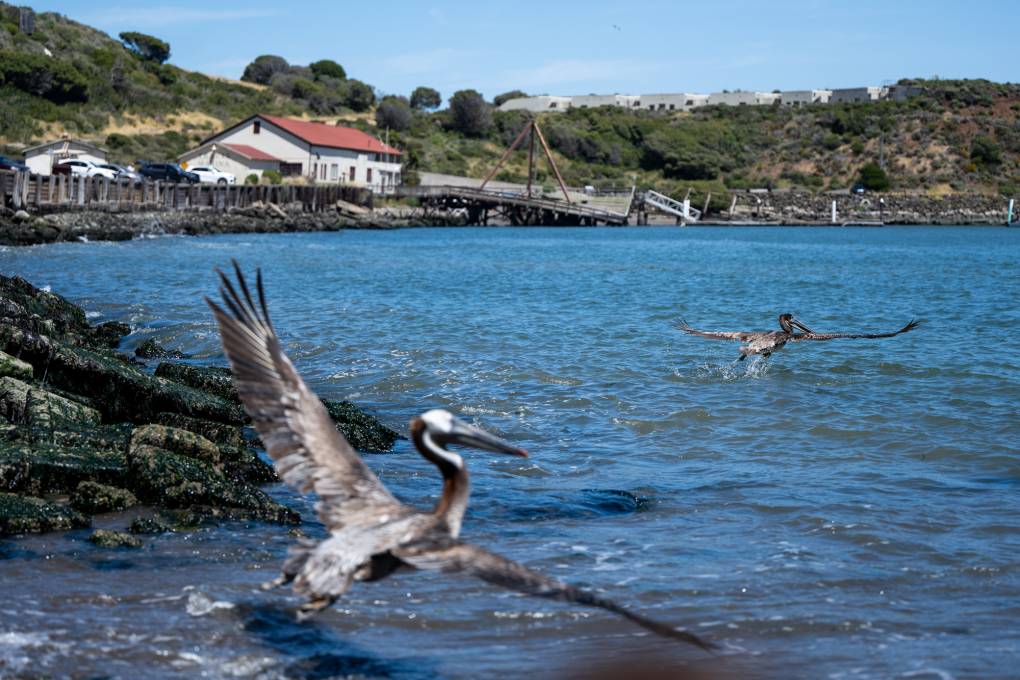
"caption": "International Bird Rescue members released eight rehabilitated brown pelicans, the first group to be returned to the wild, at Fort Baker in Sausalito on May 30, 2024, after they had been treated for starvation.",
"credit": "Beth LaBerge/KQED",
"altTag": null,
"description": null,
"imgSizes": {
"medium": {
"file": "https://cdn.kqed.org/wp-content/uploads/sites/10/2024/05/240530-BrownPelicans-10-BL-800x533.jpg",
"width": 800,
"height": 533,
"mimeType": "image/jpeg"
},
"large": {
"file": "https://cdn.kqed.org/wp-content/uploads/sites/10/2024/05/240530-BrownPelicans-10-BL-1020x680.jpg",
"width": 1020,
"height": 680,
"mimeType": "image/jpeg"
},
"thumbnail": {
"file": "https://cdn.kqed.org/wp-content/uploads/sites/10/2024/05/240530-BrownPelicans-10-BL-160x107.jpg",
"width": 160,
"height": 107,
"mimeType": "image/jpeg"
},
"1536x1536": {
"file": "https://cdn.kqed.org/wp-content/uploads/sites/10/2024/05/240530-BrownPelicans-10-BL-1536x1024.jpg",
"width": 1536,
"height": 1024,
"mimeType": "image/jpeg"
},
"post-thumbnail": {
"file": "https://cdn.kqed.org/wp-content/uploads/sites/10/2024/05/240530-BrownPelicans-10-BL-672x372.jpg",
"width": 672,
"height": 372,
"mimeType": "image/jpeg"
},
"twentyfourteen-full-width": {
"file": "https://cdn.kqed.org/wp-content/uploads/sites/10/2024/05/240530-BrownPelicans-10-BL-1038x576.jpg",
"width": 1038,
"height": 576,
"mimeType": "image/jpeg"
},
"full-width": {
"file": "https://cdn.kqed.org/wp-content/uploads/sites/10/2024/05/240530-BrownPelicans-10-BL-1920x1280.jpg",
"width": 1920,
"height": 1280,
"mimeType": "image/jpeg"
},
"kqedFullSize": {
"file": "https://cdn.kqed.org/wp-content/uploads/sites/10/2024/05/240530-BrownPelicans-10-BL.jpg",
"width": 2000,
"height": 1333
}
},
"isLoading": false,
"fetchFailed": false
},
"news_11987238": {
"type": "attachments",
"id": "news_11987238",
"meta": {
"index": "attachments_1716263798",
"site": "news",
"id": "11987238",
"found": true
},
"title": "230713-PAMELA PRICE-JY-08_qut",
"publishDate": 1716336013,
"status": "inherit",
"parent": 11987227,
"modified": 1716336067,
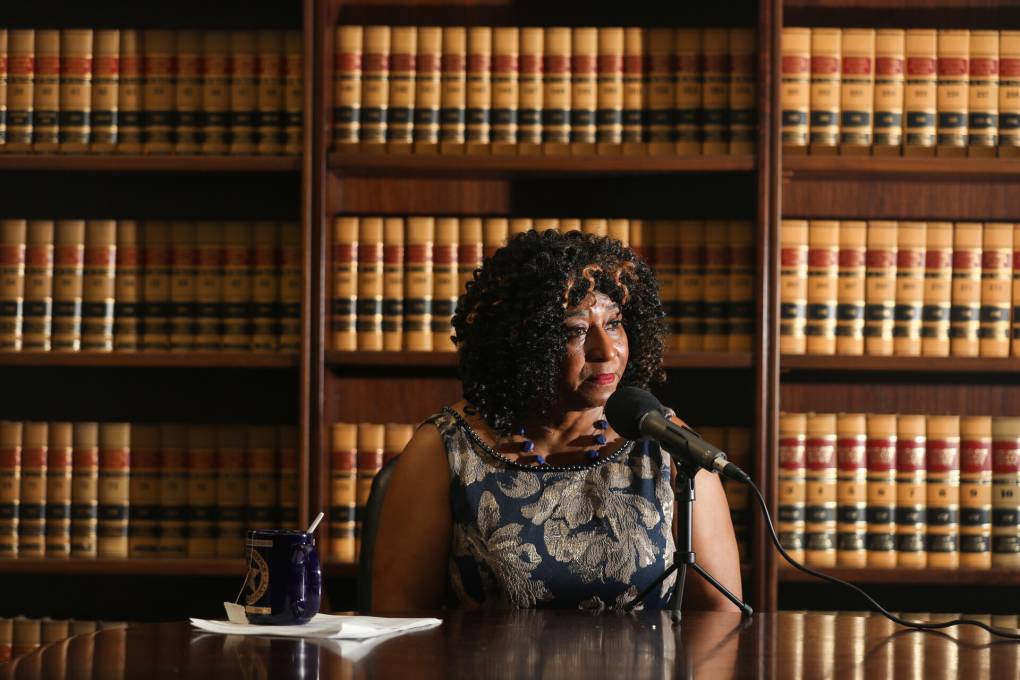
"caption": "Alameda County District Attorney Pamela Price at her office in Oakland on July 16, 2023.",
"credit": "Juliana Yamada/KQED",
"altTag": null,
"description": null,
"imgSizes": {
"medium": {
"file": "https://cdn.kqed.org/wp-content/uploads/sites/10/2024/05/230713-PAMELA-PRICE-JY-08_qut-800x533.jpg",
"width": 800,
"height": 533,
"mimeType": "image/jpeg"
},
"large": {
"file": "https://cdn.kqed.org/wp-content/uploads/sites/10/2024/05/230713-PAMELA-PRICE-JY-08_qut-1020x680.jpg",
"width": 1020,
"height": 680,
"mimeType": "image/jpeg"
},
"thumbnail": {
"file": "https://cdn.kqed.org/wp-content/uploads/sites/10/2024/05/230713-PAMELA-PRICE-JY-08_qut-160x107.jpg",
"width": 160,
"height": 107,
"mimeType": "image/jpeg"
},
"1536x1536": {
"file": "https://cdn.kqed.org/wp-content/uploads/sites/10/2024/05/230713-PAMELA-PRICE-JY-08_qut-1536x1024.jpg",
"width": 1536,
"height": 1024,
"mimeType": "image/jpeg"
},
"post-thumbnail": {
"file": "https://cdn.kqed.org/wp-content/uploads/sites/10/2024/05/230713-PAMELA-PRICE-JY-08_qut-672x372.jpg",
"width": 672,
"height": 372,
"mimeType": "image/jpeg"
},
"twentyfourteen-full-width": {
"file": "https://cdn.kqed.org/wp-content/uploads/sites/10/2024/05/230713-PAMELA-PRICE-JY-08_qut-1038x576.jpg",
"width": 1038,
"height": 576,
"mimeType": "image/jpeg"
},
"kqedFullSize": {
"file": "https://cdn.kqed.org/wp-content/uploads/sites/10/2024/05/230713-PAMELA-PRICE-JY-08_qut.jpg",
"width": 1920,
"height": 1280
}
},
"isLoading": false,
"fetchFailed": false
},
"news_11970187": {
"type": "attachments",
"id": "news_11970187",
"meta": {
"index": "attachments_1716263798",
"site": "news",
"id": "11970187",
"found": true
},
"parent": 11970180,
"imgSizes": {
"twentyfourteen-full-width": {
"file": "https://cdn.kqed.org/wp-content/uploads/sites/10/2023/12/033_Alameda_MarioGonzalezPressConf_04272021-qut-1038x576.jpg",
"width": 1038,
"mimeType": "image/jpeg",
"height": 576
},
"thumbnail": {
"file": "https://cdn.kqed.org/wp-content/uploads/sites/10/2023/12/033_Alameda_MarioGonzalezPressConf_04272021-qut-160x107.jpg",
"width": 160,
"mimeType": "image/jpeg",
"height": 107
},
"post-thumbnail": {
"file": "https://cdn.kqed.org/wp-content/uploads/sites/10/2023/12/033_Alameda_MarioGonzalezPressConf_04272021-qut-672x372.jpg",
"width": 672,
"mimeType": "image/jpeg",
"height": 372
},
"kqedFullSize": {
"file": "https://cdn.kqed.org/wp-content/uploads/sites/10/2023/12/033_Alameda_MarioGonzalezPressConf_04272021-qut.jpg",
"width": 1920,
"height": 1278
},
"large": {
"file": "https://cdn.kqed.org/wp-content/uploads/sites/10/2023/12/033_Alameda_MarioGonzalezPressConf_04272021-qut-1020x679.jpg",
"width": 1020,
"mimeType": "image/jpeg",
"height": 679
},
"1536x1536": {
"file": "https://cdn.kqed.org/wp-content/uploads/sites/10/2023/12/033_Alameda_MarioGonzalezPressConf_04272021-qut-1536x1022.jpg",
"width": 1536,
"mimeType": "image/jpeg",
"height": 1022
},
"medium": {
"file": "https://cdn.kqed.org/wp-content/uploads/sites/10/2023/12/033_Alameda_MarioGonzalezPressConf_04272021-qut-800x533.jpg",
"width": 800,
"mimeType": "image/jpeg",
"height": 533
}
},
"publishDate": 1702689988,
"modified": 1702690066,
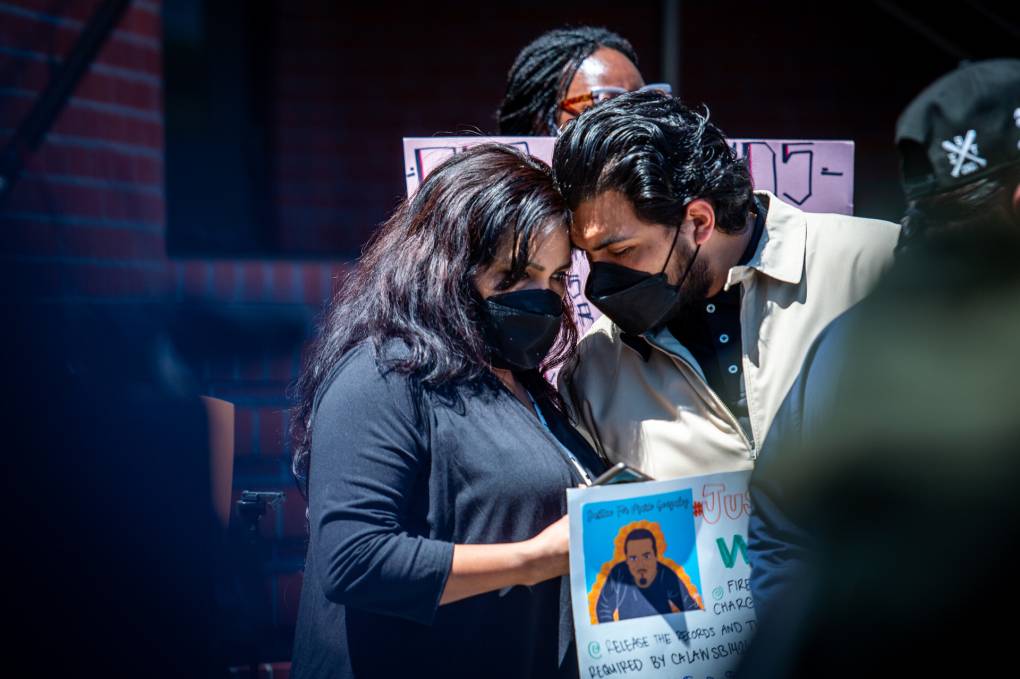
"caption": "The mother of Mario Gonzales, Edith Arenales, puts her head together with her son Geraldo Gonzalez before speaking at a news conference outside the Alameda Police Department on April 27, 2021.",
"description": null,
"title": "033_Alameda_MarioGonzalezPressConf_04272021-qut",
"credit": "Beth LaBerge/KQED",
"status": "inherit",
"altTag": "A Latina woman and a Latino man touch heads as they mourn with masks on.",
"isLoading": false,
"fetchFailed": false
},
"news_11717333": {
"type": "attachments",
"id": "news_11717333",
"meta": {
"index": "attachments_1716263798",
"site": "news",
"id": "11717333",
"found": true
},
"parent": 11716632,
"imgSizes": {
"twentyfourteen-full-width": {
"file": "https://ww2.kqed.org/app/uploads/sites/10/2019/01/44606377120_6d30ebc8c3_o-e1547102089379-1038x576.jpg",
"width": 1038,
"mimeType": "image/jpeg",
"height": 576
},
"thumbnail": {
"file": "https://ww2.kqed.org/app/uploads/sites/10/2019/01/44606377120_6d30ebc8c3_o-e1547102089379-160x107.jpg",
"width": 160,
"mimeType": "image/jpeg",
"height": 107
},
"post-thumbnail": {
"file": "https://ww2.kqed.org/app/uploads/sites/10/2019/01/44606377120_6d30ebc8c3_o-e1547102089379-672x372.jpg",
"width": 672,
"mimeType": "image/jpeg",
"height": 372
},
"kqedFullSize": {
"file": "https://ww2.kqed.org/app/uploads/sites/10/2019/01/44606377120_6d30ebc8c3_o-e1547102089379.jpg",
"width": 1920,
"height": 1282
},
"large": {
"file": "https://ww2.kqed.org/app/uploads/sites/10/2019/01/44606377120_6d30ebc8c3_o-e1547102089379-1020x681.jpg",
"width": 1020,
"mimeType": "image/jpeg",
"height": 681
},
"complete_open_graph": {
"file": "https://ww2.kqed.org/app/uploads/sites/10/2019/01/44606377120_6d30ebc8c3_o-e1547102089379-1200x801.jpg",
"width": 1200,
"mimeType": "image/jpeg",
"height": 801
},
"guest-author-50": {
"file": "https://ww2.kqed.org/app/uploads/sites/10/2019/01/44606377120_6d30ebc8c3_o-e1547102089379-50x50.jpg",
"width": 50,
"mimeType": "image/jpeg",
"height": 50
},
"guest-author-96": {
"file": "https://ww2.kqed.org/app/uploads/sites/10/2019/01/44606377120_6d30ebc8c3_o-e1547102089379-96x96.jpg",
"width": 96,
"mimeType": "image/jpeg",
"height": 96
},
"medium": {
"file": "https://ww2.kqed.org/app/uploads/sites/10/2019/01/44606377120_6d30ebc8c3_o-e1547102089379-800x534.jpg",
"width": 800,
"mimeType": "image/jpeg",
"height": 534
},
"guest-author-64": {
"file": "https://ww2.kqed.org/app/uploads/sites/10/2019/01/44606377120_6d30ebc8c3_o-e1547102089379-64x64.jpg",
"width": 64,
"mimeType": "image/jpeg",
"height": 64
},
"guest-author-32": {
"file": "https://ww2.kqed.org/app/uploads/sites/10/2019/01/44606377120_6d30ebc8c3_o-e1547102089379-32x32.jpg",
"width": 32,
"mimeType": "image/jpeg",
"height": 32
},
"full-width": {
"file": "https://ww2.kqed.org/app/uploads/sites/10/2019/01/44606377120_6d30ebc8c3_o-e1547102089379-1920x1282.jpg",
"width": 1920,
"mimeType": "image/jpeg",
"height": 1282
},
"detail": {
"file": "https://ww2.kqed.org/app/uploads/sites/10/2019/01/44606377120_6d30ebc8c3_o-e1547102089379-150x150.jpg",
"width": 150,
"mimeType": "image/jpeg",
"height": 150
},
"guest-author-128": {
"file": "https://ww2.kqed.org/app/uploads/sites/10/2019/01/44606377120_6d30ebc8c3_o-e1547102089379-128x128.jpg",
"width": 128,
"mimeType": "image/jpeg",
"height": 128
}
},
"publishDate": 1547101859,
"modified": 1547102081,
"caption": "The Oakland Estuary, as seen from the San Francisco Bay Ferry near Alameda. ",
"description": null,
"title": "Oakland Estuary-S.F. Ferry",
"credit": "Dan Brekke/KQED",
"status": "inherit",
"isLoading": false,
"fetchFailed": false
},
"news_11961875": {
"type": "attachments",
"id": "news_11961875",
"meta": {
"index": "attachments_1716263798",
"site": "news",
"id": "11961875",
"found": true
},
"parent": 0,
"imgSizes": {
"twentyfourteen-full-width": {
"file": "https://ww2.kqed.org/app/uploads/sites/10/2023/09/20230917-PacificPinball-24-JY-KQED-1038x576.jpg",
"width": 1038,
"mimeType": "image/jpeg",
"height": 576
},
"thumbnail": {
"file": "https://ww2.kqed.org/app/uploads/sites/10/2023/09/20230917-PacificPinball-24-JY-KQED-160x107.jpg",
"width": 160,
"mimeType": "image/jpeg",
"height": 107
},
"post-thumbnail": {
"file": "https://ww2.kqed.org/app/uploads/sites/10/2023/09/20230917-PacificPinball-24-JY-KQED-672x372.jpg",
"width": 672,
"mimeType": "image/jpeg",
"height": 372
},
"kqedFullSize": {
"file": "https://ww2.kqed.org/app/uploads/sites/10/2023/09/20230917-PacificPinball-24-JY-KQED.jpg",
"width": 2000,
"height": 1333
},
"large": {
"file": "https://ww2.kqed.org/app/uploads/sites/10/2023/09/20230917-PacificPinball-24-JY-KQED-1020x680.jpg",
"width": 1020,
"mimeType": "image/jpeg",
"height": 680
},
"1536x1536": {
"file": "https://ww2.kqed.org/app/uploads/sites/10/2023/09/20230917-PacificPinball-24-JY-KQED-1536x1024.jpg",
"width": 1536,
"mimeType": "image/jpeg",
"height": 1024
},
"full-width": {
"file": "https://ww2.kqed.org/app/uploads/sites/10/2023/09/20230917-PacificPinball-24-JY-KQED-1920x1280.jpg",
"width": 1920,
"mimeType": "image/jpeg",
"height": 1280
},
"medium": {
"file": "https://ww2.kqed.org/app/uploads/sites/10/2023/09/20230917-PacificPinball-24-JY-KQED-800x533.jpg",
"width": 800,
"mimeType": "image/jpeg",
"height": 533
}
},
"publishDate": 1695229414,
"modified": 1695322653,
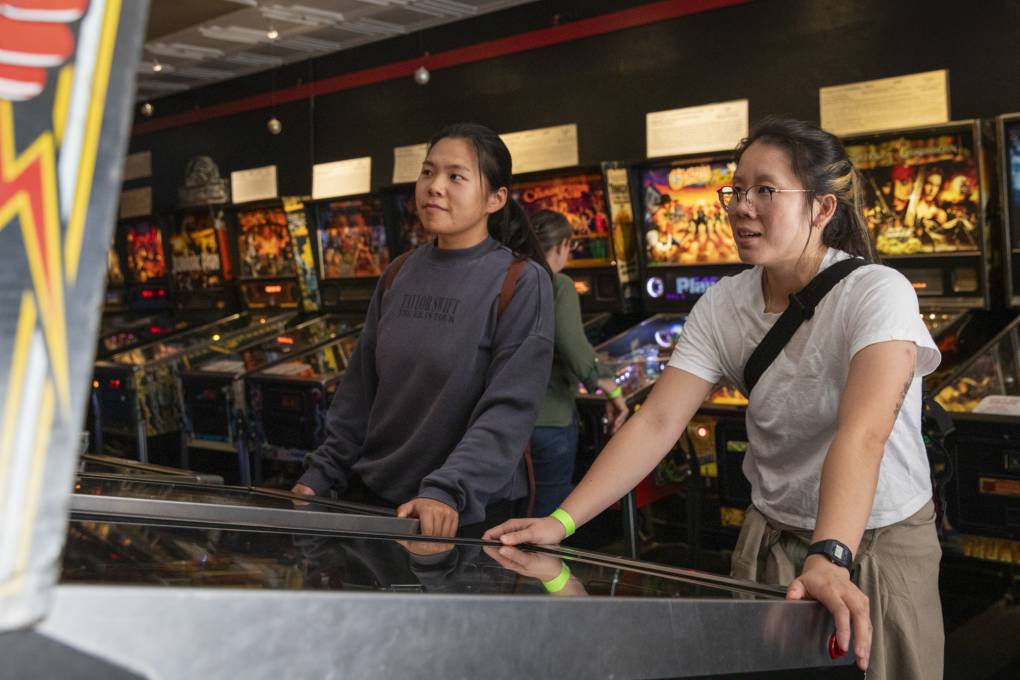
"caption": "Karen Wu (left) and Stephanie Owyeong play pinball at the Pacific Pinball Museum in Alameda on Sunday, Sept. 17, 2023. The Pacific Pinball Museum features a wide range of machines, both historical and modern pinball machines that date as far back as the 1800s.",
"description": null,
"title": "20230917-PacificPinball-24-JY-KQED",
"credit": "Juliana Yamada/KQED",
"status": "inherit",
"altTag": "Two people stand in front of pinball machines looking intently at one of them.",
"isLoading": false,
"fetchFailed": false
},
"news_11938461": {
"type": "attachments",
"id": "news_11938461",
"meta": {
"index": "attachments_1716263798",
"site": "news",
"id": "11938461",
"found": true
},
"parent": 11938267,
"imgSizes": {
"twentyfourteen-full-width": {
"file": "https://ww2.kqed.org/app/uploads/sites/10/2023/01/026_KQED_AlamedaAffordableHousing_01122023-1038x576.jpg",
"width": 1038,
"mimeType": "image/jpeg",
"height": 576
},
"thumbnail": {
"file": "https://ww2.kqed.org/app/uploads/sites/10/2023/01/026_KQED_AlamedaAffordableHousing_01122023-160x107.jpg",
"width": 160,
"mimeType": "image/jpeg",
"height": 107
},
"post-thumbnail": {
"file": "https://ww2.kqed.org/app/uploads/sites/10/2023/01/026_KQED_AlamedaAffordableHousing_01122023-672x372.jpg",
"width": 672,
"mimeType": "image/jpeg",
"height": 372
},
"kqedFullSize": {
"file": "https://ww2.kqed.org/app/uploads/sites/10/2023/01/026_KQED_AlamedaAffordableHousing_01122023.jpg",
"width": 1920,
"height": 1280
},
"large": {
"file": "https://ww2.kqed.org/app/uploads/sites/10/2023/01/026_KQED_AlamedaAffordableHousing_01122023-1020x680.jpg",
"width": 1020,
"mimeType": "image/jpeg",
"height": 680
},
"1536x1536": {
"file": "https://ww2.kqed.org/app/uploads/sites/10/2023/01/026_KQED_AlamedaAffordableHousing_01122023-1536x1024.jpg",
"width": 1536,
"mimeType": "image/jpeg",
"height": 1024
},
"medium": {
"file": "https://ww2.kqed.org/app/uploads/sites/10/2023/01/026_KQED_AlamedaAffordableHousing_01122023-800x533.jpg",
"width": 800,
"mimeType": "image/jpeg",
"height": 533
}
},
"publishDate": 1674073551,
"modified": 1674242149,
"caption": "Alameda residents have been largely resistant to new housing construction for decades, but the state is forcing them to change, by requiring the city, and many others, to make it easier for developers to build more housing than ever before. The Del Monte warehouse in Alameda, pictured here on Jan. 12, 2023, is under construction to become an apartment building.",
"description": null,
"title": "026_KQED_AlamedaAffordableHousing_01122023",
"credit": "Beth LaBerge/KQED",
"status": "inherit",
"altTag": "A warehouse with fencing around it.",
"isLoading": false,
"fetchFailed": false
},
"news_11913502": {
"type": "attachments",
"id": "news_11913502",
"meta": {
"index": "attachments_1716263798",
"site": "news",
"id": "11913502",
"found": true
},
"parent": 11913434,
"imgSizes": {
"twentyfourteen-full-width": {
"file": "https://ww2.kqed.org/app/uploads/sites/10/2022/05/931-MARQUEE-1038x576.jpg",
"width": 1038,
"mimeType": "image/jpeg",
"height": 576
},
"thumbnail": {
"file": "https://ww2.kqed.org/app/uploads/sites/10/2022/05/931-MARQUEE-160x106.jpg",
"width": 160,
"mimeType": "image/jpeg",
"height": 106
},
"post-thumbnail": {
"file": "https://ww2.kqed.org/app/uploads/sites/10/2022/05/931-MARQUEE-672x372.jpg",
"width": 672,
"mimeType": "image/jpeg",
"height": 372
},
"kqedFullSize": {
"file": "https://ww2.kqed.org/app/uploads/sites/10/2022/05/931-MARQUEE-scaled.jpg",
"width": 2560,
"height": 1704
},
"2048x2048": {
"file": "https://ww2.kqed.org/app/uploads/sites/10/2022/05/931-MARQUEE-2048x1363.jpg",
"width": 2048,
"mimeType": "image/jpeg",
"height": 1363
},
"large": {
"file": "https://ww2.kqed.org/app/uploads/sites/10/2022/05/931-MARQUEE-1020x679.jpg",
"width": 1020,
"mimeType": "image/jpeg",
"height": 679
},
"1536x1536": {
"file": "https://ww2.kqed.org/app/uploads/sites/10/2022/05/931-MARQUEE-1536x1022.jpg",
"width": 1536,
"mimeType": "image/jpeg",
"height": 1022
},
"full-width": {
"file": "https://ww2.kqed.org/app/uploads/sites/10/2022/05/931-MARQUEE-1920x1278.jpg",
"width": 1920,
"mimeType": "image/jpeg",
"height": 1278
},
"medium": {
"file": "https://ww2.kqed.org/app/uploads/sites/10/2022/05/931-MARQUEE-800x532.jpg",
"width": 800,
"mimeType": "image/jpeg",
"height": 532
}
},
"publishDate": 1651881241,
"modified": 1651881273,
"caption": "(Beth LaBerge / KQED)",
"description": null,
"title": "931 MARQUEE",
"credit": null,
"status": "inherit",
"altTag": "(Beth LaBerge / KQED)",
"isLoading": false,
"fetchFailed": false
},
"news_11908650": {
"type": "attachments",
"id": "news_11908650",
"meta": {
"index": "attachments_1716263798",
"site": "news",
"id": "11908650",
"found": true
},
"parent": 11908647,
"imgSizes": {
"thumbnail": {
"file": "https://ww2.kqed.org/app/uploads/sites/10/2022/03/philmarqueeyuh-160x90.jpg",
"width": 160,
"mimeType": "image/jpeg",
"height": 90
},
"post-thumbnail": {
"file": "https://ww2.kqed.org/app/uploads/sites/10/2022/03/philmarqueeyuh-672x372.jpg",
"width": 672,
"mimeType": "image/jpeg",
"height": 372
},
"kqedFullSize": {
"file": "https://ww2.kqed.org/app/uploads/sites/10/2022/03/philmarqueeyuh.jpg",
"width": 898,
"height": 505
},
"medium": {
"file": "https://ww2.kqed.org/app/uploads/sites/10/2022/03/philmarqueeyuh-800x450.jpg",
"width": 800,
"mimeType": "image/jpeg",
"height": 450
}
},
"publishDate": 1647638413,
"modified": 1647638413,
"caption": null,
"description": null,
"title": "philmarqueeyuh",
"credit": null,
"status": "inherit",
"altTag": null,
"isLoading": false,
"fetchFailed": false
},
"news_11895054": {
"type": "attachments",
"id": "news_11895054",
"meta": {
"index": "attachments_1716263798",
"site": "news",
"id": "11895054",
"found": true
},
"parent": 11895041,
"imgSizes": {
"twentyfourteen-full-width": {
"file": "https://ww2.kqed.org/app/uploads/sites/10/2021/11/3-CHAN-2K-1-1038x576.jpeg",
"width": 1038,
"mimeType": "image/jpeg",
"height": 576
},
"thumbnail": {
"file": "https://ww2.kqed.org/app/uploads/sites/10/2021/11/3-CHAN-2K-1-160x121.jpeg",
"width": 160,
"mimeType": "image/jpeg",
"height": 121
},
"post-thumbnail": {
"file": "https://ww2.kqed.org/app/uploads/sites/10/2021/11/3-CHAN-2K-1-672x372.jpeg",
"width": 672,
"mimeType": "image/jpeg",
"height": 372
},
"kqedFullSize": {
"file": "https://ww2.kqed.org/app/uploads/sites/10/2021/11/3-CHAN-2K-1.jpeg",
"width": 1911,
"height": 1446
},
"large": {
"file": "https://ww2.kqed.org/app/uploads/sites/10/2021/11/3-CHAN-2K-1-1020x772.jpeg",
"width": 1020,
"mimeType": "image/jpeg",
"height": 772
},
"1536x1536": {
"file": "https://ww2.kqed.org/app/uploads/sites/10/2021/11/3-CHAN-2K-1-1536x1162.jpeg",
"width": 1536,
"mimeType": "image/jpeg",
"height": 1162
},
"medium": {
"file": "https://ww2.kqed.org/app/uploads/sites/10/2021/11/3-CHAN-2K-1-800x605.jpeg",
"width": 800,
"mimeType": "image/jpeg",
"height": 605
}
},
"publishDate": 1635983245,
"modified": 1635990273,
"caption": "Alameda County Supervisor Wilma Chan, who died after being hit by a car in Alameda on Nov. 3, 2021. ",
"description": null,
"title": "3-CHAN-2K",
"credit": "Alameda County Board of Supervisors",
"status": "inherit",
"altTag": "A woman, smiling and wearing glasses, an olive blazer, and a white blouse with a wide collar sits, at a desk in front of an American flag.",
"isLoading": false,
"fetchFailed": false
},
"news_11872820": {
"type": "attachments",
"id": "news_11872820",
"meta": {
"index": "attachments_1716263798",
"site": "news",
"id": "11872820",
"found": true
},
"parent": 11871887,
"imgSizes": {
"twentyfourteen-full-width": {
"file": "https://ww2.kqed.org/app/uploads/sites/10/2021/05/RS48839_022_Alameda_MarioGonzalezPressConf_04272021-qut-1038x576.jpg",
"width": 1038,
"mimeType": "image/jpeg",
"height": 576
},
"thumbnail": {
"file": "https://ww2.kqed.org/app/uploads/sites/10/2021/05/RS48839_022_Alameda_MarioGonzalezPressConf_04272021-qut-160x107.jpg",
"width": 160,
"mimeType": "image/jpeg",
"height": 107
},
"post-thumbnail": {
"file": "https://ww2.kqed.org/app/uploads/sites/10/2021/05/RS48839_022_Alameda_MarioGonzalezPressConf_04272021-qut-672x372.jpg",
"width": 672,
"mimeType": "image/jpeg",
"height": 372
},
"kqedFullSize": {
"file": "https://ww2.kqed.org/app/uploads/sites/10/2021/05/RS48839_022_Alameda_MarioGonzalezPressConf_04272021-qut.jpg",
"width": 1920,
"height": 1278
},
"large": {
"file": "https://ww2.kqed.org/app/uploads/sites/10/2021/05/RS48839_022_Alameda_MarioGonzalezPressConf_04272021-qut-1020x679.jpg",
"width": 1020,
"mimeType": "image/jpeg",
"height": 679
},
"1536x1536": {
"file": "https://ww2.kqed.org/app/uploads/sites/10/2021/05/RS48839_022_Alameda_MarioGonzalezPressConf_04272021-qut-1536x1022.jpg",
"width": 1536,
"mimeType": "image/jpeg",
"height": 1022
},
"medium": {
"file": "https://ww2.kqed.org/app/uploads/sites/10/2021/05/RS48839_022_Alameda_MarioGonzalezPressConf_04272021-qut-800x533.jpg",
"width": 800,
"mimeType": "image/jpeg",
"height": 533
}
},
"publishDate": 1620427268,
"modified": 1649440866,
"caption": "Protesters gathered outside Alameda Police Department headquarters on April 27, 2021, the day police released bodycam footage of Gonzalez's April 19 death.",
"description": "Friends, family and supporters of Mario Gonzalez gathered outside the Alameda Police Dept. on April 27, 2021 for a press conference on the day police publicly released body cam footage of Gonzalez's death.",
"title": "RS48839_022_Alameda_MarioGonzalezPressConf_04272021-qut",
"credit": "Beth LaBerge/KQED",
"status": "inherit",
"altTag": "Someone holding a sign in front of the Alameda Police station",
"isLoading": false,
"fetchFailed": false
},
"news_11871404": {
"type": "attachments",
"id": "news_11871404",
"meta": {
"index": "attachments_1716263798",
"site": "news",
"id": "11871404",
"found": true
},
"parent": 11871345,
"imgSizes": {
"twentyfourteen-full-width": {
"file": "https://ww2.kqed.org/app/uploads/sites/10/2021/04/RS48857_044_Alameda_MarioGonzalezPressConf_04272021-qut-1038x576.jpg",
"width": 1038,
"mimeType": "image/jpeg",
"height": 576
},
"thumbnail": {
"file": "https://ww2.kqed.org/app/uploads/sites/10/2021/04/RS48857_044_Alameda_MarioGonzalezPressConf_04272021-qut-160x107.jpg",
"width": 160,
"mimeType": "image/jpeg",
"height": 107
},
"post-thumbnail": {
"file": "https://ww2.kqed.org/app/uploads/sites/10/2021/04/RS48857_044_Alameda_MarioGonzalezPressConf_04272021-qut-672x372.jpg",
"width": 672,
"mimeType": "image/jpeg",
"height": 372
},
"kqedFullSize": {
"file": "https://ww2.kqed.org/app/uploads/sites/10/2021/04/RS48857_044_Alameda_MarioGonzalezPressConf_04272021-qut.jpg",
"width": 1920,
"height": 1278
},
"large": {
"file": "https://ww2.kqed.org/app/uploads/sites/10/2021/04/RS48857_044_Alameda_MarioGonzalezPressConf_04272021-qut-1020x679.jpg",
"width": 1020,
"mimeType": "image/jpeg",
"height": 679
},
"1536x1536": {
"file": "https://ww2.kqed.org/app/uploads/sites/10/2021/04/RS48857_044_Alameda_MarioGonzalezPressConf_04272021-qut-1536x1022.jpg",
"width": 1536,
"mimeType": "image/jpeg",
"height": 1022
},
"medium": {
"file": "https://ww2.kqed.org/app/uploads/sites/10/2021/04/RS48857_044_Alameda_MarioGonzalezPressConf_04272021-qut-800x533.jpg",
"width": 800,
"mimeType": "image/jpeg",
"height": 533
}
},
"publishDate": 1619569438,
"modified": 1619584503,
"caption": "Edith Arenales, the mother of Mario Gonzalez, who died last week in police custody, speaks during a press conference, alongside her son Gerardo Gonzalez, outside Alameda Police Department headquarters on April 27, 2021.",
"description": "Edith Arenales, the mother of Mario Gonzalez, who died last week in police custody, speaks during a press conference outside Alameda Police Department headquarters on April 27, 2021.",
"title": "RS48857_044_Alameda_MarioGonzalezPressConf_04272021-qut",
"credit": "Beth LaBerge/KQED",
"status": "inherit",
"altTag": null,
"isLoading": false,
"fetchFailed": false
},
"news_11870699": {
"type": "attachments",
"id": "news_11870699",
"meta": {
"index": "attachments_1716263798",
"site": "news",
"id": "11870699",
"found": true
},
"parent": 11870691,
"imgSizes": {
"twentyfourteen-full-width": {
"file": "https://ww2.kqed.org/app/uploads/sites/10/2021/04/RS48713_026_Alameda_MarioGonzalezVigil_04212021-qut-1038x576.jpg",
"width": 1038,
"mimeType": "image/jpeg",
"height": 576
},
"thumbnail": {
"file": "https://ww2.kqed.org/app/uploads/sites/10/2021/04/RS48713_026_Alameda_MarioGonzalezVigil_04212021-qut-160x107.jpg",
"width": 160,
"mimeType": "image/jpeg",
"height": 107
},
"post-thumbnail": {
"file": "https://ww2.kqed.org/app/uploads/sites/10/2021/04/RS48713_026_Alameda_MarioGonzalezVigil_04212021-qut-672x372.jpg",
"width": 672,
"mimeType": "image/jpeg",
"height": 372
},
"kqedFullSize": {
"file": "https://ww2.kqed.org/app/uploads/sites/10/2021/04/RS48713_026_Alameda_MarioGonzalezVigil_04212021-qut.jpg",
"width": 1920,
"height": 1278
},
"large": {
"file": "https://ww2.kqed.org/app/uploads/sites/10/2021/04/RS48713_026_Alameda_MarioGonzalezVigil_04212021-qut-1020x679.jpg",
"width": 1020,
"mimeType": "image/jpeg",
"height": 679
},
"1536x1536": {
"file": "https://ww2.kqed.org/app/uploads/sites/10/2021/04/RS48713_026_Alameda_MarioGonzalezVigil_04212021-qut-1536x1022.jpg",
"width": 1536,
"mimeType": "image/jpeg",
"height": 1022
},
"medium": {
"file": "https://ww2.kqed.org/app/uploads/sites/10/2021/04/RS48713_026_Alameda_MarioGonzalezVigil_04212021-qut-800x533.jpg",
"width": 800,
"mimeType": "image/jpeg",
"height": 533
}
},
"publishDate": 1619115165,
"modified": 1619128611,
"caption": "A woman places a candle at a memorial for Mario Gonzalez during a vigil on April 21, 2021. Gonzalez died in Alameda police custody Monday.",
"description": null,
"title": "RS48713_026_Alameda_MarioGonzalezVigil_04212021-qut",
"credit": "Beth LaBerge/KQED",
"status": "inherit",
"altTag": null,
"isLoading": false,
"fetchFailed": false
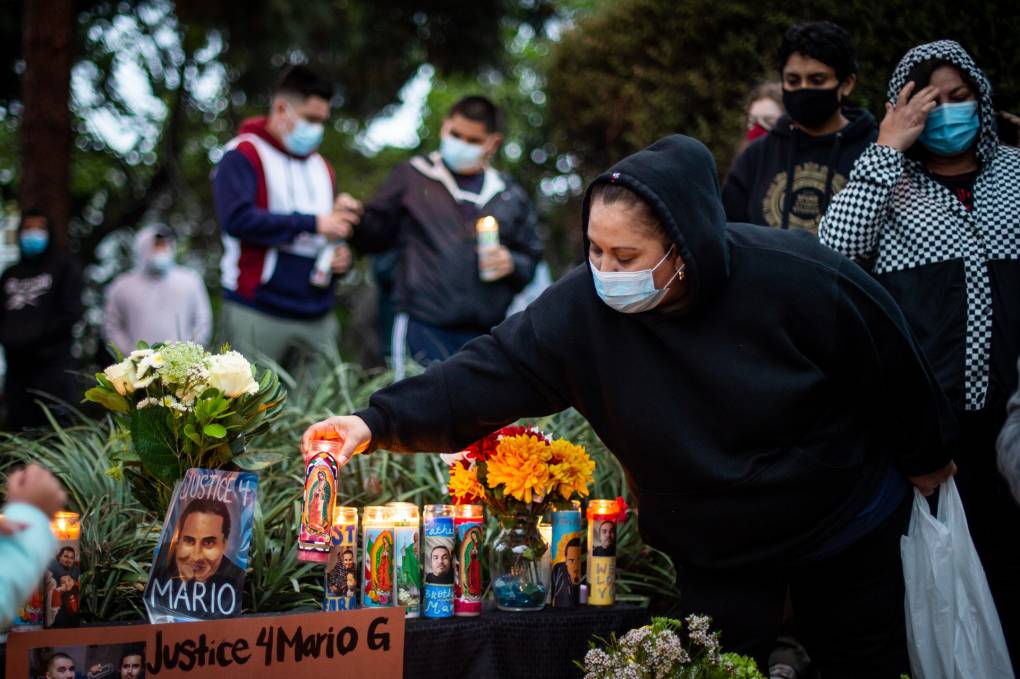
}
},
"audioPlayerReducer": {
"postId": "stream_live",
"isPaused": true,
"isPlaying": false,
"pfsActive": false,
"pledgeModalIsOpen": true,
"playerDrawerIsOpen": false,
"liveAudioPlayStartedAt": 0,
"liveAudioPlayContext": ""
},
"authorsReducer": {
"byline_news_11961953": {
"type": "authors",
"id": "byline_news_11961953",
"meta": {
"override": true
},
"slug": "byline_news_11961953",
"name": "\u003ca href=\"https://twitter.com/OZhaoxu\">Olivia Zhao\u003c/a>",
"isLoading": false
},
"gmarzorati": {
"type": "authors",
"id": "227",
"meta": {
"index": "authors_1716337520",
"id": "227",
"found": true
},
"name": "Guy Marzorati",
"firstName": "Guy",
"lastName": "Marzorati",
"slug": "gmarzorati",
"email": "gmarzorati@KQED.org",
"display_author_email": true,
"staff_mastheads": [
"news"
],
"title": "Correspondent",
"bio": "Guy Marzorati is a correspondent on KQED's California Politics and Government Desk, based in San Jose. A graduate of Santa Clara University, Guy joined KQED in 2013. He reports on state and local politics and produces KQED's digital voter guide.",
"avatar": "https://secure.gravatar.com/avatar/e7038b8dbfd55b104369b76b1cd0b9de?s=600&d=blank&r=g",
"twitter": "guymarzorati",
"facebook": null,
"instagram": null,
"linkedin": null,
"sites": [
{
"site": "",
"roles": [
"editor"
]
},
{
"site": "news",
"roles": [
"editor"
]
},
{
"site": "science",
"roles": [
"editor"
]
},
{
"site": "forum",
"roles": [
"editor"
]
},
{
"site": "elections",
"roles": [
"editor"
]
},
{
"site": "liveblog",
"roles": [
"editor"
]
}
],
"headData": {
"title": "Guy Marzorati | KQED",
"description": "Correspondent",
"ogImgSrc": "https://secure.gravatar.com/avatar/e7038b8dbfd55b104369b76b1cd0b9de?s=600&d=blank&r=g",
"twImgSrc": "https://secure.gravatar.com/avatar/e7038b8dbfd55b104369b76b1cd0b9de?s=600&d=blank&r=g"
},
"isLoading": false,
"link": "/author/gmarzorati"
},
"kqed": {
"type": "authors",
"id": "236",
"meta": {
"index": "authors_1716337520",
"id": "236",
"found": true
},
"name": "KQED News Staff",
"firstName": "KQED News Staff",
"lastName": null,
"slug": "kqed",
"email": "faq@kqed.org",
"display_author_email": false,
"staff_mastheads": [],
"title": null,
"bio": null,
"avatar": "https://secure.gravatar.com/avatar/ef0e801a68c4c54afa9180db14084167?s=600&d=blank&r=g",
"twitter": null,
"facebook": null,
"instagram": null,
"linkedin": null,
"sites": [
{
"site": "arts",
"roles": [
"contributor"
]
},
{
"site": "news",
"roles": [
"editor"
]
},
{
"site": "futureofyou",
"roles": [
"author"
]
}
],
"headData": {
"title": "KQED News Staff | KQED",
"description": null,
"ogImgSrc": "https://secure.gravatar.com/avatar/ef0e801a68c4c54afa9180db14084167?s=600&d=blank&r=g",
"twImgSrc": "https://secure.gravatar.com/avatar/ef0e801a68c4c54afa9180db14084167?s=600&d=blank&r=g"
},
"isLoading": false,
"link": "/author/kqed"
},
"matthewgreen": {
"type": "authors",
"id": "1263",
"meta": {
"index": "authors_1716337520",
"id": "1263",
"found": true
},
"name": "Matthew Green",
"firstName": "Matthew",
"lastName": "Green",
"slug": "matthewgreen",
"email": "mgreen@kqed.org",
"display_author_email": false,
"staff_mastheads": [],
"title": "KQED Editor/Reporter",
"bio": "Matthew Green is a digital media producer for KQED News. He previously produced \u003ca href=\"http://www.kqed.org/lowdown\">The Lowdown\u003c/a>, KQED’s multimedia news education blog. Matthew's written for numerous Bay Area publications, including the Oakland Tribune and San Francisco Chronicle. He also taught journalism classes at Fremont High School in East Oakland.\r\n\r\nEmail: mgreen@kqed.org; Twitter: @MGreenKQED",
"avatar": "https://secure.gravatar.com/avatar/3bf498d1267ca02c8494f33d8cfc575e?s=600&d=blank&r=g",
"twitter": "MGreenKQED",
"facebook": null,
"instagram": null,
"linkedin": null,
"sites": [
{
"site": "news",
"roles": []
},
{
"site": "lowdown",
"roles": []
},
{
"site": "science",
"roles": []
},
{
"site": "education",
"roles": []
},
{
"site": "quest",
"roles": []
},
{
"site": "liveblog",
"roles": []
}
],
"headData": {
"title": "Matthew Green | KQED",
"description": "KQED Editor/Reporter",
"ogImgSrc": "https://secure.gravatar.com/avatar/3bf498d1267ca02c8494f33d8cfc575e?s=600&d=blank&r=g",
"twImgSrc": "https://secure.gravatar.com/avatar/3bf498d1267ca02c8494f33d8cfc575e?s=600&d=blank&r=g"
},
"isLoading": false,
"link": "/author/matthewgreen"
},
"ecruzguevarra": {
"type": "authors",
"id": "8654",
"meta": {
"index": "authors_1716337520",
"id": "8654",
"found": true
},
"name": "Ericka Cruz Guevarra",
"firstName": "Ericka",
"lastName": "Cruz Guevarra",
"slug": "ecruzguevarra",
"email": "ecruzguevarra@kqed.org",
"display_author_email": true,
"staff_mastheads": [
"news"
],
"title": "Producer, The Bay Podcast",
"bio": "Ericka Cruz Guevarra is host of \u003ca href=\"https://www.kqed.org/podcasts/thebay\">\u003cem>The Bay\u003c/em>\u003c/a> podcast at KQED. Before host, she was the show’s producer. Her work in that capacity includes a three-part reported series on policing in Vallejo, which won a 2020 excellence in journalism award from the Society of Professional Journalists. Ericka has worked as a breaking news reporter at Oregon Public Broadcasting, helped produce the Code Switch podcast, and was KQED’s inaugural Raul Ramirez Diversity Fund intern. She’s also an alumna of NPR’s Next Generation Radio program. Send her an email if you have strong feelings about whether Fairfield and Suisun City are the Bay. Ericka is represented by SAG-AFTRA.",
"avatar": "https://secure.gravatar.com/avatar/accefc1de4bafc7e234b69bcb9b6f6536c130fd84709bc3069ef11a78787e1bb?s=600&d=blank&r=g",
"twitter": "NotoriousECG",
"bluesky": null,
"facebook": null,
"instagram": null,
"linkedin": null,
"sites": [
{
"site": "arts",
"roles": [
"subscriber"
]
},
{
"site": "news",
"roles": [
"editor",
"manage_categories"
]
},
{
"site": "futureofyou",
"roles": [
"subscriber"
]
},
{
"site": "stateofhealth",
"roles": [
"subscriber"
]
},
{
"site": "science",
"roles": [
"editor"
]
},
{
"site": "forum",
"roles": [
"subscriber"
]
}
],
"headData": {
"title": "Ericka Cruz Guevarra | KQED",
"description": "Producer, The Bay Podcast",
"ogImgSrc": "https://secure.gravatar.com/avatar/accefc1de4bafc7e234b69bcb9b6f6536c130fd84709bc3069ef11a78787e1bb?s=600&d=blank&r=g",
"twImgSrc": "https://secure.gravatar.com/avatar/accefc1de4bafc7e234b69bcb9b6f6536c130fd84709bc3069ef11a78787e1bb?s=600&d=blank&r=g"
},
"isLoading": false,
"link": "/author/ecruzguevarra"
},
"amontecillo": {
"type": "authors",
"id": "11649",
"meta": {
"index": "authors_1716337520",
"id": "11649",
"found": true
},
"name": "Alan Montecillo",
"firstName": "Alan",
"lastName": "Montecillo",
"slug": "amontecillo",
"email": "amontecillo@kqed.org",
"display_author_email": false,
"staff_mastheads": [
"news"
],
"title": "KQED Contributor",
"bio": "Alan Montecillo is the senior editor of \u003cem>\u003ca href=\"http://kqed.org/thebay\">The Bay\u003c/a>, \u003c/em> KQED's local news podcast. Before moving to the Bay Area, he worked as a senior talk show producer for WILL in Champaign-Urbana, Illinois and at Oregon Public Broadcasting in Portland, Oregon. He has won journalism awards from the Society of Professional Journalists Northern California, the Public Media Journalists Association, The Signal Awards, and has also received a regional Edward R. Murrow award. Alan is a Filipino American from Hong Kong and a graduate of Reed College.",
"avatar": "https://secure.gravatar.com/avatar/268f53a2066899ea9efdd8a5900218b17c822d9862cbc9326cccec53ef41d349?s=600&d=blank&r=g",
"twitter": "alanmontecillo",
"bluesky": null,
"facebook": null,
"instagram": null,
"linkedin": null,
"sites": [
{
"site": "",
"roles": [
"editor"
]
},
{
"site": "news",
"roles": [
"editor",
"manage_categories"
]
}
],
"headData": {
"title": "Alan Montecillo | KQED",
"description": "KQED Contributor",
"ogImgSrc": "https://secure.gravatar.com/avatar/268f53a2066899ea9efdd8a5900218b17c822d9862cbc9326cccec53ef41d349?s=600&d=blank&r=g",
"twImgSrc": "https://secure.gravatar.com/avatar/268f53a2066899ea9efdd8a5900218b17c822d9862cbc9326cccec53ef41d349?s=600&d=blank&r=g"
},
"isLoading": false,
"link": "/author/amontecillo"
},
"abandlamudi": {
"type": "authors",
"id": "11672",
"meta": {
"index": "authors_1716337520",
"id": "11672",
"found": true
},
"name": "Adhiti Bandlamudi",
"firstName": "Adhiti",
"lastName": "Bandlamudi",
"slug": "abandlamudi",
"email": "abandlamudi@kqed.org",
"display_author_email": false,
"staff_mastheads": [
"news"
],
"title": "KQED Housing Reporter",
"bio": "Adhiti Bandlamudi reports for KQED's Housing desk. She focuses on how housing gets built across the Bay Area. Before joining KQED in 2020, she reported for WUNC in Durham, North Carolina, WABE in Atlanta, Georgia and Capital Public Radio in Sacramento. In 2017, she was awarded a Kroc Fellowship at NPR where she reported on everything from sprinkles to the Golden State Killer's arrest. When she's not reporting, she's baking new recipes in her kitchen or watching movies with friends and family. She's originally from Georgia and has strong opinions about Great British Bake Off.",
"avatar": "https://secure.gravatar.com/avatar/868129c8b257bb99a3500e2c86a65400?s=600&d=mm&r=g",
"twitter": "oddity_adhiti",
"facebook": null,
"instagram": null,
"linkedin": null,
"sites": [
{
"site": "arts",
"roles": [
"author"
]
},
{
"site": "news",
"roles": [
"editor"
]
},
{
"site": "liveblog",
"roles": [
"author"
]
}
],
"headData": {
"title": "Adhiti Bandlamudi | KQED",
"description": "KQED Housing Reporter",
"ogImgSrc": "https://secure.gravatar.com/avatar/868129c8b257bb99a3500e2c86a65400?s=600&d=mm&r=g",
"twImgSrc": "https://secure.gravatar.com/avatar/868129c8b257bb99a3500e2c86a65400?s=600&d=mm&r=g"
},
"isLoading": false,
"link": "/author/abandlamudi"
},
"afinney": {
"type": "authors",
"id": "11772",
"meta": {
"index": "authors_1716337520",
"id": "11772",
"found": true
},
"name": "Annelise Finney",
"firstName": "Annelise",
"lastName": "Finney",
"slug": "afinney",
"email": "afinney@kqed.org",
"display_author_email": true,
"staff_mastheads": [
"news"
],
"title": "Reporter",
"bio": "Annelise reports on reparations in California and East Bay politics. She co-produced the Sunday Music Drop, a limited-term radio series featuring Bay Area musicians that aired between Sept 2022 and Oct 2024. She joined KQED in 2021 as a general assignment reporter and is an alumna of KALW's Audio Academy. She was born and raised in the East Bay. She is currently away from KQED completing a year-long reporting project in Berlin, Germany as a Alexander Von Humboldt German Chancellor Fellow.",
"avatar": "https://secure.gravatar.com/avatar/5fded66cae47704cdfc5021cde0f3aa4?s=600&d=blank&r=g",
"twitter": null,
"facebook": null,
"instagram": null,
"linkedin": null,
"sites": [
{
"site": "news",
"roles": [
"editor"
]
},
{
"site": "liveblog",
"roles": [
"author"
]
}
],
"headData": {
"title": "Annelise Finney | KQED",
"description": "Reporter",
"ogImgSrc": "https://secure.gravatar.com/avatar/5fded66cae47704cdfc5021cde0f3aa4?s=600&d=blank&r=g",
"twImgSrc": "https://secure.gravatar.com/avatar/5fded66cae47704cdfc5021cde0f3aa4?s=600&d=blank&r=g"
},
"isLoading": false,
"link": "/author/afinney"
},
"mesquinca": {
"type": "authors",
"id": "11802",
"meta": {
"index": "authors_1716337520",
"id": "11802",
"found": true
},
"name": "Maria Esquinca",
"firstName": "Maria",
"lastName": "Esquinca",
"slug": "mesquinca",
"email": "mesquinca@kqed.org",
"display_author_email": false,
"staff_mastheads": [],
"title": "Producer, The Bay",
"bio": "María Esquinca is a producer of The Bay. Before that, she was a New York Women’s Foundation IGNITE Fellow at Latino USA. She worked at Radio Bilingue where she covered the San Joaquin Valley. Maria has interned at WLRN, News 21, The New York Times Student Journalism Institute and at Crain’s Detroit Business as a Dow Jones News Fund Business Reporting Intern. She is an MFA graduate from the University of Miami. In 2017, she graduated from the Walter Cronkite School of Journalism and Mass Communication with a Master of Mass Communication. A fronteriza, she was born in Ciudad Juárez, Chihuahua, Mexico and grew up in El Paso, Texas.",
"avatar": "https://secure.gravatar.com/avatar/77cedba18aae91da775038ba06dcd8d0?s=600&d=blank&r=g",
"twitter": "@m_esquinca",
"facebook": null,
"instagram": null,
"linkedin": null,
"sites": [
{
"site": "news",
"roles": []
}
],
"headData": {
"title": "Maria Esquinca | KQED",
"description": "Producer, The Bay",
"ogImgSrc": "https://secure.gravatar.com/avatar/77cedba18aae91da775038ba06dcd8d0?s=600&d=blank&r=g",
"twImgSrc": "https://secure.gravatar.com/avatar/77cedba18aae91da775038ba06dcd8d0?s=600&d=blank&r=g"
},
"isLoading": false,
"link": "/author/mesquinca"
},
"sjohnson": {
"type": "authors",
"id": "11840",
"meta": {
"index": "authors_1716337520",
"id": "11840",
"found": true
},
"name": "Sydney Johnson",
"firstName": "Sydney",
"lastName": "Johnson",
"slug": "sjohnson",
"email": "sjohnson@kqed.org",
"display_author_email": false,
"staff_mastheads": [
"news"
],
"title": "KQED Reporter",
"bio": "Sydney Johnson is a general assignment reporter at KQED. She previously reported on public health and city government at the San Francisco Examiner, and before that, she covered statewide education policy for EdSource. Her reporting has won multiple local, state and national awards. Sydney is a graduate of the University of California, Berkeley and lives in San Francisco.",
"avatar": "https://secure.gravatar.com/avatar/97855f2719b72ad6190b7c535fe642c8?s=600&d=blank&r=g",
"twitter": "sydneyfjohnson",
"facebook": null,
"instagram": null,
"linkedin": null,
"sites": [
{
"site": "news",
"roles": [
"editor"
]
}
],
"headData": {
"title": "Sydney Johnson | KQED",
"description": "KQED Reporter",
"ogImgSrc": "https://secure.gravatar.com/avatar/97855f2719b72ad6190b7c535fe642c8?s=600&d=blank&r=g",
"twImgSrc": "https://secure.gravatar.com/avatar/97855f2719b72ad6190b7c535fe642c8?s=600&d=blank&r=g"
},
"isLoading": false,
"link": "/author/sjohnson"
}
},
"pagesReducer": {
"news_tag_alameda": {
"type": "terms",
"id": "news_18848",
"meta": {
"index": "terms_1716263798",
"site": "news",
"id": "18848",
"score": 8.366957
},
"featImg": null,
"name": "Alameda",
"description": null,
"taxonomy": "tag",
"headData": {
"twImgId": null,
"twTitle": null,
"ogTitle": null,
"ogImgId": null,
"twDescription": null,
"description": null,
"title": "Alameda Archives | KQED News",
"ogDescription": null
},
"ttid": 18865,
"slug": "alameda",
"isLoading": false,
"title": "Alameda",
"pageMeta": {
"site": "news",
"WpPageTemplate": "page-topic-editorial",
"currentPage": 4
},
"blocks": [
{
"blockName": "kqed/post-list",
"attrs": {
"layout": "cardArticle2",
"query": "posts/news?tag=alameda",
"seeMore": false,
"paginated": true,
"page": 4
}
},
{
"blockName": "kqed/ad"
}
]
}
},
"pfsSessionReducer": {},
"postsReducer": {
"stream_live": {
"type": "live",
"id": "stream_live",
"audioUrl": "https://streams.kqed.org/kqedradio",
"title": "Live Stream",
"excerpt": "Live Stream information currently unavailable.",
"link": "/radio",
"featImg": "",
"label": {
"name": "KQED Live",
"link": "/"
}
},
"stream_kqedNewscast": {
"type": "posts",
"id": "stream_kqedNewscast",
"audioUrl": "https://www.kqed.org/.stream/anon/radio/RDnews/newscast.mp3?_=1",
"title": "KQED Newscast",
"featImg": "",
"label": {
"name": "88.5 FM",
"link": "/"
}
},
"news_11988320": {
"type": "posts",
"id": "news_11988320",
"meta": {
"index": "posts_1716263798",
"site": "news",
"id": "11988320",
"score": null,
"sort": [
1717156805000
]
},
"guestAuthors": [],
"slug": "california-pelicans-released-back-into-the-wild-after-hundreds-found-starving",
"title": "California Pelicans Released Back Into the Wild After Hundreds Found Starving",
"publishDate": 1717156805,
"format": "standard",
"headTitle": "California Pelicans Released Back Into the Wild After Hundreds Found Starving | KQED",
"labelTerm": {
"site": "news"
},
"content": "\u003cp>A group of \u003ca href=\"https://www.kqed.org/science/1992713/sick-brown-pelicans-are-turning-up-along-the-coast-and-we-dont-know-why\">California brown pelicans found starving\u003c/a> off the Northern California coast are returning to the wild following weeks of rehabilitation.\u003c/p>\n\u003cp>Wildlife rescue crews have taken in hundreds of emaciated brown pelicans up and down the coast since April, including in Bay Area roosting grounds like Alameda Point. On Thursday, bird rescuers brought eight pelicans to the base of the Golden Gate Bridge at Fort Baker in Sausalito. There, the pelicans spread their 7-foot wingspans and took off to the skies.\u003c/p>\n\u003cp>“With these releases, we’re sending them home to the ocean healthy and in great condition to fly wherever they need to go,” said Dr. Rebecca Duerr, director of research and veterinary science at International Bird Rescue, in a press release.\u003c/p>\n\u003cp>[ad fullwidth]\u003c/p>\n\u003cp>Over the last two months, International Bird Rescue in Sausalito has been helping take nearly 340 brown pelicans — a fully protected species — discovered between Monterey and Santa Cruz to the organization’s wildlife rescue centers. Of the eight birds released Thursday, the longest stay in Bird Rescue’s care was 39 days, and the shortest was 15.\u003c/p>\n\u003cp>“The birds come in with a variety of challenges. The one thing they all have in common is starvation and anemia,” JD Bergeron, chief executive officer of International Bird Rescue, told KQED. “Some birds require medication; some require veterinary surgical interventions because of injuries they’ve endured from trying more desperate attempts to find food.”\u003c/p>\n\u003cfigure id=\"attachment_11988343\" class=\"wp-caption aligncenter\" style=\"max-width: 2560px\">\u003cimg loading=\"lazy\" decoding=\"async\" class=\"size-full wp-image-11988343\" src=\"https://cdn.kqed.org/wp-content/uploads/sites/10/2024/05/240530-BrownPelicans-31-BL-scaled.jpg\" alt=\"\" width=\"2560\" height=\"1707\" srcset=\"https://cdn.kqed.org/wp-content/uploads/sites/10/2024/05/240530-BrownPelicans-31-BL-scaled.jpg 2560w, https://cdn.kqed.org/wp-content/uploads/sites/10/2024/05/240530-BrownPelicans-31-BL-800x533.jpg 800w, https://cdn.kqed.org/wp-content/uploads/sites/10/2024/05/240530-BrownPelicans-31-BL-1020x680.jpg 1020w, https://cdn.kqed.org/wp-content/uploads/sites/10/2024/05/240530-BrownPelicans-31-BL-160x107.jpg 160w, https://cdn.kqed.org/wp-content/uploads/sites/10/2024/05/240530-BrownPelicans-31-BL-1536x1024.jpg 1536w, https://cdn.kqed.org/wp-content/uploads/sites/10/2024/05/240530-BrownPelicans-31-BL-2048x1365.jpg 2048w, https://cdn.kqed.org/wp-content/uploads/sites/10/2024/05/240530-BrownPelicans-31-BL-1920x1280.jpg 1920w\" sizes=\"(max-width: 2560px) 100vw, 2560px\">\u003cfigcaption class=\"wp-caption-text\">International Bird Rescue members release eight rehabilitated brown pelicans, the first group to be returned to the wild, at Fort Baker in Sausalito on May 30, 2024. \u003ccite>(Beth LaBerge/KQED)\u003c/cite>\u003c/figcaption>\u003c/figure>\n\u003cp>Bergeron was one of three to release the birds, alongside Bird Rescue’s Russ Curtis and Cheryl Reynolds.\u003c/p>\n\u003cp>Experts are still baffled by the die-off, but \u003ca href=\"https://www.kqed.org/science/1992933/california-has-a-theory-on-why-brown-pelicans-are-starving-and-dying\">theories behind the tragedy\u003c/a> include weather patterns affecting the food supply and making the water murkier, making it more difficult for the birds to see and catch fish.\u003c/p>\n\u003cp>The California Department of Fish and Wildlife is investigating the onslaught of hurt pelicans. The issue mirrored a similar case in 2022 when nearly 800 starving pelicans were rescued following severe storms in California that year. Of those rescued, about 394 pelicans returned to the wild.\u003c/p>\n\u003cfigure id=\"attachment_11988329\" class=\"wp-caption aligncenter\" style=\"max-width: 2000px\">\u003cimg loading=\"lazy\" decoding=\"async\" class=\"size-full wp-image-11988329\" src=\"https://cdn.kqed.org/wp-content/uploads/sites/10/2024/05/240530-BrownPelicans-13-BL.jpg\" alt=\"\" width=\"2000\" height=\"1333\" srcset=\"https://cdn.kqed.org/wp-content/uploads/sites/10/2024/05/240530-BrownPelicans-13-BL.jpg 2000w, https://cdn.kqed.org/wp-content/uploads/sites/10/2024/05/240530-BrownPelicans-13-BL-800x533.jpg 800w, https://cdn.kqed.org/wp-content/uploads/sites/10/2024/05/240530-BrownPelicans-13-BL-1020x680.jpg 1020w, https://cdn.kqed.org/wp-content/uploads/sites/10/2024/05/240530-BrownPelicans-13-BL-160x107.jpg 160w, https://cdn.kqed.org/wp-content/uploads/sites/10/2024/05/240530-BrownPelicans-13-BL-1536x1024.jpg 1536w, https://cdn.kqed.org/wp-content/uploads/sites/10/2024/05/240530-BrownPelicans-13-BL-1920x1280.jpg 1920w\" sizes=\"(max-width: 2000px) 100vw, 2000px\">\u003cfigcaption class=\"wp-caption-text\">International Bird Rescue members release eight rehabilitated brown pelicans at Fort Baker in Sausalito on May 30, 2024. Hundreds of these birds were found beginning in mid-April. \u003ccite>(Beth LaBerge/KQED)\u003c/cite>\u003c/figcaption>\u003c/figure>\n\u003cp>Bird Rescue has a banding program that will allow its researchers to monitor how the birds do in the wild after their release.\u003c/p>\n\u003cp>As food on beaches has become harder to come by, brown pelicans have shown up in some unusual places, like ponds, backyards and even Giants stadium.[aside postID=science_1993017 hero='https://cdn.kqed.org/wp-content/uploads/sites/35/2024/05/DSC_0557-1-scaled-e1716592525607-1020x737.jpg']“Fans were excited to see that bird, but we knew that the bird was experiencing challenges and disorientation, that’s not normal behavior,” Bergeron said. “People are seeing more pelicans in places they don’t normally hang out, and that is the number one sign” that there is a problem.\u003c/p>\n\u003cp>Even as some birds have recovered and are released, more pelicans are still showing up.\u003c/p>\n\u003cp>“We can’t keep them in care forever, and we can’t fix what’s ailing the ocean,” Duerr said.\u003c/p>\n\u003cp>The U.S. Fish and Wildlife Service urges people to keep a safe distance from pelicans and not touch the birds. Report an injured or sick pelican to the \u003ca href=\"https://wildlife.ca.gov/Conservation/Laboratories/Wildlife-Health/Rehab/Facilities?utm_medium=email&utm_source=govdelivery\">local wildlife rehabilitation facility\u003c/a>.\u003c/p>\n\u003cp>\u003cem>KQED’s \u003ca href=\"https://www.kqed.org/author/ninathorsen\">Nina Thorsen\u003c/a> contributed to this report. \u003c/em>\u003c/p>\n\u003cp>\u003c/p>\n",
"blocks": [],
"excerpt": "After weeks of rehabilitation, the first group of rescued California brown pelicans returned to the wild on Thursday.",
"status": "publish",
"parent": 0,
"modified": 1717116289,
"stats": {
"hasAudio": false,
"hasVideo": false,
"hasChartOrMap": false,
"iframeSrcs": [],
"hasGoogleForm": false,
"hasGallery": false,
"hasHearkenModule": false,
"hasPolis": false,
"paragraphCount": 16,
"wordCount": 621
},
"headData": {
"title": "California Pelicans Released Back Into the Wild After Hundreds Found Starving | KQED",
"description": "After weeks of rehabilitation, the first group of rescued California brown pelicans returned to the wild on Thursday.",
"ogTitle": "",
"ogDescription": "",
"ogImgId": "",
"twTitle": "",
"twDescription": "",
"twImgId": "",
"schema": {
"@context": "https://schema.org",
"@type": "NewsArticle",
"headline": "California Pelicans Released Back Into the Wild After Hundreds Found Starving",
"datePublished": "2024-05-31T05:00:05-07:00",
"dateModified": "2024-05-30T17:44:49-07:00",
"image": "https://cdn.kqed.org/wp-content/uploads/2020/02/KQED-OG-Image@1x.png",
"isAccessibleForFree": "True",
"publisher": {
"@type": "NewsMediaOrganization",
"@id": "https://www.kqed.org/#organization",
"name": "KQED",
"logo": "https://cdn.kqed.org/wp-content/uploads/2020/02/KQED-OG-Image@1x.png",
"url": "https://www.kqed.org",
"sameAs": [
"https://www.facebook.com/KQED",
"https://twitter.com/KQED",
"https://www.instagram.com/kqed/",
"https://www.tiktok.com/@kqedofficial",
"https://www.linkedin.com/company/kqed",
"https://www.youtube.com/channel/UCeC0IOo7i1P_61zVUWbJ4nw"
]
}
}
},
"sticky": false,
"excludeFromSiteSearch": "Include",
"articleAge": "0",
"path": "/news/11988320/california-pelicans-released-back-into-the-wild-after-hundreds-found-starving",
"audioTrackLength": null,
"parsedContent": [
{
"type": "contentString",
"content": "\u003cdiv class=\"post-body\">\u003cp>\u003cp>A group of \u003ca href=\"https://www.kqed.org/science/1992713/sick-brown-pelicans-are-turning-up-along-the-coast-and-we-dont-know-why\">California brown pelicans found starving\u003c/a> off the Northern California coast are returning to the wild following weeks of rehabilitation.\u003c/p>\n\u003cp>Wildlife rescue crews have taken in hundreds of emaciated brown pelicans up and down the coast since April, including in Bay Area roosting grounds like Alameda Point. On Thursday, bird rescuers brought eight pelicans to the base of the Golden Gate Bridge at Fort Baker in Sausalito. There, the pelicans spread their 7-foot wingspans and took off to the skies.\u003c/p>\n\u003cp>“With these releases, we’re sending them home to the ocean healthy and in great condition to fly wherever they need to go,” said Dr. Rebecca Duerr, director of research and veterinary science at International Bird Rescue, in a press release.\u003c/p>\n\u003cp>\u003c/p>\u003c/div>",
"attributes": {
"named": {},
"numeric": []
}
},
{
"type": "component",
"content": "",
"name": "ad",
"attributes": {
"named": {
"label": "fullwidth"
},
"numeric": [
"fullwidth"
]
}
},
{
"type": "contentString",
"content": "\u003cdiv class=\"post-body\">\u003cp>\u003c/p>\n\u003cp>Over the last two months, International Bird Rescue in Sausalito has been helping take nearly 340 brown pelicans — a fully protected species — discovered between Monterey and Santa Cruz to the organization’s wildlife rescue centers. Of the eight birds released Thursday, the longest stay in Bird Rescue’s care was 39 days, and the shortest was 15.\u003c/p>\n\u003cp>“The birds come in with a variety of challenges. The one thing they all have in common is starvation and anemia,” JD Bergeron, chief executive officer of International Bird Rescue, told KQED. “Some birds require medication; some require veterinary surgical interventions because of injuries they’ve endured from trying more desperate attempts to find food.”\u003c/p>\n\u003cfigure id=\"attachment_11988343\" class=\"wp-caption aligncenter\" style=\"max-width: 2560px\">\u003cimg loading=\"lazy\" decoding=\"async\" class=\"size-full wp-image-11988343\" src=\"https://cdn.kqed.org/wp-content/uploads/sites/10/2024/05/240530-BrownPelicans-31-BL-scaled.jpg\" alt=\"\" width=\"2560\" height=\"1707\" srcset=\"https://cdn.kqed.org/wp-content/uploads/sites/10/2024/05/240530-BrownPelicans-31-BL-scaled.jpg 2560w, https://cdn.kqed.org/wp-content/uploads/sites/10/2024/05/240530-BrownPelicans-31-BL-800x533.jpg 800w, https://cdn.kqed.org/wp-content/uploads/sites/10/2024/05/240530-BrownPelicans-31-BL-1020x680.jpg 1020w, https://cdn.kqed.org/wp-content/uploads/sites/10/2024/05/240530-BrownPelicans-31-BL-160x107.jpg 160w, https://cdn.kqed.org/wp-content/uploads/sites/10/2024/05/240530-BrownPelicans-31-BL-1536x1024.jpg 1536w, https://cdn.kqed.org/wp-content/uploads/sites/10/2024/05/240530-BrownPelicans-31-BL-2048x1365.jpg 2048w, https://cdn.kqed.org/wp-content/uploads/sites/10/2024/05/240530-BrownPelicans-31-BL-1920x1280.jpg 1920w\" sizes=\"(max-width: 2560px) 100vw, 2560px\">\u003cfigcaption class=\"wp-caption-text\">International Bird Rescue members release eight rehabilitated brown pelicans, the first group to be returned to the wild, at Fort Baker in Sausalito on May 30, 2024. \u003ccite>(Beth LaBerge/KQED)\u003c/cite>\u003c/figcaption>\u003c/figure>\n\u003cp>Bergeron was one of three to release the birds, alongside Bird Rescue’s Russ Curtis and Cheryl Reynolds.\u003c/p>\n\u003cp>Experts are still baffled by the die-off, but \u003ca href=\"https://www.kqed.org/science/1992933/california-has-a-theory-on-why-brown-pelicans-are-starving-and-dying\">theories behind the tragedy\u003c/a> include weather patterns affecting the food supply and making the water murkier, making it more difficult for the birds to see and catch fish.\u003c/p>\n\u003cp>The California Department of Fish and Wildlife is investigating the onslaught of hurt pelicans. The issue mirrored a similar case in 2022 when nearly 800 starving pelicans were rescued following severe storms in California that year. Of those rescued, about 394 pelicans returned to the wild.\u003c/p>\n\u003cfigure id=\"attachment_11988329\" class=\"wp-caption aligncenter\" style=\"max-width: 2000px\">\u003cimg loading=\"lazy\" decoding=\"async\" class=\"size-full wp-image-11988329\" src=\"https://cdn.kqed.org/wp-content/uploads/sites/10/2024/05/240530-BrownPelicans-13-BL.jpg\" alt=\"\" width=\"2000\" height=\"1333\" srcset=\"https://cdn.kqed.org/wp-content/uploads/sites/10/2024/05/240530-BrownPelicans-13-BL.jpg 2000w, https://cdn.kqed.org/wp-content/uploads/sites/10/2024/05/240530-BrownPelicans-13-BL-800x533.jpg 800w, https://cdn.kqed.org/wp-content/uploads/sites/10/2024/05/240530-BrownPelicans-13-BL-1020x680.jpg 1020w, https://cdn.kqed.org/wp-content/uploads/sites/10/2024/05/240530-BrownPelicans-13-BL-160x107.jpg 160w, https://cdn.kqed.org/wp-content/uploads/sites/10/2024/05/240530-BrownPelicans-13-BL-1536x1024.jpg 1536w, https://cdn.kqed.org/wp-content/uploads/sites/10/2024/05/240530-BrownPelicans-13-BL-1920x1280.jpg 1920w\" sizes=\"(max-width: 2000px) 100vw, 2000px\">\u003cfigcaption class=\"wp-caption-text\">International Bird Rescue members release eight rehabilitated brown pelicans at Fort Baker in Sausalito on May 30, 2024. Hundreds of these birds were found beginning in mid-April. \u003ccite>(Beth LaBerge/KQED)\u003c/cite>\u003c/figcaption>\u003c/figure>\n\u003cp>Bird Rescue has a banding program that will allow its researchers to monitor how the birds do in the wild after their release.\u003c/p>\n\u003cp>As food on beaches has become harder to come by, brown pelicans have shown up in some unusual places, like ponds, backyards and even Giants stadium.\u003c/p>\u003c/div>",
"attributes": {
"named": {},
"numeric": []
}
},
{
"type": "component",
"content": "",
"name": "aside",
"attributes": {
"named": {
"postid": "science_1993017",
"hero": "https://cdn.kqed.org/wp-content/uploads/sites/35/2024/05/DSC_0557-1-scaled-e1716592525607-1020x737.jpg",
"label": ""
},
"numeric": []
}
},
{
"type": "contentString",
"content": "\u003cdiv class=\"post-body\">\u003cp>“Fans were excited to see that bird, but we knew that the bird was experiencing challenges and disorientation, that’s not normal behavior,” Bergeron said. “People are seeing more pelicans in places they don’t normally hang out, and that is the number one sign” that there is a problem.\u003c/p>\n\u003cp>Even as some birds have recovered and are released, more pelicans are still showing up.\u003c/p>\n\u003cp>“We can’t keep them in care forever, and we can’t fix what’s ailing the ocean,” Duerr said.\u003c/p>\n\u003cp>The U.S. Fish and Wildlife Service urges people to keep a safe distance from pelicans and not touch the birds. Report an injured or sick pelican to the \u003ca href=\"https://wildlife.ca.gov/Conservation/Laboratories/Wildlife-Health/Rehab/Facilities?utm_medium=email&utm_source=govdelivery\">local wildlife rehabilitation facility\u003c/a>.\u003c/p>\n\u003cp>\u003cem>KQED’s \u003ca href=\"https://www.kqed.org/author/ninathorsen\">Nina Thorsen\u003c/a> contributed to this report. \u003c/em>\u003c/p>\n\u003cp>\u003c/p>\n\u003c/div>\u003c/p>",
"attributes": {
"named": {},
"numeric": []
}
}
],
"link": "/news/11988320/california-pelicans-released-back-into-the-wild-after-hundreds-found-starving",
"authors": [
"11840"
],
"categories": [
"news_8",
"news_356"
],
"tags": [
"news_18848",
"news_1386",
"news_18538",
"news_27626",
"news_28199",
"news_1276",
"news_3788",
"news_2705",
"news_38",
"news_721",
"news_655",
"news_3187"
],
"featImg": "news_11988324",
"label": "news"
},
"news_11987227": {
"type": "posts",
"id": "news_11987227",
"meta": {
"index": "posts_1716263798",
"site": "news",
"id": "11987227",
"score": null,
"sort": [
1716336390000
]
},
"guestAuthors": [],
"slug": "alameda-county-district-attorney-sues-farmers-insurance-alleging-unfair-practices",
"title": "Alameda County District Attorney Sues Farmers Insurance Alleging Unfair Practices",
"publishDate": 1716336390,
"format": "standard",
"headTitle": "Alameda County District Attorney Sues Farmers Insurance Alleging Unfair Practices | KQED",
"labelTerm": {
"site": "news"
},
"content": "\u003cp>Alameda County District Attorney Pamela Price is suing several related home insurance companies, alleging they rely on an algorithm that systemically undervalues the homes they insure.\u003c/p>\n\u003cp>The complaint — filed in Alameda County Superior Court last month — said the Farmers Insurance Group uses a third-party software that generates the replacement value of homes using generalized information about the properties, like their zip code, rather than gathering individualized data. As a result, customers may end up underinsured and unable to rebuild.\u003c/p>\n\u003cp>“Insurance companies have a duty of good faith and fair dealing, and that includes providing accurate replacement costs, estimates for insured property, and charging premiums that actually reflect the value of what the homeowner is entitled to receive,” Price said at a press conference on Tuesday.\u003c/p>\n\u003cp>[ad fullwidth]\u003c/p>\n\u003cp>The defendants include the Farmers Group Inc., Fire Underwriters Association and Mid-Century Insurance Company Co., which cover approximately 15% of the state’s home insurance market, according to the complaint.\u003c/p>\n\u003cp>In a statement, Farmers Insurance Group said the allegations in the complaint are incorrect. “We do not seek to provide low replacement cost estimates. We intend to discuss this with the DA’s office,” said Luis Sahagun, a spokesperson for Farmers Insurance.[aside postID=news_11986400 hero='https://ww2.kqed.org/app/uploads/sites/10/2022/11/DSC06373-1020x682.jpg']Deputy District Attorney Alexandra Grayner, one of the attorneys on the case, said the rising rate of natural disasters in the state caused by climate change — and the subsequent influx of insurance claims — brought the issue to the attention of the office’s Consumer Justice Bureau.\u003c/p>\n\u003cp>The lawsuit comes on the heels of \u003ca href=\"https://www.sfchronicle.com/crime/article/pamela-price-vehicle-insurance-19453912.php\">another suit\u003c/a> from the office that makes similar allegations against auto insurers, including Progressive and the United Services Automobile Association.\u003c/p>\n\u003cp>“We know that the insurance industry — whether it’s auto or homeowners — their primary focus is to make money at the expense of homeowners and to pay out as little compensation as they can,” Price said. “Until district attorneys and other law enforcement agencies take affirmative action to address the way in which consumers are being treated by insurance companies, we will continue to have problems.”\u003c/p>\n\u003cp>In California, \u003ca href=\"https://www.kqed.org/science/1992401/homeowners-insurance-market-stretched-even-thinner-as-2-more-companies-leave-california\">some insurance companies choose not to offer homeowners insurance\u003c/a> at all, and climate change increases the likelihood that homes will be damaged or destroyed in natural disasters.\u003c/p>\n\u003cp>“We certainly don’t want to encourage anyone to leave the state of California,” Price said. “But we absolutely have a duty to protect our residents, and we do not want insurance companies in California who essentially are not willing to comply with the law or who engage in fraudulent practices.”\u003c/p>\n\u003cp>The DA is seeking damages for Alameda County residents and injunctive relief that would require the companies to change how they calculate and communicate the value of the homes they insure.\u003c/p>\n\u003cp>\u003c/p>\n",
"blocks": [],
"excerpt": "For the second time this year, Pamela Price’s office is taking insurance companies to court for allegedly undervaluing property.",
"status": "publish",
"parent": 0,
"modified": 1727476917,
"stats": {
"hasAudio": false,
"hasVideo": false,
"hasChartOrMap": false,
"iframeSrcs": [],
"hasGoogleForm": false,
"hasGallery": false,
"hasHearkenModule": false,
"hasPolis": false,
"paragraphCount": 12,
"wordCount": 491
},
"headData": {
"title": "Alameda County District Attorney Sues Farmers Insurance Alleging Unfair Practices | KQED",
"description": "For the second time this year, Pamela Price’s office is taking insurance companies to court for allegedly undervaluing property.",
"ogTitle": "",
"ogDescription": "",
"ogImgId": "",
"twTitle": "",
"twDescription": "",
"twImgId": "",
"schema": {
"@context": "https://schema.org",
"@type": "NewsArticle",
"headline": "Alameda County District Attorney Sues Farmers Insurance Alleging Unfair Practices",
"datePublished": "2024-05-21T17:06:30-07:00",
"dateModified": "2024-09-27T15:41:57-07:00",
"image": "https://cdn.kqed.org/wp-content/uploads/2020/02/KQED-OG-Image@1x.png",
"isAccessibleForFree": "True",
"publisher": {
"@type": "NewsMediaOrganization",
"@id": "https://www.kqed.org/#organization",
"name": "KQED",
"logo": "https://cdn.kqed.org/wp-content/uploads/2020/02/KQED-OG-Image@1x.png",
"url": "https://www.kqed.org",
"sameAs": [
"https://www.facebook.com/KQED",
"https://twitter.com/KQED",
"https://www.instagram.com/kqed/",
"https://www.tiktok.com/@kqedofficial",
"https://www.linkedin.com/company/kqed",
"https://www.youtube.com/channel/UCeC0IOo7i1P_61zVUWbJ4nw"
]
}
}
},
"sticky": false,
"nprStoryId": "kqed-11987227",
"excludeFromSiteSearch": "Include",
"articleAge": "0",
"path": "/news/11987227/alameda-county-district-attorney-sues-farmers-insurance-alleging-unfair-practices",
"audioTrackLength": null,
"parsedContent": [
{
"type": "contentString",
"content": "\u003cdiv class=\"post-body\">\u003cp>\u003cp>Alameda County District Attorney Pamela Price is suing several related home insurance companies, alleging they rely on an algorithm that systemically undervalues the homes they insure.\u003c/p>\n\u003cp>The complaint — filed in Alameda County Superior Court last month — said the Farmers Insurance Group uses a third-party software that generates the replacement value of homes using generalized information about the properties, like their zip code, rather than gathering individualized data. As a result, customers may end up underinsured and unable to rebuild.\u003c/p>\n\u003cp>“Insurance companies have a duty of good faith and fair dealing, and that includes providing accurate replacement costs, estimates for insured property, and charging premiums that actually reflect the value of what the homeowner is entitled to receive,” Price said at a press conference on Tuesday.\u003c/p>\n\u003cp>\u003c/p>\u003c/div>",
"attributes": {
"named": {},
"numeric": []
}
},
{
"type": "component",
"content": "",
"name": "ad",
"attributes": {
"named": {
"label": "fullwidth"
},
"numeric": [
"fullwidth"
]
}
},
{
"type": "contentString",
"content": "\u003cdiv class=\"post-body\">\u003cp>\u003c/p>\n\u003cp>The defendants include the Farmers Group Inc., Fire Underwriters Association and Mid-Century Insurance Company Co., which cover approximately 15% of the state’s home insurance market, according to the complaint.\u003c/p>\n\u003cp>In a statement, Farmers Insurance Group said the allegations in the complaint are incorrect. “We do not seek to provide low replacement cost estimates. We intend to discuss this with the DA’s office,” said Luis Sahagun, a spokesperson for Farmers Insurance.\u003c/p>\u003c/div>",
"attributes": {
"named": {},
"numeric": []
}
},
{
"type": "component",
"content": "",
"name": "aside",
"attributes": {
"named": {
"postid": "news_11986400",
"hero": "https://ww2.kqed.org/app/uploads/sites/10/2022/11/DSC06373-1020x682.jpg",
"label": ""
},
"numeric": []
}
},
{
"type": "contentString",
"content": "\u003cdiv class=\"post-body\">\u003cp>Deputy District Attorney Alexandra Grayner, one of the attorneys on the case, said the rising rate of natural disasters in the state caused by climate change — and the subsequent influx of insurance claims — brought the issue to the attention of the office’s Consumer Justice Bureau.\u003c/p>\n\u003cp>The lawsuit comes on the heels of \u003ca href=\"https://www.sfchronicle.com/crime/article/pamela-price-vehicle-insurance-19453912.php\">another suit\u003c/a> from the office that makes similar allegations against auto insurers, including Progressive and the United Services Automobile Association.\u003c/p>\n\u003cp>“We know that the insurance industry — whether it’s auto or homeowners — their primary focus is to make money at the expense of homeowners and to pay out as little compensation as they can,” Price said. “Until district attorneys and other law enforcement agencies take affirmative action to address the way in which consumers are being treated by insurance companies, we will continue to have problems.”\u003c/p>\n\u003cp>In California, \u003ca href=\"https://www.kqed.org/science/1992401/homeowners-insurance-market-stretched-even-thinner-as-2-more-companies-leave-california\">some insurance companies choose not to offer homeowners insurance\u003c/a> at all, and climate change increases the likelihood that homes will be damaged or destroyed in natural disasters.\u003c/p>\n\u003cp>“We certainly don’t want to encourage anyone to leave the state of California,” Price said. “But we absolutely have a duty to protect our residents, and we do not want insurance companies in California who essentially are not willing to comply with the law or who engage in fraudulent practices.”\u003c/p>\n\u003cp>The DA is seeking damages for Alameda County residents and injunctive relief that would require the companies to change how they calculate and communicate the value of the homes they insure.\u003c/p>\n\u003cp>\u003c/p>\n\u003c/div>\u003c/p>",
"attributes": {
"named": {},
"numeric": []
}
}
],
"link": "/news/11987227/alameda-county-district-attorney-sues-farmers-insurance-alleging-unfair-practices",
"authors": [
"11772"
],
"categories": [
"news_6266",
"news_8",
"news_13"
],
"tags": [
"news_18848",
"news_23318",
"news_1775",
"news_18159",
"news_24461",
"news_17968"
],
"featImg": "news_11987238",
"label": "news"
},
"news_11970180": {
"type": "posts",
"id": "news_11970180",
"meta": {
"index": "posts_1716263798",
"site": "news",
"id": "11970180",
"score": null,
"sort": [
1702690522000
]
},
"guestAuthors": [],
"slug": "attorney-for-family-of-mario-gonzalez-calls-11-million-settlement-a-historic-amount",
"title": "Attorney for Family of Mario Gonzalez Calls $11 Million Settlement 'Historic Amount'",
"publishDate": 1702690522,
"format": "standard",
"headTitle": "Attorney for Family of Mario Gonzalez Calls $11 Million Settlement ‘Historic Amount’ | KQED",
"labelTerm": {
"site": "news"
},
"content": "\u003cp>An attorney representing the family of Mario Gonzalez, who died in April 2021 after Alameda police officers restrained him on the ground, called the $11 million settlement the city has agreed to pay his young son “a historic amount.”\u003c/p>\n\u003cp>“Our research shows that there’s been no other case in California in the last 10 years where there’s been a death in a civil rights situation that awarded more money to a child,” said Michael Haddad, a civil rights attorney with the Oakland firm Haddad & Sherwin LLP. “Nobody pays [$11 million] if they’re not liable.”\u003c/p>\n\u003cp>Haddad spoke to KQED on Friday, a day after the city of Alameda announced it would pay that amount to Gonzalez’s now 7-year-old son, as well as $350,000 to Gonzalez’s mother, Edith Arenales, to settle two federal civil rights lawsuits filed separately against the city.\u003c/p>\n\u003cp>[ad fullwidth]\u003c/p>\n\u003cp>“$11 million is a lot of money for a 7-year-old,” Haddad said. “And we felt that that was sufficient to send the message we wanted to send — that law enforcement around the state and around the country has to do better.”\u003c/p>\n\u003cp>Payments for both settlements will come from the California Joint Powers Risk Management Authority, a public entity that insures a handful of California cities against major financial liability, Alameda officials said in a statement on Thursday.[pullquote align=\"right\" size=\"medium\" citation=\"Michael Haddad, Oakland civil rights attorney\"]‘$11 million is a lot of money for a 7-year-old. And we felt that that was sufficient to send the message we wanted to send, that law enforcement around the state and around the country has to do better.’[/pullquote]The payments “shall fully and forever discharge and release all claims and causes of action … and shall not be construed as an admission by any party of liability,” the statement said. “The City of Alameda remains committed to full transparency and accountability in the tragic death of Mario Gonzalez and extends our heartfelt condolences to his family and loved ones.”\u003c/p>\n\u003cp>Gonzalez, a 26-year-old man from Oakland, was confronted by three police officers in a small Alameda park on the \u003ca href=\"https://www.kqed.org/news/11871345/city-of-alameda-releases-police-body-cam-footage-of-mario-gonzalez-death\">morning of April 19, 2021\u003c/a>, after several neighbors called 911 reporting a man behaving erratically.\u003c/p>\n\u003cp>As captured in the nearly \u003ca href=\"https://www.youtube.com/watch?v=OBJnToNolHw\">hour-long police body camera video\u003c/a>, the interaction began calmly, but quickly escalated after the officers made repeated, unsuccessful attempts to obtain Gonzalez’s full name and ID. They then grabbed him, without ever accusing him of a crime or placing him under arrest. When Gonzalez resisted, the officers took him to the ground, pinning him on his stomach, with at least one of them pressing an elbow and knee into his back and shoulder as he struggled.\u003c/p>\n\u003cp>The officers continued to hold Gonzalez in a prone position, his hands restrained behind his back, for roughly five minutes, at which point he went limp and appeared to stop breathing.\u003c/p>\n\u003cp>After officers performed CPR and administered at least two doses of Narcan, used to counteract opiate overdoses, Gonzalez was rushed by paramedics to Alameda Hospital, where he was pronounced dead.[aside label='more on Mario Gonzalez' tag='mario-gonzalez']An autopsy \u003ca href=\"https://www.alamedaca.gov/files/assets/public/alameda-pio/gonzalez-mario-coroners-investigation.pdf\">performed by the Alameda County coroner (PDF)\u003c/a>, and released nearly eight months after the incident, classified Gonzalez’s death as a homicide, but identified the “toxic effects of methamphetamine” as the leading cause of his fatal cardiac arrest. A \u003ca href=\"https://www.sfchronicle.com/bayarea/article/Second-autopsy-finds-Mario-Gonzalez-died-of-17131892.php\">subsequent independent autopsy\u003c/a>, requested by Haddad’s firm, also classified Gonzalez’s death as a homicide, but concluded he died from “restraint asphyxiation.”\u003c/p>\n\u003cp>“This didn’t need to happen. And this is the result,” Haddad said of Gonzalez’s death, an incident that sparked fierce local protests and drew comparisons to the murder of George Floyd in Minneapolis the previous year.\u003c/p>\n\u003cp>“This was a really egregious case of police misconduct, a violation of the officers’ own training and well-known law enforcement standards to avoid asphyxiating people after they’re handcuffed,” he added. “I wish this would be the last asphyxial death we ever hear of.”\u003c/p>\n\u003cp>Nearly a year after Gonzalez’s death, former Alameda County District Attorney Nancy O’Malley \u003ca href=\"https://www.kqed.org/news/11910601/no-criminal-charges-against-alameda-officers-in-death-of-mario-gonzalez\">declined to prosecute the three officers\u003c/a>, concluding they had acted reasonably in detaining and arresting him and were not “criminally liable.”\u003c/p>\n\u003cp>Shortly after taking office earlier this year, Pamela Price, O’Malley’s more progressive successor, listed the case as one of the many officer-involved incidents \u003ca href=\"https://www.sfchronicle.com/eastbay/article/alameda-county-d-a-reopening-investigations-for-17754790.php\">she intended to reopen and investigate\u003c/a>, although her office has yet to announce any new criminal charges.\u003c/p>\n\u003cp>“I think that this does put the onus on [Price] now to say what she’s going to do,” Haddad said, “given the extremely large settlement which reflects on the egregiousness of what the officers did.”\u003c/p>\n\u003cp>\u003cem>KQED’s Tara Siler contributed to this story.\u003c/em>\u003c/p>\n\u003cp>\u003c/p>\n",
"blocks": [],
"excerpt": "Alameda agreed to pay $11 million to Gonzalez’s 7-year-old son and $350,000 to his mother to settle 2 federal lawsuits the family filed against the city after his death at the hands of police.",
"status": "publish",
"parent": 0,
"modified": 1721129142,
"stats": {
"hasAudio": false,
"hasVideo": false,
"hasChartOrMap": false,
"iframeSrcs": [],
"hasGoogleForm": false,
"hasGallery": false,
"hasHearkenModule": false,
"hasPolis": false,
"paragraphCount": 17,
"wordCount": 855
},
"headData": {
"title": "Attorney for Family of Mario Gonzalez Calls $11 Million Settlement 'Historic Amount' | KQED",
"description": "Alameda agreed to pay $11 million to Gonzalez’s 7-year-old son and $350,000 to his mother to settle 2 federal lawsuits the family filed against the city after his death at the hands of police.",
"ogTitle": "",
"ogDescription": "",
"ogImgId": "",
"twTitle": "",
"twDescription": "",
"twImgId": "",
"schema": {
"@context": "https://schema.org",
"@type": "NewsArticle",
"headline": "Attorney for Family of Mario Gonzalez Calls $11 Million Settlement 'Historic Amount'",
"datePublished": "2023-12-15T17:35:22-08:00",
"dateModified": "2024-07-16T04:25:42-07:00",
"image": "https://cdn.kqed.org/wp-content/uploads/2020/02/KQED-OG-Image@1x.png",
"isAccessibleForFree": "True",
"publisher": {
"@type": "NewsMediaOrganization",
"@id": "https://www.kqed.org/#organization",
"name": "KQED",
"logo": "https://cdn.kqed.org/wp-content/uploads/2020/02/KQED-OG-Image@1x.png",
"url": "https://www.kqed.org",
"sameAs": [
"https://www.facebook.com/KQED",
"https://twitter.com/KQED",
"https://www.instagram.com/kqed/",
"https://www.tiktok.com/@kqedofficial",
"https://www.linkedin.com/company/kqed",
"https://www.youtube.com/channel/UCeC0IOo7i1P_61zVUWbJ4nw"
]
}
}
},
"sticky": false,
"excludeFromSiteSearch": "Include",
"articleAge": "0",
"path": "/news/11970180/attorney-for-family-of-mario-gonzalez-calls-11-million-settlement-a-historic-amount",
"audioTrackLength": null,
"parsedContent": [
{
"type": "contentString",
"content": "\u003cdiv class=\"post-body\">\u003cp>\u003cp>An attorney representing the family of Mario Gonzalez, who died in April 2021 after Alameda police officers restrained him on the ground, called the $11 million settlement the city has agreed to pay his young son “a historic amount.”\u003c/p>\n\u003cp>“Our research shows that there’s been no other case in California in the last 10 years where there’s been a death in a civil rights situation that awarded more money to a child,” said Michael Haddad, a civil rights attorney with the Oakland firm Haddad & Sherwin LLP. “Nobody pays [$11 million] if they’re not liable.”\u003c/p>\n\u003cp>Haddad spoke to KQED on Friday, a day after the city of Alameda announced it would pay that amount to Gonzalez’s now 7-year-old son, as well as $350,000 to Gonzalez’s mother, Edith Arenales, to settle two federal civil rights lawsuits filed separately against the city.\u003c/p>\n\u003cp>\u003c/p>\u003c/div>",
"attributes": {
"named": {},
"numeric": []
}
},
{
"type": "component",
"content": "",
"name": "ad",
"attributes": {
"named": {
"label": "fullwidth"
},
"numeric": [
"fullwidth"
]
}
},
{
"type": "contentString",
"content": "\u003cdiv class=\"post-body\">\u003cp>\u003c/p>\n\u003cp>“$11 million is a lot of money for a 7-year-old,” Haddad said. “And we felt that that was sufficient to send the message we wanted to send — that law enforcement around the state and around the country has to do better.”\u003c/p>\n\u003cp>Payments for both settlements will come from the California Joint Powers Risk Management Authority, a public entity that insures a handful of California cities against major financial liability, Alameda officials said in a statement on Thursday.\u003c/p>\u003c/div>",
"attributes": {
"named": {},
"numeric": []
}
},
{
"type": "component",
"content": "‘$11 million is a lot of money for a 7-year-old. And we felt that that was sufficient to send the message we wanted to send, that law enforcement around the state and around the country has to do better.’",
"name": "pullquote",
"attributes": {
"named": {
"align": "right",
"size": "medium",
"citation": "Michael Haddad, Oakland civil rights attorney",
"label": ""
},
"numeric": []
}
},
{
"type": "contentString",
"content": "\u003cdiv class=\"post-body\">\u003cp>The payments “shall fully and forever discharge and release all claims and causes of action … and shall not be construed as an admission by any party of liability,” the statement said. “The City of Alameda remains committed to full transparency and accountability in the tragic death of Mario Gonzalez and extends our heartfelt condolences to his family and loved ones.”\u003c/p>\n\u003cp>Gonzalez, a 26-year-old man from Oakland, was confronted by three police officers in a small Alameda park on the \u003ca href=\"https://www.kqed.org/news/11871345/city-of-alameda-releases-police-body-cam-footage-of-mario-gonzalez-death\">morning of April 19, 2021\u003c/a>, after several neighbors called 911 reporting a man behaving erratically.\u003c/p>\n\u003cp>As captured in the nearly \u003ca href=\"https://www.youtube.com/watch?v=OBJnToNolHw\">hour-long police body camera video\u003c/a>, the interaction began calmly, but quickly escalated after the officers made repeated, unsuccessful attempts to obtain Gonzalez’s full name and ID. They then grabbed him, without ever accusing him of a crime or placing him under arrest. When Gonzalez resisted, the officers took him to the ground, pinning him on his stomach, with at least one of them pressing an elbow and knee into his back and shoulder as he struggled.\u003c/p>\n\u003cp>The officers continued to hold Gonzalez in a prone position, his hands restrained behind his back, for roughly five minutes, at which point he went limp and appeared to stop breathing.\u003c/p>\n\u003cp>After officers performed CPR and administered at least two doses of Narcan, used to counteract opiate overdoses, Gonzalez was rushed by paramedics to Alameda Hospital, where he was pronounced dead.\u003c/p>\u003c/div>",
"attributes": {
"named": {},
"numeric": []
}
},
{
"type": "component",
"content": "",
"name": "aside",
"attributes": {
"named": {
"label": "more on Mario Gonzalez ",
"tag": "mario-gonzalez"
},
"numeric": []
}
},
{
"type": "contentString",
"content": "\u003cdiv class=\"post-body\">\u003cp>An autopsy \u003ca href=\"https://www.alamedaca.gov/files/assets/public/alameda-pio/gonzalez-mario-coroners-investigation.pdf\">performed by the Alameda County coroner (PDF)\u003c/a>, and released nearly eight months after the incident, classified Gonzalez’s death as a homicide, but identified the “toxic effects of methamphetamine” as the leading cause of his fatal cardiac arrest. A \u003ca href=\"https://www.sfchronicle.com/bayarea/article/Second-autopsy-finds-Mario-Gonzalez-died-of-17131892.php\">subsequent independent autopsy\u003c/a>, requested by Haddad’s firm, also classified Gonzalez’s death as a homicide, but concluded he died from “restraint asphyxiation.”\u003c/p>\n\u003cp>“This didn’t need to happen. And this is the result,” Haddad said of Gonzalez’s death, an incident that sparked fierce local protests and drew comparisons to the murder of George Floyd in Minneapolis the previous year.\u003c/p>\n\u003cp>“This was a really egregious case of police misconduct, a violation of the officers’ own training and well-known law enforcement standards to avoid asphyxiating people after they’re handcuffed,” he added. “I wish this would be the last asphyxial death we ever hear of.”\u003c/p>\n\u003cp>Nearly a year after Gonzalez’s death, former Alameda County District Attorney Nancy O’Malley \u003ca href=\"https://www.kqed.org/news/11910601/no-criminal-charges-against-alameda-officers-in-death-of-mario-gonzalez\">declined to prosecute the three officers\u003c/a>, concluding they had acted reasonably in detaining and arresting him and were not “criminally liable.”\u003c/p>\n\u003cp>Shortly after taking office earlier this year, Pamela Price, O’Malley’s more progressive successor, listed the case as one of the many officer-involved incidents \u003ca href=\"https://www.sfchronicle.com/eastbay/article/alameda-county-d-a-reopening-investigations-for-17754790.php\">she intended to reopen and investigate\u003c/a>, although her office has yet to announce any new criminal charges.\u003c/p>\n\u003cp>“I think that this does put the onus on [Price] now to say what she’s going to do,” Haddad said, “given the extremely large settlement which reflects on the egregiousness of what the officers did.”\u003c/p>\n\u003cp>\u003cem>KQED’s Tara Siler contributed to this story.\u003c/em>\u003c/p>\n\u003cp>\u003c/p>\n\u003c/div>\u003c/p>",
"attributes": {
"named": {},
"numeric": []
}
}
],
"link": "/news/11970180/attorney-for-family-of-mario-gonzalez-calls-11-million-settlement-a-historic-amount",
"authors": [
"1263"
],
"categories": [
"news_6188",
"news_8"
],
"tags": [
"news_18848",
"news_27626",
"news_29381",
"news_116",
"news_3064"
],
"featImg": "news_11970187",
"label": "news"
},
"news_11962188": {
"type": "posts",
"id": "news_11962188",
"meta": {
"index": "posts_1716263798",
"site": "news",
"id": "11962188",
"score": null,
"sort": [
1695636041000
]
},
"parent": 0,
"labelTerm": {
"site": "news",
"term": 28779
},
"blocks": [],
"publishDate": 1695636041,
"format": "audio",
"title": "Theft and Vigilante Justice in the Oakland Estuary",
"headTitle": "Theft and Vigilante Justice in the Oakland Estuary | KQED",
"content": "\u003cdiv class=\"c-message_kit__blocks c-message_kit__blocks--rich_text\">\n\u003cdiv class=\"c-message__message_blocks c-message__message_blocks--rich_text\" data-qa=\"message-text\">\n\u003cdiv class=\"p-block_kit_renderer\" data-qa=\"block-kit-renderer\">\n\u003cdiv class=\"p-block_kit_renderer__block_wrapper p-block_kit_renderer__block_wrapper--first\">\n\u003cdiv class=\"p-rich_text_block\" dir=\"auto\">\n\u003cdiv class=\"p-rich_text_section\">\u003ci data-stringify-type=\"italic\">A full transcript will be available 1–2 workdays after the episode’s publication.\u003c/i>\u003c/div>\n\u003c/div>\n\u003c/div>\n\u003c/div>\n\u003c/div>\n\u003c/div>\n\u003cdiv class=\"c-message__reply_bar c-message_kit__thread_replies\" role=\"presentation\" data-qa=\"reply_bar\" data-stringify-ignore=\"true\">\u003c/div>\n\u003cp>\u003cspan style=\"font-weight: 400\">Boats are being stolen and stripped of precious metals in the Oakland Estuary, in a crime spree that has divided the community of traditional boat owners and people living in derelict boats out on the water.\u003c/span>\u003c/p>\n\u003cdiv class=\"card card--enclosed grey\">\n\u003cp id=\"embed-code\" class=\"inconsolata\">\n\u003c!-- iframe plugin v.4.3 wordpress.org/plugins/iframe/ -->\u003cbr>\n\u003ciframe loading=\"lazy\" frameborder=\"0\" height=\"200\" scrolling=\"no\" src=\"https://playlist.megaphone.fm/?e=KQINC6532274577&light=true\" width=\"100%\" class=\"iframe-class\">\u003c/iframe>\n\u003c/p>\n\u003c/div>\n\u003cp>[ad fullwidth]\u003c/p>\u003cp>\u003c/p>\n",
"stats": {
"hasVideo": false,
"hasChartOrMap": false,
"hasAudio": true,
"hasPolis": false,
"wordCount": 54,
"hasGoogleForm": false,
"hasGallery": false,
"hasHearkenModule": false,
"iframeSrcs": [],
"paragraphCount": 3
},
"modified": 1700689082,
"excerpt": "Boats are being stolen and stripped of precious metals in the Oakland Estuary, in a crime spree that has divided the community of traditional boat owners and people living in derelict boats out on the water.",
"headData": {
"twImgId": "",
"twTitle": "",
"ogTitle": "",
"ogImgId": "",
"twDescription": "",
"description": "Boats are being stolen and stripped of precious metals in the Oakland Estuary, in a crime spree that has divided the community of traditional boat owners and people living in derelict boats out on the water.",
"title": "Theft and Vigilante Justice in the Oakland Estuary | KQED",
"ogDescription": "",
"schema": {
"@context": "https://schema.org",
"@type": "NewsArticle",
"headline": "Theft and Vigilante Justice in the Oakland Estuary",
"datePublished": "2023-09-25T03:00:41-07:00",
"dateModified": "2023-11-22T13:38:02-08:00",
"image": "https://cdn.kqed.org/wp-content/uploads/2020/02/KQED-OG-Image@1x.png",
"isAccessibleForFree": "True",
"publisher": {
"@type": "NewsMediaOrganization",
"@id": "https://www.kqed.org/#organization",
"name": "KQED",
"logo": "https://cdn.kqed.org/wp-content/uploads/2020/02/KQED-OG-Image@1x.png",
"url": "https://www.kqed.org",
"sameAs": [
"https://www.facebook.com/KQED",
"https://twitter.com/KQED",
"https://www.instagram.com/kqed/",
"https://www.tiktok.com/@kqedofficial",
"https://www.linkedin.com/company/kqed",
"https://www.youtube.com/channel/UCeC0IOo7i1P_61zVUWbJ4nw"
]
}
}
},
"guestAuthors": [],
"slug": "theft-and-vigilante-justice-in-the-oakland-estuary",
"status": "publish",
"audioUrl": "https://www.podtrac.com/pts/redirect.mp3/chrt.fm/track/G6C7C3/traffic.megaphone.fm/KQINC6532274577.mp3?updated=1695412146",
"excludeFromSiteSearch": "Include",
"articleAge": "0",
"path": "/news/11962188/theft-and-vigilante-justice-in-the-oakland-estuary",
"audioTrackLength": null,
"parsedContent": [
{
"type": "contentString",
"content": "\u003cdiv class=\"post-body\">\u003cp>\u003cdiv class=\"c-message_kit__blocks c-message_kit__blocks--rich_text\">\n\u003cdiv class=\"c-message__message_blocks c-message__message_blocks--rich_text\" data-qa=\"message-text\">\n\u003cdiv class=\"p-block_kit_renderer\" data-qa=\"block-kit-renderer\">\n\u003cdiv class=\"p-block_kit_renderer__block_wrapper p-block_kit_renderer__block_wrapper--first\">\n\u003cdiv class=\"p-rich_text_block\" dir=\"auto\">\n\u003cdiv class=\"p-rich_text_section\">\u003ci data-stringify-type=\"italic\">A full transcript will be available 1–2 workdays after the episode’s publication.\u003c/i>\u003c/div>\n\u003c/div>\n\u003c/div>\n\u003c/div>\n\u003c/div>\n\u003c/div>\n\u003cdiv class=\"c-message__reply_bar c-message_kit__thread_replies\" role=\"presentation\" data-qa=\"reply_bar\" data-stringify-ignore=\"true\">\u003c/div>\n\u003cp>\u003cspan style=\"font-weight: 400\">Boats are being stolen and stripped of precious metals in the Oakland Estuary, in a crime spree that has divided the community of traditional boat owners and people living in derelict boats out on the water.\u003c/span>\u003c/p>\n\u003cdiv class=\"card card--enclosed grey\">\n\u003cp id=\"embed-code\" class=\"inconsolata\">\n\u003c!-- iframe plugin v.4.3 wordpress.org/plugins/iframe/ -->\u003cbr>\n\u003ciframe loading=\"lazy\" frameborder=\"0\" height=\"200\" scrolling=\"no\" src=\"https://playlist.megaphone.fm/?e=KQINC6532274577&light=true\" width=\"100%\" class=\"iframe-class\">\u003c/iframe>\n\u003c/p>\n\u003c/div>\n\u003cp>\u003c/p>\u003c/div>",
"attributes": {
"named": {},
"numeric": []
}
},
{
"type": "component",
"content": "",
"name": "ad",
"attributes": {
"named": {
"label": "fullwidth"
},
"numeric": [
"fullwidth"
]
}
},
{
"type": "contentString",
"content": "\u003cdiv class=\"post-body\">\u003cp>\u003c/p>\u003cp>\u003c/p>\n\u003c/div>\u003c/p>",
"attributes": {
"named": {},
"numeric": []
}
}
],
"link": "/news/11962188/theft-and-vigilante-justice-in-the-oakland-estuary",
"authors": [
"8654",
"11802",
"11649"
],
"programs": [
"news_28779"
],
"categories": [
"news_8",
"news_33520"
],
"tags": [
"news_18848",
"news_4278",
"news_22598"
],
"featImg": "news_11717333",
"label": "news_28779"
},
"news_11961953": {
"type": "posts",
"id": "news_11961953",
"meta": {
"index": "posts_1716263798",
"site": "news",
"id": "11961953",
"score": null,
"sort": [
1695380445000
]
},
"parent": 0,
"labelTerm": {
"site": "news",
"term": 26731
},
"blocks": [],
"publishDate": 1695380445,
"format": "standard",
"title": "Alameda's Pacific Pinball Museum Used To Operate Like 'a Little Speakeasy'",
"headTitle": "Alameda’s Pacific Pinball Museum Used To Operate Like ‘a Little Speakeasy’ | KQED",
"content": "\u003cp>When \u003cem>Black Mirror\u003c/em> screenwriter Charlie Brooker created San Junipero, a fictional California coastal town, he used a few tricks to clue viewers into the era: the cars were old, there was a billboard advertising the movie \u003cem>The Witches of Eastwick\u003c/em>, and when Yorkie, the young and awkward protagonist walked into a bar, \u003ca href=\"https://youtu.be/AsbSoNEjpow?feature=shared\">she went straight to the arcade machines\u003c/a>.[pullquote size=\"medium\" align=\"right\" citation=\"Simon Pyle, visitor, Pacific Pinball Museum\"]‘I’ve been a pinball fan since I was a kid, so it’s really cool to get my fix. And then, also to bring my kids here. My dad always brought me to play pinball, so it’s cool to pass that along, too.’[/pullquote]To say that arcades were the hallmark of entertainment in the ’80s is probably an overstatement, but they did represent a certain cultural moment in American history. A central component of any arcade is the pinball machine. Those can be hard to find these days unless one visits the \u003ca href=\"https://www.pacificpinball.org/\">Pacific Pinball Museum\u003c/a>, where nostalgia reigns.\u003c/p>\n\u003cp>The nonprofit interactive museum in Alameda has nine different rooms and over 100 pinball machines, spanning the history of this game from its early ancestor, bagatelle, through modern times. \u003ca href=\"https://www.loc.gov/pictures/item/2008661662/\">President Lincoln even played bagatelle\u003c/a>, one of many times when Americans would go through a pinball craze.\u003c/p>\n\u003cp>“I’ve been a pinball fan since I was a kid, so it’s really cool to get my fix,” said Simon Pyle, a visitor to the museum. “And then, also to bring my kids here. My dad always brought me to play pinball, so it’s cool to pass that along, too.”\u003c/p>\n\u003cfigure id=\"attachment_11962029\" class=\"wp-caption aligncenter\" style=\"max-width: 2000px\">\u003cimg decoding=\"async\" loading=\"lazy\" class=\"wp-image-11962029 size-full\" src=\"https://ww2.kqed.org/app/uploads/sites/10/2023/09/230921-BAGATELLE-Getty-KQED.jpg\" alt=\"A man at his workstation hammers nails into a bagatelle board. This was a very popular board game played with marbles and the precursor of the universal pinball machines found in amusement arcades all over the world.\" width=\"2000\" height=\"1570\" srcset=\"https://ww2.kqed.org/app/uploads/sites/10/2023/09/230921-BAGATELLE-Getty-KQED.jpg 2000w, https://ww2.kqed.org/app/uploads/sites/10/2023/09/230921-BAGATELLE-Getty-KQED-800x628.jpg 800w, https://ww2.kqed.org/app/uploads/sites/10/2023/09/230921-BAGATELLE-Getty-KQED-1020x801.jpg 1020w, https://ww2.kqed.org/app/uploads/sites/10/2023/09/230921-BAGATELLE-Getty-KQED-160x126.jpg 160w, https://ww2.kqed.org/app/uploads/sites/10/2023/09/230921-BAGATELLE-Getty-KQED-1536x1206.jpg 1536w, https://ww2.kqed.org/app/uploads/sites/10/2023/09/230921-BAGATELLE-Getty-KQED-1920x1507.jpg 1920w\" sizes=\"(max-width: 2000px) 100vw, 2000px\">\u003cfigcaption class=\"wp-caption-text\">An archival photograph of a man assembling a child’s Corinthian Bagatelle Board at the Coronation company works in East London. \u003ccite>(Leslie Cardew/Daily Herald Archive via SSPL/Getty Images)\u003c/cite>\u003c/figcaption>\u003c/figure>\n\u003ch2>Gambling or just for fun?\u003c/h2>\n\u003cp>Visit today and it’s all family fun, but pinball was once considered a game of chance and was illegal in some places. That’s because the early pinball machines didn’t have bumpers or flippers. There was also no way for a player to control the ball’s trajectory. Flippers weren’t introduced until 1947.\u003c/p>\n\u003cp>In the early 1940s, politicians across the United States took a stance against pinball because of its supposed ties to gambling. Most notably, New York Mayor Fiorello LaGuardia made a big show of confiscating and dumping thousands of pinball machines as part of his campaign against organized crime.\u003c/p>\n\u003cp>[ad fullwidth]\u003c/p>\n\u003cp>Some of those laws banning pinball stayed on the books for a long time.\u003c/p>\n\u003cp>“When I first opened, that was 2002, and it was illegal to have an arcade in Alameda,” said Michael Schiess, executive director and founder of the Pacific Pinball Museum. “And so, it basically became a little speakeasy and people just would come in through the back door.” [pullquote size=\"medium\" align=\"right\" citation=\"Michael Schiess, executive director and founder, Pacific Pinball Museum\"]‘When I first opened, that was 2002, and it was illegal to have an arcade in Alameda. … it basically became a little speakeasy and people just would come in through the back door.’[/pullquote] Schiess bought his first pinball machine with the intention of taking it apart and making kinetic art out of it. But once he started playing, he got hooked and started buying more and more machines.\u003c/p>\n\u003cp>To get around the ban and operate legally, Schiess removed the coin slots in the machines and displayed his collection as a nonprofit museum, where people pay an admission fee and can play as long as they want. In 2014, Alameda changed its law banning pinball, but by then the museum was already established.\u003c/p>\n\u003ch2>Pinball art through the ages\u003c/h2>\n\u003cp>Art is also an important part of pinball nostalgia. Pinball artists \u003ca href=\"https://pinside.com/pinball/machine/roy-parker\">Roy Parker\u003c/a> and \u003ca href=\"https://pinside.com/pinball/machine/george-molentin\">George Molentin\u003c/a> were among the most well-known. The art on the first pinball machine with flippers, \u003ca href=\"https://www.pinballartusa.com/product-page/humpty-dumpty-1947-gottlieb-1\">Humpty Dumpty\u003c/a>, was done by Roy Parker. In it, a king sits on a throne surrounded by beautiful women; high scores are displayed on the tower and rampart.\u003c/p>\n\u003cfigure id=\"attachment_11961873\" class=\"wp-caption aligncenter\" style=\"max-width: 2000px\">\u003cimg decoding=\"async\" loading=\"lazy\" class=\"wp-image-11961873 size-full\" src=\"https://ww2.kqed.org/app/uploads/sites/10/2023/09/20230917-PacificPinball-20-JY-KQED.jpg\" alt=\"The lighted up display of a vintage pinball machine.\" width=\"2000\" height=\"1333\" srcset=\"https://ww2.kqed.org/app/uploads/sites/10/2023/09/20230917-PacificPinball-20-JY-KQED.jpg 2000w, https://ww2.kqed.org/app/uploads/sites/10/2023/09/20230917-PacificPinball-20-JY-KQED-800x533.jpg 800w, https://ww2.kqed.org/app/uploads/sites/10/2023/09/20230917-PacificPinball-20-JY-KQED-1020x680.jpg 1020w, https://ww2.kqed.org/app/uploads/sites/10/2023/09/20230917-PacificPinball-20-JY-KQED-160x107.jpg 160w, https://ww2.kqed.org/app/uploads/sites/10/2023/09/20230917-PacificPinball-20-JY-KQED-1536x1024.jpg 1536w, https://ww2.kqed.org/app/uploads/sites/10/2023/09/20230917-PacificPinball-20-JY-KQED-1920x1280.jpg 1920w\" sizes=\"(max-width: 2000px) 100vw, 2000px\">\u003cfigcaption class=\"wp-caption-text\">Parts of a vintage pinball machine are seen at the Pacific Pinball Museum in Alameda on Sunday, Sept. 17, 2023. \u003ccite>(Juliana Yamada/KQED)\u003c/cite>\u003c/figcaption>\u003c/figure>\n\u003cp>In the mid-1960s, pinball art took a turn toward the contemporary. Known as “\u003ca href=\"https://www.pacificpinball.org/exhibition/pointy-people\">Pointy People\u003c/a>,” this new art style is characterized by angular strokes and pointy articulations. A prime example is the 1965 pinball machine \u003ca href=\"https://pinside.com/pinball/machine/pot-o-gold\">Pot ‘O’ Gold\u003c/a>.\u003c/p>\n\u003cp>Housed in the \u003cem>Pointy People\u003c/em> exhibition room at the museum, it depicts a pot of lost treasure buried under the sea. It was the very first artwork from pinball artist Jerry K. Kelley, who developed this style. [aside label='More on Arts and Culture' tag='arts'] “[The museum] wasn’t ever supposed to be an amusement arcade,” Schiess said. “It was supposed to be a place where you learn about art and about technology and about history.”\u003c/p>\n\u003cp>A history lesson may be Schiess’ intention, but the thrill of playing is what draws most visitors here. Many linger in the \u003cem>Modern Room\u003c/em>, where the newest additions to pinball history proudly display their blockbuster-licensed themes: \u003cem>Star Wars\u003c/em>, \u003cem>Iron Man\u003c/em>, \u003cem>Indiana Jones\u003c/em> and \u003cem>The Addams Family\u003c/em>.\u003c/p>\n\u003cp>But what’s modern now will soon be relegated to history.\u003c/p>\n\u003cp>And, as with many pinball machines that came before, it’s comforting to know these relics of our culture will be preserved on a slanted surface that lights up and dings forevermore.\u003c/p>\n\u003cp>\u003cem>The \u003c/em>\u003ca href=\"https://www.pacificpinball.org/\">\u003cem>Pacific Pinball Museum\u003c/em>\u003c/a>\u003cem>, 1510 Webster St., in Alameda. Open daily except Mondays.\u003c/em>\u003c/p>\n\u003cp>\u003c/p>\n",
"stats": {
"hasVideo": false,
"hasChartOrMap": false,
"hasAudio": false,
"hasPolis": false,
"wordCount": 956,
"hasGoogleForm": false,
"hasGallery": false,
"hasHearkenModule": false,
"iframeSrcs": [],
"paragraphCount": 17
},
"modified": 1695404137,
"excerpt": "Pinball isn’t as common as it was in the 1980s. But at Alameda’s Pacific Pinball Museum, visitors can play machines dating back to the 1940s.",
"headData": {
"twImgId": "",
"twTitle": "",
"ogTitle": "",
"ogImgId": "",
"twDescription": "",
"description": "Pinball isn’t as common as it was in the 1980s. But at Alameda’s Pacific Pinball Museum, visitors can play machines dating back to the 1940s.",
"title": "Alameda's Pacific Pinball Museum Used To Operate Like 'a Little Speakeasy' | KQED",
"ogDescription": "",
"schema": {
"@context": "https://schema.org",
"@type": "NewsArticle",
"headline": "Alameda's Pacific Pinball Museum Used To Operate Like 'a Little Speakeasy'",
"datePublished": "2023-09-22T04:00:45-07:00",
"dateModified": "2023-09-22T10:35:37-07:00",
"image": "https://cdn.kqed.org/wp-content/uploads/2020/02/KQED-OG-Image@1x.png",
"isAccessibleForFree": "True",
"publisher": {
"@type": "NewsMediaOrganization",
"@id": "https://www.kqed.org/#organization",
"name": "KQED",
"logo": "https://cdn.kqed.org/wp-content/uploads/2020/02/KQED-OG-Image@1x.png",
"url": "https://www.kqed.org",
"sameAs": [
"https://www.facebook.com/KQED",
"https://twitter.com/KQED",
"https://www.instagram.com/kqed/",
"https://www.tiktok.com/@kqedofficial",
"https://www.linkedin.com/company/kqed",
"https://www.youtube.com/channel/UCeC0IOo7i1P_61zVUWbJ4nw"
]
}
}
},
"guestAuthors": [],
"slug": "alamedas-pacific-pinball-museum-speakeasy",
"status": "publish",
"audioUrl": "https://traffic.omny.fm/d/clips/0af137ef-751e-4b19-a055-aaef00d2d578/ffca7e9f-6831-41c5-bcaf-aaef00f5a073/ba6deaf2-c7ea-4acb-ab0a-b0850112c56b/audio.mp3",
"nprByline": "\u003ca href=\"https://twitter.com/OZhaoxu\">Olivia Zhao\u003c/a>",
"excludeFromSiteSearch": "Include",
"showOnAuthorArchivePages": "No",
"articleAge": "0",
"path": "/news/11961953/alamedas-pacific-pinball-museum-speakeasy",
"audioTrackLength": null,
"parsedContent": [
{
"type": "contentString",
"content": "\u003cdiv class=\"post-body\">\u003cp>\u003cp>When \u003cem>Black Mirror\u003c/em> screenwriter Charlie Brooker created San Junipero, a fictional California coastal town, he used a few tricks to clue viewers into the era: the cars were old, there was a billboard advertising the movie \u003cem>The Witches of Eastwick\u003c/em>, and when Yorkie, the young and awkward protagonist walked into a bar, \u003ca href=\"https://youtu.be/AsbSoNEjpow?feature=shared\">she went straight to the arcade machines\u003c/a>.\u003c/p>\u003c/div>",
"attributes": {
"named": {},
"numeric": []
}
},
{
"type": "component",
"content": "‘I’ve been a pinball fan since I was a kid, so it’s really cool to get my fix. And then, also to bring my kids here. My dad always brought me to play pinball, so it’s cool to pass that along, too.’",
"name": "pullquote",
"attributes": {
"named": {
"size": "medium",
"align": "right",
"citation": "Simon Pyle, visitor, Pacific Pinball Museum",
"label": ""
},
"numeric": []
}
},
{
"type": "contentString",
"content": "\u003cdiv class=\"post-body\">\u003cp>To say that arcades were the hallmark of entertainment in the ’80s is probably an overstatement, but they did represent a certain cultural moment in American history. A central component of any arcade is the pinball machine. Those can be hard to find these days unless one visits the \u003ca href=\"https://www.pacificpinball.org/\">Pacific Pinball Museum\u003c/a>, where nostalgia reigns.\u003c/p>\n\u003cp>The nonprofit interactive museum in Alameda has nine different rooms and over 100 pinball machines, spanning the history of this game from its early ancestor, bagatelle, through modern times. \u003ca href=\"https://www.loc.gov/pictures/item/2008661662/\">President Lincoln even played bagatelle\u003c/a>, one of many times when Americans would go through a pinball craze.\u003c/p>\n\u003cp>“I’ve been a pinball fan since I was a kid, so it’s really cool to get my fix,” said Simon Pyle, a visitor to the museum. “And then, also to bring my kids here. My dad always brought me to play pinball, so it’s cool to pass that along, too.”\u003c/p>\n\u003cfigure id=\"attachment_11962029\" class=\"wp-caption aligncenter\" style=\"max-width: 2000px\">\u003cimg decoding=\"async\" loading=\"lazy\" class=\"wp-image-11962029 size-full\" src=\"https://ww2.kqed.org/app/uploads/sites/10/2023/09/230921-BAGATELLE-Getty-KQED.jpg\" alt=\"A man at his workstation hammers nails into a bagatelle board. This was a very popular board game played with marbles and the precursor of the universal pinball machines found in amusement arcades all over the world.\" width=\"2000\" height=\"1570\" srcset=\"https://ww2.kqed.org/app/uploads/sites/10/2023/09/230921-BAGATELLE-Getty-KQED.jpg 2000w, https://ww2.kqed.org/app/uploads/sites/10/2023/09/230921-BAGATELLE-Getty-KQED-800x628.jpg 800w, https://ww2.kqed.org/app/uploads/sites/10/2023/09/230921-BAGATELLE-Getty-KQED-1020x801.jpg 1020w, https://ww2.kqed.org/app/uploads/sites/10/2023/09/230921-BAGATELLE-Getty-KQED-160x126.jpg 160w, https://ww2.kqed.org/app/uploads/sites/10/2023/09/230921-BAGATELLE-Getty-KQED-1536x1206.jpg 1536w, https://ww2.kqed.org/app/uploads/sites/10/2023/09/230921-BAGATELLE-Getty-KQED-1920x1507.jpg 1920w\" sizes=\"(max-width: 2000px) 100vw, 2000px\">\u003cfigcaption class=\"wp-caption-text\">An archival photograph of a man assembling a child’s Corinthian Bagatelle Board at the Coronation company works in East London. \u003ccite>(Leslie Cardew/Daily Herald Archive via SSPL/Getty Images)\u003c/cite>\u003c/figcaption>\u003c/figure>\n\u003ch2>Gambling or just for fun?\u003c/h2>\n\u003cp>Visit today and it’s all family fun, but pinball was once considered a game of chance and was illegal in some places. That’s because the early pinball machines didn’t have bumpers or flippers. There was also no way for a player to control the ball’s trajectory. Flippers weren’t introduced until 1947.\u003c/p>\n\u003cp>In the early 1940s, politicians across the United States took a stance against pinball because of its supposed ties to gambling. Most notably, New York Mayor Fiorello LaGuardia made a big show of confiscating and dumping thousands of pinball machines as part of his campaign against organized crime.\u003c/p>\n\u003cp>\u003c/p>\u003c/div>",
"attributes": {
"named": {},
"numeric": []
}
},
{
"type": "component",
"content": "",
"name": "ad",
"attributes": {
"named": {
"label": "fullwidth"
},
"numeric": [
"fullwidth"
]
}
},
{
"type": "contentString",
"content": "\u003cdiv class=\"post-body\">\u003cp>\u003c/p>\n\u003cp>Some of those laws banning pinball stayed on the books for a long time.\u003c/p>\n\u003cp>“When I first opened, that was 2002, and it was illegal to have an arcade in Alameda,” said Michael Schiess, executive director and founder of the Pacific Pinball Museum. “And so, it basically became a little speakeasy and people just would come in through the back door.” \u003c/p>\u003c/div>",
"attributes": {
"named": {},
"numeric": []
}
},
{
"type": "component",
"content": "‘When I first opened, that was 2002, and it was illegal to have an arcade in Alameda. … it basically became a little speakeasy and people just would come in through the back door.’",
"name": "pullquote",
"attributes": {
"named": {
"size": "medium",
"align": "right",
"citation": "Michael Schiess, executive director and founder, Pacific Pinball Museum",
"label": ""
},
"numeric": []
}
},
{
"type": "contentString",
"content": "\u003cdiv class=\"post-body\">\u003cp> Schiess bought his first pinball machine with the intention of taking it apart and making kinetic art out of it. But once he started playing, he got hooked and started buying more and more machines.\u003c/p>\n\u003cp>To get around the ban and operate legally, Schiess removed the coin slots in the machines and displayed his collection as a nonprofit museum, where people pay an admission fee and can play as long as they want. In 2014, Alameda changed its law banning pinball, but by then the museum was already established.\u003c/p>\n\u003ch2>Pinball art through the ages\u003c/h2>\n\u003cp>Art is also an important part of pinball nostalgia. Pinball artists \u003ca href=\"https://pinside.com/pinball/machine/roy-parker\">Roy Parker\u003c/a> and \u003ca href=\"https://pinside.com/pinball/machine/george-molentin\">George Molentin\u003c/a> were among the most well-known. The art on the first pinball machine with flippers, \u003ca href=\"https://www.pinballartusa.com/product-page/humpty-dumpty-1947-gottlieb-1\">Humpty Dumpty\u003c/a>, was done by Roy Parker. In it, a king sits on a throne surrounded by beautiful women; high scores are displayed on the tower and rampart.\u003c/p>\n\u003cfigure id=\"attachment_11961873\" class=\"wp-caption aligncenter\" style=\"max-width: 2000px\">\u003cimg decoding=\"async\" loading=\"lazy\" class=\"wp-image-11961873 size-full\" src=\"https://ww2.kqed.org/app/uploads/sites/10/2023/09/20230917-PacificPinball-20-JY-KQED.jpg\" alt=\"The lighted up display of a vintage pinball machine.\" width=\"2000\" height=\"1333\" srcset=\"https://ww2.kqed.org/app/uploads/sites/10/2023/09/20230917-PacificPinball-20-JY-KQED.jpg 2000w, https://ww2.kqed.org/app/uploads/sites/10/2023/09/20230917-PacificPinball-20-JY-KQED-800x533.jpg 800w, https://ww2.kqed.org/app/uploads/sites/10/2023/09/20230917-PacificPinball-20-JY-KQED-1020x680.jpg 1020w, https://ww2.kqed.org/app/uploads/sites/10/2023/09/20230917-PacificPinball-20-JY-KQED-160x107.jpg 160w, https://ww2.kqed.org/app/uploads/sites/10/2023/09/20230917-PacificPinball-20-JY-KQED-1536x1024.jpg 1536w, https://ww2.kqed.org/app/uploads/sites/10/2023/09/20230917-PacificPinball-20-JY-KQED-1920x1280.jpg 1920w\" sizes=\"(max-width: 2000px) 100vw, 2000px\">\u003cfigcaption class=\"wp-caption-text\">Parts of a vintage pinball machine are seen at the Pacific Pinball Museum in Alameda on Sunday, Sept. 17, 2023. \u003ccite>(Juliana Yamada/KQED)\u003c/cite>\u003c/figcaption>\u003c/figure>\n\u003cp>In the mid-1960s, pinball art took a turn toward the contemporary. Known as “\u003ca href=\"https://www.pacificpinball.org/exhibition/pointy-people\">Pointy People\u003c/a>,” this new art style is characterized by angular strokes and pointy articulations. A prime example is the 1965 pinball machine \u003ca href=\"https://pinside.com/pinball/machine/pot-o-gold\">Pot ‘O’ Gold\u003c/a>.\u003c/p>\n\u003cp>Housed in the \u003cem>Pointy People\u003c/em> exhibition room at the museum, it depicts a pot of lost treasure buried under the sea. It was the very first artwork from pinball artist Jerry K. Kelley, who developed this style. \u003c/p>\u003c/div>",
"attributes": {
"named": {},
"numeric": []
}
},
{
"type": "component",
"content": "",
"name": "aside",
"attributes": {
"named": {
"label": "More on Arts and Culture ",
"tag": "arts"
},
"numeric": []
}
},
{
"type": "contentString",
"content": "\u003cdiv class=\"post-body\">\u003cp> “[The museum] wasn’t ever supposed to be an amusement arcade,” Schiess said. “It was supposed to be a place where you learn about art and about technology and about history.”\u003c/p>\n\u003cp>A history lesson may be Schiess’ intention, but the thrill of playing is what draws most visitors here. Many linger in the \u003cem>Modern Room\u003c/em>, where the newest additions to pinball history proudly display their blockbuster-licensed themes: \u003cem>Star Wars\u003c/em>, \u003cem>Iron Man\u003c/em>, \u003cem>Indiana Jones\u003c/em> and \u003cem>The Addams Family\u003c/em>.\u003c/p>\n\u003cp>But what’s modern now will soon be relegated to history.\u003c/p>\n\u003cp>And, as with many pinball machines that came before, it’s comforting to know these relics of our culture will be preserved on a slanted surface that lights up and dings forevermore.\u003c/p>\n\u003cp>\u003cem>The \u003c/em>\u003ca href=\"https://www.pacificpinball.org/\">\u003cem>Pacific Pinball Museum\u003c/em>\u003c/a>\u003cem>, 1510 Webster St., in Alameda. Open daily except Mondays.\u003c/em>\u003c/p>\n\u003cp>\u003c/p>\n\u003c/div>\u003c/p>",
"attributes": {
"named": {},
"numeric": []
}
}
],
"link": "/news/11961953/alamedas-pacific-pinball-museum-speakeasy",
"authors": [
"byline_news_11961953"
],
"programs": [
"news_72",
"news_26731"
],
"categories": [
"news_31795",
"news_8"
],
"tags": [
"news_18848",
"news_19133",
"news_1386",
"news_30816"
],
"featImg": "news_11961875",
"label": "news_26731"
},
"news_11938267": {
"type": "posts",
"id": "news_11938267",
"meta": {
"index": "posts_1716263798",
"site": "news",
"id": "11938267",
"score": null,
"sort": [
1674478859000
]
},
"parent": 0,
"labelTerm": {
"site": "news"
},
"blocks": [],
"publishDate": 1674478859,
"format": "standard",
"title": "To Meet State Housing Goals, One Bay Area City Had to Overcome Its NIMBY Past",
"headTitle": "KQED News",
"content": "\u003cp>Near the end of a five-hour meeting in mid-November, the Alameda City Council did something bold: It became the first Bay Area city to adopt an ambitious plan to build more than 5,000 homes and apartments.\u003c/p>\n\u003cp>The number represents its share of a \u003ca href=\"https://www.gov.ca.gov/2022/11/04/governor-newsoms-newly-created-housing-accountability-unit-marks-first-year/#:~:text=Under%20Governor%20Newsom%2C%20for%20the,of%20which%20must%20be%20affordable\">statewide goal to chip away at California’s housing crisis\u003c/a> and build 2.5 million homes by 2031 — 1 million of which will be designed to be affordable to lower- and moderate-income residents.\u003c/p>\n\u003cp>“It’s within our grasp to be part of the solution and not part of the problem,” said Alameda Mayor Marilyn Ezzy Ashcraft. “We’re not kicking the can further down the road. We’re saying the buck stops here.”\u003c/p>\n\u003cp>These plans — known as “housing elements” — have been required by the state every eight years since the 1960s. But, up until recently, they’ve largely been ignored.[pullquote size=\"medium\" align=\"right\" citation=\"Chris Lonsdale, teacher, Edison Elementary\"]'The amount of housing built over my lifetime seems like it's been nonexistent.'[/pullquote]That’s changed as Gov. Gavin Newsom has \u003ca href=\"https://www.nytimes.com/2022/09/01/business/economy/california-nimbys-housing.html\" target=\"_blank\" rel=\"noopener noreferrer\">taken a stronger stance\u003c/a> in holding cities accountable for meeting the state’s housing goals. Local governments that don’t present viable plans can now face lawsuits, lose state funding for transportation and affordable housing, or trigger laws that allow developers to \u003ca href=\"https://www.lewis.ucla.edu/research/a-primer-on-californias-builders-remedy-for-housing-element-noncompliance/\" target=\"_blank\" rel=\"noopener noreferrer\">build big housing projects\u003c/a>, overriding the city’s local zoning rules. In the Bay Area, cities and counties face a looming Jan. 31 deadline, after which those consequences could kick in.\u003c/p>\n\u003cp>It's surprising that Alameda is the first to adopt such a plan, given its long history of denying development. It even has voter-backed rules in its own charter that prohibit new apartment buildings. That prompted some delicate conversations at City Hall, where local leaders have spent the past two and a half years meeting with residents and explaining how all this new housing could benefit them.\u003c/p>\n\u003cp>These conversations are happening all across the Bay Area as cities and counties race to submit compliant plans. As of Jan. 16, the state had approved plans for \u003ca href=\"https://www.hcd.ca.gov/planning-and-community-development/housing-open-data-tools/housing-element-review-and-compliance-report\" target=\"_blank\" rel=\"noopener noreferrer\">19 of the Bay Area’s 110 cities and counties\u003c/a>.\u003c/p>\n\u003cp>Chris Lonsdale feels it’s a long time coming. He was born in Alameda, coaches the local high school soccer team and teaches fourth and fifth grade in the city. He’s always wanted to buy a home in the city where he was raised, but as housing prices continue to soar, finding his own place on a teacher’s salary feels out of reach.\u003c/p>\n\u003cfigure id=\"attachment_11938458\" class=\"wp-caption aligncenter\" style=\"max-width: 800px\">\u003ca href=\"https://ww2.kqed.org/app/uploads/sites/10/2023/01/RS62001_003_KQED_AlamedaAffordableHousing_01122023-qut.jpg\">\u003cimg decoding=\"async\" loading=\"lazy\" class=\"wp-image-11938458 size-medium\" src=\"https://ww2.kqed.org/app/uploads/sites/10/2023/01/RS62001_003_KQED_AlamedaAffordableHousing_01122023-qut-800x533.jpg\" alt=\"A man wearing a black track suit top with yellow stripes on the sides stands outside a building.\" width=\"800\" height=\"533\" srcset=\"https://ww2.kqed.org/app/uploads/sites/10/2023/01/RS62001_003_KQED_AlamedaAffordableHousing_01122023-qut-800x533.jpg 800w, https://ww2.kqed.org/app/uploads/sites/10/2023/01/RS62001_003_KQED_AlamedaAffordableHousing_01122023-qut-1020x680.jpg 1020w, https://ww2.kqed.org/app/uploads/sites/10/2023/01/RS62001_003_KQED_AlamedaAffordableHousing_01122023-qut-160x107.jpg 160w, https://ww2.kqed.org/app/uploads/sites/10/2023/01/RS62001_003_KQED_AlamedaAffordableHousing_01122023-qut-1536x1024.jpg 1536w, https://ww2.kqed.org/app/uploads/sites/10/2023/01/RS62001_003_KQED_AlamedaAffordableHousing_01122023-qut.jpg 1920w\" sizes=\"(max-width: 800px) 100vw, 800px\">\u003c/a>\u003cfigcaption class=\"wp-caption-text\">Chris Lonsdale was born and raised in Alameda and now teaches fourth and fifth grade at Edison Elementary. He stands outside the school where he teaches in Alameda on Jan. 12, 2023. He has always wanted to buy a house in this city, but that dream feels farther and farther away as market rate prices soar out of reach. \u003ccite>(Beth LaBerge/KQED)\u003c/cite>\u003c/figcaption>\u003c/figure>\n\u003cp>“It feels like I’m stalled out in life,” he said. “Like you’re just treading water in this place.”\u003c/p>\n\u003cp>When he was younger, he paid high rents to live in cramped apartments with roommates, but at almost 40, he’s over it. He moved in with his parents around May 2021, and has been saving up for a condo ever since. But supply is scarce, and prices only continue to rise.\u003c/p>\n\u003cp>If Alameda is able to build all the housing envisioned in its plan, it would drastically transform the character and demography of the city. It could mean people like Lonsdale get to stay in his hometown.[aside postID=\"news_11936245,news_11929505,news_11937777\" label=\"Related Posts\"]\u003c/p>\n\u003cp>“The amount of housing built over my lifetime seems like it’s been nonexistent,” Lonsdale said. “It’s all single-family homes, not a whole diverse range of housing for people like myself.”\u003c/p>\n\u003ch2>A city frozen in time\u003c/h2>\n\u003cp>The small, quaint East Bay island is lined with tall, ornate Victorians and rows of single-family homes overlooking the bay. It feels frozen in time. And, that’s by design.\u003c/p>\n\u003cp>A 1972 ballot measure effectively halted new housing construction. The city used to be more economically diverse, but, like many Bay Area cities, which passed rules in the '70s and '80s limiting development, has become increasingly exclusive. That’s presented a challenge as the city seeks to comply with new state guidelines mandating more housing, said City Planner Andrew Thomas.\u003c/p>\n\u003cp>“Fifty years later, we’re doing our housing element for the city and we’re trying to address issues of equity. If we’re regulating land and saying, ‘Anyone who can’t afford a single-family home, we don’t provide housing for you,’ that’s a problem,” Thomas said.\u003c/p>\n\u003cp>During and after World War II, the city experienced \u003ca href=\"https://dot.ca.gov/-/media/dot-media/programs/environmental-analysis/documents/ser/tract-housing-in-ca-1945-1973-a11y.pdf\">tremendous population growth (PDF)\u003c/a> when the Navy built a base on the shipping yards in the western part of the city. The \u003ca href=\"https://escholarship.org/content/qt7pp2q0gh/qt7pp2q0gh_noSplash_4f819c0efba9f9b3368e11c444ae71cc.pdf?t=ooaq0u\">federal government quickly built houses near the base (PDF)\u003c/a> to accommodate the influx of workers.\u003c/p>\n\u003cp>The population only continued to grow in the decades that followed, and to keep up with demand, \u003ca href=\"https://alamedamgr.wordpress.com/2014/05/30/whither-measure-a-part-iii-keep-it/\">developers razed about 1,000 Victorian homes\u003c/a> and replaced them with “boxy” apartment buildings. This scared homeowners who were concerned about the “changing character” of the city.\u003c/p>\n\u003cp>In 1972, Alameda residents overwhelmingly passed Measure A, which became \u003ca href=\"https://alamedamgr.files.wordpress.com/2014/05/article-xxvi-of-alameda-city-charter.pdf\">Article 26 in the City Charter (PDF)\u003c/a>. It banned new multifamily apartment buildings in most of the city. Alameda voters had a chance to overturn the 1972 law on a 2020 ballot, but \u003ca href=\"https://www.sfchronicle.com/local-politics/article/Alameda-Measure-Z-which-would-lift-ban-on-15699683.php\">they overwhelmingly upheld it\u003c/a>.\u003c/p>\n\u003cp>Recently passed state laws that require cities to build more housing have made Measure A effectively moot, but the aftereffects live on today in most of the city’s neighborhoods. The island has two sides: On its eastern flank are single-family homes, high-performing schools and mostly white and Asian residents. On the western side is a now mostly abandoned naval base, few grocery stores and aging apartments that were built by the federal government and repurposed as subsidized housing.\u003c/p>\n\u003cp>As Alameda sought to plan for future housing, it had to contend with — and in some cases, override — prevailing attitudes about how much development the city should see. And, it received plenty of opposition.\u003c/p>\n\u003cp>Paul Foreman, 84, has lived in Alameda for the past two decades and fought aggressively against the city’s new housing plan. He owns a two-bedroom condo on a quiet street with single-family homes, Victorian mansions and a few duplexes. There’s a park nearby and a center for older adults three blocks away that provides meals for him five days a week.\u003c/p>\n\u003cfigure id=\"attachment_11938459\" class=\"wp-caption aligncenter\" style=\"max-width: 800px\">\u003ca href=\"https://ww2.kqed.org/app/uploads/sites/10/2023/01/RS62004_008_KQED_AlamedaAffordableHousing_01122023-qut.jpg\">\u003cimg decoding=\"async\" loading=\"lazy\" class=\"wp-image-11938459 size-medium\" src=\"https://ww2.kqed.org/app/uploads/sites/10/2023/01/RS62004_008_KQED_AlamedaAffordableHousing_01122023-qut-800x533.jpg\" alt=\"A view of two homes and a lawn.\" width=\"800\" height=\"533\" srcset=\"https://ww2.kqed.org/app/uploads/sites/10/2023/01/RS62004_008_KQED_AlamedaAffordableHousing_01122023-qut-800x533.jpg 800w, https://ww2.kqed.org/app/uploads/sites/10/2023/01/RS62004_008_KQED_AlamedaAffordableHousing_01122023-qut-1020x680.jpg 1020w, https://ww2.kqed.org/app/uploads/sites/10/2023/01/RS62004_008_KQED_AlamedaAffordableHousing_01122023-qut-160x107.jpg 160w, https://ww2.kqed.org/app/uploads/sites/10/2023/01/RS62004_008_KQED_AlamedaAffordableHousing_01122023-qut-1536x1024.jpg 1536w, https://ww2.kqed.org/app/uploads/sites/10/2023/01/RS62004_008_KQED_AlamedaAffordableHousing_01122023-qut.jpg 1920w\" sizes=\"(max-width: 800px) 100vw, 800px\">\u003c/a>\u003cfigcaption class=\"wp-caption-text\">Single-family homes in Alameda on Jan. 12, 2023. In 1972, Alameda passed a ballot measure effectively halting new construction for multifamily units. As the City Council worked to create a housing plan, they had to contend with long-held sentiments from residents who didn’t want new housing in their town. \u003ccite>(Beth LaBerge/KQED)\u003c/cite>\u003c/figcaption>\u003c/figure>\n\u003cp>The city’s bucolic nature is part of why he loves living here and why he wants it to stay that way.\u003c/p>\n\u003cp>“It’s not super dense, there are places to park, there are parks to go to, it’s green.” he said. “The city is just going to come along and completely change the character of the neighborhood.”\u003c/p>\n\u003cp>Foreman does not want to see his neighborhood replaced with ritzy high-rise buildings, which he fears could now happen — though city planners say more duplexes and triplexes, instead of high-rise buildings, could be built on the land where large, single-family houses now stand.\u003c/p>\n\u003cp>His other big fear? That these new homes won’t actually be affordable.\u003c/p>\n\u003cp>His concerns aren’t misguided. Over the past eight years, Alameda was supposed to build \u003ca href=\"https://irp.cdn-website.com/f1731050/files/uploaded/he-policy-document.pdf\">975 housing units for very low- to moderate-income residents (PDF)\u003c/a>. According to Andrew Thomas, only 500 have been built. And \u003ca href=\"https://chpc.net/new-data-underscores-californias-failure-to-meet-low-income-housing-production-goals-dashboard-series-3/\">California as a whole built only about two-thirds of its goal for lower- to moderate-income housing\u003c/a>. At the same time, the state — and Alameda — exceeded its goal for above-moderate-income, or “luxury,” housing.\u003c/p>\n\u003cp>“I think it’s a very dysfunctional system,” Foreman said. “As far as I’m concerned, the state is avoiding its responsibilities [to build affordable housing].”\u003c/p>\n\u003cp>Despite his concerns, Alameda is moving forward to enable housing to be built all over the city. The housing element allows almost 1,000 new units to be built in residential neighborhoods like Foreman’s over the next eight years.\u003c/p>\n\u003cp>“We’re next to Oakland and just across the bay from San Francisco. We’re right in the center of one of the nation’s major urban areas,” said former Alameda City Council member John Knox White. “The idea that we should not participate in providing housing for the jobs that we all travel to is, for me, a little offensive.”\u003c/p>\n\u003ch2>Change is coming\u003c/h2>\n\u003cp>Knox White and Thomas worked hard to pass the city’s housing element. While they both agree with Foreman that affordable housing is important and necessary, they say it’s not realistic to build only subsidized housing when construction costs are so high and funding for affordable housing is limited.\u003c/p>\n\u003cp>“You have to make the projects financially viable or else they’re not going to be built,” Thomas said. “But at the same time, you want to get as much subsidized, low-income housing as you can. That’s the balance.”\u003c/p>\n\u003cp>This is why most of Alameda’s housing element includes sites that will have units accessible to a range of income levels: above moderate to very low. One site that excites Knox White and Thomas is called Alameda Point, located on what is now the mostly abandoned remains of the naval base — a huge swath of land that takes up almost a third of the island.\u003c/p>\n\u003cp>It’s now home to large empty warehouses and miles of unused airstrips. Aside from hosting an antique fair once a month, the space is underutilized and, in the eyes of Knox White and Thomas, could be a great place for housing. In 2015, the city approved \u003ca href=\"https://www.alamedapointpartners.com/vision-sub.html\">a plan for almost 1,000 housing units here\u003c/a>, along with retail, residential and commercial space, a sports complex and large public art sculptures.\u003c/p>\n\u003cp>But, the development highlights the other big challenge city and state planners face when it comes to getting housing built in the Bay Area: Just because it’s possible, doesn’t mean it’s doable.\u003c/p>\n\u003cp>[ad fullwidth]\u003c/p>\n\u003cp>The redevelopment of Alameda Point has been going slowly and not so smoothly. Construction and labor costs were rising before the pandemic, but now, coupled with inflation, they're only becoming more expensive.\u003c/p>\n\u003cp>“What we have in our favor is that the city owns the land, so we have a lot more control over our destiny,” Thomas said. “But [there are] no new streets, old infrastructure, old sewer systems that need to be replaced.”\u003c/p>\n\u003cp>According to Thomas, Alameda Point Partners, the developer working on the project, has come back to the City Council at least six times to renegotiate the deal, partially because of costly city requirements to install public art and contribute to transportation infrastructure. And in the meantime, construction has stalled.\u003c/p>\n\u003cp>“Now that we’ve solved the housing element issue, we have to figure out how do we not make it so expensive to build,” Knox White said. “Is public art more important than building housing? There’s a big sports complex that might be built in 20 years that every developer has to pay into — is that more important than building the housing we need? These are the tough conversations that folks are going to need to have.”\u003c/p>\n\u003cp>Alameda led the Bay Area in adopting an ambitious plan to build more housing. But it will all be moot if the housing doesn’t get built. With a potential recession weighing on the economy; labor and construction costs rising; and a long history of slow — or nonexistent — development, some residents say they can’t afford to wait on housing that may or may not get built.\u003c/p>\n\u003cp>Emily Roscoe is one of them. A first grade teacher at the Bay Farm School, Roscoe moved to the city in 2020 with her husband, a firefighter for the East Bay Regional Park District.\u003c/p>\n\u003cp>They live in a one-bedroom apartment right across from Crown Beach that has been perfect for just the two of them, but Roscoe wants to start a family soon. Last year, their landlord did major renovations to the property and increased the rent astronomically. Roscoe has two other jobs to keep up with rent.\u003c/p>\n\u003cfigure id=\"attachment_11938460\" class=\"wp-caption aligncenter\" style=\"max-width: 800px\">\u003ca href=\"https://ww2.kqed.org/app/uploads/sites/10/2023/01/RS62017_020_KQED_AlamedaAffordableHousing_01122023-qut.jpg\">\u003cimg decoding=\"async\" loading=\"lazy\" class=\"wp-image-11938460 size-medium\" src=\"https://ww2.kqed.org/app/uploads/sites/10/2023/01/RS62017_020_KQED_AlamedaAffordableHousing_01122023-qut-800x533.jpg\" alt=\"A woman wearing a black sweater with a light-colored top stands outside.\" width=\"800\" height=\"533\" srcset=\"https://ww2.kqed.org/app/uploads/sites/10/2023/01/RS62017_020_KQED_AlamedaAffordableHousing_01122023-qut-800x533.jpg 800w, https://ww2.kqed.org/app/uploads/sites/10/2023/01/RS62017_020_KQED_AlamedaAffordableHousing_01122023-qut-1020x680.jpg 1020w, https://ww2.kqed.org/app/uploads/sites/10/2023/01/RS62017_020_KQED_AlamedaAffordableHousing_01122023-qut-160x107.jpg 160w, https://ww2.kqed.org/app/uploads/sites/10/2023/01/RS62017_020_KQED_AlamedaAffordableHousing_01122023-qut-1536x1024.jpg 1536w, https://ww2.kqed.org/app/uploads/sites/10/2023/01/RS62017_020_KQED_AlamedaAffordableHousing_01122023-qut.jpg 1920w\" sizes=\"(max-width: 800px) 100vw, 800px\">\u003c/a>\u003cfigcaption class=\"wp-caption-text\">Emily Roscoe, a first grade teacher, sits outside her Alameda apartment on Jan. 12, 2023. She teaches at the Bay Farm School and wants to continue living in Alameda. But she took two other jobs to keep up with rent. If she can’t find a more affordable living arrangement, she and her husband will move elsewhere. \u003ccite>(Beth LaBerge/KQED)\u003c/cite>\u003c/figcaption>\u003c/figure>\n\u003cp>“I’ve worked every weekend for the past two years,” she said. “Groceries are so expensive now, gas is so expensive, everything is so expensive that I feel like we’re just getting stretched thinner and thinner.”\u003c/p>\n\u003cp>They looked around the city for a more affordable apartment and found the newly constructed \u003ca href=\"https://www.housekeys17.com/altastarharbor?fbclid=IwAR3lEnwJzQdHFUl9d_C3fQkfxTZ-N3_Xh2U-HH83wxkSpnWSbBOFKbIOEJI\">Alta Star Harbor Apartments\u003c/a>, which gives preference to Alameda Unified School District employees who live and work in Alameda. But even though it was designed to be affordable for teachers, rent for a two-bedroom apartment is \u003ca href=\"https://www.housekeys17.com/altastarharbor?fbclid=IwAR2xx746eeYIt9SnXVII_acGLHP4X1HZlXb6onZSW7UxDk9vQKheBlAu9iI\">$3,775\u003c/a> — way higher than the $2,400 a month she and her husband currently pay.\u003c/p>\n\u003cp>“I can’t afford that [new] rent with a partner,” she said. “I feel like we’d have to move to Tracy, but that’s a two-hour commute. I don’t think it’s worth it. It’s just stressful, and we don’t know what to do.”\u003c/p>\n\u003cp>Roscoe and her husband would love to stay in Alameda. Their parents live here and they want to raise their children around family. But they’re not holding their breath to find affordable housing. In February, they’ll decide whether to stay — or move away.\u003c/p>\n\u003cp>[ad floatright]\u003c/p>\n",
"stats": {
"hasVideo": false,
"hasChartOrMap": false,
"hasAudio": false,
"hasPolis": false,
"wordCount": 2493,
"hasGoogleForm": false,
"hasGallery": false,
"hasHearkenModule": false,
"iframeSrcs": [],
"paragraphCount": 46
},
"modified": 1675122674,
"excerpt": "With the housing crisis growing more desperate, California is requiring cities to make it easier for developers to build a record number of housing units — or face penalties. Alameda was the first city in the Bay Area to come up with a plan to build more housing.",
"headData": {
"twImgId": "",
"twTitle": "",
"ogTitle": "",
"ogImgId": "",
"twDescription": "",
"description": "With the housing crisis growing more desperate, California is requiring cities to make it easier for developers to build a record number of housing units — or face penalties. Alameda was the first city in the Bay Area to come up with a plan to build more housing.",
"title": "To Meet State Housing Goals, One Bay Area City Had to Overcome Its NIMBY Past | KQED",
"ogDescription": "",
"schema": {
"@context": "https://schema.org",
"@type": "NewsArticle",
"headline": "To Meet State Housing Goals, One Bay Area City Had to Overcome Its NIMBY Past",
"datePublished": "2023-01-23T05:00:59-08:00",
"dateModified": "2023-01-30T15:51:14-08:00",
"image": "https://cdn.kqed.org/wp-content/uploads/2020/02/KQED-OG-Image@1x.png",
"isAccessibleForFree": "True",
"publisher": {
"@type": "NewsMediaOrganization",
"@id": "https://www.kqed.org/#organization",
"name": "KQED",
"logo": "https://cdn.kqed.org/wp-content/uploads/2020/02/KQED-OG-Image@1x.png",
"url": "https://www.kqed.org",
"sameAs": [
"https://www.facebook.com/KQED",
"https://twitter.com/KQED",
"https://www.instagram.com/kqed/",
"https://www.tiktok.com/@kqedofficial",
"https://www.linkedin.com/company/kqed",
"https://www.youtube.com/channel/UCeC0IOo7i1P_61zVUWbJ4nw"
]
}
}
},
"guestAuthors": [],
"slug": "to-meet-state-housing-goals-one-bay-area-city-had-to-overcome-its-nimby-past",
"status": "publish",
"audioUrl": "https://traffic.omny.fm/d/clips/0af137ef-751e-4b19-a055-aaef00d2d578/ffca7e9f-6831-4[%E2%80%A6]f-aaef00f5a073/a2c39779-47dd-4e27-87b5-af9a013a1672/audio.mp3",
"excludeFromSiteSearch": "Include",
"articleAge": "0",
"path": "/news/11938267/to-meet-state-housing-goals-one-bay-area-city-had-to-overcome-its-nimby-past",
"audioTrackLength": null,
"parsedContent": [
{
"type": "contentString",
"content": "\u003cdiv class=\"post-body\">\u003cp>\u003cp>Near the end of a five-hour meeting in mid-November, the Alameda City Council did something bold: It became the first Bay Area city to adopt an ambitious plan to build more than 5,000 homes and apartments.\u003c/p>\n\u003cp>The number represents its share of a \u003ca href=\"https://www.gov.ca.gov/2022/11/04/governor-newsoms-newly-created-housing-accountability-unit-marks-first-year/#:~:text=Under%20Governor%20Newsom%2C%20for%20the,of%20which%20must%20be%20affordable\">statewide goal to chip away at California’s housing crisis\u003c/a> and build 2.5 million homes by 2031 — 1 million of which will be designed to be affordable to lower- and moderate-income residents.\u003c/p>\n\u003cp>“It’s within our grasp to be part of the solution and not part of the problem,” said Alameda Mayor Marilyn Ezzy Ashcraft. “We’re not kicking the can further down the road. We’re saying the buck stops here.”\u003c/p>\n\u003cp>These plans — known as “housing elements” — have been required by the state every eight years since the 1960s. But, up until recently, they’ve largely been ignored.\u003c/p>\u003c/div>",
"attributes": {
"named": {},
"numeric": []
}
},
{
"type": "component",
"content": "'The amount of housing built over my lifetime seems like it's been nonexistent.'",
"name": "pullquote",
"attributes": {
"named": {
"size": "medium",
"align": "right",
"citation": "Chris Lonsdale, teacher, Edison Elementary",
"label": ""
},
"numeric": []
}
},
{
"type": "contentString",
"content": "\u003cdiv class=\"post-body\">\u003cp>That’s changed as Gov. Gavin Newsom has \u003ca href=\"https://www.nytimes.com/2022/09/01/business/economy/california-nimbys-housing.html\" target=\"_blank\" rel=\"noopener noreferrer\">taken a stronger stance\u003c/a> in holding cities accountable for meeting the state’s housing goals. Local governments that don’t present viable plans can now face lawsuits, lose state funding for transportation and affordable housing, or trigger laws that allow developers to \u003ca href=\"https://www.lewis.ucla.edu/research/a-primer-on-californias-builders-remedy-for-housing-element-noncompliance/\" target=\"_blank\" rel=\"noopener noreferrer\">build big housing projects\u003c/a>, overriding the city’s local zoning rules. In the Bay Area, cities and counties face a looming Jan. 31 deadline, after which those consequences could kick in.\u003c/p>\n\u003cp>It's surprising that Alameda is the first to adopt such a plan, given its long history of denying development. It even has voter-backed rules in its own charter that prohibit new apartment buildings. That prompted some delicate conversations at City Hall, where local leaders have spent the past two and a half years meeting with residents and explaining how all this new housing could benefit them.\u003c/p>\n\u003cp>These conversations are happening all across the Bay Area as cities and counties race to submit compliant plans. As of Jan. 16, the state had approved plans for \u003ca href=\"https://www.hcd.ca.gov/planning-and-community-development/housing-open-data-tools/housing-element-review-and-compliance-report\" target=\"_blank\" rel=\"noopener noreferrer\">19 of the Bay Area’s 110 cities and counties\u003c/a>.\u003c/p>\n\u003cp>Chris Lonsdale feels it’s a long time coming. He was born in Alameda, coaches the local high school soccer team and teaches fourth and fifth grade in the city. He’s always wanted to buy a home in the city where he was raised, but as housing prices continue to soar, finding his own place on a teacher’s salary feels out of reach.\u003c/p>\n\u003cfigure id=\"attachment_11938458\" class=\"wp-caption aligncenter\" style=\"max-width: 800px\">\u003ca href=\"https://ww2.kqed.org/app/uploads/sites/10/2023/01/RS62001_003_KQED_AlamedaAffordableHousing_01122023-qut.jpg\">\u003cimg decoding=\"async\" loading=\"lazy\" class=\"wp-image-11938458 size-medium\" src=\"https://ww2.kqed.org/app/uploads/sites/10/2023/01/RS62001_003_KQED_AlamedaAffordableHousing_01122023-qut-800x533.jpg\" alt=\"A man wearing a black track suit top with yellow stripes on the sides stands outside a building.\" width=\"800\" height=\"533\" srcset=\"https://ww2.kqed.org/app/uploads/sites/10/2023/01/RS62001_003_KQED_AlamedaAffordableHousing_01122023-qut-800x533.jpg 800w, https://ww2.kqed.org/app/uploads/sites/10/2023/01/RS62001_003_KQED_AlamedaAffordableHousing_01122023-qut-1020x680.jpg 1020w, https://ww2.kqed.org/app/uploads/sites/10/2023/01/RS62001_003_KQED_AlamedaAffordableHousing_01122023-qut-160x107.jpg 160w, https://ww2.kqed.org/app/uploads/sites/10/2023/01/RS62001_003_KQED_AlamedaAffordableHousing_01122023-qut-1536x1024.jpg 1536w, https://ww2.kqed.org/app/uploads/sites/10/2023/01/RS62001_003_KQED_AlamedaAffordableHousing_01122023-qut.jpg 1920w\" sizes=\"(max-width: 800px) 100vw, 800px\">\u003c/a>\u003cfigcaption class=\"wp-caption-text\">Chris Lonsdale was born and raised in Alameda and now teaches fourth and fifth grade at Edison Elementary. He stands outside the school where he teaches in Alameda on Jan. 12, 2023. He has always wanted to buy a house in this city, but that dream feels farther and farther away as market rate prices soar out of reach. \u003ccite>(Beth LaBerge/KQED)\u003c/cite>\u003c/figcaption>\u003c/figure>\n\u003cp>“It feels like I’m stalled out in life,” he said. “Like you’re just treading water in this place.”\u003c/p>\n\u003cp>When he was younger, he paid high rents to live in cramped apartments with roommates, but at almost 40, he’s over it. He moved in with his parents around May 2021, and has been saving up for a condo ever since. But supply is scarce, and prices only continue to rise.\u003c/p>\n\u003cp>If Alameda is able to build all the housing envisioned in its plan, it would drastically transform the character and demography of the city. It could mean people like Lonsdale get to stay in his hometown.\u003c/p>\u003c/div>",
"attributes": {
"named": {},
"numeric": []
}
},
{
"type": "component",
"content": "",
"name": "aside",
"attributes": {
"named": {
"postid": "news_11936245,news_11929505,news_11937777",
"label": "Related Posts "
},
"numeric": []
}
},
{
"type": "contentString",
"content": "\u003cdiv class=\"post-body\">\u003cp>\u003c/p>\n\u003cp>“The amount of housing built over my lifetime seems like it’s been nonexistent,” Lonsdale said. “It’s all single-family homes, not a whole diverse range of housing for people like myself.”\u003c/p>\n\u003ch2>A city frozen in time\u003c/h2>\n\u003cp>The small, quaint East Bay island is lined with tall, ornate Victorians and rows of single-family homes overlooking the bay. It feels frozen in time. And, that’s by design.\u003c/p>\n\u003cp>A 1972 ballot measure effectively halted new housing construction. The city used to be more economically diverse, but, like many Bay Area cities, which passed rules in the '70s and '80s limiting development, has become increasingly exclusive. That’s presented a challenge as the city seeks to comply with new state guidelines mandating more housing, said City Planner Andrew Thomas.\u003c/p>\n\u003cp>“Fifty years later, we’re doing our housing element for the city and we’re trying to address issues of equity. If we’re regulating land and saying, ‘Anyone who can’t afford a single-family home, we don’t provide housing for you,’ that’s a problem,” Thomas said.\u003c/p>\n\u003cp>During and after World War II, the city experienced \u003ca href=\"https://dot.ca.gov/-/media/dot-media/programs/environmental-analysis/documents/ser/tract-housing-in-ca-1945-1973-a11y.pdf\">tremendous population growth (PDF)\u003c/a> when the Navy built a base on the shipping yards in the western part of the city. The \u003ca href=\"https://escholarship.org/content/qt7pp2q0gh/qt7pp2q0gh_noSplash_4f819c0efba9f9b3368e11c444ae71cc.pdf?t=ooaq0u\">federal government quickly built houses near the base (PDF)\u003c/a> to accommodate the influx of workers.\u003c/p>\n\u003cp>The population only continued to grow in the decades that followed, and to keep up with demand, \u003ca href=\"https://alamedamgr.wordpress.com/2014/05/30/whither-measure-a-part-iii-keep-it/\">developers razed about 1,000 Victorian homes\u003c/a> and replaced them with “boxy” apartment buildings. This scared homeowners who were concerned about the “changing character” of the city.\u003c/p>\n\u003cp>In 1972, Alameda residents overwhelmingly passed Measure A, which became \u003ca href=\"https://alamedamgr.files.wordpress.com/2014/05/article-xxvi-of-alameda-city-charter.pdf\">Article 26 in the City Charter (PDF)\u003c/a>. It banned new multifamily apartment buildings in most of the city. Alameda voters had a chance to overturn the 1972 law on a 2020 ballot, but \u003ca href=\"https://www.sfchronicle.com/local-politics/article/Alameda-Measure-Z-which-would-lift-ban-on-15699683.php\">they overwhelmingly upheld it\u003c/a>.\u003c/p>\n\u003cp>Recently passed state laws that require cities to build more housing have made Measure A effectively moot, but the aftereffects live on today in most of the city’s neighborhoods. The island has two sides: On its eastern flank are single-family homes, high-performing schools and mostly white and Asian residents. On the western side is a now mostly abandoned naval base, few grocery stores and aging apartments that were built by the federal government and repurposed as subsidized housing.\u003c/p>\n\u003cp>As Alameda sought to plan for future housing, it had to contend with — and in some cases, override — prevailing attitudes about how much development the city should see. And, it received plenty of opposition.\u003c/p>\n\u003cp>Paul Foreman, 84, has lived in Alameda for the past two decades and fought aggressively against the city’s new housing plan. He owns a two-bedroom condo on a quiet street with single-family homes, Victorian mansions and a few duplexes. There’s a park nearby and a center for older adults three blocks away that provides meals for him five days a week.\u003c/p>\n\u003cfigure id=\"attachment_11938459\" class=\"wp-caption aligncenter\" style=\"max-width: 800px\">\u003ca href=\"https://ww2.kqed.org/app/uploads/sites/10/2023/01/RS62004_008_KQED_AlamedaAffordableHousing_01122023-qut.jpg\">\u003cimg decoding=\"async\" loading=\"lazy\" class=\"wp-image-11938459 size-medium\" src=\"https://ww2.kqed.org/app/uploads/sites/10/2023/01/RS62004_008_KQED_AlamedaAffordableHousing_01122023-qut-800x533.jpg\" alt=\"A view of two homes and a lawn.\" width=\"800\" height=\"533\" srcset=\"https://ww2.kqed.org/app/uploads/sites/10/2023/01/RS62004_008_KQED_AlamedaAffordableHousing_01122023-qut-800x533.jpg 800w, https://ww2.kqed.org/app/uploads/sites/10/2023/01/RS62004_008_KQED_AlamedaAffordableHousing_01122023-qut-1020x680.jpg 1020w, https://ww2.kqed.org/app/uploads/sites/10/2023/01/RS62004_008_KQED_AlamedaAffordableHousing_01122023-qut-160x107.jpg 160w, https://ww2.kqed.org/app/uploads/sites/10/2023/01/RS62004_008_KQED_AlamedaAffordableHousing_01122023-qut-1536x1024.jpg 1536w, https://ww2.kqed.org/app/uploads/sites/10/2023/01/RS62004_008_KQED_AlamedaAffordableHousing_01122023-qut.jpg 1920w\" sizes=\"(max-width: 800px) 100vw, 800px\">\u003c/a>\u003cfigcaption class=\"wp-caption-text\">Single-family homes in Alameda on Jan. 12, 2023. In 1972, Alameda passed a ballot measure effectively halting new construction for multifamily units. As the City Council worked to create a housing plan, they had to contend with long-held sentiments from residents who didn’t want new housing in their town. \u003ccite>(Beth LaBerge/KQED)\u003c/cite>\u003c/figcaption>\u003c/figure>\n\u003cp>The city’s bucolic nature is part of why he loves living here and why he wants it to stay that way.\u003c/p>\n\u003cp>“It’s not super dense, there are places to park, there are parks to go to, it’s green.” he said. “The city is just going to come along and completely change the character of the neighborhood.”\u003c/p>\n\u003cp>Foreman does not want to see his neighborhood replaced with ritzy high-rise buildings, which he fears could now happen — though city planners say more duplexes and triplexes, instead of high-rise buildings, could be built on the land where large, single-family houses now stand.\u003c/p>\n\u003cp>His other big fear? That these new homes won’t actually be affordable.\u003c/p>\n\u003cp>His concerns aren’t misguided. Over the past eight years, Alameda was supposed to build \u003ca href=\"https://irp.cdn-website.com/f1731050/files/uploaded/he-policy-document.pdf\">975 housing units for very low- to moderate-income residents (PDF)\u003c/a>. According to Andrew Thomas, only 500 have been built. And \u003ca href=\"https://chpc.net/new-data-underscores-californias-failure-to-meet-low-income-housing-production-goals-dashboard-series-3/\">California as a whole built only about two-thirds of its goal for lower- to moderate-income housing\u003c/a>. At the same time, the state — and Alameda — exceeded its goal for above-moderate-income, or “luxury,” housing.\u003c/p>\n\u003cp>“I think it’s a very dysfunctional system,” Foreman said. “As far as I’m concerned, the state is avoiding its responsibilities [to build affordable housing].”\u003c/p>\n\u003cp>Despite his concerns, Alameda is moving forward to enable housing to be built all over the city. The housing element allows almost 1,000 new units to be built in residential neighborhoods like Foreman’s over the next eight years.\u003c/p>\n\u003cp>“We’re next to Oakland and just across the bay from San Francisco. We’re right in the center of one of the nation’s major urban areas,” said former Alameda City Council member John Knox White. “The idea that we should not participate in providing housing for the jobs that we all travel to is, for me, a little offensive.”\u003c/p>\n\u003ch2>Change is coming\u003c/h2>\n\u003cp>Knox White and Thomas worked hard to pass the city’s housing element. While they both agree with Foreman that affordable housing is important and necessary, they say it’s not realistic to build only subsidized housing when construction costs are so high and funding for affordable housing is limited.\u003c/p>\n\u003cp>“You have to make the projects financially viable or else they’re not going to be built,” Thomas said. “But at the same time, you want to get as much subsidized, low-income housing as you can. That’s the balance.”\u003c/p>\n\u003cp>This is why most of Alameda’s housing element includes sites that will have units accessible to a range of income levels: above moderate to very low. One site that excites Knox White and Thomas is called Alameda Point, located on what is now the mostly abandoned remains of the naval base — a huge swath of land that takes up almost a third of the island.\u003c/p>\n\u003cp>It’s now home to large empty warehouses and miles of unused airstrips. Aside from hosting an antique fair once a month, the space is underutilized and, in the eyes of Knox White and Thomas, could be a great place for housing. In 2015, the city approved \u003ca href=\"https://www.alamedapointpartners.com/vision-sub.html\">a plan for almost 1,000 housing units here\u003c/a>, along with retail, residential and commercial space, a sports complex and large public art sculptures.\u003c/p>\n\u003cp>But, the development highlights the other big challenge city and state planners face when it comes to getting housing built in the Bay Area: Just because it’s possible, doesn’t mean it’s doable.\u003c/p>\n\u003cp>\u003c/p>\u003c/div>",
"attributes": {
"named": {},
"numeric": []
}
},
{
"type": "component",
"content": "",
"name": "ad",
"attributes": {
"named": {
"label": "fullwidth"
},
"numeric": [
"fullwidth"
]
}
},
{
"type": "contentString",
"content": "\u003cdiv class=\"post-body\">\u003cp>\u003c/p>\n\u003cp>The redevelopment of Alameda Point has been going slowly and not so smoothly. Construction and labor costs were rising before the pandemic, but now, coupled with inflation, they're only becoming more expensive.\u003c/p>\n\u003cp>“What we have in our favor is that the city owns the land, so we have a lot more control over our destiny,” Thomas said. “But [there are] no new streets, old infrastructure, old sewer systems that need to be replaced.”\u003c/p>\n\u003cp>According to Thomas, Alameda Point Partners, the developer working on the project, has come back to the City Council at least six times to renegotiate the deal, partially because of costly city requirements to install public art and contribute to transportation infrastructure. And in the meantime, construction has stalled.\u003c/p>\n\u003cp>“Now that we’ve solved the housing element issue, we have to figure out how do we not make it so expensive to build,” Knox White said. “Is public art more important than building housing? There’s a big sports complex that might be built in 20 years that every developer has to pay into — is that more important than building the housing we need? These are the tough conversations that folks are going to need to have.”\u003c/p>\n\u003cp>Alameda led the Bay Area in adopting an ambitious plan to build more housing. But it will all be moot if the housing doesn’t get built. With a potential recession weighing on the economy; labor and construction costs rising; and a long history of slow — or nonexistent — development, some residents say they can’t afford to wait on housing that may or may not get built.\u003c/p>\n\u003cp>Emily Roscoe is one of them. A first grade teacher at the Bay Farm School, Roscoe moved to the city in 2020 with her husband, a firefighter for the East Bay Regional Park District.\u003c/p>\n\u003cp>They live in a one-bedroom apartment right across from Crown Beach that has been perfect for just the two of them, but Roscoe wants to start a family soon. Last year, their landlord did major renovations to the property and increased the rent astronomically. Roscoe has two other jobs to keep up with rent.\u003c/p>\n\u003cfigure id=\"attachment_11938460\" class=\"wp-caption aligncenter\" style=\"max-width: 800px\">\u003ca href=\"https://ww2.kqed.org/app/uploads/sites/10/2023/01/RS62017_020_KQED_AlamedaAffordableHousing_01122023-qut.jpg\">\u003cimg decoding=\"async\" loading=\"lazy\" class=\"wp-image-11938460 size-medium\" src=\"https://ww2.kqed.org/app/uploads/sites/10/2023/01/RS62017_020_KQED_AlamedaAffordableHousing_01122023-qut-800x533.jpg\" alt=\"A woman wearing a black sweater with a light-colored top stands outside.\" width=\"800\" height=\"533\" srcset=\"https://ww2.kqed.org/app/uploads/sites/10/2023/01/RS62017_020_KQED_AlamedaAffordableHousing_01122023-qut-800x533.jpg 800w, https://ww2.kqed.org/app/uploads/sites/10/2023/01/RS62017_020_KQED_AlamedaAffordableHousing_01122023-qut-1020x680.jpg 1020w, https://ww2.kqed.org/app/uploads/sites/10/2023/01/RS62017_020_KQED_AlamedaAffordableHousing_01122023-qut-160x107.jpg 160w, https://ww2.kqed.org/app/uploads/sites/10/2023/01/RS62017_020_KQED_AlamedaAffordableHousing_01122023-qut-1536x1024.jpg 1536w, https://ww2.kqed.org/app/uploads/sites/10/2023/01/RS62017_020_KQED_AlamedaAffordableHousing_01122023-qut.jpg 1920w\" sizes=\"(max-width: 800px) 100vw, 800px\">\u003c/a>\u003cfigcaption class=\"wp-caption-text\">Emily Roscoe, a first grade teacher, sits outside her Alameda apartment on Jan. 12, 2023. She teaches at the Bay Farm School and wants to continue living in Alameda. But she took two other jobs to keep up with rent. If she can’t find a more affordable living arrangement, she and her husband will move elsewhere. \u003ccite>(Beth LaBerge/KQED)\u003c/cite>\u003c/figcaption>\u003c/figure>\n\u003cp>“I’ve worked every weekend for the past two years,” she said. “Groceries are so expensive now, gas is so expensive, everything is so expensive that I feel like we’re just getting stretched thinner and thinner.”\u003c/p>\n\u003cp>They looked around the city for a more affordable apartment and found the newly constructed \u003ca href=\"https://www.housekeys17.com/altastarharbor?fbclid=IwAR3lEnwJzQdHFUl9d_C3fQkfxTZ-N3_Xh2U-HH83wxkSpnWSbBOFKbIOEJI\">Alta Star Harbor Apartments\u003c/a>, which gives preference to Alameda Unified School District employees who live and work in Alameda. But even though it was designed to be affordable for teachers, rent for a two-bedroom apartment is \u003ca href=\"https://www.housekeys17.com/altastarharbor?fbclid=IwAR2xx746eeYIt9SnXVII_acGLHP4X1HZlXb6onZSW7UxDk9vQKheBlAu9iI\">$3,775\u003c/a> — way higher than the $2,400 a month she and her husband currently pay.\u003c/p>\n\u003cp>“I can’t afford that [new] rent with a partner,” she said. “I feel like we’d have to move to Tracy, but that’s a two-hour commute. I don’t think it’s worth it. It’s just stressful, and we don’t know what to do.”\u003c/p>\n\u003cp>Roscoe and her husband would love to stay in Alameda. Their parents live here and they want to raise their children around family. But they’re not holding their breath to find affordable housing. In February, they’ll decide whether to stay — or move away.\u003c/p>\n\u003cp>\u003c/p>\u003c/div>",
"attributes": {
"named": {},
"numeric": []
}
},
{
"type": "component",
"content": "",
"name": "ad",
"attributes": {
"named": {
"label": "floatright"
},
"numeric": [
"floatright"
]
}
},
{
"type": "contentString",
"content": "\u003cdiv class=\"post-body\">\u003cp>\u003c/p>\n\u003c/div>\u003c/p>",
"attributes": {
"named": {},
"numeric": []
}
}
],
"link": "/news/11938267/to-meet-state-housing-goals-one-bay-area-city-had-to-overcome-its-nimby-past",
"authors": [
"11672"
],
"categories": [
"news_6266",
"news_8"
],
"tags": [
"news_3921",
"news_18848",
"news_32310",
"news_18538",
"news_27626",
"news_1775",
"news_32311",
"news_32312",
"news_32313"
],
"featImg": "news_11938461",
"label": "news"
},
"news_11913434": {
"type": "posts",
"id": "news_11913434",
"meta": {
"index": "posts_1716263798",
"site": "news",
"id": "11913434",
"score": null,
"sort": [
1651872740000
]
},
"guestAuthors": [],
"slug": "__trashed-14",
"title": "CA Defends Access to Abortion | Anna Malaika Tubbs and Michael Tubbs",
"publishDate": 1651872740,
"format": "video",
"headTitle": "CA Defends Access to Abortion | Anna Malaika Tubbs and Michael Tubbs | KQED",
"labelTerm": {
"term": 7052,
"site": "news"
},
"content": "\u003cp>\u003cb>California Defends Access to Abortion\u003cbr>\n\u003c/b>\u003cspan style=\"font-weight: 400\">A leaked draft opinion written by Judge Samuel Alito for a conservative majority of the U.S. Supreme Court indicates that the court intends to reverse Roe v. Wade, the 1973 ruling that protects the liberty to get an abortion. In response, California leaders and many health care agencies say they want to expand access to abortion services for patients who may travel here from other states. Legislators and advocates also are looking to harden state laws to protect the right to have an abortion in California. \u003c/span>\u003c/p>\n\u003cp>\u003cspan style=\"font-weight: 400\">Guests: \u003c/span>\u003c/p>\n\u003cul>\n\u003cli style=\"font-weight: 400\">\u003cspan style=\"font-weight: 400\">U.S. Rep. Jackie Speier, D-Calif.\u003c/span>\u003c/li>\n\u003cli style=\"font-weight: 400\">\u003cspan style=\"font-weight: 400\">Jodi Hicks, Planned Parenthood Affiliates of California, CEO and president\u003c/span>\u003c/li>\n\u003cli style=\"font-weight: 400\">\u003cspan style=\"font-weight: 400\">Prof. Margaret M. Russell, Santa Clara University School of Law\u003c/span>\u003c/li>\n\u003c/ul>\n\u003cp>\u003cb>Celebrating Mother’s Day: Anna Malaika Tubbs and Michael Tubbs\u003cbr>\n\u003c/b>\u003cspan style=\"font-weight: 400\">Motherhood has often been undervalued, and multitudes of mother’s voices, stories and contributions have been lost to history. \u003c/span>\u003cb>Anna Malaika Tubbs\u003c/b>\u003cspan style=\"font-weight: 400\"> wants to uplift the mothers of some of our best known civil rights leaders in her book “Three Mothers: \u003c/span>\u003cspan style=\"font-weight: 400\">How the Mothers of Martin Luther King, Jr., Malcolm X, and James Baldwin Shaped a Nation.”\u003c/span>\u003c/p>\n\u003cp>\u003cspan style=\"font-weight: 400\">Her husband, \u003c/span>\u003cb>Michael Tubbs\u003c/b>\u003cspan style=\"font-weight: 400\">, is an advocate for ending poverty and is the former mayor of Stockton. He’s also written a book about three important women, “The Deeper the Roots,” which highlights the power of his mother, aunt and grandmother, all of whom raised him. \u003c/span>\u003c/p>\n\u003cp> \u003c/p>\n\u003cp>[ad fullwidth]\u003c/p>\n\u003cp>\u003c/p>\n\u003cp>\u003cb>Something Beautiful: Farmers Markets\u003cbr>\n\u003c/b>\u003cspan style=\"font-weight: 400\">Apples, asparagus, apricots and more are in season this spring, and this rainbow of produce is this week’s Something Beautiful. Farmers markets in Alameda and Berkeley brighten the streets as locals peruse booths bursting with delicious regional flavors. \u003c/span>\u003c/p>\n\n",
"blocks": [],
"excerpt": null,
"status": "publish",
"parent": 0,
"modified": 1721158709,
"stats": {
"hasAudio": false,
"hasVideo": false,
"hasChartOrMap": false,
"iframeSrcs": [],
"hasGoogleForm": false,
"hasGallery": false,
"hasHearkenModule": false,
"hasPolis": false,
"paragraphCount": 7,
"wordCount": 290
},
"headData": {
"title": "CA Defends Access to Abortion | Anna Malaika Tubbs and Michael Tubbs | KQED",
"description": "California Defends Access to Abortion A leaked draft opinion written by Judge Samuel Alito for a conservative majority of the U.S. Supreme Court indicates that the court intends to reverse Roe v. Wade, the 1973 ruling that protects the liberty to get an abortion. In response, California leaders and many health care agencies say they",
"ogTitle": "",
"ogDescription": "",
"ogImgId": "",
"twTitle": "",
"twDescription": "",
"twImgId": "",
"schema": {
"@context": "https://schema.org",
"@type": "NewsArticle",
"headline": "CA Defends Access to Abortion | Anna Malaika Tubbs and Michael Tubbs",
"datePublished": "2022-05-06T14:32:20-07:00",
"dateModified": "2024-07-16T12:38:29-07:00",
"image": "https://cdn.kqed.org/wp-content/uploads/2020/02/KQED-OG-Image@1x.png",
"isAccessibleForFree": "True",
"publisher": {
"@type": "NewsMediaOrganization",
"@id": "https://www.kqed.org/#organization",
"name": "KQED",
"logo": "https://cdn.kqed.org/wp-content/uploads/2020/02/KQED-OG-Image@1x.png",
"url": "https://www.kqed.org",
"sameAs": [
"https://www.facebook.com/KQED",
"https://twitter.com/KQED",
"https://www.instagram.com/kqed/",
"https://www.tiktok.com/@kqedofficial",
"https://www.linkedin.com/company/kqed",
"https://www.youtube.com/channel/UCeC0IOo7i1P_61zVUWbJ4nw"
]
}
}
},
"videoEmbed": "https://youtu.be/T5nigNFaxdo",
"sticky": false,
"excludeFromSiteSearch": "Include",
"path": "/news/11913434/__trashed-14",
"audioTrackLength": null,
"parsedContent": [
{
"type": "contentString",
"content": "\u003cdiv class=\"post-body\">\u003cp>\u003cp>\u003cb>California Defends Access to Abortion\u003cbr>\n\u003c/b>\u003cspan style=\"font-weight: 400\">A leaked draft opinion written by Judge Samuel Alito for a conservative majority of the U.S. Supreme Court indicates that the court intends to reverse Roe v. Wade, the 1973 ruling that protects the liberty to get an abortion. In response, California leaders and many health care agencies say they want to expand access to abortion services for patients who may travel here from other states. Legislators and advocates also are looking to harden state laws to protect the right to have an abortion in California. \u003c/span>\u003c/p>\n\u003cp>\u003cspan style=\"font-weight: 400\">Guests: \u003c/span>\u003c/p>\n\u003cul>\n\u003cli style=\"font-weight: 400\">\u003cspan style=\"font-weight: 400\">U.S. Rep. Jackie Speier, D-Calif.\u003c/span>\u003c/li>\n\u003cli style=\"font-weight: 400\">\u003cspan style=\"font-weight: 400\">Jodi Hicks, Planned Parenthood Affiliates of California, CEO and president\u003c/span>\u003c/li>\n\u003cli style=\"font-weight: 400\">\u003cspan style=\"font-weight: 400\">Prof. Margaret M. Russell, Santa Clara University School of Law\u003c/span>\u003c/li>\n\u003c/ul>\n\u003cp>\u003cb>Celebrating Mother’s Day: Anna Malaika Tubbs and Michael Tubbs\u003cbr>\n\u003c/b>\u003cspan style=\"font-weight: 400\">Motherhood has often been undervalued, and multitudes of mother’s voices, stories and contributions have been lost to history. \u003c/span>\u003cb>Anna Malaika Tubbs\u003c/b>\u003cspan style=\"font-weight: 400\"> wants to uplift the mothers of some of our best known civil rights leaders in her book “Three Mothers: \u003c/span>\u003cspan style=\"font-weight: 400\">How the Mothers of Martin Luther King, Jr., Malcolm X, and James Baldwin Shaped a Nation.”\u003c/span>\u003c/p>\n\u003cp>\u003cspan style=\"font-weight: 400\">Her husband, \u003c/span>\u003cb>Michael Tubbs\u003c/b>\u003cspan style=\"font-weight: 400\">, is an advocate for ending poverty and is the former mayor of Stockton. He’s also written a book about three important women, “The Deeper the Roots,” which highlights the power of his mother, aunt and grandmother, all of whom raised him. \u003c/span>\u003c/p>\n\u003cp> \u003c/p>\n\u003cp>\u003c/p>\u003c/div>",
"attributes": {
"named": {},
"numeric": []
}
},
{
"type": "component",
"content": "",
"name": "ad",
"attributes": {
"named": {
"label": "fullwidth"
},
"numeric": [
"fullwidth"
]
}
},
{
"type": "contentString",
"content": "\u003cdiv class=\"post-body\">\u003cp>\u003c/p>\n\u003cp>\u003c/p>\n\u003cp>\u003cb>Something Beautiful: Farmers Markets\u003cbr>\n\u003c/b>\u003cspan style=\"font-weight: 400\">Apples, asparagus, apricots and more are in season this spring, and this rainbow of produce is this week’s Something Beautiful. Farmers markets in Alameda and Berkeley brighten the streets as locals peruse booths bursting with delicious regional flavors. \u003c/span>\u003c/p>\n\n\u003c/div>\u003c/p>",
"attributes": {
"named": {},
"numeric": []
}
}
],
"link": "/news/11913434/__trashed-14",
"authors": [
"236"
],
"programs": [
"news_7052"
],
"categories": [
"news_223",
"news_457",
"news_6188"
],
"tags": [
"news_866",
"news_18848",
"news_19133",
"news_129",
"news_18538",
"news_17725",
"news_602",
"news_20755",
"news_20903",
"news_20942",
"news_20296",
"news_23688",
"news_30632",
"news_784"
],
"featImg": "news_11913502",
"label": "news_7052"
},
"news_11908647": {
"type": "posts",
"id": "news_11908647",
"meta": {
"index": "posts_1716263798",
"site": "news",
"id": "11908647",
"score": null,
"sort": [
1647645899000
]
},
"guestAuthors": [],
"slug": "uc-berkeley-fight-this-week-in-california-news",
"title": "UC Berkeley Fight | This Week in California News",
"publishDate": 1647645899,
"format": "video",
"headTitle": "UC Berkeley Fight | This Week in California News | KQED",
"labelTerm": {
"term": 7052,
"site": "news"
},
"content": "\u003cp>\u003cb>UC Berkeley Admissions Restored Under Senate Bill 118\u003cbr>\n\u003c/b>\u003cspan style=\"font-weight: 400\">California legislators acted with unusual speed this week to protect UC Berkeley from the consequences of a court ruling governing the number of students it could admit. Senate Bill 118, which was signed by Gov. Gavin Newsom on Monday, exempts all state universities and colleges from certain portions of the California Environmental Quality Act (CEQA), which had been invoked by a local group suing UC Berkeley. \u003c/span>\u003c/p>\n\u003cp>\u003cspan style=\"font-weight: 400\">That group, called Save Berkeley’s Neighborhoods, had sued the university for growing its student population by 30% over the past two decades without doing enough to account for the environmental impact of those students. For now, the university can proceed with its planned enrollment for this fall, but broader questions raised by the lawsuit remain unanswered. We talk to one of the authors of the newly enacted law, Assemblymember Phil Ting from San Francisco. \u003c/span>\u003c/p>\n\u003cp>\u003cspan style=\"font-weight: 400\">Guest:\u003c/span>\u003c/p>\n\u003cul>\n\u003cli style=\"font-weight: 400\">\u003cspan style=\"font-weight: 400\">Assemblymember. Phil Ting, D-San Francisco\u003c/span>\u003c/li>\n\u003c/ul>\n\u003cp> \u003c/p>\n\u003cp>\u003cb>This Week in California News and Politics\u003c/b>\u003cspan style=\"font-weight: 400\">\u003cbr>\n\u003c/span>\u003cspan style=\"font-weight: 400\">This week, congressional earmarks — a way for members of Congress to request funding for specific projects in their districts — made their return after a decade of being banned. California is set to get $766 million out of the $1.5 trillion dollar budget that President Joe Biden signed on Tuesday for projects including construction at naval bases and beach replenishment in Southern California. Roughly $100 million is coming to the Bay Area for healthcare, education and transportation projects.\u003c/span>\u003c/p>\n\u003cp>[ad fullwidth]\u003c/p>\n\u003cp>\u003cspan style=\"font-weight: 400\">Guests:\u003c/span>\u003c/p>\n\u003cul>\n\u003cli style=\"font-weight: 400\">\u003cspan style=\"font-weight: 400\">Tal Kopan, San Francisco Chronicle Washington, D.C., correspondent\u003c/span>\u003c/li>\n\u003cli style=\"font-weight: 400\">\u003cspan style=\"font-weight: 400\">Scott Shafer, KQED politics and government senior editor\u003c/span>\u003c/li>\n\u003c/ul>\n\u003cp> \u003c/p>\n\u003cp>\u003c/p>\n\u003cp>\u003cb>Something Beautiful: Pacific Pinball Museum\u003cbr>\n\u003c/b>\u003cspan style=\"font-weight: 400\">Bells ring, lights flash, and balls fly at the Pacific Pinball Museum in Alameda, where machines from throughout the decades are on display in this week’s look at Something Beautiful. \u003c/span>\u003c/p>\n\n",
"blocks": [],
"excerpt": null,
"status": "publish",
"parent": 0,
"modified": 1722644347,
"stats": {
"hasAudio": false,
"hasVideo": false,
"hasChartOrMap": false,
"iframeSrcs": [],
"hasGoogleForm": false,
"hasGallery": false,
"hasHearkenModule": false,
"hasPolis": false,
"paragraphCount": 8,
"wordCount": 304
},
"headData": {
"title": "UC Berkeley Fight | This Week in California News | KQED",
"description": "UC Berkeley Admissions Restored Under Senate Bill 118 California legislators acted with unusual speed this week to protect UC Berkeley from the consequences of a court ruling governing the number of students it could admit. Senate Bill 118, which was signed by Gov. Gavin Newsom on Monday, exempts all state universities and colleges from certain portions of the California Environmental Quality Act (CEQA), which had been invoked by a local group suing UC Berkeley. That group, called Save Berkeley’s Neighborhoods, had sued the university for growing its student population by 30% over the past two decades without doing enough to",
"ogTitle": "",
"ogDescription": "",
"ogImgId": "",
"twTitle": "",
"twDescription": "",
"twImgId": "",
"schema": {
"@context": "https://schema.org",
"@type": "NewsArticle",
"headline": "UC Berkeley Fight | This Week in California News",
"datePublished": "2022-03-18T16:24:59-07:00",
"dateModified": "2024-08-02T17:19:07-07:00",
"image": "https://cdn.kqed.org/wp-content/uploads/2020/02/KQED-OG-Image@1x.png",
"isAccessibleForFree": "True",
"publisher": {
"@type": "NewsMediaOrganization",
"@id": "https://www.kqed.org/#organization",
"name": "KQED",
"logo": "https://cdn.kqed.org/wp-content/uploads/2020/02/KQED-OG-Image@1x.png",
"url": "https://www.kqed.org",
"sameAs": [
"https://www.facebook.com/KQED",
"https://twitter.com/KQED",
"https://www.instagram.com/kqed/",
"https://www.tiktok.com/@kqedofficial",
"https://www.linkedin.com/company/kqed",
"https://www.youtube.com/channel/UCeC0IOo7i1P_61zVUWbJ4nw"
]
}
}
},
"videoEmbed": "https://youtu.be/cu1sszMqEtQ",
"sticky": false,
"excludeFromSiteSearch": "Include",
"path": "/news/11908647/uc-berkeley-fight-this-week-in-california-news",
"audioTrackLength": null,
"parsedContent": [
{
"type": "contentString",
"content": "\u003cdiv class=\"post-body\">\u003cp>\u003cp>\u003cb>UC Berkeley Admissions Restored Under Senate Bill 118\u003cbr>\n\u003c/b>\u003cspan style=\"font-weight: 400\">California legislators acted with unusual speed this week to protect UC Berkeley from the consequences of a court ruling governing the number of students it could admit. Senate Bill 118, which was signed by Gov. Gavin Newsom on Monday, exempts all state universities and colleges from certain portions of the California Environmental Quality Act (CEQA), which had been invoked by a local group suing UC Berkeley. \u003c/span>\u003c/p>\n\u003cp>\u003cspan style=\"font-weight: 400\">That group, called Save Berkeley’s Neighborhoods, had sued the university for growing its student population by 30% over the past two decades without doing enough to account for the environmental impact of those students. For now, the university can proceed with its planned enrollment for this fall, but broader questions raised by the lawsuit remain unanswered. We talk to one of the authors of the newly enacted law, Assemblymember Phil Ting from San Francisco. \u003c/span>\u003c/p>\n\u003cp>\u003cspan style=\"font-weight: 400\">Guest:\u003c/span>\u003c/p>\n\u003cul>\n\u003cli style=\"font-weight: 400\">\u003cspan style=\"font-weight: 400\">Assemblymember. Phil Ting, D-San Francisco\u003c/span>\u003c/li>\n\u003c/ul>\n\u003cp> \u003c/p>\n\u003cp>\u003cb>This Week in California News and Politics\u003c/b>\u003cspan style=\"font-weight: 400\">\u003cbr>\n\u003c/span>\u003cspan style=\"font-weight: 400\">This week, congressional earmarks — a way for members of Congress to request funding for specific projects in their districts — made their return after a decade of being banned. California is set to get $766 million out of the $1.5 trillion dollar budget that President Joe Biden signed on Tuesday for projects including construction at naval bases and beach replenishment in Southern California. Roughly $100 million is coming to the Bay Area for healthcare, education and transportation projects.\u003c/span>\u003c/p>\n\u003cp>\u003c/p>\u003c/div>",
"attributes": {
"named": {},
"numeric": []
}
},
{
"type": "component",
"content": "",
"name": "ad",
"attributes": {
"named": {
"label": "fullwidth"
},
"numeric": [
"fullwidth"
]
}
},
{
"type": "contentString",
"content": "\u003cdiv class=\"post-body\">\u003cp>\u003c/p>\n\u003cp>\u003cspan style=\"font-weight: 400\">Guests:\u003c/span>\u003c/p>\n\u003cul>\n\u003cli style=\"font-weight: 400\">\u003cspan style=\"font-weight: 400\">Tal Kopan, San Francisco Chronicle Washington, D.C., correspondent\u003c/span>\u003c/li>\n\u003cli style=\"font-weight: 400\">\u003cspan style=\"font-weight: 400\">Scott Shafer, KQED politics and government senior editor\u003c/span>\u003c/li>\n\u003c/ul>\n\u003cp> \u003c/p>\n\u003cp>\u003c/p>\n\u003cp>\u003cb>Something Beautiful: Pacific Pinball Museum\u003cbr>\n\u003c/b>\u003cspan style=\"font-weight: 400\">Bells ring, lights flash, and balls fly at the Pacific Pinball Museum in Alameda, where machines from throughout the decades are on display in this week’s look at Something Beautiful. \u003c/span>\u003c/p>\n\n\u003c/div>\u003c/p>",
"attributes": {
"named": {},
"numeric": []
}
}
],
"link": "/news/11908647/uc-berkeley-fight-this-week-in-california-news",
"authors": [
"236"
],
"programs": [
"news_7052"
],
"categories": [
"news_1758",
"news_19906",
"news_457",
"news_6266",
"news_8",
"news_13"
],
"tags": [
"news_18848",
"news_1386",
"news_18538",
"news_4248",
"news_16",
"news_717",
"news_9",
"news_20297",
"news_19177",
"news_30816",
"news_17968",
"news_38",
"news_1258",
"news_163",
"news_30632",
"news_25049",
"news_17597"
],
"featImg": "news_11908650",
"label": "news_7052"
},
"news_11895041": {
"type": "posts",
"id": "news_11895041",
"meta": {
"index": "posts_1716263798",
"site": "news",
"id": "11895041",
"score": null,
"sort": [
1635985668000
]
},
"guestAuthors": [],
"slug": "alameda-county-supervisor-wilma-chan-dies-after-being-hit-by-vehicle",
"title": "Alameda County Supervisor Wilma Chan Dies After Being Hit by Vehicle",
"publishDate": 1635985668,
"format": "standard",
"headTitle": "Alameda County Supervisor Wilma Chan Dies After Being Hit by Vehicle | KQED",
"labelTerm": {
"site": "news"
},
"content": "\u003cp>Alameda County Supervisor Wilma Chan, an advocate for health care access and a political trailblazer for Asian Americans in the East Bay, died Wednesday afternoon after being hit by a vehicle while walking her dog across the street in the city of Alameda, her staff said.\u003c/p>\n\u003cp>Chan, 72, suffered a serious head injury and was rushed to Highland Hospital, where doctors were unable to revive her. She was pronounced dead at 2:30 p.m.\u003c/p>\n\u003cp>In 1994, Chan became the first Asian American to win election to the Alameda County Board of Supervisors, representing the 3rd District, which includes the cities of Alameda, San Leandro and sections of East Oakland and Chinatown. The longstanding Democratic politician was elected to the state Assembly in 2000, representing the 16th District, where she served three terms and became that house’s first Asian American majority leader.\u003c/p>\n\u003cp>In 2010, Chan reclaimed her seat on the county Board of Supervisors, a post she had held ever since.\u003c/p>\n\u003cp>“During her 30-year career in public service, Supervisor Chan had been a staunch advocate for children, families, the elderly, affordable housing, and health care for the uninsured,” Dave Brown, Chan’s chief of staff, wrote in a statement.\u003c/p>\n\u003cp>https://twitter.com/AsmMiaBonta/status/1456052551955062786\u003c/p>\n\u003cp>“Many of us who came after her, she helped us and laid the foundation,” said Alice Lai-Bitker, the former president of the board.\u003c/p>\n\u003cp>Lai-Bitker remembers first meeting Chan as a volunteer — hoping to help Chan in her run for the Oakland school board.\u003c/p>\n\u003cp>“I went to a campaign party — I couldn’t even get in the door,” said Lai-Bitker, who went on to campaign for Chan during her run for supervisor, and serve as an aide in her office.\u003c/p>\n\u003cp>“She was a wonderful boss and she had great vision and leadership skills,” said Lai-Bitker. “She was a great role model.”\u003c/p>\n\u003cp>While in the state Assembly, Chan became chair of the health committee, and wrote bills to limit hospital costs and increase transparency in patient billing.\u003c/p>\n\u003cp>“Wilma Chan was smart, she was savvy, she was principled and she was pragmatic and that made her extraordinarily effective as a health care champion and on other issues as well,” said Anthony Wright, executive director of Health Access California, a health care consumer advocacy group.\u003c/p>\n\u003cp>Wright points to Chan’s Hospital Fair Pricing Act of 2006, which protected uninsured Californians from high hospital bills and her legislation (vetoed by Governor Arnold Schwarzenegger) to expand health coverage to all children in the state.\u003c/p>\n\u003cp>And Wright argues that Chan deserves credit for the expansion of health care nationwide: A bill she wrote to increase transparency of health care costs led to the disclosure of expensive medical bills. Those bills were cited in national coverage during the debate over the Affordable Care Act in 2010.\u003c/p>\n\u003cp>[ad fullwidth]\u003c/p>\n\u003cp>“The tragedy of her loss is you can only imagine how much more she could have given and done,” Wright added.\u003c/p>\n\u003cp>Assemblymember Mia Bonta, D-Alameda, said she had just begun working with Chan on food justice legislation.\u003c/p>\n\u003cp>“[The bill] would allow every child and low-income person to have the fundamental right to feel like they could go to sleep with the nutrition that they needed,” said Bonta.\u003c/p>\n\u003cp>“She’s going to be incredibly missed,” Bonta added.\u003c/p>\n\u003cp>The city of Alameda released a statement, not naming Chan, that detailed a pedestrian-vehicle collision that occurred on Wednesday at around 8 a.m. at the intersection of Shore Line Drive and Grand Street, which has a three-way stop sign. The city had already \u003ca href=\"https://www.alamedaca.gov/files/assets/public/departments/alameda/transportation/vision-zero/highinjurycorridors_allmodesupdate.pdf\">labeled it a “high crash intersection,”\u003c/a> and said safety enhancements had been added last year in an effort to make pedestrians more visible to motorists.\u003c/p>\n\u003cp>The driver, “an adult female, remained on the scene and is cooperating with the investigation,” the statement read. “At this time, the cause of the collision is yet to be determined.”\u003c/p>\n\u003cp>Chan is survived by two children and two grandchildren.\u003c/p>\n\u003cp>\u003c/p>\n",
"blocks": [],
"excerpt": "The longtime Democratic politician suffered a serious head injury after being struck by a vehicle while walking her dog in Alameda. Chan, 72, was rushed to Highland Hospital, where doctors were unable to revive her.",
"status": "publish",
"parent": 0,
"modified": 1721131354,
"stats": {
"hasAudio": false,
"hasVideo": false,
"hasChartOrMap": false,
"iframeSrcs": [],
"hasGoogleForm": false,
"hasGallery": false,
"hasHearkenModule": false,
"hasPolis": false,
"paragraphCount": 22,
"wordCount": 691
},
"headData": {
"title": "Alameda County Supervisor Wilma Chan Dies After Being Hit by Vehicle | KQED",
"description": "The longtime Democratic politician suffered a serious head injury after being struck by a vehicle while walking her dog in Alameda. Chan, 72, was rushed to Highland Hospital, where doctors were unable to revive her.",
"ogTitle": "",
"ogDescription": "",
"ogImgId": "",
"twTitle": "",
"twDescription": "",
"twImgId": "",
"schema": {
"@context": "https://schema.org",
"@type": "NewsArticle",
"headline": "Alameda County Supervisor Wilma Chan Dies After Being Hit by Vehicle",
"datePublished": "2021-11-03T17:27:48-07:00",
"dateModified": "2024-07-16T05:02:34-07:00",
"image": "https://cdn.kqed.org/wp-content/uploads/2020/02/KQED-OG-Image@1x.png",
"isAccessibleForFree": "True",
"publisher": {
"@type": "NewsMediaOrganization",
"@id": "https://www.kqed.org/#organization",
"name": "KQED",
"logo": "https://cdn.kqed.org/wp-content/uploads/2020/02/KQED-OG-Image@1x.png",
"url": "https://www.kqed.org",
"sameAs": [
"https://www.facebook.com/KQED",
"https://twitter.com/KQED",
"https://www.instagram.com/kqed/",
"https://www.tiktok.com/@kqedofficial",
"https://www.linkedin.com/company/kqed",
"https://www.youtube.com/channel/UCeC0IOo7i1P_61zVUWbJ4nw"
]
}
}
},
"sticky": false,
"excludeFromSiteSearch": "Include",
"path": "/news/11895041/alameda-county-supervisor-wilma-chan-dies-after-being-hit-by-vehicle",
"audioTrackLength": null,
"parsedContent": [
{
"type": "contentString",
"content": "\u003cdiv class=\"post-body\">\u003cp>\u003cp>Alameda County Supervisor Wilma Chan, an advocate for health care access and a political trailblazer for Asian Americans in the East Bay, died Wednesday afternoon after being hit by a vehicle while walking her dog across the street in the city of Alameda, her staff said.\u003c/p>\n\u003cp>Chan, 72, suffered a serious head injury and was rushed to Highland Hospital, where doctors were unable to revive her. She was pronounced dead at 2:30 p.m.\u003c/p>\n\u003cp>In 1994, Chan became the first Asian American to win election to the Alameda County Board of Supervisors, representing the 3rd District, which includes the cities of Alameda, San Leandro and sections of East Oakland and Chinatown. The longstanding Democratic politician was elected to the state Assembly in 2000, representing the 16th District, where she served three terms and became that house’s first Asian American majority leader.\u003c/p>\n\u003cp>In 2010, Chan reclaimed her seat on the county Board of Supervisors, a post she had held ever since.\u003c/p>\n\u003cp>“During her 30-year career in public service, Supervisor Chan had been a staunch advocate for children, families, the elderly, affordable housing, and health care for the uninsured,” Dave Brown, Chan’s chief of staff, wrote in a statement.\u003c/p>\u003c/p>\u003c/div>",
"attributes": {
"named": {},
"numeric": []
}
},
{
"type": "component",
"content": "",
"name": "singleTwitterStatus",
"attributes": {
"named": {
"id": "1456052551955062786"
},
"numeric": []
}
},
{
"type": "contentString",
"content": "\u003cdiv class=\"post-body\">\u003cp>\n\u003cp>“Many of us who came after her, she helped us and laid the foundation,” said Alice Lai-Bitker, the former president of the board.\u003c/p>\n\u003cp>Lai-Bitker remembers first meeting Chan as a volunteer — hoping to help Chan in her run for the Oakland school board.\u003c/p>\n\u003cp>“I went to a campaign party — I couldn’t even get in the door,” said Lai-Bitker, who went on to campaign for Chan during her run for supervisor, and serve as an aide in her office.\u003c/p>\n\u003cp>“She was a wonderful boss and she had great vision and leadership skills,” said Lai-Bitker. “She was a great role model.”\u003c/p>\n\u003cp>While in the state Assembly, Chan became chair of the health committee, and wrote bills to limit hospital costs and increase transparency in patient billing.\u003c/p>\n\u003cp>“Wilma Chan was smart, she was savvy, she was principled and she was pragmatic and that made her extraordinarily effective as a health care champion and on other issues as well,” said Anthony Wright, executive director of Health Access California, a health care consumer advocacy group.\u003c/p>\n\u003cp>Wright points to Chan’s Hospital Fair Pricing Act of 2006, which protected uninsured Californians from high hospital bills and her legislation (vetoed by Governor Arnold Schwarzenegger) to expand health coverage to all children in the state.\u003c/p>\n\u003cp>And Wright argues that Chan deserves credit for the expansion of health care nationwide: A bill she wrote to increase transparency of health care costs led to the disclosure of expensive medical bills. Those bills were cited in national coverage during the debate over the Affordable Care Act in 2010.\u003c/p>\n\u003cp>\u003c/p>\u003c/div>",
"attributes": {
"named": {},
"numeric": []
}
},
{
"type": "component",
"content": "",
"name": "ad",
"attributes": {
"named": {
"label": "fullwidth"
},
"numeric": [
"fullwidth"
]
}
},
{
"type": "contentString",
"content": "\u003cdiv class=\"post-body\">\u003cp>\u003c/p>\n\u003cp>“The tragedy of her loss is you can only imagine how much more she could have given and done,” Wright added.\u003c/p>\n\u003cp>Assemblymember Mia Bonta, D-Alameda, said she had just begun working with Chan on food justice legislation.\u003c/p>\n\u003cp>“[The bill] would allow every child and low-income person to have the fundamental right to feel like they could go to sleep with the nutrition that they needed,” said Bonta.\u003c/p>\n\u003cp>“She’s going to be incredibly missed,” Bonta added.\u003c/p>\n\u003cp>The city of Alameda released a statement, not naming Chan, that detailed a pedestrian-vehicle collision that occurred on Wednesday at around 8 a.m. at the intersection of Shore Line Drive and Grand Street, which has a three-way stop sign. The city had already \u003ca href=\"https://www.alamedaca.gov/files/assets/public/departments/alameda/transportation/vision-zero/highinjurycorridors_allmodesupdate.pdf\">labeled it a “high crash intersection,”\u003c/a> and said safety enhancements had been added last year in an effort to make pedestrians more visible to motorists.\u003c/p>\n\u003cp>The driver, “an adult female, remained on the scene and is cooperating with the investigation,” the statement read. “At this time, the cause of the collision is yet to be determined.”\u003c/p>\n\u003cp>Chan is survived by two children and two grandchildren.\u003c/p>\n\u003cp>\u003c/p>\n\u003c/div>\u003c/p>",
"attributes": {
"named": {},
"numeric": []
}
}
],
"link": "/news/11895041/alameda-county-supervisor-wilma-chan-dies-after-being-hit-by-vehicle",
"authors": [
"227",
"1263"
],
"categories": [
"news_8"
],
"tags": [
"news_18848",
"news_260",
"news_17968"
],
"featImg": "news_11895054",
"label": "news"
},
"news_11871887": {
"type": "posts",
"id": "news_11871887",
"meta": {
"index": "posts_1716263798",
"site": "news",
"id": "11871887",
"score": null,
"sort": [
1620475503000
]
},
"parent": 0,
"labelTerm": {
"site": "news"
},
"blocks": [],
"publishDate": 1620475503,
"format": "standard",
"disqusTitle": "Alameda Leaders Weigh Police Reforms After Death of Mario Gonzalez",
"title": "Alameda Leaders Weigh Police Reforms After Death of Mario Gonzalez",
"headTitle": "KQED News",
"content": "\u003cp>The Alameda City Council plans to meet for a \u003ca href=\"https://legistar1.granicus.com/alameda/meetings/2021/5/5435_A_City_Council_21-05-08_Meeting_Agenda.pdf\">special session\u003c/a> on Saturday to consider immediate policing reforms following the \u003ca href=\"https://www.kqed.org/news/11871345/city-of-alameda-releases-police-body-cam-footage-of-mario-gonzalez-death\">death of Mario Gonzalez\u003c/a> last month. Gonzalez, a 26-year-old Oakland man, stopped breathing after several Alameda police officers held him face-down on the ground for roughly five minutes.\u003c/p>\n\u003cp>The proposed reforms include creating a civilian police oversight board, revising the department's use-of-force policies and requiring a \"non-police response\" to certain types of 911 calls.\u003c/p>\n\u003cp>\"An immediate step that can be taken is a process for civilian oversight of police actions that involve physical contact, and random checks of body camera video, just to make sure we have some eyes, a second set of review,\" said Councilmember John Knox White, who is also pushing for the city to pilot a mental health response unit.\u003c/p>\n\u003cp>[pullquote align=\"right\" size=\"medium\" citation=\"David Thomas, former police tactical trainer and professor of forensic studies\"]'I don't understand why they felt compelled to engage [Gonzalez] to the point where they had to handcuff him and control. Because it makes no sense'[/pullquote]Alameda police have been under intense national scrutiny since \u003ca href=\"https://www.kqed.org/news/11871345/city-of-alameda-releases-police-body-cam-footage-of-mario-gonzalez-death\">body camera footage\u003c/a> was released last week showing two officers confronting Gonzalez in a small city park on April 19. They were responding to 911 calls from neighbors who said he was acting disoriented and appeared to be breaking security tags off alcohol bottles.\u003c/p>\n\u003cp>\"He seems like he’s tweaking. But he’s not doing anything wrong, he’s just scaring my wife,\" one of the callers said.\u003c/p>\n\u003cp>The incident begins calmly, but after the officers' make repeated, unsuccessful attempts to obtain Gonzalez's full name or ID, they grab him, never telling him he's under arrest. When Gonzalez resists being handcuffed, two officers take him to the ground, pinning him on his stomach, with at least one pressing an elbow and knee into his back and shoulder. They handcuff Gonzalez, holding him down for roughly five minutes, as he continues to struggle, at which point he appears to lose consciousness and stops breathing.\u003c/p>\n\u003cp>Many social justice activists and policing experts alike have lambasted the officers, accusing them of unnecessarily escalating a situation that did not necessitate the use of force.\u003c/p>\n\u003cp>Gonzalez's family and their supporters are now pushing for the officers to be charged with murder, drawing comparisons to the death of George Floyd, who was \u003ca href=\"https://www.kqed.org/news/11870396/court-says-jury-has-reached-verdict-in-derek-chauvins-murder-trial\">murdered\u003c/a> last May by Minneapolis police officer Derek Chauvin, who knelt on his neck for more than 9 minutes.\u003c/p>\n\u003cp>[ad fullwidth]\u003c/p>\n\u003cp>In the weeks since Gonzalez's death, multiple separate investigations into the incident have been initiated, including criminal investigations by the Alameda County Sheriff’s Department and Alameda County District Attorney’s Office, and an outside investigation by a private law firm hired by the city.\u003c/p>\n\u003cp>\"I don't understand why they felt compelled to engage [Gonzalez] to the point where they had to handcuff him and control. Because it makes no sense,\" said David Thomas, a professor of forensic studies at Florida Gulf Coast University and former police tactical trainer.\u003c/p>\n\u003cp>\"I think they were determined that they were going to detain him in order to get to that point, to find out who he was,\" he said. \"I don't see that as being a requirement if the person's not a threat to anybody. And if you just need him to move along, why don't you have that conversation and ask?\"\u003c/p>\n\u003cp>[aside postID=news_11871345 hero='https://ww2.kqed.org/app/uploads/sites/10/2021/04/RS48857_044_Alameda_MarioGonzalezPressConf_04272021-qut-1020x679.jpg']Thomas also noted that the officers erred in failing to tell Gonzalez why they were detaining him.\u003c/p>\n\u003cp>\"You need to clarify,\" he said. \"What is your purpose? And that was never stated.\"\u003c/p>\n\u003cp>Regardless, Thomas said, after the officers forced Gonzalez to the ground, they should have immediately tried to move him into a sitting position to ensure he was able to properly breathe.\u003c/p>\n\u003cp>An attorney for the officers said they did nothing wrong.\u003c/p>\n\u003cp>“These officers used the lowest degree of force possible given the intensity of Mr. Gonzalez's efforts to evade their grasp,\" Alison Berry Wilkinson told \u003ca href=\"https://twitter.com/henrykleeKTVU/status/1387540533497634820\">KTVU\u003c/a> last week.\u003c/p>\n\u003cp>The officers had to act to ensure the safety of Gonzalez because he appeared intoxicated and disoriented and they were concerned he would fall if left there, Wilkinson said.\u003c/p>\n\u003cp>“There was never a point in time where any officer's knee was on Mr. Gonzalez's neck. Nor was there a time when they were pressing down hard enough on his body to cause him not to breathe,\" she said.\u003c/p>\n\u003cp>The Alameda Police Department has been no stranger to controversy. It came under fire last May for use of heavy-handed tactics following the release of a video \u003ca href=\"https://www.sfchronicle.com/crime/article/Alameda-Police-release-body-cam-footage-of-black-15322278.php\">showing officers pinning a 44-year-old Black man\u003c/a> to the ground and handcuffing him, after he had been seen dancing in the street near his house. The police chief \u003ca href=\"https://www.sfchronicle.com/crime/article/Alameda-police-chief-retires-after-28-years-on-15427045.php\">announced his retirement\u003c/a> the following month.\u003c/p>\n\u003cp>And in 2018, a \u003ca href=\"https://www.sfchronicle.com/crime/article/Video-exclusive-Navy-vet-who-died-8-days-after-15364030.php\">40-year-old navy veteran died\u003c/a> eight days after Alameda police arrested him, pinning him to the ground on his stomach and tasing him multiple times.\u003c/p>\n\u003cp>Gonzalez's death has drawn renewed attention to a California bill that would bar police from applying pressure or body weight to a restrained person’s neck, torso or back, or laying them face up or face down without proper monitoring.\u003c/p>\n\u003cfigure id=\"attachment_11872840\" class=\"wp-caption aligncenter\" style=\"max-width: 1920px\">\u003cimg src=\"https://ww2.kqed.org/app/uploads/sites/10/2021/05/RS48847_033_Alameda_MarioGonzalezPressConf_04272021-qut.jpg\" alt=\"\" width=\"1920\" height=\"1278\" class=\"size-full wp-image-11872840\" srcset=\"https://ww2.kqed.org/app/uploads/sites/10/2021/05/RS48847_033_Alameda_MarioGonzalezPressConf_04272021-qut.jpg 1920w, https://ww2.kqed.org/app/uploads/sites/10/2021/05/RS48847_033_Alameda_MarioGonzalezPressConf_04272021-qut-800x533.jpg 800w, https://ww2.kqed.org/app/uploads/sites/10/2021/05/RS48847_033_Alameda_MarioGonzalezPressConf_04272021-qut-1020x679.jpg 1020w, https://ww2.kqed.org/app/uploads/sites/10/2021/05/RS48847_033_Alameda_MarioGonzalezPressConf_04272021-qut-160x107.jpg 160w, https://ww2.kqed.org/app/uploads/sites/10/2021/05/RS48847_033_Alameda_MarioGonzalezPressConf_04272021-qut-1536x1022.jpg 1536w\" sizes=\"(max-width: 1920px) 100vw, 1920px\">\u003cfigcaption class=\"wp-caption-text\">Mario Gonzalez's mother, Edith Arenales, puts her head together with her son Geraldo Gonzalez before speaking at a news conference outside the Alameda Police Department on April 27, 2021. \u003ccite>(Beth LaBerge/KQED)\u003c/cite>\u003c/figcaption>\u003c/figure>\n\u003cp>\u003ca href=\"https://leginfo.legislature.ca.gov/faces/billTextClient.xhtml?bill_id=202120220AB490\">Assembly Bill 490\u003c/a>, authored by Democratic Assemblyman Mike Gipson, D-Carson, a former police officer, would outlaw techniques that create a substantial risk of what's known as \"positional asphyxia\" — detaining someone in a way that compresses their airways and reduces the ability to breathe normally. The legislation follows California's \u003ca href=\"https://leginfo.legislature.ca.gov/faces/billNavClient.xhtml?bill_id=201920200AB1196\">recent ban\u003c/a> on police use of carotid restraints or choke holds, a measure also introduced by Gipson.\u003c/p>\n\u003cp>\"This does not mean that a police officer can no longer restrain anyone when they need to for public safety, but it would mean that they cannot keep anyone from breathing/losing oxygen when restraining them,\" Gipson said in a statement.\u003c/p>\n\u003cp>The California State Sheriffs’ Association has called the language in the new bill overly broad, arguing that violations would be too difficult to judge and that an all-out ban would leave officers fewer options for handling violent suspects, making them more likely to use batons or stun guns.\u003c/p>\n\u003cp>Timothy T. Williams Jr., a police tactics expert who spent nearly 30 years with the Los Angeles Police Department, said that while most departments already have policies on this, those guidelines need to be much clearer.\u003c/p>\n\u003cp>Case in point: the Alameda Police Department's \u003ca href=\"https://www.alamedaca.gov/files/assets/public/departments/alameda/police/alameda-police-department-policy-manual-11022020.pdf\">policy manual\u003c/a> states that a suspect \"shall not be placed on his/her stomach for an extended period, as this could reduce the person’s ability to breathe.\"\u003c/p>\n\u003cp>“The policy needs to be more specific and directed,\" Williams said. \"Once he or she is handcuffed, they are to be immediately removed from the prone position, put on their side and if possible sat up.\" Otherwise, he said, “You leave everything to subjective interpretation: What may be short to you may be long to me.\"\u003c/p>\n\u003cp>[aside label=\"related coverage\" tag=\"mario-gonzalez\"]From a medical standpoint, any restriction of oxygen or blood flow is too long, said UCSF neurologist Nicole Rosendale.\u003c/p>\n\u003cp>\"There are no kind of safe, defined ways to have someone in a position like this and reduce oxygen,\" she said. \"There’s no way to predict who might be at higher risk or lower risk of complications from this positioning.\"\u003c/p>\n\u003cp>Gonzalez's death also rekindles the longstanding national debate – amplified in the wake of George Floyd's murder — over which kinds of responders are best suited to handle various types of non-emergency situations, and when police officers should not be involved. These are among the heated questions the Alameda City Council intends to take up this weekend.\u003c/p>\n\u003cp>\"This was a tragic and avoidable incident that once again demonstrates the danger of involving law enforcement and interactions with people experiencing mental health crises and substance-use issues,\" said Jennifer Stark, an attorney with Disability Rights California, one of the many groups that support reallocating resources to community service agencies and enlisting them to respond to certain non-violent calls. \u003c/p>\n\u003cp>\"This is not a violent person. There were no safety issues raised. There were some concerns potentially about mental health issues. And this is one of those cases where it would have been perfectly appropriate to involve mental health professionals to come in to speak with Mario and to de-escalate the situation.\"\u003c/p>\n\u003cp>\"There was no crisis,\" she added, \"until the law enforcement got involved.\"\u003c/p>\n\u003cp>Randy Fenn, Alameda's interim police chief, said he agrees on the need to reexamine this dynamic.\u003c/p>\n\u003cp>\"I think that's going to be a really important question going forward,\" Fenn said. \"Who are the appropriate responders?\"\u003c/p>\n\u003cp>But that can get complicated fast, he added, noting that in this case, Gonzalez seemed to be acting erratically and could have become potentially dangerous.\u003c/p>\n\u003cp>\"Now, would properly trained, non-sworn people be the best to respond to this? Possibly,\" he said. \"Would they be in some level of danger? Again, possibly. So do you have a mix of a social worker with a police officer?\"\u003c/p>\n\u003cp>He added, \"And I think each community is trying right now to figure out what that looks like and what's the best model for Alameda.\"\u003c/p>\n\u003cp>\u003cem>This article includes reporting from KQED's Alex Emslie and Holly McDede, and The Associated Press.\u003c/em>\u003c/p>\n\u003cp>[ad floatright]\u003c/p>\n",
"disqusIdentifier": "11871887 https://ww2.kqed.org/news/?p=11871887",
"disqusUrl": "https://ww2.kqed.org/news/2021/05/08/alameda-leaders-weigh-police-reforms-after-death-of-mario-gonzalez/",
"stats": {
"hasVideo": false,
"hasChartOrMap": false,
"hasAudio": false,
"hasPolis": false,
"wordCount": 1640,
"hasGoogleForm": false,
"hasGallery": false,
"hasHearkenModule": false,
"iframeSrcs": [],
"paragraphCount": 41
},
"modified": 1620432525,
"excerpt": "The proposed reforms include creating a civilian police oversight board, revising the department's use-of-force policies and requiring a non-police response to certain types of 911 calls.",
"headData": {
"twImgId": "",
"twTitle": "",
"ogTitle": "",
"ogImgId": "",
"twDescription": "",
"description": "The proposed reforms include creating a civilian police oversight board, revising the department's use-of-force policies and requiring a non-police response to certain types of 911 calls.",
"title": "Alameda Leaders Weigh Police Reforms After Death of Mario Gonzalez | KQED",
"ogDescription": "",
"schema": {
"@context": "https://schema.org",
"@type": "NewsArticle",
"headline": "Alameda Leaders Weigh Police Reforms After Death of Mario Gonzalez",
"datePublished": "2021-05-08T05:05:03-07:00",
"dateModified": "2021-05-07T17:08:45-07:00",
"image": "https://cdn.kqed.org/wp-content/uploads/2020/02/KQED-OG-Image@1x.png",
"isAccessibleForFree": "True",
"publisher": {
"@type": "NewsMediaOrganization",
"@id": "https://www.kqed.org/#organization",
"name": "KQED",
"logo": "https://cdn.kqed.org/wp-content/uploads/2020/02/KQED-OG-Image@1x.png",
"url": "https://www.kqed.org",
"sameAs": [
"https://www.facebook.com/KQED",
"https://twitter.com/KQED",
"https://www.instagram.com/kqed/",
"https://www.tiktok.com/@kqedofficial",
"https://www.linkedin.com/company/kqed",
"https://www.youtube.com/channel/UCeC0IOo7i1P_61zVUWbJ4nw"
]
}
}
},
"guestAuthors": [],
"slug": "alameda-leaders-weigh-police-reforms-after-death-of-mario-gonzalez",
"status": "publish",
"path": "/news/11871887/alameda-leaders-weigh-police-reforms-after-death-of-mario-gonzalez",
"audioTrackLength": null,
"parsedContent": [
{
"type": "contentString",
"content": "\u003cdiv class=\"post-body\">\u003cp>\u003cp>The Alameda City Council plans to meet for a \u003ca href=\"https://legistar1.granicus.com/alameda/meetings/2021/5/5435_A_City_Council_21-05-08_Meeting_Agenda.pdf\">special session\u003c/a> on Saturday to consider immediate policing reforms following the \u003ca href=\"https://www.kqed.org/news/11871345/city-of-alameda-releases-police-body-cam-footage-of-mario-gonzalez-death\">death of Mario Gonzalez\u003c/a> last month. Gonzalez, a 26-year-old Oakland man, stopped breathing after several Alameda police officers held him face-down on the ground for roughly five minutes.\u003c/p>\n\u003cp>The proposed reforms include creating a civilian police oversight board, revising the department's use-of-force policies and requiring a \"non-police response\" to certain types of 911 calls.\u003c/p>\n\u003cp>\"An immediate step that can be taken is a process for civilian oversight of police actions that involve physical contact, and random checks of body camera video, just to make sure we have some eyes, a second set of review,\" said Councilmember John Knox White, who is also pushing for the city to pilot a mental health response unit.\u003c/p>\n\u003cp>\u003c/p>\u003c/div>",
"attributes": {
"named": {},
"numeric": []
}
},
{
"type": "component",
"content": "'I don't understand why they felt compelled to engage [Gonzalez] to the point where they had to handcuff him and control. Because it makes no sense'",
"name": "pullquote",
"attributes": {
"named": {
"align": "right",
"size": "medium",
"citation": "David Thomas, former police tactical trainer and professor of forensic studies",
"label": ""
},
"numeric": []
}
},
{
"type": "contentString",
"content": "\u003cdiv class=\"post-body\">\u003cp>Alameda police have been under intense national scrutiny since \u003ca href=\"https://www.kqed.org/news/11871345/city-of-alameda-releases-police-body-cam-footage-of-mario-gonzalez-death\">body camera footage\u003c/a> was released last week showing two officers confronting Gonzalez in a small city park on April 19. They were responding to 911 calls from neighbors who said he was acting disoriented and appeared to be breaking security tags off alcohol bottles.\u003c/p>\n\u003cp>\"He seems like he’s tweaking. But he’s not doing anything wrong, he’s just scaring my wife,\" one of the callers said.\u003c/p>\n\u003cp>The incident begins calmly, but after the officers' make repeated, unsuccessful attempts to obtain Gonzalez's full name or ID, they grab him, never telling him he's under arrest. When Gonzalez resists being handcuffed, two officers take him to the ground, pinning him on his stomach, with at least one pressing an elbow and knee into his back and shoulder. They handcuff Gonzalez, holding him down for roughly five minutes, as he continues to struggle, at which point he appears to lose consciousness and stops breathing.\u003c/p>\n\u003cp>Many social justice activists and policing experts alike have lambasted the officers, accusing them of unnecessarily escalating a situation that did not necessitate the use of force.\u003c/p>\n\u003cp>Gonzalez's family and their supporters are now pushing for the officers to be charged with murder, drawing comparisons to the death of George Floyd, who was \u003ca href=\"https://www.kqed.org/news/11870396/court-says-jury-has-reached-verdict-in-derek-chauvins-murder-trial\">murdered\u003c/a> last May by Minneapolis police officer Derek Chauvin, who knelt on his neck for more than 9 minutes.\u003c/p>\n\u003cp>\u003c/p>\u003c/div>",
"attributes": {
"named": {},
"numeric": []
}
},
{
"type": "component",
"content": "",
"name": "ad",
"attributes": {
"named": {
"label": "fullwidth"
},
"numeric": [
"fullwidth"
]
}
},
{
"type": "contentString",
"content": "\u003cdiv class=\"post-body\">\u003cp>\u003c/p>\n\u003cp>In the weeks since Gonzalez's death, multiple separate investigations into the incident have been initiated, including criminal investigations by the Alameda County Sheriff’s Department and Alameda County District Attorney’s Office, and an outside investigation by a private law firm hired by the city.\u003c/p>\n\u003cp>\"I don't understand why they felt compelled to engage [Gonzalez] to the point where they had to handcuff him and control. Because it makes no sense,\" said David Thomas, a professor of forensic studies at Florida Gulf Coast University and former police tactical trainer.\u003c/p>\n\u003cp>\"I think they were determined that they were going to detain him in order to get to that point, to find out who he was,\" he said. \"I don't see that as being a requirement if the person's not a threat to anybody. And if you just need him to move along, why don't you have that conversation and ask?\"\u003c/p>\n\u003cp>\u003c/p>\u003c/div>",
"attributes": {
"named": {},
"numeric": []
}
},
{
"type": "component",
"content": "",
"name": "aside",
"attributes": {
"named": {
"postid": "news_11871345",
"hero": "https://ww2.kqed.org/app/uploads/sites/10/2021/04/RS48857_044_Alameda_MarioGonzalezPressConf_04272021-qut-1020x679.jpg",
"label": ""
},
"numeric": []
}
},
{
"type": "contentString",
"content": "\u003cdiv class=\"post-body\">\u003cp>Thomas also noted that the officers erred in failing to tell Gonzalez why they were detaining him.\u003c/p>\n\u003cp>\"You need to clarify,\" he said. \"What is your purpose? And that was never stated.\"\u003c/p>\n\u003cp>Regardless, Thomas said, after the officers forced Gonzalez to the ground, they should have immediately tried to move him into a sitting position to ensure he was able to properly breathe.\u003c/p>\n\u003cp>An attorney for the officers said they did nothing wrong.\u003c/p>\n\u003cp>“These officers used the lowest degree of force possible given the intensity of Mr. Gonzalez's efforts to evade their grasp,\" Alison Berry Wilkinson told \u003ca href=\"https://twitter.com/henrykleeKTVU/status/1387540533497634820\">KTVU\u003c/a> last week.\u003c/p>\n\u003cp>The officers had to act to ensure the safety of Gonzalez because he appeared intoxicated and disoriented and they were concerned he would fall if left there, Wilkinson said.\u003c/p>\n\u003cp>“There was never a point in time where any officer's knee was on Mr. Gonzalez's neck. Nor was there a time when they were pressing down hard enough on his body to cause him not to breathe,\" she said.\u003c/p>\n\u003cp>The Alameda Police Department has been no stranger to controversy. It came under fire last May for use of heavy-handed tactics following the release of a video \u003ca href=\"https://www.sfchronicle.com/crime/article/Alameda-Police-release-body-cam-footage-of-black-15322278.php\">showing officers pinning a 44-year-old Black man\u003c/a> to the ground and handcuffing him, after he had been seen dancing in the street near his house. The police chief \u003ca href=\"https://www.sfchronicle.com/crime/article/Alameda-police-chief-retires-after-28-years-on-15427045.php\">announced his retirement\u003c/a> the following month.\u003c/p>\n\u003cp>And in 2018, a \u003ca href=\"https://www.sfchronicle.com/crime/article/Video-exclusive-Navy-vet-who-died-8-days-after-15364030.php\">40-year-old navy veteran died\u003c/a> eight days after Alameda police arrested him, pinning him to the ground on his stomach and tasing him multiple times.\u003c/p>\n\u003cp>Gonzalez's death has drawn renewed attention to a California bill that would bar police from applying pressure or body weight to a restrained person’s neck, torso or back, or laying them face up or face down without proper monitoring.\u003c/p>\n\u003cfigure id=\"attachment_11872840\" class=\"wp-caption aligncenter\" style=\"max-width: 1920px\">\u003cimg src=\"https://ww2.kqed.org/app/uploads/sites/10/2021/05/RS48847_033_Alameda_MarioGonzalezPressConf_04272021-qut.jpg\" alt=\"\" width=\"1920\" height=\"1278\" class=\"size-full wp-image-11872840\" srcset=\"https://ww2.kqed.org/app/uploads/sites/10/2021/05/RS48847_033_Alameda_MarioGonzalezPressConf_04272021-qut.jpg 1920w, https://ww2.kqed.org/app/uploads/sites/10/2021/05/RS48847_033_Alameda_MarioGonzalezPressConf_04272021-qut-800x533.jpg 800w, https://ww2.kqed.org/app/uploads/sites/10/2021/05/RS48847_033_Alameda_MarioGonzalezPressConf_04272021-qut-1020x679.jpg 1020w, https://ww2.kqed.org/app/uploads/sites/10/2021/05/RS48847_033_Alameda_MarioGonzalezPressConf_04272021-qut-160x107.jpg 160w, https://ww2.kqed.org/app/uploads/sites/10/2021/05/RS48847_033_Alameda_MarioGonzalezPressConf_04272021-qut-1536x1022.jpg 1536w\" sizes=\"(max-width: 1920px) 100vw, 1920px\">\u003cfigcaption class=\"wp-caption-text\">Mario Gonzalez's mother, Edith Arenales, puts her head together with her son Geraldo Gonzalez before speaking at a news conference outside the Alameda Police Department on April 27, 2021. \u003ccite>(Beth LaBerge/KQED)\u003c/cite>\u003c/figcaption>\u003c/figure>\n\u003cp>\u003ca href=\"https://leginfo.legislature.ca.gov/faces/billTextClient.xhtml?bill_id=202120220AB490\">Assembly Bill 490\u003c/a>, authored by Democratic Assemblyman Mike Gipson, D-Carson, a former police officer, would outlaw techniques that create a substantial risk of what's known as \"positional asphyxia\" — detaining someone in a way that compresses their airways and reduces the ability to breathe normally. The legislation follows California's \u003ca href=\"https://leginfo.legislature.ca.gov/faces/billNavClient.xhtml?bill_id=201920200AB1196\">recent ban\u003c/a> on police use of carotid restraints or choke holds, a measure also introduced by Gipson.\u003c/p>\n\u003cp>\"This does not mean that a police officer can no longer restrain anyone when they need to for public safety, but it would mean that they cannot keep anyone from breathing/losing oxygen when restraining them,\" Gipson said in a statement.\u003c/p>\n\u003cp>The California State Sheriffs’ Association has called the language in the new bill overly broad, arguing that violations would be too difficult to judge and that an all-out ban would leave officers fewer options for handling violent suspects, making them more likely to use batons or stun guns.\u003c/p>\n\u003cp>Timothy T. Williams Jr., a police tactics expert who spent nearly 30 years with the Los Angeles Police Department, said that while most departments already have policies on this, those guidelines need to be much clearer.\u003c/p>\n\u003cp>Case in point: the Alameda Police Department's \u003ca href=\"https://www.alamedaca.gov/files/assets/public/departments/alameda/police/alameda-police-department-policy-manual-11022020.pdf\">policy manual\u003c/a> states that a suspect \"shall not be placed on his/her stomach for an extended period, as this could reduce the person’s ability to breathe.\"\u003c/p>\n\u003cp>“The policy needs to be more specific and directed,\" Williams said. \"Once he or she is handcuffed, they are to be immediately removed from the prone position, put on their side and if possible sat up.\" Otherwise, he said, “You leave everything to subjective interpretation: What may be short to you may be long to me.\"\u003c/p>\n\u003cp>\u003c/p>\u003c/div>",
"attributes": {
"named": {},
"numeric": []
}
},
{
"type": "component",
"content": "",
"name": "aside",
"attributes": {
"named": {
"label": "related coverage ",
"tag": "mario-gonzalez"
},
"numeric": []
}
},
{
"type": "contentString",
"content": "\u003cdiv class=\"post-body\">\u003cp>From a medical standpoint, any restriction of oxygen or blood flow is too long, said UCSF neurologist Nicole Rosendale.\u003c/p>\n\u003cp>\"There are no kind of safe, defined ways to have someone in a position like this and reduce oxygen,\" she said. \"There’s no way to predict who might be at higher risk or lower risk of complications from this positioning.\"\u003c/p>\n\u003cp>Gonzalez's death also rekindles the longstanding national debate – amplified in the wake of George Floyd's murder — over which kinds of responders are best suited to handle various types of non-emergency situations, and when police officers should not be involved. These are among the heated questions the Alameda City Council intends to take up this weekend.\u003c/p>\n\u003cp>\"This was a tragic and avoidable incident that once again demonstrates the danger of involving law enforcement and interactions with people experiencing mental health crises and substance-use issues,\" said Jennifer Stark, an attorney with Disability Rights California, one of the many groups that support reallocating resources to community service agencies and enlisting them to respond to certain non-violent calls. \u003c/p>\n\u003cp>\"This is not a violent person. There were no safety issues raised. There were some concerns potentially about mental health issues. And this is one of those cases where it would have been perfectly appropriate to involve mental health professionals to come in to speak with Mario and to de-escalate the situation.\"\u003c/p>\n\u003cp>\"There was no crisis,\" she added, \"until the law enforcement got involved.\"\u003c/p>\n\u003cp>Randy Fenn, Alameda's interim police chief, said he agrees on the need to reexamine this dynamic.\u003c/p>\n\u003cp>\"I think that's going to be a really important question going forward,\" Fenn said. \"Who are the appropriate responders?\"\u003c/p>\n\u003cp>But that can get complicated fast, he added, noting that in this case, Gonzalez seemed to be acting erratically and could have become potentially dangerous.\u003c/p>\n\u003cp>\"Now, would properly trained, non-sworn people be the best to respond to this? Possibly,\" he said. \"Would they be in some level of danger? Again, possibly. So do you have a mix of a social worker with a police officer?\"\u003c/p>\n\u003cp>He added, \"And I think each community is trying right now to figure out what that looks like and what's the best model for Alameda.\"\u003c/p>\n\u003cp>\u003cem>This article includes reporting from KQED's Alex Emslie and Holly McDede, and The Associated Press.\u003c/em>\u003c/p>\n\u003cp>\u003c/p>\u003c/div>",
"attributes": {
"named": {},
"numeric": []
}
},
{
"type": "component",
"content": "",
"name": "ad",
"attributes": {
"named": {
"label": "floatright"
},
"numeric": [
"floatright"
]
}
},
{
"type": "contentString",
"content": "\u003cdiv class=\"post-body\">\u003cp>\u003c/p>\n\u003c/div>\u003c/p>",
"attributes": {
"named": {},
"numeric": []
}
}
],
"link": "/news/11871887/alameda-leaders-weigh-police-reforms-after-death-of-mario-gonzalez",
"authors": [
"1263"
],
"categories": [
"news_6188",
"news_8",
"news_13"
],
"tags": [
"news_18848",
"news_27626",
"news_28031",
"news_29381",
"news_28089",
"news_20081",
"news_27858",
"news_20625"
],
"featImg": "news_11872820",
"label": "news"
},
"news_11871345": {
"type": "posts",
"id": "news_11871345",
"meta": {
"index": "posts_1716263798",
"site": "news",
"id": "11871345",
"score": null,
"sort": [
1619576920000
]
},
"guestAuthors": [],
"slug": "city-of-alameda-releases-police-body-cam-footage-of-mario-gonzalez-death",
"title": "City of Alameda Releases Police Body Cam Footage of Mario Gonzalez Death",
"publishDate": 1619576920,
"format": "standard",
"headTitle": "City of Alameda Releases Police Body Cam Footage of Mario Gonzalez Death | KQED",
"labelTerm": {
"site": "news"
},
"content": "\u003cp>\u003cem>Updated Wednesday at 2 p.m.\u003c/em>\u003c/p>\n\u003cp>The city of Alameda on Tuesday released body camera footage of an April 19 incident in which an Oakland man died after police officers pinned him to the ground while attempting to handcuff him.\u003c/p>\n\u003cp>Mario Gonzalez, 26, stopped breathing in Alameda police custody after what police described as a “scuffle” with officers in a small park near the city’s Park Street corridor, \u003ca href=\"https://www.alamedaca.gov/Shortcut-Content/News-Media/Multi-Agency-Investigation-Launched-Into-Mans-Death\">according to a statement \u003c/a>released by the Alameda Police Department on April 20. Police \u003ca href=\"https://twitter.com/AlamedaPD/status/1384341596481593350/photo/1\">said\u003c/a> Gonzalez “appeared to be under the influence and a suspect in a possible theft,” and experienced a “medical emergency” after officers tried to place his hands behind his back. Gonzalez was transported by Alameda Fire Department personnel to a nearby hospital, where he was pronounced dead.\u003c/p>\n\u003cp>Gonzalez’s family, who viewed the video footage before it was released publicly, accused the police of murdering Gonzalez by using excessive force and escalating a situation that was entirely avoidable. Gonzalez was healthy and had no known medical conditions, they said.\u003c/p>\n\u003cp>“Yesterday, my family and I saw the footage and we know what really happened. Alameda police officers murdered my brother Mario,” said Gerardo Gonzalez, Mario’s youngest sibling, at a Tuesday press conference and rally outside of the Alameda Police Department, shortly before the video was publicly released.\u003c/p>\n\u003cp>“My mother was heartbroken to see Mario’s last moments,” he told the roughly 50 attendees, many holding “Justice 4 Mario” signs. “It was painful to watch the violence and disregard for his humanity. The police killed my brother in the same manner that they killed George Floyd.”\u003c/p>\n\u003cp>[aside postID=news_11870691 hero='https://ww2.kqed.org/app/uploads/sites/10/2021/04/RS48713_026_Alameda_MarioGonzalezVigil_04212021-qut-1020x679.jpg']The three officers directly involved in the incident have been placed on paid administrative leave, per standard procedure. Officer James Fisher has been with the Alameda Police Department since 2010, while the two other officers, Cameron Leahy and Eric McKinley, joined in 2018, according to the department.\u003c/p>\n\u003cp>“The City of Alameda is committed to full transparency and accountability in the aftermath of Mr. Gonzalez’s death,” the city said in a statement Tuesday, announcing the release of the video. It noted that separate investigations into the incident have been initiated, including criminal investigations by the Alameda County Sheriff’s Department and Alameda County District Attorney’s Office, and an independent outside investigation by a private law firm hired by the city.\u003c/p>\n\u003cp>Autopsy findings have not yet been released.\u003c/p>\n\u003cp>“I think I share probably the views of much of the community that you see a video like that and nobody wants to see a young man die,” interim Alameda Police Chief Randy Fenn told KQED on Wednesday. He called Gonzalez’s death “awful.”\u003c/p>\n\u003cp>“And certainly as a police chief, I don’t want to see something like that during an involvement with the police,” he added. “And like the rest of the community, now we’re looking for answers and trying to figure out what exactly happened.”\u003c/p>\n\u003cp>\u003cstrong>\u003cem>Due to its graphic nature, and out of consideration for our communities, KQED is not embedding the video. \u003ca href=\"https://www.youtube.com/watch?v=OBJnToNolHw\">The full version is available here\u003c/a>.\u003c/em>\u003c/strong>\u003c/p>\n\u003cp>In the nearly hourlong video, which shows footage from two different police body cameras filmed from different angles, two officers are seen approaching Gonzalez, who is standing alone in the small park next to what appear to be two Walgreens shopping baskets.\u003c/p>\n\u003cp>Officers were responding to separate 911 calls, also included in the video, one from a neighbor who reports a man in his front yard “talking to himself” and “not making any sense.” The caller adds, “He seems like he’s tweaking. But he’s not doing anything wrong, he’s just scaring my wife.” A second 911 caller reports the same man, now in the park nearby, who he says has been there for about 30 minutes and appears to be breaking the security tags off of alcohol bottles.\u003c/p>\n\u003cp>When the officers arrive, they question Gonzalez about what he’s doing in the park, and ask for his ID. Gonzalez, who is calm but fidgety, mumbles several largely incoherent responses and does not appear to be fully lucid.\u003c/p>\n\u003cp>When asked if he lives in Alameda, Gonzalez says, “I haven’t gotten a house yet” and briefly puts one hand in his pocket, while standing on a small stump. The officers tell him to take his hands out of his pockets before approaching him. Without telling him he is under arrest, each officer grabs one of Gonzalez’s arms, leads him down from the stump and proceeds to try to put his hands behind his back. When he bends over and resists being handcuffed, one officer says, “Please stop resisting us, OK? Don’t fight us.”\u003c/p>\n\u003cp>Gonzalez can be heard saying, “It’s not that, there’s something else,” and tells them to stop.\u003c/p>\n\u003cp>At one point, while the officers are still trying to get Gonzalez’s hands behind his back, one of them says, “I think we talked before, Mario. This is all coming back to me now.”\u003c/p>\n\u003cfigure id=\"attachment_11871442\" class=\"wp-caption aligncenter\" style=\"max-width: 1920px\">\u003ca href=\"https://ww2.kqed.org/app/uploads/sites/10/2021/04/RS48831_013_Alameda_MarioGonzalezPressConf_04272021-qut.jpg\">\u003cimg loading=\"lazy\" decoding=\"async\" class=\"wp-image-11871442 size-full\" src=\"https://ww2.kqed.org/app/uploads/sites/10/2021/04/RS48831_013_Alameda_MarioGonzalezPressConf_04272021-qut.jpg\" alt=\"\" width=\"1920\" height=\"1280\" srcset=\"https://cdn.kqed.org/wp-content/uploads/sites/10/2021/04/RS48831_013_Alameda_MarioGonzalezPressConf_04272021-qut.jpg 1920w, https://cdn.kqed.org/wp-content/uploads/sites/10/2021/04/RS48831_013_Alameda_MarioGonzalezPressConf_04272021-qut-800x533.jpg 800w, https://cdn.kqed.org/wp-content/uploads/sites/10/2021/04/RS48831_013_Alameda_MarioGonzalezPressConf_04272021-qut-1020x680.jpg 1020w, https://cdn.kqed.org/wp-content/uploads/sites/10/2021/04/RS48831_013_Alameda_MarioGonzalezPressConf_04272021-qut-160x107.jpg 160w, https://cdn.kqed.org/wp-content/uploads/sites/10/2021/04/RS48831_013_Alameda_MarioGonzalezPressConf_04272021-qut-1536x1024.jpg 1536w\" sizes=\"(max-width: 1920px) 100vw, 1920px\">\u003c/a>\u003cfigcaption class=\"wp-caption-text\">Friends, family and supporters of Mario Gonzalez gather outside of the Alameda Police Department on April 27, 2021 for a press conference to address the police body camera footage of his death. \u003ccite>(Beth LaBerge/KQED)\u003c/cite>\u003c/figcaption>\u003c/figure>\n\u003cp>As Gonzalez continues to resist being handcuffed, the two officers take him to the wood chip-covered ground, adjacent to a driveway, pinning him on his stomach, with at least one officer pressing an elbow and knee into his back and shoulder. They hold his hands behind his back and eventually handcuff him.\u003c/p>\n\u003cp>While they continue attempting to subdue him, Gonzalez keeps grunting, heaving and briefly shouting, but his voice is now muffled.\u003c/p>\n\u003cp>At this point, one of the officers requests a “wrap,” presumably referring to a type of \u003ca href=\"https://www.12news.com/article/news/local/valley/what-is-bola-wrap-the-police-tool-used-to-restrain-suspects-without-lethal-force/75-16ea474f-dce9-4f8a-9894-5fbbfee8d8d9\">full-body restraint device\u003c/a>. The officers ask for the device several more times throughout the altercation, but never ultimately use it.\u003c/p>\n\u003cp>“It’s OK Mario,” one officer says. “We’re going to take care of you, OK?”\u003c/p>\n\u003cp>Gonzalez shouts several times what sounds like “Thank you.”\u003c/p>\n\u003cp>One of the officers repeatedly asks Gonzalez when his birthday is, and again requests a wrap, as Gonzalez’s screams grow increasingly loud and seemingly distressed.\u003c/p>\n\u003cp>“I think you just had too much to drink today, that’s all,” one of the officers says.\u003c/p>\n\u003cp>The two officers continue pinning Gonzalez to the ground, with at least one of them pressing his elbow and knee into his back.\u003c/p>\n\u003cp>“Mario, calm down please,” one of the officers says. The other officer tells him to stop kicking, amid the sound of approaching sirens.\u003c/p>\n\u003cp>Gonzalez remains pinned face down to the ground for a total of roughly five minutes, his protestations becoming increasingly weak.\u003c/p>\n\u003cp>“Think we can roll him on his side?” one officer asks. The other responds, “I don’t want to lose what I got, man.”\u003c/p>\n\u003cp>As Gonzalez grows silent and his body goes limp, one officer instructs his partner to not put any weight on his chest. The other officer appears to comply.\u003c/p>\n\u003cp>About 15 seconds later, when Gonzalez appears to be completely motionless, they roll him on his side.\u003c/p>\n\u003cp>“He’s going unresponsive,” one of the officers says.\u003c/p>\n\u003cp>The officers shout Gonzalez’s first name, check for a pulse, roll him fully over, and begin administering CPR, his hands still restrained behind his back. About one minute later, they remove his handcuffs and continue performing CPR, repeatedly shouting for him to wake up, as more officers and EMTs arrive. They are also seen administering at least two doses of Narcan, which is given to counteract opiate overdoses.\u003c/p>\n\u003cp>“He went from combative to non-responsive almost immediately and then we started compressions,” one of the officers tells an EMT from the Alameda Fire Department, before Gonzalez is lifted into an ambulance and brought to a nearby hospital, where he was pronounced dead.\u003c/p>\n\u003cp>[aside label=\"related coverage\" tag=\"police-killings\"]Gonzalez’s family members and supporters say the released footage reveals a blatant case of police brutality.\u003c/p>\n\u003cp>“The footage shows officers on top of Mario while he was face down on the ground,” his brother Gerardo said at Tuesday’s press conference. “They had their weight on his head and his back. He was complying and they continued to bring him down with their weight. Everything we saw in that video was unnecessary and unprofessional, and it took a minuscule event and made it fatal.”\u003c/p>\n\u003cp>The video, Gerardo said, shows Mario sitting in the park “and not bothering anyone,” and at no point was he out of control.\u003c/p>\n\u003cp>“They could have asked him to call his family and we would have come and picked him up,” he said. “There was no reason to detain him, let alone kill him.”\u003c/p>\n\u003cp>Gonzalez leaves behind a 4-year-old son, and was also the main caretaker of his 22-year-old autistic brother, his family said.\u003c/p>\n\u003cp>“The footage shows what we already knew,” Edith Arenales, Gonzalez’s mother, said in Spanish, and accused the officers of “killing my son.” One of the officers, she said, held his knee on Gonzalez’s head — a claim not clearly evident in the video.\u003c/p>\n\u003cp>“Mario was a kind man and level headed,” Arenales added. “There was a way to deal with this situation without killing my son.”\u003c/p>\n\u003cp>But Fenn, the interim police chief, said the video only shows “just a part of what was happening there.”\u003c/p>\n\u003cp>“I got questions about what I see with what the officers are doing,” Fenn said. “But that’s what has to be borne out in the investigation.”\u003c/p>\n\u003cp>“We just see kind of two dimensional, for us watching on screen,” he added. “And the officers were living it at that time and all their senses were firing. So we have to figure out what it is that they were experiencing and why they did certain things and how we ended up in the position where we ended up.”\u003c/p>\n\u003cp>Gonzalez’s family and supporters are demanding an independent investigation into Gonzalez’s death, any additional footage and had sought release of the officers’ names. They have also hired Haddad & Sherwin LLP, a firm of civil rights trial attorneys, they said.\u003c/p>\n\u003cfigure id=\"attachment_11871443\" class=\"wp-caption aligncenter\" style=\"max-width: 1920px\">\u003ca href=\"https://ww2.kqed.org/app/uploads/sites/10/2021/04/RS48839_022_Alameda_MarioGonzalezPressConf_04272021-qut.jpg\">\u003cimg loading=\"lazy\" decoding=\"async\" class=\"size-full wp-image-11871443\" src=\"https://ww2.kqed.org/app/uploads/sites/10/2021/04/RS48839_022_Alameda_MarioGonzalezPressConf_04272021-qut.jpg\" alt=\"\" width=\"1920\" height=\"1278\" srcset=\"https://cdn.kqed.org/wp-content/uploads/sites/10/2021/04/RS48839_022_Alameda_MarioGonzalezPressConf_04272021-qut.jpg 1920w, https://cdn.kqed.org/wp-content/uploads/sites/10/2021/04/RS48839_022_Alameda_MarioGonzalezPressConf_04272021-qut-800x533.jpg 800w, https://cdn.kqed.org/wp-content/uploads/sites/10/2021/04/RS48839_022_Alameda_MarioGonzalezPressConf_04272021-qut-1020x679.jpg 1020w, https://cdn.kqed.org/wp-content/uploads/sites/10/2021/04/RS48839_022_Alameda_MarioGonzalezPressConf_04272021-qut-160x107.jpg 160w, https://cdn.kqed.org/wp-content/uploads/sites/10/2021/04/RS48839_022_Alameda_MarioGonzalezPressConf_04272021-qut-1536x1022.jpg 1536w\" sizes=\"(max-width: 1920px) 100vw, 1920px\">\u003c/a>\u003cfigcaption class=\"wp-caption-text\">A demonstrator holds a ‘Justice 4 Mario’ sign in front of the Alameda Police Department on April 27, 2021. \u003ccite>(Beth LaBerge/KQED)\u003c/cite>\u003c/figcaption>\u003c/figure>\n\u003cp>“We have the police investigating the police,” said George Galvis, executive director of Communities United for Restorative Youth Justice, in a statement Tuesday. “DA O’Malley has only brought charges in an officer-involved shooting once in her entire career. This company is working for the City, being spoon fed information by the City, and will no doubt come to a conclusion that is in the City’s best interests. That’s why the family has called for an outside, independent investigation, led by their lawyers.”\u003c/p>\n\u003cp>At Tuesday’s press event, Galvis said the city of Alameda and its police department have a long history of racism, and there is “zero oversight of the Alameda police.”\u003c/p>\n\u003cp>The video, Galvis noted, was released just a week after the nation reacted to the conviction of former Minneapolis police officer Derek Chauvin for the murder of George Floyd. But he cautioned supporters against mistaking that outcome for any kind of real transformation in police accountability.\u003c/p>\n\u003cp>“I want to repeat and reiterate that one verdict does not create systemic change,” Galvis said, noting the multiple deaths of people of color across the country at the hands of police in just the last week.\u003c/p>\n\u003cp>[ad fullwidth]\u003c/p>\n\u003cp>The Alameda Police Department came under fire last May for use of heavy-handed tactics following the release of a video \u003ca href=\"https://www.sfchronicle.com/crime/article/Alameda-Police-release-body-cam-footage-of-black-15322278.php\">showing officers pinning a 44-year-old Black man\u003c/a> to the ground and handcuffing him, after he had been seen dancing in the street near his house. The police chief, who was sharply criticized for his response to the incident, \u003ca href=\"https://www.sfchronicle.com/crime/article/Alameda-police-chief-retires-after-28-years-on-15427045.php\">announced his retirement\u003c/a> several months later.\u003c/p>\n\u003cp>And in 2018, a \u003ca href=\"https://www.sfchronicle.com/crime/article/Video-exclusive-Navy-vet-who-died-8-days-after-15364030.php\">40-year-old navy veteran died\u003c/a> eight days after Alameda police arrested him, pinning him to the ground on his stomach and tasing him multiple times. Last year, the city agreed to pay the man’s mother $250,000 as part of a settlement.\u003c/p>\n\u003cp>Cat Brooks, a longtime community activist who leads the Anti Police-Terror Project, said Gonzalez’s death once again painfully underscores the urgent need to defund police departments.\u003c/p>\n\u003cp>“Defund is about taking money out of bloated police budgets and putting that into the community in the form of resources, programs and supports,” she told event attendees on Tuesday. “And it’s about not calling the cops anymore when there’s a mental-health crisis. … It’s about not calling the cops when someone is in the middle of a substance-abuse crisis. We got folks that can handle that.”\u003c/p>\n\u003cp>Fenn said he agrees it’s time to reexamine which types of professionals are best suited to respond to different kinds of situations.\u003c/p>\n\u003cp>“I think that’s going to be a really important question going forward. And that’s really the question that we’ve been having, not just in Alameda, but in police departments across the state and across the country even before this incident,” he said. “Who are the appropriate responders?”\u003c/p>\n\u003cp>But that can get complicated fast, Fenn added, noting that Gonzalez may have been experiencing a mental health issue or may have been under the influence, or possibly both, making him potentially unpredictable and possibly dangerous.\u003c/p>\n\u003cp>“Now, would properly trained, non-sworn people be the best to respond to this? Possibly,” he said. “Would they be in some level of danger? Again, possibly. So do you have a mix of a social worker with a police officer?”\u003c/p>\n\u003cp>He added, “And I think each community is trying right now to figure out what’s that look like and what’s the best model for Alameda?”\u003c/p>\n\u003cp>\u003cem>This story includes additional reporting from KQED’s Beth LaBerge.\u003c/em>\u003c/p>\n\u003cp>[ad floatright]\u003c/p>\n",
"blocks": [],
"excerpt": "The family of Mario Gonzalez, who died in police custody on April 19, said the graphic footage shows clear culpability on the part of the officers involved, accusing them of 'murdering' him.",
"status": "publish",
"parent": 0,
"modified": 1721129159,
"stats": {
"hasAudio": false,
"hasVideo": false,
"hasChartOrMap": false,
"iframeSrcs": [],
"hasGoogleForm": false,
"hasGallery": false,
"hasHearkenModule": false,
"hasPolis": false,
"paragraphCount": 61,
"wordCount": 2495
},
"headData": {
"title": "City of Alameda Releases Police Body Cam Footage of Mario Gonzalez Death | KQED",
"description": "The family of Mario Gonzalez, who died in police custody on April 19, said the graphic footage shows clear culpability on the part of the officers involved, accusing them of 'murdering' him.",
"ogTitle": "",
"ogDescription": "",
"ogImgId": "",
"twTitle": "",
"twDescription": "",
"twImgId": "",
"schema": {
"@context": "https://schema.org",
"@type": "NewsArticle",
"headline": "City of Alameda Releases Police Body Cam Footage of Mario Gonzalez Death",
"datePublished": "2021-04-27T19:28:40-07:00",
"dateModified": "2024-07-16T04:25:59-07:00",
"image": "https://cdn.kqed.org/wp-content/uploads/2020/02/KQED-OG-Image@1x.png",
"isAccessibleForFree": "True",
"publisher": {
"@type": "NewsMediaOrganization",
"@id": "https://www.kqed.org/#organization",
"name": "KQED",
"logo": "https://cdn.kqed.org/wp-content/uploads/2020/02/KQED-OG-Image@1x.png",
"url": "https://www.kqed.org",
"sameAs": [
"https://www.facebook.com/KQED",
"https://twitter.com/KQED",
"https://www.instagram.com/kqed/",
"https://www.tiktok.com/@kqedofficial",
"https://www.linkedin.com/company/kqed",
"https://www.youtube.com/channel/UCeC0IOo7i1P_61zVUWbJ4nw"
]
}
}
},
"audioUrl": "https://www.kqed.org/.stream/anon/radio/RDnews/2021/04/EmslieAlamedaPD.mp3",
"sticky": false,
"path": "/news/11871345/city-of-alameda-releases-police-body-cam-footage-of-mario-gonzalez-death",
"audioTrackLength": null,
"parsedContent": [
{
"type": "contentString",
"content": "\u003cdiv class=\"post-body\">\u003cp>\u003cp>\u003cem>Updated Wednesday at 2 p.m.\u003c/em>\u003c/p>\n\u003cp>The city of Alameda on Tuesday released body camera footage of an April 19 incident in which an Oakland man died after police officers pinned him to the ground while attempting to handcuff him.\u003c/p>\n\u003cp>Mario Gonzalez, 26, stopped breathing in Alameda police custody after what police described as a “scuffle” with officers in a small park near the city’s Park Street corridor, \u003ca href=\"https://www.alamedaca.gov/Shortcut-Content/News-Media/Multi-Agency-Investigation-Launched-Into-Mans-Death\">according to a statement \u003c/a>released by the Alameda Police Department on April 20. Police \u003ca href=\"https://twitter.com/AlamedaPD/status/1384341596481593350/photo/1\">said\u003c/a> Gonzalez “appeared to be under the influence and a suspect in a possible theft,” and experienced a “medical emergency” after officers tried to place his hands behind his back. Gonzalez was transported by Alameda Fire Department personnel to a nearby hospital, where he was pronounced dead.\u003c/p>\n\u003cp>Gonzalez’s family, who viewed the video footage before it was released publicly, accused the police of murdering Gonzalez by using excessive force and escalating a situation that was entirely avoidable. Gonzalez was healthy and had no known medical conditions, they said.\u003c/p>\n\u003cp>“Yesterday, my family and I saw the footage and we know what really happened. Alameda police officers murdered my brother Mario,” said Gerardo Gonzalez, Mario’s youngest sibling, at a Tuesday press conference and rally outside of the Alameda Police Department, shortly before the video was publicly released.\u003c/p>\n\u003cp>“My mother was heartbroken to see Mario’s last moments,” he told the roughly 50 attendees, many holding “Justice 4 Mario” signs. “It was painful to watch the violence and disregard for his humanity. The police killed my brother in the same manner that they killed George Floyd.”\u003c/p>\n\u003cp>\u003c/p>\u003c/div>",
"attributes": {
"named": {},
"numeric": []
}
},
{
"type": "component",
"content": "",
"name": "aside",
"attributes": {
"named": {
"postid": "news_11870691",
"hero": "https://ww2.kqed.org/app/uploads/sites/10/2021/04/RS48713_026_Alameda_MarioGonzalezVigil_04212021-qut-1020x679.jpg",
"label": ""
},
"numeric": []
}
},
{
"type": "contentString",
"content": "\u003cdiv class=\"post-body\">\u003cp>The three officers directly involved in the incident have been placed on paid administrative leave, per standard procedure. Officer James Fisher has been with the Alameda Police Department since 2010, while the two other officers, Cameron Leahy and Eric McKinley, joined in 2018, according to the department.\u003c/p>\n\u003cp>“The City of Alameda is committed to full transparency and accountability in the aftermath of Mr. Gonzalez’s death,” the city said in a statement Tuesday, announcing the release of the video. It noted that separate investigations into the incident have been initiated, including criminal investigations by the Alameda County Sheriff’s Department and Alameda County District Attorney’s Office, and an independent outside investigation by a private law firm hired by the city.\u003c/p>\n\u003cp>Autopsy findings have not yet been released.\u003c/p>\n\u003cp>“I think I share probably the views of much of the community that you see a video like that and nobody wants to see a young man die,” interim Alameda Police Chief Randy Fenn told KQED on Wednesday. He called Gonzalez’s death “awful.”\u003c/p>\n\u003cp>“And certainly as a police chief, I don’t want to see something like that during an involvement with the police,” he added. “And like the rest of the community, now we’re looking for answers and trying to figure out what exactly happened.”\u003c/p>\n\u003cp>\u003cstrong>\u003cem>Due to its graphic nature, and out of consideration for our communities, KQED is not embedding the video. \u003ca href=\"https://www.youtube.com/watch?v=OBJnToNolHw\">The full version is available here\u003c/a>.\u003c/em>\u003c/strong>\u003c/p>\n\u003cp>In the nearly hourlong video, which shows footage from two different police body cameras filmed from different angles, two officers are seen approaching Gonzalez, who is standing alone in the small park next to what appear to be two Walgreens shopping baskets.\u003c/p>\n\u003cp>Officers were responding to separate 911 calls, also included in the video, one from a neighbor who reports a man in his front yard “talking to himself” and “not making any sense.” The caller adds, “He seems like he’s tweaking. But he’s not doing anything wrong, he’s just scaring my wife.” A second 911 caller reports the same man, now in the park nearby, who he says has been there for about 30 minutes and appears to be breaking the security tags off of alcohol bottles.\u003c/p>\n\u003cp>When the officers arrive, they question Gonzalez about what he’s doing in the park, and ask for his ID. Gonzalez, who is calm but fidgety, mumbles several largely incoherent responses and does not appear to be fully lucid.\u003c/p>\n\u003cp>When asked if he lives in Alameda, Gonzalez says, “I haven’t gotten a house yet” and briefly puts one hand in his pocket, while standing on a small stump. The officers tell him to take his hands out of his pockets before approaching him. Without telling him he is under arrest, each officer grabs one of Gonzalez’s arms, leads him down from the stump and proceeds to try to put his hands behind his back. When he bends over and resists being handcuffed, one officer says, “Please stop resisting us, OK? Don’t fight us.”\u003c/p>\n\u003cp>Gonzalez can be heard saying, “It’s not that, there’s something else,” and tells them to stop.\u003c/p>\n\u003cp>At one point, while the officers are still trying to get Gonzalez’s hands behind his back, one of them says, “I think we talked before, Mario. This is all coming back to me now.”\u003c/p>\n\u003cfigure id=\"attachment_11871442\" class=\"wp-caption aligncenter\" style=\"max-width: 1920px\">\u003ca href=\"https://ww2.kqed.org/app/uploads/sites/10/2021/04/RS48831_013_Alameda_MarioGonzalezPressConf_04272021-qut.jpg\">\u003cimg loading=\"lazy\" decoding=\"async\" class=\"wp-image-11871442 size-full\" src=\"https://ww2.kqed.org/app/uploads/sites/10/2021/04/RS48831_013_Alameda_MarioGonzalezPressConf_04272021-qut.jpg\" alt=\"\" width=\"1920\" height=\"1280\" srcset=\"https://cdn.kqed.org/wp-content/uploads/sites/10/2021/04/RS48831_013_Alameda_MarioGonzalezPressConf_04272021-qut.jpg 1920w, https://cdn.kqed.org/wp-content/uploads/sites/10/2021/04/RS48831_013_Alameda_MarioGonzalezPressConf_04272021-qut-800x533.jpg 800w, https://cdn.kqed.org/wp-content/uploads/sites/10/2021/04/RS48831_013_Alameda_MarioGonzalezPressConf_04272021-qut-1020x680.jpg 1020w, https://cdn.kqed.org/wp-content/uploads/sites/10/2021/04/RS48831_013_Alameda_MarioGonzalezPressConf_04272021-qut-160x107.jpg 160w, https://cdn.kqed.org/wp-content/uploads/sites/10/2021/04/RS48831_013_Alameda_MarioGonzalezPressConf_04272021-qut-1536x1024.jpg 1536w\" sizes=\"(max-width: 1920px) 100vw, 1920px\">\u003c/a>\u003cfigcaption class=\"wp-caption-text\">Friends, family and supporters of Mario Gonzalez gather outside of the Alameda Police Department on April 27, 2021 for a press conference to address the police body camera footage of his death. \u003ccite>(Beth LaBerge/KQED)\u003c/cite>\u003c/figcaption>\u003c/figure>\n\u003cp>As Gonzalez continues to resist being handcuffed, the two officers take him to the wood chip-covered ground, adjacent to a driveway, pinning him on his stomach, with at least one officer pressing an elbow and knee into his back and shoulder. They hold his hands behind his back and eventually handcuff him.\u003c/p>\n\u003cp>While they continue attempting to subdue him, Gonzalez keeps grunting, heaving and briefly shouting, but his voice is now muffled.\u003c/p>\n\u003cp>At this point, one of the officers requests a “wrap,” presumably referring to a type of \u003ca href=\"https://www.12news.com/article/news/local/valley/what-is-bola-wrap-the-police-tool-used-to-restrain-suspects-without-lethal-force/75-16ea474f-dce9-4f8a-9894-5fbbfee8d8d9\">full-body restraint device\u003c/a>. The officers ask for the device several more times throughout the altercation, but never ultimately use it.\u003c/p>\n\u003cp>“It’s OK Mario,” one officer says. “We’re going to take care of you, OK?”\u003c/p>\n\u003cp>Gonzalez shouts several times what sounds like “Thank you.”\u003c/p>\n\u003cp>One of the officers repeatedly asks Gonzalez when his birthday is, and again requests a wrap, as Gonzalez’s screams grow increasingly loud and seemingly distressed.\u003c/p>\n\u003cp>“I think you just had too much to drink today, that’s all,” one of the officers says.\u003c/p>\n\u003cp>The two officers continue pinning Gonzalez to the ground, with at least one of them pressing his elbow and knee into his back.\u003c/p>\n\u003cp>“Mario, calm down please,” one of the officers says. The other officer tells him to stop kicking, amid the sound of approaching sirens.\u003c/p>\n\u003cp>Gonzalez remains pinned face down to the ground for a total of roughly five minutes, his protestations becoming increasingly weak.\u003c/p>\n\u003cp>“Think we can roll him on his side?” one officer asks. The other responds, “I don’t want to lose what I got, man.”\u003c/p>\n\u003cp>As Gonzalez grows silent and his body goes limp, one officer instructs his partner to not put any weight on his chest. The other officer appears to comply.\u003c/p>\n\u003cp>About 15 seconds later, when Gonzalez appears to be completely motionless, they roll him on his side.\u003c/p>\n\u003cp>“He’s going unresponsive,” one of the officers says.\u003c/p>\n\u003cp>The officers shout Gonzalez’s first name, check for a pulse, roll him fully over, and begin administering CPR, his hands still restrained behind his back. About one minute later, they remove his handcuffs and continue performing CPR, repeatedly shouting for him to wake up, as more officers and EMTs arrive. They are also seen administering at least two doses of Narcan, which is given to counteract opiate overdoses.\u003c/p>\n\u003cp>“He went from combative to non-responsive almost immediately and then we started compressions,” one of the officers tells an EMT from the Alameda Fire Department, before Gonzalez is lifted into an ambulance and brought to a nearby hospital, where he was pronounced dead.\u003c/p>\n\u003cp>\u003c/p>\u003c/div>",
"attributes": {
"named": {},
"numeric": []
}
},
{
"type": "component",
"content": "",
"name": "aside",
"attributes": {
"named": {
"label": "related coverage ",
"tag": "police-killings"
},
"numeric": []
}
},
{
"type": "contentString",
"content": "\u003cdiv class=\"post-body\">\u003cp>Gonzalez’s family members and supporters say the released footage reveals a blatant case of police brutality.\u003c/p>\n\u003cp>“The footage shows officers on top of Mario while he was face down on the ground,” his brother Gerardo said at Tuesday’s press conference. “They had their weight on his head and his back. He was complying and they continued to bring him down with their weight. Everything we saw in that video was unnecessary and unprofessional, and it took a minuscule event and made it fatal.”\u003c/p>\n\u003cp>The video, Gerardo said, shows Mario sitting in the park “and not bothering anyone,” and at no point was he out of control.\u003c/p>\n\u003cp>“They could have asked him to call his family and we would have come and picked him up,” he said. “There was no reason to detain him, let alone kill him.”\u003c/p>\n\u003cp>Gonzalez leaves behind a 4-year-old son, and was also the main caretaker of his 22-year-old autistic brother, his family said.\u003c/p>\n\u003cp>“The footage shows what we already knew,” Edith Arenales, Gonzalez’s mother, said in Spanish, and accused the officers of “killing my son.” One of the officers, she said, held his knee on Gonzalez’s head — a claim not clearly evident in the video.\u003c/p>\n\u003cp>“Mario was a kind man and level headed,” Arenales added. “There was a way to deal with this situation without killing my son.”\u003c/p>\n\u003cp>But Fenn, the interim police chief, said the video only shows “just a part of what was happening there.”\u003c/p>\n\u003cp>“I got questions about what I see with what the officers are doing,” Fenn said. “But that’s what has to be borne out in the investigation.”\u003c/p>\n\u003cp>“We just see kind of two dimensional, for us watching on screen,” he added. “And the officers were living it at that time and all their senses were firing. So we have to figure out what it is that they were experiencing and why they did certain things and how we ended up in the position where we ended up.”\u003c/p>\n\u003cp>Gonzalez’s family and supporters are demanding an independent investigation into Gonzalez’s death, any additional footage and had sought release of the officers’ names. They have also hired Haddad & Sherwin LLP, a firm of civil rights trial attorneys, they said.\u003c/p>\n\u003cfigure id=\"attachment_11871443\" class=\"wp-caption aligncenter\" style=\"max-width: 1920px\">\u003ca href=\"https://ww2.kqed.org/app/uploads/sites/10/2021/04/RS48839_022_Alameda_MarioGonzalezPressConf_04272021-qut.jpg\">\u003cimg loading=\"lazy\" decoding=\"async\" class=\"size-full wp-image-11871443\" src=\"https://ww2.kqed.org/app/uploads/sites/10/2021/04/RS48839_022_Alameda_MarioGonzalezPressConf_04272021-qut.jpg\" alt=\"\" width=\"1920\" height=\"1278\" srcset=\"https://cdn.kqed.org/wp-content/uploads/sites/10/2021/04/RS48839_022_Alameda_MarioGonzalezPressConf_04272021-qut.jpg 1920w, https://cdn.kqed.org/wp-content/uploads/sites/10/2021/04/RS48839_022_Alameda_MarioGonzalezPressConf_04272021-qut-800x533.jpg 800w, https://cdn.kqed.org/wp-content/uploads/sites/10/2021/04/RS48839_022_Alameda_MarioGonzalezPressConf_04272021-qut-1020x679.jpg 1020w, https://cdn.kqed.org/wp-content/uploads/sites/10/2021/04/RS48839_022_Alameda_MarioGonzalezPressConf_04272021-qut-160x107.jpg 160w, https://cdn.kqed.org/wp-content/uploads/sites/10/2021/04/RS48839_022_Alameda_MarioGonzalezPressConf_04272021-qut-1536x1022.jpg 1536w\" sizes=\"(max-width: 1920px) 100vw, 1920px\">\u003c/a>\u003cfigcaption class=\"wp-caption-text\">A demonstrator holds a ‘Justice 4 Mario’ sign in front of the Alameda Police Department on April 27, 2021. \u003ccite>(Beth LaBerge/KQED)\u003c/cite>\u003c/figcaption>\u003c/figure>\n\u003cp>“We have the police investigating the police,” said George Galvis, executive director of Communities United for Restorative Youth Justice, in a statement Tuesday. “DA O’Malley has only brought charges in an officer-involved shooting once in her entire career. This company is working for the City, being spoon fed information by the City, and will no doubt come to a conclusion that is in the City’s best interests. That’s why the family has called for an outside, independent investigation, led by their lawyers.”\u003c/p>\n\u003cp>At Tuesday’s press event, Galvis said the city of Alameda and its police department have a long history of racism, and there is “zero oversight of the Alameda police.”\u003c/p>\n\u003cp>The video, Galvis noted, was released just a week after the nation reacted to the conviction of former Minneapolis police officer Derek Chauvin for the murder of George Floyd. But he cautioned supporters against mistaking that outcome for any kind of real transformation in police accountability.\u003c/p>\n\u003cp>“I want to repeat and reiterate that one verdict does not create systemic change,” Galvis said, noting the multiple deaths of people of color across the country at the hands of police in just the last week.\u003c/p>\n\u003cp>\u003c/p>\u003c/div>",
"attributes": {
"named": {},
"numeric": []
}
},
{
"type": "component",
"content": "",
"name": "ad",
"attributes": {
"named": {
"label": "fullwidth"
},
"numeric": [
"fullwidth"
]
}
},
{
"type": "contentString",
"content": "\u003cdiv class=\"post-body\">\u003cp>\u003c/p>\n\u003cp>The Alameda Police Department came under fire last May for use of heavy-handed tactics following the release of a video \u003ca href=\"https://www.sfchronicle.com/crime/article/Alameda-Police-release-body-cam-footage-of-black-15322278.php\">showing officers pinning a 44-year-old Black man\u003c/a> to the ground and handcuffing him, after he had been seen dancing in the street near his house. The police chief, who was sharply criticized for his response to the incident, \u003ca href=\"https://www.sfchronicle.com/crime/article/Alameda-police-chief-retires-after-28-years-on-15427045.php\">announced his retirement\u003c/a> several months later.\u003c/p>\n\u003cp>And in 2018, a \u003ca href=\"https://www.sfchronicle.com/crime/article/Video-exclusive-Navy-vet-who-died-8-days-after-15364030.php\">40-year-old navy veteran died\u003c/a> eight days after Alameda police arrested him, pinning him to the ground on his stomach and tasing him multiple times. Last year, the city agreed to pay the man’s mother $250,000 as part of a settlement.\u003c/p>\n\u003cp>Cat Brooks, a longtime community activist who leads the Anti Police-Terror Project, said Gonzalez’s death once again painfully underscores the urgent need to defund police departments.\u003c/p>\n\u003cp>“Defund is about taking money out of bloated police budgets and putting that into the community in the form of resources, programs and supports,” she told event attendees on Tuesday. “And it’s about not calling the cops anymore when there’s a mental-health crisis. … It’s about not calling the cops when someone is in the middle of a substance-abuse crisis. We got folks that can handle that.”\u003c/p>\n\u003cp>Fenn said he agrees it’s time to reexamine which types of professionals are best suited to respond to different kinds of situations.\u003c/p>\n\u003cp>“I think that’s going to be a really important question going forward. And that’s really the question that we’ve been having, not just in Alameda, but in police departments across the state and across the country even before this incident,” he said. “Who are the appropriate responders?”\u003c/p>\n\u003cp>But that can get complicated fast, Fenn added, noting that Gonzalez may have been experiencing a mental health issue or may have been under the influence, or possibly both, making him potentially unpredictable and possibly dangerous.\u003c/p>\n\u003cp>“Now, would properly trained, non-sworn people be the best to respond to this? Possibly,” he said. “Would they be in some level of danger? Again, possibly. So do you have a mix of a social worker with a police officer?”\u003c/p>\n\u003cp>He added, “And I think each community is trying right now to figure out what’s that look like and what’s the best model for Alameda?”\u003c/p>\n\u003cp>\u003cem>This story includes additional reporting from KQED’s Beth LaBerge.\u003c/em>\u003c/p>\n\u003cp>\u003c/p>\u003c/div>",
"attributes": {
"named": {},
"numeric": []
}
},
{
"type": "component",
"content": "",
"name": "ad",
"attributes": {
"named": {
"label": "floatright"
},
"numeric": [
"floatright"
]
}
},
{
"type": "contentString",
"content": "\u003cdiv class=\"post-body\">\u003cp>\u003c/p>\n\u003c/div>\u003c/p>",
"attributes": {
"named": {},
"numeric": []
}
}
],
"link": "/news/11871345/city-of-alameda-releases-police-body-cam-footage-of-mario-gonzalez-death",
"authors": [
"1263"
],
"categories": [
"news_6188",
"news_8"
],
"tags": [
"news_18848",
"news_28077",
"news_27626",
"news_29381",
"news_116",
"news_28089",
"news_4379",
"news_745"
],
"featImg": "news_11871404",
"label": "news"
},
"news_11870691": {
"type": "posts",
"id": "news_11870691",
"meta": {
"index": "posts_1716263798",
"site": "news",
"id": "11870691",
"score": null,
"sort": [
1619137890000
]
},
"guestAuthors": [],
"slug": "we-need-justice-mourners-demand-alameda-police-provide-answers-in-death-of-mario-gonzalez",
"title": "‘We Need Justice’: Mourners Demand Alameda Police Provide Answers in Death of Mario Gonzalez",
"publishDate": 1619137890,
"format": "standard",
"headTitle": "‘We Need Justice’: Mourners Demand Alameda Police Provide Answers in Death of Mario Gonzalez | KQED",
"labelTerm": {
"site": "news"
},
"content": "\u003cp>During a vigil Wednesday evening in Alameda, community members and activists demanded answers in the death this week of a 26-year-old Oakland man.\u003c/p>\n\u003cp>Mario Gonzalez died in Alameda police custody on Monday after what police termed a “scuffle” with officers in a small park near the city’s Park Street corridor, the Alameda Police Department \u003ca href=\"https://www.alamedaca.gov/Shortcut-Content/News-Media/Multi-Agency-Investigation-Launched-Into-Mans-Death\">said in a statement\u003c/a> Tuesday. Gonzalez, who police \u003ca href=\"https://twitter.com/AlamedaPD/status/1384341596481593350/photo/1\">claimed\u003c/a> “appeared to be under the influence and a suspect in a possible theft,” suffered an unspecified “medical emergency” after officers tried to place his hands behind his back, according to the police statement. Gonzalez was transported by Alameda Fire Department personnel to a hospital where he later died.\u003c/p>\n\u003cp>“We need justice because we lost someone who was indispensable to our family,” Gonzalez’s mother, Edith Arenales, said in a statement in Spanish. The police, she said, have not provided any clear information about what happened to her son.\u003c/p>\n\u003cp>“Mario was a noble and decent man who didn’t deserve to have his life ended in this way,” she said.\u003c/p>\n\u003cp>Gonzalez, she added, has a 4-year-old son and was the devoted caretaker of his 22-year-old autistic brother.\u003c/p>\n\u003cfigure id=\"attachment_11870697\" class=\"wp-caption aligncenter\" style=\"max-width: 1920px\">\u003ca href=\"https://ww2.kqed.org/app/uploads/sites/10/2021/04/RS48718_037_Alameda_MarioGonzalezVigil_04212021-qut.jpg\">\u003cimg loading=\"lazy\" decoding=\"async\" class=\"size-full wp-image-11870697\" src=\"https://ww2.kqed.org/app/uploads/sites/10/2021/04/RS48718_037_Alameda_MarioGonzalezVigil_04212021-qut.jpg\" alt=\"\" width=\"1920\" height=\"1280\" srcset=\"https://cdn.kqed.org/wp-content/uploads/sites/10/2021/04/RS48718_037_Alameda_MarioGonzalezVigil_04212021-qut.jpg 1920w, https://cdn.kqed.org/wp-content/uploads/sites/10/2021/04/RS48718_037_Alameda_MarioGonzalezVigil_04212021-qut-800x533.jpg 800w, https://cdn.kqed.org/wp-content/uploads/sites/10/2021/04/RS48718_037_Alameda_MarioGonzalezVigil_04212021-qut-1020x680.jpg 1020w, https://cdn.kqed.org/wp-content/uploads/sites/10/2021/04/RS48718_037_Alameda_MarioGonzalezVigil_04212021-qut-160x107.jpg 160w, https://cdn.kqed.org/wp-content/uploads/sites/10/2021/04/RS48718_037_Alameda_MarioGonzalezVigil_04212021-qut-1536x1024.jpg 1536w\" sizes=\"(max-width: 1920px) 100vw, 1920px\">\u003c/a>\u003cfigcaption class=\"wp-caption-text\">A memorial for Mario Gonzalez during a vigil in his honor in Alameda on April 21, 2021. \u003ccite>(Beth LaBerge/KQED)\u003c/cite>\u003c/figcaption>\u003c/figure>\n\u003cp>“His brother can’t eat. He can’t sleep. He keeps asking where Mario is,” Arenales told the crowd that gathered Wednesday evening, just a day after the nation reacted to the conviction of former Minneapolis police officer Derek Chauvin for the murder of George Floyd.\u003c/p>\n\u003cp>Speaking near a large memorial crowded with photos of Gonzalez, flowers and candles, George Galvis of Communities United for Restorative Youth Justice told attendees that the police report for Gonzalez looks “almost identical” to the one for George Floyd.\u003c/p>\n\u003cp>[pullquote align=\"right\" size=\"medium\" citation=\"Edith Arenales, Mario Gonzalez's mother\"]‘We need justice because we lost someone who was indispensable to our family.’[/pullquote]\u003c/p>\n\u003cp>“How do you take a healthy person in custody who has no health problems and then they mysteriously die? There’s not an uncanny correlation. It’s obvious he was murdered by Alameda police,” he said. “The city of Alameda has a pattern of not holding police officers accountable. And so we’re saying, ‘Ya basta,’ we’re saying, ‘That’s enough, that’s not happening today. That’s not happening in this case.’ ”\u003c/p>\n\u003cp>Galvis accused police of already trying to craft a negative image of Gonzalez by saying he was a suspect in a “possible” theft, part of a pattern, he said, of trying to criminalize people killed in custody to limit public support and empathy for them.\u003c/p>\n\u003cp>“We know that if they could drag up an old incident report from middle school [of him] smoking weed when he was 12 years old, they’d bring it up. If he had any outstanding traffic tickets, they would have brought it up,” he said. “The best thing that they can do is say that he was a suspect, as a way of trying to somehow lend credibility to once again rationalize the irrational.”\u003c/p>\n\u003cfigure id=\"attachment_11870700\" class=\"wp-caption aligncenter\" style=\"max-width: 1920px\">\u003ca href=\"https://ww2.kqed.org/app/uploads/sites/10/2021/04/RS48696_007_Alameda_MarioGonzalezVigil_04212021-qut.jpg\">\u003cimg loading=\"lazy\" decoding=\"async\" class=\"size-full wp-image-11870700\" src=\"https://ww2.kqed.org/app/uploads/sites/10/2021/04/RS48696_007_Alameda_MarioGonzalezVigil_04212021-qut.jpg\" alt=\"\" width=\"1920\" height=\"1280\" srcset=\"https://cdn.kqed.org/wp-content/uploads/sites/10/2021/04/RS48696_007_Alameda_MarioGonzalezVigil_04212021-qut.jpg 1920w, https://cdn.kqed.org/wp-content/uploads/sites/10/2021/04/RS48696_007_Alameda_MarioGonzalezVigil_04212021-qut-800x533.jpg 800w, https://cdn.kqed.org/wp-content/uploads/sites/10/2021/04/RS48696_007_Alameda_MarioGonzalezVigil_04212021-qut-1020x680.jpg 1020w, https://cdn.kqed.org/wp-content/uploads/sites/10/2021/04/RS48696_007_Alameda_MarioGonzalezVigil_04212021-qut-160x107.jpg 160w, https://cdn.kqed.org/wp-content/uploads/sites/10/2021/04/RS48696_007_Alameda_MarioGonzalezVigil_04212021-qut-1536x1024.jpg 1536w\" sizes=\"(max-width: 1920px) 100vw, 1920px\">\u003c/a>\u003cfigcaption class=\"wp-caption-text\">Edith Arenales, the mother of Mario Gonzalez, and her son Gerardo Gonzalez speak during a vigil on April 21, 2021, demanding answers from Alameda police about Mario’s death. \u003ccite>(Beth LaBerge/KQED)\u003c/cite>\u003c/figcaption>\u003c/figure>\n\u003cp>Addressing the crowd, Gerardo Gonzalez, Mario’s youngest brother, demanded that authorities release his brother’s body so the family can arrange for an independent autopsy and properly lay him to rest. He also demanded all available footage of the incident – including video from police body-worn cameras – as well as the names of the three officers involved, and said an independent investigation was necessary.\u003c/p>\n\u003cp>“They have not explained to our family why they killed Mario,” he said. “The Alameda Police Department needs to explain why a perfectly healthy man who was never charged with a crime was killed in their custody. … We need answers, and we cannot trust their version of the story.”\u003c/p>\n\u003cp>[aside label=\"related coverage\" tag=\"police-killings\"]The Alameda County Sheriff’s Office and the Alameda County District Attorney’s Office have both begun investigations into the incident, and the city of Alameda will contract with an outside investigator “to conduct a separate, parallel investigation,” according to Tuesday’s statement from the Alameda Police Department. The department also anticipates releasing the body-worn camera video to the public by the end of next week after all parties involved have been interviewed by the investigating agencies.\u003c/p>\n\u003cp>The three officers involved in the incident have been placed on paid administrative leave, per standard procedure, the department said.\u003c/p>\n\u003cp>“The protection of human life is our primary duty as police officers,” interim Police Chief Randy Fenn said in the statement. “The loss of Mr. Gonzalez is a terrible tragedy and our thoughts and prayers go out to his loved ones.”\u003c/p>\n\u003cp>Civil rights attorney Melissa Nold said police should be transparent and release any footage of the incident as soon as possible.\u003c/p>\n\u003cp>“If nobody did anything wrong, then releasing footage isn’t problematic,” she said. “If they release it, and we see a man with his face down on the ground, and there are people on top of him, obviously struggling, then there are concerns about whether those things were within policies.”\u003c/p>\n\u003cp>Alameda Mayor Marilyn Ezzy Ashcraft underscored the importance of due process in the investigation, and said the family should have a chance to view the footage before the public does.\u003c/p>\n\u003cp>“I’m very much holding them in my heart, and we will move forward as best as we can to do the right thing,” she said.\u003c/p>\n\u003cfigure id=\"attachment_11870694\" class=\"wp-caption aligncenter\" style=\"max-width: 1920px\">\u003ca href=\"https://ww2.kqed.org/app/uploads/sites/10/2021/04/RS48699_010_Alameda_MarioGonzalezVigil_04212021-qut.jpg\">\u003cimg loading=\"lazy\" decoding=\"async\" class=\"size-full wp-image-11870694\" src=\"https://ww2.kqed.org/app/uploads/sites/10/2021/04/RS48699_010_Alameda_MarioGonzalezVigil_04212021-qut.jpg\" alt=\"\" width=\"1920\" height=\"1280\" srcset=\"https://cdn.kqed.org/wp-content/uploads/sites/10/2021/04/RS48699_010_Alameda_MarioGonzalezVigil_04212021-qut.jpg 1920w, https://cdn.kqed.org/wp-content/uploads/sites/10/2021/04/RS48699_010_Alameda_MarioGonzalezVigil_04212021-qut-800x533.jpg 800w, https://cdn.kqed.org/wp-content/uploads/sites/10/2021/04/RS48699_010_Alameda_MarioGonzalezVigil_04212021-qut-1020x680.jpg 1020w, https://cdn.kqed.org/wp-content/uploads/sites/10/2021/04/RS48699_010_Alameda_MarioGonzalezVigil_04212021-qut-160x107.jpg 160w, https://cdn.kqed.org/wp-content/uploads/sites/10/2021/04/RS48699_010_Alameda_MarioGonzalezVigil_04212021-qut-1536x1024.jpg 1536w\" sizes=\"(max-width: 1920px) 100vw, 1920px\">\u003c/a>\u003cfigcaption class=\"wp-caption-text\">Amanda Majail-Blanco, sister of Erik Salgado, places her hand on the shoulder of Gerardo Gonzalez during a vigil for his brother Mario Gonzalez in Alameda on April 21, 2021. \u003ccite>(Beth LaBerge/KQED)\u003c/cite>\u003c/figcaption>\u003c/figure>\n\u003cp>The Alameda Police Department came under fire last May for use of heavy-handed tactics following the release of a video showing officers \u003ca href=\"https://www.latimes.com/california/story/2020-06-11/police-detain-black-man-who-was-dancing-in-the-street-in-alameda\">pinning a middle-aged Black man to the ground\u003c/a> and handcuffing him, after he had been seen dancing in the street near his house. The police chief, who was sharply criticized for his response to the incident, announced his retirement several months later.\u003c/p>\n\u003cp>Among the speakers at Wednesday’s vigil was Amanda Majail-Blanco, whose brother Erik Salgado was \u003ca href=\"https://www.kqed.org/news/11823531/protesters-demand-answers-in-chp-fatal-shooting-of-erik-salgado\">shot and killed in Oakland\u003c/a> last June by California Highway Patrol officers.\u003c/p>\n\u003cp>“We want justice. We are tired. I am tired,” she said. “I am tired of continuously having to go through stuff like this at the hands of police and police are still not held accountable.”\u003c/p>\n\u003cp>“And here we are again with another mourning family,” she added. “We’re here sharing the same story.”\u003c/p>\n\u003cp>[ad fullwidth]\u003c/p>\n\u003cp>In a passionate and exasperated address, Cat Brooks of the Anti Police-Terror Project told attendees she was “fed up” with needing to consistently have these vigils.\u003c/p>\n\u003cp>“This is the only time we see each other, is when the state terrorizes our communities,” she said. “They just keep killing us, they just keep raping us, they just keep tormenting us, they just keep profiling us, they just keep incarcerating us. It’s an avalanche.”\u003c/p>\n\u003cfigure id=\"attachment_11870695\" class=\"wp-caption aligncenter\" style=\"max-width: 1920px\">\u003ca href=\"https://ww2.kqed.org/app/uploads/sites/10/2021/04/RS48715_028_Alameda_MarioGonzalezVigil_04212021-qut.jpg\">\u003cimg loading=\"lazy\" decoding=\"async\" class=\"size-full wp-image-11870695\" src=\"https://ww2.kqed.org/app/uploads/sites/10/2021/04/RS48715_028_Alameda_MarioGonzalezVigil_04212021-qut.jpg\" alt=\"\" width=\"1920\" height=\"1278\" srcset=\"https://cdn.kqed.org/wp-content/uploads/sites/10/2021/04/RS48715_028_Alameda_MarioGonzalezVigil_04212021-qut.jpg 1920w, https://cdn.kqed.org/wp-content/uploads/sites/10/2021/04/RS48715_028_Alameda_MarioGonzalezVigil_04212021-qut-800x533.jpg 800w, https://cdn.kqed.org/wp-content/uploads/sites/10/2021/04/RS48715_028_Alameda_MarioGonzalezVigil_04212021-qut-1020x679.jpg 1020w, https://cdn.kqed.org/wp-content/uploads/sites/10/2021/04/RS48715_028_Alameda_MarioGonzalezVigil_04212021-qut-160x107.jpg 160w, https://cdn.kqed.org/wp-content/uploads/sites/10/2021/04/RS48715_028_Alameda_MarioGonzalezVigil_04212021-qut-1536x1022.jpg 1536w\" sizes=\"(max-width: 1920px) 100vw, 1920px\">\u003c/a>\u003cfigcaption class=\"wp-caption-text\">Maria Ortiz lights a candle in honor of Mario Gonzalez during a vigil in Alameda on April 21, 2021. Gonzalez died in police custody on Monday. \u003ccite>(Beth LaBerge/KQED)\u003c/cite>\u003c/figcaption>\u003c/figure>\n\u003cp>Prior to the rally, Brooks told reporters that this latest incident is yet another indication that America’s law enforcement system is broken. She said to hear about this on the heels of the Chauvin verdict and the killing of 16-year-old Ma’Kiah Bryant in Columbus, Ohio, “shows us once again that the institution of policing in this country cannot be reformed. It’s time to end policing as we know it and it’s beyond time to hold people accountable who callously harm our communities.”\u003c/p>\n\u003cp>\u003ca href=\"https://www.gofundme.com/f/justice-mario-gonzalez-family\">A GoFundMe fundraising campaign\u003c/a> set up Wednesday by Gerardo Gonzalez had already raised nearly than $36,000 as of Thursday afternoon toward a $180,000 goal. Money raised will go primarily to funeral costs and supporting Gonzalez’s family, according to the campaign site.\u003c/p>\n\u003cp>\u003cem>This story includes additional reporting from KQED’s Beth LaBerge and Bay City News.\u003c/em>\u003c/p>\n\u003cp>[ad floatright]\u003c/p>\n",
"blocks": [],
"excerpt": "At a vigil Wednesday, mourners called for the release of body cam footage and an independent investigation into the death of Mario Gonzalez while in Alameda police custody on Monday.\r\n",
"status": "publish",
"parent": 0,
"modified": 1721129164,
"stats": {
"hasAudio": false,
"hasVideo": false,
"hasChartOrMap": false,
"iframeSrcs": [],
"hasGoogleForm": false,
"hasGallery": false,
"hasHearkenModule": false,
"hasPolis": false,
"paragraphCount": 31,
"wordCount": 1467
},
"headData": {
"title": "‘We Need Justice’: Mourners Demand Alameda Police Provide Answers in Death of Mario Gonzalez | KQED",
"description": "At a vigil Wednesday, mourners called for the release of body cam footage and an independent investigation into the death of Mario Gonzalez while in Alameda police custody on Monday.\r\n",
"ogTitle": "",
"ogDescription": "",
"ogImgId": "",
"twTitle": "",
"twDescription": "",
"twImgId": "",
"schema": {
"@context": "https://schema.org",
"@type": "NewsArticle",
"headline": "‘We Need Justice’: Mourners Demand Alameda Police Provide Answers in Death of Mario Gonzalez",
"datePublished": "2021-04-22T17:31:30-07:00",
"dateModified": "2024-07-16T04:26:04-07:00",
"image": "https://cdn.kqed.org/wp-content/uploads/2020/02/KQED-OG-Image@1x.png",
"isAccessibleForFree": "True",
"publisher": {
"@type": "NewsMediaOrganization",
"@id": "https://www.kqed.org/#organization",
"name": "KQED",
"logo": "https://cdn.kqed.org/wp-content/uploads/2020/02/KQED-OG-Image@1x.png",
"url": "https://www.kqed.org",
"sameAs": [
"https://www.facebook.com/KQED",
"https://twitter.com/KQED",
"https://www.instagram.com/kqed/",
"https://www.tiktok.com/@kqedofficial",
"https://www.linkedin.com/company/kqed",
"https://www.youtube.com/channel/UCeC0IOo7i1P_61zVUWbJ4nw"
]
}
}
},
"sticky": false,
"path": "/news/11870691/we-need-justice-mourners-demand-alameda-police-provide-answers-in-death-of-mario-gonzalez",
"audioTrackLength": null,
"parsedContent": [
{
"type": "contentString",
"content": "\u003cdiv class=\"post-body\">\u003cp>\u003cp>During a vigil Wednesday evening in Alameda, community members and activists demanded answers in the death this week of a 26-year-old Oakland man.\u003c/p>\n\u003cp>Mario Gonzalez died in Alameda police custody on Monday after what police termed a “scuffle” with officers in a small park near the city’s Park Street corridor, the Alameda Police Department \u003ca href=\"https://www.alamedaca.gov/Shortcut-Content/News-Media/Multi-Agency-Investigation-Launched-Into-Mans-Death\">said in a statement\u003c/a> Tuesday. Gonzalez, who police \u003ca href=\"https://twitter.com/AlamedaPD/status/1384341596481593350/photo/1\">claimed\u003c/a> “appeared to be under the influence and a suspect in a possible theft,” suffered an unspecified “medical emergency” after officers tried to place his hands behind his back, according to the police statement. Gonzalez was transported by Alameda Fire Department personnel to a hospital where he later died.\u003c/p>\n\u003cp>“We need justice because we lost someone who was indispensable to our family,” Gonzalez’s mother, Edith Arenales, said in a statement in Spanish. The police, she said, have not provided any clear information about what happened to her son.\u003c/p>\n\u003cp>“Mario was a noble and decent man who didn’t deserve to have his life ended in this way,” she said.\u003c/p>\n\u003cp>Gonzalez, she added, has a 4-year-old son and was the devoted caretaker of his 22-year-old autistic brother.\u003c/p>\n\u003cfigure id=\"attachment_11870697\" class=\"wp-caption aligncenter\" style=\"max-width: 1920px\">\u003ca href=\"https://ww2.kqed.org/app/uploads/sites/10/2021/04/RS48718_037_Alameda_MarioGonzalezVigil_04212021-qut.jpg\">\u003cimg loading=\"lazy\" decoding=\"async\" class=\"size-full wp-image-11870697\" src=\"https://ww2.kqed.org/app/uploads/sites/10/2021/04/RS48718_037_Alameda_MarioGonzalezVigil_04212021-qut.jpg\" alt=\"\" width=\"1920\" height=\"1280\" srcset=\"https://cdn.kqed.org/wp-content/uploads/sites/10/2021/04/RS48718_037_Alameda_MarioGonzalezVigil_04212021-qut.jpg 1920w, https://cdn.kqed.org/wp-content/uploads/sites/10/2021/04/RS48718_037_Alameda_MarioGonzalezVigil_04212021-qut-800x533.jpg 800w, https://cdn.kqed.org/wp-content/uploads/sites/10/2021/04/RS48718_037_Alameda_MarioGonzalezVigil_04212021-qut-1020x680.jpg 1020w, https://cdn.kqed.org/wp-content/uploads/sites/10/2021/04/RS48718_037_Alameda_MarioGonzalezVigil_04212021-qut-160x107.jpg 160w, https://cdn.kqed.org/wp-content/uploads/sites/10/2021/04/RS48718_037_Alameda_MarioGonzalezVigil_04212021-qut-1536x1024.jpg 1536w\" sizes=\"(max-width: 1920px) 100vw, 1920px\">\u003c/a>\u003cfigcaption class=\"wp-caption-text\">A memorial for Mario Gonzalez during a vigil in his honor in Alameda on April 21, 2021. \u003ccite>(Beth LaBerge/KQED)\u003c/cite>\u003c/figcaption>\u003c/figure>\n\u003cp>“His brother can’t eat. He can’t sleep. He keeps asking where Mario is,” Arenales told the crowd that gathered Wednesday evening, just a day after the nation reacted to the conviction of former Minneapolis police officer Derek Chauvin for the murder of George Floyd.\u003c/p>\n\u003cp>Speaking near a large memorial crowded with photos of Gonzalez, flowers and candles, George Galvis of Communities United for Restorative Youth Justice told attendees that the police report for Gonzalez looks “almost identical” to the one for George Floyd.\u003c/p>\n\u003cp>\u003c/p>\u003c/div>",
"attributes": {
"named": {},
"numeric": []
}
},
{
"type": "component",
"content": "‘We need justice because we lost someone who was indispensable to our family.’",
"name": "pullquote",
"attributes": {
"named": {
"align": "right",
"size": "medium",
"citation": "Edith Arenales, Mario Gonzalez's mother",
"label": ""
},
"numeric": []
}
},
{
"type": "contentString",
"content": "\u003cdiv class=\"post-body\">\u003cp>\u003c/p>\n\u003cp>“How do you take a healthy person in custody who has no health problems and then they mysteriously die? There’s not an uncanny correlation. It’s obvious he was murdered by Alameda police,” he said. “The city of Alameda has a pattern of not holding police officers accountable. And so we’re saying, ‘Ya basta,’ we’re saying, ‘That’s enough, that’s not happening today. That’s not happening in this case.’ ”\u003c/p>\n\u003cp>Galvis accused police of already trying to craft a negative image of Gonzalez by saying he was a suspect in a “possible” theft, part of a pattern, he said, of trying to criminalize people killed in custody to limit public support and empathy for them.\u003c/p>\n\u003cp>“We know that if they could drag up an old incident report from middle school [of him] smoking weed when he was 12 years old, they’d bring it up. If he had any outstanding traffic tickets, they would have brought it up,” he said. “The best thing that they can do is say that he was a suspect, as a way of trying to somehow lend credibility to once again rationalize the irrational.”\u003c/p>\n\u003cfigure id=\"attachment_11870700\" class=\"wp-caption aligncenter\" style=\"max-width: 1920px\">\u003ca href=\"https://ww2.kqed.org/app/uploads/sites/10/2021/04/RS48696_007_Alameda_MarioGonzalezVigil_04212021-qut.jpg\">\u003cimg loading=\"lazy\" decoding=\"async\" class=\"size-full wp-image-11870700\" src=\"https://ww2.kqed.org/app/uploads/sites/10/2021/04/RS48696_007_Alameda_MarioGonzalezVigil_04212021-qut.jpg\" alt=\"\" width=\"1920\" height=\"1280\" srcset=\"https://cdn.kqed.org/wp-content/uploads/sites/10/2021/04/RS48696_007_Alameda_MarioGonzalezVigil_04212021-qut.jpg 1920w, https://cdn.kqed.org/wp-content/uploads/sites/10/2021/04/RS48696_007_Alameda_MarioGonzalezVigil_04212021-qut-800x533.jpg 800w, https://cdn.kqed.org/wp-content/uploads/sites/10/2021/04/RS48696_007_Alameda_MarioGonzalezVigil_04212021-qut-1020x680.jpg 1020w, https://cdn.kqed.org/wp-content/uploads/sites/10/2021/04/RS48696_007_Alameda_MarioGonzalezVigil_04212021-qut-160x107.jpg 160w, https://cdn.kqed.org/wp-content/uploads/sites/10/2021/04/RS48696_007_Alameda_MarioGonzalezVigil_04212021-qut-1536x1024.jpg 1536w\" sizes=\"(max-width: 1920px) 100vw, 1920px\">\u003c/a>\u003cfigcaption class=\"wp-caption-text\">Edith Arenales, the mother of Mario Gonzalez, and her son Gerardo Gonzalez speak during a vigil on April 21, 2021, demanding answers from Alameda police about Mario’s death. \u003ccite>(Beth LaBerge/KQED)\u003c/cite>\u003c/figcaption>\u003c/figure>\n\u003cp>Addressing the crowd, Gerardo Gonzalez, Mario’s youngest brother, demanded that authorities release his brother’s body so the family can arrange for an independent autopsy and properly lay him to rest. He also demanded all available footage of the incident – including video from police body-worn cameras – as well as the names of the three officers involved, and said an independent investigation was necessary.\u003c/p>\n\u003cp>“They have not explained to our family why they killed Mario,” he said. “The Alameda Police Department needs to explain why a perfectly healthy man who was never charged with a crime was killed in their custody. … We need answers, and we cannot trust their version of the story.”\u003c/p>\n\u003cp>\u003c/p>\u003c/div>",
"attributes": {
"named": {},
"numeric": []
}
},
{
"type": "component",
"content": "",
"name": "aside",
"attributes": {
"named": {
"label": "related coverage ",
"tag": "police-killings"
},
"numeric": []
}
},
{
"type": "contentString",
"content": "\u003cdiv class=\"post-body\">\u003cp>The Alameda County Sheriff’s Office and the Alameda County District Attorney’s Office have both begun investigations into the incident, and the city of Alameda will contract with an outside investigator “to conduct a separate, parallel investigation,” according to Tuesday’s statement from the Alameda Police Department. The department also anticipates releasing the body-worn camera video to the public by the end of next week after all parties involved have been interviewed by the investigating agencies.\u003c/p>\n\u003cp>The three officers involved in the incident have been placed on paid administrative leave, per standard procedure, the department said.\u003c/p>\n\u003cp>“The protection of human life is our primary duty as police officers,” interim Police Chief Randy Fenn said in the statement. “The loss of Mr. Gonzalez is a terrible tragedy and our thoughts and prayers go out to his loved ones.”\u003c/p>\n\u003cp>Civil rights attorney Melissa Nold said police should be transparent and release any footage of the incident as soon as possible.\u003c/p>\n\u003cp>“If nobody did anything wrong, then releasing footage isn’t problematic,” she said. “If they release it, and we see a man with his face down on the ground, and there are people on top of him, obviously struggling, then there are concerns about whether those things were within policies.”\u003c/p>\n\u003cp>Alameda Mayor Marilyn Ezzy Ashcraft underscored the importance of due process in the investigation, and said the family should have a chance to view the footage before the public does.\u003c/p>\n\u003cp>“I’m very much holding them in my heart, and we will move forward as best as we can to do the right thing,” she said.\u003c/p>\n\u003cfigure id=\"attachment_11870694\" class=\"wp-caption aligncenter\" style=\"max-width: 1920px\">\u003ca href=\"https://ww2.kqed.org/app/uploads/sites/10/2021/04/RS48699_010_Alameda_MarioGonzalezVigil_04212021-qut.jpg\">\u003cimg loading=\"lazy\" decoding=\"async\" class=\"size-full wp-image-11870694\" src=\"https://ww2.kqed.org/app/uploads/sites/10/2021/04/RS48699_010_Alameda_MarioGonzalezVigil_04212021-qut.jpg\" alt=\"\" width=\"1920\" height=\"1280\" srcset=\"https://cdn.kqed.org/wp-content/uploads/sites/10/2021/04/RS48699_010_Alameda_MarioGonzalezVigil_04212021-qut.jpg 1920w, https://cdn.kqed.org/wp-content/uploads/sites/10/2021/04/RS48699_010_Alameda_MarioGonzalezVigil_04212021-qut-800x533.jpg 800w, https://cdn.kqed.org/wp-content/uploads/sites/10/2021/04/RS48699_010_Alameda_MarioGonzalezVigil_04212021-qut-1020x680.jpg 1020w, https://cdn.kqed.org/wp-content/uploads/sites/10/2021/04/RS48699_010_Alameda_MarioGonzalezVigil_04212021-qut-160x107.jpg 160w, https://cdn.kqed.org/wp-content/uploads/sites/10/2021/04/RS48699_010_Alameda_MarioGonzalezVigil_04212021-qut-1536x1024.jpg 1536w\" sizes=\"(max-width: 1920px) 100vw, 1920px\">\u003c/a>\u003cfigcaption class=\"wp-caption-text\">Amanda Majail-Blanco, sister of Erik Salgado, places her hand on the shoulder of Gerardo Gonzalez during a vigil for his brother Mario Gonzalez in Alameda on April 21, 2021. \u003ccite>(Beth LaBerge/KQED)\u003c/cite>\u003c/figcaption>\u003c/figure>\n\u003cp>The Alameda Police Department came under fire last May for use of heavy-handed tactics following the release of a video showing officers \u003ca href=\"https://www.latimes.com/california/story/2020-06-11/police-detain-black-man-who-was-dancing-in-the-street-in-alameda\">pinning a middle-aged Black man to the ground\u003c/a> and handcuffing him, after he had been seen dancing in the street near his house. The police chief, who was sharply criticized for his response to the incident, announced his retirement several months later.\u003c/p>\n\u003cp>Among the speakers at Wednesday’s vigil was Amanda Majail-Blanco, whose brother Erik Salgado was \u003ca href=\"https://www.kqed.org/news/11823531/protesters-demand-answers-in-chp-fatal-shooting-of-erik-salgado\">shot and killed in Oakland\u003c/a> last June by California Highway Patrol officers.\u003c/p>\n\u003cp>“We want justice. We are tired. I am tired,” she said. “I am tired of continuously having to go through stuff like this at the hands of police and police are still not held accountable.”\u003c/p>\n\u003cp>“And here we are again with another mourning family,” she added. “We’re here sharing the same story.”\u003c/p>\n\u003cp>\u003c/p>\u003c/div>",
"attributes": {
"named": {},
"numeric": []
}
},
{
"type": "component",
"content": "",
"name": "ad",
"attributes": {
"named": {
"label": "fullwidth"
},
"numeric": [
"fullwidth"
]
}
},
{
"type": "contentString",
"content": "\u003cdiv class=\"post-body\">\u003cp>\u003c/p>\n\u003cp>In a passionate and exasperated address, Cat Brooks of the Anti Police-Terror Project told attendees she was “fed up” with needing to consistently have these vigils.\u003c/p>\n\u003cp>“This is the only time we see each other, is when the state terrorizes our communities,” she said. “They just keep killing us, they just keep raping us, they just keep tormenting us, they just keep profiling us, they just keep incarcerating us. It’s an avalanche.”\u003c/p>\n\u003cfigure id=\"attachment_11870695\" class=\"wp-caption aligncenter\" style=\"max-width: 1920px\">\u003ca href=\"https://ww2.kqed.org/app/uploads/sites/10/2021/04/RS48715_028_Alameda_MarioGonzalezVigil_04212021-qut.jpg\">\u003cimg loading=\"lazy\" decoding=\"async\" class=\"size-full wp-image-11870695\" src=\"https://ww2.kqed.org/app/uploads/sites/10/2021/04/RS48715_028_Alameda_MarioGonzalezVigil_04212021-qut.jpg\" alt=\"\" width=\"1920\" height=\"1278\" srcset=\"https://cdn.kqed.org/wp-content/uploads/sites/10/2021/04/RS48715_028_Alameda_MarioGonzalezVigil_04212021-qut.jpg 1920w, https://cdn.kqed.org/wp-content/uploads/sites/10/2021/04/RS48715_028_Alameda_MarioGonzalezVigil_04212021-qut-800x533.jpg 800w, https://cdn.kqed.org/wp-content/uploads/sites/10/2021/04/RS48715_028_Alameda_MarioGonzalezVigil_04212021-qut-1020x679.jpg 1020w, https://cdn.kqed.org/wp-content/uploads/sites/10/2021/04/RS48715_028_Alameda_MarioGonzalezVigil_04212021-qut-160x107.jpg 160w, https://cdn.kqed.org/wp-content/uploads/sites/10/2021/04/RS48715_028_Alameda_MarioGonzalezVigil_04212021-qut-1536x1022.jpg 1536w\" sizes=\"(max-width: 1920px) 100vw, 1920px\">\u003c/a>\u003cfigcaption class=\"wp-caption-text\">Maria Ortiz lights a candle in honor of Mario Gonzalez during a vigil in Alameda on April 21, 2021. Gonzalez died in police custody on Monday. \u003ccite>(Beth LaBerge/KQED)\u003c/cite>\u003c/figcaption>\u003c/figure>\n\u003cp>Prior to the rally, Brooks told reporters that this latest incident is yet another indication that America’s law enforcement system is broken. She said to hear about this on the heels of the Chauvin verdict and the killing of 16-year-old Ma’Kiah Bryant in Columbus, Ohio, “shows us once again that the institution of policing in this country cannot be reformed. It’s time to end policing as we know it and it’s beyond time to hold people accountable who callously harm our communities.”\u003c/p>\n\u003cp>\u003ca href=\"https://www.gofundme.com/f/justice-mario-gonzalez-family\">A GoFundMe fundraising campaign\u003c/a> set up Wednesday by Gerardo Gonzalez had already raised nearly than $36,000 as of Thursday afternoon toward a $180,000 goal. Money raised will go primarily to funeral costs and supporting Gonzalez’s family, according to the campaign site.\u003c/p>\n\u003cp>\u003cem>This story includes additional reporting from KQED’s Beth LaBerge and Bay City News.\u003c/em>\u003c/p>\n\u003cp>\u003c/p>\u003c/div>",
"attributes": {
"named": {},
"numeric": []
}
},
{
"type": "component",
"content": "",
"name": "ad",
"attributes": {
"named": {
"label": "floatright"
},
"numeric": [
"floatright"
]
}
},
{
"type": "contentString",
"content": "\u003cdiv class=\"post-body\">\u003cp>\u003c/p>\n\u003c/div>\u003c/p>",
"attributes": {
"named": {},
"numeric": []
}
}
],
"link": "/news/11870691/we-need-justice-mourners-demand-alameda-police-provide-answers-in-death-of-mario-gonzalez",
"authors": [
"1263"
],
"categories": [
"news_6188",
"news_8"
],
"tags": [
"news_18848",
"news_28077",
"news_29381",
"news_116",
"news_28089",
"news_4379",
"news_745"
],
"featImg": "news_11870699",
"label": "news"
}
},
"podcastsReducer": {
"isFetching": false,
"fetchFailed": false,
"hasFetched": false,
"podcasts": {}
},
"radioProgramsReducer": {
"isFetching": false,
"fetchFailed": false,
"hasFetched": false,
"radioPrograms": {}
},
"radioSearchSegmentsReducer": {},
"programsReducer": {
"all-things-considered": {
"id": "all-things-considered",
"title": "All Things Considered",
"info": "Every weekday, \u003cem>All Things Considered\u003c/em> hosts Robert Siegel, Audie Cornish, Ari Shapiro, and Kelly McEvers present the program's trademark mix of news, interviews, commentaries, reviews, and offbeat features. Michel Martin hosts on the weekends.",
"airtime": "MON-FRI 1pm-2pm, 4:30pm-6:30pm\u003cbr />SAT-SUN 5pm-6pm",
"imageSrc": "https://cdn.kqed.org/wp-content/uploads/2024/04/All-Things-Considered-Podcast-Tile-360x360-1.jpg",
"officialWebsiteLink": "https://www.npr.org/programs/all-things-considered/",
"meta": {
"site": "news",
"source": "npr"
},
"link": "/radio/program/all-things-considered"
},
"american-suburb-podcast": {
"id": "american-suburb-podcast",
"title": "American Suburb: The Podcast",
"tagline": "The flip side of gentrification, told through one town",
"info": "Gentrification is changing cities across America, forcing people from neighborhoods they have long called home. Call them the displaced. Now those priced out of the Bay Area are looking for a better life in an unlikely place. American Suburb follows this migration to one California town along the Delta, 45 miles from San Francisco. But is this once sleepy suburb ready for them?",
"imageSrc": "https://cdn.kqed.org/wp-content/uploads/2024/04/American-Suburb-Podcast-Tile-703x703-1.jpg",
"officialWebsiteLink": "/news/series/american-suburb-podcast",
"meta": {
"site": "news",
"source": "kqed",
"order": 19
},
"link": "/news/series/american-suburb-podcast/",
"subscribe": {
"npr": "https://rpb3r.app.goo.gl/RBrW",
"apple": "https://itunes.apple.com/WebObjects/MZStore.woa/wa/viewPodcast?mt=2&id=1287748328",
"tuneIn": "https://tunein.com/radio/American-Suburb-p1086805/",
"rss": "https://ww2.kqed.org/news/series/american-suburb-podcast/feed/podcast",
"google": "https://podcasts.google.com/feed/aHR0cHM6Ly9mZWVkcy5tZWdhcGhvbmUuZm0vS1FJTkMzMDExODgxNjA5"
}
},
"baycurious": {
"id": "baycurious",
"title": "Bay Curious",
"tagline": "Exploring the Bay Area, one question at a time",
"info": "KQED’s new podcast, Bay Curious, gets to the bottom of the mysteries — both profound and peculiar — that give the Bay Area its unique identity. And we’ll do it with your help! You ask the questions. You decide what Bay Curious investigates. And you join us on the journey to find the answers.",
"imageSrc": "https://cdn.kqed.org/wp-content/uploads/2024/04/Bay-Curious-Podcast-Tile-703x703-1.jpg",
"imageAlt": "KQED Bay Curious",
"officialWebsiteLink": "/news/series/baycurious",
"meta": {
"site": "news",
"source": "kqed",
"order": 3
},
"link": "/podcasts/baycurious",
"subscribe": {
"apple": "https://podcasts.apple.com/us/podcast/bay-curious/id1172473406",
"npr": "https://www.npr.org/podcasts/500557090/bay-curious",
"rss": "https://ww2.kqed.org/news/category/bay-curious-podcast/feed/podcast",
"amazon": "https://music.amazon.com/podcasts/9a90d476-aa04-455d-9a4c-0871ed6216d4/bay-curious",
"stitcher": "https://www.stitcher.com/podcast/kqed/bay-curious",
"spotify": "https://open.spotify.com/show/6O76IdmhixfijmhTZLIJ8k"
}
},
"bbc-world-service": {
"id": "bbc-world-service",
"title": "BBC World Service",
"info": "The day's top stories from BBC News compiled twice daily in the week, once at weekends.",
"airtime": "MON-FRI 9pm-10pm, TUE-FRI 1am-2am",
"imageSrc": "https://cdn.kqed.org/wp-content/uploads/2024/04/BBC-World-Service-Podcast-Tile-360x360-1.jpg",
"officialWebsiteLink": "https://www.bbc.co.uk/sounds/play/live:bbc_world_service",
"meta": {
"site": "news",
"source": "BBC World Service"
},
"link": "/radio/program/bbc-world-service",
"subscribe": {
"apple": "https://itunes.apple.com/us/podcast/global-news-podcast/id135067274?mt=2",
"tuneIn": "https://tunein.com/radio/BBC-World-Service-p455581/",
"rss": "https://podcasts.files.bbci.co.uk/p02nq0gn.rss"
}
},
"californiareport": {
"id": "californiareport",
"title": "The California Report",
"tagline": "California, day by day",
"info": "KQED’s statewide radio news program providing daily coverage of issues, trends and public policy decisions.",
"imageSrc": "https://cdn.kqed.org/wp-content/uploads/2024/04/The-California-Report-Podcast-Tile-703x703-1.jpg",
"imageAlt": "KQED The California Report",
"officialWebsiteLink": "/californiareport",
"meta": {
"site": "news",
"source": "kqed",
"order": 8
},
"link": "/californiareport",
"subscribe": {
"apple": "https://podcasts.apple.com/us/podcast/kqeds-the-california-report/id79681292",
"amazon": "https://music.amazon.com/podcasts/26099305-72af-4542-9dde-ac1807fe36d5/kqed-s-the-california-report",
"npr": "https://www.npr.org/podcasts/432285393/the-california-report",
"stitcher": "https://www.stitcher.com/podcast/kqedfm-kqeds-the-california-report-podcast-8838",
"rss": "https://ww2.kqed.org/news/tag/tcram/feed/podcast"
}
},
"californiareportmagazine": {
"id": "californiareportmagazine",
"title": "The California Report Magazine",
"tagline": "Your state, your stories",
"info": "Every week, The California Report Magazine takes you on a road trip for the ears: to visit the places and meet the people who make California unique. The in-depth storytelling podcast from the California Report.",
"airtime": "FRI 4:30pm-5pm, 6:30pm-7pm, 11pm-11:30pm",
"imageSrc": "https://cdn.kqed.org/wp-content/uploads/2024/04/The-California-Report-Magazine-Podcast-Tile-703x703-1.jpg",
"imageAlt": "KQED The California Report Magazine",
"officialWebsiteLink": "/californiareportmagazine",
"meta": {
"site": "news",
"source": "kqed",
"order": 10
},
"link": "/californiareportmagazine",
"subscribe": {
"apple": "https://podcasts.apple.com/us/podcast/the-california-report-magazine/id1314750545",
"google": "https://podcasts.google.com/feed/aHR0cHM6Ly9mZWVkcy5tZWdhcGhvbmUuZm0vS1FJTkM3NjkwNjk1OTAz",
"npr": "https://www.npr.org/podcasts/564733126/the-california-report-magazine",
"stitcher": "https://www.stitcher.com/podcast/kqed/the-california-report-magazine",
"rss": "https://ww2.kqed.org/news/tag/tcrmag/feed/podcast"
}
},
"city-arts": {
"id": "city-arts",
"title": "City Arts & Lectures",
"info": "A one-hour radio program to hear celebrated writers, artists and thinkers address contemporary ideas and values, often discussing the creative process. Please note: tapes or transcripts are not available",
"imageSrc": "https://ww2.kqed.org/radio/wp-content/uploads/sites/50/2018/05/cityartsandlecture-300x300.jpg",
"officialWebsiteLink": "https://www.cityarts.net/",
"airtime": "SUN 1pm-2pm, TUE 10pm, WED 1am",
"meta": {
"site": "news",
"source": "City Arts & Lectures"
},
"link": "https://www.cityarts.net",
"subscribe": {
"tuneIn": "https://tunein.com/radio/City-Arts-and-Lectures-p692/",
"rss": "https://www.cityarts.net/feed/"
}
},
"closealltabs": {
"id": "closealltabs",
"title": "Close All Tabs",
"tagline": "Your irreverent guide to the trends redefining our world",
"info": "Close All Tabs breaks down how digital culture shapes our world through thoughtful insights and irreverent humor.",
"imageSrc": "https://cdn.kqed.org/wp-content/uploads/2025/02/CAT_2_Tile-scaled.jpg",
"imageAlt": "KQED Close All Tabs",
"officialWebsiteLink": "/podcasts/closealltabs",
"meta": {
"site": "news",
"source": "kqed",
"order": 1
},
"link": "/podcasts/closealltabs",
"subscribe": {
"apple": "https://podcasts.apple.com/us/podcast/close-all-tabs/id214663465",
"rss": "https://feeds.megaphone.fm/KQINC6993880386",
"amazon": "https://music.amazon.com/podcasts/92d9d4ac-67a3-4eed-b10a-fb45d45b1ef2/close-all-tabs",
"spotify": "https://open.spotify.com/show/6LAJFHnGK1pYXYzv6SIol6?si=deb0cae19813417c"
}
},
"code-switch-life-kit": {
"id": "code-switch-life-kit",
"title": "Code Switch / Life Kit",
"info": "\u003cem>Code Switch\u003c/em>, which listeners will hear in the first part of the hour, has fearless and much-needed conversations about race. Hosted by journalists of color, the show tackles the subject of race head-on, exploring how it impacts every part of society — from politics and pop culture to history, sports and more.\u003cbr />\u003cbr />\u003cem>Life Kit\u003c/em>, which will be in the second part of the hour, guides you through spaces and feelings no one prepares you for — from finances to mental health, from workplace microaggressions to imposter syndrome, from relationships to parenting. The show features experts with real world experience and shares their knowledge. Because everyone needs a little help being human.\u003cbr />\u003cbr />\u003ca href=\"https://www.npr.org/podcasts/510312/codeswitch\">\u003cem>Code Switch\u003c/em> offical site and podcast\u003c/a>\u003cbr />\u003ca href=\"https://www.npr.org/lifekit\">\u003cem>Life Kit\u003c/em> offical site and podcast\u003c/a>\u003cbr />",
"airtime": "SUN 9pm-10pm",
"imageSrc": "https://cdn.kqed.org/wp-content/uploads/2024/04/Code-Switch-Life-Kit-Podcast-Tile-360x360-1.jpg",
"meta": {
"site": "radio",
"source": "npr"
},
"link": "/radio/program/code-switch-life-kit",
"subscribe": {
"apple": "https://podcasts.apple.com/podcast/1112190608?mt=2&at=11l79Y&ct=nprdirectory",
"google": "https://podcasts.google.com/feed/aHR0cHM6Ly93d3cubnByLm9yZy9yc3MvcG9kY2FzdC5waHA_aWQ9NTEwMzEy",
"spotify": "https://open.spotify.com/show/3bExJ9JQpkwNhoHvaIIuyV",
"rss": "https://feeds.npr.org/510312/podcast.xml"
}
},
"commonwealth-club": {
"id": "commonwealth-club",
"title": "Commonwealth Club of California Podcast",
"info": "The Commonwealth Club of California is the nation's oldest and largest public affairs forum. As a non-partisan forum, The Club brings to the public airwaves diverse viewpoints on important topics. The Club's weekly radio broadcast - the oldest in the U.S., dating back to 1924 - is carried across the nation on public radio stations and is now podcasting. Our website archive features audio of our recent programs, as well as selected speeches from our long and distinguished history. This podcast feed is usually updated twice a week and is always un-edited.",
"airtime": "THU 10pm, FRI 1am",
"imageSrc": "https://cdn.kqed.org/wp-content/uploads/2024/04/Commonwealth-Club-Podcast-Tile-360x360-1.jpg",
"officialWebsiteLink": "https://www.commonwealthclub.org/podcasts",
"meta": {
"site": "news",
"source": "Commonwealth Club of California"
},
"link": "/radio/program/commonwealth-club",
"subscribe": {
"apple": "https://itunes.apple.com/us/podcast/commonwealth-club-of-california-podcast/id976334034?mt=2",
"google": "https://podcasts.google.com/feed/aHR0cDovL3d3dy5jb21tb253ZWFsdGhjbHViLm9yZy9hdWRpby9wb2RjYXN0L3dlZWtseS54bWw",
"tuneIn": "https://tunein.com/radio/Commonwealth-Club-of-California-p1060/"
}
},
"forum": {
"id": "forum",
"title": "Forum",
"tagline": "The conversation starts here",
"info": "KQED’s live call-in program discussing local, state, national and international issues, as well as in-depth interviews.",
"airtime": "MON-FRI 9am-11am, 10pm-11pm",
"imageSrc": "https://cdn.kqed.org/wp-content/uploads/2024/04/Forum-Podcast-Tile-703x703-1.jpg",
"imageAlt": "KQED Forum with Mina Kim and Alexis Madrigal",
"officialWebsiteLink": "/forum",
"meta": {
"site": "news",
"source": "kqed",
"order": 9
},
"link": "/forum",
"subscribe": {
"apple": "https://podcasts.apple.com/us/podcast/kqeds-forum/id73329719",
"google": "https://podcasts.google.com/feed/aHR0cHM6Ly9mZWVkcy5tZWdhcGhvbmUuZm0vS1FJTkM5NTU3MzgxNjMz",
"npr": "https://www.npr.org/podcasts/432307980/forum",
"stitcher": "https://www.stitcher.com/podcast/kqedfm-kqeds-forum-podcast",
"rss": "https://feeds.megaphone.fm/KQINC9557381633"
}
},
"freakonomics-radio": {
"id": "freakonomics-radio",
"title": "Freakonomics Radio",
"info": "Freakonomics Radio is a one-hour award-winning podcast and public-radio project hosted by Stephen Dubner, with co-author Steve Levitt as a regular guest. It is produced in partnership with WNYC.",
"imageSrc": "https://ww2.kqed.org/news/wp-content/uploads/sites/10/2018/05/freakonomicsRadio.png",
"officialWebsiteLink": "http://freakonomics.com/",
"airtime": "SUN 1am-2am, SAT 3pm-4pm",
"meta": {
"site": "radio",
"source": "WNYC"
},
"link": "/radio/program/freakonomics-radio",
"subscribe": {
"npr": "https://rpb3r.app.goo.gl/4s8b",
"apple": "https://itunes.apple.com/us/podcast/freakonomics-radio/id354668519",
"tuneIn": "https://tunein.com/podcasts/WNYC-Podcasts/Freakonomics-Radio-p272293/",
"rss": "https://feeds.feedburner.com/freakonomicsradio"
}
},
"fresh-air": {
"id": "fresh-air",
"title": "Fresh Air",
"info": "Hosted by Terry Gross, \u003cem>Fresh Air from WHYY\u003c/em> is the Peabody Award-winning weekday magazine of contemporary arts and issues. One of public radio's most popular programs, Fresh Air features intimate conversations with today's biggest luminaries.",
"airtime": "MON-FRI 7pm-8pm",
"imageSrc": "https://cdn.kqed.org/wp-content/uploads/2024/04/Fresh-Air-Podcast-Tile-360x360-1.jpg",
"officialWebsiteLink": "https://www.npr.org/programs/fresh-air/",
"meta": {
"site": "radio",
"source": "npr"
},
"link": "/radio/program/fresh-air",
"subscribe": {
"npr": "https://rpb3r.app.goo.gl/4s8b",
"apple": "https://itunes.apple.com/WebObjects/MZStore.woa/wa/viewPodcast?s=143441&mt=2&id=214089682&at=11l79Y&ct=nprdirectory",
"tuneIn": "https://tunein.com/radio/Fresh-Air-p17/",
"rss": "https://feeds.npr.org/381444908/podcast.xml"
}
},
"here-and-now": {
"id": "here-and-now",
"title": "Here & Now",
"info": "A live production of NPR and WBUR Boston, in collaboration with stations across the country, Here & Now reflects the fluid world of news as it's happening in the middle of the day, with timely, in-depth news, interviews and conversation. Hosted by Robin Young, Jeremy Hobson and Tonya Mosley.",
"airtime": "MON-THU 11am-12pm",
"imageSrc": "https://cdn.kqed.org/wp-content/uploads/2024/04/Here-And-Now-Podcast-Tile-360x360-1.jpg",
"officialWebsiteLink": "http://www.wbur.org/hereandnow",
"meta": {
"site": "news",
"source": "npr"
},
"link": "/radio/program/here-and-now",
"subsdcribe": {
"apple": "https://itunes.apple.com/WebObjects/MZStore.woa/wa/viewPodcast?mt=2&id=426698661",
"tuneIn": "https://tunein.com/radio/Here--Now-p211/",
"rss": "https://feeds.npr.org/510051/podcast.xml"
}
},
"hidden-brain": {
"id": "hidden-brain",
"title": "Hidden Brain",
"info": "Shankar Vedantam uses science and storytelling to reveal the unconscious patterns that drive human behavior, shape our choices and direct our relationships.",
"imageSrc": "https://ww2.kqed.org/radio/wp-content/uploads/sites/50/2018/05/hiddenbrain.jpg",
"officialWebsiteLink": "https://www.npr.org/series/423302056/hidden-brain",
"airtime": "SUN 7pm-8pm",
"meta": {
"site": "news",
"source": "NPR"
},
"link": "/radio/program/hidden-brain",
"subscribe": {
"apple": "https://itunes.apple.com/us/podcast/hidden-brain/id1028908750?mt=2",
"tuneIn": "https://tunein.com/podcasts/Science-Podcasts/Hidden-Brain-p787503/",
"rss": "https://feeds.npr.org/510308/podcast.xml"
}
},
"how-i-built-this": {
"id": "how-i-built-this",
"title": "How I Built This with Guy Raz",
"info": "Guy Raz dives into the stories behind some of the world's best known companies. How I Built This weaves a narrative journey about innovators, entrepreneurs and idealists—and the movements they built.",
"imageSrc": "https://ww2.kqed.org/news/wp-content/uploads/sites/10/2018/05/howIBuiltThis.png",
"officialWebsiteLink": "https://www.npr.org/podcasts/510313/how-i-built-this",
"airtime": "SUN 7:30pm-8pm",
"meta": {
"site": "news",
"source": "npr"
},
"link": "/radio/program/how-i-built-this",
"subscribe": {
"npr": "https://rpb3r.app.goo.gl/3zxy",
"apple": "https://itunes.apple.com/us/podcast/how-i-built-this-with-guy-raz/id1150510297?mt=2",
"tuneIn": "https://tunein.com/podcasts/Arts--Culture-Podcasts/How-I-Built-This-p910896/",
"rss": "https://feeds.npr.org/510313/podcast.xml"
}
},
"hyphenacion": {
"id": "hyphenacion",
"title": "Hyphenación",
"tagline": "Where conversation and cultura meet",
"info": "What kind of no sabo word is Hyphenación? For us, it’s about living within a hyphenation. Like being a third-gen Mexican-American from the Texas border now living that Bay Area Chicano life. Like Xorje! Each week we bring together a couple of hyphenated Latinos to talk all about personal life choices: family, careers, relationships, belonging … everything is on the table. ",
"imageSrc": "https://cdn.kqed.org/wp-content/uploads/2025/03/Hyphenacion_FinalAssets_PodcastTile.png",
"imageAlt": "KQED Hyphenación",
"officialWebsiteLink": "/podcasts/hyphenacion",
"meta": {
"site": "news",
"source": "kqed",
"order": 15
},
"link": "/podcasts/hyphenacion",
"subscribe": {
"apple": "https://podcasts.apple.com/us/podcast/hyphenaci%C3%B3n/id1191591838",
"spotify": "https://open.spotify.com/show/2p3Fifq96nw9BPcmFdIq0o?si=39209f7b25774f38",
"youtube": "https://www.youtube.com/c/kqedarts",
"amazon": "https://music.amazon.com/podcasts/6c3dd23c-93fb-4aab-97ba-1725fa6315f1/hyphenaci%C3%B3n",
"rss": "https://feeds.megaphone.fm/KQINC2275451163"
}
},
"jerrybrown": {
"id": "jerrybrown",
"title": "The Political Mind of Jerry Brown",
"tagline": "Lessons from a lifetime in politics",
"info": "The Political Mind of Jerry Brown brings listeners the wisdom of the former Governor, Mayor, and presidential candidate. Scott Shafer interviewed Brown for more than 40 hours, covering the former governor's life and half-century in the political game – and Brown has some lessons he'd like to share. ",
"imageSrc": "https://cdn.kqed.org/wp-content/uploads/2024/04/The-Political-Mind-of-Jerry-Brown-Podcast-Tile-703x703-1.jpg",
"imageAlt": "KQED The Political Mind of Jerry Brown",
"officialWebsiteLink": "/podcasts/jerrybrown",
"meta": {
"site": "news",
"source": "kqed",
"order": 18
},
"link": "/podcasts/jerrybrown",
"subscribe": {
"npr": "https://www.npr.org/podcasts/790253322/the-political-mind-of-jerry-brown",
"apple": "https://itunes.apple.com/us/podcast/id1492194549",
"rss": "https://ww2.kqed.org/news/series/jerrybrown/feed/podcast/",
"tuneIn": "http://tun.in/pjGcK",
"stitcher": "https://www.stitcher.com/podcast/kqed/the-political-mind-of-jerry-brown",
"spotify": "https://open.spotify.com/show/54C1dmuyFyKMFttY6X2j6r?si=K8SgRCoISNK6ZbjpXrX5-w",
"amazon": "https://music.amazon.com/podcasts/44420f75-3b0e-4301-ab3b-16da6b09e543/the-political-mind-of-jerry-brown"
}
},
"latino-usa": {
"id": "latino-usa",
"title": "Latino USA",
"airtime": "MON 1am-2am, SUN 6pm-7pm",
"info": "Latino USA, the radio journal of news and culture, is the only national, English-language radio program produced from a Latino perspective.",
"imageSrc": "https://ww2.kqed.org/radio/wp-content/uploads/sites/50/2018/04/latinoUsa.jpg",
"officialWebsiteLink": "http://latinousa.org/",
"meta": {
"site": "news",
"source": "npr"
},
"link": "/radio/program/latino-usa",
"subscribe": {
"npr": "https://rpb3r.app.goo.gl/xtTd",
"apple": "https://itunes.apple.com/WebObjects/MZStore.woa/wa/viewPodcast?s=143441&mt=2&id=79681317&at=11l79Y&ct=nprdirectory",
"tuneIn": "https://tunein.com/radio/Latino-USA-p621/",
"rss": "https://feeds.npr.org/510016/podcast.xml"
}
},
"marketplace": {
"id": "marketplace",
"title": "Marketplace",
"info": "Our flagship program, helmed by Kai Ryssdal, examines what the day in money delivered, through stories, conversations, newsworthy numbers and more. Updated Monday through Friday at about 3:30 p.m. PT.",
"airtime": "MON-FRI 4pm-4:30pm, MON-WED 6:30pm-7pm",
"imageSrc": "https://cdn.kqed.org/wp-content/uploads/2024/04/Marketplace-Podcast-Tile-360x360-1.jpg",
"officialWebsiteLink": "https://www.marketplace.org/",
"meta": {
"site": "news",
"source": "American Public Media"
},
"link": "/radio/program/marketplace",
"subscribe": {
"apple": "https://itunes.apple.com/WebObjects/MZStore.woa/wa/viewPodcast?s=143441&mt=2&id=201853034&at=11l79Y&ct=nprdirectory",
"tuneIn": "https://tunein.com/radio/APM-Marketplace-p88/",
"rss": "https://feeds.publicradio.org/public_feeds/marketplace-pm/rss/rss"
}
},
"masters-of-scale": {
"id": "masters-of-scale",
"title": "Masters of Scale",
"info": "Masters of Scale is an original podcast in which LinkedIn co-founder and Greylock Partner Reid Hoffman sets out to describe and prove theories that explain how great entrepreneurs take their companies from zero to a gazillion in ingenious fashion.",
"airtime": "Every other Wednesday June 12 through October 16 at 8pm (repeats Thursdays at 2am)",
"imageSrc": "https://cdn.kqed.org/wp-content/uploads/2024/04/Masters-of-Scale-Podcast-Tile-360x360-1.jpg",
"officialWebsiteLink": "https://mastersofscale.com/",
"meta": {
"site": "radio",
"source": "WaitWhat"
},
"link": "/radio/program/masters-of-scale",
"subscribe": {
"apple": "http://mastersofscale.app.link/",
"rss": "https://rss.art19.com/masters-of-scale"
}
},
"mindshift": {
"id": "mindshift",
"title": "MindShift",
"tagline": "A podcast about the future of learning and how we raise our kids",
"info": "The MindShift podcast explores the innovations in education that are shaping how kids learn. Hosts Ki Sung and Katrina Schwartz introduce listeners to educators, researchers, parents and students who are developing effective ways to improve how kids learn. We cover topics like how fed-up administrators are developing surprising tactics to deal with classroom disruptions; how listening to podcasts are helping kids develop reading skills; the consequences of overparenting; and why interdisciplinary learning can engage students on all ends of the traditional achievement spectrum. This podcast is part of the MindShift education site, a division of KQED News. KQED is an NPR/PBS member station based in San Francisco. You can also visit the MindShift website for episodes and supplemental blog posts or tweet us \u003ca href=\"https://twitter.com/MindShiftKQED\">@MindShiftKQED\u003c/a> or visit us at \u003ca href=\"/mindshift\">MindShift.KQED.org\u003c/a>",
"imageSrc": "https://cdn.kqed.org/wp-content/uploads/2024/04/Mindshift-Podcast-Tile-703x703-1.jpg",
"imageAlt": "KQED MindShift: How We Will Learn",
"officialWebsiteLink": "/mindshift/",
"meta": {
"site": "news",
"source": "kqed",
"order": 12
},
"link": "/podcasts/mindshift",
"subscribe": {
"apple": "https://podcasts.apple.com/us/podcast/mindshift-podcast/id1078765985",
"google": "https://podcasts.google.com/feed/aHR0cHM6Ly9mZWVkcy5tZWdhcGhvbmUuZm0vS1FJTkM1NzY0NjAwNDI5",
"npr": "https://www.npr.org/podcasts/464615685/mind-shift-podcast",
"stitcher": "https://www.stitcher.com/podcast/kqed/stories-teachers-share",
"spotify": "https://open.spotify.com/show/0MxSpNYZKNprFLCl7eEtyx"
}
},
"morning-edition": {
"id": "morning-edition",
"title": "Morning Edition",
"info": "\u003cem>Morning Edition\u003c/em> takes listeners around the country and the world with multi-faceted stories and commentaries every weekday. Hosts Steve Inskeep, David Greene and Rachel Martin bring you the latest breaking news and features to prepare you for the day.",
"airtime": "MON-FRI 3am-9am",
"imageSrc": "https://cdn.kqed.org/wp-content/uploads/2024/04/Morning-Edition-Podcast-Tile-360x360-1.jpg",
"officialWebsiteLink": "https://www.npr.org/programs/morning-edition/",
"meta": {
"site": "news",
"source": "npr"
},
"link": "/radio/program/morning-edition"
},
"onourwatch": {
"id": "onourwatch",
"title": "On Our Watch",
"tagline": "Deeply-reported investigative journalism",
"info": "For decades, the process for how police police themselves has been inconsistent – if not opaque. In some states, like California, these proceedings were completely hidden. After a new police transparency law unsealed scores of internal affairs files, our reporters set out to examine these cases and the shadow world of police discipline. On Our Watch brings listeners into the rooms where officers are questioned and witnesses are interrogated to find out who this system is really protecting. Is it the officers, or the public they've sworn to serve?",
"imageSrc": "https://cdn.kqed.org/wp-content/uploads/2024/04/On-Our-Watch-Podcast-Tile-703x703-1.jpg",
"imageAlt": "On Our Watch from NPR and KQED",
"officialWebsiteLink": "/podcasts/onourwatch",
"meta": {
"site": "news",
"source": "kqed",
"order": 11
},
"link": "/podcasts/onourwatch",
"subscribe": {
"apple": "https://podcasts.apple.com/podcast/id1567098962",
"google": "https://podcasts.google.com/feed/aHR0cHM6Ly9mZWVkcy5ucHIub3JnLzUxMDM2MC9wb2RjYXN0LnhtbD9zYz1nb29nbGVwb2RjYXN0cw",
"npr": "https://rpb3r.app.goo.gl/onourwatch",
"spotify": "https://open.spotify.com/show/0OLWoyizopu6tY1XiuX70x",
"tuneIn": "https://tunein.com/radio/On-Our-Watch-p1436229/",
"stitcher": "https://www.stitcher.com/show/on-our-watch",
"rss": "https://feeds.npr.org/510360/podcast.xml"
}
},
"on-the-media": {
"id": "on-the-media",
"title": "On The Media",
"info": "Our weekly podcast explores how the media 'sausage' is made, casts an incisive eye on fluctuations in the marketplace of ideas, and examines threats to the freedom of information and expression in America and abroad. For one hour a week, the show tries to lift the veil from the process of \"making media,\" especially news media, because it's through that lens that we see the world and the world sees us",
"airtime": "SUN 2pm-3pm, MON 12am-1am",
"imageSrc": "https://ww2.kqed.org/radio/wp-content/uploads/sites/50/2018/04/onTheMedia.png",
"officialWebsiteLink": "https://www.wnycstudios.org/shows/otm",
"meta": {
"site": "news",
"source": "wnyc"
},
"link": "/radio/program/on-the-media",
"subscribe": {
"apple": "https://itunes.apple.com/us/podcast/on-the-media/id73330715?mt=2",
"tuneIn": "https://tunein.com/radio/On-the-Media-p69/",
"rss": "http://feeds.wnyc.org/onthemedia"
}
},
"pbs-newshour": {
"id": "pbs-newshour",
"title": "PBS NewsHour",
"info": "Analysis, background reports and updates from the PBS NewsHour putting today's news in context.",
"airtime": "MON-FRI 3pm-4pm",
"imageSrc": "https://cdn.kqed.org/wp-content/uploads/2024/04/PBS-News-Hour-Podcast-Tile-360x360-1.jpg",
"officialWebsiteLink": "https://www.pbs.org/newshour/",
"meta": {
"site": "news",
"source": "pbs"
},
"link": "/radio/program/pbs-newshour",
"subscribe": {
"apple": "https://itunes.apple.com/us/podcast/pbs-newshour-full-show/id394432287?mt=2",
"tuneIn": "https://tunein.com/radio/PBS-NewsHour---Full-Show-p425698/",
"rss": "https://www.pbs.org/newshour/feeds/rss/podcasts/show"
}
},
"perspectives": {
"id": "perspectives",
"title": "Perspectives",
"tagline": "KQED's series of daily listener commentaries since 1991",
"info": "KQED's series of daily listener commentaries since 1991.",
"imageSrc": "https://cdn.kqed.org/wp-content/uploads/2025/01/Perspectives_Tile_Final.jpg",
"imageAlt": "KQED Perspectives",
"officialWebsiteLink": "/perspectives/",
"meta": {
"site": "radio",
"source": "kqed",
"order": 14
},
"link": "/perspectives",
"subscribe": {
"apple": "https://podcasts.apple.com/us/podcast/id73801135",
"npr": "https://www.npr.org/podcasts/432309616/perspectives",
"rss": "https://ww2.kqed.org/perspectives/category/perspectives/feed/",
"google": "https://podcasts.google.com/feed/aHR0cHM6Ly93dzIua3FlZC5vcmcvcGVyc3BlY3RpdmVzL2NhdGVnb3J5L3BlcnNwZWN0aXZlcy9mZWVkLw"
}
},
"planet-money": {
"id": "planet-money",
"title": "Planet Money",
"info": "The economy explained. Imagine you could call up a friend and say, Meet me at the bar and tell me what's going on with the economy. Now imagine that's actually a fun evening.",
"airtime": "SUN 3pm-4pm",
"imageSrc": "https://ww2.kqed.org/radio/wp-content/uploads/sites/50/2018/04/planetmoney.jpg",
"officialWebsiteLink": "https://www.npr.org/sections/money/",
"meta": {
"site": "news",
"source": "npr"
},
"link": "/radio/program/planet-money",
"subscribe": {
"npr": "https://rpb3r.app.goo.gl/M4f5",
"apple": "https://itunes.apple.com/us/podcast/planet-money/id290783428?mt=2",
"tuneIn": "https://tunein.com/podcasts/Business--Economics-Podcasts/Planet-Money-p164680/",
"rss": "https://feeds.npr.org/510289/podcast.xml"
}
},
"politicalbreakdown": {
"id": "politicalbreakdown",
"title": "Political Breakdown",
"tagline": "Politics from a personal perspective",
"info": "Political Breakdown is a new series that explores the political intersection of California and the nation. Each week hosts Scott Shafer and Marisa Lagos are joined with a new special guest to unpack politics -- with personality — and offer an insider’s glimpse at how politics happens.",
"airtime": "THU 6:30pm-7pm",
"imageSrc": "https://cdn.kqed.org/wp-content/uploads/2024/04/Political-Breakdown-2024-Podcast-Tile-703x703-1.jpg",
"imageAlt": "KQED Political Breakdown",
"officialWebsiteLink": "/podcasts/politicalbreakdown",
"meta": {
"site": "radio",
"source": "kqed",
"order": 5
},
"link": "/podcasts/politicalbreakdown",
"subscribe": {
"apple": "https://podcasts.apple.com/us/podcast/political-breakdown/id1327641087",
"amazon": "https://music.amazon.com/podcasts/e0c2d153-ad36-4c8d-901d-f1da6a724824/political-breakdown",
"npr": "https://www.npr.org/podcasts/572155894/political-breakdown",
"stitcher": "https://www.stitcher.com/podcast/kqed/political-breakdown",
"spotify": "https://open.spotify.com/show/07RVyIjIdk2WDuVehvBMoN",
"rss": "https://ww2.kqed.org/news/tag/political-breakdown/feed/podcast"
}
},
"possible": {
"id": "possible",
"title": "Possible",
"info": "Possible is hosted by entrepreneur Reid Hoffman and writer Aria Finger. Together in Possible, Hoffman and Finger lead enlightening discussions about building a brighter collective future. The show features interviews with visionary guests like Trevor Noah, Sam Altman and Janette Sadik-Khan. Possible paints an optimistic portrait of the world we can create through science, policy, business, art and our shared humanity. It asks: What if everything goes right for once? How can we get there? Each episode also includes a short fiction story generated by advanced AI GPT-4, serving as a thought-provoking springboard to speculate how humanity could leverage technology for good.",
"airtime": "SUN 2pm",
"imageSrc": "https://cdn.kqed.org/wp-content/uploads/2024/04/Possible-Podcast-Tile-360x360-1.jpg",
"officialWebsiteLink": "https://www.possible.fm/",
"meta": {
"site": "news",
"source": "Possible"
},
"link": "/radio/program/possible",
"subscribe": {
"apple": "https://podcasts.apple.com/us/podcast/possible/id1677184070",
"spotify": "https://open.spotify.com/show/730YpdUSNlMyPQwNnyjp4k"
}
},
"pri-the-world": {
"id": "pri-the-world",
"title": "PRI's The World: Latest Edition",
"info": "Each weekday, host Marco Werman and his team of producers bring you the world's most interesting stories in an hour of radio that reminds us just how small our planet really is.",
"airtime": "MON-FRI 2pm-3pm",
"imageSrc": "https://cdn.kqed.org/wp-content/uploads/2024/04/The-World-Podcast-Tile-360x360-1.jpg",
"officialWebsiteLink": "https://www.pri.org/programs/the-world",
"meta": {
"site": "news",
"source": "PRI"
},
"link": "/radio/program/pri-the-world",
"subscribe": {
"apple": "https://itunes.apple.com/us/podcast/pris-the-world-latest-edition/id278196007?mt=2",
"tuneIn": "https://tunein.com/podcasts/News--Politics-Podcasts/PRIs-The-World-p24/",
"rss": "http://feeds.feedburner.com/pri/theworld"
}
},
"radiolab": {
"id": "radiolab",
"title": "Radiolab",
"info": "A two-time Peabody Award-winner, Radiolab is an investigation told through sounds and stories, and centered around one big idea. In the Radiolab world, information sounds like music and science and culture collide. Hosted by Jad Abumrad and Robert Krulwich, the show is designed for listeners who demand skepticism, but appreciate wonder. WNYC Studios is the producer of other leading podcasts including Freakonomics Radio, Death, Sex & Money, On the Media and many more.",
"airtime": "SUN 12am-1am, SAT 2pm-3pm",
"imageSrc": "https://ww2.kqed.org/radio/wp-content/uploads/sites/50/2018/04/radiolab1400.png",
"officialWebsiteLink": "https://www.wnycstudios.org/shows/radiolab/",
"meta": {
"site": "science",
"source": "WNYC"
},
"link": "/radio/program/radiolab",
"subscribe": {
"apple": "https://itunes.apple.com/us/podcast/radiolab/id152249110?mt=2",
"tuneIn": "https://tunein.com/radio/RadioLab-p68032/",
"rss": "https://feeds.wnyc.org/radiolab"
}
},
"reveal": {
"id": "reveal",
"title": "Reveal",
"info": "Created by The Center for Investigative Reporting and PRX, Reveal is public radios first one-hour weekly radio show and podcast dedicated to investigative reporting. Credible, fact based and without a partisan agenda, Reveal combines the power and artistry of driveway moment storytelling with data-rich reporting on critically important issues. The result is stories that inform and inspire, arming our listeners with information to right injustices, hold the powerful accountable and improve lives.Reveal is hosted by Al Letson and showcases the award-winning work of CIR and newsrooms large and small across the nation. In a radio and podcast market crowded with choices, Reveal focuses on important and often surprising stories that illuminate the world for our listeners.",
"airtime": "SAT 4pm-5pm",
"imageSrc": "https://ww2.kqed.org/radio/wp-content/uploads/sites/50/2018/04/reveal300px.png",
"officialWebsiteLink": "https://www.revealnews.org/episodes/",
"meta": {
"site": "news",
"source": "npr"
},
"link": "/radio/program/reveal",
"subscribe": {
"apple": "https://itunes.apple.com/us/podcast/reveal/id886009669",
"tuneIn": "https://tunein.com/radio/Reveal-p679597/",
"rss": "http://feeds.revealradio.org/revealpodcast"
}
},
"rightnowish": {
"id": "rightnowish",
"title": "Rightnowish",
"tagline": "Art is where you find it",
"info": "Rightnowish digs into life in the Bay Area right now… ish. Journalist Pendarvis Harshaw takes us to galleries painted on the sides of liquor stores in West Oakland. We'll dance in warehouses in the Bayview, make smoothies with kids in South Berkeley, and listen to classical music in a 1984 Cutlass Supreme in Richmond. Every week, Pen talks to movers and shakers about how the Bay Area shapes what they create, and how they shape the place we call home.",
"imageSrc": "https://cdn.kqed.org/wp-content/uploads/2024/04/Rightnowish-Podcast-Tile-500x500-1.jpg",
"imageAlt": "KQED Rightnowish with Pendarvis Harshaw",
"officialWebsiteLink": "/podcasts/rightnowish",
"meta": {
"site": "arts",
"source": "kqed",
"order": 16
},
"link": "/podcasts/rightnowish",
"subscribe": {
"npr": "https://www.npr.org/podcasts/721590300/rightnowish",
"rss": "https://ww2.kqed.org/arts/programs/rightnowish/feed/podcast",
"apple": "https://podcasts.apple.com/us/podcast/rightnowish/id1482187648",
"stitcher": "https://www.stitcher.com/podcast/kqed/rightnowish",
"google": "https://podcasts.google.com/feed/aHR0cHM6Ly9mZWVkcy5tZWdhcGhvbmUuZm0vS1FJTkMxMjU5MTY3NDc4",
"spotify": "https://open.spotify.com/show/7kEJuafTzTVan7B78ttz1I"
}
},
"science-friday": {
"id": "science-friday",
"title": "Science Friday",
"info": "Science Friday is a weekly science talk show, broadcast live over public radio stations nationwide. Each week, the show focuses on science topics that are in the news and tries to bring an educated, balanced discussion to bear on the scientific issues at hand. Panels of expert guests join host Ira Flatow, a veteran science journalist, to discuss science and to take questions from listeners during the call-in portion of the program.",
"airtime": "FRI 11am-1pm",
"imageSrc": "https://cdn.kqed.org/wp-content/uploads/2024/04/Science-Friday-Podcast-Tile-360x360-1.jpg",
"officialWebsiteLink": "https://www.wnycstudios.org/shows/science-friday",
"meta": {
"site": "news",
"source": "npr"
},
"link": "/radio/program/science-friday",
"subscribe": {
"apple": "https://itunes.apple.com/WebObjects/MZStore.woa/wa/viewPodcast?s=143441&mt=2&id=73329284&at=11l79Y&ct=nprdirectory",
"tuneIn": "https://tunein.com/radio/Science-Friday-p394/",
"rss": "http://feeds.wnyc.org/science-friday"
}
},
"snap-judgment": {
"id": "snap-judgment",
"title": "Snap Judgment",
"tagline": "Real stories with killer beats",
"info": "The Snap Judgment radio show and podcast mixes real stories with killer beats to produce cinematic, dramatic radio. Snap's musical brand of storytelling dares listeners to see the world through the eyes of another. This is storytelling... with a BEAT!! Snap first aired on public radio stations nationwide in July 2010. Today, Snap Judgment airs on over 450 public radio stations and is brought to the airwaves by KQED & PRX.",
"airtime": "SAT 1pm-2pm, 9pm-10pm",
"imageSrc": "https://cdn.kqed.org/wp-content/uploads/2024/05/Snap-Judgment-Podcast-Tile-703x703-1.jpg",
"imageAlt": "KQED Snap Judgment",
"officialWebsiteLink": "https://snapjudgment.org",
"meta": {
"site": "arts",
"source": "kqed",
"order": 4
},
"link": "https://snapjudgment.org",
"subscribe": {
"apple": "https://podcasts.apple.com/us/podcast/snap-judgment/id283657561",
"npr": "https://www.npr.org/podcasts/449018144/snap-judgment",
"stitcher": "https://www.pandora.com/podcast/snap-judgment/PC:241?source=stitcher-sunset",
"spotify": "https://open.spotify.com/show/3Cct7ZWmxHNAtLgBTqjC5v",
"rss": "https://snap.feed.snapjudgment.org/"
}
},
"soldout": {
"id": "soldout",
"title": "SOLD OUT: Rethinking Housing in America",
"tagline": "A new future for housing",
"info": "Sold Out: Rethinking Housing in America",
"imageSrc": "https://cdn.kqed.org/wp-content/uploads/2024/04/Sold-Out-Podcast-Tile-703x703-1.jpg",
"imageAlt": "KQED Sold Out: Rethinking Housing in America",
"officialWebsiteLink": "/podcasts/soldout",
"meta": {
"site": "news",
"source": "kqed",
"order": 13
},
"link": "/podcasts/soldout",
"subscribe": {
"npr": "https://www.npr.org/podcasts/911586047/s-o-l-d-o-u-t-a-new-future-for-housing",
"apple": "https://podcasts.apple.com/us/podcast/introducing-sold-out-rethinking-housing-in-america/id1531354937",
"rss": "https://feeds.megaphone.fm/soldout",
"spotify": "https://open.spotify.com/show/38dTBSk2ISFoPiyYNoKn1X",
"stitcher": "https://www.stitcher.com/podcast/kqed/sold-out-rethinking-housing-in-america",
"tunein": "https://tunein.com/radio/SOLD-OUT-Rethinking-Housing-in-America-p1365871/"
}
},
"spooked": {
"id": "spooked",
"title": "Spooked",
"tagline": "True-life supernatural stories",
"info": "",
"imageSrc": "https://cdn.kqed.org/wp-content/uploads/2024/10/Spooked-Podcast-Tile-703x703-1.jpg",
"imageAlt": "KQED Spooked",
"officialWebsiteLink": "https://spookedpodcast.org/",
"meta": {
"site": "news",
"source": "kqed",
"order": 7
},
"link": "https://spookedpodcast.org/",
"subscribe": {
"apple": "https://podcasts.apple.com/us/podcast/spooked/id1279361017",
"npr": "https://www.npr.org/podcasts/549547848/snap-judgment-presents-spooked",
"spotify": "https://open.spotify.com/show/76571Rfl3m7PLJQZKQIGCT",
"rss": "https://feeds.simplecast.com/TBotaapn"
}
},
"tech-nation": {
"id": "tech-nation",
"title": "Tech Nation Radio Podcast",
"info": "Tech Nation is a weekly public radio program, hosted by Dr. Moira Gunn. Founded in 1993, it has grown from a simple interview show to a multi-faceted production, featuring conversations with noted technology and science leaders, and a weekly science and technology-related commentary.",
"airtime": "FRI 10pm",
"imageSrc": "https://cdn.kqed.org/wp-content/uploads/2024/04/Tech-Nation-Radio-Podcast-Tile-360x360-1.jpg",
"officialWebsiteLink": "http://technation.podomatic.com/",
"meta": {
"site": "science",
"source": "Tech Nation Media"
},
"link": "/radio/program/tech-nation",
"subscribe": {
"rss": "https://technation.podomatic.com/rss2.xml"
}
},
"ted-radio-hour": {
"id": "ted-radio-hour",
"title": "TED Radio Hour",
"info": "The TED Radio Hour is a journey through fascinating ideas, astonishing inventions, fresh approaches to old problems, and new ways to think and create.",
"airtime": "SUN 3pm-4pm, SAT 10pm-11pm",
"imageSrc": "https://ww2.kqed.org/radio/wp-content/uploads/sites/50/2018/04/tedRadioHour.jpg",
"officialWebsiteLink": "https://www.npr.org/programs/ted-radio-hour/?showDate=2018-06-22",
"meta": {
"site": "news",
"source": "npr"
},
"link": "/radio/program/ted-radio-hour",
"subscribe": {
"npr": "https://rpb3r.app.goo.gl/8vsS",
"apple": "https://itunes.apple.com/WebObjects/MZStore.woa/wa/viewPodcast?s=143441&mt=2&id=523121474&at=11l79Y&ct=nprdirectory",
"tuneIn": "https://tunein.com/radio/TED-Radio-Hour-p418021/",
"rss": "https://feeds.npr.org/510298/podcast.xml"
}
},
"thebay": {
"id": "thebay",
"title": "The Bay",
"tagline": "Local news to keep you rooted",
"info": "Host Devin Katayama walks you through the biggest story of the day with reporters and newsmakers.",
"imageSrc": "https://cdn.kqed.org/wp-content/uploads/2024/04/The-Bay-Podcast-Tile-703x703-1.jpg",
"imageAlt": "KQED The Bay",
"officialWebsiteLink": "/podcasts/thebay",
"meta": {
"site": "radio",
"source": "kqed",
"order": 2
},
"link": "/podcasts/thebay",
"subscribe": {
"apple": "https://podcasts.apple.com/us/podcast/the-bay/id1350043452",
"amazon": "https://music.amazon.com/podcasts/d800ea4c-7a2c-42f2-b861-edaf78a5db0b/the-bay",
"npr": "https://www.npr.org/podcasts/586725995/the-bay",
"stitcher": "https://www.stitcher.com/podcast/kqed/the-bay",
"spotify": "https://open.spotify.com/show/4BIKBKIujizLHlIlBNaAqQ",
"rss": "https://feeds.megaphone.fm/KQINC8259786327"
}
},
"thelatest": {
"id": "thelatest",
"title": "The Latest",
"tagline": "Trusted local news in real time",
"info": "",
"imageSrc": "https://cdn.kqed.org/wp-content/uploads/2025/05/The-Latest-2025-Podcast-Tile-703x703-1.jpg",
"imageAlt": "KQED The Latest",
"officialWebsiteLink": "/thelatest",
"meta": {
"site": "news",
"source": "kqed",
"order": 6
},
"link": "/thelatest",
"subscribe": {
"apple": "https://podcasts.apple.com/us/podcast/the-latest-from-kqed/id1197721799",
"npr": "https://www.npr.org/podcasts/1257949365/the-latest-from-k-q-e-d",
"spotify": "https://open.spotify.com/show/5KIIXMgM9GTi5AepwOYvIZ?si=bd3053fec7244dba",
"rss": "https://feeds.megaphone.fm/KQINC9137121918"
}
},
"theleap": {
"id": "theleap",
"title": "The Leap",
"tagline": "What if you closed your eyes, and jumped?",
"info": "Stories about people making dramatic, risky changes, told by award-winning public radio reporter Judy Campbell.",
"imageSrc": "https://cdn.kqed.org/wp-content/uploads/2024/04/The-Leap-Podcast-Tile-703x703-1.jpg",
"imageAlt": "KQED The Leap",
"officialWebsiteLink": "/podcasts/theleap",
"meta": {
"site": "news",
"source": "kqed",
"order": 17
},
"link": "/podcasts/theleap",
"subscribe": {
"apple": "https://podcasts.apple.com/us/podcast/the-leap/id1046668171",
"npr": "https://www.npr.org/podcasts/447248267/the-leap",
"stitcher": "https://www.stitcher.com/podcast/kqed/the-leap",
"spotify": "https://open.spotify.com/show/3sSlVHHzU0ytLwuGs1SD1U",
"rss": "https://ww2.kqed.org/news/programs/the-leap/feed/podcast"
}
},
"the-moth-radio-hour": {
"id": "the-moth-radio-hour",
"title": "The Moth Radio Hour",
"info": "Since its launch in 1997, The Moth has presented thousands of true stories, told live and without notes, to standing-room-only crowds worldwide. Moth storytellers stand alone, under a spotlight, with only a microphone and a roomful of strangers. The storyteller and the audience embark on a high-wire act of shared experience which is both terrifying and exhilarating. Since 2008, The Moth podcast has featured many of our favorite stories told live on Moth stages around the country. For information on all of our programs and live events, visit themoth.org.",
"airtime": "SAT 8pm-9pm and SUN 11am-12pm",
"imageSrc": "https://ww2.kqed.org/radio/wp-content/uploads/sites/50/2018/04/theMoth.jpg",
"officialWebsiteLink": "https://themoth.org/",
"meta": {
"site": "arts",
"source": "prx"
},
"link": "/radio/program/the-moth-radio-hour",
"subscribe": {
"apple": "https://itunes.apple.com/us/podcast/the-moth-podcast/id275699983?mt=2",
"tuneIn": "https://tunein.com/radio/The-Moth-p273888/",
"rss": "http://feeds.themoth.org/themothpodcast"
}
},
"the-new-yorker-radio-hour": {
"id": "the-new-yorker-radio-hour",
"title": "The New Yorker Radio Hour",
"info": "The New Yorker Radio Hour is a weekly program presented by the magazine's editor, David Remnick, and produced by WNYC Studios and The New Yorker. Each episode features a diverse mix of interviews, profiles, storytelling, and an occasional burst of humor inspired by the magazine, and shaped by its writers, artists, and editors. This isn't a radio version of a magazine, but something all its own, reflecting the rich possibilities of audio storytelling and conversation. Theme music for the show was composed and performed by Merrill Garbus of tUnE-YArDs.",
"airtime": "SAT 10am-11am",
"imageSrc": "https://cdn.kqed.org/wp-content/uploads/2024/04/The-New-Yorker-Podcast-Tile-360x360-1.jpg",
"officialWebsiteLink": "https://www.wnycstudios.org/shows/tnyradiohour",
"meta": {
"site": "arts",
"source": "WNYC"
},
"link": "/radio/program/the-new-yorker-radio-hour",
"subscribe": {
"apple": "https://itunes.apple.com/us/podcast/id1050430296",
"tuneIn": "https://tunein.com/podcasts/WNYC-Podcasts/New-Yorker-Radio-Hour-p803804/",
"rss": "https://feeds.feedburner.com/newyorkerradiohour"
}
},
"the-sam-sanders-show": {
"id": "the-sam-sanders-show",
"title": "The Sam Sanders Show",
"info": "One of public radio's most dynamic voices, Sam Sanders helped launch The NPR Politics Podcast and hosted NPR's hit show It's Been A Minute. Now, the award-winning host returns with something brand new, The Sam Sanders Show. Every week, Sam Sanders and friends dig into the culture that shapes our lives: what's driving the biggest trends, how artists really think, and even the memes you can't stop scrolling past. Sam is beloved for his way of unpacking the world and bringing you up close to fresh currents and engaging conversations. The Sam Sanders Show is smart, funny and always a good time.",
"airtime": "FRI 12-1pm AND SAT 11am-12pm",
"imageSrc": "https://cdn.kqed.org/wp-content/uploads/2025/11/The-Sam-Sanders-Show-Podcast-Tile-400x400-1.jpg",
"officialWebsiteLink": "https://www.kcrw.com/shows/the-sam-sanders-show/latest",
"meta": {
"site": "arts",
"source": "KCRW"
},
"link": "https://www.kcrw.com/shows/the-sam-sanders-show/latest",
"subscribe": {
"rss": "https://feed.cdnstream1.com/zjb/feed/download/ac/28/59/ac28594c-e1d0-4231-8728-61865cdc80e8.xml"
}
},
"the-splendid-table": {
"id": "the-splendid-table",
"title": "The Splendid Table",
"info": "\u003cem>The Splendid Table\u003c/em> hosts our nation's conversations about cooking, sustainability and food culture.",
"imageSrc": "https://cdn.kqed.org/wp-content/uploads/2024/04/The-Splendid-Table-Podcast-Tile-360x360-1.jpg",
"officialWebsiteLink": "https://www.splendidtable.org/",
"airtime": "SUN 10-11 pm",
"meta": {
"site": "radio",
"source": "npr"
},
"link": "/radio/program/the-splendid-table"
},
"this-american-life": {
"id": "this-american-life",
"title": "This American Life",
"info": "This American Life is a weekly public radio show, heard by 2.2 million people on more than 500 stations. Another 2.5 million people download the weekly podcast. It is hosted by Ira Glass, produced in collaboration with Chicago Public Media, delivered to stations by PRX The Public Radio Exchange, and has won all of the major broadcasting awards.",
"airtime": "SAT 12pm-1pm, 7pm-8pm",
"imageSrc": "https://ww2.kqed.org/radio/wp-content/uploads/sites/50/2018/04/thisAmericanLife.png",
"officialWebsiteLink": "https://www.thisamericanlife.org/",
"meta": {
"site": "news",
"source": "wbez"
},
"link": "/radio/program/this-american-life",
"subscribe": {
"apple": "https://itunes.apple.com/WebObjects/MZStore.woa/wa/viewPodcast?s=143441&mt=2&id=201671138&at=11l79Y&ct=nprdirectory",
"rss": "https://www.thisamericanlife.org/podcast/rss.xml"
}
},
"tinydeskradio": {
"id": "tinydeskradio",
"title": "Tiny Desk Radio",
"info": "We're bringing the best of Tiny Desk to the airwaves, only on public radio.",
"airtime": "SUN 8pm and SAT 9pm",
"imageSrc": "https://cdn.kqed.org/wp-content/uploads/2025/04/300x300-For-Member-Station-Logo-Tiny-Desk-Radio-@2x.png",
"officialWebsiteLink": "https://www.npr.org/series/g-s1-52030/tiny-desk-radio",
"meta": {
"site": "news",
"source": "npr"
},
"link": "/radio/program/tinydeskradio",
"subscribe": {
"rss": "https://feeds.npr.org/g-s1-52030/rss.xml"
}
},
"wait-wait-dont-tell-me": {
"id": "wait-wait-dont-tell-me",
"title": "Wait Wait... Don't Tell Me!",
"info": "Peter Sagal and Bill Kurtis host the weekly NPR News quiz show alongside some of the best and brightest news and entertainment personalities.",
"airtime": "SUN 10am-11am, SAT 11am-12pm, SAT 6pm-7pm",
"imageSrc": "https://cdn.kqed.org/wp-content/uploads/2024/04/Wait-Wait-Podcast-Tile-300x300-1.jpg",
"officialWebsiteLink": "https://www.npr.org/programs/wait-wait-dont-tell-me/",
"meta": {
"site": "news",
"source": "npr"
},
"link": "/radio/program/wait-wait-dont-tell-me",
"subscribe": {
"npr": "https://rpb3r.app.goo.gl/Xogv",
"apple": "https://itunes.apple.com/WebObjects/MZStore.woa/wa/viewPodcast?s=143441&mt=2&id=121493804&at=11l79Y&ct=nprdirectory",
"tuneIn": "https://tunein.com/radio/Wait-Wait-Dont-Tell-Me-p46/",
"rss": "https://feeds.npr.org/344098539/podcast.xml"
}
},
"weekend-edition-saturday": {
"id": "weekend-edition-saturday",
"title": "Weekend Edition Saturday",
"info": "Weekend Edition Saturday wraps up the week's news and offers a mix of analysis and features on a wide range of topics, including arts, sports, entertainment, and human interest stories. The two-hour program is hosted by NPR's Peabody Award-winning Scott Simon.",
"airtime": "SAT 5am-10am",
"imageSrc": "https://cdn.kqed.org/wp-content/uploads/2024/04/Weekend-Edition-Podcast-Tile-360x360-1.jpg",
"officialWebsiteLink": "https://www.npr.org/programs/weekend-edition-saturday/",
"meta": {
"site": "news",
"source": "npr"
},
"link": "/radio/program/weekend-edition-saturday"
},
"weekend-edition-sunday": {
"id": "weekend-edition-sunday",
"title": "Weekend Edition Sunday",
"info": "Weekend Edition Sunday features interviews with newsmakers, artists, scientists, politicians, musicians, writers, theologians and historians. The program has covered news events from Nelson Mandela's 1990 release from a South African prison to the capture of Saddam Hussein.",
"airtime": "SUN 5am-10am",
"imageSrc": "https://cdn.kqed.org/wp-content/uploads/2024/04/Weekend-Edition-Podcast-Tile-360x360-1.jpg",
"officialWebsiteLink": "https://www.npr.org/programs/weekend-edition-sunday/",
"meta": {
"site": "news",
"source": "npr"
},
"link": "/radio/program/weekend-edition-sunday"
}
},
"racesReducer": {},
"racesGenElectionReducer": {},
"racesGenElection2026Reducer": {},
"radioSchedulesReducer": {},
"listsReducer": {
"posts/news?tag=alameda": {
"isFetching": false,
"latestQuery": {
"from": 36,
"size": 12
},
"vitalsOnly": false,
"totalRequested": 12,
"isLoading": false,
"isLoadingMore": true,
"total": {
"value": 59,
"relation": "eq"
},
"items": [
"news_11988320",
"news_11987227",
"news_11970180",
"news_11962188",
"news_11961953",
"news_11938267",
"news_11913434",
"news_11908647",
"news_11895041",
"news_11871887",
"news_11871345",
"news_11870691"
],
"complete": true
}
},
"recallGuideReducer": {
"intros": {},
"policy": {},
"candidates": {}
},
"savedArticleReducer": {
"articles": [],
"status": {}
},
"newslettersReducer": {
"isFetching": false,
"fetchFailed": false,
"hasFetched": false,
"newsletters": {},
"isSubscribing": false,
"isUnsubscribing": false,
"subscribedNewsletters": {}
},
"termsReducer": {
"about": {
"name": "About",
"type": "terms",
"id": "about",
"slug": "about",
"link": "/about",
"taxonomy": "site"
},
"arts": {
"name": "Arts & Culture",
"grouping": [
"arts",
"pop",
"trulyca"
],
"description": "KQED Arts provides daily in-depth coverage of the Bay Area's music, art, film, performing arts, literature and arts news, as well as cultural commentary and criticism.",
"type": "terms",
"id": "arts",
"slug": "arts",
"link": "/arts",
"taxonomy": "site"
},
"artschool": {
"name": "Art School",
"parent": "arts",
"type": "terms",
"id": "artschool",
"slug": "artschool",
"link": "/artschool",
"taxonomy": "site"
},
"bayareabites": {
"name": "KQED food",
"grouping": [
"food",
"bayareabites",
"checkplease"
],
"parent": "food",
"type": "terms",
"id": "bayareabites",
"slug": "bayareabites",
"link": "/food",
"taxonomy": "site"
},
"bayareahiphop": {
"name": "Bay Area Hiphop",
"type": "terms",
"id": "bayareahiphop",
"slug": "bayareahiphop",
"link": "/bayareahiphop",
"taxonomy": "site"
},
"campaign21": {
"name": "Campaign 21",
"type": "terms",
"id": "campaign21",
"slug": "campaign21",
"link": "/campaign21",
"taxonomy": "site"
},
"careers": {
"name": "Careers",
"type": "terms",
"id": "careers",
"slug": "careers",
"link": "/careers",
"taxonomy": "site"
},
"checkplease": {
"name": "KQED food",
"grouping": [
"food",
"bayareabites",
"checkplease"
],
"parent": "food",
"type": "terms",
"id": "checkplease",
"slug": "checkplease",
"link": "/food",
"taxonomy": "site"
},
"education": {
"name": "Education",
"grouping": [
"education"
],
"type": "terms",
"id": "education",
"slug": "education",
"link": "/education",
"taxonomy": "site"
},
"elections": {
"name": "Elections",
"type": "terms",
"id": "elections",
"slug": "elections",
"link": "/elections",
"taxonomy": "site"
},
"events": {
"name": "Events",
"type": "terms",
"id": "events",
"slug": "events",
"link": "/events",
"taxonomy": "site"
},
"event": {
"name": "Event",
"alias": "events",
"type": "terms",
"id": "event",
"slug": "event",
"link": "/event",
"taxonomy": "site"
},
"filmschoolshorts": {
"name": "Film School Shorts",
"type": "terms",
"id": "filmschoolshorts",
"slug": "filmschoolshorts",
"link": "/filmschoolshorts",
"taxonomy": "site"
},
"food": {
"name": "KQED food",
"grouping": [
"food",
"bayareabites",
"checkplease"
],
"type": "terms",
"id": "food",
"slug": "food",
"link": "/food",
"taxonomy": "site"
},
"forum": {
"name": "Forum",
"relatedContentQuery": "posts/forum?",
"parent": "news",
"type": "terms",
"id": "forum",
"slug": "forum",
"link": "/forum",
"taxonomy": "site"
},
"futureofyou": {
"name": "Future of You",
"grouping": [
"science",
"futureofyou"
],
"parent": "science",
"type": "terms",
"id": "futureofyou",
"slug": "futureofyou",
"link": "/futureofyou",
"taxonomy": "site"
},
"jpepinheart": {
"name": "KQED food",
"relatedContentQuery": "posts/food,bayareabites,checkplease",
"parent": "food",
"type": "terms",
"id": "jpepinheart",
"slug": "jpepinheart",
"link": "/food",
"taxonomy": "site"
},
"liveblog": {
"name": "Live Blog",
"type": "terms",
"id": "liveblog",
"slug": "liveblog",
"link": "/liveblog",
"taxonomy": "site"
},
"livetv": {
"name": "Live TV",
"parent": "tv",
"type": "terms",
"id": "livetv",
"slug": "livetv",
"link": "/livetv",
"taxonomy": "site"
},
"lowdown": {
"name": "The Lowdown",
"relatedContentQuery": "posts/lowdown?",
"parent": "news",
"type": "terms",
"id": "lowdown",
"slug": "lowdown",
"link": "/lowdown",
"taxonomy": "site"
},
"mindshift": {
"name": "Mindshift",
"parent": "news",
"description": "MindShift explores the future of education by highlighting the innovative – and sometimes counterintuitive – ways educators and parents are helping all children succeed.",
"type": "terms",
"id": "mindshift",
"slug": "mindshift",
"link": "/mindshift",
"taxonomy": "site"
},
"news": {
"name": "News",
"grouping": [
"news",
"forum"
],
"type": "terms",
"id": "news",
"slug": "news",
"link": "/news",
"taxonomy": "site"
},
"newsletters": {
"name": "newsletters",
"type": "terms",
"id": "newsletters",
"slug": "newsletters",
"link": "/newsletters",
"taxonomy": "site"
},
"perspectives": {
"name": "Perspectives",
"parent": "radio",
"type": "terms",
"id": "perspectives",
"slug": "perspectives",
"link": "/perspectives",
"taxonomy": "site"
},
"podcasts": {
"name": "Podcasts",
"type": "terms",
"id": "podcasts",
"slug": "podcasts",
"link": "/podcasts",
"taxonomy": "site"
},
"pop": {
"name": "Pop",
"parent": "arts",
"type": "terms",
"id": "pop",
"slug": "pop",
"link": "/pop",
"taxonomy": "site"
},
"pressroom": {
"name": "Pressroom",
"type": "terms",
"id": "pressroom",
"slug": "pressroom",
"link": "/pressroom",
"taxonomy": "site"
},
"quest": {
"name": "Quest",
"parent": "science",
"type": "terms",
"id": "quest",
"slug": "quest",
"link": "/quest",
"taxonomy": "site"
},
"radio": {
"name": "Radio",
"grouping": [
"forum",
"perspectives"
],
"description": "Listen to KQED Public Radio – home of Forum and The California Report – on 88.5 FM in San Francisco, 89.3 FM in Sacramento, 88.3 FM in Santa Rosa and 88.1 FM in Martinez.",
"type": "terms",
"id": "radio",
"slug": "radio",
"link": "/radio",
"taxonomy": "site"
},
"root": {
"name": "KQED",
"image": "https://ww2.kqed.org/app/uploads/2020/02/KQED-OG-Image@1x.png",
"imageWidth": 1200,
"imageHeight": 630,
"headData": {
"title": "KQED | News, Radio, Podcasts, TV | Public Media for Northern California",
"description": "KQED provides public radio, television, and independent reporting on issues that matter to the Bay Area. We’re the NPR and PBS member station for Northern California."
},
"type": "terms",
"id": "root",
"slug": "root",
"link": "/root",
"taxonomy": "site"
},
"science": {
"name": "Science",
"grouping": [
"science",
"futureofyou"
],
"description": "KQED Science brings you award-winning science and environment coverage from the Bay Area and beyond.",
"type": "terms",
"id": "science",
"slug": "science",
"link": "/science",
"taxonomy": "site"
},
"stateofhealth": {
"name": "State of Health",
"parent": "science",
"type": "terms",
"id": "stateofhealth",
"slug": "stateofhealth",
"link": "/stateofhealth",
"taxonomy": "site"
},
"support": {
"name": "Support",
"type": "terms",
"id": "support",
"slug": "support",
"link": "/support",
"taxonomy": "site"
},
"thedolist": {
"name": "The Do List",
"parent": "arts",
"type": "terms",
"id": "thedolist",
"slug": "thedolist",
"link": "/thedolist",
"taxonomy": "site"
},
"trulyca": {
"name": "Truly CA",
"grouping": [
"arts",
"pop",
"trulyca"
],
"parent": "arts",
"type": "terms",
"id": "trulyca",
"slug": "trulyca",
"link": "/trulyca",
"taxonomy": "site"
},
"tv": {
"name": "TV",
"type": "terms",
"id": "tv",
"slug": "tv",
"link": "/tv",
"taxonomy": "site"
},
"voterguide": {
"name": "Voter Guide",
"parent": "elections",
"alias": "elections",
"type": "terms",
"id": "voterguide",
"slug": "voterguide",
"link": "/voterguide",
"taxonomy": "site"
},
"guiaelectoral": {
"name": "Guia Electoral",
"parent": "elections",
"alias": "elections",
"type": "terms",
"id": "guiaelectoral",
"slug": "guiaelectoral",
"link": "/guiaelectoral",
"taxonomy": "site"
},
"news_tag_alameda": {
"isLoading": true
},
"news_18848": {
"type": "terms",
"id": "news_18848",
"meta": {
"index": "terms_1716263798",
"site": "news",
"id": "18848",
"found": true
},
"relationships": {},
"featImg": null,
"name": "Alameda",
"description": null,
"taxonomy": "tag",
"headData": {
"twImgId": null,
"twTitle": null,
"ogTitle": null,
"ogImgId": null,
"twDescription": null,
"description": null,
"title": "Alameda Archives | KQED News",
"ogDescription": null
},
"ttid": 18865,
"slug": "alameda",
"isLoading": false,
"link": "/news/tag/alameda"
},
"news_8": {
"type": "terms",
"id": "news_8",
"meta": {
"index": "terms_1716263798",
"site": "news",
"id": "8",
"found": true
},
"relationships": {},
"featImg": null,
"name": "News",
"description": null,
"taxonomy": "category",
"headData": {
"twImgId": null,
"twTitle": null,
"ogTitle": null,
"ogImgId": null,
"twDescription": null,
"description": null,
"title": "News Archives | KQED News",
"ogDescription": null
},
"ttid": 8,
"slug": "news",
"isLoading": false,
"link": "/news/category/news"
},
"news_356": {
"type": "terms",
"id": "news_356",
"meta": {
"index": "terms_1716263798",
"site": "news",
"id": "356",
"found": true
},
"relationships": {},
"featImg": null,
"name": "Science",
"description": null,
"taxonomy": "category",
"headData": {
"twImgId": null,
"twTitle": null,
"ogTitle": null,
"ogImgId": null,
"twDescription": null,
"description": null,
"title": "Science Archives | KQED News",
"ogDescription": null
},
"ttid": 364,
"slug": "science",
"isLoading": false,
"link": "/news/category/science"
},
"news_1386": {
"type": "terms",
"id": "news_1386",
"meta": {
"index": "terms_1716263798",
"site": "news",
"id": "1386",
"found": true
},
"relationships": {},
"featImg": null,
"name": "Bay Area",
"description": null,
"taxonomy": "tag",
"headData": {
"twImgId": null,
"twTitle": null,
"ogTitle": null,
"ogImgId": null,
"twDescription": null,
"description": null,
"title": "Bay Area Archives | KQED News",
"ogDescription": null
},
"ttid": 1398,
"slug": "bay-area",
"isLoading": false,
"link": "/news/tag/bay-area"
},
"news_18538": {
"type": "terms",
"id": "news_18538",
"meta": {
"index": "terms_1716263798",
"site": "news",
"id": "18538",
"found": true
},
"relationships": {},
"featImg": null,
"name": "California",
"description": null,
"taxonomy": "tag",
"headData": {
"twImgId": null,
"twTitle": null,
"ogTitle": null,
"ogImgId": null,
"twDescription": null,
"description": null,
"title": "California Archives | KQED News",
"ogDescription": null
},
"ttid": 31,
"slug": "california",
"isLoading": false,
"link": "/news/tag/california"
},
"news_27626": {
"type": "terms",
"id": "news_27626",
"meta": {
"index": "terms_1716263798",
"site": "news",
"id": "27626",
"found": true
},
"relationships": {},
"featImg": null,
"name": "featured-news",
"description": null,
"taxonomy": "tag",
"headData": {
"twImgId": null,
"twTitle": null,
"ogTitle": null,
"ogImgId": null,
"twDescription": null,
"description": null,
"title": "featured-news Archives | KQED News",
"ogDescription": null
},
"ttid": 27643,
"slug": "featured-news",
"isLoading": false,
"link": "/news/tag/featured-news"
},
"news_28199": {
"type": "terms",
"id": "news_28199",
"meta": {
"index": "terms_1716263798",
"site": "news",
"id": "28199",
"found": true
},
"relationships": {},
"featImg": null,
"name": "featured-science",
"description": null,
"taxonomy": "tag",
"headData": {
"twImgId": null,
"twTitle": null,
"ogTitle": null,
"ogImgId": null,
"twDescription": null,
"description": null,
"title": "featured-science Archives | KQED News",
"ogDescription": null
},
"ttid": 28216,
"slug": "featured-science",
"isLoading": false,
"link": "/news/tag/featured-science"
},
"news_1276": {
"type": "terms",
"id": "news_1276",
"meta": {
"index": "terms_1716263798",
"site": "news",
"id": "1276",
"found": true
},
"relationships": {},
"featImg": null,
"name": "Golden Gate Bridge",
"description": null,
"taxonomy": "tag",
"headData": {
"twImgId": null,
"twTitle": null,
"ogTitle": null,
"ogImgId": null,
"twDescription": null,
"description": null,
"title": "Golden Gate Bridge Archives | KQED News",
"ogDescription": null
},
"ttid": 1288,
"slug": "golden-gate-bridge",
"isLoading": false,
"link": "/news/tag/golden-gate-bridge"
},
"news_3788": {
"type": "terms",
"id": "news_3788",
"meta": {
"index": "terms_1716263798",
"site": "news",
"id": "3788",
"found": true
},
"relationships": {},
"featImg": null,
"name": "Monterey",
"description": null,
"taxonomy": "tag",
"headData": {
"twImgId": null,
"twTitle": null,
"ogTitle": null,
"ogImgId": null,
"twDescription": null,
"description": null,
"title": "Monterey Archives | KQED News",
"ogDescription": null
},
"ttid": 3806,
"slug": "monterey",
"isLoading": false,
"link": "/news/tag/monterey"
},
"news_2705": {
"type": "terms",
"id": "news_2705",
"meta": {
"index": "terms_1716263798",
"site": "news",
"id": "2705",
"found": true
},
"relationships": {},
"featImg": null,
"name": "pelicans",
"description": null,
"taxonomy": "tag",
"headData": {
"twImgId": null,
"twTitle": null,
"ogTitle": null,
"ogImgId": null,
"twDescription": null,
"description": null,
"title": "pelicans Archives | KQED News",
"ogDescription": null
},
"ttid": 2723,
"slug": "pelicans",
"isLoading": false,
"link": "/news/tag/pelicans"
},
"news_38": {
"type": "terms",
"id": "news_38",
"meta": {
"index": "terms_1716263798",
"site": "news",
"id": "38",
"found": true
},
"relationships": {},
"featImg": null,
"name": "San Francisco",
"description": null,
"taxonomy": "tag",
"headData": {
"twImgId": null,
"twTitle": null,
"ogTitle": null,
"ogImgId": null,
"twDescription": null,
"description": null,
"title": "San Francisco Archives | KQED News",
"ogDescription": null
},
"ttid": 58,
"slug": "san-francisco",
"isLoading": false,
"link": "/news/tag/san-francisco"
},
"news_721": {
"type": "terms",
"id": "news_721",
"meta": {
"index": "terms_1716263798",
"site": "news",
"id": "721",
"found": true
},
"relationships": {},
"featImg": null,
"name": "Santa Cruz",
"description": null,
"taxonomy": "tag",
"headData": {
"twImgId": null,
"twTitle": null,
"ogTitle": null,
"ogImgId": null,
"twDescription": null,
"description": null,
"title": "Santa Cruz Archives | KQED News",
"ogDescription": null
},
"ttid": 730,
"slug": "santa-cruz",
"isLoading": false,
"link": "/news/tag/santa-cruz"
},
"news_655": {
"type": "terms",
"id": "news_655",
"meta": {
"index": "terms_1716263798",
"site": "news",
"id": "655",
"found": true
},
"relationships": {},
"featImg": null,
"name": "Sausalito",
"description": null,
"taxonomy": "tag",
"headData": {
"twImgId": null,
"twTitle": null,
"ogTitle": null,
"ogImgId": null,
"twDescription": null,
"description": null,
"title": "Sausalito Archives | KQED News",
"ogDescription": null
},
"ttid": 664,
"slug": "sausalito",
"isLoading": false,
"link": "/news/tag/sausalito"
},
"news_3187": {
"type": "terms",
"id": "news_3187",
"meta": {
"index": "terms_1716263798",
"site": "news",
"id": "3187",
"found": true
},
"relationships": {},
"featImg": null,
"name": "science",
"description": null,
"taxonomy": "tag",
"headData": {
"twImgId": null,
"twTitle": null,
"ogTitle": null,
"ogImgId": null,
"twDescription": null,
"description": null,
"title": "science Archives | KQED News",
"ogDescription": null
},
"ttid": 3205,
"slug": "science-2",
"isLoading": false,
"link": "/news/tag/science-2"
},
"news_33738": {
"type": "terms",
"id": "news_33738",
"meta": {
"index": "terms_1716263798",
"site": "news",
"id": "33738",
"found": true
},
"relationships": {},
"featImg": null,
"name": "California",
"description": null,
"taxonomy": "interest",
"headData": {
"twImgId": null,
"twTitle": null,
"ogTitle": null,
"ogImgId": null,
"twDescription": null,
"description": null,
"title": "California Archives | KQED News",
"ogDescription": null
},
"ttid": 33755,
"slug": "california",
"isLoading": false,
"link": "/news/interest/california"
},
"news_33733": {
"type": "terms",
"id": "news_33733",
"meta": {
"index": "terms_1716263798",
"site": "news",
"id": "33733",
"found": true
},
"relationships": {},
"featImg": null,
"name": "News",
"description": null,
"taxonomy": "interest",
"headData": {
"twImgId": null,
"twTitle": null,
"ogTitle": null,
"ogImgId": null,
"twDescription": null,
"description": null,
"title": "News Archives | KQED News",
"ogDescription": null
},
"ttid": 33750,
"slug": "news",
"isLoading": false,
"link": "/news/interest/news"
},
"news_33737": {
"type": "terms",
"id": "news_33737",
"meta": {
"index": "terms_1716263798",
"site": "news",
"id": "33737",
"found": true
},
"relationships": {},
"featImg": null,
"name": "Science",
"description": null,
"taxonomy": "interest",
"headData": {
"twImgId": null,
"twTitle": null,
"ogTitle": null,
"ogImgId": null,
"twDescription": null,
"description": null,
"title": "Science Archives | KQED News",
"ogDescription": null
},
"ttid": 33754,
"slug": "science",
"isLoading": false,
"link": "/news/interest/science"
},
"news_6266": {
"type": "terms",
"id": "news_6266",
"meta": {
"index": "terms_1716263798",
"site": "news",
"id": "6266",
"found": true
},
"relationships": {},
"featImg": null,
"name": "Housing",
"description": null,
"taxonomy": "category",
"headData": {
"twImgId": null,
"twTitle": null,
"ogTitle": null,
"ogImgId": null,
"twDescription": null,
"description": null,
"title": "Housing Archives | KQED News",
"ogDescription": null
},
"ttid": 6290,
"slug": "housing",
"isLoading": false,
"link": "/news/category/housing"
},
"news_13": {
"type": "terms",
"id": "news_13",
"meta": {
"index": "terms_1716263798",
"site": "news",
"id": "13",
"found": true
},
"relationships": {},
"name": "Politics",
"slug": "politics",
"taxonomy": "category",
"description": null,
"featImg": null,
"headData": {
"title": "Politics | KQED News",
"description": null,
"ogTitle": null,
"ogDescription": null,
"ogImgId": null,
"twTitle": null,
"twDescription": null,
"twImgId": null
},
"ttid": 13,
"isLoading": false,
"link": "/news/category/politics"
},
"news_23318": {
"type": "terms",
"id": "news_23318",
"meta": {
"index": "terms_1716263798",
"site": "news",
"id": "23318",
"found": true
},
"relationships": {},
"featImg": null,
"name": "Alameda County District Attorney's Office",
"description": null,
"taxonomy": "tag",
"headData": {
"twImgId": null,
"twTitle": null,
"ogTitle": null,
"ogImgId": null,
"twDescription": null,
"description": null,
"title": "Alameda County District Attorney's Office Archives | KQED News",
"ogDescription": null
},
"ttid": 23335,
"slug": "alameda-county-district-attorneys-office",
"isLoading": false,
"link": "/news/tag/alameda-county-district-attorneys-office"
},
"news_1775": {
"type": "terms",
"id": "news_1775",
"meta": {
"index": "terms_1716263798",
"site": "news",
"id": "1775",
"found": true
},
"relationships": {},
"featImg": null,
"name": "housing",
"description": null,
"taxonomy": "tag",
"headData": {
"twImgId": null,
"twTitle": null,
"ogTitle": null,
"ogImgId": null,
"twDescription": null,
"description": null,
"title": "housing Archives | KQED News",
"ogDescription": null
},
"ttid": 1790,
"slug": "housing",
"isLoading": false,
"link": "/news/tag/housing"
},
"news_18159": {
"type": "terms",
"id": "news_18159",
"meta": {
"index": "terms_1716263798",
"site": "news",
"id": "18159",
"found": true
},
"relationships": {},
"featImg": null,
"name": "insurance",
"description": null,
"taxonomy": "tag",
"headData": {
"twImgId": null,
"twTitle": null,
"ogTitle": null,
"ogImgId": null,
"twDescription": null,
"description": null,
"title": "insurance Archives | KQED News",
"ogDescription": null
},
"ttid": 18193,
"slug": "insurance",
"isLoading": false,
"link": "/news/tag/insurance"
},
"news_24461": {
"type": "terms",
"id": "news_24461",
"meta": {
"index": "terms_1716263798",
"site": "news",
"id": "24461",
"found": true
},
"relationships": {},
"name": "Pamela Price",
"slug": "pamela-price",
"taxonomy": "tag",
"description": null,
"featImg": null,
"headData": {
"title": "Pamela Price | KQED News",
"description": null,
"ogTitle": null,
"ogDescription": null,
"ogImgId": null,
"twTitle": null,
"twDescription": null,
"twImgId": null
},
"ttid": 24478,
"isLoading": false,
"link": "/news/tag/pamela-price"
},
"news_17968": {
"type": "terms",
"id": "news_17968",
"meta": {
"index": "terms_1716263798",
"site": "news",
"id": "17968",
"found": true
},
"relationships": {},
"name": "Politics",
"slug": "politics",
"taxonomy": "tag",
"description": null,
"featImg": null,
"headData": {
"title": "Politics | KQED News",
"description": null,
"ogTitle": null,
"ogDescription": null,
"ogImgId": null,
"twTitle": null,
"twDescription": null,
"twImgId": null
},
"ttid": 18002,
"isLoading": false,
"link": "/news/tag/politics"
},
"news_33741": {
"type": "terms",
"id": "news_33741",
"meta": {
"index": "terms_1716263798",
"site": "news",
"id": "33741",
"found": true
},
"relationships": {},
"featImg": null,
"name": "East Bay",
"description": null,
"taxonomy": "interest",
"headData": {
"twImgId": null,
"twTitle": null,
"ogTitle": null,
"ogImgId": null,
"twDescription": null,
"description": null,
"title": "East Bay Archives | KQED News",
"ogDescription": null
},
"ttid": 33758,
"slug": "east-bay",
"isLoading": false,
"link": "/news/interest/east-bay"
},
"news_33734": {
"type": "terms",
"id": "news_33734",
"meta": {
"index": "terms_1716263798",
"site": "news",
"id": "33734",
"found": true
},
"relationships": {},
"featImg": null,
"name": "Local Politics",
"description": null,
"taxonomy": "interest",
"headData": {
"twImgId": null,
"twTitle": null,
"ogTitle": null,
"ogImgId": null,
"twDescription": null,
"description": null,
"title": "Local Politics Archives | KQED News",
"ogDescription": null
},
"ttid": 33751,
"slug": "local-politics",
"isLoading": false,
"link": "/news/interest/local-politics"
},
"news_6188": {
"type": "terms",
"id": "news_6188",
"meta": {
"index": "terms_1716263798",
"site": "news",
"id": "6188",
"found": true
},
"relationships": {},
"featImg": null,
"name": "Law and Justice",
"description": null,
"taxonomy": "category",
"headData": {
"twImgId": null,
"twTitle": null,
"ogTitle": null,
"ogImgId": null,
"twDescription": null,
"description": null,
"title": "Law and Justice Archives | KQED News",
"ogDescription": null
},
"ttid": 6212,
"slug": "law-and-justice",
"isLoading": false,
"link": "/news/category/law-and-justice"
},
"news_29381": {
"type": "terms",
"id": "news_29381",
"meta": {
"index": "terms_1716263798",
"site": "news",
"id": "29381",
"found": true
},
"relationships": {},
"featImg": null,
"name": "Mario Gonzalez",
"description": null,
"taxonomy": "tag",
"headData": {
"twImgId": null,
"twTitle": null,
"ogTitle": null,
"ogImgId": null,
"twDescription": null,
"description": null,
"title": "Mario Gonzalez Archives | KQED News",
"ogDescription": null
},
"ttid": 29398,
"slug": "mario-gonzalez",
"isLoading": false,
"link": "/news/tag/mario-gonzalez"
},
"news_116": {
"type": "terms",
"id": "news_116",
"meta": {
"index": "terms_1716263798",
"site": "news",
"id": "116",
"found": true
},
"relationships": {},
"featImg": null,
"name": "police",
"description": null,
"taxonomy": "tag",
"headData": {
"twImgId": null,
"twTitle": null,
"ogTitle": null,
"ogImgId": null,
"twDescription": null,
"description": null,
"title": "police Archives | KQED News",
"ogDescription": null
},
"ttid": 120,
"slug": "police",
"isLoading": false,
"link": "/news/tag/police"
},
"news_3064": {
"type": "terms",
"id": "news_3064",
"meta": {
"index": "terms_1716263798",
"site": "news",
"id": "3064",
"found": true
},
"relationships": {},
"featImg": null,
"name": "settlement",
"description": null,
"taxonomy": "tag",
"headData": {
"twImgId": null,
"twTitle": null,
"ogTitle": null,
"ogImgId": null,
"twDescription": null,
"description": null,
"title": "settlement Archives | KQED News",
"ogDescription": null
},
"ttid": 3082,
"slug": "settlement",
"isLoading": false,
"link": "/news/tag/settlement"
},
"news_28779": {
"type": "terms",
"id": "news_28779",
"meta": {
"index": "terms_1716263798",
"site": "news",
"id": "28779",
"found": true
},
"relationships": {},
"featImg": null,
"name": "The Bay",
"description": null,
"taxonomy": "program",
"headData": {
"twImgId": null,
"twTitle": null,
"ogTitle": null,
"ogImgId": null,
"twDescription": null,
"description": "The Bay is a daily news and culture program from KQED that covers the latest headlines, trends, and stories that matter to the Bay Area.",
"title": "The Bay Area Archives | KQED",
"ogDescription": null
},
"ttid": 28796,
"slug": "the-bay",
"isLoading": false,
"link": "/news/program/the-bay"
},
"news_33520": {
"type": "terms",
"id": "news_33520",
"meta": {
"index": "terms_1716263798",
"site": "news",
"id": "33520",
"found": true
},
"relationships": {},
"featImg": null,
"name": "Podcast",
"description": null,
"taxonomy": "category",
"headData": {
"twImgId": null,
"twTitle": null,
"ogTitle": null,
"ogImgId": null,
"twDescription": null,
"description": null,
"title": "Podcast Archives | KQED News",
"ogDescription": null
},
"ttid": 33537,
"slug": "podcast",
"isLoading": false,
"link": "/news/category/podcast"
},
"news_4278": {
"type": "terms",
"id": "news_4278",
"meta": {
"index": "terms_1716263798",
"site": "news",
"id": "4278",
"found": true
},
"relationships": {},
"featImg": null,
"name": "Oakland Estuary",
"description": null,
"taxonomy": "tag",
"headData": {
"twImgId": null,
"twTitle": null,
"ogTitle": null,
"ogImgId": null,
"twDescription": null,
"description": null,
"title": "Oakland Estuary Archives | KQED News",
"ogDescription": null
},
"ttid": 4297,
"slug": "oakland-estuary",
"isLoading": false,
"link": "/news/tag/oakland-estuary"
},
"news_22598": {
"type": "terms",
"id": "news_22598",
"meta": {
"index": "terms_1716263798",
"site": "news",
"id": "22598",
"found": true
},
"relationships": {},
"featImg": null,
"name": "The Bay",
"description": "\u003cimg class=\"alignnone size-medium wp-image-11638190\" src=\"https://ww2.kqed.org/news/wp-content/uploads/sites/10/2018/02/TheBay_1200x6301.png\" alt=\"\" />\r\n\u003cbr/>\r\n\r\nEvery good story starts local. So that’s where we start. \u003ci>The Bay\u003c/i> is storytelling for daily news. KQED host Devin Katayama talks with reporters to help us make sense of what’s happening in the Bay Area. One story. One conversation. One idea.\r\n\r\n\u003cstrong>Subscribe to The Bay:\u003c/strong>\r\n\r\n\u003ca href=\"https://itunes.apple.com/us/podcast/the-bay/id1350043452?mt=2\">\u003cimg src=\"https://ww2.kqed.org/news/wp-content/uploads/sites/10/2018/01/Listen_on_Apple_Podcasts_sRGB_US-e1515635079510.png\" />\u003c/a>",
"taxonomy": "tag",
"headData": {
"twImgId": null,
"twTitle": null,
"ogTitle": null,
"ogImgId": null,
"twDescription": null,
"description": "Every good story starts local. So that’s where we start. The Bay is storytelling for daily news. KQED host Devin Katayama talks with reporters to help us make sense of what’s happening in the Bay Area. One story. One conversation. One idea. Subscribe to The Bay:",
"title": "The Bay Archives | KQED News",
"ogDescription": null
},
"ttid": 22615,
"slug": "the-bay",
"isLoading": false,
"link": "/news/tag/the-bay"
},
"news_72": {
"type": "terms",
"id": "news_72",
"meta": {
"index": "terms_1716263798",
"site": "news",
"id": "72",
"found": true
},
"relationships": {},
"featImg": "https://ww2.kqed.org/app/uploads/sites/10/2014/10/TCR-2-Logo-Web-Banners-03.png",
"name": "The California Report",
"description": null,
"taxonomy": "program",
"headData": {
"twImgId": null,
"twTitle": null,
"ogTitle": null,
"ogImgId": null,
"twDescription": null,
"description": null,
"title": "The California Report Archives | KQED News",
"ogDescription": null
},
"ttid": 6969,
"slug": "the-california-report",
"isLoading": false,
"link": "/news/program/the-california-report"
},
"news_26731": {
"type": "terms",
"id": "news_26731",
"meta": {
"index": "terms_1716263798",
"site": "news",
"id": "26731",
"found": true
},
"relationships": {},
"featImg": null,
"name": "The California Report Magazine",
"description": null,
"taxonomy": "program",
"headData": {
"twImgId": null,
"twTitle": null,
"ogTitle": null,
"ogImgId": null,
"twDescription": null,
"description": null,
"title": "The California Report Magazine Archives | KQED News",
"ogDescription": null
},
"ttid": 26748,
"slug": "the-california-report-magazine",
"isLoading": false,
"link": "/news/program/the-california-report-magazine"
},
"news_31795": {
"type": "terms",
"id": "news_31795",
"meta": {
"index": "terms_1716263798",
"site": "news",
"id": "31795",
"found": true
},
"relationships": {},
"featImg": null,
"name": "California",
"description": null,
"taxonomy": "category",
"headData": {
"twImgId": null,
"twTitle": null,
"ogTitle": null,
"ogImgId": null,
"twDescription": null,
"description": null,
"title": "California Archives | KQED News",
"ogDescription": null
},
"ttid": 31812,
"slug": "california",
"isLoading": false,
"link": "/news/category/california"
},
"news_19133": {
"type": "terms",
"id": "news_19133",
"meta": {
"index": "terms_1716263798",
"site": "news",
"id": "19133",
"found": true
},
"relationships": {},
"featImg": null,
"name": "Arts",
"description": null,
"taxonomy": "tag",
"headData": {
"twImgId": null,
"twTitle": null,
"ogTitle": null,
"ogImgId": null,
"twDescription": null,
"description": null,
"title": "Arts Archives | KQED News",
"ogDescription": null
},
"ttid": 19150,
"slug": "arts",
"isLoading": false,
"link": "/news/tag/arts"
},
"news_30816": {
"type": "terms",
"id": "news_30816",
"meta": {
"index": "terms_1716263798",
"site": "news",
"id": "30816",
"found": true
},
"relationships": {},
"name": "Pacific Pinball Museum",
"slug": "pacific-pinball-museum",
"taxonomy": "tag",
"description": null,
"featImg": null,
"headData": {
"title": "Pacific Pinball Museum | KQED News",
"description": null,
"ogTitle": null,
"ogDescription": null,
"ogImgId": null,
"twTitle": null,
"twDescription": null,
"twImgId": null,
"metaRobotsNoIndex": "noindex"
},
"ttid": 30833,
"isLoading": false,
"link": "/news/tag/pacific-pinball-museum"
},
"news_3921": {
"type": "terms",
"id": "news_3921",
"meta": {
"index": "terms_1716263798",
"site": "news",
"id": "3921",
"found": true
},
"relationships": {},
"featImg": null,
"name": "affordable housing",
"description": null,
"taxonomy": "tag",
"headData": {
"twImgId": null,
"twTitle": null,
"ogTitle": null,
"ogImgId": null,
"twDescription": null,
"description": null,
"title": "affordable housing Archives | KQED News",
"ogDescription": null
},
"ttid": 3940,
"slug": "affordable-housing",
"isLoading": false,
"link": "/news/tag/affordable-housing"
},
"news_32313": {
"type": "terms",
"id": "news_32313",
"meta": {
"index": "terms_1716263798",
"site": "news",
"id": "32313",
"found": true
},
"relationships": {},
"name": "multifamily apartments",
"slug": "multifamily-apartments",
"taxonomy": "tag",
"description": null,
"featImg": null,
"headData": {
"title": "multifamily apartments | KQED News",
"description": null,
"ogTitle": null,
"ogDescription": null,
"ogImgId": null,
"twTitle": null,
"twDescription": null,
"twImgId": null,
"metaRobotsNoIndex": "noindex"
},
"ttid": 32330,
"isLoading": false,
"link": "/news/tag/multifamily-apartments"
},
"news_7052": {
"type": "terms",
"id": "news_7052",
"meta": {
"index": "terms_1716263798",
"site": "news",
"id": "7052",
"found": true
},
"relationships": {
"ogImgId": {
"data": {
"type": "attachments",
"id": "news_117396"
}
}
},
"featImg": "https://ww2.kqed.org/app/uploads/sites/10/2014/10/KQED-Newsroom-Logo-Web-Banners-051.png",
"name": "KQED Newsroom",
"description": null,
"taxonomy": "program",
"headData": {
"twImgId": null,
"twTitle": null,
"ogTitle": "KQED Newsroom",
"ogImgId": "news_117396",
"twDescription": null,
"description": "KQED Newsroom airs every Friday on KQED-9",
"title": "KQED Newsroom | KQED Arts",
"ogDescription": "KQED Newsroom is our weekly show highlighting the issues that matter most to the people of Northern California."
},
"ttid": 7078,
"slug": "kqed-newsroom",
"isLoading": false,
"link": "/news/program/kqed-newsroom"
},
"news_223": {
"type": "terms",
"id": "news_223",
"meta": {
"index": "terms_1716263798",
"site": "news",
"id": "223",
"found": true
},
"relationships": {},
"featImg": null,
"name": "Arts and Culture",
"description": null,
"taxonomy": "category",
"headData": {
"twImgId": null,
"twTitle": null,
"ogTitle": null,
"ogImgId": null,
"twDescription": null,
"description": null,
"title": "Arts and Culture Archives | KQED News",
"ogDescription": null
},
"ttid": 231,
"slug": "arts-and-culture",
"isLoading": false,
"link": "/news/category/arts-and-culture"
},
"news_457": {
"type": "terms",
"id": "news_457",
"meta": {
"index": "terms_1716263798",
"site": "news",
"id": "457",
"found": true
},
"relationships": {},
"featImg": null,
"name": "Health",
"description": null,
"taxonomy": "category",
"headData": {
"twImgId": null,
"twTitle": null,
"ogTitle": null,
"ogImgId": null,
"twDescription": null,
"description": null,
"title": "Health Archives | KQED News",
"ogDescription": null
},
"ttid": 16998,
"slug": "health",
"isLoading": false,
"link": "/news/category/health"
},
"news_866": {
"type": "terms",
"id": "news_866",
"meta": {
"index": "terms_1716263798",
"site": "news",
"id": "866",
"found": true
},
"relationships": {},
"featImg": null,
"name": "abortion",
"description": null,
"taxonomy": "tag",
"headData": {
"twImgId": null,
"twTitle": null,
"ogTitle": null,
"ogImgId": null,
"twDescription": null,
"description": null,
"title": "abortion Archives | KQED News",
"ogDescription": null
},
"ttid": 876,
"slug": "abortion",
"isLoading": false,
"link": "/news/tag/abortion"
},
"news_129": {
"type": "terms",
"id": "news_129",
"meta": {
"index": "terms_1716263798",
"site": "news",
"id": "129",
"found": true
},
"relationships": {},
"featImg": null,
"name": "Berkeley",
"description": null,
"taxonomy": "tag",
"headData": {
"twImgId": null,
"twTitle": null,
"ogTitle": null,
"ogImgId": null,
"twDescription": null,
"description": null,
"title": "Berkeley Archives | KQED News",
"ogDescription": null
},
"ttid": 133,
"slug": "berkeley",
"isLoading": false,
"link": "/news/tag/berkeley"
},
"news_17725": {
"type": "terms",
"id": "news_17725",
"meta": {
"index": "terms_1716263798",
"site": "news",
"id": "17725",
"found": true
},
"relationships": {},
"featImg": null,
"name": "criminal justice",
"description": null,
"taxonomy": "tag",
"headData": {
"twImgId": null,
"twTitle": null,
"ogTitle": null,
"ogImgId": null,
"twDescription": null,
"description": null,
"title": "criminal justice Archives | KQED News",
"ogDescription": null
},
"ttid": 17759,
"slug": "criminal-justice",
"isLoading": false,
"link": "/news/tag/criminal-justice"
},
"news_602": {
"type": "terms",
"id": "news_602",
"meta": {
"index": "terms_1716263798",
"site": "news",
"id": "602",
"found": true
},
"relationships": {},
"featImg": null,
"name": "Jackie Speier",
"description": null,
"taxonomy": "tag",
"headData": {
"twImgId": null,
"twTitle": null,
"ogTitle": null,
"ogImgId": null,
"twDescription": null,
"description": null,
"title": "Jackie Speier Archives | KQED News",
"ogDescription": null
},
"ttid": 611,
"slug": "jackie-speier",
"isLoading": false,
"link": "/news/tag/jackie-speier"
},
"news_20755": {
"type": "terms",
"id": "news_20755",
"meta": {
"index": "terms_1716263798",
"site": "news",
"id": "20755",
"found": true
},
"relationships": {},
"featImg": null,
"name": "Martin Luther King Jr.",
"description": null,
"taxonomy": "tag",
"headData": {
"twImgId": null,
"twTitle": null,
"ogTitle": null,
"ogImgId": null,
"twDescription": null,
"description": null,
"title": "Martin Luther King Jr. Archives | KQED News",
"ogDescription": null
},
"ttid": 20772,
"slug": "martin-luther-king-jr",
"isLoading": false,
"link": "/news/tag/martin-luther-king-jr"
},
"news_20903": {
"type": "terms",
"id": "news_20903",
"meta": {
"index": "terms_1716263798",
"site": "news",
"id": "20903",
"found": true
},
"relationships": {},
"featImg": null,
"name": "Michael Tubbs",
"description": null,
"taxonomy": "tag",
"headData": {
"twImgId": null,
"twTitle": null,
"ogTitle": null,
"ogImgId": null,
"twDescription": null,
"description": null,
"title": "Michael Tubbs Archives | KQED News",
"ogDescription": null
},
"ttid": 20920,
"slug": "michael-tubbs",
"isLoading": false,
"link": "/news/tag/michael-tubbs"
},
"news_20942": {
"type": "terms",
"id": "news_20942",
"meta": {
"index": "terms_1716263798",
"site": "news",
"id": "20942",
"found": true
},
"relationships": {},
"featImg": null,
"name": "Mother's Day",
"description": null,
"taxonomy": "tag",
"headData": {
"twImgId": null,
"twTitle": null,
"ogTitle": null,
"ogImgId": null,
"twDescription": null,
"description": null,
"title": "Mother's Day Archives | KQED News",
"ogDescription": null
},
"ttid": 20959,
"slug": "mothers-day",
"isLoading": false,
"link": "/news/tag/mothers-day"
},
"news_20296": {
"type": "terms",
"id": "news_20296",
"meta": {
"index": "terms_1716263798",
"site": "news",
"id": "20296",
"found": true
},
"relationships": {},
"featImg": null,
"name": "planned parenthood",
"description": null,
"taxonomy": "tag",
"headData": {
"twImgId": null,
"twTitle": null,
"ogTitle": null,
"ogImgId": null,
"twDescription": null,
"description": null,
"title": "planned parenthood Archives | KQED News",
"ogDescription": null
},
"ttid": 20313,
"slug": "planned-parenthood",
"isLoading": false,
"link": "/news/tag/planned-parenthood"
},
"news_23688": {
"type": "terms",
"id": "news_23688",
"meta": {
"index": "terms_1716263798",
"site": "news",
"id": "23688",
"found": true
},
"relationships": {},
"featImg": null,
"name": "roe v. wade",
"description": null,
"taxonomy": "tag",
"headData": {
"twImgId": null,
"twTitle": null,
"ogTitle": null,
"ogImgId": null,
"twDescription": null,
"description": null,
"title": "roe v. wade Archives | KQED News",
"ogDescription": null
},
"ttid": 23705,
"slug": "roe-v-wade",
"isLoading": false,
"link": "/news/tag/roe-v-wade"
},
"news_30632": {
"type": "terms",
"id": "news_30632",
"meta": {
"index": "terms_1716263798",
"site": "news",
"id": "30632",
"found": true
},
"relationships": {},
"featImg": null,
"name": "Something Beautiful",
"description": null,
"taxonomy": "tag",
"headData": {
"twImgId": null,
"twTitle": null,
"ogTitle": null,
"ogImgId": null,
"twDescription": null,
"description": null,
"title": "Something Beautiful Archives | KQED News",
"ogDescription": null
},
"ttid": 30649,
"slug": "something-beautiful",
"isLoading": false,
"link": "/news/tag/something-beautiful"
},
"news_784": {
"type": "terms",
"id": "news_784",
"meta": {
"index": "terms_1716263798",
"site": "news",
"id": "784",
"found": true
},
"relationships": {},
"featImg": null,
"name": "Stockton",
"description": null,
"taxonomy": "tag",
"headData": {
"twImgId": null,
"twTitle": null,
"ogTitle": null,
"ogImgId": null,
"twDescription": null,
"description": null,
"title": "Stockton Archives | KQED News",
"ogDescription": null
},
"ttid": 794,
"slug": "stockton",
"isLoading": false,
"link": "/news/tag/stockton"
},
"news_1758": {
"type": "terms",
"id": "news_1758",
"meta": {
"index": "terms_1716263798",
"site": "news",
"id": "1758",
"found": true
},
"relationships": {},
"featImg": null,
"name": "Economy",
"description": null,
"taxonomy": "category",
"headData": {
"twImgId": null,
"twTitle": null,
"ogTitle": null,
"ogImgId": null,
"twDescription": null,
"description": "Full coverage of the economy",
"title": "Economy Archives | KQED News",
"ogDescription": null
},
"ttid": 2648,
"slug": "economy",
"isLoading": false,
"link": "/news/category/economy"
},
"news_19906": {
"type": "terms",
"id": "news_19906",
"meta": {
"index": "terms_1716263798",
"site": "news",
"id": "19906",
"found": true
},
"relationships": {},
"featImg": null,
"name": "Environment",
"description": null,
"taxonomy": "category",
"headData": {
"twImgId": null,
"twTitle": null,
"ogTitle": null,
"ogImgId": null,
"twDescription": null,
"description": null,
"title": "Environment Archives | KQED News",
"ogDescription": null
},
"ttid": 19923,
"slug": "environment",
"isLoading": false,
"link": "/news/category/environment"
},
"news_4248": {
"type": "terms",
"id": "news_4248",
"meta": {
"index": "terms_1716263798",
"site": "news",
"id": "4248",
"found": true
},
"relationships": {},
"featImg": null,
"name": "ceqa",
"description": null,
"taxonomy": "tag",
"headData": {
"twImgId": null,
"twTitle": null,
"ogTitle": null,
"ogImgId": null,
"twDescription": null,
"description": null,
"title": "ceqa Archives | KQED News",
"ogDescription": null
},
"ttid": 4267,
"slug": "ceqa",
"isLoading": false,
"link": "/news/tag/ceqa"
},
"news_16": {
"type": "terms",
"id": "news_16",
"meta": {
"index": "terms_1716263798",
"site": "news",
"id": "16",
"found": true
},
"relationships": {},
"featImg": null,
"name": "Gavin Newsom",
"description": null,
"taxonomy": "tag",
"headData": {
"twImgId": null,
"twTitle": null,
"ogTitle": null,
"ogImgId": null,
"twDescription": null,
"description": null,
"title": "Gavin Newsom Archives | KQED News",
"ogDescription": null
},
"ttid": 16,
"slug": "gavin-newsom",
"isLoading": false,
"link": "/news/tag/gavin-newsom"
},
"news_717": {
"type": "terms",
"id": "news_717",
"meta": {
"index": "terms_1716263798",
"site": "news",
"id": "717",
"found": true
},
"relationships": {},
"featImg": null,
"name": "Joe Biden",
"description": null,
"taxonomy": "tag",
"headData": {
"twImgId": null,
"twTitle": null,
"ogTitle": null,
"ogImgId": null,
"twDescription": null,
"description": null,
"title": "Joe Biden Archives | KQED News",
"ogDescription": null
},
"ttid": 726,
"slug": "joe-biden",
"isLoading": false,
"link": "/news/tag/joe-biden"
},
"news_9": {
"type": "terms",
"id": "news_9",
"meta": {
"index": "terms_1716263798",
"site": "news",
"id": "9",
"found": true
},
"relationships": {},
"featImg": null,
"name": "KQED",
"description": null,
"taxonomy": "tag",
"headData": {
"twImgId": null,
"twTitle": null,
"ogTitle": null,
"ogImgId": null,
"twDescription": null,
"description": null,
"title": "KQED Archives | KQED News",
"ogDescription": null
},
"ttid": 150,
"slug": "kqed",
"isLoading": false,
"link": "/news/tag/kqed"
},
"news_20297": {
"type": "terms",
"id": "news_20297",
"meta": {
"index": "terms_1716263798",
"site": "news",
"id": "20297",
"found": true
},
"relationships": {},
"featImg": "https://ww2.kqed.org/app/uploads/sites/10/2014/10/KQED-Newsroom-Logo-Web-Banners-051.png",
"name": "KQED Newsroom Full Episodes",
"description": null,
"taxonomy": "tag",
"headData": {
"twImgId": null,
"twTitle": null,
"ogTitle": null,
"ogImgId": null,
"twDescription": null,
"description": null,
"title": "KQED Newsroom Full Episodes Archives | KQED News",
"ogDescription": null
},
"ttid": 20314,
"slug": "kqed-newsroom-episode",
"isLoading": false,
"link": "/news/tag/kqed-newsroom-episode"
},
"news_19177": {
"type": "terms",
"id": "news_19177",
"meta": {
"index": "terms_1716263798",
"site": "news",
"id": "19177",
"found": true
},
"relationships": {},
"featImg": null,
"name": "kqed-newsroom-featured",
"description": null,
"taxonomy": "tag",
"headData": {
"twImgId": null,
"twTitle": null,
"ogTitle": null,
"ogImgId": null,
"twDescription": null,
"description": null,
"title": "kqed-newsroom-featured Archives | KQED News",
"ogDescription": null
},
"ttid": 19194,
"slug": "kqed-newsroom-featured",
"isLoading": false,
"link": "/news/tag/kqed-newsroom-featured"
},
"news_1258": {
"type": "terms",
"id": "news_1258",
"meta": {
"index": "terms_1716263798",
"site": "news",
"id": "1258",
"found": true
},
"relationships": {},
"featImg": null,
"name": "San Francisco Chronicle",
"description": null,
"taxonomy": "tag",
"headData": {
"twImgId": null,
"twTitle": null,
"ogTitle": null,
"ogImgId": null,
"twDescription": null,
"description": null,
"title": "San Francisco Chronicle Archives | KQED News",
"ogDescription": null
},
"ttid": 1270,
"slug": "san-francisco-chronicle",
"isLoading": false,
"link": "/news/tag/san-francisco-chronicle"
},
"news_163": {
"type": "terms",
"id": "news_163",
"meta": {
"index": "terms_1716263798",
"site": "news",
"id": "163",
"found": true
},
"relationships": {},
"featImg": null,
"name": "Scott Shafer",
"description": null,
"taxonomy": "tag",
"headData": {
"twImgId": null,
"twTitle": null,
"ogTitle": null,
"ogImgId": null,
"twDescription": null,
"description": null,
"title": "Scott Shafer Archives | KQED News",
"ogDescription": null
},
"ttid": 170,
"slug": "scott-shafer",
"isLoading": false,
"link": "/news/tag/scott-shafer"
},
"news_25049": {
"type": "terms",
"id": "news_25049",
"meta": {
"index": "terms_1716263798",
"site": "news",
"id": "25049",
"found": true
},
"relationships": {},
"featImg": null,
"name": "tal kopan",
"description": null,
"taxonomy": "tag",
"headData": {
"twImgId": null,
"twTitle": null,
"ogTitle": null,
"ogImgId": null,
"twDescription": null,
"description": null,
"title": "tal kopan Archives | KQED News",
"ogDescription": null
},
"ttid": 25066,
"slug": "tal-kopan",
"isLoading": false,
"link": "/news/tag/tal-kopan"
},
"news_17597": {
"type": "terms",
"id": "news_17597",
"meta": {
"index": "terms_1716263798",
"site": "news",
"id": "17597",
"found": true
},
"relationships": {},
"featImg": null,
"name": "UC Berkeley",
"description": null,
"taxonomy": "tag",
"headData": {
"twImgId": null,
"twTitle": null,
"ogTitle": null,
"ogImgId": null,
"twDescription": null,
"description": null,
"title": "UC Berkeley Archives | KQED News",
"ogDescription": null
},
"ttid": 17631,
"slug": "uc-berkeley",
"isLoading": false,
"link": "/news/tag/uc-berkeley"
},
"news_260": {
"type": "terms",
"id": "news_260",
"meta": {
"index": "terms_1716263798",
"site": "news",
"id": "260",
"found": true
},
"relationships": {},
"featImg": null,
"name": "Alameda County",
"description": null,
"taxonomy": "tag",
"headData": {
"twImgId": null,
"twTitle": null,
"ogTitle": null,
"ogImgId": null,
"twDescription": null,
"description": null,
"title": "Alameda County Archives | KQED News",
"ogDescription": null
},
"ttid": 268,
"slug": "alameda-county",
"isLoading": false,
"link": "/news/tag/alameda-county"
},
"news_28031": {
"type": "terms",
"id": "news_28031",
"meta": {
"index": "terms_1716263798",
"site": "news",
"id": "28031",
"found": true
},
"relationships": {},
"featImg": null,
"name": "George Floyd",
"description": null,
"taxonomy": "tag",
"headData": {
"twImgId": null,
"twTitle": null,
"ogTitle": null,
"ogImgId": null,
"twDescription": null,
"description": null,
"title": "George Floyd Archives | KQED News",
"ogDescription": null
},
"ttid": 28048,
"slug": "george-floyd",
"isLoading": false,
"link": "/news/tag/george-floyd"
},
"news_28089": {
"type": "terms",
"id": "news_28089",
"meta": {
"index": "terms_1716263798",
"site": "news",
"id": "28089",
"found": true
},
"relationships": {},
"featImg": null,
"name": "police killings",
"description": null,
"taxonomy": "tag",
"headData": {
"twImgId": null,
"twTitle": null,
"ogTitle": null,
"ogImgId": null,
"twDescription": null,
"description": null,
"title": "police killings Archives | KQED News",
"ogDescription": null
},
"ttid": 28106,
"slug": "police-killings",
"isLoading": false,
"link": "/news/tag/police-killings"
},
"news_20081": {
"type": "terms",
"id": "news_20081",
"meta": {
"index": "terms_1716263798",
"site": "news",
"id": "20081",
"found": true
},
"relationships": {},
"featImg": null,
"name": "police reform",
"description": null,
"taxonomy": "tag",
"headData": {
"twImgId": null,
"twTitle": null,
"ogTitle": null,
"ogImgId": null,
"twDescription": null,
"description": null,
"title": "police reform Archives | KQED News",
"ogDescription": null
},
"ttid": 20098,
"slug": "police-reform",
"isLoading": false,
"link": "/news/tag/police-reform"
},
"news_27858": {
"type": "terms",
"id": "news_27858",
"meta": {
"index": "terms_1716263798",
"site": "news",
"id": "27858",
"found": true
},
"relationships": {},
"featImg": null,
"name": "police use of force",
"description": null,
"taxonomy": "tag",
"headData": {
"twImgId": null,
"twTitle": null,
"ogTitle": null,
"ogImgId": null,
"twDescription": null,
"description": null,
"title": "police use of force Archives | KQED News",
"ogDescription": null
},
"ttid": 27875,
"slug": "police-use-of-force",
"isLoading": false,
"link": "/news/tag/police-use-of-force"
},
"news_20625": {
"type": "terms",
"id": "news_20625",
"meta": {
"index": "terms_1716263798",
"site": "news",
"id": "20625",
"found": true
},
"relationships": {},
"featImg": null,
"name": "policing",
"description": null,
"taxonomy": "tag",
"headData": {
"twImgId": null,
"twTitle": null,
"ogTitle": null,
"ogImgId": null,
"twDescription": null,
"description": null,
"title": "policing Archives | KQED News",
"ogDescription": null
},
"ttid": 20642,
"slug": "policing",
"isLoading": false,
"link": "/news/tag/policing"
},
"news_28077": {
"type": "terms",
"id": "news_28077",
"meta": {
"index": "terms_1716263798",
"site": "news",
"id": "28077",
"found": true
},
"relationships": {},
"name": "erik salgado",
"slug": "erik-salgado",
"taxonomy": "tag",
"description": null,
"featImg": null,
"headData": {
"title": "erik salgado | KQED News",
"description": null,
"ogTitle": null,
"ogDescription": null,
"ogImgId": null,
"twTitle": null,
"twDescription": null,
"twImgId": null,
"metaRobotsNoIndex": "noindex"
},
"ttid": 28094,
"isLoading": false,
"link": "/news/tag/erik-salgado"
},
"news_4379": {
"type": "terms",
"id": "news_4379",
"meta": {
"index": "terms_1716263798",
"site": "news",
"id": "4379",
"found": true
},
"relationships": {},
"featImg": null,
"name": "police shootings",
"description": null,
"taxonomy": "tag",
"headData": {
"twImgId": null,
"twTitle": null,
"ogTitle": null,
"ogImgId": null,
"twDescription": null,
"description": null,
"title": "police shootings Archives | KQED News",
"ogDescription": null
},
"ttid": 4398,
"slug": "police-shootings",
"isLoading": false,
"link": "/news/tag/police-shootings"
},
"news_745": {
"type": "terms",
"id": "news_745",
"meta": {
"index": "terms_1716263798",
"site": "news",
"id": "745",
"found": true
},
"relationships": {},
"featImg": null,
"name": "protests",
"description": null,
"taxonomy": "tag",
"headData": {
"twImgId": null,
"twTitle": null,
"ogTitle": null,
"ogImgId": null,
"twDescription": null,
"description": null,
"title": "protests Archives | KQED News",
"ogDescription": null
},
"ttid": 754,
"slug": "protests",
"isLoading": false,
"link": "/news/tag/protests"
}
},
"userPermissionsReducer": {
"wpLoggedIn": false
},
"eventsReducer": {},
"fssReducer": {},
"tvDailyScheduleReducer": {},
"tvWeeklyScheduleReducer": {},
"tvPrimetimeScheduleReducer": {},
"tvMonthlyScheduleReducer": {},
"userAccountReducer": {
"user": {
"email": null,
"emailStatus": "EMAIL_UNVALIDATED",
"loggedStatus": "LOGGED_OUT",
"loggingChecked": false,
"articles": [],
"firstName": null,
"lastName": null,
"phoneNumber": null,
"fetchingMembership": false,
"membershipError": false,
"memberships": [
{
"id": null,
"startDate": null,
"firstName": null,
"lastName": null,
"familyNumber": null,
"memberNumber": null,
"memberSince": null,
"expirationDate": null,
"pfsEligible": false,
"isSustaining": false,
"membershipLevel": "Prospect",
"membershipStatus": "Non Member",
"lastGiftDate": null,
"renewalDate": null,
"lastDonationAmount": null
}
]
},
"authModal": {
"isOpen": false,
"view": "LANDING_VIEW"
},
"error": null
},
"youthMediaReducer": {},
"checkPleaseReducer": {
"filterData": {
"region": {
"key": "Restaurant Region",
"filters": [
"Any Region"
]
},
"cuisine": {
"key": "Restaurant Cuisine",
"filters": [
"Any Cuisine"
]
}
},
"restaurantDataById": {},
"restaurantIdsSorted": [],
"error": null
},
"userAgentReducer": {
"userAgent": "Mozilla/5.0 AppleWebKit/537.36 (KHTML, like Gecko; compatible; ClaudeBot/1.0; +claudebot@anthropic.com)",
"isBot": true
},
"requestOutcomesReducer": {
"notFound": []
}
}