Boom-bust. Starting with the Gold Rush in 1849, the Bay Area has experienced dramatic up-and-down cycles that generate tremendous new wealth for some and trouble for others. Exhibit A is the current tech boom.
KQED’s “Boomtown” series seeks to identify not only what is happening in real time in this boom but drawing out the causes and possible solutions to the conflicts and pressures between the old and the new.
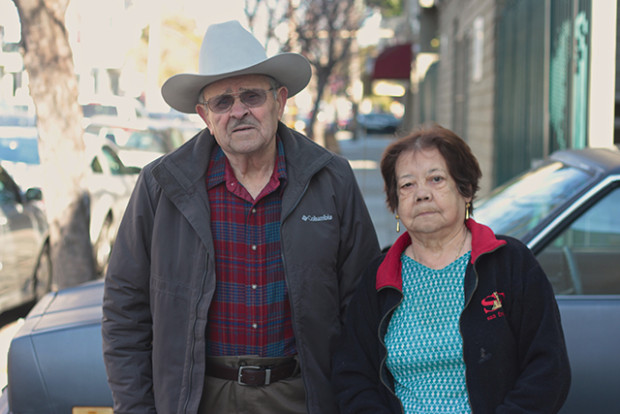
Longtime Mission District Residents Share Memories of Old San Francisco
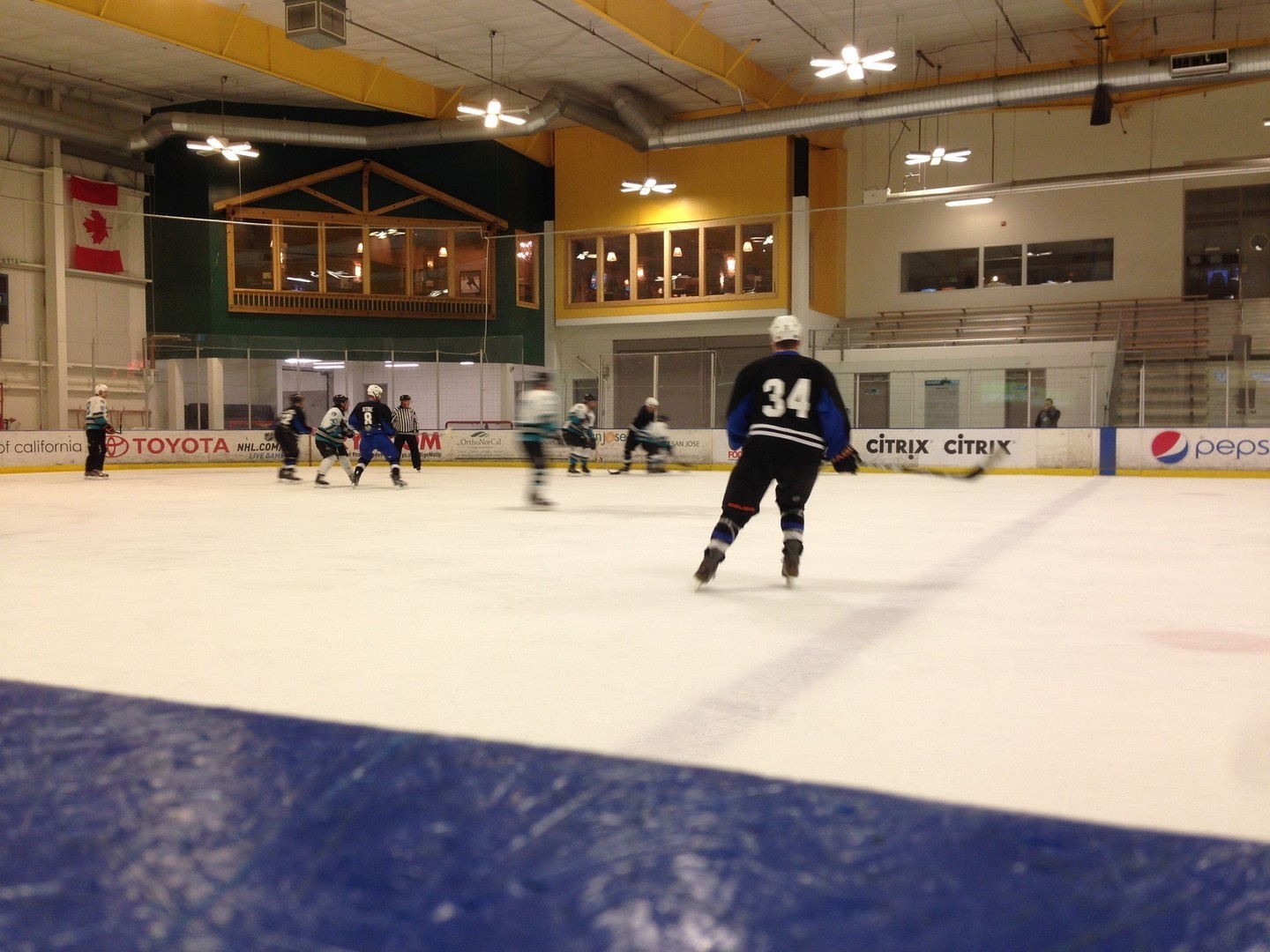
Blood and Brotherhood on the Ice in San Jose
Working Class Struggles in Silicon Valley
Silicon Valley’s Last Affordable City?
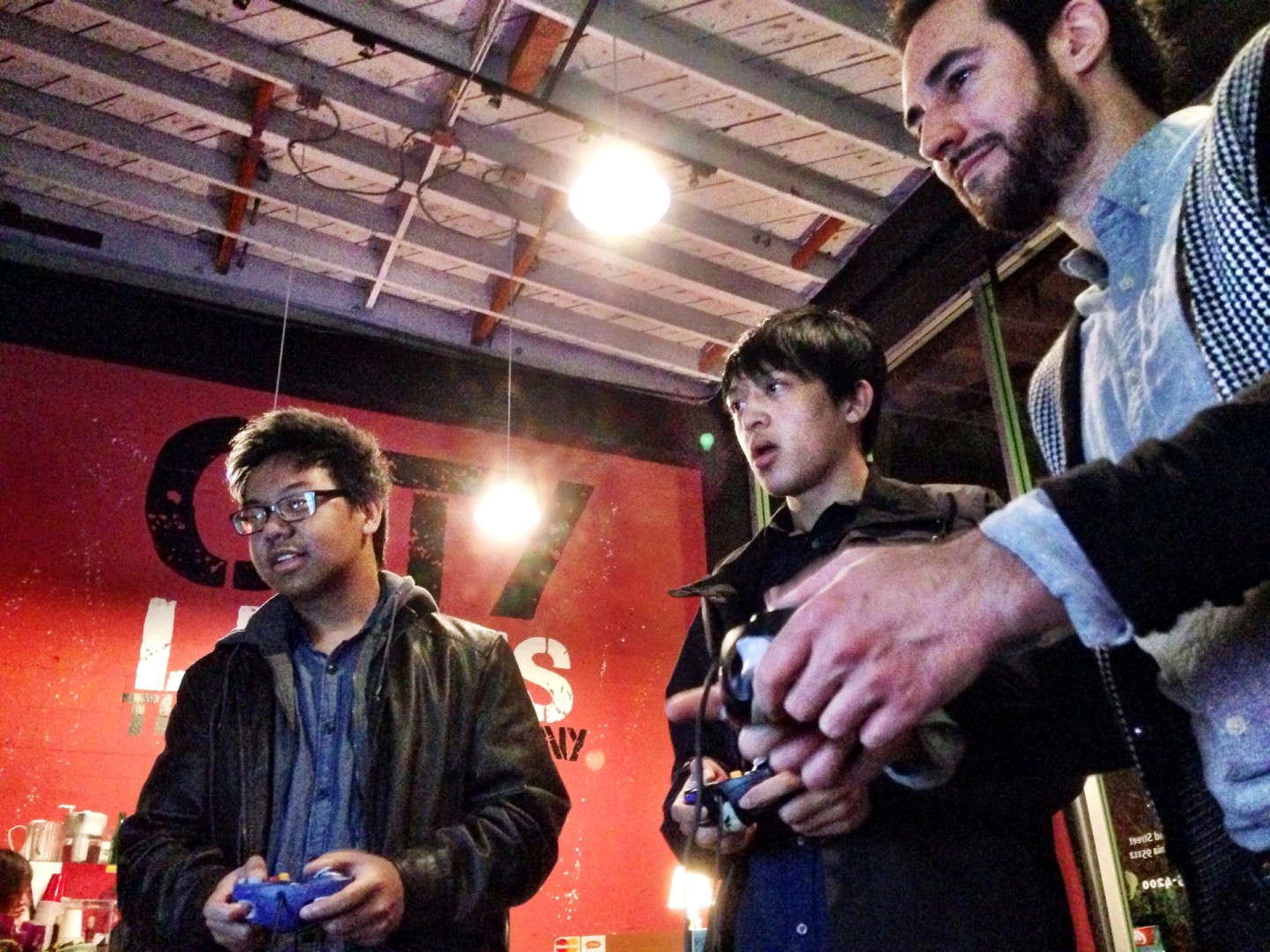
Luring Techies to the Theater in Silicon Valley
Incubating a New Wave of Immigrants in Silicon Valley
#LifeinBoomtown: Take a Picture of Change
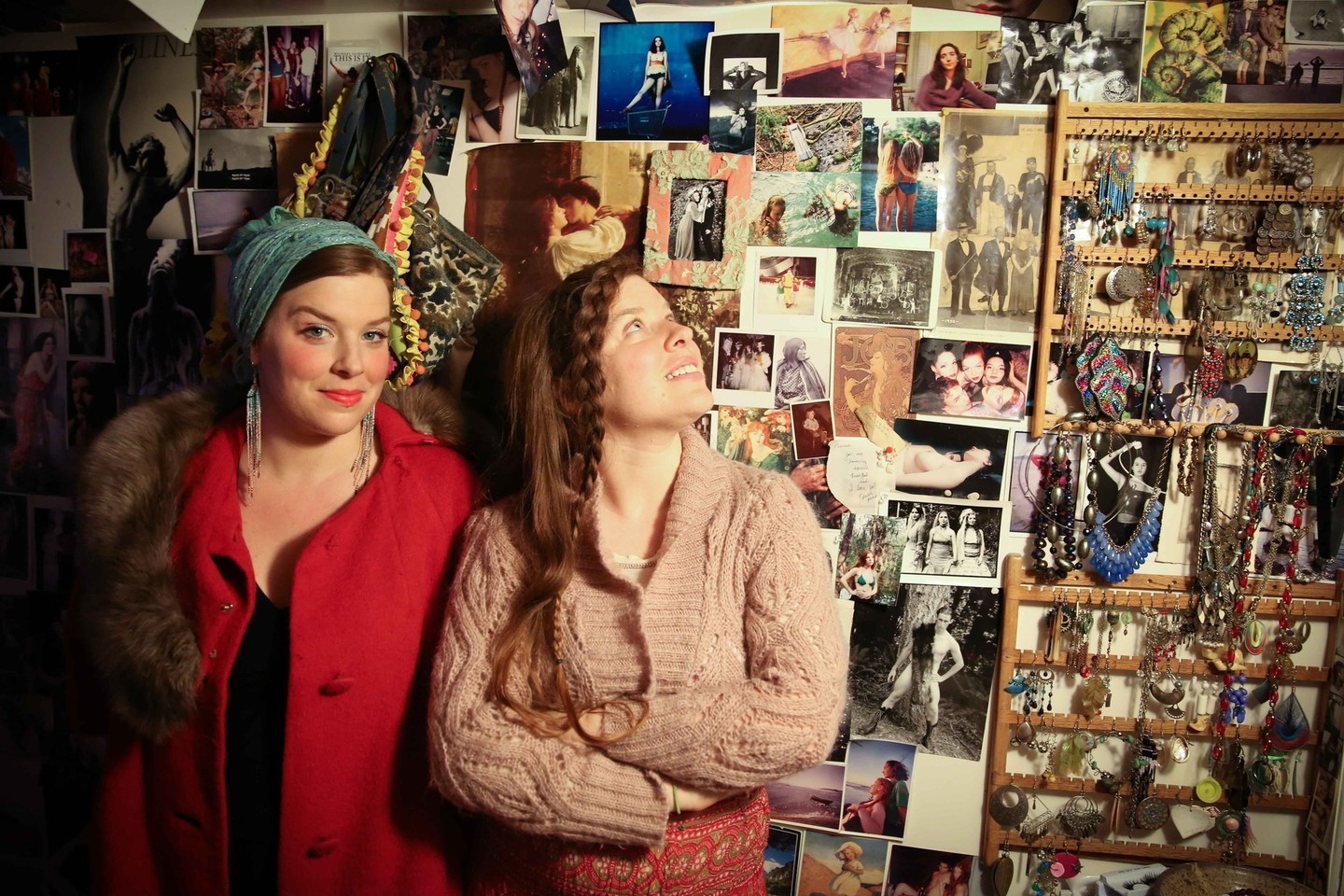
Mission Tenants Avoid Eviction and Gain a Long-Term Home
Is the Bay Area in a Bubble and Will it Burst?
Couples Counseling for Tech Co-Founders? It’s Actually a Thing
window.__IS_SSR__=true
window.__INITIAL_STATE__={
"attachmentsReducer": {
"audio_0": {
"type": "attachments",
"id": "audio_0",
"imgSizes": {
"kqedFullSize": {
"file": "https://ww2.kqed.org/news/wp-content/themes/KQED-unified/img/audio_bgs/background0.jpg"
}
}
},
"audio_1": {
"type": "attachments",
"id": "audio_1",
"imgSizes": {
"kqedFullSize": {
"file": "https://ww2.kqed.org/news/wp-content/themes/KQED-unified/img/audio_bgs/background1.jpg"
}
}
},
"audio_2": {
"type": "attachments",
"id": "audio_2",
"imgSizes": {
"kqedFullSize": {
"file": "https://ww2.kqed.org/news/wp-content/themes/KQED-unified/img/audio_bgs/background2.jpg"
}
}
},
"audio_3": {
"type": "attachments",
"id": "audio_3",
"imgSizes": {
"kqedFullSize": {
"file": "https://ww2.kqed.org/news/wp-content/themes/KQED-unified/img/audio_bgs/background3.jpg"
}
}
},
"audio_4": {
"type": "attachments",
"id": "audio_4",
"imgSizes": {
"kqedFullSize": {
"file": "https://ww2.kqed.org/news/wp-content/themes/KQED-unified/img/audio_bgs/background4.jpg"
}
}
},
"placeholder": {
"type": "attachments",
"id": "placeholder",
"imgSizes": {
"thumbnail": {
"file": "https://cdn.kqed.org/wp-content/uploads/2024/12/KQED-Default-Image-816638274-2000x1333-1-160x107.jpg",
"width": 160,
"height": 107,
"mimeType": "image/jpeg"
},
"medium": {
"file": "https://cdn.kqed.org/wp-content/uploads/2024/12/KQED-Default-Image-816638274-2000x1333-1-800x533.jpg",
"width": 800,
"height": 533,
"mimeType": "image/jpeg"
},
"medium_large": {
"file": "https://cdn.kqed.org/wp-content/uploads/2024/12/KQED-Default-Image-816638274-2000x1333-1-768x512.jpg",
"width": 768,
"height": 512,
"mimeType": "image/jpeg"
},
"large": {
"file": "https://cdn.kqed.org/wp-content/uploads/2024/12/KQED-Default-Image-816638274-2000x1333-1-1020x680.jpg",
"width": 1020,
"height": 680,
"mimeType": "image/jpeg"
},
"1536x1536": {
"file": "https://cdn.kqed.org/wp-content/uploads/2024/12/KQED-Default-Image-816638274-2000x1333-1-1536x1024.jpg",
"width": 1536,
"height": 1024,
"mimeType": "image/jpeg"
},
"fd-lrg": {
"file": "https://cdn.kqed.org/wp-content/uploads/2024/12/KQED-Default-Image-816638274-2000x1333-1-1536x1024.jpg",
"width": 1536,
"height": 1024,
"mimeType": "image/jpeg"
},
"fd-med": {
"file": "https://cdn.kqed.org/wp-content/uploads/2024/12/KQED-Default-Image-816638274-2000x1333-1-1020x680.jpg",
"width": 1020,
"height": 680,
"mimeType": "image/jpeg"
},
"fd-sm": {
"file": "https://cdn.kqed.org/wp-content/uploads/2024/12/KQED-Default-Image-816638274-2000x1333-1-800x533.jpg",
"width": 800,
"height": 533,
"mimeType": "image/jpeg"
},
"post-thumbnail": {
"file": "https://cdn.kqed.org/wp-content/uploads/2024/12/KQED-Default-Image-816638274-2000x1333-1-672x372.jpg",
"width": 672,
"height": 372,
"mimeType": "image/jpeg"
},
"twentyfourteen-full-width": {
"file": "https://cdn.kqed.org/wp-content/uploads/2024/12/KQED-Default-Image-816638274-2000x1333-1-1038x576.jpg",
"width": 1038,
"height": 576,
"mimeType": "image/jpeg"
},
"xxsmall": {
"file": "https://cdn.kqed.org/wp-content/uploads/2024/12/KQED-Default-Image-816638274-2000x1333-1-160x107.jpg",
"width": 160,
"height": 107,
"mimeType": "image/jpeg"
},
"xsmall": {
"file": "https://cdn.kqed.org/wp-content/uploads/2024/12/KQED-Default-Image-816638274-2000x1333-1-672x372.jpg",
"width": 672,
"height": 372,
"mimeType": "image/jpeg"
},
"small": {
"file": "https://cdn.kqed.org/wp-content/uploads/2024/12/KQED-Default-Image-816638274-2000x1333-1-672x372.jpg",
"width": 672,
"height": 372,
"mimeType": "image/jpeg"
},
"xlarge": {
"file": "https://cdn.kqed.org/wp-content/uploads/2024/12/KQED-Default-Image-816638274-2000x1333-1-1020x680.jpg",
"width": 1020,
"height": 680,
"mimeType": "image/jpeg"
},
"full-width": {
"file": "https://cdn.kqed.org/wp-content/uploads/2024/12/KQED-Default-Image-816638274-2000x1333-1-1920x1280.jpg",
"width": 1920,
"height": 1280,
"mimeType": "image/jpeg"
},
"guest-author-32": {
"file": "https://cdn.kqed.org/wp-content/uploads/2025/01/KQED-Default-Image-816638274-1333x1333-1-160x160.jpg",
"width": 32,
"height": 32,
"mimeType": "image/jpeg"
},
"guest-author-50": {
"file": "https://cdn.kqed.org/wp-content/uploads/2025/01/KQED-Default-Image-816638274-1333x1333-1-160x160.jpg",
"width": 50,
"height": 50,
"mimeType": "image/jpeg"
},
"guest-author-64": {
"file": "https://cdn.kqed.org/wp-content/uploads/2025/01/KQED-Default-Image-816638274-1333x1333-1-160x160.jpg",
"width": 64,
"height": 64,
"mimeType": "image/jpeg"
},
"guest-author-96": {
"file": "https://cdn.kqed.org/wp-content/uploads/2025/01/KQED-Default-Image-816638274-1333x1333-1-160x160.jpg",
"width": 96,
"height": 96,
"mimeType": "image/jpeg"
},
"guest-author-128": {
"file": "https://cdn.kqed.org/wp-content/uploads/2025/01/KQED-Default-Image-816638274-1333x1333-1-160x160.jpg",
"width": 128,
"height": 128,
"mimeType": "image/jpeg"
},
"detail": {
"file": "https://cdn.kqed.org/wp-content/uploads/2025/01/KQED-Default-Image-816638274-1333x1333-1-160x160.jpg",
"width": 160,
"height": 160,
"mimeType": "image/jpeg"
},
"kqedFullSize": {
"file": "https://cdn.kqed.org/wp-content/uploads/2024/12/KQED-Default-Image-816638274-2000x1333-1.jpg",
"width": 2000,
"height": 1333
}
}
},
"news_10442189": {
"type": "attachments",
"id": "news_10442189",
"meta": {
"index": "attachments_1716263798",
"site": "news",
"id": "10442189",
"found": true
},
"parent": 10442188,
"imgSizes": {
"thumbnail": {
"file": "https://ww2.kqed.org/app/uploads/sites/10/2015/02/old-couple-400x267.jpg",
"width": 400,
"mimeType": "image/jpeg",
"height": 267
},
"post-thumbnail": {
"file": "https://ww2.kqed.org/app/uploads/sites/10/2015/02/old-couple-620x372.jpg",
"width": 620,
"mimeType": "image/jpeg",
"height": 372
},
"kqedFullSize": {
"file": "https://ww2.kqed.org/app/uploads/sites/10/2015/02/old-couple.jpg",
"width": 620,
"height": 414
},
"guest-author-96": {
"file": "https://ww2.kqed.org/app/uploads/sites/10/2015/02/old-couple-96x96.jpg",
"width": 96,
"mimeType": "image/jpeg",
"height": 96
},
"guest-author-64": {
"file": "https://ww2.kqed.org/app/uploads/sites/10/2015/02/old-couple-64x64.jpg",
"width": 64,
"mimeType": "image/jpeg",
"height": 64
},
"detail": {
"file": "https://ww2.kqed.org/app/uploads/sites/10/2015/02/old-couple-75x75.jpg",
"width": 75,
"mimeType": "image/jpeg",
"height": 75
},
"guest-author-32": {
"file": "https://ww2.kqed.org/app/uploads/sites/10/2015/02/old-couple-32x32.jpg",
"width": 32,
"mimeType": "image/jpeg",
"height": 32
},
"guest-author-128": {
"file": "https://ww2.kqed.org/app/uploads/sites/10/2015/02/old-couple-128x128.jpg",
"width": 128,
"mimeType": "image/jpeg",
"height": 128
}
},
"publishDate": 1424802786,
"modified": 1424802831,
"caption": "Florentino and Imelda Ortiz together for over 50 years.",
"description": "Florentino and Imelda Ortiz together for over 50 years",
"title": "old couple",
"credit": "Daniel Mondrag\u0005\u000f\u0005\u0005\u000f\u000f\u000f\u000fón/Mission Local",
"status": "inherit",
"isLoading": false,
"fetchFailed": false
},
"news_10436478": {
"type": "attachments",
"id": "news_10436478",
"meta": {
"index": "attachments_1716263798",
"site": "news",
"id": "10436478",
"found": true
},
"parent": 10436441,
"imgSizes": {
"twentyfourteen-full-width": {
"file": "https://ww2.kqed.org/app/uploads/sites/10/2015/02/RS14295_SouthsidersVSeniorSharks-qut-1038x576.jpg",
"width": 1038,
"mimeType": "image/jpeg",
"height": 576
},
"thumbnail": {
"file": "https://ww2.kqed.org/app/uploads/sites/10/2015/02/RS14295_SouthsidersVSeniorSharks-qut-400x300.jpg",
"width": 400,
"mimeType": "image/jpeg",
"height": 300
},
"post-thumbnail": {
"file": "https://ww2.kqed.org/app/uploads/sites/10/2015/02/RS14295_SouthsidersVSeniorSharks-qut-672x372.jpg",
"width": 672,
"mimeType": "image/jpeg",
"height": 372
},
"kqedFullSize": {
"file": "https://ww2.kqed.org/app/uploads/sites/10/2015/02/RS14295_SouthsidersVSeniorSharks-qut.jpg",
"width": 1440,
"height": 1080
},
"large": {
"file": "https://ww2.kqed.org/app/uploads/sites/10/2015/02/RS14295_SouthsidersVSeniorSharks-qut-1440x1080.jpg",
"width": 1440,
"mimeType": "image/jpeg",
"height": 1080
},
"guest-author-96": {
"file": "https://ww2.kqed.org/app/uploads/sites/10/2015/02/RS14295_SouthsidersVSeniorSharks-qut-96x96.jpg",
"width": 96,
"mimeType": "image/jpeg",
"height": 96
},
"medium": {
"file": "https://ww2.kqed.org/app/uploads/sites/10/2015/02/RS14295_SouthsidersVSeniorSharks-qut-800x600.jpg",
"width": 800,
"mimeType": "image/jpeg",
"height": 600
},
"guest-author-64": {
"file": "https://ww2.kqed.org/app/uploads/sites/10/2015/02/RS14295_SouthsidersVSeniorSharks-qut-64x64.jpg",
"width": 64,
"mimeType": "image/jpeg",
"height": 64
},
"detail": {
"file": "https://ww2.kqed.org/app/uploads/sites/10/2015/02/RS14295_SouthsidersVSeniorSharks-qut-75x75.jpg",
"width": 75,
"mimeType": "image/jpeg",
"height": 75
},
"guest-author-32": {
"file": "https://ww2.kqed.org/app/uploads/sites/10/2015/02/RS14295_SouthsidersVSeniorSharks-qut-32x32.jpg",
"width": 32,
"mimeType": "image/jpeg",
"height": 32
},
"guest-author-128": {
"file": "https://ww2.kqed.org/app/uploads/sites/10/2015/02/RS14295_SouthsidersVSeniorSharks-qut-128x128.jpg",
"width": 128,
"mimeType": "image/jpeg",
"height": 128
}
},
"publishDate": 1424281838,
"modified": 1424281871,
"caption": "The Southsiders face off against the Senior Sharks at Sharks Ice in San Jose.",
"description": "The Southsiders face off against the Senior Sharks at Sharks Ice in San Jose.",
"title": "RS14295_SouthsidersVSeniorSharks-qut",
"credit": "Rachael Myrow/KQED",
"status": "inherit",
"isLoading": false,
"fetchFailed": false
},
"news_10436817": {
"type": "attachments",
"id": "news_10436817",
"meta": {
"index": "attachments_1716263798",
"site": "news",
"id": "10436817",
"found": true
},
"parent": 10436648,
"imgSizes": {
"twentyfourteen-full-width": {
"file": "https://ww2.kqed.org/app/uploads/sites/10/2015/02/RS14272_20150213_Michael_johnson_jt_010-qut-1038x576.jpg",
"width": 1038,
"mimeType": "image/jpeg",
"height": 576
},
"thumbnail": {
"file": "https://ww2.kqed.org/app/uploads/sites/10/2015/02/RS14272_20150213_Michael_johnson_jt_010-qut-400x267.jpg",
"width": 400,
"mimeType": "image/jpeg",
"height": 267
},
"post-thumbnail": {
"file": "https://ww2.kqed.org/app/uploads/sites/10/2015/02/RS14272_20150213_Michael_johnson_jt_010-qut-672x372.jpg",
"width": 672,
"mimeType": "image/jpeg",
"height": 372
},
"kqedFullSize": {
"file": "https://ww2.kqed.org/app/uploads/sites/10/2015/02/RS14272_20150213_Michael_johnson_jt_010-qut.jpg",
"width": 1440,
"height": 961
},
"large": {
"file": "https://ww2.kqed.org/app/uploads/sites/10/2015/02/RS14272_20150213_Michael_johnson_jt_010-qut-1440x961.jpg",
"width": 1440,
"mimeType": "image/jpeg",
"height": 961
},
"guest-author-96": {
"file": "https://ww2.kqed.org/app/uploads/sites/10/2015/02/RS14272_20150213_Michael_johnson_jt_010-qut-96x96.jpg",
"width": 96,
"mimeType": "image/jpeg",
"height": 96
},
"medium": {
"file": "https://ww2.kqed.org/app/uploads/sites/10/2015/02/RS14272_20150213_Michael_johnson_jt_010-qut-800x534.jpg",
"width": 800,
"mimeType": "image/jpeg",
"height": 534
},
"guest-author-64": {
"file": "https://ww2.kqed.org/app/uploads/sites/10/2015/02/RS14272_20150213_Michael_johnson_jt_010-qut-64x64.jpg",
"width": 64,
"mimeType": "image/jpeg",
"height": 64
},
"detail": {
"file": "https://ww2.kqed.org/app/uploads/sites/10/2015/02/RS14272_20150213_Michael_johnson_jt_010-qut-75x75.jpg",
"width": 75,
"mimeType": "image/jpeg",
"height": 75
},
"guest-author-32": {
"file": "https://ww2.kqed.org/app/uploads/sites/10/2015/02/RS14272_20150213_Michael_johnson_jt_010-qut-32x32.jpg",
"width": 32,
"mimeType": "image/jpeg",
"height": 32
},
"guest-author-128": {
"file": "https://ww2.kqed.org/app/uploads/sites/10/2015/02/RS14272_20150213_Michael_johnson_jt_010-qut-128x128.jpg",
"width": 128,
"mimeType": "image/jpeg",
"height": 128
}
},
"publishDate": 1424302265,
"modified": 1424309227,
"caption": "Michael Johnson at home in San Jose. Working full time as a security guard, he is unable to afford more than a room to rent in a friend's apartment. ",
"description": "Michael Johnson at home in San Jose. Working full time as a security guard, he is unable to afford more than a room to rent in a friend's apartment. ",
"title": "RS14272_20150213_Michael_johnson_jt_010-qut",
"credit": "James Tensuan/KQED",
"status": "inherit",
"isLoading": false,
"fetchFailed": false
},
"news_10438938": {
"type": "attachments",
"id": "news_10438938",
"meta": {
"index": "attachments_1716263798",
"site": "news",
"id": "10438938",
"found": true
},
"parent": 10437941,
"imgSizes": {
"twentyfourteen-full-width": {
"file": "https://ww2.kqed.org/app/uploads/sites/10/2015/02/Jane_Jones-1038x576.jpg",
"width": 1038,
"mimeType": "image/jpeg",
"height": 576
},
"thumbnail": {
"file": "https://ww2.kqed.org/app/uploads/sites/10/2015/02/Jane_Jones-400x300.jpg",
"width": 400,
"mimeType": "image/jpeg",
"height": 300
},
"post-thumbnail": {
"file": "https://ww2.kqed.org/app/uploads/sites/10/2015/02/Jane_Jones-672x372.jpg",
"width": 672,
"mimeType": "image/jpeg",
"height": 372
},
"kqedFullSize": {
"file": "https://ww2.kqed.org/app/uploads/sites/10/2015/02/Jane_Jones.jpg",
"width": 1440,
"height": 1080
},
"large": {
"file": "https://ww2.kqed.org/app/uploads/sites/10/2015/02/Jane_Jones-1440x1080.jpg",
"width": 1440,
"mimeType": "image/jpeg",
"height": 1080
},
"guest-author-96": {
"file": "https://ww2.kqed.org/app/uploads/sites/10/2015/02/Jane_Jones-96x96.jpg",
"width": 96,
"mimeType": "image/jpeg",
"height": 96
},
"medium": {
"file": "https://ww2.kqed.org/app/uploads/sites/10/2015/02/Jane_Jones-800x600.jpg",
"width": 800,
"mimeType": "image/jpeg",
"height": 600
},
"guest-author-64": {
"file": "https://ww2.kqed.org/app/uploads/sites/10/2015/02/Jane_Jones-64x64.jpg",
"width": 64,
"mimeType": "image/jpeg",
"height": 64
},
"detail": {
"file": "https://ww2.kqed.org/app/uploads/sites/10/2015/02/Jane_Jones-75x75.jpg",
"width": 75,
"mimeType": "image/jpeg",
"height": 75
},
"guest-author-32": {
"file": "https://ww2.kqed.org/app/uploads/sites/10/2015/02/Jane_Jones-32x32.jpg",
"width": 32,
"mimeType": "image/jpeg",
"height": 32
},
"guest-author-128": {
"file": "https://ww2.kqed.org/app/uploads/sites/10/2015/02/Jane_Jones-128x128.jpg",
"width": 128,
"mimeType": "image/jpeg",
"height": 128
}
},
"publishDate": 1424479468,
"modified": 1424479653,
"caption": "Realtor Jane Jones stands by her newest listing in East Palo Alto on Feb. 3, 2015. It's a 1,200 square foot, 3 bedroom house with a huge lot. The asking price? $985,000.",
"description": null,
"title": "Jane_Jones",
"credit": "Scott Shafer/KQED",
"status": "inherit",
"isLoading": false,
"fetchFailed": false
},
"news_10439047": {
"type": "attachments",
"id": "news_10439047",
"meta": {
"index": "attachments_1716263798",
"site": "news",
"id": "10439047",
"found": true
},
"parent": 10438943,
"imgSizes": {
"twentyfourteen-full-width": {
"file": "https://ww2.kqed.org/app/uploads/sites/10/2015/02/RS14356_photo-qut-1038x576.jpg",
"width": 1038,
"mimeType": "image/jpeg",
"height": 576
},
"thumbnail": {
"file": "https://ww2.kqed.org/app/uploads/sites/10/2015/02/RS14356_photo-qut-400x300.jpg",
"width": 400,
"mimeType": "image/jpeg",
"height": 300
},
"post-thumbnail": {
"file": "https://ww2.kqed.org/app/uploads/sites/10/2015/02/RS14356_photo-qut-672x372.jpg",
"width": 672,
"mimeType": "image/jpeg",
"height": 372
},
"kqedFullSize": {
"file": "https://ww2.kqed.org/app/uploads/sites/10/2015/02/RS14356_photo-qut.jpg",
"width": 1920,
"height": 1440
},
"large": {
"file": "https://ww2.kqed.org/app/uploads/sites/10/2015/02/RS14356_photo-qut-1440x1080.jpg",
"width": 1440,
"mimeType": "image/jpeg",
"height": 1080
},
"guest-author-96": {
"file": "https://ww2.kqed.org/app/uploads/sites/10/2015/02/RS14356_photo-qut-96x96.jpg",
"width": 96,
"mimeType": "image/jpeg",
"height": 96
},
"medium": {
"file": "https://ww2.kqed.org/app/uploads/sites/10/2015/02/RS14356_photo-qut-800x600.jpg",
"width": 800,
"mimeType": "image/jpeg",
"height": 600
},
"guest-author-64": {
"file": "https://ww2.kqed.org/app/uploads/sites/10/2015/02/RS14356_photo-qut-64x64.jpg",
"width": 64,
"mimeType": "image/jpeg",
"height": 64
},
"detail": {
"file": "https://ww2.kqed.org/app/uploads/sites/10/2015/02/RS14356_photo-qut-75x75.jpg",
"width": 75,
"mimeType": "image/jpeg",
"height": 75
},
"guest-author-32": {
"file": "https://ww2.kqed.org/app/uploads/sites/10/2015/02/RS14356_photo-qut-32x32.jpg",
"width": 32,
"mimeType": "image/jpeg",
"height": 32
},
"guest-author-128": {
"file": "https://ww2.kqed.org/app/uploads/sites/10/2015/02/RS14356_photo-qut-128x128.jpg",
"width": 128,
"mimeType": "image/jpeg",
"height": 128
}
},
"publishDate": 1424485663,
"modified": 1424485683,
"caption": "Students Brandon and Christian de la Cruz and Rockage founder Eric Fanali playing video games at the theater.",
"description": "Students Brandon and Christian de la Cruz and Rockage founder Eric Fanali playing video games at the theater.",
"title": "RS14356_photo-qut",
"credit": "Cy Musiker/KQED",
"status": "inherit",
"isLoading": false,
"fetchFailed": false
},
"news_10438031": {
"type": "attachments",
"id": "news_10438031",
"meta": {
"index": "attachments_1716263798",
"site": "news",
"id": "10438031",
"found": true
},
"parent": 10437669,
"imgSizes": {
"twentyfourteen-full-width": {
"file": "https://ww2.kqed.org/app/uploads/sites/10/2015/02/RS14312_IMG_0789-qut1-1038x576.jpg",
"width": 1038,
"mimeType": "image/jpeg",
"height": 576
},
"thumbnail": {
"file": "https://ww2.kqed.org/app/uploads/sites/10/2015/02/RS14312_IMG_0789-qut1-400x300.jpg",
"width": 400,
"mimeType": "image/jpeg",
"height": 300
},
"post-thumbnail": {
"file": "https://ww2.kqed.org/app/uploads/sites/10/2015/02/RS14312_IMG_0789-qut1-672x372.jpg",
"width": 672,
"mimeType": "image/jpeg",
"height": 372
},
"kqedFullSize": {
"file": "https://ww2.kqed.org/app/uploads/sites/10/2015/02/RS14312_IMG_0789-qut1.jpg",
"width": 1440,
"height": 1080
},
"large": {
"file": "https://ww2.kqed.org/app/uploads/sites/10/2015/02/RS14312_IMG_0789-qut1-1440x1080.jpg",
"width": 1440,
"mimeType": "image/jpeg",
"height": 1080
},
"guest-author-96": {
"file": "https://ww2.kqed.org/app/uploads/sites/10/2015/02/RS14312_IMG_0789-qut1-96x96.jpg",
"width": 96,
"mimeType": "image/jpeg",
"height": 96
},
"medium": {
"file": "https://ww2.kqed.org/app/uploads/sites/10/2015/02/RS14312_IMG_0789-qut1-800x600.jpg",
"width": 800,
"mimeType": "image/jpeg",
"height": 600
},
"guest-author-64": {
"file": "https://ww2.kqed.org/app/uploads/sites/10/2015/02/RS14312_IMG_0789-qut1-64x64.jpg",
"width": 64,
"mimeType": "image/jpeg",
"height": 64
},
"detail": {
"file": "https://ww2.kqed.org/app/uploads/sites/10/2015/02/RS14312_IMG_0789-qut1-75x75.jpg",
"width": 75,
"mimeType": "image/jpeg",
"height": 75
},
"guest-author-32": {
"file": "https://ww2.kqed.org/app/uploads/sites/10/2015/02/RS14312_IMG_0789-qut1-32x32.jpg",
"width": 32,
"mimeType": "image/jpeg",
"height": 32
},
"guest-author-128": {
"file": "https://ww2.kqed.org/app/uploads/sites/10/2015/02/RS14312_IMG_0789-qut1-128x128.jpg",
"width": 128,
"mimeType": "image/jpeg",
"height": 128
}
},
"publishDate": 1424400159,
"modified": 1424468842,
"caption": "Entrepreneurs from all over the world train at the incubator 500 Startups in Mountain View, learning to fine-tune their products and attract Silicon Valley investors. ",
"description": "Entrepreneurs from all over the world train at the incubator 500 Startups in Mountain View, learning to fine-tune their products and attract Silicon Valley investors. ",
"title": "RS14312_IMG_0789-qut(1)",
"credit": "Beth Willon/KQED",
"status": "inherit",
"isLoading": false,
"fetchFailed": false
},
"news_10435795": {
"type": "attachments",
"id": "news_10435795",
"meta": {
"index": "attachments_1716263798",
"site": "news",
"id": "10435795",
"found": true
},
"parent": 10435603,
"imgSizes": {
"twentyfourteen-full-width": {
"file": "https://ww2.kqed.org/app/uploads/sites/10/2015/02/RS13881_20150102_boomtown_rwc_jt_001-1038x576.jpg",
"width": 1038,
"mimeType": "image/jpeg",
"height": 576
},
"thumbnail": {
"file": "https://ww2.kqed.org/app/uploads/sites/10/2015/02/RS13881_20150102_boomtown_rwc_jt_001-400x267.jpg",
"width": 400,
"mimeType": "image/jpeg",
"height": 267
},
"post-thumbnail": {
"file": "https://ww2.kqed.org/app/uploads/sites/10/2015/02/RS13881_20150102_boomtown_rwc_jt_001-672x372.jpg",
"width": 672,
"mimeType": "image/jpeg",
"height": 372
},
"kqedFullSize": {
"file": "https://ww2.kqed.org/app/uploads/sites/10/2015/02/RS13881_20150102_boomtown_rwc_jt_001.jpg",
"width": 2400,
"height": 1602
},
"large": {
"file": "https://ww2.kqed.org/app/uploads/sites/10/2015/02/RS13881_20150102_boomtown_rwc_jt_001-1440x961.jpg",
"width": 1440,
"mimeType": "image/jpeg",
"height": 961
},
"guest-author-96": {
"file": "https://ww2.kqed.org/app/uploads/sites/10/2015/02/RS13881_20150102_boomtown_rwc_jt_001-96x96.jpg",
"width": 96,
"mimeType": "image/jpeg",
"height": 96
},
"medium": {
"file": "https://ww2.kqed.org/app/uploads/sites/10/2015/02/RS13881_20150102_boomtown_rwc_jt_001-800x534.jpg",
"width": 800,
"mimeType": "image/jpeg",
"height": 534
},
"guest-author-64": {
"file": "https://ww2.kqed.org/app/uploads/sites/10/2015/02/RS13881_20150102_boomtown_rwc_jt_001-64x64.jpg",
"width": 64,
"mimeType": "image/jpeg",
"height": 64
},
"detail": {
"file": "https://ww2.kqed.org/app/uploads/sites/10/2015/02/RS13881_20150102_boomtown_rwc_jt_001-75x75.jpg",
"width": 75,
"mimeType": "image/jpeg",
"height": 75
},
"guest-author-32": {
"file": "https://ww2.kqed.org/app/uploads/sites/10/2015/02/RS13881_20150102_boomtown_rwc_jt_001-32x32.jpg",
"width": 32,
"mimeType": "image/jpeg",
"height": 32
},
"guest-author-128": {
"file": "https://ww2.kqed.org/app/uploads/sites/10/2015/02/RS13881_20150102_boomtown_rwc_jt_001-128x128.jpg",
"width": 128,
"mimeType": "image/jpeg",
"height": 128
}
},
"publishDate": 1424219788,
"modified": 1424219885,
"caption": "Children play in downtown Redwood City as construction is done near the train station on Friday, January 2, 2015.",
"description": null,
"title": "Construction in downtown Redwood City.",
"credit": "James Tensuan/KQED",
"status": "inherit",
"isLoading": false,
"fetchFailed": false
},
"news_10435794": {
"type": "attachments",
"id": "news_10435794",
"meta": {
"index": "attachments_1716263798",
"site": "news",
"id": "10435794",
"found": true
},
"parent": 10375692,
"imgSizes": {
"twentyfourteen-full-width": {
"file": "https://ww2.kqed.org/app/uploads/sites/10/2015/02/RS14291_Mission-Coop_JRaff-7-of-7-qut-1038x576.jpg",
"width": 1038,
"mimeType": "image/jpeg",
"height": 576
},
"thumbnail": {
"file": "https://ww2.kqed.org/app/uploads/sites/10/2015/02/RS14291_Mission-Coop_JRaff-7-of-7-qut-400x267.jpg",
"width": 400,
"mimeType": "image/jpeg",
"height": 267
},
"post-thumbnail": {
"file": "https://ww2.kqed.org/app/uploads/sites/10/2015/02/RS14291_Mission-Coop_JRaff-7-of-7-qut-672x372.jpg",
"width": 672,
"mimeType": "image/jpeg",
"height": 372
},
"kqedFullSize": {
"file": "https://ww2.kqed.org/app/uploads/sites/10/2015/02/RS14291_Mission-Coop_JRaff-7-of-7-qut.jpg",
"width": 1440,
"height": 960
},
"large": {
"file": "https://ww2.kqed.org/app/uploads/sites/10/2015/02/RS14291_Mission-Coop_JRaff-7-of-7-qut-1440x960.jpg",
"width": 1440,
"mimeType": "image/jpeg",
"height": 960
},
"guest-author-96": {
"file": "https://ww2.kqed.org/app/uploads/sites/10/2015/02/RS14291_Mission-Coop_JRaff-7-of-7-qut-96x96.jpg",
"width": 96,
"mimeType": "image/jpeg",
"height": 96
},
"medium": {
"file": "https://ww2.kqed.org/app/uploads/sites/10/2015/02/RS14291_Mission-Coop_JRaff-7-of-7-qut-800x533.jpg",
"width": 800,
"mimeType": "image/jpeg",
"height": 533
},
"guest-author-64": {
"file": "https://ww2.kqed.org/app/uploads/sites/10/2015/02/RS14291_Mission-Coop_JRaff-7-of-7-qut-64x64.jpg",
"width": 64,
"mimeType": "image/jpeg",
"height": 64
},
"detail": {
"file": "https://ww2.kqed.org/app/uploads/sites/10/2015/02/RS14291_Mission-Coop_JRaff-7-of-7-qut-75x75.jpg",
"width": 75,
"mimeType": "image/jpeg",
"height": 75
},
"guest-author-32": {
"file": "https://ww2.kqed.org/app/uploads/sites/10/2015/02/RS14291_Mission-Coop_JRaff-7-of-7-qut-32x32.jpg",
"width": 32,
"mimeType": "image/jpeg",
"height": 32
},
"guest-author-128": {
"file": "https://ww2.kqed.org/app/uploads/sites/10/2015/02/RS14291_Mission-Coop_JRaff-7-of-7-qut-128x128.jpg",
"width": 128,
"mimeType": "image/jpeg",
"height": 128
}
},
"publishDate": 1424219561,
"modified": 1424286706,
"caption": "Twins Elizabeth and Melissa Castaneda, professional dancers, have lived at the Merry-Go-Round House since 2005, when it was still a hostel. After the purchase of the house last May, the twins no longer need to worry about getting evicted. ",
"description": "Twins Elizabeth and Melissa Castaneda, professional dancers, have lived at the \"Merry-Go-Round House\" since 2005, when it was still a hostel. After the purchase of the house in May 2014, the twins no longer need to worry about getting evicted. ",
"title": "Mission Co-op Housing",
"credit": "Jeremy Raff/KQED",
"status": "inherit",
"isLoading": false,
"fetchFailed": false
},
"news_10435649": {
"type": "attachments",
"id": "news_10435649",
"meta": {
"index": "attachments_1716263798",
"site": "news",
"id": "10435649",
"found": true
},
"parent": 10435597,
"imgSizes": {
"twentyfourteen-full-width": {
"file": "https://ww2.kqed.org/app/uploads/sites/10/2015/02/RS9378_IMG_1112-copy-lpr-1038x576.jpg",
"width": 1038,
"mimeType": "image/jpeg",
"height": 576
},
"thumbnail": {
"file": "https://ww2.kqed.org/app/uploads/sites/10/2015/02/RS9378_IMG_1112-copy-lpr-400x267.jpg",
"width": 400,
"mimeType": "image/jpeg",
"height": 267
},
"post-thumbnail": {
"file": "https://ww2.kqed.org/app/uploads/sites/10/2015/02/RS9378_IMG_1112-copy-lpr-672x372.jpg",
"width": 672,
"mimeType": "image/jpeg",
"height": 372
},
"kqedFullSize": {
"file": "https://ww2.kqed.org/app/uploads/sites/10/2015/02/RS9378_IMG_1112-copy-lpr.jpg",
"width": 2000,
"height": 1333
},
"large": {
"file": "https://ww2.kqed.org/app/uploads/sites/10/2015/02/RS9378_IMG_1112-copy-lpr-1440x960.jpg",
"width": 1440,
"mimeType": "image/jpeg",
"height": 960
},
"guest-author-96": {
"file": "https://ww2.kqed.org/app/uploads/sites/10/2015/02/RS9378_IMG_1112-copy-lpr-96x96.jpg",
"width": 96,
"mimeType": "image/jpeg",
"height": 96
},
"medium": {
"file": "https://ww2.kqed.org/app/uploads/sites/10/2015/02/RS9378_IMG_1112-copy-lpr-800x533.jpg",
"width": 800,
"mimeType": "image/jpeg",
"height": 533
},
"guest-author-64": {
"file": "https://ww2.kqed.org/app/uploads/sites/10/2015/02/RS9378_IMG_1112-copy-lpr-64x64.jpg",
"width": 64,
"mimeType": "image/jpeg",
"height": 64
},
"detail": {
"file": "https://ww2.kqed.org/app/uploads/sites/10/2015/02/RS9378_IMG_1112-copy-lpr-75x75.jpg",
"width": 75,
"mimeType": "image/jpeg",
"height": 75
},
"guest-author-32": {
"file": "https://ww2.kqed.org/app/uploads/sites/10/2015/02/RS9378_IMG_1112-copy-lpr-32x32.jpg",
"width": 32,
"mimeType": "image/jpeg",
"height": 32
},
"guest-author-128": {
"file": "https://ww2.kqed.org/app/uploads/sites/10/2015/02/RS9378_IMG_1112-copy-lpr-128x128.jpg",
"width": 128,
"mimeType": "image/jpeg",
"height": 128
}
},
"publishDate": 1424212055,
"modified": 1424212160,
"caption": "Will building more be enough to alleviate housing pressures? (Mark Andrew Boyer/KQED)",
"description": "Will building more be enough to alleviate housing pressures? (Mark Andrew Boyer/KQED)",
"title": "RS9378_IMG_1112 copy-lpr",
"credit": null,
"status": "inherit",
"isLoading": false,
"fetchFailed": false
},
"news_10428824": {
"type": "attachments",
"id": "news_10428824",
"meta": {
"index": "attachments_1716263798",
"site": "news",
"id": "10428824",
"found": true
},
"parent": 10428762,
"imgSizes": {
"twentyfourteen-full-width": {
"file": "https://ww2.kqed.org/app/uploads/sites/10/2015/02/14204_transform-1038x576.jpg",
"width": 1038,
"mimeType": "image/jpeg",
"height": 576
},
"thumbnail": {
"file": "https://ww2.kqed.org/app/uploads/sites/10/2015/02/14204_transform-400x308.jpg",
"width": 400,
"mimeType": "image/jpeg",
"height": 308
},
"post-thumbnail": {
"file": "https://ww2.kqed.org/app/uploads/sites/10/2015/02/14204_transform-672x372.jpg",
"width": 672,
"mimeType": "image/jpeg",
"height": 372
},
"kqedFullSize": {
"file": "https://ww2.kqed.org/app/uploads/sites/10/2015/02/14204_transform.jpg",
"width": 1440,
"height": 1108
},
"large": {
"file": "https://ww2.kqed.org/app/uploads/sites/10/2015/02/14204_transform-1440x1108.jpg",
"width": 1440,
"mimeType": "image/jpeg",
"height": 1108
},
"guest-author-96": {
"file": "https://ww2.kqed.org/app/uploads/sites/10/2015/02/14204_transform-96x96.jpg",
"width": 96,
"mimeType": "image/jpeg",
"height": 96
},
"medium": {
"file": "https://ww2.kqed.org/app/uploads/sites/10/2015/02/14204_transform-800x616.jpg",
"width": 800,
"mimeType": "image/jpeg",
"height": 616
},
"guest-author-64": {
"file": "https://ww2.kqed.org/app/uploads/sites/10/2015/02/14204_transform-64x64.jpg",
"width": 64,
"mimeType": "image/jpeg",
"height": 64
},
"detail": {
"file": "https://ww2.kqed.org/app/uploads/sites/10/2015/02/14204_transform-75x75.jpg",
"width": 75,
"mimeType": "image/jpeg",
"height": 75
},
"guest-author-32": {
"file": "https://ww2.kqed.org/app/uploads/sites/10/2015/02/14204_transform-32x32.jpg",
"width": 32,
"mimeType": "image/jpeg",
"height": 32
},
"guest-author-128": {
"file": "https://ww2.kqed.org/app/uploads/sites/10/2015/02/14204_transform-128x128.jpg",
"width": 128,
"mimeType": "image/jpeg",
"height": 128
}
},
"publishDate": 1423533563,
"modified": 1423598425,
"caption": "The upside of a good working relationship? You also have a great wingman, says Mike Prestano, right, of Jon Chintanaroad, left. (April Dembosky/KQED)",
"description": "The upside of a good working relationship? You also have a great wingman, says Mike Prestano, right, of Jon Chintanaroad, left. (April Dembosky/KQED)",
"title": "14204_transform",
"credit": null,
"status": "inherit",
"isLoading": false,
"fetchFailed": false
},
"news_10430555": {
"type": "attachments",
"id": "news_10430555",
"meta": {
"index": "attachments_1716263798",
"site": "news",
"id": "10430555",
"found": true
},
"parent": 10429550,
"imgSizes": {
"twentyfourteen-full-width": {
"file": "https://ww2.kqed.org/app/uploads/sites/10/2015/02/RS14056_nast-chinesequestion-e1423693277949-1012x576.jpg",
"width": 1012,
"mimeType": "image/jpeg",
"height": 576
},
"thumbnail": {
"file": "https://ww2.kqed.org/app/uploads/sites/10/2015/02/RS14056_nast-chinesequestion-e1423693277949-400x413.jpg",
"width": 400,
"mimeType": "image/jpeg",
"height": 413
},
"post-thumbnail": {
"file": "https://ww2.kqed.org/app/uploads/sites/10/2015/02/RS14056_nast-chinesequestion-e1423693277949-672x372.jpg",
"width": 672,
"mimeType": "image/jpeg",
"height": 372
},
"kqedFullSize": {
"file": "https://ww2.kqed.org/app/uploads/sites/10/2015/02/RS14056_nast-chinesequestion-e1423693277949.jpg",
"width": 1012,
"height": 1044
},
"guest-author-96": {
"file": "https://ww2.kqed.org/app/uploads/sites/10/2015/02/RS14056_nast-chinesequestion-e1423693277949-96x96.jpg",
"width": 96,
"mimeType": "image/jpeg",
"height": 96
},
"medium": {
"file": "https://ww2.kqed.org/app/uploads/sites/10/2015/02/RS14056_nast-chinesequestion-e1423693277949-800x825.jpg",
"width": 800,
"mimeType": "image/jpeg",
"height": 825
},
"guest-author-64": {
"file": "https://ww2.kqed.org/app/uploads/sites/10/2015/02/RS14056_nast-chinesequestion-e1423693277949-64x64.jpg",
"width": 64,
"mimeType": "image/jpeg",
"height": 64
},
"detail": {
"file": "https://ww2.kqed.org/app/uploads/sites/10/2015/02/RS14056_nast-chinesequestion-e1423693277949-75x75.jpg",
"width": 75,
"mimeType": "image/jpeg",
"height": 75
},
"guest-author-32": {
"file": "https://ww2.kqed.org/app/uploads/sites/10/2015/02/RS14056_nast-chinesequestion-e1423693277949-32x32.jpg",
"width": 32,
"mimeType": "image/jpeg",
"height": 32
},
"guest-author-128": {
"file": "https://ww2.kqed.org/app/uploads/sites/10/2015/02/RS14056_nast-chinesequestion-e1423693277949-128x128.jpg",
"width": 128,
"mimeType": "image/jpeg",
"height": 128
}
},
"publishDate": 1423692064,
"modified": 1423703135,
"caption": "Detail from a Harper's Weekly cartoon by Thomas Nast, published in 1871 amid continuing agitation in California to bar Chinese immigrants. Here, Nast lists some of the most common charges lodged against arriving Chinese. Columbia, personification of the national ideal, tells an anti-Chinese mob, 'Hands off, gentlemen! America means fair play for all men.' ",
"description": "Detail from a Harper's Weekly cartoon by Thomas Nast, published in 1871 amid continuing agitation in California to bar Chinese immigrants. Here, Nast lists some of the most common charges lodged against arriving Chinese. Columbia, personification of the national ideal, tells an anti-Chinese mob, 'Hands off, gentlemen! America means fair play for all men.' ",
"title": "Boomtown-Chinese",
"credit": "Library of Congress",
"status": "inherit",
"isLoading": false,
"fetchFailed": false
},
"news_10429790": {
"type": "attachments",
"id": "news_10429790",
"meta": {
"index": "attachments_1716263798",
"site": "news",
"id": "10429790",
"found": true
},
"parent": 10429722,
"imgSizes": {
"twentyfourteen-full-width": {
"file": "https://ww2.kqed.org/app/uploads/sites/10/2015/02/RS14220_NEMA-1-scr-1038x576.jpg",
"width": 1038,
"mimeType": "image/jpeg",
"height": 576
},
"thumbnail": {
"file": "https://ww2.kqed.org/app/uploads/sites/10/2015/02/RS14220_NEMA-1-scr-400x262.jpg",
"width": 400,
"mimeType": "image/jpeg",
"height": 262
},
"post-thumbnail": {
"file": "https://ww2.kqed.org/app/uploads/sites/10/2015/02/RS14220_NEMA-1-scr-672x372.jpg",
"width": 672,
"mimeType": "image/jpeg",
"height": 372
},
"kqedFullSize": {
"file": "https://ww2.kqed.org/app/uploads/sites/10/2015/02/RS14220_NEMA-1-scr.jpg",
"width": 1440,
"height": 943
},
"large": {
"file": "https://ww2.kqed.org/app/uploads/sites/10/2015/02/RS14220_NEMA-1-scr-1440x943.jpg",
"width": 1440,
"mimeType": "image/jpeg",
"height": 943
},
"guest-author-96": {
"file": "https://ww2.kqed.org/app/uploads/sites/10/2015/02/RS14220_NEMA-1-scr-96x96.jpg",
"width": 96,
"mimeType": "image/jpeg",
"height": 96
},
"medium": {
"file": "https://ww2.kqed.org/app/uploads/sites/10/2015/02/RS14220_NEMA-1-scr-800x524.jpg",
"width": 800,
"mimeType": "image/jpeg",
"height": 524
},
"guest-author-64": {
"file": "https://ww2.kqed.org/app/uploads/sites/10/2015/02/RS14220_NEMA-1-scr-64x64.jpg",
"width": 64,
"mimeType": "image/jpeg",
"height": 64
},
"detail": {
"file": "https://ww2.kqed.org/app/uploads/sites/10/2015/02/RS14220_NEMA-1-scr-75x75.jpg",
"width": 75,
"mimeType": "image/jpeg",
"height": 75
},
"guest-author-32": {
"file": "https://ww2.kqed.org/app/uploads/sites/10/2015/02/RS14220_NEMA-1-scr-32x32.jpg",
"width": 32,
"mimeType": "image/jpeg",
"height": 32
},
"guest-author-128": {
"file": "https://ww2.kqed.org/app/uploads/sites/10/2015/02/RS14220_NEMA-1-scr-128x128.jpg",
"width": 128,
"mimeType": "image/jpeg",
"height": 128
}
},
"publishDate": 1423617366,
"modified": 1423620087,
"caption": "The NEMA Apartments are not a favorite of KQED listener Dave Taylor. (Katie Brigham/KQED)",
"description": "The NEMA Apartments at 8 10th St. are not a favorite of KQED listener Dave Taylor. (Katie Brigham/KQED)",
"title": "RS14220_NEMA 1-scr",
"credit": null,
"status": "inherit",
"isLoading": false,
"fetchFailed": false
}
},
"audioPlayerReducer": {
"postId": "stream_live",
"isPaused": true,
"isPlaying": false,
"pfsActive": false,
"pledgeModalIsOpen": true,
"playerDrawerIsOpen": false,
"liveAudioPlayStartedAt": 0,
"liveAudioPlayContext": ""
},
"authorsReducer": {
"byline_news_10442188": {
"type": "authors",
"id": "byline_news_10442188",
"meta": {
"override": true
},
"slug": "byline_news_10442188",
"name": "\u003ca href=\"http://missionlocal.org/author/danielm/\">Daniel Mondragón\u003c/a>\u003cbr>Mission Local",
"isLoading": false
},
"byline_news_10435597": {
"type": "authors",
"id": "byline_news_10435597",
"meta": {
"override": true
},
"slug": "byline_news_10435597",
"name": "\u003cstrong>Lisa Morehouse and Casey Miner\u003c/strong>\u003cbr />KQED News",
"isLoading": false
},
"byline_news_10429722": {
"type": "authors",
"id": "byline_news_10429722",
"meta": {
"override": true
},
"slug": "byline_news_10429722",
"name": "\u003cstrong>Lisa Morehouse and Casey Miner\u003c/strong>\u003cbr />KQED News",
"isLoading": false
},
"cmusiker": {
"type": "authors",
"id": "32",
"meta": {
"index": "authors_1716337520",
"id": "32",
"found": true
},
"name": "Cy Musiker",
"firstName": "Cy",
"lastName": "Musiker",
"slug": "cmusiker",
"email": "cmusiker@kqed.org",
"display_author_email": false,
"staff_mastheads": [],
"title": "KQED Contributor",
"bio": "Cy Musiker is a former co-host of The Do List and a former reporter covering the arts for KQED News and The California Report. He loves live performance, especially great theater, jazz, roots music, anything by Mahler. Cy has an MJ from UC Berkeley's School of Journalism, and got his BA from Hampshire College. His work has been recognized by the Society for Professional Journalists with their Sigma Delta Chi Award for Public Service in Journalism. When he can, Cy likes to swim in Tomales Bay, run with his dog in the East Bay Hills, and hike the Sierra.",
"avatar": "https://secure.gravatar.com/avatar/05eaba5c5696ce8f062e4ea2df428a43?s=600&d=blank&r=g",
"twitter": null,
"facebook": null,
"instagram": null,
"linkedin": null,
"sites": [
{
"site": "arts",
"roles": [
"Contributor",
"subscriber"
]
},
{
"site": "news",
"roles": [
"author"
]
},
{
"site": "bayareabites",
"roles": [
"contributor"
]
}
],
"headData": {
"title": "Cy Musiker | KQED",
"description": "KQED Contributor",
"ogImgSrc": "https://secure.gravatar.com/avatar/05eaba5c5696ce8f062e4ea2df428a43?s=600&d=blank&r=g",
"twImgSrc": "https://secure.gravatar.com/avatar/05eaba5c5696ce8f062e4ea2df428a43?s=600&d=blank&r=g"
},
"isLoading": false,
"link": "/author/cmusiker"
},
"astupi": {
"type": "authors",
"id": "70",
"meta": {
"index": "authors_1716337520",
"id": "70",
"found": true
},
"name": "Amanda Stupi",
"firstName": "Amanda",
"lastName": "Stupi",
"slug": "astupi",
"email": "astupi@kqed.org",
"display_author_email": false,
"staff_mastheads": [],
"title": "Senior Engagement Producer",
"bio": "Amanda joined KQED Science’s engagement team as a Senior Audience Engagement Strategist in the spring of 2019. She has helped craft messaging around wildfires, the coronavirus pandemic, climate change and many other stories. She has also brought KQED Science to new platforms such as Reddit’s Ask Me Anything series. Prior to joining KQED Science, Amanda spent seven years as an engagement producer with Forum, KQED’s daily live call-in show. She got her start in radio at KALW's weekly call in show, City Visions, before going on to an internship and stint at NPR's Talk of the Nation.\r\n\r\nPrior to journalism, Amanda taught English at Lowell High School. She's a native of Petaluma and currently lives under the \"South San Francisco the Industrial City\" sign in South City. She believes that engagement is vital to news’s future and that good journalism listens as much as it asks questions.",
"avatar": "https://secure.gravatar.com/avatar/e981c503e5c162da701dcaccfbf87e35?s=600&d=blank&r=g",
"twitter": null,
"facebook": null,
"instagram": null,
"linkedin": null,
"sites": [
{
"site": "arts",
"roles": [
"Contributor"
]
},
{
"site": "news",
"roles": [
"editor"
]
},
{
"site": "pop",
"roles": [
"contributor"
]
},
{
"site": "stateofhealth",
"roles": [
"editor"
]
},
{
"site": "science",
"roles": []
},
{
"site": "perspectives",
"roles": [
"editor"
]
}
],
"headData": {
"title": "Amanda Stupi | KQED",
"description": "Senior Engagement Producer",
"ogImgSrc": "https://secure.gravatar.com/avatar/e981c503e5c162da701dcaccfbf87e35?s=600&d=blank&r=g",
"twImgSrc": "https://secure.gravatar.com/avatar/e981c503e5c162da701dcaccfbf87e35?s=600&d=blank&r=g"
},
"isLoading": false,
"link": "/author/astupi"
},
"aeghan": {
"type": "authors",
"id": "195",
"meta": {
"index": "authors_1716337520",
"id": "195",
"found": true
},
"name": "Adizah Eghan",
"firstName": "Adizah",
"lastName": "Eghan",
"slug": "aeghan",
"email": "adizah.e@gmail.com",
"display_author_email": false,
"staff_mastheads": [],
"title": "KQED Contributor",
"bio": "Adizah Eghan is a former reporter at KQED News and writer for KQED Arts. She caught the radio bug as an intern for PRI's The World and landed in KQED's newsroom after a stint teaching English in India. She covers culture, the arts, and global music in the Bay Area. This is where she tweets: \u003ca class=\"ProfileHeaderCard-screennameLink u-linkComplex js-nav\" style=\"color: #8899a6;\" href=\"https://twitter.com/Adizah_E\">@\u003cspan class=\"u-linkComplex-target\">Adizah_E\u003c/span>\u003c/a>",
"avatar": "https://secure.gravatar.com/avatar/d6e30ed9ca504243b4d8ee5d7ca32324?s=600&d=blank&r=g",
"twitter": "Adizah_E",
"facebook": null,
"instagram": null,
"linkedin": null,
"sites": [
{
"site": "arts",
"roles": [
"contributor"
]
},
{
"site": "news",
"roles": [
"subscriber"
]
},
{
"site": "stateofhealth",
"roles": [
"author"
]
}
],
"headData": {
"title": "Adizah Eghan | KQED",
"description": "KQED Contributor",
"ogImgSrc": "https://secure.gravatar.com/avatar/d6e30ed9ca504243b4d8ee5d7ca32324?s=600&d=blank&r=g",
"twImgSrc": "https://secure.gravatar.com/avatar/d6e30ed9ca504243b4d8ee5d7ca32324?s=600&d=blank&r=g"
},
"isLoading": false,
"link": "/author/aeghan"
},
"danbrekke": {
"type": "authors",
"id": "222",
"meta": {
"index": "authors_1716337520",
"id": "222",
"found": true
},
"name": "Dan Brekke",
"firstName": "Dan",
"lastName": "Brekke",
"slug": "danbrekke",
"email": "dbrekke@kqed.org",
"display_author_email": true,
"staff_mastheads": [
"news",
"science"
],
"title": "KQED Editor and Reporter",
"bio": "Dan Brekke is a reporter and editor for KQED News, responsible for coverage of topics ranging from California water issues to the Bay Area's transportation challenges. In a newsroom career that began in Chicago in 1972, Dan has worked for \u003cem>The San Francisco Examiner,\u003c/em> Wired and TechTV and has been published in The New York Times, The New York Times Magazine, Business 2.0, Salon and elsewhere.\r\n\r\nSince joining KQED in 2007, Dan has reported, edited and produced both radio and online features and breaking news pieces. He has shared as both editor and reporter in four Society of Professional Journalists Norcal Excellence in Journalism awards and one Edward R. Murrow regional award. He was chosen for a spring 2017 residency at the Mesa Refuge to advance his research on California salmon.\r\n\r\nEmail Dan at: \u003ca href=\"mailto:dbrekke@kqed.org\">dbrekke@kqed.org\u003c/a>\r\n\r\n\u003cstrong>Twitter:\u003c/strong> \u003ca href=\"https://twitter.com/danbrekke\" rel=\"noopener noreferrer\">twitter.com/danbrekke\u003c/a>\r\n\u003cstrong>Facebook:\u003c/strong> \u003ca href=\"https://www.facebook.com/danbrekke\" rel=\"noopener noreferrer\">www.facebook.com/danbrekke\u003c/a>\r\n\u003cstrong>LinkedIn:\u003c/strong> \u003ca href=\"https://www.linkedin.com/in/danbrekke\" rel=\"noopener noreferrer\">www.linkedin.com/in/danbrekke\u003c/a>",
"avatar": "https://secure.gravatar.com/avatar/8f1f0d2a978fb3b23426c922c7e2af558fa36905b49c4ce76a97dc3c72d27226?s=600&d=mm&r=g",
"twitter": "danbrekke",
"bluesky": null,
"facebook": null,
"instagram": "https://www.instagram.com/dan.brekke/",
"linkedin": "https://www.linkedin.com/in/danbrekke/",
"sites": [
{
"site": "news",
"roles": [
"administrator",
"create_posts"
]
},
{
"site": "stateofhealth",
"roles": [
"editor"
]
},
{
"site": "science",
"roles": [
"editor"
]
},
{
"site": "quest",
"roles": [
"contributor"
]
},
{
"site": "food",
"roles": [
"contributor"
]
},
{
"site": "forum",
"roles": [
"contributor"
]
},
{
"site": "elections",
"roles": [
"editor"
]
},
{
"site": "liveblog",
"roles": [
"editor"
]
}
],
"headData": {
"title": "Dan Brekke | KQED",
"description": "KQED Editor and Reporter",
"ogImgSrc": "https://secure.gravatar.com/avatar/8f1f0d2a978fb3b23426c922c7e2af558fa36905b49c4ce76a97dc3c72d27226?s=600&d=mm&r=g",
"twImgSrc": "https://secure.gravatar.com/avatar/8f1f0d2a978fb3b23426c922c7e2af558fa36905b49c4ce76a97dc3c72d27226?s=600&d=mm&r=g"
},
"isLoading": false,
"link": "/author/danbrekke"
},
"rachael-myrow": {
"type": "authors",
"id": "251",
"meta": {
"index": "authors_1716337520",
"id": "251",
"found": true
},
"name": "Rachael Myrow",
"firstName": "Rachael",
"lastName": "Myrow",
"slug": "rachael-myrow",
"email": "rmyrow@kqed.org",
"display_author_email": true,
"staff_mastheads": [
"news"
],
"title": "Senior Editor of KQED's Silicon Valley News Desk",
"bio": "• I write and edit stories about how Silicon Valley power and policies shape everyday life in California. I’m also passionate about making Bay Area history and culture more accessible to a broad public. • I’ve been a journalist for most of my life, starting in high school with The Franklin Press in Los Angeles, where I grew up. While earning my first degree in English at UC Berkeley, I got my start in public radio at KALX-FM. After completing a second degree in journalism at Cal, I landed my first professional job at Marketplace, then moved on to KPCC (now LAist), and then KQED, where I hosted The California Report for more than seven years. • My reporting has appeared on NPR, The World, WBUR’s \u003ci>Here & Now\u003c/i>, and the BBC. I also guest host for KQED’s \u003ci>Forum\u003c/i>, as well as the Commonwealth Club in San Francisco. • I speak periodically on media, democracy and technology issues, and do voiceover work for documentaries and educational video projects. • Outside of the studio, you'll find me hiking Bay Area trails and whipping up Insta-ready meals in my kitchen. • I do not accept gifts, money, or favors from anyone connected to my reporting, I don't pay people for information, and I do not support or donate to political causes. • I strive to treat the people I report on with fairness, honesty, and respect. I also recognize there are often multiple sides to a story and work to verify information through multiple sources and documentation. If I get something wrong, I correct it.",
"avatar": "https://secure.gravatar.com/avatar/3ed8a3c5f26025e4a805ba634cda8cd764906b97438a6d9ce216b044e340da4e?s=600&d=blank&r=g",
"twitter": "rachaelmyrow",
"bluesky": null,
"facebook": null,
"instagram": null,
"linkedin": "https://www.linkedin.com/in/rachaelmyrow/",
"sites": [
{
"site": "arts",
"roles": [
"administrator"
]
},
{
"site": "news",
"roles": [
"edit_others_posts",
"editor"
]
},
{
"site": "futureofyou",
"roles": [
"editor"
]
},
{
"site": "bayareabites",
"roles": [
"editor"
]
},
{
"site": "stateofhealth",
"roles": [
"editor"
]
},
{
"site": "science",
"roles": [
"editor"
]
},
{
"site": "food",
"roles": [
"editor"
]
},
{
"site": "forum",
"roles": [
"editor"
]
},
{
"site": "liveblog",
"roles": [
"author"
]
}
],
"headData": {
"title": "Rachael Myrow | KQED",
"description": "Senior Editor of KQED's Silicon Valley News Desk",
"ogImgSrc": "https://secure.gravatar.com/avatar/3ed8a3c5f26025e4a805ba634cda8cd764906b97438a6d9ce216b044e340da4e?s=600&d=blank&r=g",
"twImgSrc": "https://secure.gravatar.com/avatar/3ed8a3c5f26025e4a805ba634cda8cd764906b97438a6d9ce216b044e340da4e?s=600&d=blank&r=g"
},
"isLoading": false,
"link": "/author/rachael-myrow"
},
"scottshafer": {
"type": "authors",
"id": "255",
"meta": {
"index": "authors_1716337520",
"id": "255",
"found": true
},
"name": "Scott Shafer",
"firstName": "Scott",
"lastName": "Shafer",
"slug": "scottshafer",
"email": "sshafer@kqed.org",
"display_author_email": false,
"staff_mastheads": [
"news"
],
"title": "KQED Contributor",
"bio": "Scott Shafer is a senior editor with the KQED Politics and Government desk. He is co-host of Political Breakdown, the award-winning radio show and podcast with a personal take on the world of politics. Scott came to KQED in 1998 to host the statewide\u003cem> California Report\u003c/em>. Prior to that he had extended stints in politics and government\u003cem>.\u003c/em> He uses that inside experience at KQED in his, reporting, hosting and analysis for the politics desk. Scott collaborated \u003cem>Political Breakdown a\u003c/em>nd on \u003cem>The Political Mind of Jerry Brown, \u003c/em>an eight-part series about the life and extraordinary political career of the former governor. For fun, he plays water polo with the San Francisco Tsunami.",
"avatar": "https://secure.gravatar.com/avatar/a62ebae45b79d7aed1a39a0e3bf68104?s=600&d=blank&r=g",
"twitter": "scottshafer",
"bluesky": null,
"facebook": null,
"instagram": null,
"linkedin": null,
"sites": [
{
"site": "news",
"roles": [
"editor"
]
},
{
"site": "stateofhealth",
"roles": [
"author"
]
},
{
"site": "science",
"roles": [
"author"
]
},
{
"site": "forum",
"roles": [
"subscriber"
]
},
{
"site": "liveblog",
"roles": [
"author"
]
}
],
"headData": {
"title": "Scott Shafer | KQED",
"description": "KQED Contributor",
"ogImgSrc": "https://secure.gravatar.com/avatar/a62ebae45b79d7aed1a39a0e3bf68104?s=600&d=blank&r=g",
"twImgSrc": "https://secure.gravatar.com/avatar/a62ebae45b79d7aed1a39a0e3bf68104?s=600&d=blank&r=g"
},
"isLoading": false,
"link": "/author/scottshafer"
},
"adembosky": {
"type": "authors",
"id": "3205",
"meta": {
"index": "authors_1716337520",
"id": "3205",
"found": true
},
"name": "April Dembosky",
"firstName": "April",
"lastName": "Dembosky",
"slug": "adembosky",
"email": "adembosky@kqed.org",
"display_author_email": false,
"staff_mastheads": [
"news",
"science"
],
"title": "KQED Health Correspondent",
"bio": "April Dembosky is the health correspondent for KQED News and a regular contributor to NPR. She specializes in covering altered states of mind, from postpartum depression to methamphetamine-induced psychosis to the insanity defense. Her investigative series on insurance companies sidestepping mental health laws won multiple awards, including first place in beat reporting from the national Association of Health Care Journalists. She is the recipient of numerous other prizes and fellowships, including a national Edward R. Murrow award for investigative reporting, a Society of Professional Journalists award for long-form storytelling, and a Carter Center Fellowship for Mental Health Journalism.\r\n\r\nDembosky reported and produced \u003cem>Soundtrack of Silence\u003c/em>, an audio documentary about music and memory that is currently being made into a feature film by Paramount Pictures.\r\n\r\nBefore joining KQED in 2013, Dembosky covered technology and Silicon Valley for \u003cem>The Financial Times of London,\u003c/em> and contributed business and arts stories to \u003cem>Marketplace \u003c/em>and \u003cem>The New York Times.\u003c/em> She got her undergraduate degree in philosophy from Smith College and her master's in journalism from the University of California, Berkeley. She is a classically trained violinist and proud alum of the first symphony orchestra at Burning Man.",
"avatar": "https://secure.gravatar.com/avatar/d6593cd737b732102fe0b6250b5351c2d3bc9b2987566514aa3c9a106494d684?s=600&d=blank&r=g",
"twitter": "adembosky",
"bluesky": null,
"facebook": null,
"instagram": null,
"linkedin": null,
"sites": [
{
"site": "arts",
"roles": [
"author"
]
},
{
"site": "news",
"roles": [
"editor"
]
},
{
"site": "futureofyou",
"roles": [
"author"
]
},
{
"site": "stateofhealth",
"roles": [
"editor"
]
},
{
"site": "science",
"roles": [
"editor"
]
},
{
"site": "forum",
"roles": [
"editor"
]
}
],
"headData": {
"title": "April Dembosky | KQED",
"description": "KQED Health Correspondent",
"ogImgSrc": "https://secure.gravatar.com/avatar/d6593cd737b732102fe0b6250b5351c2d3bc9b2987566514aa3c9a106494d684?s=600&d=blank&r=g",
"twImgSrc": "https://secure.gravatar.com/avatar/d6593cd737b732102fe0b6250b5351c2d3bc9b2987566514aa3c9a106494d684?s=600&d=blank&r=g"
},
"isLoading": false,
"link": "/author/adembosky"
},
"bwillon": {
"type": "authors",
"id": "3207",
"meta": {
"index": "authors_1716337520",
"id": "3207",
"found": true
},
"name": "Beth Willon",
"firstName": "Beth",
"lastName": "Willon",
"slug": "bwillon",
"email": "bwillon@kqed.org",
"display_author_email": false,
"staff_mastheads": [],
"title": "KQED Contributor",
"bio": "Beth Willon is a former senior reporter for KQED's Silicon Valley News Desk in San Jose. (@KQEDNews )\r\n\r\n@BethWillon",
"avatar": "https://secure.gravatar.com/avatar/3533b741c785d6a97e8b283e7f65606d?s=600&d=blank&r=g",
"twitter": null,
"facebook": null,
"instagram": null,
"linkedin": null,
"sites": [
{
"site": "news",
"roles": [
"subscriber"
]
}
],
"headData": {
"title": "Beth Willon | KQED",
"description": "KQED Contributor",
"ogImgSrc": "https://secure.gravatar.com/avatar/3533b741c785d6a97e8b283e7f65606d?s=600&d=blank&r=g",
"twImgSrc": "https://secure.gravatar.com/avatar/3533b741c785d6a97e8b283e7f65606d?s=600&d=blank&r=g"
},
"isLoading": false,
"link": "/author/bwillon"
}
},
"pagesReducer": {
"news_series_boomtown": {
"type": "terms",
"id": "news_17411",
"meta": {
"index": "terms_1716263798",
"site": "news",
"id": "17411",
"score": 14.9019375
},
"featImg": "https://ww2.kqed.org/app/uploads/sites/10/2014/12/boomtown-logo-series.jpg",
"name": "Boomtown",
"description": "Boom-bust. Starting with the Gold Rush in 1849, the Bay Area has experienced dramatic up-and-down cycles that generate tremendous new wealth for some and trouble for others. Exhibit A is the current tech boom.\r\n\r\nKQED’s “Boomtown” series seeks to identify not only what is happening in real time in this boom but drawing out the causes and possible solutions to the conflicts and pressures between the old and the new.",
"taxonomy": "series",
"headData": {
"twImgId": null,
"twTitle": null,
"ogTitle": null,
"ogImgId": null,
"twDescription": null,
"description": "Boom-bust. Starting with the Gold Rush in 1849, the Bay Area has experienced dramatic up-and-down cycles that generate tremendous new wealth for some and trouble for others. Exhibit A is the current tech boom. KQED’s “Boomtown” series seeks to identify not only what is happening in real time in this boom but drawing out the causes and possible solutions to the conflicts and pressures between the old and the new.",
"title": "Boomtown Archives | KQED News",
"ogDescription": null
},
"ttid": 17444,
"slug": "boomtown",
"isLoading": false,
"title": "Boomtown",
"pageMeta": {
"site": "news",
"WpPageTemplate": "page-topic-editorial",
"currentPage": 8
},
"blocks": [
{
"blockName": "kqed/company-paragraph",
"content": "Boom-bust. Starting with the Gold Rush in 1849, the Bay Area has experienced dramatic up-and-down cycles that generate tremendous new wealth for some and trouble for others. Exhibit A is the current tech boom.\r\n\r\nKQED’s “Boomtown” series seeks to identify not only what is happening in real time in this boom but drawing out the causes and possible solutions to the conflicts and pressures between the old and the new."
},
{
"blockName": "kqed/post-list",
"attrs": {
"layout": "cardArticle2",
"query": "posts/news?series=boomtown",
"seeMore": false,
"paginated": true,
"page": 8
}
},
{
"blockName": "kqed/ad"
}
]
}
},
"pfsSessionReducer": {},
"postsReducer": {
"stream_live": {
"type": "live",
"id": "stream_live",
"audioUrl": "https://streams.kqed.org/kqedradio",
"title": "Live Stream",
"excerpt": "Live Stream information currently unavailable.",
"link": "/radio",
"featImg": "",
"label": {
"name": "KQED Live",
"link": "/"
}
},
"stream_kqedNewscast": {
"type": "posts",
"id": "stream_kqedNewscast",
"audioUrl": "https://www.kqed.org/.stream/anon/radio/RDnews/newscast.mp3?_=1",
"title": "KQED Newscast",
"featImg": "",
"label": {
"name": "88.5 FM",
"link": "/"
}
},
"news_10442188": {
"type": "posts",
"id": "news_10442188",
"meta": {
"index": "posts_1716263798",
"site": "news",
"id": "10442188",
"score": null,
"sort": [
1424815221000
]
},
"parent": 0,
"labelTerm": {
"site": "news",
"term": 6944
},
"blocks": [],
"publishDate": 1424815221,
"format": "standard",
"disqusTitle": "Longtime Mission District Residents Share Memories of Old San Francisco",
"title": "Longtime Mission District Residents Share Memories of Old San Francisco",
"headTitle": "Boomtown | News Fix | KQED News",
"content": "\u003cp>With all the changes occurring in the Mission, nostalgia crept up on me. I started to reminisce about what the neighborhood was like 10 years ago. I then began to wonder what may have been here 10 years before that, or even 20 years, or before I was even born 25 years ago.\u003c/p>\n\u003cp>There was really only one way to find accurate descriptions on the history of my neighborhood. I had to meet and talk to longtime residents.\u003c/p>\n\u003cp>First, I approached Florentino and Imelda Ortiz, who happen to be my uncle and aunt.\u003c/p>\n\u003cp>After moving around the Mission when they first arrived in the 1960s, they settled in for good in their 24th Street home in 1972. They’ve collectively been here over a century, which to me meant countless priceless memories. Here are their stories of what the Mission used to be like.\u003c/p>\n\u003cp>\u003cem>Read the rest of the couple's history and memories on \u003ca href=\"http://missionlocal.org/2015/02/ever-heard-of-a-techie-no-google-tompoco-not-that-either/\" target=\"_blank\">Mission Local\u003c/a>.\u003c/em>\u003c/p>\n\u003cp>[ad fullwidth]\u003c/p>\u003cp>\u003c/p>\n",
"disqusIdentifier": "10442188 http://ww2.kqed.org/news/?p=10442188",
"disqusUrl": "https://ww2.kqed.org/news/2015/02/24/long-time-mission-district-residents-share-memories-of-old-san-francisco/",
"stats": {
"hasVideo": false,
"hasChartOrMap": false,
"hasAudio": false,
"hasPolis": false,
"wordCount": 160,
"hasGoogleForm": false,
"hasGallery": false,
"hasHearkenModule": false,
"iframeSrcs": [],
"paragraphCount": 7
},
"modified": 1424815750,
"excerpt": "Stories of how the neighborhood used to be, way back before the Internet.",
"headData": {
"twImgId": "",
"twTitle": "",
"ogTitle": "",
"ogImgId": "",
"twDescription": "",
"description": "Stories of how the neighborhood used to be, way back before the Internet.",
"title": "Longtime Mission District Residents Share Memories of Old San Francisco | KQED",
"ogDescription": "",
"schema": {
"@context": "https://schema.org",
"@type": "NewsArticle",
"headline": "Longtime Mission District Residents Share Memories of Old San Francisco",
"datePublished": "2015-02-24T14:00:21-08:00",
"dateModified": "2015-02-24T14:09:10-08:00",
"image": "https://cdn.kqed.org/wp-content/uploads/2020/02/KQED-OG-Image@1x.png",
"isAccessibleForFree": "True",
"publisher": {
"@type": "NewsMediaOrganization",
"@id": "https://www.kqed.org/#organization",
"name": "KQED",
"logo": "https://cdn.kqed.org/wp-content/uploads/2020/02/KQED-OG-Image@1x.png",
"url": "https://www.kqed.org",
"sameAs": [
"https://www.facebook.com/KQED",
"https://twitter.com/KQED",
"https://www.instagram.com/kqed/",
"https://www.tiktok.com/@kqedofficial",
"https://www.linkedin.com/company/kqed",
"https://www.youtube.com/channel/UCeC0IOo7i1P_61zVUWbJ4nw"
]
}
}
},
"guestAuthors": [],
"slug": "long-time-mission-district-residents-share-memories-of-old-san-francisco",
"status": "publish",
"nprByline": "\u003ca href=\"http://missionlocal.org/author/danielm/\">Daniel Mondragón\u003c/a>\u003cbr>Mission Local",
"path": "/news/10442188/long-time-mission-district-residents-share-memories-of-old-san-francisco",
"audioTrackLength": null,
"parsedContent": [
{
"type": "contentString",
"content": "\u003cdiv class=\"post-body\">\u003cp>\u003cp>With all the changes occurring in the Mission, nostalgia crept up on me. I started to reminisce about what the neighborhood was like 10 years ago. I then began to wonder what may have been here 10 years before that, or even 20 years, or before I was even born 25 years ago.\u003c/p>\n\u003cp>There was really only one way to find accurate descriptions on the history of my neighborhood. I had to meet and talk to longtime residents.\u003c/p>\n\u003cp>First, I approached Florentino and Imelda Ortiz, who happen to be my uncle and aunt.\u003c/p>\n\u003cp>After moving around the Mission when they first arrived in the 1960s, they settled in for good in their 24th Street home in 1972. They’ve collectively been here over a century, which to me meant countless priceless memories. Here are their stories of what the Mission used to be like.\u003c/p>\n\u003cp>\u003cem>Read the rest of the couple's history and memories on \u003ca href=\"http://missionlocal.org/2015/02/ever-heard-of-a-techie-no-google-tompoco-not-that-either/\" target=\"_blank\">Mission Local\u003c/a>.\u003c/em>\u003c/p>\n\u003cp>\u003c/p>\u003c/div>",
"attributes": {
"named": {},
"numeric": []
}
},
{
"type": "component",
"content": "",
"name": "ad",
"attributes": {
"named": {
"label": "fullwidth"
},
"numeric": [
"fullwidth"
]
}
},
{
"type": "contentString",
"content": "\u003cdiv class=\"post-body\">\u003cp>\u003c/p>\u003cp>\u003c/p>\n\u003c/div>\u003c/p>",
"attributes": {
"named": {},
"numeric": []
}
}
],
"link": "/news/10442188/long-time-mission-district-residents-share-memories-of-old-san-francisco",
"authors": [
"byline_news_10442188"
],
"programs": [
"news_6944"
],
"series": [
"news_17411"
],
"categories": [
"news_1758"
],
"tags": [
"news_5270"
],
"affiliates": [
"news_6439"
],
"featImg": "news_10442189",
"label": "news_6944"
},
"news_10436441": {
"type": "posts",
"id": "news_10436441",
"meta": {
"index": "posts_1716263798",
"site": "news",
"id": "10436441",
"score": null,
"sort": [
1424707206000
]
},
"guestAuthors": [],
"slug": "blood-and-brotherhood-on-the-ice-in-san-jose",
"title": "Blood and Brotherhood on the Ice in San Jose",
"publishDate": 1424707206,
"format": "audio",
"headTitle": "Blood and Brotherhood on the Ice in San Jose | KQED",
"labelTerm": {
"term": 72,
"site": "news"
},
"content": "\u003cp>If you want to see Silicon Valley take a break from business, you’d be hard-pressed to find a better place than the hockey rink: \u003ca href=\"http://www.sharksiceatsanjose.com/\" target=\"_blank\" rel=\"noopener\">Sharks Ice\u003c/a>, to be specific. The \u003ca href=\"http://sharks.nhl.com/\" target=\"_blank\" rel=\"noopener\">San Jose Sharks\u003c/a> run the biggest amateur hockey league west of the Mississippi, with more than 3,000 players and more than 160 teams in Oakland, Fremont and, of course, San Jose.\u003c/p>\n\u003cp>On a recent Saturday night in San Jose, the Southsiders took to the ice to play the Senior Sharks. Referee Aaron Godwin offered up some basic context. These two teams are in a category called Quadruple C. “It’s a little bit more intermediate level,” Godwin says. “We’ve got levels all the way up to Single A, which is like the elite college players, former pro guys, stuff like that. All the way down to Five E, which is just beginners.”\u003c/p>\n\u003cp>Godwin is a part-time referee. He’s a college student at Cal State Stanislaus, out in Turlock. “So I come out here on the weekends, do a lot of kids-through-college games. Adults as well.”\u003c/p>\n\u003cp>I ask him for his assessment of the Southsiders. “Well, the score is still 0-0,” he laughs. “So, we’ll see at the end of the game.”\u003c/p>\n\u003cp>Some of the players here were wearing skates before they were out of diapers, but not Damon Doe. He started when he was 28.\u003c/p>\n\u003cp>[ad fullwidth]\u003c/p>\n\u003cp>“I always wanted to play as a kid when I watched the 1988 Olympic hockey team.”\u003c/p>\n\u003cp>[youtube http://www.youtube.com/watch?v=345HCb8VNJs]\u003c/p>\n\u003cp>That’s when he started to play with friends. “That’s how I learned.” Sharks Ice also offers classes for those who want to learn, but may not have experienced ice hockey players in their social circle.\u003c/p>\n\u003cfigure id=\"attachment_10436479\" class=\"wp-caption alignleft\" style=\"max-width: 200px\">\u003ca href=\"http://ww2.kqed.org/news/wp-content/uploads/sites/10/2015/02/RS14296_DoeCut-qut.jpg\">\u003cimg loading=\"lazy\" decoding=\"async\" class=\"wp-image-10436479\" src=\"http://ww2.kqed.org/news/wp-content/uploads/sites/10/2015/02/RS14296_DoeCut-qut-400x533.jpg\" alt=\"Damon Doe took a frozen puck to his pinkie finger, almost slicing it off.\" width=\"200\" height=\"267\" srcset=\"https://cdn.kqed.org/wp-content/uploads/sites/10/2015/02/RS14296_DoeCut-qut-400x533.jpg 400w, https://cdn.kqed.org/wp-content/uploads/sites/10/2015/02/RS14296_DoeCut-qut-800x1067.jpg 800w, https://cdn.kqed.org/wp-content/uploads/sites/10/2015/02/RS14296_DoeCut-qut.jpg 1440w\" sizes=\"(max-width: 200px) 100vw, 200px\">\u003c/a>\u003cfigcaption class=\"wp-caption-text\">Damon Doe took a frozen puck to his pinkie finger, almost slicing it off. \u003ccite>(Courtesy of Gabriel De La Rosa)\u003c/cite>\u003c/figcaption>\u003c/figure>\n\u003cp>Doe plays on three teams: the Southsiders (CCCC level), Bandits2 (CC level) and Originals (DDDD level). When you see how hard these guys play, it’s hard to imagine how this 47-year-old finance executive from Sunnyvale does it. But hockey players work in short shifts, switching in and out of the game as they tire.\u003c/p>\n\u003cp>“We play about a minute per shift,” Doe says, gasping for breath between phrases, “because that’s about all you can last, you know, go full speed.”\u003c/p>\n\u003cp>Professional ice hockey players switch out even more frequently, he says. “We play too long for our own good. And there’s a direct relationship between age and how long you can be out there. Ha! The first shift I ever played, I almost threw up.”\u003c/p>\n\u003caside class=\"pullquote alignright\">‘Nobody cares what people do as their professions. So everybody just gets to put that away for about two hours. Just come out and play. You could be yelling at a CEO. You don’t know. It doesn’t matter.’\u003ccite> Gabriel De La Rosa,\u003cbr>\nteam captain for the Southsiders\u003c/cite>\u003c/aside>\n\u003cp>Most of these guys have known each other for more than a decade. They’ve been to each other’s BBQs and weddings. Most work in Silicon Valley, at Apple, Applied Materials, Ariba. One guy works at PG&E. Another at Pfizer. Another is a nursing student at West Valley College.\u003c/p>\n\u003cp>Not that any of that really matters. Gabriel De La Rosa is a project manager for an engineering firm — when he’s not focused on being team captain of the Southsiders. “Nobody cares what people do as their professions. So everybody just gets to put that away for about two hours. Just come out and play. You could be yelling at a CEO. You don’t know. It doesn’t matter.”\u003c/p>\n\u003cp>He’s 36 years old. So I ask him what part of the body goes first on a hockey player. “Pride!” he says, laughing.\u003c/p>\n\u003cfigure id=\"attachment_10436480\" class=\"wp-caption alignleft\" style=\"max-width: 300px\">\u003ca href=\"http://ww2.kqed.org/news/wp-content/uploads/sites/10/2015/02/RS14297_BloodOnTheIce-qut.jpg\">\u003cimg loading=\"lazy\" decoding=\"async\" class=\"wp-image-10436480\" src=\"http://ww2.kqed.org/news/wp-content/uploads/sites/10/2015/02/RS14297_BloodOnTheIce-qut-400x300.jpg\" alt=\"RS14297_BloodOnTheIce-qut\" width=\"300\" height=\"225\" srcset=\"https://cdn.kqed.org/wp-content/uploads/sites/10/2015/02/RS14297_BloodOnTheIce-qut-400x300.jpg 400w, https://cdn.kqed.org/wp-content/uploads/sites/10/2015/02/RS14297_BloodOnTheIce-qut-800x600.jpg 800w, https://cdn.kqed.org/wp-content/uploads/sites/10/2015/02/RS14297_BloodOnTheIce-qut.jpg 1440w\" sizes=\"(max-width: 300px) 100vw, 300px\">\u003c/a>\u003cfigcaption class=\"wp-caption-text\">Blood on the ice from Damon Doe’s pinkie finger. He took a frozen puck to the finger, but he’s OK now. (Rachael Myrow/KQED)\u003c/figcaption>\u003c/figure>\n\u003cp>After that, the consensus is … backs. Why backs? Bryan Gesicki, a 39-year-old from San Jose, blames married life. “Add a little home cooking and you get a little bit heavier.” Others say it’s the beer and chicken wings the guys consume after games that pack on the pounds.\u003c/p>\n\u003cp>It probably doesn’t help that the games are scheduled late. This match started at 9:45 p.m. Demand for the ice is high at Sharks Ice — the official practice facility for the San Jose Sharks — despite the fact that there are four rinks.\u003c/p>\n\u003cp>It’s fair to say the players who started as kids are the better skaters. But that doesn’t matter either. To a man, the Southsiders are here to have a good time with each other — although it doesn’t hurt that the team won this particular game, 4-0.\u003c/p>\n\u003cfigure id=\"attachment_10436741\" class=\"wp-caption aligncenter\" style=\"max-width: 800px\">\u003ca href=\"http://ww2.kqed.org/news/wp-content/uploads/sites/10/2015/02/RS14298_TheTeam-qut.jpg\">\u003cimg loading=\"lazy\" decoding=\"async\" class=\"wp-image-10436741 size-medium\" src=\"http://ww2.kqed.org/news/wp-content/uploads/sites/10/2015/02/RS14298_TheTeam-qut-800x600.jpg\" alt=\"Left to right: Dan West, Jason Yan, Chris, Winchester, Jonathon Stone, Damon Doe, Tibor Nagy, Gabriel De La Rosa, Jonny Yan, Trevor Lobert, Bryan Gesicki, Michael Wilson, Ken Nichols (Goalie), John Garret (behind), Wayne Johnson\" width=\"800\" height=\"600\" srcset=\"https://cdn.kqed.org/wp-content/uploads/sites/10/2015/02/RS14298_TheTeam-qut-800x600.jpg 800w, https://cdn.kqed.org/wp-content/uploads/sites/10/2015/02/RS14298_TheTeam-qut-400x300.jpg 400w, https://cdn.kqed.org/wp-content/uploads/sites/10/2015/02/RS14298_TheTeam-qut.jpg 1440w\" sizes=\"(max-width: 800px) 100vw, 800px\">\u003c/a>\u003cfigcaption class=\"wp-caption-text\">Left to right: Dan West, Jason Yan, Chris Winchester, Jonathon Stone, Damon Doe, Tibor Nagy, Gabriel De La Rosa, Jonny Yan, Trevor Lobert, Bryan Gesicki, Michael Wilson, Ken Nichols (Goalie), John Garret (behind), Wayne Johnson (Courtesy of Michael Stivers)\u003c/figcaption>\u003c/figure>\n\u003cp>\u003c/p>\n\u003cp>\u003cem>Curious about the boom/bust cycle that is reshaping the Bay Area? Check out our \u003ca href=\"http://kqed.org/boomtown\" target=\"_blank\" rel=\"noopener\">Boomtown series.\u003c/a>\u003c/em>\u003c/p>\n\n",
"blocks": [],
"excerpt": "Type-A professionals leave their business cards and personal cares at home to play hockey at Sharks Ice.",
"status": "publish",
"parent": 0,
"modified": 1727132955,
"stats": {
"hasAudio": false,
"hasVideo": true,
"hasChartOrMap": false,
"iframeSrcs": [],
"hasGoogleForm": false,
"hasGallery": false,
"hasHearkenModule": false,
"hasPolis": false,
"paragraphCount": 20,
"wordCount": 930
},
"headData": {
"title": "Blood and Brotherhood on the Ice in San Jose | KQED",
"description": "Type-A professionals leave their business cards and personal cares at home to play hockey at Sharks Ice.",
"ogTitle": "",
"ogDescription": "",
"ogImgId": "",
"twTitle": "",
"twDescription": "",
"twImgId": "",
"schema": {
"@context": "https://schema.org",
"@type": "NewsArticle",
"headline": "Blood and Brotherhood on the Ice in San Jose",
"datePublished": "2015-02-23T08:00:06-08:00",
"dateModified": "2024-09-23T16:09:15-07:00",
"image": "https://cdn.kqed.org/wp-content/uploads/2020/02/KQED-OG-Image@1x.png",
"isAccessibleForFree": "True",
"publisher": {
"@type": "NewsMediaOrganization",
"@id": "https://www.kqed.org/#organization",
"name": "KQED",
"logo": "https://cdn.kqed.org/wp-content/uploads/2020/02/KQED-OG-Image@1x.png",
"url": "https://www.kqed.org",
"sameAs": [
"https://www.facebook.com/KQED",
"https://twitter.com/KQED",
"https://www.instagram.com/kqed/",
"https://www.tiktok.com/@kqedofficial",
"https://www.linkedin.com/company/kqed",
"https://www.youtube.com/channel/UCeC0IOo7i1P_61zVUWbJ4nw"
]
}
}
},
"audioUrl": "http://www.kqed.org/.stream/anon/radio/tcrmag/2015/02/2015-02-20e-tcrmag.mp3",
"sticky": false,
"excludeFromSiteSearch": "Include",
"articleAge": "0",
"path": "/news/10436441/blood-and-brotherhood-on-the-ice-in-san-jose",
"audioDuration": 295000,
"audioTrackLength": null,
"parsedContent": [
{
"type": "contentString",
"content": "\u003cdiv class=\"post-body\">\u003cp>\u003cp>If you want to see Silicon Valley take a break from business, you’d be hard-pressed to find a better place than the hockey rink: \u003ca href=\"http://www.sharksiceatsanjose.com/\" target=\"_blank\" rel=\"noopener\">Sharks Ice\u003c/a>, to be specific. The \u003ca href=\"http://sharks.nhl.com/\" target=\"_blank\" rel=\"noopener\">San Jose Sharks\u003c/a> run the biggest amateur hockey league west of the Mississippi, with more than 3,000 players and more than 160 teams in Oakland, Fremont and, of course, San Jose.\u003c/p>\n\u003cp>On a recent Saturday night in San Jose, the Southsiders took to the ice to play the Senior Sharks. Referee Aaron Godwin offered up some basic context. These two teams are in a category called Quadruple C. “It’s a little bit more intermediate level,” Godwin says. “We’ve got levels all the way up to Single A, which is like the elite college players, former pro guys, stuff like that. All the way down to Five E, which is just beginners.”\u003c/p>\n\u003cp>Godwin is a part-time referee. He’s a college student at Cal State Stanislaus, out in Turlock. “So I come out here on the weekends, do a lot of kids-through-college games. Adults as well.”\u003c/p>\n\u003cp>I ask him for his assessment of the Southsiders. “Well, the score is still 0-0,” he laughs. “So, we’ll see at the end of the game.”\u003c/p>\n\u003cp>Some of the players here were wearing skates before they were out of diapers, but not Damon Doe. He started when he was 28.\u003c/p>\n\u003cp>\u003c/p>\u003c/div>",
"attributes": {
"named": {},
"numeric": []
}
},
{
"type": "component",
"content": "",
"name": "ad",
"attributes": {
"named": {
"label": "fullwidth"
},
"numeric": [
"fullwidth"
]
}
},
{
"type": "contentString",
"content": "\u003cdiv class=\"post-body\">\u003cp>\u003c/p>\n\u003cp>“I always wanted to play as a kid when I watched the 1988 Olympic hockey team.”\u003c/p>\n\u003cp>\u003c/p>\u003cp>\u003cspan class='utils-parseShortcode-shortcodes-__youtubeShortcode__embedYoutube'>\n \u003cspan class='utils-parseShortcode-shortcodes-__youtubeShortcode__embedYoutubeInside'>\n \u003ciframe\n loading='lazy'\n class='utils-parseShortcode-shortcodes-__youtubeShortcode__youtubePlayer'\n type='text/html'\n src='//www.youtube.com/embed/345HCb8VNJs'\n title='//www.youtube.com/embed/345HCb8VNJs'\n allowfullscreen='true'\n style='border:0;'>\u003c/iframe>\n \u003c/span>\n \u003c/span>\u003c/p>\u003cp>\u003c/p>\n\u003cp>That’s when he started to play with friends. “That’s how I learned.” Sharks Ice also offers classes for those who want to learn, but may not have experienced ice hockey players in their social circle.\u003c/p>\n\u003cfigure id=\"attachment_10436479\" class=\"wp-caption alignleft\" style=\"max-width: 200px\">\u003ca href=\"http://ww2.kqed.org/news/wp-content/uploads/sites/10/2015/02/RS14296_DoeCut-qut.jpg\">\u003cimg loading=\"lazy\" decoding=\"async\" class=\"wp-image-10436479\" src=\"http://ww2.kqed.org/news/wp-content/uploads/sites/10/2015/02/RS14296_DoeCut-qut-400x533.jpg\" alt=\"Damon Doe took a frozen puck to his pinkie finger, almost slicing it off.\" width=\"200\" height=\"267\" srcset=\"https://cdn.kqed.org/wp-content/uploads/sites/10/2015/02/RS14296_DoeCut-qut-400x533.jpg 400w, https://cdn.kqed.org/wp-content/uploads/sites/10/2015/02/RS14296_DoeCut-qut-800x1067.jpg 800w, https://cdn.kqed.org/wp-content/uploads/sites/10/2015/02/RS14296_DoeCut-qut.jpg 1440w\" sizes=\"(max-width: 200px) 100vw, 200px\">\u003c/a>\u003cfigcaption class=\"wp-caption-text\">Damon Doe took a frozen puck to his pinkie finger, almost slicing it off. \u003ccite>(Courtesy of Gabriel De La Rosa)\u003c/cite>\u003c/figcaption>\u003c/figure>\n\u003cp>Doe plays on three teams: the Southsiders (CCCC level), Bandits2 (CC level) and Originals (DDDD level). When you see how hard these guys play, it’s hard to imagine how this 47-year-old finance executive from Sunnyvale does it. But hockey players work in short shifts, switching in and out of the game as they tire.\u003c/p>\n\u003cp>“We play about a minute per shift,” Doe says, gasping for breath between phrases, “because that’s about all you can last, you know, go full speed.”\u003c/p>\n\u003cp>Professional ice hockey players switch out even more frequently, he says. “We play too long for our own good. And there’s a direct relationship between age and how long you can be out there. Ha! The first shift I ever played, I almost threw up.”\u003c/p>\n\u003caside class=\"pullquote alignright\">‘Nobody cares what people do as their professions. So everybody just gets to put that away for about two hours. Just come out and play. You could be yelling at a CEO. You don’t know. It doesn’t matter.’\u003ccite> Gabriel De La Rosa,\u003cbr>\nteam captain for the Southsiders\u003c/cite>\u003c/aside>\n\u003cp>Most of these guys have known each other for more than a decade. They’ve been to each other’s BBQs and weddings. Most work in Silicon Valley, at Apple, Applied Materials, Ariba. One guy works at PG&E. Another at Pfizer. Another is a nursing student at West Valley College.\u003c/p>\n\u003cp>Not that any of that really matters. Gabriel De La Rosa is a project manager for an engineering firm — when he’s not focused on being team captain of the Southsiders. “Nobody cares what people do as their professions. So everybody just gets to put that away for about two hours. Just come out and play. You could be yelling at a CEO. You don’t know. It doesn’t matter.”\u003c/p>\n\u003cp>He’s 36 years old. So I ask him what part of the body goes first on a hockey player. “Pride!” he says, laughing.\u003c/p>\n\u003cfigure id=\"attachment_10436480\" class=\"wp-caption alignleft\" style=\"max-width: 300px\">\u003ca href=\"http://ww2.kqed.org/news/wp-content/uploads/sites/10/2015/02/RS14297_BloodOnTheIce-qut.jpg\">\u003cimg loading=\"lazy\" decoding=\"async\" class=\"wp-image-10436480\" src=\"http://ww2.kqed.org/news/wp-content/uploads/sites/10/2015/02/RS14297_BloodOnTheIce-qut-400x300.jpg\" alt=\"RS14297_BloodOnTheIce-qut\" width=\"300\" height=\"225\" srcset=\"https://cdn.kqed.org/wp-content/uploads/sites/10/2015/02/RS14297_BloodOnTheIce-qut-400x300.jpg 400w, https://cdn.kqed.org/wp-content/uploads/sites/10/2015/02/RS14297_BloodOnTheIce-qut-800x600.jpg 800w, https://cdn.kqed.org/wp-content/uploads/sites/10/2015/02/RS14297_BloodOnTheIce-qut.jpg 1440w\" sizes=\"(max-width: 300px) 100vw, 300px\">\u003c/a>\u003cfigcaption class=\"wp-caption-text\">Blood on the ice from Damon Doe’s pinkie finger. He took a frozen puck to the finger, but he’s OK now. (Rachael Myrow/KQED)\u003c/figcaption>\u003c/figure>\n\u003cp>After that, the consensus is … backs. Why backs? Bryan Gesicki, a 39-year-old from San Jose, blames married life. “Add a little home cooking and you get a little bit heavier.” Others say it’s the beer and chicken wings the guys consume after games that pack on the pounds.\u003c/p>\n\u003cp>It probably doesn’t help that the games are scheduled late. This match started at 9:45 p.m. Demand for the ice is high at Sharks Ice — the official practice facility for the San Jose Sharks — despite the fact that there are four rinks.\u003c/p>\n\u003cp>It’s fair to say the players who started as kids are the better skaters. But that doesn’t matter either. To a man, the Southsiders are here to have a good time with each other — although it doesn’t hurt that the team won this particular game, 4-0.\u003c/p>\n\u003cfigure id=\"attachment_10436741\" class=\"wp-caption aligncenter\" style=\"max-width: 800px\">\u003ca href=\"http://ww2.kqed.org/news/wp-content/uploads/sites/10/2015/02/RS14298_TheTeam-qut.jpg\">\u003cimg loading=\"lazy\" decoding=\"async\" class=\"wp-image-10436741 size-medium\" src=\"http://ww2.kqed.org/news/wp-content/uploads/sites/10/2015/02/RS14298_TheTeam-qut-800x600.jpg\" alt=\"Left to right: Dan West, Jason Yan, Chris, Winchester, Jonathon Stone, Damon Doe, Tibor Nagy, Gabriel De La Rosa, Jonny Yan, Trevor Lobert, Bryan Gesicki, Michael Wilson, Ken Nichols (Goalie), John Garret (behind), Wayne Johnson\" width=\"800\" height=\"600\" srcset=\"https://cdn.kqed.org/wp-content/uploads/sites/10/2015/02/RS14298_TheTeam-qut-800x600.jpg 800w, https://cdn.kqed.org/wp-content/uploads/sites/10/2015/02/RS14298_TheTeam-qut-400x300.jpg 400w, https://cdn.kqed.org/wp-content/uploads/sites/10/2015/02/RS14298_TheTeam-qut.jpg 1440w\" sizes=\"(max-width: 800px) 100vw, 800px\">\u003c/a>\u003cfigcaption class=\"wp-caption-text\">Left to right: Dan West, Jason Yan, Chris Winchester, Jonathon Stone, Damon Doe, Tibor Nagy, Gabriel De La Rosa, Jonny Yan, Trevor Lobert, Bryan Gesicki, Michael Wilson, Ken Nichols (Goalie), John Garret (behind), Wayne Johnson (Courtesy of Michael Stivers)\u003c/figcaption>\u003c/figure>\n\u003cp>\u003c/p>\n\u003cp>\u003cem>Curious about the boom/bust cycle that is reshaping the Bay Area? Check out our \u003ca href=\"http://kqed.org/boomtown\" target=\"_blank\" rel=\"noopener\">Boomtown series.\u003c/a>\u003c/em>\u003c/p>\n\n\u003c/div>\u003c/p>",
"attributes": {
"named": {},
"numeric": []
}
}
],
"link": "/news/10436441/blood-and-brotherhood-on-the-ice-in-san-jose",
"authors": [
"251"
],
"programs": [
"news_6944",
"news_72"
],
"series": [
"news_17411"
],
"categories": [
"news_33520",
"news_34166",
"news_10"
],
"tags": [
"news_18541",
"news_1411",
"news_17286",
"news_1631",
"news_17041"
],
"featImg": "news_10436478",
"label": "news_72"
},
"news_10436648": {
"type": "posts",
"id": "news_10436648",
"meta": {
"index": "posts_1716263798",
"site": "news",
"id": "10436648",
"score": null,
"sort": [
1424620803000
]
},
"guestAuthors": [],
"slug": "working-class-struggles-in-silicon-valley",
"title": "Working Class Struggles in Silicon Valley",
"publishDate": 1424620803,
"format": "standard",
"headTitle": "Working Class Struggles in Silicon Valley | KQED",
"labelTerm": {
"term": 72,
"site": "news"
},
"content": "\u003cp>When we think of Silicon Valley, a lot of us think of hard-working people living high on the corporate hog: high-end restaurants on campus, on-site gyms, concierge services, et cetera.\u003c/p>\n\u003cp>But this fabulous work world full of people dreaming up new ways of doing business sits on a base of people doing business the Old-Fashioned Way. Many of those service workers, the ones chopping carrots and mowing lawns, are working for subcontractors, and those workers are struggling to survive.\u003c/p>\n\u003cp>The nonprofit Joint Venture Silicon Valley has tracked local economic trends for the last 20 years. This year’s \u003ca href=\"http://www.jointventure.org/index.php?option=com_content&view=article&id=157&Itemid=182%20\" target=\"_blank\" rel=\"noopener\">Silicon Valley Index\u003c/a> reported the income gap is wider than ever, and wider in Silicon Valley than elsewhere in the San Francisco Bay Area or California.\u003c/p>\n\u003cp>Joint Venture divides the workforce into three different “tiers.” For high-skilled, high-wage jobs, Tier 1 in Silicon Valley, the median wage is $119,000 a year. For low-skilled, low-wage jobs, or Tier 3, the median is $27,000.\u003c/p>\n\u003cp>“Thirty percent of our population is living below the self-sufficiency standard,” says Joint Venture Vice President Rachel Massaro. “That means they can’t survive without public or informal private assistance.”\u003c/p>\n\u003caside class=\"pullquote alignright\">‘Thirty percent of our population is living below the self-sufficiency standard. That means they can’t survive without public or informal, private assistance.’\u003ccite> Rachel Massaro,\u003cbr>\nVP, Joint Venture Silicon Valley\u003c/cite>\u003c/aside>\n\u003cp>\u003cstrong>Housing Costs a Major Strain\u003c/strong>\u003c/p>\n\u003cp>[ad fullwidth]\u003c/p>\n\u003cp>Joshua Hugg, with the Housing Leadership Council of San Mateo County, says what many economic analysts do, that the \u003cem>housing\u003c/em> boom that has come along with the latest tech boom has made it much harder for anybody making a modest salary to survive.\u003c/p>\n\u003cp>“Because of our chronic underproduction [of housing] for decades now, we are in such a huge hole that even that addition of affordable housing, that addition of market rate housing, is not enough to move the needle here,” Hugg says. “When you have two to three, some say four to five, service-level jobs being created for every tech job, that’s a burden and a responsibility that the community has to bear.”\u003c/p>\n\u003cp>But aside from some government mandates requiring developers to set aside a small percentage of new units for affordable housing, individuals are largely left to their own devices.\u003c/p>\n\u003cp>Massaro at Joint Venture says, “One of the definitions of informal private assistance is living with a relative or a friend. That’s what a lot of people are doing here to get by.\u003cstrong>“\u003c/strong>\u003c/p>\n\u003cp>\u003cstrong>Getting By in One Room\u003c/strong>\u003c/p>\n\u003cp>That would describe how Michael Johnson is getting by. He rents a room in the San Jose apartment of a friend he used to be in a band with years ago. In between boxes stuffed to the gills with his belongings, there’s just enough room for Johnson’s bed, desk, chair and three bass guitars.\u003c/p>\n\u003cfigure id=\"attachment_10436818\" class=\"wp-caption aligncenter\" style=\"max-width: 800px\">\u003ca href=\"http://ww2.kqed.org/news/wp-content/uploads/sites/10/2015/02/RS14270_20150213_Michael_johnson_jt_032-qut.jpg\">\u003cimg loading=\"lazy\" decoding=\"async\" class=\"wp-image-10436818 size-medium\" src=\"http://ww2.kqed.org/news/wp-content/uploads/sites/10/2015/02/RS14270_20150213_Michael_johnson_jt_032-qut-800x534.jpg\" alt=\"Michael Johnson was an engineer once. Since he was laid off in the dot.com bust, he has been unable to get back into tech. 'It’s not enough to survive. We’re not here to survive. We’re here to live. You know, and possibly even give back.'\" width=\"800\" height=\"534\" srcset=\"https://cdn.kqed.org/wp-content/uploads/sites/10/2015/02/RS14270_20150213_Michael_johnson_jt_032-qut-800x534.jpg 800w, https://cdn.kqed.org/wp-content/uploads/sites/10/2015/02/RS14270_20150213_Michael_johnson_jt_032-qut-400x267.jpg 400w, https://cdn.kqed.org/wp-content/uploads/sites/10/2015/02/RS14270_20150213_Michael_johnson_jt_032-qut.jpg 1440w\" sizes=\"(max-width: 800px) 100vw, 800px\">\u003c/a>\u003cfigcaption class=\"wp-caption-text\">Michael Johnson worked as an engineer until he was laid off in the dot.com bust. He has been unable to get back into tech. ‘It’s not enough to survive. We’re not here to survive. We’re here to live. You know, and possibly even give back.’ \u003ccite>(James Tensuan/KQED)\u003c/cite>\u003c/figcaption>\u003c/figure>\n\u003cp>As a security guard making less than $20 an hour, this is all he can afford. “There’s no place to go except to move out of the valley, and a lot of us have families here.”\u003c/p>\n\u003cp>Johnson is 52 years old, divorced, with three kids, two of them in local colleges, the other just graduated. He’s working full time, but unless he finds a more lucrative line of work, it’s hard to see how his life is going to improve soon. Or for that matter, the lives of people like him working in service jobs across the region.\u003c/p>\n\u003cp>\u003cstrong>Once We Were Young, And Engineers\u003cbr>\n\u003c/strong>\u003c/p>\n\u003cp>Turn up Tuesday mornings at 7:30 outside a certain tech office in Santa Clara, and you’ll spot Johnson waiting for a weekly delivery from his buddy, Norman Meeks.\u003c/p>\n\u003cp>Silicon Valley tech companies are famous for lavish food at catered events and campus restaurants. There are a lot of leftovers. No use in that food going to waste, Meeks thinks. So, with permission, he distributes it to other security guards and janitors. Today, Meeks has chicken wings and bok choy, a kind of Chinese cabbage.\u003c/p>\n\u003cp>“If someone’s in a situation, you know, hey, pitch in and try to help,” Meeks says. Both men work at \u003ca href=\"http://www.universalpro.com/\" target=\"_blank\" rel=\"noopener\">Universal Protection Service\u003c/a>, a major security subcontractor. That’s where they met. But that’s not where either of them started. Johnson says both men know what it is to be on the sunny side of Silicon Valley’s economy.\u003c/p>\n\u003cp>“You’re looking at two black engineers,” Johnson says. “I’m a communications engineer. I just finished my master’s in information security. I have 15 years experience. We both have project management experience. All of that.”\u003c/p>\n\u003caside class=\"pullquote alignleft\">‘You’re looking at two black engineers. I’m a communications engineer. I just finished my master’s in information security. I have 15 years experience. We both have project management experience. All of that.’\u003ccite> Michael Johnson,\u003cbr>\nsecurity guard\u003c/cite>\u003c/aside>\n\u003cp>Remember the dot.com bust about 15 years ago? Both men got laid off, and neither man recovered, not fully. Meeks was a field engineer. “It took me almost a year to find something, and then I got laid off again. I had a friend that said ‘Why don’t you try security?’ ”\u003c/p>\n\u003cp>The security guard gigs were supposed to be temporary, but that’s not how it’s worked out. “Once you get out of the workforce, it’s hard to get back in,” Meeks says.\u003c/p>\n\u003cp>Johnson says human resources people who \u003cem>do\u003c/em> call him about his job applications ask why he’s looking for something in tech when he’s been in security for 10 years. He suspects it doesn’t help that he’s 52 and black, even though Silicon Valley companies are under pressure to diversify their employee base.\u003c/p>\n\u003cp>\u003cstrong>Talk of a Union\u003cbr>\n\u003c/strong>\u003c/p>\n\u003cp>Johnson is doing better than many in security. He works \u003cem>full\u003c/em> time, and his company provides benefits, although the package is a lot thinner than it used to be. “You know, when I started in security in 2004, we used to have better medical benefits. We had paid time off. Yeah, my benefit package was really comparable. The big difference was stock. When I was an IT person, I had stock options and all that.”\u003c/p>\n\u003cp>That was before security firms started cutting costs to compete during the Great Recession, about seven years back. Universal Protection Service does offer \u003ca href=\"http://www.universalpro.com/documents/2010BenefitGuide.pdf\" target=\"_blank\" rel=\"noopener\">health coverage\u003c/a>, but Johnson can’t afford it. It would cost him 40 percent of his take-home pay.\u003c/p>\n\u003cp>Johnson doesn’t blame his employer or security contractors in general. He blames their customers, the tech companies. “The truth of the matter is, they determine how much we earn. They determine our benefits. They determine the whole thing. Our contract agencies will do whatever they say do.”\u003cstrong>\u003cbr>\n\u003c/strong>\u003c/p>\n\u003cp>“I think Elizabeth Warren said it best,” he adds, referring to the liberal Democratic senator from Massachusetts. “She said, ‘If you don’t have a seat at the table, it’s because you’re on the menu.’ ”\u003c/p>\n\u003caside class=\"pullquote alignright\">“I think Elizabeth Warren said it best. ‘If you don’t have a seat at the table, it’s because you’re on the menu.’ “\u003ccite> Michael Johnson,\u003cbr>\nsecurity guard\u003c/cite>\u003c/aside>\n\u003cp>But security guards will never make what engineers do. I press him to make an elevator pitch to a CEO worried about defending himself before shareholders who want to know why he would pay security guards a penny more than he has to.\u003c/p>\n\u003cp>“All these companies are now setting record profits!” Johnson says. “When is that going to trickle down to the rest of us? That were in the boat with you. That tightened up our belts along with you. That have participated in your success. Why can’t we participate in your prosperity? When are you going to open the door for the rest of us?”\u003c/p>\n\u003cp>He’s still shopping his IT resume on \u003ca href=\"https://www.linkedin.com/pub/michael-johnson/6/218/202\" target=\"_blank\" rel=\"noopener\">LinkedIn\u003c/a>, but whether he breaks out of security or not, he’s now involved in an effort to unionize security officers in Silicon Valley. Security officers are unionized in San Francisco and the East Bay, but not in San Mateo or Santa Clara counties.\u003c/p>\n\u003cp>Ben Field is executive officer of the South Bay Labor Council, which represents 93 local unions. Field says Johnson’s comment about losing ground in the recession applies more broadly. “I think that’s been the case not just in security, but in service work generally. The wages and benefits haven’t recovered.”\u003c/p>\n\u003cp>There is a union contract for janitorial services in Silicon Valley, but Field and his cohorts are still working on trying to organize security officers, bus drivers and cafeteria workers. Once there are contracts, the next challenge is getting one tech firm after another to agree to play ball.\u003c/p>\n\u003cp>Field muses, “You know, it seems like such a revolutionary idea that workers should be paid enough to live on.”\u003c/p>\n\u003cp>[ad floatright]\u003c/p>\n\u003cp>\u003cem>Curious about the boom/bust cycle that is reshaping the Bay Area? Check out our \u003ca href=\"http://kqed.org/boomtown\" target=\"_blank\" rel=\"noopener\">Boomtown series.\u003c/a>\u003c/em>\u003c/p>\n\n",
"blocks": [],
"excerpt": "Income gap is widening, and housing boom makes it even harder for those with modest salaries to survive.",
"status": "publish",
"parent": 0,
"modified": 1729029794,
"stats": {
"hasAudio": false,
"hasVideo": false,
"hasChartOrMap": false,
"iframeSrcs": [],
"hasGoogleForm": false,
"hasGallery": false,
"hasHearkenModule": false,
"hasPolis": false,
"paragraphCount": 36,
"wordCount": 1644
},
"headData": {
"title": "Working Class Struggles in Silicon Valley | KQED",
"description": "Income gap is widening, and housing boom makes it even harder for those with modest salaries to survive.",
"ogTitle": "",
"ogDescription": "",
"ogImgId": "",
"twTitle": "",
"twDescription": "",
"twImgId": "",
"schema": {
"@context": "https://schema.org",
"@type": "NewsArticle",
"headline": "Working Class Struggles in Silicon Valley",
"datePublished": "2015-02-22T08:00:03-08:00",
"dateModified": "2024-10-15T15:03:14-07:00",
"image": "https://cdn.kqed.org/wp-content/uploads/2020/02/KQED-OG-Image@1x.png",
"isAccessibleForFree": "True",
"publisher": {
"@type": "NewsMediaOrganization",
"@id": "https://www.kqed.org/#organization",
"name": "KQED",
"logo": "https://cdn.kqed.org/wp-content/uploads/2020/02/KQED-OG-Image@1x.png",
"url": "https://www.kqed.org",
"sameAs": [
"https://www.facebook.com/KQED",
"https://twitter.com/KQED",
"https://www.instagram.com/kqed/",
"https://www.tiktok.com/@kqedofficial",
"https://www.linkedin.com/company/kqed",
"https://www.youtube.com/channel/UCeC0IOo7i1P_61zVUWbJ4nw"
]
}
}
},
"sticky": false,
"customPermalink": "2015/02/22/working-class-struggles-in-silicon-valley/",
"nprStoryId": "kqed-10436648",
"excludeFromSiteSearch": "Include",
"articleAge": "0",
"path": "/news/10436648/working-class-struggles-in-silicon-valley",
"audioTrackLength": null,
"parsedContent": [
{
"type": "contentString",
"content": "\u003cdiv class=\"post-body\">\u003cp>\u003cp>When we think of Silicon Valley, a lot of us think of hard-working people living high on the corporate hog: high-end restaurants on campus, on-site gyms, concierge services, et cetera.\u003c/p>\n\u003cp>But this fabulous work world full of people dreaming up new ways of doing business sits on a base of people doing business the Old-Fashioned Way. Many of those service workers, the ones chopping carrots and mowing lawns, are working for subcontractors, and those workers are struggling to survive.\u003c/p>\n\u003cp>The nonprofit Joint Venture Silicon Valley has tracked local economic trends for the last 20 years. This year’s \u003ca href=\"http://www.jointventure.org/index.php?option=com_content&view=article&id=157&Itemid=182%20\" target=\"_blank\" rel=\"noopener\">Silicon Valley Index\u003c/a> reported the income gap is wider than ever, and wider in Silicon Valley than elsewhere in the San Francisco Bay Area or California.\u003c/p>\n\u003cp>Joint Venture divides the workforce into three different “tiers.” For high-skilled, high-wage jobs, Tier 1 in Silicon Valley, the median wage is $119,000 a year. For low-skilled, low-wage jobs, or Tier 3, the median is $27,000.\u003c/p>\n\u003cp>“Thirty percent of our population is living below the self-sufficiency standard,” says Joint Venture Vice President Rachel Massaro. “That means they can’t survive without public or informal private assistance.”\u003c/p>\n\u003caside class=\"pullquote alignright\">‘Thirty percent of our population is living below the self-sufficiency standard. That means they can’t survive without public or informal, private assistance.’\u003ccite> Rachel Massaro,\u003cbr>\nVP, Joint Venture Silicon Valley\u003c/cite>\u003c/aside>\n\u003cp>\u003cstrong>Housing Costs a Major Strain\u003c/strong>\u003c/p>\n\u003cp>\u003c/p>\u003c/div>",
"attributes": {
"named": {},
"numeric": []
}
},
{
"type": "component",
"content": "",
"name": "ad",
"attributes": {
"named": {
"label": "fullwidth"
},
"numeric": [
"fullwidth"
]
}
},
{
"type": "contentString",
"content": "\u003cdiv class=\"post-body\">\u003cp>\u003c/p>\n\u003cp>Joshua Hugg, with the Housing Leadership Council of San Mateo County, says what many economic analysts do, that the \u003cem>housing\u003c/em> boom that has come along with the latest tech boom has made it much harder for anybody making a modest salary to survive.\u003c/p>\n\u003cp>“Because of our chronic underproduction [of housing] for decades now, we are in such a huge hole that even that addition of affordable housing, that addition of market rate housing, is not enough to move the needle here,” Hugg says. “When you have two to three, some say four to five, service-level jobs being created for every tech job, that’s a burden and a responsibility that the community has to bear.”\u003c/p>\n\u003cp>But aside from some government mandates requiring developers to set aside a small percentage of new units for affordable housing, individuals are largely left to their own devices.\u003c/p>\n\u003cp>Massaro at Joint Venture says, “One of the definitions of informal private assistance is living with a relative or a friend. That’s what a lot of people are doing here to get by.\u003cstrong>“\u003c/strong>\u003c/p>\n\u003cp>\u003cstrong>Getting By in One Room\u003c/strong>\u003c/p>\n\u003cp>That would describe how Michael Johnson is getting by. He rents a room in the San Jose apartment of a friend he used to be in a band with years ago. In between boxes stuffed to the gills with his belongings, there’s just enough room for Johnson’s bed, desk, chair and three bass guitars.\u003c/p>\n\u003cfigure id=\"attachment_10436818\" class=\"wp-caption aligncenter\" style=\"max-width: 800px\">\u003ca href=\"http://ww2.kqed.org/news/wp-content/uploads/sites/10/2015/02/RS14270_20150213_Michael_johnson_jt_032-qut.jpg\">\u003cimg loading=\"lazy\" decoding=\"async\" class=\"wp-image-10436818 size-medium\" src=\"http://ww2.kqed.org/news/wp-content/uploads/sites/10/2015/02/RS14270_20150213_Michael_johnson_jt_032-qut-800x534.jpg\" alt=\"Michael Johnson was an engineer once. Since he was laid off in the dot.com bust, he has been unable to get back into tech. 'It’s not enough to survive. We’re not here to survive. We’re here to live. You know, and possibly even give back.'\" width=\"800\" height=\"534\" srcset=\"https://cdn.kqed.org/wp-content/uploads/sites/10/2015/02/RS14270_20150213_Michael_johnson_jt_032-qut-800x534.jpg 800w, https://cdn.kqed.org/wp-content/uploads/sites/10/2015/02/RS14270_20150213_Michael_johnson_jt_032-qut-400x267.jpg 400w, https://cdn.kqed.org/wp-content/uploads/sites/10/2015/02/RS14270_20150213_Michael_johnson_jt_032-qut.jpg 1440w\" sizes=\"(max-width: 800px) 100vw, 800px\">\u003c/a>\u003cfigcaption class=\"wp-caption-text\">Michael Johnson worked as an engineer until he was laid off in the dot.com bust. He has been unable to get back into tech. ‘It’s not enough to survive. We’re not here to survive. We’re here to live. You know, and possibly even give back.’ \u003ccite>(James Tensuan/KQED)\u003c/cite>\u003c/figcaption>\u003c/figure>\n\u003cp>As a security guard making less than $20 an hour, this is all he can afford. “There’s no place to go except to move out of the valley, and a lot of us have families here.”\u003c/p>\n\u003cp>Johnson is 52 years old, divorced, with three kids, two of them in local colleges, the other just graduated. He’s working full time, but unless he finds a more lucrative line of work, it’s hard to see how his life is going to improve soon. Or for that matter, the lives of people like him working in service jobs across the region.\u003c/p>\n\u003cp>\u003cstrong>Once We Were Young, And Engineers\u003cbr>\n\u003c/strong>\u003c/p>\n\u003cp>Turn up Tuesday mornings at 7:30 outside a certain tech office in Santa Clara, and you’ll spot Johnson waiting for a weekly delivery from his buddy, Norman Meeks.\u003c/p>\n\u003cp>Silicon Valley tech companies are famous for lavish food at catered events and campus restaurants. There are a lot of leftovers. No use in that food going to waste, Meeks thinks. So, with permission, he distributes it to other security guards and janitors. Today, Meeks has chicken wings and bok choy, a kind of Chinese cabbage.\u003c/p>\n\u003cp>“If someone’s in a situation, you know, hey, pitch in and try to help,” Meeks says. Both men work at \u003ca href=\"http://www.universalpro.com/\" target=\"_blank\" rel=\"noopener\">Universal Protection Service\u003c/a>, a major security subcontractor. That’s where they met. But that’s not where either of them started. Johnson says both men know what it is to be on the sunny side of Silicon Valley’s economy.\u003c/p>\n\u003cp>“You’re looking at two black engineers,” Johnson says. “I’m a communications engineer. I just finished my master’s in information security. I have 15 years experience. We both have project management experience. All of that.”\u003c/p>\n\u003caside class=\"pullquote alignleft\">‘You’re looking at two black engineers. I’m a communications engineer. I just finished my master’s in information security. I have 15 years experience. We both have project management experience. All of that.’\u003ccite> Michael Johnson,\u003cbr>\nsecurity guard\u003c/cite>\u003c/aside>\n\u003cp>Remember the dot.com bust about 15 years ago? Both men got laid off, and neither man recovered, not fully. Meeks was a field engineer. “It took me almost a year to find something, and then I got laid off again. I had a friend that said ‘Why don’t you try security?’ ”\u003c/p>\n\u003cp>The security guard gigs were supposed to be temporary, but that’s not how it’s worked out. “Once you get out of the workforce, it’s hard to get back in,” Meeks says.\u003c/p>\n\u003cp>Johnson says human resources people who \u003cem>do\u003c/em> call him about his job applications ask why he’s looking for something in tech when he’s been in security for 10 years. He suspects it doesn’t help that he’s 52 and black, even though Silicon Valley companies are under pressure to diversify their employee base.\u003c/p>\n\u003cp>\u003cstrong>Talk of a Union\u003cbr>\n\u003c/strong>\u003c/p>\n\u003cp>Johnson is doing better than many in security. He works \u003cem>full\u003c/em> time, and his company provides benefits, although the package is a lot thinner than it used to be. “You know, when I started in security in 2004, we used to have better medical benefits. We had paid time off. Yeah, my benefit package was really comparable. The big difference was stock. When I was an IT person, I had stock options and all that.”\u003c/p>\n\u003cp>That was before security firms started cutting costs to compete during the Great Recession, about seven years back. Universal Protection Service does offer \u003ca href=\"http://www.universalpro.com/documents/2010BenefitGuide.pdf\" target=\"_blank\" rel=\"noopener\">health coverage\u003c/a>, but Johnson can’t afford it. It would cost him 40 percent of his take-home pay.\u003c/p>\n\u003cp>Johnson doesn’t blame his employer or security contractors in general. He blames their customers, the tech companies. “The truth of the matter is, they determine how much we earn. They determine our benefits. They determine the whole thing. Our contract agencies will do whatever they say do.”\u003cstrong>\u003cbr>\n\u003c/strong>\u003c/p>\n\u003cp>“I think Elizabeth Warren said it best,” he adds, referring to the liberal Democratic senator from Massachusetts. “She said, ‘If you don’t have a seat at the table, it’s because you’re on the menu.’ ”\u003c/p>\n\u003caside class=\"pullquote alignright\">“I think Elizabeth Warren said it best. ‘If you don’t have a seat at the table, it’s because you’re on the menu.’ “\u003ccite> Michael Johnson,\u003cbr>\nsecurity guard\u003c/cite>\u003c/aside>\n\u003cp>But security guards will never make what engineers do. I press him to make an elevator pitch to a CEO worried about defending himself before shareholders who want to know why he would pay security guards a penny more than he has to.\u003c/p>\n\u003cp>“All these companies are now setting record profits!” Johnson says. “When is that going to trickle down to the rest of us? That were in the boat with you. That tightened up our belts along with you. That have participated in your success. Why can’t we participate in your prosperity? When are you going to open the door for the rest of us?”\u003c/p>\n\u003cp>He’s still shopping his IT resume on \u003ca href=\"https://www.linkedin.com/pub/michael-johnson/6/218/202\" target=\"_blank\" rel=\"noopener\">LinkedIn\u003c/a>, but whether he breaks out of security or not, he’s now involved in an effort to unionize security officers in Silicon Valley. Security officers are unionized in San Francisco and the East Bay, but not in San Mateo or Santa Clara counties.\u003c/p>\n\u003cp>Ben Field is executive officer of the South Bay Labor Council, which represents 93 local unions. Field says Johnson’s comment about losing ground in the recession applies more broadly. “I think that’s been the case not just in security, but in service work generally. The wages and benefits haven’t recovered.”\u003c/p>\n\u003cp>There is a union contract for janitorial services in Silicon Valley, but Field and his cohorts are still working on trying to organize security officers, bus drivers and cafeteria workers. Once there are contracts, the next challenge is getting one tech firm after another to agree to play ball.\u003c/p>\n\u003cp>Field muses, “You know, it seems like such a revolutionary idea that workers should be paid enough to live on.”\u003c/p>\n\u003cp>\u003c/p>\u003c/div>",
"attributes": {
"named": {},
"numeric": []
}
},
{
"type": "component",
"content": "",
"name": "ad",
"attributes": {
"named": {
"label": "floatright"
},
"numeric": [
"floatright"
]
}
},
{
"type": "contentString",
"content": "\u003cdiv class=\"post-body\">\u003cp>\u003c/p>\n\u003cp>\u003cem>Curious about the boom/bust cycle that is reshaping the Bay Area? Check out our \u003ca href=\"http://kqed.org/boomtown\" target=\"_blank\" rel=\"noopener\">Boomtown series.\u003c/a>\u003c/em>\u003c/p>\n\n\u003c/div>\u003c/p>",
"attributes": {
"named": {},
"numeric": []
}
}
],
"link": "/news/10436648/working-class-struggles-in-silicon-valley",
"authors": [
"251"
],
"programs": [
"news_6944",
"news_72"
],
"series": [
"news_17411"
],
"categories": [
"news_1758",
"news_8",
"news_33520",
"news_248"
],
"tags": [
"news_17687",
"news_18541",
"news_17286",
"news_1631",
"news_17041",
"news_794"
],
"featImg": "news_10436817",
"label": "news_72"
},
"news_10437941": {
"type": "posts",
"id": "news_10437941",
"meta": {
"index": "posts_1716263798",
"site": "news",
"id": "10437941",
"score": null,
"sort": [
1424617235000
]
},
"parent": 0,
"labelTerm": {
"site": "news",
"term": 72
},
"blocks": [],
"publishDate": 1424617235,
"format": "standard",
"disqusTitle": "Silicon Valley’s Last Affordable City?",
"title": "Silicon Valley’s Last Affordable City?",
"headTitle": "Boomtown | The California Report | KQED News",
"content": "\u003cp>For years the tech boom largely bypassed one part of Silicon Valley: \u003ca href=\"http://www.ci.east-palo-alto.ca.us/\" target=\"_blank\">East Palo Alto\u003c/a>. It's just across Highway 101 from Stanford University and all the venture capital firms on Sand Hill Road. But until recently, East Palo Alto was a relatively affordable enclave for working-class Latinos and African-Americans. But that's quickly changing.\u003c/p>\n\u003cp>[soundcloud url=\"https://api.soundcloud.com/tracks/192651222\" params=\"color=ff5500&auto_play=false&hide_related=false&show_comments=true&show_user=true&show_reposts=false\" width=\"100%\" height=\"166\" iframe=\"true\" /]\u003c/p>\n\u003cp>Jane Jones knows all about it. She was born and raised in East Palo Alto and now works as a Coldwell Banker real estate agent. After a freshly painted \"For Sale\" sign was pounded into the front lawn of her latest offering, Jones walked me around.\u003c/p>\n\u003cp>2881 Drew Court in East Palo Alto is a modest, three-bedroom house on a quiet little cul de-sac. At 1,200 square feet, it's certainly not big for Silicon Valley. But it comes with a 12,700-square-foot lot where a larger home could be built. Asking price: $985,000.\u003c/p>\n\u003cp>As they say in real estate -- location, location, location.\u003c/p>\n\u003cp>[ad fullwidth]\u003c/p>\n\u003cp>\"You can get all the way to Google if you want,\" Jones says while standing in the backyard. \"Or you can bike all the way up to Stanford if you need to. And definitely you can just jog up to Facebook if that's what you need to do. So yeah, this is a great location.\"\u003c/p>\n\u003cp>Jones says these days houses listed in EPA don't stay on the market too long and they attract multiple offers, often from out-of-town or even international investors.\u003c/p>\n\u003cp>\"The Silicon Valley, the economy, I think, of Silicon Valley is going to swallow this place,\" Robert Hoover tells me. \"And you can see the changes taking place.\"\u003c/p>\n\u003cfigure id=\"attachment_10438942\" class=\"wp-caption alignright\" style=\"max-width: 400px\">\u003ca href=\"http://ww2.kqed.org/news/wp-content/uploads/sites/10/2015/02/Bob_Hoover.jpg\">\u003cimg src=\"http://ww2.kqed.org/news/wp-content/uploads/sites/10/2015/02/Bob_Hoover-400x300.jpg\" alt=\"Bob Hoover, standing in front of the East Palo Alto house he bought in 1962 for $13,500. He sold it a year ago for $368,000 -- 27 times what he paid for it.\" width=\"400\" height=\"300\" class=\"size-thumbnail wp-image-10438942\" srcset=\"https://ww2.kqed.org/app/uploads/sites/10/2015/02/Bob_Hoover-400x300.jpg 400w, https://ww2.kqed.org/app/uploads/sites/10/2015/02/Bob_Hoover-800x600.jpg 800w, https://ww2.kqed.org/app/uploads/sites/10/2015/02/Bob_Hoover.jpg 1440w\" sizes=\"(max-width: 400px) 100vw, 400px\">\u003c/a>\u003cfigcaption class=\"wp-caption-text\">Bob Hoover, standing in front of the East Palo Alto house he bought in 1962 for $13,500. He sold it a year ago for $368,000 -- 27 times what he paid for it. \u003ccite>(Scott Shafer/KQED)\u003c/cite>\u003c/figcaption>\u003c/figure>\n\u003cp>Hoover moved here as a young man to attend Stanford, one of the very few African-Americans studying there then. He graduated in 1961.\u003c/p>\n\u003cp>\"My wife and I got married and we tried to buy a house in Palo Alto,\" Hoover remembers. \"We couldn't buy a house. They wouldn't sell us one. And so we ended up buying here.\"\u003c/p>\n\u003cp>Standing in front of the house he owned until a year ago, I asked him what he paid for it back then.\u003c/p>\n\u003cp>\"$13,500,\" he says, laughing. \"And it seemed like a lot of money then.\" Hoover sold it recently for $368,000.\u003c/p>\n\u003cp>Hoover was born in North Carolina 83 years ago, but to meet him you'd swear he was no more than 65 or 70.\u003c/p>\n\u003cp>When he arrived in East Palo Alto, it was about half African-American. It wasn't officially a city then. And Hoover got involved in a two-year political battle that led to it finally becoming a chartered city in 1982.\u003c/p>\n\u003cp>Over the years, East Palo Alto went through some very tough times. Failing schools. Crime and drugs. In 1992 it was called the \"murder capital of the United States.\" Hoover helped organize neighbors to confront the drug dealers and take back their streets.\u003c/p>\n\u003cp>Through it all, says Hoover, East Palo Alto was a tight-knit kind of place.\u003c/p>\n\u003cp>\"We knew every kid, every family on this block. And all the kids played together, and our house was one of the gathering places where the kids came and played.\"\u003c/p>\n\u003cp>As we're standing in the driveway of his old house, a woman living there comes out to say hi. \"How are you?\" she asks.\u003c/p>\n\u003caside class=\"pullquote alignleft\">'My wife and I got married and we tried to buy a house in Palo Alto. We couldn't buy a house. They wouldn't sell us one. And so we ended up buying here.'\u003ccite>Bob Hoover\u003c/cite>\u003c/aside>\n\u003cp>\"She was my tenant until I sold my house last year,\" Hoover says.\u003c/p>\n\u003cp>Angela Brown says that if it weren't for Hoover, she couldn't afford to still rent this place.\u003c/p>\n\u003cp>\"That was one of the things he made sure about,\" Brown says. \"He made sure that I was able to stay in the house, whoever bought the house. And I've been able to stay here.\"\u003c/p>\n\u003cp>\"That was one of the conditions of sale,\" Hoover confirms.\u003c/p>\n\u003cp>Today, East Palo Alto is about 65 percent Latino. Hoover still lives here. But he says a lot of his black friends cashed out years ago and moved to places like Tracy, Stockton and Fresno. Many of them, he says, wish they had never left. But they can't afford to come back now.\u003c/p>\n\u003cp>\"Most of this population that lives here does not have the kind of income that will allow them to stay here,\" Hoover says. \"Almost every house that's been on the market in the last 2½ years has been bought by someone outside the community.\"\u003c/p>\n\u003cp>In many ways, East Palo Alto has left behind its troubled past. Like any city, it has crime -- but nothing like it used to. Big-box stores like Ikea moved in. There's even an upscale Four Seasons Hotel here now.\u003c/p>\n\u003cp>\"You can see a lot more white people in the community now,\" Hoover says. \"And for the first time in -- God, I don't know, 15 years -- we had a white who ran for the City Council. They didn't win, but they were close. They were close.\"\u003c/p>\n\u003cp>In this his ninth decade of life, Bob Hoover is still \u003cem>really\u003c/em> active. He teaches golf to underprivileged kids. And he helps former prisoners get work. He seems to identify with the underdog.\u003c/p>\n\u003cp>\"People who are not in the mainstream of the American economy, they need to have a place to live.\"\u003c/p>\n\u003cp>And he wants that place to be East Palo Alto. Bob Hoover is not the kind of guy who thinks all change is bad. He sees the upside of it every day. He did, after all, sell his house for more than 27 times what he paid for it. But he worries about what will become of the folks who live here now.\u003c/p>\n\u003cp>\"Unfortunately, the people who are going to probably occupy East Palo Alto could live other places. They don't have to live here,\" Hoover reasons.\u003c/p>\n\u003cp>\"And since this is really the only place people who are living here (now) can live, it's just a disruption of people's lives and their families. It's like so many other things in this country: If you're not part of the economically well-to-do, you just get the short end of everything.\"\u003c/p>\n\u003cp>[ad floatright]\u003c/p>\n\u003cp>\u003cem>Curious about the boom/bust cycle that is reshaping the Bay Area? Check out our \u003ca href=\"http://ww2.kqed.org/news/series/boomtown\" target=\"_blank\">Boomtown series\u003c/a>.\u003c/em>\u003c/p>\n\n",
"disqusIdentifier": "10437941 http://ww2.kqed.org/news/?p=10437941",
"disqusUrl": "https://ww2.kqed.org/news/2015/02/22/silicon-valleys-last-affordable-city/",
"stats": {
"hasVideo": false,
"hasChartOrMap": false,
"hasAudio": false,
"hasPolis": false,
"wordCount": 1163,
"hasGoogleForm": false,
"hasGallery": false,
"hasHearkenModule": false,
"iframeSrcs": [],
"paragraphCount": 34
},
"modified": 1424721878,
"excerpt": "Until recently, East Palo Alto was relatively affordable for working-class Latinos and African-Americans.",
"headData": {
"twImgId": "",
"twTitle": "",
"ogTitle": "",
"ogImgId": "",
"twDescription": "",
"description": "Until recently, East Palo Alto was relatively affordable for working-class Latinos and African-Americans.",
"title": "Silicon Valley’s Last Affordable City? | KQED",
"ogDescription": "",
"schema": {
"@context": "https://schema.org",
"@type": "NewsArticle",
"headline": "Silicon Valley’s Last Affordable City?",
"datePublished": "2015-02-22T07:00:35-08:00",
"dateModified": "2015-02-23T12:04:38-08:00",
"image": "https://cdn.kqed.org/wp-content/uploads/2020/02/KQED-OG-Image@1x.png",
"isAccessibleForFree": "True",
"publisher": {
"@type": "NewsMediaOrganization",
"@id": "https://www.kqed.org/#organization",
"name": "KQED",
"logo": "https://cdn.kqed.org/wp-content/uploads/2020/02/KQED-OG-Image@1x.png",
"url": "https://www.kqed.org",
"sameAs": [
"https://www.facebook.com/KQED",
"https://twitter.com/KQED",
"https://www.instagram.com/kqed/",
"https://www.tiktok.com/@kqedofficial",
"https://www.linkedin.com/company/kqed",
"https://www.youtube.com/channel/UCeC0IOo7i1P_61zVUWbJ4nw"
]
}
}
},
"guestAuthors": [],
"slug": "silicon-valleys-last-affordable-city",
"status": "publish",
"path": "/news/10437941/silicon-valleys-last-affordable-city",
"audioTrackLength": null,
"parsedContent": [
{
"type": "contentString",
"content": "\u003cdiv class=\"post-body\">\u003cp>\u003cp>For years the tech boom largely bypassed one part of Silicon Valley: \u003ca href=\"http://www.ci.east-palo-alto.ca.us/\" target=\"_blank\">East Palo Alto\u003c/a>. It's just across Highway 101 from Stanford University and all the venture capital firms on Sand Hill Road. But until recently, East Palo Alto was a relatively affordable enclave for working-class Latinos and African-Americans. But that's quickly changing.\u003c/p>\n\u003cp>\u003c/p>\u003cp>\u003cdiv class='utils-parseShortcode-shortcodes-__shortcodes__shortcodeWrapper'>\n \u003ciframe width='100%' height='166'\n scrolling='no' frameborder='no'\n src='https://w.soundcloud.com/player/?url=https://api.soundcloud.com/tracks/192651222&visual=true&color=ff5500&auto_play=false&hide_related=false&show_comments=true&show_user=true&show_reposts=false'\n title='https://api.soundcloud.com/tracks/192651222'>\n \u003c/iframe>\n \u003c/div>\u003c/p>\u003cp>\u003c/p>\n\u003cp>Jane Jones knows all about it. She was born and raised in East Palo Alto and now works as a Coldwell Banker real estate agent. After a freshly painted \"For Sale\" sign was pounded into the front lawn of her latest offering, Jones walked me around.\u003c/p>\n\u003cp>2881 Drew Court in East Palo Alto is a modest, three-bedroom house on a quiet little cul de-sac. At 1,200 square feet, it's certainly not big for Silicon Valley. But it comes with a 12,700-square-foot lot where a larger home could be built. Asking price: $985,000.\u003c/p>\n\u003cp>As they say in real estate -- location, location, location.\u003c/p>\n\u003cp>\u003c/p>\u003c/div>",
"attributes": {
"named": {},
"numeric": []
}
},
{
"type": "component",
"content": "",
"name": "ad",
"attributes": {
"named": {
"label": "fullwidth"
},
"numeric": [
"fullwidth"
]
}
},
{
"type": "contentString",
"content": "\u003cdiv class=\"post-body\">\u003cp>\u003c/p>\n\u003cp>\"You can get all the way to Google if you want,\" Jones says while standing in the backyard. \"Or you can bike all the way up to Stanford if you need to. And definitely you can just jog up to Facebook if that's what you need to do. So yeah, this is a great location.\"\u003c/p>\n\u003cp>Jones says these days houses listed in EPA don't stay on the market too long and they attract multiple offers, often from out-of-town or even international investors.\u003c/p>\n\u003cp>\"The Silicon Valley, the economy, I think, of Silicon Valley is going to swallow this place,\" Robert Hoover tells me. \"And you can see the changes taking place.\"\u003c/p>\n\u003cfigure id=\"attachment_10438942\" class=\"wp-caption alignright\" style=\"max-width: 400px\">\u003ca href=\"http://ww2.kqed.org/news/wp-content/uploads/sites/10/2015/02/Bob_Hoover.jpg\">\u003cimg src=\"http://ww2.kqed.org/news/wp-content/uploads/sites/10/2015/02/Bob_Hoover-400x300.jpg\" alt=\"Bob Hoover, standing in front of the East Palo Alto house he bought in 1962 for $13,500. He sold it a year ago for $368,000 -- 27 times what he paid for it.\" width=\"400\" height=\"300\" class=\"size-thumbnail wp-image-10438942\" srcset=\"https://ww2.kqed.org/app/uploads/sites/10/2015/02/Bob_Hoover-400x300.jpg 400w, https://ww2.kqed.org/app/uploads/sites/10/2015/02/Bob_Hoover-800x600.jpg 800w, https://ww2.kqed.org/app/uploads/sites/10/2015/02/Bob_Hoover.jpg 1440w\" sizes=\"(max-width: 400px) 100vw, 400px\">\u003c/a>\u003cfigcaption class=\"wp-caption-text\">Bob Hoover, standing in front of the East Palo Alto house he bought in 1962 for $13,500. He sold it a year ago for $368,000 -- 27 times what he paid for it. \u003ccite>(Scott Shafer/KQED)\u003c/cite>\u003c/figcaption>\u003c/figure>\n\u003cp>Hoover moved here as a young man to attend Stanford, one of the very few African-Americans studying there then. He graduated in 1961.\u003c/p>\n\u003cp>\"My wife and I got married and we tried to buy a house in Palo Alto,\" Hoover remembers. \"We couldn't buy a house. They wouldn't sell us one. And so we ended up buying here.\"\u003c/p>\n\u003cp>Standing in front of the house he owned until a year ago, I asked him what he paid for it back then.\u003c/p>\n\u003cp>\"$13,500,\" he says, laughing. \"And it seemed like a lot of money then.\" Hoover sold it recently for $368,000.\u003c/p>\n\u003cp>Hoover was born in North Carolina 83 years ago, but to meet him you'd swear he was no more than 65 or 70.\u003c/p>\n\u003cp>When he arrived in East Palo Alto, it was about half African-American. It wasn't officially a city then. And Hoover got involved in a two-year political battle that led to it finally becoming a chartered city in 1982.\u003c/p>\n\u003cp>Over the years, East Palo Alto went through some very tough times. Failing schools. Crime and drugs. In 1992 it was called the \"murder capital of the United States.\" Hoover helped organize neighbors to confront the drug dealers and take back their streets.\u003c/p>\n\u003cp>Through it all, says Hoover, East Palo Alto was a tight-knit kind of place.\u003c/p>\n\u003cp>\"We knew every kid, every family on this block. And all the kids played together, and our house was one of the gathering places where the kids came and played.\"\u003c/p>\n\u003cp>As we're standing in the driveway of his old house, a woman living there comes out to say hi. \"How are you?\" she asks.\u003c/p>\n\u003caside class=\"pullquote alignleft\">'My wife and I got married and we tried to buy a house in Palo Alto. We couldn't buy a house. They wouldn't sell us one. And so we ended up buying here.'\u003ccite>Bob Hoover\u003c/cite>\u003c/aside>\n\u003cp>\"She was my tenant until I sold my house last year,\" Hoover says.\u003c/p>\n\u003cp>Angela Brown says that if it weren't for Hoover, she couldn't afford to still rent this place.\u003c/p>\n\u003cp>\"That was one of the things he made sure about,\" Brown says. \"He made sure that I was able to stay in the house, whoever bought the house. And I've been able to stay here.\"\u003c/p>\n\u003cp>\"That was one of the conditions of sale,\" Hoover confirms.\u003c/p>\n\u003cp>Today, East Palo Alto is about 65 percent Latino. Hoover still lives here. But he says a lot of his black friends cashed out years ago and moved to places like Tracy, Stockton and Fresno. Many of them, he says, wish they had never left. But they can't afford to come back now.\u003c/p>\n\u003cp>\"Most of this population that lives here does not have the kind of income that will allow them to stay here,\" Hoover says. \"Almost every house that's been on the market in the last 2½ years has been bought by someone outside the community.\"\u003c/p>\n\u003cp>In many ways, East Palo Alto has left behind its troubled past. Like any city, it has crime -- but nothing like it used to. Big-box stores like Ikea moved in. There's even an upscale Four Seasons Hotel here now.\u003c/p>\n\u003cp>\"You can see a lot more white people in the community now,\" Hoover says. \"And for the first time in -- God, I don't know, 15 years -- we had a white who ran for the City Council. They didn't win, but they were close. They were close.\"\u003c/p>\n\u003cp>In this his ninth decade of life, Bob Hoover is still \u003cem>really\u003c/em> active. He teaches golf to underprivileged kids. And he helps former prisoners get work. He seems to identify with the underdog.\u003c/p>\n\u003cp>\"People who are not in the mainstream of the American economy, they need to have a place to live.\"\u003c/p>\n\u003cp>And he wants that place to be East Palo Alto. Bob Hoover is not the kind of guy who thinks all change is bad. He sees the upside of it every day. He did, after all, sell his house for more than 27 times what he paid for it. But he worries about what will become of the folks who live here now.\u003c/p>\n\u003cp>\"Unfortunately, the people who are going to probably occupy East Palo Alto could live other places. They don't have to live here,\" Hoover reasons.\u003c/p>\n\u003cp>\"And since this is really the only place people who are living here (now) can live, it's just a disruption of people's lives and their families. It's like so many other things in this country: If you're not part of the economically well-to-do, you just get the short end of everything.\"\u003c/p>\n\u003cp>\u003c/p>\u003c/div>",
"attributes": {
"named": {},
"numeric": []
}
},
{
"type": "component",
"content": "",
"name": "ad",
"attributes": {
"named": {
"label": "floatright"
},
"numeric": [
"floatright"
]
}
},
{
"type": "contentString",
"content": "\u003cdiv class=\"post-body\">\u003cp>\u003c/p>\n\u003cp>\u003cem>Curious about the boom/bust cycle that is reshaping the Bay Area? Check out our \u003ca href=\"http://ww2.kqed.org/news/series/boomtown\" target=\"_blank\">Boomtown series\u003c/a>.\u003c/em>\u003c/p>\n\n\u003c/div>\u003c/p>",
"attributes": {
"named": {},
"numeric": []
}
}
],
"link": "/news/10437941/silicon-valleys-last-affordable-city",
"authors": [
"255"
],
"programs": [
"news_6944",
"news_72"
],
"series": [
"news_17411"
],
"categories": [
"news_1758",
"news_6266",
"news_8"
],
"tags": [
"news_4612"
],
"featImg": "news_10438938",
"label": "news_72"
},
"news_10438943": {
"type": "posts",
"id": "news_10438943",
"meta": {
"index": "posts_1716263798",
"site": "news",
"id": "10438943",
"score": null,
"sort": [
1424534455000
]
},
"parent": 0,
"labelTerm": {
"site": "news",
"term": 72
},
"blocks": [],
"publishDate": 1424534455,
"format": "standard",
"disqusTitle": "Luring Techies to the Theater in Silicon Valley",
"title": "Luring Techies to the Theater in Silicon Valley",
"headTitle": "Boomtown | The California Report | KQED News",
"content": "\u003cp>Arts organizations in the South Bay have often struggled for survival in a region where people sometimes seem too busy with their jobs for an evening of entertainment.\u003c/p>\n\u003cp>So what happens when San Jose’s \u003ca href=\"http://cltc.org/\" target=\"_blank\">City Lights Theater Company\u003c/a> tries to get techies interested in theater with a play called \"Build,\" by \u003ca href=\"http://www.michaelgolamco.com/\" target=\"_blank\">Michael Golamco\u003c/a>, about two video game designers?\u003c/p>\n\u003cp>[soundcloud url=\"https://api.soundcloud.com/tracks/192651878\" params=\"color=ff5500&auto_play=false&hide_related=false&show_comments=true&show_user=true&show_reposts=false\" width=\"100%\" height=\"166\" iframe=\"true\" /]\u003c/p>\n\u003cp>“I always ask myself when we’re choosing plays: Are we speaking to our community?” says Lisa Mallette. She’s executive artistic director for City Lights, and she directed this production.\u003c/p>\n\u003cp>“We’re in the heart of Silicon Valley, and this play is about video game programmers and artificial intelligence. And it speaks directly to those people in their language.”\u003c/p>\n\u003cp>[ad fullwidth]\u003c/p>\n\u003cp>\"Build\" gives us two programmers, one in a bathrobe, the other in a designer suit, mostly in front of their computers at a kitchen table in a Palo Alto ranch house, trying to beat a deadline. Meanwhile, one of the programmers is in love with an artificial intelligence program he’s created to simulate his late wife.\u003c/p>\n\u003cp>(Golamco wrote this human-AI love story a year before the 2013 release of \"\u003ca href=\"http://www.imdb.com/title/tt1798709/\" target=\"_blank\">Her\u003c/a>,\" the Spike Jonze film with a similar theme.)\u003c/p>\n\u003cfigure id=\"attachment_10439050\" class=\"wp-caption alignright\" style=\"max-width: 800px\">\u003ca href=\"http://ww2.kqed.org/news/wp-content/uploads/sites/10/2015/02/RS14354_photo-qut.jpg\">\u003cimg src=\"http://ww2.kqed.org/news/wp-content/uploads/sites/10/2015/02/RS14354_photo-qut-800x600.jpg\" alt=\"Lisa Mallette, Executive Artistic Director City Lights Theater Company\" width=\"800\" height=\"600\" class=\"size-medium wp-image-10439050\" srcset=\"https://ww2.kqed.org/app/uploads/sites/10/2015/02/RS14354_photo-qut-800x600.jpg 800w, https://ww2.kqed.org/app/uploads/sites/10/2015/02/RS14354_photo-qut-400x300.jpg 400w, https://ww2.kqed.org/app/uploads/sites/10/2015/02/RS14354_photo-qut-1440x1080.jpg 1440w, https://ww2.kqed.org/app/uploads/sites/10/2015/02/RS14354_photo-qut.jpg 1920w\" sizes=\"(max-width: 800px) 100vw, 800px\">\u003c/a>\u003cfigcaption class=\"wp-caption-text\">Lisa Mallette, Executive Artistic Director City Lights Theater Company. \u003ccite>(Cy Musiker/KQED)\u003c/cite>\u003c/figcaption>\u003c/figure>\n\u003cp>The play and another audience-building strategy made for an unique pre-show experience on a recent night.\u003c/p>\n\u003cp>City Lights had partnered with \u003ca href=\"http://rockagesj.com/\" target=\"_blank\">Rockage,\u003c/a> a vintage video game festival, and founder Eric Fanali set up a few games in the theater lobby before curtain time, including Super Nintendo’s \"Teenage Mutant Ninja Turtles\" from 1991.\u003c/p>\n\u003cp>Fanali says the cliche of techies too busy with work to do anything else is often all too real.\u003c/p>\n\u003cp>“There’s a big interest, and people are all about supporting the arts down here. It’s just a matter of getting people away from their busy schedules and jobs enough to do it,” he says.\u003c/p>\n\u003cp>Gaming culture got at least one audience member in the door. Brandon de la Cruz is a freshman at \u003ca href=\"http://www.deanza.edu/\" target=\"_blank\">De Anza College\u003c/a> attending his first play ever, to fulfill a class requirement.\u003c/p>\n\u003cp>“ 'Cause I’m a big gamer myself,” de la Cruz says, with his eyes glued on a monitor and his fingers flicking a game controller, “and I was really interested that I can see a play, my first play would be about games. So that really hooked me on.”\u003c/p>\n\u003cp>De la Cruz’s attendance may not seem like a big win, but South Bay arts groups are fighting for audience members just like him, part of a changing demographic, younger, more Latino, more Asian.\u003c/p>\n\u003cp>But even a full house doesn’t guarantee success. Ticket sales rarely make up more than 50 percent of a company’s revenue. The rest comes from donations and grants, and that has often been a frustrating process for City Lights, said development manager Anne Younan.\u003c/p>\n\u003cp>“There are a lot of high-tech companies in this area with a lot of money,” she says.\u003c/p>\n\u003cp>But Younan says tech companies often tell City Lights they’re focusing their philanthropy on what’s called STEM (science, technology, engineering, mathematics).\u003c/p>\n\u003cp>For instance, San Disk stopped funding City Lights' student education program a few years ago\u003c/p>\n\u003caside class=\"pullquote alignleft\">I always ask myself when we’re choosing plays: Are we speaking to our community? \u003ccite>Lisa Mallette, executive artistic director for City Lights\u003c/cite>\u003c/aside>\n\u003cp>“We submitted our grant,” Younan says, “and got the response, ‘Sorry, we aren’t doing that anymore. We’re pulling the arts and culture out of our funding priorities, and we’re just sticking to STEM.’ \"\u003c/p>\n\u003cp>“That was a big blow.” Younan says. “That was $10,000 annually that we won’t get anymore.”\u003c/p>\n\u003cp>City Lights also submitted a grant to Adobe to pay for software and a microphone used in the production of \"Build,\" but was turned down.\u003c/p>\n\u003cp>KQED emailed spokespeople at Adobe and San Disk last week, but didn't hear back in time for this story.\u003c/p>\n\u003cp>Back at the theater, the cast and staff were handing out cheese and wine for the after-show party.\u003c/p>\n\u003cp>“I’m not much of an arts guy myself. I’m an engineer,” says Steven Meredith, a not-so-young white techie, an engineering vice president at Citrix in Santa Clara. “I had a long week this week at the office, and this is something that’s very different for me. And it’s a real change, a real break from what I do. So, I really enjoy it.”\u003c/p>\n\u003cp>\u003c/p>\n\u003cp>Meredith says his wife had to drag him to the theater, but he adds that he’ll be back.\u003c/p>\n\n",
"disqusIdentifier": "10438943 http://ww2.kqed.org/news/?p=10438943",
"disqusUrl": "https://ww2.kqed.org/news/2015/02/21/luring-techies-to-the-theater-in-silicon-valley/",
"stats": {
"hasVideo": false,
"hasChartOrMap": false,
"hasAudio": false,
"hasPolis": false,
"wordCount": 856,
"hasGoogleForm": false,
"hasGallery": false,
"hasHearkenModule": false,
"iframeSrcs": [],
"paragraphCount": 27
},
"modified": 1424722116,
"excerpt": "\"Build,\" a play about two video game designers, aims to speak to people in their own language.",
"headData": {
"twImgId": "",
"twTitle": "",
"ogTitle": "",
"ogImgId": "",
"twDescription": "",
"description": ""Build," a play about two video game designers, aims to speak to people in their own language.",
"title": "Luring Techies to the Theater in Silicon Valley | KQED",
"ogDescription": "",
"schema": {
"@context": "https://schema.org",
"@type": "NewsArticle",
"headline": "Luring Techies to the Theater in Silicon Valley",
"datePublished": "2015-02-21T08:00:55-08:00",
"dateModified": "2015-02-23T12:08:36-08:00",
"image": "https://cdn.kqed.org/wp-content/uploads/2020/02/KQED-OG-Image@1x.png",
"isAccessibleForFree": "True",
"publisher": {
"@type": "NewsMediaOrganization",
"@id": "https://www.kqed.org/#organization",
"name": "KQED",
"logo": "https://cdn.kqed.org/wp-content/uploads/2020/02/KQED-OG-Image@1x.png",
"url": "https://www.kqed.org",
"sameAs": [
"https://www.facebook.com/KQED",
"https://twitter.com/KQED",
"https://www.instagram.com/kqed/",
"https://www.tiktok.com/@kqedofficial",
"https://www.linkedin.com/company/kqed",
"https://www.youtube.com/channel/UCeC0IOo7i1P_61zVUWbJ4nw"
]
}
}
},
"guestAuthors": [],
"slug": "luring-techies-to-the-theater-in-silicon-valley",
"status": "publish",
"customPermalink": "2014/02/21/luring-techies-to-the-theater-in-silicon-valley/",
"path": "/news/10438943/luring-techies-to-the-theater-in-silicon-valley",
"audioTrackLength": null,
"parsedContent": [
{
"type": "contentString",
"content": "\u003cdiv class=\"post-body\">\u003cp>\u003cp>Arts organizations in the South Bay have often struggled for survival in a region where people sometimes seem too busy with their jobs for an evening of entertainment.\u003c/p>\n\u003cp>So what happens when San Jose’s \u003ca href=\"http://cltc.org/\" target=\"_blank\">City Lights Theater Company\u003c/a> tries to get techies interested in theater with a play called \"Build,\" by \u003ca href=\"http://www.michaelgolamco.com/\" target=\"_blank\">Michael Golamco\u003c/a>, about two video game designers?\u003c/p>\n\u003cp>\u003c/p>\u003cp>\u003cdiv class='utils-parseShortcode-shortcodes-__shortcodes__shortcodeWrapper'>\n \u003ciframe width='100%' height='166'\n scrolling='no' frameborder='no'\n src='https://w.soundcloud.com/player/?url=https://api.soundcloud.com/tracks/192651878&visual=true&color=ff5500&auto_play=false&hide_related=false&show_comments=true&show_user=true&show_reposts=false'\n title='https://api.soundcloud.com/tracks/192651878'>\n \u003c/iframe>\n \u003c/div>\u003c/p>\u003cp>\u003c/p>\n\u003cp>“I always ask myself when we’re choosing plays: Are we speaking to our community?” says Lisa Mallette. She’s executive artistic director for City Lights, and she directed this production.\u003c/p>\n\u003cp>“We’re in the heart of Silicon Valley, and this play is about video game programmers and artificial intelligence. And it speaks directly to those people in their language.”\u003c/p>\n\u003cp>\u003c/p>\u003c/div>",
"attributes": {
"named": {},
"numeric": []
}
},
{
"type": "component",
"content": "",
"name": "ad",
"attributes": {
"named": {
"label": "fullwidth"
},
"numeric": [
"fullwidth"
]
}
},
{
"type": "contentString",
"content": "\u003cdiv class=\"post-body\">\u003cp>\u003c/p>\n\u003cp>\"Build\" gives us two programmers, one in a bathrobe, the other in a designer suit, mostly in front of their computers at a kitchen table in a Palo Alto ranch house, trying to beat a deadline. Meanwhile, one of the programmers is in love with an artificial intelligence program he’s created to simulate his late wife.\u003c/p>\n\u003cp>(Golamco wrote this human-AI love story a year before the 2013 release of \"\u003ca href=\"http://www.imdb.com/title/tt1798709/\" target=\"_blank\">Her\u003c/a>,\" the Spike Jonze film with a similar theme.)\u003c/p>\n\u003cfigure id=\"attachment_10439050\" class=\"wp-caption alignright\" style=\"max-width: 800px\">\u003ca href=\"http://ww2.kqed.org/news/wp-content/uploads/sites/10/2015/02/RS14354_photo-qut.jpg\">\u003cimg src=\"http://ww2.kqed.org/news/wp-content/uploads/sites/10/2015/02/RS14354_photo-qut-800x600.jpg\" alt=\"Lisa Mallette, Executive Artistic Director City Lights Theater Company\" width=\"800\" height=\"600\" class=\"size-medium wp-image-10439050\" srcset=\"https://ww2.kqed.org/app/uploads/sites/10/2015/02/RS14354_photo-qut-800x600.jpg 800w, https://ww2.kqed.org/app/uploads/sites/10/2015/02/RS14354_photo-qut-400x300.jpg 400w, https://ww2.kqed.org/app/uploads/sites/10/2015/02/RS14354_photo-qut-1440x1080.jpg 1440w, https://ww2.kqed.org/app/uploads/sites/10/2015/02/RS14354_photo-qut.jpg 1920w\" sizes=\"(max-width: 800px) 100vw, 800px\">\u003c/a>\u003cfigcaption class=\"wp-caption-text\">Lisa Mallette, Executive Artistic Director City Lights Theater Company. \u003ccite>(Cy Musiker/KQED)\u003c/cite>\u003c/figcaption>\u003c/figure>\n\u003cp>The play and another audience-building strategy made for an unique pre-show experience on a recent night.\u003c/p>\n\u003cp>City Lights had partnered with \u003ca href=\"http://rockagesj.com/\" target=\"_blank\">Rockage,\u003c/a> a vintage video game festival, and founder Eric Fanali set up a few games in the theater lobby before curtain time, including Super Nintendo’s \"Teenage Mutant Ninja Turtles\" from 1991.\u003c/p>\n\u003cp>Fanali says the cliche of techies too busy with work to do anything else is often all too real.\u003c/p>\n\u003cp>“There’s a big interest, and people are all about supporting the arts down here. It’s just a matter of getting people away from their busy schedules and jobs enough to do it,” he says.\u003c/p>\n\u003cp>Gaming culture got at least one audience member in the door. Brandon de la Cruz is a freshman at \u003ca href=\"http://www.deanza.edu/\" target=\"_blank\">De Anza College\u003c/a> attending his first play ever, to fulfill a class requirement.\u003c/p>\n\u003cp>“ 'Cause I’m a big gamer myself,” de la Cruz says, with his eyes glued on a monitor and his fingers flicking a game controller, “and I was really interested that I can see a play, my first play would be about games. So that really hooked me on.”\u003c/p>\n\u003cp>De la Cruz’s attendance may not seem like a big win, but South Bay arts groups are fighting for audience members just like him, part of a changing demographic, younger, more Latino, more Asian.\u003c/p>\n\u003cp>But even a full house doesn’t guarantee success. Ticket sales rarely make up more than 50 percent of a company’s revenue. The rest comes from donations and grants, and that has often been a frustrating process for City Lights, said development manager Anne Younan.\u003c/p>\n\u003cp>“There are a lot of high-tech companies in this area with a lot of money,” she says.\u003c/p>\n\u003cp>But Younan says tech companies often tell City Lights they’re focusing their philanthropy on what’s called STEM (science, technology, engineering, mathematics).\u003c/p>\n\u003cp>For instance, San Disk stopped funding City Lights' student education program a few years ago\u003c/p>\n\u003caside class=\"pullquote alignleft\">I always ask myself when we’re choosing plays: Are we speaking to our community? \u003ccite>Lisa Mallette, executive artistic director for City Lights\u003c/cite>\u003c/aside>\n\u003cp>“We submitted our grant,” Younan says, “and got the response, ‘Sorry, we aren’t doing that anymore. We’re pulling the arts and culture out of our funding priorities, and we’re just sticking to STEM.’ \"\u003c/p>\n\u003cp>“That was a big blow.” Younan says. “That was $10,000 annually that we won’t get anymore.”\u003c/p>\n\u003cp>City Lights also submitted a grant to Adobe to pay for software and a microphone used in the production of \"Build,\" but was turned down.\u003c/p>\n\u003cp>KQED emailed spokespeople at Adobe and San Disk last week, but didn't hear back in time for this story.\u003c/p>\n\u003cp>Back at the theater, the cast and staff were handing out cheese and wine for the after-show party.\u003c/p>\n\u003cp>“I’m not much of an arts guy myself. I’m an engineer,” says Steven Meredith, a not-so-young white techie, an engineering vice president at Citrix in Santa Clara. “I had a long week this week at the office, and this is something that’s very different for me. And it’s a real change, a real break from what I do. So, I really enjoy it.”\u003c/p>\n\u003cp>\u003c/p>\n\u003cp>Meredith says his wife had to drag him to the theater, but he adds that he’ll be back.\u003c/p>\n\n\u003c/div>\u003c/p>",
"attributes": {
"named": {},
"numeric": []
}
}
],
"link": "/news/10438943/luring-techies-to-the-theater-in-silicon-valley",
"authors": [
"32"
],
"programs": [
"news_72"
],
"series": [
"news_17411"
],
"categories": [
"news_223",
"news_8",
"news_248"
],
"tags": [
"news_2114",
"news_17286",
"news_4731",
"news_5702"
],
"featImg": "news_10439047",
"label": "news_72"
},
"news_10437669": {
"type": "posts",
"id": "news_10437669",
"meta": {
"index": "posts_1716263798",
"site": "news",
"id": "10437669",
"score": null,
"sort": [
1424530858000
]
},
"parent": 0,
"labelTerm": {
"site": "news",
"term": 72
},
"blocks": [],
"publishDate": 1424530858,
"format": "standard",
"disqusTitle": "Incubating a New Wave of Immigrants in Silicon Valley",
"title": "Incubating a New Wave of Immigrants in Silicon Valley",
"headTitle": "Boomtown | The California Report | KQED News",
"content": "\u003cp>The newest immigrants in Silicon Valley are coming from countries where technology is just getting started -- countries in the Middle East and Latin America. They're young and hungry for success, and they've left their home countries to be entrepreneurs, with no guarantees they'll make it.\u003c/p>\n\u003cp>[soundcloud url=\"https://api.soundcloud.com/tracks/192652727\" params=\"color=ff5500&auto_play=false&hide_related=false&show_comments=true&show_user=true&show_reposts=false\" width=\"100%\" height=\"166\" iframe=\"true\" /]\u003c/p>\n\u003cp>\"Actually, it was a bit of a chance,\" says Yousef ElSammaa, one of the co-founders of ElWafeyat, an online alternative to paid newspaper obituaries in Cairo, Egypt. \"We didn't think they would consider people from our market.\"\u003c/p>\n\u003cp>In September, ElSammaa was selected to bring his project to the Mountain View campus of the \u003ca href=\"http://500.co/\" target=\"_blank\">500 Startups\u003c/a> incubator. He's only the second entrepreneur from the Middle East to be accepted at the incubator. He's learning to pitch his company to investors, and plans to expand his business in the Arab world from Jordan to Dubai, and eventually the United States.\u003c/p>\n\u003cp>Cairo doesn't have a strong startup economy, so when ElSammaa quit a stable corporate job to launch a tech business, he says he disappointed family members.\u003c/p>\n\u003cp>[ad fullwidth]\u003c/p>\n\u003cp>\"It's not socially acceptable, and definitely you get a lot of peer pressure from your friends and your family. And it took a lot to get my family to accept what I'm doing,\" ElSammaa says. \"Eventually, you have to block all that out and focus on what you want.\"\u003c/p>\n\u003cp>The 25-year-old is one of the entrepreneurs who is bringing Egypt into the digital age. He runs a website where family members can save digital memories of people who have died.\u003c/p>\n\u003cp>\"Culturally in the Middle East, it is very important to honor that person who has passed away,\" ElSammaa says, noting that the tradition of honoring the dead goes all the way back to the Pyramids.\u003c/p>\n\u003cp>\u003ca href=\"http://http://youtu.be/TGoIrYR_TNg\">http://http://youtu.be/TGoIrYR_TNg\u003c/a>\u003c/p>\n\u003cp>In the Middle East, an average newspaper obituary announcement costs $1,500. But ElSammaa's app is free to download, and it's just $50 to post pictures and tributes on the website. So far, he says 200,000 customers have used it and he hasn't had trouble raising big money from investors in Cairo and the United States. That includes $100,000 in seed money from 500 Startups founding partner Dave McClure.\u003c/p>\n\u003cp>\"We try to help them figure out their business model, work on product design and eventually try to help them raise capital,\" McClure says.\u003c/p>\n\u003cfigure id=\"attachment_10438035\" class=\"wp-caption alignleft\" style=\"max-width: 400px\">\u003ca href=\"http://ww2.kqed.org/news/wp-content/uploads/sites/10/2015/02/RS14307_IMG_1491-qut.jpg\">\u003cimg class=\"size-thumbnail wp-image-10438035\" src=\"http://ww2.kqed.org/news/wp-content/uploads/sites/10/2015/02/RS14307_IMG_1491-qut-400x300.jpg\" alt=\"Dave McClure, founding partner of the tech incubator 500 Startups talks with staff members after a new batch of entrepreneurs arrive in his San Francisco office. 500 Startups has offices in Mountain View, San Francisco and Mexico City.\" width=\"400\" height=\"300\" srcset=\"https://ww2.kqed.org/app/uploads/sites/10/2015/02/RS14307_IMG_1491-qut-400x300.jpg 400w, https://ww2.kqed.org/app/uploads/sites/10/2015/02/RS14307_IMG_1491-qut-800x600.jpg 800w, https://ww2.kqed.org/app/uploads/sites/10/2015/02/RS14307_IMG_1491-qut.jpg 1440w\" sizes=\"(max-width: 400px) 100vw, 400px\">\u003c/a>\u003cfigcaption class=\"wp-caption-text\">Dave McClure, founding partner of the tech incubator 500 Startups, talks with staff members after a new batch of entrepreneurs arrives in his San Francisco office. 500 Startups has offices in Mountain View, San Francisco and Mexico City. \u003ccite>(Beth Willon/KQED)\u003c/cite>\u003c/figcaption>\u003c/figure>\n\u003cp>McClure brings in new foreign-tech talent to the Bay Area every four months. He looks for successful entrepreneurs in countries where Internet technology is still emerging. These new tech businesses need Silicon Valley's smarts to expand, and investors like McClure want the booming population of consumers in these countries.\u003c/p>\n\u003cp>\"Those are the places that have young populations that are growing rapidly,\" McClure says. \"Many of them now have smartphones and Internet devices. But there's not as much business creation or not as much content and application creation as happens in the U.S.\"\u003c/p>\n\u003cp>Norway is one of those places. That's why 20-year-old Sebastian Almnes was selected by 500 Startups. His software company, Techpear, helps businesses find top job applicants.\u003c/p>\n\u003cp>For the past four months Almnes has exhausted himself talking to potential investors and customers. So far, he's banked $300,000, and he's working to perfect his pitch because he plans to stay.\u003c/p>\n\u003cp>\"We're actually going to focus on the U.S. market, ignore the Norwegian market and go directly to the Bay area,\" Almnes says.\u003c/p>\n\u003cfigure id=\"attachment_10438074\" class=\"wp-caption alignright\" style=\"max-width: 400px\">\u003ca href=\"http://ww2.kqed.org/news/wp-content/uploads/sites/10/2015/02/RS14325_IMG_1509-qut1.jpg\">\u003cimg class=\"size-thumbnail wp-image-10438074\" src=\"http://ww2.kqed.org/news/wp-content/uploads/sites/10/2015/02/RS14325_IMG_1509-qut1-400x300.jpg\" alt=\"Techpear CEO Sebastian Almnes of Norway works on his pitch to investors with a 500 Startups mentor\" width=\"400\" height=\"300\" srcset=\"https://ww2.kqed.org/app/uploads/sites/10/2015/02/RS14325_IMG_1509-qut1-400x300.jpg 400w, https://ww2.kqed.org/app/uploads/sites/10/2015/02/RS14325_IMG_1509-qut1-800x600.jpg 800w, https://ww2.kqed.org/app/uploads/sites/10/2015/02/RS14325_IMG_1509-qut1.jpg 1440w\" sizes=\"(max-width: 400px) 100vw, 400px\">\u003c/a>\u003cfigcaption class=\"wp-caption-text\">Techpear CEO Sebastian Almnes of Norway works on his pitch to investors with a mentor, Marvin Liao, a 500 Startups partner. \u003ccite>(Beth Willon/KQED )\u003c/cite>\u003c/figcaption>\u003c/figure>\n\u003cp>That's what San Jose startup investors like Rick Rasmussen want to hear.\u003c/p>\n\u003cp>\"As an investor, I like to touch and feel and work with the companies that I invest in,\" Rasmussen says. \"At a minimum, they have to have some kind of presence here, whether it's a sales office or actually move headquarters to the Silicon Valley.\"\u003c/p>\n\u003cp>ElSammaa plans to open an office in Silicon Valley in two years and will tailor his digital memory product to fit this market.\u003c/p>\n\u003cp>\"First of all, we have a lot of Middle Eastern people living in the U.S. market who would use the same service,\" ElSammaa says. \"And then you have other people who don't have the same culture or habits, yet they still have the same needs.\"\u003c/p>\n\u003cp>Like many new immigrant entrepreneurs, ElSammaa says the key to his success will be to operate simultaneously in America and his home country.\u003c/p>\n\u003cp>\u003c/p>\n\u003cp>\u003cem>Curious about the boom/bust cycle that is reshaping the Bay Area? Check out our \u003ca href=\"http://kqed.org/boomtown\" target=\"_blank\">Boomtown series.\u003c/a>\u003c/em>\u003c/p>\n\n",
"disqusIdentifier": "10437669 http://ww2.kqed.org/news/?p=10437669",
"disqusUrl": "https://ww2.kqed.org/news/2015/02/21/incubating-a-new-wave-of-immigrants-in-silicon-valley/",
"stats": {
"hasVideo": false,
"hasChartOrMap": false,
"hasAudio": false,
"hasPolis": false,
"wordCount": 873,
"hasGoogleForm": false,
"hasGallery": false,
"hasHearkenModule": false,
"iframeSrcs": [],
"paragraphCount": 23
},
"modified": 1424722402,
"excerpt": "Newcomers benefit from business smarts here, while investors want their booming populations. ",
"headData": {
"twImgId": "",
"twTitle": "",
"ogTitle": "",
"ogImgId": "",
"twDescription": "",
"description": "Newcomers benefit from business smarts here, while investors want their booming populations. ",
"title": "Incubating a New Wave of Immigrants in Silicon Valley | KQED",
"ogDescription": "",
"schema": {
"@context": "https://schema.org",
"@type": "NewsArticle",
"headline": "Incubating a New Wave of Immigrants in Silicon Valley",
"datePublished": "2015-02-21T07:00:58-08:00",
"dateModified": "2015-02-23T12:13:22-08:00",
"image": "https://cdn.kqed.org/wp-content/uploads/2020/02/KQED-OG-Image@1x.png",
"isAccessibleForFree": "True",
"publisher": {
"@type": "NewsMediaOrganization",
"@id": "https://www.kqed.org/#organization",
"name": "KQED",
"logo": "https://cdn.kqed.org/wp-content/uploads/2020/02/KQED-OG-Image@1x.png",
"url": "https://www.kqed.org",
"sameAs": [
"https://www.facebook.com/KQED",
"https://twitter.com/KQED",
"https://www.instagram.com/kqed/",
"https://www.tiktok.com/@kqedofficial",
"https://www.linkedin.com/company/kqed",
"https://www.youtube.com/channel/UCeC0IOo7i1P_61zVUWbJ4nw"
]
}
}
},
"guestAuthors": [],
"slug": "incubating-a-new-wave-of-immigrants-in-silicon-valley",
"status": "publish",
"path": "/news/10437669/incubating-a-new-wave-of-immigrants-in-silicon-valley",
"audioTrackLength": null,
"parsedContent": [
{
"type": "contentString",
"content": "\u003cdiv class=\"post-body\">\u003cp>\u003cp>The newest immigrants in Silicon Valley are coming from countries where technology is just getting started -- countries in the Middle East and Latin America. They're young and hungry for success, and they've left their home countries to be entrepreneurs, with no guarantees they'll make it.\u003c/p>\n\u003cp>\u003c/p>\u003cp>\u003cdiv class='utils-parseShortcode-shortcodes-__shortcodes__shortcodeWrapper'>\n \u003ciframe width='100%' height='166'\n scrolling='no' frameborder='no'\n src='https://w.soundcloud.com/player/?url=https://api.soundcloud.com/tracks/192652727&visual=true&color=ff5500&auto_play=false&hide_related=false&show_comments=true&show_user=true&show_reposts=false'\n title='https://api.soundcloud.com/tracks/192652727'>\n \u003c/iframe>\n \u003c/div>\u003c/p>\u003cp>\u003c/p>\n\u003cp>\"Actually, it was a bit of a chance,\" says Yousef ElSammaa, one of the co-founders of ElWafeyat, an online alternative to paid newspaper obituaries in Cairo, Egypt. \"We didn't think they would consider people from our market.\"\u003c/p>\n\u003cp>In September, ElSammaa was selected to bring his project to the Mountain View campus of the \u003ca href=\"http://500.co/\" target=\"_blank\">500 Startups\u003c/a> incubator. He's only the second entrepreneur from the Middle East to be accepted at the incubator. He's learning to pitch his company to investors, and plans to expand his business in the Arab world from Jordan to Dubai, and eventually the United States.\u003c/p>\n\u003cp>Cairo doesn't have a strong startup economy, so when ElSammaa quit a stable corporate job to launch a tech business, he says he disappointed family members.\u003c/p>\n\u003cp>\u003c/p>\u003c/div>",
"attributes": {
"named": {},
"numeric": []
}
},
{
"type": "component",
"content": "",
"name": "ad",
"attributes": {
"named": {
"label": "fullwidth"
},
"numeric": [
"fullwidth"
]
}
},
{
"type": "contentString",
"content": "\u003cdiv class=\"post-body\">\u003cp>\u003c/p>\n\u003cp>\"It's not socially acceptable, and definitely you get a lot of peer pressure from your friends and your family. And it took a lot to get my family to accept what I'm doing,\" ElSammaa says. \"Eventually, you have to block all that out and focus on what you want.\"\u003c/p>\n\u003cp>The 25-year-old is one of the entrepreneurs who is bringing Egypt into the digital age. He runs a website where family members can save digital memories of people who have died.\u003c/p>\n\u003cp>\"Culturally in the Middle East, it is very important to honor that person who has passed away,\" ElSammaa says, noting that the tradition of honoring the dead goes all the way back to the Pyramids.\u003c/p>\n\u003cp>\u003ca href=\"http://http://youtu.be/TGoIrYR_TNg\">http://http://youtu.be/TGoIrYR_TNg\u003c/a>\u003c/p>\n\u003cp>In the Middle East, an average newspaper obituary announcement costs $1,500. But ElSammaa's app is free to download, and it's just $50 to post pictures and tributes on the website. So far, he says 200,000 customers have used it and he hasn't had trouble raising big money from investors in Cairo and the United States. That includes $100,000 in seed money from 500 Startups founding partner Dave McClure.\u003c/p>\n\u003cp>\"We try to help them figure out their business model, work on product design and eventually try to help them raise capital,\" McClure says.\u003c/p>\n\u003cfigure id=\"attachment_10438035\" class=\"wp-caption alignleft\" style=\"max-width: 400px\">\u003ca href=\"http://ww2.kqed.org/news/wp-content/uploads/sites/10/2015/02/RS14307_IMG_1491-qut.jpg\">\u003cimg class=\"size-thumbnail wp-image-10438035\" src=\"http://ww2.kqed.org/news/wp-content/uploads/sites/10/2015/02/RS14307_IMG_1491-qut-400x300.jpg\" alt=\"Dave McClure, founding partner of the tech incubator 500 Startups talks with staff members after a new batch of entrepreneurs arrive in his San Francisco office. 500 Startups has offices in Mountain View, San Francisco and Mexico City.\" width=\"400\" height=\"300\" srcset=\"https://ww2.kqed.org/app/uploads/sites/10/2015/02/RS14307_IMG_1491-qut-400x300.jpg 400w, https://ww2.kqed.org/app/uploads/sites/10/2015/02/RS14307_IMG_1491-qut-800x600.jpg 800w, https://ww2.kqed.org/app/uploads/sites/10/2015/02/RS14307_IMG_1491-qut.jpg 1440w\" sizes=\"(max-width: 400px) 100vw, 400px\">\u003c/a>\u003cfigcaption class=\"wp-caption-text\">Dave McClure, founding partner of the tech incubator 500 Startups, talks with staff members after a new batch of entrepreneurs arrives in his San Francisco office. 500 Startups has offices in Mountain View, San Francisco and Mexico City. \u003ccite>(Beth Willon/KQED)\u003c/cite>\u003c/figcaption>\u003c/figure>\n\u003cp>McClure brings in new foreign-tech talent to the Bay Area every four months. He looks for successful entrepreneurs in countries where Internet technology is still emerging. These new tech businesses need Silicon Valley's smarts to expand, and investors like McClure want the booming population of consumers in these countries.\u003c/p>\n\u003cp>\"Those are the places that have young populations that are growing rapidly,\" McClure says. \"Many of them now have smartphones and Internet devices. But there's not as much business creation or not as much content and application creation as happens in the U.S.\"\u003c/p>\n\u003cp>Norway is one of those places. That's why 20-year-old Sebastian Almnes was selected by 500 Startups. His software company, Techpear, helps businesses find top job applicants.\u003c/p>\n\u003cp>For the past four months Almnes has exhausted himself talking to potential investors and customers. So far, he's banked $300,000, and he's working to perfect his pitch because he plans to stay.\u003c/p>\n\u003cp>\"We're actually going to focus on the U.S. market, ignore the Norwegian market and go directly to the Bay area,\" Almnes says.\u003c/p>\n\u003cfigure id=\"attachment_10438074\" class=\"wp-caption alignright\" style=\"max-width: 400px\">\u003ca href=\"http://ww2.kqed.org/news/wp-content/uploads/sites/10/2015/02/RS14325_IMG_1509-qut1.jpg\">\u003cimg class=\"size-thumbnail wp-image-10438074\" src=\"http://ww2.kqed.org/news/wp-content/uploads/sites/10/2015/02/RS14325_IMG_1509-qut1-400x300.jpg\" alt=\"Techpear CEO Sebastian Almnes of Norway works on his pitch to investors with a 500 Startups mentor\" width=\"400\" height=\"300\" srcset=\"https://ww2.kqed.org/app/uploads/sites/10/2015/02/RS14325_IMG_1509-qut1-400x300.jpg 400w, https://ww2.kqed.org/app/uploads/sites/10/2015/02/RS14325_IMG_1509-qut1-800x600.jpg 800w, https://ww2.kqed.org/app/uploads/sites/10/2015/02/RS14325_IMG_1509-qut1.jpg 1440w\" sizes=\"(max-width: 400px) 100vw, 400px\">\u003c/a>\u003cfigcaption class=\"wp-caption-text\">Techpear CEO Sebastian Almnes of Norway works on his pitch to investors with a mentor, Marvin Liao, a 500 Startups partner. \u003ccite>(Beth Willon/KQED )\u003c/cite>\u003c/figcaption>\u003c/figure>\n\u003cp>That's what San Jose startup investors like Rick Rasmussen want to hear.\u003c/p>\n\u003cp>\"As an investor, I like to touch and feel and work with the companies that I invest in,\" Rasmussen says. \"At a minimum, they have to have some kind of presence here, whether it's a sales office or actually move headquarters to the Silicon Valley.\"\u003c/p>\n\u003cp>ElSammaa plans to open an office in Silicon Valley in two years and will tailor his digital memory product to fit this market.\u003c/p>\n\u003cp>\"First of all, we have a lot of Middle Eastern people living in the U.S. market who would use the same service,\" ElSammaa says. \"And then you have other people who don't have the same culture or habits, yet they still have the same needs.\"\u003c/p>\n\u003cp>Like many new immigrant entrepreneurs, ElSammaa says the key to his success will be to operate simultaneously in America and his home country.\u003c/p>\n\u003cp>\u003c/p>\n\u003cp>\u003cem>Curious about the boom/bust cycle that is reshaping the Bay Area? Check out our \u003ca href=\"http://kqed.org/boomtown\" target=\"_blank\">Boomtown series.\u003c/a>\u003c/em>\u003c/p>\n\n\u003c/div>\u003c/p>",
"attributes": {
"named": {},
"numeric": []
}
}
],
"link": "/news/10437669/incubating-a-new-wave-of-immigrants-in-silicon-valley",
"authors": [
"3207"
],
"programs": [
"news_6944",
"news_72"
],
"series": [
"news_17411"
],
"categories": [
"news_1169",
"news_8"
],
"tags": [
"news_17708",
"news_17286",
"news_17041"
],
"featImg": "news_10438031",
"label": "news_72"
},
"news_10435603": {
"type": "posts",
"id": "news_10435603",
"meta": {
"index": "posts_1716263798",
"site": "news",
"id": "10435603",
"score": null,
"sort": [
1424289329000
]
},
"parent": 0,
"labelTerm": {
"site": "news",
"term": 6944
},
"blocks": [],
"publishDate": 1424289329,
"format": "standard",
"disqusTitle": "#LifeinBoomtown: Take a Picture of Change",
"title": "#LifeinBoomtown: Take a Picture of Change",
"headTitle": "Boomtown | News Fix | KQED News",
"content": "\u003cp>KQED wants your help capturing what this latest economic boom looks like. A few weeks ago, we asked you to \u003ca href=\"http://ww2.kqed.org/news/2015/02/04/help-kqed-capture-lifeinboomtown\" target=\"_blank\">show us your #selfies\u003c/a> and introduce yourself. For our second \u003ca href=\"http://instagram.com/kqed_forum/\" target=\"_blank\">Instagram\u003c/a> challenge, we're asking you to take a picture of something in your neighborhood that has changed.\u003c/p>\n\u003cp>Whether it's a slew of new stores, a more crowded BART platform or perhaps a pricetag that gives you sticker shock -- what does change look like in your life? Snap a photo of it, post it to \u003ca href=\"http://instagram.com/kqed_forum/\" target=\"_blank\">Instagram\u003c/a> or \u003ca href=\"https://twitter.com/search?q=%23lifeinboomtown&mode=photos&src=tyah\" target=\"_blank\">Twitter\u003c/a>, and tag it \u003cstrong>#lifeinboomtown\u003c/strong>.\u003c/p>\n\u003cp>To get us started, \u003ca href=\"http://instagram.com/katayon/\" target=\"_blank\">@Katayon\u003c/a> submitted this photo of construction at the corner of Fremont and Folsom streets in San Francisco, which she labeled, \"#ugly.\"\u003c/p>\n\u003cfigure id=\"attachment_10435661\" class=\"wp-caption aligncenter\" style=\"max-width: 400px\">\u003ca href=\"http://ww2.kqed.org/news/wp-content/uploads/sites/10/2015/02/construction.jpg\">\u003cimg class=\"wp-image-10435661 size-thumbnail\" src=\"http://ww2.kqed.org/news/wp-content/uploads/sites/10/2015/02/construction-400x400.jpg\" alt=\"skyscraper under construction\" width=\"400\" height=\"400\" srcset=\"https://ww2.kqed.org/app/uploads/sites/10/2015/02/construction-400x400.jpg 400w, https://ww2.kqed.org/app/uploads/sites/10/2015/02/construction-32x32.jpg 32w, https://ww2.kqed.org/app/uploads/sites/10/2015/02/construction-64x64.jpg 64w, https://ww2.kqed.org/app/uploads/sites/10/2015/02/construction-96x96.jpg 96w, https://ww2.kqed.org/app/uploads/sites/10/2015/02/construction-128x128.jpg 128w, https://ww2.kqed.org/app/uploads/sites/10/2015/02/construction-75x75.jpg 75w, https://ww2.kqed.org/app/uploads/sites/10/2015/02/construction.jpg 640w\" sizes=\"(max-width: 400px) 100vw, 400px\">\u003c/a>\u003cfigcaption class=\"wp-caption-text\">Construction at the corner of Fremont and Folsom in San Francisco. \u003ccite>(Katayon/Instagram)\u003c/cite>\u003c/figcaption>\u003c/figure>\n\u003cp>And here's a picture of construction in downtown Redwood City from \u003ca href=\"http://instagram.com/jennden74/\" target=\"_blank\">@JennDen74\u003c/a>. She commented: \"\u003cspan class=\"sCaption\">How many cranes can you count? Downtown Redwood City is about to change again.\u003c/span>\"\u003c/p>\n\u003cfigure id=\"attachment_10435667\" class=\"wp-caption aligncenter\" style=\"max-width: 400px\">\u003ca href=\"http://ww2.kqed.org/news/wp-content/uploads/sites/10/2015/02/cranesinrwc.jpg\">\u003cimg class=\"wp-image-10435667 size-thumbnail\" src=\"http://ww2.kqed.org/news/wp-content/uploads/sites/10/2015/02/cranesinrwc-400x400.jpg\" alt=\"Construction cranes in Construction cranes in downtown Redwood City. \" width=\"400\" height=\"400\" srcset=\"https://ww2.kqed.org/app/uploads/sites/10/2015/02/cranesinrwc-400x400.jpg 400w, https://ww2.kqed.org/app/uploads/sites/10/2015/02/cranesinrwc-32x32.jpg 32w, https://ww2.kqed.org/app/uploads/sites/10/2015/02/cranesinrwc-64x64.jpg 64w, https://ww2.kqed.org/app/uploads/sites/10/2015/02/cranesinrwc-96x96.jpg 96w, https://ww2.kqed.org/app/uploads/sites/10/2015/02/cranesinrwc-128x128.jpg 128w, https://ww2.kqed.org/app/uploads/sites/10/2015/02/cranesinrwc-75x75.jpg 75w, https://ww2.kqed.org/app/uploads/sites/10/2015/02/cranesinrwc.jpg 640w\" sizes=\"(max-width: 400px) 100vw, 400px\">\u003c/a>\u003cfigcaption class=\"wp-caption-text\">Construction cranes in downtown Redwood City. \u003ccite>(@JennDen74/Instagram)\u003c/cite>\u003c/figcaption>\u003c/figure>\n\u003cp>What does change look like in your neighborhood or around your workplace? And feel free to add a line or two about whether you welcome the change or wish it wasn't happening. After all, one person's boom is another person's rising rent. #lifeinboomtown\u003c/p>\n\u003cp>[ad fullwidth]\u003c/p>\u003cp>\u003c/p>\n",
"disqusIdentifier": "10435603 http://ww2.kqed.org/news/?p=10435603",
"disqusUrl": "https://ww2.kqed.org/news/2015/02/18/lifeinboomtown-take-a-picture-of-change/",
"stats": {
"hasVideo": false,
"hasChartOrMap": false,
"hasAudio": false,
"hasPolis": false,
"wordCount": 216,
"hasGoogleForm": false,
"hasGallery": false,
"hasHearkenModule": false,
"iframeSrcs": [],
"paragraphCount": 7
},
"modified": 1424308418,
"excerpt": "What does change look like in your life? Snap a photo of it and tag it #lifeinboomtown.",
"headData": {
"twImgId": "",
"twTitle": "",
"ogTitle": "",
"ogImgId": "",
"twDescription": "",
"description": "What does change look like in your life? Snap a photo of it and tag it #lifeinboomtown.",
"title": "#LifeinBoomtown: Take a Picture of Change | KQED",
"ogDescription": "",
"schema": {
"@context": "https://schema.org",
"@type": "NewsArticle",
"headline": "#LifeinBoomtown: Take a Picture of Change",
"datePublished": "2015-02-18T11:55:29-08:00",
"dateModified": "2015-02-18T17:13:38-08:00",
"image": "https://cdn.kqed.org/wp-content/uploads/2020/02/KQED-OG-Image@1x.png",
"isAccessibleForFree": "True",
"publisher": {
"@type": "NewsMediaOrganization",
"@id": "https://www.kqed.org/#organization",
"name": "KQED",
"logo": "https://cdn.kqed.org/wp-content/uploads/2020/02/KQED-OG-Image@1x.png",
"url": "https://www.kqed.org",
"sameAs": [
"https://www.facebook.com/KQED",
"https://twitter.com/KQED",
"https://www.instagram.com/kqed/",
"https://www.tiktok.com/@kqedofficial",
"https://www.linkedin.com/company/kqed",
"https://www.youtube.com/channel/UCeC0IOo7i1P_61zVUWbJ4nw"
]
}
}
},
"guestAuthors": [],
"slug": "lifeinboomtown-take-a-picture-of-change",
"status": "publish",
"path": "/news/10435603/lifeinboomtown-take-a-picture-of-change",
"audioTrackLength": null,
"parsedContent": [
{
"type": "contentString",
"content": "\u003cdiv class=\"post-body\">\u003cp>\u003cp>KQED wants your help capturing what this latest economic boom looks like. A few weeks ago, we asked you to \u003ca href=\"http://ww2.kqed.org/news/2015/02/04/help-kqed-capture-lifeinboomtown\" target=\"_blank\">show us your #selfies\u003c/a> and introduce yourself. For our second \u003ca href=\"http://instagram.com/kqed_forum/\" target=\"_blank\">Instagram\u003c/a> challenge, we're asking you to take a picture of something in your neighborhood that has changed.\u003c/p>\n\u003cp>Whether it's a slew of new stores, a more crowded BART platform or perhaps a pricetag that gives you sticker shock -- what does change look like in your life? Snap a photo of it, post it to \u003ca href=\"http://instagram.com/kqed_forum/\" target=\"_blank\">Instagram\u003c/a> or \u003ca href=\"https://twitter.com/search?q=%23lifeinboomtown&mode=photos&src=tyah\" target=\"_blank\">Twitter\u003c/a>, and tag it \u003cstrong>#lifeinboomtown\u003c/strong>.\u003c/p>\n\u003cp>To get us started, \u003ca href=\"http://instagram.com/katayon/\" target=\"_blank\">@Katayon\u003c/a> submitted this photo of construction at the corner of Fremont and Folsom streets in San Francisco, which she labeled, \"#ugly.\"\u003c/p>\n\u003cfigure id=\"attachment_10435661\" class=\"wp-caption aligncenter\" style=\"max-width: 400px\">\u003ca href=\"http://ww2.kqed.org/news/wp-content/uploads/sites/10/2015/02/construction.jpg\">\u003cimg class=\"wp-image-10435661 size-thumbnail\" src=\"http://ww2.kqed.org/news/wp-content/uploads/sites/10/2015/02/construction-400x400.jpg\" alt=\"skyscraper under construction\" width=\"400\" height=\"400\" srcset=\"https://ww2.kqed.org/app/uploads/sites/10/2015/02/construction-400x400.jpg 400w, https://ww2.kqed.org/app/uploads/sites/10/2015/02/construction-32x32.jpg 32w, https://ww2.kqed.org/app/uploads/sites/10/2015/02/construction-64x64.jpg 64w, https://ww2.kqed.org/app/uploads/sites/10/2015/02/construction-96x96.jpg 96w, https://ww2.kqed.org/app/uploads/sites/10/2015/02/construction-128x128.jpg 128w, https://ww2.kqed.org/app/uploads/sites/10/2015/02/construction-75x75.jpg 75w, https://ww2.kqed.org/app/uploads/sites/10/2015/02/construction.jpg 640w\" sizes=\"(max-width: 400px) 100vw, 400px\">\u003c/a>\u003cfigcaption class=\"wp-caption-text\">Construction at the corner of Fremont and Folsom in San Francisco. \u003ccite>(Katayon/Instagram)\u003c/cite>\u003c/figcaption>\u003c/figure>\n\u003cp>And here's a picture of construction in downtown Redwood City from \u003ca href=\"http://instagram.com/jennden74/\" target=\"_blank\">@JennDen74\u003c/a>. She commented: \"\u003cspan class=\"sCaption\">How many cranes can you count? Downtown Redwood City is about to change again.\u003c/span>\"\u003c/p>\n\u003cfigure id=\"attachment_10435667\" class=\"wp-caption aligncenter\" style=\"max-width: 400px\">\u003ca href=\"http://ww2.kqed.org/news/wp-content/uploads/sites/10/2015/02/cranesinrwc.jpg\">\u003cimg class=\"wp-image-10435667 size-thumbnail\" src=\"http://ww2.kqed.org/news/wp-content/uploads/sites/10/2015/02/cranesinrwc-400x400.jpg\" alt=\"Construction cranes in Construction cranes in downtown Redwood City. \" width=\"400\" height=\"400\" srcset=\"https://ww2.kqed.org/app/uploads/sites/10/2015/02/cranesinrwc-400x400.jpg 400w, https://ww2.kqed.org/app/uploads/sites/10/2015/02/cranesinrwc-32x32.jpg 32w, https://ww2.kqed.org/app/uploads/sites/10/2015/02/cranesinrwc-64x64.jpg 64w, https://ww2.kqed.org/app/uploads/sites/10/2015/02/cranesinrwc-96x96.jpg 96w, https://ww2.kqed.org/app/uploads/sites/10/2015/02/cranesinrwc-128x128.jpg 128w, https://ww2.kqed.org/app/uploads/sites/10/2015/02/cranesinrwc-75x75.jpg 75w, https://ww2.kqed.org/app/uploads/sites/10/2015/02/cranesinrwc.jpg 640w\" sizes=\"(max-width: 400px) 100vw, 400px\">\u003c/a>\u003cfigcaption class=\"wp-caption-text\">Construction cranes in downtown Redwood City. \u003ccite>(@JennDen74/Instagram)\u003c/cite>\u003c/figcaption>\u003c/figure>\n\u003cp>What does change look like in your neighborhood or around your workplace? And feel free to add a line or two about whether you welcome the change or wish it wasn't happening. After all, one person's boom is another person's rising rent. #lifeinboomtown\u003c/p>\n\u003cp>\u003c/p>\u003c/div>",
"attributes": {
"named": {},
"numeric": []
}
},
{
"type": "component",
"content": "",
"name": "ad",
"attributes": {
"named": {
"label": "fullwidth"
},
"numeric": [
"fullwidth"
]
}
},
{
"type": "contentString",
"content": "\u003cdiv class=\"post-body\">\u003cp>\u003c/p>\u003cp>\u003c/p>\n\u003c/div>\u003c/p>",
"attributes": {
"named": {},
"numeric": []
}
}
],
"link": "/news/10435603/lifeinboomtown-take-a-picture-of-change",
"authors": [
"70"
],
"programs": [
"news_6944"
],
"series": [
"news_17411"
],
"categories": [
"news_1758",
"news_8"
],
"tags": [
"news_18545",
"news_2451"
],
"featImg": "news_10435795",
"label": "news_6944"
},
"news_10375692": {
"type": "posts",
"id": "news_10375692",
"meta": {
"index": "posts_1716263798",
"site": "news",
"id": "10375692",
"score": null,
"sort": [
1424286708000
]
},
"parent": 0,
"labelTerm": {
"site": "news",
"term": 6944
},
"blocks": [],
"publishDate": 1424286708,
"format": "standard",
"disqusTitle": "Mission Tenants Avoid Eviction and Gain a Long-Term Home",
"title": "Mission Tenants Avoid Eviction and Gain a Long-Term Home",
"headTitle": "Boomtown | News Fix | KQED News",
"content": "\u003cp>Early last year, the 15 tenants of a two-story Victorian in San Francisco's Mission District thought they would face an Ellis Act eviction. The real estate market was hot, and their landlord wanted to sell.\u003c/p>\n\u003cp>But with the help of the \u003ca href=\"http://www.sfclt.org/\">San Francisco Community Land Trust\u003c/a> and their landlord, they were able to purchase the building. Now the land trust is helping the residents convert the property into a cooperative.\u003c/p>\n\u003cp>[soundcloud url=\"https://api.soundcloud.com/tracks/191775272\" params=\"color=ff5500&auto_play=false&hide_related=false&show_comments=true&show_user=true&show_reposts=false\" width=\"100%\" height=\"166\" iframe=\"true\" /]\u003c/p>\n\u003cp>The 14-bedroom blue-and-white house on 23rd Street is affectionately known as the \"Merry-Go-Round House.\" The 114-year-old building was an international travel hostel for almost 30 years before BSGS Guesthouse purchased it in 2006, at the height of the housing bubble.\u003c/p>\n\u003cp>“When we bought it, we immediately changed the purpose from a travelers' hostel into renting rooms, one by one, hoping that [a] community would develop.” says Brian Streiffer, former managing member of the BSGS Guesthouse and the primary owner of the house before he sold it in May.\u003c/p>\n\u003cfigure id=\"attachment_10435889\" class=\"wp-caption alignleft\" style=\"max-width: 400px\">\u003ca href=\"http://ww2.kqed.org/news/wp-content/uploads/sites/10/2015/02/RS14287_Mission-Coop_JRaff-3-of-7-scr.jpg\">\u003cimg class=\"size-thumbnail wp-image-10435889\" src=\"http://ww2.kqed.org/news/wp-content/uploads/sites/10/2015/02/RS14287_Mission-Coop_JRaff-3-of-7-scr-400x267.jpg\" alt=\"Shalaco Shing, a photographer, has lived at the Merry-Go-Round House; since 2009. (Jeremy Raff/KQED)\" width=\"400\" height=\"267\" srcset=\"https://ww2.kqed.org/app/uploads/sites/10/2015/02/RS14287_Mission-Coop_JRaff-3-of-7-scr-400x267.jpg 400w, https://ww2.kqed.org/app/uploads/sites/10/2015/02/RS14287_Mission-Coop_JRaff-3-of-7-scr-800x533.jpg 800w, https://ww2.kqed.org/app/uploads/sites/10/2015/02/RS14287_Mission-Coop_JRaff-3-of-7-scr.jpg 1440w\" sizes=\"(max-width: 400px) 100vw, 400px\">\u003c/a>\u003cfigcaption class=\"wp-caption-text\">Shalaco Shing, a photographer, has lived at the Merry-Go-Round House since 2009. (Jeremy Raff/KQED)\u003c/figcaption>\u003c/figure>\n\u003cp>A community of artists and creative types did develop. Praveen Sinha is the only tech worker in the house, and he loves his living situation.\u003c/p>\n\u003cp>[ad fullwidth]\u003c/p>\n\u003cp>“We just all felt that this house has had such a long history, first this international youth hostel and then this artists’ house, that we want to just preserve it,” Sinha says.\u003c/p>\n\u003cp>Streiffer's company hit a financial rough patch in 2012 and 2013. When he expressed interest in selling the house, the tenants worried an investor would purchase it, evict all the residents and flip the property.\u003c/p>\n\u003cp>Juan Hernandez has been living in the house for 12 years. He was the hostel's last manager and is now a math and English tutor.\u003c/p>\n\u003cp>“I think it would have been hard. I live on a low income, so it would have been really hard for me to find a place,” he says.\u003c/p>\n\u003cp>Sinha and Hernandez learned about the the San Francisco Community Land Trust through a friend who put them in touch with Tracy Parent, the organization's director.\u003c/p>\n\u003caside class=\"pullquote alignleft\">'It feels nice to just be able to live here and not worry about getting bought out or buying or selling. We can live here as artists and still afford a bedroom and afford to do our work.'\u003ccite>Ben Turner,\u003cbr>\nMerry-Go-Round House resident\u003c/cite>\u003c/aside>\n\u003cp>The land trust is a small nonprofit that buys property to ensure permanently affordable, resident-controlled housing -- especially for immigrants, artists and low- to moderate-income workers.\u003c/p>\n\u003cp>“It really comes down to money. And we need money from private lenders, the city and other private individuals to help make this happen,” says Parent.\u003c/p>\n\u003cp>Sinha and Hernandez decided they would try emailing Streiffer to ask if they could work out a deal.\u003c/p>\n\u003cp>\"As soon as I saw it, I thought, 'OK, let's do it. This is something worth my time,' \" says Streiffer, “There were some bumps in the road in the negotiations and financing and everything, as typical with real estate, but I always felt like it was a slam-dunk.\"\u003c/p>\n\u003cp>The land trust purchased the Merry-Go-Round House last May for $1.7 million. Streiffer provided a short-term loan of $390,000, and the rest of the financing came from the Boston Private Bank & Trust Company, a community development lender in the Bay Area.\u003c/p>\n\u003cfigure id=\"attachment_10435883\" class=\"wp-caption aligncenter\" style=\"max-width: 800px\">\u003ca href=\"http://ww2.kqed.org/news/wp-content/uploads/sites/10/2015/02/RS14285_Mission-Coop_JRaff-1-of-7-scr.jpg\">\u003cimg class=\"size-medium wp-image-10435883\" src=\"http://ww2.kqed.org/news/wp-content/uploads/sites/10/2015/02/RS14285_Mission-Coop_JRaff-1-of-7-scr-800x533.jpg\" alt=\"The San Francisco Community Land Trust will help the Merry-Go-Round House residents function as a co-op . (Jeremy Raff/KQED)\" width=\"800\" height=\"533\" srcset=\"https://ww2.kqed.org/app/uploads/sites/10/2015/02/RS14285_Mission-Coop_JRaff-1-of-7-scr-800x533.jpg 800w, https://ww2.kqed.org/app/uploads/sites/10/2015/02/RS14285_Mission-Coop_JRaff-1-of-7-scr-400x267.jpg 400w, https://ww2.kqed.org/app/uploads/sites/10/2015/02/RS14285_Mission-Coop_JRaff-1-of-7-scr.jpg 1440w\" sizes=\"(max-width: 800px) 100vw, 800px\">\u003c/a>\u003cfigcaption class=\"wp-caption-text\">The San Francisco Community Land Trust will help the Merry-Go-Round House residents function as a co-op. (Jeremy Raff/KQED)\u003c/figcaption>\u003c/figure>\n\u003cp>So, how does ownership of the the Merry-Go-Round House actually work?\u003c/p>\n\u003cp>The land trust owns the building and will grant a 99-year lease to a nonprofit cooperative formed by house residents. Residents pay rent, an average of $800 a month per room, to the land trust. The land trust, in turn, is helping the residents get set up to manage the co-op's budget and take care of all the details that a property management company might typically handle, such as bookkeeping, landscaping and repairs.\u003c/p>\n\u003cp>Land trust stewardship coordinator Val Zekas says that because of the land trust's success with the Merry-Go-Round House, \"We’re getting a lot of phone calls from people that are getting Ellis Act-evicted, probably three or four a week. So, we’re trying to see how many properties we can help purchase -- or at least help the residents figure out what their options are.\"\u003c/p>\n\u003cp>She says it's really helpful when tenants come to them after doing some of their own research.\u003c/p>\n\u003cfigure id=\"attachment_10435877\" class=\"wp-caption alignright\" style=\"max-width: 400px\">\u003ca href=\"http://ww2.kqed.org/news/wp-content/uploads/sites/10/2015/02/RS13951_20141117_housing_jt-4-scr.jpg\">\u003cimg class=\"wp-image-10435877 size-thumbnail\" src=\"http://ww2.kqed.org/news/wp-content/uploads/sites/10/2015/02/RS13951_20141117_housing_jt-4-scr-400x267.jpg\" alt=\"Ben Turner, a performer and set designer, says he moved into the house about a year after it changed from a hostel to apartments. (James Tensuan/KQED News) \" width=\"400\" height=\"267\" srcset=\"https://ww2.kqed.org/app/uploads/sites/10/2015/02/RS13951_20141117_housing_jt-4-scr-400x267.jpg 400w, https://ww2.kqed.org/app/uploads/sites/10/2015/02/RS13951_20141117_housing_jt-4-scr-800x533.jpg 800w, https://ww2.kqed.org/app/uploads/sites/10/2015/02/RS13951_20141117_housing_jt-4-scr.jpg 1440w\" sizes=\"(max-width: 400px) 100vw, 400px\">\u003c/a>\u003cfigcaption class=\"wp-caption-text\">Ben Turner attends a monthly house meeting. Turner has lived in the house for the last eight years. (James Tensuan/KQED News)\u003c/figcaption>\u003c/figure>\n\u003cp>“We’re seeing a lot of residents that, when they get their evictions now, or think they might get evicted, they’re doing a lot of the education themselves,\" Zekas says.\u003c/p>\n\u003cp>\"They’re going to and talking to the [San Francisco] Tenants Union and talking to the tenants rights groups, so they can be knowledgeable about their situation. And a lot of them are hiring lawyers, too, so they kind of know how they can either work with their current owner or find out how to purchase the building.”\u003c/p>\n\u003cp>Merry-Go-Round House resident Ben Turner says he's grateful for the skills he’s learned from the land trust.\u003c/p>\n\u003cp>“It feels nice to just be able to live here and not worry about getting bought out or buying or selling,\" he says. \"We can live here as artists and still afford a bedroom and afford to do our work.”\u003c/p>\n\u003cp>\u003c/p>\n\u003cp>Turner says he’s been watching the Mission District change, and now his house feels to him like a small island of community in a sea of tech money. He just hopes others can do what the Merry-Go-Round House did.\u003c/p>\n\n",
"disqusIdentifier": "10375692 http://ww2.kqed.org/news/?p=10375692",
"disqusUrl": "https://ww2.kqed.org/news/2015/02/18/mission-tenants-avoid-eviction-and-gain-a-long-term-home/",
"stats": {
"hasVideo": false,
"hasChartOrMap": false,
"hasAudio": false,
"hasPolis": false,
"wordCount": 1038,
"hasGoogleForm": false,
"hasGallery": false,
"hasHearkenModule": false,
"iframeSrcs": [],
"paragraphCount": 27
},
"modified": 1424307812,
"excerpt": "An affordable-housing land trust acquires 23rd Street building and helps residents turn it into a co-op.",
"headData": {
"twImgId": "",
"twTitle": "",
"ogTitle": "",
"ogImgId": "",
"twDescription": "",
"description": "An affordable-housing land trust acquires 23rd Street building and helps residents turn it into a co-op.",
"title": "Mission Tenants Avoid Eviction and Gain a Long-Term Home | KQED",
"ogDescription": "",
"schema": {
"@context": "https://schema.org",
"@type": "NewsArticle",
"headline": "Mission Tenants Avoid Eviction and Gain a Long-Term Home",
"datePublished": "2015-02-18T11:11:48-08:00",
"dateModified": "2015-02-18T17:03:32-08:00",
"image": "https://cdn.kqed.org/wp-content/uploads/2020/02/KQED-OG-Image@1x.png",
"isAccessibleForFree": "True",
"publisher": {
"@type": "NewsMediaOrganization",
"@id": "https://www.kqed.org/#organization",
"name": "KQED",
"logo": "https://cdn.kqed.org/wp-content/uploads/2020/02/KQED-OG-Image@1x.png",
"url": "https://www.kqed.org",
"sameAs": [
"https://www.facebook.com/KQED",
"https://twitter.com/KQED",
"https://www.instagram.com/kqed/",
"https://www.tiktok.com/@kqedofficial",
"https://www.linkedin.com/company/kqed",
"https://www.youtube.com/channel/UCeC0IOo7i1P_61zVUWbJ4nw"
]
}
}
},
"guestAuthors": [],
"slug": "mission-tenants-avoid-eviction-and-gain-a-long-term-home",
"status": "publish",
"path": "/news/10375692/mission-tenants-avoid-eviction-and-gain-a-long-term-home",
"audioTrackLength": null,
"parsedContent": [
{
"type": "contentString",
"content": "\u003cdiv class=\"post-body\">\u003cp>\u003cp>Early last year, the 15 tenants of a two-story Victorian in San Francisco's Mission District thought they would face an Ellis Act eviction. The real estate market was hot, and their landlord wanted to sell.\u003c/p>\n\u003cp>But with the help of the \u003ca href=\"http://www.sfclt.org/\">San Francisco Community Land Trust\u003c/a> and their landlord, they were able to purchase the building. Now the land trust is helping the residents convert the property into a cooperative.\u003c/p>\n\u003cp>\u003c/p>\u003cp>\u003cdiv class='utils-parseShortcode-shortcodes-__shortcodes__shortcodeWrapper'>\n \u003ciframe width='100%' height='166'\n scrolling='no' frameborder='no'\n src='https://w.soundcloud.com/player/?url=https://api.soundcloud.com/tracks/191775272&visual=true&color=ff5500&auto_play=false&hide_related=false&show_comments=true&show_user=true&show_reposts=false'\n title='https://api.soundcloud.com/tracks/191775272'>\n \u003c/iframe>\n \u003c/div>\u003c/p>\u003cp>\u003c/p>\n\u003cp>The 14-bedroom blue-and-white house on 23rd Street is affectionately known as the \"Merry-Go-Round House.\" The 114-year-old building was an international travel hostel for almost 30 years before BSGS Guesthouse purchased it in 2006, at the height of the housing bubble.\u003c/p>\n\u003cp>“When we bought it, we immediately changed the purpose from a travelers' hostel into renting rooms, one by one, hoping that [a] community would develop.” says Brian Streiffer, former managing member of the BSGS Guesthouse and the primary owner of the house before he sold it in May.\u003c/p>\n\u003cfigure id=\"attachment_10435889\" class=\"wp-caption alignleft\" style=\"max-width: 400px\">\u003ca href=\"http://ww2.kqed.org/news/wp-content/uploads/sites/10/2015/02/RS14287_Mission-Coop_JRaff-3-of-7-scr.jpg\">\u003cimg class=\"size-thumbnail wp-image-10435889\" src=\"http://ww2.kqed.org/news/wp-content/uploads/sites/10/2015/02/RS14287_Mission-Coop_JRaff-3-of-7-scr-400x267.jpg\" alt=\"Shalaco Shing, a photographer, has lived at the Merry-Go-Round House; since 2009. (Jeremy Raff/KQED)\" width=\"400\" height=\"267\" srcset=\"https://ww2.kqed.org/app/uploads/sites/10/2015/02/RS14287_Mission-Coop_JRaff-3-of-7-scr-400x267.jpg 400w, https://ww2.kqed.org/app/uploads/sites/10/2015/02/RS14287_Mission-Coop_JRaff-3-of-7-scr-800x533.jpg 800w, https://ww2.kqed.org/app/uploads/sites/10/2015/02/RS14287_Mission-Coop_JRaff-3-of-7-scr.jpg 1440w\" sizes=\"(max-width: 400px) 100vw, 400px\">\u003c/a>\u003cfigcaption class=\"wp-caption-text\">Shalaco Shing, a photographer, has lived at the Merry-Go-Round House since 2009. (Jeremy Raff/KQED)\u003c/figcaption>\u003c/figure>\n\u003cp>A community of artists and creative types did develop. Praveen Sinha is the only tech worker in the house, and he loves his living situation.\u003c/p>\n\u003cp>\u003c/p>\u003c/div>",
"attributes": {
"named": {},
"numeric": []
}
},
{
"type": "component",
"content": "",
"name": "ad",
"attributes": {
"named": {
"label": "fullwidth"
},
"numeric": [
"fullwidth"
]
}
},
{
"type": "contentString",
"content": "\u003cdiv class=\"post-body\">\u003cp>\u003c/p>\n\u003cp>“We just all felt that this house has had such a long history, first this international youth hostel and then this artists’ house, that we want to just preserve it,” Sinha says.\u003c/p>\n\u003cp>Streiffer's company hit a financial rough patch in 2012 and 2013. When he expressed interest in selling the house, the tenants worried an investor would purchase it, evict all the residents and flip the property.\u003c/p>\n\u003cp>Juan Hernandez has been living in the house for 12 years. He was the hostel's last manager and is now a math and English tutor.\u003c/p>\n\u003cp>“I think it would have been hard. I live on a low income, so it would have been really hard for me to find a place,” he says.\u003c/p>\n\u003cp>Sinha and Hernandez learned about the the San Francisco Community Land Trust through a friend who put them in touch with Tracy Parent, the organization's director.\u003c/p>\n\u003caside class=\"pullquote alignleft\">'It feels nice to just be able to live here and not worry about getting bought out or buying or selling. We can live here as artists and still afford a bedroom and afford to do our work.'\u003ccite>Ben Turner,\u003cbr>\nMerry-Go-Round House resident\u003c/cite>\u003c/aside>\n\u003cp>The land trust is a small nonprofit that buys property to ensure permanently affordable, resident-controlled housing -- especially for immigrants, artists and low- to moderate-income workers.\u003c/p>\n\u003cp>“It really comes down to money. And we need money from private lenders, the city and other private individuals to help make this happen,” says Parent.\u003c/p>\n\u003cp>Sinha and Hernandez decided they would try emailing Streiffer to ask if they could work out a deal.\u003c/p>\n\u003cp>\"As soon as I saw it, I thought, 'OK, let's do it. This is something worth my time,' \" says Streiffer, “There were some bumps in the road in the negotiations and financing and everything, as typical with real estate, but I always felt like it was a slam-dunk.\"\u003c/p>\n\u003cp>The land trust purchased the Merry-Go-Round House last May for $1.7 million. Streiffer provided a short-term loan of $390,000, and the rest of the financing came from the Boston Private Bank & Trust Company, a community development lender in the Bay Area.\u003c/p>\n\u003cfigure id=\"attachment_10435883\" class=\"wp-caption aligncenter\" style=\"max-width: 800px\">\u003ca href=\"http://ww2.kqed.org/news/wp-content/uploads/sites/10/2015/02/RS14285_Mission-Coop_JRaff-1-of-7-scr.jpg\">\u003cimg class=\"size-medium wp-image-10435883\" src=\"http://ww2.kqed.org/news/wp-content/uploads/sites/10/2015/02/RS14285_Mission-Coop_JRaff-1-of-7-scr-800x533.jpg\" alt=\"The San Francisco Community Land Trust will help the Merry-Go-Round House residents function as a co-op . (Jeremy Raff/KQED)\" width=\"800\" height=\"533\" srcset=\"https://ww2.kqed.org/app/uploads/sites/10/2015/02/RS14285_Mission-Coop_JRaff-1-of-7-scr-800x533.jpg 800w, https://ww2.kqed.org/app/uploads/sites/10/2015/02/RS14285_Mission-Coop_JRaff-1-of-7-scr-400x267.jpg 400w, https://ww2.kqed.org/app/uploads/sites/10/2015/02/RS14285_Mission-Coop_JRaff-1-of-7-scr.jpg 1440w\" sizes=\"(max-width: 800px) 100vw, 800px\">\u003c/a>\u003cfigcaption class=\"wp-caption-text\">The San Francisco Community Land Trust will help the Merry-Go-Round House residents function as a co-op. (Jeremy Raff/KQED)\u003c/figcaption>\u003c/figure>\n\u003cp>So, how does ownership of the the Merry-Go-Round House actually work?\u003c/p>\n\u003cp>The land trust owns the building and will grant a 99-year lease to a nonprofit cooperative formed by house residents. Residents pay rent, an average of $800 a month per room, to the land trust. The land trust, in turn, is helping the residents get set up to manage the co-op's budget and take care of all the details that a property management company might typically handle, such as bookkeeping, landscaping and repairs.\u003c/p>\n\u003cp>Land trust stewardship coordinator Val Zekas says that because of the land trust's success with the Merry-Go-Round House, \"We’re getting a lot of phone calls from people that are getting Ellis Act-evicted, probably three or four a week. So, we’re trying to see how many properties we can help purchase -- or at least help the residents figure out what their options are.\"\u003c/p>\n\u003cp>She says it's really helpful when tenants come to them after doing some of their own research.\u003c/p>\n\u003cfigure id=\"attachment_10435877\" class=\"wp-caption alignright\" style=\"max-width: 400px\">\u003ca href=\"http://ww2.kqed.org/news/wp-content/uploads/sites/10/2015/02/RS13951_20141117_housing_jt-4-scr.jpg\">\u003cimg class=\"wp-image-10435877 size-thumbnail\" src=\"http://ww2.kqed.org/news/wp-content/uploads/sites/10/2015/02/RS13951_20141117_housing_jt-4-scr-400x267.jpg\" alt=\"Ben Turner, a performer and set designer, says he moved into the house about a year after it changed from a hostel to apartments. (James Tensuan/KQED News) \" width=\"400\" height=\"267\" srcset=\"https://ww2.kqed.org/app/uploads/sites/10/2015/02/RS13951_20141117_housing_jt-4-scr-400x267.jpg 400w, https://ww2.kqed.org/app/uploads/sites/10/2015/02/RS13951_20141117_housing_jt-4-scr-800x533.jpg 800w, https://ww2.kqed.org/app/uploads/sites/10/2015/02/RS13951_20141117_housing_jt-4-scr.jpg 1440w\" sizes=\"(max-width: 400px) 100vw, 400px\">\u003c/a>\u003cfigcaption class=\"wp-caption-text\">Ben Turner attends a monthly house meeting. Turner has lived in the house for the last eight years. (James Tensuan/KQED News)\u003c/figcaption>\u003c/figure>\n\u003cp>“We’re seeing a lot of residents that, when they get their evictions now, or think they might get evicted, they’re doing a lot of the education themselves,\" Zekas says.\u003c/p>\n\u003cp>\"They’re going to and talking to the [San Francisco] Tenants Union and talking to the tenants rights groups, so they can be knowledgeable about their situation. And a lot of them are hiring lawyers, too, so they kind of know how they can either work with their current owner or find out how to purchase the building.”\u003c/p>\n\u003cp>Merry-Go-Round House resident Ben Turner says he's grateful for the skills he’s learned from the land trust.\u003c/p>\n\u003cp>“It feels nice to just be able to live here and not worry about getting bought out or buying or selling,\" he says. \"We can live here as artists and still afford a bedroom and afford to do our work.”\u003c/p>\n\u003cp>\u003c/p>\n\u003cp>Turner says he’s been watching the Mission District change, and now his house feels to him like a small island of community in a sea of tech money. He just hopes others can do what the Merry-Go-Round House did.\u003c/p>\n\n\u003c/div>\u003c/p>",
"attributes": {
"named": {},
"numeric": []
}
}
],
"link": "/news/10375692/mission-tenants-avoid-eviction-and-gain-a-long-term-home",
"authors": [
"195"
],
"programs": [
"news_6944"
],
"series": [
"news_17411"
],
"categories": [
"news_6266"
],
"tags": [
"news_5046",
"news_519"
],
"featImg": "news_10435794",
"label": "news_6944"
},
"news_10435597": {
"type": "posts",
"id": "news_10435597",
"meta": {
"index": "posts_1716263798",
"site": "news",
"id": "10435597",
"score": null,
"sort": [
1424275224000
]
},
"parent": 0,
"labelTerm": {
"site": "news",
"term": 6944
},
"blocks": [],
"publishDate": 1424275224,
"format": "standard",
"disqusTitle": "Is the Bay Area in a Bubble and Will it Burst?",
"title": "Is the Bay Area in a Bubble and Will it Burst?",
"headTitle": "What Should KQED Investigate? | News Fix | KQED News",
"content": "\u003cp>\u003cem>As part of our series, \u003ca href=\"http://ww2.kqed.org/news/series/boomtown\" target=\"_blank\">Boomtown\u003c/a>, we’re \u003ca href=\"http://ww2.kqed.org/news/series/questions\" target=\"_blank\">answering questions\u003c/a> from KQED listeners and readers. Our third one comes from N’Jeri Eaton, a documentary filmmaker based in Oakland, who asks\u003c/em>:\u003c/p>\n\u003cfigure id=\"attachment_10435669\" class=\"wp-caption alignleft\" style=\"max-width: 200px\">\u003ca href=\"http://ww2.kqed.org/news/wp-content/uploads/sites/10/2015/02/NJeri-Portrait.jpg\">\u003cimg class=\"size-full wp-image-10435669\" src=\"http://ww2.kqed.org/news/wp-content/uploads/sites/10/2015/02/NJeri-Portrait.jpg\" alt=\"N'Jeri Eaton (Courtesy of Kaleb Welch)\" width=\"200\" height=\"275\">\u003c/a>\u003cfigcaption class=\"wp-caption-text\">N'Jeri Eaton (Courtesy of Kaleb Welch)\u003c/figcaption>\u003c/figure>\n\u003cp>\u003cstrong>Are we in a bubble? Is it going to burst? And if not, what do I do?\u003c/strong>\u003c/p>\n\u003cp>N’Jeri Eaton lives in Oakland’s Eastlake neighborhood. “Funktown,” she told us. “It’s amazing.”\u003c/p>\n\u003cp>It’s part of what she loves most about Oakland, where she has lived for 10 years. She remembers her first visit to the Grand Lake Farmers Market near Lake Merritt -- she couldn’t believe how diverse it was.\u003c/p>\n\u003cp>“Seeing white Rastafarians and Ethiopians and Vietnamese musicians playing for the crowd … it was just everyone. Oakland felt like a real-life version of United Colors of Benetton,” she said. “This is the first place that has felt like home ever in my entire life.”\u003c/p>\n\u003caside class=\"pullquote alignright\">'I want to have kids someday soon, and I can’t have a kid in this apartment.'\u003ccite>N’Jeri Eaton, documentary filmmaker\u003c/cite>\u003c/aside>\n\u003cp>Eaton loves her cozy apartment and would like to stay here forever, but she’s worried that she won’t be able to. She’s in her 30s, with a full-time job in documentary film. Her life can stay the way it is only if absolutely nothing changes -- not her job, not her rent, not the number of people living in her apartment. And, of course, that’s not realistic.\u003c/p>\n\u003cp>[ad fullwidth]\u003c/p>\n\u003cp>“I just feel vulnerable,” says Eaton, who grew up outside Chicago and has lived many places in the Midwest and on the East Coast. “And I want control of my own space. I want to have kids someday soon, and I can’t have a kid in this apartment and have a healthy semblance of a life.\"\u003c/p>\n\u003ch3>So Is It a Bubble?\u003c/h3>\n\u003cp>“This is \u003cem>not\u003c/em> a bubble,” says \u003ca href=\"https://beaconecon.com/people/bio/christopher_thornberg\" target=\"_blank\">Chris Thornberg\u003c/a>, an economist in Los Angeles.\u003c/p>\n\u003cp>Though he’s just one guy, we called him because he has the dubious distinction of having predicted the 2008 market crash. His colleagues used to call him “\u003cem>Dr. Doom\u003c/em>.”\u003c/p>\n\u003cp>He says that the money flooding the Bay Area isn’t built on speculation like the last boom.\u003c/p>\n\u003cp>“These are people with real money, with real incomes,” he says. \"They have enough money to live in whatever cities and neighborhoods they want, so if there’s not enough high-end housing, they’ll just gentrify lower-income neighborhoods.\"\u003c/p>\n\u003cp>[soundcloud url=\"https://api.soundcloud.com/tracks/191622601\" params=\"color=ff5500&auto_play=false&hide_related=false&show_comments=true&show_user=true&show_reposts=false\" width=\"100%\" height=\"166\" iframe=\"true\" /]\u003c/p>\n\u003cp>And while the growth may slow, it won’t stop, Thornberg predicts. He believes the solution is a matter of adding to the housing supply. As more units come on the market, prices become more reasonable for everybody, he says.\u003c/p>\n\u003cp>But others argue that without policies making sure some of the housing is affordable, it’s not going to make any difference for middle-class and poor people.\u003c/p>\n\u003cp>“That’s completely wrong,” Thornberg says. “The evidence tends to suggest that for the most part, when you start layering rule after rule after rule on real estate developers, ultimately you end up simply hurting the supply worse.\"\u003c/p>\n\u003cp>So what should Eaton do?\u003c/p>\n\u003cp>Thornberg's answer? Buy now. Anything you can get.\u003c/p>\n\u003ch3>The Bigger Problem\u003c/h3>\n\u003cp>“Did you tell him what I do for a living?” Eaton said, laughing, when we told her Thornberg’s advice. “I can’t just plop down $200K for a condo in deep East Oakland. That’s great advice for someone who has a lot of equity and doesn’t work in nonprofits.”\u003c/p>\n\u003cp>Eaton reached a troubling conclusion: “It’s time for me to leave.\"\u003c/p>\n\u003cp>But is that really her only hope?\u003c/p>\n\u003cp>\u003ca href=\"http://www.saffo.com/\" target=\"_blank\">Paul Saffo\u003c/a> is a technology forecaster who thinks about the future of the Bay Area for a living. He said he’d understand if someone like Eaton chose to leave, but he thinks we should try really, really hard to keep her here.\u003c/p>\n\u003cp>“I’m less concerned about your caller’s problem than the region’s problem,” he says.\u003c/p>\n\u003cp>[contextly_sidebar id=\"ouN5IsBQmUqEimpNI7mwjC181P36H1iz\"]\u003c/p>\n\u003cp>More and denser housing alone isn’t going to keep people like Eaton here, says Saffo. We also have to build better transit, bend outdated rules and think creatively about how the region works.\u003c/p>\n\u003cp>Some work on this front is already underway. People have proposed new rules for in-law apartments, and some are banding together to buy buildings cooperatively through structures like co-ops and land trusts.\u003c/p>\n\u003cp>Saffo says we all need to start thinking cooperatively -- to see the Bay Area as a city-state. Even if this isn’t a bubble, the reality is that single-industry booms don’t last forever, he says.\u003c/p>\n\u003cp>“I think the danger today is becoming a monoculture,” said Saffo. “So we need to keep thinking about diversity in the ecological sense of lots of different kinds of people, lots of different kinds of industries, lots of different kinds of housing. That’s what protects us when booms go bust.”\u003c/p>\n\u003cp>\u003ca href=\"http://ww2.kqed.org/news/series/questions\" target=\"_blank\">Submit a question\u003c/a> you’d like us to answer as part of our \u003ca href=\"http://ww2.kqed.org/news/series/boomtown\" target=\"_blank\">Boomtown series.\u003c/a>\u003c/p>\n\u003cp>\u003c/p>\n\u003cp>\u003cem>Disclaimer: N’Jeri Eaton is a friend of Casey Miner. She asked KQED her question before Miner received the assignment to answer it.\u003c/em>\u003c/p>\n\n",
"disqusIdentifier": "10435597 http://ww2.kqed.org/news/?p=10435597",
"disqusUrl": "https://ww2.kqed.org/news/2015/02/18/is-the-bay-area-in-a-bubble-and-will-it-burst/",
"stats": {
"hasVideo": false,
"hasChartOrMap": false,
"hasAudio": false,
"hasPolis": false,
"wordCount": 989,
"hasGoogleForm": false,
"hasGallery": false,
"hasHearkenModule": false,
"iframeSrcs": [],
"paragraphCount": 31
},
"modified": 1428954703,
"excerpt": "A KQED reader who lives in Oakland and makes films is considering whether she can stay in the Bay Area.",
"headData": {
"twImgId": "",
"twTitle": "",
"ogTitle": "",
"ogImgId": "",
"twDescription": "",
"description": "A KQED reader who lives in Oakland and makes films is considering whether she can stay in the Bay Area.",
"title": "Is the Bay Area in a Bubble and Will it Burst? | KQED",
"ogDescription": "",
"schema": {
"@context": "https://schema.org",
"@type": "NewsArticle",
"headline": "Is the Bay Area in a Bubble and Will it Burst?",
"datePublished": "2015-02-18T08:00:24-08:00",
"dateModified": "2015-04-13T12:51:43-07:00",
"image": "https://cdn.kqed.org/wp-content/uploads/2020/02/KQED-OG-Image@1x.png",
"isAccessibleForFree": "True",
"publisher": {
"@type": "NewsMediaOrganization",
"@id": "https://www.kqed.org/#organization",
"name": "KQED",
"logo": "https://cdn.kqed.org/wp-content/uploads/2020/02/KQED-OG-Image@1x.png",
"url": "https://www.kqed.org",
"sameAs": [
"https://www.facebook.com/KQED",
"https://twitter.com/KQED",
"https://www.instagram.com/kqed/",
"https://www.tiktok.com/@kqedofficial",
"https://www.linkedin.com/company/kqed",
"https://www.youtube.com/channel/UCeC0IOo7i1P_61zVUWbJ4nw"
]
}
}
},
"guestAuthors": [],
"slug": "is-the-bay-area-in-a-bubble-and-will-it-burst",
"status": "publish",
"nprByline": "\u003cstrong>Lisa Morehouse and Casey Miner\u003c/strong>\u003cbr />KQED News",
"path": "/news/10435597/is-the-bay-area-in-a-bubble-and-will-it-burst",
"audioTrackLength": null,
"parsedContent": [
{
"type": "contentString",
"content": "\u003cdiv class=\"post-body\">\u003cp>\u003cp>\u003cem>As part of our series, \u003ca href=\"http://ww2.kqed.org/news/series/boomtown\" target=\"_blank\">Boomtown\u003c/a>, we’re \u003ca href=\"http://ww2.kqed.org/news/series/questions\" target=\"_blank\">answering questions\u003c/a> from KQED listeners and readers. Our third one comes from N’Jeri Eaton, a documentary filmmaker based in Oakland, who asks\u003c/em>:\u003c/p>\n\u003cfigure id=\"attachment_10435669\" class=\"wp-caption alignleft\" style=\"max-width: 200px\">\u003ca href=\"http://ww2.kqed.org/news/wp-content/uploads/sites/10/2015/02/NJeri-Portrait.jpg\">\u003cimg class=\"size-full wp-image-10435669\" src=\"http://ww2.kqed.org/news/wp-content/uploads/sites/10/2015/02/NJeri-Portrait.jpg\" alt=\"N'Jeri Eaton (Courtesy of Kaleb Welch)\" width=\"200\" height=\"275\">\u003c/a>\u003cfigcaption class=\"wp-caption-text\">N'Jeri Eaton (Courtesy of Kaleb Welch)\u003c/figcaption>\u003c/figure>\n\u003cp>\u003cstrong>Are we in a bubble? Is it going to burst? And if not, what do I do?\u003c/strong>\u003c/p>\n\u003cp>N’Jeri Eaton lives in Oakland’s Eastlake neighborhood. “Funktown,” she told us. “It’s amazing.”\u003c/p>\n\u003cp>It’s part of what she loves most about Oakland, where she has lived for 10 years. She remembers her first visit to the Grand Lake Farmers Market near Lake Merritt -- she couldn’t believe how diverse it was.\u003c/p>\n\u003cp>“Seeing white Rastafarians and Ethiopians and Vietnamese musicians playing for the crowd … it was just everyone. Oakland felt like a real-life version of United Colors of Benetton,” she said. “This is the first place that has felt like home ever in my entire life.”\u003c/p>\n\u003caside class=\"pullquote alignright\">'I want to have kids someday soon, and I can’t have a kid in this apartment.'\u003ccite>N’Jeri Eaton, documentary filmmaker\u003c/cite>\u003c/aside>\n\u003cp>Eaton loves her cozy apartment and would like to stay here forever, but she’s worried that she won’t be able to. She’s in her 30s, with a full-time job in documentary film. Her life can stay the way it is only if absolutely nothing changes -- not her job, not her rent, not the number of people living in her apartment. And, of course, that’s not realistic.\u003c/p>\n\u003cp>\u003c/p>\u003c/div>",
"attributes": {
"named": {},
"numeric": []
}
},
{
"type": "component",
"content": "",
"name": "ad",
"attributes": {
"named": {
"label": "fullwidth"
},
"numeric": [
"fullwidth"
]
}
},
{
"type": "contentString",
"content": "\u003cdiv class=\"post-body\">\u003cp>\u003c/p>\n\u003cp>“I just feel vulnerable,” says Eaton, who grew up outside Chicago and has lived many places in the Midwest and on the East Coast. “And I want control of my own space. I want to have kids someday soon, and I can’t have a kid in this apartment and have a healthy semblance of a life.\"\u003c/p>\n\u003ch3>So Is It a Bubble?\u003c/h3>\n\u003cp>“This is \u003cem>not\u003c/em> a bubble,” says \u003ca href=\"https://beaconecon.com/people/bio/christopher_thornberg\" target=\"_blank\">Chris Thornberg\u003c/a>, an economist in Los Angeles.\u003c/p>\n\u003cp>Though he’s just one guy, we called him because he has the dubious distinction of having predicted the 2008 market crash. His colleagues used to call him “\u003cem>Dr. Doom\u003c/em>.”\u003c/p>\n\u003cp>He says that the money flooding the Bay Area isn’t built on speculation like the last boom.\u003c/p>\n\u003cp>“These are people with real money, with real incomes,” he says. \"They have enough money to live in whatever cities and neighborhoods they want, so if there’s not enough high-end housing, they’ll just gentrify lower-income neighborhoods.\"\u003c/p>\n\u003cp>\u003c/p>\u003cp>\u003cdiv class='utils-parseShortcode-shortcodes-__shortcodes__shortcodeWrapper'>\n \u003ciframe width='100%' height='166'\n scrolling='no' frameborder='no'\n src='https://w.soundcloud.com/player/?url=https://api.soundcloud.com/tracks/191622601&visual=true&color=ff5500&auto_play=false&hide_related=false&show_comments=true&show_user=true&show_reposts=false'\n title='https://api.soundcloud.com/tracks/191622601'>\n \u003c/iframe>\n \u003c/div>\u003c/p>\u003cp>\u003c/p>\n\u003cp>And while the growth may slow, it won’t stop, Thornberg predicts. He believes the solution is a matter of adding to the housing supply. As more units come on the market, prices become more reasonable for everybody, he says.\u003c/p>\n\u003cp>But others argue that without policies making sure some of the housing is affordable, it’s not going to make any difference for middle-class and poor people.\u003c/p>\n\u003cp>“That’s completely wrong,” Thornberg says. “The evidence tends to suggest that for the most part, when you start layering rule after rule after rule on real estate developers, ultimately you end up simply hurting the supply worse.\"\u003c/p>\n\u003cp>So what should Eaton do?\u003c/p>\n\u003cp>Thornberg's answer? Buy now. Anything you can get.\u003c/p>\n\u003ch3>The Bigger Problem\u003c/h3>\n\u003cp>“Did you tell him what I do for a living?” Eaton said, laughing, when we told her Thornberg’s advice. “I can’t just plop down $200K for a condo in deep East Oakland. That’s great advice for someone who has a lot of equity and doesn’t work in nonprofits.”\u003c/p>\n\u003cp>Eaton reached a troubling conclusion: “It’s time for me to leave.\"\u003c/p>\n\u003cp>But is that really her only hope?\u003c/p>\n\u003cp>\u003ca href=\"http://www.saffo.com/\" target=\"_blank\">Paul Saffo\u003c/a> is a technology forecaster who thinks about the future of the Bay Area for a living. He said he’d understand if someone like Eaton chose to leave, but he thinks we should try really, really hard to keep her here.\u003c/p>\n\u003cp>“I’m less concerned about your caller’s problem than the region’s problem,” he says.\u003c/p>\n\u003cp>\u003c/p>\u003cp>\u003c/p>\u003cp>\u003c/p>\n\u003cp>More and denser housing alone isn’t going to keep people like Eaton here, says Saffo. We also have to build better transit, bend outdated rules and think creatively about how the region works.\u003c/p>\n\u003cp>Some work on this front is already underway. People have proposed new rules for in-law apartments, and some are banding together to buy buildings cooperatively through structures like co-ops and land trusts.\u003c/p>\n\u003cp>Saffo says we all need to start thinking cooperatively -- to see the Bay Area as a city-state. Even if this isn’t a bubble, the reality is that single-industry booms don’t last forever, he says.\u003c/p>\n\u003cp>“I think the danger today is becoming a monoculture,” said Saffo. “So we need to keep thinking about diversity in the ecological sense of lots of different kinds of people, lots of different kinds of industries, lots of different kinds of housing. That’s what protects us when booms go bust.”\u003c/p>\n\u003cp>\u003ca href=\"http://ww2.kqed.org/news/series/questions\" target=\"_blank\">Submit a question\u003c/a> you’d like us to answer as part of our \u003ca href=\"http://ww2.kqed.org/news/series/boomtown\" target=\"_blank\">Boomtown series.\u003c/a>\u003c/p>\n\u003cp>\u003c/p>\n\u003cp>\u003cem>Disclaimer: N’Jeri Eaton is a friend of Casey Miner. She asked KQED her question before Miner received the assignment to answer it.\u003c/em>\u003c/p>\n\n\u003c/div>\u003c/p>",
"attributes": {
"named": {},
"numeric": []
}
}
],
"link": "/news/10435597/is-the-bay-area-in-a-bubble-and-will-it-burst",
"authors": [
"byline_news_10435597"
],
"programs": [
"news_6944"
],
"series": [
"news_17986",
"news_17411",
"news_17539"
],
"categories": [
"news_1758",
"news_6266",
"news_8"
],
"tags": [
"news_3921",
"news_137"
],
"featImg": "news_10435649",
"label": "news_6944"
},
"news_10428762": {
"type": "posts",
"id": "news_10428762",
"meta": {
"index": "posts_1716263798",
"site": "news",
"id": "10428762",
"score": null,
"sort": [
1423836042000
]
},
"guestAuthors": [],
"slug": "couples-counseling-for-tech-co-founders-its-a-thing",
"title": "Couples Counseling for Tech Co-Founders? It’s Actually a Thing",
"publishDate": 1423836042,
"format": "standard",
"headTitle": "Couples Counseling for Tech Co-Founders? It’s Actually a Thing | KQED",
"labelTerm": {
"term": 72,
"site": "news"
},
"content": "\u003cp>Startups fail for a lot of reasons: bad product, wrong timing. But sometimes, it’s just \u003cem>you\u003c/em>.\u003c/p>\n\u003cp>Relationship problems between co-founders are one of the biggest reasons companies don’t make it. Increasingly in Silicon Valley, business partners are looking for help before things go downhill — they’re signing up for couples counseling.\u003c/p>\n\u003cp>[soundcloud url=”https://api.soundcloud.com/tracks/191028116″ params=”color=ff5500&auto_play=false&hide_related=false&show_comments=true&show_user=true&show_reposts=false” width=”100%” height=”166″ iframe=”true” /]\u003c/p>\n\u003cp>“It felt like a marriage,” Jon Chintanaroad says of his business partnership with his friend, Mike Prestano. They launched a tech recruiting startup, \u003ca href=\"https://www.linkedin.com/company/aspire-recruiting-llc\" target=\"_blank\" rel=\"noopener\">Aspire Recruiting\u003c/a>, in 2013.\u003c/p>\n\u003cp>“My joke was, during the day, Mike was my wife No. 1 and my girlfriend was my wife No. 2,” Chintanaroad says. “I would see her at night, and I see him all day.”\u003c/p>\n\u003cp>[ad fullwidth]\u003c/p>\n\u003cp>The two were friends for four years before they went into business together. Chintanaroad says their work styles really complemented one another.\u003c/p>\n\u003cp>[contextly_sidebar id=”Fod694NB9icpYf75ZqZ4ygMJNfKOTTzs”]\u003c/p>\n\u003cp>“I’m very transactional-based, I’m kind of a Type-A personality, I just want to get it done,” Chintanaroad says. “Whereas Mike will listen to their whole life story and really cultivate that relationship. When we had both, we started to win over new clients and things went from there.”\u003c/p>\n\u003cp>The business took off right away, and the money came rolling in. But a year into it, they hit some rough patches. They missed some key customer acquisitions. Revenues dipped.\u003c/p>\n\u003cp>And that’s when their differences became less complementary and more problematic.\u003c/p>\n\u003cp>“It’s like any sports team. If you lose — you should have scored this touchdown, you should have scored that basket. You should have passed to here instead of there,” Prestano says. “Those aren’t easy conversations.”\u003c/p>\n\u003cp>They started fighting a lot. Mike thought Jon spent too much money. Jon thought Mike wasn’t pulling his weight. Mike says they worried the business problems were starting to threaten their friendship.\u003c/p>\n\u003cp>“I think we both agree upon, no matter what happens with the business, if we keep doing it, or it stops, we still keep our friendship,” Prestano says.\u003c/p>\n\u003cp>They decided to try couples counseling — though most therapists who work with co-founders call it “partnership coaching.”\u003c/p>\n\u003cp>It’s something more and more startup founders are doing. Jonathan Horowitz is a psychologist with offices in San Francisco and San Mateo. He says the requests he’s gotten for co-founder counseling have doubled in the last year. A lot of times, people call when things have already gotten really ugly.\u003c/p>\n\u003cp>“The company’s dead, something went horribly wrong in the relationship and they’re picking up the pieces afterwards,” he says.\u003c/p>\n\u003caside class=\"pullquote alignright\">‘It’s good to do this work while it’s actually unfolding in the organizations, and set these things right before they go horribly wrong.’\u003ccite>Jonathan Horowitz, psychologist\u003c/cite>\u003c/aside>\n\u003cp>Many startups, especially in the tech industry, are founded by young guys — friends who met in college, got an apartment together and started working on their laptops around the clock to get a business off the ground. When things go well, co-founders can suddenly find themselves in complicated business situations with a lot of money — and power — on the line. They have to decide who’s going to be CEO. They have to answer to investors. These pressures test the relationship.\u003c/p>\n\u003cp>Most of the time, it’s usually lawyers getting called in to mediate heated disputes or to force one of the founders out of the company. Or to declare bankruptcy if the business failed.\u003c/p>\n\u003cp>“It’s good to do this work while it’s actually unfolding in the organizations, and set these things right before they go horribly wrong,” Horowitz says.\u003c/p>\n\u003cp>He says in a lot of business partnerships, there’s often one founder who is more dominant, even domineering, “and you have the other founder who might not feel like they’re being heard or respected. An imbalance like that can be insidious.”\u003c/p>\n\u003cp>In cases like that, good ideas get dismissed, opportunities are lost. Horowitz says his job is to help build trust, communication and empathy.\u003c/p>\n\u003cp>“All those things are important if you’re going to run a business with someone for years and years, just like a marriage,” he says.\u003c/p>\n\u003cp>It’s not just startups that have picked up on the idea. Couples counselors say larger companies like Cisco and Google have hired them to work with managers who aren’t getting along. Stanford Business School offers a group therapy course, where required reading includes “The Seven Principles for Making Marriage Work.” The students call it the “touchy-feely” class.\u003c/p>\n\u003cp>For Jon Chintanaroad and Mike Prestano, a few sessions with a therapist made them both feel like they had permission to talk about their feelings.\u003c/p>\n\u003cp>“I think overall it resulted in both of us being more aware, as people, and balanced,” Chintanaroad says.\u003c/p>\n\u003cp>Chintanaroad worked on listening more. Prestano learned when to speak up if something was bothering him.\u003c/p>\n\u003cp>“Those things that were bottling up, I talked to Jon about it, expressed how I feel, and he took no offense, and actually he’s shown some compassion,” he says.\u003c/p>\n\u003cp>Their tech recruiting business is back on track — and that leaves more energy for social recruiting. After a couple drinks on Friday, Chintanaroad asks Prestano to help him scout for a new girlfriend.\u003c/p>\n\u003cp>“He can be my wingman,” Chintanaroad says.\u003c/p>\n\u003cp>Prestano says the sales psychology they use at the office works just as well at the bar.\u003c/p>\n\u003cp>\u003c/p>\n\u003cp>\u003cem>Curious about the boom/bust cycle that is reshaping the Bay Area? Check out our \u003ca href=\"http://www.kqed.org/boomtown\" target=\"_blank\" rel=\"noopener\">Boomtown series.\u003c/a>\u003c/em>\u003c/p>\n\n",
"blocks": [],
"excerpt": "With friendship and cash on the line, some business partners turn to therapy for relationship problems.",
"status": "publish",
"parent": 0,
"modified": 1729029800,
"stats": {
"hasAudio": false,
"hasVideo": false,
"hasChartOrMap": false,
"iframeSrcs": [],
"hasGoogleForm": false,
"hasGallery": false,
"hasHearkenModule": false,
"hasPolis": false,
"paragraphCount": 33,
"wordCount": 1025
},
"headData": {
"title": "Couples Counseling for Tech Co-Founders? It’s Actually a Thing | KQED",
"description": "With friendship and cash on the line, some business partners turn to therapy for relationship problems.",
"ogTitle": "",
"ogDescription": "",
"ogImgId": "",
"twTitle": "",
"twDescription": "",
"twImgId": "",
"schema": {
"@context": "https://schema.org",
"@type": "NewsArticle",
"headline": "Couples Counseling for Tech Co-Founders? It’s Actually a Thing",
"datePublished": "2015-02-13T06:00:42-08:00",
"dateModified": "2024-10-15T15:03:20-07:00",
"image": "https://cdn.kqed.org/wp-content/uploads/2020/02/KQED-OG-Image@1x.png",
"isAccessibleForFree": "True",
"publisher": {
"@type": "NewsMediaOrganization",
"@id": "https://www.kqed.org/#organization",
"name": "KQED",
"logo": "https://cdn.kqed.org/wp-content/uploads/2020/02/KQED-OG-Image@1x.png",
"url": "https://www.kqed.org",
"sameAs": [
"https://www.facebook.com/KQED",
"https://twitter.com/KQED",
"https://www.instagram.com/kqed/",
"https://www.tiktok.com/@kqedofficial",
"https://www.linkedin.com/company/kqed",
"https://www.youtube.com/channel/UCeC0IOo7i1P_61zVUWbJ4nw"
]
}
}
},
"sticky": false,
"customPermalink": "2015/02/10/couples-counseling-for-tech-co-founders-its-a-thing/",
"path": "/news/10428762/couples-counseling-for-tech-co-founders-its-a-thing",
"audioTrackLength": null,
"parsedContent": [
{
"type": "contentString",
"content": "\u003cdiv class=\"post-body\">\u003cp>\u003cp>Startups fail for a lot of reasons: bad product, wrong timing. But sometimes, it’s just \u003cem>you\u003c/em>.\u003c/p>\n\u003cp>Relationship problems between co-founders are one of the biggest reasons companies don’t make it. Increasingly in Silicon Valley, business partners are looking for help before things go downhill — they’re signing up for couples counseling.\u003c/p>\n\u003cp>\u003c/p>\u003cp>\u003cdiv class='utils-parseShortcode-shortcodes-__shortcodes__shortcodeWrapper'>\n \u003ciframe width='”100%”' height='”166″'\n scrolling='no' frameborder='no'\n src='https://w.soundcloud.com/player/?url=”https://api.soundcloud.com/tracks/191028116″&visual=true&”color=ff5500&auto_play=false&hide_related=false&show_comments=true&show_user=true&show_reposts=false”'\n title='”https://api.soundcloud.com/tracks/191028116″'>\n \u003c/iframe>\n \u003c/div>\u003c/p>\u003cp>\u003c/p>\n\u003cp>“It felt like a marriage,” Jon Chintanaroad says of his business partnership with his friend, Mike Prestano. They launched a tech recruiting startup, \u003ca href=\"https://www.linkedin.com/company/aspire-recruiting-llc\" target=\"_blank\" rel=\"noopener\">Aspire Recruiting\u003c/a>, in 2013.\u003c/p>\n\u003cp>“My joke was, during the day, Mike was my wife No. 1 and my girlfriend was my wife No. 2,” Chintanaroad says. “I would see her at night, and I see him all day.”\u003c/p>\n\u003cp>\u003c/p>\u003c/div>",
"attributes": {
"named": {},
"numeric": []
}
},
{
"type": "component",
"content": "",
"name": "ad",
"attributes": {
"named": {
"label": "fullwidth"
},
"numeric": [
"fullwidth"
]
}
},
{
"type": "contentString",
"content": "\u003cdiv class=\"post-body\">\u003cp>\u003c/p>\n\u003cp>The two were friends for four years before they went into business together. Chintanaroad says their work styles really complemented one another.\u003c/p>\n\u003cp>\u003c/p>\u003cp>\u003c/p>\u003cp>\u003c/p>\n\u003cp>“I’m very transactional-based, I’m kind of a Type-A personality, I just want to get it done,” Chintanaroad says. “Whereas Mike will listen to their whole life story and really cultivate that relationship. When we had both, we started to win over new clients and things went from there.”\u003c/p>\n\u003cp>The business took off right away, and the money came rolling in. But a year into it, they hit some rough patches. They missed some key customer acquisitions. Revenues dipped.\u003c/p>\n\u003cp>And that’s when their differences became less complementary and more problematic.\u003c/p>\n\u003cp>“It’s like any sports team. If you lose — you should have scored this touchdown, you should have scored that basket. You should have passed to here instead of there,” Prestano says. “Those aren’t easy conversations.”\u003c/p>\n\u003cp>They started fighting a lot. Mike thought Jon spent too much money. Jon thought Mike wasn’t pulling his weight. Mike says they worried the business problems were starting to threaten their friendship.\u003c/p>\n\u003cp>“I think we both agree upon, no matter what happens with the business, if we keep doing it, or it stops, we still keep our friendship,” Prestano says.\u003c/p>\n\u003cp>They decided to try couples counseling — though most therapists who work with co-founders call it “partnership coaching.”\u003c/p>\n\u003cp>It’s something more and more startup founders are doing. Jonathan Horowitz is a psychologist with offices in San Francisco and San Mateo. He says the requests he’s gotten for co-founder counseling have doubled in the last year. A lot of times, people call when things have already gotten really ugly.\u003c/p>\n\u003cp>“The company’s dead, something went horribly wrong in the relationship and they’re picking up the pieces afterwards,” he says.\u003c/p>\n\u003caside class=\"pullquote alignright\">‘It’s good to do this work while it’s actually unfolding in the organizations, and set these things right before they go horribly wrong.’\u003ccite>Jonathan Horowitz, psychologist\u003c/cite>\u003c/aside>\n\u003cp>Many startups, especially in the tech industry, are founded by young guys — friends who met in college, got an apartment together and started working on their laptops around the clock to get a business off the ground. When things go well, co-founders can suddenly find themselves in complicated business situations with a lot of money — and power — on the line. They have to decide who’s going to be CEO. They have to answer to investors. These pressures test the relationship.\u003c/p>\n\u003cp>Most of the time, it’s usually lawyers getting called in to mediate heated disputes or to force one of the founders out of the company. Or to declare bankruptcy if the business failed.\u003c/p>\n\u003cp>“It’s good to do this work while it’s actually unfolding in the organizations, and set these things right before they go horribly wrong,” Horowitz says.\u003c/p>\n\u003cp>He says in a lot of business partnerships, there’s often one founder who is more dominant, even domineering, “and you have the other founder who might not feel like they’re being heard or respected. An imbalance like that can be insidious.”\u003c/p>\n\u003cp>In cases like that, good ideas get dismissed, opportunities are lost. Horowitz says his job is to help build trust, communication and empathy.\u003c/p>\n\u003cp>“All those things are important if you’re going to run a business with someone for years and years, just like a marriage,” he says.\u003c/p>\n\u003cp>It’s not just startups that have picked up on the idea. Couples counselors say larger companies like Cisco and Google have hired them to work with managers who aren’t getting along. Stanford Business School offers a group therapy course, where required reading includes “The Seven Principles for Making Marriage Work.” The students call it the “touchy-feely” class.\u003c/p>\n\u003cp>For Jon Chintanaroad and Mike Prestano, a few sessions with a therapist made them both feel like they had permission to talk about their feelings.\u003c/p>\n\u003cp>“I think overall it resulted in both of us being more aware, as people, and balanced,” Chintanaroad says.\u003c/p>\n\u003cp>Chintanaroad worked on listening more. Prestano learned when to speak up if something was bothering him.\u003c/p>\n\u003cp>“Those things that were bottling up, I talked to Jon about it, expressed how I feel, and he took no offense, and actually he’s shown some compassion,” he says.\u003c/p>\n\u003cp>Their tech recruiting business is back on track — and that leaves more energy for social recruiting. After a couple drinks on Friday, Chintanaroad asks Prestano to help him scout for a new girlfriend.\u003c/p>\n\u003cp>“He can be my wingman,” Chintanaroad says.\u003c/p>\n\u003cp>Prestano says the sales psychology they use at the office works just as well at the bar.\u003c/p>\n\u003cp>\u003c/p>\n\u003cp>\u003cem>Curious about the boom/bust cycle that is reshaping the Bay Area? Check out our \u003ca href=\"http://www.kqed.org/boomtown\" target=\"_blank\" rel=\"noopener\">Boomtown series.\u003c/a>\u003c/em>\u003c/p>\n\n\u003c/div>\u003c/p>",
"attributes": {
"named": {},
"numeric": []
}
}
],
"link": "/news/10428762/couples-counseling-for-tech-co-founders-its-a-thing",
"authors": [
"3205"
],
"programs": [
"news_6944",
"news_72"
],
"series": [
"news_17411"
],
"categories": [
"news_457",
"news_33520",
"news_248"
],
"tags": [
"news_17286",
"news_1631",
"news_17041"
],
"featImg": "news_10428824",
"label": "news_72"
},
"news_10429550": {
"type": "posts",
"id": "news_10429550",
"meta": {
"index": "posts_1716263798",
"site": "news",
"id": "10429550",
"score": null,
"sort": [
1423753203000
]
},
"parent": 0,
"labelTerm": {
"site": "news",
"term": 6944
},
"blocks": [],
"publishDate": 1423753203,
"format": "standard",
"disqusTitle": "Boomtown, 1870s: 'The Chinese Must Go!'",
"title": "Boomtown, 1870s: 'The Chinese Must Go!'",
"headTitle": "Boomtown | News Fix | KQED News",
"content": "\u003cp>\u003cem>Second of two parts\u003c/em>\u003c/p>\n\u003cp>\u003cstrong>Part 1:\u003c/strong> \u003ca href=\"http://ww2.kqed.org/news/2015/02/11/boomtown-1870s-decade-of-bonanza-bust-and-unbridled-racism/\" target=\"_blank\">Boomtown, 1870s: A Decade of Bonanza, Bust and Unbridled Racism\u003c/a>\u003c/p>\n\u003cp>\u003cspan style=\"font-size: 4.6875em;float: left;line-height: 0.733em;padding: 0.05em 0.1em 0 0;font-family: times, serif, georgia\">I\u003c/span>n July 1877, the nation's attention was focused on \u003ca href=\"http://www.digitalhistory.uh.edu/disp_textbook.cfm?smtID=2&psid=3189\">a railroad strike\u003c/a> that spread through much of the East and led to bloody clashes between workers and troops in Pittsburgh, Baltimore and elsewhere.\u003c/p>\n\u003cp>On July 23, 1877, leaders of San Francisco's unions called a mass meeting to support the Eastern strikers, who were fighting for measures like an eight-hour workday. A huge crowd descended on the meeting place, a vacant lot at the corner of Grove and Larkin streets, the site of today's San Francisco Public Library. Many in the throng soon showed they had more local complaints on their mind than what was happening in Pittsburgh.\u003c/p>\n\u003cp>James D'Arcy, who had helped create a national Workingmen's Party, was elected to run the meeting. The Daily Alta California gives the flavor of the gathering as it got underway.\u003c/p>\n\u003cblockquote>\u003cp>Mr. D'Arcy threw a damper on the meeting by stating that this was no anti-Coolie meeting, and that they were not there for the purpose of discussing the Chinese question. He put on another blanket by saying that they had met, not for the purpose of encouraging riot and incendiarism, but to give their brother workmen in the East their moral support. He then took up the eight-hour question, but did not speak long, as the crowd were impatient for novelty. ...\u003c/p>\n\u003cp>\"Talk about the Chinamen;\" \"Give us the Coolie business,\" and other shouts from all over the ground put an end to his discourse.\u003c/p>\u003c/blockquote>\n\u003cp>Soon, hundreds of people broke away from the crowd, led by what the Alta called \"the hoodlum element\" -- hoodlum being a term coined in San Francisco in 1866 that had come, by 1877, to denote gangs that frequently attacked Chinese residents of the city.\u003c/p>\n\u003caside class=\"pullquote alignright\">'Talk about the Chinamen! Give us the Coolie business!'\u003c/aside>\n\u003cp>The mob charged through the center of the city, attacking more than a dozen Chinese homes and businesses, mostly laundries. The violence continued for three nights and spread south of Market to the waterfront, into the Mission and out to the Western Addition.\u003c/p>\n\u003cp>[ad fullwidth]\u003c/p>\n\u003cp>Rioters targeted more Chinese homes and businesses and threatened establishments that employed Chinese workers. Leaders of the mob warned they would burn down a woolen mill and wharves owned by the Pacific Mail Steamship Co., a line that carried thousands of immigrants from China to San Francisco. Rioters succeeded in burning down another wharf, as well as nearby lumberyards and outbuildings, and skirmished with the city's small police force.\u003c/p>\n\u003cp>The unrest, which threatened to spread to the East Bay, was alarming enough to local officials that Gov. William Irwin called for military help, which came in the form of two square-rigged warships, the USS Pensacola and USS Lackawanna, which stood offshore in case they were needed to put down the riots. The Army also issued 2,000 rifles and ammunition to be used by a civilian Committee of Safety that had been hastily formed to help contain the violence.\u003c/p>\n\u003cp>The climax of the July riots was a battle on the slopes of Rincon Hill between rock-throwing rioters and members of the committee, many armed with pick handles. Several people died over the course of the disturbances and dozens were injured.\u003c/p>\n\u003cp>But this spasm of violence had a more lasting impact than the psychic and physical toll taken on the city. It created a movement determined to settle \"the Chinese question\" once and for all, on the one hand, and to redress workers' grievances with the wealthy, on the other.\u003c/p>\n\u003cp>The movement, which took the name the Workingmen's Party of California, gained momentum immediately after the July unrest, thanks largely to an Irish immigrant freight hauler who proved to be a compelling street orator.\u003c/p>\n\u003cp>\u003cspan style=\"font-size: 4.6875em;float: left;line-height: 0.733em;padding: 0.05em 0.1em 0 0;font-family: times, serif, georgia\">D\u003c/span>enis Kearney, a native of County Cork, had a successful draying business and in the mid-1870s had become an avid member of a local debating society.\u003c/p>\n\u003cfigure id=\"attachment_10430595\" class=\"wp-caption alignleft\" style=\"max-width: 300px\">\u003ca href=\"http://ww2.kqed.org/news/wp-content/uploads/sites/10/2015/02/RS14212_deniskearney-scr.jpg\">\u003cimg class=\"size-thumbnail wp-image-10430595\" src=\"http://ww2.kqed.org/news/wp-content/uploads/sites/10/2015/02/RS14212_deniskearney-scr-400x600.jpg\" alt=\"Denis Kearney, Irish immigrant, street orator and leader of the Workingmen's Party of California. \" width=\"300\" height=\"450\" srcset=\"https://ww2.kqed.org/app/uploads/sites/10/2015/02/RS14212_deniskearney-scr-400x600.jpg 400w, https://ww2.kqed.org/app/uploads/sites/10/2015/02/RS14212_deniskearney-scr-800x1200.jpg 800w, https://ww2.kqed.org/app/uploads/sites/10/2015/02/RS14212_deniskearney-scr.jpg 1024w\" sizes=\"(max-width: 300px) 100vw, 300px\">\u003c/a>\u003cfigcaption class=\"wp-caption-text\">Denis Kearney, Irish immigrant, street orator and leader of the Workingmen's Party of California. \u003ccite>(Bancroft Library)\u003c/cite>\u003c/figcaption>\u003c/figure>\n\u003cp>San Francisco journalist and political economist Henry George \u003ca href=\"http://www.sfmuseum.org/hist9/hgeorge3.html\" target=\"_blank\">recalled Kearney\u003c/a> as \"a man of strict temperance in all except speech.\"\u003c/p>\n\u003cp>Before the troubles of July 1877, George said, Kearney \"was noticeable not merely for the bitter vulgarity of his attacks upon all forms of religion ... but for the venom with which he abused the working classes, and took on every occasion what passed for the capitalistic side.\"\u003c/p>\n\u003cp>Paradoxically, too, given his soon-to-become-familiar habit of suggesting mob violence as a social cure-all and his tireless vilification of California's Chinese, Kearney had joined the Committee of Safety and taken to the street to help quell the anti-Chinese riots.\u003c/p>\n\u003cp>But that was July. By early October, Kearney had reversed his course and rhetoric, had taken control of the Workingmen's Party -- and had begun attracting thousands to regular Sunday rallies at the sandlot across the street from City Hall.\u003c/p>\n\u003cp>Under Kearney's leadership, the party adopted a platform that certainly sounded radical: Throw the rich and powerful out of office, break up monopoly land holdings, redistribute wealth through heavy taxes, and \"provide decently for the poor and unfortunate, the weak, the helpless, and especially the young , because the country is rich enough to do so, and religion, humanity, and patriotism demand that we should do so.\"\u003c/p>\n\u003cp>And just as important, the party was bent on throwing the Chinese out of California.\u003c/p>\n\u003cp>More attention-getting than the Workingmen's principles was Kearney's style in calling for immediate drastic action to attain the party's goals.\u003c/p>\n\u003cp>His rallying cry was, \"The Chinese must go!\" He warned that San Francisco would burn if conditions for workers did not improve. He called on his followers to arm themselves with muskets and ammunition. His regular prescription for enemies, either opponents within the party or class enemies like millionaires, judges or government officials, was hanging.\u003c/p>\n\u003cp>Faced with the likelihood that state lawmakers might pass a bill aimed at curbing incitement to riot, Kearney responded, \"If the members of the Legislature overstep the limits of decency, then I say, 'Hemp! Hemp! Hemp!' This is the battle cry of freedom!\"\u003c/p>\n\u003caside class=\"pullquote alignright\">'If the members of the Legislature overstep the limits of decency, then I say, Hemp! Hemp! Hemp!'\u003ccite>Denis Kearney\u003c/cite>\u003c/aside>\n\u003cp>In late October 1877, Kearney led a march to Nob Hill where, as we've seen, some of the city's wealthiest men had built their mansions. The procession's specific destination was the home of Charles Crocker, one of the Big Four who had built and profited immensely from the Central Pacific Railroad.\u003c/p>\n\u003cp>Crocker had built his mansion on a block bounded by California, Sacramento, Taylor and Jones street. He wanted to own the entire block, but one neighbor, an undertaker named Nicholas Yung, held out for a higher price.\u003c/p>\n\u003cp>\"The undertaker wanted more than the nabob was willing to give,\" Henry George wrote, \"and the latter cut short the negotiation by inclosing the undertaker’s house on three sides with an immense board fence, probably the highest on the Pacific coast, if not in the world. This veritable coffin ... is one of the most striking features of the hill.\"\u003c/p>\n\u003cfigure id=\"attachment_10430598\" class=\"wp-caption alignleft\" style=\"max-width: 365px\">\u003ca href=\"http://ww2.kqed.org/news/wp-content/uploads/sites/10/2015/02/Labor1kearny-on-nob-hill-1877.jpg\">\u003cimg class=\"size-full wp-image-10430598\" src=\"http://ww2.kqed.org/news/wp-content/uploads/sites/10/2015/02/Labor1kearny-on-nob-hill-1877.jpg\" alt=\"Denis Kearney addresses crowd on Nob Hill, October 1877. \" width=\"365\" height=\"446\">\u003c/a>\u003cfigcaption class=\"wp-caption-text\">Denis Kearney addresses crowd on Nob Hill, October 1877. \u003ccite>(FoundSF)\u003c/cite>\u003c/figcaption>\u003c/figure>\n\u003cp>About 2,000 marchers accompanied Kearney to the heights, where they set a bonfire in the street as he inveighed against the wealthy and warned about the consequences to the railroad millionaires if they did not fire their Chinese workers. He and others declared they'd give Crocker a month to take down the 30-foot-high fence around Yung's home or they'd be back to tear it down themselves.\u003c/p>\n\u003cp>That gathering was enough to spur demands for the arrest of Kearney and other Workingmen's Party leaders for using incendiary language. And Kearney and others \u003cem>were\u003c/em> arrested, not just once, but several times. The charges didn't stick, and, far from suppressing Kearney, the arrests provoked outrage and won his movement wider sympathy.\u003c/p>\n\u003cp>The Workingmen became a force in Bay Area politics, winning a seat in the state Senate in early 1878 and electing officials in San Francisco, Oakland and Alameda. The party's rise coincided with a statewide election for delegates to a convention called to write a new state constitution. The Kearneyites won virtually all the seats contested in San Francisco. But in the Sacramento convention, outnumbered by Republicans and Democrats who had joined forces against them, the Workingmen's Party failed to effect any of the reforms in taxes, lands or employment conditions that their movement had promoted.\u003c/p>\n\u003cp>The party's delegates did, however, get a chance to enshrine the demands of the anti-Chinese movement in a new section of the state Constitution.\u003c/p>\n\u003cp>\u003cspan style=\"font-size: 4.6875em;float: left;line-height: 0.733em;padding: 0.05em 0.1em 0 0;font-family: times, serif, georgia\">A\u003c/span> committee appointed to consider \"the Chinese question\" returned with a nine-point proposal that would give the Legislature the power to bar further Chinese immigration to California and to eject any Chinese it found undesirable. The proposal would bar Chinese from all public employment, make them ineligible to receive licenses for any trade or business, and strip corporations of their state charters if they employed Chinese workers.\u003c/p>\n\u003cfigure id=\"attachment_10430600\" class=\"wp-caption alignright\" style=\"max-width: 400px\">\u003ca href=\"http://ww2.kqed.org/news/wp-content/uploads/sites/10/2015/02/RS14199_masonbeatty-chinese1-scr-e1423695246385.jpg\">\u003cimg class=\"size-thumbnail wp-image-10430600\" src=\"http://ww2.kqed.org/news/wp-content/uploads/sites/10/2015/02/RS14199_masonbeatty-chinese1-scr-e1423695246385-400x307.jpg\" alt=\"Chinese residents of Sierra County, California, 1894. \" width=\"400\" height=\"307\" srcset=\"https://ww2.kqed.org/app/uploads/sites/10/2015/02/RS14199_masonbeatty-chinese1-scr-e1423695246385-400x307.jpg 400w, https://ww2.kqed.org/app/uploads/sites/10/2015/02/RS14199_masonbeatty-chinese1-scr-e1423695246385-800x614.jpg 800w, https://ww2.kqed.org/app/uploads/sites/10/2015/02/RS14199_masonbeatty-chinese1-scr-e1423695246385.jpg 1439w\" sizes=\"(max-width: 400px) 100vw, 400px\">\u003c/a>\u003cfigcaption class=\"wp-caption-text\">Chinese residents of Sierra County, California, 1894. \u003ccite>(Courtesy, California HIstorical Society)\u003c/cite>\u003c/figcaption>\u003c/figure>\n\u003cp>The Chinese would be prohibited from owning or leasing real estate, would be barred from fishing in state waters and would no longer have the right to bring lawsuits in state courts. The committee also suggested denying anyone who hired a Chinese worker the right to vote, disqualifying anyone who hired a Chinese worker from holding public office and disbarring any lawyer who represented a Chinese client.\u003c/p>\n\u003cp>As historian Charles McClain remarks, even though most delegates were all for some sort of anti-Chinese language in the new constitution, they thought the committee's proposal went too far. By a vote of 104-17, the convention adopted a toned-down version, incorporated into the state's highest charter as Article XIX when the document was approved by voters in 1879.\u003c/p>\n\u003cp>Article XIX, titled simply \"Chinese,\" preserved two of the major provisions put forward in the convention: that no private corporation could employ Chinese workers and the ban on public employment for the Chinese. The laws enacting these provisions were swiftly struck down in federal courts that ruled they violated the 14th Amendment's guarantee of equal protection, infringed on rights due to Chinese immigrants under treaty and trampled upon corporate rights.\u003c/p>\n\u003cp>The new constitution marked the zenith of what had been dubbed Kearneyism. A convention resolution to thank Kearney for his service to the anti-Chinese cause was voted down. By 1881, Kearney was described in San Francisco as \"a spent rocket\" and had left the city for a brief, unremarkable career in New York City politics.\u003c/p>\n\u003cp>That did not end the era of anti-Chinese activism or legislation, of course. State and local governments continued to pass new laws to harass and hinder Chinese residents, many of which were unenforceable or were found to violate the U.S. Constitution. And then Congress weighed in, responding to the continuing anti-Asian agitation by passing the \u003ca href=\"http://www.ourdocuments.gov/doc.php?flash=true&doc=47\" target=\"_blank\">Chinese Exclusion Act\u003c/a> in 1882.\u003c/p>\n\u003caside class=\"pullquote alignleft\">'It is understood by the civilized world that the United States of America is a free country. But I fear there is a backward step being taken by the government.'\u003ccite>Wong Ar Chong\u003c/cite>\u003c/aside>\n\u003cp>The measure succeeded, at least in the short run, in achieving what decades of California's hostility, bluster and unconstitutional lawmaking could not: Although it never stopped immigration from China entirely, it slowed it down dramatically and, for the first time since the Gold Rush, led to a decline in the Chinese population in both San Francisco and the entire state by 1900.\u003c/p>\n\u003cp>That was a cause of celebration, of course, for those who had tried for decades to keep Chinese immigrants out of California. Soon, though, they were complaining the law wasn't tough enough -- that its exemptions were too lax and that it was too easy for those seeking to emigrate from China to \u003ca href=\"http://ucblibrary3.berkeley.edu/cgi-bin/flipomatic/cic/images@ViewHiRes?img=brk00001710_16a\">cross into\u003c/a> the United States from Canada.\u003c/p>\n\u003cp>Among Chinese in the United States, the law was an occasion to question the loudly propounded ideals of their adopted country.\u003c/p>\n\u003cp>\"In your Declaration of Independence it is asserted that all men are born free and equal, and it is understood by the civilized world that the United States of America is a free country,\" \u003ca href=\"http://www.slate.com/blogs/the_vault/2014/05/28/chinese_exclusion_act_letter_from_chinese_american_merchant_to_william_lloyd.html\" target=\"_blank\">wrote Boston tea merchant Wong Ar Chong\u003c/a> during congressional debates over exclusion. \"But I fear there is a backward step being taken by the government.\"\u003c/p>\n\u003cp>\u003cspan style=\"font-size: 4.6875em;float: left;line-height: 0.733em;padding: 0.05em 0.1em 0 0;font-family: times, serif, georgia\">T\u003c/span>he epilogue?\u003c/p>\n\u003cp>Charles Crocker's fence, on Sacramento Street, near the summit of Nob Hill, stood until 1904, long after both the railroad baron and his stubborn neighbor were dead.\u003c/p>\n\u003cp>Denis Kearney died in 1907, having long since vanished from the political scene.\u003c/p>\n\u003cp>Despite having been essentially ruled unconstitutional, Article XIX was part of the California Constitution until 1952, when voters repealed it.\u003c/p>\n\u003cp>The Chinese Exclusion Act remained in force until 1943, when it was repealed in the interest of making amends to China, a U.S. ally in World War II.\u003c/p>\n\u003cp>The Comstock bonanzas turned into a popular TV western that somehow left out all the nasty details of mining skulduggery and stock manipulation.\u003c/p>\n\u003cp>The city went on, of course, recovering its prosperity, growing relentlessly, moving toward its reckoning with calamity, and unfolding decade by decade into this place we think we know.\u003c/p>\n\u003cp>And the Chinese in California?\u003c/p>\n\u003cp>Well, there's someone named Mayor Lee at City Hall, a short stroll from where Kearney and his ilk bawled, \"The Chinese must go!\" Just across the bay in Berkeley, there is little doubt which of the state's diverse ethnic groups is most successful at the nation's premier public university. Immigrants from China still seek a California dream and contribute in ways that couldn't have been imagined in the 19th century.\u003c/p>\n\u003cp>Whatever you think all those developments say about the Bay Area we live in today, whether you see this place as booming or busted, you can't help but take at least a little delight in how this piece of history has turned out.\u003c/p>\n\u003cp>[ad floatright]\u003c/p>\n\u003cp>\u003cem>Curious about the boom/bust cycle that is reshaping the Bay Area? Check out our \u003ca href=\"http://kqed.org/boomtown\" target=\"_blank\">Boomtown series.\u003c/a>\u003c/em>\u003c/p>\n\n",
"disqusIdentifier": "10429550 http://ww2.kqed.org/news/?p=10429550",
"disqusUrl": "https://ww2.kqed.org/news/2015/02/12/boomtown-history-2b/",
"stats": {
"hasVideo": false,
"hasChartOrMap": false,
"hasAudio": false,
"hasPolis": false,
"wordCount": 2396,
"hasGoogleForm": false,
"hasGallery": false,
"hasHearkenModule": false,
"iframeSrcs": [],
"paragraphCount": 54
},
"modified": 1423933434,
"excerpt": "How the anti-Chinese movement helped rewrite the state Constitution and pass a landmark exclusion law.",
"headData": {
"twImgId": "",
"twTitle": "",
"ogTitle": "",
"ogImgId": "",
"twDescription": "",
"description": "How the anti-Chinese movement helped rewrite the state Constitution and pass a landmark exclusion law.",
"title": "Boomtown, 1870s: 'The Chinese Must Go!' | KQED",
"ogDescription": "",
"schema": {
"@context": "https://schema.org",
"@type": "NewsArticle",
"headline": "Boomtown, 1870s: 'The Chinese Must Go!'",
"datePublished": "2015-02-12T07:00:03-08:00",
"dateModified": "2015-02-14T09:03:54-08:00",
"image": "https://cdn.kqed.org/wp-content/uploads/2020/02/KQED-OG-Image@1x.png",
"isAccessibleForFree": "True",
"publisher": {
"@type": "NewsMediaOrganization",
"@id": "https://www.kqed.org/#organization",
"name": "KQED",
"logo": "https://cdn.kqed.org/wp-content/uploads/2020/02/KQED-OG-Image@1x.png",
"url": "https://www.kqed.org",
"sameAs": [
"https://www.facebook.com/KQED",
"https://twitter.com/KQED",
"https://www.instagram.com/kqed/",
"https://www.tiktok.com/@kqedofficial",
"https://www.linkedin.com/company/kqed",
"https://www.youtube.com/channel/UCeC0IOo7i1P_61zVUWbJ4nw"
]
}
}
},
"guestAuthors": [],
"slug": "boomtown-history-2b",
"status": "publish",
"path": "/news/10429550/boomtown-history-2b",
"audioTrackLength": null,
"parsedContent": [
{
"type": "contentString",
"content": "\u003cdiv class=\"post-body\">\u003cp>\u003cp>\u003cem>Second of two parts\u003c/em>\u003c/p>\n\u003cp>\u003cstrong>Part 1:\u003c/strong> \u003ca href=\"http://ww2.kqed.org/news/2015/02/11/boomtown-1870s-decade-of-bonanza-bust-and-unbridled-racism/\" target=\"_blank\">Boomtown, 1870s: A Decade of Bonanza, Bust and Unbridled Racism\u003c/a>\u003c/p>\n\u003cp>\u003cspan style=\"font-size: 4.6875em;float: left;line-height: 0.733em;padding: 0.05em 0.1em 0 0;font-family: times, serif, georgia\">I\u003c/span>n July 1877, the nation's attention was focused on \u003ca href=\"http://www.digitalhistory.uh.edu/disp_textbook.cfm?smtID=2&psid=3189\">a railroad strike\u003c/a> that spread through much of the East and led to bloody clashes between workers and troops in Pittsburgh, Baltimore and elsewhere.\u003c/p>\n\u003cp>On July 23, 1877, leaders of San Francisco's unions called a mass meeting to support the Eastern strikers, who were fighting for measures like an eight-hour workday. A huge crowd descended on the meeting place, a vacant lot at the corner of Grove and Larkin streets, the site of today's San Francisco Public Library. Many in the throng soon showed they had more local complaints on their mind than what was happening in Pittsburgh.\u003c/p>\n\u003cp>James D'Arcy, who had helped create a national Workingmen's Party, was elected to run the meeting. The Daily Alta California gives the flavor of the gathering as it got underway.\u003c/p>\n\u003cblockquote>\u003cp>Mr. D'Arcy threw a damper on the meeting by stating that this was no anti-Coolie meeting, and that they were not there for the purpose of discussing the Chinese question. He put on another blanket by saying that they had met, not for the purpose of encouraging riot and incendiarism, but to give their brother workmen in the East their moral support. He then took up the eight-hour question, but did not speak long, as the crowd were impatient for novelty. ...\u003c/p>\n\u003cp>\"Talk about the Chinamen;\" \"Give us the Coolie business,\" and other shouts from all over the ground put an end to his discourse.\u003c/p>\u003c/blockquote>\n\u003cp>Soon, hundreds of people broke away from the crowd, led by what the Alta called \"the hoodlum element\" -- hoodlum being a term coined in San Francisco in 1866 that had come, by 1877, to denote gangs that frequently attacked Chinese residents of the city.\u003c/p>\n\u003caside class=\"pullquote alignright\">'Talk about the Chinamen! Give us the Coolie business!'\u003c/aside>\n\u003cp>The mob charged through the center of the city, attacking more than a dozen Chinese homes and businesses, mostly laundries. The violence continued for three nights and spread south of Market to the waterfront, into the Mission and out to the Western Addition.\u003c/p>\n\u003cp>\u003c/p>\u003c/div>",
"attributes": {
"named": {},
"numeric": []
}
},
{
"type": "component",
"content": "",
"name": "ad",
"attributes": {
"named": {
"label": "fullwidth"
},
"numeric": [
"fullwidth"
]
}
},
{
"type": "contentString",
"content": "\u003cdiv class=\"post-body\">\u003cp>\u003c/p>\n\u003cp>Rioters targeted more Chinese homes and businesses and threatened establishments that employed Chinese workers. Leaders of the mob warned they would burn down a woolen mill and wharves owned by the Pacific Mail Steamship Co., a line that carried thousands of immigrants from China to San Francisco. Rioters succeeded in burning down another wharf, as well as nearby lumberyards and outbuildings, and skirmished with the city's small police force.\u003c/p>\n\u003cp>The unrest, which threatened to spread to the East Bay, was alarming enough to local officials that Gov. William Irwin called for military help, which came in the form of two square-rigged warships, the USS Pensacola and USS Lackawanna, which stood offshore in case they were needed to put down the riots. The Army also issued 2,000 rifles and ammunition to be used by a civilian Committee of Safety that had been hastily formed to help contain the violence.\u003c/p>\n\u003cp>The climax of the July riots was a battle on the slopes of Rincon Hill between rock-throwing rioters and members of the committee, many armed with pick handles. Several people died over the course of the disturbances and dozens were injured.\u003c/p>\n\u003cp>But this spasm of violence had a more lasting impact than the psychic and physical toll taken on the city. It created a movement determined to settle \"the Chinese question\" once and for all, on the one hand, and to redress workers' grievances with the wealthy, on the other.\u003c/p>\n\u003cp>The movement, which took the name the Workingmen's Party of California, gained momentum immediately after the July unrest, thanks largely to an Irish immigrant freight hauler who proved to be a compelling street orator.\u003c/p>\n\u003cp>\u003cspan style=\"font-size: 4.6875em;float: left;line-height: 0.733em;padding: 0.05em 0.1em 0 0;font-family: times, serif, georgia\">D\u003c/span>enis Kearney, a native of County Cork, had a successful draying business and in the mid-1870s had become an avid member of a local debating society.\u003c/p>\n\u003cfigure id=\"attachment_10430595\" class=\"wp-caption alignleft\" style=\"max-width: 300px\">\u003ca href=\"http://ww2.kqed.org/news/wp-content/uploads/sites/10/2015/02/RS14212_deniskearney-scr.jpg\">\u003cimg class=\"size-thumbnail wp-image-10430595\" src=\"http://ww2.kqed.org/news/wp-content/uploads/sites/10/2015/02/RS14212_deniskearney-scr-400x600.jpg\" alt=\"Denis Kearney, Irish immigrant, street orator and leader of the Workingmen's Party of California. \" width=\"300\" height=\"450\" srcset=\"https://ww2.kqed.org/app/uploads/sites/10/2015/02/RS14212_deniskearney-scr-400x600.jpg 400w, https://ww2.kqed.org/app/uploads/sites/10/2015/02/RS14212_deniskearney-scr-800x1200.jpg 800w, https://ww2.kqed.org/app/uploads/sites/10/2015/02/RS14212_deniskearney-scr.jpg 1024w\" sizes=\"(max-width: 300px) 100vw, 300px\">\u003c/a>\u003cfigcaption class=\"wp-caption-text\">Denis Kearney, Irish immigrant, street orator and leader of the Workingmen's Party of California. \u003ccite>(Bancroft Library)\u003c/cite>\u003c/figcaption>\u003c/figure>\n\u003cp>San Francisco journalist and political economist Henry George \u003ca href=\"http://www.sfmuseum.org/hist9/hgeorge3.html\" target=\"_blank\">recalled Kearney\u003c/a> as \"a man of strict temperance in all except speech.\"\u003c/p>\n\u003cp>Before the troubles of July 1877, George said, Kearney \"was noticeable not merely for the bitter vulgarity of his attacks upon all forms of religion ... but for the venom with which he abused the working classes, and took on every occasion what passed for the capitalistic side.\"\u003c/p>\n\u003cp>Paradoxically, too, given his soon-to-become-familiar habit of suggesting mob violence as a social cure-all and his tireless vilification of California's Chinese, Kearney had joined the Committee of Safety and taken to the street to help quell the anti-Chinese riots.\u003c/p>\n\u003cp>But that was July. By early October, Kearney had reversed his course and rhetoric, had taken control of the Workingmen's Party -- and had begun attracting thousands to regular Sunday rallies at the sandlot across the street from City Hall.\u003c/p>\n\u003cp>Under Kearney's leadership, the party adopted a platform that certainly sounded radical: Throw the rich and powerful out of office, break up monopoly land holdings, redistribute wealth through heavy taxes, and \"provide decently for the poor and unfortunate, the weak, the helpless, and especially the young , because the country is rich enough to do so, and religion, humanity, and patriotism demand that we should do so.\"\u003c/p>\n\u003cp>And just as important, the party was bent on throwing the Chinese out of California.\u003c/p>\n\u003cp>More attention-getting than the Workingmen's principles was Kearney's style in calling for immediate drastic action to attain the party's goals.\u003c/p>\n\u003cp>His rallying cry was, \"The Chinese must go!\" He warned that San Francisco would burn if conditions for workers did not improve. He called on his followers to arm themselves with muskets and ammunition. His regular prescription for enemies, either opponents within the party or class enemies like millionaires, judges or government officials, was hanging.\u003c/p>\n\u003cp>Faced with the likelihood that state lawmakers might pass a bill aimed at curbing incitement to riot, Kearney responded, \"If the members of the Legislature overstep the limits of decency, then I say, 'Hemp! Hemp! Hemp!' This is the battle cry of freedom!\"\u003c/p>\n\u003caside class=\"pullquote alignright\">'If the members of the Legislature overstep the limits of decency, then I say, Hemp! Hemp! Hemp!'\u003ccite>Denis Kearney\u003c/cite>\u003c/aside>\n\u003cp>In late October 1877, Kearney led a march to Nob Hill where, as we've seen, some of the city's wealthiest men had built their mansions. The procession's specific destination was the home of Charles Crocker, one of the Big Four who had built and profited immensely from the Central Pacific Railroad.\u003c/p>\n\u003cp>Crocker had built his mansion on a block bounded by California, Sacramento, Taylor and Jones street. He wanted to own the entire block, but one neighbor, an undertaker named Nicholas Yung, held out for a higher price.\u003c/p>\n\u003cp>\"The undertaker wanted more than the nabob was willing to give,\" Henry George wrote, \"and the latter cut short the negotiation by inclosing the undertaker’s house on three sides with an immense board fence, probably the highest on the Pacific coast, if not in the world. This veritable coffin ... is one of the most striking features of the hill.\"\u003c/p>\n\u003cfigure id=\"attachment_10430598\" class=\"wp-caption alignleft\" style=\"max-width: 365px\">\u003ca href=\"http://ww2.kqed.org/news/wp-content/uploads/sites/10/2015/02/Labor1kearny-on-nob-hill-1877.jpg\">\u003cimg class=\"size-full wp-image-10430598\" src=\"http://ww2.kqed.org/news/wp-content/uploads/sites/10/2015/02/Labor1kearny-on-nob-hill-1877.jpg\" alt=\"Denis Kearney addresses crowd on Nob Hill, October 1877. \" width=\"365\" height=\"446\">\u003c/a>\u003cfigcaption class=\"wp-caption-text\">Denis Kearney addresses crowd on Nob Hill, October 1877. \u003ccite>(FoundSF)\u003c/cite>\u003c/figcaption>\u003c/figure>\n\u003cp>About 2,000 marchers accompanied Kearney to the heights, where they set a bonfire in the street as he inveighed against the wealthy and warned about the consequences to the railroad millionaires if they did not fire their Chinese workers. He and others declared they'd give Crocker a month to take down the 30-foot-high fence around Yung's home or they'd be back to tear it down themselves.\u003c/p>\n\u003cp>That gathering was enough to spur demands for the arrest of Kearney and other Workingmen's Party leaders for using incendiary language. And Kearney and others \u003cem>were\u003c/em> arrested, not just once, but several times. The charges didn't stick, and, far from suppressing Kearney, the arrests provoked outrage and won his movement wider sympathy.\u003c/p>\n\u003cp>The Workingmen became a force in Bay Area politics, winning a seat in the state Senate in early 1878 and electing officials in San Francisco, Oakland and Alameda. The party's rise coincided with a statewide election for delegates to a convention called to write a new state constitution. The Kearneyites won virtually all the seats contested in San Francisco. But in the Sacramento convention, outnumbered by Republicans and Democrats who had joined forces against them, the Workingmen's Party failed to effect any of the reforms in taxes, lands or employment conditions that their movement had promoted.\u003c/p>\n\u003cp>The party's delegates did, however, get a chance to enshrine the demands of the anti-Chinese movement in a new section of the state Constitution.\u003c/p>\n\u003cp>\u003cspan style=\"font-size: 4.6875em;float: left;line-height: 0.733em;padding: 0.05em 0.1em 0 0;font-family: times, serif, georgia\">A\u003c/span> committee appointed to consider \"the Chinese question\" returned with a nine-point proposal that would give the Legislature the power to bar further Chinese immigration to California and to eject any Chinese it found undesirable. The proposal would bar Chinese from all public employment, make them ineligible to receive licenses for any trade or business, and strip corporations of their state charters if they employed Chinese workers.\u003c/p>\n\u003cfigure id=\"attachment_10430600\" class=\"wp-caption alignright\" style=\"max-width: 400px\">\u003ca href=\"http://ww2.kqed.org/news/wp-content/uploads/sites/10/2015/02/RS14199_masonbeatty-chinese1-scr-e1423695246385.jpg\">\u003cimg class=\"size-thumbnail wp-image-10430600\" src=\"http://ww2.kqed.org/news/wp-content/uploads/sites/10/2015/02/RS14199_masonbeatty-chinese1-scr-e1423695246385-400x307.jpg\" alt=\"Chinese residents of Sierra County, California, 1894. \" width=\"400\" height=\"307\" srcset=\"https://ww2.kqed.org/app/uploads/sites/10/2015/02/RS14199_masonbeatty-chinese1-scr-e1423695246385-400x307.jpg 400w, https://ww2.kqed.org/app/uploads/sites/10/2015/02/RS14199_masonbeatty-chinese1-scr-e1423695246385-800x614.jpg 800w, https://ww2.kqed.org/app/uploads/sites/10/2015/02/RS14199_masonbeatty-chinese1-scr-e1423695246385.jpg 1439w\" sizes=\"(max-width: 400px) 100vw, 400px\">\u003c/a>\u003cfigcaption class=\"wp-caption-text\">Chinese residents of Sierra County, California, 1894. \u003ccite>(Courtesy, California HIstorical Society)\u003c/cite>\u003c/figcaption>\u003c/figure>\n\u003cp>The Chinese would be prohibited from owning or leasing real estate, would be barred from fishing in state waters and would no longer have the right to bring lawsuits in state courts. The committee also suggested denying anyone who hired a Chinese worker the right to vote, disqualifying anyone who hired a Chinese worker from holding public office and disbarring any lawyer who represented a Chinese client.\u003c/p>\n\u003cp>As historian Charles McClain remarks, even though most delegates were all for some sort of anti-Chinese language in the new constitution, they thought the committee's proposal went too far. By a vote of 104-17, the convention adopted a toned-down version, incorporated into the state's highest charter as Article XIX when the document was approved by voters in 1879.\u003c/p>\n\u003cp>Article XIX, titled simply \"Chinese,\" preserved two of the major provisions put forward in the convention: that no private corporation could employ Chinese workers and the ban on public employment for the Chinese. The laws enacting these provisions were swiftly struck down in federal courts that ruled they violated the 14th Amendment's guarantee of equal protection, infringed on rights due to Chinese immigrants under treaty and trampled upon corporate rights.\u003c/p>\n\u003cp>The new constitution marked the zenith of what had been dubbed Kearneyism. A convention resolution to thank Kearney for his service to the anti-Chinese cause was voted down. By 1881, Kearney was described in San Francisco as \"a spent rocket\" and had left the city for a brief, unremarkable career in New York City politics.\u003c/p>\n\u003cp>That did not end the era of anti-Chinese activism or legislation, of course. State and local governments continued to pass new laws to harass and hinder Chinese residents, many of which were unenforceable or were found to violate the U.S. Constitution. And then Congress weighed in, responding to the continuing anti-Asian agitation by passing the \u003ca href=\"http://www.ourdocuments.gov/doc.php?flash=true&doc=47\" target=\"_blank\">Chinese Exclusion Act\u003c/a> in 1882.\u003c/p>\n\u003caside class=\"pullquote alignleft\">'It is understood by the civilized world that the United States of America is a free country. But I fear there is a backward step being taken by the government.'\u003ccite>Wong Ar Chong\u003c/cite>\u003c/aside>\n\u003cp>The measure succeeded, at least in the short run, in achieving what decades of California's hostility, bluster and unconstitutional lawmaking could not: Although it never stopped immigration from China entirely, it slowed it down dramatically and, for the first time since the Gold Rush, led to a decline in the Chinese population in both San Francisco and the entire state by 1900.\u003c/p>\n\u003cp>That was a cause of celebration, of course, for those who had tried for decades to keep Chinese immigrants out of California. Soon, though, they were complaining the law wasn't tough enough -- that its exemptions were too lax and that it was too easy for those seeking to emigrate from China to \u003ca href=\"http://ucblibrary3.berkeley.edu/cgi-bin/flipomatic/cic/images@ViewHiRes?img=brk00001710_16a\">cross into\u003c/a> the United States from Canada.\u003c/p>\n\u003cp>Among Chinese in the United States, the law was an occasion to question the loudly propounded ideals of their adopted country.\u003c/p>\n\u003cp>\"In your Declaration of Independence it is asserted that all men are born free and equal, and it is understood by the civilized world that the United States of America is a free country,\" \u003ca href=\"http://www.slate.com/blogs/the_vault/2014/05/28/chinese_exclusion_act_letter_from_chinese_american_merchant_to_william_lloyd.html\" target=\"_blank\">wrote Boston tea merchant Wong Ar Chong\u003c/a> during congressional debates over exclusion. \"But I fear there is a backward step being taken by the government.\"\u003c/p>\n\u003cp>\u003cspan style=\"font-size: 4.6875em;float: left;line-height: 0.733em;padding: 0.05em 0.1em 0 0;font-family: times, serif, georgia\">T\u003c/span>he epilogue?\u003c/p>\n\u003cp>Charles Crocker's fence, on Sacramento Street, near the summit of Nob Hill, stood until 1904, long after both the railroad baron and his stubborn neighbor were dead.\u003c/p>\n\u003cp>Denis Kearney died in 1907, having long since vanished from the political scene.\u003c/p>\n\u003cp>Despite having been essentially ruled unconstitutional, Article XIX was part of the California Constitution until 1952, when voters repealed it.\u003c/p>\n\u003cp>The Chinese Exclusion Act remained in force until 1943, when it was repealed in the interest of making amends to China, a U.S. ally in World War II.\u003c/p>\n\u003cp>The Comstock bonanzas turned into a popular TV western that somehow left out all the nasty details of mining skulduggery and stock manipulation.\u003c/p>\n\u003cp>The city went on, of course, recovering its prosperity, growing relentlessly, moving toward its reckoning with calamity, and unfolding decade by decade into this place we think we know.\u003c/p>\n\u003cp>And the Chinese in California?\u003c/p>\n\u003cp>Well, there's someone named Mayor Lee at City Hall, a short stroll from where Kearney and his ilk bawled, \"The Chinese must go!\" Just across the bay in Berkeley, there is little doubt which of the state's diverse ethnic groups is most successful at the nation's premier public university. Immigrants from China still seek a California dream and contribute in ways that couldn't have been imagined in the 19th century.\u003c/p>\n\u003cp>Whatever you think all those developments say about the Bay Area we live in today, whether you see this place as booming or busted, you can't help but take at least a little delight in how this piece of history has turned out.\u003c/p>\n\u003cp>\u003c/p>\u003c/div>",
"attributes": {
"named": {},
"numeric": []
}
},
{
"type": "component",
"content": "",
"name": "ad",
"attributes": {
"named": {
"label": "floatright"
},
"numeric": [
"floatright"
]
}
},
{
"type": "contentString",
"content": "\u003cdiv class=\"post-body\">\u003cp>\u003c/p>\n\u003cp>\u003cem>Curious about the boom/bust cycle that is reshaping the Bay Area? Check out our \u003ca href=\"http://kqed.org/boomtown\" target=\"_blank\">Boomtown series.\u003c/a>\u003c/em>\u003c/p>\n\n\u003c/div>\u003c/p>",
"attributes": {
"named": {},
"numeric": []
}
}
],
"link": "/news/10429550/boomtown-history-2b",
"authors": [
"222"
],
"programs": [
"news_6944"
],
"series": [
"news_17411"
],
"categories": [
"news_1169",
"news_8"
],
"tags": [
"news_17653",
"news_38"
],
"featImg": "news_10430555",
"label": "news_6944"
},
"news_10429722": {
"type": "posts",
"id": "news_10429722",
"meta": {
"index": "posts_1716263798",
"site": "news",
"id": "10429722",
"score": null,
"sort": [
1423681231000
]
},
"parent": 0,
"labelTerm": {
"site": "news",
"term": 6944
},
"blocks": [],
"publishDate": 1423681231,
"format": "standard",
"disqusTitle": "What's Up With S.F.'s Bad Architecture?",
"title": "What's Up With S.F.'s Bad Architecture?",
"headTitle": "What Should KQED Investigate? | News Fix | KQED News",
"content": "\u003cp>\u003cem>As part of our series, \u003ca href=\"http://ww2.kqed.org/news/series/boomtown\" target=\"_blank\">Boomtown\u003c/a>, we’re \u003ca href=\"http://ww2.kqed.org/news/series/questions\" target=\"_blank\">answering questions\u003c/a> from KQED listeners and readers. Our second one comes from Dave Taylor, who is not impressed by the new buildings going up in San Francisco. He asks:\u003c/em>\u003c/p>\n\u003cfigure id=\"attachment_10430396\" class=\"wp-caption alignleft\" style=\"max-width: 150px\">\u003ca href=\"http://ww2.kqed.org/news/wp-content/uploads/sites/10/2015/02/P1040405.jpg\">\u003cimg class=\"wp-image-10430396\" src=\"http://ww2.kqed.org/news/wp-content/uploads/sites/10/2015/02/P1040405-400x590.jpg\" alt=\"Dave Taylor. (Lisa Morehouse/KQED)\" width=\"150\" height=\"222\" srcset=\"https://ww2.kqed.org/app/uploads/sites/10/2015/02/P1040405-400x590.jpg 400w, https://ww2.kqed.org/app/uploads/sites/10/2015/02/P1040405.jpg 616w\" sizes=\"(max-width: 150px) 100vw, 150px\">\u003c/a>\u003cfigcaption class=\"wp-caption-text\">Dave Taylor.\u003c/figcaption>\u003c/figure>\n\u003cp>\u003cstrong>\"Why are the new buildings so ugly?\"\u003c/strong>\u003c/p>\n\u003cp>The economic boom has brought a surge in construction projects to San Francisco -- particularly in the city's emerging Mid-Market neighborhood.\u003c/p>\n\u003cp>But not everyone is pleased with what they're seeing built.\u003c/p>\n\u003cp>“We are at the corner of what I consider the most atrocious buildings in the entire city,\" says Dave Taylor, who has lived in the city for more than 20 years. \"This corridor of shame that I call Van Ness and Market is just a spectacular example of failed urban planning.”\u003c/p>\n\u003cp>[ad fullwidth]\u003c/p>\n\u003cp>Taylor works as a media services technician -- \"I play with toys that gather light and sound\" -- and describes himself as \"a very opinionated closet architect.\" \u003c/p>\n\u003cp>He did not hold back as we walked down Market Street from 11th to Eighth, pointing out the buildings that most offended him.\u003c/p>\n\u003cp>[soundcloud url=\"https://api.soundcloud.com/tracks/190627247\" params=\"color=ff5500&auto_play=false&hide_related=false&show_comments=true&show_user=true&show_reposts=false\" width=\"100%\" height=\"166\" iframe=\"true\" /]\u003c/p>\n\u003cp>There’s 1455 Market: “A glorified parking structure with windows.”\u003c/p>\n\u003cp>Across the street: “We won’t even talk about Fox Plaza. We won’t even go there.”\u003c/p>\n\u003cp>And then, the brand-new NEMA apartments: “This gigantic black prison complex.”\u003c/p>\n\u003cp>Everyone has an opinion, so we asked someone who has looked at the city’s buildings for a while: San Francisco Chronicle urban design critic John King.\u003c/p>\n\u003cp>“I share the listener’s dismay,” he says. “A lot of what’s being built in S.F. right now really feels like product.”\u003c/p>\n\u003cp>He says many of the buildings going up have one particular consumer: The 29-year-old who just got the IPO and can afford a $4,500 rent payment or mortgage.\u003c/p>\n\u003ch3>Market’s Come a Long Way\u003c/h3>\n\u003cp>For a long time, this area was the dumpy end of Market Street that nobody cared about, King says.\u003c/p>\n\u003cfigure id=\"attachment_10429825\" class=\"wp-caption alignright\" style=\"max-width: 400px\">\u003ca href=\"http://ww2.kqed.org/news/wp-content/uploads/sites/10/2015/02/RS14218_1455-Market-St.-2-scr.jpg\">\u003cimg class=\"size-thumbnail wp-image-10429825\" src=\"http://ww2.kqed.org/news/wp-content/uploads/sites/10/2015/02/RS14218_1455-Market-St.-2-scr-400x600.jpg\" alt='Taylor calls 1455 Market St. a \"glorified parking structure.\" (Katie Brigham/KQED) ' width=\"400\" height=\"600\" srcset=\"https://ww2.kqed.org/app/uploads/sites/10/2015/02/RS14218_1455-Market-St.-2-scr-400x600.jpg 400w, https://ww2.kqed.org/app/uploads/sites/10/2015/02/RS14218_1455-Market-St.-2-scr-800x1200.jpg 800w, https://ww2.kqed.org/app/uploads/sites/10/2015/02/RS14218_1455-Market-St.-2-scr.jpg 1333w\" sizes=\"(max-width: 400px) 100vw, 400px\">\u003c/a>\u003cfigcaption class=\"wp-caption-text\">Taylor calls 1455 Market St. a \"glorified parking structure.\" (Katie Brigham/KQED)\u003c/figcaption>\u003c/figure>\n\u003cp>Back in the '70s, it was essentially storage space for a lot of Financial District firms -- the place they parked their giant computers.\u003c/p>\n\u003cp>But now those dumpy buildings have flashy neighbors: tech companies and luxury apartments.\u003c/p>\n\u003cp>People are paying attention -- and griping. King says that part at least isn’t new.\u003c/p>\n\u003cp>“The whole point of being a San Franciscan is never to like what’s happening right now,” he says. \"… to resent the fact that the city’s not exactly like it was when you moved there, and you discovered Utopia.”\u003c/p>\n\u003ch3>Who’s in Charge?\u003c/h3>\n\u003cp>But Dave Taylor says his issue isn’t about nostalgia. It’s about taste -- and pride.\u003c/p>\n\u003cp>“You have to feel a little despair when these monoliths go up, because these things are going to be there for 50 years,” he says. “It makes you wonder who’s in charge. Does anybody care anymore?”\u003c/p>\n\u003cp>[contextly_sidebar id=\"jxwC2Yrmpyj3ZLmXCFKDbzHr9QnXzzCp\"]\u003c/p>\n\u003cp>There are a few answers to this question. First: Yes, someone is in charge. Actually, a lot of people.\u003c/p>\n\u003cp>“There are plans aplenty,” says King. “The list of who’s responsible is endless, and it gets a little different with each building.”\u003c/p>\n\u003cp>Permits and approvals can be costly and time-consuming. And behind every construction project is a complicated marriage of planners, neighborhood groups, developers and architects -- some who want to make their mark and others who just want to make a profit.\u003c/p>\n\u003cp>Taylor says these people don’t have San Francisco’s best interests at heart.\u003c/p>\n\u003cp>“When you see people walk by City Hall, they take pictures, they stop, they smile,” he says. “From here all the way to Powell, they look down, they don’t stop.”\u003c/p>\n\u003ch3>A City’s Autobiography\u003c/h3>\n\u003cp>“In the built environment, as one writer puts it, all our warts and our glories are there,” says Paul Groth, an architectural historian at UC Berkeley. “You can tell how we're treating our fellow humans in the built environment. It really is an autobiography.”\u003c/p>\n\u003cp>So, what does Groth think our current architecture says?\u003c/p>\n\u003cp>“Greed.”\u003c/p>\n\u003cfigure id=\"attachment_10429827\" class=\"wp-caption alignleft\" style=\"max-width: 400px\">\u003ca href=\"http://ww2.kqed.org/news/wp-content/uploads/sites/10/2015/02/RS14216_1390-Market-St.-2-lpr.jpg\">\u003cimg class=\"size-thumbnail wp-image-10429827\" src=\"http://ww2.kqed.org/news/wp-content/uploads/sites/10/2015/02/RS14216_1390-Market-St.-2-lpr-400x600.jpg\" alt='Fox Plaza is another offender to Taylor in his so-called \"corridor of shame.\" (Katie Brigham/KQED)' width=\"400\" height=\"600\" srcset=\"https://ww2.kqed.org/app/uploads/sites/10/2015/02/RS14216_1390-Market-St.-2-lpr-400x600.jpg 400w, https://ww2.kqed.org/app/uploads/sites/10/2015/02/RS14216_1390-Market-St.-2-lpr-800x1200.jpg 800w, https://ww2.kqed.org/app/uploads/sites/10/2015/02/RS14216_1390-Market-St.-2-lpr.jpg 1333w\" sizes=\"(max-width: 400px) 100vw, 400px\">\u003c/a>\u003cfigcaption class=\"wp-caption-text\">Fox Plaza is another offender to Taylor in his so-called corridor of shame. (Katie Brigham/KQED)\u003c/figcaption>\u003c/figure>\n\u003cp>Big buildings, glass boxes, dark materials, pools and plazas on the inside -- all those elements are just today’s trend in luxury living, Groth says. You can see it the most in New York, Miami and San Francisco. It speaks deliberately to a kind of \u003cem>exclusivity\u003c/em>.\u003c/p>\n\u003cp>And it’s that -- as well as the design -- that makes Dave Taylor want to get away from the corner of 11th and Market as soon as he can.\u003c/p>\n\u003cp>“I’ve got an artistic soul. That’s why people used to move here. It was a place, not a sanctuary, but a place where we could be and belong,” he says. “As an artist, beautiful things speak back to me.”\u003c/p>\n\u003cp>Unlike other art, say, a dance performance or a painting, you can’t avoid the buildings where you live or where you work. Taylor says that when he’s walking by Western Addition Victorians or the Transamerica Pyramid, buildings he loves, he feels like he’s having an experience -- like he’s part of the city’s story.\u003c/p>\n\u003cp>“It allows you to go deep places and start to think and start to grow,” he says. “This isn’t a commodity, this is a way of living, that you should be surrounded by beautiful things.”\u003c/p>\n\u003cp>There are new construction projects all over the city right now. And he’s hoping some of those buildings will be the kind that speak back to him.\u003c/p>\n\u003cp>\u003c/p>\n\u003cp>\u003cem>\u003ca href=\"http://ww2.kqed.org/news/series/questions\" target=\"_blank\">Submit a question\u003c/a> you'd like us to answer as part of our \u003ca href=\"http://ww2.kqed.org/news/series/boomtown\" target=\"_blank\">Boomtown series\u003c/a>.\u003c/em>\u003c/p>\n\n",
"disqusIdentifier": "10429722 http://ww2.kqed.org/news/?p=10429722",
"disqusUrl": "https://ww2.kqed.org/news/2015/02/11/whats-up-with-s-f-s-bad-architecture/",
"stats": {
"hasVideo": false,
"hasChartOrMap": false,
"hasAudio": false,
"hasPolis": false,
"wordCount": 1053,
"hasGoogleForm": false,
"hasGallery": false,
"hasHearkenModule": false,
"iframeSrcs": [],
"paragraphCount": 39
},
"modified": 1428954637,
"excerpt": "A KQED listener is not happy about some buildings going up in S.F. and wonders why design isn't better.",
"headData": {
"twImgId": "",
"twTitle": "",
"ogTitle": "",
"ogImgId": "",
"twDescription": "",
"description": "A KQED listener is not happy about some buildings going up in S.F. and wonders why design isn't better.",
"title": "What's Up With S.F.'s Bad Architecture? | KQED",
"ogDescription": "",
"schema": {
"@context": "https://schema.org",
"@type": "NewsArticle",
"headline": "What's Up With S.F.'s Bad Architecture?",
"datePublished": "2015-02-11T11:00:31-08:00",
"dateModified": "2015-04-13T12:50:37-07:00",
"image": "https://cdn.kqed.org/wp-content/uploads/2020/02/KQED-OG-Image@1x.png",
"isAccessibleForFree": "True",
"publisher": {
"@type": "NewsMediaOrganization",
"@id": "https://www.kqed.org/#organization",
"name": "KQED",
"logo": "https://cdn.kqed.org/wp-content/uploads/2020/02/KQED-OG-Image@1x.png",
"url": "https://www.kqed.org",
"sameAs": [
"https://www.facebook.com/KQED",
"https://twitter.com/KQED",
"https://www.instagram.com/kqed/",
"https://www.tiktok.com/@kqedofficial",
"https://www.linkedin.com/company/kqed",
"https://www.youtube.com/channel/UCeC0IOo7i1P_61zVUWbJ4nw"
]
}
}
},
"guestAuthors": [],
"slug": "whats-up-with-s-f-s-bad-architecture",
"status": "publish",
"customPermalink": "2015/02/11/-whats-up-with-sf-bad-architecture/",
"nprByline": "\u003cstrong>Lisa Morehouse and Casey Miner\u003c/strong>\u003cbr />KQED News",
"path": "/news/10429722/whats-up-with-s-f-s-bad-architecture",
"audioTrackLength": null,
"parsedContent": [
{
"type": "contentString",
"content": "\u003cdiv class=\"post-body\">\u003cp>\u003cp>\u003cem>As part of our series, \u003ca href=\"http://ww2.kqed.org/news/series/boomtown\" target=\"_blank\">Boomtown\u003c/a>, we’re \u003ca href=\"http://ww2.kqed.org/news/series/questions\" target=\"_blank\">answering questions\u003c/a> from KQED listeners and readers. Our second one comes from Dave Taylor, who is not impressed by the new buildings going up in San Francisco. He asks:\u003c/em>\u003c/p>\n\u003cfigure id=\"attachment_10430396\" class=\"wp-caption alignleft\" style=\"max-width: 150px\">\u003ca href=\"http://ww2.kqed.org/news/wp-content/uploads/sites/10/2015/02/P1040405.jpg\">\u003cimg class=\"wp-image-10430396\" src=\"http://ww2.kqed.org/news/wp-content/uploads/sites/10/2015/02/P1040405-400x590.jpg\" alt=\"Dave Taylor. (Lisa Morehouse/KQED)\" width=\"150\" height=\"222\" srcset=\"https://ww2.kqed.org/app/uploads/sites/10/2015/02/P1040405-400x590.jpg 400w, https://ww2.kqed.org/app/uploads/sites/10/2015/02/P1040405.jpg 616w\" sizes=\"(max-width: 150px) 100vw, 150px\">\u003c/a>\u003cfigcaption class=\"wp-caption-text\">Dave Taylor.\u003c/figcaption>\u003c/figure>\n\u003cp>\u003cstrong>\"Why are the new buildings so ugly?\"\u003c/strong>\u003c/p>\n\u003cp>The economic boom has brought a surge in construction projects to San Francisco -- particularly in the city's emerging Mid-Market neighborhood.\u003c/p>\n\u003cp>But not everyone is pleased with what they're seeing built.\u003c/p>\n\u003cp>“We are at the corner of what I consider the most atrocious buildings in the entire city,\" says Dave Taylor, who has lived in the city for more than 20 years. \"This corridor of shame that I call Van Ness and Market is just a spectacular example of failed urban planning.”\u003c/p>\n\u003cp>\u003c/p>\u003c/div>",
"attributes": {
"named": {},
"numeric": []
}
},
{
"type": "component",
"content": "",
"name": "ad",
"attributes": {
"named": {
"label": "fullwidth"
},
"numeric": [
"fullwidth"
]
}
},
{
"type": "contentString",
"content": "\u003cdiv class=\"post-body\">\u003cp>\u003c/p>\n\u003cp>Taylor works as a media services technician -- \"I play with toys that gather light and sound\" -- and describes himself as \"a very opinionated closet architect.\" \u003c/p>\n\u003cp>He did not hold back as we walked down Market Street from 11th to Eighth, pointing out the buildings that most offended him.\u003c/p>\n\u003cp>\u003c/p>\u003cp>\u003cdiv class='utils-parseShortcode-shortcodes-__shortcodes__shortcodeWrapper'>\n \u003ciframe width='100%' height='166'\n scrolling='no' frameborder='no'\n src='https://w.soundcloud.com/player/?url=https://api.soundcloud.com/tracks/190627247&visual=true&color=ff5500&auto_play=false&hide_related=false&show_comments=true&show_user=true&show_reposts=false'\n title='https://api.soundcloud.com/tracks/190627247'>\n \u003c/iframe>\n \u003c/div>\u003c/p>\u003cp>\u003c/p>\n\u003cp>There’s 1455 Market: “A glorified parking structure with windows.”\u003c/p>\n\u003cp>Across the street: “We won’t even talk about Fox Plaza. We won’t even go there.”\u003c/p>\n\u003cp>And then, the brand-new NEMA apartments: “This gigantic black prison complex.”\u003c/p>\n\u003cp>Everyone has an opinion, so we asked someone who has looked at the city’s buildings for a while: San Francisco Chronicle urban design critic John King.\u003c/p>\n\u003cp>“I share the listener’s dismay,” he says. “A lot of what’s being built in S.F. right now really feels like product.”\u003c/p>\n\u003cp>He says many of the buildings going up have one particular consumer: The 29-year-old who just got the IPO and can afford a $4,500 rent payment or mortgage.\u003c/p>\n\u003ch3>Market’s Come a Long Way\u003c/h3>\n\u003cp>For a long time, this area was the dumpy end of Market Street that nobody cared about, King says.\u003c/p>\n\u003cfigure id=\"attachment_10429825\" class=\"wp-caption alignright\" style=\"max-width: 400px\">\u003ca href=\"http://ww2.kqed.org/news/wp-content/uploads/sites/10/2015/02/RS14218_1455-Market-St.-2-scr.jpg\">\u003cimg class=\"size-thumbnail wp-image-10429825\" src=\"http://ww2.kqed.org/news/wp-content/uploads/sites/10/2015/02/RS14218_1455-Market-St.-2-scr-400x600.jpg\" alt='Taylor calls 1455 Market St. a \"glorified parking structure.\" (Katie Brigham/KQED) ' width=\"400\" height=\"600\" srcset=\"https://ww2.kqed.org/app/uploads/sites/10/2015/02/RS14218_1455-Market-St.-2-scr-400x600.jpg 400w, https://ww2.kqed.org/app/uploads/sites/10/2015/02/RS14218_1455-Market-St.-2-scr-800x1200.jpg 800w, https://ww2.kqed.org/app/uploads/sites/10/2015/02/RS14218_1455-Market-St.-2-scr.jpg 1333w\" sizes=\"(max-width: 400px) 100vw, 400px\">\u003c/a>\u003cfigcaption class=\"wp-caption-text\">Taylor calls 1455 Market St. a \"glorified parking structure.\" (Katie Brigham/KQED)\u003c/figcaption>\u003c/figure>\n\u003cp>Back in the '70s, it was essentially storage space for a lot of Financial District firms -- the place they parked their giant computers.\u003c/p>\n\u003cp>But now those dumpy buildings have flashy neighbors: tech companies and luxury apartments.\u003c/p>\n\u003cp>People are paying attention -- and griping. King says that part at least isn’t new.\u003c/p>\n\u003cp>“The whole point of being a San Franciscan is never to like what’s happening right now,” he says. \"… to resent the fact that the city’s not exactly like it was when you moved there, and you discovered Utopia.”\u003c/p>\n\u003ch3>Who’s in Charge?\u003c/h3>\n\u003cp>But Dave Taylor says his issue isn’t about nostalgia. It’s about taste -- and pride.\u003c/p>\n\u003cp>“You have to feel a little despair when these monoliths go up, because these things are going to be there for 50 years,” he says. “It makes you wonder who’s in charge. Does anybody care anymore?”\u003c/p>\n\u003cp>\u003c/p>\u003cp>\u003c/p>\u003cp>\u003c/p>\n\u003cp>There are a few answers to this question. First: Yes, someone is in charge. Actually, a lot of people.\u003c/p>\n\u003cp>“There are plans aplenty,” says King. “The list of who’s responsible is endless, and it gets a little different with each building.”\u003c/p>\n\u003cp>Permits and approvals can be costly and time-consuming. And behind every construction project is a complicated marriage of planners, neighborhood groups, developers and architects -- some who want to make their mark and others who just want to make a profit.\u003c/p>\n\u003cp>Taylor says these people don’t have San Francisco’s best interests at heart.\u003c/p>\n\u003cp>“When you see people walk by City Hall, they take pictures, they stop, they smile,” he says. “From here all the way to Powell, they look down, they don’t stop.”\u003c/p>\n\u003ch3>A City’s Autobiography\u003c/h3>\n\u003cp>“In the built environment, as one writer puts it, all our warts and our glories are there,” says Paul Groth, an architectural historian at UC Berkeley. “You can tell how we're treating our fellow humans in the built environment. It really is an autobiography.”\u003c/p>\n\u003cp>So, what does Groth think our current architecture says?\u003c/p>\n\u003cp>“Greed.”\u003c/p>\n\u003cfigure id=\"attachment_10429827\" class=\"wp-caption alignleft\" style=\"max-width: 400px\">\u003ca href=\"http://ww2.kqed.org/news/wp-content/uploads/sites/10/2015/02/RS14216_1390-Market-St.-2-lpr.jpg\">\u003cimg class=\"size-thumbnail wp-image-10429827\" src=\"http://ww2.kqed.org/news/wp-content/uploads/sites/10/2015/02/RS14216_1390-Market-St.-2-lpr-400x600.jpg\" alt='Fox Plaza is another offender to Taylor in his so-called \"corridor of shame.\" (Katie Brigham/KQED)' width=\"400\" height=\"600\" srcset=\"https://ww2.kqed.org/app/uploads/sites/10/2015/02/RS14216_1390-Market-St.-2-lpr-400x600.jpg 400w, https://ww2.kqed.org/app/uploads/sites/10/2015/02/RS14216_1390-Market-St.-2-lpr-800x1200.jpg 800w, https://ww2.kqed.org/app/uploads/sites/10/2015/02/RS14216_1390-Market-St.-2-lpr.jpg 1333w\" sizes=\"(max-width: 400px) 100vw, 400px\">\u003c/a>\u003cfigcaption class=\"wp-caption-text\">Fox Plaza is another offender to Taylor in his so-called corridor of shame. (Katie Brigham/KQED)\u003c/figcaption>\u003c/figure>\n\u003cp>Big buildings, glass boxes, dark materials, pools and plazas on the inside -- all those elements are just today’s trend in luxury living, Groth says. You can see it the most in New York, Miami and San Francisco. It speaks deliberately to a kind of \u003cem>exclusivity\u003c/em>.\u003c/p>\n\u003cp>And it’s that -- as well as the design -- that makes Dave Taylor want to get away from the corner of 11th and Market as soon as he can.\u003c/p>\n\u003cp>“I’ve got an artistic soul. That’s why people used to move here. It was a place, not a sanctuary, but a place where we could be and belong,” he says. “As an artist, beautiful things speak back to me.”\u003c/p>\n\u003cp>Unlike other art, say, a dance performance or a painting, you can’t avoid the buildings where you live or where you work. Taylor says that when he’s walking by Western Addition Victorians or the Transamerica Pyramid, buildings he loves, he feels like he’s having an experience -- like he’s part of the city’s story.\u003c/p>\n\u003cp>“It allows you to go deep places and start to think and start to grow,” he says. “This isn’t a commodity, this is a way of living, that you should be surrounded by beautiful things.”\u003c/p>\n\u003cp>There are new construction projects all over the city right now. And he’s hoping some of those buildings will be the kind that speak back to him.\u003c/p>\n\u003cp>\u003c/p>\n\u003cp>\u003cem>\u003ca href=\"http://ww2.kqed.org/news/series/questions\" target=\"_blank\">Submit a question\u003c/a> you'd like us to answer as part of our \u003ca href=\"http://ww2.kqed.org/news/series/boomtown\" target=\"_blank\">Boomtown series\u003c/a>.\u003c/em>\u003c/p>\n\n\u003c/div>\u003c/p>",
"attributes": {
"named": {},
"numeric": []
}
}
],
"link": "/news/10429722/whats-up-with-s-f-s-bad-architecture",
"authors": [
"byline_news_10429722"
],
"programs": [
"news_6944"
],
"series": [
"news_17986",
"news_17411",
"news_17539"
],
"categories": [
"news_223",
"news_6266"
],
"tags": [
"news_17657",
"news_17660",
"news_38"
],
"featImg": "news_10429790",
"label": "news_6944"
}
},
"podcastsReducer": {
"isFetching": false,
"fetchFailed": false,
"hasFetched": false,
"podcasts": {}
},
"radioProgramsReducer": {
"isFetching": false,
"fetchFailed": false,
"hasFetched": false,
"radioPrograms": {}
},
"radioSearchSegmentsReducer": {},
"programsReducer": {
"all-things-considered": {
"id": "all-things-considered",
"title": "All Things Considered",
"info": "Every weekday, \u003cem>All Things Considered\u003c/em> hosts Robert Siegel, Audie Cornish, Ari Shapiro, and Kelly McEvers present the program's trademark mix of news, interviews, commentaries, reviews, and offbeat features. Michel Martin hosts on the weekends.",
"airtime": "MON-FRI 1pm-2pm, 4:30pm-6:30pm\u003cbr />SAT-SUN 5pm-6pm",
"imageSrc": "https://cdn.kqed.org/wp-content/uploads/2024/04/All-Things-Considered-Podcast-Tile-360x360-1.jpg",
"officialWebsiteLink": "https://www.npr.org/programs/all-things-considered/",
"meta": {
"site": "news",
"source": "npr"
},
"link": "/radio/program/all-things-considered"
},
"american-suburb-podcast": {
"id": "american-suburb-podcast",
"title": "American Suburb: The Podcast",
"tagline": "The flip side of gentrification, told through one town",
"info": "Gentrification is changing cities across America, forcing people from neighborhoods they have long called home. Call them the displaced. Now those priced out of the Bay Area are looking for a better life in an unlikely place. American Suburb follows this migration to one California town along the Delta, 45 miles from San Francisco. But is this once sleepy suburb ready for them?",
"imageSrc": "https://cdn.kqed.org/wp-content/uploads/2024/04/American-Suburb-Podcast-Tile-703x703-1.jpg",
"officialWebsiteLink": "/news/series/american-suburb-podcast",
"meta": {
"site": "news",
"source": "kqed",
"order": 19
},
"link": "/news/series/american-suburb-podcast/",
"subscribe": {
"npr": "https://rpb3r.app.goo.gl/RBrW",
"apple": "https://itunes.apple.com/WebObjects/MZStore.woa/wa/viewPodcast?mt=2&id=1287748328",
"tuneIn": "https://tunein.com/radio/American-Suburb-p1086805/",
"rss": "https://ww2.kqed.org/news/series/american-suburb-podcast/feed/podcast",
"google": "https://podcasts.google.com/feed/aHR0cHM6Ly9mZWVkcy5tZWdhcGhvbmUuZm0vS1FJTkMzMDExODgxNjA5"
}
},
"baycurious": {
"id": "baycurious",
"title": "Bay Curious",
"tagline": "Exploring the Bay Area, one question at a time",
"info": "KQED’s new podcast, Bay Curious, gets to the bottom of the mysteries — both profound and peculiar — that give the Bay Area its unique identity. And we’ll do it with your help! You ask the questions. You decide what Bay Curious investigates. And you join us on the journey to find the answers.",
"imageSrc": "https://cdn.kqed.org/wp-content/uploads/2024/04/Bay-Curious-Podcast-Tile-703x703-1.jpg",
"imageAlt": "KQED Bay Curious",
"officialWebsiteLink": "/news/series/baycurious",
"meta": {
"site": "news",
"source": "kqed",
"order": 3
},
"link": "/podcasts/baycurious",
"subscribe": {
"apple": "https://podcasts.apple.com/us/podcast/bay-curious/id1172473406",
"npr": "https://www.npr.org/podcasts/500557090/bay-curious",
"rss": "https://ww2.kqed.org/news/category/bay-curious-podcast/feed/podcast",
"amazon": "https://music.amazon.com/podcasts/9a90d476-aa04-455d-9a4c-0871ed6216d4/bay-curious",
"stitcher": "https://www.stitcher.com/podcast/kqed/bay-curious",
"spotify": "https://open.spotify.com/show/6O76IdmhixfijmhTZLIJ8k"
}
},
"bbc-world-service": {
"id": "bbc-world-service",
"title": "BBC World Service",
"info": "The day's top stories from BBC News compiled twice daily in the week, once at weekends.",
"airtime": "MON-FRI 9pm-10pm, TUE-FRI 1am-2am",
"imageSrc": "https://cdn.kqed.org/wp-content/uploads/2024/04/BBC-World-Service-Podcast-Tile-360x360-1.jpg",
"officialWebsiteLink": "https://www.bbc.co.uk/sounds/play/live:bbc_world_service",
"meta": {
"site": "news",
"source": "BBC World Service"
},
"link": "/radio/program/bbc-world-service",
"subscribe": {
"apple": "https://itunes.apple.com/us/podcast/global-news-podcast/id135067274?mt=2",
"tuneIn": "https://tunein.com/radio/BBC-World-Service-p455581/",
"rss": "https://podcasts.files.bbci.co.uk/p02nq0gn.rss"
}
},
"californiareport": {
"id": "californiareport",
"title": "The California Report",
"tagline": "California, day by day",
"info": "KQED’s statewide radio news program providing daily coverage of issues, trends and public policy decisions.",
"imageSrc": "https://cdn.kqed.org/wp-content/uploads/2024/04/The-California-Report-Podcast-Tile-703x703-1.jpg",
"imageAlt": "KQED The California Report",
"officialWebsiteLink": "/californiareport",
"meta": {
"site": "news",
"source": "kqed",
"order": 8
},
"link": "/californiareport",
"subscribe": {
"apple": "https://podcasts.apple.com/us/podcast/kqeds-the-california-report/id79681292",
"amazon": "https://music.amazon.com/podcasts/26099305-72af-4542-9dde-ac1807fe36d5/kqed-s-the-california-report",
"npr": "https://www.npr.org/podcasts/432285393/the-california-report",
"stitcher": "https://www.stitcher.com/podcast/kqedfm-kqeds-the-california-report-podcast-8838",
"rss": "https://ww2.kqed.org/news/tag/tcram/feed/podcast"
}
},
"californiareportmagazine": {
"id": "californiareportmagazine",
"title": "The California Report Magazine",
"tagline": "Your state, your stories",
"info": "Every week, The California Report Magazine takes you on a road trip for the ears: to visit the places and meet the people who make California unique. The in-depth storytelling podcast from the California Report.",
"airtime": "FRI 4:30pm-5pm, 6:30pm-7pm, 11pm-11:30pm",
"imageSrc": "https://cdn.kqed.org/wp-content/uploads/2024/04/The-California-Report-Magazine-Podcast-Tile-703x703-1.jpg",
"imageAlt": "KQED The California Report Magazine",
"officialWebsiteLink": "/californiareportmagazine",
"meta": {
"site": "news",
"source": "kqed",
"order": 10
},
"link": "/californiareportmagazine",
"subscribe": {
"apple": "https://podcasts.apple.com/us/podcast/the-california-report-magazine/id1314750545",
"google": "https://podcasts.google.com/feed/aHR0cHM6Ly9mZWVkcy5tZWdhcGhvbmUuZm0vS1FJTkM3NjkwNjk1OTAz",
"npr": "https://www.npr.org/podcasts/564733126/the-california-report-magazine",
"stitcher": "https://www.stitcher.com/podcast/kqed/the-california-report-magazine",
"rss": "https://ww2.kqed.org/news/tag/tcrmag/feed/podcast"
}
},
"city-arts": {
"id": "city-arts",
"title": "City Arts & Lectures",
"info": "A one-hour radio program to hear celebrated writers, artists and thinkers address contemporary ideas and values, often discussing the creative process. Please note: tapes or transcripts are not available",
"imageSrc": "https://ww2.kqed.org/radio/wp-content/uploads/sites/50/2018/05/cityartsandlecture-300x300.jpg",
"officialWebsiteLink": "https://www.cityarts.net/",
"airtime": "SUN 1pm-2pm, TUE 10pm, WED 1am",
"meta": {
"site": "news",
"source": "City Arts & Lectures"
},
"link": "https://www.cityarts.net",
"subscribe": {
"tuneIn": "https://tunein.com/radio/City-Arts-and-Lectures-p692/",
"rss": "https://www.cityarts.net/feed/"
}
},
"closealltabs": {
"id": "closealltabs",
"title": "Close All Tabs",
"tagline": "Your irreverent guide to the trends redefining our world",
"info": "Close All Tabs breaks down how digital culture shapes our world through thoughtful insights and irreverent humor.",
"imageSrc": "https://cdn.kqed.org/wp-content/uploads/2025/02/CAT_2_Tile-scaled.jpg",
"imageAlt": "KQED Close All Tabs",
"officialWebsiteLink": "/podcasts/closealltabs",
"meta": {
"site": "news",
"source": "kqed",
"order": 1
},
"link": "/podcasts/closealltabs",
"subscribe": {
"apple": "https://podcasts.apple.com/us/podcast/close-all-tabs/id214663465",
"rss": "https://feeds.megaphone.fm/KQINC6993880386",
"amazon": "https://music.amazon.com/podcasts/92d9d4ac-67a3-4eed-b10a-fb45d45b1ef2/close-all-tabs",
"spotify": "https://open.spotify.com/show/6LAJFHnGK1pYXYzv6SIol6?si=deb0cae19813417c"
}
},
"code-switch-life-kit": {
"id": "code-switch-life-kit",
"title": "Code Switch / Life Kit",
"info": "\u003cem>Code Switch\u003c/em>, which listeners will hear in the first part of the hour, has fearless and much-needed conversations about race. Hosted by journalists of color, the show tackles the subject of race head-on, exploring how it impacts every part of society — from politics and pop culture to history, sports and more.\u003cbr />\u003cbr />\u003cem>Life Kit\u003c/em>, which will be in the second part of the hour, guides you through spaces and feelings no one prepares you for — from finances to mental health, from workplace microaggressions to imposter syndrome, from relationships to parenting. The show features experts with real world experience and shares their knowledge. Because everyone needs a little help being human.\u003cbr />\u003cbr />\u003ca href=\"https://www.npr.org/podcasts/510312/codeswitch\">\u003cem>Code Switch\u003c/em> offical site and podcast\u003c/a>\u003cbr />\u003ca href=\"https://www.npr.org/lifekit\">\u003cem>Life Kit\u003c/em> offical site and podcast\u003c/a>\u003cbr />",
"airtime": "SUN 9pm-10pm",
"imageSrc": "https://cdn.kqed.org/wp-content/uploads/2024/04/Code-Switch-Life-Kit-Podcast-Tile-360x360-1.jpg",
"meta": {
"site": "radio",
"source": "npr"
},
"link": "/radio/program/code-switch-life-kit",
"subscribe": {
"apple": "https://podcasts.apple.com/podcast/1112190608?mt=2&at=11l79Y&ct=nprdirectory",
"google": "https://podcasts.google.com/feed/aHR0cHM6Ly93d3cubnByLm9yZy9yc3MvcG9kY2FzdC5waHA_aWQ9NTEwMzEy",
"spotify": "https://open.spotify.com/show/3bExJ9JQpkwNhoHvaIIuyV",
"rss": "https://feeds.npr.org/510312/podcast.xml"
}
},
"commonwealth-club": {
"id": "commonwealth-club",
"title": "Commonwealth Club of California Podcast",
"info": "The Commonwealth Club of California is the nation's oldest and largest public affairs forum. As a non-partisan forum, The Club brings to the public airwaves diverse viewpoints on important topics. The Club's weekly radio broadcast - the oldest in the U.S., dating back to 1924 - is carried across the nation on public radio stations and is now podcasting. Our website archive features audio of our recent programs, as well as selected speeches from our long and distinguished history. This podcast feed is usually updated twice a week and is always un-edited.",
"airtime": "THU 10pm, FRI 1am",
"imageSrc": "https://cdn.kqed.org/wp-content/uploads/2024/04/Commonwealth-Club-Podcast-Tile-360x360-1.jpg",
"officialWebsiteLink": "https://www.commonwealthclub.org/podcasts",
"meta": {
"site": "news",
"source": "Commonwealth Club of California"
},
"link": "/radio/program/commonwealth-club",
"subscribe": {
"apple": "https://itunes.apple.com/us/podcast/commonwealth-club-of-california-podcast/id976334034?mt=2",
"google": "https://podcasts.google.com/feed/aHR0cDovL3d3dy5jb21tb253ZWFsdGhjbHViLm9yZy9hdWRpby9wb2RjYXN0L3dlZWtseS54bWw",
"tuneIn": "https://tunein.com/radio/Commonwealth-Club-of-California-p1060/"
}
},
"forum": {
"id": "forum",
"title": "Forum",
"tagline": "The conversation starts here",
"info": "KQED’s live call-in program discussing local, state, national and international issues, as well as in-depth interviews.",
"airtime": "MON-FRI 9am-11am, 10pm-11pm",
"imageSrc": "https://cdn.kqed.org/wp-content/uploads/2024/04/Forum-Podcast-Tile-703x703-1.jpg",
"imageAlt": "KQED Forum with Mina Kim and Alexis Madrigal",
"officialWebsiteLink": "/forum",
"meta": {
"site": "news",
"source": "kqed",
"order": 9
},
"link": "/forum",
"subscribe": {
"apple": "https://podcasts.apple.com/us/podcast/kqeds-forum/id73329719",
"google": "https://podcasts.google.com/feed/aHR0cHM6Ly9mZWVkcy5tZWdhcGhvbmUuZm0vS1FJTkM5NTU3MzgxNjMz",
"npr": "https://www.npr.org/podcasts/432307980/forum",
"stitcher": "https://www.stitcher.com/podcast/kqedfm-kqeds-forum-podcast",
"rss": "https://feeds.megaphone.fm/KQINC9557381633"
}
},
"freakonomics-radio": {
"id": "freakonomics-radio",
"title": "Freakonomics Radio",
"info": "Freakonomics Radio is a one-hour award-winning podcast and public-radio project hosted by Stephen Dubner, with co-author Steve Levitt as a regular guest. It is produced in partnership with WNYC.",
"imageSrc": "https://ww2.kqed.org/news/wp-content/uploads/sites/10/2018/05/freakonomicsRadio.png",
"officialWebsiteLink": "http://freakonomics.com/",
"airtime": "SUN 1am-2am, SAT 3pm-4pm",
"meta": {
"site": "radio",
"source": "WNYC"
},
"link": "/radio/program/freakonomics-radio",
"subscribe": {
"npr": "https://rpb3r.app.goo.gl/4s8b",
"apple": "https://itunes.apple.com/us/podcast/freakonomics-radio/id354668519",
"tuneIn": "https://tunein.com/podcasts/WNYC-Podcasts/Freakonomics-Radio-p272293/",
"rss": "https://feeds.feedburner.com/freakonomicsradio"
}
},
"fresh-air": {
"id": "fresh-air",
"title": "Fresh Air",
"info": "Hosted by Terry Gross, \u003cem>Fresh Air from WHYY\u003c/em> is the Peabody Award-winning weekday magazine of contemporary arts and issues. One of public radio's most popular programs, Fresh Air features intimate conversations with today's biggest luminaries.",
"airtime": "MON-FRI 7pm-8pm",
"imageSrc": "https://cdn.kqed.org/wp-content/uploads/2024/04/Fresh-Air-Podcast-Tile-360x360-1.jpg",
"officialWebsiteLink": "https://www.npr.org/programs/fresh-air/",
"meta": {
"site": "radio",
"source": "npr"
},
"link": "/radio/program/fresh-air",
"subscribe": {
"npr": "https://rpb3r.app.goo.gl/4s8b",
"apple": "https://itunes.apple.com/WebObjects/MZStore.woa/wa/viewPodcast?s=143441&mt=2&id=214089682&at=11l79Y&ct=nprdirectory",
"tuneIn": "https://tunein.com/radio/Fresh-Air-p17/",
"rss": "https://feeds.npr.org/381444908/podcast.xml"
}
},
"here-and-now": {
"id": "here-and-now",
"title": "Here & Now",
"info": "A live production of NPR and WBUR Boston, in collaboration with stations across the country, Here & Now reflects the fluid world of news as it's happening in the middle of the day, with timely, in-depth news, interviews and conversation. Hosted by Robin Young, Jeremy Hobson and Tonya Mosley.",
"airtime": "MON-THU 11am-12pm",
"imageSrc": "https://cdn.kqed.org/wp-content/uploads/2024/04/Here-And-Now-Podcast-Tile-360x360-1.jpg",
"officialWebsiteLink": "http://www.wbur.org/hereandnow",
"meta": {
"site": "news",
"source": "npr"
},
"link": "/radio/program/here-and-now",
"subsdcribe": {
"apple": "https://itunes.apple.com/WebObjects/MZStore.woa/wa/viewPodcast?mt=2&id=426698661",
"tuneIn": "https://tunein.com/radio/Here--Now-p211/",
"rss": "https://feeds.npr.org/510051/podcast.xml"
}
},
"hidden-brain": {
"id": "hidden-brain",
"title": "Hidden Brain",
"info": "Shankar Vedantam uses science and storytelling to reveal the unconscious patterns that drive human behavior, shape our choices and direct our relationships.",
"imageSrc": "https://ww2.kqed.org/radio/wp-content/uploads/sites/50/2018/05/hiddenbrain.jpg",
"officialWebsiteLink": "https://www.npr.org/series/423302056/hidden-brain",
"airtime": "SUN 7pm-8pm",
"meta": {
"site": "news",
"source": "NPR"
},
"link": "/radio/program/hidden-brain",
"subscribe": {
"apple": "https://itunes.apple.com/us/podcast/hidden-brain/id1028908750?mt=2",
"tuneIn": "https://tunein.com/podcasts/Science-Podcasts/Hidden-Brain-p787503/",
"rss": "https://feeds.npr.org/510308/podcast.xml"
}
},
"how-i-built-this": {
"id": "how-i-built-this",
"title": "How I Built This with Guy Raz",
"info": "Guy Raz dives into the stories behind some of the world's best known companies. How I Built This weaves a narrative journey about innovators, entrepreneurs and idealists—and the movements they built.",
"imageSrc": "https://ww2.kqed.org/news/wp-content/uploads/sites/10/2018/05/howIBuiltThis.png",
"officialWebsiteLink": "https://www.npr.org/podcasts/510313/how-i-built-this",
"airtime": "SUN 7:30pm-8pm",
"meta": {
"site": "news",
"source": "npr"
},
"link": "/radio/program/how-i-built-this",
"subscribe": {
"npr": "https://rpb3r.app.goo.gl/3zxy",
"apple": "https://itunes.apple.com/us/podcast/how-i-built-this-with-guy-raz/id1150510297?mt=2",
"tuneIn": "https://tunein.com/podcasts/Arts--Culture-Podcasts/How-I-Built-This-p910896/",
"rss": "https://feeds.npr.org/510313/podcast.xml"
}
},
"hyphenacion": {
"id": "hyphenacion",
"title": "Hyphenación",
"tagline": "Where conversation and cultura meet",
"info": "What kind of no sabo word is Hyphenación? For us, it’s about living within a hyphenation. Like being a third-gen Mexican-American from the Texas border now living that Bay Area Chicano life. Like Xorje! Each week we bring together a couple of hyphenated Latinos to talk all about personal life choices: family, careers, relationships, belonging … everything is on the table. ",
"imageSrc": "https://cdn.kqed.org/wp-content/uploads/2025/03/Hyphenacion_FinalAssets_PodcastTile.png",
"imageAlt": "KQED Hyphenación",
"officialWebsiteLink": "/podcasts/hyphenacion",
"meta": {
"site": "news",
"source": "kqed",
"order": 15
},
"link": "/podcasts/hyphenacion",
"subscribe": {
"apple": "https://podcasts.apple.com/us/podcast/hyphenaci%C3%B3n/id1191591838",
"spotify": "https://open.spotify.com/show/2p3Fifq96nw9BPcmFdIq0o?si=39209f7b25774f38",
"youtube": "https://www.youtube.com/c/kqedarts",
"amazon": "https://music.amazon.com/podcasts/6c3dd23c-93fb-4aab-97ba-1725fa6315f1/hyphenaci%C3%B3n",
"rss": "https://feeds.megaphone.fm/KQINC2275451163"
}
},
"jerrybrown": {
"id": "jerrybrown",
"title": "The Political Mind of Jerry Brown",
"tagline": "Lessons from a lifetime in politics",
"info": "The Political Mind of Jerry Brown brings listeners the wisdom of the former Governor, Mayor, and presidential candidate. Scott Shafer interviewed Brown for more than 40 hours, covering the former governor's life and half-century in the political game – and Brown has some lessons he'd like to share. ",
"imageSrc": "https://cdn.kqed.org/wp-content/uploads/2024/04/The-Political-Mind-of-Jerry-Brown-Podcast-Tile-703x703-1.jpg",
"imageAlt": "KQED The Political Mind of Jerry Brown",
"officialWebsiteLink": "/podcasts/jerrybrown",
"meta": {
"site": "news",
"source": "kqed",
"order": 18
},
"link": "/podcasts/jerrybrown",
"subscribe": {
"npr": "https://www.npr.org/podcasts/790253322/the-political-mind-of-jerry-brown",
"apple": "https://itunes.apple.com/us/podcast/id1492194549",
"rss": "https://ww2.kqed.org/news/series/jerrybrown/feed/podcast/",
"tuneIn": "http://tun.in/pjGcK",
"stitcher": "https://www.stitcher.com/podcast/kqed/the-political-mind-of-jerry-brown",
"spotify": "https://open.spotify.com/show/54C1dmuyFyKMFttY6X2j6r?si=K8SgRCoISNK6ZbjpXrX5-w",
"amazon": "https://music.amazon.com/podcasts/44420f75-3b0e-4301-ab3b-16da6b09e543/the-political-mind-of-jerry-brown"
}
},
"latino-usa": {
"id": "latino-usa",
"title": "Latino USA",
"airtime": "MON 1am-2am, SUN 6pm-7pm",
"info": "Latino USA, the radio journal of news and culture, is the only national, English-language radio program produced from a Latino perspective.",
"imageSrc": "https://ww2.kqed.org/radio/wp-content/uploads/sites/50/2018/04/latinoUsa.jpg",
"officialWebsiteLink": "http://latinousa.org/",
"meta": {
"site": "news",
"source": "npr"
},
"link": "/radio/program/latino-usa",
"subscribe": {
"npr": "https://rpb3r.app.goo.gl/xtTd",
"apple": "https://itunes.apple.com/WebObjects/MZStore.woa/wa/viewPodcast?s=143441&mt=2&id=79681317&at=11l79Y&ct=nprdirectory",
"tuneIn": "https://tunein.com/radio/Latino-USA-p621/",
"rss": "https://feeds.npr.org/510016/podcast.xml"
}
},
"marketplace": {
"id": "marketplace",
"title": "Marketplace",
"info": "Our flagship program, helmed by Kai Ryssdal, examines what the day in money delivered, through stories, conversations, newsworthy numbers and more. Updated Monday through Friday at about 3:30 p.m. PT.",
"airtime": "MON-FRI 4pm-4:30pm, MON-WED 6:30pm-7pm",
"imageSrc": "https://cdn.kqed.org/wp-content/uploads/2024/04/Marketplace-Podcast-Tile-360x360-1.jpg",
"officialWebsiteLink": "https://www.marketplace.org/",
"meta": {
"site": "news",
"source": "American Public Media"
},
"link": "/radio/program/marketplace",
"subscribe": {
"apple": "https://itunes.apple.com/WebObjects/MZStore.woa/wa/viewPodcast?s=143441&mt=2&id=201853034&at=11l79Y&ct=nprdirectory",
"tuneIn": "https://tunein.com/radio/APM-Marketplace-p88/",
"rss": "https://feeds.publicradio.org/public_feeds/marketplace-pm/rss/rss"
}
},
"masters-of-scale": {
"id": "masters-of-scale",
"title": "Masters of Scale",
"info": "Masters of Scale is an original podcast in which LinkedIn co-founder and Greylock Partner Reid Hoffman sets out to describe and prove theories that explain how great entrepreneurs take their companies from zero to a gazillion in ingenious fashion.",
"airtime": "Every other Wednesday June 12 through October 16 at 8pm (repeats Thursdays at 2am)",
"imageSrc": "https://cdn.kqed.org/wp-content/uploads/2024/04/Masters-of-Scale-Podcast-Tile-360x360-1.jpg",
"officialWebsiteLink": "https://mastersofscale.com/",
"meta": {
"site": "radio",
"source": "WaitWhat"
},
"link": "/radio/program/masters-of-scale",
"subscribe": {
"apple": "http://mastersofscale.app.link/",
"rss": "https://rss.art19.com/masters-of-scale"
}
},
"mindshift": {
"id": "mindshift",
"title": "MindShift",
"tagline": "A podcast about the future of learning and how we raise our kids",
"info": "The MindShift podcast explores the innovations in education that are shaping how kids learn. Hosts Ki Sung and Katrina Schwartz introduce listeners to educators, researchers, parents and students who are developing effective ways to improve how kids learn. We cover topics like how fed-up administrators are developing surprising tactics to deal with classroom disruptions; how listening to podcasts are helping kids develop reading skills; the consequences of overparenting; and why interdisciplinary learning can engage students on all ends of the traditional achievement spectrum. This podcast is part of the MindShift education site, a division of KQED News. KQED is an NPR/PBS member station based in San Francisco. You can also visit the MindShift website for episodes and supplemental blog posts or tweet us \u003ca href=\"https://twitter.com/MindShiftKQED\">@MindShiftKQED\u003c/a> or visit us at \u003ca href=\"/mindshift\">MindShift.KQED.org\u003c/a>",
"imageSrc": "https://cdn.kqed.org/wp-content/uploads/2024/04/Mindshift-Podcast-Tile-703x703-1.jpg",
"imageAlt": "KQED MindShift: How We Will Learn",
"officialWebsiteLink": "/mindshift/",
"meta": {
"site": "news",
"source": "kqed",
"order": 12
},
"link": "/podcasts/mindshift",
"subscribe": {
"apple": "https://podcasts.apple.com/us/podcast/mindshift-podcast/id1078765985",
"google": "https://podcasts.google.com/feed/aHR0cHM6Ly9mZWVkcy5tZWdhcGhvbmUuZm0vS1FJTkM1NzY0NjAwNDI5",
"npr": "https://www.npr.org/podcasts/464615685/mind-shift-podcast",
"stitcher": "https://www.stitcher.com/podcast/kqed/stories-teachers-share",
"spotify": "https://open.spotify.com/show/0MxSpNYZKNprFLCl7eEtyx"
}
},
"morning-edition": {
"id": "morning-edition",
"title": "Morning Edition",
"info": "\u003cem>Morning Edition\u003c/em> takes listeners around the country and the world with multi-faceted stories and commentaries every weekday. Hosts Steve Inskeep, David Greene and Rachel Martin bring you the latest breaking news and features to prepare you for the day.",
"airtime": "MON-FRI 3am-9am",
"imageSrc": "https://cdn.kqed.org/wp-content/uploads/2024/04/Morning-Edition-Podcast-Tile-360x360-1.jpg",
"officialWebsiteLink": "https://www.npr.org/programs/morning-edition/",
"meta": {
"site": "news",
"source": "npr"
},
"link": "/radio/program/morning-edition"
},
"onourwatch": {
"id": "onourwatch",
"title": "On Our Watch",
"tagline": "Deeply-reported investigative journalism",
"info": "For decades, the process for how police police themselves has been inconsistent – if not opaque. In some states, like California, these proceedings were completely hidden. After a new police transparency law unsealed scores of internal affairs files, our reporters set out to examine these cases and the shadow world of police discipline. On Our Watch brings listeners into the rooms where officers are questioned and witnesses are interrogated to find out who this system is really protecting. Is it the officers, or the public they've sworn to serve?",
"imageSrc": "https://cdn.kqed.org/wp-content/uploads/2024/04/On-Our-Watch-Podcast-Tile-703x703-1.jpg",
"imageAlt": "On Our Watch from NPR and KQED",
"officialWebsiteLink": "/podcasts/onourwatch",
"meta": {
"site": "news",
"source": "kqed",
"order": 11
},
"link": "/podcasts/onourwatch",
"subscribe": {
"apple": "https://podcasts.apple.com/podcast/id1567098962",
"google": "https://podcasts.google.com/feed/aHR0cHM6Ly9mZWVkcy5ucHIub3JnLzUxMDM2MC9wb2RjYXN0LnhtbD9zYz1nb29nbGVwb2RjYXN0cw",
"npr": "https://rpb3r.app.goo.gl/onourwatch",
"spotify": "https://open.spotify.com/show/0OLWoyizopu6tY1XiuX70x",
"tuneIn": "https://tunein.com/radio/On-Our-Watch-p1436229/",
"stitcher": "https://www.stitcher.com/show/on-our-watch",
"rss": "https://feeds.npr.org/510360/podcast.xml"
}
},
"on-the-media": {
"id": "on-the-media",
"title": "On The Media",
"info": "Our weekly podcast explores how the media 'sausage' is made, casts an incisive eye on fluctuations in the marketplace of ideas, and examines threats to the freedom of information and expression in America and abroad. For one hour a week, the show tries to lift the veil from the process of \"making media,\" especially news media, because it's through that lens that we see the world and the world sees us",
"airtime": "SUN 2pm-3pm, MON 12am-1am",
"imageSrc": "https://ww2.kqed.org/radio/wp-content/uploads/sites/50/2018/04/onTheMedia.png",
"officialWebsiteLink": "https://www.wnycstudios.org/shows/otm",
"meta": {
"site": "news",
"source": "wnyc"
},
"link": "/radio/program/on-the-media",
"subscribe": {
"apple": "https://itunes.apple.com/us/podcast/on-the-media/id73330715?mt=2",
"tuneIn": "https://tunein.com/radio/On-the-Media-p69/",
"rss": "http://feeds.wnyc.org/onthemedia"
}
},
"pbs-newshour": {
"id": "pbs-newshour",
"title": "PBS NewsHour",
"info": "Analysis, background reports and updates from the PBS NewsHour putting today's news in context.",
"airtime": "MON-FRI 3pm-4pm",
"imageSrc": "https://cdn.kqed.org/wp-content/uploads/2024/04/PBS-News-Hour-Podcast-Tile-360x360-1.jpg",
"officialWebsiteLink": "https://www.pbs.org/newshour/",
"meta": {
"site": "news",
"source": "pbs"
},
"link": "/radio/program/pbs-newshour",
"subscribe": {
"apple": "https://itunes.apple.com/us/podcast/pbs-newshour-full-show/id394432287?mt=2",
"tuneIn": "https://tunein.com/radio/PBS-NewsHour---Full-Show-p425698/",
"rss": "https://www.pbs.org/newshour/feeds/rss/podcasts/show"
}
},
"perspectives": {
"id": "perspectives",
"title": "Perspectives",
"tagline": "KQED's series of daily listener commentaries since 1991",
"info": "KQED's series of daily listener commentaries since 1991.",
"imageSrc": "https://cdn.kqed.org/wp-content/uploads/2025/01/Perspectives_Tile_Final.jpg",
"imageAlt": "KQED Perspectives",
"officialWebsiteLink": "/perspectives/",
"meta": {
"site": "radio",
"source": "kqed",
"order": 14
},
"link": "/perspectives",
"subscribe": {
"apple": "https://podcasts.apple.com/us/podcast/id73801135",
"npr": "https://www.npr.org/podcasts/432309616/perspectives",
"rss": "https://ww2.kqed.org/perspectives/category/perspectives/feed/",
"google": "https://podcasts.google.com/feed/aHR0cHM6Ly93dzIua3FlZC5vcmcvcGVyc3BlY3RpdmVzL2NhdGVnb3J5L3BlcnNwZWN0aXZlcy9mZWVkLw"
}
},
"planet-money": {
"id": "planet-money",
"title": "Planet Money",
"info": "The economy explained. Imagine you could call up a friend and say, Meet me at the bar and tell me what's going on with the economy. Now imagine that's actually a fun evening.",
"airtime": "SUN 3pm-4pm",
"imageSrc": "https://ww2.kqed.org/radio/wp-content/uploads/sites/50/2018/04/planetmoney.jpg",
"officialWebsiteLink": "https://www.npr.org/sections/money/",
"meta": {
"site": "news",
"source": "npr"
},
"link": "/radio/program/planet-money",
"subscribe": {
"npr": "https://rpb3r.app.goo.gl/M4f5",
"apple": "https://itunes.apple.com/us/podcast/planet-money/id290783428?mt=2",
"tuneIn": "https://tunein.com/podcasts/Business--Economics-Podcasts/Planet-Money-p164680/",
"rss": "https://feeds.npr.org/510289/podcast.xml"
}
},
"politicalbreakdown": {
"id": "politicalbreakdown",
"title": "Political Breakdown",
"tagline": "Politics from a personal perspective",
"info": "Political Breakdown is a new series that explores the political intersection of California and the nation. Each week hosts Scott Shafer and Marisa Lagos are joined with a new special guest to unpack politics -- with personality — and offer an insider’s glimpse at how politics happens.",
"airtime": "THU 6:30pm-7pm",
"imageSrc": "https://cdn.kqed.org/wp-content/uploads/2024/04/Political-Breakdown-2024-Podcast-Tile-703x703-1.jpg",
"imageAlt": "KQED Political Breakdown",
"officialWebsiteLink": "/podcasts/politicalbreakdown",
"meta": {
"site": "radio",
"source": "kqed",
"order": 5
},
"link": "/podcasts/politicalbreakdown",
"subscribe": {
"apple": "https://podcasts.apple.com/us/podcast/political-breakdown/id1327641087",
"amazon": "https://music.amazon.com/podcasts/e0c2d153-ad36-4c8d-901d-f1da6a724824/political-breakdown",
"npr": "https://www.npr.org/podcasts/572155894/political-breakdown",
"stitcher": "https://www.stitcher.com/podcast/kqed/political-breakdown",
"spotify": "https://open.spotify.com/show/07RVyIjIdk2WDuVehvBMoN",
"rss": "https://ww2.kqed.org/news/tag/political-breakdown/feed/podcast"
}
},
"possible": {
"id": "possible",
"title": "Possible",
"info": "Possible is hosted by entrepreneur Reid Hoffman and writer Aria Finger. Together in Possible, Hoffman and Finger lead enlightening discussions about building a brighter collective future. The show features interviews with visionary guests like Trevor Noah, Sam Altman and Janette Sadik-Khan. Possible paints an optimistic portrait of the world we can create through science, policy, business, art and our shared humanity. It asks: What if everything goes right for once? How can we get there? Each episode also includes a short fiction story generated by advanced AI GPT-4, serving as a thought-provoking springboard to speculate how humanity could leverage technology for good.",
"airtime": "SUN 2pm",
"imageSrc": "https://cdn.kqed.org/wp-content/uploads/2024/04/Possible-Podcast-Tile-360x360-1.jpg",
"officialWebsiteLink": "https://www.possible.fm/",
"meta": {
"site": "news",
"source": "Possible"
},
"link": "/radio/program/possible",
"subscribe": {
"apple": "https://podcasts.apple.com/us/podcast/possible/id1677184070",
"spotify": "https://open.spotify.com/show/730YpdUSNlMyPQwNnyjp4k"
}
},
"pri-the-world": {
"id": "pri-the-world",
"title": "PRI's The World: Latest Edition",
"info": "Each weekday, host Marco Werman and his team of producers bring you the world's most interesting stories in an hour of radio that reminds us just how small our planet really is.",
"airtime": "MON-FRI 2pm-3pm",
"imageSrc": "https://cdn.kqed.org/wp-content/uploads/2024/04/The-World-Podcast-Tile-360x360-1.jpg",
"officialWebsiteLink": "https://www.pri.org/programs/the-world",
"meta": {
"site": "news",
"source": "PRI"
},
"link": "/radio/program/pri-the-world",
"subscribe": {
"apple": "https://itunes.apple.com/us/podcast/pris-the-world-latest-edition/id278196007?mt=2",
"tuneIn": "https://tunein.com/podcasts/News--Politics-Podcasts/PRIs-The-World-p24/",
"rss": "http://feeds.feedburner.com/pri/theworld"
}
},
"radiolab": {
"id": "radiolab",
"title": "Radiolab",
"info": "A two-time Peabody Award-winner, Radiolab is an investigation told through sounds and stories, and centered around one big idea. In the Radiolab world, information sounds like music and science and culture collide. Hosted by Jad Abumrad and Robert Krulwich, the show is designed for listeners who demand skepticism, but appreciate wonder. WNYC Studios is the producer of other leading podcasts including Freakonomics Radio, Death, Sex & Money, On the Media and many more.",
"airtime": "SUN 12am-1am, SAT 2pm-3pm",
"imageSrc": "https://ww2.kqed.org/radio/wp-content/uploads/sites/50/2018/04/radiolab1400.png",
"officialWebsiteLink": "https://www.wnycstudios.org/shows/radiolab/",
"meta": {
"site": "science",
"source": "WNYC"
},
"link": "/radio/program/radiolab",
"subscribe": {
"apple": "https://itunes.apple.com/us/podcast/radiolab/id152249110?mt=2",
"tuneIn": "https://tunein.com/radio/RadioLab-p68032/",
"rss": "https://feeds.wnyc.org/radiolab"
}
},
"reveal": {
"id": "reveal",
"title": "Reveal",
"info": "Created by The Center for Investigative Reporting and PRX, Reveal is public radios first one-hour weekly radio show and podcast dedicated to investigative reporting. Credible, fact based and without a partisan agenda, Reveal combines the power and artistry of driveway moment storytelling with data-rich reporting on critically important issues. The result is stories that inform and inspire, arming our listeners with information to right injustices, hold the powerful accountable and improve lives.Reveal is hosted by Al Letson and showcases the award-winning work of CIR and newsrooms large and small across the nation. In a radio and podcast market crowded with choices, Reveal focuses on important and often surprising stories that illuminate the world for our listeners.",
"airtime": "SAT 4pm-5pm",
"imageSrc": "https://ww2.kqed.org/radio/wp-content/uploads/sites/50/2018/04/reveal300px.png",
"officialWebsiteLink": "https://www.revealnews.org/episodes/",
"meta": {
"site": "news",
"source": "npr"
},
"link": "/radio/program/reveal",
"subscribe": {
"apple": "https://itunes.apple.com/us/podcast/reveal/id886009669",
"tuneIn": "https://tunein.com/radio/Reveal-p679597/",
"rss": "http://feeds.revealradio.org/revealpodcast"
}
},
"rightnowish": {
"id": "rightnowish",
"title": "Rightnowish",
"tagline": "Art is where you find it",
"info": "Rightnowish digs into life in the Bay Area right now… ish. Journalist Pendarvis Harshaw takes us to galleries painted on the sides of liquor stores in West Oakland. We'll dance in warehouses in the Bayview, make smoothies with kids in South Berkeley, and listen to classical music in a 1984 Cutlass Supreme in Richmond. Every week, Pen talks to movers and shakers about how the Bay Area shapes what they create, and how they shape the place we call home.",
"imageSrc": "https://cdn.kqed.org/wp-content/uploads/2024/04/Rightnowish-Podcast-Tile-500x500-1.jpg",
"imageAlt": "KQED Rightnowish with Pendarvis Harshaw",
"officialWebsiteLink": "/podcasts/rightnowish",
"meta": {
"site": "arts",
"source": "kqed",
"order": 16
},
"link": "/podcasts/rightnowish",
"subscribe": {
"npr": "https://www.npr.org/podcasts/721590300/rightnowish",
"rss": "https://ww2.kqed.org/arts/programs/rightnowish/feed/podcast",
"apple": "https://podcasts.apple.com/us/podcast/rightnowish/id1482187648",
"stitcher": "https://www.stitcher.com/podcast/kqed/rightnowish",
"google": "https://podcasts.google.com/feed/aHR0cHM6Ly9mZWVkcy5tZWdhcGhvbmUuZm0vS1FJTkMxMjU5MTY3NDc4",
"spotify": "https://open.spotify.com/show/7kEJuafTzTVan7B78ttz1I"
}
},
"science-friday": {
"id": "science-friday",
"title": "Science Friday",
"info": "Science Friday is a weekly science talk show, broadcast live over public radio stations nationwide. Each week, the show focuses on science topics that are in the news and tries to bring an educated, balanced discussion to bear on the scientific issues at hand. Panels of expert guests join host Ira Flatow, a veteran science journalist, to discuss science and to take questions from listeners during the call-in portion of the program.",
"airtime": "FRI 11am-1pm",
"imageSrc": "https://cdn.kqed.org/wp-content/uploads/2024/04/Science-Friday-Podcast-Tile-360x360-1.jpg",
"officialWebsiteLink": "https://www.wnycstudios.org/shows/science-friday",
"meta": {
"site": "news",
"source": "npr"
},
"link": "/radio/program/science-friday",
"subscribe": {
"apple": "https://itunes.apple.com/WebObjects/MZStore.woa/wa/viewPodcast?s=143441&mt=2&id=73329284&at=11l79Y&ct=nprdirectory",
"tuneIn": "https://tunein.com/radio/Science-Friday-p394/",
"rss": "http://feeds.wnyc.org/science-friday"
}
},
"snap-judgment": {
"id": "snap-judgment",
"title": "Snap Judgment",
"tagline": "Real stories with killer beats",
"info": "The Snap Judgment radio show and podcast mixes real stories with killer beats to produce cinematic, dramatic radio. Snap's musical brand of storytelling dares listeners to see the world through the eyes of another. This is storytelling... with a BEAT!! Snap first aired on public radio stations nationwide in July 2010. Today, Snap Judgment airs on over 450 public radio stations and is brought to the airwaves by KQED & PRX.",
"airtime": "SAT 1pm-2pm, 9pm-10pm",
"imageSrc": "https://cdn.kqed.org/wp-content/uploads/2024/05/Snap-Judgment-Podcast-Tile-703x703-1.jpg",
"imageAlt": "KQED Snap Judgment",
"officialWebsiteLink": "https://snapjudgment.org",
"meta": {
"site": "arts",
"source": "kqed",
"order": 4
},
"link": "https://snapjudgment.org",
"subscribe": {
"apple": "https://podcasts.apple.com/us/podcast/snap-judgment/id283657561",
"npr": "https://www.npr.org/podcasts/449018144/snap-judgment",
"stitcher": "https://www.pandora.com/podcast/snap-judgment/PC:241?source=stitcher-sunset",
"spotify": "https://open.spotify.com/show/3Cct7ZWmxHNAtLgBTqjC5v",
"rss": "https://snap.feed.snapjudgment.org/"
}
},
"soldout": {
"id": "soldout",
"title": "SOLD OUT: Rethinking Housing in America",
"tagline": "A new future for housing",
"info": "Sold Out: Rethinking Housing in America",
"imageSrc": "https://cdn.kqed.org/wp-content/uploads/2024/04/Sold-Out-Podcast-Tile-703x703-1.jpg",
"imageAlt": "KQED Sold Out: Rethinking Housing in America",
"officialWebsiteLink": "/podcasts/soldout",
"meta": {
"site": "news",
"source": "kqed",
"order": 13
},
"link": "/podcasts/soldout",
"subscribe": {
"npr": "https://www.npr.org/podcasts/911586047/s-o-l-d-o-u-t-a-new-future-for-housing",
"apple": "https://podcasts.apple.com/us/podcast/introducing-sold-out-rethinking-housing-in-america/id1531354937",
"rss": "https://feeds.megaphone.fm/soldout",
"spotify": "https://open.spotify.com/show/38dTBSk2ISFoPiyYNoKn1X",
"stitcher": "https://www.stitcher.com/podcast/kqed/sold-out-rethinking-housing-in-america",
"tunein": "https://tunein.com/radio/SOLD-OUT-Rethinking-Housing-in-America-p1365871/"
}
},
"spooked": {
"id": "spooked",
"title": "Spooked",
"tagline": "True-life supernatural stories",
"info": "",
"imageSrc": "https://cdn.kqed.org/wp-content/uploads/2024/10/Spooked-Podcast-Tile-703x703-1.jpg",
"imageAlt": "KQED Spooked",
"officialWebsiteLink": "https://spookedpodcast.org/",
"meta": {
"site": "news",
"source": "kqed",
"order": 7
},
"link": "https://spookedpodcast.org/",
"subscribe": {
"apple": "https://podcasts.apple.com/us/podcast/spooked/id1279361017",
"npr": "https://www.npr.org/podcasts/549547848/snap-judgment-presents-spooked",
"spotify": "https://open.spotify.com/show/76571Rfl3m7PLJQZKQIGCT",
"rss": "https://feeds.simplecast.com/TBotaapn"
}
},
"tech-nation": {
"id": "tech-nation",
"title": "Tech Nation Radio Podcast",
"info": "Tech Nation is a weekly public radio program, hosted by Dr. Moira Gunn. Founded in 1993, it has grown from a simple interview show to a multi-faceted production, featuring conversations with noted technology and science leaders, and a weekly science and technology-related commentary.",
"airtime": "FRI 10pm",
"imageSrc": "https://cdn.kqed.org/wp-content/uploads/2024/04/Tech-Nation-Radio-Podcast-Tile-360x360-1.jpg",
"officialWebsiteLink": "http://technation.podomatic.com/",
"meta": {
"site": "science",
"source": "Tech Nation Media"
},
"link": "/radio/program/tech-nation",
"subscribe": {
"rss": "https://technation.podomatic.com/rss2.xml"
}
},
"ted-radio-hour": {
"id": "ted-radio-hour",
"title": "TED Radio Hour",
"info": "The TED Radio Hour is a journey through fascinating ideas, astonishing inventions, fresh approaches to old problems, and new ways to think and create.",
"airtime": "SUN 3pm-4pm, SAT 10pm-11pm",
"imageSrc": "https://ww2.kqed.org/radio/wp-content/uploads/sites/50/2018/04/tedRadioHour.jpg",
"officialWebsiteLink": "https://www.npr.org/programs/ted-radio-hour/?showDate=2018-06-22",
"meta": {
"site": "news",
"source": "npr"
},
"link": "/radio/program/ted-radio-hour",
"subscribe": {
"npr": "https://rpb3r.app.goo.gl/8vsS",
"apple": "https://itunes.apple.com/WebObjects/MZStore.woa/wa/viewPodcast?s=143441&mt=2&id=523121474&at=11l79Y&ct=nprdirectory",
"tuneIn": "https://tunein.com/radio/TED-Radio-Hour-p418021/",
"rss": "https://feeds.npr.org/510298/podcast.xml"
}
},
"thebay": {
"id": "thebay",
"title": "The Bay",
"tagline": "Local news to keep you rooted",
"info": "Host Devin Katayama walks you through the biggest story of the day with reporters and newsmakers.",
"imageSrc": "https://cdn.kqed.org/wp-content/uploads/2024/04/The-Bay-Podcast-Tile-703x703-1.jpg",
"imageAlt": "KQED The Bay",
"officialWebsiteLink": "/podcasts/thebay",
"meta": {
"site": "radio",
"source": "kqed",
"order": 2
},
"link": "/podcasts/thebay",
"subscribe": {
"apple": "https://podcasts.apple.com/us/podcast/the-bay/id1350043452",
"amazon": "https://music.amazon.com/podcasts/d800ea4c-7a2c-42f2-b861-edaf78a5db0b/the-bay",
"npr": "https://www.npr.org/podcasts/586725995/the-bay",
"stitcher": "https://www.stitcher.com/podcast/kqed/the-bay",
"spotify": "https://open.spotify.com/show/4BIKBKIujizLHlIlBNaAqQ",
"rss": "https://feeds.megaphone.fm/KQINC8259786327"
}
},
"thelatest": {
"id": "thelatest",
"title": "The Latest",
"tagline": "Trusted local news in real time",
"info": "",
"imageSrc": "https://cdn.kqed.org/wp-content/uploads/2025/05/The-Latest-2025-Podcast-Tile-703x703-1.jpg",
"imageAlt": "KQED The Latest",
"officialWebsiteLink": "/thelatest",
"meta": {
"site": "news",
"source": "kqed",
"order": 6
},
"link": "/thelatest",
"subscribe": {
"apple": "https://podcasts.apple.com/us/podcast/the-latest-from-kqed/id1197721799",
"npr": "https://www.npr.org/podcasts/1257949365/the-latest-from-k-q-e-d",
"spotify": "https://open.spotify.com/show/5KIIXMgM9GTi5AepwOYvIZ?si=bd3053fec7244dba",
"rss": "https://feeds.megaphone.fm/KQINC9137121918"
}
},
"theleap": {
"id": "theleap",
"title": "The Leap",
"tagline": "What if you closed your eyes, and jumped?",
"info": "Stories about people making dramatic, risky changes, told by award-winning public radio reporter Judy Campbell.",
"imageSrc": "https://cdn.kqed.org/wp-content/uploads/2024/04/The-Leap-Podcast-Tile-703x703-1.jpg",
"imageAlt": "KQED The Leap",
"officialWebsiteLink": "/podcasts/theleap",
"meta": {
"site": "news",
"source": "kqed",
"order": 17
},
"link": "/podcasts/theleap",
"subscribe": {
"apple": "https://podcasts.apple.com/us/podcast/the-leap/id1046668171",
"npr": "https://www.npr.org/podcasts/447248267/the-leap",
"stitcher": "https://www.stitcher.com/podcast/kqed/the-leap",
"spotify": "https://open.spotify.com/show/3sSlVHHzU0ytLwuGs1SD1U",
"rss": "https://ww2.kqed.org/news/programs/the-leap/feed/podcast"
}
},
"the-moth-radio-hour": {
"id": "the-moth-radio-hour",
"title": "The Moth Radio Hour",
"info": "Since its launch in 1997, The Moth has presented thousands of true stories, told live and without notes, to standing-room-only crowds worldwide. Moth storytellers stand alone, under a spotlight, with only a microphone and a roomful of strangers. The storyteller and the audience embark on a high-wire act of shared experience which is both terrifying and exhilarating. Since 2008, The Moth podcast has featured many of our favorite stories told live on Moth stages around the country. For information on all of our programs and live events, visit themoth.org.",
"airtime": "SAT 8pm-9pm and SUN 11am-12pm",
"imageSrc": "https://ww2.kqed.org/radio/wp-content/uploads/sites/50/2018/04/theMoth.jpg",
"officialWebsiteLink": "https://themoth.org/",
"meta": {
"site": "arts",
"source": "prx"
},
"link": "/radio/program/the-moth-radio-hour",
"subscribe": {
"apple": "https://itunes.apple.com/us/podcast/the-moth-podcast/id275699983?mt=2",
"tuneIn": "https://tunein.com/radio/The-Moth-p273888/",
"rss": "http://feeds.themoth.org/themothpodcast"
}
},
"the-new-yorker-radio-hour": {
"id": "the-new-yorker-radio-hour",
"title": "The New Yorker Radio Hour",
"info": "The New Yorker Radio Hour is a weekly program presented by the magazine's editor, David Remnick, and produced by WNYC Studios and The New Yorker. Each episode features a diverse mix of interviews, profiles, storytelling, and an occasional burst of humor inspired by the magazine, and shaped by its writers, artists, and editors. This isn't a radio version of a magazine, but something all its own, reflecting the rich possibilities of audio storytelling and conversation. Theme music for the show was composed and performed by Merrill Garbus of tUnE-YArDs.",
"airtime": "SAT 10am-11am",
"imageSrc": "https://cdn.kqed.org/wp-content/uploads/2024/04/The-New-Yorker-Podcast-Tile-360x360-1.jpg",
"officialWebsiteLink": "https://www.wnycstudios.org/shows/tnyradiohour",
"meta": {
"site": "arts",
"source": "WNYC"
},
"link": "/radio/program/the-new-yorker-radio-hour",
"subscribe": {
"apple": "https://itunes.apple.com/us/podcast/id1050430296",
"tuneIn": "https://tunein.com/podcasts/WNYC-Podcasts/New-Yorker-Radio-Hour-p803804/",
"rss": "https://feeds.feedburner.com/newyorkerradiohour"
}
},
"the-sam-sanders-show": {
"id": "the-sam-sanders-show",
"title": "The Sam Sanders Show",
"info": "One of public radio's most dynamic voices, Sam Sanders helped launch The NPR Politics Podcast and hosted NPR's hit show It's Been A Minute. Now, the award-winning host returns with something brand new, The Sam Sanders Show. Every week, Sam Sanders and friends dig into the culture that shapes our lives: what's driving the biggest trends, how artists really think, and even the memes you can't stop scrolling past. Sam is beloved for his way of unpacking the world and bringing you up close to fresh currents and engaging conversations. The Sam Sanders Show is smart, funny and always a good time.",
"airtime": "FRI 12-1pm AND SAT 11am-12pm",
"imageSrc": "https://cdn.kqed.org/wp-content/uploads/2025/11/The-Sam-Sanders-Show-Podcast-Tile-400x400-1.jpg",
"officialWebsiteLink": "https://www.kcrw.com/shows/the-sam-sanders-show/latest",
"meta": {
"site": "arts",
"source": "KCRW"
},
"link": "https://www.kcrw.com/shows/the-sam-sanders-show/latest",
"subscribe": {
"rss": "https://feed.cdnstream1.com/zjb/feed/download/ac/28/59/ac28594c-e1d0-4231-8728-61865cdc80e8.xml"
}
},
"the-splendid-table": {
"id": "the-splendid-table",
"title": "The Splendid Table",
"info": "\u003cem>The Splendid Table\u003c/em> hosts our nation's conversations about cooking, sustainability and food culture.",
"imageSrc": "https://cdn.kqed.org/wp-content/uploads/2024/04/The-Splendid-Table-Podcast-Tile-360x360-1.jpg",
"officialWebsiteLink": "https://www.splendidtable.org/",
"airtime": "SUN 10-11 pm",
"meta": {
"site": "radio",
"source": "npr"
},
"link": "/radio/program/the-splendid-table"
},
"this-american-life": {
"id": "this-american-life",
"title": "This American Life",
"info": "This American Life is a weekly public radio show, heard by 2.2 million people on more than 500 stations. Another 2.5 million people download the weekly podcast. It is hosted by Ira Glass, produced in collaboration with Chicago Public Media, delivered to stations by PRX The Public Radio Exchange, and has won all of the major broadcasting awards.",
"airtime": "SAT 12pm-1pm, 7pm-8pm",
"imageSrc": "https://ww2.kqed.org/radio/wp-content/uploads/sites/50/2018/04/thisAmericanLife.png",
"officialWebsiteLink": "https://www.thisamericanlife.org/",
"meta": {
"site": "news",
"source": "wbez"
},
"link": "/radio/program/this-american-life",
"subscribe": {
"apple": "https://itunes.apple.com/WebObjects/MZStore.woa/wa/viewPodcast?s=143441&mt=2&id=201671138&at=11l79Y&ct=nprdirectory",
"rss": "https://www.thisamericanlife.org/podcast/rss.xml"
}
},
"tinydeskradio": {
"id": "tinydeskradio",
"title": "Tiny Desk Radio",
"info": "We're bringing the best of Tiny Desk to the airwaves, only on public radio.",
"airtime": "SUN 8pm and SAT 9pm",
"imageSrc": "https://cdn.kqed.org/wp-content/uploads/2025/04/300x300-For-Member-Station-Logo-Tiny-Desk-Radio-@2x.png",
"officialWebsiteLink": "https://www.npr.org/series/g-s1-52030/tiny-desk-radio",
"meta": {
"site": "news",
"source": "npr"
},
"link": "/radio/program/tinydeskradio",
"subscribe": {
"rss": "https://feeds.npr.org/g-s1-52030/rss.xml"
}
},
"wait-wait-dont-tell-me": {
"id": "wait-wait-dont-tell-me",
"title": "Wait Wait... Don't Tell Me!",
"info": "Peter Sagal and Bill Kurtis host the weekly NPR News quiz show alongside some of the best and brightest news and entertainment personalities.",
"airtime": "SUN 10am-11am, SAT 11am-12pm, SAT 6pm-7pm",
"imageSrc": "https://cdn.kqed.org/wp-content/uploads/2024/04/Wait-Wait-Podcast-Tile-300x300-1.jpg",
"officialWebsiteLink": "https://www.npr.org/programs/wait-wait-dont-tell-me/",
"meta": {
"site": "news",
"source": "npr"
},
"link": "/radio/program/wait-wait-dont-tell-me",
"subscribe": {
"npr": "https://rpb3r.app.goo.gl/Xogv",
"apple": "https://itunes.apple.com/WebObjects/MZStore.woa/wa/viewPodcast?s=143441&mt=2&id=121493804&at=11l79Y&ct=nprdirectory",
"tuneIn": "https://tunein.com/radio/Wait-Wait-Dont-Tell-Me-p46/",
"rss": "https://feeds.npr.org/344098539/podcast.xml"
}
},
"weekend-edition-saturday": {
"id": "weekend-edition-saturday",
"title": "Weekend Edition Saturday",
"info": "Weekend Edition Saturday wraps up the week's news and offers a mix of analysis and features on a wide range of topics, including arts, sports, entertainment, and human interest stories. The two-hour program is hosted by NPR's Peabody Award-winning Scott Simon.",
"airtime": "SAT 5am-10am",
"imageSrc": "https://cdn.kqed.org/wp-content/uploads/2024/04/Weekend-Edition-Podcast-Tile-360x360-1.jpg",
"officialWebsiteLink": "https://www.npr.org/programs/weekend-edition-saturday/",
"meta": {
"site": "news",
"source": "npr"
},
"link": "/radio/program/weekend-edition-saturday"
},
"weekend-edition-sunday": {
"id": "weekend-edition-sunday",
"title": "Weekend Edition Sunday",
"info": "Weekend Edition Sunday features interviews with newsmakers, artists, scientists, politicians, musicians, writers, theologians and historians. The program has covered news events from Nelson Mandela's 1990 release from a South African prison to the capture of Saddam Hussein.",
"airtime": "SUN 5am-10am",
"imageSrc": "https://cdn.kqed.org/wp-content/uploads/2024/04/Weekend-Edition-Podcast-Tile-360x360-1.jpg",
"officialWebsiteLink": "https://www.npr.org/programs/weekend-edition-sunday/",
"meta": {
"site": "news",
"source": "npr"
},
"link": "/radio/program/weekend-edition-sunday"
}
},
"racesReducer": {},
"racesGenElectionReducer": {},
"racesGenElection2026Reducer": {},
"racesGenElection2026PresidentialReducer": {},
"radioSchedulesReducer": {},
"listsReducer": {
"posts/news?series=boomtown": {
"isFetching": false,
"latestQuery": {
"from": 84,
"size": 12
},
"vitalsOnly": false,
"totalRequested": 12,
"isLoading": false,
"isLoadingMore": true,
"total": {
"value": 121,
"relation": "eq"
},
"items": [
"news_10442188",
"news_10436441",
"news_10436648",
"news_10437941",
"news_10438943",
"news_10437669",
"news_10435603",
"news_10375692",
"news_10435597",
"news_10428762",
"news_10429550",
"news_10429722"
],
"complete": true
}
},
"recallGuideReducer": {
"intros": {},
"policy": {},
"candidates": {}
},
"savedArticleReducer": {
"articles": [],
"status": {}
},
"newslettersReducer": {
"isFetching": false,
"fetchFailed": false,
"hasFetched": false,
"newsletters": {},
"isSubscribing": false,
"isUnsubscribing": false,
"subscribedNewsletters": {}
},
"termsReducer": {
"about": {
"name": "About",
"type": "terms",
"id": "about",
"slug": "about",
"link": "/about",
"taxonomy": "site"
},
"arts": {
"name": "Arts & Culture",
"grouping": [
"arts",
"pop",
"trulyca"
],
"description": "KQED Arts provides daily in-depth coverage of the Bay Area's music, art, film, performing arts, literature and arts news, as well as cultural commentary and criticism.",
"type": "terms",
"id": "arts",
"slug": "arts",
"link": "/arts",
"taxonomy": "site"
},
"artschool": {
"name": "Art School",
"parent": "arts",
"type": "terms",
"id": "artschool",
"slug": "artschool",
"link": "/artschool",
"taxonomy": "site"
},
"bayareabites": {
"name": "KQED food",
"grouping": [
"food",
"bayareabites",
"checkplease"
],
"parent": "food",
"type": "terms",
"id": "bayareabites",
"slug": "bayareabites",
"link": "/food",
"taxonomy": "site"
},
"bayareahiphop": {
"name": "Bay Area Hiphop",
"type": "terms",
"id": "bayareahiphop",
"slug": "bayareahiphop",
"link": "/bayareahiphop",
"taxonomy": "site"
},
"campaign21": {
"name": "Campaign 21",
"type": "terms",
"id": "campaign21",
"slug": "campaign21",
"link": "/campaign21",
"taxonomy": "site"
},
"careers": {
"name": "Careers",
"type": "terms",
"id": "careers",
"slug": "careers",
"link": "/careers",
"taxonomy": "site"
},
"checkplease": {
"name": "KQED food",
"grouping": [
"food",
"bayareabites",
"checkplease"
],
"parent": "food",
"type": "terms",
"id": "checkplease",
"slug": "checkplease",
"link": "/food",
"taxonomy": "site"
},
"education": {
"name": "Education",
"grouping": [
"education"
],
"type": "terms",
"id": "education",
"slug": "education",
"link": "/education",
"taxonomy": "site"
},
"elections": {
"name": "Elections",
"type": "terms",
"id": "elections",
"slug": "elections",
"link": "/elections",
"taxonomy": "site"
},
"events": {
"name": "Events",
"type": "terms",
"id": "events",
"slug": "events",
"link": "/events",
"taxonomy": "site"
},
"event": {
"name": "Event",
"alias": "events",
"type": "terms",
"id": "event",
"slug": "event",
"link": "/event",
"taxonomy": "site"
},
"filmschoolshorts": {
"name": "Film School Shorts",
"type": "terms",
"id": "filmschoolshorts",
"slug": "filmschoolshorts",
"link": "/filmschoolshorts",
"taxonomy": "site"
},
"food": {
"name": "KQED food",
"grouping": [
"food",
"bayareabites",
"checkplease"
],
"type": "terms",
"id": "food",
"slug": "food",
"link": "/food",
"taxonomy": "site"
},
"forum": {
"name": "Forum",
"relatedContentQuery": "posts/forum?",
"parent": "news",
"type": "terms",
"id": "forum",
"slug": "forum",
"link": "/forum",
"taxonomy": "site"
},
"futureofyou": {
"name": "Future of You",
"grouping": [
"science",
"futureofyou"
],
"parent": "science",
"type": "terms",
"id": "futureofyou",
"slug": "futureofyou",
"link": "/futureofyou",
"taxonomy": "site"
},
"jpepinheart": {
"name": "KQED food",
"relatedContentQuery": "posts/food,bayareabites,checkplease",
"parent": "food",
"type": "terms",
"id": "jpepinheart",
"slug": "jpepinheart",
"link": "/food",
"taxonomy": "site"
},
"liveblog": {
"name": "Live Blog",
"type": "terms",
"id": "liveblog",
"slug": "liveblog",
"link": "/liveblog",
"taxonomy": "site"
},
"livetv": {
"name": "Live TV",
"parent": "tv",
"type": "terms",
"id": "livetv",
"slug": "livetv",
"link": "/livetv",
"taxonomy": "site"
},
"lowdown": {
"name": "The Lowdown",
"relatedContentQuery": "posts/lowdown?",
"parent": "news",
"type": "terms",
"id": "lowdown",
"slug": "lowdown",
"link": "/lowdown",
"taxonomy": "site"
},
"mindshift": {
"name": "Mindshift",
"parent": "news",
"description": "MindShift explores the future of education by highlighting the innovative – and sometimes counterintuitive – ways educators and parents are helping all children succeed.",
"type": "terms",
"id": "mindshift",
"slug": "mindshift",
"link": "/mindshift",
"taxonomy": "site"
},
"news": {
"name": "News",
"grouping": [
"news",
"forum"
],
"type": "terms",
"id": "news",
"slug": "news",
"link": "/news",
"taxonomy": "site"
},
"newsletters": {
"name": "newsletters",
"type": "terms",
"id": "newsletters",
"slug": "newsletters",
"link": "/newsletters",
"taxonomy": "site"
},
"perspectives": {
"name": "Perspectives",
"parent": "radio",
"type": "terms",
"id": "perspectives",
"slug": "perspectives",
"link": "/perspectives",
"taxonomy": "site"
},
"podcasts": {
"name": "Podcasts",
"type": "terms",
"id": "podcasts",
"slug": "podcasts",
"link": "/podcasts",
"taxonomy": "site"
},
"pop": {
"name": "Pop",
"parent": "arts",
"type": "terms",
"id": "pop",
"slug": "pop",
"link": "/pop",
"taxonomy": "site"
},
"pressroom": {
"name": "Pressroom",
"type": "terms",
"id": "pressroom",
"slug": "pressroom",
"link": "/pressroom",
"taxonomy": "site"
},
"quest": {
"name": "Quest",
"parent": "science",
"type": "terms",
"id": "quest",
"slug": "quest",
"link": "/quest",
"taxonomy": "site"
},
"radio": {
"name": "Radio",
"grouping": [
"forum",
"perspectives"
],
"description": "Listen to KQED Public Radio – home of Forum and The California Report – on 88.5 FM in San Francisco, 89.3 FM in Sacramento, 88.3 FM in Santa Rosa and 88.1 FM in Martinez.",
"type": "terms",
"id": "radio",
"slug": "radio",
"link": "/radio",
"taxonomy": "site"
},
"root": {
"name": "KQED",
"image": "https://ww2.kqed.org/app/uploads/2020/02/KQED-OG-Image@1x.png",
"imageWidth": 1200,
"imageHeight": 630,
"headData": {
"title": "KQED | News, Radio, Podcasts, TV | Public Media for Northern California",
"description": "KQED provides public radio, television, and independent reporting on issues that matter to the Bay Area. We’re the NPR and PBS member station for Northern California."
},
"type": "terms",
"id": "root",
"slug": "root",
"link": "/root",
"taxonomy": "site"
},
"science": {
"name": "Science",
"grouping": [
"science",
"futureofyou"
],
"description": "KQED Science brings you award-winning science and environment coverage from the Bay Area and beyond.",
"type": "terms",
"id": "science",
"slug": "science",
"link": "/science",
"taxonomy": "site"
},
"stateofhealth": {
"name": "State of Health",
"parent": "science",
"type": "terms",
"id": "stateofhealth",
"slug": "stateofhealth",
"link": "/stateofhealth",
"taxonomy": "site"
},
"support": {
"name": "Support",
"type": "terms",
"id": "support",
"slug": "support",
"link": "/support",
"taxonomy": "site"
},
"thedolist": {
"name": "The Do List",
"parent": "arts",
"type": "terms",
"id": "thedolist",
"slug": "thedolist",
"link": "/thedolist",
"taxonomy": "site"
},
"trulyca": {
"name": "Truly CA",
"grouping": [
"arts",
"pop",
"trulyca"
],
"parent": "arts",
"type": "terms",
"id": "trulyca",
"slug": "trulyca",
"link": "/trulyca",
"taxonomy": "site"
},
"tv": {
"name": "TV",
"type": "terms",
"id": "tv",
"slug": "tv",
"link": "/tv",
"taxonomy": "site"
},
"voterguide": {
"name": "Voter Guide",
"parent": "elections",
"alias": "elections",
"type": "terms",
"id": "voterguide",
"slug": "voterguide",
"link": "/voterguide",
"taxonomy": "site"
},
"guiaelectoral": {
"name": "Guia Electoral",
"parent": "elections",
"alias": "elections",
"type": "terms",
"id": "guiaelectoral",
"slug": "guiaelectoral",
"link": "/guiaelectoral",
"taxonomy": "site"
},
"news_series_boomtown": {
"isLoading": true
},
"news_17411": {
"type": "terms",
"id": "news_17411",
"meta": {
"index": "terms_1716263798",
"site": "news",
"id": "17411",
"found": true
},
"relationships": {},
"featImg": "https://ww2.kqed.org/app/uploads/sites/10/2014/12/boomtown-logo-series.jpg",
"name": "Boomtown",
"description": "Boom-bust. Starting with the Gold Rush in 1849, the Bay Area has experienced dramatic up-and-down cycles that generate tremendous new wealth for some and trouble for others. Exhibit A is the current tech boom.\r\n\r\nKQED’s “Boomtown” series seeks to identify not only what is happening in real time in this boom but drawing out the causes and possible solutions to the conflicts and pressures between the old and the new.",
"taxonomy": "series",
"headData": {
"twImgId": null,
"twTitle": null,
"ogTitle": null,
"ogImgId": null,
"twDescription": null,
"description": "Boom-bust. Starting with the Gold Rush in 1849, the Bay Area has experienced dramatic up-and-down cycles that generate tremendous new wealth for some and trouble for others. Exhibit A is the current tech boom. KQED’s “Boomtown” series seeks to identify not only what is happening in real time in this boom but drawing out the causes and possible solutions to the conflicts and pressures between the old and the new.",
"title": "Boomtown Archives | KQED News",
"ogDescription": null
},
"ttid": 17444,
"slug": "boomtown",
"isLoading": false,
"link": "/news/series/boomtown"
},
"news_6944": {
"type": "terms",
"id": "news_6944",
"meta": {
"index": "terms_1716263798",
"site": "news",
"id": "6944",
"found": true
},
"relationships": {},
"featImg": "https://ww2.kqed.org/app/uploads/sites/10/2014/10/News-Fix-Logo-Web-Banners-04.png",
"name": "News Fix",
"description": null,
"taxonomy": "program",
"headData": {
"twImgId": null,
"twTitle": null,
"ogTitle": null,
"ogImgId": null,
"twDescription": null,
"description": "The News Fix is a daily news podcast from KQED that breaks down the latest headlines and provides in-depth analysis of the stories that matter to the Bay Area.",
"title": "News Fix - Daily Dose of Bay Area News | KQED",
"ogDescription": null
},
"ttid": 6968,
"slug": "news-fix",
"isLoading": false,
"link": "/news/program/news-fix"
},
"news_1758": {
"type": "terms",
"id": "news_1758",
"meta": {
"index": "terms_1716263798",
"site": "news",
"id": "1758",
"found": true
},
"relationships": {},
"featImg": null,
"name": "Economy",
"description": null,
"taxonomy": "category",
"headData": {
"twImgId": null,
"twTitle": null,
"ogTitle": null,
"ogImgId": null,
"twDescription": null,
"description": "Full coverage of the economy",
"title": "Economy Archives | KQED News",
"ogDescription": null
},
"ttid": 2648,
"slug": "economy",
"isLoading": false,
"link": "/news/category/economy"
},
"news_5270": {
"type": "terms",
"id": "news_5270",
"meta": {
"index": "terms_1716263798",
"site": "news",
"id": "5270",
"found": true
},
"relationships": {},
"featImg": null,
"name": "Mission District",
"description": null,
"taxonomy": "tag",
"headData": {
"twImgId": null,
"twTitle": null,
"ogTitle": null,
"ogImgId": null,
"twDescription": null,
"description": null,
"title": "Mission District Archives | KQED News",
"ogDescription": null
},
"ttid": 5292,
"slug": "mission-district",
"isLoading": false,
"link": "/news/tag/mission-district"
},
"news_6439": {
"type": "terms",
"id": "news_6439",
"meta": {
"index": "terms_1716263798",
"site": "news",
"id": "6439",
"found": true
},
"relationships": {},
"featImg": null,
"name": "Mission Local",
"description": null,
"taxonomy": "affiliate",
"headData": {
"twImgId": null,
"twTitle": null,
"ogTitle": null,
"ogImgId": null,
"twDescription": null,
"description": null,
"title": "Mission Local Archives | KQED Arts",
"ogDescription": null
},
"ttid": 7087,
"slug": "mission-local",
"isLoading": false,
"link": "/news/affiliate/mission-local"
},
"news_72": {
"type": "terms",
"id": "news_72",
"meta": {
"index": "terms_1716263798",
"site": "news",
"id": "72",
"found": true
},
"relationships": {},
"featImg": "https://ww2.kqed.org/app/uploads/sites/10/2014/10/TCR-2-Logo-Web-Banners-03.png",
"name": "The California Report",
"description": null,
"taxonomy": "program",
"headData": {
"twImgId": null,
"twTitle": null,
"ogTitle": null,
"ogImgId": null,
"twDescription": null,
"description": null,
"title": "The California Report Archives | KQED News",
"ogDescription": null
},
"ttid": 6969,
"slug": "the-california-report",
"isLoading": false,
"link": "/news/program/the-california-report"
},
"news_33520": {
"type": "terms",
"id": "news_33520",
"meta": {
"index": "terms_1716263798",
"site": "news",
"id": "33520",
"found": true
},
"relationships": {},
"featImg": null,
"name": "Podcast",
"description": null,
"taxonomy": "category",
"headData": {
"twImgId": null,
"twTitle": null,
"ogTitle": null,
"ogImgId": null,
"twDescription": null,
"description": null,
"title": "Podcast Archives | KQED News",
"ogDescription": null
},
"ttid": 33537,
"slug": "podcast",
"isLoading": false,
"link": "/news/category/podcast"
},
"news_10": {
"type": "terms",
"id": "news_10",
"meta": {
"index": "terms_1716263798",
"site": "news",
"id": "10",
"found": true
},
"relationships": {},
"featImg": null,
"name": "Sports",
"description": null,
"taxonomy": "category",
"headData": {
"twImgId": null,
"twTitle": null,
"ogTitle": null,
"ogImgId": null,
"twDescription": null,
"description": null,
"title": "Sports Archives | KQED News",
"ogDescription": null
},
"ttid": 10,
"slug": "sports",
"isLoading": false,
"link": "/news/category/sports"
},
"news_18541": {
"type": "terms",
"id": "news_18541",
"meta": {
"index": "terms_1716263798",
"site": "news",
"id": "18541",
"found": true
},
"relationships": {},
"featImg": null,
"name": "San Jose",
"description": null,
"taxonomy": "tag",
"headData": {
"twImgId": null,
"twTitle": null,
"ogTitle": null,
"ogImgId": null,
"twDescription": null,
"description": null,
"title": "San Jose Archives | KQED News",
"ogDescription": null
},
"ttid": 91,
"slug": "san-jose",
"isLoading": false,
"link": "/news/tag/san-jose"
},
"news_1411": {
"type": "terms",
"id": "news_1411",
"meta": {
"index": "terms_1716263798",
"site": "news",
"id": "1411",
"found": true
},
"relationships": {},
"featImg": null,
"name": "San Jose Sharks",
"description": null,
"taxonomy": "tag",
"headData": {
"twImgId": null,
"twTitle": null,
"ogTitle": null,
"ogImgId": null,
"twDescription": null,
"description": null,
"title": "San Jose Sharks Archives | KQED News",
"ogDescription": null
},
"ttid": 1423,
"slug": "san-jose-sharks",
"isLoading": false,
"link": "/news/tag/san-jose-sharks"
},
"news_17286": {
"type": "terms",
"id": "news_17286",
"meta": {
"index": "terms_1716263798",
"site": "news",
"id": "17286",
"found": true
},
"relationships": {},
"featImg": null,
"name": "tcr",
"description": null,
"taxonomy": "tag",
"headData": {
"twImgId": null,
"twTitle": null,
"ogTitle": null,
"ogImgId": null,
"twDescription": null,
"description": null,
"title": "tcr Archives | KQED News",
"ogDescription": null
},
"ttid": 17318,
"slug": "tcr",
"isLoading": false,
"link": "/news/tag/tcr"
},
"news_1631": {
"type": "terms",
"id": "news_1631",
"meta": {
"index": "terms_1716263798",
"site": "news",
"id": "1631",
"found": true
},
"relationships": {},
"name": "Technology",
"slug": "technology",
"taxonomy": "tag",
"description": null,
"featImg": null,
"headData": {
"title": "Technology | KQED News",
"description": null,
"ogTitle": null,
"ogDescription": null,
"ogImgId": null,
"twTitle": null,
"twDescription": null,
"twImgId": null
},
"ttid": 1643,
"isLoading": false,
"link": "/news/tag/technology"
},
"news_17041": {
"type": "terms",
"id": "news_17041",
"meta": {
"index": "terms_1716263798",
"site": "news",
"id": "17041",
"found": true
},
"relationships": {},
"featImg": null,
"name": "the-california-report-featured",
"description": null,
"taxonomy": "tag",
"headData": {
"twImgId": null,
"twTitle": null,
"ogTitle": null,
"ogImgId": null,
"twDescription": null,
"description": null,
"title": "the-california-report-featured Archives | KQED News",
"ogDescription": null
},
"ttid": 17067,
"slug": "the-california-report-featured",
"isLoading": false,
"link": "/news/tag/the-california-report-featured"
},
"news_8": {
"type": "terms",
"id": "news_8",
"meta": {
"index": "terms_1716263798",
"site": "news",
"id": "8",
"found": true
},
"relationships": {},
"featImg": null,
"name": "News",
"description": null,
"taxonomy": "category",
"headData": {
"twImgId": null,
"twTitle": null,
"ogTitle": null,
"ogImgId": null,
"twDescription": null,
"description": null,
"title": "News Archives | KQED News",
"ogDescription": null
},
"ttid": 8,
"slug": "news",
"isLoading": false,
"link": "/news/category/news"
},
"news_248": {
"type": "terms",
"id": "news_248",
"meta": {
"index": "terms_1716263798",
"site": "news",
"id": "248",
"found": true
},
"relationships": {},
"featImg": null,
"name": "Technology",
"description": null,
"taxonomy": "category",
"headData": {
"twImgId": null,
"twTitle": null,
"ogTitle": null,
"ogImgId": null,
"twDescription": null,
"description": null,
"title": "Technology Archives | KQED News",
"ogDescription": null
},
"ttid": 256,
"slug": "technology",
"isLoading": false,
"link": "/news/category/technology"
},
"news_17687": {
"type": "terms",
"id": "news_17687",
"meta": {
"index": "terms_1716263798",
"site": "news",
"id": "17687",
"found": true
},
"relationships": {},
"featImg": null,
"name": "diversity",
"description": null,
"taxonomy": "tag",
"headData": {
"twImgId": null,
"twTitle": null,
"ogTitle": null,
"ogImgId": null,
"twDescription": null,
"description": null,
"title": "diversity Archives | KQED News",
"ogDescription": null
},
"ttid": 17721,
"slug": "diversity",
"isLoading": false,
"link": "/news/tag/diversity"
},
"news_794": {
"type": "terms",
"id": "news_794",
"meta": {
"index": "terms_1716263798",
"site": "news",
"id": "794",
"found": true
},
"relationships": {},
"name": "Unions",
"slug": "unions",
"taxonomy": "tag",
"description": null,
"featImg": null,
"headData": {
"title": "Unions | KQED News",
"description": null,
"ogTitle": null,
"ogDescription": null,
"ogImgId": null,
"twTitle": null,
"twDescription": null,
"twImgId": null
},
"ttid": 804,
"isLoading": false,
"link": "/news/tag/unions"
},
"news_6266": {
"type": "terms",
"id": "news_6266",
"meta": {
"index": "terms_1716263798",
"site": "news",
"id": "6266",
"found": true
},
"relationships": {},
"featImg": null,
"name": "Housing",
"description": null,
"taxonomy": "category",
"headData": {
"twImgId": null,
"twTitle": null,
"ogTitle": null,
"ogImgId": null,
"twDescription": null,
"description": null,
"title": "Housing Archives | KQED News",
"ogDescription": null
},
"ttid": 6290,
"slug": "housing",
"isLoading": false,
"link": "/news/category/housing"
},
"news_4612": {
"type": "terms",
"id": "news_4612",
"meta": {
"index": "terms_1716263798",
"site": "news",
"id": "4612",
"found": true
},
"relationships": {},
"featImg": null,
"name": "East Palo Alto",
"description": null,
"taxonomy": "tag",
"headData": {
"twImgId": null,
"twTitle": null,
"ogTitle": null,
"ogImgId": null,
"twDescription": null,
"description": null,
"title": "East Palo Alto Archives | KQED News",
"ogDescription": null
},
"ttid": 4631,
"slug": "east-palo-alto",
"isLoading": false,
"link": "/news/tag/east-palo-alto"
},
"news_223": {
"type": "terms",
"id": "news_223",
"meta": {
"index": "terms_1716263798",
"site": "news",
"id": "223",
"found": true
},
"relationships": {},
"featImg": null,
"name": "Arts and Culture",
"description": null,
"taxonomy": "category",
"headData": {
"twImgId": null,
"twTitle": null,
"ogTitle": null,
"ogImgId": null,
"twDescription": null,
"description": null,
"title": "Arts and Culture Archives | KQED News",
"ogDescription": null
},
"ttid": 231,
"slug": "arts-and-culture",
"isLoading": false,
"link": "/news/category/arts-and-culture"
},
"news_4731": {
"type": "terms",
"id": "news_4731",
"meta": {
"index": "terms_1716263798",
"site": "news",
"id": "4731",
"found": true
},
"relationships": {},
"featImg": null,
"name": "Theater",
"description": null,
"taxonomy": "tag",
"headData": {
"twImgId": null,
"twTitle": null,
"ogTitle": null,
"ogImgId": null,
"twDescription": null,
"description": null,
"title": "Theater Archives | KQED News",
"ogDescription": null
},
"ttid": 4750,
"slug": "theater",
"isLoading": false,
"link": "/news/tag/theater"
},
"news_5702": {
"type": "terms",
"id": "news_5702",
"meta": {
"index": "terms_1716263798",
"site": "news",
"id": "5702",
"found": true
},
"relationships": {},
"featImg": null,
"name": "video games",
"description": null,
"taxonomy": "tag",
"headData": {
"twImgId": null,
"twTitle": null,
"ogTitle": null,
"ogImgId": null,
"twDescription": null,
"description": null,
"title": "video games Archives | KQED News",
"ogDescription": null
},
"ttid": 5726,
"slug": "video-games",
"isLoading": false,
"link": "/news/tag/video-games"
},
"news_1169": {
"type": "terms",
"id": "news_1169",
"meta": {
"index": "terms_1716263798",
"site": "news",
"id": "1169",
"found": true
},
"relationships": {},
"featImg": null,
"name": "Immigration",
"description": null,
"taxonomy": "category",
"headData": {
"twImgId": null,
"twTitle": null,
"ogTitle": null,
"ogImgId": null,
"twDescription": null,
"description": null,
"title": "Immigration Archives | KQED News",
"ogDescription": null
},
"ttid": 1180,
"slug": "immigration",
"isLoading": false,
"link": "/news/category/immigration"
},
"news_17708": {
"type": "terms",
"id": "news_17708",
"meta": {
"index": "terms_1716263798",
"site": "news",
"id": "17708",
"found": true
},
"relationships": {},
"featImg": null,
"name": "immigrants",
"description": null,
"taxonomy": "tag",
"headData": {
"twImgId": null,
"twTitle": null,
"ogTitle": null,
"ogImgId": null,
"twDescription": null,
"description": null,
"title": "immigrants Archives | KQED News",
"ogDescription": null
},
"ttid": 17742,
"slug": "immigrants",
"isLoading": false,
"link": "/news/tag/immigrants"
},
"news_18545": {
"type": "terms",
"id": "news_18545",
"meta": {
"index": "terms_1716263798",
"site": "news",
"id": "18545",
"found": true
},
"relationships": {},
"featImg": null,
"name": "Economy",
"description": null,
"taxonomy": "tag",
"headData": {
"twImgId": null,
"twTitle": null,
"ogTitle": null,
"ogImgId": null,
"twDescription": null,
"description": null,
"title": "Economy Archives | KQED News",
"ogDescription": null
},
"ttid": 1771,
"slug": "economy",
"isLoading": false,
"link": "/news/tag/economy"
},
"news_2451": {
"type": "terms",
"id": "news_2451",
"meta": {
"index": "terms_1716263798",
"site": "news",
"id": "2451",
"found": true
},
"relationships": {},
"featImg": null,
"name": "Instagram",
"description": null,
"taxonomy": "tag",
"headData": {
"twImgId": null,
"twTitle": null,
"ogTitle": null,
"ogImgId": null,
"twDescription": null,
"description": null,
"title": "Instagram Archives | KQED News",
"ogDescription": null
},
"ttid": 2466,
"slug": "instagram",
"isLoading": false,
"link": "/news/tag/instagram"
},
"news_5046": {
"type": "terms",
"id": "news_5046",
"meta": {
"index": "terms_1716263798",
"site": "news",
"id": "5046",
"found": true
},
"relationships": {},
"featImg": null,
"name": "Ellis Act",
"description": null,
"taxonomy": "tag",
"headData": {
"twImgId": null,
"twTitle": null,
"ogTitle": null,
"ogImgId": null,
"twDescription": null,
"description": null,
"title": "Ellis Act Archives | KQED News",
"ogDescription": null
},
"ttid": 5067,
"slug": "ellis-act",
"isLoading": false,
"link": "/news/tag/ellis-act"
},
"news_519": {
"type": "terms",
"id": "news_519",
"meta": {
"index": "terms_1716263798",
"site": "news",
"id": "519",
"found": true
},
"relationships": {},
"featImg": null,
"name": "the Mission",
"description": null,
"taxonomy": "tag",
"headData": {
"twImgId": null,
"twTitle": null,
"ogTitle": null,
"ogImgId": null,
"twDescription": null,
"description": null,
"title": "the Mission Archives | KQED News",
"ogDescription": null
},
"ttid": 528,
"slug": "the-mission",
"isLoading": false,
"link": "/news/tag/the-mission"
},
"news_17986": {
"type": "terms",
"id": "news_17986",
"meta": {
"index": "terms_1716263798",
"site": "news",
"id": "17986",
"found": true
},
"relationships": {},
"featImg": "https://ww2.kqed.org/app/uploads/sites/10/2016/11/BayCuriousLogoFinal01-e1493662037229.png",
"name": "Bay Curious",
"description": "\u003ch2>A podcast exploring the Bay Area one question at a time\u003c/h2>\r\n\r\n\u003caside>\r\n\u003cdiv style=\"width: 100%; padding-right: 20px;\">\r\n\r\nKQED’s \u003cstrong>Bay Curious\u003c/strong> gets to the bottom of the mysteries — both profound and peculiar — that give the Bay Area its unique identity. And we’ll do it with your help! You ask the questions. You decide what Bay Curious investigates. And you join us on the journey to find the answers.\r\n\u003cbr />\r\n\u003cspan class=\"alignleft\">\u003ca href=\"https://itunes.apple.com/us/podcast/id1172473406\">\u003cimg width=\"75px\" src=\"https://ww2.kqed.org/news/wp-content/uploads/sites/10/2016/11/DownloadOniTunes_100x100.png\">\u003c/a> \u003ca href=\"https://goo.gl/app/playmusic?ibi=com.google.PlayMusic&isi=691797987&ius=googleplaymusic&link=https://play.google.com/music/m/Ipi2mc5aqfen4nr2daayiziiyuy?t%3DBay_Curious\">\u003cimg width=\"75px\" src=\"https://ww2.kqed.org/news/wp-content/uploads/sites/10/2016/11/Google_Play_100x100.png\">\u003c/a>\u003c/span>\u003c/div>\r\n\u003c/aside> \r\n\u003ch2>What's your question?\u003c/h2>\r\n\u003cdiv id=\"huxq6\" class=\"curiosity-module\" data-pym-src=\"//modules.wearehearken.com/kqed/curiosity_modules/133\">\u003c/div>\r\n\u003cscript src=\"//assets.wearehearken.com/production/thirdparty/p.m.js\">\u003c/script>\r\n\u003ch2>Bay Curious monthly newsletter\u003c/h2>\r\nWe're launching it soon! \u003ca href=\"https://docs.google.com/forms/d/e/1FAIpQLSdEtzbyNbSQkRHCCAkKhoGiAl3Bd0zWxhk0ZseJ1KH_o_ZDjQ/viewform\" target=\"_blank\">Sign up\u003c/a> so you don't miss it when it drops.\r\n",
"taxonomy": "series",
"headData": {
"twImgId": null,
"twTitle": null,
"ogTitle": null,
"ogImgId": null,
"twDescription": null,
"description": "A podcast exploring the Bay Area one question at a time KQED’s Bay Curious gets to the bottom of the mysteries — both profound and peculiar — that give the Bay Area its unique identity. And we’ll do it with your help! You ask the questions. You decide what Bay Curious investigates. And you join us on the journey to find the answers. What's your question? Bay Curious monthly newsletter We're launching it soon! Sign up so you don't miss it when it drops.",
"title": "Bay Curious Archives | KQED News",
"ogDescription": null
},
"ttid": 18020,
"slug": "baycurious",
"isLoading": false,
"link": "/news/series/baycurious"
},
"news_17539": {
"type": "terms",
"id": "news_17539",
"meta": {
"index": "terms_1716263798",
"site": "news",
"id": "17539",
"found": true
},
"relationships": {},
"featImg": "https://ww2.kqed.org/app/uploads/sites/10/2015/01/questions3.jpg",
"name": "What Should KQED Investigate?",
"description": "\u003ca href=\"http://ww2.kqed.org/news/series/boomtown\" target=\"_blank\">Boom-bust\u003c/a>. Starting with the Gold Rush in 1849, the Bay Area has experienced dramatic up-and-down cycles that generate tremendous new wealth for some and trouble for others. KQED wants to investigate your questions about our changing region.\r\n\r\n[iframe src=\"https://docs.google.com/forms/d/1ViRhsrJIythN0WMOJByhB7a9PpZI5c0YLz2ldvdg0YY/viewform?embedded=true\" width=\"700\" height=\"550\" frameborder=\"0\" marginheight=\"0\" marginwidth=\"0\" scrolling=\"yes\"]\r\n",
"taxonomy": "series",
"headData": {
"twImgId": null,
"twTitle": null,
"ogTitle": null,
"ogImgId": null,
"twDescription": null,
"description": "Boom-bust. Starting with the Gold Rush in 1849, the Bay Area has experienced dramatic up-and-down cycles that generate tremendous new wealth for some and trouble for others. KQED wants to investigate your questions about our changing region. [iframe src=\"https://docs.google.com/forms/d/1ViRhsrJIythN0WMOJByhB7a9PpZI5c0YLz2ldvdg0YY/viewform?embedded=true\" width=\"700\" height=\"550\" frameborder=\"0\" marginheight=\"0\" marginwidth=\"0\" scrolling=\"yes\"]",
"title": "What Should KQED Investigate? Archives | KQED News",
"ogDescription": null
},
"ttid": 17573,
"slug": "questions",
"isLoading": false,
"link": "/news/series/questions"
},
"news_3921": {
"type": "terms",
"id": "news_3921",
"meta": {
"index": "terms_1716263798",
"site": "news",
"id": "3921",
"found": true
},
"relationships": {},
"featImg": null,
"name": "affordable housing",
"description": null,
"taxonomy": "tag",
"headData": {
"twImgId": null,
"twTitle": null,
"ogTitle": null,
"ogImgId": null,
"twDescription": null,
"description": null,
"title": "affordable housing Archives | KQED News",
"ogDescription": null
},
"ttid": 3940,
"slug": "affordable-housing",
"isLoading": false,
"link": "/news/tag/affordable-housing"
},
"news_137": {
"type": "terms",
"id": "news_137",
"meta": {
"index": "terms_1716263798",
"site": "news",
"id": "137",
"found": true
},
"relationships": {},
"featImg": null,
"name": "real estate",
"description": null,
"taxonomy": "tag",
"headData": {
"twImgId": null,
"twTitle": null,
"ogTitle": null,
"ogImgId": null,
"twDescription": null,
"description": null,
"title": "real estate Archives | KQED News",
"ogDescription": null
},
"ttid": 141,
"slug": "real-estate",
"isLoading": false,
"link": "/news/tag/real-estate"
},
"news_457": {
"type": "terms",
"id": "news_457",
"meta": {
"index": "terms_1716263798",
"site": "news",
"id": "457",
"found": true
},
"relationships": {},
"featImg": null,
"name": "Health",
"description": null,
"taxonomy": "category",
"headData": {
"twImgId": null,
"twTitle": null,
"ogTitle": null,
"ogImgId": null,
"twDescription": null,
"description": null,
"title": "Health Archives | KQED News",
"ogDescription": null
},
"ttid": 16998,
"slug": "health",
"isLoading": false,
"link": "/news/category/health"
},
"news_17653": {
"type": "terms",
"id": "news_17653",
"meta": {
"index": "terms_1716263798",
"site": "news",
"id": "17653",
"found": true
},
"relationships": {},
"featImg": null,
"name": "Chinese",
"description": null,
"taxonomy": "tag",
"headData": {
"twImgId": null,
"twTitle": null,
"ogTitle": null,
"ogImgId": null,
"twDescription": null,
"description": null,
"title": "Chinese Archives | KQED News",
"ogDescription": null
},
"ttid": 17687,
"slug": "chinese",
"isLoading": false,
"link": "/news/tag/chinese"
},
"news_38": {
"type": "terms",
"id": "news_38",
"meta": {
"index": "terms_1716263798",
"site": "news",
"id": "38",
"found": true
},
"relationships": {},
"featImg": null,
"name": "San Francisco",
"description": null,
"taxonomy": "tag",
"headData": {
"twImgId": null,
"twTitle": null,
"ogTitle": null,
"ogImgId": null,
"twDescription": null,
"description": null,
"title": "San Francisco Archives | KQED News",
"ogDescription": null
},
"ttid": 58,
"slug": "san-francisco",
"isLoading": false,
"link": "/news/tag/san-francisco"
},
"news_17657": {
"type": "terms",
"id": "news_17657",
"meta": {
"index": "terms_1716263798",
"site": "news",
"id": "17657",
"found": true
},
"relationships": {},
"featImg": null,
"name": "architecture",
"description": null,
"taxonomy": "tag",
"headData": {
"twImgId": null,
"twTitle": null,
"ogTitle": null,
"ogImgId": null,
"twDescription": null,
"description": null,
"title": "architecture Archives | KQED News",
"ogDescription": null
},
"ttid": 17691,
"slug": "architecture",
"isLoading": false,
"link": "/news/tag/architecture"
},
"news_17660": {
"type": "terms",
"id": "news_17660",
"meta": {
"index": "terms_1716263798",
"site": "news",
"id": "17660",
"found": true
},
"relationships": {},
"featImg": null,
"name": "Market Street",
"description": null,
"taxonomy": "tag",
"headData": {
"twImgId": null,
"twTitle": null,
"ogTitle": null,
"ogImgId": null,
"twDescription": null,
"description": null,
"title": "Market Street Archives | KQED News",
"ogDescription": null
},
"ttid": 17694,
"slug": "market-street",
"isLoading": false,
"link": "/news/tag/market-street"
}
},
"userPermissionsReducer": {
"wpLoggedIn": false
},
"eventsReducer": {},
"fssReducer": {},
"tvDailyScheduleReducer": {},
"tvWeeklyScheduleReducer": {},
"tvPrimetimeScheduleReducer": {},
"tvMonthlyScheduleReducer": {},
"userAccountReducer": {
"user": {
"email": null,
"emailStatus": "EMAIL_UNVALIDATED",
"loggedStatus": "LOGGED_OUT",
"loggingChecked": false,
"articles": [],
"firstName": null,
"lastName": null,
"phoneNumber": null,
"fetchingMembership": false,
"membershipError": false,
"memberships": [
{
"id": null,
"startDate": null,
"firstName": null,
"lastName": null,
"familyNumber": null,
"memberNumber": null,
"memberSince": null,
"expirationDate": null,
"pfsEligible": false,
"isSustaining": false,
"membershipLevel": "Prospect",
"membershipStatus": "Non Member",
"lastGiftDate": null,
"renewalDate": null,
"lastDonationAmount": null
}
]
},
"authModal": {
"isOpen": false,
"view": "LANDING_VIEW"
},
"error": null
},
"youthMediaReducer": {},
"checkPleaseReducer": {
"filterData": {
"region": {
"key": "Restaurant Region",
"filters": [
"Any Region"
]
},
"cuisine": {
"key": "Restaurant Cuisine",
"filters": [
"Any Cuisine"
]
}
},
"restaurantDataById": {},
"restaurantIdsSorted": [],
"error": null
},
"userAgentReducer": {
"userAgent": "Mozilla/5.0 AppleWebKit/537.36 (KHTML, like Gecko; compatible; ClaudeBot/1.0; +claudebot@anthropic.com)",
"isBot": true
},
"requestOutcomesReducer": {
"notFound": []
}
}