window.__IS_SSR__=true
window.__INITIAL_STATE__={
"attachmentsReducer": {
"audio_0": {
"type": "attachments",
"id": "audio_0",
"imgSizes": {
"kqedFullSize": {
"file": "https://ww2.kqed.org/news/wp-content/themes/KQED-unified/img/audio_bgs/background0.jpg"
}
}
},
"audio_1": {
"type": "attachments",
"id": "audio_1",
"imgSizes": {
"kqedFullSize": {
"file": "https://ww2.kqed.org/news/wp-content/themes/KQED-unified/img/audio_bgs/background1.jpg"
}
}
},
"audio_2": {
"type": "attachments",
"id": "audio_2",
"imgSizes": {
"kqedFullSize": {
"file": "https://ww2.kqed.org/news/wp-content/themes/KQED-unified/img/audio_bgs/background2.jpg"
}
}
},
"audio_3": {
"type": "attachments",
"id": "audio_3",
"imgSizes": {
"kqedFullSize": {
"file": "https://ww2.kqed.org/news/wp-content/themes/KQED-unified/img/audio_bgs/background3.jpg"
}
}
},
"audio_4": {
"type": "attachments",
"id": "audio_4",
"imgSizes": {
"kqedFullSize": {
"file": "https://ww2.kqed.org/news/wp-content/themes/KQED-unified/img/audio_bgs/background4.jpg"
}
}
},
"placeholder": {
"type": "attachments",
"id": "placeholder",
"imgSizes": {
"thumbnail": {
"file": "https://cdn.kqed.org/wp-content/uploads/2024/12/KQED-Default-Image-816638274-2000x1333-1-160x107.jpg",
"width": 160,
"height": 107,
"mimeType": "image/jpeg"
},
"medium": {
"file": "https://cdn.kqed.org/wp-content/uploads/2024/12/KQED-Default-Image-816638274-2000x1333-1-800x533.jpg",
"width": 800,
"height": 533,
"mimeType": "image/jpeg"
},
"medium_large": {
"file": "https://cdn.kqed.org/wp-content/uploads/2024/12/KQED-Default-Image-816638274-2000x1333-1-768x512.jpg",
"width": 768,
"height": 512,
"mimeType": "image/jpeg"
},
"large": {
"file": "https://cdn.kqed.org/wp-content/uploads/2024/12/KQED-Default-Image-816638274-2000x1333-1-1020x680.jpg",
"width": 1020,
"height": 680,
"mimeType": "image/jpeg"
},
"1536x1536": {
"file": "https://cdn.kqed.org/wp-content/uploads/2024/12/KQED-Default-Image-816638274-2000x1333-1-1536x1024.jpg",
"width": 1536,
"height": 1024,
"mimeType": "image/jpeg"
},
"fd-lrg": {
"file": "https://cdn.kqed.org/wp-content/uploads/2024/12/KQED-Default-Image-816638274-2000x1333-1-1536x1024.jpg",
"width": 1536,
"height": 1024,
"mimeType": "image/jpeg"
},
"fd-med": {
"file": "https://cdn.kqed.org/wp-content/uploads/2024/12/KQED-Default-Image-816638274-2000x1333-1-1020x680.jpg",
"width": 1020,
"height": 680,
"mimeType": "image/jpeg"
},
"fd-sm": {
"file": "https://cdn.kqed.org/wp-content/uploads/2024/12/KQED-Default-Image-816638274-2000x1333-1-800x533.jpg",
"width": 800,
"height": 533,
"mimeType": "image/jpeg"
},
"post-thumbnail": {
"file": "https://cdn.kqed.org/wp-content/uploads/2024/12/KQED-Default-Image-816638274-2000x1333-1-672x372.jpg",
"width": 672,
"height": 372,
"mimeType": "image/jpeg"
},
"twentyfourteen-full-width": {
"file": "https://cdn.kqed.org/wp-content/uploads/2024/12/KQED-Default-Image-816638274-2000x1333-1-1038x576.jpg",
"width": 1038,
"height": 576,
"mimeType": "image/jpeg"
},
"xxsmall": {
"file": "https://cdn.kqed.org/wp-content/uploads/2024/12/KQED-Default-Image-816638274-2000x1333-1-160x107.jpg",
"width": 160,
"height": 107,
"mimeType": "image/jpeg"
},
"xsmall": {
"file": "https://cdn.kqed.org/wp-content/uploads/2024/12/KQED-Default-Image-816638274-2000x1333-1-672x372.jpg",
"width": 672,
"height": 372,
"mimeType": "image/jpeg"
},
"small": {
"file": "https://cdn.kqed.org/wp-content/uploads/2024/12/KQED-Default-Image-816638274-2000x1333-1-672x372.jpg",
"width": 672,
"height": 372,
"mimeType": "image/jpeg"
},
"xlarge": {
"file": "https://cdn.kqed.org/wp-content/uploads/2024/12/KQED-Default-Image-816638274-2000x1333-1-1020x680.jpg",
"width": 1020,
"height": 680,
"mimeType": "image/jpeg"
},
"full-width": {
"file": "https://cdn.kqed.org/wp-content/uploads/2024/12/KQED-Default-Image-816638274-2000x1333-1-1920x1280.jpg",
"width": 1920,
"height": 1280,
"mimeType": "image/jpeg"
},
"guest-author-32": {
"file": "https://cdn.kqed.org/wp-content/uploads/2025/01/KQED-Default-Image-816638274-1333x1333-1-160x160.jpg",
"width": 32,
"height": 32,
"mimeType": "image/jpeg"
},
"guest-author-50": {
"file": "https://cdn.kqed.org/wp-content/uploads/2025/01/KQED-Default-Image-816638274-1333x1333-1-160x160.jpg",
"width": 50,
"height": 50,
"mimeType": "image/jpeg"
},
"guest-author-64": {
"file": "https://cdn.kqed.org/wp-content/uploads/2025/01/KQED-Default-Image-816638274-1333x1333-1-160x160.jpg",
"width": 64,
"height": 64,
"mimeType": "image/jpeg"
},
"guest-author-96": {
"file": "https://cdn.kqed.org/wp-content/uploads/2025/01/KQED-Default-Image-816638274-1333x1333-1-160x160.jpg",
"width": 96,
"height": 96,
"mimeType": "image/jpeg"
},
"guest-author-128": {
"file": "https://cdn.kqed.org/wp-content/uploads/2025/01/KQED-Default-Image-816638274-1333x1333-1-160x160.jpg",
"width": 128,
"height": 128,
"mimeType": "image/jpeg"
},
"detail": {
"file": "https://cdn.kqed.org/wp-content/uploads/2025/01/KQED-Default-Image-816638274-1333x1333-1-160x160.jpg",
"width": 160,
"height": 160,
"mimeType": "image/jpeg"
},
"kqedFullSize": {
"file": "https://cdn.kqed.org/wp-content/uploads/2024/12/KQED-Default-Image-816638274-2000x1333-1.jpg",
"width": 2000,
"height": 1333
}
}
},
"news_11954853": {
"type": "attachments",
"id": "news_11954853",
"meta": {
"index": "attachments_1716263798",
"site": "news",
"id": "11954853",
"found": true
},
"parent": 0,
"imgSizes": {
"twentyfourteen-full-width": {
"file": "https://ww2.kqed.org/app/uploads/sites/10/2023/06/230630100-Van-Ness-MB-KQED-1038x576.jpg",
"width": 1038,
"mimeType": "image/jpeg",
"height": 576
},
"thumbnail": {
"file": "https://ww2.kqed.org/app/uploads/sites/10/2023/06/230630100-Van-Ness-MB-KQED-160x71.jpg",
"width": 160,
"mimeType": "image/jpeg",
"height": 71
},
"post-thumbnail": {
"file": "https://ww2.kqed.org/app/uploads/sites/10/2023/06/230630100-Van-Ness-MB-KQED-672x372.jpg",
"width": 672,
"mimeType": "image/jpeg",
"height": 372
},
"kqedFullSize": {
"file": "https://ww2.kqed.org/app/uploads/sites/10/2023/06/230630100-Van-Ness-MB-KQED.jpg",
"width": 2500,
"height": 1111
},
"2048x2048": {
"file": "https://ww2.kqed.org/app/uploads/sites/10/2023/06/230630100-Van-Ness-MB-KQED-2048x910.jpg",
"width": 2048,
"mimeType": "image/jpeg",
"height": 910
},
"large": {
"file": "https://ww2.kqed.org/app/uploads/sites/10/2023/06/230630100-Van-Ness-MB-KQED-1020x453.jpg",
"width": 1020,
"mimeType": "image/jpeg",
"height": 453
},
"1536x1536": {
"file": "https://ww2.kqed.org/app/uploads/sites/10/2023/06/230630100-Van-Ness-MB-KQED-1536x683.jpg",
"width": 1536,
"mimeType": "image/jpeg",
"height": 683
},
"full-width": {
"file": "https://ww2.kqed.org/app/uploads/sites/10/2023/06/230630100-Van-Ness-MB-KQED-1920x853.jpg",
"width": 1920,
"mimeType": "image/jpeg",
"height": 853
},
"medium": {
"file": "https://ww2.kqed.org/app/uploads/sites/10/2023/06/230630100-Van-Ness-MB-KQED-800x356.jpg",
"width": 800,
"mimeType": "image/jpeg",
"height": 356
}
},
"publishDate": 1688166476,
"modified": 1689272499,
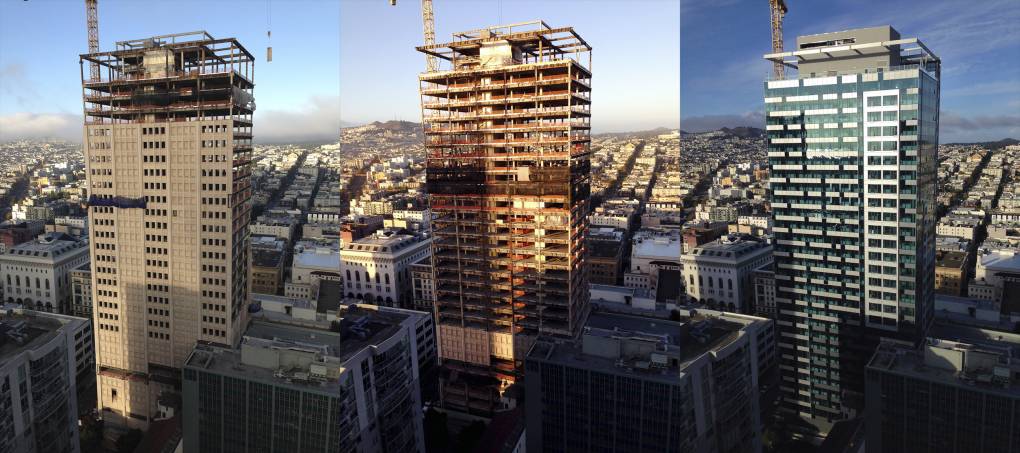
"caption": "In 2012, the 100 Van Ness building was converted from office space to residential apartment units and the building's concrete facade was replaced by glass.",
"description": null,
"title": "230630100 Van Ness-MB-KQED",
"credit": "Courtesy of Marc Babsin",
"status": "inherit",
"altTag": "Three images of the same building at different points in construction. In the first, it has a concrete facade. In the second, the building has no facade. In the third, it has a modern glass facade.",
"isLoading": false,
"fetchFailed": false
},
"news_11943644": {
"type": "attachments",
"id": "news_11943644",
"meta": {
"index": "attachments_1716263798",
"site": "news",
"id": "11943644",
"found": true
},
"parent": 11943634,
"imgSizes": {
"twentyfourteen-full-width": {
"file": "https://ww2.kqed.org/app/uploads/sites/10/2023/03/RS63272_033_KQED_ValleyVerdeFarmSJ_02282023-qut-1038x576.jpg",
"width": 1038,
"mimeType": "image/jpeg",
"height": 576
},
"thumbnail": {
"file": "https://ww2.kqed.org/app/uploads/sites/10/2023/03/RS63272_033_KQED_ValleyVerdeFarmSJ_02282023-qut-160x107.jpg",
"width": 160,
"mimeType": "image/jpeg",
"height": 107
},
"post-thumbnail": {
"file": "https://ww2.kqed.org/app/uploads/sites/10/2023/03/RS63272_033_KQED_ValleyVerdeFarmSJ_02282023-qut-672x372.jpg",
"width": 672,
"mimeType": "image/jpeg",
"height": 372
},
"kqedFullSize": {
"file": "https://ww2.kqed.org/app/uploads/sites/10/2023/03/RS63272_033_KQED_ValleyVerdeFarmSJ_02282023-qut.jpg",
"width": 1920,
"height": 1280
},
"large": {
"file": "https://ww2.kqed.org/app/uploads/sites/10/2023/03/RS63272_033_KQED_ValleyVerdeFarmSJ_02282023-qut-1020x680.jpg",
"width": 1020,
"mimeType": "image/jpeg",
"height": 680
},
"1536x1536": {
"file": "https://ww2.kqed.org/app/uploads/sites/10/2023/03/RS63272_033_KQED_ValleyVerdeFarmSJ_02282023-qut-1536x1024.jpg",
"width": 1536,
"mimeType": "image/jpeg",
"height": 1024
},
"medium": {
"file": "https://ww2.kqed.org/app/uploads/sites/10/2023/03/RS63272_033_KQED_ValleyVerdeFarmSJ_02282023-qut-800x533.jpg",
"width": 800,
"mimeType": "image/jpeg",
"height": 533
}
},
"publishDate": 1678919606,
"modified": 1678919721,
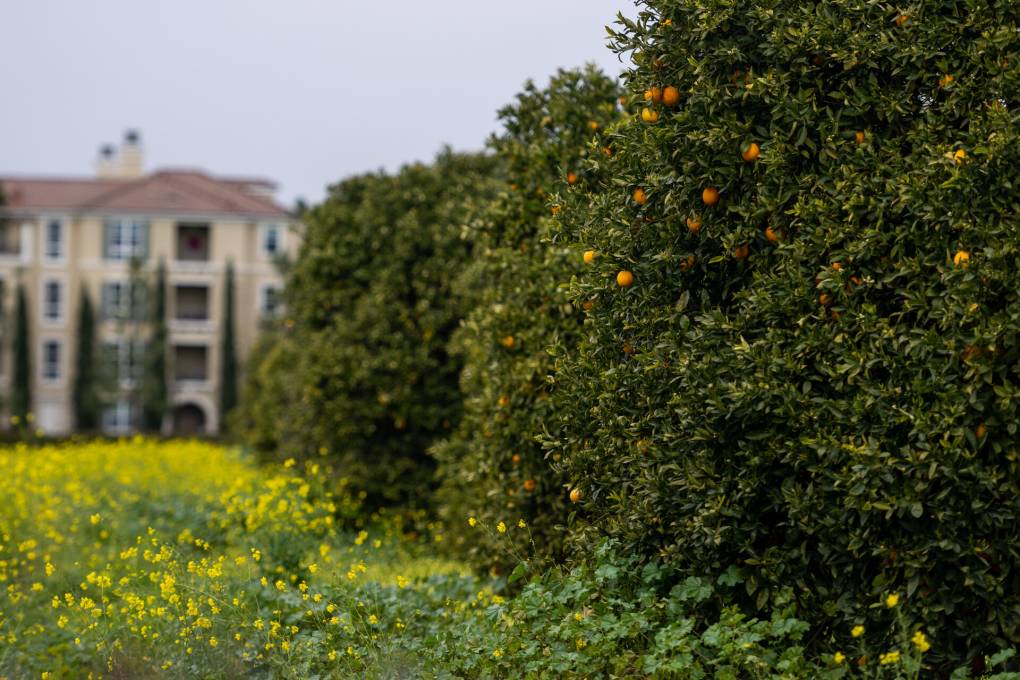
"caption": "An orange orchard in an unexpected place caught the attention of a Bay Curious listener.",
"description": null,
"title": "An orange orchard in an unexpected place caught the attention of a Bay Curious listener.",
"credit": "Beth LaBerge/KQED",
"status": "inherit",
"altTag": "An orange tree is in the foreground and in the background is a four story apartment building.",
"isLoading": false,
"fetchFailed": false
},
"news_11936894": {
"type": "attachments",
"id": "news_11936894",
"meta": {
"index": "attachments_1716263798",
"site": "news",
"id": "11936894",
"found": true
},
"parent": 11936802,
"imgSizes": {
"twentyfourteen-full-width": {
"file": "https://ww2.kqed.org/app/uploads/sites/10/2023/01/Cows-in-Point-Reyes-1038x576.jpg",
"width": 1038,
"mimeType": "image/jpeg",
"height": 576
},
"thumbnail": {
"file": "https://ww2.kqed.org/app/uploads/sites/10/2023/01/Cows-in-Point-Reyes-160x85.jpg",
"width": 160,
"mimeType": "image/jpeg",
"height": 85
},
"post-thumbnail": {
"file": "https://ww2.kqed.org/app/uploads/sites/10/2023/01/Cows-in-Point-Reyes-672x372.jpg",
"width": 672,
"mimeType": "image/jpeg",
"height": 372
},
"kqedFullSize": {
"file": "https://ww2.kqed.org/app/uploads/sites/10/2023/01/Cows-in-Point-Reyes-e1672879647911.jpg",
"width": 1920,
"height": 1023
},
"large": {
"file": "https://ww2.kqed.org/app/uploads/sites/10/2023/01/Cows-in-Point-Reyes-1020x543.jpg",
"width": 1020,
"mimeType": "image/jpeg",
"height": 543
},
"1536x1536": {
"file": "https://ww2.kqed.org/app/uploads/sites/10/2023/01/Cows-in-Point-Reyes-1536x818.jpg",
"width": 1536,
"mimeType": "image/jpeg",
"height": 818
},
"full-width": {
"file": "https://ww2.kqed.org/app/uploads/sites/10/2023/01/Cows-in-Point-Reyes-1920x1023.jpg",
"width": 1920,
"mimeType": "image/jpeg",
"height": 1023
},
"medium": {
"file": "https://ww2.kqed.org/app/uploads/sites/10/2023/01/Cows-in-Point-Reyes-800x426.jpg",
"width": 800,
"mimeType": "image/jpeg",
"height": 426
}
},
"publishDate": 1672879621,
"modified": 1672895850,
"caption": "Cattle graze at Point Reyes National Seashore, where some areas are designated wilderness zones and others pastoral zones.",
"description": null,
"title": "Cows in Point Reyes",
"credit": "John Loo/flickr",
"status": "inherit",
"altTag": "A group of dark brown cows stare at the photographer in a grassy area near the beach",
"isLoading": false,
"fetchFailed": false
},
"news_11901453": {
"type": "attachments",
"id": "news_11901453",
"meta": {
"index": "attachments_1716263798",
"site": "news",
"id": "11901453",
"found": true
},
"parent": 11901288,
"imgSizes": {
"twentyfourteen-full-width": {
"file": "https://ww2.kqed.org/app/uploads/sites/10/2022/01/RS52998_DSC_1298_edit-qut-1038x576.jpeg",
"width": 1038,
"mimeType": "image/jpeg",
"height": 576
},
"thumbnail": {
"file": "https://ww2.kqed.org/app/uploads/sites/10/2022/01/RS52998_DSC_1298_edit-qut-160x94.jpeg",
"width": 160,
"mimeType": "image/jpeg",
"height": 94
},
"post-thumbnail": {
"file": "https://ww2.kqed.org/app/uploads/sites/10/2022/01/RS52998_DSC_1298_edit-qut-672x372.jpeg",
"width": 672,
"mimeType": "image/jpeg",
"height": 372
},
"kqedFullSize": {
"file": "https://ww2.kqed.org/app/uploads/sites/10/2022/01/RS52998_DSC_1298_edit-qut.jpeg",
"width": 1920,
"height": 1125
},
"large": {
"file": "https://ww2.kqed.org/app/uploads/sites/10/2022/01/RS52998_DSC_1298_edit-qut-1020x598.jpeg",
"width": 1020,
"mimeType": "image/jpeg",
"height": 598
},
"1536x1536": {
"file": "https://ww2.kqed.org/app/uploads/sites/10/2022/01/RS52998_DSC_1298_edit-qut-1536x900.jpeg",
"width": 1536,
"mimeType": "image/jpeg",
"height": 900
},
"medium": {
"file": "https://ww2.kqed.org/app/uploads/sites/10/2022/01/RS52998_DSC_1298_edit-qut-800x469.jpeg",
"width": 800,
"mimeType": "image/jpeg",
"height": 469
}
},
"publishDate": 1641952806,
"modified": 1643065760,
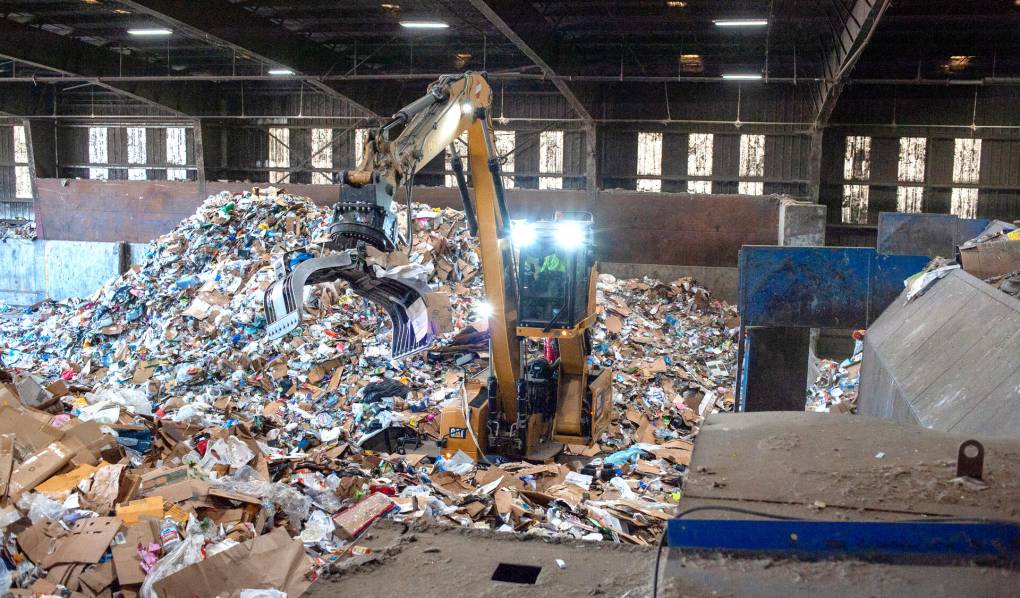
"caption": "The massive sorting floor at the Republic Services recycling facility in Milpitas, which processes up to 1,000 tons of household recyclables each day.",
"description": "Republic Services’ Milpitas facility processes between 800 to 1,000 tons of household recyclables every day, according to Vice President of Sustainability Peter Keller.\n",
"title": "waste handler recycling facility tip floor",
"credit": "Monica Lam/KQED",
"status": "inherit",
"altTag": "A large backhoe sorts through a large pile of recycling in a factory.",
"isLoading": false,
"fetchFailed": false
},
"news_11827883": {
"type": "attachments",
"id": "news_11827883",
"meta": {
"index": "attachments_1716263798",
"site": "news",
"id": "11827883",
"found": true
},
"parent": 11827882,
"imgSizes": {
"apple_news_ca_landscape_5_5": {
"file": "https://ww2.kqed.org/app/uploads/sites/10/2020/07/microrclimates-1044x783.jpg",
"width": 1044,
"mimeType": "image/jpeg",
"height": 783
},
"apple_news_ca_square_4_0": {
"file": "https://ww2.kqed.org/app/uploads/sites/10/2020/07/microrclimates-470x470.jpg",
"width": 470,
"mimeType": "image/jpeg",
"height": 470
},
"twentyfourteen-full-width": {
"file": "https://ww2.kqed.org/app/uploads/sites/10/2020/07/microrclimates-1038x576.jpg",
"width": 1038,
"mimeType": "image/jpeg",
"height": 576
},
"thumbnail": {
"file": "https://ww2.kqed.org/app/uploads/sites/10/2020/07/microrclimates-160x89.jpg",
"width": 160,
"mimeType": "image/jpeg",
"height": 89
},
"post-thumbnail": {
"file": "https://ww2.kqed.org/app/uploads/sites/10/2020/07/microrclimates-672x372.jpg",
"width": 672,
"mimeType": "image/jpeg",
"height": 372
},
"kqedFullSize": {
"file": "https://ww2.kqed.org/app/uploads/sites/10/2020/07/microrclimates.jpg",
"width": 1940,
"height": 1080
},
"apple_news_ca_landscape_4_7": {
"file": "https://ww2.kqed.org/app/uploads/sites/10/2020/07/microrclimates-632x474.jpg",
"width": 632,
"mimeType": "image/jpeg",
"height": 474
},
"large": {
"file": "https://ww2.kqed.org/app/uploads/sites/10/2020/07/microrclimates-1020x568.jpg",
"width": 1020,
"mimeType": "image/jpeg",
"height": 568
},
"apple_news_ca_landscape_4_0": {
"file": "https://ww2.kqed.org/app/uploads/sites/10/2020/07/microrclimates-536x402.jpg",
"width": 536,
"mimeType": "image/jpeg",
"height": 402
},
"apple_news_ca_portrait_12_9": {
"file": "https://ww2.kqed.org/app/uploads/sites/10/2020/07/microrclimates-1122x1080.jpg",
"width": 1122,
"mimeType": "image/jpeg",
"height": 1080
},
"medium": {
"file": "https://ww2.kqed.org/app/uploads/sites/10/2020/07/microrclimates-800x445.jpg",
"width": 800,
"mimeType": "image/jpeg",
"height": 445
},
"apple_news_ca_portrait_4_0": {
"file": "https://ww2.kqed.org/app/uploads/sites/10/2020/07/microrclimates-354x472.jpg",
"width": 354,
"mimeType": "image/jpeg",
"height": 472
},
"apple_news_ca_portrait_9_7": {
"file": "https://ww2.kqed.org/app/uploads/sites/10/2020/07/microrclimates-840x1080.jpg",
"width": 840,
"mimeType": "image/jpeg",
"height": 1080
},
"apple_news_ca_landscape_12_9": {
"file": "https://ww2.kqed.org/app/uploads/sites/10/2020/07/microrclimates-1832x1080.jpg",
"width": 1832,
"mimeType": "image/jpeg",
"height": 1080
},
"apple_news_ca_square_9_7": {
"file": "https://ww2.kqed.org/app/uploads/sites/10/2020/07/microrclimates-1104x1080.jpg",
"width": 1104,
"mimeType": "image/jpeg",
"height": 1080
},
"1536x1536": {
"file": "https://ww2.kqed.org/app/uploads/sites/10/2020/07/microrclimates-1536x855.jpg",
"width": 1536,
"mimeType": "image/jpeg",
"height": 855
},
"apple_news_ca_portrait_4_7": {
"file": "https://ww2.kqed.org/app/uploads/sites/10/2020/07/microrclimates-414x552.jpg",
"width": 414,
"mimeType": "image/jpeg",
"height": 552
},
"apple_news_ca_square_12_9": {
"file": "https://ww2.kqed.org/app/uploads/sites/10/2020/07/microrclimates-1472x1080.jpg",
"width": 1472,
"mimeType": "image/jpeg",
"height": 1080
},
"apple_news_ca_portrait_5_5": {
"file": "https://ww2.kqed.org/app/uploads/sites/10/2020/07/microrclimates-687x916.jpg",
"width": 687,
"mimeType": "image/jpeg",
"height": 916
},
"full-width": {
"file": "https://ww2.kqed.org/app/uploads/sites/10/2020/07/microrclimates-1920x1069.jpg",
"width": 1920,
"mimeType": "image/jpeg",
"height": 1069
},
"apple_news_ca_square_4_7": {
"file": "https://ww2.kqed.org/app/uploads/sites/10/2020/07/microrclimates-550x550.jpg",
"width": 550,
"mimeType": "image/jpeg",
"height": 550
},
"apple_news_ca_landscape_9_7": {
"file": "https://ww2.kqed.org/app/uploads/sites/10/2020/07/microrclimates-1376x1032.jpg",
"width": 1376,
"mimeType": "image/jpeg",
"height": 1032
},
"apple_news_ca_square_5_5": {
"file": "https://ww2.kqed.org/app/uploads/sites/10/2020/07/microrclimates-912x912.jpg",
"width": 912,
"mimeType": "image/jpeg",
"height": 912
}
},
"publishDate": 1594226441,
"modified": 1604626878,
"caption": "Yerba Buena Island and San Francisco captured from the Berkeley Hills. ",
"description": null,
"title": "microrclimates",
"credit": "Melinda Young Stuart/\u003ca href=\"https://www.flickr.com/photos/melystu/45804314885/in/photolist-2cMz61Z-2j3rGgH-KsuGSt-2eRkebk-274sh8m-2g9uxxY-MMmSD9-2j3rFTi-xhBawK-255ikev-Fz7Gz6-DvUxWQ-HwL9mh-TD6CXk-2j3he1R-2hrhaDc-22tWEgY-2iFqVWw-2jaAJzc-GM7SX6-Xo99xh-s5gTtm-2buf1F3-2iwtsmb-2eHG1j7-Yn9Lqq-2gzqiqy-Lu7Rto-2apeUvm-JuuPP3-24pv78b-rFJYFW-2gbZeNf-Co56s4-PoG2G6-CFTKqt-ABrH9m-XP2H8Y-Gjwkqu-QVUyje-27JVYeN-xJf28m-PwZtnw-pu6FH6-s6FR7c-2iEA84v-2gah3pa-qTDFoL-2g4oHbc-e28R8X\">Flickr\u003c/a>",
"status": "inherit",
"isLoading": false,
"fetchFailed": false
},
"news_11926869": {
"type": "attachments",
"id": "news_11926869",
"meta": {
"index": "attachments_1716263798",
"site": "news",
"id": "11926869",
"found": true
},
"parent": 11926839,
"imgSizes": {
"twentyfourteen-full-width": {
"file": "https://ww2.kqed.org/app/uploads/sites/10/2022/09/Prop26-27_GettyImages-1358137983-qut-1038x576.jpg",
"width": 1038,
"mimeType": "image/jpeg",
"height": 576
},
"thumbnail": {
"file": "https://ww2.kqed.org/app/uploads/sites/10/2022/09/Prop26-27_GettyImages-1358137983-qut-160x106.jpg",
"width": 160,
"mimeType": "image/jpeg",
"height": 106
},
"post-thumbnail": {
"file": "https://ww2.kqed.org/app/uploads/sites/10/2022/09/Prop26-27_GettyImages-1358137983-qut-672x372.jpg",
"width": 672,
"mimeType": "image/jpeg",
"height": 372
},
"kqedFullSize": {
"file": "https://ww2.kqed.org/app/uploads/sites/10/2022/09/Prop26-27_GettyImages-1358137983-qut.jpg",
"width": 1920,
"height": 1277
},
"large": {
"file": "https://ww2.kqed.org/app/uploads/sites/10/2022/09/Prop26-27_GettyImages-1358137983-qut-1020x678.jpg",
"width": 1020,
"mimeType": "image/jpeg",
"height": 678
},
"1536x1536": {
"file": "https://ww2.kqed.org/app/uploads/sites/10/2022/09/Prop26-27_GettyImages-1358137983-qut-1536x1022.jpg",
"width": 1536,
"mimeType": "image/jpeg",
"height": 1022
},
"medium": {
"file": "https://ww2.kqed.org/app/uploads/sites/10/2022/09/Prop26-27_GettyImages-1358137983-qut-800x532.jpg",
"width": 800,
"mimeType": "image/jpeg",
"height": 532
}
},
"publishDate": 1664312541,
"modified": 1664312661,
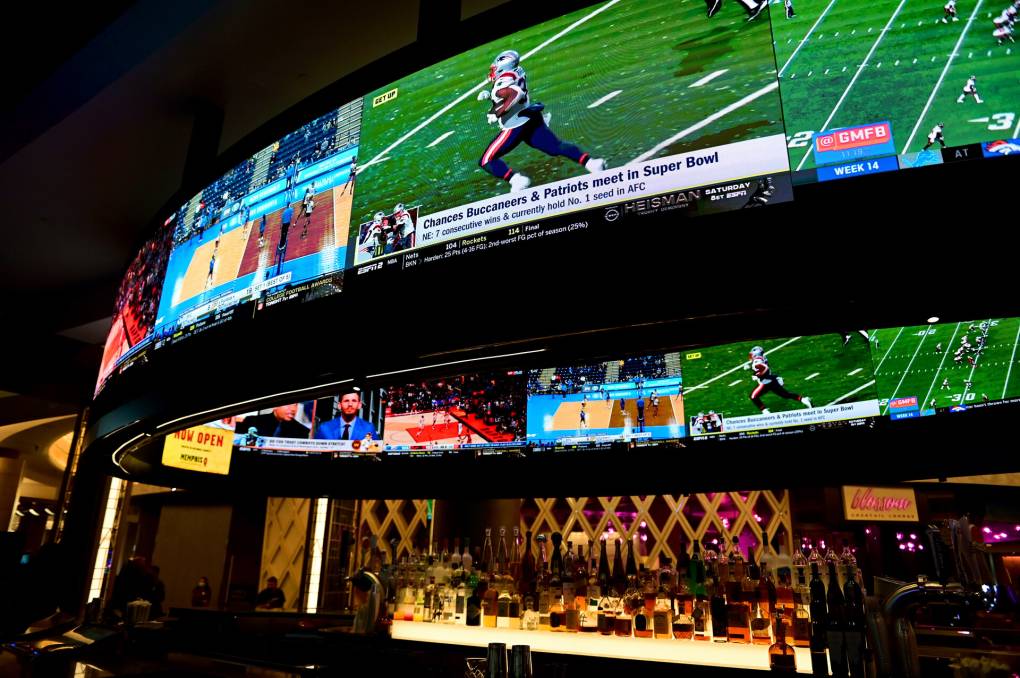
"caption": "Whether or not California should allow sports betting and how are big money questions on the ballot this fall. ",
"description": null,
"title": "MGM National Harbor, Governor Larry Hogan And Joe Theismann Launch Sports Betting In Maryland With BETMGM",
"credit": "Shannon Finney/Getty Images for MGM National Harbor",
"status": "inherit",
"altTag": "Huge circular TV screen mounted above a bar shows multiple football games at once.",
"isLoading": false,
"fetchFailed": false
},
"news_11924293": {
"type": "attachments",
"id": "news_11924293",
"meta": {
"index": "attachments_1716263798",
"site": "news",
"id": "11924293",
"found": true
},
"parent": 11924242,
"imgSizes": {
"twentyfourteen-full-width": {
"file": "https://ww2.kqed.org/app/uploads/sites/10/2022/08/Photo-Aug-01-10-32-06-AM-1038x576.jpg",
"width": 1038,
"mimeType": "image/jpeg",
"height": 576
},
"thumbnail": {
"file": "https://ww2.kqed.org/app/uploads/sites/10/2022/08/Photo-Aug-01-10-32-06-AM-160x120.jpg",
"width": 160,
"mimeType": "image/jpeg",
"height": 120
},
"post-thumbnail": {
"file": "https://ww2.kqed.org/app/uploads/sites/10/2022/08/Photo-Aug-01-10-32-06-AM-672x372.jpg",
"width": 672,
"mimeType": "image/jpeg",
"height": 372
},
"kqedFullSize": {
"file": "https://ww2.kqed.org/app/uploads/sites/10/2022/08/Photo-Aug-01-10-32-06-AM-scaled.jpg",
"width": 2560,
"height": 1920
},
"2048x2048": {
"file": "https://ww2.kqed.org/app/uploads/sites/10/2022/08/Photo-Aug-01-10-32-06-AM-2048x1536.jpg",
"width": 2048,
"mimeType": "image/jpeg",
"height": 1536
},
"large": {
"file": "https://ww2.kqed.org/app/uploads/sites/10/2022/08/Photo-Aug-01-10-32-06-AM-1020x765.jpg",
"width": 1020,
"mimeType": "image/jpeg",
"height": 765
},
"1536x1536": {
"file": "https://ww2.kqed.org/app/uploads/sites/10/2022/08/Photo-Aug-01-10-32-06-AM-1536x1152.jpg",
"width": 1536,
"mimeType": "image/jpeg",
"height": 1152
},
"full-width": {
"file": "https://ww2.kqed.org/app/uploads/sites/10/2022/08/Photo-Aug-01-10-32-06-AM-1920x1440.jpg",
"width": 1920,
"mimeType": "image/jpeg",
"height": 1440
},
"medium": {
"file": "https://ww2.kqed.org/app/uploads/sites/10/2022/08/Photo-Aug-01-10-32-06-AM-800x600.jpg",
"width": 800,
"mimeType": "image/jpeg",
"height": 600
}
},
"publishDate": 1661977382,
"modified": 1662496349,
"caption": "A cluster of 19th-century gravestones sits amid Monterey cypress trees dripping with moss in the Purissima Cemetery, located 4 miles south of Half Moon Bay.",
"description": "A cluster of 19th century gravestones sit amidst Monterey cypress trees dripping with moss in the Purissima Cemetery, located four miles south of Half Moon Bay.",
"title": "Photo Aug 01, 10 32 06 AM",
"credit": "Rachael Myrow/KQED",
"status": "inherit",
"altTag": "Old gravestones sit in a cemetery filled with Monterey cypress trees dripping with moss.",
"isLoading": false,
"fetchFailed": false
},
"news_11916555": {
"type": "attachments",
"id": "news_11916555",
"meta": {
"index": "attachments_1716263798",
"site": "news",
"id": "11916555",
"found": true
},
"parent": 11916538,
"imgSizes": {
"twentyfourteen-full-width": {
"file": "https://ww2.kqed.org/app/uploads/sites/10/2022/06/GettyImages-1338654394-1038x576.jpg",
"width": 1038,
"mimeType": "image/jpeg",
"height": 576
},
"thumbnail": {
"file": "https://ww2.kqed.org/app/uploads/sites/10/2022/06/GettyImages-1338654394-160x107.jpg",
"width": 160,
"mimeType": "image/jpeg",
"height": 107
},
"post-thumbnail": {
"file": "https://ww2.kqed.org/app/uploads/sites/10/2022/06/GettyImages-1338654394-672x372.jpg",
"width": 672,
"mimeType": "image/jpeg",
"height": 372
},
"kqedFullSize": {
"file": "https://ww2.kqed.org/app/uploads/sites/10/2022/06/GettyImages-1338654394.jpg",
"width": 2120,
"height": 1414
},
"2048x2048": {
"file": "https://ww2.kqed.org/app/uploads/sites/10/2022/06/GettyImages-1338654394-2048x1366.jpg",
"width": 2048,
"mimeType": "image/jpeg",
"height": 1366
},
"large": {
"file": "https://ww2.kqed.org/app/uploads/sites/10/2022/06/GettyImages-1338654394-1020x680.jpg",
"width": 1020,
"mimeType": "image/jpeg",
"height": 680
},
"1536x1536": {
"file": "https://ww2.kqed.org/app/uploads/sites/10/2022/06/GettyImages-1338654394-1536x1024.jpg",
"width": 1536,
"mimeType": "image/jpeg",
"height": 1024
},
"full-width": {
"file": "https://ww2.kqed.org/app/uploads/sites/10/2022/06/GettyImages-1338654394-1920x1281.jpg",
"width": 1920,
"mimeType": "image/jpeg",
"height": 1281
},
"medium": {
"file": "https://ww2.kqed.org/app/uploads/sites/10/2022/06/GettyImages-1338654394-800x534.jpg",
"width": 800,
"mimeType": "image/jpeg",
"height": 534
}
},
"publishDate": 1654730442,
"modified": 1654814358,
"caption": "Monterey Jack cheese is soft and mild. It might not be your first choice for a fancy cheese plate, but it's nice in a quesadilla or grilled cheese. ",
"description": "Cheese in various shapes",
"title": "Cheese in various shapes",
"credit": "iStock/Getty Images Plus",
"status": "inherit",
"altTag": null,
"isLoading": false,
"fetchFailed": false
},
"news_11912619": {
"type": "attachments",
"id": "news_11912619",
"meta": {
"index": "attachments_1716263798",
"site": "news",
"id": "11912619",
"found": true
},
"parent": 11912590,
"imgSizes": {
"twentyfourteen-full-width": {
"file": "https://ww2.kqed.org/app/uploads/sites/10/2022/04/64667143290__84C93925-9FB3-4BA8-9CDD-959DE9D525B8.fullsizerender-2-1038x576.jpeg",
"width": 1038,
"mimeType": "image/jpeg",
"height": 576
},
"thumbnail": {
"file": "https://ww2.kqed.org/app/uploads/sites/10/2022/04/64667143290__84C93925-9FB3-4BA8-9CDD-959DE9D525B8.fullsizerender-2-160x151.jpeg",
"width": 160,
"mimeType": "image/jpeg",
"height": 151
},
"post-thumbnail": {
"file": "https://ww2.kqed.org/app/uploads/sites/10/2022/04/64667143290__84C93925-9FB3-4BA8-9CDD-959DE9D525B8.fullsizerender-2-672x372.jpeg",
"width": 672,
"mimeType": "image/jpeg",
"height": 372
},
"kqedFullSize": {
"file": "https://ww2.kqed.org/app/uploads/sites/10/2022/04/64667143290__84C93925-9FB3-4BA8-9CDD-959DE9D525B8.fullsizerender-2-scaled.jpeg",
"width": 2560,
"height": 2416
},
"2048x2048": {
"file": "https://ww2.kqed.org/app/uploads/sites/10/2022/04/64667143290__84C93925-9FB3-4BA8-9CDD-959DE9D525B8.fullsizerender-2-2048x1933.jpeg",
"width": 2048,
"mimeType": "image/jpeg",
"height": 1933
},
"large": {
"file": "https://ww2.kqed.org/app/uploads/sites/10/2022/04/64667143290__84C93925-9FB3-4BA8-9CDD-959DE9D525B8.fullsizerender-2-1020x963.jpeg",
"width": 1020,
"mimeType": "image/jpeg",
"height": 963
},
"1536x1536": {
"file": "https://ww2.kqed.org/app/uploads/sites/10/2022/04/64667143290__84C93925-9FB3-4BA8-9CDD-959DE9D525B8.fullsizerender-2-1536x1449.jpeg",
"width": 1536,
"mimeType": "image/jpeg",
"height": 1449
},
"full-width": {
"file": "https://ww2.kqed.org/app/uploads/sites/10/2022/04/64667143290__84C93925-9FB3-4BA8-9CDD-959DE9D525B8.fullsizerender-2-1920x1812.jpeg",
"width": 1920,
"mimeType": "image/jpeg",
"height": 1812
},
"medium": {
"file": "https://ww2.kqed.org/app/uploads/sites/10/2022/04/64667143290__84C93925-9FB3-4BA8-9CDD-959DE9D525B8.fullsizerender-2-800x755.jpeg",
"width": 800,
"mimeType": "image/jpeg",
"height": 755
}
},
"publishDate": 1651253967,
"modified": 1651254000,
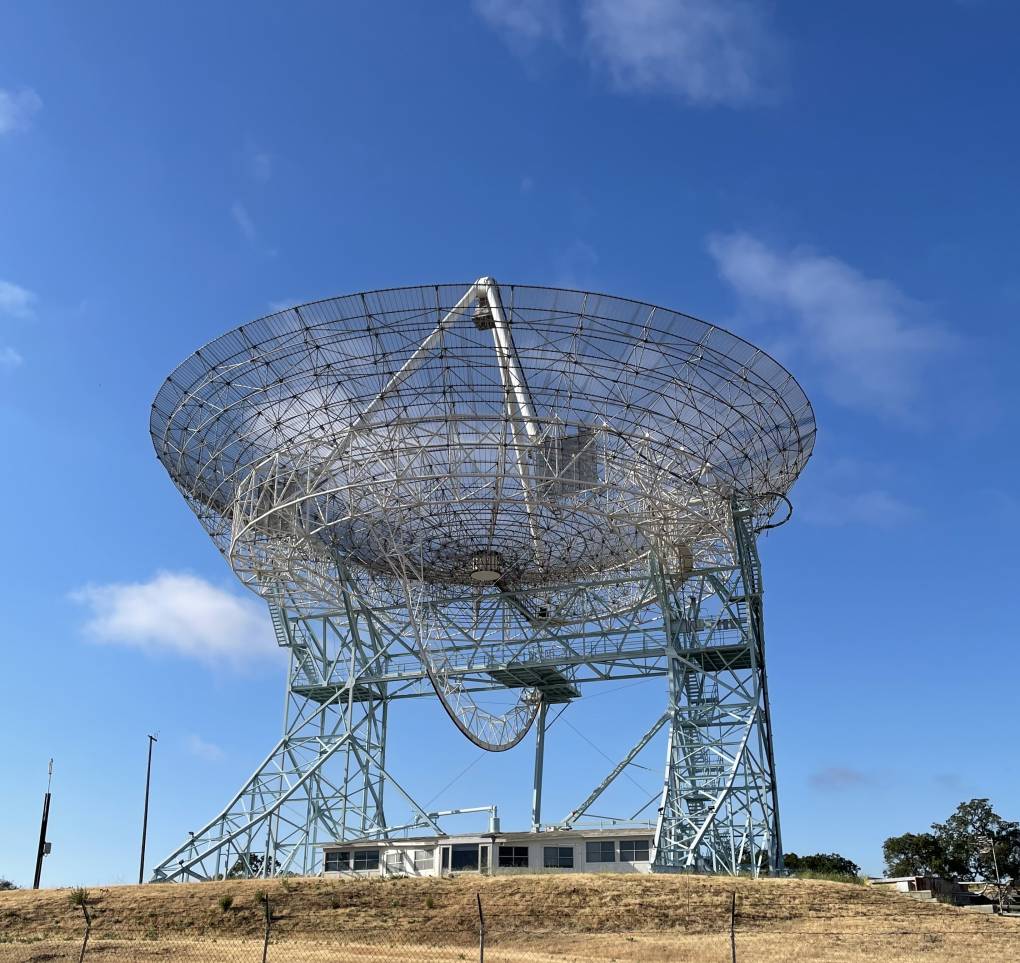
"caption": "The Dish, aka the Stanford Dish, is a radio antenna in the Stanford foothills. It's also an iconic local landmark, and the centerpiece of a popular hiking path on the Stanford campus.",
"description": "The Dish, aka the Stanford Dish, is a radio antenna in the Stanford foothills. It's also an iconic local landmark, and the centerpiece of a popular hiking path on the Stanford campus.",
"title": "64667143290__84C93925-9FB3-4BA8-9CDD-959DE9D525B8.fullsizerender 2",
"credit": "Rachael Myrow/KQED",
"status": "inherit",
"altTag": "A satellite dish points up into the blue sky.",
"isLoading": false,
"fetchFailed": false
},
"news_11907032": {
"type": "attachments",
"id": "news_11907032",
"meta": {
"index": "attachments_1716263798",
"site": "news",
"id": "11907032",
"found": true
},
"parent": 11906815,
"imgSizes": {
"twentyfourteen-full-width": {
"file": "https://ww2.kqed.org/app/uploads/sites/10/2022/03/rencanfeat-1038x576.jpg",
"width": 1038,
"mimeType": "image/jpeg",
"height": 576
},
"thumbnail": {
"file": "https://ww2.kqed.org/app/uploads/sites/10/2022/03/rencanfeat-160x90.jpg",
"width": 160,
"mimeType": "image/jpeg",
"height": 90
},
"post-thumbnail": {
"file": "https://ww2.kqed.org/app/uploads/sites/10/2022/03/rencanfeat-672x372.jpg",
"width": 672,
"mimeType": "image/jpeg",
"height": 372
},
"kqedFullSize": {
"file": "https://ww2.kqed.org/app/uploads/sites/10/2022/03/rencanfeat-scaled.jpg",
"width": 2560,
"height": 1440
},
"2048x2048": {
"file": "https://ww2.kqed.org/app/uploads/sites/10/2022/03/rencanfeat-2048x1152.jpg",
"width": 2048,
"mimeType": "image/jpeg",
"height": 1152
},
"large": {
"file": "https://ww2.kqed.org/app/uploads/sites/10/2022/03/rencanfeat-1020x574.jpg",
"width": 1020,
"mimeType": "image/jpeg",
"height": 574
},
"1536x1536": {
"file": "https://ww2.kqed.org/app/uploads/sites/10/2022/03/rencanfeat-1536x864.jpg",
"width": 1536,
"mimeType": "image/jpeg",
"height": 864
},
"full-width": {
"file": "https://ww2.kqed.org/app/uploads/sites/10/2022/03/rencanfeat-1920x1080.jpg",
"width": 1920,
"mimeType": "image/jpeg",
"height": 1080
},
"medium": {
"file": "https://ww2.kqed.org/app/uploads/sites/10/2022/03/rencanfeat-800x450.jpg",
"width": 800,
"mimeType": "image/jpeg",
"height": 450
}
},
"publishDate": 1646263016,
"modified": 1646263080,
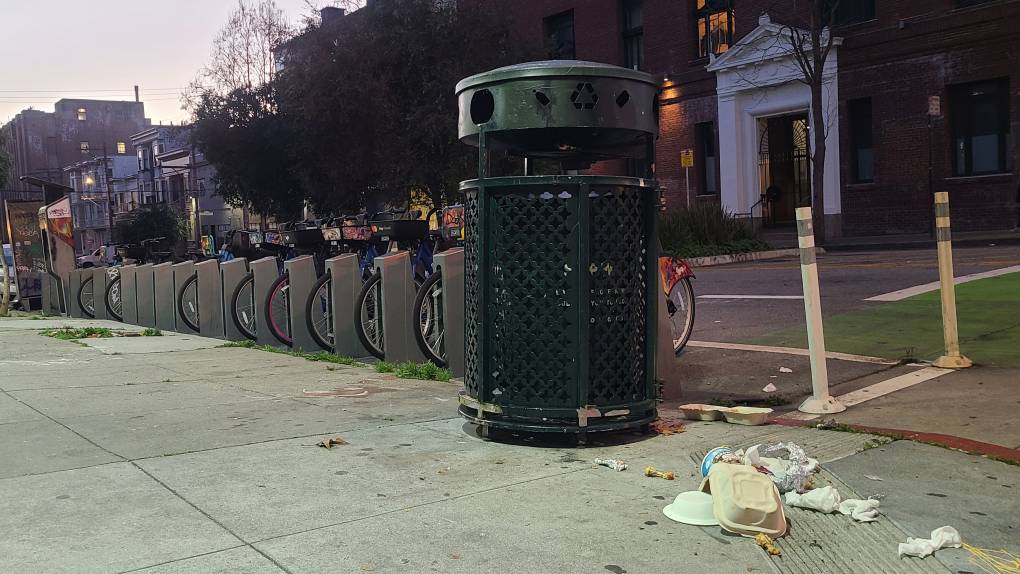
"caption": "The green 'renaissance' trash cans have been on San Francisco's streets since 1993.",
"description": null,
"title": "rencanfeat",
"credit": "Christopher J. Beale/KQED",
"status": "inherit",
"altTag": null,
"isLoading": false,
"fetchFailed": false
},
"news_11890412": {
"type": "attachments",
"id": "news_11890412",
"meta": {
"index": "attachments_1716263798",
"site": "news",
"id": "11890412",
"found": true
},
"parent": 11889712,
"imgSizes": {
"twentyfourteen-full-width": {
"file": "https://ww2.kqed.org/app/uploads/sites/10/2021/09/7714839914_be59a06c0a_h-1038x576.jpg",
"width": 1038,
"mimeType": "image/jpeg",
"height": 576
},
"thumbnail": {
"file": "https://ww2.kqed.org/app/uploads/sites/10/2021/09/7714839914_be59a06c0a_h-160x112.jpg",
"width": 160,
"mimeType": "image/jpeg",
"height": 112
},
"post-thumbnail": {
"file": "https://ww2.kqed.org/app/uploads/sites/10/2021/09/7714839914_be59a06c0a_h-672x372.jpg",
"width": 672,
"mimeType": "image/jpeg",
"height": 372
},
"kqedFullSize": {
"file": "https://ww2.kqed.org/app/uploads/sites/10/2021/09/7714839914_be59a06c0a_h.jpg",
"width": 1600,
"height": 1120
},
"large": {
"file": "https://ww2.kqed.org/app/uploads/sites/10/2021/09/7714839914_be59a06c0a_h-1020x714.jpg",
"width": 1020,
"mimeType": "image/jpeg",
"height": 714
},
"1536x1536": {
"file": "https://ww2.kqed.org/app/uploads/sites/10/2021/09/7714839914_be59a06c0a_h-1536x1075.jpg",
"width": 1536,
"mimeType": "image/jpeg",
"height": 1075
},
"medium": {
"file": "https://ww2.kqed.org/app/uploads/sites/10/2021/09/7714839914_be59a06c0a_h-800x560.jpg",
"width": 800,
"mimeType": "image/jpeg",
"height": 560
}
},
"publishDate": 1632937541,
"modified": 1632949251,
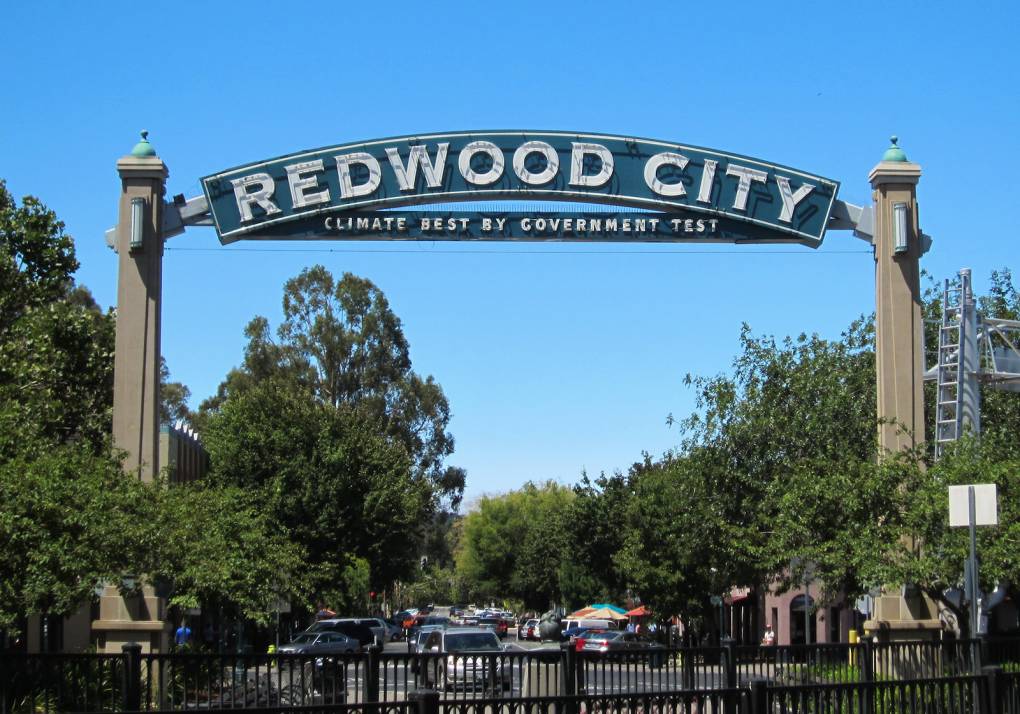
"caption": "How did Redwood City fix on the slogan \"Climate Best by Government Test\"?",
"description": "A green arching sign with white lettering that says \"Redwood City Climate Best By Government Test\".",
"title": "7714839914_be59a06c0a_h",
"credit": "\u003ca href=\"https://www.flickr.com/photos/donbrr/7714839914/in/photolist-8QVzeP-iRbj2-2jHSXME-reZH4B-oz8PAd-51szs5-51onL4-51ooTn-51oo32-Vf41cu-51szE1-51okhB-51sx9f-51ooAr-51sxqq-BaGwqh-51okB4-81ENa4-7nWKRX-28AwUGF-28AwUzM-6wPYyM-2iw8kHk-qUKgW-cKJz8h-5yAQGL-6xcF5U-dBmjaN-6KVkhL-2UaKoG-aDRpt6-cKF3G-d5DLr-riKw-6za6b\">Don Barrett\u003c/a>/Flickr",
"status": "inherit",
"altTag": "A long sign across a leafy street that says \"Redwood City,\" with the famous slogan in smaller type beneath.",
"isLoading": false,
"fetchFailed": false
},
"news_11886659": {
"type": "attachments",
"id": "news_11886659",
"meta": {
"index": "attachments_1716263798",
"site": "news",
"id": "11886659",
"found": true
},
"parent": 11886636,
"imgSizes": {
"twentyfourteen-full-width": {
"file": "https://ww2.kqed.org/app/uploads/sites/10/2021/08/GettyImages-1330125868-1-1038x576.jpg",
"width": 1038,
"mimeType": "image/jpeg",
"height": 576
},
"thumbnail": {
"file": "https://ww2.kqed.org/app/uploads/sites/10/2021/08/GettyImages-1330125868-1-160x107.jpg",
"width": 160,
"mimeType": "image/jpeg",
"height": 107
},
"post-thumbnail": {
"file": "https://ww2.kqed.org/app/uploads/sites/10/2021/08/GettyImages-1330125868-1-672x372.jpg",
"width": 672,
"mimeType": "image/jpeg",
"height": 372
},
"kqedFullSize": {
"file": "https://ww2.kqed.org/app/uploads/sites/10/2021/08/GettyImages-1330125868-1.jpg",
"width": 2000,
"height": 1333
},
"large": {
"file": "https://ww2.kqed.org/app/uploads/sites/10/2021/08/GettyImages-1330125868-1-1020x680.jpg",
"width": 1020,
"mimeType": "image/jpeg",
"height": 680
},
"1536x1536": {
"file": "https://ww2.kqed.org/app/uploads/sites/10/2021/08/GettyImages-1330125868-1-1536x1024.jpg",
"width": 1536,
"mimeType": "image/jpeg",
"height": 1024
},
"full-width": {
"file": "https://ww2.kqed.org/app/uploads/sites/10/2021/08/GettyImages-1330125868-1-1920x1280.jpg",
"width": 1920,
"mimeType": "image/jpeg",
"height": 1280
},
"medium": {
"file": "https://ww2.kqed.org/app/uploads/sites/10/2021/08/GettyImages-1330125868-1-800x533.jpg",
"width": 800,
"mimeType": "image/jpeg",
"height": 533
}
},
"publishDate": 1630104508,
"modified": 1630104572,
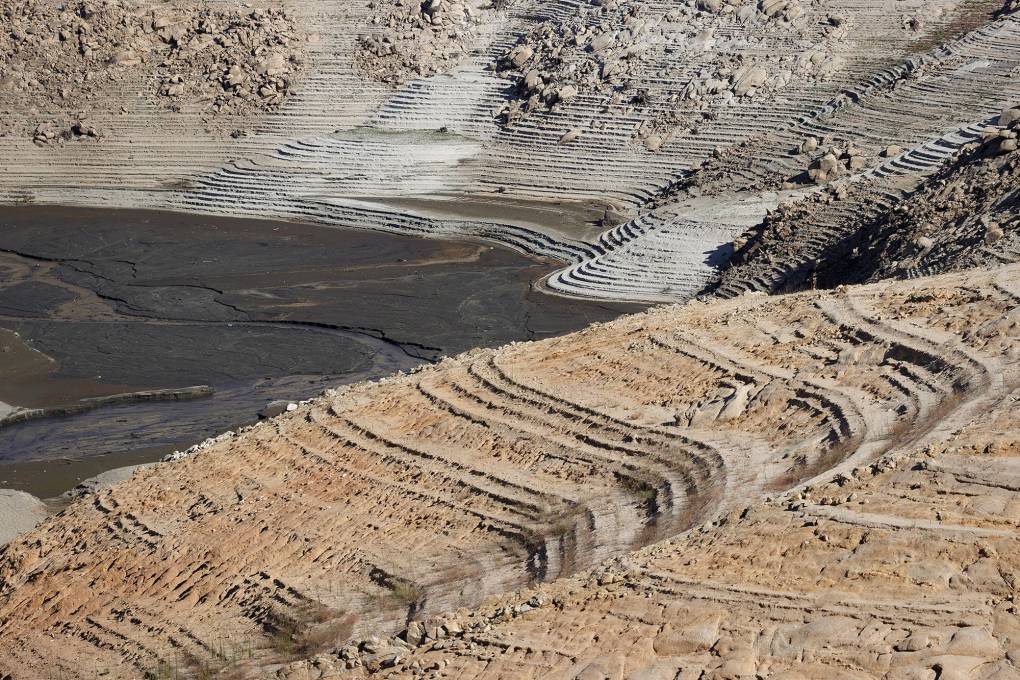
"caption": "Water lines are visible on the steep banks of Lake Oroville. As the extreme drought emergency continues in California, Lake Oroville's water levels are continuing to drop to 28 percent of capacity.",
"description": "An empty reservoir.",
"title": "California's Drought Brings Lake Oroville To Historic Low Level",
"credit": "Justin Sullivan/Getty Images",
"status": "inherit",
"altTag": null,
"isLoading": false,
"fetchFailed": false
}
},
"audioPlayerReducer": {
"postId": "stream_live",
"isPaused": true,
"isPlaying": false,
"pfsActive": false,
"pledgeModalIsOpen": true,
"playerDrawerIsOpen": false,
"liveAudioPlayStartedAt": 0,
"liveAudioPlayContext": ""
},
"authorsReducer": {
"byline_news_11827882": {
"type": "authors",
"id": "byline_news_11827882",
"meta": {
"override": true
},
"slug": "byline_news_11827882",
"name": "Daniel Potter",
"isLoading": false
},
"byline_news_11886636": {
"type": "authors",
"id": "byline_news_11886636",
"meta": {
"override": true
},
"slug": "byline_news_11886636",
"name": "Amy Mayer",
"isLoading": false
},
"gmarzorati": {
"type": "authors",
"id": "227",
"meta": {
"index": "authors_1716337520",
"id": "227",
"found": true
},
"name": "Guy Marzorati",
"firstName": "Guy",
"lastName": "Marzorati",
"slug": "gmarzorati",
"email": "gmarzorati@KQED.org",
"display_author_email": true,
"staff_mastheads": [
"news"
],
"title": "Correspondent",
"bio": "Guy Marzorati is a correspondent on KQED's California Politics and Government Desk, based in San Jose. A graduate of Santa Clara University, Guy joined KQED in 2013. He reports on state and local politics and produces KQED's digital voter guide.",
"avatar": "https://secure.gravatar.com/avatar/e7038b8dbfd55b104369b76b1cd0b9de?s=600&d=blank&r=g",
"twitter": "guymarzorati",
"facebook": null,
"instagram": null,
"linkedin": null,
"sites": [
{
"site": "",
"roles": [
"editor"
]
},
{
"site": "news",
"roles": [
"editor"
]
},
{
"site": "science",
"roles": [
"editor"
]
},
{
"site": "forum",
"roles": [
"editor"
]
},
{
"site": "elections",
"roles": [
"editor"
]
},
{
"site": "liveblog",
"roles": [
"editor"
]
}
],
"headData": {
"title": "Guy Marzorati | KQED",
"description": "Correspondent",
"ogImgSrc": "https://secure.gravatar.com/avatar/e7038b8dbfd55b104369b76b1cd0b9de?s=600&d=blank&r=g",
"twImgSrc": "https://secure.gravatar.com/avatar/e7038b8dbfd55b104369b76b1cd0b9de?s=600&d=blank&r=g"
},
"isLoading": false,
"link": "/author/gmarzorati"
},
"katrinaschwartz": {
"type": "authors",
"id": "234",
"meta": {
"index": "authors_1716337520",
"id": "234",
"found": true
},
"name": "Katrina Schwartz",
"firstName": "Katrina",
"lastName": "Schwartz",
"slug": "katrinaschwartz",
"email": "kschwartz@kqed.org",
"display_author_email": false,
"staff_mastheads": [
"news"
],
"title": "Producer",
"bio": "Katrina Schwartz is a journalist based in San Francisco. She's worked at KPCC public radio in LA and has reported on air and online for KQED since 2010. She covered how teaching and learning is changing for MindShift between 2012 and 2020. She is the co-host of the MindShift podcast and now produces KQED's Bay Curious podcast.",
"avatar": "https://secure.gravatar.com/avatar/edb4ee79070447a018538c9aae6eeecf28786515b8a0c30e43b6b7dce5aa44c8?s=600&d=blank&r=g",
"twitter": "kschwart",
"bluesky": null,
"facebook": null,
"instagram": null,
"linkedin": null,
"sites": [
{
"site": "",
"roles": [
"editor"
]
},
{
"site": "news",
"roles": [
"editor"
]
},
{
"site": "mindshift",
"roles": [
"administrator"
]
},
{
"site": "stateofhealth",
"roles": [
"author"
]
},
{
"site": "science",
"roles": [
"editor"
]
}
],
"headData": {
"title": "Katrina Schwartz | KQED",
"description": "Producer",
"ogImgSrc": "https://secure.gravatar.com/avatar/edb4ee79070447a018538c9aae6eeecf28786515b8a0c30e43b6b7dce5aa44c8?s=600&d=blank&r=g",
"twImgSrc": "https://secure.gravatar.com/avatar/edb4ee79070447a018538c9aae6eeecf28786515b8a0c30e43b6b7dce5aa44c8?s=600&d=blank&r=g"
},
"isLoading": false,
"link": "/author/katrinaschwartz"
},
"mlam": {
"type": "authors",
"id": "244",
"meta": {
"index": "authors_1716337520",
"id": "244",
"found": true
},
"name": "Monica Lam",
"firstName": "Monica Z.",
"lastName": "Lam",
"slug": "mlam",
"email": "mlam@kqed.org",
"display_author_email": true,
"staff_mastheads": [
"news"
],
"title": "KQED Senior Producer",
"bio": "Monica is senior producer of the weekly current affairs program, \"KQED Newsroom.\" She's also served as senior editor of digital content at KQED. She likes to report and edit as well as produce video and take photos.\r\n\r\nBefore joining KQED, Monica worked at the Center for Investigative Reporting, where she examined conditions inside \u003cspan style=\"font-weight: 400;\">maximum security \u003c/span>prisons and abuse in state-run institutions for the developmentally disabled. Prior to that, she produced and directed \u003cem>Journey of the Bonesetter's Daughter,\u003c/em> a documentary that follows novelist Amy Tan as she creates an opera based on her family history.\r\n\r\nMonica's work has been honored with a duPont Award, five Emmys, regional and national Murrow Awards, and has been recognized by Investigative Reporters and Editors, the Society of Professional Journalists, Religion Newswriters Association and the San Francisco Peninsula Press Club. Monica studied urban studies at Stanford University and earned a master's in journalism at University of California at Berkeley. Follow her on twitter: @monicazlam",
"avatar": "https://secure.gravatar.com/avatar/018c474b2b71f43e0e6ca9b15a0ad36f?s=600&d=blank&r=g",
"twitter": "@monicazlam",
"facebook": null,
"instagram": null,
"linkedin": null,
"sites": [
{
"site": "arts",
"roles": [
"administrator"
]
},
{
"site": "news",
"roles": [
"editor"
]
},
{
"site": "trulyca",
"roles": [
"editor"
]
},
{
"site": "science",
"roles": [
"editor"
]
},
{
"site": "breakingnews",
"roles": [
"editor"
]
}
],
"headData": {
"title": "Monica Lam | KQED",
"description": "KQED Senior Producer",
"ogImgSrc": "https://secure.gravatar.com/avatar/018c474b2b71f43e0e6ca9b15a0ad36f?s=600&d=blank&r=g",
"twImgSrc": "https://secure.gravatar.com/avatar/018c474b2b71f43e0e6ca9b15a0ad36f?s=600&d=blank&r=g"
},
"isLoading": false,
"link": "/author/mlam"
},
"rachael-myrow": {
"type": "authors",
"id": "251",
"meta": {
"index": "authors_1716337520",
"id": "251",
"found": true
},
"name": "Rachael Myrow",
"firstName": "Rachael",
"lastName": "Myrow",
"slug": "rachael-myrow",
"email": "rmyrow@kqed.org",
"display_author_email": true,
"staff_mastheads": [
"news"
],
"title": "Senior Editor of KQED's Silicon Valley News Desk",
"bio": "• I write and edit stories about how Silicon Valley power and policies shape everyday life in California. I’m also passionate about making Bay Area history and culture more accessible to a broad public. • I’ve been a journalist for most of my life, starting in high school with The Franklin Press in Los Angeles, where I grew up. While earning my first degree in English at UC Berkeley, I got my start in public radio at KALX-FM. After completing a second degree in journalism at Cal, I landed my first professional job at Marketplace, then moved on to KPCC (now LAist), and then KQED, where I hosted The California Report for more than seven years. • My reporting has appeared on NPR, The World, WBUR’s \u003ci>Here & Now\u003c/i>, and the BBC. I also guest host for KQED’s \u003ci>Forum\u003c/i>, as well as the Commonwealth Club in San Francisco. • I speak periodically on media, democracy and technology issues, and do voiceover work for documentaries and educational video projects. • Outside of the studio, you'll find me hiking Bay Area trails and whipping up Insta-ready meals in my kitchen. • I do not accept gifts, money, or favors from anyone connected to my reporting, I don't pay people for information, and I do not support or donate to political causes. • I strive to treat the people I report on with fairness, honesty, and respect. I also recognize there are often multiple sides to a story and work to verify information through multiple sources and documentation. If I get something wrong, I correct it.",
"avatar": "https://secure.gravatar.com/avatar/3ed8a3c5f26025e4a805ba634cda8cd764906b97438a6d9ce216b044e340da4e?s=600&d=blank&r=g",
"twitter": "rachaelmyrow",
"bluesky": null,
"facebook": null,
"instagram": null,
"linkedin": "https://www.linkedin.com/in/rachaelmyrow/",
"sites": [
{
"site": "arts",
"roles": [
"administrator"
]
},
{
"site": "news",
"roles": [
"edit_others_posts",
"editor"
]
},
{
"site": "futureofyou",
"roles": [
"editor"
]
},
{
"site": "bayareabites",
"roles": [
"editor"
]
},
{
"site": "stateofhealth",
"roles": [
"editor"
]
},
{
"site": "science",
"roles": [
"editor"
]
},
{
"site": "food",
"roles": [
"editor"
]
},
{
"site": "forum",
"roles": [
"editor"
]
},
{
"site": "liveblog",
"roles": [
"author"
]
}
],
"headData": {
"title": "Rachael Myrow | KQED",
"description": "Senior Editor of KQED's Silicon Valley News Desk",
"ogImgSrc": "https://secure.gravatar.com/avatar/3ed8a3c5f26025e4a805ba634cda8cd764906b97438a6d9ce216b044e340da4e?s=600&d=blank&r=g",
"twImgSrc": "https://secure.gravatar.com/avatar/3ed8a3c5f26025e4a805ba634cda8cd764906b97438a6d9ce216b044e340da4e?s=600&d=blank&r=g"
},
"isLoading": false,
"link": "/author/rachael-myrow"
},
"dcronin": {
"type": "authors",
"id": "11362",
"meta": {
"index": "authors_1716337520",
"id": "11362",
"found": true
},
"name": "Dana Cronin",
"firstName": "Dana",
"lastName": "Cronin",
"slug": "dcronin",
"email": "dcronin@KQED.org",
"display_author_email": true,
"staff_mastheads": [],
"title": "KQED Contributor",
"bio": "Dana Cronin is a reporter for KQED News. She loves writing stories about climate change, environmental issues, food and agriculture. She's reported across the country, from Colorado to Washington D.C. to Illinois, and has won numerous awards for her coverage. Her work is regularly featured on national broadcasts, including NPR’s Morning Edition, All Things Considered, PBS Newshour and Science Friday. She lives in Oakland and has an avocado tree in her back yard.",
"avatar": "https://secure.gravatar.com/avatar/b242755225e2f85f37c259df1f4cdfa36dc82f17dcf79e697fb392d658d1750b?s=600&d=blank&r=g",
"twitter": "DanaHCronin",
"bluesky": null,
"facebook": null,
"instagram": null,
"linkedin": null,
"sites": [
{
"site": "arts",
"roles": [
"author"
]
},
{
"site": "news",
"roles": [
"editor"
]
},
{
"site": "science",
"roles": [
"author"
]
},
{
"site": "liveblog",
"roles": [
"author"
]
}
],
"headData": {
"title": "Dana Cronin | KQED",
"description": "KQED Contributor",
"ogImgSrc": "https://secure.gravatar.com/avatar/b242755225e2f85f37c259df1f4cdfa36dc82f17dcf79e697fb392d658d1750b?s=600&d=blank&r=g",
"twImgSrc": "https://secure.gravatar.com/avatar/b242755225e2f85f37c259df1f4cdfa36dc82f17dcf79e697fb392d658d1750b?s=600&d=blank&r=g"
},
"isLoading": false,
"link": "/author/dcronin"
},
"cbeale": {
"type": "authors",
"id": "11749",
"meta": {
"index": "authors_1716337520",
"id": "11749",
"found": true
},
"name": "Christopher Beale",
"firstName": "Christopher",
"lastName": "Beale",
"slug": "cbeale",
"email": "cbeale@kqed.org",
"display_author_email": true,
"staff_mastheads": [
"news"
],
"title": "Engineer/Producer/Reporter",
"bio": "\u003ca href=\"https://linktr.ee/realchrisjbeale\" rel=\"noopener noreferrer\">Christopher J. Beale\u003c/a> is an award winning journalist, audio engineer, and media host living in San Francisco. \r\n\r\nChristopher works primarily as an audio engineer at KQED and serves as the sound designer for both the Bay Curious and Rightnowish podcasts. He is the host and producer of the LGBTQIA podcast and radio segment \u003ca href=\"https://stereotypespodcast.org\">Stereotypes\u003c/a>.",
"avatar": "https://secure.gravatar.com/avatar/dc485bf84788eb7e7414eb638e72407e?s=600&d=blank&r=g",
"twitter": "realchrisjbeale",
"facebook": null,
"instagram": "http://instagram.com/realchrisjbeale",
"linkedin": null,
"sites": [
{
"site": "arts",
"roles": [
"contributor"
]
},
{
"site": "news",
"roles": [
"editor"
]
},
{
"site": "forum",
"roles": [
"editor"
]
}
],
"headData": {
"title": "Christopher Beale | KQED",
"description": "Engineer/Producer/Reporter",
"ogImgSrc": "https://secure.gravatar.com/avatar/dc485bf84788eb7e7414eb638e72407e?s=600&d=blank&r=g",
"twImgSrc": "https://secure.gravatar.com/avatar/dc485bf84788eb7e7414eb638e72407e?s=600&d=blank&r=g"
},
"isLoading": false,
"link": "/author/cbeale"
},
"pbartolone": {
"type": "authors",
"id": "11879",
"meta": {
"index": "authors_1716337520",
"id": "11879",
"found": true
},
"name": "Pauline Bartolone",
"firstName": "Pauline",
"lastName": "Bartolone",
"slug": "pbartolone",
"email": "pbartolone@kqed.org",
"display_author_email": false,
"staff_mastheads": [],
"title": "KQED Contributor",
"bio": "Pauline Bartolone has been a journalist for two decades, specializing in longform audio storytelling. Before editing and producing for podcasts like Bay Curious, she was a health care journalist for public radio and print outlets such as CalMatters and Kaiser Health News. Her reporting has won several regional Edward R. Murrow awards, national recognition from the Society of Professional Journalists and a first-place prize from the Association of Health Care Journalists.\r\n\r\nPauline’s work has aired frequently on National Public Radio, and bylines have appeared in The Los Angeles Times, CNN.com, Washingtonpost.com, USA Today and Scientific American.\r\n\r\nPauline has lived in Northern California for 20 years. Her other passions are crafts (now done in collaboration with her daughter) and the Brazilian martial art of capoeira.",
"avatar": "https://secure.gravatar.com/avatar/95001c30374b0d3878007af9cf1e120a?s=600&d=blank&r=g",
"twitter": "pbartolone",
"facebook": null,
"instagram": null,
"linkedin": null,
"sites": [
{
"site": "news",
"roles": [
"editor"
]
},
{
"site": "podcasts",
"roles": [
"subscriber"
]
}
],
"headData": {
"title": "Pauline Bartolone | KQED",
"description": "KQED Contributor",
"ogImgSrc": "https://secure.gravatar.com/avatar/95001c30374b0d3878007af9cf1e120a?s=600&d=blank&r=g",
"twImgSrc": "https://secure.gravatar.com/avatar/95001c30374b0d3878007af9cf1e120a?s=600&d=blank&r=g"
},
"isLoading": false,
"link": "/author/pbartolone"
}
},
"pagesReducer": {
"news_program_baycurious": {
"type": "terms",
"id": "news_34552",
"meta": {
"index": "terms_1716263798",
"site": "news",
"id": "34552",
"score": 15.279701
},
"name": "baycurious",
"slug": "baycurious",
"taxonomy": "program",
"description": null,
"featImg": null,
"headData": {
"title": "baycurious | KQED News",
"description": null,
"ogTitle": null,
"ogDescription": null,
"ogImgId": null,
"twTitle": null,
"twDescription": null,
"twImgId": null
},
"ttid": 34569,
"isLoading": false,
"title": "baycurious",
"pageMeta": {
"site": "news",
"WpPageTemplate": "page-topic-editorial",
"currentPage": 7
},
"blocks": [
{
"blockName": "kqed/post-list",
"attrs": {
"layout": "cardArticle2",
"query": "posts/news?program=baycurious",
"seeMore": false,
"paginated": true,
"page": 7
}
},
{
"blockName": "kqed/ad"
}
]
}
},
"pfsSessionReducer": {},
"postsReducer": {
"stream_live": {
"type": "live",
"id": "stream_live",
"audioUrl": "https://streams.kqed.org/kqedradio",
"title": "Live Stream",
"excerpt": "Live Stream information currently unavailable.",
"link": "/radio",
"featImg": "",
"label": {
"name": "KQED Live",
"link": "/"
}
},
"stream_kqedNewscast": {
"type": "posts",
"id": "stream_kqedNewscast",
"audioUrl": "https://www.kqed.org/.stream/anon/radio/RDnews/newscast.mp3?_=1",
"title": "KQED Newscast",
"featImg": "",
"label": {
"name": "88.5 FM",
"link": "/"
}
},
"news_11955554": {
"type": "posts",
"id": "news_11955554",
"meta": {
"index": "posts_1716263798",
"site": "news",
"id": "11955554",
"score": null,
"sort": [
1689242421000
]
},
"guestAuthors": [],
"slug": "could-empty-offices-in-san-francisco-be-converted-to-homes",
"title": "Could Empty Offices in San Francisco Be Converted to Homes?",
"publishDate": 1689242421,
"format": "standard",
"headTitle": "Could Empty Offices in San Francisco Be Converted to Homes? | KQED",
"labelTerm": {
"term": 33523,
"site": "news"
},
"content": "\u003cp>\u003cem>\u003ca href=\"https://drive.google.com/file/d/1q7BNr6kOVbzQpP46ZuANDKQEgjwIpge7/view?usp=drive_link\">Read a transcript of this episode. \u003c/a>\u003c/em>\u003c/p>\n\u003cp>If you watch national TV news — or eavesdrop at your local coffee shop — you may have heard something like this: San Francisco’s offices are lying vacant, homelessness is rampant, and the city is floundering.\u003c/p>\n\u003cp>Bay Curious listener Judith Gottlieb, a retired nurse in Oakland, has been hearing some of those stories. And the idea of people sleeping on the street breaks her heart. One day, she got an idea.\u003c/p>\n\u003cp>“I heard about all these empty office buildings in San Francisco, and I was thinking, couldn’t we just move [people] in there really quickly?” Gottlieb asked Bay Curious.\u003c/p>\n\u003cp>Office vacancy is hovering around 30% in downtown San Francisco, and recently there’s been a lot of talk about converting all these empty offices to living space as a way to create much-needed housing and revive downtown at the same time. [baycuriouspodcastinfo]\u003c/p>\n\u003cp>“The unhoused need dignity. They need a roof over their head,” said Gottlieb. “Anything we can do is better than just waiting around.”\u003cbr>\nBay Curious looked into the economics of converting office space to housing in the city, and explored whether this is a good option for getting people off the streets.\u003c/p>\n\u003ch2>How difficult is conversion?\u003c/h2>\n\u003cp>Offices have been converted to housing before in San Francisco, but only a handful of times, according to the San Francisco Planning Commission. But as far as the agency knows, it hasn’t been done for people experiencing homelessness.\u003c/p>\n\u003cp>A prime example of a market-rate conversion is 100 Van Ness, a 28-story, glass-covered tower just steps from Market Street and City Hall.\u003c/p>\n\u003cp>This tower first belonged to the California State Automobile Association and was built in the 1970s. Back then, it was a beige tower of concrete with small rectangular windows. Now its exterior is almost all glass.\u003c/p>\n\u003cfigure id=\"attachment_11955562\" class=\"wp-caption aligncenter\" style=\"max-width: 2560px\">\u003ca href=\"https://ww2.kqed.org/app/uploads/sites/10/2023/07/IMG_6909-scaled.jpeg\">\u003cimg loading=\"lazy\" decoding=\"async\" class=\"wp-image-11955562 size-full\" src=\"https://ww2.kqed.org/app/uploads/sites/10/2023/07/IMG_6909-scaled.jpeg\" alt=\"A white man wearing a suit smiles at the camera in the foreground. He's standing on the rooftop of a skyscraper. Behind him is a view of the San Francisco city skyline.\" width=\"2560\" height=\"1920\" srcset=\"https://cdn.kqed.org/wp-content/uploads/sites/10/2023/07/IMG_6909-scaled.jpeg 2560w, https://cdn.kqed.org/wp-content/uploads/sites/10/2023/07/IMG_6909-800x600.jpeg 800w, https://cdn.kqed.org/wp-content/uploads/sites/10/2023/07/IMG_6909-1020x765.jpeg 1020w, https://cdn.kqed.org/wp-content/uploads/sites/10/2023/07/IMG_6909-160x120.jpeg 160w, https://cdn.kqed.org/wp-content/uploads/sites/10/2023/07/IMG_6909-1536x1152.jpeg 1536w, https://cdn.kqed.org/wp-content/uploads/sites/10/2023/07/IMG_6909-2048x1536.jpeg 2048w, https://cdn.kqed.org/wp-content/uploads/sites/10/2023/07/IMG_6909-1920x1440.jpeg 1920w\" sizes=\"(max-width: 2560px) 100vw, 2560px\">\u003c/a>\u003cfigcaption class=\"wp-caption-text\">Strachan Forgan stands on the rooftop of 100 Van Ness. \u003ccite>(Pauline Bartolone/KQED)\u003c/cite>\u003c/figcaption>\u003c/figure>\n\u003cp>“We essentially took off the entire façade of the building and replaced it with this floor-to-ceiling glass,” said Strachan Forgan, a principal at SCB, the architectural firm that helped create the residential units in 2015.\u003c/p>\n\u003cp>During a recent tour of 100 Van Ness, Forgan explained the complete transformation of the interior of the building. The once sprawling open floors of office space have been carved up into hundreds of luxury apartments. Only four of the original eight elevators remain, because residential settings have less need for elevators, according to Forgan.\u003c/p>\n\u003cp>The converted apartments — ranging from $3,159 for a tiny studio to more than $6,000 for a roomy two-bedroom — are not without design quirks. Some are attractive, others less so.\u003c/p>\n\u003cp>Things residents may enjoy are the elevated ceilings — slightly higher than in your standard apartment. Developers also removed the heating and cooling machinery, which is typically kept on office building roofs, to make open leisure space instead, complete with chairs and 360-degree views of the Bay Area.\u003c/p>\n\u003cp>“It has pretty spectacular views in every direction,” said Forgan, with a backdrop of the Marin Headlands, and the many hills of San Francisco, behind him.\u003c/p>\n\u003cp>On the downside, some apartments at Van Ness have fewer surface area for windows, so bedrooms use “borrowed light” from living spaces. Because the apartments are carved out of a vast open office floor, many of the apartments are long and deep, stretching from the window to the center elevators.\u003c/p>\n\u003cp>As a result, many apartments at 100 Van Ness have long, tunnel-like hallways with windows at the end. In one of the building’s one-bedroom units, a windowless bedroom in the middle of the layout has a semi-transparent wall to let in light from the living room.\u003c/p>\n\u003cfigure id=\"attachment_11954821\" class=\"wp-caption aligncenter\" style=\"max-width: 2000px\">\u003ca href=\"https://ww2.kqed.org/app/uploads/sites/10/2023/06/230630-100-VAN-NESS-MHN-14-KQED.jpg\">\u003cimg loading=\"lazy\" decoding=\"async\" class=\"wp-image-11954821 size-full\" src=\"https://ww2.kqed.org/app/uploads/sites/10/2023/06/230630-100-VAN-NESS-MHN-14-KQED.jpg\" alt=\"A large empty room with a glass sliding door and glass panels in one wall.\" width=\"2000\" height=\"1333\" srcset=\"https://cdn.kqed.org/wp-content/uploads/sites/10/2023/06/230630-100-VAN-NESS-MHN-14-KQED.jpg 2000w, https://cdn.kqed.org/wp-content/uploads/sites/10/2023/06/230630-100-VAN-NESS-MHN-14-KQED-800x533.jpg 800w, https://cdn.kqed.org/wp-content/uploads/sites/10/2023/06/230630-100-VAN-NESS-MHN-14-KQED-1020x680.jpg 1020w, https://cdn.kqed.org/wp-content/uploads/sites/10/2023/06/230630-100-VAN-NESS-MHN-14-KQED-160x107.jpg 160w, https://cdn.kqed.org/wp-content/uploads/sites/10/2023/06/230630-100-VAN-NESS-MHN-14-KQED-1536x1024.jpg 1536w, https://cdn.kqed.org/wp-content/uploads/sites/10/2023/06/230630-100-VAN-NESS-MHN-14-KQED-1920x1280.jpg 1920w\" sizes=\"(max-width: 2000px) 100vw, 2000px\">\u003c/a>\u003cfigcaption class=\"wp-caption-text\">A sliding door and light panels allow light through to an interior bedroom in a converted apartment at 100 Van Ness in San Francisco on June 30, 2023. Built in 1974, the building was converted from office space to residential apartment units in 2012. \u003ccite>(Martin do Nascimento/KQED)\u003c/cite>\u003c/figcaption>\u003c/figure>\n\u003cp>When 100 Van Ness first opened to residents, units with windowless bedrooms were initially offered with significant discounts, but developers soon found that wasn’t necessary.\u003c/p>\n\u003cp>“Actually, the residents really like it because it’s very quiet,” said Forgan. “You’re away from the hustle and bustle. It can be a little darker, so if you’re sleeping there, it’s fine.”\u003c/p>\n\u003ch2>It comes down to money\u003c/h2>\n\u003cp>Forgan’s firm wants to stay in this business of designing conversions of offices to housing. They see the value to downtown San Francisco, and the environment. Reusing an existing building has a smaller carbon footprint than knocking it down and starting from scratch.\u003cbr>\nSo why is this project one of only a handful of office-to-residential conversions in San Francisco?\u003c/p>\n\u003cp>Perhaps not surprisingly, it has largely to do with the high cost of housing development.\u003c/p>\n\u003cp>On a very basic level, there’s the cost of new plumbing and electrical. You need pipes for new kitchens and bathrooms. Then, a lot of these buildings need a seismic upgrade. Forgan says the kind of housing that would recoup costs of a conversion would be at the higher end of the market.\u003c/p>\n\u003cp>“You’ve got to buy the building and do everything to convert it. And by the time you add up those costs, the only thing that pencils [out] is more of a luxury product, especially with a building like this that has great views and a good location,” he said.\u003c/p>\n\u003cfigure id=\"attachment_11954820\" class=\"wp-caption aligncenter\" style=\"max-width: 2000px\">\u003ca href=\"https://ww2.kqed.org/app/uploads/sites/10/2023/06/230630-100-VAN-NESS-MHN-10-KQED.jpg\">\u003cimg loading=\"lazy\" decoding=\"async\" class=\"wp-image-11954820 size-full\" src=\"https://ww2.kqed.org/app/uploads/sites/10/2023/06/230630-100-VAN-NESS-MHN-10-KQED.jpg\" alt=\"People pass a sign on a city sidewalk advertising luxury apartments.\" width=\"2000\" height=\"1333\" srcset=\"https://cdn.kqed.org/wp-content/uploads/sites/10/2023/06/230630-100-VAN-NESS-MHN-10-KQED.jpg 2000w, https://cdn.kqed.org/wp-content/uploads/sites/10/2023/06/230630-100-VAN-NESS-MHN-10-KQED-800x533.jpg 800w, https://cdn.kqed.org/wp-content/uploads/sites/10/2023/06/230630-100-VAN-NESS-MHN-10-KQED-1020x680.jpg 1020w, https://cdn.kqed.org/wp-content/uploads/sites/10/2023/06/230630-100-VAN-NESS-MHN-10-KQED-160x107.jpg 160w, https://cdn.kqed.org/wp-content/uploads/sites/10/2023/06/230630-100-VAN-NESS-MHN-10-KQED-1536x1024.jpg 1536w, https://cdn.kqed.org/wp-content/uploads/sites/10/2023/06/230630-100-VAN-NESS-MHN-10-KQED-1920x1280.jpg 1920w\" sizes=\"(max-width: 2000px) 100vw, 2000px\">\u003c/a>\u003cfigcaption class=\"wp-caption-text\">People pass by the entrance to the 100 Van Ness building in San Francisco on June 30, 2023. \u003ccite>(Martin do Nascimento/KQED)\u003c/cite>\u003c/figcaption>\u003c/figure>\n\u003cp>Housing developers like the Emerald Fund, which backed 100 Van Ness, say they’re interested in doing more office-to-housing conversions. The raw construction costs of converting offices could actually be done more cheaply than building a brand-new apartment tower, says Marc Babsin, president of the fund.\u003c/p>\n\u003cp>Babsin says they’ve looked at four office buildings to convert recently, but so far, no new project has made sense cost-wise.\u003c/p>\n\u003cp>“We continue to look. We think this is a great idea from a public policy perspective. We do need to save our downtowns and this is a great way to do that, to bring people onto the street,” said Babsin. “It’s a great way to produce housing that is currently not being produced.”\u003c/p>\n\u003cp>Public policy experts at the San Francisco Bay Area Planning and Urban Research Association (SPUR) agree that the hefty costs of development can make such a project a nonstarter.\u003c/p>\n\u003cp>Sujata Srivastava, San Francisco director at SPUR, explained a few of the financial burdens that give housing developers pause:\u003c/p>\n\u003cul>\n\u003cli>City fees that support public projects like child care programs and transportation, which can add up to millions of dollars.\u003c/li>\n\u003cli>Transfer and property taxes.\u003c/li>\n\u003cli>Reduced revenue potential, because San Francisco requires a certain number of units be affordable to lower-income tenants.\u003c/li>\n\u003cli>Construction costs, which are very expensive right now.\u003c/li>\n\u003c/ul>\n\u003cp>“It doesn’t really make any financial sense to do conversions under the current costs that we have in San Francisco,” said Srivastava, adding that housing development is even less likely because rents are also down since before the pandemic. “The math just doesn’t really work.”\u003c/p>\n\u003cp>A recent SPUR report suggests city lawmakers need to make major changes if they want to jump-start these conversions.\u003c/p>\n\u003cp>[ad fullwidth]\u003c/p>\n\u003cp>San Francisco politicians have already made some changes, and are working on more. The Mayor’s Office and supervisors have relaxed rules about open space, sunlight and apartment sizes for some conversions. Elected city officials have proposed reducing affordable housing requirements and impact fees on all new housing developments, but not as low as developers want.\u003c/p>\n\u003cp>It’s all part of the city’s effort to jump-start more activity downtown and build more housing.\u003c/p>\n\u003ch2>A solution for homelessness?\u003c/h2>\n\u003cp>Since the pandemic emptied out office space in the Financial District, downtown streets look vacant; pedestrians experience windy sidewalks, empty restaurants and sparse foot traffic. Graham Luth was sitting on the sidewalk on 2nd Street near Montgomery Street one recent Friday morning, trying to get money to go to Colorado.\u003c/p>\n\u003cp>“I got evicted, sort of,” said Luth about being temporarily without a home. “I got a job offer but I’m short on bus money.”\u003c/p>\n\u003cp>When asked about this idea of sheltering people in empty office space downtown, Luth looked up at the tall buildings around him, and said, if no one’s using them, why not?\u003c/p>\n\u003cp>“I think it’s a fantastic idea because there is a lot of space that is just … sitting there,” said Luth. “So I guess just being able to figure out who owns the spaces and if … they’re not gaining or losing, that the space can be used for a matter that would help support the whole community.”\u003c/p>\n\u003cp>However, the city of San Francisco may have already found a different way to shelter people without housing: buying underused hotels.\u003c/p>\n\u003cp>“One of the things that happened during the pandemic that … really kind of changed the landscape around solving homelessness was this idea of using hotels,” said Jennifer Friedenbach, executive director of the Coalition on Homelessness.\u003c/p>\n\u003cp>During the pandemic, San Francisco and their partner organizations bought eight hotels and apartment buildings to provide permanent supportive housing to people who were formerly on the streets. It has created almost 1,000 new housing units for people without shelter. The city is in the process of acquiring two more buildings. [emailsignup newslettername=\"baycurious\" align=\"right\"]\u003c/p>\n\u003cp>As a result of San Francisco’s efforts, the unsheltered unhoused population has gone down 15% since 2020. That’s as homelessness in general has gone up around the state, according to the Public Policy Institute of California.\u003c/p>\n\u003cp>“Folks are getting housed,” said Friedenbach. “That has been really incredible.”\u003c/p>\n\u003cp>San Francisco used state COVID-19 money through Project Homekey and a local tax on large corporations, known to San Francisco voters as Proposition C, to purchase and operate the buildings.\u003c/p>\n\u003cp>“We had unprecedented success during COVID,” said Shireen McSpadden, executive director of San Francisco’s Department of Homelessness and Supportive Housing, about their recent efforts to house unsheltered people.\u003c/p>\n\u003cp>The success is due to the enormous resources that were made available to them through Project Homekey and local tax dollars, said McSpadden.\u003c/p>\n\u003cp>“It really showed what can happen when you can marshal resources,” she said.\u003c/p>\n\u003cp>Friedenbach says making housing out of hotel rooms is easier and cheaper because it already has living space infrastructure.\u003c/p>\n\u003cp>“A lot of the tourist hotels have larger rooms. You can turn them into studio apartments and have small kitchens,” Friedenbach said. “There’s all these design things you can do that are really cool and you’ve already got the pipes, the electricity, the water.”\u003c/p>\n\u003cp>With nationally owned hotels like the Hilton and Parc 55 abandoning their Union Square buildings, and the city’s recent track record of housing people in hotels, repurposing these newly abandoned buildings doesn’t seem like a wild idea.\u003c/p>\n\u003cp>As for Judith Gottlieb’s question, it seems that vacant hotels may be a better option for housing unsheltered people. But those vacant offices in the city’s core could one day be high-end housing, especially if lawmakers take more steps to make conversions cheaper.\u003c/p>\n\u003cp>[baycuriousquestion]\u003c/p>\n\u003cp>[ad floatright]\u003c/p>\n",
"blocks": [],
"excerpt": "The office vacancy rate in downtown San Francisco is hovering around 30%. Is it feasible to turn these empty buildings into new housing? ",
"status": "publish",
"parent": 0,
"modified": 1729027514,
"stats": {
"hasAudio": false,
"hasVideo": false,
"hasChartOrMap": false,
"iframeSrcs": [],
"hasGoogleForm": false,
"hasGallery": false,
"hasHearkenModule": true,
"hasPolis": false,
"paragraphCount": 51,
"wordCount": 1976
},
"headData": {
"title": "Could Empty Offices in San Francisco Be Converted to Homes? | KQED",
"description": "The office vacancy rate in downtown San Francisco is hovering around 30%. Is it feasible to turn these empty buildings into new housing? ",
"ogTitle": "",
"ogDescription": "",
"ogImgId": "",
"twTitle": "",
"twDescription": "",
"twImgId": "",
"schema": {
"@context": "https://schema.org",
"@type": "NewsArticle",
"headline": "Could Empty Offices in San Francisco Be Converted to Homes?",
"datePublished": "2023-07-13T03:00:21-07:00",
"dateModified": "2024-10-15T14:25:14-07:00",
"image": "https://cdn.kqed.org/wp-content/uploads/2020/02/KQED-OG-Image@1x.png",
"isAccessibleForFree": "True",
"publisher": {
"@type": "NewsMediaOrganization",
"@id": "https://www.kqed.org/#organization",
"name": "KQED",
"logo": "https://cdn.kqed.org/wp-content/uploads/2020/02/KQED-OG-Image@1x.png",
"url": "https://www.kqed.org",
"sameAs": [
"https://www.facebook.com/KQED",
"https://twitter.com/KQED",
"https://www.instagram.com/kqed/",
"https://www.tiktok.com/@kqedofficial",
"https://www.linkedin.com/company/kqed",
"https://www.youtube.com/channel/UCeC0IOo7i1P_61zVUWbJ4nw"
]
}
}
},
"audioUrl": "https://www.podtrac.com/pts/redirect.mp3/pdst.fm/e/chrt.fm/track/G6C7C3/traffic.megaphone.fm/KQINC3726965618.mp3?updated=1689205690",
"sticky": false,
"excludeFromSiteSearch": "Include",
"showOnAuthorArchivePages": "No",
"articleAge": "0",
"path": "/news/11955554/could-empty-offices-in-san-francisco-be-converted-to-homes",
"audioTrackLength": null,
"parsedContent": [
{
"type": "contentString",
"content": "\u003cdiv class=\"post-body\">\u003cp>\u003cp>\u003cem>\u003ca href=\"https://drive.google.com/file/d/1q7BNr6kOVbzQpP46ZuANDKQEgjwIpge7/view?usp=drive_link\">Read a transcript of this episode. \u003c/a>\u003c/em>\u003c/p>\n\u003cp>If you watch national TV news — or eavesdrop at your local coffee shop — you may have heard something like this: San Francisco’s offices are lying vacant, homelessness is rampant, and the city is floundering.\u003c/p>\n\u003cp>Bay Curious listener Judith Gottlieb, a retired nurse in Oakland, has been hearing some of those stories. And the idea of people sleeping on the street breaks her heart. One day, she got an idea.\u003c/p>\n\u003cp>“I heard about all these empty office buildings in San Francisco, and I was thinking, couldn’t we just move [people] in there really quickly?” Gottlieb asked Bay Curious.\u003c/p>\n\u003cp>Office vacancy is hovering around 30% in downtown San Francisco, and recently there’s been a lot of talk about converting all these empty offices to living space as a way to create much-needed housing and revive downtown at the same time. \u003c/p>\u003cp>\u003caside class=\"alignleft utils-parseShortcode-shortcodes-__bayCuriousPodcastShortcode__bayCurious\">\u003cimg src=https://cdn.kqed.org/wp-content/uploads/2023/02/bayCuriousLogo.png alt=\"Bay Curious Podcast\" loading=\"lazy\" />\n \u003ca href=\"/news/series/baycurious\">Bay Curious\u003c/a> is a podcast that answers your questions about the Bay Area.\n Subscribe on \u003ca href=\"https://itunes.apple.com/us/podcast/bay-curious/id1172473406\" target=\"_blank\" rel=\"noopener noreferrer\">Apple Podcasts\u003c/a>,\n \u003ca href=\"http://www.npr.org/podcasts/500557090/bay-curious\" target=\"_blank\" rel=\"noopener noreferrer\">NPR One\u003c/a> or your favorite podcast platform.\u003c/aside>\u003c/p>\u003cp>\u003c/p>\n\u003cp>“The unhoused need dignity. They need a roof over their head,” said Gottlieb. “Anything we can do is better than just waiting around.”\u003cbr>\nBay Curious looked into the economics of converting office space to housing in the city, and explored whether this is a good option for getting people off the streets.\u003c/p>\n\u003ch2>How difficult is conversion?\u003c/h2>\n\u003cp>Offices have been converted to housing before in San Francisco, but only a handful of times, according to the San Francisco Planning Commission. But as far as the agency knows, it hasn’t been done for people experiencing homelessness.\u003c/p>\n\u003cp>A prime example of a market-rate conversion is 100 Van Ness, a 28-story, glass-covered tower just steps from Market Street and City Hall.\u003c/p>\n\u003cp>This tower first belonged to the California State Automobile Association and was built in the 1970s. Back then, it was a beige tower of concrete with small rectangular windows. Now its exterior is almost all glass.\u003c/p>\n\u003cfigure id=\"attachment_11955562\" class=\"wp-caption aligncenter\" style=\"max-width: 2560px\">\u003ca href=\"https://ww2.kqed.org/app/uploads/sites/10/2023/07/IMG_6909-scaled.jpeg\">\u003cimg loading=\"lazy\" decoding=\"async\" class=\"wp-image-11955562 size-full\" src=\"https://ww2.kqed.org/app/uploads/sites/10/2023/07/IMG_6909-scaled.jpeg\" alt=\"A white man wearing a suit smiles at the camera in the foreground. He's standing on the rooftop of a skyscraper. Behind him is a view of the San Francisco city skyline.\" width=\"2560\" height=\"1920\" srcset=\"https://cdn.kqed.org/wp-content/uploads/sites/10/2023/07/IMG_6909-scaled.jpeg 2560w, https://cdn.kqed.org/wp-content/uploads/sites/10/2023/07/IMG_6909-800x600.jpeg 800w, https://cdn.kqed.org/wp-content/uploads/sites/10/2023/07/IMG_6909-1020x765.jpeg 1020w, https://cdn.kqed.org/wp-content/uploads/sites/10/2023/07/IMG_6909-160x120.jpeg 160w, https://cdn.kqed.org/wp-content/uploads/sites/10/2023/07/IMG_6909-1536x1152.jpeg 1536w, https://cdn.kqed.org/wp-content/uploads/sites/10/2023/07/IMG_6909-2048x1536.jpeg 2048w, https://cdn.kqed.org/wp-content/uploads/sites/10/2023/07/IMG_6909-1920x1440.jpeg 1920w\" sizes=\"(max-width: 2560px) 100vw, 2560px\">\u003c/a>\u003cfigcaption class=\"wp-caption-text\">Strachan Forgan stands on the rooftop of 100 Van Ness. \u003ccite>(Pauline Bartolone/KQED)\u003c/cite>\u003c/figcaption>\u003c/figure>\n\u003cp>“We essentially took off the entire façade of the building and replaced it with this floor-to-ceiling glass,” said Strachan Forgan, a principal at SCB, the architectural firm that helped create the residential units in 2015.\u003c/p>\n\u003cp>During a recent tour of 100 Van Ness, Forgan explained the complete transformation of the interior of the building. The once sprawling open floors of office space have been carved up into hundreds of luxury apartments. Only four of the original eight elevators remain, because residential settings have less need for elevators, according to Forgan.\u003c/p>\n\u003cp>The converted apartments — ranging from $3,159 for a tiny studio to more than $6,000 for a roomy two-bedroom — are not without design quirks. Some are attractive, others less so.\u003c/p>\n\u003cp>Things residents may enjoy are the elevated ceilings — slightly higher than in your standard apartment. Developers also removed the heating and cooling machinery, which is typically kept on office building roofs, to make open leisure space instead, complete with chairs and 360-degree views of the Bay Area.\u003c/p>\n\u003cp>“It has pretty spectacular views in every direction,” said Forgan, with a backdrop of the Marin Headlands, and the many hills of San Francisco, behind him.\u003c/p>\n\u003cp>On the downside, some apartments at Van Ness have fewer surface area for windows, so bedrooms use “borrowed light” from living spaces. Because the apartments are carved out of a vast open office floor, many of the apartments are long and deep, stretching from the window to the center elevators.\u003c/p>\n\u003cp>As a result, many apartments at 100 Van Ness have long, tunnel-like hallways with windows at the end. In one of the building’s one-bedroom units, a windowless bedroom in the middle of the layout has a semi-transparent wall to let in light from the living room.\u003c/p>\n\u003cfigure id=\"attachment_11954821\" class=\"wp-caption aligncenter\" style=\"max-width: 2000px\">\u003ca href=\"https://ww2.kqed.org/app/uploads/sites/10/2023/06/230630-100-VAN-NESS-MHN-14-KQED.jpg\">\u003cimg loading=\"lazy\" decoding=\"async\" class=\"wp-image-11954821 size-full\" src=\"https://ww2.kqed.org/app/uploads/sites/10/2023/06/230630-100-VAN-NESS-MHN-14-KQED.jpg\" alt=\"A large empty room with a glass sliding door and glass panels in one wall.\" width=\"2000\" height=\"1333\" srcset=\"https://cdn.kqed.org/wp-content/uploads/sites/10/2023/06/230630-100-VAN-NESS-MHN-14-KQED.jpg 2000w, https://cdn.kqed.org/wp-content/uploads/sites/10/2023/06/230630-100-VAN-NESS-MHN-14-KQED-800x533.jpg 800w, https://cdn.kqed.org/wp-content/uploads/sites/10/2023/06/230630-100-VAN-NESS-MHN-14-KQED-1020x680.jpg 1020w, https://cdn.kqed.org/wp-content/uploads/sites/10/2023/06/230630-100-VAN-NESS-MHN-14-KQED-160x107.jpg 160w, https://cdn.kqed.org/wp-content/uploads/sites/10/2023/06/230630-100-VAN-NESS-MHN-14-KQED-1536x1024.jpg 1536w, https://cdn.kqed.org/wp-content/uploads/sites/10/2023/06/230630-100-VAN-NESS-MHN-14-KQED-1920x1280.jpg 1920w\" sizes=\"(max-width: 2000px) 100vw, 2000px\">\u003c/a>\u003cfigcaption class=\"wp-caption-text\">A sliding door and light panels allow light through to an interior bedroom in a converted apartment at 100 Van Ness in San Francisco on June 30, 2023. Built in 1974, the building was converted from office space to residential apartment units in 2012. \u003ccite>(Martin do Nascimento/KQED)\u003c/cite>\u003c/figcaption>\u003c/figure>\n\u003cp>When 100 Van Ness first opened to residents, units with windowless bedrooms were initially offered with significant discounts, but developers soon found that wasn’t necessary.\u003c/p>\n\u003cp>“Actually, the residents really like it because it’s very quiet,” said Forgan. “You’re away from the hustle and bustle. It can be a little darker, so if you’re sleeping there, it’s fine.”\u003c/p>\n\u003ch2>It comes down to money\u003c/h2>\n\u003cp>Forgan’s firm wants to stay in this business of designing conversions of offices to housing. They see the value to downtown San Francisco, and the environment. Reusing an existing building has a smaller carbon footprint than knocking it down and starting from scratch.\u003cbr>\nSo why is this project one of only a handful of office-to-residential conversions in San Francisco?\u003c/p>\n\u003cp>Perhaps not surprisingly, it has largely to do with the high cost of housing development.\u003c/p>\n\u003cp>On a very basic level, there’s the cost of new plumbing and electrical. You need pipes for new kitchens and bathrooms. Then, a lot of these buildings need a seismic upgrade. Forgan says the kind of housing that would recoup costs of a conversion would be at the higher end of the market.\u003c/p>\n\u003cp>“You’ve got to buy the building and do everything to convert it. And by the time you add up those costs, the only thing that pencils [out] is more of a luxury product, especially with a building like this that has great views and a good location,” he said.\u003c/p>\n\u003cfigure id=\"attachment_11954820\" class=\"wp-caption aligncenter\" style=\"max-width: 2000px\">\u003ca href=\"https://ww2.kqed.org/app/uploads/sites/10/2023/06/230630-100-VAN-NESS-MHN-10-KQED.jpg\">\u003cimg loading=\"lazy\" decoding=\"async\" class=\"wp-image-11954820 size-full\" src=\"https://ww2.kqed.org/app/uploads/sites/10/2023/06/230630-100-VAN-NESS-MHN-10-KQED.jpg\" alt=\"People pass a sign on a city sidewalk advertising luxury apartments.\" width=\"2000\" height=\"1333\" srcset=\"https://cdn.kqed.org/wp-content/uploads/sites/10/2023/06/230630-100-VAN-NESS-MHN-10-KQED.jpg 2000w, https://cdn.kqed.org/wp-content/uploads/sites/10/2023/06/230630-100-VAN-NESS-MHN-10-KQED-800x533.jpg 800w, https://cdn.kqed.org/wp-content/uploads/sites/10/2023/06/230630-100-VAN-NESS-MHN-10-KQED-1020x680.jpg 1020w, https://cdn.kqed.org/wp-content/uploads/sites/10/2023/06/230630-100-VAN-NESS-MHN-10-KQED-160x107.jpg 160w, https://cdn.kqed.org/wp-content/uploads/sites/10/2023/06/230630-100-VAN-NESS-MHN-10-KQED-1536x1024.jpg 1536w, https://cdn.kqed.org/wp-content/uploads/sites/10/2023/06/230630-100-VAN-NESS-MHN-10-KQED-1920x1280.jpg 1920w\" sizes=\"(max-width: 2000px) 100vw, 2000px\">\u003c/a>\u003cfigcaption class=\"wp-caption-text\">People pass by the entrance to the 100 Van Ness building in San Francisco on June 30, 2023. \u003ccite>(Martin do Nascimento/KQED)\u003c/cite>\u003c/figcaption>\u003c/figure>\n\u003cp>Housing developers like the Emerald Fund, which backed 100 Van Ness, say they’re interested in doing more office-to-housing conversions. The raw construction costs of converting offices could actually be done more cheaply than building a brand-new apartment tower, says Marc Babsin, president of the fund.\u003c/p>\n\u003cp>Babsin says they’ve looked at four office buildings to convert recently, but so far, no new project has made sense cost-wise.\u003c/p>\n\u003cp>“We continue to look. We think this is a great idea from a public policy perspective. We do need to save our downtowns and this is a great way to do that, to bring people onto the street,” said Babsin. “It’s a great way to produce housing that is currently not being produced.”\u003c/p>\n\u003cp>Public policy experts at the San Francisco Bay Area Planning and Urban Research Association (SPUR) agree that the hefty costs of development can make such a project a nonstarter.\u003c/p>\n\u003cp>Sujata Srivastava, San Francisco director at SPUR, explained a few of the financial burdens that give housing developers pause:\u003c/p>\n\u003cul>\n\u003cli>City fees that support public projects like child care programs and transportation, which can add up to millions of dollars.\u003c/li>\n\u003cli>Transfer and property taxes.\u003c/li>\n\u003cli>Reduced revenue potential, because San Francisco requires a certain number of units be affordable to lower-income tenants.\u003c/li>\n\u003cli>Construction costs, which are very expensive right now.\u003c/li>\n\u003c/ul>\n\u003cp>“It doesn’t really make any financial sense to do conversions under the current costs that we have in San Francisco,” said Srivastava, adding that housing development is even less likely because rents are also down since before the pandemic. “The math just doesn’t really work.”\u003c/p>\n\u003cp>A recent SPUR report suggests city lawmakers need to make major changes if they want to jump-start these conversions.\u003c/p>\n\u003cp>\u003c/p>\u003c/div>",
"attributes": {
"named": {},
"numeric": []
}
},
{
"type": "component",
"content": "",
"name": "ad",
"attributes": {
"named": {
"label": "fullwidth"
},
"numeric": [
"fullwidth"
]
}
},
{
"type": "contentString",
"content": "\u003cdiv class=\"post-body\">\u003cp>\u003c/p>\n\u003cp>San Francisco politicians have already made some changes, and are working on more. The Mayor’s Office and supervisors have relaxed rules about open space, sunlight and apartment sizes for some conversions. Elected city officials have proposed reducing affordable housing requirements and impact fees on all new housing developments, but not as low as developers want.\u003c/p>\n\u003cp>It’s all part of the city’s effort to jump-start more activity downtown and build more housing.\u003c/p>\n\u003ch2>A solution for homelessness?\u003c/h2>\n\u003cp>Since the pandemic emptied out office space in the Financial District, downtown streets look vacant; pedestrians experience windy sidewalks, empty restaurants and sparse foot traffic. Graham Luth was sitting on the sidewalk on 2nd Street near Montgomery Street one recent Friday morning, trying to get money to go to Colorado.\u003c/p>\n\u003cp>“I got evicted, sort of,” said Luth about being temporarily without a home. “I got a job offer but I’m short on bus money.”\u003c/p>\n\u003cp>When asked about this idea of sheltering people in empty office space downtown, Luth looked up at the tall buildings around him, and said, if no one’s using them, why not?\u003c/p>\n\u003cp>“I think it’s a fantastic idea because there is a lot of space that is just … sitting there,” said Luth. “So I guess just being able to figure out who owns the spaces and if … they’re not gaining or losing, that the space can be used for a matter that would help support the whole community.”\u003c/p>\n\u003cp>However, the city of San Francisco may have already found a different way to shelter people without housing: buying underused hotels.\u003c/p>\n\u003cp>“One of the things that happened during the pandemic that … really kind of changed the landscape around solving homelessness was this idea of using hotels,” said Jennifer Friedenbach, executive director of the Coalition on Homelessness.\u003c/p>\n\u003cp>During the pandemic, San Francisco and their partner organizations bought eight hotels and apartment buildings to provide permanent supportive housing to people who were formerly on the streets. It has created almost 1,000 new housing units for people without shelter. The city is in the process of acquiring two more buildings. \u003c/p>\u003c/div>",
"attributes": {
"named": {},
"numeric": []
}
},
{
"type": "component",
"content": "",
"name": "emailsignup",
"attributes": {
"named": {
"newslettername": "baycurious",
"align": "right",
"label": ""
},
"numeric": []
}
},
{
"type": "contentString",
"content": "\u003cdiv class=\"post-body\">\u003cp>\u003c/p>\n\u003cp>As a result of San Francisco’s efforts, the unsheltered unhoused population has gone down 15% since 2020. That’s as homelessness in general has gone up around the state, according to the Public Policy Institute of California.\u003c/p>\n\u003cp>“Folks are getting housed,” said Friedenbach. “That has been really incredible.”\u003c/p>\n\u003cp>San Francisco used state COVID-19 money through Project Homekey and a local tax on large corporations, known to San Francisco voters as Proposition C, to purchase and operate the buildings.\u003c/p>\n\u003cp>“We had unprecedented success during COVID,” said Shireen McSpadden, executive director of San Francisco’s Department of Homelessness and Supportive Housing, about their recent efforts to house unsheltered people.\u003c/p>\n\u003cp>The success is due to the enormous resources that were made available to them through Project Homekey and local tax dollars, said McSpadden.\u003c/p>\n\u003cp>“It really showed what can happen when you can marshal resources,” she said.\u003c/p>\n\u003cp>Friedenbach says making housing out of hotel rooms is easier and cheaper because it already has living space infrastructure.\u003c/p>\n\u003cp>“A lot of the tourist hotels have larger rooms. You can turn them into studio apartments and have small kitchens,” Friedenbach said. “There’s all these design things you can do that are really cool and you’ve already got the pipes, the electricity, the water.”\u003c/p>\n\u003cp>With nationally owned hotels like the Hilton and Parc 55 abandoning their Union Square buildings, and the city’s recent track record of housing people in hotels, repurposing these newly abandoned buildings doesn’t seem like a wild idea.\u003c/p>\n\u003cp>As for Judith Gottlieb’s question, it seems that vacant hotels may be a better option for housing unsheltered people. But those vacant offices in the city’s core could one day be high-end housing, especially if lawmakers take more steps to make conversions cheaper.\u003c/p>\n\u003cp>\u003c/p>\u003c/div>",
"attributes": {
"named": {},
"numeric": []
}
},
{
"type": "component",
"content": "",
"name": "baycuriousquestion",
"attributes": {
"named": {
"label": ""
},
"numeric": []
}
},
{
"type": "contentString",
"content": "\u003cdiv class=\"post-body\">\u003cp>\u003c/p>\n\u003cp>\u003c/p>\u003c/div>",
"attributes": {
"named": {},
"numeric": []
}
},
{
"type": "component",
"content": "",
"name": "ad",
"attributes": {
"named": {
"label": "floatright"
},
"numeric": [
"floatright"
]
}
},
{
"type": "contentString",
"content": "\u003cdiv class=\"post-body\">\u003cp>\u003c/p>\n\u003c/div>\u003c/p>",
"attributes": {
"named": {},
"numeric": []
}
}
],
"link": "/news/11955554/could-empty-offices-in-san-francisco-be-converted-to-homes",
"authors": [
"11879"
],
"programs": [
"news_28779",
"news_34552",
"news_33523"
],
"series": [
"news_17986"
],
"categories": [
"news_6266",
"news_8",
"news_33520",
"news_248"
],
"tags": [
"news_3921",
"news_27626",
"news_4020",
"news_1775",
"news_38",
"news_1631"
],
"featImg": "news_11954853",
"label": "news_33523"
},
"news_11943634": {
"type": "posts",
"id": "news_11943634",
"meta": {
"index": "posts_1716263798",
"site": "news",
"id": "11943634",
"score": null,
"sort": [
1678960855000
]
},
"guestAuthors": [],
"slug": "bay-area-land-is-so-expensive-how-do-urban-farms-survive",
"title": "Bay Area Land Is So Expensive. How Do Urban Farms Survive?",
"publishDate": 1678960855,
"format": "standard",
"headTitle": "Bay Area Land Is So Expensive. How Do Urban Farms Survive? | KQED",
"labelTerm": {},
"content": "\u003cp>\u003ca href=\"http://bit.ly/3Ltoxfg\">\u003cem>Read a transcript of this episode here.\u003c/em>\u003c/a>\u003c/p>\n\u003cp>Carlos Urbina used to ride the San José light rail every day to work. As he looked out the train window, he’d pass by big buildings, busy intersections, offices and apartment complexes. But there was one part of his daily commute that always caught his attention. Amid all that urban infrastructure, the train would pass by a sprawling orange orchard.\u003c/p>\n\u003cp>[baycuriouspodcastinfo]\u003c/p>\n\u003cp>This orchard was striking. It took up a whole block with rows and rows of big, bushy orange trees. It looked like a green-and-orange haven amid the North San José suburban sprawl. People would often stop and take photos of the farm, wondering what it was doing in the middle of Silicon Valley. Carlos would spot tractors on the property and farmworkers tending to the trees.\u003c/p>\n\u003cp>“It was weird to me to see a farm in the middle of what seems like super-valuable real estate and, you know, like they’re just doing their farming stuff,” said Carlos. “I found it very curious.”\u003c/p>\n\u003cp>[ad fullwidth]\u003c/p>\n\u003cp>The orchard struck Carlos for another reason. It reminded him of his favorite place to visit as a child: his grandma’s house. Carlos grew up in Mexico City, and his grandma lived in a small agricultural community in a neighboring state called Tlaxcala. With its bountiful fruit trees and mountains in the distance, the orange orchard bore a striking resemblance to that place.\u003c/p>\n\u003cp>“I got a little nostalgic for that,” he said.\u003c/p>\n\u003cp>But Carlos also wondered how a scene like that could exist in the middle of Silicon Valley, with its notoriously high land prices.\u003c/p>\n\u003cp>“What I’d like to know is, who owns it? What kind of products do they grow there? And, finally, how come they are still the owners of that piece of farm?” he asked.\u003c/p>\n\u003ch2>The orchard\u003c/h2>\n\u003cp>The orange orchard is located in north San José, right across from the River Oaks light-rail station. It’s in a fairly suburban area, sitting amid a sea of tech company headquarters, school campuses and manufacturing facilities.\u003c/p>\n\u003cp>After some sleuthing, we tracked down one of the current owners of the property: Alice Moitozo.\u003c/p>\n\u003cp>Moitozo is 93 years old and co-owns the orchard with her sister-in-law. She’s lived in a house in the middle of the orchard for 72 years. Her father-in-law, a Portuguese immigrant, bought the property in 1915 and established a dairy operation on-site. Eventually, with the influx of canneries in the region, the Moitozos switched to growing fruit, specifically pears.\u003c/p>\n\u003cp>“This whole area here, north San José, was all pear orchards,” said Moitozo. The canneries eventually all moved away, many to the San Joaquin Valley. “So my husband and his brother planted the orange trees.”\u003c/p>\n\u003cp>That was around the 1960s. At a time when property values in Santa Clara Valley were skyrocketing — convincing many farmers to sell their land — the Moitozos stayed and planted the orange trees.\u003c/p>\n\u003cfigure id=\"attachment_11943645\" class=\"wp-caption aligncenter\" style=\"max-width: 1920px\">\u003cimg loading=\"lazy\" decoding=\"async\" class=\"size-full wp-image-11943645\" src=\"https://ww2.kqed.org/app/uploads/sites/10/2023/03/RS63268_029_KQED_ValleyVerdeFarmSJ_02282023-qut.jpg\" alt=\"An orange tree with dozens of large oranges on its branches that look ready to be picked. \" width=\"1920\" height=\"1280\" srcset=\"https://cdn.kqed.org/wp-content/uploads/sites/10/2023/03/RS63268_029_KQED_ValleyVerdeFarmSJ_02282023-qut.jpg 1920w, https://cdn.kqed.org/wp-content/uploads/sites/10/2023/03/RS63268_029_KQED_ValleyVerdeFarmSJ_02282023-qut-800x533.jpg 800w, https://cdn.kqed.org/wp-content/uploads/sites/10/2023/03/RS63268_029_KQED_ValleyVerdeFarmSJ_02282023-qut-1020x680.jpg 1020w, https://cdn.kqed.org/wp-content/uploads/sites/10/2023/03/RS63268_029_KQED_ValleyVerdeFarmSJ_02282023-qut-160x107.jpg 160w, https://cdn.kqed.org/wp-content/uploads/sites/10/2023/03/RS63268_029_KQED_ValleyVerdeFarmSJ_02282023-qut-1536x1024.jpg 1536w\" sizes=\"(max-width: 1920px) 100vw, 1920px\">\u003cfigcaption class=\"wp-caption-text\">When canning was a larger industry in San José, pears were grown on this land. In the 1960s, as canneries were moving away, the owners turned it into an orange orchard. \u003ccite>(Beth LaBerge/KQED)\u003c/cite>\u003c/figcaption>\u003c/figure>\n\u003cp>Moitozo’s husband has since passed away, but their son now manages the orchard, which remains fully operational. They used to sell the oranges, but now they \u003ca href=\"https://www.shfb.org/impact/blog/one-of-the-last-surviving-orchards-in-silicon-valley-donates-92843-pounds-of-oranges/\">donate them\u003c/a> to a local food bank. At this point, it’s essentially an extravagant garden.\u003c/p>\n\u003cp>Over the years, Moitozo said she’s had many buyers express interest in her approximately 15-acre property.\u003c/p>\n\u003cp>“I had a fellow come to my door one time … and he offered me a million dollars an acre,” she said. “I said, ‘No, I’m not selling. I’m going to die here.’”\u003c/p>\n\u003ch2>Urban farming today\u003c/h2>\n\u003cp>While Silicon Valley has largely converted from farmland to techland, there are still hundreds of urban farms all over the Bay Area. From small-scale vegetables to rooftop flowers, urban farmers are growing all different kinds of things.\u003c/p>\n\u003cp>What they all have in common is that it’s hard to make it work financially here.\u003c/p>\n\u003cp>“It’s incredibly difficult to be a commercially viable urban farm,” said Eli Zigas, food and agriculture policy director at the San Francisco Bay Area Planning and Urban Research Association (SPUR).\u003c/p>\n\u003cp>To understand how they survive, Zigas divides Bay Area urban farms into two general categories: commercial and noncommercial. Commercial farms are ones that make a living on what they grow.\u003cbr>\n“They are in it for the business of agriculture,” said Zigas. Perhaps they sell at a local farmers market or have an online shop.\u003c/p>\n\u003cp>Noncommercial farms, on the other hand, tend to focus more on education.[emailsignup newslettername=\"baycurious\" align=\"right\"]“Those projects are things like community gardens, school gardens and teaching farms,” Zigas said. “In the Bay Area and most of the country, those are the most common forms of urban farming.”\u003c/p>\n\u003cp>Nonprofit farms are incredibly important to urban communities, said Zigas, because they help people connect with the land and learn about ecology, seasons and how to grow their own food. Even the U.S. Department of Agriculture has an advisory committee and various grant opportunities targeted specifically at urban farms.\u003c/p>\n\u003cp>While not all urban farms fall squarely into these two categories, Zigas said it’s a helpful framework for understanding how they survive here.\u003c/p>\n\u003cp>To understand it even better, we visited some farms.\u003c/p>\n\u003ch2>‘A skill for life’\u003c/h2>\n\u003cp>At Valley Verde, a nonprofit farm in downtown San José, the mission is simple.\u003c/p>\n\u003cp>“We want people to learn how to grow their own food,” said Lovepreet Kaur, the farm’s executive director. “We want to teach them a skill for life. We don’t want to just provide a vegetable and say, ‘OK, here you go,’ and that’s it.”\u003c/p>\n\u003cp>Valley Verde was founded in 2012 and currently offers a handful of educational gardening programs specifically for lower-income community members in San José. For example, their Shared Garden program provides participants with the tools and know-how for gardening at home, including a class and materials such as raised beds, soil and seedlings.\u003c/p>\n\u003cfigure id=\"attachment_11943648\" class=\"wp-caption aligncenter\" style=\"max-width: 1920px\">\u003cimg loading=\"lazy\" decoding=\"async\" class=\"size-full wp-image-11943648\" src=\"https://ww2.kqed.org/app/uploads/sites/10/2023/03/RS63252_008_KQED_ValleyVerdeFarmSJ_02282023-qut.jpg\" alt=\"A raised garden bed with several small green plants growing. A small greenhouse is in the background.\" width=\"1920\" height=\"1280\" srcset=\"https://cdn.kqed.org/wp-content/uploads/sites/10/2023/03/RS63252_008_KQED_ValleyVerdeFarmSJ_02282023-qut.jpg 1920w, https://cdn.kqed.org/wp-content/uploads/sites/10/2023/03/RS63252_008_KQED_ValleyVerdeFarmSJ_02282023-qut-800x533.jpg 800w, https://cdn.kqed.org/wp-content/uploads/sites/10/2023/03/RS63252_008_KQED_ValleyVerdeFarmSJ_02282023-qut-1020x680.jpg 1020w, https://cdn.kqed.org/wp-content/uploads/sites/10/2023/03/RS63252_008_KQED_ValleyVerdeFarmSJ_02282023-qut-160x107.jpg 160w, https://cdn.kqed.org/wp-content/uploads/sites/10/2023/03/RS63252_008_KQED_ValleyVerdeFarmSJ_02282023-qut-1536x1024.jpg 1536w\" sizes=\"(max-width: 1920px) 100vw, 1920px\">\u003cfigcaption class=\"wp-caption-text\">Native pollinator plants grow at Valley Verde. \u003ccite>(Beth LaBerge/KQED)\u003c/cite>\u003c/figcaption>\u003c/figure>\n\u003cp>Those skills can help alleviate food insecurity — a significant issue in Silicon Valley.\u003c/p>\n\u003cp>The farm also grows food that is culturally relevant to its participants, including okra, bitter melon and Thai chili peppers. That’s important to Kaur, who immigrated to the U.S. from India when she was 11 years old.\u003c/p>\n\u003cp>“When I came here to the U.S., there were a lot of vegetables that I grew up eating that were no longer accessible to me,” she said. “I didn’t see them at any stores, or if you did, they were very, very expensive.”\u003c/p>\n\u003cfigure id=\"attachment_11943650\" class=\"wp-caption aligncenter\" style=\"max-width: 1920px\">\u003cimg loading=\"lazy\" decoding=\"async\" class=\"wp-image-11943650 size-full\" src=\"https://ww2.kqed.org/app/uploads/sites/10/2023/03/RS63248_010_KQED_ValleyVerdeFarmSJ_02282023-qut.jpg\" alt=\"A bespectacled Indian woman with her head completely covered in a black scarf knotted at the nape of her neck, bends over and holds the tip of a leaf of a purple and green plant, growing in a raised bed, between her first finger and thumb. \" width=\"1920\" height=\"1280\" srcset=\"https://cdn.kqed.org/wp-content/uploads/sites/10/2023/03/RS63248_010_KQED_ValleyVerdeFarmSJ_02282023-qut.jpg 1920w, https://cdn.kqed.org/wp-content/uploads/sites/10/2023/03/RS63248_010_KQED_ValleyVerdeFarmSJ_02282023-qut-800x533.jpg 800w, https://cdn.kqed.org/wp-content/uploads/sites/10/2023/03/RS63248_010_KQED_ValleyVerdeFarmSJ_02282023-qut-1020x680.jpg 1020w, https://cdn.kqed.org/wp-content/uploads/sites/10/2023/03/RS63248_010_KQED_ValleyVerdeFarmSJ_02282023-qut-160x107.jpg 160w, https://cdn.kqed.org/wp-content/uploads/sites/10/2023/03/RS63248_010_KQED_ValleyVerdeFarmSJ_02282023-qut-1536x1024.jpg 1536w\" sizes=\"(max-width: 1920px) 100vw, 1920px\">\u003cfigcaption class=\"wp-caption-text\">Lovepreet Kaur looks at a Japanese red mustard plant at Valley Verde. The farm is intentional about growing plants that are culturally relevant to community members and may be hard to find. \u003ccite>(Beth LaBerge/KQED)\u003c/cite>\u003c/figcaption>\u003c/figure>\n\u003cp>But running these programs for free isn’t easy. Like most nonprofits, Valley Verde survives on grants, including from the Health Trust and the Lucile Packard Foundation. But according to Kaur, the biggest challenge is accessing land.\u003c/p>\n\u003cp>“We want to stay either downtown or on the east side,” said Kaur. “Wherever we serve the community, we want to be in our community. We don’t want to be far away from them.”\u003c/p>\n\u003cp>There’s plenty of land available in more rural areas or in the hills surrounding Silicon Valley, but Kaur said they need to be accessible to their program participants to maintain their mission.\u003c/p>\n\u003cp>Valley Verde has moved multiple times over the last few years. Right now, they’re leasing their lot from Google, which is charging them only $1 per month. But with only two years left on that lease, Kaur’s already starting to think about what comes next. She hopes the next move will be permanent.\u003c/p>\n\u003cp>“It is extremely stressful to be moving from one place to another, especially when you have plants. There’s a high mortality every time we try to move the plants while they’re still in their growing stages,” she said.\u003c/p>\n\u003cfigure id=\"attachment_11943651\" class=\"wp-caption aligncenter\" style=\"max-width: 1920px\">\u003cimg loading=\"lazy\" decoding=\"async\" class=\"wp-image-11943651 size-full\" src=\"https://ww2.kqed.org/app/uploads/sites/10/2023/03/RS63243_004_KQED_ValleyVerdeFarmSJ_02282023-qut.jpg\" alt=\"A bespectacled Indian woman with her head completely covered in a black scarf knotted at the nape of her neck touches soil in a small container with a just-sprouted plant. \" width=\"1920\" height=\"1280\" srcset=\"https://cdn.kqed.org/wp-content/uploads/sites/10/2023/03/RS63243_004_KQED_ValleyVerdeFarmSJ_02282023-qut.jpg 1920w, https://cdn.kqed.org/wp-content/uploads/sites/10/2023/03/RS63243_004_KQED_ValleyVerdeFarmSJ_02282023-qut-800x533.jpg 800w, https://cdn.kqed.org/wp-content/uploads/sites/10/2023/03/RS63243_004_KQED_ValleyVerdeFarmSJ_02282023-qut-1020x680.jpg 1020w, https://cdn.kqed.org/wp-content/uploads/sites/10/2023/03/RS63243_004_KQED_ValleyVerdeFarmSJ_02282023-qut-160x107.jpg 160w, https://cdn.kqed.org/wp-content/uploads/sites/10/2023/03/RS63243_004_KQED_ValleyVerdeFarmSJ_02282023-qut-1536x1024.jpg 1536w\" sizes=\"(max-width: 1920px) 100vw, 1920px\">\u003cfigcaption class=\"wp-caption-text\">Kaur checks on seedlings in a greenhouse at Valley Verde. She says moving plants to a new location is a tricky process, and not all plants survive. \u003ccite>(Beth LaBerge/KQED)\u003c/cite>\u003c/figcaption>\u003c/figure>\n\u003ch2>Farming in the sky\u003c/h2>\n\u003cp>As opposed to nonprofit farms like Valley Verde, commercial operations in the Bay Area are harder to come by, which makes Bluma Farm, a commercial flower farm based in Berkeley, a rarity. In fact, founder and owner Joanna Letz doesn’t know anyone else in the Bay Area operating a for-profit farm in such an urban environment.\u003c/p>\n\u003cp>Bluma’s situation is unique; the farm is spread across 15 modular apartment rooftops near downtown Berkeley and boasts a spectacular 360-degree view stretching from the Berkeley hills to downtown San Francisco.\u003c/p>\n\u003cp>Letz started growing flowers here in 2019, just a couple years after the building was built. She grows all kinds of flowers: godetia, nigella, violas, larkspur. The farm looks like a mosaic of raised beds in the sky, punctuated with a rainbow of flowers.\u003c/p>\n\u003cfigure id=\"attachment_11943660\" class=\"wp-caption aligncenter\" style=\"max-width: 1980px\">\u003cimg loading=\"lazy\" decoding=\"async\" class=\"size-full wp-image-11943660\" src=\"https://ww2.kqed.org/app/uploads/sites/10/2023/03/nicola-parisi_kitchen-table-advisors_bluma-farm_1406.jpg\" alt=\"A woman walking through a rooftop garden, holding a gathering of flowers, with apartments and a mountain in the distance. \" width=\"1980\" height=\"1238\" srcset=\"https://cdn.kqed.org/wp-content/uploads/sites/10/2023/03/nicola-parisi_kitchen-table-advisors_bluma-farm_1406.jpg 1980w, https://cdn.kqed.org/wp-content/uploads/sites/10/2023/03/nicola-parisi_kitchen-table-advisors_bluma-farm_1406-800x500.jpg 800w, https://cdn.kqed.org/wp-content/uploads/sites/10/2023/03/nicola-parisi_kitchen-table-advisors_bluma-farm_1406-1020x638.jpg 1020w, https://cdn.kqed.org/wp-content/uploads/sites/10/2023/03/nicola-parisi_kitchen-table-advisors_bluma-farm_1406-160x100.jpg 160w, https://cdn.kqed.org/wp-content/uploads/sites/10/2023/03/nicola-parisi_kitchen-table-advisors_bluma-farm_1406-1536x960.jpg 1536w, https://cdn.kqed.org/wp-content/uploads/sites/10/2023/03/nicola-parisi_kitchen-table-advisors_bluma-farm_1406-1920x1200.jpg 1920w\" sizes=\"(max-width: 1980px) 100vw, 1980px\">\u003cfigcaption class=\"wp-caption-text\">Bluma Farm founder and owner Joanna Letz runs her business on 15 modular apartment rooftops. \u003ccite>(Courtesy of Nicola Parisi)\u003c/cite>\u003c/figcaption>\u003c/figure>\n\u003cp>At first, Letz said it was hard transitioning from farming on the ground to the roof. But now that she’s more used to it, she sees “all the really important benefits of farming on a roof and also just the ability to be growing in the city and showing other people what’s possible.”\u003c/p>\n\u003cp>As a for-profit business, Bluma has various revenue streams. About half their income comes from weddings, though that changed somewhat during the pandemic, said Letz. She sells some flowers wholesale and some retail, and she has a flower-subscription service.\u003c/p>\n\u003cp>“Cut flowers are higher profit per square foot than just about any other crop I can think of,” she said.\u003c/p>\n\u003cp>Still, it’s hard to make it work financially — especially in such a high-priced area.\u003c/p>\n\u003cp>“I try to keep my prices as high as I can because I want myself and my employees to be able to make enough money to live here,” she said. “And that’s still hard.”\u003c/p>\n\u003cfigure id=\"attachment_11943663\" class=\"wp-caption alignright\" style=\"max-width: 640px\">\u003cimg loading=\"lazy\" decoding=\"async\" class=\"wp-image-11943663 size-large\" src=\"https://ww2.kqed.org/app/uploads/sites/10/2023/03/nicola-parisi_kitchen-table-advisors_bluma-farm_1146-1020x1428.jpg\" alt=\"A smiling white woman with long brown hair in a bun, a white-and-gray striped sweater, a tool belt, and brown boots pulls back some opaque plastic to reveal seedlings underneath.\" width=\"640\" height=\"896\" srcset=\"https://cdn.kqed.org/wp-content/uploads/sites/10/2023/03/nicola-parisi_kitchen-table-advisors_bluma-farm_1146-1020x1428.jpg 1020w, https://cdn.kqed.org/wp-content/uploads/sites/10/2023/03/nicola-parisi_kitchen-table-advisors_bluma-farm_1146-800x1120.jpg 800w, https://cdn.kqed.org/wp-content/uploads/sites/10/2023/03/nicola-parisi_kitchen-table-advisors_bluma-farm_1146-160x224.jpg 160w, https://cdn.kqed.org/wp-content/uploads/sites/10/2023/03/nicola-parisi_kitchen-table-advisors_bluma-farm_1146-1097x1536.jpg 1097w, https://cdn.kqed.org/wp-content/uploads/sites/10/2023/03/nicola-parisi_kitchen-table-advisors_bluma-farm_1146.jpg 1414w\" sizes=\"(max-width: 640px) 100vw, 640px\">\u003cfigcaption class=\"wp-caption-text\">Letz says flowers earn a high return per square foot. \u003ccite>(Courtesy of Nicola Parisi)\u003c/cite>\u003c/figcaption>\u003c/figure>\n\u003cp>But it’s important to her to stay in the city, where she hopes more rooftop farms will start to emerge.\u003c/p>\n\u003cp>“There’s a lot of buildings that have gone up just in the time that I’ve been farming here,” she said, pointing to some buildings in the distance that don’t have rooftop farms. “What could we be doing with them that we’re not?”\u003c/p>\n\u003cp>Letz said she’s especially passionate about teaching youth about farming and the power of growing your own produce. She currently works with a handful of interns from local high schools.\u003c/p>\n\u003cp>“That makes me excited … that we can get people up here and experience this,” she said.\u003c/p>\n\u003cp>That’s why, despite the challenges, we should be fighting to keep urban farms here in the Bay Area, said SPUR’s Zigas.\u003c/p>\n\u003cp>[ad floatright]\u003c/p>\n\u003cp>“[It’s] not about the number of people we can feed, but the number of people we can reach or touch through education and awareness,” he said. “And for that reason we should try and have more spaces where people can learn about food and how it’s grown.”\u003c/p>\n\n",
"blocks": [],
"excerpt": "There are a handful of farms within our big cities. But with land at a premium, how can these small growers afford to grow food in an urban environment?",
"status": "publish",
"parent": 0,
"modified": 1729027562,
"stats": {
"hasAudio": false,
"hasVideo": false,
"hasChartOrMap": false,
"iframeSrcs": [],
"hasGoogleForm": false,
"hasGallery": false,
"hasHearkenModule": false,
"hasPolis": false,
"paragraphCount": 52,
"wordCount": 2035
},
"headData": {
"title": "Bay Area Land Is So Expensive. How Do Urban Farms Survive? | KQED",
"description": "There are a handful of farms within our big cities. But with land at a premium, how can these small growers afford to grow food in an urban environment?",
"ogTitle": "",
"ogDescription": "",
"ogImgId": "",
"twTitle": "",
"twDescription": "",
"twImgId": "",
"schema": {
"@context": "https://schema.org",
"@type": "NewsArticle",
"headline": "Bay Area Land Is So Expensive. How Do Urban Farms Survive?",
"datePublished": "2023-03-16T03:00:55-07:00",
"dateModified": "2024-10-15T14:26:02-07:00",
"image": "https://cdn.kqed.org/wp-content/uploads/2020/02/KQED-OG-Image@1x.png",
"isAccessibleForFree": "True",
"publisher": {
"@type": "NewsMediaOrganization",
"@id": "https://www.kqed.org/#organization",
"name": "KQED",
"logo": "https://cdn.kqed.org/wp-content/uploads/2020/02/KQED-OG-Image@1x.png",
"url": "https://www.kqed.org",
"sameAs": [
"https://www.facebook.com/KQED",
"https://twitter.com/KQED",
"https://www.instagram.com/kqed/",
"https://www.tiktok.com/@kqedofficial",
"https://www.linkedin.com/company/kqed",
"https://www.youtube.com/channel/UCeC0IOo7i1P_61zVUWbJ4nw"
]
}
}
},
"source": "Food",
"sourceUrl": "/food/",
"audioUrl": "https://www.podtrac.com/pts/redirect.mp3/chrt.fm/track/EBCBFA/traffic.megaphone.fm/KQINC4091490647.mp3?updated=1678935635",
"sticky": false,
"excludeFromSiteSearch": "Include",
"articleAge": "0",
"path": "/news/11943634/bay-area-land-is-so-expensive-how-do-urban-farms-survive",
"audioTrackLength": null,
"parsedContent": [
{
"type": "contentString",
"content": "\u003cdiv class=\"post-body\">\u003cp>\u003cp>\u003ca href=\"http://bit.ly/3Ltoxfg\">\u003cem>Read a transcript of this episode here.\u003c/em>\u003c/a>\u003c/p>\n\u003cp>Carlos Urbina used to ride the San José light rail every day to work. As he looked out the train window, he’d pass by big buildings, busy intersections, offices and apartment complexes. But there was one part of his daily commute that always caught his attention. Amid all that urban infrastructure, the train would pass by a sprawling orange orchard.\u003c/p>\n\u003cp>\u003c/p>\u003cp>\u003caside class=\"alignleft utils-parseShortcode-shortcodes-__bayCuriousPodcastShortcode__bayCurious\">\u003cimg src=https://cdn.kqed.org/wp-content/uploads/2023/02/bayCuriousLogo.png alt=\"Bay Curious Podcast\" loading=\"lazy\" />\n \u003ca href=\"/news/series/baycurious\">Bay Curious\u003c/a> is a podcast that answers your questions about the Bay Area.\n Subscribe on \u003ca href=\"https://itunes.apple.com/us/podcast/bay-curious/id1172473406\" target=\"_blank\" rel=\"noopener noreferrer\">Apple Podcasts\u003c/a>,\n \u003ca href=\"http://www.npr.org/podcasts/500557090/bay-curious\" target=\"_blank\" rel=\"noopener noreferrer\">NPR One\u003c/a> or your favorite podcast platform.\u003c/aside>\u003c/p>\u003cp>\u003c/p>\n\u003cp>This orchard was striking. It took up a whole block with rows and rows of big, bushy orange trees. It looked like a green-and-orange haven amid the North San José suburban sprawl. People would often stop and take photos of the farm, wondering what it was doing in the middle of Silicon Valley. Carlos would spot tractors on the property and farmworkers tending to the trees.\u003c/p>\n\u003cp>“It was weird to me to see a farm in the middle of what seems like super-valuable real estate and, you know, like they’re just doing their farming stuff,” said Carlos. “I found it very curious.”\u003c/p>\n\u003cp>\u003c/p>\u003c/div>",
"attributes": {
"named": {},
"numeric": []
}
},
{
"type": "component",
"content": "",
"name": "ad",
"attributes": {
"named": {
"label": "fullwidth"
},
"numeric": [
"fullwidth"
]
}
},
{
"type": "contentString",
"content": "\u003cdiv class=\"post-body\">\u003cp>\u003c/p>\n\u003cp>The orchard struck Carlos for another reason. It reminded him of his favorite place to visit as a child: his grandma’s house. Carlos grew up in Mexico City, and his grandma lived in a small agricultural community in a neighboring state called Tlaxcala. With its bountiful fruit trees and mountains in the distance, the orange orchard bore a striking resemblance to that place.\u003c/p>\n\u003cp>“I got a little nostalgic for that,” he said.\u003c/p>\n\u003cp>But Carlos also wondered how a scene like that could exist in the middle of Silicon Valley, with its notoriously high land prices.\u003c/p>\n\u003cp>“What I’d like to know is, who owns it? What kind of products do they grow there? And, finally, how come they are still the owners of that piece of farm?” he asked.\u003c/p>\n\u003ch2>The orchard\u003c/h2>\n\u003cp>The orange orchard is located in north San José, right across from the River Oaks light-rail station. It’s in a fairly suburban area, sitting amid a sea of tech company headquarters, school campuses and manufacturing facilities.\u003c/p>\n\u003cp>After some sleuthing, we tracked down one of the current owners of the property: Alice Moitozo.\u003c/p>\n\u003cp>Moitozo is 93 years old and co-owns the orchard with her sister-in-law. She’s lived in a house in the middle of the orchard for 72 years. Her father-in-law, a Portuguese immigrant, bought the property in 1915 and established a dairy operation on-site. Eventually, with the influx of canneries in the region, the Moitozos switched to growing fruit, specifically pears.\u003c/p>\n\u003cp>“This whole area here, north San José, was all pear orchards,” said Moitozo. The canneries eventually all moved away, many to the San Joaquin Valley. “So my husband and his brother planted the orange trees.”\u003c/p>\n\u003cp>That was around the 1960s. At a time when property values in Santa Clara Valley were skyrocketing — convincing many farmers to sell their land — the Moitozos stayed and planted the orange trees.\u003c/p>\n\u003cfigure id=\"attachment_11943645\" class=\"wp-caption aligncenter\" style=\"max-width: 1920px\">\u003cimg loading=\"lazy\" decoding=\"async\" class=\"size-full wp-image-11943645\" src=\"https://ww2.kqed.org/app/uploads/sites/10/2023/03/RS63268_029_KQED_ValleyVerdeFarmSJ_02282023-qut.jpg\" alt=\"An orange tree with dozens of large oranges on its branches that look ready to be picked. \" width=\"1920\" height=\"1280\" srcset=\"https://cdn.kqed.org/wp-content/uploads/sites/10/2023/03/RS63268_029_KQED_ValleyVerdeFarmSJ_02282023-qut.jpg 1920w, https://cdn.kqed.org/wp-content/uploads/sites/10/2023/03/RS63268_029_KQED_ValleyVerdeFarmSJ_02282023-qut-800x533.jpg 800w, https://cdn.kqed.org/wp-content/uploads/sites/10/2023/03/RS63268_029_KQED_ValleyVerdeFarmSJ_02282023-qut-1020x680.jpg 1020w, https://cdn.kqed.org/wp-content/uploads/sites/10/2023/03/RS63268_029_KQED_ValleyVerdeFarmSJ_02282023-qut-160x107.jpg 160w, https://cdn.kqed.org/wp-content/uploads/sites/10/2023/03/RS63268_029_KQED_ValleyVerdeFarmSJ_02282023-qut-1536x1024.jpg 1536w\" sizes=\"(max-width: 1920px) 100vw, 1920px\">\u003cfigcaption class=\"wp-caption-text\">When canning was a larger industry in San José, pears were grown on this land. In the 1960s, as canneries were moving away, the owners turned it into an orange orchard. \u003ccite>(Beth LaBerge/KQED)\u003c/cite>\u003c/figcaption>\u003c/figure>\n\u003cp>Moitozo’s husband has since passed away, but their son now manages the orchard, which remains fully operational. They used to sell the oranges, but now they \u003ca href=\"https://www.shfb.org/impact/blog/one-of-the-last-surviving-orchards-in-silicon-valley-donates-92843-pounds-of-oranges/\">donate them\u003c/a> to a local food bank. At this point, it’s essentially an extravagant garden.\u003c/p>\n\u003cp>Over the years, Moitozo said she’s had many buyers express interest in her approximately 15-acre property.\u003c/p>\n\u003cp>“I had a fellow come to my door one time … and he offered me a million dollars an acre,” she said. “I said, ‘No, I’m not selling. I’m going to die here.’”\u003c/p>\n\u003ch2>Urban farming today\u003c/h2>\n\u003cp>While Silicon Valley has largely converted from farmland to techland, there are still hundreds of urban farms all over the Bay Area. From small-scale vegetables to rooftop flowers, urban farmers are growing all different kinds of things.\u003c/p>\n\u003cp>What they all have in common is that it’s hard to make it work financially here.\u003c/p>\n\u003cp>“It’s incredibly difficult to be a commercially viable urban farm,” said Eli Zigas, food and agriculture policy director at the San Francisco Bay Area Planning and Urban Research Association (SPUR).\u003c/p>\n\u003cp>To understand how they survive, Zigas divides Bay Area urban farms into two general categories: commercial and noncommercial. Commercial farms are ones that make a living on what they grow.\u003cbr>\n“They are in it for the business of agriculture,” said Zigas. Perhaps they sell at a local farmers market or have an online shop.\u003c/p>\n\u003cp>Noncommercial farms, on the other hand, tend to focus more on education.\u003c/p>\u003c/div>",
"attributes": {
"named": {},
"numeric": []
}
},
{
"type": "component",
"content": "",
"name": "emailsignup",
"attributes": {
"named": {
"newslettername": "baycurious",
"align": "right",
"label": ""
},
"numeric": []
}
},
{
"type": "contentString",
"content": "\u003cdiv class=\"post-body\">\u003cp>“Those projects are things like community gardens, school gardens and teaching farms,” Zigas said. “In the Bay Area and most of the country, those are the most common forms of urban farming.”\u003c/p>\n\u003cp>Nonprofit farms are incredibly important to urban communities, said Zigas, because they help people connect with the land and learn about ecology, seasons and how to grow their own food. Even the U.S. Department of Agriculture has an advisory committee and various grant opportunities targeted specifically at urban farms.\u003c/p>\n\u003cp>While not all urban farms fall squarely into these two categories, Zigas said it’s a helpful framework for understanding how they survive here.\u003c/p>\n\u003cp>To understand it even better, we visited some farms.\u003c/p>\n\u003ch2>‘A skill for life’\u003c/h2>\n\u003cp>At Valley Verde, a nonprofit farm in downtown San José, the mission is simple.\u003c/p>\n\u003cp>“We want people to learn how to grow their own food,” said Lovepreet Kaur, the farm’s executive director. “We want to teach them a skill for life. We don’t want to just provide a vegetable and say, ‘OK, here you go,’ and that’s it.”\u003c/p>\n\u003cp>Valley Verde was founded in 2012 and currently offers a handful of educational gardening programs specifically for lower-income community members in San José. For example, their Shared Garden program provides participants with the tools and know-how for gardening at home, including a class and materials such as raised beds, soil and seedlings.\u003c/p>\n\u003cfigure id=\"attachment_11943648\" class=\"wp-caption aligncenter\" style=\"max-width: 1920px\">\u003cimg loading=\"lazy\" decoding=\"async\" class=\"size-full wp-image-11943648\" src=\"https://ww2.kqed.org/app/uploads/sites/10/2023/03/RS63252_008_KQED_ValleyVerdeFarmSJ_02282023-qut.jpg\" alt=\"A raised garden bed with several small green plants growing. A small greenhouse is in the background.\" width=\"1920\" height=\"1280\" srcset=\"https://cdn.kqed.org/wp-content/uploads/sites/10/2023/03/RS63252_008_KQED_ValleyVerdeFarmSJ_02282023-qut.jpg 1920w, https://cdn.kqed.org/wp-content/uploads/sites/10/2023/03/RS63252_008_KQED_ValleyVerdeFarmSJ_02282023-qut-800x533.jpg 800w, https://cdn.kqed.org/wp-content/uploads/sites/10/2023/03/RS63252_008_KQED_ValleyVerdeFarmSJ_02282023-qut-1020x680.jpg 1020w, https://cdn.kqed.org/wp-content/uploads/sites/10/2023/03/RS63252_008_KQED_ValleyVerdeFarmSJ_02282023-qut-160x107.jpg 160w, https://cdn.kqed.org/wp-content/uploads/sites/10/2023/03/RS63252_008_KQED_ValleyVerdeFarmSJ_02282023-qut-1536x1024.jpg 1536w\" sizes=\"(max-width: 1920px) 100vw, 1920px\">\u003cfigcaption class=\"wp-caption-text\">Native pollinator plants grow at Valley Verde. \u003ccite>(Beth LaBerge/KQED)\u003c/cite>\u003c/figcaption>\u003c/figure>\n\u003cp>Those skills can help alleviate food insecurity — a significant issue in Silicon Valley.\u003c/p>\n\u003cp>The farm also grows food that is culturally relevant to its participants, including okra, bitter melon and Thai chili peppers. That’s important to Kaur, who immigrated to the U.S. from India when she was 11 years old.\u003c/p>\n\u003cp>“When I came here to the U.S., there were a lot of vegetables that I grew up eating that were no longer accessible to me,” she said. “I didn’t see them at any stores, or if you did, they were very, very expensive.”\u003c/p>\n\u003cfigure id=\"attachment_11943650\" class=\"wp-caption aligncenter\" style=\"max-width: 1920px\">\u003cimg loading=\"lazy\" decoding=\"async\" class=\"wp-image-11943650 size-full\" src=\"https://ww2.kqed.org/app/uploads/sites/10/2023/03/RS63248_010_KQED_ValleyVerdeFarmSJ_02282023-qut.jpg\" alt=\"A bespectacled Indian woman with her head completely covered in a black scarf knotted at the nape of her neck, bends over and holds the tip of a leaf of a purple and green plant, growing in a raised bed, between her first finger and thumb. \" width=\"1920\" height=\"1280\" srcset=\"https://cdn.kqed.org/wp-content/uploads/sites/10/2023/03/RS63248_010_KQED_ValleyVerdeFarmSJ_02282023-qut.jpg 1920w, https://cdn.kqed.org/wp-content/uploads/sites/10/2023/03/RS63248_010_KQED_ValleyVerdeFarmSJ_02282023-qut-800x533.jpg 800w, https://cdn.kqed.org/wp-content/uploads/sites/10/2023/03/RS63248_010_KQED_ValleyVerdeFarmSJ_02282023-qut-1020x680.jpg 1020w, https://cdn.kqed.org/wp-content/uploads/sites/10/2023/03/RS63248_010_KQED_ValleyVerdeFarmSJ_02282023-qut-160x107.jpg 160w, https://cdn.kqed.org/wp-content/uploads/sites/10/2023/03/RS63248_010_KQED_ValleyVerdeFarmSJ_02282023-qut-1536x1024.jpg 1536w\" sizes=\"(max-width: 1920px) 100vw, 1920px\">\u003cfigcaption class=\"wp-caption-text\">Lovepreet Kaur looks at a Japanese red mustard plant at Valley Verde. The farm is intentional about growing plants that are culturally relevant to community members and may be hard to find. \u003ccite>(Beth LaBerge/KQED)\u003c/cite>\u003c/figcaption>\u003c/figure>\n\u003cp>But running these programs for free isn’t easy. Like most nonprofits, Valley Verde survives on grants, including from the Health Trust and the Lucile Packard Foundation. But according to Kaur, the biggest challenge is accessing land.\u003c/p>\n\u003cp>“We want to stay either downtown or on the east side,” said Kaur. “Wherever we serve the community, we want to be in our community. We don’t want to be far away from them.”\u003c/p>\n\u003cp>There’s plenty of land available in more rural areas or in the hills surrounding Silicon Valley, but Kaur said they need to be accessible to their program participants to maintain their mission.\u003c/p>\n\u003cp>Valley Verde has moved multiple times over the last few years. Right now, they’re leasing their lot from Google, which is charging them only $1 per month. But with only two years left on that lease, Kaur’s already starting to think about what comes next. She hopes the next move will be permanent.\u003c/p>\n\u003cp>“It is extremely stressful to be moving from one place to another, especially when you have plants. There’s a high mortality every time we try to move the plants while they’re still in their growing stages,” she said.\u003c/p>\n\u003cfigure id=\"attachment_11943651\" class=\"wp-caption aligncenter\" style=\"max-width: 1920px\">\u003cimg loading=\"lazy\" decoding=\"async\" class=\"wp-image-11943651 size-full\" src=\"https://ww2.kqed.org/app/uploads/sites/10/2023/03/RS63243_004_KQED_ValleyVerdeFarmSJ_02282023-qut.jpg\" alt=\"A bespectacled Indian woman with her head completely covered in a black scarf knotted at the nape of her neck touches soil in a small container with a just-sprouted plant. \" width=\"1920\" height=\"1280\" srcset=\"https://cdn.kqed.org/wp-content/uploads/sites/10/2023/03/RS63243_004_KQED_ValleyVerdeFarmSJ_02282023-qut.jpg 1920w, https://cdn.kqed.org/wp-content/uploads/sites/10/2023/03/RS63243_004_KQED_ValleyVerdeFarmSJ_02282023-qut-800x533.jpg 800w, https://cdn.kqed.org/wp-content/uploads/sites/10/2023/03/RS63243_004_KQED_ValleyVerdeFarmSJ_02282023-qut-1020x680.jpg 1020w, https://cdn.kqed.org/wp-content/uploads/sites/10/2023/03/RS63243_004_KQED_ValleyVerdeFarmSJ_02282023-qut-160x107.jpg 160w, https://cdn.kqed.org/wp-content/uploads/sites/10/2023/03/RS63243_004_KQED_ValleyVerdeFarmSJ_02282023-qut-1536x1024.jpg 1536w\" sizes=\"(max-width: 1920px) 100vw, 1920px\">\u003cfigcaption class=\"wp-caption-text\">Kaur checks on seedlings in a greenhouse at Valley Verde. She says moving plants to a new location is a tricky process, and not all plants survive. \u003ccite>(Beth LaBerge/KQED)\u003c/cite>\u003c/figcaption>\u003c/figure>\n\u003ch2>Farming in the sky\u003c/h2>\n\u003cp>As opposed to nonprofit farms like Valley Verde, commercial operations in the Bay Area are harder to come by, which makes Bluma Farm, a commercial flower farm based in Berkeley, a rarity. In fact, founder and owner Joanna Letz doesn’t know anyone else in the Bay Area operating a for-profit farm in such an urban environment.\u003c/p>\n\u003cp>Bluma’s situation is unique; the farm is spread across 15 modular apartment rooftops near downtown Berkeley and boasts a spectacular 360-degree view stretching from the Berkeley hills to downtown San Francisco.\u003c/p>\n\u003cp>Letz started growing flowers here in 2019, just a couple years after the building was built. She grows all kinds of flowers: godetia, nigella, violas, larkspur. The farm looks like a mosaic of raised beds in the sky, punctuated with a rainbow of flowers.\u003c/p>\n\u003cfigure id=\"attachment_11943660\" class=\"wp-caption aligncenter\" style=\"max-width: 1980px\">\u003cimg loading=\"lazy\" decoding=\"async\" class=\"size-full wp-image-11943660\" src=\"https://ww2.kqed.org/app/uploads/sites/10/2023/03/nicola-parisi_kitchen-table-advisors_bluma-farm_1406.jpg\" alt=\"A woman walking through a rooftop garden, holding a gathering of flowers, with apartments and a mountain in the distance. \" width=\"1980\" height=\"1238\" srcset=\"https://cdn.kqed.org/wp-content/uploads/sites/10/2023/03/nicola-parisi_kitchen-table-advisors_bluma-farm_1406.jpg 1980w, https://cdn.kqed.org/wp-content/uploads/sites/10/2023/03/nicola-parisi_kitchen-table-advisors_bluma-farm_1406-800x500.jpg 800w, https://cdn.kqed.org/wp-content/uploads/sites/10/2023/03/nicola-parisi_kitchen-table-advisors_bluma-farm_1406-1020x638.jpg 1020w, https://cdn.kqed.org/wp-content/uploads/sites/10/2023/03/nicola-parisi_kitchen-table-advisors_bluma-farm_1406-160x100.jpg 160w, https://cdn.kqed.org/wp-content/uploads/sites/10/2023/03/nicola-parisi_kitchen-table-advisors_bluma-farm_1406-1536x960.jpg 1536w, https://cdn.kqed.org/wp-content/uploads/sites/10/2023/03/nicola-parisi_kitchen-table-advisors_bluma-farm_1406-1920x1200.jpg 1920w\" sizes=\"(max-width: 1980px) 100vw, 1980px\">\u003cfigcaption class=\"wp-caption-text\">Bluma Farm founder and owner Joanna Letz runs her business on 15 modular apartment rooftops. \u003ccite>(Courtesy of Nicola Parisi)\u003c/cite>\u003c/figcaption>\u003c/figure>\n\u003cp>At first, Letz said it was hard transitioning from farming on the ground to the roof. But now that she’s more used to it, she sees “all the really important benefits of farming on a roof and also just the ability to be growing in the city and showing other people what’s possible.”\u003c/p>\n\u003cp>As a for-profit business, Bluma has various revenue streams. About half their income comes from weddings, though that changed somewhat during the pandemic, said Letz. She sells some flowers wholesale and some retail, and she has a flower-subscription service.\u003c/p>\n\u003cp>“Cut flowers are higher profit per square foot than just about any other crop I can think of,” she said.\u003c/p>\n\u003cp>Still, it’s hard to make it work financially — especially in such a high-priced area.\u003c/p>\n\u003cp>“I try to keep my prices as high as I can because I want myself and my employees to be able to make enough money to live here,” she said. “And that’s still hard.”\u003c/p>\n\u003cfigure id=\"attachment_11943663\" class=\"wp-caption alignright\" style=\"max-width: 640px\">\u003cimg loading=\"lazy\" decoding=\"async\" class=\"wp-image-11943663 size-large\" src=\"https://ww2.kqed.org/app/uploads/sites/10/2023/03/nicola-parisi_kitchen-table-advisors_bluma-farm_1146-1020x1428.jpg\" alt=\"A smiling white woman with long brown hair in a bun, a white-and-gray striped sweater, a tool belt, and brown boots pulls back some opaque plastic to reveal seedlings underneath.\" width=\"640\" height=\"896\" srcset=\"https://cdn.kqed.org/wp-content/uploads/sites/10/2023/03/nicola-parisi_kitchen-table-advisors_bluma-farm_1146-1020x1428.jpg 1020w, https://cdn.kqed.org/wp-content/uploads/sites/10/2023/03/nicola-parisi_kitchen-table-advisors_bluma-farm_1146-800x1120.jpg 800w, https://cdn.kqed.org/wp-content/uploads/sites/10/2023/03/nicola-parisi_kitchen-table-advisors_bluma-farm_1146-160x224.jpg 160w, https://cdn.kqed.org/wp-content/uploads/sites/10/2023/03/nicola-parisi_kitchen-table-advisors_bluma-farm_1146-1097x1536.jpg 1097w, https://cdn.kqed.org/wp-content/uploads/sites/10/2023/03/nicola-parisi_kitchen-table-advisors_bluma-farm_1146.jpg 1414w\" sizes=\"(max-width: 640px) 100vw, 640px\">\u003cfigcaption class=\"wp-caption-text\">Letz says flowers earn a high return per square foot. \u003ccite>(Courtesy of Nicola Parisi)\u003c/cite>\u003c/figcaption>\u003c/figure>\n\u003cp>But it’s important to her to stay in the city, where she hopes more rooftop farms will start to emerge.\u003c/p>\n\u003cp>“There’s a lot of buildings that have gone up just in the time that I’ve been farming here,” she said, pointing to some buildings in the distance that don’t have rooftop farms. “What could we be doing with them that we’re not?”\u003c/p>\n\u003cp>Letz said she’s especially passionate about teaching youth about farming and the power of growing your own produce. She currently works with a handful of interns from local high schools.\u003c/p>\n\u003cp>“That makes me excited … that we can get people up here and experience this,” she said.\u003c/p>\n\u003cp>That’s why, despite the challenges, we should be fighting to keep urban farms here in the Bay Area, said SPUR’s Zigas.\u003c/p>\n\u003cp>\u003c/p>\u003c/div>",
"attributes": {
"named": {},
"numeric": []
}
},
{
"type": "component",
"content": "",
"name": "ad",
"attributes": {
"named": {
"label": "floatright"
},
"numeric": [
"floatright"
]
}
},
{
"type": "contentString",
"content": "\u003cdiv class=\"post-body\">\u003cp>\u003c/p>\n\u003cp>“[It’s] not about the number of people we can feed, but the number of people we can reach or touch through education and awareness,” he said. “And for that reason we should try and have more spaces where people can learn about food and how it’s grown.”\u003c/p>\n\n\u003c/div>\u003c/p>",
"attributes": {
"named": {},
"numeric": []
}
}
],
"link": "/news/11943634/bay-area-land-is-so-expensive-how-do-urban-farms-survive",
"authors": [
"11362"
],
"programs": [
"news_28779",
"news_34552",
"news_33523"
],
"series": [
"news_17986"
],
"categories": [
"news_19906",
"news_24114",
"news_8",
"news_33520",
"news_248"
],
"tags": [
"news_4092",
"news_18538",
"news_27626",
"news_333",
"news_18541",
"news_1631"
],
"featImg": "news_11943644",
"label": "source_news_11943634"
},
"news_11936802": {
"type": "posts",
"id": "news_11936802",
"meta": {
"index": "posts_1716263798",
"site": "news",
"id": "11936802",
"score": null,
"sort": [
1672916417000
]
},
"guestAuthors": [],
"slug": "cattle-ranching-is-at-the-center-of-a-battle-brewing-in-point-reyes",
"title": "Cattle Ranching Is at the Center of a Battle Brewing in Point Reyes",
"publishDate": 1672916417,
"format": "audio",
"headTitle": "Cattle Ranching Is at the Center of a Battle Brewing in Point Reyes | KQED",
"labelTerm": {},
"content": "\u003cp>\u003ca href=\"https://bit.ly/3QhozaD\">\u003cem>Read a transcript of this episode here.\u003c/em>\u003c/a>\u003c/p>\n\u003cp>\u003cem>This story is inspired by a question from Bay Curious listener Beth Touchette. She asked, “How did we end up allowing cattle in Point Reyes National Seashore?”\u003c/em>\u003c/p>\n\u003cp>[dropcap]S[/dropcap]aturday, Aug. 28, 2021, brought a dramatic scene to the normally peaceful, windblown hills of Tomales Point in Point Reyes National Seashore. Dozens of people, from small children to older adults, hauled jugs of water over hills and through valleys only to dump their precious cargo into nearly dry ponds.\u003c/p>\n\u003cp>[baycuriouspodcastinfo]\u003c/p>\n\u003cp>The volunteers were trying to keep the Tule elk that live on a fenced preserve alive during one of California’s longest droughts. In 2019, nearly a third of the herd died from a shortage of water and malnutrition — in part because they could not roam beyond the tall fence that contained them.\u003c/p>\n\u003cp>[ad fullwidth]\u003c/p>\n\u003cp>The \u003ca href=\"https://wildlife.ca.gov/Conservation/Mammals/Elk/Tule-Elk\">Tule elk\u003c/a> are an endemic species found only in California. They were hunted almost to extinction in the 1800s, but have been making a comeback in places like Point Reyes. The elk are big, averaging around 400 pounds, and need room to roam and forage. But this herd is isolated behind the fence to keep them away from another animal grazing in the park — an animal that some environmentalists say is being given priority: cattle.\u003c/p>\n\u003cp>Since Point Reyes National Seashore was established in 1962, it’s been a lot of things to a lot of people. To the general public, it’s a beloved park that offers beautiful coastline, lush forests and windswept grassy hills. To environmentalists, it’s a habitat worth preserving. To ranchers, it’s the land their livelihoods depend on. To the area’s Native people, it’s long been a homeland with sacred sites.\u003c/p>\n\u003cp>At one time, these competing interests could exist in relative harmony on the 70,000 acres that make up the park — but increasing demands on the land have caused things to sour.\u003c/p>\n\u003cfigure id=\"attachment_11936864\" class=\"wp-caption aligncenter\" style=\"max-width: 800px\">\u003ca href=\"https://ww2.kqed.org/app/uploads/sites/10/2023/01/DSC5101-scaled-e1672874259984.jpg\">\u003cimg loading=\"lazy\" decoding=\"async\" class=\"size-medium wp-image-11936864\" src=\"https://ww2.kqed.org/app/uploads/sites/10/2023/01/DSC5101-800x553.jpg\" alt=\"A group of female Tule elk lounge on a green hillside. The rugged California coastline and ocean are visible in the background.\" width=\"800\" height=\"553\">\u003c/a>\u003cfigcaption class=\"wp-caption-text\">Once abundant in Point Reyes, Tule elk were nearly hunted to extinction. \u003ccite>(Amanda Font/KQED)\u003c/cite>\u003c/figcaption>\u003c/figure>\n\u003ch2>How cattle came to graze on Point Reyes\u003c/h2>\n\u003cp>The Point Reyes peninsula is the homeland of the Coast Miwok people, who lived here for generations alongside the Tule elk. When Spanish missionaries colonized the area, they brought cows with them. Although the missionaries were based in San Rafael, their cows would roam as far west as the Point Reyes peninsula. Later, when Spain granted the land to Mexico, rancheros divided up the peninsula and continued to run cattle. After the Mexican-American war, California changed hands once again to become part of the United States. In the chaotic transition period, the boundaries of the Mexican ranches on the peninsula were challenged.\u003c/p>\n\u003cp>“If you look at some of the Spanish land grants, they literally said from the tree to the rock,” said Loretta Farley, a former park ranger at Point Reyes National Seashore. “So that’s really open to interpretation.”\u003c/p>\n\u003cp>Squatters moved in and settled on the land. The Mexican rancheros took them to court, but lost because they didn’t have the paperwork to demarcate the boundaries of their land. The legal battles were many and complicated, but when the dust settled in 1857, the law firm of Shafter, Shafter, Park and Heydenfeldt emerged as primary owners of the peninsula we now know as Point Reyes.\u003c/p>\n\u003cp>“After a series of tremendous fights we have beaten our adversaries at all points and, what is more, have humbled the strongest and the proudest of them,” \u003ca href=\"http://npshistory.com/publications/pore/hrs-ranching.pdf\">wrote Oscar Shafter (PDF)\u003c/a>.\u003c/p>\n\u003cfigure id=\"attachment_11936882\" class=\"wp-caption alignleft\" style=\"max-width: 637px\">\u003ca href=\"https://ww2.kqed.org/app/uploads/sites/10/2023/01/Alphabet-Ranch-Map.jpg\">\u003cimg loading=\"lazy\" decoding=\"async\" class=\"size-full wp-image-11936882\" src=\"https://ww2.kqed.org/app/uploads/sites/10/2023/01/Alphabet-Ranch-Map.jpg\" alt=\"\" width=\"637\" height=\"881\" srcset=\"https://cdn.kqed.org/wp-content/uploads/sites/10/2023/01/Alphabet-Ranch-Map.jpg 637w, https://cdn.kqed.org/wp-content/uploads/sites/10/2023/01/Alphabet-Ranch-Map-160x221.jpg 160w\" sizes=\"(max-width: 637px) 100vw, 637px\">\u003c/a>\u003cfigcaption class=\"wp-caption-text\">A historic map of the alphabet ranch parcels in Point Reyes.\u003c/figcaption>\u003c/figure>\n\u003cp>The Shafter brothers divided their property into more than 30 sections and leased the land to immigrants flooding into the area from places like Ireland, Switzerland and the Azores, in Portugal. The Shafters named the ranches from A to Z, what we now call the historic alphabet ranches, and developed a flourishing dairy business.\u003c/p>\n\u003cp>San Francisco was growing rapidly and people were hungry for the butter and cheese produced at the dairy farms. Later, when refrigeration was invented, the farms would also ship milk. At one point, the Point Reyes dairies produced more butter than anywhere else in the state.\u003c/p>\n\u003cp>In the early 1900s, the Shafter families sold some of their land to the farmers who had been leasing it from them. Some of those families are still operating beef and dairy ranches to this day.\u003c/p>\n\u003ch2>Home of the Coast Miwok\u003c/h2>\n\u003cp>Many of the laborers on those early dairy ranches were Coast Miwok people who had been enslaved by Spanish missionaries, but returned to their homes along Tomales Bay if they were able. Their way of life had been completely upended, and now white ranchers owned the land and offered some of the only employment around.\u003c/p>\n\u003cp>“My grandmother was a ranch cook,” said Theresa Harlan. “My uncles worked on ranches as ranch hands.” Harlan is now the founder and director of the \u003ca href=\"https://www.alliance4felixcove.org/\">Alliance for Felix Cove\u003c/a>; the cove is known as Laird’s Landing on maps. Harlan’s mother is Tomalko (Coast Miwok Tomales Bay) and grew up in a small wooden cabin here.\u003c/p>\n\u003cp>“My family would row a small skiff across the bay to get mail or supplies that they couldn’t make themselves,” she said. “They say it was a 30-minute row.”\u003c/p>\n\u003cp>Harlan’s family was evicted in the 1950s by the white dairy farmers who owned the land at the time, Sayles Turney and James Lundgren. Harlan’s family tried to fight the eviction, saying they’d been there since the 1800s, and the case went all the way to the state Supreme Court. Her family ultimately lost.\u003c/p>\n\u003cfigure id=\"attachment_11936854\" class=\"wp-caption aligncenter\" style=\"max-width: 800px\">\u003ca href=\"https://ww2.kqed.org/app/uploads/sites/10/2023/01/IMG_2299-scaled-e1672872337625.jpg\">\u003cimg loading=\"lazy\" decoding=\"async\" class=\"size-medium wp-image-11936854\" src=\"https://ww2.kqed.org/app/uploads/sites/10/2023/01/IMG_2299-800x600.jpg\" alt=\"A couple stands below the porch of an old wooden cabin\" width=\"800\" height=\"600\">\u003c/a>\u003cfigcaption class=\"wp-caption-text\">Theresa Harlan and her husband, Ken Tiger, pose in front of the wood cabin her great-grandfather Joe Felix built. \u003ccite>(Katrina Schwartz/KQED)\u003c/cite>\u003c/figcaption>\u003c/figure>\n\u003cp>“This is a historic site,” Harlan said. “This needs to be protected. This little house sits neglected. Why? Why? Because it was the home of Tomalko people, California Indian people?”\u003c/p>\n\u003cp>She’s been pushing the National Park Service and the \u003ca href=\"https://gratonrancheria.com/\">Federated Indians of Graton Rancheria\u003c/a>, the federally recognized tribe with whom it partners to preserve Coast Miwok sites, to do more to explain and protect her family’s legacy here. In particular, she wants visitors to know that as recently as the 1950s Tomalko people lived here, but were pushed out, repeating the violent history of Indigenous people throughout California. This is family lore to her, not ancient history.\u003c/p>\n\u003cp>There are other Coast Miwok archaeological sites in Point Reyes, but many of them are kept confidential because they are sacred. The cabins in Felix Cove represent a more modern side of Native American history here, one that existed alongside the ranching history, which has already been designated as historic. Still, far fewer people know about Theresa Harlan’s family than about the \u003ca href=\"https://www.nps.gov/pore/learn/news/newsreleases_20181113_ranches_national_register_of_historic_places.htm\">historic alphabet ranches\u003c/a>.\u003c/p>\n\u003ch2>From private ranch land to national park\u003c/h2>\n\u003cp>For decades, West Marin remained quite rural, with the ranches dominating local life and culture. But after World War II, when the Bay Area population was booming and demand for housing was high, real estate speculators started eyeing the Point Reyes peninsula for subdivision and development. Conservationists and local residents didn’t want to see that happen. They rallied together to advocate for a national seashore that would preserve the coastline for the public in perpetuity.\u003c/p>\n\u003cp>A local U.S. representative, Clem Miller, was the primary force advocating for the national seashore in Washington, D.C. To achieve the dream, park advocates had to convince the ranchers to sell their land to the federal government. At first, many ranchers were adamantly opposed to the idea, but they also saw that if it wanted to, the government could use eminent domain to take their land, so instead they made a deal.\u003c/p>\n\u003cp>At the time, the government was most interested in preserving the coastline. So, they \u003ca href=\"https://www.nps.gov/pore/getinvolved/upload/planning_gmp_ea_goga_pore_1980_map_management_zoning.pdf\">divided the park into pastoral zones and wilderness areas (PDF)\u003c/a>. The ranchers sold their land to the government, but retained the right to ranch the land in the pastoral zones. It took years for the federal government to acquire the land, but by 1978, most of the ranchers had signed 25-year leases. At the end of the lease, the Park Service could decide whether to renew or not.\u003c/p>\n\u003cp>The arrangement made most parties happy. Conservationists were proud to have saved the area for the public. And the ranchers had earned a chunk of cash, while retaining the right to lease their lands from the government. \u003ca href=\"https://www.nps.gov/pore/learn/historyculture/people_coastmiwok.htm\">The Coast Miwok, however, continued to struggle for recognition.\u003c/a>\u003c/p>\n\u003cp>The original 25-year leases have long expired, but for decades the Park Service has renewed them on a five-year basis. This longevity has made the ranches an important part of the economy and culture of West Marin, as well as key players in the local organic food scene.\u003c/p>\n\u003ch2>Recent controversies challenge the status quo\u003c/h2>\n\u003cp>In 2014, the National Park Service, which manages Point Reyes National Seashore, started a public process to update its Ranch Comprehensive Management Plan. Environmental groups watching the process believed the Park Service was heading down a road that would give ranchers more of what they wanted, without considering the rest of the park’s needs. So in 2016, a coalition of environmental groups sued the Park Service. They pointed out that the \u003ca href=\"https://www.nps.gov/pore/learn/management/upload/planning_gmp_1980.pdf\">Point Reyes General Management Plan (PDF)\u003c/a>, the document that governs park activities, hadn’t been updated since 1980. Awareness of sensitive habitats, endangered species, climate change and the impacts of cattle on ecosystems had evolved since then, they said.\u003c/p>\n\u003cp>The parties came to a \u003ca href=\"https://www.nps.gov/pore/getinvolved/upload/planning_ranch_cmp_settlement_agreement_final_170714.pdf\">court-approved settlement agreement (PDF)\u003c/a> that required the Park Service to amend its general management plan with an emphasis on the 28,000 acres affected by ranching activities. They had to come up with several scenarios, including one that would eliminate all ranching from the park. They also had to detail the environmental impacts of their preferred option, which involved several rounds of public comment and a presentation before the California Coastal Commission, which safeguards the state’s coastline and is concerned with the health of the waterways that run into the ocean.\u003c/p>\n\u003cfigure id=\"attachment_11936897\" class=\"wp-caption aligncenter\" style=\"max-width: 800px\">\u003ca href=\"https://ww2.kqed.org/app/uploads/sites/10/2023/01/Point-Reyes-Protest.jpg\">\u003cimg loading=\"lazy\" decoding=\"async\" class=\"size-medium wp-image-11936897\" src=\"https://ww2.kqed.org/app/uploads/sites/10/2023/01/Point-Reyes-Protest-800x600.jpg\" alt='Protesters hold signs that say \"Save the Elk\" and \"Protect the Herd.\"' width=\"800\" height=\"600\" srcset=\"https://cdn.kqed.org/wp-content/uploads/sites/10/2023/01/Point-Reyes-Protest-800x600.jpg 800w, https://cdn.kqed.org/wp-content/uploads/sites/10/2023/01/Point-Reyes-Protest-1020x765.jpg 1020w, https://cdn.kqed.org/wp-content/uploads/sites/10/2023/01/Point-Reyes-Protest-160x120.jpg 160w, https://cdn.kqed.org/wp-content/uploads/sites/10/2023/01/Point-Reyes-Protest-1536x1152.jpg 1536w, https://cdn.kqed.org/wp-content/uploads/sites/10/2023/01/Point-Reyes-Protest-1920x1440.jpg 1920w, https://cdn.kqed.org/wp-content/uploads/sites/10/2023/01/Point-Reyes-Protest.jpg 2048w\" sizes=\"(max-width: 800px) 100vw, 800px\">\u003c/a>\u003cfigcaption class=\"wp-caption-text\">People protest the National Park Service over a plan to cull Tule elk at Point Reyes National Seashore in Northern California. \u003ccite>(Peg Hunter/flickr)\u003c/cite>\u003c/figcaption>\u003c/figure>\n\u003cp>Over the past several years, in public comment and through advocacy, environmentalists have argued that it’s time for cattle ranching to end in Point Reyes National Seashore. They say cattle suppress endemic plant species and endanger protected animals like the \u003ca href=\"https://www.biologicaldiversity.org/species/amphibians/California_red-legged_frog/index.html\">California red-legged frog\u003c/a> when their manure gets into waterways. And, they’re concerned that as climate change worsens, drier conditions will be the norm, further upsetting ecosystems. If water and grass are scarce in Point Reyes, they say, it should go to the endemic flora and fauna, not cattle raised by private businesses.\u003c/p>\n\u003cp>Complicating the matter are the Tule elk, which have no natural predators now that grizzly bears no longer roam the area. Current management practices used throughout the state call for \u003ca href=\"https://nrm.dfg.ca.gov/FileHandler.ashx?DocumentID=162912&inline\">lethal termination to keep herd sizes in check (PDF)\u003c/a>. But in the 1990s, the Park Service got major pushback from the public when they proposed killing some of the Tule elk behind the fence once their numbers had grown too large.\u003c/p>\n\u003cp>Instead, in 1998, the Park Service moved some of the elk from behind the fence to a wilderness area near Limantour Beach. In the early 2000s, some of those elk migrated to an area near Drakes Beach, creating another herd.* These free-roaming herds have increasingly created problems for the ranchers, knocking down fences and competing for the same grass cattle eat. The Park Service has said it will actively keep these unfenced herds at specific sizes, terminating elk if need be.\u003c/p>\n\u003cfigure id=\"attachment_11936879\" class=\"wp-caption aligncenter\" style=\"max-width: 800px\">\u003ca href=\"https://ww2.kqed.org/app/uploads/sites/10/2023/01/DSC5237-scaled-e1672877098790.jpg\">\u003cimg loading=\"lazy\" decoding=\"async\" class=\"size-medium wp-image-11936879\" src=\"https://ww2.kqed.org/app/uploads/sites/10/2023/01/DSC5237-800x533.jpg\" alt=\"Four male elk walk down a grassy hillside\" width=\"800\" height=\"533\">\u003c/a>\u003cfigcaption class=\"wp-caption-text\">In the ’70s, the Park Service designated the northern tip of Point Reyes as an elk preserve. \u003ccite>(Amanda Font/KQED)\u003c/cite>\u003c/figcaption>\u003c/figure>\n\u003cp>The elk situation has increasingly called attention to the Park Service’s management of the national seashore. Some Bay Area residents, like our question-asker this week, Beth Touchette, are wondering whether ranching is still appropriate there.\u003c/p>\n\u003cp>“[Cattle ranching] never really bothered me until the drought got really bad,” she said. “There’s just limited resources and it’s like, well, how do we decide who gets this limited water? Should it be cattle ranching or should it be trying to keep the wildlife in the national park?”\u003c/p>\n\u003cp>Ranching advocates and the National Park Service say the issue needn’t be so cut-and-dried. While they admit they do need to plan for more extreme dry conditions in the future, they contend there are ways for the agency to balance ecological diversity with the direction from Congress and the Department of the Interior to continue to grant leases to ranchers. They say they are committed to more monitoring and regulation of the ranches in the park to ensure high environmental standards are met. In public comment, the ranchers also have committed to complying with environmental requirements. The Secretary of the interior could decide to end the decades long agreement, but so far each one, including \u003ca href=\"https://www.doi.gov/office-of-the-secretary\">the current Secretary Deb Haaland,\u003c/a> have not chosen to exercise that authority.\u003c/p>\n\u003ch2>All eyes on what’s next\u003c/h2>\n\u003cp>History is at the heart of the debate about the future of Point Reyes National Seashore. The Coast Miwok were pushed off this land by Spanish colonizers, and again by ranchers decades later. Environmentalists and ranchers once found middle ground to create this 70,000-acre park. That ground has gotten shaky. How and if the Park Service can balance the interests of all parties going forward is yet to be seen. But the economic future of part of the community, the health of the environment and the very spirit of this land are at stake. Everyone will be watching what happens here next.\u003c/p>\n\u003cp>\u003cem>*An earlier version of this story said the NPS created the Drakes Bay herd, when in fact the second herd was a product of the original elk migrating to a new area. We regret the error.\u003c/em>\u003c/p>\n\u003cp>[ad floatright]\u003c/p>\n\u003cp>[baycuriousquestion]\u003c/p>\n\n",
"blocks": [],
"excerpt": "Visitors searching for tule elk in Point Reyes are sometimes surprised to find cattle grazing on commercial ranches. This week on we explore the legacy of ranching on this land, and hear from those who want it to end.",
"status": "publish",
"parent": 0,
"modified": 1728943801,
"stats": {
"hasAudio": false,
"hasVideo": false,
"hasChartOrMap": false,
"iframeSrcs": [],
"hasGoogleForm": false,
"hasGallery": false,
"hasHearkenModule": true,
"hasPolis": false,
"paragraphCount": 40,
"wordCount": 2406
},
"headData": {
"title": "Cattle Ranching Is at the Center of a Battle Brewing in Point Reyes | KQED",
"description": "Visitors searching for tule elk in Point Reyes are sometimes surprised to find cattle grazing on commercial ranches. This week on we explore the legacy of ranching on this land, and hear from those who want it to end.",
"ogTitle": "",
"ogDescription": "",
"ogImgId": "",
"twTitle": "",
"twDescription": "",
"twImgId": "",
"schema": {
"@context": "https://schema.org",
"@type": "NewsArticle",
"headline": "Cattle Ranching Is at the Center of a Battle Brewing in Point Reyes",
"datePublished": "2023-01-05T03:00:17-08:00",
"dateModified": "2024-10-14T15:10:01-07:00",
"image": "https://cdn.kqed.org/wp-content/uploads/2020/02/KQED-OG-Image@1x.png",
"isAccessibleForFree": "True",
"publisher": {
"@type": "NewsMediaOrganization",
"@id": "https://www.kqed.org/#organization",
"name": "KQED",
"logo": "https://cdn.kqed.org/wp-content/uploads/2020/02/KQED-OG-Image@1x.png",
"url": "https://www.kqed.org",
"sameAs": [
"https://www.facebook.com/KQED",
"https://twitter.com/KQED",
"https://www.instagram.com/kqed/",
"https://www.tiktok.com/@kqedofficial",
"https://www.linkedin.com/company/kqed",
"https://www.youtube.com/channel/UCeC0IOo7i1P_61zVUWbJ4nw"
]
}
}
},
"source": "Bay Curious",
"sourceUrl": "https://www.kqed.org/podcasts/baycurious",
"audioUrl": "https://www.podtrac.com/pts/redirect.mp3/chrt.fm/track/EBCBFA/traffic.megaphone.fm/KQINC5399481021.mp3?updated=1672875097",
"sticky": false,
"excludeFromSiteSearch": "Include",
"articleAge": "0",
"path": "/news/11936802/cattle-ranching-is-at-the-center-of-a-battle-brewing-in-point-reyes",
"audioTrackLength": null,
"parsedContent": [
{
"type": "contentString",
"content": "\u003cdiv class=\"post-body\">\u003cp>\u003cp>\u003ca href=\"https://bit.ly/3QhozaD\">\u003cem>Read a transcript of this episode here.\u003c/em>\u003c/a>\u003c/p>\n\u003cp>\u003cem>This story is inspired by a question from Bay Curious listener Beth Touchette. She asked, “How did we end up allowing cattle in Point Reyes National Seashore?”\u003c/em>\u003c/p>\n\u003cp>\u003c/p>\u003cp>\u003cspan class=\"utils-parseShortcode-shortcodes-__dropcapShortcode__dropcap\">S\u003c/span>\u003c/p>\u003cp>aturday, Aug. 28, 2021, brought a dramatic scene to the normally peaceful, windblown hills of Tomales Point in Point Reyes National Seashore. Dozens of people, from small children to older adults, hauled jugs of water over hills and through valleys only to dump their precious cargo into nearly dry ponds.\u003c/p>\n\u003cp>\u003c/p>\u003cp>\u003caside class=\"alignleft utils-parseShortcode-shortcodes-__bayCuriousPodcastShortcode__bayCurious\">\u003cimg src=https://cdn.kqed.org/wp-content/uploads/2023/02/bayCuriousLogo.png alt=\"Bay Curious Podcast\" loading=\"lazy\" />\n \u003ca href=\"/news/series/baycurious\">Bay Curious\u003c/a> is a podcast that answers your questions about the Bay Area.\n Subscribe on \u003ca href=\"https://itunes.apple.com/us/podcast/bay-curious/id1172473406\" target=\"_blank\" rel=\"noopener noreferrer\">Apple Podcasts\u003c/a>,\n \u003ca href=\"http://www.npr.org/podcasts/500557090/bay-curious\" target=\"_blank\" rel=\"noopener noreferrer\">NPR One\u003c/a> or your favorite podcast platform.\u003c/aside>\u003c/p>\u003cp>\u003c/p>\n\u003cp>The volunteers were trying to keep the Tule elk that live on a fenced preserve alive during one of California’s longest droughts. In 2019, nearly a third of the herd died from a shortage of water and malnutrition — in part because they could not roam beyond the tall fence that contained them.\u003c/p>\n\u003cp>\u003c/p>\u003c/div>",
"attributes": {
"named": {},
"numeric": []
}
},
{
"type": "component",
"content": "",
"name": "ad",
"attributes": {
"named": {
"label": "fullwidth"
},
"numeric": [
"fullwidth"
]
}
},
{
"type": "contentString",
"content": "\u003cdiv class=\"post-body\">\u003cp>\u003c/p>\n\u003cp>The \u003ca href=\"https://wildlife.ca.gov/Conservation/Mammals/Elk/Tule-Elk\">Tule elk\u003c/a> are an endemic species found only in California. They were hunted almost to extinction in the 1800s, but have been making a comeback in places like Point Reyes. The elk are big, averaging around 400 pounds, and need room to roam and forage. But this herd is isolated behind the fence to keep them away from another animal grazing in the park — an animal that some environmentalists say is being given priority: cattle.\u003c/p>\n\u003cp>Since Point Reyes National Seashore was established in 1962, it’s been a lot of things to a lot of people. To the general public, it’s a beloved park that offers beautiful coastline, lush forests and windswept grassy hills. To environmentalists, it’s a habitat worth preserving. To ranchers, it’s the land their livelihoods depend on. To the area’s Native people, it’s long been a homeland with sacred sites.\u003c/p>\n\u003cp>At one time, these competing interests could exist in relative harmony on the 70,000 acres that make up the park — but increasing demands on the land have caused things to sour.\u003c/p>\n\u003cfigure id=\"attachment_11936864\" class=\"wp-caption aligncenter\" style=\"max-width: 800px\">\u003ca href=\"https://ww2.kqed.org/app/uploads/sites/10/2023/01/DSC5101-scaled-e1672874259984.jpg\">\u003cimg loading=\"lazy\" decoding=\"async\" class=\"size-medium wp-image-11936864\" src=\"https://ww2.kqed.org/app/uploads/sites/10/2023/01/DSC5101-800x553.jpg\" alt=\"A group of female Tule elk lounge on a green hillside. The rugged California coastline and ocean are visible in the background.\" width=\"800\" height=\"553\">\u003c/a>\u003cfigcaption class=\"wp-caption-text\">Once abundant in Point Reyes, Tule elk were nearly hunted to extinction. \u003ccite>(Amanda Font/KQED)\u003c/cite>\u003c/figcaption>\u003c/figure>\n\u003ch2>How cattle came to graze on Point Reyes\u003c/h2>\n\u003cp>The Point Reyes peninsula is the homeland of the Coast Miwok people, who lived here for generations alongside the Tule elk. When Spanish missionaries colonized the area, they brought cows with them. Although the missionaries were based in San Rafael, their cows would roam as far west as the Point Reyes peninsula. Later, when Spain granted the land to Mexico, rancheros divided up the peninsula and continued to run cattle. After the Mexican-American war, California changed hands once again to become part of the United States. In the chaotic transition period, the boundaries of the Mexican ranches on the peninsula were challenged.\u003c/p>\n\u003cp>“If you look at some of the Spanish land grants, they literally said from the tree to the rock,” said Loretta Farley, a former park ranger at Point Reyes National Seashore. “So that’s really open to interpretation.”\u003c/p>\n\u003cp>Squatters moved in and settled on the land. The Mexican rancheros took them to court, but lost because they didn’t have the paperwork to demarcate the boundaries of their land. The legal battles were many and complicated, but when the dust settled in 1857, the law firm of Shafter, Shafter, Park and Heydenfeldt emerged as primary owners of the peninsula we now know as Point Reyes.\u003c/p>\n\u003cp>“After a series of tremendous fights we have beaten our adversaries at all points and, what is more, have humbled the strongest and the proudest of them,” \u003ca href=\"http://npshistory.com/publications/pore/hrs-ranching.pdf\">wrote Oscar Shafter (PDF)\u003c/a>.\u003c/p>\n\u003cfigure id=\"attachment_11936882\" class=\"wp-caption alignleft\" style=\"max-width: 637px\">\u003ca href=\"https://ww2.kqed.org/app/uploads/sites/10/2023/01/Alphabet-Ranch-Map.jpg\">\u003cimg loading=\"lazy\" decoding=\"async\" class=\"size-full wp-image-11936882\" src=\"https://ww2.kqed.org/app/uploads/sites/10/2023/01/Alphabet-Ranch-Map.jpg\" alt=\"\" width=\"637\" height=\"881\" srcset=\"https://cdn.kqed.org/wp-content/uploads/sites/10/2023/01/Alphabet-Ranch-Map.jpg 637w, https://cdn.kqed.org/wp-content/uploads/sites/10/2023/01/Alphabet-Ranch-Map-160x221.jpg 160w\" sizes=\"(max-width: 637px) 100vw, 637px\">\u003c/a>\u003cfigcaption class=\"wp-caption-text\">A historic map of the alphabet ranch parcels in Point Reyes.\u003c/figcaption>\u003c/figure>\n\u003cp>The Shafter brothers divided their property into more than 30 sections and leased the land to immigrants flooding into the area from places like Ireland, Switzerland and the Azores, in Portugal. The Shafters named the ranches from A to Z, what we now call the historic alphabet ranches, and developed a flourishing dairy business.\u003c/p>\n\u003cp>San Francisco was growing rapidly and people were hungry for the butter and cheese produced at the dairy farms. Later, when refrigeration was invented, the farms would also ship milk. At one point, the Point Reyes dairies produced more butter than anywhere else in the state.\u003c/p>\n\u003cp>In the early 1900s, the Shafter families sold some of their land to the farmers who had been leasing it from them. Some of those families are still operating beef and dairy ranches to this day.\u003c/p>\n\u003ch2>Home of the Coast Miwok\u003c/h2>\n\u003cp>Many of the laborers on those early dairy ranches were Coast Miwok people who had been enslaved by Spanish missionaries, but returned to their homes along Tomales Bay if they were able. Their way of life had been completely upended, and now white ranchers owned the land and offered some of the only employment around.\u003c/p>\n\u003cp>“My grandmother was a ranch cook,” said Theresa Harlan. “My uncles worked on ranches as ranch hands.” Harlan is now the founder and director of the \u003ca href=\"https://www.alliance4felixcove.org/\">Alliance for Felix Cove\u003c/a>; the cove is known as Laird’s Landing on maps. Harlan’s mother is Tomalko (Coast Miwok Tomales Bay) and grew up in a small wooden cabin here.\u003c/p>\n\u003cp>“My family would row a small skiff across the bay to get mail or supplies that they couldn’t make themselves,” she said. “They say it was a 30-minute row.”\u003c/p>\n\u003cp>Harlan’s family was evicted in the 1950s by the white dairy farmers who owned the land at the time, Sayles Turney and James Lundgren. Harlan’s family tried to fight the eviction, saying they’d been there since the 1800s, and the case went all the way to the state Supreme Court. Her family ultimately lost.\u003c/p>\n\u003cfigure id=\"attachment_11936854\" class=\"wp-caption aligncenter\" style=\"max-width: 800px\">\u003ca href=\"https://ww2.kqed.org/app/uploads/sites/10/2023/01/IMG_2299-scaled-e1672872337625.jpg\">\u003cimg loading=\"lazy\" decoding=\"async\" class=\"size-medium wp-image-11936854\" src=\"https://ww2.kqed.org/app/uploads/sites/10/2023/01/IMG_2299-800x600.jpg\" alt=\"A couple stands below the porch of an old wooden cabin\" width=\"800\" height=\"600\">\u003c/a>\u003cfigcaption class=\"wp-caption-text\">Theresa Harlan and her husband, Ken Tiger, pose in front of the wood cabin her great-grandfather Joe Felix built. \u003ccite>(Katrina Schwartz/KQED)\u003c/cite>\u003c/figcaption>\u003c/figure>\n\u003cp>“This is a historic site,” Harlan said. “This needs to be protected. This little house sits neglected. Why? Why? Because it was the home of Tomalko people, California Indian people?”\u003c/p>\n\u003cp>She’s been pushing the National Park Service and the \u003ca href=\"https://gratonrancheria.com/\">Federated Indians of Graton Rancheria\u003c/a>, the federally recognized tribe with whom it partners to preserve Coast Miwok sites, to do more to explain and protect her family’s legacy here. In particular, she wants visitors to know that as recently as the 1950s Tomalko people lived here, but were pushed out, repeating the violent history of Indigenous people throughout California. This is family lore to her, not ancient history.\u003c/p>\n\u003cp>There are other Coast Miwok archaeological sites in Point Reyes, but many of them are kept confidential because they are sacred. The cabins in Felix Cove represent a more modern side of Native American history here, one that existed alongside the ranching history, which has already been designated as historic. Still, far fewer people know about Theresa Harlan’s family than about the \u003ca href=\"https://www.nps.gov/pore/learn/news/newsreleases_20181113_ranches_national_register_of_historic_places.htm\">historic alphabet ranches\u003c/a>.\u003c/p>\n\u003ch2>From private ranch land to national park\u003c/h2>\n\u003cp>For decades, West Marin remained quite rural, with the ranches dominating local life and culture. But after World War II, when the Bay Area population was booming and demand for housing was high, real estate speculators started eyeing the Point Reyes peninsula for subdivision and development. Conservationists and local residents didn’t want to see that happen. They rallied together to advocate for a national seashore that would preserve the coastline for the public in perpetuity.\u003c/p>\n\u003cp>A local U.S. representative, Clem Miller, was the primary force advocating for the national seashore in Washington, D.C. To achieve the dream, park advocates had to convince the ranchers to sell their land to the federal government. At first, many ranchers were adamantly opposed to the idea, but they also saw that if it wanted to, the government could use eminent domain to take their land, so instead they made a deal.\u003c/p>\n\u003cp>At the time, the government was most interested in preserving the coastline. So, they \u003ca href=\"https://www.nps.gov/pore/getinvolved/upload/planning_gmp_ea_goga_pore_1980_map_management_zoning.pdf\">divided the park into pastoral zones and wilderness areas (PDF)\u003c/a>. The ranchers sold their land to the government, but retained the right to ranch the land in the pastoral zones. It took years for the federal government to acquire the land, but by 1978, most of the ranchers had signed 25-year leases. At the end of the lease, the Park Service could decide whether to renew or not.\u003c/p>\n\u003cp>The arrangement made most parties happy. Conservationists were proud to have saved the area for the public. And the ranchers had earned a chunk of cash, while retaining the right to lease their lands from the government. \u003ca href=\"https://www.nps.gov/pore/learn/historyculture/people_coastmiwok.htm\">The Coast Miwok, however, continued to struggle for recognition.\u003c/a>\u003c/p>\n\u003cp>The original 25-year leases have long expired, but for decades the Park Service has renewed them on a five-year basis. This longevity has made the ranches an important part of the economy and culture of West Marin, as well as key players in the local organic food scene.\u003c/p>\n\u003ch2>Recent controversies challenge the status quo\u003c/h2>\n\u003cp>In 2014, the National Park Service, which manages Point Reyes National Seashore, started a public process to update its Ranch Comprehensive Management Plan. Environmental groups watching the process believed the Park Service was heading down a road that would give ranchers more of what they wanted, without considering the rest of the park’s needs. So in 2016, a coalition of environmental groups sued the Park Service. They pointed out that the \u003ca href=\"https://www.nps.gov/pore/learn/management/upload/planning_gmp_1980.pdf\">Point Reyes General Management Plan (PDF)\u003c/a>, the document that governs park activities, hadn’t been updated since 1980. Awareness of sensitive habitats, endangered species, climate change and the impacts of cattle on ecosystems had evolved since then, they said.\u003c/p>\n\u003cp>The parties came to a \u003ca href=\"https://www.nps.gov/pore/getinvolved/upload/planning_ranch_cmp_settlement_agreement_final_170714.pdf\">court-approved settlement agreement (PDF)\u003c/a> that required the Park Service to amend its general management plan with an emphasis on the 28,000 acres affected by ranching activities. They had to come up with several scenarios, including one that would eliminate all ranching from the park. They also had to detail the environmental impacts of their preferred option, which involved several rounds of public comment and a presentation before the California Coastal Commission, which safeguards the state’s coastline and is concerned with the health of the waterways that run into the ocean.\u003c/p>\n\u003cfigure id=\"attachment_11936897\" class=\"wp-caption aligncenter\" style=\"max-width: 800px\">\u003ca href=\"https://ww2.kqed.org/app/uploads/sites/10/2023/01/Point-Reyes-Protest.jpg\">\u003cimg loading=\"lazy\" decoding=\"async\" class=\"size-medium wp-image-11936897\" src=\"https://ww2.kqed.org/app/uploads/sites/10/2023/01/Point-Reyes-Protest-800x600.jpg\" alt='Protesters hold signs that say \"Save the Elk\" and \"Protect the Herd.\"' width=\"800\" height=\"600\" srcset=\"https://cdn.kqed.org/wp-content/uploads/sites/10/2023/01/Point-Reyes-Protest-800x600.jpg 800w, https://cdn.kqed.org/wp-content/uploads/sites/10/2023/01/Point-Reyes-Protest-1020x765.jpg 1020w, https://cdn.kqed.org/wp-content/uploads/sites/10/2023/01/Point-Reyes-Protest-160x120.jpg 160w, https://cdn.kqed.org/wp-content/uploads/sites/10/2023/01/Point-Reyes-Protest-1536x1152.jpg 1536w, https://cdn.kqed.org/wp-content/uploads/sites/10/2023/01/Point-Reyes-Protest-1920x1440.jpg 1920w, https://cdn.kqed.org/wp-content/uploads/sites/10/2023/01/Point-Reyes-Protest.jpg 2048w\" sizes=\"(max-width: 800px) 100vw, 800px\">\u003c/a>\u003cfigcaption class=\"wp-caption-text\">People protest the National Park Service over a plan to cull Tule elk at Point Reyes National Seashore in Northern California. \u003ccite>(Peg Hunter/flickr)\u003c/cite>\u003c/figcaption>\u003c/figure>\n\u003cp>Over the past several years, in public comment and through advocacy, environmentalists have argued that it’s time for cattle ranching to end in Point Reyes National Seashore. They say cattle suppress endemic plant species and endanger protected animals like the \u003ca href=\"https://www.biologicaldiversity.org/species/amphibians/California_red-legged_frog/index.html\">California red-legged frog\u003c/a> when their manure gets into waterways. And, they’re concerned that as climate change worsens, drier conditions will be the norm, further upsetting ecosystems. If water and grass are scarce in Point Reyes, they say, it should go to the endemic flora and fauna, not cattle raised by private businesses.\u003c/p>\n\u003cp>Complicating the matter are the Tule elk, which have no natural predators now that grizzly bears no longer roam the area. Current management practices used throughout the state call for \u003ca href=\"https://nrm.dfg.ca.gov/FileHandler.ashx?DocumentID=162912&inline\">lethal termination to keep herd sizes in check (PDF)\u003c/a>. But in the 1990s, the Park Service got major pushback from the public when they proposed killing some of the Tule elk behind the fence once their numbers had grown too large.\u003c/p>\n\u003cp>Instead, in 1998, the Park Service moved some of the elk from behind the fence to a wilderness area near Limantour Beach. In the early 2000s, some of those elk migrated to an area near Drakes Beach, creating another herd.* These free-roaming herds have increasingly created problems for the ranchers, knocking down fences and competing for the same grass cattle eat. The Park Service has said it will actively keep these unfenced herds at specific sizes, terminating elk if need be.\u003c/p>\n\u003cfigure id=\"attachment_11936879\" class=\"wp-caption aligncenter\" style=\"max-width: 800px\">\u003ca href=\"https://ww2.kqed.org/app/uploads/sites/10/2023/01/DSC5237-scaled-e1672877098790.jpg\">\u003cimg loading=\"lazy\" decoding=\"async\" class=\"size-medium wp-image-11936879\" src=\"https://ww2.kqed.org/app/uploads/sites/10/2023/01/DSC5237-800x533.jpg\" alt=\"Four male elk walk down a grassy hillside\" width=\"800\" height=\"533\">\u003c/a>\u003cfigcaption class=\"wp-caption-text\">In the ’70s, the Park Service designated the northern tip of Point Reyes as an elk preserve. \u003ccite>(Amanda Font/KQED)\u003c/cite>\u003c/figcaption>\u003c/figure>\n\u003cp>The elk situation has increasingly called attention to the Park Service’s management of the national seashore. Some Bay Area residents, like our question-asker this week, Beth Touchette, are wondering whether ranching is still appropriate there.\u003c/p>\n\u003cp>“[Cattle ranching] never really bothered me until the drought got really bad,” she said. “There’s just limited resources and it’s like, well, how do we decide who gets this limited water? Should it be cattle ranching or should it be trying to keep the wildlife in the national park?”\u003c/p>\n\u003cp>Ranching advocates and the National Park Service say the issue needn’t be so cut-and-dried. While they admit they do need to plan for more extreme dry conditions in the future, they contend there are ways for the agency to balance ecological diversity with the direction from Congress and the Department of the Interior to continue to grant leases to ranchers. They say they are committed to more monitoring and regulation of the ranches in the park to ensure high environmental standards are met. In public comment, the ranchers also have committed to complying with environmental requirements. The Secretary of the interior could decide to end the decades long agreement, but so far each one, including \u003ca href=\"https://www.doi.gov/office-of-the-secretary\">the current Secretary Deb Haaland,\u003c/a> have not chosen to exercise that authority.\u003c/p>\n\u003ch2>All eyes on what’s next\u003c/h2>\n\u003cp>History is at the heart of the debate about the future of Point Reyes National Seashore. The Coast Miwok were pushed off this land by Spanish colonizers, and again by ranchers decades later. Environmentalists and ranchers once found middle ground to create this 70,000-acre park. That ground has gotten shaky. How and if the Park Service can balance the interests of all parties going forward is yet to be seen. But the economic future of part of the community, the health of the environment and the very spirit of this land are at stake. Everyone will be watching what happens here next.\u003c/p>\n\u003cp>\u003cem>*An earlier version of this story said the NPS created the Drakes Bay herd, when in fact the second herd was a product of the original elk migrating to a new area. We regret the error.\u003c/em>\u003c/p>\n\u003cp>\u003c/p>\u003c/div>",
"attributes": {
"named": {},
"numeric": []
}
},
{
"type": "component",
"content": "",
"name": "ad",
"attributes": {
"named": {
"label": "floatright"
},
"numeric": [
"floatright"
]
}
},
{
"type": "contentString",
"content": "\u003cdiv class=\"post-body\">\u003cp>\u003c/p>\n\u003cp>\u003c/p>\u003c/div>",
"attributes": {
"named": {},
"numeric": []
}
},
{
"type": "component",
"content": "",
"name": "baycuriousquestion",
"attributes": {
"named": {
"label": ""
},
"numeric": []
}
},
{
"type": "contentString",
"content": "\u003cdiv class=\"post-body\">\u003cp>\u003c/p>\n\n\u003c/div>\u003c/p>",
"attributes": {
"named": {},
"numeric": []
}
}
],
"link": "/news/11936802/cattle-ranching-is-at-the-center-of-a-battle-brewing-in-point-reyes",
"authors": [
"234"
],
"programs": [
"news_28779",
"news_34552",
"news_33523"
],
"series": [
"news_17986"
],
"categories": [
"news_8",
"news_33520"
],
"tags": [
"news_18132",
"news_18334",
"news_21074",
"news_27966",
"news_1262",
"news_3286",
"news_3287"
],
"featImg": "news_11936894",
"label": "source_news_11936802"
},
"news_11901288": {
"type": "posts",
"id": "news_11901288",
"meta": {
"index": "posts_1716263798",
"site": "news",
"id": "11901288",
"score": null,
"sort": [
1667469635000
]
},
"guestAuthors": [],
"slug": "you-cant-recycle-your-way-out-californias-plastic-problem-and-what-to-do-about-it",
"title": "'You Can't Recycle Your Way Out': California's Plastic Problem and What We Can Do About It",
"publishDate": 1667469635,
"format": "standard",
"headTitle": "‘You Can’t Recycle Your Way Out’: California’s Plastic Problem and What We Can Do About It | KQED",
"labelTerm": {
"term": 33523,
"site": "news"
},
"content": "\u003cp>\u003cem>Updated Nov. 2, 2022: This story was originally published Jan. 24, 2022. Since then, \u003ca href=\"https://leginfo.legislature.ca.gov/faces/billTextClient.xhtml?bill_id=202120220SB54\">a version of Senate Bill 54\u003c/a>, covered in this article, was signed into law in June. The new law requires most single-use plastic packaging and foodware be reusable, compostable, refillable or recyclable by 2032 — with definitions for what is “recyclable” to be set by state agency CalRecycle. Plastic producers will also be required to pay into a plastic pollution mitigation fund. Because of the passage of SB 54, proponents of a voter initiative addressing very similar goals removed their measure from the November 2022 ballot.\u003c/em>\u003c/p>\n\u003cp>\u003cstrong>Original Article:\u003c/strong>\u003c/p>\n\u003cp>California dumps more than 12,000 tons of plastic into landfills every day — enough to fill 219 Olympic-size swimming pools, according to \u003ca href=\"https://www2.calrecycle.ca.gov/Publications/Details/1666\">CalRecycle\u003c/a>, the state’s recycling and waste management agency. The state boasts one of the highest recycling rates in the country, especially of cans and bottles, but despite decades of investment in infrastructure and machinery, the system remains overwhelmed by plastic.\u003c/p>\n\u003cp>A trip to a recycling processing center helps explain why.\u003c/p>\n\u003cp>Inside one of Republic Services’ massive facilities in Milpitas, an impressive array of high-tech machines sort through tons of material from residents’ recycling bins, separating metal from plastic from paper. Some of the machines use magnets, eddy currents or puffs of air blown through hundreds of nozzles to sort the materials; others identify different kinds of plastic with optical scanners. Whizzing conveyor belts ferry it all from one machine to the next, until the recyclables are sorted, baled, and eventually shipped and sold.\u003c/p>\n\u003ch3>Not all plastic is created equal\u003c/h3>\n\u003cp>One of plastic recycling’s success stories is HDPE, or high-density polyethylene, the translucent plastic commonly used in milk jugs, shampoo bottles and cutting boards.\u003c/p>\n\u003cp>“In today’s marketplace, this is the most valuable commodity that we produce at this location,” said Pete Keller, the company’s vice president of sustainability. “These materials are non-pigmented, so any downstream consumer of this material could turn it into any color they want to.”\u003c/p>\n\u003cp>HDPE is currently fetching a price of $1 per pound, or over $2,000 per ton, according to Keller. “I wish we had more of it,” he said.\u003c/p>\n\u003cp>That price is partially driven by demand resulting from so-called sustainability commitments major manufacturers have made to use recycled plastic. Naked Juice, for instance, \u003ca href=\"https://www.nakedjuice.com/goodness-outside/\">makes its juice bottles\u003c/a> from 100% post-consumer recycled plastic, while Danone has \u003ca href=\"https://www.danone.com/impact/planet/packaging-positive-circular-economy.html\">pledged\u003c/a> to make all of its evian water bottles from 100% recycled plastic by 2025.\u003c/p>\n\u003cp>https://youtu.be/-bTCCB6wbks\u003c/p>\n\u003cp>In a push to boost demand for plastic that is recycled, like HDPE, California lawmakers in 2020 passed a “minimum recycled content” bill. \u003ca href=\"https://leginfo.legislature.ca.gov/faces/billNavClient.xhtml?bill_id=201920200AB793\">Assembly Bill 793\u003c/a>, which went into effect on Jan. 1, mandates that most plastic beverage bottles contain a minimum amount of recycled content. Specifically, all plastic bottles that can be redeemed for $0.05 or $0.10 must contain no less than:\u003c/p>\n\u003cul>\n\u003cli>15% recycled plastic starting Jan. 1, 2022\u003c/li>\n\u003cli>25% recycled plastic starting Jan. 1, 2025\u003c/li>\n\u003cli>50% recycled plastic starting Jan. 1, 2030\u003c/li>\n\u003c/ul>\n\u003cp>The law, one of the first of its kind in the nation, is targeted at bottle manufacturers, most of whom still use new plastic — or “virgin resin” — which is typically cheaper than recycled plastic.\u003c/p>\n\u003cfigure id=\"attachment_11901454\" class=\"wp-caption alignnone\" style=\"max-width: 800px\">\u003cimg loading=\"lazy\" decoding=\"async\" class=\"wp-image-11901454 size-medium\" src=\"https://ww2.kqed.org/app/uploads/sites/10/2022/01/RS52999_IMG_5331_v2-qut-800x450.jpeg\" alt=\"Workers in green safety jackets and helmets sort trash along a conveyor belt. \" width=\"800\" height=\"450\" srcset=\"https://cdn.kqed.org/wp-content/uploads/sites/10/2022/01/RS52999_IMG_5331_v2-qut-800x450.jpeg 800w, https://cdn.kqed.org/wp-content/uploads/sites/10/2022/01/RS52999_IMG_5331_v2-qut-1020x574.jpeg 1020w, https://cdn.kqed.org/wp-content/uploads/sites/10/2022/01/RS52999_IMG_5331_v2-qut-160x90.jpeg 160w, https://cdn.kqed.org/wp-content/uploads/sites/10/2022/01/RS52999_IMG_5331_v2-qut-1536x864.jpeg 1536w, https://cdn.kqed.org/wp-content/uploads/sites/10/2022/01/RS52999_IMG_5331_v2-qut.jpeg 1920w\" sizes=\"auto, (max-width: 800px) 100vw, 800px\">\u003cfigcaption class=\"wp-caption-text\">Workers at Recology’s San Francisco recycling facility pick out plastic that can’t be recycled, including plastic bags, on July 16, 2021. \u003ccite>(Monica Lam/KQED)\u003c/cite>\u003c/figcaption>\u003c/figure>\n\u003cp>In addition to HDPE, PET plastic, or polyethylene terephthalate, can be recycled into clamshells — the clear boxes that strawberries are often packed in — or spun into polyester for clothing. Some denser plastics can also be recycled into pipes, plastic lumber, carpets or buckets.\u003c/p>\n\u003cp>But current recycling markets only accept a fraction of the plastic that’s marked with the three-arrow recycling symbol. Until a few years ago, this problem was largely concealed because the U.S. shipped most of its plastic waste to China, where it was ostensibly being recycled. But in 2018, citing its own environmental concerns, \u003ca href=\"https://www.nature.com/articles/s41467-020-20741-9#:~:text=In%202017%2C%20China%20announced%20an,are%20enormous%20but%20yet%20unexamined\">China began banning imports of most solid materials\u003c/a>, including most plastics.\u003c/p>\n\u003cp>That’s forcing domestic recyclers to confront the real challenges of recycling plastic. For one, plastic comes in a myriad of chemical formulations, densities, transparencies and colors. Many products are made of mixed materials: a bottle of hand soap, for example, might contain four different kinds of plastic, plus a metal spring nestled inside the pump.\u003c/p>\n\u003cp>Even if there were markets for all these different kinds of plastic, sorting and separating them would be a gargantuan task.\u003c/p>\n\u003cp>“There’s just so many types of plastic. We can’t recycle them all. We can’t manage them all,” said Robert Reed, public relations manager for Recology, which handles San Francisco’s waste and recycling. “You can’t recycle your way out of the larger plastic problem.”\u003c/p>\n\u003cp>So most plastic — in fact, almost all of it — ends up in landfills: plastic forks and knives, coffee cups and takeout boxes, used cosmetics, styrofoam trays, and most kinds of plastic bags, from shopping bags to those used for frozen peas.\u003c/p>\n\u003cfigure id=\"attachment_11901455\" class=\"wp-caption alignnone\" style=\"max-width: 800px\">\u003cimg loading=\"lazy\" decoding=\"async\" class=\"wp-image-11901455 size-medium\" src=\"https://ww2.kqed.org/app/uploads/sites/10/2022/01/RS53000_IMG_5387_edit_v3-qut-800x532.jpeg\" alt=\"Three men talk underneath an open-air canopy in a parking lot. \" width=\"800\" height=\"532\" srcset=\"https://cdn.kqed.org/wp-content/uploads/sites/10/2022/01/RS53000_IMG_5387_edit_v3-qut-800x532.jpeg 800w, https://cdn.kqed.org/wp-content/uploads/sites/10/2022/01/RS53000_IMG_5387_edit_v3-qut-1020x678.jpeg 1020w, https://cdn.kqed.org/wp-content/uploads/sites/10/2022/01/RS53000_IMG_5387_edit_v3-qut-160x106.jpeg 160w, https://cdn.kqed.org/wp-content/uploads/sites/10/2022/01/RS53000_IMG_5387_edit_v3-qut-1536x1021.jpeg 1536w, https://cdn.kqed.org/wp-content/uploads/sites/10/2022/01/RS53000_IMG_5387_edit_v3-qut.jpeg 1920w\" sizes=\"auto, (max-width: 800px) 100vw, 800px\">\u003cfigcaption class=\"wp-caption-text\">State Assemblymember Phil Ting visits a prototype for a mobile recycling program that aims to bring recycling collection trucks to various San Francisco neighborhoods, on July 16, 2021. \u003ccite>(Monica Lam/KQED)\u003c/cite>\u003c/figcaption>\u003c/figure>\n\u003ch3>Legislative efforts bogged down\u003c/h3>\n\u003cp>San Francisco Democratic Assemblymember Phil Ting, who introduced AB 793, has tried to expand the law’s reach by proposing a similar bill requiring the recycling of \u003ca href=\"https://leginfo.legislature.ca.gov/faces/billNavClient.xhtml?bill_id=202120220AB478\">thermoform plastic\u003c/a>, a group of plastics formed using heat. That legislation, however, got bogged down last year over concerns that infrastructure wasn’t yet in place to accommodate an additional plastic recycling mandate.\u003c/p>\n\u003cp>In fact, many of the more ambitious plastic recycling-related bills floated last year didn’t survive, including \u003ca href=\"https://leginfo.legislature.ca.gov/faces/billVotesClient.xhtml?bill_id=202120220AB1371\">AB 1371\u003c/a>, introduced by state Assemblymember Laura Friedman, D-Burbank, which would have banned the use of plastic packaging for online purchases. The bill failed to receive the 41 votes necessary to make it out of the Assembly.\u003c/p>\n\u003cp>“Globally, the e-commerce industry uses nearly 2.1 billion, with a ‘B,’ pounds of plastic packaging. … With almost a third of the world’s population now buying online, the amount of plastic packaging generated is estimated to double by 2025,” Friedman told the Assembly Natural Resources Committee last April. “This is low-hanging fruit, members, and something that is really, really a scourge.”[pullquote size=\"medium\" align=\"right\" citation=\"Jennifer Fearing, president, Fearless Advocacy\"]‘I can’t tell you and point to a particular member of the Legislature who’s been ‘bought,’ but I can tell you, we are deeply outgunned on the environmental front.’[/pullquote]“Even with our super-duper Democratic majority and consistently two-thirds of Californians saying this is a huge problem that needs to get addressed, we have really struggled to get enough votes,” said Jennifer Fearing, an environmental lobbyist who helped promote AB 1371.\u003c/p>\n\u003cp>Meanwhile, state Sen. Ben Allen, D-Santa Monica, last year shelved \u003ca href=\"https://leginfo.legislature.ca.gov/faces/billNavClient.xhtml?bill_id=202120220SB54\">SB 54\u003c/a>, his bill to ban all single-use plastic products that aren’t recyclable or compostable — opting to buy more time to work out details with various stakeholders, in the face of formidable industry opposition.\u003c/p>\n\u003ch3>‘Deeply outgunned’\u003c/h3>\n\u003cp>The list of trade groups that weighed in against the bill underscores the depth of plastic’s reach within multiple industries. During an early hearing on SB 54, associations representing farming and agriculture, pet food, personal care, household products and restaurants voiced their opposition — in addition to the Plastics Industry Association, the American Institute for Packaging and the Environment, and the Flexible Packaging Association.\u003c/p>\n\u003cp>“I can’t tell you and point to a particular member of the Legislature who’s been ‘bought,’” said Fearing. “But I can tell you, we are deeply outgunned on the environmental front.”[aside postID=news_11898724,news_11883400,lowdown_29456 label=\"Related Stories\"]More incremental efforts to reduce plastic waste, however, have proved fruitful, including a \u003ca href=\"https://leginfo.legislature.ca.gov/faces/billNavClient.xhtml?bill_id=202120220SB343\">“Truth in Labeling” bill\u003c/a>, approved by lawmakers last year, which prohibits manufacturers from calling their products recyclable or using recycling symbols or other suggestions of recyclability unless they meet CalRecycle’s criteria. The agency has until Jan. 1, 2024, to formalize a list of products it deems recyclable.\u003c/p>\n\u003cp>Tim Shestek, the American Chemistry Council’s senior director of state affairs, said his organization opposed SB 54 and several other bills last year because they failed to recognize why so many businesses use plastic over other materials in the first place: its durability and value.\u003c/p>\n\u003cp>“Does it go too far? Does it provide opportunities for the business community to comply in a reasonable fashion?” Shestek said. “In our view, it didn’t take into account some of the other trade-offs that we like to discuss: lightweighting, fuel efficiency, greenhouse gas emissions associated with potential alternatives.”\u003c/p>\n\u003cp>Still, Shestek acknowledged that more can be done to cut down on plastic waste. His group, for example, has \u003ca href=\"https://www.americanchemistry.com/chemistry-in-america/chemistry-sustainability/circularity\">set goals\u003c/a> for its members to produce 100% recyclable plastic packaging containing at least 30% recycled plastic by 2030.\u003c/p>\n\u003cp>“Our focus is trying to get that circular loop completely closed and to be part of the solution,” he said. “I think we recognize that we have a role to play.”\u003c/p>\n\u003cfigure id=\"attachment_11901452\" class=\"wp-caption alignnone\" style=\"max-width: 800px\">\u003cimg loading=\"lazy\" decoding=\"async\" class=\"wp-image-11901452 size-medium\" src=\"https://ww2.kqed.org/app/uploads/sites/10/2022/01/RS52997_DSC_1513_edit-qut-800x450.jpeg\" alt=\"Two women standing near the bay pour water samples.\" width=\"800\" height=\"450\" srcset=\"https://cdn.kqed.org/wp-content/uploads/sites/10/2022/01/RS52997_DSC_1513_edit-qut-800x450.jpeg 800w, https://cdn.kqed.org/wp-content/uploads/sites/10/2022/01/RS52997_DSC_1513_edit-qut-1020x574.jpeg 1020w, https://cdn.kqed.org/wp-content/uploads/sites/10/2022/01/RS52997_DSC_1513_edit-qut-160x90.jpeg 160w, https://cdn.kqed.org/wp-content/uploads/sites/10/2022/01/RS52997_DSC_1513_edit-qut-1536x864.jpeg 1536w, https://cdn.kqed.org/wp-content/uploads/sites/10/2022/01/RS52997_DSC_1513_edit-qut.jpeg 1920w\" sizes=\"auto, (max-width: 800px) 100vw, 800px\">\u003cfigcaption class=\"wp-caption-text\">Rebecca Sutton, left, and Alicia Gilbreath of the San Francisco Estuary Institute strain water collected from the San Francisco Bay through two sieves to sample for microplastics. \u003ccite>(Monica Lam/KQED)\u003c/cite>\u003c/figcaption>\u003c/figure>\n\u003ch3>Microplastics and human health\u003c/h3>\n\u003cp>Since plastic was first invented in the mid-1800s, worldwide production has grown to an estimated 400 million tons annually. In the U.S., \u003ca href=\"https://www.epa.gov/facts-and-figures-about-materials-waste-and-recycling/plastics-material-specific-data\">less than 9%\u003c/a> of plastic gets recycled, according to U.S. Environmental Protection Agency estimates. Meanwhile, the production of plastic, which is made from petroleum and natural gas, is projected to increase as the fossil-fuel industry faces competition from alternative energy sources. Dozens of plastic plants are currently being built or planned, most of them on the Gulf Coast and in the Ohio River Valley.\u003c/p>\n\u003cp>While a fair bit of attention has been paid to the impact of plastic pollution on marine animals, who often ingest it, research on human health has only recently started to ramp up. In 2018, California legislators directed the State Water Resources Control Board to \u003ca href=\"https://leginfo.legislature.ca.gov/faces/billNavClient.xhtml?bill_id=201720180SB1422\">start studying levels of microplastics\u003c/a> — plastic particles smaller than 5 millimeters — detected in municipal drinking water supplies. Some microplastics, like those used in adhesives or paints, are manufactured at a small size, while some are generated when larger pieces of plastic degrade over time. [pullquote size=\"medium\" align=\"right\" citation=\"Scott Coffin, senior scientist, California State Water Resources Control Board\"]‘I think a better question would be, where have microplastics not been found? We’ve found them from Mount Everest to the Mariana Trench. … I’m not sure that there exists a place that is not impacted by plastic pollution.’[/pullquote]“One of the reasons that plastic in drinking water has received recent attention, especially by California’s legislators, is that we know that the amount is increasing,” said Scott Coffin, a senior scientist with the state water board. “Additionally, plastic never goes away. So these two factors, they necessitate some concern.”\u003c/p>\n\u003cp>Coffin’s team is tasked with eventually establishing safety thresholds for the level of microplastics in the state’s water supply. He estimates that there are more than \u003ca href=\"https://pubs.acs.org/doi/10.1021/acs.est.1c00976\">2,400 chemicals\u003c/a> commonly added to plastic that are potentially dangerous for human health, including known toxins like bisphenol A (commonly known as BPA), phthalates, and a class of flame retardants called \u003ca href=\"https://oceanservice.noaa.gov/facts/pbde.html\">PBDEs\u003c/a>, or polybrominated diphenyl ethers.\u003c/p>\n\u003cp>“You can think of plastic as a carrier for other chemicals, and in many ways, it’s like a sponge,” Coffin said. “Once it’s in the environment, it can pick up all of the other pollutants that are already there.”\u003c/p>\n\u003cp>Some microplastics are even small enough to enter into our cells, he noted. \u003ca href=\"https://www.mdpi.com/1999-4923/13/7/921\">One German study\u003c/a> found microplastics in the placentas of pregnant women — on both the maternal and fetal side.\u003c/p>\n\u003cp>“The smaller the particle, the deeper it’s going to make it into our bodies, and the more likely it is to interact with our cells, causing toxicity,” Coffin said.\u003c/p>\n\u003cp>One major \u003ca href=\"https://www.sfei.org/projects/microplastics\">study \u003c/a>published in 2019 by the San Francisco Estuary Institute found microplastics throughout the San Francisco Bay — in the water, the mud, and both stormwater runoff and treated wastewater. The study’s authors concluded that the bay likely has higher levels of microplastic pollution than most major water bodies in the United States because it’s surrounded by dense, urban areas and has a relatively restricted water flow. The two most common particles found were fibers from clothing and bits from tires.\u003c/p>\n\u003cp>“We found microplastics in just about every sample we collected,” said Rebecca Sutton, who led the three-year study. “This is pretty consistent with what you see all around the world. Pretty much everywhere you look for it, you are going to find microplastics.”\u003c/p>\n\u003cp>Coffin echoed that sentiment.\u003c/p>\n\u003cp>“I think a better question would be, where have microplastics not been found?” he said. “We’ve found them from Mount Everest to the Mariana Trench. Every organism that we’ve ever looked at, we’ve found some levels, and at this point, I’m not sure that there exists a place that is not impacted by plastic pollution.”\u003c/p>\n\u003ch3>The climate change impact\u003c/h3>\n\u003cp>With that grim assessment in mind, the students in Jacqueline Omania’s fifth grade class at Oxford Elementary in Berkeley have set themselves an ambitious goal: to make so little trash over the course of the school year that the entire class’s garbage fits into a tiny little container about the size of a jam jar.\u003c/p>\n\u003cp>“The larger issue is that these youth are growing up in a climate crisis,” said Omania.\u003c/p>\n\u003cp>The main type of trash that ends up in the class’s container is plastic, so for starters, every student brings a reusable cutlery kit to school to use while eating lunch. Inside the classroom, they use unpainted pencils so that the shavings can be composted. Birthday parties feature home-baked treats instead of anything that comes in a plastic wrapper.\u003c/p>\n\u003cp>Omania’s students were part of a successful campaign to pass a citywide ordinance in 2019 \u003ca href=\"https://www.berkeleyside.org/2019/01/23/berkeley-says-good-riddance-mostly-to-disposable-plastic-foodware\">limiting single-use plastics in Berkeley restaurants\u003c/a>. Her students even showed city councilmembers the tiny container they were using as a garbage can.\u003c/p>\n\u003cfigure id=\"attachment_11901451\" class=\"wp-caption alignnone\" style=\"max-width: 800px\">\u003cimg loading=\"lazy\" decoding=\"async\" class=\"wp-image-11901451 size-medium\" src=\"https://ww2.kqed.org/app/uploads/sites/10/2022/01/RS52996_Copy-of-beach-cleanup-2_edit-qut-800x450.jpeg\" alt=\"Three young people stand on a rock pile. One hands an orange bucket to another.\" width=\"800\" height=\"450\" srcset=\"https://cdn.kqed.org/wp-content/uploads/sites/10/2022/01/RS52996_Copy-of-beach-cleanup-2_edit-qut-800x450.jpeg 800w, https://cdn.kqed.org/wp-content/uploads/sites/10/2022/01/RS52996_Copy-of-beach-cleanup-2_edit-qut-1020x574.jpeg 1020w, https://cdn.kqed.org/wp-content/uploads/sites/10/2022/01/RS52996_Copy-of-beach-cleanup-2_edit-qut-160x90.jpeg 160w, https://cdn.kqed.org/wp-content/uploads/sites/10/2022/01/RS52996_Copy-of-beach-cleanup-2_edit-qut-1536x864.jpeg 1536w, https://cdn.kqed.org/wp-content/uploads/sites/10/2022/01/RS52996_Copy-of-beach-cleanup-2_edit-qut.jpeg 1920w\" sizes=\"auto, (max-width: 800px) 100vw, 800px\">\u003cfigcaption class=\"wp-caption-text\">Students Sam (left), Alina and Sasha pick up trash off the beach at the Berkeley Marina, Oct. 7, 2021. \u003ccite>(Rick Santangelo/KQED)\u003c/cite>\u003c/figcaption>\u003c/figure>\n\u003cp>“I believe the adults need to step up so we don’t make the environmental waste in the first place,” Oxford student Jae Marie Howard told a crowded council meeting on the night the ordinance was approved.\u003c/p>\n\u003cp>More recently, Omania’s students helped successfully push the Berkeley Unified School District to include \u003ca href=\"https://www.dailycal.org/2021/11/04/berkeley-school-board-passes-65k-climate-literacy-resolution/\">climate literacy in the K-12 curriculum\u003c/a>.\u003c/p>\n\u003cp>[pullquote size=\"medium\" align=\"right\" citation=\"Jacqueline Omania, teacher, Oxford Elementary\"]‘The larger issue is that these youth are growing up in a climate crisis.’[/pullquote]An increasing number of studies draw a connection between the production of plastic and climate change. One \u003ca href=\"https://www.beyondplastics.org/plastics-and-climate\">report\u003c/a> from a Vermont-based environmental group found that “as of 2020, the U.S. plastics industry is responsible for at least 232 million tons of CO2e [carbon dioxide equivalent] gas emissions per year. This amount is equivalent to the average emissions from 116 average-sized [500-megawatt] coal-fired power plants.”\u003c/p>\n\u003ch3>New opportunities\u003c/h3>\n\u003cp>Entrepreneurs have been tapping into growing public awareness about plastic waste. Dispatch Goods, a San Francisco-based start-up, is partnering with local restaurants, like Zuni Cafe and Mixt, to provide reusable takeout containers made of stainless steel. Customers must pay extra for the service, which includes picking up the used containers from their homes, but many do it willingly because it alleviates “eco-guilt,” said company CEO Lindsey Hoell.\u003c/p>\n\u003cp>It’s like an “avocado upcharge,” she said.\u003c/p>\n\u003cp>“We have data showing that we’re driving business to restaurants that are making that shift,” she added. “It’s not just a sustainability decision, but it’s a good business decision.”\u003c/p>\n\u003cp>[ad fullwidth]At Fillgood’s small storefront in Berkeley, customers can refill their own containers with common household products like dish detergent and shampoo, while LimeLoop, another Bay Area-based start-up, makes reusable packaging for shipping — among the growing number of novel business ventures offering alternatives to plastic.\u003c/p>\n\u003cp>This fall, Californians will get to weigh in directly on just how much the state should regulate and limit plastic production and consumption. The \u003ca href=\"https://ballotpedia.org/California_Plastic_Waste_Reduction_Regulations_Initiative_(2022)\">California Plastic Waste Reduction Regulations Initiative\u003c/a>, which has qualified for the statewide ballot in November, would not only push through some of the efforts legislators failed to pass last year, but also levy a $0.01 fee — which critics call a tax — on all plastic packaging and disposable food service items.\u003c/p>\n\u003cp>The ACC’s Shestek said the ballot measure is “flawed” and hopes instead to work directly with lawmakers “to hash something out that gets to the same objective, but in a fashion that isn’t so punitive.”\u003c/p>\n\u003cp>But Allen, the state lawmaker, sees the initiative as a good opportunity to advance his SB 54 legislation, banning single-use plastic products that aren’t recyclable or compostable. He’s confident, he said, the business community will work with him to avoid the costly political hurdle of winning a statewide vote. He’s already moved the bill out of the inactive file and back to the Senate floor to be considered during the 2022 legislative session.\u003c/p>\n\u003cp>“The ballot measure polls very well. It’s very popular,” Allen said. “And while it’s true [that] industry could raise a lot of money and try to defeat it, I think there’s also going to be some serious money raised on the environmental side. It could really be a knock-down-drag-out fight at the end of the day.”\u003c/p>\n\u003cp>\u003cem>KQED’s Crystal Consaul and Kat Shok contributed to this story. Want more? Check out our half-hour documentary on this topic, \u003ca href=\"https://www.youtube.com/watch?v=-bTCCB6wbks\">California’s Plastic Problem\u003c/a>. Are you a teacher? Here’s more about Jacqueline Omania’s \u003ca href=\"https://sites.google.com/bennington.edu/plastic-free-planet/home?authuser=0\">curriculum\u003c/a>.\u003c/em>\u003c/p>\n\u003cp>[ad floatright]\u003c/p>\n",
"blocks": [],
"excerpt": "Like much of the rest of the world, California uses and discards far more plastic than it has the capacity to recycle, with about 4.5 million tons ending up in landfills every year. But some state lawmakers and new business ventures are aiming to significantly reduce that amount of waste.",
"status": "publish",
"parent": 0,
"modified": 1740011943,
"stats": {
"hasAudio": false,
"hasVideo": false,
"hasChartOrMap": false,
"iframeSrcs": [],
"hasGoogleForm": false,
"hasGallery": false,
"hasHearkenModule": false,
"hasPolis": false,
"paragraphCount": 54,
"wordCount": 3183
},
"headData": {
"title": "'You Can't Recycle Your Way Out': California's Plastic Problem and What We Can Do About It | KQED",
"description": "Every year 4.5 million tons of plastic end up in California landfills because the amount produced and used far outstrips our ability to recycle it.",
"ogTitle": "",
"ogDescription": "",
"ogImgId": "",
"twTitle": "",
"twDescription": "",
"twImgId": "",
"socialDescription": "Every year 4.5 million tons of plastic end up in California landfills because the amount produced and used far outstrips our ability to recycle it.",
"schema": {
"@context": "https://schema.org",
"@type": "NewsArticle",
"headline": "'You Can't Recycle Your Way Out': California's Plastic Problem and What We Can Do About It",
"datePublished": "2022-11-03T03:00:35-07:00",
"dateModified": "2025-02-19T16:39:03-08:00",
"image": "https://cdn.kqed.org/wp-content/uploads/2020/02/KQED-OG-Image@1x.png",
"isAccessibleForFree": "True",
"publisher": {
"@type": "NewsMediaOrganization",
"@id": "https://www.kqed.org/#organization",
"name": "KQED",
"logo": "https://cdn.kqed.org/wp-content/uploads/2020/02/KQED-OG-Image@1x.png",
"url": "https://www.kqed.org",
"sameAs": [
"https://www.facebook.com/KQED",
"https://twitter.com/KQED",
"https://www.instagram.com/kqed/",
"https://www.tiktok.com/@kqedofficial",
"https://www.linkedin.com/company/kqed",
"https://www.youtube.com/channel/UCeC0IOo7i1P_61zVUWbJ4nw"
]
}
}
},
"audioUrl": "https://dcs.megaphone.fm/KQINC1521122259.mp3?key=0ab206398a489a3e4172db531d5775f2",
"sticky": false,
"excludeFromSiteSearch": "Include",
"path": "/news/11901288/you-cant-recycle-your-way-out-californias-plastic-problem-and-what-to-do-about-it",
"audioTrackLength": null,
"parsedContent": [
{
"type": "contentString",
"content": "\u003cdiv class=\"post-body\">\u003cp>\u003cp>\u003cem>Updated Nov. 2, 2022: This story was originally published Jan. 24, 2022. Since then, \u003ca href=\"https://leginfo.legislature.ca.gov/faces/billTextClient.xhtml?bill_id=202120220SB54\">a version of Senate Bill 54\u003c/a>, covered in this article, was signed into law in June. The new law requires most single-use plastic packaging and foodware be reusable, compostable, refillable or recyclable by 2032 — with definitions for what is “recyclable” to be set by state agency CalRecycle. Plastic producers will also be required to pay into a plastic pollution mitigation fund. Because of the passage of SB 54, proponents of a voter initiative addressing very similar goals removed their measure from the November 2022 ballot.\u003c/em>\u003c/p>\n\u003cp>\u003cstrong>Original Article:\u003c/strong>\u003c/p>\n\u003cp>California dumps more than 12,000 tons of plastic into landfills every day — enough to fill 219 Olympic-size swimming pools, according to \u003ca href=\"https://www2.calrecycle.ca.gov/Publications/Details/1666\">CalRecycle\u003c/a>, the state’s recycling and waste management agency. The state boasts one of the highest recycling rates in the country, especially of cans and bottles, but despite decades of investment in infrastructure and machinery, the system remains overwhelmed by plastic.\u003c/p>\n\u003cp>A trip to a recycling processing center helps explain why.\u003c/p>\n\u003cp>Inside one of Republic Services’ massive facilities in Milpitas, an impressive array of high-tech machines sort through tons of material from residents’ recycling bins, separating metal from plastic from paper. Some of the machines use magnets, eddy currents or puffs of air blown through hundreds of nozzles to sort the materials; others identify different kinds of plastic with optical scanners. Whizzing conveyor belts ferry it all from one machine to the next, until the recyclables are sorted, baled, and eventually shipped and sold.\u003c/p>\n\u003ch3>Not all plastic is created equal\u003c/h3>\n\u003cp>One of plastic recycling’s success stories is HDPE, or high-density polyethylene, the translucent plastic commonly used in milk jugs, shampoo bottles and cutting boards.\u003c/p>\n\u003cp>“In today’s marketplace, this is the most valuable commodity that we produce at this location,” said Pete Keller, the company’s vice president of sustainability. “These materials are non-pigmented, so any downstream consumer of this material could turn it into any color they want to.”\u003c/p>\n\u003cp>HDPE is currently fetching a price of $1 per pound, or over $2,000 per ton, according to Keller. “I wish we had more of it,” he said.\u003c/p>\n\u003cp>That price is partially driven by demand resulting from so-called sustainability commitments major manufacturers have made to use recycled plastic. Naked Juice, for instance, \u003ca href=\"https://www.nakedjuice.com/goodness-outside/\">makes its juice bottles\u003c/a> from 100% post-consumer recycled plastic, while Danone has \u003ca href=\"https://www.danone.com/impact/planet/packaging-positive-circular-economy.html\">pledged\u003c/a> to make all of its evian water bottles from 100% recycled plastic by 2025.\u003c/p>\u003c/p>\u003cp>\u003cspan class='utils-parseShortcode-shortcodes-__youtubeShortcode__embedYoutube'>\n \u003cspan class='utils-parseShortcode-shortcodes-__youtubeShortcode__embedYoutubeInside'>\n \u003ciframe\n loading='lazy'\n class='utils-parseShortcode-shortcodes-__youtubeShortcode__youtubePlayer'\n type='text/html'\n src='//www.youtube.com/embed/-bTCCB6wbks'\n title='//www.youtube.com/embed/-bTCCB6wbks'\n allowfullscreen='true'\n style='border:0;'>\u003c/iframe>\n \u003c/span>\n \u003c/span>\u003c/p>\u003cp>\u003cp>In a push to boost demand for plastic that is recycled, like HDPE, California lawmakers in 2020 passed a “minimum recycled content” bill. \u003ca href=\"https://leginfo.legislature.ca.gov/faces/billNavClient.xhtml?bill_id=201920200AB793\">Assembly Bill 793\u003c/a>, which went into effect on Jan. 1, mandates that most plastic beverage bottles contain a minimum amount of recycled content. Specifically, all plastic bottles that can be redeemed for $0.05 or $0.10 must contain no less than:\u003c/p>\n\u003cul>\n\u003cli>15% recycled plastic starting Jan. 1, 2022\u003c/li>\n\u003cli>25% recycled plastic starting Jan. 1, 2025\u003c/li>\n\u003cli>50% recycled plastic starting Jan. 1, 2030\u003c/li>\n\u003c/ul>\n\u003cp>The law, one of the first of its kind in the nation, is targeted at bottle manufacturers, most of whom still use new plastic — or “virgin resin” — which is typically cheaper than recycled plastic.\u003c/p>\n\u003cfigure id=\"attachment_11901454\" class=\"wp-caption alignnone\" style=\"max-width: 800px\">\u003cimg loading=\"lazy\" decoding=\"async\" class=\"wp-image-11901454 size-medium\" src=\"https://ww2.kqed.org/app/uploads/sites/10/2022/01/RS52999_IMG_5331_v2-qut-800x450.jpeg\" alt=\"Workers in green safety jackets and helmets sort trash along a conveyor belt. \" width=\"800\" height=\"450\" srcset=\"https://cdn.kqed.org/wp-content/uploads/sites/10/2022/01/RS52999_IMG_5331_v2-qut-800x450.jpeg 800w, https://cdn.kqed.org/wp-content/uploads/sites/10/2022/01/RS52999_IMG_5331_v2-qut-1020x574.jpeg 1020w, https://cdn.kqed.org/wp-content/uploads/sites/10/2022/01/RS52999_IMG_5331_v2-qut-160x90.jpeg 160w, https://cdn.kqed.org/wp-content/uploads/sites/10/2022/01/RS52999_IMG_5331_v2-qut-1536x864.jpeg 1536w, https://cdn.kqed.org/wp-content/uploads/sites/10/2022/01/RS52999_IMG_5331_v2-qut.jpeg 1920w\" sizes=\"auto, (max-width: 800px) 100vw, 800px\">\u003cfigcaption class=\"wp-caption-text\">Workers at Recology’s San Francisco recycling facility pick out plastic that can’t be recycled, including plastic bags, on July 16, 2021. \u003ccite>(Monica Lam/KQED)\u003c/cite>\u003c/figcaption>\u003c/figure>\n\u003cp>In addition to HDPE, PET plastic, or polyethylene terephthalate, can be recycled into clamshells — the clear boxes that strawberries are often packed in — or spun into polyester for clothing. Some denser plastics can also be recycled into pipes, plastic lumber, carpets or buckets.\u003c/p>\n\u003cp>But current recycling markets only accept a fraction of the plastic that’s marked with the three-arrow recycling symbol. Until a few years ago, this problem was largely concealed because the U.S. shipped most of its plastic waste to China, where it was ostensibly being recycled. But in 2018, citing its own environmental concerns, \u003ca href=\"https://www.nature.com/articles/s41467-020-20741-9#:~:text=In%202017%2C%20China%20announced%20an,are%20enormous%20but%20yet%20unexamined\">China began banning imports of most solid materials\u003c/a>, including most plastics.\u003c/p>\n\u003cp>That’s forcing domestic recyclers to confront the real challenges of recycling plastic. For one, plastic comes in a myriad of chemical formulations, densities, transparencies and colors. Many products are made of mixed materials: a bottle of hand soap, for example, might contain four different kinds of plastic, plus a metal spring nestled inside the pump.\u003c/p>\n\u003cp>Even if there were markets for all these different kinds of plastic, sorting and separating them would be a gargantuan task.\u003c/p>\n\u003cp>“There’s just so many types of plastic. We can’t recycle them all. We can’t manage them all,” said Robert Reed, public relations manager for Recology, which handles San Francisco’s waste and recycling. “You can’t recycle your way out of the larger plastic problem.”\u003c/p>\n\u003cp>So most plastic — in fact, almost all of it — ends up in landfills: plastic forks and knives, coffee cups and takeout boxes, used cosmetics, styrofoam trays, and most kinds of plastic bags, from shopping bags to those used for frozen peas.\u003c/p>\n\u003cfigure id=\"attachment_11901455\" class=\"wp-caption alignnone\" style=\"max-width: 800px\">\u003cimg loading=\"lazy\" decoding=\"async\" class=\"wp-image-11901455 size-medium\" src=\"https://ww2.kqed.org/app/uploads/sites/10/2022/01/RS53000_IMG_5387_edit_v3-qut-800x532.jpeg\" alt=\"Three men talk underneath an open-air canopy in a parking lot. \" width=\"800\" height=\"532\" srcset=\"https://cdn.kqed.org/wp-content/uploads/sites/10/2022/01/RS53000_IMG_5387_edit_v3-qut-800x532.jpeg 800w, https://cdn.kqed.org/wp-content/uploads/sites/10/2022/01/RS53000_IMG_5387_edit_v3-qut-1020x678.jpeg 1020w, https://cdn.kqed.org/wp-content/uploads/sites/10/2022/01/RS53000_IMG_5387_edit_v3-qut-160x106.jpeg 160w, https://cdn.kqed.org/wp-content/uploads/sites/10/2022/01/RS53000_IMG_5387_edit_v3-qut-1536x1021.jpeg 1536w, https://cdn.kqed.org/wp-content/uploads/sites/10/2022/01/RS53000_IMG_5387_edit_v3-qut.jpeg 1920w\" sizes=\"auto, (max-width: 800px) 100vw, 800px\">\u003cfigcaption class=\"wp-caption-text\">State Assemblymember Phil Ting visits a prototype for a mobile recycling program that aims to bring recycling collection trucks to various San Francisco neighborhoods, on July 16, 2021. \u003ccite>(Monica Lam/KQED)\u003c/cite>\u003c/figcaption>\u003c/figure>\n\u003ch3>Legislative efforts bogged down\u003c/h3>\n\u003cp>San Francisco Democratic Assemblymember Phil Ting, who introduced AB 793, has tried to expand the law’s reach by proposing a similar bill requiring the recycling of \u003ca href=\"https://leginfo.legislature.ca.gov/faces/billNavClient.xhtml?bill_id=202120220AB478\">thermoform plastic\u003c/a>, a group of plastics formed using heat. That legislation, however, got bogged down last year over concerns that infrastructure wasn’t yet in place to accommodate an additional plastic recycling mandate.\u003c/p>\n\u003cp>In fact, many of the more ambitious plastic recycling-related bills floated last year didn’t survive, including \u003ca href=\"https://leginfo.legislature.ca.gov/faces/billVotesClient.xhtml?bill_id=202120220AB1371\">AB 1371\u003c/a>, introduced by state Assemblymember Laura Friedman, D-Burbank, which would have banned the use of plastic packaging for online purchases. The bill failed to receive the 41 votes necessary to make it out of the Assembly.\u003c/p>\n\u003cp>“Globally, the e-commerce industry uses nearly 2.1 billion, with a ‘B,’ pounds of plastic packaging. … With almost a third of the world’s population now buying online, the amount of plastic packaging generated is estimated to double by 2025,” Friedman told the Assembly Natural Resources Committee last April. “This is low-hanging fruit, members, and something that is really, really a scourge.”\u003c/p>\u003c/div>",
"attributes": {
"named": {},
"numeric": []
}
},
{
"type": "component",
"content": "‘I can’t tell you and point to a particular member of the Legislature who’s been ‘bought,’ but I can tell you, we are deeply outgunned on the environmental front.’",
"name": "pullquote",
"attributes": {
"named": {
"size": "medium",
"align": "right",
"citation": "Jennifer Fearing, president, Fearless Advocacy",
"label": ""
},
"numeric": []
}
},
{
"type": "contentString",
"content": "\u003cdiv class=\"post-body\">\u003cp>“Even with our super-duper Democratic majority and consistently two-thirds of Californians saying this is a huge problem that needs to get addressed, we have really struggled to get enough votes,” said Jennifer Fearing, an environmental lobbyist who helped promote AB 1371.\u003c/p>\n\u003cp>Meanwhile, state Sen. Ben Allen, D-Santa Monica, last year shelved \u003ca href=\"https://leginfo.legislature.ca.gov/faces/billNavClient.xhtml?bill_id=202120220SB54\">SB 54\u003c/a>, his bill to ban all single-use plastic products that aren’t recyclable or compostable — opting to buy more time to work out details with various stakeholders, in the face of formidable industry opposition.\u003c/p>\n\u003ch3>‘Deeply outgunned’\u003c/h3>\n\u003cp>The list of trade groups that weighed in against the bill underscores the depth of plastic’s reach within multiple industries. During an early hearing on SB 54, associations representing farming and agriculture, pet food, personal care, household products and restaurants voiced their opposition — in addition to the Plastics Industry Association, the American Institute for Packaging and the Environment, and the Flexible Packaging Association.\u003c/p>\n\u003cp>“I can’t tell you and point to a particular member of the Legislature who’s been ‘bought,’” said Fearing. “But I can tell you, we are deeply outgunned on the environmental front.”\u003c/p>\u003c/div>",
"attributes": {
"named": {},
"numeric": []
}
},
{
"type": "component",
"content": "",
"name": "aside",
"attributes": {
"named": {
"postid": "news_11898724,news_11883400,lowdown_29456",
"label": "Related Stories "
},
"numeric": []
}
},
{
"type": "contentString",
"content": "\u003cdiv class=\"post-body\">\u003cp>More incremental efforts to reduce plastic waste, however, have proved fruitful, including a \u003ca href=\"https://leginfo.legislature.ca.gov/faces/billNavClient.xhtml?bill_id=202120220SB343\">“Truth in Labeling” bill\u003c/a>, approved by lawmakers last year, which prohibits manufacturers from calling their products recyclable or using recycling symbols or other suggestions of recyclability unless they meet CalRecycle’s criteria. The agency has until Jan. 1, 2024, to formalize a list of products it deems recyclable.\u003c/p>\n\u003cp>Tim Shestek, the American Chemistry Council’s senior director of state affairs, said his organization opposed SB 54 and several other bills last year because they failed to recognize why so many businesses use plastic over other materials in the first place: its durability and value.\u003c/p>\n\u003cp>“Does it go too far? Does it provide opportunities for the business community to comply in a reasonable fashion?” Shestek said. “In our view, it didn’t take into account some of the other trade-offs that we like to discuss: lightweighting, fuel efficiency, greenhouse gas emissions associated with potential alternatives.”\u003c/p>\n\u003cp>Still, Shestek acknowledged that more can be done to cut down on plastic waste. His group, for example, has \u003ca href=\"https://www.americanchemistry.com/chemistry-in-america/chemistry-sustainability/circularity\">set goals\u003c/a> for its members to produce 100% recyclable plastic packaging containing at least 30% recycled plastic by 2030.\u003c/p>\n\u003cp>“Our focus is trying to get that circular loop completely closed and to be part of the solution,” he said. “I think we recognize that we have a role to play.”\u003c/p>\n\u003cfigure id=\"attachment_11901452\" class=\"wp-caption alignnone\" style=\"max-width: 800px\">\u003cimg loading=\"lazy\" decoding=\"async\" class=\"wp-image-11901452 size-medium\" src=\"https://ww2.kqed.org/app/uploads/sites/10/2022/01/RS52997_DSC_1513_edit-qut-800x450.jpeg\" alt=\"Two women standing near the bay pour water samples.\" width=\"800\" height=\"450\" srcset=\"https://cdn.kqed.org/wp-content/uploads/sites/10/2022/01/RS52997_DSC_1513_edit-qut-800x450.jpeg 800w, https://cdn.kqed.org/wp-content/uploads/sites/10/2022/01/RS52997_DSC_1513_edit-qut-1020x574.jpeg 1020w, https://cdn.kqed.org/wp-content/uploads/sites/10/2022/01/RS52997_DSC_1513_edit-qut-160x90.jpeg 160w, https://cdn.kqed.org/wp-content/uploads/sites/10/2022/01/RS52997_DSC_1513_edit-qut-1536x864.jpeg 1536w, https://cdn.kqed.org/wp-content/uploads/sites/10/2022/01/RS52997_DSC_1513_edit-qut.jpeg 1920w\" sizes=\"auto, (max-width: 800px) 100vw, 800px\">\u003cfigcaption class=\"wp-caption-text\">Rebecca Sutton, left, and Alicia Gilbreath of the San Francisco Estuary Institute strain water collected from the San Francisco Bay through two sieves to sample for microplastics. \u003ccite>(Monica Lam/KQED)\u003c/cite>\u003c/figcaption>\u003c/figure>\n\u003ch3>Microplastics and human health\u003c/h3>\n\u003cp>Since plastic was first invented in the mid-1800s, worldwide production has grown to an estimated 400 million tons annually. In the U.S., \u003ca href=\"https://www.epa.gov/facts-and-figures-about-materials-waste-and-recycling/plastics-material-specific-data\">less than 9%\u003c/a> of plastic gets recycled, according to U.S. Environmental Protection Agency estimates. Meanwhile, the production of plastic, which is made from petroleum and natural gas, is projected to increase as the fossil-fuel industry faces competition from alternative energy sources. Dozens of plastic plants are currently being built or planned, most of them on the Gulf Coast and in the Ohio River Valley.\u003c/p>\n\u003cp>While a fair bit of attention has been paid to the impact of plastic pollution on marine animals, who often ingest it, research on human health has only recently started to ramp up. In 2018, California legislators directed the State Water Resources Control Board to \u003ca href=\"https://leginfo.legislature.ca.gov/faces/billNavClient.xhtml?bill_id=201720180SB1422\">start studying levels of microplastics\u003c/a> — plastic particles smaller than 5 millimeters — detected in municipal drinking water supplies. Some microplastics, like those used in adhesives or paints, are manufactured at a small size, while some are generated when larger pieces of plastic degrade over time. \u003c/p>\u003c/div>",
"attributes": {
"named": {},
"numeric": []
}
},
{
"type": "component",
"content": "‘I think a better question would be, where have microplastics not been found? We’ve found them from Mount Everest to the Mariana Trench. … I’m not sure that there exists a place that is not impacted by plastic pollution.’",
"name": "pullquote",
"attributes": {
"named": {
"size": "medium",
"align": "right",
"citation": "Scott Coffin, senior scientist, California State Water Resources Control Board",
"label": ""
},
"numeric": []
}
},
{
"type": "contentString",
"content": "\u003cdiv class=\"post-body\">\u003cp>“One of the reasons that plastic in drinking water has received recent attention, especially by California’s legislators, is that we know that the amount is increasing,” said Scott Coffin, a senior scientist with the state water board. “Additionally, plastic never goes away. So these two factors, they necessitate some concern.”\u003c/p>\n\u003cp>Coffin’s team is tasked with eventually establishing safety thresholds for the level of microplastics in the state’s water supply. He estimates that there are more than \u003ca href=\"https://pubs.acs.org/doi/10.1021/acs.est.1c00976\">2,400 chemicals\u003c/a> commonly added to plastic that are potentially dangerous for human health, including known toxins like bisphenol A (commonly known as BPA), phthalates, and a class of flame retardants called \u003ca href=\"https://oceanservice.noaa.gov/facts/pbde.html\">PBDEs\u003c/a>, or polybrominated diphenyl ethers.\u003c/p>\n\u003cp>“You can think of plastic as a carrier for other chemicals, and in many ways, it’s like a sponge,” Coffin said. “Once it’s in the environment, it can pick up all of the other pollutants that are already there.”\u003c/p>\n\u003cp>Some microplastics are even small enough to enter into our cells, he noted. \u003ca href=\"https://www.mdpi.com/1999-4923/13/7/921\">One German study\u003c/a> found microplastics in the placentas of pregnant women — on both the maternal and fetal side.\u003c/p>\n\u003cp>“The smaller the particle, the deeper it’s going to make it into our bodies, and the more likely it is to interact with our cells, causing toxicity,” Coffin said.\u003c/p>\n\u003cp>One major \u003ca href=\"https://www.sfei.org/projects/microplastics\">study \u003c/a>published in 2019 by the San Francisco Estuary Institute found microplastics throughout the San Francisco Bay — in the water, the mud, and both stormwater runoff and treated wastewater. The study’s authors concluded that the bay likely has higher levels of microplastic pollution than most major water bodies in the United States because it’s surrounded by dense, urban areas and has a relatively restricted water flow. The two most common particles found were fibers from clothing and bits from tires.\u003c/p>\n\u003cp>“We found microplastics in just about every sample we collected,” said Rebecca Sutton, who led the three-year study. “This is pretty consistent with what you see all around the world. Pretty much everywhere you look for it, you are going to find microplastics.”\u003c/p>\n\u003cp>Coffin echoed that sentiment.\u003c/p>\n\u003cp>“I think a better question would be, where have microplastics not been found?” he said. “We’ve found them from Mount Everest to the Mariana Trench. Every organism that we’ve ever looked at, we’ve found some levels, and at this point, I’m not sure that there exists a place that is not impacted by plastic pollution.”\u003c/p>\n\u003ch3>The climate change impact\u003c/h3>\n\u003cp>With that grim assessment in mind, the students in Jacqueline Omania’s fifth grade class at Oxford Elementary in Berkeley have set themselves an ambitious goal: to make so little trash over the course of the school year that the entire class’s garbage fits into a tiny little container about the size of a jam jar.\u003c/p>\n\u003cp>“The larger issue is that these youth are growing up in a climate crisis,” said Omania.\u003c/p>\n\u003cp>The main type of trash that ends up in the class’s container is plastic, so for starters, every student brings a reusable cutlery kit to school to use while eating lunch. Inside the classroom, they use unpainted pencils so that the shavings can be composted. Birthday parties feature home-baked treats instead of anything that comes in a plastic wrapper.\u003c/p>\n\u003cp>Omania’s students were part of a successful campaign to pass a citywide ordinance in 2019 \u003ca href=\"https://www.berkeleyside.org/2019/01/23/berkeley-says-good-riddance-mostly-to-disposable-plastic-foodware\">limiting single-use plastics in Berkeley restaurants\u003c/a>. Her students even showed city councilmembers the tiny container they were using as a garbage can.\u003c/p>\n\u003cfigure id=\"attachment_11901451\" class=\"wp-caption alignnone\" style=\"max-width: 800px\">\u003cimg loading=\"lazy\" decoding=\"async\" class=\"wp-image-11901451 size-medium\" src=\"https://ww2.kqed.org/app/uploads/sites/10/2022/01/RS52996_Copy-of-beach-cleanup-2_edit-qut-800x450.jpeg\" alt=\"Three young people stand on a rock pile. One hands an orange bucket to another.\" width=\"800\" height=\"450\" srcset=\"https://cdn.kqed.org/wp-content/uploads/sites/10/2022/01/RS52996_Copy-of-beach-cleanup-2_edit-qut-800x450.jpeg 800w, https://cdn.kqed.org/wp-content/uploads/sites/10/2022/01/RS52996_Copy-of-beach-cleanup-2_edit-qut-1020x574.jpeg 1020w, https://cdn.kqed.org/wp-content/uploads/sites/10/2022/01/RS52996_Copy-of-beach-cleanup-2_edit-qut-160x90.jpeg 160w, https://cdn.kqed.org/wp-content/uploads/sites/10/2022/01/RS52996_Copy-of-beach-cleanup-2_edit-qut-1536x864.jpeg 1536w, https://cdn.kqed.org/wp-content/uploads/sites/10/2022/01/RS52996_Copy-of-beach-cleanup-2_edit-qut.jpeg 1920w\" sizes=\"auto, (max-width: 800px) 100vw, 800px\">\u003cfigcaption class=\"wp-caption-text\">Students Sam (left), Alina and Sasha pick up trash off the beach at the Berkeley Marina, Oct. 7, 2021. \u003ccite>(Rick Santangelo/KQED)\u003c/cite>\u003c/figcaption>\u003c/figure>\n\u003cp>“I believe the adults need to step up so we don’t make the environmental waste in the first place,” Oxford student Jae Marie Howard told a crowded council meeting on the night the ordinance was approved.\u003c/p>\n\u003cp>More recently, Omania’s students helped successfully push the Berkeley Unified School District to include \u003ca href=\"https://www.dailycal.org/2021/11/04/berkeley-school-board-passes-65k-climate-literacy-resolution/\">climate literacy in the K-12 curriculum\u003c/a>.\u003c/p>\n\u003cp>\u003c/p>\u003c/div>",
"attributes": {
"named": {},
"numeric": []
}
},
{
"type": "component",
"content": "‘The larger issue is that these youth are growing up in a climate crisis.’",
"name": "pullquote",
"attributes": {
"named": {
"size": "medium",
"align": "right",
"citation": "Jacqueline Omania, teacher, Oxford Elementary",
"label": ""
},
"numeric": []
}
},
{
"type": "contentString",
"content": "\u003cdiv class=\"post-body\">\u003cp>An increasing number of studies draw a connection between the production of plastic and climate change. One \u003ca href=\"https://www.beyondplastics.org/plastics-and-climate\">report\u003c/a> from a Vermont-based environmental group found that “as of 2020, the U.S. plastics industry is responsible for at least 232 million tons of CO2e [carbon dioxide equivalent] gas emissions per year. This amount is equivalent to the average emissions from 116 average-sized [500-megawatt] coal-fired power plants.”\u003c/p>\n\u003ch3>New opportunities\u003c/h3>\n\u003cp>Entrepreneurs have been tapping into growing public awareness about plastic waste. Dispatch Goods, a San Francisco-based start-up, is partnering with local restaurants, like Zuni Cafe and Mixt, to provide reusable takeout containers made of stainless steel. Customers must pay extra for the service, which includes picking up the used containers from their homes, but many do it willingly because it alleviates “eco-guilt,” said company CEO Lindsey Hoell.\u003c/p>\n\u003cp>It’s like an “avocado upcharge,” she said.\u003c/p>\n\u003cp>“We have data showing that we’re driving business to restaurants that are making that shift,” she added. “It’s not just a sustainability decision, but it’s a good business decision.”\u003c/p>\n\u003cp>\u003c/p>\u003c/div>",
"attributes": {
"named": {},
"numeric": []
}
},
{
"type": "component",
"content": "",
"name": "ad",
"attributes": {
"named": {
"label": "fullwidth"
},
"numeric": [
"fullwidth"
]
}
},
{
"type": "contentString",
"content": "\u003cdiv class=\"post-body\">\u003cp>At Fillgood’s small storefront in Berkeley, customers can refill their own containers with common household products like dish detergent and shampoo, while LimeLoop, another Bay Area-based start-up, makes reusable packaging for shipping — among the growing number of novel business ventures offering alternatives to plastic.\u003c/p>\n\u003cp>This fall, Californians will get to weigh in directly on just how much the state should regulate and limit plastic production and consumption. The \u003ca href=\"https://ballotpedia.org/California_Plastic_Waste_Reduction_Regulations_Initiative_(2022)\">California Plastic Waste Reduction Regulations Initiative\u003c/a>, which has qualified for the statewide ballot in November, would not only push through some of the efforts legislators failed to pass last year, but also levy a $0.01 fee — which critics call a tax — on all plastic packaging and disposable food service items.\u003c/p>\n\u003cp>The ACC’s Shestek said the ballot measure is “flawed” and hopes instead to work directly with lawmakers “to hash something out that gets to the same objective, but in a fashion that isn’t so punitive.”\u003c/p>\n\u003cp>But Allen, the state lawmaker, sees the initiative as a good opportunity to advance his SB 54 legislation, banning single-use plastic products that aren’t recyclable or compostable. He’s confident, he said, the business community will work with him to avoid the costly political hurdle of winning a statewide vote. He’s already moved the bill out of the inactive file and back to the Senate floor to be considered during the 2022 legislative session.\u003c/p>\n\u003cp>“The ballot measure polls very well. It’s very popular,” Allen said. “And while it’s true [that] industry could raise a lot of money and try to defeat it, I think there’s also going to be some serious money raised on the environmental side. It could really be a knock-down-drag-out fight at the end of the day.”\u003c/p>\n\u003cp>\u003cem>KQED’s Crystal Consaul and Kat Shok contributed to this story. Want more? Check out our half-hour documentary on this topic, \u003ca href=\"https://www.youtube.com/watch?v=-bTCCB6wbks\">California’s Plastic Problem\u003c/a>. Are you a teacher? Here’s more about Jacqueline Omania’s \u003ca href=\"https://sites.google.com/bennington.edu/plastic-free-planet/home?authuser=0\">curriculum\u003c/a>.\u003c/em>\u003c/p>\n\u003cp>\u003c/p>\u003c/div>",
"attributes": {
"named": {},
"numeric": []
}
},
{
"type": "component",
"content": "",
"name": "ad",
"attributes": {
"named": {
"label": "floatright"
},
"numeric": [
"floatright"
]
}
},
{
"type": "contentString",
"content": "\u003cdiv class=\"post-body\">\u003cp>\u003c/p>\n\u003c/div>\u003c/p>",
"attributes": {
"named": {},
"numeric": []
}
}
],
"link": "/news/11901288/you-cant-recycle-your-way-out-californias-plastic-problem-and-what-to-do-about-it",
"authors": [
"244"
],
"programs": [
"news_28779",
"news_34552",
"news_33523"
],
"series": [
"news_17986"
],
"categories": [
"news_34165",
"news_1758",
"news_19906",
"news_8",
"news_33520",
"news_13"
],
"tags": [
"news_255",
"news_20023",
"news_21648",
"news_25428",
"news_382"
],
"featImg": "news_11901453",
"label": "news_33523"
},
"news_11827882": {
"type": "posts",
"id": "news_11827882",
"meta": {
"index": "posts_1716263798",
"site": "news",
"id": "11827882",
"score": null,
"sort": [
1665655212000
]
},
"guestAuthors": [],
"slug": "why-does-the-bay-area-have-so-many-microclimates",
"title": "Why Does The Bay Area Have So Many Microclimates?",
"publishDate": 1665655212,
"format": "standard",
"headTitle": "Why Does The Bay Area Have So Many Microclimates? | KQED",
"labelTerm": {
"term": 33523,
"site": "news"
},
"content": "\u003cp>\u003ca href=\"https://bit.ly/3EY8NgW\">\u003cem>Read a transcript of this episode here\u003c/em>\u003c/a>\u003c/p>\n\u003cp>It bewilders Bay Area newcomers — at least, the ones who show up wearing sandals and sunglasses and quickly find themselves shopping for a sweatshirt. But as any local will attest, here you can enjoy clear skies and mild temperatures the same day you experience whipping winds and clammy fog, often just a few short miles apart. Microclimates are everywhere.\u003c/p>\n\u003cp>[baycuriouspodcastinfo]\u003c/p>\n\u003cp>That got Bay Curious listener Scott wondering: “Bay area microclimates! Why are there so many? Where are they? How do they differ?”\u003c/p>\n\u003cp>We’ll get to all of that, as well as another listener question to do with weather, but first let’s define the word microclimate. Casually, it refers to the phenomenon of sometimes vastly different weather in what feels like adjacent zip codes, like how it’s routinely foggy in San Francisco’s Richmond District, while a few miles away the Mission enjoys sunshine.\u003c/p>\n\u003cp>[ad fullwidth]\u003c/p>\n\u003cp>But this usage of the term “microclimate” isn’t the most scientific, says Andrew Oliphant, who studies micrometeorology as a professor in the department of Geography and Environment at San Francisco State University.\u003c/p>\n\u003cp>“When we talk about microclimates of the Bay Area, we’re actually a little bit beyond the traditional scales of micro,” Oliphant says. A proper microclimate might range from less than a city block up to about half a mile. So when denizens of the Bay Area bemoan its microclimates, “we’re really talking more neighborhood-to-neighborhood scale.”\u003c/p>\n\u003cp>And these many variations don’t lend themselves to neat lines on a map. They’re more like fine gradations, making it tough for experts to pinpoint how many microclimates there are in the Bay Area.\u003c/p>\n\u003cp>\u003cstrong>So why so much variation?\u003c/strong>\u003c/p>\n\u003cfigure id=\"attachment_11827885\" class=\"wp-caption aligncenter\" style=\"max-width: 640px\">\u003cimg loading=\"lazy\" decoding=\"async\" class=\"size-large wp-image-11827885\" src=\"https://ww2.kqed.org/app/uploads/sites/10/2020/07/2A-DP-Bay-view-1020x653.jpg\" alt=\"View of San Francisco from Cesar Chavez Park in Berkeley.\" width=\"640\" height=\"410\" srcset=\"https://cdn.kqed.org/wp-content/uploads/sites/10/2020/07/2A-DP-Bay-view-1020x653.jpg 1020w, https://cdn.kqed.org/wp-content/uploads/sites/10/2020/07/2A-DP-Bay-view-800x512.jpg 800w, https://cdn.kqed.org/wp-content/uploads/sites/10/2020/07/2A-DP-Bay-view-160x102.jpg 160w, https://cdn.kqed.org/wp-content/uploads/sites/10/2020/07/2A-DP-Bay-view-1536x984.jpg 1536w, https://cdn.kqed.org/wp-content/uploads/sites/10/2020/07/2A-DP-Bay-view-2048x1311.jpg 2048w, https://cdn.kqed.org/wp-content/uploads/sites/10/2020/07/2A-DP-Bay-view-1920x1229.jpg 1920w\" sizes=\"(max-width: 640px) 100vw, 640px\">\u003cfigcaption class=\"wp-caption-text\">Because it’s surrounded on three sides by water, San Francisco tends to enjoy relatively mild temperatures, but that benefit diminishes further inland, leading to disparate microclimates. \u003ccite>(Daniel Potter/KQED)\u003c/cite>\u003c/figcaption>\u003c/figure>\n\u003cp>There are a few reasons for our variable conditions, says Darrel Hess, who is the author of a physical geography textbook, as well as an instructor at City College of San Francisco.\u003c/p>\n\u003cp>“One is our location next to the water,” he says. San Francisco, with water to its north, east and west, rarely gets much hotter or cooler than the ocean. The further inland you get, the less of that benefit you enjoy.\u003c/p>\n\u003cp>“As you go over each ridge in the coast ranges, as you move away from the ocean, the weather and climate becomes increasingly continental — in other words, you have less ocean influence,” Hess says. That’s why a city like Livermore, some 20 miles east of the Bay, can get downright hot in summer and chilly in winter.\u003c/p>\n\u003cp>Terrain is also a factor, as when a summer fog seeps from the ocean toward lower elevations around the Bay Area.\u003c/p>\n\u003cblockquote class=\"twitter-tweet\">\n\u003cp dir=\"ltr\" lang=\"en\">One of the most beautiful pics of San Francisco I’ve ever seen, taken tonight by Renata Miller. \u003ca href=\"https://t.co/P4zIgBcAHx\">pic.twitter.com/P4zIgBcAHx\u003c/a>\u003c/p>\n\u003cp>— Steve Silberman (@stevesilberman) \u003ca href=\"https://twitter.com/stevesilberman/status/1158602313470107650?ref_src=twsrc%5Etfw\">August 6, 2019\u003c/a>\u003c/p>\u003c/blockquote>\n\u003cp>“Almost always it comes in first right through the Golden Gate. That’s the only sea-level opening in the coast ranges,” Hess says.\u003c/p>\n\u003cp>And the same is true for rain. When a winter storm makes its way east from the ocean, mountains in the storm’s path are sure to get drenched, while the sheltered places behind them, not so much. The windward side of the Santa Cruz mountains might soak up several inches of rainfall while, further east, San Jose gets just a fraction of that.\u003c/p>\n\u003cp>“We say San Jose’s in the rain shadow,” Hess says.\u003c/p>\n\u003cp>\u003cstrong>Hot city, weird weather?\u003c/strong>\u003c/p>\n\u003cp>Our second question on weather came from Yvine, who asked, “Does the urban heat island have any influence on San Francisco Bay’s weather process?”\u003c/p>\n\u003cp>Urban heat islands are sprawling cityscapes with lots of asphalt and not much greenery. They get and stay hotter on bright days, because buildings and parking lots tend to hold more heat from the sun than vegetation. And they can indeed affect the weather, at least in some places.\u003c/p>\n\u003cp>For instance, in Houston, Texas, a thunderstorm might be right on the edge of happening if the air gets just a little hotter. If the only place that’s quite hot enough is an urban heat island, a sudden storm could pop up just in that spot.\u003c/p>\n\u003cp>But does this happen in the Bay Area?\u003c/p>\n\u003cp>https://www.youtube.com/watch?v=UCblqHZgNKo\u003c/p>\n\u003cp>It turns out, San Francisco isn’t a great example of an urban heat island. Being surrounded on three sides by water limits the requisite sprawl. But Oliphant says you can feel the difference it makes in a place like Golden Gate Park, where some days it might be seven degrees cooler than the surrounding neighborhoods.\u003c/p>\n\u003cp>And the effect may be more pronounced in other parts of the Bay Area, like Oakland and the South Bay, says Daniel Swain, a climate scientist with joint affiliations with UCLA, the National Center for Atmospheric Research and The Nature Conservancy of California.\u003c/p>\n\u003cp>Swain doubts heat islands affect the weather here much, but as someone who models the complex atmosphere, he says even small nudges can have surprising impacts, “so I would never say never.”\u003c/p>\n\u003cp>\u003cstrong>Wind tunnels and fog tendrils\u003c/strong>\u003c/p>\n\u003cp>San Francisco’s built environment may also affect the weather, says Swain. He points to how wind is channeled between the growing number of tall buildings downtown.\u003c/p>\n\u003cp>“You have wind blowing through these man-made canyons and tunnels, and then that causes the air near the surface to mix a lot with the air from above the surface,” he says.\u003c/p>\n\u003cp>That mixing has decent potential to influence the weather, at least slightly. As a thick fog creeps from the Financial District toward the Bay, it might just be enough to change which way a few tendrils of fog are headed next.\u003c/p>\n\u003cp>\u003c/p>\n\u003cp>[baycuriousquestion]\u003c/p>\n\n",
"blocks": [],
"excerpt": "Bay Area microclimates, which stem from the proximity to water and coastal terrain, can lead to dramatic weather variations. Always bring a layer! ",
"status": "publish",
"parent": 0,
"modified": 1727905270,
"stats": {
"hasAudio": false,
"hasVideo": true,
"hasChartOrMap": false,
"iframeSrcs": [],
"hasGoogleForm": false,
"hasGallery": false,
"hasHearkenModule": true,
"hasPolis": false,
"paragraphCount": 32,
"wordCount": 1019
},
"headData": {
"title": "Why Does The Bay Area Have So Many Microclimates? | KQED",
"description": "Bay Area microclimates, which stem from the proximity to water and coastal terrain, can lead to dramatic weather variations. Always bring a layer! ",
"ogTitle": "",
"ogDescription": "",
"ogImgId": "",
"twTitle": "",
"twDescription": "",
"twImgId": "",
"schema": {
"@context": "https://schema.org",
"@type": "NewsArticle",
"headline": "Why Does The Bay Area Have So Many Microclimates?",
"datePublished": "2022-10-13T03:00:12-07:00",
"dateModified": "2024-10-02T14:41:10-07:00",
"image": "https://cdn.kqed.org/wp-content/uploads/2020/02/KQED-OG-Image@1x.png",
"isAccessibleForFree": "True",
"publisher": {
"@type": "NewsMediaOrganization",
"@id": "https://www.kqed.org/#organization",
"name": "KQED",
"logo": "https://cdn.kqed.org/wp-content/uploads/2020/02/KQED-OG-Image@1x.png",
"url": "https://www.kqed.org",
"sameAs": [
"https://www.facebook.com/KQED",
"https://twitter.com/KQED",
"https://www.instagram.com/kqed/",
"https://www.tiktok.com/@kqedofficial",
"https://www.linkedin.com/company/kqed",
"https://www.youtube.com/channel/UCeC0IOo7i1P_61zVUWbJ4nw"
]
}
}
},
"audioUrl": "https://dcs.megaphone.fm/KQINC3486967745.mp3?key=4388cc4970eaab72bb28db3b3ce08d41",
"sticky": false,
"nprByline": "Daniel Potter",
"excludeFromSiteSearch": "Include",
"showOnAuthorArchivePages": "No",
"path": "/news/11827882/why-does-the-bay-area-have-so-many-microclimates",
"audioTrackLength": null,
"parsedContent": [
{
"type": "contentString",
"content": "\u003cdiv class=\"post-body\">\u003cp>\u003cp>\u003ca href=\"https://bit.ly/3EY8NgW\">\u003cem>Read a transcript of this episode here\u003c/em>\u003c/a>\u003c/p>\n\u003cp>It bewilders Bay Area newcomers — at least, the ones who show up wearing sandals and sunglasses and quickly find themselves shopping for a sweatshirt. But as any local will attest, here you can enjoy clear skies and mild temperatures the same day you experience whipping winds and clammy fog, often just a few short miles apart. Microclimates are everywhere.\u003c/p>\n\u003cp>\u003c/p>\u003cp>\u003caside class=\"alignleft utils-parseShortcode-shortcodes-__bayCuriousPodcastShortcode__bayCurious\">\u003cimg src=https://cdn.kqed.org/wp-content/uploads/2023/02/bayCuriousLogo.png alt=\"Bay Curious Podcast\" loading=\"lazy\" />\n \u003ca href=\"/news/series/baycurious\">Bay Curious\u003c/a> is a podcast that answers your questions about the Bay Area.\n Subscribe on \u003ca href=\"https://itunes.apple.com/us/podcast/bay-curious/id1172473406\" target=\"_blank\" rel=\"noopener noreferrer\">Apple Podcasts\u003c/a>,\n \u003ca href=\"http://www.npr.org/podcasts/500557090/bay-curious\" target=\"_blank\" rel=\"noopener noreferrer\">NPR One\u003c/a> or your favorite podcast platform.\u003c/aside>\u003c/p>\u003cp>\u003c/p>\n\u003cp>That got Bay Curious listener Scott wondering: “Bay area microclimates! Why are there so many? Where are they? How do they differ?”\u003c/p>\n\u003cp>We’ll get to all of that, as well as another listener question to do with weather, but first let’s define the word microclimate. Casually, it refers to the phenomenon of sometimes vastly different weather in what feels like adjacent zip codes, like how it’s routinely foggy in San Francisco’s Richmond District, while a few miles away the Mission enjoys sunshine.\u003c/p>\n\u003cp>\u003c/p>\u003c/div>",
"attributes": {
"named": {},
"numeric": []
}
},
{
"type": "component",
"content": "",
"name": "ad",
"attributes": {
"named": {
"label": "fullwidth"
},
"numeric": [
"fullwidth"
]
}
},
{
"type": "contentString",
"content": "\u003cdiv class=\"post-body\">\u003cp>\u003c/p>\n\u003cp>But this usage of the term “microclimate” isn’t the most scientific, says Andrew Oliphant, who studies micrometeorology as a professor in the department of Geography and Environment at San Francisco State University.\u003c/p>\n\u003cp>“When we talk about microclimates of the Bay Area, we’re actually a little bit beyond the traditional scales of micro,” Oliphant says. A proper microclimate might range from less than a city block up to about half a mile. So when denizens of the Bay Area bemoan its microclimates, “we’re really talking more neighborhood-to-neighborhood scale.”\u003c/p>\n\u003cp>And these many variations don’t lend themselves to neat lines on a map. They’re more like fine gradations, making it tough for experts to pinpoint how many microclimates there are in the Bay Area.\u003c/p>\n\u003cp>\u003cstrong>So why so much variation?\u003c/strong>\u003c/p>\n\u003cfigure id=\"attachment_11827885\" class=\"wp-caption aligncenter\" style=\"max-width: 640px\">\u003cimg loading=\"lazy\" decoding=\"async\" class=\"size-large wp-image-11827885\" src=\"https://ww2.kqed.org/app/uploads/sites/10/2020/07/2A-DP-Bay-view-1020x653.jpg\" alt=\"View of San Francisco from Cesar Chavez Park in Berkeley.\" width=\"640\" height=\"410\" srcset=\"https://cdn.kqed.org/wp-content/uploads/sites/10/2020/07/2A-DP-Bay-view-1020x653.jpg 1020w, https://cdn.kqed.org/wp-content/uploads/sites/10/2020/07/2A-DP-Bay-view-800x512.jpg 800w, https://cdn.kqed.org/wp-content/uploads/sites/10/2020/07/2A-DP-Bay-view-160x102.jpg 160w, https://cdn.kqed.org/wp-content/uploads/sites/10/2020/07/2A-DP-Bay-view-1536x984.jpg 1536w, https://cdn.kqed.org/wp-content/uploads/sites/10/2020/07/2A-DP-Bay-view-2048x1311.jpg 2048w, https://cdn.kqed.org/wp-content/uploads/sites/10/2020/07/2A-DP-Bay-view-1920x1229.jpg 1920w\" sizes=\"(max-width: 640px) 100vw, 640px\">\u003cfigcaption class=\"wp-caption-text\">Because it’s surrounded on three sides by water, San Francisco tends to enjoy relatively mild temperatures, but that benefit diminishes further inland, leading to disparate microclimates. \u003ccite>(Daniel Potter/KQED)\u003c/cite>\u003c/figcaption>\u003c/figure>\n\u003cp>There are a few reasons for our variable conditions, says Darrel Hess, who is the author of a physical geography textbook, as well as an instructor at City College of San Francisco.\u003c/p>\n\u003cp>“One is our location next to the water,” he says. San Francisco, with water to its north, east and west, rarely gets much hotter or cooler than the ocean. The further inland you get, the less of that benefit you enjoy.\u003c/p>\n\u003cp>“As you go over each ridge in the coast ranges, as you move away from the ocean, the weather and climate becomes increasingly continental — in other words, you have less ocean influence,” Hess says. That’s why a city like Livermore, some 20 miles east of the Bay, can get downright hot in summer and chilly in winter.\u003c/p>\n\u003cp>Terrain is also a factor, as when a summer fog seeps from the ocean toward lower elevations around the Bay Area.\u003c/p>\n\u003cblockquote class=\"twitter-tweet\">\n\u003cp dir=\"ltr\" lang=\"en\">One of the most beautiful pics of San Francisco I’ve ever seen, taken tonight by Renata Miller. \u003ca href=\"https://t.co/P4zIgBcAHx\">pic.twitter.com/P4zIgBcAHx\u003c/a>\u003c/p>\n\u003cp>— Steve Silberman (@stevesilberman) \u003ca href=\"https://twitter.com/stevesilberman/status/1158602313470107650?ref_src=twsrc%5Etfw\">August 6, 2019\u003c/a>\u003c/p>\u003c/blockquote>\n\u003cp>“Almost always it comes in first right through the Golden Gate. That’s the only sea-level opening in the coast ranges,” Hess says.\u003c/p>\n\u003cp>And the same is true for rain. When a winter storm makes its way east from the ocean, mountains in the storm’s path are sure to get drenched, while the sheltered places behind them, not so much. The windward side of the Santa Cruz mountains might soak up several inches of rainfall while, further east, San Jose gets just a fraction of that.\u003c/p>\n\u003cp>“We say San Jose’s in the rain shadow,” Hess says.\u003c/p>\n\u003cp>\u003cstrong>Hot city, weird weather?\u003c/strong>\u003c/p>\n\u003cp>Our second question on weather came from Yvine, who asked, “Does the urban heat island have any influence on San Francisco Bay’s weather process?”\u003c/p>\n\u003cp>Urban heat islands are sprawling cityscapes with lots of asphalt and not much greenery. They get and stay hotter on bright days, because buildings and parking lots tend to hold more heat from the sun than vegetation. And they can indeed affect the weather, at least in some places.\u003c/p>\n\u003cp>For instance, in Houston, Texas, a thunderstorm might be right on the edge of happening if the air gets just a little hotter. If the only place that’s quite hot enough is an urban heat island, a sudden storm could pop up just in that spot.\u003c/p>\n\u003cp>But does this happen in the Bay Area?\u003c/p>\u003c/p>\u003cp>\u003cspan class='utils-parseShortcode-shortcodes-__youtubeShortcode__embedYoutube'>\n \u003cspan class='utils-parseShortcode-shortcodes-__youtubeShortcode__embedYoutubeInside'>\n \u003ciframe\n loading='lazy'\n class='utils-parseShortcode-shortcodes-__youtubeShortcode__youtubePlayer'\n type='text/html'\n src='//www.youtube.com/embed/UCblqHZgNKo'\n title='//www.youtube.com/embed/UCblqHZgNKo'\n allowfullscreen='true'\n style='border:0;'>\u003c/iframe>\n \u003c/span>\n \u003c/span>\u003c/p>\u003cp>\u003cp>It turns out, San Francisco isn’t a great example of an urban heat island. Being surrounded on three sides by water limits the requisite sprawl. But Oliphant says you can feel the difference it makes in a place like Golden Gate Park, where some days it might be seven degrees cooler than the surrounding neighborhoods.\u003c/p>\n\u003cp>And the effect may be more pronounced in other parts of the Bay Area, like Oakland and the South Bay, says Daniel Swain, a climate scientist with joint affiliations with UCLA, the National Center for Atmospheric Research and The Nature Conservancy of California.\u003c/p>\n\u003cp>Swain doubts heat islands affect the weather here much, but as someone who models the complex atmosphere, he says even small nudges can have surprising impacts, “so I would never say never.”\u003c/p>\n\u003cp>\u003cstrong>Wind tunnels and fog tendrils\u003c/strong>\u003c/p>\n\u003cp>San Francisco’s built environment may also affect the weather, says Swain. He points to how wind is channeled between the growing number of tall buildings downtown.\u003c/p>\n\u003cp>“You have wind blowing through these man-made canyons and tunnels, and then that causes the air near the surface to mix a lot with the air from above the surface,” he says.\u003c/p>\n\u003cp>That mixing has decent potential to influence the weather, at least slightly. As a thick fog creeps from the Financial District toward the Bay, it might just be enough to change which way a few tendrils of fog are headed next.\u003c/p>\n\u003cp>\u003c/p>\n\u003cp>\u003c/p>\u003c/div>",
"attributes": {
"named": {},
"numeric": []
}
},
{
"type": "component",
"content": "",
"name": "baycuriousquestion",
"attributes": {
"named": {
"label": ""
},
"numeric": []
}
},
{
"type": "contentString",
"content": "\u003cdiv class=\"post-body\">\u003cp>\u003c/p>\n\n\u003c/div>\u003c/p>",
"attributes": {
"named": {},
"numeric": []
}
}
],
"link": "/news/11827882/why-does-the-bay-area-have-so-many-microclimates",
"authors": [
"byline_news_11827882"
],
"programs": [
"news_28779",
"news_34552",
"news_33523"
],
"series": [
"news_17986"
],
"categories": [
"news_34165",
"news_33520",
"news_356"
],
"tags": [
"news_19204",
"news_3"
],
"featImg": "news_11827883",
"label": "news_33523"
},
"news_11926839": {
"type": "posts",
"id": "news_11926839",
"meta": {
"index": "posts_1716263798",
"site": "news",
"id": "11926839",
"score": null,
"sort": [
1664532119000
]
},
"guestAuthors": [],
"slug": "propositions-26-and-27-offer-different-ways-california-could-allow-sports-betting-transcript",
"title": "Transcript: Props. 26 and 27 Offer Different Ways California Could Allow Sports Betting",
"publishDate": 1664532119,
"format": "standard",
"headTitle": "Transcript: Props. 26 and 27 Offer Different Ways California Could Allow Sports Betting | KQED",
"labelTerm": {},
"content": "\u003cp>\u003cem>This is a transcript of the Prop Fest episode explaining Propositions 26 and 27 on the 2022 California ballot. Check out \u003ca href=\"https://www.kqed.org/voterguide/\">KQED’s Voter Guide\u003c/a> for more information on local and state races.\u003c/em>\u003c/p>\n\u003cp>\u003cstrong>Olivia Allen-Price\u003c/strong> [00:00:01] I’m Olivia Allen-Price. You’re listening to Prop Fest, a collaborative series from Bay Curious and The Bay. Today, we’re talking Propositions 26 and 27, which affect sports betting at tribal casinos and online. They’re among the most expensive ballot measures in California history. Even more has been spent on Prop 27 than that uber expensive Uber prop from back in 2020. Big money shows up in California elections when there is big money on the line. Here’s how 26 and 27 will read in part on your ballot.\u003c/p>\n\u003cp>[baycuriouspodcastinfo]\u003c/p>\n\u003cp>\u003cstrong>Voice reading ballot\u003c/strong> [00:00:38] Prop 26 allows federally recognized Native American tribes to operate roulette, dice games and sports wagering on tribal lands.\u003c/p>\n\u003cp>\u003cstrong>Different voice reading ballot\u003c/strong> [00:00:46] Proposition 27 proposes a constitutional amendment and statute to authorize a gaming tribe to operate online sports betting for individuals 21 years of age or older in the state, but outside of Indian lands.\u003c/p>\n\u003cp>[ad fullwidth]\u003c/p>\n\u003cp>\u003cstrong>Olivia Allen-Price\u003c/strong> [00:00:59] It’s a two for one Prop Fest episode all about changing the state’s gambling laws. We’ll begin just ahead on Prop Fest. I’m Olivia Allen-Price.\u003c/p>\n\u003cp>\u003cstrong>Olivia Allen-Price\u003c/strong> [00:01:12] So Propositions 26 and 27 will affect the way sports betting and some other forms of gambling are handled in the state of California. Here to help us make sense of it all is KQED political reporter Guy Marzorati. Hey, Guy.\u003c/p>\n\u003cp>\u003cstrong>Guy Marzorati\u003c/strong> [00:01:25] Hey, Olivia.\u003c/p>\n\u003cp>\u003cstrong>Olivia Allen-Price\u003c/strong> [00:01:26] So kick us off with where things are with gambling in California today. What’s allowed and what’s not.\u003c/p>\n\u003cp>\u003cstrong>Guy Marzorati\u003c/strong> [00:01:31] So right now, sports betting is illegal in California. That doesn’t mean it doesn’t happen. There’s a huge black market of sports gambling. But right now, you can’t use an app legally to bet on sports. You can’t go to a casino and place a bet on a game. You can do other things at tribal casinos in California, like playing a slot machine or playing blackjack.\u003c/p>\n\u003cp>\u003cstrong>Olivia Allen-Price\u003c/strong> [00:01:52] Now, you mentioned tribal casinos, and I think to give this conversation a good foundation, we should learn why tribes and gambling are linked in California. So, could you walk us through that history a little bit?\u003c/p>\n\u003cp>\u003cstrong>Guy Marzorati\u003c/strong> [00:02:04] Tribal governments, through the long kind of genocidal history of federal policy, state policy, in a lot of cases were pushed to parts of the state where there weren’t tons of economic opportunities like large scale agricultural, for example. And so starting in the eighties, a lot of tribal governments started pushing for more gaming opportunities, and they were aided by two big events. One was the Supreme Court ruling in 1987 that said California cannot block tribes from offering gaming. And a law that was passed the next year in Congress that kind of set the ground rules nationally. So that set up this decade of the nineties where California tribes were supposed to come to compact agreements with the state government. Those kind of set the rules of the road for gaming, how much revenue get shared with the state, how much get shared with tribes that don’t run casinos because state tax rules don’t apply to these tribes, they’re sovereign. But during the nineties, the tribes, former Governor Pete Wilson, they couldn’t agree on compacts. So, tribes basically continued to offer games kind of at the legal margins. And then ultimately the breakthrough came when tribes went to the voters passing perhaps in 1998 and 2000 to basically secure their position as the state’s top gaming operator. For reference, today there are around 110 federally recognized tribes in California. Sixty-four of them operate casinos.\u003c/p>\n\u003cp>\u003cstrong>Olivia Allen-Price\u003c/strong> [00:03:25] We’re talking about these props together because on the surface, they seem to essentially cover two different ways that people can bet on sports. One of them in a casino and the other online. But let’s talk about what’s distinct in each one. Let’s start with Prop 26. What would that do?\u003c/p>\n\u003cp>\u003cstrong>Guy Marzorati\u003c/strong> [00:03:41] So Prop 26 really does three key things. The first is legalize sports betting in California, but only in tribal casinos and the four horse horseracing tracks around the state. The second thing is allowing roulette and craps at tribal casinos. These are games that if you went to Las Vegas, you’d be able to play there. But you can’t right now in California. Tribes have wanted to do that for a long time. They would get those games legalized if Prop 26 passes. And then the third thing is probably the most complex. It would let an individual file a lawsuit to enforce gambling laws in California instead of leaving that just to the attorney general.\u003c/p>\n\u003cp>\u003cstrong>Olivia Allen-Price\u003c/strong> [00:04:16] We’re going to dig in a lot more on that in just a minute. But first, let’s get to know the broad strokes of Prop 27 and how is it different from Prop 26.\u003c/p>\n\u003cp>\u003cstrong>Guy Marzorati\u003c/strong> [00:04:24] So the main difference between Prop 27 and Prop 26 is Prop 27 would legalize online sports betting. So, you wouldn’t have to go to any physical location to, say, place a bet on the Warriors beating the Lakers. You could do that on your phone. You could do that on your computer, on an app and place a bet that way.\u003c/p>\n\u003cp>\u003cstrong>Olivia Allen-Price\u003c/strong> [00:04:41] So when I first read these props, I figured it would kind of break down into two groups like people who want sports betting would vote, you know. Yes, on both because they want sports betting, however they can get it. And people who don’t want sports betting would vote another way. And for some voters, it might be that simple. But this one gets a lot more complicated when you take a closer look at where the money goes. That’s kind of the crux of these two props, Guy. Can you walk us through that?\u003c/p>\n\u003cp>\u003cstrong>Guy Marzorati\u003c/strong> [00:05:06] Yeah. So, it kind of breaks down beyond what you say, what you might see it at first glance, which is how do you want to legalize sports gambling? Do you want to legalize sports gambling? And it gets into a lot of the issues at play between the groups backing these initiatives. So, I’ll start out with Proposition 26. Who would really benefit from this are California’s Native American Indian tribes. They put Proposition 26 on the ballot, and they argue that by getting revenue from sports betting, by getting revenue from craps roulette, this would continue to provide an economic uplift to tribes. Jacob Mejia is vice president of public affairs for the Pechanga Tribe in Southern California. He kind of gave an overview of the benefits currently brought to tribes in the state by virtue of having those casinos.\u003c/p>\n\u003cp>[baycuriousbug]\u003c/p>\n\u003cp>\u003cstrong>Jacob Mejia\u003c/strong> [00:05:47] 150,000 jobs are created by tribal gaming, tens of billions of dollars in overall economic activity, hundreds of millions of dollars in terms of taxes that are generated, not to mention revenue sharing or sharing agreements between tribes and local governments.\u003c/p>\n\u003cp>\u003cstrong>Guy Marzorati\u003c/strong> [00:06:01] So if Proposition 26 were to pass, it would require each tribe to go and renegotiate their compact with the state to incorporate sports betting. The state has these agreements with around 75 tribal governments that lay out the rules for gaming as it currently exists in California. Those would have to be amended to figure out, you know, how much money is going to be shared with the state, with local governments, kind of lay out the rules of the road for sports gambling at tribal casinos.\u003c/p>\n\u003cp>\u003cstrong>Olivia Allen-Price\u003c/strong> [00:06:27] Got it. So, for Prop 26, the lion’s share of money goes to California’s tribes. Who benefits financially from Proposition 27?\u003c/p>\n\u003cp>\u003cstrong>Guy Marzorati\u003c/strong> [00:06:36] So Proposition 27 was put on the ballot by gambling companies that operate nationally. You might have heard of them FanDuel, DraftKings, MGM, they’re putting this measure forward to legalize this online marketplace in California, and that could bring in billions and billions of dollars for these companies. This is a huge economic opportunity for them, but it’s also an economic opportunity for some tribes because under Proposition 27, every gambling company that launches an app in California needs to partner with the tribe here. So, you could see some tribes really, really benefiting if Proposition 27 passes.\u003c/p>\n\u003cp>\u003cstrong>Olivia Allen-Price\u003c/strong> [00:07:10] We’re hearing a lot of ads that mention homelessness with Prop 27. What’s the connection there?\u003c/p>\n\u003cp>\u003cstrong>Guy Marzorati\u003c/strong> [00:07:15] If Proposition 27 passes, these betting platforms would be taxed. Ten percent of their gambling revenue would go to the state, with most of that earmarked for a problem that Californians care a lot about, which is homelessness. That 10% tax is kind of in line with a lot of the other states that have already legalized sports betting, like Arizona and Colorado, though we have seen states like Nevada have gone lower with their tax rate. And New York set their tax at a whopping 51% of gross spending revenue. So, under Proposition 27, the tax would be at 10%. Eighty-five percent of that tax money would go to local governments to fund housing, homeless services, mental health services. And then 15% of the money would go to tribes that are not participating in this brand new online gambling market. And it’s the homelessness funding in Prop 27 that’s really drawn the support of mayors like Libby Schaaf in Oakland, Darrell Steinberg in Sacramento. They’ve gotten behind the Yes on 27 campaign, along with some homeless advocates, though it’s worth noting other homeless service providers have kind of stayed away from this. They’ve said they don’t want to wade into this debate about sports betting and take a yes or no position on Prop 27. But when we’re comparing these two props, Prop 26, Prop 27, the key thing with 27 is that it would bring in a lot more money because online betting is just a lot more popular than folks driving to a casino, placing a bet there. The Legislative Analyst’s Office says Prop 27 would bring in hundreds of millions of dollars for the state a year. And as Prop 27 spokesman Nathan Klick says finally create a dedicated stream of funding to tackle homelessness.\u003c/p>\n\u003cp>\u003cstrong>Nathan Click\u003c/strong> [00:08:47] Right now, the state is using one time money for that. This the homelessness advocates who are supporting our measure will attest, will help create permanent solutions to homelessness, help build more housing, help finance more housing, help create mental health services that help get folks off the streets and into housing.\u003c/p>\n\u003cp>\u003cstrong>Olivia Allen-Price\u003c/strong> [00:09:11] That was a lot. So here’s a quick recap. Prop 26 is backed by California tribal governments. The money made from expanded gambling would benefit tribes that operate casinos. They pay into a fund that gives money to non-gaming tribes as well. Some money will go to the state and local governments, but the details of that will get worked out in compact agreements that haven’t been made yet. Prop 27 is backed by national gambling companies. They pay a 10% tax on everything they make. 85% of that tax is earmarked for homeless services, and 15% will go into a bucket of money that is shared among California’s tribes that don’t participate in sports betting. Does that make sense? I really hope so. Okay. Back to the conversation, Guy. The campaign ads that I’m seeing kind of makes it seem like it’s smaller tribes being pitted against larger tribes in this debate.\u003c/p>\n\u003cp>\u003cstrong>Guy Marzorati\u003c/strong> [00:10:08] Yeah. So that’s something that you could easily get confused about seeing all of these ads on TV messaging around these two props. The vast majority of California tribes who have weighed in are on the side of Prop 26, and the props do different things as far as promising tribes money. Obviously, Prop 26 would focus sports gambling in tribal casinos. So through that, those casinos would get money for tribes and also more money would go through to this trust fund. That money gets allocated for tribes that don’t have big gaming operations. There are a few tribes that are backing Prop 27, most notably the Middletown Rancheria Pomo Indians of California. Their tribal chairman is actually appeared in a lot of the ads for Prop 27. But if 27 were to pass, every company that comes into California to participate in the sports betting market would have to partner with a tribe. So, you might see, you know, three, four or five different tribes participate out of the roughly 75 right now that have gambling operations in compacts with the state. Everyone else would have to draw out of that pool of money set aside for tribes that don’t have a sports betting app.\u003c/p>\n\u003cp>\u003cstrong>Olivia Allen-Price\u003c/strong> [00:11:12] There’s also one smaller but important group that has a stake in this — local cardrooms. That’s places like Artichoke Joe’s in San Bruno or Casino M8trix in San Jose. These are businesses where you can play games like poker. There are 84 of these cardrooms around the state. And they’re worried about Proposition 26. Guy, can you explain why?\u003c/p>\n\u003cp>[emailsignup newslettername=\"baycurious\" align=\"right\"]\u003c/p>\n\u003cp>\u003cstrong>Guy Marzorati\u003c/strong> [00:11:34] So this is where things get a little complicated. The opposition of cardrooms to Prop 26 is based on a provision in the measure that would let individuals bring civil lawsuits to enforce state gaming law. So, the backdrop to this is a longstanding disagreement between tribes and cardrooms over a state rule that says only tribal casinos can offer games in which the house serves as the bank, meaning it has a stake against the players like blackjack. Tribes say cardrooms use different tactics to get around this and offer blackjack. They filed lawsuits, but in some cases, the tribes have lacked standing to actually bring the suit. So, if Prop 26 passes, any individual could hypothetically take these cardrooms to court. Where this gets beyond just a struggle between different gambling operators is that some cities in California really rely heavily on tax revenue from cardrooms. The most well-known example is in Hawaiian Gardens in L.A. County, that small city gets like 70% of its tax revenue from the local cardroom. But we see that even in San Jose, it gets $15 million a year from local cardroom revenue. So that’s why those cities and then some of the municipal employee unions in the cities have come out against Prop 26. They’re afraid of the long-term economic impact if cardrooms start getting sued left and right.\u003c/p>\n\u003cp>\u003cstrong>Olivia Allen-Price\u003c/strong> [00:12:50] We’re not the first state in the country to be considering sports betting. All of our neighboring states have allowed it sort of writ large. Where are the rest of the states at on it?\u003c/p>\n\u003cp>\u003cstrong>Guy Marzorati\u003c/strong> [00:13:00] Yeah, there’s been an explosion of states doing this. Ever since 2018, the Supreme Court ended the federal ban on sports betting. We’ve seen 33 states now offer some form of legalized sports gambling, and we’ve seen that in many cases take the form of online mobile betting. And honestly, as a sports fan, you can’t watch a game these days without seeing either an ad for these gambling companies, even like features, segments within sports shows often integrate gambling and sports betting. So, it’s really just in a matter of a few years, totally reshaped in some ways the industry.\u003c/p>\n\u003cp>\u003cstrong>Olivia Allen-Price\u003c/strong> [00:13:36] And I think that’s the perfect segue way to talk about the money flying around on both of these props, because there’s a lot of money at stake here. We’re having this conversation in mid-September. And so even though a ton of spending has already happened, we know more is coming down the pike. Who is spending to help these props pass?\u003c/p>\n\u003cp>\u003cstrong>Guy Marzorati\u003c/strong> [00:13:54] On the Proposition 26 side, we have the tribal governments who are really bankrolling the campaign. So far, over 120 million has been contributed in support of Prop 26. 43 million raised against it. Really, the bigger money at this point is coming with Proposition 27. There you have these gambling companies pitching in roughly $170 million so far in support. And many of the same tribal governments that are pushing Prop 26, they’re opposing Prop 27. They’ve shelled out over $90 million so far against that measure. So just by itself, Prop 27 is the most expensive ballot measure campaign in California history and in American history. And if you put both of these campaigns together, we’re talking over $420 million raised. It’s like nothing the state has ever seen before.\u003c/p>\n\u003cp>\u003cstrong>Olivia Allen-Price\u003c/strong> [00:14:41] Now, one question I know you’ve gotten and I had myself had is, you know, are voters going to vote typically, yes for both of these or no for both of these, will people be split? How are we expecting this to shake out with two props that in some ways overlap?\u003c/p>\n\u003cp>\u003cstrong>Guy Marzorati\u003c/strong> [00:14:56] Yeah, that’s a great question and something I’m really curious to see how it plays out. Do people take different approaches on the two, reject them altogether? And then there’s the legal question of what happens if voters approve both of these propositions. In all likelihood, that would end up in the courts. And figuring out which initiative can actually take place, can they both go into effect? It may end up which one gets more votes takes precedent. That all could be sorted out in the weeks after Election Day.\u003c/p>\n\u003cp>\u003cstrong>Olivia Allen-Price\u003c/strong> [00:15:23] Wow. Well, this one is gnarly, guy. Thank you for taking the time to chat with me today.\u003c/p>\n\u003cp>\u003cstrong>Guy Marzorati\u003c/strong> [00:15:29] My pleasure.\u003c/p>\n\u003cp>\u003cstrong>Olivia Allen-Price\u003c/strong> [00:15:34] All right, let me see if I can put a cap on this one. A vote yes on Prop 26 says you think that sports betting, roulette and dice games should be legal at American Indian gaming casinos in California; sports betting should be allowed at racetracks; and individuals should be able to bring lawsuits against gaming operators if they’re breaking state law. Money made from this expanded gambling would mostly go to tribal governments.\u003c/p>\n\u003cp>A vote yes on Prop 27 means you support legalizing online and mobile sports betting for people 21 and older. Money made from the passage of this prop would largely go to gambling companies and the tribes they partner with. The tax money they pay would be earmarked for homelessness services and tribes that don’t have an online app.\u003c/p>\n\u003cp>A vote no on both props means you think things should stay the way they are now. And if you mix it up a vote yes on one and no on the other. You’d like to see sports betting allowed in some ways, but not all the ways. Or maybe you want to see funding go to one group and not the other. I really hope we helped all that make sense. It has been a doozy.\u003c/p>\n\u003cp>If you’re a new listener, just tuning in for our Prop Fest series, be sure to subscribe to the Bay Curious podcast. Every Thursday, we drop episodes that explore listener questions about the San Francisco Bay Area. It’s a lot of fun and we always learn so much. So, if you’re digging Prop Fest, I think you’ll enjoy our other work too.\u003c/p>\n\u003cp>Prop Fest is produced by Katrina Schwartz, Christopher Beale, Brendan Willard, Amanda Font, Darren Tu and me Olivia Allen-Price in partnership with the team behind The Bay – Alan Montecillo, Ericka Cruz Guevarra and Maria Equinca. You can find audio and transcripts for the series at \u003ca href=\"https://www.kqed.org/propfest\">Baycurious.org/PropFest\u003c/a>. Our show is made in San Francisco at member supported KQED. Set your alarms because we’ll be back on Monday with an episode on Prop 28, the education funding Prop. I’ll see you then.\u003c/p>\n\u003cp>[ad floatright]\u003c/p>\n\u003cp>[baycuriousquestion]\u003c/p>\n\n",
"blocks": [],
"excerpt": "Prop Fest 2022 breaks down all the statewide propositions on your ballot. Propositions 26 and 27 will affect the way sports betting, and some other forms of gambling, are handled in the state of California.",
"status": "publish",
"parent": 0,
"modified": 1728428696,
"stats": {
"hasAudio": false,
"hasVideo": false,
"hasChartOrMap": false,
"iframeSrcs": [],
"hasGoogleForm": false,
"hasGallery": false,
"hasHearkenModule": true,
"hasPolis": false,
"paragraphCount": 47,
"wordCount": 3620
},
"headData": {
"title": "Transcript: Props. 26 and 27 Offer Different Ways California Could Allow Sports Betting | KQED",
"description": "Prop Fest 2022 breaks down all the statewide propositions on your ballot. Propositions 26 and 27 will affect the way sports betting, and some other forms of gambling, are handled in the state of California.",
"ogTitle": "",
"ogDescription": "",
"ogImgId": "",
"twTitle": "",
"twDescription": "",
"twImgId": "",
"schema": {
"@context": "https://schema.org",
"@type": "NewsArticle",
"headline": "Transcript: Props. 26 and 27 Offer Different Ways California Could Allow Sports Betting",
"datePublished": "2022-09-30T03:01:59-07:00",
"dateModified": "2024-10-08T16:04:56-07:00",
"image": "https://cdn.kqed.org/wp-content/uploads/2020/02/KQED-OG-Image@1x.png",
"isAccessibleForFree": "True",
"publisher": {
"@type": "NewsMediaOrganization",
"@id": "https://www.kqed.org/#organization",
"name": "KQED",
"logo": "https://cdn.kqed.org/wp-content/uploads/2020/02/KQED-OG-Image@1x.png",
"url": "https://www.kqed.org",
"sameAs": [
"https://www.facebook.com/KQED",
"https://twitter.com/KQED",
"https://www.instagram.com/kqed/",
"https://www.tiktok.com/@kqedofficial",
"https://www.linkedin.com/company/kqed",
"https://www.youtube.com/channel/UCeC0IOo7i1P_61zVUWbJ4nw"
]
}
}
},
"source": "Bay Curious",
"sourceUrl": "https://www.kqed.org/podcasts/baycurious",
"audioUrl": "https://www.podtrac.com/pts/redirect.mp3/traffic.megaphone.fm/KQINC5997562027.mp3?updated=1664316762",
"sticky": false,
"excludeFromSiteSearch": "Include",
"path": "/news/11926839/propositions-26-and-27-offer-different-ways-california-could-allow-sports-betting-transcript",
"audioTrackLength": null,
"parsedContent": [
{
"type": "contentString",
"content": "\u003cdiv class=\"post-body\">\u003cp>\u003cp>\u003cem>This is a transcript of the Prop Fest episode explaining Propositions 26 and 27 on the 2022 California ballot. Check out \u003ca href=\"https://www.kqed.org/voterguide/\">KQED’s Voter Guide\u003c/a> for more information on local and state races.\u003c/em>\u003c/p>\n\u003cp>\u003cstrong>Olivia Allen-Price\u003c/strong> [00:00:01] I’m Olivia Allen-Price. You’re listening to Prop Fest, a collaborative series from Bay Curious and The Bay. Today, we’re talking Propositions 26 and 27, which affect sports betting at tribal casinos and online. They’re among the most expensive ballot measures in California history. Even more has been spent on Prop 27 than that uber expensive Uber prop from back in 2020. Big money shows up in California elections when there is big money on the line. Here’s how 26 and 27 will read in part on your ballot.\u003c/p>\n\u003cp>\u003c/p>\u003cp>\u003caside class=\"alignleft utils-parseShortcode-shortcodes-__bayCuriousPodcastShortcode__bayCurious\">\u003cimg src=https://cdn.kqed.org/wp-content/uploads/2023/02/bayCuriousLogo.png alt=\"Bay Curious Podcast\" loading=\"lazy\" />\n \u003ca href=\"/news/series/baycurious\">Bay Curious\u003c/a> is a podcast that answers your questions about the Bay Area.\n Subscribe on \u003ca href=\"https://itunes.apple.com/us/podcast/bay-curious/id1172473406\" target=\"_blank\" rel=\"noopener noreferrer\">Apple Podcasts\u003c/a>,\n \u003ca href=\"http://www.npr.org/podcasts/500557090/bay-curious\" target=\"_blank\" rel=\"noopener noreferrer\">NPR One\u003c/a> or your favorite podcast platform.\u003c/aside>\u003c/p>\u003cp>\u003c/p>\n\u003cp>\u003cstrong>Voice reading ballot\u003c/strong> [00:00:38] Prop 26 allows federally recognized Native American tribes to operate roulette, dice games and sports wagering on tribal lands.\u003c/p>\n\u003cp>\u003cstrong>Different voice reading ballot\u003c/strong> [00:00:46] Proposition 27 proposes a constitutional amendment and statute to authorize a gaming tribe to operate online sports betting for individuals 21 years of age or older in the state, but outside of Indian lands.\u003c/p>\n\u003cp>\u003c/p>\u003c/div>",
"attributes": {
"named": {},
"numeric": []
}
},
{
"type": "component",
"content": "",
"name": "ad",
"attributes": {
"named": {
"label": "fullwidth"
},
"numeric": [
"fullwidth"
]
}
},
{
"type": "contentString",
"content": "\u003cdiv class=\"post-body\">\u003cp>\u003c/p>\n\u003cp>\u003cstrong>Olivia Allen-Price\u003c/strong> [00:00:59] It’s a two for one Prop Fest episode all about changing the state’s gambling laws. We’ll begin just ahead on Prop Fest. I’m Olivia Allen-Price.\u003c/p>\n\u003cp>\u003cstrong>Olivia Allen-Price\u003c/strong> [00:01:12] So Propositions 26 and 27 will affect the way sports betting and some other forms of gambling are handled in the state of California. Here to help us make sense of it all is KQED political reporter Guy Marzorati. Hey, Guy.\u003c/p>\n\u003cp>\u003cstrong>Guy Marzorati\u003c/strong> [00:01:25] Hey, Olivia.\u003c/p>\n\u003cp>\u003cstrong>Olivia Allen-Price\u003c/strong> [00:01:26] So kick us off with where things are with gambling in California today. What’s allowed and what’s not.\u003c/p>\n\u003cp>\u003cstrong>Guy Marzorati\u003c/strong> [00:01:31] So right now, sports betting is illegal in California. That doesn’t mean it doesn’t happen. There’s a huge black market of sports gambling. But right now, you can’t use an app legally to bet on sports. You can’t go to a casino and place a bet on a game. You can do other things at tribal casinos in California, like playing a slot machine or playing blackjack.\u003c/p>\n\u003cp>\u003cstrong>Olivia Allen-Price\u003c/strong> [00:01:52] Now, you mentioned tribal casinos, and I think to give this conversation a good foundation, we should learn why tribes and gambling are linked in California. So, could you walk us through that history a little bit?\u003c/p>\n\u003cp>\u003cstrong>Guy Marzorati\u003c/strong> [00:02:04] Tribal governments, through the long kind of genocidal history of federal policy, state policy, in a lot of cases were pushed to parts of the state where there weren’t tons of economic opportunities like large scale agricultural, for example. And so starting in the eighties, a lot of tribal governments started pushing for more gaming opportunities, and they were aided by two big events. One was the Supreme Court ruling in 1987 that said California cannot block tribes from offering gaming. And a law that was passed the next year in Congress that kind of set the ground rules nationally. So that set up this decade of the nineties where California tribes were supposed to come to compact agreements with the state government. Those kind of set the rules of the road for gaming, how much revenue get shared with the state, how much get shared with tribes that don’t run casinos because state tax rules don’t apply to these tribes, they’re sovereign. But during the nineties, the tribes, former Governor Pete Wilson, they couldn’t agree on compacts. So, tribes basically continued to offer games kind of at the legal margins. And then ultimately the breakthrough came when tribes went to the voters passing perhaps in 1998 and 2000 to basically secure their position as the state’s top gaming operator. For reference, today there are around 110 federally recognized tribes in California. Sixty-four of them operate casinos.\u003c/p>\n\u003cp>\u003cstrong>Olivia Allen-Price\u003c/strong> [00:03:25] We’re talking about these props together because on the surface, they seem to essentially cover two different ways that people can bet on sports. One of them in a casino and the other online. But let’s talk about what’s distinct in each one. Let’s start with Prop 26. What would that do?\u003c/p>\n\u003cp>\u003cstrong>Guy Marzorati\u003c/strong> [00:03:41] So Prop 26 really does three key things. The first is legalize sports betting in California, but only in tribal casinos and the four horse horseracing tracks around the state. The second thing is allowing roulette and craps at tribal casinos. These are games that if you went to Las Vegas, you’d be able to play there. But you can’t right now in California. Tribes have wanted to do that for a long time. They would get those games legalized if Prop 26 passes. And then the third thing is probably the most complex. It would let an individual file a lawsuit to enforce gambling laws in California instead of leaving that just to the attorney general.\u003c/p>\n\u003cp>\u003cstrong>Olivia Allen-Price\u003c/strong> [00:04:16] We’re going to dig in a lot more on that in just a minute. But first, let’s get to know the broad strokes of Prop 27 and how is it different from Prop 26.\u003c/p>\n\u003cp>\u003cstrong>Guy Marzorati\u003c/strong> [00:04:24] So the main difference between Prop 27 and Prop 26 is Prop 27 would legalize online sports betting. So, you wouldn’t have to go to any physical location to, say, place a bet on the Warriors beating the Lakers. You could do that on your phone. You could do that on your computer, on an app and place a bet that way.\u003c/p>\n\u003cp>\u003cstrong>Olivia Allen-Price\u003c/strong> [00:04:41] So when I first read these props, I figured it would kind of break down into two groups like people who want sports betting would vote, you know. Yes, on both because they want sports betting, however they can get it. And people who don’t want sports betting would vote another way. And for some voters, it might be that simple. But this one gets a lot more complicated when you take a closer look at where the money goes. That’s kind of the crux of these two props, Guy. Can you walk us through that?\u003c/p>\n\u003cp>\u003cstrong>Guy Marzorati\u003c/strong> [00:05:06] Yeah. So, it kind of breaks down beyond what you say, what you might see it at first glance, which is how do you want to legalize sports gambling? Do you want to legalize sports gambling? And it gets into a lot of the issues at play between the groups backing these initiatives. So, I’ll start out with Proposition 26. Who would really benefit from this are California’s Native American Indian tribes. They put Proposition 26 on the ballot, and they argue that by getting revenue from sports betting, by getting revenue from craps roulette, this would continue to provide an economic uplift to tribes. Jacob Mejia is vice president of public affairs for the Pechanga Tribe in Southern California. He kind of gave an overview of the benefits currently brought to tribes in the state by virtue of having those casinos.\u003c/p>\n\u003cp>\u003c/p>\u003cp>\u003caside class=\"alignleft utils-parseShortcode-shortcodes-__bayCuriousPodcastShortcode__bayCurious\">\u003cimg src=https://cdn.kqed.org/wp-content/uploads/2023/02/bayCuriousLogo.png alt=\"Bay Curious Podcast\" loading=\"lazy\" />\n What do you wonder about the Bay Area, its culture or people that you want KQED to investigate?\n \u003ca href=\"/news/series/baycurious\">Ask Bay Curious.\u003c/a>\u003c/aside>\u003c/p>\u003cp>\u003c/p>\n\u003cp>\u003cstrong>Jacob Mejia\u003c/strong> [00:05:47] 150,000 jobs are created by tribal gaming, tens of billions of dollars in overall economic activity, hundreds of millions of dollars in terms of taxes that are generated, not to mention revenue sharing or sharing agreements between tribes and local governments.\u003c/p>\n\u003cp>\u003cstrong>Guy Marzorati\u003c/strong> [00:06:01] So if Proposition 26 were to pass, it would require each tribe to go and renegotiate their compact with the state to incorporate sports betting. The state has these agreements with around 75 tribal governments that lay out the rules for gaming as it currently exists in California. Those would have to be amended to figure out, you know, how much money is going to be shared with the state, with local governments, kind of lay out the rules of the road for sports gambling at tribal casinos.\u003c/p>\n\u003cp>\u003cstrong>Olivia Allen-Price\u003c/strong> [00:06:27] Got it. So, for Prop 26, the lion’s share of money goes to California’s tribes. Who benefits financially from Proposition 27?\u003c/p>\n\u003cp>\u003cstrong>Guy Marzorati\u003c/strong> [00:06:36] So Proposition 27 was put on the ballot by gambling companies that operate nationally. You might have heard of them FanDuel, DraftKings, MGM, they’re putting this measure forward to legalize this online marketplace in California, and that could bring in billions and billions of dollars for these companies. This is a huge economic opportunity for them, but it’s also an economic opportunity for some tribes because under Proposition 27, every gambling company that launches an app in California needs to partner with the tribe here. So, you could see some tribes really, really benefiting if Proposition 27 passes.\u003c/p>\n\u003cp>\u003cstrong>Olivia Allen-Price\u003c/strong> [00:07:10] We’re hearing a lot of ads that mention homelessness with Prop 27. What’s the connection there?\u003c/p>\n\u003cp>\u003cstrong>Guy Marzorati\u003c/strong> [00:07:15] If Proposition 27 passes, these betting platforms would be taxed. Ten percent of their gambling revenue would go to the state, with most of that earmarked for a problem that Californians care a lot about, which is homelessness. That 10% tax is kind of in line with a lot of the other states that have already legalized sports betting, like Arizona and Colorado, though we have seen states like Nevada have gone lower with their tax rate. And New York set their tax at a whopping 51% of gross spending revenue. So, under Proposition 27, the tax would be at 10%. Eighty-five percent of that tax money would go to local governments to fund housing, homeless services, mental health services. And then 15% of the money would go to tribes that are not participating in this brand new online gambling market. And it’s the homelessness funding in Prop 27 that’s really drawn the support of mayors like Libby Schaaf in Oakland, Darrell Steinberg in Sacramento. They’ve gotten behind the Yes on 27 campaign, along with some homeless advocates, though it’s worth noting other homeless service providers have kind of stayed away from this. They’ve said they don’t want to wade into this debate about sports betting and take a yes or no position on Prop 27. But when we’re comparing these two props, Prop 26, Prop 27, the key thing with 27 is that it would bring in a lot more money because online betting is just a lot more popular than folks driving to a casino, placing a bet there. The Legislative Analyst’s Office says Prop 27 would bring in hundreds of millions of dollars for the state a year. And as Prop 27 spokesman Nathan Klick says finally create a dedicated stream of funding to tackle homelessness.\u003c/p>\n\u003cp>\u003cstrong>Nathan Click\u003c/strong> [00:08:47] Right now, the state is using one time money for that. This the homelessness advocates who are supporting our measure will attest, will help create permanent solutions to homelessness, help build more housing, help finance more housing, help create mental health services that help get folks off the streets and into housing.\u003c/p>\n\u003cp>\u003cstrong>Olivia Allen-Price\u003c/strong> [00:09:11] That was a lot. So here’s a quick recap. Prop 26 is backed by California tribal governments. The money made from expanded gambling would benefit tribes that operate casinos. They pay into a fund that gives money to non-gaming tribes as well. Some money will go to the state and local governments, but the details of that will get worked out in compact agreements that haven’t been made yet. Prop 27 is backed by national gambling companies. They pay a 10% tax on everything they make. 85% of that tax is earmarked for homeless services, and 15% will go into a bucket of money that is shared among California’s tribes that don’t participate in sports betting. Does that make sense? I really hope so. Okay. Back to the conversation, Guy. The campaign ads that I’m seeing kind of makes it seem like it’s smaller tribes being pitted against larger tribes in this debate.\u003c/p>\n\u003cp>\u003cstrong>Guy Marzorati\u003c/strong> [00:10:08] Yeah. So that’s something that you could easily get confused about seeing all of these ads on TV messaging around these two props. The vast majority of California tribes who have weighed in are on the side of Prop 26, and the props do different things as far as promising tribes money. Obviously, Prop 26 would focus sports gambling in tribal casinos. So through that, those casinos would get money for tribes and also more money would go through to this trust fund. That money gets allocated for tribes that don’t have big gaming operations. There are a few tribes that are backing Prop 27, most notably the Middletown Rancheria Pomo Indians of California. Their tribal chairman is actually appeared in a lot of the ads for Prop 27. But if 27 were to pass, every company that comes into California to participate in the sports betting market would have to partner with a tribe. So, you might see, you know, three, four or five different tribes participate out of the roughly 75 right now that have gambling operations in compacts with the state. Everyone else would have to draw out of that pool of money set aside for tribes that don’t have a sports betting app.\u003c/p>\n\u003cp>\u003cstrong>Olivia Allen-Price\u003c/strong> [00:11:12] There’s also one smaller but important group that has a stake in this — local cardrooms. That’s places like Artichoke Joe’s in San Bruno or Casino M8trix in San Jose. These are businesses where you can play games like poker. There are 84 of these cardrooms around the state. And they’re worried about Proposition 26. Guy, can you explain why?\u003c/p>\n\u003cp>\u003c/p>\u003c/div>",
"attributes": {
"named": {},
"numeric": []
}
},
{
"type": "component",
"content": "",
"name": "emailsignup",
"attributes": {
"named": {
"newslettername": "baycurious",
"align": "right",
"label": ""
},
"numeric": []
}
},
{
"type": "contentString",
"content": "\u003cdiv class=\"post-body\">\u003cp>\u003c/p>\n\u003cp>\u003cstrong>Guy Marzorati\u003c/strong> [00:11:34] So this is where things get a little complicated. The opposition of cardrooms to Prop 26 is based on a provision in the measure that would let individuals bring civil lawsuits to enforce state gaming law. So, the backdrop to this is a longstanding disagreement between tribes and cardrooms over a state rule that says only tribal casinos can offer games in which the house serves as the bank, meaning it has a stake against the players like blackjack. Tribes say cardrooms use different tactics to get around this and offer blackjack. They filed lawsuits, but in some cases, the tribes have lacked standing to actually bring the suit. So, if Prop 26 passes, any individual could hypothetically take these cardrooms to court. Where this gets beyond just a struggle between different gambling operators is that some cities in California really rely heavily on tax revenue from cardrooms. The most well-known example is in Hawaiian Gardens in L.A. County, that small city gets like 70% of its tax revenue from the local cardroom. But we see that even in San Jose, it gets $15 million a year from local cardroom revenue. So that’s why those cities and then some of the municipal employee unions in the cities have come out against Prop 26. They’re afraid of the long-term economic impact if cardrooms start getting sued left and right.\u003c/p>\n\u003cp>\u003cstrong>Olivia Allen-Price\u003c/strong> [00:12:50] We’re not the first state in the country to be considering sports betting. All of our neighboring states have allowed it sort of writ large. Where are the rest of the states at on it?\u003c/p>\n\u003cp>\u003cstrong>Guy Marzorati\u003c/strong> [00:13:00] Yeah, there’s been an explosion of states doing this. Ever since 2018, the Supreme Court ended the federal ban on sports betting. We’ve seen 33 states now offer some form of legalized sports gambling, and we’ve seen that in many cases take the form of online mobile betting. And honestly, as a sports fan, you can’t watch a game these days without seeing either an ad for these gambling companies, even like features, segments within sports shows often integrate gambling and sports betting. So, it’s really just in a matter of a few years, totally reshaped in some ways the industry.\u003c/p>\n\u003cp>\u003cstrong>Olivia Allen-Price\u003c/strong> [00:13:36] And I think that’s the perfect segue way to talk about the money flying around on both of these props, because there’s a lot of money at stake here. We’re having this conversation in mid-September. And so even though a ton of spending has already happened, we know more is coming down the pike. Who is spending to help these props pass?\u003c/p>\n\u003cp>\u003cstrong>Guy Marzorati\u003c/strong> [00:13:54] On the Proposition 26 side, we have the tribal governments who are really bankrolling the campaign. So far, over 120 million has been contributed in support of Prop 26. 43 million raised against it. Really, the bigger money at this point is coming with Proposition 27. There you have these gambling companies pitching in roughly $170 million so far in support. And many of the same tribal governments that are pushing Prop 26, they’re opposing Prop 27. They’ve shelled out over $90 million so far against that measure. So just by itself, Prop 27 is the most expensive ballot measure campaign in California history and in American history. And if you put both of these campaigns together, we’re talking over $420 million raised. It’s like nothing the state has ever seen before.\u003c/p>\n\u003cp>\u003cstrong>Olivia Allen-Price\u003c/strong> [00:14:41] Now, one question I know you’ve gotten and I had myself had is, you know, are voters going to vote typically, yes for both of these or no for both of these, will people be split? How are we expecting this to shake out with two props that in some ways overlap?\u003c/p>\n\u003cp>\u003cstrong>Guy Marzorati\u003c/strong> [00:14:56] Yeah, that’s a great question and something I’m really curious to see how it plays out. Do people take different approaches on the two, reject them altogether? And then there’s the legal question of what happens if voters approve both of these propositions. In all likelihood, that would end up in the courts. And figuring out which initiative can actually take place, can they both go into effect? It may end up which one gets more votes takes precedent. That all could be sorted out in the weeks after Election Day.\u003c/p>\n\u003cp>\u003cstrong>Olivia Allen-Price\u003c/strong> [00:15:23] Wow. Well, this one is gnarly, guy. Thank you for taking the time to chat with me today.\u003c/p>\n\u003cp>\u003cstrong>Guy Marzorati\u003c/strong> [00:15:29] My pleasure.\u003c/p>\n\u003cp>\u003cstrong>Olivia Allen-Price\u003c/strong> [00:15:34] All right, let me see if I can put a cap on this one. A vote yes on Prop 26 says you think that sports betting, roulette and dice games should be legal at American Indian gaming casinos in California; sports betting should be allowed at racetracks; and individuals should be able to bring lawsuits against gaming operators if they’re breaking state law. Money made from this expanded gambling would mostly go to tribal governments.\u003c/p>\n\u003cp>A vote yes on Prop 27 means you support legalizing online and mobile sports betting for people 21 and older. Money made from the passage of this prop would largely go to gambling companies and the tribes they partner with. The tax money they pay would be earmarked for homelessness services and tribes that don’t have an online app.\u003c/p>\n\u003cp>A vote no on both props means you think things should stay the way they are now. And if you mix it up a vote yes on one and no on the other. You’d like to see sports betting allowed in some ways, but not all the ways. Or maybe you want to see funding go to one group and not the other. I really hope we helped all that make sense. It has been a doozy.\u003c/p>\n\u003cp>If you’re a new listener, just tuning in for our Prop Fest series, be sure to subscribe to the Bay Curious podcast. Every Thursday, we drop episodes that explore listener questions about the San Francisco Bay Area. It’s a lot of fun and we always learn so much. So, if you’re digging Prop Fest, I think you’ll enjoy our other work too.\u003c/p>\n\u003cp>Prop Fest is produced by Katrina Schwartz, Christopher Beale, Brendan Willard, Amanda Font, Darren Tu and me Olivia Allen-Price in partnership with the team behind The Bay – Alan Montecillo, Ericka Cruz Guevarra and Maria Equinca. You can find audio and transcripts for the series at \u003ca href=\"https://www.kqed.org/propfest\">Baycurious.org/PropFest\u003c/a>. Our show is made in San Francisco at member supported KQED. Set your alarms because we’ll be back on Monday with an episode on Prop 28, the education funding Prop. I’ll see you then.\u003c/p>\n\u003cp>\u003c/p>\u003c/div>",
"attributes": {
"named": {},
"numeric": []
}
},
{
"type": "component",
"content": "",
"name": "ad",
"attributes": {
"named": {
"label": "floatright"
},
"numeric": [
"floatright"
]
}
},
{
"type": "contentString",
"content": "\u003cdiv class=\"post-body\">\u003cp>\u003c/p>\n\u003cp>\u003c/p>\u003c/div>",
"attributes": {
"named": {},
"numeric": []
}
},
{
"type": "component",
"content": "",
"name": "baycuriousquestion",
"attributes": {
"named": {
"label": ""
},
"numeric": []
}
},
{
"type": "contentString",
"content": "\u003cdiv class=\"post-body\">\u003cp>\u003c/p>\n\n\u003c/div>\u003c/p>",
"attributes": {
"named": {},
"numeric": []
}
}
],
"link": "/news/11926839/propositions-26-and-27-offer-different-ways-california-could-allow-sports-betting-transcript",
"authors": [
"234",
"227"
],
"programs": [
"news_28779",
"news_34552",
"news_33523"
],
"series": [
"news_17986"
],
"categories": [
"news_8",
"news_33520"
],
"tags": [
"news_28606",
"news_18745",
"news_17968",
"news_30403"
],
"featImg": "news_11926869",
"label": "source_news_11926839"
},
"news_11924242": {
"type": "posts",
"id": "news_11924242",
"meta": {
"index": "posts_1716263798",
"site": "news",
"id": "11924242",
"score": null,
"sort": [
1662631262000
]
},
"guestAuthors": [],
"slug": "purissima-the-ghost-town-hidden-near-half-moon-bay",
"title": "Purissima: The Ghost Town Hidden Near Half Moon Bay",
"publishDate": 1662631262,
"format": "standard",
"headTitle": "Purissima: The Ghost Town Hidden Near Half Moon Bay | KQED",
"labelTerm": {
"term": 33523,
"site": "news"
},
"content": "\u003cp>\u003cem>Read the transcript\u003ca href=\"https://bit.ly/3TO7JkR\"> here\u003c/a>.\u003c/em>\u003c/p>\n\u003cp>Most people who visit Half Moon Bay today head to the beach for surf, sand and a snack. But another, spooky adventure awaits those who peel off Highway 1 and take a windy road up into the hills, especially on one of those days when the fog hangs low.\u003c/p>\n\u003cp>You’ll find working farms and ranches and old homes from the 19th century — some still lived in, others not so much. And if you drive up Verde Road just a little ways, not even a quarter mile, there’s a cemetery that used to be part of a town that no longer exists.\u003c/p>\n\u003cp>“What happened to the ghost town of Purissima? I know that it was intended to be a much bigger town, but the railroad didn’t go all the way there, or something?” asks Julia Thollaug of Montara, on the coast. She’s a local teacher and choreographer who’s been aware of the cemetery for years, but not its backstory.\u003c/p>\n\u003cp>[baycuriouspodcastinfo]\u003c/p>\n\u003cp>“I don’t know anything about who lived there, or why they left,” she said. “That’s the thing that’s so interesting to me. Because Pescadero is still there [on the San Mateo County coast]. Half Moon Bay is there. So, like, why did they leave?”\u003c/p>\n\u003cfigure id=\"attachment_11924294\" class=\"wp-caption aligncenter\" style=\"max-width: 2560px\">\u003cimg loading=\"lazy\" decoding=\"async\" class=\"size-full wp-image-11924294\" src=\"https://ww2.kqed.org/app/uploads/sites/10/2022/08/Photo-Aug-01-9-45-21-AM-scaled.jpg\" alt='A small sign that says \"Purissima Cemetery\" sits on a free-standing gate amidst hedgerows of poison oak.' width=\"2560\" height=\"1920\" srcset=\"https://cdn.kqed.org/wp-content/uploads/sites/10/2022/08/Photo-Aug-01-9-45-21-AM-scaled.jpg 2560w, https://cdn.kqed.org/wp-content/uploads/sites/10/2022/08/Photo-Aug-01-9-45-21-AM-800x600.jpg 800w, https://cdn.kqed.org/wp-content/uploads/sites/10/2022/08/Photo-Aug-01-9-45-21-AM-1020x765.jpg 1020w, https://cdn.kqed.org/wp-content/uploads/sites/10/2022/08/Photo-Aug-01-9-45-21-AM-160x120.jpg 160w, https://cdn.kqed.org/wp-content/uploads/sites/10/2022/08/Photo-Aug-01-9-45-21-AM-1536x1152.jpg 1536w, https://cdn.kqed.org/wp-content/uploads/sites/10/2022/08/Photo-Aug-01-9-45-21-AM-2048x1536.jpg 2048w, https://cdn.kqed.org/wp-content/uploads/sites/10/2022/08/Photo-Aug-01-9-45-21-AM-1920x1440.jpg 1920w\" sizes=\"(max-width: 2560px) 100vw, 2560px\">\u003cfigcaption class=\"wp-caption-text\">A small sign that says ‘Purissima Cemetery’ sits on a freestanding gate amid hedgerows of poison oak. \u003ccite>(Rachael Myrow/KQED)\u003c/cite>\u003c/figcaption>\u003c/figure>\n\u003cp>If you weren’t looking for the Purissima Cemetery, you would probably fly right past the signs facing the road. Even if you did stop, by then you’d already have passed the town!\u003c/p>\n\u003cp>[ad fullwidth]\u003c/p>\n\u003cp>Mitch Postel, president of the \u003ca href=\"https://historysmc.org\" target=\"_blank\" rel=\"noopener noreferrer\">San Mateo County Historical Association\u003c/a>, joined me on a tour of Purissima Cemetery on an unseasonably wet August day. We started by reading from a plaque laid here in the 1960s by the Yerba Buena chapter of \u003ca href=\"https://www.ecvyb1.com\" target=\"_blank\" rel=\"noopener noreferrer\">E Clampus Vitus\u003c/a>, a fraternal organization dedicated to the preservation of the heritage of the American West:\u003c/p>\n\u003cblockquote>\u003cp>The town with stores, school, hotel, saloon, dance hall, harness, shop and blacksmith shop flourished from the early 1860s until the age of the motorcar.\u003c/p>\u003c/blockquote>\n\u003cp>“Actually, I would say it was just a little bit of an exaggeration to say ‘flourished’ from the early 1860s until the age of the motorcar, because it was certainly up and down,” Postel said.\u003c/p>\n\u003cfigure id=\"attachment_11924295\" class=\"wp-caption aligncenter\" style=\"max-width: 2560px\">\u003cimg loading=\"lazy\" decoding=\"async\" class=\"size-full wp-image-11924295\" src=\"https://ww2.kqed.org/app/uploads/sites/10/2022/08/Photo-Aug-01-10-33-39-AM-scaled.jpg\" alt=\"An older man stands in a creepy cemetery\" width=\"2560\" height=\"1920\" srcset=\"https://cdn.kqed.org/wp-content/uploads/sites/10/2022/08/Photo-Aug-01-10-33-39-AM-scaled.jpg 2560w, https://cdn.kqed.org/wp-content/uploads/sites/10/2022/08/Photo-Aug-01-10-33-39-AM-800x600.jpg 800w, https://cdn.kqed.org/wp-content/uploads/sites/10/2022/08/Photo-Aug-01-10-33-39-AM-1020x765.jpg 1020w, https://cdn.kqed.org/wp-content/uploads/sites/10/2022/08/Photo-Aug-01-10-33-39-AM-160x120.jpg 160w, https://cdn.kqed.org/wp-content/uploads/sites/10/2022/08/Photo-Aug-01-10-33-39-AM-1536x1152.jpg 1536w, https://cdn.kqed.org/wp-content/uploads/sites/10/2022/08/Photo-Aug-01-10-33-39-AM-2048x1536.jpg 2048w, https://cdn.kqed.org/wp-content/uploads/sites/10/2022/08/Photo-Aug-01-10-33-39-AM-1920x1440.jpg 1920w\" sizes=\"(max-width: 2560px) 100vw, 2560px\">\u003cfigcaption class=\"wp-caption-text\">Mitch Postel, president of the San Mateo County Historical Association, stands in Purissima Cemetery. \u003ccite>(Rachael Myrow/KQED)\u003c/cite>\u003c/figcaption>\u003c/figure>\n\u003cp>Purissima was pretty much washed up by the turn of the 20th century, though it was not entirely abandoned until the late 1930s, sometime before World War II.\u003c/p>\n\u003cp>The first written mention of the area was by Spaniards on the Portolá expedition of 1769:\u003c/p>\n\u003cblockquote>\u003cp>The country had a gloomy aspect; the hills were bare and treeless, and, consequently, without fire-wood. On the northern side of this stream there were some abandoned Indian huts.\u003cbr>\n— Diary of Miguel Costansó\u003c/p>\u003c/blockquote>\n\u003cp>By the time these men explored what we now know as San Mateo County, the huts were already abandoned. The Ramaytush Ohlone peoples who lived in them were already gone. They might have left for any number of reasons: key people in the settlement dying, leaving to marry, opting for better fishing down the coast. But it wasn’t long before a bunch of European-style villages sprang up on or near the coast, wherever there was a creek, often on the very spots where the Chiguan and Cotegen who lived in this area had been. And when I say villages, I mean a clutch of farmhouses and barns and maybe a school or a stagecoach stop.\u003c/p>\n\u003cfigure id=\"attachment_11924296\" class=\"wp-caption aligncenter\" style=\"max-width: 2560px\">\u003cimg loading=\"lazy\" decoding=\"async\" class=\"size-full wp-image-11924296\" src=\"https://ww2.kqed.org/app/uploads/sites/10/2022/08/Photo-Aug-01-10-25-17-AM-scaled.jpg\" alt=\"Orange lichen crowns an old tombstone.\" width=\"2560\" height=\"1920\" srcset=\"https://cdn.kqed.org/wp-content/uploads/sites/10/2022/08/Photo-Aug-01-10-25-17-AM-scaled.jpg 2560w, https://cdn.kqed.org/wp-content/uploads/sites/10/2022/08/Photo-Aug-01-10-25-17-AM-800x600.jpg 800w, https://cdn.kqed.org/wp-content/uploads/sites/10/2022/08/Photo-Aug-01-10-25-17-AM-1020x765.jpg 1020w, https://cdn.kqed.org/wp-content/uploads/sites/10/2022/08/Photo-Aug-01-10-25-17-AM-160x120.jpg 160w, https://cdn.kqed.org/wp-content/uploads/sites/10/2022/08/Photo-Aug-01-10-25-17-AM-1536x1152.jpg 1536w, https://cdn.kqed.org/wp-content/uploads/sites/10/2022/08/Photo-Aug-01-10-25-17-AM-2048x1536.jpg 2048w, https://cdn.kqed.org/wp-content/uploads/sites/10/2022/08/Photo-Aug-01-10-25-17-AM-1920x1440.jpg 1920w\" sizes=\"(max-width: 2560px) 100vw, 2560px\">\u003cfigcaption class=\"wp-caption-text\">The Dobbel family tombstone sits in a field of cracked cement in Purissima Cemetery. Multiple family members might be buried under the same stone. Each side of the obelisk is engraved with details about a different Dobbel. \u003ccite>(Rachael Myrow/KQED)\u003c/cite>\u003c/figcaption>\u003c/figure>\n\u003cp>Around 1868, a German immigrant named Henry Dobbel bought 1,000 acres and built a mansion on the south bank of Purissima Creek. This place was huge and opulent: 17 large rooms, indoor plumbing, imported carpets, even a ballroom.\u003c/p>\n\u003cp>There isn’t much in the \u003ca href=\"https://www.coastsidebuzz.com/history-lecture-the-lost-town-of-purissima/\" target=\"_blank\" rel=\"noopener noreferrer\">historical records\u003c/a> about Dobbel’s personality, or that of his wife, but it is widely believed Dobbel made his money off the first restaurant to serve waffles in San Francisco. What we do know is that he built many of the buildings in Purissima, like the saloon across the way from the mansion. Also, the Dobbels employed 50 men to farm wheat, barley and potatoes. The waffle king was essentially the economic pillar of Purissima during its founding years. South of Half Moon Bay, the little town appealed to more folks than Dobbel’s family.\u003c/p>\n\u003cp>“Half Moon Bay was known as Spanish Town because that was a place where a lot of people that were of Mexican heritage, Spanish heritage [lived],” Postel said. “They wanted to get away from what was happening with the Anglo-ization of California, so forth. They wanted to have a place.”\u003c/p>\n\u003cp>A diverse group of people moved to Half Moon Bay in the years that followed, many of them Roman Catholics, and — it’s a tale as old as California — when the Protestants made their way to the coast, “they didn’t feel quite comfortable in Spanish Town. So they created another place just a little bit further south, but right on a creek, a little bit inland,” Postel said.\u003c/p>\n\u003cfigure id=\"attachment_11924297\" class=\"wp-caption aligncenter\" style=\"max-width: 2560px\">\u003cimg loading=\"lazy\" decoding=\"async\" class=\"size-full wp-image-11924297\" src=\"https://ww2.kqed.org/app/uploads/sites/10/2022/08/rghfn4Zo-scaled.jpeg\" alt=\"A huge Monterey cypress in the foreground dwarfs a rotting 19th century structure in the background.\" width=\"2560\" height=\"1920\" srcset=\"https://cdn.kqed.org/wp-content/uploads/sites/10/2022/08/rghfn4Zo-scaled.jpeg 2560w, https://cdn.kqed.org/wp-content/uploads/sites/10/2022/08/rghfn4Zo-800x600.jpeg 800w, https://cdn.kqed.org/wp-content/uploads/sites/10/2022/08/rghfn4Zo-1020x765.jpeg 1020w, https://cdn.kqed.org/wp-content/uploads/sites/10/2022/08/rghfn4Zo-160x120.jpeg 160w, https://cdn.kqed.org/wp-content/uploads/sites/10/2022/08/rghfn4Zo-1536x1152.jpeg 1536w, https://cdn.kqed.org/wp-content/uploads/sites/10/2022/08/rghfn4Zo-2048x1536.jpeg 2048w, https://cdn.kqed.org/wp-content/uploads/sites/10/2022/08/rghfn4Zo-1920x1440.jpeg 1920w\" sizes=\"(max-width: 2560px) 100vw, 2560px\">\u003cfigcaption class=\"wp-caption-text\">Up Verde Road a ways and across from the cemetery, this rotting wood structure is believed by some to be one of two schools built in Purissima. But nobody knows for sure. It looks to me like a barn. \u003ccite>(Rachael Myrow/KQED)\u003c/cite>\u003c/figcaption>\u003c/figure>\n\u003cp>Over the years that followed, the people of Purissima farmed, and logged redwoods, in the nearby Santa Cruz Mountains. Some oil was discovered, but it\u003ca href=\"https://www.kqed.org/news/11658023/oil-beneath-san-mateo-county-you-betcha\" target=\"_blank\" rel=\"noopener noreferrer\"> wasn’t enough to make anybody rich\u003c/a>. And there were several, devastating crop failures, not to mention the time the Purissima Creek flooded.\u003c/p>\n\u003cp>Henry Dobbel, still the town’s biggest employer, went bankrupt. He was forced to sell his estate in 1890, and he died in 1891. Both he and his wife are buried in the village cemetery, along with a sobering number of people who died young.\u003c/p>\n\u003cp>What killed people back then at such young ages? “A lot of the young women that you might see that are buried here could have died in childbirth,” Postel said. There were also workplace injuries, he said: “Farming accidents. Logging accidents. But I think most of it was disease. You know, medical assistance was very sparse. There was a town doctor in Half Moon Bay. There was one in Pescadero, too. But that’s a lot of miles between some of these remote farmhouses and a doctor.”\u003c/p>\n\u003cp>In the end, Purissima lasted all of 70 years, give or take. Because the town was never officially incorporated, we don’t know the population figures. The gravestones feature some of the big-for-the-coast Protestant names of the 19th century, though: Dobbel, of course, and Hutch, and \u003ca href=\"http://www.johnstonhouse.org\" target=\"_blank\" rel=\"noopener noreferrer\">Johnston\u003c/a>.\u003c/p>\n\u003cfigure id=\"attachment_11924302\" class=\"wp-caption aligncenter\" style=\"max-width: 2011px\">\u003cimg loading=\"lazy\" decoding=\"async\" class=\"size-full wp-image-11924302\" src=\"https://ww2.kqed.org/app/uploads/sites/10/2022/08/Photo-Jun-17-10-16-52-AM-2.jpg\" alt=\"A 1930s era photograph of a saloon.\" width=\"2011\" height=\"1459\" srcset=\"https://cdn.kqed.org/wp-content/uploads/sites/10/2022/08/Photo-Jun-17-10-16-52-AM-2.jpg 2011w, https://cdn.kqed.org/wp-content/uploads/sites/10/2022/08/Photo-Jun-17-10-16-52-AM-2-800x580.jpg 800w, https://cdn.kqed.org/wp-content/uploads/sites/10/2022/08/Photo-Jun-17-10-16-52-AM-2-1020x740.jpg 1020w, https://cdn.kqed.org/wp-content/uploads/sites/10/2022/08/Photo-Jun-17-10-16-52-AM-2-160x116.jpg 160w, https://cdn.kqed.org/wp-content/uploads/sites/10/2022/08/Photo-Jun-17-10-16-52-AM-2-1536x1114.jpg 1536w, https://cdn.kqed.org/wp-content/uploads/sites/10/2022/08/Photo-Jun-17-10-16-52-AM-2-1920x1393.jpg 1920w\" sizes=\"(max-width: 2011px) 100vw, 2011px\">\u003cfigcaption class=\"wp-caption-text\">San Mateo County’s archives contain a student monograph written by Blair Hyde, a 1939 student at San Mateo Junior College. At that time, there were a number of abandoned buildings still standing in Purissima. \u003ccite>(Rachael Myrow/KQED)\u003c/cite>\u003c/figcaption>\u003c/figure>\n\u003cp>Heads up to our question asker, Julia: The Ocean Shore Railroad, which took locals up to San Francisco and back in the early 20th century, did include a stop here. Highway 1 used to run through here, until it didn’t.\u003c/p>\n\u003cp>I paid a visit to the San Mateo County archives in downtown Redwood City, where I read a student report on Purissima by Blair Hyde of San Mateo Junior College, written in 1939. Back then, the buildings were still standing, but Hyde explains that the people of Purissima gradually came to the inevitable conclusion that Half Moon Bay was the better place to be.\u003c/p>\n\u003cp>Today, the Coastside Land Trust owns much of what used to be the town. The 5-acre cemetery was acquired by Ed Bixby of the \u003ca href=\"https://www.steelmantowncemetery.com/purissima_cemetery.html\" target=\"_blank\" rel=\"noopener noreferrer\">Steelmantown Cemetery Company\u003c/a>, which has provided natural burials on the site for a number of years now, having cleared away enough poison oak to make space for them. There are now clear paths around the old gravestones, too.\u003c/p>\n\u003cfigure id=\"attachment_11924300\" class=\"wp-caption aligncenter\" style=\"max-width: 2560px\">\u003cimg loading=\"lazy\" decoding=\"async\" class=\"size-full wp-image-11924300\" src=\"https://ww2.kqed.org/app/uploads/sites/10/2022/08/Photo-Aug-01-10-28-23-AM-scaled.jpg\" alt=\"A grave festooned with living, planted flowers and carefully arranged pinecones.\" width=\"2560\" height=\"1920\" srcset=\"https://cdn.kqed.org/wp-content/uploads/sites/10/2022/08/Photo-Aug-01-10-28-23-AM-scaled.jpg 2560w, https://cdn.kqed.org/wp-content/uploads/sites/10/2022/08/Photo-Aug-01-10-28-23-AM-800x600.jpg 800w, https://cdn.kqed.org/wp-content/uploads/sites/10/2022/08/Photo-Aug-01-10-28-23-AM-1020x765.jpg 1020w, https://cdn.kqed.org/wp-content/uploads/sites/10/2022/08/Photo-Aug-01-10-28-23-AM-160x120.jpg 160w, https://cdn.kqed.org/wp-content/uploads/sites/10/2022/08/Photo-Aug-01-10-28-23-AM-1536x1152.jpg 1536w, https://cdn.kqed.org/wp-content/uploads/sites/10/2022/08/Photo-Aug-01-10-28-23-AM-2048x1536.jpg 2048w, https://cdn.kqed.org/wp-content/uploads/sites/10/2022/08/Photo-Aug-01-10-28-23-AM-1920x1440.jpg 1920w\" sizes=\"(max-width: 2560px) 100vw, 2560px\">\u003cfigcaption class=\"wp-caption-text\">Purissima Cemetery was acquired by the Steelmantown Cemetery Company, which provides natural burials in a number of cemeteries nationwide. \u003ccite>(Rachael Myrow/KQED)\u003c/cite>\u003c/figcaption>\u003c/figure>\n\u003cp>[ad floatright]\u003c/p>\n\u003cp>[baycuriousquestion]\u003c/p>\n\n",
"blocks": [],
"excerpt": "All that's left of the ghostly town of Purissima in San Mateo County is a 5-acre cemetery by the side of Verde Road near Highway 1.",
"status": "publish",
"parent": 0,
"modified": 1729027653,
"stats": {
"hasAudio": false,
"hasVideo": false,
"hasChartOrMap": false,
"iframeSrcs": [],
"hasGoogleForm": false,
"hasGallery": false,
"hasHearkenModule": true,
"hasPolis": false,
"paragraphCount": 28,
"wordCount": 1456
},
"headData": {
"title": "Purissima: The Ghost Town Hidden Near Half Moon Bay | KQED",
"description": "All that's left of the ghostly town of Purissima in San Mateo County is a 5-acre cemetery by the side of Verde Road near Highway 1.",
"ogTitle": "",
"ogDescription": "",
"ogImgId": "",
"twTitle": "",
"twDescription": "",
"twImgId": "",
"schema": {
"@context": "https://schema.org",
"@type": "NewsArticle",
"headline": "Purissima: The Ghost Town Hidden Near Half Moon Bay",
"datePublished": "2022-09-08T03:01:02-07:00",
"dateModified": "2024-10-15T14:27:33-07:00",
"image": "https://cdn.kqed.org/wp-content/uploads/2020/02/KQED-OG-Image@1x.png",
"isAccessibleForFree": "True",
"publisher": {
"@type": "NewsMediaOrganization",
"@id": "https://www.kqed.org/#organization",
"name": "KQED",
"logo": "https://cdn.kqed.org/wp-content/uploads/2020/02/KQED-OG-Image@1x.png",
"url": "https://www.kqed.org",
"sameAs": [
"https://www.facebook.com/KQED",
"https://twitter.com/KQED",
"https://www.instagram.com/kqed/",
"https://www.tiktok.com/@kqedofficial",
"https://www.linkedin.com/company/kqed",
"https://www.youtube.com/channel/UCeC0IOo7i1P_61zVUWbJ4nw"
]
}
}
},
"audioUrl": "https://dcs.megaphone.fm/KQINC2823459480.mp3?key=67356180cf8a427b108b0ceeca5de7d6",
"sticky": false,
"excludeFromSiteSearch": "Include",
"path": "/news/11924242/purissima-the-ghost-town-hidden-near-half-moon-bay",
"audioTrackLength": null,
"parsedContent": [
{
"type": "contentString",
"content": "\u003cdiv class=\"post-body\">\u003cp>\u003cp>\u003cem>Read the transcript\u003ca href=\"https://bit.ly/3TO7JkR\"> here\u003c/a>.\u003c/em>\u003c/p>\n\u003cp>Most people who visit Half Moon Bay today head to the beach for surf, sand and a snack. But another, spooky adventure awaits those who peel off Highway 1 and take a windy road up into the hills, especially on one of those days when the fog hangs low.\u003c/p>\n\u003cp>You’ll find working farms and ranches and old homes from the 19th century — some still lived in, others not so much. And if you drive up Verde Road just a little ways, not even a quarter mile, there’s a cemetery that used to be part of a town that no longer exists.\u003c/p>\n\u003cp>“What happened to the ghost town of Purissima? I know that it was intended to be a much bigger town, but the railroad didn’t go all the way there, or something?” asks Julia Thollaug of Montara, on the coast. She’s a local teacher and choreographer who’s been aware of the cemetery for years, but not its backstory.\u003c/p>\n\u003cp>\u003c/p>\u003cp>\u003caside class=\"alignleft utils-parseShortcode-shortcodes-__bayCuriousPodcastShortcode__bayCurious\">\u003cimg src=https://cdn.kqed.org/wp-content/uploads/2023/02/bayCuriousLogo.png alt=\"Bay Curious Podcast\" loading=\"lazy\" />\n \u003ca href=\"/news/series/baycurious\">Bay Curious\u003c/a> is a podcast that answers your questions about the Bay Area.\n Subscribe on \u003ca href=\"https://itunes.apple.com/us/podcast/bay-curious/id1172473406\" target=\"_blank\" rel=\"noopener noreferrer\">Apple Podcasts\u003c/a>,\n \u003ca href=\"http://www.npr.org/podcasts/500557090/bay-curious\" target=\"_blank\" rel=\"noopener noreferrer\">NPR One\u003c/a> or your favorite podcast platform.\u003c/aside>\u003c/p>\u003cp>\u003c/p>\n\u003cp>“I don’t know anything about who lived there, or why they left,” she said. “That’s the thing that’s so interesting to me. Because Pescadero is still there [on the San Mateo County coast]. Half Moon Bay is there. So, like, why did they leave?”\u003c/p>\n\u003cfigure id=\"attachment_11924294\" class=\"wp-caption aligncenter\" style=\"max-width: 2560px\">\u003cimg loading=\"lazy\" decoding=\"async\" class=\"size-full wp-image-11924294\" src=\"https://ww2.kqed.org/app/uploads/sites/10/2022/08/Photo-Aug-01-9-45-21-AM-scaled.jpg\" alt='A small sign that says \"Purissima Cemetery\" sits on a free-standing gate amidst hedgerows of poison oak.' width=\"2560\" height=\"1920\" srcset=\"https://cdn.kqed.org/wp-content/uploads/sites/10/2022/08/Photo-Aug-01-9-45-21-AM-scaled.jpg 2560w, https://cdn.kqed.org/wp-content/uploads/sites/10/2022/08/Photo-Aug-01-9-45-21-AM-800x600.jpg 800w, https://cdn.kqed.org/wp-content/uploads/sites/10/2022/08/Photo-Aug-01-9-45-21-AM-1020x765.jpg 1020w, https://cdn.kqed.org/wp-content/uploads/sites/10/2022/08/Photo-Aug-01-9-45-21-AM-160x120.jpg 160w, https://cdn.kqed.org/wp-content/uploads/sites/10/2022/08/Photo-Aug-01-9-45-21-AM-1536x1152.jpg 1536w, https://cdn.kqed.org/wp-content/uploads/sites/10/2022/08/Photo-Aug-01-9-45-21-AM-2048x1536.jpg 2048w, https://cdn.kqed.org/wp-content/uploads/sites/10/2022/08/Photo-Aug-01-9-45-21-AM-1920x1440.jpg 1920w\" sizes=\"(max-width: 2560px) 100vw, 2560px\">\u003cfigcaption class=\"wp-caption-text\">A small sign that says ‘Purissima Cemetery’ sits on a freestanding gate amid hedgerows of poison oak. \u003ccite>(Rachael Myrow/KQED)\u003c/cite>\u003c/figcaption>\u003c/figure>\n\u003cp>If you weren’t looking for the Purissima Cemetery, you would probably fly right past the signs facing the road. Even if you did stop, by then you’d already have passed the town!\u003c/p>\n\u003cp>\u003c/p>\u003c/div>",
"attributes": {
"named": {},
"numeric": []
}
},
{
"type": "component",
"content": "",
"name": "ad",
"attributes": {
"named": {
"label": "fullwidth"
},
"numeric": [
"fullwidth"
]
}
},
{
"type": "contentString",
"content": "\u003cdiv class=\"post-body\">\u003cp>\u003c/p>\n\u003cp>Mitch Postel, president of the \u003ca href=\"https://historysmc.org\" target=\"_blank\" rel=\"noopener noreferrer\">San Mateo County Historical Association\u003c/a>, joined me on a tour of Purissima Cemetery on an unseasonably wet August day. We started by reading from a plaque laid here in the 1960s by the Yerba Buena chapter of \u003ca href=\"https://www.ecvyb1.com\" target=\"_blank\" rel=\"noopener noreferrer\">E Clampus Vitus\u003c/a>, a fraternal organization dedicated to the preservation of the heritage of the American West:\u003c/p>\n\u003cblockquote>\u003cp>The town with stores, school, hotel, saloon, dance hall, harness, shop and blacksmith shop flourished from the early 1860s until the age of the motorcar.\u003c/p>\u003c/blockquote>\n\u003cp>“Actually, I would say it was just a little bit of an exaggeration to say ‘flourished’ from the early 1860s until the age of the motorcar, because it was certainly up and down,” Postel said.\u003c/p>\n\u003cfigure id=\"attachment_11924295\" class=\"wp-caption aligncenter\" style=\"max-width: 2560px\">\u003cimg loading=\"lazy\" decoding=\"async\" class=\"size-full wp-image-11924295\" src=\"https://ww2.kqed.org/app/uploads/sites/10/2022/08/Photo-Aug-01-10-33-39-AM-scaled.jpg\" alt=\"An older man stands in a creepy cemetery\" width=\"2560\" height=\"1920\" srcset=\"https://cdn.kqed.org/wp-content/uploads/sites/10/2022/08/Photo-Aug-01-10-33-39-AM-scaled.jpg 2560w, https://cdn.kqed.org/wp-content/uploads/sites/10/2022/08/Photo-Aug-01-10-33-39-AM-800x600.jpg 800w, https://cdn.kqed.org/wp-content/uploads/sites/10/2022/08/Photo-Aug-01-10-33-39-AM-1020x765.jpg 1020w, https://cdn.kqed.org/wp-content/uploads/sites/10/2022/08/Photo-Aug-01-10-33-39-AM-160x120.jpg 160w, https://cdn.kqed.org/wp-content/uploads/sites/10/2022/08/Photo-Aug-01-10-33-39-AM-1536x1152.jpg 1536w, https://cdn.kqed.org/wp-content/uploads/sites/10/2022/08/Photo-Aug-01-10-33-39-AM-2048x1536.jpg 2048w, https://cdn.kqed.org/wp-content/uploads/sites/10/2022/08/Photo-Aug-01-10-33-39-AM-1920x1440.jpg 1920w\" sizes=\"(max-width: 2560px) 100vw, 2560px\">\u003cfigcaption class=\"wp-caption-text\">Mitch Postel, president of the San Mateo County Historical Association, stands in Purissima Cemetery. \u003ccite>(Rachael Myrow/KQED)\u003c/cite>\u003c/figcaption>\u003c/figure>\n\u003cp>Purissima was pretty much washed up by the turn of the 20th century, though it was not entirely abandoned until the late 1930s, sometime before World War II.\u003c/p>\n\u003cp>The first written mention of the area was by Spaniards on the Portolá expedition of 1769:\u003c/p>\n\u003cblockquote>\u003cp>The country had a gloomy aspect; the hills were bare and treeless, and, consequently, without fire-wood. On the northern side of this stream there were some abandoned Indian huts.\u003cbr>\n— Diary of Miguel Costansó\u003c/p>\u003c/blockquote>\n\u003cp>By the time these men explored what we now know as San Mateo County, the huts were already abandoned. The Ramaytush Ohlone peoples who lived in them were already gone. They might have left for any number of reasons: key people in the settlement dying, leaving to marry, opting for better fishing down the coast. But it wasn’t long before a bunch of European-style villages sprang up on or near the coast, wherever there was a creek, often on the very spots where the Chiguan and Cotegen who lived in this area had been. And when I say villages, I mean a clutch of farmhouses and barns and maybe a school or a stagecoach stop.\u003c/p>\n\u003cfigure id=\"attachment_11924296\" class=\"wp-caption aligncenter\" style=\"max-width: 2560px\">\u003cimg loading=\"lazy\" decoding=\"async\" class=\"size-full wp-image-11924296\" src=\"https://ww2.kqed.org/app/uploads/sites/10/2022/08/Photo-Aug-01-10-25-17-AM-scaled.jpg\" alt=\"Orange lichen crowns an old tombstone.\" width=\"2560\" height=\"1920\" srcset=\"https://cdn.kqed.org/wp-content/uploads/sites/10/2022/08/Photo-Aug-01-10-25-17-AM-scaled.jpg 2560w, https://cdn.kqed.org/wp-content/uploads/sites/10/2022/08/Photo-Aug-01-10-25-17-AM-800x600.jpg 800w, https://cdn.kqed.org/wp-content/uploads/sites/10/2022/08/Photo-Aug-01-10-25-17-AM-1020x765.jpg 1020w, https://cdn.kqed.org/wp-content/uploads/sites/10/2022/08/Photo-Aug-01-10-25-17-AM-160x120.jpg 160w, https://cdn.kqed.org/wp-content/uploads/sites/10/2022/08/Photo-Aug-01-10-25-17-AM-1536x1152.jpg 1536w, https://cdn.kqed.org/wp-content/uploads/sites/10/2022/08/Photo-Aug-01-10-25-17-AM-2048x1536.jpg 2048w, https://cdn.kqed.org/wp-content/uploads/sites/10/2022/08/Photo-Aug-01-10-25-17-AM-1920x1440.jpg 1920w\" sizes=\"(max-width: 2560px) 100vw, 2560px\">\u003cfigcaption class=\"wp-caption-text\">The Dobbel family tombstone sits in a field of cracked cement in Purissima Cemetery. Multiple family members might be buried under the same stone. Each side of the obelisk is engraved with details about a different Dobbel. \u003ccite>(Rachael Myrow/KQED)\u003c/cite>\u003c/figcaption>\u003c/figure>\n\u003cp>Around 1868, a German immigrant named Henry Dobbel bought 1,000 acres and built a mansion on the south bank of Purissima Creek. This place was huge and opulent: 17 large rooms, indoor plumbing, imported carpets, even a ballroom.\u003c/p>\n\u003cp>There isn’t much in the \u003ca href=\"https://www.coastsidebuzz.com/history-lecture-the-lost-town-of-purissima/\" target=\"_blank\" rel=\"noopener noreferrer\">historical records\u003c/a> about Dobbel’s personality, or that of his wife, but it is widely believed Dobbel made his money off the first restaurant to serve waffles in San Francisco. What we do know is that he built many of the buildings in Purissima, like the saloon across the way from the mansion. Also, the Dobbels employed 50 men to farm wheat, barley and potatoes. The waffle king was essentially the economic pillar of Purissima during its founding years. South of Half Moon Bay, the little town appealed to more folks than Dobbel’s family.\u003c/p>\n\u003cp>“Half Moon Bay was known as Spanish Town because that was a place where a lot of people that were of Mexican heritage, Spanish heritage [lived],” Postel said. “They wanted to get away from what was happening with the Anglo-ization of California, so forth. They wanted to have a place.”\u003c/p>\n\u003cp>A diverse group of people moved to Half Moon Bay in the years that followed, many of them Roman Catholics, and — it’s a tale as old as California — when the Protestants made their way to the coast, “they didn’t feel quite comfortable in Spanish Town. So they created another place just a little bit further south, but right on a creek, a little bit inland,” Postel said.\u003c/p>\n\u003cfigure id=\"attachment_11924297\" class=\"wp-caption aligncenter\" style=\"max-width: 2560px\">\u003cimg loading=\"lazy\" decoding=\"async\" class=\"size-full wp-image-11924297\" src=\"https://ww2.kqed.org/app/uploads/sites/10/2022/08/rghfn4Zo-scaled.jpeg\" alt=\"A huge Monterey cypress in the foreground dwarfs a rotting 19th century structure in the background.\" width=\"2560\" height=\"1920\" srcset=\"https://cdn.kqed.org/wp-content/uploads/sites/10/2022/08/rghfn4Zo-scaled.jpeg 2560w, https://cdn.kqed.org/wp-content/uploads/sites/10/2022/08/rghfn4Zo-800x600.jpeg 800w, https://cdn.kqed.org/wp-content/uploads/sites/10/2022/08/rghfn4Zo-1020x765.jpeg 1020w, https://cdn.kqed.org/wp-content/uploads/sites/10/2022/08/rghfn4Zo-160x120.jpeg 160w, https://cdn.kqed.org/wp-content/uploads/sites/10/2022/08/rghfn4Zo-1536x1152.jpeg 1536w, https://cdn.kqed.org/wp-content/uploads/sites/10/2022/08/rghfn4Zo-2048x1536.jpeg 2048w, https://cdn.kqed.org/wp-content/uploads/sites/10/2022/08/rghfn4Zo-1920x1440.jpeg 1920w\" sizes=\"(max-width: 2560px) 100vw, 2560px\">\u003cfigcaption class=\"wp-caption-text\">Up Verde Road a ways and across from the cemetery, this rotting wood structure is believed by some to be one of two schools built in Purissima. But nobody knows for sure. It looks to me like a barn. \u003ccite>(Rachael Myrow/KQED)\u003c/cite>\u003c/figcaption>\u003c/figure>\n\u003cp>Over the years that followed, the people of Purissima farmed, and logged redwoods, in the nearby Santa Cruz Mountains. Some oil was discovered, but it\u003ca href=\"https://www.kqed.org/news/11658023/oil-beneath-san-mateo-county-you-betcha\" target=\"_blank\" rel=\"noopener noreferrer\"> wasn’t enough to make anybody rich\u003c/a>. And there were several, devastating crop failures, not to mention the time the Purissima Creek flooded.\u003c/p>\n\u003cp>Henry Dobbel, still the town’s biggest employer, went bankrupt. He was forced to sell his estate in 1890, and he died in 1891. Both he and his wife are buried in the village cemetery, along with a sobering number of people who died young.\u003c/p>\n\u003cp>What killed people back then at such young ages? “A lot of the young women that you might see that are buried here could have died in childbirth,” Postel said. There were also workplace injuries, he said: “Farming accidents. Logging accidents. But I think most of it was disease. You know, medical assistance was very sparse. There was a town doctor in Half Moon Bay. There was one in Pescadero, too. But that’s a lot of miles between some of these remote farmhouses and a doctor.”\u003c/p>\n\u003cp>In the end, Purissima lasted all of 70 years, give or take. Because the town was never officially incorporated, we don’t know the population figures. The gravestones feature some of the big-for-the-coast Protestant names of the 19th century, though: Dobbel, of course, and Hutch, and \u003ca href=\"http://www.johnstonhouse.org\" target=\"_blank\" rel=\"noopener noreferrer\">Johnston\u003c/a>.\u003c/p>\n\u003cfigure id=\"attachment_11924302\" class=\"wp-caption aligncenter\" style=\"max-width: 2011px\">\u003cimg loading=\"lazy\" decoding=\"async\" class=\"size-full wp-image-11924302\" src=\"https://ww2.kqed.org/app/uploads/sites/10/2022/08/Photo-Jun-17-10-16-52-AM-2.jpg\" alt=\"A 1930s era photograph of a saloon.\" width=\"2011\" height=\"1459\" srcset=\"https://cdn.kqed.org/wp-content/uploads/sites/10/2022/08/Photo-Jun-17-10-16-52-AM-2.jpg 2011w, https://cdn.kqed.org/wp-content/uploads/sites/10/2022/08/Photo-Jun-17-10-16-52-AM-2-800x580.jpg 800w, https://cdn.kqed.org/wp-content/uploads/sites/10/2022/08/Photo-Jun-17-10-16-52-AM-2-1020x740.jpg 1020w, https://cdn.kqed.org/wp-content/uploads/sites/10/2022/08/Photo-Jun-17-10-16-52-AM-2-160x116.jpg 160w, https://cdn.kqed.org/wp-content/uploads/sites/10/2022/08/Photo-Jun-17-10-16-52-AM-2-1536x1114.jpg 1536w, https://cdn.kqed.org/wp-content/uploads/sites/10/2022/08/Photo-Jun-17-10-16-52-AM-2-1920x1393.jpg 1920w\" sizes=\"(max-width: 2011px) 100vw, 2011px\">\u003cfigcaption class=\"wp-caption-text\">San Mateo County’s archives contain a student monograph written by Blair Hyde, a 1939 student at San Mateo Junior College. At that time, there were a number of abandoned buildings still standing in Purissima. \u003ccite>(Rachael Myrow/KQED)\u003c/cite>\u003c/figcaption>\u003c/figure>\n\u003cp>Heads up to our question asker, Julia: The Ocean Shore Railroad, which took locals up to San Francisco and back in the early 20th century, did include a stop here. Highway 1 used to run through here, until it didn’t.\u003c/p>\n\u003cp>I paid a visit to the San Mateo County archives in downtown Redwood City, where I read a student report on Purissima by Blair Hyde of San Mateo Junior College, written in 1939. Back then, the buildings were still standing, but Hyde explains that the people of Purissima gradually came to the inevitable conclusion that Half Moon Bay was the better place to be.\u003c/p>\n\u003cp>Today, the Coastside Land Trust owns much of what used to be the town. The 5-acre cemetery was acquired by Ed Bixby of the \u003ca href=\"https://www.steelmantowncemetery.com/purissima_cemetery.html\" target=\"_blank\" rel=\"noopener noreferrer\">Steelmantown Cemetery Company\u003c/a>, which has provided natural burials on the site for a number of years now, having cleared away enough poison oak to make space for them. There are now clear paths around the old gravestones, too.\u003c/p>\n\u003cfigure id=\"attachment_11924300\" class=\"wp-caption aligncenter\" style=\"max-width: 2560px\">\u003cimg loading=\"lazy\" decoding=\"async\" class=\"size-full wp-image-11924300\" src=\"https://ww2.kqed.org/app/uploads/sites/10/2022/08/Photo-Aug-01-10-28-23-AM-scaled.jpg\" alt=\"A grave festooned with living, planted flowers and carefully arranged pinecones.\" width=\"2560\" height=\"1920\" srcset=\"https://cdn.kqed.org/wp-content/uploads/sites/10/2022/08/Photo-Aug-01-10-28-23-AM-scaled.jpg 2560w, https://cdn.kqed.org/wp-content/uploads/sites/10/2022/08/Photo-Aug-01-10-28-23-AM-800x600.jpg 800w, https://cdn.kqed.org/wp-content/uploads/sites/10/2022/08/Photo-Aug-01-10-28-23-AM-1020x765.jpg 1020w, https://cdn.kqed.org/wp-content/uploads/sites/10/2022/08/Photo-Aug-01-10-28-23-AM-160x120.jpg 160w, https://cdn.kqed.org/wp-content/uploads/sites/10/2022/08/Photo-Aug-01-10-28-23-AM-1536x1152.jpg 1536w, https://cdn.kqed.org/wp-content/uploads/sites/10/2022/08/Photo-Aug-01-10-28-23-AM-2048x1536.jpg 2048w, https://cdn.kqed.org/wp-content/uploads/sites/10/2022/08/Photo-Aug-01-10-28-23-AM-1920x1440.jpg 1920w\" sizes=\"(max-width: 2560px) 100vw, 2560px\">\u003cfigcaption class=\"wp-caption-text\">Purissima Cemetery was acquired by the Steelmantown Cemetery Company, which provides natural burials in a number of cemeteries nationwide. \u003ccite>(Rachael Myrow/KQED)\u003c/cite>\u003c/figcaption>\u003c/figure>\n\u003cp>\u003c/p>\u003c/div>",
"attributes": {
"named": {},
"numeric": []
}
},
{
"type": "component",
"content": "",
"name": "ad",
"attributes": {
"named": {
"label": "floatright"
},
"numeric": [
"floatright"
]
}
},
{
"type": "contentString",
"content": "\u003cdiv class=\"post-body\">\u003cp>\u003c/p>\n\u003cp>\u003c/p>\u003c/div>",
"attributes": {
"named": {},
"numeric": []
}
},
{
"type": "component",
"content": "",
"name": "baycuriousquestion",
"attributes": {
"named": {
"label": ""
},
"numeric": []
}
},
{
"type": "contentString",
"content": "\u003cdiv class=\"post-body\">\u003cp>\u003c/p>\n\n\u003c/div>\u003c/p>",
"attributes": {
"named": {},
"numeric": []
}
}
],
"link": "/news/11924242/purissima-the-ghost-town-hidden-near-half-moon-bay",
"authors": [
"251"
],
"programs": [
"news_28779",
"news_34552",
"news_33523"
],
"series": [
"news_17986"
],
"categories": [
"news_1758",
"news_8",
"news_33520",
"news_248"
],
"tags": [
"news_3631",
"news_1164",
"news_551",
"news_32749",
"news_1631"
],
"featImg": "news_11924293",
"label": "news_33523"
},
"news_11916538": {
"type": "posts",
"id": "news_11916538",
"meta": {
"index": "posts_1716263798",
"site": "news",
"id": "11916538",
"score": null,
"sort": [
1654768834000
]
},
"guestAuthors": [],
"slug": "move-over-monterey-pacifica-lays-claim-to-iconic-jack-cheese",
"title": "Move Over Monterey? Pacifica Lays Claim to Iconic Jack Cheese",
"publishDate": 1654768834,
"format": "image",
"headTitle": "Move Over Monterey? Pacifica Lays Claim to Iconic Jack Cheese | KQED",
"labelTerm": {},
"content": "\u003cp>\u003ca href=\"#episode-transcript\">\u003ci>View the full episode transcript.\u003c/i>\u003c/a>\u003c/p>\n\u003cp>Whether melted in a quesadilla or a grilled cheese sandwich, or sliced on a charcuterie board next to one of its stinkier cousins, Monterey Jack is a staple cheese. Its flavor is similar to cheddar, but it contains a bit more moisture. Despite its popularity, there remains some mystery around Monterey Jack’s true origins. Though it may have the name “Monterey,” the town of Pacifica lays claim to the iconic cheese.\u003c/p>\n\u003cp>[baycuriouspodcastinfo]\u003c/p>\n\u003cp>The recipe for what we now call Monterey Jack is believed — by some — to have originated in California’s missions in the 1700s. But the soft, mild cheese got its name — at least the “Jack” part — much later from a wealthy Monterey landowner named David Jack. Jack popularized and marketed the cheese. But how he got his hands on the recipe is wrapped up in local pride — and lore.\u003c/p>\n\u003ch3>David Jack and Monterey\u003c/h3>\n\u003cp>David Jack was born in Scotland in 1822 and had emigrated to America by the time he reached adulthood. After a stop on the East Coast, where he acquired a shipment of guns, Jack arrived in California in 1849 in the midst of the Gold Rush. Firearms were a hot commodity in those days, and Jack sold the guns for a huge profit. He took that money and went prospecting, but never found gold.\u003c/p>\n\u003cfigure id=\"attachment_11916550\" class=\"wp-caption aligncenter\" style=\"max-width: 590px\">\u003cimg loading=\"lazy\" decoding=\"async\" class=\"wp-image-11916550 size-full\" src=\"https://ww2.kqed.org/app/uploads/sites/10/2022/06/David_Jack.jpg\" alt=\"\" width=\"590\" height=\"686\" srcset=\"https://cdn.kqed.org/wp-content/uploads/sites/10/2022/06/David_Jack.jpg 590w, https://cdn.kqed.org/wp-content/uploads/sites/10/2022/06/David_Jack-160x186.jpg 160w\" sizes=\"(max-width: 590px) 100vw, 590px\">\u003cfigcaption class=\"wp-caption-text\">David Jack \u003ccite>(I.W. Taber/Public domain)\u003c/cite>\u003c/figcaption>\u003c/figure>\n\u003cp>Jack began calling himself David Jacks at this point, and moved to the small town of Monterey, where he began to acquire land. Kathleen Manning from the Pacifica Historical Society says much of that acquisition was through what she called “shady land deals.”\u003c/p>\n\u003cp>In 1851, at the end of the Mexican-American war, as part of the Treaty of Guadalupe Hidalgo, the land around California was divided up and sold. The pueblo of Monterey, as it was then known, hired an attorney named Dalos Rodeyn to handle some land deals.\u003c/p>\n\u003cp>But the town had no money to pay him and had to sell land to pay that debt. That attorney teamed up with Jacks to buy the entire town of Monterey and much of the adjacent land at a very low rate. Jacks became the de facto landlord of the region, and began lending money against people’s land, and then foreclosing and taking ownership of even more land in the region.\u003c/p>\n\u003cp>“He was able to take advantage of a lot of people. He has a very bad reputation,” said Manning.\u003c/p>\n\u003cp>The town of Monterey tried a few times to buy itself back from Jacks, even sending a case to the U.S. Supreme Court in 1906, but Jacks won.\u003c/p>\n\u003cp>[ad fullwidth]\u003c/p>\n\u003cp>Besides land, Jacks had another business interest: dairy.\u003c/p>\n\u003cp>There were hundreds of dairies making milk and various types of cheese around Monterey at the time, and several were on Jacks’ land. One of those dairies was making a mild, soft, white cheese — sound familiar? Jacks would market and sell that cheese with his name on it, and the official Jack cheese was born.\u003c/p>\n\u003cp>The original recipe for the cheese Jacks would sell as his own could have come from any number of places — but where?\u003c/p>\n\u003ch2>The Pacifica connection\u003c/h2>\n\u003cp>According to a 1938 cookbook, “Eating Around San Francisco,” the recipe for what we now know as Jack cheese originated on Mori Point in Pacifica. The author visited Mori Point and wrote:\u003c/p>\n\u003cblockquote>\u003cp>“I was interested to discover that it was Stephano Mori, who first made what we today call Monterey cheese. Having been born and brought up in Italy, Stephano and his wife learned there how to make cheese. They made it on their Mori Point property. The cheese was very good.\u003c/p>\n\u003cp>“An Italian named Baldocchi was a friend of the family. He learned how to make the cheese and went to Monterey and manufactured it on a commercial scale. As he was on the Jack ranch. The cheese is now known as Jack or Monterey cheese.”\u003c/p>\u003c/blockquote>\n\u003cp>If this book is to be believed, Baldocchi took the recipe from the Moris, moved to Monterey and mass-produced it with David Jacks.\u003c/p>\n\u003cp>[gallery columns=\"2\" ids=\"11916551,11916552,11916562,11916563\"]\u003c/p>\n\u003cp> \u003c/p>\n\u003ch2>Other theories\u003c/h2>\n\u003cp>Not everyone is sold on Jack cheese being from Pacifica. In fact, there are a number of claims to the lineage of Monterey Jack. Some point to Domingo Pedrazzi of Carmel Valley, who made a cheese called “jack cheese.” It required pressure to remove moisture, which he accomplished with a “jack press.”\u003c/p>\n\u003cp>It’s also been argued that a local woman who sold homemade queso del país — like the cheese made at California’s historic missions — could be the person Jacks took the recipe from. What we do know for sure is Jacks didn’t invent the recipe – but he did go on to make that cheese, and himself, very famous.\u003c/p>\n\u003ch2>Pacifica Jack cheese\u003c/h2>\n\u003cp>In Pacifica, the historical society is making the most of their lesser-known connection to this California cheese by producing their own variety. Pacifica Jack Cheese is sold exclusively at the Pacifica Coastside Museum in Pacifica, and Manning says they’ve sold nearly 3 tons so far.\u003c/p>\n\u003cp>If you begin to ask where Monterey Jack cheese originated, you’ll get a different answer depending on whom you ask. But Kathleen Manning says, “If you don’t know Pacifica, you don’t know Jack.”\u003c/p>\n\u003cp>[baycuriousquestion]\u003c/p>\n\u003ch2 id=\"episode-transcript\">Episode Transcript\u003c/h2>\n\u003cp>\u003cb>Olivia Allen-Price:\u003c/b>\u003cspan style=\"font-weight: 400;\"> Let’s take a moment to consider Monterey Jack cheese.\u003c/span>\u003c/p>\n\u003cp>\u003cspan style=\"font-weight: 400;\">Decent cheese, probably not my first choice for a cheese plate, I’m more of a gouda girl but I’m not going to turn it down if someone offers. It works well in a quesadilla, melted on nachos, in a grilled cheese sandwich.\u003c/span>\u003c/p>\n\u003cp>\u003cspan style=\"font-weight: 400;\">You might guess with a name like \u003c/span>\u003ci>\u003cspan style=\"font-weight: 400;\">Monterey\u003c/span>\u003c/i>\u003cspan style=\"font-weight: 400;\"> Jack that it hails from the beachside town of Monterey, just south of the Bay Area. But a listener named Kathy wrote to us because she’d heard something else entirely! That Monterey Jack was actually created in Pacifica.\u003c/span>\u003c/p>\n\u003cp>\u003cspan style=\"font-weight: 400;\">Today on Bay Curious, we’ll investigate this debate to see if we can settle once and for all who made Monterey Jack. This story first aired on the podcast in 2022. I’m Olivia Allen-Price.\u003c/span>\u003c/p>\n\u003cp>\u003cspan style=\"font-weight: 400;\">[SPONSOR MESSAGE]\u003c/span>\u003c/p>\n\u003cp>\u003cb>Olivia Allen-Price: \u003c/b>\u003cspan style=\"font-weight: 400;\">Reporter Christopher Beale takes us on a journey today – to find the true origins of Monterey Jack.\u003c/span>\u003c/p>\n\u003cp>\u003cb>Christopher Beale:\u003c/b>\u003cspan style=\"font-weight: 400;\"> Here in San Francisco when you have a question about cheese, you might stop by a place like the Rainbow Grocery Co-Op and talk to a cheesemonger.\u003c/span>\u003c/p>\n\u003cp>\u003cb>Gordon “Zola” Edgar:\u003c/b>\u003cspan style=\"font-weight: 400;\"> Basically it’s an old fashioned word for someone who buys and sells cheese. I’m in the business of cheese. \u003c/span>\u003c/p>\n\u003cp>\u003cb>Christopher Beale: \u003c/b>\u003cspan style=\"font-weight: 400;\">That’s Gordon “Zola” Edgar and he’s been working with and around cheese for almost 3 decades, and took me for a tour of his cheese department at the co-op.\u003c/span>\u003c/p>\n\u003cp>\u003cb>Gordon “Zola” Edgar: \u003c/b>\u003cspan style=\"font-weight: 400;\">This is where our basic cheeses are, so like Jacks, Cheddars, organic Jacks and Cheddars. You know, domestic swiss, grated cheeses and stuff like that.\u003c/span>\u003c/p>\n\u003cp>\u003cb>Christopher Beale:\u003c/b>\u003cspan style=\"font-weight: 400;\"> Okay. So in the grand scheme of cheeses, where do you place Monterey Jack? Like, what is Monterey Jack cheese for?\u003c/span>\u003c/p>\n\u003cp>\u003cb>Gordon “Zola” Edgar: \u003c/b>\u003cspan style=\"font-weight: 400;\">Monterey Jack, it kind of lives on this like, parallel life to mild cheddar. They’re both your basic, like, pantry cheeses. Monterey Jack, you could say is basically a cheddar with a little more moisture.\u003c/span>\u003c/p>\n\u003cp>\u003cb>Christopher Beale:\u003c/b>\u003cspan style=\"font-weight: 400;\"> The flavor of a Jack cheese is really mild, the texture is soft, it cuts and melts easily. It’s not a sexy cheese but it’s been made in one form or another in our region for hundreds of years, as far back as the late 1700s. Spanish missions, which were located all over what is now California, made a simple white cheese. There is a likelihood that the cheese from those missions, then known as Queso del Pais, evolved into the cheese we know as Monterey Jack. But that may not be the story at all. \u003c/span>\u003c/p>\n\u003cp>\u003cb>Gordon “Zola” Edgar:\u003c/b>\u003cspan style=\"font-weight: 400;\"> Some people say that it got its name from the Jack press that was used to make the cheese, others say it was named after David Jacks who, kind of, well, that’s a long story, but who, let’s just say, popularized the cheese.\u003c/span>\u003c/p>\n\u003cp>\u003cb>Kathleen Manning:\u003c/b>\u003cspan style=\"font-weight: 400;\"> David Jack, he was quite a scoundrel. \u003c/span>\u003c/p>\n\u003cp>\u003cb>Christopher Beale: \u003c/b>\u003cspan style=\"font-weight: 400;\">That’s Kathleen Manning, she is the former president of the Pacifica Historical Society. \u003c/span>\u003c/p>\n\u003cp>\u003cb>Christopher Beale: \u003c/b>\u003cspan style=\"font-weight: 400;\">He was like an early capitalist, right?\u003c/span>\u003c/p>\n\u003cp>\u003cb>Kathleen Manning: \u003c/b>\u003cspan style=\"font-weight: 400;\">I would say so. \u003c/span>\u003c/p>\n\u003cp>\u003cb>Christopher Beale: \u003c/b>\u003cspan style=\"font-weight: 400;\">David Jack was this Scottish guy who came to California during the gold rush in the mid 1800s. He sold some firearms for a huge profit in his first days in California and went to the mountains searching for gold…which he did not find. So, Jack–who around this time took to calling himself David \u003c/span>\u003ci>\u003cspan style=\"font-weight: 400;\">Jacks\u003c/span>\u003c/i>\u003cspan style=\"font-weight: 400;\">– returned to the Bay Area and made his way to Monterey in 1850. This is where his reputation as sort of a jerk begins.\u003c/span>\u003c/p>\n\u003cp>\u003cb>Christopher Beale: \u003c/b>\u003cspan style=\"font-weight: 400;\">At the end of the Mexican-American war Jacks was involved in a scheme that ultimately allowed him to buy the entire town of Monterey, and much of the adjacent land at a steep discount.\u003c/span>\u003c/p>\n\u003cp>\u003cb>Kathleen Manning: \u003c/b>\u003cspan style=\"font-weight: 400;\">a lot of shady land deals\u003c/span>\u003c/p>\n\u003cp>\u003cb>Christopher Beale: \u003c/b>\u003cspan style=\"font-weight: 400;\">And once he owned everything in and around Monterey, he started loaning money to people, and when they couldn’t pay he would foreclose and, well, you can imagine he didn’t make a lot of friends this way. \u003c/span>\u003c/p>\n\u003cp>\u003cb>Kathleen Manning: \u003c/b>\u003cspan style=\"font-weight: 400;\">He was able to take advantage of a lot of people. He has a very bad reputation.\u003c/span>\u003c/p>\n\u003cp>\u003cb>Christopher Beale: \u003c/b>\u003cspan style=\"font-weight: 400;\">The town even tried a few times to, basically, buy itself back from Jacks even sending a case to the U.S. Supreme Court. But Jacks ultimately won.\u003c/span>\u003c/p>\n\u003cp>\u003cb>Christopher Beale: \u003c/b>\u003cspan style=\"font-weight: 400;\">Aside from land, Jacks had another business interest – dairy. There were hundreds of dairies making milk and various types of cheese around Monterey at the time, many were on Jack’s land and one of those dairies was making this mild, soft, white cheese. Jacks would market and sell that cheese with his name on it, and the official Jack cheese was born. \u003c/span>\u003c/p>\n\u003cp>\u003cb>Christopher Beale:\u003c/b>\u003cspan style=\"font-weight: 400;\"> The original recipe for the cheese Jacks would claim and sell as his own could have come from any number of places…Jacks certainly didn’t invent it, but where did it come from?\u003c/span>\u003c/p>\n\u003cp>\u003cb>Gordon “Zola” Edgar: \u003c/b>\u003cspan style=\"font-weight: 400;\">It’s really hard to know. There is a claim that it originated in Pacifica.\u003c/span>\u003c/p>\n\u003cp>\u003cb>Christopher Beale:\u003c/b>\u003cspan style=\"font-weight: 400;\"> So — I asked Kathleen Manning.\u003c/span>\u003c/p>\n\u003cp>\u003cb>Christopher Beale: \u003c/b>\u003cspan style=\"font-weight: 400;\">Was Monterey Jack cheese actually created in Pacifica?\u003c/span>\u003c/p>\n\u003cp>\u003cb>Kathleen Manning:\u003c/b>\u003cspan style=\"font-weight: 400;\"> Yes it was.\u003c/span>\u003c/p>\n\u003cp>\u003cb>Christopher Beale: \u003c/b>\u003cspan style=\"font-weight: 400;\">If you have ever been to Rockaway Beach in Pacifica, there is a huge point that juts out into the Pacific Ocean on the north end of the beach and it is there — on Mori’s point — where, some believe, the recipe for what would became known as Monterey Jack entered the United States.\u003c/span>\u003c/p>\n\u003cp>\u003cb>Kathleen Manning:\u003c/b>\u003cspan style=\"font-weight: 400;\"> Stephano Mori brought a recipe from Italy, and they certainly produced it here. \u003c/span>\u003c/p>\n\u003cp>\u003cb>Christopher Beale: \u003c/b>\u003cspan style=\"font-weight: 400;\">There used to be this restaurant up on that hill called Mori’s Place and one of the things they sold was cheese. Kathleen and the folks at the Pacifica Historical Society have an old cookbook called “Eating Around San Francisco.” They say a passage in that book supports their claim …\u003c/span>\u003c/p>\n\u003cp>\u003cb>Christopher Beale: \u003c/b>\u003cspan style=\"font-weight: 400;\">What year is this book from? \u003c/span>\u003c/p>\n\u003cp>\u003cb>Kathleen Manning: \u003c/b>\u003cspan style=\"font-weight: 400;\">1938 \u003c/span>\u003c/p>\n\u003cp>\u003cb>Christopher Beale:\u003c/b>\u003cspan style=\"font-weight: 400;\"> Oh, and then right down here, bold at the top of the chapter it says, Ray Mori’s place near Rockaway Beach. Would you mind reading that to me? If you can. \u003c/span>\u003c/p>\n\u003cp>\u003cb>Kathleen Manning: \u003c/b>\u003cspan style=\"font-weight: 400;\">I was interested to discover that it was Stephano Mori, who first made what we today called Monterey cheese. Having been born and brought up in Italy, Stephano and his wife learned there how to make cheese. They made it on their Mori point property.\u003c/span>\u003c/p>\n\u003cp>\u003cb>Christopher Beale:\u003c/b>\u003cspan style=\"font-weight: 400;\"> So the Mori had this family friend named Baldocci. He worked with them at Mori’s point and he learned how to make their cheese recipe.\u003c/span>\u003c/p>\n\u003cp>\u003cb>Kathleen Manning: \u003c/b>\u003cspan style=\"font-weight: 400;\">The cheese was very good. \u003c/span>\u003c/p>\n\u003cp>\u003cb>Christopher Beale: \u003c/b>\u003cspan style=\"font-weight: 400;\">Baldocchi, and the Mori’s had a falling out and this is where the link to Monterey happens. Kathleen reads on…\u003c/span>\u003c/p>\n\u003cp>\u003cb>Kathleen Manning: \u003c/b>\u003cspan style=\"font-weight: 400;\">He learned how to make the cheese and went to Monterey and manufactured it on a commercial scale. As he was on the Jack ranch. The cheese is now known as Jack or Monterey cheese.\u003c/span>\u003c/p>\n\u003cp>\u003cb>Christopher Beale: \u003c/b>\u003cspan style=\"font-weight: 400;\">There, in black and white is Pacifica’s claim to Jack Cheese. \u003c/span>\u003c/p>\n\u003cp>\u003cspan style=\"font-weight: 400;\">Now, not everyone is sold on this theory that the recipe came from Pacifica. It’s been argued that a local woman who sold homemade Queso del Pais door-to-door could be who Jacks took the recipe from. \u003c/span>\u003c/p>\n\u003cp>\u003cspan style=\"font-weight: 400;\">And some think the cheese isn’t named after David Jacks at all! Another cheesemaker in the area used a \u003c/span>\u003ci>\u003cspan style=\"font-weight: 400;\">Jack press \u003c/span>\u003c/i>\u003cspan style=\"font-weight: 400;\">to make his cheese – that’s a device used to squeeze moisture out. And it’s believed he sold his cheese under the name “Jack Cheese” for that reason. \u003c/span>\u003c/p>\n\u003cp>\u003cb>Christopher Beale: \u003c/b>\u003cspan style=\"font-weight: 400;\">Ultimately it’s hard to determine the cold hard facts about this soft mild cheese. What we know for sure is that David Jacks would go on to distribute and market the cheese as Jack’s cheese, and eventually people began asking for “Monterey” Jack’s Cheese across the state, and eventually the country and the world. And that cheese would help make Jacks a wealthy man.\u003c/span>\u003c/p>\n\u003cp>\u003cspan style=\"font-weight: 400;\">Pacifica, however, isn’t taking the alleged theft lying down.\u003c/span>\u003c/p>\n\u003cp>\u003cb>Kathleen Manning: \u003c/b>\u003cspan style=\"font-weight: 400;\">The historical society felt it was our duty to reclaim the, uh, wonderful heritage that we have. And so. We began producing the cheese here and selling it locally, just on a small basis. and people loved it. That’s a wonderful, wonderful cheese this is made with, by a fine cheese maker.\u003c/span>\u003c/p>\n\u003cp>\u003cb>Christopher Beale: \u003c/b>\u003cspan style=\"font-weight: 400;\">Kathleen says that the Pacifica Historical Society has sold about 3 tons of their “Pacifica Jack Cheese” and gave me some to take home. I’ll put a link in the web post of this story for where you can buy your own, but Kathleen says:\u003c/span>\u003c/p>\n\u003cp>\u003cb>Kathleen Manning: \u003c/b>\u003cspan style=\"font-weight: 400;\">The best way is to come to the museum when it’s open and we’re open Tuesdays, Thursdays, and Saturdays, one to four, and the cheese is always available.\u003c/span>\u003c/p>\n\u003cp>\u003cb>Christopher Beale: \u003c/b>\u003cspan style=\"font-weight: 400;\">We may never know with certainty where Monterey Jack Cheese actually originated. It’s hard to get a thief like David Jacks to give up that sort of information, but it did ultimately become a staple food our region is famous for. But according to the folks in Pacifica, there’s always been a chapter missing in the story of this California original Jack Cheese.\u003c/span>\u003c/p>\n\u003cp>\u003cb>Kathleen Manning: \u003c/b>\u003cspan style=\"font-weight: 400;\">If you don’t know Pacifica, you don’t know Jack. \u003c/span>\u003c/p>\n\u003cp>\u003cb>Olivia Allen-Price: \u003c/b>\u003cspan style=\"font-weight: 400;\">That story was by Christopher Beale, who joins me in the studio now. Hey Chris!\u003c/span>\u003c/p>\n\u003cp>\u003cb>Christopher Beale: \u003c/b>\u003cspan style=\"font-weight: 400;\">Hello! I also brought the Pacifica Jack Cheese with me that I was given. It’s a hefty brick of cheese.\u003c/span>\u003c/p>\n\u003cp>\u003cb>Olivia Allen-Price: \u003c/b>\u003cspan style=\"font-weight: 400;\">I’m so glad you did because it felt remiss to do this story and not actually eat any cheese so let’s cut into it. Nice packaging. Lets give this baby a cut. Oh that cuts just like butter!\u003c/span>\u003c/p>\n\u003cp>\u003cb>Christopher Beale: \u003c/b>\u003cspan style=\"font-weight: 400;\">Lets try it.\u003c/span>\u003c/p>\n\u003cp>\u003cb>Olivia Allen-Price: \u003c/b>\u003cspan style=\"font-weight: 400;\">Take a bite, friend.\u003c/span>\u003c/p>\n\u003cp>\u003cb>Christopher Beale: \u003c/b>\u003cspan style=\"font-weight: 400;\">I’m not gonna lie, that’s actually really good.\u003c/span>\u003c/p>\n\u003cp>\u003cb>Olivia Allen-Price: \u003c/b>\u003cspan style=\"font-weight: 400;\">Oh yeah, it’s actually way sharper than I remember Monterey Jack Cheese being. I mean, it tastes like a cheddar to me.\u003c/span>\u003c/p>\n\u003cp>\u003cb>Christopher Beale: \u003c/b>\u003cspan style=\"font-weight: 400;\">It’s not a basic pantry cheese to me, that’s delicious!\u003c/span>\u003c/p>\n\u003cp>\u003cb>Olivia Allen-Price: \u003c/b>\u003cspan style=\"font-weight: 400;\">Woah bold words! I can’t remember the last time I would’ve had Monterey Jack Cheese by itself or even on a cracker. I mean, I generally would have it, you know, in a sandwich, or melted on something. It’s not like a cheese I reach for but, uh, I’m enjoying this.\u003c/span>\u003c/p>\n\u003cp>\u003cspan style=\"font-weight: 400;\">Now, we kinda had to end this story on a bit of an uncertain note. Do you as a reporter feel at all disappointed that there wasn’t a very sharp answer to this one?\u003c/span>\u003c/p>\n\u003cp>\u003cb>Christopher Beale: \u003c/b>\u003cspan style=\"font-weight: 400;\">I’m not disappointed because I think that regardless of which path this cheese took into the United States and then across California, it is now an absolutely, unequivocally local product. It’s a thing Northern Californians can be proud of. \u003c/span>\u003c/p>\n\u003cp>\u003cb>Olivia Allen-Price: \u003c/b>\u003cspan style=\"font-weight: 400;\">And I should say, especially when it comes to food stories–we’ve done stories for Bay Curious about sourdough, \u003c/span>\u003cspan style=\"font-weight: 400;\">cioppino\u003c/span>\u003cspan style=\"font-weight: 400;\">, the martini, Irish coffee, rocky road ice cream–and in almost all of these stories there’s some bit of lore that we just can’t quite nail down. So a lot of these stories end kind of on a shrug, we did our best!\u003c/span>\u003c/p>\n\u003cp>\u003cb>Christopher Beale: \u003c/b>\u003cspan style=\"font-weight: 400;\">And food is this kind of cultural exchange where one culture may provide one thing, be it an ingredient, and another may provide a manufacturing process. And before you know it those things have happened here, away from the home of that recipe and a whole new recipe has come to light under a whole different name it becomes something like Monterey Jack Cheese, a California original. \u003c/span>\u003c/p>\n\u003cp>\u003cb>Olivia Allen-Price: \u003c/b>\u003cspan style=\"font-weight: 400;\">Yeah, I think from now on when I have Monterey Jack it’s going to bring up this story in my head and what a lovely thing, that food is a story.\u003c/span>\u003c/p>\n\u003cp>\u003cspan style=\"font-weight: 400;\">I did bring some pretzel crisps that I keep at my desk. \u003c/span>\u003c/p>\n\u003cp>\u003cspan style=\"font-weight: 400;\">[pretzel crunch]\u003c/span>\u003c/p>\n\u003cp>\u003cb>Christopher Beale: \u003c/b>\u003cspan style=\"font-weight: 400;\">Question for you, do you have wine at your desk?\u003c/span>\u003c/p>\n\u003cp>\u003cspan style=\"font-weight: 400;\">[Olivia laughs]\u003c/span>\u003c/p>\n\u003cp>\u003cb>Olivia Allen-Price: \u003c/b>\u003cspan style=\"font-weight: 400;\">Christopher Beale, thank you so much for your reporting on this topic.\u003c/span>\u003c/p>\n\u003cp>\u003cb>Christopher Beale: \u003c/b>\u003cspan style=\"font-weight: 400;\">Thanks for the pretzels.\u003c/span>\u003c/p>\n\u003cp>\u003cb>Olivia Allen-Price: \u003c/b>\u003cspan style=\"font-weight: 400;\">And also thanks to Jean Bartlett for all of her help with this story.\u003c/span>\u003c/p>\n\u003cp>\u003cspan style=\"font-weight: 400;\">This episode of Bay Curious was made by Katrina Schwartz, Brendan Willard, Sebastian-Mino Bucheli and me, Olivia Allen-Price. Our team today includes Amanda Font, Christopher Beale and Ana De Almeida Amaral. Additional support from Katie Sprenger, Jen Chien, Maha Sanad, Holly Kernan and the whole KQED Family. We’re a production of member-supported KQED in San Francisco. \u003c/span>\u003c/p>\n\u003cp> \u003c/p>\n\u003cp>\u003cspan style=\"font-weight: 400;\">Ok, I’m going to resist making a cheesy joke here … and just say farewell.\u003c/span>\u003c/p>\n\u003cp> \u003c/p>\n\u003cp>\u003cb>Olivia Allen-Price: \u003c/b>\u003cspan style=\"font-weight: 400;\">It’s a little melty even, where have you been keeping this?\u003c/span>\u003c/p>\n\u003cp> \u003c/p>\n\u003cp>\u003cb>Christopher Beale: \u003c/b>\u003cspan style=\"font-weight: 400;\">In my desk drawer.\u003c/span>\u003c/p>\n\u003cp> \u003c/p>\n\u003cp>\u003cb>Olivia Allen-Price: \u003c/b>\u003cspan style=\"font-weight: 400;\">Mmm, tasty. Desk cheese.\u003c/span>\u003c/p>\n\u003cp> \u003c/p>\n\u003cp>[ad floatright]\u003c/p>\n",
"blocks": [],
"excerpt": null,
"status": "publish",
"parent": 0,
"modified": 1733355974,
"stats": {
"hasAudio": false,
"hasVideo": false,
"hasChartOrMap": false,
"iframeSrcs": [],
"hasGoogleForm": false,
"hasGallery": true,
"hasHearkenModule": true,
"hasPolis": false,
"paragraphCount": 102,
"wordCount": 3288
},
"headData": {
"title": "Move Over Monterey? Pacifica Lays Claim to Iconic Jack Cheese | KQED",
"description": "View the full episode transcript. Whether melted in a quesadilla or a grilled cheese sandwich, or sliced on a charcuterie board next to one of its stinkier cousins, Monterey Jack is a staple cheese. Its flavor is similar to cheddar, but it contains a bit more moisture. Despite its popularity, there remains some mystery around Monterey Jack’s true origins. Though it may have the name “Monterey,” the town of Pacifica lays claim to the iconic cheese. The recipe for what we now call Monterey Jack is believed — by some — to have originated in California’s missions in the 1700s.",
"ogTitle": "",
"ogDescription": "",
"ogImgId": "",
"twTitle": "",
"twDescription": "",
"twImgId": "",
"schema": {
"@context": "https://schema.org",
"@type": "NewsArticle",
"headline": "Move Over Monterey? Pacifica Lays Claim to Iconic Jack Cheese",
"datePublished": "2022-06-09T03:00:34-07:00",
"dateModified": "2024-12-04T15:46:14-08:00",
"image": "https://cdn.kqed.org/wp-content/uploads/2020/02/KQED-OG-Image@1x.png",
"isAccessibleForFree": "True",
"publisher": {
"@type": "NewsMediaOrganization",
"@id": "https://www.kqed.org/#organization",
"name": "KQED",
"logo": "https://cdn.kqed.org/wp-content/uploads/2020/02/KQED-OG-Image@1x.png",
"url": "https://www.kqed.org",
"sameAs": [
"https://www.facebook.com/KQED",
"https://twitter.com/KQED",
"https://www.instagram.com/kqed/",
"https://www.tiktok.com/@kqedofficial",
"https://www.linkedin.com/company/kqed",
"https://www.youtube.com/channel/UCeC0IOo7i1P_61zVUWbJ4nw"
]
}
}
},
"source": "Bay Curious",
"audioUrl": "https://www.podtrac.com/pts/redirect.mp3/traffic.megaphone.fm/KQINC1356144455.mp3?updated=1654716247",
"sticky": false,
"excludeFromSiteSearch": "Include",
"articleAge": "0",
"path": "/news/11916538/move-over-monterey-pacifica-lays-claim-to-iconic-jack-cheese",
"audioTrackLength": null,
"parsedContent": [
{
"type": "contentString",
"content": "\u003cdiv class=\"post-body\">\u003cp>\u003cp>\u003ca href=\"#episode-transcript\">\u003ci>View the full episode transcript.\u003c/i>\u003c/a>\u003c/p>\n\u003cp>Whether melted in a quesadilla or a grilled cheese sandwich, or sliced on a charcuterie board next to one of its stinkier cousins, Monterey Jack is a staple cheese. Its flavor is similar to cheddar, but it contains a bit more moisture. Despite its popularity, there remains some mystery around Monterey Jack’s true origins. Though it may have the name “Monterey,” the town of Pacifica lays claim to the iconic cheese.\u003c/p>\n\u003cp>\u003c/p>\u003cp>\u003caside class=\"alignleft utils-parseShortcode-shortcodes-__bayCuriousPodcastShortcode__bayCurious\">\u003cimg src=https://cdn.kqed.org/wp-content/uploads/2023/02/bayCuriousLogo.png alt=\"Bay Curious Podcast\" loading=\"lazy\" />\n \u003ca href=\"/news/series/baycurious\">Bay Curious\u003c/a> is a podcast that answers your questions about the Bay Area.\n Subscribe on \u003ca href=\"https://itunes.apple.com/us/podcast/bay-curious/id1172473406\" target=\"_blank\" rel=\"noopener noreferrer\">Apple Podcasts\u003c/a>,\n \u003ca href=\"http://www.npr.org/podcasts/500557090/bay-curious\" target=\"_blank\" rel=\"noopener noreferrer\">NPR One\u003c/a> or your favorite podcast platform.\u003c/aside>\u003c/p>\u003cp>\u003c/p>\n\u003cp>The recipe for what we now call Monterey Jack is believed — by some — to have originated in California’s missions in the 1700s. But the soft, mild cheese got its name — at least the “Jack” part — much later from a wealthy Monterey landowner named David Jack. Jack popularized and marketed the cheese. But how he got his hands on the recipe is wrapped up in local pride — and lore.\u003c/p>\n\u003ch3>David Jack and Monterey\u003c/h3>\n\u003cp>David Jack was born in Scotland in 1822 and had emigrated to America by the time he reached adulthood. After a stop on the East Coast, where he acquired a shipment of guns, Jack arrived in California in 1849 in the midst of the Gold Rush. Firearms were a hot commodity in those days, and Jack sold the guns for a huge profit. He took that money and went prospecting, but never found gold.\u003c/p>\n\u003cfigure id=\"attachment_11916550\" class=\"wp-caption aligncenter\" style=\"max-width: 590px\">\u003cimg loading=\"lazy\" decoding=\"async\" class=\"wp-image-11916550 size-full\" src=\"https://ww2.kqed.org/app/uploads/sites/10/2022/06/David_Jack.jpg\" alt=\"\" width=\"590\" height=\"686\" srcset=\"https://cdn.kqed.org/wp-content/uploads/sites/10/2022/06/David_Jack.jpg 590w, https://cdn.kqed.org/wp-content/uploads/sites/10/2022/06/David_Jack-160x186.jpg 160w\" sizes=\"(max-width: 590px) 100vw, 590px\">\u003cfigcaption class=\"wp-caption-text\">David Jack \u003ccite>(I.W. Taber/Public domain)\u003c/cite>\u003c/figcaption>\u003c/figure>\n\u003cp>Jack began calling himself David Jacks at this point, and moved to the small town of Monterey, where he began to acquire land. Kathleen Manning from the Pacifica Historical Society says much of that acquisition was through what she called “shady land deals.”\u003c/p>\n\u003cp>In 1851, at the end of the Mexican-American war, as part of the Treaty of Guadalupe Hidalgo, the land around California was divided up and sold. The pueblo of Monterey, as it was then known, hired an attorney named Dalos Rodeyn to handle some land deals.\u003c/p>\n\u003cp>But the town had no money to pay him and had to sell land to pay that debt. That attorney teamed up with Jacks to buy the entire town of Monterey and much of the adjacent land at a very low rate. Jacks became the de facto landlord of the region, and began lending money against people’s land, and then foreclosing and taking ownership of even more land in the region.\u003c/p>\n\u003cp>“He was able to take advantage of a lot of people. He has a very bad reputation,” said Manning.\u003c/p>\n\u003cp>The town of Monterey tried a few times to buy itself back from Jacks, even sending a case to the U.S. Supreme Court in 1906, but Jacks won.\u003c/p>\n\u003cp>\u003c/p>\u003c/div>",
"attributes": {
"named": {},
"numeric": []
}
},
{
"type": "component",
"content": "",
"name": "ad",
"attributes": {
"named": {
"label": "fullwidth"
},
"numeric": [
"fullwidth"
]
}
},
{
"type": "contentString",
"content": "\u003cdiv class=\"post-body\">\u003cp>\u003c/p>\n\u003cp>Besides land, Jacks had another business interest: dairy.\u003c/p>\n\u003cp>There were hundreds of dairies making milk and various types of cheese around Monterey at the time, and several were on Jacks’ land. One of those dairies was making a mild, soft, white cheese — sound familiar? Jacks would market and sell that cheese with his name on it, and the official Jack cheese was born.\u003c/p>\n\u003cp>The original recipe for the cheese Jacks would sell as his own could have come from any number of places — but where?\u003c/p>\n\u003ch2>The Pacifica connection\u003c/h2>\n\u003cp>According to a 1938 cookbook, “Eating Around San Francisco,” the recipe for what we now know as Jack cheese originated on Mori Point in Pacifica. The author visited Mori Point and wrote:\u003c/p>\n\u003cblockquote>\u003cp>“I was interested to discover that it was Stephano Mori, who first made what we today call Monterey cheese. Having been born and brought up in Italy, Stephano and his wife learned there how to make cheese. They made it on their Mori Point property. The cheese was very good.\u003c/p>\n\u003cp>“An Italian named Baldocchi was a friend of the family. He learned how to make the cheese and went to Monterey and manufactured it on a commercial scale. As he was on the Jack ranch. The cheese is now known as Jack or Monterey cheese.”\u003c/p>\u003c/blockquote>\n\u003cp>If this book is to be believed, Baldocchi took the recipe from the Moris, moved to Monterey and mass-produced it with David Jacks.\u003c/p>\n\u003cp>\u003c/p>\u003c/div>",
"attributes": {
"named": {},
"numeric": []
}
},
{
"type": "component",
"content": "",
"name": "gallery",
"attributes": {
"named": {
"columns": "2",
"ids": "11916551,11916552,11916562,11916563",
"label": ""
},
"numeric": []
}
},
{
"type": "contentString",
"content": "\u003cdiv class=\"post-body\">\u003cp>\u003c/p>\n\u003cp> \u003c/p>\n\u003ch2>Other theories\u003c/h2>\n\u003cp>Not everyone is sold on Jack cheese being from Pacifica. In fact, there are a number of claims to the lineage of Monterey Jack. Some point to Domingo Pedrazzi of Carmel Valley, who made a cheese called “jack cheese.” It required pressure to remove moisture, which he accomplished with a “jack press.”\u003c/p>\n\u003cp>It’s also been argued that a local woman who sold homemade queso del país — like the cheese made at California’s historic missions — could be the person Jacks took the recipe from. What we do know for sure is Jacks didn’t invent the recipe – but he did go on to make that cheese, and himself, very famous.\u003c/p>\n\u003ch2>Pacifica Jack cheese\u003c/h2>\n\u003cp>In Pacifica, the historical society is making the most of their lesser-known connection to this California cheese by producing their own variety. Pacifica Jack Cheese is sold exclusively at the Pacifica Coastside Museum in Pacifica, and Manning says they’ve sold nearly 3 tons so far.\u003c/p>\n\u003cp>If you begin to ask where Monterey Jack cheese originated, you’ll get a different answer depending on whom you ask. But Kathleen Manning says, “If you don’t know Pacifica, you don’t know Jack.”\u003c/p>\n\u003cp>\u003c/p>\u003c/div>",
"attributes": {
"named": {},
"numeric": []
}
},
{
"type": "component",
"content": "",
"name": "baycuriousquestion",
"attributes": {
"named": {
"label": ""
},
"numeric": []
}
},
{
"type": "contentString",
"content": "\u003cdiv class=\"post-body\">\u003c/div>",
"attributes": {
"named": {},
"numeric": []
}
},
{
"type": "contentString",
"content": "\u003cdiv class=\"post-content post-body\">\u003ch2 id=\"episode-transcript\">Episode Transcript\u003c/h2>\n\u003cp>\u003cb>Olivia Allen-Price:\u003c/b>\u003cspan style=\"font-weight: 400;\"> Let’s take a moment to consider Monterey Jack cheese.\u003c/span>\u003c/p>\n\u003cp>\u003cspan style=\"font-weight: 400;\">Decent cheese, probably not my first choice for a cheese plate, I’m more of a gouda girl but I’m not going to turn it down if someone offers. It works well in a quesadilla, melted on nachos, in a grilled cheese sandwich.\u003c/span>\u003c/p>\n\u003cp>\u003cspan style=\"font-weight: 400;\">You might guess with a name like \u003c/span>\u003ci>\u003cspan style=\"font-weight: 400;\">Monterey\u003c/span>\u003c/i>\u003cspan style=\"font-weight: 400;\"> Jack that it hails from the beachside town of Monterey, just south of the Bay Area. But a listener named Kathy wrote to us because she’d heard something else entirely! That Monterey Jack was actually created in Pacifica.\u003c/span>\u003c/p>\n\u003cp>\u003cspan style=\"font-weight: 400;\">Today on Bay Curious, we’ll investigate this debate to see if we can settle once and for all who made Monterey Jack. This story first aired on the podcast in 2022. I’m Olivia Allen-Price.\u003c/span>\u003c/p>\n\u003cp>\u003cspan style=\"font-weight: 400;\">[SPONSOR MESSAGE]\u003c/span>\u003c/p>\n\u003cp>\u003cb>Olivia Allen-Price: \u003c/b>\u003cspan style=\"font-weight: 400;\">Reporter Christopher Beale takes us on a journey today – to find the true origins of Monterey Jack.\u003c/span>\u003c/p>\n\u003cp>\u003cb>Christopher Beale:\u003c/b>\u003cspan style=\"font-weight: 400;\"> Here in San Francisco when you have a question about cheese, you might stop by a place like the Rainbow Grocery Co-Op and talk to a cheesemonger.\u003c/span>\u003c/p>\n\u003cp>\u003cb>Gordon “Zola” Edgar:\u003c/b>\u003cspan style=\"font-weight: 400;\"> Basically it’s an old fashioned word for someone who buys and sells cheese. I’m in the business of cheese. \u003c/span>\u003c/p>\n\u003cp>\u003cb>Christopher Beale: \u003c/b>\u003cspan style=\"font-weight: 400;\">That’s Gordon “Zola” Edgar and he’s been working with and around cheese for almost 3 decades, and took me for a tour of his cheese department at the co-op.\u003c/span>\u003c/p>\n\u003cp>\u003cb>Gordon “Zola” Edgar: \u003c/b>\u003cspan style=\"font-weight: 400;\">This is where our basic cheeses are, so like Jacks, Cheddars, organic Jacks and Cheddars. You know, domestic swiss, grated cheeses and stuff like that.\u003c/span>\u003c/p>\n\u003cp>\u003cb>Christopher Beale:\u003c/b>\u003cspan style=\"font-weight: 400;\"> Okay. So in the grand scheme of cheeses, where do you place Monterey Jack? Like, what is Monterey Jack cheese for?\u003c/span>\u003c/p>\n\u003cp>\u003cb>Gordon “Zola” Edgar: \u003c/b>\u003cspan style=\"font-weight: 400;\">Monterey Jack, it kind of lives on this like, parallel life to mild cheddar. They’re both your basic, like, pantry cheeses. Monterey Jack, you could say is basically a cheddar with a little more moisture.\u003c/span>\u003c/p>\n\u003cp>\u003cb>Christopher Beale:\u003c/b>\u003cspan style=\"font-weight: 400;\"> The flavor of a Jack cheese is really mild, the texture is soft, it cuts and melts easily. It’s not a sexy cheese but it’s been made in one form or another in our region for hundreds of years, as far back as the late 1700s. Spanish missions, which were located all over what is now California, made a simple white cheese. There is a likelihood that the cheese from those missions, then known as Queso del Pais, evolved into the cheese we know as Monterey Jack. But that may not be the story at all. \u003c/span>\u003c/p>\n\u003cp>\u003cb>Gordon “Zola” Edgar:\u003c/b>\u003cspan style=\"font-weight: 400;\"> Some people say that it got its name from the Jack press that was used to make the cheese, others say it was named after David Jacks who, kind of, well, that’s a long story, but who, let’s just say, popularized the cheese.\u003c/span>\u003c/p>\n\u003cp>\u003cb>Kathleen Manning:\u003c/b>\u003cspan style=\"font-weight: 400;\"> David Jack, he was quite a scoundrel. \u003c/span>\u003c/p>\n\u003cp>\u003cb>Christopher Beale: \u003c/b>\u003cspan style=\"font-weight: 400;\">That’s Kathleen Manning, she is the former president of the Pacifica Historical Society. \u003c/span>\u003c/p>\n\u003cp>\u003cb>Christopher Beale: \u003c/b>\u003cspan style=\"font-weight: 400;\">He was like an early capitalist, right?\u003c/span>\u003c/p>\n\u003cp>\u003cb>Kathleen Manning: \u003c/b>\u003cspan style=\"font-weight: 400;\">I would say so. \u003c/span>\u003c/p>\n\u003cp>\u003cb>Christopher Beale: \u003c/b>\u003cspan style=\"font-weight: 400;\">David Jack was this Scottish guy who came to California during the gold rush in the mid 1800s. He sold some firearms for a huge profit in his first days in California and went to the mountains searching for gold…which he did not find. So, Jack–who around this time took to calling himself David \u003c/span>\u003ci>\u003cspan style=\"font-weight: 400;\">Jacks\u003c/span>\u003c/i>\u003cspan style=\"font-weight: 400;\">– returned to the Bay Area and made his way to Monterey in 1850. This is where his reputation as sort of a jerk begins.\u003c/span>\u003c/p>\n\u003cp>\u003cb>Christopher Beale: \u003c/b>\u003cspan style=\"font-weight: 400;\">At the end of the Mexican-American war Jacks was involved in a scheme that ultimately allowed him to buy the entire town of Monterey, and much of the adjacent land at a steep discount.\u003c/span>\u003c/p>\n\u003cp>\u003cb>Kathleen Manning: \u003c/b>\u003cspan style=\"font-weight: 400;\">a lot of shady land deals\u003c/span>\u003c/p>\n\u003cp>\u003cb>Christopher Beale: \u003c/b>\u003cspan style=\"font-weight: 400;\">And once he owned everything in and around Monterey, he started loaning money to people, and when they couldn’t pay he would foreclose and, well, you can imagine he didn’t make a lot of friends this way. \u003c/span>\u003c/p>\n\u003cp>\u003cb>Kathleen Manning: \u003c/b>\u003cspan style=\"font-weight: 400;\">He was able to take advantage of a lot of people. He has a very bad reputation.\u003c/span>\u003c/p>\n\u003cp>\u003cb>Christopher Beale: \u003c/b>\u003cspan style=\"font-weight: 400;\">The town even tried a few times to, basically, buy itself back from Jacks even sending a case to the U.S. Supreme Court. But Jacks ultimately won.\u003c/span>\u003c/p>\n\u003cp>\u003cb>Christopher Beale: \u003c/b>\u003cspan style=\"font-weight: 400;\">Aside from land, Jacks had another business interest – dairy. There were hundreds of dairies making milk and various types of cheese around Monterey at the time, many were on Jack’s land and one of those dairies was making this mild, soft, white cheese. Jacks would market and sell that cheese with his name on it, and the official Jack cheese was born. \u003c/span>\u003c/p>\n\u003cp>\u003cb>Christopher Beale:\u003c/b>\u003cspan style=\"font-weight: 400;\"> The original recipe for the cheese Jacks would claim and sell as his own could have come from any number of places…Jacks certainly didn’t invent it, but where did it come from?\u003c/span>\u003c/p>\n\u003cp>\u003cb>Gordon “Zola” Edgar: \u003c/b>\u003cspan style=\"font-weight: 400;\">It’s really hard to know. There is a claim that it originated in Pacifica.\u003c/span>\u003c/p>\n\u003cp>\u003cb>Christopher Beale:\u003c/b>\u003cspan style=\"font-weight: 400;\"> So — I asked Kathleen Manning.\u003c/span>\u003c/p>\n\u003cp>\u003cb>Christopher Beale: \u003c/b>\u003cspan style=\"font-weight: 400;\">Was Monterey Jack cheese actually created in Pacifica?\u003c/span>\u003c/p>\n\u003cp>\u003cb>Kathleen Manning:\u003c/b>\u003cspan style=\"font-weight: 400;\"> Yes it was.\u003c/span>\u003c/p>\n\u003cp>\u003cb>Christopher Beale: \u003c/b>\u003cspan style=\"font-weight: 400;\">If you have ever been to Rockaway Beach in Pacifica, there is a huge point that juts out into the Pacific Ocean on the north end of the beach and it is there — on Mori’s point — where, some believe, the recipe for what would became known as Monterey Jack entered the United States.\u003c/span>\u003c/p>\n\u003cp>\u003cb>Kathleen Manning:\u003c/b>\u003cspan style=\"font-weight: 400;\"> Stephano Mori brought a recipe from Italy, and they certainly produced it here. \u003c/span>\u003c/p>\n\u003cp>\u003cb>Christopher Beale: \u003c/b>\u003cspan style=\"font-weight: 400;\">There used to be this restaurant up on that hill called Mori’s Place and one of the things they sold was cheese. Kathleen and the folks at the Pacifica Historical Society have an old cookbook called “Eating Around San Francisco.” They say a passage in that book supports their claim …\u003c/span>\u003c/p>\n\u003cp>\u003cb>Christopher Beale: \u003c/b>\u003cspan style=\"font-weight: 400;\">What year is this book from? \u003c/span>\u003c/p>\n\u003cp>\u003cb>Kathleen Manning: \u003c/b>\u003cspan style=\"font-weight: 400;\">1938 \u003c/span>\u003c/p>\n\u003cp>\u003cb>Christopher Beale:\u003c/b>\u003cspan style=\"font-weight: 400;\"> Oh, and then right down here, bold at the top of the chapter it says, Ray Mori’s place near Rockaway Beach. Would you mind reading that to me? If you can. \u003c/span>\u003c/p>\n\u003cp>\u003cb>Kathleen Manning: \u003c/b>\u003cspan style=\"font-weight: 400;\">I was interested to discover that it was Stephano Mori, who first made what we today called Monterey cheese. Having been born and brought up in Italy, Stephano and his wife learned there how to make cheese. They made it on their Mori point property.\u003c/span>\u003c/p>\n\u003cp>\u003cb>Christopher Beale:\u003c/b>\u003cspan style=\"font-weight: 400;\"> So the Mori had this family friend named Baldocci. He worked with them at Mori’s point and he learned how to make their cheese recipe.\u003c/span>\u003c/p>\n\u003cp>\u003cb>Kathleen Manning: \u003c/b>\u003cspan style=\"font-weight: 400;\">The cheese was very good. \u003c/span>\u003c/p>\n\u003cp>\u003cb>Christopher Beale: \u003c/b>\u003cspan style=\"font-weight: 400;\">Baldocchi, and the Mori’s had a falling out and this is where the link to Monterey happens. Kathleen reads on…\u003c/span>\u003c/p>\n\u003cp>\u003cb>Kathleen Manning: \u003c/b>\u003cspan style=\"font-weight: 400;\">He learned how to make the cheese and went to Monterey and manufactured it on a commercial scale. As he was on the Jack ranch. The cheese is now known as Jack or Monterey cheese.\u003c/span>\u003c/p>\n\u003cp>\u003cb>Christopher Beale: \u003c/b>\u003cspan style=\"font-weight: 400;\">There, in black and white is Pacifica’s claim to Jack Cheese. \u003c/span>\u003c/p>\n\u003cp>\u003cspan style=\"font-weight: 400;\">Now, not everyone is sold on this theory that the recipe came from Pacifica. It’s been argued that a local woman who sold homemade Queso del Pais door-to-door could be who Jacks took the recipe from. \u003c/span>\u003c/p>\n\u003cp>\u003cspan style=\"font-weight: 400;\">And some think the cheese isn’t named after David Jacks at all! Another cheesemaker in the area used a \u003c/span>\u003ci>\u003cspan style=\"font-weight: 400;\">Jack press \u003c/span>\u003c/i>\u003cspan style=\"font-weight: 400;\">to make his cheese – that’s a device used to squeeze moisture out. And it’s believed he sold his cheese under the name “Jack Cheese” for that reason. \u003c/span>\u003c/p>\n\u003cp>\u003cb>Christopher Beale: \u003c/b>\u003cspan style=\"font-weight: 400;\">Ultimately it’s hard to determine the cold hard facts about this soft mild cheese. What we know for sure is that David Jacks would go on to distribute and market the cheese as Jack’s cheese, and eventually people began asking for “Monterey” Jack’s Cheese across the state, and eventually the country and the world. And that cheese would help make Jacks a wealthy man.\u003c/span>\u003c/p>\n\u003cp>\u003cspan style=\"font-weight: 400;\">Pacifica, however, isn’t taking the alleged theft lying down.\u003c/span>\u003c/p>\n\u003cp>\u003cb>Kathleen Manning: \u003c/b>\u003cspan style=\"font-weight: 400;\">The historical society felt it was our duty to reclaim the, uh, wonderful heritage that we have. And so. We began producing the cheese here and selling it locally, just on a small basis. and people loved it. That’s a wonderful, wonderful cheese this is made with, by a fine cheese maker.\u003c/span>\u003c/p>\n\u003cp>\u003cb>Christopher Beale: \u003c/b>\u003cspan style=\"font-weight: 400;\">Kathleen says that the Pacifica Historical Society has sold about 3 tons of their “Pacifica Jack Cheese” and gave me some to take home. I’ll put a link in the web post of this story for where you can buy your own, but Kathleen says:\u003c/span>\u003c/p>\n\u003cp>\u003cb>Kathleen Manning: \u003c/b>\u003cspan style=\"font-weight: 400;\">The best way is to come to the museum when it’s open and we’re open Tuesdays, Thursdays, and Saturdays, one to four, and the cheese is always available.\u003c/span>\u003c/p>\n\u003cp>\u003cb>Christopher Beale: \u003c/b>\u003cspan style=\"font-weight: 400;\">We may never know with certainty where Monterey Jack Cheese actually originated. It’s hard to get a thief like David Jacks to give up that sort of information, but it did ultimately become a staple food our region is famous for. But according to the folks in Pacifica, there’s always been a chapter missing in the story of this California original Jack Cheese.\u003c/span>\u003c/p>\n\u003cp>\u003cb>Kathleen Manning: \u003c/b>\u003cspan style=\"font-weight: 400;\">If you don’t know Pacifica, you don’t know Jack. \u003c/span>\u003c/p>\n\u003cp>\u003cb>Olivia Allen-Price: \u003c/b>\u003cspan style=\"font-weight: 400;\">That story was by Christopher Beale, who joins me in the studio now. Hey Chris!\u003c/span>\u003c/p>\n\u003cp>\u003cb>Christopher Beale: \u003c/b>\u003cspan style=\"font-weight: 400;\">Hello! I also brought the Pacifica Jack Cheese with me that I was given. It’s a hefty brick of cheese.\u003c/span>\u003c/p>\n\u003cp>\u003cb>Olivia Allen-Price: \u003c/b>\u003cspan style=\"font-weight: 400;\">I’m so glad you did because it felt remiss to do this story and not actually eat any cheese so let’s cut into it. Nice packaging. Lets give this baby a cut. Oh that cuts just like butter!\u003c/span>\u003c/p>\n\u003cp>\u003cb>Christopher Beale: \u003c/b>\u003cspan style=\"font-weight: 400;\">Lets try it.\u003c/span>\u003c/p>\n\u003cp>\u003cb>Olivia Allen-Price: \u003c/b>\u003cspan style=\"font-weight: 400;\">Take a bite, friend.\u003c/span>\u003c/p>\n\u003cp>\u003cb>Christopher Beale: \u003c/b>\u003cspan style=\"font-weight: 400;\">I’m not gonna lie, that’s actually really good.\u003c/span>\u003c/p>\n\u003cp>\u003cb>Olivia Allen-Price: \u003c/b>\u003cspan style=\"font-weight: 400;\">Oh yeah, it’s actually way sharper than I remember Monterey Jack Cheese being. I mean, it tastes like a cheddar to me.\u003c/span>\u003c/p>\n\u003cp>\u003cb>Christopher Beale: \u003c/b>\u003cspan style=\"font-weight: 400;\">It’s not a basic pantry cheese to me, that’s delicious!\u003c/span>\u003c/p>\n\u003cp>\u003cb>Olivia Allen-Price: \u003c/b>\u003cspan style=\"font-weight: 400;\">Woah bold words! I can’t remember the last time I would’ve had Monterey Jack Cheese by itself or even on a cracker. I mean, I generally would have it, you know, in a sandwich, or melted on something. It’s not like a cheese I reach for but, uh, I’m enjoying this.\u003c/span>\u003c/p>\n\u003cp>\u003cspan style=\"font-weight: 400;\">Now, we kinda had to end this story on a bit of an uncertain note. Do you as a reporter feel at all disappointed that there wasn’t a very sharp answer to this one?\u003c/span>\u003c/p>\n\u003cp>\u003cb>Christopher Beale: \u003c/b>\u003cspan style=\"font-weight: 400;\">I’m not disappointed because I think that regardless of which path this cheese took into the United States and then across California, it is now an absolutely, unequivocally local product. It’s a thing Northern Californians can be proud of. \u003c/span>\u003c/p>\n\u003cp>\u003cb>Olivia Allen-Price: \u003c/b>\u003cspan style=\"font-weight: 400;\">And I should say, especially when it comes to food stories–we’ve done stories for Bay Curious about sourdough, \u003c/span>\u003cspan style=\"font-weight: 400;\">cioppino\u003c/span>\u003cspan style=\"font-weight: 400;\">, the martini, Irish coffee, rocky road ice cream–and in almost all of these stories there’s some bit of lore that we just can’t quite nail down. So a lot of these stories end kind of on a shrug, we did our best!\u003c/span>\u003c/p>\n\u003cp>\u003cb>Christopher Beale: \u003c/b>\u003cspan style=\"font-weight: 400;\">And food is this kind of cultural exchange where one culture may provide one thing, be it an ingredient, and another may provide a manufacturing process. And before you know it those things have happened here, away from the home of that recipe and a whole new recipe has come to light under a whole different name it becomes something like Monterey Jack Cheese, a California original. \u003c/span>\u003c/p>\n\u003cp>\u003cb>Olivia Allen-Price: \u003c/b>\u003cspan style=\"font-weight: 400;\">Yeah, I think from now on when I have Monterey Jack it’s going to bring up this story in my head and what a lovely thing, that food is a story.\u003c/span>\u003c/p>\n\u003cp>\u003cspan style=\"font-weight: 400;\">I did bring some pretzel crisps that I keep at my desk. \u003c/span>\u003c/p>\n\u003cp>\u003cspan style=\"font-weight: 400;\">[pretzel crunch]\u003c/span>\u003c/p>\n\u003cp>\u003cb>Christopher Beale: \u003c/b>\u003cspan style=\"font-weight: 400;\">Question for you, do you have wine at your desk?\u003c/span>\u003c/p>\n\u003cp>\u003cspan style=\"font-weight: 400;\">[Olivia laughs]\u003c/span>\u003c/p>\n\u003cp>\u003cb>Olivia Allen-Price: \u003c/b>\u003cspan style=\"font-weight: 400;\">Christopher Beale, thank you so much for your reporting on this topic.\u003c/span>\u003c/p>\n\u003cp>\u003cb>Christopher Beale: \u003c/b>\u003cspan style=\"font-weight: 400;\">Thanks for the pretzels.\u003c/span>\u003c/p>\n\u003cp>\u003cb>Olivia Allen-Price: \u003c/b>\u003cspan style=\"font-weight: 400;\">And also thanks to Jean Bartlett for all of her help with this story.\u003c/span>\u003c/p>\n\u003cp>\u003cspan style=\"font-weight: 400;\">This episode of Bay Curious was made by Katrina Schwartz, Brendan Willard, Sebastian-Mino Bucheli and me, Olivia Allen-Price. Our team today includes Amanda Font, Christopher Beale and Ana De Almeida Amaral. Additional support from Katie Sprenger, Jen Chien, Maha Sanad, Holly Kernan and the whole KQED Family. We’re a production of member-supported KQED in San Francisco. \u003c/span>\u003c/p>\n\u003cp> \u003c/p>\n\u003cp>\u003cspan style=\"font-weight: 400;\">Ok, I’m going to resist making a cheesy joke here … and just say farewell.\u003c/span>\u003c/p>\n\u003cp> \u003c/p>\n\u003cp>\u003cb>Olivia Allen-Price: \u003c/b>\u003cspan style=\"font-weight: 400;\">It’s a little melty even, where have you been keeping this?\u003c/span>\u003c/p>\n\u003cp> \u003c/p>\n\u003cp>\u003cb>Christopher Beale: \u003c/b>\u003cspan style=\"font-weight: 400;\">In my desk drawer.\u003c/span>\u003c/p>\n\u003cp> \u003c/p>\n\u003cp>\u003cb>Olivia Allen-Price: \u003c/b>\u003cspan style=\"font-weight: 400;\">Mmm, tasty. Desk cheese.\u003c/span>\u003c/p>\n\u003cp> \u003c/p>\n\u003cp>\u003c/p>\n\u003c/div>"
}
],
"link": "/news/11916538/move-over-monterey-pacifica-lays-claim-to-iconic-jack-cheese",
"authors": [
"11749"
],
"programs": [
"news_33523",
"news_34552",
"news_28779"
],
"series": [
"news_17986"
],
"categories": [
"news_24114",
"news_8",
"news_33520"
],
"tags": [
"news_24312",
"news_3631",
"news_27626",
"news_3788",
"news_5521"
],
"featImg": "news_11916555",
"label": "source_news_11916538"
},
"news_11912590": {
"type": "posts",
"id": "news_11912590",
"meta": {
"index": "posts_1716263798",
"site": "news",
"id": "11912590",
"score": null,
"sort": [
1651744889000
]
},
"guestAuthors": [],
"slug": "no-the-stanford-dish-isnt-listening-for-aliens-but-it-was-designed-to-spy-on-russia",
"title": "No, the Stanford Dish Isn't Listening for Aliens — but It Was Built to Spy on Russia",
"publishDate": 1651744889,
"format": "standard",
"headTitle": "No, the Stanford Dish Isn’t Listening for Aliens — but It Was Built to Spy on Russia | KQED",
"labelTerm": {},
"content": "\u003cp>On the western edge of Stanford University’s sprawling, 8,180-acre campus stands a giant satellite dish pointed at the sky. It’s known simply as “\u003ca href=\"https://dish.stanford.edu\" target=\"_blank\" rel=\"noopener noreferrer\">The Dish\u003c/a>,” and it stands out among Stanford’s rolling hills — green or yellow, depending on the season.\u003c/p>\n\u003cp>[baycuriouspodcastinfo]\u003c/p>\n\u003cp>“Who built The Dish?” asked former Menlo Park resident Jim Timmins. He also wanted to know, “When was it built? For what purpose? Is it still in service? If it’s not in service, when was it taken out of service?”\u003c/p>\n\u003cp>Timmins retired from a career in finance four years ago and moved to a dairy farm outside of Toronto, Canada. But he still listens to Bay Curious, and he still dreams about The Dish — not just the satellite dish, but the sprawling park and walking paths surrounding the massive saucer that thousands of people visit each year.\u003c/p>\n\u003cfigure id=\"attachment_11912625\" class=\"wp-caption aligncenter\" style=\"max-width: 2560px\">\u003cimg loading=\"lazy\" decoding=\"async\" class=\"size-full wp-image-11912625\" src=\"https://ww2.kqed.org/app/uploads/sites/10/2022/04/IMG_5780-scaled.jpeg\" alt=\"An elevated view of green hills dotted with oak trees and the San Francisco Bay in the distance.\" width=\"2560\" height=\"1920\" srcset=\"https://cdn.kqed.org/wp-content/uploads/sites/10/2022/04/IMG_5780-scaled.jpeg 2560w, https://cdn.kqed.org/wp-content/uploads/sites/10/2022/04/IMG_5780-800x600.jpeg 800w, https://cdn.kqed.org/wp-content/uploads/sites/10/2022/04/IMG_5780-1020x765.jpeg 1020w, https://cdn.kqed.org/wp-content/uploads/sites/10/2022/04/IMG_5780-160x120.jpeg 160w, https://cdn.kqed.org/wp-content/uploads/sites/10/2022/04/IMG_5780-1536x1152.jpeg 1536w, https://cdn.kqed.org/wp-content/uploads/sites/10/2022/04/IMG_5780-2048x1536.jpeg 2048w, https://cdn.kqed.org/wp-content/uploads/sites/10/2022/04/IMG_5780-1920x1440.jpeg 1920w\" sizes=\"(max-width: 2560px) 100vw, 2560px\">\u003cfigcaption class=\"wp-caption-text\">An elevated view, from the mezzanine of the Stanford Dish, of surrounding green hills dotted with oak trees, and the San Francisco Bay in the distance. \u003ccite>(Rachael Myrow/KQED)\u003c/cite>\u003c/figcaption>\u003c/figure>\n\u003cp>“It’s just an incredible view,” Timmins explained. “I can remember it like it was yesterday. To the west, is the Pacific Ocean. To the south, I could see past San Jose. To the east, I could see well into the Central Valley. And to the north, I could see all the way past San Francisco and the Golden Gate in to Marin.”\u003c/p>\n\u003cp>[ad fullwidth]\u003c/p>\n\u003cp>Now, this reporter has never seen quite so far as Timmins says he did when he started running around The Dish, as a Stanford student, back in 1979. But I do spot San Jose and San Francisco on clear days, and I love the way I can watch the landscape change over the seasons.\u003c/p>\n\u003cfigure id=\"attachment_11912633\" class=\"wp-caption aligncenter\" style=\"max-width: 2560px\">\u003cimg loading=\"lazy\" decoding=\"async\" class=\"size-full wp-image-11912633\" src=\"https://ww2.kqed.org/app/uploads/sites/10/2022/04/40E5EEAA-9216-4CA3-9C40-3549EE977935-scaled.jpg\" alt=\"A close up of oak acorns still on the tree.\" width=\"2560\" height=\"2560\" srcset=\"https://cdn.kqed.org/wp-content/uploads/sites/10/2022/04/40E5EEAA-9216-4CA3-9C40-3549EE977935-scaled.jpg 2560w, https://cdn.kqed.org/wp-content/uploads/sites/10/2022/04/40E5EEAA-9216-4CA3-9C40-3549EE977935-800x800.jpg 800w, https://cdn.kqed.org/wp-content/uploads/sites/10/2022/04/40E5EEAA-9216-4CA3-9C40-3549EE977935-1020x1020.jpg 1020w, https://cdn.kqed.org/wp-content/uploads/sites/10/2022/04/40E5EEAA-9216-4CA3-9C40-3549EE977935-160x160.jpg 160w, https://cdn.kqed.org/wp-content/uploads/sites/10/2022/04/40E5EEAA-9216-4CA3-9C40-3549EE977935-1536x1536.jpg 1536w, https://cdn.kqed.org/wp-content/uploads/sites/10/2022/04/40E5EEAA-9216-4CA3-9C40-3549EE977935-2048x2048.jpg 2048w, https://cdn.kqed.org/wp-content/uploads/sites/10/2022/04/40E5EEAA-9216-4CA3-9C40-3549EE977935-1920x1920.jpg 1920w\" sizes=\"(max-width: 2560px) 100vw, 2560px\">\u003cfigcaption class=\"wp-caption-text\">Oak trees sprout leaves — and acorns — in the spring. \u003ccite>(Rachael Myrow/KQED)\u003c/cite>\u003c/figcaption>\u003c/figure>\n\u003cp>Clutches of deer and turkeys roam the grounds in the spring. Coyotes and tarantulas, too, in the late summer.\u003c/p>\n\u003cp>Red-tailed hawks coast on thermals, hunting for chirping ground squirrels in the grass below all year. I’ve spotted egrets, woodpeckers and hummingbirds. I’ve never seen a mountain lion, but signs warn me they’re out there as well.\u003c/p>\n\u003cp>Even though I — and some 600,000 visitors a year — think of The Dish as a public park, it’s actually owned by Stanford. “The Dish is primarily used for academic research purposes, but in addition to that, it’s used for habitat restoration conservation efforts,” said Jovan Solis, who works with \u003ca href=\"https://lbre.stanford.edu\" target=\"_blank\" rel=\"noopener noreferrer\">Stanford Land, Buildings & Real Estate\u003c/a>.\u003c/p>\n\u003cfigure id=\"attachment_11912632\" class=\"wp-caption aligncenter\" style=\"max-width: 2560px\">\u003cimg loading=\"lazy\" decoding=\"async\" class=\"wp-image-11912632 size-full\" src=\"https://ww2.kqed.org/app/uploads/sites/10/2022/04/IMG_4483-scaled.jpeg\" alt=\"A young male turkey shows his tail on a paved hiking path.\" width=\"2560\" height=\"1920\" srcset=\"https://cdn.kqed.org/wp-content/uploads/sites/10/2022/04/IMG_4483-scaled.jpeg 2560w, https://cdn.kqed.org/wp-content/uploads/sites/10/2022/04/IMG_4483-800x600.jpeg 800w, https://cdn.kqed.org/wp-content/uploads/sites/10/2022/04/IMG_4483-1020x765.jpeg 1020w, https://cdn.kqed.org/wp-content/uploads/sites/10/2022/04/IMG_4483-160x120.jpeg 160w, https://cdn.kqed.org/wp-content/uploads/sites/10/2022/04/IMG_4483-1536x1152.jpeg 1536w, https://cdn.kqed.org/wp-content/uploads/sites/10/2022/04/IMG_4483-2048x1536.jpeg 2048w, https://cdn.kqed.org/wp-content/uploads/sites/10/2022/04/IMG_4483-1920x1440.jpeg 1920w\" sizes=\"(max-width: 2560px) 100vw, 2560px\">\u003cfigcaption class=\"wp-caption-text\">A young male turkey eyes a KQED reporter warily on the hiking path at the Stanford Dish. \u003ccite>(Rachael Myrow/KQED)\u003c/cite>\u003c/figcaption>\u003c/figure>\n\u003cp>Look closely and you’ll spot all kinds of habitat restoration projects Stanford students and professors are working on. There are efforts to encourage \u003ca href=\"https://news.stanford.edu/2019/01/15/save-native-grasslands-study-invasive-species/\" target=\"_blank\" rel=\"noopener noreferrer\">native grasses\u003c/a> and plants, like the \u003ca href=\"https://jrbp.stanford.edu/research/projects/floral-ecology-mimulus-aurantiacus-and-pedicularis-densiflora\" target=\"_blank\" rel=\"noopener noreferrer\">sticky monkey flower\u003c/a> and California \u003ca href=\"https://web.stanford.edu/~siegelr/flora/poppy.html\" target=\"_blank\" rel=\"noopener noreferrer\">poppies\u003c/a>, as well as critters, like the \u003ca href=\"https://hcp.stanford.edu/salamander.html\" target=\"_blank\" rel=\"noopener noreferrer\">California tiger salamander\u003c/a>. There also are two massive, solar-powered water storage facilities and a \u003ca href=\"https://www.alertwildfire.org/region/southeastbay/?camera=Axis-StanfordDish&v=81e002f\" target=\"_blank\" rel=\"noopener noreferrer\">wildfire alert system\u003c/a>.\u003cspan class=\"Apple-converted-space\"> \u003c/span>\u003c/p>\n\u003ch2>\u003cstrong>The dish about the Dish at the Dish\u003c/strong>\u003c/h2>\n\u003cp>The Dish is a parabolic antenna radio telescope pointed at the heavens. It’s basically a giant, U-shaped dish, 150 feet from edge to edge, that sends and receives signals from space. And who’s the wizard of this Oz? It’s Stephen Muther, a senior research engineer with \u003ca href=\"https://www.sri.com/hoi/dish-radio-antenna/\" target=\"_blank\" rel=\"noopener noreferrer\">SRI International\u003c/a>, a nonprofit scientific research institute started by Stanford in 1946.[emailsignup newslettername=\"baycurious\" align=\"right\"]He explained that The Dish was built in the early 1960s as a Cold War response to Sputnik 1, the first artificial satellite launched into space. Sputnik, launched by the Soviet Union in 1957, was about the size and shape of a beach ball, and it sent the U.S. into a national panic that was eventually channeled into a space program of our own.\u003c/p>\n\u003cfigure id=\"attachment_11912627\" class=\"wp-caption aligncenter\" style=\"max-width: 2560px\">\u003cimg loading=\"lazy\" decoding=\"async\" class=\"size-full wp-image-11912627\" src=\"https://ww2.kqed.org/app/uploads/sites/10/2022/04/IMG_5772-scaled.jpeg\" alt=\"A man standing several flights of stairs up a giant satellite dish smiles at the view.\" width=\"2560\" height=\"1920\" srcset=\"https://cdn.kqed.org/wp-content/uploads/sites/10/2022/04/IMG_5772-scaled.jpeg 2560w, https://cdn.kqed.org/wp-content/uploads/sites/10/2022/04/IMG_5772-800x600.jpeg 800w, https://cdn.kqed.org/wp-content/uploads/sites/10/2022/04/IMG_5772-1020x765.jpeg 1020w, https://cdn.kqed.org/wp-content/uploads/sites/10/2022/04/IMG_5772-160x120.jpeg 160w, https://cdn.kqed.org/wp-content/uploads/sites/10/2022/04/IMG_5772-1536x1152.jpeg 1536w, https://cdn.kqed.org/wp-content/uploads/sites/10/2022/04/IMG_5772-2048x1536.jpeg 2048w, https://cdn.kqed.org/wp-content/uploads/sites/10/2022/04/IMG_5772-1920x1440.jpeg 1920w\" sizes=\"(max-width: 2560px) 100vw, 2560px\">\u003cfigcaption class=\"wp-caption-text\">Stephen Muther, a senior research engineer at SRI International, takes in the view from the mezzanine level of his office. \u003ccite>(Rachael Myrow/KQED)\u003c/cite>\u003c/figcaption>\u003c/figure>\n\u003cp>“We were … listening to signals from [the Soviet Union] as they bounced off of the moon, using the moon as a reflector,” Muther said. The Dish was basically a giant spying device. (You can watch \u003ca href=\"https://youtu.be/bAvwUjN30kY\">silent footage of its construction here\u003c/a>.)\u003c/p>\n\u003cp>To this day, scientists and amateur radio enthusiasts like to demonstrate the process, for research purposes and for fun. The Dish concentrates radio waves into a narrow beam of energy, most of which gets absorbed by the moon. The rest bounces back our way, a round trip that takes about 2.5 seconds.\u003c/p>\n\u003cp>“We’ve sent Morse code signals to the moon and back,” Muther said. “Testing, one, two, three. Hello. Hello. That kind of thing.”\u003c/p>\n\u003cfigure id=\"attachment_11912628\" class=\"wp-caption aligncenter\" style=\"max-width: 2493px\">\u003cimg loading=\"lazy\" decoding=\"async\" class=\"size-full wp-image-11912628\" src=\"https://ww2.kqed.org/app/uploads/sites/10/2022/04/IMG_5801-scaled.jpeg\" alt=\"A 1960s era control panel features knobs and meters.\" width=\"2493\" height=\"2560\" srcset=\"https://cdn.kqed.org/wp-content/uploads/sites/10/2022/04/IMG_5801-scaled.jpeg 2493w, https://cdn.kqed.org/wp-content/uploads/sites/10/2022/04/IMG_5801-800x821.jpeg 800w, https://cdn.kqed.org/wp-content/uploads/sites/10/2022/04/IMG_5801-1020x1047.jpeg 1020w, https://cdn.kqed.org/wp-content/uploads/sites/10/2022/04/IMG_5801-160x164.jpeg 160w, https://cdn.kqed.org/wp-content/uploads/sites/10/2022/04/IMG_5801-1496x1536.jpeg 1496w, https://cdn.kqed.org/wp-content/uploads/sites/10/2022/04/IMG_5801-1995x2048.jpeg 1995w, https://cdn.kqed.org/wp-content/uploads/sites/10/2022/04/IMG_5801-1920x1971.jpeg 1920w\" sizes=\"(max-width: 2493px) 100vw, 2493px\">\u003cfigcaption class=\"wp-caption-text\">A 1960s-era control panel inside the observation desk of The Dish. \u003ccite>(Rachael Myrow/KQED)\u003c/cite>\u003c/figcaption>\u003c/figure>\n\u003cp>For years, I presumed The Dish was designed to listen for aliens. “No,” said Muther. It turns out that the airwaves above the hills on the Stanford campus are filled with all sorts of extraneous sounds, “from cellphones to broadcast stations, radio-dispatched anything. It’s a very noisy environment,” Muther said.\u003c/p>\n\u003cp>“You really want to be out in the middle of nowhere [to listen for signs of extraterrestrial life],” he continued. “We mostly talk to spacecraft [i.e., human-made satellites] closer to home.”\u003c/p>\n\u003cp>Muther also offered me a tour of the observation deck at ground level of The Dish, his day-to-day office. It looks like a science classroom circa 1960, albeit one with a great view.\u003c/p>\n\u003cfigure id=\"attachment_11912822\" class=\"wp-caption aligncenter\" style=\"max-width: 2560px\">\u003cimg loading=\"lazy\" decoding=\"async\" class=\"wp-image-11912822 size-full\" src=\"https://ww2.kqed.org/app/uploads/sites/10/2022/04/IMG_4811-scaled.jpeg\" alt=\"A sign is posted next to neat rows of flowers planted where grass has been cleared.\" width=\"2560\" height=\"1920\" srcset=\"https://cdn.kqed.org/wp-content/uploads/sites/10/2022/04/IMG_4811-scaled.jpeg 2560w, https://cdn.kqed.org/wp-content/uploads/sites/10/2022/04/IMG_4811-800x600.jpeg 800w, https://cdn.kqed.org/wp-content/uploads/sites/10/2022/04/IMG_4811-1020x765.jpeg 1020w, https://cdn.kqed.org/wp-content/uploads/sites/10/2022/04/IMG_4811-160x120.jpeg 160w, https://cdn.kqed.org/wp-content/uploads/sites/10/2022/04/IMG_4811-1536x1152.jpeg 1536w, https://cdn.kqed.org/wp-content/uploads/sites/10/2022/04/IMG_4811-2048x1536.jpeg 2048w, https://cdn.kqed.org/wp-content/uploads/sites/10/2022/04/IMG_4811-1920x1440.jpeg 1920w\" sizes=\"(max-width: 2560px) 100vw, 2560px\">\u003cfigcaption class=\"wp-caption-text\">A sign tells passersby about efforts to more fully establish the sticky monkey flower, a favorite of local hummingbirds, on the grounds of the Stanford Dish. \u003ccite>(Rachael Myrow/KQED)\u003c/cite>\u003c/figcaption>\u003c/figure>\n\u003cp>“All these buttons here are the same ones you see on the control consoles in the old \u003ca href=\"https://www.nasa.gov/sites/default/files/thumbnails/image/s69-40022_orig.jpg\" target=\"_blank\" rel=\"noopener noreferrer\">Apollo Mission Control\u003c/a>,” he said. “It’s the same hardware, came from the same era, and it’s still in use today. We still have spare parts for it.”\u003c/p>\n\u003cp>The Dish sits on a circular rail, rotating upon command from these very controls inside the observation deck. It also can be tilted up or to the side, as desired. “This whole structure rotates — the building and everything,” Muther said.\u003c/p>\n\u003cp>I asked Muther what the red “panic” button in the center of the main console is used for. “Well, sometimes the computer doesn’t do what you think it should be doing, and sends you off in the wrong direction really fast, and you’ve got to put a stop to it,” he said.\u003c/p>\n\u003cfigure id=\"attachment_11912636\" class=\"wp-caption aligncenter\" style=\"max-width: 1213px\">\u003cimg loading=\"lazy\" decoding=\"async\" class=\"size-full wp-image-11912636\" src=\"https://ww2.kqed.org/app/uploads/sites/10/2022/04/IMG_2177.jpeg\" alt=\"A tarantula stands atop dry grass.\" width=\"1213\" height=\"1213\" srcset=\"https://cdn.kqed.org/wp-content/uploads/sites/10/2022/04/IMG_2177.jpeg 1213w, https://cdn.kqed.org/wp-content/uploads/sites/10/2022/04/IMG_2177-800x800.jpeg 800w, https://cdn.kqed.org/wp-content/uploads/sites/10/2022/04/IMG_2177-1020x1020.jpeg 1020w, https://cdn.kqed.org/wp-content/uploads/sites/10/2022/04/IMG_2177-160x160.jpeg 160w\" sizes=\"(max-width: 1213px) 100vw, 1213px\">\u003cfigcaption class=\"wp-caption-text\">A tarantula eyes a KQED reporter along the hiking trail at the Stanford Dish. \u003ccite>(Rachael Myrow/KQED)\u003c/cite>\u003c/figcaption>\u003c/figure>\n\u003cp>A chain-link fence keeps most nosy humans away from the satellite dish, but there is a lot of wildlife in the area. Birds, in particular, like to perch on The Dish and watch the goings-on below.\u003c/p>\n\u003cp>Why not see for yourself what draws the crowds? No dogs or bicycles are allowed, but The Dish is open seven days a week, typically sunup to sundown.\u003c/p>\n\u003cfigure id=\"attachment_11912823\" class=\"wp-caption aligncenter\" style=\"max-width: 2560px\">\u003cimg loading=\"lazy\" decoding=\"async\" class=\"size-full wp-image-11912823\" src=\"https://ww2.kqed.org/app/uploads/sites/10/2022/04/IMG_4803-scaled-e1651344034172.jpeg\" alt=\"A woman with sunglasses and a striped sunhat smiles in the foreground. A satellite dish sits on the hills behind her.\" width=\"2560\" height=\"1920\" srcset=\"https://cdn.kqed.org/wp-content/uploads/sites/10/2022/04/IMG_4803-scaled-e1651344034172.jpeg 2560w, https://cdn.kqed.org/wp-content/uploads/sites/10/2022/04/IMG_4803-scaled-e1651344034172-800x600.jpeg 800w, https://cdn.kqed.org/wp-content/uploads/sites/10/2022/04/IMG_4803-scaled-e1651344034172-1020x765.jpeg 1020w, https://cdn.kqed.org/wp-content/uploads/sites/10/2022/04/IMG_4803-scaled-e1651344034172-160x120.jpeg 160w, https://cdn.kqed.org/wp-content/uploads/sites/10/2022/04/IMG_4803-scaled-e1651344034172-1536x1152.jpeg 1536w, https://cdn.kqed.org/wp-content/uploads/sites/10/2022/04/IMG_4803-scaled-e1651344034172-2048x1536.jpeg 2048w, https://cdn.kqed.org/wp-content/uploads/sites/10/2022/04/IMG_4803-scaled-e1651344034172-1920x1440.jpeg 1920w\" sizes=\"(max-width: 2560px) 100vw, 2560px\">\u003cfigcaption class=\"wp-caption-text\">KQED’s Rachael Myrow has struggled to take a selfie that includes her and The Dish while delivering a proper sense of scale. \u003ccite>(Rachael Myrow/KQED)\u003c/cite>\u003c/figcaption>\u003c/figure>\n\u003cp>[ad floatright]\u003c/p>\n\u003cp>[baycuriousquestion]\u003c/p>\n\n",
"blocks": [],
"excerpt": "The Stanford Dish is a popular park as well as the home of a 1960s-era parabolic antenna radio telescope built to keep tabs on the Russian space program at the height of the Cold War. It's still used for research.",
"status": "publish",
"parent": 0,
"modified": 1729027672,
"stats": {
"hasAudio": false,
"hasVideo": false,
"hasChartOrMap": false,
"iframeSrcs": [],
"hasGoogleForm": false,
"hasGallery": false,
"hasHearkenModule": true,
"hasPolis": false,
"paragraphCount": 25,
"wordCount": 1265
},
"headData": {
"title": "No, the Stanford Dish Isn't Listening for Aliens — but It Was Built to Spy on Russia | KQED",
"description": "The Stanford Dish is a popular park as well as the home of a 1960s-era parabolic antenna radio telescope built to keep tabs on the Russian space program at the height of the Cold War. It's still used for research.",
"ogTitle": "",
"ogDescription": "",
"ogImgId": "",
"twTitle": "",
"twDescription": "",
"twImgId": "",
"schema": {
"@context": "https://schema.org",
"@type": "NewsArticle",
"headline": "No, the Stanford Dish Isn't Listening for Aliens — but It Was Built to Spy on Russia",
"datePublished": "2022-05-05T03:01:29-07:00",
"dateModified": "2024-10-15T14:27:52-07:00",
"image": "https://cdn.kqed.org/wp-content/uploads/2020/02/KQED-OG-Image@1x.png",
"isAccessibleForFree": "True",
"publisher": {
"@type": "NewsMediaOrganization",
"@id": "https://www.kqed.org/#organization",
"name": "KQED",
"logo": "https://cdn.kqed.org/wp-content/uploads/2020/02/KQED-OG-Image@1x.png",
"url": "https://www.kqed.org",
"sameAs": [
"https://www.facebook.com/KQED",
"https://twitter.com/KQED",
"https://www.instagram.com/kqed/",
"https://www.tiktok.com/@kqedofficial",
"https://www.linkedin.com/company/kqed",
"https://www.youtube.com/channel/UCeC0IOo7i1P_61zVUWbJ4nw"
]
}
}
},
"source": "Bay Curious",
"sourceUrl": "https://www.kqed.org/podcasts/baycurious",
"audioUrl": "https://www.podtrac.com/pts/redirect.mp3/traffic.megaphone.fm/KQINC8535676983.mp3?updated=1651707265",
"sticky": false,
"excludeFromSiteSearch": "Include",
"path": "/news/11912590/no-the-stanford-dish-isnt-listening-for-aliens-but-it-was-designed-to-spy-on-russia",
"audioTrackLength": null,
"parsedContent": [
{
"type": "contentString",
"content": "\u003cdiv class=\"post-body\">\u003cp>\u003cp>On the western edge of Stanford University’s sprawling, 8,180-acre campus stands a giant satellite dish pointed at the sky. It’s known simply as “\u003ca href=\"https://dish.stanford.edu\" target=\"_blank\" rel=\"noopener noreferrer\">The Dish\u003c/a>,” and it stands out among Stanford’s rolling hills — green or yellow, depending on the season.\u003c/p>\n\u003cp>\u003c/p>\u003cp>\u003caside class=\"alignleft utils-parseShortcode-shortcodes-__bayCuriousPodcastShortcode__bayCurious\">\u003cimg src=https://cdn.kqed.org/wp-content/uploads/2023/02/bayCuriousLogo.png alt=\"Bay Curious Podcast\" loading=\"lazy\" />\n \u003ca href=\"/news/series/baycurious\">Bay Curious\u003c/a> is a podcast that answers your questions about the Bay Area.\n Subscribe on \u003ca href=\"https://itunes.apple.com/us/podcast/bay-curious/id1172473406\" target=\"_blank\" rel=\"noopener noreferrer\">Apple Podcasts\u003c/a>,\n \u003ca href=\"http://www.npr.org/podcasts/500557090/bay-curious\" target=\"_blank\" rel=\"noopener noreferrer\">NPR One\u003c/a> or your favorite podcast platform.\u003c/aside>\u003c/p>\u003cp>\u003c/p>\n\u003cp>“Who built The Dish?” asked former Menlo Park resident Jim Timmins. He also wanted to know, “When was it built? For what purpose? Is it still in service? If it’s not in service, when was it taken out of service?”\u003c/p>\n\u003cp>Timmins retired from a career in finance four years ago and moved to a dairy farm outside of Toronto, Canada. But he still listens to Bay Curious, and he still dreams about The Dish — not just the satellite dish, but the sprawling park and walking paths surrounding the massive saucer that thousands of people visit each year.\u003c/p>\n\u003cfigure id=\"attachment_11912625\" class=\"wp-caption aligncenter\" style=\"max-width: 2560px\">\u003cimg loading=\"lazy\" decoding=\"async\" class=\"size-full wp-image-11912625\" src=\"https://ww2.kqed.org/app/uploads/sites/10/2022/04/IMG_5780-scaled.jpeg\" alt=\"An elevated view of green hills dotted with oak trees and the San Francisco Bay in the distance.\" width=\"2560\" height=\"1920\" srcset=\"https://cdn.kqed.org/wp-content/uploads/sites/10/2022/04/IMG_5780-scaled.jpeg 2560w, https://cdn.kqed.org/wp-content/uploads/sites/10/2022/04/IMG_5780-800x600.jpeg 800w, https://cdn.kqed.org/wp-content/uploads/sites/10/2022/04/IMG_5780-1020x765.jpeg 1020w, https://cdn.kqed.org/wp-content/uploads/sites/10/2022/04/IMG_5780-160x120.jpeg 160w, https://cdn.kqed.org/wp-content/uploads/sites/10/2022/04/IMG_5780-1536x1152.jpeg 1536w, https://cdn.kqed.org/wp-content/uploads/sites/10/2022/04/IMG_5780-2048x1536.jpeg 2048w, https://cdn.kqed.org/wp-content/uploads/sites/10/2022/04/IMG_5780-1920x1440.jpeg 1920w\" sizes=\"(max-width: 2560px) 100vw, 2560px\">\u003cfigcaption class=\"wp-caption-text\">An elevated view, from the mezzanine of the Stanford Dish, of surrounding green hills dotted with oak trees, and the San Francisco Bay in the distance. \u003ccite>(Rachael Myrow/KQED)\u003c/cite>\u003c/figcaption>\u003c/figure>\n\u003cp>“It’s just an incredible view,” Timmins explained. “I can remember it like it was yesterday. To the west, is the Pacific Ocean. To the south, I could see past San Jose. To the east, I could see well into the Central Valley. And to the north, I could see all the way past San Francisco and the Golden Gate in to Marin.”\u003c/p>\n\u003cp>\u003c/p>\u003c/div>",
"attributes": {
"named": {},
"numeric": []
}
},
{
"type": "component",
"content": "",
"name": "ad",
"attributes": {
"named": {
"label": "fullwidth"
},
"numeric": [
"fullwidth"
]
}
},
{
"type": "contentString",
"content": "\u003cdiv class=\"post-body\">\u003cp>\u003c/p>\n\u003cp>Now, this reporter has never seen quite so far as Timmins says he did when he started running around The Dish, as a Stanford student, back in 1979. But I do spot San Jose and San Francisco on clear days, and I love the way I can watch the landscape change over the seasons.\u003c/p>\n\u003cfigure id=\"attachment_11912633\" class=\"wp-caption aligncenter\" style=\"max-width: 2560px\">\u003cimg loading=\"lazy\" decoding=\"async\" class=\"size-full wp-image-11912633\" src=\"https://ww2.kqed.org/app/uploads/sites/10/2022/04/40E5EEAA-9216-4CA3-9C40-3549EE977935-scaled.jpg\" alt=\"A close up of oak acorns still on the tree.\" width=\"2560\" height=\"2560\" srcset=\"https://cdn.kqed.org/wp-content/uploads/sites/10/2022/04/40E5EEAA-9216-4CA3-9C40-3549EE977935-scaled.jpg 2560w, https://cdn.kqed.org/wp-content/uploads/sites/10/2022/04/40E5EEAA-9216-4CA3-9C40-3549EE977935-800x800.jpg 800w, https://cdn.kqed.org/wp-content/uploads/sites/10/2022/04/40E5EEAA-9216-4CA3-9C40-3549EE977935-1020x1020.jpg 1020w, https://cdn.kqed.org/wp-content/uploads/sites/10/2022/04/40E5EEAA-9216-4CA3-9C40-3549EE977935-160x160.jpg 160w, https://cdn.kqed.org/wp-content/uploads/sites/10/2022/04/40E5EEAA-9216-4CA3-9C40-3549EE977935-1536x1536.jpg 1536w, https://cdn.kqed.org/wp-content/uploads/sites/10/2022/04/40E5EEAA-9216-4CA3-9C40-3549EE977935-2048x2048.jpg 2048w, https://cdn.kqed.org/wp-content/uploads/sites/10/2022/04/40E5EEAA-9216-4CA3-9C40-3549EE977935-1920x1920.jpg 1920w\" sizes=\"(max-width: 2560px) 100vw, 2560px\">\u003cfigcaption class=\"wp-caption-text\">Oak trees sprout leaves — and acorns — in the spring. \u003ccite>(Rachael Myrow/KQED)\u003c/cite>\u003c/figcaption>\u003c/figure>\n\u003cp>Clutches of deer and turkeys roam the grounds in the spring. Coyotes and tarantulas, too, in the late summer.\u003c/p>\n\u003cp>Red-tailed hawks coast on thermals, hunting for chirping ground squirrels in the grass below all year. I’ve spotted egrets, woodpeckers and hummingbirds. I’ve never seen a mountain lion, but signs warn me they’re out there as well.\u003c/p>\n\u003cp>Even though I — and some 600,000 visitors a year — think of The Dish as a public park, it’s actually owned by Stanford. “The Dish is primarily used for academic research purposes, but in addition to that, it’s used for habitat restoration conservation efforts,” said Jovan Solis, who works with \u003ca href=\"https://lbre.stanford.edu\" target=\"_blank\" rel=\"noopener noreferrer\">Stanford Land, Buildings & Real Estate\u003c/a>.\u003c/p>\n\u003cfigure id=\"attachment_11912632\" class=\"wp-caption aligncenter\" style=\"max-width: 2560px\">\u003cimg loading=\"lazy\" decoding=\"async\" class=\"wp-image-11912632 size-full\" src=\"https://ww2.kqed.org/app/uploads/sites/10/2022/04/IMG_4483-scaled.jpeg\" alt=\"A young male turkey shows his tail on a paved hiking path.\" width=\"2560\" height=\"1920\" srcset=\"https://cdn.kqed.org/wp-content/uploads/sites/10/2022/04/IMG_4483-scaled.jpeg 2560w, https://cdn.kqed.org/wp-content/uploads/sites/10/2022/04/IMG_4483-800x600.jpeg 800w, https://cdn.kqed.org/wp-content/uploads/sites/10/2022/04/IMG_4483-1020x765.jpeg 1020w, https://cdn.kqed.org/wp-content/uploads/sites/10/2022/04/IMG_4483-160x120.jpeg 160w, https://cdn.kqed.org/wp-content/uploads/sites/10/2022/04/IMG_4483-1536x1152.jpeg 1536w, https://cdn.kqed.org/wp-content/uploads/sites/10/2022/04/IMG_4483-2048x1536.jpeg 2048w, https://cdn.kqed.org/wp-content/uploads/sites/10/2022/04/IMG_4483-1920x1440.jpeg 1920w\" sizes=\"(max-width: 2560px) 100vw, 2560px\">\u003cfigcaption class=\"wp-caption-text\">A young male turkey eyes a KQED reporter warily on the hiking path at the Stanford Dish. \u003ccite>(Rachael Myrow/KQED)\u003c/cite>\u003c/figcaption>\u003c/figure>\n\u003cp>Look closely and you’ll spot all kinds of habitat restoration projects Stanford students and professors are working on. There are efforts to encourage \u003ca href=\"https://news.stanford.edu/2019/01/15/save-native-grasslands-study-invasive-species/\" target=\"_blank\" rel=\"noopener noreferrer\">native grasses\u003c/a> and plants, like the \u003ca href=\"https://jrbp.stanford.edu/research/projects/floral-ecology-mimulus-aurantiacus-and-pedicularis-densiflora\" target=\"_blank\" rel=\"noopener noreferrer\">sticky monkey flower\u003c/a> and California \u003ca href=\"https://web.stanford.edu/~siegelr/flora/poppy.html\" target=\"_blank\" rel=\"noopener noreferrer\">poppies\u003c/a>, as well as critters, like the \u003ca href=\"https://hcp.stanford.edu/salamander.html\" target=\"_blank\" rel=\"noopener noreferrer\">California tiger salamander\u003c/a>. There also are two massive, solar-powered water storage facilities and a \u003ca href=\"https://www.alertwildfire.org/region/southeastbay/?camera=Axis-StanfordDish&v=81e002f\" target=\"_blank\" rel=\"noopener noreferrer\">wildfire alert system\u003c/a>.\u003cspan class=\"Apple-converted-space\"> \u003c/span>\u003c/p>\n\u003ch2>\u003cstrong>The dish about the Dish at the Dish\u003c/strong>\u003c/h2>\n\u003cp>The Dish is a parabolic antenna radio telescope pointed at the heavens. It’s basically a giant, U-shaped dish, 150 feet from edge to edge, that sends and receives signals from space. And who’s the wizard of this Oz? It’s Stephen Muther, a senior research engineer with \u003ca href=\"https://www.sri.com/hoi/dish-radio-antenna/\" target=\"_blank\" rel=\"noopener noreferrer\">SRI International\u003c/a>, a nonprofit scientific research institute started by Stanford in 1946.\u003c/p>\u003c/div>",
"attributes": {
"named": {},
"numeric": []
}
},
{
"type": "component",
"content": "",
"name": "emailsignup",
"attributes": {
"named": {
"newslettername": "baycurious",
"align": "right",
"label": ""
},
"numeric": []
}
},
{
"type": "contentString",
"content": "\u003cdiv class=\"post-body\">\u003cp>He explained that The Dish was built in the early 1960s as a Cold War response to Sputnik 1, the first artificial satellite launched into space. Sputnik, launched by the Soviet Union in 1957, was about the size and shape of a beach ball, and it sent the U.S. into a national panic that was eventually channeled into a space program of our own.\u003c/p>\n\u003cfigure id=\"attachment_11912627\" class=\"wp-caption aligncenter\" style=\"max-width: 2560px\">\u003cimg loading=\"lazy\" decoding=\"async\" class=\"size-full wp-image-11912627\" src=\"https://ww2.kqed.org/app/uploads/sites/10/2022/04/IMG_5772-scaled.jpeg\" alt=\"A man standing several flights of stairs up a giant satellite dish smiles at the view.\" width=\"2560\" height=\"1920\" srcset=\"https://cdn.kqed.org/wp-content/uploads/sites/10/2022/04/IMG_5772-scaled.jpeg 2560w, https://cdn.kqed.org/wp-content/uploads/sites/10/2022/04/IMG_5772-800x600.jpeg 800w, https://cdn.kqed.org/wp-content/uploads/sites/10/2022/04/IMG_5772-1020x765.jpeg 1020w, https://cdn.kqed.org/wp-content/uploads/sites/10/2022/04/IMG_5772-160x120.jpeg 160w, https://cdn.kqed.org/wp-content/uploads/sites/10/2022/04/IMG_5772-1536x1152.jpeg 1536w, https://cdn.kqed.org/wp-content/uploads/sites/10/2022/04/IMG_5772-2048x1536.jpeg 2048w, https://cdn.kqed.org/wp-content/uploads/sites/10/2022/04/IMG_5772-1920x1440.jpeg 1920w\" sizes=\"(max-width: 2560px) 100vw, 2560px\">\u003cfigcaption class=\"wp-caption-text\">Stephen Muther, a senior research engineer at SRI International, takes in the view from the mezzanine level of his office. \u003ccite>(Rachael Myrow/KQED)\u003c/cite>\u003c/figcaption>\u003c/figure>\n\u003cp>“We were … listening to signals from [the Soviet Union] as they bounced off of the moon, using the moon as a reflector,” Muther said. The Dish was basically a giant spying device. (You can watch \u003ca href=\"https://youtu.be/bAvwUjN30kY\">silent footage of its construction here\u003c/a>.)\u003c/p>\n\u003cp>To this day, scientists and amateur radio enthusiasts like to demonstrate the process, for research purposes and for fun. The Dish concentrates radio waves into a narrow beam of energy, most of which gets absorbed by the moon. The rest bounces back our way, a round trip that takes about 2.5 seconds.\u003c/p>\n\u003cp>“We’ve sent Morse code signals to the moon and back,” Muther said. “Testing, one, two, three. Hello. Hello. That kind of thing.”\u003c/p>\n\u003cfigure id=\"attachment_11912628\" class=\"wp-caption aligncenter\" style=\"max-width: 2493px\">\u003cimg loading=\"lazy\" decoding=\"async\" class=\"size-full wp-image-11912628\" src=\"https://ww2.kqed.org/app/uploads/sites/10/2022/04/IMG_5801-scaled.jpeg\" alt=\"A 1960s era control panel features knobs and meters.\" width=\"2493\" height=\"2560\" srcset=\"https://cdn.kqed.org/wp-content/uploads/sites/10/2022/04/IMG_5801-scaled.jpeg 2493w, https://cdn.kqed.org/wp-content/uploads/sites/10/2022/04/IMG_5801-800x821.jpeg 800w, https://cdn.kqed.org/wp-content/uploads/sites/10/2022/04/IMG_5801-1020x1047.jpeg 1020w, https://cdn.kqed.org/wp-content/uploads/sites/10/2022/04/IMG_5801-160x164.jpeg 160w, https://cdn.kqed.org/wp-content/uploads/sites/10/2022/04/IMG_5801-1496x1536.jpeg 1496w, https://cdn.kqed.org/wp-content/uploads/sites/10/2022/04/IMG_5801-1995x2048.jpeg 1995w, https://cdn.kqed.org/wp-content/uploads/sites/10/2022/04/IMG_5801-1920x1971.jpeg 1920w\" sizes=\"(max-width: 2493px) 100vw, 2493px\">\u003cfigcaption class=\"wp-caption-text\">A 1960s-era control panel inside the observation desk of The Dish. \u003ccite>(Rachael Myrow/KQED)\u003c/cite>\u003c/figcaption>\u003c/figure>\n\u003cp>For years, I presumed The Dish was designed to listen for aliens. “No,” said Muther. It turns out that the airwaves above the hills on the Stanford campus are filled with all sorts of extraneous sounds, “from cellphones to broadcast stations, radio-dispatched anything. It’s a very noisy environment,” Muther said.\u003c/p>\n\u003cp>“You really want to be out in the middle of nowhere [to listen for signs of extraterrestrial life],” he continued. “We mostly talk to spacecraft [i.e., human-made satellites] closer to home.”\u003c/p>\n\u003cp>Muther also offered me a tour of the observation deck at ground level of The Dish, his day-to-day office. It looks like a science classroom circa 1960, albeit one with a great view.\u003c/p>\n\u003cfigure id=\"attachment_11912822\" class=\"wp-caption aligncenter\" style=\"max-width: 2560px\">\u003cimg loading=\"lazy\" decoding=\"async\" class=\"wp-image-11912822 size-full\" src=\"https://ww2.kqed.org/app/uploads/sites/10/2022/04/IMG_4811-scaled.jpeg\" alt=\"A sign is posted next to neat rows of flowers planted where grass has been cleared.\" width=\"2560\" height=\"1920\" srcset=\"https://cdn.kqed.org/wp-content/uploads/sites/10/2022/04/IMG_4811-scaled.jpeg 2560w, https://cdn.kqed.org/wp-content/uploads/sites/10/2022/04/IMG_4811-800x600.jpeg 800w, https://cdn.kqed.org/wp-content/uploads/sites/10/2022/04/IMG_4811-1020x765.jpeg 1020w, https://cdn.kqed.org/wp-content/uploads/sites/10/2022/04/IMG_4811-160x120.jpeg 160w, https://cdn.kqed.org/wp-content/uploads/sites/10/2022/04/IMG_4811-1536x1152.jpeg 1536w, https://cdn.kqed.org/wp-content/uploads/sites/10/2022/04/IMG_4811-2048x1536.jpeg 2048w, https://cdn.kqed.org/wp-content/uploads/sites/10/2022/04/IMG_4811-1920x1440.jpeg 1920w\" sizes=\"(max-width: 2560px) 100vw, 2560px\">\u003cfigcaption class=\"wp-caption-text\">A sign tells passersby about efforts to more fully establish the sticky monkey flower, a favorite of local hummingbirds, on the grounds of the Stanford Dish. \u003ccite>(Rachael Myrow/KQED)\u003c/cite>\u003c/figcaption>\u003c/figure>\n\u003cp>“All these buttons here are the same ones you see on the control consoles in the old \u003ca href=\"https://www.nasa.gov/sites/default/files/thumbnails/image/s69-40022_orig.jpg\" target=\"_blank\" rel=\"noopener noreferrer\">Apollo Mission Control\u003c/a>,” he said. “It’s the same hardware, came from the same era, and it’s still in use today. We still have spare parts for it.”\u003c/p>\n\u003cp>The Dish sits on a circular rail, rotating upon command from these very controls inside the observation deck. It also can be tilted up or to the side, as desired. “This whole structure rotates — the building and everything,” Muther said.\u003c/p>\n\u003cp>I asked Muther what the red “panic” button in the center of the main console is used for. “Well, sometimes the computer doesn’t do what you think it should be doing, and sends you off in the wrong direction really fast, and you’ve got to put a stop to it,” he said.\u003c/p>\n\u003cfigure id=\"attachment_11912636\" class=\"wp-caption aligncenter\" style=\"max-width: 1213px\">\u003cimg loading=\"lazy\" decoding=\"async\" class=\"size-full wp-image-11912636\" src=\"https://ww2.kqed.org/app/uploads/sites/10/2022/04/IMG_2177.jpeg\" alt=\"A tarantula stands atop dry grass.\" width=\"1213\" height=\"1213\" srcset=\"https://cdn.kqed.org/wp-content/uploads/sites/10/2022/04/IMG_2177.jpeg 1213w, https://cdn.kqed.org/wp-content/uploads/sites/10/2022/04/IMG_2177-800x800.jpeg 800w, https://cdn.kqed.org/wp-content/uploads/sites/10/2022/04/IMG_2177-1020x1020.jpeg 1020w, https://cdn.kqed.org/wp-content/uploads/sites/10/2022/04/IMG_2177-160x160.jpeg 160w\" sizes=\"(max-width: 1213px) 100vw, 1213px\">\u003cfigcaption class=\"wp-caption-text\">A tarantula eyes a KQED reporter along the hiking trail at the Stanford Dish. \u003ccite>(Rachael Myrow/KQED)\u003c/cite>\u003c/figcaption>\u003c/figure>\n\u003cp>A chain-link fence keeps most nosy humans away from the satellite dish, but there is a lot of wildlife in the area. Birds, in particular, like to perch on The Dish and watch the goings-on below.\u003c/p>\n\u003cp>Why not see for yourself what draws the crowds? No dogs or bicycles are allowed, but The Dish is open seven days a week, typically sunup to sundown.\u003c/p>\n\u003cfigure id=\"attachment_11912823\" class=\"wp-caption aligncenter\" style=\"max-width: 2560px\">\u003cimg loading=\"lazy\" decoding=\"async\" class=\"size-full wp-image-11912823\" src=\"https://ww2.kqed.org/app/uploads/sites/10/2022/04/IMG_4803-scaled-e1651344034172.jpeg\" alt=\"A woman with sunglasses and a striped sunhat smiles in the foreground. A satellite dish sits on the hills behind her.\" width=\"2560\" height=\"1920\" srcset=\"https://cdn.kqed.org/wp-content/uploads/sites/10/2022/04/IMG_4803-scaled-e1651344034172.jpeg 2560w, https://cdn.kqed.org/wp-content/uploads/sites/10/2022/04/IMG_4803-scaled-e1651344034172-800x600.jpeg 800w, https://cdn.kqed.org/wp-content/uploads/sites/10/2022/04/IMG_4803-scaled-e1651344034172-1020x765.jpeg 1020w, https://cdn.kqed.org/wp-content/uploads/sites/10/2022/04/IMG_4803-scaled-e1651344034172-160x120.jpeg 160w, https://cdn.kqed.org/wp-content/uploads/sites/10/2022/04/IMG_4803-scaled-e1651344034172-1536x1152.jpeg 1536w, https://cdn.kqed.org/wp-content/uploads/sites/10/2022/04/IMG_4803-scaled-e1651344034172-2048x1536.jpeg 2048w, https://cdn.kqed.org/wp-content/uploads/sites/10/2022/04/IMG_4803-scaled-e1651344034172-1920x1440.jpeg 1920w\" sizes=\"(max-width: 2560px) 100vw, 2560px\">\u003cfigcaption class=\"wp-caption-text\">KQED’s Rachael Myrow has struggled to take a selfie that includes her and The Dish while delivering a proper sense of scale. \u003ccite>(Rachael Myrow/KQED)\u003c/cite>\u003c/figcaption>\u003c/figure>\n\u003cp>\u003c/p>\u003c/div>",
"attributes": {
"named": {},
"numeric": []
}
},
{
"type": "component",
"content": "",
"name": "ad",
"attributes": {
"named": {
"label": "floatright"
},
"numeric": [
"floatright"
]
}
},
{
"type": "contentString",
"content": "\u003cdiv class=\"post-body\">\u003cp>\u003c/p>\n\u003cp>\u003c/p>\u003c/div>",
"attributes": {
"named": {},
"numeric": []
}
},
{
"type": "component",
"content": "",
"name": "baycuriousquestion",
"attributes": {
"named": {
"label": ""
},
"numeric": []
}
},
{
"type": "contentString",
"content": "\u003cdiv class=\"post-body\">\u003cp>\u003c/p>\n\n\u003c/div>\u003c/p>",
"attributes": {
"named": {},
"numeric": []
}
}
],
"link": "/news/11912590/no-the-stanford-dish-isnt-listening-for-aliens-but-it-was-designed-to-spy-on-russia",
"authors": [
"251"
],
"programs": [
"news_28779",
"news_34552",
"news_33523"
],
"series": [
"news_17986"
],
"categories": [
"news_28250",
"news_8",
"news_33520",
"news_248"
],
"tags": [
"news_17925",
"news_1259",
"news_1770",
"news_178",
"news_1631"
],
"featImg": "news_11912619",
"label": "source_news_11912590"
},
"news_11906815": {
"type": "posts",
"id": "news_11906815",
"meta": {
"index": "posts_1716263798",
"site": "news",
"id": "11906815",
"score": null,
"sort": [
1646305231000
]
},
"guestAuthors": [],
"slug": "the-sordid-saga-of-san-franciscos-trash-cans",
"title": "The Sordid Saga of San Francisco's Trash Cans",
"publishDate": 1646305231,
"format": "standard",
"headTitle": "The Sordid Saga of San Francisco’s Trash Cans | KQED",
"labelTerm": {},
"content": "\u003cp>\u003ca href=\"#episode-transcript\">\u003ci>View the full episode transcript.\u003c/i>\u003c/a>\u003c/p>\n\u003cp>\u003cstrong>Au\u003c/strong>\u003cstrong>g. 5 Update: \u003c/strong>As of August 2026, San Francisco has rolled out 18 of the new trash cans across city streets as part of a pilot project to see how they perform in the real world. The chosen design was the soft silhouette.\u003c/p>\n\u003cp>“The people who serviced the cans liked it best,” said Rachel Gordon, spokesperson for the Department of Public Works. “We saw that it was easier to maintain, and it also was the clear favorite with the members of the public who weighed in on the three trash cans.”\u003c/p>\n\u003cp>During the pilot, the city made adjustments to the locking mechanism to increase sturdiness.\u003c/p>\n\u003cp>“That was one of the main criteria we wanted with the new trash cans that they’re going to be hard to break into. Not impossible, but just more difficult,” Gordon said.\u003c/p>\n\u003cp>[ad fullwidth]\u003c/p>\n\u003cp>Within the next few weeks the design will be finalized and an order will be placed for mass production of the new trash cans in China. By the end of 2026, about 3,000 are expected to be on San Francisco streets, replacing approximately 2,500 of the older trash cans.\u003c/p>\n\u003cp>\u003cstrong>Original story:\u003c/strong>\u003c/p>\n\u003cp>San Francisco’s trash cans have problems. From debris littering the streets around them, to the — more often than not — broken recycling compartments, these green garbage receptacles are past their intended life span. San Francisco is nearing the end of a years-long replacement process designed (in part) to clean up San Francisco’s streets, and years of corruption.\u003c/p>\n\u003ch2>The dirty backstory behind the ubiquitous green cans\u003c/h2>\n\u003cp>Since first appearing on San Francisco streets in 1993, the current cans — called “renaissance cans” by city officials — have been a sore spot for neighborhood groups and officials like District 6 Supervisor Matt Haney, who says, “Sometimes [the trash cans are] part of the problem.”\u003c/p>\n\u003cp>A walk through any of San Francisco’s dense neighborhoods reveals a slew of issues surrounding trash. Rachel Gordon, spokesperson for the Department of Public Works, says that her department picks up “about 90,000 pounds of litter and debris a week” from the streets of San Francisco and knows that the old cans just aren’t up to the job anymore.\u003c/p>\n\u003cfigure id=\"attachment_11907001\" class=\"wp-caption aligncenter\" style=\"max-width: 800px\">\u003cimg loading=\"lazy\" decoding=\"async\" class=\"size-medium wp-image-11907001\" src=\"https://ww2.kqed.org/app/uploads/sites/10/2022/03/20220207_174614-800x450.jpg\" alt=\"\" width=\"800\" height=\"450\" srcset=\"https://cdn.kqed.org/wp-content/uploads/sites/10/2022/03/20220207_174614-800x450.jpg 800w, https://cdn.kqed.org/wp-content/uploads/sites/10/2022/03/20220207_174614-1020x574.jpg 1020w, https://cdn.kqed.org/wp-content/uploads/sites/10/2022/03/20220207_174614-160x90.jpg 160w, https://cdn.kqed.org/wp-content/uploads/sites/10/2022/03/20220207_174614-1536x864.jpg 1536w, https://cdn.kqed.org/wp-content/uploads/sites/10/2022/03/20220207_174614.jpg 1920w\" sizes=\"auto, (max-width: 800px) 100vw, 800px\">\u003cfigcaption class=\"wp-caption-text\">A ‘renaissance’ trash can surrounded by garbage in San Francisco’s Mission neighborhood. \u003ccite>(Christopher J. Beale/KQED)\u003c/cite>\u003c/figcaption>\u003c/figure>\n\u003cp>Part of the issue with these cans has to do with the maintenance of them, which the city contracts out to a third party.\u003c/p>\n\u003cp>“The contract for these [renaissance] trash cans came about in a way that very possibly could have been corrupt,” said Supervisor Haney.\u003c/p>\n\u003cp>Walter Wong was a permit expediter in San Francisco who pleaded guilty in 2020 to charges of conspiracy. He — and then-director of the Department of Public Works, Mohammed Nuru — worked together to trade city contracts for gifts. The contract to maintain San Francisco’s trash cans went to a company called Alternate Choice LLC — owned by a family member of Wong — in 2018.\u003c/p>\n\u003cfigure id=\"attachment_11907005\" class=\"wp-caption aligncenter\" style=\"max-width: 800px\">\u003cimg loading=\"lazy\" decoding=\"async\" class=\"size-medium wp-image-11907005\" src=\"https://ww2.kqed.org/app/uploads/sites/10/2022/03/20220205_105605-800x450.jpg\" alt=\"\" width=\"800\" height=\"450\" srcset=\"https://cdn.kqed.org/wp-content/uploads/sites/10/2022/03/20220205_105605-800x450.jpg 800w, https://cdn.kqed.org/wp-content/uploads/sites/10/2022/03/20220205_105605-1020x574.jpg 1020w, https://cdn.kqed.org/wp-content/uploads/sites/10/2022/03/20220205_105605-160x90.jpg 160w, https://cdn.kqed.org/wp-content/uploads/sites/10/2022/03/20220205_105605-1536x864.jpg 1536w, https://cdn.kqed.org/wp-content/uploads/sites/10/2022/03/20220205_105605-2048x1152.jpg 2048w, https://cdn.kqed.org/wp-content/uploads/sites/10/2022/03/20220205_105605-1920x1080.jpg 1920w\" sizes=\"auto, (max-width: 800px) 100vw, 800px\">\u003cfigcaption class=\"wp-caption-text\">A ‘big belly’ trash can in District 6. \u003ccite>(Christopher J. Beale/KQED)\u003c/cite>\u003c/figcaption>\u003c/figure>\n\u003cp>City supervisors like Haney tried for years to get the trash cans in their districts replaced with newer, more effective models but say it was Nuru who stood in the way.\u003c/p>\n\u003cp>“He was adamant in his protection of these broken trash cans. And I think it was pretty clear that he was protecting his buddies who were giving us really crappy cans,” Haney said.\u003c/p>\n\u003cp>Wong is now participating with federal investigators in the corruption probe against Nuru, who pleaded guilty to federal corruption charges earlier this year after being arrested and indicted in 2020.\u003c/p>\n\u003ch2>The road to the perfect can\u003c/h2>\n\u003cp>Nuru did eventually set into motion a process to replace San Francisco’s green renaissance cans with some new ones. But, off-the-rack cans — the kind you might find in another American city — weren’t considered suitable for the project.\u003c/p>\n\u003cp>The Department of Public Works want something tamper-proof, with wheels on the inner can so workers won’t get hurt emptying them, and a sensor that can tell when they’re full. Oh, and they have to be attractive. The department commissioned a custom-designed can.\u003c/p>\n\u003cp>The prototypes will cost an estimated $12,000 each and will be fabricated locally and tested alongside some off-the-rack designs. Gordon says the prototypes do cost a lot of money. “I don’t think anyone can say otherwise. But will it be money well spent? We hope so,” she said.\u003c/p>\n\u003cp>After prototyping, the selected can’s manufacturing is expected to cost less than half of the prototype, which is comparable to the price paid in other U.S. cities.\u003c/p>\n\u003cfigure id=\"attachment_11907012\" class=\"wp-caption aligncenter\" style=\"max-width: 800px\">\u003cimg loading=\"lazy\" decoding=\"async\" class=\"size-medium wp-image-11907012\" src=\"https://ww2.kqed.org/app/uploads/sites/10/2022/03/SFTrashPrototypes-800x402.png\" alt=\"\" width=\"800\" height=\"402\" srcset=\"https://cdn.kqed.org/wp-content/uploads/sites/10/2022/03/SFTrashPrototypes-800x402.png 800w, https://cdn.kqed.org/wp-content/uploads/sites/10/2022/03/SFTrashPrototypes-1020x512.png 1020w, https://cdn.kqed.org/wp-content/uploads/sites/10/2022/03/SFTrashPrototypes-160x80.png 160w, https://cdn.kqed.org/wp-content/uploads/sites/10/2022/03/SFTrashPrototypes-1536x771.png 1536w, https://cdn.kqed.org/wp-content/uploads/sites/10/2022/03/SFTrashPrototypes-2048x1028.png 2048w, https://cdn.kqed.org/wp-content/uploads/sites/10/2022/03/SFTrashPrototypes-1920x964.png 1920w\" sizes=\"auto, (max-width: 800px) 100vw, 800px\">\u003cfigcaption class=\"wp-caption-text\">The three trash can prototypes that will be created and tested in San Francisco. \u003ccite>(Courtesy of Institute for Creative Integration)\u003c/cite>\u003c/figcaption>\u003c/figure>\n\u003cp>This new-can-selection process has its critics. Supervisor Haney said, \u003cspan style=\"font-weight: 400;\">“Ultimately, San Francisco shouldn’t be in the trash can making business. The conditions that we face on our streets are not fundamentally different than an LA and New York, or Chicago, D.C., Oakland, and there is plenty of data that we can look at in terms of prototypes, but here we are.”\u003c/span>\u003c/p>\n\u003ch2>The new cans\u003c/h2>\n\u003cp>Three new trash can prototypes are being considered, with hopes they can solve many of the problems presented by the current cans.\u003c/p>\n\u003cp>The Salt & Pepper has a durable frame with minimal surface area for graffiti, the Slim Silhouette features a slim profile for less of a sidewalk footprint, and the Soft Square adds a foot pedal.\u003c/p>\n\u003cp>The work of making the new trash cans was just handed off from industrial designers to the team at APROE (Advanced Prototype Engineering), a shop founded by San Francisco native Mose O’Griffin. “I went to Galileo High School. I founded this shop in 2006 and it’s been a long, slow crawl to get here. So I’m really proud of what it’s become,” he said.\u003c/p>\n\u003cp>O’Griffin and his team will take the designs made by the industrial designers and turn them into engineering drawings, the kind that can be used to create actual objects.\u003c/p>\n\u003cp>O’Griffin says every step in the process for creating a unique, one-of-a-kind trash can is being priced out, but “we’re going to try as hard as we can to, to stay within the bounds of those shapes and materials [outlined by the industrial designers], selections, and all those things, and try to figure out how to get them manufactured for the prices that they’ve set out.”\u003c/p>\n\u003cp>The new cans will be out on the street testing in different neighborhoods as soon as they are done, but there’s no official word on exactly when that will be.\u003c/p>\n\u003cp>After decades of dysfunction, corruption and politics, the end may be in sight for those unsightly green renaissance trash cans. Will the next generation of cans clean up San Francisco’s streets? Well, not unless our behavior as citizens changes, says Gordon.\u003c/p>\n\u003cp>“So let’s set public expectations. Garbage cans, new or old, are not going to clean up the streets of San Francisco, but it’s a tool to help us keep the city clean,” she said.\u003c/p>\n\u003cp>The rest is up to us.\u003c/p>\n\u003cp>[baycuriousquestion]\u003c/p>\n\u003ch2 id=\"episode-transcript\">Episode Transcript\u003c/h2>\n\u003cp>Olivia Allen-Price (on a SF street): Just walk around any neighborhood in San Francisco, like the Mission where I am right now and you’ll see them. 4 feet tall, green, made of metal. They are (drumroll) … San Francisco’s trash cans.\u003c/p>\n\u003cp>In my experience, you can never seem to find one when you are looking for it, and when you do find one…it will often be surrounded by trash.\u003c/p>\n\u003cp>They’re usually broken in some way, which seems like quite a feat – like how do you even break a trash can? But there’s this recycling container at the top that gets busted, and then anything you try to recycle falls into the trash can below.\u003c/p>\n\u003cp>These trash cans got our question asker Matt Leonard wondering …\u003c/p>\n\u003cp>Matt Leonard: What’s the deal with San Francisco’s trash cans? Why are they so unwieldy and why does it seem like it’s so hard to get them replaced?\u003c/p>\n\u003cp>Olivia Allen-Price: I have some good news for Matt. San Francisco is in the process of replacing about 2,500 of these old city trash cans with a sleek new design.\u003c/p>\n\u003cp>But it’s been a long road, littered with obstacles to get here as we found out in 2022 when Bay Curious first reported on the cans.\u003c/p>\n\u003cp>In honor of the new models hitting the streets in a neighborhood near you, we’re going to reair a refreshed version of that episode – and share some updates at the end.\u003c/p>\n\u003cp>Olivia Allen-Price: Reporter Christopher Beale got the down and dirty on San Francisco’s trash cans for our question asker Matt…\u003c/p>\n\u003cp>Christopher Beale: Matt, this story is crazy.\u003c/p>\n\u003cp>Matt Leonard: Really?\u003c/p>\n\u003cp>Christopher Beale: Oh gosh, let me just break down what I found out so far.\u003c/p>\n\u003cp>For starters, these big green trash cans we have now have been in place since 1993. San Francisco officials call them Renaissance Cans, and in the almost 30 years since their installation they have certainly had their detractors, like Matt Haney. I caught up with him in the Tenderloin back in 2022 when he was the District 6 supervisor.\u003c/p>\n\u003cp>Matt Haney: You know, we’re a city that unfortunately has become known around the country and around the world for, dirty streets and sidewalks. And, there’s pretty much nothing more basic than a trash can. One of the frustrating things that I have experienced with our trash cans that we’ve had are that sometimes they’re part of the problem.\u003c/p>\n\u003cp>Christopher Beale: The story of San Francisco’s trash cans started to go a little sideways in 2018.\u003c/p>\n\u003cp>Christopher Beale (on phone): I don’t know if you’ve heard the name Walter Wong. If that name rings a bell?\u003c/p>\n\u003cp>Matt Leonard: Recently indicted or something, right?\u003c/p>\n\u003cp>Christopher Beale (on phone) Ding, ding, ding.\u003c/p>\n\u003cp>Matt Leonard: Yeah\u003c/p>\n\u003cp>Newsclip 1 – “Tonight, a strange twist in the San Francisco corruption probe. Our investigative unit has learned the city bought $5 million worth of public garbage cans from a vendor with ties to ousted public works director Mohammed Nuru.”\u003c/p>\n\u003cp>Newsclip 2 – Cans that one supervisor say make the city’s litter problem, worse.\u003c/p>\n\u003cp>Christopher Beale: Walter Wong was a permit expediter in San Francisco who pleaded guilty in 2020 to charges of conspiracy. He—and then Department of Public Works director Mohammed Nuru—worked together to trade City contracts for gifts…it’s messy.\u003c/p>\n\u003cp>Anyway… so Wong has a family member who owned a company called Alternate Choice LLC who made and maintained…you guessed it…Trash Cans! See where I’m going here?\u003c/p>\n\u003cp>Matt Leonard: This is what I was wondering.\u003c/p>\n\u003cp>Christopher Beale: Oh yes, the story of San Francisco’s dysfunctional trash cans, past, present, and even future are tied directly to Walter Wong, and Mohammed Nuru.\u003c/p>\n\u003cp>Matt Leonard: This is like The Sopranos mafia. You know, they control the trash that’s insane.\u003c/p>\n\u003cp>Christopher Beale: Permit expediter Wong cooperated with federal officials in the corruption case against Nuru. Wong and his companies ultimately paid about one and a half million dollars to the city because they violated ethics laws.\u003c/p>\n\u003cp>Matt Haney: The contract for these trash cans came about in a way that, very possibly could have been corrupt.\u003c/p>\n\u003cp>Christopher Beale: After their installation, city supervisors complained about the poorly maintained trash cans but Nuru defended them, refusing to buy alternatives.\u003c/p>\n\u003cp>Matt Haney: He was adamant in his protection of these broken trash cans. And I think it was pretty clear that he was protecting his buddies who were giving us really crappy cans.\u003c/p>\n\u003cp>Music\u003c/p>\n\u003cp>Christopher Beale: Ultimately, Mohammed Nuru was sentenced to 7 years in federal prison for honest services wire fraud – which is legal speak for taking bribes or offering kickbacks.\u003c/p>\n\u003cp>And so the Department of Public Works, under new leadership, ventured forward trying to fix the trash can situation.\u003c/p>\n\u003cp>I want to bring in Rachel Gordon.\u003c/p>\n\u003cp>Rachel Gordon: Spokesperson for San Francisco Public Works.\u003c/p>\n\u003cp>Christopher Beale: She shares Supervisor Haney’s frustration with the condition of San Francisco’s messy streets but says it’s vandals who are to blame for the used and abused trash cans…\u003c/p>\n\u003cp>Rachel Gordon: Folks like to do things like take the doors off, break the locks, ravage through them, scavenging looking for cans and bottles. Graffiti of them, knock them over.\u003c/p>\n\u003cp>Christopher Beale: Rachel says the department of public works has been working for years to try and find solutions to the trash can problems in the City. Things like removing trash cans in certain areas, putting more trash cans in others and even installing sensors to tell DPW when a can is full. And that data that will ultimately be used to pick where to put the next generation of trash cans.\u003c/p>\n\u003cp>Rachel Gordon: The bigger issue is how do we change behavior of people not trashing San Francisco in the first place? Like that’s a big challenge. I don’t have the magic wand for that. How do you get it in someone’s head that it’s not okay to litter. We got into a mindset with some people and certainly not all in San Francisco where they think you put it on the sidewalk and then we’ll get picked up. In San Francisco, public works picks up about 90,000 pounds of litter and debris a week from the city.\u003c/p>\n\u003cp>Christopher Beale: That’s from the streets?\u003c/p>\n\u003cp>Rachel Gordon: It’s from the streets.\u003c/p>\n\u003cp>Christopher Beale: Goodness, that is a lot.\u003c/p>\n\u003cp>Rachel Gordon: We have been looking at other cans and we have been trying other cans in the city. Uh, we haven’t found one that’s going to be the perfect can yet for San Francisco. Are we going to get to the perfect can? We don’t know that.\u003c/p>\n\u003cp>Christopher Beale: The perfect can is the goal. And whether it’s possible or not, the Department of Public Works is trying to get there. No off-the-shelf cans – like what you might see in any other American city – were deemed suitable. So the department commissioned a custom designed can with some really specific ideas about what it should do and look like.\u003c/p>\n\u003cp>They wanted something tamper proof. With wheels on the inner can can so workers don’t get hurt emptying them. A sensor that can tell when they’re full. Oh, and they have to be gorgeous.\u003c/p>\n\u003cp>Obviously.\u003c/p>\n\u003cp>In the blog post for this episode of Bay Curious there are some photos of the new trash can prototypes. One is called a soft square and has a little foot pedal on it. There is the elegant—for a trash can—Slim Silhouette and the Salt & Pepper that looks like a giant salt shaker.\u003c/p>\n\u003cp>These cans are sleek, they are modern, and they are designed to solve a lot of the problems we have with the current renaissance cans.\u003c/p>\n\u003cp>But will it work?\u003c/p>\n\u003cp>Olivia Allen-Price: When we return, we take a trip to where the prototype trash cans were being made and learn which one is being rolled out on city streets today. Stay with us.\u003c/p>\n\u003cp>Sponsor Messages\u003c/p>\n\u003cp>Olivia Allen-Price: San Francisco Public Works was considering three trash cans designs, the Soft Square, the Slim Silhouette and the Salt & Pepper. Christopher Beale takes us behind the scenes as they make a prototype.\u003c/p>\n\u003cp>Christopher Beale: The prototype cans are actually being made right here in San Francisco. The work is being done by this engineering Firm called A-P-R-O-E.\u003c/p>\n\u003cp>Mose O’Griffin: Advanced Prototype Engineering, but we say aye-pro-ee.\u003c/p>\n\u003cp>Christopher Beale: That’s Mose O’Griffin, he is the founder.\u003c/p>\n\u003cp>Mose O’Griffin: I went to Galileo high school here in San Francisco\u003c/p>\n\u003cp>Christopher Beale: He opened this shop in 2006.\u003c/p>\n\u003cp>Mose O’Griffin: It’s been a long, slow crawl to get here. So I’m really proud of what it’s become.\u003c/p>\n\u003cp>Christopher Beale: Mose gave me a little tour of his design shop where some really specific parts—like some that may eventually be created for the new trash cans–were being created.\u003c/p>\n\u003cp>Mose O’Griffin: This is a CNC milling machine. So it’s a computer controlled cutting machine. This is a milling machine. Over on the side, here was a lathe.These are kind of the workhorse machine tools. If you find a machine shop there’s mostly mills and lades, there are a lot of other really specific machines, but these are the more generic ones that can make lots and lots of different shapes.\u003c/p>\n\u003cp>Christopher Beale: Mose and his crew will be working to create real trash cans from those prototype drawings…\u003c/p>\n\u003cp>Mose O’Griffin: Those are from an industrial design firm. And industrial designers, their specialty is how do humans interact with shapes and how, you know, what are the right kinds of materials? They certainly do some level of, of engineering design, but, uh, we’re going to be doing the in-depth mechanical design. So the, what you said is correct where we’re taking those designs that we have been given, and we’re going to try as hard as we can to, to stay within the bounds of those shapes and material selections, and all those things, and try to figure out how to get them manufactured for, for the prices that they’ve they’ve outlined for us.\u003c/p>\n\u003cp>Christopher Beale: They’ll get that info figured out, and then the real work of making San Francisco’s new trash cans begins. And it’s worth noting that all of the work outside this shop is also being done by local businesses.\u003c/p>\n\u003cp>Mose O’Griffin: The local piece is huge. In terms of the ability of the residents of SF to come up with a really cool trashcan that you won’t see in any other city, that’s pretty cool, I think.\u003c/p>\n\u003cp>Music\u003c/p>\n\u003cp>Olivia Allen-Price: Since this story aired, those prototypes made by APROE spent some time on city streets and ultimately a best can was chosen…\u003c/p>\n\u003cp>Rachel Gordon with the big reveal…\u003c/p>\n\u003cp>Rachel Gordon: We selected the slim silhouette…\u003c/p>\n\u003cp>Olivia Allen-Price: It’s tall and wide, but, as the name says, slim – so it doesn’t take up too much walking space on the sidewalk.\u003c/p>\n\u003cp>Rachel Gordon: … the people who serviced the cans liked it best. We saw that it was easier to maintain, that means to be able to clean off graffiti as an example.\u003c/p>\n\u003cp>Olivia Allen-Price: There are currently 18 of these slim silhouette trash cans peppered all around the city as part of a pilot program. The city wants to see how they perform, and make any final adjustments to the design before placing a big order.\u003c/p>\n\u003cp>Rachel Gordon: So we’re liking what we’re seeing. We have made some tweaks to the locking mechanism.\u003c/p>\n\u003cp>Olivia Allen-Price: Next step, the city will start getting the trash cans mass produced in China, and ultimately you’ll find about 3,000 of them around town. The price per can, by the way, came out to about $1,400 – very comparable to the price of off-the-shelf cans, Rachel says.\u003c/p>\n\u003cp>It’s been a saga, but looks like we are close to putting a lid on this one.\u003c/p>\n\u003cp>Today’s story was reported by Christopher Beale.\u003c/p>\n\u003cp>Thanks to our listener Matt for asking this week’s question, and thanks also to the many members of KQED who listen to the podcast. Your support means everything. If you’re not a member yet, consider becoming one. All it takes is a donation. Whatever is comfortable for your budget. You can get started at donate.kqed.org/podcasts.\u003c/p>\n\u003cp>Bay Curious is made in San Francisco at member-supported KQED. Our show is produced by Katrina Schwartz, Christopher Beale, and me, Olivia Allen-Price. We get extra support from Maha Sanad, Katie Sprenger, Jen Chien, Ethan Toven-Lindsey, and everyone on Team KQED. Some members of the KQED podcast team are represented by The Screen Actors Guild, American Federation of Television and Radio Artists, San Francisco Northern California Local.\u003c/p>\n\u003cp>[ad floatright]\u003c/p>\n\u003cp>I’m Olivia Allen-Price. Have a great week.\u003c/p>\n\n",
"blocks": [],
"excerpt": "San Francisco's ubiquitous green trash cans are ensnarled in a corruption saga, but the end could be in sight, as new prototypes are set to hit the streets soon.",
"status": "publish",
"parent": 0,
"modified": 1785978125,
"stats": {
"hasAudio": false,
"hasVideo": false,
"hasChartOrMap": false,
"iframeSrcs": [],
"hasGoogleForm": false,
"hasGallery": false,
"hasHearkenModule": true,
"hasPolis": false,
"paragraphCount": 111,
"wordCount": 3585
},
"headData": {
"title": "The Sordid Saga of San Francisco's Trash Cans | KQED",
"description": "San Francisco's ubiquitous green trash cans are ensnarled in a corruption saga, but the end could be in sight, as new prototypes are set to hit the streets soon.",
"ogTitle": "",
"ogDescription": "",
"ogImgId": "",
"twTitle": "",
"twDescription": "",
"twImgId": "",
"schema": {
"@context": "https://schema.org",
"@type": "NewsArticle",
"headline": "The Sordid Saga of San Francisco's Trash Cans",
"datePublished": "2022-03-03T03:00:31-08:00",
"dateModified": "2026-08-05T18:02:05-07:00",
"image": "https://cdn.kqed.org/wp-content/uploads/2020/02/KQED-OG-Image@1x.png",
"isAccessibleForFree": "True",
"publisher": {
"@type": "NewsMediaOrganization",
"@id": "https://www.kqed.org/#organization",
"name": "KQED",
"logo": "https://cdn.kqed.org/wp-content/uploads/2020/02/KQED-OG-Image@1x.png",
"url": "https://www.kqed.org",
"sameAs": [
"https://www.facebook.com/KQED",
"https://twitter.com/KQED",
"https://www.instagram.com/kqed/",
"https://www.tiktok.com/@kqedofficial",
"https://www.linkedin.com/company/kqed",
"https://www.youtube.com/channel/UCeC0IOo7i1P_61zVUWbJ4nw"
]
}
}
},
"primaryCategory": {
"termId": 8,
"slug": "news",
"name": "News"
},
"source": "Bay Curious",
"sourceUrl": "http://baycurious.org/",
"audioUrl": "https://www.podtrac.com/pts/redirect.mp3/traffic.megaphone.fm/KQINC3263159498.mp3?updated=1646266483",
"sticky": false,
"templateType": "standard",
"featuredImageType": "standard",
"excludeFromSiteSearch": "Include",
"articleAge": "0",
"path": "/news/11906815/the-sordid-saga-of-san-franciscos-trash-cans",
"audioTrackLength": null,
"parsedContent": [
{
"type": "contentString",
"content": "\u003cdiv class=\"post-body\">\u003cp>\u003cp>\u003ca href=\"#episode-transcript\">\u003ci>View the full episode transcript.\u003c/i>\u003c/a>\u003c/p>\n\u003cp>\u003cstrong>Au\u003c/strong>\u003cstrong>g. 5 Update: \u003c/strong>As of August 2026, San Francisco has rolled out 18 of the new trash cans across city streets as part of a pilot project to see how they perform in the real world. The chosen design was the soft silhouette.\u003c/p>\n\u003cp>“The people who serviced the cans liked it best,” said Rachel Gordon, spokesperson for the Department of Public Works. “We saw that it was easier to maintain, and it also was the clear favorite with the members of the public who weighed in on the three trash cans.”\u003c/p>\n\u003cp>During the pilot, the city made adjustments to the locking mechanism to increase sturdiness.\u003c/p>\n\u003cp>“That was one of the main criteria we wanted with the new trash cans that they’re going to be hard to break into. Not impossible, but just more difficult,” Gordon said.\u003c/p>\n\u003cp>\u003c/p>\u003c/div>",
"attributes": {
"named": {},
"numeric": []
}
},
{
"type": "component",
"content": "",
"name": "ad",
"attributes": {
"named": {
"label": "fullwidth"
},
"numeric": [
"fullwidth"
]
}
},
{
"type": "contentString",
"content": "\u003cdiv class=\"post-body\">\u003cp>\u003c/p>\n\u003cp>Within the next few weeks the design will be finalized and an order will be placed for mass production of the new trash cans in China. By the end of 2026, about 3,000 are expected to be on San Francisco streets, replacing approximately 2,500 of the older trash cans.\u003c/p>\n\u003cp>\u003cstrong>Original story:\u003c/strong>\u003c/p>\n\u003cp>San Francisco’s trash cans have problems. From debris littering the streets around them, to the — more often than not — broken recycling compartments, these green garbage receptacles are past their intended life span. San Francisco is nearing the end of a years-long replacement process designed (in part) to clean up San Francisco’s streets, and years of corruption.\u003c/p>\n\u003ch2>The dirty backstory behind the ubiquitous green cans\u003c/h2>\n\u003cp>Since first appearing on San Francisco streets in 1993, the current cans — called “renaissance cans” by city officials — have been a sore spot for neighborhood groups and officials like District 6 Supervisor Matt Haney, who says, “Sometimes [the trash cans are] part of the problem.”\u003c/p>\n\u003cp>A walk through any of San Francisco’s dense neighborhoods reveals a slew of issues surrounding trash. Rachel Gordon, spokesperson for the Department of Public Works, says that her department picks up “about 90,000 pounds of litter and debris a week” from the streets of San Francisco and knows that the old cans just aren’t up to the job anymore.\u003c/p>\n\u003cfigure id=\"attachment_11907001\" class=\"wp-caption aligncenter\" style=\"max-width: 800px\">\u003cimg loading=\"lazy\" decoding=\"async\" class=\"size-medium wp-image-11907001\" src=\"https://ww2.kqed.org/app/uploads/sites/10/2022/03/20220207_174614-800x450.jpg\" alt=\"\" width=\"800\" height=\"450\" srcset=\"https://cdn.kqed.org/wp-content/uploads/sites/10/2022/03/20220207_174614-800x450.jpg 800w, https://cdn.kqed.org/wp-content/uploads/sites/10/2022/03/20220207_174614-1020x574.jpg 1020w, https://cdn.kqed.org/wp-content/uploads/sites/10/2022/03/20220207_174614-160x90.jpg 160w, https://cdn.kqed.org/wp-content/uploads/sites/10/2022/03/20220207_174614-1536x864.jpg 1536w, https://cdn.kqed.org/wp-content/uploads/sites/10/2022/03/20220207_174614.jpg 1920w\" sizes=\"auto, (max-width: 800px) 100vw, 800px\">\u003cfigcaption class=\"wp-caption-text\">A ‘renaissance’ trash can surrounded by garbage in San Francisco’s Mission neighborhood. \u003ccite>(Christopher J. Beale/KQED)\u003c/cite>\u003c/figcaption>\u003c/figure>\n\u003cp>Part of the issue with these cans has to do with the maintenance of them, which the city contracts out to a third party.\u003c/p>\n\u003cp>“The contract for these [renaissance] trash cans came about in a way that very possibly could have been corrupt,” said Supervisor Haney.\u003c/p>\n\u003cp>Walter Wong was a permit expediter in San Francisco who pleaded guilty in 2020 to charges of conspiracy. He — and then-director of the Department of Public Works, Mohammed Nuru — worked together to trade city contracts for gifts. The contract to maintain San Francisco’s trash cans went to a company called Alternate Choice LLC — owned by a family member of Wong — in 2018.\u003c/p>\n\u003cfigure id=\"attachment_11907005\" class=\"wp-caption aligncenter\" style=\"max-width: 800px\">\u003cimg loading=\"lazy\" decoding=\"async\" class=\"size-medium wp-image-11907005\" src=\"https://ww2.kqed.org/app/uploads/sites/10/2022/03/20220205_105605-800x450.jpg\" alt=\"\" width=\"800\" height=\"450\" srcset=\"https://cdn.kqed.org/wp-content/uploads/sites/10/2022/03/20220205_105605-800x450.jpg 800w, https://cdn.kqed.org/wp-content/uploads/sites/10/2022/03/20220205_105605-1020x574.jpg 1020w, https://cdn.kqed.org/wp-content/uploads/sites/10/2022/03/20220205_105605-160x90.jpg 160w, https://cdn.kqed.org/wp-content/uploads/sites/10/2022/03/20220205_105605-1536x864.jpg 1536w, https://cdn.kqed.org/wp-content/uploads/sites/10/2022/03/20220205_105605-2048x1152.jpg 2048w, https://cdn.kqed.org/wp-content/uploads/sites/10/2022/03/20220205_105605-1920x1080.jpg 1920w\" sizes=\"auto, (max-width: 800px) 100vw, 800px\">\u003cfigcaption class=\"wp-caption-text\">A ‘big belly’ trash can in District 6. \u003ccite>(Christopher J. Beale/KQED)\u003c/cite>\u003c/figcaption>\u003c/figure>\n\u003cp>City supervisors like Haney tried for years to get the trash cans in their districts replaced with newer, more effective models but say it was Nuru who stood in the way.\u003c/p>\n\u003cp>“He was adamant in his protection of these broken trash cans. And I think it was pretty clear that he was protecting his buddies who were giving us really crappy cans,” Haney said.\u003c/p>\n\u003cp>Wong is now participating with federal investigators in the corruption probe against Nuru, who pleaded guilty to federal corruption charges earlier this year after being arrested and indicted in 2020.\u003c/p>\n\u003ch2>The road to the perfect can\u003c/h2>\n\u003cp>Nuru did eventually set into motion a process to replace San Francisco’s green renaissance cans with some new ones. But, off-the-rack cans — the kind you might find in another American city — weren’t considered suitable for the project.\u003c/p>\n\u003cp>The Department of Public Works want something tamper-proof, with wheels on the inner can so workers won’t get hurt emptying them, and a sensor that can tell when they’re full. Oh, and they have to be attractive. The department commissioned a custom-designed can.\u003c/p>\n\u003cp>The prototypes will cost an estimated $12,000 each and will be fabricated locally and tested alongside some off-the-rack designs. Gordon says the prototypes do cost a lot of money. “I don’t think anyone can say otherwise. But will it be money well spent? We hope so,” she said.\u003c/p>\n\u003cp>After prototyping, the selected can’s manufacturing is expected to cost less than half of the prototype, which is comparable to the price paid in other U.S. cities.\u003c/p>\n\u003cfigure id=\"attachment_11907012\" class=\"wp-caption aligncenter\" style=\"max-width: 800px\">\u003cimg loading=\"lazy\" decoding=\"async\" class=\"size-medium wp-image-11907012\" src=\"https://ww2.kqed.org/app/uploads/sites/10/2022/03/SFTrashPrototypes-800x402.png\" alt=\"\" width=\"800\" height=\"402\" srcset=\"https://cdn.kqed.org/wp-content/uploads/sites/10/2022/03/SFTrashPrototypes-800x402.png 800w, https://cdn.kqed.org/wp-content/uploads/sites/10/2022/03/SFTrashPrototypes-1020x512.png 1020w, https://cdn.kqed.org/wp-content/uploads/sites/10/2022/03/SFTrashPrototypes-160x80.png 160w, https://cdn.kqed.org/wp-content/uploads/sites/10/2022/03/SFTrashPrototypes-1536x771.png 1536w, https://cdn.kqed.org/wp-content/uploads/sites/10/2022/03/SFTrashPrototypes-2048x1028.png 2048w, https://cdn.kqed.org/wp-content/uploads/sites/10/2022/03/SFTrashPrototypes-1920x964.png 1920w\" sizes=\"auto, (max-width: 800px) 100vw, 800px\">\u003cfigcaption class=\"wp-caption-text\">The three trash can prototypes that will be created and tested in San Francisco. \u003ccite>(Courtesy of Institute for Creative Integration)\u003c/cite>\u003c/figcaption>\u003c/figure>\n\u003cp>This new-can-selection process has its critics. Supervisor Haney said, \u003cspan style=\"font-weight: 400;\">“Ultimately, San Francisco shouldn’t be in the trash can making business. The conditions that we face on our streets are not fundamentally different than an LA and New York, or Chicago, D.C., Oakland, and there is plenty of data that we can look at in terms of prototypes, but here we are.”\u003c/span>\u003c/p>\n\u003ch2>The new cans\u003c/h2>\n\u003cp>Three new trash can prototypes are being considered, with hopes they can solve many of the problems presented by the current cans.\u003c/p>\n\u003cp>The Salt & Pepper has a durable frame with minimal surface area for graffiti, the Slim Silhouette features a slim profile for less of a sidewalk footprint, and the Soft Square adds a foot pedal.\u003c/p>\n\u003cp>The work of making the new trash cans was just handed off from industrial designers to the team at APROE (Advanced Prototype Engineering), a shop founded by San Francisco native Mose O’Griffin. “I went to Galileo High School. I founded this shop in 2006 and it’s been a long, slow crawl to get here. So I’m really proud of what it’s become,” he said.\u003c/p>\n\u003cp>O’Griffin and his team will take the designs made by the industrial designers and turn them into engineering drawings, the kind that can be used to create actual objects.\u003c/p>\n\u003cp>O’Griffin says every step in the process for creating a unique, one-of-a-kind trash can is being priced out, but “we’re going to try as hard as we can to, to stay within the bounds of those shapes and materials [outlined by the industrial designers], selections, and all those things, and try to figure out how to get them manufactured for the prices that they’ve set out.”\u003c/p>\n\u003cp>The new cans will be out on the street testing in different neighborhoods as soon as they are done, but there’s no official word on exactly when that will be.\u003c/p>\n\u003cp>After decades of dysfunction, corruption and politics, the end may be in sight for those unsightly green renaissance trash cans. Will the next generation of cans clean up San Francisco’s streets? Well, not unless our behavior as citizens changes, says Gordon.\u003c/p>\n\u003cp>“So let’s set public expectations. Garbage cans, new or old, are not going to clean up the streets of San Francisco, but it’s a tool to help us keep the city clean,” she said.\u003c/p>\n\u003cp>The rest is up to us.\u003c/p>\n\u003cp>\u003c/p>\u003c/div>",
"attributes": {
"named": {},
"numeric": []
}
},
{
"type": "component",
"content": "",
"name": "baycuriousquestion",
"attributes": {
"named": {
"label": ""
},
"numeric": []
}
},
{
"type": "contentString",
"content": "\u003cdiv class=\"post-body\">\u003c/div>",
"attributes": {
"named": {},
"numeric": []
}
},
{
"type": "contentString",
"content": "\u003cdiv class=\"post-content post-body\">\u003ch2 id=\"episode-transcript\">Episode Transcript\u003c/h2>\n\u003cp>Olivia Allen-Price (on a SF street): Just walk around any neighborhood in San Francisco, like the Mission where I am right now and you’ll see them. 4 feet tall, green, made of metal. They are (drumroll) … San Francisco’s trash cans.\u003c/p>\n\u003cp>In my experience, you can never seem to find one when you are looking for it, and when you do find one…it will often be surrounded by trash.\u003c/p>\n\u003cp>They’re usually broken in some way, which seems like quite a feat – like how do you even break a trash can? But there’s this recycling container at the top that gets busted, and then anything you try to recycle falls into the trash can below.\u003c/p>\n\u003cp>These trash cans got our question asker Matt Leonard wondering …\u003c/p>\n\u003cp>Matt Leonard: What’s the deal with San Francisco’s trash cans? Why are they so unwieldy and why does it seem like it’s so hard to get them replaced?\u003c/p>\n\u003cp>Olivia Allen-Price: I have some good news for Matt. San Francisco is in the process of replacing about 2,500 of these old city trash cans with a sleek new design.\u003c/p>\n\u003cp>But it’s been a long road, littered with obstacles to get here as we found out in 2022 when Bay Curious first reported on the cans.\u003c/p>\n\u003cp>In honor of the new models hitting the streets in a neighborhood near you, we’re going to reair a refreshed version of that episode – and share some updates at the end.\u003c/p>\n\u003cp>Olivia Allen-Price: Reporter Christopher Beale got the down and dirty on San Francisco’s trash cans for our question asker Matt…\u003c/p>\n\u003cp>Christopher Beale: Matt, this story is crazy.\u003c/p>\n\u003cp>Matt Leonard: Really?\u003c/p>\n\u003cp>Christopher Beale: Oh gosh, let me just break down what I found out so far.\u003c/p>\n\u003cp>For starters, these big green trash cans we have now have been in place since 1993. San Francisco officials call them Renaissance Cans, and in the almost 30 years since their installation they have certainly had their detractors, like Matt Haney. I caught up with him in the Tenderloin back in 2022 when he was the District 6 supervisor.\u003c/p>\n\u003cp>Matt Haney: You know, we’re a city that unfortunately has become known around the country and around the world for, dirty streets and sidewalks. And, there’s pretty much nothing more basic than a trash can. One of the frustrating things that I have experienced with our trash cans that we’ve had are that sometimes they’re part of the problem.\u003c/p>\n\u003cp>Christopher Beale: The story of San Francisco’s trash cans started to go a little sideways in 2018.\u003c/p>\n\u003cp>Christopher Beale (on phone): I don’t know if you’ve heard the name Walter Wong. If that name rings a bell?\u003c/p>\n\u003cp>Matt Leonard: Recently indicted or something, right?\u003c/p>\n\u003cp>Christopher Beale (on phone) Ding, ding, ding.\u003c/p>\n\u003cp>Matt Leonard: Yeah\u003c/p>\n\u003cp>Newsclip 1 – “Tonight, a strange twist in the San Francisco corruption probe. Our investigative unit has learned the city bought $5 million worth of public garbage cans from a vendor with ties to ousted public works director Mohammed Nuru.”\u003c/p>\n\u003cp>Newsclip 2 – Cans that one supervisor say make the city’s litter problem, worse.\u003c/p>\n\u003cp>Christopher Beale: Walter Wong was a permit expediter in San Francisco who pleaded guilty in 2020 to charges of conspiracy. He—and then Department of Public Works director Mohammed Nuru—worked together to trade City contracts for gifts…it’s messy.\u003c/p>\n\u003cp>Anyway… so Wong has a family member who owned a company called Alternate Choice LLC who made and maintained…you guessed it…Trash Cans! See where I’m going here?\u003c/p>\n\u003cp>Matt Leonard: This is what I was wondering.\u003c/p>\n\u003cp>Christopher Beale: Oh yes, the story of San Francisco’s dysfunctional trash cans, past, present, and even future are tied directly to Walter Wong, and Mohammed Nuru.\u003c/p>\n\u003cp>Matt Leonard: This is like The Sopranos mafia. You know, they control the trash that’s insane.\u003c/p>\n\u003cp>Christopher Beale: Permit expediter Wong cooperated with federal officials in the corruption case against Nuru. Wong and his companies ultimately paid about one and a half million dollars to the city because they violated ethics laws.\u003c/p>\n\u003cp>Matt Haney: The contract for these trash cans came about in a way that, very possibly could have been corrupt.\u003c/p>\n\u003cp>Christopher Beale: After their installation, city supervisors complained about the poorly maintained trash cans but Nuru defended them, refusing to buy alternatives.\u003c/p>\n\u003cp>Matt Haney: He was adamant in his protection of these broken trash cans. And I think it was pretty clear that he was protecting his buddies who were giving us really crappy cans.\u003c/p>\n\u003cp>Music\u003c/p>\n\u003cp>Christopher Beale: Ultimately, Mohammed Nuru was sentenced to 7 years in federal prison for honest services wire fraud – which is legal speak for taking bribes or offering kickbacks.\u003c/p>\n\u003cp>And so the Department of Public Works, under new leadership, ventured forward trying to fix the trash can situation.\u003c/p>\n\u003cp>I want to bring in Rachel Gordon.\u003c/p>\n\u003cp>Rachel Gordon: Spokesperson for San Francisco Public Works.\u003c/p>\n\u003cp>Christopher Beale: She shares Supervisor Haney’s frustration with the condition of San Francisco’s messy streets but says it’s vandals who are to blame for the used and abused trash cans…\u003c/p>\n\u003cp>Rachel Gordon: Folks like to do things like take the doors off, break the locks, ravage through them, scavenging looking for cans and bottles. Graffiti of them, knock them over.\u003c/p>\n\u003cp>Christopher Beale: Rachel says the department of public works has been working for years to try and find solutions to the trash can problems in the City. Things like removing trash cans in certain areas, putting more trash cans in others and even installing sensors to tell DPW when a can is full. And that data that will ultimately be used to pick where to put the next generation of trash cans.\u003c/p>\n\u003cp>Rachel Gordon: The bigger issue is how do we change behavior of people not trashing San Francisco in the first place? Like that’s a big challenge. I don’t have the magic wand for that. How do you get it in someone’s head that it’s not okay to litter. We got into a mindset with some people and certainly not all in San Francisco where they think you put it on the sidewalk and then we’ll get picked up. In San Francisco, public works picks up about 90,000 pounds of litter and debris a week from the city.\u003c/p>\n\u003cp>Christopher Beale: That’s from the streets?\u003c/p>\n\u003cp>Rachel Gordon: It’s from the streets.\u003c/p>\n\u003cp>Christopher Beale: Goodness, that is a lot.\u003c/p>\n\u003cp>Rachel Gordon: We have been looking at other cans and we have been trying other cans in the city. Uh, we haven’t found one that’s going to be the perfect can yet for San Francisco. Are we going to get to the perfect can? We don’t know that.\u003c/p>\n\u003cp>Christopher Beale: The perfect can is the goal. And whether it’s possible or not, the Department of Public Works is trying to get there. No off-the-shelf cans – like what you might see in any other American city – were deemed suitable. So the department commissioned a custom designed can with some really specific ideas about what it should do and look like.\u003c/p>\n\u003cp>They wanted something tamper proof. With wheels on the inner can can so workers don’t get hurt emptying them. A sensor that can tell when they’re full. Oh, and they have to be gorgeous.\u003c/p>\n\u003cp>Obviously.\u003c/p>\n\u003cp>In the blog post for this episode of Bay Curious there are some photos of the new trash can prototypes. One is called a soft square and has a little foot pedal on it. There is the elegant—for a trash can—Slim Silhouette and the Salt & Pepper that looks like a giant salt shaker.\u003c/p>\n\u003cp>These cans are sleek, they are modern, and they are designed to solve a lot of the problems we have with the current renaissance cans.\u003c/p>\n\u003cp>But will it work?\u003c/p>\n\u003cp>Olivia Allen-Price: When we return, we take a trip to where the prototype trash cans were being made and learn which one is being rolled out on city streets today. Stay with us.\u003c/p>\n\u003cp>Sponsor Messages\u003c/p>\n\u003cp>Olivia Allen-Price: San Francisco Public Works was considering three trash cans designs, the Soft Square, the Slim Silhouette and the Salt & Pepper. Christopher Beale takes us behind the scenes as they make a prototype.\u003c/p>\n\u003cp>Christopher Beale: The prototype cans are actually being made right here in San Francisco. The work is being done by this engineering Firm called A-P-R-O-E.\u003c/p>\n\u003cp>Mose O’Griffin: Advanced Prototype Engineering, but we say aye-pro-ee.\u003c/p>\n\u003cp>Christopher Beale: That’s Mose O’Griffin, he is the founder.\u003c/p>\n\u003cp>Mose O’Griffin: I went to Galileo high school here in San Francisco\u003c/p>\n\u003cp>Christopher Beale: He opened this shop in 2006.\u003c/p>\n\u003cp>Mose O’Griffin: It’s been a long, slow crawl to get here. So I’m really proud of what it’s become.\u003c/p>\n\u003cp>Christopher Beale: Mose gave me a little tour of his design shop where some really specific parts—like some that may eventually be created for the new trash cans–were being created.\u003c/p>\n\u003cp>Mose O’Griffin: This is a CNC milling machine. So it’s a computer controlled cutting machine. This is a milling machine. Over on the side, here was a lathe.These are kind of the workhorse machine tools. If you find a machine shop there’s mostly mills and lades, there are a lot of other really specific machines, but these are the more generic ones that can make lots and lots of different shapes.\u003c/p>\n\u003cp>Christopher Beale: Mose and his crew will be working to create real trash cans from those prototype drawings…\u003c/p>\n\u003cp>Mose O’Griffin: Those are from an industrial design firm. And industrial designers, their specialty is how do humans interact with shapes and how, you know, what are the right kinds of materials? They certainly do some level of, of engineering design, but, uh, we’re going to be doing the in-depth mechanical design. So the, what you said is correct where we’re taking those designs that we have been given, and we’re going to try as hard as we can to, to stay within the bounds of those shapes and material selections, and all those things, and try to figure out how to get them manufactured for, for the prices that they’ve they’ve outlined for us.\u003c/p>\n\u003cp>Christopher Beale: They’ll get that info figured out, and then the real work of making San Francisco’s new trash cans begins. And it’s worth noting that all of the work outside this shop is also being done by local businesses.\u003c/p>\n\u003cp>Mose O’Griffin: The local piece is huge. In terms of the ability of the residents of SF to come up with a really cool trashcan that you won’t see in any other city, that’s pretty cool, I think.\u003c/p>\n\u003cp>Music\u003c/p>\n\u003cp>Olivia Allen-Price: Since this story aired, those prototypes made by APROE spent some time on city streets and ultimately a best can was chosen…\u003c/p>\n\u003cp>Rachel Gordon with the big reveal…\u003c/p>\n\u003cp>Rachel Gordon: We selected the slim silhouette…\u003c/p>\n\u003cp>Olivia Allen-Price: It’s tall and wide, but, as the name says, slim – so it doesn’t take up too much walking space on the sidewalk.\u003c/p>\n\u003cp>Rachel Gordon: … the people who serviced the cans liked it best. We saw that it was easier to maintain, that means to be able to clean off graffiti as an example.\u003c/p>\n\u003cp>Olivia Allen-Price: There are currently 18 of these slim silhouette trash cans peppered all around the city as part of a pilot program. The city wants to see how they perform, and make any final adjustments to the design before placing a big order.\u003c/p>\n\u003cp>Rachel Gordon: So we’re liking what we’re seeing. We have made some tweaks to the locking mechanism.\u003c/p>\n\u003cp>Olivia Allen-Price: Next step, the city will start getting the trash cans mass produced in China, and ultimately you’ll find about 3,000 of them around town. The price per can, by the way, came out to about $1,400 – very comparable to the price of off-the-shelf cans, Rachel says.\u003c/p>\n\u003cp>It’s been a saga, but looks like we are close to putting a lid on this one.\u003c/p>\n\u003cp>Today’s story was reported by Christopher Beale.\u003c/p>\n\u003cp>Thanks to our listener Matt for asking this week’s question, and thanks also to the many members of KQED who listen to the podcast. Your support means everything. If you’re not a member yet, consider becoming one. All it takes is a donation. Whatever is comfortable for your budget. You can get started at donate.kqed.org/podcasts.\u003c/p>\n\u003cp>Bay Curious is made in San Francisco at member-supported KQED. Our show is produced by Katrina Schwartz, Christopher Beale, and me, Olivia Allen-Price. We get extra support from Maha Sanad, Katie Sprenger, Jen Chien, Ethan Toven-Lindsey, and everyone on Team KQED. Some members of the KQED podcast team are represented by The Screen Actors Guild, American Federation of Television and Radio Artists, San Francisco Northern California Local.\u003c/p>\n\u003cp>\u003c/p>\n\u003cp>I’m Olivia Allen-Price. Have a great week.\u003c/p>\n\n\u003c/div>"
}
],
"link": "/news/11906815/the-sordid-saga-of-san-franciscos-trash-cans",
"authors": [
"11749"
],
"programs": [
"news_33523",
"news_34552",
"news_28779"
],
"series": [
"news_17986"
],
"categories": [
"news_8",
"news_33520"
],
"tags": [
"news_27404",
"news_17968"
],
"featImg": "news_11907032",
"label": "source_news_11906815"
},
"news_11889712": {
"type": "posts",
"id": "news_11889712",
"meta": {
"index": "posts_1716263798",
"site": "news",
"id": "11889712",
"score": null,
"sort": [
1632996036000
]
},
"guestAuthors": [],
"slug": "can-redwood-city-really-boast-climate-best-by-government-test-yes-and-no",
"title": "Can Redwood City Really Boast \"Climate Best by Government Test\"? Yes and No",
"publishDate": 1632996036,
"format": "image",
"headTitle": "Can Redwood City Really Boast “Climate Best by Government Test”? Yes and No | KQED",
"labelTerm": {},
"content": "\u003cp>If you’ve spent any time at all in Redwood City, you know what we’re talking about: The sign! (Or signs, plural.) They say “Redwood City” across the top, and, in smaller font, is the city’s slogan: “Climate Best by Government Test.” Been there forever. Sounds kinda official. But is it?\u003c/p>\n\u003cp>“Does Redwood City actually have the best weather?” asks Lauren Tankeh of San Carlos, which lies just north of Redwood City. “I think it’s a little nicer in San Carlos. I think we actually have nicer weather.” There seems to be a somewhat competitive quality to Tankeh’s query. Time for a climate throw-down here in the Bay?\u003c/p>\n\u003cp>According to Michael Svanevik, historian and retired professor at the College of San Mateo, the sign’s origin dates back to 1925. At the time, Peninsula farmland had long given way to the suburbs of San Francisco, thanks to two things: the railroad that runs from San Francisco to San José (where Caltrain runs today), and \u003ca href=\"https://www.kqed.org/news/11621122/el-camino-not-so-real-the-true-story-of-the-ancient-road\" target=\"_blank\" rel=\"noopener noreferrer\">El Camino Real\u003c/a>, then called the County Road.\u003c/p>\n\u003cp>The mood of the day was growth. Many of the city founders owned a lot of real estate they bought on the cheap, and they were keen to sell it for profit. Also, there was lots of competition among the cities on the Peninsula, all vying for new residents.\u003c/p>\n\u003cp>“Right after [World War I], they started a number of advertising campaigns to attract people into their different communities,” Svanevik said.\u003c/p>\n\u003cfigure id=\"attachment_11890232\" class=\"wp-caption aligncenter\" style=\"max-width: 2560px\">\u003cimg loading=\"lazy\" decoding=\"async\" class=\"wp-image-11890232 size-full\" src=\"https://ww2.kqed.org/app/uploads/sites/10/2021/09/Doxsee-Family-@-G.-Rice-Title-Co.-scaled.jpg\" alt=\"A black-and-white photo of an office, with high windows along one wall, file cabinets, and a few desks. A man sits at one desk, a woman at another, and a second man leans against a cabinet.\" width=\"2560\" height=\"1689\" srcset=\"https://cdn.kqed.org/wp-content/uploads/sites/10/2021/09/Doxsee-Family-@-G.-Rice-Title-Co.-scaled.jpg 2560w, https://cdn.kqed.org/wp-content/uploads/sites/10/2021/09/Doxsee-Family-@-G.-Rice-Title-Co.-800x528.jpg 800w, https://cdn.kqed.org/wp-content/uploads/sites/10/2021/09/Doxsee-Family-@-G.-Rice-Title-Co.-1020x673.jpg 1020w, https://cdn.kqed.org/wp-content/uploads/sites/10/2021/09/Doxsee-Family-@-G.-Rice-Title-Co.-160x106.jpg 160w, https://cdn.kqed.org/wp-content/uploads/sites/10/2021/09/Doxsee-Family-@-G.-Rice-Title-Co.-1536x1013.jpg 1536w, https://cdn.kqed.org/wp-content/uploads/sites/10/2021/09/Doxsee-Family-@-G.-Rice-Title-Co.-2048x1351.jpg 2048w, https://cdn.kqed.org/wp-content/uploads/sites/10/2021/09/Doxsee-Family-@-G.-Rice-Title-Co.-1920x1266.jpg 1920w\" sizes=\"(max-width: 2560px) 100vw, 2560px\">\u003cfigcaption class=\"wp-caption-text\">The younger man, standing in this photo, is likely to be Wilbur Doxsee, the man who coined the phrase Redwood City is known for today. His father, Clarence, was president of the George H. Rice Abstract Company, which is pictured here. \u003ccite>(Courtesy: Redwood City Public Library)\u003c/cite>\u003c/figcaption>\u003c/figure>\n\u003cp>San Mateo built an amusement park, the ill-fated Pacific City, which may have been the most ambitious concept. Many cities just came up with slogans. Our question-asker Tankeh knows the one for her hometown, San Carlos: “The City of Good Living.”\u003c/p>\n\u003cp>[ad fullwidth]\u003c/p>\n\u003cp>[aside postID=\"news_11705654,news_11621122,news_11747125\" label=\"Related Coverage\"]In 1925, the Redwood City Chamber of Commerce and the Real Estate Board sponsored a contest for a slogan that would sum up the charms of Redwood City. Conveniently, the guy who won the contest was heavily involved in organizing the contest, in thick with the city founders because he was one himself: Wilbur Doxsee, the president of the Redwood City Chamber of Commerce.\u003c/p>\n\u003cp>Doxsee’s winning slogan? The one that beat out 78 other entries? “By Government Test, Our Climate Is Best” — later shortened to the somewhat catchier “Climate Best by Government Test.”\u003c/p>\n\u003cp>Svanevik said, “Immediately, somebody came forth and said, ‘Wilbur Doxsee, how do you know that’s true?’ And he said, ‘I don’t. I made it up.'”\u003c/p>\n\u003cp>Doxsee made the slogan up, but Svanevik suspects he was thinking of his friend, amateur meteorologist Henry C. Finkler. “He owned all the property that is today [Edgewood Park],” said Svanevik. That’s more than 450 acres.\u003c/p>\n\u003cfigure id=\"attachment_11890238\" class=\"wp-caption aligncenter\" style=\"max-width: 2560px\">\u003cimg loading=\"lazy\" decoding=\"async\" class=\"size-full wp-image-11890238\" src=\"https://ww2.kqed.org/app/uploads/sites/10/2021/09/Earliest-photo-of-Climate-Sign-scaled.jpg\" alt=\"This is believed to be the earliest known photo of Redwood City's "Climate Best by Government Test" slogan.\" width=\"2560\" height=\"1687\" srcset=\"https://cdn.kqed.org/wp-content/uploads/sites/10/2021/09/Earliest-photo-of-Climate-Sign-scaled.jpg 2560w, https://cdn.kqed.org/wp-content/uploads/sites/10/2021/09/Earliest-photo-of-Climate-Sign-800x527.jpg 800w, https://cdn.kqed.org/wp-content/uploads/sites/10/2021/09/Earliest-photo-of-Climate-Sign-1020x672.jpg 1020w, https://cdn.kqed.org/wp-content/uploads/sites/10/2021/09/Earliest-photo-of-Climate-Sign-160x105.jpg 160w, https://cdn.kqed.org/wp-content/uploads/sites/10/2021/09/Earliest-photo-of-Climate-Sign-1536x1012.jpg 1536w, https://cdn.kqed.org/wp-content/uploads/sites/10/2021/09/Earliest-photo-of-Climate-Sign-2048x1350.jpg 2048w, https://cdn.kqed.org/wp-content/uploads/sites/10/2021/09/Earliest-photo-of-Climate-Sign-1920x1265.jpg 1920w\" sizes=\"(max-width: 2560px) 100vw, 2560px\">\u003cfigcaption class=\"wp-caption-text\">This is believed to be the earliest known photo of Redwood City’s “Climate Best by Government Test” slogan. \u003ccite>(Courtesy Redwood City Library)\u003c/cite>\u003c/figcaption>\u003c/figure>\n\u003cp>“Henry C. Finkler was a bicyclist. And he became, I have to say, fanatically interested in weather. And he recorded, every day he rode down the hill, what the air temperature was, what the winds were, the number of days of rain,” Svanevik said.\u003c/p>\n\u003cp>It’s Finkler who first claimed there were only three parts of the world that had perfect weather: the Canary Islands off the coast of northwestern Africa, North Africa’s Mediterranean Coast, and anything within a 20-mile radius of Redwood City.\u003c/p>\n\u003cp>Finkler was buddies with a fellow cyclist, Franklin Lane, who was secretary of the interior under Woodrow Wilson when the U.S. got involved in World War I. Lane remembered his buddy Finkler with the weather research and, on the basis of that, convinced President Wilson to establish one of the first military bases on the West Coast, \u003ca href=\"https://www.kqed.org/news/11705654/wwi-and-the-peninsulas-forgotten-contribution-to-the-war-effort\" target=\"_blank\" rel=\"noopener noreferrer\">Camp Fremont\u003c/a>, in Menlo Park. (This put Menlo Park on the map, so to speak.)\u003c/p>\n\u003cp>Another way Doxsee may have been inspired comes from a nonmilitary, German weather survey conducted before World War I by the Kaiser Wilhelm Institute, a government research outfit in Berlin.\u003c/p>\n\u003cp>“In 1912, the German government asked counselor agents all over the world to send in statistics about weather in their area. Need I tell you not many people keep weather statistics. Well, Henry Finkler has it all,” Svanevik said.\u003c/p>\n\u003cp>Theory goes: Doxsee read an article in The San Francisco Chronicle about the climate survey, and this was how Finkler’s assessment of Redwood City got national, and even international, attention. Doxsee’s slogan sealed the deal.\u003c/p>\n\u003cp>“I feel almost cheated,” said our listener upon learning how bogus the science behind the sign was. She was thinking this story would go in an entirely different direction: “You know, is this test outdated? Has climate change shifted the best weather a little bit north to San Carlos?”\u003c/p>\n\u003cp>There is, of course, a good argument to be made that “best” weather is a purely subjective title. Lots of people love rain and fog. Some people like it hot. Speaking for myself, I think the weather on the Peninsula sits in the Goldilocks Zone: not too hot, not too cold, most of the time.\u003c/p>\n\u003cp>Which is to say, I think Finkler and Doxsee got it right. But then, I don’t live in San Carlos.\u003c/p>\n\u003cp>\u003c/p>\n\u003cp>[baycuriousquestion]\u003c/p>\n\n",
"blocks": [],
"excerpt": "The slogan has been used since the 1920s, when cities on the Peninsula were trying to lure new residents from San Francisco.",
"status": "publish",
"parent": 0,
"modified": 1729027845,
"stats": {
"hasAudio": false,
"hasVideo": false,
"hasChartOrMap": false,
"iframeSrcs": [],
"hasGoogleForm": false,
"hasGallery": false,
"hasHearkenModule": true,
"hasPolis": false,
"paragraphCount": 22,
"wordCount": 972
},
"headData": {
"title": "Can Redwood City Really Boast \"Climate Best by Government Test\"? Yes and No | KQED",
"description": "The slogan has been used since the 1920s, when cities on the Peninsula were trying to lure new residents from San Francisco.",
"ogTitle": "",
"ogDescription": "",
"ogImgId": "",
"twTitle": "",
"twDescription": "",
"twImgId": "",
"schema": {
"@context": "https://schema.org",
"@type": "NewsArticle",
"headline": "Can Redwood City Really Boast \"Climate Best by Government Test\"? Yes and No",
"datePublished": "2021-09-30T03:00:36-07:00",
"dateModified": "2024-10-15T14:30:45-07:00",
"image": "https://cdn.kqed.org/wp-content/uploads/2020/02/KQED-OG-Image@1x.png",
"isAccessibleForFree": "True",
"publisher": {
"@type": "NewsMediaOrganization",
"@id": "https://www.kqed.org/#organization",
"name": "KQED",
"logo": "https://cdn.kqed.org/wp-content/uploads/2020/02/KQED-OG-Image@1x.png",
"url": "https://www.kqed.org",
"sameAs": [
"https://www.facebook.com/KQED",
"https://twitter.com/KQED",
"https://www.instagram.com/kqed/",
"https://www.tiktok.com/@kqedofficial",
"https://www.linkedin.com/company/kqed",
"https://www.youtube.com/channel/UCeC0IOo7i1P_61zVUWbJ4nw"
]
}
}
},
"source": "Bay Curious",
"sourceUrl": "http://baycurious.org/",
"audioUrl": "https://www.podtrac.com/pts/redirect.mp3/traffic.megaphone.fm/KQINC4725240068.mp3?updated=1632937390",
"sticky": false,
"path": "/news/11889712/can-redwood-city-really-boast-climate-best-by-government-test-yes-and-no",
"audioTrackLength": null,
"parsedContent": [
{
"type": "contentString",
"content": "\u003cdiv class=\"post-body\">\u003cp>\u003cp>If you’ve spent any time at all in Redwood City, you know what we’re talking about: The sign! (Or signs, plural.) They say “Redwood City” across the top, and, in smaller font, is the city’s slogan: “Climate Best by Government Test.” Been there forever. Sounds kinda official. But is it?\u003c/p>\n\u003cp>“Does Redwood City actually have the best weather?” asks Lauren Tankeh of San Carlos, which lies just north of Redwood City. “I think it’s a little nicer in San Carlos. I think we actually have nicer weather.” There seems to be a somewhat competitive quality to Tankeh’s query. Time for a climate throw-down here in the Bay?\u003c/p>\n\u003cp>According to Michael Svanevik, historian and retired professor at the College of San Mateo, the sign’s origin dates back to 1925. At the time, Peninsula farmland had long given way to the suburbs of San Francisco, thanks to two things: the railroad that runs from San Francisco to San José (where Caltrain runs today), and \u003ca href=\"https://www.kqed.org/news/11621122/el-camino-not-so-real-the-true-story-of-the-ancient-road\" target=\"_blank\" rel=\"noopener noreferrer\">El Camino Real\u003c/a>, then called the County Road.\u003c/p>\n\u003cp>The mood of the day was growth. Many of the city founders owned a lot of real estate they bought on the cheap, and they were keen to sell it for profit. Also, there was lots of competition among the cities on the Peninsula, all vying for new residents.\u003c/p>\n\u003cp>“Right after [World War I], they started a number of advertising campaigns to attract people into their different communities,” Svanevik said.\u003c/p>\n\u003cfigure id=\"attachment_11890232\" class=\"wp-caption aligncenter\" style=\"max-width: 2560px\">\u003cimg loading=\"lazy\" decoding=\"async\" class=\"wp-image-11890232 size-full\" src=\"https://ww2.kqed.org/app/uploads/sites/10/2021/09/Doxsee-Family-@-G.-Rice-Title-Co.-scaled.jpg\" alt=\"A black-and-white photo of an office, with high windows along one wall, file cabinets, and a few desks. A man sits at one desk, a woman at another, and a second man leans against a cabinet.\" width=\"2560\" height=\"1689\" srcset=\"https://cdn.kqed.org/wp-content/uploads/sites/10/2021/09/Doxsee-Family-@-G.-Rice-Title-Co.-scaled.jpg 2560w, https://cdn.kqed.org/wp-content/uploads/sites/10/2021/09/Doxsee-Family-@-G.-Rice-Title-Co.-800x528.jpg 800w, https://cdn.kqed.org/wp-content/uploads/sites/10/2021/09/Doxsee-Family-@-G.-Rice-Title-Co.-1020x673.jpg 1020w, https://cdn.kqed.org/wp-content/uploads/sites/10/2021/09/Doxsee-Family-@-G.-Rice-Title-Co.-160x106.jpg 160w, https://cdn.kqed.org/wp-content/uploads/sites/10/2021/09/Doxsee-Family-@-G.-Rice-Title-Co.-1536x1013.jpg 1536w, https://cdn.kqed.org/wp-content/uploads/sites/10/2021/09/Doxsee-Family-@-G.-Rice-Title-Co.-2048x1351.jpg 2048w, https://cdn.kqed.org/wp-content/uploads/sites/10/2021/09/Doxsee-Family-@-G.-Rice-Title-Co.-1920x1266.jpg 1920w\" sizes=\"(max-width: 2560px) 100vw, 2560px\">\u003cfigcaption class=\"wp-caption-text\">The younger man, standing in this photo, is likely to be Wilbur Doxsee, the man who coined the phrase Redwood City is known for today. His father, Clarence, was president of the George H. Rice Abstract Company, which is pictured here. \u003ccite>(Courtesy: Redwood City Public Library)\u003c/cite>\u003c/figcaption>\u003c/figure>\n\u003cp>San Mateo built an amusement park, the ill-fated Pacific City, which may have been the most ambitious concept. Many cities just came up with slogans. Our question-asker Tankeh knows the one for her hometown, San Carlos: “The City of Good Living.”\u003c/p>\n\u003cp>\u003c/p>\u003c/div>",
"attributes": {
"named": {},
"numeric": []
}
},
{
"type": "component",
"content": "",
"name": "ad",
"attributes": {
"named": {
"label": "fullwidth"
},
"numeric": [
"fullwidth"
]
}
},
{
"type": "contentString",
"content": "\u003cdiv class=\"post-body\">\u003cp>\u003c/p>\n\u003cp>\u003c/p>\u003c/div>",
"attributes": {
"named": {},
"numeric": []
}
},
{
"type": "component",
"content": "",
"name": "aside",
"attributes": {
"named": {
"postid": "news_11705654,news_11621122,news_11747125",
"label": "Related Coverage "
},
"numeric": []
}
},
{
"type": "contentString",
"content": "\u003cdiv class=\"post-body\">\u003cp>In 1925, the Redwood City Chamber of Commerce and the Real Estate Board sponsored a contest for a slogan that would sum up the charms of Redwood City. Conveniently, the guy who won the contest was heavily involved in organizing the contest, in thick with the city founders because he was one himself: Wilbur Doxsee, the president of the Redwood City Chamber of Commerce.\u003c/p>\n\u003cp>Doxsee’s winning slogan? The one that beat out 78 other entries? “By Government Test, Our Climate Is Best” — later shortened to the somewhat catchier “Climate Best by Government Test.”\u003c/p>\n\u003cp>Svanevik said, “Immediately, somebody came forth and said, ‘Wilbur Doxsee, how do you know that’s true?’ And he said, ‘I don’t. I made it up.'”\u003c/p>\n\u003cp>Doxsee made the slogan up, but Svanevik suspects he was thinking of his friend, amateur meteorologist Henry C. Finkler. “He owned all the property that is today [Edgewood Park],” said Svanevik. That’s more than 450 acres.\u003c/p>\n\u003cfigure id=\"attachment_11890238\" class=\"wp-caption aligncenter\" style=\"max-width: 2560px\">\u003cimg loading=\"lazy\" decoding=\"async\" class=\"size-full wp-image-11890238\" src=\"https://ww2.kqed.org/app/uploads/sites/10/2021/09/Earliest-photo-of-Climate-Sign-scaled.jpg\" alt=\"This is believed to be the earliest known photo of Redwood City's "Climate Best by Government Test" slogan.\" width=\"2560\" height=\"1687\" srcset=\"https://cdn.kqed.org/wp-content/uploads/sites/10/2021/09/Earliest-photo-of-Climate-Sign-scaled.jpg 2560w, https://cdn.kqed.org/wp-content/uploads/sites/10/2021/09/Earliest-photo-of-Climate-Sign-800x527.jpg 800w, https://cdn.kqed.org/wp-content/uploads/sites/10/2021/09/Earliest-photo-of-Climate-Sign-1020x672.jpg 1020w, https://cdn.kqed.org/wp-content/uploads/sites/10/2021/09/Earliest-photo-of-Climate-Sign-160x105.jpg 160w, https://cdn.kqed.org/wp-content/uploads/sites/10/2021/09/Earliest-photo-of-Climate-Sign-1536x1012.jpg 1536w, https://cdn.kqed.org/wp-content/uploads/sites/10/2021/09/Earliest-photo-of-Climate-Sign-2048x1350.jpg 2048w, https://cdn.kqed.org/wp-content/uploads/sites/10/2021/09/Earliest-photo-of-Climate-Sign-1920x1265.jpg 1920w\" sizes=\"(max-width: 2560px) 100vw, 2560px\">\u003cfigcaption class=\"wp-caption-text\">This is believed to be the earliest known photo of Redwood City’s “Climate Best by Government Test” slogan. \u003ccite>(Courtesy Redwood City Library)\u003c/cite>\u003c/figcaption>\u003c/figure>\n\u003cp>“Henry C. Finkler was a bicyclist. And he became, I have to say, fanatically interested in weather. And he recorded, every day he rode down the hill, what the air temperature was, what the winds were, the number of days of rain,” Svanevik said.\u003c/p>\n\u003cp>It’s Finkler who first claimed there were only three parts of the world that had perfect weather: the Canary Islands off the coast of northwestern Africa, North Africa’s Mediterranean Coast, and anything within a 20-mile radius of Redwood City.\u003c/p>\n\u003cp>Finkler was buddies with a fellow cyclist, Franklin Lane, who was secretary of the interior under Woodrow Wilson when the U.S. got involved in World War I. Lane remembered his buddy Finkler with the weather research and, on the basis of that, convinced President Wilson to establish one of the first military bases on the West Coast, \u003ca href=\"https://www.kqed.org/news/11705654/wwi-and-the-peninsulas-forgotten-contribution-to-the-war-effort\" target=\"_blank\" rel=\"noopener noreferrer\">Camp Fremont\u003c/a>, in Menlo Park. (This put Menlo Park on the map, so to speak.)\u003c/p>\n\u003cp>Another way Doxsee may have been inspired comes from a nonmilitary, German weather survey conducted before World War I by the Kaiser Wilhelm Institute, a government research outfit in Berlin.\u003c/p>\n\u003cp>“In 1912, the German government asked counselor agents all over the world to send in statistics about weather in their area. Need I tell you not many people keep weather statistics. Well, Henry Finkler has it all,” Svanevik said.\u003c/p>\n\u003cp>Theory goes: Doxsee read an article in The San Francisco Chronicle about the climate survey, and this was how Finkler’s assessment of Redwood City got national, and even international, attention. Doxsee’s slogan sealed the deal.\u003c/p>\n\u003cp>“I feel almost cheated,” said our listener upon learning how bogus the science behind the sign was. She was thinking this story would go in an entirely different direction: “You know, is this test outdated? Has climate change shifted the best weather a little bit north to San Carlos?”\u003c/p>\n\u003cp>There is, of course, a good argument to be made that “best” weather is a purely subjective title. Lots of people love rain and fog. Some people like it hot. Speaking for myself, I think the weather on the Peninsula sits in the Goldilocks Zone: not too hot, not too cold, most of the time.\u003c/p>\n\u003cp>Which is to say, I think Finkler and Doxsee got it right. But then, I don’t live in San Carlos.\u003c/p>\n\u003cp>\u003c/p>\n\u003cp>\u003c/p>\u003c/div>",
"attributes": {
"named": {},
"numeric": []
}
},
{
"type": "component",
"content": "",
"name": "baycuriousquestion",
"attributes": {
"named": {
"label": ""
},
"numeric": []
}
},
{
"type": "contentString",
"content": "\u003cdiv class=\"post-body\">\u003cp>\u003c/p>\n\n\u003c/div>\u003c/p>",
"attributes": {
"named": {},
"numeric": []
}
}
],
"link": "/news/11889712/can-redwood-city-really-boast-climate-best-by-government-test-yes-and-no",
"authors": [
"251"
],
"programs": [
"news_28779",
"news_34552",
"news_33523"
],
"series": [
"news_17986"
],
"categories": [
"news_223",
"news_34165",
"news_1758",
"news_8",
"news_33520",
"news_248"
],
"tags": [
"news_3631",
"news_19204",
"news_480",
"news_2011",
"news_17867",
"news_1269",
"news_1631"
],
"featImg": "news_11890412",
"label": "source_news_11889712"
},
"news_11886636": {
"type": "posts",
"id": "news_11886636",
"meta": {
"index": "posts_1716263798",
"site": "news",
"id": "11886636",
"score": null,
"sort": [
1630404046000
]
},
"guestAuthors": [],
"slug": "is-california-in-a-megadrought-transcript",
"title": "Is California in a Megadrought? (Transcript)",
"publishDate": 1630404046,
"format": "standard",
"headTitle": "Is California in a Megadrought? (Transcript) | KQED",
"labelTerm": {},
"content": "\u003cp>California is in drought. Again. And the infrastructure used to sustain the state’s 40 million residents — and $50 billion agriculture industry — hasn’t kept up with changing climate patterns. The Bay Curious podcast will explore new ways of thinking about the future of water in \u003ca href=\"https://open.spotify.com/playlist/2QoyW8Jt9q3Tq11l8ws3wc?si=3d913de8a11c45a8&nd=1\">our state as part of a six part series: State of Drought.\u003c/a>\u003c/p>\n\u003cp>\u003c!-- iframe plugin v.4.3 wordpress.org/plugins/iframe/ -->\u003cbr>\n\u003ciframe loading=\"lazy\" frameborder=\"0\" height=\"200\" scrolling=\"no\" src=\"https://playlist.megaphone.fm?e=KQINC3142023629\" width=\"100%\" class=\"iframe-class\">\u003c/iframe>\u003c/p>\n\u003cp>\u003cem>Music starts\u003c/em>\u003cb>\u003c/b>\u003c/p>\n\u003cp>Olivia Allen-Price: \u003cem>[00:00:02] \u003c/em>You’re listening to the Bay Curious State of Drought series, I’m \u003ca href=\"https://twitter.com/oallenprice\">Olivia Allen Price\u003c/a>. A few weeks ago, we asked you, our audience, what you wanted to know about drought in California. And there was one question that came in that really caught my eye. It came from Nicholas Hardy. \u003c/p>\n\u003cp>\u003cb>Nicholas Hardy\u003c/b> \u003cem>[00:00:18] \u003c/em>Are we in the start of a drought or are we actually in the middle of a megadrought with some wet years thrown in?\u003c/p>\n\u003cp>[ad fullwidth]\u003c/p>\n\u003cp>\u003cb>Olivia Allen-Price: \u003c/b>\u003cem>[00:00:26] \u003c/em>Megadrought. The word alone sounds almost like a science fiction movie … something you’d spot at a video store alongside the movies Sharknado and San Andreas … if video stores still existed, that is. But megadrought is not fiction. It is a very real climate phenomenon. Today, we find the answer to Nicholas’s question and learn some fascinating things about our long term climate along the way. \u003c/p>\n\u003cp>Music ends\u003c/p>\n\u003cp>\u003cb>Olivia Allen-Price: \u003c/b>\u003cem>[00:00:50] \u003c/em>All right, so we’re setting out to answer Nicholas’s question about megadrought. Here to help us out as reporter Amy Mayer. Hey, Amy. \u003c/p>\n\u003cp>\u003cb>Amy Mayer: \u003c/b>\u003cem>[00:00:58] \u003c/em>Hi, Olivia. \u003c/p>\n\u003cp>[baycuriouspodcastinfo]\u003c/p>\n\u003cp>\u003cb>Olivia Allen-Price: \u003c/b>\u003cem>[00:00:59] \u003c/em>So looking around, I see the hills are dry and brown, but they’re always brown this time of year. Can you first explain how do we know it’s because of a drought and not just seasonal dryness? \u003c/p>\n\u003cp>\u003cb>Amy Mayer: \u003c/b>\u003cem>[00:01:10] \u003c/em>You really have to go back to the past winter. We didn’t have a lot of rain here, and especially in the mountains, there wasn’t a lot of snow. Plus parts of the state have really been hot this summer. So those are some of the measurements that go into something called the Drought Monitor, which is a map put together by a bunch of federal agencies and university scientists. They update it weekly based on certain concrete measurements, like soil moisture and stream flow, but also observations. They have UC Extension agents all over the state who are watching for different things. So the end of August of 2021, the whole state was in at least moderate drought.\u003c/p>\n\u003cp>\u003cb>Olivia Allen-Price: \u003c/b>\u003cem>[00:01:45] \u003c/em>And it’s not just California. Right. I know I’ve heard about low water levels across a lot of the West.\u003c/p>\n\u003cp>\u003cb>Amy Mayer: \u003c/b>\u003cem>[00:01:51] \u003c/em>That’s right. Yeah. The drought conditions extend across Arizona and Nevada, even Oregon. And the heat and low water obviously also have an impact on the Colorado River and everyone who uses water from that river.\u003c/p>\n\u003cp>\u003cb>Newscaster: \u003c/b>\u003cem>[00:02:04] \u003c/em>For the first time ever, the federal government has declared a water shortage on the Colorado River. Two decades of drought means reservoirs that store runoff are depleted and there’s not enough water to meet demand. \u003c/p>\n\u003cp>\u003cb>Amy Mayer: \u003c/b>\u003cem>[00:02:18] \u003c/em>So there’s five stages in that drought monitor. Nearly half of California, plus a large swath of Nevada right now, are in exceptional drought. That’s the top category. That includes six Bay Area counties. Paul Rogers of the San Jose Mercury News pulled out some old data showing that San Francisco is seeing its third driest year since the gold rush and San Jose experienced its driest year in 128 years of record keeping. \u003c/p>\n\u003cp>\u003cb>Olivia Allen-Price: \u003c/b>\u003cem>[00:02:47] \u003c/em>All right, so it’s bad. I know that we’ve been flirting with exceptional drought on and off for many years now, so much so that people, like our question asker Nicholas, bring up this term megadrought. What is a megadrought and are we in one? \u003c/p>\n\u003cp>\u003cb>Amy Mayer: \u003c/b>\u003cem>[00:03:03] \u003c/em>Well, yes, we are in a megadrought and it’s not really because of this summer’s conditions or the things we’ve been talking about this year. Megadrought is not a weather term. Mega drought is a climate word. And we’re in one now because across the southwest, these drier conditions and these hotter conditions have been going on for decades. So, Olivia, you might remember after what seemed like the last drought, roughly 2011 to 2017, we got some wet years. But it turns out they weren’t enough to overcome these drought conditions. Richard Seager is a climate scientist at the Lamont-Doherty Earth Observatory in New York. \u003c/p>\n\u003cp>\u003cb>Richard Seager: \u003c/b>\u003cem>[00:03:41] \u003c/em>In the Southwest, it’s been overall drier since the late 1990s. So we’re talking about a 20 year dry period here now. And using the term megadrought is justifiable because it stacks up in terms of the severity and the length with the ones that we’ve inferred from tree ring data back in the medieval period. \u003c/p>\n\u003cp>\u003cb>Olivia Allen-Price: \u003c/b>\u003cem>[00:04:04] \u003c/em>Tell me more about those tree rings. What’s that about? \u003c/p>\n\u003cp>\u003cb>Amy Mayer: \u003c/b>\u003cem>[00:04:07] \u003c/em>Well, in a dry year, trees just don’t grow as much. A lot of people are familiar with the rings that a tree adds each year, and when they’re closer together or they’re thinner, that tells scientists that a drought has happened and it can allow them to figure out how long a drought lasted. John Abatzoglou, is a professor at UC Merced and he looks at droughts both past and present. He was part of a big team that published a look at historic megadroughts. The paper came out last year and they looked at a lot of tree records across the southwest. \u003c/p>\n\u003cp>\u003cb>John Abatzoglou: \u003c/b>\u003cem>[00:04:35] \u003c/em>We can actually compile trees both that are living today, as well as trees that may have died, but their skeletons remain and sort of piece those together to go back a bit further through time. \u003c/p>\n\u003cp>\u003cb>Amy Mayer: \u003c/b>\u003cem>[00:04:46] \u003c/em>So these tree skeletons led them back thousands of years to droughts during medieval times that lasted for decades. And that helped them conclude the 20th century was anomalous for its lack of droughts in this area. \u003c/p>\n\u003cp>\u003cb>Olivia Allen-Price: \u003c/b>\u003cem>[00:04:59] \u003c/em>Wow. So that really turns everything on its head. I mean, really, California became what it is during a time when there was more water than historically there would have been. \u003c/p>\n\u003cp>\u003cb>Amy Mayer: \u003c/b>\u003cem>[00:05:09] \u003c/em>Yeah, that’s exactly what their studies have found. Even though we thought of California as dry. \u003c/p>\n\u003cp>\u003cb>Olivia Allen-Price: \u003c/b>\u003cem>[00:05:14] \u003c/em>Huh. So have we as humans played a factor in this megadrought? \u003c/p>\n\u003cp>[baycuriousbug]\u003c/p>\n\u003cp>\u003cb>Amy Mayer: \u003c/b>\u003cem>[00:05:19] \u003c/em>Well, these climate guys are confident that a megadrought would have come regardless. It’s just part of the climate cycle. But, yeah, having so many people and also the fact that we grow so much of the country’s fruits and vegetables and nuts, that likely makes it worse because we’re used to using more water and the water has always been there to use … even though this region was generally considered rather dry. So Abatzoglou says the water supply coming into this megadrought may have actually been lower than it was in the past when the area entered other megadroughts. \u003c/p>\n\u003cp>\u003cb>John Abatzoglou: \u003c/b>\u003cem>[00:05:52] \u003c/em>We have increased population. We have the bountiful Central Valley that is basically all irrigated. That has increased the demand through time, right? A human driven increase in demand. And that makes it easier to actually realize drought impacts. \u003c/p>\n\u003cp>\u003cb>Olivia Allen-Price: \u003c/b>\u003cem>[00:06:09] \u003c/em>That really gets us to a question that we heard from a lot of listeners, which was: long term, can a drier California be home to so many people?\u003c/p>\n\u003cp>\u003cb>Amy Mayer: \u003c/b>\u003cem>[00:06:19] \u003c/em>Well, both Seager and Abatzoglou think so, but how water is used and for what is probably going to need to change some. And of course, they both mentioned farming. Here’s Seager again. \u003c/p>\n\u003cp>\u003cb>Richard Seager: \u003c/b>\u003cem>[00:06:30] \u003c/em>A lot of agriculture in the United States is going to have to move from California in the southwest to other water rich areas of the United States. \u003c/p>\n\u003cp>\u003cb>Amy Mayer: \u003c/b>\u003cem>[00:06:38] \u003c/em>That would be a huge change for a lot of people. But Abatzoglou says maybe not so fast. Ingenuity and engineering might offer some solutions. And at UC Merced they’re actually putting in a smart farm to test a wide variety of ag tech research efforts, a lot of them aimed at better resource use, including water. \u003c/p>\n\u003cp>\u003cb>John Abatzoglou: \u003c/b>\u003cem>[00:06:58] \u003c/em>Some of these changes could actually lead to beneficial climate adaptation strategies being more efficient, like revolutionizing how we work with land, how we work with water. So there may be some good things that come out of dealing with hardship, which is what we’re going through in California.\u003c/p>\n\u003cp>[emailsignup newslettername=\"baycurious\" align=\"right\"]\u003c/p>\n\u003cp>\u003cb>Amy Mayer: \u003c/b>\u003cem>[00:07:14] \u003c/em>For example, sensors that could determine exactly how much water a specific plant needs so that custom micro irrigation can deliver just that amount and at the right time. \u003c/p>\n\u003cp>\u003cb>Olivia Allen-Price: \u003c/b>\u003cem>[00:07:24] \u003c/em>That’s a really cool idea. But ultimately, I think a lot of people want to know when are we going to get out of this? Are we going to get out of this? \u003c/p>\n\u003cp>\u003cb>Amy Mayer: \u003c/b>\u003cem>[00:07:32] \u003c/em>Right. Sure. That’s the big question. And again, there’s two parts to it, the short term and the long term. So first, when is there going to be more water? When are we going to get out of this acute drought situation? Abatzoglou says he and others are working on better ways to tell us what’s coming in the next water year. If we knew, then we could make smart decisions and he says that could help us not feel the impacts quite so severely. \u003c/p>\n\u003cp>\u003cb>John Abatzoglou: \u003c/b>\u003cem>[00:07:55] \u003c/em>Because drought is one of these sort of sneaking phenomenas or creeping phenomenas. Usually you don’t know you’re in a drought until it’s a little bit too late.\u003c/p>\n\u003cp>\u003cb>Amy Mayer: \u003c/b>\u003cem>[00:08:04] \u003c/em>But longer term, climate scientists are trying to develop tools to predict when overall drought conditions might change. That would help to define, you know, how long a megadrought might last year when another one might be starting. That would mean they would need better ways to forecast the ocean temperatures, because that’s one of the things that controls drought conditions. Seager says so far they just can’t project that out more than about a year. \u003c/p>\n\u003cp>\u003cb>Richard Seager: \u003c/b>\u003cem>[00:08:27] \u003c/em>There are big international research efforts to do that. But in the Pacific Ocean, that research to date has not met with a tremendous amount of success. It’s been rather disappointing in progress. \u003c/p>\n\u003cp>\u003cb>Amy Mayer: \u003c/b>\u003cem>[00:08:45] \u003c/em>We’ve got a new water year starting October 1st, and Governor Newsom is already saying that if it’s dry again this winter, he might need to impose some mandatory water reductions, possibly statewide. \u003c/p>\n\u003cp>\u003cb>Olivia Allen-Price: \u003c/b>\u003cem>[00:08:56] \u003c/em>Well, something to keep our eyes on. Reporter Amy Mayer, thanks for speaking with me. \u003c/p>\n\u003cp>\u003cb>Amy Mayer: \u003c/b>\u003cem>[00:09:01] \u003c/em>Thanks for having me. \u003c/p>\n\u003cp>\u003cb>Olivia Allen-Price: \u003c/b>\u003cem>[00:09:05] \u003c/em>That’s it for the third installment in our State of Drought series. Tomorrow, we’re going to start talking about solutions, beginning with what we as individuals can do in our own homes. Bay Curious is made by Katrina Schwartz, Brendan Willard, Sebastian Miño-Bucheli and me, Olivia Allen-Price. We’re a production of member-supported KQED in San Francisco. \u003c/p>\n\u003cp>[ad floatright]\u003c/p>\n\u003cp>[baycuriousquestion]\u003c/p>\n\n",
"blocks": [],
"excerpt": "Is California's current drought part of a bigger period of dryness in our climate? Reporter Amy Mayer brings us some answers. ",
"status": "publish",
"parent": 0,
"modified": 1727905482,
"stats": {
"hasAudio": true,
"hasVideo": false,
"hasChartOrMap": false,
"iframeSrcs": [],
"hasGoogleForm": false,
"hasGallery": false,
"hasHearkenModule": true,
"hasPolis": false,
"paragraphCount": 48,
"wordCount": 2059
},
"headData": {
"title": "Is California in a Megadrought? (Transcript) | KQED",
"description": "Is California's current drought part of a bigger period of dryness in our climate? Reporter Amy Mayer brings us some answers. ",
"ogTitle": "",
"ogDescription": "",
"ogImgId": "",
"twTitle": "",
"twDescription": "",
"twImgId": "",
"schema": {
"@context": "https://schema.org",
"@type": "NewsArticle",
"headline": "Is California in a Megadrought? (Transcript)",
"datePublished": "2021-08-31T03:00:46-07:00",
"dateModified": "2024-10-02T14:44:42-07:00",
"image": "https://cdn.kqed.org/wp-content/uploads/2020/02/KQED-OG-Image@1x.png",
"isAccessibleForFree": "True",
"publisher": {
"@type": "NewsMediaOrganization",
"@id": "https://www.kqed.org/#organization",
"name": "KQED",
"logo": "https://cdn.kqed.org/wp-content/uploads/2020/02/KQED-OG-Image@1x.png",
"url": "https://www.kqed.org",
"sameAs": [
"https://www.facebook.com/KQED",
"https://twitter.com/KQED",
"https://www.instagram.com/kqed/",
"https://www.tiktok.com/@kqedofficial",
"https://www.linkedin.com/company/kqed",
"https://www.youtube.com/channel/UCeC0IOo7i1P_61zVUWbJ4nw"
]
}
}
},
"source": "Bay Curious",
"sourceUrl": "http://baycurious.org/",
"audioUrl": "https://www.podtrac.com/pts/redirect.mp3/traffic.megaphone.fm/KQINC3142023629.mp3?updated=1630361169",
"sticky": false,
"nprByline": "Amy Mayer",
"path": "/news/11886636/is-california-in-a-megadrought-transcript",
"audioTrackLength": null,
"parsedContent": [
{
"type": "contentString",
"content": "\u003cdiv class=\"post-body\">\u003cp>\u003cp>California is in drought. Again. And the infrastructure used to sustain the state’s 40 million residents — and $50 billion agriculture industry — hasn’t kept up with changing climate patterns. The Bay Curious podcast will explore new ways of thinking about the future of water in \u003ca href=\"https://open.spotify.com/playlist/2QoyW8Jt9q3Tq11l8ws3wc?si=3d913de8a11c45a8&nd=1\">our state as part of a six part series: State of Drought.\u003c/a>\u003c/p>\n\u003cp>\u003c!-- iframe plugin v.4.3 wordpress.org/plugins/iframe/ -->\u003cbr>\n\u003ciframe loading=\"lazy\" frameborder=\"0\" height=\"200\" scrolling=\"no\" src=\"https://playlist.megaphone.fm?e=KQINC3142023629\" width=\"100%\" class=\"iframe-class\">\u003c/iframe>\u003c/p>\n\u003cp>\u003cem>Music starts\u003c/em>\u003cb>\u003c/b>\u003c/p>\n\u003cp>Olivia Allen-Price: \u003cem>[00:00:02] \u003c/em>You’re listening to the Bay Curious State of Drought series, I’m \u003ca href=\"https://twitter.com/oallenprice\">Olivia Allen Price\u003c/a>. A few weeks ago, we asked you, our audience, what you wanted to know about drought in California. And there was one question that came in that really caught my eye. It came from Nicholas Hardy. \u003c/p>\n\u003cp>\u003cb>Nicholas Hardy\u003c/b> \u003cem>[00:00:18] \u003c/em>Are we in the start of a drought or are we actually in the middle of a megadrought with some wet years thrown in?\u003c/p>\n\u003cp>\u003c/p>\u003c/div>",
"attributes": {
"named": {},
"numeric": []
}
},
{
"type": "component",
"content": "",
"name": "ad",
"attributes": {
"named": {
"label": "fullwidth"
},
"numeric": [
"fullwidth"
]
}
},
{
"type": "contentString",
"content": "\u003cdiv class=\"post-body\">\u003cp>\u003c/p>\n\u003cp>\u003cb>Olivia Allen-Price: \u003c/b>\u003cem>[00:00:26] \u003c/em>Megadrought. The word alone sounds almost like a science fiction movie … something you’d spot at a video store alongside the movies Sharknado and San Andreas … if video stores still existed, that is. But megadrought is not fiction. It is a very real climate phenomenon. Today, we find the answer to Nicholas’s question and learn some fascinating things about our long term climate along the way. \u003c/p>\n\u003cp>Music ends\u003c/p>\n\u003cp>\u003cb>Olivia Allen-Price: \u003c/b>\u003cem>[00:00:50] \u003c/em>All right, so we’re setting out to answer Nicholas’s question about megadrought. Here to help us out as reporter Amy Mayer. Hey, Amy. \u003c/p>\n\u003cp>\u003cb>Amy Mayer: \u003c/b>\u003cem>[00:00:58] \u003c/em>Hi, Olivia. \u003c/p>\n\u003cp>\u003c/p>\u003cp>\u003caside class=\"alignleft utils-parseShortcode-shortcodes-__bayCuriousPodcastShortcode__bayCurious\">\u003cimg src=https://cdn.kqed.org/wp-content/uploads/2023/02/bayCuriousLogo.png alt=\"Bay Curious Podcast\" loading=\"lazy\" />\n \u003ca href=\"/news/series/baycurious\">Bay Curious\u003c/a> is a podcast that answers your questions about the Bay Area.\n Subscribe on \u003ca href=\"https://itunes.apple.com/us/podcast/bay-curious/id1172473406\" target=\"_blank\" rel=\"noopener noreferrer\">Apple Podcasts\u003c/a>,\n \u003ca href=\"http://www.npr.org/podcasts/500557090/bay-curious\" target=\"_blank\" rel=\"noopener noreferrer\">NPR One\u003c/a> or your favorite podcast platform.\u003c/aside>\u003c/p>\u003cp>\u003c/p>\n\u003cp>\u003cb>Olivia Allen-Price: \u003c/b>\u003cem>[00:00:59] \u003c/em>So looking around, I see the hills are dry and brown, but they’re always brown this time of year. Can you first explain how do we know it’s because of a drought and not just seasonal dryness? \u003c/p>\n\u003cp>\u003cb>Amy Mayer: \u003c/b>\u003cem>[00:01:10] \u003c/em>You really have to go back to the past winter. We didn’t have a lot of rain here, and especially in the mountains, there wasn’t a lot of snow. Plus parts of the state have really been hot this summer. So those are some of the measurements that go into something called the Drought Monitor, which is a map put together by a bunch of federal agencies and university scientists. They update it weekly based on certain concrete measurements, like soil moisture and stream flow, but also observations. They have UC Extension agents all over the state who are watching for different things. So the end of August of 2021, the whole state was in at least moderate drought.\u003c/p>\n\u003cp>\u003cb>Olivia Allen-Price: \u003c/b>\u003cem>[00:01:45] \u003c/em>And it’s not just California. Right. I know I’ve heard about low water levels across a lot of the West.\u003c/p>\n\u003cp>\u003cb>Amy Mayer: \u003c/b>\u003cem>[00:01:51] \u003c/em>That’s right. Yeah. The drought conditions extend across Arizona and Nevada, even Oregon. And the heat and low water obviously also have an impact on the Colorado River and everyone who uses water from that river.\u003c/p>\n\u003cp>\u003cb>Newscaster: \u003c/b>\u003cem>[00:02:04] \u003c/em>For the first time ever, the federal government has declared a water shortage on the Colorado River. Two decades of drought means reservoirs that store runoff are depleted and there’s not enough water to meet demand. \u003c/p>\n\u003cp>\u003cb>Amy Mayer: \u003c/b>\u003cem>[00:02:18] \u003c/em>So there’s five stages in that drought monitor. Nearly half of California, plus a large swath of Nevada right now, are in exceptional drought. That’s the top category. That includes six Bay Area counties. Paul Rogers of the San Jose Mercury News pulled out some old data showing that San Francisco is seeing its third driest year since the gold rush and San Jose experienced its driest year in 128 years of record keeping. \u003c/p>\n\u003cp>\u003cb>Olivia Allen-Price: \u003c/b>\u003cem>[00:02:47] \u003c/em>All right, so it’s bad. I know that we’ve been flirting with exceptional drought on and off for many years now, so much so that people, like our question asker Nicholas, bring up this term megadrought. What is a megadrought and are we in one? \u003c/p>\n\u003cp>\u003cb>Amy Mayer: \u003c/b>\u003cem>[00:03:03] \u003c/em>Well, yes, we are in a megadrought and it’s not really because of this summer’s conditions or the things we’ve been talking about this year. Megadrought is not a weather term. Mega drought is a climate word. And we’re in one now because across the southwest, these drier conditions and these hotter conditions have been going on for decades. So, Olivia, you might remember after what seemed like the last drought, roughly 2011 to 2017, we got some wet years. But it turns out they weren’t enough to overcome these drought conditions. Richard Seager is a climate scientist at the Lamont-Doherty Earth Observatory in New York. \u003c/p>\n\u003cp>\u003cb>Richard Seager: \u003c/b>\u003cem>[00:03:41] \u003c/em>In the Southwest, it’s been overall drier since the late 1990s. So we’re talking about a 20 year dry period here now. And using the term megadrought is justifiable because it stacks up in terms of the severity and the length with the ones that we’ve inferred from tree ring data back in the medieval period. \u003c/p>\n\u003cp>\u003cb>Olivia Allen-Price: \u003c/b>\u003cem>[00:04:04] \u003c/em>Tell me more about those tree rings. What’s that about? \u003c/p>\n\u003cp>\u003cb>Amy Mayer: \u003c/b>\u003cem>[00:04:07] \u003c/em>Well, in a dry year, trees just don’t grow as much. A lot of people are familiar with the rings that a tree adds each year, and when they’re closer together or they’re thinner, that tells scientists that a drought has happened and it can allow them to figure out how long a drought lasted. John Abatzoglou, is a professor at UC Merced and he looks at droughts both past and present. He was part of a big team that published a look at historic megadroughts. The paper came out last year and they looked at a lot of tree records across the southwest. \u003c/p>\n\u003cp>\u003cb>John Abatzoglou: \u003c/b>\u003cem>[00:04:35] \u003c/em>We can actually compile trees both that are living today, as well as trees that may have died, but their skeletons remain and sort of piece those together to go back a bit further through time. \u003c/p>\n\u003cp>\u003cb>Amy Mayer: \u003c/b>\u003cem>[00:04:46] \u003c/em>So these tree skeletons led them back thousands of years to droughts during medieval times that lasted for decades. And that helped them conclude the 20th century was anomalous for its lack of droughts in this area. \u003c/p>\n\u003cp>\u003cb>Olivia Allen-Price: \u003c/b>\u003cem>[00:04:59] \u003c/em>Wow. So that really turns everything on its head. I mean, really, California became what it is during a time when there was more water than historically there would have been. \u003c/p>\n\u003cp>\u003cb>Amy Mayer: \u003c/b>\u003cem>[00:05:09] \u003c/em>Yeah, that’s exactly what their studies have found. Even though we thought of California as dry. \u003c/p>\n\u003cp>\u003cb>Olivia Allen-Price: \u003c/b>\u003cem>[00:05:14] \u003c/em>Huh. So have we as humans played a factor in this megadrought? \u003c/p>\n\u003cp>\u003c/p>\u003cp>\u003caside class=\"alignleft utils-parseShortcode-shortcodes-__bayCuriousPodcastShortcode__bayCurious\">\u003cimg src=https://cdn.kqed.org/wp-content/uploads/2023/02/bayCuriousLogo.png alt=\"Bay Curious Podcast\" loading=\"lazy\" />\n What do you wonder about the Bay Area, its culture or people that you want KQED to investigate?\n \u003ca href=\"/news/series/baycurious\">Ask Bay Curious.\u003c/a>\u003c/aside>\u003c/p>\u003cp>\u003c/p>\n\u003cp>\u003cb>Amy Mayer: \u003c/b>\u003cem>[00:05:19] \u003c/em>Well, these climate guys are confident that a megadrought would have come regardless. It’s just part of the climate cycle. But, yeah, having so many people and also the fact that we grow so much of the country’s fruits and vegetables and nuts, that likely makes it worse because we’re used to using more water and the water has always been there to use … even though this region was generally considered rather dry. So Abatzoglou says the water supply coming into this megadrought may have actually been lower than it was in the past when the area entered other megadroughts. \u003c/p>\n\u003cp>\u003cb>John Abatzoglou: \u003c/b>\u003cem>[00:05:52] \u003c/em>We have increased population. We have the bountiful Central Valley that is basically all irrigated. That has increased the demand through time, right? A human driven increase in demand. And that makes it easier to actually realize drought impacts. \u003c/p>\n\u003cp>\u003cb>Olivia Allen-Price: \u003c/b>\u003cem>[00:06:09] \u003c/em>That really gets us to a question that we heard from a lot of listeners, which was: long term, can a drier California be home to so many people?\u003c/p>\n\u003cp>\u003cb>Amy Mayer: \u003c/b>\u003cem>[00:06:19] \u003c/em>Well, both Seager and Abatzoglou think so, but how water is used and for what is probably going to need to change some. And of course, they both mentioned farming. Here’s Seager again. \u003c/p>\n\u003cp>\u003cb>Richard Seager: \u003c/b>\u003cem>[00:06:30] \u003c/em>A lot of agriculture in the United States is going to have to move from California in the southwest to other water rich areas of the United States. \u003c/p>\n\u003cp>\u003cb>Amy Mayer: \u003c/b>\u003cem>[00:06:38] \u003c/em>That would be a huge change for a lot of people. But Abatzoglou says maybe not so fast. Ingenuity and engineering might offer some solutions. And at UC Merced they’re actually putting in a smart farm to test a wide variety of ag tech research efforts, a lot of them aimed at better resource use, including water. \u003c/p>\n\u003cp>\u003cb>John Abatzoglou: \u003c/b>\u003cem>[00:06:58] \u003c/em>Some of these changes could actually lead to beneficial climate adaptation strategies being more efficient, like revolutionizing how we work with land, how we work with water. So there may be some good things that come out of dealing with hardship, which is what we’re going through in California.\u003c/p>\n\u003cp>\u003c/p>\u003c/div>",
"attributes": {
"named": {},
"numeric": []
}
},
{
"type": "component",
"content": "",
"name": "emailsignup",
"attributes": {
"named": {
"newslettername": "baycurious",
"align": "right",
"label": ""
},
"numeric": []
}
},
{
"type": "contentString",
"content": "\u003cdiv class=\"post-body\">\u003cp>\u003c/p>\n\u003cp>\u003cb>Amy Mayer: \u003c/b>\u003cem>[00:07:14] \u003c/em>For example, sensors that could determine exactly how much water a specific plant needs so that custom micro irrigation can deliver just that amount and at the right time. \u003c/p>\n\u003cp>\u003cb>Olivia Allen-Price: \u003c/b>\u003cem>[00:07:24] \u003c/em>That’s a really cool idea. But ultimately, I think a lot of people want to know when are we going to get out of this? Are we going to get out of this? \u003c/p>\n\u003cp>\u003cb>Amy Mayer: \u003c/b>\u003cem>[00:07:32] \u003c/em>Right. Sure. That’s the big question. And again, there’s two parts to it, the short term and the long term. So first, when is there going to be more water? When are we going to get out of this acute drought situation? Abatzoglou says he and others are working on better ways to tell us what’s coming in the next water year. If we knew, then we could make smart decisions and he says that could help us not feel the impacts quite so severely. \u003c/p>\n\u003cp>\u003cb>John Abatzoglou: \u003c/b>\u003cem>[00:07:55] \u003c/em>Because drought is one of these sort of sneaking phenomenas or creeping phenomenas. Usually you don’t know you’re in a drought until it’s a little bit too late.\u003c/p>\n\u003cp>\u003cb>Amy Mayer: \u003c/b>\u003cem>[00:08:04] \u003c/em>But longer term, climate scientists are trying to develop tools to predict when overall drought conditions might change. That would help to define, you know, how long a megadrought might last year when another one might be starting. That would mean they would need better ways to forecast the ocean temperatures, because that’s one of the things that controls drought conditions. Seager says so far they just can’t project that out more than about a year. \u003c/p>\n\u003cp>\u003cb>Richard Seager: \u003c/b>\u003cem>[00:08:27] \u003c/em>There are big international research efforts to do that. But in the Pacific Ocean, that research to date has not met with a tremendous amount of success. It’s been rather disappointing in progress. \u003c/p>\n\u003cp>\u003cb>Amy Mayer: \u003c/b>\u003cem>[00:08:45] \u003c/em>We’ve got a new water year starting October 1st, and Governor Newsom is already saying that if it’s dry again this winter, he might need to impose some mandatory water reductions, possibly statewide. \u003c/p>\n\u003cp>\u003cb>Olivia Allen-Price: \u003c/b>\u003cem>[00:08:56] \u003c/em>Well, something to keep our eyes on. Reporter Amy Mayer, thanks for speaking with me. \u003c/p>\n\u003cp>\u003cb>Amy Mayer: \u003c/b>\u003cem>[00:09:01] \u003c/em>Thanks for having me. \u003c/p>\n\u003cp>\u003cb>Olivia Allen-Price: \u003c/b>\u003cem>[00:09:05] \u003c/em>That’s it for the third installment in our State of Drought series. Tomorrow, we’re going to start talking about solutions, beginning with what we as individuals can do in our own homes. Bay Curious is made by Katrina Schwartz, Brendan Willard, Sebastian Miño-Bucheli and me, Olivia Allen-Price. We’re a production of member-supported KQED in San Francisco. \u003c/p>\n\u003cp>\u003c/p>\u003c/div>",
"attributes": {
"named": {},
"numeric": []
}
},
{
"type": "component",
"content": "",
"name": "ad",
"attributes": {
"named": {
"label": "floatright"
},
"numeric": [
"floatright"
]
}
},
{
"type": "contentString",
"content": "\u003cdiv class=\"post-body\">\u003cp>\u003c/p>\n\u003cp>\u003c/p>\u003c/div>",
"attributes": {
"named": {},
"numeric": []
}
},
{
"type": "component",
"content": "",
"name": "baycuriousquestion",
"attributes": {
"named": {
"label": ""
},
"numeric": []
}
},
{
"type": "contentString",
"content": "\u003cdiv class=\"post-body\">\u003cp>\u003c/p>\n\n\u003c/div>\u003c/p>",
"attributes": {
"named": {},
"numeric": []
}
}
],
"link": "/news/11886636/is-california-in-a-megadrought-transcript",
"authors": [
"byline_news_11886636"
],
"programs": [
"news_33523",
"news_34552",
"news_28779"
],
"series": [
"news_17986"
],
"categories": [
"news_34165",
"news_8",
"news_33520"
],
"tags": [
"news_4092",
"news_19204",
"news_29387",
"news_6739"
],
"featImg": "news_11886659",
"label": "source_news_11886636"
}
},
"podcastsReducer": {
"isFetching": false,
"fetchFailed": false,
"hasFetched": false,
"podcasts": {}
},
"radioProgramsReducer": {
"isFetching": false,
"fetchFailed": false,
"hasFetched": false,
"radioPrograms": {}
},
"radioSearchSegmentsReducer": {},
"programsReducer": {
"all-things-considered": {
"id": "all-things-considered",
"title": "All Things Considered",
"info": "Every weekday, \u003cem>All Things Considered\u003c/em> hosts Robert Siegel, Audie Cornish, Ari Shapiro, and Kelly McEvers present the program's trademark mix of news, interviews, commentaries, reviews, and offbeat features. Michel Martin hosts on the weekends.",
"airtime": "MON-FRI 1pm-2pm, 4:30pm-6:30pm\u003cbr />SAT-SUN 5pm-6pm",
"imageSrc": "https://cdn.kqed.org/wp-content/uploads/2024/04/All-Things-Considered-Podcast-Tile-360x360-1.jpg",
"officialWebsiteLink": "https://www.npr.org/programs/all-things-considered/",
"meta": {
"site": "news",
"source": "npr"
},
"link": "/radio/program/all-things-considered"
},
"american-suburb-podcast": {
"id": "american-suburb-podcast",
"title": "American Suburb: The Podcast",
"tagline": "The flip side of gentrification, told through one town",
"info": "Gentrification is changing cities across America, forcing people from neighborhoods they have long called home. Call them the displaced. Now those priced out of the Bay Area are looking for a better life in an unlikely place. American Suburb follows this migration to one California town along the Delta, 45 miles from San Francisco. But is this once sleepy suburb ready for them?",
"imageSrc": "https://cdn.kqed.org/wp-content/uploads/2024/04/American-Suburb-Podcast-Tile-703x703-1.jpg",
"officialWebsiteLink": "/news/series/american-suburb-podcast",
"meta": {
"site": "news",
"source": "kqed",
"order": 19
},
"link": "/news/series/american-suburb-podcast/",
"subscribe": {
"npr": "https://rpb3r.app.goo.gl/RBrW",
"apple": "https://itunes.apple.com/WebObjects/MZStore.woa/wa/viewPodcast?mt=2&id=1287748328",
"tuneIn": "https://tunein.com/radio/American-Suburb-p1086805/",
"rss": "https://ww2.kqed.org/news/series/american-suburb-podcast/feed/podcast",
"google": "https://podcasts.google.com/feed/aHR0cHM6Ly9mZWVkcy5tZWdhcGhvbmUuZm0vS1FJTkMzMDExODgxNjA5"
}
},
"baycurious": {
"id": "baycurious",
"title": "Bay Curious",
"tagline": "Exploring the Bay Area, one question at a time",
"info": "KQED’s new podcast, Bay Curious, gets to the bottom of the mysteries — both profound and peculiar — that give the Bay Area its unique identity. And we’ll do it with your help! You ask the questions. You decide what Bay Curious investigates. And you join us on the journey to find the answers.",
"imageSrc": "https://cdn.kqed.org/wp-content/uploads/2024/04/Bay-Curious-Podcast-Tile-703x703-1.jpg",
"imageAlt": "KQED Bay Curious",
"officialWebsiteLink": "/news/series/baycurious",
"meta": {
"site": "news",
"source": "kqed",
"order": 3
},
"link": "/podcasts/baycurious",
"subscribe": {
"apple": "https://podcasts.apple.com/us/podcast/bay-curious/id1172473406",
"npr": "https://www.npr.org/podcasts/500557090/bay-curious",
"rss": "https://ww2.kqed.org/news/category/bay-curious-podcast/feed/podcast",
"amazon": "https://music.amazon.com/podcasts/9a90d476-aa04-455d-9a4c-0871ed6216d4/bay-curious",
"stitcher": "https://www.stitcher.com/podcast/kqed/bay-curious",
"spotify": "https://open.spotify.com/show/6O76IdmhixfijmhTZLIJ8k"
}
},
"bbc-world-service": {
"id": "bbc-world-service",
"title": "BBC World Service",
"info": "The day's top stories from BBC News compiled twice daily in the week, once at weekends.",
"airtime": "MON-FRI 9pm-10pm, TUE-FRI 1am-2am",
"imageSrc": "https://cdn.kqed.org/wp-content/uploads/2024/04/BBC-World-Service-Podcast-Tile-360x360-1.jpg",
"officialWebsiteLink": "https://www.bbc.co.uk/sounds/play/live:bbc_world_service",
"meta": {
"site": "news",
"source": "BBC World Service"
},
"link": "/radio/program/bbc-world-service",
"subscribe": {
"apple": "https://itunes.apple.com/us/podcast/global-news-podcast/id135067274?mt=2",
"tuneIn": "https://tunein.com/radio/BBC-World-Service-p455581/",
"rss": "https://podcasts.files.bbci.co.uk/p02nq0gn.rss"
}
},
"californiareport": {
"id": "californiareport",
"title": "The California Report",
"tagline": "California, day by day",
"info": "KQED’s statewide radio news program providing daily coverage of issues, trends and public policy decisions.",
"imageSrc": "https://cdn.kqed.org/wp-content/uploads/2024/04/The-California-Report-Podcast-Tile-703x703-1.jpg",
"imageAlt": "KQED The California Report",
"officialWebsiteLink": "/californiareport",
"meta": {
"site": "news",
"source": "kqed",
"order": 8
},
"link": "/californiareport",
"subscribe": {
"apple": "https://podcasts.apple.com/us/podcast/kqeds-the-california-report/id79681292",
"amazon": "https://music.amazon.com/podcasts/26099305-72af-4542-9dde-ac1807fe36d5/kqed-s-the-california-report",
"npr": "https://www.npr.org/podcasts/432285393/the-california-report",
"stitcher": "https://www.stitcher.com/podcast/kqedfm-kqeds-the-california-report-podcast-8838",
"rss": "https://ww2.kqed.org/news/tag/tcram/feed/podcast"
}
},
"californiareportmagazine": {
"id": "californiareportmagazine",
"title": "The California Report Magazine",
"tagline": "Your state, your stories",
"info": "Every week, The California Report Magazine takes you on a road trip for the ears: to visit the places and meet the people who make California unique. The in-depth storytelling podcast from the California Report.",
"airtime": "FRI 4:30pm-5pm, 6:30pm-7pm, 11pm-11:30pm",
"imageSrc": "https://cdn.kqed.org/wp-content/uploads/2024/04/The-California-Report-Magazine-Podcast-Tile-703x703-1.jpg",
"imageAlt": "KQED The California Report Magazine",
"officialWebsiteLink": "/californiareportmagazine",
"meta": {
"site": "news",
"source": "kqed",
"order": 10
},
"link": "/californiareportmagazine",
"subscribe": {
"apple": "https://podcasts.apple.com/us/podcast/the-california-report-magazine/id1314750545",
"google": "https://podcasts.google.com/feed/aHR0cHM6Ly9mZWVkcy5tZWdhcGhvbmUuZm0vS1FJTkM3NjkwNjk1OTAz",
"npr": "https://www.npr.org/podcasts/564733126/the-california-report-magazine",
"stitcher": "https://www.stitcher.com/podcast/kqed/the-california-report-magazine",
"rss": "https://ww2.kqed.org/news/tag/tcrmag/feed/podcast"
}
},
"city-arts": {
"id": "city-arts",
"title": "City Arts & Lectures",
"info": "A one-hour radio program to hear celebrated writers, artists and thinkers address contemporary ideas and values, often discussing the creative process. Please note: tapes or transcripts are not available",
"imageSrc": "https://ww2.kqed.org/radio/wp-content/uploads/sites/50/2018/05/cityartsandlecture-300x300.jpg",
"officialWebsiteLink": "https://www.cityarts.net/",
"airtime": "SUN 1pm-2pm, TUE 10pm, WED 1am",
"meta": {
"site": "news",
"source": "City Arts & Lectures"
},
"link": "https://www.cityarts.net",
"subscribe": {
"tuneIn": "https://tunein.com/radio/City-Arts-and-Lectures-p692/",
"rss": "https://www.cityarts.net/feed/"
}
},
"closealltabs": {
"id": "closealltabs",
"title": "Close All Tabs",
"tagline": "Your irreverent guide to the trends redefining our world",
"info": "Close All Tabs breaks down how digital culture shapes our world through thoughtful insights and irreverent humor.",
"imageSrc": "https://cdn.kqed.org/wp-content/uploads/2025/02/CAT_2_Tile-scaled.jpg",
"imageAlt": "KQED Close All Tabs",
"officialWebsiteLink": "/podcasts/closealltabs",
"meta": {
"site": "news",
"source": "kqed",
"order": 1
},
"link": "/podcasts/closealltabs",
"subscribe": {
"apple": "https://podcasts.apple.com/us/podcast/close-all-tabs/id214663465",
"rss": "https://feeds.megaphone.fm/KQINC6993880386",
"amazon": "https://music.amazon.com/podcasts/92d9d4ac-67a3-4eed-b10a-fb45d45b1ef2/close-all-tabs",
"spotify": "https://open.spotify.com/show/6LAJFHnGK1pYXYzv6SIol6?si=deb0cae19813417c"
}
},
"code-switch-life-kit": {
"id": "code-switch-life-kit",
"title": "Code Switch / Life Kit",
"info": "\u003cem>Code Switch\u003c/em>, which listeners will hear in the first part of the hour, has fearless and much-needed conversations about race. Hosted by journalists of color, the show tackles the subject of race head-on, exploring how it impacts every part of society — from politics and pop culture to history, sports and more.\u003cbr />\u003cbr />\u003cem>Life Kit\u003c/em>, which will be in the second part of the hour, guides you through spaces and feelings no one prepares you for — from finances to mental health, from workplace microaggressions to imposter syndrome, from relationships to parenting. The show features experts with real world experience and shares their knowledge. Because everyone needs a little help being human.\u003cbr />\u003cbr />\u003ca href=\"https://www.npr.org/podcasts/510312/codeswitch\">\u003cem>Code Switch\u003c/em> offical site and podcast\u003c/a>\u003cbr />\u003ca href=\"https://www.npr.org/lifekit\">\u003cem>Life Kit\u003c/em> offical site and podcast\u003c/a>\u003cbr />",
"airtime": "SUN 9pm-10pm",
"imageSrc": "https://cdn.kqed.org/wp-content/uploads/2024/04/Code-Switch-Life-Kit-Podcast-Tile-360x360-1.jpg",
"meta": {
"site": "radio",
"source": "npr"
},
"link": "/radio/program/code-switch-life-kit",
"subscribe": {
"apple": "https://podcasts.apple.com/podcast/1112190608?mt=2&at=11l79Y&ct=nprdirectory",
"google": "https://podcasts.google.com/feed/aHR0cHM6Ly93d3cubnByLm9yZy9yc3MvcG9kY2FzdC5waHA_aWQ9NTEwMzEy",
"spotify": "https://open.spotify.com/show/3bExJ9JQpkwNhoHvaIIuyV",
"rss": "https://feeds.npr.org/510312/podcast.xml"
}
},
"commonwealth-club": {
"id": "commonwealth-club",
"title": "Commonwealth Club of California Podcast",
"info": "The Commonwealth Club of California is the nation's oldest and largest public affairs forum. As a non-partisan forum, The Club brings to the public airwaves diverse viewpoints on important topics. The Club's weekly radio broadcast - the oldest in the U.S., dating back to 1924 - is carried across the nation on public radio stations and is now podcasting. Our website archive features audio of our recent programs, as well as selected speeches from our long and distinguished history. This podcast feed is usually updated twice a week and is always un-edited.",
"airtime": "THU 10pm, FRI 1am",
"imageSrc": "https://cdn.kqed.org/wp-content/uploads/2024/04/Commonwealth-Club-Podcast-Tile-360x360-1.jpg",
"officialWebsiteLink": "https://www.commonwealthclub.org/podcasts",
"meta": {
"site": "news",
"source": "Commonwealth Club of California"
},
"link": "/radio/program/commonwealth-club",
"subscribe": {
"apple": "https://itunes.apple.com/us/podcast/commonwealth-club-of-california-podcast/id976334034?mt=2",
"google": "https://podcasts.google.com/feed/aHR0cDovL3d3dy5jb21tb253ZWFsdGhjbHViLm9yZy9hdWRpby9wb2RjYXN0L3dlZWtseS54bWw",
"tuneIn": "https://tunein.com/radio/Commonwealth-Club-of-California-p1060/"
}
},
"forum": {
"id": "forum",
"title": "Forum",
"tagline": "The conversation starts here",
"info": "KQED’s live call-in program discussing local, state, national and international issues, as well as in-depth interviews.",
"airtime": "MON-FRI 9am-11am, 10pm-11pm",
"imageSrc": "https://cdn.kqed.org/wp-content/uploads/2024/04/Forum-Podcast-Tile-703x703-1.jpg",
"imageAlt": "KQED Forum with Mina Kim and Alexis Madrigal",
"officialWebsiteLink": "/forum",
"meta": {
"site": "news",
"source": "kqed",
"order": 9
},
"link": "/forum",
"subscribe": {
"apple": "https://podcasts.apple.com/us/podcast/kqeds-forum/id73329719",
"google": "https://podcasts.google.com/feed/aHR0cHM6Ly9mZWVkcy5tZWdhcGhvbmUuZm0vS1FJTkM5NTU3MzgxNjMz",
"npr": "https://www.npr.org/podcasts/432307980/forum",
"stitcher": "https://www.stitcher.com/podcast/kqedfm-kqeds-forum-podcast",
"rss": "https://feeds.megaphone.fm/KQINC9557381633"
}
},
"freakonomics-radio": {
"id": "freakonomics-radio",
"title": "Freakonomics Radio",
"info": "Freakonomics Radio is a one-hour award-winning podcast and public-radio project hosted by Stephen Dubner, with co-author Steve Levitt as a regular guest. It is produced in partnership with WNYC.",
"imageSrc": "https://ww2.kqed.org/news/wp-content/uploads/sites/10/2018/05/freakonomicsRadio.png",
"officialWebsiteLink": "http://freakonomics.com/",
"airtime": "SUN 1am-2am, SAT 3pm-4pm",
"meta": {
"site": "radio",
"source": "WNYC"
},
"link": "/radio/program/freakonomics-radio",
"subscribe": {
"npr": "https://rpb3r.app.goo.gl/4s8b",
"apple": "https://itunes.apple.com/us/podcast/freakonomics-radio/id354668519",
"tuneIn": "https://tunein.com/podcasts/WNYC-Podcasts/Freakonomics-Radio-p272293/",
"rss": "https://feeds.feedburner.com/freakonomicsradio"
}
},
"fresh-air": {
"id": "fresh-air",
"title": "Fresh Air",
"info": "Hosted by Terry Gross, \u003cem>Fresh Air from WHYY\u003c/em> is the Peabody Award-winning weekday magazine of contemporary arts and issues. One of public radio's most popular programs, Fresh Air features intimate conversations with today's biggest luminaries.",
"airtime": "MON-FRI 7pm-8pm",
"imageSrc": "https://cdn.kqed.org/wp-content/uploads/2024/04/Fresh-Air-Podcast-Tile-360x360-1.jpg",
"officialWebsiteLink": "https://www.npr.org/programs/fresh-air/",
"meta": {
"site": "radio",
"source": "npr"
},
"link": "/radio/program/fresh-air",
"subscribe": {
"npr": "https://rpb3r.app.goo.gl/4s8b",
"apple": "https://itunes.apple.com/WebObjects/MZStore.woa/wa/viewPodcast?s=143441&mt=2&id=214089682&at=11l79Y&ct=nprdirectory",
"tuneIn": "https://tunein.com/radio/Fresh-Air-p17/",
"rss": "https://feeds.npr.org/381444908/podcast.xml"
}
},
"here-and-now": {
"id": "here-and-now",
"title": "Here & Now",
"info": "A live production of NPR and WBUR Boston, in collaboration with stations across the country, Here & Now reflects the fluid world of news as it's happening in the middle of the day, with timely, in-depth news, interviews and conversation. Hosted by Robin Young, Jeremy Hobson and Tonya Mosley.",
"airtime": "MON-THU 11am-12pm",
"imageSrc": "https://cdn.kqed.org/wp-content/uploads/2024/04/Here-And-Now-Podcast-Tile-360x360-1.jpg",
"officialWebsiteLink": "http://www.wbur.org/hereandnow",
"meta": {
"site": "news",
"source": "npr"
},
"link": "/radio/program/here-and-now",
"subsdcribe": {
"apple": "https://itunes.apple.com/WebObjects/MZStore.woa/wa/viewPodcast?mt=2&id=426698661",
"tuneIn": "https://tunein.com/radio/Here--Now-p211/",
"rss": "https://feeds.npr.org/510051/podcast.xml"
}
},
"hidden-brain": {
"id": "hidden-brain",
"title": "Hidden Brain",
"info": "Shankar Vedantam uses science and storytelling to reveal the unconscious patterns that drive human behavior, shape our choices and direct our relationships.",
"imageSrc": "https://ww2.kqed.org/radio/wp-content/uploads/sites/50/2018/05/hiddenbrain.jpg",
"officialWebsiteLink": "https://www.npr.org/series/423302056/hidden-brain",
"airtime": "SUN 7pm-8pm",
"meta": {
"site": "news",
"source": "NPR"
},
"link": "/radio/program/hidden-brain",
"subscribe": {
"apple": "https://itunes.apple.com/us/podcast/hidden-brain/id1028908750?mt=2",
"tuneIn": "https://tunein.com/podcasts/Science-Podcasts/Hidden-Brain-p787503/",
"rss": "https://feeds.npr.org/510308/podcast.xml"
}
},
"how-i-built-this": {
"id": "how-i-built-this",
"title": "How I Built This with Guy Raz",
"info": "Guy Raz dives into the stories behind some of the world's best known companies. How I Built This weaves a narrative journey about innovators, entrepreneurs and idealists—and the movements they built.",
"imageSrc": "https://ww2.kqed.org/news/wp-content/uploads/sites/10/2018/05/howIBuiltThis.png",
"officialWebsiteLink": "https://www.npr.org/podcasts/510313/how-i-built-this",
"airtime": "SUN 7:30pm-8pm",
"meta": {
"site": "news",
"source": "npr"
},
"link": "/radio/program/how-i-built-this",
"subscribe": {
"npr": "https://rpb3r.app.goo.gl/3zxy",
"apple": "https://itunes.apple.com/us/podcast/how-i-built-this-with-guy-raz/id1150510297?mt=2",
"tuneIn": "https://tunein.com/podcasts/Arts--Culture-Podcasts/How-I-Built-This-p910896/",
"rss": "https://feeds.npr.org/510313/podcast.xml"
}
},
"hyphenacion": {
"id": "hyphenacion",
"title": "Hyphenación",
"tagline": "Where conversation and cultura meet",
"info": "What kind of no sabo word is Hyphenación? For us, it’s about living within a hyphenation. Like being a third-gen Mexican-American from the Texas border now living that Bay Area Chicano life. Like Xorje! Each week we bring together a couple of hyphenated Latinos to talk all about personal life choices: family, careers, relationships, belonging … everything is on the table. ",
"imageSrc": "https://cdn.kqed.org/wp-content/uploads/2025/03/Hyphenacion_FinalAssets_PodcastTile.png",
"imageAlt": "KQED Hyphenación",
"officialWebsiteLink": "/podcasts/hyphenacion",
"meta": {
"site": "news",
"source": "kqed",
"order": 15
},
"link": "/podcasts/hyphenacion",
"subscribe": {
"apple": "https://podcasts.apple.com/us/podcast/hyphenaci%C3%B3n/id1191591838",
"spotify": "https://open.spotify.com/show/2p3Fifq96nw9BPcmFdIq0o?si=39209f7b25774f38",
"youtube": "https://www.youtube.com/c/kqedarts",
"amazon": "https://music.amazon.com/podcasts/6c3dd23c-93fb-4aab-97ba-1725fa6315f1/hyphenaci%C3%B3n",
"rss": "https://feeds.megaphone.fm/KQINC2275451163"
}
},
"jerrybrown": {
"id": "jerrybrown",
"title": "The Political Mind of Jerry Brown",
"tagline": "Lessons from a lifetime in politics",
"info": "The Political Mind of Jerry Brown brings listeners the wisdom of the former Governor, Mayor, and presidential candidate. Scott Shafer interviewed Brown for more than 40 hours, covering the former governor's life and half-century in the political game – and Brown has some lessons he'd like to share. ",
"imageSrc": "https://cdn.kqed.org/wp-content/uploads/2024/04/The-Political-Mind-of-Jerry-Brown-Podcast-Tile-703x703-1.jpg",
"imageAlt": "KQED The Political Mind of Jerry Brown",
"officialWebsiteLink": "/podcasts/jerrybrown",
"meta": {
"site": "news",
"source": "kqed",
"order": 18
},
"link": "/podcasts/jerrybrown",
"subscribe": {
"npr": "https://www.npr.org/podcasts/790253322/the-political-mind-of-jerry-brown",
"apple": "https://itunes.apple.com/us/podcast/id1492194549",
"rss": "https://ww2.kqed.org/news/series/jerrybrown/feed/podcast/",
"tuneIn": "http://tun.in/pjGcK",
"stitcher": "https://www.stitcher.com/podcast/kqed/the-political-mind-of-jerry-brown",
"spotify": "https://open.spotify.com/show/54C1dmuyFyKMFttY6X2j6r?si=K8SgRCoISNK6ZbjpXrX5-w",
"amazon": "https://music.amazon.com/podcasts/44420f75-3b0e-4301-ab3b-16da6b09e543/the-political-mind-of-jerry-brown"
}
},
"latino-usa": {
"id": "latino-usa",
"title": "Latino USA",
"airtime": "MON 1am-2am, SUN 6pm-7pm",
"info": "Latino USA, the radio journal of news and culture, is the only national, English-language radio program produced from a Latino perspective.",
"imageSrc": "https://ww2.kqed.org/radio/wp-content/uploads/sites/50/2018/04/latinoUsa.jpg",
"officialWebsiteLink": "http://latinousa.org/",
"meta": {
"site": "news",
"source": "npr"
},
"link": "/radio/program/latino-usa",
"subscribe": {
"npr": "https://rpb3r.app.goo.gl/xtTd",
"apple": "https://itunes.apple.com/WebObjects/MZStore.woa/wa/viewPodcast?s=143441&mt=2&id=79681317&at=11l79Y&ct=nprdirectory",
"tuneIn": "https://tunein.com/radio/Latino-USA-p621/",
"rss": "https://feeds.npr.org/510016/podcast.xml"
}
},
"marketplace": {
"id": "marketplace",
"title": "Marketplace",
"info": "Our flagship program, helmed by Kai Ryssdal, examines what the day in money delivered, through stories, conversations, newsworthy numbers and more. Updated Monday through Friday at about 3:30 p.m. PT.",
"airtime": "MON-FRI 4pm-4:30pm, MON-WED 6:30pm-7pm",
"imageSrc": "https://cdn.kqed.org/wp-content/uploads/2024/04/Marketplace-Podcast-Tile-360x360-1.jpg",
"officialWebsiteLink": "https://www.marketplace.org/",
"meta": {
"site": "news",
"source": "American Public Media"
},
"link": "/radio/program/marketplace",
"subscribe": {
"apple": "https://itunes.apple.com/WebObjects/MZStore.woa/wa/viewPodcast?s=143441&mt=2&id=201853034&at=11l79Y&ct=nprdirectory",
"tuneIn": "https://tunein.com/radio/APM-Marketplace-p88/",
"rss": "https://feeds.publicradio.org/public_feeds/marketplace-pm/rss/rss"
}
},
"masters-of-scale": {
"id": "masters-of-scale",
"title": "Masters of Scale",
"info": "Masters of Scale is an original podcast in which LinkedIn co-founder and Greylock Partner Reid Hoffman sets out to describe and prove theories that explain how great entrepreneurs take their companies from zero to a gazillion in ingenious fashion.",
"airtime": "Every other Wednesday June 12 through October 16 at 8pm (repeats Thursdays at 2am)",
"imageSrc": "https://cdn.kqed.org/wp-content/uploads/2024/04/Masters-of-Scale-Podcast-Tile-360x360-1.jpg",
"officialWebsiteLink": "https://mastersofscale.com/",
"meta": {
"site": "radio",
"source": "WaitWhat"
},
"link": "/radio/program/masters-of-scale",
"subscribe": {
"apple": "http://mastersofscale.app.link/",
"rss": "https://rss.art19.com/masters-of-scale"
}
},
"mindshift": {
"id": "mindshift",
"title": "MindShift",
"tagline": "A podcast about the future of learning and how we raise our kids",
"info": "The MindShift podcast explores the innovations in education that are shaping how kids learn. Hosts Ki Sung and Katrina Schwartz introduce listeners to educators, researchers, parents and students who are developing effective ways to improve how kids learn. We cover topics like how fed-up administrators are developing surprising tactics to deal with classroom disruptions; how listening to podcasts are helping kids develop reading skills; the consequences of overparenting; and why interdisciplinary learning can engage students on all ends of the traditional achievement spectrum. This podcast is part of the MindShift education site, a division of KQED News. KQED is an NPR/PBS member station based in San Francisco. You can also visit the MindShift website for episodes and supplemental blog posts or tweet us \u003ca href=\"https://twitter.com/MindShiftKQED\">@MindShiftKQED\u003c/a> or visit us at \u003ca href=\"/mindshift\">MindShift.KQED.org\u003c/a>",
"imageSrc": "https://cdn.kqed.org/wp-content/uploads/2024/04/Mindshift-Podcast-Tile-703x703-1.jpg",
"imageAlt": "KQED MindShift: How We Will Learn",
"officialWebsiteLink": "/mindshift/",
"meta": {
"site": "news",
"source": "kqed",
"order": 12
},
"link": "/podcasts/mindshift",
"subscribe": {
"apple": "https://podcasts.apple.com/us/podcast/mindshift-podcast/id1078765985",
"google": "https://podcasts.google.com/feed/aHR0cHM6Ly9mZWVkcy5tZWdhcGhvbmUuZm0vS1FJTkM1NzY0NjAwNDI5",
"npr": "https://www.npr.org/podcasts/464615685/mind-shift-podcast",
"stitcher": "https://www.stitcher.com/podcast/kqed/stories-teachers-share",
"spotify": "https://open.spotify.com/show/0MxSpNYZKNprFLCl7eEtyx"
}
},
"morning-edition": {
"id": "morning-edition",
"title": "Morning Edition",
"info": "\u003cem>Morning Edition\u003c/em> takes listeners around the country and the world with multi-faceted stories and commentaries every weekday. Hosts Steve Inskeep, David Greene and Rachel Martin bring you the latest breaking news and features to prepare you for the day.",
"airtime": "MON-FRI 3am-9am",
"imageSrc": "https://cdn.kqed.org/wp-content/uploads/2024/04/Morning-Edition-Podcast-Tile-360x360-1.jpg",
"officialWebsiteLink": "https://www.npr.org/programs/morning-edition/",
"meta": {
"site": "news",
"source": "npr"
},
"link": "/radio/program/morning-edition"
},
"onourwatch": {
"id": "onourwatch",
"title": "On Our Watch",
"tagline": "Deeply-reported investigative journalism",
"info": "For decades, the process for how police police themselves has been inconsistent – if not opaque. In some states, like California, these proceedings were completely hidden. After a new police transparency law unsealed scores of internal affairs files, our reporters set out to examine these cases and the shadow world of police discipline. On Our Watch brings listeners into the rooms where officers are questioned and witnesses are interrogated to find out who this system is really protecting. Is it the officers, or the public they've sworn to serve?",
"imageSrc": "https://cdn.kqed.org/wp-content/uploads/2024/04/On-Our-Watch-Podcast-Tile-703x703-1.jpg",
"imageAlt": "On Our Watch from NPR and KQED",
"officialWebsiteLink": "/podcasts/onourwatch",
"meta": {
"site": "news",
"source": "kqed",
"order": 11
},
"link": "/podcasts/onourwatch",
"subscribe": {
"apple": "https://podcasts.apple.com/podcast/id1567098962",
"google": "https://podcasts.google.com/feed/aHR0cHM6Ly9mZWVkcy5ucHIub3JnLzUxMDM2MC9wb2RjYXN0LnhtbD9zYz1nb29nbGVwb2RjYXN0cw",
"npr": "https://rpb3r.app.goo.gl/onourwatch",
"spotify": "https://open.spotify.com/show/0OLWoyizopu6tY1XiuX70x",
"tuneIn": "https://tunein.com/radio/On-Our-Watch-p1436229/",
"stitcher": "https://www.stitcher.com/show/on-our-watch",
"rss": "https://feeds.npr.org/510360/podcast.xml"
}
},
"on-the-media": {
"id": "on-the-media",
"title": "On The Media",
"info": "Our weekly podcast explores how the media 'sausage' is made, casts an incisive eye on fluctuations in the marketplace of ideas, and examines threats to the freedom of information and expression in America and abroad. For one hour a week, the show tries to lift the veil from the process of \"making media,\" especially news media, because it's through that lens that we see the world and the world sees us",
"airtime": "SUN 2pm-3pm, MON 12am-1am",
"imageSrc": "https://ww2.kqed.org/radio/wp-content/uploads/sites/50/2018/04/onTheMedia.png",
"officialWebsiteLink": "https://www.wnycstudios.org/shows/otm",
"meta": {
"site": "news",
"source": "wnyc"
},
"link": "/radio/program/on-the-media",
"subscribe": {
"apple": "https://itunes.apple.com/us/podcast/on-the-media/id73330715?mt=2",
"tuneIn": "https://tunein.com/radio/On-the-Media-p69/",
"rss": "http://feeds.wnyc.org/onthemedia"
}
},
"pbs-newshour": {
"id": "pbs-newshour",
"title": "PBS NewsHour",
"info": "Analysis, background reports and updates from the PBS NewsHour putting today's news in context.",
"airtime": "MON-FRI 3pm-4pm",
"imageSrc": "https://cdn.kqed.org/wp-content/uploads/2024/04/PBS-News-Hour-Podcast-Tile-360x360-1.jpg",
"officialWebsiteLink": "https://www.pbs.org/newshour/",
"meta": {
"site": "news",
"source": "pbs"
},
"link": "/radio/program/pbs-newshour",
"subscribe": {
"apple": "https://itunes.apple.com/us/podcast/pbs-newshour-full-show/id394432287?mt=2",
"tuneIn": "https://tunein.com/radio/PBS-NewsHour---Full-Show-p425698/",
"rss": "https://www.pbs.org/newshour/feeds/rss/podcasts/show"
}
},
"perspectives": {
"id": "perspectives",
"title": "Perspectives",
"tagline": "KQED's series of daily listener commentaries since 1991",
"info": "KQED's series of daily listener commentaries since 1991.",
"imageSrc": "https://cdn.kqed.org/wp-content/uploads/2025/01/Perspectives_Tile_Final.jpg",
"imageAlt": "KQED Perspectives",
"officialWebsiteLink": "/perspectives/",
"meta": {
"site": "radio",
"source": "kqed",
"order": 14
},
"link": "/perspectives",
"subscribe": {
"apple": "https://podcasts.apple.com/us/podcast/id73801135",
"npr": "https://www.npr.org/podcasts/432309616/perspectives",
"rss": "https://ww2.kqed.org/perspectives/category/perspectives/feed/",
"google": "https://podcasts.google.com/feed/aHR0cHM6Ly93dzIua3FlZC5vcmcvcGVyc3BlY3RpdmVzL2NhdGVnb3J5L3BlcnNwZWN0aXZlcy9mZWVkLw"
}
},
"planet-money": {
"id": "planet-money",
"title": "Planet Money",
"info": "The economy explained. Imagine you could call up a friend and say, Meet me at the bar and tell me what's going on with the economy. Now imagine that's actually a fun evening.",
"airtime": "SUN 3pm-4pm",
"imageSrc": "https://ww2.kqed.org/radio/wp-content/uploads/sites/50/2018/04/planetmoney.jpg",
"officialWebsiteLink": "https://www.npr.org/sections/money/",
"meta": {
"site": "news",
"source": "npr"
},
"link": "/radio/program/planet-money",
"subscribe": {
"npr": "https://rpb3r.app.goo.gl/M4f5",
"apple": "https://itunes.apple.com/us/podcast/planet-money/id290783428?mt=2",
"tuneIn": "https://tunein.com/podcasts/Business--Economics-Podcasts/Planet-Money-p164680/",
"rss": "https://feeds.npr.org/510289/podcast.xml"
}
},
"politicalbreakdown": {
"id": "politicalbreakdown",
"title": "Political Breakdown",
"tagline": "Politics from a personal perspective",
"info": "Political Breakdown is a new series that explores the political intersection of California and the nation. Each week hosts Scott Shafer and Marisa Lagos are joined with a new special guest to unpack politics -- with personality — and offer an insider’s glimpse at how politics happens.",
"airtime": "THU 6:30pm-7pm",
"imageSrc": "https://cdn.kqed.org/wp-content/uploads/2024/04/Political-Breakdown-2024-Podcast-Tile-703x703-1.jpg",
"imageAlt": "KQED Political Breakdown",
"officialWebsiteLink": "/podcasts/politicalbreakdown",
"meta": {
"site": "radio",
"source": "kqed",
"order": 5
},
"link": "/podcasts/politicalbreakdown",
"subscribe": {
"apple": "https://podcasts.apple.com/us/podcast/political-breakdown/id1327641087",
"amazon": "https://music.amazon.com/podcasts/e0c2d153-ad36-4c8d-901d-f1da6a724824/political-breakdown",
"npr": "https://www.npr.org/podcasts/572155894/political-breakdown",
"stitcher": "https://www.stitcher.com/podcast/kqed/political-breakdown",
"spotify": "https://open.spotify.com/show/07RVyIjIdk2WDuVehvBMoN",
"rss": "https://ww2.kqed.org/news/tag/political-breakdown/feed/podcast"
}
},
"possible": {
"id": "possible",
"title": "Possible",
"info": "Possible is hosted by entrepreneur Reid Hoffman and writer Aria Finger. Together in Possible, Hoffman and Finger lead enlightening discussions about building a brighter collective future. The show features interviews with visionary guests like Trevor Noah, Sam Altman and Janette Sadik-Khan. Possible paints an optimistic portrait of the world we can create through science, policy, business, art and our shared humanity. It asks: What if everything goes right for once? How can we get there? Each episode also includes a short fiction story generated by advanced AI GPT-4, serving as a thought-provoking springboard to speculate how humanity could leverage technology for good.",
"airtime": "SUN 2pm",
"imageSrc": "https://cdn.kqed.org/wp-content/uploads/2024/04/Possible-Podcast-Tile-360x360-1.jpg",
"officialWebsiteLink": "https://www.possible.fm/",
"meta": {
"site": "news",
"source": "Possible"
},
"link": "/radio/program/possible",
"subscribe": {
"apple": "https://podcasts.apple.com/us/podcast/possible/id1677184070",
"spotify": "https://open.spotify.com/show/730YpdUSNlMyPQwNnyjp4k"
}
},
"pri-the-world": {
"id": "pri-the-world",
"title": "PRI's The World: Latest Edition",
"info": "Each weekday, host Marco Werman and his team of producers bring you the world's most interesting stories in an hour of radio that reminds us just how small our planet really is.",
"airtime": "MON-FRI 2pm-3pm",
"imageSrc": "https://cdn.kqed.org/wp-content/uploads/2024/04/The-World-Podcast-Tile-360x360-1.jpg",
"officialWebsiteLink": "https://www.pri.org/programs/the-world",
"meta": {
"site": "news",
"source": "PRI"
},
"link": "/radio/program/pri-the-world",
"subscribe": {
"apple": "https://itunes.apple.com/us/podcast/pris-the-world-latest-edition/id278196007?mt=2",
"tuneIn": "https://tunein.com/podcasts/News--Politics-Podcasts/PRIs-The-World-p24/",
"rss": "http://feeds.feedburner.com/pri/theworld"
}
},
"radiolab": {
"id": "radiolab",
"title": "Radiolab",
"info": "A two-time Peabody Award-winner, Radiolab is an investigation told through sounds and stories, and centered around one big idea. In the Radiolab world, information sounds like music and science and culture collide. Hosted by Jad Abumrad and Robert Krulwich, the show is designed for listeners who demand skepticism, but appreciate wonder. WNYC Studios is the producer of other leading podcasts including Freakonomics Radio, Death, Sex & Money, On the Media and many more.",
"airtime": "SUN 12am-1am, SAT 2pm-3pm",
"imageSrc": "https://ww2.kqed.org/radio/wp-content/uploads/sites/50/2018/04/radiolab1400.png",
"officialWebsiteLink": "https://www.wnycstudios.org/shows/radiolab/",
"meta": {
"site": "science",
"source": "WNYC"
},
"link": "/radio/program/radiolab",
"subscribe": {
"apple": "https://itunes.apple.com/us/podcast/radiolab/id152249110?mt=2",
"tuneIn": "https://tunein.com/radio/RadioLab-p68032/",
"rss": "https://feeds.wnyc.org/radiolab"
}
},
"reveal": {
"id": "reveal",
"title": "Reveal",
"info": "Created by The Center for Investigative Reporting and PRX, Reveal is public radios first one-hour weekly radio show and podcast dedicated to investigative reporting. Credible, fact based and without a partisan agenda, Reveal combines the power and artistry of driveway moment storytelling with data-rich reporting on critically important issues. The result is stories that inform and inspire, arming our listeners with information to right injustices, hold the powerful accountable and improve lives.Reveal is hosted by Al Letson and showcases the award-winning work of CIR and newsrooms large and small across the nation. In a radio and podcast market crowded with choices, Reveal focuses on important and often surprising stories that illuminate the world for our listeners.",
"airtime": "SAT 4pm-5pm",
"imageSrc": "https://ww2.kqed.org/radio/wp-content/uploads/sites/50/2018/04/reveal300px.png",
"officialWebsiteLink": "https://www.revealnews.org/episodes/",
"meta": {
"site": "news",
"source": "npr"
},
"link": "/radio/program/reveal",
"subscribe": {
"apple": "https://itunes.apple.com/us/podcast/reveal/id886009669",
"tuneIn": "https://tunein.com/radio/Reveal-p679597/",
"rss": "http://feeds.revealradio.org/revealpodcast"
}
},
"rightnowish": {
"id": "rightnowish",
"title": "Rightnowish",
"tagline": "Art is where you find it",
"info": "Rightnowish digs into life in the Bay Area right now… ish. Journalist Pendarvis Harshaw takes us to galleries painted on the sides of liquor stores in West Oakland. We'll dance in warehouses in the Bayview, make smoothies with kids in South Berkeley, and listen to classical music in a 1984 Cutlass Supreme in Richmond. Every week, Pen talks to movers and shakers about how the Bay Area shapes what they create, and how they shape the place we call home.",
"imageSrc": "https://cdn.kqed.org/wp-content/uploads/2024/04/Rightnowish-Podcast-Tile-500x500-1.jpg",
"imageAlt": "KQED Rightnowish with Pendarvis Harshaw",
"officialWebsiteLink": "/podcasts/rightnowish",
"meta": {
"site": "arts",
"source": "kqed",
"order": 16
},
"link": "/podcasts/rightnowish",
"subscribe": {
"npr": "https://www.npr.org/podcasts/721590300/rightnowish",
"rss": "https://ww2.kqed.org/arts/programs/rightnowish/feed/podcast",
"apple": "https://podcasts.apple.com/us/podcast/rightnowish/id1482187648",
"stitcher": "https://www.stitcher.com/podcast/kqed/rightnowish",
"google": "https://podcasts.google.com/feed/aHR0cHM6Ly9mZWVkcy5tZWdhcGhvbmUuZm0vS1FJTkMxMjU5MTY3NDc4",
"spotify": "https://open.spotify.com/show/7kEJuafTzTVan7B78ttz1I"
}
},
"science-friday": {
"id": "science-friday",
"title": "Science Friday",
"info": "Science Friday is a weekly science talk show, broadcast live over public radio stations nationwide. Each week, the show focuses on science topics that are in the news and tries to bring an educated, balanced discussion to bear on the scientific issues at hand. Panels of expert guests join host Ira Flatow, a veteran science journalist, to discuss science and to take questions from listeners during the call-in portion of the program.",
"airtime": "FRI 11am-1pm",
"imageSrc": "https://cdn.kqed.org/wp-content/uploads/2024/04/Science-Friday-Podcast-Tile-360x360-1.jpg",
"officialWebsiteLink": "https://www.wnycstudios.org/shows/science-friday",
"meta": {
"site": "news",
"source": "npr"
},
"link": "/radio/program/science-friday",
"subscribe": {
"apple": "https://itunes.apple.com/WebObjects/MZStore.woa/wa/viewPodcast?s=143441&mt=2&id=73329284&at=11l79Y&ct=nprdirectory",
"tuneIn": "https://tunein.com/radio/Science-Friday-p394/",
"rss": "http://feeds.wnyc.org/science-friday"
}
},
"snap-judgment": {
"id": "snap-judgment",
"title": "Snap Judgment",
"tagline": "Real stories with killer beats",
"info": "The Snap Judgment radio show and podcast mixes real stories with killer beats to produce cinematic, dramatic radio. Snap's musical brand of storytelling dares listeners to see the world through the eyes of another. This is storytelling... with a BEAT!! Snap first aired on public radio stations nationwide in July 2010. Today, Snap Judgment airs on over 450 public radio stations and is brought to the airwaves by KQED & PRX.",
"airtime": "SAT 1pm-2pm, 9pm-10pm",
"imageSrc": "https://cdn.kqed.org/wp-content/uploads/2024/05/Snap-Judgment-Podcast-Tile-703x703-1.jpg",
"imageAlt": "KQED Snap Judgment",
"officialWebsiteLink": "https://snapjudgment.org",
"meta": {
"site": "arts",
"source": "kqed",
"order": 4
},
"link": "https://snapjudgment.org",
"subscribe": {
"apple": "https://podcasts.apple.com/us/podcast/snap-judgment/id283657561",
"npr": "https://www.npr.org/podcasts/449018144/snap-judgment",
"stitcher": "https://www.pandora.com/podcast/snap-judgment/PC:241?source=stitcher-sunset",
"spotify": "https://open.spotify.com/show/3Cct7ZWmxHNAtLgBTqjC5v",
"rss": "https://snap.feed.snapjudgment.org/"
}
},
"soldout": {
"id": "soldout",
"title": "SOLD OUT: Rethinking Housing in America",
"tagline": "A new future for housing",
"info": "Sold Out: Rethinking Housing in America",
"imageSrc": "https://cdn.kqed.org/wp-content/uploads/2024/04/Sold-Out-Podcast-Tile-703x703-1.jpg",
"imageAlt": "KQED Sold Out: Rethinking Housing in America",
"officialWebsiteLink": "/podcasts/soldout",
"meta": {
"site": "news",
"source": "kqed",
"order": 13
},
"link": "/podcasts/soldout",
"subscribe": {
"npr": "https://www.npr.org/podcasts/911586047/s-o-l-d-o-u-t-a-new-future-for-housing",
"apple": "https://podcasts.apple.com/us/podcast/introducing-sold-out-rethinking-housing-in-america/id1531354937",
"rss": "https://feeds.megaphone.fm/soldout",
"spotify": "https://open.spotify.com/show/38dTBSk2ISFoPiyYNoKn1X",
"stitcher": "https://www.stitcher.com/podcast/kqed/sold-out-rethinking-housing-in-america",
"tunein": "https://tunein.com/radio/SOLD-OUT-Rethinking-Housing-in-America-p1365871/"
}
},
"spooked": {
"id": "spooked",
"title": "Spooked",
"tagline": "True-life supernatural stories",
"info": "",
"imageSrc": "https://cdn.kqed.org/wp-content/uploads/2024/10/Spooked-Podcast-Tile-703x703-1.jpg",
"imageAlt": "KQED Spooked",
"officialWebsiteLink": "https://spookedpodcast.org/",
"meta": {
"site": "news",
"source": "kqed",
"order": 7
},
"link": "https://spookedpodcast.org/",
"subscribe": {
"apple": "https://podcasts.apple.com/us/podcast/spooked/id1279361017",
"npr": "https://www.npr.org/podcasts/549547848/snap-judgment-presents-spooked",
"spotify": "https://open.spotify.com/show/76571Rfl3m7PLJQZKQIGCT",
"rss": "https://feeds.simplecast.com/TBotaapn"
}
},
"tech-nation": {
"id": "tech-nation",
"title": "Tech Nation Radio Podcast",
"info": "Tech Nation is a weekly public radio program, hosted by Dr. Moira Gunn. Founded in 1993, it has grown from a simple interview show to a multi-faceted production, featuring conversations with noted technology and science leaders, and a weekly science and technology-related commentary.",
"airtime": "FRI 10pm",
"imageSrc": "https://cdn.kqed.org/wp-content/uploads/2024/04/Tech-Nation-Radio-Podcast-Tile-360x360-1.jpg",
"officialWebsiteLink": "http://technation.podomatic.com/",
"meta": {
"site": "science",
"source": "Tech Nation Media"
},
"link": "/radio/program/tech-nation",
"subscribe": {
"rss": "https://technation.podomatic.com/rss2.xml"
}
},
"ted-radio-hour": {
"id": "ted-radio-hour",
"title": "TED Radio Hour",
"info": "The TED Radio Hour is a journey through fascinating ideas, astonishing inventions, fresh approaches to old problems, and new ways to think and create.",
"airtime": "SUN 3pm-4pm, SAT 10pm-11pm",
"imageSrc": "https://ww2.kqed.org/radio/wp-content/uploads/sites/50/2018/04/tedRadioHour.jpg",
"officialWebsiteLink": "https://www.npr.org/programs/ted-radio-hour/?showDate=2018-06-22",
"meta": {
"site": "news",
"source": "npr"
},
"link": "/radio/program/ted-radio-hour",
"subscribe": {
"npr": "https://rpb3r.app.goo.gl/8vsS",
"apple": "https://itunes.apple.com/WebObjects/MZStore.woa/wa/viewPodcast?s=143441&mt=2&id=523121474&at=11l79Y&ct=nprdirectory",
"tuneIn": "https://tunein.com/radio/TED-Radio-Hour-p418021/",
"rss": "https://feeds.npr.org/510298/podcast.xml"
}
},
"thebay": {
"id": "thebay",
"title": "The Bay",
"tagline": "Local news to keep you rooted",
"info": "Host Devin Katayama walks you through the biggest story of the day with reporters and newsmakers.",
"imageSrc": "https://cdn.kqed.org/wp-content/uploads/2024/04/The-Bay-Podcast-Tile-703x703-1.jpg",
"imageAlt": "KQED The Bay",
"officialWebsiteLink": "/podcasts/thebay",
"meta": {
"site": "radio",
"source": "kqed",
"order": 2
},
"link": "/podcasts/thebay",
"subscribe": {
"apple": "https://podcasts.apple.com/us/podcast/the-bay/id1350043452",
"amazon": "https://music.amazon.com/podcasts/d800ea4c-7a2c-42f2-b861-edaf78a5db0b/the-bay",
"npr": "https://www.npr.org/podcasts/586725995/the-bay",
"stitcher": "https://www.stitcher.com/podcast/kqed/the-bay",
"spotify": "https://open.spotify.com/show/4BIKBKIujizLHlIlBNaAqQ",
"rss": "https://feeds.megaphone.fm/KQINC8259786327"
}
},
"thelatest": {
"id": "thelatest",
"title": "The Latest",
"tagline": "Trusted local news in real time",
"info": "",
"imageSrc": "https://cdn.kqed.org/wp-content/uploads/2025/05/The-Latest-2025-Podcast-Tile-703x703-1.jpg",
"imageAlt": "KQED The Latest",
"officialWebsiteLink": "/thelatest",
"meta": {
"site": "news",
"source": "kqed",
"order": 6
},
"link": "/thelatest",
"subscribe": {
"apple": "https://podcasts.apple.com/us/podcast/the-latest-from-kqed/id1197721799",
"npr": "https://www.npr.org/podcasts/1257949365/the-latest-from-k-q-e-d",
"spotify": "https://open.spotify.com/show/5KIIXMgM9GTi5AepwOYvIZ?si=bd3053fec7244dba",
"rss": "https://feeds.megaphone.fm/KQINC9137121918"
}
},
"theleap": {
"id": "theleap",
"title": "The Leap",
"tagline": "What if you closed your eyes, and jumped?",
"info": "Stories about people making dramatic, risky changes, told by award-winning public radio reporter Judy Campbell.",
"imageSrc": "https://cdn.kqed.org/wp-content/uploads/2024/04/The-Leap-Podcast-Tile-703x703-1.jpg",
"imageAlt": "KQED The Leap",
"officialWebsiteLink": "/podcasts/theleap",
"meta": {
"site": "news",
"source": "kqed",
"order": 17
},
"link": "/podcasts/theleap",
"subscribe": {
"apple": "https://podcasts.apple.com/us/podcast/the-leap/id1046668171",
"npr": "https://www.npr.org/podcasts/447248267/the-leap",
"stitcher": "https://www.stitcher.com/podcast/kqed/the-leap",
"spotify": "https://open.spotify.com/show/3sSlVHHzU0ytLwuGs1SD1U",
"rss": "https://ww2.kqed.org/news/programs/the-leap/feed/podcast"
}
},
"the-moth-radio-hour": {
"id": "the-moth-radio-hour",
"title": "The Moth Radio Hour",
"info": "Since its launch in 1997, The Moth has presented thousands of true stories, told live and without notes, to standing-room-only crowds worldwide. Moth storytellers stand alone, under a spotlight, with only a microphone and a roomful of strangers. The storyteller and the audience embark on a high-wire act of shared experience which is both terrifying and exhilarating. Since 2008, The Moth podcast has featured many of our favorite stories told live on Moth stages around the country. For information on all of our programs and live events, visit themoth.org.",
"airtime": "SAT 8pm-9pm and SUN 11am-12pm",
"imageSrc": "https://ww2.kqed.org/radio/wp-content/uploads/sites/50/2018/04/theMoth.jpg",
"officialWebsiteLink": "https://themoth.org/",
"meta": {
"site": "arts",
"source": "prx"
},
"link": "/radio/program/the-moth-radio-hour",
"subscribe": {
"apple": "https://itunes.apple.com/us/podcast/the-moth-podcast/id275699983?mt=2",
"tuneIn": "https://tunein.com/radio/The-Moth-p273888/",
"rss": "http://feeds.themoth.org/themothpodcast"
}
},
"the-new-yorker-radio-hour": {
"id": "the-new-yorker-radio-hour",
"title": "The New Yorker Radio Hour",
"info": "The New Yorker Radio Hour is a weekly program presented by the magazine's editor, David Remnick, and produced by WNYC Studios and The New Yorker. Each episode features a diverse mix of interviews, profiles, storytelling, and an occasional burst of humor inspired by the magazine, and shaped by its writers, artists, and editors. This isn't a radio version of a magazine, but something all its own, reflecting the rich possibilities of audio storytelling and conversation. Theme music for the show was composed and performed by Merrill Garbus of tUnE-YArDs.",
"airtime": "SAT 10am-11am",
"imageSrc": "https://cdn.kqed.org/wp-content/uploads/2024/04/The-New-Yorker-Podcast-Tile-360x360-1.jpg",
"officialWebsiteLink": "https://www.wnycstudios.org/shows/tnyradiohour",
"meta": {
"site": "arts",
"source": "WNYC"
},
"link": "/radio/program/the-new-yorker-radio-hour",
"subscribe": {
"apple": "https://itunes.apple.com/us/podcast/id1050430296",
"tuneIn": "https://tunein.com/podcasts/WNYC-Podcasts/New-Yorker-Radio-Hour-p803804/",
"rss": "https://feeds.feedburner.com/newyorkerradiohour"
}
},
"the-sam-sanders-show": {
"id": "the-sam-sanders-show",
"title": "The Sam Sanders Show",
"info": "One of public radio's most dynamic voices, Sam Sanders helped launch The NPR Politics Podcast and hosted NPR's hit show It's Been A Minute. Now, the award-winning host returns with something brand new, The Sam Sanders Show. Every week, Sam Sanders and friends dig into the culture that shapes our lives: what's driving the biggest trends, how artists really think, and even the memes you can't stop scrolling past. Sam is beloved for his way of unpacking the world and bringing you up close to fresh currents and engaging conversations. The Sam Sanders Show is smart, funny and always a good time.",
"airtime": "FRI 12-1pm AND SAT 11am-12pm",
"imageSrc": "https://cdn.kqed.org/wp-content/uploads/2025/11/The-Sam-Sanders-Show-Podcast-Tile-400x400-1.jpg",
"officialWebsiteLink": "https://www.kcrw.com/shows/the-sam-sanders-show/latest",
"meta": {
"site": "arts",
"source": "KCRW"
},
"link": "https://www.kcrw.com/shows/the-sam-sanders-show/latest",
"subscribe": {
"rss": "https://feed.cdnstream1.com/zjb/feed/download/ac/28/59/ac28594c-e1d0-4231-8728-61865cdc80e8.xml"
}
},
"the-splendid-table": {
"id": "the-splendid-table",
"title": "The Splendid Table",
"info": "\u003cem>The Splendid Table\u003c/em> hosts our nation's conversations about cooking, sustainability and food culture.",
"imageSrc": "https://cdn.kqed.org/wp-content/uploads/2024/04/The-Splendid-Table-Podcast-Tile-360x360-1.jpg",
"officialWebsiteLink": "https://www.splendidtable.org/",
"airtime": "SUN 10-11 pm",
"meta": {
"site": "radio",
"source": "npr"
},
"link": "/radio/program/the-splendid-table"
},
"this-american-life": {
"id": "this-american-life",
"title": "This American Life",
"info": "This American Life is a weekly public radio show, heard by 2.2 million people on more than 500 stations. Another 2.5 million people download the weekly podcast. It is hosted by Ira Glass, produced in collaboration with Chicago Public Media, delivered to stations by PRX The Public Radio Exchange, and has won all of the major broadcasting awards.",
"airtime": "SAT 12pm-1pm, 7pm-8pm",
"imageSrc": "https://ww2.kqed.org/radio/wp-content/uploads/sites/50/2018/04/thisAmericanLife.png",
"officialWebsiteLink": "https://www.thisamericanlife.org/",
"meta": {
"site": "news",
"source": "wbez"
},
"link": "/radio/program/this-american-life",
"subscribe": {
"apple": "https://itunes.apple.com/WebObjects/MZStore.woa/wa/viewPodcast?s=143441&mt=2&id=201671138&at=11l79Y&ct=nprdirectory",
"rss": "https://www.thisamericanlife.org/podcast/rss.xml"
}
},
"tinydeskradio": {
"id": "tinydeskradio",
"title": "Tiny Desk Radio",
"info": "We're bringing the best of Tiny Desk to the airwaves, only on public radio.",
"airtime": "SUN 8pm and SAT 9pm",
"imageSrc": "https://cdn.kqed.org/wp-content/uploads/2025/04/300x300-For-Member-Station-Logo-Tiny-Desk-Radio-@2x.png",
"officialWebsiteLink": "https://www.npr.org/series/g-s1-52030/tiny-desk-radio",
"meta": {
"site": "news",
"source": "npr"
},
"link": "/radio/program/tinydeskradio",
"subscribe": {
"rss": "https://feeds.npr.org/g-s1-52030/rss.xml"
}
},
"wait-wait-dont-tell-me": {
"id": "wait-wait-dont-tell-me",
"title": "Wait Wait... Don't Tell Me!",
"info": "Peter Sagal and Bill Kurtis host the weekly NPR News quiz show alongside some of the best and brightest news and entertainment personalities.",
"airtime": "SUN 10am-11am, SAT 11am-12pm, SAT 6pm-7pm",
"imageSrc": "https://cdn.kqed.org/wp-content/uploads/2024/04/Wait-Wait-Podcast-Tile-300x300-1.jpg",
"officialWebsiteLink": "https://www.npr.org/programs/wait-wait-dont-tell-me/",
"meta": {
"site": "news",
"source": "npr"
},
"link": "/radio/program/wait-wait-dont-tell-me",
"subscribe": {
"npr": "https://rpb3r.app.goo.gl/Xogv",
"apple": "https://itunes.apple.com/WebObjects/MZStore.woa/wa/viewPodcast?s=143441&mt=2&id=121493804&at=11l79Y&ct=nprdirectory",
"tuneIn": "https://tunein.com/radio/Wait-Wait-Dont-Tell-Me-p46/",
"rss": "https://feeds.npr.org/344098539/podcast.xml"
}
},
"weekend-edition-saturday": {
"id": "weekend-edition-saturday",
"title": "Weekend Edition Saturday",
"info": "Weekend Edition Saturday wraps up the week's news and offers a mix of analysis and features on a wide range of topics, including arts, sports, entertainment, and human interest stories. The two-hour program is hosted by NPR's Peabody Award-winning Scott Simon.",
"airtime": "SAT 5am-10am",
"imageSrc": "https://cdn.kqed.org/wp-content/uploads/2024/04/Weekend-Edition-Podcast-Tile-360x360-1.jpg",
"officialWebsiteLink": "https://www.npr.org/programs/weekend-edition-saturday/",
"meta": {
"site": "news",
"source": "npr"
},
"link": "/radio/program/weekend-edition-saturday"
},
"weekend-edition-sunday": {
"id": "weekend-edition-sunday",
"title": "Weekend Edition Sunday",
"info": "Weekend Edition Sunday features interviews with newsmakers, artists, scientists, politicians, musicians, writers, theologians and historians. The program has covered news events from Nelson Mandela's 1990 release from a South African prison to the capture of Saddam Hussein.",
"airtime": "SUN 5am-10am",
"imageSrc": "https://cdn.kqed.org/wp-content/uploads/2024/04/Weekend-Edition-Podcast-Tile-360x360-1.jpg",
"officialWebsiteLink": "https://www.npr.org/programs/weekend-edition-sunday/",
"meta": {
"site": "news",
"source": "npr"
},
"link": "/radio/program/weekend-edition-sunday"
}
},
"racesReducer": {},
"racesGenElectionReducer": {},
"racesGenElection2026Reducer": {},
"racesGenElection2026PresidentialReducer": {},
"radioSchedulesReducer": {},
"listsReducer": {
"posts/news?program=baycurious": {
"isFetching": false,
"latestQuery": {
"from": 72,
"size": 12
},
"vitalsOnly": false,
"totalRequested": 12,
"isLoading": false,
"isLoadingMore": true,
"total": {
"value": 103,
"relation": "eq"
},
"items": [
"news_11955554",
"news_11943634",
"news_11936802",
"news_11901288",
"news_11827882",
"news_11926839",
"news_11924242",
"news_11916538",
"news_11912590",
"news_11906815",
"news_11889712",
"news_11886636"
],
"complete": true
}
},
"recallGuideReducer": {
"intros": {},
"policy": {},
"candidates": {}
},
"savedArticleReducer": {
"articles": [],
"status": {}
},
"newslettersReducer": {
"isFetching": false,
"fetchFailed": false,
"hasFetched": false,
"newsletters": {},
"isSubscribing": false,
"isUnsubscribing": false,
"subscribedNewsletters": {}
},
"termsReducer": {
"about": {
"name": "About",
"type": "terms",
"id": "about",
"slug": "about",
"link": "/about",
"taxonomy": "site"
},
"arts": {
"name": "Arts & Culture",
"grouping": [
"arts",
"pop",
"trulyca"
],
"description": "KQED Arts provides daily in-depth coverage of the Bay Area's music, art, film, performing arts, literature and arts news, as well as cultural commentary and criticism.",
"type": "terms",
"id": "arts",
"slug": "arts",
"link": "/arts",
"taxonomy": "site"
},
"artschool": {
"name": "Art School",
"parent": "arts",
"type": "terms",
"id": "artschool",
"slug": "artschool",
"link": "/artschool",
"taxonomy": "site"
},
"bayareabites": {
"name": "KQED food",
"grouping": [
"food",
"bayareabites",
"checkplease"
],
"parent": "food",
"type": "terms",
"id": "bayareabites",
"slug": "bayareabites",
"link": "/food",
"taxonomy": "site"
},
"bayareahiphop": {
"name": "Bay Area Hiphop",
"type": "terms",
"id": "bayareahiphop",
"slug": "bayareahiphop",
"link": "/bayareahiphop",
"taxonomy": "site"
},
"campaign21": {
"name": "Campaign 21",
"type": "terms",
"id": "campaign21",
"slug": "campaign21",
"link": "/campaign21",
"taxonomy": "site"
},
"careers": {
"name": "Careers",
"type": "terms",
"id": "careers",
"slug": "careers",
"link": "/careers",
"taxonomy": "site"
},
"checkplease": {
"name": "KQED food",
"grouping": [
"food",
"bayareabites",
"checkplease"
],
"parent": "food",
"type": "terms",
"id": "checkplease",
"slug": "checkplease",
"link": "/food",
"taxonomy": "site"
},
"education": {
"name": "Education",
"grouping": [
"education"
],
"type": "terms",
"id": "education",
"slug": "education",
"link": "/education",
"taxonomy": "site"
},
"elections": {
"name": "Elections",
"type": "terms",
"id": "elections",
"slug": "elections",
"link": "/elections",
"taxonomy": "site"
},
"events": {
"name": "Events",
"type": "terms",
"id": "events",
"slug": "events",
"link": "/events",
"taxonomy": "site"
},
"event": {
"name": "Event",
"alias": "events",
"type": "terms",
"id": "event",
"slug": "event",
"link": "/event",
"taxonomy": "site"
},
"filmschoolshorts": {
"name": "Film School Shorts",
"type": "terms",
"id": "filmschoolshorts",
"slug": "filmschoolshorts",
"link": "/filmschoolshorts",
"taxonomy": "site"
},
"food": {
"name": "KQED food",
"grouping": [
"food",
"bayareabites",
"checkplease"
],
"type": "terms",
"id": "food",
"slug": "food",
"link": "/food",
"taxonomy": "site"
},
"forum": {
"name": "Forum",
"relatedContentQuery": "posts/forum?",
"parent": "news",
"type": "terms",
"id": "forum",
"slug": "forum",
"link": "/forum",
"taxonomy": "site"
},
"futureofyou": {
"name": "Future of You",
"grouping": [
"science",
"futureofyou"
],
"parent": "science",
"type": "terms",
"id": "futureofyou",
"slug": "futureofyou",
"link": "/futureofyou",
"taxonomy": "site"
},
"jpepinheart": {
"name": "KQED food",
"relatedContentQuery": "posts/food,bayareabites,checkplease",
"parent": "food",
"type": "terms",
"id": "jpepinheart",
"slug": "jpepinheart",
"link": "/food",
"taxonomy": "site"
},
"liveblog": {
"name": "Live Blog",
"type": "terms",
"id": "liveblog",
"slug": "liveblog",
"link": "/liveblog",
"taxonomy": "site"
},
"livetv": {
"name": "Live TV",
"parent": "tv",
"type": "terms",
"id": "livetv",
"slug": "livetv",
"link": "/livetv",
"taxonomy": "site"
},
"lowdown": {
"name": "The Lowdown",
"relatedContentQuery": "posts/lowdown?",
"parent": "news",
"type": "terms",
"id": "lowdown",
"slug": "lowdown",
"link": "/lowdown",
"taxonomy": "site"
},
"mindshift": {
"name": "Mindshift",
"parent": "news",
"description": "MindShift explores the future of education by highlighting the innovative – and sometimes counterintuitive – ways educators and parents are helping all children succeed.",
"type": "terms",
"id": "mindshift",
"slug": "mindshift",
"link": "/mindshift",
"taxonomy": "site"
},
"news": {
"name": "News",
"grouping": [
"news",
"forum"
],
"type": "terms",
"id": "news",
"slug": "news",
"link": "/news",
"taxonomy": "site"
},
"newsletters": {
"name": "newsletters",
"type": "terms",
"id": "newsletters",
"slug": "newsletters",
"link": "/newsletters",
"taxonomy": "site"
},
"perspectives": {
"name": "Perspectives",
"parent": "radio",
"type": "terms",
"id": "perspectives",
"slug": "perspectives",
"link": "/perspectives",
"taxonomy": "site"
},
"podcasts": {
"name": "Podcasts",
"type": "terms",
"id": "podcasts",
"slug": "podcasts",
"link": "/podcasts",
"taxonomy": "site"
},
"pop": {
"name": "Pop",
"parent": "arts",
"type": "terms",
"id": "pop",
"slug": "pop",
"link": "/pop",
"taxonomy": "site"
},
"pressroom": {
"name": "Pressroom",
"type": "terms",
"id": "pressroom",
"slug": "pressroom",
"link": "/pressroom",
"taxonomy": "site"
},
"quest": {
"name": "Quest",
"parent": "science",
"type": "terms",
"id": "quest",
"slug": "quest",
"link": "/quest",
"taxonomy": "site"
},
"radio": {
"name": "Radio",
"grouping": [
"forum",
"perspectives"
],
"description": "Listen to KQED Public Radio – home of Forum and The California Report – on 88.5 FM in San Francisco, 89.3 FM in Sacramento, 88.3 FM in Santa Rosa and 88.1 FM in Martinez.",
"type": "terms",
"id": "radio",
"slug": "radio",
"link": "/radio",
"taxonomy": "site"
},
"root": {
"name": "KQED",
"image": "https://ww2.kqed.org/app/uploads/2020/02/KQED-OG-Image@1x.png",
"imageWidth": 1200,
"imageHeight": 630,
"headData": {
"title": "KQED | News, Radio, Podcasts, TV | Public Media for Northern California",
"description": "KQED provides public radio, television, and independent reporting on issues that matter to the Bay Area. We’re the NPR and PBS member station for Northern California."
},
"type": "terms",
"id": "root",
"slug": "root",
"link": "/root",
"taxonomy": "site"
},
"science": {
"name": "Science",
"grouping": [
"science",
"futureofyou"
],
"description": "KQED Science brings you award-winning science and environment coverage from the Bay Area and beyond.",
"type": "terms",
"id": "science",
"slug": "science",
"link": "/science",
"taxonomy": "site"
},
"stateofhealth": {
"name": "State of Health",
"parent": "science",
"type": "terms",
"id": "stateofhealth",
"slug": "stateofhealth",
"link": "/stateofhealth",
"taxonomy": "site"
},
"support": {
"name": "Support",
"type": "terms",
"id": "support",
"slug": "support",
"link": "/support",
"taxonomy": "site"
},
"thedolist": {
"name": "The Do List",
"parent": "arts",
"type": "terms",
"id": "thedolist",
"slug": "thedolist",
"link": "/thedolist",
"taxonomy": "site"
},
"trulyca": {
"name": "Truly CA",
"grouping": [
"arts",
"pop",
"trulyca"
],
"parent": "arts",
"type": "terms",
"id": "trulyca",
"slug": "trulyca",
"link": "/trulyca",
"taxonomy": "site"
},
"tv": {
"name": "TV",
"type": "terms",
"id": "tv",
"slug": "tv",
"link": "/tv",
"taxonomy": "site"
},
"voterguide": {
"name": "Voter Guide",
"parent": "elections",
"alias": "elections",
"type": "terms",
"id": "voterguide",
"slug": "voterguide",
"link": "/voterguide",
"taxonomy": "site"
},
"guiaelectoral": {
"name": "Guia Electoral",
"parent": "elections",
"alias": "elections",
"type": "terms",
"id": "guiaelectoral",
"slug": "guiaelectoral",
"link": "/guiaelectoral",
"taxonomy": "site"
},
"news_program_baycurious": {
"isLoading": true
},
"news_34552": {
"type": "terms",
"id": "news_34552",
"meta": {
"index": "terms_1716263798",
"site": "news",
"id": "34552",
"found": true
},
"relationships": {},
"name": "baycurious",
"slug": "baycurious",
"taxonomy": "program",
"description": null,
"featImg": null,
"headData": {
"title": "baycurious | KQED News",
"description": null,
"ogTitle": null,
"ogDescription": null,
"ogImgId": null,
"twTitle": null,
"twDescription": null,
"twImgId": null
},
"ttid": 34569,
"isLoading": false,
"link": "/news/program/baycurious"
},
"source_news_11943634": {
"type": "terms",
"id": "source_news_11943634",
"meta": {
"override": true
},
"name": "Food",
"link": "/food/",
"isLoading": false
},
"source_news_11936802": {
"type": "terms",
"id": "source_news_11936802",
"meta": {
"override": true
},
"name": "Bay Curious",
"link": "https://www.kqed.org/podcasts/baycurious",
"isLoading": false
},
"source_news_11926839": {
"type": "terms",
"id": "source_news_11926839",
"meta": {
"override": true
},
"name": "Bay Curious",
"link": "https://www.kqed.org/podcasts/baycurious",
"isLoading": false
},
"source_news_11916538": {
"type": "terms",
"id": "source_news_11916538",
"meta": {
"override": true
},
"name": "Bay Curious",
"isLoading": false
},
"source_news_11912590": {
"type": "terms",
"id": "source_news_11912590",
"meta": {
"override": true
},
"name": "Bay Curious",
"link": "https://www.kqed.org/podcasts/baycurious",
"isLoading": false
},
"source_news_11906815": {
"type": "terms",
"id": "source_news_11906815",
"meta": {
"override": true
},
"name": "Bay Curious",
"link": "http://baycurious.org/",
"isLoading": false
},
"source_news_11889712": {
"type": "terms",
"id": "source_news_11889712",
"meta": {
"override": true
},
"name": "Bay Curious",
"link": "http://baycurious.org/",
"isLoading": false
},
"source_news_11886636": {
"type": "terms",
"id": "source_news_11886636",
"meta": {
"override": true
},
"name": "Bay Curious",
"link": "http://baycurious.org/",
"isLoading": false
},
"news_28779": {
"type": "terms",
"id": "news_28779",
"meta": {
"index": "terms_1716263798",
"site": "news",
"id": "28779",
"found": true
},
"relationships": {},
"featImg": null,
"name": "The Bay",
"description": null,
"taxonomy": "program",
"headData": {
"twImgId": null,
"twTitle": null,
"ogTitle": null,
"ogImgId": null,
"twDescription": null,
"description": "The Bay is a daily news and culture program from KQED that covers the latest headlines, trends, and stories that matter to the Bay Area.",
"title": "The Bay Area Archives | KQED",
"ogDescription": null
},
"ttid": 28796,
"slug": "the-bay",
"isLoading": false,
"link": "/news/program/the-bay"
},
"news_33523": {
"type": "terms",
"id": "news_33523",
"meta": {
"index": "terms_1716263798",
"site": "news",
"id": "33523",
"found": true
},
"relationships": {},
"featImg": null,
"name": "Bay Curious",
"description": null,
"taxonomy": "program",
"headData": {
"twImgId": null,
"twTitle": null,
"ogTitle": null,
"ogImgId": null,
"twDescription": null,
"description": null,
"title": "Bay Curious Archives | KQED News",
"ogDescription": null
},
"ttid": 33540,
"slug": "bay-curious",
"isLoading": false,
"link": "/news/program/bay-curious"
},
"news_17986": {
"type": "terms",
"id": "news_17986",
"meta": {
"index": "terms_1716263798",
"site": "news",
"id": "17986",
"found": true
},
"relationships": {},
"featImg": "https://ww2.kqed.org/app/uploads/sites/10/2016/11/BayCuriousLogoFinal01-e1493662037229.png",
"name": "Bay Curious",
"description": "\u003ch2>A podcast exploring the Bay Area one question at a time\u003c/h2>\r\n\r\n\u003caside>\r\n\u003cdiv style=\"width: 100%; padding-right: 20px;\">\r\n\r\nKQED’s \u003cstrong>Bay Curious\u003c/strong> gets to the bottom of the mysteries — both profound and peculiar — that give the Bay Area its unique identity. And we’ll do it with your help! You ask the questions. You decide what Bay Curious investigates. And you join us on the journey to find the answers.\r\n\u003cbr />\r\n\u003cspan class=\"alignleft\">\u003ca href=\"https://itunes.apple.com/us/podcast/id1172473406\">\u003cimg width=\"75px\" src=\"https://ww2.kqed.org/news/wp-content/uploads/sites/10/2016/11/DownloadOniTunes_100x100.png\">\u003c/a> \u003ca href=\"https://goo.gl/app/playmusic?ibi=com.google.PlayMusic&isi=691797987&ius=googleplaymusic&link=https://play.google.com/music/m/Ipi2mc5aqfen4nr2daayiziiyuy?t%3DBay_Curious\">\u003cimg width=\"75px\" src=\"https://ww2.kqed.org/news/wp-content/uploads/sites/10/2016/11/Google_Play_100x100.png\">\u003c/a>\u003c/span>\u003c/div>\r\n\u003c/aside> \r\n\u003ch2>What's your question?\u003c/h2>\r\n\u003cdiv id=\"huxq6\" class=\"curiosity-module\" data-pym-src=\"//modules.wearehearken.com/kqed/curiosity_modules/133\">\u003c/div>\r\n\u003cscript src=\"//assets.wearehearken.com/production/thirdparty/p.m.js\">\u003c/script>\r\n\u003ch2>Bay Curious monthly newsletter\u003c/h2>\r\nWe're launching it soon! \u003ca href=\"https://docs.google.com/forms/d/e/1FAIpQLSdEtzbyNbSQkRHCCAkKhoGiAl3Bd0zWxhk0ZseJ1KH_o_ZDjQ/viewform\" target=\"_blank\">Sign up\u003c/a> so you don't miss it when it drops.\r\n",
"taxonomy": "series",
"headData": {
"twImgId": null,
"twTitle": null,
"ogTitle": null,
"ogImgId": null,
"twDescription": null,
"description": "A podcast exploring the Bay Area one question at a time KQED’s Bay Curious gets to the bottom of the mysteries — both profound and peculiar — that give the Bay Area its unique identity. And we’ll do it with your help! You ask the questions. You decide what Bay Curious investigates. And you join us on the journey to find the answers. What's your question? Bay Curious monthly newsletter We're launching it soon! Sign up so you don't miss it when it drops.",
"title": "Bay Curious Archives | KQED News",
"ogDescription": null
},
"ttid": 18020,
"slug": "baycurious",
"isLoading": false,
"link": "/news/series/baycurious"
},
"news_6266": {
"type": "terms",
"id": "news_6266",
"meta": {
"index": "terms_1716263798",
"site": "news",
"id": "6266",
"found": true
},
"relationships": {},
"featImg": null,
"name": "Housing",
"description": null,
"taxonomy": "category",
"headData": {
"twImgId": null,
"twTitle": null,
"ogTitle": null,
"ogImgId": null,
"twDescription": null,
"description": null,
"title": "Housing Archives | KQED News",
"ogDescription": null
},
"ttid": 6290,
"slug": "housing",
"isLoading": false,
"link": "/news/category/housing"
},
"news_8": {
"type": "terms",
"id": "news_8",
"meta": {
"index": "terms_1716263798",
"site": "news",
"id": "8",
"found": true
},
"relationships": {},
"featImg": null,
"name": "News",
"description": null,
"taxonomy": "category",
"headData": {
"twImgId": null,
"twTitle": null,
"ogTitle": null,
"ogImgId": null,
"twDescription": null,
"description": null,
"title": "News Archives | KQED News",
"ogDescription": null
},
"ttid": 8,
"slug": "news",
"isLoading": false,
"link": "/news/category/news"
},
"news_33520": {
"type": "terms",
"id": "news_33520",
"meta": {
"index": "terms_1716263798",
"site": "news",
"id": "33520",
"found": true
},
"relationships": {},
"featImg": null,
"name": "Podcast",
"description": null,
"taxonomy": "category",
"headData": {
"twImgId": null,
"twTitle": null,
"ogTitle": null,
"ogImgId": null,
"twDescription": null,
"description": null,
"title": "Podcast Archives | KQED News",
"ogDescription": null
},
"ttid": 33537,
"slug": "podcast",
"isLoading": false,
"link": "/news/category/podcast"
},
"news_248": {
"type": "terms",
"id": "news_248",
"meta": {
"index": "terms_1716263798",
"site": "news",
"id": "248",
"found": true
},
"relationships": {},
"featImg": null,
"name": "Technology",
"description": null,
"taxonomy": "category",
"headData": {
"twImgId": null,
"twTitle": null,
"ogTitle": null,
"ogImgId": null,
"twDescription": null,
"description": null,
"title": "Technology Archives | KQED News",
"ogDescription": null
},
"ttid": 256,
"slug": "technology",
"isLoading": false,
"link": "/news/category/technology"
},
"news_3921": {
"type": "terms",
"id": "news_3921",
"meta": {
"index": "terms_1716263798",
"site": "news",
"id": "3921",
"found": true
},
"relationships": {},
"featImg": null,
"name": "affordable housing",
"description": null,
"taxonomy": "tag",
"headData": {
"twImgId": null,
"twTitle": null,
"ogTitle": null,
"ogImgId": null,
"twDescription": null,
"description": null,
"title": "affordable housing Archives | KQED News",
"ogDescription": null
},
"ttid": 3940,
"slug": "affordable-housing",
"isLoading": false,
"link": "/news/tag/affordable-housing"
},
"news_27626": {
"type": "terms",
"id": "news_27626",
"meta": {
"index": "terms_1716263798",
"site": "news",
"id": "27626",
"found": true
},
"relationships": {},
"featImg": null,
"name": "featured-news",
"description": null,
"taxonomy": "tag",
"headData": {
"twImgId": null,
"twTitle": null,
"ogTitle": null,
"ogImgId": null,
"twDescription": null,
"description": null,
"title": "featured-news Archives | KQED News",
"ogDescription": null
},
"ttid": 27643,
"slug": "featured-news",
"isLoading": false,
"link": "/news/tag/featured-news"
},
"news_4020": {
"type": "terms",
"id": "news_4020",
"meta": {
"index": "terms_1716263798",
"site": "news",
"id": "4020",
"found": true
},
"relationships": {},
"name": "Homelessness",
"slug": "homelessness",
"taxonomy": "tag",
"description": null,
"featImg": null,
"headData": {
"title": "Homelessness | KQED News",
"description": null,
"ogTitle": null,
"ogDescription": null,
"ogImgId": null,
"twTitle": null,
"twDescription": null,
"twImgId": null,
"metaRobotsNoIndex": "index"
},
"ttid": 4039,
"isLoading": false,
"link": "/news/tag/homelessness"
},
"news_1775": {
"type": "terms",
"id": "news_1775",
"meta": {
"index": "terms_1716263798",
"site": "news",
"id": "1775",
"found": true
},
"relationships": {},
"featImg": null,
"name": "housing",
"description": null,
"taxonomy": "tag",
"headData": {
"twImgId": null,
"twTitle": null,
"ogTitle": null,
"ogImgId": null,
"twDescription": null,
"description": null,
"title": "housing Archives | KQED News",
"ogDescription": null
},
"ttid": 1790,
"slug": "housing",
"isLoading": false,
"link": "/news/tag/housing"
},
"news_38": {
"type": "terms",
"id": "news_38",
"meta": {
"index": "terms_1716263798",
"site": "news",
"id": "38",
"found": true
},
"relationships": {},
"featImg": null,
"name": "San Francisco",
"description": null,
"taxonomy": "tag",
"headData": {
"twImgId": null,
"twTitle": null,
"ogTitle": null,
"ogImgId": null,
"twDescription": null,
"description": null,
"title": "San Francisco Archives | KQED News",
"ogDescription": null
},
"ttid": 58,
"slug": "san-francisco",
"isLoading": false,
"link": "/news/tag/san-francisco"
},
"news_1631": {
"type": "terms",
"id": "news_1631",
"meta": {
"index": "terms_1716263798",
"site": "news",
"id": "1631",
"found": true
},
"relationships": {},
"name": "Technology",
"slug": "technology",
"taxonomy": "tag",
"description": null,
"featImg": null,
"headData": {
"title": "Technology | KQED News",
"description": null,
"ogTitle": null,
"ogDescription": null,
"ogImgId": null,
"twTitle": null,
"twDescription": null,
"twImgId": null
},
"ttid": 1643,
"isLoading": false,
"link": "/news/tag/technology"
},
"news_19906": {
"type": "terms",
"id": "news_19906",
"meta": {
"index": "terms_1716263798",
"site": "news",
"id": "19906",
"found": true
},
"relationships": {},
"featImg": null,
"name": "Environment",
"description": null,
"taxonomy": "category",
"headData": {
"twImgId": null,
"twTitle": null,
"ogTitle": null,
"ogImgId": null,
"twDescription": null,
"description": null,
"title": "Environment Archives | KQED News",
"ogDescription": null
},
"ttid": 19923,
"slug": "environment",
"isLoading": false,
"link": "/news/category/environment"
},
"news_24114": {
"type": "terms",
"id": "news_24114",
"meta": {
"index": "terms_1716263798",
"site": "news",
"id": "24114",
"found": true
},
"relationships": {},
"featImg": null,
"name": "Food",
"description": null,
"taxonomy": "category",
"headData": {
"twImgId": null,
"twTitle": null,
"ogTitle": null,
"ogImgId": null,
"twDescription": null,
"description": null,
"title": "Food Archives | KQED News",
"ogDescription": null
},
"ttid": 24131,
"slug": "food",
"isLoading": false,
"link": "/news/category/food"
},
"news_4092": {
"type": "terms",
"id": "news_4092",
"meta": {
"index": "terms_1716263798",
"site": "news",
"id": "4092",
"found": true
},
"relationships": {},
"featImg": null,
"name": "agriculture",
"description": null,
"taxonomy": "tag",
"headData": {
"twImgId": null,
"twTitle": null,
"ogTitle": null,
"ogImgId": null,
"twDescription": null,
"description": null,
"title": "agriculture Archives | KQED News",
"ogDescription": null
},
"ttid": 4111,
"slug": "agriculture-2",
"isLoading": false,
"link": "/news/tag/agriculture-2"
},
"news_18538": {
"type": "terms",
"id": "news_18538",
"meta": {
"index": "terms_1716263798",
"site": "news",
"id": "18538",
"found": true
},
"relationships": {},
"featImg": null,
"name": "California",
"description": null,
"taxonomy": "tag",
"headData": {
"twImgId": null,
"twTitle": null,
"ogTitle": null,
"ogImgId": null,
"twDescription": null,
"description": null,
"title": "California Archives | KQED News",
"ogDescription": null
},
"ttid": 31,
"slug": "california",
"isLoading": false,
"link": "/news/tag/california"
},
"news_333": {
"type": "terms",
"id": "news_333",
"meta": {
"index": "terms_1716263798",
"site": "news",
"id": "333",
"found": true
},
"relationships": {},
"featImg": null,
"name": "Food",
"description": null,
"taxonomy": "tag",
"headData": {
"twImgId": null,
"twTitle": null,
"ogTitle": null,
"ogImgId": null,
"twDescription": null,
"description": null,
"title": "Food Archives | KQED News",
"ogDescription": null
},
"ttid": 341,
"slug": "food",
"isLoading": false,
"link": "/news/tag/food"
},
"news_18541": {
"type": "terms",
"id": "news_18541",
"meta": {
"index": "terms_1716263798",
"site": "news",
"id": "18541",
"found": true
},
"relationships": {},
"featImg": null,
"name": "San Jose",
"description": null,
"taxonomy": "tag",
"headData": {
"twImgId": null,
"twTitle": null,
"ogTitle": null,
"ogImgId": null,
"twDescription": null,
"description": null,
"title": "San Jose Archives | KQED News",
"ogDescription": null
},
"ttid": 91,
"slug": "san-jose",
"isLoading": false,
"link": "/news/tag/san-jose"
},
"news_18132": {
"type": "terms",
"id": "news_18132",
"meta": {
"index": "terms_1716263798",
"site": "news",
"id": "18132",
"found": true
},
"relationships": {},
"featImg": null,
"name": "animals",
"description": null,
"taxonomy": "tag",
"headData": {
"twImgId": null,
"twTitle": null,
"ogTitle": null,
"ogImgId": null,
"twDescription": null,
"description": null,
"title": "animals Archives | KQED News",
"ogDescription": null
},
"ttid": 18166,
"slug": "animals",
"isLoading": false,
"link": "/news/tag/animals"
},
"news_18334": {
"type": "terms",
"id": "news_18334",
"meta": {
"index": "terms_1716263798",
"site": "news",
"id": "18334",
"found": true
},
"relationships": {},
"featImg": null,
"name": "cattle ranchers",
"description": null,
"taxonomy": "tag",
"headData": {
"twImgId": null,
"twTitle": null,
"ogTitle": null,
"ogImgId": null,
"twDescription": null,
"description": null,
"title": "cattle ranchers Archives | KQED News",
"ogDescription": null
},
"ttid": 18368,
"slug": "cattle-ranchers",
"isLoading": false,
"link": "/news/tag/cattle-ranchers"
},
"news_21074": {
"type": "terms",
"id": "news_21074",
"meta": {
"index": "terms_1716263798",
"site": "news",
"id": "21074",
"found": true
},
"relationships": {},
"featImg": null,
"name": "Conservation",
"description": null,
"taxonomy": "tag",
"headData": {
"twImgId": null,
"twTitle": null,
"ogTitle": null,
"ogImgId": null,
"twDescription": null,
"description": null,
"title": "Conservation Archives | KQED News",
"ogDescription": null
},
"ttid": 21091,
"slug": "conservation",
"isLoading": false,
"link": "/news/tag/conservation"
},
"news_27966": {
"type": "terms",
"id": "news_27966",
"meta": {
"index": "terms_1716263798",
"site": "news",
"id": "27966",
"found": true
},
"relationships": {},
"featImg": null,
"name": "indigenous",
"description": null,
"taxonomy": "tag",
"headData": {
"twImgId": null,
"twTitle": null,
"ogTitle": null,
"ogImgId": null,
"twDescription": null,
"description": null,
"title": "indigenous Archives | KQED News",
"ogDescription": null
},
"ttid": 27983,
"slug": "indigenous",
"isLoading": false,
"link": "/news/tag/indigenous"
},
"news_1262": {
"type": "terms",
"id": "news_1262",
"meta": {
"index": "terms_1716263798",
"site": "news",
"id": "1262",
"found": true
},
"relationships": {},
"featImg": null,
"name": "native americans",
"description": null,
"taxonomy": "tag",
"headData": {
"twImgId": null,
"twTitle": null,
"ogTitle": null,
"ogImgId": null,
"twDescription": null,
"description": null,
"title": "native americans Archives | KQED News",
"ogDescription": null
},
"ttid": 1274,
"slug": "native-americans",
"isLoading": false,
"link": "/news/tag/native-americans"
},
"news_3286": {
"type": "terms",
"id": "news_3286",
"meta": {
"index": "terms_1716263798",
"site": "news",
"id": "3286",
"found": true
},
"relationships": {},
"featImg": null,
"name": "Point Reyes",
"description": null,
"taxonomy": "tag",
"headData": {
"twImgId": null,
"twTitle": null,
"ogTitle": null,
"ogImgId": null,
"twDescription": null,
"description": null,
"title": "Point Reyes Archives | KQED News",
"ogDescription": null
},
"ttid": 3304,
"slug": "point-reyes",
"isLoading": false,
"link": "/news/tag/point-reyes"
},
"news_3287": {
"type": "terms",
"id": "news_3287",
"meta": {
"index": "terms_1716263798",
"site": "news",
"id": "3287",
"found": true
},
"relationships": {},
"featImg": null,
"name": "Point Reyes National Seashore",
"description": null,
"taxonomy": "tag",
"headData": {
"twImgId": null,
"twTitle": null,
"ogTitle": null,
"ogImgId": null,
"twDescription": null,
"description": null,
"title": "Point Reyes National Seashore Archives | KQED News",
"ogDescription": null
},
"ttid": 3305,
"slug": "point-reyes-national-seashore",
"isLoading": false,
"link": "/news/tag/point-reyes-national-seashore"
},
"news_34165": {
"type": "terms",
"id": "news_34165",
"meta": {
"index": "terms_1716263798",
"site": "news",
"id": "34165",
"found": true
},
"relationships": {},
"name": "Climate",
"slug": "climate",
"taxonomy": "category",
"description": null,
"featImg": null,
"headData": {
"title": "Climate Archives | KQED News",
"description": null,
"ogTitle": null,
"ogDescription": null,
"ogImgId": null,
"twTitle": null,
"twDescription": null,
"twImgId": null
},
"ttid": 34182,
"isLoading": false,
"link": "/news/category/climate"
},
"news_1758": {
"type": "terms",
"id": "news_1758",
"meta": {
"index": "terms_1716263798",
"site": "news",
"id": "1758",
"found": true
},
"relationships": {},
"featImg": null,
"name": "Economy",
"description": null,
"taxonomy": "category",
"headData": {
"twImgId": null,
"twTitle": null,
"ogTitle": null,
"ogImgId": null,
"twDescription": null,
"description": "Full coverage of the economy",
"title": "Economy Archives | KQED News",
"ogDescription": null
},
"ttid": 2648,
"slug": "economy",
"isLoading": false,
"link": "/news/category/economy"
},
"news_13": {
"type": "terms",
"id": "news_13",
"meta": {
"index": "terms_1716263798",
"site": "news",
"id": "13",
"found": true
},
"relationships": {},
"name": "Politics",
"slug": "politics",
"taxonomy": "category",
"description": null,
"featImg": null,
"headData": {
"title": "Politics | KQED News",
"description": null,
"ogTitle": null,
"ogDescription": null,
"ogImgId": null,
"twTitle": null,
"twDescription": null,
"twImgId": null
},
"ttid": 13,
"isLoading": false,
"link": "/news/category/politics"
},
"news_255": {
"type": "terms",
"id": "news_255",
"meta": {
"index": "terms_1716263798",
"site": "news",
"id": "255",
"found": true
},
"relationships": {},
"featImg": null,
"name": "climate change",
"description": null,
"taxonomy": "tag",
"headData": {
"twImgId": null,
"twTitle": null,
"ogTitle": null,
"ogImgId": null,
"twDescription": null,
"description": null,
"title": "climate change Archives | KQED News",
"ogDescription": null
},
"ttid": 263,
"slug": "climate-change",
"isLoading": false,
"link": "/news/tag/climate-change"
},
"news_20023": {
"type": "terms",
"id": "news_20023",
"meta": {
"index": "terms_1716263798",
"site": "news",
"id": "20023",
"found": true
},
"relationships": {},
"featImg": null,
"name": "environment",
"description": null,
"taxonomy": "tag",
"headData": {
"twImgId": null,
"twTitle": null,
"ogTitle": null,
"ogImgId": null,
"twDescription": null,
"description": null,
"title": "environment Archives | KQED News",
"ogDescription": null
},
"ttid": 20040,
"slug": "environment",
"isLoading": false,
"link": "/news/tag/environment"
},
"news_21648": {
"type": "terms",
"id": "news_21648",
"meta": {
"index": "terms_1716263798",
"site": "news",
"id": "21648",
"found": true
},
"relationships": {},
"featImg": null,
"name": "microplastics",
"description": null,
"taxonomy": "tag",
"headData": {
"twImgId": null,
"twTitle": null,
"ogTitle": null,
"ogImgId": null,
"twDescription": null,
"description": null,
"title": "microplastics Archives | KQED News",
"ogDescription": null
},
"ttid": 21665,
"slug": "microplastics",
"isLoading": false,
"link": "/news/tag/microplastics"
},
"news_25428": {
"type": "terms",
"id": "news_25428",
"meta": {
"index": "terms_1716263798",
"site": "news",
"id": "25428",
"found": true
},
"relationships": {},
"featImg": null,
"name": "plastic",
"description": null,
"taxonomy": "tag",
"headData": {
"twImgId": null,
"twTitle": null,
"ogTitle": null,
"ogImgId": null,
"twDescription": null,
"description": null,
"title": "plastic Archives | KQED News",
"ogDescription": null
},
"ttid": 25445,
"slug": "plastic",
"isLoading": false,
"link": "/news/tag/plastic"
},
"news_382": {
"type": "terms",
"id": "news_382",
"meta": {
"index": "terms_1716263798",
"site": "news",
"id": "382",
"found": true
},
"relationships": {},
"featImg": null,
"name": "recycling",
"description": null,
"taxonomy": "tag",
"headData": {
"twImgId": null,
"twTitle": null,
"ogTitle": null,
"ogImgId": null,
"twDescription": null,
"description": null,
"title": "recycling Archives | KQED News",
"ogDescription": null
},
"ttid": 390,
"slug": "recycling",
"isLoading": false,
"link": "/news/tag/recycling"
},
"news_356": {
"type": "terms",
"id": "news_356",
"meta": {
"index": "terms_1716263798",
"site": "news",
"id": "356",
"found": true
},
"relationships": {},
"featImg": null,
"name": "Science",
"description": null,
"taxonomy": "category",
"headData": {
"twImgId": null,
"twTitle": null,
"ogTitle": null,
"ogImgId": null,
"twDescription": null,
"description": null,
"title": "Science Archives | KQED News",
"ogDescription": null
},
"ttid": 364,
"slug": "science",
"isLoading": false,
"link": "/news/category/science"
},
"news_19204": {
"type": "terms",
"id": "news_19204",
"meta": {
"index": "terms_1716263798",
"site": "news",
"id": "19204",
"found": true
},
"relationships": {},
"featImg": null,
"name": "climate",
"description": null,
"taxonomy": "tag",
"headData": {
"twImgId": null,
"twTitle": null,
"ogTitle": null,
"ogImgId": null,
"twDescription": null,
"description": null,
"title": "climate Archives | KQED News",
"ogDescription": null
},
"ttid": 19221,
"slug": "climate",
"isLoading": false,
"link": "/news/tag/climate"
},
"news_3": {
"type": "terms",
"id": "news_3",
"meta": {
"index": "terms_1716263798",
"site": "news",
"id": "3",
"found": true
},
"relationships": {},
"featImg": null,
"name": "weather",
"description": null,
"taxonomy": "tag",
"headData": {
"twImgId": null,
"twTitle": null,
"ogTitle": null,
"ogImgId": null,
"twDescription": null,
"description": null,
"title": "weather Archives | KQED News",
"ogDescription": null
},
"ttid": 3,
"slug": "weather",
"isLoading": false,
"link": "/news/tag/weather"
},
"news_28606": {
"type": "terms",
"id": "news_28606",
"meta": {
"index": "terms_1716263798",
"site": "news",
"id": "28606",
"found": true
},
"relationships": {},
"featImg": null,
"name": "Bay Curious Prop Fest",
"description": null,
"taxonomy": "tag",
"headData": {
"twImgId": null,
"twTitle": null,
"ogTitle": null,
"ogImgId": null,
"twDescription": null,
"description": null,
"title": "Bay Curious Prop Fest Archives | KQED News",
"ogDescription": null
},
"ttid": 28623,
"slug": "bay-curious-prop-fest",
"isLoading": false,
"link": "/news/tag/bay-curious-prop-fest"
},
"news_18745": {
"type": "terms",
"id": "news_18745",
"meta": {
"index": "terms_1716263798",
"site": "news",
"id": "18745",
"found": true
},
"relationships": {},
"featImg": null,
"name": "gambling",
"description": null,
"taxonomy": "tag",
"headData": {
"twImgId": null,
"twTitle": null,
"ogTitle": null,
"ogImgId": null,
"twDescription": null,
"description": null,
"title": "gambling Archives | KQED News",
"ogDescription": null
},
"ttid": 18762,
"slug": "gambling",
"isLoading": false,
"link": "/news/tag/gambling"
},
"news_17968": {
"type": "terms",
"id": "news_17968",
"meta": {
"index": "terms_1716263798",
"site": "news",
"id": "17968",
"found": true
},
"relationships": {},
"name": "Politics",
"slug": "politics",
"taxonomy": "tag",
"description": null,
"featImg": null,
"headData": {
"title": "Politics | KQED News",
"description": null,
"ogTitle": null,
"ogDescription": null,
"ogImgId": null,
"twTitle": null,
"twDescription": null,
"twImgId": null
},
"ttid": 18002,
"isLoading": false,
"link": "/news/tag/politics"
},
"news_30403": {
"type": "terms",
"id": "news_30403",
"meta": {
"index": "terms_1716263798",
"site": "news",
"id": "30403",
"found": true
},
"relationships": {},
"featImg": null,
"name": "sports betting",
"description": null,
"taxonomy": "tag",
"headData": {
"twImgId": null,
"twTitle": null,
"ogTitle": null,
"ogImgId": null,
"twDescription": null,
"description": null,
"title": "sports betting Archives | KQED News",
"ogDescription": null
},
"ttid": 30420,
"slug": "sports-betting",
"isLoading": false,
"link": "/news/tag/sports-betting"
},
"news_3631": {
"type": "terms",
"id": "news_3631",
"meta": {
"index": "terms_1716263798",
"site": "news",
"id": "3631",
"found": true
},
"relationships": {},
"featImg": null,
"name": "Bay Area History",
"description": null,
"taxonomy": "tag",
"headData": {
"twImgId": null,
"twTitle": null,
"ogTitle": null,
"ogImgId": null,
"twDescription": null,
"description": null,
"title": "Bay Area History Archives | KQED News",
"ogDescription": null
},
"ttid": 3649,
"slug": "bay-area-history",
"isLoading": false,
"link": "/news/tag/bay-area-history"
},
"news_1164": {
"type": "terms",
"id": "news_1164",
"meta": {
"index": "terms_1716263798",
"site": "news",
"id": "1164",
"found": true
},
"relationships": {},
"featImg": null,
"name": "Half Moon Bay",
"description": null,
"taxonomy": "tag",
"headData": {
"twImgId": null,
"twTitle": null,
"ogTitle": null,
"ogImgId": null,
"twDescription": null,
"description": null,
"title": "Half Moon Bay Archives | KQED News",
"ogDescription": null
},
"ttid": 1175,
"slug": "half-moon-bay",
"isLoading": false,
"link": "/news/tag/half-moon-bay"
},
"news_551": {
"type": "terms",
"id": "news_551",
"meta": {
"index": "terms_1716263798",
"site": "news",
"id": "551",
"found": true
},
"relationships": {},
"featImg": null,
"name": "San Mateo County",
"description": null,
"taxonomy": "tag",
"headData": {
"twImgId": null,
"twTitle": null,
"ogTitle": null,
"ogImgId": null,
"twDescription": null,
"description": null,
"title": "San Mateo County Archives | KQED News",
"ogDescription": null
},
"ttid": 560,
"slug": "san-mateo-county",
"isLoading": false,
"link": "/news/tag/san-mateo-county"
},
"news_32749": {
"type": "terms",
"id": "news_32749",
"meta": {
"index": "terms_1716263798",
"site": "news",
"id": "32749",
"found": true
},
"relationships": {},
"featImg": null,
"name": "spooky",
"description": null,
"taxonomy": "tag",
"headData": {
"twImgId": null,
"twTitle": null,
"ogTitle": null,
"ogImgId": null,
"twDescription": null,
"description": null,
"title": "spooky Archives | KQED News",
"ogDescription": null
},
"ttid": 32766,
"slug": "spooky",
"isLoading": false,
"link": "/news/tag/spooky"
},
"news_24312": {
"type": "terms",
"id": "news_24312",
"meta": {
"index": "terms_1716263798",
"site": "news",
"id": "24312",
"found": true
},
"relationships": {},
"featImg": null,
"name": "Bay Area Food",
"description": null,
"taxonomy": "tag",
"headData": {
"twImgId": null,
"twTitle": null,
"ogTitle": null,
"ogImgId": null,
"twDescription": null,
"description": null,
"title": "Bay Area Food Archives | KQED News",
"ogDescription": null
},
"ttid": 24329,
"slug": "bay-area-food",
"isLoading": false,
"link": "/news/tag/bay-area-food"
},
"news_3788": {
"type": "terms",
"id": "news_3788",
"meta": {
"index": "terms_1716263798",
"site": "news",
"id": "3788",
"found": true
},
"relationships": {},
"featImg": null,
"name": "Monterey",
"description": null,
"taxonomy": "tag",
"headData": {
"twImgId": null,
"twTitle": null,
"ogTitle": null,
"ogImgId": null,
"twDescription": null,
"description": null,
"title": "Monterey Archives | KQED News",
"ogDescription": null
},
"ttid": 3806,
"slug": "monterey",
"isLoading": false,
"link": "/news/tag/monterey"
},
"news_5521": {
"type": "terms",
"id": "news_5521",
"meta": {
"index": "terms_1716263798",
"site": "news",
"id": "5521",
"found": true
},
"relationships": {},
"featImg": null,
"name": "Pacifica",
"description": null,
"taxonomy": "tag",
"headData": {
"twImgId": null,
"twTitle": null,
"ogTitle": null,
"ogImgId": null,
"twDescription": null,
"description": null,
"title": "Pacifica Archives | KQED News",
"ogDescription": null
},
"ttid": 5544,
"slug": "pacifica",
"isLoading": false,
"link": "/news/tag/pacifica"
},
"news_28250": {
"type": "terms",
"id": "news_28250",
"meta": {
"index": "terms_1716263798",
"site": "news",
"id": "28250",
"found": true
},
"relationships": {},
"featImg": null,
"name": "Local",
"description": null,
"taxonomy": "category",
"headData": {
"twImgId": null,
"twTitle": null,
"ogTitle": null,
"ogImgId": null,
"twDescription": null,
"description": null,
"title": "Local Archives | KQED News",
"ogDescription": null
},
"ttid": 28267,
"slug": "local",
"isLoading": false,
"link": "/news/category/local"
},
"news_17925": {
"type": "terms",
"id": "news_17925",
"meta": {
"index": "terms_1716263798",
"site": "news",
"id": "17925",
"found": true
},
"relationships": {},
"featImg": null,
"name": "hiking",
"description": null,
"taxonomy": "tag",
"headData": {
"twImgId": null,
"twTitle": null,
"ogTitle": null,
"ogImgId": null,
"twDescription": null,
"description": null,
"title": "hiking Archives | KQED News",
"ogDescription": null
},
"ttid": 17959,
"slug": "hiking",
"isLoading": false,
"link": "/news/tag/hiking"
},
"news_1259": {
"type": "terms",
"id": "news_1259",
"meta": {
"index": "terms_1716263798",
"site": "news",
"id": "1259",
"found": true
},
"relationships": {},
"featImg": null,
"name": "Peninsula",
"description": null,
"taxonomy": "tag",
"headData": {
"twImgId": null,
"twTitle": null,
"ogTitle": null,
"ogImgId": null,
"twDescription": null,
"description": null,
"title": "Peninsula Archives | KQED News",
"ogDescription": null
},
"ttid": 1271,
"slug": "peninsula",
"isLoading": false,
"link": "/news/tag/peninsula"
},
"news_1770": {
"type": "terms",
"id": "news_1770",
"meta": {
"index": "terms_1716263798",
"site": "news",
"id": "1770",
"found": true
},
"relationships": {},
"featImg": null,
"name": "space",
"description": null,
"taxonomy": "tag",
"headData": {
"twImgId": null,
"twTitle": null,
"ogTitle": null,
"ogImgId": null,
"twDescription": null,
"description": null,
"title": "space Archives | KQED News",
"ogDescription": null
},
"ttid": 1785,
"slug": "space",
"isLoading": false,
"link": "/news/tag/space"
},
"news_178": {
"type": "terms",
"id": "news_178",
"meta": {
"index": "terms_1716263798",
"site": "news",
"id": "178",
"found": true
},
"relationships": {},
"featImg": null,
"name": "Stanford",
"description": null,
"taxonomy": "tag",
"headData": {
"twImgId": null,
"twTitle": null,
"ogTitle": null,
"ogImgId": null,
"twDescription": null,
"description": null,
"title": "Stanford Archives | KQED News",
"ogDescription": null
},
"ttid": 185,
"slug": "stanford",
"isLoading": false,
"link": "/news/tag/stanford"
},
"news_27404": {
"type": "terms",
"id": "news_27404",
"meta": {
"index": "terms_1716263798",
"site": "news",
"id": "27404",
"found": true
},
"relationships": {},
"featImg": null,
"name": "mohammed nuru",
"description": null,
"taxonomy": "tag",
"headData": {
"twImgId": null,
"twTitle": null,
"ogTitle": null,
"ogImgId": null,
"twDescription": null,
"description": null,
"title": "mohammed nuru Archives | KQED News",
"ogDescription": null
},
"ttid": 27421,
"slug": "mohammed-nuru",
"isLoading": false,
"link": "/news/tag/mohammed-nuru"
},
"news_223": {
"type": "terms",
"id": "news_223",
"meta": {
"index": "terms_1716263798",
"site": "news",
"id": "223",
"found": true
},
"relationships": {},
"featImg": null,
"name": "Arts and Culture",
"description": null,
"taxonomy": "category",
"headData": {
"twImgId": null,
"twTitle": null,
"ogTitle": null,
"ogImgId": null,
"twDescription": null,
"description": null,
"title": "Arts and Culture Archives | KQED News",
"ogDescription": null
},
"ttid": 231,
"slug": "arts-and-culture",
"isLoading": false,
"link": "/news/category/arts-and-culture"
},
"news_480": {
"type": "terms",
"id": "news_480",
"meta": {
"index": "terms_1716263798",
"site": "news",
"id": "480",
"found": true
},
"relationships": {},
"featImg": null,
"name": "Menlo Park",
"description": null,
"taxonomy": "tag",
"headData": {
"twImgId": null,
"twTitle": null,
"ogTitle": null,
"ogImgId": null,
"twDescription": null,
"description": null,
"title": "Menlo Park Archives | KQED News",
"ogDescription": null
},
"ttid": 489,
"slug": "menlo-park",
"isLoading": false,
"link": "/news/tag/menlo-park"
},
"news_2011": {
"type": "terms",
"id": "news_2011",
"meta": {
"index": "terms_1716263798",
"site": "news",
"id": "2011",
"found": true
},
"relationships": {},
"featImg": null,
"name": "Rachael Myrow",
"description": null,
"taxonomy": "tag",
"headData": {
"twImgId": null,
"twTitle": null,
"ogTitle": null,
"ogImgId": null,
"twDescription": null,
"description": null,
"title": "Rachael Myrow Archives | KQED News",
"ogDescription": null
},
"ttid": 2026,
"slug": "rachael-myrow-2",
"isLoading": false,
"link": "/news/tag/rachael-myrow-2"
},
"news_17867": {
"type": "terms",
"id": "news_17867",
"meta": {
"index": "terms_1716263798",
"site": "news",
"id": "17867",
"found": true
},
"relationships": {},
"featImg": null,
"name": "Redwood City",
"description": null,
"taxonomy": "tag",
"headData": {
"twImgId": null,
"twTitle": null,
"ogTitle": null,
"ogImgId": null,
"twDescription": null,
"description": null,
"title": "Redwood City Archives | KQED News",
"ogDescription": null
},
"ttid": 17901,
"slug": "redwood-city",
"isLoading": false,
"link": "/news/tag/redwood-city"
},
"news_1269": {
"type": "terms",
"id": "news_1269",
"meta": {
"index": "terms_1716263798",
"site": "news",
"id": "1269",
"found": true
},
"relationships": {},
"name": "San Carlos",
"slug": "san-carlos",
"taxonomy": "tag",
"description": null,
"featImg": null,
"headData": {
"title": "San Carlos | KQED News",
"description": null,
"ogTitle": null,
"ogDescription": null,
"ogImgId": null,
"twTitle": null,
"twDescription": null,
"twImgId": null,
"metaRobotsNoIndex": "noindex"
},
"ttid": 1281,
"isLoading": false,
"link": "/news/tag/san-carlos"
},
"news_29387": {
"type": "terms",
"id": "news_29387",
"meta": {
"index": "terms_1716263798",
"site": "news",
"id": "29387",
"found": true
},
"relationships": {},
"featImg": null,
"name": "megadrought",
"description": null,
"taxonomy": "tag",
"headData": {
"twImgId": null,
"twTitle": null,
"ogTitle": null,
"ogImgId": null,
"twDescription": null,
"description": null,
"title": "megadrought Archives | KQED News",
"ogDescription": null
},
"ttid": 29404,
"slug": "megadrought",
"isLoading": false,
"link": "/news/tag/megadrought"
},
"news_6739": {
"type": "terms",
"id": "news_6739",
"meta": {
"index": "terms_1716263798",
"site": "news",
"id": "6739",
"found": true
},
"relationships": {},
"featImg": null,
"name": "State of Drought",
"description": "\u003cp class=\"p1\">California is in drought. Again. And the infrastructure used to sustain the state’s 40 million residents — and its $50 billion agriculture industry — hasn’t kept up with new climate patterns. Join the Bay Curious podcast as we explore new ways of thinking about water management and the future of our state.\u003c/p>",
"taxonomy": "tag",
"headData": {
"twImgId": null,
"twTitle": null,
"ogTitle": null,
"ogImgId": null,
"twDescription": null,
"description": "California is in drought. Again. And the infrastructure used to sustain the state’s 40 million residents — and its $50 billion agriculture industry — hasn’t kept up with new climate patterns. Join the Bay Curious podcast as we explore new ways of thinking about water management and the future of our state.",
"title": "State of Drought Archives | KQED News",
"ogDescription": null
},
"ttid": 6763,
"slug": "state-of-drought",
"isLoading": false,
"link": "/news/tag/state-of-drought"
}
},
"userPermissionsReducer": {
"wpLoggedIn": false
},
"eventsReducer": {},
"fssReducer": {},
"tvDailyScheduleReducer": {},
"tvWeeklyScheduleReducer": {},
"tvPrimetimeScheduleReducer": {},
"tvMonthlyScheduleReducer": {},
"userAccountReducer": {
"user": {
"email": null,
"emailStatus": "EMAIL_UNVALIDATED",
"loggedStatus": "LOGGED_OUT",
"loggingChecked": false,
"articles": [],
"firstName": null,
"lastName": null,
"phoneNumber": null,
"fetchingMembership": false,
"membershipError": false,
"memberships": [
{
"id": null,
"startDate": null,
"firstName": null,
"lastName": null,
"familyNumber": null,
"memberNumber": null,
"memberSince": null,
"expirationDate": null,
"pfsEligible": false,
"isSustaining": false,
"membershipLevel": "Prospect",
"membershipStatus": "Non Member",
"lastGiftDate": null,
"renewalDate": null,
"lastDonationAmount": null
}
]
},
"authModal": {
"isOpen": false,
"view": "LANDING_VIEW"
},
"error": null
},
"youthMediaReducer": {},
"checkPleaseReducer": {
"filterData": {
"region": {
"key": "Restaurant Region",
"filters": [
"Any Region"
]
},
"cuisine": {
"key": "Restaurant Cuisine",
"filters": [
"Any Cuisine"
]
}
},
"restaurantDataById": {},
"restaurantIdsSorted": [],
"error": null
},
"userAgentReducer": {
"userAgent": "Mozilla/5.0 AppleWebKit/537.36 (KHTML, like Gecko; compatible; ClaudeBot/1.0; +claudebot@anthropic.com)",
"isBot": true
},
"requestOutcomesReducer": {
"notFound": []
}
}