window.__IS_SSR__=true
window.__INITIAL_STATE__={
"attachmentsReducer": {
"audio_0": {
"type": "attachments",
"id": "audio_0",
"imgSizes": {
"kqedFullSize": {
"file": "https://ww2.kqed.org/news/wp-content/themes/KQED-unified/img/audio_bgs/background0.jpg"
}
}
},
"audio_1": {
"type": "attachments",
"id": "audio_1",
"imgSizes": {
"kqedFullSize": {
"file": "https://ww2.kqed.org/news/wp-content/themes/KQED-unified/img/audio_bgs/background1.jpg"
}
}
},
"audio_2": {
"type": "attachments",
"id": "audio_2",
"imgSizes": {
"kqedFullSize": {
"file": "https://ww2.kqed.org/news/wp-content/themes/KQED-unified/img/audio_bgs/background2.jpg"
}
}
},
"audio_3": {
"type": "attachments",
"id": "audio_3",
"imgSizes": {
"kqedFullSize": {
"file": "https://ww2.kqed.org/news/wp-content/themes/KQED-unified/img/audio_bgs/background3.jpg"
}
}
},
"audio_4": {
"type": "attachments",
"id": "audio_4",
"imgSizes": {
"kqedFullSize": {
"file": "https://ww2.kqed.org/news/wp-content/themes/KQED-unified/img/audio_bgs/background4.jpg"
}
}
},
"placeholder": {
"type": "attachments",
"id": "placeholder",
"imgSizes": {
"thumbnail": {
"file": "https://cdn.kqed.org/wp-content/uploads/2024/12/KQED-Default-Image-816638274-2000x1333-1-160x107.jpg",
"width": 160,
"height": 107,
"mimeType": "image/jpeg"
},
"medium": {
"file": "https://cdn.kqed.org/wp-content/uploads/2024/12/KQED-Default-Image-816638274-2000x1333-1-800x533.jpg",
"width": 800,
"height": 533,
"mimeType": "image/jpeg"
},
"medium_large": {
"file": "https://cdn.kqed.org/wp-content/uploads/2024/12/KQED-Default-Image-816638274-2000x1333-1-768x512.jpg",
"width": 768,
"height": 512,
"mimeType": "image/jpeg"
},
"large": {
"file": "https://cdn.kqed.org/wp-content/uploads/2024/12/KQED-Default-Image-816638274-2000x1333-1-1020x680.jpg",
"width": 1020,
"height": 680,
"mimeType": "image/jpeg"
},
"1536x1536": {
"file": "https://cdn.kqed.org/wp-content/uploads/2024/12/KQED-Default-Image-816638274-2000x1333-1-1536x1024.jpg",
"width": 1536,
"height": 1024,
"mimeType": "image/jpeg"
},
"fd-lrg": {
"file": "https://cdn.kqed.org/wp-content/uploads/2024/12/KQED-Default-Image-816638274-2000x1333-1-1536x1024.jpg",
"width": 1536,
"height": 1024,
"mimeType": "image/jpeg"
},
"fd-med": {
"file": "https://cdn.kqed.org/wp-content/uploads/2024/12/KQED-Default-Image-816638274-2000x1333-1-1020x680.jpg",
"width": 1020,
"height": 680,
"mimeType": "image/jpeg"
},
"fd-sm": {
"file": "https://cdn.kqed.org/wp-content/uploads/2024/12/KQED-Default-Image-816638274-2000x1333-1-800x533.jpg",
"width": 800,
"height": 533,
"mimeType": "image/jpeg"
},
"post-thumbnail": {
"file": "https://cdn.kqed.org/wp-content/uploads/2024/12/KQED-Default-Image-816638274-2000x1333-1-672x372.jpg",
"width": 672,
"height": 372,
"mimeType": "image/jpeg"
},
"twentyfourteen-full-width": {
"file": "https://cdn.kqed.org/wp-content/uploads/2024/12/KQED-Default-Image-816638274-2000x1333-1-1038x576.jpg",
"width": 1038,
"height": 576,
"mimeType": "image/jpeg"
},
"xxsmall": {
"file": "https://cdn.kqed.org/wp-content/uploads/2024/12/KQED-Default-Image-816638274-2000x1333-1-160x107.jpg",
"width": 160,
"height": 107,
"mimeType": "image/jpeg"
},
"xsmall": {
"file": "https://cdn.kqed.org/wp-content/uploads/2024/12/KQED-Default-Image-816638274-2000x1333-1-672x372.jpg",
"width": 672,
"height": 372,
"mimeType": "image/jpeg"
},
"small": {
"file": "https://cdn.kqed.org/wp-content/uploads/2024/12/KQED-Default-Image-816638274-2000x1333-1-672x372.jpg",
"width": 672,
"height": 372,
"mimeType": "image/jpeg"
},
"xlarge": {
"file": "https://cdn.kqed.org/wp-content/uploads/2024/12/KQED-Default-Image-816638274-2000x1333-1-1020x680.jpg",
"width": 1020,
"height": 680,
"mimeType": "image/jpeg"
},
"full-width": {
"file": "https://cdn.kqed.org/wp-content/uploads/2024/12/KQED-Default-Image-816638274-2000x1333-1-1920x1280.jpg",
"width": 1920,
"height": 1280,
"mimeType": "image/jpeg"
},
"guest-author-32": {
"file": "https://cdn.kqed.org/wp-content/uploads/2025/01/KQED-Default-Image-816638274-1333x1333-1-160x160.jpg",
"width": 32,
"height": 32,
"mimeType": "image/jpeg"
},
"guest-author-50": {
"file": "https://cdn.kqed.org/wp-content/uploads/2025/01/KQED-Default-Image-816638274-1333x1333-1-160x160.jpg",
"width": 50,
"height": 50,
"mimeType": "image/jpeg"
},
"guest-author-64": {
"file": "https://cdn.kqed.org/wp-content/uploads/2025/01/KQED-Default-Image-816638274-1333x1333-1-160x160.jpg",
"width": 64,
"height": 64,
"mimeType": "image/jpeg"
},
"guest-author-96": {
"file": "https://cdn.kqed.org/wp-content/uploads/2025/01/KQED-Default-Image-816638274-1333x1333-1-160x160.jpg",
"width": 96,
"height": 96,
"mimeType": "image/jpeg"
},
"guest-author-128": {
"file": "https://cdn.kqed.org/wp-content/uploads/2025/01/KQED-Default-Image-816638274-1333x1333-1-160x160.jpg",
"width": 128,
"height": 128,
"mimeType": "image/jpeg"
},
"detail": {
"file": "https://cdn.kqed.org/wp-content/uploads/2025/01/KQED-Default-Image-816638274-1333x1333-1-160x160.jpg",
"width": 160,
"height": 160,
"mimeType": "image/jpeg"
},
"kqedFullSize": {
"file": "https://cdn.kqed.org/wp-content/uploads/2024/12/KQED-Default-Image-816638274-2000x1333-1.jpg",
"width": 2000,
"height": 1333
}
}
},
"news_11883672": {
"type": "attachments",
"id": "news_11883672",
"meta": {
"index": "attachments_1716263798",
"site": "news",
"id": "11883672",
"found": true
},
"parent": 11883382,
"imgSizes": {
"twentyfourteen-full-width": {
"file": "https://ww2.kqed.org/app/uploads/sites/10/2021/08/Josie-Manalo-leaving-for-America-1920x1080-1-1038x576.jpg",
"width": 1038,
"mimeType": "image/jpeg",
"height": 576
},
"thumbnail": {
"file": "https://ww2.kqed.org/app/uploads/sites/10/2021/08/Josie-Manalo-leaving-for-America-1920x1080-1-160x90.jpg",
"width": 160,
"mimeType": "image/jpeg",
"height": 90
},
"post-thumbnail": {
"file": "https://ww2.kqed.org/app/uploads/sites/10/2021/08/Josie-Manalo-leaving-for-America-1920x1080-1-672x372.jpg",
"width": 672,
"mimeType": "image/jpeg",
"height": 372
},
"kqedFullSize": {
"file": "https://ww2.kqed.org/app/uploads/sites/10/2021/08/Josie-Manalo-leaving-for-America-1920x1080-1.jpg",
"width": 1920,
"height": 1080
},
"large": {
"file": "https://ww2.kqed.org/app/uploads/sites/10/2021/08/Josie-Manalo-leaving-for-America-1920x1080-1-1020x574.jpg",
"width": 1020,
"mimeType": "image/jpeg",
"height": 574
},
"1536x1536": {
"file": "https://ww2.kqed.org/app/uploads/sites/10/2021/08/Josie-Manalo-leaving-for-America-1920x1080-1-1536x864.jpg",
"width": 1536,
"mimeType": "image/jpeg",
"height": 864
},
"medium": {
"file": "https://ww2.kqed.org/app/uploads/sites/10/2021/08/Josie-Manalo-leaving-for-America-1920x1080-1-800x450.jpg",
"width": 800,
"mimeType": "image/jpeg",
"height": 450
}
},
"publishDate": 1628084533,
"modified": 1628176740,
"caption": "Josie Manalo, the mother of Daly City Mayor Juslyn Manalo, getting ready to board her flight from the Philippines to the United States in 1973.",
"description": "A young woman smiles while carrying a large bag over her shoulder. She wears a collared top. There is an airplane in the background.",
"title": "Josie Manalo leaving for America 1920x1080",
"credit": "Courtesy of Juslyn Manalo",
"status": "inherit",
"altTag": "A young woman smiles while carrying a large bag over her shoulder. She wears a collared top. There is an airplane in the background.",
"isLoading": false,
"fetchFailed": false
},
"news_12045813": {
"type": "attachments",
"id": "news_12045813",
"meta": {
"index": "attachments_1716263798",
"site": "news",
"id": "12045813",
"found": true
},
"title": "ATK6-KQED",
"publishDate": 1750807427,
"status": "inherit",
"parent": 0,
"modified": 1750807504,
"caption": "An Alameda Taiiku Kai player slidies into base for this posed photograph.ATK field was on a lot adjacent to the northeast corner of McKinley Park at the end of Walnut St and Clement Ave, Alameda, CA. circa 1916-1920s",
"credit": "Courtesy of the Alameda Japanese American History Project",
"altTag": null,
"description": null,
"imgSizes": {
"thumbnail": {
"file": "https://cdn.kqed.org/wp-content/uploads/sites/10/2025/06/ATK6-KQED-160x112.jpg",
"width": 160,
"height": 112,
"mimeType": "image/jpeg"
},
"1536x1536": {
"file": "https://cdn.kqed.org/wp-content/uploads/sites/10/2025/06/ATK6-KQED-1536x1076.jpg",
"width": 1536,
"height": 1076,
"mimeType": "image/jpeg"
},
"post-thumbnail": {
"file": "https://cdn.kqed.org/wp-content/uploads/sites/10/2025/06/ATK6-KQED-672x372.jpg",
"width": 672,
"height": 372,
"mimeType": "image/jpeg"
},
"twentyfourteen-full-width": {
"file": "https://cdn.kqed.org/wp-content/uploads/sites/10/2025/06/ATK6-KQED-1038x576.jpg",
"width": 1038,
"height": 576,
"mimeType": "image/jpeg"
},
"kqedFullSize": {
"file": "https://cdn.kqed.org/wp-content/uploads/sites/10/2025/06/ATK6-KQED.jpg",
"width": 2000,
"height": 1401
}
},
"isLoading": false,
"fetchFailed": false
},
"news_11934147": {
"type": "attachments",
"id": "news_11934147",
"meta": {
"index": "attachments_1716263798",
"site": "news",
"id": "11934147",
"found": true
},
"parent": 11934056,
"imgSizes": {
"twentyfourteen-full-width": {
"file": "https://ww2.kqed.org/app/uploads/sites/10/2022/12/RS61490_022_KQED_TransamericaPyramid_11302022-qut-1038x576.jpg",
"width": 1038,
"mimeType": "image/jpeg",
"height": 576
},
"thumbnail": {
"file": "https://ww2.kqed.org/app/uploads/sites/10/2022/12/RS61490_022_KQED_TransamericaPyramid_11302022-qut-160x107.jpg",
"width": 160,
"mimeType": "image/jpeg",
"height": 107
},
"post-thumbnail": {
"file": "https://ww2.kqed.org/app/uploads/sites/10/2022/12/RS61490_022_KQED_TransamericaPyramid_11302022-qut-672x372.jpg",
"width": 672,
"mimeType": "image/jpeg",
"height": 372
},
"kqedFullSize": {
"file": "https://ww2.kqed.org/app/uploads/sites/10/2022/12/RS61490_022_KQED_TransamericaPyramid_11302022-qut.jpg",
"width": 1920,
"height": 1280
},
"large": {
"file": "https://ww2.kqed.org/app/uploads/sites/10/2022/12/RS61490_022_KQED_TransamericaPyramid_11302022-qut-1020x680.jpg",
"width": 1020,
"mimeType": "image/jpeg",
"height": 680
},
"1536x1536": {
"file": "https://ww2.kqed.org/app/uploads/sites/10/2022/12/RS61490_022_KQED_TransamericaPyramid_11302022-qut-1536x1024.jpg",
"width": 1536,
"mimeType": "image/jpeg",
"height": 1024
},
"medium": {
"file": "https://ww2.kqed.org/app/uploads/sites/10/2022/12/RS61490_022_KQED_TransamericaPyramid_11302022-qut-800x533.jpg",
"width": 800,
"mimeType": "image/jpeg",
"height": 533
}
},
"publishDate": 1670273356,
"modified": 1670521968,
"caption": "The moon rises near the Transamerica Pyramid in San Francisco on Nov. 30, 2022.",
"description": null,
"title": "The moon rises near the Transamerica Pyramid in San Francisco on Nov. 30, 2022.",
"credit": "Beth LaBerge/KQED",
"status": "inherit",
"altTag": "An early-evening shot of a very tall, narrow pyramid-shaped building taken from a low angle, surrounded by other smaller buildings. The low light of a winter sunset is hitting the building from the right, making it a warm gold color.",
"isLoading": false,
"fetchFailed": false
},
"news_12032758": {
"type": "attachments",
"id": "news_12032758",
"meta": {
"index": "attachments_1716263798",
"site": "news",
"id": "12032758",
"found": true
},
"title": "250324-ELISHA STEPHENS-MD-03-KQED",
"publishDate": 1742839927,
"status": "inherit",
"parent": 0,
"modified": 1742840016,
"caption": "The gravestone for Elisha Stephens in the Historic Union Cemetary in Bakersfield on March 23, 2025.",
"credit": "Martin do Nascimento/KQED",
"altTag": null,
"description": null,
"imgSizes": {
"medium": {
"file": "https://cdn.kqed.org/wp-content/uploads/sites/10/2025/03/250324-ELISHA-STEPHENS-MD-03-KQED-800x533.jpg",
"width": 800,
"height": 533,
"mimeType": "image/jpeg"
},
"large": {
"file": "https://cdn.kqed.org/wp-content/uploads/sites/10/2025/03/250324-ELISHA-STEPHENS-MD-03-KQED-1020x680.jpg",
"width": 1020,
"height": 680,
"mimeType": "image/jpeg"
},
"thumbnail": {
"file": "https://cdn.kqed.org/wp-content/uploads/sites/10/2025/03/250324-ELISHA-STEPHENS-MD-03-KQED-160x107.jpg",
"width": 160,
"height": 107,
"mimeType": "image/jpeg"
},
"1536x1536": {
"file": "https://cdn.kqed.org/wp-content/uploads/sites/10/2025/03/250324-ELISHA-STEPHENS-MD-03-KQED-1536x1024.jpg",
"width": 1536,
"height": 1024,
"mimeType": "image/jpeg"
},
"post-thumbnail": {
"file": "https://cdn.kqed.org/wp-content/uploads/sites/10/2025/03/250324-ELISHA-STEPHENS-MD-03-KQED-672x372.jpg",
"width": 672,
"height": 372,
"mimeType": "image/jpeg"
},
"twentyfourteen-full-width": {
"file": "https://cdn.kqed.org/wp-content/uploads/sites/10/2025/03/250324-ELISHA-STEPHENS-MD-03-KQED-1038x576.jpg",
"width": 1038,
"height": 576,
"mimeType": "image/jpeg"
},
"full-width": {
"file": "https://cdn.kqed.org/wp-content/uploads/sites/10/2025/03/250324-ELISHA-STEPHENS-MD-03-KQED-1920x1280.jpg",
"width": 1920,
"height": 1280,
"mimeType": "image/jpeg"
},
"kqedFullSize": {
"file": "https://cdn.kqed.org/wp-content/uploads/sites/10/2025/03/250324-ELISHA-STEPHENS-MD-03-KQED.jpg",
"width": 2000,
"height": 1333
}
},
"isLoading": false,
"fetchFailed": false
},
"news_12028781": {
"type": "attachments",
"id": "news_12028781",
"meta": {
"index": "attachments_1716263798",
"site": "news",
"id": "12028781",
"found": true
},
"title": "250226-FriscoBiscuits-16-BL",
"publishDate": 1740602416,
"status": "inherit",
"parent": 0,
"modified": 1740603642,
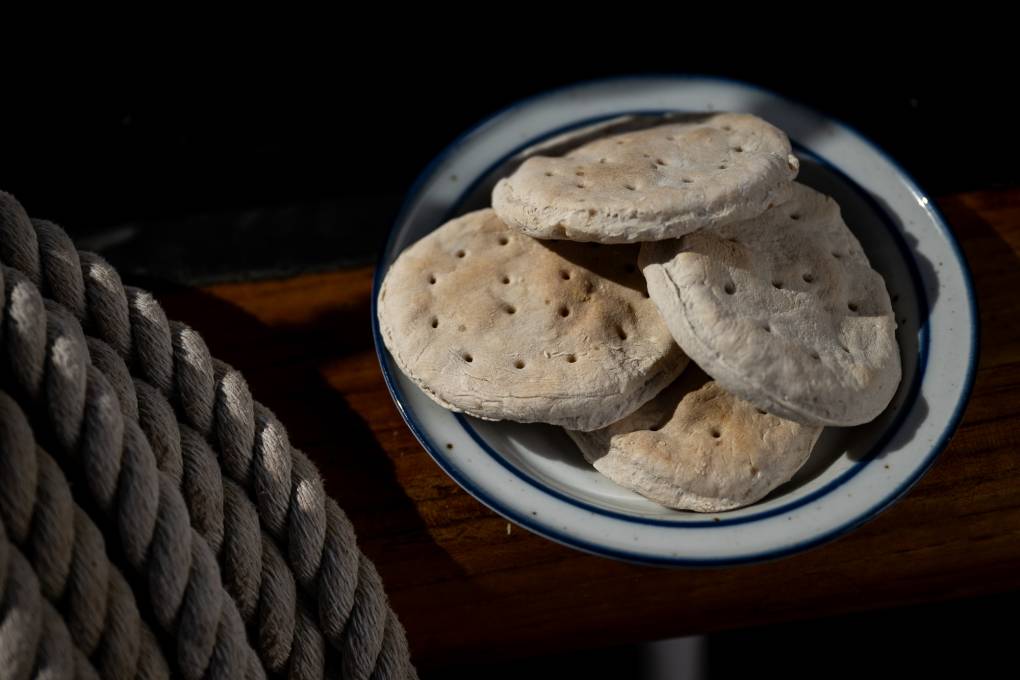
"caption": "A plate of 'Frisco Biscuits sits on the Balclutha in San Francisco Maritime National Historical Park on Feb. 26, 2025. The Balclutha is a historic three-masted, steel-hulled sailing ship built in 1886, now preserved as a museum at the park.",
"credit": "Beth LaBerge/KQED",
"altTag": null,
"description": null,
"imgSizes": {
"medium": {
"file": "https://cdn.kqed.org/wp-content/uploads/sites/10/2025/02/250226-FriscoBiscuits-16-BL-800x533.jpg",
"width": 800,
"height": 533,
"mimeType": "image/jpeg"
},
"large": {
"file": "https://cdn.kqed.org/wp-content/uploads/sites/10/2025/02/250226-FriscoBiscuits-16-BL-1020x680.jpg",
"width": 1020,
"height": 680,
"mimeType": "image/jpeg"
},
"thumbnail": {
"file": "https://cdn.kqed.org/wp-content/uploads/sites/10/2025/02/250226-FriscoBiscuits-16-BL-160x107.jpg",
"width": 160,
"height": 107,
"mimeType": "image/jpeg"
},
"1536x1536": {
"file": "https://cdn.kqed.org/wp-content/uploads/sites/10/2025/02/250226-FriscoBiscuits-16-BL-1536x1024.jpg",
"width": 1536,
"height": 1024,
"mimeType": "image/jpeg"
},
"post-thumbnail": {
"file": "https://cdn.kqed.org/wp-content/uploads/sites/10/2025/02/250226-FriscoBiscuits-16-BL-672x372.jpg",
"width": 672,
"height": 372,
"mimeType": "image/jpeg"
},
"twentyfourteen-full-width": {
"file": "https://cdn.kqed.org/wp-content/uploads/sites/10/2025/02/250226-FriscoBiscuits-16-BL-1038x576.jpg",
"width": 1038,
"height": 576,
"mimeType": "image/jpeg"
},
"full-width": {
"file": "https://cdn.kqed.org/wp-content/uploads/sites/10/2025/02/250226-FriscoBiscuits-16-BL-1920x1280.jpg",
"width": 1920,
"height": 1280,
"mimeType": "image/jpeg"
},
"kqedFullSize": {
"file": "https://cdn.kqed.org/wp-content/uploads/sites/10/2025/02/250226-FriscoBiscuits-16-BL.jpg",
"width": 2000,
"height": 1333
}
},
"isLoading": false,
"fetchFailed": false
},
"news_12027793": {
"type": "attachments",
"id": "news_12027793",
"meta": {
"index": "attachments_1716263798",
"site": "news",
"id": "12027793",
"found": true
},
"title": "Couple Dating in San Francisco",
"publishDate": 1740009595,
"status": "inherit",
"parent": 12027723,
"modified": 1740009762,
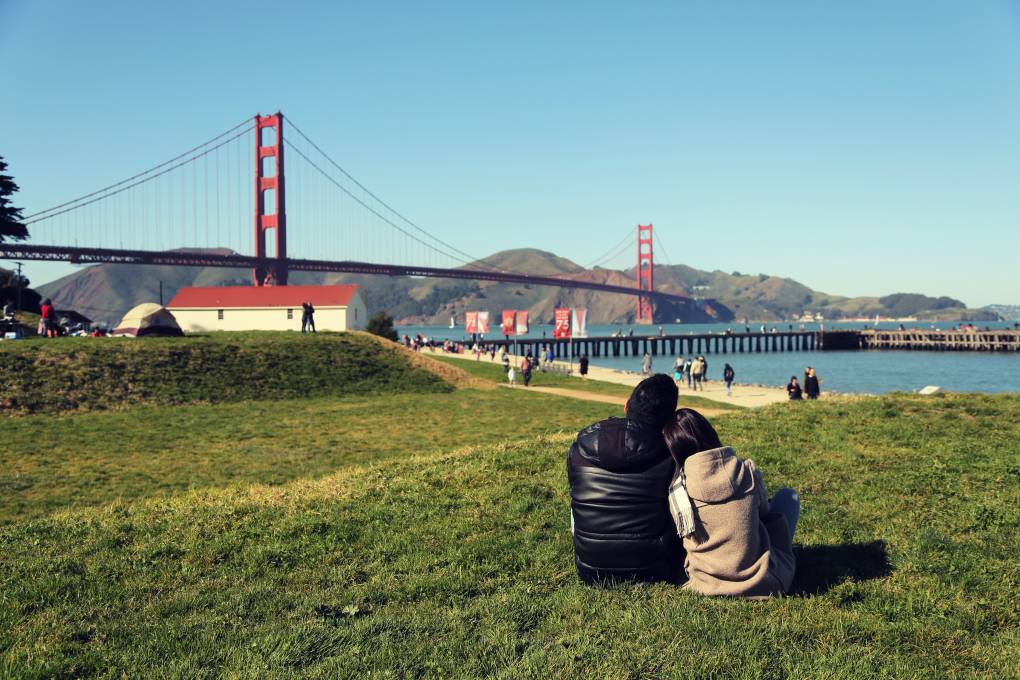
"caption": "Dating in the Bay Area comes with its own set of challenges, listeners told us.",
"credit": "Bryan Leung/Getty Images",
"altTag": "A couple leans on each other as they sit on the grass and overlook the Golden Gate Bridge.",
"description": "A couple leans on each other as they sit on the grass and overlook the Golden Gate Bridge.",
"imgSizes": {
"medium": {
"file": "https://cdn.kqed.org/wp-content/uploads/sites/10/2025/02/GettyImages-167083248-800x533.jpg",
"width": 800,
"height": 533,
"mimeType": "image/jpeg"
},
"large": {
"file": "https://cdn.kqed.org/wp-content/uploads/sites/10/2025/02/GettyImages-167083248-1020x680.jpg",
"width": 1020,
"height": 680,
"mimeType": "image/jpeg"
},
"thumbnail": {
"file": "https://cdn.kqed.org/wp-content/uploads/sites/10/2025/02/GettyImages-167083248-160x107.jpg",
"width": 160,
"height": 107,
"mimeType": "image/jpeg"
},
"1536x1536": {
"file": "https://cdn.kqed.org/wp-content/uploads/sites/10/2025/02/GettyImages-167083248-1536x1024.jpg",
"width": 1536,
"height": 1024,
"mimeType": "image/jpeg"
},
"2048x2048": {
"file": "https://cdn.kqed.org/wp-content/uploads/sites/10/2025/02/GettyImages-167083248-2048x1365.jpg",
"width": 2048,
"height": 1365,
"mimeType": "image/jpeg"
},
"post-thumbnail": {
"file": "https://cdn.kqed.org/wp-content/uploads/sites/10/2025/02/GettyImages-167083248-672x372.jpg",
"width": 672,
"height": 372,
"mimeType": "image/jpeg"
},
"twentyfourteen-full-width": {
"file": "https://cdn.kqed.org/wp-content/uploads/sites/10/2025/02/GettyImages-167083248-1038x576.jpg",
"width": 1038,
"height": 576,
"mimeType": "image/jpeg"
},
"full-width": {
"file": "https://cdn.kqed.org/wp-content/uploads/sites/10/2025/02/GettyImages-167083248-1920x1280.jpg",
"width": 1920,
"height": 1280,
"mimeType": "image/jpeg"
},
"kqedFullSize": {
"file": "https://cdn.kqed.org/wp-content/uploads/sites/10/2025/02/GettyImages-167083248-scaled-e1747866058937.jpg",
"width": 2000,
"height": 1334
}
},
"isLoading": false,
"fetchFailed": false
},
"news_11910896": {
"type": "attachments",
"id": "news_11910896",
"meta": {
"index": "attachments_1716263798",
"site": "news",
"id": "11910896",
"found": true
},
"parent": 11910890,
"imgSizes": {
"twentyfourteen-full-width": {
"file": "https://ww2.kqed.org/app/uploads/sites/10/2022/04/16thStreetStationOakland_02162022-qut-1038x576.jpg",
"width": 1038,
"mimeType": "image/jpeg",
"height": 576
},
"thumbnail": {
"file": "https://ww2.kqed.org/app/uploads/sites/10/2022/04/16thStreetStationOakland_02162022-qut-160x107.jpg",
"width": 160,
"mimeType": "image/jpeg",
"height": 107
},
"post-thumbnail": {
"file": "https://ww2.kqed.org/app/uploads/sites/10/2022/04/16thStreetStationOakland_02162022-qut-672x372.jpg",
"width": 672,
"mimeType": "image/jpeg",
"height": 372
},
"kqedFullSize": {
"file": "https://ww2.kqed.org/app/uploads/sites/10/2022/04/16thStreetStationOakland_02162022-qut.jpg",
"width": 1920,
"height": 1280
},
"large": {
"file": "https://ww2.kqed.org/app/uploads/sites/10/2022/04/16thStreetStationOakland_02162022-qut-1020x680.jpg",
"width": 1020,
"mimeType": "image/jpeg",
"height": 680
},
"1536x1536": {
"file": "https://ww2.kqed.org/app/uploads/sites/10/2022/04/16thStreetStationOakland_02162022-qut-1536x1024.jpg",
"width": 1536,
"mimeType": "image/jpeg",
"height": 1024
},
"medium": {
"file": "https://ww2.kqed.org/app/uploads/sites/10/2022/04/16thStreetStationOakland_02162022-qut-800x533.jpg",
"width": 800,
"mimeType": "image/jpeg",
"height": 533
}
},
"publishDate": 1649789007,
"modified": 1649789048,
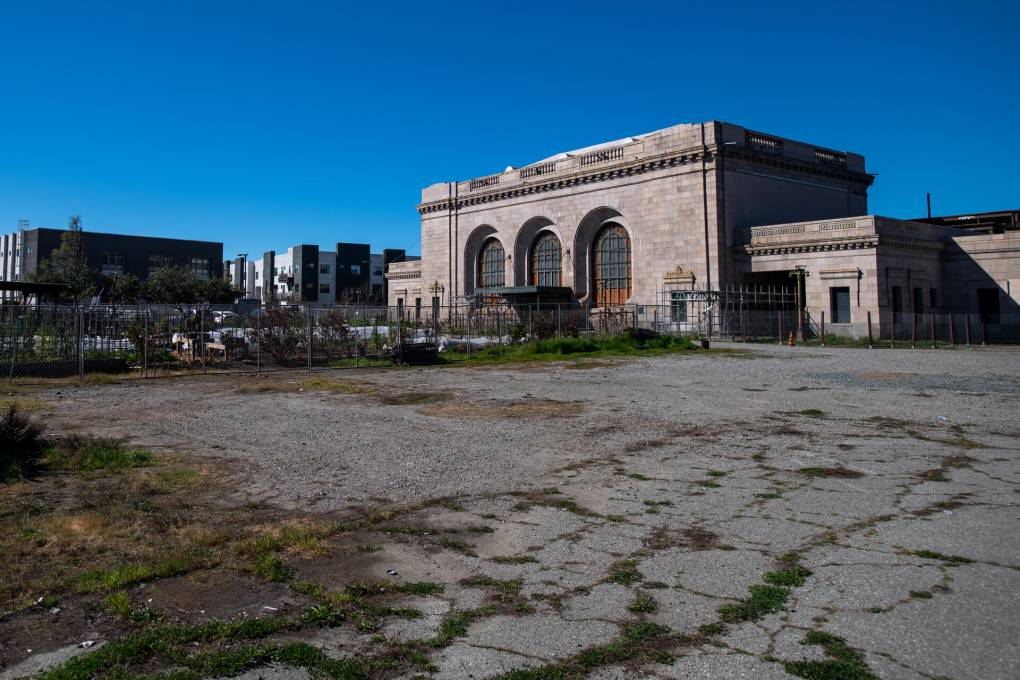
"caption": "16th Street Station in West Oakland on Feb. 16, 2022.",
"description": null,
"title": "16th Street Station in West Oakland on Feb. 16, 2022.",
"credit": "Beth LaBerge/KQED",
"status": "inherit",
"altTag": "A huge, imposing stone building sits in a vacant lot. It has three massive arched windows and a terracotta roof.",
"isLoading": false,
"fetchFailed": false
},
"news_11700254": {
"type": "attachments",
"id": "news_11700254",
"meta": {
"index": "attachments_1716263798",
"site": "news",
"id": "11700254",
"found": true
},
"parent": 11700225,
"imgSizes": {
"small": {
"file": "https://ww2.kqed.org/app/uploads/sites/10/2018/10/10062018_AW_GhostStory_103-520x347.jpg",
"width": 520,
"mimeType": "image/jpeg",
"height": 347
},
"twentyfourteen-full-width": {
"file": "https://ww2.kqed.org/app/uploads/sites/10/2018/10/10062018_AW_GhostStory_103-1038x576.jpg",
"width": 1038,
"mimeType": "image/jpeg",
"height": 576
},
"thumbnail": {
"file": "https://ww2.kqed.org/app/uploads/sites/10/2018/10/10062018_AW_GhostStory_103-160x107.jpg",
"width": 160,
"mimeType": "image/jpeg",
"height": 107
},
"fd-sm": {
"file": "https://ww2.kqed.org/app/uploads/sites/10/2018/10/10062018_AW_GhostStory_103-960x640.jpg",
"width": 960,
"mimeType": "image/jpeg",
"height": 640
},
"post-thumbnail": {
"file": "https://ww2.kqed.org/app/uploads/sites/10/2018/10/10062018_AW_GhostStory_103-672x372.jpg",
"width": 672,
"mimeType": "image/jpeg",
"height": 372
},
"xsmall": {
"file": "https://ww2.kqed.org/app/uploads/sites/10/2018/10/10062018_AW_GhostStory_103-375x250.jpg",
"width": 375,
"mimeType": "image/jpeg",
"height": 250
},
"kqedFullSize": {
"file": "https://ww2.kqed.org/app/uploads/sites/10/2018/10/10062018_AW_GhostStory_103-e1540151366310.jpg",
"width": 1920,
"height": 1280
},
"large": {
"file": "https://ww2.kqed.org/app/uploads/sites/10/2018/10/10062018_AW_GhostStory_103-1020x680.jpg",
"width": 1020,
"mimeType": "image/jpeg",
"height": 680
},
"xlarge": {
"file": "https://ww2.kqed.org/app/uploads/sites/10/2018/10/10062018_AW_GhostStory_103-1180x787.jpg",
"width": 1180,
"mimeType": "image/jpeg",
"height": 787
},
"complete_open_graph": {
"file": "https://ww2.kqed.org/app/uploads/sites/10/2018/10/10062018_AW_GhostStory_103-1200x800.jpg",
"width": 1200,
"mimeType": "image/jpeg",
"height": 800
},
"guest-author-50": {
"file": "https://ww2.kqed.org/app/uploads/sites/10/2018/10/10062018_AW_GhostStory_103-50x50.jpg",
"width": 50,
"mimeType": "image/jpeg",
"height": 50
},
"guest-author-96": {
"file": "https://ww2.kqed.org/app/uploads/sites/10/2018/10/10062018_AW_GhostStory_103-96x96.jpg",
"width": 96,
"mimeType": "image/jpeg",
"height": 96
},
"medium": {
"file": "https://ww2.kqed.org/app/uploads/sites/10/2018/10/10062018_AW_GhostStory_103-800x533.jpg",
"width": 800,
"mimeType": "image/jpeg",
"height": 533
},
"guest-author-64": {
"file": "https://ww2.kqed.org/app/uploads/sites/10/2018/10/10062018_AW_GhostStory_103-64x64.jpg",
"width": 64,
"mimeType": "image/jpeg",
"height": 64
},
"guest-author-32": {
"file": "https://ww2.kqed.org/app/uploads/sites/10/2018/10/10062018_AW_GhostStory_103-32x32.jpg",
"width": 32,
"mimeType": "image/jpeg",
"height": 32
},
"fd-lrg": {
"file": "https://ww2.kqed.org/app/uploads/sites/10/2018/10/10062018_AW_GhostStory_103-1920x1280.jpg",
"width": 1920,
"mimeType": "image/jpeg",
"height": 1280
},
"fd-med": {
"file": "https://ww2.kqed.org/app/uploads/sites/10/2018/10/10062018_AW_GhostStory_103-1180x787.jpg",
"width": 1180,
"mimeType": "image/jpeg",
"height": 787
},
"full-width": {
"file": "https://ww2.kqed.org/app/uploads/sites/10/2018/10/10062018_AW_GhostStory_103-1920x1280.jpg",
"width": 1920,
"mimeType": "image/jpeg",
"height": 1280
},
"detail": {
"file": "https://ww2.kqed.org/app/uploads/sites/10/2018/10/10062018_AW_GhostStory_103-150x150.jpg",
"width": 150,
"mimeType": "image/jpeg",
"height": 150
},
"guest-author-128": {
"file": "https://ww2.kqed.org/app/uploads/sites/10/2018/10/10062018_AW_GhostStory_103-128x128.jpg",
"width": 128,
"mimeType": "image/jpeg",
"height": 128
},
"xxsmall": {
"file": "https://ww2.kqed.org/app/uploads/sites/10/2018/10/10062018_AW_GhostStory_103-240x160.jpg",
"width": 240,
"mimeType": "image/jpeg",
"height": 160
}
},
"publishDate": 1540149082,
"modified": 1540149155,
"caption": "A lantern illuminates the sidewalk plaque dedicated to Mary Ellen Pleasant on the San Francisco Ghost Hunt tour",
"description": null,
"title": "10062018_AW_GhostStory_103",
"credit": "Anne Wernikoff / KQED",
"status": "inherit",
"isLoading": false,
"fetchFailed": false
},
"news_11999267": {
"type": "attachments",
"id": "news_11999267",
"meta": {
"index": "attachments_1716263798",
"site": "news",
"id": "11999267",
"found": true
},
"title": "20240506_EVFile-2_qed",
"publishDate": 1723064389,
"status": "inherit",
"parent": 11999232,
"modified": 1723065361,
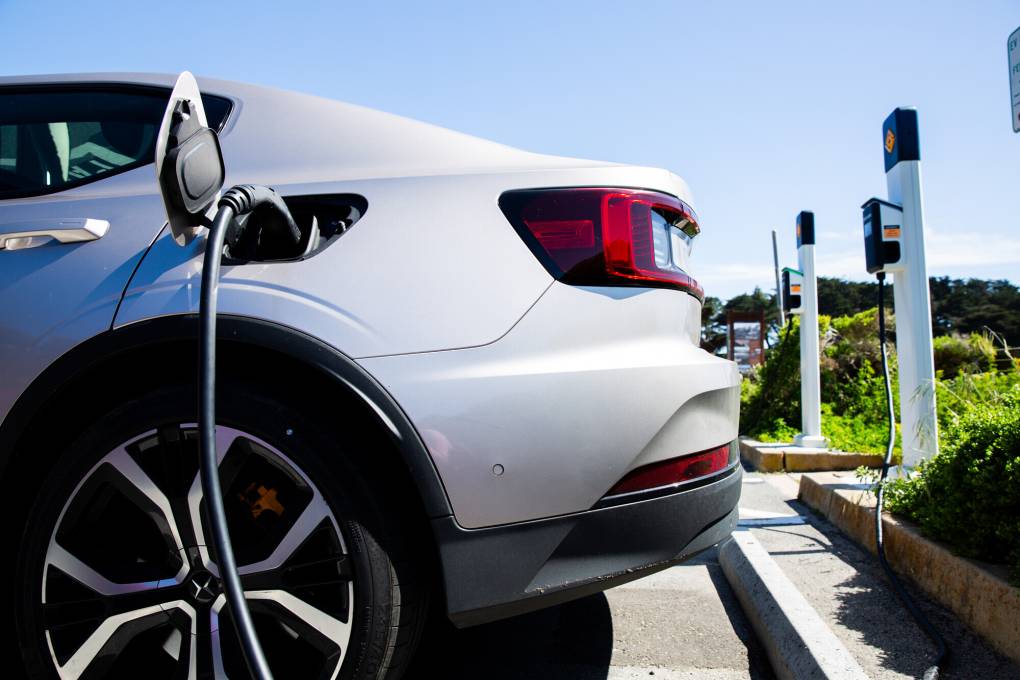
"caption": "A Polestar 2 charges at an EV charging station in San Francisco on Monday, May 6, 2024.",
"credit": "Gina Castro/KQED",
"altTag": null,
"description": null,
"imgSizes": {
"medium": {
"file": "https://cdn.kqed.org/wp-content/uploads/sites/10/2024/08/20240506_EVFile-2_qed-800x533.jpg",
"width": 800,
"height": 533,
"mimeType": "image/jpeg"
},
"large": {
"file": "https://cdn.kqed.org/wp-content/uploads/sites/10/2024/08/20240506_EVFile-2_qed-1020x680.jpg",
"width": 1020,
"height": 680,
"mimeType": "image/jpeg"
},
"thumbnail": {
"file": "https://cdn.kqed.org/wp-content/uploads/sites/10/2024/08/20240506_EVFile-2_qed-160x107.jpg",
"width": 160,
"height": 107,
"mimeType": "image/jpeg"
},
"1536x1536": {
"file": "https://cdn.kqed.org/wp-content/uploads/sites/10/2024/08/20240506_EVFile-2_qed-1536x1024.jpg",
"width": 1536,
"height": 1024,
"mimeType": "image/jpeg"
},
"post-thumbnail": {
"file": "https://cdn.kqed.org/wp-content/uploads/sites/10/2024/08/20240506_EVFile-2_qed-672x372.jpg",
"width": 672,
"height": 372,
"mimeType": "image/jpeg"
},
"twentyfourteen-full-width": {
"file": "https://cdn.kqed.org/wp-content/uploads/sites/10/2024/08/20240506_EVFile-2_qed-1038x576.jpg",
"width": 1038,
"height": 576,
"mimeType": "image/jpeg"
},
"full-width": {
"file": "https://cdn.kqed.org/wp-content/uploads/sites/10/2024/08/20240506_EVFile-2_qed-1920x1280.jpg",
"width": 1920,
"height": 1280,
"mimeType": "image/jpeg"
},
"kqedFullSize": {
"file": "https://cdn.kqed.org/wp-content/uploads/sites/10/2024/08/20240506_EVFile-2_qed.jpg",
"width": 2000,
"height": 1333
}
},
"isLoading": false,
"fetchFailed": false
},
"news_11990788": {
"type": "attachments",
"id": "news_11990788",
"meta": {
"index": "attachments_1716263798",
"site": "news",
"id": "11990788",
"found": true
},
"title": "US-FIRE-CALIFORNIA",
"publishDate": 1718662121,
"status": "inherit",
"parent": 11624317,
"modified": 1718662176,
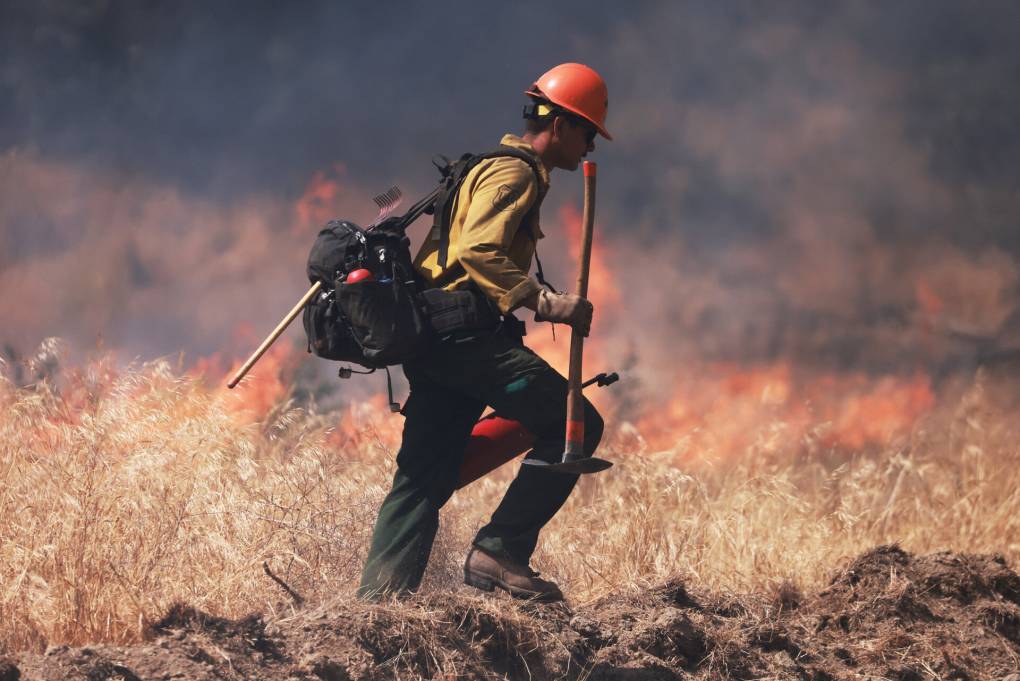
"caption": "A U.S. Forest Service firefighter sets a controlled burn as the Post Fire burns through Castaic, California, on June 16.",
"credit": "DAVID SWANSON/AFP via Getty Images",
"altTag": null,
"description": null,
"imgSizes": {
"medium": {
"file": "https://cdn.kqed.org/wp-content/uploads/sites/10/2017/10/GettyImages-2157340569_qut-800x534.jpg",
"width": 800,
"height": 534,
"mimeType": "image/jpeg"
},
"large": {
"file": "https://cdn.kqed.org/wp-content/uploads/sites/10/2017/10/GettyImages-2157340569_qut-1020x681.jpg",
"width": 1020,
"height": 681,
"mimeType": "image/jpeg"
},
"thumbnail": {
"file": "https://cdn.kqed.org/wp-content/uploads/sites/10/2017/10/GettyImages-2157340569_qut-160x107.jpg",
"width": 160,
"height": 107,
"mimeType": "image/jpeg"
},
"1536x1536": {
"file": "https://cdn.kqed.org/wp-content/uploads/sites/10/2017/10/GettyImages-2157340569_qut-1536x1025.jpg",
"width": 1536,
"height": 1025,
"mimeType": "image/jpeg"
},
"post-thumbnail": {
"file": "https://cdn.kqed.org/wp-content/uploads/sites/10/2017/10/GettyImages-2157340569_qut-672x372.jpg",
"width": 672,
"height": 372,
"mimeType": "image/jpeg"
},
"twentyfourteen-full-width": {
"file": "https://cdn.kqed.org/wp-content/uploads/sites/10/2017/10/GettyImages-2157340569_qut-1038x576.jpg",
"width": 1038,
"height": 576,
"mimeType": "image/jpeg"
},
"kqedFullSize": {
"file": "https://cdn.kqed.org/wp-content/uploads/sites/10/2017/10/GettyImages-2157340569_qut.jpg",
"width": 1920,
"height": 1281
}
},
"isLoading": false,
"fetchFailed": false
},
"news_11953871": {
"type": "attachments",
"id": "news_11953871",
"meta": {
"index": "attachments_1716263798",
"site": "news",
"id": "11953871",
"found": true
},
"parent": 11953853,
"imgSizes": {
"twentyfourteen-full-width": {
"file": "https://ww2.kqed.org/app/uploads/sites/10/2023/06/RS66535_GettyImages-523679818-1-qut-1038x576.jpg",
"width": 1038,
"mimeType": "image/jpeg",
"height": 576
},
"thumbnail": {
"file": "https://ww2.kqed.org/app/uploads/sites/10/2023/06/RS66535_GettyImages-523679818-1-qut-160x108.jpg",
"width": 160,
"mimeType": "image/jpeg",
"height": 108
},
"post-thumbnail": {
"file": "https://ww2.kqed.org/app/uploads/sites/10/2023/06/RS66535_GettyImages-523679818-1-qut-672x372.jpg",
"width": 672,
"mimeType": "image/jpeg",
"height": 372
},
"kqedFullSize": {
"file": "https://ww2.kqed.org/app/uploads/sites/10/2023/06/RS66535_GettyImages-523679818-1-qut.jpg",
"width": 1920,
"height": 1291
},
"large": {
"file": "https://ww2.kqed.org/app/uploads/sites/10/2023/06/RS66535_GettyImages-523679818-1-qut-1020x686.jpg",
"width": 1020,
"mimeType": "image/jpeg",
"height": 686
},
"1536x1536": {
"file": "https://ww2.kqed.org/app/uploads/sites/10/2023/06/RS66535_GettyImages-523679818-1-qut-1536x1033.jpg",
"width": 1536,
"mimeType": "image/jpeg",
"height": 1033
},
"medium": {
"file": "https://ww2.kqed.org/app/uploads/sites/10/2023/06/RS66535_GettyImages-523679818-1-qut-800x538.jpg",
"width": 800,
"mimeType": "image/jpeg",
"height": 538
}
},
"publishDate": 1687541995,
"modified": 1687542056,
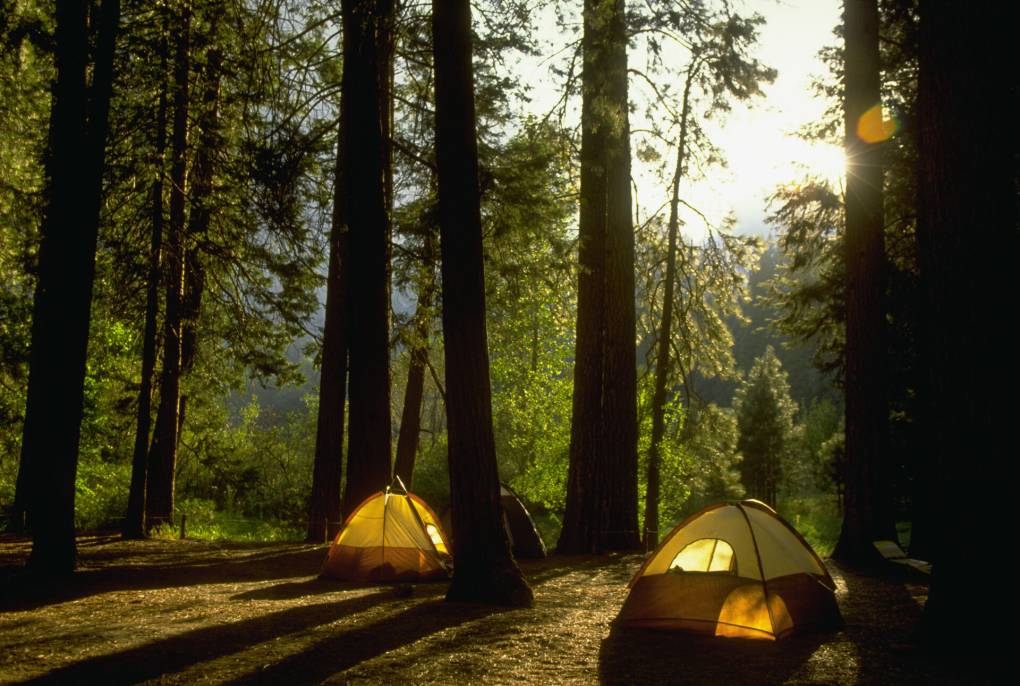
"caption": "Struggling to find a campsite in California? We have tips.",
"description": null,
"title": "camping-near-me",
"credit": "Robert Holmes/Getty",
"status": "inherit",
"altTag": "A view of two yellow tents in a forest of tall redwood treats, in low light",
"isLoading": false,
"fetchFailed": false
},
"news_11978069": {
"type": "attachments",
"id": "news_11978069",
"meta": {
"index": "attachments_1716263798",
"site": "news",
"id": "11978069",
"found": true
},
"parent": 11978051,
"imgSizes": {
"twentyfourteen-full-width": {
"file": "https://cdn.kqed.org/wp-content/uploads/sites/10/2024/03/51689355703_65cc8c69df_o-1038x576.jpg",
"width": 1038,
"mimeType": "image/jpeg",
"height": 576
},
"thumbnail": {
"file": "https://cdn.kqed.org/wp-content/uploads/sites/10/2024/03/51689355703_65cc8c69df_o-160x107.jpg",
"width": 160,
"mimeType": "image/jpeg",
"height": 107
},
"post-thumbnail": {
"file": "https://cdn.kqed.org/wp-content/uploads/sites/10/2024/03/51689355703_65cc8c69df_o-672x372.jpg",
"width": 672,
"mimeType": "image/jpeg",
"height": 372
},
"kqedFullSize": {
"file": "https://cdn.kqed.org/wp-content/uploads/sites/10/2024/03/51689355703_65cc8c69df_o.jpg",
"width": 2000,
"height": 1332
},
"large": {
"file": "https://cdn.kqed.org/wp-content/uploads/sites/10/2024/03/51689355703_65cc8c69df_o-1020x679.jpg",
"width": 1020,
"mimeType": "image/jpeg",
"height": 679
},
"1536x1536": {
"file": "https://cdn.kqed.org/wp-content/uploads/sites/10/2024/03/51689355703_65cc8c69df_o-1536x1023.jpg",
"width": 1536,
"mimeType": "image/jpeg",
"height": 1023
},
"full-width": {
"file": "https://cdn.kqed.org/wp-content/uploads/sites/10/2024/03/51689355703_65cc8c69df_o-1920x1279.jpg",
"width": 1920,
"mimeType": "image/jpeg",
"height": 1279
},
"medium": {
"file": "https://cdn.kqed.org/wp-content/uploads/sites/10/2024/03/51689355703_65cc8c69df_o-800x533.jpg",
"width": 800,
"mimeType": "image/jpeg",
"height": 533
}
},
"publishDate": 1709598461,
"modified": 1709757761,
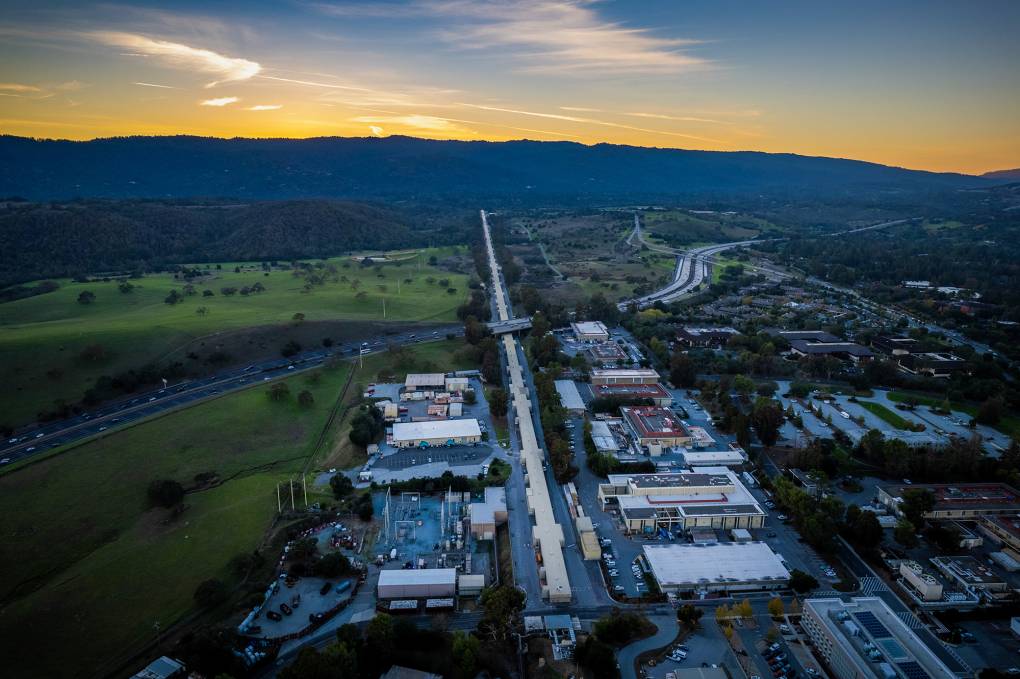
"caption": "SLAC is home to one of the longest buildings in the world, at nearly two miles in length. ",
"description": null,
"title": "51689355703_65cc8c69df_o",
"credit": "Olivier Bonin/SLAC National Accelerator Laboratory",
"status": "inherit",
"altTag": "An aerial view of a very long, skinny and beige building that extends toward the horizon line. It is sunset, and in the background are the Santa Cruz mountains.",
"isLoading": false,
"fetchFailed": false
}
},
"audioPlayerReducer": {
"postId": "stream_live",
"isPaused": true,
"isPlaying": false,
"pfsActive": false,
"pledgeModalIsOpen": true,
"playerDrawerIsOpen": false,
"liveAudioPlayStartedAt": 0,
"liveAudioPlayContext": ""
},
"authorsReducer": {
"astupi": {
"type": "authors",
"id": "70",
"meta": {
"index": "authors_1716337520",
"id": "70",
"found": true
},
"name": "Amanda Stupi",
"firstName": "Amanda",
"lastName": "Stupi",
"slug": "astupi",
"email": "astupi@kqed.org",
"display_author_email": false,
"staff_mastheads": [],
"title": "Senior Engagement Producer",
"bio": "Amanda joined KQED Science’s engagement team as a Senior Audience Engagement Strategist in the spring of 2019. She has helped craft messaging around wildfires, the coronavirus pandemic, climate change and many other stories. She has also brought KQED Science to new platforms such as Reddit’s Ask Me Anything series. Prior to joining KQED Science, Amanda spent seven years as an engagement producer with Forum, KQED’s daily live call-in show. She got her start in radio at KALW's weekly call in show, City Visions, before going on to an internship and stint at NPR's Talk of the Nation.\r\n\r\nPrior to journalism, Amanda taught English at Lowell High School. She's a native of Petaluma and currently lives under the \"South San Francisco the Industrial City\" sign in South City. She believes that engagement is vital to news’s future and that good journalism listens as much as it asks questions.",
"avatar": "https://secure.gravatar.com/avatar/e981c503e5c162da701dcaccfbf87e35?s=600&d=blank&r=g",
"twitter": null,
"facebook": null,
"instagram": null,
"linkedin": null,
"sites": [
{
"site": "arts",
"roles": [
"Contributor"
]
},
{
"site": "news",
"roles": [
"editor"
]
},
{
"site": "pop",
"roles": [
"contributor"
]
},
{
"site": "stateofhealth",
"roles": [
"editor"
]
},
{
"site": "science",
"roles": []
},
{
"site": "perspectives",
"roles": [
"editor"
]
}
],
"headData": {
"title": "Amanda Stupi | KQED",
"description": "Senior Engagement Producer",
"ogImgSrc": "https://secure.gravatar.com/avatar/e981c503e5c162da701dcaccfbf87e35?s=600&d=blank&r=g",
"twImgSrc": "https://secure.gravatar.com/avatar/e981c503e5c162da701dcaccfbf87e35?s=600&d=blank&r=g"
},
"isLoading": false,
"link": "/author/astupi"
},
"ohubertallen": {
"type": "authors",
"id": "102",
"meta": {
"index": "authors_1716337520",
"id": "102",
"found": true
},
"name": "Olivia Allen-Price",
"firstName": "Olivia",
"lastName": "Allen-Price",
"slug": "ohubertallen",
"email": "oallenprice@kqed.org",
"display_author_email": false,
"staff_mastheads": [
"news"
],
"title": "Senior Editor",
"bio": "Olivia Allen-Price is senior editor and host of the award-winning Bay Curious podcast. Prior to joining KQED in 2013, Olivia worked at The Baltimore Sun and The Virginian-Pilot in Norfolk, Va. She holds degrees in journalism and political science from Elon University. Her work has earned awards from the Society of Professional Journalists, the Hearst Foundation and Hearken. She loves to talk about running and curly hair.\r\n\r\nFollow: \u003ca href=\"https://twitter.com/oallenprice\">@oallenprice\u003c/a>\r\nEmail: \u003ca href=\"mailto:oallenprice@kqed.org\">oallenprice@kqed.org\u003c/a>",
"avatar": "https://secure.gravatar.com/avatar/07f7803c1f6be56f3be58ef276dfa64dce898502e0554408ef4858451a8294f7?s=600&d=blank&r=g",
"twitter": "oallenprice",
"bluesky": null,
"facebook": null,
"instagram": null,
"linkedin": null,
"sites": [
{
"site": "",
"roles": [
"editor"
]
},
{
"site": "arts",
"roles": [
"subscriber"
]
},
{
"site": "news",
"roles": [
"administrator"
]
},
{
"site": "pop",
"roles": [
"administrator"
]
},
{
"site": "bayareabites",
"roles": [
"contributor"
]
},
{
"site": "stateofhealth",
"roles": [
"administrator"
]
},
{
"site": "science",
"roles": [
"editor"
]
}
],
"headData": {
"title": "Olivia Allen-Price | KQED",
"description": "Senior Editor",
"ogImgSrc": "https://secure.gravatar.com/avatar/07f7803c1f6be56f3be58ef276dfa64dce898502e0554408ef4858451a8294f7?s=600&d=blank&r=g",
"twImgSrc": "https://secure.gravatar.com/avatar/07f7803c1f6be56f3be58ef276dfa64dce898502e0554408ef4858451a8294f7?s=600&d=blank&r=g"
},
"isLoading": false,
"link": "/author/ohubertallen"
},
"rachael-myrow": {
"type": "authors",
"id": "251",
"meta": {
"index": "authors_1716337520",
"id": "251",
"found": true
},
"name": "Rachael Myrow",
"firstName": "Rachael",
"lastName": "Myrow",
"slug": "rachael-myrow",
"email": "rmyrow@kqed.org",
"display_author_email": true,
"staff_mastheads": [
"news"
],
"title": "Senior Editor of KQED's Silicon Valley News Desk",
"bio": "• I write and edit stories about how Silicon Valley power and policies shape everyday life in California. I’m also passionate about making Bay Area history and culture more accessible to a broad public. • I’ve been a journalist for most of my life, starting in high school with The Franklin Press in Los Angeles, where I grew up. While earning my first degree in English at UC Berkeley, I got my start in public radio at KALX-FM. After completing a second degree in journalism at Cal, I landed my first professional job at Marketplace, then moved on to KPCC (now LAist), and then KQED, where I hosted The California Report for more than seven years. • My reporting has appeared on NPR, The World, WBUR’s \u003ci>Here & Now\u003c/i>, and the BBC. I also guest host for KQED’s \u003ci>Forum\u003c/i>, as well as the Commonwealth Club in San Francisco. • I speak periodically on media, democracy and technology issues, and do voiceover work for documentaries and educational video projects. • Outside of the studio, you'll find me hiking Bay Area trails and whipping up Insta-ready meals in my kitchen. • I do not accept gifts, money, or favors from anyone connected to my reporting, I don't pay people for information, and I do not support or donate to political causes. • I strive to treat the people I report on with fairness, honesty, and respect. I also recognize there are often multiple sides to a story and work to verify information through multiple sources and documentation. If I get something wrong, I correct it.",
"avatar": "https://secure.gravatar.com/avatar/3ed8a3c5f26025e4a805ba634cda8cd764906b97438a6d9ce216b044e340da4e?s=600&d=blank&r=g",
"twitter": "rachaelmyrow",
"bluesky": null,
"facebook": null,
"instagram": null,
"linkedin": "https://www.linkedin.com/in/rachaelmyrow/",
"sites": [
{
"site": "arts",
"roles": [
"administrator"
]
},
{
"site": "news",
"roles": [
"edit_others_posts",
"editor"
]
},
{
"site": "futureofyou",
"roles": [
"editor"
]
},
{
"site": "bayareabites",
"roles": [
"editor"
]
},
{
"site": "stateofhealth",
"roles": [
"editor"
]
},
{
"site": "science",
"roles": [
"editor"
]
},
{
"site": "food",
"roles": [
"editor"
]
},
{
"site": "forum",
"roles": [
"editor"
]
},
{
"site": "liveblog",
"roles": [
"author"
]
}
],
"headData": {
"title": "Rachael Myrow | KQED",
"description": "Senior Editor of KQED's Silicon Valley News Desk",
"ogImgSrc": "https://secure.gravatar.com/avatar/3ed8a3c5f26025e4a805ba634cda8cd764906b97438a6d9ce216b044e340da4e?s=600&d=blank&r=g",
"twImgSrc": "https://secure.gravatar.com/avatar/3ed8a3c5f26025e4a805ba634cda8cd764906b97438a6d9ce216b044e340da4e?s=600&d=blank&r=g"
},
"isLoading": false,
"link": "/author/rachael-myrow"
},
"kdomara": {
"type": "authors",
"id": "1459",
"meta": {
"index": "authors_1716337520",
"id": "1459",
"found": true
},
"name": "Kelly O'Mara",
"firstName": "Kelly",
"lastName": "O'Mara",
"slug": "kdomara",
"email": "komara@kqed.org",
"display_author_email": false,
"staff_mastheads": [
"news"
],
"title": "KQED Contributor",
"bio": "Kelly O'Mara is a writer and reporter in the San Francisco Bay Area. She writes about food, health, sports, travel, business and California news. Her work has appeared on KQED, online for Outside Magazine, epsnW, VICE and in Competitor Magazine, among others. Follow Kelly on Twitter \u003ca href=\"https://twitter.com/kellydomara\">@kellydomara\u003c/a>.",
"avatar": "https://secure.gravatar.com/avatar/768fec7412028b72f13bdd0f5f9d8186?s=600&d=blank&r=g",
"twitter": null,
"facebook": null,
"instagram": null,
"linkedin": null,
"sites": [
{
"site": "arts",
"roles": []
},
{
"site": "news",
"roles": []
},
{
"site": "bayareabites",
"roles": []
},
{
"site": "stateofhealth",
"roles": []
},
{
"site": "science",
"roles": []
},
{
"site": "checkplease",
"roles": [
"editor"
]
},
{
"site": "food",
"roles": []
},
{
"site": "forum",
"roles": [
"editor"
]
},
{
"site": "liveblog",
"roles": [
"editor"
]
}
],
"headData": {
"title": "Kelly O'Mara | KQED",
"description": "KQED Contributor",
"ogImgSrc": "https://secure.gravatar.com/avatar/768fec7412028b72f13bdd0f5f9d8186?s=600&d=blank&r=g",
"twImgSrc": "https://secure.gravatar.com/avatar/768fec7412028b72f13bdd0f5f9d8186?s=600&d=blank&r=g"
},
"isLoading": false,
"link": "/author/kdomara"
},
"carlysevern": {
"type": "authors",
"id": "3243",
"meta": {
"index": "authors_1716337520",
"id": "3243",
"found": true
},
"name": "Carly Severn",
"firstName": "Carly",
"lastName": "Severn",
"slug": "carlysevern",
"email": "csevern@kqed.org",
"display_author_email": false,
"staff_mastheads": [
"news"
],
"title": "Senior Editor, Audience News ",
"bio": "Carly is KQED's Senior Editor of Audience News on the Digital News team, and has reported for the California Report Magazine, Bay Curious and KQED Arts. She's formerly the host of \u003ca href=\"http://ww2.kqed.org/pop/category/the-cooler/\" rel=\"noopener noreferrer\">The Cooler\u003c/a> podcast.",
"avatar": "https://secure.gravatar.com/avatar/54037bf5c128fe678f0ef26cec97a93f2e7f220a22d7285703328f12c42c1b1d?s=600&d=blank&r=g",
"twitter": "teacupinthebay",
"bluesky": null,
"facebook": null,
"instagram": null,
"linkedin": null,
"sites": [
{
"site": "",
"roles": [
"editor"
]
},
{
"site": "arts",
"roles": [
"editor"
]
},
{
"site": "news",
"roles": [
"administrator"
]
},
{
"site": "pop",
"roles": [
"editor"
]
},
{
"site": "futureofyou",
"roles": [
"editor"
]
},
{
"site": "about",
"roles": [
"administrator"
]
},
{
"site": "mindshift",
"roles": [
"editor"
]
},
{
"site": "bayareabites",
"roles": [
"editor"
]
},
{
"site": "stateofhealth",
"roles": [
"editor"
]
},
{
"site": "science",
"roles": [
"editor"
]
},
{
"site": "food",
"roles": [
"contributor"
]
},
{
"site": "forum",
"roles": [
"editor"
]
},
{
"site": "perspectives",
"roles": [
"administrator"
]
},
{
"site": "liveblog",
"roles": [
"editor"
]
}
],
"headData": {
"title": "Carly Severn | KQED",
"description": "Senior Editor, Audience News ",
"ogImgSrc": "https://secure.gravatar.com/avatar/54037bf5c128fe678f0ef26cec97a93f2e7f220a22d7285703328f12c42c1b1d?s=600&d=blank&r=g",
"twImgSrc": "https://secure.gravatar.com/avatar/54037bf5c128fe678f0ef26cec97a93f2e7f220a22d7285703328f12c42c1b1d?s=600&d=blank&r=g"
},
"isLoading": false,
"link": "/author/carlysevern"
},
"lindseyhoshaw": {
"type": "authors",
"id": "5432",
"meta": {
"index": "authors_1716337520",
"id": "5432",
"found": true
},
"name": "Lindsey Hoshaw",
"firstName": "Lindsey",
"lastName": "Hoshaw",
"slug": "lindseyhoshaw",
"email": "lhoshaw@kqed.org",
"display_author_email": false,
"staff_mastheads": [],
"title": "KQED Contributor",
"bio": "Lindsey Hoshaw is a former interactive producer for KQED Science. Before joining KQED, Lindsey was a science correspondent for The New York Times, The Boston Globe, Forbes and Scientific American. On Twitter @lindseyhoshaw",
"avatar": "https://secure.gravatar.com/avatar/274b07694c998eaa8f26cfabaa941186?s=600&d=mm&r=g",
"twitter": "lindseyhoshaw",
"facebook": "lindsey.hoshaw.9",
"instagram": null,
"linkedin": null,
"sites": [
{
"site": "arts",
"roles": [
"author"
]
},
{
"site": "news",
"roles": [
"subscriber"
]
},
{
"site": "futureofyou",
"roles": [
"editor"
]
},
{
"site": "bayareabites",
"roles": [
"contributor"
]
},
{
"site": "stateofhealth",
"roles": [
"author"
]
},
{
"site": "science",
"roles": [
"edit_theme_options",
"subscriber"
]
},
{
"site": "quest",
"roles": [
"edit_post_subscriptions",
"edit_usergroups",
"unfiltered_html",
"unfiltered_upload",
"leadcoordinator",
"editor"
]
},
{
"site": "food",
"roles": []
}
],
"headData": {
"title": "Lindsey Hoshaw | KQED",
"description": "KQED Contributor",
"ogImgSrc": "https://secure.gravatar.com/avatar/274b07694c998eaa8f26cfabaa941186?s=600&d=mm&r=g",
"twImgSrc": "https://secure.gravatar.com/avatar/274b07694c998eaa8f26cfabaa941186?s=600&d=mm&r=g"
},
"isLoading": false,
"link": "/author/lindseyhoshaw"
},
"jplaczek": {
"type": "authors",
"id": "8606",
"meta": {
"index": "authors_1716337520",
"id": "8606",
"found": true
},
"name": "Jessica Placzek",
"firstName": "Jessica",
"lastName": "Placzek",
"slug": "jplaczek",
"email": "jessicalplaczek@gmail.com",
"display_author_email": false,
"staff_mastheads": [
"news"
],
"title": "KQED Contributor",
"bio": "Jessica Placzek is a former senior editor of podcasts at KQED where she served as the editorial lead of the podcast department. She worked with shows like MindShift, Rightnowish, Consider This, SOLD OUT, Bay Curious and The Bay. She’s also been a reporter and audio producer at KQED, KPFA, and KALW. She taught audio production to men incarcerated at California State Prison Solano and edited pieces they produced for the Uncuffed podcast through KALW. In 2018 she co-hosted and produced the third season of Raw Material for SFMOMA. In New Orleans she wrote for the Nola Defender. Her work has also appeared on Marketplace, All Things Considered, The California Report, and Vice. You can find more at jessicaplaczek.com",
"avatar": "https://secure.gravatar.com/avatar/5ead103b5880f672eceb84ce75eecd1b4b6f74a47edc457684a73ad5b8b158e9?s=600&d=blank&r=g",
"twitter": null,
"bluesky": null,
"facebook": null,
"instagram": null,
"linkedin": null,
"sites": [
{
"site": "arts",
"roles": [
"subscriber"
]
},
{
"site": "news",
"roles": [
"subscriber"
]
},
{
"site": "stateofhealth",
"roles": [
"editor"
]
},
{
"site": "forum",
"roles": [
"editor"
]
}
],
"headData": {
"title": "Jessica Placzek | KQED",
"description": "KQED Contributor",
"ogImgSrc": "https://secure.gravatar.com/avatar/5ead103b5880f672eceb84ce75eecd1b4b6f74a47edc457684a73ad5b8b158e9?s=600&d=blank&r=g",
"twImgSrc": "https://secure.gravatar.com/avatar/5ead103b5880f672eceb84ce75eecd1b4b6f74a47edc457684a73ad5b8b158e9?s=600&d=blank&r=g"
},
"isLoading": false,
"link": "/author/jplaczek"
},
"bwatt": {
"type": "authors",
"id": "11238",
"meta": {
"index": "authors_1716337520",
"id": "11238",
"found": true
},
"name": "Brian Watt",
"firstName": "Brian",
"lastName": "Watt",
"slug": "bwatt",
"email": "bwatt@KQED.org",
"display_author_email": false,
"staff_mastheads": [
"news"
],
"title": "Morning News Anchor",
"bio": "Brian Watt is KQED's morning radio news anchor. He joined the KQED News team in April of 2016. Prior to that, he worked as a Reporter for KPCC in Los Angeles and a producer at \u003cem>Marketplace.\u003c/em>\r\n\r\nDuring eight years at KPCC, Brian covered business and economics, and his work won several awards. In 2008, he won the Los Angeles Press Club’s first-place award for Business and Financial Reporting, Broadcast. He’s also received honorable mention and been first runner up for the Press Club’s Radio Journalist of the Year. He won two Golden Mike awards from the Radio and TV News Association of Southern California.\r\n\r\nBrian holds degrees in theater from Yale University and the Sorbonne, and has worked as an actor in France, Italy, Brazil, Hungary and . . . Hollywood. He appeared in a few television shows, including \u003cem>The West Wing, Judging Amy\u003c/em> and \u003cem>The District.\u003c/em>\r\n\r\nEmail: bwatt@KQED.org Twitter: @RadioBWatt",
"avatar": "https://secure.gravatar.com/avatar/55393ff57ed34e2be773ba4789dd6a19?s=600&d=blank&r=g",
"twitter": "@RadioBWatt",
"facebook": null,
"instagram": null,
"linkedin": null,
"sites": [
{
"site": "arts",
"roles": [
"contributor"
]
},
{
"site": "news",
"roles": [
"editor"
]
}
],
"headData": {
"title": "Brian Watt | KQED",
"description": "Morning News Anchor",
"ogImgSrc": "https://secure.gravatar.com/avatar/55393ff57ed34e2be773ba4789dd6a19?s=600&d=blank&r=g",
"twImgSrc": "https://secure.gravatar.com/avatar/55393ff57ed34e2be773ba4789dd6a19?s=600&d=blank&r=g"
},
"isLoading": false,
"link": "/author/bwatt"
},
"rlevi": {
"type": "authors",
"id": "11260",
"meta": {
"index": "authors_1716337520",
"id": "11260",
"found": true
},
"name": "Ryan Levi",
"firstName": "Ryan",
"lastName": "Levi",
"slug": "rlevi",
"email": "rlevi@KQED.org",
"display_author_email": false,
"staff_mastheads": [],
"title": "KQED Contributor",
"bio": "Ryan Levi was a reporter and podcast producer at KQED News from 2016-2019. He worked on \u003ca href=\"https://www.kqed.org/news/series/baycurious\">Bay Curious\u003c/a>, \u003ca href=\"https://www.kqed.org/news/tag/the-bay/\">The Bay, \u003c/a>and \u003ca href=\"https://podcasts.apple.com/us/podcast/the-california-report-magazine/id1314750545\">The California Report Magazine\u003c/a>, as well as hosting and producing the weekly \u003ca href=\"https://www.kqed.org/news/program/qedup/\">Q'ed Up podcast. \u003c/a>He also helped inaugurate KQED's weekend news coverage in 2017 as one of two original digital producers. Ryan holds degrees in multimedia journalism and Spanish from the University of Missouri.",
"avatar": "https://secure.gravatar.com/avatar/4cb2ddd028ac8807d1adf09609c5555d?s=600&d=blank&r=g",
"twitter": "ryan_levi",
"facebook": null,
"instagram": null,
"linkedin": null,
"sites": [
{
"site": "arts",
"roles": [
"editor"
]
},
{
"site": "news",
"roles": [
"subscriber"
]
},
{
"site": "stateofhealth",
"roles": [
"editor"
]
},
{
"site": "science",
"roles": [
"editor"
]
},
{
"site": "forum",
"roles": [
"administrator"
]
},
{
"site": "perspectives",
"roles": [
"administrator"
]
}
],
"headData": {
"title": "Ryan Levi | KQED",
"description": "KQED Contributor",
"ogImgSrc": "https://secure.gravatar.com/avatar/4cb2ddd028ac8807d1adf09609c5555d?s=600&d=blank&r=g",
"twImgSrc": "https://secure.gravatar.com/avatar/4cb2ddd028ac8807d1adf09609c5555d?s=600&d=blank&r=g"
},
"isLoading": false,
"link": "/author/rlevi"
},
"dcronin": {
"type": "authors",
"id": "11362",
"meta": {
"index": "authors_1716337520",
"id": "11362",
"found": true
},
"name": "Dana Cronin",
"firstName": "Dana",
"lastName": "Cronin",
"slug": "dcronin",
"email": "dcronin@KQED.org",
"display_author_email": true,
"staff_mastheads": [],
"title": "KQED Contributor",
"bio": "Dana Cronin is a reporter for KQED News. She loves writing stories about climate change, environmental issues, food and agriculture. She's reported across the country, from Colorado to Washington D.C. to Illinois, and has won numerous awards for her coverage. Her work is regularly featured on national broadcasts, including NPR’s Morning Edition, All Things Considered, PBS Newshour and Science Friday. She lives in Oakland and has an avocado tree in her back yard.",
"avatar": "https://secure.gravatar.com/avatar/b242755225e2f85f37c259df1f4cdfa36dc82f17dcf79e697fb392d658d1750b?s=600&d=blank&r=g",
"twitter": "DanaHCronin",
"bluesky": null,
"facebook": null,
"instagram": null,
"linkedin": null,
"sites": [
{
"site": "arts",
"roles": [
"author"
]
},
{
"site": "news",
"roles": [
"editor"
]
},
{
"site": "science",
"roles": [
"author"
]
},
{
"site": "liveblog",
"roles": [
"author"
]
}
],
"headData": {
"title": "Dana Cronin | KQED",
"description": "KQED Contributor",
"ogImgSrc": "https://secure.gravatar.com/avatar/b242755225e2f85f37c259df1f4cdfa36dc82f17dcf79e697fb392d658d1750b?s=600&d=blank&r=g",
"twImgSrc": "https://secure.gravatar.com/avatar/b242755225e2f85f37c259df1f4cdfa36dc82f17dcf79e697fb392d658d1750b?s=600&d=blank&r=g"
},
"isLoading": false,
"link": "/author/dcronin"
},
"adahlstromeckman": {
"type": "authors",
"id": "11785",
"meta": {
"index": "authors_1716337520",
"id": "11785",
"found": true
},
"name": "Azul Dahlstrom-Eckman",
"firstName": "Azul",
"lastName": "Dahlstrom-Eckman",
"slug": "adahlstromeckman",
"email": "adahlstrom-eckman@kqed.org",
"display_author_email": true,
"staff_mastheads": [],
"title": "Reporter",
"bio": "Azul is a reporter for KQED focusing on transportation and features. He joined KQED in 2021 as an alumna of KALW's Audio Academy radio journalism training program.",
"avatar": "https://secure.gravatar.com/avatar/9cb750298435add7815a777f55bf1f46845c1386bb8452555c60a7b820b5aba3?s=600&d=blank&r=g",
"twitter": "@zuliemann",
"bluesky": "@azul415.bsky.social",
"facebook": null,
"instagram": null,
"linkedin": null,
"sites": [
{
"site": "arts",
"roles": [
"editor"
]
},
{
"site": "news",
"roles": [
"editor"
]
},
{
"site": "science",
"roles": [
"editor"
]
},
{
"site": "liveblog",
"roles": [
"author"
]
}
],
"headData": {
"title": "Azul Dahlstrom-Eckman | KQED",
"description": "Reporter",
"ogImgSrc": "https://secure.gravatar.com/avatar/9cb750298435add7815a777f55bf1f46845c1386bb8452555c60a7b820b5aba3?s=600&d=blank&r=g",
"twImgSrc": "https://secure.gravatar.com/avatar/9cb750298435add7815a777f55bf1f46845c1386bb8452555c60a7b820b5aba3?s=600&d=blank&r=g"
},
"isLoading": false,
"link": "/author/adahlstromeckman"
},
"gglueck": {
"type": "authors",
"id": "11946",
"meta": {
"index": "authors_1716337520",
"id": "11946",
"found": true
},
"name": "Gabriela Glueck",
"firstName": "Gabriela",
"lastName": "Glueck",
"slug": "gglueck",
"email": "gglueck@kqed.org",
"display_author_email": false,
"staff_mastheads": [
"news"
],
"title": "KQED Contributor",
"bio": null,
"avatar": "https://secure.gravatar.com/avatar/ec62b7e3f7727ce1070cc7046dde80271d1e63cf2178d6194f68bb8d1440f841?s=600&d=blank&r=g",
"twitter": null,
"bluesky": null,
"facebook": null,
"instagram": null,
"linkedin": null,
"sites": [
{
"site": "news",
"roles": [
"editor"
]
}
],
"headData": {
"title": "Gabriela Glueck | KQED",
"description": "KQED Contributor",
"ogImgSrc": "https://secure.gravatar.com/avatar/ec62b7e3f7727ce1070cc7046dde80271d1e63cf2178d6194f68bb8d1440f841?s=600&d=blank&r=g",
"twImgSrc": "https://secure.gravatar.com/avatar/ec62b7e3f7727ce1070cc7046dde80271d1e63cf2178d6194f68bb8d1440f841?s=600&d=blank&r=g"
},
"isLoading": false,
"link": "/author/gglueck"
}
},
"pagesReducer": {
"news_program_baycurious": {
"type": "terms",
"id": "news_34552",
"meta": {
"index": "terms_1716263798",
"site": "news",
"id": "34552",
"score": 15.279701
},
"name": "baycurious",
"slug": "baycurious",
"taxonomy": "program",
"description": null,
"featImg": null,
"headData": {
"title": "baycurious | KQED News",
"description": null,
"ogTitle": null,
"ogDescription": null,
"ogImgId": null,
"twTitle": null,
"twDescription": null,
"twImgId": null
},
"ttid": 34569,
"isLoading": false,
"title": "baycurious",
"pageMeta": {
"site": "news",
"WpPageTemplate": "page-topic-editorial",
"currentPage": 6
},
"blocks": [
{
"blockName": "kqed/post-list",
"attrs": {
"layout": "cardArticle2",
"query": "posts/news?program=baycurious",
"seeMore": false,
"paginated": true,
"page": 6
}
},
{
"blockName": "kqed/ad"
}
]
}
},
"pfsSessionReducer": {},
"postsReducer": {
"stream_live": {
"type": "live",
"id": "stream_live",
"audioUrl": "https://streams.kqed.org/kqedradio",
"title": "Live Stream",
"excerpt": "Live Stream information currently unavailable.",
"link": "/radio",
"featImg": "",
"label": {
"name": "KQED Live",
"link": "/"
}
},
"stream_kqedNewscast": {
"type": "posts",
"id": "stream_kqedNewscast",
"audioUrl": "https://www.kqed.org/.stream/anon/radio/RDnews/newscast.mp3?_=1",
"title": "KQED Newscast",
"featImg": "",
"label": {
"name": "88.5 FM",
"link": "/"
}
},
"news_11883382": {
"type": "posts",
"id": "news_11883382",
"meta": {
"index": "posts_1716263798",
"site": "news",
"id": "11883382",
"score": null,
"sort": [
1753351218000
]
},
"guestAuthors": [],
"slug": "in-daly-city-the-bayanihan-spirit-is-alive-and-well",
"title": "In Daly City, the Bayanihan Spirit Is Alive and Well",
"publishDate": 1753351218,
"format": "image",
"headTitle": "In Daly City, the Bayanihan Spirit Is Alive and Well | KQED",
"labelTerm": {},
"content": "\u003cp>\u003cem>\u003ca href=\"#episode-transcript\">View the full episode transcript.\u003c/a>\u003c/em>\u003c/p>\n\u003cp>\u003cem>This article first published August 5, 2021. Since then, Juslyn Manalo finished her term as mayor and has transitioned back onto the city council.\u003c/em>\u003c/p>\n\u003cp>Whether it’s the smells of señorita bread wafting from Ling Nam Starbread, or storefronts advertising \u003ca href=\"https://www.latimes.com/local/lanow/la-me-balikbayan-boxes-20180428-htmlstory.html\">balikbayan boxes\u003c/a> — Filipinos and Filipino Americans often find something familiar in Daly City.\u003c/p>\n\u003cp>Nearly one in three Daly City residents identify as Filipino, \u003ca href=\"https://data.census.gov/cedsci/table?q=Daly%20City&tid=ACSDP1Y2019.DP05&hidePreview=false\">according to 2019 Census data\u003c/a>. But it wasn’t always this way. After World War II, a lot of \u003ca href=\"https://www.kqed.org/news/11882379/how-daly-city-became-one-of-the-most-densely-populated-cities-in-the-country\">the houses built in Daly City were in whites-only developments like Westlake\u003c/a>.\u003c/p>\n\u003cp>Ricky Tjandra works for a language school in San Francisco, and used to be in charge of finding families for students to live with. Often the retired couples who hosted students were living in Daly City. And more often than not, they were Filipino American.\u003c/p>\n\u003cp>[ad fullwidth]\u003c/p>\n\u003cp>This got Ricky wondering about the connection between Daly City and the Philippines.\u003c/p>\n\u003cp>[baycuriouspodcastinfo]\u003c/p>\n\u003cp>“I notice that there’s a large Filipino community in Daly City, and I’m just wondering how that came to be,” he asked.\u003c/p>\n\u003ch3>Golden Gate Nursery\u003c/h3>\n\u003cp>Why have so many Filipino immigrants and Filipino Americans chosen Daly City, as opposed to say Berkeley or Oakland?\u003c/p>\n\u003cp>“There was a big nursery, one of the biggest in Northern California,” said Dan Gonzales, who teaches Asian American Studies at San Francisco State University. “It was called the Golden Gate Nursery. And the anchor crew was mostly Filipino.”\u003c/p>\n\u003cp>The nursery ran along Hillside Boulevard opposite the \u003ca href=\"https://www.kqed.org/news/10779164/why-are-so-many-dead-people-in-colma-and-so-few-in-san-francisco\">cemeteries in Colma\u003c/a>. It was a major supplier of cut flowers to the cemeteries and florists in the area, said Gonzales. His mother and father worked there alongside some of the first Filipino families to buy homes in Daly City.\u003c/p>\n\u003cfigure id=\"attachment_11882808\" class=\"wp-caption aligncenter\" style=\"max-width: 2500px\">\u003cimg loading=\"lazy\" decoding=\"async\" class=\"size-full wp-image-11882808\" src=\"https://ww2.kqed.org/app/uploads/sites/10/2021/07/07272021_MinoBucheli_DalyCity-0272.jpg\" alt=\"A view from the Saint Francis neighborhood in Daly City. \" width=\"2500\" height=\"1667\" srcset=\"https://cdn.kqed.org/wp-content/uploads/sites/10/2021/07/07272021_MinoBucheli_DalyCity-0272.jpg 2500w, https://cdn.kqed.org/wp-content/uploads/sites/10/2021/07/07272021_MinoBucheli_DalyCity-0272-800x533.jpg 800w, https://cdn.kqed.org/wp-content/uploads/sites/10/2021/07/07272021_MinoBucheli_DalyCity-0272-1020x680.jpg 1020w, https://cdn.kqed.org/wp-content/uploads/sites/10/2021/07/07272021_MinoBucheli_DalyCity-0272-160x107.jpg 160w, https://cdn.kqed.org/wp-content/uploads/sites/10/2021/07/07272021_MinoBucheli_DalyCity-0272-1536x1024.jpg 1536w, https://cdn.kqed.org/wp-content/uploads/sites/10/2021/07/07272021_MinoBucheli_DalyCity-0272-2048x1366.jpg 2048w, https://cdn.kqed.org/wp-content/uploads/sites/10/2021/07/07272021_MinoBucheli_DalyCity-0272-1920x1280.jpg 1920w\" sizes=\"auto, (max-width: 2500px) 100vw, 2500px\">\u003cfigcaption class=\"wp-caption-text\">A view from the St. Francis neighborhood in Daly City. \u003ccite>(Sebastian Miño-Bucheli/KQED)\u003c/cite>\u003c/figcaption>\u003c/figure>\n\u003cp>“[Filipinos] started moving out to Daly City as early as the mid and late ’50s, but they were relegated to the area to the east of Junipero Serra [Boulevard],” said Gonzales.\u003c/p>\n\u003cp>Those older homes were often owned by Italian immigrants and were not part of redlined developments like Westlake where \u003ca href=\"https://www.kqed.org/news/11882379/how-daly-city-became-one-of-the-most-densely-populated-cities-in-the-country\">racial covenants prevented Filipinos or anyone of color from buying\u003c/a>.\u003c/p>\n\u003cp>As those first families left Daly City for jobs and homes further down the peninsula, they often sold their homes to other Filipino families. This likely established the roots of Daly City’s Filipino American population.\u003c/p>\n\u003cp>But to fully answer Ricky’s question, we need to step back and look at the complicated relationship between the Philippines and the United States going back over 100 years.\u003c/p>\n\u003ch3>A Relationship Built on Colonialism\u003c/h3>\n\u003cp>\u003ca href=\"https://history.state.gov/milestones/1899-1913/war\" target=\"_blank\" rel=\"noopener noreferrer\">The United States took control of the Philippines\u003c/a> after driving the Spanish out of the islands in 1898. Filipinos fought U.S. occupation for three years. The war and subsequent famine and disease killed an estimated 200,000 Filipino civilians.\u003c/p>\n\u003cp>It wasn’t long before English was being taught in Filipino elementary schools, American nurses were \u003ca href=\"https://www.zocalopublicsquare.org/2019/09/30/why-are-there-so-many-filipino-nurses-in-california/ideas/essay/\" target=\"_blank\" rel=\"noopener noreferrer\">teaching Western methods to students\u003c/a> and American businesses used the islands as a source of cheap labor.\u003c/p>\n\u003cp>https://www.youtube.com/watch?v=yw8a8n7ZAZg\u003c/p>\n\u003cp>That labor connection has driven a lot of emigration from the Philippines to the U.S., which occurred in three major waves.\u003c/p>\n\u003ch3>A Bachelor Society\u003c/h3>\n\u003cp>The first large wave of Filipino immigrants arrived in the early 1900s — thousands of single men answered the call for agricultural labor in Hawaii and California.\u003c/p>\n\u003cp>These men created a so-called bachelor society in California’s Central Valley, including a “Little Manila” neighborhood in Stockton.\u003c/p>\n\u003cp>“That group was really the beginning of really substantial arrival and settlement in the United States,” said Gonzales.\u003c/p>\n\u003cp>https://www.youtube.com/watch?v=FNCZ8sGJs8I\u003c/p>\n\u003ch3>Home From War\u003c/h3>\n\u003cp>Thousands of Filipinos joined the United States military to liberate the Philippines from the Japanese during World War II and to defend the United States.\u003c/p>\n\u003cp>“My father was one of them, my wife’s father. In my generation, just about all of our fathers” joined the war effort, said Gonzales.\u003c/p>\n\u003cp>Many of the soldiers stationed in the Philippines brought wives and children home with them, creating another spike in immigration from the islands.\u003c/p>\n\u003cfigure id=\"attachment_11883676\" class=\"wp-caption aligncenter\" style=\"max-width: 756px\">\u003cimg loading=\"lazy\" decoding=\"async\" class=\"wp-image-11883676 size-full\" src=\"https://ww2.kqed.org/app/uploads/sites/10/2021/08/Soledad-and-Julian-Gonzales-1959-in-front-of-their-house-in-SF.png\" alt=\"A well-dressed Filipino couple stop for a photo in front of their house in 1959.\" width=\"756\" height=\"755\" srcset=\"https://cdn.kqed.org/wp-content/uploads/sites/10/2021/08/Soledad-and-Julian-Gonzales-1959-in-front-of-their-house-in-SF.png 756w, https://cdn.kqed.org/wp-content/uploads/sites/10/2021/08/Soledad-and-Julian-Gonzales-1959-in-front-of-their-house-in-SF-160x160.png 160w\" sizes=\"auto, (max-width: 756px) 100vw, 756px\">\u003cfigcaption class=\"wp-caption-text\">Soledad and Julian Gonzales met during World War II when Julian was in the Army and stationed in the Philippines. \u003ccite>(Courtesy of Dan Gonzales)\u003c/cite>\u003c/figcaption>\u003c/figure>\n\u003cp>In Gonzales’ case, his mother, Soledad, married his father, Julian, several years after the war, giving him time to save up money for a wedding. After marrying in the Philippines, they moved to a small apartment in San Francisco’s South of Market neighborhood, but eventually bought a house in the Excelsior/Crocker Amazon neighborhood.\u003c/p>\n\u003cp>“I have really vivid recollections of segregation,” said Gonzales. “There was always an issue of, you know, will the white people let you live there? I mean, it was it was very clear that white people had the power to exclude.”\u003c/p>\n\u003cfigure id=\"attachment_11883682\" class=\"wp-caption aligncenter\" style=\"max-width: 756px\">\u003cimg loading=\"lazy\" decoding=\"async\" class=\"wp-image-11883682 size-full\" src=\"https://ww2.kqed.org/app/uploads/sites/10/2021/08/Dan-Gonzales-1960.png\" alt=\"A young Filipino boy straddles a bike in front of a house in 1960.\" width=\"756\" height=\"1008\" srcset=\"https://cdn.kqed.org/wp-content/uploads/sites/10/2021/08/Dan-Gonzales-1960.png 756w, https://cdn.kqed.org/wp-content/uploads/sites/10/2021/08/Dan-Gonzales-1960-160x213.png 160w\" sizes=\"auto, (max-width: 756px) 100vw, 756px\">\u003cfigcaption class=\"wp-caption-text\">Dan Gonzales grew up around a community of Filipino immigrants and Filipino Americans. He said discrimination was common, so the community relied on one another for help and support. \u003ccite>(Courtesy Dan Gonzales)\u003c/cite>\u003c/figcaption>\u003c/figure>\n\u003cp>He recalls one time when he and his parents were driving around San Francisco and they stopped to look at a house that was for sale.\u003c/p>\n\u003cp>“The [real estate agent] ran up the stairs and he was really eager to talk to the owner to see whether or not he would show the house to my parents,” said Gonzales. “He talked to the owner for a couple of moments, walked down the stairs very slowly and he walked up to the driver’s side of the car where my father was sitting and said, ‘I’m sorry, Mr. and Mrs. Gonzales, but the owner refuses to show you the house and he has the right to do that.’ ”\u003c/p>\n\u003cp>Gonzales said that his dad, who had been in the U.S. since before the war, wasn’t surprised. But his mother was shocked. “I think she cried for three days. … She never missed work,” said Gonzales, “but she didn’t go to work the next day.”\u003c/p>\n\u003ch3>A Change in Policy\u003c/h3>\n\u003cp>“People refer to the third wave very commonly as the 1965 group,” Gonzales said. “Post 65. Those are the big numbers.”\u003c/p>\n\u003cp>The third large wave of immigrants from the Philippines came after the \u003ca href=\"https://history.house.gov/Historical-Highlights/1951-2000/Immigration-and-Nationality-Act-of-1965/\">Immigration and Nationality Act of 1965\u003c/a>, which changed United States policy from one focused on country of origin to one that prioritized people with desirable skills and family already in the U.S. Many Filipinos had both, due in part to the Americanization of their culture during the U.S occupation of the Philippines.\u003c/p>\n\u003cp>Juslyn Manalo grew up in Daly City and is now mayor. Her mother, Josie, came to the U.S. by herself in 1973 with plans to teach. \u003ca href=\"https://www.zocalopublicsquare.org/2019/09/30/why-are-there-so-many-filipino-nurses-in-california/ideas/essay/\">Like nursing\u003c/a>, teaching is a profession for which many Filipinos are recruited to come to the U.S.\u003c/p>\n\u003cfigure id=\"attachment_11883670\" class=\"wp-caption aligncenter\" style=\"max-width: 1125px\">\u003cimg loading=\"lazy\" decoding=\"async\" class=\"size-full wp-image-11883670\" src=\"https://ww2.kqed.org/app/uploads/sites/10/2021/08/Image-from-iOS-3.jpg\" alt=\"A Filipino American family poses for a photograph. They are wearing clothes and have hairstyles that were popular in the 1990s.\" width=\"1125\" height=\"1370\" srcset=\"https://cdn.kqed.org/wp-content/uploads/sites/10/2021/08/Image-from-iOS-3.jpg 1125w, https://cdn.kqed.org/wp-content/uploads/sites/10/2021/08/Image-from-iOS-3-800x974.jpg 800w, https://cdn.kqed.org/wp-content/uploads/sites/10/2021/08/Image-from-iOS-3-1020x1242.jpg 1020w, https://cdn.kqed.org/wp-content/uploads/sites/10/2021/08/Image-from-iOS-3-160x195.jpg 160w\" sizes=\"auto, (max-width: 1125px) 100vw, 1125px\">\u003cfigcaption class=\"wp-caption-text\">Daly City Mayor Juslyn Manalo’s family poses for a photo in their Daly City home during the 1990s. \u003ccite>(Courtesy Juslyn Manalo)\u003c/cite>\u003c/figcaption>\u003c/figure>\n\u003cp>Manalo recalls her mother’s classroom experience with laughter: “And at that point, you know, she’s 5 feet. She got the sixth grade class. And unfortunately, she was like, ‘Oh, my goodness!’ She was in culture shock.”\u003c/p>\n\u003cp>Manalo’s father, Carlito, moved to San Francisco several years later, on the day that Manalo was born.\u003c/p>\n\u003cp>They also lived in an apartment in San Francisco before buying a house in Daly City, which they chose for it’s short commute to the city, Manalo said.\u003c/p>\n\u003cfigure id=\"attachment_11883705\" class=\"wp-caption aligncenter\" style=\"max-width: 1920px\">\u003cimg loading=\"lazy\" decoding=\"async\" class=\"size-full wp-image-11883705\" src=\"https://ww2.kqed.org/app/uploads/sites/10/2021/08/JuslynManaloCityHall.jpg\" alt=\"Daly City Mayor Juslyn Manalo points to a wall of past mayors on the wall of City Hall. For many years white men dominated, but more recently the city's diverse community is represented here too.\" width=\"1920\" height=\"1080\" srcset=\"https://cdn.kqed.org/wp-content/uploads/sites/10/2021/08/JuslynManaloCityHall.jpg 1920w, https://cdn.kqed.org/wp-content/uploads/sites/10/2021/08/JuslynManaloCityHall-800x450.jpg 800w, https://cdn.kqed.org/wp-content/uploads/sites/10/2021/08/JuslynManaloCityHall-1020x574.jpg 1020w, https://cdn.kqed.org/wp-content/uploads/sites/10/2021/08/JuslynManaloCityHall-160x90.jpg 160w, https://cdn.kqed.org/wp-content/uploads/sites/10/2021/08/JuslynManaloCityHall-1536x864.jpg 1536w\" sizes=\"auto, (max-width: 1920px) 100vw, 1920px\">\u003cfigcaption class=\"wp-caption-text\">Daly City Mayor Juslyn Manalo points to a wall of past mayors on the wall of City Hall. For many years white men dominated, but more recently the city’s diverse community has been represented here, too. \u003ccite>(Sebastian Miño-Bucheli/KQED)\u003c/cite>\u003c/figcaption>\u003c/figure>\n\u003cp>Manalo’s parents worked hard to pay their mortgage and support the family. They didn’t get involved in local politics, but Manalo said her desire to represent her community is built on the shoulders of leaders who came before her.\u003c/p>\n\u003cp>“There was and is a robust, civically engaged group of Filipino Americans that, you know, my parents probably weren’t involved in,” said Manalo. She cites the decades-old Filipino American Democratic Club of San Mateo County and Alice Peña Bulos, the “Godmother of Filipino American politics.”\u003c/p>\n\u003ch3>Daly City’s International Name Recognition\u003c/h3>\n\u003cfigure id=\"attachment_11883701\" class=\"wp-caption aligncenter\" style=\"max-width: 1920px\">\u003cimg loading=\"lazy\" decoding=\"async\" class=\"size-full wp-image-11883701\" src=\"https://ww2.kqed.org/app/uploads/sites/10/2021/08/Jollibees.jpg\" alt=\"There are now 37 Jollibees locations across the U.S., but the first one opened in Daly City.\" width=\"1920\" height=\"1080\" srcset=\"https://cdn.kqed.org/wp-content/uploads/sites/10/2021/08/Jollibees.jpg 1920w, https://cdn.kqed.org/wp-content/uploads/sites/10/2021/08/Jollibees-800x450.jpg 800w, https://cdn.kqed.org/wp-content/uploads/sites/10/2021/08/Jollibees-1020x574.jpg 1020w, https://cdn.kqed.org/wp-content/uploads/sites/10/2021/08/Jollibees-160x90.jpg 160w, https://cdn.kqed.org/wp-content/uploads/sites/10/2021/08/Jollibees-1536x864.jpg 1536w\" sizes=\"auto, (max-width: 1920px) 100vw, 1920px\">\u003cfigcaption class=\"wp-caption-text\">There are now 37 Jollibee locations across the U.S., but the first one opened in Daly City. \u003ccite>(Sebastian Muño-Bucheli/KQEDii)\u003c/cite>\u003c/figcaption>\u003c/figure>\n\u003cp>“A lot of it is just a matter of practicality,” said James Zarsadiaz, director of the University of San Francisco’s \u003ca href=\"https://www.usfca.edu/arts-sciences/undergraduate-programs/philippine-studies\">Yuchengco Philippine Studies Program\u003c/a>, when asked why so many Filipino Americans have settled in Daly City. He’s right: From those first homebuyers who worked at the Colma nursery, to Juslyn Manalo and Dan Gonzales’ parents, proximity to work and a desire for more space has brought a lot of people to this particular suburb.\u003c/p>\n\u003cp>And Daly City is certainly not alone in having a large Filipino American population. Large Filipino American communities exist in Southern California, in New York and in Seattle. According to 2019 census data, 4.2 million people who identify as Filipino or Filipino and another race live in the United States.\u003c/p>\n\u003cp>But Daly City has something those cities don’t have: name recognition.\u003c/p>\n\u003cp>“Among Filipino Americans and Filipinos around the world, you can say Daly City and they know where that is because they probably have a friend, a relative, some family member or connection that lives in Daly City,” Zarsadiaz said.\u003c/p>\n\u003cfigure id=\"attachment_11883703\" class=\"wp-caption aligncenter\" style=\"max-width: 1920px\">\u003cimg loading=\"lazy\" decoding=\"async\" class=\"size-full wp-image-11883703\" src=\"https://ww2.kqed.org/app/uploads/sites/10/2021/08/JollibeesMenu.jpg\" alt=\"\" width=\"1920\" height=\"1080\" srcset=\"https://cdn.kqed.org/wp-content/uploads/sites/10/2021/08/JollibeesMenu.jpg 1920w, https://cdn.kqed.org/wp-content/uploads/sites/10/2021/08/JollibeesMenu-800x450.jpg 800w, https://cdn.kqed.org/wp-content/uploads/sites/10/2021/08/JollibeesMenu-1020x574.jpg 1020w, https://cdn.kqed.org/wp-content/uploads/sites/10/2021/08/JollibeesMenu-160x90.jpg 160w, https://cdn.kqed.org/wp-content/uploads/sites/10/2021/08/JollibeesMenu-1536x864.jpg 1536w\" sizes=\"auto, (max-width: 1920px) 100vw, 1920px\">\u003cfigcaption class=\"wp-caption-text\">Jolly Spaghetti and ChickenJoy are just a few of the items that have made Jollibee popular around the world. \u003ccite>(Sebastian Miño-Bucheli/KQED)\u003c/cite>\u003c/figcaption>\u003c/figure>\n\u003cp>There are business connections, too. The Filipino Channel is headquartered in Daly City. And the Filipino fast food restaurant chain Jollibee picked Daly City for its first U.S. location.\u003c/p>\n\u003cp>“It may not be the Philippines itself, but you have access to the goods, to friends and social networks that make it easier [for immigrants] to feel more comfortable and to kind of ease into a new landscape and new way of life,” Zarsadiaz said.\u003c/p>\n\u003cp>Growing up as part of a large Filipino community has helped shape the identity of many younger Daly City residents who were born here or came to the U.S when they were young.\u003c/p>\n\u003cp>“They grew up with these spaces, these foods, these traditions,” said Zarsadiaz. “And it’s a big part of who they are and how they see themselves as part of a wider network and community.”\u003c/p>\n\u003cp>https://youtu.be/lEmsbjbcE8Q\u003c/p>\n\u003ch3>Bayanihan Spirit\u003c/h3>\n\u003cp>“When there is family that moved to a certain place, then other family members will move close by,” said Manalo.\u003c/p>\n\u003cp>She mentioned bayanihan, the Filipino concept of doing something for the greater good.\u003c/p>\n\u003cp>Things like running for city council, packing up a balikbayan box with your cousins’ favorite cookies, being an extra in your young neighbor’s movie, hosting a foreign language student in your home — these are all examples of the bayanihan spirit.\u003c/p>\n\u003cp>[baycuriousquestion]\u003c/p>\n\u003ch2>\u003ca id=\"episode-transcript\">\u003c/a>Episode Transcript\u003c/h2>\n\u003cp>\u003cem>This is a computer-generated transcript. While our team has reviewed it, there may be errors.\u003c/em>\u003c/p>\n\u003cp>\u003cb>Patricio Ginelsa: \u003c/b>The running joke of Daly city is that the reason why it’s so foggy is because everyone opens up the rice cookers at the same time.\u003c/p>\n\u003cp>\u003cb>Katrina Schwartz:\u003c/b> This is Patricio Ginelsa. He directed the indy cult classic \u003ci>Lumpia\u003c/i> and its sequel, \u003ci>Lumpia with a Vengeance\u003c/i>.\u003c/p>\n\u003cp>\u003cb>From Lumpia With A Vengeance Trailer: \u003c/b>All my sexy Pinoys and Pinais!\u003c/p>\n\u003cp>\u003cb>Katrina Schwartz: \u003c/b>The fictional Fogtown in the film is really his hometown…Daly City.\u003c/p>\n\u003cp>\u003cb>\u003c/b>\u003cb>From Lumpia With A Vengeance Trailer: \u003c/b>Welcome to fogtown where over 60 percent of the population is Filipino.\u003c/p>\n\u003cp>\u003cb>Katrina Schwartz: \u003c/b>Patricio shot the first Lumpia movie when he was home on summer break from USC film school. His friends are the actors, his neighbors the extras….and the Filipino food staple lumpia… his hero’s weapon of choice.\u003c/p>\n\u003cp>\u003cb>From Lumpia With A Vengeance Trailer: \u003c/b>It’s not a taquito. It’s Lumpia, the Filipino eggroll.\u003c/p>\n\u003cp>\u003cb>Katrina Schwartz: \u003c/b>It’s a very fun film…an action comedy, but deals with the sensitive issue of discrimination against newer immigrants within the Filipino community.\u003c/p>\n\u003cp>\u003cb>Patricio Ginelsa: \u003c/b>It gave me an opportunity to talk about these experiences through a wacky comic book filter.\u003c/p>\n\u003cp>\u003cb>Katrina Schwartz: \u003c/b>I met up with Patricio at his old high school, Jefferson High, where he shot scenes for both movies. Growing up he didn’t realize how unique it was to be surrounded by so many Filipino people.\u003c/p>\n\u003cp>\u003cb>Patricio Ginelsa: \u003c/b>I thought it was like this everywhere else in the United States at that point.\u003c/p>\n\u003cp>\u003cb>Katrina Schwartz: \u003c/b>But Daly City is not like everywhere else. Filipino people are not a minority here..a fact that’s apparent to anyone who works in the community. Ricky Tjandra, our question asker this week, used to help international students find homestay placements. Many families he worked with in Daly City were Filipino.\u003c/p>\n\u003cp>\u003cb>Ricky Tjandra: \u003c/b>I noticed that there’s a large Filipino population in Daly City and I was always curious about the origins of that and how it came about.\u003c/p>\n\u003cp>\u003cb>Katrina Schwartz: \u003c/b>Daly City does have a large Filipino population, about 30%. But it wasn’t always this way. After World War II, a lot of the houses built in Daly City were in whites-only developments like Westlake. We made a Bay Curious episode all about that history — I’ll put a link to it in the show notes. Check it out.\u003c/p>\n\u003cp>Today, we’re going back more than a hundred years to explain the complicated relationship between the US and the Philippines, why so many Filipino people chose to settle in Daly City, and how this place has become a cultural touchstone for Filipinos around the world. This episode first aired in August of 2021.\u003c/p>\n\u003cp>I’m Katrina Schwartz and you’re listening to Bay Curious.\u003c/p>\n\u003cp>\u003ci>Sponsor Message\u003c/i>\u003c/p>\n\u003cp>\u003cb>Katrina Schwartz: \u003c/b>Producer Amanda Stupi used to live in South San Francisco and has family in Daly City. She’s spent her fair share of time hanging out at the Serramonte Mall food court. And she’s been looking into why Daly City is such a hub for the Filipino community. Hi, Amanda.\u003c/p>\n\u003cp>\u003cb>Amanda Stupi:\u003c/b> Hi, Katrina.\u003c/p>\n\u003cp>\u003cb>Katrina Schwartz:\u003c/b> I know the relationship between the U.S. and the Philippines goes back a long way. When do we see immigration from the Philippines begin?\u003c/p>\n\u003cp>\u003cb>Amanda Stupi:\u003c/b> Filipino immigration to the US goes back to the 1890s.\u003c/p>\n\u003cp>By then, the western United States had seen a lot of immigration from Asia and many white people resented that immigrants from places like China and Japan were starting to buy land and farm.\u003c/p>\n\u003cp>\u003cb>Dan Gonzales: \u003c/b>And then in nineteen twenty four, there was a strong push nationally, not just statewide, but nationally to exclude Japanese immigrants, but what they did was they said why just exclude Japanese immigrants? Let’s exclude them all.\u003c/p>\n\u003cp>\u003cb>Amanda Stupi: \u003c/b>This is Dan Gonzales, professor of Asian American studies at San Francisco State. Back then, the Philippines were technically part of the United States because after the US military drove the Spanish out of the Philippines, the Americans decided to occupy the islands and colonize them.\u003c/p>\n\u003cp>\u003cb>Dan Gonzales:\u003c/b> Because the American flag flew over the Philippines they couldn’t be excluded, Filipinos could be restricted, but they couldn’t be excluded.\u003c/p>\n\u003cp>\u003cb>Amanda Stupi: \u003c/b>At the same time, California was becoming an agricultural powerhouse. Farmers and businesses needed cheap labor. They found it in the Philippines. Thousands of young Filipino men came to California to harvest crops like asparagus.\u003c/p>\n\u003cp>\u003cb>Dimitri Ente Jr: \u003c/b>The hardest work I ever done was asparagus. You had to get the asparagus out of the fields because during the hot day, the sun will soak up the liquid in the grass, the asparagus.\u003c/p>\n\u003cp>\u003cb>Amanda Stupi: \u003c/b>That’s Dimitri Ente Jr, who was interviewed in a PBS documentary about Stockton’s Little Manila neighborhood.\u003c/p>\n\u003cp>\u003cb>Dimitri Ente Jr:\u003c/b> When working in the grass, the wind was just blowing on that peat dust. You couldn’t see your hand in front of your face. I wore two pairs of pants, 3 shirts, a bandana over my head, a scarf and goggles.\u003c/p>\n\u003cp>\u003cb>Amanda Stupi: \u003c/b>During the Great Depression of the 1930s displaced people flooded into California looking for jobs. Jobs Filipino immigrants were already doing. That set the stage for conflict. Gonzales says that animosity spurred the US government to once again limit immigration, this time from the Philippines.\u003c/p>\n\u003cp>Dan Gonzales again.\u003c/p>\n\u003cp>\u003cb>Dan Gonzales:\u003c/b> It was just as much race, as it was for economic reasons.\u003c/p>\n\u003cp>\u003cb>Amanda Stupi: \u003c/b>Immigration from the Philippines dried to a trickle until World War 2.\u003c/p>\n\u003cp>\u003cb>Amanda Stupi: \u003c/b>By the time the war broke out…the US had seen 50 years of immigration from the Philippines. Thousands of those immigrants joined the military to fight the Japanese in the Pacific.\u003c/p>\n\u003cp>\u003cb>Dan Gonzales: \u003c/b>My father was one of them, my father, my and my wife’s father, my generation, just about all of our fathers.\u003c/p>\n\u003cp>\u003cb>Amanda Stupi: \u003c/b>Many of those soldiers… who’d fought in the Pacific… met and married wives in the Philippines. That led to a second wave of immigration…this time with women and children.\u003c/p>\n\u003cp>\u003cb>Amanda Stupi: \u003c/b>Gonzales’ mother married his father a couple of years after the war, giving him time to save up for a wedding and … Gonzales teases, for his mother to be\u003c/p>\n\u003cp>\u003cb>Dan Gonzales: \u003c/b>Courted properly. Right.\u003c/p>\n\u003cp>\u003cb>Amanda Stupi: \u003c/b> When she first arrived in San Francisco, Gonzales’ mother and father worked at Golden Gate Nursery…a huge operation that sold flowers to the Colma cemeteries.\u003c/p>\n\u003cp>\u003cb>Dan Gonzales: \u003c/b>There was a big nursery, one of the biggest in Northern California. And the anchor crew was mostly Filipino.\u003c/p>\n\u003cp>\u003cb>Amanda Stupi: \u003c/b>Gonzalez says the nursery workers were some of the first Filipinos to buy houses in Daly City. And when they moved on — often for jobs down the peninsula — they sold their houses to other Filipino families. That’s likely how Filipino Americans started to build a community in Daly City.\u003c/p>\n\u003cp>\u003cb>Dan Gonzales: \u003c/b>They started moving out to Daly City as early as the mid and late 50s, but they were relegated to the area to the east of Junipero Serra. And typically to the older homes that were built in the 20s and 30s.\u003c/p>\n\u003cp>\u003cb>Amanda Stupi: \u003c/b>These houses weren’t part of big developments…and didn’t have rules about who could…or couldn’t… live there like some Daly City neighborhoods.\u003c/p>\n\u003cp>\u003cb>Dan Gonzales:\u003c/b> There was always an issue of, you know, will the white people let you live there? I mean, it was very clear that white people had the power to exclude.\u003c/p>\n\u003cp>\u003cb>Amanda Stupi: \u003c/b>Dan Gonzalez remembers growing up in the South of Market area ….one of the few places Filipino families could rent when they arrived in San Francisco.\u003c/p>\n\u003cp>\u003cb>Dan Gonzales: \u003c/b>I have really vivid recollections of segregation.\u003c/p>\n\u003cp>\u003cb>Amanda Stupi: \u003c/b>After saving up money, his parents started thinking about moving. He remembers a time in the 1950s when they were driving around and stopped to look at a house that was for sale. The real estate agent went to ask the owner about showing it to Gonazales’ parents.\u003c/p>\n\u003cp>\u003cb>Dan Gonzales: \u003c/b>He talked to the owner for a couple of moments, walked down the stairs very slowly and he walked up to the driver’s side of the car where my father was sitting and and said, I’m sorry, Mr. and Mrs. Gonzales, but the owner refuses to show you the house and he has the right to do that.\u003c/p>\n\u003cp>\u003ci>Music starts playing\u003c/i>\u003c/p>\n\u003cp>\u003cb>Dan Gonzales: \u003c/b>And you know, my dad, who had been here since before the Second World War, he knew about that. And so he knew he had to accept that when my mother, who had not come here until after the Second World War, was shocked by it, dismayed by it. And I tell you, I think she cried for three days because one of the few times that she didn’t go to work the next day, she never missed work.\u003c/p>\n\u003cp>\u003cb>Amanda Stupi: \u003c/b>Gonzales’ family did eventually buy a home and settle down in San Francisco’s Excelsior neighborhood, now a thriving, diverse neighborhood.\u003c/p>\n\u003cp>\u003ci>Music\u003c/i>\u003c/p>\n\u003cp>A small but steady stream of Filipinos continued immigrating to the US through the 1960s. Then, immigration policy shifted in a major way.\u003c/p>\n\u003cp>In 1965, the U.S got rid of its racist immigration policy that kept Asian immigrants out. The law now favored people with education or who had family already in the United States. Many Filipinos had both.\u003c/p>\n\u003cp>\u003cb>Dan Gonzales: \u003c/b>As the Filipinos arrive after 1965, some of them are not only educated, but they are experienced. They actually have been working in their professions in the Philippines. And so they’re recruited to pretty decent jobs.\u003c/p>\n\u003cp>\u003cb>Amanda Stupi: \u003c/b>One of those people was Josie Manalo.\u003c/p>\n\u003cp>\u003cb>Juslyn Manalo: \u003c/b>My mother, Josie Manolo, she came in 1974 as a single woman and she came here, you know, of course for a better opportunity.\u003c/p>\n\u003cp>\u003cb>Amanda Stupi: \u003c/b>This is Daly City mayor Juslyn Manalo.\u003c/p>\n\u003cp>\u003cb>Juslyn Manalo: \u003c/b>She came to be a teacher over here, but her story is when she went to get her kind of first assignment, they gave her the sixth grade class. you know, she’s five feet. she was in culture shock.\u003c/p>\n\u003cp>\u003cb>Amanda Stupi: \u003c/b>Like a lot of immigrants, Juslyn’s parents moved directly to San Francisco where there was a Filipino community and jobs. And then, after saving up money, and growing tired of living in a small apartment, they moved to the closest, most affordable suburb — Daly City.\u003c/p>\n\u003cp>\u003cb>Juslyn Manalo: \u003c/b>As an eight year old I thought it was so far. I mean, going on a freeway, I was like, oh, my gosh, I’m moving so far. And in hindsight, it was actually so close.\u003c/p>\n\u003cp>\u003cb>Amanda Stupi: \u003c/b>Around this time, San Francisco planners were tearing down and “redeveloping” the Fillmore and South of Market neighborhoods. So whether they wanted to leave or not, the Filipinos living in those areas needed another affordable place to live and many found that in Daly City.\u003c/p>\n\u003cp>By this time the Fair Housing Act of 1968 had passed, making housing discrimination based on race illegal. That set the stage for Daly City to become the diverse place it is today.\u003c/p>\n\u003cp>\u003ci>Music\u003c/i>\u003c/p>\n\u003cp>\u003cb>Juslyn Manalo: \u003c/b>When there is family that moved to a certain place, then other family members will move close by. And I think that’s also, you know, how the population grew.\u003c/p>\n\u003cp>\u003cb>Amanda Stupi: \u003c/b>And people in the Filipino community help one another. It’s a cultural value called bayanihan.\u003c/p>\n\u003cp>\u003cb>J\u003c/b>\u003cb>ames Zarsadiaz:\u003c/b> So when folks say they’re doing something in the bayanihan spirit, what they’re often referring to is doing something for the greater good, for the community at large.\u003c/p>\n\u003cp>\u003cb>Amanda Stupi: \u003c/b>Here’s James Zarsadiaz, head of the Yuchengo Center for Filipino Studies at the University of San Francisco.\u003c/p>\n\u003cp>Zarzadiaz says the Bayanihan spirit has helped Daly City thrive. Now it has something a lot of other Filipino communities around the country don’t have.\u003c/p>\n\u003cp>\u003cb>J\u003c/b>\u003cb>ames Zarsadiaz: \u003c/b>International name recognition among Filipino Americans and Filipinos around the world, you can say Daly City and they know where that is because they probably have a friend, a relative, some family member or connection that lives in Daly City.\u003c/p>\n\u003cp>\u003cb>Amanda Stupi: \u003c/b>The Filipino Channel is headquartered in Daly City. There are dozens of Filipino restaurants and bakeries. And the Filipino fast food restaurant Jollibees picked Daly City for its first U.S. location.\u003c/p>\n\u003cp>\u003cb>J\u003c/b>\u003cb>ames Zarsadiaz:\u003c/b> It may not be the Philippines itself, but you have access to the goods, to friends and social networks that make it easier for them to feel more comfortable and to kind of ease into a new landscape and new way of life.\u003c/p>\n\u003cp>\u003ci>Music in\u003c/i>\u003c/p>\n\u003cp>\u003cb>Amanda Stupi: \u003c/b>Mayor Juslyn Manalo is from a generation of Filipino Americans who grew up surrounded by these tastes and sounds of Filipino culture.\u003c/p>\n\u003cp>\u003cb>J\u003c/b>\u003cb>ames Zarsadiaz:\u003c/b> It’s part of their identity. They grew up with these spaces, these foods, these traditions. And it’s a big part of who they are and how they see themselves as part of a wider network and community.\u003c/p>\n\u003cp>\u003cb>Amanda Stupi: \u003c/b>Now Manalo is committed to making Daly City a welcoming place for people of all backgrounds. She says she owes it to her elders.\u003c/p>\n\u003cp>\u003cb>Juslyn Manalo: \u003c/b>So I’m a beneficiary of those that were leaders way before my time.\u003c/p>\n\u003cp>\u003cb>Amanda Stupi: \u003c/b>The Filipino and Filipino-American roots run deep in Daly City. More than 70 years. You can see it at City Hall. There’s this wall with photos of past mayors.\u003c/p>\n\u003cp>\u003cb>Juslyn Manalo: \u003c/b>You’ll see kind of the change along the years, there was heavily Caucasian men on that wall and then finally a Caucasian woman. And then further down the line, you saw diversity. So you know, there has been that change that reflects the population.\u003c/p>\n\u003cp>\u003cb>Amanda Stupi: \u003c/b>Over the last three decades Manalo says Filipino Americans like her have been showing up on that wall.\u003c/p>\n\u003cp>\u003cb>Katrina Schwartz:\u003c/b> That was producer Amanda Stupi.\u003c/p>\n\u003cp>Be sure to check out our other episode about \u003ca href=\"https://www.kqed.org/news/11882379/how-daly-city-became-one-of-the-most-densely-populated-cities-in-the-country\">why Daly City is so densely populated\u003c/a>. We’ll put a link to it in our show notes. You’ll also see a link to donate there. As you may have heard, funding for public media is in jeopardy right now and we need folks like you to step up and support the show. Every little bit helps. We really appreciate it.\u003c/p>\n\u003cp>Bay Curious is a production of member-supported KQED in San Francisco.\u003c/p>\n\u003cp>Our show is made by Gabriela Glueck, Christopher Beale and me, Katrina Schwartz. With extra support from Maha Sanad, Katie Springer, Jen Chien and everyone at team KQED.\u003c/p>\n\u003cp>Some members of the KQED podcast team are represented by The Screen Actors Guild, American Federation of Television and Radio Artists. San Francisco Northern California Local.\u003c/p>\n\u003cp>[ad floatright]\u003c/p>\n\u003cp>Thanks for listening! Have a great week.\u003c/p>\n\n",
"blocks": [],
"excerpt": "We dig into why and how Daly City on San Francisco's southern border has an international reputation as a Filipino hub.",
"status": "publish",
"parent": 0,
"modified": 1752880890,
"stats": {
"hasAudio": false,
"hasVideo": true,
"hasChartOrMap": false,
"iframeSrcs": [],
"hasGoogleForm": false,
"hasGallery": false,
"hasHearkenModule": true,
"hasPolis": false,
"paragraphCount": 138,
"wordCount": 4508
},
"headData": {
"title": "In Daly City, the Bayanihan Spirit Is Alive and Well | KQED",
"description": "We dig into why and how Daly City on San Francisco's southern border has an international reputation as a Filipino hub.",
"ogTitle": "",
"ogDescription": "",
"ogImgId": "",
"twTitle": "",
"twDescription": "",
"twImgId": "",
"schema": {
"@context": "https://schema.org",
"@type": "NewsArticle",
"headline": "In Daly City, the Bayanihan Spirit Is Alive and Well",
"datePublished": "2025-07-24T03:00:18-07:00",
"dateModified": "2025-07-18T16:21:30-07:00",
"image": "https://cdn.kqed.org/wp-content/uploads/2020/02/KQED-OG-Image@1x.png",
"isAccessibleForFree": "True",
"publisher": {
"@type": "NewsMediaOrganization",
"@id": "https://www.kqed.org/#organization",
"name": "KQED",
"logo": "https://cdn.kqed.org/wp-content/uploads/2020/02/KQED-OG-Image@1x.png",
"url": "https://www.kqed.org",
"sameAs": [
"https://www.facebook.com/KQED",
"https://twitter.com/KQED",
"https://www.instagram.com/kqed/",
"https://www.tiktok.com/@kqedofficial",
"https://www.linkedin.com/company/kqed",
"https://www.youtube.com/channel/UCeC0IOo7i1P_61zVUWbJ4nw"
]
}
}
},
"primaryCategory": {
"termId": 223,
"slug": "arts-and-culture",
"name": "Arts and Culture"
},
"source": "Bay Curious",
"sourceUrl": "https://www.kqed.org/podcasts/baycurious",
"audioUrl": "https://www.podtrac.com/pts/redirect.mp3/pdst.fm/e/chrt.fm/track/G6C7C3/traffic.megaphone.fm/KQINC8056802343.mp3?updated=1752271547",
"sticky": false,
"templateType": "standard",
"featuredImageType": "standard",
"excludeFromSiteSearch": "Include",
"articleAge": "0",
"path": "/news/11883382/in-daly-city-the-bayanihan-spirit-is-alive-and-well",
"audioTrackLength": null,
"parsedContent": [
{
"type": "contentString",
"content": "\u003cdiv class=\"post-body\">\u003cp>\u003cp>\u003cem>\u003ca href=\"#episode-transcript\">View the full episode transcript.\u003c/a>\u003c/em>\u003c/p>\n\u003cp>\u003cem>This article first published August 5, 2021. Since then, Juslyn Manalo finished her term as mayor and has transitioned back onto the city council.\u003c/em>\u003c/p>\n\u003cp>Whether it’s the smells of señorita bread wafting from Ling Nam Starbread, or storefronts advertising \u003ca href=\"https://www.latimes.com/local/lanow/la-me-balikbayan-boxes-20180428-htmlstory.html\">balikbayan boxes\u003c/a> — Filipinos and Filipino Americans often find something familiar in Daly City.\u003c/p>\n\u003cp>Nearly one in three Daly City residents identify as Filipino, \u003ca href=\"https://data.census.gov/cedsci/table?q=Daly%20City&tid=ACSDP1Y2019.DP05&hidePreview=false\">according to 2019 Census data\u003c/a>. But it wasn’t always this way. After World War II, a lot of \u003ca href=\"https://www.kqed.org/news/11882379/how-daly-city-became-one-of-the-most-densely-populated-cities-in-the-country\">the houses built in Daly City were in whites-only developments like Westlake\u003c/a>.\u003c/p>\n\u003cp>Ricky Tjandra works for a language school in San Francisco, and used to be in charge of finding families for students to live with. Often the retired couples who hosted students were living in Daly City. And more often than not, they were Filipino American.\u003c/p>\n\u003cp>\u003c/p>\u003c/div>",
"attributes": {
"named": {},
"numeric": []
}
},
{
"type": "component",
"content": "",
"name": "ad",
"attributes": {
"named": {
"label": "fullwidth"
},
"numeric": [
"fullwidth"
]
}
},
{
"type": "contentString",
"content": "\u003cdiv class=\"post-body\">\u003cp>\u003c/p>\n\u003cp>This got Ricky wondering about the connection between Daly City and the Philippines.\u003c/p>\n\u003cp>\u003c/p>\u003cp>\u003caside class=\"alignleft utils-parseShortcode-shortcodes-__bayCuriousPodcastShortcode__bayCurious\">\u003cimg src=https://cdn.kqed.org/wp-content/uploads/2023/02/bayCuriousLogo.png alt=\"Bay Curious Podcast\" loading=\"lazy\" />\n \u003ca href=\"/news/series/baycurious\">Bay Curious\u003c/a> is a podcast that answers your questions about the Bay Area.\n Subscribe on \u003ca href=\"https://itunes.apple.com/us/podcast/bay-curious/id1172473406\" target=\"_blank\" rel=\"noopener noreferrer\">Apple Podcasts\u003c/a>,\n \u003ca href=\"http://www.npr.org/podcasts/500557090/bay-curious\" target=\"_blank\" rel=\"noopener noreferrer\">NPR One\u003c/a> or your favorite podcast platform.\u003c/aside>\u003c/p>\u003cp>\u003c/p>\n\u003cp>“I notice that there’s a large Filipino community in Daly City, and I’m just wondering how that came to be,” he asked.\u003c/p>\n\u003ch3>Golden Gate Nursery\u003c/h3>\n\u003cp>Why have so many Filipino immigrants and Filipino Americans chosen Daly City, as opposed to say Berkeley or Oakland?\u003c/p>\n\u003cp>“There was a big nursery, one of the biggest in Northern California,” said Dan Gonzales, who teaches Asian American Studies at San Francisco State University. “It was called the Golden Gate Nursery. And the anchor crew was mostly Filipino.”\u003c/p>\n\u003cp>The nursery ran along Hillside Boulevard opposite the \u003ca href=\"https://www.kqed.org/news/10779164/why-are-so-many-dead-people-in-colma-and-so-few-in-san-francisco\">cemeteries in Colma\u003c/a>. It was a major supplier of cut flowers to the cemeteries and florists in the area, said Gonzales. His mother and father worked there alongside some of the first Filipino families to buy homes in Daly City.\u003c/p>\n\u003cfigure id=\"attachment_11882808\" class=\"wp-caption aligncenter\" style=\"max-width: 2500px\">\u003cimg loading=\"lazy\" decoding=\"async\" class=\"size-full wp-image-11882808\" src=\"https://ww2.kqed.org/app/uploads/sites/10/2021/07/07272021_MinoBucheli_DalyCity-0272.jpg\" alt=\"A view from the Saint Francis neighborhood in Daly City. \" width=\"2500\" height=\"1667\" srcset=\"https://cdn.kqed.org/wp-content/uploads/sites/10/2021/07/07272021_MinoBucheli_DalyCity-0272.jpg 2500w, https://cdn.kqed.org/wp-content/uploads/sites/10/2021/07/07272021_MinoBucheli_DalyCity-0272-800x533.jpg 800w, https://cdn.kqed.org/wp-content/uploads/sites/10/2021/07/07272021_MinoBucheli_DalyCity-0272-1020x680.jpg 1020w, https://cdn.kqed.org/wp-content/uploads/sites/10/2021/07/07272021_MinoBucheli_DalyCity-0272-160x107.jpg 160w, https://cdn.kqed.org/wp-content/uploads/sites/10/2021/07/07272021_MinoBucheli_DalyCity-0272-1536x1024.jpg 1536w, https://cdn.kqed.org/wp-content/uploads/sites/10/2021/07/07272021_MinoBucheli_DalyCity-0272-2048x1366.jpg 2048w, https://cdn.kqed.org/wp-content/uploads/sites/10/2021/07/07272021_MinoBucheli_DalyCity-0272-1920x1280.jpg 1920w\" sizes=\"auto, (max-width: 2500px) 100vw, 2500px\">\u003cfigcaption class=\"wp-caption-text\">A view from the St. Francis neighborhood in Daly City. \u003ccite>(Sebastian Miño-Bucheli/KQED)\u003c/cite>\u003c/figcaption>\u003c/figure>\n\u003cp>“[Filipinos] started moving out to Daly City as early as the mid and late ’50s, but they were relegated to the area to the east of Junipero Serra [Boulevard],” said Gonzales.\u003c/p>\n\u003cp>Those older homes were often owned by Italian immigrants and were not part of redlined developments like Westlake where \u003ca href=\"https://www.kqed.org/news/11882379/how-daly-city-became-one-of-the-most-densely-populated-cities-in-the-country\">racial covenants prevented Filipinos or anyone of color from buying\u003c/a>.\u003c/p>\n\u003cp>As those first families left Daly City for jobs and homes further down the peninsula, they often sold their homes to other Filipino families. This likely established the roots of Daly City’s Filipino American population.\u003c/p>\n\u003cp>But to fully answer Ricky’s question, we need to step back and look at the complicated relationship between the Philippines and the United States going back over 100 years.\u003c/p>\n\u003ch3>A Relationship Built on Colonialism\u003c/h3>\n\u003cp>\u003ca href=\"https://history.state.gov/milestones/1899-1913/war\" target=\"_blank\" rel=\"noopener noreferrer\">The United States took control of the Philippines\u003c/a> after driving the Spanish out of the islands in 1898. Filipinos fought U.S. occupation for three years. The war and subsequent famine and disease killed an estimated 200,000 Filipino civilians.\u003c/p>\n\u003cp>It wasn’t long before English was being taught in Filipino elementary schools, American nurses were \u003ca href=\"https://www.zocalopublicsquare.org/2019/09/30/why-are-there-so-many-filipino-nurses-in-california/ideas/essay/\" target=\"_blank\" rel=\"noopener noreferrer\">teaching Western methods to students\u003c/a> and American businesses used the islands as a source of cheap labor.\u003c/p>\u003c/p>\u003cp>\u003cspan class='utils-parseShortcode-shortcodes-__youtubeShortcode__embedYoutube'>\n \u003cspan class='utils-parseShortcode-shortcodes-__youtubeShortcode__embedYoutubeInside'>\n \u003ciframe\n loading='lazy'\n class='utils-parseShortcode-shortcodes-__youtubeShortcode__youtubePlayer'\n type='text/html'\n src='//www.youtube.com/embed/yw8a8n7ZAZg'\n title='//www.youtube.com/embed/yw8a8n7ZAZg'\n allowfullscreen='true'\n style='border:0;'>\u003c/iframe>\n \u003c/span>\n \u003c/span>\u003c/p>\u003cp>\u003cp>That labor connection has driven a lot of emigration from the Philippines to the U.S., which occurred in three major waves.\u003c/p>\n\u003ch3>A Bachelor Society\u003c/h3>\n\u003cp>The first large wave of Filipino immigrants arrived in the early 1900s — thousands of single men answered the call for agricultural labor in Hawaii and California.\u003c/p>\n\u003cp>These men created a so-called bachelor society in California’s Central Valley, including a “Little Manila” neighborhood in Stockton.\u003c/p>\n\u003cp>“That group was really the beginning of really substantial arrival and settlement in the United States,” said Gonzales.\u003c/p>\u003c/p>\u003cp>\u003cspan class='utils-parseShortcode-shortcodes-__youtubeShortcode__embedYoutube'>\n \u003cspan class='utils-parseShortcode-shortcodes-__youtubeShortcode__embedYoutubeInside'>\n \u003ciframe\n loading='lazy'\n class='utils-parseShortcode-shortcodes-__youtubeShortcode__youtubePlayer'\n type='text/html'\n src='//www.youtube.com/embed/FNCZ8sGJs8I'\n title='//www.youtube.com/embed/FNCZ8sGJs8I'\n allowfullscreen='true'\n style='border:0;'>\u003c/iframe>\n \u003c/span>\n \u003c/span>\u003c/p>\u003cp>\u003ch3>Home From War\u003c/h3>\n\u003cp>Thousands of Filipinos joined the United States military to liberate the Philippines from the Japanese during World War II and to defend the United States.\u003c/p>\n\u003cp>“My father was one of them, my wife’s father. In my generation, just about all of our fathers” joined the war effort, said Gonzales.\u003c/p>\n\u003cp>Many of the soldiers stationed in the Philippines brought wives and children home with them, creating another spike in immigration from the islands.\u003c/p>\n\u003cfigure id=\"attachment_11883676\" class=\"wp-caption aligncenter\" style=\"max-width: 756px\">\u003cimg loading=\"lazy\" decoding=\"async\" class=\"wp-image-11883676 size-full\" src=\"https://ww2.kqed.org/app/uploads/sites/10/2021/08/Soledad-and-Julian-Gonzales-1959-in-front-of-their-house-in-SF.png\" alt=\"A well-dressed Filipino couple stop for a photo in front of their house in 1959.\" width=\"756\" height=\"755\" srcset=\"https://cdn.kqed.org/wp-content/uploads/sites/10/2021/08/Soledad-and-Julian-Gonzales-1959-in-front-of-their-house-in-SF.png 756w, https://cdn.kqed.org/wp-content/uploads/sites/10/2021/08/Soledad-and-Julian-Gonzales-1959-in-front-of-their-house-in-SF-160x160.png 160w\" sizes=\"auto, (max-width: 756px) 100vw, 756px\">\u003cfigcaption class=\"wp-caption-text\">Soledad and Julian Gonzales met during World War II when Julian was in the Army and stationed in the Philippines. \u003ccite>(Courtesy of Dan Gonzales)\u003c/cite>\u003c/figcaption>\u003c/figure>\n\u003cp>In Gonzales’ case, his mother, Soledad, married his father, Julian, several years after the war, giving him time to save up money for a wedding. After marrying in the Philippines, they moved to a small apartment in San Francisco’s South of Market neighborhood, but eventually bought a house in the Excelsior/Crocker Amazon neighborhood.\u003c/p>\n\u003cp>“I have really vivid recollections of segregation,” said Gonzales. “There was always an issue of, you know, will the white people let you live there? I mean, it was it was very clear that white people had the power to exclude.”\u003c/p>\n\u003cfigure id=\"attachment_11883682\" class=\"wp-caption aligncenter\" style=\"max-width: 756px\">\u003cimg loading=\"lazy\" decoding=\"async\" class=\"wp-image-11883682 size-full\" src=\"https://ww2.kqed.org/app/uploads/sites/10/2021/08/Dan-Gonzales-1960.png\" alt=\"A young Filipino boy straddles a bike in front of a house in 1960.\" width=\"756\" height=\"1008\" srcset=\"https://cdn.kqed.org/wp-content/uploads/sites/10/2021/08/Dan-Gonzales-1960.png 756w, https://cdn.kqed.org/wp-content/uploads/sites/10/2021/08/Dan-Gonzales-1960-160x213.png 160w\" sizes=\"auto, (max-width: 756px) 100vw, 756px\">\u003cfigcaption class=\"wp-caption-text\">Dan Gonzales grew up around a community of Filipino immigrants and Filipino Americans. He said discrimination was common, so the community relied on one another for help and support. \u003ccite>(Courtesy Dan Gonzales)\u003c/cite>\u003c/figcaption>\u003c/figure>\n\u003cp>He recalls one time when he and his parents were driving around San Francisco and they stopped to look at a house that was for sale.\u003c/p>\n\u003cp>“The [real estate agent] ran up the stairs and he was really eager to talk to the owner to see whether or not he would show the house to my parents,” said Gonzales. “He talked to the owner for a couple of moments, walked down the stairs very slowly and he walked up to the driver’s side of the car where my father was sitting and said, ‘I’m sorry, Mr. and Mrs. Gonzales, but the owner refuses to show you the house and he has the right to do that.’ ”\u003c/p>\n\u003cp>Gonzales said that his dad, who had been in the U.S. since before the war, wasn’t surprised. But his mother was shocked. “I think she cried for three days. … She never missed work,” said Gonzales, “but she didn’t go to work the next day.”\u003c/p>\n\u003ch3>A Change in Policy\u003c/h3>\n\u003cp>“People refer to the third wave very commonly as the 1965 group,” Gonzales said. “Post 65. Those are the big numbers.”\u003c/p>\n\u003cp>The third large wave of immigrants from the Philippines came after the \u003ca href=\"https://history.house.gov/Historical-Highlights/1951-2000/Immigration-and-Nationality-Act-of-1965/\">Immigration and Nationality Act of 1965\u003c/a>, which changed United States policy from one focused on country of origin to one that prioritized people with desirable skills and family already in the U.S. Many Filipinos had both, due in part to the Americanization of their culture during the U.S occupation of the Philippines.\u003c/p>\n\u003cp>Juslyn Manalo grew up in Daly City and is now mayor. Her mother, Josie, came to the U.S. by herself in 1973 with plans to teach. \u003ca href=\"https://www.zocalopublicsquare.org/2019/09/30/why-are-there-so-many-filipino-nurses-in-california/ideas/essay/\">Like nursing\u003c/a>, teaching is a profession for which many Filipinos are recruited to come to the U.S.\u003c/p>\n\u003cfigure id=\"attachment_11883670\" class=\"wp-caption aligncenter\" style=\"max-width: 1125px\">\u003cimg loading=\"lazy\" decoding=\"async\" class=\"size-full wp-image-11883670\" src=\"https://ww2.kqed.org/app/uploads/sites/10/2021/08/Image-from-iOS-3.jpg\" alt=\"A Filipino American family poses for a photograph. They are wearing clothes and have hairstyles that were popular in the 1990s.\" width=\"1125\" height=\"1370\" srcset=\"https://cdn.kqed.org/wp-content/uploads/sites/10/2021/08/Image-from-iOS-3.jpg 1125w, https://cdn.kqed.org/wp-content/uploads/sites/10/2021/08/Image-from-iOS-3-800x974.jpg 800w, https://cdn.kqed.org/wp-content/uploads/sites/10/2021/08/Image-from-iOS-3-1020x1242.jpg 1020w, https://cdn.kqed.org/wp-content/uploads/sites/10/2021/08/Image-from-iOS-3-160x195.jpg 160w\" sizes=\"auto, (max-width: 1125px) 100vw, 1125px\">\u003cfigcaption class=\"wp-caption-text\">Daly City Mayor Juslyn Manalo’s family poses for a photo in their Daly City home during the 1990s. \u003ccite>(Courtesy Juslyn Manalo)\u003c/cite>\u003c/figcaption>\u003c/figure>\n\u003cp>Manalo recalls her mother’s classroom experience with laughter: “And at that point, you know, she’s 5 feet. She got the sixth grade class. And unfortunately, she was like, ‘Oh, my goodness!’ She was in culture shock.”\u003c/p>\n\u003cp>Manalo’s father, Carlito, moved to San Francisco several years later, on the day that Manalo was born.\u003c/p>\n\u003cp>They also lived in an apartment in San Francisco before buying a house in Daly City, which they chose for it’s short commute to the city, Manalo said.\u003c/p>\n\u003cfigure id=\"attachment_11883705\" class=\"wp-caption aligncenter\" style=\"max-width: 1920px\">\u003cimg loading=\"lazy\" decoding=\"async\" class=\"size-full wp-image-11883705\" src=\"https://ww2.kqed.org/app/uploads/sites/10/2021/08/JuslynManaloCityHall.jpg\" alt=\"Daly City Mayor Juslyn Manalo points to a wall of past mayors on the wall of City Hall. For many years white men dominated, but more recently the city's diverse community is represented here too.\" width=\"1920\" height=\"1080\" srcset=\"https://cdn.kqed.org/wp-content/uploads/sites/10/2021/08/JuslynManaloCityHall.jpg 1920w, https://cdn.kqed.org/wp-content/uploads/sites/10/2021/08/JuslynManaloCityHall-800x450.jpg 800w, https://cdn.kqed.org/wp-content/uploads/sites/10/2021/08/JuslynManaloCityHall-1020x574.jpg 1020w, https://cdn.kqed.org/wp-content/uploads/sites/10/2021/08/JuslynManaloCityHall-160x90.jpg 160w, https://cdn.kqed.org/wp-content/uploads/sites/10/2021/08/JuslynManaloCityHall-1536x864.jpg 1536w\" sizes=\"auto, (max-width: 1920px) 100vw, 1920px\">\u003cfigcaption class=\"wp-caption-text\">Daly City Mayor Juslyn Manalo points to a wall of past mayors on the wall of City Hall. For many years white men dominated, but more recently the city’s diverse community has been represented here, too. \u003ccite>(Sebastian Miño-Bucheli/KQED)\u003c/cite>\u003c/figcaption>\u003c/figure>\n\u003cp>Manalo’s parents worked hard to pay their mortgage and support the family. They didn’t get involved in local politics, but Manalo said her desire to represent her community is built on the shoulders of leaders who came before her.\u003c/p>\n\u003cp>“There was and is a robust, civically engaged group of Filipino Americans that, you know, my parents probably weren’t involved in,” said Manalo. She cites the decades-old Filipino American Democratic Club of San Mateo County and Alice Peña Bulos, the “Godmother of Filipino American politics.”\u003c/p>\n\u003ch3>Daly City’s International Name Recognition\u003c/h3>\n\u003cfigure id=\"attachment_11883701\" class=\"wp-caption aligncenter\" style=\"max-width: 1920px\">\u003cimg loading=\"lazy\" decoding=\"async\" class=\"size-full wp-image-11883701\" src=\"https://ww2.kqed.org/app/uploads/sites/10/2021/08/Jollibees.jpg\" alt=\"There are now 37 Jollibees locations across the U.S., but the first one opened in Daly City.\" width=\"1920\" height=\"1080\" srcset=\"https://cdn.kqed.org/wp-content/uploads/sites/10/2021/08/Jollibees.jpg 1920w, https://cdn.kqed.org/wp-content/uploads/sites/10/2021/08/Jollibees-800x450.jpg 800w, https://cdn.kqed.org/wp-content/uploads/sites/10/2021/08/Jollibees-1020x574.jpg 1020w, https://cdn.kqed.org/wp-content/uploads/sites/10/2021/08/Jollibees-160x90.jpg 160w, https://cdn.kqed.org/wp-content/uploads/sites/10/2021/08/Jollibees-1536x864.jpg 1536w\" sizes=\"auto, (max-width: 1920px) 100vw, 1920px\">\u003cfigcaption class=\"wp-caption-text\">There are now 37 Jollibee locations across the U.S., but the first one opened in Daly City. \u003ccite>(Sebastian Muño-Bucheli/KQEDii)\u003c/cite>\u003c/figcaption>\u003c/figure>\n\u003cp>“A lot of it is just a matter of practicality,” said James Zarsadiaz, director of the University of San Francisco’s \u003ca href=\"https://www.usfca.edu/arts-sciences/undergraduate-programs/philippine-studies\">Yuchengco Philippine Studies Program\u003c/a>, when asked why so many Filipino Americans have settled in Daly City. He’s right: From those first homebuyers who worked at the Colma nursery, to Juslyn Manalo and Dan Gonzales’ parents, proximity to work and a desire for more space has brought a lot of people to this particular suburb.\u003c/p>\n\u003cp>And Daly City is certainly not alone in having a large Filipino American population. Large Filipino American communities exist in Southern California, in New York and in Seattle. According to 2019 census data, 4.2 million people who identify as Filipino or Filipino and another race live in the United States.\u003c/p>\n\u003cp>But Daly City has something those cities don’t have: name recognition.\u003c/p>\n\u003cp>“Among Filipino Americans and Filipinos around the world, you can say Daly City and they know where that is because they probably have a friend, a relative, some family member or connection that lives in Daly City,” Zarsadiaz said.\u003c/p>\n\u003cfigure id=\"attachment_11883703\" class=\"wp-caption aligncenter\" style=\"max-width: 1920px\">\u003cimg loading=\"lazy\" decoding=\"async\" class=\"size-full wp-image-11883703\" src=\"https://ww2.kqed.org/app/uploads/sites/10/2021/08/JollibeesMenu.jpg\" alt=\"\" width=\"1920\" height=\"1080\" srcset=\"https://cdn.kqed.org/wp-content/uploads/sites/10/2021/08/JollibeesMenu.jpg 1920w, https://cdn.kqed.org/wp-content/uploads/sites/10/2021/08/JollibeesMenu-800x450.jpg 800w, https://cdn.kqed.org/wp-content/uploads/sites/10/2021/08/JollibeesMenu-1020x574.jpg 1020w, https://cdn.kqed.org/wp-content/uploads/sites/10/2021/08/JollibeesMenu-160x90.jpg 160w, https://cdn.kqed.org/wp-content/uploads/sites/10/2021/08/JollibeesMenu-1536x864.jpg 1536w\" sizes=\"auto, (max-width: 1920px) 100vw, 1920px\">\u003cfigcaption class=\"wp-caption-text\">Jolly Spaghetti and ChickenJoy are just a few of the items that have made Jollibee popular around the world. \u003ccite>(Sebastian Miño-Bucheli/KQED)\u003c/cite>\u003c/figcaption>\u003c/figure>\n\u003cp>There are business connections, too. The Filipino Channel is headquartered in Daly City. And the Filipino fast food restaurant chain Jollibee picked Daly City for its first U.S. location.\u003c/p>\n\u003cp>“It may not be the Philippines itself, but you have access to the goods, to friends and social networks that make it easier [for immigrants] to feel more comfortable and to kind of ease into a new landscape and new way of life,” Zarsadiaz said.\u003c/p>\n\u003cp>Growing up as part of a large Filipino community has helped shape the identity of many younger Daly City residents who were born here or came to the U.S when they were young.\u003c/p>\n\u003cp>“They grew up with these spaces, these foods, these traditions,” said Zarsadiaz. “And it’s a big part of who they are and how they see themselves as part of a wider network and community.”\u003c/p>\u003c/p>\u003cp>\u003cspan class='utils-parseShortcode-shortcodes-__youtubeShortcode__embedYoutube'>\n \u003cspan class='utils-parseShortcode-shortcodes-__youtubeShortcode__embedYoutubeInside'>\n \u003ciframe\n loading='lazy'\n class='utils-parseShortcode-shortcodes-__youtubeShortcode__youtubePlayer'\n type='text/html'\n src='//www.youtube.com/embed/lEmsbjbcE8Q'\n title='//www.youtube.com/embed/lEmsbjbcE8Q'\n allowfullscreen='true'\n style='border:0;'>\u003c/iframe>\n \u003c/span>\n \u003c/span>\u003c/p>\u003cp>\u003ch3>Bayanihan Spirit\u003c/h3>\n\u003cp>“When there is family that moved to a certain place, then other family members will move close by,” said Manalo.\u003c/p>\n\u003cp>She mentioned bayanihan, the Filipino concept of doing something for the greater good.\u003c/p>\n\u003cp>Things like running for city council, packing up a balikbayan box with your cousins’ favorite cookies, being an extra in your young neighbor’s movie, hosting a foreign language student in your home — these are all examples of the bayanihan spirit.\u003c/p>\n\u003cp>\u003c/p>\u003c/div>",
"attributes": {
"named": {},
"numeric": []
}
},
{
"type": "component",
"content": "",
"name": "baycuriousquestion",
"attributes": {
"named": {
"label": ""
},
"numeric": []
}
},
{
"type": "contentString",
"content": "\u003cdiv class=\"post-body\">\u003cp>\u003c/p>\n\u003ch2>\u003ca id=\"episode-transcript\">\u003c/a>Episode Transcript\u003c/h2>\n\u003cp>\u003cem>This is a computer-generated transcript. While our team has reviewed it, there may be errors.\u003c/em>\u003c/p>\n\u003cp>\u003cb>Patricio Ginelsa: \u003c/b>The running joke of Daly city is that the reason why it’s so foggy is because everyone opens up the rice cookers at the same time.\u003c/p>\n\u003cp>\u003cb>Katrina Schwartz:\u003c/b> This is Patricio Ginelsa. He directed the indy cult classic \u003ci>Lumpia\u003c/i> and its sequel, \u003ci>Lumpia with a Vengeance\u003c/i>.\u003c/p>\n\u003cp>\u003cb>From Lumpia With A Vengeance Trailer: \u003c/b>All my sexy Pinoys and Pinais!\u003c/p>\n\u003cp>\u003cb>Katrina Schwartz: \u003c/b>The fictional Fogtown in the film is really his hometown…Daly City.\u003c/p>\n\u003cp>\u003cb>\u003c/b>\u003cb>From Lumpia With A Vengeance Trailer: \u003c/b>Welcome to fogtown where over 60 percent of the population is Filipino.\u003c/p>\n\u003cp>\u003cb>Katrina Schwartz: \u003c/b>Patricio shot the first Lumpia movie when he was home on summer break from USC film school. His friends are the actors, his neighbors the extras….and the Filipino food staple lumpia… his hero’s weapon of choice.\u003c/p>\n\u003cp>\u003cb>From Lumpia With A Vengeance Trailer: \u003c/b>It’s not a taquito. It’s Lumpia, the Filipino eggroll.\u003c/p>\n\u003cp>\u003cb>Katrina Schwartz: \u003c/b>It’s a very fun film…an action comedy, but deals with the sensitive issue of discrimination against newer immigrants within the Filipino community.\u003c/p>\n\u003cp>\u003cb>Patricio Ginelsa: \u003c/b>It gave me an opportunity to talk about these experiences through a wacky comic book filter.\u003c/p>\n\u003cp>\u003cb>Katrina Schwartz: \u003c/b>I met up with Patricio at his old high school, Jefferson High, where he shot scenes for both movies. Growing up he didn’t realize how unique it was to be surrounded by so many Filipino people.\u003c/p>\n\u003cp>\u003cb>Patricio Ginelsa: \u003c/b>I thought it was like this everywhere else in the United States at that point.\u003c/p>\n\u003cp>\u003cb>Katrina Schwartz: \u003c/b>But Daly City is not like everywhere else. Filipino people are not a minority here..a fact that’s apparent to anyone who works in the community. Ricky Tjandra, our question asker this week, used to help international students find homestay placements. Many families he worked with in Daly City were Filipino.\u003c/p>\n\u003cp>\u003cb>Ricky Tjandra: \u003c/b>I noticed that there’s a large Filipino population in Daly City and I was always curious about the origins of that and how it came about.\u003c/p>\n\u003cp>\u003cb>Katrina Schwartz: \u003c/b>Daly City does have a large Filipino population, about 30%. But it wasn’t always this way. After World War II, a lot of the houses built in Daly City were in whites-only developments like Westlake. We made a Bay Curious episode all about that history — I’ll put a link to it in the show notes. Check it out.\u003c/p>\n\u003cp>Today, we’re going back more than a hundred years to explain the complicated relationship between the US and the Philippines, why so many Filipino people chose to settle in Daly City, and how this place has become a cultural touchstone for Filipinos around the world. This episode first aired in August of 2021.\u003c/p>\n\u003cp>I’m Katrina Schwartz and you’re listening to Bay Curious.\u003c/p>\n\u003cp>\u003ci>Sponsor Message\u003c/i>\u003c/p>\n\u003cp>\u003cb>Katrina Schwartz: \u003c/b>Producer Amanda Stupi used to live in South San Francisco and has family in Daly City. She’s spent her fair share of time hanging out at the Serramonte Mall food court. And she’s been looking into why Daly City is such a hub for the Filipino community. Hi, Amanda.\u003c/p>\n\u003cp>\u003cb>Amanda Stupi:\u003c/b> Hi, Katrina.\u003c/p>\n\u003cp>\u003cb>Katrina Schwartz:\u003c/b> I know the relationship between the U.S. and the Philippines goes back a long way. When do we see immigration from the Philippines begin?\u003c/p>\n\u003cp>\u003cb>Amanda Stupi:\u003c/b> Filipino immigration to the US goes back to the 1890s.\u003c/p>\n\u003cp>By then, the western United States had seen a lot of immigration from Asia and many white people resented that immigrants from places like China and Japan were starting to buy land and farm.\u003c/p>\n\u003cp>\u003cb>Dan Gonzales: \u003c/b>And then in nineteen twenty four, there was a strong push nationally, not just statewide, but nationally to exclude Japanese immigrants, but what they did was they said why just exclude Japanese immigrants? Let’s exclude them all.\u003c/p>\n\u003cp>\u003cb>Amanda Stupi: \u003c/b>This is Dan Gonzales, professor of Asian American studies at San Francisco State. Back then, the Philippines were technically part of the United States because after the US military drove the Spanish out of the Philippines, the Americans decided to occupy the islands and colonize them.\u003c/p>\n\u003cp>\u003cb>Dan Gonzales:\u003c/b> Because the American flag flew over the Philippines they couldn’t be excluded, Filipinos could be restricted, but they couldn’t be excluded.\u003c/p>\n\u003cp>\u003cb>Amanda Stupi: \u003c/b>At the same time, California was becoming an agricultural powerhouse. Farmers and businesses needed cheap labor. They found it in the Philippines. Thousands of young Filipino men came to California to harvest crops like asparagus.\u003c/p>\n\u003cp>\u003cb>Dimitri Ente Jr: \u003c/b>The hardest work I ever done was asparagus. You had to get the asparagus out of the fields because during the hot day, the sun will soak up the liquid in the grass, the asparagus.\u003c/p>\n\u003cp>\u003cb>Amanda Stupi: \u003c/b>That’s Dimitri Ente Jr, who was interviewed in a PBS documentary about Stockton’s Little Manila neighborhood.\u003c/p>\n\u003cp>\u003cb>Dimitri Ente Jr:\u003c/b> When working in the grass, the wind was just blowing on that peat dust. You couldn’t see your hand in front of your face. I wore two pairs of pants, 3 shirts, a bandana over my head, a scarf and goggles.\u003c/p>\n\u003cp>\u003cb>Amanda Stupi: \u003c/b>During the Great Depression of the 1930s displaced people flooded into California looking for jobs. Jobs Filipino immigrants were already doing. That set the stage for conflict. Gonzales says that animosity spurred the US government to once again limit immigration, this time from the Philippines.\u003c/p>\n\u003cp>Dan Gonzales again.\u003c/p>\n\u003cp>\u003cb>Dan Gonzales:\u003c/b> It was just as much race, as it was for economic reasons.\u003c/p>\n\u003cp>\u003cb>Amanda Stupi: \u003c/b>Immigration from the Philippines dried to a trickle until World War 2.\u003c/p>\n\u003cp>\u003cb>Amanda Stupi: \u003c/b>By the time the war broke out…the US had seen 50 years of immigration from the Philippines. Thousands of those immigrants joined the military to fight the Japanese in the Pacific.\u003c/p>\n\u003cp>\u003cb>Dan Gonzales: \u003c/b>My father was one of them, my father, my and my wife’s father, my generation, just about all of our fathers.\u003c/p>\n\u003cp>\u003cb>Amanda Stupi: \u003c/b>Many of those soldiers… who’d fought in the Pacific… met and married wives in the Philippines. That led to a second wave of immigration…this time with women and children.\u003c/p>\n\u003cp>\u003cb>Amanda Stupi: \u003c/b>Gonzales’ mother married his father a couple of years after the war, giving him time to save up for a wedding and … Gonzales teases, for his mother to be\u003c/p>\n\u003cp>\u003cb>Dan Gonzales: \u003c/b>Courted properly. Right.\u003c/p>\n\u003cp>\u003cb>Amanda Stupi: \u003c/b> When she first arrived in San Francisco, Gonzales’ mother and father worked at Golden Gate Nursery…a huge operation that sold flowers to the Colma cemeteries.\u003c/p>\n\u003cp>\u003cb>Dan Gonzales: \u003c/b>There was a big nursery, one of the biggest in Northern California. And the anchor crew was mostly Filipino.\u003c/p>\n\u003cp>\u003cb>Amanda Stupi: \u003c/b>Gonzalez says the nursery workers were some of the first Filipinos to buy houses in Daly City. And when they moved on — often for jobs down the peninsula — they sold their houses to other Filipino families. That’s likely how Filipino Americans started to build a community in Daly City.\u003c/p>\n\u003cp>\u003cb>Dan Gonzales: \u003c/b>They started moving out to Daly City as early as the mid and late 50s, but they were relegated to the area to the east of Junipero Serra. And typically to the older homes that were built in the 20s and 30s.\u003c/p>\n\u003cp>\u003cb>Amanda Stupi: \u003c/b>These houses weren’t part of big developments…and didn’t have rules about who could…or couldn’t… live there like some Daly City neighborhoods.\u003c/p>\n\u003cp>\u003cb>Dan Gonzales:\u003c/b> There was always an issue of, you know, will the white people let you live there? I mean, it was very clear that white people had the power to exclude.\u003c/p>\n\u003cp>\u003cb>Amanda Stupi: \u003c/b>Dan Gonzalez remembers growing up in the South of Market area ….one of the few places Filipino families could rent when they arrived in San Francisco.\u003c/p>\n\u003cp>\u003cb>Dan Gonzales: \u003c/b>I have really vivid recollections of segregation.\u003c/p>\n\u003cp>\u003cb>Amanda Stupi: \u003c/b>After saving up money, his parents started thinking about moving. He remembers a time in the 1950s when they were driving around and stopped to look at a house that was for sale. The real estate agent went to ask the owner about showing it to Gonazales’ parents.\u003c/p>\n\u003cp>\u003cb>Dan Gonzales: \u003c/b>He talked to the owner for a couple of moments, walked down the stairs very slowly and he walked up to the driver’s side of the car where my father was sitting and and said, I’m sorry, Mr. and Mrs. Gonzales, but the owner refuses to show you the house and he has the right to do that.\u003c/p>\n\u003cp>\u003ci>Music starts playing\u003c/i>\u003c/p>\n\u003cp>\u003cb>Dan Gonzales: \u003c/b>And you know, my dad, who had been here since before the Second World War, he knew about that. And so he knew he had to accept that when my mother, who had not come here until after the Second World War, was shocked by it, dismayed by it. And I tell you, I think she cried for three days because one of the few times that she didn’t go to work the next day, she never missed work.\u003c/p>\n\u003cp>\u003cb>Amanda Stupi: \u003c/b>Gonzales’ family did eventually buy a home and settle down in San Francisco’s Excelsior neighborhood, now a thriving, diverse neighborhood.\u003c/p>\n\u003cp>\u003ci>Music\u003c/i>\u003c/p>\n\u003cp>A small but steady stream of Filipinos continued immigrating to the US through the 1960s. Then, immigration policy shifted in a major way.\u003c/p>\n\u003cp>In 1965, the U.S got rid of its racist immigration policy that kept Asian immigrants out. The law now favored people with education or who had family already in the United States. Many Filipinos had both.\u003c/p>\n\u003cp>\u003cb>Dan Gonzales: \u003c/b>As the Filipinos arrive after 1965, some of them are not only educated, but they are experienced. They actually have been working in their professions in the Philippines. And so they’re recruited to pretty decent jobs.\u003c/p>\n\u003cp>\u003cb>Amanda Stupi: \u003c/b>One of those people was Josie Manalo.\u003c/p>\n\u003cp>\u003cb>Juslyn Manalo: \u003c/b>My mother, Josie Manolo, she came in 1974 as a single woman and she came here, you know, of course for a better opportunity.\u003c/p>\n\u003cp>\u003cb>Amanda Stupi: \u003c/b>This is Daly City mayor Juslyn Manalo.\u003c/p>\n\u003cp>\u003cb>Juslyn Manalo: \u003c/b>She came to be a teacher over here, but her story is when she went to get her kind of first assignment, they gave her the sixth grade class. you know, she’s five feet. she was in culture shock.\u003c/p>\n\u003cp>\u003cb>Amanda Stupi: \u003c/b>Like a lot of immigrants, Juslyn’s parents moved directly to San Francisco where there was a Filipino community and jobs. And then, after saving up money, and growing tired of living in a small apartment, they moved to the closest, most affordable suburb — Daly City.\u003c/p>\n\u003cp>\u003cb>Juslyn Manalo: \u003c/b>As an eight year old I thought it was so far. I mean, going on a freeway, I was like, oh, my gosh, I’m moving so far. And in hindsight, it was actually so close.\u003c/p>\n\u003cp>\u003cb>Amanda Stupi: \u003c/b>Around this time, San Francisco planners were tearing down and “redeveloping” the Fillmore and South of Market neighborhoods. So whether they wanted to leave or not, the Filipinos living in those areas needed another affordable place to live and many found that in Daly City.\u003c/p>\n\u003cp>By this time the Fair Housing Act of 1968 had passed, making housing discrimination based on race illegal. That set the stage for Daly City to become the diverse place it is today.\u003c/p>\n\u003cp>\u003ci>Music\u003c/i>\u003c/p>\n\u003cp>\u003cb>Juslyn Manalo: \u003c/b>When there is family that moved to a certain place, then other family members will move close by. And I think that’s also, you know, how the population grew.\u003c/p>\n\u003cp>\u003cb>Amanda Stupi: \u003c/b>And people in the Filipino community help one another. It’s a cultural value called bayanihan.\u003c/p>\n\u003cp>\u003cb>J\u003c/b>\u003cb>ames Zarsadiaz:\u003c/b> So when folks say they’re doing something in the bayanihan spirit, what they’re often referring to is doing something for the greater good, for the community at large.\u003c/p>\n\u003cp>\u003cb>Amanda Stupi: \u003c/b>Here’s James Zarsadiaz, head of the Yuchengo Center for Filipino Studies at the University of San Francisco.\u003c/p>\n\u003cp>Zarzadiaz says the Bayanihan spirit has helped Daly City thrive. Now it has something a lot of other Filipino communities around the country don’t have.\u003c/p>\n\u003cp>\u003cb>J\u003c/b>\u003cb>ames Zarsadiaz: \u003c/b>International name recognition among Filipino Americans and Filipinos around the world, you can say Daly City and they know where that is because they probably have a friend, a relative, some family member or connection that lives in Daly City.\u003c/p>\n\u003cp>\u003cb>Amanda Stupi: \u003c/b>The Filipino Channel is headquartered in Daly City. There are dozens of Filipino restaurants and bakeries. And the Filipino fast food restaurant Jollibees picked Daly City for its first U.S. location.\u003c/p>\n\u003cp>\u003cb>J\u003c/b>\u003cb>ames Zarsadiaz:\u003c/b> It may not be the Philippines itself, but you have access to the goods, to friends and social networks that make it easier for them to feel more comfortable and to kind of ease into a new landscape and new way of life.\u003c/p>\n\u003cp>\u003ci>Music in\u003c/i>\u003c/p>\n\u003cp>\u003cb>Amanda Stupi: \u003c/b>Mayor Juslyn Manalo is from a generation of Filipino Americans who grew up surrounded by these tastes and sounds of Filipino culture.\u003c/p>\n\u003cp>\u003cb>J\u003c/b>\u003cb>ames Zarsadiaz:\u003c/b> It’s part of their identity. They grew up with these spaces, these foods, these traditions. And it’s a big part of who they are and how they see themselves as part of a wider network and community.\u003c/p>\n\u003cp>\u003cb>Amanda Stupi: \u003c/b>Now Manalo is committed to making Daly City a welcoming place for people of all backgrounds. She says she owes it to her elders.\u003c/p>\n\u003cp>\u003cb>Juslyn Manalo: \u003c/b>So I’m a beneficiary of those that were leaders way before my time.\u003c/p>\n\u003cp>\u003cb>Amanda Stupi: \u003c/b>The Filipino and Filipino-American roots run deep in Daly City. More than 70 years. You can see it at City Hall. There’s this wall with photos of past mayors.\u003c/p>\n\u003cp>\u003cb>Juslyn Manalo: \u003c/b>You’ll see kind of the change along the years, there was heavily Caucasian men on that wall and then finally a Caucasian woman. And then further down the line, you saw diversity. So you know, there has been that change that reflects the population.\u003c/p>\n\u003cp>\u003cb>Amanda Stupi: \u003c/b>Over the last three decades Manalo says Filipino Americans like her have been showing up on that wall.\u003c/p>\n\u003cp>\u003cb>Katrina Schwartz:\u003c/b> That was producer Amanda Stupi.\u003c/p>\n\u003cp>Be sure to check out our other episode about \u003ca href=\"https://www.kqed.org/news/11882379/how-daly-city-became-one-of-the-most-densely-populated-cities-in-the-country\">why Daly City is so densely populated\u003c/a>. We’ll put a link to it in our show notes. You’ll also see a link to donate there. As you may have heard, funding for public media is in jeopardy right now and we need folks like you to step up and support the show. Every little bit helps. We really appreciate it.\u003c/p>\n\u003cp>Bay Curious is a production of member-supported KQED in San Francisco.\u003c/p>\n\u003cp>Our show is made by Gabriela Glueck, Christopher Beale and me, Katrina Schwartz. With extra support from Maha Sanad, Katie Springer, Jen Chien and everyone at team KQED.\u003c/p>\n\u003cp>Some members of the KQED podcast team are represented by The Screen Actors Guild, American Federation of Television and Radio Artists. San Francisco Northern California Local.\u003c/p>\n\u003cp>\u003c/p>\u003c/div>",
"attributes": {
"named": {},
"numeric": []
}
},
{
"type": "component",
"content": "",
"name": "ad",
"attributes": {
"named": {
"label": "floatright"
},
"numeric": [
"floatright"
]
}
},
{
"type": "contentString",
"content": "\u003cdiv class=\"post-body\">\u003cp>\u003c/p>\n\u003cp>Thanks for listening! Have a great week.\u003c/p>\n\n\u003c/div>\u003c/p>",
"attributes": {
"named": {},
"numeric": []
}
}
],
"link": "/news/11883382/in-daly-city-the-bayanihan-spirit-is-alive-and-well",
"authors": [
"70"
],
"programs": [
"news_33523",
"news_34552",
"news_28779"
],
"series": [
"news_17986"
],
"categories": [
"news_223",
"news_1169",
"news_28250",
"news_8",
"news_33520"
],
"tags": [
"news_20855",
"news_5056",
"news_20202"
],
"featImg": "news_11883672",
"label": "source_news_11883382"
},
"news_12045917": {
"type": "posts",
"id": "news_12045917",
"meta": {
"index": "posts_1716263798",
"site": "news",
"id": "12045917",
"score": null,
"sort": [
1750932037000
]
},
"guestAuthors": [],
"slug": "rediscovering-a-japanese-american-baseball-team-in-alameda-nearly-lost-to-time",
"title": "Rediscovering a Japanese American Baseball Team in Alameda, Nearly Lost to Time",
"publishDate": 1750932037,
"format": "standard",
"headTitle": "Rediscovering a Japanese American Baseball Team in Alameda, Nearly Lost to Time | KQED",
"labelTerm": {},
"content": "\u003cp>\u003cem>\u003ca href=\"#A\">View the full episode transcript.\u003c/a>\u003c/em>\u003c/p>\n\u003cp>On the island of Alameda, just a block off the estuary between the island and Oakland, there’s a plaque on a rock that’s easy to miss if you’re not looking for it.\u003c/p>\n\u003cp>It’s across Clement Avenue from Thompson Field, where the Alameda High School Hornets play football. The rock could be mistaken for a landscaping feature, but it marks an important spot in the history of Alameda and its Japanese American community — history that goes back more than a hundred years.[baycuriouspodcastinfo]Bay Curious listener Sam Hopkins took note of the plaque while out on a run.\u003c/p>\n\u003cp>“I paused real quick and read it and noticed it was commemorating this baseball field for a Japanese American team that I had never heard of before,” Hopkins said.\u003c/p>\n\u003cp>He was surprised because he grew up in Alameda, played sports and had known that “Alameda is a really big baseball town” for a long time.\u003c/p>\n\u003cp>[ad fullwidth]\u003c/p>\n\u003cp>“But I’d never heard of this Japanese American baseball field, didn’t know it existed and it just had me wondering: who were the teams that played there and what happened to those teams?”\u003c/p>\n\u003cp>For a city so small, Alameda has indeed produced a formidable roster of great baseball players. \u003ca href=\"https://sabr.org/bioproj/person/Willie-Stargell/\">The Hall of Fame Pittsburgh Pirates slugger of the 1970s, Willie Stargell,\u003c/a> has an Alameda street named after him. Seattle Mariners starting pitcher Brian Woo played at Alameda High School — as did \u003ca href=\"https://www.sfgate.com/giants/shea/article/Reds-Speier-bonds-with-Giants-Crawford-3937721.php\">All-Star shortstop Chris Speier \u003c/a>(1972–74). And pros Jimmy Rollins and Dontrelle Willis \u003ca href=\"https://www.sfgate.com/bayarea/article/today-s-players-know-of-encinal-s-tradition-2797469.php\">played at cross-island rival Encinal High\u003c/a>.\u003c/p>\n\u003cfigure id=\"attachment_12045810\" class=\"wp-caption aligncenter\" style=\"max-width: 2000px\">\u003ca href=\"https://cdn.kqed.org/wp-content/uploads/sites/10/2025/06/ATK3-KQED.jpg\">\u003cimg loading=\"lazy\" decoding=\"async\" class=\"size-full wp-image-12045810\" src=\"https://cdn.kqed.org/wp-content/uploads/sites/10/2025/06/ATK3-KQED.jpg\" alt=\"\" width=\"2000\" height=\"1332\" srcset=\"https://cdn.kqed.org/wp-content/uploads/sites/10/2025/06/ATK3-KQED.jpg 2000w, https://cdn.kqed.org/wp-content/uploads/sites/10/2025/06/ATK3-KQED-160x107.jpg 160w, https://cdn.kqed.org/wp-content/uploads/sites/10/2025/06/ATK3-KQED-1536x1023.jpg 1536w\" sizes=\"auto, (max-width: 2000px) 100vw, 2000px\">\u003c/a>\u003cfigcaption class=\"wp-caption-text\">An Alameda Taiiku Kai ballplayer stands at home plate, circa 1920s. The location of the photo is unknown. \u003ccite>(Courtesy of the Alameda Japanese American History Project)\u003c/cite>\u003c/figcaption>\u003c/figure>\n\u003cp>But the plaque on the rock across from Thompson Field isn’t about any Major Leaguers. It reads:\u003c/p>\n\u003cp>“This was the approximate location of home plate of the Alameda Japanese American ATK baseball field.” “ATK” stands for Alameda Taiiku Kai, which the plaque translates as “Alameda Athletic Club.”\u003c/p>\n\u003cp>The ATK team played here from 1916–38 — basically from the middle of World War I to right before the start of World War II. None of the ATK players are still alive, but there are a few people who remember how important they were to the Japanese American community.\u003c/p>\n\u003ch2>A small, but mighty, community\u003c/h2>\n\u003cfigure id=\"attachment_12045809\" class=\"wp-caption aligncenter\" style=\"max-width: 2000px\">\u003ca href=\"https://cdn.kqed.org/wp-content/uploads/sites/10/2025/06/ATK2-KQED.jpg\">\u003cimg loading=\"lazy\" decoding=\"async\" class=\"size-full wp-image-12045809\" src=\"https://cdn.kqed.org/wp-content/uploads/sites/10/2025/06/ATK2-KQED.jpg\" alt=\"\" width=\"2000\" height=\"1341\" srcset=\"https://cdn.kqed.org/wp-content/uploads/sites/10/2025/06/ATK2-KQED.jpg 2000w, https://cdn.kqed.org/wp-content/uploads/sites/10/2025/06/ATK2-KQED-160x107.jpg 160w, https://cdn.kqed.org/wp-content/uploads/sites/10/2025/06/ATK2-KQED-1536x1030.jpg 1536w\" sizes=\"auto, (max-width: 2000px) 100vw, 2000px\">\u003c/a>\u003cfigcaption class=\"wp-caption-text\">L to R: Hikotaro ‘Harry’ Kono (wearing hat), Milton Kitano, Shizuto Kawamura, unknowns.\u003cbr>Enjoying a day at the park, Alamedans gather to watch a baseball game played by their hometown team, the Alameda Taiiku Kai (ATK), circa 1930. \u003ccite>(Courtesy of the Alameda Japanese American History Project)\u003c/cite>\u003c/figcaption>\u003c/figure>\n\u003cp>Alameda’s Japanese American community started out very small. Retired Alameda High School history teacher Jo Takata said that, in 1900, there were 110 Japanese people living there. Her grandparents came from Japan and settled in Alameda in 1902. By 1910, she said, the Japanese population had quadrupled. But they faced discrimination.\u003c/p>\n\u003cp>“They were gardeners, houseboys, housegirls,” Takata, now 81, said.\u003cstrong> “\u003c/strong>People could not get their hair cut, they could not eat in restaurants and so they started their own little community to serve themselves and each other.”\u003c/p>\n\u003cp>They made their own shops and businesses and lived near them, making a six-block area around Park and Oak Streets, in Alameda’s Japantown. They started families, and their growing community was anchored by two places of worship — one Methodist, one Buddhist.[aside postID=news_11821133 hero='https://cdn.kqed.org/wp-content/uploads/sites/10/2020/05/Pages-from-Kakuro-Shigenaga-File-1-NARA-San-Bruno.jpg']“Part of them went to the Buddhist temple, part of them went to the Methodist church,” Takata said. “And the thing they had in common was they didn’t like Japanese school, and they loved baseball. They loved sports, and that’s what brought them together, the two churches: it was baseball.”\u003c/p>\n\u003cp>Jo’s younger brother, Kent Takeda, said this passion for baseball wasn’t unique to Alameda’s Japanese American community.\u003c/p>\n\u003cp>“It became kind of a galvanizing, central pastime for them,” Kent said. “It feels like every community had the same kind of energy and interest around the sport.”\u003c/p>\n\u003cp>The Alameda Taiiku-Kai team, Kent explained, was essentially a combination of players from the Buddhist temple and the Methodist church. The combination allowed Alameda to compete with teams coming from other communities, like Fresno.\u003c/p>\n\u003cfigure id=\"attachment_12045901\" class=\"wp-caption aligncenter\" style=\"max-width: 2000px\">\u003ca href=\"https://cdn.kqed.org/wp-content/uploads/sites/10/2025/06/1913_ATK-BASEBALL-TEAM-WTH-BAT-AND-GLOVES-WITH-NAMES-V3-KQED-KQED-1.jpg\">\u003cimg loading=\"lazy\" decoding=\"async\" class=\"size-full wp-image-12045901\" src=\"https://cdn.kqed.org/wp-content/uploads/sites/10/2025/06/1913_ATK-BASEBALL-TEAM-WTH-BAT-AND-GLOVES-WITH-NAMES-V3-KQED-KQED-1.jpg\" alt=\"\" width=\"2000\" height=\"1316\" srcset=\"https://cdn.kqed.org/wp-content/uploads/sites/10/2025/06/1913_ATK-BASEBALL-TEAM-WTH-BAT-AND-GLOVES-WITH-NAMES-V3-KQED-KQED-1.jpg 2000w, https://cdn.kqed.org/wp-content/uploads/sites/10/2025/06/1913_ATK-BASEBALL-TEAM-WTH-BAT-AND-GLOVES-WITH-NAMES-V3-KQED-KQED-1-160x105.jpg 160w, https://cdn.kqed.org/wp-content/uploads/sites/10/2025/06/1913_ATK-BASEBALL-TEAM-WTH-BAT-AND-GLOVES-WITH-NAMES-V3-KQED-KQED-1-1536x1011.jpg 1536w\" sizes=\"auto, (max-width: 2000px) 100vw, 2000px\">\u003c/a>\u003cfigcaption class=\"wp-caption-text\">Before the Alameda Taiiku Kai baseball team (ATK) was the Buddhist Temple team, the YMBA (Young Men’s Buddhist Association), founded in 1913. The “A” on their uniform indicates this is either that team or a very early ATK team. This is one of the two earliest Alameda baseball team photos known to exist. The other was shot moments before or after this one. \u003ccite>(Courtesy of the Alameda Japanese American History Project)\u003c/cite>\u003c/figcaption>\u003c/figure>\n\u003cp>“It really took off in the late 20s to late 30s,” said Alameda sports historian James McGee, who \u003ca href=\"https://www.goodreads.com/author/list/15760041.James_Francis_McGee\">has researched and written about the ATK team \u003c/a>and some of its players in books and articles.\u003c/p>\n\u003cp>The community built a grandstand and made a baseball field on the northwest corner of Clement and Walnut Streets.\u003c/p>\n\u003cp>“The all-dirt field was bordered by the Baxter Lumber Company, where telephone poles were treated and stored, and batters would hit toward the estuary,” McGee wrote in \u003cem>The Baseball Odyssey Volume II\u003c/em>. Big games would take place right after church on Sundays.\u003c/p>\n\u003cfigure id=\"attachment_12046024\" class=\"wp-caption alignright\" style=\"max-width: 1463px\">\u003ca href=\"https://cdn.kqed.org/wp-content/uploads/sites/10/2025/06/1925-ATK-GROUP-003A-KQED-2.jpg\">\u003cimg loading=\"lazy\" decoding=\"async\" class=\"wp-image-12046024 size-full\" src=\"https://cdn.kqed.org/wp-content/uploads/sites/10/2025/06/1925-ATK-GROUP-003A-KQED-2.jpg\" alt=\"\" width=\"1463\" height=\"2000\" srcset=\"https://cdn.kqed.org/wp-content/uploads/sites/10/2025/06/1925-ATK-GROUP-003A-KQED-2.jpg 1463w, https://cdn.kqed.org/wp-content/uploads/sites/10/2025/06/1925-ATK-GROUP-003A-KQED-2-160x219.jpg 160w, https://cdn.kqed.org/wp-content/uploads/sites/10/2025/06/1925-ATK-GROUP-003A-KQED-2-1124x1536.jpg 1124w\" sizes=\"auto, (max-width: 1463px) 100vw, 1463px\">\u003c/a>\u003cfigcaption class=\"wp-caption-text\">Legendary shortstop and batter Sai Towata, of the\u003cbr>Alameda Taiiku Kai baseball (ATK) team, poses for a photo in Alameda, Calif., 1925. \u003ccite>((Courtesy of the Alameda Japanese American History Project))\u003c/cite>\u003c/figcaption>\u003c/figure>\n\u003cp>“It was the event of the week for all the Japanese in Alameda,” Jo Takata said. “The women would go in their Sunday finest, their purses, their hats and everything and picnic baskets. And they’d go every Sunday and sit in the stands and watch the teams.”\u003c/p>\n\u003cp>McGee said in the late 1920s, the ATK team was managed by Takurisu Morita and fielded several strong players, like Mas and Mike Nakano, Shizuto Kawamura, Tad Hayashi, Shug Madokoro and the legendary shortstop and batter Sai Towata.\u003c/p>\n\u003cp>“He was captain of the [Alameda High School Hornets] team in 1924 in the spring,” McGee said. “Even though he was the best player on the team and the team captain, two other players, Dick Bartell and Johnny Vergez, were offered Major League Baseball contracts. And sadly, Sai wasn’t because of his heritage, because of his race, it appears.”\u003c/p>\n\u003cp>However, Sai Towata would become a star for the ATK team.\u003c/p>\n\u003cp>He was not a big man, but his very efficient bat had a reputation. In one game, he went to bat five times and hit a triple and three singles.\u003c/p>\n\u003cp>“Sai Towata was clutch,” said Kent Takeda, who has enjoyed reading about Towata in old sports box scores and game summaries.\u003c/p>\n\u003cp>Though he couldn’t play in the Majors, McGee said Sai Towata joined a goodwill tour to promote baseball in Korea and Japan that connected with another tour that featured Major Leaguers Babe Ruth and Lou Gehrig.\u003c/p>\n\u003cp>\u003ca href=\"https://sabr.org/journal/article/san-jose-asahis-1925-tour-of-japan-and-korea/\">Baseball exchanges between Japan and the U.S. became common in the 1920s and 30s\u003c/a>, with teams traveling to and from both countries. Kent Takeda said his father-in-law, Nobi Matsumoto, took a team to Japan out of Lodi and Stockton. James McGee added that in 1937, Harry Kono of Alameda put together an all-star team that went on a baseball barnstorming tour in Japan.\u003c/p>\n\u003cfigure id=\"attachment_12045898\" class=\"wp-caption aligncenter\" style=\"max-width: 2000px\">\u003ca href=\"https://cdn.kqed.org/wp-content/uploads/sites/10/2025/06/Babe-Ruth-with-Fresno-Japanese-team-KQED.jpg\">\u003cimg loading=\"lazy\" decoding=\"async\" class=\"size-full wp-image-12045898\" src=\"https://cdn.kqed.org/wp-content/uploads/sites/10/2025/06/Babe-Ruth-with-Fresno-Japanese-team-KQED.jpg\" alt=\"\" width=\"2000\" height=\"1439\" srcset=\"https://cdn.kqed.org/wp-content/uploads/sites/10/2025/06/Babe-Ruth-with-Fresno-Japanese-team-KQED.jpg 2000w, https://cdn.kqed.org/wp-content/uploads/sites/10/2025/06/Babe-Ruth-with-Fresno-Japanese-team-KQED-160x115.jpg 160w, https://cdn.kqed.org/wp-content/uploads/sites/10/2025/06/Babe-Ruth-with-Fresno-Japanese-team-KQED-1536x1105.jpg 1536w\" sizes=\"auto, (max-width: 2000px) 100vw, 2000px\">\u003c/a>\u003cfigcaption class=\"wp-caption-text\">Major League baseball players Lou Gehrig and Babe Ruth pose with a Japanese American team in Fresno after an exhibition game in 1927. Kenichi Zenimura (third from left) was one of the best Japanese American ballplayers of his era. Babe Ruth also participated in goodwill tours in Japan, where he met players from the ATK team as well. \u003ccite>(Frank Kamiyama/Courtesy Brad Shirakawa)\u003c/cite>\u003c/figcaption>\u003c/figure>\n\u003ch2>World War II upends Japanese American life\u003c/h2>\n\u003cp>In 1939, any positive exchange between the U.S. and Japan stopped. When the Japanese bombed Pearl Harbor and the U.S. entered World War II, Japanese Americans were sent to prison camps. Siblings Jo and Kent were both born in the camp in Topaz, Utah.\u003c/p>\n\u003cp>Even in the camps, some grown-ups were determined to keep playing baseball. Sai Towata’s brother, John Towata, took the lead in organizing baseball games at Topaz.\u003c/p>\n\u003cp>“They had enough moxie and enough bravery to continue on with their American traditions, even if they were behind barbed wire and in a prison,” McGee said.\u003c/p>\n\u003cp>“During the camps, baseball was the tie that bound them together,” Jo Takata said. “The families and the young men who were really living miserable lives.”[aside postID=news_11915583 hero='https://ww2.kqed.org/app/uploads/sites/10/2022/05/JapaneseTeaGarden-1020x680.jpg']When World War II ended and the camps shut down, Japanese Americans were focused on getting back to and rebuilding the communities they’d been forced to leave. Kent and Jo remembered that their family lived in the basement of the Methodist church for five or six years while their father worked several jobs to save enough money to buy a house.\u003c/p>\n\u003cp>Other members of Alameda’s Japanese American community, like John Towata, used what they’d learned in the camps to continue investing in civic life on the outside. “[John Towata] was a good businessman, politically astute in the community,” Kent said. “He gave Jo and I our first jobs.”\u003c/p>\n\u003cp>Those jobs were at the \u003ca href=\"https://www.eastbaytimes.com/2009/10/01/after-six-decades-towata-flowers-in-alameda-closes-its-doors/\">Towata Flower Shop, which became an institution in Alameda, \u003c/a>thriving from the years after World War II until it closed in 2009.\u003c/p>\n\u003cp>On the baseball front, teams like the ATK had disbanded, their players past their prime and more focused on rebuilding their lives when the war ended. But John Towata and other prominent Japanese American businessmen wanted to revive baseball in their communities after all they’d been through. Youth leagues started up, with businesses like Towata’s sponsoring teams.\u003c/p>\n\u003cp>His brother — the great player Sai Towata — became a coach. And one of his players in the mid-1950s was a very young Kent Takeda.\u003c/p>\n\u003cp>“He was a good teacher and most of us learned to love the game from the way he coached,” Kent said. “He did a lot by example.”\u003c/p>\n\u003cfigure id=\"attachment_12045806\" class=\"wp-caption aligncenter\" style=\"max-width: 2000px\">\u003ca href=\"https://cdn.kqed.org/wp-content/uploads/sites/10/2025/06/KENTJOSMILES-KQED.jpg\">\u003cimg loading=\"lazy\" decoding=\"async\" class=\"size-full wp-image-12045806\" src=\"https://cdn.kqed.org/wp-content/uploads/sites/10/2025/06/KENTJOSMILES-KQED.jpg\" alt=\"\" width=\"2000\" height=\"1500\" srcset=\"https://cdn.kqed.org/wp-content/uploads/sites/10/2025/06/KENTJOSMILES-KQED.jpg 2000w, https://cdn.kqed.org/wp-content/uploads/sites/10/2025/06/KENTJOSMILES-KQED-160x120.jpg 160w, https://cdn.kqed.org/wp-content/uploads/sites/10/2025/06/KENTJOSMILES-KQED-1536x1152.jpg 1536w\" sizes=\"auto, (max-width: 2000px) 100vw, 2000px\">\u003c/a>\u003cfigcaption class=\"wp-caption-text\">Siblings Kent Takeda (left) and Jo Takata in Jo’s home in Alameda. \u003ccite>(Brian Watt/KQED)\u003c/cite>\u003c/figcaption>\u003c/figure>\n\u003cp>“You would never know that he could swing that bat,” Jo said. “He never even would say that he was a baseball star. We would have to bring it out of him.”\u003c/p>\n\u003cp>Jo said \u003cem>a lot\u003c/em> had to be “brought out” of her elders — the good memories and the bad. She spent time with their seniors group and remembers Sai Towata modestly celebrating his 89th or 90th birthday in 1992, the day after the plaque marking the ATK baseball field was dedicated.\u003c/p>\n\u003cp>“It’s very important for me, meaningful, that that spot meant so much to these men,” she said. “It was a time for them to shine.”\u003c/p>\n\u003cp>Despite all that came after ATK’s heyday — the war, the camps, working so hard to rebuild and move on — that baseball team will always represent a special moment in this community.\u003c/p>\n\u003cp>[baycuriousquestion]\u003c/p>\n\u003ch2>\u003ca id=\"A\">\u003c/a>Episode Transcript\u003c/h2>\n\u003cp>\u003cem>This is a computer-generated transcript. While our team has reviewed it, there may be errors.\u003c/em>\u003c/p>\n\u003cp>\u003cstrong>Katrina Schwartz:\u003c/strong> Japanese baseball players are hot. I don’t mean that the way it sounds.\u003c/p>\n\u003cp>Really, Major League Baseball’s current champion, the Dodgers, have three pitchers from Japan.\u003c/p>\n\u003cp>The most famous right now, Shohei Ohtani, was the League’s Most Valuable Player last season.\u003c/p>\n\u003cp>\u003cem>Sound of an Ohtani strikeout\u003c/em>\u003c/p>\n\u003cp>Earlier this year, the retired outfielder Ichiro Suzuki, who played in Seattle, New York and Miami, was voted almost unanimously into the Baseball Hall of Fame.\u003c/p>\n\u003cp>\u003cem>Sound of broadcaster excitement over Suzuki hit\u003c/em>\u003c/p>\n\u003cp>These are players who came from Japan to play baseball in the U.S. But there were Japanese people playing baseball here more than a century ago. They had teams that played against each other and even hosted teams from Japan.\u003c/p>\n\u003cp>And one of those teams came from the island of Alameda.\u003cbr>\nIn the place that used to be the team’s field, there’s now a modest plaque marking what would have been home plate.\u003c/p>\n\u003cp>\u003cstrong>Sam Hopkins:\u003c/strong> Nothing that really would stand out too much…\u003c/p>\n\u003cp>\u003cstrong>Katrina Schwartz:\u003c/strong> Still, it caught the eye of Bay Curious listener Sam Hopkins when he was out on a run.\u003c/p>\n\u003cp>\u003cstrong>Sam Hopkins:\u003c/strong> But I paused real quick and read it and noticed it was commemorating this baseball field for a Japanese American team that I had never heard of before. Alameda is a really big baseball town.\u003c/p>\n\u003cp>\u003cstrong>Katrina Schwartz:\u003c/strong> Sam grew up playing baseball in Alameda and knows all about the great ballplayers who came from there. The Hall-of-Fame hitter Willie Stargell has a street named after him.\u003c/p>\n\u003cp>\u003cstrong>Sam Hopkins:\u003c/strong> But I’d never heard of this Japanese American baseball field, didn’t know it existed and it just had me wondering who were the teams that played there and what happened to those teams.\u003c/p>\n\u003cp>\u003cem>Bay Curious theme starts\u003c/em>\u003c/p>\n\u003cp>\u003cstrong>Katrina Schwartz:\u003c/strong> The team that called the field home was the Alameda Taiiku-Kai. Today on Bay Curious, we’ll learn the history of the team and its star players, and get into what they meant to Alameda’s Japanese American community. I’m Katrina Schwartz; stay with us.\u003c/p>\n\u003cp>\u003cem>Bay Curious theme ends\u003cbr>\nSponsor break\u003c/em>\u003c/p>\n\u003cp>\u003cstrong>Katrina Schwartz:\u003c/strong> The island of Alameda has a long tradition of producing great baseball players. And in the early 1900s, some of them were Japanese American. But the early 20th century was a difficult time for this community. KQED’s Brian Watt went to see what role the game of baseball played in that history.\u003c/p>\n\u003cp>\u003cstrong>Brian Watt in scene:\u003c/strong> Sam’s right about that plaque. I came out here to see it, and it is pretty easy to miss if you’re not looking for it. It sits on a rock across the street from Thompson field, about a block from the estuary between Alameda and Oakland. Here’s what is says:\u003cbr>\nBrian reading: ATK baseball field. Alameda Taiku Kai. During the years 1916 to 1938, this was the approximate location of home plate of the Alameda Japanese American ATK baseball field.\u003c/p>\n\u003cp>\u003cstrong>Brian Watt in scene:\u003c/strong> Alameda Taiiku Kai basically means Alameda Athletic Club. But what I’m really stuck on here is the years: 1916 to 1938. That’s basically the middle of World War I until right before World War II started.\u003cbr>\nThere are no players from that ATK team alive today, but there are people who knew some players — Japanese Americans who grew up in Alameda and still live here.\u003c/p>\n\u003cp>\u003cstrong>Kent Takeda:\u003c/strong> Brian, Kent Takeda.\u003c/p>\n\u003cp>\u003cstrong>Brian Watt in scene:\u003c/strong> How’s it going? Good to meet you. Good to meet you too. Thanks so much. Oh, this is so great. I’ll close it.\u003c/p>\n\u003cp>\u003cstrong>Jo Takata:\u003c/strong> Oh my gosh, I listen to you. I’m Jo, and this is my house.\u003c/p>\n\u003cp>\u003cstrong>Brian Watt in scene:\u003c/strong> Hey, Jo.\u003c/p>\n\u003cp>\u003cstrong>Jo Takata:\u003c/strong> Let me look at you.\u003c/p>\n\u003cp>\u003cstrong>Brian Watt:\u003c/strong> Jo Takata invited me to her home just a couple miles from the plaque, to meet her and her brother, Kent.\u003c/p>\n\u003cp>\u003cstrong>Jo Takata:\u003c/strong> Are you hungry?\u003c/p>\n\u003cp>\u003cstrong>Brian Watt in scene:\u003c/strong> You know what? I’m okay. I might get hungry.\u003c/p>\n\u003cp>\u003cstrong>Jo Takata: \u003c/strong>I’ll get you something later.\u003cbr>\n\u003cstrong>\u003cbr>\nJo Takata: \u003c/strong>I’m a longtime resident of Alameda, 81 years, although I was born in an internment camp, as Kent was, but we came back here. I was a history teacher at Alameda High.\u003c/p>\n\u003cp>\u003cstrong>Kent Takeda: \u003c/strong>I’m Kent Takeda. I’m 80. There were six kids, three were born in Topaz, Utah, the incarceration camp that the people in the Bay Area went to. I was born in 1945.\u003c/p>\n\u003cp>\u003cstrong>Brian Watt:\u003c/strong> They’d also invited a local historian they’ve become friends with.\u003c/p>\n\u003cp>\u003cstrong>James McGee:\u003c/strong> I’m James McGee, former resident of Alameda, and I live down in Fremont now. I’m a full-time teacher, 37th year, and I’ve always loved history.\u003c/p>\n\u003cp>\u003cstrong>Brian Watt:\u003c/strong> All three of these folks are connected through their fascination with the history of the island’s Japanese American baseball scene. James has researched and written about the Alameda Taiiku Kai baseball team.\u003cbr>\nJo Takata has been determined to document the struggles of her elders before World War II and the internment camps.\u003c/p>\n\u003cp>She says in 1900, there were 110 Japanese people living in Alameda.\u003cbr>\nBy 1910, that number had quadrupled. But life was tough. They faced discrimination, worked as gardeners and houseboys and girls and cleaners.\u003c/p>\n\u003cp>They made their own shops and businesses and lived near them, making a six-block area around Park and Oak Streets, Alameda’s Japantown.\u003c/p>\n\u003cp>They started families, had children and that community was anchored by two churches — one Methodist, one Buddhist.\u003c/p>\n\u003cp>\u003cstrong>Jo Takata: \u003c/strong>Part of them went to the Buddhist temple, part of them went to the Methodist church. And the thing they had in common was they didn’t like Japanese school, and they loved baseball, they loved sports, and that’s what brought them together, the two churches. It was baseball.\u003c/p>\n\u003cp>\u003cstrong>Brian Watt:\u003c/strong> James McGee says this burgeoning of baseball was happening in Japanese American communities throughout California.\u003c/p>\n\u003cp>\u003cstrong>James McGee: \u003c/strong>The first generation immigrants from Japan, some of them already knew the game. It was in its formative years in Japan at that time, very rudimentary, and they brought some of that with them to America.\u003c/p>\n\u003cp>\u003cstrong>Kent Takeda: \u003c/strong>And it became kind of a galvanizing, central pastime for them. So it wasn’t just Alameda, but it feels like every community had the same kind of energy and interest around the sport.\u003c/p>\n\u003cp>\u003cstrong>Brian Watt:\u003c/strong> Kent Takeda says the Alameda Taiiku Kai was essentially a combination of teams from the Buddhist Temple and the Methodist Church.\u003c/p>\n\u003cp>\u003cstrong>Kent Takeda:\u003c/strong> They decided they would be better off combining and forming ATK, which allowed them to compete well with the other cities.\u003cbr>\nThey built a grandstand and made a field facing the Oakland Estuary.\u003c/p>\n\u003cp>\u003cstrong>Brian Watt:\u003c/strong> Jo says, this became the place to go on Sunday after church.\u003c/p>\n\u003cp>\u003cstrong>Jo Takata:\u003c/strong> It was the event of the week for all the Japanese in Alameda. The women would go in their Sunday finest, their purses, their hats and everything and picnic baskets and they’d go every Sunday and sit in the stands and watch the teams.\u003c/p>\n\u003cp>\u003cstrong>James McGee:\u003c/strong> It really took off in the late 20s to late 30s.\u003c/p>\n\u003cp>\u003cstrong>Brian Watt: \u003c/strong>Historian James McGee says in the late 1920s, the ATK team fielded several strong players, including legendary shortstop and batter Sai Towata, who had been a real leader on the Alameda High School baseball team.\u003cbr>\n\u003cstrong>\u003cbr>\nJames McGee:\u003c/strong> Sai was an incredible baseball player. He was captain of the team in 1924 in the spring, Alameda High School Hornets, and he was very successful, very well-liked. And even though he was the best player on the team and the team captain, two other players, Dick Bartel and Johnny Vergis, were offered Major League Baseball contracts, and sadly, Sai wasn’t, because of his heritage, because of his race, it appears.\u003c/p>\n\u003cp>\u003cstrong>Brian Watt:\u003c/strong> But Sai Towata would become a star for the ATK team. He was not a big man, but his very efficient bat had a reputation. In one game, he went to bat 5 times, hit a triple and three singles.\u003c/p>\n\u003cp>\u003cstrong>Kent Takeda:\u003c/strong> Sai Towata was clutch!\u003c/p>\n\u003cp>\u003cstrong>Brian Watt: \u003c/strong>Kent Takeda has read about him in old sports box scores and game summaries.\u003c/p>\n\u003cp>\u003cstrong>Kent Takeda: \u003c/strong>Sai Towata was clutch! Clutch. Game on the line, make the big hit, make a good play. Clutch.\u003c/p>\n\u003cp>\u003cstrong>Brian Watt:\u003c/strong> And, though he couldn’t play in the majors, he joined a Goodwill tour to promote baseball in Korea and Japan that connected with another tour that featured Major Leaguers Babe Ruth and Lou Gehrig.\u003cbr>\nBaseball exchanges between Japan and America became a thing in the 1920s and 30s, with teams traveling to and from both countries. Again, Kent Takeda.\u003c/p>\n\u003cp>\u003cstrong>Kent Takeda: \u003c/strong>So, one year they came here, the next year… My father-in-law, Nobi Matsumoto, terrific ball player, but also strong leader and manager, he also took a team to Japan. I think in mid-20s out of Lodi and Stockton.\u003c/p>\n\u003cp>\u003cstrong>Brian Watt: \u003c/strong>In 1939, any positive exchange between the U.S. and Japan stopped.\u003cbr>\nArchival newsreel: The United States of America was suddenly and deliberately attacked by naval and air forces of the Empire of Japan.\u003cbr>\n\u003cstrong>\u003cbr>\nBrian Watt:\u003c/strong> World War II started, and Japanese Americans would be sent to prison camps, like the one siblings Jo and Kent were born in.\u003cbr>\nDocumentary footage: And now we’re here at the Topaz, Utah relocation center in the desert of Utah. And rows and rows of barracks.\u003cbr>\nBut in the camps, some grown-ups were determined to keep playing baseball. James McGee says, the brother of Sai Towata, John, took the lead in organizing baseball games in Topaz, his camp.\u003c/p>\n\u003cp>\u003cstrong>James McGee:\u003c/strong> In my estimation, it proved to a lot of people, for once and for all, hopefully, that they were American just as much as anybody else, because they had enough moxie and enough bravery to continue on with their American traditions, even if they were behind barbed wire and in a prison.\u003c/p>\n\u003cp>\u003cstrong>Brian Watt:\u003c/strong> When World War II ended and the internment camps shut down, the Japanese Americans were focused on rebuilding the communities they’d been forced to leave.\u003cbr>\nKent says John Towata’s organizational skills served him well.\u003cbr>\nKent Takeda: He was a good businessman, politically astute in the community of Alameda.\u003c/p>\n\u003cp>\u003cstrong>Brian Watt in scene: \u003c/strong>This is John Towata?\u003c/p>\n\u003cp>\u003cstrong>Kent Takeda:\u003c/strong> Yeah.\u003c/p>\n\u003cp>\u003cstrong>Kent Takeda:\u003c/strong> He gave Jo and I our first jobs. We learned about working hard, or at least making it look like you were always busy, because you had to always be busy.\u003c/p>\n\u003cp>\u003cstrong>Brian Watt in scene:\u003c/strong> And where were those jobs?\u003c/p>\n\u003cp>\u003cstrong>Kent Takeda:\u003c/strong> At the flower shop. Towata Flower Shop.\u003c/p>\n\u003cp>Brian Watt: The Towata Flower Shop, by the way, became an institution in Alameda, thriving from the years after World War II until it closed in 2009.\u003cbr>\nJohn Tawata and other prominent Japanese American businessmen on the island weren’t about to let baseball die after all they’d been through.\u003cbr>\nThe ATK team had disbanded, its players past their prime by the time the war ended, so youth leagues became the thing, with businesses like Towata’s sponsoring teams. And Sai Towata became a coach.\u003c/p>\n\u003cp>\u003cstrong>Kent Takeda:\u003c/strong> He was all baseball.\u003c/p>\n\u003cp>Brian Watt: He coached Kent Takeda as a boy in the mid-1950s.\u003cbr>\nKent Takeda: He was all baseball. He was one of the kindest, soft-spoken, gentle people. You know, you have a sense of coaches being competitive, fiery, win for the Gipper, whatever you want to call it, but no, he was just very low-key. He was a good teacher and most of us learned to love the game from the way he coached and he did a lot by example.\u003c/p>\n\u003cp>\u003cstrong>Jo Takata:\u003c/strong> You would never know that he could swing that bat. He never even would say that he was a baseball star. We would have to bring it out of him.\u003c/p>\n\u003cp>\u003cstrong>Brian Watt: \u003c/strong>Jo Takata says a lot had to be “brought out” of her elders. The good memories and the bad. She spent time with their seniors group and remembers Sai Towata modestly celebrating his 89th or 90th birthday in 1992, the day after the plaque marking the ATK baseball field was dedicated.\u003c/p>\n\u003cp>\u003cstrong>Jo Takata:\u003c/strong> Where the plaque is, is where the home base was. That spot meant so much to these men. It was a time for them to shine. Not just shine watching the baseball, but bringing their picnics, they had contests, they had races. It was the event of the week for all the Japanese in Alameda. And the guys loved it because it was the camaraderie.\u003c/p>\n\u003cp>\u003cstrong>Brian Watt:\u003c/strong> And despite all that came after ATK’s heyday — the war, the camps, working so hard to rebuild and move on — Jo says that baseball team will always represent a special moment in this community.\u003c/p>\n\u003cp>\u003cem>Music plays\u003c/em>\u003c/p>\n\u003cp>\u003cstrong>Katrina Schwartz: \u003c/strong>That was KQED morning news anchor Brian Watt. There are some pretty amazing old photographs of the ATK team and those goodwill tours in Japan and Korea when Japanese American players met Babe Ruth. Head over to kqed.org/baycurious to check those out.\u003c/p>\n\u003cp>Thanks to Sam Hopkins for asking this week’s question. Remember, if you’ve got something you’ve been wondering about, you can always submit it on our website, kqed.org/bay curious.\u003c/p>\n\u003cp>Bay Curious is produced in San Francisco at member-supported KQED.\u003c/p>\n\u003cp>Our show is made by Gabriela Glueck, Christopher Beale and me, Katrina Schwartz.\u003cbr>\nWith extra support from Alana Walker, Maha Sanad, Katie Springer, Jen Chien, Holly Kernan and everyone at team KQED.\u003cbr>\nSome members of the KQED podcast team are represented by the Screen Actors Guild, American Federation of Television and Radio Artists. San Francisco Northern California Local.\u003c/p>\n\u003cp>The Bay Curious team will be off next week for the Fourth of July, but we’ll see you back here on July 10th with a brand new episode. I hope you all have a great holiday. Thanks for listening!\u003c/p>\n\u003cp>[ad floatright]\u003c/p>\n",
"blocks": [],
"excerpt": "The island of Alameda is known for producing great baseball players, including some who were Japanese American. Between World War I and II, the Alameda ATK — an all Japanese American team — thrived.",
"status": "publish",
"parent": 0,
"modified": 1752005073,
"stats": {
"hasAudio": false,
"hasVideo": false,
"hasChartOrMap": false,
"iframeSrcs": [],
"hasGoogleForm": false,
"hasGallery": false,
"hasHearkenModule": true,
"hasPolis": false,
"paragraphCount": 116,
"wordCount": 4389
},
"headData": {
"title": "Rediscovering a Japanese American Baseball Team in Alameda, Nearly Lost to Time | KQED",
"description": "The island of Alameda is known for producing great baseball players, including some who were Japanese American. Between World War I and II, the Alameda ATK — an all Japanese American team — thrived.",
"ogTitle": "",
"ogDescription": "",
"ogImgId": "",
"twTitle": "",
"twDescription": "",
"twImgId": "",
"schema": {
"@context": "https://schema.org",
"@type": "NewsArticle",
"headline": "Rediscovering a Japanese American Baseball Team in Alameda, Nearly Lost to Time",
"datePublished": "2025-06-26T03:00:37-07:00",
"dateModified": "2025-07-08T13:04:33-07:00",
"image": "https://cdn.kqed.org/wp-content/uploads/2020/02/KQED-OG-Image@1x.png",
"isAccessibleForFree": "True",
"publisher": {
"@type": "NewsMediaOrganization",
"@id": "https://www.kqed.org/#organization",
"name": "KQED",
"logo": "https://cdn.kqed.org/wp-content/uploads/2020/02/KQED-OG-Image@1x.png",
"url": "https://www.kqed.org",
"sameAs": [
"https://www.facebook.com/KQED",
"https://twitter.com/KQED",
"https://www.instagram.com/kqed/",
"https://www.tiktok.com/@kqedofficial",
"https://www.linkedin.com/company/kqed",
"https://www.youtube.com/channel/UCeC0IOo7i1P_61zVUWbJ4nw"
]
}
}
},
"source": "Bay Curious",
"sourceUrl": "https://www.kqed.org/podcasts/baycurious",
"audioUrl": "https://www.podtrac.com/pts/redirect.mp3/pdst.fm/e/chrt.fm/track/G6C7C3/traffic.megaphone.fm/KQINC4342522310.mp3?updated=1750883533",
"sticky": false,
"templateType": "standard",
"featuredImageType": "standard",
"excludeFromSiteSearch": "Include",
"articleAge": "0",
"path": "/news/12045917/rediscovering-a-japanese-american-baseball-team-in-alameda-nearly-lost-to-time",
"audioTrackLength": null,
"parsedContent": [
{
"type": "contentString",
"content": "\u003cdiv class=\"post-body\">\u003cp>\u003cp>\u003cem>\u003ca href=\"#A\">View the full episode transcript.\u003c/a>\u003c/em>\u003c/p>\n\u003cp>On the island of Alameda, just a block off the estuary between the island and Oakland, there’s a plaque on a rock that’s easy to miss if you’re not looking for it.\u003c/p>\n\u003cp>It’s across Clement Avenue from Thompson Field, where the Alameda High School Hornets play football. The rock could be mistaken for a landscaping feature, but it marks an important spot in the history of Alameda and its Japanese American community — history that goes back more than a hundred years.\u003c/p>\u003cp>\u003caside class=\"alignleft utils-parseShortcode-shortcodes-__bayCuriousPodcastShortcode__bayCurious\">\u003cimg src=https://cdn.kqed.org/wp-content/uploads/2023/02/bayCuriousLogo.png alt=\"Bay Curious Podcast\" loading=\"lazy\" />\n \u003ca href=\"/news/series/baycurious\">Bay Curious\u003c/a> is a podcast that answers your questions about the Bay Area.\n Subscribe on \u003ca href=\"https://itunes.apple.com/us/podcast/bay-curious/id1172473406\" target=\"_blank\" rel=\"noopener noreferrer\">Apple Podcasts\u003c/a>,\n \u003ca href=\"http://www.npr.org/podcasts/500557090/bay-curious\" target=\"_blank\" rel=\"noopener noreferrer\">NPR One\u003c/a> or your favorite podcast platform.\u003c/aside>\u003c/p>\u003cp>Bay Curious listener Sam Hopkins took note of the plaque while out on a run.\u003c/p>\n\u003cp>“I paused real quick and read it and noticed it was commemorating this baseball field for a Japanese American team that I had never heard of before,” Hopkins said.\u003c/p>\n\u003cp>He was surprised because he grew up in Alameda, played sports and had known that “Alameda is a really big baseball town” for a long time.\u003c/p>\n\u003cp>\u003c/p>\u003c/div>",
"attributes": {
"named": {},
"numeric": []
}
},
{
"type": "component",
"content": "",
"name": "ad",
"attributes": {
"named": {
"label": "fullwidth"
},
"numeric": [
"fullwidth"
]
}
},
{
"type": "contentString",
"content": "\u003cdiv class=\"post-body\">\u003cp>\u003c/p>\n\u003cp>“But I’d never heard of this Japanese American baseball field, didn’t know it existed and it just had me wondering: who were the teams that played there and what happened to those teams?”\u003c/p>\n\u003cp>For a city so small, Alameda has indeed produced a formidable roster of great baseball players. \u003ca href=\"https://sabr.org/bioproj/person/Willie-Stargell/\">The Hall of Fame Pittsburgh Pirates slugger of the 1970s, Willie Stargell,\u003c/a> has an Alameda street named after him. Seattle Mariners starting pitcher Brian Woo played at Alameda High School — as did \u003ca href=\"https://www.sfgate.com/giants/shea/article/Reds-Speier-bonds-with-Giants-Crawford-3937721.php\">All-Star shortstop Chris Speier \u003c/a>(1972–74). And pros Jimmy Rollins and Dontrelle Willis \u003ca href=\"https://www.sfgate.com/bayarea/article/today-s-players-know-of-encinal-s-tradition-2797469.php\">played at cross-island rival Encinal High\u003c/a>.\u003c/p>\n\u003cfigure id=\"attachment_12045810\" class=\"wp-caption aligncenter\" style=\"max-width: 2000px\">\u003ca href=\"https://cdn.kqed.org/wp-content/uploads/sites/10/2025/06/ATK3-KQED.jpg\">\u003cimg loading=\"lazy\" decoding=\"async\" class=\"size-full wp-image-12045810\" src=\"https://cdn.kqed.org/wp-content/uploads/sites/10/2025/06/ATK3-KQED.jpg\" alt=\"\" width=\"2000\" height=\"1332\" srcset=\"https://cdn.kqed.org/wp-content/uploads/sites/10/2025/06/ATK3-KQED.jpg 2000w, https://cdn.kqed.org/wp-content/uploads/sites/10/2025/06/ATK3-KQED-160x107.jpg 160w, https://cdn.kqed.org/wp-content/uploads/sites/10/2025/06/ATK3-KQED-1536x1023.jpg 1536w\" sizes=\"auto, (max-width: 2000px) 100vw, 2000px\">\u003c/a>\u003cfigcaption class=\"wp-caption-text\">An Alameda Taiiku Kai ballplayer stands at home plate, circa 1920s. The location of the photo is unknown. \u003ccite>(Courtesy of the Alameda Japanese American History Project)\u003c/cite>\u003c/figcaption>\u003c/figure>\n\u003cp>But the plaque on the rock across from Thompson Field isn’t about any Major Leaguers. It reads:\u003c/p>\n\u003cp>“This was the approximate location of home plate of the Alameda Japanese American ATK baseball field.” “ATK” stands for Alameda Taiiku Kai, which the plaque translates as “Alameda Athletic Club.”\u003c/p>\n\u003cp>The ATK team played here from 1916–38 — basically from the middle of World War I to right before the start of World War II. None of the ATK players are still alive, but there are a few people who remember how important they were to the Japanese American community.\u003c/p>\n\u003ch2>A small, but mighty, community\u003c/h2>\n\u003cfigure id=\"attachment_12045809\" class=\"wp-caption aligncenter\" style=\"max-width: 2000px\">\u003ca href=\"https://cdn.kqed.org/wp-content/uploads/sites/10/2025/06/ATK2-KQED.jpg\">\u003cimg loading=\"lazy\" decoding=\"async\" class=\"size-full wp-image-12045809\" src=\"https://cdn.kqed.org/wp-content/uploads/sites/10/2025/06/ATK2-KQED.jpg\" alt=\"\" width=\"2000\" height=\"1341\" srcset=\"https://cdn.kqed.org/wp-content/uploads/sites/10/2025/06/ATK2-KQED.jpg 2000w, https://cdn.kqed.org/wp-content/uploads/sites/10/2025/06/ATK2-KQED-160x107.jpg 160w, https://cdn.kqed.org/wp-content/uploads/sites/10/2025/06/ATK2-KQED-1536x1030.jpg 1536w\" sizes=\"auto, (max-width: 2000px) 100vw, 2000px\">\u003c/a>\u003cfigcaption class=\"wp-caption-text\">L to R: Hikotaro ‘Harry’ Kono (wearing hat), Milton Kitano, Shizuto Kawamura, unknowns.\u003cbr>Enjoying a day at the park, Alamedans gather to watch a baseball game played by their hometown team, the Alameda Taiiku Kai (ATK), circa 1930. \u003ccite>(Courtesy of the Alameda Japanese American History Project)\u003c/cite>\u003c/figcaption>\u003c/figure>\n\u003cp>Alameda’s Japanese American community started out very small. Retired Alameda High School history teacher Jo Takata said that, in 1900, there were 110 Japanese people living there. Her grandparents came from Japan and settled in Alameda in 1902. By 1910, she said, the Japanese population had quadrupled. But they faced discrimination.\u003c/p>\n\u003cp>“They were gardeners, houseboys, housegirls,” Takata, now 81, said.\u003cstrong> “\u003c/strong>People could not get their hair cut, they could not eat in restaurants and so they started their own little community to serve themselves and each other.”\u003c/p>\n\u003cp>They made their own shops and businesses and lived near them, making a six-block area around Park and Oak Streets, in Alameda’s Japantown. They started families, and their growing community was anchored by two places of worship — one Methodist, one Buddhist.\u003c/p>\u003c/div>",
"attributes": {
"named": {},
"numeric": []
}
},
{
"type": "component",
"content": "",
"name": "aside",
"attributes": {
"named": {
"postid": "news_11821133",
"hero": "https://cdn.kqed.org/wp-content/uploads/sites/10/2020/05/Pages-from-Kakuro-Shigenaga-File-1-NARA-San-Bruno.jpg",
"label": ""
},
"numeric": []
}
},
{
"type": "contentString",
"content": "\u003cdiv class=\"post-body\">\u003cp>“Part of them went to the Buddhist temple, part of them went to the Methodist church,” Takata said. “And the thing they had in common was they didn’t like Japanese school, and they loved baseball. They loved sports, and that’s what brought them together, the two churches: it was baseball.”\u003c/p>\n\u003cp>Jo’s younger brother, Kent Takeda, said this passion for baseball wasn’t unique to Alameda’s Japanese American community.\u003c/p>\n\u003cp>“It became kind of a galvanizing, central pastime for them,” Kent said. “It feels like every community had the same kind of energy and interest around the sport.”\u003c/p>\n\u003cp>The Alameda Taiiku-Kai team, Kent explained, was essentially a combination of players from the Buddhist temple and the Methodist church. The combination allowed Alameda to compete with teams coming from other communities, like Fresno.\u003c/p>\n\u003cfigure id=\"attachment_12045901\" class=\"wp-caption aligncenter\" style=\"max-width: 2000px\">\u003ca href=\"https://cdn.kqed.org/wp-content/uploads/sites/10/2025/06/1913_ATK-BASEBALL-TEAM-WTH-BAT-AND-GLOVES-WITH-NAMES-V3-KQED-KQED-1.jpg\">\u003cimg loading=\"lazy\" decoding=\"async\" class=\"size-full wp-image-12045901\" src=\"https://cdn.kqed.org/wp-content/uploads/sites/10/2025/06/1913_ATK-BASEBALL-TEAM-WTH-BAT-AND-GLOVES-WITH-NAMES-V3-KQED-KQED-1.jpg\" alt=\"\" width=\"2000\" height=\"1316\" srcset=\"https://cdn.kqed.org/wp-content/uploads/sites/10/2025/06/1913_ATK-BASEBALL-TEAM-WTH-BAT-AND-GLOVES-WITH-NAMES-V3-KQED-KQED-1.jpg 2000w, https://cdn.kqed.org/wp-content/uploads/sites/10/2025/06/1913_ATK-BASEBALL-TEAM-WTH-BAT-AND-GLOVES-WITH-NAMES-V3-KQED-KQED-1-160x105.jpg 160w, https://cdn.kqed.org/wp-content/uploads/sites/10/2025/06/1913_ATK-BASEBALL-TEAM-WTH-BAT-AND-GLOVES-WITH-NAMES-V3-KQED-KQED-1-1536x1011.jpg 1536w\" sizes=\"auto, (max-width: 2000px) 100vw, 2000px\">\u003c/a>\u003cfigcaption class=\"wp-caption-text\">Before the Alameda Taiiku Kai baseball team (ATK) was the Buddhist Temple team, the YMBA (Young Men’s Buddhist Association), founded in 1913. The “A” on their uniform indicates this is either that team or a very early ATK team. This is one of the two earliest Alameda baseball team photos known to exist. The other was shot moments before or after this one. \u003ccite>(Courtesy of the Alameda Japanese American History Project)\u003c/cite>\u003c/figcaption>\u003c/figure>\n\u003cp>“It really took off in the late 20s to late 30s,” said Alameda sports historian James McGee, who \u003ca href=\"https://www.goodreads.com/author/list/15760041.James_Francis_McGee\">has researched and written about the ATK team \u003c/a>and some of its players in books and articles.\u003c/p>\n\u003cp>The community built a grandstand and made a baseball field on the northwest corner of Clement and Walnut Streets.\u003c/p>\n\u003cp>“The all-dirt field was bordered by the Baxter Lumber Company, where telephone poles were treated and stored, and batters would hit toward the estuary,” McGee wrote in \u003cem>The Baseball Odyssey Volume II\u003c/em>. Big games would take place right after church on Sundays.\u003c/p>\n\u003cfigure id=\"attachment_12046024\" class=\"wp-caption alignright\" style=\"max-width: 1463px\">\u003ca href=\"https://cdn.kqed.org/wp-content/uploads/sites/10/2025/06/1925-ATK-GROUP-003A-KQED-2.jpg\">\u003cimg loading=\"lazy\" decoding=\"async\" class=\"wp-image-12046024 size-full\" src=\"https://cdn.kqed.org/wp-content/uploads/sites/10/2025/06/1925-ATK-GROUP-003A-KQED-2.jpg\" alt=\"\" width=\"1463\" height=\"2000\" srcset=\"https://cdn.kqed.org/wp-content/uploads/sites/10/2025/06/1925-ATK-GROUP-003A-KQED-2.jpg 1463w, https://cdn.kqed.org/wp-content/uploads/sites/10/2025/06/1925-ATK-GROUP-003A-KQED-2-160x219.jpg 160w, https://cdn.kqed.org/wp-content/uploads/sites/10/2025/06/1925-ATK-GROUP-003A-KQED-2-1124x1536.jpg 1124w\" sizes=\"auto, (max-width: 1463px) 100vw, 1463px\">\u003c/a>\u003cfigcaption class=\"wp-caption-text\">Legendary shortstop and batter Sai Towata, of the\u003cbr>Alameda Taiiku Kai baseball (ATK) team, poses for a photo in Alameda, Calif., 1925. \u003ccite>((Courtesy of the Alameda Japanese American History Project))\u003c/cite>\u003c/figcaption>\u003c/figure>\n\u003cp>“It was the event of the week for all the Japanese in Alameda,” Jo Takata said. “The women would go in their Sunday finest, their purses, their hats and everything and picnic baskets. And they’d go every Sunday and sit in the stands and watch the teams.”\u003c/p>\n\u003cp>McGee said in the late 1920s, the ATK team was managed by Takurisu Morita and fielded several strong players, like Mas and Mike Nakano, Shizuto Kawamura, Tad Hayashi, Shug Madokoro and the legendary shortstop and batter Sai Towata.\u003c/p>\n\u003cp>“He was captain of the [Alameda High School Hornets] team in 1924 in the spring,” McGee said. “Even though he was the best player on the team and the team captain, two other players, Dick Bartell and Johnny Vergez, were offered Major League Baseball contracts. And sadly, Sai wasn’t because of his heritage, because of his race, it appears.”\u003c/p>\n\u003cp>However, Sai Towata would become a star for the ATK team.\u003c/p>\n\u003cp>He was not a big man, but his very efficient bat had a reputation. In one game, he went to bat five times and hit a triple and three singles.\u003c/p>\n\u003cp>“Sai Towata was clutch,” said Kent Takeda, who has enjoyed reading about Towata in old sports box scores and game summaries.\u003c/p>\n\u003cp>Though he couldn’t play in the Majors, McGee said Sai Towata joined a goodwill tour to promote baseball in Korea and Japan that connected with another tour that featured Major Leaguers Babe Ruth and Lou Gehrig.\u003c/p>\n\u003cp>\u003ca href=\"https://sabr.org/journal/article/san-jose-asahis-1925-tour-of-japan-and-korea/\">Baseball exchanges between Japan and the U.S. became common in the 1920s and 30s\u003c/a>, with teams traveling to and from both countries. Kent Takeda said his father-in-law, Nobi Matsumoto, took a team to Japan out of Lodi and Stockton. James McGee added that in 1937, Harry Kono of Alameda put together an all-star team that went on a baseball barnstorming tour in Japan.\u003c/p>\n\u003cfigure id=\"attachment_12045898\" class=\"wp-caption aligncenter\" style=\"max-width: 2000px\">\u003ca href=\"https://cdn.kqed.org/wp-content/uploads/sites/10/2025/06/Babe-Ruth-with-Fresno-Japanese-team-KQED.jpg\">\u003cimg loading=\"lazy\" decoding=\"async\" class=\"size-full wp-image-12045898\" src=\"https://cdn.kqed.org/wp-content/uploads/sites/10/2025/06/Babe-Ruth-with-Fresno-Japanese-team-KQED.jpg\" alt=\"\" width=\"2000\" height=\"1439\" srcset=\"https://cdn.kqed.org/wp-content/uploads/sites/10/2025/06/Babe-Ruth-with-Fresno-Japanese-team-KQED.jpg 2000w, https://cdn.kqed.org/wp-content/uploads/sites/10/2025/06/Babe-Ruth-with-Fresno-Japanese-team-KQED-160x115.jpg 160w, https://cdn.kqed.org/wp-content/uploads/sites/10/2025/06/Babe-Ruth-with-Fresno-Japanese-team-KQED-1536x1105.jpg 1536w\" sizes=\"auto, (max-width: 2000px) 100vw, 2000px\">\u003c/a>\u003cfigcaption class=\"wp-caption-text\">Major League baseball players Lou Gehrig and Babe Ruth pose with a Japanese American team in Fresno after an exhibition game in 1927. Kenichi Zenimura (third from left) was one of the best Japanese American ballplayers of his era. Babe Ruth also participated in goodwill tours in Japan, where he met players from the ATK team as well. \u003ccite>(Frank Kamiyama/Courtesy Brad Shirakawa)\u003c/cite>\u003c/figcaption>\u003c/figure>\n\u003ch2>World War II upends Japanese American life\u003c/h2>\n\u003cp>In 1939, any positive exchange between the U.S. and Japan stopped. When the Japanese bombed Pearl Harbor and the U.S. entered World War II, Japanese Americans were sent to prison camps. Siblings Jo and Kent were both born in the camp in Topaz, Utah.\u003c/p>\n\u003cp>Even in the camps, some grown-ups were determined to keep playing baseball. Sai Towata’s brother, John Towata, took the lead in organizing baseball games at Topaz.\u003c/p>\n\u003cp>“They had enough moxie and enough bravery to continue on with their American traditions, even if they were behind barbed wire and in a prison,” McGee said.\u003c/p>\n\u003cp>“During the camps, baseball was the tie that bound them together,” Jo Takata said. “The families and the young men who were really living miserable lives.”\u003c/p>\u003c/div>",
"attributes": {
"named": {},
"numeric": []
}
},
{
"type": "component",
"content": "",
"name": "aside",
"attributes": {
"named": {
"postid": "news_11915583",
"hero": "https://ww2.kqed.org/app/uploads/sites/10/2022/05/JapaneseTeaGarden-1020x680.jpg",
"label": ""
},
"numeric": []
}
},
{
"type": "contentString",
"content": "\u003cdiv class=\"post-body\">\u003cp>When World War II ended and the camps shut down, Japanese Americans were focused on getting back to and rebuilding the communities they’d been forced to leave. Kent and Jo remembered that their family lived in the basement of the Methodist church for five or six years while their father worked several jobs to save enough money to buy a house.\u003c/p>\n\u003cp>Other members of Alameda’s Japanese American community, like John Towata, used what they’d learned in the camps to continue investing in civic life on the outside. “[John Towata] was a good businessman, politically astute in the community,” Kent said. “He gave Jo and I our first jobs.”\u003c/p>\n\u003cp>Those jobs were at the \u003ca href=\"https://www.eastbaytimes.com/2009/10/01/after-six-decades-towata-flowers-in-alameda-closes-its-doors/\">Towata Flower Shop, which became an institution in Alameda, \u003c/a>thriving from the years after World War II until it closed in 2009.\u003c/p>\n\u003cp>On the baseball front, teams like the ATK had disbanded, their players past their prime and more focused on rebuilding their lives when the war ended. But John Towata and other prominent Japanese American businessmen wanted to revive baseball in their communities after all they’d been through. Youth leagues started up, with businesses like Towata’s sponsoring teams.\u003c/p>\n\u003cp>His brother — the great player Sai Towata — became a coach. And one of his players in the mid-1950s was a very young Kent Takeda.\u003c/p>\n\u003cp>“He was a good teacher and most of us learned to love the game from the way he coached,” Kent said. “He did a lot by example.”\u003c/p>\n\u003cfigure id=\"attachment_12045806\" class=\"wp-caption aligncenter\" style=\"max-width: 2000px\">\u003ca href=\"https://cdn.kqed.org/wp-content/uploads/sites/10/2025/06/KENTJOSMILES-KQED.jpg\">\u003cimg loading=\"lazy\" decoding=\"async\" class=\"size-full wp-image-12045806\" src=\"https://cdn.kqed.org/wp-content/uploads/sites/10/2025/06/KENTJOSMILES-KQED.jpg\" alt=\"\" width=\"2000\" height=\"1500\" srcset=\"https://cdn.kqed.org/wp-content/uploads/sites/10/2025/06/KENTJOSMILES-KQED.jpg 2000w, https://cdn.kqed.org/wp-content/uploads/sites/10/2025/06/KENTJOSMILES-KQED-160x120.jpg 160w, https://cdn.kqed.org/wp-content/uploads/sites/10/2025/06/KENTJOSMILES-KQED-1536x1152.jpg 1536w\" sizes=\"auto, (max-width: 2000px) 100vw, 2000px\">\u003c/a>\u003cfigcaption class=\"wp-caption-text\">Siblings Kent Takeda (left) and Jo Takata in Jo’s home in Alameda. \u003ccite>(Brian Watt/KQED)\u003c/cite>\u003c/figcaption>\u003c/figure>\n\u003cp>“You would never know that he could swing that bat,” Jo said. “He never even would say that he was a baseball star. We would have to bring it out of him.”\u003c/p>\n\u003cp>Jo said \u003cem>a lot\u003c/em> had to be “brought out” of her elders — the good memories and the bad. She spent time with their seniors group and remembers Sai Towata modestly celebrating his 89th or 90th birthday in 1992, the day after the plaque marking the ATK baseball field was dedicated.\u003c/p>\n\u003cp>“It’s very important for me, meaningful, that that spot meant so much to these men,” she said. “It was a time for them to shine.”\u003c/p>\n\u003cp>Despite all that came after ATK’s heyday — the war, the camps, working so hard to rebuild and move on — that baseball team will always represent a special moment in this community.\u003c/p>\n\u003cp>\u003c/p>\u003c/div>",
"attributes": {
"named": {},
"numeric": []
}
},
{
"type": "component",
"content": "",
"name": "baycuriousquestion",
"attributes": {
"named": {
"label": ""
},
"numeric": []
}
},
{
"type": "contentString",
"content": "\u003cdiv class=\"post-body\">\u003cp>\u003c/p>\n\u003ch2>\u003ca id=\"A\">\u003c/a>Episode Transcript\u003c/h2>\n\u003cp>\u003cem>This is a computer-generated transcript. While our team has reviewed it, there may be errors.\u003c/em>\u003c/p>\n\u003cp>\u003cstrong>Katrina Schwartz:\u003c/strong> Japanese baseball players are hot. I don’t mean that the way it sounds.\u003c/p>\n\u003cp>Really, Major League Baseball’s current champion, the Dodgers, have three pitchers from Japan.\u003c/p>\n\u003cp>The most famous right now, Shohei Ohtani, was the League’s Most Valuable Player last season.\u003c/p>\n\u003cp>\u003cem>Sound of an Ohtani strikeout\u003c/em>\u003c/p>\n\u003cp>Earlier this year, the retired outfielder Ichiro Suzuki, who played in Seattle, New York and Miami, was voted almost unanimously into the Baseball Hall of Fame.\u003c/p>\n\u003cp>\u003cem>Sound of broadcaster excitement over Suzuki hit\u003c/em>\u003c/p>\n\u003cp>These are players who came from Japan to play baseball in the U.S. But there were Japanese people playing baseball here more than a century ago. They had teams that played against each other and even hosted teams from Japan.\u003c/p>\n\u003cp>And one of those teams came from the island of Alameda.\u003cbr>\nIn the place that used to be the team’s field, there’s now a modest plaque marking what would have been home plate.\u003c/p>\n\u003cp>\u003cstrong>Sam Hopkins:\u003c/strong> Nothing that really would stand out too much…\u003c/p>\n\u003cp>\u003cstrong>Katrina Schwartz:\u003c/strong> Still, it caught the eye of Bay Curious listener Sam Hopkins when he was out on a run.\u003c/p>\n\u003cp>\u003cstrong>Sam Hopkins:\u003c/strong> But I paused real quick and read it and noticed it was commemorating this baseball field for a Japanese American team that I had never heard of before. Alameda is a really big baseball town.\u003c/p>\n\u003cp>\u003cstrong>Katrina Schwartz:\u003c/strong> Sam grew up playing baseball in Alameda and knows all about the great ballplayers who came from there. The Hall-of-Fame hitter Willie Stargell has a street named after him.\u003c/p>\n\u003cp>\u003cstrong>Sam Hopkins:\u003c/strong> But I’d never heard of this Japanese American baseball field, didn’t know it existed and it just had me wondering who were the teams that played there and what happened to those teams.\u003c/p>\n\u003cp>\u003cem>Bay Curious theme starts\u003c/em>\u003c/p>\n\u003cp>\u003cstrong>Katrina Schwartz:\u003c/strong> The team that called the field home was the Alameda Taiiku-Kai. Today on Bay Curious, we’ll learn the history of the team and its star players, and get into what they meant to Alameda’s Japanese American community. I’m Katrina Schwartz; stay with us.\u003c/p>\n\u003cp>\u003cem>Bay Curious theme ends\u003cbr>\nSponsor break\u003c/em>\u003c/p>\n\u003cp>\u003cstrong>Katrina Schwartz:\u003c/strong> The island of Alameda has a long tradition of producing great baseball players. And in the early 1900s, some of them were Japanese American. But the early 20th century was a difficult time for this community. KQED’s Brian Watt went to see what role the game of baseball played in that history.\u003c/p>\n\u003cp>\u003cstrong>Brian Watt in scene:\u003c/strong> Sam’s right about that plaque. I came out here to see it, and it is pretty easy to miss if you’re not looking for it. It sits on a rock across the street from Thompson field, about a block from the estuary between Alameda and Oakland. Here’s what is says:\u003cbr>\nBrian reading: ATK baseball field. Alameda Taiku Kai. During the years 1916 to 1938, this was the approximate location of home plate of the Alameda Japanese American ATK baseball field.\u003c/p>\n\u003cp>\u003cstrong>Brian Watt in scene:\u003c/strong> Alameda Taiiku Kai basically means Alameda Athletic Club. But what I’m really stuck on here is the years: 1916 to 1938. That’s basically the middle of World War I until right before World War II started.\u003cbr>\nThere are no players from that ATK team alive today, but there are people who knew some players — Japanese Americans who grew up in Alameda and still live here.\u003c/p>\n\u003cp>\u003cstrong>Kent Takeda:\u003c/strong> Brian, Kent Takeda.\u003c/p>\n\u003cp>\u003cstrong>Brian Watt in scene:\u003c/strong> How’s it going? Good to meet you. Good to meet you too. Thanks so much. Oh, this is so great. I’ll close it.\u003c/p>\n\u003cp>\u003cstrong>Jo Takata:\u003c/strong> Oh my gosh, I listen to you. I’m Jo, and this is my house.\u003c/p>\n\u003cp>\u003cstrong>Brian Watt in scene:\u003c/strong> Hey, Jo.\u003c/p>\n\u003cp>\u003cstrong>Jo Takata:\u003c/strong> Let me look at you.\u003c/p>\n\u003cp>\u003cstrong>Brian Watt:\u003c/strong> Jo Takata invited me to her home just a couple miles from the plaque, to meet her and her brother, Kent.\u003c/p>\n\u003cp>\u003cstrong>Jo Takata:\u003c/strong> Are you hungry?\u003c/p>\n\u003cp>\u003cstrong>Brian Watt in scene:\u003c/strong> You know what? I’m okay. I might get hungry.\u003c/p>\n\u003cp>\u003cstrong>Jo Takata: \u003c/strong>I’ll get you something later.\u003cbr>\n\u003cstrong>\u003cbr>\nJo Takata: \u003c/strong>I’m a longtime resident of Alameda, 81 years, although I was born in an internment camp, as Kent was, but we came back here. I was a history teacher at Alameda High.\u003c/p>\n\u003cp>\u003cstrong>Kent Takeda: \u003c/strong>I’m Kent Takeda. I’m 80. There were six kids, three were born in Topaz, Utah, the incarceration camp that the people in the Bay Area went to. I was born in 1945.\u003c/p>\n\u003cp>\u003cstrong>Brian Watt:\u003c/strong> They’d also invited a local historian they’ve become friends with.\u003c/p>\n\u003cp>\u003cstrong>James McGee:\u003c/strong> I’m James McGee, former resident of Alameda, and I live down in Fremont now. I’m a full-time teacher, 37th year, and I’ve always loved history.\u003c/p>\n\u003cp>\u003cstrong>Brian Watt:\u003c/strong> All three of these folks are connected through their fascination with the history of the island’s Japanese American baseball scene. James has researched and written about the Alameda Taiiku Kai baseball team.\u003cbr>\nJo Takata has been determined to document the struggles of her elders before World War II and the internment camps.\u003c/p>\n\u003cp>She says in 1900, there were 110 Japanese people living in Alameda.\u003cbr>\nBy 1910, that number had quadrupled. But life was tough. They faced discrimination, worked as gardeners and houseboys and girls and cleaners.\u003c/p>\n\u003cp>They made their own shops and businesses and lived near them, making a six-block area around Park and Oak Streets, Alameda’s Japantown.\u003c/p>\n\u003cp>They started families, had children and that community was anchored by two churches — one Methodist, one Buddhist.\u003c/p>\n\u003cp>\u003cstrong>Jo Takata: \u003c/strong>Part of them went to the Buddhist temple, part of them went to the Methodist church. And the thing they had in common was they didn’t like Japanese school, and they loved baseball, they loved sports, and that’s what brought them together, the two churches. It was baseball.\u003c/p>\n\u003cp>\u003cstrong>Brian Watt:\u003c/strong> James McGee says this burgeoning of baseball was happening in Japanese American communities throughout California.\u003c/p>\n\u003cp>\u003cstrong>James McGee: \u003c/strong>The first generation immigrants from Japan, some of them already knew the game. It was in its formative years in Japan at that time, very rudimentary, and they brought some of that with them to America.\u003c/p>\n\u003cp>\u003cstrong>Kent Takeda: \u003c/strong>And it became kind of a galvanizing, central pastime for them. So it wasn’t just Alameda, but it feels like every community had the same kind of energy and interest around the sport.\u003c/p>\n\u003cp>\u003cstrong>Brian Watt:\u003c/strong> Kent Takeda says the Alameda Taiiku Kai was essentially a combination of teams from the Buddhist Temple and the Methodist Church.\u003c/p>\n\u003cp>\u003cstrong>Kent Takeda:\u003c/strong> They decided they would be better off combining and forming ATK, which allowed them to compete well with the other cities.\u003cbr>\nThey built a grandstand and made a field facing the Oakland Estuary.\u003c/p>\n\u003cp>\u003cstrong>Brian Watt:\u003c/strong> Jo says, this became the place to go on Sunday after church.\u003c/p>\n\u003cp>\u003cstrong>Jo Takata:\u003c/strong> It was the event of the week for all the Japanese in Alameda. The women would go in their Sunday finest, their purses, their hats and everything and picnic baskets and they’d go every Sunday and sit in the stands and watch the teams.\u003c/p>\n\u003cp>\u003cstrong>James McGee:\u003c/strong> It really took off in the late 20s to late 30s.\u003c/p>\n\u003cp>\u003cstrong>Brian Watt: \u003c/strong>Historian James McGee says in the late 1920s, the ATK team fielded several strong players, including legendary shortstop and batter Sai Towata, who had been a real leader on the Alameda High School baseball team.\u003cbr>\n\u003cstrong>\u003cbr>\nJames McGee:\u003c/strong> Sai was an incredible baseball player. He was captain of the team in 1924 in the spring, Alameda High School Hornets, and he was very successful, very well-liked. And even though he was the best player on the team and the team captain, two other players, Dick Bartel and Johnny Vergis, were offered Major League Baseball contracts, and sadly, Sai wasn’t, because of his heritage, because of his race, it appears.\u003c/p>\n\u003cp>\u003cstrong>Brian Watt:\u003c/strong> But Sai Towata would become a star for the ATK team. He was not a big man, but his very efficient bat had a reputation. In one game, he went to bat 5 times, hit a triple and three singles.\u003c/p>\n\u003cp>\u003cstrong>Kent Takeda:\u003c/strong> Sai Towata was clutch!\u003c/p>\n\u003cp>\u003cstrong>Brian Watt: \u003c/strong>Kent Takeda has read about him in old sports box scores and game summaries.\u003c/p>\n\u003cp>\u003cstrong>Kent Takeda: \u003c/strong>Sai Towata was clutch! Clutch. Game on the line, make the big hit, make a good play. Clutch.\u003c/p>\n\u003cp>\u003cstrong>Brian Watt:\u003c/strong> And, though he couldn’t play in the majors, he joined a Goodwill tour to promote baseball in Korea and Japan that connected with another tour that featured Major Leaguers Babe Ruth and Lou Gehrig.\u003cbr>\nBaseball exchanges between Japan and America became a thing in the 1920s and 30s, with teams traveling to and from both countries. Again, Kent Takeda.\u003c/p>\n\u003cp>\u003cstrong>Kent Takeda: \u003c/strong>So, one year they came here, the next year… My father-in-law, Nobi Matsumoto, terrific ball player, but also strong leader and manager, he also took a team to Japan. I think in mid-20s out of Lodi and Stockton.\u003c/p>\n\u003cp>\u003cstrong>Brian Watt: \u003c/strong>In 1939, any positive exchange between the U.S. and Japan stopped.\u003cbr>\nArchival newsreel: The United States of America was suddenly and deliberately attacked by naval and air forces of the Empire of Japan.\u003cbr>\n\u003cstrong>\u003cbr>\nBrian Watt:\u003c/strong> World War II started, and Japanese Americans would be sent to prison camps, like the one siblings Jo and Kent were born in.\u003cbr>\nDocumentary footage: And now we’re here at the Topaz, Utah relocation center in the desert of Utah. And rows and rows of barracks.\u003cbr>\nBut in the camps, some grown-ups were determined to keep playing baseball. James McGee says, the brother of Sai Towata, John, took the lead in organizing baseball games in Topaz, his camp.\u003c/p>\n\u003cp>\u003cstrong>James McGee:\u003c/strong> In my estimation, it proved to a lot of people, for once and for all, hopefully, that they were American just as much as anybody else, because they had enough moxie and enough bravery to continue on with their American traditions, even if they were behind barbed wire and in a prison.\u003c/p>\n\u003cp>\u003cstrong>Brian Watt:\u003c/strong> When World War II ended and the internment camps shut down, the Japanese Americans were focused on rebuilding the communities they’d been forced to leave.\u003cbr>\nKent says John Towata’s organizational skills served him well.\u003cbr>\nKent Takeda: He was a good businessman, politically astute in the community of Alameda.\u003c/p>\n\u003cp>\u003cstrong>Brian Watt in scene: \u003c/strong>This is John Towata?\u003c/p>\n\u003cp>\u003cstrong>Kent Takeda:\u003c/strong> Yeah.\u003c/p>\n\u003cp>\u003cstrong>Kent Takeda:\u003c/strong> He gave Jo and I our first jobs. We learned about working hard, or at least making it look like you were always busy, because you had to always be busy.\u003c/p>\n\u003cp>\u003cstrong>Brian Watt in scene:\u003c/strong> And where were those jobs?\u003c/p>\n\u003cp>\u003cstrong>Kent Takeda:\u003c/strong> At the flower shop. Towata Flower Shop.\u003c/p>\n\u003cp>Brian Watt: The Towata Flower Shop, by the way, became an institution in Alameda, thriving from the years after World War II until it closed in 2009.\u003cbr>\nJohn Tawata and other prominent Japanese American businessmen on the island weren’t about to let baseball die after all they’d been through.\u003cbr>\nThe ATK team had disbanded, its players past their prime by the time the war ended, so youth leagues became the thing, with businesses like Towata’s sponsoring teams. And Sai Towata became a coach.\u003c/p>\n\u003cp>\u003cstrong>Kent Takeda:\u003c/strong> He was all baseball.\u003c/p>\n\u003cp>Brian Watt: He coached Kent Takeda as a boy in the mid-1950s.\u003cbr>\nKent Takeda: He was all baseball. He was one of the kindest, soft-spoken, gentle people. You know, you have a sense of coaches being competitive, fiery, win for the Gipper, whatever you want to call it, but no, he was just very low-key. He was a good teacher and most of us learned to love the game from the way he coached and he did a lot by example.\u003c/p>\n\u003cp>\u003cstrong>Jo Takata:\u003c/strong> You would never know that he could swing that bat. He never even would say that he was a baseball star. We would have to bring it out of him.\u003c/p>\n\u003cp>\u003cstrong>Brian Watt: \u003c/strong>Jo Takata says a lot had to be “brought out” of her elders. The good memories and the bad. She spent time with their seniors group and remembers Sai Towata modestly celebrating his 89th or 90th birthday in 1992, the day after the plaque marking the ATK baseball field was dedicated.\u003c/p>\n\u003cp>\u003cstrong>Jo Takata:\u003c/strong> Where the plaque is, is where the home base was. That spot meant so much to these men. It was a time for them to shine. Not just shine watching the baseball, but bringing their picnics, they had contests, they had races. It was the event of the week for all the Japanese in Alameda. And the guys loved it because it was the camaraderie.\u003c/p>\n\u003cp>\u003cstrong>Brian Watt:\u003c/strong> And despite all that came after ATK’s heyday — the war, the camps, working so hard to rebuild and move on — Jo says that baseball team will always represent a special moment in this community.\u003c/p>\n\u003cp>\u003cem>Music plays\u003c/em>\u003c/p>\n\u003cp>\u003cstrong>Katrina Schwartz: \u003c/strong>That was KQED morning news anchor Brian Watt. There are some pretty amazing old photographs of the ATK team and those goodwill tours in Japan and Korea when Japanese American players met Babe Ruth. Head over to kqed.org/baycurious to check those out.\u003c/p>\n\u003cp>Thanks to Sam Hopkins for asking this week’s question. Remember, if you’ve got something you’ve been wondering about, you can always submit it on our website, kqed.org/bay curious.\u003c/p>\n\u003cp>Bay Curious is produced in San Francisco at member-supported KQED.\u003c/p>\n\u003cp>Our show is made by Gabriela Glueck, Christopher Beale and me, Katrina Schwartz.\u003cbr>\nWith extra support from Alana Walker, Maha Sanad, Katie Springer, Jen Chien, Holly Kernan and everyone at team KQED.\u003cbr>\nSome members of the KQED podcast team are represented by the Screen Actors Guild, American Federation of Television and Radio Artists. San Francisco Northern California Local.\u003c/p>\n\u003cp>The Bay Curious team will be off next week for the Fourth of July, but we’ll see you back here on July 10th with a brand new episode. I hope you all have a great holiday. Thanks for listening!\u003c/p>\n\u003cp>\u003c/p>\u003c/div>",
"attributes": {
"named": {},
"numeric": []
}
},
{
"type": "component",
"content": "",
"name": "ad",
"attributes": {
"named": {
"label": "floatright"
},
"numeric": [
"floatright"
]
}
},
{
"type": "contentString",
"content": "\u003cdiv class=\"post-body\">\u003cp>\u003c/p>\n\u003c/div>\u003c/p>",
"attributes": {
"named": {},
"numeric": []
}
}
],
"link": "/news/12045917/rediscovering-a-japanese-american-baseball-team-in-alameda-nearly-lost-to-time",
"authors": [
"11238"
],
"programs": [
"news_33523",
"news_34552",
"news_28779"
],
"series": [
"news_17986"
],
"categories": [
"news_8",
"news_33520"
],
"tags": [
"news_18848",
"news_260",
"news_18203",
"news_30652",
"news_27626",
"news_160",
"news_4694",
"news_2672"
],
"featImg": "news_12045813",
"label": "source_news_12045917"
},
"news_11934056": {
"type": "posts",
"id": "news_11934056",
"meta": {
"index": "posts_1716263798",
"site": "news",
"id": "11934056",
"score": null,
"sort": [
1749722510000
]
},
"guestAuthors": [],
"slug": "the-transamerica-pyramid-at-50-from-architectural-butchery-to-icon",
"title": "The Transamerica Pyramid: From 'Architectural Butchery' to Icon",
"publishDate": 1749722510,
"format": "standard",
"headTitle": "The Transamerica Pyramid: From ‘Architectural Butchery’ to Icon | KQED",
"labelTerm": {},
"content": "\u003cp>\u003cem>\u003ca href=\"#A\">View the full episode transcript.\u003c/a>\u003c/em>\u003c/p>\n\u003cp>\u003cem>This article originally published December 8, 2022. It has been updated to reflect recent changes to the building.\u003c/em>\u003c/p>\n\u003cp>The Golden Gate Bridge. The Bay Bridge. Sutro Tower. Coit Tower. Perhaps even (whisper it) the Salesforce Tower.\u003c/p>\n\u003cp>When it comes to instantly recognizable structures, San Francisco suffers no shortage. But if asked to pick their favorite, many people might go for a classic: the Transamerica Pyramid.\u003c/p>\n\u003cp>[baycuriouspodcastinfo]\u003c/p>\n\u003cp>The Pyramid — officially known as the Transamerica Pyramid Center — first opened back in 1972, making it more than 50 years old. At over 850 feet high, back then it was the tallest building San Francisco had ever seen. It has over 3,000 windows, an exterior of white quartz, and an illuminated spire at its very top, like the star on top of a Christmas tree.\u003c/p>\n\u003cfigure id=\"attachment_11934440\" class=\"wp-caption alignnone\" style=\"max-width: 1920px\">\u003cimg loading=\"lazy\" decoding=\"async\" class=\"size-full wp-image-11934440\" src=\"https://ww2.kqed.org/app/uploads/sites/10/2022/12/RS61504_001_KQED_TransamericaPyramid_12062022-qut.jpg\" alt=\"\" width=\"1920\" height=\"1280\" srcset=\"https://cdn.kqed.org/wp-content/uploads/sites/10/2022/12/RS61504_001_KQED_TransamericaPyramid_12062022-qut.jpg 1920w, https://cdn.kqed.org/wp-content/uploads/sites/10/2022/12/RS61504_001_KQED_TransamericaPyramid_12062022-qut-800x533.jpg 800w, https://cdn.kqed.org/wp-content/uploads/sites/10/2022/12/RS61504_001_KQED_TransamericaPyramid_12062022-qut-1020x680.jpg 1020w, https://cdn.kqed.org/wp-content/uploads/sites/10/2022/12/RS61504_001_KQED_TransamericaPyramid_12062022-qut-160x107.jpg 160w, https://cdn.kqed.org/wp-content/uploads/sites/10/2022/12/RS61504_001_KQED_TransamericaPyramid_12062022-qut-1536x1024.jpg 1536w\" sizes=\"auto, (max-width: 1920px) 100vw, 1920px\">\u003cfigcaption class=\"wp-caption-text\">The Transamerica Pyramid as seen from Pier 7 in San Francisco on Dec. 6, 2022. \u003ccite>(Beth LaBerge/KQED)\u003c/cite>\u003c/figcaption>\u003c/figure>\n\u003cp>The Pyramid is no longer the tallest building in San Francisco; that honor now goes to the Salesforce Tower, at 1,070 feet. But the story of how it came to be might surprise you.\u003c/p>\n\u003cp>That’s because what is now an architectural icon was once quite controversial.\u003c/p>\n\u003cfigure id=\"attachment_11934146\" class=\"wp-caption alignnone\" style=\"max-width: 1920px\">\u003cimg loading=\"lazy\" decoding=\"async\" class=\"size-full wp-image-11934146\" src=\"https://ww2.kqed.org/app/uploads/sites/10/2022/12/RS61484_016_KQED_TransamericaPyramid_11302022-qut-1.jpg\" alt=\"\" width=\"1920\" height=\"1280\" srcset=\"https://cdn.kqed.org/wp-content/uploads/sites/10/2022/12/RS61484_016_KQED_TransamericaPyramid_11302022-qut-1.jpg 1920w, https://cdn.kqed.org/wp-content/uploads/sites/10/2022/12/RS61484_016_KQED_TransamericaPyramid_11302022-qut-1-800x533.jpg 800w, https://cdn.kqed.org/wp-content/uploads/sites/10/2022/12/RS61484_016_KQED_TransamericaPyramid_11302022-qut-1-1020x680.jpg 1020w, https://cdn.kqed.org/wp-content/uploads/sites/10/2022/12/RS61484_016_KQED_TransamericaPyramid_11302022-qut-1-160x107.jpg 160w, https://cdn.kqed.org/wp-content/uploads/sites/10/2022/12/RS61484_016_KQED_TransamericaPyramid_11302022-qut-1-1536x1024.jpg 1536w\" sizes=\"auto, (max-width: 1920px) 100vw, 1920px\">\u003cfigcaption class=\"wp-caption-text\">A view from the bottom of the Transamerica Pyramid in San Francisco on Nov. 30, 2022. \u003ccite>(Beth LaBerge/KQED)\u003c/cite>\u003c/figcaption>\u003c/figure>\n\u003ch2>San Francisco before the Pyramid\u003c/h2>\n\u003cp>Like a pin in a map, the Transamerica Pyramid marks the spot where the communities of Chinatown, North Beach, Telegraph Hill and the Financial District converge. And historically speaking, the Pyramid is built on hallowed ground.\u003c/p>\n\u003cp>In the first half of the 19th century, this area of San Francisco wasn’t several blocks away from the bay, like it is now. It was the Barbary Coast, right on the water. A whaling ship called the Niantic even ran aground here in 1849 after the crew jumped ship to make their fortunes in the gold fields. Like many ships around this time, instead of being removed or torn down, the Niantic was instead absorbed into the fabric of the city: It was retrofitted into a hotel and ultimately became part of the landfill as the city expanded into the bay.\u003c/p>\n\u003cfigure id=\"attachment_11844073\" class=\"wp-caption alignnone\" style=\"max-width: 1920px\">\u003cimg loading=\"lazy\" decoding=\"async\" class=\"size-full wp-image-11844073\" src=\"https://ww2.kqed.org/app/uploads/sites/10/2020/10/1-10.png\" alt=\"\" width=\"1920\" height=\"1280\" srcset=\"https://cdn.kqed.org/wp-content/uploads/sites/10/2020/10/1-10.png 1920w, https://cdn.kqed.org/wp-content/uploads/sites/10/2020/10/1-10-800x533.png 800w, https://cdn.kqed.org/wp-content/uploads/sites/10/2020/10/1-10-1020x680.png 1020w, https://cdn.kqed.org/wp-content/uploads/sites/10/2020/10/1-10-160x107.png 160w, https://cdn.kqed.org/wp-content/uploads/sites/10/2020/10/1-10-1536x1024.png 1536w\" sizes=\"auto, (max-width: 1920px) 100vw, 1920px\">\u003cfigcaption class=\"wp-caption-text\">A view of San Francisco looking toward the bay, by Frank Marryat, ca. 1850. \u003ccite>(Library of Congress)\u003c/cite>\u003c/figcaption>\u003c/figure>\n\u003cp>Back during the Gold Rush, Montgomery Street was at the center of city life. In 1853, workers constructed a massive building — appropriately known as the Montgomery Block — on the exact spot where the Transamerica Pyramid would later be built. “At the time, it was the tallest building west of the Mississippi at a towering four stories,” said author \u003ca href=\"https://hiyaswanhuyser.wordpress.com/\">Hiya Swanhuyser\u003c/a>, who is currently writing a book about the history of the building. “[It was] built, famously, on a foundation made up of redwood logs interlaced that were floated across the bay.”\u003c/p>\n\u003cp>San Franciscans, Swanhuyser says, even called the Montgomery Block “a floating fortress.”\u003c/p>\n\u003cp>Like so many spaces through San Francisco’s history, the Block — and the people inside it — lived many lives. Originally, the space was built to be law offices and a hangout spot for San Francisco’s high society. But when the city’s business folk started to migrate south to Market Street, artists moved in. The Montgomery Block entered its creative era.\u003c/p>\n\u003cfigure id=\"attachment_11934444\" class=\"wp-caption alignnone\" style=\"max-width: 1920px\">\u003cimg loading=\"lazy\" decoding=\"async\" class=\"size-full wp-image-11934444\" src=\"https://ww2.kqed.org/app/uploads/sites/10/2022/12/Montgomery-Block.jpg\" alt=\"\" width=\"1920\" height=\"1440\" srcset=\"https://cdn.kqed.org/wp-content/uploads/sites/10/2022/12/Montgomery-Block.jpg 1920w, https://cdn.kqed.org/wp-content/uploads/sites/10/2022/12/Montgomery-Block-800x600.jpg 800w, https://cdn.kqed.org/wp-content/uploads/sites/10/2022/12/Montgomery-Block-1020x765.jpg 1020w, https://cdn.kqed.org/wp-content/uploads/sites/10/2022/12/Montgomery-Block-160x120.jpg 160w, https://cdn.kqed.org/wp-content/uploads/sites/10/2022/12/Montgomery-Block-1536x1152.jpg 1536w\" sizes=\"auto, (max-width: 1920px) 100vw, 1920px\">\u003cfigcaption class=\"wp-caption-text\">A view of the Montgomery Block in 1856, by photographer G. R. Fardon (1807–1886) \u003ccite>(Google Art Project/Wikimedia Commons)\u003c/cite>\u003c/figcaption>\u003c/figure>\n\u003cp>“They were writers and sculptors,” said Swanhuyser, “people who were inventing journalism in the mid-1860s. People like Ambrose Bierce, who, according to some, was America’s first newspaper columnist, and Mark Twain and Bret Harte. And Ina Coolbrith, who was California’s first poet laureate.”[aside postID=news_12045917 hero='https://cdn.kqed.org/wp-content/uploads/sites/10/2025/06/ATK6-KQED.jpg']This area of Montgomery Street was known for its bohemian ways, a scene that attracted freethinkers from near and far. Just a block to the north, \u003ca href=\"https://www.kqed.org/news/11848986/inside-frida-kahlo-and-diego-riveras-life-in-san-francisco\">now-iconic artists Frida Kahlo and Diego Rivera lived and worked here in the 1930s\u003c/a>. But the Montgomery Block’s influence was also ideological, says Swanhuyser, a “hotbed of painters and political people”: \u003ca href=\"http://www.tenderloinmuseum.org/public-programs-2019-1/2019/5/23/the-history-of-the-1934-general-strike\">The massive General Strike of 1934, which shut the city down for four days\u003c/a> and brought class struggles to a head, was organized, in part, right here.\u003c/p>\n\u003cp>The lights went out on the Montgomery Block’s creative chapter in 1959. That year, explained Swanhuyser, “a man named S.E. Onorato bought it and tore it down, claiming he was going to make a parking structure.” But Onorato never got to build his parking garage, and the space remained a single parking lot for almost a decade.\u003c/p>\n\u003cp>That’s when the Transamerica Corporation — and the Pyramid — came into the picture.\u003c/p>\n\u003cfigure id=\"attachment_11934143\" class=\"wp-caption alignnone\" style=\"max-width: 1920px\">\u003cimg loading=\"lazy\" decoding=\"async\" class=\"size-full wp-image-11934143\" src=\"https://ww2.kqed.org/app/uploads/sites/10/2022/12/RS61480_011_KQED_TransamericaPyramid_11302022-qut.jpg\" alt=\"\" width=\"1920\" height=\"1280\" srcset=\"https://cdn.kqed.org/wp-content/uploads/sites/10/2022/12/RS61480_011_KQED_TransamericaPyramid_11302022-qut.jpg 1920w, https://cdn.kqed.org/wp-content/uploads/sites/10/2022/12/RS61480_011_KQED_TransamericaPyramid_11302022-qut-800x533.jpg 800w, https://cdn.kqed.org/wp-content/uploads/sites/10/2022/12/RS61480_011_KQED_TransamericaPyramid_11302022-qut-1020x680.jpg 1020w, https://cdn.kqed.org/wp-content/uploads/sites/10/2022/12/RS61480_011_KQED_TransamericaPyramid_11302022-qut-160x107.jpg 160w, https://cdn.kqed.org/wp-content/uploads/sites/10/2022/12/RS61480_011_KQED_TransamericaPyramid_11302022-qut-1536x1024.jpg 1536w\" sizes=\"auto, (max-width: 1920px) 100vw, 1920px\">\u003cfigcaption class=\"wp-caption-text\">A view from the bottom of the Transamerica Pyramid in San Francisco on Nov. 30, 2022. \u003ccite>(Beth LaBerge/KQED)\u003c/cite>\u003c/figcaption>\u003c/figure>\n\u003ch2>Path to the Pyramid\u003c/h2>\n\u003cp>Transamerica is now a financial services company, concerned with insurance and investments. Its story starts back in 1904 with the founding of the Bank of Italy in San Francisco — the brainchild of San José’s A.P. Giannini. That bank would become the Bank of America in the 1930s.\u003c/p>\n\u003cp>Transamerica began as the holding company for Giannini’s various financial ventures, which had by then become legion. The original “Transamerica Building” is actually still standing — it’s \u003ca href=\"http://playfoursquare.s3.amazonaws.com/pix/7871784_ficuEsfM_7kskU64jWPZTlip36tZCTyeSNJ1tkepH4A.jpg\">that flatiron-looking building\u003c/a> that forms a junction between Montgomery Street and Columbus Avenue, just across the street from where the Pyramid now stretches into the sky.\u003c/p>\n\u003cp>Now it’s the San Francisco headquarters of the Church of Scientology, but in 1969, it was home to the corporation that wanted a new headquarters. And it turned out Transamerica wanted to build … a pyramid.\u003c/p>\n\u003cp>The corporation had brought in a Los Angeles architect named \u003ca href=\"https://www.laconservancy.org/architects/william-pereira\">William Pereira\u003c/a> who had worked as an art director in Hollywood. His brief was, apparently, to create something that allowed sunlight to filter down to ground level.\u003c/p>\n\u003cfigure id=\"attachment_11934144\" class=\"wp-caption alignnone\" style=\"max-width: 1920px\">\u003cimg loading=\"lazy\" decoding=\"async\" class=\"size-full wp-image-11934144\" src=\"https://ww2.kqed.org/app/uploads/sites/10/2022/12/RS61483_017_KQED_TransamericaPyramid_11302022-qut.jpg\" alt=\"\" width=\"1920\" height=\"1280\" srcset=\"https://cdn.kqed.org/wp-content/uploads/sites/10/2022/12/RS61483_017_KQED_TransamericaPyramid_11302022-qut.jpg 1920w, https://cdn.kqed.org/wp-content/uploads/sites/10/2022/12/RS61483_017_KQED_TransamericaPyramid_11302022-qut-800x533.jpg 800w, https://cdn.kqed.org/wp-content/uploads/sites/10/2022/12/RS61483_017_KQED_TransamericaPyramid_11302022-qut-1020x680.jpg 1020w, https://cdn.kqed.org/wp-content/uploads/sites/10/2022/12/RS61483_017_KQED_TransamericaPyramid_11302022-qut-160x107.jpg 160w, https://cdn.kqed.org/wp-content/uploads/sites/10/2022/12/RS61483_017_KQED_TransamericaPyramid_11302022-qut-1536x1024.jpg 1536w\" sizes=\"auto, (max-width: 1920px) 100vw, 1920px\">\u003cfigcaption class=\"wp-caption-text\">The moon rises near the Transamerica Pyramid in San Francisco on Nov. 30, 2022. \u003ccite>(Beth LaBerge/KQED)\u003c/cite>\u003c/figcaption>\u003c/figure>\n\u003cp>Pereira envisioned a pyramid more than 850 feet tall, with two wing-like columns running up either side to allow for an elevator shaft on one side and a stairwell on the other. Even with its pyramid structure, it would have a capacity of 763,000 square feet.\u003c/p>\n\u003cp>When the Transamerica Corporation shared the design with the public, the critics hated it. The San Francisco Chronicle’s architecture writer Allan Temko called it “authentic architectural butchery.”\u003c/p>\n\u003cp>And it wasn’t just local critics. The Washington Post said the Pyramid proposal was “a second-class World’s Fair Space Needle.” Los Angeles Times critic John Pastier called the design “antisocial architecture at its worst,” capturing a broader unease at how Transamerica was trying to smear its corporate vision on San Francisco’s skyline. “Corporations that are far more important to the city have exercised considerably more restraint in their architecture than Transamerica,” wrote Pastier, “which is blatantly attempting to put its ‘brand’ on the city.”\u003c/p>\n\u003cp>In 1969, San Franciscans protested against the Pyramid plans in the street, carrying signs that bore slogans like “Corporate Egotism” and “Stop the Shaft.” Some protesters even donned pyramid-shaped dunce hats. (You can \u003ca href=\"https://www.sfchronicle.com/oursf/article/Transamerica-Pyramid-sf-17154748.php\">see more photos from the protests in the San Francisco Chronicle’s archives\u003c/a>.)\u003c/p>\n\u003cfigure id=\"attachment_11934436\" class=\"wp-caption alignnone\" style=\"max-width: 1920px\">\u003cimg loading=\"lazy\" decoding=\"async\" class=\"size-full wp-image-11934436\" src=\"https://ww2.kqed.org/app/uploads/sites/10/2022/12/Chron-image.jpg\" alt=\"\" width=\"1920\" height=\"1539\" srcset=\"https://cdn.kqed.org/wp-content/uploads/sites/10/2022/12/Chron-image.jpg 1920w, https://cdn.kqed.org/wp-content/uploads/sites/10/2022/12/Chron-image-800x641.jpg 800w, https://cdn.kqed.org/wp-content/uploads/sites/10/2022/12/Chron-image-1020x818.jpg 1020w, https://cdn.kqed.org/wp-content/uploads/sites/10/2022/12/Chron-image-160x128.jpg 160w, https://cdn.kqed.org/wp-content/uploads/sites/10/2022/12/Chron-image-1536x1231.jpg 1536w\" sizes=\"auto, (max-width: 1920px) 100vw, 1920px\">\u003cfigcaption class=\"wp-caption-text\">Protestors at the old Transamerica Building march against the new Transamerica Pyramid, announced in 1969 and built in 1972, on July 23, 1969. \u003ccite>(Stan Creighton/San Francisco Chronicle)\u003c/cite>\u003c/figcaption>\u003c/figure>\n\u003cp>Those protesters included Hiya Swanhuyser’s mother. “She was a community-minded hippie and she didn’t think that a neighborhood was the right place for a skyscraper,” Swanhuyser said.\u003c/p>\n\u003cp>There was even a lawsuit filed by nearby residents. At a City Hall hearing about the proposal, an attorney for the Telegraph Hill Dwellers Association spoke for those residents, in language that echoed the burgeoning environmentalism of the 1960s.\u003c/p>\n\u003cp>“The curse of this country is the worship of material things,” the residents’ attorney told City Hall. “We’ve polluted our rivers, our harbors, and our lakes, and our air — and we’re now about to pollute the skyline of San Francisco, one of its greatest treasures.”\u003c/p>\n\u003cp>[ad fullwidth]\u003c/p>\n\u003cp>Yet at that same hearing, San Francisco Mayor Joseph Alioto made his support for the Pyramid — and its design — clear. Alioto urged those assembled to acknowledge the subjectivity of taste, proclaiming that the real issue was whether the Pyramid “is so bad that all reasonable men must agree.”\u003c/p>\n\u003cp>The design, Alioto said, wasn’t that bad. On the contrary, it would “add considerable interest and beauty to the San Francisco skyline.”\u003c/p>\n\u003cp>The city’s Planning Commission ultimately signed off. The Pyramid was officially coming to San Francisco.\u003c/p>\n\u003cfigure id=\"attachment_11934148\" class=\"wp-caption alignnone\" style=\"max-width: 1920px\">\u003cimg loading=\"lazy\" decoding=\"async\" class=\"size-full wp-image-11934148\" src=\"https://ww2.kqed.org/app/uploads/sites/10/2022/12/RS61493_023_KQED_TransamericaPyramid_11302022-qut.jpg\" alt=\"\" width=\"1920\" height=\"1280\" srcset=\"https://cdn.kqed.org/wp-content/uploads/sites/10/2022/12/RS61493_023_KQED_TransamericaPyramid_11302022-qut.jpg 1920w, https://cdn.kqed.org/wp-content/uploads/sites/10/2022/12/RS61493_023_KQED_TransamericaPyramid_11302022-qut-800x533.jpg 800w, https://cdn.kqed.org/wp-content/uploads/sites/10/2022/12/RS61493_023_KQED_TransamericaPyramid_11302022-qut-1020x680.jpg 1020w, https://cdn.kqed.org/wp-content/uploads/sites/10/2022/12/RS61493_023_KQED_TransamericaPyramid_11302022-qut-160x107.jpg 160w, https://cdn.kqed.org/wp-content/uploads/sites/10/2022/12/RS61493_023_KQED_TransamericaPyramid_11302022-qut-1536x1024.jpg 1536w\" sizes=\"auto, (max-width: 1920px) 100vw, 1920px\">\u003cfigcaption class=\"wp-caption-text\">The Transamerica Pyramid seen from Montgomery Street in San Francisco on Nov. 30, 2022. \u003ccite>(Beth LaBerge/KQED)\u003c/cite>\u003c/figcaption>\u003c/figure>\n\u003ch2>Darkness and light in a most strange year\u003c/h2>\n\u003cp>Construction on the Transamerica Pyramid started in 1969. And this was no ordinary year.\u003c/p>\n\u003cp>\u003ca href=\"https://www.biography.com/crime-figure/zodiac-killer\">The Zodiac Killer\u003c/a> murdered three of his four confirmed victims in 1969, in Vallejo, at Lake Berryessa and, finally, in San Francisco’s Presidio Heights neighborhood. That same year, Bay Area residents would open their morning papers to see strange symbols — ciphers that someone claiming to be the Zodiac Killer sent to the press.\u003c/p>\n\u003cp>This was also the summer that \u003ca href=\"https://www.history.com/this-day-in-history/manson-cult-kills-five-people\">Charles Manson’s so-called “family” murdered five people in Los Angeles\u003c/a>, co-opting the visual language of the occult in their heinous acts. Then, the very same month construction on the Pyramid began, the \u003ca href=\"https://www.history.com/this-day-in-history/the-altamont-festival-brings-the-1960s-to-a-violent-end\">Altamont Speedway Free Festival\u003c/a> outside Livermore turned from a celebration of the counterculture into violence, mayhem and murder.\u003c/p>\n\u003cp>https://www.youtube.com/watch?v=xY8Jrp_L7jM\u003c/p>\n\u003cp>This was the backdrop against which San Franciscans were now watching a gigantic, mysterious pyramid start to stretch into the sky: the same ancient symbol that’s loomed large in the worlds of magic, alchemy and superstition for millennia — appearing, that year of all years, between North Beach and Chinatown.\u003c/p>\n\u003cp>Some may have found it creepy. But Larry Yee, who grew up nearby, remembers it as exciting.\u003c/p>\n\u003cp>Yee is now president of the historic Chinese Consolidated Benevolent Association (also known as the \u003ca href=\"https://www.foundsf.org/index.php?title=The_Six_Companies\">Chinese Six Companies\u003c/a>), and serves on the San Francisco Police Commission. But back in 1969, growing up in \u003ca href=\"https://landezine-award.com/everyone-deserves-a-garden-ping-yuen-public-housing-rehabilitation/\">Chinatown’s Ping Yuen housing development\u003c/a>, Yee was a basketball-obsessed teen running around this part of the city with his friends.\u003c/p>\n\u003cp>“We challenged ourselves to go into some of these vacant buildings that they developed,” Yee said.\u003c/p>\n\u003cfigure id=\"attachment_11934393\" class=\"wp-caption alignnone\" style=\"max-width: 1656px\">\u003cimg loading=\"lazy\" decoding=\"async\" class=\"size-full wp-image-11934393\" src=\"https://ww2.kqed.org/app/uploads/sites/10/2022/12/RS61501_GettyImages-1206186630-qut.jpg\" alt=\"\" width=\"1656\" height=\"1007\" srcset=\"https://cdn.kqed.org/wp-content/uploads/sites/10/2022/12/RS61501_GettyImages-1206186630-qut.jpg 1656w, https://cdn.kqed.org/wp-content/uploads/sites/10/2022/12/RS61501_GettyImages-1206186630-qut-800x486.jpg 800w, https://cdn.kqed.org/wp-content/uploads/sites/10/2022/12/RS61501_GettyImages-1206186630-qut-1020x620.jpg 1020w, https://cdn.kqed.org/wp-content/uploads/sites/10/2022/12/RS61501_GettyImages-1206186630-qut-160x97.jpg 160w, https://cdn.kqed.org/wp-content/uploads/sites/10/2022/12/RS61501_GettyImages-1206186630-qut-1536x934.jpg 1536w\" sizes=\"auto, (max-width: 1656px) 100vw, 1656px\">\u003cfigcaption class=\"wp-caption-text\">Construction progresses at the Transamerica Pyramid Building, on June 3, 1971. \u003ccite>(Joe Rosenthal/San Francisco Chronicle via Getty Images)\u003c/cite>\u003c/figcaption>\u003c/figure>\n\u003cp>Yee recalls how different San Francisco looked before the Pyramid. “Yeah, it was flat!” he said, adding that it was rare to see “buildings like this, that pop up through the skyline.”\u003c/p>\n\u003cp>He and his friends were getting a front-row seat to the construction of San Francisco’s most talked-about landmark, and one of his most enduring memories is of the constant construction noise. Far louder than the rattle of the California Street cable car that ran nearby, Yee said, was workers “pounding down on the pillars: ‘bom, bom, bom, bom.’”\u003c/p>\n\u003cp>Initially, he and his friends didn’t even know it was a pyramid being built down the street. They just saw a building being built up, and up … and then up even further, getting narrower. He laughs recalling how he and his friends worried the strange new building “could tip over.”\u003c/p>\n\u003cp>Yee has still kept his enthusiasm for the Transamerica Pyramid, decades after he watched it being built. He likes what it represents, and its place in the visual fabric of the city — and the neighborhood — he’s always called home.\u003c/p>\n\u003cp>It is, he says, still “magical.”\u003c/p>\n\u003cfigure id=\"attachment_11934142\" class=\"wp-caption alignnone\" style=\"max-width: 1920px\">\u003cimg loading=\"lazy\" decoding=\"async\" class=\"size-full wp-image-11934142\" src=\"https://ww2.kqed.org/app/uploads/sites/10/2022/12/RS61473_003_KQED_TransamericaPyramid_11302022-qut.jpg\" alt=\"\" width=\"1920\" height=\"1280\" srcset=\"https://cdn.kqed.org/wp-content/uploads/sites/10/2022/12/RS61473_003_KQED_TransamericaPyramid_11302022-qut.jpg 1920w, https://cdn.kqed.org/wp-content/uploads/sites/10/2022/12/RS61473_003_KQED_TransamericaPyramid_11302022-qut-800x533.jpg 800w, https://cdn.kqed.org/wp-content/uploads/sites/10/2022/12/RS61473_003_KQED_TransamericaPyramid_11302022-qut-1020x680.jpg 1020w, https://cdn.kqed.org/wp-content/uploads/sites/10/2022/12/RS61473_003_KQED_TransamericaPyramid_11302022-qut-160x107.jpg 160w, https://cdn.kqed.org/wp-content/uploads/sites/10/2022/12/RS61473_003_KQED_TransamericaPyramid_11302022-qut-1536x1024.jpg 1536w\" sizes=\"auto, (max-width: 1920px) 100vw, 1920px\">\u003cfigcaption class=\"wp-caption-text\">The Transamerica Pyramid can be seen reflected in the front window of a 1 California Muni bus in San Francisco on Nov. 30, 2022. \u003ccite>(Beth LaBerge/KQED)\u003c/cite>\u003c/figcaption>\u003c/figure>\n\u003ch2>The more things change\u003c/h2>\n\u003cp>San Francisco is a place of relentless change, and the Pyramid’s reputation is no exception. For a building that’s literally built on the site where creative genius flourished — a structure whose design was so fiercely contentious — the Transamerica Pyramid Center is now thoroughly uncontroversial.\u003c/p>\n\u003cp>“What’s good about the Pyramid overwhelms what’s bad about it,” architect Henrik Bull told The San Francisco Chronicle on the building’s 40th anniversary. Once a loud opponent of the plan, he’d changed his mind. “It’s a wonderful building,” he said. “And what makes it wonderful is everything that we were objecting to.”\u003c/p>\n\u003cfigure id=\"attachment_11934441\" class=\"wp-caption alignnone\" style=\"max-width: 1920px\">\u003cimg loading=\"lazy\" decoding=\"async\" class=\"size-full wp-image-11934441\" src=\"https://ww2.kqed.org/app/uploads/sites/10/2022/12/RS60290_010_KQED_TransamericaPyramid_11182022-qut.jpg\" alt=\"\" width=\"1920\" height=\"1280\" srcset=\"https://cdn.kqed.org/wp-content/uploads/sites/10/2022/12/RS60290_010_KQED_TransamericaPyramid_11182022-qut.jpg 1920w, https://cdn.kqed.org/wp-content/uploads/sites/10/2022/12/RS60290_010_KQED_TransamericaPyramid_11182022-qut-800x533.jpg 800w, https://cdn.kqed.org/wp-content/uploads/sites/10/2022/12/RS60290_010_KQED_TransamericaPyramid_11182022-qut-1020x680.jpg 1020w, https://cdn.kqed.org/wp-content/uploads/sites/10/2022/12/RS60290_010_KQED_TransamericaPyramid_11182022-qut-160x107.jpg 160w, https://cdn.kqed.org/wp-content/uploads/sites/10/2022/12/RS60290_010_KQED_TransamericaPyramid_11182022-qut-1536x1024.jpg 1536w\" sizes=\"auto, (max-width: 1920px) 100vw, 1920px\">\u003cfigcaption class=\"wp-caption-text\">The Transamerica Pyramid, a 48-story skyscraper in San Francisco’s Financial District, on Nov. 18, 2022. \u003ccite>(Beth LaBerge/KQED)\u003c/cite>\u003c/figcaption>\u003c/figure>\n\u003cp>The Transamerica Pyramid is no longer the headquarters of its namesake — the corporation moved to Maryland — but its offices are still leased to financial services companies. Among insurance, wealth management and private equity, a 21st-century Montgomery Block artist’s haven this is not.\u003c/p>\n\u003cp>Here’s another thing: For the most public, visible local icon you could imagine, the Transamerica Pyramid is also not very public. First-time tourists might naturally assume that a trip up the Pyramid is one of the City’s must-see attractions — like climbing the Empire State Building in New York City, or Seattle’s Space Needle. But you can’t go inside the Pyramid Center beyond the lobby, let alone climb to the top to see the view, unless you’re visiting one of the offices inside. There used to be an observation deck up there, but it closed in the ’90s.\u003c/p>\n\u003cfigure id=\"attachment_11934438\" class=\"wp-caption alignnone\" style=\"max-width: 1920px\">\u003cimg loading=\"lazy\" decoding=\"async\" class=\"size-full wp-image-11934438\" src=\"https://ww2.kqed.org/app/uploads/sites/10/2022/12/RS61516_015_KQED_TransamericaPyramid_12062022-qut.jpg\" alt=\"\" width=\"1920\" height=\"1280\" srcset=\"https://cdn.kqed.org/wp-content/uploads/sites/10/2022/12/RS61516_015_KQED_TransamericaPyramid_12062022-qut.jpg 1920w, https://cdn.kqed.org/wp-content/uploads/sites/10/2022/12/RS61516_015_KQED_TransamericaPyramid_12062022-qut-800x533.jpg 800w, https://cdn.kqed.org/wp-content/uploads/sites/10/2022/12/RS61516_015_KQED_TransamericaPyramid_12062022-qut-1020x680.jpg 1020w, https://cdn.kqed.org/wp-content/uploads/sites/10/2022/12/RS61516_015_KQED_TransamericaPyramid_12062022-qut-160x107.jpg 160w, https://cdn.kqed.org/wp-content/uploads/sites/10/2022/12/RS61516_015_KQED_TransamericaPyramid_12062022-qut-1536x1024.jpg 1536w\" sizes=\"auto, (max-width: 1920px) 100vw, 1920px\">\u003cfigcaption class=\"wp-caption-text\">Supervisor Aaron Peskin (from left), state Sen. Scott Wiener, Deutsche Finance America partner Jason Lucas, SHVO Chairman and CEO Michael Shvo, Mayor London Breed and former Mayor Willie Brown break ground at the Transamerica Pyramid during a 50th-anniversary celebration of the building and a groundbreaking ceremony for a $400 million redevelopment of the site in San Francisco on Dec. 6, 2022. \u003ccite>(Beth LaBerge/KQED)\u003c/cite>\u003c/figcaption>\u003c/figure>\n\u003cp>The building recently underwent a $400 million-dollar renovation by Norman Foster’s architectural firm. The Pyramid’s owner, Michael Shvo, says he’s in talks to \u003ca href=\"https://www.sfchronicle.com/sf/article/A-members-only-luxury-club-with-fees-up-to-16799906.php\">bring three restaurants to the building\u003c/a>, which apparently will be open to the public.\u003c/p>\n\u003cp>But among other interior changes, the renovation will also see a\u003ca href=\"https://sfist.com/2022/01/25/just-what-downtown-sf-needs-a-new-private-club-for-the-ultra-rich/\"> high-end club moving into the Pyramid\u003c/a>.\u003c/p>\n\u003cp>It’ll be private, for members only.\u003c/p>\n\u003ch2>Present meets past\u003c/h2>\n\u003cp>For all this site’s corporate credentials, the ghosts of the original Montgomery Block and this area’s Barbary Coast roots still linger here — if you know where to look.\u003c/p>\n\u003cfigure id=\"attachment_11934439\" class=\"wp-caption alignnone\" style=\"max-width: 1920px\">\u003cimg loading=\"lazy\" decoding=\"async\" class=\"size-full wp-image-11934439\" src=\"https://ww2.kqed.org/app/uploads/sites/10/2022/12/RS61509_008_KQED_TransamericaPyramid_12062022-qut.jpg\" alt=\"\" width=\"1920\" height=\"1280\" srcset=\"https://cdn.kqed.org/wp-content/uploads/sites/10/2022/12/RS61509_008_KQED_TransamericaPyramid_12062022-qut.jpg 1920w, https://cdn.kqed.org/wp-content/uploads/sites/10/2022/12/RS61509_008_KQED_TransamericaPyramid_12062022-qut-800x533.jpg 800w, https://cdn.kqed.org/wp-content/uploads/sites/10/2022/12/RS61509_008_KQED_TransamericaPyramid_12062022-qut-1020x680.jpg 1020w, https://cdn.kqed.org/wp-content/uploads/sites/10/2022/12/RS61509_008_KQED_TransamericaPyramid_12062022-qut-160x107.jpg 160w, https://cdn.kqed.org/wp-content/uploads/sites/10/2022/12/RS61509_008_KQED_TransamericaPyramid_12062022-qut-1536x1024.jpg 1536w\" sizes=\"auto, (max-width: 1920px) 100vw, 1920px\">\u003cfigcaption class=\"wp-caption-text\">A grove of redwood trees grows at the base of the Transamerica Pyramid in San Francisco on Dec. 6, 2022. \u003ccite>(Beth LaBerge/KQED)\u003c/cite>\u003c/figcaption>\u003c/figure>\n\u003cp>Architect Pereira’s design includes a small park at the east side of the Pyramid’s base: the Transamerica Redwood Park, which was planted with 80 redwood trees shipped north from the Santa Cruz Mountains. Next to those redwoods you’ll find Mark Twain Place, named for one of the Montgomery Block’s most iconic figures.\u003c/p>\n\u003cp>When excavation began in the late ’70s for the plaza complex adjacent to the park, construction workers found none other than the remains of \u003ca href=\"https://www.nps.gov/safr/learn/historyculture/nianticpainting.htm\">the Niantic, that whaling ship that docked in 1849\u003c/a>. The vessel hadn’t been lost to time after all. Instead, it was pushed down over the decades by a city that has been compulsively remaking itself in all directions since European colonizers arrived, buried deep underground. It’s said that champagne bottles were even found resting in the ship’s hull.\u003c/p>\n\u003cfigure id=\"attachment_11934151\" class=\"wp-caption alignnone\" style=\"max-width: 1920px\">\u003cimg loading=\"lazy\" decoding=\"async\" class=\"size-full wp-image-11934151\" src=\"https://ww2.kqed.org/app/uploads/sites/10/2022/12/RS61498_030_KQED_TransamericaPyramid_11302022-qut.jpg\" alt=\"\" width=\"1920\" height=\"1280\" srcset=\"https://cdn.kqed.org/wp-content/uploads/sites/10/2022/12/RS61498_030_KQED_TransamericaPyramid_11302022-qut.jpg 1920w, https://cdn.kqed.org/wp-content/uploads/sites/10/2022/12/RS61498_030_KQED_TransamericaPyramid_11302022-qut-800x533.jpg 800w, https://cdn.kqed.org/wp-content/uploads/sites/10/2022/12/RS61498_030_KQED_TransamericaPyramid_11302022-qut-1020x680.jpg 1020w, https://cdn.kqed.org/wp-content/uploads/sites/10/2022/12/RS61498_030_KQED_TransamericaPyramid_11302022-qut-160x107.jpg 160w, https://cdn.kqed.org/wp-content/uploads/sites/10/2022/12/RS61498_030_KQED_TransamericaPyramid_11302022-qut-1536x1024.jpg 1536w\" sizes=\"auto, (max-width: 1920px) 100vw, 1920px\">\u003cfigcaption class=\"wp-caption-text\">A man stops to look at the view of the Transamerica Pyramid at dusk in San Francisco on Nov. 30, 2022. \u003ccite>(Beth LaBerge/KQED)\u003c/cite>\u003c/figcaption>\u003c/figure>\n\u003cp>And just steps away from these markers of our past is the once-hated Pyramid. It may still be a symbol of the city’s money and power. But it’s an icon that’s finally found acceptance here — even affection — nonetheless.\u003c/p>\n\u003cp>[baycuriousquestion]\u003c/p>\n\u003ch2>\u003ca id=\"A\">\u003c/a>Episode Transcript\u003c/h2>\n\u003cp>\u003cem>This is a computer-generated transcript. While our team has reviewed it, there may be errors.\u003c/em>\u003c/p>\n\u003cp>\u003cb>Katrina Schwartz:\u003c/b> The Transamerica Pyramid is one of the most recognizable parts of the San Francisco skyline, and was groundbreaking in many ways when it opened in 1972.\u003c/p>\n\u003cp>Did you know all of the building’s windows rotate nearly 360 degrees? CBS demonstrated in this news clip.\u003c/p>\n\u003cp>\u003cb>CBS newsclip: \u003c/b>Because of the building’s unique shape, architects designed windows that could be cleaned from the inside. “Yeah but you missed a spot” spritz spritz 3,676 to go…\u003c/p>\n\u003cp>\u003cb>Katrina Schwartz:\u003c/b> The pointed peak of the building is a 212 foot spire, reinforced by aluminum grating. KRON4 climbed to the top to check it out in 1998.\u003c/p>\n\u003cp>\u003cb>KRON4 newsclip: \u003c/b>This is the spire … oh my god…\u003c/p>\n\u003cp>\u003cb>Katrina Schwartz:\u003c/b> The now famous building just got a $400 million dollar makeover and in the process builders uncovered something surprising\u003c/p>\n\u003cp>\u003cb>News clip: \u003c/b>But deep within its steel bones there, construction crews discovered a time capsule.\u003c/p>\n\u003cp>\u003cb>John Krizek: \u003c/b>There was always this tradition of putting time capsules in buildings under construction. I’m John Krizek and I was the public relations manager of Transamerica Corporation from 1968 to 1977.\u003c/p>\n\u003cp>\u003cb>Katrina Schwartz:\u003c/b> John and his friend Bill Bronson, who was the editor of the California Historical Society, planted the capsule back when the Transamerica Pyramid was being built in the early 70s.\u003c/p>\n\u003cp>\u003cb>John Krizek: \u003c/b>I think it was our intent at the time that this was going to be locked up and not looked at for 50 years.\u003c/p>\n\u003cp>\u003cb>Katrina Schwartz:\u003c/b> They put in cassette tapes, photos, maps, recipes, and newspaper articles that would show whoever found the capsule how the spot where the building stands has played an important role in San Francisco history since the Gold Rush.\u003c/p>\n\u003cp>\u003cb>John Krizek: \u003c/b>We needed to save that history. And on top of that, on this sacred site, we come along with this shocking plan for this unusual building, which went through an enormous amount of controversy.\u003c/p>\n\u003cp>\u003cem>Theme starts\u003c/em>\u003c/p>\n\u003cp>\u003cb>Katrina Schwartz:\u003c/b> Today on Bay Curious, we’re digging into the history of the Transamerica Pyramid. It’s one of the most iconic San Francisco buildings and yet there’s a lot I didn’t know about it. We first aired this episode in December of 2022 in honor of the pyramid’s 50th birthday. I’m Katrina Schwartz, filling in for Olivia Allen-Price. Stay with us.\u003c/p>\n\u003cp>\u003cem>Theme ends\u003c/em>\u003c/p>\n\u003cp>\u003cb>Katrina Schwartz:\u003c/b> The Transamerica Pyramid is iconic now, but you will not be surprised to learn when it was new, people \u003ci>hated\u003c/i> it. KQED reporter Carly Severn takes us back in time to the birth of a legendary landmark.\u003c/p>\n\u003cp>\u003cb>Carly Severn:\u003c/b> Like a pin in a map, the Transamerica Pyramid marks the spot where the communities of Chinatown, North Beach, Telegraph Hill and the Financial District all converge.\u003c/p>\n\u003cp>And in terms of the city’s history, the site that the Pyramid is built on is hallowed ground.\u003c/p>\n\u003cp>In 1849, the year the Gold Rush began, this part of San Francisco was right on the water. So close, that a whaling ship called the Niantic was deliberately run aground right here after the crew abandoned ship to seek their fortunes in this wild, wily town.\u003c/p>\n\u003cp>The coast didn’t stay “the coast” for long. Landfill was used to rapidly swell the San Francisco streets further out into the Bay – swallowing that shipwreck with it.\u003c/p>\n\u003cp>But back when this part of Montgomery Street still bordered the bay — in 1853 — it was a good place to construct a huge building, one that spanned the entire block.\u003c/p>\n\u003cp>They called it the Montgomery Block. And the history of this building has long fascinated San Francisco writer Hiya Swanhuyser.\u003c/p>\n\u003cp>\u003cb>Hiya Swanhuyser: \u003c/b>It was the tallest building west of the Mississippi. At a towering four stories, it was famously built on a foundation of a so-called raft of redwood logs that had been floated across the Bay.\u003c/p>\n\u003cp>\u003cb>Carly Severn:\u003c/b> Like so many places in San Francisco, the Montgomery Block, and the people inside it, lived many lives. This space was originally built to be law offices, with a hangout spot for high society, but when the city’s business folk started to migrate to Market Street, the creatives moved in.\u003c/p>\n\u003cp>\u003cb>Hiya Swanhuyser: \u003c/b>They were writers and sculptors, people who were inventing journalism in the mid 1860s. People like Ambrose Bierce, who according to some, was America’s first newspaper columnist.\u003c/p>\n\u003cp>\u003cb>Dramatic read of Amrose Bierce writing: \u003c/b>Corporation: An ingenious device for obtaining profit without individual responsibility.\u003c/p>\n\u003cp>\u003cb>Hiya Swanhuyser: \u003c/b>And Mark Twain and Bret Harte.\u003cb> \u003c/b>\u003c/p>\n\u003cp>\u003cb>Dramatic read of Bret Harte writing: \u003c/b>The only sure thing about luck is that it will change.\u003c/p>\n\u003cp>\u003cb>Hiya Swanhuyser: \u003c/b>And Ina Coolbrith, who was California’s first poet laureate.\u003c/p>\n\u003cp>\u003cb>Dramatic read of Ina Coolbrith writing: \u003c/b>Were I to write what I know, the book would be too sensational to print, but were I to write what I think proper, it would be too dull to read.\u003c/p>\n\u003cp>\u003cb>Carly Severn: \u003c/b>Just a block to the north, now-iconic artists Frida Kahlo and Diego Rivera lived and worked here in the 1930s. It was \u003ci>a scene.\u003c/i>\u003c/p>\n\u003cp>\u003cb>Hiya Swanhuyser: \u003c/b>It sort of stayed a scene for most of its life, which ended in 1959 when someone bought it and tore it down to make a parking structure.\u003c/p>\n\u003cp>\u003cb>Carly Severn: \u003c/b>But the garage never materialized. And so the space remained a single parking lot for almost a decade.\u003c/p>\n\u003cp>Enter the Transamerica Corporation.\u003c/p>\n\u003cp>This business actually started in San Francisco back in 1904 as the Bank of Italy, courtesy of a local man called A.P. Giannini. Later, in the thirties, it would become known as Bank of America. Ever heard of it?\u003c/p>\n\u003cp>Giannini had a lot of financial schemes and he soon needed more than a bank to contain them. That’s when the Transamerica Corporation was born. By 1969 the Corporation was ready to make its mark on San Francisco with a new headquarters.\u003c/p>\n\u003cp>They brought in a Los Angeles architect named William Pereira to design it. He was told to create something that would still allow light to filter down to street level.\u003c/p>\n\u003cp>But when the design for the 763 thousand square foot pyramid dropped, the critics hated it.\u003c/p>\n\u003cp>The San Francisco Chronicle’s architecture writer Allan Temko called it\u003c/p>\n\u003cp>\u003cb>Dramatic reading of Allan Temko: \u003c/b>Authentic architectural butchery.\u003c/p>\n\u003cp>\u003cb>Carly Severn:\u003c/b> And it wasn’t just local critics. The Washington Post said Pereira’s Pyramid proposal was:\u003c/p>\n\u003cp>\u003cb>Washington Post voice over: \u003c/b>A second-class world’s fair space needle.\u003c/p>\n\u003cp>\u003cb>Pastier voice over: \u003c/b>Antisocial architecture at its worst.\u003c/p>\n\u003cp>\u003cb>Carly Severn:\u003c/b> Said Los Angeles Times critic John Pastier. He captured a broader unease about Transamerica trying to smear its corporate vision on the San Francisco skyline:\u003c/p>\n\u003cp>\u003cb>Pastier voice over: \u003c/b>Corporations that are far more important to the city have exercised considerably more restraint in their architecture than Transamerica, which is blatantly attempting to put its ‘brand’ on the city.\u003c/p>\n\u003cp>\u003cb>Carly Severn:\u003c/b> People protested against Pereira’s pyramid design, carrying signs that bore slogans like “Corporate Egotism” and “Stop the Shaft.” They even wore pyramid-shaped dunce hats.\u003c/p>\n\u003cp>These protesters actually included Hiya Swanhuyser’s own mother:\u003c/p>\n\u003cp>\u003cb>Hiya Swanhuyser: \u003c/b>She was a community minded hippie and she didn’t think that a neighborhood was the right place for a skyscraper.\u003c/p>\n\u003cp>\u003cb>Carlyn Severn:\u003c/b> Neighborhood residents even filed a lawsuit. At a City Hall hearing about the proposal, an attorney for the Telegraph Hill Dwellers Association spoke for those residents, in language that echoed the burgeoning environmentalism of the sixties:\u003c/p>\n\u003cp>\u003cb>THDA Attorney: \u003c/b>The curse of this country is the worship of material things. We’ve polluted our rivers, our harbors, and our lakes, and our air. And we’re now about to pollute the skyline of San Francisco, one of its greatest treasures.\u003c/p>\n\u003cp>\u003cb>Carlyn Severn: \u003c/b>But at that same hearing, San Francisco Mayor Joseph Alioto quoted the classics in support of the pyramid.\u003c/p>\n\u003cp>\u003cb>Joseph Alioto: \u003c/b>We have to recognize that the Latinists used to say ‘De gustibus non est disputandum’ – that there simply is no disputing tastes, and the only question is whether it is \u003ci>so \u003c/i>bad that all reasonable men must agree.\u003c/p>\n\u003cp>\u003cb>Carly Severn:\u003c/b> And this pyramid, Alioto said, wasn’t \u003ci>that \u003c/i>bad. On the contrary:\u003c/p>\n\u003cp>\u003cb>Joseph Alioto: \u003c/b>It will add considerable interest and beauty to the San Francisco skyline.\u003c/p>\n\u003cp>\u003cb>Carly Severn: \u003c/b>The city’s Planning Commission signed off on the project and the pyramid was officially coming to San Francisco.\u003c/p>\n\u003cp>Construction on the Transamerica Pyramid started in 1969, a dark year in many ways. This was the year in which three of the four confirmed murders by the Zodiac killer took place – the last one in San Francisco itself.\u003c/p>\n\u003cp>\u003cb>News clip: \u003c/b>School children are nice targets, I shall wipe out a school bus one more and then pick off the kiddies as they come bounding out. That was the threat of the zodiac killer.\u003c/p>\n\u003cp>\u003cb>Carly Severn: \u003c/b>The year that you could open the Chronicle and read the Zodiac’s cryptic letters full of codes and symbols right there at your breakfast table.\u003c/p>\n\u003cp>\u003cb>News clip: \u003c/b>They are weighing advice from astrologers on the theory that the killer who calls himself the Zodiac may be planning his next victim based on astrological signs.\u003c/p>\n\u003cp>\u003cb>Carly Severn: \u003c/b>‘69 was also the year of the gruesome Manson Family murders in LA, with all their Satanic imagery.\u003c/p>\n\u003cp>\u003cb>News clip: \u003c/b>One officer summed up the murders when he said, “in all my years, I have never seen anything like this before.\u003c/p>\n\u003cp>\u003ci>Sneak up Rolling Stones set at Altamont Festival\u003c/i>\u003c/p>\n\u003cp>\u003cb>Carly Severn: \u003c/b>Of the disastrous Altamont Festival outside Livermore\u003c/p>\n\u003cp>\u003cb>Rolling Stones: \u003c/b>Hey People!\u003c/p>\n\u003cp>\u003ci>Crowd noise\u003c/i>\u003c/p>\n\u003cp>\u003cb>Carly Severn: \u003c/b>A celebration of counterculture that devolved into violence, mayhem and murder.\u003c/p>\n\u003cp>\u003cb>Rolling Stones: Why Are we fighting? \u003c/b>\u003c/p>\n\u003cp>\u003cb>Carly Severn: \u003c/b>So I can’t help thinking how it would have felt to be living in San Francisco at the start of the 70s, bombarded with so much occult-inflected darkness in your morning paper – and seeing one of the most ancient and mysterious symbols, a pyramid, being summoned in your backyard.\u003c/p>\n\u003cp>But for many, watching a skyscraper go up was also exciting.\u003c/p>\n\u003cp>\u003cb>Larry Yee: \u003c/b>My name is Larry Yee, born and raised in San Francisco.\u003c/p>\n\u003cp>\u003cb>Carly Severn: \u003c/b>Now, Larry is the president of the historic Chinese Consolidated Benevolent Association, also known as the Chinese Six Companies. He also serves on the San Francisco Police Commission.\u003c/p>\n\u003cp>But back in 1969, growing up in Chinatown’s Ping Yuen housing development, Larry was a basketball-obsessed teen, running – or often skating – around this part of the city with his friends.\u003c/p>\n\u003cp>\u003cb>Larry Yee: \u003c/b>Play hide and seek — you know, we challenge ourselves and go into some of these vacant buildings that they developed.\u003c/p>\n\u003cp>\u003cb>Carly Severn: \u003c/b>Walking around the base of the Pyramid over 50 years later, with the sound of traffic and tourists echoing off the street corners, Larry says the San Francisco he remembers from childhood, pre-pyramid, looked quite different:\u003c/p>\n\u003cp>\u003cb>Larry Yee: \u003c/b>Yeah. It was flat! You know, there weren’t many buildings like this that pop up through the skyline.\u003c/p>\n\u003cp>\u003cb>Carly Severn: \u003c/b>This part of town was hopping, and full of the kinds of characters that had frequented the Montgomery Block years back. It was home to famous nightclubs like the Hungry I and the Purple Onion comedy cellar, where folks like Lenny Bruce were playing.\u003c/p>\n\u003cp>\u003cb>Lenny Bruce: \u003c/b>Where I’m goin’ kill it.\u003c/p>\n\u003cp>\u003cb>Carly Severn: \u003c/b>But when the Pyramid was being built, all Larry and his friends could get was a sneak peek through the holes in the plywood fencing that hid the rapidly-rising behemoth.\u003c/p>\n\u003cp>And he still remembers the sheer, constant construction noise.\u003c/p>\n\u003cp>\u003cb>Larry Yee: \u003c/b>You come home from school and you know they’re pounding down on the pillars. Bam, bam, bam, bam.\u003c/p>\n\u003cp>\u003cb>Carly Severn: \u003c/b>Initially, he and his friends didn’t even know it was a pyramid. They just saw a building being built up, and up, and then up even further, getting narrower.\u003c/p>\n\u003cp>\u003cb>Larry Yee: \u003c/b>We had concerns too, how far it’s going to go, whether it could tip over and then once they finished we said “Ah, this is a pyramid.”\u003c/p>\n\u003cp>\u003cb>Carly Severn: \u003c/b>When it was finished, Pereira’s pyramid had over 3,000 windows, an exterior of white quartz, and an illuminated spire at its very top, like the star on top of a Christmas tree.\u003c/p>\n\u003cp>Subtle, the pyramid is not. But decades on, Larry’s still a fan of this building. He says for him, it represents progress — the meeting of the old and the new. And he’s fond of its place in the visual fabric of the city, and the neighborhood, he’s always called home.\u003c/p>\n\u003cp>\u003cb>Larry Yee: \u003c/b>I don’t know. It’s magical.\u003c/p>\n\u003cp>\u003cb>Carly Severn: \u003c/b>And it’s funny. For a building that’s literally built on the site of the Montgomery Block, where creative genius flourished; a building whose design was so fiercely contentious, the Transamerica Pyramid Center is now thoroughly uncontroversial.\u003c/p>\n\u003cp>Its silhouette on our skyline has become symbolic of San Francisco. Even several of those early critics changed their minds. Henrik Bull, an architect who originally opposed the pyramid — publicly, and loudly -– told the San Francisco Chronicle on the building’s 40th anniversary that like many others, he’d switched course in the intervening decades:\u003c/p>\n\u003cp>\u003cb>Henrik Bull voice over: \u003c/b>What’s good about the Pyramid overwhelms what’s bad about it. It’s a wonderful building. And what makes it wonderful is everything that we were objecting to.\u003c/p>\n\u003cp>\u003cb>Carly Severn: \u003c/b>What started out as a corporate symbol has stayed, well, corporate. In a Financial District full of office buildings, the pyramid is in many ways just another one of them.\u003c/p>\n\u003cp>The Transamerica Pyramid isn’t even the Transamerica headquarters any more — those officially moved to Maryland. These offices are primarily leased by financial services companies dealing in wealth management and private equity. There’s even a high-end members club moving in soon. A 21st-century Montgomery Block artist’s haven this is \u003ci>not\u003c/i>.\u003c/p>\n\u003cp>But here’s another thing: For the most visible local icon you could imagine, the Transamerica Pyramid is not very public. Tourists might naturally assume that a trip up the pyramid is one of the City’s must-see attractions — like climbing the Empire State Building or the Space Needle. But you can’t go inside the Pyramid Center, let alone climb to the top to see the view, unless you’re visiting one of the offices inside. There used to be an observation deck up there, but it closed in the nineties.\u003c/p>\n\u003cp>Still, the ghosts of this site’s previous inhabitants linger here, if you know where to look.\u003c/p>\n\u003cp>If you go to the Pyramid today, and walk into the small park at its base, you’ll find Mark Twain Place, named after one of the Montgomery Block’s most iconic inhabitants.\u003c/p>\n\u003cp>And remember that old ship that ran aground here in the Gold Rush, back when all this was bayside? The Niantic?\u003c/p>\n\u003cp>It wasn’t lost to time after all. Later in the ‘70s, way after the pyramid was built, a construction team working in the park discovered what was left of that ship, right here. Pushed down over the decades by a city that has been remaking itself since Europeans arrived, buried deep underground. It’s said that champagne bottles were even found resting in its hull.\u003c/p>\n\u003cp>And just steps away from these markers of our past is the once-hated pyramid. A symbol of the city’s money and power, but an accepted icon nonetheless.\u003c/p>\n\u003cp>\u003cb>Katrina Schwartz:\u003c/b> That was KQED’s Carly Severn.\u003c/p>\n\u003cp>You can go see the items preserved in the time capsule in the lobby of the renovated building. And checkout the redwood park while you’re there.\u003c/p>\n\u003cp>Bay Curious is produced in San Francisco at member-supported KQED. Our show is made by Gabriela Glueck, Christopher Beale and me, Katrina Schwartz. With extra support from Alana Walker, Maha Sanad, Katie Springer, Jen Chien, Holly Kernan and everyone at KQED.\u003c/p>\n\u003cp>The Bay Curious team is taking next week off for Juneteenth, but we’ll be back with a brand new episode on June 26th!\u003c/p>\n\u003cp>Some members of the KQED podcast team are represented by The Screen Actors Guild, American Federation of Television and Radio Artists. San Francisco Northern California Local.\u003c/p>\n\u003cp>Thanks for listening! Have a great week.\u003c/p>\n\u003cp>[ad floatright]\u003c/p>\n",
"blocks": [],
"excerpt": "The Transamerica Pyramid recently got a makeover. And construction crews unearthed a time capsule hidden for more than 50 years. Even after half a century, there's much about the backstory of this surprisingly controversial architectural icon that you still might not know.",
"status": "publish",
"parent": 0,
"modified": 1752522356,
"stats": {
"hasAudio": false,
"hasVideo": true,
"hasChartOrMap": false,
"iframeSrcs": [],
"hasGoogleForm": false,
"hasGallery": false,
"hasHearkenModule": true,
"hasPolis": false,
"paragraphCount": 159,
"wordCount": 5655
},
"headData": {
"title": "The Transamerica Pyramid: From 'Architectural Butchery' to Icon | KQED",
"description": "The Transamerica Pyramid recently got a makeover. And construction crews unearthed a time capsule hidden for more than 50 years. Even after half a century, there's much about the backstory of this surprisingly controversial architectural icon that you still might not know.",
"ogTitle": "",
"ogDescription": "",
"ogImgId": "",
"twTitle": "",
"twDescription": "",
"twImgId": "",
"schema": {
"@context": "https://schema.org",
"@type": "NewsArticle",
"headline": "The Transamerica Pyramid: From 'Architectural Butchery' to Icon",
"datePublished": "2025-06-12T03:01:50-07:00",
"dateModified": "2025-07-14T12:45:56-07:00",
"image": "https://cdn.kqed.org/wp-content/uploads/2020/02/KQED-OG-Image@1x.png",
"isAccessibleForFree": "True",
"publisher": {
"@type": "NewsMediaOrganization",
"@id": "https://www.kqed.org/#organization",
"name": "KQED",
"logo": "https://cdn.kqed.org/wp-content/uploads/2020/02/KQED-OG-Image@1x.png",
"url": "https://www.kqed.org",
"sameAs": [
"https://www.facebook.com/KQED",
"https://twitter.com/KQED",
"https://www.instagram.com/kqed/",
"https://www.tiktok.com/@kqedofficial",
"https://www.linkedin.com/company/kqed",
"https://www.youtube.com/channel/UCeC0IOo7i1P_61zVUWbJ4nw"
]
}
}
},
"source": "Bay Curious",
"sourceUrl": "https://www.kqed.org/podcasts/baycurious",
"audioUrl": "https://www.podtrac.com/pts/redirect.mp3/pdst.fm/e/chrt.fm/track/G6C7C3/traffic.megaphone.fm/KQINC7453911225.mp3?updated=1749663597",
"sticky": false,
"templateType": "standard",
"featuredImageType": "standard",
"excludeFromSiteSearch": "Include",
"articleAge": "0",
"path": "/news/11934056/the-transamerica-pyramid-at-50-from-architectural-butchery-to-icon",
"audioTrackLength": null,
"parsedContent": [
{
"type": "contentString",
"content": "\u003cdiv class=\"post-body\">\u003cp>\u003cp>\u003cem>\u003ca href=\"#A\">View the full episode transcript.\u003c/a>\u003c/em>\u003c/p>\n\u003cp>\u003cem>This article originally published December 8, 2022. It has been updated to reflect recent changes to the building.\u003c/em>\u003c/p>\n\u003cp>The Golden Gate Bridge. The Bay Bridge. Sutro Tower. Coit Tower. Perhaps even (whisper it) the Salesforce Tower.\u003c/p>\n\u003cp>When it comes to instantly recognizable structures, San Francisco suffers no shortage. But if asked to pick their favorite, many people might go for a classic: the Transamerica Pyramid.\u003c/p>\n\u003cp>\u003c/p>\u003cp>\u003caside class=\"alignleft utils-parseShortcode-shortcodes-__bayCuriousPodcastShortcode__bayCurious\">\u003cimg src=https://cdn.kqed.org/wp-content/uploads/2023/02/bayCuriousLogo.png alt=\"Bay Curious Podcast\" loading=\"lazy\" />\n \u003ca href=\"/news/series/baycurious\">Bay Curious\u003c/a> is a podcast that answers your questions about the Bay Area.\n Subscribe on \u003ca href=\"https://itunes.apple.com/us/podcast/bay-curious/id1172473406\" target=\"_blank\" rel=\"noopener noreferrer\">Apple Podcasts\u003c/a>,\n \u003ca href=\"http://www.npr.org/podcasts/500557090/bay-curious\" target=\"_blank\" rel=\"noopener noreferrer\">NPR One\u003c/a> or your favorite podcast platform.\u003c/aside>\u003c/p>\u003cp>\u003c/p>\n\u003cp>The Pyramid — officially known as the Transamerica Pyramid Center — first opened back in 1972, making it more than 50 years old. At over 850 feet high, back then it was the tallest building San Francisco had ever seen. It has over 3,000 windows, an exterior of white quartz, and an illuminated spire at its very top, like the star on top of a Christmas tree.\u003c/p>\n\u003cfigure id=\"attachment_11934440\" class=\"wp-caption alignnone\" style=\"max-width: 1920px\">\u003cimg loading=\"lazy\" decoding=\"async\" class=\"size-full wp-image-11934440\" src=\"https://ww2.kqed.org/app/uploads/sites/10/2022/12/RS61504_001_KQED_TransamericaPyramid_12062022-qut.jpg\" alt=\"\" width=\"1920\" height=\"1280\" srcset=\"https://cdn.kqed.org/wp-content/uploads/sites/10/2022/12/RS61504_001_KQED_TransamericaPyramid_12062022-qut.jpg 1920w, https://cdn.kqed.org/wp-content/uploads/sites/10/2022/12/RS61504_001_KQED_TransamericaPyramid_12062022-qut-800x533.jpg 800w, https://cdn.kqed.org/wp-content/uploads/sites/10/2022/12/RS61504_001_KQED_TransamericaPyramid_12062022-qut-1020x680.jpg 1020w, https://cdn.kqed.org/wp-content/uploads/sites/10/2022/12/RS61504_001_KQED_TransamericaPyramid_12062022-qut-160x107.jpg 160w, https://cdn.kqed.org/wp-content/uploads/sites/10/2022/12/RS61504_001_KQED_TransamericaPyramid_12062022-qut-1536x1024.jpg 1536w\" sizes=\"auto, (max-width: 1920px) 100vw, 1920px\">\u003cfigcaption class=\"wp-caption-text\">The Transamerica Pyramid as seen from Pier 7 in San Francisco on Dec. 6, 2022. \u003ccite>(Beth LaBerge/KQED)\u003c/cite>\u003c/figcaption>\u003c/figure>\n\u003cp>The Pyramid is no longer the tallest building in San Francisco; that honor now goes to the Salesforce Tower, at 1,070 feet. But the story of how it came to be might surprise you.\u003c/p>\n\u003cp>That’s because what is now an architectural icon was once quite controversial.\u003c/p>\n\u003cfigure id=\"attachment_11934146\" class=\"wp-caption alignnone\" style=\"max-width: 1920px\">\u003cimg loading=\"lazy\" decoding=\"async\" class=\"size-full wp-image-11934146\" src=\"https://ww2.kqed.org/app/uploads/sites/10/2022/12/RS61484_016_KQED_TransamericaPyramid_11302022-qut-1.jpg\" alt=\"\" width=\"1920\" height=\"1280\" srcset=\"https://cdn.kqed.org/wp-content/uploads/sites/10/2022/12/RS61484_016_KQED_TransamericaPyramid_11302022-qut-1.jpg 1920w, https://cdn.kqed.org/wp-content/uploads/sites/10/2022/12/RS61484_016_KQED_TransamericaPyramid_11302022-qut-1-800x533.jpg 800w, https://cdn.kqed.org/wp-content/uploads/sites/10/2022/12/RS61484_016_KQED_TransamericaPyramid_11302022-qut-1-1020x680.jpg 1020w, https://cdn.kqed.org/wp-content/uploads/sites/10/2022/12/RS61484_016_KQED_TransamericaPyramid_11302022-qut-1-160x107.jpg 160w, https://cdn.kqed.org/wp-content/uploads/sites/10/2022/12/RS61484_016_KQED_TransamericaPyramid_11302022-qut-1-1536x1024.jpg 1536w\" sizes=\"auto, (max-width: 1920px) 100vw, 1920px\">\u003cfigcaption class=\"wp-caption-text\">A view from the bottom of the Transamerica Pyramid in San Francisco on Nov. 30, 2022. \u003ccite>(Beth LaBerge/KQED)\u003c/cite>\u003c/figcaption>\u003c/figure>\n\u003ch2>San Francisco before the Pyramid\u003c/h2>\n\u003cp>Like a pin in a map, the Transamerica Pyramid marks the spot where the communities of Chinatown, North Beach, Telegraph Hill and the Financial District converge. And historically speaking, the Pyramid is built on hallowed ground.\u003c/p>\n\u003cp>In the first half of the 19th century, this area of San Francisco wasn’t several blocks away from the bay, like it is now. It was the Barbary Coast, right on the water. A whaling ship called the Niantic even ran aground here in 1849 after the crew jumped ship to make their fortunes in the gold fields. Like many ships around this time, instead of being removed or torn down, the Niantic was instead absorbed into the fabric of the city: It was retrofitted into a hotel and ultimately became part of the landfill as the city expanded into the bay.\u003c/p>\n\u003cfigure id=\"attachment_11844073\" class=\"wp-caption alignnone\" style=\"max-width: 1920px\">\u003cimg loading=\"lazy\" decoding=\"async\" class=\"size-full wp-image-11844073\" src=\"https://ww2.kqed.org/app/uploads/sites/10/2020/10/1-10.png\" alt=\"\" width=\"1920\" height=\"1280\" srcset=\"https://cdn.kqed.org/wp-content/uploads/sites/10/2020/10/1-10.png 1920w, https://cdn.kqed.org/wp-content/uploads/sites/10/2020/10/1-10-800x533.png 800w, https://cdn.kqed.org/wp-content/uploads/sites/10/2020/10/1-10-1020x680.png 1020w, https://cdn.kqed.org/wp-content/uploads/sites/10/2020/10/1-10-160x107.png 160w, https://cdn.kqed.org/wp-content/uploads/sites/10/2020/10/1-10-1536x1024.png 1536w\" sizes=\"auto, (max-width: 1920px) 100vw, 1920px\">\u003cfigcaption class=\"wp-caption-text\">A view of San Francisco looking toward the bay, by Frank Marryat, ca. 1850. \u003ccite>(Library of Congress)\u003c/cite>\u003c/figcaption>\u003c/figure>\n\u003cp>Back during the Gold Rush, Montgomery Street was at the center of city life. In 1853, workers constructed a massive building — appropriately known as the Montgomery Block — on the exact spot where the Transamerica Pyramid would later be built. “At the time, it was the tallest building west of the Mississippi at a towering four stories,” said author \u003ca href=\"https://hiyaswanhuyser.wordpress.com/\">Hiya Swanhuyser\u003c/a>, who is currently writing a book about the history of the building. “[It was] built, famously, on a foundation made up of redwood logs interlaced that were floated across the bay.”\u003c/p>\n\u003cp>San Franciscans, Swanhuyser says, even called the Montgomery Block “a floating fortress.”\u003c/p>\n\u003cp>Like so many spaces through San Francisco’s history, the Block — and the people inside it — lived many lives. Originally, the space was built to be law offices and a hangout spot for San Francisco’s high society. But when the city’s business folk started to migrate south to Market Street, artists moved in. The Montgomery Block entered its creative era.\u003c/p>\n\u003cfigure id=\"attachment_11934444\" class=\"wp-caption alignnone\" style=\"max-width: 1920px\">\u003cimg loading=\"lazy\" decoding=\"async\" class=\"size-full wp-image-11934444\" src=\"https://ww2.kqed.org/app/uploads/sites/10/2022/12/Montgomery-Block.jpg\" alt=\"\" width=\"1920\" height=\"1440\" srcset=\"https://cdn.kqed.org/wp-content/uploads/sites/10/2022/12/Montgomery-Block.jpg 1920w, https://cdn.kqed.org/wp-content/uploads/sites/10/2022/12/Montgomery-Block-800x600.jpg 800w, https://cdn.kqed.org/wp-content/uploads/sites/10/2022/12/Montgomery-Block-1020x765.jpg 1020w, https://cdn.kqed.org/wp-content/uploads/sites/10/2022/12/Montgomery-Block-160x120.jpg 160w, https://cdn.kqed.org/wp-content/uploads/sites/10/2022/12/Montgomery-Block-1536x1152.jpg 1536w\" sizes=\"auto, (max-width: 1920px) 100vw, 1920px\">\u003cfigcaption class=\"wp-caption-text\">A view of the Montgomery Block in 1856, by photographer G. R. Fardon (1807–1886) \u003ccite>(Google Art Project/Wikimedia Commons)\u003c/cite>\u003c/figcaption>\u003c/figure>\n\u003cp>“They were writers and sculptors,” said Swanhuyser, “people who were inventing journalism in the mid-1860s. People like Ambrose Bierce, who, according to some, was America’s first newspaper columnist, and Mark Twain and Bret Harte. And Ina Coolbrith, who was California’s first poet laureate.”\u003c/p>\u003c/div>",
"attributes": {
"named": {},
"numeric": []
}
},
{
"type": "component",
"content": "",
"name": "aside",
"attributes": {
"named": {
"postid": "news_12045917",
"hero": "https://cdn.kqed.org/wp-content/uploads/sites/10/2025/06/ATK6-KQED.jpg",
"label": ""
},
"numeric": []
}
},
{
"type": "contentString",
"content": "\u003cdiv class=\"post-body\">\u003cp>This area of Montgomery Street was known for its bohemian ways, a scene that attracted freethinkers from near and far. Just a block to the north, \u003ca href=\"https://www.kqed.org/news/11848986/inside-frida-kahlo-and-diego-riveras-life-in-san-francisco\">now-iconic artists Frida Kahlo and Diego Rivera lived and worked here in the 1930s\u003c/a>. But the Montgomery Block’s influence was also ideological, says Swanhuyser, a “hotbed of painters and political people”: \u003ca href=\"http://www.tenderloinmuseum.org/public-programs-2019-1/2019/5/23/the-history-of-the-1934-general-strike\">The massive General Strike of 1934, which shut the city down for four days\u003c/a> and brought class struggles to a head, was organized, in part, right here.\u003c/p>\n\u003cp>The lights went out on the Montgomery Block’s creative chapter in 1959. That year, explained Swanhuyser, “a man named S.E. Onorato bought it and tore it down, claiming he was going to make a parking structure.” But Onorato never got to build his parking garage, and the space remained a single parking lot for almost a decade.\u003c/p>\n\u003cp>That’s when the Transamerica Corporation — and the Pyramid — came into the picture.\u003c/p>\n\u003cfigure id=\"attachment_11934143\" class=\"wp-caption alignnone\" style=\"max-width: 1920px\">\u003cimg loading=\"lazy\" decoding=\"async\" class=\"size-full wp-image-11934143\" src=\"https://ww2.kqed.org/app/uploads/sites/10/2022/12/RS61480_011_KQED_TransamericaPyramid_11302022-qut.jpg\" alt=\"\" width=\"1920\" height=\"1280\" srcset=\"https://cdn.kqed.org/wp-content/uploads/sites/10/2022/12/RS61480_011_KQED_TransamericaPyramid_11302022-qut.jpg 1920w, https://cdn.kqed.org/wp-content/uploads/sites/10/2022/12/RS61480_011_KQED_TransamericaPyramid_11302022-qut-800x533.jpg 800w, https://cdn.kqed.org/wp-content/uploads/sites/10/2022/12/RS61480_011_KQED_TransamericaPyramid_11302022-qut-1020x680.jpg 1020w, https://cdn.kqed.org/wp-content/uploads/sites/10/2022/12/RS61480_011_KQED_TransamericaPyramid_11302022-qut-160x107.jpg 160w, https://cdn.kqed.org/wp-content/uploads/sites/10/2022/12/RS61480_011_KQED_TransamericaPyramid_11302022-qut-1536x1024.jpg 1536w\" sizes=\"auto, (max-width: 1920px) 100vw, 1920px\">\u003cfigcaption class=\"wp-caption-text\">A view from the bottom of the Transamerica Pyramid in San Francisco on Nov. 30, 2022. \u003ccite>(Beth LaBerge/KQED)\u003c/cite>\u003c/figcaption>\u003c/figure>\n\u003ch2>Path to the Pyramid\u003c/h2>\n\u003cp>Transamerica is now a financial services company, concerned with insurance and investments. Its story starts back in 1904 with the founding of the Bank of Italy in San Francisco — the brainchild of San José’s A.P. Giannini. That bank would become the Bank of America in the 1930s.\u003c/p>\n\u003cp>Transamerica began as the holding company for Giannini’s various financial ventures, which had by then become legion. The original “Transamerica Building” is actually still standing — it’s \u003ca href=\"http://playfoursquare.s3.amazonaws.com/pix/7871784_ficuEsfM_7kskU64jWPZTlip36tZCTyeSNJ1tkepH4A.jpg\">that flatiron-looking building\u003c/a> that forms a junction between Montgomery Street and Columbus Avenue, just across the street from where the Pyramid now stretches into the sky.\u003c/p>\n\u003cp>Now it’s the San Francisco headquarters of the Church of Scientology, but in 1969, it was home to the corporation that wanted a new headquarters. And it turned out Transamerica wanted to build … a pyramid.\u003c/p>\n\u003cp>The corporation had brought in a Los Angeles architect named \u003ca href=\"https://www.laconservancy.org/architects/william-pereira\">William Pereira\u003c/a> who had worked as an art director in Hollywood. His brief was, apparently, to create something that allowed sunlight to filter down to ground level.\u003c/p>\n\u003cfigure id=\"attachment_11934144\" class=\"wp-caption alignnone\" style=\"max-width: 1920px\">\u003cimg loading=\"lazy\" decoding=\"async\" class=\"size-full wp-image-11934144\" src=\"https://ww2.kqed.org/app/uploads/sites/10/2022/12/RS61483_017_KQED_TransamericaPyramid_11302022-qut.jpg\" alt=\"\" width=\"1920\" height=\"1280\" srcset=\"https://cdn.kqed.org/wp-content/uploads/sites/10/2022/12/RS61483_017_KQED_TransamericaPyramid_11302022-qut.jpg 1920w, https://cdn.kqed.org/wp-content/uploads/sites/10/2022/12/RS61483_017_KQED_TransamericaPyramid_11302022-qut-800x533.jpg 800w, https://cdn.kqed.org/wp-content/uploads/sites/10/2022/12/RS61483_017_KQED_TransamericaPyramid_11302022-qut-1020x680.jpg 1020w, https://cdn.kqed.org/wp-content/uploads/sites/10/2022/12/RS61483_017_KQED_TransamericaPyramid_11302022-qut-160x107.jpg 160w, https://cdn.kqed.org/wp-content/uploads/sites/10/2022/12/RS61483_017_KQED_TransamericaPyramid_11302022-qut-1536x1024.jpg 1536w\" sizes=\"auto, (max-width: 1920px) 100vw, 1920px\">\u003cfigcaption class=\"wp-caption-text\">The moon rises near the Transamerica Pyramid in San Francisco on Nov. 30, 2022. \u003ccite>(Beth LaBerge/KQED)\u003c/cite>\u003c/figcaption>\u003c/figure>\n\u003cp>Pereira envisioned a pyramid more than 850 feet tall, with two wing-like columns running up either side to allow for an elevator shaft on one side and a stairwell on the other. Even with its pyramid structure, it would have a capacity of 763,000 square feet.\u003c/p>\n\u003cp>When the Transamerica Corporation shared the design with the public, the critics hated it. The San Francisco Chronicle’s architecture writer Allan Temko called it “authentic architectural butchery.”\u003c/p>\n\u003cp>And it wasn’t just local critics. The Washington Post said the Pyramid proposal was “a second-class World’s Fair Space Needle.” Los Angeles Times critic John Pastier called the design “antisocial architecture at its worst,” capturing a broader unease at how Transamerica was trying to smear its corporate vision on San Francisco’s skyline. “Corporations that are far more important to the city have exercised considerably more restraint in their architecture than Transamerica,” wrote Pastier, “which is blatantly attempting to put its ‘brand’ on the city.”\u003c/p>\n\u003cp>In 1969, San Franciscans protested against the Pyramid plans in the street, carrying signs that bore slogans like “Corporate Egotism” and “Stop the Shaft.” Some protesters even donned pyramid-shaped dunce hats. (You can \u003ca href=\"https://www.sfchronicle.com/oursf/article/Transamerica-Pyramid-sf-17154748.php\">see more photos from the protests in the San Francisco Chronicle’s archives\u003c/a>.)\u003c/p>\n\u003cfigure id=\"attachment_11934436\" class=\"wp-caption alignnone\" style=\"max-width: 1920px\">\u003cimg loading=\"lazy\" decoding=\"async\" class=\"size-full wp-image-11934436\" src=\"https://ww2.kqed.org/app/uploads/sites/10/2022/12/Chron-image.jpg\" alt=\"\" width=\"1920\" height=\"1539\" srcset=\"https://cdn.kqed.org/wp-content/uploads/sites/10/2022/12/Chron-image.jpg 1920w, https://cdn.kqed.org/wp-content/uploads/sites/10/2022/12/Chron-image-800x641.jpg 800w, https://cdn.kqed.org/wp-content/uploads/sites/10/2022/12/Chron-image-1020x818.jpg 1020w, https://cdn.kqed.org/wp-content/uploads/sites/10/2022/12/Chron-image-160x128.jpg 160w, https://cdn.kqed.org/wp-content/uploads/sites/10/2022/12/Chron-image-1536x1231.jpg 1536w\" sizes=\"auto, (max-width: 1920px) 100vw, 1920px\">\u003cfigcaption class=\"wp-caption-text\">Protestors at the old Transamerica Building march against the new Transamerica Pyramid, announced in 1969 and built in 1972, on July 23, 1969. \u003ccite>(Stan Creighton/San Francisco Chronicle)\u003c/cite>\u003c/figcaption>\u003c/figure>\n\u003cp>Those protesters included Hiya Swanhuyser’s mother. “She was a community-minded hippie and she didn’t think that a neighborhood was the right place for a skyscraper,” Swanhuyser said.\u003c/p>\n\u003cp>There was even a lawsuit filed by nearby residents. At a City Hall hearing about the proposal, an attorney for the Telegraph Hill Dwellers Association spoke for those residents, in language that echoed the burgeoning environmentalism of the 1960s.\u003c/p>\n\u003cp>“The curse of this country is the worship of material things,” the residents’ attorney told City Hall. “We’ve polluted our rivers, our harbors, and our lakes, and our air — and we’re now about to pollute the skyline of San Francisco, one of its greatest treasures.”\u003c/p>\n\u003cp>\u003c/p>\u003c/div>",
"attributes": {
"named": {},
"numeric": []
}
},
{
"type": "component",
"content": "",
"name": "ad",
"attributes": {
"named": {
"label": "fullwidth"
},
"numeric": [
"fullwidth"
]
}
},
{
"type": "contentString",
"content": "\u003cdiv class=\"post-body\">\u003cp>\u003c/p>\n\u003cp>Yet at that same hearing, San Francisco Mayor Joseph Alioto made his support for the Pyramid — and its design — clear. Alioto urged those assembled to acknowledge the subjectivity of taste, proclaiming that the real issue was whether the Pyramid “is so bad that all reasonable men must agree.”\u003c/p>\n\u003cp>The design, Alioto said, wasn’t that bad. On the contrary, it would “add considerable interest and beauty to the San Francisco skyline.”\u003c/p>\n\u003cp>The city’s Planning Commission ultimately signed off. The Pyramid was officially coming to San Francisco.\u003c/p>\n\u003cfigure id=\"attachment_11934148\" class=\"wp-caption alignnone\" style=\"max-width: 1920px\">\u003cimg loading=\"lazy\" decoding=\"async\" class=\"size-full wp-image-11934148\" src=\"https://ww2.kqed.org/app/uploads/sites/10/2022/12/RS61493_023_KQED_TransamericaPyramid_11302022-qut.jpg\" alt=\"\" width=\"1920\" height=\"1280\" srcset=\"https://cdn.kqed.org/wp-content/uploads/sites/10/2022/12/RS61493_023_KQED_TransamericaPyramid_11302022-qut.jpg 1920w, https://cdn.kqed.org/wp-content/uploads/sites/10/2022/12/RS61493_023_KQED_TransamericaPyramid_11302022-qut-800x533.jpg 800w, https://cdn.kqed.org/wp-content/uploads/sites/10/2022/12/RS61493_023_KQED_TransamericaPyramid_11302022-qut-1020x680.jpg 1020w, https://cdn.kqed.org/wp-content/uploads/sites/10/2022/12/RS61493_023_KQED_TransamericaPyramid_11302022-qut-160x107.jpg 160w, https://cdn.kqed.org/wp-content/uploads/sites/10/2022/12/RS61493_023_KQED_TransamericaPyramid_11302022-qut-1536x1024.jpg 1536w\" sizes=\"auto, (max-width: 1920px) 100vw, 1920px\">\u003cfigcaption class=\"wp-caption-text\">The Transamerica Pyramid seen from Montgomery Street in San Francisco on Nov. 30, 2022. \u003ccite>(Beth LaBerge/KQED)\u003c/cite>\u003c/figcaption>\u003c/figure>\n\u003ch2>Darkness and light in a most strange year\u003c/h2>\n\u003cp>Construction on the Transamerica Pyramid started in 1969. And this was no ordinary year.\u003c/p>\n\u003cp>\u003ca href=\"https://www.biography.com/crime-figure/zodiac-killer\">The Zodiac Killer\u003c/a> murdered three of his four confirmed victims in 1969, in Vallejo, at Lake Berryessa and, finally, in San Francisco’s Presidio Heights neighborhood. That same year, Bay Area residents would open their morning papers to see strange symbols — ciphers that someone claiming to be the Zodiac Killer sent to the press.\u003c/p>\n\u003cp>This was also the summer that \u003ca href=\"https://www.history.com/this-day-in-history/manson-cult-kills-five-people\">Charles Manson’s so-called “family” murdered five people in Los Angeles\u003c/a>, co-opting the visual language of the occult in their heinous acts. Then, the very same month construction on the Pyramid began, the \u003ca href=\"https://www.history.com/this-day-in-history/the-altamont-festival-brings-the-1960s-to-a-violent-end\">Altamont Speedway Free Festival\u003c/a> outside Livermore turned from a celebration of the counterculture into violence, mayhem and murder.\u003c/p>\u003c/p>\u003cp>\u003cspan class='utils-parseShortcode-shortcodes-__youtubeShortcode__embedYoutube'>\n \u003cspan class='utils-parseShortcode-shortcodes-__youtubeShortcode__embedYoutubeInside'>\n \u003ciframe\n loading='lazy'\n class='utils-parseShortcode-shortcodes-__youtubeShortcode__youtubePlayer'\n type='text/html'\n src='//www.youtube.com/embed/xY8Jrp_L7jM'\n title='//www.youtube.com/embed/xY8Jrp_L7jM'\n allowfullscreen='true'\n style='border:0;'>\u003c/iframe>\n \u003c/span>\n \u003c/span>\u003c/p>\u003cp>\u003cp>This was the backdrop against which San Franciscans were now watching a gigantic, mysterious pyramid start to stretch into the sky: the same ancient symbol that’s loomed large in the worlds of magic, alchemy and superstition for millennia — appearing, that year of all years, between North Beach and Chinatown.\u003c/p>\n\u003cp>Some may have found it creepy. But Larry Yee, who grew up nearby, remembers it as exciting.\u003c/p>\n\u003cp>Yee is now president of the historic Chinese Consolidated Benevolent Association (also known as the \u003ca href=\"https://www.foundsf.org/index.php?title=The_Six_Companies\">Chinese Six Companies\u003c/a>), and serves on the San Francisco Police Commission. But back in 1969, growing up in \u003ca href=\"https://landezine-award.com/everyone-deserves-a-garden-ping-yuen-public-housing-rehabilitation/\">Chinatown’s Ping Yuen housing development\u003c/a>, Yee was a basketball-obsessed teen running around this part of the city with his friends.\u003c/p>\n\u003cp>“We challenged ourselves to go into some of these vacant buildings that they developed,” Yee said.\u003c/p>\n\u003cfigure id=\"attachment_11934393\" class=\"wp-caption alignnone\" style=\"max-width: 1656px\">\u003cimg loading=\"lazy\" decoding=\"async\" class=\"size-full wp-image-11934393\" src=\"https://ww2.kqed.org/app/uploads/sites/10/2022/12/RS61501_GettyImages-1206186630-qut.jpg\" alt=\"\" width=\"1656\" height=\"1007\" srcset=\"https://cdn.kqed.org/wp-content/uploads/sites/10/2022/12/RS61501_GettyImages-1206186630-qut.jpg 1656w, https://cdn.kqed.org/wp-content/uploads/sites/10/2022/12/RS61501_GettyImages-1206186630-qut-800x486.jpg 800w, https://cdn.kqed.org/wp-content/uploads/sites/10/2022/12/RS61501_GettyImages-1206186630-qut-1020x620.jpg 1020w, https://cdn.kqed.org/wp-content/uploads/sites/10/2022/12/RS61501_GettyImages-1206186630-qut-160x97.jpg 160w, https://cdn.kqed.org/wp-content/uploads/sites/10/2022/12/RS61501_GettyImages-1206186630-qut-1536x934.jpg 1536w\" sizes=\"auto, (max-width: 1656px) 100vw, 1656px\">\u003cfigcaption class=\"wp-caption-text\">Construction progresses at the Transamerica Pyramid Building, on June 3, 1971. \u003ccite>(Joe Rosenthal/San Francisco Chronicle via Getty Images)\u003c/cite>\u003c/figcaption>\u003c/figure>\n\u003cp>Yee recalls how different San Francisco looked before the Pyramid. “Yeah, it was flat!” he said, adding that it was rare to see “buildings like this, that pop up through the skyline.”\u003c/p>\n\u003cp>He and his friends were getting a front-row seat to the construction of San Francisco’s most talked-about landmark, and one of his most enduring memories is of the constant construction noise. Far louder than the rattle of the California Street cable car that ran nearby, Yee said, was workers “pounding down on the pillars: ‘bom, bom, bom, bom.’”\u003c/p>\n\u003cp>Initially, he and his friends didn’t even know it was a pyramid being built down the street. They just saw a building being built up, and up … and then up even further, getting narrower. He laughs recalling how he and his friends worried the strange new building “could tip over.”\u003c/p>\n\u003cp>Yee has still kept his enthusiasm for the Transamerica Pyramid, decades after he watched it being built. He likes what it represents, and its place in the visual fabric of the city — and the neighborhood — he’s always called home.\u003c/p>\n\u003cp>It is, he says, still “magical.”\u003c/p>\n\u003cfigure id=\"attachment_11934142\" class=\"wp-caption alignnone\" style=\"max-width: 1920px\">\u003cimg loading=\"lazy\" decoding=\"async\" class=\"size-full wp-image-11934142\" src=\"https://ww2.kqed.org/app/uploads/sites/10/2022/12/RS61473_003_KQED_TransamericaPyramid_11302022-qut.jpg\" alt=\"\" width=\"1920\" height=\"1280\" srcset=\"https://cdn.kqed.org/wp-content/uploads/sites/10/2022/12/RS61473_003_KQED_TransamericaPyramid_11302022-qut.jpg 1920w, https://cdn.kqed.org/wp-content/uploads/sites/10/2022/12/RS61473_003_KQED_TransamericaPyramid_11302022-qut-800x533.jpg 800w, https://cdn.kqed.org/wp-content/uploads/sites/10/2022/12/RS61473_003_KQED_TransamericaPyramid_11302022-qut-1020x680.jpg 1020w, https://cdn.kqed.org/wp-content/uploads/sites/10/2022/12/RS61473_003_KQED_TransamericaPyramid_11302022-qut-160x107.jpg 160w, https://cdn.kqed.org/wp-content/uploads/sites/10/2022/12/RS61473_003_KQED_TransamericaPyramid_11302022-qut-1536x1024.jpg 1536w\" sizes=\"auto, (max-width: 1920px) 100vw, 1920px\">\u003cfigcaption class=\"wp-caption-text\">The Transamerica Pyramid can be seen reflected in the front window of a 1 California Muni bus in San Francisco on Nov. 30, 2022. \u003ccite>(Beth LaBerge/KQED)\u003c/cite>\u003c/figcaption>\u003c/figure>\n\u003ch2>The more things change\u003c/h2>\n\u003cp>San Francisco is a place of relentless change, and the Pyramid’s reputation is no exception. For a building that’s literally built on the site where creative genius flourished — a structure whose design was so fiercely contentious — the Transamerica Pyramid Center is now thoroughly uncontroversial.\u003c/p>\n\u003cp>“What’s good about the Pyramid overwhelms what’s bad about it,” architect Henrik Bull told The San Francisco Chronicle on the building’s 40th anniversary. Once a loud opponent of the plan, he’d changed his mind. “It’s a wonderful building,” he said. “And what makes it wonderful is everything that we were objecting to.”\u003c/p>\n\u003cfigure id=\"attachment_11934441\" class=\"wp-caption alignnone\" style=\"max-width: 1920px\">\u003cimg loading=\"lazy\" decoding=\"async\" class=\"size-full wp-image-11934441\" src=\"https://ww2.kqed.org/app/uploads/sites/10/2022/12/RS60290_010_KQED_TransamericaPyramid_11182022-qut.jpg\" alt=\"\" width=\"1920\" height=\"1280\" srcset=\"https://cdn.kqed.org/wp-content/uploads/sites/10/2022/12/RS60290_010_KQED_TransamericaPyramid_11182022-qut.jpg 1920w, https://cdn.kqed.org/wp-content/uploads/sites/10/2022/12/RS60290_010_KQED_TransamericaPyramid_11182022-qut-800x533.jpg 800w, https://cdn.kqed.org/wp-content/uploads/sites/10/2022/12/RS60290_010_KQED_TransamericaPyramid_11182022-qut-1020x680.jpg 1020w, https://cdn.kqed.org/wp-content/uploads/sites/10/2022/12/RS60290_010_KQED_TransamericaPyramid_11182022-qut-160x107.jpg 160w, https://cdn.kqed.org/wp-content/uploads/sites/10/2022/12/RS60290_010_KQED_TransamericaPyramid_11182022-qut-1536x1024.jpg 1536w\" sizes=\"auto, (max-width: 1920px) 100vw, 1920px\">\u003cfigcaption class=\"wp-caption-text\">The Transamerica Pyramid, a 48-story skyscraper in San Francisco’s Financial District, on Nov. 18, 2022. \u003ccite>(Beth LaBerge/KQED)\u003c/cite>\u003c/figcaption>\u003c/figure>\n\u003cp>The Transamerica Pyramid is no longer the headquarters of its namesake — the corporation moved to Maryland — but its offices are still leased to financial services companies. Among insurance, wealth management and private equity, a 21st-century Montgomery Block artist’s haven this is not.\u003c/p>\n\u003cp>Here’s another thing: For the most public, visible local icon you could imagine, the Transamerica Pyramid is also not very public. First-time tourists might naturally assume that a trip up the Pyramid is one of the City’s must-see attractions — like climbing the Empire State Building in New York City, or Seattle’s Space Needle. But you can’t go inside the Pyramid Center beyond the lobby, let alone climb to the top to see the view, unless you’re visiting one of the offices inside. There used to be an observation deck up there, but it closed in the ’90s.\u003c/p>\n\u003cfigure id=\"attachment_11934438\" class=\"wp-caption alignnone\" style=\"max-width: 1920px\">\u003cimg loading=\"lazy\" decoding=\"async\" class=\"size-full wp-image-11934438\" src=\"https://ww2.kqed.org/app/uploads/sites/10/2022/12/RS61516_015_KQED_TransamericaPyramid_12062022-qut.jpg\" alt=\"\" width=\"1920\" height=\"1280\" srcset=\"https://cdn.kqed.org/wp-content/uploads/sites/10/2022/12/RS61516_015_KQED_TransamericaPyramid_12062022-qut.jpg 1920w, https://cdn.kqed.org/wp-content/uploads/sites/10/2022/12/RS61516_015_KQED_TransamericaPyramid_12062022-qut-800x533.jpg 800w, https://cdn.kqed.org/wp-content/uploads/sites/10/2022/12/RS61516_015_KQED_TransamericaPyramid_12062022-qut-1020x680.jpg 1020w, https://cdn.kqed.org/wp-content/uploads/sites/10/2022/12/RS61516_015_KQED_TransamericaPyramid_12062022-qut-160x107.jpg 160w, https://cdn.kqed.org/wp-content/uploads/sites/10/2022/12/RS61516_015_KQED_TransamericaPyramid_12062022-qut-1536x1024.jpg 1536w\" sizes=\"auto, (max-width: 1920px) 100vw, 1920px\">\u003cfigcaption class=\"wp-caption-text\">Supervisor Aaron Peskin (from left), state Sen. Scott Wiener, Deutsche Finance America partner Jason Lucas, SHVO Chairman and CEO Michael Shvo, Mayor London Breed and former Mayor Willie Brown break ground at the Transamerica Pyramid during a 50th-anniversary celebration of the building and a groundbreaking ceremony for a $400 million redevelopment of the site in San Francisco on Dec. 6, 2022. \u003ccite>(Beth LaBerge/KQED)\u003c/cite>\u003c/figcaption>\u003c/figure>\n\u003cp>The building recently underwent a $400 million-dollar renovation by Norman Foster’s architectural firm. The Pyramid’s owner, Michael Shvo, says he’s in talks to \u003ca href=\"https://www.sfchronicle.com/sf/article/A-members-only-luxury-club-with-fees-up-to-16799906.php\">bring three restaurants to the building\u003c/a>, which apparently will be open to the public.\u003c/p>\n\u003cp>But among other interior changes, the renovation will also see a\u003ca href=\"https://sfist.com/2022/01/25/just-what-downtown-sf-needs-a-new-private-club-for-the-ultra-rich/\"> high-end club moving into the Pyramid\u003c/a>.\u003c/p>\n\u003cp>It’ll be private, for members only.\u003c/p>\n\u003ch2>Present meets past\u003c/h2>\n\u003cp>For all this site’s corporate credentials, the ghosts of the original Montgomery Block and this area’s Barbary Coast roots still linger here — if you know where to look.\u003c/p>\n\u003cfigure id=\"attachment_11934439\" class=\"wp-caption alignnone\" style=\"max-width: 1920px\">\u003cimg loading=\"lazy\" decoding=\"async\" class=\"size-full wp-image-11934439\" src=\"https://ww2.kqed.org/app/uploads/sites/10/2022/12/RS61509_008_KQED_TransamericaPyramid_12062022-qut.jpg\" alt=\"\" width=\"1920\" height=\"1280\" srcset=\"https://cdn.kqed.org/wp-content/uploads/sites/10/2022/12/RS61509_008_KQED_TransamericaPyramid_12062022-qut.jpg 1920w, https://cdn.kqed.org/wp-content/uploads/sites/10/2022/12/RS61509_008_KQED_TransamericaPyramid_12062022-qut-800x533.jpg 800w, https://cdn.kqed.org/wp-content/uploads/sites/10/2022/12/RS61509_008_KQED_TransamericaPyramid_12062022-qut-1020x680.jpg 1020w, https://cdn.kqed.org/wp-content/uploads/sites/10/2022/12/RS61509_008_KQED_TransamericaPyramid_12062022-qut-160x107.jpg 160w, https://cdn.kqed.org/wp-content/uploads/sites/10/2022/12/RS61509_008_KQED_TransamericaPyramid_12062022-qut-1536x1024.jpg 1536w\" sizes=\"auto, (max-width: 1920px) 100vw, 1920px\">\u003cfigcaption class=\"wp-caption-text\">A grove of redwood trees grows at the base of the Transamerica Pyramid in San Francisco on Dec. 6, 2022. \u003ccite>(Beth LaBerge/KQED)\u003c/cite>\u003c/figcaption>\u003c/figure>\n\u003cp>Architect Pereira’s design includes a small park at the east side of the Pyramid’s base: the Transamerica Redwood Park, which was planted with 80 redwood trees shipped north from the Santa Cruz Mountains. Next to those redwoods you’ll find Mark Twain Place, named for one of the Montgomery Block’s most iconic figures.\u003c/p>\n\u003cp>When excavation began in the late ’70s for the plaza complex adjacent to the park, construction workers found none other than the remains of \u003ca href=\"https://www.nps.gov/safr/learn/historyculture/nianticpainting.htm\">the Niantic, that whaling ship that docked in 1849\u003c/a>. The vessel hadn’t been lost to time after all. Instead, it was pushed down over the decades by a city that has been compulsively remaking itself in all directions since European colonizers arrived, buried deep underground. It’s said that champagne bottles were even found resting in the ship’s hull.\u003c/p>\n\u003cfigure id=\"attachment_11934151\" class=\"wp-caption alignnone\" style=\"max-width: 1920px\">\u003cimg loading=\"lazy\" decoding=\"async\" class=\"size-full wp-image-11934151\" src=\"https://ww2.kqed.org/app/uploads/sites/10/2022/12/RS61498_030_KQED_TransamericaPyramid_11302022-qut.jpg\" alt=\"\" width=\"1920\" height=\"1280\" srcset=\"https://cdn.kqed.org/wp-content/uploads/sites/10/2022/12/RS61498_030_KQED_TransamericaPyramid_11302022-qut.jpg 1920w, https://cdn.kqed.org/wp-content/uploads/sites/10/2022/12/RS61498_030_KQED_TransamericaPyramid_11302022-qut-800x533.jpg 800w, https://cdn.kqed.org/wp-content/uploads/sites/10/2022/12/RS61498_030_KQED_TransamericaPyramid_11302022-qut-1020x680.jpg 1020w, https://cdn.kqed.org/wp-content/uploads/sites/10/2022/12/RS61498_030_KQED_TransamericaPyramid_11302022-qut-160x107.jpg 160w, https://cdn.kqed.org/wp-content/uploads/sites/10/2022/12/RS61498_030_KQED_TransamericaPyramid_11302022-qut-1536x1024.jpg 1536w\" sizes=\"auto, (max-width: 1920px) 100vw, 1920px\">\u003cfigcaption class=\"wp-caption-text\">A man stops to look at the view of the Transamerica Pyramid at dusk in San Francisco on Nov. 30, 2022. \u003ccite>(Beth LaBerge/KQED)\u003c/cite>\u003c/figcaption>\u003c/figure>\n\u003cp>And just steps away from these markers of our past is the once-hated Pyramid. It may still be a symbol of the city’s money and power. But it’s an icon that’s finally found acceptance here — even affection — nonetheless.\u003c/p>\n\u003cp>\u003c/p>\u003c/div>",
"attributes": {
"named": {},
"numeric": []
}
},
{
"type": "component",
"content": "",
"name": "baycuriousquestion",
"attributes": {
"named": {
"label": ""
},
"numeric": []
}
},
{
"type": "contentString",
"content": "\u003cdiv class=\"post-body\">\u003cp>\u003c/p>\n\u003ch2>\u003ca id=\"A\">\u003c/a>Episode Transcript\u003c/h2>\n\u003cp>\u003cem>This is a computer-generated transcript. While our team has reviewed it, there may be errors.\u003c/em>\u003c/p>\n\u003cp>\u003cb>Katrina Schwartz:\u003c/b> The Transamerica Pyramid is one of the most recognizable parts of the San Francisco skyline, and was groundbreaking in many ways when it opened in 1972.\u003c/p>\n\u003cp>Did you know all of the building’s windows rotate nearly 360 degrees? CBS demonstrated in this news clip.\u003c/p>\n\u003cp>\u003cb>CBS newsclip: \u003c/b>Because of the building’s unique shape, architects designed windows that could be cleaned from the inside. “Yeah but you missed a spot” spritz spritz 3,676 to go…\u003c/p>\n\u003cp>\u003cb>Katrina Schwartz:\u003c/b> The pointed peak of the building is a 212 foot spire, reinforced by aluminum grating. KRON4 climbed to the top to check it out in 1998.\u003c/p>\n\u003cp>\u003cb>KRON4 newsclip: \u003c/b>This is the spire … oh my god…\u003c/p>\n\u003cp>\u003cb>Katrina Schwartz:\u003c/b> The now famous building just got a $400 million dollar makeover and in the process builders uncovered something surprising\u003c/p>\n\u003cp>\u003cb>News clip: \u003c/b>But deep within its steel bones there, construction crews discovered a time capsule.\u003c/p>\n\u003cp>\u003cb>John Krizek: \u003c/b>There was always this tradition of putting time capsules in buildings under construction. I’m John Krizek and I was the public relations manager of Transamerica Corporation from 1968 to 1977.\u003c/p>\n\u003cp>\u003cb>Katrina Schwartz:\u003c/b> John and his friend Bill Bronson, who was the editor of the California Historical Society, planted the capsule back when the Transamerica Pyramid was being built in the early 70s.\u003c/p>\n\u003cp>\u003cb>John Krizek: \u003c/b>I think it was our intent at the time that this was going to be locked up and not looked at for 50 years.\u003c/p>\n\u003cp>\u003cb>Katrina Schwartz:\u003c/b> They put in cassette tapes, photos, maps, recipes, and newspaper articles that would show whoever found the capsule how the spot where the building stands has played an important role in San Francisco history since the Gold Rush.\u003c/p>\n\u003cp>\u003cb>John Krizek: \u003c/b>We needed to save that history. And on top of that, on this sacred site, we come along with this shocking plan for this unusual building, which went through an enormous amount of controversy.\u003c/p>\n\u003cp>\u003cem>Theme starts\u003c/em>\u003c/p>\n\u003cp>\u003cb>Katrina Schwartz:\u003c/b> Today on Bay Curious, we’re digging into the history of the Transamerica Pyramid. It’s one of the most iconic San Francisco buildings and yet there’s a lot I didn’t know about it. We first aired this episode in December of 2022 in honor of the pyramid’s 50th birthday. I’m Katrina Schwartz, filling in for Olivia Allen-Price. Stay with us.\u003c/p>\n\u003cp>\u003cem>Theme ends\u003c/em>\u003c/p>\n\u003cp>\u003cb>Katrina Schwartz:\u003c/b> The Transamerica Pyramid is iconic now, but you will not be surprised to learn when it was new, people \u003ci>hated\u003c/i> it. KQED reporter Carly Severn takes us back in time to the birth of a legendary landmark.\u003c/p>\n\u003cp>\u003cb>Carly Severn:\u003c/b> Like a pin in a map, the Transamerica Pyramid marks the spot where the communities of Chinatown, North Beach, Telegraph Hill and the Financial District all converge.\u003c/p>\n\u003cp>And in terms of the city’s history, the site that the Pyramid is built on is hallowed ground.\u003c/p>\n\u003cp>In 1849, the year the Gold Rush began, this part of San Francisco was right on the water. So close, that a whaling ship called the Niantic was deliberately run aground right here after the crew abandoned ship to seek their fortunes in this wild, wily town.\u003c/p>\n\u003cp>The coast didn’t stay “the coast” for long. Landfill was used to rapidly swell the San Francisco streets further out into the Bay – swallowing that shipwreck with it.\u003c/p>\n\u003cp>But back when this part of Montgomery Street still bordered the bay — in 1853 — it was a good place to construct a huge building, one that spanned the entire block.\u003c/p>\n\u003cp>They called it the Montgomery Block. And the history of this building has long fascinated San Francisco writer Hiya Swanhuyser.\u003c/p>\n\u003cp>\u003cb>Hiya Swanhuyser: \u003c/b>It was the tallest building west of the Mississippi. At a towering four stories, it was famously built on a foundation of a so-called raft of redwood logs that had been floated across the Bay.\u003c/p>\n\u003cp>\u003cb>Carly Severn:\u003c/b> Like so many places in San Francisco, the Montgomery Block, and the people inside it, lived many lives. This space was originally built to be law offices, with a hangout spot for high society, but when the city’s business folk started to migrate to Market Street, the creatives moved in.\u003c/p>\n\u003cp>\u003cb>Hiya Swanhuyser: \u003c/b>They were writers and sculptors, people who were inventing journalism in the mid 1860s. People like Ambrose Bierce, who according to some, was America’s first newspaper columnist.\u003c/p>\n\u003cp>\u003cb>Dramatic read of Amrose Bierce writing: \u003c/b>Corporation: An ingenious device for obtaining profit without individual responsibility.\u003c/p>\n\u003cp>\u003cb>Hiya Swanhuyser: \u003c/b>And Mark Twain and Bret Harte.\u003cb> \u003c/b>\u003c/p>\n\u003cp>\u003cb>Dramatic read of Bret Harte writing: \u003c/b>The only sure thing about luck is that it will change.\u003c/p>\n\u003cp>\u003cb>Hiya Swanhuyser: \u003c/b>And Ina Coolbrith, who was California’s first poet laureate.\u003c/p>\n\u003cp>\u003cb>Dramatic read of Ina Coolbrith writing: \u003c/b>Were I to write what I know, the book would be too sensational to print, but were I to write what I think proper, it would be too dull to read.\u003c/p>\n\u003cp>\u003cb>Carly Severn: \u003c/b>Just a block to the north, now-iconic artists Frida Kahlo and Diego Rivera lived and worked here in the 1930s. It was \u003ci>a scene.\u003c/i>\u003c/p>\n\u003cp>\u003cb>Hiya Swanhuyser: \u003c/b>It sort of stayed a scene for most of its life, which ended in 1959 when someone bought it and tore it down to make a parking structure.\u003c/p>\n\u003cp>\u003cb>Carly Severn: \u003c/b>But the garage never materialized. And so the space remained a single parking lot for almost a decade.\u003c/p>\n\u003cp>Enter the Transamerica Corporation.\u003c/p>\n\u003cp>This business actually started in San Francisco back in 1904 as the Bank of Italy, courtesy of a local man called A.P. Giannini. Later, in the thirties, it would become known as Bank of America. Ever heard of it?\u003c/p>\n\u003cp>Giannini had a lot of financial schemes and he soon needed more than a bank to contain them. That’s when the Transamerica Corporation was born. By 1969 the Corporation was ready to make its mark on San Francisco with a new headquarters.\u003c/p>\n\u003cp>They brought in a Los Angeles architect named William Pereira to design it. He was told to create something that would still allow light to filter down to street level.\u003c/p>\n\u003cp>But when the design for the 763 thousand square foot pyramid dropped, the critics hated it.\u003c/p>\n\u003cp>The San Francisco Chronicle’s architecture writer Allan Temko called it\u003c/p>\n\u003cp>\u003cb>Dramatic reading of Allan Temko: \u003c/b>Authentic architectural butchery.\u003c/p>\n\u003cp>\u003cb>Carly Severn:\u003c/b> And it wasn’t just local critics. The Washington Post said Pereira’s Pyramid proposal was:\u003c/p>\n\u003cp>\u003cb>Washington Post voice over: \u003c/b>A second-class world’s fair space needle.\u003c/p>\n\u003cp>\u003cb>Pastier voice over: \u003c/b>Antisocial architecture at its worst.\u003c/p>\n\u003cp>\u003cb>Carly Severn:\u003c/b> Said Los Angeles Times critic John Pastier. He captured a broader unease about Transamerica trying to smear its corporate vision on the San Francisco skyline:\u003c/p>\n\u003cp>\u003cb>Pastier voice over: \u003c/b>Corporations that are far more important to the city have exercised considerably more restraint in their architecture than Transamerica, which is blatantly attempting to put its ‘brand’ on the city.\u003c/p>\n\u003cp>\u003cb>Carly Severn:\u003c/b> People protested against Pereira’s pyramid design, carrying signs that bore slogans like “Corporate Egotism” and “Stop the Shaft.” They even wore pyramid-shaped dunce hats.\u003c/p>\n\u003cp>These protesters actually included Hiya Swanhuyser’s own mother:\u003c/p>\n\u003cp>\u003cb>Hiya Swanhuyser: \u003c/b>She was a community minded hippie and she didn’t think that a neighborhood was the right place for a skyscraper.\u003c/p>\n\u003cp>\u003cb>Carlyn Severn:\u003c/b> Neighborhood residents even filed a lawsuit. At a City Hall hearing about the proposal, an attorney for the Telegraph Hill Dwellers Association spoke for those residents, in language that echoed the burgeoning environmentalism of the sixties:\u003c/p>\n\u003cp>\u003cb>THDA Attorney: \u003c/b>The curse of this country is the worship of material things. We’ve polluted our rivers, our harbors, and our lakes, and our air. And we’re now about to pollute the skyline of San Francisco, one of its greatest treasures.\u003c/p>\n\u003cp>\u003cb>Carlyn Severn: \u003c/b>But at that same hearing, San Francisco Mayor Joseph Alioto quoted the classics in support of the pyramid.\u003c/p>\n\u003cp>\u003cb>Joseph Alioto: \u003c/b>We have to recognize that the Latinists used to say ‘De gustibus non est disputandum’ – that there simply is no disputing tastes, and the only question is whether it is \u003ci>so \u003c/i>bad that all reasonable men must agree.\u003c/p>\n\u003cp>\u003cb>Carly Severn:\u003c/b> And this pyramid, Alioto said, wasn’t \u003ci>that \u003c/i>bad. On the contrary:\u003c/p>\n\u003cp>\u003cb>Joseph Alioto: \u003c/b>It will add considerable interest and beauty to the San Francisco skyline.\u003c/p>\n\u003cp>\u003cb>Carly Severn: \u003c/b>The city’s Planning Commission signed off on the project and the pyramid was officially coming to San Francisco.\u003c/p>\n\u003cp>Construction on the Transamerica Pyramid started in 1969, a dark year in many ways. This was the year in which three of the four confirmed murders by the Zodiac killer took place – the last one in San Francisco itself.\u003c/p>\n\u003cp>\u003cb>News clip: \u003c/b>School children are nice targets, I shall wipe out a school bus one more and then pick off the kiddies as they come bounding out. That was the threat of the zodiac killer.\u003c/p>\n\u003cp>\u003cb>Carly Severn: \u003c/b>The year that you could open the Chronicle and read the Zodiac’s cryptic letters full of codes and symbols right there at your breakfast table.\u003c/p>\n\u003cp>\u003cb>News clip: \u003c/b>They are weighing advice from astrologers on the theory that the killer who calls himself the Zodiac may be planning his next victim based on astrological signs.\u003c/p>\n\u003cp>\u003cb>Carly Severn: \u003c/b>‘69 was also the year of the gruesome Manson Family murders in LA, with all their Satanic imagery.\u003c/p>\n\u003cp>\u003cb>News clip: \u003c/b>One officer summed up the murders when he said, “in all my years, I have never seen anything like this before.\u003c/p>\n\u003cp>\u003ci>Sneak up Rolling Stones set at Altamont Festival\u003c/i>\u003c/p>\n\u003cp>\u003cb>Carly Severn: \u003c/b>Of the disastrous Altamont Festival outside Livermore\u003c/p>\n\u003cp>\u003cb>Rolling Stones: \u003c/b>Hey People!\u003c/p>\n\u003cp>\u003ci>Crowd noise\u003c/i>\u003c/p>\n\u003cp>\u003cb>Carly Severn: \u003c/b>A celebration of counterculture that devolved into violence, mayhem and murder.\u003c/p>\n\u003cp>\u003cb>Rolling Stones: Why Are we fighting? \u003c/b>\u003c/p>\n\u003cp>\u003cb>Carly Severn: \u003c/b>So I can’t help thinking how it would have felt to be living in San Francisco at the start of the 70s, bombarded with so much occult-inflected darkness in your morning paper – and seeing one of the most ancient and mysterious symbols, a pyramid, being summoned in your backyard.\u003c/p>\n\u003cp>But for many, watching a skyscraper go up was also exciting.\u003c/p>\n\u003cp>\u003cb>Larry Yee: \u003c/b>My name is Larry Yee, born and raised in San Francisco.\u003c/p>\n\u003cp>\u003cb>Carly Severn: \u003c/b>Now, Larry is the president of the historic Chinese Consolidated Benevolent Association, also known as the Chinese Six Companies. He also serves on the San Francisco Police Commission.\u003c/p>\n\u003cp>But back in 1969, growing up in Chinatown’s Ping Yuen housing development, Larry was a basketball-obsessed teen, running – or often skating – around this part of the city with his friends.\u003c/p>\n\u003cp>\u003cb>Larry Yee: \u003c/b>Play hide and seek — you know, we challenge ourselves and go into some of these vacant buildings that they developed.\u003c/p>\n\u003cp>\u003cb>Carly Severn: \u003c/b>Walking around the base of the Pyramid over 50 years later, with the sound of traffic and tourists echoing off the street corners, Larry says the San Francisco he remembers from childhood, pre-pyramid, looked quite different:\u003c/p>\n\u003cp>\u003cb>Larry Yee: \u003c/b>Yeah. It was flat! You know, there weren’t many buildings like this that pop up through the skyline.\u003c/p>\n\u003cp>\u003cb>Carly Severn: \u003c/b>This part of town was hopping, and full of the kinds of characters that had frequented the Montgomery Block years back. It was home to famous nightclubs like the Hungry I and the Purple Onion comedy cellar, where folks like Lenny Bruce were playing.\u003c/p>\n\u003cp>\u003cb>Lenny Bruce: \u003c/b>Where I’m goin’ kill it.\u003c/p>\n\u003cp>\u003cb>Carly Severn: \u003c/b>But when the Pyramid was being built, all Larry and his friends could get was a sneak peek through the holes in the plywood fencing that hid the rapidly-rising behemoth.\u003c/p>\n\u003cp>And he still remembers the sheer, constant construction noise.\u003c/p>\n\u003cp>\u003cb>Larry Yee: \u003c/b>You come home from school and you know they’re pounding down on the pillars. Bam, bam, bam, bam.\u003c/p>\n\u003cp>\u003cb>Carly Severn: \u003c/b>Initially, he and his friends didn’t even know it was a pyramid. They just saw a building being built up, and up, and then up even further, getting narrower.\u003c/p>\n\u003cp>\u003cb>Larry Yee: \u003c/b>We had concerns too, how far it’s going to go, whether it could tip over and then once they finished we said “Ah, this is a pyramid.”\u003c/p>\n\u003cp>\u003cb>Carly Severn: \u003c/b>When it was finished, Pereira’s pyramid had over 3,000 windows, an exterior of white quartz, and an illuminated spire at its very top, like the star on top of a Christmas tree.\u003c/p>\n\u003cp>Subtle, the pyramid is not. But decades on, Larry’s still a fan of this building. He says for him, it represents progress — the meeting of the old and the new. And he’s fond of its place in the visual fabric of the city, and the neighborhood, he’s always called home.\u003c/p>\n\u003cp>\u003cb>Larry Yee: \u003c/b>I don’t know. It’s magical.\u003c/p>\n\u003cp>\u003cb>Carly Severn: \u003c/b>And it’s funny. For a building that’s literally built on the site of the Montgomery Block, where creative genius flourished; a building whose design was so fiercely contentious, the Transamerica Pyramid Center is now thoroughly uncontroversial.\u003c/p>\n\u003cp>Its silhouette on our skyline has become symbolic of San Francisco. Even several of those early critics changed their minds. Henrik Bull, an architect who originally opposed the pyramid — publicly, and loudly -– told the San Francisco Chronicle on the building’s 40th anniversary that like many others, he’d switched course in the intervening decades:\u003c/p>\n\u003cp>\u003cb>Henrik Bull voice over: \u003c/b>What’s good about the Pyramid overwhelms what’s bad about it. It’s a wonderful building. And what makes it wonderful is everything that we were objecting to.\u003c/p>\n\u003cp>\u003cb>Carly Severn: \u003c/b>What started out as a corporate symbol has stayed, well, corporate. In a Financial District full of office buildings, the pyramid is in many ways just another one of them.\u003c/p>\n\u003cp>The Transamerica Pyramid isn’t even the Transamerica headquarters any more — those officially moved to Maryland. These offices are primarily leased by financial services companies dealing in wealth management and private equity. There’s even a high-end members club moving in soon. A 21st-century Montgomery Block artist’s haven this is \u003ci>not\u003c/i>.\u003c/p>\n\u003cp>But here’s another thing: For the most visible local icon you could imagine, the Transamerica Pyramid is not very public. Tourists might naturally assume that a trip up the pyramid is one of the City’s must-see attractions — like climbing the Empire State Building or the Space Needle. But you can’t go inside the Pyramid Center, let alone climb to the top to see the view, unless you’re visiting one of the offices inside. There used to be an observation deck up there, but it closed in the nineties.\u003c/p>\n\u003cp>Still, the ghosts of this site’s previous inhabitants linger here, if you know where to look.\u003c/p>\n\u003cp>If you go to the Pyramid today, and walk into the small park at its base, you’ll find Mark Twain Place, named after one of the Montgomery Block’s most iconic inhabitants.\u003c/p>\n\u003cp>And remember that old ship that ran aground here in the Gold Rush, back when all this was bayside? The Niantic?\u003c/p>\n\u003cp>It wasn’t lost to time after all. Later in the ‘70s, way after the pyramid was built, a construction team working in the park discovered what was left of that ship, right here. Pushed down over the decades by a city that has been remaking itself since Europeans arrived, buried deep underground. It’s said that champagne bottles were even found resting in its hull.\u003c/p>\n\u003cp>And just steps away from these markers of our past is the once-hated pyramid. A symbol of the city’s money and power, but an accepted icon nonetheless.\u003c/p>\n\u003cp>\u003cb>Katrina Schwartz:\u003c/b> That was KQED’s Carly Severn.\u003c/p>\n\u003cp>You can go see the items preserved in the time capsule in the lobby of the renovated building. And checkout the redwood park while you’re there.\u003c/p>\n\u003cp>Bay Curious is produced in San Francisco at member-supported KQED. Our show is made by Gabriela Glueck, Christopher Beale and me, Katrina Schwartz. With extra support from Alana Walker, Maha Sanad, Katie Springer, Jen Chien, Holly Kernan and everyone at KQED.\u003c/p>\n\u003cp>The Bay Curious team is taking next week off for Juneteenth, but we’ll be back with a brand new episode on June 26th!\u003c/p>\n\u003cp>Some members of the KQED podcast team are represented by The Screen Actors Guild, American Federation of Television and Radio Artists. San Francisco Northern California Local.\u003c/p>\n\u003cp>Thanks for listening! Have a great week.\u003c/p>\n\u003cp>\u003c/p>\u003c/div>",
"attributes": {
"named": {},
"numeric": []
}
},
{
"type": "component",
"content": "",
"name": "ad",
"attributes": {
"named": {
"label": "floatright"
},
"numeric": [
"floatright"
]
}
},
{
"type": "contentString",
"content": "\u003cdiv class=\"post-body\">\u003cp>\u003c/p>\n\u003c/div>\u003c/p>",
"attributes": {
"named": {},
"numeric": []
}
}
],
"link": "/news/11934056/the-transamerica-pyramid-at-50-from-architectural-butchery-to-icon",
"authors": [
"3243"
],
"programs": [
"news_33523",
"news_34552",
"news_28779"
],
"series": [
"news_17986"
],
"categories": [
"news_8",
"news_33520"
],
"tags": [
"news_17657",
"news_393",
"news_27626",
"news_160",
"news_1198",
"news_38",
"news_30162"
],
"featImg": "news_11934147",
"label": "source_news_11934056"
},
"news_12035207": {
"type": "posts",
"id": "news_12035207",
"meta": {
"index": "posts_1716263798",
"site": "news",
"id": "12035207",
"score": null,
"sort": [
1744884012000
]
},
"guestAuthors": [],
"slug": "the-south-bay-is-all-stevens-creek-this-and-stevens-creek-that-so-who-is-this-stevens-anyway",
"title": "The South Bay Is All 'Stevens Creek' This and 'Stevens Creek' That. So Who Is This Stevens Anyway?",
"publishDate": 1744884012,
"format": "standard",
"headTitle": "The South Bay Is All ‘Stevens Creek’ This and ‘Stevens Creek’ That. So Who Is This Stevens Anyway? | KQED",
"labelTerm": {
"term": 34552,
"site": "news"
},
"content": "\u003cp>\u003cem>\u003ca href=\"#A\">View the full episode transcript.\u003c/a>\u003c/em>\u003c/p>\n\u003cp>Pete Smoot’s driven along Stevens Creek Boulevard. He’s hiked in the \u003ca href=\"https://mghydro.com/watersheds/shared/2F3905.html\">Stevens Creek watershed\u003c/a>, which tumbles down from the Santa Cruz Mountains to the San Francisco Bay. Smoot used to ride his bike around the Stevens Creek Reservoir. And he couldn’t help but notice a lot of things in the South Bay named after somebody named \u003cem>Stevens\u003c/em>.\u003c/p>\n\u003cp>[baycuriousbug]\u003c/p>\n\u003cp>“Who is Stevens, and why is Stevens Creek Boulevard in San José and in Cupertino named after him or her?” he asked Bay Curious. “The whole reason to name something after someone is to memorialize them, and we’re failing.”\u003c/p>\n\u003ch2>\u003cstrong>The man behind the name\u003c/strong>\u003c/h2>\n\u003cp>To start with, the Stevens of Stevens Creek et al, spelled his name thusly: “Elisha Stephens\u003cem>,\u003c/em> spelled E-L-I-S-H-A, last name Stephens, S-T-E-P-H-E-N-S,” said Dan White, whose book \u003ca href=\"https://www.amazon.com/Cactus-Eaters-Almost-Myself-Pacific/dp/0061376930/ref=sr_1_1?dib=eyJ2IjoiMSJ9.wrqoBTLcmOIKou_MuTbqEn6TBcBxgx4WyhiI5olXcUA.ceIYpRu8lYS1_frb3-X8DlVzP90YD1QD5ClCfdjoy9c&dib_tag=se&keywords=the+cactus+eaters+dan+white&qid=1743802935&sr=8-1\">\u003cem>The Cactus Eaters\u003c/em>\u003c/a> includes a passage on Stephens.\u003c/p>\n\u003cp>“He’s commemorated, but misspelled egregiously, in so many landmarks around Silicon Valley,” White told me while walking through Stevens Creek County Park in Cupertino, along with Smoot, our question asker.\u003c/p>\n\u003cfigure id=\"attachment_12035351\" class=\"wp-caption aligncenter\" style=\"max-width: 2000px\">\u003cimg loading=\"lazy\" decoding=\"async\" class=\"size-full wp-image-12035351\" src=\"https://cdn.kqed.org/wp-content/uploads/sites/10/2025/04/250410-ELISHA-STEPHENS-01-KQED.jpg\" alt=\"\" width=\"2000\" height=\"1333\" srcset=\"https://cdn.kqed.org/wp-content/uploads/sites/10/2025/04/250410-ELISHA-STEPHENS-01-KQED.jpg 2000w, https://cdn.kqed.org/wp-content/uploads/sites/10/2025/04/250410-ELISHA-STEPHENS-01-KQED-800x533.jpg 800w, https://cdn.kqed.org/wp-content/uploads/sites/10/2025/04/250410-ELISHA-STEPHENS-01-KQED-1020x680.jpg 1020w, https://cdn.kqed.org/wp-content/uploads/sites/10/2025/04/250410-ELISHA-STEPHENS-01-KQED-160x107.jpg 160w, https://cdn.kqed.org/wp-content/uploads/sites/10/2025/04/250410-ELISHA-STEPHENS-01-KQED-1536x1024.jpg 1536w, https://cdn.kqed.org/wp-content/uploads/sites/10/2025/04/250410-ELISHA-STEPHENS-01-KQED-1920x1280.jpg 1920w\" sizes=\"auto, (max-width: 2000px) 100vw, 2000px\">\u003cfigcaption class=\"wp-caption-text\">Longtime Bay Curious fan Pete Smoot — pictured here at the Stevens Creek County Park in Cupertino — grew up in Massachusetts but has lived in South San José for over 30 years, working as a software developer. \u003ccite>(Rachael Myrow/KQED)\u003c/cite>\u003c/figcaption>\u003c/figure>\n\u003cp>So who was Elisha Stephens, and what was his proudest accomplishment, the one that got so many local place names named after him?\u003c/p>\n\u003cp>He was captain of a party of pioneers that opened up what is now known as Donner Pass. Yes, \u003ca href=\"https://www.kqed.org/news/11940118/the-real-story-of-the-donner-party\">THAT Donner Pass\u003c/a>, nine miles west of Truckee, where desperate pioneers ATE each other.\u003c/p>\n\u003cp>The Donner Party, it turns out, was not the first group in a wagon train to cross this particular mountain pass. The \u003ca href=\"https://www.youtube.com/watch?v=u4yztTzfLpE\">Stephens-Townsend-Murphy Party was\u003c/a>. They started with 50 people in eleven wagons and arrived in California with two more people, thanks to childbirths along the way.\u003c/p>\n\u003cp>“This entire overland party did not lose a single man, woman or child at all,” White said. “In fact, it increased by two because of procreation. They came down from the mountain with more people than they started out with, and yet, who is the pass named after? The Donners, who made a colossal mess of it.”\u003c/p>\n\u003cp>That’s not to say the Stephens Party had an easy time of it when they crossed the pass in 1844. Enough beaver trappers and such had made the journey to California that people back East knew going in that \u003ca href=\"https://www.nps.gov/articles/000/young-man-alone-snowbound-in-the-sierra-nevada-1844.htm\">the hardest part\u003c/a> of the journey would be at the end of it.\u003c/p>\n\u003cp>A Northern Paiute tribal leader who helped thousands of white people in the 1840s and ’50s cross the barren Great Basin of Nevada suggested the party follow a river up to its source in the Sierra Nevada mountains. (The guide would often shout, “Tro-kay!” meaning “Everything is alright!” and that’s how a number of things, including the river, were later named “Truckee.”)\u003c/p>\n\u003cfigure id=\"attachment_12035352\" class=\"wp-caption aligncenter\" style=\"max-width: 2000px\">\u003cimg loading=\"lazy\" decoding=\"async\" class=\"size-full wp-image-12035352\" src=\"https://cdn.kqed.org/wp-content/uploads/sites/10/2025/04/250410-ELISHA-STEPHENS-02-KQED.jpg\" alt=\"\" width=\"2000\" height=\"1333\" srcset=\"https://cdn.kqed.org/wp-content/uploads/sites/10/2025/04/250410-ELISHA-STEPHENS-02-KQED.jpg 2000w, https://cdn.kqed.org/wp-content/uploads/sites/10/2025/04/250410-ELISHA-STEPHENS-02-KQED-800x533.jpg 800w, https://cdn.kqed.org/wp-content/uploads/sites/10/2025/04/250410-ELISHA-STEPHENS-02-KQED-1020x680.jpg 1020w, https://cdn.kqed.org/wp-content/uploads/sites/10/2025/04/250410-ELISHA-STEPHENS-02-KQED-160x107.jpg 160w, https://cdn.kqed.org/wp-content/uploads/sites/10/2025/04/250410-ELISHA-STEPHENS-02-KQED-1536x1024.jpg 1536w, https://cdn.kqed.org/wp-content/uploads/sites/10/2025/04/250410-ELISHA-STEPHENS-02-KQED-1920x1280.jpg 1920w\" sizes=\"auto, (max-width: 2000px) 100vw, 2000px\">\u003cfigcaption class=\"wp-caption-text\">Author and amateur historian Dan White — pictured here at the Stevens Creek County Park in Cupertino — has written about Elisha Stephens. \u003ccite>(Rachael Myrow/KQED)\u003c/cite>\u003c/figcaption>\u003c/figure>\n\u003cp>In any case, it was a \u003ca href=\"https://www.youtube.com/watch?v=QodvJY8hC-c\">miserable, hard slog\u003c/a>, especially for the pregnant women and the oxen.\u003c/p>\n\u003cp>“At one point, there was a granite ledge, a 10-foot rocky barrier blocking the way. Instead of giving up, they unpacked everything from the wagons, and they hoisted each one up that ledge, and they used a rope pulley chained to the backs of the oxen,” White said.\u003c/p>\n\u003cp>According to the most detailed account — the party was careful about sticking together in one big group until mid-November, when they were knee-deep in snow in the mountains. The leadership of the party — so presumably, Stephens — decided to split up the group. This would leave three young men behind and have them guard the wagons in the same rough location where the Donner Party met their fateful end. The rest of the group, including all the women and children, continued westward.\u003c/p>\n\u003cp>No diaries of the Stephens Party journey west are known to survive, but a couple of participants dictated their memories of what happened decades later, including one account published in 1888, \u003cem>The Diary of Moses Schallenberger. \u003c/em>Schallenberger was among the men that stayed behind. He was 17 at the time, and he barely survived that winter in a cabin he helped build himself.\u003c/p>\n\u003cp>[ad fullwidth]\u003c/p>\n\u003cp>At first, “We thought the snow would soon melt, but we were doomed to disappointment. A week passed, and instead of any snow going off, more came. At last, we were compelled to kill our cows, for the snow was so deep that they could not get around to eat. They were nothing but skin and bones, but we killed the poor things to keep them from starving to death.”\u003c/p>\n\u003cp>Schallenberger nearly starved to death. When a member of the advance party was sent back on snowshoes with provisions, Schallenberger was found trying to eat boiled leather.\u003c/p>\n\u003ch2>\u003cstrong>The promised land of California\u003c/strong>\u003c/h2>\n\u003cp>Once Stephens and the rest of the party made it down to the promised land of California, easy living lay ahead. As a young man, Stephens was a blacksmith and trapper. Now in his 40s, he settled in what we call Cupertino, buying 160 acres of land originally part of the Spanish/Mexican land grant known as Rancho San Antonio. Stephens named his patch of paradise Blackberry Farm. A decade later, he essentially doubled his land holdings with more acres in Mountain View.\u003c/p>\n\u003cfigure id=\"attachment_12035361\" class=\"wp-caption aligncenter\" style=\"max-width: 1587px\">\u003cimg loading=\"lazy\" decoding=\"async\" class=\"size-full wp-image-12035361\" src=\"https://cdn.kqed.org/wp-content/uploads/sites/10/2025/04/250410-ELISHA-STEPHENS-05-KQED-2.jpg\" alt=\"\" width=\"1587\" height=\"2000\" srcset=\"https://cdn.kqed.org/wp-content/uploads/sites/10/2025/04/250410-ELISHA-STEPHENS-05-KQED-2.jpg 1587w, https://cdn.kqed.org/wp-content/uploads/sites/10/2025/04/250410-ELISHA-STEPHENS-05-KQED-2-800x1008.jpg 800w, https://cdn.kqed.org/wp-content/uploads/sites/10/2025/04/250410-ELISHA-STEPHENS-05-KQED-2-1020x1285.jpg 1020w, https://cdn.kqed.org/wp-content/uploads/sites/10/2025/04/250410-ELISHA-STEPHENS-05-KQED-2-160x202.jpg 160w, https://cdn.kqed.org/wp-content/uploads/sites/10/2025/04/250410-ELISHA-STEPHENS-05-KQED-2-1219x1536.jpg 1219w\" sizes=\"auto, (max-width: 1587px) 100vw, 1587px\">\u003cfigcaption class=\"wp-caption-text\">This is the only known photo of Elisha Stephens, believed to have been taken in San José in 1860. \u003ccite>(Source unknown)\u003c/cite>\u003c/figcaption>\u003c/figure>\n\u003cp>He bought the land through legal means, but the broader context of land ownership in California during the mid-19th century is complicated, given that Americans took California from Mexico, which took it from indigenous peoples.\u003c/p>\n\u003cp>Possibly because nobody in the Stephens party died, White surmises, major newspapers of the day didn’t cover its arrival. Which might explain why Stephens felt he had to toot his own horn to South Bay neighbors, often with a fair bit of bitterness involved. So, locals did know of his exploits but largely tried to steer clear of a dinner invite from Stephens.\u003c/p>\n\u003cp>“He was well-known for making an exceptional ragout that was made out of the fat and juicy rattlesnakes that he caught in the brush around Cupertino. And some people avoided his house because they knew that if we went to see him, \u003ca href=\"https://www.youtube.com/watch?v=t3umO6_D8cg\">rattlesnake was on the menu\u003c/a>,” White said.\u003c/p>\n\u003cp>Elisha Stephens became a beekeeper and a chicken farmer, and also “a real grump,” White said. Never married. Never had any kids that we know about. In 1862, he moved to Bakersfield, complaining that the South Bay had become “too durn civilized” — and this was before the sun-baked suburbia we’re all familiar with today.\u003c/p>\n\u003cp>“Very tellingly, in the late 1860s, after the Central Pacific Railroad route across the mountain pass was finished, I think it would have been classy for somebody to invite him to the ribbon cutting ceremony, but they didn’t. Nobody thought to invite him,” said White.\u003c/p>\n\u003cp>It gets worse.\u003c/p>\n\u003cp>“One day he ends up with a stroke. He’s paralyzed in the local hospital. This is when he’s living in Kern County. Then he drops dead. He was initially in a potter’s field in Bakersfield,” said White. A potter’s field is a burial ground for poor, unidentified or unclaimed individuals.\u003c/p>\n\u003cfigure id=\"attachment_12035353\" class=\"wp-caption aligncenter\" style=\"max-width: 1334px\">\u003cimg loading=\"lazy\" decoding=\"async\" class=\"size-full wp-image-12035353\" src=\"https://cdn.kqed.org/wp-content/uploads/sites/10/2025/04/250410-ELISHA-STEPHENS-03-KQED.jpg\" alt=\"\" width=\"1334\" height=\"2000\" srcset=\"https://cdn.kqed.org/wp-content/uploads/sites/10/2025/04/250410-ELISHA-STEPHENS-03-KQED.jpg 1334w, https://cdn.kqed.org/wp-content/uploads/sites/10/2025/04/250410-ELISHA-STEPHENS-03-KQED-800x1199.jpg 800w, https://cdn.kqed.org/wp-content/uploads/sites/10/2025/04/250410-ELISHA-STEPHENS-03-KQED-1020x1529.jpg 1020w, https://cdn.kqed.org/wp-content/uploads/sites/10/2025/04/250410-ELISHA-STEPHENS-03-KQED-160x240.jpg 160w, https://cdn.kqed.org/wp-content/uploads/sites/10/2025/04/250410-ELISHA-STEPHENS-03-KQED-1025x1536.jpg 1025w\" sizes=\"auto, (max-width: 1334px) 100vw, 1334px\">\u003cfigcaption class=\"wp-caption-text\">This plaque dedicated to Elisha Stevens by the California-Nevada chapter of the Oregon California Trail Association, Cupertino Historical Society, City of Cupertino, and the Mountain Charlie Chapter 1850 E Clampus Vitus, sits embedded in an unassuming concrete and stone pedestal located in the parking lot of the Blackberry Farm golf course. \u003ccite>(Rachael Myrow/KQED)\u003c/cite>\u003c/figcaption>\u003c/figure>\n\u003cp>“The \u003ca href=\"https://www.unioncemeterybakersfield.com/services/elisha-stevens-blazed-the-trail-to-california/\">cemetery\u003c/a> even lost his internment records,” White continued. “But in 2009, somehow, some historical minded people found his grave. So at least they found his grave. But I mean that’s a lot of forgetting, and a lot of obscurity, even during one’s lifetime, let alone afterwards.”\u003c/p>\n\u003ch2>\u003cstrong>And what accounts for\u003c/strong>\u003cstrong> the \u003c/strong>\u003cstrong>misspelling of ‘Stevens Creek’? \u003c/strong>\u003c/h2>\n\u003cp>“This is just my pet theory, okay?” White said. “Now, there is an author named George R. Stewart, who wrote some really popular books about the Donners, about Donner Summit, about all those explorers, and over and over again, he misspelled Stephens’ last name S-T-E-V-E-N-S. I mean, this stings me on a personal level because I can also tell you from first-hand experience that a one-time bureaucratic error can be sustained over time in the most egregious ways. For example, my name — my byline — is Dan White, W-H-I-T-E, which is a horrific misspelling.”\u003c/p>\n\u003cp>Because many people, especially locally, would think of the \u003ca href=\"https://www.kqed.org/news/11706248/40-years-after-assassinations-assessing-the-legacies-of-harvey-milk-and-george-moscone\">Dan White infamous for killing\u003c/a> San Francisco Supervisor Harvey Milk and Mayor George Moscone in 1978.\u003c/p>\n\u003cfigure id=\"attachment_12035354\" class=\"wp-caption aligncenter\" style=\"max-width: 2000px\">\u003cimg loading=\"lazy\" decoding=\"async\" class=\"size-full wp-image-12035354\" src=\"https://cdn.kqed.org/wp-content/uploads/sites/10/2025/04/250410-ELISHA-STEPHENS-04-KQED.jpg\" alt=\"\" width=\"2000\" height=\"1333\" srcset=\"https://cdn.kqed.org/wp-content/uploads/sites/10/2025/04/250410-ELISHA-STEPHENS-04-KQED.jpg 2000w, https://cdn.kqed.org/wp-content/uploads/sites/10/2025/04/250410-ELISHA-STEPHENS-04-KQED-800x533.jpg 800w, https://cdn.kqed.org/wp-content/uploads/sites/10/2025/04/250410-ELISHA-STEPHENS-04-KQED-1020x680.jpg 1020w, https://cdn.kqed.org/wp-content/uploads/sites/10/2025/04/250410-ELISHA-STEPHENS-04-KQED-160x107.jpg 160w, https://cdn.kqed.org/wp-content/uploads/sites/10/2025/04/250410-ELISHA-STEPHENS-04-KQED-1536x1024.jpg 1536w, https://cdn.kqed.org/wp-content/uploads/sites/10/2025/04/250410-ELISHA-STEPHENS-04-KQED-1920x1280.jpg 1920w\" sizes=\"auto, (max-width: 2000px) 100vw, 2000px\">\u003cfigcaption class=\"wp-caption-text\">The Stevens Creek Dam and Reservoir, located about 2 miles southwest of Cupertino. \u003ccite>(Rachael Myrow/KQED)\u003c/cite>\u003c/figcaption>\u003c/figure>\n\u003cp>“I descend from Ukrainian and Russian and German Jews, and the last name should be spelled as it was spelled for hundreds and hundreds of years, W-E-I-T. It’s a mistake on my father’s birth certificate that was never corrected. So I’ve got that in common with Stephens. Our last names are butchered, and also with consequences, right? I think what people often say is say whatever you want about me, but spell my name right,” White said.\u003c/p>\n\u003cp>That got a rise out of our question-asker, Pete Smoot. “My family name was a misspelling from about 400 years ago. It gave us a very unique last name. So now, when I see someone with the same name, I can assume that they’re related to me. But yeah, I’m with Dan. Call me anything you want, but at least get my name right,” Smoot said.\u003c/p>\n\u003cp>Much of the terrain that attracted Stephens to settle here during the 1840s is still parkland, full of oak trees, wild turkeys, bobcats, burrowing owls — and in the springtime, dotted with periwinkle and Indian paintbrush flowers.\u003c/p>\n\u003cp>“The valley floor itself is all suburbia and companies. Yeah, but get up into the hills, and the hills are beautiful. They’re filled with trees and wildlife and babbling brooks,” said Smoot.\u003c/p>\n\u003cfigure id=\"attachment_12032757\" class=\"wp-caption aligncenter\" style=\"max-width: 2000px\">\u003cimg loading=\"lazy\" decoding=\"async\" class=\"size-full wp-image-12032757\" src=\"https://cdn.kqed.org/wp-content/uploads/sites/10/2025/03/250324-ELISHA-STEPHENS-MD-02-KQED.jpg\" alt=\"\" width=\"2000\" height=\"1333\" srcset=\"https://cdn.kqed.org/wp-content/uploads/sites/10/2025/03/250324-ELISHA-STEPHENS-MD-02-KQED.jpg 2000w, https://cdn.kqed.org/wp-content/uploads/sites/10/2025/03/250324-ELISHA-STEPHENS-MD-02-KQED-800x533.jpg 800w, https://cdn.kqed.org/wp-content/uploads/sites/10/2025/03/250324-ELISHA-STEPHENS-MD-02-KQED-1020x680.jpg 1020w, https://cdn.kqed.org/wp-content/uploads/sites/10/2025/03/250324-ELISHA-STEPHENS-MD-02-KQED-160x107.jpg 160w, https://cdn.kqed.org/wp-content/uploads/sites/10/2025/03/250324-ELISHA-STEPHENS-MD-02-KQED-1536x1024.jpg 1536w, https://cdn.kqed.org/wp-content/uploads/sites/10/2025/03/250324-ELISHA-STEPHENS-MD-02-KQED-1920x1280.jpg 1920w\" sizes=\"auto, (max-width: 2000px) 100vw, 2000px\">\u003cfigcaption class=\"wp-caption-text\">The gravestone for Elisha Stephens in the Historic Union Cemetery in Bakersfield on March 23, 2025. \u003ccite>(Martin do Nascimento/KQED)\u003c/cite>\u003c/figcaption>\u003c/figure>\n\u003cp>Was Smoot surprised to learn of the real man behind all things named “Stevens Creek” in the South Bay? Not really. “This area was filled with people who migrated from the East Coast. I’m one of them. When there was a land rush in the 1840s, people would have grabbed chunks of land. Some people would have risen to prominence, and they get a bunch of stuff named after them,” Smoot said.\u003c/p>\n\u003cp>Not to get too philosophical on you, but it does seem like Elisha Stephens’ story is emblematic of so much of California history writ large. There are these layers and layers of human stories of travail and triumph that just get paved over as new generations come through and forge their own paths in the Golden State.\u003c/p>\n\u003cp>[baycuriousquestion]\u003c/p>\n\u003ch2>\u003ca id=\"A\">\u003c/a>Episode Transcript\u003c/h2>\n\u003cp>\u003cem>This is a computer-generated transcript. While our team has reviewed it, there may be errors.\u003c/em>\u003c/p>\n\u003cp>\u003cstrong>Olivia Allen-Price: \u003c/strong>The naming of things is a serious matter, something we’ve all been paying a bit more attention to in recent years. Who do we memorialize and why? If the honorees don’t merit a mention in school books, who even remembers them after the last living person to know them dies? I’ve been thinking about this a lot ever since we got this question from longtime listener Pete Smoot.\u003c/p>\n\u003cp>\u003cstrong>Pete Smoot: \u003c/strong>Who is Stevens, and why is Stevens Creek Boulevard in San José and in Cupertino named after him or her? \u003cstrong>\u003cbr>\n\u003c/strong>\u003cbr>\n\u003cstrong>Olivia Allen-Price: \u003c/strong>Pete’s driven along Stevens Creek Boulevard. He’s hiked in the Stevens Creek watershed, which tumbles down from the Santa Cruz Mountains to the San Francisco Bay. He used to ride his bike around the Stevens Creek Reservoir. And he couldn’t help but notice a lot of things in the South Bay named after somebody named Stevens.\u003c/p>\n\u003cp>\u003cstrong>Pete Smoot: \u003c/strong>The whole reason to name something after someone is to memorialize them. And we’re failing.\u003c/p>\n\u003cp>\u003cstrong>Olivia Allen-Price: \u003c/strong>This week, we’re digging into the all-but-forgotten history of Elisha Stephens. It’s a tale full of adventure that will take us over the high Sierra a few years before gold was found in this state. I’m Olivia Allen-Price. This is Bay Curious. Stay with us.\u003c/p>\n\u003cp>\u003cem>Sponsor message\u003c/em>\u003c/p>\n\u003cp>\u003cstrong>Olivia Allen-Price: \u003c/strong>OK, so Pete wants to know why so many things in Cupertino, Mountain View and Sunnyvale are called “Stevens Creek.” KQED’s Rachael Myrow did some digging, and here’s what she found …\u003c/p>\n\u003cp>\u003cstrong>Rachael Myrow: \u003c/strong>You know how most searches start on the Internet? Well, the first thing I realized upon looking for Elisha Stephens was there are a lot of different spellings of his name. And the right one is not the one that’s on all the place names and street signs. Author Dan White — whose book “The Cactus Eaters” includes a passage on Stephens — explains.\u003c/p>\n\u003cp>\u003cstrong>Dan White: \u003c/strong>Elisha Stephens\u003cem>,\u003c/em> spelled E-L-I-S-H-A, last name Stephens, S-T-E-P-H-E-N-S. He’s commemorated, but misspelled egregiously, in so many landmarks around Silicon Valley, which is kind of bizarre.\u003c/p>\n\u003cp>\u003cstrong>Rachael Myrow: \u003c/strong>I met Dan, along with Pete, our question asker, at Stevens Creek County Park in Cupertino to discuss the story of a South Carolina born man who was, by his own account, under-appreciated during his lifetime — and also, by a lot of other accounts, deserved to be remembered better than he has been.\u003c/p>\n\u003cp>\u003cem>Music\u003c/em>\u003cstrong>\u003cbr>\n\u003c/strong>\u003cbr>\n\u003cstrong>Dan White:\u003c/strong> Essentially, he was a part of an immigrant party that opened up what is now known as Donner Pass.\u003c/p>\n\u003cp>\u003cstrong>Rachael Myrow: \u003c/strong>That Donner Pass? The one 9 miles west of Truckee, where desperate pioneers ate each other? Yes. Fun fact: The Donner Party was not the first wagon train to cross this particular mountain pass. The Stephens-Townsend-Murphy Party was! They began in what was then the Iowa Territory. Stephens joined when they stopped in St. Joseph, Missouri. Reflecting their collective respect for his leadership skills, the 50 people in eleven wagons elected him captain.\u003c/p>\n\u003cp>\u003cstrong>Dan White:\u003c/strong> The rub is that this entire overland party did not lose a single man, woman or child at all. In fact, it increased by two because of procreation. They came down from the mountain with more people than they started out with, and and yet, who is the pass named after? The Donners, who made a colossal mess of it.\u003c/p>\n\u003cp>\u003cstrong>Rachael Myrow: \u003c/strong>Which is not to say that the Stephens Party had an easy time of it when they crossed the pass in 1844. Enough beaver trappers and such had made the journey to California that people back East knew going in the hardest part of the journey would be at the end of it.\u003c/p>\n\u003cp>\u003cem>Music\u003c/em>\u003c/p>\n\u003cp>\u003cstrong>Rachael Myrow: \u003c/strong>A Northern Paiute tribal leader who helped thousands of white people in the 1840s and ’50s cross the barren Great Basin of Nevada suggested the party follow a river up to its source in the Sierra Nevada mountains. The guide would often shout, “Tro-kay!” meaning “Everything is alright!” and that’s how a number of things, including the river, were later named “Truckee.” In any case, it was a miserable, hard slog, especially for the pregnant women and the oxen.\u003c/p>\n\u003cp>\u003cstrong>Dan White:\u003c/strong> At one point, there was a granite ledge that they got towards, and there was a 10-foot rocky barrier blocking the way. And instead of giving up, what they did was they unpacked everything from the wagons, and they hoisted each one up that ledge, and they used a rope pulley chained to the backs of the oxen.\u003c/p>\n\u003cp>\u003cem>Music\u003c/em>\u003c/p>\n\u003cp>\u003cstrong>Rachael Myrow: \u003c/strong>Once Stephens and the rest of the party made it down to the promised land of California, easy living lay ahead. As a young man, Stephens was a blacksmith and trapper. Now in his 40s, he settled in what we call Cupertino, buying 160 acres of land originally part of the Spanish/Mexican land grant known as Rancho San Antonio. Stephens named his patch of paradise Blackberry Farm. And a decade later, he essentially doubled his land holdings with more acres in Mountain View.\u003c/p>\n\u003cp>Through legal means at the time, but the broader context of land ownership in California during the mid-19th century is … complicated, given that Americans took California from Mexico, which took it from indigenous peoples.\u003c/p>\n\u003cp>But back to opening that mountain path to the Pacific …\u003c/p>\n\u003cp>\u003cstrong>Dan White:\u003c/strong> It became a huge, big deal. It was part of the incursion into California. The 49ers used it, other immigrants used it, and a railroad and a freeway would both breach that same pass. Millions more people going from that same mountain notch.\u003c/p>\n\u003cp>\u003cstrong>Rachael Myrow: \u003c/strong>Possibly because nobody in the Stephens party died, White surmises major newspapers of the day didn’t cover its arrival. That might explain why Stephens felt he had to toot his own horn to South Bay neighbors. They knew about his most famous exploit. But at the time, he was most famous or infamous, for his favorite dish.\u003c/p>\n\u003cp>\u003cstrong>Dan White:\u003c/strong> He was well-known for making an exceptional ragout that was made out of the fat and juicy rattlesnakes that he caught in the brush around Cupertino. And some people avoided his house because they knew that if we went to see him, rattlesnake was on the menu.\u003c/p>\n\u003cp>\u003cstrong>Rachael Myrow: \u003c/strong>Elisha Stephens became a beekeeper and a chicken farmer. There’s only one known photo of him, and he looks like what you’d expect a 19th-century pioneer to look like: from his hat to his utility knife hanging from his big, big belt. He was tall and skinny, with deep, sunken eyes and cheekbones, a scraggly, snow white beard that extended down to his rough and ready Western cravat, and a piercing, direct stare that was common in studio photos of the time, because if you smiled the whole thing was likely to come out blurry.\u003c/p>\n\u003cp>\u003cstrong>Dan White: \u003c/strong>He became a real grump.\u003c/p>\n\u003cp>\u003cstrong>Rachael Myrow: \u003c/strong>Never married. Never had any kids that we know about. In 1862, he moved to Bakersfield, complaining that the South Bay had become “too durn civilized.” And this was before the sun-baked suburbia we’re all familiar with today.\u003c/p>\n\u003cp>\u003cem>Music\u003c/em>\u003c/p>\n\u003cp>\u003cstrong>Dan White:\u003c/strong> Very tellingly, in the late 1860s, after the Central Pacific Railroad uh route across the mountain pass was finished, I think it would have been classy for somebody to invite him to the ribbon cutting ceremony, but they didn’t. Nobody thought to invite him.\u003c/p>\n\u003cp>\u003cstrong>Rachael Myrow: \u003c/strong>Awwww. It gets worse.\u003c/p>\n\u003cp>\u003cstrong>Dan White:\u003c/strong> One day, he ends up with a stroke. He’s paralyzed in the local hospital. This is when he’s living in Kern County. Then he drops dead. He was initially in a potter’s field in Bakersfield.\u003c/p>\n\u003cp>\u003cstrong>Rachael Myrow: \u003c/strong>A potter’s field is a burial ground for poor, unidentified or unclaimed individuals.\u003c/p>\n\u003cp>\u003cstrong>Dan White:\u003c/strong> The cemetery even lost his internment records. But in 2009, somehow, some historical-minded people found his grave. So at least they found his grave. But I mean, that’s a lot of forgetting and a lot of obscurity, even during one’s lifetime, let alone afterwards.\u003c/p>\n\u003cp>\u003cstrong>Rachael Myrow: \u003c/strong>So how did a guy most everyone forgot get so many South Bay place names named after him? We’ll never know for sure, but Stephens wouldn’t be the only faded-glory pioneer with big land holdings to get memorialized in this particular way in California. What is unusual is the misspelling.\u003c/p>\n\u003cp>\u003cstrong>Dan White:\u003c/strong> This is just my pet theory, okay? Now, there is an author named George R. Stewart, who wrote some really popular books about the Donners, about Donner Summit, about all those explorers, and over and over again, he misspelled Stephens’ last name S-T-E-V-E-N-S. I mean, this stings me on a personal level because I can also tell you from first-hand experience, that a one-time bureaucratic error, can be sustained over time in the most egregious ways. For example, my name — my byline — is Dan White, W-H-I-T-E, which is a horrific misspelling.\u003c/p>\n\u003cp>\u003cstrong>Rachael Myrow: \u003c/strong>Because many people, especially locally, would think of the Dan White infamous for killing San Francisco Supervisor Harvey Milk and Mayor George Moscone in 1978.\u003c/p>\n\u003cp>\u003cstrong>Dan White:\u003c/strong> I descend from Ukrainian and Russian and German Jews, and the last name should be spelled as it was spelled for hundreds and hundreds of years, W-E-I-T. It’s a mistake on my father’s birth certificate that was never corrected. So I’ve got that in common with Stephens. Our last names are butchered, and also with consequences, right? I think what people often say is say whatever you want about me, but spell my name right.\u003c/p>\n\u003cp>\u003cstrong>Rachael Myrow: \u003c/strong>That gets a rise out of our question asker, Pete Smoot.\u003c/p>\n\u003cp>\u003cstrong>Pete Smoot:\u003c/strong> My family name was a misspelling from about 400 years ago. It gave us a very unique last name. So now, when I see someone with the same name, I can assume that they’re related to me. But yeah, I’m with Dan. Call me anything you want, but at least get my name right.\u003c/p>\n\u003cp>\u003cstrong>Rachael Myrow: \u003c/strong>Much of the terrain that attracted Stephens to settle here during the 1840s is still parkland, full of oak trees, wild turkeys, bobcats, burrowing owls — and in the springtime, dotted with periwinkle and Indian paintbrush flowers.\u003c/p>\n\u003cp>\u003cstrong>Pete Smoot:\u003c/strong> The valley floor itself is all suburbia and companies. Yeah, but get up into the hills, and the hills are beautiful. They’re filled with trees and wildlife and babbling brooks.\u003c/p>\n\u003cp>\u003cstrong>Rachael Myrow: \u003c/strong>Is this story that you’re hearing, is it what you expected to hear? Are there surprises in it for you?\u003c/p>\n\u003cp>\u003cstrong>Pete Smoot:\u003c/strong> I didn’t really have an expectation. It makes perfect sense, and I’m not surprised to hear it. I mean, this area was filled with people who migrated from the East Coast. I’m one of them. When there was a land rush in the 1840s, people would have grabbed chunks of land. Some people would have risen to prominence, and they get a bunch of stuff named after them.\u003c/p>\n\u003cp>\u003cstrong>Rachael Myrow: \u003c/strong>Not to get too philosophical on you, but it does seem like Elisha Stephens’ story is emblematic of so much of California history writ large. There are these layers and layers of human stories of travail and triumph that just get paved over, as new generations come through and forge their own paths in the Golden State.\u003c/p>\n\u003cp>\u003cstrong>Olivia Allen-Price: \u003c/strong>That was Rachael Myrow, Senior Editor of KQED’s Silicon Valley Desk.\u003c/p>\n\u003cp>Thanks to Pete Smoot for asking the question this week. It was chosen by you in a public voting round at BayCuriuos.org. There’s a new voting round up now, and we’re asking you to consider questions about tree frogs, metal music in the Bay Area, and “the San Francisco Twins” … a well-known pair of actresses. Head to BayCurious.org and cast your vote for which story you’d like to hear on this podcast next.\u003c/p>\n\u003cp>Bay Curious is made in San Francisco at member-supported KQED. As you may have heard, funding for public media is at risk right now. You can help KQED continue to offer high-quality, fact-checked news and information by becoming a member today. Learn more at \u003ca href=\"http://kqed.org/donate\">KQED.org/donate\u003c/a>. And thanks!\u003c/p>\n\u003cp>Bay Curious is made by Katrina Schwartz, Christopher Beale and me, Olivia Allen-Price.\u003c/p>\n\u003cp>Extra support from Katie Sprenger, Jen Chien, Alana Walker, Maha Sanad, Holly Kernan and everyone on Team KQED.\u003c/p>\n\u003cp>I’m Olivia Allen-Price. Have a great week!\u003c/p>\n\u003cp>[ad floatright]\u003c/p>\n",
"blocks": [],
"excerpt": "A lot of things in the South Bay are named after somebody called Stevens. There’s Stevens Creek Boulevard, the Stevens Creek watershed, and Stevens Creek Reservoir, to name a few. Who exactly was Stevens, anyway?",
"status": "publish",
"parent": 0,
"modified": 1744325078,
"stats": {
"hasAudio": false,
"hasVideo": false,
"hasChartOrMap": false,
"iframeSrcs": [],
"hasGoogleForm": false,
"hasGallery": false,
"hasHearkenModule": true,
"hasPolis": false,
"paragraphCount": 88,
"wordCount": 4214
},
"headData": {
"title": "The South Bay Is All 'Stevens Creek' This and 'Stevens Creek' That. So Who Is This Stevens Anyway? | KQED",
"description": "A lot of things in the South Bay are named after somebody called Stevens. There’s Stevens Creek Boulevard, the Stevens Creek watershed, and Stevens Creek Reservoir, to name a few. Who exactly was Stevens, anyway?",
"ogTitle": "",
"ogDescription": "",
"ogImgId": "",
"twTitle": "",
"twDescription": "",
"twImgId": "",
"schema": {
"@context": "https://schema.org",
"@type": "NewsArticle",
"headline": "The South Bay Is All 'Stevens Creek' This and 'Stevens Creek' That. So Who Is This Stevens Anyway?",
"datePublished": "2025-04-17T03:00:12-07:00",
"dateModified": "2025-04-10T15:44:38-07:00",
"image": "https://cdn.kqed.org/wp-content/uploads/2020/02/KQED-OG-Image@1x.png",
"isAccessibleForFree": "True",
"publisher": {
"@type": "NewsMediaOrganization",
"@id": "https://www.kqed.org/#organization",
"name": "KQED",
"logo": "https://cdn.kqed.org/wp-content/uploads/2020/02/KQED-OG-Image@1x.png",
"url": "https://www.kqed.org",
"sameAs": [
"https://www.facebook.com/KQED",
"https://twitter.com/KQED",
"https://www.instagram.com/kqed/",
"https://www.tiktok.com/@kqedofficial",
"https://www.linkedin.com/company/kqed",
"https://www.youtube.com/channel/UCeC0IOo7i1P_61zVUWbJ4nw"
]
}
}
},
"audioUrl": "https://cdn.kqed.org/wp-content/uploads/sites/10/2025/04/KQINC1318966714.mp3",
"sticky": false,
"templateType": "standard",
"featuredImageType": "standard",
"excludeFromSiteSearch": "Include",
"articleAge": "0",
"path": "/news/12035207/the-south-bay-is-all-stevens-creek-this-and-stevens-creek-that-so-who-is-this-stevens-anyway",
"audioTrackLength": null,
"parsedContent": [
{
"type": "contentString",
"content": "\u003cdiv class=\"post-body\">\u003cp>\u003cp>\u003cem>\u003ca href=\"#A\">View the full episode transcript.\u003c/a>\u003c/em>\u003c/p>\n\u003cp>Pete Smoot’s driven along Stevens Creek Boulevard. He’s hiked in the \u003ca href=\"https://mghydro.com/watersheds/shared/2F3905.html\">Stevens Creek watershed\u003c/a>, which tumbles down from the Santa Cruz Mountains to the San Francisco Bay. Smoot used to ride his bike around the Stevens Creek Reservoir. And he couldn’t help but notice a lot of things in the South Bay named after somebody named \u003cem>Stevens\u003c/em>.\u003c/p>\n\u003cp>\u003c/p>\u003cp>\u003caside class=\"alignleft utils-parseShortcode-shortcodes-__bayCuriousPodcastShortcode__bayCurious\">\u003cimg src=https://cdn.kqed.org/wp-content/uploads/2023/02/bayCuriousLogo.png alt=\"Bay Curious Podcast\" loading=\"lazy\" />\n What do you wonder about the Bay Area, its culture or people that you want KQED to investigate?\n \u003ca href=\"/news/series/baycurious\">Ask Bay Curious.\u003c/a>\u003c/aside>\u003c/p>\u003cp>\u003c/p>\n\u003cp>“Who is Stevens, and why is Stevens Creek Boulevard in San José and in Cupertino named after him or her?” he asked Bay Curious. “The whole reason to name something after someone is to memorialize them, and we’re failing.”\u003c/p>\n\u003ch2>\u003cstrong>The man behind the name\u003c/strong>\u003c/h2>\n\u003cp>To start with, the Stevens of Stevens Creek et al, spelled his name thusly: “Elisha Stephens\u003cem>,\u003c/em> spelled E-L-I-S-H-A, last name Stephens, S-T-E-P-H-E-N-S,” said Dan White, whose book \u003ca href=\"https://www.amazon.com/Cactus-Eaters-Almost-Myself-Pacific/dp/0061376930/ref=sr_1_1?dib=eyJ2IjoiMSJ9.wrqoBTLcmOIKou_MuTbqEn6TBcBxgx4WyhiI5olXcUA.ceIYpRu8lYS1_frb3-X8DlVzP90YD1QD5ClCfdjoy9c&dib_tag=se&keywords=the+cactus+eaters+dan+white&qid=1743802935&sr=8-1\">\u003cem>The Cactus Eaters\u003c/em>\u003c/a> includes a passage on Stephens.\u003c/p>\n\u003cp>“He’s commemorated, but misspelled egregiously, in so many landmarks around Silicon Valley,” White told me while walking through Stevens Creek County Park in Cupertino, along with Smoot, our question asker.\u003c/p>\n\u003cfigure id=\"attachment_12035351\" class=\"wp-caption aligncenter\" style=\"max-width: 2000px\">\u003cimg loading=\"lazy\" decoding=\"async\" class=\"size-full wp-image-12035351\" src=\"https://cdn.kqed.org/wp-content/uploads/sites/10/2025/04/250410-ELISHA-STEPHENS-01-KQED.jpg\" alt=\"\" width=\"2000\" height=\"1333\" srcset=\"https://cdn.kqed.org/wp-content/uploads/sites/10/2025/04/250410-ELISHA-STEPHENS-01-KQED.jpg 2000w, https://cdn.kqed.org/wp-content/uploads/sites/10/2025/04/250410-ELISHA-STEPHENS-01-KQED-800x533.jpg 800w, https://cdn.kqed.org/wp-content/uploads/sites/10/2025/04/250410-ELISHA-STEPHENS-01-KQED-1020x680.jpg 1020w, https://cdn.kqed.org/wp-content/uploads/sites/10/2025/04/250410-ELISHA-STEPHENS-01-KQED-160x107.jpg 160w, https://cdn.kqed.org/wp-content/uploads/sites/10/2025/04/250410-ELISHA-STEPHENS-01-KQED-1536x1024.jpg 1536w, https://cdn.kqed.org/wp-content/uploads/sites/10/2025/04/250410-ELISHA-STEPHENS-01-KQED-1920x1280.jpg 1920w\" sizes=\"auto, (max-width: 2000px) 100vw, 2000px\">\u003cfigcaption class=\"wp-caption-text\">Longtime Bay Curious fan Pete Smoot — pictured here at the Stevens Creek County Park in Cupertino — grew up in Massachusetts but has lived in South San José for over 30 years, working as a software developer. \u003ccite>(Rachael Myrow/KQED)\u003c/cite>\u003c/figcaption>\u003c/figure>\n\u003cp>So who was Elisha Stephens, and what was his proudest accomplishment, the one that got so many local place names named after him?\u003c/p>\n\u003cp>He was captain of a party of pioneers that opened up what is now known as Donner Pass. Yes, \u003ca href=\"https://www.kqed.org/news/11940118/the-real-story-of-the-donner-party\">THAT Donner Pass\u003c/a>, nine miles west of Truckee, where desperate pioneers ATE each other.\u003c/p>\n\u003cp>The Donner Party, it turns out, was not the first group in a wagon train to cross this particular mountain pass. The \u003ca href=\"https://www.youtube.com/watch?v=u4yztTzfLpE\">Stephens-Townsend-Murphy Party was\u003c/a>. They started with 50 people in eleven wagons and arrived in California with two more people, thanks to childbirths along the way.\u003c/p>\n\u003cp>“This entire overland party did not lose a single man, woman or child at all,” White said. “In fact, it increased by two because of procreation. They came down from the mountain with more people than they started out with, and yet, who is the pass named after? The Donners, who made a colossal mess of it.”\u003c/p>\n\u003cp>That’s not to say the Stephens Party had an easy time of it when they crossed the pass in 1844. Enough beaver trappers and such had made the journey to California that people back East knew going in that \u003ca href=\"https://www.nps.gov/articles/000/young-man-alone-snowbound-in-the-sierra-nevada-1844.htm\">the hardest part\u003c/a> of the journey would be at the end of it.\u003c/p>\n\u003cp>A Northern Paiute tribal leader who helped thousands of white people in the 1840s and ’50s cross the barren Great Basin of Nevada suggested the party follow a river up to its source in the Sierra Nevada mountains. (The guide would often shout, “Tro-kay!” meaning “Everything is alright!” and that’s how a number of things, including the river, were later named “Truckee.”)\u003c/p>\n\u003cfigure id=\"attachment_12035352\" class=\"wp-caption aligncenter\" style=\"max-width: 2000px\">\u003cimg loading=\"lazy\" decoding=\"async\" class=\"size-full wp-image-12035352\" src=\"https://cdn.kqed.org/wp-content/uploads/sites/10/2025/04/250410-ELISHA-STEPHENS-02-KQED.jpg\" alt=\"\" width=\"2000\" height=\"1333\" srcset=\"https://cdn.kqed.org/wp-content/uploads/sites/10/2025/04/250410-ELISHA-STEPHENS-02-KQED.jpg 2000w, https://cdn.kqed.org/wp-content/uploads/sites/10/2025/04/250410-ELISHA-STEPHENS-02-KQED-800x533.jpg 800w, https://cdn.kqed.org/wp-content/uploads/sites/10/2025/04/250410-ELISHA-STEPHENS-02-KQED-1020x680.jpg 1020w, https://cdn.kqed.org/wp-content/uploads/sites/10/2025/04/250410-ELISHA-STEPHENS-02-KQED-160x107.jpg 160w, https://cdn.kqed.org/wp-content/uploads/sites/10/2025/04/250410-ELISHA-STEPHENS-02-KQED-1536x1024.jpg 1536w, https://cdn.kqed.org/wp-content/uploads/sites/10/2025/04/250410-ELISHA-STEPHENS-02-KQED-1920x1280.jpg 1920w\" sizes=\"auto, (max-width: 2000px) 100vw, 2000px\">\u003cfigcaption class=\"wp-caption-text\">Author and amateur historian Dan White — pictured here at the Stevens Creek County Park in Cupertino — has written about Elisha Stephens. \u003ccite>(Rachael Myrow/KQED)\u003c/cite>\u003c/figcaption>\u003c/figure>\n\u003cp>In any case, it was a \u003ca href=\"https://www.youtube.com/watch?v=QodvJY8hC-c\">miserable, hard slog\u003c/a>, especially for the pregnant women and the oxen.\u003c/p>\n\u003cp>“At one point, there was a granite ledge, a 10-foot rocky barrier blocking the way. Instead of giving up, they unpacked everything from the wagons, and they hoisted each one up that ledge, and they used a rope pulley chained to the backs of the oxen,” White said.\u003c/p>\n\u003cp>According to the most detailed account — the party was careful about sticking together in one big group until mid-November, when they were knee-deep in snow in the mountains. The leadership of the party — so presumably, Stephens — decided to split up the group. This would leave three young men behind and have them guard the wagons in the same rough location where the Donner Party met their fateful end. The rest of the group, including all the women and children, continued westward.\u003c/p>\n\u003cp>No diaries of the Stephens Party journey west are known to survive, but a couple of participants dictated their memories of what happened decades later, including one account published in 1888, \u003cem>The Diary of Moses Schallenberger. \u003c/em>Schallenberger was among the men that stayed behind. He was 17 at the time, and he barely survived that winter in a cabin he helped build himself.\u003c/p>\n\u003cp>\u003c/p>\u003c/div>",
"attributes": {
"named": {},
"numeric": []
}
},
{
"type": "component",
"content": "",
"name": "ad",
"attributes": {
"named": {
"label": "fullwidth"
},
"numeric": [
"fullwidth"
]
}
},
{
"type": "contentString",
"content": "\u003cdiv class=\"post-body\">\u003cp>\u003c/p>\n\u003cp>At first, “We thought the snow would soon melt, but we were doomed to disappointment. A week passed, and instead of any snow going off, more came. At last, we were compelled to kill our cows, for the snow was so deep that they could not get around to eat. They were nothing but skin and bones, but we killed the poor things to keep them from starving to death.”\u003c/p>\n\u003cp>Schallenberger nearly starved to death. When a member of the advance party was sent back on snowshoes with provisions, Schallenberger was found trying to eat boiled leather.\u003c/p>\n\u003ch2>\u003cstrong>The promised land of California\u003c/strong>\u003c/h2>\n\u003cp>Once Stephens and the rest of the party made it down to the promised land of California, easy living lay ahead. As a young man, Stephens was a blacksmith and trapper. Now in his 40s, he settled in what we call Cupertino, buying 160 acres of land originally part of the Spanish/Mexican land grant known as Rancho San Antonio. Stephens named his patch of paradise Blackberry Farm. A decade later, he essentially doubled his land holdings with more acres in Mountain View.\u003c/p>\n\u003cfigure id=\"attachment_12035361\" class=\"wp-caption aligncenter\" style=\"max-width: 1587px\">\u003cimg loading=\"lazy\" decoding=\"async\" class=\"size-full wp-image-12035361\" src=\"https://cdn.kqed.org/wp-content/uploads/sites/10/2025/04/250410-ELISHA-STEPHENS-05-KQED-2.jpg\" alt=\"\" width=\"1587\" height=\"2000\" srcset=\"https://cdn.kqed.org/wp-content/uploads/sites/10/2025/04/250410-ELISHA-STEPHENS-05-KQED-2.jpg 1587w, https://cdn.kqed.org/wp-content/uploads/sites/10/2025/04/250410-ELISHA-STEPHENS-05-KQED-2-800x1008.jpg 800w, https://cdn.kqed.org/wp-content/uploads/sites/10/2025/04/250410-ELISHA-STEPHENS-05-KQED-2-1020x1285.jpg 1020w, https://cdn.kqed.org/wp-content/uploads/sites/10/2025/04/250410-ELISHA-STEPHENS-05-KQED-2-160x202.jpg 160w, https://cdn.kqed.org/wp-content/uploads/sites/10/2025/04/250410-ELISHA-STEPHENS-05-KQED-2-1219x1536.jpg 1219w\" sizes=\"auto, (max-width: 1587px) 100vw, 1587px\">\u003cfigcaption class=\"wp-caption-text\">This is the only known photo of Elisha Stephens, believed to have been taken in San José in 1860. \u003ccite>(Source unknown)\u003c/cite>\u003c/figcaption>\u003c/figure>\n\u003cp>He bought the land through legal means, but the broader context of land ownership in California during the mid-19th century is complicated, given that Americans took California from Mexico, which took it from indigenous peoples.\u003c/p>\n\u003cp>Possibly because nobody in the Stephens party died, White surmises, major newspapers of the day didn’t cover its arrival. Which might explain why Stephens felt he had to toot his own horn to South Bay neighbors, often with a fair bit of bitterness involved. So, locals did know of his exploits but largely tried to steer clear of a dinner invite from Stephens.\u003c/p>\n\u003cp>“He was well-known for making an exceptional ragout that was made out of the fat and juicy rattlesnakes that he caught in the brush around Cupertino. And some people avoided his house because they knew that if we went to see him, \u003ca href=\"https://www.youtube.com/watch?v=t3umO6_D8cg\">rattlesnake was on the menu\u003c/a>,” White said.\u003c/p>\n\u003cp>Elisha Stephens became a beekeeper and a chicken farmer, and also “a real grump,” White said. Never married. Never had any kids that we know about. In 1862, he moved to Bakersfield, complaining that the South Bay had become “too durn civilized” — and this was before the sun-baked suburbia we’re all familiar with today.\u003c/p>\n\u003cp>“Very tellingly, in the late 1860s, after the Central Pacific Railroad route across the mountain pass was finished, I think it would have been classy for somebody to invite him to the ribbon cutting ceremony, but they didn’t. Nobody thought to invite him,” said White.\u003c/p>\n\u003cp>It gets worse.\u003c/p>\n\u003cp>“One day he ends up with a stroke. He’s paralyzed in the local hospital. This is when he’s living in Kern County. Then he drops dead. He was initially in a potter’s field in Bakersfield,” said White. A potter’s field is a burial ground for poor, unidentified or unclaimed individuals.\u003c/p>\n\u003cfigure id=\"attachment_12035353\" class=\"wp-caption aligncenter\" style=\"max-width: 1334px\">\u003cimg loading=\"lazy\" decoding=\"async\" class=\"size-full wp-image-12035353\" src=\"https://cdn.kqed.org/wp-content/uploads/sites/10/2025/04/250410-ELISHA-STEPHENS-03-KQED.jpg\" alt=\"\" width=\"1334\" height=\"2000\" srcset=\"https://cdn.kqed.org/wp-content/uploads/sites/10/2025/04/250410-ELISHA-STEPHENS-03-KQED.jpg 1334w, https://cdn.kqed.org/wp-content/uploads/sites/10/2025/04/250410-ELISHA-STEPHENS-03-KQED-800x1199.jpg 800w, https://cdn.kqed.org/wp-content/uploads/sites/10/2025/04/250410-ELISHA-STEPHENS-03-KQED-1020x1529.jpg 1020w, https://cdn.kqed.org/wp-content/uploads/sites/10/2025/04/250410-ELISHA-STEPHENS-03-KQED-160x240.jpg 160w, https://cdn.kqed.org/wp-content/uploads/sites/10/2025/04/250410-ELISHA-STEPHENS-03-KQED-1025x1536.jpg 1025w\" sizes=\"auto, (max-width: 1334px) 100vw, 1334px\">\u003cfigcaption class=\"wp-caption-text\">This plaque dedicated to Elisha Stevens by the California-Nevada chapter of the Oregon California Trail Association, Cupertino Historical Society, City of Cupertino, and the Mountain Charlie Chapter 1850 E Clampus Vitus, sits embedded in an unassuming concrete and stone pedestal located in the parking lot of the Blackberry Farm golf course. \u003ccite>(Rachael Myrow/KQED)\u003c/cite>\u003c/figcaption>\u003c/figure>\n\u003cp>“The \u003ca href=\"https://www.unioncemeterybakersfield.com/services/elisha-stevens-blazed-the-trail-to-california/\">cemetery\u003c/a> even lost his internment records,” White continued. “But in 2009, somehow, some historical minded people found his grave. So at least they found his grave. But I mean that’s a lot of forgetting, and a lot of obscurity, even during one’s lifetime, let alone afterwards.”\u003c/p>\n\u003ch2>\u003cstrong>And what accounts for\u003c/strong>\u003cstrong> the \u003c/strong>\u003cstrong>misspelling of ‘Stevens Creek’? \u003c/strong>\u003c/h2>\n\u003cp>“This is just my pet theory, okay?” White said. “Now, there is an author named George R. Stewart, who wrote some really popular books about the Donners, about Donner Summit, about all those explorers, and over and over again, he misspelled Stephens’ last name S-T-E-V-E-N-S. I mean, this stings me on a personal level because I can also tell you from first-hand experience that a one-time bureaucratic error can be sustained over time in the most egregious ways. For example, my name — my byline — is Dan White, W-H-I-T-E, which is a horrific misspelling.”\u003c/p>\n\u003cp>Because many people, especially locally, would think of the \u003ca href=\"https://www.kqed.org/news/11706248/40-years-after-assassinations-assessing-the-legacies-of-harvey-milk-and-george-moscone\">Dan White infamous for killing\u003c/a> San Francisco Supervisor Harvey Milk and Mayor George Moscone in 1978.\u003c/p>\n\u003cfigure id=\"attachment_12035354\" class=\"wp-caption aligncenter\" style=\"max-width: 2000px\">\u003cimg loading=\"lazy\" decoding=\"async\" class=\"size-full wp-image-12035354\" src=\"https://cdn.kqed.org/wp-content/uploads/sites/10/2025/04/250410-ELISHA-STEPHENS-04-KQED.jpg\" alt=\"\" width=\"2000\" height=\"1333\" srcset=\"https://cdn.kqed.org/wp-content/uploads/sites/10/2025/04/250410-ELISHA-STEPHENS-04-KQED.jpg 2000w, https://cdn.kqed.org/wp-content/uploads/sites/10/2025/04/250410-ELISHA-STEPHENS-04-KQED-800x533.jpg 800w, https://cdn.kqed.org/wp-content/uploads/sites/10/2025/04/250410-ELISHA-STEPHENS-04-KQED-1020x680.jpg 1020w, https://cdn.kqed.org/wp-content/uploads/sites/10/2025/04/250410-ELISHA-STEPHENS-04-KQED-160x107.jpg 160w, https://cdn.kqed.org/wp-content/uploads/sites/10/2025/04/250410-ELISHA-STEPHENS-04-KQED-1536x1024.jpg 1536w, https://cdn.kqed.org/wp-content/uploads/sites/10/2025/04/250410-ELISHA-STEPHENS-04-KQED-1920x1280.jpg 1920w\" sizes=\"auto, (max-width: 2000px) 100vw, 2000px\">\u003cfigcaption class=\"wp-caption-text\">The Stevens Creek Dam and Reservoir, located about 2 miles southwest of Cupertino. \u003ccite>(Rachael Myrow/KQED)\u003c/cite>\u003c/figcaption>\u003c/figure>\n\u003cp>“I descend from Ukrainian and Russian and German Jews, and the last name should be spelled as it was spelled for hundreds and hundreds of years, W-E-I-T. It’s a mistake on my father’s birth certificate that was never corrected. So I’ve got that in common with Stephens. Our last names are butchered, and also with consequences, right? I think what people often say is say whatever you want about me, but spell my name right,” White said.\u003c/p>\n\u003cp>That got a rise out of our question-asker, Pete Smoot. “My family name was a misspelling from about 400 years ago. It gave us a very unique last name. So now, when I see someone with the same name, I can assume that they’re related to me. But yeah, I’m with Dan. Call me anything you want, but at least get my name right,” Smoot said.\u003c/p>\n\u003cp>Much of the terrain that attracted Stephens to settle here during the 1840s is still parkland, full of oak trees, wild turkeys, bobcats, burrowing owls — and in the springtime, dotted with periwinkle and Indian paintbrush flowers.\u003c/p>\n\u003cp>“The valley floor itself is all suburbia and companies. Yeah, but get up into the hills, and the hills are beautiful. They’re filled with trees and wildlife and babbling brooks,” said Smoot.\u003c/p>\n\u003cfigure id=\"attachment_12032757\" class=\"wp-caption aligncenter\" style=\"max-width: 2000px\">\u003cimg loading=\"lazy\" decoding=\"async\" class=\"size-full wp-image-12032757\" src=\"https://cdn.kqed.org/wp-content/uploads/sites/10/2025/03/250324-ELISHA-STEPHENS-MD-02-KQED.jpg\" alt=\"\" width=\"2000\" height=\"1333\" srcset=\"https://cdn.kqed.org/wp-content/uploads/sites/10/2025/03/250324-ELISHA-STEPHENS-MD-02-KQED.jpg 2000w, https://cdn.kqed.org/wp-content/uploads/sites/10/2025/03/250324-ELISHA-STEPHENS-MD-02-KQED-800x533.jpg 800w, https://cdn.kqed.org/wp-content/uploads/sites/10/2025/03/250324-ELISHA-STEPHENS-MD-02-KQED-1020x680.jpg 1020w, https://cdn.kqed.org/wp-content/uploads/sites/10/2025/03/250324-ELISHA-STEPHENS-MD-02-KQED-160x107.jpg 160w, https://cdn.kqed.org/wp-content/uploads/sites/10/2025/03/250324-ELISHA-STEPHENS-MD-02-KQED-1536x1024.jpg 1536w, https://cdn.kqed.org/wp-content/uploads/sites/10/2025/03/250324-ELISHA-STEPHENS-MD-02-KQED-1920x1280.jpg 1920w\" sizes=\"auto, (max-width: 2000px) 100vw, 2000px\">\u003cfigcaption class=\"wp-caption-text\">The gravestone for Elisha Stephens in the Historic Union Cemetery in Bakersfield on March 23, 2025. \u003ccite>(Martin do Nascimento/KQED)\u003c/cite>\u003c/figcaption>\u003c/figure>\n\u003cp>Was Smoot surprised to learn of the real man behind all things named “Stevens Creek” in the South Bay? Not really. “This area was filled with people who migrated from the East Coast. I’m one of them. When there was a land rush in the 1840s, people would have grabbed chunks of land. Some people would have risen to prominence, and they get a bunch of stuff named after them,” Smoot said.\u003c/p>\n\u003cp>Not to get too philosophical on you, but it does seem like Elisha Stephens’ story is emblematic of so much of California history writ large. There are these layers and layers of human stories of travail and triumph that just get paved over as new generations come through and forge their own paths in the Golden State.\u003c/p>\n\u003cp>\u003c/p>\u003c/div>",
"attributes": {
"named": {},
"numeric": []
}
},
{
"type": "component",
"content": "",
"name": "baycuriousquestion",
"attributes": {
"named": {
"label": ""
},
"numeric": []
}
},
{
"type": "contentString",
"content": "\u003cdiv class=\"post-body\">\u003cp>\u003c/p>\n\u003ch2>\u003ca id=\"A\">\u003c/a>Episode Transcript\u003c/h2>\n\u003cp>\u003cem>This is a computer-generated transcript. While our team has reviewed it, there may be errors.\u003c/em>\u003c/p>\n\u003cp>\u003cstrong>Olivia Allen-Price: \u003c/strong>The naming of things is a serious matter, something we’ve all been paying a bit more attention to in recent years. Who do we memorialize and why? If the honorees don’t merit a mention in school books, who even remembers them after the last living person to know them dies? I’ve been thinking about this a lot ever since we got this question from longtime listener Pete Smoot.\u003c/p>\n\u003cp>\u003cstrong>Pete Smoot: \u003c/strong>Who is Stevens, and why is Stevens Creek Boulevard in San José and in Cupertino named after him or her? \u003cstrong>\u003cbr>\n\u003c/strong>\u003cbr>\n\u003cstrong>Olivia Allen-Price: \u003c/strong>Pete’s driven along Stevens Creek Boulevard. He’s hiked in the Stevens Creek watershed, which tumbles down from the Santa Cruz Mountains to the San Francisco Bay. He used to ride his bike around the Stevens Creek Reservoir. And he couldn’t help but notice a lot of things in the South Bay named after somebody named Stevens.\u003c/p>\n\u003cp>\u003cstrong>Pete Smoot: \u003c/strong>The whole reason to name something after someone is to memorialize them. And we’re failing.\u003c/p>\n\u003cp>\u003cstrong>Olivia Allen-Price: \u003c/strong>This week, we’re digging into the all-but-forgotten history of Elisha Stephens. It’s a tale full of adventure that will take us over the high Sierra a few years before gold was found in this state. I’m Olivia Allen-Price. This is Bay Curious. Stay with us.\u003c/p>\n\u003cp>\u003cem>Sponsor message\u003c/em>\u003c/p>\n\u003cp>\u003cstrong>Olivia Allen-Price: \u003c/strong>OK, so Pete wants to know why so many things in Cupertino, Mountain View and Sunnyvale are called “Stevens Creek.” KQED’s Rachael Myrow did some digging, and here’s what she found …\u003c/p>\n\u003cp>\u003cstrong>Rachael Myrow: \u003c/strong>You know how most searches start on the Internet? Well, the first thing I realized upon looking for Elisha Stephens was there are a lot of different spellings of his name. And the right one is not the one that’s on all the place names and street signs. Author Dan White — whose book “The Cactus Eaters” includes a passage on Stephens — explains.\u003c/p>\n\u003cp>\u003cstrong>Dan White: \u003c/strong>Elisha Stephens\u003cem>,\u003c/em> spelled E-L-I-S-H-A, last name Stephens, S-T-E-P-H-E-N-S. He’s commemorated, but misspelled egregiously, in so many landmarks around Silicon Valley, which is kind of bizarre.\u003c/p>\n\u003cp>\u003cstrong>Rachael Myrow: \u003c/strong>I met Dan, along with Pete, our question asker, at Stevens Creek County Park in Cupertino to discuss the story of a South Carolina born man who was, by his own account, under-appreciated during his lifetime — and also, by a lot of other accounts, deserved to be remembered better than he has been.\u003c/p>\n\u003cp>\u003cem>Music\u003c/em>\u003cstrong>\u003cbr>\n\u003c/strong>\u003cbr>\n\u003cstrong>Dan White:\u003c/strong> Essentially, he was a part of an immigrant party that opened up what is now known as Donner Pass.\u003c/p>\n\u003cp>\u003cstrong>Rachael Myrow: \u003c/strong>That Donner Pass? The one 9 miles west of Truckee, where desperate pioneers ate each other? Yes. Fun fact: The Donner Party was not the first wagon train to cross this particular mountain pass. The Stephens-Townsend-Murphy Party was! They began in what was then the Iowa Territory. Stephens joined when they stopped in St. Joseph, Missouri. Reflecting their collective respect for his leadership skills, the 50 people in eleven wagons elected him captain.\u003c/p>\n\u003cp>\u003cstrong>Dan White:\u003c/strong> The rub is that this entire overland party did not lose a single man, woman or child at all. In fact, it increased by two because of procreation. They came down from the mountain with more people than they started out with, and and yet, who is the pass named after? The Donners, who made a colossal mess of it.\u003c/p>\n\u003cp>\u003cstrong>Rachael Myrow: \u003c/strong>Which is not to say that the Stephens Party had an easy time of it when they crossed the pass in 1844. Enough beaver trappers and such had made the journey to California that people back East knew going in the hardest part of the journey would be at the end of it.\u003c/p>\n\u003cp>\u003cem>Music\u003c/em>\u003c/p>\n\u003cp>\u003cstrong>Rachael Myrow: \u003c/strong>A Northern Paiute tribal leader who helped thousands of white people in the 1840s and ’50s cross the barren Great Basin of Nevada suggested the party follow a river up to its source in the Sierra Nevada mountains. The guide would often shout, “Tro-kay!” meaning “Everything is alright!” and that’s how a number of things, including the river, were later named “Truckee.” In any case, it was a miserable, hard slog, especially for the pregnant women and the oxen.\u003c/p>\n\u003cp>\u003cstrong>Dan White:\u003c/strong> At one point, there was a granite ledge that they got towards, and there was a 10-foot rocky barrier blocking the way. And instead of giving up, what they did was they unpacked everything from the wagons, and they hoisted each one up that ledge, and they used a rope pulley chained to the backs of the oxen.\u003c/p>\n\u003cp>\u003cem>Music\u003c/em>\u003c/p>\n\u003cp>\u003cstrong>Rachael Myrow: \u003c/strong>Once Stephens and the rest of the party made it down to the promised land of California, easy living lay ahead. As a young man, Stephens was a blacksmith and trapper. Now in his 40s, he settled in what we call Cupertino, buying 160 acres of land originally part of the Spanish/Mexican land grant known as Rancho San Antonio. Stephens named his patch of paradise Blackberry Farm. And a decade later, he essentially doubled his land holdings with more acres in Mountain View.\u003c/p>\n\u003cp>Through legal means at the time, but the broader context of land ownership in California during the mid-19th century is … complicated, given that Americans took California from Mexico, which took it from indigenous peoples.\u003c/p>\n\u003cp>But back to opening that mountain path to the Pacific …\u003c/p>\n\u003cp>\u003cstrong>Dan White:\u003c/strong> It became a huge, big deal. It was part of the incursion into California. The 49ers used it, other immigrants used it, and a railroad and a freeway would both breach that same pass. Millions more people going from that same mountain notch.\u003c/p>\n\u003cp>\u003cstrong>Rachael Myrow: \u003c/strong>Possibly because nobody in the Stephens party died, White surmises major newspapers of the day didn’t cover its arrival. That might explain why Stephens felt he had to toot his own horn to South Bay neighbors. They knew about his most famous exploit. But at the time, he was most famous or infamous, for his favorite dish.\u003c/p>\n\u003cp>\u003cstrong>Dan White:\u003c/strong> He was well-known for making an exceptional ragout that was made out of the fat and juicy rattlesnakes that he caught in the brush around Cupertino. And some people avoided his house because they knew that if we went to see him, rattlesnake was on the menu.\u003c/p>\n\u003cp>\u003cstrong>Rachael Myrow: \u003c/strong>Elisha Stephens became a beekeeper and a chicken farmer. There’s only one known photo of him, and he looks like what you’d expect a 19th-century pioneer to look like: from his hat to his utility knife hanging from his big, big belt. He was tall and skinny, with deep, sunken eyes and cheekbones, a scraggly, snow white beard that extended down to his rough and ready Western cravat, and a piercing, direct stare that was common in studio photos of the time, because if you smiled the whole thing was likely to come out blurry.\u003c/p>\n\u003cp>\u003cstrong>Dan White: \u003c/strong>He became a real grump.\u003c/p>\n\u003cp>\u003cstrong>Rachael Myrow: \u003c/strong>Never married. Never had any kids that we know about. In 1862, he moved to Bakersfield, complaining that the South Bay had become “too durn civilized.” And this was before the sun-baked suburbia we’re all familiar with today.\u003c/p>\n\u003cp>\u003cem>Music\u003c/em>\u003c/p>\n\u003cp>\u003cstrong>Dan White:\u003c/strong> Very tellingly, in the late 1860s, after the Central Pacific Railroad uh route across the mountain pass was finished, I think it would have been classy for somebody to invite him to the ribbon cutting ceremony, but they didn’t. Nobody thought to invite him.\u003c/p>\n\u003cp>\u003cstrong>Rachael Myrow: \u003c/strong>Awwww. It gets worse.\u003c/p>\n\u003cp>\u003cstrong>Dan White:\u003c/strong> One day, he ends up with a stroke. He’s paralyzed in the local hospital. This is when he’s living in Kern County. Then he drops dead. He was initially in a potter’s field in Bakersfield.\u003c/p>\n\u003cp>\u003cstrong>Rachael Myrow: \u003c/strong>A potter’s field is a burial ground for poor, unidentified or unclaimed individuals.\u003c/p>\n\u003cp>\u003cstrong>Dan White:\u003c/strong> The cemetery even lost his internment records. But in 2009, somehow, some historical-minded people found his grave. So at least they found his grave. But I mean, that’s a lot of forgetting and a lot of obscurity, even during one’s lifetime, let alone afterwards.\u003c/p>\n\u003cp>\u003cstrong>Rachael Myrow: \u003c/strong>So how did a guy most everyone forgot get so many South Bay place names named after him? We’ll never know for sure, but Stephens wouldn’t be the only faded-glory pioneer with big land holdings to get memorialized in this particular way in California. What is unusual is the misspelling.\u003c/p>\n\u003cp>\u003cstrong>Dan White:\u003c/strong> This is just my pet theory, okay? Now, there is an author named George R. Stewart, who wrote some really popular books about the Donners, about Donner Summit, about all those explorers, and over and over again, he misspelled Stephens’ last name S-T-E-V-E-N-S. I mean, this stings me on a personal level because I can also tell you from first-hand experience, that a one-time bureaucratic error, can be sustained over time in the most egregious ways. For example, my name — my byline — is Dan White, W-H-I-T-E, which is a horrific misspelling.\u003c/p>\n\u003cp>\u003cstrong>Rachael Myrow: \u003c/strong>Because many people, especially locally, would think of the Dan White infamous for killing San Francisco Supervisor Harvey Milk and Mayor George Moscone in 1978.\u003c/p>\n\u003cp>\u003cstrong>Dan White:\u003c/strong> I descend from Ukrainian and Russian and German Jews, and the last name should be spelled as it was spelled for hundreds and hundreds of years, W-E-I-T. It’s a mistake on my father’s birth certificate that was never corrected. So I’ve got that in common with Stephens. Our last names are butchered, and also with consequences, right? I think what people often say is say whatever you want about me, but spell my name right.\u003c/p>\n\u003cp>\u003cstrong>Rachael Myrow: \u003c/strong>That gets a rise out of our question asker, Pete Smoot.\u003c/p>\n\u003cp>\u003cstrong>Pete Smoot:\u003c/strong> My family name was a misspelling from about 400 years ago. It gave us a very unique last name. So now, when I see someone with the same name, I can assume that they’re related to me. But yeah, I’m with Dan. Call me anything you want, but at least get my name right.\u003c/p>\n\u003cp>\u003cstrong>Rachael Myrow: \u003c/strong>Much of the terrain that attracted Stephens to settle here during the 1840s is still parkland, full of oak trees, wild turkeys, bobcats, burrowing owls — and in the springtime, dotted with periwinkle and Indian paintbrush flowers.\u003c/p>\n\u003cp>\u003cstrong>Pete Smoot:\u003c/strong> The valley floor itself is all suburbia and companies. Yeah, but get up into the hills, and the hills are beautiful. They’re filled with trees and wildlife and babbling brooks.\u003c/p>\n\u003cp>\u003cstrong>Rachael Myrow: \u003c/strong>Is this story that you’re hearing, is it what you expected to hear? Are there surprises in it for you?\u003c/p>\n\u003cp>\u003cstrong>Pete Smoot:\u003c/strong> I didn’t really have an expectation. It makes perfect sense, and I’m not surprised to hear it. I mean, this area was filled with people who migrated from the East Coast. I’m one of them. When there was a land rush in the 1840s, people would have grabbed chunks of land. Some people would have risen to prominence, and they get a bunch of stuff named after them.\u003c/p>\n\u003cp>\u003cstrong>Rachael Myrow: \u003c/strong>Not to get too philosophical on you, but it does seem like Elisha Stephens’ story is emblematic of so much of California history writ large. There are these layers and layers of human stories of travail and triumph that just get paved over, as new generations come through and forge their own paths in the Golden State.\u003c/p>\n\u003cp>\u003cstrong>Olivia Allen-Price: \u003c/strong>That was Rachael Myrow, Senior Editor of KQED’s Silicon Valley Desk.\u003c/p>\n\u003cp>Thanks to Pete Smoot for asking the question this week. It was chosen by you in a public voting round at BayCuriuos.org. There’s a new voting round up now, and we’re asking you to consider questions about tree frogs, metal music in the Bay Area, and “the San Francisco Twins” … a well-known pair of actresses. Head to BayCurious.org and cast your vote for which story you’d like to hear on this podcast next.\u003c/p>\n\u003cp>Bay Curious is made in San Francisco at member-supported KQED. As you may have heard, funding for public media is at risk right now. You can help KQED continue to offer high-quality, fact-checked news and information by becoming a member today. Learn more at \u003ca href=\"http://kqed.org/donate\">KQED.org/donate\u003c/a>. And thanks!\u003c/p>\n\u003cp>Bay Curious is made by Katrina Schwartz, Christopher Beale and me, Olivia Allen-Price.\u003c/p>\n\u003cp>Extra support from Katie Sprenger, Jen Chien, Alana Walker, Maha Sanad, Holly Kernan and everyone on Team KQED.\u003c/p>\n\u003cp>I’m Olivia Allen-Price. Have a great week!\u003c/p>\n\u003cp>\u003c/p>\u003c/div>",
"attributes": {
"named": {},
"numeric": []
}
},
{
"type": "component",
"content": "",
"name": "ad",
"attributes": {
"named": {
"label": "floatright"
},
"numeric": [
"floatright"
]
}
},
{
"type": "contentString",
"content": "\u003cdiv class=\"post-body\">\u003cp>\u003c/p>\n\u003c/div>\u003c/p>",
"attributes": {
"named": {},
"numeric": []
}
}
],
"link": "/news/12035207/the-south-bay-is-all-stevens-creek-this-and-stevens-creek-that-so-who-is-this-stevens-anyway",
"authors": [
"251"
],
"programs": [
"news_33523",
"news_34552"
],
"series": [
"news_17986"
],
"categories": [
"news_223",
"news_8"
],
"tags": [
"news_18426",
"news_160",
"news_21285"
],
"featImg": "news_12032758",
"label": "news_34552"
},
"news_12028752": {
"type": "posts",
"id": "news_12028752",
"meta": {
"index": "posts_1716263798",
"site": "news",
"id": "12028752",
"score": null,
"sort": [
1740654039000
]
},
"guestAuthors": [],
"slug": "ever-heard-of-a-frisco-biscuit-neither-had-many-maritime-historians",
"title": "Ever Heard of a 'Frisco Biscuit'? Neither Had Many Maritime Historians",
"publishDate": 1740654039,
"format": "image",
"headTitle": "Ever Heard of a ‘Frisco Biscuit’? Neither Had Many Maritime Historians | KQED",
"labelTerm": {},
"content": "\u003cp>\u003cem>\u003ca href=\"#episode-transcript\">View the full episode transcript.\u003c/a>\u003c/em>\u003c/p>\n\u003cp>Carl Merritt is a history buff. He doesn’t just watch YouTube videos about World War II, he reads the comments. This time around, he was watching a video about the evacuation of Dunkirk when he came across a fascinating character: Charles Lightoller.\u003c/p>\n\u003cp>[baycuriouspodcastinfo]Lightoller was a retired Royal Navy Commander who rescued troops from the beaches of Dunkirk on his private yacht. And, Merritt discovered, he was also the most senior officer to survive the sinking of the Titanic.\u003c/p>\n\u003cp>Merritt was intrigued, so he went out and found Lightoller’s autobiography, \u003cem>Titanic and Other Ships\u003c/em>. In it, Merritt learned that Lightoller had visited San Francisco in the 1880s when he was a teenager. That experience left a lasting impression:\u003c/p>\n\u003cblockquote>\u003cp>What a strange mixture we found in that city of mushroom growth. Beautiful broad streets and magnificent buildings, but almost entirely without law or order, – unless you could pay for it.\u003c/p>\u003c/blockquote>\n\u003cp>San Francisco’s port at the time was a chaotic, dangerous place. And in his autobiography, Lightoller doesn’t skimp on the details:\u003c/p>\n\u003cblockquote>\u003cp>‘Frisco at this time, had the honour of bearing the worst reputation of any sea port in the world for lawlessness, not excepting New York. It was bad enough for the landsman to be on the streets at night, if it was even suspected that he was carrying more than a very few dollars. Even in broad daylight it was no uncommon thing for a man to be sandbagged and robbed.\u003c/p>\u003c/blockquote>\n\u003cfigure id=\"attachment_12028796\" class=\"wp-caption aligncenter\" style=\"max-width: 1519px\">\u003cimg loading=\"lazy\" decoding=\"async\" class=\"size-full wp-image-12028796\" src=\"https://cdn.kqed.org/wp-content/uploads/sites/10/2025/02/GettyImages-1450430052.jpg\" alt=\"\" width=\"1519\" height=\"2064\" srcset=\"https://cdn.kqed.org/wp-content/uploads/sites/10/2025/02/GettyImages-1450430052.jpg 1519w, https://cdn.kqed.org/wp-content/uploads/sites/10/2025/02/GettyImages-1450430052-800x1087.jpg 800w, https://cdn.kqed.org/wp-content/uploads/sites/10/2025/02/GettyImages-1450430052-1020x1386.jpg 1020w, https://cdn.kqed.org/wp-content/uploads/sites/10/2025/02/GettyImages-1450430052-160x217.jpg 160w, https://cdn.kqed.org/wp-content/uploads/sites/10/2025/02/GettyImages-1450430052-1130x1536.jpg 1130w, https://cdn.kqed.org/wp-content/uploads/sites/10/2025/02/GettyImages-1450430052-1507x2048.jpg 1507w\" sizes=\"auto, (max-width: 1519px) 100vw, 1519px\">\u003cfigcaption class=\"wp-caption-text\">Commander Charles Herbert Lightoller, right, and his son Lieutenant F. R. Lightoller, who both helped in the evacuation from Dunkirk in 1940. \u003ccite>(Daily Mirror/Mirrorpix via Getty Images)\u003c/cite>\u003c/figcaption>\u003c/figure>\n\u003cp>The Maritime Research Center at San Francisco Maritime National Historical Park houses a vast collection documenting the port’s tumultuous history. Reference librarian Gina Bardi knows this time period well. According to Bardi, there are “lots of stories of people… walking down the street and somebody offering them a drink or conking them on the crown.” Next thing they know, Gina said, “They wake up, and they’re on a ship halfway out to sea.”\u003c/p>\n\u003cp>[ad fullwidth]\u003c/p>\n\u003cp>This practice, known as shanghaiing, was common at San Francisco’s port. Crimping — aka kidnapping sailors, forcing them onto ships, and stealing their wages — was also widespread. Lightoller describes it all firsthand:\u003c/p>\n\u003cblockquote>\u003cp>The water front of ‘Frisco was held and run by a lot of soulless crimps. These human vultures didn’t wait for a man to get as far as the Shipping Office; in fact they were indifferent as to whether a man was even paying off or not. All they wanted was his body, and they would fight amongst themselves for possession.\u003c/p>\u003c/blockquote>\n\u003cp>“There’s even stories of people supplying dead sailors,” Bardi said, “and just saying he’s drunk, but he was actually dead and getting the money for that.”\u003c/p>\n\u003cfigure id=\"attachment_12028793\" class=\"wp-caption aligncenter\" style=\"max-width: 2246px\">\u003cimg loading=\"lazy\" decoding=\"async\" class=\"size-full wp-image-12028793\" src=\"https://cdn.kqed.org/wp-content/uploads/sites/10/2025/02/San-Francisco-docks_duo.jpg\" alt=\"\" width=\"2246\" height=\"820\" srcset=\"https://cdn.kqed.org/wp-content/uploads/sites/10/2025/02/San-Francisco-docks_duo.jpg 2246w, https://cdn.kqed.org/wp-content/uploads/sites/10/2025/02/San-Francisco-docks_duo-800x292.jpg 800w, https://cdn.kqed.org/wp-content/uploads/sites/10/2025/02/San-Francisco-docks_duo-1020x372.jpg 1020w, https://cdn.kqed.org/wp-content/uploads/sites/10/2025/02/San-Francisco-docks_duo-160x58.jpg 160w, https://cdn.kqed.org/wp-content/uploads/sites/10/2025/02/San-Francisco-docks_duo-1536x561.jpg 1536w, https://cdn.kqed.org/wp-content/uploads/sites/10/2025/02/San-Francisco-docks_duo-2048x748.jpg 2048w, https://cdn.kqed.org/wp-content/uploads/sites/10/2025/02/San-Francisco-docks_duo-1920x701.jpg 1920w\" sizes=\"auto, (max-width: 2246px) 100vw, 2246px\">\u003cfigcaption class=\"wp-caption-text\">(left) A photograph of Green Street Wharf in San Francisco, Calif., circa 1894. (right) The docks of San Francisco’s port circa 1885. \u003ccite>(U.S. National Park Service)\u003c/cite>\u003c/figcaption>\u003c/figure>\n\u003cp>For Lightoller, the best part of San Francisco was leaving it. The only other notable positive? The “‘Frisco biscuits.”\u003c/p>\n\u003cblockquote>\u003cp>The only good thing about ‘Frisco as far as I, a first voyager with an eternal hunger, could see, was the biscuits. ‘”‘Frisco biscuits’” are known the world over. Big, crisp and eatable. A good six inches across, and even the ship’s margarine could not altogether spoil their flavour… In fact, the outstanding feature of my first voyage seems to have been the state of semi-starvation we boys lived in, until we got the ‘Frisco biscuits.\u003c/p>\u003c/blockquote>\n\u003cp>For something “known the world over,” tracking down a definition proved surprisingly difficult.\u003c/p>\n\u003cp>“I went through all my maritime dictionaries,” Bardi said. “I went through a bunch of cookbooks that we have… and I have just not come across it anywhere.”\u003c/p>\n\u003cfigure id=\"attachment_12028778\" class=\"wp-caption aligncenter\" style=\"max-width: 2000px\">\u003cimg loading=\"lazy\" decoding=\"async\" class=\"size-full wp-image-12028778\" src=\"https://cdn.kqed.org/wp-content/uploads/sites/10/2025/02/250226-FriscoBiscuits-06-BL.jpg\" alt=\"\" width=\"2000\" height=\"1333\" srcset=\"https://cdn.kqed.org/wp-content/uploads/sites/10/2025/02/250226-FriscoBiscuits-06-BL.jpg 2000w, https://cdn.kqed.org/wp-content/uploads/sites/10/2025/02/250226-FriscoBiscuits-06-BL-800x533.jpg 800w, https://cdn.kqed.org/wp-content/uploads/sites/10/2025/02/250226-FriscoBiscuits-06-BL-1020x680.jpg 1020w, https://cdn.kqed.org/wp-content/uploads/sites/10/2025/02/250226-FriscoBiscuits-06-BL-160x107.jpg 160w, https://cdn.kqed.org/wp-content/uploads/sites/10/2025/02/250226-FriscoBiscuits-06-BL-1536x1024.jpg 1536w, https://cdn.kqed.org/wp-content/uploads/sites/10/2025/02/250226-FriscoBiscuits-06-BL-1920x1280.jpg 1920w\" sizes=\"auto, (max-width: 2000px) 100vw, 2000px\">\u003cfigcaption class=\"wp-caption-text\">Katherine Hijar (left), park historian, and Gina Bardi, reference librarian, pose for a portrait on the Balclutha at the San Francisco Maritime National Historical Park on Feb. 26, 2025. The Balclutha is a historic three-masted, steel-hulled sailing ship built in 1886, now preserved as a museum at the park. \u003ccite>(Beth LaBerge/KQED)\u003c/cite>\u003c/figcaption>\u003c/figure>\n\u003cp>But Bardi did have a few educated guesses. Theory number one: maybe the biscuits had something to do with sourdough? Theory number two: maybe, in Lightoller’s British English, he was actually referring to a cookie? Theory number three: ‘Frisco biscuits were a form of hardtack.\u003c/p>\n\u003cp>Since sourdough wouldn’t have been a good long-term provision and there was no evidence for the cookie theory, hardtack seemed like the most likely answer.\u003c/p>\n\u003ch2>What is hardtack?\u003c/h2>\n\u003cp>Also known as ship’s biscuits, hardtack was a staple in a sailor’s diet. It is essentially a flour and water cracker baked to a crisp. When ships were provisioned in port, this nonperishable staple was an essential item.\u003c/p>\n\u003cp>The flavor of hardtack is somewhere in between sand and cardboard. You can’t even bite it with your front teeth; you have to gnaw. The biscuits were so durable in fact, that sailors sometimes wrote messages on them.\u003c/p>\n\u003cfigure id=\"attachment_12028771\" class=\"wp-caption aligncenter\" style=\"max-width: 1280px\">\u003cimg loading=\"lazy\" decoding=\"async\" class=\"size-full wp-image-12028771\" src=\"https://cdn.kqed.org/wp-content/uploads/sites/10/2025/02/Hardtack-MaritimeMuseum.jpg\" alt=\"\" width=\"1280\" height=\"1211\" srcset=\"https://cdn.kqed.org/wp-content/uploads/sites/10/2025/02/Hardtack-MaritimeMuseum.jpg 1280w, https://cdn.kqed.org/wp-content/uploads/sites/10/2025/02/Hardtack-MaritimeMuseum-800x757.jpg 800w, https://cdn.kqed.org/wp-content/uploads/sites/10/2025/02/Hardtack-MaritimeMuseum-1020x965.jpg 1020w, https://cdn.kqed.org/wp-content/uploads/sites/10/2025/02/Hardtack-MaritimeMuseum-160x151.jpg 160w\" sizes=\"auto, (max-width: 1280px) 100vw, 1280px\">\u003cfigcaption class=\"wp-caption-text\">Ship’s biscuit with message: “Betsy Dunnet, given to her by her true love, Thomas Hart, January 4th, in the year of 1842.” \u003ccite>(National Maritime Museum, Greenwich, London)\u003c/cite>\u003c/figcaption>\u003c/figure>\n\u003cp>The London-based National Maritime Museum has a handful of biscuits dating back as far as the 1700s. In 2018, \u003ca href=\"https://www.atlasobscura.com/articles/buy-an-old-biscuit\">a 212-year old British biscuit — still uncracked — went on auction for $3,580\u003c/a>. While not exactly appetizing, a starving sailor might beg to differ. And a few actually did.\u003c/p>\n\u003ch2>Evidence for the hardtack theory\u003c/h2>\n\u003cp>To check Bardi’s hardtack theory, I headed over to the San Francisco Maritime Museum, right on the water at Aquatic Park. It looks like a cruise ship that ran aground, threw in the towel, and decided it’d be easier to call itself a building. Katherine Hijar, the resident historian, found two additional references to the biscuits in the biographies of British sailors. Lightoller finally had company.\u003c/p>\n\u003cp>In \u003cem>Knocking Around\u003c/em>, by Frank H. Shaw, he recalls “nibbling rare, palatable ‘Frisco biscuits lavishly smeared with real salt butter out of \u003cem>bona fide\u003c/em> tins.” His boat was anchored off the coast of Chile at the time. For something provisioned in California to stay edible all the way to Chile, it has to be nonperishable. For Hijar, that was a point for the hardtack theory.\u003c/p>\n\u003cfigure id=\"attachment_12028780\" class=\"wp-caption aligncenter\" style=\"max-width: 2000px\">\u003cimg loading=\"lazy\" decoding=\"async\" class=\"size-full wp-image-12028780\" src=\"https://cdn.kqed.org/wp-content/uploads/sites/10/2025/02/250226-FriscoBiscuits-22-BL.jpg\" alt=\"\" width=\"2000\" height=\"1333\" srcset=\"https://cdn.kqed.org/wp-content/uploads/sites/10/2025/02/250226-FriscoBiscuits-22-BL.jpg 2000w, https://cdn.kqed.org/wp-content/uploads/sites/10/2025/02/250226-FriscoBiscuits-22-BL-800x533.jpg 800w, https://cdn.kqed.org/wp-content/uploads/sites/10/2025/02/250226-FriscoBiscuits-22-BL-1020x680.jpg 1020w, https://cdn.kqed.org/wp-content/uploads/sites/10/2025/02/250226-FriscoBiscuits-22-BL-160x107.jpg 160w, https://cdn.kqed.org/wp-content/uploads/sites/10/2025/02/250226-FriscoBiscuits-22-BL-1536x1024.jpg 1536w, https://cdn.kqed.org/wp-content/uploads/sites/10/2025/02/250226-FriscoBiscuits-22-BL-1920x1280.jpg 1920w\" sizes=\"auto, (max-width: 2000px) 100vw, 2000px\">\u003cfigcaption class=\"wp-caption-text\">Katherine Hijar (left) and Gina Bardi sample a plate of ‘Frisco Biscuits on the Balclutha in San Francisco Maritime National Historical Park. \u003ccite>(Beth LaBerge/KQED)\u003c/cite>\u003c/figcaption>\u003c/figure>\n\u003cp>In \u003cem>Round The Horn and Before The Mast\u003c/em>, Hijar found yet another biscuit reference. The author, A. Basil Lubbock, begins by describing running out of “Kobe biscuits, which are nearly all rice.” He then remembers how relieved he was to receive “splendid American hardtack… I don’t think I have ever eaten better biscuit than this Frisco bread.”\u003c/p>\n\u003cp>With the evidence mounting, Hijar offered her final conclusion: \u003cem>A ‘Frisco biscuit was hardtack provisioned at San Francisco’s port\u003c/em>.\u003c/p>\n\u003ch2>‘Known the world over?’\u003c/h2>\n\u003cp>For something “known the world over,” ‘Frisco biscuits proved fairly elusive. Several maritime historians had never heard of a ‘Frisco biscuit, and Hijar had to really dig to find a few sources.\u003c/p>\n\u003cp>The most likely explanation for the biscuit’s obscurity? Sailor slang.\u003c/p>\n\u003cp>“[Sailors] had their own language… words that you and I would never understand because they were particular to this world of sailors at sea,” Hijar said.\u003c/p>\n\u003cp>Like so many forgotten pieces of history, it comes down to who gets to tell the story. Most sailors in the 1880s didn’t have typewriters or book deals. Their version of events was rarely recorded, and for those of us who love some good slang, that’s a big loss.\u003c/p>\n\u003cp>Lightoller’s biography is full of sailor lingo. Reading it taught our question asker, Carl Merritt, some new vocabulary — like crocodile pearls. (It’s a much more exciting way to say… avocados.)\u003c/p>\n\u003cp>If Merritt’s question has got you hankering to try some hardtack, \u003ca href=\"https://www.rmg.co.uk/stories/blog/how-make-ships-biscuit\">here’s a recipe so you can whip up your very own batch of ‘Frisco biscuits\u003c/a>. Or, you could imagine yourself a sailor at sea on ship’s rations, indulging in biscuit-based delicacies like “Dandy Funk” and “Cracker Hash.” You’re welcome.\u003c/p>\n\u003cp>[baycuriousquestion]\u003c/p>\n\u003ch2 id=\"episode-transcript\">Episode Transcript\u003c/h2>\n\u003cp>\u003cstrong>Olivia Allen-Price\u003c/strong>: Hey everyone, Olivia Allen-Price here, and you’re listening to Bay Curious.\u003c/p>\n\u003cp>Here’s a thing about me: I love a good biscuit. I grew up in North Carolina, where biscuits are a point of pride. It seems like everyone has a grandma who makes a good one, but don’t bother asking for the recipe because there isn’t one. It’s all done by feel — eyeballing the flour in the bowl, the texture of the dough between your fingers.\u003c/p>\n\u003cp>So when a biscuit question arrived in our Bay Curious mailbox, it grabbed my attention right away.\u003c/p>\n\u003cp>\u003cstrong>Carl Merritt\u003c/strong>: Frisco biscuits? I need your help on that one.\u003c/p>\n\u003cp>\u003cstrong>Olivia Allen-Price\u003c/strong>: This is Carl Merritt — our question-asker this week. A while back, he was reading the biography of a storied sailor when he came across the term Frisco Biscuit. It left him feeling stumped.\u003c/p>\n\u003cp>\u003cstrong>Carl Merritt\u003c/strong>: He describes it as crispy and six inches in diameter. He says it’s known the world over. So, so I was hoping maybe you can find something.\u003c/p>\n\u003cp>\u003cstrong>Olivia Allen-Price\u003c/strong>: But for something known the world over, a quick internet search didn’t turn much up.\u003c/p>\n\u003cp>\u003cstrong>Carl Merritt\u003c/strong>: Well, I’m glad I threw you a curveball. That’s great news.\u003c/p>\n\u003cp>\u003cstrong>Olivia Allen-Price\u003c/strong>: When I passed off the question to one of our Bay Curious reporters, I was secretly hoping they’d crack the code quickly, get some local chefs to give the recipe a whirl — And give me a taste test.\u003c/p>\n\u003cp>But turns out my dream of a flaky, buttery, crispy San Francisco-made biscuit was destined to remain a dream.\u003c/p>\n\u003cp>\u003cem>Bay Curious theme music starts\u003c/em>\u003c/p>\n\u003cp>This week — a culinary, history, maritime mystery. What is a Frisco Biscuit?\u003c/p>\n\u003cp>That’s all coming up! Stay with us.\u003c/p>\n\u003cp>\u003cem>Theme music ends\u003c/em>\u003c/p>\n\u003cp>\u003cstrong>Olivia Allen-Price\u003c/strong>: To help us answer Carl’s question — what is a Frisco Biscuit? — we’ve put Bay Curious reporter Gabriela Glueck on the job. Her first step? Find the source in question — the book where ‘Frisco Biscuit’ makes its appearance — and get to know a bit more about the guy who wrote it.\u003c/p>\n\u003cp>A man by the name of Charles Lightoller.\u003c/p>\n\u003cp>\u003cstrong>Gabriela Glueck\u003c/strong>: Charles Lightoller was a sailor, as true a seaman at heart as it is possible to be. And in his biography, he tells his story of life on the water. Born in England in the late 1800s and effectively orphaned at age 13, ships were all he’d really ever know.\u003c/p>\n\u003cp>While you might not recognize his name, you’re probably more familiar with him than you think.\u003c/p>\n\u003cp>\u003cstrong>Charles Lightoller\u003c/strong>: Several of us scrambled up onto the slippery bottom of the raft. And it was from there I saw the Titanic sink. It was from there I saw the Titanic sink.\u003c/p>\n\u003cp>\u003cstrong>Gabriela Glueck\u003c/strong>: That’s Lightoller, recounting the sinking of the Titanic in a BBC radio interview following the disaster. He was the most senior officer to survive.\u003c/p>\n\u003cp>\u003cstrong>Charles Lightoller\u003c/strong>: As she vanished, everyone around me on the upturned boat, as though they could hardly believe it, just said, she’s gone.\u003c/p>\n\u003cp>\u003cstrong>Gabriela Glueck\u003c/strong>: Lightoller waited on the Titanic until it was nearly under, shepherding others onto the remaining lifeboats before he himself took a seat.\u003c/p>\n\u003cp>But even a shipwreck — perhaps the world’s most infamous one — couldn’t keep him away from the sea for too long. He tells all this in his life story, his book, “Titanic and Other Ships.”\u003c/p>\n\u003cp>When a seaman like that mentions a “Frisco Biscuit” and calls it, quote, “known the world over,” you kinda take his word for it. But tracking down the term was actually a bit of a challenge.\u003c/p>\n\u003cp>We will get to the biscuit, I promise, but first, just a little more context. We know the man we’re working with. Step two is understanding the place he’s talking about: The port of San Francisco in the 1880s.\u003c/p>\n\u003cp>In his book, Lightoller sets the scene.\u003c/p>\n\u003cp>\u003cstrong>Voice Over for Lightoller\u003c/strong>: What a strange mixture we found in that city of mushroom growth. Beautiful broad streets and magnificent buildings, but almost entirely without law or order, unless you could pay for it.\u003c/p>\n\u003cp>Sounds of waves, seagulls, shipbuilding sounds, wind\u003c/p>\n\u003cp>\u003cstrong>Gina Bardi\u003c/strong>: Here are some men just hanging out on the wharf. You would have seen a lot of people hanging out on the wharf looking for work.\u003c/p>\n\u003cp>\u003cstrong>Gabriela Glueck\u003c/strong>: That’s Gina Bardi. She’s a reference librarian at San Francisco Maritime National Historical Park Research Center. I met up with her to get a better sense of what the port was like back in the day.\u003c/p>\n\u003cp>\u003cstrong>Gina Bardi\u003c/strong>: You would have seen a lot of smoke… It was very dirty and dusty. You would have seen insurance agents, merchants, everybody buying and selling wares, so it would have been really vibrant, loud… there was um, ships being built, ships being torn apart, so all, all sounds and noises associated with that.\u003c/p>\n\u003cp>\u003cstrong>Gabriela\u003c/strong> \u003cstrong>Glueck\u003c/strong>: Lightoller was just a teenager when he arrived in the city, but San Francisco made a lasting impression on him. Safe to say, not a very positive one.\u003c/p>\n\u003cp>\u003cstrong>Voice Over for Lightoller\u003c/strong>: ‘Frisco, at this time, had the honor of bearing the worst reputation of any seaport in the world for lawlessness.\u003c/p>\n\u003cp>\u003cstrong>Gabriela Glueck\u003c/strong>: Gina told me that a sailor coming into port around that time was likely to have a tough go.\u003c/p>\n\u003cp>\u003cstrong>Gina Bardi\u003c/strong>: People being kidnapped is absolutely true. There’s news reports of it. We have lots of stories of people being, you know, walking down the street and somebody offering them a drink or conking them on the crown, and the next thing they know, they wake up, and they’re on a ship halfway up to sea.\u003c/p>\n\u003cp>\u003cstrong>Gabriela Glueck\u003c/strong>: It was a place that Lightoller was, quite frankly, delighted to leave when the time came.\u003c/p>\n\u003cp>\u003cstrong>Voice Over for Lightoller\u003c/strong>: Hard, bitter hard, though ship life often was, yet we were glad to see the Golden Gates, with all they stood for, fading away and finally disappearing below the horizon. At least the sea was clean.\u003c/p>\n\u003cp>\u003cstrong>Gabriela Glueck\u003c/strong>: Harsh.\u003c/p>\n\u003cp>\u003cstrong>Voice Over for Lightoller\u003c/strong>: The only good thing about ‘Frisco, as far as I, a first voyager with an eternal hunger, could see, was the biscuits. “‘Frisco biscuits” are known the world over. Big, crisp and eatable. A good six inches across, and even the ship’s margarine could not altogether spoil their flavor… In fact, the outstanding feature of my first voyage seems to have been the state of semi-starvation we boys lived in, until we got the ‘Frisco biscuits.\u003c/p>\n\u003cp>\u003cstrong>Gabriela Glueck\u003c/strong>: So, what is a Frisco biscuit?\u003c/p>\n\u003cp>\u003cstrong>Gina Bardi\u003c/strong>: I have no idea.\u003c/p>\n\u003cp>\u003cstrong>Gabriela Glueck\u003c/strong>: That’s reference librarian Gina Bardi again.\u003c/p>\n\u003cp>\u003cstrong>Gina Bardi\u003c/strong>: I went through all my maritime dictionaries that I have. I went through a bunch of cookbooks that we have, food ways studies that we have, and I have just not come across it anywhere.\u003c/p>\n\u003cp>\u003cstrong>Gabriela Glueck\u003c/strong>: Gina and I were stumped. Searching for Frisco Biscuits wasn’t getting us anywhere.\u003c/p>\n\u003cp>But, ship’s biscuits, also known as hardtack, were one of the main staples of a sailor’s diet. It’s basically a flour and water cracker, dried out in the oven for so long that it’s nonperishable.\u003c/p>\n\u003cp>With this clue in mind, we started tossing around theories.\u003c/p>\n\u003cp>Our first hypothesis: Frisco Biscuits were hardtack provisioned at San Francisco’s port.\u003c/p>\n\u003cp>Theory number two: these biscuits had something to do with sourdough.\u003c/p>\n\u003cp>Theory number three: Maybe, in Lightoller’s British English, he was actually referring to a cookie.\u003c/p>\n\u003cp>Thing is, sourdough wouldn’t have made a good long-term provision. And there just wasn’t any evidence for the cookie angle.\u003c/p>\n\u003cp>The hardtack hypothesis seemed like our best bet.\u003c/p>\n\u003cp>\u003cem>Music starts\u003c/em>\u003c/p>\n\u003cp>So, we went down the rabbit hole.\u003c/p>\n\u003cp>To help us test our theory — to see if hardtack could be considered big, crisp, and eatable — Gina pulled out an archival recipe and whipped up a batch.\u003c/p>\n\u003cp>\u003cstrong>Gina Bardi\u003c/strong>: You have to have upper arm strength. My poor rolling pin, I was like standing on my tiptoes. I was like mushing with all my strength, trying to get it down.\u003c/p>\n\u003cp>\u003cstrong>Gabriela Glueck\u003c/strong>: Then, she invited all her colleagues to join us for a taste test.\u003c/p>\n\u003cp>\u003cstrong>Gina Bardi\u003c/strong>: This is the fruits of my labor. Then the recipe also said I should encase it in a wooden cask. But I had no wooden casks at home, so I just put it in a zip lock and bought it here.\u003c/p>\n\u003cp>\u003cem>Sounds of people eating something very crunchy\u003c/em>\u003c/p>\n\u003cp>\u003cstrong>Gina Bardi\u003c/strong>: Don’t bite in with your front teeth because I don’t think that’ll work. Maybe gnaw on the side a little bit and then dip.\u003c/p>\n\u003cp>\u003cstrong>Taste tester #1\u003c/strong>: Oh, my God, I think I just lost a tooth. (sounds of chewing)\u003cbr>\n\u003cstrong>Test tester #2\u003c/strong>: Cardboard, a little taste, a little hint of cardboard. It just tastes like flour. It tastes like dry. That’s what it tastes like, like a mouthful of sand.\u003cbr>\n\u003cstrong>Taste tester #3\u003c/strong>: I’m not gonna lie, I would eat this. It does not have much of a flavor, but I kind of just like gnawing on it.\u003c/p>\n\u003cp>\u003cstrong>Gabriela Glueck\u003c/strong>: Fair enough. Maybe San Francisco was such a miserable time that something so bad ended up being the best part. Or maybe to a starving sailor, Frisco biscuits were just a little bit tastier than average.\u003c/p>\n\u003cp>Those seemed like solid guesses, but still just guesses.\u003c/p>\n\u003cp>Gina and I felt like we needed to do a bit more digging. Her suggestion? Turn it over to the big guns. AKA, the center’s maritime historian, Katherine Hijar.\u003c/p>\n\u003cp>\u003cstrong>Gabriela Glueck in tape\u003c/strong>: First thing I want to ask you is, did you figure it out?\u003c/p>\n\u003cp>\u003cstrong>Katherine Hijar\u003c/strong>: I think I did. Yes, I think I did. As you probably know already, sea biscuits, ships biscuits, Frisco biscuits, hardtack those are all the same thing.\u003c/p>\n\u003cp>\u003cstrong>Gabriela Glueck\u003c/strong>: After scouring the archives, Katherine told me she’d finally found something. Two additional references to Frisco biscuits.\u003c/p>\n\u003cp>Again, in the biographies and diaries of British sailors.\u003c/p>\n\u003cp>\u003cstrong>Katherine Hijar\u003c/strong>: Describing a journey from San Francisco to Europe, it was before the Panama Canal, so that it was around Cape Horn off the coast of Chile, uh, they spent some time on a ship called the Star of Italy. On that ship, Frank Shaw and some of his fellow sailors ate, quote, rare palatable Frisco biscuits lavishly smeared with real salt butter out of bona fide tins.\u003c/p>\n\u003cp>\u003cstrong>Gabriela Glueck\u003c/strong>: For something provisioned in California to stay edible all the way to Chile, it’s gotta be nonperishable. That’s a point for the hardtack theory. Plus, hardtack was very often stored away in tins.\u003c/p>\n\u003cp>The next clue came from another sailor’s diary dated September 1899.\u003c/p>\n\u003cp>\u003cstrong>Katherine Hijar\u003c/strong>: He wrote, today, we came to an end of the Kobe biscuits, which are nearly all rice. So, Kobe biscuits, one thing we get from that right away, is that they have provisioned in Japan, possibly the biscuits came from Kobe. They’ve probably loaded in boxes and boxes of these. And these rice flour-based biscuits are now done. And he’s not a fan. He says, At last, we have got the splendid American hardtack served out to us. I don’t think I have ever eaten better biscuit than this Frisco bread.\u003c/p>\n\u003cp>\u003cstrong>Gabriela Glueck\u003c/strong>: Sailors often referred to hardtack as their daily bread, so don’t let that throw you off. This clue is pivotal.\u003c/p>\n\u003cp>It puts it all in simple terms, when ships provision at ports, they buy the local version of hardtack. Kobe biscuits from Kobe, Frisco biscuits from Frisco. A 1 to 1.\u003c/p>\n\u003cp>American hardtack, Frisco bread. Another 1 to 1.\u003c/p>\n\u003cp>Of that, Katherine had convinced me.\u003c/p>\n\u003cp>But why does Lightoller claim that Frisco biscuits are, quote, “known the world over?” From what I can tell, they’re hardly known at all. Several maritime experts I spoke with hadn’t heard of them. And Katherine had to do some serious digging to find even a few mentions.\u003c/p>\n\u003cp>\u003cstrong>Katherine Hijar\u003c/strong>: Definitely slang, absolutely yes.\u003c/p>\n\u003cp>\u003cstrong>Gabriela Glueck\u003c/strong>: Katherine’s best guess — “Frisco biscuit” is sailor speak.\u003c/p>\n\u003cp>\u003cstrong>Katherine Hijar\u003c/strong>: They had their own language, different words that you and I, even if we could get in a time machine, and go back to the 19th-century words that you and I would never understand because they were particular to this world of sailors at sea.\u003c/p>\n\u003cp>\u003cstrong>Gabriela Glueck\u003c/strong>: And within the sailor community, Frisco Biscuits might have been known the world over. But sailors at sea in the 1800s weren’t the ones with typewriters and publishing deals.\u003c/p>\n\u003cp>\u003cstrong>Katherine Hijar\u003c/strong>: So many of the absences and the silences in history have to do with who had the ability to actually leave a permanent record. So when we’re talking about life at sea and the life of sailors, we’re talking about a population that is mostly very poor at best, their working class, and those are just not the people who whose experiences were considered important at the time.\u003c/p>\n\u003cp>\u003cstrong>Olivia Allen-Price\u003c/strong>: Reporter Gabriela Glueck, thanks!\u003c/p>\n\u003cp>\u003cstrong>Gabriela Glueck\u003c/strong>: Thank you. It was quite a fun mystery.\u003c/p>\n\u003cp>\u003cstrong>Olivia Allen-Price\u003c/strong>: Big thanks to our question-asker, Carl Merritt, for sending us on this winding adventure. His question was chosen by listeners in a public voting round at BayCurious.org. There’s a new one up now, so head on over and cast your vote for what you’d like us to cover next.\u003c/p>\n\u003cp>\u003cstrong>Carl Merritt\u003c/strong>: Bay Curious is made in San Francisco at member-supported KQED.\u003c/p>\n\u003cp>\u003cstrong>Olivia Allen-Price\u003c/strong>: Did you know: KQED relies on your financial support to keep shows like Bay Curious going? More than half of KQED’s budget comes from donations from our audience. It is truly journalism made for the public, powered by the public, which is just the way we like it.\u003c/p>\n\u003cp>If you’re in a position to give, please visit \u003ca href=\"http://kqed.org/donate\">KQED.org/donate\u003c/a>. There are options for one-time gifts, or you can level up and become a sustaining member by giving each month. Your support keeps local news in the Bay Area alive at a time when it is under threat. Again, head to \u003ca href=\"http://kqed.org/donate\">KQED.org/donate\u003c/a> to give. And from all us at Bay Curious, a deep, heartfelt thank you.\u003cbr>\nOur show is produced by…\u003cbr>\nKatrina Schwartz\u003cbr>\nChristopher Beale\u003cbr>\nAnd me, Olivia Allen-Price\u003c/p>\n\u003cp>Additional Support From:\u003cbr>\nMaha Sanad\u003cbr>\nKatie Springer\u003cbr>\nJen Chien\u003cbr>\nAlana Walker\u003cbr>\nHolly Kernan\u003cbr>\nAnd everyone on Team KQED.\u003c/p>\n\u003cp>[ad floatright]\u003c/p>\n\u003cp>I’m Olivia Allen-Price. Have a great week. And if you try making a Frisco biscuit of your own, don’t break a tooth!\u003c/p>\n\n",
"blocks": [],
"excerpt": "Several British sailors who visited San Francisco in the 1800s and 1900s refer to ‘Frisco biscuits' in their memoirs. But what exactly are they?",
"status": "publish",
"parent": 0,
"modified": 1740613234,
"stats": {
"hasAudio": false,
"hasVideo": false,
"hasChartOrMap": false,
"iframeSrcs": [],
"hasGoogleForm": false,
"hasGallery": false,
"hasHearkenModule": true,
"hasPolis": false,
"paragraphCount": 122,
"wordCount": 4044
},
"headData": {
"title": "Ever Heard of a 'Frisco Biscuit'? Neither Had Many Maritime Historians | KQED",
"description": "Several British sailors who visited San Francisco in the 1800s and 1900s refer to ‘Frisco biscuits' in their memoirs. But what exactly are they?",
"ogTitle": "",
"ogDescription": "",
"ogImgId": "",
"twTitle": "",
"twDescription": "",
"twImgId": "",
"schema": {
"@context": "https://schema.org",
"@type": "NewsArticle",
"headline": "Ever Heard of a 'Frisco Biscuit'? Neither Had Many Maritime Historians",
"datePublished": "2025-02-27T03:00:39-08:00",
"dateModified": "2025-02-26T15:40:34-08:00",
"image": "https://cdn.kqed.org/wp-content/uploads/2020/02/KQED-OG-Image@1x.png",
"isAccessibleForFree": "True",
"publisher": {
"@type": "NewsMediaOrganization",
"@id": "https://www.kqed.org/#organization",
"name": "KQED",
"logo": "https://cdn.kqed.org/wp-content/uploads/2020/02/KQED-OG-Image@1x.png",
"url": "https://www.kqed.org",
"sameAs": [
"https://www.facebook.com/KQED",
"https://twitter.com/KQED",
"https://www.instagram.com/kqed/",
"https://www.tiktok.com/@kqedofficial",
"https://www.linkedin.com/company/kqed",
"https://www.youtube.com/channel/UCeC0IOo7i1P_61zVUWbJ4nw"
]
}
}
},
"source": "Bay Curious",
"sourceUrl": "https://www.kqed.org/podcasts/baycurious/",
"audioUrl": "https://dcs-spotify.megaphone.fm/KQINC2013627486.mp3?key=1e042310dfa993e205db3ebd609c89ac&request_event_id=c6497616-8b1b-44bd-a629-20f34c7bf2d5&timetoken=1740601756_CC8BE71007255C4D23D18A3C794C16F3",
"sticky": false,
"excludeFromSiteSearch": "Include",
"articleAge": "0",
"path": "/news/12028752/ever-heard-of-a-frisco-biscuit-neither-had-many-maritime-historians",
"audioTrackLength": null,
"parsedContent": [
{
"type": "contentString",
"content": "\u003cdiv class=\"post-body\">\u003cp>\u003cp>\u003cem>\u003ca href=\"#episode-transcript\">View the full episode transcript.\u003c/a>\u003c/em>\u003c/p>\n\u003cp>Carl Merritt is a history buff. He doesn’t just watch YouTube videos about World War II, he reads the comments. This time around, he was watching a video about the evacuation of Dunkirk when he came across a fascinating character: Charles Lightoller.\u003c/p>\n\u003cp>\u003c/p>\u003cp>\u003caside class=\"alignleft utils-parseShortcode-shortcodes-__bayCuriousPodcastShortcode__bayCurious\">\u003cimg src=https://cdn.kqed.org/wp-content/uploads/2023/02/bayCuriousLogo.png alt=\"Bay Curious Podcast\" loading=\"lazy\" />\n \u003ca href=\"/news/series/baycurious\">Bay Curious\u003c/a> is a podcast that answers your questions about the Bay Area.\n Subscribe on \u003ca href=\"https://itunes.apple.com/us/podcast/bay-curious/id1172473406\" target=\"_blank\" rel=\"noopener noreferrer\">Apple Podcasts\u003c/a>,\n \u003ca href=\"http://www.npr.org/podcasts/500557090/bay-curious\" target=\"_blank\" rel=\"noopener noreferrer\">NPR One\u003c/a> or your favorite podcast platform.\u003c/aside>\u003c/p>\u003cp>Lightoller was a retired Royal Navy Commander who rescued troops from the beaches of Dunkirk on his private yacht. And, Merritt discovered, he was also the most senior officer to survive the sinking of the Titanic.\u003c/p>\n\u003cp>Merritt was intrigued, so he went out and found Lightoller’s autobiography, \u003cem>Titanic and Other Ships\u003c/em>. In it, Merritt learned that Lightoller had visited San Francisco in the 1880s when he was a teenager. That experience left a lasting impression:\u003c/p>\n\u003cblockquote>\u003cp>What a strange mixture we found in that city of mushroom growth. Beautiful broad streets and magnificent buildings, but almost entirely without law or order, – unless you could pay for it.\u003c/p>\u003c/blockquote>\n\u003cp>San Francisco’s port at the time was a chaotic, dangerous place. And in his autobiography, Lightoller doesn’t skimp on the details:\u003c/p>\n\u003cblockquote>\u003cp>‘Frisco at this time, had the honour of bearing the worst reputation of any sea port in the world for lawlessness, not excepting New York. It was bad enough for the landsman to be on the streets at night, if it was even suspected that he was carrying more than a very few dollars. Even in broad daylight it was no uncommon thing for a man to be sandbagged and robbed.\u003c/p>\u003c/blockquote>\n\u003cfigure id=\"attachment_12028796\" class=\"wp-caption aligncenter\" style=\"max-width: 1519px\">\u003cimg loading=\"lazy\" decoding=\"async\" class=\"size-full wp-image-12028796\" src=\"https://cdn.kqed.org/wp-content/uploads/sites/10/2025/02/GettyImages-1450430052.jpg\" alt=\"\" width=\"1519\" height=\"2064\" srcset=\"https://cdn.kqed.org/wp-content/uploads/sites/10/2025/02/GettyImages-1450430052.jpg 1519w, https://cdn.kqed.org/wp-content/uploads/sites/10/2025/02/GettyImages-1450430052-800x1087.jpg 800w, https://cdn.kqed.org/wp-content/uploads/sites/10/2025/02/GettyImages-1450430052-1020x1386.jpg 1020w, https://cdn.kqed.org/wp-content/uploads/sites/10/2025/02/GettyImages-1450430052-160x217.jpg 160w, https://cdn.kqed.org/wp-content/uploads/sites/10/2025/02/GettyImages-1450430052-1130x1536.jpg 1130w, https://cdn.kqed.org/wp-content/uploads/sites/10/2025/02/GettyImages-1450430052-1507x2048.jpg 1507w\" sizes=\"auto, (max-width: 1519px) 100vw, 1519px\">\u003cfigcaption class=\"wp-caption-text\">Commander Charles Herbert Lightoller, right, and his son Lieutenant F. R. Lightoller, who both helped in the evacuation from Dunkirk in 1940. \u003ccite>(Daily Mirror/Mirrorpix via Getty Images)\u003c/cite>\u003c/figcaption>\u003c/figure>\n\u003cp>The Maritime Research Center at San Francisco Maritime National Historical Park houses a vast collection documenting the port’s tumultuous history. Reference librarian Gina Bardi knows this time period well. According to Bardi, there are “lots of stories of people… walking down the street and somebody offering them a drink or conking them on the crown.” Next thing they know, Gina said, “They wake up, and they’re on a ship halfway out to sea.”\u003c/p>\n\u003cp>\u003c/p>\u003c/div>",
"attributes": {
"named": {},
"numeric": []
}
},
{
"type": "component",
"content": "",
"name": "ad",
"attributes": {
"named": {
"label": "fullwidth"
},
"numeric": [
"fullwidth"
]
}
},
{
"type": "contentString",
"content": "\u003cdiv class=\"post-body\">\u003cp>\u003c/p>\n\u003cp>This practice, known as shanghaiing, was common at San Francisco’s port. Crimping — aka kidnapping sailors, forcing them onto ships, and stealing their wages — was also widespread. Lightoller describes it all firsthand:\u003c/p>\n\u003cblockquote>\u003cp>The water front of ‘Frisco was held and run by a lot of soulless crimps. These human vultures didn’t wait for a man to get as far as the Shipping Office; in fact they were indifferent as to whether a man was even paying off or not. All they wanted was his body, and they would fight amongst themselves for possession.\u003c/p>\u003c/blockquote>\n\u003cp>“There’s even stories of people supplying dead sailors,” Bardi said, “and just saying he’s drunk, but he was actually dead and getting the money for that.”\u003c/p>\n\u003cfigure id=\"attachment_12028793\" class=\"wp-caption aligncenter\" style=\"max-width: 2246px\">\u003cimg loading=\"lazy\" decoding=\"async\" class=\"size-full wp-image-12028793\" src=\"https://cdn.kqed.org/wp-content/uploads/sites/10/2025/02/San-Francisco-docks_duo.jpg\" alt=\"\" width=\"2246\" height=\"820\" srcset=\"https://cdn.kqed.org/wp-content/uploads/sites/10/2025/02/San-Francisco-docks_duo.jpg 2246w, https://cdn.kqed.org/wp-content/uploads/sites/10/2025/02/San-Francisco-docks_duo-800x292.jpg 800w, https://cdn.kqed.org/wp-content/uploads/sites/10/2025/02/San-Francisco-docks_duo-1020x372.jpg 1020w, https://cdn.kqed.org/wp-content/uploads/sites/10/2025/02/San-Francisco-docks_duo-160x58.jpg 160w, https://cdn.kqed.org/wp-content/uploads/sites/10/2025/02/San-Francisco-docks_duo-1536x561.jpg 1536w, https://cdn.kqed.org/wp-content/uploads/sites/10/2025/02/San-Francisco-docks_duo-2048x748.jpg 2048w, https://cdn.kqed.org/wp-content/uploads/sites/10/2025/02/San-Francisco-docks_duo-1920x701.jpg 1920w\" sizes=\"auto, (max-width: 2246px) 100vw, 2246px\">\u003cfigcaption class=\"wp-caption-text\">(left) A photograph of Green Street Wharf in San Francisco, Calif., circa 1894. (right) The docks of San Francisco’s port circa 1885. \u003ccite>(U.S. National Park Service)\u003c/cite>\u003c/figcaption>\u003c/figure>\n\u003cp>For Lightoller, the best part of San Francisco was leaving it. The only other notable positive? The “‘Frisco biscuits.”\u003c/p>\n\u003cblockquote>\u003cp>The only good thing about ‘Frisco as far as I, a first voyager with an eternal hunger, could see, was the biscuits. ‘”‘Frisco biscuits’” are known the world over. Big, crisp and eatable. A good six inches across, and even the ship’s margarine could not altogether spoil their flavour… In fact, the outstanding feature of my first voyage seems to have been the state of semi-starvation we boys lived in, until we got the ‘Frisco biscuits.\u003c/p>\u003c/blockquote>\n\u003cp>For something “known the world over,” tracking down a definition proved surprisingly difficult.\u003c/p>\n\u003cp>“I went through all my maritime dictionaries,” Bardi said. “I went through a bunch of cookbooks that we have… and I have just not come across it anywhere.”\u003c/p>\n\u003cfigure id=\"attachment_12028778\" class=\"wp-caption aligncenter\" style=\"max-width: 2000px\">\u003cimg loading=\"lazy\" decoding=\"async\" class=\"size-full wp-image-12028778\" src=\"https://cdn.kqed.org/wp-content/uploads/sites/10/2025/02/250226-FriscoBiscuits-06-BL.jpg\" alt=\"\" width=\"2000\" height=\"1333\" srcset=\"https://cdn.kqed.org/wp-content/uploads/sites/10/2025/02/250226-FriscoBiscuits-06-BL.jpg 2000w, https://cdn.kqed.org/wp-content/uploads/sites/10/2025/02/250226-FriscoBiscuits-06-BL-800x533.jpg 800w, https://cdn.kqed.org/wp-content/uploads/sites/10/2025/02/250226-FriscoBiscuits-06-BL-1020x680.jpg 1020w, https://cdn.kqed.org/wp-content/uploads/sites/10/2025/02/250226-FriscoBiscuits-06-BL-160x107.jpg 160w, https://cdn.kqed.org/wp-content/uploads/sites/10/2025/02/250226-FriscoBiscuits-06-BL-1536x1024.jpg 1536w, https://cdn.kqed.org/wp-content/uploads/sites/10/2025/02/250226-FriscoBiscuits-06-BL-1920x1280.jpg 1920w\" sizes=\"auto, (max-width: 2000px) 100vw, 2000px\">\u003cfigcaption class=\"wp-caption-text\">Katherine Hijar (left), park historian, and Gina Bardi, reference librarian, pose for a portrait on the Balclutha at the San Francisco Maritime National Historical Park on Feb. 26, 2025. The Balclutha is a historic three-masted, steel-hulled sailing ship built in 1886, now preserved as a museum at the park. \u003ccite>(Beth LaBerge/KQED)\u003c/cite>\u003c/figcaption>\u003c/figure>\n\u003cp>But Bardi did have a few educated guesses. Theory number one: maybe the biscuits had something to do with sourdough? Theory number two: maybe, in Lightoller’s British English, he was actually referring to a cookie? Theory number three: ‘Frisco biscuits were a form of hardtack.\u003c/p>\n\u003cp>Since sourdough wouldn’t have been a good long-term provision and there was no evidence for the cookie theory, hardtack seemed like the most likely answer.\u003c/p>\n\u003ch2>What is hardtack?\u003c/h2>\n\u003cp>Also known as ship’s biscuits, hardtack was a staple in a sailor’s diet. It is essentially a flour and water cracker baked to a crisp. When ships were provisioned in port, this nonperishable staple was an essential item.\u003c/p>\n\u003cp>The flavor of hardtack is somewhere in between sand and cardboard. You can’t even bite it with your front teeth; you have to gnaw. The biscuits were so durable in fact, that sailors sometimes wrote messages on them.\u003c/p>\n\u003cfigure id=\"attachment_12028771\" class=\"wp-caption aligncenter\" style=\"max-width: 1280px\">\u003cimg loading=\"lazy\" decoding=\"async\" class=\"size-full wp-image-12028771\" src=\"https://cdn.kqed.org/wp-content/uploads/sites/10/2025/02/Hardtack-MaritimeMuseum.jpg\" alt=\"\" width=\"1280\" height=\"1211\" srcset=\"https://cdn.kqed.org/wp-content/uploads/sites/10/2025/02/Hardtack-MaritimeMuseum.jpg 1280w, https://cdn.kqed.org/wp-content/uploads/sites/10/2025/02/Hardtack-MaritimeMuseum-800x757.jpg 800w, https://cdn.kqed.org/wp-content/uploads/sites/10/2025/02/Hardtack-MaritimeMuseum-1020x965.jpg 1020w, https://cdn.kqed.org/wp-content/uploads/sites/10/2025/02/Hardtack-MaritimeMuseum-160x151.jpg 160w\" sizes=\"auto, (max-width: 1280px) 100vw, 1280px\">\u003cfigcaption class=\"wp-caption-text\">Ship’s biscuit with message: “Betsy Dunnet, given to her by her true love, Thomas Hart, January 4th, in the year of 1842.” \u003ccite>(National Maritime Museum, Greenwich, London)\u003c/cite>\u003c/figcaption>\u003c/figure>\n\u003cp>The London-based National Maritime Museum has a handful of biscuits dating back as far as the 1700s. In 2018, \u003ca href=\"https://www.atlasobscura.com/articles/buy-an-old-biscuit\">a 212-year old British biscuit — still uncracked — went on auction for $3,580\u003c/a>. While not exactly appetizing, a starving sailor might beg to differ. And a few actually did.\u003c/p>\n\u003ch2>Evidence for the hardtack theory\u003c/h2>\n\u003cp>To check Bardi’s hardtack theory, I headed over to the San Francisco Maritime Museum, right on the water at Aquatic Park. It looks like a cruise ship that ran aground, threw in the towel, and decided it’d be easier to call itself a building. Katherine Hijar, the resident historian, found two additional references to the biscuits in the biographies of British sailors. Lightoller finally had company.\u003c/p>\n\u003cp>In \u003cem>Knocking Around\u003c/em>, by Frank H. Shaw, he recalls “nibbling rare, palatable ‘Frisco biscuits lavishly smeared with real salt butter out of \u003cem>bona fide\u003c/em> tins.” His boat was anchored off the coast of Chile at the time. For something provisioned in California to stay edible all the way to Chile, it has to be nonperishable. For Hijar, that was a point for the hardtack theory.\u003c/p>\n\u003cfigure id=\"attachment_12028780\" class=\"wp-caption aligncenter\" style=\"max-width: 2000px\">\u003cimg loading=\"lazy\" decoding=\"async\" class=\"size-full wp-image-12028780\" src=\"https://cdn.kqed.org/wp-content/uploads/sites/10/2025/02/250226-FriscoBiscuits-22-BL.jpg\" alt=\"\" width=\"2000\" height=\"1333\" srcset=\"https://cdn.kqed.org/wp-content/uploads/sites/10/2025/02/250226-FriscoBiscuits-22-BL.jpg 2000w, https://cdn.kqed.org/wp-content/uploads/sites/10/2025/02/250226-FriscoBiscuits-22-BL-800x533.jpg 800w, https://cdn.kqed.org/wp-content/uploads/sites/10/2025/02/250226-FriscoBiscuits-22-BL-1020x680.jpg 1020w, https://cdn.kqed.org/wp-content/uploads/sites/10/2025/02/250226-FriscoBiscuits-22-BL-160x107.jpg 160w, https://cdn.kqed.org/wp-content/uploads/sites/10/2025/02/250226-FriscoBiscuits-22-BL-1536x1024.jpg 1536w, https://cdn.kqed.org/wp-content/uploads/sites/10/2025/02/250226-FriscoBiscuits-22-BL-1920x1280.jpg 1920w\" sizes=\"auto, (max-width: 2000px) 100vw, 2000px\">\u003cfigcaption class=\"wp-caption-text\">Katherine Hijar (left) and Gina Bardi sample a plate of ‘Frisco Biscuits on the Balclutha in San Francisco Maritime National Historical Park. \u003ccite>(Beth LaBerge/KQED)\u003c/cite>\u003c/figcaption>\u003c/figure>\n\u003cp>In \u003cem>Round The Horn and Before The Mast\u003c/em>, Hijar found yet another biscuit reference. The author, A. Basil Lubbock, begins by describing running out of “Kobe biscuits, which are nearly all rice.” He then remembers how relieved he was to receive “splendid American hardtack… I don’t think I have ever eaten better biscuit than this Frisco bread.”\u003c/p>\n\u003cp>With the evidence mounting, Hijar offered her final conclusion: \u003cem>A ‘Frisco biscuit was hardtack provisioned at San Francisco’s port\u003c/em>.\u003c/p>\n\u003ch2>‘Known the world over?’\u003c/h2>\n\u003cp>For something “known the world over,” ‘Frisco biscuits proved fairly elusive. Several maritime historians had never heard of a ‘Frisco biscuit, and Hijar had to really dig to find a few sources.\u003c/p>\n\u003cp>The most likely explanation for the biscuit’s obscurity? Sailor slang.\u003c/p>\n\u003cp>“[Sailors] had their own language… words that you and I would never understand because they were particular to this world of sailors at sea,” Hijar said.\u003c/p>\n\u003cp>Like so many forgotten pieces of history, it comes down to who gets to tell the story. Most sailors in the 1880s didn’t have typewriters or book deals. Their version of events was rarely recorded, and for those of us who love some good slang, that’s a big loss.\u003c/p>\n\u003cp>Lightoller’s biography is full of sailor lingo. Reading it taught our question asker, Carl Merritt, some new vocabulary — like crocodile pearls. (It’s a much more exciting way to say… avocados.)\u003c/p>\n\u003cp>If Merritt’s question has got you hankering to try some hardtack, \u003ca href=\"https://www.rmg.co.uk/stories/blog/how-make-ships-biscuit\">here’s a recipe so you can whip up your very own batch of ‘Frisco biscuits\u003c/a>. Or, you could imagine yourself a sailor at sea on ship’s rations, indulging in biscuit-based delicacies like “Dandy Funk” and “Cracker Hash.” You’re welcome.\u003c/p>\n\u003cp>\u003c/p>\u003c/div>",
"attributes": {
"named": {},
"numeric": []
}
},
{
"type": "component",
"content": "",
"name": "baycuriousquestion",
"attributes": {
"named": {
"label": ""
},
"numeric": []
}
},
{
"type": "contentString",
"content": "\u003cdiv class=\"post-body\">\u003c/div>",
"attributes": {
"named": {},
"numeric": []
}
},
{
"type": "contentString",
"content": "\u003cdiv class=\"post-content post-body\">\u003ch2 id=\"episode-transcript\">Episode Transcript\u003c/h2>\n\u003cp>\u003cstrong>Olivia Allen-Price\u003c/strong>: Hey everyone, Olivia Allen-Price here, and you’re listening to Bay Curious.\u003c/p>\n\u003cp>Here’s a thing about me: I love a good biscuit. I grew up in North Carolina, where biscuits are a point of pride. It seems like everyone has a grandma who makes a good one, but don’t bother asking for the recipe because there isn’t one. It’s all done by feel — eyeballing the flour in the bowl, the texture of the dough between your fingers.\u003c/p>\n\u003cp>So when a biscuit question arrived in our Bay Curious mailbox, it grabbed my attention right away.\u003c/p>\n\u003cp>\u003cstrong>Carl Merritt\u003c/strong>: Frisco biscuits? I need your help on that one.\u003c/p>\n\u003cp>\u003cstrong>Olivia Allen-Price\u003c/strong>: This is Carl Merritt — our question-asker this week. A while back, he was reading the biography of a storied sailor when he came across the term Frisco Biscuit. It left him feeling stumped.\u003c/p>\n\u003cp>\u003cstrong>Carl Merritt\u003c/strong>: He describes it as crispy and six inches in diameter. He says it’s known the world over. So, so I was hoping maybe you can find something.\u003c/p>\n\u003cp>\u003cstrong>Olivia Allen-Price\u003c/strong>: But for something known the world over, a quick internet search didn’t turn much up.\u003c/p>\n\u003cp>\u003cstrong>Carl Merritt\u003c/strong>: Well, I’m glad I threw you a curveball. That’s great news.\u003c/p>\n\u003cp>\u003cstrong>Olivia Allen-Price\u003c/strong>: When I passed off the question to one of our Bay Curious reporters, I was secretly hoping they’d crack the code quickly, get some local chefs to give the recipe a whirl — And give me a taste test.\u003c/p>\n\u003cp>But turns out my dream of a flaky, buttery, crispy San Francisco-made biscuit was destined to remain a dream.\u003c/p>\n\u003cp>\u003cem>Bay Curious theme music starts\u003c/em>\u003c/p>\n\u003cp>This week — a culinary, history, maritime mystery. What is a Frisco Biscuit?\u003c/p>\n\u003cp>That’s all coming up! Stay with us.\u003c/p>\n\u003cp>\u003cem>Theme music ends\u003c/em>\u003c/p>\n\u003cp>\u003cstrong>Olivia Allen-Price\u003c/strong>: To help us answer Carl’s question — what is a Frisco Biscuit? — we’ve put Bay Curious reporter Gabriela Glueck on the job. Her first step? Find the source in question — the book where ‘Frisco Biscuit’ makes its appearance — and get to know a bit more about the guy who wrote it.\u003c/p>\n\u003cp>A man by the name of Charles Lightoller.\u003c/p>\n\u003cp>\u003cstrong>Gabriela Glueck\u003c/strong>: Charles Lightoller was a sailor, as true a seaman at heart as it is possible to be. And in his biography, he tells his story of life on the water. Born in England in the late 1800s and effectively orphaned at age 13, ships were all he’d really ever know.\u003c/p>\n\u003cp>While you might not recognize his name, you’re probably more familiar with him than you think.\u003c/p>\n\u003cp>\u003cstrong>Charles Lightoller\u003c/strong>: Several of us scrambled up onto the slippery bottom of the raft. And it was from there I saw the Titanic sink. It was from there I saw the Titanic sink.\u003c/p>\n\u003cp>\u003cstrong>Gabriela Glueck\u003c/strong>: That’s Lightoller, recounting the sinking of the Titanic in a BBC radio interview following the disaster. He was the most senior officer to survive.\u003c/p>\n\u003cp>\u003cstrong>Charles Lightoller\u003c/strong>: As she vanished, everyone around me on the upturned boat, as though they could hardly believe it, just said, she’s gone.\u003c/p>\n\u003cp>\u003cstrong>Gabriela Glueck\u003c/strong>: Lightoller waited on the Titanic until it was nearly under, shepherding others onto the remaining lifeboats before he himself took a seat.\u003c/p>\n\u003cp>But even a shipwreck — perhaps the world’s most infamous one — couldn’t keep him away from the sea for too long. He tells all this in his life story, his book, “Titanic and Other Ships.”\u003c/p>\n\u003cp>When a seaman like that mentions a “Frisco Biscuit” and calls it, quote, “known the world over,” you kinda take his word for it. But tracking down the term was actually a bit of a challenge.\u003c/p>\n\u003cp>We will get to the biscuit, I promise, but first, just a little more context. We know the man we’re working with. Step two is understanding the place he’s talking about: The port of San Francisco in the 1880s.\u003c/p>\n\u003cp>In his book, Lightoller sets the scene.\u003c/p>\n\u003cp>\u003cstrong>Voice Over for Lightoller\u003c/strong>: What a strange mixture we found in that city of mushroom growth. Beautiful broad streets and magnificent buildings, but almost entirely without law or order, unless you could pay for it.\u003c/p>\n\u003cp>Sounds of waves, seagulls, shipbuilding sounds, wind\u003c/p>\n\u003cp>\u003cstrong>Gina Bardi\u003c/strong>: Here are some men just hanging out on the wharf. You would have seen a lot of people hanging out on the wharf looking for work.\u003c/p>\n\u003cp>\u003cstrong>Gabriela Glueck\u003c/strong>: That’s Gina Bardi. She’s a reference librarian at San Francisco Maritime National Historical Park Research Center. I met up with her to get a better sense of what the port was like back in the day.\u003c/p>\n\u003cp>\u003cstrong>Gina Bardi\u003c/strong>: You would have seen a lot of smoke… It was very dirty and dusty. You would have seen insurance agents, merchants, everybody buying and selling wares, so it would have been really vibrant, loud… there was um, ships being built, ships being torn apart, so all, all sounds and noises associated with that.\u003c/p>\n\u003cp>\u003cstrong>Gabriela\u003c/strong> \u003cstrong>Glueck\u003c/strong>: Lightoller was just a teenager when he arrived in the city, but San Francisco made a lasting impression on him. Safe to say, not a very positive one.\u003c/p>\n\u003cp>\u003cstrong>Voice Over for Lightoller\u003c/strong>: ‘Frisco, at this time, had the honor of bearing the worst reputation of any seaport in the world for lawlessness.\u003c/p>\n\u003cp>\u003cstrong>Gabriela Glueck\u003c/strong>: Gina told me that a sailor coming into port around that time was likely to have a tough go.\u003c/p>\n\u003cp>\u003cstrong>Gina Bardi\u003c/strong>: People being kidnapped is absolutely true. There’s news reports of it. We have lots of stories of people being, you know, walking down the street and somebody offering them a drink or conking them on the crown, and the next thing they know, they wake up, and they’re on a ship halfway up to sea.\u003c/p>\n\u003cp>\u003cstrong>Gabriela Glueck\u003c/strong>: It was a place that Lightoller was, quite frankly, delighted to leave when the time came.\u003c/p>\n\u003cp>\u003cstrong>Voice Over for Lightoller\u003c/strong>: Hard, bitter hard, though ship life often was, yet we were glad to see the Golden Gates, with all they stood for, fading away and finally disappearing below the horizon. At least the sea was clean.\u003c/p>\n\u003cp>\u003cstrong>Gabriela Glueck\u003c/strong>: Harsh.\u003c/p>\n\u003cp>\u003cstrong>Voice Over for Lightoller\u003c/strong>: The only good thing about ‘Frisco, as far as I, a first voyager with an eternal hunger, could see, was the biscuits. “‘Frisco biscuits” are known the world over. Big, crisp and eatable. A good six inches across, and even the ship’s margarine could not altogether spoil their flavor… In fact, the outstanding feature of my first voyage seems to have been the state of semi-starvation we boys lived in, until we got the ‘Frisco biscuits.\u003c/p>\n\u003cp>\u003cstrong>Gabriela Glueck\u003c/strong>: So, what is a Frisco biscuit?\u003c/p>\n\u003cp>\u003cstrong>Gina Bardi\u003c/strong>: I have no idea.\u003c/p>\n\u003cp>\u003cstrong>Gabriela Glueck\u003c/strong>: That’s reference librarian Gina Bardi again.\u003c/p>\n\u003cp>\u003cstrong>Gina Bardi\u003c/strong>: I went through all my maritime dictionaries that I have. I went through a bunch of cookbooks that we have, food ways studies that we have, and I have just not come across it anywhere.\u003c/p>\n\u003cp>\u003cstrong>Gabriela Glueck\u003c/strong>: Gina and I were stumped. Searching for Frisco Biscuits wasn’t getting us anywhere.\u003c/p>\n\u003cp>But, ship’s biscuits, also known as hardtack, were one of the main staples of a sailor’s diet. It’s basically a flour and water cracker, dried out in the oven for so long that it’s nonperishable.\u003c/p>\n\u003cp>With this clue in mind, we started tossing around theories.\u003c/p>\n\u003cp>Our first hypothesis: Frisco Biscuits were hardtack provisioned at San Francisco’s port.\u003c/p>\n\u003cp>Theory number two: these biscuits had something to do with sourdough.\u003c/p>\n\u003cp>Theory number three: Maybe, in Lightoller’s British English, he was actually referring to a cookie.\u003c/p>\n\u003cp>Thing is, sourdough wouldn’t have made a good long-term provision. And there just wasn’t any evidence for the cookie angle.\u003c/p>\n\u003cp>The hardtack hypothesis seemed like our best bet.\u003c/p>\n\u003cp>\u003cem>Music starts\u003c/em>\u003c/p>\n\u003cp>So, we went down the rabbit hole.\u003c/p>\n\u003cp>To help us test our theory — to see if hardtack could be considered big, crisp, and eatable — Gina pulled out an archival recipe and whipped up a batch.\u003c/p>\n\u003cp>\u003cstrong>Gina Bardi\u003c/strong>: You have to have upper arm strength. My poor rolling pin, I was like standing on my tiptoes. I was like mushing with all my strength, trying to get it down.\u003c/p>\n\u003cp>\u003cstrong>Gabriela Glueck\u003c/strong>: Then, she invited all her colleagues to join us for a taste test.\u003c/p>\n\u003cp>\u003cstrong>Gina Bardi\u003c/strong>: This is the fruits of my labor. Then the recipe also said I should encase it in a wooden cask. But I had no wooden casks at home, so I just put it in a zip lock and bought it here.\u003c/p>\n\u003cp>\u003cem>Sounds of people eating something very crunchy\u003c/em>\u003c/p>\n\u003cp>\u003cstrong>Gina Bardi\u003c/strong>: Don’t bite in with your front teeth because I don’t think that’ll work. Maybe gnaw on the side a little bit and then dip.\u003c/p>\n\u003cp>\u003cstrong>Taste tester #1\u003c/strong>: Oh, my God, I think I just lost a tooth. (sounds of chewing)\u003cbr>\n\u003cstrong>Test tester #2\u003c/strong>: Cardboard, a little taste, a little hint of cardboard. It just tastes like flour. It tastes like dry. That’s what it tastes like, like a mouthful of sand.\u003cbr>\n\u003cstrong>Taste tester #3\u003c/strong>: I’m not gonna lie, I would eat this. It does not have much of a flavor, but I kind of just like gnawing on it.\u003c/p>\n\u003cp>\u003cstrong>Gabriela Glueck\u003c/strong>: Fair enough. Maybe San Francisco was such a miserable time that something so bad ended up being the best part. Or maybe to a starving sailor, Frisco biscuits were just a little bit tastier than average.\u003c/p>\n\u003cp>Those seemed like solid guesses, but still just guesses.\u003c/p>\n\u003cp>Gina and I felt like we needed to do a bit more digging. Her suggestion? Turn it over to the big guns. AKA, the center’s maritime historian, Katherine Hijar.\u003c/p>\n\u003cp>\u003cstrong>Gabriela Glueck in tape\u003c/strong>: First thing I want to ask you is, did you figure it out?\u003c/p>\n\u003cp>\u003cstrong>Katherine Hijar\u003c/strong>: I think I did. Yes, I think I did. As you probably know already, sea biscuits, ships biscuits, Frisco biscuits, hardtack those are all the same thing.\u003c/p>\n\u003cp>\u003cstrong>Gabriela Glueck\u003c/strong>: After scouring the archives, Katherine told me she’d finally found something. Two additional references to Frisco biscuits.\u003c/p>\n\u003cp>Again, in the biographies and diaries of British sailors.\u003c/p>\n\u003cp>\u003cstrong>Katherine Hijar\u003c/strong>: Describing a journey from San Francisco to Europe, it was before the Panama Canal, so that it was around Cape Horn off the coast of Chile, uh, they spent some time on a ship called the Star of Italy. On that ship, Frank Shaw and some of his fellow sailors ate, quote, rare palatable Frisco biscuits lavishly smeared with real salt butter out of bona fide tins.\u003c/p>\n\u003cp>\u003cstrong>Gabriela Glueck\u003c/strong>: For something provisioned in California to stay edible all the way to Chile, it’s gotta be nonperishable. That’s a point for the hardtack theory. Plus, hardtack was very often stored away in tins.\u003c/p>\n\u003cp>The next clue came from another sailor’s diary dated September 1899.\u003c/p>\n\u003cp>\u003cstrong>Katherine Hijar\u003c/strong>: He wrote, today, we came to an end of the Kobe biscuits, which are nearly all rice. So, Kobe biscuits, one thing we get from that right away, is that they have provisioned in Japan, possibly the biscuits came from Kobe. They’ve probably loaded in boxes and boxes of these. And these rice flour-based biscuits are now done. And he’s not a fan. He says, At last, we have got the splendid American hardtack served out to us. I don’t think I have ever eaten better biscuit than this Frisco bread.\u003c/p>\n\u003cp>\u003cstrong>Gabriela Glueck\u003c/strong>: Sailors often referred to hardtack as their daily bread, so don’t let that throw you off. This clue is pivotal.\u003c/p>\n\u003cp>It puts it all in simple terms, when ships provision at ports, they buy the local version of hardtack. Kobe biscuits from Kobe, Frisco biscuits from Frisco. A 1 to 1.\u003c/p>\n\u003cp>American hardtack, Frisco bread. Another 1 to 1.\u003c/p>\n\u003cp>Of that, Katherine had convinced me.\u003c/p>\n\u003cp>But why does Lightoller claim that Frisco biscuits are, quote, “known the world over?” From what I can tell, they’re hardly known at all. Several maritime experts I spoke with hadn’t heard of them. And Katherine had to do some serious digging to find even a few mentions.\u003c/p>\n\u003cp>\u003cstrong>Katherine Hijar\u003c/strong>: Definitely slang, absolutely yes.\u003c/p>\n\u003cp>\u003cstrong>Gabriela Glueck\u003c/strong>: Katherine’s best guess — “Frisco biscuit” is sailor speak.\u003c/p>\n\u003cp>\u003cstrong>Katherine Hijar\u003c/strong>: They had their own language, different words that you and I, even if we could get in a time machine, and go back to the 19th-century words that you and I would never understand because they were particular to this world of sailors at sea.\u003c/p>\n\u003cp>\u003cstrong>Gabriela Glueck\u003c/strong>: And within the sailor community, Frisco Biscuits might have been known the world over. But sailors at sea in the 1800s weren’t the ones with typewriters and publishing deals.\u003c/p>\n\u003cp>\u003cstrong>Katherine Hijar\u003c/strong>: So many of the absences and the silences in history have to do with who had the ability to actually leave a permanent record. So when we’re talking about life at sea and the life of sailors, we’re talking about a population that is mostly very poor at best, their working class, and those are just not the people who whose experiences were considered important at the time.\u003c/p>\n\u003cp>\u003cstrong>Olivia Allen-Price\u003c/strong>: Reporter Gabriela Glueck, thanks!\u003c/p>\n\u003cp>\u003cstrong>Gabriela Glueck\u003c/strong>: Thank you. It was quite a fun mystery.\u003c/p>\n\u003cp>\u003cstrong>Olivia Allen-Price\u003c/strong>: Big thanks to our question-asker, Carl Merritt, for sending us on this winding adventure. His question was chosen by listeners in a public voting round at BayCurious.org. There’s a new one up now, so head on over and cast your vote for what you’d like us to cover next.\u003c/p>\n\u003cp>\u003cstrong>Carl Merritt\u003c/strong>: Bay Curious is made in San Francisco at member-supported KQED.\u003c/p>\n\u003cp>\u003cstrong>Olivia Allen-Price\u003c/strong>: Did you know: KQED relies on your financial support to keep shows like Bay Curious going? More than half of KQED’s budget comes from donations from our audience. It is truly journalism made for the public, powered by the public, which is just the way we like it.\u003c/p>\n\u003cp>If you’re in a position to give, please visit \u003ca href=\"http://kqed.org/donate\">KQED.org/donate\u003c/a>. There are options for one-time gifts, or you can level up and become a sustaining member by giving each month. Your support keeps local news in the Bay Area alive at a time when it is under threat. Again, head to \u003ca href=\"http://kqed.org/donate\">KQED.org/donate\u003c/a> to give. And from all us at Bay Curious, a deep, heartfelt thank you.\u003cbr>\nOur show is produced by…\u003cbr>\nKatrina Schwartz\u003cbr>\nChristopher Beale\u003cbr>\nAnd me, Olivia Allen-Price\u003c/p>\n\u003cp>Additional Support From:\u003cbr>\nMaha Sanad\u003cbr>\nKatie Springer\u003cbr>\nJen Chien\u003cbr>\nAlana Walker\u003cbr>\nHolly Kernan\u003cbr>\nAnd everyone on Team KQED.\u003c/p>\n\u003cp>\u003c/p>\n\u003cp>I’m Olivia Allen-Price. Have a great week. And if you try making a Frisco biscuit of your own, don’t break a tooth!\u003c/p>\n\n\u003c/div>"
}
],
"link": "/news/12028752/ever-heard-of-a-frisco-biscuit-neither-had-many-maritime-historians",
"authors": [
"11946"
],
"programs": [
"news_33523",
"news_34552"
],
"series": [
"news_17986"
],
"categories": [
"news_223",
"news_24114",
"news_28250",
"news_8",
"news_33520"
],
"tags": [
"news_333",
"news_160",
"news_38"
],
"featImg": "news_12028781",
"label": "source_news_12028752"
},
"news_12027723": {
"type": "posts",
"id": "news_12027723",
"meta": {
"index": "posts_1716263798",
"site": "news",
"id": "12027723",
"score": null,
"sort": [
1740049254000
]
},
"guestAuthors": [],
"slug": "dating-in-the-bay-area-your-stories",
"title": "Dating in the Bay Area: Your Stories",
"publishDate": 1740049254,
"format": "standard",
"headTitle": "Dating in the Bay Area: Your Stories | KQED",
"labelTerm": {
"term": 34552,
"site": "news"
},
"content": "\u003cp>A few weeks back we shared a call out from another KQED podcast, \u003ca href=\"https://www.kqed.org/news/program/the-bay\">The Bay\u003c/a>. They were wanting to hear about your experiences of dating in the Bay Area … and let’s just say you \u003cem>really\u003c/em> delivered. This week on Bay Curious, we share their episode featuring your stories. We’ll meet some daters from all around the region and hear how they’re navigating the highs and lows of the Bay Area dating scene.\u003c/p>\n\u003cp>\u003ciframe loading=\"lazy\" src=\"https://playlist.megaphone.fm?e=KQINC6905794791&light=true\" width=\"100%\" height=\"200\" frameborder=\"0\" scrolling=\"no\">\u003c/iframe>\u003c/p>\n\u003cp>\u003cem>Some members of the KQED podcast team are represented by The Screen Actors Guild, American Federation of Television and Radio Artists. San Francisco Northern California Local.\u003cbr>\n\u003c/em>\u003c/p>\n\u003ch2 id=\"episode-transcript\">Episode Transcript\u003c/h2>\n\u003cp>\u003cstrong>Olivia Allen-Price:\u003c/strong> I’m Olivia Allen-Price, and this is Bay Curious, the podcast that answers questions about the Bay Area, including it’s people and culture…\u003c/p>\n\u003cp>Today, we’re tackling a topic I know a lot of you are wading through right now: dating in the Bay Area. A few weeks back we shared a call out from another KQED podcast, The Bay. They were wanting to hear about your experiences of dating here… and let’s just say you really delivered.\u003c/p>\n\u003cp>[ad fullwidth]\u003c/p>\n\u003cp>\u003cstrong>Voice 1:\u003c/strong> It just seems like men are kind of sleeping with everyone and have a very short attention span. It doesn’t really seem worth it to be honest.\u003c/p>\n\u003cp>\u003cstrong>Voice 2:\u003c/strong> I met someone who was online, it ended up getting so bad. Contracted three STDs from the guy, when he said he was monogamous and STD free. And then I ended up taking him to court after we had broken up.\u003c/p>\n\u003cp>\u003cstrong>Voice 3:\u003c/strong> My last decent dinner date was 1997.\u003c/p>\n\u003cp>\u003cstrong>Voice 4:\u003c/strong> Tinder, Bumble, Hinge, OK Cupid, Coffee Meets Bagel..\u003c/p>\n\u003cp>\u003cstrong>Voice 5:\u003c/strong> I started with dating websites, it evolved into several dating apps. I finally met my husband in Golden Gate Park where we were walking our dogs.\u003c/p>\n\u003cp>\u003cstrong>Olivia Allen-Price:\u003c/strong> From navigating the apps to trying to meet people in real life, we heard a lot about the highs and lows of the Bay Area dating scene. Today, we’re sharing The Bay’s episode to dig a little deeper into what it takes to find love here. That’s all just ahead after this quick break.\u003c/p>\n\u003cp>\u003cem>Sponsor Message\u003c/em>\u003c/p>\n\u003cp>\u003cstrong>Olivia Allen-Price:\u003c/strong> Alright, let’s talk dating. I’m handing the baton off to The Bay’s Jessica Kariisa, in conversation with KQED’s community engagement reporter Carlos Cabrera-Lomelí.\u003c/p>\n\u003cp>\u003cstrong>Jessica Kariisa: \u003c/strong>Hey, Carlos.\u003c/p>\n\u003cp>\u003cstrong>Cabrera-Lomelí:\u003c/strong> Hi, Jessica.\u003c/p>\n\u003cp>\u003cstrong>Jessica Kariisa: \u003c/strong>I’m so excited to talk to you today. Can you maybe start by telling us a bit about the people that you spoke to?\u003c/p>\n\u003cp>\u003cstrong>Carlos Cabrera-Lomelí:\u003c/strong> For this story, I spoke to folks all over the Bay Area. We wanted to make sure that we understood the experiences of what it’s like to be single, of what it’s like to date. Most of the folks we spoke to were born and raised in the Bay Area. I also spoke to a couple of folks who had moved from other places and loved the Bay, but they told me that, hey, this little region that we call home has a very particular energy that sometimes takes a while to get used to.\u003c/p>\n\u003cp>\u003cstrong>Jessica Kariisa:\u003c/strong> Sounds like we got a lot of really great perspectives and also there’s you, Carlos. You’re a dater in the Bay Area. Can you tell us a little bit about yourself?\u003c/p>\n\u003cp>\u003cstrong>Carlos Cabrera-Lomelí\u003c/strong>: 5’8, deep dark brown eyes, melanated and marinated.\u003c/p>\n\u003cp>\u003cstrong>Jessica Kariisa: \u003c/strong>There you go.\u003c/p>\n\u003cp>\u003cstrong>Carlos Cabrera-Lomelí:\u003c/strong> I started using the apps, specifically Tinder, since I was able to. You know at that age, I was trying to figure out, like, hey, do I like girls, and I was like, oh, wait, I like both. And San Francisco is a place where I felt very comfortable and just being able to tell people that. I’ve met a lot of characters, a lot, a lot of characters, and I’m sure many of them can say the same about me.\u003c/p>\n\u003cp>\u003cstrong>Jessica Kariisa:\u003c/strong> Speaking of the apps, you mentioned the apps, and honestly, that’s the first thing I think of when I think of dating, especially in the past five, 10 years. And I’m curious, what’s your experience been like on the apps?\u003c/p>\n\u003cp>\u003cstrong>Carlos Cabrera-Lomelí:\u003c/strong> I’m a very spontaneous, instinctual person, and over time, I’ve learned that they’re tools, they’re helpful tools, but they’re also imperfect tools. But also, they make it really hard to just accurately express what you’re feeling, the energy, and also understand the other person. And also, it’s, you know, six, seven photos with maybe like two or three sentences. Right, right. How much are you going to get out of that?\u003c/p>\n\u003cp>\u003cstrong>Jessica Kariisa:\u003c/strong> Like you said, the apps are a tool. There’s good experiences to be had. There’s also not so great experiences to be had. But it seems like it’s just kind of an inevitable part of dating. And I want to get into the story of someone you talk to named Brenda. Can you tell me who she is and what her story is?\u003c/p>\n\u003cp>\u003cstrong>Carlos Cabrera-Lomelí:\u003c/strong> Brenda B is a teacher. For privacy reasons, we’re only going to be using the first letter of her last name. She is from Walnut Creek. She’s in her late 30s. She’s been in the apps and online dating for about 20 years, since she was 15.\u003c/p>\n\u003cp>\u003cstrong>Brenda B:\u003c/strong> So that’s mostly how I’ve been able to meet people. And I also like make sure, like on my profile, that I say exactly like what I’m looking for.\u003c/p>\n\u003cp>\u003cstrong>Jessica Kariisa:\u003c/strong> What did she tell you about what her overall experience has been like on the apps?\u003c/p>\n\u003cp>\u003cstrong>Carlos Cabrera-Lomelí:\u003c/strong> You know, one of the issues that comes up for her is that a lot of the guys she talks to, it’s just that they either don’t know what they want or they don’t want what she wants.\u003c/p>\n\u003cp>\u003cstrong>Brenda B:\u003c/strong> A lot of people are interested in polyamory and/or non-monogamy. And so at my age and then wanting monogamy is really hard to find. I think in particular, that’s a unique trait of this area.\u003c/p>\n\u003cp>\u003cstrong>Jessica Kariisa: \u003c/strong>Wow, I mean, I didn’t realize monogamy was out of style. Maybe I’m out of touch. But I’m curious, you know, when Brenda does meet people who are also interested in monogamy, has she had good experiences?\u003c/p>\n\u003cp>\u003cstrong>Carlos Cabrera-Lomelí:\u003c/strong> She puts the best of herself out there. She’s very intentional. And she reminds me a lot of my female besties who go out to meet someone and they are putting so much thought into where the date’s gonna be, what they’re gonna wear, what they’re gonna talk about. And then they leave the house so excited and then a few hours later they come back and they’re like, the guy just didn’t measure up.\u003c/p>\n\u003cp>\u003cstrong>Brenda B:\u003c/strong> Single guys in the bay, I feel like if you put in a little bit of effort, it will be appreciated. Don’t waste people’s time. If you’re not interested in dating anyone, just delete your app, please.\u003c/p>\n\u003cp>\u003cstrong>Carlos Cabrera-Lomelí:\u003c/strong> Something else that bothers her is that she might go out with someone three, four, five times, start building a bit of a connection with them and then the guy’s like, “Wait a minute. This is not something I was ready for. I don’t know what I want. Let’s just stop seeing each other.” Brenda said it very clear. “Hey, it’s okay if you don’t wanna date or if you don’t want something serious, but communicate that from the beginning. The other person might be cool with that. But just don’t lead them along.”\u003c/p>\n\u003cp>\u003cstrong>Jessica Kariisa:\u003c/strong> People obviously resort to the apps because meeting people in real life is hard. I mean, even just making friends in real life is hard. But people are still managing to meet people IRL and I’m curious, based on the people you spoke to, what did you hear about that?\u003c/p>\n\u003cp>\u003cstrong>Carlos Cabrera-Lomelí:\u003c/strong> I spoke to Bri Fritz. She’s from Napa, works at a community college and dates queer people.\u003c/p>\n\u003cp>\u003cstrong>Bri Fritz:\u003c/strong> There are a couple queer people out here but it is very slim picking. For me, what I have found really successful is I joined sports leagues. Now, I’m not a sporty person. I had never played soccer, never played sports, but I went and they were so welcoming and through that, I met other people.\u003c/p>\n\u003cp>\u003cstrong>Carlos Cabrera-Lomelí:\u003c/strong> She’s been able to form really cool networks of queer women and she’s been really intentional about this.\u003c/p>\n\u003cp>\u003cstrong>Jessica Kariisa: \u003c/strong>I really wish I was a sporty girl, but I would get so intimidated. I would definitely be the worst on the team. How did Bri choose sports?\u003c/p>\n\u003cp>\u003cstrong>Carlos Cabrera-Lomelí:\u003c/strong> These kind of spaces work really well for Bri because she’s not a drinker. She tries not to drink and wants to seek out spaces where drinking isn’t the center of what people are doing.\u003c/p>\n\u003cp>\u003cstrong>Bri Fritz:\u003c/strong> The thing with the queer community is there’s a lot of focus on drinking and going to the bars and that’s not really my scene. I don’t like to just randomly approach people. I get pretty nervous.\u003c/p>\n\u003cp>\u003cstrong>Carlos Cabrera-Lomelí:\u003c/strong> There’s a lot of really fun sports leagues for queer women, queer men, trans and non-binary folks all over the Bay Area and it can make meeting people a lot less daunting and even if you don’t meet someone that you’re romantically interested in, you’re now just gonna have a bigger network of people, of friends.\u003c/p>\n\u003cp>\u003cstrong>Jessica Kariisa:\u003c/strong> I mean, it honestly sounds like a win -win. You know, she’s doing, she’s being active. She’s, you know, doing these fun activities. She’s meeting super cool people. I wonder, is Brie running into any challenges? Yes.\u003c/p>\n\u003cp>\u003cstrong>Carlos Cabrera-Lomelí:\u003c/strong> The Bay Area is a huge place. It’s nine counties. But what that means is like, you know, you can meet someone at a bar or an app or something that might tell you, oh yeah, I live in the Bay too. And you might live in Marin and they’re like, and I live in San Jose. So you’re like, okay, how am I gonna make this work? Especially if you’re interested in them.\u003c/p>\n\u003cp>\u003cstrong>Bri Fritz:\u003c/strong> I met actually somebody who’s originally from Napa, lived in Walnut Creek and then moved to Fremont and they were asking if I was okay with the commute. Luckily, I love to drive. I have a little Honda Fit. And so for me, that commute was okay. We would sometimes meet halfway but it was kind of difficult.\u003c/p>\n\u003cp>\u003cstrong>Jessica Kariisa:\u003c/strong> I feel the commuting pain point. I live in San Jose. I obviously work here in San Francisco. I feel like I’m in a long distance relationship with the rest of the Bay team. But I’m curious, you know, besides joining a sports league which is super cool. What are some other good ways you heard from the people that you spoke to about meeting people in real life?\u003c/p>\n\u003cp>\u003cstrong>Carlos Cabrera-Lomelí:\u003c/strong> Yeah, I spoke about that with Tim Huey. He’s in his 30s, living in Oakland and working as an organizer.\u003c/p>\n\u003cp>\u003cstrong>Tim Huey:\u003c/strong> When it comes to meeting people in real life that’s certainly something that is maybe a little bit of a lost art. And so for myself, one of those spaces is kind of within community organizing, activism and advocacy.\u003c/p>\n\u003cp>\u003cstrong>Carlos Cabrera-Lomelí: \u003c/strong>Something that’s really important to Tim are the values, what the other person believes. Tim mentioned is that it helps you build trust with that person. That’s, I mean, in any relationship if you already have that, that makes things a lot stronger.\u003c/p>\n\u003cp>\u003cstrong>Tim Huey:\u003c/strong> You’re sitting in city hall for five hours for a meeting and you’re trying to wait for your turn to speak to you and making friends with people around you.\u003c/p>\n\u003cp>\u003cstrong>Jessica Kariisa: \u003c/strong>Has this worked out romantically for Tim as well?\u003c/p>\n\u003cp>\u003cstrong>Carlos Cabrera-Lomelí: \u003c/strong>In his case, it hasn’t worked out just because with the folks he’s met they mentioned that it’s best to not date within the movements.\u003c/p>\n\u003cp>\u003cstrong>Tim Huey:\u003c/strong> A lot of these spaces are very close -knit doing a lot of important and stressful work. So adding romantic relationships into that element can and has in some cases been a little bit more drama than maybe it’s worth to some people.\u003c/p>\n\u003cp>\u003cstrong>Jessica Kariisa:\u003c/strong> Yeah, like dating within a particular community if it’s small or if it overlaps with your work like it definitely sounds like there are some real pitfalls there.\u003c/p>\n\u003cp>\u003cstrong>Carlos Cabrera-Lomelí:\u003c/strong> Yeah, no, it makes things messy.\u003c/p>\n\u003cp>\u003cstrong>Jessica Kariisa:\u003c/strong> Just to wrap up, Carlos, I know you asked each of these daters for their best advice and I’m curious, what did they tell you?\u003c/p>\n\u003cp>\u003cstrong>Carlos Cabrera-Lomelí:\u003c/strong> I loved asking folks this question because what they told me it just made me smile. Like Bri, she actually printed out little business cards with her Instagram, funny facts, cool things about her that when she meets someone at a bar she’ll actually pass this card to them.\u003c/p>\n\u003cp>\u003cstrong>Bri Fritz:\u003c/strong> It’s such a power move to be like, oh yeah, here, contact me. Everybody I’ve ever given one to they say that their friends think it’s so funny. It’s such a power move.\u003c/p>\n\u003cp>\u003cstrong>Jessica Kariisa:\u003c/strong> I love that. I might take that idea, honestly. Business cards, we need to bring those back.\u003c/p>\n\u003cp>\u003cstrong>Carlos Cabrera-Lomelí:\u003c/strong> Me too! Me too. Me too. And other folks had kind of like bigger suggestions. Brenda, she really recommends to other women to be clear about what you want from the beginning.\u003c/p>\n\u003cp>\u003cstrong>Brenda B:\u003c/strong> I think women in particular have been taught to like kind of just smile and be happy and that we’re like too much and I think I bought into that and I’ve learned as I’ve dated more and as I’ve matured and gone to therapy that no, it’s really important to say like, hey, this is bothering me or this is something I’ve noticed.\u003c/p>\n\u003cp>\u003cstrong>Carlos Cabrera-Lomelí:\u003c/strong> She mentioned that sometimes if you say, “Hey, I want something serious” or “I want kids” or “I don’t want kids” at the beginning it might be daunting because you’re like, hey, is the other person going to be turned off by that or are they just going to leave? But she pointed out that if they leave or they step away once you mention what you want, that’s just how it’s meant to be, right? You don’t want to be with someone who’s not interested in the same things or doesn’t have the same goal in mind as you are.\u003c/p>\n\u003cp>\u003cstrong>Jessica Kariisa:\u003c/strong> That’s all such great advice. What about advice for the general dating pool? Were there any no-nos, anything that we should be leaving behind in 2025?\u003c/p>\n\u003cp>\u003cstrong>Carlos Cabrera-Lomelí:\u003c/strong> Yeah, I really, really like what Tim said, that we need to get better at closure.\u003c/p>\n\u003cp>\u003cstrong>Tim Huey: \u003c/strong>Especially in this day and age with social media and digital communication or it can be seen as disposable or really ready to kind of move on to the next thing. There’s something to be said for messaging. Some may say I’m just not feeling it but I wish you the best on finding your person. Something simple like that rather than just ghosting. I think that’s the big thing that a lot of people have either experienced or have done themselves.\u003c/p>\n\u003cp>\u003cstrong>Carlos Cabrera-Lomelí:\u003c/strong> You don’t have to be besties with everyone who you date, right? But at least in my case, I do appreciate when someone lets me know what they’re thinking and they’re honest that it’s not going to work out.\u003c/p>\n\u003cp>\u003cstrong>Jessica Kariisa:\u003c/strong> Carlos, what is your takeaway from all these conversations, would you say?\u003c/p>\n\u003cp>\u003cstrong>Carlos Cabrera-Lomelí:\u003c/strong> Every person I spoke to has a completely different background experience than I do. But hearing someone who lives in Walnut Creek is a teacher or lives in Napa or is an organizer but has gone through similar things as I have that has been ghosted or has dated someone who turned out to be in a committed relationship and didn’t communicate that to you or where you’ve been maybe not the good person. I think that’s really good to know that someone out there here in the Bay is going exactly through something that you’re going through right now. I mean, it’s not just affirming, but it’s like, okay, whoa, it’s not just about me.\u003c/p>\n\u003cp>\u003cstrong>Jessica Kariisa:\u003c/strong> I love that so much and I’ve really, really loved this conversation. Thank you so much, Carlos.\u003c/p>\n\u003cp>\u003cstrong>Carlos Cabrera-Lomelí:\u003c/strong> Thank you, Jessica.\u003c/p>\n\u003cp>[ad floatright]\u003c/p>\n\u003cp>\u003cstrong>Jessica Kariisa:\u003c/strong> That was Carlos Cabrera-Lomelí, a community reporter for KQED. This conversation was cut down and edited by our intern Mel Velasquez. Dana Cronin added all the music and the tape. Alan Montecillo is our editor. Some members of the KQED podcast team are represented by the Screen Actors Guild American Federation of Television and Radio Artists San Francisco, Northern California Local. Music courtesy of Audio Network and Blue Dot Sessions. Funding for The Bay is provided in part by the Osher Production Fund. Engineering support from Brian Douglas. I’m Jessica Kariisa, in for Erica Cruz Guevarra. Thanks for listening!\u003c/p>\n\n",
"blocks": [],
"excerpt": null,
"status": "publish",
"parent": 0,
"modified": 1740009818,
"stats": {
"hasAudio": true,
"hasVideo": false,
"hasChartOrMap": false,
"iframeSrcs": [],
"hasGoogleForm": false,
"hasGallery": false,
"hasHearkenModule": false,
"hasPolis": false,
"paragraphCount": 72,
"wordCount": 3230
},
"headData": {
"title": "Dating in the Bay Area: Your Stories | KQED",
"description": "A few weeks back we shared a call out from another KQED podcast, The Bay. They were wanting to hear about your experiences of dating in the Bay Area … and let’s just say you really delivered. This week on Bay Curious, we share their episode featuring your stories. We’ll meet some daters from all",
"ogTitle": "",
"ogDescription": "",
"ogImgId": "",
"twTitle": "",
"twDescription": "",
"twImgId": "",
"schema": {
"@context": "https://schema.org",
"@type": "NewsArticle",
"headline": "Dating in the Bay Area: Your Stories",
"datePublished": "2025-02-20T03:00:54-08:00",
"dateModified": "2025-02-19T16:03:38-08:00",
"image": "https://cdn.kqed.org/wp-content/uploads/2020/02/KQED-OG-Image@1x.png",
"isAccessibleForFree": "True",
"publisher": {
"@type": "NewsMediaOrganization",
"@id": "https://www.kqed.org/#organization",
"name": "KQED",
"logo": "https://cdn.kqed.org/wp-content/uploads/2020/02/KQED-OG-Image@1x.png",
"url": "https://www.kqed.org",
"sameAs": [
"https://www.facebook.com/KQED",
"https://twitter.com/KQED",
"https://www.instagram.com/kqed/",
"https://www.tiktok.com/@kqedofficial",
"https://www.linkedin.com/company/kqed",
"https://www.youtube.com/channel/UCeC0IOo7i1P_61zVUWbJ4nw"
]
}
}
},
"audioUrl": "https://www.podtrac.com/pts/redirect.mp3/pdst.fm/e/chrt.fm/track/G6C7C3/traffic.megaphone.fm/KQINC6905794791.mp3?updated=1739995996",
"sticky": false,
"excludeFromSiteSearch": "Include",
"articleAge": "0",
"path": "/news/12027723/dating-in-the-bay-area-your-stories",
"audioTrackLength": null,
"parsedContent": [
{
"type": "contentString",
"content": "\u003cdiv class=\"post-body\">\u003cp>\u003cp>A few weeks back we shared a call out from another KQED podcast, \u003ca href=\"https://www.kqed.org/news/program/the-bay\">The Bay\u003c/a>. They were wanting to hear about your experiences of dating in the Bay Area … and let’s just say you \u003cem>really\u003c/em> delivered. This week on Bay Curious, we share their episode featuring your stories. We’ll meet some daters from all around the region and hear how they’re navigating the highs and lows of the Bay Area dating scene.\u003c/p>\n\u003cp>\u003ciframe loading=\"lazy\" src=\"https://playlist.megaphone.fm?e=KQINC6905794791&light=true\" width=\"100%\" height=\"200\" frameborder=\"0\" scrolling=\"no\">\u003c/iframe>\u003c/p>\n\u003cp>\u003cem>Some members of the KQED podcast team are represented by The Screen Actors Guild, American Federation of Television and Radio Artists. San Francisco Northern California Local.\u003cbr>\n\u003c/em>\u003c/div>",
"attributes": {
"named": {},
"numeric": []
}
},
{
"type": "contentString",
"content": "\u003cdiv class=\"post-content post-body\">\u003ch2 id=\"episode-transcript\">Episode Transcript\u003c/h2>\n\u003cp>\u003cstrong>Olivia Allen-Price:\u003c/strong> I’m Olivia Allen-Price, and this is Bay Curious, the podcast that answers questions about the Bay Area, including it’s people and culture…\u003c/p>\n\u003cp>Today, we’re tackling a topic I know a lot of you are wading through right now: dating in the Bay Area. A few weeks back we shared a call out from another KQED podcast, The Bay. They were wanting to hear about your experiences of dating here… and let’s just say you really delivered.\u003c/p>\n\u003cp>\u003c/p>\n\u003cp>\u003cstrong>Voice 1:\u003c/strong> It just seems like men are kind of sleeping with everyone and have a very short attention span. It doesn’t really seem worth it to be honest.\u003c/p>\n\u003cp>\u003cstrong>Voice 2:\u003c/strong> I met someone who was online, it ended up getting so bad. Contracted three STDs from the guy, when he said he was monogamous and STD free. And then I ended up taking him to court after we had broken up.\u003c/p>\n\u003cp>\u003cstrong>Voice 3:\u003c/strong> My last decent dinner date was 1997.\u003c/p>\n\u003cp>\u003cstrong>Voice 4:\u003c/strong> Tinder, Bumble, Hinge, OK Cupid, Coffee Meets Bagel..\u003c/p>\n\u003cp>\u003cstrong>Voice 5:\u003c/strong> I started with dating websites, it evolved into several dating apps. I finally met my husband in Golden Gate Park where we were walking our dogs.\u003c/p>\n\u003cp>\u003cstrong>Olivia Allen-Price:\u003c/strong> From navigating the apps to trying to meet people in real life, we heard a lot about the highs and lows of the Bay Area dating scene. Today, we’re sharing The Bay’s episode to dig a little deeper into what it takes to find love here. That’s all just ahead after this quick break.\u003c/p>\n\u003cp>\u003cem>Sponsor Message\u003c/em>\u003c/p>\n\u003cp>\u003cstrong>Olivia Allen-Price:\u003c/strong> Alright, let’s talk dating. I’m handing the baton off to The Bay’s Jessica Kariisa, in conversation with KQED’s community engagement reporter Carlos Cabrera-Lomelí.\u003c/p>\n\u003cp>\u003cstrong>Jessica Kariisa: \u003c/strong>Hey, Carlos.\u003c/p>\n\u003cp>\u003cstrong>Cabrera-Lomelí:\u003c/strong> Hi, Jessica.\u003c/p>\n\u003cp>\u003cstrong>Jessica Kariisa: \u003c/strong>I’m so excited to talk to you today. Can you maybe start by telling us a bit about the people that you spoke to?\u003c/p>\n\u003cp>\u003cstrong>Carlos Cabrera-Lomelí:\u003c/strong> For this story, I spoke to folks all over the Bay Area. We wanted to make sure that we understood the experiences of what it’s like to be single, of what it’s like to date. Most of the folks we spoke to were born and raised in the Bay Area. I also spoke to a couple of folks who had moved from other places and loved the Bay, but they told me that, hey, this little region that we call home has a very particular energy that sometimes takes a while to get used to.\u003c/p>\n\u003cp>\u003cstrong>Jessica Kariisa:\u003c/strong> Sounds like we got a lot of really great perspectives and also there’s you, Carlos. You’re a dater in the Bay Area. Can you tell us a little bit about yourself?\u003c/p>\n\u003cp>\u003cstrong>Carlos Cabrera-Lomelí\u003c/strong>: 5’8, deep dark brown eyes, melanated and marinated.\u003c/p>\n\u003cp>\u003cstrong>Jessica Kariisa: \u003c/strong>There you go.\u003c/p>\n\u003cp>\u003cstrong>Carlos Cabrera-Lomelí:\u003c/strong> I started using the apps, specifically Tinder, since I was able to. You know at that age, I was trying to figure out, like, hey, do I like girls, and I was like, oh, wait, I like both. And San Francisco is a place where I felt very comfortable and just being able to tell people that. I’ve met a lot of characters, a lot, a lot of characters, and I’m sure many of them can say the same about me.\u003c/p>\n\u003cp>\u003cstrong>Jessica Kariisa:\u003c/strong> Speaking of the apps, you mentioned the apps, and honestly, that’s the first thing I think of when I think of dating, especially in the past five, 10 years. And I’m curious, what’s your experience been like on the apps?\u003c/p>\n\u003cp>\u003cstrong>Carlos Cabrera-Lomelí:\u003c/strong> I’m a very spontaneous, instinctual person, and over time, I’ve learned that they’re tools, they’re helpful tools, but they’re also imperfect tools. But also, they make it really hard to just accurately express what you’re feeling, the energy, and also understand the other person. And also, it’s, you know, six, seven photos with maybe like two or three sentences. Right, right. How much are you going to get out of that?\u003c/p>\n\u003cp>\u003cstrong>Jessica Kariisa:\u003c/strong> Like you said, the apps are a tool. There’s good experiences to be had. There’s also not so great experiences to be had. But it seems like it’s just kind of an inevitable part of dating. And I want to get into the story of someone you talk to named Brenda. Can you tell me who she is and what her story is?\u003c/p>\n\u003cp>\u003cstrong>Carlos Cabrera-Lomelí:\u003c/strong> Brenda B is a teacher. For privacy reasons, we’re only going to be using the first letter of her last name. She is from Walnut Creek. She’s in her late 30s. She’s been in the apps and online dating for about 20 years, since she was 15.\u003c/p>\n\u003cp>\u003cstrong>Brenda B:\u003c/strong> So that’s mostly how I’ve been able to meet people. And I also like make sure, like on my profile, that I say exactly like what I’m looking for.\u003c/p>\n\u003cp>\u003cstrong>Jessica Kariisa:\u003c/strong> What did she tell you about what her overall experience has been like on the apps?\u003c/p>\n\u003cp>\u003cstrong>Carlos Cabrera-Lomelí:\u003c/strong> You know, one of the issues that comes up for her is that a lot of the guys she talks to, it’s just that they either don’t know what they want or they don’t want what she wants.\u003c/p>\n\u003cp>\u003cstrong>Brenda B:\u003c/strong> A lot of people are interested in polyamory and/or non-monogamy. And so at my age and then wanting monogamy is really hard to find. I think in particular, that’s a unique trait of this area.\u003c/p>\n\u003cp>\u003cstrong>Jessica Kariisa: \u003c/strong>Wow, I mean, I didn’t realize monogamy was out of style. Maybe I’m out of touch. But I’m curious, you know, when Brenda does meet people who are also interested in monogamy, has she had good experiences?\u003c/p>\n\u003cp>\u003cstrong>Carlos Cabrera-Lomelí:\u003c/strong> She puts the best of herself out there. She’s very intentional. And she reminds me a lot of my female besties who go out to meet someone and they are putting so much thought into where the date’s gonna be, what they’re gonna wear, what they’re gonna talk about. And then they leave the house so excited and then a few hours later they come back and they’re like, the guy just didn’t measure up.\u003c/p>\n\u003cp>\u003cstrong>Brenda B:\u003c/strong> Single guys in the bay, I feel like if you put in a little bit of effort, it will be appreciated. Don’t waste people’s time. If you’re not interested in dating anyone, just delete your app, please.\u003c/p>\n\u003cp>\u003cstrong>Carlos Cabrera-Lomelí:\u003c/strong> Something else that bothers her is that she might go out with someone three, four, five times, start building a bit of a connection with them and then the guy’s like, “Wait a minute. This is not something I was ready for. I don’t know what I want. Let’s just stop seeing each other.” Brenda said it very clear. “Hey, it’s okay if you don’t wanna date or if you don’t want something serious, but communicate that from the beginning. The other person might be cool with that. But just don’t lead them along.”\u003c/p>\n\u003cp>\u003cstrong>Jessica Kariisa:\u003c/strong> People obviously resort to the apps because meeting people in real life is hard. I mean, even just making friends in real life is hard. But people are still managing to meet people IRL and I’m curious, based on the people you spoke to, what did you hear about that?\u003c/p>\n\u003cp>\u003cstrong>Carlos Cabrera-Lomelí:\u003c/strong> I spoke to Bri Fritz. She’s from Napa, works at a community college and dates queer people.\u003c/p>\n\u003cp>\u003cstrong>Bri Fritz:\u003c/strong> There are a couple queer people out here but it is very slim picking. For me, what I have found really successful is I joined sports leagues. Now, I’m not a sporty person. I had never played soccer, never played sports, but I went and they were so welcoming and through that, I met other people.\u003c/p>\n\u003cp>\u003cstrong>Carlos Cabrera-Lomelí:\u003c/strong> She’s been able to form really cool networks of queer women and she’s been really intentional about this.\u003c/p>\n\u003cp>\u003cstrong>Jessica Kariisa: \u003c/strong>I really wish I was a sporty girl, but I would get so intimidated. I would definitely be the worst on the team. How did Bri choose sports?\u003c/p>\n\u003cp>\u003cstrong>Carlos Cabrera-Lomelí:\u003c/strong> These kind of spaces work really well for Bri because she’s not a drinker. She tries not to drink and wants to seek out spaces where drinking isn’t the center of what people are doing.\u003c/p>\n\u003cp>\u003cstrong>Bri Fritz:\u003c/strong> The thing with the queer community is there’s a lot of focus on drinking and going to the bars and that’s not really my scene. I don’t like to just randomly approach people. I get pretty nervous.\u003c/p>\n\u003cp>\u003cstrong>Carlos Cabrera-Lomelí:\u003c/strong> There’s a lot of really fun sports leagues for queer women, queer men, trans and non-binary folks all over the Bay Area and it can make meeting people a lot less daunting and even if you don’t meet someone that you’re romantically interested in, you’re now just gonna have a bigger network of people, of friends.\u003c/p>\n\u003cp>\u003cstrong>Jessica Kariisa:\u003c/strong> I mean, it honestly sounds like a win -win. You know, she’s doing, she’s being active. She’s, you know, doing these fun activities. She’s meeting super cool people. I wonder, is Brie running into any challenges? Yes.\u003c/p>\n\u003cp>\u003cstrong>Carlos Cabrera-Lomelí:\u003c/strong> The Bay Area is a huge place. It’s nine counties. But what that means is like, you know, you can meet someone at a bar or an app or something that might tell you, oh yeah, I live in the Bay too. And you might live in Marin and they’re like, and I live in San Jose. So you’re like, okay, how am I gonna make this work? Especially if you’re interested in them.\u003c/p>\n\u003cp>\u003cstrong>Bri Fritz:\u003c/strong> I met actually somebody who’s originally from Napa, lived in Walnut Creek and then moved to Fremont and they were asking if I was okay with the commute. Luckily, I love to drive. I have a little Honda Fit. And so for me, that commute was okay. We would sometimes meet halfway but it was kind of difficult.\u003c/p>\n\u003cp>\u003cstrong>Jessica Kariisa:\u003c/strong> I feel the commuting pain point. I live in San Jose. I obviously work here in San Francisco. I feel like I’m in a long distance relationship with the rest of the Bay team. But I’m curious, you know, besides joining a sports league which is super cool. What are some other good ways you heard from the people that you spoke to about meeting people in real life?\u003c/p>\n\u003cp>\u003cstrong>Carlos Cabrera-Lomelí:\u003c/strong> Yeah, I spoke about that with Tim Huey. He’s in his 30s, living in Oakland and working as an organizer.\u003c/p>\n\u003cp>\u003cstrong>Tim Huey:\u003c/strong> When it comes to meeting people in real life that’s certainly something that is maybe a little bit of a lost art. And so for myself, one of those spaces is kind of within community organizing, activism and advocacy.\u003c/p>\n\u003cp>\u003cstrong>Carlos Cabrera-Lomelí: \u003c/strong>Something that’s really important to Tim are the values, what the other person believes. Tim mentioned is that it helps you build trust with that person. That’s, I mean, in any relationship if you already have that, that makes things a lot stronger.\u003c/p>\n\u003cp>\u003cstrong>Tim Huey:\u003c/strong> You’re sitting in city hall for five hours for a meeting and you’re trying to wait for your turn to speak to you and making friends with people around you.\u003c/p>\n\u003cp>\u003cstrong>Jessica Kariisa: \u003c/strong>Has this worked out romantically for Tim as well?\u003c/p>\n\u003cp>\u003cstrong>Carlos Cabrera-Lomelí: \u003c/strong>In his case, it hasn’t worked out just because with the folks he’s met they mentioned that it’s best to not date within the movements.\u003c/p>\n\u003cp>\u003cstrong>Tim Huey:\u003c/strong> A lot of these spaces are very close -knit doing a lot of important and stressful work. So adding romantic relationships into that element can and has in some cases been a little bit more drama than maybe it’s worth to some people.\u003c/p>\n\u003cp>\u003cstrong>Jessica Kariisa:\u003c/strong> Yeah, like dating within a particular community if it’s small or if it overlaps with your work like it definitely sounds like there are some real pitfalls there.\u003c/p>\n\u003cp>\u003cstrong>Carlos Cabrera-Lomelí:\u003c/strong> Yeah, no, it makes things messy.\u003c/p>\n\u003cp>\u003cstrong>Jessica Kariisa:\u003c/strong> Just to wrap up, Carlos, I know you asked each of these daters for their best advice and I’m curious, what did they tell you?\u003c/p>\n\u003cp>\u003cstrong>Carlos Cabrera-Lomelí:\u003c/strong> I loved asking folks this question because what they told me it just made me smile. Like Bri, she actually printed out little business cards with her Instagram, funny facts, cool things about her that when she meets someone at a bar she’ll actually pass this card to them.\u003c/p>\n\u003cp>\u003cstrong>Bri Fritz:\u003c/strong> It’s such a power move to be like, oh yeah, here, contact me. Everybody I’ve ever given one to they say that their friends think it’s so funny. It’s such a power move.\u003c/p>\n\u003cp>\u003cstrong>Jessica Kariisa:\u003c/strong> I love that. I might take that idea, honestly. Business cards, we need to bring those back.\u003c/p>\n\u003cp>\u003cstrong>Carlos Cabrera-Lomelí:\u003c/strong> Me too! Me too. Me too. And other folks had kind of like bigger suggestions. Brenda, she really recommends to other women to be clear about what you want from the beginning.\u003c/p>\n\u003cp>\u003cstrong>Brenda B:\u003c/strong> I think women in particular have been taught to like kind of just smile and be happy and that we’re like too much and I think I bought into that and I’ve learned as I’ve dated more and as I’ve matured and gone to therapy that no, it’s really important to say like, hey, this is bothering me or this is something I’ve noticed.\u003c/p>\n\u003cp>\u003cstrong>Carlos Cabrera-Lomelí:\u003c/strong> She mentioned that sometimes if you say, “Hey, I want something serious” or “I want kids” or “I don’t want kids” at the beginning it might be daunting because you’re like, hey, is the other person going to be turned off by that or are they just going to leave? But she pointed out that if they leave or they step away once you mention what you want, that’s just how it’s meant to be, right? You don’t want to be with someone who’s not interested in the same things or doesn’t have the same goal in mind as you are.\u003c/p>\n\u003cp>\u003cstrong>Jessica Kariisa:\u003c/strong> That’s all such great advice. What about advice for the general dating pool? Were there any no-nos, anything that we should be leaving behind in 2025?\u003c/p>\n\u003cp>\u003cstrong>Carlos Cabrera-Lomelí:\u003c/strong> Yeah, I really, really like what Tim said, that we need to get better at closure.\u003c/p>\n\u003cp>\u003cstrong>Tim Huey: \u003c/strong>Especially in this day and age with social media and digital communication or it can be seen as disposable or really ready to kind of move on to the next thing. There’s something to be said for messaging. Some may say I’m just not feeling it but I wish you the best on finding your person. Something simple like that rather than just ghosting. I think that’s the big thing that a lot of people have either experienced or have done themselves.\u003c/p>\n\u003cp>\u003cstrong>Carlos Cabrera-Lomelí:\u003c/strong> You don’t have to be besties with everyone who you date, right? But at least in my case, I do appreciate when someone lets me know what they’re thinking and they’re honest that it’s not going to work out.\u003c/p>\n\u003cp>\u003cstrong>Jessica Kariisa:\u003c/strong> Carlos, what is your takeaway from all these conversations, would you say?\u003c/p>\n\u003cp>\u003cstrong>Carlos Cabrera-Lomelí:\u003c/strong> Every person I spoke to has a completely different background experience than I do. But hearing someone who lives in Walnut Creek is a teacher or lives in Napa or is an organizer but has gone through similar things as I have that has been ghosted or has dated someone who turned out to be in a committed relationship and didn’t communicate that to you or where you’ve been maybe not the good person. I think that’s really good to know that someone out there here in the Bay is going exactly through something that you’re going through right now. I mean, it’s not just affirming, but it’s like, okay, whoa, it’s not just about me.\u003c/p>\n\u003cp>\u003cstrong>Jessica Kariisa:\u003c/strong> I love that so much and I’ve really, really loved this conversation. Thank you so much, Carlos.\u003c/p>\n\u003cp>\u003cstrong>Carlos Cabrera-Lomelí:\u003c/strong> Thank you, Jessica.\u003c/p>\n\u003cp>\u003c/p>\n\u003cp>\u003cstrong>Jessica Kariisa:\u003c/strong> That was Carlos Cabrera-Lomelí, a community reporter for KQED. This conversation was cut down and edited by our intern Mel Velasquez. Dana Cronin added all the music and the tape. Alan Montecillo is our editor. Some members of the KQED podcast team are represented by the Screen Actors Guild American Federation of Television and Radio Artists San Francisco, Northern California Local. Music courtesy of Audio Network and Blue Dot Sessions. Funding for The Bay is provided in part by the Osher Production Fund. Engineering support from Brian Douglas. I’m Jessica Kariisa, in for Erica Cruz Guevarra. Thanks for listening!\u003c/p>\n\n\u003c/div>"
}
],
"link": "/news/12027723/dating-in-the-bay-area-your-stories",
"authors": [
"102"
],
"programs": [
"news_33523",
"news_34552"
],
"series": [
"news_17986"
],
"categories": [
"news_8"
],
"featImg": "news_12027793",
"label": "news_34552"
},
"news_11910890": {
"type": "posts",
"id": "news_11910890",
"meta": {
"index": "posts_1716263798",
"site": "news",
"id": "11910890",
"score": null,
"sort": [
1739444485000
]
},
"guestAuthors": [],
"slug": "how-oaklands-16th-street-train-station-helped-build-west-oakland-and-the-modern-civil-rights-movement",
"title": "How Oakland's 16th Street Train Station Helped Build West Oakland and the Modern Civil Rights Movement",
"publishDate": 1739444485,
"format": "image",
"headTitle": "How Oakland’s 16th Street Train Station Helped Build West Oakland and the Modern Civil Rights Movement | KQED",
"labelTerm": {},
"content": "\u003cp>\u003ca href=\"#episode-transcript\">\u003ci>View the full episode transcript. \u003c/i>\u003c/a>\u003cem>This story was first published on April 14, 2022, and updated on Feb. 13, 2025.\u003c/em>\u003c/p>\n\u003cp>If you’re in Oakland, take 16th Street west from downtown like you’re heading to the freeway. As you travel, single-family homes will give way to vacant lots, industrial warehouses and shiny new condominiums. Pretty soon you’ll see the 880 freeway roaring above you. You’ve hit a dead end, and you’ll be staring up at Oakland’s 16th Street Station.\u003c/p>\n\u003cp>It’s a massive, 40-foot-high stone structure covered in terra-cotta tiles. Designed in the Beaux Arts style, it’s elegant, with three large arched windows over the main door. There’s a wide parking lot, an old control tower and what looks like the skeleton of an elevated train line.\u003c/p>\n\u003cp>[baycuriouspodcastinfo]\u003c/p>\n\u003cp>For all its grandeur, it clearly has been left to the slow decay of time. Local graffiti artists have covered its once bright walls, the perimeter is encircled by cyclone fencing and weeds grow everywhere.\u003c/p>\n\u003cp>“It definitely could have been cared for better,” says Tadd Williams, our question asker. He drives by the station on 880 every day and often wonders about the lives it has lived. “What’s the deal with the 16th Street station?” he wanted to know.\u003c/p>\n\u003cp>[ad fullwidth]\u003c/p>\n\u003cp>As it happens, the 16th Street station played a crucial role in the Bay Area’s transportation infrastructure during the golden age of rail travel, helped establish a working-class Black community in West Oakland and was a major organizing force behind America’s first Black union.\u003c/p>\n\u003ch2>The golden age of rail travel\u003c/h2>\n\u003cp>The 16th Street station opened in 1912. Trains were the way to get around, and Oakland soon became a major hub for the Southern Pacific Railroad, which operated a rail yard there. In the decades following its opening, the station boomed.\u003c/p>\n\u003cfigure id=\"attachment_11910937\" class=\"wp-caption alignnone\" style=\"max-width: 800px\">\u003cimg loading=\"lazy\" decoding=\"async\" class=\"size-medium wp-image-11910937\" src=\"https://ww2.kqed.org/app/uploads/sites/10/2022/04/Busy_scene_on_the_Southern_Pacific_RR_Oakland_Pier_San_Francisco_CJ_Allen_Steel_Highway_1928-800x479.jpeg\" alt=\"Black and white photo of multiple rail lines and trains exiting a busy train station.\" width=\"800\" height=\"479\" srcset=\"https://cdn.kqed.org/wp-content/uploads/sites/10/2022/04/Busy_scene_on_the_Southern_Pacific_RR_Oakland_Pier_San_Francisco_CJ_Allen_Steel_Highway_1928-800x479.jpeg 800w, https://cdn.kqed.org/wp-content/uploads/sites/10/2022/04/Busy_scene_on_the_Southern_Pacific_RR_Oakland_Pier_San_Francisco_CJ_Allen_Steel_Highway_1928-160x96.jpeg 160w, https://cdn.kqed.org/wp-content/uploads/sites/10/2022/04/Busy_scene_on_the_Southern_Pacific_RR_Oakland_Pier_San_Francisco_CJ_Allen_Steel_Highway_1928.jpeg 803w\" sizes=\"auto, (max-width: 800px) 100vw, 800px\">\u003cfigcaption class=\"wp-caption-text\">Southern Pacific lines approaching Oakland Pier Terminal in 1928. \u003ccite>(\u003ca href=\"https://upload.wikimedia.org/wikipedia/commons/c/c6/Busy_scene_on_the_Southern_Pacific_RR%2C_Oakland_Pier%2C_San_Francisco_%28CJ_Allen%2C_Steel_Highway%2C_1928%29.jpg\">Wikimedia Commons\u003c/a>)\u003c/cite>\u003c/figcaption>\u003c/figure>\n\u003cp>“It was like an airport is today,” said Mitchell Schwarzer, a professor at California College of the Arts and author of the book “\u003ca href=\"https://www.ucpress.edu/book/9780520391536/hella-town\">Hella Town: Oakland’s History of Development and Disruption\u003c/a>.” “Back in the day, there would have been 50 or more trains coming into the station from long distances every day.”\u003c/p>\n\u003cp>Hundreds of interurban trains would pass through from all over the East Bay, as would hundreds more street cars. Some trains ran on the first elevated train tracks to be constructed west of the Mississippi.\u003c/p>\n\u003cp>The Bay Bridge wasn’t constructed until 1936, so for many years the 16th Street station was a passthrough for travelers headed to San Francisco. Trains took passengers out onto “\u003ca href=\"https://www.youtube.com/watch?v=zXbicSxD0_g\">moles\u003c/a>” — essentially, wooden piers built far out into the bay. Riders then would transfer to a ferry for the final leg of their journey.\u003c/p>\n\u003cfigure id=\"attachment_11910936\" class=\"wp-caption aligncenter\" style=\"max-width: 1600px\">\u003ca href=\"https://commons.wikimedia.org/wiki/File:Key_Route_Pier_postcard_(3).jpg\">\u003cimg loading=\"lazy\" decoding=\"async\" class=\"size-full wp-image-11910936\" src=\"https://ww2.kqed.org/app/uploads/sites/10/2022/04/Key_Route_Pier_postcard_3.jpeg\" alt=\"A color drawing shows ferries and other boats out in the Bay with a long stretch of rail tracks connecting back to the mainland.\" width=\"1600\" height=\"1002\" srcset=\"https://cdn.kqed.org/wp-content/uploads/sites/10/2022/04/Key_Route_Pier_postcard_3.jpeg 1600w, https://cdn.kqed.org/wp-content/uploads/sites/10/2022/04/Key_Route_Pier_postcard_3-800x501.jpeg 800w, https://cdn.kqed.org/wp-content/uploads/sites/10/2022/04/Key_Route_Pier_postcard_3-1020x639.jpeg 1020w, https://cdn.kqed.org/wp-content/uploads/sites/10/2022/04/Key_Route_Pier_postcard_3-160x100.jpeg 160w, https://cdn.kqed.org/wp-content/uploads/sites/10/2022/04/Key_Route_Pier_postcard_3-1536x962.jpeg 1536w\" sizes=\"auto, (max-width: 1600px) 100vw, 1600px\">\u003c/a>\u003cfigcaption class=\"wp-caption-text\">Postcard circa 1915-1930: “The Key Route Pier: San Francisco-Oakland-Berkeley, Cal.” \u003ccite>(\u003ca href=\"https://commons.wikimedia.org/wiki/File:Key_Route_Pier_postcard_(3).jpg\">Wikimedia Commons\u003c/a>)\u003c/cite>\u003c/figcaption>\u003c/figure>\n\u003cp>Perhaps even more surprising, two lanes of traffic on the lower deck of the Bay Bridge were once devoted to rail travel. From 1936, the year the Bay Bridge opened, until 1941, riders could board a train at 16th Street station and take it across the bridge into San Francisco.\u003c/p>\n\u003cp>The Southern Pacific Railroad was a major employer in Oakland, and workers migrated from all over the country to live and work in West Oakland near the station.\u003c/p>\n\u003cp>Levy Laird arrived in Oakland in the 1920s, and found a job working as a cook on trains. Like many Black people at the time, he was looking for a better life away from the Jim Crow South. The first steps of this new life were into Oakland’s 16th Street Station.\u003c/p>\n\u003cp>“Oakland was a golden doorway to a new life,” said Alan Laird, Levy’s son. “When the doors opened up, and the passengers were departing the train, the engine would let off this last blast of steam. It was like a sigh of relief, like hope is here, we made it, and now we are in a new home.”\u003c/p>\n\u003ch2>Pullman car porters make their mark on West Oakland\u003c/h2>\n\u003cp>Cross-country rail travel could be long, harsh and uncomfortable. So, it was only a matter of time until companies started catering to the wealthy who wanted to travel in style. The Pullman Palace Car Company was known for its luxury sleeping cars, like hotels on wheels.\u003c/p>\n\u003cfigure id=\"attachment_11910920\" class=\"wp-caption aligncenter\" style=\"max-width: 2288px\">\u003ca href=\"https://lccn.loc.gov/2012649450\">\u003cimg loading=\"lazy\" decoding=\"async\" class=\"size-full wp-image-11910920\" src=\"https://ww2.kqed.org/app/uploads/sites/10/2022/04/SleepingCar.png\" alt=\"Black and white photo of a woman in early 20th century clothing reading while lying down in a sleeping birth on a train. A small hammock for belongings hands abvoe her.\" width=\"2288\" height=\"858\" srcset=\"https://cdn.kqed.org/wp-content/uploads/sites/10/2022/04/SleepingCar.png 2288w, https://cdn.kqed.org/wp-content/uploads/sites/10/2022/04/SleepingCar-800x300.png 800w, https://cdn.kqed.org/wp-content/uploads/sites/10/2022/04/SleepingCar-1020x383.png 1020w, https://cdn.kqed.org/wp-content/uploads/sites/10/2022/04/SleepingCar-160x60.png 160w, https://cdn.kqed.org/wp-content/uploads/sites/10/2022/04/SleepingCar-1536x576.png 1536w, https://cdn.kqed.org/wp-content/uploads/sites/10/2022/04/SleepingCar-2048x768.png 2048w, https://cdn.kqed.org/wp-content/uploads/sites/10/2022/04/SleepingCar-1920x720.png 1920w\" sizes=\"auto, (max-width: 2288px) 100vw, 2288px\">\u003c/a>\u003cfigcaption class=\"wp-caption-text\">A woman reading in bed in a Pullman car berth with curtains up, circa 1905. \u003ccite>(\u003ca href=\"https://lccn.loc.gov/2012649450\">Geo. R. Lawrence Co./Library of Congress\u003c/a>)\u003c/cite>\u003c/figcaption>\u003c/figure>\n\u003cp>Imagine travelers sitting on plush seats, chandeliers hanging from ceilings, windows with silk curtains and dark walnut woodwork. Travelers could get almost anything on a Pullman car, and it took an army of employees to deliver that experience.\u003c/p>\n\u003cp>Pullman employed maids, waiters and cooks to provide top-quality service. But the porters were the most renowned part of the operation. They would carry luggage, shine shoes and wait on passengers’ every need. The Pullman Palace Car Company hired almost exclusively Black men for these jobs.\u003c/p>\n\u003cp>“There was this racist idea of Blacks serving whites in a subsidiary role,” Schwarzer said.\u003c/p>\n\u003cp>\u003ca href=\"https://interactive.wttw.com/a/chicago-stories-pullman-porters\">Pullman managers expected porters to work 20-hour shifts.\u003c/a> They were at the beck and call of passengers at any time, day or night. Many customers wouldn’t even call the porters by their given names, instead referring to them all as “George,” after the company’s founder, George Pullman.\u003c/p>\n\u003cp>Conditions didn’t improve over time. One report from 1935 found that the porters made just $0.278 per hour, whereas workers in manufacturing or federally funded New Deal projects made twice that. Yet despite the terrible working conditions, being a porter was considered a good job. It was one of the few opportunities Black people had to travel and earn a steady income.\u003c/p>\n\u003cfigure id=\"attachment_11911065\" class=\"wp-caption alignnone\" style=\"max-width: 800px\">\u003cimg loading=\"lazy\" decoding=\"async\" class=\"wp-image-11911065 size-medium\" src=\"https://ww2.kqed.org/app/uploads/sites/10/2022/04/MS189_1319-800x1073.jpg\" alt=\"A very old and poor quality image shows a man wearing a pullman porters uniform holding 2 pieces of luggage at a train station.\" width=\"800\" height=\"1073\" srcset=\"https://cdn.kqed.org/wp-content/uploads/sites/10/2022/04/MS189_1319-800x1073.jpg 800w, https://cdn.kqed.org/wp-content/uploads/sites/10/2022/04/MS189_1319-1020x1368.jpg 1020w, https://cdn.kqed.org/wp-content/uploads/sites/10/2022/04/MS189_1319-160x215.jpg 160w, https://cdn.kqed.org/wp-content/uploads/sites/10/2022/04/MS189_1319-1145x1536.jpg 1145w, https://cdn.kqed.org/wp-content/uploads/sites/10/2022/04/MS189_1319.jpg 1267w\" sizes=\"auto, (max-width: 800px) 100vw, 800px\">\u003cfigcaption class=\"wp-caption-text\">Clinton Jones stands at a railroad station wearing a porter’s uniform and holding two pieces of luggage, circa 1920. \u003ccite>(Cottrell Laurence Dellums papers/African American Museum and Library at Oakland)\u003c/cite>\u003c/figcaption>\u003c/figure>\n\u003cp>“It was a huge source of employment for Blacks around the country,” Schwarzer said. “The porters had a kind of role as ambassadors of information throughout the United States to Black communities.”\u003c/p>\n\u003cp>\u003ca href=\"https://www.pbs.org/blackpress/news_bios/defender.html\">Porters often distributed the Chicago Defender\u003c/a> — the largest Black newspaper at the time — across the country, including to the American South, where the paper was banned in some places. The Defender helped fuel the Great Migration out of the South by informing people of opportunities elsewhere.\u003c/p>\n\u003cp>The porters also were talking to each other on their long trips, and organizing to take on the systemic racism in the railroad business. In 1925, the porters announced they wanted to form a union. It would come to be known as the Brotherhood of Sleeping Car Porters — the first Black union in the country. It was based in Chicago.\u003c/p>\n\u003cp>“But the vice president, C.L. Dellums, was based in Oakland,” Schwarzer said. “So Oakland takes on a very large role within the brotherhood. It’s kind of the secondary headquarters of the brotherhood.”\u003c/p>\n\u003cp>\u003ca href=\"https://www.britannica.com/topic/Brotherhood-of-Sleeping-Car-Porters\">The struggle to unionize was a long one, taking 12 years.\u003c/a> The Pullman company fired workers who tried to organize, and did everything they could to discourage the union. But in the end, the porters were successful, and Oakland played no small part.\u003c/p>\n\u003cfigure id=\"attachment_11911063\" class=\"wp-caption alignnone\" style=\"max-width: 800px\">\u003cimg loading=\"lazy\" decoding=\"async\" class=\"size-medium wp-image-11911063\" src=\"https://ww2.kqed.org/app/uploads/sites/10/2022/04/MS014_B12_F11_048-800x654.jpg\" alt=\"A photo shows three black men in suits and ties standing in front of a banner for the Brotherhood of Sleeping Car Porters\" width=\"800\" height=\"654\" srcset=\"https://cdn.kqed.org/wp-content/uploads/sites/10/2022/04/MS014_B12_F11_048-800x654.jpg 800w, https://cdn.kqed.org/wp-content/uploads/sites/10/2022/04/MS014_B12_F11_048-1020x834.jpg 1020w, https://cdn.kqed.org/wp-content/uploads/sites/10/2022/04/MS014_B12_F11_048-160x131.jpg 160w, https://cdn.kqed.org/wp-content/uploads/sites/10/2022/04/MS014_B12_F11_048.jpg 1252w\" sizes=\"auto, (max-width: 800px) 100vw, 800px\">\u003cfigcaption class=\"wp-caption-text\">From left, C.L. Dellums, vice president of the Brotherhood of Sleeping Car Porters; A. Philip Randolph, president; and unidentified man, at the 28th anniversary of the union, in 1953. \u003ccite>(Cottrell Laurence Dellums papers/African American Museum and Library at Oakland)\u003c/cite>\u003c/figcaption>\u003c/figure>\n\u003cp>“It’s widely reported that the branch that was the most steadfast, that had the largest membership, who supported ongoing union efforts, was the Oakland branch under C.L. Dellums,” Schwarzer said.\u003c/p>\n\u003cp>The Brotherhood of Sleeping Car Porters is credited with helping to establish the Black middle class in America, as well as the modern civil rights movement. \u003ca href=\"https://www.zinnedproject.org/news/tdih/a-philip-randolph-first-call-mow/\">In 1941, the porters threatened to march on Washington to protest employment discrimination.\u003c/a> This was more than 20 years before the March on Washington where Martin Luther King Jr. made his “I Have a Dream” speech.\u003c/p>\n\u003cp>The \u003ca href=\"https://www.npr.org/templates/story/story.php?storyId=103880184#:~:text=Pullman%20Porters%20Helped%20Build%20Black%20Middle%20Class%20Porters%20combined%20their,for%20the%20civil%20rights%20movement.\">porter’s offspring\u003c/a> also made their mark on history. Former San Francisco Mayor Willie Brown and former Supreme Court Justice Thurgood Marshall both are descendants of Pullman porters. C.L. Dellums’s nephew, Ron Dellums, served both as the mayor of Oakland and a U.S. Representative of California in Congress.\u003c/p>\n\u003cp>“If you look at Oakland’s history of civil rights activism, this is really the start,” Schwarzer said. “If you think about the Occupy movement in the 2010s, the Black Panthers in the ’60s and ’70s, or \u003ca href=\"https://moms4housing.org/\">Moms 4 Housing\u003c/a> now, it all goes back to the Brotherhood of Sleeping Car Porters.”\u003c/p>\n\u003cp>The good railroad jobs offered at Oakland’s 16th Street Station, along with the nearby Army base, helped the community to thrive. West Oakland had a vibrant business district, swinging nightclubs and plenty of people who owned homes. Alan Laird remembers going to the porters’ union hall with his father. He looked up to the men there.\u003c/p>\n\u003cp>“It was a vibration there,” Laird said. “It felt like I was getting vitamins from them. It was like I was a sponge receiving it all.”\u003c/p>\n\u003ch2>Redevelopment guts West Oakland\u003c/h2>\n\u003cfigure id=\"attachment_11910898\" class=\"wp-caption aligncenter\" style=\"max-width: 1920px\">\u003cimg loading=\"lazy\" decoding=\"async\" class=\"size-full wp-image-11910898\" src=\"https://ww2.kqed.org/app/uploads/sites/10/2022/04/LamarMcDaniel_16thStreetStationOakland_02162022-qut.jpg\" alt=\"An older Black man wearing an athletic jacket, necklace and white hat stands in the hall of an old building. Sunlight pores through a window behind him, spotlighting the floor.\" width=\"1920\" height=\"1280\" srcset=\"https://cdn.kqed.org/wp-content/uploads/sites/10/2022/04/LamarMcDaniel_16thStreetStationOakland_02162022-qut.jpg 1920w, https://cdn.kqed.org/wp-content/uploads/sites/10/2022/04/LamarMcDaniel_16thStreetStationOakland_02162022-qut-800x533.jpg 800w, https://cdn.kqed.org/wp-content/uploads/sites/10/2022/04/LamarMcDaniel_16thStreetStationOakland_02162022-qut-1020x680.jpg 1020w, https://cdn.kqed.org/wp-content/uploads/sites/10/2022/04/LamarMcDaniel_16thStreetStationOakland_02162022-qut-160x107.jpg 160w, https://cdn.kqed.org/wp-content/uploads/sites/10/2022/04/LamarMcDaniel_16thStreetStationOakland_02162022-qut-1536x1024.jpg 1536w\" sizes=\"auto, (max-width: 1920px) 100vw, 1920px\">\u003cfigcaption class=\"wp-caption-text\">Former Amtrak employee Lamar McDaniel poses for a portrait in the Main Hall of the 16th Street station in West Oakland on Feb. 16, 2022. McDaniel toured the station with KQED’s Azul Dahlstrom-Eckman and shared his memories on the podcast. \u003ccite>(Beth LaBerge/KQED)\u003c/cite>\u003c/figcaption>\u003c/figure>\n\u003cp>In the 1950s, Oakland leaders approved two major infrastructure projects that leveled hundreds of homes and businesses, displacing thousands of mostly Black West Oakland residents. In little more than a decade, the neighborhood suffered the construction of the Cypress viaduct (part of the 880 freeway), a huge regional post office, a BART line and several other “\u003ca href=\"https://www.oaklandca.gov/topics/oaklands-history-of-resistance-to-racism\">urban renewal\u003c/a>” projects.\u003c/p>\n\u003cp>“There’s no place in the Bay Area that received more abuse than West Oakland,” Schwarzer said.\u003c/p>\n\u003cp>Without a business district, the economy of West Oakland began to decline. At the same time, the rising popularity of the automobile made the 16th Street station less relevant. By the late 1980s, just a few trains a day stopped there. In 1989, the Loma Prieta earthquake badly damaged the structure, forcing it to close. The last train rolled past it in 1994.\u003c/p>\n\u003cp>Without regular visitors, people squatted inside the building and stripped its once immaculate interior of anything useful. The tracks themselves disappeared, dug up and sold for scrap, leaving the station disconnected from the world.\u003c/p>\n\u003cp>Instead of fixing the station’s aging structure, Amtrak opened two new stations serving the Oakland area: the Jack London Square station in 1994, and the Emeryville station in 1993. The 16th Street station and West Oakland’s prosperous past became a distant memory.\u003c/p>\n\u003ch2>What’s next for the station?\u003c/h2>\n\u003cfigure id=\"attachment_11910935\" class=\"wp-caption aligncenter\" style=\"max-width: 1920px\">\u003cimg loading=\"lazy\" decoding=\"async\" class=\"size-full wp-image-11910935\" src=\"https://ww2.kqed.org/app/uploads/sites/10/2022/04/Hall_16thStreetStationOakland_02162022-qut.jpg\" alt=\"A once grand hall stands dilapidated and empty. A stairway leads up to the left and light streams in through huge windows.\" width=\"1920\" height=\"1280\" srcset=\"https://cdn.kqed.org/wp-content/uploads/sites/10/2022/04/Hall_16thStreetStationOakland_02162022-qut.jpg 1920w, https://cdn.kqed.org/wp-content/uploads/sites/10/2022/04/Hall_16thStreetStationOakland_02162022-qut-800x533.jpg 800w, https://cdn.kqed.org/wp-content/uploads/sites/10/2022/04/Hall_16thStreetStationOakland_02162022-qut-1020x680.jpg 1020w, https://cdn.kqed.org/wp-content/uploads/sites/10/2022/04/Hall_16thStreetStationOakland_02162022-qut-160x107.jpg 160w, https://cdn.kqed.org/wp-content/uploads/sites/10/2022/04/Hall_16thStreetStationOakland_02162022-qut-1536x1024.jpg 1536w\" sizes=\"auto, (max-width: 1920px) 100vw, 1920px\">\u003cfigcaption class=\"wp-caption-text\">Light shines through windows in the main hall of the now abandoned 16th Street station in West Oakland on Feb. 16, 2022. \u003ccite>(Beth LaBerge/KQED)\u003c/cite>\u003c/figcaption>\u003c/figure>\n\u003cp>Nowadays, the station stands in a strange limbo. BRIDGE Housing, a large affordable housing nonprofit, bought the station in 2005. But after nearly two decades in their care, the station still stands vacant and in disrepair.\u003c/p>\n\u003cp>“We’re not just a housing developer, we try to develop community,” said Jim Mather, chief investment officer for BRIDGE. “I think this was seen as something that could benefit the community and something that could help bring West Oakland back.”\u003c/p>\n\u003cp>But it hasn’t gone according to plan. The building needs over $50 million dollars worth of seismic retrofitting and historic restoration. BRIDGE hoped to get help footing that massive bill from local redevelopment agencies, but the 2008 recession dashed those dreams.\u003c/p>\n\u003cfigure id=\"attachment_11910897\" class=\"wp-caption aligncenter\" style=\"max-width: 1920px\">\u003cimg loading=\"lazy\" decoding=\"async\" class=\"size-full wp-image-11910897\" src=\"https://ww2.kqed.org/app/uploads/sites/10/2022/04/Disrepair_16thStreetStationOakland_02162022-qut.jpg\" alt=\"A close up of one wall shows the plaster is crumbling away and bricks can be seen underneath.\" width=\"1920\" height=\"1280\" srcset=\"https://cdn.kqed.org/wp-content/uploads/sites/10/2022/04/Disrepair_16thStreetStationOakland_02162022-qut.jpg 1920w, https://cdn.kqed.org/wp-content/uploads/sites/10/2022/04/Disrepair_16thStreetStationOakland_02162022-qut-800x533.jpg 800w, https://cdn.kqed.org/wp-content/uploads/sites/10/2022/04/Disrepair_16thStreetStationOakland_02162022-qut-1020x680.jpg 1020w, https://cdn.kqed.org/wp-content/uploads/sites/10/2022/04/Disrepair_16thStreetStationOakland_02162022-qut-160x107.jpg 160w, https://cdn.kqed.org/wp-content/uploads/sites/10/2022/04/Disrepair_16thStreetStationOakland_02162022-qut-1536x1024.jpg 1536w\" sizes=\"auto, (max-width: 1920px) 100vw, 1920px\">\u003cfigcaption class=\"wp-caption-text\">Plaster has crumbled to reveal brick in the Main Hall of 16th Street Station in West Oakland, Feb. 16, 2022. \u003ccite>(Beth LaBerge/KQED)\u003c/cite>\u003c/figcaption>\u003c/figure>\n\u003cp>“We’re on hold, trying to find the financing,” Mather said. “So if there are any billionaires listening who want a project, here it is.”\u003c/p>\n\u003cp>BRIDGE used to rent the station out for events. A few \u003ca href=\"https://www.youtube.com/watch?v=2GZbaXdK8Js\">music videos\u003c/a> were shot there. But even those uses are a thing of the past. Pieces of the ceiling can fall without warning, Mather said, and the city of Oakland won’t grant BRIDGE permits anymore.\u003c/p>\n\u003cp>“The liability is too high,” Mather said.\u003c/p>\n\u003cp>Some people want the station turned into a museum for the railroad and the porters; others want it to be an event space. Community advocates, historians and West Oaklanders who remember the building’s former glory don’t want any part of it torn down.\u003c/p>\n\u003cp>“Whatever happens here, BRIDGE is going to recognize and honor the history behind the station and its significance to the African American community of Oakland,” Mather said.\u003c/p>\n\u003cp>You may never hear a train pull into 16th Street Station again, but it’s possible the site could have a new beginning, just like the people who passed through it all those years ago.\u003c/p>\n\u003cp>\u003cstrong>Updates:\u003c/strong> The 16th Street Station was \u003ca href=\"https://www.kqed.org/news/12024819/historic-landmark-status-boosts-push-restore-iconic-west-oakland-train-station\">added to the National Register of Historic Places on Jan. 21.\u003c/a> BRIDGE Housing sold the property to City Ventures, a housing developer based in San Francisco and Irvine, in 2022.\u003c/p>\n\u003cp>[baycuriousquestion]\u003c/p>\n\u003ch2 id=\"episode-transcript\">Episode Transcript\u003c/h2>\n\u003cp>\u003cb>Olivia Allen-Price: \u003c/b>\u003cspan style=\"font-weight: 400\">Bay Curious listener Tadd Williams often finds himself driving on the 880 freeway in West Oakland. There’s this one building that’s visible from the road that he’s always wondered about…\u003c/span>\u003c/p>\n\u003cp>\u003cb>Tadd Williams:\u003c/b>\u003cspan style=\"font-weight: 400\"> It seemed like such a beautiful structure. I guess that was the first thing that kinda caught my eye. \u003c/span>\u003c/p>\n\u003cp>\u003cb>Olivia Allen-Price: \u003c/b>\u003cspan style=\"font-weight: 400\">It’s an impressive building, in a beaux arts style that looks stately and European. The front is dominated by three grand arched windows, positioned over the entrance. Everything is very symmetrical.\u003c/span>\u003c/p>\n\u003cp>\u003cspan style=\"font-weight: 400\">But the outside is routinely covered with graffiti, and this place is surrounded by a perimeter of chain link fencing … Because it’s been abandoned for more than 3 decades.\u003c/span>\u003c/p>\n\u003cp>\u003cb>Tadd Williams:\u003c/b>\u003cspan style=\"font-weight: 400\"> It’s something I’ve always seen from the freeway and I just wanted to understand more about its background, you know, its history, its purpose.\u003c/span>\u003c/p>\n\u003cp>\u003cb>Olivia Allen-Price: \u003c/b>\u003cspan style=\"font-weight: 400\">Turns out the building Tadd has been eyeing is the 16th street train station in West Oakland. It’s got a storied legacy that can hardly be overstated. It helped give rise to West Oakland’s Black community … and laid a foundation for activism in the town. But with all these accolades, why does it sit empty today? \u003c/span>\u003c/p>\n\u003cp>\u003cspan style=\"font-weight: 400\">On today’s show, we go inside the once grand, now derelict 16th Street Station.This episode first ran on Bay Curious in 2022, but there’s been an exciting update. So we’re bringing it back to refresh your memory. Hang out at the end for what’s new. That’s all just ahead on Bay Curious. I’m Olivia Allen-Price. \u003c/span>\u003c/p>\n\u003cp>\u003cb>SPONSOR MESSAGE\u003c/b>\u003c/p>\n\u003cp>\u003cb>Olivia Allen-Price: \u003c/b>\u003cspan style=\"font-weight: 400\">Question asker, Tadd Williams, sent us on a journey to learn about the impressive, and neglected, 16th Street Train Station in West Oakland. Reporter Azul Dahlstrom-Eckman found that for many coming to California, it was the end of the line. The opening scene in your next chapter …\u003c/span>\u003c/p>\n\u003cp>\u003cb>Alan Laird:\u003c/b>\u003cspan style=\"font-weight: 400\"> Oakland was a golden doorway to a new life \u003c/span>\u003c/p>\n\u003cp>\u003cb>Azul Dahlstrom-Eckman: \u003c/b>\u003cspan style=\"font-weight: 400\">This is Alan Laird, he was born in Oakland, but before he was born, his father made the journey from Mississippi to California.\u003c/span>\u003c/p>\n\u003cp>\u003cb>Alan Laird:\u003c/b>\u003cspan style=\"font-weight: 400\"> And leaving the south. Um, Uh, brown paper bags and baskets worth of fried chicken and things just to make the journey. And chairs, chair cars that would not give sometimes and your back would ache and your rock and you think, and all the time about making it to that place.\u003c/span>\u003c/p>\n\u003cp>\u003cb>Azul Dahlstrom-Eckman: \u003c/b>\u003cspan style=\"font-weight: 400\">It was an opportunity to start a\u003c/span> \u003cspan style=\"font-weight: 400\">life away from the Jim Crow South. \u003c/span>\u003c/p>\n\u003cp>\u003cb>Alan Laird:\u003c/b>\u003cspan style=\"font-weight: 400\"> When the doors opened up the engine led off this last blast of steam. Ahh. You almost hear a sigh of relief, like hope is here. We made it on time. We made it all the way through that. And now we are at home, a new home. \u003c/span>\u003c/p>\n\u003cp>\u003cb>Azul Dahlstrom-Eckman: \u003c/b>\u003cspan style=\"font-weight: 400\">For many people, the first steps of this new life would be into the 16th street station. \u003c/span>\u003c/p>\n\u003cp>\u003cb>Alan Laird:\u003c/b>\u003cspan style=\"font-weight: 400\"> And they stop and pause for a minute, getting off the train, gazing around, not knowing what to expect beyond those, uh, highly polished brass plated doors.\u003c/span>\u003c/p>\n\u003cp>\u003cb>Azul Dahlstrom-Eckman:\u003c/b>\u003cspan style=\"font-weight: 400\"> Laird’s father worked as a cook on the Southern Pacific Railroad. So Laird was there a lot in the 50’s when he was a boy.\u003c/span>\u003c/p>\n\u003cp>\u003cb>Alan Laird:\u003c/b>\u003cspan style=\"font-weight: 400\"> I remember the smell of the hot dogs and the hot peanuts and things from it, from the little snack shop there that had all the books that you could buy to read and…\u003c/span>\u003c/p>\n\u003cp>\u003cb>Azul Dahlstrom-Eckman: \u003c/b>\u003cspan style=\"font-weight: 400\">He says the marble floors were so polished, you could see the reflection of the chandeliers when you looked down. \u003c/span>\u003c/p>\n\u003cp>\u003cb>Alan Laird:\u003c/b>\u003cspan style=\"font-weight: 400\"> So I had a love affair with that station. \u003c/span>\u003c/p>\n\u003cp>\u003cspan style=\"font-weight: 400\">(music bridge)\u003c/span>\u003c/p>\n\u003cp>\u003cb>Azul Dahlstrom-Eckman:\u003c/b>\u003cspan style=\"font-weight: 400\"> It was built in 1912, during the golden age of rail travel. For decades, the station was as busy as an airport is today. There would be \u003c/span>\u003cspan style=\"font-weight: 400\">dozens of long distance trains\u003c/span>\u003cspan style=\"font-weight: 400\"> arriving every day.\u003c/span>\u003c/p>\n\u003cp>\u003cb>Alan Laird:\u003c/b>\u003cspan style=\"font-weight: 400\"> “Now on train number track 22. That Shasta Daylight coming in, now arriving.” And depending on what train my father was on, it was extra exciting.\u003c/span>\u003c/p>\n\u003cp>\u003cspan style=\"font-weight: 400\">(Music ends)\u003c/span>\u003c/p>\n\u003cp>\u003cb>Mitchell Schwarzer: \u003c/b>\u003cspan style=\"font-weight: 400\">It was the grandest railroad station ever designed in the San Francisco Bay Area. That includes San Francisco, Oakland, and all the cities around. This was the big station. \u003c/span>\u003c/p>\n\u003cp>\u003cb>Azul Dahlstrom-Eckman: \u003c/b>\u003cspan style=\"font-weight: 400\">That’s Mitchell Schwarzer, professor and author of the book \u003c/span>\u003ci>\u003cspan style=\"font-weight: 400\">“Hella Town: Oakland’s History of Development and Disruption.” \u003c/span>\u003c/i>\u003cspan style=\"font-weight: 400\">He says that the station was also home to a huge network of local trains and streetcars.\u003c/span>\u003c/p>\n\u003cp>\u003cb>Mitchell Schwarzer: T\u003c/b>\u003cspan style=\"font-weight: 400\">here would have been hundreds – 500 or more – electric interurban trains arriving from various parts of the East Bay. There would have been about 200 street cars arriving and departing every day as well.\u003c/span>\u003c/p>\n\u003cp>\u003cb>Azul Dahlstrom-Eckman: \u003c/b>\u003cspan style=\"font-weight: 400\">Before the Bay Bridge was built you could take a train from 16th street station to something called the Mole. Essentially a pier that took trains out into the bay, to a terminal where people transferred to a ferry to get to San Francisco. Later, for about five years, you could even take a train across the lower deck of the Bay Bridge into San Francisco. \u003c/span>\u003c/p>\n\u003cp>\u003cspan style=\"font-weight: 400\">(Music bridge)\u003c/span>\u003c/p>\n\u003cp>\u003cb>Azul Dahlstrom-Eckman: \u003c/b>\u003cspan style=\"font-weight: 400\">In the decades after the station was built, throughout the early 1900’s, you’d see all sorts of trains, but the most luxurious were Pullman Palace Cars. \u003c/span>\u003c/p>\n\u003cp>\u003cb>Archival tape: \u003c/b>\u003cspan style=\"font-weight: 400\">By day or by night, Pullman offers complete rest and relaxation cleanliness, safety, and comfortable transportation for the American public.\u003c/span>\u003c/p>\n\u003cp>\u003cb>Azul Dahlstrom-Eckman: \u003c/b>\u003cspan style=\"font-weight: 400\">These trains were \u003c/span>\u003ca href=\"https://www.smithsonianmag.com/arts-culture/traveling-style-and-comfort-pullman-sleeping-car-180949300/\">\u003cspan style=\"font-weight: 400\">luxury sleeping cars\u003c/span>\u003c/a>\u003cspan style=\"font-weight: 400\">, like hotels on wheels, designed for wealthy people to make the long transcontinental railroad trip in comfort. Imagine well-to-do travelers sitting on plush seats, chandeliers hanging from ceilings, windows with silk curtains and dark walnut woodwork. \u003c/span>\u003c/p>\n\u003cp>\u003cb>Archival tape: \u003c/b>\u003cspan style=\"font-weight: 400\">It takes a great army of men and women to maintain Pullman standards. The yards and shops storerooms and offices work smoothly day and night.\u003c/span>\u003c/p>\n\u003cp>\u003cb>Azul Dahlstrom-Eckman: \u003c/b>\u003cspan style=\"font-weight: 400\">It was an operation. Pullman employed maids, waiters, and cooks to provide top quality service. But the porters were the most renowned part of the operation. \u003c/span>\u003c/p>\n\u003cp>\u003cb>Archival tape: \u003c/b>\u003cspan style=\"font-weight: 400\">And electric bell with which to summon the porter at any hour. \u003c/span>\u003c/p>\n\u003cp>\u003cb>Azul Dahlstrom-Eckman: \u003c/b>\u003cspan style=\"font-weight: 400\">They would carry luggage, shine shoes, and basically wait on passengers every need. \u003c/span>\u003c/p>\n\u003cp>\u003cb>Archival tape: \u003c/b>\u003cspan style=\"font-weight: 400\">PORTER! PORTER!\u003c/span>\u003c/p>\n\u003cp>\u003cb>Azul Dahlstrom-Eckman: \u003c/b>\u003cspan style=\"font-weight: 400\">And the Pullman Palace Car company almost exclusively hired Black men for these jobs. \u003c/span>\u003c/p>\n\u003cp>\u003cb>Mitchell Schwarzer: \u003c/b>\u003cspan style=\"font-weight: 400\">So there was that kind of racist idea of Blacks serving whites in a subsidiary role. \u003c/span>\u003c/p>\n\u003cp>\u003cb>Azul Dahlstrom-Eckman: \u003c/b>\u003cspan style=\"font-weight: 400\">They were expected to work hard, 20 hour shifts. Many customers wouldn’t even call the porters by their name, they just referred to them as George, after the founder, George Pullman. Calling someone the name of their enslaver was a tradition carried over from slavery. \u003c/span>\u003c/p>\n\u003cp>\u003cb>Mitchell Schwarzer: \u003c/b>\u003cspan style=\"font-weight: 400\">But at the same time, it gave a great source of employment for Blacks around the country. \u003c/span>\u003c/p>\n\u003cp>\u003cb>Azul Dahlstrom-Eckman: \u003c/b>\u003cspan style=\"font-weight: 400\">The combination of a steady income and the ability to travel around the country was almost unheard of for Black people at the time.\u003c/span>\u003c/p>\n\u003cp>\u003cspan style=\"font-weight: 400\">(Music)\u003c/span>\u003c/p>\n\u003cp>\u003cb>Mitchell Schwarzer:\u003c/b>\u003cspan style=\"font-weight: 400\"> So the porters have a kind of role as ambassadors of information, right throughout the United States to Black communities.\u003c/span>\u003c/p>\n\u003cp>\u003cb>Azul Dahlstrom-Eckman: \u003c/b>\u003cspan style=\"font-weight: 400\">Porters were known for distributing the Chicago Defender, the largest Black newspaper at the time, across the country, including to the south, where the paper was banned in some places. The paper helped fuel The Great Migration out of the south by informing people of opportunities elsewhere.\u003c/span>\u003c/p>\n\u003cp>\u003cb>Mitchell Schwarzer: \u003c/b>\u003cspan style=\"font-weight: 400\">So they’re both, they have relatively well-paying jobs, stable jobs. They’re moving around the United States. And basically communicating to other Black communities cause they’re getting off and sleeping and then getting back on.\u003c/span>\u003c/p>\n\u003cp>\u003cb>Azul Dahlstrom-Eckman: \u003c/b>\u003cspan style=\"font-weight: 400\">Because of the hard working conditions and the systemic racism, in 1925, the Porters announced they wanted to form a union. The first Black union in the country, called the Brotherhood of Sleepingcar Porters. They were based in Chicago\u003c/span>\u003c/p>\n\u003cp>\u003cb>Mitchell Schwarzer: \u003c/b>\u003cspan style=\"font-weight: 400\">But the vice-president C.L. Dellums was based in Oakland. \u003c/span>\u003cspan style=\"font-weight: 400\">\u003cbr>\n\u003c/span>\u003cspan style=\"font-weight: 400\">\u003cbr>\n\u003c/span>\u003cspan style=\"font-weight: 400\">(Music)\u003c/span>\u003cspan style=\"font-weight: 400\">\u003cbr>\n\u003c/span>\u003cspan style=\"font-weight: 400\">\u003cbr>\n\u003c/span>\u003cb>Mitchell Schwarzer: \u003c/b>\u003cspan style=\"font-weight: 400\">So Oakland takes on a very large role within the brotherhood. You know, it’s kind of, it’s kind of what the secondary headquarters of the brotherhood.\u003c/span>\u003c/p>\n\u003cp>\u003cb>Azul Dahlstrom-Eckman: \u003c/b>\u003cspan style=\"font-weight: 400\">But the struggle to unionize was a long one. It took 12 years. The Pullman company fired workers who tried to organize, and did everything they could to discourage the union. But in the end, the porters were successful, and Oakland played no small part. \u003c/span>\u003c/p>\n\u003cp>\u003cb>Mitchell Schwarzer: \u003c/b>\u003cspan style=\"font-weight: 400\">The branch that was the most steadfast, that had the largest membership who supported ongoing union efforts was the Oakland branch under C.L. Dellums.\u003c/span>\u003c/p>\n\u003cp>\u003cb>Azul Dahlstrom-Eckman: \u003c/b>\u003cspan style=\"font-weight: 400\">The porters are credited with helping to found the Black middle class in America, as well as the modern civil rights movement. In 1941, they threaten a march on Washington to protest employment discrimination. This is more than 20 years before the March on Washington where Martin Luther King makes his “I have a dream” speech.\u003c/span>\u003c/p>\n\u003cp>\u003cb>Azul Dahlstrom-Eckman: \u003c/b>\u003cspan style=\"font-weight: 400\">Schwarzer says the community organizing that continues in West Oakland today, groups like Moms 4 Housing, are part of a legacy started by the Brotherhood. \u003c/span>\u003c/p>\n\u003cp>\u003cb>Mitchell Schwarzer: \u003c/b>\u003cspan style=\"font-weight: 400\">If you look at Oakland’s history of civil rights activism, this is really the kind of start, you know. You think about the occupy movement in the 2010s, and the Black panthers in the 60s and 70s. It all goes back to the brotherhood of sleeping car porters. \u003c/span>\u003c/p>\n\u003cp>\u003cb>Azul Dahlstrom-Eckman: \u003c/b>\u003cspan style=\"font-weight: 400\">These railroad jobs were the foundation for a neighborhood of black owned businesses, nightclubs, and homes in West Oakland. Alan Laird remembers going to the porters union hall with his father and seeing a flourishing community. \u003c/span>\u003c/p>\n\u003cp>\u003cb>Alan Laird: \u003c/b>\u003cspan style=\"font-weight: 400\">So in that community, we had all our own businesses and finances. I remember my barber shop, Stovall Barber Shop, was right there on Seventh Street. It was vibrant. It was people walking on both sides of the street going and coming with shopping bags and different things.\u003c/span>\u003c/p>\n\u003cp>\u003cb>Azul Dahlstrom-Eckman: \u003c/b>\u003cspan style=\"font-weight: 400\">West Oakland, and the 16th Street Station, were thriving. But all that starts to change in the late 1950s. The construction of the 880 freeway and later, the BART line, demolished a lot of those West Oakland businesses. And as the economy of West Oakland begins to decline, so does the 16th street station. The golden age of railroads comes to an end. Cars and airplanes become more popular and all those streetcars and suburban trains ceased to exist. By the late 80’s, just a few trains a day stopped at 16th Street Station. \u003c/span>\u003c/p>\n\u003cp>\u003cspan style=\"font-weight: 400\">Alan Laird remembers seeing the station in disrepair.\u003c/span>\u003c/p>\n\u003cp>\u003cb>Alan Laird: \u003c/b>\u003cspan style=\"font-weight: 400\">When I pass by and it’s just a hulk, with a million memories, you know, the windowpanes looked as though they’d been in steady tears. And say, “Won’t, they notice me can’t they see me don’t they know who I was,” you know?\u003c/span>\u003c/p>\n\u003cp>\u003cb>Azul Dahlstrom-Eckman: \u003c/b>\u003cspan style=\"font-weight: 400\">In 1989 the Loma Prieta Earthquake badly damaged the structure of the station, and it was closed. The last train rolled past it in 1994.\u003c/span>\u003c/p>\n\u003cp>\u003cspan style=\"font-weight: 400\">The station sat vacant and abandoned for 11 years. People squatted in it, covered it in graffiti, and stripped the interior. In 2005 it was bought by BRIDGE housing, an non-profit affordable housing developer. They wanted to turn the station into something the community could use, but like other redevelopment plans in West Oakland… \u003c/span>\u003c/p>\n\u003cp>\u003cb>Jim Mather: \u003c/b>\u003cspan style=\"font-weight: 400\">A lot of those plans have been derailed by at least two major recessions during that time. I mean, the dot com bust was one, then the big recession.\u003c/span>\u003c/p>\n\u003cp>\u003cb>Azul Dahlstrom-Eckman: \u003c/b>\u003cspan style=\"font-weight: 400\">That’s Jim Mather, the Chief Investment Officer for BRIDGE. I met him outside the station. He says those recessions dried up a lot of the funding that the station needed. And the price tag for the restoration and seismic retrofitting the station needs is at least $50 million dollars. So the station is in limbo.\u003c/span>\u003c/p>\n\u003cp>\u003cb>Jim Mather: \u003c/b>\u003cspan style=\"font-weight: 400\">We’re on hold. I mean, it’s really trying to find the financing. Any billionaires listening who want to want a project here, here it is. \u003c/span>\u003c/p>\n\u003cp>\u003cb>Frankie Whitman: \u003c/b>\u003cspan style=\"font-weight: 400\">I like to say we’re looking for, uh, somebody with deep pockets who says, this is my legacy to Oakland.\u003c/span>\u003c/p>\n\u003cp>\u003cb>Azul Dahlstrom-Eckman: \u003c/b>\u003cspan style=\"font-weight: 400\">Also here is, Frankie Whitman a consultant for BRIDGE.\u003c/span> \u003cspan style=\"font-weight: 400\">We’re going to go inside the station, for a chance to peek at some history most Oaklander’s never get to see. So I brought someone along who knows the station firsthand.\u003c/span>\u003c/p>\n\u003cp>\u003cem>\u003cspan style=\"font-weight: 400\">Recordings outside the station: \u003c/span>\u003c/em>\u003c/p>\n\u003cp>\u003cem>\u003cb>Azul Dahlstrom-Eckman: \u003c/b>\u003cspan style=\"font-weight: 400\">Hey, nice to meet you, man.\u003c/span>\u003c/em>\u003c/p>\n\u003cp>\u003cem>\u003cb>Lamar MacDaniel: \u003c/b>\u003cspan style=\"font-weight: 400\">Hey, Am I late?\u003c/span>\u003c/em>\u003c/p>\n\u003cp>\u003cem>\u003cb>Azul Dahlstrom-Eckman: \u003c/b>\u003cspan style=\"font-weight: 400\">No, you’re right on time. Perfect timing. So welcome back.\u003c/span>\u003c/em>\u003c/p>\n\u003cp>\u003cem>\u003cb>Lamar MacDaniel: \u003c/b>\u003cspan style=\"font-weight: 400\">Alright alright\u003c/span>\u003c/em>\u003c/p>\n\u003cp>\u003cem>\u003cb>Azul Dahlstrom-Eckman: \u003c/b>\u003cspan style=\"font-weight: 400\">How’s it feel to be back? \u003c/span>\u003c/em>\u003c/p>\n\u003cp>\u003cem>\u003cb>Lamar MacDaniel: \u003c/b>\u003cspan style=\"font-weight: 400\">Oh man, I just got a little chill.\u003c/span>\u003c/em>\u003c/p>\n\u003cp>\u003cb>Azul Dahlstrom-Eckman: \u003c/b>\u003cspan style=\"font-weight: 400\">This is Lamar MacDaniel. He started working out of the station in 1973. He’s 71 now. He walks a bit slowly, which he credits to working on the railroad.\u003c/span>\u003c/p>\n\u003cp>\u003cb>Lamar MacDaniel: \u003c/b>\u003cspan style=\"font-weight: 400\">By the time you leave the railroad, walking on the train, serving, waiting tables and taking all that rocking and rolling, You’d be wowed, you’ll feel like you’ve been in football game for the last 27 years. \u003c/span>\u003c/p>\n\u003cp>\u003cb>Azul Dahlstrom-Eckman: \u003c/b>\u003cspan style=\"font-weight: 400\">When he started, MacDaniel was trained by some of the last of the Pullman Porters to work on the railroads. He started as a waiter and worked his way up. \u003c/span>\u003c/p>\n\u003cp>\u003cb>Lamar MacDaniel: \u003c/b>\u003cspan style=\"font-weight: 400\">And I was the one that got, you know, I got taught a lot. That’s how I ended up being a maitre’d, which was the job that a Black guy didn’t have during the Pullman days. \u003c/span>\u003c/p>\n\u003cp>\u003cb>Azul Dahlstrom-Eckman: \u003c/b>\u003cspan style=\"font-weight: 400\">He hasn’t been inside since the station was closed.\u003c/span>\u003c/p>\n\u003cp>\u003ci>\u003cspan style=\"font-weight: 400\">Sound of door being unlocked\u003c/span>\u003c/i>\u003c/p>\n\u003cp>\u003cb>Azul Dahlstrom-Eckman: \u003c/b>\u003cspan style=\"font-weight: 400\">But today we get to go in.\u003c/span>\u003c/p>\n\u003cp>\u003ci>\u003cspan style=\"font-weight: 400\">Sound of everyone “wow” as they enter the station\u003c/span>\u003c/i>\u003c/p>\n\u003cp>\u003cb>Azul Dahlstrom-Eckman: \u003c/b>\u003cspan style=\"font-weight: 400\">The inside is jaw dropping. The ceilings are 40 feet high, adorned with intricate plaster work. Golden light filters in through arched windows. MacDaniel remembers some of the same things that made Alan Laird’s eyes big as a kid …\u003c/span>\u003c/p>\n\u003cp>\u003cb>Lamar MacDaniel: \u003c/b>\u003cspan style=\"font-weight: 400\">They used to have a guy over there that was shine shoes … and over in that corner was a snack stand. \u003c/span>\u003c/p>\n\u003cp>\u003cb>Azul Dahlstrom-Eckman: \u003c/b>\u003cspan style=\"font-weight: 400\">But the grand clocks and chandeliers that Alan Laird told me about are gone. Somethings off.\u003c/span>\u003c/p>\n\u003cp>\u003cb>Frankie Whitman: \u003c/b>\u003cspan style=\"font-weight: 400\">But you could even see here, even though it looks very distressed, it’s very evenly distressed.\u003c/span>\u003c/p>\n\u003cp>\u003cb>Azul Dahlstrom-Eckman: \u003c/b>\u003cspan style=\"font-weight: 400\">Since BRIDGE has owned the station, they’ve rented it out to companies like HBO and Netflix for TV and movies, and those companies have left a lot of their sets behind. \u003c/span>\u003c/p>\n\u003cp>\u003cb>Frankie Whitman: \u003c/b>\u003cspan style=\"font-weight: 400\">All the wainscoting, the door treatment, the window treatment, the valances … those are not elevators cause there’s no second floor. All movie set. \u003c/span>\u003c/p>\n\u003cp>\u003cb>Azul Dahlstrom-Eckman: \u003c/b>\u003cspan style=\"font-weight: 400\">More than one music video has been filmed here as well. So in the same spot where porters once carried luggage, E-40 told us how to go dumb in the Tell Me When To Go Music video.\u003c/span>\u003c/p>\n\u003cp>\u003ci>\u003cspan style=\"font-weight: 400\">Clip from “Tell Me When To Go”\u003c/span>\u003c/i>\u003c/p>\n\u003cp>\u003cb>Azul Dahlstrom-Eckman: \u003c/b>\u003cspan style=\"font-weight: 400\">Mumford and Son’s did a video here too, and it has hosted Burning Man inspired parties. But BRIDGE can’t even do that anymore. \u003c/span>\u003c/p>\n\u003cp>\u003cb>Frankie Whitman: \u003c/b>\u003cspan style=\"font-weight: 400\">This, this, this is new\u003c/span>\u003c/p>\n\u003cp>\u003cb>Azul Dahlstrom-Eckman: \u003c/b>\u003cspan style=\"font-weight: 400\">Back in the main hall, Whitman points to a pile of debris on the floor. \u003c/span>\u003c/p>\n\u003cp>\u003cem>In the train station:\u003c/em>\u003c/p>\n\u003cp>Azul Dahlstrom-Eckman: \u003cspan style=\"font-weight: 400\">Where do you think that fell from? \u003c/span>\u003c/p>\n\u003cp>\u003cem>Jim Mather: \u003cspan style=\"font-weight: 400\">Right up there. \u003c/span>\u003c/em>\u003c/p>\n\u003cp>\u003cem>Azul Dahlstrom-Eckman: \u003cspan style=\"font-weight: 400\">Wow. So the, the ceilings like actively crumbling, huh?\u003c/span>\u003c/em>\u003c/p>\n\u003cp>\u003cem>Jim Mather: \u003cspan style=\"font-weight: 400\">Yes. Another reason we don’t have, I mean, it’s part of the liability thing. Why we not having events in here anymore.\u003c/span>\u003c/em>\u003c/p>\n\u003cp>\u003cb>Azul Dahlstrom-Eckman: \u003c/b>\u003cspan style=\"font-weight: 400\">We walk out of the main hall, through a dark corridor, to the old baggage wing. \u003c/span>\u003c/p>\n\u003cp>\u003cb>Lamar MacDaniel:\u003c/b>\u003cspan style=\"font-weight: 400\"> I’m going to need my flashlight\u003c/span>\u003c/p>\n\u003cp>\u003cb>Azul Dahlstrom-Eckman: \u003c/b>\u003cspan style=\"font-weight: 400\">Yeah, it’s pretty dark here.\u003c/span>\u003c/p>\n\u003cp>\u003cb>Azul Dahlstrom-Eckman: \u003c/b>\u003cspan style=\"font-weight: 400\">The baggage wing is thick with history. There’s an old scale for weighing luggage, and a large rolling door where passengers used to wait for their things. The first elevated tracks west of the Mississippi are directly over our heads. I walk with Lamar over to another small room. It’s the utility room, where the porters would hang out between shifts.\u003c/span>\u003c/p>\n\u003cp>\u003cb>Lamar MacDaniel:\u003c/b>\u003cspan style=\"font-weight: 400\"> There would be luggage all over the place. Guys would be here, when there wasn’t a train to be ready to be serving. The red caps would just hang out, back here and shoot the breeze, tell jokes and all kinds of stuff. \u003c/span>\u003c/p>\n\u003cp>\u003cb>Azul Dahlstrom-Eckman: \u003c/b>\u003cspan style=\"font-weight: 400\">Some people want the station turned into a museum for the railroad and the porters, others want it to be an event space. Jim Mather from Bridge. \u003c/span>\u003c/p>\n\u003cp>\u003cb>Jim Mather: \u003c/b>\u003cspan style=\"font-weight: 400\">Whatever happens here, BRIDGE is going to recognize and honor the history behind the station and its significance to the African-American community of Oakland. \u003c/span>\u003c/p>\n\u003cp>\u003cb>Azul Dahlstrom-Eckman: \u003c/b>\u003cspan style=\"font-weight: 400\">Just When the doors of the 16th Street Station will reopen again is unclear. \u003c/span>\u003c/p>\n\u003cp>\u003ci>\u003cspan style=\"font-weight: 400\">Sound of freeway\u003c/span>\u003c/i>\u003c/p>\n\u003cp>\u003cb>Azul Dahlstrom-Eckman: \u003c/b>\u003cspan style=\"font-weight: 400\">To complete the tour we walk out to the back of the station. \u003c/span>\u003c/p>\n\u003cp>\u003cspan style=\"font-weight: 400\">Where once there was the shore of the bay, there’s the 880 freeway. Instead of trains, semi’s run in and out of the Port of Oakland. There are no tracks connected to 16th Street Station anymore. They’ve been dug up and taken away. It’s reminiscent of how this station has been disconnected from Oakland, the building neglected, the history obscured. Alan Laird again.\u003c/span>\u003c/p>\n\u003cp>\u003cb>Lamar MacDaniel:\u003c/b>\u003cspan style=\"font-weight: 400\"> It was like losing a friend, you know, but, you see the shadow of it right there and you want to run and tell people: “I remember when that was a palace! And that was filled with thriving hearts and minds and souls and energy and hope was waiting for you as you got off the train.”\u003c/span>\u003c/p>\n\u003cp>\u003cb>Azul Dahlstrom-Eckman: \u003c/b>\u003cspan style=\"font-weight: 400\">You’ll never hear a train pull into 16th Street Station again, but it’s still possible the station could have a new beginning, just like the people that passed through it all those years ago. \u003c/span>\u003cspan style=\"font-weight: 400\">\u003cbr>\n\u003c/span>\u003cspan style=\"font-weight: 400\">\u003cbr>\n\u003c/span>\u003cspan style=\"font-weight: 400\">(music bridge)\u003c/span>\u003c/p>\n\u003cp>\u003cb>Olivia Allen-Price:\u003c/b>\u003cspan style=\"font-weight: 400\"> So, Azul, as we mentioned earlier this story first aired in 2022, and there have been some recent developments. What’s happening now?\u003c/span>\u003c/p>\n\u003cp>\u003cb>Azul Dahlstrom-Eckman: \u003c/b>\u003cspan style=\"font-weight: 400\">So the big news is that the 16th Street Station has been added to the National Register of Historic Places. A non-profit group called the Oakland Heritage Alliance submitted the application for the station, which basically outlined the stations significance for three things; its importance to local transportation, its architectural significance, and its relation to C.L. Dellums, and that’s the labor organizer you heard about in this story. The station was one of the first places to be recognized for this newly created category within the register, that recognizes the history of African Americans in California. I spoke to Feleciai Favroth, whose the treasurer with the Oakland Heritage Alliance, about this, she said she was ecstatic.\u003c/span>\u003c/p>\n\u003cp>\u003cb>Feleciai Favroth:\u003c/b>\u003cspan style=\"font-weight: 400\"> This could be the key to make the station a viable rehab project. \u003c/span>\u003c/p>\n\u003cp>\u003cb>Azul Dahlstrom-Eckman: \u003c/b>\u003cspan style=\"font-weight: 400\">The Alliance is really hoping this will turn the tide in the battle to get the station repaired. \u003c/span>\u003c/p>\n\u003cp>\u003cb>Olivia Allen-Price: \u003c/b>\u003cspan style=\"font-weight: 400\">Historic sites make me think the building is like going to get a fancy plaque that has a little bit of history written on it. But what does historic designation mean practically?\u003c/span>\u003c/p>\n\u003cp>\u003cb>Azul Dahlstrom-Eckman: \u003c/b>\u003cspan style=\"font-weight: 400\">So yes there is a lot of notoriety and national recognition that comes with being added to the register, but a really big thing that’s tangible is that it also opens the station up to a 20% federal income tax credit. And a developer could use that towards restoration of the station. This has actually worked in the Bay Area before. Like say, have you ever been to the Fox Theater in Oakland?\u003c/span>\u003c/p>\n\u003cp>\u003cb>Olivia Allen-Price: \u003c/b>\u003cspan style=\"font-weight: 400\">Oh yeah, I’ve seen some great shows there and I always marvel at the ceiling in that place …\u003c/span>\u003c/p>\n\u003cp>\u003cb>Azul Dahlstrom-Eckman: \u003c/b>\u003cspan style=\"font-weight: 400\">Yeah, well the Fox is on the National Register, and received a federal tax credit toward its rehabilitation, including that really nice ceiling. So advocates are hoping this will happen to the 16th Street Station as well. But again this is all still just theoretical. There’s no money that has been committed yet. \u003c/span>\u003c/p>\n\u003cp>\u003cb>Olivia Allen-Price: \u003c/b>\u003cspan style=\"font-weight: 400\">So it’s not like the station is suddenly saved necessarily…\u003c/span>\u003c/p>\n\u003cp>\u003cb>Azul Dahlstrom-Eckman: \u003c/b>\u003cspan style=\"font-weight: 400\">No. There still aren’t any plans to restore the station itself. And another change is that BRIDGE Housing no longer owns the station, they sold it to City Ventures, a housing developer based in San Francisco and Irvine in 2022. \u003c/span>\u003c/p>\n\u003cp>\u003cspan style=\"font-weight: 400\">City Ventures has submitted plans to the city of Oakland to build a 77-unit townhome-style development — called “Signal House” — on the area around the station, but there’s no plan to rehabilitate the station itself.\u003c/span>\u003c/p>\n\u003cp>\u003cspan style=\"font-weight: 400\">To that end, City Ventures has hired a consulting group called OE Consulting to explore finding someone or some group to fund the rehabilitation of the station, separate from this housing project. They’re still trying to find someone to fund that. And even what the space could become is still open ended. Members of the Oakland Heritage Alliance have suggested a business incubator, or an events space, and something that highlights the history of the station, but as of now, those are all just ideas.\u003c/span>\u003c/p>\n\u003cp>\u003cb>Olivia Allen-Price: \u003c/b>\u003cspan style=\"font-weight: 400\">Alright. Azul Dahlstrom-Eckman, KQED Features Reporter – thank you.\u003c/span>\u003c/p>\n\u003cp>\u003cb>Azul Dahlstrom-Eckman: \u003c/b>\u003cspan style=\"font-weight: 400\">You’re welcome.\u003c/span>\u003c/p>\n\u003cp>\u003cspan style=\"font-weight: 400\">(Music bridge)\u003c/span>\u003c/p>\n\u003cp>\u003cb>Olivia Allen-Price:\u003c/b>\u003cspan style=\"font-weight: 400\"> If you want to see some pictures of 16th Street Station, including some from our tour inside, head to BayCurious.org. We’ll drop a link in the show notes too.\u003c/span>\u003c/p>\n\u003cp>\u003cspan style=\"font-weight: 400\">Special thanks to Dan Brekke and Paul Lancour for their help on this episode.\u003c/span>\u003c/p>\n\u003cp>\u003cspan style=\"font-weight: 400\">This episode was made by Katrina Schwartz, Sebastian Miño-Bucheli, Brendan Willard and me, Olivia Allen-Price. Additional engineering from Christopher Beale.\u003c/span>\u003c/p>\n\u003cp>\u003cspan style=\"font-weight: 400\">Bay Curious is produced at member-supported KQED in San Francisco.\u003c/span>\u003c/p>\n\u003cp>\u003cspan style=\"font-weight: 400\">I’m Olivia Allen-Price. Have a good one!\u003c/span>\u003c/p>\n\u003cp>[ad floatright]\u003c/p>\n",
"blocks": [],
"excerpt": "Oakland's 16th Street Station used to be a hub of transcontinental rail travel. Its presence in West Oakland helped build a thriving Black community and business district, before 1950s redevelopment, along with a new reliance on the automobile, disrupted everything.",
"status": "publish",
"parent": 0,
"modified": 1741118069,
"stats": {
"hasAudio": false,
"hasVideo": false,
"hasChartOrMap": false,
"iframeSrcs": [],
"hasGoogleForm": false,
"hasGallery": false,
"hasHearkenModule": true,
"hasPolis": false,
"paragraphCount": 179,
"wordCount": 6241
},
"headData": {
"title": "How Oakland's 16th Street Train Station Helped Build West Oakland and the Modern Civil Rights Movement | KQED",
"description": "Oakland's 16th Street Station used to be a hub of transcontinental rail travel. Its presence in West Oakland helped build a thriving Black community and business district, before 1950s redevelopment, along with a new reliance on the automobile, disrupted everything.",
"ogTitle": "",
"ogDescription": "",
"ogImgId": "",
"twTitle": "",
"twDescription": "",
"twImgId": "",
"schema": {
"@context": "https://schema.org",
"@type": "NewsArticle",
"headline": "How Oakland's 16th Street Train Station Helped Build West Oakland and the Modern Civil Rights Movement",
"datePublished": "2025-02-13T03:01:25-08:00",
"dateModified": "2025-03-04T11:54:29-08:00",
"image": "https://cdn.kqed.org/wp-content/uploads/2020/02/KQED-OG-Image@1x.png",
"isAccessibleForFree": "True",
"publisher": {
"@type": "NewsMediaOrganization",
"@id": "https://www.kqed.org/#organization",
"name": "KQED",
"logo": "https://cdn.kqed.org/wp-content/uploads/2020/02/KQED-OG-Image@1x.png",
"url": "https://www.kqed.org",
"sameAs": [
"https://www.facebook.com/KQED",
"https://twitter.com/KQED",
"https://www.instagram.com/kqed/",
"https://www.tiktok.com/@kqedofficial",
"https://www.linkedin.com/company/kqed",
"https://www.youtube.com/channel/UCeC0IOo7i1P_61zVUWbJ4nw"
]
}
}
},
"source": "Bay Curious",
"sourceUrl": "https://www.kqed.org/podcasts/baycurious",
"audioUrl": "https://www.podtrac.com/pts/redirect.mp3/pdst.fm/e/chrt.fm/track/G6C7C3/traffic.megaphone.fm/KQINC1944625343.mp3?updated=1739391716",
"sticky": false,
"templateType": "standard",
"featuredImageType": "standard",
"excludeFromSiteSearch": "Include",
"articleAge": "0",
"path": "/news/11910890/how-oaklands-16th-street-train-station-helped-build-west-oakland-and-the-modern-civil-rights-movement",
"audioTrackLength": null,
"parsedContent": [
{
"type": "contentString",
"content": "\u003cdiv class=\"post-body\">\u003cp>\u003cp>\u003ca href=\"#episode-transcript\">\u003ci>View the full episode transcript. \u003c/i>\u003c/a>\u003cem>This story was first published on April 14, 2022, and updated on Feb. 13, 2025.\u003c/em>\u003c/p>\n\u003cp>If you’re in Oakland, take 16th Street west from downtown like you’re heading to the freeway. As you travel, single-family homes will give way to vacant lots, industrial warehouses and shiny new condominiums. Pretty soon you’ll see the 880 freeway roaring above you. You’ve hit a dead end, and you’ll be staring up at Oakland’s 16th Street Station.\u003c/p>\n\u003cp>It’s a massive, 40-foot-high stone structure covered in terra-cotta tiles. Designed in the Beaux Arts style, it’s elegant, with three large arched windows over the main door. There’s a wide parking lot, an old control tower and what looks like the skeleton of an elevated train line.\u003c/p>\n\u003cp>\u003c/p>\u003cp>\u003caside class=\"alignleft utils-parseShortcode-shortcodes-__bayCuriousPodcastShortcode__bayCurious\">\u003cimg src=https://cdn.kqed.org/wp-content/uploads/2023/02/bayCuriousLogo.png alt=\"Bay Curious Podcast\" loading=\"lazy\" />\n \u003ca href=\"/news/series/baycurious\">Bay Curious\u003c/a> is a podcast that answers your questions about the Bay Area.\n Subscribe on \u003ca href=\"https://itunes.apple.com/us/podcast/bay-curious/id1172473406\" target=\"_blank\" rel=\"noopener noreferrer\">Apple Podcasts\u003c/a>,\n \u003ca href=\"http://www.npr.org/podcasts/500557090/bay-curious\" target=\"_blank\" rel=\"noopener noreferrer\">NPR One\u003c/a> or your favorite podcast platform.\u003c/aside>\u003c/p>\u003cp>\u003c/p>\n\u003cp>For all its grandeur, it clearly has been left to the slow decay of time. Local graffiti artists have covered its once bright walls, the perimeter is encircled by cyclone fencing and weeds grow everywhere.\u003c/p>\n\u003cp>“It definitely could have been cared for better,” says Tadd Williams, our question asker. He drives by the station on 880 every day and often wonders about the lives it has lived. “What’s the deal with the 16th Street station?” he wanted to know.\u003c/p>\n\u003cp>\u003c/p>\u003c/div>",
"attributes": {
"named": {},
"numeric": []
}
},
{
"type": "component",
"content": "",
"name": "ad",
"attributes": {
"named": {
"label": "fullwidth"
},
"numeric": [
"fullwidth"
]
}
},
{
"type": "contentString",
"content": "\u003cdiv class=\"post-body\">\u003cp>\u003c/p>\n\u003cp>As it happens, the 16th Street station played a crucial role in the Bay Area’s transportation infrastructure during the golden age of rail travel, helped establish a working-class Black community in West Oakland and was a major organizing force behind America’s first Black union.\u003c/p>\n\u003ch2>The golden age of rail travel\u003c/h2>\n\u003cp>The 16th Street station opened in 1912. Trains were the way to get around, and Oakland soon became a major hub for the Southern Pacific Railroad, which operated a rail yard there. In the decades following its opening, the station boomed.\u003c/p>\n\u003cfigure id=\"attachment_11910937\" class=\"wp-caption alignnone\" style=\"max-width: 800px\">\u003cimg loading=\"lazy\" decoding=\"async\" class=\"size-medium wp-image-11910937\" src=\"https://ww2.kqed.org/app/uploads/sites/10/2022/04/Busy_scene_on_the_Southern_Pacific_RR_Oakland_Pier_San_Francisco_CJ_Allen_Steel_Highway_1928-800x479.jpeg\" alt=\"Black and white photo of multiple rail lines and trains exiting a busy train station.\" width=\"800\" height=\"479\" srcset=\"https://cdn.kqed.org/wp-content/uploads/sites/10/2022/04/Busy_scene_on_the_Southern_Pacific_RR_Oakland_Pier_San_Francisco_CJ_Allen_Steel_Highway_1928-800x479.jpeg 800w, https://cdn.kqed.org/wp-content/uploads/sites/10/2022/04/Busy_scene_on_the_Southern_Pacific_RR_Oakland_Pier_San_Francisco_CJ_Allen_Steel_Highway_1928-160x96.jpeg 160w, https://cdn.kqed.org/wp-content/uploads/sites/10/2022/04/Busy_scene_on_the_Southern_Pacific_RR_Oakland_Pier_San_Francisco_CJ_Allen_Steel_Highway_1928.jpeg 803w\" sizes=\"auto, (max-width: 800px) 100vw, 800px\">\u003cfigcaption class=\"wp-caption-text\">Southern Pacific lines approaching Oakland Pier Terminal in 1928. \u003ccite>(\u003ca href=\"https://upload.wikimedia.org/wikipedia/commons/c/c6/Busy_scene_on_the_Southern_Pacific_RR%2C_Oakland_Pier%2C_San_Francisco_%28CJ_Allen%2C_Steel_Highway%2C_1928%29.jpg\">Wikimedia Commons\u003c/a>)\u003c/cite>\u003c/figcaption>\u003c/figure>\n\u003cp>“It was like an airport is today,” said Mitchell Schwarzer, a professor at California College of the Arts and author of the book “\u003ca href=\"https://www.ucpress.edu/book/9780520391536/hella-town\">Hella Town: Oakland’s History of Development and Disruption\u003c/a>.” “Back in the day, there would have been 50 or more trains coming into the station from long distances every day.”\u003c/p>\n\u003cp>Hundreds of interurban trains would pass through from all over the East Bay, as would hundreds more street cars. Some trains ran on the first elevated train tracks to be constructed west of the Mississippi.\u003c/p>\n\u003cp>The Bay Bridge wasn’t constructed until 1936, so for many years the 16th Street station was a passthrough for travelers headed to San Francisco. Trains took passengers out onto “\u003ca href=\"https://www.youtube.com/watch?v=zXbicSxD0_g\">moles\u003c/a>” — essentially, wooden piers built far out into the bay. Riders then would transfer to a ferry for the final leg of their journey.\u003c/p>\n\u003cfigure id=\"attachment_11910936\" class=\"wp-caption aligncenter\" style=\"max-width: 1600px\">\u003ca href=\"https://commons.wikimedia.org/wiki/File:Key_Route_Pier_postcard_(3).jpg\">\u003cimg loading=\"lazy\" decoding=\"async\" class=\"size-full wp-image-11910936\" src=\"https://ww2.kqed.org/app/uploads/sites/10/2022/04/Key_Route_Pier_postcard_3.jpeg\" alt=\"A color drawing shows ferries and other boats out in the Bay with a long stretch of rail tracks connecting back to the mainland.\" width=\"1600\" height=\"1002\" srcset=\"https://cdn.kqed.org/wp-content/uploads/sites/10/2022/04/Key_Route_Pier_postcard_3.jpeg 1600w, https://cdn.kqed.org/wp-content/uploads/sites/10/2022/04/Key_Route_Pier_postcard_3-800x501.jpeg 800w, https://cdn.kqed.org/wp-content/uploads/sites/10/2022/04/Key_Route_Pier_postcard_3-1020x639.jpeg 1020w, https://cdn.kqed.org/wp-content/uploads/sites/10/2022/04/Key_Route_Pier_postcard_3-160x100.jpeg 160w, https://cdn.kqed.org/wp-content/uploads/sites/10/2022/04/Key_Route_Pier_postcard_3-1536x962.jpeg 1536w\" sizes=\"auto, (max-width: 1600px) 100vw, 1600px\">\u003c/a>\u003cfigcaption class=\"wp-caption-text\">Postcard circa 1915-1930: “The Key Route Pier: San Francisco-Oakland-Berkeley, Cal.” \u003ccite>(\u003ca href=\"https://commons.wikimedia.org/wiki/File:Key_Route_Pier_postcard_(3).jpg\">Wikimedia Commons\u003c/a>)\u003c/cite>\u003c/figcaption>\u003c/figure>\n\u003cp>Perhaps even more surprising, two lanes of traffic on the lower deck of the Bay Bridge were once devoted to rail travel. From 1936, the year the Bay Bridge opened, until 1941, riders could board a train at 16th Street station and take it across the bridge into San Francisco.\u003c/p>\n\u003cp>The Southern Pacific Railroad was a major employer in Oakland, and workers migrated from all over the country to live and work in West Oakland near the station.\u003c/p>\n\u003cp>Levy Laird arrived in Oakland in the 1920s, and found a job working as a cook on trains. Like many Black people at the time, he was looking for a better life away from the Jim Crow South. The first steps of this new life were into Oakland’s 16th Street Station.\u003c/p>\n\u003cp>“Oakland was a golden doorway to a new life,” said Alan Laird, Levy’s son. “When the doors opened up, and the passengers were departing the train, the engine would let off this last blast of steam. It was like a sigh of relief, like hope is here, we made it, and now we are in a new home.”\u003c/p>\n\u003ch2>Pullman car porters make their mark on West Oakland\u003c/h2>\n\u003cp>Cross-country rail travel could be long, harsh and uncomfortable. So, it was only a matter of time until companies started catering to the wealthy who wanted to travel in style. The Pullman Palace Car Company was known for its luxury sleeping cars, like hotels on wheels.\u003c/p>\n\u003cfigure id=\"attachment_11910920\" class=\"wp-caption aligncenter\" style=\"max-width: 2288px\">\u003ca href=\"https://lccn.loc.gov/2012649450\">\u003cimg loading=\"lazy\" decoding=\"async\" class=\"size-full wp-image-11910920\" src=\"https://ww2.kqed.org/app/uploads/sites/10/2022/04/SleepingCar.png\" alt=\"Black and white photo of a woman in early 20th century clothing reading while lying down in a sleeping birth on a train. A small hammock for belongings hands abvoe her.\" width=\"2288\" height=\"858\" srcset=\"https://cdn.kqed.org/wp-content/uploads/sites/10/2022/04/SleepingCar.png 2288w, https://cdn.kqed.org/wp-content/uploads/sites/10/2022/04/SleepingCar-800x300.png 800w, https://cdn.kqed.org/wp-content/uploads/sites/10/2022/04/SleepingCar-1020x383.png 1020w, https://cdn.kqed.org/wp-content/uploads/sites/10/2022/04/SleepingCar-160x60.png 160w, https://cdn.kqed.org/wp-content/uploads/sites/10/2022/04/SleepingCar-1536x576.png 1536w, https://cdn.kqed.org/wp-content/uploads/sites/10/2022/04/SleepingCar-2048x768.png 2048w, https://cdn.kqed.org/wp-content/uploads/sites/10/2022/04/SleepingCar-1920x720.png 1920w\" sizes=\"auto, (max-width: 2288px) 100vw, 2288px\">\u003c/a>\u003cfigcaption class=\"wp-caption-text\">A woman reading in bed in a Pullman car berth with curtains up, circa 1905. \u003ccite>(\u003ca href=\"https://lccn.loc.gov/2012649450\">Geo. R. Lawrence Co./Library of Congress\u003c/a>)\u003c/cite>\u003c/figcaption>\u003c/figure>\n\u003cp>Imagine travelers sitting on plush seats, chandeliers hanging from ceilings, windows with silk curtains and dark walnut woodwork. Travelers could get almost anything on a Pullman car, and it took an army of employees to deliver that experience.\u003c/p>\n\u003cp>Pullman employed maids, waiters and cooks to provide top-quality service. But the porters were the most renowned part of the operation. They would carry luggage, shine shoes and wait on passengers’ every need. The Pullman Palace Car Company hired almost exclusively Black men for these jobs.\u003c/p>\n\u003cp>“There was this racist idea of Blacks serving whites in a subsidiary role,” Schwarzer said.\u003c/p>\n\u003cp>\u003ca href=\"https://interactive.wttw.com/a/chicago-stories-pullman-porters\">Pullman managers expected porters to work 20-hour shifts.\u003c/a> They were at the beck and call of passengers at any time, day or night. Many customers wouldn’t even call the porters by their given names, instead referring to them all as “George,” after the company’s founder, George Pullman.\u003c/p>\n\u003cp>Conditions didn’t improve over time. One report from 1935 found that the porters made just $0.278 per hour, whereas workers in manufacturing or federally funded New Deal projects made twice that. Yet despite the terrible working conditions, being a porter was considered a good job. It was one of the few opportunities Black people had to travel and earn a steady income.\u003c/p>\n\u003cfigure id=\"attachment_11911065\" class=\"wp-caption alignnone\" style=\"max-width: 800px\">\u003cimg loading=\"lazy\" decoding=\"async\" class=\"wp-image-11911065 size-medium\" src=\"https://ww2.kqed.org/app/uploads/sites/10/2022/04/MS189_1319-800x1073.jpg\" alt=\"A very old and poor quality image shows a man wearing a pullman porters uniform holding 2 pieces of luggage at a train station.\" width=\"800\" height=\"1073\" srcset=\"https://cdn.kqed.org/wp-content/uploads/sites/10/2022/04/MS189_1319-800x1073.jpg 800w, https://cdn.kqed.org/wp-content/uploads/sites/10/2022/04/MS189_1319-1020x1368.jpg 1020w, https://cdn.kqed.org/wp-content/uploads/sites/10/2022/04/MS189_1319-160x215.jpg 160w, https://cdn.kqed.org/wp-content/uploads/sites/10/2022/04/MS189_1319-1145x1536.jpg 1145w, https://cdn.kqed.org/wp-content/uploads/sites/10/2022/04/MS189_1319.jpg 1267w\" sizes=\"auto, (max-width: 800px) 100vw, 800px\">\u003cfigcaption class=\"wp-caption-text\">Clinton Jones stands at a railroad station wearing a porter’s uniform and holding two pieces of luggage, circa 1920. \u003ccite>(Cottrell Laurence Dellums papers/African American Museum and Library at Oakland)\u003c/cite>\u003c/figcaption>\u003c/figure>\n\u003cp>“It was a huge source of employment for Blacks around the country,” Schwarzer said. “The porters had a kind of role as ambassadors of information throughout the United States to Black communities.”\u003c/p>\n\u003cp>\u003ca href=\"https://www.pbs.org/blackpress/news_bios/defender.html\">Porters often distributed the Chicago Defender\u003c/a> — the largest Black newspaper at the time — across the country, including to the American South, where the paper was banned in some places. The Defender helped fuel the Great Migration out of the South by informing people of opportunities elsewhere.\u003c/p>\n\u003cp>The porters also were talking to each other on their long trips, and organizing to take on the systemic racism in the railroad business. In 1925, the porters announced they wanted to form a union. It would come to be known as the Brotherhood of Sleeping Car Porters — the first Black union in the country. It was based in Chicago.\u003c/p>\n\u003cp>“But the vice president, C.L. Dellums, was based in Oakland,” Schwarzer said. “So Oakland takes on a very large role within the brotherhood. It’s kind of the secondary headquarters of the brotherhood.”\u003c/p>\n\u003cp>\u003ca href=\"https://www.britannica.com/topic/Brotherhood-of-Sleeping-Car-Porters\">The struggle to unionize was a long one, taking 12 years.\u003c/a> The Pullman company fired workers who tried to organize, and did everything they could to discourage the union. But in the end, the porters were successful, and Oakland played no small part.\u003c/p>\n\u003cfigure id=\"attachment_11911063\" class=\"wp-caption alignnone\" style=\"max-width: 800px\">\u003cimg loading=\"lazy\" decoding=\"async\" class=\"size-medium wp-image-11911063\" src=\"https://ww2.kqed.org/app/uploads/sites/10/2022/04/MS014_B12_F11_048-800x654.jpg\" alt=\"A photo shows three black men in suits and ties standing in front of a banner for the Brotherhood of Sleeping Car Porters\" width=\"800\" height=\"654\" srcset=\"https://cdn.kqed.org/wp-content/uploads/sites/10/2022/04/MS014_B12_F11_048-800x654.jpg 800w, https://cdn.kqed.org/wp-content/uploads/sites/10/2022/04/MS014_B12_F11_048-1020x834.jpg 1020w, https://cdn.kqed.org/wp-content/uploads/sites/10/2022/04/MS014_B12_F11_048-160x131.jpg 160w, https://cdn.kqed.org/wp-content/uploads/sites/10/2022/04/MS014_B12_F11_048.jpg 1252w\" sizes=\"auto, (max-width: 800px) 100vw, 800px\">\u003cfigcaption class=\"wp-caption-text\">From left, C.L. Dellums, vice president of the Brotherhood of Sleeping Car Porters; A. Philip Randolph, president; and unidentified man, at the 28th anniversary of the union, in 1953. \u003ccite>(Cottrell Laurence Dellums papers/African American Museum and Library at Oakland)\u003c/cite>\u003c/figcaption>\u003c/figure>\n\u003cp>“It’s widely reported that the branch that was the most steadfast, that had the largest membership, who supported ongoing union efforts, was the Oakland branch under C.L. Dellums,” Schwarzer said.\u003c/p>\n\u003cp>The Brotherhood of Sleeping Car Porters is credited with helping to establish the Black middle class in America, as well as the modern civil rights movement. \u003ca href=\"https://www.zinnedproject.org/news/tdih/a-philip-randolph-first-call-mow/\">In 1941, the porters threatened to march on Washington to protest employment discrimination.\u003c/a> This was more than 20 years before the March on Washington where Martin Luther King Jr. made his “I Have a Dream” speech.\u003c/p>\n\u003cp>The \u003ca href=\"https://www.npr.org/templates/story/story.php?storyId=103880184#:~:text=Pullman%20Porters%20Helped%20Build%20Black%20Middle%20Class%20Porters%20combined%20their,for%20the%20civil%20rights%20movement.\">porter’s offspring\u003c/a> also made their mark on history. Former San Francisco Mayor Willie Brown and former Supreme Court Justice Thurgood Marshall both are descendants of Pullman porters. C.L. Dellums’s nephew, Ron Dellums, served both as the mayor of Oakland and a U.S. Representative of California in Congress.\u003c/p>\n\u003cp>“If you look at Oakland’s history of civil rights activism, this is really the start,” Schwarzer said. “If you think about the Occupy movement in the 2010s, the Black Panthers in the ’60s and ’70s, or \u003ca href=\"https://moms4housing.org/\">Moms 4 Housing\u003c/a> now, it all goes back to the Brotherhood of Sleeping Car Porters.”\u003c/p>\n\u003cp>The good railroad jobs offered at Oakland’s 16th Street Station, along with the nearby Army base, helped the community to thrive. West Oakland had a vibrant business district, swinging nightclubs and plenty of people who owned homes. Alan Laird remembers going to the porters’ union hall with his father. He looked up to the men there.\u003c/p>\n\u003cp>“It was a vibration there,” Laird said. “It felt like I was getting vitamins from them. It was like I was a sponge receiving it all.”\u003c/p>\n\u003ch2>Redevelopment guts West Oakland\u003c/h2>\n\u003cfigure id=\"attachment_11910898\" class=\"wp-caption aligncenter\" style=\"max-width: 1920px\">\u003cimg loading=\"lazy\" decoding=\"async\" class=\"size-full wp-image-11910898\" src=\"https://ww2.kqed.org/app/uploads/sites/10/2022/04/LamarMcDaniel_16thStreetStationOakland_02162022-qut.jpg\" alt=\"An older Black man wearing an athletic jacket, necklace and white hat stands in the hall of an old building. Sunlight pores through a window behind him, spotlighting the floor.\" width=\"1920\" height=\"1280\" srcset=\"https://cdn.kqed.org/wp-content/uploads/sites/10/2022/04/LamarMcDaniel_16thStreetStationOakland_02162022-qut.jpg 1920w, https://cdn.kqed.org/wp-content/uploads/sites/10/2022/04/LamarMcDaniel_16thStreetStationOakland_02162022-qut-800x533.jpg 800w, https://cdn.kqed.org/wp-content/uploads/sites/10/2022/04/LamarMcDaniel_16thStreetStationOakland_02162022-qut-1020x680.jpg 1020w, https://cdn.kqed.org/wp-content/uploads/sites/10/2022/04/LamarMcDaniel_16thStreetStationOakland_02162022-qut-160x107.jpg 160w, https://cdn.kqed.org/wp-content/uploads/sites/10/2022/04/LamarMcDaniel_16thStreetStationOakland_02162022-qut-1536x1024.jpg 1536w\" sizes=\"auto, (max-width: 1920px) 100vw, 1920px\">\u003cfigcaption class=\"wp-caption-text\">Former Amtrak employee Lamar McDaniel poses for a portrait in the Main Hall of the 16th Street station in West Oakland on Feb. 16, 2022. McDaniel toured the station with KQED’s Azul Dahlstrom-Eckman and shared his memories on the podcast. \u003ccite>(Beth LaBerge/KQED)\u003c/cite>\u003c/figcaption>\u003c/figure>\n\u003cp>In the 1950s, Oakland leaders approved two major infrastructure projects that leveled hundreds of homes and businesses, displacing thousands of mostly Black West Oakland residents. In little more than a decade, the neighborhood suffered the construction of the Cypress viaduct (part of the 880 freeway), a huge regional post office, a BART line and several other “\u003ca href=\"https://www.oaklandca.gov/topics/oaklands-history-of-resistance-to-racism\">urban renewal\u003c/a>” projects.\u003c/p>\n\u003cp>“There’s no place in the Bay Area that received more abuse than West Oakland,” Schwarzer said.\u003c/p>\n\u003cp>Without a business district, the economy of West Oakland began to decline. At the same time, the rising popularity of the automobile made the 16th Street station less relevant. By the late 1980s, just a few trains a day stopped there. In 1989, the Loma Prieta earthquake badly damaged the structure, forcing it to close. The last train rolled past it in 1994.\u003c/p>\n\u003cp>Without regular visitors, people squatted inside the building and stripped its once immaculate interior of anything useful. The tracks themselves disappeared, dug up and sold for scrap, leaving the station disconnected from the world.\u003c/p>\n\u003cp>Instead of fixing the station’s aging structure, Amtrak opened two new stations serving the Oakland area: the Jack London Square station in 1994, and the Emeryville station in 1993. The 16th Street station and West Oakland’s prosperous past became a distant memory.\u003c/p>\n\u003ch2>What’s next for the station?\u003c/h2>\n\u003cfigure id=\"attachment_11910935\" class=\"wp-caption aligncenter\" style=\"max-width: 1920px\">\u003cimg loading=\"lazy\" decoding=\"async\" class=\"size-full wp-image-11910935\" src=\"https://ww2.kqed.org/app/uploads/sites/10/2022/04/Hall_16thStreetStationOakland_02162022-qut.jpg\" alt=\"A once grand hall stands dilapidated and empty. A stairway leads up to the left and light streams in through huge windows.\" width=\"1920\" height=\"1280\" srcset=\"https://cdn.kqed.org/wp-content/uploads/sites/10/2022/04/Hall_16thStreetStationOakland_02162022-qut.jpg 1920w, https://cdn.kqed.org/wp-content/uploads/sites/10/2022/04/Hall_16thStreetStationOakland_02162022-qut-800x533.jpg 800w, https://cdn.kqed.org/wp-content/uploads/sites/10/2022/04/Hall_16thStreetStationOakland_02162022-qut-1020x680.jpg 1020w, https://cdn.kqed.org/wp-content/uploads/sites/10/2022/04/Hall_16thStreetStationOakland_02162022-qut-160x107.jpg 160w, https://cdn.kqed.org/wp-content/uploads/sites/10/2022/04/Hall_16thStreetStationOakland_02162022-qut-1536x1024.jpg 1536w\" sizes=\"auto, (max-width: 1920px) 100vw, 1920px\">\u003cfigcaption class=\"wp-caption-text\">Light shines through windows in the main hall of the now abandoned 16th Street station in West Oakland on Feb. 16, 2022. \u003ccite>(Beth LaBerge/KQED)\u003c/cite>\u003c/figcaption>\u003c/figure>\n\u003cp>Nowadays, the station stands in a strange limbo. BRIDGE Housing, a large affordable housing nonprofit, bought the station in 2005. But after nearly two decades in their care, the station still stands vacant and in disrepair.\u003c/p>\n\u003cp>“We’re not just a housing developer, we try to develop community,” said Jim Mather, chief investment officer for BRIDGE. “I think this was seen as something that could benefit the community and something that could help bring West Oakland back.”\u003c/p>\n\u003cp>But it hasn’t gone according to plan. The building needs over $50 million dollars worth of seismic retrofitting and historic restoration. BRIDGE hoped to get help footing that massive bill from local redevelopment agencies, but the 2008 recession dashed those dreams.\u003c/p>\n\u003cfigure id=\"attachment_11910897\" class=\"wp-caption aligncenter\" style=\"max-width: 1920px\">\u003cimg loading=\"lazy\" decoding=\"async\" class=\"size-full wp-image-11910897\" src=\"https://ww2.kqed.org/app/uploads/sites/10/2022/04/Disrepair_16thStreetStationOakland_02162022-qut.jpg\" alt=\"A close up of one wall shows the plaster is crumbling away and bricks can be seen underneath.\" width=\"1920\" height=\"1280\" srcset=\"https://cdn.kqed.org/wp-content/uploads/sites/10/2022/04/Disrepair_16thStreetStationOakland_02162022-qut.jpg 1920w, https://cdn.kqed.org/wp-content/uploads/sites/10/2022/04/Disrepair_16thStreetStationOakland_02162022-qut-800x533.jpg 800w, https://cdn.kqed.org/wp-content/uploads/sites/10/2022/04/Disrepair_16thStreetStationOakland_02162022-qut-1020x680.jpg 1020w, https://cdn.kqed.org/wp-content/uploads/sites/10/2022/04/Disrepair_16thStreetStationOakland_02162022-qut-160x107.jpg 160w, https://cdn.kqed.org/wp-content/uploads/sites/10/2022/04/Disrepair_16thStreetStationOakland_02162022-qut-1536x1024.jpg 1536w\" sizes=\"auto, (max-width: 1920px) 100vw, 1920px\">\u003cfigcaption class=\"wp-caption-text\">Plaster has crumbled to reveal brick in the Main Hall of 16th Street Station in West Oakland, Feb. 16, 2022. \u003ccite>(Beth LaBerge/KQED)\u003c/cite>\u003c/figcaption>\u003c/figure>\n\u003cp>“We’re on hold, trying to find the financing,” Mather said. “So if there are any billionaires listening who want a project, here it is.”\u003c/p>\n\u003cp>BRIDGE used to rent the station out for events. A few \u003ca href=\"https://www.youtube.com/watch?v=2GZbaXdK8Js\">music videos\u003c/a> were shot there. But even those uses are a thing of the past. Pieces of the ceiling can fall without warning, Mather said, and the city of Oakland won’t grant BRIDGE permits anymore.\u003c/p>\n\u003cp>“The liability is too high,” Mather said.\u003c/p>\n\u003cp>Some people want the station turned into a museum for the railroad and the porters; others want it to be an event space. Community advocates, historians and West Oaklanders who remember the building’s former glory don’t want any part of it torn down.\u003c/p>\n\u003cp>“Whatever happens here, BRIDGE is going to recognize and honor the history behind the station and its significance to the African American community of Oakland,” Mather said.\u003c/p>\n\u003cp>You may never hear a train pull into 16th Street Station again, but it’s possible the site could have a new beginning, just like the people who passed through it all those years ago.\u003c/p>\n\u003cp>\u003cstrong>Updates:\u003c/strong> The 16th Street Station was \u003ca href=\"https://www.kqed.org/news/12024819/historic-landmark-status-boosts-push-restore-iconic-west-oakland-train-station\">added to the National Register of Historic Places on Jan. 21.\u003c/a> BRIDGE Housing sold the property to City Ventures, a housing developer based in San Francisco and Irvine, in 2022.\u003c/p>\n\u003cp>\u003c/p>\u003c/div>",
"attributes": {
"named": {},
"numeric": []
}
},
{
"type": "component",
"content": "",
"name": "baycuriousquestion",
"attributes": {
"named": {
"label": ""
},
"numeric": []
}
},
{
"type": "contentString",
"content": "\u003cdiv class=\"post-body\">\u003c/div>",
"attributes": {
"named": {},
"numeric": []
}
},
{
"type": "contentString",
"content": "\u003cdiv class=\"post-content post-body\">\u003ch2 id=\"episode-transcript\">Episode Transcript\u003c/h2>\n\u003cp>\u003cb>Olivia Allen-Price: \u003c/b>\u003cspan style=\"font-weight: 400\">Bay Curious listener Tadd Williams often finds himself driving on the 880 freeway in West Oakland. There’s this one building that’s visible from the road that he’s always wondered about…\u003c/span>\u003c/p>\n\u003cp>\u003cb>Tadd Williams:\u003c/b>\u003cspan style=\"font-weight: 400\"> It seemed like such a beautiful structure. I guess that was the first thing that kinda caught my eye. \u003c/span>\u003c/p>\n\u003cp>\u003cb>Olivia Allen-Price: \u003c/b>\u003cspan style=\"font-weight: 400\">It’s an impressive building, in a beaux arts style that looks stately and European. The front is dominated by three grand arched windows, positioned over the entrance. Everything is very symmetrical.\u003c/span>\u003c/p>\n\u003cp>\u003cspan style=\"font-weight: 400\">But the outside is routinely covered with graffiti, and this place is surrounded by a perimeter of chain link fencing … Because it’s been abandoned for more than 3 decades.\u003c/span>\u003c/p>\n\u003cp>\u003cb>Tadd Williams:\u003c/b>\u003cspan style=\"font-weight: 400\"> It’s something I’ve always seen from the freeway and I just wanted to understand more about its background, you know, its history, its purpose.\u003c/span>\u003c/p>\n\u003cp>\u003cb>Olivia Allen-Price: \u003c/b>\u003cspan style=\"font-weight: 400\">Turns out the building Tadd has been eyeing is the 16th street train station in West Oakland. It’s got a storied legacy that can hardly be overstated. It helped give rise to West Oakland’s Black community … and laid a foundation for activism in the town. But with all these accolades, why does it sit empty today? \u003c/span>\u003c/p>\n\u003cp>\u003cspan style=\"font-weight: 400\">On today’s show, we go inside the once grand, now derelict 16th Street Station.This episode first ran on Bay Curious in 2022, but there’s been an exciting update. So we’re bringing it back to refresh your memory. Hang out at the end for what’s new. That’s all just ahead on Bay Curious. I’m Olivia Allen-Price. \u003c/span>\u003c/p>\n\u003cp>\u003cb>SPONSOR MESSAGE\u003c/b>\u003c/p>\n\u003cp>\u003cb>Olivia Allen-Price: \u003c/b>\u003cspan style=\"font-weight: 400\">Question asker, Tadd Williams, sent us on a journey to learn about the impressive, and neglected, 16th Street Train Station in West Oakland. Reporter Azul Dahlstrom-Eckman found that for many coming to California, it was the end of the line. The opening scene in your next chapter …\u003c/span>\u003c/p>\n\u003cp>\u003cb>Alan Laird:\u003c/b>\u003cspan style=\"font-weight: 400\"> Oakland was a golden doorway to a new life \u003c/span>\u003c/p>\n\u003cp>\u003cb>Azul Dahlstrom-Eckman: \u003c/b>\u003cspan style=\"font-weight: 400\">This is Alan Laird, he was born in Oakland, but before he was born, his father made the journey from Mississippi to California.\u003c/span>\u003c/p>\n\u003cp>\u003cb>Alan Laird:\u003c/b>\u003cspan style=\"font-weight: 400\"> And leaving the south. Um, Uh, brown paper bags and baskets worth of fried chicken and things just to make the journey. And chairs, chair cars that would not give sometimes and your back would ache and your rock and you think, and all the time about making it to that place.\u003c/span>\u003c/p>\n\u003cp>\u003cb>Azul Dahlstrom-Eckman: \u003c/b>\u003cspan style=\"font-weight: 400\">It was an opportunity to start a\u003c/span> \u003cspan style=\"font-weight: 400\">life away from the Jim Crow South. \u003c/span>\u003c/p>\n\u003cp>\u003cb>Alan Laird:\u003c/b>\u003cspan style=\"font-weight: 400\"> When the doors opened up the engine led off this last blast of steam. Ahh. You almost hear a sigh of relief, like hope is here. We made it on time. We made it all the way through that. And now we are at home, a new home. \u003c/span>\u003c/p>\n\u003cp>\u003cb>Azul Dahlstrom-Eckman: \u003c/b>\u003cspan style=\"font-weight: 400\">For many people, the first steps of this new life would be into the 16th street station. \u003c/span>\u003c/p>\n\u003cp>\u003cb>Alan Laird:\u003c/b>\u003cspan style=\"font-weight: 400\"> And they stop and pause for a minute, getting off the train, gazing around, not knowing what to expect beyond those, uh, highly polished brass plated doors.\u003c/span>\u003c/p>\n\u003cp>\u003cb>Azul Dahlstrom-Eckman:\u003c/b>\u003cspan style=\"font-weight: 400\"> Laird’s father worked as a cook on the Southern Pacific Railroad. So Laird was there a lot in the 50’s when he was a boy.\u003c/span>\u003c/p>\n\u003cp>\u003cb>Alan Laird:\u003c/b>\u003cspan style=\"font-weight: 400\"> I remember the smell of the hot dogs and the hot peanuts and things from it, from the little snack shop there that had all the books that you could buy to read and…\u003c/span>\u003c/p>\n\u003cp>\u003cb>Azul Dahlstrom-Eckman: \u003c/b>\u003cspan style=\"font-weight: 400\">He says the marble floors were so polished, you could see the reflection of the chandeliers when you looked down. \u003c/span>\u003c/p>\n\u003cp>\u003cb>Alan Laird:\u003c/b>\u003cspan style=\"font-weight: 400\"> So I had a love affair with that station. \u003c/span>\u003c/p>\n\u003cp>\u003cspan style=\"font-weight: 400\">(music bridge)\u003c/span>\u003c/p>\n\u003cp>\u003cb>Azul Dahlstrom-Eckman:\u003c/b>\u003cspan style=\"font-weight: 400\"> It was built in 1912, during the golden age of rail travel. For decades, the station was as busy as an airport is today. There would be \u003c/span>\u003cspan style=\"font-weight: 400\">dozens of long distance trains\u003c/span>\u003cspan style=\"font-weight: 400\"> arriving every day.\u003c/span>\u003c/p>\n\u003cp>\u003cb>Alan Laird:\u003c/b>\u003cspan style=\"font-weight: 400\"> “Now on train number track 22. That Shasta Daylight coming in, now arriving.” And depending on what train my father was on, it was extra exciting.\u003c/span>\u003c/p>\n\u003cp>\u003cspan style=\"font-weight: 400\">(Music ends)\u003c/span>\u003c/p>\n\u003cp>\u003cb>Mitchell Schwarzer: \u003c/b>\u003cspan style=\"font-weight: 400\">It was the grandest railroad station ever designed in the San Francisco Bay Area. That includes San Francisco, Oakland, and all the cities around. This was the big station. \u003c/span>\u003c/p>\n\u003cp>\u003cb>Azul Dahlstrom-Eckman: \u003c/b>\u003cspan style=\"font-weight: 400\">That’s Mitchell Schwarzer, professor and author of the book \u003c/span>\u003ci>\u003cspan style=\"font-weight: 400\">“Hella Town: Oakland’s History of Development and Disruption.” \u003c/span>\u003c/i>\u003cspan style=\"font-weight: 400\">He says that the station was also home to a huge network of local trains and streetcars.\u003c/span>\u003c/p>\n\u003cp>\u003cb>Mitchell Schwarzer: T\u003c/b>\u003cspan style=\"font-weight: 400\">here would have been hundreds – 500 or more – electric interurban trains arriving from various parts of the East Bay. There would have been about 200 street cars arriving and departing every day as well.\u003c/span>\u003c/p>\n\u003cp>\u003cb>Azul Dahlstrom-Eckman: \u003c/b>\u003cspan style=\"font-weight: 400\">Before the Bay Bridge was built you could take a train from 16th street station to something called the Mole. Essentially a pier that took trains out into the bay, to a terminal where people transferred to a ferry to get to San Francisco. Later, for about five years, you could even take a train across the lower deck of the Bay Bridge into San Francisco. \u003c/span>\u003c/p>\n\u003cp>\u003cspan style=\"font-weight: 400\">(Music bridge)\u003c/span>\u003c/p>\n\u003cp>\u003cb>Azul Dahlstrom-Eckman: \u003c/b>\u003cspan style=\"font-weight: 400\">In the decades after the station was built, throughout the early 1900’s, you’d see all sorts of trains, but the most luxurious were Pullman Palace Cars. \u003c/span>\u003c/p>\n\u003cp>\u003cb>Archival tape: \u003c/b>\u003cspan style=\"font-weight: 400\">By day or by night, Pullman offers complete rest and relaxation cleanliness, safety, and comfortable transportation for the American public.\u003c/span>\u003c/p>\n\u003cp>\u003cb>Azul Dahlstrom-Eckman: \u003c/b>\u003cspan style=\"font-weight: 400\">These trains were \u003c/span>\u003ca href=\"https://www.smithsonianmag.com/arts-culture/traveling-style-and-comfort-pullman-sleeping-car-180949300/\">\u003cspan style=\"font-weight: 400\">luxury sleeping cars\u003c/span>\u003c/a>\u003cspan style=\"font-weight: 400\">, like hotels on wheels, designed for wealthy people to make the long transcontinental railroad trip in comfort. Imagine well-to-do travelers sitting on plush seats, chandeliers hanging from ceilings, windows with silk curtains and dark walnut woodwork. \u003c/span>\u003c/p>\n\u003cp>\u003cb>Archival tape: \u003c/b>\u003cspan style=\"font-weight: 400\">It takes a great army of men and women to maintain Pullman standards. The yards and shops storerooms and offices work smoothly day and night.\u003c/span>\u003c/p>\n\u003cp>\u003cb>Azul Dahlstrom-Eckman: \u003c/b>\u003cspan style=\"font-weight: 400\">It was an operation. Pullman employed maids, waiters, and cooks to provide top quality service. But the porters were the most renowned part of the operation. \u003c/span>\u003c/p>\n\u003cp>\u003cb>Archival tape: \u003c/b>\u003cspan style=\"font-weight: 400\">And electric bell with which to summon the porter at any hour. \u003c/span>\u003c/p>\n\u003cp>\u003cb>Azul Dahlstrom-Eckman: \u003c/b>\u003cspan style=\"font-weight: 400\">They would carry luggage, shine shoes, and basically wait on passengers every need. \u003c/span>\u003c/p>\n\u003cp>\u003cb>Archival tape: \u003c/b>\u003cspan style=\"font-weight: 400\">PORTER! PORTER!\u003c/span>\u003c/p>\n\u003cp>\u003cb>Azul Dahlstrom-Eckman: \u003c/b>\u003cspan style=\"font-weight: 400\">And the Pullman Palace Car company almost exclusively hired Black men for these jobs. \u003c/span>\u003c/p>\n\u003cp>\u003cb>Mitchell Schwarzer: \u003c/b>\u003cspan style=\"font-weight: 400\">So there was that kind of racist idea of Blacks serving whites in a subsidiary role. \u003c/span>\u003c/p>\n\u003cp>\u003cb>Azul Dahlstrom-Eckman: \u003c/b>\u003cspan style=\"font-weight: 400\">They were expected to work hard, 20 hour shifts. Many customers wouldn’t even call the porters by their name, they just referred to them as George, after the founder, George Pullman. Calling someone the name of their enslaver was a tradition carried over from slavery. \u003c/span>\u003c/p>\n\u003cp>\u003cb>Mitchell Schwarzer: \u003c/b>\u003cspan style=\"font-weight: 400\">But at the same time, it gave a great source of employment for Blacks around the country. \u003c/span>\u003c/p>\n\u003cp>\u003cb>Azul Dahlstrom-Eckman: \u003c/b>\u003cspan style=\"font-weight: 400\">The combination of a steady income and the ability to travel around the country was almost unheard of for Black people at the time.\u003c/span>\u003c/p>\n\u003cp>\u003cspan style=\"font-weight: 400\">(Music)\u003c/span>\u003c/p>\n\u003cp>\u003cb>Mitchell Schwarzer:\u003c/b>\u003cspan style=\"font-weight: 400\"> So the porters have a kind of role as ambassadors of information, right throughout the United States to Black communities.\u003c/span>\u003c/p>\n\u003cp>\u003cb>Azul Dahlstrom-Eckman: \u003c/b>\u003cspan style=\"font-weight: 400\">Porters were known for distributing the Chicago Defender, the largest Black newspaper at the time, across the country, including to the south, where the paper was banned in some places. The paper helped fuel The Great Migration out of the south by informing people of opportunities elsewhere.\u003c/span>\u003c/p>\n\u003cp>\u003cb>Mitchell Schwarzer: \u003c/b>\u003cspan style=\"font-weight: 400\">So they’re both, they have relatively well-paying jobs, stable jobs. They’re moving around the United States. And basically communicating to other Black communities cause they’re getting off and sleeping and then getting back on.\u003c/span>\u003c/p>\n\u003cp>\u003cb>Azul Dahlstrom-Eckman: \u003c/b>\u003cspan style=\"font-weight: 400\">Because of the hard working conditions and the systemic racism, in 1925, the Porters announced they wanted to form a union. The first Black union in the country, called the Brotherhood of Sleepingcar Porters. They were based in Chicago\u003c/span>\u003c/p>\n\u003cp>\u003cb>Mitchell Schwarzer: \u003c/b>\u003cspan style=\"font-weight: 400\">But the vice-president C.L. Dellums was based in Oakland. \u003c/span>\u003cspan style=\"font-weight: 400\">\u003cbr>\n\u003c/span>\u003cspan style=\"font-weight: 400\">\u003cbr>\n\u003c/span>\u003cspan style=\"font-weight: 400\">(Music)\u003c/span>\u003cspan style=\"font-weight: 400\">\u003cbr>\n\u003c/span>\u003cspan style=\"font-weight: 400\">\u003cbr>\n\u003c/span>\u003cb>Mitchell Schwarzer: \u003c/b>\u003cspan style=\"font-weight: 400\">So Oakland takes on a very large role within the brotherhood. You know, it’s kind of, it’s kind of what the secondary headquarters of the brotherhood.\u003c/span>\u003c/p>\n\u003cp>\u003cb>Azul Dahlstrom-Eckman: \u003c/b>\u003cspan style=\"font-weight: 400\">But the struggle to unionize was a long one. It took 12 years. The Pullman company fired workers who tried to organize, and did everything they could to discourage the union. But in the end, the porters were successful, and Oakland played no small part. \u003c/span>\u003c/p>\n\u003cp>\u003cb>Mitchell Schwarzer: \u003c/b>\u003cspan style=\"font-weight: 400\">The branch that was the most steadfast, that had the largest membership who supported ongoing union efforts was the Oakland branch under C.L. Dellums.\u003c/span>\u003c/p>\n\u003cp>\u003cb>Azul Dahlstrom-Eckman: \u003c/b>\u003cspan style=\"font-weight: 400\">The porters are credited with helping to found the Black middle class in America, as well as the modern civil rights movement. In 1941, they threaten a march on Washington to protest employment discrimination. This is more than 20 years before the March on Washington where Martin Luther King makes his “I have a dream” speech.\u003c/span>\u003c/p>\n\u003cp>\u003cb>Azul Dahlstrom-Eckman: \u003c/b>\u003cspan style=\"font-weight: 400\">Schwarzer says the community organizing that continues in West Oakland today, groups like Moms 4 Housing, are part of a legacy started by the Brotherhood. \u003c/span>\u003c/p>\n\u003cp>\u003cb>Mitchell Schwarzer: \u003c/b>\u003cspan style=\"font-weight: 400\">If you look at Oakland’s history of civil rights activism, this is really the kind of start, you know. You think about the occupy movement in the 2010s, and the Black panthers in the 60s and 70s. It all goes back to the brotherhood of sleeping car porters. \u003c/span>\u003c/p>\n\u003cp>\u003cb>Azul Dahlstrom-Eckman: \u003c/b>\u003cspan style=\"font-weight: 400\">These railroad jobs were the foundation for a neighborhood of black owned businesses, nightclubs, and homes in West Oakland. Alan Laird remembers going to the porters union hall with his father and seeing a flourishing community. \u003c/span>\u003c/p>\n\u003cp>\u003cb>Alan Laird: \u003c/b>\u003cspan style=\"font-weight: 400\">So in that community, we had all our own businesses and finances. I remember my barber shop, Stovall Barber Shop, was right there on Seventh Street. It was vibrant. It was people walking on both sides of the street going and coming with shopping bags and different things.\u003c/span>\u003c/p>\n\u003cp>\u003cb>Azul Dahlstrom-Eckman: \u003c/b>\u003cspan style=\"font-weight: 400\">West Oakland, and the 16th Street Station, were thriving. But all that starts to change in the late 1950s. The construction of the 880 freeway and later, the BART line, demolished a lot of those West Oakland businesses. And as the economy of West Oakland begins to decline, so does the 16th street station. The golden age of railroads comes to an end. Cars and airplanes become more popular and all those streetcars and suburban trains ceased to exist. By the late 80’s, just a few trains a day stopped at 16th Street Station. \u003c/span>\u003c/p>\n\u003cp>\u003cspan style=\"font-weight: 400\">Alan Laird remembers seeing the station in disrepair.\u003c/span>\u003c/p>\n\u003cp>\u003cb>Alan Laird: \u003c/b>\u003cspan style=\"font-weight: 400\">When I pass by and it’s just a hulk, with a million memories, you know, the windowpanes looked as though they’d been in steady tears. And say, “Won’t, they notice me can’t they see me don’t they know who I was,” you know?\u003c/span>\u003c/p>\n\u003cp>\u003cb>Azul Dahlstrom-Eckman: \u003c/b>\u003cspan style=\"font-weight: 400\">In 1989 the Loma Prieta Earthquake badly damaged the structure of the station, and it was closed. The last train rolled past it in 1994.\u003c/span>\u003c/p>\n\u003cp>\u003cspan style=\"font-weight: 400\">The station sat vacant and abandoned for 11 years. People squatted in it, covered it in graffiti, and stripped the interior. In 2005 it was bought by BRIDGE housing, an non-profit affordable housing developer. They wanted to turn the station into something the community could use, but like other redevelopment plans in West Oakland… \u003c/span>\u003c/p>\n\u003cp>\u003cb>Jim Mather: \u003c/b>\u003cspan style=\"font-weight: 400\">A lot of those plans have been derailed by at least two major recessions during that time. I mean, the dot com bust was one, then the big recession.\u003c/span>\u003c/p>\n\u003cp>\u003cb>Azul Dahlstrom-Eckman: \u003c/b>\u003cspan style=\"font-weight: 400\">That’s Jim Mather, the Chief Investment Officer for BRIDGE. I met him outside the station. He says those recessions dried up a lot of the funding that the station needed. And the price tag for the restoration and seismic retrofitting the station needs is at least $50 million dollars. So the station is in limbo.\u003c/span>\u003c/p>\n\u003cp>\u003cb>Jim Mather: \u003c/b>\u003cspan style=\"font-weight: 400\">We’re on hold. I mean, it’s really trying to find the financing. Any billionaires listening who want to want a project here, here it is. \u003c/span>\u003c/p>\n\u003cp>\u003cb>Frankie Whitman: \u003c/b>\u003cspan style=\"font-weight: 400\">I like to say we’re looking for, uh, somebody with deep pockets who says, this is my legacy to Oakland.\u003c/span>\u003c/p>\n\u003cp>\u003cb>Azul Dahlstrom-Eckman: \u003c/b>\u003cspan style=\"font-weight: 400\">Also here is, Frankie Whitman a consultant for BRIDGE.\u003c/span> \u003cspan style=\"font-weight: 400\">We’re going to go inside the station, for a chance to peek at some history most Oaklander’s never get to see. So I brought someone along who knows the station firsthand.\u003c/span>\u003c/p>\n\u003cp>\u003cem>\u003cspan style=\"font-weight: 400\">Recordings outside the station: \u003c/span>\u003c/em>\u003c/p>\n\u003cp>\u003cem>\u003cb>Azul Dahlstrom-Eckman: \u003c/b>\u003cspan style=\"font-weight: 400\">Hey, nice to meet you, man.\u003c/span>\u003c/em>\u003c/p>\n\u003cp>\u003cem>\u003cb>Lamar MacDaniel: \u003c/b>\u003cspan style=\"font-weight: 400\">Hey, Am I late?\u003c/span>\u003c/em>\u003c/p>\n\u003cp>\u003cem>\u003cb>Azul Dahlstrom-Eckman: \u003c/b>\u003cspan style=\"font-weight: 400\">No, you’re right on time. Perfect timing. So welcome back.\u003c/span>\u003c/em>\u003c/p>\n\u003cp>\u003cem>\u003cb>Lamar MacDaniel: \u003c/b>\u003cspan style=\"font-weight: 400\">Alright alright\u003c/span>\u003c/em>\u003c/p>\n\u003cp>\u003cem>\u003cb>Azul Dahlstrom-Eckman: \u003c/b>\u003cspan style=\"font-weight: 400\">How’s it feel to be back? \u003c/span>\u003c/em>\u003c/p>\n\u003cp>\u003cem>\u003cb>Lamar MacDaniel: \u003c/b>\u003cspan style=\"font-weight: 400\">Oh man, I just got a little chill.\u003c/span>\u003c/em>\u003c/p>\n\u003cp>\u003cb>Azul Dahlstrom-Eckman: \u003c/b>\u003cspan style=\"font-weight: 400\">This is Lamar MacDaniel. He started working out of the station in 1973. He’s 71 now. He walks a bit slowly, which he credits to working on the railroad.\u003c/span>\u003c/p>\n\u003cp>\u003cb>Lamar MacDaniel: \u003c/b>\u003cspan style=\"font-weight: 400\">By the time you leave the railroad, walking on the train, serving, waiting tables and taking all that rocking and rolling, You’d be wowed, you’ll feel like you’ve been in football game for the last 27 years. \u003c/span>\u003c/p>\n\u003cp>\u003cb>Azul Dahlstrom-Eckman: \u003c/b>\u003cspan style=\"font-weight: 400\">When he started, MacDaniel was trained by some of the last of the Pullman Porters to work on the railroads. He started as a waiter and worked his way up. \u003c/span>\u003c/p>\n\u003cp>\u003cb>Lamar MacDaniel: \u003c/b>\u003cspan style=\"font-weight: 400\">And I was the one that got, you know, I got taught a lot. That’s how I ended up being a maitre’d, which was the job that a Black guy didn’t have during the Pullman days. \u003c/span>\u003c/p>\n\u003cp>\u003cb>Azul Dahlstrom-Eckman: \u003c/b>\u003cspan style=\"font-weight: 400\">He hasn’t been inside since the station was closed.\u003c/span>\u003c/p>\n\u003cp>\u003ci>\u003cspan style=\"font-weight: 400\">Sound of door being unlocked\u003c/span>\u003c/i>\u003c/p>\n\u003cp>\u003cb>Azul Dahlstrom-Eckman: \u003c/b>\u003cspan style=\"font-weight: 400\">But today we get to go in.\u003c/span>\u003c/p>\n\u003cp>\u003ci>\u003cspan style=\"font-weight: 400\">Sound of everyone “wow” as they enter the station\u003c/span>\u003c/i>\u003c/p>\n\u003cp>\u003cb>Azul Dahlstrom-Eckman: \u003c/b>\u003cspan style=\"font-weight: 400\">The inside is jaw dropping. The ceilings are 40 feet high, adorned with intricate plaster work. Golden light filters in through arched windows. MacDaniel remembers some of the same things that made Alan Laird’s eyes big as a kid …\u003c/span>\u003c/p>\n\u003cp>\u003cb>Lamar MacDaniel: \u003c/b>\u003cspan style=\"font-weight: 400\">They used to have a guy over there that was shine shoes … and over in that corner was a snack stand. \u003c/span>\u003c/p>\n\u003cp>\u003cb>Azul Dahlstrom-Eckman: \u003c/b>\u003cspan style=\"font-weight: 400\">But the grand clocks and chandeliers that Alan Laird told me about are gone. Somethings off.\u003c/span>\u003c/p>\n\u003cp>\u003cb>Frankie Whitman: \u003c/b>\u003cspan style=\"font-weight: 400\">But you could even see here, even though it looks very distressed, it’s very evenly distressed.\u003c/span>\u003c/p>\n\u003cp>\u003cb>Azul Dahlstrom-Eckman: \u003c/b>\u003cspan style=\"font-weight: 400\">Since BRIDGE has owned the station, they’ve rented it out to companies like HBO and Netflix for TV and movies, and those companies have left a lot of their sets behind. \u003c/span>\u003c/p>\n\u003cp>\u003cb>Frankie Whitman: \u003c/b>\u003cspan style=\"font-weight: 400\">All the wainscoting, the door treatment, the window treatment, the valances … those are not elevators cause there’s no second floor. All movie set. \u003c/span>\u003c/p>\n\u003cp>\u003cb>Azul Dahlstrom-Eckman: \u003c/b>\u003cspan style=\"font-weight: 400\">More than one music video has been filmed here as well. So in the same spot where porters once carried luggage, E-40 told us how to go dumb in the Tell Me When To Go Music video.\u003c/span>\u003c/p>\n\u003cp>\u003ci>\u003cspan style=\"font-weight: 400\">Clip from “Tell Me When To Go”\u003c/span>\u003c/i>\u003c/p>\n\u003cp>\u003cb>Azul Dahlstrom-Eckman: \u003c/b>\u003cspan style=\"font-weight: 400\">Mumford and Son’s did a video here too, and it has hosted Burning Man inspired parties. But BRIDGE can’t even do that anymore. \u003c/span>\u003c/p>\n\u003cp>\u003cb>Frankie Whitman: \u003c/b>\u003cspan style=\"font-weight: 400\">This, this, this is new\u003c/span>\u003c/p>\n\u003cp>\u003cb>Azul Dahlstrom-Eckman: \u003c/b>\u003cspan style=\"font-weight: 400\">Back in the main hall, Whitman points to a pile of debris on the floor. \u003c/span>\u003c/p>\n\u003cp>\u003cem>In the train station:\u003c/em>\u003c/p>\n\u003cp>Azul Dahlstrom-Eckman: \u003cspan style=\"font-weight: 400\">Where do you think that fell from? \u003c/span>\u003c/p>\n\u003cp>\u003cem>Jim Mather: \u003cspan style=\"font-weight: 400\">Right up there. \u003c/span>\u003c/em>\u003c/p>\n\u003cp>\u003cem>Azul Dahlstrom-Eckman: \u003cspan style=\"font-weight: 400\">Wow. So the, the ceilings like actively crumbling, huh?\u003c/span>\u003c/em>\u003c/p>\n\u003cp>\u003cem>Jim Mather: \u003cspan style=\"font-weight: 400\">Yes. Another reason we don’t have, I mean, it’s part of the liability thing. Why we not having events in here anymore.\u003c/span>\u003c/em>\u003c/p>\n\u003cp>\u003cb>Azul Dahlstrom-Eckman: \u003c/b>\u003cspan style=\"font-weight: 400\">We walk out of the main hall, through a dark corridor, to the old baggage wing. \u003c/span>\u003c/p>\n\u003cp>\u003cb>Lamar MacDaniel:\u003c/b>\u003cspan style=\"font-weight: 400\"> I’m going to need my flashlight\u003c/span>\u003c/p>\n\u003cp>\u003cb>Azul Dahlstrom-Eckman: \u003c/b>\u003cspan style=\"font-weight: 400\">Yeah, it’s pretty dark here.\u003c/span>\u003c/p>\n\u003cp>\u003cb>Azul Dahlstrom-Eckman: \u003c/b>\u003cspan style=\"font-weight: 400\">The baggage wing is thick with history. There’s an old scale for weighing luggage, and a large rolling door where passengers used to wait for their things. The first elevated tracks west of the Mississippi are directly over our heads. I walk with Lamar over to another small room. It’s the utility room, where the porters would hang out between shifts.\u003c/span>\u003c/p>\n\u003cp>\u003cb>Lamar MacDaniel:\u003c/b>\u003cspan style=\"font-weight: 400\"> There would be luggage all over the place. Guys would be here, when there wasn’t a train to be ready to be serving. The red caps would just hang out, back here and shoot the breeze, tell jokes and all kinds of stuff. \u003c/span>\u003c/p>\n\u003cp>\u003cb>Azul Dahlstrom-Eckman: \u003c/b>\u003cspan style=\"font-weight: 400\">Some people want the station turned into a museum for the railroad and the porters, others want it to be an event space. Jim Mather from Bridge. \u003c/span>\u003c/p>\n\u003cp>\u003cb>Jim Mather: \u003c/b>\u003cspan style=\"font-weight: 400\">Whatever happens here, BRIDGE is going to recognize and honor the history behind the station and its significance to the African-American community of Oakland. \u003c/span>\u003c/p>\n\u003cp>\u003cb>Azul Dahlstrom-Eckman: \u003c/b>\u003cspan style=\"font-weight: 400\">Just When the doors of the 16th Street Station will reopen again is unclear. \u003c/span>\u003c/p>\n\u003cp>\u003ci>\u003cspan style=\"font-weight: 400\">Sound of freeway\u003c/span>\u003c/i>\u003c/p>\n\u003cp>\u003cb>Azul Dahlstrom-Eckman: \u003c/b>\u003cspan style=\"font-weight: 400\">To complete the tour we walk out to the back of the station. \u003c/span>\u003c/p>\n\u003cp>\u003cspan style=\"font-weight: 400\">Where once there was the shore of the bay, there’s the 880 freeway. Instead of trains, semi’s run in and out of the Port of Oakland. There are no tracks connected to 16th Street Station anymore. They’ve been dug up and taken away. It’s reminiscent of how this station has been disconnected from Oakland, the building neglected, the history obscured. Alan Laird again.\u003c/span>\u003c/p>\n\u003cp>\u003cb>Lamar MacDaniel:\u003c/b>\u003cspan style=\"font-weight: 400\"> It was like losing a friend, you know, but, you see the shadow of it right there and you want to run and tell people: “I remember when that was a palace! And that was filled with thriving hearts and minds and souls and energy and hope was waiting for you as you got off the train.”\u003c/span>\u003c/p>\n\u003cp>\u003cb>Azul Dahlstrom-Eckman: \u003c/b>\u003cspan style=\"font-weight: 400\">You’ll never hear a train pull into 16th Street Station again, but it’s still possible the station could have a new beginning, just like the people that passed through it all those years ago. \u003c/span>\u003cspan style=\"font-weight: 400\">\u003cbr>\n\u003c/span>\u003cspan style=\"font-weight: 400\">\u003cbr>\n\u003c/span>\u003cspan style=\"font-weight: 400\">(music bridge)\u003c/span>\u003c/p>\n\u003cp>\u003cb>Olivia Allen-Price:\u003c/b>\u003cspan style=\"font-weight: 400\"> So, Azul, as we mentioned earlier this story first aired in 2022, and there have been some recent developments. What’s happening now?\u003c/span>\u003c/p>\n\u003cp>\u003cb>Azul Dahlstrom-Eckman: \u003c/b>\u003cspan style=\"font-weight: 400\">So the big news is that the 16th Street Station has been added to the National Register of Historic Places. A non-profit group called the Oakland Heritage Alliance submitted the application for the station, which basically outlined the stations significance for three things; its importance to local transportation, its architectural significance, and its relation to C.L. Dellums, and that’s the labor organizer you heard about in this story. The station was one of the first places to be recognized for this newly created category within the register, that recognizes the history of African Americans in California. I spoke to Feleciai Favroth, whose the treasurer with the Oakland Heritage Alliance, about this, she said she was ecstatic.\u003c/span>\u003c/p>\n\u003cp>\u003cb>Feleciai Favroth:\u003c/b>\u003cspan style=\"font-weight: 400\"> This could be the key to make the station a viable rehab project. \u003c/span>\u003c/p>\n\u003cp>\u003cb>Azul Dahlstrom-Eckman: \u003c/b>\u003cspan style=\"font-weight: 400\">The Alliance is really hoping this will turn the tide in the battle to get the station repaired. \u003c/span>\u003c/p>\n\u003cp>\u003cb>Olivia Allen-Price: \u003c/b>\u003cspan style=\"font-weight: 400\">Historic sites make me think the building is like going to get a fancy plaque that has a little bit of history written on it. But what does historic designation mean practically?\u003c/span>\u003c/p>\n\u003cp>\u003cb>Azul Dahlstrom-Eckman: \u003c/b>\u003cspan style=\"font-weight: 400\">So yes there is a lot of notoriety and national recognition that comes with being added to the register, but a really big thing that’s tangible is that it also opens the station up to a 20% federal income tax credit. And a developer could use that towards restoration of the station. This has actually worked in the Bay Area before. Like say, have you ever been to the Fox Theater in Oakland?\u003c/span>\u003c/p>\n\u003cp>\u003cb>Olivia Allen-Price: \u003c/b>\u003cspan style=\"font-weight: 400\">Oh yeah, I’ve seen some great shows there and I always marvel at the ceiling in that place …\u003c/span>\u003c/p>\n\u003cp>\u003cb>Azul Dahlstrom-Eckman: \u003c/b>\u003cspan style=\"font-weight: 400\">Yeah, well the Fox is on the National Register, and received a federal tax credit toward its rehabilitation, including that really nice ceiling. So advocates are hoping this will happen to the 16th Street Station as well. But again this is all still just theoretical. There’s no money that has been committed yet. \u003c/span>\u003c/p>\n\u003cp>\u003cb>Olivia Allen-Price: \u003c/b>\u003cspan style=\"font-weight: 400\">So it’s not like the station is suddenly saved necessarily…\u003c/span>\u003c/p>\n\u003cp>\u003cb>Azul Dahlstrom-Eckman: \u003c/b>\u003cspan style=\"font-weight: 400\">No. There still aren’t any plans to restore the station itself. And another change is that BRIDGE Housing no longer owns the station, they sold it to City Ventures, a housing developer based in San Francisco and Irvine in 2022. \u003c/span>\u003c/p>\n\u003cp>\u003cspan style=\"font-weight: 400\">City Ventures has submitted plans to the city of Oakland to build a 77-unit townhome-style development — called “Signal House” — on the area around the station, but there’s no plan to rehabilitate the station itself.\u003c/span>\u003c/p>\n\u003cp>\u003cspan style=\"font-weight: 400\">To that end, City Ventures has hired a consulting group called OE Consulting to explore finding someone or some group to fund the rehabilitation of the station, separate from this housing project. They’re still trying to find someone to fund that. And even what the space could become is still open ended. Members of the Oakland Heritage Alliance have suggested a business incubator, or an events space, and something that highlights the history of the station, but as of now, those are all just ideas.\u003c/span>\u003c/p>\n\u003cp>\u003cb>Olivia Allen-Price: \u003c/b>\u003cspan style=\"font-weight: 400\">Alright. Azul Dahlstrom-Eckman, KQED Features Reporter – thank you.\u003c/span>\u003c/p>\n\u003cp>\u003cb>Azul Dahlstrom-Eckman: \u003c/b>\u003cspan style=\"font-weight: 400\">You’re welcome.\u003c/span>\u003c/p>\n\u003cp>\u003cspan style=\"font-weight: 400\">(Music bridge)\u003c/span>\u003c/p>\n\u003cp>\u003cb>Olivia Allen-Price:\u003c/b>\u003cspan style=\"font-weight: 400\"> If you want to see some pictures of 16th Street Station, including some from our tour inside, head to BayCurious.org. We’ll drop a link in the show notes too.\u003c/span>\u003c/p>\n\u003cp>\u003cspan style=\"font-weight: 400\">Special thanks to Dan Brekke and Paul Lancour for their help on this episode.\u003c/span>\u003c/p>\n\u003cp>\u003cspan style=\"font-weight: 400\">This episode was made by Katrina Schwartz, Sebastian Miño-Bucheli, Brendan Willard and me, Olivia Allen-Price. Additional engineering from Christopher Beale.\u003c/span>\u003c/p>\n\u003cp>\u003cspan style=\"font-weight: 400\">Bay Curious is produced at member-supported KQED in San Francisco.\u003c/span>\u003c/p>\n\u003cp>\u003cspan style=\"font-weight: 400\">I’m Olivia Allen-Price. Have a good one!\u003c/span>\u003c/p>\n\u003cp>\u003c/p>\n\u003c/div>"
}
],
"link": "/news/11910890/how-oaklands-16th-street-train-station-helped-build-west-oakland-and-the-modern-civil-rights-movement",
"authors": [
"11785"
],
"programs": [
"news_33523",
"news_34552",
"news_28779"
],
"series": [
"news_17986"
],
"categories": [
"news_28250",
"news_8",
"news_33520"
],
"tags": [
"news_17657",
"news_27626",
"news_2266",
"news_20517",
"news_2318"
],
"featImg": "news_11910896",
"label": "source_news_11910890"
},
"news_11700225": {
"type": "posts",
"id": "news_11700225",
"meta": {
"index": "posts_1716263798",
"site": "news",
"id": "11700225",
"score": null,
"sort": [
1728554402000
]
},
"guestAuthors": [],
"slug": "the-ghost-of-a-legend-how-a-san-francisco-civil-rights-icon-was-made-a-monster",
"title": "Ghost of a Legend: How a San Francisco Civil Rights Icon Was Made a Monster",
"publishDate": 1728554402,
"format": "image",
"headTitle": "Ghost of a Legend: How a San Francisco Civil Rights Icon Was Made a Monster | KQED",
"labelTerm": {},
"content": "\u003cp>\u003cem>This story first published online and aired on “Bay Curious” on Oct 25, 2018.\u003c/em>\u003c/p>\n\u003cp>\u003ca href=\"#episode-transcript\">\u003ci>View the full episode transcript.\u003c/i>\u003c/a>\u003c/p>\n\u003cp>“What are the most haunted places in San Francisco?”\u003c/p>\n\u003cp>That’s the question that \u003ca href=\"https://www.kqed.org/news/series/baycurious\">Bay Curious\u003c/a> listener Kelsey Poole asked us a few weeks ago. Which is how I found myself standing with her on the steep streets of San Francisco’s Pacific Heights neighborhood as the sun went down — on the San Francisco Ghost Hunt.\u003c/p>\n\u003cfigure id=\"attachment_11699617\" class=\"wp-caption alignnone\" style=\"max-width: 1920px\">\u003cimg loading=\"lazy\" decoding=\"async\" class=\"size-full wp-image-11699617\" src=\"https://ww2.kqed.org/news/wp-content/uploads/sites/10/2018/10/RS33251_composite_2-qut.jpg\" alt=\"\" width=\"1920\" height=\"1271\" srcset=\"https://cdn.kqed.org/wp-content/uploads/sites/10/2018/10/RS33251_composite_2-qut.jpg 1920w, https://cdn.kqed.org/wp-content/uploads/sites/10/2018/10/RS33251_composite_2-qut-160x106.jpg 160w, https://cdn.kqed.org/wp-content/uploads/sites/10/2018/10/RS33251_composite_2-qut-800x530.jpg 800w, https://cdn.kqed.org/wp-content/uploads/sites/10/2018/10/RS33251_composite_2-qut-1020x675.jpg 1020w, https://cdn.kqed.org/wp-content/uploads/sites/10/2018/10/RS33251_composite_2-qut-1200x794.jpg 1200w, https://cdn.kqed.org/wp-content/uploads/sites/10/2018/10/RS33251_composite_2-qut-1180x781.jpg 1180w, https://cdn.kqed.org/wp-content/uploads/sites/10/2018/10/RS33251_composite_2-qut-960x636.jpg 960w, https://cdn.kqed.org/wp-content/uploads/sites/10/2018/10/RS33251_composite_2-qut-240x159.jpg 240w, https://cdn.kqed.org/wp-content/uploads/sites/10/2018/10/RS33251_composite_2-qut-375x248.jpg 375w, https://cdn.kqed.org/wp-content/uploads/sites/10/2018/10/RS33251_composite_2-qut-520x344.jpg 520w\" sizes=\"(max-width: 1920px) 100vw, 1920px\">\u003cfigcaption class=\"wp-caption-text\">Christian Cagigal leading the San Francisco Ghost Hunt through Pacific Heights \u003ccite>(Anne Wernikoff/KQED)\u003c/cite>\u003c/figcaption>\u003c/figure>\n\u003cp>A Tennessee transplant to the Bay Area, Poole is actually already a fan of going on ghost tours when she travels, as a way to learn the history of a city she’s visiting — plus “you get some spooky stories that keep you up at night,” she says. But she’d never done one in San Francisco. \u003cem>(Want to go on a ghost hunt with the Bay Curious team on Nov. 1? \u003ca href=\"https://www.eventbrite.com/e/bay-curious-sf-ghost-hunt-tour-and-meetup-tickets-51352552868\" target=\"_blank\" rel=\"noopener\">Details and tickets here\u003c/a>!)\u003c/em>\u003c/p>\n\u003cp>[ad fullwidth]\u003c/p>\n\u003cp>The Ghost Hunt tour is led by performer Christian Cagigal, who leads us through these streets in full 19th century dress, top hat and clacking cane. From tales of ghostly apparitions to aristocrats meeting grisly ends, every corner brings another ghoulish story from San Francisco history.\u003c/p>\n\u003cfigure id=\"attachment_11700249\" class=\"wp-caption alignnone\" style=\"max-width: 1920px\">\u003cimg loading=\"lazy\" decoding=\"async\" class=\"size-full wp-image-11700249\" src=\"https://ww2.kqed.org/news/wp-content/uploads/sites/10/2018/10/RS33238_10062018_AW_GhostStory_11-qut.jpg\" alt=\"\" width=\"1920\" height=\"1401\" srcset=\"https://cdn.kqed.org/wp-content/uploads/sites/10/2018/10/RS33238_10062018_AW_GhostStory_11-qut.jpg 1920w, https://cdn.kqed.org/wp-content/uploads/sites/10/2018/10/RS33238_10062018_AW_GhostStory_11-qut-160x117.jpg 160w, https://cdn.kqed.org/wp-content/uploads/sites/10/2018/10/RS33238_10062018_AW_GhostStory_11-qut-800x584.jpg 800w, https://cdn.kqed.org/wp-content/uploads/sites/10/2018/10/RS33238_10062018_AW_GhostStory_11-qut-1020x744.jpg 1020w, https://cdn.kqed.org/wp-content/uploads/sites/10/2018/10/RS33238_10062018_AW_GhostStory_11-qut-1200x876.jpg 1200w, https://cdn.kqed.org/wp-content/uploads/sites/10/2018/10/RS33238_10062018_AW_GhostStory_11-qut-1180x861.jpg 1180w, https://cdn.kqed.org/wp-content/uploads/sites/10/2018/10/RS33238_10062018_AW_GhostStory_11-qut-960x701.jpg 960w, https://cdn.kqed.org/wp-content/uploads/sites/10/2018/10/RS33238_10062018_AW_GhostStory_11-qut-240x175.jpg 240w, https://cdn.kqed.org/wp-content/uploads/sites/10/2018/10/RS33238_10062018_AW_GhostStory_11-qut-375x274.jpg 375w, https://cdn.kqed.org/wp-content/uploads/sites/10/2018/10/RS33238_10062018_AW_GhostStory_11-qut-520x379.jpg 520w\" sizes=\"(max-width: 1920px) 100vw, 1920px\">\u003cfigcaption class=\"wp-caption-text\">Bay Curious listener Kelsey Poole \u003ccite>(Anne Wernikoff / KQED)\u003c/cite>\u003c/figcaption>\u003c/figure>\n\u003cp>There’s one stop on this tour we discovered, however, that tells a real-life story bigger than any Halloween legend: at the corner of Octavia and Bush streets, the place known as Mary Ellen Pleasant Memorial Park.\u003c/p>\n\u003cp>The ghost of Mary Ellen Pleasant — a 19th century entrepreneur who once lived in a now-vanished mansion nearby, and actually planted the eucalyptus trees above our heads — is said to still haunt this unlit corner. Her spirit is said to summon chills, frighten dogs and even throw eucalyptus nuts at passers-by. (For the record, we escaped unscathed that night.)\u003c/p>\n\u003cfigure id=\"attachment_11700253\" class=\"wp-caption alignnone\" style=\"max-width: 1920px\">\u003cimg loading=\"lazy\" decoding=\"async\" class=\"wp-image-11700253 size-full\" src=\"https://ww2.kqed.org/news/wp-content/uploads/sites/10/2018/10/10062018_AW_GhostStory_100-e1540151423725.jpg\" alt=\"\" width=\"1920\" height=\"1343\">\u003cfigcaption class=\"wp-caption-text\">Christian Cagigal holds up a photograph of 19th century San Francisco on his Ghost Hunt tour, at Mary Ellen Memorial Park \u003ccite>(Anne Wernikoff)\u003c/cite>\u003c/figcaption>\u003c/figure>\n\u003cp>Pleasant, Cagigal tells us, was born into slavery in the South and came to San Francisco in the mid-1800s — defying white society’s constraints to not only amass great wealth, but to use her power to advance the cause of civil rights in the city.\u003c/p>\n\u003cfigure id=\"attachment_11700602\" class=\"wp-caption alignright\" style=\"max-width: 291px\">\u003cimg loading=\"lazy\" decoding=\"async\" class=\"wp-image-11700602 size-full\" src=\"https://ww2.kqed.org/news/wp-content/uploads/sites/10/2018/10/AAD-2997.jpg\" alt=\"\" width=\"291\" height=\"400\" srcset=\"https://cdn.kqed.org/wp-content/uploads/sites/10/2018/10/AAD-2997.jpg 291w, https://cdn.kqed.org/wp-content/uploads/sites/10/2018/10/AAD-2997-160x220.jpg 160w, https://cdn.kqed.org/wp-content/uploads/sites/10/2018/10/AAD-2997-240x330.jpg 240w\" sizes=\"(max-width: 291px) 100vw, 291px\">\u003cfigcaption class=\"wp-caption-text\">Photograph of Mary Ellen Pleasant, age 87. \u003ccite>(Courtesy San Francisco Public Library History Center)\u003c/cite>\u003c/figcaption>\u003c/figure>\n\u003cp>Yet she was \u003cem>also\u003c/em> described as a witch, a “voodoo queen” and even a murderer. What’s real here?\u003c/p>\n\u003cp>“Her life is so enshrouded in mystery because she was her own spin doctor,” says Sacramento writer and performer Susheel Bibbs, who has studied Pleasant’s story for decades. Pleasant wrote three autobiographies — but each one contradicts the other on basic facts, such as the year of her birth.\u003c/p>\n\u003cp>We do know that she was born in Georgia, and was raised in Nantucket, Massachusetts, “in indenture,” says Bibbs. There on the East Coast, the young Pleasant became a crucial figure in the civil rights fight, secretly teaming up with abolitionists and rescuing escaped slaves on the Underground Railroad.\u003c/p>\n\u003cp>Her double life actually including presenting as a white woman when she could.\u003c/p>\n\u003cp>“She was very used to being covert,” Bibbs says.\u003c/p>\n\u003cp>The death of her first husband left her rich, and she arrived in San Francisco in 1852 — still passing as white. She invested this sizable fortune in property by establishing boardinghouses and laundries: services that a town full of prospectors relied on.\u003c/p>\n\u003cfigure id=\"attachment_11700259\" class=\"wp-caption alignnone\" style=\"max-width: 1920px\">\u003cimg loading=\"lazy\" decoding=\"async\" class=\"size-full wp-image-11700259\" src=\"https://ww2.kqed.org/news/wp-content/uploads/sites/10/2018/10/RS33344_DSC_1169-qut.jpg\" alt=\"\" width=\"1920\" height=\"1280\" srcset=\"https://cdn.kqed.org/wp-content/uploads/sites/10/2018/10/RS33344_DSC_1169-qut.jpg 1920w, https://cdn.kqed.org/wp-content/uploads/sites/10/2018/10/RS33344_DSC_1169-qut-160x107.jpg 160w, https://cdn.kqed.org/wp-content/uploads/sites/10/2018/10/RS33344_DSC_1169-qut-800x533.jpg 800w, https://cdn.kqed.org/wp-content/uploads/sites/10/2018/10/RS33344_DSC_1169-qut-1020x680.jpg 1020w, https://cdn.kqed.org/wp-content/uploads/sites/10/2018/10/RS33344_DSC_1169-qut-1200x800.jpg 1200w, https://cdn.kqed.org/wp-content/uploads/sites/10/2018/10/RS33344_DSC_1169-qut-1180x787.jpg 1180w, https://cdn.kqed.org/wp-content/uploads/sites/10/2018/10/RS33344_DSC_1169-qut-960x640.jpg 960w, https://cdn.kqed.org/wp-content/uploads/sites/10/2018/10/RS33344_DSC_1169-qut-240x160.jpg 240w, https://cdn.kqed.org/wp-content/uploads/sites/10/2018/10/RS33344_DSC_1169-qut-375x250.jpg 375w, https://cdn.kqed.org/wp-content/uploads/sites/10/2018/10/RS33344_DSC_1169-qut-520x347.jpg 520w\" sizes=\"(max-width: 1920px) 100vw, 1920px\">\u003cfigcaption class=\"wp-caption-text\">Sacramento writer and performer Susheel Bibbs \u003ccite>(Carly Severn / KQED)\u003c/cite>\u003c/figcaption>\u003c/figure>\n\u003cp>In these spaces, she learned the private secrets of powerful men, and used them as another kind of currency, to rise in society. While wealthy white people of San Francisco knew her as the white boardinghouse proprietress, the city’s growing black community knew her \u003cem>real\u003c/em> identity.\u003c/p>\n\u003cp>To them, she was known as “The Black City Hall,” who brought the Underground Railroad to the West and helped black people find employment. And almost a century before Rosa Parks, Pleasant challenged San Francisco’s segregated transit system in court, winning black people the right to ride the streetcars.\u003c/p>\n\u003cp>“My cause,” Pleasant wrote in one of her memoirs, “was the cause of freedom and equality for myself and for my people. And I’d rather be a corpse than a coward.”\u003c/p>\n\u003cfigure id=\"attachment_11700604\" class=\"wp-caption alignnone\" style=\"max-width: 1007px\">\u003cimg loading=\"lazy\" decoding=\"async\" class=\"size-full wp-image-11700604\" src=\"https://ww2.kqed.org/news/wp-content/uploads/sites/10/2018/10/Chron-3.png\" alt=\"\" width=\"1007\" height=\"565\" srcset=\"https://cdn.kqed.org/wp-content/uploads/sites/10/2018/10/Chron-3.png 1007w, https://cdn.kqed.org/wp-content/uploads/sites/10/2018/10/Chron-3-160x90.png 160w, https://cdn.kqed.org/wp-content/uploads/sites/10/2018/10/Chron-3-800x449.png 800w, https://cdn.kqed.org/wp-content/uploads/sites/10/2018/10/Chron-3-960x539.png 960w, https://cdn.kqed.org/wp-content/uploads/sites/10/2018/10/Chron-3-240x135.png 240w, https://cdn.kqed.org/wp-content/uploads/sites/10/2018/10/Chron-3-375x210.png 375w, https://cdn.kqed.org/wp-content/uploads/sites/10/2018/10/Chron-3-520x292.png 520w\" sizes=\"(max-width: 1007px) 100vw, 1007px\">\u003cfigcaption class=\"wp-caption-text\">Mary Ellen Pleasant pictured in the San Francisco Chronicle in 1899 \u003ccite>(Courtesy San Francisco Chronicle)\u003c/cite>\u003c/figcaption>\u003c/figure>\n\u003cp>After the Civil War, over a decade after she arrived in the city, Pleasant finally checked the box that said “Black” on the census of 1865. While this undoubtedly caused a stir, Pleasant continued to move in wealthy white circles.\u003c/p>\n\u003cp>But by the 1880s, the wild, mud-caked San Francisco that Mary Ellen Pleasant the capitalist had carved her way into had itself transformed into a “very much more overtly racist” city, says Bibbs.\u003c/p>\n\u003cp>Across the nation, emancipated slaves became a convenient scapegoat for the economy’s woes — and as a wealthy, older black woman, Pleasant now inspired suspicion, even fear. The press coined a racist nickname: “Mammy Pleasant.”\u003c/p>\n\u003cp>Whispers grew that she had some otherworldly hold over the wealthy white people she was close to — especially when Pleasant became entangled in the scandalous 1883 trial of Nevada Sen. William Sharon, accused of seducing and then abandoning a young woman.\u003c/p>\n\u003cp>“It was like the O.J. Simpson trial” in notoriety, says Bibbs.\u003c/p>\n\u003cfigure id=\"attachment_11700255\" class=\"wp-caption alignnone\" style=\"max-width: 1920px\">\u003cimg loading=\"lazy\" decoding=\"async\" class=\"wp-image-11700255 size-full\" src=\"https://ww2.kqed.org/news/wp-content/uploads/sites/10/2018/10/10062018_AW_GhostStory_102-e1540151451936.jpg\" alt=\"\" width=\"1920\" height=\"1280\">\u003cfigcaption class=\"wp-caption-text\">The crowd listens to Christian Cagigal telling the story of Mary Ellen Pleasant on the San Francisco Ghost Hunt tour \u003ccite>(Anne Wernikoff / KQED)\u003c/cite>\u003c/figcaption>\u003c/figure>\n\u003cp>Lawyers for Sharon claimed that Pleasant, as the young woman’s friend, had used dark forces to manipulate her into entrapping the senator. And rather than rejecting the rumors, she defied them — encouraged them. She carried a voodoo doll in court, claiming she would use it to bring about his death. Wild thing is, he soon \u003cem>did\u003c/em> die during the trial.\u003c/p>\n\u003cp>Pleasant’s status as a “voodoo queen” grew, cementing her reputation as a quasi-mystical figure in San Francisco. To the public, voodoo meant blood magic and malevolent intent.\u003c/p>\n\u003cp>To Mary Ellen Pleasant, however, the real voodoo — vodoun, or vodun — was actually her religion from her ancestral homeland of Haiti, says Bibbs.\u003c/p>\n\u003cp>Scandal followed scandal. When her business partner, a Scotsman named Thomas Bell, was found dead in Pleasant’s mansion in 1899, his widow collaborated on a full-page smear piece in the San Francisco Chronicle with the headline “The Queen of the Voodoos.”\u003c/p>\n\u003cfigure id=\"attachment_11700490\" class=\"wp-caption alignnone\" style=\"max-width: 1359px\">\u003cimg loading=\"lazy\" decoding=\"async\" class=\"size-full wp-image-11700490\" src=\"https://ww2.kqed.org/news/wp-content/uploads/sites/10/2018/10/Chron-2.png\" alt=\"\" width=\"1359\" height=\"867\" srcset=\"https://cdn.kqed.org/wp-content/uploads/sites/10/2018/10/Chron-2.png 1359w, https://cdn.kqed.org/wp-content/uploads/sites/10/2018/10/Chron-2-160x102.png 160w, https://cdn.kqed.org/wp-content/uploads/sites/10/2018/10/Chron-2-800x510.png 800w, https://cdn.kqed.org/wp-content/uploads/sites/10/2018/10/Chron-2-1020x651.png 1020w, https://cdn.kqed.org/wp-content/uploads/sites/10/2018/10/Chron-2-1200x766.png 1200w, https://cdn.kqed.org/wp-content/uploads/sites/10/2018/10/Chron-2-1180x753.png 1180w, https://cdn.kqed.org/wp-content/uploads/sites/10/2018/10/Chron-2-960x612.png 960w, https://cdn.kqed.org/wp-content/uploads/sites/10/2018/10/Chron-2-240x153.png 240w, https://cdn.kqed.org/wp-content/uploads/sites/10/2018/10/Chron-2-375x239.png 375w, https://cdn.kqed.org/wp-content/uploads/sites/10/2018/10/Chron-2-520x332.png 520w\" sizes=\"(max-width: 1359px) 100vw, 1359px\">\u003cfigcaption class=\"wp-caption-text\">The “Queen of the Voodoos” article about Mary Ellen Pleasant in the San Francisco Chronicle \u003ccite>(Courtesy San Francisco Chronicle )\u003c/cite>\u003c/figcaption>\u003c/figure>\n\u003cp>The press had used the language of the supernatural to describe her for years — but now, they made her into a flat-out monster, accusing her of witchcraft and heavily implying she murdered Bell.\u003c/p>\n\u003cp>It’s telling who gets a legend — and who gets a ghost story. Mary Ellen Pleasant was demonized in her own lifetime. Yet in a system so loaded against a black woman in the public eye, playing with rumor, as she did, was perhaps the only way to play the game — even if it was ultimately her undoing.\u003c/p>\n\u003cp>She died in 1904, in her 90s, and her obituary in the San Francisco Examiner was titled: “Mammy Pleasant Will Work Weird Spells No More.”\u003c/p>\n\u003cp>How we’re remembered depends on who’s telling your story. And with such varying accounts, “one could not tell \u003cem>who\u003c/em> she was,” says Bibbs. “Was she the … mother of civil rights, or was she a murderess?”\u003c/p>\n\u003cfigure id=\"attachment_11700257\" class=\"wp-caption alignnone\" style=\"max-width: 1920px\">\u003cimg loading=\"lazy\" decoding=\"async\" class=\"size-full wp-image-11700257\" src=\"https://ww2.kqed.org/news/wp-content/uploads/sites/10/2018/10/RS33243_10062018_AW_GhostStory_76-qut.jpg\" alt=\"\" width=\"1920\" height=\"1311\" srcset=\"https://cdn.kqed.org/wp-content/uploads/sites/10/2018/10/RS33243_10062018_AW_GhostStory_76-qut.jpg 1920w, https://cdn.kqed.org/wp-content/uploads/sites/10/2018/10/RS33243_10062018_AW_GhostStory_76-qut-160x109.jpg 160w, https://cdn.kqed.org/wp-content/uploads/sites/10/2018/10/RS33243_10062018_AW_GhostStory_76-qut-800x546.jpg 800w, https://cdn.kqed.org/wp-content/uploads/sites/10/2018/10/RS33243_10062018_AW_GhostStory_76-qut-1020x696.jpg 1020w, https://cdn.kqed.org/wp-content/uploads/sites/10/2018/10/RS33243_10062018_AW_GhostStory_76-qut-1200x819.jpg 1200w, https://cdn.kqed.org/wp-content/uploads/sites/10/2018/10/RS33243_10062018_AW_GhostStory_76-qut-1180x806.jpg 1180w, https://cdn.kqed.org/wp-content/uploads/sites/10/2018/10/RS33243_10062018_AW_GhostStory_76-qut-960x656.jpg 960w, https://cdn.kqed.org/wp-content/uploads/sites/10/2018/10/RS33243_10062018_AW_GhostStory_76-qut-240x164.jpg 240w, https://cdn.kqed.org/wp-content/uploads/sites/10/2018/10/RS33243_10062018_AW_GhostStory_76-qut-375x256.jpg 375w, https://cdn.kqed.org/wp-content/uploads/sites/10/2018/10/RS33243_10062018_AW_GhostStory_76-qut-520x355.jpg 520w\" sizes=\"(max-width: 1920px) 100vw, 1920px\">\u003cfigcaption class=\"wp-caption-text\">The San Francisco Ghost Hunt concludes in Room 407 — rumored to be haunted — of the Hotel Majestic in Pacific Heights \u003ccite>(Anne Wernikoff / KQED)\u003c/cite>\u003c/figcaption>\u003c/figure>\n\u003cp>Or as Christian Cagigal put it in closing on the San Francisco Ghost Hunt, under those eucalyptus trees she’s said to haunt: “When there’s three versions of your life story. We don’t know what to do with your life story…. And we \u003cem>forget\u003c/em> your story.”\u003c/p>\n\u003cp>He keeps Mary Ellen Pleasant on his ghost hunt, he says, “so we might start to remember.”\u003c/p>\n\u003ch2 id=\"episode-transcript\">Episode Transcript\u003c/h2>\n\u003cp>\u003cb>Olivia Allen-Price: \u003c/b>\u003cspan style=\"font-weight: 400;\">The nights are getting longer. Pumpkins are popping up on doorsteps all over town. And soon ghoulish trick or treaters may be knocking at your door. Today on Bay Curious, we’ve got a treat for you to kick off spooky season, all inspired by this question from a listener.\u003c/span>\u003c/p>\n\u003cp>\u003cb>Kelsey Poole: \u003c/b>\u003cspan style=\"font-weight: 400;\">Hi, I’m Kelsey Poole and my question is, what are the most haunted places in San Francisco?\u003c/span>\u003c/p>\n\u003cp>\u003cb>Olivia Allen-Price: \u003c/b>\u003cspan style=\"font-weight: 400;\">We sent Kelsey on a San Francisco Ghost Hunt tour to learn the haunted side of the city’s history.\u003c/span>\u003c/p>\n\u003cp>\u003cb>Kelsey Poole: \u003c/b>\u003cspan style=\"font-weight: 400;\">It’s a cool way to see the city and you get some spooky stories that keep you up at night.\u003c/span>\u003c/p>\n\u003cp>\u003cb>Olivia Allen-Price: \u003c/b>\u003cspan style=\"font-weight: 400;\">But what we didn’t expect to find on the tour was the real life story that would shake us the most. Something not found in many San Francisco history books. Something more significant than any Halloween legend.\u003c/span>\u003c/p>\n\u003cp>\u003cb>Olivia Allen-Price: \u003c/b>\u003cspan style=\"font-weight: 400;\">I’m Olivia Allen-Price, this is Bay Curious. Today we’re bringing back a story we first aired in 2018 about a crusading heroine who somehow became a demon in her own lifetime. That’s all just ahead. \u003c/span>\u003c/p>\n\u003cp>\u003ci>\u003cspan style=\"font-weight: 400;\">Sponsor message\u003c/span>\u003c/i>\u003c/p>\n\u003cp>\u003cb>Olivia Allen-Price: \u003c/b>\u003cspan style=\"font-weight: 400;\">Bay Curious reporter Carly Seven went along with Kelsey on the ghost tour and brings us the tale.\u003c/span>\u003c/p>\n\u003cp>\u003cb>Christian Cagigal: \u003c/b>\u003cspan style=\"font-weight: 400;\">Alright ghost hunters. Gather ‘round, gather ‘round.\u003c/span>\u003c/p>\n\u003cp>\u003cb>Carly Severn: \u003c/b>\u003cspan style=\"font-weight: 400;\">The San Francisco Ghost Hunt starts at dusk in the city’s Pacific Heights neighborhood in the shadow of those looming Victorians.\u003c/span>\u003c/p>\n\u003cp>\u003cb>Christian Cagigal: \u003c/b>\u003cspan style=\"font-weight: 400;\">Hello and welcome to the San Francisco Ghost Hunt walking tour. Thank you.\u003c/span>\u003c/p>\n\u003cp>\u003cb>Carly Severn: \u003c/b>\u003cspan style=\"font-weight: 400;\">Actor Christian Cagigal leads us around the steep streets in full 19th century dress – top hat and clacking cane. Every corner brings another ghoulish story from San Francisco history, from ghostly apparitions to an aristocrat who disappeared under grisly circumstances.\u003c/span>\u003c/p>\n\u003cp>\u003cb>Christian Cagigal: \u003c/b>\u003cspan style=\"font-weight: 400;\">Windows and doors were said to slam shut throughout the entire house, as inside, they discovered the pickled body of George Atherton.\u003c/span>\u003c/p>\n\u003cp>\u003cb>Carly Severn: \u003c/b>\u003cspan style=\"font-weight: 400;\">But on one particularly dark street corner, our guide Christian places his flickering lantern down on the sidewalk to illuminate a large circular plaque under our feet, dedicated to a woman who lived and died here over a century ago.\u003c/span>\u003c/p>\n\u003cp>\u003cb>Christian Cagigal: \u003c/b>\u003cspan style=\"font-weight: 400;\">She was said to be worth $30 million. For anybody, anytime, that is an accomplishment. For a woman in the Victorian time, quite an accomplishment. For an African-American woman, for that time, almost unheard of. \u003c/span>\u003ci>\u003cspan style=\"font-weight: 400;\">Almost.\u003c/span>\u003c/i>\u003cspan style=\"font-weight: 400;\"> This, my friends, is Miss Mary Ellen Pleasant.\u003c/span>\u003c/p>\n\u003cp>\u003cb>Carly Severn: \u003c/b>\u003cspan style=\"font-weight: 400;\">The excitable crowd on this tour has come to be scared. But sometimes Christian says they get more than they bargained for. Mary’s ghost is said to summon chills, frighten dogs, even throw nuts from the nearby eucalyptus trees at people like us.\u003c/span>\u003c/p>\n\u003cp>\u003cb>Christian Cagigal: \u003c/b>\u003cspan style=\"font-weight: 400;\">Not on your head. From behind … on your back.\u003c/span>\u003c/p>\n\u003cp>\u003cb>Carly Severn: \u003c/b>\u003cspan style=\"font-weight: 400;\">After the crowds disperse into the night, I wondered: why would the soul still be so restless? I wanted to learn more about the flesh and blood Mary. And there’s one person who knows her better than most, Sacramento writer Susheel Bibbs.\u003c/span>\u003c/p>\n\u003cp>\u003cb>Susheel Bibbs: \u003c/b>\u003cspan style=\"font-weight: 400;\">Her life is so enshrouded in mystery because she was her own spin doctor.\u003c/span>\u003c/p>\n\u003cp>\u003cb>Carly Severn: \u003c/b>\u003cspan style=\"font-weight: 400;\">Mary wrote three autobiographies, but each one contradicts the other. Here’s what we do know about her.\u003c/span>\u003c/p>\n\u003cp>\u003cb>Susheel Bibbs: \u003c/b>\u003cspan style=\"font-weight: 400;\">She was born a slave in Georgia. She was raised in Nantucket in indenture.\u003c/span>\u003c/p>\n\u003cp>\u003cb>Carly Severn:\u003c/b> \u003cspan style=\"font-weight: 400;\">There on the East Coast, years before she came to San Francisco, Mary was a crucial figure in the civil rights fight, secretly teaming up with abolitionists and rescuing escaped slaves on the Underground Railroad. In this world, nothing could ever be as it seemed.\u003c/span>\u003c/p>\n\u003cp>\u003cb>Susheel Bibbs: \u003c/b>\u003cspan style=\"font-weight: 400;\">She was very used to being covert, and she often said that words were made to conceal feelings and that she was good at it.\u003c/span>\u003cspan style=\"font-weight: 400;\"> \u003c/span>\u003c/p>\n\u003cp>\u003cb>Carly Severn: \u003c/b>\u003cspan style=\"font-weight: 400;\">And that double life included presenting as a white woman when she could. Early on, she married well, and rich. And when she was widowed, she inherited all that money.\u003c/span>\u003cspan style=\"font-weight: 400;\"> \u003c/span>\u003c/p>\n\u003cp>\u003cb>Susheel Bibbs: \u003c/b>\u003cspan style=\"font-weight: 400;\">$45,000 in gold from her husband’s estate.\u003c/span>\u003c/p>\n\u003cp>\u003cb>Carly Severn: \u003c/b>\u003cspan style=\"font-weight: 400;\">And she made the journey by steamer to San Francisco in 1852, still passing as white. She found a town filled with men come to make their gold rush fortunes. They were far from home and needed somewhere to live. So Mary buys up boarding houses and laundries.\u003c/span>\u003c/p>\n\u003cp>\u003cb>Susheel Bibbs: \u003c/b>\u003cspan style=\"font-weight: 400;\">All kinds of things that she thinks will be a niche in San Francisco to make more money.\u003c/span>\u003c/p>\n\u003cp>\u003cb>Carly Severn: \u003c/b>\u003cspan style=\"font-weight: 400;\">Thing is, Mary also did the cooking and the cleaning for these men. Why? Because you can hear secrets that way. She had the dirty laundry of influential men, literally, and she was using it as leverage to further her real cause, bringing the Underground Railroad out west. You see, only San Francisco’s growing Black community knew her as a Black woman. They called her the Black City Hall, the place where you go to get what you need.\u003c/span>\u003c/p>\n\u003cp>\u003cb>Susheel Bibbs: \u003c/b>\u003cspan style=\"font-weight: 400;\">She helped African Americans get jobs on steamers and in homes and in her own businesses.\u003c/span>\u003cspan style=\"font-weight: 400;\"> \u003c/span>\u003c/p>\n\u003cp>\u003cb>Carly Severn: \u003c/b>\u003cspan style=\"font-weight: 400;\">Not only that, almost a century before Rosa Parks, Mary Ellen Pleasant challenged the city’s segregated transit system.\u003c/span>\u003c/p>\n\u003cp>\u003cb>Susheel Bibbs: \u003c/b>\u003cspan style=\"font-weight: 400;\">She won in and out of court, and in 1868, African Americans could ride the trolleys in San Francisco.\u003c/span>\u003c/p>\n\u003cp>\u003cb>Carly Severn: \u003c/b>\u003cspan style=\"font-weight: 400;\">After the Civil War. Over a decade after she arrived in the city, Mary finally checked the box that said Black on the census of 1865. Susheel, who also performs as Mary on stage, reads from her memoirs.\u003c/span>\u003c/p>\n\u003cp>\u003cb>Susheel Bibbs: \u003c/b>\u003cspan style=\"font-weight: 400;\">My cause was the cause of freedom and equality for myself and for my people, and I’d rather be a corpse than a coward.\u003c/span>\u003c/p>\n\u003cp>\u003cb>Carly Severn: \u003c/b>\u003cspan style=\"font-weight: 400;\">But by the 1880s, the wild mud-caked San Francisco that Mary Ellen Pleasant, the capitalist, had carved her way into, had itself transformed.\u003c/span>\u003c/p>\n\u003cp>\u003cb>Susheel Bibbs: \u003c/b>\u003cspan style=\"font-weight: 400;\">Very much more overtly racist.\u003c/span>\u003c/p>\n\u003cp>\u003cb>Carly Severn: \u003c/b>\u003cspan style=\"font-weight: 400;\">Across the nation, emancipated slaves became a convenient scapegoat for the economy’s woes. And as a wealthy, older Black woman, Mary now inspired suspicion, even fear. And that is how a heroine becomes a villain. Now, the press coined a racist nickname, Mammy Pleasant. And in 1883, she became entangled in the scandalous trial of a Nevada senator accused of seducing, then abandoning a young woman. That woman was Mary’s friend.\u003c/span>\u003c/p>\n\u003cp>\u003cb>Susheel Bibbs: \u003c/b>\u003cspan style=\"font-weight: 400;\">It was a trial like the O.J. Simpson trial of the 20th century and went all the way to New York and it was reported everywhere, every day.\u003c/span>\u003c/p>\n\u003cp>\u003cb>Carly Severn: \u003c/b>\u003cspan style=\"font-weight: 400;\">Though she wasn’t on trial, Mary was painted as a sinister crone with an otherworldly hold over the white people she was close to. But rather than rejecting the rumors, she defied them, encouraged them even, during the senator’s trial.\u003c/span>\u003c/p>\n\u003cp>\u003cb>Susheel Bibbs: \u003c/b>\u003cspan style=\"font-weight: 400;\">At one point, she planted a voodoo doll and said that, you know, he would die. He did die during, over the course of the trials.\u003c/span>\u003c/p>\n\u003cp>\u003cb>Carly Severn: \u003c/b>\u003cspan style=\"font-weight: 400;\">To Mary Ellen Pleasant, voodoo wasn’t just some scare tactic. It was, vodoun, or vodun, a belief system from her ancestral homeland of Haiti.\u003c/span>\u003c/p>\n\u003cp>\u003cb>Susheel Bibbs: \u003c/b>\u003cspan style=\"font-weight: 400;\">It was Pleasant’s religion from the time she was a child. She was born the daughter of a voodoo priestess and the granddaughter of a voodoo priest from Haiti.\u003c/span>\u003c/p>\n\u003cp>\u003cb>Carly Severn: \u003c/b>\u003cspan style=\"font-weight: 400;\">Scandal followed scandal. When her wealthy white business partner was found dead in her mansion, his widow collaborated on a full page smear piece in the San Francisco Chronicle. The headline…\u003c/span>\u003c/p>\n\u003cp>\u003cb>Paul Lancour (reading from newspaper): \u003c/b>\u003cspan style=\"font-weight: 400;\">The Queen of the Voodoos\u003c/span>\u003c/p>\n\u003cp>\u003cb>Carly Severn: \u003c/b>\u003cspan style=\"font-weight: 400;\">The press had used the language of the supernatural to describe her for years, and now they made her into a flat out monster. And the public turned on her.\u003c/span>\u003c/p>\n\u003cp>\u003cb>Susheel Bibbs: \u003c/b>\u003cspan style=\"font-weight: 400;\">They exploited those rumors and called her a blackmailer. They called her a baby stealer. So I would say that it was hate, revenge and racism.\u003c/span>\u003c/p>\n\u003cp>\u003cb>Carly Severn: \u003c/b>\u003cspan style=\"font-weight: 400;\">Pleasant died in 1904, in her 90s. After such a life, so many achievements, this was the obituary she received in the San Francisco Examiner.\u003c/span>\u003c/p>\n\u003cp>\u003cb>Paul Lancour (reading from a newspaper): \u003c/b>\u003cspan style=\"font-weight: 400;\">Mammy Pleasant will work weird spells no more.\u003c/span>\u003c/p>\n\u003cp>\u003cb>Carly Severn: \u003c/b>\u003cspan style=\"font-weight: 400;\">It’s telling who gets a legend and who gets a ghost story. How we are remembered depends on who’s telling your story. Or as our tour guide, Christian put it ,under those haunted eucalyptus trees in San Francisco …\u003c/span>\u003c/p>\n\u003cp>\u003cb>Christian Cagigal: \u003c/b>\u003cspan style=\"font-weight: 400;\">But when there’s three versions of your life story, we don’t know what to do with your life story. We stop telling your life story and we forget your story.\u003c/span>\u003c/p>\n\u003cp>\u003cb>Carly Severn: \u003c/b>\u003cspan style=\"font-weight: 400;\">He keeps Mary Ellen Pleasant on his ghost hunt, he says so that she’s not forgotten. But given Mary’s own penchant for mystery and a good story, then maybe you could choose a worse time to get to know Mary Ellen Pleasant than Halloween.\u003c/span>\u003c/p>\n\u003cp>\u003cb>Olivia Allen-Price: \u003c/b>\u003cspan style=\"font-weight: 400;\">Before we go, let’s check back in with Kelsey, our question asker.\u003c/span>\u003c/p>\n\u003cp>\u003cb>Carly Severn: \u003c/b>\u003cspan style=\"font-weight: 400;\">What do you think about the story of Mary Ellen Pleasant?\u003c/span>\u003c/p>\n\u003cp>\u003cb>Kelsey Poole: \u003c/b>\u003cspan style=\"font-weight: 400;\">It was really cool history I didn’t know before. But I hope she doesn’t throw a gumball at me.\u003c/span>\u003c/p>\n\u003cp>\u003cb>Olivia Allen-Price: \u003c/b>\u003cspan style=\"font-weight: 400;\">Reporter Carly Seven. Thanks for bringing us this story. \u003c/span>\u003c/p>\n\u003cp>\u003cb>Olivia Allen-Price: \u003c/b>\u003cspan style=\"font-weight: 400;\">Mark your calendars for a super fun event we have coming up. It’s a free and festive block party and open house at KQED headquarters in San Francisco’s Mission District. It’s called KQED Fest, and it’s a daylong celebration of local food, music, culture and your favorite KQED, PBS and NPR programs. Bay Curious will be live on stage talking about the statewide propositions that we recently covered in our Prop Fest series. So be sure to swing by and say hello. I’ll be there. It all goes down on October 19th. Find details and register for free at kqed.org/live. \u003c/span>\u003c/p>\n\u003cp>\u003cb>Olivia Allen-Price: \u003c/b>\u003cspan style=\"font-weight: 400;\">Bay Curious is made in San Francisco at member-supported KQED. Our show is produced by Amanda Font, Christopher Beale, Ana De Almeida Amaral and me, Olivia Allen-Price. Additional support from Victoria Mauleon, Jen Chien, Katie Sprenger, Maha Sanad, Holly Kernan and the whole KQED family.\u003c/span>\u003c/p>\n\u003cp>\u003cb>Olivia Allen-Price: \u003c/b>\u003cspan style=\"font-weight: 400;\">I’m Olivia Ellen Price, and I hope to see you at KQED Fest. Thanks for listening!\u003c/span>\u003c/p>\n\u003cp>[ad floatright]\u003c/p>\n\u003cp>[baycuriousquestion]\u003c/p>\n\n",
"blocks": [],
"excerpt": "One of San Francisco's purported 'ghosts' has a remarkable real-life story often left out of San Francisco's history books. ",
"status": "publish",
"parent": 0,
"modified": 1728518035,
"stats": {
"hasAudio": false,
"hasVideo": false,
"hasChartOrMap": false,
"iframeSrcs": [],
"hasGoogleForm": false,
"hasGallery": false,
"hasHearkenModule": true,
"hasPolis": false,
"paragraphCount": 93,
"wordCount": 3242
},
"headData": {
"title": "Ghost of a Legend: How a San Francisco Civil Rights Icon Was Made a Monster | KQED",
"description": "One of San Francisco's purported 'ghosts' has a remarkable real-life story often left out of San Francisco's history books. ",
"ogTitle": "",
"ogDescription": "",
"ogImgId": "",
"twTitle": "",
"twDescription": "",
"twImgId": "",
"schema": {
"@context": "https://schema.org",
"@type": "NewsArticle",
"headline": "Ghost of a Legend: How a San Francisco Civil Rights Icon Was Made a Monster",
"datePublished": "2024-10-10T03:00:02-07:00",
"dateModified": "2024-10-09T16:53:55-07:00",
"image": "https://cdn.kqed.org/wp-content/uploads/2020/02/KQED-OG-Image@1x.png",
"isAccessibleForFree": "True",
"publisher": {
"@type": "NewsMediaOrganization",
"@id": "https://www.kqed.org/#organization",
"name": "KQED",
"logo": "https://cdn.kqed.org/wp-content/uploads/2020/02/KQED-OG-Image@1x.png",
"url": "https://www.kqed.org",
"sameAs": [
"https://www.facebook.com/KQED",
"https://twitter.com/KQED",
"https://www.instagram.com/kqed/",
"https://www.tiktok.com/@kqedofficial",
"https://www.linkedin.com/company/kqed",
"https://www.youtube.com/channel/UCeC0IOo7i1P_61zVUWbJ4nw"
]
}
}
},
"source": "Bay Curious",
"sourceUrl": "https://www.kqed.org/news/series/baycurious",
"audioUrl": "https://www.podtrac.com/pts/redirect.mp3/pdst.fm/e/chrt.fm/track/G6C7C3/traffic.megaphone.fm/KQINC4958860274.mp3?updated=1728503701",
"sticky": false,
"audioTrackLength": 656,
"excludeFromSiteSearch": "Include",
"articleAge": "0",
"path": "/news/11700225/the-ghost-of-a-legend-how-a-san-francisco-civil-rights-icon-was-made-a-monster",
"parsedContent": [
{
"type": "contentString",
"content": "\u003cdiv class=\"post-body\">\u003cp>\u003cp>\u003cem>This story first published online and aired on “Bay Curious” on Oct 25, 2018.\u003c/em>\u003c/p>\n\u003cp>\u003ca href=\"#episode-transcript\">\u003ci>View the full episode transcript.\u003c/i>\u003c/a>\u003c/p>\n\u003cp>“What are the most haunted places in San Francisco?”\u003c/p>\n\u003cp>That’s the question that \u003ca href=\"https://www.kqed.org/news/series/baycurious\">Bay Curious\u003c/a> listener Kelsey Poole asked us a few weeks ago. Which is how I found myself standing with her on the steep streets of San Francisco’s Pacific Heights neighborhood as the sun went down — on the San Francisco Ghost Hunt.\u003c/p>\n\u003cfigure id=\"attachment_11699617\" class=\"wp-caption alignnone\" style=\"max-width: 1920px\">\u003cimg loading=\"lazy\" decoding=\"async\" class=\"size-full wp-image-11699617\" src=\"https://ww2.kqed.org/news/wp-content/uploads/sites/10/2018/10/RS33251_composite_2-qut.jpg\" alt=\"\" width=\"1920\" height=\"1271\" srcset=\"https://cdn.kqed.org/wp-content/uploads/sites/10/2018/10/RS33251_composite_2-qut.jpg 1920w, https://cdn.kqed.org/wp-content/uploads/sites/10/2018/10/RS33251_composite_2-qut-160x106.jpg 160w, https://cdn.kqed.org/wp-content/uploads/sites/10/2018/10/RS33251_composite_2-qut-800x530.jpg 800w, https://cdn.kqed.org/wp-content/uploads/sites/10/2018/10/RS33251_composite_2-qut-1020x675.jpg 1020w, https://cdn.kqed.org/wp-content/uploads/sites/10/2018/10/RS33251_composite_2-qut-1200x794.jpg 1200w, https://cdn.kqed.org/wp-content/uploads/sites/10/2018/10/RS33251_composite_2-qut-1180x781.jpg 1180w, https://cdn.kqed.org/wp-content/uploads/sites/10/2018/10/RS33251_composite_2-qut-960x636.jpg 960w, https://cdn.kqed.org/wp-content/uploads/sites/10/2018/10/RS33251_composite_2-qut-240x159.jpg 240w, https://cdn.kqed.org/wp-content/uploads/sites/10/2018/10/RS33251_composite_2-qut-375x248.jpg 375w, https://cdn.kqed.org/wp-content/uploads/sites/10/2018/10/RS33251_composite_2-qut-520x344.jpg 520w\" sizes=\"(max-width: 1920px) 100vw, 1920px\">\u003cfigcaption class=\"wp-caption-text\">Christian Cagigal leading the San Francisco Ghost Hunt through Pacific Heights \u003ccite>(Anne Wernikoff/KQED)\u003c/cite>\u003c/figcaption>\u003c/figure>\n\u003cp>A Tennessee transplant to the Bay Area, Poole is actually already a fan of going on ghost tours when she travels, as a way to learn the history of a city she’s visiting — plus “you get some spooky stories that keep you up at night,” she says. But she’d never done one in San Francisco. \u003cem>(Want to go on a ghost hunt with the Bay Curious team on Nov. 1? \u003ca href=\"https://www.eventbrite.com/e/bay-curious-sf-ghost-hunt-tour-and-meetup-tickets-51352552868\" target=\"_blank\" rel=\"noopener\">Details and tickets here\u003c/a>!)\u003c/em>\u003c/p>\n\u003cp>\u003c/p>\u003c/div>",
"attributes": {
"named": {},
"numeric": []
}
},
{
"type": "component",
"content": "",
"name": "ad",
"attributes": {
"named": {
"label": "fullwidth"
},
"numeric": [
"fullwidth"
]
}
},
{
"type": "contentString",
"content": "\u003cdiv class=\"post-body\">\u003cp>\u003c/p>\n\u003cp>The Ghost Hunt tour is led by performer Christian Cagigal, who leads us through these streets in full 19th century dress, top hat and clacking cane. From tales of ghostly apparitions to aristocrats meeting grisly ends, every corner brings another ghoulish story from San Francisco history.\u003c/p>\n\u003cfigure id=\"attachment_11700249\" class=\"wp-caption alignnone\" style=\"max-width: 1920px\">\u003cimg loading=\"lazy\" decoding=\"async\" class=\"size-full wp-image-11700249\" src=\"https://ww2.kqed.org/news/wp-content/uploads/sites/10/2018/10/RS33238_10062018_AW_GhostStory_11-qut.jpg\" alt=\"\" width=\"1920\" height=\"1401\" srcset=\"https://cdn.kqed.org/wp-content/uploads/sites/10/2018/10/RS33238_10062018_AW_GhostStory_11-qut.jpg 1920w, https://cdn.kqed.org/wp-content/uploads/sites/10/2018/10/RS33238_10062018_AW_GhostStory_11-qut-160x117.jpg 160w, https://cdn.kqed.org/wp-content/uploads/sites/10/2018/10/RS33238_10062018_AW_GhostStory_11-qut-800x584.jpg 800w, https://cdn.kqed.org/wp-content/uploads/sites/10/2018/10/RS33238_10062018_AW_GhostStory_11-qut-1020x744.jpg 1020w, https://cdn.kqed.org/wp-content/uploads/sites/10/2018/10/RS33238_10062018_AW_GhostStory_11-qut-1200x876.jpg 1200w, https://cdn.kqed.org/wp-content/uploads/sites/10/2018/10/RS33238_10062018_AW_GhostStory_11-qut-1180x861.jpg 1180w, https://cdn.kqed.org/wp-content/uploads/sites/10/2018/10/RS33238_10062018_AW_GhostStory_11-qut-960x701.jpg 960w, https://cdn.kqed.org/wp-content/uploads/sites/10/2018/10/RS33238_10062018_AW_GhostStory_11-qut-240x175.jpg 240w, https://cdn.kqed.org/wp-content/uploads/sites/10/2018/10/RS33238_10062018_AW_GhostStory_11-qut-375x274.jpg 375w, https://cdn.kqed.org/wp-content/uploads/sites/10/2018/10/RS33238_10062018_AW_GhostStory_11-qut-520x379.jpg 520w\" sizes=\"(max-width: 1920px) 100vw, 1920px\">\u003cfigcaption class=\"wp-caption-text\">Bay Curious listener Kelsey Poole \u003ccite>(Anne Wernikoff / KQED)\u003c/cite>\u003c/figcaption>\u003c/figure>\n\u003cp>There’s one stop on this tour we discovered, however, that tells a real-life story bigger than any Halloween legend: at the corner of Octavia and Bush streets, the place known as Mary Ellen Pleasant Memorial Park.\u003c/p>\n\u003cp>The ghost of Mary Ellen Pleasant — a 19th century entrepreneur who once lived in a now-vanished mansion nearby, and actually planted the eucalyptus trees above our heads — is said to still haunt this unlit corner. Her spirit is said to summon chills, frighten dogs and even throw eucalyptus nuts at passers-by. (For the record, we escaped unscathed that night.)\u003c/p>\n\u003cfigure id=\"attachment_11700253\" class=\"wp-caption alignnone\" style=\"max-width: 1920px\">\u003cimg loading=\"lazy\" decoding=\"async\" class=\"wp-image-11700253 size-full\" src=\"https://ww2.kqed.org/news/wp-content/uploads/sites/10/2018/10/10062018_AW_GhostStory_100-e1540151423725.jpg\" alt=\"\" width=\"1920\" height=\"1343\">\u003cfigcaption class=\"wp-caption-text\">Christian Cagigal holds up a photograph of 19th century San Francisco on his Ghost Hunt tour, at Mary Ellen Memorial Park \u003ccite>(Anne Wernikoff)\u003c/cite>\u003c/figcaption>\u003c/figure>\n\u003cp>Pleasant, Cagigal tells us, was born into slavery in the South and came to San Francisco in the mid-1800s — defying white society’s constraints to not only amass great wealth, but to use her power to advance the cause of civil rights in the city.\u003c/p>\n\u003cfigure id=\"attachment_11700602\" class=\"wp-caption alignright\" style=\"max-width: 291px\">\u003cimg loading=\"lazy\" decoding=\"async\" class=\"wp-image-11700602 size-full\" src=\"https://ww2.kqed.org/news/wp-content/uploads/sites/10/2018/10/AAD-2997.jpg\" alt=\"\" width=\"291\" height=\"400\" srcset=\"https://cdn.kqed.org/wp-content/uploads/sites/10/2018/10/AAD-2997.jpg 291w, https://cdn.kqed.org/wp-content/uploads/sites/10/2018/10/AAD-2997-160x220.jpg 160w, https://cdn.kqed.org/wp-content/uploads/sites/10/2018/10/AAD-2997-240x330.jpg 240w\" sizes=\"(max-width: 291px) 100vw, 291px\">\u003cfigcaption class=\"wp-caption-text\">Photograph of Mary Ellen Pleasant, age 87. \u003ccite>(Courtesy San Francisco Public Library History Center)\u003c/cite>\u003c/figcaption>\u003c/figure>\n\u003cp>Yet she was \u003cem>also\u003c/em> described as a witch, a “voodoo queen” and even a murderer. What’s real here?\u003c/p>\n\u003cp>“Her life is so enshrouded in mystery because she was her own spin doctor,” says Sacramento writer and performer Susheel Bibbs, who has studied Pleasant’s story for decades. Pleasant wrote three autobiographies — but each one contradicts the other on basic facts, such as the year of her birth.\u003c/p>\n\u003cp>We do know that she was born in Georgia, and was raised in Nantucket, Massachusetts, “in indenture,” says Bibbs. There on the East Coast, the young Pleasant became a crucial figure in the civil rights fight, secretly teaming up with abolitionists and rescuing escaped slaves on the Underground Railroad.\u003c/p>\n\u003cp>Her double life actually including presenting as a white woman when she could.\u003c/p>\n\u003cp>“She was very used to being covert,” Bibbs says.\u003c/p>\n\u003cp>The death of her first husband left her rich, and she arrived in San Francisco in 1852 — still passing as white. She invested this sizable fortune in property by establishing boardinghouses and laundries: services that a town full of prospectors relied on.\u003c/p>\n\u003cfigure id=\"attachment_11700259\" class=\"wp-caption alignnone\" style=\"max-width: 1920px\">\u003cimg loading=\"lazy\" decoding=\"async\" class=\"size-full wp-image-11700259\" src=\"https://ww2.kqed.org/news/wp-content/uploads/sites/10/2018/10/RS33344_DSC_1169-qut.jpg\" alt=\"\" width=\"1920\" height=\"1280\" srcset=\"https://cdn.kqed.org/wp-content/uploads/sites/10/2018/10/RS33344_DSC_1169-qut.jpg 1920w, https://cdn.kqed.org/wp-content/uploads/sites/10/2018/10/RS33344_DSC_1169-qut-160x107.jpg 160w, https://cdn.kqed.org/wp-content/uploads/sites/10/2018/10/RS33344_DSC_1169-qut-800x533.jpg 800w, https://cdn.kqed.org/wp-content/uploads/sites/10/2018/10/RS33344_DSC_1169-qut-1020x680.jpg 1020w, https://cdn.kqed.org/wp-content/uploads/sites/10/2018/10/RS33344_DSC_1169-qut-1200x800.jpg 1200w, https://cdn.kqed.org/wp-content/uploads/sites/10/2018/10/RS33344_DSC_1169-qut-1180x787.jpg 1180w, https://cdn.kqed.org/wp-content/uploads/sites/10/2018/10/RS33344_DSC_1169-qut-960x640.jpg 960w, https://cdn.kqed.org/wp-content/uploads/sites/10/2018/10/RS33344_DSC_1169-qut-240x160.jpg 240w, https://cdn.kqed.org/wp-content/uploads/sites/10/2018/10/RS33344_DSC_1169-qut-375x250.jpg 375w, https://cdn.kqed.org/wp-content/uploads/sites/10/2018/10/RS33344_DSC_1169-qut-520x347.jpg 520w\" sizes=\"(max-width: 1920px) 100vw, 1920px\">\u003cfigcaption class=\"wp-caption-text\">Sacramento writer and performer Susheel Bibbs \u003ccite>(Carly Severn / KQED)\u003c/cite>\u003c/figcaption>\u003c/figure>\n\u003cp>In these spaces, she learned the private secrets of powerful men, and used them as another kind of currency, to rise in society. While wealthy white people of San Francisco knew her as the white boardinghouse proprietress, the city’s growing black community knew her \u003cem>real\u003c/em> identity.\u003c/p>\n\u003cp>To them, she was known as “The Black City Hall,” who brought the Underground Railroad to the West and helped black people find employment. And almost a century before Rosa Parks, Pleasant challenged San Francisco’s segregated transit system in court, winning black people the right to ride the streetcars.\u003c/p>\n\u003cp>“My cause,” Pleasant wrote in one of her memoirs, “was the cause of freedom and equality for myself and for my people. And I’d rather be a corpse than a coward.”\u003c/p>\n\u003cfigure id=\"attachment_11700604\" class=\"wp-caption alignnone\" style=\"max-width: 1007px\">\u003cimg loading=\"lazy\" decoding=\"async\" class=\"size-full wp-image-11700604\" src=\"https://ww2.kqed.org/news/wp-content/uploads/sites/10/2018/10/Chron-3.png\" alt=\"\" width=\"1007\" height=\"565\" srcset=\"https://cdn.kqed.org/wp-content/uploads/sites/10/2018/10/Chron-3.png 1007w, https://cdn.kqed.org/wp-content/uploads/sites/10/2018/10/Chron-3-160x90.png 160w, https://cdn.kqed.org/wp-content/uploads/sites/10/2018/10/Chron-3-800x449.png 800w, https://cdn.kqed.org/wp-content/uploads/sites/10/2018/10/Chron-3-960x539.png 960w, https://cdn.kqed.org/wp-content/uploads/sites/10/2018/10/Chron-3-240x135.png 240w, https://cdn.kqed.org/wp-content/uploads/sites/10/2018/10/Chron-3-375x210.png 375w, https://cdn.kqed.org/wp-content/uploads/sites/10/2018/10/Chron-3-520x292.png 520w\" sizes=\"(max-width: 1007px) 100vw, 1007px\">\u003cfigcaption class=\"wp-caption-text\">Mary Ellen Pleasant pictured in the San Francisco Chronicle in 1899 \u003ccite>(Courtesy San Francisco Chronicle)\u003c/cite>\u003c/figcaption>\u003c/figure>\n\u003cp>After the Civil War, over a decade after she arrived in the city, Pleasant finally checked the box that said “Black” on the census of 1865. While this undoubtedly caused a stir, Pleasant continued to move in wealthy white circles.\u003c/p>\n\u003cp>But by the 1880s, the wild, mud-caked San Francisco that Mary Ellen Pleasant the capitalist had carved her way into had itself transformed into a “very much more overtly racist” city, says Bibbs.\u003c/p>\n\u003cp>Across the nation, emancipated slaves became a convenient scapegoat for the economy’s woes — and as a wealthy, older black woman, Pleasant now inspired suspicion, even fear. The press coined a racist nickname: “Mammy Pleasant.”\u003c/p>\n\u003cp>Whispers grew that she had some otherworldly hold over the wealthy white people she was close to — especially when Pleasant became entangled in the scandalous 1883 trial of Nevada Sen. William Sharon, accused of seducing and then abandoning a young woman.\u003c/p>\n\u003cp>“It was like the O.J. Simpson trial” in notoriety, says Bibbs.\u003c/p>\n\u003cfigure id=\"attachment_11700255\" class=\"wp-caption alignnone\" style=\"max-width: 1920px\">\u003cimg loading=\"lazy\" decoding=\"async\" class=\"wp-image-11700255 size-full\" src=\"https://ww2.kqed.org/news/wp-content/uploads/sites/10/2018/10/10062018_AW_GhostStory_102-e1540151451936.jpg\" alt=\"\" width=\"1920\" height=\"1280\">\u003cfigcaption class=\"wp-caption-text\">The crowd listens to Christian Cagigal telling the story of Mary Ellen Pleasant on the San Francisco Ghost Hunt tour \u003ccite>(Anne Wernikoff / KQED)\u003c/cite>\u003c/figcaption>\u003c/figure>\n\u003cp>Lawyers for Sharon claimed that Pleasant, as the young woman’s friend, had used dark forces to manipulate her into entrapping the senator. And rather than rejecting the rumors, she defied them — encouraged them. She carried a voodoo doll in court, claiming she would use it to bring about his death. Wild thing is, he soon \u003cem>did\u003c/em> die during the trial.\u003c/p>\n\u003cp>Pleasant’s status as a “voodoo queen” grew, cementing her reputation as a quasi-mystical figure in San Francisco. To the public, voodoo meant blood magic and malevolent intent.\u003c/p>\n\u003cp>To Mary Ellen Pleasant, however, the real voodoo — vodoun, or vodun — was actually her religion from her ancestral homeland of Haiti, says Bibbs.\u003c/p>\n\u003cp>Scandal followed scandal. When her business partner, a Scotsman named Thomas Bell, was found dead in Pleasant’s mansion in 1899, his widow collaborated on a full-page smear piece in the San Francisco Chronicle with the headline “The Queen of the Voodoos.”\u003c/p>\n\u003cfigure id=\"attachment_11700490\" class=\"wp-caption alignnone\" style=\"max-width: 1359px\">\u003cimg loading=\"lazy\" decoding=\"async\" class=\"size-full wp-image-11700490\" src=\"https://ww2.kqed.org/news/wp-content/uploads/sites/10/2018/10/Chron-2.png\" alt=\"\" width=\"1359\" height=\"867\" srcset=\"https://cdn.kqed.org/wp-content/uploads/sites/10/2018/10/Chron-2.png 1359w, https://cdn.kqed.org/wp-content/uploads/sites/10/2018/10/Chron-2-160x102.png 160w, https://cdn.kqed.org/wp-content/uploads/sites/10/2018/10/Chron-2-800x510.png 800w, https://cdn.kqed.org/wp-content/uploads/sites/10/2018/10/Chron-2-1020x651.png 1020w, https://cdn.kqed.org/wp-content/uploads/sites/10/2018/10/Chron-2-1200x766.png 1200w, https://cdn.kqed.org/wp-content/uploads/sites/10/2018/10/Chron-2-1180x753.png 1180w, https://cdn.kqed.org/wp-content/uploads/sites/10/2018/10/Chron-2-960x612.png 960w, https://cdn.kqed.org/wp-content/uploads/sites/10/2018/10/Chron-2-240x153.png 240w, https://cdn.kqed.org/wp-content/uploads/sites/10/2018/10/Chron-2-375x239.png 375w, https://cdn.kqed.org/wp-content/uploads/sites/10/2018/10/Chron-2-520x332.png 520w\" sizes=\"(max-width: 1359px) 100vw, 1359px\">\u003cfigcaption class=\"wp-caption-text\">The “Queen of the Voodoos” article about Mary Ellen Pleasant in the San Francisco Chronicle \u003ccite>(Courtesy San Francisco Chronicle )\u003c/cite>\u003c/figcaption>\u003c/figure>\n\u003cp>The press had used the language of the supernatural to describe her for years — but now, they made her into a flat-out monster, accusing her of witchcraft and heavily implying she murdered Bell.\u003c/p>\n\u003cp>It’s telling who gets a legend — and who gets a ghost story. Mary Ellen Pleasant was demonized in her own lifetime. Yet in a system so loaded against a black woman in the public eye, playing with rumor, as she did, was perhaps the only way to play the game — even if it was ultimately her undoing.\u003c/p>\n\u003cp>She died in 1904, in her 90s, and her obituary in the San Francisco Examiner was titled: “Mammy Pleasant Will Work Weird Spells No More.”\u003c/p>\n\u003cp>How we’re remembered depends on who’s telling your story. And with such varying accounts, “one could not tell \u003cem>who\u003c/em> she was,” says Bibbs. “Was she the … mother of civil rights, or was she a murderess?”\u003c/p>\n\u003cfigure id=\"attachment_11700257\" class=\"wp-caption alignnone\" style=\"max-width: 1920px\">\u003cimg loading=\"lazy\" decoding=\"async\" class=\"size-full wp-image-11700257\" src=\"https://ww2.kqed.org/news/wp-content/uploads/sites/10/2018/10/RS33243_10062018_AW_GhostStory_76-qut.jpg\" alt=\"\" width=\"1920\" height=\"1311\" srcset=\"https://cdn.kqed.org/wp-content/uploads/sites/10/2018/10/RS33243_10062018_AW_GhostStory_76-qut.jpg 1920w, https://cdn.kqed.org/wp-content/uploads/sites/10/2018/10/RS33243_10062018_AW_GhostStory_76-qut-160x109.jpg 160w, https://cdn.kqed.org/wp-content/uploads/sites/10/2018/10/RS33243_10062018_AW_GhostStory_76-qut-800x546.jpg 800w, https://cdn.kqed.org/wp-content/uploads/sites/10/2018/10/RS33243_10062018_AW_GhostStory_76-qut-1020x696.jpg 1020w, https://cdn.kqed.org/wp-content/uploads/sites/10/2018/10/RS33243_10062018_AW_GhostStory_76-qut-1200x819.jpg 1200w, https://cdn.kqed.org/wp-content/uploads/sites/10/2018/10/RS33243_10062018_AW_GhostStory_76-qut-1180x806.jpg 1180w, https://cdn.kqed.org/wp-content/uploads/sites/10/2018/10/RS33243_10062018_AW_GhostStory_76-qut-960x656.jpg 960w, https://cdn.kqed.org/wp-content/uploads/sites/10/2018/10/RS33243_10062018_AW_GhostStory_76-qut-240x164.jpg 240w, https://cdn.kqed.org/wp-content/uploads/sites/10/2018/10/RS33243_10062018_AW_GhostStory_76-qut-375x256.jpg 375w, https://cdn.kqed.org/wp-content/uploads/sites/10/2018/10/RS33243_10062018_AW_GhostStory_76-qut-520x355.jpg 520w\" sizes=\"(max-width: 1920px) 100vw, 1920px\">\u003cfigcaption class=\"wp-caption-text\">The San Francisco Ghost Hunt concludes in Room 407 — rumored to be haunted — of the Hotel Majestic in Pacific Heights \u003ccite>(Anne Wernikoff / KQED)\u003c/cite>\u003c/figcaption>\u003c/figure>\n\u003cp>Or as Christian Cagigal put it in closing on the San Francisco Ghost Hunt, under those eucalyptus trees she’s said to haunt: “When there’s three versions of your life story. We don’t know what to do with your life story…. And we \u003cem>forget\u003c/em> your story.”\u003c/p>\n\u003cp>He keeps Mary Ellen Pleasant on his ghost hunt, he says, “so we might start to remember.”\u003c/div>",
"attributes": {
"named": {},
"numeric": []
}
},
{
"type": "contentString",
"content": "\u003cdiv class=\"post-content post-body\">\u003ch2 id=\"episode-transcript\">Episode Transcript\u003c/h2>\n\u003cp>\u003cb>Olivia Allen-Price: \u003c/b>\u003cspan style=\"font-weight: 400;\">The nights are getting longer. Pumpkins are popping up on doorsteps all over town. And soon ghoulish trick or treaters may be knocking at your door. Today on Bay Curious, we’ve got a treat for you to kick off spooky season, all inspired by this question from a listener.\u003c/span>\u003c/p>\n\u003cp>\u003cb>Kelsey Poole: \u003c/b>\u003cspan style=\"font-weight: 400;\">Hi, I’m Kelsey Poole and my question is, what are the most haunted places in San Francisco?\u003c/span>\u003c/p>\n\u003cp>\u003cb>Olivia Allen-Price: \u003c/b>\u003cspan style=\"font-weight: 400;\">We sent Kelsey on a San Francisco Ghost Hunt tour to learn the haunted side of the city’s history.\u003c/span>\u003c/p>\n\u003cp>\u003cb>Kelsey Poole: \u003c/b>\u003cspan style=\"font-weight: 400;\">It’s a cool way to see the city and you get some spooky stories that keep you up at night.\u003c/span>\u003c/p>\n\u003cp>\u003cb>Olivia Allen-Price: \u003c/b>\u003cspan style=\"font-weight: 400;\">But what we didn’t expect to find on the tour was the real life story that would shake us the most. Something not found in many San Francisco history books. Something more significant than any Halloween legend.\u003c/span>\u003c/p>\n\u003cp>\u003cb>Olivia Allen-Price: \u003c/b>\u003cspan style=\"font-weight: 400;\">I’m Olivia Allen-Price, this is Bay Curious. Today we’re bringing back a story we first aired in 2018 about a crusading heroine who somehow became a demon in her own lifetime. That’s all just ahead. \u003c/span>\u003c/p>\n\u003cp>\u003ci>\u003cspan style=\"font-weight: 400;\">Sponsor message\u003c/span>\u003c/i>\u003c/p>\n\u003cp>\u003cb>Olivia Allen-Price: \u003c/b>\u003cspan style=\"font-weight: 400;\">Bay Curious reporter Carly Seven went along with Kelsey on the ghost tour and brings us the tale.\u003c/span>\u003c/p>\n\u003cp>\u003cb>Christian Cagigal: \u003c/b>\u003cspan style=\"font-weight: 400;\">Alright ghost hunters. Gather ‘round, gather ‘round.\u003c/span>\u003c/p>\n\u003cp>\u003cb>Carly Severn: \u003c/b>\u003cspan style=\"font-weight: 400;\">The San Francisco Ghost Hunt starts at dusk in the city’s Pacific Heights neighborhood in the shadow of those looming Victorians.\u003c/span>\u003c/p>\n\u003cp>\u003cb>Christian Cagigal: \u003c/b>\u003cspan style=\"font-weight: 400;\">Hello and welcome to the San Francisco Ghost Hunt walking tour. Thank you.\u003c/span>\u003c/p>\n\u003cp>\u003cb>Carly Severn: \u003c/b>\u003cspan style=\"font-weight: 400;\">Actor Christian Cagigal leads us around the steep streets in full 19th century dress – top hat and clacking cane. Every corner brings another ghoulish story from San Francisco history, from ghostly apparitions to an aristocrat who disappeared under grisly circumstances.\u003c/span>\u003c/p>\n\u003cp>\u003cb>Christian Cagigal: \u003c/b>\u003cspan style=\"font-weight: 400;\">Windows and doors were said to slam shut throughout the entire house, as inside, they discovered the pickled body of George Atherton.\u003c/span>\u003c/p>\n\u003cp>\u003cb>Carly Severn: \u003c/b>\u003cspan style=\"font-weight: 400;\">But on one particularly dark street corner, our guide Christian places his flickering lantern down on the sidewalk to illuminate a large circular plaque under our feet, dedicated to a woman who lived and died here over a century ago.\u003c/span>\u003c/p>\n\u003cp>\u003cb>Christian Cagigal: \u003c/b>\u003cspan style=\"font-weight: 400;\">She was said to be worth $30 million. For anybody, anytime, that is an accomplishment. For a woman in the Victorian time, quite an accomplishment. For an African-American woman, for that time, almost unheard of. \u003c/span>\u003ci>\u003cspan style=\"font-weight: 400;\">Almost.\u003c/span>\u003c/i>\u003cspan style=\"font-weight: 400;\"> This, my friends, is Miss Mary Ellen Pleasant.\u003c/span>\u003c/p>\n\u003cp>\u003cb>Carly Severn: \u003c/b>\u003cspan style=\"font-weight: 400;\">The excitable crowd on this tour has come to be scared. But sometimes Christian says they get more than they bargained for. Mary’s ghost is said to summon chills, frighten dogs, even throw nuts from the nearby eucalyptus trees at people like us.\u003c/span>\u003c/p>\n\u003cp>\u003cb>Christian Cagigal: \u003c/b>\u003cspan style=\"font-weight: 400;\">Not on your head. From behind … on your back.\u003c/span>\u003c/p>\n\u003cp>\u003cb>Carly Severn: \u003c/b>\u003cspan style=\"font-weight: 400;\">After the crowds disperse into the night, I wondered: why would the soul still be so restless? I wanted to learn more about the flesh and blood Mary. And there’s one person who knows her better than most, Sacramento writer Susheel Bibbs.\u003c/span>\u003c/p>\n\u003cp>\u003cb>Susheel Bibbs: \u003c/b>\u003cspan style=\"font-weight: 400;\">Her life is so enshrouded in mystery because she was her own spin doctor.\u003c/span>\u003c/p>\n\u003cp>\u003cb>Carly Severn: \u003c/b>\u003cspan style=\"font-weight: 400;\">Mary wrote three autobiographies, but each one contradicts the other. Here’s what we do know about her.\u003c/span>\u003c/p>\n\u003cp>\u003cb>Susheel Bibbs: \u003c/b>\u003cspan style=\"font-weight: 400;\">She was born a slave in Georgia. She was raised in Nantucket in indenture.\u003c/span>\u003c/p>\n\u003cp>\u003cb>Carly Severn:\u003c/b> \u003cspan style=\"font-weight: 400;\">There on the East Coast, years before she came to San Francisco, Mary was a crucial figure in the civil rights fight, secretly teaming up with abolitionists and rescuing escaped slaves on the Underground Railroad. In this world, nothing could ever be as it seemed.\u003c/span>\u003c/p>\n\u003cp>\u003cb>Susheel Bibbs: \u003c/b>\u003cspan style=\"font-weight: 400;\">She was very used to being covert, and she often said that words were made to conceal feelings and that she was good at it.\u003c/span>\u003cspan style=\"font-weight: 400;\"> \u003c/span>\u003c/p>\n\u003cp>\u003cb>Carly Severn: \u003c/b>\u003cspan style=\"font-weight: 400;\">And that double life included presenting as a white woman when she could. Early on, she married well, and rich. And when she was widowed, she inherited all that money.\u003c/span>\u003cspan style=\"font-weight: 400;\"> \u003c/span>\u003c/p>\n\u003cp>\u003cb>Susheel Bibbs: \u003c/b>\u003cspan style=\"font-weight: 400;\">$45,000 in gold from her husband’s estate.\u003c/span>\u003c/p>\n\u003cp>\u003cb>Carly Severn: \u003c/b>\u003cspan style=\"font-weight: 400;\">And she made the journey by steamer to San Francisco in 1852, still passing as white. She found a town filled with men come to make their gold rush fortunes. They were far from home and needed somewhere to live. So Mary buys up boarding houses and laundries.\u003c/span>\u003c/p>\n\u003cp>\u003cb>Susheel Bibbs: \u003c/b>\u003cspan style=\"font-weight: 400;\">All kinds of things that she thinks will be a niche in San Francisco to make more money.\u003c/span>\u003c/p>\n\u003cp>\u003cb>Carly Severn: \u003c/b>\u003cspan style=\"font-weight: 400;\">Thing is, Mary also did the cooking and the cleaning for these men. Why? Because you can hear secrets that way. She had the dirty laundry of influential men, literally, and she was using it as leverage to further her real cause, bringing the Underground Railroad out west. You see, only San Francisco’s growing Black community knew her as a Black woman. They called her the Black City Hall, the place where you go to get what you need.\u003c/span>\u003c/p>\n\u003cp>\u003cb>Susheel Bibbs: \u003c/b>\u003cspan style=\"font-weight: 400;\">She helped African Americans get jobs on steamers and in homes and in her own businesses.\u003c/span>\u003cspan style=\"font-weight: 400;\"> \u003c/span>\u003c/p>\n\u003cp>\u003cb>Carly Severn: \u003c/b>\u003cspan style=\"font-weight: 400;\">Not only that, almost a century before Rosa Parks, Mary Ellen Pleasant challenged the city’s segregated transit system.\u003c/span>\u003c/p>\n\u003cp>\u003cb>Susheel Bibbs: \u003c/b>\u003cspan style=\"font-weight: 400;\">She won in and out of court, and in 1868, African Americans could ride the trolleys in San Francisco.\u003c/span>\u003c/p>\n\u003cp>\u003cb>Carly Severn: \u003c/b>\u003cspan style=\"font-weight: 400;\">After the Civil War. Over a decade after she arrived in the city, Mary finally checked the box that said Black on the census of 1865. Susheel, who also performs as Mary on stage, reads from her memoirs.\u003c/span>\u003c/p>\n\u003cp>\u003cb>Susheel Bibbs: \u003c/b>\u003cspan style=\"font-weight: 400;\">My cause was the cause of freedom and equality for myself and for my people, and I’d rather be a corpse than a coward.\u003c/span>\u003c/p>\n\u003cp>\u003cb>Carly Severn: \u003c/b>\u003cspan style=\"font-weight: 400;\">But by the 1880s, the wild mud-caked San Francisco that Mary Ellen Pleasant, the capitalist, had carved her way into, had itself transformed.\u003c/span>\u003c/p>\n\u003cp>\u003cb>Susheel Bibbs: \u003c/b>\u003cspan style=\"font-weight: 400;\">Very much more overtly racist.\u003c/span>\u003c/p>\n\u003cp>\u003cb>Carly Severn: \u003c/b>\u003cspan style=\"font-weight: 400;\">Across the nation, emancipated slaves became a convenient scapegoat for the economy’s woes. And as a wealthy, older Black woman, Mary now inspired suspicion, even fear. And that is how a heroine becomes a villain. Now, the press coined a racist nickname, Mammy Pleasant. And in 1883, she became entangled in the scandalous trial of a Nevada senator accused of seducing, then abandoning a young woman. That woman was Mary’s friend.\u003c/span>\u003c/p>\n\u003cp>\u003cb>Susheel Bibbs: \u003c/b>\u003cspan style=\"font-weight: 400;\">It was a trial like the O.J. Simpson trial of the 20th century and went all the way to New York and it was reported everywhere, every day.\u003c/span>\u003c/p>\n\u003cp>\u003cb>Carly Severn: \u003c/b>\u003cspan style=\"font-weight: 400;\">Though she wasn’t on trial, Mary was painted as a sinister crone with an otherworldly hold over the white people she was close to. But rather than rejecting the rumors, she defied them, encouraged them even, during the senator’s trial.\u003c/span>\u003c/p>\n\u003cp>\u003cb>Susheel Bibbs: \u003c/b>\u003cspan style=\"font-weight: 400;\">At one point, she planted a voodoo doll and said that, you know, he would die. He did die during, over the course of the trials.\u003c/span>\u003c/p>\n\u003cp>\u003cb>Carly Severn: \u003c/b>\u003cspan style=\"font-weight: 400;\">To Mary Ellen Pleasant, voodoo wasn’t just some scare tactic. It was, vodoun, or vodun, a belief system from her ancestral homeland of Haiti.\u003c/span>\u003c/p>\n\u003cp>\u003cb>Susheel Bibbs: \u003c/b>\u003cspan style=\"font-weight: 400;\">It was Pleasant’s religion from the time she was a child. She was born the daughter of a voodoo priestess and the granddaughter of a voodoo priest from Haiti.\u003c/span>\u003c/p>\n\u003cp>\u003cb>Carly Severn: \u003c/b>\u003cspan style=\"font-weight: 400;\">Scandal followed scandal. When her wealthy white business partner was found dead in her mansion, his widow collaborated on a full page smear piece in the San Francisco Chronicle. The headline…\u003c/span>\u003c/p>\n\u003cp>\u003cb>Paul Lancour (reading from newspaper): \u003c/b>\u003cspan style=\"font-weight: 400;\">The Queen of the Voodoos\u003c/span>\u003c/p>\n\u003cp>\u003cb>Carly Severn: \u003c/b>\u003cspan style=\"font-weight: 400;\">The press had used the language of the supernatural to describe her for years, and now they made her into a flat out monster. And the public turned on her.\u003c/span>\u003c/p>\n\u003cp>\u003cb>Susheel Bibbs: \u003c/b>\u003cspan style=\"font-weight: 400;\">They exploited those rumors and called her a blackmailer. They called her a baby stealer. So I would say that it was hate, revenge and racism.\u003c/span>\u003c/p>\n\u003cp>\u003cb>Carly Severn: \u003c/b>\u003cspan style=\"font-weight: 400;\">Pleasant died in 1904, in her 90s. After such a life, so many achievements, this was the obituary she received in the San Francisco Examiner.\u003c/span>\u003c/p>\n\u003cp>\u003cb>Paul Lancour (reading from a newspaper): \u003c/b>\u003cspan style=\"font-weight: 400;\">Mammy Pleasant will work weird spells no more.\u003c/span>\u003c/p>\n\u003cp>\u003cb>Carly Severn: \u003c/b>\u003cspan style=\"font-weight: 400;\">It’s telling who gets a legend and who gets a ghost story. How we are remembered depends on who’s telling your story. Or as our tour guide, Christian put it ,under those haunted eucalyptus trees in San Francisco …\u003c/span>\u003c/p>\n\u003cp>\u003cb>Christian Cagigal: \u003c/b>\u003cspan style=\"font-weight: 400;\">But when there’s three versions of your life story, we don’t know what to do with your life story. We stop telling your life story and we forget your story.\u003c/span>\u003c/p>\n\u003cp>\u003cb>Carly Severn: \u003c/b>\u003cspan style=\"font-weight: 400;\">He keeps Mary Ellen Pleasant on his ghost hunt, he says so that she’s not forgotten. But given Mary’s own penchant for mystery and a good story, then maybe you could choose a worse time to get to know Mary Ellen Pleasant than Halloween.\u003c/span>\u003c/p>\n\u003cp>\u003cb>Olivia Allen-Price: \u003c/b>\u003cspan style=\"font-weight: 400;\">Before we go, let’s check back in with Kelsey, our question asker.\u003c/span>\u003c/p>\n\u003cp>\u003cb>Carly Severn: \u003c/b>\u003cspan style=\"font-weight: 400;\">What do you think about the story of Mary Ellen Pleasant?\u003c/span>\u003c/p>\n\u003cp>\u003cb>Kelsey Poole: \u003c/b>\u003cspan style=\"font-weight: 400;\">It was really cool history I didn’t know before. But I hope she doesn’t throw a gumball at me.\u003c/span>\u003c/p>\n\u003cp>\u003cb>Olivia Allen-Price: \u003c/b>\u003cspan style=\"font-weight: 400;\">Reporter Carly Seven. Thanks for bringing us this story. \u003c/span>\u003c/p>\n\u003cp>\u003cb>Olivia Allen-Price: \u003c/b>\u003cspan style=\"font-weight: 400;\">Mark your calendars for a super fun event we have coming up. It’s a free and festive block party and open house at KQED headquarters in San Francisco’s Mission District. It’s called KQED Fest, and it’s a daylong celebration of local food, music, culture and your favorite KQED, PBS and NPR programs. Bay Curious will be live on stage talking about the statewide propositions that we recently covered in our Prop Fest series. So be sure to swing by and say hello. I’ll be there. It all goes down on October 19th. Find details and register for free at kqed.org/live. \u003c/span>\u003c/p>\n\u003cp>\u003cb>Olivia Allen-Price: \u003c/b>\u003cspan style=\"font-weight: 400;\">Bay Curious is made in San Francisco at member-supported KQED. Our show is produced by Amanda Font, Christopher Beale, Ana De Almeida Amaral and me, Olivia Allen-Price. Additional support from Victoria Mauleon, Jen Chien, Katie Sprenger, Maha Sanad, Holly Kernan and the whole KQED family.\u003c/span>\u003c/p>\n\u003cp>\u003cb>Olivia Allen-Price: \u003c/b>\u003cspan style=\"font-weight: 400;\">I’m Olivia Ellen Price, and I hope to see you at KQED Fest. Thanks for listening!\u003c/span>\u003c/p>\n\u003cp>\u003c/p>\n\u003cp>\u003c/p>\n\n\u003c/div>\u003c/div>"
},
{
"type": "component",
"content": "",
"name": "baycuriousquestion",
"attributes": {
"named": {
"label": ""
},
"numeric": []
}
}
],
"link": "/news/11700225/the-ghost-of-a-legend-how-a-san-francisco-civil-rights-icon-was-made-a-monster",
"authors": [
"3243"
],
"programs": [
"news_33523",
"news_34552"
],
"series": [
"news_17986"
],
"categories": [
"news_8",
"news_33520"
],
"tags": [
"news_18426",
"news_24211",
"news_4750",
"news_18816",
"news_33812"
],
"featImg": "news_11700254",
"label": "source_news_11700225"
},
"news_11999232": {
"type": "posts",
"id": "news_11999232",
"meta": {
"index": "posts_1716263798",
"site": "news",
"id": "11999232",
"score": null,
"sort": [
1723111242000
]
},
"guestAuthors": [],
"slug": "what-will-it-take-to-improve-ev-infrastructure-in-california",
"title": "What Will It Take to Improve EV Infrastructure in California?",
"publishDate": 1723111242,
"format": "standard",
"headTitle": "What Will It Take to Improve EV Infrastructure in California? | KQED",
"labelTerm": {
"term": 33523,
"site": "news"
},
"content": "\u003cp>\u003ca href=\"#episode-transcript\">\u003ci>View the full episode transcript.\u003c/i>\u003c/a>\u003c/p>\n\u003cp>You may have heard some horror stories about electric vehicle charging — long lines, lengthy waits, broken units. Sometimes even\u003cem> finding \u003c/em>a charging station is a challenge. When your car’s low on charge but no charger is available, it’s stressful. Maybe you’re halfway between San Francisco and Los Angeles and you’re stuck waiting.\u003c/p>\n\u003cp>That’s one of the big things stopping Bay Curious listener Kelly Lindberg from buying an electric car right now.\u003c/p>\n\u003cp>[baycuriouspodcastinfo]\u003c/p>\n\u003cp>“I’m hoping that by 2030, between having some years to save up and the technology getting better and cheaper, maybe that’s around the time [it] could work for our family,” she said.\u003c/p>\n\u003cp>In the meantime, Lindberg has an idea to help alleviate the charging congestion. She’s noticed a lot of empty former gas station sites around her neighborhood in Oakland and wondered, “Would it be a good idea to turn some of these spaces into electric car charging stations?”\u003c/p>\n\u003cp>In 2020, Gov. Gavin Newsom set a goal for the state to ban the sale of new gas-powered vehicles by the year 2035. So even if you’ve got a gas-powered car, and this isn’t a problem you’re facing currently, it may be soon.\u003c/p>\n\u003ch2>\u003cstrong>How to set up a charging station\u003c/strong>\u003c/h2>\n\u003cp>To find out what goes into installing a new charging station, I met up with Jonah Eidus, who oversees real estate development for electric car charging company EVgo. The company has hundreds of charging stalls across the Bay Area and thousands across the country.\u003c/p>\n\u003cp>“In general, when we’re installing new chargers, we’re looking to be in high-traffic areas where the chargers will be used for about 15 to 45 minutes,” Eidus said. “And that means we also want to have amenities nearby so people have something to do during those 15 to 45 minutes.”\u003c/p>\n\u003cp>[ad fullwidth]\u003c/p>\n\u003cp>Since charging your car takes longer than pumping gas, stations are designed with the surroundings in mind. They aim to install stations in the parking lot of a Safeway, for example, or close to a coffee shop.\u003c/p>\n\u003cp>There are many other considerations too, Eidus said, including the availability of parking stalls. Is there enough space for many cars to park? The goal, after all, is to build as many charging stalls per site as possible.\u003c/p>\n\u003cp>Does the site integrate well into the electrical grid? The product they are ultimately selling is electricity, so they have to make sure that a site \u003cem>has \u003c/em>the electricity to sell at an affordable price.\u003c/p>\n\u003cp>Additionally, is the charging station set up near those who need it most, including those who live in apartment complexes and don’t have the option to charge from their own garage? There are also city zoning regulations and safety considerations to take into account.\u003c/p>\n\u003cp>That’s not even half of what goes into establishing a charging site. In fact, EVgo has a mapping algorithm that integrates 27 different factors.\u003c/p>\n\u003cp>“Suffice to say, it is a fairly sophisticated process that we go through,” Eidus said. “When a site goes live, a lot of thought and a lot of data has gone into the decision to build that site.”\u003c/p>\n\u003ch2>\u003cstrong>Improving reliability and keeping up with demand\u003c/strong>\u003c/h2>\n\u003cp>California — particularly the Bay Area — \u003ca href=\"https://www.nytimes.com/2024/03/12/us/bay-area-electric-vehicles.html\">leads the nation\u003c/a> in electric vehicle adoption. To meet that growing demand, California has to build 1 million new chargers by the end of 2030, \u003ca href=\"https://s3.documentcloud.org/documents/24795161/assembly-bill-2127-second-electric-vehicle-charging-infrastructure-second-assessment-revised-staff-report.pdf#page=52\">according to the state’s own projections (PDF)\u003c/a>. Some experts say \u003ca href=\"https://calmatters.org/environment/climate-change/2024/07/california-electric-car-chargers-unrealistic-goals/\">that’s not feasible\u003c/a>.\u003c/p>\n\u003cp>“I would say we’re tight on the number of chargers,” said Carleen Cullen, co-founder of the environmental nonprofit Cool the Earth and a former transportation advisor to Gov. Newsom.\u003c/p>\n\u003cp>Not only are they in short supply, the ones we do have are not always reliable, Cullen said. She helped conduct a study a few years ago to test the reliability of charging stations in the Bay Area and found that a quarter of them weren’t functional, meaning the screens were broken, the payment system didn’t work or the equipment was flawed.\u003c/p>\n\u003cp>Cullen said while the infrastructure has improved a lot since then, there’s still not enough of it — despite the fact that \u003ca href=\"https://smartasset.com/data-studies/ev-chargers-2023\">California is outpacing other states\u003c/a> in both EV adoption and infrastructure. And in order to reach Newsom’s goal, we need consumers, charging companies, EV manufacturers, local governments and utility companies to work together, Cullen said.\u003c/p>\n\u003cp>“We need to move the adoption of EVs forward, we need to move the number of charging ports available as well, and we need to move the grid capacity as well,” she said.\u003c/p>\n\u003cfigure id=\"attachment_11999354\" class=\"wp-caption aligncenter\" style=\"max-width: 1999px\">\u003cimg loading=\"lazy\" decoding=\"async\" class=\"size-full wp-image-11999354\" src=\"https://cdn.kqed.org/wp-content/uploads/sites/10/2024/08/240129-EVFILE-KSM-24_qed.jpg\" alt=\"\" width=\"1999\" height=\"1333\" srcset=\"https://cdn.kqed.org/wp-content/uploads/sites/10/2024/08/240129-EVFILE-KSM-24_qed.jpg 1999w, https://cdn.kqed.org/wp-content/uploads/sites/10/2024/08/240129-EVFILE-KSM-24_qed-800x533.jpg 800w, https://cdn.kqed.org/wp-content/uploads/sites/10/2024/08/240129-EVFILE-KSM-24_qed-1020x680.jpg 1020w, https://cdn.kqed.org/wp-content/uploads/sites/10/2024/08/240129-EVFILE-KSM-24_qed-160x107.jpg 160w, https://cdn.kqed.org/wp-content/uploads/sites/10/2024/08/240129-EVFILE-KSM-24_qed-1536x1024.jpg 1536w, https://cdn.kqed.org/wp-content/uploads/sites/10/2024/08/240129-EVFILE-KSM-24_qed-1920x1280.jpg 1920w\" sizes=\"(max-width: 1999px) 100vw, 1999px\">\u003cfigcaption class=\"wp-caption-text\">Tashinda Richardson of Oakland plugs in her rented electric vehicle at an EVgo Fast Charging station in Oakland on Jan. 29. Richardson said it can be hard to find a charger when she needs one. Sometimes, she said, chargers won’t work or the plug will get stuck in the car. \u003ccite>(Kathryn Styer Martínez/KQED)\u003c/cite>\u003c/figcaption>\u003c/figure>\n\u003cp>A big hold-up right now, according to Cullen, lies with PG&E.\u003c/p>\n\u003cp>“There’s a huge lag time between when the charging station vendor requests the power and when PG&E actually delivers it,” she said.\u003c/p>\n\u003cp>For a charging station to operate, it needs to be hooked up to the power grid. That’s where PG&E comes in. And they won’t just let you set up a charging station anywhere. They have to be able to deliver enough power to that site.\u003c/p>\n\u003cp>Is the section of the grid you’re trying to connect to also connected to a big manufacturing plant, for example? Are your neighbors using a lot of electricity during certain times of the day? Then the available power is likely spoken for. Does that portion of the grid rely heavily on solar power? Then the chargers may not work when the sun goes down.\u003c/p>\n\u003cp>“We have over 600,000 EVs in our service territory. And we’ve seen EV adoption grow at about 26% of the compound annual growth rate over the last few years. That’s a significant amount of load that we’re seeing on the system,” said David Almeida, a manager within PG&E’s clean energy transportation group.\u003c/p>\n\u003cp>Almeida said the utility company underestimated electricity demand, and as a result, it doesn’t have the infrastructure to support the rapidly growing EV industry right now.\u003c/p>\n\u003cp>But they’re working on it.\u003c/p>\n\u003cp>“We are building out a forecast that doesn’t look at necessarily just historical load, but it looks at where we anticipate load growth,” he said.\u003c/p>\n\u003cp>The goal is to make electric car charging stations faster to build and more reliable once they’re up and running.\u003c/p>\n\u003cp>Despite all the work needed to bolster this transportation system overhaul, Almeida said it’s ultimately worth it.\u003c/p>\n\u003cp>Right now, California’s transportation system is by far the \u003ca href=\"https://ww2.arb.ca.gov/ghg-inventory-data\">largest contributor\u003c/a> to our greenhouse gas emissions. Transitioning away from gas-powered cars is critical to mitigating the impacts of climate change, and EVs are already helping to do that.\u003c/p>\n\u003cp>A recent \u003ca href=\"https://pubs.acs.org/doi/10.1021/acs.est.3c09642\">study\u003c/a> by scientists at UC Berkeley showed EV adoption in the Bay Area has already reduced our carbon emissions by almost 2%.\u003c/p>\n\u003cp>“I’ve been a believer from the very beginning,” Almeida said. “And it’s just very cool to see a lot of this prove out.”\u003c/p>\n\u003cp>[baycuriousquestion]\u003c/p>\n\u003ch2 id=\"episode-transcript\">Episode Transcript\u003c/h2>\n\u003cp>\u003ci>This is a computer-generated transcript. While our team has reviewed it, there may be errors.\u003c/i>\u003c/p>\n\u003cp>\u003cstrong>Olivia Allen-Price: \u003c/strong>I’m Olivia Allen-Price. This is Bay curious. And today we’re going on a little road trip.\u003c/p>\n\u003cp>\u003cem>Sounds of a car driving\u003c/em>\u003c/p>\n\u003cp>\u003cstrong>Olivia Allen-Price: \u003c/strong>Here we go. So we are driving around San Francisco in my Volkswagen E-golf, and it’s an electric vehicle. And we’re looking for a place to charge. And I’m here with Dana Cronin.\u003c/p>\n\u003cp>\u003cstrong>Dana Cronin: \u003c/strong>And how do you normally find a place to charge in the city?\u003c/p>\n\u003cp>\u003cstrong>Olivia Allen-Price:\u003c/strong> It’s pretty rare that I have to find a place to charge because I mostly charge at home. But when I do have to find a place, I pull up an app on my phone and …\u003c/p>\n\u003cp>\u003cstrong>Dana Cronin:\u003c/strong> Safely, of course, pulled over by the side of the road.\u003c/p>\n\u003cp>\u003cstrong>Olivia Allen-Price:\u003c/strong> Exactly. Let’s actually pull over real quick up here.\u003c/p>\n\u003cp>(sound of car decelerating)\u003c/p>\n\u003cp>\u003cstrong>Olivia Allen-Price: \u003c/strong>Okay, so I pull up this app on my phone and what it does is it loads all sorts of different chargers that are nearby that are owned by all sorts of different companies. The numbers mean how many charging stations are in each of these locations. Of the one that’s nearby, it looks like one is out of service; four are currently being used … but looks like one is available.\u003c/p>\n\u003cp>\u003cstrong>Dana Cronin:\u003c/strong> 0.2 miles away. That’s not too bad.\u003c/p>\n\u003cp>\u003cstrong>Olivia Allen-Price:\u003c/strong> Yeah, let’s give it a shot. Okay, so the charger is somewhere in this enormous parking lot.\u003c/p>\n\u003cp>\u003cstrong>Dana Cronin:\u003c/strong> You know that there’s a spot open right now because of your app, right? Or is it possible that it’s there but someone’s using it?\u003c/p>\n\u003cp>\u003cstrong>Olivia Allen-Price:\u003c/strong> I would … I would say I don’t feel 100% confident based on the app.\u003c/p>\n\u003cp>\u003cstrong>Dana Cronin:\u003c/strong> There’s a line of Teslas.\u003c/p>\n\u003cp>\u003cstrong>Olivia Allen-Price: \u003c/strong>So, let’s go and see if the non-Tesla chargers are near the Tesla ones, too. Oh, and here we are to the right. … This is also Tesla charging. Just kidding.\u003c/p>\n\u003cp>\u003cstrong>Olivia Allen-Price: \u003c/strong>We drove around the parking lot for a while but then finally found the chargers.\u003c/p>\n\u003cp>\u003cstrong>Dana Cronin:\u003c/strong> So, it’s full. (laughs)\u003c/p>\n\u003cp>\u003cstrong>Olivia Allen-Price:\u003c/strong> There was a little dispute with another customer over who was there first. It was totally us, but we let it go. Eventually, another stall opened up.\u003c/p>\n\u003cp>\u003cstrong>Olivia Allen-Price: \u003c/strong>Charging port here, plug it in and it looks like this one gives me the option to pay by the EVgo app, or I can pay by credit card, which is actually great. It does not seem … Oh, there we go, there we go. Okay, let’s remove the card … (pause) authorization declined. I will try a different card payment. (pause) Authorized!\u003c/p>\n\u003cp>\u003cstrong>Dana Cronin:\u003c/strong> Step one: Complete! (laughing)\u003c/p>\n\u003cp>\u003cstrong>Olivia Allen-Price: \u003c/strong>Step 7,962: pay for the charging. (laughing)\u003c/p>\n\u003cp>\u003cstrong>Dana Cronin: \u003c/strong>Generally, I would say this was not super easy, and yet it’s pretty much totally full.\u003c/p>\n\u003cp>\u003cstrong>Olivia Allen-Price\u003c/strong>: Yeah, I mean, it’s not easy. I feel really lucky most of the time. I charge at home because it is, you know, it’s a pain and it’s a little stressful, especially if you are really low on charge. Like I’ve been in situations where I’m really sweating it out because I go to one charging station and like the screen is broken or the Wi-Fi isn’t working, or sometimes they’ll have these in paid parking garages and they don’t tell you that. And it’s like $30 just to get in the garage.\u003c/p>\n\u003cp>\u003cstrong>Dana Cronin:\u003c/strong> Like it feels like you do have to have an at-home charger right now for this to be convenient and conducive to your lifestyle. Like, I can’t imagine, like fully relying on this, you know. I, for one, will probably just stick with my Subaru for now. My gas-powered Subaru, for now.\u003c/p>\n\u003cp>\u003cstrong>Olivia Allen-Price:\u003c/strong> On today’s episode of Bay Curious, we dive into the world of electric vehicles. I love driving mine, but as you saw, it’s not perfect. California currently dominates the EV market, and the state has a lofty goal of banning the sale of new gas-powered vehicles by 2035. So if you’re not driving an EV yet, you may be soon. Is your community set up for it? Is the Bay area’s current infrastructure matching up with the demand? We’ll get into all that just after a quick break.\u003c/p>\n\u003cp>\u003cem>SPONSOR\u003c/em>\u003c/p>\n\u003cp>\u003cstrong>Olivia Allen-Price: \u003c/strong>For this episode, I’m tossing to my co-pilot … reporter Dana Cronin … to explain what’s going on with the Bay Area’s EV infrastructure.\u003c/p>\n\u003cp>\u003cstrong>Dana Cronin:\u003c/strong> Like a lot of Bay Area residents … maybe you included … I want my next car to be electric. But if my 2012 Subaru Outback died tomorrow … I’m not sure I’d be ready to make the switch. Especially after that drive with Olivia.\u003c/p>\n\u003cp>Bay Curious listener Kelly Lindberg … feels the same way.\u003c/p>\n\u003cp>\u003cstrong>Kelly Lindberg:\u003c/strong> You hear those stories in the news sometimes about, like, the drive between, like, Las Vegas and Los Angeles. You know, people going in their Teslas and having a super long line at the charging station.\u003c/p>\n\u003cp>\u003cstrong>Dana Cronin: \u003c/strong>Kelly works for a climate startup accelerator, and she’s thought, “There’s gotta be a solution to this problem.”\u003c/p>\n\u003cp>One came to her… as she was driving through her neighborhood in Oakland. She’s noticed a lot of abandoned gas stations around.\u003c/p>\n\u003cp>\u003cstrong>Kelly Lindberg:\u003c/strong> Would it be a good idea to maybe turn some of these spaces into electric car charging stations?\u003c/p>\n\u003cp>\u003cstrong>Dana Cronin: \u003c/strong>I mean … sounds like a good idea to me. I, too, live in Oakland and have noticed quite a few empty lots. Whether they’re former gas stations, convenience stores, or storefronts … it seems like there’s plenty of empty space for charging stations to set up shop.\u003c/p>\n\u003cp>But, to do that, you first need a charging company. So, I met with one.\u003c/p>\n\u003cp>(sounds of loud road noise)\u003c/p>\n\u003cp>\u003cstrong>Dana Cronin: \u003c/strong>Jonah Eidus is wearing a navy-logoed polo and is parked at an EVgo charging station. He oversees EVgo’s real estate department.\u003c/p>\n\u003cp>EVgo has hundreds of charging stalls in the Bay Area … the one we’re meeting at is in Oakland’s Fruitvale neighborhood … right off of 580 on Fruitvale Avenue. It’s set up at a Shell gas station.\u003c/p>\n\u003cp>\u003cstrong>Jonah Eidus:\u003c/strong> So this site is an eight-stall, fast-charging site, capable of delivering up to 350 kW to each car. And it is definitely one of the more popular stations in Oakland.\u003c/p>\n\u003cp>\u003cstrong>Dana Cronin: \u003c/strong>That’s enough to charge most modern EVs in less than 20 minutes. And it is popular! Over the course of our interview … all eight stalls were full almost the whole time.\u003c/p>\n\u003cp>Without wasting any time, I posed Kelly’s question. Could empty lots and gas stations near her house get setups like this one?\u003c/p>\n\u003cp>\u003cstrong>Jonah Eidus:\u003c/strong> In general, when we’re installing new chargers, we’re looking to be in high-traffic areas where the chargers will be used for about 15 to 45 minutes. And that means we also want to have amenities nearby so people have something to do during those 15 to 45 minutes.\u003c/p>\n\u003cp>\u003cstrong>Dana Cronin: \u003c/strong>It takes longer to charge your car’s battery than it does to pump gas. So this charging station, for example, is right next to a Peet’s Coffee and a Farmer Joe’s grocery store. A perfect place to run some errands while you wait.\u003c/p>\n\u003cp>As we’re talking, Dave Robinson drives up in his brand new 2023 KIA EV6, backs into a stall, and plugs in.\u003c/p>\n\u003cp>\u003cstrong>Dana Cronin: \u003c/strong>What do you plan to do while you wait?\u003c/p>\n\u003cp>\u003cstrong>Dave Robinson:\u003c/strong> Just hang out. You know, if it’s going to be a while, there’s coffee shops and everything else around. So it’s easy.\u003c/p>\n\u003cp>\u003cstrong>Dana Cronin: \u003c/strong>Convenience! It’s a big factor in selecting a charging site, Jonah says. But there are lots of other factors, too.\u003c/p>\n\u003cp>\u003cstrong>Jonah Eidus: \u003c/strong>Availability of parking stalls, grid interconnection, forecasted charging demand, electricity rates and importantly, multifamily housing density nearby the charging station.\u003c/p>\n\u003cp>\u003cstrong>Dana Cronin: \u003c/strong>OK … let’s take those one at a time.\u003c/p>\n\u003cp>\u003cstrong>Jonah Eidus:\u003c/strong> Availability of parking stalls …\u003c/p>\n\u003cp>\u003cstrong>Dana Cronin: \u003c/strong>Meaning … is there enough space for cars to park here? The goal is to build as many charging stalls as possible per site.\u003c/p>\n\u003cp>\u003cstrong>Jonah Eidus:\u003c/strong> … grid interconnection …\u003c/p>\n\u003cp>\u003cstrong>Dana Cronin: \u003c/strong>This one is super important. Because after all, the product they are ultimately selling … is electricity. And they need to make sure that a specific site HAS the electricity to sell\u003c/p>\n\u003cp>\u003cstrong>Jonah Eidus:\u003c/strong> … forecasted charging demand … electricity rates …\u003c/p>\n\u003cp>\u003cstrong>Dana Cronin: \u003c/strong>How many customers do they expect, and how much will those customers have to pay to charge? The cost of electricity can \u003cem>literally \u003c/em>vary block to block.\u003c/p>\n\u003cp>\u003cstrong>Dana Cronin: \u003c/strong>And … EVGo is a for-profit company after all … so it needs to pencil out.\u003c/p>\n\u003cp>\u003cstrong>Jonah Eidus:\u003c/strong> … and importantly, multifamily housing density nearby the charging station.\u003c/p>\n\u003cp>\u003cstrong>Dana Cronin: \u003c/strong>Is the charging station set up near those who need it the most? Those who live in apartment complexes, for example, don’t have the option to charge from their own garage.\u003c/p>\n\u003cp>That’s not even \u003cem>half \u003c/em>the considerations that go into establishing a charging site. There’s also things like a city’s zoning regulations … and safety considerations.\u003c/p>\n\u003cp>In fact, EVgo has a mapping algorithm that integrates 27 different factors.\u003c/p>\n\u003cp>\u003cstrong>Jonah Eidus: \u003c/strong>Suffice to say, it is a fairly sophisticated process that we go through. And when a site goes live, a lot of thought and a lot of data has gone into the decision to build that site.\u003c/p>\n\u003cp>\u003cstrong>Dana Cronin: \u003c/strong>Jonah couldn’t say exactly whether the specific abandoned gas stations in Kelly’s neighborhood could be converted to charging sites … I guess that’s a question for the algorithm.\u003c/p>\n\u003cp>(music)\u003c/p>\n\u003cp>\u003cem> \u003c/em>So that’s how companies choose specific charging sites … and avoid others.\u003c/p>\n\u003cp>But at the \u003cem>heart \u003c/em>of Kelly’s question … is a bigger question. Clearly, we need MORE charging stations … whether at abandoned gas stations … or near coffee shops and grocery stores. So … why hasn’t the electric vehicle charging infrastructure kept up with demand?\u003c/p>\n\u003cp>To answer that question, I met up with Carleen Cullen. She’s the co-founder of the environmental nonprofit Cool the Earth and a former transportation advisor to Governor Newsom.\u003c/p>\n\u003cp>(sounds of a busy parking lot)\u003c/p>\n\u003cp>\u003cstrong>Dana Cronin: \u003c/strong>We meet up at another charging station … this one in the parking lot of a Safeway in Mill Valley. We’re chatting next to Carleen’s Chevy Bolt … which is parked in a stall, ready to charge … when, all of a sudden, another EV driver pulls up behind us and asks how long we plan to be.\u003c/p>\n\u003cp>\u003cstrong>Dana Cronin: \u003c/strong>I guess that’s part of the challenge is that there’s so few chargers that we have someone waiting on us here waiting for a charge, somewhat impatiently. So we’re going to go ahead and get charging.\u003c/p>\n\u003cp>\u003cstrong>Carleen Cullen:\u003c/strong> Let’s get started.\u003c/p>\n\u003cp>\u003cstrong>Dana Cronin: \u003c/strong>Carleen swipes her credit card, pulls the charger around to her car, plugs in, and it starts charging.\u003c/p>\n\u003cp>(sound of the high-pitched hum from the charger)\u003c/p>\n\u003cp>\u003cstrong>Carleen Cullen: \u003c/strong>So when you hear that great hum, you know that that’s happening.\u003c/p>\n\u003cp>\u003cstrong>Dana Cronin: \u003c/strong>Carleen is somewhat of an electric vehicle evangelist … an E-V-vangelist … if you will. Half the time we spent together I felt like I was in an EV infomercial. But she’s not naive. She knows the current infrastructure is flawed. In fact, she did a study a few years ago where she tested the reliability of charging stations in the Bay Area.\u003c/p>\n\u003cp>\u003cstrong>Carleen Cullen: \u003c/strong>And we found that about a quarter of the stations in the Bay area weren’t functional.\u003c/p>\n\u003cp>\u003cstrong>Dana Cronin: \u003c/strong>Meaning the screens were broken or the payment system didn’t work or the equipment was flawed. She says the infrastructure has improved a lot since then, but there’s still not enough of it.\u003c/p>\n\u003cp>\u003cstrong>Carleen Cullen: \u003c/strong>I would say we’re tight on the number of chargers. Yeah, we’re definitely tight.\u003c/p>\n\u003cp>\u003cstrong>Dana Cronin: \u003c/strong>And that’s in part because … what we’re talking about here … is a MAJOR overhaul of an entire transportation system. In 2020, Governor Newsom set a goal to ban the sale of new gas-powered vehicles in California by the year 2035. And California is outpacing other states in both EV adoption and infrastructure by a long shot. We have more chargers than any other state. But in order to reach that lofty goal … Carleen says we need three things:\u003c/p>\n\u003cp>\u003cstrong>Carleen Cullen:\u003c/strong> We need to move the adoption of EVs forward. We need to move the number of charging ports available as well, and we need to move the grid capacity as well.\u003c/p>\n\u003cp>\u003cstrong>Dana Cronin: \u003c/strong>These things all have to happen simultaneously. Consumers, charging companies, EV manufacturers, utility companies, local governments … everyone has to work in concert for this to work. Carleen says, right now, the utility companies aren’t necessarily pulling their weight.\u003c/p>\n\u003cp>\u003cstrong>Carleen Cullen: \u003c/strong>There’s a huge lag time between when the station, the charging station vendor requests the power and when PG&E actually delivers it.\u003c/p>\n\u003cp>\u003cstrong>Dana Cronin: \u003c/strong>For a charging station to operate, it needs to be hooked up to our power grid. That’s where PG&E comes in. And they won’t just let you set up a charging station ANYWHERE. They have to be able to deliver enough power to that site.\u003c/p>\n\u003cp>Is the section of the grid you’re trying to connect to also connected to a big manufacturing plant … for example? Are your neighbors using a lot of electricity during certain times of the day? Then the available power is likely spoken for. Does that portion of the grid rely heavily on solar power? Then the chargers may not work when the sun goes down.\u003c/p>\n\u003cp>These are critical considerations, says David Almeida … a manager within PG&E’s clean energy transportation group. And he says Carleen’s critique is fair. He says, yes, the utility is definitely still playing catch-up.\u003c/p>\n\u003cp>\u003cstrong>David Almeida:\u003c/strong> So we have over 600,000 EVs in our service territory. And we’ve seen EV adoption grow at about 26% of the compound annual growth rate over the last few years. That’s a significant amount of load that we’re seeing on the system.\u003c/p>\n\u003cp>\u003cstrong>Dana Cronin: \u003c/strong>He also says … they didn’t plan for that increased demand for electricity. In fact, they UNDERestimated it … and, as a result, they don’t have the infrastructure to support it right now.\u003c/p>\n\u003cp>But, he says, they’re working on it.\u003c/p>\n\u003cp>\u003cstrong>David Almeida: \u003c/strong>We are building out a forecast that doesn’t look at necessarily just historical load, but it looks at where we anticipate load growth.\u003c/p>\n\u003cp>\u003cstrong>Dana Cronin: \u003c/strong>He says their goal is to make electric car charging stations faster to build and more reliable once they’re up and running.\u003c/p>\n\u003cp>\u003cem>Music\u003c/em>\u003c/p>\n\u003cp>\u003cstrong>Dana Cronin: \u003c/strong>This all sounds like a lot of work. Overhauling our entire state’s transportation system … building thousands and thousands of new charging stations … getting utility companies on board … I’m exhausted just thinking about it.\u003c/p>\n\u003cp>But it’s important to remember WHY we’re doing this. Right now, California’s transportation system is BY FAR the largest contributor to our greenhouse gas emissions. Transitioning away from gas-powered cars is critical to mitigating the impacts of climate change.\u003c/p>\n\u003cp>And Evs are already helping to do that.\u003c/p>\n\u003cp>A recent study by scientists at UC Berkeley showed EV adoption in the Bay Area has already reduced our carbon emissions by almost 2 percent.\u003c/p>\n\u003cp>Now, obviously, to keep up that progress … the system has to work for EVERYONE. And I’m not sure we’re there yet.\u003c/p>\n\u003cp>\u003cem>Music sneaks in\u003c/em>\u003c/p>\n\u003cp>\u003cstrong>Dana Cronin:\u003c/strong> What do you think, Olivia? Any more sympathy for the cause?\u003c/p>\n\u003cp>\u003cstrong>Olivia Allen-Price:\u003c/strong> You know, yeah. I didn’t realize there were so many hurdles to getting new charging stations online. I feel really lucky that I am able to charge my car at home and so this isn’t an issue I have to deal with very often. But for folks who can’t charge overnight where they live — that’s a huge hurdle. And I’m sure it’s a non-starter for some people! It’s got to get better.\u003c/p>\n\u003cp>\u003cstrong>Dana Cronin:\u003c/strong> Yeah … 2035 is not THAT far away … and if we’re gonna reach that goal, we’re going to need more charging stations.\u003c/p>\n\u003cp>I’m kind of hoping my Subaru lasts just a couple more years …\u003c/p>\n\u003cp>\u003cstrong>Olivia Allen-Price:\u003c/strong> Dana Cronin — thank you!\u003c/p>\n\u003cp>\u003cstrong>Dana Cronin:\u003c/strong> Thank you.\u003c/p>\n\u003cp>\u003cem>Music\u003c/em>\u003c/p>\n\u003cp>\u003cstrong>Olivia Allen-Price: \u003c/strong>That was KQED’s Dana Cronin.\u003c/p>\n\u003cp>This story would not have been possible without our question-asker, Kelly Lindberg. That’s because you, our dear audience, decide what we cover by submitting questions — and then voting on which ones we should answer.\u003c/p>\n\u003cp>We have a new voting round-up at BayCurious.org with three enticing questions.\u003c/p>\n\u003cp>\u003cstrong>Voice 1:\u003c/strong> Why did Oakland International Airport become San Francisco Bay Oakland International Airport, giving us two very confusingly similar-sounding airports?\u003c/p>\n\u003cp>\u003cstrong>Voice 2:\u003c/strong> I remember going to the Berkeley dump, now Cesar Chavez Park, with my dad in the 1970s. It was pretty wild. It’d be really interesting to learn more about its evolution from dump to park.\u003c/p>\n\u003cp>\u003cstrong>Voice 3:\u003c/strong> I was walking my dog on Thornton Beach on the Daly City/SF border and found a really long tunnel coming out of the hillside around some abandoned piers. Any idea what it is?\u003c/p>\n\u003cp>\u003cstrong>Olivia Allen-Price: \u003c/strong>Voting is so easy! Just grab your phone, pull up BayCurious.org, scroll to our voting round and click on your favorite question! No registering or emails or phone numbers or anything complicated. We try to make it easy on you.\u003c/p>\n\u003cp>Bay Curious is made by Ana De Almeida Amaral, Amanda Font, Olivia Allen-Price, Christopher Beale. Special thanks to Laura Klivans, Jen Chien, Katie Sprenger, Maha Sanad, Holly Kernan and the whole KQED Family.\u003c/p>\n\u003cp>\u003cstrong>Olivia Allen-Price: \u003c/strong>I’m Olivia Allen-Price.\u003c/p>\n\u003cp>[ad floatright]\u003c/p>\n",
"blocks": [],
"excerpt": "EV owners face challenges in finding charging stations with infrastructure still lagging behind ambitious California goals. But few are aware of just how many complicated considerations go into the building charging stations.",
"status": "publish",
"parent": 0,
"modified": 1729027055,
"stats": {
"hasAudio": false,
"hasVideo": false,
"hasChartOrMap": false,
"iframeSrcs": [],
"hasGoogleForm": false,
"hasGallery": false,
"hasHearkenModule": true,
"hasPolis": false,
"paragraphCount": 148,
"wordCount": 4565
},
"headData": {
"title": "What Will It Take to Improve EV Infrastructure in California? | KQED",
"description": "EV owners face challenges in finding charging stations with infrastructure still lagging behind ambitious California goals. But few are aware of just how many complicated considerations go into the building charging stations.",
"ogTitle": "",
"ogDescription": "",
"ogImgId": "",
"twTitle": "",
"twDescription": "",
"twImgId": "",
"schema": {
"@context": "https://schema.org",
"@type": "NewsArticle",
"headline": "What Will It Take to Improve EV Infrastructure in California?",
"datePublished": "2024-08-08T03:00:42-07:00",
"dateModified": "2024-10-15T14:17:35-07:00",
"image": "https://cdn.kqed.org/wp-content/uploads/2020/02/KQED-OG-Image@1x.png",
"isAccessibleForFree": "True",
"publisher": {
"@type": "NewsMediaOrganization",
"@id": "https://www.kqed.org/#organization",
"name": "KQED",
"logo": "https://cdn.kqed.org/wp-content/uploads/2020/02/KQED-OG-Image@1x.png",
"url": "https://www.kqed.org",
"sameAs": [
"https://www.facebook.com/KQED",
"https://twitter.com/KQED",
"https://www.instagram.com/kqed/",
"https://www.tiktok.com/@kqedofficial",
"https://www.linkedin.com/company/kqed",
"https://www.youtube.com/channel/UCeC0IOo7i1P_61zVUWbJ4nw"
]
}
}
},
"audioUrl": "https://www.podtrac.com/pts/redirect.mp3/pdst.fm/e/chrt.fm/track/G6C7C3/traffic.megaphone.fm/KQINC9615068029.mp3?updated=1723057572",
"sticky": false,
"nprStoryId": "kqed-11999232",
"excludeFromSiteSearch": "Include",
"articleAge": "0",
"path": "/news/11999232/what-will-it-take-to-improve-ev-infrastructure-in-california",
"audioTrackLength": null,
"parsedContent": [
{
"type": "contentString",
"content": "\u003cdiv class=\"post-body\">\u003cp>\u003cp>\u003ca href=\"#episode-transcript\">\u003ci>View the full episode transcript.\u003c/i>\u003c/a>\u003c/p>\n\u003cp>You may have heard some horror stories about electric vehicle charging — long lines, lengthy waits, broken units. Sometimes even\u003cem> finding \u003c/em>a charging station is a challenge. When your car’s low on charge but no charger is available, it’s stressful. Maybe you’re halfway between San Francisco and Los Angeles and you’re stuck waiting.\u003c/p>\n\u003cp>That’s one of the big things stopping Bay Curious listener Kelly Lindberg from buying an electric car right now.\u003c/p>\n\u003cp>\u003c/p>\u003cp>\u003caside class=\"alignleft utils-parseShortcode-shortcodes-__bayCuriousPodcastShortcode__bayCurious\">\u003cimg src=https://cdn.kqed.org/wp-content/uploads/2023/02/bayCuriousLogo.png alt=\"Bay Curious Podcast\" loading=\"lazy\" />\n \u003ca href=\"/news/series/baycurious\">Bay Curious\u003c/a> is a podcast that answers your questions about the Bay Area.\n Subscribe on \u003ca href=\"https://itunes.apple.com/us/podcast/bay-curious/id1172473406\" target=\"_blank\" rel=\"noopener noreferrer\">Apple Podcasts\u003c/a>,\n \u003ca href=\"http://www.npr.org/podcasts/500557090/bay-curious\" target=\"_blank\" rel=\"noopener noreferrer\">NPR One\u003c/a> or your favorite podcast platform.\u003c/aside>\u003c/p>\u003cp>\u003c/p>\n\u003cp>“I’m hoping that by 2030, between having some years to save up and the technology getting better and cheaper, maybe that’s around the time [it] could work for our family,” she said.\u003c/p>\n\u003cp>In the meantime, Lindberg has an idea to help alleviate the charging congestion. She’s noticed a lot of empty former gas station sites around her neighborhood in Oakland and wondered, “Would it be a good idea to turn some of these spaces into electric car charging stations?”\u003c/p>\n\u003cp>In 2020, Gov. Gavin Newsom set a goal for the state to ban the sale of new gas-powered vehicles by the year 2035. So even if you’ve got a gas-powered car, and this isn’t a problem you’re facing currently, it may be soon.\u003c/p>\n\u003ch2>\u003cstrong>How to set up a charging station\u003c/strong>\u003c/h2>\n\u003cp>To find out what goes into installing a new charging station, I met up with Jonah Eidus, who oversees real estate development for electric car charging company EVgo. The company has hundreds of charging stalls across the Bay Area and thousands across the country.\u003c/p>\n\u003cp>“In general, when we’re installing new chargers, we’re looking to be in high-traffic areas where the chargers will be used for about 15 to 45 minutes,” Eidus said. “And that means we also want to have amenities nearby so people have something to do during those 15 to 45 minutes.”\u003c/p>\n\u003cp>\u003c/p>\u003c/div>",
"attributes": {
"named": {},
"numeric": []
}
},
{
"type": "component",
"content": "",
"name": "ad",
"attributes": {
"named": {
"label": "fullwidth"
},
"numeric": [
"fullwidth"
]
}
},
{
"type": "contentString",
"content": "\u003cdiv class=\"post-body\">\u003cp>\u003c/p>\n\u003cp>Since charging your car takes longer than pumping gas, stations are designed with the surroundings in mind. They aim to install stations in the parking lot of a Safeway, for example, or close to a coffee shop.\u003c/p>\n\u003cp>There are many other considerations too, Eidus said, including the availability of parking stalls. Is there enough space for many cars to park? The goal, after all, is to build as many charging stalls per site as possible.\u003c/p>\n\u003cp>Does the site integrate well into the electrical grid? The product they are ultimately selling is electricity, so they have to make sure that a site \u003cem>has \u003c/em>the electricity to sell at an affordable price.\u003c/p>\n\u003cp>Additionally, is the charging station set up near those who need it most, including those who live in apartment complexes and don’t have the option to charge from their own garage? There are also city zoning regulations and safety considerations to take into account.\u003c/p>\n\u003cp>That’s not even half of what goes into establishing a charging site. In fact, EVgo has a mapping algorithm that integrates 27 different factors.\u003c/p>\n\u003cp>“Suffice to say, it is a fairly sophisticated process that we go through,” Eidus said. “When a site goes live, a lot of thought and a lot of data has gone into the decision to build that site.”\u003c/p>\n\u003ch2>\u003cstrong>Improving reliability and keeping up with demand\u003c/strong>\u003c/h2>\n\u003cp>California — particularly the Bay Area — \u003ca href=\"https://www.nytimes.com/2024/03/12/us/bay-area-electric-vehicles.html\">leads the nation\u003c/a> in electric vehicle adoption. To meet that growing demand, California has to build 1 million new chargers by the end of 2030, \u003ca href=\"https://s3.documentcloud.org/documents/24795161/assembly-bill-2127-second-electric-vehicle-charging-infrastructure-second-assessment-revised-staff-report.pdf#page=52\">according to the state’s own projections (PDF)\u003c/a>. Some experts say \u003ca href=\"https://calmatters.org/environment/climate-change/2024/07/california-electric-car-chargers-unrealistic-goals/\">that’s not feasible\u003c/a>.\u003c/p>\n\u003cp>“I would say we’re tight on the number of chargers,” said Carleen Cullen, co-founder of the environmental nonprofit Cool the Earth and a former transportation advisor to Gov. Newsom.\u003c/p>\n\u003cp>Not only are they in short supply, the ones we do have are not always reliable, Cullen said. She helped conduct a study a few years ago to test the reliability of charging stations in the Bay Area and found that a quarter of them weren’t functional, meaning the screens were broken, the payment system didn’t work or the equipment was flawed.\u003c/p>\n\u003cp>Cullen said while the infrastructure has improved a lot since then, there’s still not enough of it — despite the fact that \u003ca href=\"https://smartasset.com/data-studies/ev-chargers-2023\">California is outpacing other states\u003c/a> in both EV adoption and infrastructure. And in order to reach Newsom’s goal, we need consumers, charging companies, EV manufacturers, local governments and utility companies to work together, Cullen said.\u003c/p>\n\u003cp>“We need to move the adoption of EVs forward, we need to move the number of charging ports available as well, and we need to move the grid capacity as well,” she said.\u003c/p>\n\u003cfigure id=\"attachment_11999354\" class=\"wp-caption aligncenter\" style=\"max-width: 1999px\">\u003cimg loading=\"lazy\" decoding=\"async\" class=\"size-full wp-image-11999354\" src=\"https://cdn.kqed.org/wp-content/uploads/sites/10/2024/08/240129-EVFILE-KSM-24_qed.jpg\" alt=\"\" width=\"1999\" height=\"1333\" srcset=\"https://cdn.kqed.org/wp-content/uploads/sites/10/2024/08/240129-EVFILE-KSM-24_qed.jpg 1999w, https://cdn.kqed.org/wp-content/uploads/sites/10/2024/08/240129-EVFILE-KSM-24_qed-800x533.jpg 800w, https://cdn.kqed.org/wp-content/uploads/sites/10/2024/08/240129-EVFILE-KSM-24_qed-1020x680.jpg 1020w, https://cdn.kqed.org/wp-content/uploads/sites/10/2024/08/240129-EVFILE-KSM-24_qed-160x107.jpg 160w, https://cdn.kqed.org/wp-content/uploads/sites/10/2024/08/240129-EVFILE-KSM-24_qed-1536x1024.jpg 1536w, https://cdn.kqed.org/wp-content/uploads/sites/10/2024/08/240129-EVFILE-KSM-24_qed-1920x1280.jpg 1920w\" sizes=\"(max-width: 1999px) 100vw, 1999px\">\u003cfigcaption class=\"wp-caption-text\">Tashinda Richardson of Oakland plugs in her rented electric vehicle at an EVgo Fast Charging station in Oakland on Jan. 29. Richardson said it can be hard to find a charger when she needs one. Sometimes, she said, chargers won’t work or the plug will get stuck in the car. \u003ccite>(Kathryn Styer Martínez/KQED)\u003c/cite>\u003c/figcaption>\u003c/figure>\n\u003cp>A big hold-up right now, according to Cullen, lies with PG&E.\u003c/p>\n\u003cp>“There’s a huge lag time between when the charging station vendor requests the power and when PG&E actually delivers it,” she said.\u003c/p>\n\u003cp>For a charging station to operate, it needs to be hooked up to the power grid. That’s where PG&E comes in. And they won’t just let you set up a charging station anywhere. They have to be able to deliver enough power to that site.\u003c/p>\n\u003cp>Is the section of the grid you’re trying to connect to also connected to a big manufacturing plant, for example? Are your neighbors using a lot of electricity during certain times of the day? Then the available power is likely spoken for. Does that portion of the grid rely heavily on solar power? Then the chargers may not work when the sun goes down.\u003c/p>\n\u003cp>“We have over 600,000 EVs in our service territory. And we’ve seen EV adoption grow at about 26% of the compound annual growth rate over the last few years. That’s a significant amount of load that we’re seeing on the system,” said David Almeida, a manager within PG&E’s clean energy transportation group.\u003c/p>\n\u003cp>Almeida said the utility company underestimated electricity demand, and as a result, it doesn’t have the infrastructure to support the rapidly growing EV industry right now.\u003c/p>\n\u003cp>But they’re working on it.\u003c/p>\n\u003cp>“We are building out a forecast that doesn’t look at necessarily just historical load, but it looks at where we anticipate load growth,” he said.\u003c/p>\n\u003cp>The goal is to make electric car charging stations faster to build and more reliable once they’re up and running.\u003c/p>\n\u003cp>Despite all the work needed to bolster this transportation system overhaul, Almeida said it’s ultimately worth it.\u003c/p>\n\u003cp>Right now, California’s transportation system is by far the \u003ca href=\"https://ww2.arb.ca.gov/ghg-inventory-data\">largest contributor\u003c/a> to our greenhouse gas emissions. Transitioning away from gas-powered cars is critical to mitigating the impacts of climate change, and EVs are already helping to do that.\u003c/p>\n\u003cp>A recent \u003ca href=\"https://pubs.acs.org/doi/10.1021/acs.est.3c09642\">study\u003c/a> by scientists at UC Berkeley showed EV adoption in the Bay Area has already reduced our carbon emissions by almost 2%.\u003c/p>\n\u003cp>“I’ve been a believer from the very beginning,” Almeida said. “And it’s just very cool to see a lot of this prove out.”\u003c/p>\n\u003cp>\u003c/p>\u003c/div>",
"attributes": {
"named": {},
"numeric": []
}
},
{
"type": "component",
"content": "",
"name": "baycuriousquestion",
"attributes": {
"named": {
"label": ""
},
"numeric": []
}
},
{
"type": "contentString",
"content": "\u003cdiv class=\"post-body\">\u003c/div>",
"attributes": {
"named": {},
"numeric": []
}
},
{
"type": "contentString",
"content": "\u003cdiv class=\"post-content post-body\">\u003ch2 id=\"episode-transcript\">Episode Transcript\u003c/h2>\n\u003cp>\u003ci>This is a computer-generated transcript. While our team has reviewed it, there may be errors.\u003c/i>\u003c/p>\n\u003cp>\u003cstrong>Olivia Allen-Price: \u003c/strong>I’m Olivia Allen-Price. This is Bay curious. And today we’re going on a little road trip.\u003c/p>\n\u003cp>\u003cem>Sounds of a car driving\u003c/em>\u003c/p>\n\u003cp>\u003cstrong>Olivia Allen-Price: \u003c/strong>Here we go. So we are driving around San Francisco in my Volkswagen E-golf, and it’s an electric vehicle. And we’re looking for a place to charge. And I’m here with Dana Cronin.\u003c/p>\n\u003cp>\u003cstrong>Dana Cronin: \u003c/strong>And how do you normally find a place to charge in the city?\u003c/p>\n\u003cp>\u003cstrong>Olivia Allen-Price:\u003c/strong> It’s pretty rare that I have to find a place to charge because I mostly charge at home. But when I do have to find a place, I pull up an app on my phone and …\u003c/p>\n\u003cp>\u003cstrong>Dana Cronin:\u003c/strong> Safely, of course, pulled over by the side of the road.\u003c/p>\n\u003cp>\u003cstrong>Olivia Allen-Price:\u003c/strong> Exactly. Let’s actually pull over real quick up here.\u003c/p>\n\u003cp>(sound of car decelerating)\u003c/p>\n\u003cp>\u003cstrong>Olivia Allen-Price: \u003c/strong>Okay, so I pull up this app on my phone and what it does is it loads all sorts of different chargers that are nearby that are owned by all sorts of different companies. The numbers mean how many charging stations are in each of these locations. Of the one that’s nearby, it looks like one is out of service; four are currently being used … but looks like one is available.\u003c/p>\n\u003cp>\u003cstrong>Dana Cronin:\u003c/strong> 0.2 miles away. That’s not too bad.\u003c/p>\n\u003cp>\u003cstrong>Olivia Allen-Price:\u003c/strong> Yeah, let’s give it a shot. Okay, so the charger is somewhere in this enormous parking lot.\u003c/p>\n\u003cp>\u003cstrong>Dana Cronin:\u003c/strong> You know that there’s a spot open right now because of your app, right? Or is it possible that it’s there but someone’s using it?\u003c/p>\n\u003cp>\u003cstrong>Olivia Allen-Price:\u003c/strong> I would … I would say I don’t feel 100% confident based on the app.\u003c/p>\n\u003cp>\u003cstrong>Dana Cronin:\u003c/strong> There’s a line of Teslas.\u003c/p>\n\u003cp>\u003cstrong>Olivia Allen-Price: \u003c/strong>So, let’s go and see if the non-Tesla chargers are near the Tesla ones, too. Oh, and here we are to the right. … This is also Tesla charging. Just kidding.\u003c/p>\n\u003cp>\u003cstrong>Olivia Allen-Price: \u003c/strong>We drove around the parking lot for a while but then finally found the chargers.\u003c/p>\n\u003cp>\u003cstrong>Dana Cronin:\u003c/strong> So, it’s full. (laughs)\u003c/p>\n\u003cp>\u003cstrong>Olivia Allen-Price:\u003c/strong> There was a little dispute with another customer over who was there first. It was totally us, but we let it go. Eventually, another stall opened up.\u003c/p>\n\u003cp>\u003cstrong>Olivia Allen-Price: \u003c/strong>Charging port here, plug it in and it looks like this one gives me the option to pay by the EVgo app, or I can pay by credit card, which is actually great. It does not seem … Oh, there we go, there we go. Okay, let’s remove the card … (pause) authorization declined. I will try a different card payment. (pause) Authorized!\u003c/p>\n\u003cp>\u003cstrong>Dana Cronin:\u003c/strong> Step one: Complete! (laughing)\u003c/p>\n\u003cp>\u003cstrong>Olivia Allen-Price: \u003c/strong>Step 7,962: pay for the charging. (laughing)\u003c/p>\n\u003cp>\u003cstrong>Dana Cronin: \u003c/strong>Generally, I would say this was not super easy, and yet it’s pretty much totally full.\u003c/p>\n\u003cp>\u003cstrong>Olivia Allen-Price\u003c/strong>: Yeah, I mean, it’s not easy. I feel really lucky most of the time. I charge at home because it is, you know, it’s a pain and it’s a little stressful, especially if you are really low on charge. Like I’ve been in situations where I’m really sweating it out because I go to one charging station and like the screen is broken or the Wi-Fi isn’t working, or sometimes they’ll have these in paid parking garages and they don’t tell you that. And it’s like $30 just to get in the garage.\u003c/p>\n\u003cp>\u003cstrong>Dana Cronin:\u003c/strong> Like it feels like you do have to have an at-home charger right now for this to be convenient and conducive to your lifestyle. Like, I can’t imagine, like fully relying on this, you know. I, for one, will probably just stick with my Subaru for now. My gas-powered Subaru, for now.\u003c/p>\n\u003cp>\u003cstrong>Olivia Allen-Price:\u003c/strong> On today’s episode of Bay Curious, we dive into the world of electric vehicles. I love driving mine, but as you saw, it’s not perfect. California currently dominates the EV market, and the state has a lofty goal of banning the sale of new gas-powered vehicles by 2035. So if you’re not driving an EV yet, you may be soon. Is your community set up for it? Is the Bay area’s current infrastructure matching up with the demand? We’ll get into all that just after a quick break.\u003c/p>\n\u003cp>\u003cem>SPONSOR\u003c/em>\u003c/p>\n\u003cp>\u003cstrong>Olivia Allen-Price: \u003c/strong>For this episode, I’m tossing to my co-pilot … reporter Dana Cronin … to explain what’s going on with the Bay Area’s EV infrastructure.\u003c/p>\n\u003cp>\u003cstrong>Dana Cronin:\u003c/strong> Like a lot of Bay Area residents … maybe you included … I want my next car to be electric. But if my 2012 Subaru Outback died tomorrow … I’m not sure I’d be ready to make the switch. Especially after that drive with Olivia.\u003c/p>\n\u003cp>Bay Curious listener Kelly Lindberg … feels the same way.\u003c/p>\n\u003cp>\u003cstrong>Kelly Lindberg:\u003c/strong> You hear those stories in the news sometimes about, like, the drive between, like, Las Vegas and Los Angeles. You know, people going in their Teslas and having a super long line at the charging station.\u003c/p>\n\u003cp>\u003cstrong>Dana Cronin: \u003c/strong>Kelly works for a climate startup accelerator, and she’s thought, “There’s gotta be a solution to this problem.”\u003c/p>\n\u003cp>One came to her… as she was driving through her neighborhood in Oakland. She’s noticed a lot of abandoned gas stations around.\u003c/p>\n\u003cp>\u003cstrong>Kelly Lindberg:\u003c/strong> Would it be a good idea to maybe turn some of these spaces into electric car charging stations?\u003c/p>\n\u003cp>\u003cstrong>Dana Cronin: \u003c/strong>I mean … sounds like a good idea to me. I, too, live in Oakland and have noticed quite a few empty lots. Whether they’re former gas stations, convenience stores, or storefronts … it seems like there’s plenty of empty space for charging stations to set up shop.\u003c/p>\n\u003cp>But, to do that, you first need a charging company. So, I met with one.\u003c/p>\n\u003cp>(sounds of loud road noise)\u003c/p>\n\u003cp>\u003cstrong>Dana Cronin: \u003c/strong>Jonah Eidus is wearing a navy-logoed polo and is parked at an EVgo charging station. He oversees EVgo’s real estate department.\u003c/p>\n\u003cp>EVgo has hundreds of charging stalls in the Bay Area … the one we’re meeting at is in Oakland’s Fruitvale neighborhood … right off of 580 on Fruitvale Avenue. It’s set up at a Shell gas station.\u003c/p>\n\u003cp>\u003cstrong>Jonah Eidus:\u003c/strong> So this site is an eight-stall, fast-charging site, capable of delivering up to 350 kW to each car. And it is definitely one of the more popular stations in Oakland.\u003c/p>\n\u003cp>\u003cstrong>Dana Cronin: \u003c/strong>That’s enough to charge most modern EVs in less than 20 minutes. And it is popular! Over the course of our interview … all eight stalls were full almost the whole time.\u003c/p>\n\u003cp>Without wasting any time, I posed Kelly’s question. Could empty lots and gas stations near her house get setups like this one?\u003c/p>\n\u003cp>\u003cstrong>Jonah Eidus:\u003c/strong> In general, when we’re installing new chargers, we’re looking to be in high-traffic areas where the chargers will be used for about 15 to 45 minutes. And that means we also want to have amenities nearby so people have something to do during those 15 to 45 minutes.\u003c/p>\n\u003cp>\u003cstrong>Dana Cronin: \u003c/strong>It takes longer to charge your car’s battery than it does to pump gas. So this charging station, for example, is right next to a Peet’s Coffee and a Farmer Joe’s grocery store. A perfect place to run some errands while you wait.\u003c/p>\n\u003cp>As we’re talking, Dave Robinson drives up in his brand new 2023 KIA EV6, backs into a stall, and plugs in.\u003c/p>\n\u003cp>\u003cstrong>Dana Cronin: \u003c/strong>What do you plan to do while you wait?\u003c/p>\n\u003cp>\u003cstrong>Dave Robinson:\u003c/strong> Just hang out. You know, if it’s going to be a while, there’s coffee shops and everything else around. So it’s easy.\u003c/p>\n\u003cp>\u003cstrong>Dana Cronin: \u003c/strong>Convenience! It’s a big factor in selecting a charging site, Jonah says. But there are lots of other factors, too.\u003c/p>\n\u003cp>\u003cstrong>Jonah Eidus: \u003c/strong>Availability of parking stalls, grid interconnection, forecasted charging demand, electricity rates and importantly, multifamily housing density nearby the charging station.\u003c/p>\n\u003cp>\u003cstrong>Dana Cronin: \u003c/strong>OK … let’s take those one at a time.\u003c/p>\n\u003cp>\u003cstrong>Jonah Eidus:\u003c/strong> Availability of parking stalls …\u003c/p>\n\u003cp>\u003cstrong>Dana Cronin: \u003c/strong>Meaning … is there enough space for cars to park here? The goal is to build as many charging stalls as possible per site.\u003c/p>\n\u003cp>\u003cstrong>Jonah Eidus:\u003c/strong> … grid interconnection …\u003c/p>\n\u003cp>\u003cstrong>Dana Cronin: \u003c/strong>This one is super important. Because after all, the product they are ultimately selling … is electricity. And they need to make sure that a specific site HAS the electricity to sell\u003c/p>\n\u003cp>\u003cstrong>Jonah Eidus:\u003c/strong> … forecasted charging demand … electricity rates …\u003c/p>\n\u003cp>\u003cstrong>Dana Cronin: \u003c/strong>How many customers do they expect, and how much will those customers have to pay to charge? The cost of electricity can \u003cem>literally \u003c/em>vary block to block.\u003c/p>\n\u003cp>\u003cstrong>Dana Cronin: \u003c/strong>And … EVGo is a for-profit company after all … so it needs to pencil out.\u003c/p>\n\u003cp>\u003cstrong>Jonah Eidus:\u003c/strong> … and importantly, multifamily housing density nearby the charging station.\u003c/p>\n\u003cp>\u003cstrong>Dana Cronin: \u003c/strong>Is the charging station set up near those who need it the most? Those who live in apartment complexes, for example, don’t have the option to charge from their own garage.\u003c/p>\n\u003cp>That’s not even \u003cem>half \u003c/em>the considerations that go into establishing a charging site. There’s also things like a city’s zoning regulations … and safety considerations.\u003c/p>\n\u003cp>In fact, EVgo has a mapping algorithm that integrates 27 different factors.\u003c/p>\n\u003cp>\u003cstrong>Jonah Eidus: \u003c/strong>Suffice to say, it is a fairly sophisticated process that we go through. And when a site goes live, a lot of thought and a lot of data has gone into the decision to build that site.\u003c/p>\n\u003cp>\u003cstrong>Dana Cronin: \u003c/strong>Jonah couldn’t say exactly whether the specific abandoned gas stations in Kelly’s neighborhood could be converted to charging sites … I guess that’s a question for the algorithm.\u003c/p>\n\u003cp>(music)\u003c/p>\n\u003cp>\u003cem> \u003c/em>So that’s how companies choose specific charging sites … and avoid others.\u003c/p>\n\u003cp>But at the \u003cem>heart \u003c/em>of Kelly’s question … is a bigger question. Clearly, we need MORE charging stations … whether at abandoned gas stations … or near coffee shops and grocery stores. So … why hasn’t the electric vehicle charging infrastructure kept up with demand?\u003c/p>\n\u003cp>To answer that question, I met up with Carleen Cullen. She’s the co-founder of the environmental nonprofit Cool the Earth and a former transportation advisor to Governor Newsom.\u003c/p>\n\u003cp>(sounds of a busy parking lot)\u003c/p>\n\u003cp>\u003cstrong>Dana Cronin: \u003c/strong>We meet up at another charging station … this one in the parking lot of a Safeway in Mill Valley. We’re chatting next to Carleen’s Chevy Bolt … which is parked in a stall, ready to charge … when, all of a sudden, another EV driver pulls up behind us and asks how long we plan to be.\u003c/p>\n\u003cp>\u003cstrong>Dana Cronin: \u003c/strong>I guess that’s part of the challenge is that there’s so few chargers that we have someone waiting on us here waiting for a charge, somewhat impatiently. So we’re going to go ahead and get charging.\u003c/p>\n\u003cp>\u003cstrong>Carleen Cullen:\u003c/strong> Let’s get started.\u003c/p>\n\u003cp>\u003cstrong>Dana Cronin: \u003c/strong>Carleen swipes her credit card, pulls the charger around to her car, plugs in, and it starts charging.\u003c/p>\n\u003cp>(sound of the high-pitched hum from the charger)\u003c/p>\n\u003cp>\u003cstrong>Carleen Cullen: \u003c/strong>So when you hear that great hum, you know that that’s happening.\u003c/p>\n\u003cp>\u003cstrong>Dana Cronin: \u003c/strong>Carleen is somewhat of an electric vehicle evangelist … an E-V-vangelist … if you will. Half the time we spent together I felt like I was in an EV infomercial. But she’s not naive. She knows the current infrastructure is flawed. In fact, she did a study a few years ago where she tested the reliability of charging stations in the Bay Area.\u003c/p>\n\u003cp>\u003cstrong>Carleen Cullen: \u003c/strong>And we found that about a quarter of the stations in the Bay area weren’t functional.\u003c/p>\n\u003cp>\u003cstrong>Dana Cronin: \u003c/strong>Meaning the screens were broken or the payment system didn’t work or the equipment was flawed. She says the infrastructure has improved a lot since then, but there’s still not enough of it.\u003c/p>\n\u003cp>\u003cstrong>Carleen Cullen: \u003c/strong>I would say we’re tight on the number of chargers. Yeah, we’re definitely tight.\u003c/p>\n\u003cp>\u003cstrong>Dana Cronin: \u003c/strong>And that’s in part because … what we’re talking about here … is a MAJOR overhaul of an entire transportation system. In 2020, Governor Newsom set a goal to ban the sale of new gas-powered vehicles in California by the year 2035. And California is outpacing other states in both EV adoption and infrastructure by a long shot. We have more chargers than any other state. But in order to reach that lofty goal … Carleen says we need three things:\u003c/p>\n\u003cp>\u003cstrong>Carleen Cullen:\u003c/strong> We need to move the adoption of EVs forward. We need to move the number of charging ports available as well, and we need to move the grid capacity as well.\u003c/p>\n\u003cp>\u003cstrong>Dana Cronin: \u003c/strong>These things all have to happen simultaneously. Consumers, charging companies, EV manufacturers, utility companies, local governments … everyone has to work in concert for this to work. Carleen says, right now, the utility companies aren’t necessarily pulling their weight.\u003c/p>\n\u003cp>\u003cstrong>Carleen Cullen: \u003c/strong>There’s a huge lag time between when the station, the charging station vendor requests the power and when PG&E actually delivers it.\u003c/p>\n\u003cp>\u003cstrong>Dana Cronin: \u003c/strong>For a charging station to operate, it needs to be hooked up to our power grid. That’s where PG&E comes in. And they won’t just let you set up a charging station ANYWHERE. They have to be able to deliver enough power to that site.\u003c/p>\n\u003cp>Is the section of the grid you’re trying to connect to also connected to a big manufacturing plant … for example? Are your neighbors using a lot of electricity during certain times of the day? Then the available power is likely spoken for. Does that portion of the grid rely heavily on solar power? Then the chargers may not work when the sun goes down.\u003c/p>\n\u003cp>These are critical considerations, says David Almeida … a manager within PG&E’s clean energy transportation group. And he says Carleen’s critique is fair. He says, yes, the utility is definitely still playing catch-up.\u003c/p>\n\u003cp>\u003cstrong>David Almeida:\u003c/strong> So we have over 600,000 EVs in our service territory. And we’ve seen EV adoption grow at about 26% of the compound annual growth rate over the last few years. That’s a significant amount of load that we’re seeing on the system.\u003c/p>\n\u003cp>\u003cstrong>Dana Cronin: \u003c/strong>He also says … they didn’t plan for that increased demand for electricity. In fact, they UNDERestimated it … and, as a result, they don’t have the infrastructure to support it right now.\u003c/p>\n\u003cp>But, he says, they’re working on it.\u003c/p>\n\u003cp>\u003cstrong>David Almeida: \u003c/strong>We are building out a forecast that doesn’t look at necessarily just historical load, but it looks at where we anticipate load growth.\u003c/p>\n\u003cp>\u003cstrong>Dana Cronin: \u003c/strong>He says their goal is to make electric car charging stations faster to build and more reliable once they’re up and running.\u003c/p>\n\u003cp>\u003cem>Music\u003c/em>\u003c/p>\n\u003cp>\u003cstrong>Dana Cronin: \u003c/strong>This all sounds like a lot of work. Overhauling our entire state’s transportation system … building thousands and thousands of new charging stations … getting utility companies on board … I’m exhausted just thinking about it.\u003c/p>\n\u003cp>But it’s important to remember WHY we’re doing this. Right now, California’s transportation system is BY FAR the largest contributor to our greenhouse gas emissions. Transitioning away from gas-powered cars is critical to mitigating the impacts of climate change.\u003c/p>\n\u003cp>And Evs are already helping to do that.\u003c/p>\n\u003cp>A recent study by scientists at UC Berkeley showed EV adoption in the Bay Area has already reduced our carbon emissions by almost 2 percent.\u003c/p>\n\u003cp>Now, obviously, to keep up that progress … the system has to work for EVERYONE. And I’m not sure we’re there yet.\u003c/p>\n\u003cp>\u003cem>Music sneaks in\u003c/em>\u003c/p>\n\u003cp>\u003cstrong>Dana Cronin:\u003c/strong> What do you think, Olivia? Any more sympathy for the cause?\u003c/p>\n\u003cp>\u003cstrong>Olivia Allen-Price:\u003c/strong> You know, yeah. I didn’t realize there were so many hurdles to getting new charging stations online. I feel really lucky that I am able to charge my car at home and so this isn’t an issue I have to deal with very often. But for folks who can’t charge overnight where they live — that’s a huge hurdle. And I’m sure it’s a non-starter for some people! It’s got to get better.\u003c/p>\n\u003cp>\u003cstrong>Dana Cronin:\u003c/strong> Yeah … 2035 is not THAT far away … and if we’re gonna reach that goal, we’re going to need more charging stations.\u003c/p>\n\u003cp>I’m kind of hoping my Subaru lasts just a couple more years …\u003c/p>\n\u003cp>\u003cstrong>Olivia Allen-Price:\u003c/strong> Dana Cronin — thank you!\u003c/p>\n\u003cp>\u003cstrong>Dana Cronin:\u003c/strong> Thank you.\u003c/p>\n\u003cp>\u003cem>Music\u003c/em>\u003c/p>\n\u003cp>\u003cstrong>Olivia Allen-Price: \u003c/strong>That was KQED’s Dana Cronin.\u003c/p>\n\u003cp>This story would not have been possible without our question-asker, Kelly Lindberg. That’s because you, our dear audience, decide what we cover by submitting questions — and then voting on which ones we should answer.\u003c/p>\n\u003cp>We have a new voting round-up at BayCurious.org with three enticing questions.\u003c/p>\n\u003cp>\u003cstrong>Voice 1:\u003c/strong> Why did Oakland International Airport become San Francisco Bay Oakland International Airport, giving us two very confusingly similar-sounding airports?\u003c/p>\n\u003cp>\u003cstrong>Voice 2:\u003c/strong> I remember going to the Berkeley dump, now Cesar Chavez Park, with my dad in the 1970s. It was pretty wild. It’d be really interesting to learn more about its evolution from dump to park.\u003c/p>\n\u003cp>\u003cstrong>Voice 3:\u003c/strong> I was walking my dog on Thornton Beach on the Daly City/SF border and found a really long tunnel coming out of the hillside around some abandoned piers. Any idea what it is?\u003c/p>\n\u003cp>\u003cstrong>Olivia Allen-Price: \u003c/strong>Voting is so easy! Just grab your phone, pull up BayCurious.org, scroll to our voting round and click on your favorite question! No registering or emails or phone numbers or anything complicated. We try to make it easy on you.\u003c/p>\n\u003cp>Bay Curious is made by Ana De Almeida Amaral, Amanda Font, Olivia Allen-Price, Christopher Beale. Special thanks to Laura Klivans, Jen Chien, Katie Sprenger, Maha Sanad, Holly Kernan and the whole KQED Family.\u003c/p>\n\u003cp>\u003cstrong>Olivia Allen-Price: \u003c/strong>I’m Olivia Allen-Price.\u003c/p>\n\u003cp>\u003c/p>\n\u003c/div>"
}
],
"link": "/news/11999232/what-will-it-take-to-improve-ev-infrastructure-in-california",
"authors": [
"11362"
],
"programs": [
"news_28779",
"news_34552",
"news_33523"
],
"series": [
"news_17986"
],
"categories": [
"news_31795",
"news_1758",
"news_19906",
"news_8",
"news_33520",
"news_248",
"news_1397"
],
"tags": [
"news_18426",
"news_21349",
"news_22457",
"news_21348",
"news_27626",
"news_1631"
],
"featImg": "news_11999267",
"label": "news_33523"
},
"news_11624317": {
"type": "posts",
"id": "news_11624317",
"meta": {
"index": "posts_1716263798",
"site": "news",
"id": "11624317",
"score": null,
"sort": [
1718662258000
]
},
"guestAuthors": [],
"slug": "wildfires-youve-got-questions-weve-got-answers",
"title": "What Does It Mean to 'Contain' a Wildfire? And More Answers to Your Questions",
"publishDate": 1718662258,
"format": "standard",
"headTitle": "What Does It Mean to ‘Contain’ a Wildfire? And More Answers to Your Questions | KQED",
"labelTerm": {
"term": 28779,
"site": "news"
},
"content": "\u003cp>\u003cem>Updated 10 a.m. on January 9, 2025\u003c/em>\u003c/p>\n\u003cp>When\u003ca href=\"https://www.kqed.org/news/12020872/la-fires-eaton-fire-palisades-pasadena-wildfire-resources-air-quality\"> a deadly wildfire\u003c/a> breaks out in California, causing people to lose their homes, security or even their lives, it can be a truly distressing and confusing time for those of us who live here.\u003c/p>\n\u003cp>The \u003ca href=\"https://www.kqed.org/podcasts/baycurious\">Bay Curious\u003c/a> team asked KQED audiences their most pressing questions about wildfires. Read on for the full answers.\u003c/p>\n\u003ch2>‘What does it mean when a fire is \u003cem>contained\u003c/em> or \u003cem>controlled\u003c/em>?’\u003c/h2>\n\u003cp>Once a fire starts, the goal is suppression, and the first step is containment.\u003c/p>\n\u003cp>Fire updates often include a “% contained” figure, and it can take days for fire crews to get even 10% containment on certain fires.\u003c/p>\n\u003cp>[baycuriouspodcastinfo]\u003c/p>\n\u003cp>So what does containment mean, and why is it so hard to achieve?\u003c/p>\n\u003cp>“Containment means that there’s some type of barrier between the area that has been burned, which we call ‘the black’ and an area that has not been burned, which we refer to as ‘the green,'” Cal Fire public information officer Jaime Williams says.\u003c/p>\n\u003cp>The “% contained” indicates how much of the fire’s perimeter is surrounded by a barrier. So, for a fire whose perimeter is 10 miles around, if firefighters create a 5-mile-long dirt area around the fire, the fire is 50% contained.\u003c/p>\n\u003cp>There are two types of barriers: natural and artificial. A stream or lake can act as a natural barrier, and an artificial barrier is often a dirt path dug around the fire. Firefighters will use a bulldozer to create what is called a “dozer line” or manually carve out a path using picks and shovels, which is called a “hand line.”\u003c/p>\n\u003cp>“They basically scrape the top layer of the grass off to leave bare mineral soil,” Williams says. “That way, the fire stops because there’s nothing to burn.”\u003c/p>\n\u003cp>Or firefighters will employ a “hose lay,” where they’ll carry a synthetic hose around the fire, periodically spraying the area inside “the black.”\u003c/p>\n\u003cp>But that doesn’t mean fires can’t spread beyond a containment line.\u003c/p>\n\u003cfigure id=\"attachment_1916742\" class=\"wp-caption aligncenter\" style=\"max-width: 2404px\">\u003ca href=\"https://ww2.kqed.org/science/wp-content/uploads/sites/35/2017/10/Fork-Complex_Aug-5-3.jpg\">\u003cimg loading=\"lazy\" decoding=\"async\" class=\"size-full wp-image-1916742\" src=\"https://ww2.kqed.org/science/wp-content/uploads/sites/35/2017/10/Fork-Complex_Aug-5-3.jpg\" alt=\"\" width=\"2404\" height=\"1412\">\u003c/a>\u003cfigcaption class=\"wp-caption-text\">Firefighters use picks to create a barrier between unburned vegetation and the fire in a technique called a ‘hand line.’ \u003cem>(Deleware.gov)\u003c/em>\u003c/figcaption>\u003c/figure>\n\u003cp>Winds can carry embers beyond containment lines, which spark new fires nearby.\u003c/p>\n\u003cp>And then a fire can go from 50% contained to 20% contained.\u003c/p>\n\u003cp>Even after a fire is contained, there’s still a lot of work to do.\u003c/p>\n\u003cp>A contained fire can still be flaming inside the perimeter and firefighters must burn out untouched vegetation inside the barrier and cool down hot spots that could flare up. After the hot spots and unburned vegetation are treated and the barrier is expected to hold, a fire is considered “controlled.”\u003c/p>\n\u003cp>https://www.youtube.com/watch?v=9EzcA3KvEsY\u003c/p>\n\u003ch2>‘How do wildfires get their names?’\u003c/h2>\n\u003cp>The first fire crew on the scene typically names the fire. Usually, they’re inspired by a nearby landmark like a road, mountain, lake or town.\u003c/p>\n\u003cp>The \u003ca href=\"http://www.fire.ca.gov/current_incidents/incidentdetails/Index/1867\" target=\"_blank\" rel=\"noopener noreferrer\">Tubbs Fire, which \u003c/a>destroyed parts of Santa Rosa in 2017, started near Tubbs Lane, just north of Calistoga. The \u003ca href=\"http://www.fire.ca.gov/current_incidents/incidentdetails/Index/1866\" target=\"_blank\" rel=\"noopener noreferrer\">Atlas Fire\u003c/a> in Napa was named for Atlas Peak, a nearby mountain.\u003c/p>\n\u003cp>But the naming process isn’t always that simple — especially with the sheer number of fires in play.\u003c/p>\n\u003cp>Back in 2015, \u003ca href=\"http://www.npr.org/2015/08/26/434821450/how-do-wildfires-get-their-names-the-national-park-service-explains\">firefighters in Idaho faced their 57th fire of the season\u003c/a> and couldn’t come up with a creative name for the fire. So, they named it \u003ca href=\"https://inciweb.nwcg.gov/incident/4523\" target=\"_blank\" rel=\"noopener noreferrer\">Not Creative Fire\u003c/a>.\u003c/p>\n\u003cp>[baycuriousbug]\u003c/p>\n\u003cp>Fire names also often include the word “complex,” like the CZU Lightning Complex fires that burned in San Mateo and Santa Cruz counties in 2020. That means there are two or more individual fires located in the same general area, and it has been assigned to a unified command.\u003c/p>\n\u003ch2>‘How can I prepare for a wildfire?’\u003c/h2>\n\u003cp>Wildfires may now feel grimly inevitable in Northern California. But there is still a great deal you can do personally to prepare yourself, your family and your home for wildfire and its wide-reaching effects. Find our most-read guides to wildfire preparedness below:\u003c/p>\n\u003cp>\u003cstrong>\u003ca href=\"https://www.kqed.org/science/1965575/and-now-fire-season-heres-how-to-prepare\">How to Prepare Your Home For Wildfire\u003c/a>\u003c/strong>\u003c/p>\n\u003cp>Even if your home isn’t in the direct path of flames, wildfire can still reach you through flying embers. Find out how to do a self-assessment of the trees, brush and other vegetation on and around your property, and \u003ca href=\"https://www.kqed.org/science/1965575/and-now-fire-season-heres-how-to-prepare\">learn the steps to protect your home\u003c/a> from wildfire by creating defensible space and “hardening” your home.\u003c/p>\n\u003cp>\u003cstrong>\u003ca href=\"https://www.kqed.org/news/11833686/what-to-pack-in-your-emergency-bag-with-covid-19-in-mind\">What to Pack in Your Emergency Bag to Prepare For a Wildfire\u003c/a>\u003c/strong>\u003c/p>\n\u003cp>Fire moves incredibly fast, and if you live in an at-risk zone, you and your family may have to leave your home immediately. Read \u003ca href=\"https://www.kqed.org/news/11833686/what-to-pack-in-your-emergency-bag-with-covid-19-in-mind\">our guide to what should be in your emergency bag\u003c/a>.\u003c/p>\n\u003cfigure id=\"attachment_11619961\" class=\"wp-caption aligncenter\" style=\"max-width: 800px\">\u003ca href=\"https://ww2.kqed.org/news/wp-content/uploads/sites/10/2017/09/RS27070_Inmate-Firefighters-1-qut.jpg\">\u003cimg loading=\"lazy\" decoding=\"async\" class=\"wp-image-11619961 size-medium\" src=\"https://ww2.kqed.org/news/wp-content/uploads/sites/10/2017/09/RS27070_Inmate-Firefighters-1-qut-800x530.jpg\" alt=\"Inmate firefighters clear brush from a roadside in the Berkeley Hills in September. Fire officials say fuel reduction projects like this are critical to preventing major wildfires, but funding for fuel reduction on federal land has been squeezed to pay for increasing firefighting costs.\" width=\"800\" height=\"530\" srcset=\"https://cdn.kqed.org/wp-content/uploads/sites/10/2017/09/RS27070_Inmate-Firefighters-1-qut-800x530.jpg 800w, https://cdn.kqed.org/wp-content/uploads/sites/10/2017/09/RS27070_Inmate-Firefighters-1-qut-160x106.jpg 160w, https://cdn.kqed.org/wp-content/uploads/sites/10/2017/09/RS27070_Inmate-Firefighters-1-qut-1020x676.jpg 1020w, https://cdn.kqed.org/wp-content/uploads/sites/10/2017/09/RS27070_Inmate-Firefighters-1-qut.jpg 1920w, https://cdn.kqed.org/wp-content/uploads/sites/10/2017/09/RS27070_Inmate-Firefighters-1-qut-1180x782.jpg 1180w, https://cdn.kqed.org/wp-content/uploads/sites/10/2017/09/RS27070_Inmate-Firefighters-1-qut-960x636.jpg 960w, https://cdn.kqed.org/wp-content/uploads/sites/10/2017/09/RS27070_Inmate-Firefighters-1-qut-240x159.jpg 240w, https://cdn.kqed.org/wp-content/uploads/sites/10/2017/09/RS27070_Inmate-Firefighters-1-qut-375x248.jpg 375w, https://cdn.kqed.org/wp-content/uploads/sites/10/2017/09/RS27070_Inmate-Firefighters-1-qut-520x345.jpg 520w\" sizes=\"auto, (max-width: 800px) 100vw, 800px\">\u003c/a>\u003cfigcaption class=\"wp-caption-text\">Inmate firefighters clear brush from a roadside in the Berkeley Hills in September 2017. Fire officials say fuel reduction projects like this are critical to preventing major wildfires, but funding for fuel reduction on federal land has been squeezed to pay for increasing firefighting costs. \u003ccite>(Ryan Levi/KQED)\u003c/cite>\u003c/figcaption>\u003c/figure>\n\u003cp>\u003cstrong>\u003ca href=\"https://www.kqed.org/news/11834901/fire-evacuation-what-actually-happens-and-how-can-you-plan\">Fire Evacuation: What Actually Happens? And How Can You Plan?\u003c/a>\u003c/strong>\u003c/p>\n\u003cp>Having to evacuate your home due to the threat of wildfire is a scary prospect — especially if you’ve never had to do it before. \u003ca href=\"https://www.kqed.org/news/11834901/fire-evacuation-what-actually-happens-and-how-can-you-plan\">Read our guide to safely and swiftly leaving your home\u003c/a>, from when you should leave to what you should bring (and what you should wear).\u003c/p>\n\u003cp>\u003cstrong>\u003ca href=\"https://www.kqed.org/news/11840047/during-a-disaster-your-phone-might-stop-working-how-can-you-communicate\">During a Wildfire, Your Phone Might Stop Working. How Can You Communicate?\u003c/a>\u003c/strong>\u003c/p>\n\u003cp>In a disaster situation, communication between you and those you care about is key. But what if the one device you rely on to communicate — your phone — isn’t working because of downed cell towers? Read these \u003ca href=\"https://www.kqed.org/news/11840047/during-a-disaster-your-phone-might-stop-working-how-can-you-communicate\">steps you can take to maintain contact with others\u003c/a> and keep loved ones up-to-date on your safety.\u003c/p>\n\u003cp>[ad fullwidth]\u003c/p>\n\u003cp>\u003cstrong>\u003ca href=\"https://www.kqed.org/news/11834305/masks-for-smoke-and-covid-19-what-kind-is-best\">When Air Quality’s Bad, Which Mask Should I Wear for Wildfire Smoke?\u003c/a>\u003c/strong>\u003c/p>\n\u003cp>Californians have become familiar with masks in recent years. And in a nutshell, that collection of N95 or KN95 masks you may still have in your home for COVID is the best choice for protecting yourself from wildfire smoke. \u003ca href=\"https://www.kqed.org/news/11834305/masks-for-smoke-and-covid-19-what-kind-is-best\">Read more about how these masks work\u003c/a>, and which ones just aren’t effective.\u003c/p>\n\u003cp>\u003cstrong>\u003ca href=\"https://www.kqed.org/news/11834305/masks-for-smoke-and-covid-19-what-kind-is-best\">Why Wildfire Smoke is So Dangerous to Your Health\u003c/a>\u003c/strong>\u003c/p>\n\u003cp>Even brief exposure to wildfire smoke can cause potentially serious health problems for everyone. And the most dangerous thing for your health in this smoke is the fine particulate matter: that is, the tiny pieces of soot and ash that are invisible to the naked eye. Read more about \u003ca href=\"https://www.kqed.org/science/1926793/protecting-your-health-from-toxic-wildfire-smoke\">why protecting yourself against wildfire smoke is so crucial\u003c/a>, and how to do it.\u003c/p>\n\u003cp>\u003cem>An earlier version of this story was originally published in Oct. 2017.\u003c/em>\u003c/p>\n\u003cp>[baycuriousquestion]\u003c/p>\n\u003cp>[ad floatright]\u003c/p>\n",
"blocks": [],
"excerpt": "What does containment mean? How are wildfires named? And how can you prepare your home and your family for wildfire?",
"status": "publish",
"parent": 0,
"modified": 1736445484,
"stats": {
"hasAudio": false,
"hasVideo": true,
"hasChartOrMap": false,
"iframeSrcs": [],
"hasGoogleForm": false,
"hasGallery": false,
"hasHearkenModule": true,
"hasPolis": false,
"paragraphCount": 40,
"wordCount": 1168
},
"headData": {
"title": "What Does It Mean to 'Contain' a Wildfire? And More Answers to Your Questions | KQED",
"description": "What does containment mean? How are wildfires named? And how can you prepare your home and your family for wildfire?",
"ogTitle": "",
"ogDescription": "",
"ogImgId": "",
"twTitle": "",
"twDescription": "",
"twImgId": "",
"schema": {
"@context": "https://schema.org",
"@type": "NewsArticle",
"headline": "What Does It Mean to 'Contain' a Wildfire? And More Answers to Your Questions",
"datePublished": "2024-06-17T15:10:58-07:00",
"dateModified": "2025-01-09T09:58:04-08:00",
"image": "https://cdn.kqed.org/wp-content/uploads/2020/02/KQED-OG-Image@1x.png",
"isAccessibleForFree": "True",
"publisher": {
"@type": "NewsMediaOrganization",
"@id": "https://www.kqed.org/#organization",
"name": "KQED",
"logo": "https://cdn.kqed.org/wp-content/uploads/2020/02/KQED-OG-Image@1x.png",
"url": "https://www.kqed.org",
"sameAs": [
"https://www.facebook.com/KQED",
"https://twitter.com/KQED",
"https://www.instagram.com/kqed/",
"https://www.tiktok.com/@kqedofficial",
"https://www.linkedin.com/company/kqed",
"https://www.youtube.com/channel/UCeC0IOo7i1P_61zVUWbJ4nw"
]
}
}
},
"sticky": false,
"audioTrackLength": 819,
"excludeFromSiteSearch": "Include",
"articleAge": "0",
"path": "/news/11624317/wildfires-youve-got-questions-weve-got-answers",
"parsedContent": [
{
"type": "contentString",
"content": "\u003cdiv class=\"post-body\">\u003cp>\u003cp>\u003cem>Updated 10 a.m. on January 9, 2025\u003c/em>\u003c/p>\n\u003cp>When\u003ca href=\"https://www.kqed.org/news/12020872/la-fires-eaton-fire-palisades-pasadena-wildfire-resources-air-quality\"> a deadly wildfire\u003c/a> breaks out in California, causing people to lose their homes, security or even their lives, it can be a truly distressing and confusing time for those of us who live here.\u003c/p>\n\u003cp>The \u003ca href=\"https://www.kqed.org/podcasts/baycurious\">Bay Curious\u003c/a> team asked KQED audiences their most pressing questions about wildfires. Read on for the full answers.\u003c/p>\n\u003ch2>‘What does it mean when a fire is \u003cem>contained\u003c/em> or \u003cem>controlled\u003c/em>?’\u003c/h2>\n\u003cp>Once a fire starts, the goal is suppression, and the first step is containment.\u003c/p>\n\u003cp>Fire updates often include a “% contained” figure, and it can take days for fire crews to get even 10% containment on certain fires.\u003c/p>\n\u003cp>\u003c/p>\u003cp>\u003caside class=\"alignleft utils-parseShortcode-shortcodes-__bayCuriousPodcastShortcode__bayCurious\">\u003cimg src=https://cdn.kqed.org/wp-content/uploads/2023/02/bayCuriousLogo.png alt=\"Bay Curious Podcast\" loading=\"lazy\" />\n \u003ca href=\"/news/series/baycurious\">Bay Curious\u003c/a> is a podcast that answers your questions about the Bay Area.\n Subscribe on \u003ca href=\"https://itunes.apple.com/us/podcast/bay-curious/id1172473406\" target=\"_blank\" rel=\"noopener noreferrer\">Apple Podcasts\u003c/a>,\n \u003ca href=\"http://www.npr.org/podcasts/500557090/bay-curious\" target=\"_blank\" rel=\"noopener noreferrer\">NPR One\u003c/a> or your favorite podcast platform.\u003c/aside>\u003c/p>\u003cp>\u003c/p>\n\u003cp>So what does containment mean, and why is it so hard to achieve?\u003c/p>\n\u003cp>“Containment means that there’s some type of barrier between the area that has been burned, which we call ‘the black’ and an area that has not been burned, which we refer to as ‘the green,'” Cal Fire public information officer Jaime Williams says.\u003c/p>\n\u003cp>The “% contained” indicates how much of the fire’s perimeter is surrounded by a barrier. So, for a fire whose perimeter is 10 miles around, if firefighters create a 5-mile-long dirt area around the fire, the fire is 50% contained.\u003c/p>\n\u003cp>There are two types of barriers: natural and artificial. A stream or lake can act as a natural barrier, and an artificial barrier is often a dirt path dug around the fire. Firefighters will use a bulldozer to create what is called a “dozer line” or manually carve out a path using picks and shovels, which is called a “hand line.”\u003c/p>\n\u003cp>“They basically scrape the top layer of the grass off to leave bare mineral soil,” Williams says. “That way, the fire stops because there’s nothing to burn.”\u003c/p>\n\u003cp>Or firefighters will employ a “hose lay,” where they’ll carry a synthetic hose around the fire, periodically spraying the area inside “the black.”\u003c/p>\n\u003cp>But that doesn’t mean fires can’t spread beyond a containment line.\u003c/p>\n\u003cfigure id=\"attachment_1916742\" class=\"wp-caption aligncenter\" style=\"max-width: 2404px\">\u003ca href=\"https://ww2.kqed.org/science/wp-content/uploads/sites/35/2017/10/Fork-Complex_Aug-5-3.jpg\">\u003cimg loading=\"lazy\" decoding=\"async\" class=\"size-full wp-image-1916742\" src=\"https://ww2.kqed.org/science/wp-content/uploads/sites/35/2017/10/Fork-Complex_Aug-5-3.jpg\" alt=\"\" width=\"2404\" height=\"1412\">\u003c/a>\u003cfigcaption class=\"wp-caption-text\">Firefighters use picks to create a barrier between unburned vegetation and the fire in a technique called a ‘hand line.’ \u003cem>(Deleware.gov)\u003c/em>\u003c/figcaption>\u003c/figure>\n\u003cp>Winds can carry embers beyond containment lines, which spark new fires nearby.\u003c/p>\n\u003cp>And then a fire can go from 50% contained to 20% contained.\u003c/p>\n\u003cp>Even after a fire is contained, there’s still a lot of work to do.\u003c/p>\n\u003cp>A contained fire can still be flaming inside the perimeter and firefighters must burn out untouched vegetation inside the barrier and cool down hot spots that could flare up. After the hot spots and unburned vegetation are treated and the barrier is expected to hold, a fire is considered “controlled.”\u003c/p>\u003c/p>\u003cp>\u003cspan class='utils-parseShortcode-shortcodes-__youtubeShortcode__embedYoutube'>\n \u003cspan class='utils-parseShortcode-shortcodes-__youtubeShortcode__embedYoutubeInside'>\n \u003ciframe\n loading='lazy'\n class='utils-parseShortcode-shortcodes-__youtubeShortcode__youtubePlayer'\n type='text/html'\n src='//www.youtube.com/embed/9EzcA3KvEsY'\n title='//www.youtube.com/embed/9EzcA3KvEsY'\n allowfullscreen='true'\n style='border:0;'>\u003c/iframe>\n \u003c/span>\n \u003c/span>\u003c/p>\u003cp>\u003ch2>‘How do wildfires get their names?’\u003c/h2>\n\u003cp>The first fire crew on the scene typically names the fire. Usually, they’re inspired by a nearby landmark like a road, mountain, lake or town.\u003c/p>\n\u003cp>The \u003ca href=\"http://www.fire.ca.gov/current_incidents/incidentdetails/Index/1867\" target=\"_blank\" rel=\"noopener noreferrer\">Tubbs Fire, which \u003c/a>destroyed parts of Santa Rosa in 2017, started near Tubbs Lane, just north of Calistoga. The \u003ca href=\"http://www.fire.ca.gov/current_incidents/incidentdetails/Index/1866\" target=\"_blank\" rel=\"noopener noreferrer\">Atlas Fire\u003c/a> in Napa was named for Atlas Peak, a nearby mountain.\u003c/p>\n\u003cp>But the naming process isn’t always that simple — especially with the sheer number of fires in play.\u003c/p>\n\u003cp>Back in 2015, \u003ca href=\"http://www.npr.org/2015/08/26/434821450/how-do-wildfires-get-their-names-the-national-park-service-explains\">firefighters in Idaho faced their 57th fire of the season\u003c/a> and couldn’t come up with a creative name for the fire. So, they named it \u003ca href=\"https://inciweb.nwcg.gov/incident/4523\" target=\"_blank\" rel=\"noopener noreferrer\">Not Creative Fire\u003c/a>.\u003c/p>\n\u003cp>\u003c/p>\u003cp>\u003caside class=\"alignleft utils-parseShortcode-shortcodes-__bayCuriousPodcastShortcode__bayCurious\">\u003cimg src=https://cdn.kqed.org/wp-content/uploads/2023/02/bayCuriousLogo.png alt=\"Bay Curious Podcast\" loading=\"lazy\" />\n What do you wonder about the Bay Area, its culture or people that you want KQED to investigate?\n \u003ca href=\"/news/series/baycurious\">Ask Bay Curious.\u003c/a>\u003c/aside>\u003c/p>\u003cp>\u003c/p>\n\u003cp>Fire names also often include the word “complex,” like the CZU Lightning Complex fires that burned in San Mateo and Santa Cruz counties in 2020. That means there are two or more individual fires located in the same general area, and it has been assigned to a unified command.\u003c/p>\n\u003ch2>‘How can I prepare for a wildfire?’\u003c/h2>\n\u003cp>Wildfires may now feel grimly inevitable in Northern California. But there is still a great deal you can do personally to prepare yourself, your family and your home for wildfire and its wide-reaching effects. Find our most-read guides to wildfire preparedness below:\u003c/p>\n\u003cp>\u003cstrong>\u003ca href=\"https://www.kqed.org/science/1965575/and-now-fire-season-heres-how-to-prepare\">How to Prepare Your Home For Wildfire\u003c/a>\u003c/strong>\u003c/p>\n\u003cp>Even if your home isn’t in the direct path of flames, wildfire can still reach you through flying embers. Find out how to do a self-assessment of the trees, brush and other vegetation on and around your property, and \u003ca href=\"https://www.kqed.org/science/1965575/and-now-fire-season-heres-how-to-prepare\">learn the steps to protect your home\u003c/a> from wildfire by creating defensible space and “hardening” your home.\u003c/p>\n\u003cp>\u003cstrong>\u003ca href=\"https://www.kqed.org/news/11833686/what-to-pack-in-your-emergency-bag-with-covid-19-in-mind\">What to Pack in Your Emergency Bag to Prepare For a Wildfire\u003c/a>\u003c/strong>\u003c/p>\n\u003cp>Fire moves incredibly fast, and if you live in an at-risk zone, you and your family may have to leave your home immediately. Read \u003ca href=\"https://www.kqed.org/news/11833686/what-to-pack-in-your-emergency-bag-with-covid-19-in-mind\">our guide to what should be in your emergency bag\u003c/a>.\u003c/p>\n\u003cfigure id=\"attachment_11619961\" class=\"wp-caption aligncenter\" style=\"max-width: 800px\">\u003ca href=\"https://ww2.kqed.org/news/wp-content/uploads/sites/10/2017/09/RS27070_Inmate-Firefighters-1-qut.jpg\">\u003cimg loading=\"lazy\" decoding=\"async\" class=\"wp-image-11619961 size-medium\" src=\"https://ww2.kqed.org/news/wp-content/uploads/sites/10/2017/09/RS27070_Inmate-Firefighters-1-qut-800x530.jpg\" alt=\"Inmate firefighters clear brush from a roadside in the Berkeley Hills in September. Fire officials say fuel reduction projects like this are critical to preventing major wildfires, but funding for fuel reduction on federal land has been squeezed to pay for increasing firefighting costs.\" width=\"800\" height=\"530\" srcset=\"https://cdn.kqed.org/wp-content/uploads/sites/10/2017/09/RS27070_Inmate-Firefighters-1-qut-800x530.jpg 800w, https://cdn.kqed.org/wp-content/uploads/sites/10/2017/09/RS27070_Inmate-Firefighters-1-qut-160x106.jpg 160w, https://cdn.kqed.org/wp-content/uploads/sites/10/2017/09/RS27070_Inmate-Firefighters-1-qut-1020x676.jpg 1020w, https://cdn.kqed.org/wp-content/uploads/sites/10/2017/09/RS27070_Inmate-Firefighters-1-qut.jpg 1920w, https://cdn.kqed.org/wp-content/uploads/sites/10/2017/09/RS27070_Inmate-Firefighters-1-qut-1180x782.jpg 1180w, https://cdn.kqed.org/wp-content/uploads/sites/10/2017/09/RS27070_Inmate-Firefighters-1-qut-960x636.jpg 960w, https://cdn.kqed.org/wp-content/uploads/sites/10/2017/09/RS27070_Inmate-Firefighters-1-qut-240x159.jpg 240w, https://cdn.kqed.org/wp-content/uploads/sites/10/2017/09/RS27070_Inmate-Firefighters-1-qut-375x248.jpg 375w, https://cdn.kqed.org/wp-content/uploads/sites/10/2017/09/RS27070_Inmate-Firefighters-1-qut-520x345.jpg 520w\" sizes=\"auto, (max-width: 800px) 100vw, 800px\">\u003c/a>\u003cfigcaption class=\"wp-caption-text\">Inmate firefighters clear brush from a roadside in the Berkeley Hills in September 2017. Fire officials say fuel reduction projects like this are critical to preventing major wildfires, but funding for fuel reduction on federal land has been squeezed to pay for increasing firefighting costs. \u003ccite>(Ryan Levi/KQED)\u003c/cite>\u003c/figcaption>\u003c/figure>\n\u003cp>\u003cstrong>\u003ca href=\"https://www.kqed.org/news/11834901/fire-evacuation-what-actually-happens-and-how-can-you-plan\">Fire Evacuation: What Actually Happens? And How Can You Plan?\u003c/a>\u003c/strong>\u003c/p>\n\u003cp>Having to evacuate your home due to the threat of wildfire is a scary prospect — especially if you’ve never had to do it before. \u003ca href=\"https://www.kqed.org/news/11834901/fire-evacuation-what-actually-happens-and-how-can-you-plan\">Read our guide to safely and swiftly leaving your home\u003c/a>, from when you should leave to what you should bring (and what you should wear).\u003c/p>\n\u003cp>\u003cstrong>\u003ca href=\"https://www.kqed.org/news/11840047/during-a-disaster-your-phone-might-stop-working-how-can-you-communicate\">During a Wildfire, Your Phone Might Stop Working. How Can You Communicate?\u003c/a>\u003c/strong>\u003c/p>\n\u003cp>In a disaster situation, communication between you and those you care about is key. But what if the one device you rely on to communicate — your phone — isn’t working because of downed cell towers? Read these \u003ca href=\"https://www.kqed.org/news/11840047/during-a-disaster-your-phone-might-stop-working-how-can-you-communicate\">steps you can take to maintain contact with others\u003c/a> and keep loved ones up-to-date on your safety.\u003c/p>\n\u003cp>\u003c/p>\u003c/div>",
"attributes": {
"named": {},
"numeric": []
}
},
{
"type": "component",
"content": "",
"name": "ad",
"attributes": {
"named": {
"label": "fullwidth"
},
"numeric": [
"fullwidth"
]
}
},
{
"type": "contentString",
"content": "\u003cdiv class=\"post-body\">\u003cp>\u003c/p>\n\u003cp>\u003cstrong>\u003ca href=\"https://www.kqed.org/news/11834305/masks-for-smoke-and-covid-19-what-kind-is-best\">When Air Quality’s Bad, Which Mask Should I Wear for Wildfire Smoke?\u003c/a>\u003c/strong>\u003c/p>\n\u003cp>Californians have become familiar with masks in recent years. And in a nutshell, that collection of N95 or KN95 masks you may still have in your home for COVID is the best choice for protecting yourself from wildfire smoke. \u003ca href=\"https://www.kqed.org/news/11834305/masks-for-smoke-and-covid-19-what-kind-is-best\">Read more about how these masks work\u003c/a>, and which ones just aren’t effective.\u003c/p>\n\u003cp>\u003cstrong>\u003ca href=\"https://www.kqed.org/news/11834305/masks-for-smoke-and-covid-19-what-kind-is-best\">Why Wildfire Smoke is So Dangerous to Your Health\u003c/a>\u003c/strong>\u003c/p>\n\u003cp>Even brief exposure to wildfire smoke can cause potentially serious health problems for everyone. And the most dangerous thing for your health in this smoke is the fine particulate matter: that is, the tiny pieces of soot and ash that are invisible to the naked eye. Read more about \u003ca href=\"https://www.kqed.org/science/1926793/protecting-your-health-from-toxic-wildfire-smoke\">why protecting yourself against wildfire smoke is so crucial\u003c/a>, and how to do it.\u003c/p>\n\u003cp>\u003cem>An earlier version of this story was originally published in Oct. 2017.\u003c/em>\u003c/p>\n\u003cp>\u003c/p>\u003c/div>",
"attributes": {
"named": {},
"numeric": []
}
},
{
"type": "component",
"content": "",
"name": "baycuriousquestion",
"attributes": {
"named": {
"label": ""
},
"numeric": []
}
},
{
"type": "contentString",
"content": "\u003cdiv class=\"post-body\">\u003cp>\u003c/p>\n\u003cp>\u003c/p>\u003c/div>",
"attributes": {
"named": {},
"numeric": []
}
},
{
"type": "component",
"content": "",
"name": "ad",
"attributes": {
"named": {
"label": "floatright"
},
"numeric": [
"floatright"
]
}
},
{
"type": "contentString",
"content": "\u003cdiv class=\"post-body\">\u003cp>\u003c/p>\n\u003c/div>\u003c/p>",
"attributes": {
"named": {},
"numeric": []
}
}
],
"link": "/news/11624317/wildfires-youve-got-questions-weve-got-answers",
"authors": [
"102",
"5432",
"8606",
"11260",
"3243"
],
"programs": [
"news_33523",
"news_34552",
"news_28779"
],
"series": [
"news_17986"
],
"categories": [
"news_19906",
"news_8",
"news_33520",
"news_356"
],
"tags": [
"news_18426",
"news_4463"
],
"featImg": "news_11990788",
"label": "news_28779"
},
"news_11953853": {
"type": "posts",
"id": "news_11953853",
"meta": {
"index": "posts_1716263798",
"site": "news",
"id": "11953853",
"score": null,
"sort": [
1717165827000
]
},
"guestAuthors": [],
"slug": "how-to-find-a-camping-spot-in-california-when-they-always-seem-to-be-fully-booked",
"title": "California Camping: Finding a Spot When It's Fully Booked",
"publishDate": 1717165827,
"format": "standard",
"headTitle": "California Camping: Finding a Spot When It’s Fully Booked | KQED",
"labelTerm": {
"term": 28779,
"site": "news"
},
"content": "\u003cp>\u003cem>\u003cstrong>A version of this story first appeared in the Bay Curious newsletter. \u003ca href=\"https://www.kqed.org/newsletters/bay-curious\">Sign up to get Bay Curious in your inbox every month.\u003c/a>\u003c/strong>\u003c/em>\u003c/p>\n\u003cp>If you’ve ever tried to grab a spot at one of the state’s more popular campgrounds, especially campsites near San Francisco, you’ve probably experienced this frustrating moment: You log in at the exact minute reservations are opened and … everything’s already booked.\u003c/p>\n\u003cp>In fact, it’s such a common experience that \u003ca href=\"https://www.kqed.org/news/11450483/cant-get-that-camping-spot-it-could-be-bots\">many people assume that bots are to blame for snagging all the best campsites\u003c/a>.\u003c/p>\n\u003cp>Let’s get this out of the way first: Bots aren’t actually a problem anymore, says California State Parks information officer Jorge Moreno.\u003c/p>\n\u003cp>After the state parks moved to a third-party online reservation system called \u003ca href=\"https://www.reservecalifornia.com/Web/\">Reserve California\u003c/a> in 2017, many campers did complain about bots automatically snapping up spots faster than a human could click a button. But Moreno says that’s why, in 2019, that site’s parent company, Reserve America, added a captcha and verification step to the process.\u003c/p>\n\u003cul>\n\u003cli>\u003cstrong>\u003ca href=\"#tellus\">Tell us: What else do you need information about right now?\u003c/a>\u003c/strong>\u003c/li>\n\u003c/ul>\n\u003cp>In 2021, to be sure the new methods were effective, they did an analysis of the reservation IPs and time stamps. “It was determined that automated bots were no longer an issue,” he said. Additionally, any account caught using bots or reselling reservations now earns a ban.\u003c/p>\n\u003cp>If that’s the case, then why are so many campsites still already full the second they open up for reservations?\u003c/p>\n\u003cp>“Demand is greater than inventory,” Moreno said. For some of the most popular spots — like \u003ca href=\"https://www.reservecalifornia.com/Web/#!park/682/766\">the cabins at Steep Ravine in Mount Tamalpais State Park\u003c/a> — there might be 100 people logging on for one of eight cabins. “It’s really like a lottery,” he said.\u003c/p>\n\u003cp>So how can you find a campsite near you? Are there free campgrounds near San Francisco? KQED talked to the experts to learn several tips for booking a camping spot in California.\u003c/p>\n\u003cp>\u003cstrong>Jump straight to:\u003c/strong>\u003c/p>\n\u003cul>\n\u003cli>\u003cstrong>\u003ca href=\"#campingnearme\">The different kinds of California campsites, and how to book them\u003c/a>\u003c/strong>\u003c/li>\n\u003cli>\u003cstrong>\u003ca href=\"#walkincampsites\">How to find cancellations and day-of reservations\u003c/a>\u003c/strong>\u003c/li>\n\u003cli>\u003cstrong>\u003ca href=\"#hiddengemscamping\">Under-the-radar campsites in California that are less crowded\u003c/a>\u003c/strong>\u003c/li>\n\u003c/ul>\n\u003ch2>Be ready with all your info — ahead of time\u003c/h2>\n\u003cp>Low-hanging fruit first: Moreno recommends creating an account on the camping reservation website and confirming all your account details are up to date — before you need to reserve your campsite.\u003c/p>\n\u003cp>You should also have all other information you might need on hand, even your vehicle license plate (some campgrounds require that when you’re finalizing your reservation).[aside postID=news_11920867 hero='https://ww2.kqed.org/app/uploads/sites/10/2022/07/RS57480_Photo-by-Todd-Trapani-Pexels-qut-1020x681.jpg']\u003c/p>\n\u003cp>Another part of making sure you have all the info you need? Understanding all the various California camping options out there — which can definitely be confusing — and making sure you have the right one (keep reading for those tips).\u003c/p>\n\u003cp>Finally, get logged into the reservation site before the time slot opens, so you’re ready to go when the clock strikes.\u003c/p>\n\u003ch2>\u003ca id=\"campingnearme\">\u003c/a>Understand the different types of California campsites\u003c/h2>\n\u003cp>It’s also key to know that there are many different parks and campgrounds in California, with varying availability and reservation processes.\u003c/p>\n\u003cp>State parks and national parks are often the most crowded. Local and regional parks are sometimes overlooked, and can have open spots. And the (very rustic) U.S. Forest Service camping spots are often virtually empty if you want a real adventure.\u003c/p>\n\u003cp>\u003cstrong>Camping via the National Park Service\u003c/strong>\u003c/p>\n\u003cp>\u003cem>Reserve through:\u003c/em> \u003ca href=\"https://www.recreation.gov/\">Recreation.gov\u003c/a>\u003cbr>\n\u003cem>Reservations open:\u003c/em> For GGNRA and Pt. Reyes it’s three months in advance at 7 a.m. (except for a handful of sites in Pt. Reyes National Seashore that are held back until 14 days in advance or for same-day reservations); for the Presidio campground and others it’s six months in advance at 7 a.m.\u003c/p>\n\u003cp>In the Bay Area, National Parks Service campgrounds include those at the \u003ca href=\"https://www.nps.gov/goga/planyourvisit/camping.htm\">Golden Gate National Recreation Area (GGNRA)\u003c/a> and \u003ca href=\"https://www.nps.gov/pore/planyourvisit/campgrounds.htm\">Point Reyes National Seashore\u003c/a>, as well as the one campsite within San Francisco proper, \u003ca href=\"https://www.presidio.gov/lodging/rob-hill-campground\">the Rob Hill campground in the Presidio\u003c/a>.\u003c/p>\n\u003cp>\u003cstrong>Camping in California State Parks\u003c/strong>\u003c/p>\n\u003cp>\u003cem>Reserve through:\u003c/em> \u003ca href=\"https://www.reservecalifornia.com/Web/\">ReserveCalifornia.com\u003c/a>\u003cbr>\n\u003cem>Reservations open:\u003c/em> Typically, six months in advance at 8 a.m.\u003c/p>\n\u003cp>In the Bay Area, California State Parks camping areas include \u003ca href=\"https://reservecalifornia.com/Web/#!park/682\">Mount Tamalpais State Park\u003c/a>, \u003ca href=\"https://reservecalifornia.com/Web/#!park/683\">Mount Diablo State Park\u003c/a>, \u003ca href=\"https://reservecalifornia.com/Web/#!park/695\">Portola Redwoods State Park\u003c/a>, \u003ca href=\"https://reservecalifornia.com/Web/#!park/656\">Henry W. Coe State Park\u003c/a> and \u003ca href=\"https://reservecalifornia.com/Web/#!park/614\">Angel Island State Park\u003c/a>.\u003c/p>\n\u003cp>\u003cstrong>Camping in county and local parks\u003c/strong>\u003c/p>\n\u003cp>\u003cem>Reserve through:\u003c/em> \u003ca href=\"https://www.reserveamerica.com/\">ReserveAmerica.com\u003c/a> and individual park websites\u003cbr>\n\u003cem>Reservations open:\u003c/em> Varies\u003c/p>\n\u003cp>In some cases, there are campgrounds run locally — like the East Bay Regional Park District campgrounds at \u003ca href=\"https://www.reserveamerica.com/explore/del-valle/EB/110003/overview\">Lake Del Valle\u003c/a> and \u003ca href=\"https://www.reserveamerica.com/explore/anthony-chabot/EB/110004/overview\">Anthony Chabot\u003c/a> (which open in two six-month blocks in 2024 on Jan. 3 and May 1) or the Santa Clara County campgrounds at \u003ca href=\"https://parks.sccgov.org/santa-clara-county-parks/uvas-canyon-county-park\">Uvas Canyon\u003c/a> or Coyote Lake (which open six months in advance).\u003c/p>\n\u003cp>\u003cstrong>Camping via the US Forest Service\u003c/strong>\u003c/p>\n\u003cp>\u003cem>Reserve through:\u003c/em> \u003ca href=\"https://www.recreation.gov/\">Recreation.gov\u003c/a>, but\u003ca href=\"https://www.kqed.org/news/11920867/how-to-find-free-camping-in-californias-national-forests\"> dispersed camping\u003c/a> — i.e., camping not in a campground — is allowed for free across the country on Bureau of Land Management (BLM) land and in most cases on Forest Service land. Backcountry camping, or thru-camping, however, may require specific permits with the local ranger.\u003cbr>\n\u003cem>Reservations open:\u003c/em> Varies\u003c/p>\n\u003cp>Forest Service land is found farther away from the Bay Area, in the national forests around Tahoe, the Mendocino National Forest or the wilderness area outside Big Sur. \u003ca href=\"https://www.fs.usda.gov/ivm/index.html?minx=-13627654&miny=4108556&maxx=-13158025&maxy=4329306&exploremenu=no&utm_medium=Email&utm_source=ExactTarget&utm_campaign=Bay%20Curious%20Newsletter&mc_key=90524295\">Use the Forest Service map to find possible campgrounds.\u003c/a>\u003c/p>\n\u003cp>Ready to try dispersed camping in one of California’s national forests? It’s one way to nearly guarantee yourself a last-minute campsite. Don’t be intimidated: \u003ca href=\"https://www.fs.usda.gov/detailfull/sierra/recreation/?cid=stelprdb5121831\">Dispersed camping\u003c/a> just means camping not in a developed campground — so you need to pack-in and pack-out all waste. \u003ca href=\"https://www.kqed.org/news/11920867/how-to-find-free-camping-in-californias-national-forests\">Here’s how to find free dispersed camping sites and get started.\u003c/a>\u003c/p>\n\u003cp>\u003cstrong>Camping in private campgrounds\u003c/strong>\u003c/p>\n\u003cp>\u003cem>Reserve through:\u003c/em> Individual websites and/or sites like \u003ca href=\"https://www.hipcamp.com/\">Hipcamp\u003c/a>\u003cbr>\n\u003cem>Reservations\u003c/em> open: Varies\u003c/p>\n\u003cp>In popular camping areas near San Francisco — like around the Russian River — there are also private campgrounds. Services like Hipcamp can help narrow those down.\u003c/p>\n\u003cfigure id=\"attachment_11953872\" class=\"wp-caption alignnone\" style=\"max-width: 1920px\">\u003cimg loading=\"lazy\" decoding=\"async\" class=\"size-full wp-image-11953872\" src=\"https://ww2.kqed.org/app/uploads/sites/10/2023/06/RS66536_GettyImages-1366211065-qut.jpg\" alt=\"A view of a brown tent in a forest, with a canopy extended from its top.\" width=\"1920\" height=\"1281\" srcset=\"https://cdn.kqed.org/wp-content/uploads/sites/10/2023/06/RS66536_GettyImages-1366211065-qut.jpg 1920w, https://cdn.kqed.org/wp-content/uploads/sites/10/2023/06/RS66536_GettyImages-1366211065-qut-800x534.jpg 800w, https://cdn.kqed.org/wp-content/uploads/sites/10/2023/06/RS66536_GettyImages-1366211065-qut-1020x681.jpg 1020w, https://cdn.kqed.org/wp-content/uploads/sites/10/2023/06/RS66536_GettyImages-1366211065-qut-160x107.jpg 160w, https://cdn.kqed.org/wp-content/uploads/sites/10/2023/06/RS66536_GettyImages-1366211065-qut-1536x1025.jpg 1536w\" sizes=\"auto, (max-width: 1920px) 100vw, 1920px\">\u003cfigcaption class=\"wp-caption-text\">It pays to know about your different camping options before you try to secure a site. \u003ccite>(Twenty47studio/Getty)\u003c/cite>\u003c/figcaption>\u003c/figure>\n\u003ch2>\u003ca id=\"walkincampsites\">\u003c/a>Look for last-minute cancellations and day-of walk-up spots\u003c/h2>\n\u003cp>Of course, it’s easiest to find open campsites on weekdays (especially if you work remotely) or on non-holiday weekends. But if you have some flexibility, then you can also utilize last-minute camping options.\u003c/p>\n\u003cp>\u003cstrong>Hit the road and cruise for reservation-free spots\u003c/strong>\u003c/p>\n\u003cp>This is where we once more must shout out \u003ca href=\"https://www.kqed.org/news/11920867/how-to-find-free-camping-in-californias-national-forests\">the benefits of dispersed camping and backpacking\u003c/a>. If you make a list of possible dispersed and backcountry campsites, then you can hit them up on the road until you find one that’s open — just remember to download an offline map of the area using a service like Google Maps, in case you lose cellphone service.\u003c/p>\n\u003cp>\u003cstrong>Want a weekend spot? Try making a booking that starts a few days before\u003c/strong>\u003c/p>\n\u003cp>Because reservations can fill up three or six months in advance (depending on the campground), many industrious campers will book a spot starting Wednesday or Thursday that extends through the weekend. This approach allows you to get into the reservation system earlier and book the weekend before it fills up.\u003c/p>\n\u003cp>However, if you’re trying this, it’s important to know what the deadline is by which you need to arrive at your campsite — so you don’t lose your spot. For example, Moreno said, state parks require you to be there by noon the day after your arrival date — and you need to actually call the park if you’re going to be late. How many days you can book out a campsite also varies by agency.\u003c/p>\n\u003cp>\u003cstrong>Be vigilant for cancellations\u003c/strong>\u003c/p>\n\u003cp>The flip side of that coin is a surprising number of people don’t actually use their hard-earned reservations. \u003ca href=\"https://www.backpacker.com/news-and-events/news/california-law-campsite-reservations/\">A bill that passed the state Legislature this past fall\u003c/a> incentivizes people to cancel their reservations early, opening them up to others. You can then use the reservation websites to look for last-minute cancellations or call the campgrounds to find out whether there are no-shows. (Or, if you’re an adventurous person with flexibility, you can also just show up — and hope someone else doesn’t.)\u003c/p>\n\u003cp>Don’t want to keep pressing refresh? \u003ca href=\"https://campnab.com/\">The site Campnab lets you know if a cancellation opens up.\u003c/a> (Yes, this service is something of a bot – but it doesn’t book the reservation for you, rather just tells you when it opens up.) You can also set notification alerts on both the state and national park websites to email you if a spot opens up within your parameters.\u003c/p>\n\u003cp>\u003cstrong>Know about day-of spots and walk-in sites\u003c/strong>\u003c/p>\n\u003cp>Point Reyes National Seashore, for example, holds back a handful of campsites both to give out two weeks beforehand and a few to hand out each day. \u003ca href=\"https://www.recreation.gov/camping/campgrounds/233359?tab=info\">These spots open up online at 7 a.m.\u003c/a> for camping either in two weeks or for later that day, depending on the site, so you still need to reserve.\u003c/p>\n\u003cp>As for walk-ins, \u003ca href=\"https://www.parks.ca.gov/?page_id=22230\">many popular campgrounds also operate first-come, first-serve sites\u003c/a>, which you can typically claim if you get there by noon — but if you want the site for a busy weekend, then you probably need to be there on Friday morning or Thursday evening for long weekends. The farther you’re willing to walk, the more likely you are to find a campsite.\u003c/p>\n\u003cp>A number of popular walk-in campgrounds are currently still closed from storm damage, but some remaining open options are:\u003c/p>\n\u003cul>\n\u003cli style=\"list-style-type: none;\">\n\u003cul>\n\u003cli>\u003ca href=\"https://www.redwoodhikes.com/Muir/PantollCG.html\">Bootjack and Pantoll walk-in campsites\u003c/a> on Mount Tamalpais\u003c/li>\n\u003cli>\u003ca href=\"https://www.parks.ca.gov/?page_id=26658\">Five backcountry sites at Castle Rock\u003c/a>\u003c/li>\n\u003cli>\u003ca href=\"https://www.parks.ca.gov/?page_id=29736\">Huckleberry Campground at Portola Redwoods\u003c/a> has four hike or bike first-come, first-serve sites\u003c/li>\n\u003cli>\u003ca href=\"https://coepark.net/camping/\">Henry W. Coe State Park\u003c/a> opens up backpacking permits first-come, first-serve\u003c/li>\n\u003cli>\u003ca href=\"https://www.parks.ca.gov/?page_id=1348\">Five campsites at Ruck-a-Chucky\u003c/a> at Auburn State Recreation Area\u003c/li>\n\u003cli>A portion of all the \u003ca href=\"https://www.fs.usda.gov/activity/tahoe/recreation/camping-cabins\">family campgrounds in the Tahoe National Forest\u003c/a> are held back for first-come, first serve.\u003c/li>\n\u003c/ul>\n\u003c/li>\n\u003c/ul>\n\u003cp>[ad fullwidth]\u003c/p>\n\u003ch2>\u003ca id=\"hiddengemscamping\">\u003c/a>Finally, hit up lesser-known camping spots\u003c/h2>\n\u003cp>Moreno also recommends using the Reserve California recommendation engine to find other state park campgrounds. When you input certain dates, the site will then suggest other parks nearby that have availability. Having a few options on your list can help you book if your Plan A is full — and heading to places that are less well-known will help you find more open campsites.\u003c/p>\n\u003cp>\u003cstrong>A couple of Moreno’s favorite hidden gem campsites\u003c/strong>\u003c/p>\n\u003cul>\n\u003cli>\u003ca href=\"https://www.parks.ca.gov/?page_id=557\">Caswell Memorial State Park\u003c/a> along the Stanislaus River\u003c/li>\n\u003cli>\u003ca href=\"https://www.parks.ca.gov/?page_id=435\">Navarro Beach Campground\u003c/a> (first-come, first-serve), where the river hits the ocean along the Mendocino coast\u003c/li>\n\u003c/ul>\n\u003cp>\u003cstrong>Other campgrounds farther afield\u003c/strong>\u003c/p>\n\u003cul>\n\u003cli>\u003ca href=\"https://www.nps.gov/pinn/planyourvisit/camp.htm\">Pinnacles National Park\u003c/a>, a great Yosemite alternative\u003c/li>\n\u003cli>\u003ca href=\"https://www.parks.ca.gov/?page_id=453\">Salt Point State Park\u003c/a> up past Fort Ross along the water on Highway 1\u003c/li>\n\u003cli>\u003ca href=\"https://www.nps.gov/lavo/planyourvisit/juniper-lake-campground.htm\">Juniper Lake\u003c/a> near Lassen Volcanic National Park remains closed in 2024\u003c/li>\n\u003c/ul>\n\u003cp>\u003ca href=\"https://www.parks.ca.gov/?page_id=469\">Samuel P. Taylor State Park in Marin\u003c/a> is an easily reachable, large area, and also has \u003ca href=\"https://www.reservecalifornia.com/Web/#!park/706\">cabins available for rental\u003c/a>. And if you really want to try something different, \u003ca href=\"https://www.nps.gov/pore/planyourvisit/tomales-bay-boat-in-camping.htm\">boat-in camping on Tomales Bay\u003c/a> is almost always open — but you’ll need to rent a kayak.\u003c/p>\n\u003ch2>\u003ca id=\"tellus\">\u003c/a>Tell us: What else do you need information about?\u003c/h2>\n\u003cp>At KQED News, we know that it can sometimes be hard to track down the answers to navigate life in the Bay Area in 2024. We’ve published \u003ca href=\"https://www.kqed.org/news/tag/coronavirus-resources-and-explainers\">clear, practical explainers and guides about COVID\u003c/a>, \u003ca href=\"https://www.kqed.org/news/11936674/how-to-prepare-for-this-weeks-atmospheric-river-storm-sandbags-emergency-kits-and-more\">how to cope with intense winter weather\u003c/a> and \u003ca href=\"https://www.kqed.org/news/11821950/how-to-safely-attend-a-protest-in-the-bay-area\">how to exercise your right to protest safely\u003c/a>.\u003c/p>\n\u003cp>So tell us: What do you need to know more about? Tell us, and you could see your question answered online or on social media. What you submit will make our reporting stronger, and help us decide what to cover here on our site, and on KQED Public Radio, too.\u003c/p>\n\u003cp>[hearken id=\"10483\" src=\"https://modules.wearehearken.com/kqed/embed/10483.js\"]\u003c/p>\n\u003cp>\u003cem>A version of this story originally published on June 23, 2023.\u003c/em>\u003c/p>\n\u003cp>[ad floatright]\u003c/p>\n",
"blocks": [],
"excerpt": "'Why can't I find camping near me that's available?' is a common refrain in the San Francisco Bay Area. We have tips for how to find a campsite this summer — yes, even on a weekend.",
"status": "publish",
"parent": 0,
"modified": 1746606075,
"stats": {
"hasAudio": false,
"hasVideo": false,
"hasChartOrMap": false,
"iframeSrcs": [],
"hasGoogleForm": false,
"hasGallery": false,
"hasHearkenModule": true,
"hasPolis": false,
"paragraphCount": 55,
"wordCount": 2071
},
"headData": {
"title": "California Camping: How to Find Spots When Fully Booked | KQED",
"description": "Learn how to find camping spots, even when they seem fully booked. Discover tips and tricks for securing your perfect campsite. Camp in California!",
"ogTitle": "",
"ogDescription": "",
"ogImgId": "",
"twTitle": "",
"twDescription": "",
"twImgId": "",
"socialTitle": "California Camping: How to Find Spots When Fully Booked | KQED",
"socialDescription": "Learn how to find camping spots, even when they seem fully booked. Discover tips and tricks for securing your perfect campsite. Camp in California!",
"schema": {
"@context": "https://schema.org",
"@type": "NewsArticle",
"headline": "California Camping: Finding a Spot When It's Fully Booked",
"datePublished": "2024-05-31T07:30:27-07:00",
"dateModified": "2025-05-07T01:21:15-07:00",
"image": "https://cdn.kqed.org/wp-content/uploads/2020/02/KQED-OG-Image@1x.png",
"isAccessibleForFree": "True",
"publisher": {
"@type": "NewsMediaOrganization",
"@id": "https://www.kqed.org/#organization",
"name": "KQED",
"logo": "https://cdn.kqed.org/wp-content/uploads/2020/02/KQED-OG-Image@1x.png",
"url": "https://www.kqed.org",
"sameAs": [
"https://www.facebook.com/KQED",
"https://twitter.com/KQED",
"https://www.instagram.com/kqed/",
"https://www.tiktok.com/@kqedofficial",
"https://www.linkedin.com/company/kqed",
"https://www.youtube.com/channel/UCeC0IOo7i1P_61zVUWbJ4nw"
]
}
}
},
"sticky": false,
"templateType": "standard",
"featuredImageType": "standard",
"excludeFromSiteSearch": "Include",
"articleAge": "0",
"path": "/news/11953853/how-to-find-a-camping-spot-in-california-when-they-always-seem-to-be-fully-booked",
"audioTrackLength": null,
"parsedContent": [
{
"type": "contentString",
"content": "\u003cdiv class=\"post-body\">\u003cp>\u003cp>\u003cem>\u003cstrong>A version of this story first appeared in the Bay Curious newsletter. \u003ca href=\"https://www.kqed.org/newsletters/bay-curious\">Sign up to get Bay Curious in your inbox every month.\u003c/a>\u003c/strong>\u003c/em>\u003c/p>\n\u003cp>If you’ve ever tried to grab a spot at one of the state’s more popular campgrounds, especially campsites near San Francisco, you’ve probably experienced this frustrating moment: You log in at the exact minute reservations are opened and … everything’s already booked.\u003c/p>\n\u003cp>In fact, it’s such a common experience that \u003ca href=\"https://www.kqed.org/news/11450483/cant-get-that-camping-spot-it-could-be-bots\">many people assume that bots are to blame for snagging all the best campsites\u003c/a>.\u003c/p>\n\u003cp>Let’s get this out of the way first: Bots aren’t actually a problem anymore, says California State Parks information officer Jorge Moreno.\u003c/p>\n\u003cp>After the state parks moved to a third-party online reservation system called \u003ca href=\"https://www.reservecalifornia.com/Web/\">Reserve California\u003c/a> in 2017, many campers did complain about bots automatically snapping up spots faster than a human could click a button. But Moreno says that’s why, in 2019, that site’s parent company, Reserve America, added a captcha and verification step to the process.\u003c/p>\n\u003cul>\n\u003cli>\u003cstrong>\u003ca href=\"#tellus\">Tell us: What else do you need information about right now?\u003c/a>\u003c/strong>\u003c/li>\n\u003c/ul>\n\u003cp>In 2021, to be sure the new methods were effective, they did an analysis of the reservation IPs and time stamps. “It was determined that automated bots were no longer an issue,” he said. Additionally, any account caught using bots or reselling reservations now earns a ban.\u003c/p>\n\u003cp>If that’s the case, then why are so many campsites still already full the second they open up for reservations?\u003c/p>\n\u003cp>“Demand is greater than inventory,” Moreno said. For some of the most popular spots — like \u003ca href=\"https://www.reservecalifornia.com/Web/#!park/682/766\">the cabins at Steep Ravine in Mount Tamalpais State Park\u003c/a> — there might be 100 people logging on for one of eight cabins. “It’s really like a lottery,” he said.\u003c/p>\n\u003cp>So how can you find a campsite near you? Are there free campgrounds near San Francisco? KQED talked to the experts to learn several tips for booking a camping spot in California.\u003c/p>\n\u003cp>\u003cstrong>Jump straight to:\u003c/strong>\u003c/p>\n\u003cul>\n\u003cli>\u003cstrong>\u003ca href=\"#campingnearme\">The different kinds of California campsites, and how to book them\u003c/a>\u003c/strong>\u003c/li>\n\u003cli>\u003cstrong>\u003ca href=\"#walkincampsites\">How to find cancellations and day-of reservations\u003c/a>\u003c/strong>\u003c/li>\n\u003cli>\u003cstrong>\u003ca href=\"#hiddengemscamping\">Under-the-radar campsites in California that are less crowded\u003c/a>\u003c/strong>\u003c/li>\n\u003c/ul>\n\u003ch2>Be ready with all your info — ahead of time\u003c/h2>\n\u003cp>Low-hanging fruit first: Moreno recommends creating an account on the camping reservation website and confirming all your account details are up to date — before you need to reserve your campsite.\u003c/p>\n\u003cp>You should also have all other information you might need on hand, even your vehicle license plate (some campgrounds require that when you’re finalizing your reservation).\u003c/p>\u003c/div>",
"attributes": {
"named": {},
"numeric": []
}
},
{
"type": "component",
"content": "",
"name": "aside",
"attributes": {
"named": {
"postid": "news_11920867",
"hero": "https://ww2.kqed.org/app/uploads/sites/10/2022/07/RS57480_Photo-by-Todd-Trapani-Pexels-qut-1020x681.jpg",
"label": ""
},
"numeric": []
}
},
{
"type": "contentString",
"content": "\u003cdiv class=\"post-body\">\u003cp>\u003c/p>\n\u003cp>Another part of making sure you have all the info you need? Understanding all the various California camping options out there — which can definitely be confusing — and making sure you have the right one (keep reading for those tips).\u003c/p>\n\u003cp>Finally, get logged into the reservation site before the time slot opens, so you’re ready to go when the clock strikes.\u003c/p>\n\u003ch2>\u003ca id=\"campingnearme\">\u003c/a>Understand the different types of California campsites\u003c/h2>\n\u003cp>It’s also key to know that there are many different parks and campgrounds in California, with varying availability and reservation processes.\u003c/p>\n\u003cp>State parks and national parks are often the most crowded. Local and regional parks are sometimes overlooked, and can have open spots. And the (very rustic) U.S. Forest Service camping spots are often virtually empty if you want a real adventure.\u003c/p>\n\u003cp>\u003cstrong>Camping via the National Park Service\u003c/strong>\u003c/p>\n\u003cp>\u003cem>Reserve through:\u003c/em> \u003ca href=\"https://www.recreation.gov/\">Recreation.gov\u003c/a>\u003cbr>\n\u003cem>Reservations open:\u003c/em> For GGNRA and Pt. Reyes it’s three months in advance at 7 a.m. (except for a handful of sites in Pt. Reyes National Seashore that are held back until 14 days in advance or for same-day reservations); for the Presidio campground and others it’s six months in advance at 7 a.m.\u003c/p>\n\u003cp>In the Bay Area, National Parks Service campgrounds include those at the \u003ca href=\"https://www.nps.gov/goga/planyourvisit/camping.htm\">Golden Gate National Recreation Area (GGNRA)\u003c/a> and \u003ca href=\"https://www.nps.gov/pore/planyourvisit/campgrounds.htm\">Point Reyes National Seashore\u003c/a>, as well as the one campsite within San Francisco proper, \u003ca href=\"https://www.presidio.gov/lodging/rob-hill-campground\">the Rob Hill campground in the Presidio\u003c/a>.\u003c/p>\n\u003cp>\u003cstrong>Camping in California State Parks\u003c/strong>\u003c/p>\n\u003cp>\u003cem>Reserve through:\u003c/em> \u003ca href=\"https://www.reservecalifornia.com/Web/\">ReserveCalifornia.com\u003c/a>\u003cbr>\n\u003cem>Reservations open:\u003c/em> Typically, six months in advance at 8 a.m.\u003c/p>\n\u003cp>In the Bay Area, California State Parks camping areas include \u003ca href=\"https://reservecalifornia.com/Web/#!park/682\">Mount Tamalpais State Park\u003c/a>, \u003ca href=\"https://reservecalifornia.com/Web/#!park/683\">Mount Diablo State Park\u003c/a>, \u003ca href=\"https://reservecalifornia.com/Web/#!park/695\">Portola Redwoods State Park\u003c/a>, \u003ca href=\"https://reservecalifornia.com/Web/#!park/656\">Henry W. Coe State Park\u003c/a> and \u003ca href=\"https://reservecalifornia.com/Web/#!park/614\">Angel Island State Park\u003c/a>.\u003c/p>\n\u003cp>\u003cstrong>Camping in county and local parks\u003c/strong>\u003c/p>\n\u003cp>\u003cem>Reserve through:\u003c/em> \u003ca href=\"https://www.reserveamerica.com/\">ReserveAmerica.com\u003c/a> and individual park websites\u003cbr>\n\u003cem>Reservations open:\u003c/em> Varies\u003c/p>\n\u003cp>In some cases, there are campgrounds run locally — like the East Bay Regional Park District campgrounds at \u003ca href=\"https://www.reserveamerica.com/explore/del-valle/EB/110003/overview\">Lake Del Valle\u003c/a> and \u003ca href=\"https://www.reserveamerica.com/explore/anthony-chabot/EB/110004/overview\">Anthony Chabot\u003c/a> (which open in two six-month blocks in 2024 on Jan. 3 and May 1) or the Santa Clara County campgrounds at \u003ca href=\"https://parks.sccgov.org/santa-clara-county-parks/uvas-canyon-county-park\">Uvas Canyon\u003c/a> or Coyote Lake (which open six months in advance).\u003c/p>\n\u003cp>\u003cstrong>Camping via the US Forest Service\u003c/strong>\u003c/p>\n\u003cp>\u003cem>Reserve through:\u003c/em> \u003ca href=\"https://www.recreation.gov/\">Recreation.gov\u003c/a>, but\u003ca href=\"https://www.kqed.org/news/11920867/how-to-find-free-camping-in-californias-national-forests\"> dispersed camping\u003c/a> — i.e., camping not in a campground — is allowed for free across the country on Bureau of Land Management (BLM) land and in most cases on Forest Service land. Backcountry camping, or thru-camping, however, may require specific permits with the local ranger.\u003cbr>\n\u003cem>Reservations open:\u003c/em> Varies\u003c/p>\n\u003cp>Forest Service land is found farther away from the Bay Area, in the national forests around Tahoe, the Mendocino National Forest or the wilderness area outside Big Sur. \u003ca href=\"https://www.fs.usda.gov/ivm/index.html?minx=-13627654&miny=4108556&maxx=-13158025&maxy=4329306&exploremenu=no&utm_medium=Email&utm_source=ExactTarget&utm_campaign=Bay%20Curious%20Newsletter&mc_key=90524295\">Use the Forest Service map to find possible campgrounds.\u003c/a>\u003c/p>\n\u003cp>Ready to try dispersed camping in one of California’s national forests? It’s one way to nearly guarantee yourself a last-minute campsite. Don’t be intimidated: \u003ca href=\"https://www.fs.usda.gov/detailfull/sierra/recreation/?cid=stelprdb5121831\">Dispersed camping\u003c/a> just means camping not in a developed campground — so you need to pack-in and pack-out all waste. \u003ca href=\"https://www.kqed.org/news/11920867/how-to-find-free-camping-in-californias-national-forests\">Here’s how to find free dispersed camping sites and get started.\u003c/a>\u003c/p>\n\u003cp>\u003cstrong>Camping in private campgrounds\u003c/strong>\u003c/p>\n\u003cp>\u003cem>Reserve through:\u003c/em> Individual websites and/or sites like \u003ca href=\"https://www.hipcamp.com/\">Hipcamp\u003c/a>\u003cbr>\n\u003cem>Reservations\u003c/em> open: Varies\u003c/p>\n\u003cp>In popular camping areas near San Francisco — like around the Russian River — there are also private campgrounds. Services like Hipcamp can help narrow those down.\u003c/p>\n\u003cfigure id=\"attachment_11953872\" class=\"wp-caption alignnone\" style=\"max-width: 1920px\">\u003cimg loading=\"lazy\" decoding=\"async\" class=\"size-full wp-image-11953872\" src=\"https://ww2.kqed.org/app/uploads/sites/10/2023/06/RS66536_GettyImages-1366211065-qut.jpg\" alt=\"A view of a brown tent in a forest, with a canopy extended from its top.\" width=\"1920\" height=\"1281\" srcset=\"https://cdn.kqed.org/wp-content/uploads/sites/10/2023/06/RS66536_GettyImages-1366211065-qut.jpg 1920w, https://cdn.kqed.org/wp-content/uploads/sites/10/2023/06/RS66536_GettyImages-1366211065-qut-800x534.jpg 800w, https://cdn.kqed.org/wp-content/uploads/sites/10/2023/06/RS66536_GettyImages-1366211065-qut-1020x681.jpg 1020w, https://cdn.kqed.org/wp-content/uploads/sites/10/2023/06/RS66536_GettyImages-1366211065-qut-160x107.jpg 160w, https://cdn.kqed.org/wp-content/uploads/sites/10/2023/06/RS66536_GettyImages-1366211065-qut-1536x1025.jpg 1536w\" sizes=\"auto, (max-width: 1920px) 100vw, 1920px\">\u003cfigcaption class=\"wp-caption-text\">It pays to know about your different camping options before you try to secure a site. \u003ccite>(Twenty47studio/Getty)\u003c/cite>\u003c/figcaption>\u003c/figure>\n\u003ch2>\u003ca id=\"walkincampsites\">\u003c/a>Look for last-minute cancellations and day-of walk-up spots\u003c/h2>\n\u003cp>Of course, it’s easiest to find open campsites on weekdays (especially if you work remotely) or on non-holiday weekends. But if you have some flexibility, then you can also utilize last-minute camping options.\u003c/p>\n\u003cp>\u003cstrong>Hit the road and cruise for reservation-free spots\u003c/strong>\u003c/p>\n\u003cp>This is where we once more must shout out \u003ca href=\"https://www.kqed.org/news/11920867/how-to-find-free-camping-in-californias-national-forests\">the benefits of dispersed camping and backpacking\u003c/a>. If you make a list of possible dispersed and backcountry campsites, then you can hit them up on the road until you find one that’s open — just remember to download an offline map of the area using a service like Google Maps, in case you lose cellphone service.\u003c/p>\n\u003cp>\u003cstrong>Want a weekend spot? Try making a booking that starts a few days before\u003c/strong>\u003c/p>\n\u003cp>Because reservations can fill up three or six months in advance (depending on the campground), many industrious campers will book a spot starting Wednesday or Thursday that extends through the weekend. This approach allows you to get into the reservation system earlier and book the weekend before it fills up.\u003c/p>\n\u003cp>However, if you’re trying this, it’s important to know what the deadline is by which you need to arrive at your campsite — so you don’t lose your spot. For example, Moreno said, state parks require you to be there by noon the day after your arrival date — and you need to actually call the park if you’re going to be late. How many days you can book out a campsite also varies by agency.\u003c/p>\n\u003cp>\u003cstrong>Be vigilant for cancellations\u003c/strong>\u003c/p>\n\u003cp>The flip side of that coin is a surprising number of people don’t actually use their hard-earned reservations. \u003ca href=\"https://www.backpacker.com/news-and-events/news/california-law-campsite-reservations/\">A bill that passed the state Legislature this past fall\u003c/a> incentivizes people to cancel their reservations early, opening them up to others. You can then use the reservation websites to look for last-minute cancellations or call the campgrounds to find out whether there are no-shows. (Or, if you’re an adventurous person with flexibility, you can also just show up — and hope someone else doesn’t.)\u003c/p>\n\u003cp>Don’t want to keep pressing refresh? \u003ca href=\"https://campnab.com/\">The site Campnab lets you know if a cancellation opens up.\u003c/a> (Yes, this service is something of a bot – but it doesn’t book the reservation for you, rather just tells you when it opens up.) You can also set notification alerts on both the state and national park websites to email you if a spot opens up within your parameters.\u003c/p>\n\u003cp>\u003cstrong>Know about day-of spots and walk-in sites\u003c/strong>\u003c/p>\n\u003cp>Point Reyes National Seashore, for example, holds back a handful of campsites both to give out two weeks beforehand and a few to hand out each day. \u003ca href=\"https://www.recreation.gov/camping/campgrounds/233359?tab=info\">These spots open up online at 7 a.m.\u003c/a> for camping either in two weeks or for later that day, depending on the site, so you still need to reserve.\u003c/p>\n\u003cp>As for walk-ins, \u003ca href=\"https://www.parks.ca.gov/?page_id=22230\">many popular campgrounds also operate first-come, first-serve sites\u003c/a>, which you can typically claim if you get there by noon — but if you want the site for a busy weekend, then you probably need to be there on Friday morning or Thursday evening for long weekends. The farther you’re willing to walk, the more likely you are to find a campsite.\u003c/p>\n\u003cp>A number of popular walk-in campgrounds are currently still closed from storm damage, but some remaining open options are:\u003c/p>\n\u003cul>\n\u003cli style=\"list-style-type: none;\">\n\u003cul>\n\u003cli>\u003ca href=\"https://www.redwoodhikes.com/Muir/PantollCG.html\">Bootjack and Pantoll walk-in campsites\u003c/a> on Mount Tamalpais\u003c/li>\n\u003cli>\u003ca href=\"https://www.parks.ca.gov/?page_id=26658\">Five backcountry sites at Castle Rock\u003c/a>\u003c/li>\n\u003cli>\u003ca href=\"https://www.parks.ca.gov/?page_id=29736\">Huckleberry Campground at Portola Redwoods\u003c/a> has four hike or bike first-come, first-serve sites\u003c/li>\n\u003cli>\u003ca href=\"https://coepark.net/camping/\">Henry W. Coe State Park\u003c/a> opens up backpacking permits first-come, first-serve\u003c/li>\n\u003cli>\u003ca href=\"https://www.parks.ca.gov/?page_id=1348\">Five campsites at Ruck-a-Chucky\u003c/a> at Auburn State Recreation Area\u003c/li>\n\u003cli>A portion of all the \u003ca href=\"https://www.fs.usda.gov/activity/tahoe/recreation/camping-cabins\">family campgrounds in the Tahoe National Forest\u003c/a> are held back for first-come, first serve.\u003c/li>\n\u003c/ul>\n\u003c/li>\n\u003c/ul>\n\u003cp>\u003c/p>\u003c/div>",
"attributes": {
"named": {},
"numeric": []
}
},
{
"type": "component",
"content": "",
"name": "ad",
"attributes": {
"named": {
"label": "fullwidth"
},
"numeric": [
"fullwidth"
]
}
},
{
"type": "contentString",
"content": "\u003cdiv class=\"post-body\">\u003cp>\u003c/p>\n\u003ch2>\u003ca id=\"hiddengemscamping\">\u003c/a>Finally, hit up lesser-known camping spots\u003c/h2>\n\u003cp>Moreno also recommends using the Reserve California recommendation engine to find other state park campgrounds. When you input certain dates, the site will then suggest other parks nearby that have availability. Having a few options on your list can help you book if your Plan A is full — and heading to places that are less well-known will help you find more open campsites.\u003c/p>\n\u003cp>\u003cstrong>A couple of Moreno’s favorite hidden gem campsites\u003c/strong>\u003c/p>\n\u003cul>\n\u003cli>\u003ca href=\"https://www.parks.ca.gov/?page_id=557\">Caswell Memorial State Park\u003c/a> along the Stanislaus River\u003c/li>\n\u003cli>\u003ca href=\"https://www.parks.ca.gov/?page_id=435\">Navarro Beach Campground\u003c/a> (first-come, first-serve), where the river hits the ocean along the Mendocino coast\u003c/li>\n\u003c/ul>\n\u003cp>\u003cstrong>Other campgrounds farther afield\u003c/strong>\u003c/p>\n\u003cul>\n\u003cli>\u003ca href=\"https://www.nps.gov/pinn/planyourvisit/camp.htm\">Pinnacles National Park\u003c/a>, a great Yosemite alternative\u003c/li>\n\u003cli>\u003ca href=\"https://www.parks.ca.gov/?page_id=453\">Salt Point State Park\u003c/a> up past Fort Ross along the water on Highway 1\u003c/li>\n\u003cli>\u003ca href=\"https://www.nps.gov/lavo/planyourvisit/juniper-lake-campground.htm\">Juniper Lake\u003c/a> near Lassen Volcanic National Park remains closed in 2024\u003c/li>\n\u003c/ul>\n\u003cp>\u003ca href=\"https://www.parks.ca.gov/?page_id=469\">Samuel P. Taylor State Park in Marin\u003c/a> is an easily reachable, large area, and also has \u003ca href=\"https://www.reservecalifornia.com/Web/#!park/706\">cabins available for rental\u003c/a>. And if you really want to try something different, \u003ca href=\"https://www.nps.gov/pore/planyourvisit/tomales-bay-boat-in-camping.htm\">boat-in camping on Tomales Bay\u003c/a> is almost always open — but you’ll need to rent a kayak.\u003c/p>\n\u003ch2>\u003ca id=\"tellus\">\u003c/a>Tell us: What else do you need information about?\u003c/h2>\n\u003cp>At KQED News, we know that it can sometimes be hard to track down the answers to navigate life in the Bay Area in 2024. We’ve published \u003ca href=\"https://www.kqed.org/news/tag/coronavirus-resources-and-explainers\">clear, practical explainers and guides about COVID\u003c/a>, \u003ca href=\"https://www.kqed.org/news/11936674/how-to-prepare-for-this-weeks-atmospheric-river-storm-sandbags-emergency-kits-and-more\">how to cope with intense winter weather\u003c/a> and \u003ca href=\"https://www.kqed.org/news/11821950/how-to-safely-attend-a-protest-in-the-bay-area\">how to exercise your right to protest safely\u003c/a>.\u003c/p>\n\u003cp>So tell us: What do you need to know more about? Tell us, and you could see your question answered online or on social media. What you submit will make our reporting stronger, and help us decide what to cover here on our site, and on KQED Public Radio, too.\u003c/p>\n\u003cp>\u003c/p>\u003c/div>",
"attributes": {
"named": {},
"numeric": []
}
},
{
"type": "component",
"content": "",
"name": "hearken",
"attributes": {
"named": {
"id": "10483",
"src": "https://modules.wearehearken.com/kqed/embed/10483.js",
"label": ""
},
"numeric": []
}
},
{
"type": "contentString",
"content": "\u003cdiv class=\"post-body\">\u003cp>\u003c/p>\n\u003cp>\u003cem>A version of this story originally published on June 23, 2023.\u003c/em>\u003c/p>\n\u003cp>\u003c/p>\u003c/div>",
"attributes": {
"named": {},
"numeric": []
}
},
{
"type": "component",
"content": "",
"name": "ad",
"attributes": {
"named": {
"label": "floatright"
},
"numeric": [
"floatright"
]
}
},
{
"type": "contentString",
"content": "\u003cdiv class=\"post-body\">\u003cp>\u003c/p>\n\u003c/div>\u003c/p>",
"attributes": {
"named": {},
"numeric": []
}
}
],
"link": "/news/11953853/how-to-find-a-camping-spot-in-california-when-they-always-seem-to-be-fully-booked",
"authors": [
"1459"
],
"programs": [
"news_34552",
"news_28779"
],
"series": [
"news_17986"
],
"categories": [
"news_34168",
"news_8",
"news_33520"
],
"tags": [
"news_32707",
"news_20023",
"news_4747"
],
"featImg": "news_11953871",
"label": "news_28779"
},
"news_11978051": {
"type": "posts",
"id": "news_11978051",
"meta": {
"index": "posts_1716263798",
"site": "news",
"id": "11978051",
"score": null,
"sort": [
1710410432000
]
},
"guestAuthors": [],
"slug": "unraveling-the-mysteries-of-the-universe-inside-slac",
"title": "Unraveling the Mysteries of the Universe Inside SLAC",
"publishDate": 1710410432,
"format": "standard",
"headTitle": "Unraveling the Mysteries of the Universe Inside SLAC | KQED",
"labelTerm": {},
"content": "\u003cp>\u003ca href=\"#episode-transcript\">View the full episode transcript.\u003c/a>\u003c/p>\n\u003cp>Did you know one of the longest buildings \u003cem>on the planet\u003c/em> is in Menlo Park? And drivers speeding along Interstate 280, near Sand Hill Road, pass mere meters above it?\u003c/p>\n\u003cp>Bay Curious listener Eric Nelson of Petaluma wanted to know more about the nearly 2-mile-long structure. He asked, “What’s that huge, long building on the side of 280 that I drive by all the time but really have no idea what it is?”\u003c/p>\n\u003cp>[baycuriouspodcastinfo]\u003c/p>\n\u003cp>Turns out the \u003ca href=\"https://www6.slac.stanford.edu/sites/default/files/2022-10/slac_factsheet_btn_08_2022_final.pdf\">SLAC National Accelerator Laboratory\u003c/a> is home to a scientific marvel that pushes particles to travel close to the speed of light. We called up Stanford, which is home to SLAC — SLAC used to stand for the Stanford Linear Accelerator Center, but now it’s just SLAC. Not an acronym — and they said the equivalent of, “Come on over! We give tours!”\u003c/p>\n\u003cfigure id=\"attachment_11978061\" class=\"wp-caption aligncenter\" style=\"max-width: 1920px\">\u003cimg loading=\"lazy\" decoding=\"async\" class=\"size-full wp-image-11978061\" src=\"https://cdn.kqed.org/wp-content/uploads/sites/10/2024/03/240129-SLAC-21-BL_qut.jpg\" alt=\"A woman faces a monitor that is displaying information about the linear accelerator. She is pointing at a part of the screen with her finger. You cannot see her face, only the back of her head. \" width=\"1920\" height=\"1280\" srcset=\"https://cdn.kqed.org/wp-content/uploads/sites/10/2024/03/240129-SLAC-21-BL_qut.jpg 1920w, https://cdn.kqed.org/wp-content/uploads/sites/10/2024/03/240129-SLAC-21-BL_qut-800x533.jpg 800w, https://cdn.kqed.org/wp-content/uploads/sites/10/2024/03/240129-SLAC-21-BL_qut-1020x680.jpg 1020w, https://cdn.kqed.org/wp-content/uploads/sites/10/2024/03/240129-SLAC-21-BL_qut-160x107.jpg 160w, https://cdn.kqed.org/wp-content/uploads/sites/10/2024/03/240129-SLAC-21-BL_qut-1536x1024.jpg 1536w\" sizes=\"(max-width: 1920px) 100vw, 1920px\">\u003cfigcaption class=\"wp-caption-text\">Student researcher Rachel Spurlock explains the Linear Accelerator at the SLAC National Accelerator Laboratory, operated by Stanford University for the US Department of Energy, in Menlo Park on Jan. 29, 2024. \u003ccite>(Beth LaBerge/KQED)\u003c/cite>\u003c/figcaption>\u003c/figure>\n\u003ch2>Not one lab but many\u003c/h2>\n\u003cp>Let’s start with the fact that SLAC is big. It’s a \u003ca href=\"https://www6.slac.stanford.edu/about/lab-overview\">426-acre campus\u003c/a> near Stanford University is made up of several facilities where scientists are conducting all sorts of cutting-edge research. That long, skinny building Eric noticed is just one of the facilities — the linear accelerator. It’s not the only particle accelerator in the world, but it was \u003ca href=\"https://www.kqed.org/quest/17535/homegrown-particle-accelerators\">one of the first.\u003c/a>\u003c/p>\n\u003cp>[ad fullwidth]\u003c/p>\n\u003cp>The building that houses this thing is almost two miles long. Cameras inside record the ultra-bright X-ray light that particles throw off to create freeze-frame movies of molecules, allowing the scientists to see what’s going on in the universe at the subatomic level. This is research that has implications for particle physics, yes, but also \u003ca href=\"https://www.kqed.org/futureofyou/443483/physicists-go-small-lets-put-a-particle-accelerator-on-a-chip\">computer chips\u003c/a>, \u003ca href=\"https://www.kqed.org/science/916677/stanford-develops-chiclet-sized-device-that-purifies-water-using-sunlight\">clean energy\u003c/a>, \u003ca href=\"https://www.kqed.org/science/28510/researchers-at-slac-study-promising-alternative-to-morphine\">medicine\u003c/a>, \u003ca href=\"https://www.kqed.org/science/99894/what-happens-when-you-zap-coral-with-the-worlds-most-powerful-x-ray-laser\">ancient weather\u003c/a>, and much, much more.\u003c/p>\n\u003cp>When electrons move fast, they buzz. A LOT.\u003c/p>\n\u003cp>“A lot of people who come visit think that the noise is actually the fluorescents, but it’s the accelerator,” our tour guide, Rachel Spurlock, told us in the visitor alcove of SLAC’s Linear Accelerator. She’s working on her Ph.D. in Chemical Engineering at Stanford. “That is actually the sound of our accelerator operating. Our accelerator moves 120 bunches of electrons per second.”\u003c/p>\n\u003cp>How do they pick up that much speed?\u003c/p>\n\u003cfigure id=\"attachment_11975061\" class=\"wp-caption aligncenter\" style=\"max-width: 2000px\">\u003cimg loading=\"lazy\" decoding=\"async\" class=\"size-full wp-image-11975061\" src=\"https://cdn.kqed.org/wp-content/uploads/sites/10/2024/02/240129-SLAC-20-BL-KQED.jpg\" alt=\"A long room that you cannot see the end of. It is about 20 feet wide. On the left is a walkway for people and small vehicles. On the right side of the image, is the linear accelerator equipment, which looks like a lot of tubes and wires.\" width=\"2000\" height=\"1333\" srcset=\"https://cdn.kqed.org/wp-content/uploads/sites/10/2024/02/240129-SLAC-20-BL-KQED.jpg 2000w, https://cdn.kqed.org/wp-content/uploads/sites/10/2024/02/240129-SLAC-20-BL-KQED-800x533.jpg 800w, https://cdn.kqed.org/wp-content/uploads/sites/10/2024/02/240129-SLAC-20-BL-KQED-1020x680.jpg 1020w, https://cdn.kqed.org/wp-content/uploads/sites/10/2024/02/240129-SLAC-20-BL-KQED-160x107.jpg 160w, https://cdn.kqed.org/wp-content/uploads/sites/10/2024/02/240129-SLAC-20-BL-KQED-1536x1024.jpg 1536w, https://cdn.kqed.org/wp-content/uploads/sites/10/2024/02/240129-SLAC-20-BL-KQED-1920x1280.jpg 1920w\" sizes=\"(max-width: 2000px) 100vw, 2000px\">\u003cfigcaption class=\"wp-caption-text\">The building that houses the Linear Accelerator at the SLAC National Accelerator Laboratory, operated by Stanford University for the US Department of Energy, in Menlo Park on Jan. 29, 2024. \u003ccite>(Beth LaBerge/KQED)\u003c/cite>\u003c/figcaption>\u003c/figure>\n\u003cp>Particle accelerators \u003ca href=\"https://www.energy.gov/articles/how-particle-accelerators-work\">use electric fields\u003c/a> to speed up and energize a beam of particles, which are steered and focused by magnetic fields while the beam travels. Electric fields spaced around the accelerator switch from positive to negative at a given frequency, creating radio waves that accelerate particles in bunches.\u003c/p>\n\u003cp>Two long tubes stretch to what seems like infinity to the human eye at SLAC: one large aluminum tube on the bottom and a smaller copper tube on top, where the electrons are. More than 150 microwave generators called \u003ca href=\"https://www6.slac.stanford.edu/media/2015-1216-0484-klystrongallery-tripodjpg\">klystrons\u003c/a> move the electrons along.\u003c/p>\n\u003cp>“The exact same thing that you have in your kitchen at home in your microwave, except about 60 times stronger,” explains Spurlock, adding that you could bake a potato in one of these klystrons in a millisecond.\u003c/p>\n\u003cp>During WWII, physicists working in Los Alamos, New Mexico, developed the atom bomb. After WWII, Stanford physicists wanted to get a better look inside the atom. So they pitched the idea of a linear accelerator to the Atomic Energy Commission, explained here in a 1964 documentary called “The Worlds Within.”\u003c/p>\n\u003cp>https://www.youtube.com/watch?v=9I4GxICAcBs\u003c/p>\n\u003cp>Over the following years, SLAC won three Nobel prizes for its early research, including the discovery of two fundamental particles, proving protons are made of quarks, and showing how DNA directs protein manufacturing in cells.\u003c/p>\n\u003cp>But of course, science has moved on from these first, basic lines of inquiry, and so has SLAC. The facilities on this campus are constantly being modernized to allow scientists to stay on the cutting edge of research.\u003c/p>\n\u003cp>Today, SLAC functions like a high-tech hacker space. Anybody can propose a project, and if receiving the thumbs up from a research committee, do their experiment at one of the facilities.\u003c/p>\n\u003cp>“If your proposal is accepted, you can come and use our facilities absolutely for free, as long as you publish your results,” Spurlock said. “If you don’t want to publish your results, it can get very expensive.”\u003c/p>\n\u003cp>That said, private corporations hoping to profit from the results of their research sometimes pitch experiments to SLAC.\u003c/p>\n\u003cfigure id=\"attachment_11975065\" class=\"wp-caption aligncenter\" style=\"max-width: 2000px\">\u003cimg loading=\"lazy\" decoding=\"async\" class=\"size-full wp-image-11975065\" src=\"https://cdn.kqed.org/wp-content/uploads/sites/10/2024/02/240129-SLAC-46-BL-KQED.jpg\" alt=\"A very complicated looking instrument about the size of a car with colorful wires and tubes.\" width=\"2000\" height=\"1333\" srcset=\"https://cdn.kqed.org/wp-content/uploads/sites/10/2024/02/240129-SLAC-46-BL-KQED.jpg 2000w, https://cdn.kqed.org/wp-content/uploads/sites/10/2024/02/240129-SLAC-46-BL-KQED-800x533.jpg 800w, https://cdn.kqed.org/wp-content/uploads/sites/10/2024/02/240129-SLAC-46-BL-KQED-1020x680.jpg 1020w, https://cdn.kqed.org/wp-content/uploads/sites/10/2024/02/240129-SLAC-46-BL-KQED-160x107.jpg 160w, https://cdn.kqed.org/wp-content/uploads/sites/10/2024/02/240129-SLAC-46-BL-KQED-1536x1024.jpg 1536w, https://cdn.kqed.org/wp-content/uploads/sites/10/2024/02/240129-SLAC-46-BL-KQED-1920x1280.jpg 1920w\" sizes=\"(max-width: 2000px) 100vw, 2000px\">\u003cfigcaption class=\"wp-caption-text\">The complexity of the research happening at SLAC can be overwhelming to many visitors, as one glance at this Linac Coherent Light Source instrument demonstrates. \u003ccite>(Beth LaBerge/KQED)\u003c/cite>\u003c/figcaption>\u003c/figure>\n\u003ch2>The world’s first hard X-ray free-electron laser\u003c/h2>\n\u003cp>Beyond the accelerators, SLAC’s campus is full of different lab spaces doing different things.\u003c/p>\n\u003cp>“With X-ray light, we’re able to look at atoms. So we’re looking at microscopic details of what matter is doing,” said Matthias Kling, Director of Science, Research and Development at the Linac Coherent Light Source (\u003ca href=\"https://lcls.slac.stanford.edu/\">LCLS\u003c/a>) lab at SLAC. (There’s a second X-ray laser, too, at SLAC, called the \u003ca href=\"https://www.almanacnews.com/news/2023/09/18/menlo-parks-slac-turns-on-x-ray-that-can-take-images-at-the-attosecond/\">LCLS-II\u003c/a>.)\u003c/p>\n\u003cp>https://www.youtube.com/watch?v=kUeraeIkTmo&t=2s\u003c/p>\n\u003cp>You know the MRI machine doctors use to get a 3D picture of your organs and tissues? Now imagine using that X-ray light that particles speeding through a linear accelerator throw off to look at your insides at the molecular level.\u003c/p>\n\u003cp>Scientists are also trying to find ways to make the equipment smaller, cheaper, and capable of operating at room temperature so that one day, the equivalent of an MRI machine could be available to many more people.\u003c/p>\n\u003cp>“We’re striving to stay at that frontier. So that’s why we’re constantly thinking about, OK, ‘What is it that would enable us to answer the next big question?’” Kling said.\u003c/p>\n\u003cp>When Kling was done leading his part of the tour, I turned to Nelson, whose eyes were spinning as fast as mine. “I’m just blown away with the people who founded this originally. [I wonder] if they had a vision of where they would be now. If you could put them in a time machine and [ask], ‘Here you are. Did you have any concept of this little tube you built, what impact it would be having on the world?’” Nelson said.\u003c/p>\n\u003cp>But wait, there’s more.\u003c/p>\n\u003ch2>SLAC is home to the world’s largest digital camera\u003c/h2>\n\u003cfigure id=\"attachment_11975069\" class=\"wp-caption aligncenter\" style=\"max-width: 2000px\">\u003cimg loading=\"lazy\" decoding=\"async\" class=\"size-full wp-image-11975069\" src=\"https://cdn.kqed.org/wp-content/uploads/sites/10/2024/02/240129-SLAC-56-BL-KQED.jpg\" alt=\"A large white room with a black cylindrical drum-shaped instrument in the middle that is about the size of a car. \" width=\"2000\" height=\"1333\" srcset=\"https://cdn.kqed.org/wp-content/uploads/sites/10/2024/02/240129-SLAC-56-BL-KQED.jpg 2000w, https://cdn.kqed.org/wp-content/uploads/sites/10/2024/02/240129-SLAC-56-BL-KQED-800x533.jpg 800w, https://cdn.kqed.org/wp-content/uploads/sites/10/2024/02/240129-SLAC-56-BL-KQED-1020x680.jpg 1020w, https://cdn.kqed.org/wp-content/uploads/sites/10/2024/02/240129-SLAC-56-BL-KQED-160x107.jpg 160w, https://cdn.kqed.org/wp-content/uploads/sites/10/2024/02/240129-SLAC-56-BL-KQED-1536x1024.jpg 1536w, https://cdn.kqed.org/wp-content/uploads/sites/10/2024/02/240129-SLAC-56-BL-KQED-1920x1280.jpg 1920w\" sizes=\"(max-width: 2000px) 100vw, 2000px\">\u003cfigcaption class=\"wp-caption-text\">The Legacy Survey of Space and Time, or LSST, camera at the SLAC National Accelerator Laboratory. The camera is the world’s largest digital camera and will be trasnported to the Vera C. Rubin Observatory in the mountains of Chile, where it will be mapping the southern sky. \u003ccite>(Beth LaBerge/KQED)\u003c/cite>\u003c/figcaption>\u003c/figure>\n\u003cp>The world’s largest digital camera has 3.2 gigapixels. That’s considerably larger than your smartphone camera. This thing is massive, the size of a 3-ton car, with a lens bigger than 5 feet in diameter. Also, it can capture a huge swath of sky with every photograph.\u003c/p>\n\u003cp>“It will take images, and within 60 seconds of a shutter closing, it will do a bunch of analysis. It will do comparisons to previous images that it has, and it will detect that there’s things that are different,” SLAC LSST Camera Deputy Project Manager Travis Lange said.\u003c/p>\n\u003cp>“In a very large image, there’s going to be thousands and thousands of things,” Lange said. “So every single image, you’re going to get a lot of things that are different from the previous time. There are some things in cosmology that happen very slowly. Most things, actually, right? The universe is a very slow-moving thing, but there are some things that occur very fast. Things like supernovas or asteroids that are coming through our solar system. Those kinds of things, those very transient events, are very hard to detect.”\u003c/p>\n\u003cfigure id=\"attachment_11978064\" class=\"wp-caption aligncenter\" style=\"max-width: 1920px\">\u003cimg loading=\"lazy\" decoding=\"async\" class=\"size-full wp-image-11978064\" src=\"https://cdn.kqed.org/wp-content/uploads/sites/10/2024/03/240129-SLAC-61-BL_qut.jpg\" alt=\"Two men having a conversation. One is facing the camera and wearing a blue shirt and glasses. The other is wearing a green shirt and facing away from the camera.\" width=\"1920\" height=\"1280\" srcset=\"https://cdn.kqed.org/wp-content/uploads/sites/10/2024/03/240129-SLAC-61-BL_qut.jpg 1920w, https://cdn.kqed.org/wp-content/uploads/sites/10/2024/03/240129-SLAC-61-BL_qut-800x533.jpg 800w, https://cdn.kqed.org/wp-content/uploads/sites/10/2024/03/240129-SLAC-61-BL_qut-1020x680.jpg 1020w, https://cdn.kqed.org/wp-content/uploads/sites/10/2024/03/240129-SLAC-61-BL_qut-160x107.jpg 160w, https://cdn.kqed.org/wp-content/uploads/sites/10/2024/03/240129-SLAC-61-BL_qut-1536x1024.jpg 1536w\" sizes=\"(max-width: 1920px) 100vw, 1920px\">\u003cfigcaption class=\"wp-caption-text\">Travis Lange speaks with tour guest Eric Nelson about the Legacy Survey of Space and Time, or LSST, camera at the SLAC National Accelerator Laboratory. \u003ccite>(Beth LaBerge/KQED)\u003c/cite>\u003c/figcaption>\u003c/figure>\n\u003cp>This camera, which cost $200 million to construct and will be mounted on a mountaintop in \u003ca href=\"https://phys.org/news/2024-01-astronomers-chile-scour-universe-car.html\">northern Chile\u003c/a>, can detect those transient events. Then, scientists can direct astronomers working with bigger, more powerful telescopes to point them at the thing that is happening, “and get a really in-depth image in real time,” Lange said.\u003c/p>\n\u003cp>Mind-blowing. But wait, there’s more.\u003c/p>\n\u003ch2>A race for a cleaner, greener, long-lasting battery\u003c/h2>\n\u003cfigure id=\"attachment_11975074\" class=\"wp-caption aligncenter\" style=\"max-width: 2000px\">\u003cimg loading=\"lazy\" decoding=\"async\" class=\"size-full wp-image-11975074\" src=\"https://cdn.kqed.org/wp-content/uploads/sites/10/2024/02/240129-SLAC-86-BL-KQED.jpg\" alt=\"A woman stands in a laboratory touching small objects the size of playing cards. She is wearing purple gloves. \" width=\"2000\" height=\"1333\" srcset=\"https://cdn.kqed.org/wp-content/uploads/sites/10/2024/02/240129-SLAC-86-BL-KQED.jpg 2000w, https://cdn.kqed.org/wp-content/uploads/sites/10/2024/02/240129-SLAC-86-BL-KQED-800x533.jpg 800w, https://cdn.kqed.org/wp-content/uploads/sites/10/2024/02/240129-SLAC-86-BL-KQED-1020x680.jpg 1020w, https://cdn.kqed.org/wp-content/uploads/sites/10/2024/02/240129-SLAC-86-BL-KQED-160x107.jpg 160w, https://cdn.kqed.org/wp-content/uploads/sites/10/2024/02/240129-SLAC-86-BL-KQED-1536x1024.jpg 1536w, https://cdn.kqed.org/wp-content/uploads/sites/10/2024/02/240129-SLAC-86-BL-KQED-1920x1280.jpg 1920w\" sizes=\"(max-width: 2000px) 100vw, 2000px\">\u003cfigcaption class=\"wp-caption-text\">Scientist Johanna Nelson Weker displays pouch cells in a battery lab. \u003ccite>(Beth LaBerge/KQED)\u003c/cite>\u003c/figcaption>\u003c/figure>\n\u003cp>“Can we make a battery out of rust? Iron oxygen battery? Things that are ridiculously cheap that could bring the cost of storing energy down,” asked SLAC-Stanford Battery Center lead scientist Johanna Nelson Weker. She might not have the answers to those questions now, but she hopes to soon.\u003c/p>\n\u003cp>Scientists in Weker’s lab are also trying to make things inexpensive, sustainable and free of elements that lead to \u003ca href=\"https://www.washingtonpost.com/world/interactive/2023/ev-cobalt-mines-congo/\">child labor and strip mining\u003c/a>. This effort requires intimate and coordinated collaboration, which is \u003ca href=\"https://www6.slac.stanford.edu/news/2023-04-13-new-slac-stanford-battery-center-targets-roadblocks-sustainable-energy-transition\">a strength for SLAC and Stanford,\u003c/a> between experts in chemistry, materials science, engineering and a host of other fields.\u003c/p>\n\u003cp>So, did our question-asker, Eric Nelson, understand it all?\u003c/p>\n\u003cp>“Absolutely. In fact, if you need a recap later, I’m sure I’ll be able to help. No problem at all,” he laughed.\u003c/p>\n\u003cp>If you’re interested in taking a public tour of SLAC, there are two to four\u003ca href=\"https://www6.slac.stanford.edu/public-tours\"> of them available each month\u003c/a>. But they’re capped at 30 people at a time, and I’m told they fill up quickly. I can’t recommend it highly enough!\u003c/p>\n\u003cp>[baycuriousquestion]\u003c/p>\n\u003ch2 id=\"episode-transcript\">Episode Transcript\u003c/h2>\n\u003cp>\u003cb>Olivia Allen-Price:\u003c/b> Hey everyone! I’m Olivia Allen-Price. And this is Bay Curious.\u003c/p>\n\u003cp>Should you find yourself driving on Interstate 280, just south of the Sand Hill Road exit, near Stanford, there is this overpass that crosses over a long, skinny building.\u003c/p>\n\u003cp>And when I say long, I do mean looooong. At nearly 2 miles, it’s one of the longest buildings on the planet.\u003c/p>\n\u003cp>Eric Nelson of Petaluma has wondered about it for years.\u003c/p>\n\u003cp>\u003cb>Eric Nelson: \u003c/b>What’s that huge, long building on the side of 280 that I drive by all the time but really have no idea what it is?\u003c/p>\n\u003cp>\u003cb>Olivia Allen-Price:\u003c/b> Turns out, drivers crossing over that long, skinny building are mere meters away from one of the most advanced technology labs in the world. A place where scientists are exploring how the universe works at the biggest and smallest levels. Inside the lab, particles travel at speeds that would put any hot rod to shame. I’m talking 669 million miles per hour, that’s just shy of the speed of light!\u003c/p>\n\u003cp>We called up Stanford to ask what’s up with this thing? And they said “Come on over! We give tours!” So today on the show we’re heading inside the \u003ca href=\"https://www6.slac.stanford.edu/sites/default/files/2022-10/slac_factsheet_btn_08_2022_final.pdf\">SLAC National Accelerator Laboratory\u003c/a> in Menlo Park. SLAC used to stand for the Stanford Linear Accelerator Center, but now it’s just SLAC. Not an acronym.\u003c/p>\n\u003cp>Get ready to have your mind a little bit blown. Or a lotta bit blown, if you zoned out during high school physics class like I did. That’s all just ahead on Bay Curious! I’m Olivia Allen-Price.\u003c/p>\n\u003cp>\u003ci>Sponsor message\u003c/i>\u003c/p>\n\u003cp>\u003cb>Olivia Allen-Price:\u003c/b> Today we’re exploring a massive, 426-acre campus near Stanford where scientists are conducting all sorts of cutting edge research that has implications for astronomy, clean energy, medicine and more.\u003c/p>\n\u003cp>Our question asker, Eric Nelson, is along for the ride with KQED’s Rachael Myrow. She was an English major in college, so hopefully, she can explain some of this to us in plain English.\u003c/p>\n\u003cp>\u003cb>Rachael Myrow:\u003c/b> Look, if you’re like me, metaphors help to get a grip on complex scientific concepts. So before we get out of the tour van to visit SLAC — that’s SLAC with a C, not with a CK like the office app — I want to make a quick stop in the 19th century.\u003c/p>\n\u003cp>\u003ci>Crackle of phonograph \u003c/i>\u003c/p>\n\u003cp>\u003cb>Rachael Myrow: \u003c/b>Just to help illustrate the basic concept behind a linear accelerator, let’s review a scientific first that happened in Palo Alto before Stanford was Stanford.\u003c/p>\n\u003cp>\u003ci>Sound of a horse running\u003c/i>\u003c/p>\n\u003cp>\u003cb>Rachael Myrow: \u003c/b>Leland Stanford, the super rich railroad baron, bred and raced horses on the land he later built the university on. In the 1870s, Stanford hired a guy named Eadweard Muybridge to photograph those horses\u003c/p>\n\u003cp>\u003ci>Sound of a camera clicking twice \u003c/i>\u003c/p>\n\u003cp>\u003cb>Rachael Myrow: \u003c/b>To get a closer look at their strides. Closer than strides had ever been observed before. Now, Muybridge had a scientific bent to his thinking. So after some annoyingly blurry snaps he had an electric-powered battery of 12 cameras installed at Stanford’s race track, to catch a horse running past in a series of freeze frames.\u003c/p>\n\u003cp>\u003ci>Sound of an old-timey projector rolling\u003c/i>\u003c/p>\n\u003cp>\u003cb>Olivia Allen-Price:\u003c/b> Hey, I know this story! When Muybridge ran all those photographs together at high speed, he got what, today, we call a movie. The father of “motion pictures.”\u003c/p>\n\u003cp>\u003cb>Rachael Myrow: \u003c/b>Exactly. Now imagine a much longer racetrack. And imagine, not horses running past, but tiny, tiny subatomic particles.\u003c/p>\n\u003cp>\u003ci>Buzzing sound\u003c/i>\u003c/p>\n\u003cp>\u003cb>Rachael Myrow: \u003c/b>The building that houses this thing is almost two miles long and the cameras, instead of recording sunlight bouncing off horses, use ultra bright x-ray light those particles throw off to create freeze frame movies of molecules. Also, when they move fast, they buzz. A lot.\u003c/p>\n\u003cp>\u003cb>Rachel Spurlock: \u003c/b>That is actually the sound of our accelerator operating.\u003c/p>\n\u003cp>\u003cb>Rachael Myrow:\u003c/b>That’s Rachel Spurlock, working on her PhD in Chemical Engineering at Stanford, and our tour guide in the visitor alcove of SLAC’s Linear Accelerator.\u003c/p>\n\u003cp>\u003ci>Spooky sound effect\u003c/i>\u003c/p>\n\u003cp>\u003cb>Rachael Myrow: \u003c/b>This is what drivers on 280 pass over regularly — absolutely clueless — because from the outside, the linear accelerator building looks like a long, skinny, beige warehouse.\u003c/p>\n\u003cp>\u003cb>Rachael Myrow (in scene): \u003c/b>What are the pros and cons of having a linear accelerator, versus a circular one?\u003c/p>\n\u003cp>\u003cb>Rachel Spurlock: \u003c/b>Yeah, Nowadays, I think it would be very rare to find a linear accelerator the way we have here at SLAC. Most are built circular. But we also have some accelerator research going on here at SLAC. One portion of our original 1960s accelerator is dedicated to research to shorten the length of accelerators.\u003c/p>\n\u003cp>\u003cb>Rachael Myrow: \u003c/b>When this was built in the 1960s, they needed a two-mile long building so there’s time and space enough to “accelerate” electrons to close to the speed of light. The building is so long, you can’t see to the end of it inside.\u003c/p>\n\u003cp>\u003cb>Rachel Spurlock: \u003c/b>Our accelerator moves 120 bunches of electrons per second.\u003c/p>\n\u003cp>\u003cb>Rachael Myrow (In scene): \u003c/b>They make a big noise for such small particles.\u003c/p>\n\u003cp>\u003cb>Rachel Spurlock: \u003c/b>They do. They do. A lot of people who come visit think that the noise is actually the fluorescents, but it’s the accelerator. \u003cb> \u003c/b>\u003c/p>\n\u003cp>\u003cb>Rachael Myrow: \u003c/b>Inside the building that houses them, two long tubes stretch to what seems like infinity to the human eye — one large aluminum tube on the bottom, and a smaller copper tube on top, where the electrons are. What’s moving the electrons along? More than 150 microwave generators called “klystrons.”\u003c/p>\n\u003cp>\u003cb>Rachel Spurlock:\u003c/b> The exact same thing that you have in your kitchen at home in your microwave, except about 60 times stronger.\u003c/p>\n\u003cp>\u003cb>Rachael Myrow: \u003c/b>You could bake a potato in one of these klystrons in a millisecond. Which impressed our question asker, Eric.\u003c/p>\n\u003cp>\u003cb>Eric Nelson: \u003c/b>I want to come here to fix my TV dinner tonight!\u003c/p>\n\u003cp>\u003cb>Rachael Myrow: \u003c/b>The whole shebang is surrounded by a lot of yellow “caution” tape and bright, plastic, orange delineators, to keep people from touching things they’re not supposed to touch. How did this thing get here? Let’s go back to the end of World War II.\u003c/p>\n\u003cp>During WWII, physicists working in Los Alamos, New Mexico developed the atom bomb. A\u003ci>fter\u003c/i> that war, Stanford physicists wanted to get a better look \u003ci>inside\u003c/i> the atom. But just like Muybridge, they needed a specialized, cutting edge contraption to do it. So they pitched the idea of a linear accelerator to the Atomic Energy Commission, to explore the basic building blocks of the universe, as explained here in a 1964 documentary called “The Worlds Within.”\u003c/p>\n\u003cp>\u003cb>Archival Video: \u003c/b>The largest and most expensive tool in the world, in a pastoral setting. Music. What the nation is investing in this accelerator, and the contribution which Stanford is making in terms of its land, are used to buy knowledge and fundamental understanding of nature.\u003c/p>\n\u003cp>\u003cb>Rachael Myrow: \u003c/b>Over the following years, SLAC won 3 Nobel prizes for its early research, including: the discovery of two fundamental particles, proving protons are made of quarks, and showing how DNA directs protein manufacturing in cells.\u003c/p>\n\u003cp>\u003cb>Olivia Allen-Price:\u003c/b> Not too shabby. But of course, science has moved on from these first, basic lines of inquiry.\u003c/p>\n\u003cp>\u003cb>Rachael Myrow:\u003c/b> Yes! Now, as then, SLAC functions like a cutting edge research \u003ci>hacker space\u003c/i>. Anybody can propose a project, and if receiving the thumbs up from a research committee, do their experiment at one of the facilities. Which are constantly being upgraded and modernized to allow for scientists to \u003ci>stay\u003c/i> on the cutting edge of research.\u003c/p>\n\u003cp>\u003cb>Rachel Spurlock: \u003c/b>We no longer use our linear accelerator for those particle physics experiments that I mentioned were kind of the foundation of SLAC when it was first conceived and developed.\u003c/p>\n\u003cp>\u003cb>Rachael Myrow: \u003c/b>In fact, if you were flying over the campus, you’d see what looks like a clutch of big warehouses. Nondescript on the outside, chock full of scientific labs on the inside: wires, tubes, cylinders and tanks and such.\u003c/p>\n\u003cp>\u003cb>Rachel Spurlock: \u003c/b>If your proposal is accepted, you can come and use our facilities absolutely for free, as long as you publish your results. If you don’t want to publish your results, it can get very expensive.\u003c/p>\n\u003cp>\u003cb>Rachael Myrow (in scene): \u003c/b>And would those mostly be, I guess, private corporations that are hoping to profit from the results of their research?\u003c/p>\n\u003cp>\u003cb>Rachel Spurlock: \u003c/b>Exactly.\u003c/p>\n\u003cp>\u003cb>Olivia Allen-Price:\u003c/b> What kind of research happens at SLAC today?\u003c/p>\n\u003cp>\u003cb>Rachael Myrow\u003c/b> Soooo many kinds.\u003c/p>\n\u003cp>\u003ci>Music starts\u003c/i>\u003c/p>\n\u003cp>\u003cb>Rachael Myrow: \u003c/b>And not just using the linear accelerators. \u003ci>Yes, plural. \u003c/i>SLAC is home to a campus full of different lab spaces doing different things, using X-rays, lasers and electron beams for groundbreaking experiments.\u003c/p>\n\u003cp>\u003cb>Olivia Allen-Price:\u003c/b> Like what? Anything concrete a regular person would understand?\u003c/p>\n\u003cp>\u003cb>Rachael Myrow:\u003c/b> Here’s another metaphor. You know the MRI machine doctors use to get a 3-D picture of your organs and tissues?\u003c/p>\n\u003cp>\u003cb>Olivia Allen-Price:\u003c/b> Yup.\u003c/p>\n\u003cp>\u003cb>Rachael Myrow:\u003c/b> Now imagine using that x-ray light I mentioned earlier — the x-ray light that particles speeding through a linear accelerator throw off — to look at your insides! at the molecular level!\u003c/p>\n\u003cp>\u003cb>Matthias Kling: \u003c/b>With X-ray light, we’re able to look at atoms. So we’re looking at microscopic details of what matter is doing.\u003c/p>\n\u003cp>\u003cb>Rachael Myrow: \u003c/b>Matthias Kling is Director of Science, Research and Development at the Linac Coherent Light Source at SLAC. I know, Olivia, that’s a mouthful.\u003c/p>\n\u003cp>Scientists are trying to find ways to make the equipment smaller, cheaper, and capable of operating at room temperature, so one day the equivalent of an MRI machine could be available to many more people. At their doctor’s offices, among other places.\u003c/p>\n\u003cp>\u003cb>Matthias Kling: \u003c/b>We’re striving to stay at that frontier. So that’s why we’re constantly thinking about, OK, ‘What is it that would enable us to answer the next big question?’\u003c/p>\n\u003cp>\u003cb>Rachael Myrow: \u003c/b>Watching chemical reactions as they happen, at the molecular level, could lead to groundbreaking insights in a variety of fields, from computing to pharmaceuticals to aerospace to clean energy.\u003c/p>\n\u003cp>When Matthias was done with his part of the tour, I turned to our question asker Eric, whose eyes were spinning as fast as mine.\u003c/p>\n\u003cp>\u003cb>Rachael Myrow (in scene): \u003c/b>Any questions?\u003cbr>\n\u003cb>Eric Nelson: \u003c/b>No, I’m just blown away with the people who founded this originally. If they had a vision of where they would be now. If you could, Like, put them in a time machine. And like, ‘Here you are. Did you have any concept of this little tube you built, what impact it would be having on the world?’ That just blows me away.\u003c/p>\n\u003cp>\u003cb>Rachael Myrow: \u003c/b>And now to a camera big enough to capture the night sky.\u003c/p>\n\u003cp>\u003ci>Music starts\u003c/i>\u003c/p>\n\u003cp>\u003cb>Rachael Myrow: \u003c/b>We took a van over to a hangar where SLAC LSST Camera Deputy Project Manager Travis Lange stood with us in front of a brightly lit clean room, home to…\u003c/p>\n\u003cp>\u003cb>Travis Lange: \u003c/b>The world’s \u003ca href=\"https://phys.org/news/2024-01-astronomers-chile-scour-universe-car.html\">largest digital camera\u003c/a>. 3.2 giga pixels. Considerably larger than, you know, your iPhone camera. It is going to be mounted on a mountaintop in northern Chile. And we are using it to do a survey of the sky.\u003c/p>\n\u003cp>\u003cb>Rachael Myrow: \u003c/b>It’s not just that this thing is massive, the size of a 3 ton car, with a lens bigger than 5 feet in diameter. Or that it can capture a huge swath of sky with every photograph.\u003c/p>\n\u003cp>\u003cb>Travis Lange: \u003c/b>It will take images, and within 60 seconds of a shutter closing, it will do a bunch of analysis. It will do comparisons to previous images that it has, and it will detect that there’s things that are different.\u003c/p>\n\u003cp>\u003cb>Rachael Myrow: \u003c/b>What’s the point of a camera this big? One that costs $200 million dollars to construct?\u003c/p>\n\u003cp>\u003cb>Travis Lange: \u003c/b>In a very large image, there’s going to be thousands and thousands of things. So every single image, you’re going to get a lot of things that are different from the previous time. So there are some things in cosmology that happen very slowly. Most things, actually, right? The universe is a very slow moving thing. But there are some things that occur very fast. So things like super novaes. Or asteroids that are coming through our solar system. So those kind of things, those very transient events, are very hard to detect.\u003c/p>\n\u003cp>\u003cb>Rachael Myrow: \u003c/b>This camera can detect them, and then scientists can direct astronomers working with bigger, more powerful telescopes to point them at the thing that is happening.\u003c/p>\n\u003cp>\u003cb>Travis Lange: \u003c/b>And get a really in depth image in real time.\u003c/p>\n\u003cp>\u003cb>Olivia Allen-Price:\u003c/b> Rachael, that’s mind blowing.\u003c/p>\n\u003cp>\u003cb>Rachael Myrow:\u003c/b> But wait, there’s more! You might be wondering at this point whether anything SLAC researchers are working on could be ready for the rest of us to use in \u003ci>the near future\u003c/i>.\u003c/p>\n\u003cp>\u003cb>Olivia Allen-Price:\u003c/b> Yes, yes I am.\u003c/p>\n\u003cp>\u003cb>Rachael Myrow:\u003c/b> That’s where Johanna Nelson Weker comes in. She’s a lead scientist at the SLAC-Stanford Battery Center. She and her colleagues are researching cleaner, greener forms of energy storage.\u003c/p>\n\u003cp>\u003cb>Johanna Nelson Weker: \u003c/b>One of the goals for making a battery for, not a vehicle, but putting it onto the grid, is for it to be longer duration than a standard lithium ion battery. If you want to store energy for more than 8 hours, lithium ion battery technology’s not good. It’s way too expensive and it doesn’t last.\u003c/p>\n\u003cp>\u003cb>Rachael Myrow:\u003c/b> Scientists in Weker’s lab are also trying to make things inexpensive, sustainable and free of elements that lead to child labor and strip mining.\u003c/p>\n\u003cp>\u003cb>Johanna Nelson Weker: \u003c/b>So we’re looking at things that are much cheaper. Can we make a battery out of rust, for example? Iron oxygen battery? Things that are, you know, ridiculously cheap, that you could bring the cost of storing energy down.\u003c/p>\n\u003cp>\u003cb>Rachael Myrow (in scene): \u003c/b>Does that make the batteries more sustainable, more easily disposed of, et cetera, et cetera?\u003c/p>\n\u003cp>\u003cb>Johanna Nelson Weker: \u003c/b>Not necessarily, but that’s also a goal we have.\u003c/p>\n\u003cp>\u003cb>Olivia Allen-Price:\u003c/b> Rachael, this all sounds super cool. But I’m overwhelmed! Did our question asker Eric understand it all?\u003c/p>\n\u003cp>\u003cb>Eric Nelson: \u003c/b>Absolutely. In fact, if you need a recap later, I’m sure I’ll be able to help, provide a recap. No problem at all. \u003ci>(Laughing)\u003c/i>\u003c/p>\n\u003cp>\u003cb>Rachael Myrow:\u003c/b> I hope I haven’t scared y’all off — because this is an awesome tour — and there are two to four of them a month available to the public. But they’re capped at 30 people at a time and I’m told they fill up pretty quick. Can’t recommend it highly enough.\u003c/p>\n\u003cp>\u003cb>Olivia Allen-Price:\u003c/b> KQED’s Rachael Myrow, thank you so much.\u003c/p>\n\u003cp>\u003cb>Rachael Myrow: \u003c/b>You’re welcome.\u003c/p>\n\u003cp>\u003ci>Music starts\u003c/i>\u003c/p>\n\u003cp>\u003cb>Olivia Allen-Price:\u003c/b> Big thanks to Eric Nelson for asking this week’s question.\u003c/p>\n\u003cp>Bay Curious is made in San Francisco at member-supported KQED.\u003c/p>\n\u003cp>If you are enjoying Bay Curious, would you do me a favor? Head to Bay Curious in the listening app of your choice, make sure you subscribe and make sure you turn on your auto downloads. That way you’re automatically getting every episode as soon as it comes out. And! It would be so nice if you could leave a rating and review for the show. You can do that on Apple Podcasts and Spotify. Five stars. A written review. Let us know what you’re enjoying about the show so we can bring you even more of it. Those are much appreciated. Thanks to everyone who has done so already. I know it only takes a minute, but wow does that minute mean a lot to us.\u003c/p>\n\u003cp>Our show is produced by Katrina Schwartz, Christopher Beale, and me, Olivia-Allen Price. Additional support from Jen Chien, Katie Sprenger, Cesar Saldana, Maha Sanad, Carly Severn, Bianca Taylor, Holly Kernan and the whole KQED Family.\u003c/p>\n\u003cp>[ad floatright]\u003c/p>\n\u003cp>Have a great week!\u003c/p>\n\n",
"blocks": [],
"excerpt": "Inside one of the most advanced technology labs on the planet — one most Bay Area drivers fly over on I-280 without a clue.",
"status": "publish",
"parent": 0,
"modified": 1729027271,
"stats": {
"hasAudio": false,
"hasVideo": true,
"hasChartOrMap": false,
"iframeSrcs": [],
"hasGoogleForm": false,
"hasGallery": false,
"hasHearkenModule": true,
"hasPolis": false,
"paragraphCount": 132,
"wordCount": 4535
},
"headData": {
"title": "Unraveling the Mysteries of the Universe Inside SLAC | KQED",
"description": "Inside one of the most advanced technology labs on the planet — one most Bay Area drivers fly over on I-280 without a clue.",
"ogTitle": "",
"ogDescription": "",
"ogImgId": "",
"twTitle": "",
"twDescription": "",
"twImgId": "",
"schema": {
"@context": "https://schema.org",
"@type": "NewsArticle",
"headline": "Unraveling the Mysteries of the Universe Inside SLAC",
"datePublished": "2024-03-14T03:00:32-07:00",
"dateModified": "2024-10-15T14:21:11-07:00",
"image": "https://cdn.kqed.org/wp-content/uploads/2020/02/KQED-OG-Image@1x.png",
"isAccessibleForFree": "True",
"publisher": {
"@type": "NewsMediaOrganization",
"@id": "https://www.kqed.org/#organization",
"name": "KQED",
"logo": "https://cdn.kqed.org/wp-content/uploads/2020/02/KQED-OG-Image@1x.png",
"url": "https://www.kqed.org",
"sameAs": [
"https://www.facebook.com/KQED",
"https://twitter.com/KQED",
"https://www.instagram.com/kqed/",
"https://www.tiktok.com/@kqedofficial",
"https://www.linkedin.com/company/kqed",
"https://www.youtube.com/channel/UCeC0IOo7i1P_61zVUWbJ4nw"
]
}
}
},
"source": "Bay Curious",
"sourceUrl": "https://www.kqed.org/podcasts/baycurious/",
"audioUrl": "https://dcs.megaphone.fm/KQINC1707097560.mp3?key=ab5c2d7787d71199c36e3f67d296059b&request_event_id=73f1422a-8f95-4df3-85f6-664397d44096",
"sticky": false,
"excludeFromSiteSearch": "Include",
"articleAge": "0",
"path": "/news/11978051/unraveling-the-mysteries-of-the-universe-inside-slac",
"audioTrackLength": null,
"parsedContent": [
{
"type": "contentString",
"content": "\u003cdiv class=\"post-body\">\u003cp>\u003cp>\u003ca href=\"#episode-transcript\">View the full episode transcript.\u003c/a>\u003c/p>\n\u003cp>Did you know one of the longest buildings \u003cem>on the planet\u003c/em> is in Menlo Park? And drivers speeding along Interstate 280, near Sand Hill Road, pass mere meters above it?\u003c/p>\n\u003cp>Bay Curious listener Eric Nelson of Petaluma wanted to know more about the nearly 2-mile-long structure. He asked, “What’s that huge, long building on the side of 280 that I drive by all the time but really have no idea what it is?”\u003c/p>\n\u003cp>\u003c/p>\u003cp>\u003caside class=\"alignleft utils-parseShortcode-shortcodes-__bayCuriousPodcastShortcode__bayCurious\">\u003cimg src=https://cdn.kqed.org/wp-content/uploads/2023/02/bayCuriousLogo.png alt=\"Bay Curious Podcast\" loading=\"lazy\" />\n \u003ca href=\"/news/series/baycurious\">Bay Curious\u003c/a> is a podcast that answers your questions about the Bay Area.\n Subscribe on \u003ca href=\"https://itunes.apple.com/us/podcast/bay-curious/id1172473406\" target=\"_blank\" rel=\"noopener noreferrer\">Apple Podcasts\u003c/a>,\n \u003ca href=\"http://www.npr.org/podcasts/500557090/bay-curious\" target=\"_blank\" rel=\"noopener noreferrer\">NPR One\u003c/a> or your favorite podcast platform.\u003c/aside>\u003c/p>\u003cp>\u003c/p>\n\u003cp>Turns out the \u003ca href=\"https://www6.slac.stanford.edu/sites/default/files/2022-10/slac_factsheet_btn_08_2022_final.pdf\">SLAC National Accelerator Laboratory\u003c/a> is home to a scientific marvel that pushes particles to travel close to the speed of light. We called up Stanford, which is home to SLAC — SLAC used to stand for the Stanford Linear Accelerator Center, but now it’s just SLAC. Not an acronym — and they said the equivalent of, “Come on over! We give tours!”\u003c/p>\n\u003cfigure id=\"attachment_11978061\" class=\"wp-caption aligncenter\" style=\"max-width: 1920px\">\u003cimg loading=\"lazy\" decoding=\"async\" class=\"size-full wp-image-11978061\" src=\"https://cdn.kqed.org/wp-content/uploads/sites/10/2024/03/240129-SLAC-21-BL_qut.jpg\" alt=\"A woman faces a monitor that is displaying information about the linear accelerator. She is pointing at a part of the screen with her finger. You cannot see her face, only the back of her head. \" width=\"1920\" height=\"1280\" srcset=\"https://cdn.kqed.org/wp-content/uploads/sites/10/2024/03/240129-SLAC-21-BL_qut.jpg 1920w, https://cdn.kqed.org/wp-content/uploads/sites/10/2024/03/240129-SLAC-21-BL_qut-800x533.jpg 800w, https://cdn.kqed.org/wp-content/uploads/sites/10/2024/03/240129-SLAC-21-BL_qut-1020x680.jpg 1020w, https://cdn.kqed.org/wp-content/uploads/sites/10/2024/03/240129-SLAC-21-BL_qut-160x107.jpg 160w, https://cdn.kqed.org/wp-content/uploads/sites/10/2024/03/240129-SLAC-21-BL_qut-1536x1024.jpg 1536w\" sizes=\"(max-width: 1920px) 100vw, 1920px\">\u003cfigcaption class=\"wp-caption-text\">Student researcher Rachel Spurlock explains the Linear Accelerator at the SLAC National Accelerator Laboratory, operated by Stanford University for the US Department of Energy, in Menlo Park on Jan. 29, 2024. \u003ccite>(Beth LaBerge/KQED)\u003c/cite>\u003c/figcaption>\u003c/figure>\n\u003ch2>Not one lab but many\u003c/h2>\n\u003cp>Let’s start with the fact that SLAC is big. It’s a \u003ca href=\"https://www6.slac.stanford.edu/about/lab-overview\">426-acre campus\u003c/a> near Stanford University is made up of several facilities where scientists are conducting all sorts of cutting-edge research. That long, skinny building Eric noticed is just one of the facilities — the linear accelerator. It’s not the only particle accelerator in the world, but it was \u003ca href=\"https://www.kqed.org/quest/17535/homegrown-particle-accelerators\">one of the first.\u003c/a>\u003c/p>\n\u003cp>\u003c/p>\u003c/div>",
"attributes": {
"named": {},
"numeric": []
}
},
{
"type": "component",
"content": "",
"name": "ad",
"attributes": {
"named": {
"label": "fullwidth"
},
"numeric": [
"fullwidth"
]
}
},
{
"type": "contentString",
"content": "\u003cdiv class=\"post-body\">\u003cp>\u003c/p>\n\u003cp>The building that houses this thing is almost two miles long. Cameras inside record the ultra-bright X-ray light that particles throw off to create freeze-frame movies of molecules, allowing the scientists to see what’s going on in the universe at the subatomic level. This is research that has implications for particle physics, yes, but also \u003ca href=\"https://www.kqed.org/futureofyou/443483/physicists-go-small-lets-put-a-particle-accelerator-on-a-chip\">computer chips\u003c/a>, \u003ca href=\"https://www.kqed.org/science/916677/stanford-develops-chiclet-sized-device-that-purifies-water-using-sunlight\">clean energy\u003c/a>, \u003ca href=\"https://www.kqed.org/science/28510/researchers-at-slac-study-promising-alternative-to-morphine\">medicine\u003c/a>, \u003ca href=\"https://www.kqed.org/science/99894/what-happens-when-you-zap-coral-with-the-worlds-most-powerful-x-ray-laser\">ancient weather\u003c/a>, and much, much more.\u003c/p>\n\u003cp>When electrons move fast, they buzz. A LOT.\u003c/p>\n\u003cp>“A lot of people who come visit think that the noise is actually the fluorescents, but it’s the accelerator,” our tour guide, Rachel Spurlock, told us in the visitor alcove of SLAC’s Linear Accelerator. She’s working on her Ph.D. in Chemical Engineering at Stanford. “That is actually the sound of our accelerator operating. Our accelerator moves 120 bunches of electrons per second.”\u003c/p>\n\u003cp>How do they pick up that much speed?\u003c/p>\n\u003cfigure id=\"attachment_11975061\" class=\"wp-caption aligncenter\" style=\"max-width: 2000px\">\u003cimg loading=\"lazy\" decoding=\"async\" class=\"size-full wp-image-11975061\" src=\"https://cdn.kqed.org/wp-content/uploads/sites/10/2024/02/240129-SLAC-20-BL-KQED.jpg\" alt=\"A long room that you cannot see the end of. It is about 20 feet wide. On the left is a walkway for people and small vehicles. On the right side of the image, is the linear accelerator equipment, which looks like a lot of tubes and wires.\" width=\"2000\" height=\"1333\" srcset=\"https://cdn.kqed.org/wp-content/uploads/sites/10/2024/02/240129-SLAC-20-BL-KQED.jpg 2000w, https://cdn.kqed.org/wp-content/uploads/sites/10/2024/02/240129-SLAC-20-BL-KQED-800x533.jpg 800w, https://cdn.kqed.org/wp-content/uploads/sites/10/2024/02/240129-SLAC-20-BL-KQED-1020x680.jpg 1020w, https://cdn.kqed.org/wp-content/uploads/sites/10/2024/02/240129-SLAC-20-BL-KQED-160x107.jpg 160w, https://cdn.kqed.org/wp-content/uploads/sites/10/2024/02/240129-SLAC-20-BL-KQED-1536x1024.jpg 1536w, https://cdn.kqed.org/wp-content/uploads/sites/10/2024/02/240129-SLAC-20-BL-KQED-1920x1280.jpg 1920w\" sizes=\"(max-width: 2000px) 100vw, 2000px\">\u003cfigcaption class=\"wp-caption-text\">The building that houses the Linear Accelerator at the SLAC National Accelerator Laboratory, operated by Stanford University for the US Department of Energy, in Menlo Park on Jan. 29, 2024. \u003ccite>(Beth LaBerge/KQED)\u003c/cite>\u003c/figcaption>\u003c/figure>\n\u003cp>Particle accelerators \u003ca href=\"https://www.energy.gov/articles/how-particle-accelerators-work\">use electric fields\u003c/a> to speed up and energize a beam of particles, which are steered and focused by magnetic fields while the beam travels. Electric fields spaced around the accelerator switch from positive to negative at a given frequency, creating radio waves that accelerate particles in bunches.\u003c/p>\n\u003cp>Two long tubes stretch to what seems like infinity to the human eye at SLAC: one large aluminum tube on the bottom and a smaller copper tube on top, where the electrons are. More than 150 microwave generators called \u003ca href=\"https://www6.slac.stanford.edu/media/2015-1216-0484-klystrongallery-tripodjpg\">klystrons\u003c/a> move the electrons along.\u003c/p>\n\u003cp>“The exact same thing that you have in your kitchen at home in your microwave, except about 60 times stronger,” explains Spurlock, adding that you could bake a potato in one of these klystrons in a millisecond.\u003c/p>\n\u003cp>During WWII, physicists working in Los Alamos, New Mexico, developed the atom bomb. After WWII, Stanford physicists wanted to get a better look inside the atom. So they pitched the idea of a linear accelerator to the Atomic Energy Commission, explained here in a 1964 documentary called “The Worlds Within.”\u003c/p>\u003c/p>\u003cp>\u003cspan class='utils-parseShortcode-shortcodes-__youtubeShortcode__embedYoutube'>\n \u003cspan class='utils-parseShortcode-shortcodes-__youtubeShortcode__embedYoutubeInside'>\n \u003ciframe\n loading='lazy'\n class='utils-parseShortcode-shortcodes-__youtubeShortcode__youtubePlayer'\n type='text/html'\n src='//www.youtube.com/embed/9I4GxICAcBs'\n title='//www.youtube.com/embed/9I4GxICAcBs'\n allowfullscreen='true'\n style='border:0;'>\u003c/iframe>\n \u003c/span>\n \u003c/span>\u003c/p>\u003cp>\u003cp>Over the following years, SLAC won three Nobel prizes for its early research, including the discovery of two fundamental particles, proving protons are made of quarks, and showing how DNA directs protein manufacturing in cells.\u003c/p>\n\u003cp>But of course, science has moved on from these first, basic lines of inquiry, and so has SLAC. The facilities on this campus are constantly being modernized to allow scientists to stay on the cutting edge of research.\u003c/p>\n\u003cp>Today, SLAC functions like a high-tech hacker space. Anybody can propose a project, and if receiving the thumbs up from a research committee, do their experiment at one of the facilities.\u003c/p>\n\u003cp>“If your proposal is accepted, you can come and use our facilities absolutely for free, as long as you publish your results,” Spurlock said. “If you don’t want to publish your results, it can get very expensive.”\u003c/p>\n\u003cp>That said, private corporations hoping to profit from the results of their research sometimes pitch experiments to SLAC.\u003c/p>\n\u003cfigure id=\"attachment_11975065\" class=\"wp-caption aligncenter\" style=\"max-width: 2000px\">\u003cimg loading=\"lazy\" decoding=\"async\" class=\"size-full wp-image-11975065\" src=\"https://cdn.kqed.org/wp-content/uploads/sites/10/2024/02/240129-SLAC-46-BL-KQED.jpg\" alt=\"A very complicated looking instrument about the size of a car with colorful wires and tubes.\" width=\"2000\" height=\"1333\" srcset=\"https://cdn.kqed.org/wp-content/uploads/sites/10/2024/02/240129-SLAC-46-BL-KQED.jpg 2000w, https://cdn.kqed.org/wp-content/uploads/sites/10/2024/02/240129-SLAC-46-BL-KQED-800x533.jpg 800w, https://cdn.kqed.org/wp-content/uploads/sites/10/2024/02/240129-SLAC-46-BL-KQED-1020x680.jpg 1020w, https://cdn.kqed.org/wp-content/uploads/sites/10/2024/02/240129-SLAC-46-BL-KQED-160x107.jpg 160w, https://cdn.kqed.org/wp-content/uploads/sites/10/2024/02/240129-SLAC-46-BL-KQED-1536x1024.jpg 1536w, https://cdn.kqed.org/wp-content/uploads/sites/10/2024/02/240129-SLAC-46-BL-KQED-1920x1280.jpg 1920w\" sizes=\"(max-width: 2000px) 100vw, 2000px\">\u003cfigcaption class=\"wp-caption-text\">The complexity of the research happening at SLAC can be overwhelming to many visitors, as one glance at this Linac Coherent Light Source instrument demonstrates. \u003ccite>(Beth LaBerge/KQED)\u003c/cite>\u003c/figcaption>\u003c/figure>\n\u003ch2>The world’s first hard X-ray free-electron laser\u003c/h2>\n\u003cp>Beyond the accelerators, SLAC’s campus is full of different lab spaces doing different things.\u003c/p>\n\u003cp>“With X-ray light, we’re able to look at atoms. So we’re looking at microscopic details of what matter is doing,” said Matthias Kling, Director of Science, Research and Development at the Linac Coherent Light Source (\u003ca href=\"https://lcls.slac.stanford.edu/\">LCLS\u003c/a>) lab at SLAC. (There’s a second X-ray laser, too, at SLAC, called the \u003ca href=\"https://www.almanacnews.com/news/2023/09/18/menlo-parks-slac-turns-on-x-ray-that-can-take-images-at-the-attosecond/\">LCLS-II\u003c/a>.)\u003c/p>\u003c/p>\u003cp>\u003cspan class='utils-parseShortcode-shortcodes-__youtubeShortcode__embedYoutube'>\n \u003cspan class='utils-parseShortcode-shortcodes-__youtubeShortcode__embedYoutubeInside'>\n \u003ciframe\n loading='lazy'\n class='utils-parseShortcode-shortcodes-__youtubeShortcode__youtubePlayer'\n type='text/html'\n src='//www.youtube.com/embed/kUeraeIkTmo'\n title='//www.youtube.com/embed/kUeraeIkTmo'\n allowfullscreen='true'\n style='border:0;'>\u003c/iframe>\n \u003c/span>\n \u003c/span>\u003c/p>\u003cp>\u003cp>You know the MRI machine doctors use to get a 3D picture of your organs and tissues? Now imagine using that X-ray light that particles speeding through a linear accelerator throw off to look at your insides at the molecular level.\u003c/p>\n\u003cp>Scientists are also trying to find ways to make the equipment smaller, cheaper, and capable of operating at room temperature so that one day, the equivalent of an MRI machine could be available to many more people.\u003c/p>\n\u003cp>“We’re striving to stay at that frontier. So that’s why we’re constantly thinking about, OK, ‘What is it that would enable us to answer the next big question?’” Kling said.\u003c/p>\n\u003cp>When Kling was done leading his part of the tour, I turned to Nelson, whose eyes were spinning as fast as mine. “I’m just blown away with the people who founded this originally. [I wonder] if they had a vision of where they would be now. If you could put them in a time machine and [ask], ‘Here you are. Did you have any concept of this little tube you built, what impact it would be having on the world?’” Nelson said.\u003c/p>\n\u003cp>But wait, there’s more.\u003c/p>\n\u003ch2>SLAC is home to the world’s largest digital camera\u003c/h2>\n\u003cfigure id=\"attachment_11975069\" class=\"wp-caption aligncenter\" style=\"max-width: 2000px\">\u003cimg loading=\"lazy\" decoding=\"async\" class=\"size-full wp-image-11975069\" src=\"https://cdn.kqed.org/wp-content/uploads/sites/10/2024/02/240129-SLAC-56-BL-KQED.jpg\" alt=\"A large white room with a black cylindrical drum-shaped instrument in the middle that is about the size of a car. \" width=\"2000\" height=\"1333\" srcset=\"https://cdn.kqed.org/wp-content/uploads/sites/10/2024/02/240129-SLAC-56-BL-KQED.jpg 2000w, https://cdn.kqed.org/wp-content/uploads/sites/10/2024/02/240129-SLAC-56-BL-KQED-800x533.jpg 800w, https://cdn.kqed.org/wp-content/uploads/sites/10/2024/02/240129-SLAC-56-BL-KQED-1020x680.jpg 1020w, https://cdn.kqed.org/wp-content/uploads/sites/10/2024/02/240129-SLAC-56-BL-KQED-160x107.jpg 160w, https://cdn.kqed.org/wp-content/uploads/sites/10/2024/02/240129-SLAC-56-BL-KQED-1536x1024.jpg 1536w, https://cdn.kqed.org/wp-content/uploads/sites/10/2024/02/240129-SLAC-56-BL-KQED-1920x1280.jpg 1920w\" sizes=\"(max-width: 2000px) 100vw, 2000px\">\u003cfigcaption class=\"wp-caption-text\">The Legacy Survey of Space and Time, or LSST, camera at the SLAC National Accelerator Laboratory. The camera is the world’s largest digital camera and will be trasnported to the Vera C. Rubin Observatory in the mountains of Chile, where it will be mapping the southern sky. \u003ccite>(Beth LaBerge/KQED)\u003c/cite>\u003c/figcaption>\u003c/figure>\n\u003cp>The world’s largest digital camera has 3.2 gigapixels. That’s considerably larger than your smartphone camera. This thing is massive, the size of a 3-ton car, with a lens bigger than 5 feet in diameter. Also, it can capture a huge swath of sky with every photograph.\u003c/p>\n\u003cp>“It will take images, and within 60 seconds of a shutter closing, it will do a bunch of analysis. It will do comparisons to previous images that it has, and it will detect that there’s things that are different,” SLAC LSST Camera Deputy Project Manager Travis Lange said.\u003c/p>\n\u003cp>“In a very large image, there’s going to be thousands and thousands of things,” Lange said. “So every single image, you’re going to get a lot of things that are different from the previous time. There are some things in cosmology that happen very slowly. Most things, actually, right? The universe is a very slow-moving thing, but there are some things that occur very fast. Things like supernovas or asteroids that are coming through our solar system. Those kinds of things, those very transient events, are very hard to detect.”\u003c/p>\n\u003cfigure id=\"attachment_11978064\" class=\"wp-caption aligncenter\" style=\"max-width: 1920px\">\u003cimg loading=\"lazy\" decoding=\"async\" class=\"size-full wp-image-11978064\" src=\"https://cdn.kqed.org/wp-content/uploads/sites/10/2024/03/240129-SLAC-61-BL_qut.jpg\" alt=\"Two men having a conversation. One is facing the camera and wearing a blue shirt and glasses. The other is wearing a green shirt and facing away from the camera.\" width=\"1920\" height=\"1280\" srcset=\"https://cdn.kqed.org/wp-content/uploads/sites/10/2024/03/240129-SLAC-61-BL_qut.jpg 1920w, https://cdn.kqed.org/wp-content/uploads/sites/10/2024/03/240129-SLAC-61-BL_qut-800x533.jpg 800w, https://cdn.kqed.org/wp-content/uploads/sites/10/2024/03/240129-SLAC-61-BL_qut-1020x680.jpg 1020w, https://cdn.kqed.org/wp-content/uploads/sites/10/2024/03/240129-SLAC-61-BL_qut-160x107.jpg 160w, https://cdn.kqed.org/wp-content/uploads/sites/10/2024/03/240129-SLAC-61-BL_qut-1536x1024.jpg 1536w\" sizes=\"(max-width: 1920px) 100vw, 1920px\">\u003cfigcaption class=\"wp-caption-text\">Travis Lange speaks with tour guest Eric Nelson about the Legacy Survey of Space and Time, or LSST, camera at the SLAC National Accelerator Laboratory. \u003ccite>(Beth LaBerge/KQED)\u003c/cite>\u003c/figcaption>\u003c/figure>\n\u003cp>This camera, which cost $200 million to construct and will be mounted on a mountaintop in \u003ca href=\"https://phys.org/news/2024-01-astronomers-chile-scour-universe-car.html\">northern Chile\u003c/a>, can detect those transient events. Then, scientists can direct astronomers working with bigger, more powerful telescopes to point them at the thing that is happening, “and get a really in-depth image in real time,” Lange said.\u003c/p>\n\u003cp>Mind-blowing. But wait, there’s more.\u003c/p>\n\u003ch2>A race for a cleaner, greener, long-lasting battery\u003c/h2>\n\u003cfigure id=\"attachment_11975074\" class=\"wp-caption aligncenter\" style=\"max-width: 2000px\">\u003cimg loading=\"lazy\" decoding=\"async\" class=\"size-full wp-image-11975074\" src=\"https://cdn.kqed.org/wp-content/uploads/sites/10/2024/02/240129-SLAC-86-BL-KQED.jpg\" alt=\"A woman stands in a laboratory touching small objects the size of playing cards. She is wearing purple gloves. \" width=\"2000\" height=\"1333\" srcset=\"https://cdn.kqed.org/wp-content/uploads/sites/10/2024/02/240129-SLAC-86-BL-KQED.jpg 2000w, https://cdn.kqed.org/wp-content/uploads/sites/10/2024/02/240129-SLAC-86-BL-KQED-800x533.jpg 800w, https://cdn.kqed.org/wp-content/uploads/sites/10/2024/02/240129-SLAC-86-BL-KQED-1020x680.jpg 1020w, https://cdn.kqed.org/wp-content/uploads/sites/10/2024/02/240129-SLAC-86-BL-KQED-160x107.jpg 160w, https://cdn.kqed.org/wp-content/uploads/sites/10/2024/02/240129-SLAC-86-BL-KQED-1536x1024.jpg 1536w, https://cdn.kqed.org/wp-content/uploads/sites/10/2024/02/240129-SLAC-86-BL-KQED-1920x1280.jpg 1920w\" sizes=\"(max-width: 2000px) 100vw, 2000px\">\u003cfigcaption class=\"wp-caption-text\">Scientist Johanna Nelson Weker displays pouch cells in a battery lab. \u003ccite>(Beth LaBerge/KQED)\u003c/cite>\u003c/figcaption>\u003c/figure>\n\u003cp>“Can we make a battery out of rust? Iron oxygen battery? Things that are ridiculously cheap that could bring the cost of storing energy down,” asked SLAC-Stanford Battery Center lead scientist Johanna Nelson Weker. She might not have the answers to those questions now, but she hopes to soon.\u003c/p>\n\u003cp>Scientists in Weker’s lab are also trying to make things inexpensive, sustainable and free of elements that lead to \u003ca href=\"https://www.washingtonpost.com/world/interactive/2023/ev-cobalt-mines-congo/\">child labor and strip mining\u003c/a>. This effort requires intimate and coordinated collaboration, which is \u003ca href=\"https://www6.slac.stanford.edu/news/2023-04-13-new-slac-stanford-battery-center-targets-roadblocks-sustainable-energy-transition\">a strength for SLAC and Stanford,\u003c/a> between experts in chemistry, materials science, engineering and a host of other fields.\u003c/p>\n\u003cp>So, did our question-asker, Eric Nelson, understand it all?\u003c/p>\n\u003cp>“Absolutely. In fact, if you need a recap later, I’m sure I’ll be able to help. No problem at all,” he laughed.\u003c/p>\n\u003cp>If you’re interested in taking a public tour of SLAC, there are two to four\u003ca href=\"https://www6.slac.stanford.edu/public-tours\"> of them available each month\u003c/a>. But they’re capped at 30 people at a time, and I’m told they fill up quickly. I can’t recommend it highly enough!\u003c/p>\n\u003cp>\u003c/p>\u003c/div>",
"attributes": {
"named": {},
"numeric": []
}
},
{
"type": "component",
"content": "",
"name": "baycuriousquestion",
"attributes": {
"named": {
"label": ""
},
"numeric": []
}
},
{
"type": "contentString",
"content": "\u003cdiv class=\"post-body\">\u003c/div>",
"attributes": {
"named": {},
"numeric": []
}
},
{
"type": "contentString",
"content": "\u003cdiv class=\"post-content post-body\">\u003ch2 id=\"episode-transcript\">Episode Transcript\u003c/h2>\n\u003cp>\u003cb>Olivia Allen-Price:\u003c/b> Hey everyone! I’m Olivia Allen-Price. And this is Bay Curious.\u003c/p>\n\u003cp>Should you find yourself driving on Interstate 280, just south of the Sand Hill Road exit, near Stanford, there is this overpass that crosses over a long, skinny building.\u003c/p>\n\u003cp>And when I say long, I do mean looooong. At nearly 2 miles, it’s one of the longest buildings on the planet.\u003c/p>\n\u003cp>Eric Nelson of Petaluma has wondered about it for years.\u003c/p>\n\u003cp>\u003cb>Eric Nelson: \u003c/b>What’s that huge, long building on the side of 280 that I drive by all the time but really have no idea what it is?\u003c/p>\n\u003cp>\u003cb>Olivia Allen-Price:\u003c/b> Turns out, drivers crossing over that long, skinny building are mere meters away from one of the most advanced technology labs in the world. A place where scientists are exploring how the universe works at the biggest and smallest levels. Inside the lab, particles travel at speeds that would put any hot rod to shame. I’m talking 669 million miles per hour, that’s just shy of the speed of light!\u003c/p>\n\u003cp>We called up Stanford to ask what’s up with this thing? And they said “Come on over! We give tours!” So today on the show we’re heading inside the \u003ca href=\"https://www6.slac.stanford.edu/sites/default/files/2022-10/slac_factsheet_btn_08_2022_final.pdf\">SLAC National Accelerator Laboratory\u003c/a> in Menlo Park. SLAC used to stand for the Stanford Linear Accelerator Center, but now it’s just SLAC. Not an acronym.\u003c/p>\n\u003cp>Get ready to have your mind a little bit blown. Or a lotta bit blown, if you zoned out during high school physics class like I did. That’s all just ahead on Bay Curious! I’m Olivia Allen-Price.\u003c/p>\n\u003cp>\u003ci>Sponsor message\u003c/i>\u003c/p>\n\u003cp>\u003cb>Olivia Allen-Price:\u003c/b> Today we’re exploring a massive, 426-acre campus near Stanford where scientists are conducting all sorts of cutting edge research that has implications for astronomy, clean energy, medicine and more.\u003c/p>\n\u003cp>Our question asker, Eric Nelson, is along for the ride with KQED’s Rachael Myrow. She was an English major in college, so hopefully, she can explain some of this to us in plain English.\u003c/p>\n\u003cp>\u003cb>Rachael Myrow:\u003c/b> Look, if you’re like me, metaphors help to get a grip on complex scientific concepts. So before we get out of the tour van to visit SLAC — that’s SLAC with a C, not with a CK like the office app — I want to make a quick stop in the 19th century.\u003c/p>\n\u003cp>\u003ci>Crackle of phonograph \u003c/i>\u003c/p>\n\u003cp>\u003cb>Rachael Myrow: \u003c/b>Just to help illustrate the basic concept behind a linear accelerator, let’s review a scientific first that happened in Palo Alto before Stanford was Stanford.\u003c/p>\n\u003cp>\u003ci>Sound of a horse running\u003c/i>\u003c/p>\n\u003cp>\u003cb>Rachael Myrow: \u003c/b>Leland Stanford, the super rich railroad baron, bred and raced horses on the land he later built the university on. In the 1870s, Stanford hired a guy named Eadweard Muybridge to photograph those horses\u003c/p>\n\u003cp>\u003ci>Sound of a camera clicking twice \u003c/i>\u003c/p>\n\u003cp>\u003cb>Rachael Myrow: \u003c/b>To get a closer look at their strides. Closer than strides had ever been observed before. Now, Muybridge had a scientific bent to his thinking. So after some annoyingly blurry snaps he had an electric-powered battery of 12 cameras installed at Stanford’s race track, to catch a horse running past in a series of freeze frames.\u003c/p>\n\u003cp>\u003ci>Sound of an old-timey projector rolling\u003c/i>\u003c/p>\n\u003cp>\u003cb>Olivia Allen-Price:\u003c/b> Hey, I know this story! When Muybridge ran all those photographs together at high speed, he got what, today, we call a movie. The father of “motion pictures.”\u003c/p>\n\u003cp>\u003cb>Rachael Myrow: \u003c/b>Exactly. Now imagine a much longer racetrack. And imagine, not horses running past, but tiny, tiny subatomic particles.\u003c/p>\n\u003cp>\u003ci>Buzzing sound\u003c/i>\u003c/p>\n\u003cp>\u003cb>Rachael Myrow: \u003c/b>The building that houses this thing is almost two miles long and the cameras, instead of recording sunlight bouncing off horses, use ultra bright x-ray light those particles throw off to create freeze frame movies of molecules. Also, when they move fast, they buzz. A lot.\u003c/p>\n\u003cp>\u003cb>Rachel Spurlock: \u003c/b>That is actually the sound of our accelerator operating.\u003c/p>\n\u003cp>\u003cb>Rachael Myrow:\u003c/b>That’s Rachel Spurlock, working on her PhD in Chemical Engineering at Stanford, and our tour guide in the visitor alcove of SLAC’s Linear Accelerator.\u003c/p>\n\u003cp>\u003ci>Spooky sound effect\u003c/i>\u003c/p>\n\u003cp>\u003cb>Rachael Myrow: \u003c/b>This is what drivers on 280 pass over regularly — absolutely clueless — because from the outside, the linear accelerator building looks like a long, skinny, beige warehouse.\u003c/p>\n\u003cp>\u003cb>Rachael Myrow (in scene): \u003c/b>What are the pros and cons of having a linear accelerator, versus a circular one?\u003c/p>\n\u003cp>\u003cb>Rachel Spurlock: \u003c/b>Yeah, Nowadays, I think it would be very rare to find a linear accelerator the way we have here at SLAC. Most are built circular. But we also have some accelerator research going on here at SLAC. One portion of our original 1960s accelerator is dedicated to research to shorten the length of accelerators.\u003c/p>\n\u003cp>\u003cb>Rachael Myrow: \u003c/b>When this was built in the 1960s, they needed a two-mile long building so there’s time and space enough to “accelerate” electrons to close to the speed of light. The building is so long, you can’t see to the end of it inside.\u003c/p>\n\u003cp>\u003cb>Rachel Spurlock: \u003c/b>Our accelerator moves 120 bunches of electrons per second.\u003c/p>\n\u003cp>\u003cb>Rachael Myrow (In scene): \u003c/b>They make a big noise for such small particles.\u003c/p>\n\u003cp>\u003cb>Rachel Spurlock: \u003c/b>They do. They do. A lot of people who come visit think that the noise is actually the fluorescents, but it’s the accelerator. \u003cb> \u003c/b>\u003c/p>\n\u003cp>\u003cb>Rachael Myrow: \u003c/b>Inside the building that houses them, two long tubes stretch to what seems like infinity to the human eye — one large aluminum tube on the bottom, and a smaller copper tube on top, where the electrons are. What’s moving the electrons along? More than 150 microwave generators called “klystrons.”\u003c/p>\n\u003cp>\u003cb>Rachel Spurlock:\u003c/b> The exact same thing that you have in your kitchen at home in your microwave, except about 60 times stronger.\u003c/p>\n\u003cp>\u003cb>Rachael Myrow: \u003c/b>You could bake a potato in one of these klystrons in a millisecond. Which impressed our question asker, Eric.\u003c/p>\n\u003cp>\u003cb>Eric Nelson: \u003c/b>I want to come here to fix my TV dinner tonight!\u003c/p>\n\u003cp>\u003cb>Rachael Myrow: \u003c/b>The whole shebang is surrounded by a lot of yellow “caution” tape and bright, plastic, orange delineators, to keep people from touching things they’re not supposed to touch. How did this thing get here? Let’s go back to the end of World War II.\u003c/p>\n\u003cp>During WWII, physicists working in Los Alamos, New Mexico developed the atom bomb. A\u003ci>fter\u003c/i> that war, Stanford physicists wanted to get a better look \u003ci>inside\u003c/i> the atom. But just like Muybridge, they needed a specialized, cutting edge contraption to do it. So they pitched the idea of a linear accelerator to the Atomic Energy Commission, to explore the basic building blocks of the universe, as explained here in a 1964 documentary called “The Worlds Within.”\u003c/p>\n\u003cp>\u003cb>Archival Video: \u003c/b>The largest and most expensive tool in the world, in a pastoral setting. Music. What the nation is investing in this accelerator, and the contribution which Stanford is making in terms of its land, are used to buy knowledge and fundamental understanding of nature.\u003c/p>\n\u003cp>\u003cb>Rachael Myrow: \u003c/b>Over the following years, SLAC won 3 Nobel prizes for its early research, including: the discovery of two fundamental particles, proving protons are made of quarks, and showing how DNA directs protein manufacturing in cells.\u003c/p>\n\u003cp>\u003cb>Olivia Allen-Price:\u003c/b> Not too shabby. But of course, science has moved on from these first, basic lines of inquiry.\u003c/p>\n\u003cp>\u003cb>Rachael Myrow:\u003c/b> Yes! Now, as then, SLAC functions like a cutting edge research \u003ci>hacker space\u003c/i>. Anybody can propose a project, and if receiving the thumbs up from a research committee, do their experiment at one of the facilities. Which are constantly being upgraded and modernized to allow for scientists to \u003ci>stay\u003c/i> on the cutting edge of research.\u003c/p>\n\u003cp>\u003cb>Rachel Spurlock: \u003c/b>We no longer use our linear accelerator for those particle physics experiments that I mentioned were kind of the foundation of SLAC when it was first conceived and developed.\u003c/p>\n\u003cp>\u003cb>Rachael Myrow: \u003c/b>In fact, if you were flying over the campus, you’d see what looks like a clutch of big warehouses. Nondescript on the outside, chock full of scientific labs on the inside: wires, tubes, cylinders and tanks and such.\u003c/p>\n\u003cp>\u003cb>Rachel Spurlock: \u003c/b>If your proposal is accepted, you can come and use our facilities absolutely for free, as long as you publish your results. If you don’t want to publish your results, it can get very expensive.\u003c/p>\n\u003cp>\u003cb>Rachael Myrow (in scene): \u003c/b>And would those mostly be, I guess, private corporations that are hoping to profit from the results of their research?\u003c/p>\n\u003cp>\u003cb>Rachel Spurlock: \u003c/b>Exactly.\u003c/p>\n\u003cp>\u003cb>Olivia Allen-Price:\u003c/b> What kind of research happens at SLAC today?\u003c/p>\n\u003cp>\u003cb>Rachael Myrow\u003c/b> Soooo many kinds.\u003c/p>\n\u003cp>\u003ci>Music starts\u003c/i>\u003c/p>\n\u003cp>\u003cb>Rachael Myrow: \u003c/b>And not just using the linear accelerators. \u003ci>Yes, plural. \u003c/i>SLAC is home to a campus full of different lab spaces doing different things, using X-rays, lasers and electron beams for groundbreaking experiments.\u003c/p>\n\u003cp>\u003cb>Olivia Allen-Price:\u003c/b> Like what? Anything concrete a regular person would understand?\u003c/p>\n\u003cp>\u003cb>Rachael Myrow:\u003c/b> Here’s another metaphor. You know the MRI machine doctors use to get a 3-D picture of your organs and tissues?\u003c/p>\n\u003cp>\u003cb>Olivia Allen-Price:\u003c/b> Yup.\u003c/p>\n\u003cp>\u003cb>Rachael Myrow:\u003c/b> Now imagine using that x-ray light I mentioned earlier — the x-ray light that particles speeding through a linear accelerator throw off — to look at your insides! at the molecular level!\u003c/p>\n\u003cp>\u003cb>Matthias Kling: \u003c/b>With X-ray light, we’re able to look at atoms. So we’re looking at microscopic details of what matter is doing.\u003c/p>\n\u003cp>\u003cb>Rachael Myrow: \u003c/b>Matthias Kling is Director of Science, Research and Development at the Linac Coherent Light Source at SLAC. I know, Olivia, that’s a mouthful.\u003c/p>\n\u003cp>Scientists are trying to find ways to make the equipment smaller, cheaper, and capable of operating at room temperature, so one day the equivalent of an MRI machine could be available to many more people. At their doctor’s offices, among other places.\u003c/p>\n\u003cp>\u003cb>Matthias Kling: \u003c/b>We’re striving to stay at that frontier. So that’s why we’re constantly thinking about, OK, ‘What is it that would enable us to answer the next big question?’\u003c/p>\n\u003cp>\u003cb>Rachael Myrow: \u003c/b>Watching chemical reactions as they happen, at the molecular level, could lead to groundbreaking insights in a variety of fields, from computing to pharmaceuticals to aerospace to clean energy.\u003c/p>\n\u003cp>When Matthias was done with his part of the tour, I turned to our question asker Eric, whose eyes were spinning as fast as mine.\u003c/p>\n\u003cp>\u003cb>Rachael Myrow (in scene): \u003c/b>Any questions?\u003cbr>\n\u003cb>Eric Nelson: \u003c/b>No, I’m just blown away with the people who founded this originally. If they had a vision of where they would be now. If you could, Like, put them in a time machine. And like, ‘Here you are. Did you have any concept of this little tube you built, what impact it would be having on the world?’ That just blows me away.\u003c/p>\n\u003cp>\u003cb>Rachael Myrow: \u003c/b>And now to a camera big enough to capture the night sky.\u003c/p>\n\u003cp>\u003ci>Music starts\u003c/i>\u003c/p>\n\u003cp>\u003cb>Rachael Myrow: \u003c/b>We took a van over to a hangar where SLAC LSST Camera Deputy Project Manager Travis Lange stood with us in front of a brightly lit clean room, home to…\u003c/p>\n\u003cp>\u003cb>Travis Lange: \u003c/b>The world’s \u003ca href=\"https://phys.org/news/2024-01-astronomers-chile-scour-universe-car.html\">largest digital camera\u003c/a>. 3.2 giga pixels. Considerably larger than, you know, your iPhone camera. It is going to be mounted on a mountaintop in northern Chile. And we are using it to do a survey of the sky.\u003c/p>\n\u003cp>\u003cb>Rachael Myrow: \u003c/b>It’s not just that this thing is massive, the size of a 3 ton car, with a lens bigger than 5 feet in diameter. Or that it can capture a huge swath of sky with every photograph.\u003c/p>\n\u003cp>\u003cb>Travis Lange: \u003c/b>It will take images, and within 60 seconds of a shutter closing, it will do a bunch of analysis. It will do comparisons to previous images that it has, and it will detect that there’s things that are different.\u003c/p>\n\u003cp>\u003cb>Rachael Myrow: \u003c/b>What’s the point of a camera this big? One that costs $200 million dollars to construct?\u003c/p>\n\u003cp>\u003cb>Travis Lange: \u003c/b>In a very large image, there’s going to be thousands and thousands of things. So every single image, you’re going to get a lot of things that are different from the previous time. So there are some things in cosmology that happen very slowly. Most things, actually, right? The universe is a very slow moving thing. But there are some things that occur very fast. So things like super novaes. Or asteroids that are coming through our solar system. So those kind of things, those very transient events, are very hard to detect.\u003c/p>\n\u003cp>\u003cb>Rachael Myrow: \u003c/b>This camera can detect them, and then scientists can direct astronomers working with bigger, more powerful telescopes to point them at the thing that is happening.\u003c/p>\n\u003cp>\u003cb>Travis Lange: \u003c/b>And get a really in depth image in real time.\u003c/p>\n\u003cp>\u003cb>Olivia Allen-Price:\u003c/b> Rachael, that’s mind blowing.\u003c/p>\n\u003cp>\u003cb>Rachael Myrow:\u003c/b> But wait, there’s more! You might be wondering at this point whether anything SLAC researchers are working on could be ready for the rest of us to use in \u003ci>the near future\u003c/i>.\u003c/p>\n\u003cp>\u003cb>Olivia Allen-Price:\u003c/b> Yes, yes I am.\u003c/p>\n\u003cp>\u003cb>Rachael Myrow:\u003c/b> That’s where Johanna Nelson Weker comes in. She’s a lead scientist at the SLAC-Stanford Battery Center. She and her colleagues are researching cleaner, greener forms of energy storage.\u003c/p>\n\u003cp>\u003cb>Johanna Nelson Weker: \u003c/b>One of the goals for making a battery for, not a vehicle, but putting it onto the grid, is for it to be longer duration than a standard lithium ion battery. If you want to store energy for more than 8 hours, lithium ion battery technology’s not good. It’s way too expensive and it doesn’t last.\u003c/p>\n\u003cp>\u003cb>Rachael Myrow:\u003c/b> Scientists in Weker’s lab are also trying to make things inexpensive, sustainable and free of elements that lead to child labor and strip mining.\u003c/p>\n\u003cp>\u003cb>Johanna Nelson Weker: \u003c/b>So we’re looking at things that are much cheaper. Can we make a battery out of rust, for example? Iron oxygen battery? Things that are, you know, ridiculously cheap, that you could bring the cost of storing energy down.\u003c/p>\n\u003cp>\u003cb>Rachael Myrow (in scene): \u003c/b>Does that make the batteries more sustainable, more easily disposed of, et cetera, et cetera?\u003c/p>\n\u003cp>\u003cb>Johanna Nelson Weker: \u003c/b>Not necessarily, but that’s also a goal we have.\u003c/p>\n\u003cp>\u003cb>Olivia Allen-Price:\u003c/b> Rachael, this all sounds super cool. But I’m overwhelmed! Did our question asker Eric understand it all?\u003c/p>\n\u003cp>\u003cb>Eric Nelson: \u003c/b>Absolutely. In fact, if you need a recap later, I’m sure I’ll be able to help, provide a recap. No problem at all. \u003ci>(Laughing)\u003c/i>\u003c/p>\n\u003cp>\u003cb>Rachael Myrow:\u003c/b> I hope I haven’t scared y’all off — because this is an awesome tour — and there are two to four of them a month available to the public. But they’re capped at 30 people at a time and I’m told they fill up pretty quick. Can’t recommend it highly enough.\u003c/p>\n\u003cp>\u003cb>Olivia Allen-Price:\u003c/b> KQED’s Rachael Myrow, thank you so much.\u003c/p>\n\u003cp>\u003cb>Rachael Myrow: \u003c/b>You’re welcome.\u003c/p>\n\u003cp>\u003ci>Music starts\u003c/i>\u003c/p>\n\u003cp>\u003cb>Olivia Allen-Price:\u003c/b> Big thanks to Eric Nelson for asking this week’s question.\u003c/p>\n\u003cp>Bay Curious is made in San Francisco at member-supported KQED.\u003c/p>\n\u003cp>If you are enjoying Bay Curious, would you do me a favor? Head to Bay Curious in the listening app of your choice, make sure you subscribe and make sure you turn on your auto downloads. That way you’re automatically getting every episode as soon as it comes out. And! It would be so nice if you could leave a rating and review for the show. You can do that on Apple Podcasts and Spotify. Five stars. A written review. Let us know what you’re enjoying about the show so we can bring you even more of it. Those are much appreciated. Thanks to everyone who has done so already. I know it only takes a minute, but wow does that minute mean a lot to us.\u003c/p>\n\u003cp>Our show is produced by Katrina Schwartz, Christopher Beale, and me, Olivia-Allen Price. Additional support from Jen Chien, Katie Sprenger, Cesar Saldana, Maha Sanad, Carly Severn, Bianca Taylor, Holly Kernan and the whole KQED Family.\u003c/p>\n\u003cp>\u003c/p>\n\u003cp>Have a great week!\u003c/p>\n\n\u003c/div>"
}
],
"link": "/news/11978051/unraveling-the-mysteries-of-the-universe-inside-slac",
"authors": [
"251"
],
"programs": [
"news_28779",
"news_34552",
"news_33523"
],
"series": [
"news_17986"
],
"categories": [
"news_8",
"news_33520",
"news_356",
"news_248"
],
"tags": [
"news_1631"
],
"featImg": "news_11978069",
"label": "source_news_11978051"
}
},
"podcastsReducer": {
"isFetching": false,
"fetchFailed": false,
"hasFetched": false,
"podcasts": {}
},
"radioProgramsReducer": {
"isFetching": false,
"fetchFailed": false,
"hasFetched": false,
"radioPrograms": {}
},
"radioSearchSegmentsReducer": {},
"programsReducer": {
"all-things-considered": {
"id": "all-things-considered",
"title": "All Things Considered",
"info": "Every weekday, \u003cem>All Things Considered\u003c/em> hosts Robert Siegel, Audie Cornish, Ari Shapiro, and Kelly McEvers present the program's trademark mix of news, interviews, commentaries, reviews, and offbeat features. Michel Martin hosts on the weekends.",
"airtime": "MON-FRI 1pm-2pm, 4:30pm-6:30pm\u003cbr />SAT-SUN 5pm-6pm",
"imageSrc": "https://cdn.kqed.org/wp-content/uploads/2024/04/All-Things-Considered-Podcast-Tile-360x360-1.jpg",
"officialWebsiteLink": "https://www.npr.org/programs/all-things-considered/",
"meta": {
"site": "news",
"source": "npr"
},
"link": "/radio/program/all-things-considered"
},
"american-suburb-podcast": {
"id": "american-suburb-podcast",
"title": "American Suburb: The Podcast",
"tagline": "The flip side of gentrification, told through one town",
"info": "Gentrification is changing cities across America, forcing people from neighborhoods they have long called home. Call them the displaced. Now those priced out of the Bay Area are looking for a better life in an unlikely place. American Suburb follows this migration to one California town along the Delta, 45 miles from San Francisco. But is this once sleepy suburb ready for them?",
"imageSrc": "https://cdn.kqed.org/wp-content/uploads/2024/04/American-Suburb-Podcast-Tile-703x703-1.jpg",
"officialWebsiteLink": "/news/series/american-suburb-podcast",
"meta": {
"site": "news",
"source": "kqed",
"order": 19
},
"link": "/news/series/american-suburb-podcast/",
"subscribe": {
"npr": "https://rpb3r.app.goo.gl/RBrW",
"apple": "https://itunes.apple.com/WebObjects/MZStore.woa/wa/viewPodcast?mt=2&id=1287748328",
"tuneIn": "https://tunein.com/radio/American-Suburb-p1086805/",
"rss": "https://ww2.kqed.org/news/series/american-suburb-podcast/feed/podcast",
"google": "https://podcasts.google.com/feed/aHR0cHM6Ly9mZWVkcy5tZWdhcGhvbmUuZm0vS1FJTkMzMDExODgxNjA5"
}
},
"baycurious": {
"id": "baycurious",
"title": "Bay Curious",
"tagline": "Exploring the Bay Area, one question at a time",
"info": "KQED’s new podcast, Bay Curious, gets to the bottom of the mysteries — both profound and peculiar — that give the Bay Area its unique identity. And we’ll do it with your help! You ask the questions. You decide what Bay Curious investigates. And you join us on the journey to find the answers.",
"imageSrc": "https://cdn.kqed.org/wp-content/uploads/2024/04/Bay-Curious-Podcast-Tile-703x703-1.jpg",
"imageAlt": "KQED Bay Curious",
"officialWebsiteLink": "/news/series/baycurious",
"meta": {
"site": "news",
"source": "kqed",
"order": 3
},
"link": "/podcasts/baycurious",
"subscribe": {
"apple": "https://podcasts.apple.com/us/podcast/bay-curious/id1172473406",
"npr": "https://www.npr.org/podcasts/500557090/bay-curious",
"rss": "https://ww2.kqed.org/news/category/bay-curious-podcast/feed/podcast",
"amazon": "https://music.amazon.com/podcasts/9a90d476-aa04-455d-9a4c-0871ed6216d4/bay-curious",
"stitcher": "https://www.stitcher.com/podcast/kqed/bay-curious",
"spotify": "https://open.spotify.com/show/6O76IdmhixfijmhTZLIJ8k"
}
},
"bbc-world-service": {
"id": "bbc-world-service",
"title": "BBC World Service",
"info": "The day's top stories from BBC News compiled twice daily in the week, once at weekends.",
"airtime": "MON-FRI 9pm-10pm, TUE-FRI 1am-2am",
"imageSrc": "https://cdn.kqed.org/wp-content/uploads/2024/04/BBC-World-Service-Podcast-Tile-360x360-1.jpg",
"officialWebsiteLink": "https://www.bbc.co.uk/sounds/play/live:bbc_world_service",
"meta": {
"site": "news",
"source": "BBC World Service"
},
"link": "/radio/program/bbc-world-service",
"subscribe": {
"apple": "https://itunes.apple.com/us/podcast/global-news-podcast/id135067274?mt=2",
"tuneIn": "https://tunein.com/radio/BBC-World-Service-p455581/",
"rss": "https://podcasts.files.bbci.co.uk/p02nq0gn.rss"
}
},
"californiareport": {
"id": "californiareport",
"title": "The California Report",
"tagline": "California, day by day",
"info": "KQED’s statewide radio news program providing daily coverage of issues, trends and public policy decisions.",
"imageSrc": "https://cdn.kqed.org/wp-content/uploads/2024/04/The-California-Report-Podcast-Tile-703x703-1.jpg",
"imageAlt": "KQED The California Report",
"officialWebsiteLink": "/californiareport",
"meta": {
"site": "news",
"source": "kqed",
"order": 8
},
"link": "/californiareport",
"subscribe": {
"apple": "https://podcasts.apple.com/us/podcast/kqeds-the-california-report/id79681292",
"amazon": "https://music.amazon.com/podcasts/26099305-72af-4542-9dde-ac1807fe36d5/kqed-s-the-california-report",
"npr": "https://www.npr.org/podcasts/432285393/the-california-report",
"stitcher": "https://www.stitcher.com/podcast/kqedfm-kqeds-the-california-report-podcast-8838",
"rss": "https://ww2.kqed.org/news/tag/tcram/feed/podcast"
}
},
"californiareportmagazine": {
"id": "californiareportmagazine",
"title": "The California Report Magazine",
"tagline": "Your state, your stories",
"info": "Every week, The California Report Magazine takes you on a road trip for the ears: to visit the places and meet the people who make California unique. The in-depth storytelling podcast from the California Report.",
"airtime": "FRI 4:30pm-5pm, 6:30pm-7pm, 11pm-11:30pm",
"imageSrc": "https://cdn.kqed.org/wp-content/uploads/2024/04/The-California-Report-Magazine-Podcast-Tile-703x703-1.jpg",
"imageAlt": "KQED The California Report Magazine",
"officialWebsiteLink": "/californiareportmagazine",
"meta": {
"site": "news",
"source": "kqed",
"order": 10
},
"link": "/californiareportmagazine",
"subscribe": {
"apple": "https://podcasts.apple.com/us/podcast/the-california-report-magazine/id1314750545",
"google": "https://podcasts.google.com/feed/aHR0cHM6Ly9mZWVkcy5tZWdhcGhvbmUuZm0vS1FJTkM3NjkwNjk1OTAz",
"npr": "https://www.npr.org/podcasts/564733126/the-california-report-magazine",
"stitcher": "https://www.stitcher.com/podcast/kqed/the-california-report-magazine",
"rss": "https://ww2.kqed.org/news/tag/tcrmag/feed/podcast"
}
},
"city-arts": {
"id": "city-arts",
"title": "City Arts & Lectures",
"info": "A one-hour radio program to hear celebrated writers, artists and thinkers address contemporary ideas and values, often discussing the creative process. Please note: tapes or transcripts are not available",
"imageSrc": "https://ww2.kqed.org/radio/wp-content/uploads/sites/50/2018/05/cityartsandlecture-300x300.jpg",
"officialWebsiteLink": "https://www.cityarts.net/",
"airtime": "SUN 1pm-2pm, TUE 10pm, WED 1am",
"meta": {
"site": "news",
"source": "City Arts & Lectures"
},
"link": "https://www.cityarts.net",
"subscribe": {
"tuneIn": "https://tunein.com/radio/City-Arts-and-Lectures-p692/",
"rss": "https://www.cityarts.net/feed/"
}
},
"closealltabs": {
"id": "closealltabs",
"title": "Close All Tabs",
"tagline": "Your irreverent guide to the trends redefining our world",
"info": "Close All Tabs breaks down how digital culture shapes our world through thoughtful insights and irreverent humor.",
"imageSrc": "https://cdn.kqed.org/wp-content/uploads/2025/02/CAT_2_Tile-scaled.jpg",
"imageAlt": "KQED Close All Tabs",
"officialWebsiteLink": "/podcasts/closealltabs",
"meta": {
"site": "news",
"source": "kqed",
"order": 1
},
"link": "/podcasts/closealltabs",
"subscribe": {
"apple": "https://podcasts.apple.com/us/podcast/close-all-tabs/id214663465",
"rss": "https://feeds.megaphone.fm/KQINC6993880386",
"amazon": "https://music.amazon.com/podcasts/92d9d4ac-67a3-4eed-b10a-fb45d45b1ef2/close-all-tabs",
"spotify": "https://open.spotify.com/show/6LAJFHnGK1pYXYzv6SIol6?si=deb0cae19813417c"
}
},
"code-switch-life-kit": {
"id": "code-switch-life-kit",
"title": "Code Switch / Life Kit",
"info": "\u003cem>Code Switch\u003c/em>, which listeners will hear in the first part of the hour, has fearless and much-needed conversations about race. Hosted by journalists of color, the show tackles the subject of race head-on, exploring how it impacts every part of society — from politics and pop culture to history, sports and more.\u003cbr />\u003cbr />\u003cem>Life Kit\u003c/em>, which will be in the second part of the hour, guides you through spaces and feelings no one prepares you for — from finances to mental health, from workplace microaggressions to imposter syndrome, from relationships to parenting. The show features experts with real world experience and shares their knowledge. Because everyone needs a little help being human.\u003cbr />\u003cbr />\u003ca href=\"https://www.npr.org/podcasts/510312/codeswitch\">\u003cem>Code Switch\u003c/em> offical site and podcast\u003c/a>\u003cbr />\u003ca href=\"https://www.npr.org/lifekit\">\u003cem>Life Kit\u003c/em> offical site and podcast\u003c/a>\u003cbr />",
"airtime": "SUN 9pm-10pm",
"imageSrc": "https://cdn.kqed.org/wp-content/uploads/2024/04/Code-Switch-Life-Kit-Podcast-Tile-360x360-1.jpg",
"meta": {
"site": "radio",
"source": "npr"
},
"link": "/radio/program/code-switch-life-kit",
"subscribe": {
"apple": "https://podcasts.apple.com/podcast/1112190608?mt=2&at=11l79Y&ct=nprdirectory",
"google": "https://podcasts.google.com/feed/aHR0cHM6Ly93d3cubnByLm9yZy9yc3MvcG9kY2FzdC5waHA_aWQ9NTEwMzEy",
"spotify": "https://open.spotify.com/show/3bExJ9JQpkwNhoHvaIIuyV",
"rss": "https://feeds.npr.org/510312/podcast.xml"
}
},
"commonwealth-club": {
"id": "commonwealth-club",
"title": "Commonwealth Club of California Podcast",
"info": "The Commonwealth Club of California is the nation's oldest and largest public affairs forum. As a non-partisan forum, The Club brings to the public airwaves diverse viewpoints on important topics. The Club's weekly radio broadcast - the oldest in the U.S., dating back to 1924 - is carried across the nation on public radio stations and is now podcasting. Our website archive features audio of our recent programs, as well as selected speeches from our long and distinguished history. This podcast feed is usually updated twice a week and is always un-edited.",
"airtime": "THU 10pm, FRI 1am",
"imageSrc": "https://cdn.kqed.org/wp-content/uploads/2024/04/Commonwealth-Club-Podcast-Tile-360x360-1.jpg",
"officialWebsiteLink": "https://www.commonwealthclub.org/podcasts",
"meta": {
"site": "news",
"source": "Commonwealth Club of California"
},
"link": "/radio/program/commonwealth-club",
"subscribe": {
"apple": "https://itunes.apple.com/us/podcast/commonwealth-club-of-california-podcast/id976334034?mt=2",
"google": "https://podcasts.google.com/feed/aHR0cDovL3d3dy5jb21tb253ZWFsdGhjbHViLm9yZy9hdWRpby9wb2RjYXN0L3dlZWtseS54bWw",
"tuneIn": "https://tunein.com/radio/Commonwealth-Club-of-California-p1060/"
}
},
"forum": {
"id": "forum",
"title": "Forum",
"tagline": "The conversation starts here",
"info": "KQED’s live call-in program discussing local, state, national and international issues, as well as in-depth interviews.",
"airtime": "MON-FRI 9am-11am, 10pm-11pm",
"imageSrc": "https://cdn.kqed.org/wp-content/uploads/2024/04/Forum-Podcast-Tile-703x703-1.jpg",
"imageAlt": "KQED Forum with Mina Kim and Alexis Madrigal",
"officialWebsiteLink": "/forum",
"meta": {
"site": "news",
"source": "kqed",
"order": 9
},
"link": "/forum",
"subscribe": {
"apple": "https://podcasts.apple.com/us/podcast/kqeds-forum/id73329719",
"google": "https://podcasts.google.com/feed/aHR0cHM6Ly9mZWVkcy5tZWdhcGhvbmUuZm0vS1FJTkM5NTU3MzgxNjMz",
"npr": "https://www.npr.org/podcasts/432307980/forum",
"stitcher": "https://www.stitcher.com/podcast/kqedfm-kqeds-forum-podcast",
"rss": "https://feeds.megaphone.fm/KQINC9557381633"
}
},
"freakonomics-radio": {
"id": "freakonomics-radio",
"title": "Freakonomics Radio",
"info": "Freakonomics Radio is a one-hour award-winning podcast and public-radio project hosted by Stephen Dubner, with co-author Steve Levitt as a regular guest. It is produced in partnership with WNYC.",
"imageSrc": "https://ww2.kqed.org/news/wp-content/uploads/sites/10/2018/05/freakonomicsRadio.png",
"officialWebsiteLink": "http://freakonomics.com/",
"airtime": "SUN 1am-2am, SAT 3pm-4pm",
"meta": {
"site": "radio",
"source": "WNYC"
},
"link": "/radio/program/freakonomics-radio",
"subscribe": {
"npr": "https://rpb3r.app.goo.gl/4s8b",
"apple": "https://itunes.apple.com/us/podcast/freakonomics-radio/id354668519",
"tuneIn": "https://tunein.com/podcasts/WNYC-Podcasts/Freakonomics-Radio-p272293/",
"rss": "https://feeds.feedburner.com/freakonomicsradio"
}
},
"fresh-air": {
"id": "fresh-air",
"title": "Fresh Air",
"info": "Hosted by Terry Gross, \u003cem>Fresh Air from WHYY\u003c/em> is the Peabody Award-winning weekday magazine of contemporary arts and issues. One of public radio's most popular programs, Fresh Air features intimate conversations with today's biggest luminaries.",
"airtime": "MON-FRI 7pm-8pm",
"imageSrc": "https://cdn.kqed.org/wp-content/uploads/2024/04/Fresh-Air-Podcast-Tile-360x360-1.jpg",
"officialWebsiteLink": "https://www.npr.org/programs/fresh-air/",
"meta": {
"site": "radio",
"source": "npr"
},
"link": "/radio/program/fresh-air",
"subscribe": {
"npr": "https://rpb3r.app.goo.gl/4s8b",
"apple": "https://itunes.apple.com/WebObjects/MZStore.woa/wa/viewPodcast?s=143441&mt=2&id=214089682&at=11l79Y&ct=nprdirectory",
"tuneIn": "https://tunein.com/radio/Fresh-Air-p17/",
"rss": "https://feeds.npr.org/381444908/podcast.xml"
}
},
"here-and-now": {
"id": "here-and-now",
"title": "Here & Now",
"info": "A live production of NPR and WBUR Boston, in collaboration with stations across the country, Here & Now reflects the fluid world of news as it's happening in the middle of the day, with timely, in-depth news, interviews and conversation. Hosted by Robin Young, Jeremy Hobson and Tonya Mosley.",
"airtime": "MON-THU 11am-12pm",
"imageSrc": "https://cdn.kqed.org/wp-content/uploads/2024/04/Here-And-Now-Podcast-Tile-360x360-1.jpg",
"officialWebsiteLink": "http://www.wbur.org/hereandnow",
"meta": {
"site": "news",
"source": "npr"
},
"link": "/radio/program/here-and-now",
"subsdcribe": {
"apple": "https://itunes.apple.com/WebObjects/MZStore.woa/wa/viewPodcast?mt=2&id=426698661",
"tuneIn": "https://tunein.com/radio/Here--Now-p211/",
"rss": "https://feeds.npr.org/510051/podcast.xml"
}
},
"hidden-brain": {
"id": "hidden-brain",
"title": "Hidden Brain",
"info": "Shankar Vedantam uses science and storytelling to reveal the unconscious patterns that drive human behavior, shape our choices and direct our relationships.",
"imageSrc": "https://ww2.kqed.org/radio/wp-content/uploads/sites/50/2018/05/hiddenbrain.jpg",
"officialWebsiteLink": "https://www.npr.org/series/423302056/hidden-brain",
"airtime": "SUN 7pm-8pm",
"meta": {
"site": "news",
"source": "NPR"
},
"link": "/radio/program/hidden-brain",
"subscribe": {
"apple": "https://itunes.apple.com/us/podcast/hidden-brain/id1028908750?mt=2",
"tuneIn": "https://tunein.com/podcasts/Science-Podcasts/Hidden-Brain-p787503/",
"rss": "https://feeds.npr.org/510308/podcast.xml"
}
},
"how-i-built-this": {
"id": "how-i-built-this",
"title": "How I Built This with Guy Raz",
"info": "Guy Raz dives into the stories behind some of the world's best known companies. How I Built This weaves a narrative journey about innovators, entrepreneurs and idealists—and the movements they built.",
"imageSrc": "https://ww2.kqed.org/news/wp-content/uploads/sites/10/2018/05/howIBuiltThis.png",
"officialWebsiteLink": "https://www.npr.org/podcasts/510313/how-i-built-this",
"airtime": "SUN 7:30pm-8pm",
"meta": {
"site": "news",
"source": "npr"
},
"link": "/radio/program/how-i-built-this",
"subscribe": {
"npr": "https://rpb3r.app.goo.gl/3zxy",
"apple": "https://itunes.apple.com/us/podcast/how-i-built-this-with-guy-raz/id1150510297?mt=2",
"tuneIn": "https://tunein.com/podcasts/Arts--Culture-Podcasts/How-I-Built-This-p910896/",
"rss": "https://feeds.npr.org/510313/podcast.xml"
}
},
"hyphenacion": {
"id": "hyphenacion",
"title": "Hyphenación",
"tagline": "Where conversation and cultura meet",
"info": "What kind of no sabo word is Hyphenación? For us, it’s about living within a hyphenation. Like being a third-gen Mexican-American from the Texas border now living that Bay Area Chicano life. Like Xorje! Each week we bring together a couple of hyphenated Latinos to talk all about personal life choices: family, careers, relationships, belonging … everything is on the table. ",
"imageSrc": "https://cdn.kqed.org/wp-content/uploads/2025/03/Hyphenacion_FinalAssets_PodcastTile.png",
"imageAlt": "KQED Hyphenación",
"officialWebsiteLink": "/podcasts/hyphenacion",
"meta": {
"site": "news",
"source": "kqed",
"order": 15
},
"link": "/podcasts/hyphenacion",
"subscribe": {
"apple": "https://podcasts.apple.com/us/podcast/hyphenaci%C3%B3n/id1191591838",
"spotify": "https://open.spotify.com/show/2p3Fifq96nw9BPcmFdIq0o?si=39209f7b25774f38",
"youtube": "https://www.youtube.com/c/kqedarts",
"amazon": "https://music.amazon.com/podcasts/6c3dd23c-93fb-4aab-97ba-1725fa6315f1/hyphenaci%C3%B3n",
"rss": "https://feeds.megaphone.fm/KQINC2275451163"
}
},
"jerrybrown": {
"id": "jerrybrown",
"title": "The Political Mind of Jerry Brown",
"tagline": "Lessons from a lifetime in politics",
"info": "The Political Mind of Jerry Brown brings listeners the wisdom of the former Governor, Mayor, and presidential candidate. Scott Shafer interviewed Brown for more than 40 hours, covering the former governor's life and half-century in the political game – and Brown has some lessons he'd like to share. ",
"imageSrc": "https://cdn.kqed.org/wp-content/uploads/2024/04/The-Political-Mind-of-Jerry-Brown-Podcast-Tile-703x703-1.jpg",
"imageAlt": "KQED The Political Mind of Jerry Brown",
"officialWebsiteLink": "/podcasts/jerrybrown",
"meta": {
"site": "news",
"source": "kqed",
"order": 18
},
"link": "/podcasts/jerrybrown",
"subscribe": {
"npr": "https://www.npr.org/podcasts/790253322/the-political-mind-of-jerry-brown",
"apple": "https://itunes.apple.com/us/podcast/id1492194549",
"rss": "https://ww2.kqed.org/news/series/jerrybrown/feed/podcast/",
"tuneIn": "http://tun.in/pjGcK",
"stitcher": "https://www.stitcher.com/podcast/kqed/the-political-mind-of-jerry-brown",
"spotify": "https://open.spotify.com/show/54C1dmuyFyKMFttY6X2j6r?si=K8SgRCoISNK6ZbjpXrX5-w",
"amazon": "https://music.amazon.com/podcasts/44420f75-3b0e-4301-ab3b-16da6b09e543/the-political-mind-of-jerry-brown"
}
},
"latino-usa": {
"id": "latino-usa",
"title": "Latino USA",
"airtime": "MON 1am-2am, SUN 6pm-7pm",
"info": "Latino USA, the radio journal of news and culture, is the only national, English-language radio program produced from a Latino perspective.",
"imageSrc": "https://ww2.kqed.org/radio/wp-content/uploads/sites/50/2018/04/latinoUsa.jpg",
"officialWebsiteLink": "http://latinousa.org/",
"meta": {
"site": "news",
"source": "npr"
},
"link": "/radio/program/latino-usa",
"subscribe": {
"npr": "https://rpb3r.app.goo.gl/xtTd",
"apple": "https://itunes.apple.com/WebObjects/MZStore.woa/wa/viewPodcast?s=143441&mt=2&id=79681317&at=11l79Y&ct=nprdirectory",
"tuneIn": "https://tunein.com/radio/Latino-USA-p621/",
"rss": "https://feeds.npr.org/510016/podcast.xml"
}
},
"marketplace": {
"id": "marketplace",
"title": "Marketplace",
"info": "Our flagship program, helmed by Kai Ryssdal, examines what the day in money delivered, through stories, conversations, newsworthy numbers and more. Updated Monday through Friday at about 3:30 p.m. PT.",
"airtime": "MON-FRI 4pm-4:30pm, MON-WED 6:30pm-7pm",
"imageSrc": "https://cdn.kqed.org/wp-content/uploads/2024/04/Marketplace-Podcast-Tile-360x360-1.jpg",
"officialWebsiteLink": "https://www.marketplace.org/",
"meta": {
"site": "news",
"source": "American Public Media"
},
"link": "/radio/program/marketplace",
"subscribe": {
"apple": "https://itunes.apple.com/WebObjects/MZStore.woa/wa/viewPodcast?s=143441&mt=2&id=201853034&at=11l79Y&ct=nprdirectory",
"tuneIn": "https://tunein.com/radio/APM-Marketplace-p88/",
"rss": "https://feeds.publicradio.org/public_feeds/marketplace-pm/rss/rss"
}
},
"masters-of-scale": {
"id": "masters-of-scale",
"title": "Masters of Scale",
"info": "Masters of Scale is an original podcast in which LinkedIn co-founder and Greylock Partner Reid Hoffman sets out to describe and prove theories that explain how great entrepreneurs take their companies from zero to a gazillion in ingenious fashion.",
"airtime": "Every other Wednesday June 12 through October 16 at 8pm (repeats Thursdays at 2am)",
"imageSrc": "https://cdn.kqed.org/wp-content/uploads/2024/04/Masters-of-Scale-Podcast-Tile-360x360-1.jpg",
"officialWebsiteLink": "https://mastersofscale.com/",
"meta": {
"site": "radio",
"source": "WaitWhat"
},
"link": "/radio/program/masters-of-scale",
"subscribe": {
"apple": "http://mastersofscale.app.link/",
"rss": "https://rss.art19.com/masters-of-scale"
}
},
"mindshift": {
"id": "mindshift",
"title": "MindShift",
"tagline": "A podcast about the future of learning and how we raise our kids",
"info": "The MindShift podcast explores the innovations in education that are shaping how kids learn. Hosts Ki Sung and Katrina Schwartz introduce listeners to educators, researchers, parents and students who are developing effective ways to improve how kids learn. We cover topics like how fed-up administrators are developing surprising tactics to deal with classroom disruptions; how listening to podcasts are helping kids develop reading skills; the consequences of overparenting; and why interdisciplinary learning can engage students on all ends of the traditional achievement spectrum. This podcast is part of the MindShift education site, a division of KQED News. KQED is an NPR/PBS member station based in San Francisco. You can also visit the MindShift website for episodes and supplemental blog posts or tweet us \u003ca href=\"https://twitter.com/MindShiftKQED\">@MindShiftKQED\u003c/a> or visit us at \u003ca href=\"/mindshift\">MindShift.KQED.org\u003c/a>",
"imageSrc": "https://cdn.kqed.org/wp-content/uploads/2024/04/Mindshift-Podcast-Tile-703x703-1.jpg",
"imageAlt": "KQED MindShift: How We Will Learn",
"officialWebsiteLink": "/mindshift/",
"meta": {
"site": "news",
"source": "kqed",
"order": 12
},
"link": "/podcasts/mindshift",
"subscribe": {
"apple": "https://podcasts.apple.com/us/podcast/mindshift-podcast/id1078765985",
"google": "https://podcasts.google.com/feed/aHR0cHM6Ly9mZWVkcy5tZWdhcGhvbmUuZm0vS1FJTkM1NzY0NjAwNDI5",
"npr": "https://www.npr.org/podcasts/464615685/mind-shift-podcast",
"stitcher": "https://www.stitcher.com/podcast/kqed/stories-teachers-share",
"spotify": "https://open.spotify.com/show/0MxSpNYZKNprFLCl7eEtyx"
}
},
"morning-edition": {
"id": "morning-edition",
"title": "Morning Edition",
"info": "\u003cem>Morning Edition\u003c/em> takes listeners around the country and the world with multi-faceted stories and commentaries every weekday. Hosts Steve Inskeep, David Greene and Rachel Martin bring you the latest breaking news and features to prepare you for the day.",
"airtime": "MON-FRI 3am-9am",
"imageSrc": "https://cdn.kqed.org/wp-content/uploads/2024/04/Morning-Edition-Podcast-Tile-360x360-1.jpg",
"officialWebsiteLink": "https://www.npr.org/programs/morning-edition/",
"meta": {
"site": "news",
"source": "npr"
},
"link": "/radio/program/morning-edition"
},
"onourwatch": {
"id": "onourwatch",
"title": "On Our Watch",
"tagline": "Deeply-reported investigative journalism",
"info": "For decades, the process for how police police themselves has been inconsistent – if not opaque. In some states, like California, these proceedings were completely hidden. After a new police transparency law unsealed scores of internal affairs files, our reporters set out to examine these cases and the shadow world of police discipline. On Our Watch brings listeners into the rooms where officers are questioned and witnesses are interrogated to find out who this system is really protecting. Is it the officers, or the public they've sworn to serve?",
"imageSrc": "https://cdn.kqed.org/wp-content/uploads/2024/04/On-Our-Watch-Podcast-Tile-703x703-1.jpg",
"imageAlt": "On Our Watch from NPR and KQED",
"officialWebsiteLink": "/podcasts/onourwatch",
"meta": {
"site": "news",
"source": "kqed",
"order": 11
},
"link": "/podcasts/onourwatch",
"subscribe": {
"apple": "https://podcasts.apple.com/podcast/id1567098962",
"google": "https://podcasts.google.com/feed/aHR0cHM6Ly9mZWVkcy5ucHIub3JnLzUxMDM2MC9wb2RjYXN0LnhtbD9zYz1nb29nbGVwb2RjYXN0cw",
"npr": "https://rpb3r.app.goo.gl/onourwatch",
"spotify": "https://open.spotify.com/show/0OLWoyizopu6tY1XiuX70x",
"tuneIn": "https://tunein.com/radio/On-Our-Watch-p1436229/",
"stitcher": "https://www.stitcher.com/show/on-our-watch",
"rss": "https://feeds.npr.org/510360/podcast.xml"
}
},
"on-the-media": {
"id": "on-the-media",
"title": "On The Media",
"info": "Our weekly podcast explores how the media 'sausage' is made, casts an incisive eye on fluctuations in the marketplace of ideas, and examines threats to the freedom of information and expression in America and abroad. For one hour a week, the show tries to lift the veil from the process of \"making media,\" especially news media, because it's through that lens that we see the world and the world sees us",
"airtime": "SUN 2pm-3pm, MON 12am-1am",
"imageSrc": "https://ww2.kqed.org/radio/wp-content/uploads/sites/50/2018/04/onTheMedia.png",
"officialWebsiteLink": "https://www.wnycstudios.org/shows/otm",
"meta": {
"site": "news",
"source": "wnyc"
},
"link": "/radio/program/on-the-media",
"subscribe": {
"apple": "https://itunes.apple.com/us/podcast/on-the-media/id73330715?mt=2",
"tuneIn": "https://tunein.com/radio/On-the-Media-p69/",
"rss": "http://feeds.wnyc.org/onthemedia"
}
},
"pbs-newshour": {
"id": "pbs-newshour",
"title": "PBS NewsHour",
"info": "Analysis, background reports and updates from the PBS NewsHour putting today's news in context.",
"airtime": "MON-FRI 3pm-4pm",
"imageSrc": "https://cdn.kqed.org/wp-content/uploads/2024/04/PBS-News-Hour-Podcast-Tile-360x360-1.jpg",
"officialWebsiteLink": "https://www.pbs.org/newshour/",
"meta": {
"site": "news",
"source": "pbs"
},
"link": "/radio/program/pbs-newshour",
"subscribe": {
"apple": "https://itunes.apple.com/us/podcast/pbs-newshour-full-show/id394432287?mt=2",
"tuneIn": "https://tunein.com/radio/PBS-NewsHour---Full-Show-p425698/",
"rss": "https://www.pbs.org/newshour/feeds/rss/podcasts/show"
}
},
"perspectives": {
"id": "perspectives",
"title": "Perspectives",
"tagline": "KQED's series of daily listener commentaries since 1991",
"info": "KQED's series of daily listener commentaries since 1991.",
"imageSrc": "https://cdn.kqed.org/wp-content/uploads/2025/01/Perspectives_Tile_Final.jpg",
"imageAlt": "KQED Perspectives",
"officialWebsiteLink": "/perspectives/",
"meta": {
"site": "radio",
"source": "kqed",
"order": 14
},
"link": "/perspectives",
"subscribe": {
"apple": "https://podcasts.apple.com/us/podcast/id73801135",
"npr": "https://www.npr.org/podcasts/432309616/perspectives",
"rss": "https://ww2.kqed.org/perspectives/category/perspectives/feed/",
"google": "https://podcasts.google.com/feed/aHR0cHM6Ly93dzIua3FlZC5vcmcvcGVyc3BlY3RpdmVzL2NhdGVnb3J5L3BlcnNwZWN0aXZlcy9mZWVkLw"
}
},
"planet-money": {
"id": "planet-money",
"title": "Planet Money",
"info": "The economy explained. Imagine you could call up a friend and say, Meet me at the bar and tell me what's going on with the economy. Now imagine that's actually a fun evening.",
"airtime": "SUN 3pm-4pm",
"imageSrc": "https://ww2.kqed.org/radio/wp-content/uploads/sites/50/2018/04/planetmoney.jpg",
"officialWebsiteLink": "https://www.npr.org/sections/money/",
"meta": {
"site": "news",
"source": "npr"
},
"link": "/radio/program/planet-money",
"subscribe": {
"npr": "https://rpb3r.app.goo.gl/M4f5",
"apple": "https://itunes.apple.com/us/podcast/planet-money/id290783428?mt=2",
"tuneIn": "https://tunein.com/podcasts/Business--Economics-Podcasts/Planet-Money-p164680/",
"rss": "https://feeds.npr.org/510289/podcast.xml"
}
},
"politicalbreakdown": {
"id": "politicalbreakdown",
"title": "Political Breakdown",
"tagline": "Politics from a personal perspective",
"info": "Political Breakdown is a new series that explores the political intersection of California and the nation. Each week hosts Scott Shafer and Marisa Lagos are joined with a new special guest to unpack politics -- with personality — and offer an insider’s glimpse at how politics happens.",
"airtime": "THU 6:30pm-7pm",
"imageSrc": "https://cdn.kqed.org/wp-content/uploads/2024/04/Political-Breakdown-2024-Podcast-Tile-703x703-1.jpg",
"imageAlt": "KQED Political Breakdown",
"officialWebsiteLink": "/podcasts/politicalbreakdown",
"meta": {
"site": "radio",
"source": "kqed",
"order": 5
},
"link": "/podcasts/politicalbreakdown",
"subscribe": {
"apple": "https://podcasts.apple.com/us/podcast/political-breakdown/id1327641087",
"amazon": "https://music.amazon.com/podcasts/e0c2d153-ad36-4c8d-901d-f1da6a724824/political-breakdown",
"npr": "https://www.npr.org/podcasts/572155894/political-breakdown",
"stitcher": "https://www.stitcher.com/podcast/kqed/political-breakdown",
"spotify": "https://open.spotify.com/show/07RVyIjIdk2WDuVehvBMoN",
"rss": "https://ww2.kqed.org/news/tag/political-breakdown/feed/podcast"
}
},
"possible": {
"id": "possible",
"title": "Possible",
"info": "Possible is hosted by entrepreneur Reid Hoffman and writer Aria Finger. Together in Possible, Hoffman and Finger lead enlightening discussions about building a brighter collective future. The show features interviews with visionary guests like Trevor Noah, Sam Altman and Janette Sadik-Khan. Possible paints an optimistic portrait of the world we can create through science, policy, business, art and our shared humanity. It asks: What if everything goes right for once? How can we get there? Each episode also includes a short fiction story generated by advanced AI GPT-4, serving as a thought-provoking springboard to speculate how humanity could leverage technology for good.",
"airtime": "SUN 2pm",
"imageSrc": "https://cdn.kqed.org/wp-content/uploads/2024/04/Possible-Podcast-Tile-360x360-1.jpg",
"officialWebsiteLink": "https://www.possible.fm/",
"meta": {
"site": "news",
"source": "Possible"
},
"link": "/radio/program/possible",
"subscribe": {
"apple": "https://podcasts.apple.com/us/podcast/possible/id1677184070",
"spotify": "https://open.spotify.com/show/730YpdUSNlMyPQwNnyjp4k"
}
},
"pri-the-world": {
"id": "pri-the-world",
"title": "PRI's The World: Latest Edition",
"info": "Each weekday, host Marco Werman and his team of producers bring you the world's most interesting stories in an hour of radio that reminds us just how small our planet really is.",
"airtime": "MON-FRI 2pm-3pm",
"imageSrc": "https://cdn.kqed.org/wp-content/uploads/2024/04/The-World-Podcast-Tile-360x360-1.jpg",
"officialWebsiteLink": "https://www.pri.org/programs/the-world",
"meta": {
"site": "news",
"source": "PRI"
},
"link": "/radio/program/pri-the-world",
"subscribe": {
"apple": "https://itunes.apple.com/us/podcast/pris-the-world-latest-edition/id278196007?mt=2",
"tuneIn": "https://tunein.com/podcasts/News--Politics-Podcasts/PRIs-The-World-p24/",
"rss": "http://feeds.feedburner.com/pri/theworld"
}
},
"radiolab": {
"id": "radiolab",
"title": "Radiolab",
"info": "A two-time Peabody Award-winner, Radiolab is an investigation told through sounds and stories, and centered around one big idea. In the Radiolab world, information sounds like music and science and culture collide. Hosted by Jad Abumrad and Robert Krulwich, the show is designed for listeners who demand skepticism, but appreciate wonder. WNYC Studios is the producer of other leading podcasts including Freakonomics Radio, Death, Sex & Money, On the Media and many more.",
"airtime": "SUN 12am-1am, SAT 2pm-3pm",
"imageSrc": "https://ww2.kqed.org/radio/wp-content/uploads/sites/50/2018/04/radiolab1400.png",
"officialWebsiteLink": "https://www.wnycstudios.org/shows/radiolab/",
"meta": {
"site": "science",
"source": "WNYC"
},
"link": "/radio/program/radiolab",
"subscribe": {
"apple": "https://itunes.apple.com/us/podcast/radiolab/id152249110?mt=2",
"tuneIn": "https://tunein.com/radio/RadioLab-p68032/",
"rss": "https://feeds.wnyc.org/radiolab"
}
},
"reveal": {
"id": "reveal",
"title": "Reveal",
"info": "Created by The Center for Investigative Reporting and PRX, Reveal is public radios first one-hour weekly radio show and podcast dedicated to investigative reporting. Credible, fact based and without a partisan agenda, Reveal combines the power and artistry of driveway moment storytelling with data-rich reporting on critically important issues. The result is stories that inform and inspire, arming our listeners with information to right injustices, hold the powerful accountable and improve lives.Reveal is hosted by Al Letson and showcases the award-winning work of CIR and newsrooms large and small across the nation. In a radio and podcast market crowded with choices, Reveal focuses on important and often surprising stories that illuminate the world for our listeners.",
"airtime": "SAT 4pm-5pm",
"imageSrc": "https://ww2.kqed.org/radio/wp-content/uploads/sites/50/2018/04/reveal300px.png",
"officialWebsiteLink": "https://www.revealnews.org/episodes/",
"meta": {
"site": "news",
"source": "npr"
},
"link": "/radio/program/reveal",
"subscribe": {
"apple": "https://itunes.apple.com/us/podcast/reveal/id886009669",
"tuneIn": "https://tunein.com/radio/Reveal-p679597/",
"rss": "http://feeds.revealradio.org/revealpodcast"
}
},
"rightnowish": {
"id": "rightnowish",
"title": "Rightnowish",
"tagline": "Art is where you find it",
"info": "Rightnowish digs into life in the Bay Area right now… ish. Journalist Pendarvis Harshaw takes us to galleries painted on the sides of liquor stores in West Oakland. We'll dance in warehouses in the Bayview, make smoothies with kids in South Berkeley, and listen to classical music in a 1984 Cutlass Supreme in Richmond. Every week, Pen talks to movers and shakers about how the Bay Area shapes what they create, and how they shape the place we call home.",
"imageSrc": "https://cdn.kqed.org/wp-content/uploads/2024/04/Rightnowish-Podcast-Tile-500x500-1.jpg",
"imageAlt": "KQED Rightnowish with Pendarvis Harshaw",
"officialWebsiteLink": "/podcasts/rightnowish",
"meta": {
"site": "arts",
"source": "kqed",
"order": 16
},
"link": "/podcasts/rightnowish",
"subscribe": {
"npr": "https://www.npr.org/podcasts/721590300/rightnowish",
"rss": "https://ww2.kqed.org/arts/programs/rightnowish/feed/podcast",
"apple": "https://podcasts.apple.com/us/podcast/rightnowish/id1482187648",
"stitcher": "https://www.stitcher.com/podcast/kqed/rightnowish",
"google": "https://podcasts.google.com/feed/aHR0cHM6Ly9mZWVkcy5tZWdhcGhvbmUuZm0vS1FJTkMxMjU5MTY3NDc4",
"spotify": "https://open.spotify.com/show/7kEJuafTzTVan7B78ttz1I"
}
},
"science-friday": {
"id": "science-friday",
"title": "Science Friday",
"info": "Science Friday is a weekly science talk show, broadcast live over public radio stations nationwide. Each week, the show focuses on science topics that are in the news and tries to bring an educated, balanced discussion to bear on the scientific issues at hand. Panels of expert guests join host Ira Flatow, a veteran science journalist, to discuss science and to take questions from listeners during the call-in portion of the program.",
"airtime": "FRI 11am-1pm",
"imageSrc": "https://cdn.kqed.org/wp-content/uploads/2024/04/Science-Friday-Podcast-Tile-360x360-1.jpg",
"officialWebsiteLink": "https://www.wnycstudios.org/shows/science-friday",
"meta": {
"site": "news",
"source": "npr"
},
"link": "/radio/program/science-friday",
"subscribe": {
"apple": "https://itunes.apple.com/WebObjects/MZStore.woa/wa/viewPodcast?s=143441&mt=2&id=73329284&at=11l79Y&ct=nprdirectory",
"tuneIn": "https://tunein.com/radio/Science-Friday-p394/",
"rss": "http://feeds.wnyc.org/science-friday"
}
},
"snap-judgment": {
"id": "snap-judgment",
"title": "Snap Judgment",
"tagline": "Real stories with killer beats",
"info": "The Snap Judgment radio show and podcast mixes real stories with killer beats to produce cinematic, dramatic radio. Snap's musical brand of storytelling dares listeners to see the world through the eyes of another. This is storytelling... with a BEAT!! Snap first aired on public radio stations nationwide in July 2010. Today, Snap Judgment airs on over 450 public radio stations and is brought to the airwaves by KQED & PRX.",
"airtime": "SAT 1pm-2pm, 9pm-10pm",
"imageSrc": "https://cdn.kqed.org/wp-content/uploads/2024/05/Snap-Judgment-Podcast-Tile-703x703-1.jpg",
"imageAlt": "KQED Snap Judgment",
"officialWebsiteLink": "https://snapjudgment.org",
"meta": {
"site": "arts",
"source": "kqed",
"order": 4
},
"link": "https://snapjudgment.org",
"subscribe": {
"apple": "https://podcasts.apple.com/us/podcast/snap-judgment/id283657561",
"npr": "https://www.npr.org/podcasts/449018144/snap-judgment",
"stitcher": "https://www.pandora.com/podcast/snap-judgment/PC:241?source=stitcher-sunset",
"spotify": "https://open.spotify.com/show/3Cct7ZWmxHNAtLgBTqjC5v",
"rss": "https://snap.feed.snapjudgment.org/"
}
},
"soldout": {
"id": "soldout",
"title": "SOLD OUT: Rethinking Housing in America",
"tagline": "A new future for housing",
"info": "Sold Out: Rethinking Housing in America",
"imageSrc": "https://cdn.kqed.org/wp-content/uploads/2024/04/Sold-Out-Podcast-Tile-703x703-1.jpg",
"imageAlt": "KQED Sold Out: Rethinking Housing in America",
"officialWebsiteLink": "/podcasts/soldout",
"meta": {
"site": "news",
"source": "kqed",
"order": 13
},
"link": "/podcasts/soldout",
"subscribe": {
"npr": "https://www.npr.org/podcasts/911586047/s-o-l-d-o-u-t-a-new-future-for-housing",
"apple": "https://podcasts.apple.com/us/podcast/introducing-sold-out-rethinking-housing-in-america/id1531354937",
"rss": "https://feeds.megaphone.fm/soldout",
"spotify": "https://open.spotify.com/show/38dTBSk2ISFoPiyYNoKn1X",
"stitcher": "https://www.stitcher.com/podcast/kqed/sold-out-rethinking-housing-in-america",
"tunein": "https://tunein.com/radio/SOLD-OUT-Rethinking-Housing-in-America-p1365871/"
}
},
"spooked": {
"id": "spooked",
"title": "Spooked",
"tagline": "True-life supernatural stories",
"info": "",
"imageSrc": "https://cdn.kqed.org/wp-content/uploads/2024/10/Spooked-Podcast-Tile-703x703-1.jpg",
"imageAlt": "KQED Spooked",
"officialWebsiteLink": "https://spookedpodcast.org/",
"meta": {
"site": "news",
"source": "kqed",
"order": 7
},
"link": "https://spookedpodcast.org/",
"subscribe": {
"apple": "https://podcasts.apple.com/us/podcast/spooked/id1279361017",
"npr": "https://www.npr.org/podcasts/549547848/snap-judgment-presents-spooked",
"spotify": "https://open.spotify.com/show/76571Rfl3m7PLJQZKQIGCT",
"rss": "https://feeds.simplecast.com/TBotaapn"
}
},
"tech-nation": {
"id": "tech-nation",
"title": "Tech Nation Radio Podcast",
"info": "Tech Nation is a weekly public radio program, hosted by Dr. Moira Gunn. Founded in 1993, it has grown from a simple interview show to a multi-faceted production, featuring conversations with noted technology and science leaders, and a weekly science and technology-related commentary.",
"airtime": "FRI 10pm",
"imageSrc": "https://cdn.kqed.org/wp-content/uploads/2024/04/Tech-Nation-Radio-Podcast-Tile-360x360-1.jpg",
"officialWebsiteLink": "http://technation.podomatic.com/",
"meta": {
"site": "science",
"source": "Tech Nation Media"
},
"link": "/radio/program/tech-nation",
"subscribe": {
"rss": "https://technation.podomatic.com/rss2.xml"
}
},
"ted-radio-hour": {
"id": "ted-radio-hour",
"title": "TED Radio Hour",
"info": "The TED Radio Hour is a journey through fascinating ideas, astonishing inventions, fresh approaches to old problems, and new ways to think and create.",
"airtime": "SUN 3pm-4pm, SAT 10pm-11pm",
"imageSrc": "https://ww2.kqed.org/radio/wp-content/uploads/sites/50/2018/04/tedRadioHour.jpg",
"officialWebsiteLink": "https://www.npr.org/programs/ted-radio-hour/?showDate=2018-06-22",
"meta": {
"site": "news",
"source": "npr"
},
"link": "/radio/program/ted-radio-hour",
"subscribe": {
"npr": "https://rpb3r.app.goo.gl/8vsS",
"apple": "https://itunes.apple.com/WebObjects/MZStore.woa/wa/viewPodcast?s=143441&mt=2&id=523121474&at=11l79Y&ct=nprdirectory",
"tuneIn": "https://tunein.com/radio/TED-Radio-Hour-p418021/",
"rss": "https://feeds.npr.org/510298/podcast.xml"
}
},
"thebay": {
"id": "thebay",
"title": "The Bay",
"tagline": "Local news to keep you rooted",
"info": "Host Devin Katayama walks you through the biggest story of the day with reporters and newsmakers.",
"imageSrc": "https://cdn.kqed.org/wp-content/uploads/2024/04/The-Bay-Podcast-Tile-703x703-1.jpg",
"imageAlt": "KQED The Bay",
"officialWebsiteLink": "/podcasts/thebay",
"meta": {
"site": "radio",
"source": "kqed",
"order": 2
},
"link": "/podcasts/thebay",
"subscribe": {
"apple": "https://podcasts.apple.com/us/podcast/the-bay/id1350043452",
"amazon": "https://music.amazon.com/podcasts/d800ea4c-7a2c-42f2-b861-edaf78a5db0b/the-bay",
"npr": "https://www.npr.org/podcasts/586725995/the-bay",
"stitcher": "https://www.stitcher.com/podcast/kqed/the-bay",
"spotify": "https://open.spotify.com/show/4BIKBKIujizLHlIlBNaAqQ",
"rss": "https://feeds.megaphone.fm/KQINC8259786327"
}
},
"thelatest": {
"id": "thelatest",
"title": "The Latest",
"tagline": "Trusted local news in real time",
"info": "",
"imageSrc": "https://cdn.kqed.org/wp-content/uploads/2025/05/The-Latest-2025-Podcast-Tile-703x703-1.jpg",
"imageAlt": "KQED The Latest",
"officialWebsiteLink": "/thelatest",
"meta": {
"site": "news",
"source": "kqed",
"order": 6
},
"link": "/thelatest",
"subscribe": {
"apple": "https://podcasts.apple.com/us/podcast/the-latest-from-kqed/id1197721799",
"npr": "https://www.npr.org/podcasts/1257949365/the-latest-from-k-q-e-d",
"spotify": "https://open.spotify.com/show/5KIIXMgM9GTi5AepwOYvIZ?si=bd3053fec7244dba",
"rss": "https://feeds.megaphone.fm/KQINC9137121918"
}
},
"theleap": {
"id": "theleap",
"title": "The Leap",
"tagline": "What if you closed your eyes, and jumped?",
"info": "Stories about people making dramatic, risky changes, told by award-winning public radio reporter Judy Campbell.",
"imageSrc": "https://cdn.kqed.org/wp-content/uploads/2024/04/The-Leap-Podcast-Tile-703x703-1.jpg",
"imageAlt": "KQED The Leap",
"officialWebsiteLink": "/podcasts/theleap",
"meta": {
"site": "news",
"source": "kqed",
"order": 17
},
"link": "/podcasts/theleap",
"subscribe": {
"apple": "https://podcasts.apple.com/us/podcast/the-leap/id1046668171",
"npr": "https://www.npr.org/podcasts/447248267/the-leap",
"stitcher": "https://www.stitcher.com/podcast/kqed/the-leap",
"spotify": "https://open.spotify.com/show/3sSlVHHzU0ytLwuGs1SD1U",
"rss": "https://ww2.kqed.org/news/programs/the-leap/feed/podcast"
}
},
"the-moth-radio-hour": {
"id": "the-moth-radio-hour",
"title": "The Moth Radio Hour",
"info": "Since its launch in 1997, The Moth has presented thousands of true stories, told live and without notes, to standing-room-only crowds worldwide. Moth storytellers stand alone, under a spotlight, with only a microphone and a roomful of strangers. The storyteller and the audience embark on a high-wire act of shared experience which is both terrifying and exhilarating. Since 2008, The Moth podcast has featured many of our favorite stories told live on Moth stages around the country. For information on all of our programs and live events, visit themoth.org.",
"airtime": "SAT 8pm-9pm and SUN 11am-12pm",
"imageSrc": "https://ww2.kqed.org/radio/wp-content/uploads/sites/50/2018/04/theMoth.jpg",
"officialWebsiteLink": "https://themoth.org/",
"meta": {
"site": "arts",
"source": "prx"
},
"link": "/radio/program/the-moth-radio-hour",
"subscribe": {
"apple": "https://itunes.apple.com/us/podcast/the-moth-podcast/id275699983?mt=2",
"tuneIn": "https://tunein.com/radio/The-Moth-p273888/",
"rss": "http://feeds.themoth.org/themothpodcast"
}
},
"the-new-yorker-radio-hour": {
"id": "the-new-yorker-radio-hour",
"title": "The New Yorker Radio Hour",
"info": "The New Yorker Radio Hour is a weekly program presented by the magazine's editor, David Remnick, and produced by WNYC Studios and The New Yorker. Each episode features a diverse mix of interviews, profiles, storytelling, and an occasional burst of humor inspired by the magazine, and shaped by its writers, artists, and editors. This isn't a radio version of a magazine, but something all its own, reflecting the rich possibilities of audio storytelling and conversation. Theme music for the show was composed and performed by Merrill Garbus of tUnE-YArDs.",
"airtime": "SAT 10am-11am",
"imageSrc": "https://cdn.kqed.org/wp-content/uploads/2024/04/The-New-Yorker-Podcast-Tile-360x360-1.jpg",
"officialWebsiteLink": "https://www.wnycstudios.org/shows/tnyradiohour",
"meta": {
"site": "arts",
"source": "WNYC"
},
"link": "/radio/program/the-new-yorker-radio-hour",
"subscribe": {
"apple": "https://itunes.apple.com/us/podcast/id1050430296",
"tuneIn": "https://tunein.com/podcasts/WNYC-Podcasts/New-Yorker-Radio-Hour-p803804/",
"rss": "https://feeds.feedburner.com/newyorkerradiohour"
}
},
"the-sam-sanders-show": {
"id": "the-sam-sanders-show",
"title": "The Sam Sanders Show",
"info": "One of public radio's most dynamic voices, Sam Sanders helped launch The NPR Politics Podcast and hosted NPR's hit show It's Been A Minute. Now, the award-winning host returns with something brand new, The Sam Sanders Show. Every week, Sam Sanders and friends dig into the culture that shapes our lives: what's driving the biggest trends, how artists really think, and even the memes you can't stop scrolling past. Sam is beloved for his way of unpacking the world and bringing you up close to fresh currents and engaging conversations. The Sam Sanders Show is smart, funny and always a good time.",
"airtime": "FRI 12-1pm AND SAT 11am-12pm",
"imageSrc": "https://cdn.kqed.org/wp-content/uploads/2025/11/The-Sam-Sanders-Show-Podcast-Tile-400x400-1.jpg",
"officialWebsiteLink": "https://www.kcrw.com/shows/the-sam-sanders-show/latest",
"meta": {
"site": "arts",
"source": "KCRW"
},
"link": "https://www.kcrw.com/shows/the-sam-sanders-show/latest",
"subscribe": {
"rss": "https://feed.cdnstream1.com/zjb/feed/download/ac/28/59/ac28594c-e1d0-4231-8728-61865cdc80e8.xml"
}
},
"the-splendid-table": {
"id": "the-splendid-table",
"title": "The Splendid Table",
"info": "\u003cem>The Splendid Table\u003c/em> hosts our nation's conversations about cooking, sustainability and food culture.",
"imageSrc": "https://cdn.kqed.org/wp-content/uploads/2024/04/The-Splendid-Table-Podcast-Tile-360x360-1.jpg",
"officialWebsiteLink": "https://www.splendidtable.org/",
"airtime": "SUN 10-11 pm",
"meta": {
"site": "radio",
"source": "npr"
},
"link": "/radio/program/the-splendid-table"
},
"this-american-life": {
"id": "this-american-life",
"title": "This American Life",
"info": "This American Life is a weekly public radio show, heard by 2.2 million people on more than 500 stations. Another 2.5 million people download the weekly podcast. It is hosted by Ira Glass, produced in collaboration with Chicago Public Media, delivered to stations by PRX The Public Radio Exchange, and has won all of the major broadcasting awards.",
"airtime": "SAT 12pm-1pm, 7pm-8pm",
"imageSrc": "https://ww2.kqed.org/radio/wp-content/uploads/sites/50/2018/04/thisAmericanLife.png",
"officialWebsiteLink": "https://www.thisamericanlife.org/",
"meta": {
"site": "news",
"source": "wbez"
},
"link": "/radio/program/this-american-life",
"subscribe": {
"apple": "https://itunes.apple.com/WebObjects/MZStore.woa/wa/viewPodcast?s=143441&mt=2&id=201671138&at=11l79Y&ct=nprdirectory",
"rss": "https://www.thisamericanlife.org/podcast/rss.xml"
}
},
"tinydeskradio": {
"id": "tinydeskradio",
"title": "Tiny Desk Radio",
"info": "We're bringing the best of Tiny Desk to the airwaves, only on public radio.",
"airtime": "SUN 8pm and SAT 9pm",
"imageSrc": "https://cdn.kqed.org/wp-content/uploads/2025/04/300x300-For-Member-Station-Logo-Tiny-Desk-Radio-@2x.png",
"officialWebsiteLink": "https://www.npr.org/series/g-s1-52030/tiny-desk-radio",
"meta": {
"site": "news",
"source": "npr"
},
"link": "/radio/program/tinydeskradio",
"subscribe": {
"rss": "https://feeds.npr.org/g-s1-52030/rss.xml"
}
},
"wait-wait-dont-tell-me": {
"id": "wait-wait-dont-tell-me",
"title": "Wait Wait... Don't Tell Me!",
"info": "Peter Sagal and Bill Kurtis host the weekly NPR News quiz show alongside some of the best and brightest news and entertainment personalities.",
"airtime": "SUN 10am-11am, SAT 11am-12pm, SAT 6pm-7pm",
"imageSrc": "https://cdn.kqed.org/wp-content/uploads/2024/04/Wait-Wait-Podcast-Tile-300x300-1.jpg",
"officialWebsiteLink": "https://www.npr.org/programs/wait-wait-dont-tell-me/",
"meta": {
"site": "news",
"source": "npr"
},
"link": "/radio/program/wait-wait-dont-tell-me",
"subscribe": {
"npr": "https://rpb3r.app.goo.gl/Xogv",
"apple": "https://itunes.apple.com/WebObjects/MZStore.woa/wa/viewPodcast?s=143441&mt=2&id=121493804&at=11l79Y&ct=nprdirectory",
"tuneIn": "https://tunein.com/radio/Wait-Wait-Dont-Tell-Me-p46/",
"rss": "https://feeds.npr.org/344098539/podcast.xml"
}
},
"weekend-edition-saturday": {
"id": "weekend-edition-saturday",
"title": "Weekend Edition Saturday",
"info": "Weekend Edition Saturday wraps up the week's news and offers a mix of analysis and features on a wide range of topics, including arts, sports, entertainment, and human interest stories. The two-hour program is hosted by NPR's Peabody Award-winning Scott Simon.",
"airtime": "SAT 5am-10am",
"imageSrc": "https://cdn.kqed.org/wp-content/uploads/2024/04/Weekend-Edition-Podcast-Tile-360x360-1.jpg",
"officialWebsiteLink": "https://www.npr.org/programs/weekend-edition-saturday/",
"meta": {
"site": "news",
"source": "npr"
},
"link": "/radio/program/weekend-edition-saturday"
},
"weekend-edition-sunday": {
"id": "weekend-edition-sunday",
"title": "Weekend Edition Sunday",
"info": "Weekend Edition Sunday features interviews with newsmakers, artists, scientists, politicians, musicians, writers, theologians and historians. The program has covered news events from Nelson Mandela's 1990 release from a South African prison to the capture of Saddam Hussein.",
"airtime": "SUN 5am-10am",
"imageSrc": "https://cdn.kqed.org/wp-content/uploads/2024/04/Weekend-Edition-Podcast-Tile-360x360-1.jpg",
"officialWebsiteLink": "https://www.npr.org/programs/weekend-edition-sunday/",
"meta": {
"site": "news",
"source": "npr"
},
"link": "/radio/program/weekend-edition-sunday"
}
},
"racesReducer": {},
"racesGenElectionReducer": {},
"racesGenElection2026Reducer": {},
"racesGenElection2026PresidentialReducer": {},
"radioSchedulesReducer": {},
"listsReducer": {
"posts/news?program=baycurious": {
"isFetching": false,
"latestQuery": {
"from": 60,
"size": 12
},
"vitalsOnly": false,
"totalRequested": 12,
"isLoading": false,
"isLoadingMore": true,
"total": {
"value": 103,
"relation": "eq"
},
"items": [
"news_11883382",
"news_12045917",
"news_11934056",
"news_12035207",
"news_12028752",
"news_12027723",
"news_11910890",
"news_11700225",
"news_11999232",
"news_11624317",
"news_11953853",
"news_11978051"
],
"complete": true
}
},
"recallGuideReducer": {
"intros": {},
"policy": {},
"candidates": {}
},
"savedArticleReducer": {
"articles": [],
"status": {}
},
"newslettersReducer": {
"isFetching": false,
"fetchFailed": false,
"hasFetched": false,
"newsletters": {},
"isSubscribing": false,
"isUnsubscribing": false,
"subscribedNewsletters": {}
},
"termsReducer": {
"about": {
"name": "About",
"type": "terms",
"id": "about",
"slug": "about",
"link": "/about",
"taxonomy": "site"
},
"arts": {
"name": "Arts & Culture",
"grouping": [
"arts",
"pop",
"trulyca"
],
"description": "KQED Arts provides daily in-depth coverage of the Bay Area's music, art, film, performing arts, literature and arts news, as well as cultural commentary and criticism.",
"type": "terms",
"id": "arts",
"slug": "arts",
"link": "/arts",
"taxonomy": "site"
},
"artschool": {
"name": "Art School",
"parent": "arts",
"type": "terms",
"id": "artschool",
"slug": "artschool",
"link": "/artschool",
"taxonomy": "site"
},
"bayareabites": {
"name": "KQED food",
"grouping": [
"food",
"bayareabites",
"checkplease"
],
"parent": "food",
"type": "terms",
"id": "bayareabites",
"slug": "bayareabites",
"link": "/food",
"taxonomy": "site"
},
"bayareahiphop": {
"name": "Bay Area Hiphop",
"type": "terms",
"id": "bayareahiphop",
"slug": "bayareahiphop",
"link": "/bayareahiphop",
"taxonomy": "site"
},
"campaign21": {
"name": "Campaign 21",
"type": "terms",
"id": "campaign21",
"slug": "campaign21",
"link": "/campaign21",
"taxonomy": "site"
},
"careers": {
"name": "Careers",
"type": "terms",
"id": "careers",
"slug": "careers",
"link": "/careers",
"taxonomy": "site"
},
"checkplease": {
"name": "KQED food",
"grouping": [
"food",
"bayareabites",
"checkplease"
],
"parent": "food",
"type": "terms",
"id": "checkplease",
"slug": "checkplease",
"link": "/food",
"taxonomy": "site"
},
"education": {
"name": "Education",
"grouping": [
"education"
],
"type": "terms",
"id": "education",
"slug": "education",
"link": "/education",
"taxonomy": "site"
},
"elections": {
"name": "Elections",
"type": "terms",
"id": "elections",
"slug": "elections",
"link": "/elections",
"taxonomy": "site"
},
"events": {
"name": "Events",
"type": "terms",
"id": "events",
"slug": "events",
"link": "/events",
"taxonomy": "site"
},
"event": {
"name": "Event",
"alias": "events",
"type": "terms",
"id": "event",
"slug": "event",
"link": "/event",
"taxonomy": "site"
},
"filmschoolshorts": {
"name": "Film School Shorts",
"type": "terms",
"id": "filmschoolshorts",
"slug": "filmschoolshorts",
"link": "/filmschoolshorts",
"taxonomy": "site"
},
"food": {
"name": "KQED food",
"grouping": [
"food",
"bayareabites",
"checkplease"
],
"type": "terms",
"id": "food",
"slug": "food",
"link": "/food",
"taxonomy": "site"
},
"forum": {
"name": "Forum",
"relatedContentQuery": "posts/forum?",
"parent": "news",
"type": "terms",
"id": "forum",
"slug": "forum",
"link": "/forum",
"taxonomy": "site"
},
"futureofyou": {
"name": "Future of You",
"grouping": [
"science",
"futureofyou"
],
"parent": "science",
"type": "terms",
"id": "futureofyou",
"slug": "futureofyou",
"link": "/futureofyou",
"taxonomy": "site"
},
"jpepinheart": {
"name": "KQED food",
"relatedContentQuery": "posts/food,bayareabites,checkplease",
"parent": "food",
"type": "terms",
"id": "jpepinheart",
"slug": "jpepinheart",
"link": "/food",
"taxonomy": "site"
},
"liveblog": {
"name": "Live Blog",
"type": "terms",
"id": "liveblog",
"slug": "liveblog",
"link": "/liveblog",
"taxonomy": "site"
},
"livetv": {
"name": "Live TV",
"parent": "tv",
"type": "terms",
"id": "livetv",
"slug": "livetv",
"link": "/livetv",
"taxonomy": "site"
},
"lowdown": {
"name": "The Lowdown",
"relatedContentQuery": "posts/lowdown?",
"parent": "news",
"type": "terms",
"id": "lowdown",
"slug": "lowdown",
"link": "/lowdown",
"taxonomy": "site"
},
"mindshift": {
"name": "Mindshift",
"parent": "news",
"description": "MindShift explores the future of education by highlighting the innovative – and sometimes counterintuitive – ways educators and parents are helping all children succeed.",
"type": "terms",
"id": "mindshift",
"slug": "mindshift",
"link": "/mindshift",
"taxonomy": "site"
},
"news": {
"name": "News",
"grouping": [
"news",
"forum"
],
"type": "terms",
"id": "news",
"slug": "news",
"link": "/news",
"taxonomy": "site"
},
"newsletters": {
"name": "newsletters",
"type": "terms",
"id": "newsletters",
"slug": "newsletters",
"link": "/newsletters",
"taxonomy": "site"
},
"perspectives": {
"name": "Perspectives",
"parent": "radio",
"type": "terms",
"id": "perspectives",
"slug": "perspectives",
"link": "/perspectives",
"taxonomy": "site"
},
"podcasts": {
"name": "Podcasts",
"type": "terms",
"id": "podcasts",
"slug": "podcasts",
"link": "/podcasts",
"taxonomy": "site"
},
"pop": {
"name": "Pop",
"parent": "arts",
"type": "terms",
"id": "pop",
"slug": "pop",
"link": "/pop",
"taxonomy": "site"
},
"pressroom": {
"name": "Pressroom",
"type": "terms",
"id": "pressroom",
"slug": "pressroom",
"link": "/pressroom",
"taxonomy": "site"
},
"quest": {
"name": "Quest",
"parent": "science",
"type": "terms",
"id": "quest",
"slug": "quest",
"link": "/quest",
"taxonomy": "site"
},
"radio": {
"name": "Radio",
"grouping": [
"forum",
"perspectives"
],
"description": "Listen to KQED Public Radio – home of Forum and The California Report – on 88.5 FM in San Francisco, 89.3 FM in Sacramento, 88.3 FM in Santa Rosa and 88.1 FM in Martinez.",
"type": "terms",
"id": "radio",
"slug": "radio",
"link": "/radio",
"taxonomy": "site"
},
"root": {
"name": "KQED",
"image": "https://ww2.kqed.org/app/uploads/2020/02/KQED-OG-Image@1x.png",
"imageWidth": 1200,
"imageHeight": 630,
"headData": {
"title": "KQED | News, Radio, Podcasts, TV | Public Media for Northern California",
"description": "KQED provides public radio, television, and independent reporting on issues that matter to the Bay Area. We’re the NPR and PBS member station for Northern California."
},
"type": "terms",
"id": "root",
"slug": "root",
"link": "/root",
"taxonomy": "site"
},
"science": {
"name": "Science",
"grouping": [
"science",
"futureofyou"
],
"description": "KQED Science brings you award-winning science and environment coverage from the Bay Area and beyond.",
"type": "terms",
"id": "science",
"slug": "science",
"link": "/science",
"taxonomy": "site"
},
"stateofhealth": {
"name": "State of Health",
"parent": "science",
"type": "terms",
"id": "stateofhealth",
"slug": "stateofhealth",
"link": "/stateofhealth",
"taxonomy": "site"
},
"support": {
"name": "Support",
"type": "terms",
"id": "support",
"slug": "support",
"link": "/support",
"taxonomy": "site"
},
"thedolist": {
"name": "The Do List",
"parent": "arts",
"type": "terms",
"id": "thedolist",
"slug": "thedolist",
"link": "/thedolist",
"taxonomy": "site"
},
"trulyca": {
"name": "Truly CA",
"grouping": [
"arts",
"pop",
"trulyca"
],
"parent": "arts",
"type": "terms",
"id": "trulyca",
"slug": "trulyca",
"link": "/trulyca",
"taxonomy": "site"
},
"tv": {
"name": "TV",
"type": "terms",
"id": "tv",
"slug": "tv",
"link": "/tv",
"taxonomy": "site"
},
"voterguide": {
"name": "Voter Guide",
"parent": "elections",
"alias": "elections",
"type": "terms",
"id": "voterguide",
"slug": "voterguide",
"link": "/voterguide",
"taxonomy": "site"
},
"guiaelectoral": {
"name": "Guia Electoral",
"parent": "elections",
"alias": "elections",
"type": "terms",
"id": "guiaelectoral",
"slug": "guiaelectoral",
"link": "/guiaelectoral",
"taxonomy": "site"
},
"news_program_baycurious": {
"isLoading": true
},
"news_34552": {
"type": "terms",
"id": "news_34552",
"meta": {
"index": "terms_1716263798",
"site": "news",
"id": "34552",
"found": true
},
"relationships": {},
"name": "baycurious",
"slug": "baycurious",
"taxonomy": "program",
"description": null,
"featImg": null,
"headData": {
"title": "baycurious | KQED News",
"description": null,
"ogTitle": null,
"ogDescription": null,
"ogImgId": null,
"twTitle": null,
"twDescription": null,
"twImgId": null
},
"ttid": 34569,
"isLoading": false,
"link": "/news/program/baycurious"
},
"source_news_11883382": {
"type": "terms",
"id": "source_news_11883382",
"meta": {
"override": true
},
"name": "Bay Curious",
"link": "https://www.kqed.org/podcasts/baycurious",
"isLoading": false
},
"source_news_12045917": {
"type": "terms",
"id": "source_news_12045917",
"meta": {
"override": true
},
"name": "Bay Curious",
"link": "https://www.kqed.org/podcasts/baycurious",
"isLoading": false
},
"source_news_11934056": {
"type": "terms",
"id": "source_news_11934056",
"meta": {
"override": true
},
"name": "Bay Curious",
"link": "https://www.kqed.org/podcasts/baycurious",
"isLoading": false
},
"source_news_12028752": {
"type": "terms",
"id": "source_news_12028752",
"meta": {
"override": true
},
"name": "Bay Curious",
"link": "https://www.kqed.org/podcasts/baycurious/",
"isLoading": false
},
"source_news_11910890": {
"type": "terms",
"id": "source_news_11910890",
"meta": {
"override": true
},
"name": "Bay Curious",
"link": "https://www.kqed.org/podcasts/baycurious",
"isLoading": false
},
"source_news_11700225": {
"type": "terms",
"id": "source_news_11700225",
"meta": {
"override": true
},
"name": "Bay Curious",
"link": "https://www.kqed.org/news/series/baycurious",
"isLoading": false
},
"source_news_11978051": {
"type": "terms",
"id": "source_news_11978051",
"meta": {
"override": true
},
"name": "Bay Curious",
"link": "https://www.kqed.org/podcasts/baycurious/",
"isLoading": false
},
"news_33523": {
"type": "terms",
"id": "news_33523",
"meta": {
"index": "terms_1716263798",
"site": "news",
"id": "33523",
"found": true
},
"relationships": {},
"featImg": null,
"name": "Bay Curious",
"description": null,
"taxonomy": "program",
"headData": {
"twImgId": null,
"twTitle": null,
"ogTitle": null,
"ogImgId": null,
"twDescription": null,
"description": null,
"title": "Bay Curious Archives | KQED News",
"ogDescription": null
},
"ttid": 33540,
"slug": "bay-curious",
"isLoading": false,
"link": "/news/program/bay-curious"
},
"news_28779": {
"type": "terms",
"id": "news_28779",
"meta": {
"index": "terms_1716263798",
"site": "news",
"id": "28779",
"found": true
},
"relationships": {},
"featImg": null,
"name": "The Bay",
"description": null,
"taxonomy": "program",
"headData": {
"twImgId": null,
"twTitle": null,
"ogTitle": null,
"ogImgId": null,
"twDescription": null,
"description": "The Bay is a daily news and culture program from KQED that covers the latest headlines, trends, and stories that matter to the Bay Area.",
"title": "The Bay Area Archives | KQED",
"ogDescription": null
},
"ttid": 28796,
"slug": "the-bay",
"isLoading": false,
"link": "/news/program/the-bay"
},
"news_17986": {
"type": "terms",
"id": "news_17986",
"meta": {
"index": "terms_1716263798",
"site": "news",
"id": "17986",
"found": true
},
"relationships": {},
"featImg": "https://ww2.kqed.org/app/uploads/sites/10/2016/11/BayCuriousLogoFinal01-e1493662037229.png",
"name": "Bay Curious",
"description": "\u003ch2>A podcast exploring the Bay Area one question at a time\u003c/h2>\r\n\r\n\u003caside>\r\n\u003cdiv style=\"width: 100%; padding-right: 20px;\">\r\n\r\nKQED’s \u003cstrong>Bay Curious\u003c/strong> gets to the bottom of the mysteries — both profound and peculiar — that give the Bay Area its unique identity. And we’ll do it with your help! You ask the questions. You decide what Bay Curious investigates. And you join us on the journey to find the answers.\r\n\u003cbr />\r\n\u003cspan class=\"alignleft\">\u003ca href=\"https://itunes.apple.com/us/podcast/id1172473406\">\u003cimg width=\"75px\" src=\"https://ww2.kqed.org/news/wp-content/uploads/sites/10/2016/11/DownloadOniTunes_100x100.png\">\u003c/a> \u003ca href=\"https://goo.gl/app/playmusic?ibi=com.google.PlayMusic&isi=691797987&ius=googleplaymusic&link=https://play.google.com/music/m/Ipi2mc5aqfen4nr2daayiziiyuy?t%3DBay_Curious\">\u003cimg width=\"75px\" src=\"https://ww2.kqed.org/news/wp-content/uploads/sites/10/2016/11/Google_Play_100x100.png\">\u003c/a>\u003c/span>\u003c/div>\r\n\u003c/aside> \r\n\u003ch2>What's your question?\u003c/h2>\r\n\u003cdiv id=\"huxq6\" class=\"curiosity-module\" data-pym-src=\"//modules.wearehearken.com/kqed/curiosity_modules/133\">\u003c/div>\r\n\u003cscript src=\"//assets.wearehearken.com/production/thirdparty/p.m.js\">\u003c/script>\r\n\u003ch2>Bay Curious monthly newsletter\u003c/h2>\r\nWe're launching it soon! \u003ca href=\"https://docs.google.com/forms/d/e/1FAIpQLSdEtzbyNbSQkRHCCAkKhoGiAl3Bd0zWxhk0ZseJ1KH_o_ZDjQ/viewform\" target=\"_blank\">Sign up\u003c/a> so you don't miss it when it drops.\r\n",
"taxonomy": "series",
"headData": {
"twImgId": null,
"twTitle": null,
"ogTitle": null,
"ogImgId": null,
"twDescription": null,
"description": "A podcast exploring the Bay Area one question at a time KQED’s Bay Curious gets to the bottom of the mysteries — both profound and peculiar — that give the Bay Area its unique identity. And we’ll do it with your help! You ask the questions. You decide what Bay Curious investigates. And you join us on the journey to find the answers. What's your question? Bay Curious monthly newsletter We're launching it soon! Sign up so you don't miss it when it drops.",
"title": "Bay Curious Archives | KQED News",
"ogDescription": null
},
"ttid": 18020,
"slug": "baycurious",
"isLoading": false,
"link": "/news/series/baycurious"
},
"news_223": {
"type": "terms",
"id": "news_223",
"meta": {
"index": "terms_1716263798",
"site": "news",
"id": "223",
"found": true
},
"relationships": {},
"featImg": null,
"name": "Arts and Culture",
"description": null,
"taxonomy": "category",
"headData": {
"twImgId": null,
"twTitle": null,
"ogTitle": null,
"ogImgId": null,
"twDescription": null,
"description": null,
"title": "Arts and Culture Archives | KQED News",
"ogDescription": null
},
"ttid": 231,
"slug": "arts-and-culture",
"isLoading": false,
"link": "/news/category/arts-and-culture"
},
"news_1169": {
"type": "terms",
"id": "news_1169",
"meta": {
"index": "terms_1716263798",
"site": "news",
"id": "1169",
"found": true
},
"relationships": {},
"featImg": null,
"name": "Immigration",
"description": null,
"taxonomy": "category",
"headData": {
"twImgId": null,
"twTitle": null,
"ogTitle": null,
"ogImgId": null,
"twDescription": null,
"description": null,
"title": "Immigration Archives | KQED News",
"ogDescription": null
},
"ttid": 1180,
"slug": "immigration",
"isLoading": false,
"link": "/news/category/immigration"
},
"news_28250": {
"type": "terms",
"id": "news_28250",
"meta": {
"index": "terms_1716263798",
"site": "news",
"id": "28250",
"found": true
},
"relationships": {},
"featImg": null,
"name": "Local",
"description": null,
"taxonomy": "category",
"headData": {
"twImgId": null,
"twTitle": null,
"ogTitle": null,
"ogImgId": null,
"twDescription": null,
"description": null,
"title": "Local Archives | KQED News",
"ogDescription": null
},
"ttid": 28267,
"slug": "local",
"isLoading": false,
"link": "/news/category/local"
},
"news_8": {
"type": "terms",
"id": "news_8",
"meta": {
"index": "terms_1716263798",
"site": "news",
"id": "8",
"found": true
},
"relationships": {},
"featImg": null,
"name": "News",
"description": null,
"taxonomy": "category",
"headData": {
"twImgId": null,
"twTitle": null,
"ogTitle": null,
"ogImgId": null,
"twDescription": null,
"description": null,
"title": "News Archives | KQED News",
"ogDescription": null
},
"ttid": 8,
"slug": "news",
"isLoading": false,
"link": "/news/category/news"
},
"news_33520": {
"type": "terms",
"id": "news_33520",
"meta": {
"index": "terms_1716263798",
"site": "news",
"id": "33520",
"found": true
},
"relationships": {},
"featImg": null,
"name": "Podcast",
"description": null,
"taxonomy": "category",
"headData": {
"twImgId": null,
"twTitle": null,
"ogTitle": null,
"ogImgId": null,
"twDescription": null,
"description": null,
"title": "Podcast Archives | KQED News",
"ogDescription": null
},
"ttid": 33537,
"slug": "podcast",
"isLoading": false,
"link": "/news/category/podcast"
},
"news_20855": {
"type": "terms",
"id": "news_20855",
"meta": {
"index": "terms_1716263798",
"site": "news",
"id": "20855",
"found": true
},
"relationships": {},
"featImg": null,
"name": "Filipino",
"description": null,
"taxonomy": "tag",
"headData": {
"twImgId": null,
"twTitle": null,
"ogTitle": null,
"ogImgId": null,
"twDescription": null,
"description": null,
"title": "Filipino Archives | KQED News",
"ogDescription": null
},
"ttid": 20872,
"slug": "filipino",
"isLoading": false,
"link": "/news/tag/filipino"
},
"news_5056": {
"type": "terms",
"id": "news_5056",
"meta": {
"index": "terms_1716263798",
"site": "news",
"id": "5056",
"found": true
},
"relationships": {},
"featImg": null,
"name": "Filipino Americans",
"description": null,
"taxonomy": "tag",
"headData": {
"twImgId": null,
"twTitle": null,
"ogTitle": null,
"ogImgId": null,
"twDescription": null,
"description": null,
"title": "Filipino Americans Archives | KQED News",
"ogDescription": null
},
"ttid": 5077,
"slug": "filipino-americans",
"isLoading": false,
"link": "/news/tag/filipino-americans"
},
"news_20202": {
"type": "terms",
"id": "news_20202",
"meta": {
"index": "terms_1716263798",
"site": "news",
"id": "20202",
"found": true
},
"relationships": {},
"featImg": null,
"name": "immigration",
"description": null,
"taxonomy": "tag",
"headData": {
"twImgId": null,
"twTitle": null,
"ogTitle": null,
"ogImgId": null,
"twDescription": null,
"description": null,
"title": "immigration Archives | KQED News",
"ogDescription": null
},
"ttid": 20219,
"slug": "immigration",
"isLoading": false,
"link": "/news/tag/immigration"
},
"news_18848": {
"type": "terms",
"id": "news_18848",
"meta": {
"index": "terms_1716263798",
"site": "news",
"id": "18848",
"found": true
},
"relationships": {},
"featImg": null,
"name": "Alameda",
"description": null,
"taxonomy": "tag",
"headData": {
"twImgId": null,
"twTitle": null,
"ogTitle": null,
"ogImgId": null,
"twDescription": null,
"description": null,
"title": "Alameda Archives | KQED News",
"ogDescription": null
},
"ttid": 18865,
"slug": "alameda",
"isLoading": false,
"link": "/news/tag/alameda"
},
"news_260": {
"type": "terms",
"id": "news_260",
"meta": {
"index": "terms_1716263798",
"site": "news",
"id": "260",
"found": true
},
"relationships": {},
"featImg": null,
"name": "Alameda County",
"description": null,
"taxonomy": "tag",
"headData": {
"twImgId": null,
"twTitle": null,
"ogTitle": null,
"ogImgId": null,
"twDescription": null,
"description": null,
"title": "Alameda County Archives | KQED News",
"ogDescription": null
},
"ttid": 268,
"slug": "alameda-county",
"isLoading": false,
"link": "/news/tag/alameda-county"
},
"news_18203": {
"type": "terms",
"id": "news_18203",
"meta": {
"index": "terms_1716263798",
"site": "news",
"id": "18203",
"found": true
},
"relationships": {},
"featImg": null,
"name": "baseball",
"description": null,
"taxonomy": "tag",
"headData": {
"twImgId": null,
"twTitle": null,
"ogTitle": null,
"ogImgId": null,
"twDescription": null,
"description": null,
"title": "baseball Archives | KQED News",
"ogDescription": null
},
"ttid": 18237,
"slug": "baseball",
"isLoading": false,
"link": "/news/tag/baseball"
},
"news_30652": {
"type": "terms",
"id": "news_30652",
"meta": {
"index": "terms_1716263798",
"site": "news",
"id": "30652",
"found": true
},
"relationships": {},
"featImg": null,
"name": "california-reparations",
"description": null,
"taxonomy": "tag",
"headData": {
"twImgId": null,
"twTitle": null,
"ogTitle": null,
"ogImgId": null,
"twDescription": null,
"description": null,
"title": "california-reparations Archives | KQED News",
"ogDescription": null
},
"ttid": 30669,
"slug": "california-reparations",
"isLoading": false,
"link": "/news/tag/california-reparations"
},
"news_27626": {
"type": "terms",
"id": "news_27626",
"meta": {
"index": "terms_1716263798",
"site": "news",
"id": "27626",
"found": true
},
"relationships": {},
"featImg": null,
"name": "featured-news",
"description": null,
"taxonomy": "tag",
"headData": {
"twImgId": null,
"twTitle": null,
"ogTitle": null,
"ogImgId": null,
"twDescription": null,
"description": null,
"title": "featured-news Archives | KQED News",
"ogDescription": null
},
"ttid": 27643,
"slug": "featured-news",
"isLoading": false,
"link": "/news/tag/featured-news"
},
"news_160": {
"type": "terms",
"id": "news_160",
"meta": {
"index": "terms_1716263798",
"site": "news",
"id": "160",
"found": true
},
"relationships": {},
"featImg": null,
"name": "history",
"description": null,
"taxonomy": "tag",
"headData": {
"twImgId": null,
"twTitle": null,
"ogTitle": null,
"ogImgId": null,
"twDescription": null,
"description": null,
"title": "history Archives | KQED News",
"ogDescription": null
},
"ttid": 167,
"slug": "history",
"isLoading": false,
"link": "/news/tag/history"
},
"news_4694": {
"type": "terms",
"id": "news_4694",
"meta": {
"index": "terms_1716263798",
"site": "news",
"id": "4694",
"found": true
},
"relationships": {},
"featImg": null,
"name": "Major League Baseball",
"description": null,
"taxonomy": "tag",
"headData": {
"twImgId": null,
"twTitle": null,
"ogTitle": null,
"ogImgId": null,
"twDescription": null,
"description": null,
"title": "Major League Baseball Archives | KQED News",
"ogDescription": null
},
"ttid": 4713,
"slug": "major-league-baseball",
"isLoading": false,
"link": "/news/tag/major-league-baseball"
},
"news_2672": {
"type": "terms",
"id": "news_2672",
"meta": {
"index": "terms_1716263798",
"site": "news",
"id": "2672",
"found": true
},
"relationships": {},
"featImg": null,
"name": "Photography",
"description": "Witness the Bay Area through captivating images and compelling narratives. Explore the latest visually-driven storytelling by KQED and immerse yourself in the heart of our community.",
"taxonomy": "tag",
"headData": {
"twImgId": null,
"twTitle": null,
"ogTitle": null,
"ogImgId": null,
"twDescription": null,
"description": "Witness the Bay Area through captivating images and compelling narratives. Explore the latest visually-driven storytelling by KQED and immerse yourself in the heart of our community.",
"title": "Photography Archives | KQED News",
"ogDescription": null
},
"ttid": 2689,
"slug": "photography",
"isLoading": false,
"link": "/news/tag/photography"
},
"news_17657": {
"type": "terms",
"id": "news_17657",
"meta": {
"index": "terms_1716263798",
"site": "news",
"id": "17657",
"found": true
},
"relationships": {},
"featImg": null,
"name": "architecture",
"description": null,
"taxonomy": "tag",
"headData": {
"twImgId": null,
"twTitle": null,
"ogTitle": null,
"ogImgId": null,
"twDescription": null,
"description": null,
"title": "architecture Archives | KQED News",
"ogDescription": null
},
"ttid": 17691,
"slug": "architecture",
"isLoading": false,
"link": "/news/tag/architecture"
},
"news_393": {
"type": "terms",
"id": "news_393",
"meta": {
"index": "terms_1716263798",
"site": "news",
"id": "393",
"found": true
},
"relationships": {},
"featImg": null,
"name": "Chinatown",
"description": null,
"taxonomy": "tag",
"headData": {
"twImgId": null,
"twTitle": null,
"ogTitle": null,
"ogImgId": null,
"twDescription": null,
"description": null,
"title": "Chinatown Archives | KQED News",
"ogDescription": null
},
"ttid": 401,
"slug": "chinatown",
"isLoading": false,
"link": "/news/tag/chinatown"
},
"news_1198": {
"type": "terms",
"id": "news_1198",
"meta": {
"index": "terms_1716263798",
"site": "news",
"id": "1198",
"found": true
},
"relationships": {},
"featImg": null,
"name": "North Beach",
"description": null,
"taxonomy": "tag",
"headData": {
"twImgId": null,
"twTitle": null,
"ogTitle": null,
"ogImgId": null,
"twDescription": null,
"description": null,
"title": "North Beach Archives | KQED News",
"ogDescription": null
},
"ttid": 1210,
"slug": "north-beach",
"isLoading": false,
"link": "/news/tag/north-beach"
},
"news_38": {
"type": "terms",
"id": "news_38",
"meta": {
"index": "terms_1716263798",
"site": "news",
"id": "38",
"found": true
},
"relationships": {},
"featImg": null,
"name": "San Francisco",
"description": null,
"taxonomy": "tag",
"headData": {
"twImgId": null,
"twTitle": null,
"ogTitle": null,
"ogImgId": null,
"twDescription": null,
"description": null,
"title": "San Francisco Archives | KQED News",
"ogDescription": null
},
"ttid": 58,
"slug": "san-francisco",
"isLoading": false,
"link": "/news/tag/san-francisco"
},
"news_30162": {
"type": "terms",
"id": "news_30162",
"meta": {
"index": "terms_1716263798",
"site": "news",
"id": "30162",
"found": true
},
"relationships": {},
"featImg": null,
"name": "The California Report Magazine",
"description": null,
"taxonomy": "tag",
"headData": {
"twImgId": null,
"twTitle": null,
"ogTitle": null,
"ogImgId": null,
"twDescription": null,
"description": null,
"title": "The California Report Magazine Archives | KQED News",
"ogDescription": null
},
"ttid": 30179,
"slug": "the-california-report-magazine",
"isLoading": false,
"link": "/news/tag/the-california-report-magazine"
},
"news_18426": {
"type": "terms",
"id": "news_18426",
"meta": {
"index": "terms_1716263798",
"site": "news",
"id": "18426",
"found": true
},
"relationships": {},
"featImg": null,
"name": "Bay Curious",
"description": null,
"taxonomy": "tag",
"headData": {
"twImgId": null,
"twTitle": null,
"ogTitle": null,
"ogImgId": null,
"twDescription": null,
"description": null,
"title": "Bay Curious Archives | KQED News",
"ogDescription": null
},
"ttid": 18460,
"slug": "bay-curious",
"isLoading": false,
"link": "/news/tag/bay-curious"
},
"news_21285": {
"type": "terms",
"id": "news_21285",
"meta": {
"index": "terms_1716263798",
"site": "news",
"id": "21285",
"found": true
},
"relationships": {},
"featImg": null,
"name": "South Bay",
"description": null,
"taxonomy": "tag",
"headData": {
"twImgId": null,
"twTitle": null,
"ogTitle": null,
"ogImgId": null,
"twDescription": null,
"description": null,
"title": "South Bay Archives | KQED News",
"ogDescription": null
},
"ttid": 21302,
"slug": "south-bay",
"isLoading": false,
"link": "/news/tag/south-bay"
},
"news_33736": {
"type": "terms",
"id": "news_33736",
"meta": {
"index": "terms_1716263798",
"site": "news",
"id": "33736",
"found": true
},
"relationships": {},
"featImg": null,
"name": "Arts and Culture",
"description": null,
"taxonomy": "interest",
"headData": {
"twImgId": null,
"twTitle": null,
"ogTitle": null,
"ogImgId": null,
"twDescription": null,
"description": null,
"title": "Arts and Culture Archives | KQED News",
"ogDescription": null
},
"ttid": 33753,
"slug": "arts-and-culture",
"isLoading": false,
"link": "/news/interest/arts-and-culture"
},
"news_33733": {
"type": "terms",
"id": "news_33733",
"meta": {
"index": "terms_1716263798",
"site": "news",
"id": "33733",
"found": true
},
"relationships": {},
"featImg": null,
"name": "News",
"description": null,
"taxonomy": "interest",
"headData": {
"twImgId": null,
"twTitle": null,
"ogTitle": null,
"ogImgId": null,
"twDescription": null,
"description": null,
"title": "News Archives | KQED News",
"ogDescription": null
},
"ttid": 33750,
"slug": "news",
"isLoading": false,
"link": "/news/interest/news"
},
"news_33731": {
"type": "terms",
"id": "news_33731",
"meta": {
"index": "terms_1716263798",
"site": "news",
"id": "33731",
"found": true
},
"relationships": {},
"featImg": null,
"name": "South Bay",
"description": null,
"taxonomy": "interest",
"headData": {
"twImgId": null,
"twTitle": null,
"ogTitle": null,
"ogImgId": null,
"twDescription": null,
"description": null,
"title": "South Bay Archives | KQED News",
"ogDescription": null
},
"ttid": 33748,
"slug": "south-bay",
"isLoading": false,
"link": "/news/interest/south-bay"
},
"news_24114": {
"type": "terms",
"id": "news_24114",
"meta": {
"index": "terms_1716263798",
"site": "news",
"id": "24114",
"found": true
},
"relationships": {},
"featImg": null,
"name": "Food",
"description": null,
"taxonomy": "category",
"headData": {
"twImgId": null,
"twTitle": null,
"ogTitle": null,
"ogImgId": null,
"twDescription": null,
"description": null,
"title": "Food Archives | KQED News",
"ogDescription": null
},
"ttid": 24131,
"slug": "food",
"isLoading": false,
"link": "/news/category/food"
},
"news_333": {
"type": "terms",
"id": "news_333",
"meta": {
"index": "terms_1716263798",
"site": "news",
"id": "333",
"found": true
},
"relationships": {},
"featImg": null,
"name": "Food",
"description": null,
"taxonomy": "tag",
"headData": {
"twImgId": null,
"twTitle": null,
"ogTitle": null,
"ogImgId": null,
"twDescription": null,
"description": null,
"title": "Food Archives | KQED News",
"ogDescription": null
},
"ttid": 341,
"slug": "food",
"isLoading": false,
"link": "/news/tag/food"
},
"news_33738": {
"type": "terms",
"id": "news_33738",
"meta": {
"index": "terms_1716263798",
"site": "news",
"id": "33738",
"found": true
},
"relationships": {},
"featImg": null,
"name": "California",
"description": null,
"taxonomy": "interest",
"headData": {
"twImgId": null,
"twTitle": null,
"ogTitle": null,
"ogImgId": null,
"twDescription": null,
"description": null,
"title": "California Archives | KQED News",
"ogDescription": null
},
"ttid": 33755,
"slug": "california",
"isLoading": false,
"link": "/news/interest/california"
},
"news_33735": {
"type": "terms",
"id": "news_33735",
"meta": {
"index": "terms_1716263798",
"site": "news",
"id": "33735",
"found": true
},
"relationships": {},
"featImg": null,
"name": "Food and Drink",
"description": null,
"taxonomy": "interest",
"headData": {
"twImgId": null,
"twTitle": null,
"ogTitle": null,
"ogImgId": null,
"twDescription": null,
"description": null,
"title": "Food and Drink Archives | KQED News",
"ogDescription": null
},
"ttid": 33752,
"slug": "food-and-drink",
"isLoading": false,
"link": "/news/interest/food-and-drink"
},
"news_33729": {
"type": "terms",
"id": "news_33729",
"meta": {
"index": "terms_1716263798",
"site": "news",
"id": "33729",
"found": true
},
"relationships": {},
"featImg": null,
"name": "San Francisco",
"description": null,
"taxonomy": "interest",
"headData": {
"twImgId": null,
"twTitle": null,
"ogTitle": null,
"ogImgId": null,
"twDescription": null,
"description": null,
"title": "San Francisco Archives | KQED News",
"ogDescription": null
},
"ttid": 33746,
"slug": "san-francisco",
"isLoading": false,
"link": "/news/interest/san-francisco"
},
"news_2266": {
"type": "terms",
"id": "news_2266",
"meta": {
"index": "terms_1716263798",
"site": "news",
"id": "2266",
"found": true
},
"relationships": {},
"featImg": null,
"name": "Oakland history",
"description": null,
"taxonomy": "tag",
"headData": {
"twImgId": null,
"twTitle": null,
"ogTitle": null,
"ogImgId": null,
"twDescription": null,
"description": null,
"title": "Oakland history Archives | KQED News",
"ogDescription": null
},
"ttid": 2281,
"slug": "oakland-history",
"isLoading": false,
"link": "/news/tag/oakland-history"
},
"news_20517": {
"type": "terms",
"id": "news_20517",
"meta": {
"index": "terms_1716263798",
"site": "news",
"id": "20517",
"found": true
},
"relationships": {},
"featImg": null,
"name": "transportation",
"description": null,
"taxonomy": "tag",
"headData": {
"twImgId": null,
"twTitle": null,
"ogTitle": null,
"ogImgId": null,
"twDescription": null,
"description": null,
"title": "transportation Archives | KQED News",
"ogDescription": null
},
"ttid": 20534,
"slug": "transportation",
"isLoading": false,
"link": "/news/tag/transportation"
},
"news_2318": {
"type": "terms",
"id": "news_2318",
"meta": {
"index": "terms_1716263798",
"site": "news",
"id": "2318",
"found": true
},
"relationships": {},
"featImg": null,
"name": "West Oakland",
"description": null,
"taxonomy": "tag",
"headData": {
"twImgId": null,
"twTitle": null,
"ogTitle": null,
"ogImgId": null,
"twDescription": null,
"description": null,
"title": "West Oakland Archives | KQED News",
"ogDescription": null
},
"ttid": 2333,
"slug": "west-oakland",
"isLoading": false,
"link": "/news/tag/west-oakland"
},
"news_24211": {
"type": "terms",
"id": "news_24211",
"meta": {
"index": "terms_1716263798",
"site": "news",
"id": "24211",
"found": true
},
"relationships": {},
"featImg": null,
"name": "BayCurious",
"description": null,
"taxonomy": "tag",
"headData": {
"twImgId": null,
"twTitle": null,
"ogTitle": null,
"ogImgId": null,
"twDescription": null,
"description": null,
"title": "BayCurious Archives | KQED News",
"ogDescription": null
},
"ttid": 24228,
"slug": "baycurious",
"isLoading": false,
"link": "/news/tag/baycurious"
},
"news_4750": {
"type": "terms",
"id": "news_4750",
"meta": {
"index": "terms_1716263798",
"site": "news",
"id": "4750",
"found": true
},
"relationships": {},
"featImg": null,
"name": "civil rights",
"description": null,
"taxonomy": "tag",
"headData": {
"twImgId": null,
"twTitle": null,
"ogTitle": null,
"ogImgId": null,
"twDescription": null,
"description": null,
"title": "civil rights Archives | KQED News",
"ogDescription": null
},
"ttid": 4769,
"slug": "civil-rights",
"isLoading": false,
"link": "/news/tag/civil-rights"
},
"news_18816": {
"type": "terms",
"id": "news_18816",
"meta": {
"index": "terms_1716263798",
"site": "news",
"id": "18816",
"found": true
},
"relationships": {},
"featImg": null,
"name": "Halloween",
"description": null,
"taxonomy": "tag",
"headData": {
"twImgId": null,
"twTitle": null,
"ogTitle": null,
"ogImgId": null,
"twDescription": null,
"description": null,
"title": "Halloween Archives | KQED News",
"ogDescription": null
},
"ttid": 18833,
"slug": "halloween",
"isLoading": false,
"link": "/news/tag/halloween"
},
"news_33812": {
"type": "terms",
"id": "news_33812",
"meta": {
"index": "terms_1716263798",
"site": "news",
"id": "33812",
"found": true
},
"relationships": {},
"featImg": null,
"name": "Interests",
"description": null,
"taxonomy": "tag",
"headData": {
"twImgId": null,
"twTitle": null,
"ogTitle": null,
"ogImgId": null,
"twDescription": null,
"description": null,
"title": "Interests Archives | KQED News",
"ogDescription": null
},
"ttid": 33829,
"slug": "interests",
"isLoading": false,
"link": "/news/tag/interests"
},
"news_31795": {
"type": "terms",
"id": "news_31795",
"meta": {
"index": "terms_1716263798",
"site": "news",
"id": "31795",
"found": true
},
"relationships": {},
"featImg": null,
"name": "California",
"description": null,
"taxonomy": "category",
"headData": {
"twImgId": null,
"twTitle": null,
"ogTitle": null,
"ogImgId": null,
"twDescription": null,
"description": null,
"title": "California Archives | KQED News",
"ogDescription": null
},
"ttid": 31812,
"slug": "california",
"isLoading": false,
"link": "/news/category/california"
},
"news_1758": {
"type": "terms",
"id": "news_1758",
"meta": {
"index": "terms_1716263798",
"site": "news",
"id": "1758",
"found": true
},
"relationships": {},
"featImg": null,
"name": "Economy",
"description": null,
"taxonomy": "category",
"headData": {
"twImgId": null,
"twTitle": null,
"ogTitle": null,
"ogImgId": null,
"twDescription": null,
"description": "Full coverage of the economy",
"title": "Economy Archives | KQED News",
"ogDescription": null
},
"ttid": 2648,
"slug": "economy",
"isLoading": false,
"link": "/news/category/economy"
},
"news_19906": {
"type": "terms",
"id": "news_19906",
"meta": {
"index": "terms_1716263798",
"site": "news",
"id": "19906",
"found": true
},
"relationships": {},
"featImg": null,
"name": "Environment",
"description": null,
"taxonomy": "category",
"headData": {
"twImgId": null,
"twTitle": null,
"ogTitle": null,
"ogImgId": null,
"twDescription": null,
"description": null,
"title": "Environment Archives | KQED News",
"ogDescription": null
},
"ttid": 19923,
"slug": "environment",
"isLoading": false,
"link": "/news/category/environment"
},
"news_248": {
"type": "terms",
"id": "news_248",
"meta": {
"index": "terms_1716263798",
"site": "news",
"id": "248",
"found": true
},
"relationships": {},
"featImg": null,
"name": "Technology",
"description": null,
"taxonomy": "category",
"headData": {
"twImgId": null,
"twTitle": null,
"ogTitle": null,
"ogImgId": null,
"twDescription": null,
"description": null,
"title": "Technology Archives | KQED News",
"ogDescription": null
},
"ttid": 256,
"slug": "technology",
"isLoading": false,
"link": "/news/category/technology"
},
"news_1397": {
"type": "terms",
"id": "news_1397",
"meta": {
"index": "terms_1716263798",
"site": "news",
"id": "1397",
"found": true
},
"relationships": {},
"featImg": null,
"name": "Transportation",
"description": null,
"taxonomy": "category",
"headData": {
"twImgId": null,
"twTitle": null,
"ogTitle": null,
"ogImgId": null,
"twDescription": null,
"description": null,
"title": "Transportation Archives | KQED News",
"ogDescription": null
},
"ttid": 1409,
"slug": "transportation",
"isLoading": false,
"link": "/news/category/transportation"
},
"news_21349": {
"type": "terms",
"id": "news_21349",
"meta": {
"index": "terms_1716263798",
"site": "news",
"id": "21349",
"found": true
},
"relationships": {},
"featImg": null,
"name": "clean energy",
"description": null,
"taxonomy": "tag",
"headData": {
"twImgId": null,
"twTitle": null,
"ogTitle": null,
"ogImgId": null,
"twDescription": null,
"description": null,
"title": "clean energy Archives | KQED News",
"ogDescription": null
},
"ttid": 21366,
"slug": "clean-energy",
"isLoading": false,
"link": "/news/tag/clean-energy"
},
"news_22457": {
"type": "terms",
"id": "news_22457",
"meta": {
"index": "terms_1716263798",
"site": "news",
"id": "22457",
"found": true
},
"relationships": {},
"featImg": null,
"name": "electric cars",
"description": null,
"taxonomy": "tag",
"headData": {
"twImgId": null,
"twTitle": null,
"ogTitle": null,
"ogImgId": null,
"twDescription": null,
"description": null,
"title": "electric cars Archives | KQED News",
"ogDescription": null
},
"ttid": 22474,
"slug": "electric-cars",
"isLoading": false,
"link": "/news/tag/electric-cars"
},
"news_21348": {
"type": "terms",
"id": "news_21348",
"meta": {
"index": "terms_1716263798",
"site": "news",
"id": "21348",
"found": true
},
"relationships": {},
"featImg": null,
"name": "electric vehicles;",
"description": null,
"taxonomy": "tag",
"headData": {
"twImgId": null,
"twTitle": null,
"ogTitle": null,
"ogImgId": null,
"twDescription": null,
"description": null,
"title": "electric vehicles; Archives | KQED News",
"ogDescription": null
},
"ttid": 21365,
"slug": "electric-vehicles",
"isLoading": false,
"link": "/news/tag/electric-vehicles"
},
"news_1631": {
"type": "terms",
"id": "news_1631",
"meta": {
"index": "terms_1716263798",
"site": "news",
"id": "1631",
"found": true
},
"relationships": {},
"name": "Technology",
"slug": "technology",
"taxonomy": "tag",
"description": null,
"featImg": null,
"headData": {
"title": "Technology | KQED News",
"description": null,
"ogTitle": null,
"ogDescription": null,
"ogImgId": null,
"twTitle": null,
"twDescription": null,
"twImgId": null
},
"ttid": 1643,
"isLoading": false,
"link": "/news/tag/technology"
},
"news_33737": {
"type": "terms",
"id": "news_33737",
"meta": {
"index": "terms_1716263798",
"site": "news",
"id": "33737",
"found": true
},
"relationships": {},
"featImg": null,
"name": "Science",
"description": null,
"taxonomy": "interest",
"headData": {
"twImgId": null,
"twTitle": null,
"ogTitle": null,
"ogImgId": null,
"twDescription": null,
"description": null,
"title": "Science Archives | KQED News",
"ogDescription": null
},
"ttid": 33754,
"slug": "science",
"isLoading": false,
"link": "/news/interest/science"
},
"news_33732": {
"type": "terms",
"id": "news_33732",
"meta": {
"index": "terms_1716263798",
"site": "news",
"id": "33732",
"found": true
},
"relationships": {},
"featImg": null,
"name": "Technology",
"description": null,
"taxonomy": "interest",
"headData": {
"twImgId": null,
"twTitle": null,
"ogTitle": null,
"ogImgId": null,
"twDescription": null,
"description": null,
"title": "Technology Archives | KQED News",
"ogDescription": null
},
"ttid": 33749,
"slug": "technology",
"isLoading": false,
"link": "/news/interest/technology"
},
"news_356": {
"type": "terms",
"id": "news_356",
"meta": {
"index": "terms_1716263798",
"site": "news",
"id": "356",
"found": true
},
"relationships": {},
"featImg": null,
"name": "Science",
"description": null,
"taxonomy": "category",
"headData": {
"twImgId": null,
"twTitle": null,
"ogTitle": null,
"ogImgId": null,
"twDescription": null,
"description": null,
"title": "Science Archives | KQED News",
"ogDescription": null
},
"ttid": 364,
"slug": "science",
"isLoading": false,
"link": "/news/category/science"
},
"news_4463": {
"type": "terms",
"id": "news_4463",
"meta": {
"index": "terms_1716263798",
"site": "news",
"id": "4463",
"found": true
},
"relationships": {},
"featImg": null,
"name": "wildfires",
"description": null,
"taxonomy": "tag",
"headData": {
"twImgId": null,
"twTitle": null,
"ogTitle": null,
"ogImgId": null,
"twDescription": null,
"description": null,
"title": "wildfires Archives | KQED News",
"ogDescription": null
},
"ttid": 4482,
"slug": "wildfires",
"isLoading": false,
"link": "/news/tag/wildfires"
},
"news_33750": {
"type": "terms",
"id": "news_33750",
"meta": {
"index": "terms_1716263798",
"site": "news",
"id": "33750",
"found": true
},
"relationships": {},
"featImg": null,
"name": "Climate",
"description": null,
"taxonomy": "interest",
"headData": {
"twImgId": null,
"twTitle": null,
"ogTitle": null,
"ogImgId": null,
"twDescription": null,
"description": null,
"title": "Climate Archives | KQED News",
"ogDescription": null
},
"ttid": 33767,
"slug": "climate",
"isLoading": false,
"link": "/news/interest/climate"
},
"news_34168": {
"type": "terms",
"id": "news_34168",
"meta": {
"index": "terms_1716263798",
"site": "news",
"id": "34168",
"found": true
},
"relationships": {},
"name": "Guides and Explainers",
"slug": "guides-and-explainers",
"taxonomy": "category",
"description": null,
"featImg": null,
"headData": {
"title": "Guides and Explainers Archives | KQED News",
"description": null,
"ogTitle": null,
"ogDescription": null,
"ogImgId": null,
"twTitle": null,
"twDescription": null,
"twImgId": null
},
"ttid": 34185,
"isLoading": false,
"link": "/news/category/guides-and-explainers"
},
"news_32707": {
"type": "terms",
"id": "news_32707",
"meta": {
"index": "terms_1716263798",
"site": "news",
"id": "32707",
"found": true
},
"relationships": {},
"featImg": null,
"name": "audience-news",
"description": null,
"taxonomy": "tag",
"headData": {
"twImgId": null,
"twTitle": null,
"ogTitle": null,
"ogImgId": null,
"twDescription": null,
"description": null,
"title": "audience-news Archives | KQED News",
"ogDescription": null
},
"ttid": 32724,
"slug": "audience-news",
"isLoading": false,
"link": "/news/tag/audience-news"
},
"news_20023": {
"type": "terms",
"id": "news_20023",
"meta": {
"index": "terms_1716263798",
"site": "news",
"id": "20023",
"found": true
},
"relationships": {},
"featImg": null,
"name": "environment",
"description": null,
"taxonomy": "tag",
"headData": {
"twImgId": null,
"twTitle": null,
"ogTitle": null,
"ogImgId": null,
"twDescription": null,
"description": null,
"title": "environment Archives | KQED News",
"ogDescription": null
},
"ttid": 20040,
"slug": "environment",
"isLoading": false,
"link": "/news/tag/environment"
},
"news_4747": {
"type": "terms",
"id": "news_4747",
"meta": {
"index": "terms_1716263798",
"site": "news",
"id": "4747",
"found": true
},
"relationships": {},
"featImg": null,
"name": "Sierra Nevada",
"description": null,
"taxonomy": "tag",
"headData": {
"twImgId": null,
"twTitle": null,
"ogTitle": null,
"ogImgId": null,
"twDescription": null,
"description": null,
"title": "Sierra Nevada Archives | KQED News",
"ogDescription": null
},
"ttid": 4766,
"slug": "sierra-nevada",
"isLoading": false,
"link": "/news/tag/sierra-nevada"
},
"news_33744": {
"type": "terms",
"id": "news_33744",
"meta": {
"index": "terms_1716263798",
"site": "news",
"id": "33744",
"found": true
},
"relationships": {},
"featImg": null,
"name": "Peninsula",
"description": null,
"taxonomy": "interest",
"headData": {
"twImgId": null,
"twTitle": null,
"ogTitle": null,
"ogImgId": null,
"twDescription": null,
"description": null,
"title": "Peninsula Archives | KQED News",
"ogDescription": null
},
"ttid": 33761,
"slug": "peninsula",
"isLoading": false,
"link": "/news/interest/peninsula"
}
},
"userPermissionsReducer": {
"wpLoggedIn": false
},
"eventsReducer": {},
"fssReducer": {},
"tvDailyScheduleReducer": {},
"tvWeeklyScheduleReducer": {},
"tvPrimetimeScheduleReducer": {},
"tvMonthlyScheduleReducer": {},
"userAccountReducer": {
"user": {
"email": null,
"emailStatus": "EMAIL_UNVALIDATED",
"loggedStatus": "LOGGED_OUT",
"loggingChecked": false,
"articles": [],
"firstName": null,
"lastName": null,
"phoneNumber": null,
"fetchingMembership": false,
"membershipError": false,
"memberships": [
{
"id": null,
"startDate": null,
"firstName": null,
"lastName": null,
"familyNumber": null,
"memberNumber": null,
"memberSince": null,
"expirationDate": null,
"pfsEligible": false,
"isSustaining": false,
"membershipLevel": "Prospect",
"membershipStatus": "Non Member",
"lastGiftDate": null,
"renewalDate": null,
"lastDonationAmount": null
}
]
},
"authModal": {
"isOpen": false,
"view": "LANDING_VIEW"
},
"error": null
},
"youthMediaReducer": {},
"checkPleaseReducer": {
"filterData": {
"region": {
"key": "Restaurant Region",
"filters": [
"Any Region"
]
},
"cuisine": {
"key": "Restaurant Cuisine",
"filters": [
"Any Cuisine"
]
}
},
"restaurantDataById": {},
"restaurantIdsSorted": [],
"error": null
},
"userAgentReducer": {
"userAgent": "Mozilla/5.0 AppleWebKit/537.36 (KHTML, like Gecko; compatible; ClaudeBot/1.0; +claudebot@anthropic.com)",
"isBot": true
},
"requestOutcomesReducer": {
"notFound": []
}
}