window.__IS_SSR__=true
window.__INITIAL_STATE__={
"attachmentsReducer": {
"audio_0": {
"type": "attachments",
"id": "audio_0",
"imgSizes": {
"kqedFullSize": {
"file": "https://ww2.kqed.org/news/wp-content/themes/KQED-unified/img/audio_bgs/background0.jpg"
}
}
},
"audio_1": {
"type": "attachments",
"id": "audio_1",
"imgSizes": {
"kqedFullSize": {
"file": "https://ww2.kqed.org/news/wp-content/themes/KQED-unified/img/audio_bgs/background1.jpg"
}
}
},
"audio_2": {
"type": "attachments",
"id": "audio_2",
"imgSizes": {
"kqedFullSize": {
"file": "https://ww2.kqed.org/news/wp-content/themes/KQED-unified/img/audio_bgs/background2.jpg"
}
}
},
"audio_3": {
"type": "attachments",
"id": "audio_3",
"imgSizes": {
"kqedFullSize": {
"file": "https://ww2.kqed.org/news/wp-content/themes/KQED-unified/img/audio_bgs/background3.jpg"
}
}
},
"audio_4": {
"type": "attachments",
"id": "audio_4",
"imgSizes": {
"kqedFullSize": {
"file": "https://ww2.kqed.org/news/wp-content/themes/KQED-unified/img/audio_bgs/background4.jpg"
}
}
},
"placeholder": {
"type": "attachments",
"id": "placeholder",
"imgSizes": {
"thumbnail": {
"file": "https://cdn.kqed.org/wp-content/uploads/2024/12/KQED-Default-Image-816638274-2000x1333-1-160x107.jpg",
"width": 160,
"height": 107,
"mimeType": "image/jpeg"
},
"medium": {
"file": "https://cdn.kqed.org/wp-content/uploads/2024/12/KQED-Default-Image-816638274-2000x1333-1-800x533.jpg",
"width": 800,
"height": 533,
"mimeType": "image/jpeg"
},
"medium_large": {
"file": "https://cdn.kqed.org/wp-content/uploads/2024/12/KQED-Default-Image-816638274-2000x1333-1-768x512.jpg",
"width": 768,
"height": 512,
"mimeType": "image/jpeg"
},
"large": {
"file": "https://cdn.kqed.org/wp-content/uploads/2024/12/KQED-Default-Image-816638274-2000x1333-1-1020x680.jpg",
"width": 1020,
"height": 680,
"mimeType": "image/jpeg"
},
"1536x1536": {
"file": "https://cdn.kqed.org/wp-content/uploads/2024/12/KQED-Default-Image-816638274-2000x1333-1-1536x1024.jpg",
"width": 1536,
"height": 1024,
"mimeType": "image/jpeg"
},
"fd-lrg": {
"file": "https://cdn.kqed.org/wp-content/uploads/2024/12/KQED-Default-Image-816638274-2000x1333-1-1536x1024.jpg",
"width": 1536,
"height": 1024,
"mimeType": "image/jpeg"
},
"fd-med": {
"file": "https://cdn.kqed.org/wp-content/uploads/2024/12/KQED-Default-Image-816638274-2000x1333-1-1020x680.jpg",
"width": 1020,
"height": 680,
"mimeType": "image/jpeg"
},
"fd-sm": {
"file": "https://cdn.kqed.org/wp-content/uploads/2024/12/KQED-Default-Image-816638274-2000x1333-1-800x533.jpg",
"width": 800,
"height": 533,
"mimeType": "image/jpeg"
},
"post-thumbnail": {
"file": "https://cdn.kqed.org/wp-content/uploads/2024/12/KQED-Default-Image-816638274-2000x1333-1-672x372.jpg",
"width": 672,
"height": 372,
"mimeType": "image/jpeg"
},
"twentyfourteen-full-width": {
"file": "https://cdn.kqed.org/wp-content/uploads/2024/12/KQED-Default-Image-816638274-2000x1333-1-1038x576.jpg",
"width": 1038,
"height": 576,
"mimeType": "image/jpeg"
},
"xxsmall": {
"file": "https://cdn.kqed.org/wp-content/uploads/2024/12/KQED-Default-Image-816638274-2000x1333-1-160x107.jpg",
"width": 160,
"height": 107,
"mimeType": "image/jpeg"
},
"xsmall": {
"file": "https://cdn.kqed.org/wp-content/uploads/2024/12/KQED-Default-Image-816638274-2000x1333-1-672x372.jpg",
"width": 672,
"height": 372,
"mimeType": "image/jpeg"
},
"small": {
"file": "https://cdn.kqed.org/wp-content/uploads/2024/12/KQED-Default-Image-816638274-2000x1333-1-672x372.jpg",
"width": 672,
"height": 372,
"mimeType": "image/jpeg"
},
"xlarge": {
"file": "https://cdn.kqed.org/wp-content/uploads/2024/12/KQED-Default-Image-816638274-2000x1333-1-1020x680.jpg",
"width": 1020,
"height": 680,
"mimeType": "image/jpeg"
},
"full-width": {
"file": "https://cdn.kqed.org/wp-content/uploads/2024/12/KQED-Default-Image-816638274-2000x1333-1-1920x1280.jpg",
"width": 1920,
"height": 1280,
"mimeType": "image/jpeg"
},
"guest-author-32": {
"file": "https://cdn.kqed.org/wp-content/uploads/2025/01/KQED-Default-Image-816638274-1333x1333-1-160x160.jpg",
"width": 32,
"height": 32,
"mimeType": "image/jpeg"
},
"guest-author-50": {
"file": "https://cdn.kqed.org/wp-content/uploads/2025/01/KQED-Default-Image-816638274-1333x1333-1-160x160.jpg",
"width": 50,
"height": 50,
"mimeType": "image/jpeg"
},
"guest-author-64": {
"file": "https://cdn.kqed.org/wp-content/uploads/2025/01/KQED-Default-Image-816638274-1333x1333-1-160x160.jpg",
"width": 64,
"height": 64,
"mimeType": "image/jpeg"
},
"guest-author-96": {
"file": "https://cdn.kqed.org/wp-content/uploads/2025/01/KQED-Default-Image-816638274-1333x1333-1-160x160.jpg",
"width": 96,
"height": 96,
"mimeType": "image/jpeg"
},
"guest-author-128": {
"file": "https://cdn.kqed.org/wp-content/uploads/2025/01/KQED-Default-Image-816638274-1333x1333-1-160x160.jpg",
"width": 128,
"height": 128,
"mimeType": "image/jpeg"
},
"detail": {
"file": "https://cdn.kqed.org/wp-content/uploads/2025/01/KQED-Default-Image-816638274-1333x1333-1-160x160.jpg",
"width": 160,
"height": 160,
"mimeType": "image/jpeg"
},
"kqedFullSize": {
"file": "https://cdn.kqed.org/wp-content/uploads/2024/12/KQED-Default-Image-816638274-2000x1333-1.jpg",
"width": 2000,
"height": 1333
}
}
},
"news_12071365": {
"type": "attachments",
"id": "news_12071365",
"meta": {
"index": "attachments_1716263798",
"site": "news",
"id": "12071365",
"found": true
},
"title": "Moscone_Super_Bowl_closures",
"publishDate": 1769626659,
"status": "inherit",
"parent": 0,
"modified": 1769631064,
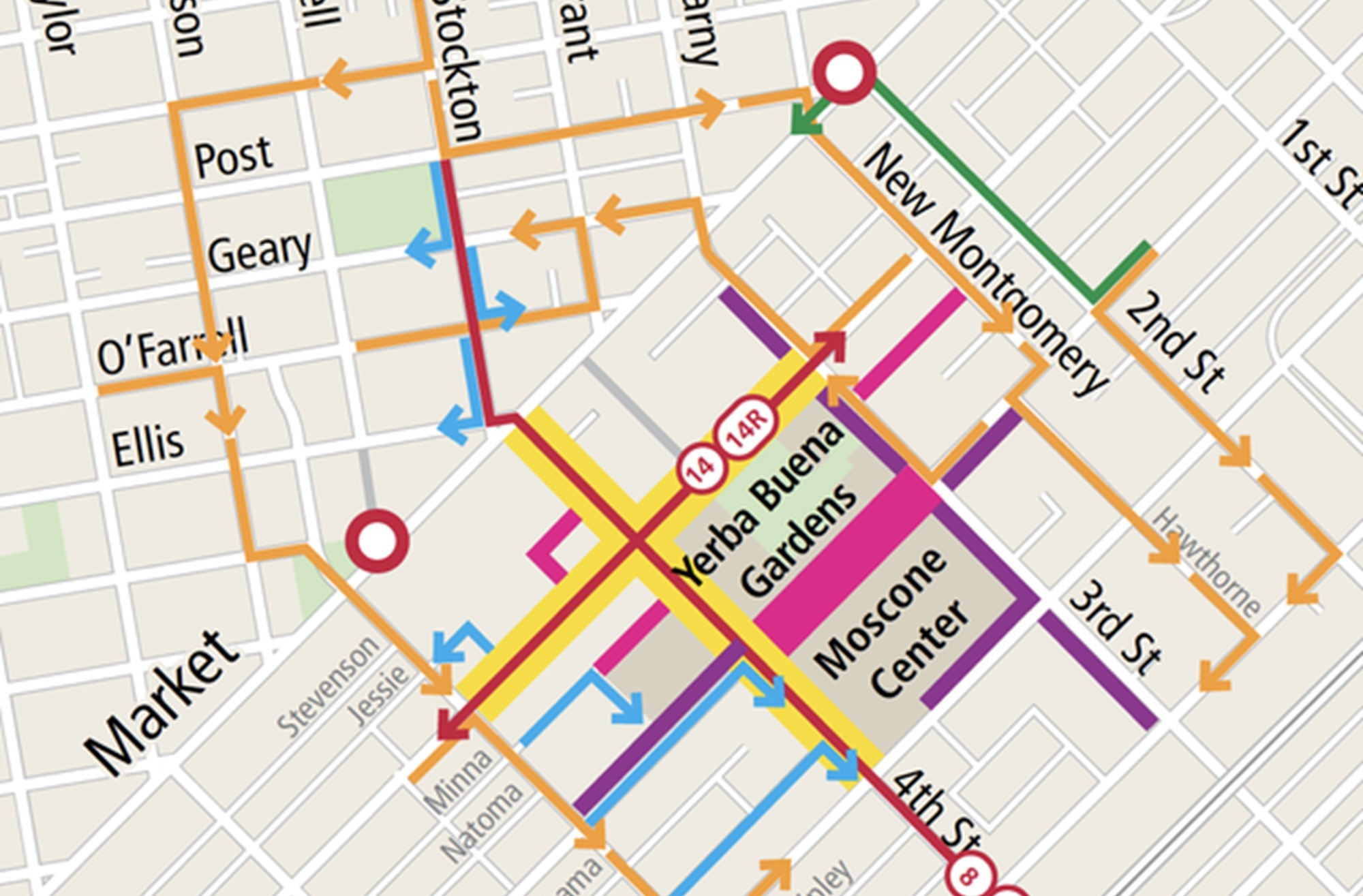
"caption": "Several areas in San Francisco will experience road closures around the Super Bowl, including streets around the Moscone Center which is hosting the Super Bowl Experience.",
"credit": "SFMTA/Bay Area Hosting Committee",
"altTag": null,
"description": null,
"imgSizes": {
"thumbnail": {
"file": "https://cdn.kqed.org/wp-content/uploads/sites/10/2026/01/Moscone_Super_Bowl_closures-160x105.jpg",
"width": 160,
"height": 105,
"mimeType": "image/jpeg"
},
"1536x1536": {
"file": "https://cdn.kqed.org/wp-content/uploads/sites/10/2026/01/Moscone_Super_Bowl_closures-1536x1010.jpg",
"width": 1536,
"height": 1010,
"mimeType": "image/jpeg"
},
"post-thumbnail": {
"file": "https://cdn.kqed.org/wp-content/uploads/sites/10/2026/01/Moscone_Super_Bowl_closures-672x372.jpg",
"width": 672,
"height": 372,
"mimeType": "image/jpeg"
},
"twentyfourteen-full-width": {
"file": "https://cdn.kqed.org/wp-content/uploads/sites/10/2026/01/Moscone_Super_Bowl_closures-1038x576.jpg",
"width": 1038,
"height": 576,
"mimeType": "image/jpeg"
},
"npr-cds-wide": {
"file": "https://cdn.kqed.org/wp-content/uploads/sites/10/2026/01/Moscone_Super_Bowl_closures-1200x675.jpg",
"width": 1200,
"height": 675,
"mimeType": "image/jpeg"
},
"kqedFullSize": {
"file": "https://cdn.kqed.org/wp-content/uploads/sites/10/2026/01/Moscone_Super_Bowl_closures.jpg",
"width": 2000,
"height": 1315
}
},
"isLoading": false,
"fetchFailed": false
},
"news_12071340": {
"type": "attachments",
"id": "news_12071340",
"meta": {
"index": "attachments_1716263798",
"site": "news",
"id": "12071340",
"found": true
},
"title": "A rendering of the proposed development at Irvington Station.",
"publishDate": 1769621587,
"status": "inherit",
"parent": 0,
"modified": 1769622698,
"caption": "A rendering of the proposed development at Irvington Station entitled \"View from Concourse Looking South.\"",
"credit": "Courtesy of BART",
"altTag": null,
"description": null,
"imgSizes": {
"thumbnail": {
"file": "https://cdn.kqed.org/wp-content/uploads/sites/10/2026/01/260128-BART-Broke-03-KQED-160x94.jpg",
"width": 160,
"height": 94,
"mimeType": "image/jpeg"
},
"1536x1536": {
"file": "https://cdn.kqed.org/wp-content/uploads/sites/10/2026/01/260128-BART-Broke-03-KQED-1536x898.jpg",
"width": 1536,
"height": 898,
"mimeType": "image/jpeg"
},
"post-thumbnail": {
"file": "https://cdn.kqed.org/wp-content/uploads/sites/10/2026/01/260128-BART-Broke-03-KQED-672x372.jpg",
"width": 672,
"height": 372,
"mimeType": "image/jpeg"
},
"twentyfourteen-full-width": {
"file": "https://cdn.kqed.org/wp-content/uploads/sites/10/2026/01/260128-BART-Broke-03-KQED-1038x576.jpg",
"width": 1038,
"height": 576,
"mimeType": "image/jpeg"
},
"npr-cds-wide": {
"file": "https://cdn.kqed.org/wp-content/uploads/sites/10/2026/01/260128-BART-Broke-03-KQED-1200x675.jpg",
"width": 1200,
"height": 675,
"mimeType": "image/jpeg"
},
"kqedFullSize": {
"file": "https://cdn.kqed.org/wp-content/uploads/sites/10/2026/01/260128-BART-Broke-03-KQED.jpg",
"width": 2000,
"height": 1169
}
},
"isLoading": false,
"fetchFailed": false
},
"news_12052429": {
"type": "attachments",
"id": "news_12052429",
"meta": {
"index": "attachments_1716263798",
"site": "news",
"id": "12052429",
"found": true
},
"title": "20241204-BART-JY-023_qed",
"publishDate": 1755288565,
"status": "inherit",
"parent": 12052424,
"modified": 1755288593,
"caption": "Passengers tag their Clipper cards at Montgomery BART Station in San Francisco on Dec. 4, 2024.",
"credit": "Juliana Yamada/KQED",
"altTag": null,
"description": null,
"imgSizes": {
"thumbnail": {
"file": "https://cdn.kqed.org/wp-content/uploads/sites/10/2025/08/20241204-BART-JY-023_qed-160x107.jpg",
"width": 160,
"height": 107,
"mimeType": "image/jpeg"
},
"1536x1536": {
"file": "https://cdn.kqed.org/wp-content/uploads/sites/10/2025/08/20241204-BART-JY-023_qed-1536x1024.jpg",
"width": 1536,
"height": 1024,
"mimeType": "image/jpeg"
},
"post-thumbnail": {
"file": "https://cdn.kqed.org/wp-content/uploads/sites/10/2025/08/20241204-BART-JY-023_qed-672x372.jpg",
"width": 672,
"height": 372,
"mimeType": "image/jpeg"
},
"twentyfourteen-full-width": {
"file": "https://cdn.kqed.org/wp-content/uploads/sites/10/2025/08/20241204-BART-JY-023_qed-1038x576.jpg",
"width": 1038,
"height": 576,
"mimeType": "image/jpeg"
},
"kqedFullSize": {
"file": "https://cdn.kqed.org/wp-content/uploads/sites/10/2025/08/20241204-BART-JY-023_qed.jpg",
"width": 2000,
"height": 1333
}
},
"isLoading": false,
"fetchFailed": false
},
"news_12051116": {
"type": "attachments",
"id": "news_12051116",
"meta": {
"index": "attachments_1716263798",
"site": "news",
"id": "12051116",
"found": true
},
"title": "An e-bike parked in Mill Valley on July 24, 2025.",
"publishDate": 1754502511,
"status": "inherit",
"parent": 12050242,
"modified": 1755641757,
"caption": "An e-bike parked in Mill Valley on July 24, 2025.",
"credit": "Martin do Nascimento/KQED",
"altTag": null,
"description": null,
"imgSizes": {
"thumbnail": {
"file": "https://cdn.kqed.org/wp-content/uploads/sites/10/2025/08/250724-MARIN-EBIKES-MD-07-KQED-160x107.jpg",
"width": 160,
"height": 107,
"mimeType": "image/jpeg"
},
"1536x1536": {
"file": "https://cdn.kqed.org/wp-content/uploads/sites/10/2025/08/250724-MARIN-EBIKES-MD-07-KQED-1536x1025.jpg",
"width": 1536,
"height": 1025,
"mimeType": "image/jpeg"
},
"post-thumbnail": {
"file": "https://cdn.kqed.org/wp-content/uploads/sites/10/2025/08/250724-MARIN-EBIKES-MD-07-KQED-672x372.jpg",
"width": 672,
"height": 372,
"mimeType": "image/jpeg"
},
"twentyfourteen-full-width": {
"file": "https://cdn.kqed.org/wp-content/uploads/sites/10/2025/08/250724-MARIN-EBIKES-MD-07-KQED-1038x576.jpg",
"width": 1038,
"height": 576,
"mimeType": "image/jpeg"
},
"kqedFullSize": {
"file": "https://cdn.kqed.org/wp-content/uploads/sites/10/2025/08/250724-MARIN-EBIKES-MD-07-KQED.jpg",
"width": 2000,
"height": 1334
}
},
"isLoading": false,
"fetchFailed": false
},
"news_12070963": {
"type": "attachments",
"id": "news_12070963",
"meta": {
"index": "attachments_1716263798",
"site": "news",
"id": "12070963",
"found": true
},
"title": "260123-SIGNATUREKICKOFF00248_TV-KQED",
"publishDate": 1769210890,
"status": "inherit",
"parent": 0,
"modified": 1769210943,
"caption": "Lian Chang (center), a grassroots activist for transit instructs people on how to gain signatures for California Senate Bill 63 at Embarcardero Plaza in San Francisco on January 23, 2026.",
"credit": "Tâm Vũ/KQED",
"altTag": null,
"description": null,
"imgSizes": {
"thumbnail": {
"file": "https://cdn.kqed.org/wp-content/uploads/sites/10/2026/01/260123-SIGNATUREKICKOFF00248_TV-KQED-160x107.jpg",
"width": 160,
"height": 107,
"mimeType": "image/jpeg"
},
"1536x1536": {
"file": "https://cdn.kqed.org/wp-content/uploads/sites/10/2026/01/260123-SIGNATUREKICKOFF00248_TV-KQED-1536x1024.jpg",
"width": 1536,
"height": 1024,
"mimeType": "image/jpeg"
},
"post-thumbnail": {
"file": "https://cdn.kqed.org/wp-content/uploads/sites/10/2026/01/260123-SIGNATUREKICKOFF00248_TV-KQED-672x372.jpg",
"width": 672,
"height": 372,
"mimeType": "image/jpeg"
},
"twentyfourteen-full-width": {
"file": "https://cdn.kqed.org/wp-content/uploads/sites/10/2026/01/260123-SIGNATUREKICKOFF00248_TV-KQED-1038x576.jpg",
"width": 1038,
"height": 576,
"mimeType": "image/jpeg"
},
"npr-cds-wide": {
"file": "https://cdn.kqed.org/wp-content/uploads/sites/10/2026/01/260123-SIGNATUREKICKOFF00248_TV-KQED-1200x675.jpg",
"width": 1200,
"height": 675,
"mimeType": "image/jpeg"
},
"kqedFullSize": {
"file": "https://cdn.kqed.org/wp-content/uploads/sites/10/2026/01/260123-SIGNATUREKICKOFF00248_TV-KQED.jpg",
"width": 2000,
"height": 1333
}
},
"isLoading": false,
"fetchFailed": false
},
"news_12057602": {
"type": "attachments",
"id": "news_12057602",
"meta": {
"index": "attachments_1716263798",
"site": "news",
"id": "12057602",
"found": true
},
"title": "BART employees stand outside a damaged 3-car train at the Fruitvale station in Oakland, Calif. on Thursday, July 9, 2015 after an early morning fire below the train between the Coliseum and Fruitvale stations disrupted the morning commute. At least three",
"publishDate": 1758821425,
"status": "inherit",
"parent": 12057594,
"modified": 1769128187,
"caption": "BART employees stand outside a damaged three-car train at the Fruitvale station in Oakland, California, on July 9, 2015.",
"credit": "Paul Chinn/The San Francisco Chronicle via Getty Images",
"altTag": null,
"description": null,
"imgSizes": {
"thumbnail": {
"file": "https://cdn.kqed.org/wp-content/uploads/sites/10/2025/09/BARTEmployeesGetty-160x105.jpg",
"width": 160,
"height": 105,
"mimeType": "image/jpeg"
},
"1536x1536": {
"file": "https://cdn.kqed.org/wp-content/uploads/sites/10/2025/09/BARTEmployeesGetty-1536x1006.jpg",
"width": 1536,
"height": 1006,
"mimeType": "image/jpeg"
},
"post-thumbnail": {
"file": "https://cdn.kqed.org/wp-content/uploads/sites/10/2025/09/BARTEmployeesGetty-672x372.jpg",
"width": 672,
"height": 372,
"mimeType": "image/jpeg"
},
"twentyfourteen-full-width": {
"file": "https://cdn.kqed.org/wp-content/uploads/sites/10/2025/09/BARTEmployeesGetty-1038x576.jpg",
"width": 1038,
"height": 576,
"mimeType": "image/jpeg"
},
"kqedFullSize": {
"file": "https://cdn.kqed.org/wp-content/uploads/sites/10/2025/09/BARTEmployeesGetty.jpg",
"width": 2000,
"height": 1310
}
},
"isLoading": false,
"fetchFailed": false
},
"news_12067121": {
"type": "attachments",
"id": "news_12067121",
"meta": {
"index": "attachments_1716263798",
"site": "news",
"id": "12067121",
"found": true
},
"title": "251213-FEAROFFLYING00262_TV-KQED",
"publishDate": 1765823451,
"status": "inherit",
"parent": 0,
"modified": 1767743022,
"caption": "A view of United Airlines planes from the Reflection Room at San Francisco International Airport in San Francisco on December 13, 2025.",
"credit": "Tâm Vũ/KQED",
"altTag": null,
"description": null,
"imgSizes": {
"thumbnail": {
"file": "https://cdn.kqed.org/wp-content/uploads/sites/10/2025/12/251213-FEAROFFLYING00262_TV-KQED-160x107.jpg",
"width": 160,
"height": 107,
"mimeType": "image/jpeg"
},
"1536x1536": {
"file": "https://cdn.kqed.org/wp-content/uploads/sites/10/2025/12/251213-FEAROFFLYING00262_TV-KQED-1536x1024.jpg",
"width": 1536,
"height": 1024,
"mimeType": "image/jpeg"
},
"post-thumbnail": {
"file": "https://cdn.kqed.org/wp-content/uploads/sites/10/2025/12/251213-FEAROFFLYING00262_TV-KQED-672x372.jpg",
"width": 672,
"height": 372,
"mimeType": "image/jpeg"
},
"twentyfourteen-full-width": {
"file": "https://cdn.kqed.org/wp-content/uploads/sites/10/2025/12/251213-FEAROFFLYING00262_TV-KQED-1038x576.jpg",
"width": 1038,
"height": 576,
"mimeType": "image/jpeg"
},
"npr-cds-wide": {
"file": "https://cdn.kqed.org/wp-content/uploads/sites/10/2025/12/251213-FEAROFFLYING00262_TV-KQED-1200x675.jpg",
"width": 1200,
"height": 675,
"mimeType": "image/jpeg"
},
"kqedFullSize": {
"file": "https://cdn.kqed.org/wp-content/uploads/sites/10/2025/12/251213-FEAROFFLYING00262_TV-KQED.jpg",
"width": 2000,
"height": 1333
}
},
"isLoading": false,
"fetchFailed": false
},
"news_12069868": {
"type": "attachments",
"id": "news_12069868",
"meta": {
"index": "attachments_1716263798",
"site": "news",
"id": "12069868",
"found": true
},
"title": "A speed camera on Geary St. in San Francisco on March 19, 2025.",
"publishDate": 1768432382,
"status": "inherit",
"parent": 12069838,
"modified": 1768434901,
"caption": "A speed camera on Geary Street in San Francisco on March 19, 2025.",
"credit": "Martin do Nascimento/KQED",
"altTag": null,
"description": null,
"imgSizes": {
"thumbnail": {
"file": "https://cdn.kqed.org/wp-content/uploads/sites/10/2026/01/250319-SF-SPEED-CAMERAS-MD-06_qed-1-160x107.jpg",
"width": 160,
"height": 107,
"mimeType": "image/jpeg"
},
"1536x1536": {
"file": "https://cdn.kqed.org/wp-content/uploads/sites/10/2026/01/250319-SF-SPEED-CAMERAS-MD-06_qed-1-1536x1024.jpg",
"width": 1536,
"height": 1024,
"mimeType": "image/jpeg"
},
"post-thumbnail": {
"file": "https://cdn.kqed.org/wp-content/uploads/sites/10/2026/01/250319-SF-SPEED-CAMERAS-MD-06_qed-1-672x372.jpg",
"width": 672,
"height": 372,
"mimeType": "image/jpeg"
},
"twentyfourteen-full-width": {
"file": "https://cdn.kqed.org/wp-content/uploads/sites/10/2026/01/250319-SF-SPEED-CAMERAS-MD-06_qed-1-1038x576.jpg",
"width": 1038,
"height": 576,
"mimeType": "image/jpeg"
},
"npr-cds-wide": {
"file": "https://cdn.kqed.org/wp-content/uploads/sites/10/2026/01/250319-SF-SPEED-CAMERAS-MD-06_qed-1-1200x675.jpg",
"width": 1200,
"height": 675,
"mimeType": "image/jpeg"
},
"kqedFullSize": {
"file": "https://cdn.kqed.org/wp-content/uploads/sites/10/2026/01/250319-SF-SPEED-CAMERAS-MD-06_qed-1.jpg",
"width": 2000,
"height": 1333
}
},
"isLoading": false,
"fetchFailed": false
},
"news_11986406": {
"type": "attachments",
"id": "news_11986406",
"meta": {
"index": "attachments_1716263798",
"site": "news",
"id": "11986406",
"found": true
},
"title": "BIG SUR, CALIFORNIA: Caltrans employees and contractors work to",
"publishDate": 1715811884,
"status": "inherit",
"parent": 11986383,
"modified": 1768428712,
"caption": "Caltrans employees and contractors in Big Sur on Wednesday, April 17, 2024, work to stabilize the southbound portion of U.S. Highway 1 that collapsed into the Pacific Ocean, which occurred on March 30, 2024, after days of heavy rainfall, hail and powerful winds.",
"credit": "Melina Mara/The Washington Post",
"altTag": null,
"description": null,
"imgSizes": {
"medium": {
"file": "https://cdn.kqed.org/wp-content/uploads/sites/10/2024/05/BigSur-800x533.jpg",
"width": 800,
"height": 533,
"mimeType": "image/jpeg"
},
"large": {
"file": "https://cdn.kqed.org/wp-content/uploads/sites/10/2024/05/BigSur-1020x680.jpg",
"width": 1020,
"height": 680,
"mimeType": "image/jpeg"
},
"thumbnail": {
"file": "https://cdn.kqed.org/wp-content/uploads/sites/10/2024/05/BigSur-160x107.jpg",
"width": 160,
"height": 107,
"mimeType": "image/jpeg"
},
"1536x1536": {
"file": "https://cdn.kqed.org/wp-content/uploads/sites/10/2024/05/BigSur-1536x1024.jpg",
"width": 1536,
"height": 1024,
"mimeType": "image/jpeg"
},
"post-thumbnail": {
"file": "https://cdn.kqed.org/wp-content/uploads/sites/10/2024/05/BigSur-672x372.jpg",
"width": 672,
"height": 372,
"mimeType": "image/jpeg"
},
"twentyfourteen-full-width": {
"file": "https://cdn.kqed.org/wp-content/uploads/sites/10/2024/05/BigSur-1038x576.jpg",
"width": 1038,
"height": 576,
"mimeType": "image/jpeg"
},
"kqedFullSize": {
"file": "https://cdn.kqed.org/wp-content/uploads/sites/10/2024/05/BigSur.jpg",
"width": 1920,
"height": 1280
}
},
"isLoading": false,
"fetchFailed": false
},
"news_12069241": {
"type": "attachments",
"id": "news_12069241",
"meta": {
"index": "attachments_1716263798",
"site": "news",
"id": "12069241",
"found": true
},
"title": "Extreme Weather California",
"publishDate": 1767983520,
"status": "inherit",
"parent": 12069236,
"modified": 1767983555,
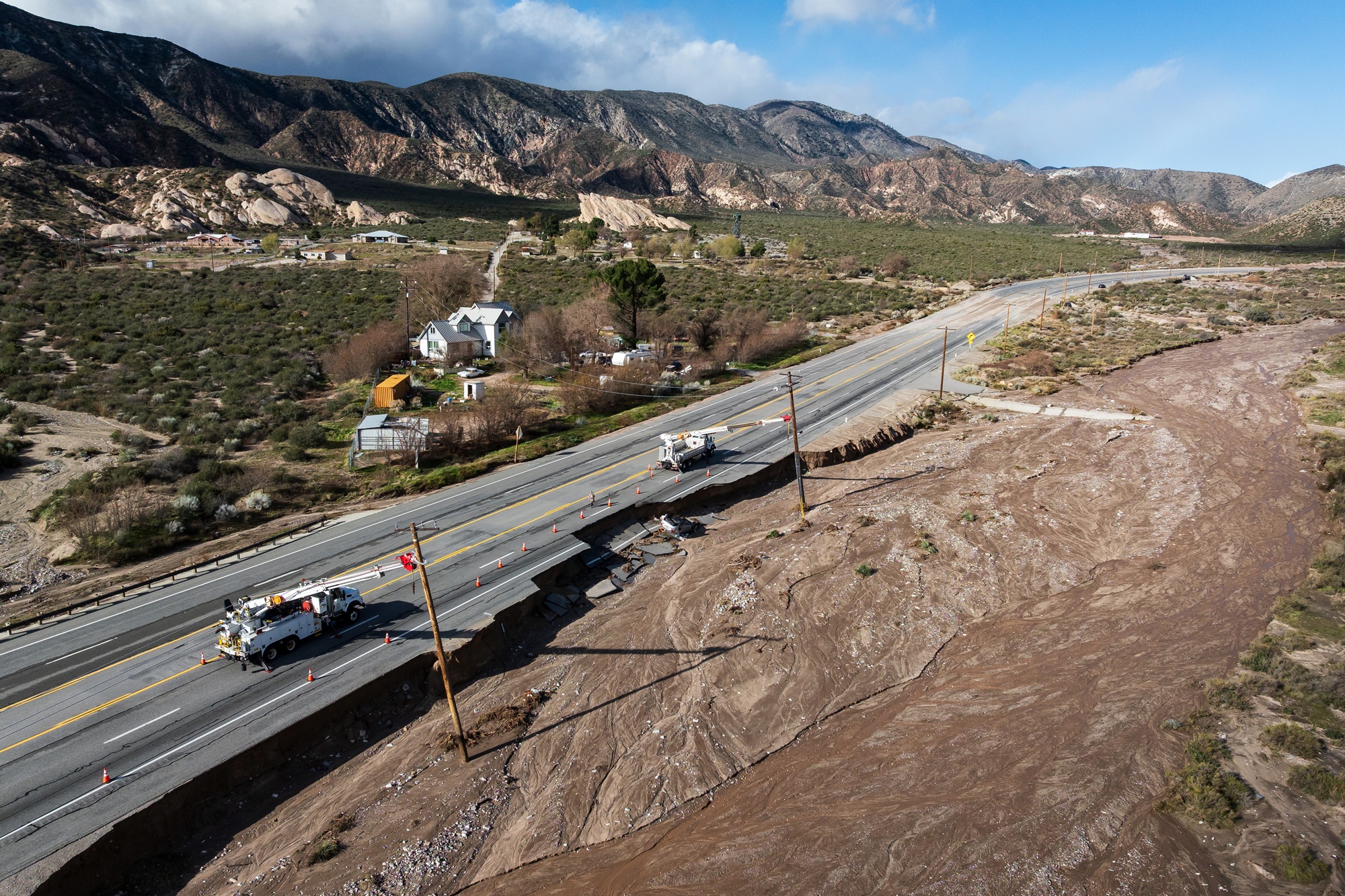
"caption": "Southern California Edison vehicles sit along damaged roads and power lines on Highway 138 after a series of storms on Thursday, Dec. 25, 2025, near Phelan, California.",
"credit": "William Liang/AP Photo",
"altTag": null,
"description": null,
"imgSizes": {
"thumbnail": {
"file": "https://cdn.kqed.org/wp-content/uploads/sites/10/2026/01/SoCalHwyAP-160x107.jpg",
"width": 160,
"height": 107,
"mimeType": "image/jpeg"
},
"1536x1536": {
"file": "https://cdn.kqed.org/wp-content/uploads/sites/10/2026/01/SoCalHwyAP-1536x1024.jpg",
"width": 1536,
"height": 1024,
"mimeType": "image/jpeg"
},
"post-thumbnail": {
"file": "https://cdn.kqed.org/wp-content/uploads/sites/10/2026/01/SoCalHwyAP-672x372.jpg",
"width": 672,
"height": 372,
"mimeType": "image/jpeg"
},
"twentyfourteen-full-width": {
"file": "https://cdn.kqed.org/wp-content/uploads/sites/10/2026/01/SoCalHwyAP-1038x576.jpg",
"width": 1038,
"height": 576,
"mimeType": "image/jpeg"
},
"npr-cds-wide": {
"file": "https://cdn.kqed.org/wp-content/uploads/sites/10/2026/01/SoCalHwyAP-1200x675.jpg",
"width": 1200,
"height": 675,
"mimeType": "image/jpeg"
},
"kqedFullSize": {
"file": "https://cdn.kqed.org/wp-content/uploads/sites/10/2026/01/SoCalHwyAP.jpg",
"width": 2000,
"height": 1333
}
},
"isLoading": false,
"fetchFailed": false
},
"news_12068984": {
"type": "attachments",
"id": "news_12068984",
"meta": {
"index": "attachments_1716263798",
"site": "news",
"id": "12068984",
"found": true
},
"title": "Sonoma County Town Of Guerneville Inundated With Flood Waters From \"Atmospheric River\" Weather System",
"publishDate": 1767825565,
"status": "inherit",
"parent": 12068981,
"modified": 1767825612,
"caption": "Highway 116 cuts through a flooded neighborhood on Feb. 27, 2019, in Guerneville, California. The Russian River has crested over flood stage and is expected to continue to rise to record levels and inundate the town of Guerneville. The town is currently under mandatory evacuation and roads leading into the town have been flooded over. ",
"credit": "Justin Sullivan/Getty Images",
"altTag": null,
"description": null,
"imgSizes": {
"thumbnail": {
"file": "https://cdn.kqed.org/wp-content/uploads/sites/10/2026/01/Hwy116Getty-160x107.jpg",
"width": 160,
"height": 107,
"mimeType": "image/jpeg"
},
"1536x1536": {
"file": "https://cdn.kqed.org/wp-content/uploads/sites/10/2026/01/Hwy116Getty-1536x1024.jpg",
"width": 1536,
"height": 1024,
"mimeType": "image/jpeg"
},
"post-thumbnail": {
"file": "https://cdn.kqed.org/wp-content/uploads/sites/10/2026/01/Hwy116Getty-672x372.jpg",
"width": 672,
"height": 372,
"mimeType": "image/jpeg"
},
"twentyfourteen-full-width": {
"file": "https://cdn.kqed.org/wp-content/uploads/sites/10/2026/01/Hwy116Getty-1038x576.jpg",
"width": 1038,
"height": 576,
"mimeType": "image/jpeg"
},
"npr-cds-wide": {
"file": "https://cdn.kqed.org/wp-content/uploads/sites/10/2026/01/Hwy116Getty-1200x675.jpg",
"width": 1200,
"height": 675,
"mimeType": "image/jpeg"
},
"kqedFullSize": {
"file": "https://cdn.kqed.org/wp-content/uploads/sites/10/2026/01/Hwy116Getty.jpg",
"width": 2000,
"height": 1333
}
},
"isLoading": false,
"fetchFailed": false
},
"news_12068086": {
"type": "attachments",
"id": "news_12068086",
"meta": {
"index": "attachments_1716263798",
"site": "news",
"id": "12068086",
"found": true
},
"title": "072319-Steve-Gordon-DMV-AP-CM-bw-texture",
"publishDate": 1766180959,
"status": "inherit",
"parent": 12068067,
"modified": 1766180978,
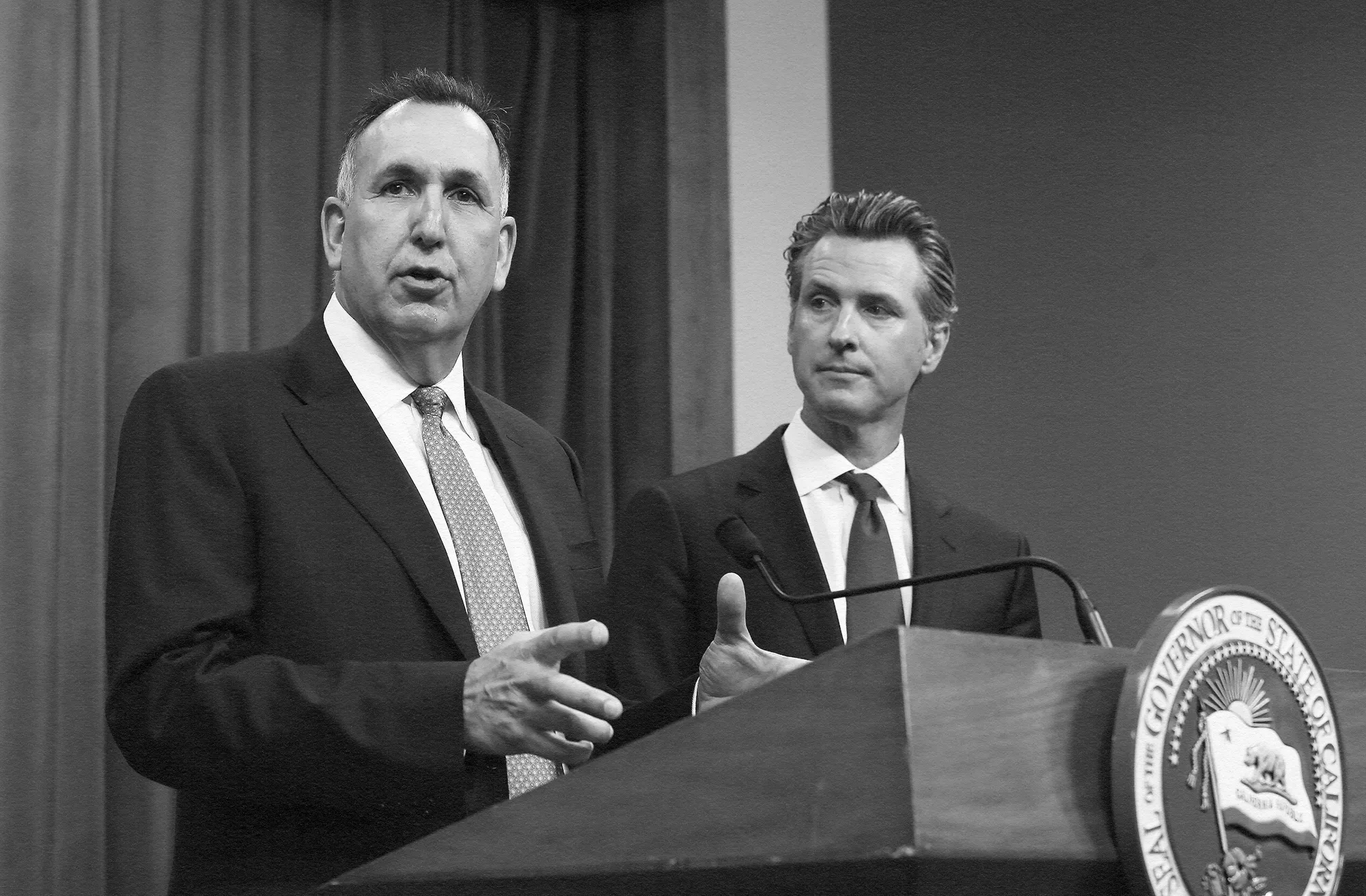
"caption": "Steve Gordon, left, who was appointed by Gov. Gavin Newsom to head the California Department of Motor Vehicles, discusses a report detailing efforts by the DMV to improve customer services during a news conference in Sacramento, on July 23, 2019. \n",
"credit": "Photo by Rich Pedroncelli, AP Photo",
"altTag": null,
"description": null,
"imgSizes": {
"thumbnail": {
"file": "https://cdn.kqed.org/wp-content/uploads/sites/10/2025/12/072319-Steve-Gordon-DMV-AP-CM-bw-texture-160x105.jpeg",
"width": 160,
"height": 105,
"mimeType": "image/jpeg"
},
"1536x1536": {
"file": "https://cdn.kqed.org/wp-content/uploads/sites/10/2025/12/072319-Steve-Gordon-DMV-AP-CM-bw-texture-1536x1008.jpeg",
"width": 1536,
"height": 1008,
"mimeType": "image/jpeg"
},
"post-thumbnail": {
"file": "https://cdn.kqed.org/wp-content/uploads/sites/10/2025/12/072319-Steve-Gordon-DMV-AP-CM-bw-texture-672x372.jpeg",
"width": 672,
"height": 372,
"mimeType": "image/jpeg"
},
"twentyfourteen-full-width": {
"file": "https://cdn.kqed.org/wp-content/uploads/sites/10/2025/12/072319-Steve-Gordon-DMV-AP-CM-bw-texture-1038x576.jpeg",
"width": 1038,
"height": 576,
"mimeType": "image/jpeg"
},
"npr-cds-wide": {
"file": "https://cdn.kqed.org/wp-content/uploads/sites/10/2025/12/072319-Steve-Gordon-DMV-AP-CM-bw-texture-1200x675.jpeg",
"width": 1200,
"height": 675,
"mimeType": "image/jpeg"
},
"kqedFullSize": {
"file": "https://cdn.kqed.org/wp-content/uploads/sites/10/2025/12/072319-Steve-Gordon-DMV-AP-CM-bw-texture.jpeg",
"width": 2000,
"height": 1312
}
},
"isLoading": false,
"fetchFailed": false
}
},
"audioPlayerReducer": {
"postId": "stream_live",
"isPaused": true,
"isPlaying": false,
"pfsActive": false,
"pledgeModalIsOpen": true,
"playerDrawerIsOpen": false,
"liveAudioPlayStartedAt": 0,
"liveAudioPlayContext": ""
},
"authorsReducer": {
"byline_news_12068758": {
"type": "authors",
"id": "byline_news_12068758",
"meta": {
"override": true
},
"slug": "byline_news_12068758",
"name": "Evan Roberts",
"isLoading": false
},
"byline_news_12068067": {
"type": "authors",
"id": "byline_news_12068067",
"meta": {
"override": true
},
"slug": "byline_news_12068067",
"name": "Lauren Hepler and Robert Lewis, CalMatters",
"isLoading": false
},
"rachael-myrow": {
"type": "authors",
"id": "251",
"meta": {
"index": "authors_1716337520",
"id": "251",
"found": true
},
"name": "Rachael Myrow",
"firstName": "Rachael",
"lastName": "Myrow",
"slug": "rachael-myrow",
"email": "rmyrow@kqed.org",
"display_author_email": true,
"staff_mastheads": [
"news"
],
"title": "Senior Editor of KQED's Silicon Valley News Desk",
"bio": "• I write and edit stories about how Silicon Valley power and policies shape everyday life in California. I’m also passionate about making Bay Area history and culture more accessible to a broad public. • I’ve been a journalist for most of my life, starting in high school with The Franklin Press in Los Angeles, where I grew up. While earning my first degree in English at UC Berkeley, I got my start in public radio at KALX-FM. After completing a second degree in journalism at Cal, I landed my first professional job at Marketplace, then moved on to KPCC (now LAist), and then KQED, where I hosted The California Report for more than seven years. • My reporting has appeared on NPR, The World, WBUR’s \u003ci>Here & Now\u003c/i>, and the BBC. I also guest host for KQED’s \u003ci>Forum\u003c/i>, as well as the Commonwealth Club in San Francisco. • I speak periodically on media, democracy and technology issues, and do voiceover work for documentaries and educational video projects. • Outside of the studio, you'll find me hiking Bay Area trails and whipping up Insta-ready meals in my kitchen. • I do not accept gifts, money, or favors from anyone connected to my reporting, I don't pay people for information, and I do not support or donate to political causes. • I strive to treat the people I report on with fairness, honesty, and respect. I also recognize there are often multiple sides to a story and work to verify information through multiple sources and documentation. If I get something wrong, I correct it.",
"avatar": "https://secure.gravatar.com/avatar/3ed8a3c5f26025e4a805ba634cda8cd764906b97438a6d9ce216b044e340da4e?s=600&d=blank&r=g",
"twitter": "rachaelmyrow",
"bluesky": null,
"facebook": null,
"instagram": null,
"linkedin": "https://www.linkedin.com/in/rachaelmyrow/",
"sites": [
{
"site": "arts",
"roles": [
"administrator"
]
},
{
"site": "news",
"roles": [
"edit_others_posts",
"editor"
]
},
{
"site": "futureofyou",
"roles": [
"editor"
]
},
{
"site": "bayareabites",
"roles": [
"editor"
]
},
{
"site": "stateofhealth",
"roles": [
"editor"
]
},
{
"site": "science",
"roles": [
"editor"
]
},
{
"site": "food",
"roles": [
"editor"
]
},
{
"site": "forum",
"roles": [
"editor"
]
},
{
"site": "liveblog",
"roles": [
"author"
]
}
],
"headData": {
"title": "Rachael Myrow | KQED",
"description": "Senior Editor of KQED's Silicon Valley News Desk",
"ogImgSrc": "https://secure.gravatar.com/avatar/3ed8a3c5f26025e4a805ba634cda8cd764906b97438a6d9ce216b044e340da4e?s=600&d=blank&r=g",
"twImgSrc": "https://secure.gravatar.com/avatar/3ed8a3c5f26025e4a805ba634cda8cd764906b97438a6d9ce216b044e340da4e?s=600&d=blank&r=g"
},
"isLoading": false,
"link": "/author/rachael-myrow"
},
"carlysevern": {
"type": "authors",
"id": "3243",
"meta": {
"index": "authors_1716337520",
"id": "3243",
"found": true
},
"name": "Carly Severn",
"firstName": "Carly",
"lastName": "Severn",
"slug": "carlysevern",
"email": "csevern@kqed.org",
"display_author_email": false,
"staff_mastheads": [
"news"
],
"title": "Senior Editor, Audience News ",
"bio": "Carly is KQED's Senior Editor of Audience News on the Digital News team, and has reported for the California Report Magazine, Bay Curious and KQED Arts. She's formerly the host of \u003ca href=\"http://ww2.kqed.org/pop/category/the-cooler/\" rel=\"noopener noreferrer\">The Cooler\u003c/a> podcast.",
"avatar": "https://secure.gravatar.com/avatar/54037bf5c128fe678f0ef26cec97a93f2e7f220a22d7285703328f12c42c1b1d?s=600&d=blank&r=g",
"twitter": "teacupinthebay",
"bluesky": null,
"facebook": null,
"instagram": null,
"linkedin": null,
"sites": [
{
"site": "",
"roles": [
"editor"
]
},
{
"site": "arts",
"roles": [
"editor"
]
},
{
"site": "news",
"roles": [
"administrator"
]
},
{
"site": "pop",
"roles": [
"editor"
]
},
{
"site": "futureofyou",
"roles": [
"editor"
]
},
{
"site": "about",
"roles": [
"administrator"
]
},
{
"site": "mindshift",
"roles": [
"editor"
]
},
{
"site": "bayareabites",
"roles": [
"editor"
]
},
{
"site": "stateofhealth",
"roles": [
"editor"
]
},
{
"site": "science",
"roles": [
"editor"
]
},
{
"site": "food",
"roles": [
"contributor"
]
},
{
"site": "forum",
"roles": [
"editor"
]
},
{
"site": "perspectives",
"roles": [
"administrator"
]
},
{
"site": "liveblog",
"roles": [
"editor"
]
}
],
"headData": {
"title": "Carly Severn | KQED",
"description": "Senior Editor, Audience News ",
"ogImgSrc": "https://secure.gravatar.com/avatar/54037bf5c128fe678f0ef26cec97a93f2e7f220a22d7285703328f12c42c1b1d?s=600&d=blank&r=g",
"twImgSrc": "https://secure.gravatar.com/avatar/54037bf5c128fe678f0ef26cec97a93f2e7f220a22d7285703328f12c42c1b1d?s=600&d=blank&r=g"
},
"isLoading": false,
"link": "/author/carlysevern"
},
"fjhabvala": {
"type": "authors",
"id": "8659",
"meta": {
"index": "authors_1716337520",
"id": "8659",
"found": true
},
"name": "Farida Jhabvala Romero",
"firstName": "Farida",
"lastName": "Jhabvala Romero",
"slug": "fjhabvala",
"email": "fjhabvala@kqed.org",
"display_author_email": true,
"staff_mastheads": [
"news"
],
"title": "KQED Contributor",
"bio": "Farida Jhabvala Romero is a Labor Correspondent for KQED. She previously covered immigration. Farida was \u003ca href=\"https://www.ccnma.org/2022-most-influential-latina-journalists\">named\u003c/a> one of the 10 Most Influential Latina Journalists in California in 2022 by the California Chicano News Media Association. Her work has won awards from the Society of Professional Journalists (Northern California), as well as a national and regional Edward M. Murrow Award for the collaborative reporting projects “Dangerous Air” and “Graying California.” Before joining KQED, Farida worked as a producer at Radio Bilingüe, a national public radio network. Farida earned her master’s degree in journalism from Stanford University.",
"avatar": "https://secure.gravatar.com/avatar/f9f022d4e2609741874222a1e9d41f48fea74011aa7c615eef91d9a50c944ebe?s=600&d=blank&r=g",
"twitter": "FaridaJhabvala",
"bluesky": null,
"facebook": null,
"instagram": null,
"linkedin": "https://www.linkedin.com/in/faridajhabvala/",
"sites": [
{
"site": "news",
"roles": [
"editor"
]
},
{
"site": "stateofhealth",
"roles": [
"author"
]
},
{
"site": "liveblog",
"roles": [
"author"
]
}
],
"headData": {
"title": "Farida Jhabvala Romero | KQED",
"description": "KQED Contributor",
"ogImgSrc": "https://secure.gravatar.com/avatar/f9f022d4e2609741874222a1e9d41f48fea74011aa7c615eef91d9a50c944ebe?s=600&d=blank&r=g",
"twImgSrc": "https://secure.gravatar.com/avatar/f9f022d4e2609741874222a1e9d41f48fea74011aa7c615eef91d9a50c944ebe?s=600&d=blank&r=g"
},
"isLoading": false,
"link": "/author/fjhabvala"
},
"adahlstromeckman": {
"type": "authors",
"id": "11785",
"meta": {
"index": "authors_1716337520",
"id": "11785",
"found": true
},
"name": "Azul Dahlstrom-Eckman",
"firstName": "Azul",
"lastName": "Dahlstrom-Eckman",
"slug": "adahlstromeckman",
"email": "adahlstrom-eckman@kqed.org",
"display_author_email": true,
"staff_mastheads": [],
"title": "Reporter",
"bio": "Azul is a reporter for KQED focusing on transportation and features. He joined KQED in 2021 as an alumna of KALW's Audio Academy radio journalism training program.",
"avatar": "https://secure.gravatar.com/avatar/9cb750298435add7815a777f55bf1f46845c1386bb8452555c60a7b820b5aba3?s=600&d=blank&r=g",
"twitter": "@zuliemann",
"bluesky": "@azul415.bsky.social",
"facebook": null,
"instagram": null,
"linkedin": null,
"sites": [
{
"site": "arts",
"roles": [
"editor"
]
},
{
"site": "news",
"roles": [
"editor"
]
},
{
"site": "science",
"roles": [
"editor"
]
},
{
"site": "liveblog",
"roles": [
"author"
]
}
],
"headData": {
"title": "Azul Dahlstrom-Eckman | KQED",
"description": "Reporter",
"ogImgSrc": "https://secure.gravatar.com/avatar/9cb750298435add7815a777f55bf1f46845c1386bb8452555c60a7b820b5aba3?s=600&d=blank&r=g",
"twImgSrc": "https://secure.gravatar.com/avatar/9cb750298435add7815a777f55bf1f46845c1386bb8452555c60a7b820b5aba3?s=600&d=blank&r=g"
},
"isLoading": false,
"link": "/author/adahlstromeckman"
},
"kdebenedetti": {
"type": "authors",
"id": "11913",
"meta": {
"index": "authors_1716337520",
"id": "11913",
"found": true
},
"name": "Katie DeBenedetti",
"firstName": "Katie",
"lastName": "DeBenedetti",
"slug": "kdebenedetti",
"email": "kdebenedetti@kqed.org",
"display_author_email": false,
"staff_mastheads": [
"news",
"science"
],
"title": "KQED Contributor",
"bio": "Katie DeBenedetti is a digital reporter covering daily news for the Express Desk. Prior to joining KQED as a culture reporting intern in January 2024, she covered education and city government for the Napa Valley Register.",
"avatar": "https://secure.gravatar.com/avatar/6e31073cb8f7e4214ab03f42771d0f45?s=600&d=blank&r=g",
"twitter": null,
"facebook": null,
"instagram": null,
"linkedin": null,
"sites": [
{
"site": "news",
"roles": [
"author"
]
},
{
"site": "science",
"roles": [
"author"
]
},
{
"site": "liveblog",
"roles": [
"author"
]
}
],
"headData": {
"title": "Katie DeBenedetti | KQED",
"description": "KQED Contributor",
"ogImgSrc": "https://secure.gravatar.com/avatar/6e31073cb8f7e4214ab03f42771d0f45?s=600&d=blank&r=g",
"twImgSrc": "https://secure.gravatar.com/avatar/6e31073cb8f7e4214ab03f42771d0f45?s=600&d=blank&r=g"
},
"isLoading": false,
"link": "/author/kdebenedetti"
},
"aaliahmad": {
"type": "authors",
"id": "11986",
"meta": {
"index": "authors_1716337520",
"id": "11986",
"found": true
},
"name": "Ayah Ali-Ahmad",
"firstName": "Ayah",
"lastName": "Ali-Ahmad",
"slug": "aaliahmad",
"email": "aaliahmad@KQED.org",
"display_author_email": false,
"staff_mastheads": [],
"title": "KQED Contributor",
"bio": null,
"avatar": "https://secure.gravatar.com/avatar/1cf54f187a5e1064b2cfef3f3d2f1e4f93e453395d56912aca6382a6071ec3ed?s=600&d=blank&r=g",
"twitter": "ayahaliahmad",
"bluesky": null,
"facebook": null,
"instagram": null,
"linkedin": null,
"sites": [
{
"site": "news",
"roles": [
"subscriber"
]
}
],
"headData": {
"title": "Ayah Ali-Ahmad | KQED",
"description": "KQED Contributor",
"ogImgSrc": "https://secure.gravatar.com/avatar/1cf54f187a5e1064b2cfef3f3d2f1e4f93e453395d56912aca6382a6071ec3ed?s=600&d=blank&r=g",
"twImgSrc": "https://secure.gravatar.com/avatar/1cf54f187a5e1064b2cfef3f3d2f1e4f93e453395d56912aca6382a6071ec3ed?s=600&d=blank&r=g"
},
"isLoading": false,
"link": "/author/aaliahmad"
},
"epeppel": {
"type": "authors",
"id": "11989",
"meta": {
"index": "authors_1716337520",
"id": "11989",
"found": true
},
"name": "Eliza Peppel",
"firstName": "Eliza",
"lastName": "Peppel",
"slug": "epeppel",
"email": "epeppel@kqed.org",
"display_author_email": false,
"staff_mastheads": [],
"title": null,
"bio": "Eliza is an award-winning journalist living in Oakland. She was previously a reporting fellow at KALW, where she reported daily news and long-form radio features. Eliza studied journalism at Fordham University in The Bronx during the COVID-19 pandemic. She grew up mainly in California and spent a few childhood years in Aix en Provence, France.",
"avatar": "https://secure.gravatar.com/avatar/20d9e17a06ee787c11052e6096319dd583b6376233d02383dab5eaeb874d5f56?s=600&d=blank&r=g",
"twitter": null,
"bluesky": null,
"facebook": null,
"instagram": null,
"linkedin": null,
"sites": [
{
"site": "news",
"roles": [
"subscriber"
]
},
{
"site": "science",
"roles": [
"subscriber"
]
}
],
"headData": {
"title": "Eliza Peppel | KQED",
"description": null,
"ogImgSrc": "https://secure.gravatar.com/avatar/20d9e17a06ee787c11052e6096319dd583b6376233d02383dab5eaeb874d5f56?s=600&d=blank&r=g",
"twImgSrc": "https://secure.gravatar.com/avatar/20d9e17a06ee787c11052e6096319dd583b6376233d02383dab5eaeb874d5f56?s=600&d=blank&r=g"
},
"isLoading": false,
"link": "/author/epeppel"
}
},
"pagesReducer": {
"news_category_transportation": {
"type": "terms",
"id": "news_1397",
"meta": {
"index": "terms_1716263798",
"site": "news",
"id": "1397",
"score": 12.93969
},
"featImg": null,
"name": "Transportation",
"description": null,
"taxonomy": "category",
"headData": {
"twImgId": null,
"twTitle": null,
"ogTitle": null,
"ogImgId": null,
"twDescription": null,
"description": null,
"title": "Transportation Archives | KQED News",
"ogDescription": null
},
"ttid": 1409,
"slug": "transportation",
"isLoading": false,
"title": "Transportation",
"pageMeta": {
"site": "news",
"WpPageTemplate": "page-topic-editorial",
"currentPage": 10
},
"blocks": [
{
"blockName": "kqed/post-list",
"attrs": {
"layout": "cardArticle2",
"query": "posts/news?category=transportation",
"seeMore": false,
"paginated": true,
"page": 10
}
},
{
"blockName": "kqed/ad"
}
]
}
},
"pfsSessionReducer": {},
"postsReducer": {
"stream_live": {
"type": "live",
"id": "stream_live",
"audioUrl": "https://streams.kqed.org/kqedradio",
"title": "Live Stream",
"excerpt": "Live Stream information currently unavailable.",
"link": "/radio",
"featImg": "",
"label": {
"name": "KQED Live",
"link": "/"
}
},
"stream_kqedNewscast": {
"type": "posts",
"id": "stream_kqedNewscast",
"audioUrl": "https://www.kqed.org/.stream/anon/radio/RDnews/newscast.mp3?_=1",
"title": "KQED Newscast",
"featImg": "",
"label": {
"name": "88.5 FM",
"link": "/"
}
},
"news_12071347": {
"type": "posts",
"id": "news_12071347",
"meta": {
"index": "posts_1716263798",
"site": "news",
"id": "12071347",
"score": null,
"sort": [
1769688023000
]
},
"guestAuthors": [],
"slug": "super-bowl-2026-santa-clara-road-closures-traffic-san-francisco-bay-area-levis-stadium",
"title": "Super Bowl Road Closures and Traffic: Check if Your Route Is Affected This Week",
"publishDate": 1769688023,
"format": "standard",
"headTitle": "Super Bowl Road Closures and Traffic: Check if Your Route Is Affected This Week | KQED",
"labelTerm": {
"site": "news"
},
"content": "\u003cp>On Sunday, Feb. 8,\u003ca href=\"https://www.kqed.org/news/12070878/watch-super-bowl-lx-santa-clara-2026-levis-stadium-nfl-tickets-parking-bag-policy\"> the Bay Area will host another Super Bowl\u003c/a> — where the Seattle Seahawks will face off against the New England Patriots in Santa Clara.\u003c/p>\n\u003cp>But even if you don’t intend to be anywhere near Levi’s Stadium itself on Super Bowl Sunday, the big game — which will draw \u003ca href=\"https://www.smcgov.org/ceo/news/one-text-could-change-your-super-bowl-week\">an estimated 90,000 fans\u003c/a> to the Bay, according to the Bay Area Host Committee — will mean not just heavier traffic on the region’s roads overall, but a score of road closures and detours in Santa Clara that have already begun ahead of Super Bowl LX.\u003c/p>\n\u003cp>And if you’re assuming the worst travel impacts will be restricted to the South Bay, you should know: there’ll be several official Super Bowl events taking place in San Francisco and San José over the next week that will mean street closures and traffic detours in those cities that could affect your commute.\u003c/p>\n\u003cp>[ad fullwidth]\u003c/p>\n\u003cp>Here are all of the street closures, route changes and anticipated traffic impacts to be aware of leading up to the Super Bowl, what to expect on Super Bowl Sunday itself and which roads will even remain closed well into February in the aftermath of the big game.\u003c/p>\n\u003cp>And remember: If you need to get around this coming week, especially on Super Bowl Sunday itself, public transit, which is generally \u003ca href=\"https://www.kqed.org/news/12070878/watch-super-bowl-lx-santa-clara-2026-levis-stadium-nfl-tickets-parking-bag-policy\">less affected by the following traffic closures and detours\u003c/a>, may be your best bet.\u003c/p>\n\u003cp>For the most up-to-the-minute information on road closures, see \u003ca href=\"https://www.sfbayareasuperbowl.com/getting-around\">sfbayareasuperbowl.com\u003c/a>.\u003c/p>\n\u003cp>\u003cimg loading=\"lazy\" decoding=\"async\" class=\"size-full wp-image-11671429\" style=\"font-weight: bold;background-color: transparent;font-size: 16px\" src=\"https://cdn.kqed.org/wp-content/uploads/sites/10/2018/05/GettyImages-459889074-e1527640015234.jpg\" alt=\"\" width=\"1920\" height=\"1279\">\u003c/p>\n\u003cp>Heavy traffic on U.S. 101 in Mill Valley.\u003c/p>\n\u003cp>\u003cstrong>Jump straight to:\u003c/strong>\u003c/p>\n\u003cul>\n\u003cli>\u003cstrong>\u003ca href=\"#StreetclosuresinSantaClara\">Street closures in Santa Clara\u003c/a>\u003c/strong>\u003c/li>\n\u003cli>\u003cstrong>\u003ca href=\"#StreetclosuresinSanFrancisco\">Street closures in San Francisco\u003c/a>\u003c/strong>\u003c/li>\n\u003cli>\u003cstrong>\u003ca href=\"#StreetclosuresinSanJose\">Street closures in San José\u003c/a>\u003c/strong>\u003c/li>\n\u003cli>\u003cstrong>\u003ca href=\"#WhattoknowaboutBayAreaairportsandtheSuperBowl\">What to know about Bay Area airports and the Super Bowl\u003c/a>\u003c/strong>\u003c/li>\n\u003c/ul>\n\u003ch2>Traffic around the South Bay — and Bay Area generally — for Super Bowl LX\u003c/h2>\n\u003cp>\u003cem>When: Feb. 8\u003c/em>\u003c/p>\n\u003cp>If you’re wondering, “What time is Super Bowl LX?” Kickoff is at \u003ca href=\"https://www.nfl.com/super-bowl/event-info/gameday-guide\">3:30 p.m. PST\u003c/a> on Feb. 8. However, gates to Levi’s Stadium open several hours before, at 11:30 a.m — meaning you can expect the traffic from event attendees and dedicated tailgaters to begin on Sunday morning.\u003c/p>\n\u003cp>As for how long the Super Bowl will last — and when exit traffic will begin — that’s far less clear. A 2017 analysis from \u003cem>The Verge\u003c/em> found that in previous years, \u003ca href=\"https://www.theverge.com/2017/2/4/14403598/how-long-is-the-super-bowl\">the average length of the Super Bowl was just under four hours\u003c/a>, but there’s no way to predict the exact length of the game.\u003c/p>\n\u003cp>But regardless of when it ends, remember that the “Super Bowl’s over” traffic won’t be limited to Santa Clara: Wherever you are, the roads and public transit systems will gradually fill up with Bay Area residents leaving Super Bowl watch parties to return home.\u003c/p>\n\u003ch2>\u003ca id=\"StreetclosuresinSantaClara\">\u003c/a>Santa Clara street closures around Levi’s Stadium\u003c/h2>\n\u003cp>\u003cstrong>Stars & Stripes Drive closure\u003c/strong>\u003c/p>\n\u003cp>\u003cem>When: Now through Feb. 22\u003c/em>\u003c/p>\n\u003cp>\u003ca href=\"https://www.google.com/maps/place/Stars+and+Stripes+Dr,+Santa+Clara,+CA+95054/@37.4064675,-121.968941,19z/data=!4m6!3m5!1s0x808fc9b636681aa5:0xcf870246caa6b46f!8m2!3d37.4066497!4d-121.968937!16s%2Fg%2F11b6gl_n9g?entry=ttu&g_ep=EgoyMDI2MDEyNS4wIKXMDSoASAFQAw%3D%3D\">Stars & Stripes Drive\u003c/a> outside Levi’s Stadium has been closed since Jan. 5 and will remain off-limits to the public through Feb. 22.[aside postID=news_12070878 hero='https://cdn.kqed.org/wp-content/uploads/sites/10/2026/01/GettyImages-2255009703-2000x1333.jpg']The nearby Great America Transit Station — which serves VTA, Amtrak and Capitol Corridor networks — will remain open, but parking, shuttle and Uber/Lyft pickup and dropoff are relocated to the parking areas at 2111 West Tasman Drive.\u003c/p>\n\u003cul>\n\u003cli>\u003ca href=\"https://images.squarespace-cdn.com/content/v1/678d63d21448c064ff06f050/0b57ef5c-12cd-4ea0-8162-4c375c1efa3b/City+of+Santa+Clara+Bike+Detour+-+Jan+5+-+Feb+22?format=1000w\">Bike detours in place\u003c/a>\u003c/li>\n\u003c/ul>\n\u003cp>\u003cstrong>Tasman Drive closure\u003c/strong>\u003c/p>\n\u003cp>\u003cem>When: Now through Feb.13\u003c/em>\u003c/p>\n\u003cp>Tasman Drive is now closed east of the Great America Parkway through Feb. 13, necessitating several vehicle detours in Santa Clara, including Highways 101 and 237:\u003c/p>\n\u003cul>\n\u003cli>\u003ca href=\"https://images.squarespace-cdn.com/content/v1/678d63d21448c064ff06f050/67b2a073-77a9-4379-b3a9-431f2dac5b8a/Santa+Clara+Jan+28%2B+Comms+Package+-+1-21-26_Page_01.png?format=1000w\">Local and regional vehicle detours\u003c/a>\u003c/li>\n\u003cli>\u003ca href=\"https://images.squarespace-cdn.com/content/v1/678d63d21448c064ff06f050/d889740c-3638-4f4a-a8cd-1fb421709e01/Santa+Clara+Jan+28%2B+Comms+Package+-+1-21-26_Page_02.png?format=1000w\">Expanded local vehicle detour on Feb. 8 \u003c/a>\u003c/li>\n\u003c/ul>\n\u003cp>Pedestrians will also face significant detours due to the Tasman Drive closure:\u003c/p>\n\u003cul>\n\u003cli>\u003ca href=\"https://images.squarespace-cdn.com/content/v1/678d63d21448c064ff06f050/6d1a7241-c025-48f7-b08b-6bbe5cc25730/Santa+Clara+Pedestrian+Detour+Super+Bowl+Jan+28-Feb+13?format=1000w\">Pedestrian detour on foot\u003c/a>\u003c/li>\n\u003cli>\u003ca href=\"https://images.squarespace-cdn.com/content/v1/678d63d21448c064ff06f050/53bfefd0-45e7-47ff-921e-5bd6efd1efae/Santa+Clara+Pedestrian+Detour+Jan+28-Feb13?format=1000w\">Pedestrian detour using VTA light rail\u003c/a>\u003c/li>\n\u003cli>\u003ca href=\"https://images.squarespace-cdn.com/content/v1/678d63d21448c064ff06f050/f12c6960-d9bb-4408-8668-9b5b71a8cab4/Santa+Clara+Pedestrian+Detour+-+Super+Bowl+Sunday%2C+Feb+8?format=1000w\">Expanded pedestrian detour on Feb. 8\u003c/a>\u003c/li>\n\u003c/ul>\n\u003cp>Other impacts of the Tasman Drive closure:\u003c/p>\n\u003cul>\n\u003cli>\u003ca href=\"https://images.squarespace-cdn.com/content/v1/678d63d21448c064ff06f050/9ecbf6c7-cfe2-4310-8f1b-010cc2e86004/Santa+Clara+Bike+Detour+-+Jan+28+-+Feb+13?format=1000w\">Bike detours in place\u003c/a>\u003c/li>\n\u003cli>\u003ca href=\"https://images.squarespace-cdn.com/content/v1/678d63d21448c064ff06f050/39bbfde1-49aa-4a2b-b5b5-687d307f0928/Santa+Clara+Bike+Detour+Super+Bowl+Sunday-+Feb+8?format=1000w\">Expanded bike detour on Feb. 8 due to Great America Parkway closure\u003c/a>\u003c/li>\n\u003cli>\u003ca href=\"https://images.squarespace-cdn.com/content/v1/678d63d21448c064ff06f050/39d8035a-d3cf-4b64-9b7d-66cacbd9ce12/Santa+Clara+Jan+28%2B+Comms+Package+-+1-21-26_Page_03.png?format=1000w\">Access to the Hilton Santa Clara\u003c/a>\u003c/li>\n\u003cli>\u003ca href=\"https://images.squarespace-cdn.com/content/v1/678d63d21448c064ff06f050/d332af70-7ff9-43fa-91e6-e70d5391a864/Santa+Clara+Jan+28%2B+Comms+Package+-+1-21-26_Page_04.png?format=1000w\">Access to Yellow 1 garage\u003c/a>\u003c/li>\n\u003c/ul>\n\u003cp>\u003cstrong>San Tomas Aquino Creek Trail closure\u003c/strong>\u003c/p>\n\u003cp>\u003cem>When: now through Feb. 10\u003c/em>\u003c/p>\n\u003cul>\n\u003cli>\u003ca href=\"https://images.squarespace-cdn.com/content/v1/678d63d21448c064ff06f050/0d1d7b3e-f0ba-43a6-9ad0-969a47a35a52/Santa+Clara+Pedestrian+Detour+-+Jan+29-Feb10?format=1000w\">Pedestrian detour\u003c/a>\u003c/li>\n\u003cli>\u003ca href=\"https://images.squarespace-cdn.com/content/v1/678d63d21448c064ff06f050/9aff8e15-64e5-4194-8988-4bfdc3f35a6a/Santa+Clara+Bike+Detour+-+Jan+28-Feb+10?format=1000w\">Bike trail detour\u003c/a>\u003c/li>\n\u003c/ul>\n\u003ch2>\u003ca id=\"StreetclosuresinSanFrancisco\">\u003c/a>San Francisco street closures for Super Bowl events\u003c/h2>\n\u003cp>\u003cstrong>Super Bowl Experience at Moscone Center \u003c/strong>\u003c/p>\n\u003cp>\u003cem>When: Jan. 30-Feb 10\u003c/em>\u003c/p>\n\u003cp>\u003ca href=\"https://www.nfl.com/super-bowl/event-info/super-bowl-experience/\">The Super Bowl Experience\u003c/a> will be held at Moscone Center Feb. 3-7, and this means several closures in the surrounding area around Yerba Buena Gardens and Union Square:\u003c/p>\n\u003cul>\n\u003cli>\u003ca href=\"https://images.squarespace-cdn.com/content/v1/678d63d21448c064ff06f050/100ab573-649e-402f-bd35-6b41ad283901/Moscone+Center+Super+Bowl+Experience+Street+Closures?format=1000w\">Daytime street closures \u003c/a>\u003c/li>\n\u003cli>\u003ca href=\"https://images.squarespace-cdn.com/content/v1/678d63d21448c064ff06f050/e1de024f-f82a-4fc7-a161-8ae6f5b74fa0/Moscone+Center+Super+Bowl+Experience+Overnight+Street+Closer?format=1000w\">Overnight street closures\u003c/a>\u003c/li>\n\u003c/ul>\n\u003cfigure id=\"attachment_11929219\" class=\"wp-caption aligncenter\" style=\"max-width: 1920px\">\u003cimg loading=\"lazy\" decoding=\"async\" class=\"size-full wp-image-11929219\" src=\"https://cdn.kqed.org/wp-content/uploads/sites/10/2022/10/RS37097_IMG_3297-qut.jpg\" alt=\"Several cars are on the road along with people crossing the street.\" width=\"1920\" height=\"1149\" srcset=\"https://cdn.kqed.org/wp-content/uploads/sites/10/2022/10/RS37097_IMG_3297-qut.jpg 1920w, https://cdn.kqed.org/wp-content/uploads/sites/10/2022/10/RS37097_IMG_3297-qut-800x479.jpg 800w, https://cdn.kqed.org/wp-content/uploads/sites/10/2022/10/RS37097_IMG_3297-qut-1020x610.jpg 1020w, https://cdn.kqed.org/wp-content/uploads/sites/10/2022/10/RS37097_IMG_3297-qut-160x96.jpg 160w, https://cdn.kqed.org/wp-content/uploads/sites/10/2022/10/RS37097_IMG_3297-qut-1536x919.jpg 1536w\" sizes=\"auto, (max-width: 1920px) 100vw, 1920px\">\u003cfigcaption class=\"wp-caption-text\">Rush-hour traffic piles up between Bryant and Third streets in San Francisco on May 13, 2019. \u003ccite>(Sruti Mamidanna/KQED)\u003c/cite>\u003c/figcaption>\u003c/figure>\n\u003cp>\u003cstrong>NFL Culture Club at The Pearl \u003c/strong>\u003c/p>\n\u003cp>\u003cem>When: Feb. 4-7\u003c/em>\u003c/p>\n\u003cp>This four-day event at Dogpatch venue The Pearl will mean \u003ca href=\"https://images.squarespace-cdn.com/content/v1/678d63d21448c064ff06f050/8e383ab7-f207-4401-b654-729850ddf962/Screenshot+2026-01-23+at+1.53.21%E2%80%AFPM.png?format=1000w\">more minor closures.\u003c/a>\u003c/p>\n\u003cp>\u003cstrong>The Marina: NFL Honors and Studio 60 at the Palace of Fine Arts \u003c/strong>\u003c/p>\n\u003cp>\u003cem>When: Feb. 5-7\u003c/em>\u003c/p>\n\u003cp>Expect\u003ca href=\"https://images.squarespace-cdn.com/content/v1/678d63d21448c064ff06f050/39d4ade9-9f52-4785-88ee-e83683728870/Palace+of+Fine+Arts+NFL+Honors+Map+of+Road+Closers?format=1000w\"> closures and (smaller) detours\u003c/a> for these two events over the Super Bowl weekend.\u003c/p>\n\u003cp>\u003cstrong>BAHC Live! at Bill Graham Civic Auditorium and a Super Bowl private event at San Francisco City Hall \u003c/strong>\u003c/p>\n\u003cp>\u003cem>When: Feb. 5-7\u003c/em>\u003c/p>\n\u003cp>The Super Bowl weekend will also bring \u003ca href=\"https://images.squarespace-cdn.com/content/v1/678d63d21448c064ff06f050/1d671366-3a6c-40d7-9fe0-7f6d0325b717/Map+of+Road+Closures+around+Bill+Graham+Civic+Auditorium+From+Thursday+2%2F5+to+Saturday+2%2F7?format=1000w\">traffic detours and closures around Civic Center.\u003c/a>\u003c/p>\n\u003cp>\u003cstrong>Super Bowl private event at Grace Cathedral\u003c/strong>\u003c/p>\n\u003cp>\u003cem>When: Feb. 6\u003c/em>\u003c/p>\n\u003cp>Expect \u003ca href=\"https://images.squarespace-cdn.com/content/v1/678d63d21448c064ff06f050/9f00cb9d-fad5-4bc0-b9f1-dc62efddf790/Screenshot+2026-01-21+at+1.45.13%E2%80%AFPM.png?format=1000w\">minor detours and closures\u003c/a> in this patch of Nob Hill.\u003c/p>\n\u003cp>\u003cstrong>The Taste of NFL at The Hibernia\u003c/strong>\u003c/p>\n\u003cp>\u003cem>When: Feb. 7\u003c/em>\u003c/p>\n\u003cp>You’ll find \u003ca href=\"https://images.squarespace-cdn.com/content/v1/678d63d21448c064ff06f050/b1708e81-3397-44bd-9ba4-f98b0e9f0e74/Screenshot+2026-01-21+at+1.47.08%E2%80%AFPM.png?format=1000w\">more widespread street closures \u003c/a>in the Tenderloin the day before the Super Bowl for this event.\u003c/p>\n\u003cp>\u003cstrong>Private event at the Ferry Building \u003c/strong>\u003c/p>\n\u003cp>\u003cem>When: Feb. 5-7\u003c/em>\u003c/p>\n\u003cp>Expect\u003ca href=\"https://images.squarespace-cdn.com/content/v1/678d63d21448c064ff06f050/b804ac13-817b-4543-8e97-b45e1eeec69a/Screenshot+2026-01-21+at+1.48.11%E2%80%AFPM.png?format=1000w\"> no parking permitted \u003c/a>around the Ferry Building for these three days.\u003c/p>\n\u003cfigure id=\"attachment_11973030\" class=\"wp-caption aligncenter\" style=\"max-width: 1920px\">\u003cimg loading=\"lazy\" decoding=\"async\" class=\"size-full wp-image-11973030\" src=\"https://cdn.kqed.org/wp-content/uploads/sites/10/2024/01/BayBridgeTrafficGetty.jpg\" alt=\"Bay Bridge aerial shot with traffic. The San Francisco city skyline in the background.\" width=\"1920\" height=\"1280\" srcset=\"https://cdn.kqed.org/wp-content/uploads/sites/10/2024/01/BayBridgeTrafficGetty.jpg 1920w, https://cdn.kqed.org/wp-content/uploads/sites/10/2024/01/BayBridgeTrafficGetty-800x533.jpg 800w, https://cdn.kqed.org/wp-content/uploads/sites/10/2024/01/BayBridgeTrafficGetty-1020x680.jpg 1020w, https://cdn.kqed.org/wp-content/uploads/sites/10/2024/01/BayBridgeTrafficGetty-160x107.jpg 160w, https://cdn.kqed.org/wp-content/uploads/sites/10/2024/01/BayBridgeTrafficGetty-1536x1024.jpg 1536w\" sizes=\"auto, (max-width: 1920px) 100vw, 1920px\">\u003cfigcaption class=\"wp-caption-text\">Under the Express Lanes START trial program, a person can get 50% off if they drive alone in an I-880 Express Lane. If two people are in your car, the discount will be 75%. \u003ccite>(Paul Chinn/The San Francisco Chronicle via Getty Images)\u003c/cite>\u003c/figcaption>\u003c/figure>\n\u003ch2>\u003ca id=\"StreetclosuresinSanJose\">\u003c/a>San José street closures around Opening Night\u003c/h2>\n\u003cp>\u003cem>When: Jan. 31 through Feb. 9\u003c/em>\u003c/p>\n\u003cp>\u003ca href=\"https://www.sfbayareasuperbowl.com/super-bowl-lx-events/super-bowl-opening-night-fueled-by-gatorade\">The Super Bowl LX Opening Night event\u003c/a> will be held Feb. 2 at the San José McEnery Convention Center, which means a whole bunch of closures and route changes around this area. These include:\u003c/p>\n\u003cul>\n\u003cli>\u003ca href=\"https://images.squarespace-cdn.com/content/v1/678d63d21448c064ff06f050/2c66d02a-f3bc-4e6a-8ae2-a5f14a9ca9ad/Road+Closers+and+Detours+in+the+area+around+the+Mcenery+Convetion+Center?format=1000w\">Closure of eastbound San Carlos Street\u003c/a> …\u003c/li>\n\u003cli>\u003ca href=\"https://images.squarespace-cdn.com/content/v1/678d63d21448c064ff06f050/cf98d6aa-5c1d-4dc1-ad39-fcef3f0ad8b0/Road+Closures+On+February+2nd+around+McEnery+Convention+Center?format=1000w\">… then westbound San Carlos Street closure (Feb. 2)\u003c/a> and \u003ca href=\"https://images.squarespace-cdn.com/content/v1/678d63d21448c064ff06f050/9d7867bd-da76-4111-969c-e9b11eeb875a/Road+Closure+around+San+Jose+McEnery+Convention+Center?format=1000w\">continues (Feb. 3-9)\u003c/a>\u003c/li>\n\u003cli>\u003ca href=\"https://images.squarespace-cdn.com/content/v1/678d63d21448c064ff06f050/2ef1ccea-85a3-4e10-b14a-dadfa4568908/Road+Closers+and+Detours+around+Hilton+San+Jose+from+January+31+to+February+9?format=1000w\">Access to Hilton San José\u003c/a>\u003c/li>\n\u003cli>\u003ca href=\"https://images.squarespace-cdn.com/content/v1/678d63d21448c064ff06f050/81a9438e-0b43-4f3c-b969-c59660834f6e/Road+Closures+around+San+Jose+University?format=1000w\">Closure of Humboldt Street affecting access to San José University\u003c/a> (Feb. 1-7)\u003c/li>\n\u003c/ul>\n\u003ch2>\u003ca id=\"WhattoknowaboutBayAreaairportsandtheSuperBowl\">\u003c/a>Don’t forget the traffic around the Bay Area’s airports\u003c/h2>\n\u003cp>The Super Bowl will be drawing fans from around the United States — and many of them will be flying into San José Mineta International Airport, San Francisco International Airport and Oakland San Francisco Bay Airport.\u003c/p>\n\u003cp>This means you can expect higher-than-usual traffic on the roads around SJC, SFO and OAK in the run-up to Super Bowl Sunday — and after, too. According to an SFO spokesperson, \u003ca href=\"https://www.sfgate.com/news/bayarea/article/regional-airports-look-to-score-a-touchdown-as-21307786.php\">Monday is the busiest Super Bowl-related travel day\u003c/a>, as attendees head home the day after the game.\u003c/p>\n\u003cp>If you’re catching a flight before, during or after Super Bowl Sunday, you should also be prepared for above-average crowds within the Bay Area’s airports — so arrive early to make sure you make it through the TSA security line in time, \u003ca href=\"https://www.kqed.org/news/12069729/no-real-id-tsa-fee-fine-feb-1-how-to-pay-requirements-passport-california-sfo-oak\">especially if you don’t yet have a REAL ID\u003c/a>.\u003c/p>\n\u003cp>You may also want to brace for \u003ca href=\"https://www.sfgate.com/news/bayarea/article/regional-airports-look-to-score-a-touchdown-as-21307786.php\">possible flight delays at SJC, too\u003c/a>, due to temporary flight restrictions to manage demand.\u003c/p>\n\u003cp>[ad floatright]\u003c/p>\n",
"blocks": [],
"excerpt": "Just because you’re not attending the Super Bowl in person doesn’t mean you’ll escape the impending traffic impacts and road closures.",
"status": "publish",
"parent": 0,
"modified": 1769631107,
"stats": {
"hasAudio": false,
"hasVideo": false,
"hasChartOrMap": false,
"iframeSrcs": [],
"hasGoogleForm": false,
"hasGallery": false,
"hasHearkenModule": false,
"hasPolis": false,
"paragraphCount": 52,
"wordCount": 1281
},
"headData": {
"title": "Super Bowl Road Closures and Traffic: Check if Your Route Is Affected This Week | KQED",
"description": "Just because you’re not attending the Super Bowl in person doesn’t mean you’ll escape the impending traffic impacts and road closures.",
"ogTitle": "",
"ogDescription": "",
"ogImgId": "",
"twTitle": "",
"twDescription": "",
"twImgId": "",
"schema": {
"@context": "https://schema.org",
"@type": "NewsArticle",
"headline": "Super Bowl Road Closures and Traffic: Check if Your Route Is Affected This Week",
"datePublished": "2026-01-29T04:00:23-08:00",
"dateModified": "2026-01-28T12:11:47-08:00",
"image": "https://cdn.kqed.org/wp-content/uploads/2020/02/KQED-OG-Image@1x.png",
"isAccessibleForFree": "True",
"publisher": {
"@type": "NewsMediaOrganization",
"@id": "https://www.kqed.org/#organization",
"name": "KQED",
"logo": "https://cdn.kqed.org/wp-content/uploads/2020/02/KQED-OG-Image@1x.png",
"url": "https://www.kqed.org",
"sameAs": [
"https://www.facebook.com/KQED",
"https://twitter.com/KQED",
"https://www.instagram.com/kqed/",
"https://www.tiktok.com/@kqedofficial",
"https://www.linkedin.com/company/kqed",
"https://www.youtube.com/channel/UCeC0IOo7i1P_61zVUWbJ4nw"
]
}
}
},
"primaryCategory": {
"termId": 34168,
"slug": "guides-and-explainers",
"name": "Guides and Explainers"
},
"sticky": false,
"templateType": "standard",
"featuredImageType": "standard",
"excludeFromSiteSearch": "Include",
"articleAge": "0",
"path": "/news/12071347/super-bowl-2026-santa-clara-road-closures-traffic-san-francisco-bay-area-levis-stadium",
"audioTrackLength": null,
"parsedContent": [
{
"type": "contentString",
"content": "\u003cdiv class=\"post-body\">\u003cp>\u003cp>On Sunday, Feb. 8,\u003ca href=\"https://www.kqed.org/news/12070878/watch-super-bowl-lx-santa-clara-2026-levis-stadium-nfl-tickets-parking-bag-policy\"> the Bay Area will host another Super Bowl\u003c/a> — where the Seattle Seahawks will face off against the New England Patriots in Santa Clara.\u003c/p>\n\u003cp>But even if you don’t intend to be anywhere near Levi’s Stadium itself on Super Bowl Sunday, the big game — which will draw \u003ca href=\"https://www.smcgov.org/ceo/news/one-text-could-change-your-super-bowl-week\">an estimated 90,000 fans\u003c/a> to the Bay, according to the Bay Area Host Committee — will mean not just heavier traffic on the region’s roads overall, but a score of road closures and detours in Santa Clara that have already begun ahead of Super Bowl LX.\u003c/p>\n\u003cp>And if you’re assuming the worst travel impacts will be restricted to the South Bay, you should know: there’ll be several official Super Bowl events taking place in San Francisco and San José over the next week that will mean street closures and traffic detours in those cities that could affect your commute.\u003c/p>\n\u003cp>\u003c/p>\u003c/div>",
"attributes": {
"named": {},
"numeric": []
}
},
{
"type": "component",
"content": "",
"name": "ad",
"attributes": {
"named": {
"label": "fullwidth"
},
"numeric": [
"fullwidth"
]
}
},
{
"type": "contentString",
"content": "\u003cdiv class=\"post-body\">\u003cp>\u003c/p>\n\u003cp>Here are all of the street closures, route changes and anticipated traffic impacts to be aware of leading up to the Super Bowl, what to expect on Super Bowl Sunday itself and which roads will even remain closed well into February in the aftermath of the big game.\u003c/p>\n\u003cp>And remember: If you need to get around this coming week, especially on Super Bowl Sunday itself, public transit, which is generally \u003ca href=\"https://www.kqed.org/news/12070878/watch-super-bowl-lx-santa-clara-2026-levis-stadium-nfl-tickets-parking-bag-policy\">less affected by the following traffic closures and detours\u003c/a>, may be your best bet.\u003c/p>\n\u003cp>For the most up-to-the-minute information on road closures, see \u003ca href=\"https://www.sfbayareasuperbowl.com/getting-around\">sfbayareasuperbowl.com\u003c/a>.\u003c/p>\n\u003cp>\u003cimg loading=\"lazy\" decoding=\"async\" class=\"size-full wp-image-11671429\" style=\"font-weight: bold;background-color: transparent;font-size: 16px\" src=\"https://cdn.kqed.org/wp-content/uploads/sites/10/2018/05/GettyImages-459889074-e1527640015234.jpg\" alt=\"\" width=\"1920\" height=\"1279\">\u003c/p>\n\u003cp>Heavy traffic on U.S. 101 in Mill Valley.\u003c/p>\n\u003cp>\u003cstrong>Jump straight to:\u003c/strong>\u003c/p>\n\u003cul>\n\u003cli>\u003cstrong>\u003ca href=\"#StreetclosuresinSantaClara\">Street closures in Santa Clara\u003c/a>\u003c/strong>\u003c/li>\n\u003cli>\u003cstrong>\u003ca href=\"#StreetclosuresinSanFrancisco\">Street closures in San Francisco\u003c/a>\u003c/strong>\u003c/li>\n\u003cli>\u003cstrong>\u003ca href=\"#StreetclosuresinSanJose\">Street closures in San José\u003c/a>\u003c/strong>\u003c/li>\n\u003cli>\u003cstrong>\u003ca href=\"#WhattoknowaboutBayAreaairportsandtheSuperBowl\">What to know about Bay Area airports and the Super Bowl\u003c/a>\u003c/strong>\u003c/li>\n\u003c/ul>\n\u003ch2>Traffic around the South Bay — and Bay Area generally — for Super Bowl LX\u003c/h2>\n\u003cp>\u003cem>When: Feb. 8\u003c/em>\u003c/p>\n\u003cp>If you’re wondering, “What time is Super Bowl LX?” Kickoff is at \u003ca href=\"https://www.nfl.com/super-bowl/event-info/gameday-guide\">3:30 p.m. PST\u003c/a> on Feb. 8. However, gates to Levi’s Stadium open several hours before, at 11:30 a.m — meaning you can expect the traffic from event attendees and dedicated tailgaters to begin on Sunday morning.\u003c/p>\n\u003cp>As for how long the Super Bowl will last — and when exit traffic will begin — that’s far less clear. A 2017 analysis from \u003cem>The Verge\u003c/em> found that in previous years, \u003ca href=\"https://www.theverge.com/2017/2/4/14403598/how-long-is-the-super-bowl\">the average length of the Super Bowl was just under four hours\u003c/a>, but there’s no way to predict the exact length of the game.\u003c/p>\n\u003cp>But regardless of when it ends, remember that the “Super Bowl’s over” traffic won’t be limited to Santa Clara: Wherever you are, the roads and public transit systems will gradually fill up with Bay Area residents leaving Super Bowl watch parties to return home.\u003c/p>\n\u003ch2>\u003ca id=\"StreetclosuresinSantaClara\">\u003c/a>Santa Clara street closures around Levi’s Stadium\u003c/h2>\n\u003cp>\u003cstrong>Stars & Stripes Drive closure\u003c/strong>\u003c/p>\n\u003cp>\u003cem>When: Now through Feb. 22\u003c/em>\u003c/p>\n\u003cp>\u003ca href=\"https://www.google.com/maps/place/Stars+and+Stripes+Dr,+Santa+Clara,+CA+95054/@37.4064675,-121.968941,19z/data=!4m6!3m5!1s0x808fc9b636681aa5:0xcf870246caa6b46f!8m2!3d37.4066497!4d-121.968937!16s%2Fg%2F11b6gl_n9g?entry=ttu&g_ep=EgoyMDI2MDEyNS4wIKXMDSoASAFQAw%3D%3D\">Stars & Stripes Drive\u003c/a> outside Levi’s Stadium has been closed since Jan. 5 and will remain off-limits to the public through Feb. 22.\u003c/p>\u003c/div>",
"attributes": {
"named": {},
"numeric": []
}
},
{
"type": "component",
"content": "",
"name": "aside",
"attributes": {
"named": {
"postid": "news_12070878",
"hero": "https://cdn.kqed.org/wp-content/uploads/sites/10/2026/01/GettyImages-2255009703-2000x1333.jpg",
"label": ""
},
"numeric": []
}
},
{
"type": "contentString",
"content": "\u003cdiv class=\"post-body\">\u003cp>The nearby Great America Transit Station — which serves VTA, Amtrak and Capitol Corridor networks — will remain open, but parking, shuttle and Uber/Lyft pickup and dropoff are relocated to the parking areas at 2111 West Tasman Drive.\u003c/p>\n\u003cul>\n\u003cli>\u003ca href=\"https://images.squarespace-cdn.com/content/v1/678d63d21448c064ff06f050/0b57ef5c-12cd-4ea0-8162-4c375c1efa3b/City+of+Santa+Clara+Bike+Detour+-+Jan+5+-+Feb+22?format=1000w\">Bike detours in place\u003c/a>\u003c/li>\n\u003c/ul>\n\u003cp>\u003cstrong>Tasman Drive closure\u003c/strong>\u003c/p>\n\u003cp>\u003cem>When: Now through Feb.13\u003c/em>\u003c/p>\n\u003cp>Tasman Drive is now closed east of the Great America Parkway through Feb. 13, necessitating several vehicle detours in Santa Clara, including Highways 101 and 237:\u003c/p>\n\u003cul>\n\u003cli>\u003ca href=\"https://images.squarespace-cdn.com/content/v1/678d63d21448c064ff06f050/67b2a073-77a9-4379-b3a9-431f2dac5b8a/Santa+Clara+Jan+28%2B+Comms+Package+-+1-21-26_Page_01.png?format=1000w\">Local and regional vehicle detours\u003c/a>\u003c/li>\n\u003cli>\u003ca href=\"https://images.squarespace-cdn.com/content/v1/678d63d21448c064ff06f050/d889740c-3638-4f4a-a8cd-1fb421709e01/Santa+Clara+Jan+28%2B+Comms+Package+-+1-21-26_Page_02.png?format=1000w\">Expanded local vehicle detour on Feb. 8 \u003c/a>\u003c/li>\n\u003c/ul>\n\u003cp>Pedestrians will also face significant detours due to the Tasman Drive closure:\u003c/p>\n\u003cul>\n\u003cli>\u003ca href=\"https://images.squarespace-cdn.com/content/v1/678d63d21448c064ff06f050/6d1a7241-c025-48f7-b08b-6bbe5cc25730/Santa+Clara+Pedestrian+Detour+Super+Bowl+Jan+28-Feb+13?format=1000w\">Pedestrian detour on foot\u003c/a>\u003c/li>\n\u003cli>\u003ca href=\"https://images.squarespace-cdn.com/content/v1/678d63d21448c064ff06f050/53bfefd0-45e7-47ff-921e-5bd6efd1efae/Santa+Clara+Pedestrian+Detour+Jan+28-Feb13?format=1000w\">Pedestrian detour using VTA light rail\u003c/a>\u003c/li>\n\u003cli>\u003ca href=\"https://images.squarespace-cdn.com/content/v1/678d63d21448c064ff06f050/f12c6960-d9bb-4408-8668-9b5b71a8cab4/Santa+Clara+Pedestrian+Detour+-+Super+Bowl+Sunday%2C+Feb+8?format=1000w\">Expanded pedestrian detour on Feb. 8\u003c/a>\u003c/li>\n\u003c/ul>\n\u003cp>Other impacts of the Tasman Drive closure:\u003c/p>\n\u003cul>\n\u003cli>\u003ca href=\"https://images.squarespace-cdn.com/content/v1/678d63d21448c064ff06f050/9ecbf6c7-cfe2-4310-8f1b-010cc2e86004/Santa+Clara+Bike+Detour+-+Jan+28+-+Feb+13?format=1000w\">Bike detours in place\u003c/a>\u003c/li>\n\u003cli>\u003ca href=\"https://images.squarespace-cdn.com/content/v1/678d63d21448c064ff06f050/39bbfde1-49aa-4a2b-b5b5-687d307f0928/Santa+Clara+Bike+Detour+Super+Bowl+Sunday-+Feb+8?format=1000w\">Expanded bike detour on Feb. 8 due to Great America Parkway closure\u003c/a>\u003c/li>\n\u003cli>\u003ca href=\"https://images.squarespace-cdn.com/content/v1/678d63d21448c064ff06f050/39d8035a-d3cf-4b64-9b7d-66cacbd9ce12/Santa+Clara+Jan+28%2B+Comms+Package+-+1-21-26_Page_03.png?format=1000w\">Access to the Hilton Santa Clara\u003c/a>\u003c/li>\n\u003cli>\u003ca href=\"https://images.squarespace-cdn.com/content/v1/678d63d21448c064ff06f050/d332af70-7ff9-43fa-91e6-e70d5391a864/Santa+Clara+Jan+28%2B+Comms+Package+-+1-21-26_Page_04.png?format=1000w\">Access to Yellow 1 garage\u003c/a>\u003c/li>\n\u003c/ul>\n\u003cp>\u003cstrong>San Tomas Aquino Creek Trail closure\u003c/strong>\u003c/p>\n\u003cp>\u003cem>When: now through Feb. 10\u003c/em>\u003c/p>\n\u003cul>\n\u003cli>\u003ca href=\"https://images.squarespace-cdn.com/content/v1/678d63d21448c064ff06f050/0d1d7b3e-f0ba-43a6-9ad0-969a47a35a52/Santa+Clara+Pedestrian+Detour+-+Jan+29-Feb10?format=1000w\">Pedestrian detour\u003c/a>\u003c/li>\n\u003cli>\u003ca href=\"https://images.squarespace-cdn.com/content/v1/678d63d21448c064ff06f050/9aff8e15-64e5-4194-8988-4bfdc3f35a6a/Santa+Clara+Bike+Detour+-+Jan+28-Feb+10?format=1000w\">Bike trail detour\u003c/a>\u003c/li>\n\u003c/ul>\n\u003ch2>\u003ca id=\"StreetclosuresinSanFrancisco\">\u003c/a>San Francisco street closures for Super Bowl events\u003c/h2>\n\u003cp>\u003cstrong>Super Bowl Experience at Moscone Center \u003c/strong>\u003c/p>\n\u003cp>\u003cem>When: Jan. 30-Feb 10\u003c/em>\u003c/p>\n\u003cp>\u003ca href=\"https://www.nfl.com/super-bowl/event-info/super-bowl-experience/\">The Super Bowl Experience\u003c/a> will be held at Moscone Center Feb. 3-7, and this means several closures in the surrounding area around Yerba Buena Gardens and Union Square:\u003c/p>\n\u003cul>\n\u003cli>\u003ca href=\"https://images.squarespace-cdn.com/content/v1/678d63d21448c064ff06f050/100ab573-649e-402f-bd35-6b41ad283901/Moscone+Center+Super+Bowl+Experience+Street+Closures?format=1000w\">Daytime street closures \u003c/a>\u003c/li>\n\u003cli>\u003ca href=\"https://images.squarespace-cdn.com/content/v1/678d63d21448c064ff06f050/e1de024f-f82a-4fc7-a161-8ae6f5b74fa0/Moscone+Center+Super+Bowl+Experience+Overnight+Street+Closer?format=1000w\">Overnight street closures\u003c/a>\u003c/li>\n\u003c/ul>\n\u003cfigure id=\"attachment_11929219\" class=\"wp-caption aligncenter\" style=\"max-width: 1920px\">\u003cimg loading=\"lazy\" decoding=\"async\" class=\"size-full wp-image-11929219\" src=\"https://cdn.kqed.org/wp-content/uploads/sites/10/2022/10/RS37097_IMG_3297-qut.jpg\" alt=\"Several cars are on the road along with people crossing the street.\" width=\"1920\" height=\"1149\" srcset=\"https://cdn.kqed.org/wp-content/uploads/sites/10/2022/10/RS37097_IMG_3297-qut.jpg 1920w, https://cdn.kqed.org/wp-content/uploads/sites/10/2022/10/RS37097_IMG_3297-qut-800x479.jpg 800w, https://cdn.kqed.org/wp-content/uploads/sites/10/2022/10/RS37097_IMG_3297-qut-1020x610.jpg 1020w, https://cdn.kqed.org/wp-content/uploads/sites/10/2022/10/RS37097_IMG_3297-qut-160x96.jpg 160w, https://cdn.kqed.org/wp-content/uploads/sites/10/2022/10/RS37097_IMG_3297-qut-1536x919.jpg 1536w\" sizes=\"auto, (max-width: 1920px) 100vw, 1920px\">\u003cfigcaption class=\"wp-caption-text\">Rush-hour traffic piles up between Bryant and Third streets in San Francisco on May 13, 2019. \u003ccite>(Sruti Mamidanna/KQED)\u003c/cite>\u003c/figcaption>\u003c/figure>\n\u003cp>\u003cstrong>NFL Culture Club at The Pearl \u003c/strong>\u003c/p>\n\u003cp>\u003cem>When: Feb. 4-7\u003c/em>\u003c/p>\n\u003cp>This four-day event at Dogpatch venue The Pearl will mean \u003ca href=\"https://images.squarespace-cdn.com/content/v1/678d63d21448c064ff06f050/8e383ab7-f207-4401-b654-729850ddf962/Screenshot+2026-01-23+at+1.53.21%E2%80%AFPM.png?format=1000w\">more minor closures.\u003c/a>\u003c/p>\n\u003cp>\u003cstrong>The Marina: NFL Honors and Studio 60 at the Palace of Fine Arts \u003c/strong>\u003c/p>\n\u003cp>\u003cem>When: Feb. 5-7\u003c/em>\u003c/p>\n\u003cp>Expect\u003ca href=\"https://images.squarespace-cdn.com/content/v1/678d63d21448c064ff06f050/39d4ade9-9f52-4785-88ee-e83683728870/Palace+of+Fine+Arts+NFL+Honors+Map+of+Road+Closers?format=1000w\"> closures and (smaller) detours\u003c/a> for these two events over the Super Bowl weekend.\u003c/p>\n\u003cp>\u003cstrong>BAHC Live! at Bill Graham Civic Auditorium and a Super Bowl private event at San Francisco City Hall \u003c/strong>\u003c/p>\n\u003cp>\u003cem>When: Feb. 5-7\u003c/em>\u003c/p>\n\u003cp>The Super Bowl weekend will also bring \u003ca href=\"https://images.squarespace-cdn.com/content/v1/678d63d21448c064ff06f050/1d671366-3a6c-40d7-9fe0-7f6d0325b717/Map+of+Road+Closures+around+Bill+Graham+Civic+Auditorium+From+Thursday+2%2F5+to+Saturday+2%2F7?format=1000w\">traffic detours and closures around Civic Center.\u003c/a>\u003c/p>\n\u003cp>\u003cstrong>Super Bowl private event at Grace Cathedral\u003c/strong>\u003c/p>\n\u003cp>\u003cem>When: Feb. 6\u003c/em>\u003c/p>\n\u003cp>Expect \u003ca href=\"https://images.squarespace-cdn.com/content/v1/678d63d21448c064ff06f050/9f00cb9d-fad5-4bc0-b9f1-dc62efddf790/Screenshot+2026-01-21+at+1.45.13%E2%80%AFPM.png?format=1000w\">minor detours and closures\u003c/a> in this patch of Nob Hill.\u003c/p>\n\u003cp>\u003cstrong>The Taste of NFL at The Hibernia\u003c/strong>\u003c/p>\n\u003cp>\u003cem>When: Feb. 7\u003c/em>\u003c/p>\n\u003cp>You’ll find \u003ca href=\"https://images.squarespace-cdn.com/content/v1/678d63d21448c064ff06f050/b1708e81-3397-44bd-9ba4-f98b0e9f0e74/Screenshot+2026-01-21+at+1.47.08%E2%80%AFPM.png?format=1000w\">more widespread street closures \u003c/a>in the Tenderloin the day before the Super Bowl for this event.\u003c/p>\n\u003cp>\u003cstrong>Private event at the Ferry Building \u003c/strong>\u003c/p>\n\u003cp>\u003cem>When: Feb. 5-7\u003c/em>\u003c/p>\n\u003cp>Expect\u003ca href=\"https://images.squarespace-cdn.com/content/v1/678d63d21448c064ff06f050/b804ac13-817b-4543-8e97-b45e1eeec69a/Screenshot+2026-01-21+at+1.48.11%E2%80%AFPM.png?format=1000w\"> no parking permitted \u003c/a>around the Ferry Building for these three days.\u003c/p>\n\u003cfigure id=\"attachment_11973030\" class=\"wp-caption aligncenter\" style=\"max-width: 1920px\">\u003cimg loading=\"lazy\" decoding=\"async\" class=\"size-full wp-image-11973030\" src=\"https://cdn.kqed.org/wp-content/uploads/sites/10/2024/01/BayBridgeTrafficGetty.jpg\" alt=\"Bay Bridge aerial shot with traffic. The San Francisco city skyline in the background.\" width=\"1920\" height=\"1280\" srcset=\"https://cdn.kqed.org/wp-content/uploads/sites/10/2024/01/BayBridgeTrafficGetty.jpg 1920w, https://cdn.kqed.org/wp-content/uploads/sites/10/2024/01/BayBridgeTrafficGetty-800x533.jpg 800w, https://cdn.kqed.org/wp-content/uploads/sites/10/2024/01/BayBridgeTrafficGetty-1020x680.jpg 1020w, https://cdn.kqed.org/wp-content/uploads/sites/10/2024/01/BayBridgeTrafficGetty-160x107.jpg 160w, https://cdn.kqed.org/wp-content/uploads/sites/10/2024/01/BayBridgeTrafficGetty-1536x1024.jpg 1536w\" sizes=\"auto, (max-width: 1920px) 100vw, 1920px\">\u003cfigcaption class=\"wp-caption-text\">Under the Express Lanes START trial program, a person can get 50% off if they drive alone in an I-880 Express Lane. If two people are in your car, the discount will be 75%. \u003ccite>(Paul Chinn/The San Francisco Chronicle via Getty Images)\u003c/cite>\u003c/figcaption>\u003c/figure>\n\u003ch2>\u003ca id=\"StreetclosuresinSanJose\">\u003c/a>San José street closures around Opening Night\u003c/h2>\n\u003cp>\u003cem>When: Jan. 31 through Feb. 9\u003c/em>\u003c/p>\n\u003cp>\u003ca href=\"https://www.sfbayareasuperbowl.com/super-bowl-lx-events/super-bowl-opening-night-fueled-by-gatorade\">The Super Bowl LX Opening Night event\u003c/a> will be held Feb. 2 at the San José McEnery Convention Center, which means a whole bunch of closures and route changes around this area. These include:\u003c/p>\n\u003cul>\n\u003cli>\u003ca href=\"https://images.squarespace-cdn.com/content/v1/678d63d21448c064ff06f050/2c66d02a-f3bc-4e6a-8ae2-a5f14a9ca9ad/Road+Closers+and+Detours+in+the+area+around+the+Mcenery+Convetion+Center?format=1000w\">Closure of eastbound San Carlos Street\u003c/a> …\u003c/li>\n\u003cli>\u003ca href=\"https://images.squarespace-cdn.com/content/v1/678d63d21448c064ff06f050/cf98d6aa-5c1d-4dc1-ad39-fcef3f0ad8b0/Road+Closures+On+February+2nd+around+McEnery+Convention+Center?format=1000w\">… then westbound San Carlos Street closure (Feb. 2)\u003c/a> and \u003ca href=\"https://images.squarespace-cdn.com/content/v1/678d63d21448c064ff06f050/9d7867bd-da76-4111-969c-e9b11eeb875a/Road+Closure+around+San+Jose+McEnery+Convention+Center?format=1000w\">continues (Feb. 3-9)\u003c/a>\u003c/li>\n\u003cli>\u003ca href=\"https://images.squarespace-cdn.com/content/v1/678d63d21448c064ff06f050/2ef1ccea-85a3-4e10-b14a-dadfa4568908/Road+Closers+and+Detours+around+Hilton+San+Jose+from+January+31+to+February+9?format=1000w\">Access to Hilton San José\u003c/a>\u003c/li>\n\u003cli>\u003ca href=\"https://images.squarespace-cdn.com/content/v1/678d63d21448c064ff06f050/81a9438e-0b43-4f3c-b969-c59660834f6e/Road+Closures+around+San+Jose+University?format=1000w\">Closure of Humboldt Street affecting access to San José University\u003c/a> (Feb. 1-7)\u003c/li>\n\u003c/ul>\n\u003ch2>\u003ca id=\"WhattoknowaboutBayAreaairportsandtheSuperBowl\">\u003c/a>Don’t forget the traffic around the Bay Area’s airports\u003c/h2>\n\u003cp>The Super Bowl will be drawing fans from around the United States — and many of them will be flying into San José Mineta International Airport, San Francisco International Airport and Oakland San Francisco Bay Airport.\u003c/p>\n\u003cp>This means you can expect higher-than-usual traffic on the roads around SJC, SFO and OAK in the run-up to Super Bowl Sunday — and after, too. According to an SFO spokesperson, \u003ca href=\"https://www.sfgate.com/news/bayarea/article/regional-airports-look-to-score-a-touchdown-as-21307786.php\">Monday is the busiest Super Bowl-related travel day\u003c/a>, as attendees head home the day after the game.\u003c/p>\n\u003cp>If you’re catching a flight before, during or after Super Bowl Sunday, you should also be prepared for above-average crowds within the Bay Area’s airports — so arrive early to make sure you make it through the TSA security line in time, \u003ca href=\"https://www.kqed.org/news/12069729/no-real-id-tsa-fee-fine-feb-1-how-to-pay-requirements-passport-california-sfo-oak\">especially if you don’t yet have a REAL ID\u003c/a>.\u003c/p>\n\u003cp>You may also want to brace for \u003ca href=\"https://www.sfgate.com/news/bayarea/article/regional-airports-look-to-score-a-touchdown-as-21307786.php\">possible flight delays at SJC, too\u003c/a>, due to temporary flight restrictions to manage demand.\u003c/p>\n\u003cp>\u003c/p>\u003c/div>",
"attributes": {
"named": {},
"numeric": []
}
},
{
"type": "component",
"content": "",
"name": "ad",
"attributes": {
"named": {
"label": "floatright"
},
"numeric": [
"floatright"
]
}
},
{
"type": "contentString",
"content": "\u003cdiv class=\"post-body\">\u003cp>\u003c/p>\n\u003c/div>\u003c/p>",
"attributes": {
"named": {},
"numeric": []
}
}
],
"link": "/news/12071347/super-bowl-2026-santa-clara-road-closures-traffic-san-francisco-bay-area-levis-stadium",
"authors": [
"3243"
],
"categories": [
"news_34168",
"news_28250",
"news_8",
"news_10",
"news_1397"
],
"tags": [
"news_32707",
"news_1386",
"news_35888",
"news_27626",
"news_2231",
"news_5379",
"news_499",
"news_22456",
"news_1764",
"news_31012",
"news_38",
"news_18541",
"news_18188",
"news_21285",
"news_783",
"news_20517"
],
"featImg": "news_12071365",
"label": "news"
},
"news_12071302": {
"type": "posts",
"id": "news_12071302",
"meta": {
"index": "posts_1716263798",
"site": "news",
"id": "12071302",
"score": null,
"sort": [
1769624472000
]
},
"guestAuthors": [],
"slug": "aisha-wahab-lambasts-bart-for-failing-to-build-shovel-ready-irvington-station-in-fremont",
"title": "Aisha Wahab Lambasts BART for Failing to Build ‘Shovel-Ready’ Irvington Station in Fremont",
"publishDate": 1769624472,
"format": "standard",
"headTitle": "Aisha Wahab Lambasts BART for Failing to Build ‘Shovel-Ready’ Irvington Station in Fremont | KQED",
"labelTerm": {
"site": "news"
},
"content": "\u003cp>A \u003ca href=\"https://www.kqed.org/news/tag/bay-area\">Bay Area\u003c/a> lawmaker issued an open letter to the \u003ca href=\"https://www.kqed.org/news/tag/bart\">BART\u003c/a> board on Monday, urging the cash-strapped agency to apply now for state funding to pursue a “shovel-ready” station roughly halfway between the Fremont and Warm Springs stations.\u003c/p>\n\u003cp>“Leaving state dollars on the table while BART faces a fiscal crisis is unacceptable,” state Sen. Aisha Wahab, D-Fremont, wrote to the BART board. “Timing is critical. Irvington must be delivered before the Downtown San José extension to avoid significantly higher costs, service disruptions, and impacts to riders. Continued delays also jeopardize nearly 1,000 affordable housing units planned within the surrounding Transit Priority Development Area, undermining regional housing and mobility goals.”\u003c/p>\n\u003cp>Wahab directed BART to the Transit and Intercity Rail Capital Program, which provides grants to modernize California’s intercity, commuter, and urban rail systems, as well as bus and ferry transit systems, to significantly reduce emissions of greenhouse gases and congestion.\u003c/p>\n\u003cp>[ad fullwidth]\u003c/p>\n\u003cp>The Irvington BART Station has been planned since it was studied as part of the Warm Springs extension in 1979, and its construction was approved by the BART board in 1992.\u003c/p>\n\u003cp>Several agencies gave millions of dollars to fund the design phase of Irvington, including the Metropolitan Transportation Commission and the Alameda County Transportation Commission. In 2014, Alameda County voters approved Measure BB, which allocated $120 million toward the station’s construction.\u003c/p>\n\u003cp>Since then, BART officials have worked with the city of Fremont to update the station’s concept plan, surrounding area plan and environmental review. As of November 2023, the start of construction was pushed back to mid-2026, and the station opening to 2031.\u003c/p>\n\u003cfigure id=\"attachment_11963801\" class=\"wp-caption aligncenter\" style=\"max-width: 2000px\">\u003cimg loading=\"lazy\" decoding=\"async\" class=\"wp-image-11963801 size-full\" src=\"https://cdn.kqed.org/wp-content/uploads/sites/10/2023/10/GettyImages-1246541284-scaled-e1760983873339.jpg\" alt=\"A South Asian woman in a gray suit speaks into a mic.\" width=\"2000\" height=\"1334\">\u003cfigcaption class=\"wp-caption-text\">State Sen. Aisha Wahab, D-Fremont, speaks during the 50th Anniversary of Roe v. Wade at San Francisco City Hall on Jan. 25, 2023. \u003ccite>(Tayfun Coskun/Anadolu Agency via Getty Images)\u003c/cite>\u003c/figcaption>\u003c/figure>\n\u003cp>Wahab’s letter listed a variety of ways in which Irvington is an advantageous candidate for the funding, including that environmental clearance is complete, and 14 of 17 relevant properties have been acquired.\u003c/p>\n\u003cp>Both Wahab and BART Board President Melissa Hernandez are running to fill the Congressional seat vacated by East Bay U.S. Rep. Eric Swalwell in his run for governor, but Wahab told KQED she’d be happy to mediate between the city and BART, which have been in negotiations over the proposed station for years.\u003c/p>\n\u003cp>The public transit agency has been \u003ca href=\"https://www.kqed.org/news/12070685/campaign-to-avert-bay-area-public-transit-death-spiral-gets-underway\">staggering\u003c/a> through a financial crisis ever since the COVID-19 pandemic gutted \u003ca href=\"https://www.bart.gov/about/reports/ridership\">ridership\u003c/a>. BART officials have \u003ca href=\"https://www.kqed.org/news/12054992/newsom-will-not-provide-stopgap-loan-to-prevent-cuts-to-bay-area-transit-lawmakers-say\">warned of drastic cuts\u003c/a> without more state funding, saying they face a $350 million to $400 million annual deficit beginning in the 2027 fiscal year.[aside postID=news_12071026 hero='https://cdn.kqed.org/wp-content/uploads/sites/10/2025/08/20241204-BART-JY-023_qed.jpg']The agency balanced its FY26 budget with $35 million in cuts and cost controls, and BART board members have been lobbying in Sacramento for \u003ca href=\"https://www.kqed.org/news/12054992/newsom-will-not-provide-stopgap-loan-to-prevent-cuts-to-bay-area-transit-lawmakers-say\">bridge loans\u003c/a> while pursuing a November 2026 ballot measure. Should that measure fail with voters, contingency plans to be presented at the next board meeting on Feb. 12 are expected to include a recommendation that the agency close between 10 and 15 stations. Details, including which stations are potentially on the chopping block, will be released to the public at the end of next week.\u003c/p>\n\u003cp>“The letter caught us off guard,” said Alicia Trost, chief communications officer for BART.\u003c/p>\n\u003cp>The agency is applying for TIRCP money to rebuild aging infrastructure and power stations responsible for \u003ca href=\"https://www.kqed.org/news/12070756/frustrating-bart-board-directors-react-to-inconclusive-report-on-systemwide-delays\">recent service disruptions\u003c/a>, and Trost said BART doesn’t want to submit a competing application for Irvington that might endanger the application for funds to support core services.\u003c/p>\n\u003cp>“These are core things that our riders rely on, in order to keep BART survivable,” she said.\u003c/p>\n\u003cp>Even if Fremont managed to raise the remaining funds to build \u003ca href=\"https://www.fremont.gov/home/showpublisheddocument/19401/638997628481730000\">Irvington\u003c/a>, Trost said the station is not a priority for the agency for the foreseeable future.\u003c/p>\n\u003cp>“We don’t have the money to staff a 51st BART station,” she said.\u003c/p>\n\u003cp>She added that the agency is able to operate the Milpitas and Berryessa stations only because of \u003ca href=\"https://www.vta.org/about\">Valley Transportation Agency\u003c/a> funding.\u003c/p>\n\u003cfigure id=\"attachment_12071338\" class=\"wp-caption aligncenter\" style=\"max-width: 2000px\">\u003cimg loading=\"lazy\" decoding=\"async\" class=\"size-full wp-image-12071338\" src=\"https://cdn.kqed.org/wp-content/uploads/sites/10/2026/01/260128-BART-Broke-01-KQED.jpg\" alt=\"\" width=\"2000\" height=\"1198\" srcset=\"https://cdn.kqed.org/wp-content/uploads/sites/10/2026/01/260128-BART-Broke-01-KQED.jpg 2000w, https://cdn.kqed.org/wp-content/uploads/sites/10/2026/01/260128-BART-Broke-01-KQED-160x96.jpg 160w, https://cdn.kqed.org/wp-content/uploads/sites/10/2026/01/260128-BART-Broke-01-KQED-1536x920.jpg 1536w\" sizes=\"auto, (max-width: 2000px) 100vw, 2000px\">\u003cfigcaption class=\"wp-caption-text\">A map outlining the proposed development at Irvington Station. \u003ccite>(Courtesy of BART)\u003c/cite>\u003c/figcaption>\u003c/figure>\n\u003cp>The city and the senator agree that Fremont has previously agreed to raise all the money necessary to build Irvington on its own, but the city cannot apply for TIRCP funds as it’s not the relevant transit agency.\u003c/p>\n\u003cp>“We acknowledge the challenging times for funding Bay Area transit and emphasize the urgent need to invest in both operations and projects that will increase ridership and bring transit closer to jobs and housing,” Fremont Mayor Raj Salwan wrote to KQED in an email. “Building the Irvington BART station is a cost-effective way to add new riders and a commitment to the Alameda County voters. Since the tracks are already in place, this project is much less expensive than extending tracks to new areas.”\u003c/p>\n\u003cp>Wahab emphasized that the MTC is supportive of Fremont’s bid. The Irvington BART Station was listed as a “near-term priority” for the years 2025-2035 in the MTC’s \u003ca href=\"https://mtc.ca.gov/planning/long-range-planning/plan-bay-area-2050\">Plan Bay Area 2050+\u003c/a>, approved by that agency’s planning committee a year ago.\u003c/p>\n\u003cp>Wahab expressed exasperation with the Bay Area’s 27 transit agencies and their collective inability to deliver a public transit system that serves the nine counties as a viable alternative to driving for the bulk of the population, especially in the South Bay.\u003c/p>\n\u003cp>“We keep seeing the requests for more funding to these agencies, yet less and less accountability to the public, and this [Irvington] is a prime example.”\u003c/p>\n\u003cp>\u003c/p>\n",
"blocks": [],
"excerpt": "BART has declined to seek a particular kind of state funding that Fremont hopes will pay for a third BART station in the congested East Bay city, saying it is not a priority at this time. ",
"status": "publish",
"parent": 0,
"modified": 1769626296,
"stats": {
"hasAudio": false,
"hasVideo": false,
"hasChartOrMap": false,
"iframeSrcs": [],
"hasGoogleForm": false,
"hasGallery": false,
"hasHearkenModule": false,
"hasPolis": false,
"paragraphCount": 22,
"wordCount": 967
},
"headData": {
"title": "Aisha Wahab Lambasts BART for Failing to Build ‘Shovel-Ready’ Irvington Station in Fremont | KQED",
"description": "BART has declined to seek a particular kind of state funding that Fremont hopes will pay for a third BART station in the congested East Bay city, saying it is not a priority at this time. ",
"ogTitle": "",
"ogDescription": "",
"ogImgId": "",
"twTitle": "",
"twDescription": "",
"twImgId": "",
"schema": {
"@context": "https://schema.org",
"@type": "NewsArticle",
"headline": "Aisha Wahab Lambasts BART for Failing to Build ‘Shovel-Ready’ Irvington Station in Fremont",
"datePublished": "2026-01-28T10:21:12-08:00",
"dateModified": "2026-01-28T10:51:36-08:00",
"image": "https://cdn.kqed.org/wp-content/uploads/2020/02/KQED-OG-Image@1x.png",
"isAccessibleForFree": "True",
"publisher": {
"@type": "NewsMediaOrganization",
"@id": "https://www.kqed.org/#organization",
"name": "KQED",
"logo": "https://cdn.kqed.org/wp-content/uploads/2020/02/KQED-OG-Image@1x.png",
"url": "https://www.kqed.org",
"sameAs": [
"https://www.facebook.com/KQED",
"https://twitter.com/KQED",
"https://www.instagram.com/kqed/",
"https://www.tiktok.com/@kqedofficial",
"https://www.linkedin.com/company/kqed",
"https://www.youtube.com/channel/UCeC0IOo7i1P_61zVUWbJ4nw"
]
}
}
},
"primaryCategory": {
"termId": 1397,
"slug": "transportation",
"name": "Transportation"
},
"sticky": false,
"nprStoryId": "kqed-12071302",
"templateType": "standard",
"featuredImageType": "standard",
"excludeFromSiteSearch": "Include",
"articleAge": "0",
"path": "/news/12071302/aisha-wahab-lambasts-bart-for-failing-to-build-shovel-ready-irvington-station-in-fremont",
"audioTrackLength": null,
"parsedContent": [
{
"type": "contentString",
"content": "\u003cdiv class=\"post-body\">\u003cp>\u003cp>A \u003ca href=\"https://www.kqed.org/news/tag/bay-area\">Bay Area\u003c/a> lawmaker issued an open letter to the \u003ca href=\"https://www.kqed.org/news/tag/bart\">BART\u003c/a> board on Monday, urging the cash-strapped agency to apply now for state funding to pursue a “shovel-ready” station roughly halfway between the Fremont and Warm Springs stations.\u003c/p>\n\u003cp>“Leaving state dollars on the table while BART faces a fiscal crisis is unacceptable,” state Sen. Aisha Wahab, D-Fremont, wrote to the BART board. “Timing is critical. Irvington must be delivered before the Downtown San José extension to avoid significantly higher costs, service disruptions, and impacts to riders. Continued delays also jeopardize nearly 1,000 affordable housing units planned within the surrounding Transit Priority Development Area, undermining regional housing and mobility goals.”\u003c/p>\n\u003cp>Wahab directed BART to the Transit and Intercity Rail Capital Program, which provides grants to modernize California’s intercity, commuter, and urban rail systems, as well as bus and ferry transit systems, to significantly reduce emissions of greenhouse gases and congestion.\u003c/p>\n\u003cp>\u003c/p>\u003c/div>",
"attributes": {
"named": {},
"numeric": []
}
},
{
"type": "component",
"content": "",
"name": "ad",
"attributes": {
"named": {
"label": "fullwidth"
},
"numeric": [
"fullwidth"
]
}
},
{
"type": "contentString",
"content": "\u003cdiv class=\"post-body\">\u003cp>\u003c/p>\n\u003cp>The Irvington BART Station has been planned since it was studied as part of the Warm Springs extension in 1979, and its construction was approved by the BART board in 1992.\u003c/p>\n\u003cp>Several agencies gave millions of dollars to fund the design phase of Irvington, including the Metropolitan Transportation Commission and the Alameda County Transportation Commission. In 2014, Alameda County voters approved Measure BB, which allocated $120 million toward the station’s construction.\u003c/p>\n\u003cp>Since then, BART officials have worked with the city of Fremont to update the station’s concept plan, surrounding area plan and environmental review. As of November 2023, the start of construction was pushed back to mid-2026, and the station opening to 2031.\u003c/p>\n\u003cfigure id=\"attachment_11963801\" class=\"wp-caption aligncenter\" style=\"max-width: 2000px\">\u003cimg loading=\"lazy\" decoding=\"async\" class=\"wp-image-11963801 size-full\" src=\"https://cdn.kqed.org/wp-content/uploads/sites/10/2023/10/GettyImages-1246541284-scaled-e1760983873339.jpg\" alt=\"A South Asian woman in a gray suit speaks into a mic.\" width=\"2000\" height=\"1334\">\u003cfigcaption class=\"wp-caption-text\">State Sen. Aisha Wahab, D-Fremont, speaks during the 50th Anniversary of Roe v. Wade at San Francisco City Hall on Jan. 25, 2023. \u003ccite>(Tayfun Coskun/Anadolu Agency via Getty Images)\u003c/cite>\u003c/figcaption>\u003c/figure>\n\u003cp>Wahab’s letter listed a variety of ways in which Irvington is an advantageous candidate for the funding, including that environmental clearance is complete, and 14 of 17 relevant properties have been acquired.\u003c/p>\n\u003cp>Both Wahab and BART Board President Melissa Hernandez are running to fill the Congressional seat vacated by East Bay U.S. Rep. Eric Swalwell in his run for governor, but Wahab told KQED she’d be happy to mediate between the city and BART, which have been in negotiations over the proposed station for years.\u003c/p>\n\u003cp>The public transit agency has been \u003ca href=\"https://www.kqed.org/news/12070685/campaign-to-avert-bay-area-public-transit-death-spiral-gets-underway\">staggering\u003c/a> through a financial crisis ever since the COVID-19 pandemic gutted \u003ca href=\"https://www.bart.gov/about/reports/ridership\">ridership\u003c/a>. BART officials have \u003ca href=\"https://www.kqed.org/news/12054992/newsom-will-not-provide-stopgap-loan-to-prevent-cuts-to-bay-area-transit-lawmakers-say\">warned of drastic cuts\u003c/a> without more state funding, saying they face a $350 million to $400 million annual deficit beginning in the 2027 fiscal year.\u003c/p>\u003c/div>",
"attributes": {
"named": {},
"numeric": []
}
},
{
"type": "component",
"content": "",
"name": "aside",
"attributes": {
"named": {
"postid": "news_12071026",
"hero": "https://cdn.kqed.org/wp-content/uploads/sites/10/2025/08/20241204-BART-JY-023_qed.jpg",
"label": ""
},
"numeric": []
}
},
{
"type": "contentString",
"content": "\u003cdiv class=\"post-body\">\u003cp>The agency balanced its FY26 budget with $35 million in cuts and cost controls, and BART board members have been lobbying in Sacramento for \u003ca href=\"https://www.kqed.org/news/12054992/newsom-will-not-provide-stopgap-loan-to-prevent-cuts-to-bay-area-transit-lawmakers-say\">bridge loans\u003c/a> while pursuing a November 2026 ballot measure. Should that measure fail with voters, contingency plans to be presented at the next board meeting on Feb. 12 are expected to include a recommendation that the agency close between 10 and 15 stations. Details, including which stations are potentially on the chopping block, will be released to the public at the end of next week.\u003c/p>\n\u003cp>“The letter caught us off guard,” said Alicia Trost, chief communications officer for BART.\u003c/p>\n\u003cp>The agency is applying for TIRCP money to rebuild aging infrastructure and power stations responsible for \u003ca href=\"https://www.kqed.org/news/12070756/frustrating-bart-board-directors-react-to-inconclusive-report-on-systemwide-delays\">recent service disruptions\u003c/a>, and Trost said BART doesn’t want to submit a competing application for Irvington that might endanger the application for funds to support core services.\u003c/p>\n\u003cp>“These are core things that our riders rely on, in order to keep BART survivable,” she said.\u003c/p>\n\u003cp>Even if Fremont managed to raise the remaining funds to build \u003ca href=\"https://www.fremont.gov/home/showpublisheddocument/19401/638997628481730000\">Irvington\u003c/a>, Trost said the station is not a priority for the agency for the foreseeable future.\u003c/p>\n\u003cp>“We don’t have the money to staff a 51st BART station,” she said.\u003c/p>\n\u003cp>She added that the agency is able to operate the Milpitas and Berryessa stations only because of \u003ca href=\"https://www.vta.org/about\">Valley Transportation Agency\u003c/a> funding.\u003c/p>\n\u003cfigure id=\"attachment_12071338\" class=\"wp-caption aligncenter\" style=\"max-width: 2000px\">\u003cimg loading=\"lazy\" decoding=\"async\" class=\"size-full wp-image-12071338\" src=\"https://cdn.kqed.org/wp-content/uploads/sites/10/2026/01/260128-BART-Broke-01-KQED.jpg\" alt=\"\" width=\"2000\" height=\"1198\" srcset=\"https://cdn.kqed.org/wp-content/uploads/sites/10/2026/01/260128-BART-Broke-01-KQED.jpg 2000w, https://cdn.kqed.org/wp-content/uploads/sites/10/2026/01/260128-BART-Broke-01-KQED-160x96.jpg 160w, https://cdn.kqed.org/wp-content/uploads/sites/10/2026/01/260128-BART-Broke-01-KQED-1536x920.jpg 1536w\" sizes=\"auto, (max-width: 2000px) 100vw, 2000px\">\u003cfigcaption class=\"wp-caption-text\">A map outlining the proposed development at Irvington Station. \u003ccite>(Courtesy of BART)\u003c/cite>\u003c/figcaption>\u003c/figure>\n\u003cp>The city and the senator agree that Fremont has previously agreed to raise all the money necessary to build Irvington on its own, but the city cannot apply for TIRCP funds as it’s not the relevant transit agency.\u003c/p>\n\u003cp>“We acknowledge the challenging times for funding Bay Area transit and emphasize the urgent need to invest in both operations and projects that will increase ridership and bring transit closer to jobs and housing,” Fremont Mayor Raj Salwan wrote to KQED in an email. “Building the Irvington BART station is a cost-effective way to add new riders and a commitment to the Alameda County voters. Since the tracks are already in place, this project is much less expensive than extending tracks to new areas.”\u003c/p>\n\u003cp>Wahab emphasized that the MTC is supportive of Fremont’s bid. The Irvington BART Station was listed as a “near-term priority” for the years 2025-2035 in the MTC’s \u003ca href=\"https://mtc.ca.gov/planning/long-range-planning/plan-bay-area-2050\">Plan Bay Area 2050+\u003c/a>, approved by that agency’s planning committee a year ago.\u003c/p>\n\u003cp>Wahab expressed exasperation with the Bay Area’s 27 transit agencies and their collective inability to deliver a public transit system that serves the nine counties as a viable alternative to driving for the bulk of the population, especially in the South Bay.\u003c/p>\n\u003cp>“We keep seeing the requests for more funding to these agencies, yet less and less accountability to the public, and this [Irvington] is a prime example.”\u003c/p>\n\u003cp>\u003c/p>\n\u003c/div>\u003c/p>",
"attributes": {
"named": {},
"numeric": []
}
}
],
"link": "/news/12071302/aisha-wahab-lambasts-bart-for-failing-to-build-shovel-ready-irvington-station-in-fremont",
"authors": [
"251"
],
"categories": [
"news_28250",
"news_8",
"news_1397"
],
"tags": [
"news_24191",
"news_269",
"news_31530",
"news_1386",
"news_18352",
"news_66",
"news_34388",
"news_1764",
"news_1533",
"news_34586",
"news_20517"
],
"featImg": "news_12071340",
"label": "news"
},
"news_12071026": {
"type": "posts",
"id": "news_12071026",
"meta": {
"index": "posts_1716263798",
"site": "news",
"id": "12071026",
"score": null,
"sort": [
1769535740000
]
},
"guestAuthors": [],
"slug": "a-hot-mess-transit-riders-officials-skewer-contractor-over-flawed-clipper-2-0-rollout",
"title": "‘A Hot Mess’: Transit Riders, Officials Skewer Contractor Over Flawed Clipper 2.0 Rollout",
"publishDate": 1769535740,
"format": "standard",
"headTitle": "‘A Hot Mess’: Transit Riders, Officials Skewer Contractor Over Flawed Clipper 2.0 Rollout | KQED",
"labelTerm": {
"site": "news"
},
"content": "\u003cp>Elected officials and members of the public on Monday blasted the company operating the Bay Area’s Clipper card, after a multitude of errors have made a \u003ca href=\"https://www.kqed.org/news/12065714/clipper-card-new-bart-caltrain-login-next-generation-discounts\">new version of the payment system\u003c/a> basically unusable for many public transit riders since its rollout last month.\u003c/p>\n\u003cp>“The most charitable way I could describe the launch of Clipper 2.0 was, ‘It’s a hot mess,’ and that’s charitable,” said Denis Mulligan, general manager of the Golden Gate Bridge Highway & Transportation District.\u003c/p>\n\u003cp>At Monday’s meeting of the Clipper Executive Board, speakers placed the blame squarely at the feet of Cubic Transportation Systems, the company contracted by the Metropolitan Transportation Commission (MTC) to operate Clipper.\u003c/p>\n\u003cp>[ad fullwidth]\u003c/p>\n\u003cp>“I appear before you today to emphasize what a colossal screw-up this transition has been,” said Clipper user Phillip Weiss, who said he has been unable to access his Clipper account since Cubic rolled out its next generation Clipper card and app on Dec. 10. “I still have no idea when I will be able to use my account.”\u003c/p>\n\u003cp>Next generation Clipper is a long-awaited update, which promises improvements for cardholders, but the rollout has been \u003ca href=\"https://www.kqed.org/news/12066855/clipper-2-0-is-here-the-rollout-has-been-plagued-by-glitches\">plagued with glitches\u003c/a>. Rick Bruce, a senior program manager at Cubic, laid out a laundry list of errors with the new system, including some SFMTA ticket vending machines taking money from customers without adding that money to a Clipper card, Clipper software timing out during routine operation and lags in identifying problems with the system.\u003c/p>\n\u003cfigure id=\"attachment_12067740\" class=\"wp-caption aligncenter\" style=\"max-width: 2000px\">\u003ca href=\"https://cdn.kqed.org/wp-content/uploads/sites/10/2025/12/20231128-Muni-016-JY_qed.jpg\">\u003cimg loading=\"lazy\" decoding=\"async\" class=\"size-full wp-image-12067740\" src=\"https://cdn.kqed.org/wp-content/uploads/sites/10/2025/12/20231128-Muni-016-JY_qed.jpg\" alt=\"\" width=\"2000\" height=\"1333\" srcset=\"https://cdn.kqed.org/wp-content/uploads/sites/10/2025/12/20231128-Muni-016-JY_qed.jpg 2000w, https://cdn.kqed.org/wp-content/uploads/sites/10/2025/12/20231128-Muni-016-JY_qed-160x107.jpg 160w, https://cdn.kqed.org/wp-content/uploads/sites/10/2025/12/20231128-Muni-016-JY_qed-1536x1024.jpg 1536w\" sizes=\"auto, (max-width: 2000px) 100vw, 2000px\">\u003c/a>\u003cfigcaption class=\"wp-caption-text\">A Muni rider tags their Clipper Card at West Portal Station in San Francisco on Nov. 28, 2023. \u003ccite>(Juliana Yamada/KQED)\u003c/cite>\u003c/figcaption>\u003c/figure>\n\u003cp>Peter Montgomery-Torrellas, president of Cubic Transportation Systems, was apologetic and committed to having a “very different board meeting next February.” He said many issues would be “settling down” by this week, with some remaining issues “closing out” by the first two weeks of February.\u003c/p>\n\u003cp>\u003cstrong>“\u003c/strong>It’s completely unacceptable, and I’m deeply sorry for the experiences that you are having,” he said.\u003c/p>\n\u003cp>With a \u003ca href=\"https://www.kqed.org/news/12070685/campaign-to-avert-bay-area-public-transit-death-spiral-gets-underway\">public transit funding crisis looming\u003c/a>, and high-profile events including the Super Bowl and World Cup soon to arrive in the Bay Area, members of the board demanded that Cubic fix the issues by their next meeting on Feb. 23.\u003c/p>\n\u003cp>Board Chair Robert Powers said Cubic needed to make a “180-degree turn in the performance of this system and the rider experience, because if it isn’t and it’s much of the same, then it may be a bridge too far to recover from.”\u003c/p>\n\u003cp>Montgomery-Torrellas said Cubic instituted “hypercare” to ensure soon-to-arrive visitors for the Super Bowl have a good experience using the system.[aside postID=news_12070694 hero='https://cdn.kqed.org/wp-content/uploads/sites/10/2025/08/250724-MARIN-EBIKES-MD-07-KQED.jpg']“We are monitoring the system and making sure that any resource and any expertise required for anything that we see is checked every two hours, 24 hours a day,” he said.\u003c/p>\n\u003cp>Some of the people who called in to express their frustration identified themselves as software engineers and accused Cubic and the MTC of failing to properly test next generation Clipper before releasing it to the public.\u003c/p>\n\u003cp>“These were entirely preventable failures. I’m a software engineer and computer infrastructure engineer with a decade of experience. This launch to me speaks to a lack of technical oversight from the Metropolitan Transportation Commission,” said Evan Tschuy, a founder of the site Hiking by Transit.\u003c/p>\n\u003cp>The severity of the glitches is causing a significant number of calls to Clipper’s customer service center to go unanswered. Between Dec. 10 and Jan. 15, the customer service center received some 47,000 calls to agents, nearly four times the amount the call center was originally contracted to handle, according to MTC staff. With a daily average wait time of around 15 minutes — down from over an hour when the upgrade first launched — 23% of Clipper customers are hanging up before reaching a customer service agent.\u003c/p>\n\u003cp>Patrick McGowan with WSP USA Services, Inc, which handles customer service for next generation Clipper, said there are 46 full-time staff currently working at the Clipper call center, and that the company planned to hire 10 additional part-time staffers to handle the increased call volume they are experiencing.\u003c/p>\n\u003cp>Representatives from some transit agencies suggested that Cubic should be held financially liable for lost revenue due to the ongoing glitches. But Mulligan, with the Golden Gate Bridge Highway & Transportation District, lamented the damage the fiasco had caused to his riders.\u003c/p>\n\u003cp>“We have a relationship with them, and you broke that relationship, and my customer service staff can’t fix it,” Mulligan said.\u003c/p>\n\u003cp>\u003c/p>\n",
"blocks": [],
"excerpt": "As glitches continue to plague a new version of Clipper, transit officials and advocates across the Bay Area are running out of patience with the company contracted to operate it. ",
"status": "publish",
"parent": 0,
"modified": 1769555883,
"stats": {
"hasAudio": false,
"hasVideo": false,
"hasChartOrMap": false,
"iframeSrcs": [],
"hasGoogleForm": false,
"hasGallery": false,
"hasHearkenModule": false,
"hasPolis": false,
"paragraphCount": 18,
"wordCount": 820
},
"headData": {
"title": "‘A Hot Mess’: Transit Riders, Officials Skewer Contractor Over Flawed Clipper 2.0 Rollout | KQED",
"description": "As glitches continue to plague a new version of Clipper, transit officials and advocates across the Bay Area are running out of patience with the company contracted to operate it. ",
"ogTitle": "",
"ogDescription": "",
"ogImgId": "",
"twTitle": "",
"twDescription": "",
"twImgId": "",
"schema": {
"@context": "https://schema.org",
"@type": "NewsArticle",
"headline": "‘A Hot Mess’: Transit Riders, Officials Skewer Contractor Over Flawed Clipper 2.0 Rollout",
"datePublished": "2026-01-27T09:42:20-08:00",
"dateModified": "2026-01-27T15:18:03-08:00",
"image": "https://cdn.kqed.org/wp-content/uploads/2020/02/KQED-OG-Image@1x.png",
"isAccessibleForFree": "True",
"publisher": {
"@type": "NewsMediaOrganization",
"@id": "https://www.kqed.org/#organization",
"name": "KQED",
"logo": "https://cdn.kqed.org/wp-content/uploads/2020/02/KQED-OG-Image@1x.png",
"url": "https://www.kqed.org",
"sameAs": [
"https://www.facebook.com/KQED",
"https://twitter.com/KQED",
"https://www.instagram.com/kqed/",
"https://www.tiktok.com/@kqedofficial",
"https://www.linkedin.com/company/kqed",
"https://www.youtube.com/channel/UCeC0IOo7i1P_61zVUWbJ4nw"
]
}
}
},
"primaryCategory": {
"termId": 1397,
"slug": "transportation",
"name": "Transportation"
},
"audioUrl": "https://traffic.omny.fm/d/clips/0af137ef-751e-4b19-a055-aaef00d2d578/ffca7e9f-6831-4[…]f-aaef00f5a073/d3158444-c4ed-4c32-96db-b3a60121d77e/audio.mp3",
"sticky": false,
"nprStoryId": "kqed-12071026",
"templateType": "standard",
"featuredImageType": "standard",
"excludeFromSiteSearch": "Include",
"articleAge": "0",
"path": "/news/12071026/a-hot-mess-transit-riders-officials-skewer-contractor-over-flawed-clipper-2-0-rollout",
"audioTrackLength": null,
"parsedContent": [
{
"type": "contentString",
"content": "\u003cdiv class=\"post-body\">\u003cp>\u003cp>Elected officials and members of the public on Monday blasted the company operating the Bay Area’s Clipper card, after a multitude of errors have made a \u003ca href=\"https://www.kqed.org/news/12065714/clipper-card-new-bart-caltrain-login-next-generation-discounts\">new version of the payment system\u003c/a> basically unusable for many public transit riders since its rollout last month.\u003c/p>\n\u003cp>“The most charitable way I could describe the launch of Clipper 2.0 was, ‘It’s a hot mess,’ and that’s charitable,” said Denis Mulligan, general manager of the Golden Gate Bridge Highway & Transportation District.\u003c/p>\n\u003cp>At Monday’s meeting of the Clipper Executive Board, speakers placed the blame squarely at the feet of Cubic Transportation Systems, the company contracted by the Metropolitan Transportation Commission (MTC) to operate Clipper.\u003c/p>\n\u003cp>\u003c/p>\u003c/div>",
"attributes": {
"named": {},
"numeric": []
}
},
{
"type": "component",
"content": "",
"name": "ad",
"attributes": {
"named": {
"label": "fullwidth"
},
"numeric": [
"fullwidth"
]
}
},
{
"type": "contentString",
"content": "\u003cdiv class=\"post-body\">\u003cp>\u003c/p>\n\u003cp>“I appear before you today to emphasize what a colossal screw-up this transition has been,” said Clipper user Phillip Weiss, who said he has been unable to access his Clipper account since Cubic rolled out its next generation Clipper card and app on Dec. 10. “I still have no idea when I will be able to use my account.”\u003c/p>\n\u003cp>Next generation Clipper is a long-awaited update, which promises improvements for cardholders, but the rollout has been \u003ca href=\"https://www.kqed.org/news/12066855/clipper-2-0-is-here-the-rollout-has-been-plagued-by-glitches\">plagued with glitches\u003c/a>. Rick Bruce, a senior program manager at Cubic, laid out a laundry list of errors with the new system, including some SFMTA ticket vending machines taking money from customers without adding that money to a Clipper card, Clipper software timing out during routine operation and lags in identifying problems with the system.\u003c/p>\n\u003cfigure id=\"attachment_12067740\" class=\"wp-caption aligncenter\" style=\"max-width: 2000px\">\u003ca href=\"https://cdn.kqed.org/wp-content/uploads/sites/10/2025/12/20231128-Muni-016-JY_qed.jpg\">\u003cimg loading=\"lazy\" decoding=\"async\" class=\"size-full wp-image-12067740\" src=\"https://cdn.kqed.org/wp-content/uploads/sites/10/2025/12/20231128-Muni-016-JY_qed.jpg\" alt=\"\" width=\"2000\" height=\"1333\" srcset=\"https://cdn.kqed.org/wp-content/uploads/sites/10/2025/12/20231128-Muni-016-JY_qed.jpg 2000w, https://cdn.kqed.org/wp-content/uploads/sites/10/2025/12/20231128-Muni-016-JY_qed-160x107.jpg 160w, https://cdn.kqed.org/wp-content/uploads/sites/10/2025/12/20231128-Muni-016-JY_qed-1536x1024.jpg 1536w\" sizes=\"auto, (max-width: 2000px) 100vw, 2000px\">\u003c/a>\u003cfigcaption class=\"wp-caption-text\">A Muni rider tags their Clipper Card at West Portal Station in San Francisco on Nov. 28, 2023. \u003ccite>(Juliana Yamada/KQED)\u003c/cite>\u003c/figcaption>\u003c/figure>\n\u003cp>Peter Montgomery-Torrellas, president of Cubic Transportation Systems, was apologetic and committed to having a “very different board meeting next February.” He said many issues would be “settling down” by this week, with some remaining issues “closing out” by the first two weeks of February.\u003c/p>\n\u003cp>\u003cstrong>“\u003c/strong>It’s completely unacceptable, and I’m deeply sorry for the experiences that you are having,” he said.\u003c/p>\n\u003cp>With a \u003ca href=\"https://www.kqed.org/news/12070685/campaign-to-avert-bay-area-public-transit-death-spiral-gets-underway\">public transit funding crisis looming\u003c/a>, and high-profile events including the Super Bowl and World Cup soon to arrive in the Bay Area, members of the board demanded that Cubic fix the issues by their next meeting on Feb. 23.\u003c/p>\n\u003cp>Board Chair Robert Powers said Cubic needed to make a “180-degree turn in the performance of this system and the rider experience, because if it isn’t and it’s much of the same, then it may be a bridge too far to recover from.”\u003c/p>\n\u003cp>Montgomery-Torrellas said Cubic instituted “hypercare” to ensure soon-to-arrive visitors for the Super Bowl have a good experience using the system.\u003c/p>\u003c/div>",
"attributes": {
"named": {},
"numeric": []
}
},
{
"type": "component",
"content": "",
"name": "aside",
"attributes": {
"named": {
"postid": "news_12070694",
"hero": "https://cdn.kqed.org/wp-content/uploads/sites/10/2025/08/250724-MARIN-EBIKES-MD-07-KQED.jpg",
"label": ""
},
"numeric": []
}
},
{
"type": "contentString",
"content": "\u003cdiv class=\"post-body\">\u003cp>“We are monitoring the system and making sure that any resource and any expertise required for anything that we see is checked every two hours, 24 hours a day,” he said.\u003c/p>\n\u003cp>Some of the people who called in to express their frustration identified themselves as software engineers and accused Cubic and the MTC of failing to properly test next generation Clipper before releasing it to the public.\u003c/p>\n\u003cp>“These were entirely preventable failures. I’m a software engineer and computer infrastructure engineer with a decade of experience. This launch to me speaks to a lack of technical oversight from the Metropolitan Transportation Commission,” said Evan Tschuy, a founder of the site Hiking by Transit.\u003c/p>\n\u003cp>The severity of the glitches is causing a significant number of calls to Clipper’s customer service center to go unanswered. Between Dec. 10 and Jan. 15, the customer service center received some 47,000 calls to agents, nearly four times the amount the call center was originally contracted to handle, according to MTC staff. With a daily average wait time of around 15 minutes — down from over an hour when the upgrade first launched — 23% of Clipper customers are hanging up before reaching a customer service agent.\u003c/p>\n\u003cp>Patrick McGowan with WSP USA Services, Inc, which handles customer service for next generation Clipper, said there are 46 full-time staff currently working at the Clipper call center, and that the company planned to hire 10 additional part-time staffers to handle the increased call volume they are experiencing.\u003c/p>\n\u003cp>Representatives from some transit agencies suggested that Cubic should be held financially liable for lost revenue due to the ongoing glitches. But Mulligan, with the Golden Gate Bridge Highway & Transportation District, lamented the damage the fiasco had caused to his riders.\u003c/p>\n\u003cp>“We have a relationship with them, and you broke that relationship, and my customer service staff can’t fix it,” Mulligan said.\u003c/p>\n\u003cp>\u003c/p>\n\u003c/div>\u003c/p>",
"attributes": {
"named": {},
"numeric": []
}
}
],
"link": "/news/12071026/a-hot-mess-transit-riders-officials-skewer-contractor-over-flawed-clipper-2-0-rollout",
"authors": [
"11785"
],
"categories": [
"news_28250",
"news_8",
"news_1397"
],
"tags": [
"news_269",
"news_31530",
"news_17768",
"news_18545",
"news_320",
"news_1764",
"news_1533",
"news_20517"
],
"featImg": "news_12052429",
"label": "news"
},
"news_12070694": {
"type": "posts",
"id": "news_12070694",
"meta": {
"index": "posts_1716263798",
"site": "news",
"id": "12070694",
"score": null,
"sort": [
1769193666000
]
},
"guestAuthors": [],
"slug": "these-bay-area-researchers-say-the-e-bike-problem-may-be-an-e-moto-problem",
"title": "These Bay Area Researchers Say the E-Bike Problem May Be an E-Moto Problem",
"publishDate": 1769193666,
"format": "standard",
"headTitle": "These Bay Area Researchers Say the E-Bike Problem May Be an E-Moto Problem | KQED",
"labelTerm": {
"site": "news"
},
"content": "\u003cp>As the \u003ca href=\"https://www.kqed.org/news/12050242/marin-moves-forward-with-ban-on-some-e-bikes-for-youth-as-research-into-safety-continues\">popularity of e-bikes\u003c/a> surges across California, the number of doppelgangers, like e-mopeds and e-motorcycles, capable of reaching speeds beyond legal limits, complicate efforts to improve safety and reduce related accidents, according to \u003ca href=\"https://transweb.sjsu.edu/research/2423-Electric-Bicycle-Safety-Data-Policy\">a recent report\u003c/a> commissioned by the California Legislature.\u003c/p>\n\u003cp>In \u003cem>Exploring Electric Bicycle Safety Performance Data and Policy Options for California\u003c/em>, published by the Mineta Transportation Institute at San José State University, researchers sought to provide recommendations to state lawmakers that would expand e-bike use and protect public safety.\u003c/p>\n\u003cp>But as researchers studied the safety risks of riding e-bikes relative to other modes of travel, they encountered a “major stumbling block”: It’s highly likely that many of the electric bicycles involved in crashes aren’t legal e-bikes, but rather would be classified as e-motorcycles and e-mopeds, which can reach speeds of around 38 mph, according to Asha Weinstein Agrawal, a professor of urban and regional planning at SJSU and one of the report’s authors.\u003c/p>\n\u003cp>[ad fullwidth]\u003c/p>\n\u003cp>“ There are all kinds of devices out there, and some of them fit California’s very specific legal definition of what an e-bike is, but many of them don’t,” Agrawal said.\u003c/p>\n\u003cp>E-bikes in California are divided into three categories: Class I, II and III, based on the motor’s maximum speed (20 or 28 miles per hour) and how the rider engages the motor, either by pedaling or using a throttle.\u003c/p>\n\u003cfigure id=\"attachment_12051119\" class=\"wp-caption aligncenter\" style=\"max-width: 2000px\">\u003ca href=\"https://cdn.kqed.org/wp-content/uploads/sites/10/2025/08/250731-MARINEBIKES-01-KQED.jpg\">\u003cimg loading=\"lazy\" decoding=\"async\" class=\"size-full wp-image-12051119\" src=\"https://cdn.kqed.org/wp-content/uploads/sites/10/2025/08/250731-MARINEBIKES-01-KQED.jpg\" alt=\"\" width=\"2000\" height=\"1333\" srcset=\"https://cdn.kqed.org/wp-content/uploads/sites/10/2025/08/250731-MARINEBIKES-01-KQED.jpg 2000w, https://cdn.kqed.org/wp-content/uploads/sites/10/2025/08/250731-MARINEBIKES-01-KQED-160x107.jpg 160w, https://cdn.kqed.org/wp-content/uploads/sites/10/2025/08/250731-MARINEBIKES-01-KQED-1536x1024.jpg 1536w\" sizes=\"auto, (max-width: 2000px) 100vw, 2000px\">\u003c/a>\u003cfigcaption class=\"wp-caption-text\">Professor Asha Weinstein Agrawal stands near her home in Palo Alto on July 31, 2025. She researches e-bike safety and policy as part of her work at San José State University’s Mineta Transportation Institute. \u003ccite>(Beth LaBerge/KQED)\u003c/cite>\u003c/figcaption>\u003c/figure>\n\u003cp>Agrawal said the classification issue makes any data on e-bike collisions far from perfect.\u003c/p>\n\u003cp>“All kinds of devices that are probably not legal e-bikes are getting classified as e-bike crashes,” she added.\u003c/p>\n\u003cp>The report is a result of \u003ca href=\"https://leginfo.legislature.ca.gov/faces/billTextClient.xhtml?bill_id=202320240SB381\">SB 381\u003c/a>, a 2023 bill introduced by Rep. Dave Min, an Orange County Democrat, who at the time was a state senator.\u003c/p>\n\u003cp>“E-bikes are convenient and play an important role in helping to reduce carbon emissions,” Min wrote in a legislative analysis of the bill. “But, the rise in the popularity and use of e-bikes also creates new challenges, which requires us to rethink the rules that keep our roads safe. It is imperative that we get this right for e-bike enthusiasts of all ages, and also for the local communities looking to the state for guidance.”\u003c/p>\n\u003cp>Min did not respond to an interview request about the SJSU report.\u003c/p>\n\u003cfigure id=\"attachment_12070902\" class=\"wp-caption aligncenter\" style=\"max-width: 1983px\">\u003ca href=\"https://cdn.kqed.org/wp-content/uploads/sites/10/2026/01/2423-AGRAWAL-ELECTRIC-BICYCLE-SAFETY-DATA-POLICY_PAGE_023-KQED-1.jpg\">\u003cimg loading=\"lazy\" decoding=\"async\" class=\"size-full wp-image-12070902\" src=\"https://cdn.kqed.org/wp-content/uploads/sites/10/2026/01/2423-AGRAWAL-ELECTRIC-BICYCLE-SAFETY-DATA-POLICY_PAGE_023-KQED-1.jpg\" alt=\"\" width=\"1983\" height=\"2000\" srcset=\"https://cdn.kqed.org/wp-content/uploads/sites/10/2026/01/2423-AGRAWAL-ELECTRIC-BICYCLE-SAFETY-DATA-POLICY_PAGE_023-KQED-1.jpg 1983w, https://cdn.kqed.org/wp-content/uploads/sites/10/2026/01/2423-AGRAWAL-ELECTRIC-BICYCLE-SAFETY-DATA-POLICY_PAGE_023-KQED-1-160x161.jpg 160w, https://cdn.kqed.org/wp-content/uploads/sites/10/2026/01/2423-AGRAWAL-ELECTRIC-BICYCLE-SAFETY-DATA-POLICY_PAGE_023-KQED-1-1523x1536.jpg 1523w\" sizes=\"auto, (max-width: 1983px) 100vw, 1983px\">\u003c/a>\u003cfigcaption class=\"wp-caption-text\">Screenshot from San José State University report “Exploring Electric Bicycle Safety Performance Data and Policy Options for California.” \u003ccite>(Courtesy SJSU)\u003c/cite>\u003c/figcaption>\u003c/figure>\n\u003cp>The findings include analysis of hospital data on e-bike crashes, injuries and deaths, but Agrawal acknowledged that this data “probably show us much higher numbers than are actually out there,” because the people reporting data in hospitals “don’t have a precise definition of what an e-bike is.”\u003c/p>\n\u003cp>Data quality issues aside, the report found that e-bike crashes, injuries and fatalities are less common than incidents involving conventional bicycles. The report analyzed California emergency room data from 2023 and found that for each reported e-bike injury, there were nine times more people injured by conventional bikes and 60 times more people injured in motor vehicle incidents.\u003c/p>\n\u003cp>When e-bike injuries do occur, riders have somewhat more severe outcomes than those on conventional bicycles on average, and people injured and killed on e-bikes tend to be older than those in incidents with conventional bicycles, according to the report.\u003c/p>\n\u003cp>Bob Mittelstaedt, co-founder of the e-bike advocacy group \u003ca href=\"https://www.ebikeaccess.org/\">E-bike Access\u003c/a>, called these high-powered devices “e-motorcycles.” He said safety concerns associated with these e-motos lead to “bike-lash,” or whiplash, against e-bikes.[aside postID=news_12050242 hero='https://cdn.kqed.org/wp-content/uploads/sites/10/2025/08/250805-MARINEBIKES-03-KQED-1.jpg']Last year, Mittelstaedt conducted surveys of the kinds of e-bikes parked at 19 different middle and high schools in Marin and San Mateo County. His findings, in coordination with the San Mateo County Office of Education Safe Routes to School Program, showed that 88% of the electric devices parked at schools did not comply with California’s three-class system for e-bikes, meaning they had more power than legally allowed, and more closely resembled e-motorcycles or e-mopeds.\u003c/p>\n\u003cp>“It’s not just a technical, legal issue. It’s a matter of literally life and death for these kids,” said Mittelstaedt, who owns two e-bikes himself, and whose work was featured in the state report.\u003c/p>\n\u003cp>Last year, \u003ca href=\"https://www.kqed.org/news/12050242/marin-moves-forward-with-ban-on-some-e-bikes-for-youth-as-research-into-safety-continues\">Marin County began enforcing a pilot program\u003c/a> that bans children under 16 years old from operating a class II e-bike, after a reported rise in e-bike crashes among youth in the county. County officials and public health professionals in Marin County have brought attention to a spike in e-bike-related crashes in the county in recent years.\u003c/p>\n\u003cp>The crux of efforts to address e-bike safety lies in the classification of e-bikes and related devices, said Ash Lovell, vice president of government relations at People for Bikes, the trade association for the bicycle industry in the United States.\u003c/p>\n\u003cp>“Our main offensive state-level policy priority right now is defining what is not an e-bike,” Lovell said.\u003c/p>\n\u003cp>People for Bikes is developing model legislation that would define and regulate an e-motorcycle, and legislators from 15 states, including California, have expressed interest, Lovell said.\u003c/p>\n\u003cp>The SJSU report makes several recommendations aimed at improving safety — including restrictions on the capabilities of e-bikes sold in the state, driver’s license requirements for e-motos or e-mopeds, disclosure requirements for retailers and producing more high-quality bicycle infrastructure in the state.\u003c/p>\n\u003cp>“ I strongly believe we should allow e-bikes,” Agrawal said. “But we need to clarify what we mean by e-bike and define it in a way that is safe for everybody to ride.”\u003c/p>\n\u003cp>\u003c/p>\n",
"blocks": [],
"excerpt": "A report commissioned by the California Legislature on e-bike safety finds it likely that many so-called “e-bikes” far exceed the legal limits for speed and power.",
"status": "publish",
"parent": 0,
"modified": 1769198403,
"stats": {
"hasAudio": false,
"hasVideo": false,
"hasChartOrMap": false,
"iframeSrcs": [],
"hasGoogleForm": false,
"hasGallery": false,
"hasHearkenModule": false,
"hasPolis": false,
"paragraphCount": 23,
"wordCount": 1060
},
"headData": {
"title": "These Bay Area Researchers Say the E-Bike Problem May Be an E-Moto Problem | KQED",
"description": "A report commissioned by the California Legislature on e-bike safety finds it likely that many so-called “e-bikes” far exceed the legal limits for speed and power.",
"ogTitle": "",
"ogDescription": "",
"ogImgId": "",
"twTitle": "",
"twDescription": "",
"twImgId": "",
"schema": {
"@context": "https://schema.org",
"@type": "NewsArticle",
"headline": "These Bay Area Researchers Say the E-Bike Problem May Be an E-Moto Problem",
"datePublished": "2026-01-23T10:41:06-08:00",
"dateModified": "2026-01-23T12:00:03-08:00",
"image": "https://cdn.kqed.org/wp-content/uploads/2020/02/KQED-OG-Image@1x.png",
"isAccessibleForFree": "True",
"publisher": {
"@type": "NewsMediaOrganization",
"@id": "https://www.kqed.org/#organization",
"name": "KQED",
"logo": "https://cdn.kqed.org/wp-content/uploads/2020/02/KQED-OG-Image@1x.png",
"url": "https://www.kqed.org",
"sameAs": [
"https://www.facebook.com/KQED",
"https://twitter.com/KQED",
"https://www.instagram.com/kqed/",
"https://www.tiktok.com/@kqedofficial",
"https://www.linkedin.com/company/kqed",
"https://www.youtube.com/channel/UCeC0IOo7i1P_61zVUWbJ4nw"
]
}
}
},
"primaryCategory": {
"termId": 1397,
"slug": "transportation",
"name": "Transportation"
},
"audioUrl": "https://traffic.omny.fm/d/clips/0af137ef-751e-4b19-a055-aaef00d2d578/ffca7e9f-6831-4[…]f-aaef00f5a073/46c26f46-3a4c-4fbf-b006-b3db011cb605/audio.mp3",
"sticky": false,
"nprStoryId": "kqed-12070694",
"templateType": "standard",
"featuredImageType": "standard",
"excludeFromSiteSearch": "Include",
"articleAge": "0",
"path": "/news/12070694/these-bay-area-researchers-say-the-e-bike-problem-may-be-an-e-moto-problem",
"audioTrackLength": null,
"parsedContent": [
{
"type": "contentString",
"content": "\u003cdiv class=\"post-body\">\u003cp>\u003cp>As the \u003ca href=\"https://www.kqed.org/news/12050242/marin-moves-forward-with-ban-on-some-e-bikes-for-youth-as-research-into-safety-continues\">popularity of e-bikes\u003c/a> surges across California, the number of doppelgangers, like e-mopeds and e-motorcycles, capable of reaching speeds beyond legal limits, complicate efforts to improve safety and reduce related accidents, according to \u003ca href=\"https://transweb.sjsu.edu/research/2423-Electric-Bicycle-Safety-Data-Policy\">a recent report\u003c/a> commissioned by the California Legislature.\u003c/p>\n\u003cp>In \u003cem>Exploring Electric Bicycle Safety Performance Data and Policy Options for California\u003c/em>, published by the Mineta Transportation Institute at San José State University, researchers sought to provide recommendations to state lawmakers that would expand e-bike use and protect public safety.\u003c/p>\n\u003cp>But as researchers studied the safety risks of riding e-bikes relative to other modes of travel, they encountered a “major stumbling block”: It’s highly likely that many of the electric bicycles involved in crashes aren’t legal e-bikes, but rather would be classified as e-motorcycles and e-mopeds, which can reach speeds of around 38 mph, according to Asha Weinstein Agrawal, a professor of urban and regional planning at SJSU and one of the report’s authors.\u003c/p>\n\u003cp>\u003c/p>\u003c/div>",
"attributes": {
"named": {},
"numeric": []
}
},
{
"type": "component",
"content": "",
"name": "ad",
"attributes": {
"named": {
"label": "fullwidth"
},
"numeric": [
"fullwidth"
]
}
},
{
"type": "contentString",
"content": "\u003cdiv class=\"post-body\">\u003cp>\u003c/p>\n\u003cp>“ There are all kinds of devices out there, and some of them fit California’s very specific legal definition of what an e-bike is, but many of them don’t,” Agrawal said.\u003c/p>\n\u003cp>E-bikes in California are divided into three categories: Class I, II and III, based on the motor’s maximum speed (20 or 28 miles per hour) and how the rider engages the motor, either by pedaling or using a throttle.\u003c/p>\n\u003cfigure id=\"attachment_12051119\" class=\"wp-caption aligncenter\" style=\"max-width: 2000px\">\u003ca href=\"https://cdn.kqed.org/wp-content/uploads/sites/10/2025/08/250731-MARINEBIKES-01-KQED.jpg\">\u003cimg loading=\"lazy\" decoding=\"async\" class=\"size-full wp-image-12051119\" src=\"https://cdn.kqed.org/wp-content/uploads/sites/10/2025/08/250731-MARINEBIKES-01-KQED.jpg\" alt=\"\" width=\"2000\" height=\"1333\" srcset=\"https://cdn.kqed.org/wp-content/uploads/sites/10/2025/08/250731-MARINEBIKES-01-KQED.jpg 2000w, https://cdn.kqed.org/wp-content/uploads/sites/10/2025/08/250731-MARINEBIKES-01-KQED-160x107.jpg 160w, https://cdn.kqed.org/wp-content/uploads/sites/10/2025/08/250731-MARINEBIKES-01-KQED-1536x1024.jpg 1536w\" sizes=\"auto, (max-width: 2000px) 100vw, 2000px\">\u003c/a>\u003cfigcaption class=\"wp-caption-text\">Professor Asha Weinstein Agrawal stands near her home in Palo Alto on July 31, 2025. She researches e-bike safety and policy as part of her work at San José State University’s Mineta Transportation Institute. \u003ccite>(Beth LaBerge/KQED)\u003c/cite>\u003c/figcaption>\u003c/figure>\n\u003cp>Agrawal said the classification issue makes any data on e-bike collisions far from perfect.\u003c/p>\n\u003cp>“All kinds of devices that are probably not legal e-bikes are getting classified as e-bike crashes,” she added.\u003c/p>\n\u003cp>The report is a result of \u003ca href=\"https://leginfo.legislature.ca.gov/faces/billTextClient.xhtml?bill_id=202320240SB381\">SB 381\u003c/a>, a 2023 bill introduced by Rep. Dave Min, an Orange County Democrat, who at the time was a state senator.\u003c/p>\n\u003cp>“E-bikes are convenient and play an important role in helping to reduce carbon emissions,” Min wrote in a legislative analysis of the bill. “But, the rise in the popularity and use of e-bikes also creates new challenges, which requires us to rethink the rules that keep our roads safe. It is imperative that we get this right for e-bike enthusiasts of all ages, and also for the local communities looking to the state for guidance.”\u003c/p>\n\u003cp>Min did not respond to an interview request about the SJSU report.\u003c/p>\n\u003cfigure id=\"attachment_12070902\" class=\"wp-caption aligncenter\" style=\"max-width: 1983px\">\u003ca href=\"https://cdn.kqed.org/wp-content/uploads/sites/10/2026/01/2423-AGRAWAL-ELECTRIC-BICYCLE-SAFETY-DATA-POLICY_PAGE_023-KQED-1.jpg\">\u003cimg loading=\"lazy\" decoding=\"async\" class=\"size-full wp-image-12070902\" src=\"https://cdn.kqed.org/wp-content/uploads/sites/10/2026/01/2423-AGRAWAL-ELECTRIC-BICYCLE-SAFETY-DATA-POLICY_PAGE_023-KQED-1.jpg\" alt=\"\" width=\"1983\" height=\"2000\" srcset=\"https://cdn.kqed.org/wp-content/uploads/sites/10/2026/01/2423-AGRAWAL-ELECTRIC-BICYCLE-SAFETY-DATA-POLICY_PAGE_023-KQED-1.jpg 1983w, https://cdn.kqed.org/wp-content/uploads/sites/10/2026/01/2423-AGRAWAL-ELECTRIC-BICYCLE-SAFETY-DATA-POLICY_PAGE_023-KQED-1-160x161.jpg 160w, https://cdn.kqed.org/wp-content/uploads/sites/10/2026/01/2423-AGRAWAL-ELECTRIC-BICYCLE-SAFETY-DATA-POLICY_PAGE_023-KQED-1-1523x1536.jpg 1523w\" sizes=\"auto, (max-width: 1983px) 100vw, 1983px\">\u003c/a>\u003cfigcaption class=\"wp-caption-text\">Screenshot from San José State University report “Exploring Electric Bicycle Safety Performance Data and Policy Options for California.” \u003ccite>(Courtesy SJSU)\u003c/cite>\u003c/figcaption>\u003c/figure>\n\u003cp>The findings include analysis of hospital data on e-bike crashes, injuries and deaths, but Agrawal acknowledged that this data “probably show us much higher numbers than are actually out there,” because the people reporting data in hospitals “don’t have a precise definition of what an e-bike is.”\u003c/p>\n\u003cp>Data quality issues aside, the report found that e-bike crashes, injuries and fatalities are less common than incidents involving conventional bicycles. The report analyzed California emergency room data from 2023 and found that for each reported e-bike injury, there were nine times more people injured by conventional bikes and 60 times more people injured in motor vehicle incidents.\u003c/p>\n\u003cp>When e-bike injuries do occur, riders have somewhat more severe outcomes than those on conventional bicycles on average, and people injured and killed on e-bikes tend to be older than those in incidents with conventional bicycles, according to the report.\u003c/p>\n\u003cp>Bob Mittelstaedt, co-founder of the e-bike advocacy group \u003ca href=\"https://www.ebikeaccess.org/\">E-bike Access\u003c/a>, called these high-powered devices “e-motorcycles.” He said safety concerns associated with these e-motos lead to “bike-lash,” or whiplash, against e-bikes.\u003c/p>\u003c/div>",
"attributes": {
"named": {},
"numeric": []
}
},
{
"type": "component",
"content": "",
"name": "aside",
"attributes": {
"named": {
"postid": "news_12050242",
"hero": "https://cdn.kqed.org/wp-content/uploads/sites/10/2025/08/250805-MARINEBIKES-03-KQED-1.jpg",
"label": ""
},
"numeric": []
}
},
{
"type": "contentString",
"content": "\u003cdiv class=\"post-body\">\u003cp>Last year, Mittelstaedt conducted surveys of the kinds of e-bikes parked at 19 different middle and high schools in Marin and San Mateo County. His findings, in coordination with the San Mateo County Office of Education Safe Routes to School Program, showed that 88% of the electric devices parked at schools did not comply with California’s three-class system for e-bikes, meaning they had more power than legally allowed, and more closely resembled e-motorcycles or e-mopeds.\u003c/p>\n\u003cp>“It’s not just a technical, legal issue. It’s a matter of literally life and death for these kids,” said Mittelstaedt, who owns two e-bikes himself, and whose work was featured in the state report.\u003c/p>\n\u003cp>Last year, \u003ca href=\"https://www.kqed.org/news/12050242/marin-moves-forward-with-ban-on-some-e-bikes-for-youth-as-research-into-safety-continues\">Marin County began enforcing a pilot program\u003c/a> that bans children under 16 years old from operating a class II e-bike, after a reported rise in e-bike crashes among youth in the county. County officials and public health professionals in Marin County have brought attention to a spike in e-bike-related crashes in the county in recent years.\u003c/p>\n\u003cp>The crux of efforts to address e-bike safety lies in the classification of e-bikes and related devices, said Ash Lovell, vice president of government relations at People for Bikes, the trade association for the bicycle industry in the United States.\u003c/p>\n\u003cp>“Our main offensive state-level policy priority right now is defining what is not an e-bike,” Lovell said.\u003c/p>\n\u003cp>People for Bikes is developing model legislation that would define and regulate an e-motorcycle, and legislators from 15 states, including California, have expressed interest, Lovell said.\u003c/p>\n\u003cp>The SJSU report makes several recommendations aimed at improving safety — including restrictions on the capabilities of e-bikes sold in the state, driver’s license requirements for e-motos or e-mopeds, disclosure requirements for retailers and producing more high-quality bicycle infrastructure in the state.\u003c/p>\n\u003cp>“ I strongly believe we should allow e-bikes,” Agrawal said. “But we need to clarify what we mean by e-bike and define it in a way that is safe for everybody to ride.”\u003c/p>\n\u003cp>\u003c/p>\n\u003c/div>\u003c/p>",
"attributes": {
"named": {},
"numeric": []
}
}
],
"link": "/news/12070694/these-bay-area-researchers-say-the-e-bike-problem-may-be-an-e-moto-problem",
"authors": [
"11785"
],
"categories": [
"news_31795",
"news_8",
"news_1397"
],
"tags": [
"news_1386",
"news_18956",
"news_18538",
"news_36306",
"news_27626",
"news_22456",
"news_20517"
],
"featImg": "news_12051116",
"label": "news"
},
"news_12070685": {
"type": "posts",
"id": "news_12070685",
"meta": {
"index": "posts_1716263798",
"site": "news",
"id": "12070685",
"score": null,
"sort": [
1769173205000
]
},
"guestAuthors": [],
"slug": "campaign-to-avert-bay-area-public-transit-death-spiral-gets-underway",
"title": "Campaign to Avert Bay Area Public Transit Death Spiral Gets Underway",
"publishDate": 1769173205,
"format": "standard",
"headTitle": "Campaign to Avert Bay Area Public Transit Death Spiral Gets Underway | KQED",
"labelTerm": {
"site": "news"
},
"content": "\u003cp>Flanked by dozens of train and bus advocates carrying signs reading, “Fund The Bus” and “Transit Reduces Traffic,” local politicians from across the \u003ca href=\"https://www.kqed.org/news/tag/bay-area\">Bay Area\u003c/a> on Friday marked the start of a campaign to save the region’s public transit.\u003c/p>\n\u003cp>“ We are truly at a crossroads where our region is going to decide, do we want to continue to have strong, robust public transportation so that people can get where they’re going?” said state Sen. Scott Wiener (D — San Francisco.) “And we need to be very clear that if we do nothing, these systems are going to unravel.”\u003c/p>\n\u003cp>The celebration and rally at the Embarcadero Plaza in San Francisco served as the start for boots hitting the ground to drum up support for the Connect Bay Area Transit Initiative — a measure years in the making to qualify a regional sales tax for this November’s ballot. The proposed tax would raise around $1 billion annually in a bid to rescue \u003ca href=\"https://www.kqed.org/news/tag/public-transit\">Bay Area public transit\u003c/a> agencies from precipitous fiscal cliffs and severe service cuts that would all but cripple the region.\u003c/p>\n\u003cp>[ad fullwidth]\u003c/p>\n\u003cp>Armed with petitions and pens, volunteers — and some paid canvassers –- fanned out through five Bay Area counties and began collecting the 186,000 signatures they need to qualify the measure for the ballot.\u003c/p>\n\u003cp>Glynnis Fowler was among them and said she decided to volunteer for traffic safety initiatives after witnessing a crash which killed\u003ca href=\"https://www.kqed.org/news/11958918/advocates-rally-at-fatal-crash-site-in-soma-demand-safety-changes\"> a 4-year old girl in a stroller \u003c/a>at 4th and King Streets in San Francisco in 2023.\u003c/p>\n\u003cp>“There’s so many people with different abilities that need to cross the street safely, and the more we get people out of cars and into transit, the safer everyone’s going to gonna be,” Fowler said, before heading off to gather signatures for the campaign.\u003c/p>\n\u003cfigure id=\"attachment_12070971\" class=\"wp-caption aligncenter\" style=\"max-width: 2000px\">\u003ca href=\"https://cdn.kqed.org/wp-content/uploads/sites/10/2026/01/260123-signaturekickoff00066_TV_qed.jpg\">\u003cimg loading=\"lazy\" decoding=\"async\" class=\"size-full wp-image-12070971\" src=\"https://cdn.kqed.org/wp-content/uploads/sites/10/2026/01/260123-signaturekickoff00066_TV_qed.jpg\" alt=\"\" width=\"2000\" height=\"1333\" srcset=\"https://cdn.kqed.org/wp-content/uploads/sites/10/2026/01/260123-signaturekickoff00066_TV_qed.jpg 2000w, https://cdn.kqed.org/wp-content/uploads/sites/10/2026/01/260123-signaturekickoff00066_TV_qed-160x107.jpg 160w, https://cdn.kqed.org/wp-content/uploads/sites/10/2026/01/260123-signaturekickoff00066_TV_qed-1536x1024.jpg 1536w\" sizes=\"auto, (max-width: 2000px) 100vw, 2000px\">\u003c/a>\u003cfigcaption class=\"wp-caption-text\">City officials and supporters of public transit attend a press conference about California Senate Bill 63 at Embarcardero Plaza in San Francisco on January 23, 2026. \u003ccite>(Tam Vu/KQED)\u003c/cite>\u003c/figcaption>\u003c/figure>\n\u003cp>The Bay Area’s four largest transit operators — MUNI, BART, Caltrain, and AC Transit, which collectively represent 80% of public transit ridership in the region — are in serious financial trouble. A massive decline in ridership which began during the COVID-19 pandemic has failed to rebound to pre-pandemic levels. With federal and state emergency funding set to run out this year, MUNI and BART are projecting budget deficits in fiscal year 2027 of over $300 million each. The deficit for Caltrain and AC Transit for fiscal year 2027 is as much as $75 million and $74 million, respectively, according to statements from those agencies.\u003c/p>\n\u003cp>Barring passage of the proposed sales tax, some agencies are warning they could need to enact drastic service cuts as soon as next summer that would dramatically lengthen commute times, worsen air pollution and hamper the local economy.\u003c/p>\n\u003cp>In order to close its budget deficit, representatives from BART said the agency could be forced to eliminate weekend service or cut two entire lines entirely. MUNI may make 50% cuts to major bus and metro lines. Caltrain could reduce weekday service to once an hour, and AC Transit could cut 37% of its overall service.\u003c/p>\n\u003cp>State Sen. Jesse Arreguín (D-Berkeley) said those cuts would have far-reaching effects on the state’s long-term budget outlook, in addition to snarling transit — and making traffic worse.\u003c/p>\n\u003cp>“If the Bay Area’s economy fails because transit implodes, then that impacts the state’s economy, and it impacts the state’s budget,” Arreguín said.[aside postID=news_12070694 hero='https://cdn.kqed.org/wp-content/uploads/sites/10/2025/08/250724-MARIN-EBIKES-MD-07-KQED.jpg']Friday’s rally included representatives from organized labor, the Bay Area business community and a smattering of grassroots transportation advocacy groups.\u003c/p>\n\u003cp>“Previous generations built the transit systems that power this region. Now it’s our turn, not just to preserve what they built, but to make sure it’s strong enough for the next generation,” said John Grubb, interim President and CEO of the Bay Area Council.\u003c/p>\n\u003cp>If passed, the measure would create a half-cent sales tax in Alameda, Contra Costa, San Mateo and Santa Clara counties, and a one-cent sales tax in San Francisco County for a period of 14 years, after which the tax will expire.\u003c/p>\n\u003cp>The lion’s share of revenue would go to the main four transit agencies, with a much smaller portion distributed to smaller ones, including the SF Bay Ferry and Golden Gate Transit, among others. The revenue would wash away the budget deficits for the main four operators with the exception of MUNI, which would only get about half of the money it needs to shore up its budget deficit. \u003ca href=\"https://www.kqed.org/news/12070484/tune-in-tonight-san-francisco-mayor-daniel-lurie-live-on-kqed\">San Francisco Mayor Daniel Lurie\u003c/a> is proposing a separate parcel tax measure for the November ballot to make up the difference.\u003c/p>\n\u003cp>While this campaign to secure long-term funding for public transit kicks off, \u003ca href=\"https://www.kqed.org/news/12055129/riders-rally-to-keep-bay-area-transit-loan-running-on-time\">a promised $750 million loan\u003c/a> from the state to provide short-term financial relief to transit agencies is still being negotiated. Even if the Connect Bay Area Transit Initiative makes it to the ballot and is approved by voters, money won’t start flowing to Bay Area agencies until early summer 2027.\u003c/p>\n\u003cp>That’s far too late for the main four agencies, which will hit their fiscal cliffs by early 2027 at the latest, triggering service cuts.\u003c/p>\n\u003cp>“Unless the state steps in and provides funding, these transit operators are going to have to make difficult decisions, and it’s going to really harm people in the Bay Area,” Arreguín said.\u003c/p>\n\u003cfigure id=\"attachment_12070961\" class=\"wp-caption aligncenter\" style=\"max-width: 2000px\">\u003ca href=\"https://cdn.kqed.org/wp-content/uploads/sites/10/2026/01/260123-SIGNATUREKICKOFF00063_TV-KQED.jpg\">\u003cimg loading=\"lazy\" decoding=\"async\" class=\"size-full wp-image-12070961\" src=\"https://cdn.kqed.org/wp-content/uploads/sites/10/2026/01/260123-SIGNATUREKICKOFF00063_TV-KQED.jpg\" alt=\"\" width=\"2000\" height=\"1333\" srcset=\"https://cdn.kqed.org/wp-content/uploads/sites/10/2026/01/260123-SIGNATUREKICKOFF00063_TV-KQED.jpg 2000w, https://cdn.kqed.org/wp-content/uploads/sites/10/2026/01/260123-SIGNATUREKICKOFF00063_TV-KQED-160x107.jpg 160w, https://cdn.kqed.org/wp-content/uploads/sites/10/2026/01/260123-SIGNATUREKICKOFF00063_TV-KQED-1536x1024.jpg 1536w\" sizes=\"auto, (max-width: 2000px) 100vw, 2000px\">\u003c/a>\u003cfigcaption class=\"wp-caption-text\">Senator Scott Wiener speaks on his support for California Senate Bill 63 at a press conference at Embarcardero Plaza in San Francisco on January 23, 2026. \u003ccite>(Tâm Vũ/KQED)\u003c/cite>\u003c/figcaption>\u003c/figure>\n\u003cp>State legislators approved a $750 million loan for Bay Area transit operators in last year’s budget, and the terms were intended to be agreed upon by last summer. But months later, there’s still no deal.\u003c/p>\n\u003cp>Local transit officials and the state Department of Finance are still wrangling over where the money will come from. It was originally intended to come out of the state’s general fund, but Gov. Gavin Newsom’s administration walked back that promise, and the parties are currently negotiating a proposal to cannibalize budgets for transit capital projects to fund the loan.\u003c/p>\n\u003cp>Over a dozen state legislators have signed a joint letter penned by Arreguín imploring the Department of Finance to resolve the issue by the end of the month.\u003c/p>\n\u003cp>“This loan is critically important to bridge us from here until next year so that we do not have service cuts,” Wiener said. “That is the last thing the Bay Area needs.”\u003c/p>\n\u003cp>Despite the loan still up in the air, representatives from the Connect Bay Area campaign said the ballot initiative is moving full steam ahead.[aside postID=news_12070756 hero='https://cdn.kqed.org/wp-content/uploads/sites/10/2025/09/BARTEmployeesGetty.jpg']“We don’t have a choice on waiting for the long-term funding. We have to put this together regardless of what happens with the loan,” said campaign spokesperson Jeff Cretan. “This is going to be the sustainable future for public transit in the Bay Area.”\u003c/p>\n\u003cp>The campaign has so far raised nearly $3 million to support its signature gathering efforts. Major early donors include technology company Ripple co-founder Chris Larsen, Genentech and the Service Employees International Union, SEIU 1021.\u003c/p>\n\u003cp>Lian Chang, an organizer with the Connect Bay Area campaign, said volunteers were “beating down our door asking how they can get involved.”\u003c/p>\n\u003cp>Chang, who primarily gets around by bike, said she came to rely heavily on public transit after she tore her achilles tendon a few years ago.\u003c/p>\n\u003cp>“I have really seen in my own life how essential transit is, even if I don’t think of myself as a rider on a day-to-day basis. Anyone can suddenly be super dependent on transit for any kind of reason,” Chang said.\u003c/p>\n\u003cp>She likened public transit to a library: “We’re all super glad they’re there, whether or not we personally go every single day.”\u003c/p>\n\u003cp>[ad floatright]\u003c/p>\n",
"blocks": [],
"excerpt": "The Connect Bay Area Campaign must collect 186,000 signatures by early June to qualify a regional sales tax measure for the November ballot to fund regional transit. ",
"status": "publish",
"parent": 0,
"modified": 1769458432,
"stats": {
"hasAudio": false,
"hasVideo": false,
"hasChartOrMap": false,
"iframeSrcs": [],
"hasGoogleForm": false,
"hasGallery": false,
"hasHearkenModule": false,
"hasPolis": false,
"paragraphCount": 29,
"wordCount": 1434
},
"headData": {
"title": "Campaign to Avert Bay Area Public Transit Death Spiral Gets Underway | KQED",
"description": "The Connect Bay Area Campaign must collect 186,000 signatures by early June to qualify a regional sales tax measure for the November ballot to fund regional transit. ",
"ogTitle": "",
"ogDescription": "",
"ogImgId": "",
"twTitle": "",
"twDescription": "",
"twImgId": "",
"schema": {
"@context": "https://schema.org",
"@type": "NewsArticle",
"headline": "Campaign to Avert Bay Area Public Transit Death Spiral Gets Underway",
"datePublished": "2026-01-23T05:00:05-08:00",
"dateModified": "2026-01-26T12:13:52-08:00",
"image": "https://cdn.kqed.org/wp-content/uploads/2020/02/KQED-OG-Image@1x.png",
"isAccessibleForFree": "True",
"publisher": {
"@type": "NewsMediaOrganization",
"@id": "https://www.kqed.org/#organization",
"name": "KQED",
"logo": "https://cdn.kqed.org/wp-content/uploads/2020/02/KQED-OG-Image@1x.png",
"url": "https://www.kqed.org",
"sameAs": [
"https://www.facebook.com/KQED",
"https://twitter.com/KQED",
"https://www.instagram.com/kqed/",
"https://www.tiktok.com/@kqedofficial",
"https://www.linkedin.com/company/kqed",
"https://www.youtube.com/channel/UCeC0IOo7i1P_61zVUWbJ4nw"
]
}
}
},
"primaryCategory": {
"termId": 1397,
"slug": "transportation",
"name": "Transportation"
},
"sticky": false,
"nprStoryId": "kqed-12070685",
"templateType": "standard",
"featuredImageType": "standard",
"excludeFromSiteSearch": "Include",
"articleAge": "0",
"path": "/news/12070685/campaign-to-avert-bay-area-public-transit-death-spiral-gets-underway",
"audioTrackLength": null,
"parsedContent": [
{
"type": "contentString",
"content": "\u003cdiv class=\"post-body\">\u003cp>\u003cp>Flanked by dozens of train and bus advocates carrying signs reading, “Fund The Bus” and “Transit Reduces Traffic,” local politicians from across the \u003ca href=\"https://www.kqed.org/news/tag/bay-area\">Bay Area\u003c/a> on Friday marked the start of a campaign to save the region’s public transit.\u003c/p>\n\u003cp>“ We are truly at a crossroads where our region is going to decide, do we want to continue to have strong, robust public transportation so that people can get where they’re going?” said state Sen. Scott Wiener (D — San Francisco.) “And we need to be very clear that if we do nothing, these systems are going to unravel.”\u003c/p>\n\u003cp>The celebration and rally at the Embarcadero Plaza in San Francisco served as the start for boots hitting the ground to drum up support for the Connect Bay Area Transit Initiative — a measure years in the making to qualify a regional sales tax for this November’s ballot. The proposed tax would raise around $1 billion annually in a bid to rescue \u003ca href=\"https://www.kqed.org/news/tag/public-transit\">Bay Area public transit\u003c/a> agencies from precipitous fiscal cliffs and severe service cuts that would all but cripple the region.\u003c/p>\n\u003cp>\u003c/p>\u003c/div>",
"attributes": {
"named": {},
"numeric": []
}
},
{
"type": "component",
"content": "",
"name": "ad",
"attributes": {
"named": {
"label": "fullwidth"
},
"numeric": [
"fullwidth"
]
}
},
{
"type": "contentString",
"content": "\u003cdiv class=\"post-body\">\u003cp>\u003c/p>\n\u003cp>Armed with petitions and pens, volunteers — and some paid canvassers –- fanned out through five Bay Area counties and began collecting the 186,000 signatures they need to qualify the measure for the ballot.\u003c/p>\n\u003cp>Glynnis Fowler was among them and said she decided to volunteer for traffic safety initiatives after witnessing a crash which killed\u003ca href=\"https://www.kqed.org/news/11958918/advocates-rally-at-fatal-crash-site-in-soma-demand-safety-changes\"> a 4-year old girl in a stroller \u003c/a>at 4th and King Streets in San Francisco in 2023.\u003c/p>\n\u003cp>“There’s so many people with different abilities that need to cross the street safely, and the more we get people out of cars and into transit, the safer everyone’s going to gonna be,” Fowler said, before heading off to gather signatures for the campaign.\u003c/p>\n\u003cfigure id=\"attachment_12070971\" class=\"wp-caption aligncenter\" style=\"max-width: 2000px\">\u003ca href=\"https://cdn.kqed.org/wp-content/uploads/sites/10/2026/01/260123-signaturekickoff00066_TV_qed.jpg\">\u003cimg loading=\"lazy\" decoding=\"async\" class=\"size-full wp-image-12070971\" src=\"https://cdn.kqed.org/wp-content/uploads/sites/10/2026/01/260123-signaturekickoff00066_TV_qed.jpg\" alt=\"\" width=\"2000\" height=\"1333\" srcset=\"https://cdn.kqed.org/wp-content/uploads/sites/10/2026/01/260123-signaturekickoff00066_TV_qed.jpg 2000w, https://cdn.kqed.org/wp-content/uploads/sites/10/2026/01/260123-signaturekickoff00066_TV_qed-160x107.jpg 160w, https://cdn.kqed.org/wp-content/uploads/sites/10/2026/01/260123-signaturekickoff00066_TV_qed-1536x1024.jpg 1536w\" sizes=\"auto, (max-width: 2000px) 100vw, 2000px\">\u003c/a>\u003cfigcaption class=\"wp-caption-text\">City officials and supporters of public transit attend a press conference about California Senate Bill 63 at Embarcardero Plaza in San Francisco on January 23, 2026. \u003ccite>(Tam Vu/KQED)\u003c/cite>\u003c/figcaption>\u003c/figure>\n\u003cp>The Bay Area’s four largest transit operators — MUNI, BART, Caltrain, and AC Transit, which collectively represent 80% of public transit ridership in the region — are in serious financial trouble. A massive decline in ridership which began during the COVID-19 pandemic has failed to rebound to pre-pandemic levels. With federal and state emergency funding set to run out this year, MUNI and BART are projecting budget deficits in fiscal year 2027 of over $300 million each. The deficit for Caltrain and AC Transit for fiscal year 2027 is as much as $75 million and $74 million, respectively, according to statements from those agencies.\u003c/p>\n\u003cp>Barring passage of the proposed sales tax, some agencies are warning they could need to enact drastic service cuts as soon as next summer that would dramatically lengthen commute times, worsen air pollution and hamper the local economy.\u003c/p>\n\u003cp>In order to close its budget deficit, representatives from BART said the agency could be forced to eliminate weekend service or cut two entire lines entirely. MUNI may make 50% cuts to major bus and metro lines. Caltrain could reduce weekday service to once an hour, and AC Transit could cut 37% of its overall service.\u003c/p>\n\u003cp>State Sen. Jesse Arreguín (D-Berkeley) said those cuts would have far-reaching effects on the state’s long-term budget outlook, in addition to snarling transit — and making traffic worse.\u003c/p>\n\u003cp>“If the Bay Area’s economy fails because transit implodes, then that impacts the state’s economy, and it impacts the state’s budget,” Arreguín said.\u003c/p>\u003c/div>",
"attributes": {
"named": {},
"numeric": []
}
},
{
"type": "component",
"content": "",
"name": "aside",
"attributes": {
"named": {
"postid": "news_12070694",
"hero": "https://cdn.kqed.org/wp-content/uploads/sites/10/2025/08/250724-MARIN-EBIKES-MD-07-KQED.jpg",
"label": ""
},
"numeric": []
}
},
{
"type": "contentString",
"content": "\u003cdiv class=\"post-body\">\u003cp>Friday’s rally included representatives from organized labor, the Bay Area business community and a smattering of grassroots transportation advocacy groups.\u003c/p>\n\u003cp>“Previous generations built the transit systems that power this region. Now it’s our turn, not just to preserve what they built, but to make sure it’s strong enough for the next generation,” said John Grubb, interim President and CEO of the Bay Area Council.\u003c/p>\n\u003cp>If passed, the measure would create a half-cent sales tax in Alameda, Contra Costa, San Mateo and Santa Clara counties, and a one-cent sales tax in San Francisco County for a period of 14 years, after which the tax will expire.\u003c/p>\n\u003cp>The lion’s share of revenue would go to the main four transit agencies, with a much smaller portion distributed to smaller ones, including the SF Bay Ferry and Golden Gate Transit, among others. The revenue would wash away the budget deficits for the main four operators with the exception of MUNI, which would only get about half of the money it needs to shore up its budget deficit. \u003ca href=\"https://www.kqed.org/news/12070484/tune-in-tonight-san-francisco-mayor-daniel-lurie-live-on-kqed\">San Francisco Mayor Daniel Lurie\u003c/a> is proposing a separate parcel tax measure for the November ballot to make up the difference.\u003c/p>\n\u003cp>While this campaign to secure long-term funding for public transit kicks off, \u003ca href=\"https://www.kqed.org/news/12055129/riders-rally-to-keep-bay-area-transit-loan-running-on-time\">a promised $750 million loan\u003c/a> from the state to provide short-term financial relief to transit agencies is still being negotiated. Even if the Connect Bay Area Transit Initiative makes it to the ballot and is approved by voters, money won’t start flowing to Bay Area agencies until early summer 2027.\u003c/p>\n\u003cp>That’s far too late for the main four agencies, which will hit their fiscal cliffs by early 2027 at the latest, triggering service cuts.\u003c/p>\n\u003cp>“Unless the state steps in and provides funding, these transit operators are going to have to make difficult decisions, and it’s going to really harm people in the Bay Area,” Arreguín said.\u003c/p>\n\u003cfigure id=\"attachment_12070961\" class=\"wp-caption aligncenter\" style=\"max-width: 2000px\">\u003ca href=\"https://cdn.kqed.org/wp-content/uploads/sites/10/2026/01/260123-SIGNATUREKICKOFF00063_TV-KQED.jpg\">\u003cimg loading=\"lazy\" decoding=\"async\" class=\"size-full wp-image-12070961\" src=\"https://cdn.kqed.org/wp-content/uploads/sites/10/2026/01/260123-SIGNATUREKICKOFF00063_TV-KQED.jpg\" alt=\"\" width=\"2000\" height=\"1333\" srcset=\"https://cdn.kqed.org/wp-content/uploads/sites/10/2026/01/260123-SIGNATUREKICKOFF00063_TV-KQED.jpg 2000w, https://cdn.kqed.org/wp-content/uploads/sites/10/2026/01/260123-SIGNATUREKICKOFF00063_TV-KQED-160x107.jpg 160w, https://cdn.kqed.org/wp-content/uploads/sites/10/2026/01/260123-SIGNATUREKICKOFF00063_TV-KQED-1536x1024.jpg 1536w\" sizes=\"auto, (max-width: 2000px) 100vw, 2000px\">\u003c/a>\u003cfigcaption class=\"wp-caption-text\">Senator Scott Wiener speaks on his support for California Senate Bill 63 at a press conference at Embarcardero Plaza in San Francisco on January 23, 2026. \u003ccite>(Tâm Vũ/KQED)\u003c/cite>\u003c/figcaption>\u003c/figure>\n\u003cp>State legislators approved a $750 million loan for Bay Area transit operators in last year’s budget, and the terms were intended to be agreed upon by last summer. But months later, there’s still no deal.\u003c/p>\n\u003cp>Local transit officials and the state Department of Finance are still wrangling over where the money will come from. It was originally intended to come out of the state’s general fund, but Gov. Gavin Newsom’s administration walked back that promise, and the parties are currently negotiating a proposal to cannibalize budgets for transit capital projects to fund the loan.\u003c/p>\n\u003cp>Over a dozen state legislators have signed a joint letter penned by Arreguín imploring the Department of Finance to resolve the issue by the end of the month.\u003c/p>\n\u003cp>“This loan is critically important to bridge us from here until next year so that we do not have service cuts,” Wiener said. “That is the last thing the Bay Area needs.”\u003c/p>\n\u003cp>Despite the loan still up in the air, representatives from the Connect Bay Area campaign said the ballot initiative is moving full steam ahead.\u003c/p>\u003c/div>",
"attributes": {
"named": {},
"numeric": []
}
},
{
"type": "component",
"content": "",
"name": "aside",
"attributes": {
"named": {
"postid": "news_12070756",
"hero": "https://cdn.kqed.org/wp-content/uploads/sites/10/2025/09/BARTEmployeesGetty.jpg",
"label": ""
},
"numeric": []
}
},
{
"type": "contentString",
"content": "\u003cdiv class=\"post-body\">\u003cp>“We don’t have a choice on waiting for the long-term funding. We have to put this together regardless of what happens with the loan,” said campaign spokesperson Jeff Cretan. “This is going to be the sustainable future for public transit in the Bay Area.”\u003c/p>\n\u003cp>The campaign has so far raised nearly $3 million to support its signature gathering efforts. Major early donors include technology company Ripple co-founder Chris Larsen, Genentech and the Service Employees International Union, SEIU 1021.\u003c/p>\n\u003cp>Lian Chang, an organizer with the Connect Bay Area campaign, said volunteers were “beating down our door asking how they can get involved.”\u003c/p>\n\u003cp>Chang, who primarily gets around by bike, said she came to rely heavily on public transit after she tore her achilles tendon a few years ago.\u003c/p>\n\u003cp>“I have really seen in my own life how essential transit is, even if I don’t think of myself as a rider on a day-to-day basis. Anyone can suddenly be super dependent on transit for any kind of reason,” Chang said.\u003c/p>\n\u003cp>She likened public transit to a library: “We’re all super glad they’re there, whether or not we personally go every single day.”\u003c/p>\n\u003cp>\u003c/p>\u003c/div>",
"attributes": {
"named": {},
"numeric": []
}
},
{
"type": "component",
"content": "",
"name": "ad",
"attributes": {
"named": {
"label": "floatright"
},
"numeric": [
"floatright"
]
}
},
{
"type": "contentString",
"content": "\u003cdiv class=\"post-body\">\u003cp>\u003c/p>\n\u003c/div>\u003c/p>",
"attributes": {
"named": {},
"numeric": []
}
}
],
"link": "/news/12070685/campaign-to-avert-bay-area-public-transit-death-spiral-gets-underway",
"authors": [
"11785"
],
"categories": [
"news_28250",
"news_8",
"news_1397"
],
"tags": [
"news_269",
"news_1386",
"news_18538",
"news_34388",
"news_320",
"news_1764",
"news_1533",
"news_34336",
"news_20517"
],
"featImg": "news_12070963",
"label": "news"
},
"news_12070756": {
"type": "posts",
"id": "news_12070756",
"meta": {
"index": "posts_1716263798",
"site": "news",
"id": "12070756",
"score": null,
"sort": [
1769128053000
]
},
"guestAuthors": [],
"slug": "frustrating-bart-board-directors-react-to-inconclusive-report-on-systemwide-delays",
"title": "‘Frustrating’: BART Board Directors React to Inconclusive Report on Systemwide Delays",
"publishDate": 1769128053,
"format": "standard",
"headTitle": "‘Frustrating’: BART Board Directors React to Inconclusive Report on Systemwide Delays | KQED",
"labelTerm": {
"site": "news"
},
"content": "\u003cp>After months of service meltdowns, BART this week released an investigation into nine major incidents throughout the fall that stalled trains and slowed commutes.\u003c/p>\n\u003cp>But its findings appeared far from conclusive — hypothesizing instead that most of the incidents could have been the result of a combination of issues afflicting the struggling transit system.\u003c/p>\n\u003cp>The dense report by consultants at Parsons Corporation — which cost almost $1.5 million and more than 15,000 hours to produce — found that factors ranging from debris on train tracks to unexpected fluctuations in voltage across BART’s power system could have contributed to the series of meltdowns between August and December, including three that at least partly shuttered the Transbay Tube.\u003c/p>\n\u003cp>[ad fullwidth]\u003c/p>\n\u003cp>The underground tracks are an essential route that connects San Francisco to the East Bay. But ultimately, the report found that further analysis is needed to determine what’s going wrong, a result that BART Board Director Edward Wright said was “frustrating, but honest.”\u003c/p>\n\u003cp>“We don’t have a sure or short answer to what’s causing this, because this is lots of different things at different times, in different places, and this is a really complex system,” he said during Thursday’s Board of Directors meeting, adding that he hoped there would be a clear timeframe established for next steps to continue investigating the issues and a final report when more information is known.\u003c/p>\n\u003cfigure id=\"attachment_11950411\" class=\"wp-caption aligncenter\" style=\"max-width: 1920px\">\u003cimg loading=\"lazy\" decoding=\"async\" class=\"size-full wp-image-11950411\" src=\"https://cdn.kqed.org/wp-content/uploads/sites/10/2023/05/RS41957_007_KQED_PublicTransit_03102020_6511-qut.jpg\" alt=\"A shot of a BART train inside the Civic Center stop.\" width=\"1920\" height=\"1280\" srcset=\"https://cdn.kqed.org/wp-content/uploads/sites/10/2023/05/RS41957_007_KQED_PublicTransit_03102020_6511-qut.jpg 1920w, https://cdn.kqed.org/wp-content/uploads/sites/10/2023/05/RS41957_007_KQED_PublicTransit_03102020_6511-qut-800x533.jpg 800w, https://cdn.kqed.org/wp-content/uploads/sites/10/2023/05/RS41957_007_KQED_PublicTransit_03102020_6511-qut-1020x680.jpg 1020w, https://cdn.kqed.org/wp-content/uploads/sites/10/2023/05/RS41957_007_KQED_PublicTransit_03102020_6511-qut-160x107.jpg 160w, https://cdn.kqed.org/wp-content/uploads/sites/10/2023/05/RS41957_007_KQED_PublicTransit_03102020_6511-qut-1536x1024.jpg 1536w\" sizes=\"auto, (max-width: 1920px) 100vw, 1920px\">\u003cfigcaption class=\"wp-caption-text\">Civic Center station in San Francisco during the afternoon on Tuesday, Mar. 10, 2020. \u003ccite>(Beth LaBerge/KQED)\u003c/cite>\u003c/figcaption>\u003c/figure>\n\u003cp>The report comes as BART struggles to end a series of months of repeated interruptions, rider frustration and ridership that’s only slowly bouncing back toward pre-pandemic levels.\u003c/p>\n\u003cp>It said the agency is facing a “fiscal cliff,” with annual budget deficits of up to $400 million beginning next year.\u003c/p>\n\u003cp>Last year, agency officials announced $35 million in budget cuts and cost controls, and said it was operating on emergency funds that could run out in a matter of months.\u003c/p>\n\u003cp>Throughout 2025, BART riders woke up multiple mornings to find trains not running or massively delayed. The number of disruptions marked a significant increase from previous years and included the biggest systemwide outage since 2019.[aside postID=news_12066245 hero='https://cdn.kqed.org/wp-content/uploads/sites/10/2025/12/251208-BART-SILICON-VALLEY-TOUR-MD-03-KQED.jpg']The report excluded two systemwide \u003ca href=\"https://www.kqed.org/news/12039472/bart-shuts-down-entire-train-service-due-to-computer-networking-problem\">incidents on May 9\u003c/a> and \u003ca href=\"https://www.kqed.org/news/12054754/bart-outage-shuts-down-entire-system-for-2nd-time-in-months\">Sept. 5\u003c/a>. It focused instead on nine problems that all caused partial interruptions between Aug. 29 and Dec. 8.\u003c/p>\n\u003cp>During that period, transbay travel was paused for hours multiple times, including in late August after an insulator exploded and sent smoke into a train. In December, BART’s Green and Red Lines, which run from Berryessa to Daly City and Richmond to San Francisco International Airport, respectively, came to a halt after another insulator issue.\u003c/p>\n\u003cp>While the report didn’t issue conclusive causes for many of the incidents, one of the most common hypotheses was that, on multiple occasions, power issues caused momentary fluctuations in the voltage flowing from power substations.\u003c/p>\n\u003cp>Another suggestion pointed to environmental factors, like dust collecting on surfaces inside tunnels, moisture from elevated humidity in underground stations or puddling on trackways.\u003c/p>\n\u003cp>Officials on Thursday shared a number of improvements they plan to make based on the report, and ones that have already been addressed. Those changes have included cleaning and replacing a number of insulators between Embarcadero and Civic Center stations in San Francisco, clearing debris from the tunnel and station platforms, and restoring crossbonds, cables that help return current flow back to substations across two tracks that were removed from the Transbay Tube in 2020 during a retrofitting project and never restored.\u003c/p>\n\u003cfigure id=\"attachment_10610191\" class=\"wp-caption aligncenter\" style=\"max-width: 1920px\">\u003cimg loading=\"lazy\" decoding=\"async\" class=\"size-full wp-image-10610191\" src=\"https://cdn.kqed.org/wp-content/uploads/sites/10/2015/07/RS16095_M15-Gate-A-D-qut.jpg\" alt='An \"interlocking\" mechanism near West Oakland Station that allows BART trains to switch tracks before entering and after emerging from the Transbay Tube.' width=\"1920\" height=\"1442\" srcset=\"https://cdn.kqed.org/wp-content/uploads/sites/10/2015/07/RS16095_M15-Gate-A-D-qut.jpg 1920w, https://cdn.kqed.org/wp-content/uploads/sites/10/2015/07/RS16095_M15-Gate-A-D-qut-400x300.jpg 400w, https://cdn.kqed.org/wp-content/uploads/sites/10/2015/07/RS16095_M15-Gate-A-D-qut-800x601.jpg 800w, https://cdn.kqed.org/wp-content/uploads/sites/10/2015/07/RS16095_M15-Gate-A-D-qut-1440x1082.jpg 1440w, https://cdn.kqed.org/wp-content/uploads/sites/10/2015/07/RS16095_M15-Gate-A-D-qut-1400x1051.jpg 1400w, https://cdn.kqed.org/wp-content/uploads/sites/10/2015/07/RS16095_M15-Gate-A-D-qut-1180x886.jpg 1180w, https://cdn.kqed.org/wp-content/uploads/sites/10/2015/07/RS16095_M15-Gate-A-D-qut-960x721.jpg 960w\" sizes=\"auto, (max-width: 1920px) 100vw, 1920px\">\u003cfigcaption class=\"wp-caption-text\">An interlocking mechanism near West Oakland Station that allows BART trains to switch tracks before entering and after emerging from the Transbay Tube. \u003ccite>(Courtesy of BART)\u003c/cite>\u003c/figcaption>\u003c/figure>\n\u003cp>“This allows me a degree of optimism that we’re doing our best to protect our passengers from harm or delay,” BART Director Robert Raburn said during Thursday’s meeting.\u003c/p>\n\u003cp>Adina Levin, with the advocacy group Transbay Coalition, said the report shows that BART is taking system issues seriously and said it speaks to the money — and maintenance — needed to maintain the agency’s aging infrastructure.\u003c/p>\n\u003cp>“BART is complicated, and it’s got a lot of pieces that are old,” she said. “That is something we can’t afford not to maintain.”\u003c/p>\n\u003cp>Finding the funding to do that maintenance is an ongoing challenge, though.\u003c/p>\n\u003cp>Since the pandemic, BART has said revenue has dropped significantly, in large part due to the rise in remote work. While passenger fares and parking fees covered 70% of its operating costs prior to the pandemic, it’s now down to 25%.\u003c/p>\n\u003cfigure id=\"attachment_12051374\" class=\"wp-caption aligncenter\" style=\"max-width: 2000px\">\u003cimg loading=\"lazy\" decoding=\"async\" class=\"size-full wp-image-12051374\" src=\"https://cdn.kqed.org/wp-content/uploads/sites/10/2025/08/20241204-BART-JY-002_qed.jpg\" alt=\"\" width=\"2000\" height=\"1333\" srcset=\"https://cdn.kqed.org/wp-content/uploads/sites/10/2025/08/20241204-BART-JY-002_qed.jpg 2000w, https://cdn.kqed.org/wp-content/uploads/sites/10/2025/08/20241204-BART-JY-002_qed-160x107.jpg 160w, https://cdn.kqed.org/wp-content/uploads/sites/10/2025/08/20241204-BART-JY-002_qed-1536x1024.jpg 1536w\" sizes=\"auto, (max-width: 2000px) 100vw, 2000px\">\u003cfigcaption class=\"wp-caption-text\">A BART car approaches the platform at Daly City Station in Daly City, on Dec. 4, 2024. \u003ccite>(Juliana Yamada/KQED)\u003c/cite>\u003c/figcaption>\u003c/figure>\n\u003cp>The agency said without new ways to bring in cash, it could have to cut weekend service, close stations, shut down lines or reduce the number of trains it runs per hour.\u003c/p>\n\u003cp>One new funding source could be a sales tax measure that’s hoping to qualify for the November ballot, which would generate up to $980 million a year for transit agencies around the Bay Area. But continued service meltdowns and a lack of answers might make it difficult for BART to convince voters to direct substantial new funding its way.\u003c/p>\n\u003cp>To Levin, though, smaller service meltdowns are proof of how integral BART’s services are.\u003c/p>\n\u003cp>“This is a very small taste of a dire future, and a reminder of how important it is to provide the funding to make sure that BART and other transit systems keep running,” she said.\u003c/p>\n\u003cp>\u003c/p>\n",
"blocks": [],
"excerpt": "The $1.5 million report investigated a series of major meltdowns last fall at the Bay Area transit agency.",
"status": "publish",
"parent": 0,
"modified": 1769128747,
"stats": {
"hasAudio": false,
"hasVideo": false,
"hasChartOrMap": false,
"iframeSrcs": [],
"hasGoogleForm": false,
"hasGallery": false,
"hasHearkenModule": false,
"hasPolis": false,
"paragraphCount": 24,
"wordCount": 985
},
"headData": {
"title": "‘Frustrating’: BART Board Directors React to Inconclusive Report on Systemwide Delays | KQED",
"description": "The $1.5 million report investigated a series of major meltdowns last fall at the Bay Area transit agency.",
"ogTitle": "",
"ogDescription": "",
"ogImgId": "",
"twTitle": "",
"twDescription": "",
"twImgId": "",
"schema": {
"@context": "https://schema.org",
"@type": "NewsArticle",
"headline": "‘Frustrating’: BART Board Directors React to Inconclusive Report on Systemwide Delays",
"datePublished": "2026-01-22T16:27:33-08:00",
"dateModified": "2026-01-22T16:39:07-08:00",
"image": "https://cdn.kqed.org/wp-content/uploads/2020/02/KQED-OG-Image@1x.png",
"isAccessibleForFree": "True",
"publisher": {
"@type": "NewsMediaOrganization",
"@id": "https://www.kqed.org/#organization",
"name": "KQED",
"logo": "https://cdn.kqed.org/wp-content/uploads/2020/02/KQED-OG-Image@1x.png",
"url": "https://www.kqed.org",
"sameAs": [
"https://www.facebook.com/KQED",
"https://twitter.com/KQED",
"https://www.instagram.com/kqed/",
"https://www.tiktok.com/@kqedofficial",
"https://www.linkedin.com/company/kqed",
"https://www.youtube.com/channel/UCeC0IOo7i1P_61zVUWbJ4nw"
]
}
}
},
"primaryCategory": {
"termId": 1397,
"slug": "transportation",
"name": "Transportation"
},
"sticky": false,
"nprStoryId": "kqed-12070756",
"templateType": "standard",
"featuredImageType": "standard",
"excludeFromSiteSearch": "Include",
"articleAge": "0",
"path": "/news/12070756/frustrating-bart-board-directors-react-to-inconclusive-report-on-systemwide-delays",
"audioTrackLength": null,
"parsedContent": [
{
"type": "contentString",
"content": "\u003cdiv class=\"post-body\">\u003cp>\u003cp>After months of service meltdowns, BART this week released an investigation into nine major incidents throughout the fall that stalled trains and slowed commutes.\u003c/p>\n\u003cp>But its findings appeared far from conclusive — hypothesizing instead that most of the incidents could have been the result of a combination of issues afflicting the struggling transit system.\u003c/p>\n\u003cp>The dense report by consultants at Parsons Corporation — which cost almost $1.5 million and more than 15,000 hours to produce — found that factors ranging from debris on train tracks to unexpected fluctuations in voltage across BART’s power system could have contributed to the series of meltdowns between August and December, including three that at least partly shuttered the Transbay Tube.\u003c/p>\n\u003cp>\u003c/p>\u003c/div>",
"attributes": {
"named": {},
"numeric": []
}
},
{
"type": "component",
"content": "",
"name": "ad",
"attributes": {
"named": {
"label": "fullwidth"
},
"numeric": [
"fullwidth"
]
}
},
{
"type": "contentString",
"content": "\u003cdiv class=\"post-body\">\u003cp>\u003c/p>\n\u003cp>The underground tracks are an essential route that connects San Francisco to the East Bay. But ultimately, the report found that further analysis is needed to determine what’s going wrong, a result that BART Board Director Edward Wright said was “frustrating, but honest.”\u003c/p>\n\u003cp>“We don’t have a sure or short answer to what’s causing this, because this is lots of different things at different times, in different places, and this is a really complex system,” he said during Thursday’s Board of Directors meeting, adding that he hoped there would be a clear timeframe established for next steps to continue investigating the issues and a final report when more information is known.\u003c/p>\n\u003cfigure id=\"attachment_11950411\" class=\"wp-caption aligncenter\" style=\"max-width: 1920px\">\u003cimg loading=\"lazy\" decoding=\"async\" class=\"size-full wp-image-11950411\" src=\"https://cdn.kqed.org/wp-content/uploads/sites/10/2023/05/RS41957_007_KQED_PublicTransit_03102020_6511-qut.jpg\" alt=\"A shot of a BART train inside the Civic Center stop.\" width=\"1920\" height=\"1280\" srcset=\"https://cdn.kqed.org/wp-content/uploads/sites/10/2023/05/RS41957_007_KQED_PublicTransit_03102020_6511-qut.jpg 1920w, https://cdn.kqed.org/wp-content/uploads/sites/10/2023/05/RS41957_007_KQED_PublicTransit_03102020_6511-qut-800x533.jpg 800w, https://cdn.kqed.org/wp-content/uploads/sites/10/2023/05/RS41957_007_KQED_PublicTransit_03102020_6511-qut-1020x680.jpg 1020w, https://cdn.kqed.org/wp-content/uploads/sites/10/2023/05/RS41957_007_KQED_PublicTransit_03102020_6511-qut-160x107.jpg 160w, https://cdn.kqed.org/wp-content/uploads/sites/10/2023/05/RS41957_007_KQED_PublicTransit_03102020_6511-qut-1536x1024.jpg 1536w\" sizes=\"auto, (max-width: 1920px) 100vw, 1920px\">\u003cfigcaption class=\"wp-caption-text\">Civic Center station in San Francisco during the afternoon on Tuesday, Mar. 10, 2020. \u003ccite>(Beth LaBerge/KQED)\u003c/cite>\u003c/figcaption>\u003c/figure>\n\u003cp>The report comes as BART struggles to end a series of months of repeated interruptions, rider frustration and ridership that’s only slowly bouncing back toward pre-pandemic levels.\u003c/p>\n\u003cp>It said the agency is facing a “fiscal cliff,” with annual budget deficits of up to $400 million beginning next year.\u003c/p>\n\u003cp>Last year, agency officials announced $35 million in budget cuts and cost controls, and said it was operating on emergency funds that could run out in a matter of months.\u003c/p>\n\u003cp>Throughout 2025, BART riders woke up multiple mornings to find trains not running or massively delayed. The number of disruptions marked a significant increase from previous years and included the biggest systemwide outage since 2019.\u003c/p>\u003c/div>",
"attributes": {
"named": {},
"numeric": []
}
},
{
"type": "component",
"content": "",
"name": "aside",
"attributes": {
"named": {
"postid": "news_12066245",
"hero": "https://cdn.kqed.org/wp-content/uploads/sites/10/2025/12/251208-BART-SILICON-VALLEY-TOUR-MD-03-KQED.jpg",
"label": ""
},
"numeric": []
}
},
{
"type": "contentString",
"content": "\u003cdiv class=\"post-body\">\u003cp>The report excluded two systemwide \u003ca href=\"https://www.kqed.org/news/12039472/bart-shuts-down-entire-train-service-due-to-computer-networking-problem\">incidents on May 9\u003c/a> and \u003ca href=\"https://www.kqed.org/news/12054754/bart-outage-shuts-down-entire-system-for-2nd-time-in-months\">Sept. 5\u003c/a>. It focused instead on nine problems that all caused partial interruptions between Aug. 29 and Dec. 8.\u003c/p>\n\u003cp>During that period, transbay travel was paused for hours multiple times, including in late August after an insulator exploded and sent smoke into a train. In December, BART’s Green and Red Lines, which run from Berryessa to Daly City and Richmond to San Francisco International Airport, respectively, came to a halt after another insulator issue.\u003c/p>\n\u003cp>While the report didn’t issue conclusive causes for many of the incidents, one of the most common hypotheses was that, on multiple occasions, power issues caused momentary fluctuations in the voltage flowing from power substations.\u003c/p>\n\u003cp>Another suggestion pointed to environmental factors, like dust collecting on surfaces inside tunnels, moisture from elevated humidity in underground stations or puddling on trackways.\u003c/p>\n\u003cp>Officials on Thursday shared a number of improvements they plan to make based on the report, and ones that have already been addressed. Those changes have included cleaning and replacing a number of insulators between Embarcadero and Civic Center stations in San Francisco, clearing debris from the tunnel and station platforms, and restoring crossbonds, cables that help return current flow back to substations across two tracks that were removed from the Transbay Tube in 2020 during a retrofitting project and never restored.\u003c/p>\n\u003cfigure id=\"attachment_10610191\" class=\"wp-caption aligncenter\" style=\"max-width: 1920px\">\u003cimg loading=\"lazy\" decoding=\"async\" class=\"size-full wp-image-10610191\" src=\"https://cdn.kqed.org/wp-content/uploads/sites/10/2015/07/RS16095_M15-Gate-A-D-qut.jpg\" alt='An \"interlocking\" mechanism near West Oakland Station that allows BART trains to switch tracks before entering and after emerging from the Transbay Tube.' width=\"1920\" height=\"1442\" srcset=\"https://cdn.kqed.org/wp-content/uploads/sites/10/2015/07/RS16095_M15-Gate-A-D-qut.jpg 1920w, https://cdn.kqed.org/wp-content/uploads/sites/10/2015/07/RS16095_M15-Gate-A-D-qut-400x300.jpg 400w, https://cdn.kqed.org/wp-content/uploads/sites/10/2015/07/RS16095_M15-Gate-A-D-qut-800x601.jpg 800w, https://cdn.kqed.org/wp-content/uploads/sites/10/2015/07/RS16095_M15-Gate-A-D-qut-1440x1082.jpg 1440w, https://cdn.kqed.org/wp-content/uploads/sites/10/2015/07/RS16095_M15-Gate-A-D-qut-1400x1051.jpg 1400w, https://cdn.kqed.org/wp-content/uploads/sites/10/2015/07/RS16095_M15-Gate-A-D-qut-1180x886.jpg 1180w, https://cdn.kqed.org/wp-content/uploads/sites/10/2015/07/RS16095_M15-Gate-A-D-qut-960x721.jpg 960w\" sizes=\"auto, (max-width: 1920px) 100vw, 1920px\">\u003cfigcaption class=\"wp-caption-text\">An interlocking mechanism near West Oakland Station that allows BART trains to switch tracks before entering and after emerging from the Transbay Tube. \u003ccite>(Courtesy of BART)\u003c/cite>\u003c/figcaption>\u003c/figure>\n\u003cp>“This allows me a degree of optimism that we’re doing our best to protect our passengers from harm or delay,” BART Director Robert Raburn said during Thursday’s meeting.\u003c/p>\n\u003cp>Adina Levin, with the advocacy group Transbay Coalition, said the report shows that BART is taking system issues seriously and said it speaks to the money — and maintenance — needed to maintain the agency’s aging infrastructure.\u003c/p>\n\u003cp>“BART is complicated, and it’s got a lot of pieces that are old,” she said. “That is something we can’t afford not to maintain.”\u003c/p>\n\u003cp>Finding the funding to do that maintenance is an ongoing challenge, though.\u003c/p>\n\u003cp>Since the pandemic, BART has said revenue has dropped significantly, in large part due to the rise in remote work. While passenger fares and parking fees covered 70% of its operating costs prior to the pandemic, it’s now down to 25%.\u003c/p>\n\u003cfigure id=\"attachment_12051374\" class=\"wp-caption aligncenter\" style=\"max-width: 2000px\">\u003cimg loading=\"lazy\" decoding=\"async\" class=\"size-full wp-image-12051374\" src=\"https://cdn.kqed.org/wp-content/uploads/sites/10/2025/08/20241204-BART-JY-002_qed.jpg\" alt=\"\" width=\"2000\" height=\"1333\" srcset=\"https://cdn.kqed.org/wp-content/uploads/sites/10/2025/08/20241204-BART-JY-002_qed.jpg 2000w, https://cdn.kqed.org/wp-content/uploads/sites/10/2025/08/20241204-BART-JY-002_qed-160x107.jpg 160w, https://cdn.kqed.org/wp-content/uploads/sites/10/2025/08/20241204-BART-JY-002_qed-1536x1024.jpg 1536w\" sizes=\"auto, (max-width: 2000px) 100vw, 2000px\">\u003cfigcaption class=\"wp-caption-text\">A BART car approaches the platform at Daly City Station in Daly City, on Dec. 4, 2024. \u003ccite>(Juliana Yamada/KQED)\u003c/cite>\u003c/figcaption>\u003c/figure>\n\u003cp>The agency said without new ways to bring in cash, it could have to cut weekend service, close stations, shut down lines or reduce the number of trains it runs per hour.\u003c/p>\n\u003cp>One new funding source could be a sales tax measure that’s hoping to qualify for the November ballot, which would generate up to $980 million a year for transit agencies around the Bay Area. But continued service meltdowns and a lack of answers might make it difficult for BART to convince voters to direct substantial new funding its way.\u003c/p>\n\u003cp>To Levin, though, smaller service meltdowns are proof of how integral BART’s services are.\u003c/p>\n\u003cp>“This is a very small taste of a dire future, and a reminder of how important it is to provide the funding to make sure that BART and other transit systems keep running,” she said.\u003c/p>\n\u003cp>\u003c/p>\n\u003c/div>\u003c/p>",
"attributes": {
"named": {},
"numeric": []
}
}
],
"link": "/news/12070756/frustrating-bart-board-directors-react-to-inconclusive-report-on-systemwide-delays",
"authors": [
"11913"
],
"categories": [
"news_28250",
"news_8",
"news_1397"
],
"tags": [
"news_269",
"news_5226",
"news_1386",
"news_18538",
"news_17996",
"news_1533"
],
"featImg": "news_12057602",
"label": "news"
},
"news_12068758": {
"type": "posts",
"id": "news_12068758",
"meta": {
"index": "posts_1716263798",
"site": "news",
"id": "12068758",
"score": null,
"sort": [
1768575647000
]
},
"guestAuthors": [],
"slug": "san-francisco-airports-fear-of-flying-clinic-welcomes-nervous-passengers-aboard",
"title": "San Francisco Airport’s Fear of Flying Clinic Welcomes Nervous Passengers Aboard",
"publishDate": 1768575647,
"format": "standard",
"headTitle": "San Francisco Airport’s Fear of Flying Clinic Welcomes Nervous Passengers Aboard | KQED",
"labelTerm": {
"term": 26731,
"site": "news"
},
"content": "\u003cp>It’s twenty minutes before Alaska Airlines flight 626 takes off from \u003ca href=\"https://www.kqed.org/news/tag/san-francisco-international-airport\">San Francisco International Airport \u003c/a>for Seattle.\u003c/p>\n\u003cp>Colette Vance closes her eyes and calms herself with a string of rosary beads, hoping that her claustrophobia doesn’t trigger a panic attack.\u003c/p>\n\u003cp>It happened the year prior, when she was flying back to North Carolina for her final semester as a college senior. She had such intense anxiety that she felt as if she was about to die. After graduation, she avoided flying altogether and drove all the way back to California instead. It was on that long road trip home that she realized she needed to confront her fear of flying.\u003c/p>\n\u003cp>[ad fullwidth]\u003c/p>\n\u003cp>The fear of flying is less a single phobia than a place where other fears converge. For many people, it’s rooted in one or more anxieties that flying brings into focus — the fear of turbulence, of heights, or of having a panic attack in front of strangers with no escape.\u003c/p>\n\u003cp>For Vance, being inside an aircraft activates her claustrophobia — a condition she developed at nine years old. A series of surgeries caused her to feel severe anxiety in closed spaces. Her panic attacks increased during her teenage years, especially on airplanes.\u003c/p>\n\u003cp>“If I’m in a car, I can pull over, open my door and get some relief,” she says. “But when I’m in a plane, there’s no\u003cem> out\u003c/em>.”\u003c/p>\n\u003ch2>A safe space to face the fear\u003c/h2>\n\u003cp>Air travel isn’t something that most people can do often enough to ease their anxiety. Each trip can feel like starting all over again.\u003c/p>\n\u003cp>Luckily, Vance found somewhere to practice being uncomfortable: the \u003ca href=\"https://www.fofc.com/\">Fear of Flying Clinic,\u003c/a> a nonprofit support organization hosted at the San Francisco International Airport.\u003c/p>\n\u003cfigure id=\"attachment_12068789\" class=\"wp-caption aligncenter\" style=\"max-width: 2000px\">\u003ca href=\"https://cdn.kqed.org/wp-content/uploads/sites/10/2026/01/IMG_7569-scaled-e1767726106793.jpg\">\u003cimg loading=\"lazy\" decoding=\"async\" class=\"size-full wp-image-12068789\" src=\"https://cdn.kqed.org/wp-content/uploads/sites/10/2026/01/IMG_7569-scaled-e1767726106793.jpg\" alt=\"\" width=\"2000\" height=\"1500\">\u003c/a>\u003cfigcaption class=\"wp-caption-text\">Collette Vance, a participant in the Fear of Flying Clinic, prays before takeoff from San Francisco on Aug. 10, 2025. \u003ccite>(Evan Roberts/KQED)\u003c/cite>\u003c/figcaption>\u003c/figure>\n\u003cp>Fran Grant and Jeanne McElhatton, both licensed pilots, founded the clinic in 1976 in San Mateo, California. They created an educational program in order to help Grant’s husband overcome his turbulence anxiety so he could travel to Australia.\u003c/p>\n\u003cp>The curriculum demystified air travel and addressed the physical and psychological roots of fear. The first clinic welcomed a small group of anxious travelers and, by the end, Grant’s husband was calm enough to sleep through turbulence that had once overwhelmed him.\u003c/p>\n\u003cp>Today, clients from across California spend two consecutive weekends understanding the mechanics of flight and learning how to rewire their anxious thoughts. A four-day workshop culminates in a round-trip graduation flight to Seattle.\u003c/p>\n\u003cp>Vance arrives at the clinic on the first day with her mother, Louise, joining eight other participants, including one couple who drove in from Fresno. Volunteers run the workshop — many of whom are nervous flyers and have gone through the clinic themselves — and include instruction from working pilots, air traffic controllers, flight attendants and aircraft maintenance technicians.\u003c/p>\n\u003cp>Volunteer psychotherapist Paula Zimmerman begins the workshop by asking everyone to introduce themselves and their concerns about flying. Reasons for signing up range widely: panic attacks, childhood trauma from an earthquake, a decades-old rescue mission during the Vietnam War. One participant in their fifties had never even been inside an airplane.\u003c/p>\n\u003cp>Often, Zimmerman says, they sign up because of an important upcoming trip.\u003c/p>\n\u003ch2>Retrain the brain\u003c/h2>\n\u003cp>Zimmerman wants participants to understand the difference between adrenaline and real danger. Her goal is to help them to distinguish between the thing that’s happening to them and how they \u003cem>think \u003c/em>about the thing that’s happening to them.\u003c/p>\n\u003cp>She writes the letter “A” on a large sheet of paper at the front of the room. A stands for an activating event — like, for example, turbulence.[aside postID=news_12065083 hero='https://cdn.kqed.org/wp-content/uploads/sites/10/2025/11/wmn-afrofuturism-gallery-03-2000x1337.jpg']Then she adds “B”, for belief — the idea you have about the turbulence. Someone might believe, for example, that turbulence means the pilot has lost control, and the plane is going to crash.\u003c/p>\n\u003cp>Finally, she writes “C” — the consequence of that belief. For most everyone in the room, the consequence is often panic.\u003c/p>\n\u003cp>In particular, she wants the group to analyze the tricky second step of belief. If you believe turbulence means disaster, it makes sense you’d be terrified. But what if that belief simply isn’t true?\u003c/p>\n\u003cp>To help make her point, she brings in reinforcements: retired pilot Keith Koch, who flew commercially for 40 years, fields questions about turbulence all the time. Turbulence, he explains, rarely moves a plane more than a few feet.\u003c/p>\n\u003cp>“As long as your seatbelt is on, you’re perfectly safe in turbulence,” he says.\u003c/p>\n\u003cp>His claim is backed by \u003ca href=\"https://ral.ucar.edu/sites/default/files/docs/eick-turbulencerelatedaccidents.pdf\">data\u003c/a>: deaths from turbulence are very \u003ca href=\"https://www.usatoday.com/story/travel/airline-news/2024/05/21/turbulence-deaths-climate-change/73787876007/\">rare\u003c/a>, and no modern commercial aircraft has been lost to turbulence alone.\u003c/p>\n\u003cp>Zimmerman offers a reframing tool to help shift people out of fear and into fact. Instead of saying “turbulence scares me,” she suggests: “I upset myself when there’s turbulence.”\u003c/p>\n\u003cfigure id=\"attachment_12067124\" class=\"wp-caption aligncenter\" style=\"max-width: 2000px\">\u003ca href=\"https://cdn.kqed.org/wp-content/uploads/sites/10/2025/12/251213-FEAROFFLYING00367_TV-KQED.jpg\">\u003cimg loading=\"lazy\" decoding=\"async\" class=\"size-full wp-image-12067124\" src=\"https://cdn.kqed.org/wp-content/uploads/sites/10/2025/12/251213-FEAROFFLYING00367_TV-KQED.jpg\" alt=\"\" width=\"2000\" height=\"1333\" srcset=\"https://cdn.kqed.org/wp-content/uploads/sites/10/2025/12/251213-FEAROFFLYING00367_TV-KQED.jpg 2000w, https://cdn.kqed.org/wp-content/uploads/sites/10/2025/12/251213-FEAROFFLYING00367_TV-KQED-160x107.jpg 160w, https://cdn.kqed.org/wp-content/uploads/sites/10/2025/12/251213-FEAROFFLYING00367_TV-KQED-1536x1024.jpg 1536w\" sizes=\"auto, (max-width: 2000px) 100vw, 2000px\">\u003c/a>\u003cfigcaption class=\"wp-caption-text\">Captain Daniel Stellini gives a presentation at the Fear of Flying workshop at the Reflection Room at San Francisco International Airport in San Francisco on Dec. 13, 2025. \u003ccite>(Tâm Vũ/KQED)\u003c/cite>\u003c/figcaption>\u003c/figure>\n\u003cp>It sounds subtle, but the shift matters.\u003c/p>\n\u003cp>“If I give the power to turbulence,” she says, “that means every time I’m in a turbulent flight, I scare \u003cem>myself\u003c/em>!”\u003c/p>\n\u003cp>The goal is to recognize that the plane isn’t the source of the panic — it’s what you think about the plane that causes your adrenaline to rise.\u003c/p>\n\u003cp>In order to retrain their brains to respond differently, the group has to expose themselves to the very thing they think is dangerous: the inside of a plane.\u003c/p>\n\u003cp>“How are you going to be less afraid of dogs unless you meet a dog?” she asks. “How are you gonna be less afraid of flying unless you get on a plane?”\u003c/p>\n\u003ch2>Exposure, the good kind\u003c/h2>\n\u003cp>On the second day of the clinic, participants gather at United Airlines’ Technical Operations building just north of SFO. They wear bright orange safety vests, walk across the tarmac toward a maintenance hangar and gather beneath the tail of a 787 — also known as “the Dreamliner.”\u003c/p>\n\u003cp>Together, they observe the massive aircraft. Just seeing the outline of the emergency exit door triggers a familiar sense of dread and entrapment for Vance, who practices Zimmerman’s reframing.[aside postID=news_[aside postID=news_12065518 hero='https://cdn.kqed.org/wp-content/uploads/sites/10/2025/12/251210-SFOEATING-31-BL-KQED.jpg']“It’s just an airplane,” she tells herself. “Airplanes don’t harm anybody.”\u003c/p>\n\u003cp>A metal staircase is rolled up to the 787’s back entrance. One by one, participants climb inside. They wander down the aisles, absorbing from all senses. One person peers into the oven in the galley. Another taps the top of each seatback. Vance pauses at the emergency exit door window, her hands clasped behind her as if she’s walking through a museum.\u003c/p>\n\u003cp>Zimmerman gathers the group toward the rear of the aircraft. A volunteer flight attendant plays the familiar chimes and announcements they’d hear during a real commercial flight.\u003c/p>\n\u003cp>As the group closes their eyes and focuses on their break, Zimmerman recites what’s called an “imaginal script” — a first-person narrative meant to help them rehearse their coping strategies and guide them through every step of the air travel experience.\u003c/p>\n\u003cp>“You feel the speed and the strong acceleration,” she reads. “You hear the sounds as the plane lifts. Your plane has reached cruising altitude.”\u003c/p>\n\u003ch2>Graduation in the sky\u003c/h2>\n\u003cp>The group reunites at the airport one week later. This time, they’re on a real commercial flight to Seattle. As the plane accelerates down the runway, Vance gives herself a pep talk.\u003c/p>\n\u003cp>“I’m in charge. I’m the boss,” she whispers. “I have God on my side.”\u003c/p>\n\u003cfigure id=\"attachment_12068794\" class=\"wp-caption alignright\" style=\"max-width: 1920px\">\u003ca href=\"https://cdn.kqed.org/wp-content/uploads/sites/10/2026/01/IMG_7701-scaled.jpg\">\u003cimg loading=\"lazy\" decoding=\"async\" class=\"size-full wp-image-12068794\" src=\"https://cdn.kqed.org/wp-content/uploads/sites/10/2026/01/IMG_7701-scaled.jpg\" alt=\"\" width=\"1920\" height=\"2560\" srcset=\"https://cdn.kqed.org/wp-content/uploads/sites/10/2026/01/IMG_7701-scaled.jpg 1920w, https://cdn.kqed.org/wp-content/uploads/sites/10/2026/01/IMG_7701-2000x2667.jpg 2000w, https://cdn.kqed.org/wp-content/uploads/sites/10/2026/01/IMG_7701-160x213.jpg 160w, https://cdn.kqed.org/wp-content/uploads/sites/10/2026/01/IMG_7701-1152x1536.jpg 1152w, https://cdn.kqed.org/wp-content/uploads/sites/10/2026/01/IMG_7701-1536x2048.jpg 1536w\" sizes=\"auto, (max-width: 1920px) 100vw, 1920px\">\u003c/a>\u003cfigcaption class=\"wp-caption-text\">Collette Vance looks out the window before takeoff from San Francisco on Aug. 10, 2025. \u003ccite>(Evan Roberts/KQED)\u003c/cite>\u003c/figcaption>\u003c/figure>\n\u003cp>Nearby, there are other nervous flyers from the clinic. Paul is seated just in front of her, and Sarah and Katherine are across the aisle.\u003c/p>\n\u003cp>Once the seat belt sign is off, volunteer instructor Koch is free to move about the cabin and check in with each participant. He’s wearing his pilot’s uniform: crisp white shirt and tie, navy blazer, and wings pinned near his lapel.\u003c/p>\n\u003cp>“The hardest thing you did was show up on day one,” he tells Vance. “If you show up on day one, there’s a really high chance you’ll end up here on day four — right where you are, on an airplane.”\u003c/p>\n\u003cp>The plane begins its descent into Seattle. It sinks in for Vance that she made it through the flight without a panic attack, and her excitement swells. She leans forward to Paul, seated in front of her.\u003c/p>\n\u003cp>“When the plane lands, do you wanna clap and cheer?” she asks. “Pass it down to everybody.” He does.\u003c/p>\n\u003cp>She looks out her window as the ground gets closer and closer. As the wheels hit the runway, the clinic group erupts with cheers and congratulations. Someone jokes that they wish this group could join them on every flight.\u003c/p>\n\u003cp>In the Seattle airport, they all eat lunch together at a Chinese restaurant and get fortune cookies. On the flight back to SFO later that day, Colette opens hers and shrieks with excitement.\u003c/p>\n\u003cp>Her fortune reads: “You will travel to many exotic places in the next few years.”\u003c/p>\n\u003cp>\u003cem>Reporter \u003c/em>\u003ca href=\"https://www.evandavidroberts.com/\">\u003cem>Evan Roberts\u003c/em>\u003c/a>\u003cem> was a 2025 Summer Fellow with \u003c/em>\u003ca href=\"https://www.kalw.org/people/evan-roberts\">\u003cem>KALW,\u003c/em>\u003c/a>\u003cem> where he first reported this piece.\u003c/em>\u003c/p>\n\u003cp>[ad floatright]\u003c/p>\n",
"blocks": [],
"excerpt": "Millions of Americans are afraid of flying. A workshop in the Bay Area offers help. ",
"status": "publish",
"parent": 0,
"modified": 1768344418,
"stats": {
"hasAudio": false,
"hasVideo": false,
"hasChartOrMap": false,
"iframeSrcs": [],
"hasGoogleForm": false,
"hasGallery": false,
"hasHearkenModule": false,
"hasPolis": false,
"paragraphCount": 46,
"wordCount": 1702
},
"headData": {
"title": "San Francisco Airport’s Fear of Flying Clinic Welcomes Nervous Passengers Aboard | KQED",
"description": "Millions of Americans are afraid of flying. A workshop in the Bay Area offers help. ",
"ogTitle": "",
"ogDescription": "",
"ogImgId": "",
"twTitle": "",
"twDescription": "",
"twImgId": "",
"schema": {
"@context": "https://schema.org",
"@type": "NewsArticle",
"headline": "San Francisco Airport’s Fear of Flying Clinic Welcomes Nervous Passengers Aboard",
"datePublished": "2026-01-16T07:00:47-08:00",
"dateModified": "2026-01-13T14:46:58-08:00",
"image": "https://cdn.kqed.org/wp-content/uploads/2020/02/KQED-OG-Image@1x.png",
"isAccessibleForFree": "True",
"publisher": {
"@type": "NewsMediaOrganization",
"@id": "https://www.kqed.org/#organization",
"name": "KQED",
"logo": "https://cdn.kqed.org/wp-content/uploads/2020/02/KQED-OG-Image@1x.png",
"url": "https://www.kqed.org",
"sameAs": [
"https://www.facebook.com/KQED",
"https://twitter.com/KQED",
"https://www.instagram.com/kqed/",
"https://www.tiktok.com/@kqedofficial",
"https://www.linkedin.com/company/kqed",
"https://www.youtube.com/channel/UCeC0IOo7i1P_61zVUWbJ4nw"
]
}
}
},
"primaryCategory": {
"termId": 1397,
"slug": "transportation",
"name": "Transportation"
},
"audioUrl": "https://traffic.omny.fm/d/clips/0af137ef-751e-4b19-a055-aaef00d2d578/ffca7e9f-6831-41c5-bcaf-aaef00f5a073/c35c4fca-0d87-4a03-8446-b3d1016d9ee0/audio.mp3",
"sticky": false,
"nprByline": "Evan Roberts",
"nprStoryId": "kqed-12033286",
"templateType": "standard",
"featuredImageType": "standard",
"excludeFromSiteSearch": "Include",
"showOnAuthorArchivePages": "No",
"articleAge": "0",
"path": "/news/12068758/san-francisco-airports-fear-of-flying-clinic-welcomes-nervous-passengers-aboard",
"audioTrackLength": null,
"parsedContent": [
{
"type": "contentString",
"content": "\u003cdiv class=\"post-body\">\u003cp>\u003cp>It’s twenty minutes before Alaska Airlines flight 626 takes off from \u003ca href=\"https://www.kqed.org/news/tag/san-francisco-international-airport\">San Francisco International Airport \u003c/a>for Seattle.\u003c/p>\n\u003cp>Colette Vance closes her eyes and calms herself with a string of rosary beads, hoping that her claustrophobia doesn’t trigger a panic attack.\u003c/p>\n\u003cp>It happened the year prior, when she was flying back to North Carolina for her final semester as a college senior. She had such intense anxiety that she felt as if she was about to die. After graduation, she avoided flying altogether and drove all the way back to California instead. It was on that long road trip home that she realized she needed to confront her fear of flying.\u003c/p>\n\u003cp>\u003c/p>\u003c/div>",
"attributes": {
"named": {},
"numeric": []
}
},
{
"type": "component",
"content": "",
"name": "ad",
"attributes": {
"named": {
"label": "fullwidth"
},
"numeric": [
"fullwidth"
]
}
},
{
"type": "contentString",
"content": "\u003cdiv class=\"post-body\">\u003cp>\u003c/p>\n\u003cp>The fear of flying is less a single phobia than a place where other fears converge. For many people, it’s rooted in one or more anxieties that flying brings into focus — the fear of turbulence, of heights, or of having a panic attack in front of strangers with no escape.\u003c/p>\n\u003cp>For Vance, being inside an aircraft activates her claustrophobia — a condition she developed at nine years old. A series of surgeries caused her to feel severe anxiety in closed spaces. Her panic attacks increased during her teenage years, especially on airplanes.\u003c/p>\n\u003cp>“If I’m in a car, I can pull over, open my door and get some relief,” she says. “But when I’m in a plane, there’s no\u003cem> out\u003c/em>.”\u003c/p>\n\u003ch2>A safe space to face the fear\u003c/h2>\n\u003cp>Air travel isn’t something that most people can do often enough to ease their anxiety. Each trip can feel like starting all over again.\u003c/p>\n\u003cp>Luckily, Vance found somewhere to practice being uncomfortable: the \u003ca href=\"https://www.fofc.com/\">Fear of Flying Clinic,\u003c/a> a nonprofit support organization hosted at the San Francisco International Airport.\u003c/p>\n\u003cfigure id=\"attachment_12068789\" class=\"wp-caption aligncenter\" style=\"max-width: 2000px\">\u003ca href=\"https://cdn.kqed.org/wp-content/uploads/sites/10/2026/01/IMG_7569-scaled-e1767726106793.jpg\">\u003cimg loading=\"lazy\" decoding=\"async\" class=\"size-full wp-image-12068789\" src=\"https://cdn.kqed.org/wp-content/uploads/sites/10/2026/01/IMG_7569-scaled-e1767726106793.jpg\" alt=\"\" width=\"2000\" height=\"1500\">\u003c/a>\u003cfigcaption class=\"wp-caption-text\">Collette Vance, a participant in the Fear of Flying Clinic, prays before takeoff from San Francisco on Aug. 10, 2025. \u003ccite>(Evan Roberts/KQED)\u003c/cite>\u003c/figcaption>\u003c/figure>\n\u003cp>Fran Grant and Jeanne McElhatton, both licensed pilots, founded the clinic in 1976 in San Mateo, California. They created an educational program in order to help Grant’s husband overcome his turbulence anxiety so he could travel to Australia.\u003c/p>\n\u003cp>The curriculum demystified air travel and addressed the physical and psychological roots of fear. The first clinic welcomed a small group of anxious travelers and, by the end, Grant’s husband was calm enough to sleep through turbulence that had once overwhelmed him.\u003c/p>\n\u003cp>Today, clients from across California spend two consecutive weekends understanding the mechanics of flight and learning how to rewire their anxious thoughts. A four-day workshop culminates in a round-trip graduation flight to Seattle.\u003c/p>\n\u003cp>Vance arrives at the clinic on the first day with her mother, Louise, joining eight other participants, including one couple who drove in from Fresno. Volunteers run the workshop — many of whom are nervous flyers and have gone through the clinic themselves — and include instruction from working pilots, air traffic controllers, flight attendants and aircraft maintenance technicians.\u003c/p>\n\u003cp>Volunteer psychotherapist Paula Zimmerman begins the workshop by asking everyone to introduce themselves and their concerns about flying. Reasons for signing up range widely: panic attacks, childhood trauma from an earthquake, a decades-old rescue mission during the Vietnam War. One participant in their fifties had never even been inside an airplane.\u003c/p>\n\u003cp>Often, Zimmerman says, they sign up because of an important upcoming trip.\u003c/p>\n\u003ch2>Retrain the brain\u003c/h2>\n\u003cp>Zimmerman wants participants to understand the difference between adrenaline and real danger. Her goal is to help them to distinguish between the thing that’s happening to them and how they \u003cem>think \u003c/em>about the thing that’s happening to them.\u003c/p>\n\u003cp>She writes the letter “A” on a large sheet of paper at the front of the room. A stands for an activating event — like, for example, turbulence.\u003c/p>\u003c/div>",
"attributes": {
"named": {},
"numeric": []
}
},
{
"type": "component",
"content": "",
"name": "aside",
"attributes": {
"named": {
"postid": "news_12065083",
"hero": "https://cdn.kqed.org/wp-content/uploads/sites/10/2025/11/wmn-afrofuturism-gallery-03-2000x1337.jpg",
"label": ""
},
"numeric": []
}
},
{
"type": "contentString",
"content": "\u003cdiv class=\"post-body\">\u003cp>Then she adds “B”, for belief — the idea you have about the turbulence. Someone might believe, for example, that turbulence means the pilot has lost control, and the plane is going to crash.\u003c/p>\n\u003cp>Finally, she writes “C” — the consequence of that belief. For most everyone in the room, the consequence is often panic.\u003c/p>\n\u003cp>In particular, she wants the group to analyze the tricky second step of belief. If you believe turbulence means disaster, it makes sense you’d be terrified. But what if that belief simply isn’t true?\u003c/p>\n\u003cp>To help make her point, she brings in reinforcements: retired pilot Keith Koch, who flew commercially for 40 years, fields questions about turbulence all the time. Turbulence, he explains, rarely moves a plane more than a few feet.\u003c/p>\n\u003cp>“As long as your seatbelt is on, you’re perfectly safe in turbulence,” he says.\u003c/p>\n\u003cp>His claim is backed by \u003ca href=\"https://ral.ucar.edu/sites/default/files/docs/eick-turbulencerelatedaccidents.pdf\">data\u003c/a>: deaths from turbulence are very \u003ca href=\"https://www.usatoday.com/story/travel/airline-news/2024/05/21/turbulence-deaths-climate-change/73787876007/\">rare\u003c/a>, and no modern commercial aircraft has been lost to turbulence alone.\u003c/p>\n\u003cp>Zimmerman offers a reframing tool to help shift people out of fear and into fact. Instead of saying “turbulence scares me,” she suggests: “I upset myself when there’s turbulence.”\u003c/p>\n\u003cfigure id=\"attachment_12067124\" class=\"wp-caption aligncenter\" style=\"max-width: 2000px\">\u003ca href=\"https://cdn.kqed.org/wp-content/uploads/sites/10/2025/12/251213-FEAROFFLYING00367_TV-KQED.jpg\">\u003cimg loading=\"lazy\" decoding=\"async\" class=\"size-full wp-image-12067124\" src=\"https://cdn.kqed.org/wp-content/uploads/sites/10/2025/12/251213-FEAROFFLYING00367_TV-KQED.jpg\" alt=\"\" width=\"2000\" height=\"1333\" srcset=\"https://cdn.kqed.org/wp-content/uploads/sites/10/2025/12/251213-FEAROFFLYING00367_TV-KQED.jpg 2000w, https://cdn.kqed.org/wp-content/uploads/sites/10/2025/12/251213-FEAROFFLYING00367_TV-KQED-160x107.jpg 160w, https://cdn.kqed.org/wp-content/uploads/sites/10/2025/12/251213-FEAROFFLYING00367_TV-KQED-1536x1024.jpg 1536w\" sizes=\"auto, (max-width: 2000px) 100vw, 2000px\">\u003c/a>\u003cfigcaption class=\"wp-caption-text\">Captain Daniel Stellini gives a presentation at the Fear of Flying workshop at the Reflection Room at San Francisco International Airport in San Francisco on Dec. 13, 2025. \u003ccite>(Tâm Vũ/KQED)\u003c/cite>\u003c/figcaption>\u003c/figure>\n\u003cp>It sounds subtle, but the shift matters.\u003c/p>\n\u003cp>“If I give the power to turbulence,” she says, “that means every time I’m in a turbulent flight, I scare \u003cem>myself\u003c/em>!”\u003c/p>\n\u003cp>The goal is to recognize that the plane isn’t the source of the panic — it’s what you think about the plane that causes your adrenaline to rise.\u003c/p>\n\u003cp>In order to retrain their brains to respond differently, the group has to expose themselves to the very thing they think is dangerous: the inside of a plane.\u003c/p>\n\u003cp>“How are you going to be less afraid of dogs unless you meet a dog?” she asks. “How are you gonna be less afraid of flying unless you get on a plane?”\u003c/p>\n\u003ch2>Exposure, the good kind\u003c/h2>\n\u003cp>On the second day of the clinic, participants gather at United Airlines’ Technical Operations building just north of SFO. They wear bright orange safety vests, walk across the tarmac toward a maintenance hangar and gather beneath the tail of a 787 — also known as “the Dreamliner.”\u003c/p>\n\u003cp>Together, they observe the massive aircraft. Just seeing the outline of the emergency exit door triggers a familiar sense of dread and entrapment for Vance, who practices Zimmerman’s reframing.\u003c/p>\u003c/div>",
"attributes": {
"named": {},
"numeric": []
}
},
{
"type": "component",
"content": "",
"name": "aside",
"attributes": {
"named": {
"postid": "news_12065518",
"hero": "https://cdn.kqed.org/wp-content/uploads/sites/10/2025/12/251210-SFOEATING-31-BL-KQED.jpg",
"label": ""
},
"numeric": []
}
},
{
"type": "contentString",
"content": "\u003cdiv class=\"post-body\">\u003cp>“It’s just an airplane,” she tells herself. “Airplanes don’t harm anybody.”\u003c/p>\n\u003cp>A metal staircase is rolled up to the 787’s back entrance. One by one, participants climb inside. They wander down the aisles, absorbing from all senses. One person peers into the oven in the galley. Another taps the top of each seatback. Vance pauses at the emergency exit door window, her hands clasped behind her as if she’s walking through a museum.\u003c/p>\n\u003cp>Zimmerman gathers the group toward the rear of the aircraft. A volunteer flight attendant plays the familiar chimes and announcements they’d hear during a real commercial flight.\u003c/p>\n\u003cp>As the group closes their eyes and focuses on their break, Zimmerman recites what’s called an “imaginal script” — a first-person narrative meant to help them rehearse their coping strategies and guide them through every step of the air travel experience.\u003c/p>\n\u003cp>“You feel the speed and the strong acceleration,” she reads. “You hear the sounds as the plane lifts. Your plane has reached cruising altitude.”\u003c/p>\n\u003ch2>Graduation in the sky\u003c/h2>\n\u003cp>The group reunites at the airport one week later. This time, they’re on a real commercial flight to Seattle. As the plane accelerates down the runway, Vance gives herself a pep talk.\u003c/p>\n\u003cp>“I’m in charge. I’m the boss,” she whispers. “I have God on my side.”\u003c/p>\n\u003cfigure id=\"attachment_12068794\" class=\"wp-caption alignright\" style=\"max-width: 1920px\">\u003ca href=\"https://cdn.kqed.org/wp-content/uploads/sites/10/2026/01/IMG_7701-scaled.jpg\">\u003cimg loading=\"lazy\" decoding=\"async\" class=\"size-full wp-image-12068794\" src=\"https://cdn.kqed.org/wp-content/uploads/sites/10/2026/01/IMG_7701-scaled.jpg\" alt=\"\" width=\"1920\" height=\"2560\" srcset=\"https://cdn.kqed.org/wp-content/uploads/sites/10/2026/01/IMG_7701-scaled.jpg 1920w, https://cdn.kqed.org/wp-content/uploads/sites/10/2026/01/IMG_7701-2000x2667.jpg 2000w, https://cdn.kqed.org/wp-content/uploads/sites/10/2026/01/IMG_7701-160x213.jpg 160w, https://cdn.kqed.org/wp-content/uploads/sites/10/2026/01/IMG_7701-1152x1536.jpg 1152w, https://cdn.kqed.org/wp-content/uploads/sites/10/2026/01/IMG_7701-1536x2048.jpg 1536w\" sizes=\"auto, (max-width: 1920px) 100vw, 1920px\">\u003c/a>\u003cfigcaption class=\"wp-caption-text\">Collette Vance looks out the window before takeoff from San Francisco on Aug. 10, 2025. \u003ccite>(Evan Roberts/KQED)\u003c/cite>\u003c/figcaption>\u003c/figure>\n\u003cp>Nearby, there are other nervous flyers from the clinic. Paul is seated just in front of her, and Sarah and Katherine are across the aisle.\u003c/p>\n\u003cp>Once the seat belt sign is off, volunteer instructor Koch is free to move about the cabin and check in with each participant. He’s wearing his pilot’s uniform: crisp white shirt and tie, navy blazer, and wings pinned near his lapel.\u003c/p>\n\u003cp>“The hardest thing you did was show up on day one,” he tells Vance. “If you show up on day one, there’s a really high chance you’ll end up here on day four — right where you are, on an airplane.”\u003c/p>\n\u003cp>The plane begins its descent into Seattle. It sinks in for Vance that she made it through the flight without a panic attack, and her excitement swells. She leans forward to Paul, seated in front of her.\u003c/p>\n\u003cp>“When the plane lands, do you wanna clap and cheer?” she asks. “Pass it down to everybody.” He does.\u003c/p>\n\u003cp>She looks out her window as the ground gets closer and closer. As the wheels hit the runway, the clinic group erupts with cheers and congratulations. Someone jokes that they wish this group could join them on every flight.\u003c/p>\n\u003cp>In the Seattle airport, they all eat lunch together at a Chinese restaurant and get fortune cookies. On the flight back to SFO later that day, Colette opens hers and shrieks with excitement.\u003c/p>\n\u003cp>Her fortune reads: “You will travel to many exotic places in the next few years.”\u003c/p>\n\u003cp>\u003cem>Reporter \u003c/em>\u003ca href=\"https://www.evandavidroberts.com/\">\u003cem>Evan Roberts\u003c/em>\u003c/a>\u003cem> was a 2025 Summer Fellow with \u003c/em>\u003ca href=\"https://www.kalw.org/people/evan-roberts\">\u003cem>KALW,\u003c/em>\u003c/a>\u003cem> where he first reported this piece.\u003c/em>\u003c/p>\n\u003cp>\u003c/p>\u003c/div>",
"attributes": {
"named": {},
"numeric": []
}
},
{
"type": "component",
"content": "",
"name": "ad",
"attributes": {
"named": {
"label": "floatright"
},
"numeric": [
"floatright"
]
}
},
{
"type": "contentString",
"content": "\u003cdiv class=\"post-body\">\u003cp>\u003c/p>\n\u003c/div>\u003c/p>",
"attributes": {
"named": {},
"numeric": []
}
}
],
"link": "/news/12068758/san-francisco-airports-fear-of-flying-clinic-welcomes-nervous-passengers-aboard",
"authors": [
"byline_news_12068758"
],
"programs": [
"news_72",
"news_26731"
],
"categories": [
"news_223",
"news_31795",
"news_8",
"news_1397"
],
"tags": [
"news_21043",
"news_18538",
"news_27626",
"news_38",
"news_2767",
"news_451"
],
"featImg": "news_12067121",
"label": "news_26731"
},
"news_12069838": {
"type": "posts",
"id": "news_12069838",
"meta": {
"index": "posts_1716263798",
"site": "news",
"id": "12069838",
"score": null,
"sort": [
1768432840000
]
},
"guestAuthors": [],
"slug": "oakland-speed-cameras-are-online-will-begin-issuing-warnings",
"title": "Oakland's Speed Cameras Are Now Issuing Warnings, Fines Coming Soon",
"publishDate": 1768432840,
"format": "standard",
"headTitle": "Oakland’s Speed Cameras Are Now Issuing Warnings, Fines Coming Soon | KQED",
"labelTerm": {
"site": "news"
},
"content": "\u003cp>Automated speed cameras began issuing $0 citations as warnings to speeding drivers in 18 locations across \u003ca href=\"https://www.kqed.org/news/tag/oakland\">Oakland\u003c/a> on Wednesday, city officials said.\u003c/p>\n\u003cp>For the next 60 days, the \u003ca href=\"https://www.kqed.org/news/12065601/oakland-begins-installing-speed-cameras-in-18-locations-with-tickets-coming-in-march\">35 speed cameras\u003c/a> — two at each of the 18 locations, except on Seventh Street at Broadway, which is a one-way street and will have only one camera — will issue warnings to drivers who travel 11 miles an hour or more over the speed limit. By mid-March, drivers in Oakland caught speeding at camera locations will receive fines starting at $50.\u003c/p>\n\u003cp>Oakland is now the second city in the state to make good on \u003ca href=\"https://leginfo.legislature.ca.gov/faces/billNavClient.xhtml?bill_id=202320240AB645\">AB 645\u003c/a>, a 2023 state bill that authorized six cities in the state to pilot the cameras for five years in a bid to slow speeding drivers and make streets safer.\u003c/p>\n\u003cp>[ad fullwidth]\u003c/p>\n\u003cp>The cameras are located along high-injury corridors, the 6% of Oakland streets that account for 60% of severe and fatal collisions. City officials said every week, two Oaklanders are killed or seriously injured in a traffic collision and that these crashes disproportionately impact people of color, seniors, children and people with disabilities.\u003c/p>\n\u003cp>San Francisco, the first city to implement the pilot, has reported dramatic reductions in speeding drivers at 33 automated speed camera locations since the cameras first went online last March, according to an initial \u003ca href=\"https://www.sfmta.com/blog/our-speed-cameras-are-working-initial-evaluation-shows-drivers-are-slowing-down\">evaluation by the SFMTA\u003c/a>. That study of 15 camera locations in the city showed an average 72% reduction in speeding vehicles 6 months after the cameras were first installed.\u003c/p>\n\u003cp>\u003c!-- iframe plugin v.4.3 wordpress.org/plugins/iframe/ -->\u003cbr>\n\u003ciframe loading=\"lazy\" title=\"OakDOT: Proposed Speed Safety Camera Locations\" aria-label=\"Map\" id=\"“san-jose”\" src=\"https://oakgis.maps.arcgis.com/apps/instant/basic/index.html?appid=b683cfc6bb1040498714103744ba91f0\" scrolling=\"no\" frameborder=\"0\" style=\"border: none;\" width=\"1000\" height=\"650\" data-external=\"1\" class=\"iframe-class\">\u003c/iframe>\u003c/p>\n\u003cp>George Spies, a co-organizer with Traffic Violence Rapid Response, a pedestrian safety organization based in Oakland, told KQED he supports the automated speed cameras, but said the most effective way to reduce vehicle speeds is to redesign streets to make them slower and safer.\u003c/p>\n\u003cp>“ We don’t want to see any city use automated speed cameras as an excuse not to proceed as quickly and as forcefully as possible with making streets safer through infrastructural change,” Spies said.\u003c/p>\n\u003cp>Spies added that he believes automated speed enforcement removes bias that may be present when a police officer conducts a traffic stop.\u003c/p>\n\u003cp>“ We don’t want to see that kind of enforcement continue because it leads to all sorts of really problematic outcomes,” Spies said.[aside postID=news_12065712 hero='https://cdn.kqed.org/wp-content/uploads/sites/10/2025/12/251202-OAKSPEEDCAMERAS-02-BL-KQED.jpg']Oakland contracted Verra Mobility, an Arizona-based smart transportation company, to administer the program. AB 645 sets in place several privacy protections, including that the camera footage may be retained only for five days if no violation is issued, or 60 days if a violation is issued, and that the Oakland Department of Transportation will collect it and may not be shared or used for any other purpose.\u003c/p>\n\u003cp>Spies said he believes privacy concerns with the speed cameras have been adequately addressed, as opposed to a \u003ca href=\"https://www.kqed.org/news/12067461/oakland-council-expands-flock-license-plate-reader-network-despite-privacy-concerns\">recent controversy in Oakland\u003c/a>, when federal agencies gained access to data collected by automated license plate readers operated by Flock Safety.\u003c/p>\n\u003cp>Oakland officials said notifications of violations will be mailed to the registered owner of a speeding vehicle within two weeks of the violation. Citation amounts vary by how fast a driver is speeding, with the maximum fine capped at $500 for driving 100 miles per hour or more over the speed limit. The program offers discounted citations for people who are on public benefits or are low-income.\u003c/p>\n\u003cp>AB 645 also authorized the cities of San José, Glendale, Long Beach, and Los Angeles to implement automated speed camera programs, but those cities have yet to install the cameras.\u003c/p>\n\u003cp>\u003c/p>\n",
"blocks": [],
"excerpt": "The cameras will issue $0 citations to speeding drivers for the next 60 days. Then come the fines. ",
"status": "publish",
"parent": 0,
"modified": 1768438430,
"stats": {
"hasAudio": false,
"hasVideo": false,
"hasChartOrMap": true,
"iframeSrcs": [
"https://oakgis.maps.arcgis.com/apps/instant/basic/index.html"
],
"hasGoogleForm": false,
"hasGallery": false,
"hasHearkenModule": false,
"hasPolis": false,
"paragraphCount": 15,
"wordCount": 612
},
"headData": {
"title": "Oakland's Speed Cameras Are Now Issuing Warnings, Fines Coming Soon | KQED",
"description": "The cameras will issue $0 citations to speeding drivers for the next 60 days. Then come the fines. ",
"ogTitle": "",
"ogDescription": "",
"ogImgId": "",
"twTitle": "",
"twDescription": "",
"twImgId": "",
"schema": {
"@context": "https://schema.org",
"@type": "NewsArticle",
"headline": "Oakland's Speed Cameras Are Now Issuing Warnings, Fines Coming Soon",
"datePublished": "2026-01-14T15:20:40-08:00",
"dateModified": "2026-01-14T16:53:50-08:00",
"image": "https://cdn.kqed.org/wp-content/uploads/2020/02/KQED-OG-Image@1x.png",
"isAccessibleForFree": "True",
"publisher": {
"@type": "NewsMediaOrganization",
"@id": "https://www.kqed.org/#organization",
"name": "KQED",
"logo": "https://cdn.kqed.org/wp-content/uploads/2020/02/KQED-OG-Image@1x.png",
"url": "https://www.kqed.org",
"sameAs": [
"https://www.facebook.com/KQED",
"https://twitter.com/KQED",
"https://www.instagram.com/kqed/",
"https://www.tiktok.com/@kqedofficial",
"https://www.linkedin.com/company/kqed",
"https://www.youtube.com/channel/UCeC0IOo7i1P_61zVUWbJ4nw"
]
}
}
},
"primaryCategory": {
"termId": 28250,
"slug": "local",
"name": "Local"
},
"sticky": false,
"nprStoryId": "kqed-12069838",
"templateType": "standard",
"featuredImageType": "standard",
"excludeFromSiteSearch": "Include",
"articleAge": "0",
"path": "/news/12069838/oakland-speed-cameras-are-online-will-begin-issuing-warnings",
"audioTrackLength": null,
"parsedContent": [
{
"type": "contentString",
"content": "\u003cdiv class=\"post-body\">\u003cp>\u003cp>Automated speed cameras began issuing $0 citations as warnings to speeding drivers in 18 locations across \u003ca href=\"https://www.kqed.org/news/tag/oakland\">Oakland\u003c/a> on Wednesday, city officials said.\u003c/p>\n\u003cp>For the next 60 days, the \u003ca href=\"https://www.kqed.org/news/12065601/oakland-begins-installing-speed-cameras-in-18-locations-with-tickets-coming-in-march\">35 speed cameras\u003c/a> — two at each of the 18 locations, except on Seventh Street at Broadway, which is a one-way street and will have only one camera — will issue warnings to drivers who travel 11 miles an hour or more over the speed limit. By mid-March, drivers in Oakland caught speeding at camera locations will receive fines starting at $50.\u003c/p>\n\u003cp>Oakland is now the second city in the state to make good on \u003ca href=\"https://leginfo.legislature.ca.gov/faces/billNavClient.xhtml?bill_id=202320240AB645\">AB 645\u003c/a>, a 2023 state bill that authorized six cities in the state to pilot the cameras for five years in a bid to slow speeding drivers and make streets safer.\u003c/p>\n\u003cp>\u003c/p>\u003c/div>",
"attributes": {
"named": {},
"numeric": []
}
},
{
"type": "component",
"content": "",
"name": "ad",
"attributes": {
"named": {
"label": "fullwidth"
},
"numeric": [
"fullwidth"
]
}
},
{
"type": "contentString",
"content": "\u003cdiv class=\"post-body\">\u003cp>\u003c/p>\n\u003cp>The cameras are located along high-injury corridors, the 6% of Oakland streets that account for 60% of severe and fatal collisions. City officials said every week, two Oaklanders are killed or seriously injured in a traffic collision and that these crashes disproportionately impact people of color, seniors, children and people with disabilities.\u003c/p>\n\u003cp>San Francisco, the first city to implement the pilot, has reported dramatic reductions in speeding drivers at 33 automated speed camera locations since the cameras first went online last March, according to an initial \u003ca href=\"https://www.sfmta.com/blog/our-speed-cameras-are-working-initial-evaluation-shows-drivers-are-slowing-down\">evaluation by the SFMTA\u003c/a>. That study of 15 camera locations in the city showed an average 72% reduction in speeding vehicles 6 months after the cameras were first installed.\u003c/p>\n\u003cp>\u003c!-- iframe plugin v.4.3 wordpress.org/plugins/iframe/ -->\u003cbr>\n\u003ciframe loading=\"lazy\" title=\"OakDOT: Proposed Speed Safety Camera Locations\" aria-label=\"Map\" id=\"“san-jose”\" src=\"https://oakgis.maps.arcgis.com/apps/instant/basic/index.html?appid=b683cfc6bb1040498714103744ba91f0\" scrolling=\"no\" frameborder=\"0\" style=\"border: none;\" width=\"1000\" height=\"650\" data-external=\"1\" class=\"iframe-class\">\u003c/iframe>\u003c/p>\n\u003cp>George Spies, a co-organizer with Traffic Violence Rapid Response, a pedestrian safety organization based in Oakland, told KQED he supports the automated speed cameras, but said the most effective way to reduce vehicle speeds is to redesign streets to make them slower and safer.\u003c/p>\n\u003cp>“ We don’t want to see any city use automated speed cameras as an excuse not to proceed as quickly and as forcefully as possible with making streets safer through infrastructural change,” Spies said.\u003c/p>\n\u003cp>Spies added that he believes automated speed enforcement removes bias that may be present when a police officer conducts a traffic stop.\u003c/p>\n\u003cp>“ We don’t want to see that kind of enforcement continue because it leads to all sorts of really problematic outcomes,” Spies said.\u003c/p>\u003c/div>",
"attributes": {
"named": {},
"numeric": []
}
},
{
"type": "component",
"content": "",
"name": "aside",
"attributes": {
"named": {
"postid": "news_12065712",
"hero": "https://cdn.kqed.org/wp-content/uploads/sites/10/2025/12/251202-OAKSPEEDCAMERAS-02-BL-KQED.jpg",
"label": ""
},
"numeric": []
}
},
{
"type": "contentString",
"content": "\u003cdiv class=\"post-body\">\u003cp>Oakland contracted Verra Mobility, an Arizona-based smart transportation company, to administer the program. AB 645 sets in place several privacy protections, including that the camera footage may be retained only for five days if no violation is issued, or 60 days if a violation is issued, and that the Oakland Department of Transportation will collect it and may not be shared or used for any other purpose.\u003c/p>\n\u003cp>Spies said he believes privacy concerns with the speed cameras have been adequately addressed, as opposed to a \u003ca href=\"https://www.kqed.org/news/12067461/oakland-council-expands-flock-license-plate-reader-network-despite-privacy-concerns\">recent controversy in Oakland\u003c/a>, when federal agencies gained access to data collected by automated license plate readers operated by Flock Safety.\u003c/p>\n\u003cp>Oakland officials said notifications of violations will be mailed to the registered owner of a speeding vehicle within two weeks of the violation. Citation amounts vary by how fast a driver is speeding, with the maximum fine capped at $500 for driving 100 miles per hour or more over the speed limit. The program offers discounted citations for people who are on public benefits or are low-income.\u003c/p>\n\u003cp>AB 645 also authorized the cities of San José, Glendale, Long Beach, and Los Angeles to implement automated speed camera programs, but those cities have yet to install the cameras.\u003c/p>\n\u003cp>\u003c/p>\n\u003c/div>\u003c/p>",
"attributes": {
"named": {},
"numeric": []
}
}
],
"link": "/news/12069838/oakland-speed-cameras-are-online-will-begin-issuing-warnings",
"authors": [
"11785"
],
"categories": [
"news_34167",
"news_6188",
"news_28250",
"news_8",
"news_1397"
],
"tags": [
"news_260",
"news_36200",
"news_32939",
"news_18352",
"news_34054",
"news_412",
"news_416",
"news_20517"
],
"featImg": "news_12069868",
"label": "news"
},
"news_12069761": {
"type": "posts",
"id": "news_12069761",
"meta": {
"index": "posts_1716263798",
"site": "news",
"id": "12069761",
"score": null,
"sort": [
1768428798000
]
},
"guestAuthors": [],
"slug": "californias-highway-1-fully-opens-through-big-sur-years-after-major-landslides",
"title": "California’s Highway 1 Fully Opens Through Big Sur Years After Major Landslides",
"publishDate": 1768428798,
"format": "standard",
"headTitle": "California’s Highway 1 Fully Opens Through Big Sur Years After Major Landslides | KQED",
"labelTerm": {
"site": "news"
},
"content": "\u003cp>\u003ca href=\"https://www.kqed.org/news/11488191/map-a-history-of-big-sur-landslides-and-highway-1-closures\">Highway 1\u003c/a> through \u003ca href=\"https://www.kqed.org/news/12049138/big-sur-visit-highway-one-closed-best-hikes-state-parks-camping-cabins\">Big Sur\u003c/a> fully opened Wednesday for the first time in three years, ending its longest sustained closure after crews cleared a troublesome slide area months ahead of schedule.\u003c/p>\n\u003cp>The reopening of the Regent’s Slide section north of Lucia restores the iconic coastal connection between Carmel and Cambria, which had been severed by a series of massive landslides starting in 2023.\u003c/p>\n\u003cp>The project was completed nearly 80 days earlier than Caltrans’ previous estimate of March 30. The massive repair effort involved crews using remote-controlled heavy equipment and drilling more than 4,600 steel reinforcements up to 60 feet deep into the hillside to stabilize the unstable terrain.\u003c/p>\n\u003cp>[ad fullwidth]\u003c/p>\n\u003cp>While much of Highway 1 was open throughout the last three years, it was essentially split in two by Regent’s Slide, which occurred on Feb. 9, 2024, and Paul’s Slide, which hit six miles to the south on Jan. 14, 2023.\u003c/p>\n\u003cp>Gov. Gavin Newsom called the roadway the “lifeblood” of the regional economy, saying in a statement that its “reopening will bring much-needed relief to small businesses and families in Big Sur and the surrounding communities who have shown remarkable resilience and strength.”\u003c/p>\n\u003cp>Ben Perlmutter, managing partner at the Big Sur River Inn, said the restoration of the through traffic is a critical lifeline for local businesses that have seen a decrease in revenue since the road was first cut off.[aside postID=news_12044161 hero='https://cdn.kqed.org/wp-content/uploads/sites/10/2025/06/inntown-3-2000x1333.jpg']Perlmutter added that the early opening is particularly vital for the\u003ca href=\"https://www.kqed.org/news/11988380/want-to-go-camping-in-big-sur-this-summer-what-to-know\"> upcoming summer season\u003c/a>, as visitors typically begin making their travel arrangements months in advance.\u003c/p>\n\u003cp>He noted that during the closure, travelers from Southern California often bypassed the region entirely because they could not complete the full coastal drive.\u003c/p>\n\u003cp>“You have to plan well in advance if you want to have a place to stay in Big Sur over the summertime. We have a very limited capacity in terms of places to stay overnight, in terms of places to dine and places to even visit,” Perlmutter said. “The road opening now means people can make plans for their summer vacations well in advance.”\u003c/p>\n\u003cp>State Sen. John Laird, who represents the region, said the closure created lasting hardship by threatening the region’s economic stability.\u003c/p>\n\u003cp>He noted that reopening the corridor restores jobs and reconnects families to their livelihoods for the first time since the Regent’s Slide occurred in early 2024.\u003c/p>\n\u003cp>While the road is now fully open, Caltrans officials warned that the 75-mile stretch of coastline remains one of the most landslide-prone areas in the country. Travelers are encouraged to check current conditions, as seasonal winter storms may still cause temporary delays or debris removal efforts in the future.\u003c/p>\n\u003cp>\u003c/p>\n",
"blocks": [],
"excerpt": "The reopening of the Regent’s Slide section came nearly 80 days ahead of schedule, restoring the full coastal connection between Carmel and Cambria.",
"status": "publish",
"parent": 0,
"modified": 1768430314,
"stats": {
"hasAudio": false,
"hasVideo": false,
"hasChartOrMap": false,
"iframeSrcs": [],
"hasGoogleForm": false,
"hasGallery": false,
"hasHearkenModule": false,
"hasPolis": false,
"paragraphCount": 13,
"wordCount": 482
},
"headData": {
"title": "California’s Highway 1 Fully Opens Through Big Sur Years After Major Landslides | KQED",
"description": "The reopening of the Regent’s Slide section came nearly 80 days ahead of schedule, restoring the full coastal connection between Carmel and Cambria.",
"ogTitle": "",
"ogDescription": "",
"ogImgId": "",
"twTitle": "",
"twDescription": "",
"twImgId": "",
"schema": {
"@context": "https://schema.org",
"@type": "NewsArticle",
"headline": "California’s Highway 1 Fully Opens Through Big Sur Years After Major Landslides",
"datePublished": "2026-01-14T14:13:18-08:00",
"dateModified": "2026-01-14T14:38:34-08:00",
"image": "https://cdn.kqed.org/wp-content/uploads/2020/02/KQED-OG-Image@1x.png",
"isAccessibleForFree": "True",
"publisher": {
"@type": "NewsMediaOrganization",
"@id": "https://www.kqed.org/#organization",
"name": "KQED",
"logo": "https://cdn.kqed.org/wp-content/uploads/2020/02/KQED-OG-Image@1x.png",
"url": "https://www.kqed.org",
"sameAs": [
"https://www.facebook.com/KQED",
"https://twitter.com/KQED",
"https://www.instagram.com/kqed/",
"https://www.tiktok.com/@kqedofficial",
"https://www.linkedin.com/company/kqed",
"https://www.youtube.com/channel/UCeC0IOo7i1P_61zVUWbJ4nw"
]
}
}
},
"primaryCategory": {
"termId": 31795,
"slug": "california",
"name": "California"
},
"sticky": false,
"nprStoryId": "kqed-12069761",
"templateType": "standard",
"featuredImageType": "standard",
"excludeFromSiteSearch": "Include",
"articleAge": "0",
"path": "/news/12069761/californias-highway-1-fully-opens-through-big-sur-years-after-major-landslides",
"audioTrackLength": null,
"parsedContent": [
{
"type": "contentString",
"content": "\u003cdiv class=\"post-body\">\u003cp>\u003cp>\u003ca href=\"https://www.kqed.org/news/11488191/map-a-history-of-big-sur-landslides-and-highway-1-closures\">Highway 1\u003c/a> through \u003ca href=\"https://www.kqed.org/news/12049138/big-sur-visit-highway-one-closed-best-hikes-state-parks-camping-cabins\">Big Sur\u003c/a> fully opened Wednesday for the first time in three years, ending its longest sustained closure after crews cleared a troublesome slide area months ahead of schedule.\u003c/p>\n\u003cp>The reopening of the Regent’s Slide section north of Lucia restores the iconic coastal connection between Carmel and Cambria, which had been severed by a series of massive landslides starting in 2023.\u003c/p>\n\u003cp>The project was completed nearly 80 days earlier than Caltrans’ previous estimate of March 30. The massive repair effort involved crews using remote-controlled heavy equipment and drilling more than 4,600 steel reinforcements up to 60 feet deep into the hillside to stabilize the unstable terrain.\u003c/p>\n\u003cp>\u003c/p>\u003c/div>",
"attributes": {
"named": {},
"numeric": []
}
},
{
"type": "component",
"content": "",
"name": "ad",
"attributes": {
"named": {
"label": "fullwidth"
},
"numeric": [
"fullwidth"
]
}
},
{
"type": "contentString",
"content": "\u003cdiv class=\"post-body\">\u003cp>\u003c/p>\n\u003cp>While much of Highway 1 was open throughout the last three years, it was essentially split in two by Regent’s Slide, which occurred on Feb. 9, 2024, and Paul’s Slide, which hit six miles to the south on Jan. 14, 2023.\u003c/p>\n\u003cp>Gov. Gavin Newsom called the roadway the “lifeblood” of the regional economy, saying in a statement that its “reopening will bring much-needed relief to small businesses and families in Big Sur and the surrounding communities who have shown remarkable resilience and strength.”\u003c/p>\n\u003cp>Ben Perlmutter, managing partner at the Big Sur River Inn, said the restoration of the through traffic is a critical lifeline for local businesses that have seen a decrease in revenue since the road was first cut off.\u003c/p>\u003c/div>",
"attributes": {
"named": {},
"numeric": []
}
},
{
"type": "component",
"content": "",
"name": "aside",
"attributes": {
"named": {
"postid": "news_12044161",
"hero": "https://cdn.kqed.org/wp-content/uploads/sites/10/2025/06/inntown-3-2000x1333.jpg",
"label": ""
},
"numeric": []
}
},
{
"type": "contentString",
"content": "\u003cdiv class=\"post-body\">\u003cp>Perlmutter added that the early opening is particularly vital for the\u003ca href=\"https://www.kqed.org/news/11988380/want-to-go-camping-in-big-sur-this-summer-what-to-know\"> upcoming summer season\u003c/a>, as visitors typically begin making their travel arrangements months in advance.\u003c/p>\n\u003cp>He noted that during the closure, travelers from Southern California often bypassed the region entirely because they could not complete the full coastal drive.\u003c/p>\n\u003cp>“You have to plan well in advance if you want to have a place to stay in Big Sur over the summertime. We have a very limited capacity in terms of places to stay overnight, in terms of places to dine and places to even visit,” Perlmutter said. “The road opening now means people can make plans for their summer vacations well in advance.”\u003c/p>\n\u003cp>State Sen. John Laird, who represents the region, said the closure created lasting hardship by threatening the region’s economic stability.\u003c/p>\n\u003cp>He noted that reopening the corridor restores jobs and reconnects families to their livelihoods for the first time since the Regent’s Slide occurred in early 2024.\u003c/p>\n\u003cp>While the road is now fully open, Caltrans officials warned that the 75-mile stretch of coastline remains one of the most landslide-prone areas in the country. Travelers are encouraged to check current conditions, as seasonal winter storms may still cause temporary delays or debris removal efforts in the future.\u003c/p>\n\u003cp>\u003c/p>\n\u003c/div>\u003c/p>",
"attributes": {
"named": {},
"numeric": []
}
}
],
"link": "/news/12069761/californias-highway-1-fully-opens-through-big-sur-years-after-major-landslides",
"authors": [
"11986"
],
"categories": [
"news_31795",
"news_34165",
"news_8",
"news_1397"
],
"tags": [
"news_5369",
"news_18538",
"news_943",
"news_27626",
"news_16",
"news_20116",
"news_1142",
"news_17996"
],
"featImg": "news_11986406",
"label": "news"
},
"news_12069236": {
"type": "posts",
"id": "news_12069236",
"meta": {
"index": "posts_1716263798",
"site": "news",
"id": "12069236",
"score": null,
"sort": [
1767987966000
]
},
"guestAuthors": [],
"slug": "retribution-bay-area-lawmakers-slam-160-million-loss-in-federal-highway-funds",
"title": "‘Retribution’: Bay Area Lawmakers Slam $160 Million Loss in Federal Highway Funds",
"publishDate": 1767987966,
"format": "standard",
"headTitle": "‘Retribution’: Bay Area Lawmakers Slam $160 Million Loss in Federal Highway Funds | KQED",
"labelTerm": {
"site": "news"
},
"content": "\u003cp>\u003ca href=\"https://www.kqed.org/news/tag/bay-area\">Bay Area \u003c/a>members of the U.S. House Transportation Committee decried the Trump administration’s decision to withhold about $160 million for California highway safety as political retribution, and said the state must push back.\u003c/p>\n\u003cp>The U.S. Department of Transportation \u003ca href=\"https://www.transportation.gov/briefing-room/trumps-transportation-secretary-sean-p-duffy-gavin-newsom-illegal-trucking-licenses\">announced\u003c/a> Wednesday it is denying the funds after a months-long dispute involving a clerical error in roughly \u003ca href=\"https://www.kqed.org/news/12068027/california-delays-plan-to-reissue-commercial-licenses-drivers-mired-in-uncertainty\">20,000 commercial driver’s licenses\u003c/a> California issued to immigrants. The move represents the Trump administration’s latest financial penalty against the state.\u003c/p>\n\u003cp>On Thursday, the attorneys general of California and four other Democratic states \u003ca href=\"https://oag.ca.gov/news/press-releases/attorney-general-bonta-sues-trump-administration-block-unlawful-freeze-10\">sued\u003c/a> to block another agency, the U.S. Department of Health and Human Services, from \u003ca href=\"https://www.kqed.org/news/12068953/trump-pauses-funding-to-child-care-calworks-in-california-over-alleged-fraud\">freezing billions of dollars\u003c/a> for childcare and family assistance programs. HHS said the action was justified due to serious concerns of widespread fraud and misuse of taxpayer dollars, but the states countered that the agency has not provided enough evidence to support those claims.\u003c/p>\n\u003cp>[ad fullwidth]\u003c/p>\n\u003cp>“The Trump administration is using its power to harm states that stand up and say ‘No, we don’t like your policies,’” said Rep. John Garamendi, whose district represents parts of Contra Costa and Solano counties. “Clearly, it’s retribution — clearly, it’s political.”\u003c/p>\n\u003cp>States issue “non-domiciled” commercial licenses to noncitizens who are authorized to work but lack permanent residency. Applicants must also pass knowledge and skills tests to operate large vehicles such as semi-trailers and city buses. The Federal Motor Carrier Safety Administration regularly reviews the state-administered program.\u003c/p>\n\u003cfigure id=\"attachment_11804662\" class=\"wp-caption aligncenter\" style=\"max-width: 1920px\">\u003cimg loading=\"lazy\" decoding=\"async\" class=\"size-full wp-image-11804662\" src=\"https://cdn.kqed.org/wp-content/uploads/sites/10/2020/03/John-Garamendi.jpg\" alt=\"North Bay Rep. John Garamendi (right), pictured in 2011. Garamendi and two other California congressmen want clarity from federal health officials in the wake of a whistleblower complaint.\" width=\"1920\" height=\"1128\" srcset=\"https://cdn.kqed.org/wp-content/uploads/sites/10/2020/03/John-Garamendi.jpg 1920w, https://cdn.kqed.org/wp-content/uploads/sites/10/2020/03/John-Garamendi-160x94.jpg 160w, https://cdn.kqed.org/wp-content/uploads/sites/10/2020/03/John-Garamendi-800x470.jpg 800w, https://cdn.kqed.org/wp-content/uploads/sites/10/2020/03/John-Garamendi-1020x599.jpg 1020w\" sizes=\"auto, (max-width: 1920px) 100vw, 1920px\">\u003cfigcaption class=\"wp-caption-text\">North Bay Rep. John Garamendi (right), pictured in 2011. \u003ccite>(Chip Somodevilla/Getty Images)\u003c/cite>\u003c/figcaption>\u003c/figure>\n\u003cp>California Department of Motor Vehicles officials said they’ve been working with the FMCSA to correct the clerical error, which \u003ca href=\"https://www.kqed.org/news/12067557/california-plans-to-reissue-contested-drivers-licenses-to-thousands-of-immigrants\">produced licenses that expire\u003c/a> at a different date than the driver’s work authorization records. The issue was first flagged by the federal agency last year.\u003c/p>\n\u003cp>But U.S. Transportation Secretary Sean Duffy said the highway safety funds are being pulled because California delayed revoking the disputed licenses at a previously agreed-upon date, while working on a fix.\u003c/p>\n\u003cp>The state had planned to cancel about 17,000 non-domiciled licenses on Jan. 5 under federal pressure, and an additional 2,700 in mid-February, without offering recourse for drivers to reapply. After truckers who faced losing their livelihoods\u003ca href=\"https://www.asianlawcaucus.org/news-resources/news/cdl-class-action-ca-dmv-cancellation-2\"> sued\u003c/a> the DMV last month, it announced a 60-day extension.\u003c/p>\n\u003cp>“Our demands were simple: follow the rules, revoke the unlawfully-issued licenses to dangerous foreign drivers, and fix the system so this never happens again,” Duffy said in a statement. “Gavin Newsom has failed to do so — putting the needs of illegal immigrants over the safety of the American people.”[aside postID=news_12068981 hero='https://cdn.kqed.org/wp-content/uploads/sites/10/2026/01/Hwy116Getty.jpg']Transportation experts doubt there is reliable evidence linking safety behind the wheel to immigration status. Commercial drivers with California licenses are involved in fatal crashes at a much lower rate than the national average, according to the DMV.\u003c/p>\n\u003cp>The expiration date errors involve around 3% of the approximately 700,000 total commercial driver’s licenses in the state.\u003c/p>\n\u003cp>“We strongly disagree with the federal government’s decision to withhold vital transportation funding from California,” Eva Spiegel, a DMV spokesperson, said in a statement. “Their action jeopardizes public safety because these funds are critical for maintaining and improving the roadways we all rely on every day.”\u003c/p>\n\u003cp>Duffy’s transportation department has sought to exclude an estimated 200,000 asylum seekers, refugees and other noncitizens working as commercial drivers nationwide from holding these licenses, arguing it would improve safety on the roads after high-profile truck crashes involving immigrant drivers. A court put that interim emergency rule on hold.\u003c/p>\n\u003cp>Many of the impacted drivers in California are Punjabi Sikh truckers, asylum seekers from India, who said they have valid work permits and clean driving records. The back and forth between the federal government and the state has left drivers and their families anxious and confused.\u003c/p>\n\u003cp>“The Sikh community should be outraged over being used as pawns in this petty score-settling exercise,” Rep. Jared Huffman, a North Bay Democrat, said in a statement. “California was fixing the clerical error, and the administration is using bogus legal authority to justify taking the whole state hostage.”\u003c/p>\n\u003cfigure id=\"attachment_12035708\" class=\"wp-caption aligncenter\" style=\"max-width: 2000px\">\u003cimg loading=\"lazy\" decoding=\"async\" class=\"size-full wp-image-12035708\" src=\"https://cdn.kqed.org/wp-content/uploads/sites/10/2025/04/20240426_DeptofLaborAnnouncement-11_qed.jpg\" alt=\"\" width=\"2000\" height=\"1333\" srcset=\"https://cdn.kqed.org/wp-content/uploads/sites/10/2025/04/20240426_DeptofLaborAnnouncement-11_qed.jpg 2000w, https://cdn.kqed.org/wp-content/uploads/sites/10/2025/04/20240426_DeptofLaborAnnouncement-11_qed-800x533.jpg 800w, https://cdn.kqed.org/wp-content/uploads/sites/10/2025/04/20240426_DeptofLaborAnnouncement-11_qed-1020x680.jpg 1020w, https://cdn.kqed.org/wp-content/uploads/sites/10/2025/04/20240426_DeptofLaborAnnouncement-11_qed-160x107.jpg 160w, https://cdn.kqed.org/wp-content/uploads/sites/10/2025/04/20240426_DeptofLaborAnnouncement-11_qed-1536x1024.jpg 1536w, https://cdn.kqed.org/wp-content/uploads/sites/10/2025/04/20240426_DeptofLaborAnnouncement-11_qed-1920x1280.jpg 1920w\" sizes=\"auto, (max-width: 2000px) 100vw, 2000px\">\u003cfigcaption class=\"wp-caption-text\">U.S. Congressman Jared Huffman speaks during a press conference in Santa Rosa on April 26, 2024. \u003ccite>(Gina Castro/KQED)\u003c/cite>\u003c/figcaption>\u003c/figure>\n\u003cp>Last month, the DMV tried to start reissuing the contested licenses to eligible drivers, saying it had met all conditions to fix earlier problems, but paused after the plan was halted by the FMCSA, the state agency said. According to the DMV, federal officials agreed during a Dec. 18 meeting that it was reasonable to allow for more time to resolve their concerns.\u003c/p>\n\u003cp>Rep. Mark DeSaulnier, an East Bay Democrat, believes the latest rescission of federal transportation dollars is unlawful, partly because Congress had approved those grants. California is already behind in highway maintenance, he said, and losing safety funds could lead to more accidents and hurt the state’s economy.\u003c/p>\n\u003cp>“You can’t just remove a block grant that’s gone through a statutory process arbitrarily and without cause,” DeSaulnier said, adding that the state would fight the clawback, potentially in court. “But it’s such a waste of energy, and it hurts people.”\u003c/p>\n\u003cp>Other California members of the U.S. House Committee on Transportation & Infrastructure, such as Republican Reps. Vince Fong, of Bakersfield, and Kevin Kiley, whose district stretches along the California-Nevada border, declined to comment or did not immediately respond to a request for comment.\u003c/p>\n\u003cp>\u003c/p>\n",
"blocks": [],
"excerpt": "The Trump administration says it’s withholding money intended for California highway safety after a months-long dispute over commercial driver’s licenses issued to immigrants. ",
"status": "publish",
"parent": 0,
"modified": 1767990917,
"stats": {
"hasAudio": false,
"hasVideo": false,
"hasChartOrMap": false,
"iframeSrcs": [],
"hasGoogleForm": false,
"hasGallery": false,
"hasHearkenModule": false,
"hasPolis": false,
"paragraphCount": 20,
"wordCount": 970
},
"headData": {
"title": "‘Retribution’: Bay Area Lawmakers Slam $160 Million Loss in Federal Highway Funds | KQED",
"description": "The Trump administration says it’s withholding money intended for California highway safety after a months-long dispute over commercial driver’s licenses issued to immigrants. ",
"ogTitle": "",
"ogDescription": "",
"ogImgId": "",
"twTitle": "",
"twDescription": "",
"twImgId": "",
"schema": {
"@context": "https://schema.org",
"@type": "NewsArticle",
"headline": "‘Retribution’: Bay Area Lawmakers Slam $160 Million Loss in Federal Highway Funds",
"datePublished": "2026-01-09T11:46:06-08:00",
"dateModified": "2026-01-09T12:35:17-08:00",
"image": "https://cdn.kqed.org/wp-content/uploads/2020/02/KQED-OG-Image@1x.png",
"isAccessibleForFree": "True",
"publisher": {
"@type": "NewsMediaOrganization",
"@id": "https://www.kqed.org/#organization",
"name": "KQED",
"logo": "https://cdn.kqed.org/wp-content/uploads/2020/02/KQED-OG-Image@1x.png",
"url": "https://www.kqed.org",
"sameAs": [
"https://www.facebook.com/KQED",
"https://twitter.com/KQED",
"https://www.instagram.com/kqed/",
"https://www.tiktok.com/@kqedofficial",
"https://www.linkedin.com/company/kqed",
"https://www.youtube.com/channel/UCeC0IOo7i1P_61zVUWbJ4nw"
]
}
}
},
"primaryCategory": {
"termId": 31795,
"slug": "california",
"name": "California"
},
"audioUrl": "https://traffic.omny.fm/d/clips/0af137ef-751e-4b19-a055-aaef00d2d578/ffca7e9f-6831-41c5-bcaf-aaef00f5a073/4f570c8d-b74c-44e1-859d-b3cd011e91ec/audio.mp3",
"sticky": false,
"nprStoryId": "kqed-12069236",
"templateType": "standard",
"featuredImageType": "standard",
"excludeFromSiteSearch": "Include",
"articleAge": "0",
"path": "/news/12069236/retribution-bay-area-lawmakers-slam-160-million-loss-in-federal-highway-funds",
"audioTrackLength": null,
"parsedContent": [
{
"type": "contentString",
"content": "\u003cdiv class=\"post-body\">\u003cp>\u003cp>\u003ca href=\"https://www.kqed.org/news/tag/bay-area\">Bay Area \u003c/a>members of the U.S. House Transportation Committee decried the Trump administration’s decision to withhold about $160 million for California highway safety as political retribution, and said the state must push back.\u003c/p>\n\u003cp>The U.S. Department of Transportation \u003ca href=\"https://www.transportation.gov/briefing-room/trumps-transportation-secretary-sean-p-duffy-gavin-newsom-illegal-trucking-licenses\">announced\u003c/a> Wednesday it is denying the funds after a months-long dispute involving a clerical error in roughly \u003ca href=\"https://www.kqed.org/news/12068027/california-delays-plan-to-reissue-commercial-licenses-drivers-mired-in-uncertainty\">20,000 commercial driver’s licenses\u003c/a> California issued to immigrants. The move represents the Trump administration’s latest financial penalty against the state.\u003c/p>\n\u003cp>On Thursday, the attorneys general of California and four other Democratic states \u003ca href=\"https://oag.ca.gov/news/press-releases/attorney-general-bonta-sues-trump-administration-block-unlawful-freeze-10\">sued\u003c/a> to block another agency, the U.S. Department of Health and Human Services, from \u003ca href=\"https://www.kqed.org/news/12068953/trump-pauses-funding-to-child-care-calworks-in-california-over-alleged-fraud\">freezing billions of dollars\u003c/a> for childcare and family assistance programs. HHS said the action was justified due to serious concerns of widespread fraud and misuse of taxpayer dollars, but the states countered that the agency has not provided enough evidence to support those claims.\u003c/p>\n\u003cp>\u003c/p>\u003c/div>",
"attributes": {
"named": {},
"numeric": []
}
},
{
"type": "component",
"content": "",
"name": "ad",
"attributes": {
"named": {
"label": "fullwidth"
},
"numeric": [
"fullwidth"
]
}
},
{
"type": "contentString",
"content": "\u003cdiv class=\"post-body\">\u003cp>\u003c/p>\n\u003cp>“The Trump administration is using its power to harm states that stand up and say ‘No, we don’t like your policies,’” said Rep. John Garamendi, whose district represents parts of Contra Costa and Solano counties. “Clearly, it’s retribution — clearly, it’s political.”\u003c/p>\n\u003cp>States issue “non-domiciled” commercial licenses to noncitizens who are authorized to work but lack permanent residency. Applicants must also pass knowledge and skills tests to operate large vehicles such as semi-trailers and city buses. The Federal Motor Carrier Safety Administration regularly reviews the state-administered program.\u003c/p>\n\u003cfigure id=\"attachment_11804662\" class=\"wp-caption aligncenter\" style=\"max-width: 1920px\">\u003cimg loading=\"lazy\" decoding=\"async\" class=\"size-full wp-image-11804662\" src=\"https://cdn.kqed.org/wp-content/uploads/sites/10/2020/03/John-Garamendi.jpg\" alt=\"North Bay Rep. John Garamendi (right), pictured in 2011. Garamendi and two other California congressmen want clarity from federal health officials in the wake of a whistleblower complaint.\" width=\"1920\" height=\"1128\" srcset=\"https://cdn.kqed.org/wp-content/uploads/sites/10/2020/03/John-Garamendi.jpg 1920w, https://cdn.kqed.org/wp-content/uploads/sites/10/2020/03/John-Garamendi-160x94.jpg 160w, https://cdn.kqed.org/wp-content/uploads/sites/10/2020/03/John-Garamendi-800x470.jpg 800w, https://cdn.kqed.org/wp-content/uploads/sites/10/2020/03/John-Garamendi-1020x599.jpg 1020w\" sizes=\"auto, (max-width: 1920px) 100vw, 1920px\">\u003cfigcaption class=\"wp-caption-text\">North Bay Rep. John Garamendi (right), pictured in 2011. \u003ccite>(Chip Somodevilla/Getty Images)\u003c/cite>\u003c/figcaption>\u003c/figure>\n\u003cp>California Department of Motor Vehicles officials said they’ve been working with the FMCSA to correct the clerical error, which \u003ca href=\"https://www.kqed.org/news/12067557/california-plans-to-reissue-contested-drivers-licenses-to-thousands-of-immigrants\">produced licenses that expire\u003c/a> at a different date than the driver’s work authorization records. The issue was first flagged by the federal agency last year.\u003c/p>\n\u003cp>But U.S. Transportation Secretary Sean Duffy said the highway safety funds are being pulled because California delayed revoking the disputed licenses at a previously agreed-upon date, while working on a fix.\u003c/p>\n\u003cp>The state had planned to cancel about 17,000 non-domiciled licenses on Jan. 5 under federal pressure, and an additional 2,700 in mid-February, without offering recourse for drivers to reapply. After truckers who faced losing their livelihoods\u003ca href=\"https://www.asianlawcaucus.org/news-resources/news/cdl-class-action-ca-dmv-cancellation-2\"> sued\u003c/a> the DMV last month, it announced a 60-day extension.\u003c/p>\n\u003cp>“Our demands were simple: follow the rules, revoke the unlawfully-issued licenses to dangerous foreign drivers, and fix the system so this never happens again,” Duffy said in a statement. “Gavin Newsom has failed to do so — putting the needs of illegal immigrants over the safety of the American people.”\u003c/p>\u003c/div>",
"attributes": {
"named": {},
"numeric": []
}
},
{
"type": "component",
"content": "",
"name": "aside",
"attributes": {
"named": {
"postid": "news_12068981",
"hero": "https://cdn.kqed.org/wp-content/uploads/sites/10/2026/01/Hwy116Getty.jpg",
"label": ""
},
"numeric": []
}
},
{
"type": "contentString",
"content": "\u003cdiv class=\"post-body\">\u003cp>Transportation experts doubt there is reliable evidence linking safety behind the wheel to immigration status. Commercial drivers with California licenses are involved in fatal crashes at a much lower rate than the national average, according to the DMV.\u003c/p>\n\u003cp>The expiration date errors involve around 3% of the approximately 700,000 total commercial driver’s licenses in the state.\u003c/p>\n\u003cp>“We strongly disagree with the federal government’s decision to withhold vital transportation funding from California,” Eva Spiegel, a DMV spokesperson, said in a statement. “Their action jeopardizes public safety because these funds are critical for maintaining and improving the roadways we all rely on every day.”\u003c/p>\n\u003cp>Duffy’s transportation department has sought to exclude an estimated 200,000 asylum seekers, refugees and other noncitizens working as commercial drivers nationwide from holding these licenses, arguing it would improve safety on the roads after high-profile truck crashes involving immigrant drivers. A court put that interim emergency rule on hold.\u003c/p>\n\u003cp>Many of the impacted drivers in California are Punjabi Sikh truckers, asylum seekers from India, who said they have valid work permits and clean driving records. The back and forth between the federal government and the state has left drivers and their families anxious and confused.\u003c/p>\n\u003cp>“The Sikh community should be outraged over being used as pawns in this petty score-settling exercise,” Rep. Jared Huffman, a North Bay Democrat, said in a statement. “California was fixing the clerical error, and the administration is using bogus legal authority to justify taking the whole state hostage.”\u003c/p>\n\u003cfigure id=\"attachment_12035708\" class=\"wp-caption aligncenter\" style=\"max-width: 2000px\">\u003cimg loading=\"lazy\" decoding=\"async\" class=\"size-full wp-image-12035708\" src=\"https://cdn.kqed.org/wp-content/uploads/sites/10/2025/04/20240426_DeptofLaborAnnouncement-11_qed.jpg\" alt=\"\" width=\"2000\" height=\"1333\" srcset=\"https://cdn.kqed.org/wp-content/uploads/sites/10/2025/04/20240426_DeptofLaborAnnouncement-11_qed.jpg 2000w, https://cdn.kqed.org/wp-content/uploads/sites/10/2025/04/20240426_DeptofLaborAnnouncement-11_qed-800x533.jpg 800w, https://cdn.kqed.org/wp-content/uploads/sites/10/2025/04/20240426_DeptofLaborAnnouncement-11_qed-1020x680.jpg 1020w, https://cdn.kqed.org/wp-content/uploads/sites/10/2025/04/20240426_DeptofLaborAnnouncement-11_qed-160x107.jpg 160w, https://cdn.kqed.org/wp-content/uploads/sites/10/2025/04/20240426_DeptofLaborAnnouncement-11_qed-1536x1024.jpg 1536w, https://cdn.kqed.org/wp-content/uploads/sites/10/2025/04/20240426_DeptofLaborAnnouncement-11_qed-1920x1280.jpg 1920w\" sizes=\"auto, (max-width: 2000px) 100vw, 2000px\">\u003cfigcaption class=\"wp-caption-text\">U.S. Congressman Jared Huffman speaks during a press conference in Santa Rosa on April 26, 2024. \u003ccite>(Gina Castro/KQED)\u003c/cite>\u003c/figcaption>\u003c/figure>\n\u003cp>Last month, the DMV tried to start reissuing the contested licenses to eligible drivers, saying it had met all conditions to fix earlier problems, but paused after the plan was halted by the FMCSA, the state agency said. According to the DMV, federal officials agreed during a Dec. 18 meeting that it was reasonable to allow for more time to resolve their concerns.\u003c/p>\n\u003cp>Rep. Mark DeSaulnier, an East Bay Democrat, believes the latest rescission of federal transportation dollars is unlawful, partly because Congress had approved those grants. California is already behind in highway maintenance, he said, and losing safety funds could lead to more accidents and hurt the state’s economy.\u003c/p>\n\u003cp>“You can’t just remove a block grant that’s gone through a statutory process arbitrarily and without cause,” DeSaulnier said, adding that the state would fight the clawback, potentially in court. “But it’s such a waste of energy, and it hurts people.”\u003c/p>\n\u003cp>Other California members of the U.S. House Committee on Transportation & Infrastructure, such as Republican Reps. Vince Fong, of Bakersfield, and Kevin Kiley, whose district stretches along the California-Nevada border, declined to comment or did not immediately respond to a request for comment.\u003c/p>\n\u003cp>\u003c/p>\n\u003c/div>\u003c/p>",
"attributes": {
"named": {},
"numeric": []
}
}
],
"link": "/news/12069236/retribution-bay-area-lawmakers-slam-160-million-loss-in-federal-highway-funds",
"authors": [
"8659"
],
"categories": [
"news_31795",
"news_8",
"news_13",
"news_1397"
],
"tags": [
"news_18538",
"news_1323",
"news_35063",
"news_34927",
"news_1537",
"news_17968",
"news_22456",
"news_20517"
],
"featImg": "news_12069241",
"label": "news"
},
"news_12068981": {
"type": "posts",
"id": "news_12068981",
"meta": {
"index": "posts_1716263798",
"site": "news",
"id": "12068981",
"score": null,
"sort": [
1767832042000
]
},
"guestAuthors": [],
"slug": "sonoma-county-highway-eroded-by-storm-raises-concerns-about-fire-evacuation",
"title": "Sonoma County Highway Eroded by Storm Raises Concerns About Fire Evacuation",
"publishDate": 1767832042,
"format": "standard",
"headTitle": "Sonoma County Highway Eroded by Storm Raises Concerns About Fire Evacuation | KQED",
"labelTerm": {
"site": "news"
},
"content": "\u003cp>Storm damage to a section of heavily trafficked Highway 116 in \u003ca href=\"https://www.kqed.org/news/tag/sonoma-county\">Sonoma County\u003c/a> has some officials worried that long-term repairs could leave it hampered during an evacuation for an emergency such as a wildfire.\u003c/p>\n\u003cp>Soil under the road became soaked with rainwater on Monday and collapsed into the Russian River, which had risen over 20 feet, dragging down a section of the thoroughfare’s guardrail along with a few trees, just west of Monte Rio. With part of one lane eroded, it’s now down to one-way traffic control.\u003c/p>\n\u003cp>Repairs could take up to a year, according to Caltrans. Because the road is narrow, bordered by a steep mountain on one side and the river on the other, restoration crews are more limited than they would be in a more open area. And a “slip-out” or “wash-out,” when the slide happens under the road, is also more complicated.\u003c/p>\n\u003cp>[ad fullwidth]\u003c/p>\n\u003cp>“That’s often more difficult to repair than a slide, which is something that comes down on the road, and sometimes you can just use a frontloader and get rid of the debris that way, or build small walls to keep debris from coming down,” Caltrans spokesperson Jeff Weiss said.\u003c/p>\n\u003cp>Because the road is a major evacuation route, long-term repairs can be a concern looking ahead to the summer, when the risk for wildfires skyrockets. Multiple reports last year raised concerns with \u003ca href=\"https://www.kqed.org/news/12026776/sonoma-valley-roads-could-be-a-death-trap-in-wildfire-evacuation-report-says\">Sonoma County’s roadways\u003c/a> and its \u003ca href=\"https://www.kqed.org/news/12045302/report-warns-sonoma-county-unprepared-for-mass-evacuations\">readiness for a mass evacuation\u003c/a>. Highway 116 is prone to gridlock, and critical roads are vulnerable to mudslides, a June report from the county’s Civil Grand Jury found.\u003c/p>\n\u003cp>As long as one lane remains open during repairs, Highway 116 could still be used in an evacuation, especially with everyone moving in one direction.[aside postID=science_1999754 hero='https://cdn.kqed.org/wp-content/uploads/sites/35/2026/01/Lick-damage-1.jpg']“Everybody would be evacuating from the coast; it would be very unlikely to be evacuating towards the coast,” Gold Ridge Fire Chief Shepley Schroth-Cary said. “It could hamper fire engines going towards the fire if we had a mass evacuation.”\u003c/p>\n\u003cp>If conditions worsen and the erosion spreads to the road’s second lane, evacuees would need to find an alternative route, potentially complicating transportation out of the area.\u003c/p>\n\u003cp>“Evacuations become very challenging if 116 is shut down,” Sonoma County Supervisor Lynda Hopkins said. “If folks are west of the shutdown scene, they would actually have to take Highway 1 all the way to 12, so actually going really past Bodega Bay and south along the coast.”\u003c/p>\n\u003cp>Repairs to the highway would entail building a temporary retaining wall to stabilize the road. The wall is made up of interlocking sheets of steel that can be lifted by cranes and are driven into the ground. This stops the initial sliding and prepares the road for a long-term fix. Once the area is stabilized, a permanent retaining wall will be constructed outside of the temporary one.\u003c/p>\n\u003cp>Caltrans immediately applied for emergency funding through the state to cover repairs. According to Weiss, “this meets the criteria for an emergency project.”\u003c/p>\n\u003cp>It is unclear how much the repairs might cost. Other projects in the past have cost upwards of $10 million, typically covered by emergency funds granted by the state.\u003c/p>\n\u003cp>The Monte Rio–Guerneville area has seen three landslide repair projects in the past year, including a restoration for a similar road erosion in December 2024, which took about a year to complete.\u003c/p>\n\u003cp>“The local folks are pretty accustomed to this happening. There’s other portions of 116 that are one-way traffic or one-lane traffic already from previous events,” Schroth-Cary said. “So this is just part of life along the river and in mountainous terrain.”\u003c/p>\n\u003cp>\u003c/p>\n",
"blocks": [],
"excerpt": "A section of heavily trafficked Highway 116 collapsed into the Russian River during heavy rain on Monday. Repairs could take up to a year.",
"status": "publish",
"parent": 0,
"modified": 1768600963,
"stats": {
"hasAudio": false,
"hasVideo": false,
"hasChartOrMap": false,
"iframeSrcs": [],
"hasGoogleForm": false,
"hasGallery": false,
"hasHearkenModule": false,
"hasPolis": false,
"paragraphCount": 15,
"wordCount": 659
},
"headData": {
"title": "Sonoma County Highway Eroded by Storm Raises Concerns About Fire Evacuation | KQED",
"description": "A section of heavily trafficked Highway 116 collapsed into the Russian River during heavy rain on Monday. Repairs could take up to a year.",
"ogTitle": "",
"ogDescription": "",
"ogImgId": "",
"twTitle": "",
"twDescription": "",
"twImgId": "",
"schema": {
"@context": "https://schema.org",
"@type": "NewsArticle",
"headline": "Sonoma County Highway Eroded by Storm Raises Concerns About Fire Evacuation",
"datePublished": "2026-01-07T16:27:22-08:00",
"dateModified": "2026-01-16T14:02:43-08:00",
"image": "https://cdn.kqed.org/wp-content/uploads/2020/02/KQED-OG-Image@1x.png",
"isAccessibleForFree": "True",
"publisher": {
"@type": "NewsMediaOrganization",
"@id": "https://www.kqed.org/#organization",
"name": "KQED",
"logo": "https://cdn.kqed.org/wp-content/uploads/2020/02/KQED-OG-Image@1x.png",
"url": "https://www.kqed.org",
"sameAs": [
"https://www.facebook.com/KQED",
"https://twitter.com/KQED",
"https://www.instagram.com/kqed/",
"https://www.tiktok.com/@kqedofficial",
"https://www.linkedin.com/company/kqed",
"https://www.youtube.com/channel/UCeC0IOo7i1P_61zVUWbJ4nw"
]
}
}
},
"primaryCategory": {
"termId": 34165,
"slug": "climate",
"name": "Climate"
},
"sticky": false,
"nprStoryId": "kqed-12068981",
"templateType": "standard",
"featuredImageType": "standard",
"excludeFromSiteSearch": "Include",
"showOnAuthorArchivePages": "No",
"articleAge": "0",
"path": "/news/12068981/sonoma-county-highway-eroded-by-storm-raises-concerns-about-fire-evacuation",
"audioTrackLength": null,
"parsedContent": [
{
"type": "contentString",
"content": "\u003cdiv class=\"post-body\">\u003cp>\u003cp>Storm damage to a section of heavily trafficked Highway 116 in \u003ca href=\"https://www.kqed.org/news/tag/sonoma-county\">Sonoma County\u003c/a> has some officials worried that long-term repairs could leave it hampered during an evacuation for an emergency such as a wildfire.\u003c/p>\n\u003cp>Soil under the road became soaked with rainwater on Monday and collapsed into the Russian River, which had risen over 20 feet, dragging down a section of the thoroughfare’s guardrail along with a few trees, just west of Monte Rio. With part of one lane eroded, it’s now down to one-way traffic control.\u003c/p>\n\u003cp>Repairs could take up to a year, according to Caltrans. Because the road is narrow, bordered by a steep mountain on one side and the river on the other, restoration crews are more limited than they would be in a more open area. And a “slip-out” or “wash-out,” when the slide happens under the road, is also more complicated.\u003c/p>\n\u003cp>\u003c/p>\u003c/div>",
"attributes": {
"named": {},
"numeric": []
}
},
{
"type": "component",
"content": "",
"name": "ad",
"attributes": {
"named": {
"label": "fullwidth"
},
"numeric": [
"fullwidth"
]
}
},
{
"type": "contentString",
"content": "\u003cdiv class=\"post-body\">\u003cp>\u003c/p>\n\u003cp>“That’s often more difficult to repair than a slide, which is something that comes down on the road, and sometimes you can just use a frontloader and get rid of the debris that way, or build small walls to keep debris from coming down,” Caltrans spokesperson Jeff Weiss said.\u003c/p>\n\u003cp>Because the road is a major evacuation route, long-term repairs can be a concern looking ahead to the summer, when the risk for wildfires skyrockets. Multiple reports last year raised concerns with \u003ca href=\"https://www.kqed.org/news/12026776/sonoma-valley-roads-could-be-a-death-trap-in-wildfire-evacuation-report-says\">Sonoma County’s roadways\u003c/a> and its \u003ca href=\"https://www.kqed.org/news/12045302/report-warns-sonoma-county-unprepared-for-mass-evacuations\">readiness for a mass evacuation\u003c/a>. Highway 116 is prone to gridlock, and critical roads are vulnerable to mudslides, a June report from the county’s Civil Grand Jury found.\u003c/p>\n\u003cp>As long as one lane remains open during repairs, Highway 116 could still be used in an evacuation, especially with everyone moving in one direction.\u003c/p>\u003c/div>",
"attributes": {
"named": {},
"numeric": []
}
},
{
"type": "component",
"content": "",
"name": "aside",
"attributes": {
"named": {
"postid": "science_1999754",
"hero": "https://cdn.kqed.org/wp-content/uploads/sites/35/2026/01/Lick-damage-1.jpg",
"label": ""
},
"numeric": []
}
},
{
"type": "contentString",
"content": "\u003cdiv class=\"post-body\">\u003cp>“Everybody would be evacuating from the coast; it would be very unlikely to be evacuating towards the coast,” Gold Ridge Fire Chief Shepley Schroth-Cary said. “It could hamper fire engines going towards the fire if we had a mass evacuation.”\u003c/p>\n\u003cp>If conditions worsen and the erosion spreads to the road’s second lane, evacuees would need to find an alternative route, potentially complicating transportation out of the area.\u003c/p>\n\u003cp>“Evacuations become very challenging if 116 is shut down,” Sonoma County Supervisor Lynda Hopkins said. “If folks are west of the shutdown scene, they would actually have to take Highway 1 all the way to 12, so actually going really past Bodega Bay and south along the coast.”\u003c/p>\n\u003cp>Repairs to the highway would entail building a temporary retaining wall to stabilize the road. The wall is made up of interlocking sheets of steel that can be lifted by cranes and are driven into the ground. This stops the initial sliding and prepares the road for a long-term fix. Once the area is stabilized, a permanent retaining wall will be constructed outside of the temporary one.\u003c/p>\n\u003cp>Caltrans immediately applied for emergency funding through the state to cover repairs. According to Weiss, “this meets the criteria for an emergency project.”\u003c/p>\n\u003cp>It is unclear how much the repairs might cost. Other projects in the past have cost upwards of $10 million, typically covered by emergency funds granted by the state.\u003c/p>\n\u003cp>The Monte Rio–Guerneville area has seen three landslide repair projects in the past year, including a restoration for a similar road erosion in December 2024, which took about a year to complete.\u003c/p>\n\u003cp>“The local folks are pretty accustomed to this happening. There’s other portions of 116 that are one-way traffic or one-lane traffic already from previous events,” Schroth-Cary said. “So this is just part of life along the river and in mountainous terrain.”\u003c/p>\n\u003cp>\u003c/p>\n\u003c/div>\u003c/p>",
"attributes": {
"named": {},
"numeric": []
}
}
],
"link": "/news/12068981/sonoma-county-highway-eroded-by-storm-raises-concerns-about-fire-evacuation",
"authors": [
"11989"
],
"categories": [
"news_34165",
"news_28250",
"news_8",
"news_1397"
],
"tags": [
"news_1386",
"news_19204",
"news_34983",
"news_1083",
"news_20517"
],
"featImg": "news_12068984",
"label": "news"
},
"news_12068067": {
"type": "posts",
"id": "news_12068067",
"meta": {
"index": "posts_1716263798",
"site": "news",
"id": "12068067",
"score": null,
"sort": [
1766340020000
]
},
"guestAuthors": [],
"slug": "40000-people-died-on-california-roads-state-leaders-looked-away",
"title": "40,000 People Died on California Roads. State Leaders Looked Away",
"publishDate": 1766340020,
"format": "image",
"headTitle": "40,000 People Died on California Roads. State Leaders Looked Away | KQED",
"labelTerm": {},
"content": "\u003cp>\u003cem>This story was originally published by \u003ca href=\"https://calmatters.org/\">CalMatters\u003c/a>. \u003ca href=\"https://calmatters.org/subscribe-to-calmatters/\">Sign up\u003c/a> for their newsletters.\u003c/em>\u003c/p>\n\u003cp>At a California State Senate committee hearing this year, the director of \u003ca href=\"https://www.kqed.org/news/tag/caltrans\">CalTrans\u003c/a>, Tony Tavares, showed a simple chart that might have caused the assembled lawmakers some alarm.\u003c/p>\n\u003cp>It was a series of black bars representing the \u003ca href=\"https://www.kqed.org/news/12063749/californias-lax-dui-laws-lead-to-spike-in-alcohol-related-roadway-deaths\">death toll on California’s roads\u003c/a> in each of the past 20 years.\u003c/p>\n\u003cp>Fatalities had been falling until 2010, when the bars started getting longer and longer. A blood-red arrow shot up over the growing lines, charting their rise, as if to make sure nobody could miss the more than 60% increase in deaths.\u003c/p>\n\u003cp>[ad fullwidth]\u003c/p>\n\u003cp>“We are working to reverse the overall trend,” Tavares said.\u003c/p>\n\u003cp>No legislators asked about the chart. No one asked the director what, exactly, his agency was doing about it.\u003c/p>\n\u003cp>Over the next three hours, the Senate Transportation Committee members asked instead about homeless encampments along roads, gas tax revenue, gender identity on ID’s and planning for the 2028 Olympics in Los Angeles.\u003c/p>\n\u003cfigure id=\"attachment_12068087\" class=\"wp-caption aligncenter\" style=\"max-width: 779px\">\u003ca href=\"https://cdn.kqed.org/wp-content/uploads/sites/10/2025/12/120425-Senate-Standing-Committee-on-Transportation-CM-01.jpeg\">\u003cimg loading=\"lazy\" decoding=\"async\" class=\"size-full wp-image-12068087\" src=\"https://cdn.kqed.org/wp-content/uploads/sites/10/2025/12/120425-Senate-Standing-Committee-on-Transportation-CM-01.jpeg\" alt=\"\" width=\"779\" height=\"445\" srcset=\"https://cdn.kqed.org/wp-content/uploads/sites/10/2025/12/120425-Senate-Standing-Committee-on-Transportation-CM-01.jpeg 779w, https://cdn.kqed.org/wp-content/uploads/sites/10/2025/12/120425-Senate-Standing-Committee-on-Transportation-CM-01-160x91.jpeg 160w\" sizes=\"auto, (max-width: 779px) 100vw, 779px\">\u003c/a>\u003cfigcaption class=\"wp-caption-text\">The chart presented by then-CalTrans Director Tony Tavares at the Senate Transportation Committee hearing on March 11, 2025. \u003ccite>(Courtesy CalMatters)\u003c/cite>\u003c/figcaption>\u003c/figure>\n\u003cp>The committee chair said it was the legislature’s first informational hearing on the state’s transportation system in more than a decade. Yet only two senators — both Republicans with little legislative power in a state controlled by Democrats — even asked about dangerous driving, one following up with questions about a deadly stretch of road in her district and the other about a small California Highway Patrol program to target egregious behavior behind the wheel.\u003c/p>\n\u003cp>Over the past decade, nearly 40,000 people have died and more than 2 million have been injured on California roads. As an \u003ca href=\"https://calmatters.org/series/license-to-kill/\">ongoing CalMatters investigation\u003c/a> has shown this year, time and again those crashes were caused by repeat drunk drivers, chronic speeders and motorists with well-documented histories of recklessness behind the wheel. Year after year, officials with the power to do something about it — the governor, legislators, the courts, the Department of Motor Vehicles — have failed to act.\u003c/p>\n\u003cp>The silence, in the face of a threat that endangers nearly every Californian, is damning.\u003c/p>\n\u003cp>California has some of \u003ca href=\"https://calmatters.org/investigation/2025/10/california-dui-failure/\">the weakest DUI laws in the nation\u003c/a>. Here, DUI-related deaths have been rising more than twice as fast as the rest of the country. But this fall, a state bill to strengthen DUI penalties was gutted at the last minute.\u003c/p>\n\u003cp>When it comes to speeding — one of the biggest causes of fatal crashes — again the legislature has done little. For two years in a row, bills that would have required the use of speed-limiting technology on vehicles have failed.\u003c/p>\n\u003cp>Lawmakers did pass legislation a couple years ago that allows the use of speed cameras. But it’s just a pilot project in a handful of jurisdictions.[aside postID=news_12067175 hero='https://cdn.kqed.org/wp-content/uploads/sites/10/2025/12/250418-SFPDFile-46-BL_qed.jpg']Marc T. Vukcevich, director of state policy for advocacy group Streets For All, considers it a win — but a modest one.\u003c/p>\n\u003cp>“This shit is not enough to deal with the size and severity and the complexity of the problem we have when it comes to violence on our roadways,” Vukcevich said.\u003c/p>\n\u003cp>Gov. Gavin Newsom declined an interview request. Last year, he vetoed a bill that would have required technology that alerts drivers when they’re speeding.\u003c/p>\n\u003cp>The state DMV, which is under his authority, has wide latitude to take dangerous drivers off the road. But it \u003ca href=\"https://calmatters.org/investigation/2025/04/license-to-kill/\">routinely allows drivers with extreme histories\u003c/a> of dangerous driving to continue to operate on our roadways, where many go on to kill.\u003c/p>\n\u003cp>Steve Gordon, whom Newsom chose to run the agency in 2019, won’t talk about it. He has declined or ignored CalMatters requests for an interview.\u003c/p>\n\u003cp>The agency simply released a statement from him in March, after our first interview request, touting modernization efforts that reflect an “ongoing commitment to enhancing accountability and transparency while continually refining our processes to ensure California’s roads are safer for everyone.”\u003c/p>\n\u003cp>Neither Newsom nor Gordon has announced any major changes since then.\u003c/p>\n\u003ch2>How a bill to fight DUIs fails in Sacramento\u003c/h2>\n\u003cp>For a brief moment earlier this year, Colin Campbell thought the state might finally do something about the scourge that changed his life one night in 2019.\u003c/p>\n\u003cp>A repeat drunk driver slammed into his Prius on the way to the family’s new home in Joshua Tree, killing his 17-year-old daughter, Ruby, and 14-year-old son, Hart.\u003c/p>\n\u003cfigure>\u003cimg decoding=\"async\" src=\"https://calmatters.org/wp-content/uploads/2025/12/111625-Traffic-Vigil-FG-CM-25-1024x683.jpg\" alt=\"On the steps of a building at night, two people hug beside a microphone, while rows of small orange traffic cones and string lights line the stairs, each cone paired with a photo of a person, creating a memorial-like display.\">\u003cfigcaption>Erika Pringle, at right, embraces Allison Lyman, whose son died in a collision, during a candlelight vigil as part of The World Day of Remembrance for Road Traffic Victims at the Capitol in Sacramento on Nov. 16, 2025. Photo by Fred Greaves for CalMatters\u003c/figcaption>\u003c/figure>\n\u003cp>Campbell, a writer and director from Los Angeles, began advocating for California to join most other states and create a law requiring in-car breathalyzers for anyone convicted of a DUI.\u003c/p>\n\u003cp>At first he was encouraged when the bill coasted through two legislative committees. But then came the roadblocks.\u003c/p>\n\u003cp>The ACLU opposed the measure, calling it “a form of racialized wealth extraction,” according to a Senate Public Safety Committee report from July. In California, people forced to use the devices have to pay about $100 a month to a private company to rent them, though there’s supposed to be a sliding fee scale based on income.\u003c/p>\n\u003cp>Then the DMV\u003ca href=\"https://leginfo.legislature.ca.gov/faces/billAnalysisClient.xhtml?bill_id=202520260AB366\"> told lawmakers\u003c/a> that it could not “complete the necessary programming” for the law, citing possible technology delays and costs of $15 million or more.\u003c/p>\n\u003cp>The bill was gutted. California couldn’t do something that nearly three dozen other states could.\u003c/p>\n\u003cp>Campbell called the sudden reversal a shameful example of forsaking public safety for bureaucracy.[aside postID=news_12058605 hero='https://cdn.kqed.org/wp-content/uploads/sites/10/2020/01/RS40878_001_KQED_MarketStCarFree_01232020_8469-qut-1020x680.jpg']“Our lives were destroyed that night,” he said. “If these people’s children had been killed by a drunk driver, there is no way they would be objecting to this.”\u003c/p>\n\u003cp>Even if the law had passed, DMV data suggests that California judges would have mostly ignored it.\u003c/p>\n\u003cp>State law says judges have to require in-car breathalyzers for people convicted of repeat DUIs. Last month, the DMV issued a report reinforcing what a similar report laid out two years earlier. Judges across the state ordered the devices just one-third of the time for repeat offenders. In 14 counties, they ordered the devices less than 10% of the time for second-time DUI offenders. The counties are: Alameda, Colusa, Glenn, Lassen, Los Angeles, Madera, Mono, Plumas, Sacramento, San Luis Obispo, Santa Cruz, Sierra, Tulare and Yuba.\u003c/p>\n\u003cp>DMV officials did not answer questions about what, if anything, the agency was doing about it.\u003c/p>\n\u003cp>We reached out to all 14 counties’ courts. Only eight responded to questions.\u003c/p>\n\u003cp>Chris Ruhl, executive officer for the Glenn County Superior Court, said the court is looking at local changes.\u003c/p>\n\u003cp>“Given the light CalMatters is bringing to this issue … the Glenn Court will review its current DUI sentencing practices,” according to a statement.\u003c/p>\n\u003cp>Glenn was one of a number of counties — including LA, Alameda and San Luis Obispo — that also suggested it wasn’t their judges’ responsibility to issue a court order. They said they only needed to notify the DMV of the convictions.\u003c/p>\n\u003cp>However, the law is clear: It’s the judge’s job to order the offender to use the device, said Jerry Hill, the retired Bay Area Democrat who wrote the bill.\u003c/p>\n\u003cp>When he worked in the Capitol, Hill said he also saw little urgency to rein in intoxicated driving.\u003c/p>\n\u003cp>“If you ask any legislator, they are going to say it’s a terrible, terrible thing,” he said.\u003c/p>\n\u003cp>But he said committee chairs and staff members who set the tone and write analyses often shied away from increasing criminal penalties.\u003c/p>\n\u003cp>“That’s where we see a lack of understanding, in my view, of the devastating effect of drunk driving in California,” he said.\u003c/p>\n\u003ch2>Lawmakers say next session could bring change\u003c/h2>\n\u003cp>A number of lawmakers said they are aware of the carnage on our roadways and plan to do something about it this coming legislative session, maybe.\u003c/p>\n\u003cp>Sen. Bob Archuleta, a Democrat from Norwalk who sits on the Transportation Committee, lost his granddaughter to a drunk driver just before Christmas last year. He said he recently met with representatives from Mothers Against Drunk Driving and is considering possible bills.\u003c/p>\n\u003cfigure>\n\u003cfigure>\u003cimg decoding=\"async\" src=\"https://calmatters.org/wp-content/uploads/2025/12/111625-Traffic-Vigil-FG-CM-27-1024x683.jpg\" alt=\"People stand on the steps of a building during a nighttime vigil, holding candles and a large framed portrait of a young woman. Orange cones and small memorial photos line the stairs, illuminated by string lights, while a speaker reads from a phone and others face the crowd.\">\u003c/figure>\n\u003cfigure>\u003cimg decoding=\"async\" src=\"https://calmatters.org/wp-content/uploads/2025/12/111625-Traffic-Vigil-FG-CM-06-1024x682.jpg\" alt=\"A woman wearing a memorial hoodie stands behind a table covered with framed photos, candles, and keepsakes honoring a young person. Other people nearby hold large portrait posters during a nighttime vigil outside a government building, with trees and lit windows in the background.\">\u003c/figure>\u003cfigcaption>\u003cstrong>First: \u003c/strong>At far right, Fumiko Torres speaks about losing Rayanna Diaz while standing alongside other family members during a candlelight vigil as part of The World Day of Remembrance for Road Traffic Victims event at the Capitol in Sacramento on Nov. 16, 2025. \u003cstrong>Last: \u003c/strong>Allison Lyman stands at a table honoring her son Connor, who was killed in a traffic collision, before the start of a candlelight vigil as part of the World Day of Remembrance for Road Traffic Victims at the Capitol in Sacramento on Nov. 16, 2025. Photos by Fred Greaves for CalMatters\u003c/figcaption>\u003c/figure>\n\u003cp>“This is not a Republican issue, a Democrat issue, an independent issue — or political issue. This is a life-saving issue,” he said. “We should all take it as seriously as the family that lost a loved one.”\u003c/p>\n\u003cp>Democratic Assemblymember Nick Schultz of Burbank said he is considering introducing at least one measure next year to address loopholes and weaknesses in state law.\u003c/p>\n\u003cp>Schultz, who started his career prosecuting DUI cases in Oregon and now chairs the Assembly’s Public Safety Committee, said he is weighing several potential measures that would address issues CalMatters highlighted in its reporting this year, including lengthening license suspensions after fatal crashes, lowering the bar to charge repeat drunk drivers with a felony, strengthening breathalyzer requirements and making sure vehicular manslaughter convictions get reported to the DMV.\u003c/p>\n\u003cp>\u003cstrong>“\u003c/strong>People are tired of seeing the needless loss of life on our roadways,” Schultz said. “There’s no way to legislatively make someone make the right choice. But what we can do is create an incentive structure where there are consequences for bad decisions.”\u003c/p>\n\u003cp>In the absence of more leadership at the state level, road safety advocates — many of whom joined the cause after losing a loved one to a preventable car crash — are taking it on themselves to try to force change. They’re meeting with lawmakers and officials, holding public events, telling their stories.\u003c/p>\n\u003cp>Jennifer Levi started working with MADD after her son, Braun, was killed in May while he was out walking with friends in Manhattan Beach. She said they’d only recently relocated to the area after the family home burned down in the Palisades fire, destroying “all of Braun’s pictures, videos from when he was born.”[aside postID=news_12020559 hero='https://cdn.kqed.org/wp-content/uploads/sites/10/2025/01/250107-PedestrianDeathStepback-26-1020x680.jpg']The driver who killed her son was allegedly intoxicated and had a prior DUI arrest.\u003c/p>\n\u003cp>“The worst day of my life is now my life’s work. I will not stop until California changes,” Levi said.\u003c/p>\n\u003cp>In the months since her son’s death, Levi said, she’s met with any officials or influential people she could — current and former lawmakers, district attorneys, local council members, a lobbyist, and members of the media. Among the changes she wants: to make it easier to charge repeat DUI offenders with murder when they kill someone, to make fatal DUIs a violent felony and to increase penalties for hit-and-run fatalities. As CalMatters reported in October, California law often treats drunken vehicular manslaughter as a nonviolent crime with minimal time behind bars.\u003c/p>\n\u003cp>Levi calls her push to reform the system “Braun’s Bill.”\u003c/p>\n\u003cp>Many grieving families share a similar goal: for those they lost to be remembered by a state and society that seem indifferent. That desire was on display last month during an event in Sacramento to mark the World Day of Remembrance for Road Traffic Victims.\u003c/p>\n\u003cp>On a cold Sunday evening in mid-November, after a break in the rain, dozens of relatives of people killed in car crashes gathered on the dark steps of the state Capitol for a candlelight vigil. They fought to keep photos on posterboards upright in the gale-force winds. Family by family, they ascended the steps, stood above a display of orange cones lit with strands of white lights and addressed the onlookers, talking about their loved ones and what was lost — children left without their mother, mothers without their children, a wife left without the love of her life.\u003c/p>\n\u003cp>“Every day I live and I wake up and I pretend like I’m happy. Every day I wish my stairs would make noise. I miss being called mom,” said Angel Dela Cruz, whose 17-year-old son Edward Alvidrez Jr. was hit by a truck while riding a dirt bike in Madera County in 2022.\u003c/p>\n\u003cp>“I hope we all get justice,” she said.\u003c/p>\n\u003cp>The event ended with a moment of quiet reflection and a prayer before the families put away their pictures and walked off, the Capitol behind them locked, silent.\u003c/p>\n\u003cp>\u003cem>This article was \u003ca href=\"https://calmatters.org/investigation/2025/12/california-roadway-deaths-inaction/\">originally published on CalMatters\u003c/a> and was republished under the \u003ca href=\"https://creativecommons.org/licenses/by-nc-nd/4.0/\">Creative Commons Attribution-NonCommercial-NoDerivatives\u003c/a> license.\u003c/em>\u003c/p>\n\u003cp>[ad floatright]\u003c/p>\n",
"blocks": [],
"excerpt": "‘If these people’s children had been killed by a drunk driver, there is no way they would be objecting to this.’\r\n",
"status": "publish",
"parent": 0,
"modified": 1766430229,
"stats": {
"hasAudio": false,
"hasVideo": false,
"hasChartOrMap": false,
"iframeSrcs": [],
"hasGoogleForm": false,
"hasGallery": false,
"hasHearkenModule": false,
"hasPolis": false,
"paragraphCount": 58,
"wordCount": 2299
},
"headData": {
"title": "40,000 People Died on California Roads. State Leaders Looked Away | KQED",
"description": "‘If these people’s children had been killed by a drunk driver, there is no way they would be objecting to this.’\r\n",
"ogTitle": "",
"ogDescription": "",
"ogImgId": "",
"twTitle": "",
"twDescription": "",
"twImgId": "",
"schema": {
"@context": "https://schema.org",
"@type": "NewsArticle",
"headline": "40,000 People Died on California Roads. State Leaders Looked Away",
"datePublished": "2025-12-21T10:00:20-08:00",
"dateModified": "2025-12-22T11:03:49-08:00",
"image": "https://cdn.kqed.org/wp-content/uploads/2020/02/KQED-OG-Image@1x.png",
"isAccessibleForFree": "True",
"publisher": {
"@type": "NewsMediaOrganization",
"@id": "https://www.kqed.org/#organization",
"name": "KQED",
"logo": "https://cdn.kqed.org/wp-content/uploads/2020/02/KQED-OG-Image@1x.png",
"url": "https://www.kqed.org",
"sameAs": [
"https://www.facebook.com/KQED",
"https://twitter.com/KQED",
"https://www.instagram.com/kqed/",
"https://www.tiktok.com/@kqedofficial",
"https://www.linkedin.com/company/kqed",
"https://www.youtube.com/channel/UCeC0IOo7i1P_61zVUWbJ4nw"
]
}
}
},
"primaryCategory": {
"termId": 1397,
"slug": "transportation",
"name": "Transportation"
},
"source": "CalMatters",
"sourceUrl": "https://calmatters.org/",
"sticky": false,
"nprByline": "Lauren Hepler and Robert Lewis, CalMatters",
"nprStoryId": "kqed-12068067",
"templateType": "standard",
"featuredImageType": "standard",
"excludeFromSiteSearch": "Include",
"showOnAuthorArchivePages": "No",
"articleAge": "0",
"path": "/news/12068067/40000-people-died-on-california-roads-state-leaders-looked-away",
"audioTrackLength": null,
"parsedContent": [
{
"type": "contentString",
"content": "\u003cdiv class=\"post-body\">\u003cp>\u003cp>\u003cem>This story was originally published by \u003ca href=\"https://calmatters.org/\">CalMatters\u003c/a>. \u003ca href=\"https://calmatters.org/subscribe-to-calmatters/\">Sign up\u003c/a> for their newsletters.\u003c/em>\u003c/p>\n\u003cp>At a California State Senate committee hearing this year, the director of \u003ca href=\"https://www.kqed.org/news/tag/caltrans\">CalTrans\u003c/a>, Tony Tavares, showed a simple chart that might have caused the assembled lawmakers some alarm.\u003c/p>\n\u003cp>It was a series of black bars representing the \u003ca href=\"https://www.kqed.org/news/12063749/californias-lax-dui-laws-lead-to-spike-in-alcohol-related-roadway-deaths\">death toll on California’s roads\u003c/a> in each of the past 20 years.\u003c/p>\n\u003cp>Fatalities had been falling until 2010, when the bars started getting longer and longer. A blood-red arrow shot up over the growing lines, charting their rise, as if to make sure nobody could miss the more than 60% increase in deaths.\u003c/p>\n\u003cp>\u003c/p>\u003c/div>",
"attributes": {
"named": {},
"numeric": []
}
},
{
"type": "component",
"content": "",
"name": "ad",
"attributes": {
"named": {
"label": "fullwidth"
},
"numeric": [
"fullwidth"
]
}
},
{
"type": "contentString",
"content": "\u003cdiv class=\"post-body\">\u003cp>\u003c/p>\n\u003cp>“We are working to reverse the overall trend,” Tavares said.\u003c/p>\n\u003cp>No legislators asked about the chart. No one asked the director what, exactly, his agency was doing about it.\u003c/p>\n\u003cp>Over the next three hours, the Senate Transportation Committee members asked instead about homeless encampments along roads, gas tax revenue, gender identity on ID’s and planning for the 2028 Olympics in Los Angeles.\u003c/p>\n\u003cfigure id=\"attachment_12068087\" class=\"wp-caption aligncenter\" style=\"max-width: 779px\">\u003ca href=\"https://cdn.kqed.org/wp-content/uploads/sites/10/2025/12/120425-Senate-Standing-Committee-on-Transportation-CM-01.jpeg\">\u003cimg loading=\"lazy\" decoding=\"async\" class=\"size-full wp-image-12068087\" src=\"https://cdn.kqed.org/wp-content/uploads/sites/10/2025/12/120425-Senate-Standing-Committee-on-Transportation-CM-01.jpeg\" alt=\"\" width=\"779\" height=\"445\" srcset=\"https://cdn.kqed.org/wp-content/uploads/sites/10/2025/12/120425-Senate-Standing-Committee-on-Transportation-CM-01.jpeg 779w, https://cdn.kqed.org/wp-content/uploads/sites/10/2025/12/120425-Senate-Standing-Committee-on-Transportation-CM-01-160x91.jpeg 160w\" sizes=\"auto, (max-width: 779px) 100vw, 779px\">\u003c/a>\u003cfigcaption class=\"wp-caption-text\">The chart presented by then-CalTrans Director Tony Tavares at the Senate Transportation Committee hearing on March 11, 2025. \u003ccite>(Courtesy CalMatters)\u003c/cite>\u003c/figcaption>\u003c/figure>\n\u003cp>The committee chair said it was the legislature’s first informational hearing on the state’s transportation system in more than a decade. Yet only two senators — both Republicans with little legislative power in a state controlled by Democrats — even asked about dangerous driving, one following up with questions about a deadly stretch of road in her district and the other about a small California Highway Patrol program to target egregious behavior behind the wheel.\u003c/p>\n\u003cp>Over the past decade, nearly 40,000 people have died and more than 2 million have been injured on California roads. As an \u003ca href=\"https://calmatters.org/series/license-to-kill/\">ongoing CalMatters investigation\u003c/a> has shown this year, time and again those crashes were caused by repeat drunk drivers, chronic speeders and motorists with well-documented histories of recklessness behind the wheel. Year after year, officials with the power to do something about it — the governor, legislators, the courts, the Department of Motor Vehicles — have failed to act.\u003c/p>\n\u003cp>The silence, in the face of a threat that endangers nearly every Californian, is damning.\u003c/p>\n\u003cp>California has some of \u003ca href=\"https://calmatters.org/investigation/2025/10/california-dui-failure/\">the weakest DUI laws in the nation\u003c/a>. Here, DUI-related deaths have been rising more than twice as fast as the rest of the country. But this fall, a state bill to strengthen DUI penalties was gutted at the last minute.\u003c/p>\n\u003cp>When it comes to speeding — one of the biggest causes of fatal crashes — again the legislature has done little. For two years in a row, bills that would have required the use of speed-limiting technology on vehicles have failed.\u003c/p>\n\u003cp>Lawmakers did pass legislation a couple years ago that allows the use of speed cameras. But it’s just a pilot project in a handful of jurisdictions.\u003c/p>\u003c/div>",
"attributes": {
"named": {},
"numeric": []
}
},
{
"type": "component",
"content": "",
"name": "aside",
"attributes": {
"named": {
"postid": "news_12067175",
"hero": "https://cdn.kqed.org/wp-content/uploads/sites/10/2025/12/250418-SFPDFile-46-BL_qed.jpg",
"label": ""
},
"numeric": []
}
},
{
"type": "contentString",
"content": "\u003cdiv class=\"post-body\">\u003cp>Marc T. Vukcevich, director of state policy for advocacy group Streets For All, considers it a win — but a modest one.\u003c/p>\n\u003cp>“This shit is not enough to deal with the size and severity and the complexity of the problem we have when it comes to violence on our roadways,” Vukcevich said.\u003c/p>\n\u003cp>Gov. Gavin Newsom declined an interview request. Last year, he vetoed a bill that would have required technology that alerts drivers when they’re speeding.\u003c/p>\n\u003cp>The state DMV, which is under his authority, has wide latitude to take dangerous drivers off the road. But it \u003ca href=\"https://calmatters.org/investigation/2025/04/license-to-kill/\">routinely allows drivers with extreme histories\u003c/a> of dangerous driving to continue to operate on our roadways, where many go on to kill.\u003c/p>\n\u003cp>Steve Gordon, whom Newsom chose to run the agency in 2019, won’t talk about it. He has declined or ignored CalMatters requests for an interview.\u003c/p>\n\u003cp>The agency simply released a statement from him in March, after our first interview request, touting modernization efforts that reflect an “ongoing commitment to enhancing accountability and transparency while continually refining our processes to ensure California’s roads are safer for everyone.”\u003c/p>\n\u003cp>Neither Newsom nor Gordon has announced any major changes since then.\u003c/p>\n\u003ch2>How a bill to fight DUIs fails in Sacramento\u003c/h2>\n\u003cp>For a brief moment earlier this year, Colin Campbell thought the state might finally do something about the scourge that changed his life one night in 2019.\u003c/p>\n\u003cp>A repeat drunk driver slammed into his Prius on the way to the family’s new home in Joshua Tree, killing his 17-year-old daughter, Ruby, and 14-year-old son, Hart.\u003c/p>\n\u003cfigure>\u003cimg decoding=\"async\" src=\"https://calmatters.org/wp-content/uploads/2025/12/111625-Traffic-Vigil-FG-CM-25-1024x683.jpg\" alt=\"On the steps of a building at night, two people hug beside a microphone, while rows of small orange traffic cones and string lights line the stairs, each cone paired with a photo of a person, creating a memorial-like display.\">\u003cfigcaption>Erika Pringle, at right, embraces Allison Lyman, whose son died in a collision, during a candlelight vigil as part of The World Day of Remembrance for Road Traffic Victims at the Capitol in Sacramento on Nov. 16, 2025. Photo by Fred Greaves for CalMatters\u003c/figcaption>\u003c/figure>\n\u003cp>Campbell, a writer and director from Los Angeles, began advocating for California to join most other states and create a law requiring in-car breathalyzers for anyone convicted of a DUI.\u003c/p>\n\u003cp>At first he was encouraged when the bill coasted through two legislative committees. But then came the roadblocks.\u003c/p>\n\u003cp>The ACLU opposed the measure, calling it “a form of racialized wealth extraction,” according to a Senate Public Safety Committee report from July. In California, people forced to use the devices have to pay about $100 a month to a private company to rent them, though there’s supposed to be a sliding fee scale based on income.\u003c/p>\n\u003cp>Then the DMV\u003ca href=\"https://leginfo.legislature.ca.gov/faces/billAnalysisClient.xhtml?bill_id=202520260AB366\"> told lawmakers\u003c/a> that it could not “complete the necessary programming” for the law, citing possible technology delays and costs of $15 million or more.\u003c/p>\n\u003cp>The bill was gutted. California couldn’t do something that nearly three dozen other states could.\u003c/p>\n\u003cp>Campbell called the sudden reversal a shameful example of forsaking public safety for bureaucracy.\u003c/p>\u003c/div>",
"attributes": {
"named": {},
"numeric": []
}
},
{
"type": "component",
"content": "",
"name": "aside",
"attributes": {
"named": {
"postid": "news_12058605",
"hero": "https://cdn.kqed.org/wp-content/uploads/sites/10/2020/01/RS40878_001_KQED_MarketStCarFree_01232020_8469-qut-1020x680.jpg",
"label": ""
},
"numeric": []
}
},
{
"type": "contentString",
"content": "\u003cdiv class=\"post-body\">\u003cp>“Our lives were destroyed that night,” he said. “If these people’s children had been killed by a drunk driver, there is no way they would be objecting to this.”\u003c/p>\n\u003cp>Even if the law had passed, DMV data suggests that California judges would have mostly ignored it.\u003c/p>\n\u003cp>State law says judges have to require in-car breathalyzers for people convicted of repeat DUIs. Last month, the DMV issued a report reinforcing what a similar report laid out two years earlier. Judges across the state ordered the devices just one-third of the time for repeat offenders. In 14 counties, they ordered the devices less than 10% of the time for second-time DUI offenders. The counties are: Alameda, Colusa, Glenn, Lassen, Los Angeles, Madera, Mono, Plumas, Sacramento, San Luis Obispo, Santa Cruz, Sierra, Tulare and Yuba.\u003c/p>\n\u003cp>DMV officials did not answer questions about what, if anything, the agency was doing about it.\u003c/p>\n\u003cp>We reached out to all 14 counties’ courts. Only eight responded to questions.\u003c/p>\n\u003cp>Chris Ruhl, executive officer for the Glenn County Superior Court, said the court is looking at local changes.\u003c/p>\n\u003cp>“Given the light CalMatters is bringing to this issue … the Glenn Court will review its current DUI sentencing practices,” according to a statement.\u003c/p>\n\u003cp>Glenn was one of a number of counties — including LA, Alameda and San Luis Obispo — that also suggested it wasn’t their judges’ responsibility to issue a court order. They said they only needed to notify the DMV of the convictions.\u003c/p>\n\u003cp>However, the law is clear: It’s the judge’s job to order the offender to use the device, said Jerry Hill, the retired Bay Area Democrat who wrote the bill.\u003c/p>\n\u003cp>When he worked in the Capitol, Hill said he also saw little urgency to rein in intoxicated driving.\u003c/p>\n\u003cp>“If you ask any legislator, they are going to say it’s a terrible, terrible thing,” he said.\u003c/p>\n\u003cp>But he said committee chairs and staff members who set the tone and write analyses often shied away from increasing criminal penalties.\u003c/p>\n\u003cp>“That’s where we see a lack of understanding, in my view, of the devastating effect of drunk driving in California,” he said.\u003c/p>\n\u003ch2>Lawmakers say next session could bring change\u003c/h2>\n\u003cp>A number of lawmakers said they are aware of the carnage on our roadways and plan to do something about it this coming legislative session, maybe.\u003c/p>\n\u003cp>Sen. Bob Archuleta, a Democrat from Norwalk who sits on the Transportation Committee, lost his granddaughter to a drunk driver just before Christmas last year. He said he recently met with representatives from Mothers Against Drunk Driving and is considering possible bills.\u003c/p>\n\u003cfigure>\n\u003cfigure>\u003cimg decoding=\"async\" src=\"https://calmatters.org/wp-content/uploads/2025/12/111625-Traffic-Vigil-FG-CM-27-1024x683.jpg\" alt=\"People stand on the steps of a building during a nighttime vigil, holding candles and a large framed portrait of a young woman. Orange cones and small memorial photos line the stairs, illuminated by string lights, while a speaker reads from a phone and others face the crowd.\">\u003c/figure>\n\u003cfigure>\u003cimg decoding=\"async\" src=\"https://calmatters.org/wp-content/uploads/2025/12/111625-Traffic-Vigil-FG-CM-06-1024x682.jpg\" alt=\"A woman wearing a memorial hoodie stands behind a table covered with framed photos, candles, and keepsakes honoring a young person. Other people nearby hold large portrait posters during a nighttime vigil outside a government building, with trees and lit windows in the background.\">\u003c/figure>\u003cfigcaption>\u003cstrong>First: \u003c/strong>At far right, Fumiko Torres speaks about losing Rayanna Diaz while standing alongside other family members during a candlelight vigil as part of The World Day of Remembrance for Road Traffic Victims event at the Capitol in Sacramento on Nov. 16, 2025. \u003cstrong>Last: \u003c/strong>Allison Lyman stands at a table honoring her son Connor, who was killed in a traffic collision, before the start of a candlelight vigil as part of the World Day of Remembrance for Road Traffic Victims at the Capitol in Sacramento on Nov. 16, 2025. Photos by Fred Greaves for CalMatters\u003c/figcaption>\u003c/figure>\n\u003cp>“This is not a Republican issue, a Democrat issue, an independent issue — or political issue. This is a life-saving issue,” he said. “We should all take it as seriously as the family that lost a loved one.”\u003c/p>\n\u003cp>Democratic Assemblymember Nick Schultz of Burbank said he is considering introducing at least one measure next year to address loopholes and weaknesses in state law.\u003c/p>\n\u003cp>Schultz, who started his career prosecuting DUI cases in Oregon and now chairs the Assembly’s Public Safety Committee, said he is weighing several potential measures that would address issues CalMatters highlighted in its reporting this year, including lengthening license suspensions after fatal crashes, lowering the bar to charge repeat drunk drivers with a felony, strengthening breathalyzer requirements and making sure vehicular manslaughter convictions get reported to the DMV.\u003c/p>\n\u003cp>\u003cstrong>“\u003c/strong>People are tired of seeing the needless loss of life on our roadways,” Schultz said. “There’s no way to legislatively make someone make the right choice. But what we can do is create an incentive structure where there are consequences for bad decisions.”\u003c/p>\n\u003cp>In the absence of more leadership at the state level, road safety advocates — many of whom joined the cause after losing a loved one to a preventable car crash — are taking it on themselves to try to force change. They’re meeting with lawmakers and officials, holding public events, telling their stories.\u003c/p>\n\u003cp>Jennifer Levi started working with MADD after her son, Braun, was killed in May while he was out walking with friends in Manhattan Beach. She said they’d only recently relocated to the area after the family home burned down in the Palisades fire, destroying “all of Braun’s pictures, videos from when he was born.”\u003c/p>\u003c/div>",
"attributes": {
"named": {},
"numeric": []
}
},
{
"type": "component",
"content": "",
"name": "aside",
"attributes": {
"named": {
"postid": "news_12020559",
"hero": "https://cdn.kqed.org/wp-content/uploads/sites/10/2025/01/250107-PedestrianDeathStepback-26-1020x680.jpg",
"label": ""
},
"numeric": []
}
},
{
"type": "contentString",
"content": "\u003cdiv class=\"post-body\">\u003cp>The driver who killed her son was allegedly intoxicated and had a prior DUI arrest.\u003c/p>\n\u003cp>“The worst day of my life is now my life’s work. I will not stop until California changes,” Levi said.\u003c/p>\n\u003cp>In the months since her son’s death, Levi said, she’s met with any officials or influential people she could — current and former lawmakers, district attorneys, local council members, a lobbyist, and members of the media. Among the changes she wants: to make it easier to charge repeat DUI offenders with murder when they kill someone, to make fatal DUIs a violent felony and to increase penalties for hit-and-run fatalities. As CalMatters reported in October, California law often treats drunken vehicular manslaughter as a nonviolent crime with minimal time behind bars.\u003c/p>\n\u003cp>Levi calls her push to reform the system “Braun’s Bill.”\u003c/p>\n\u003cp>Many grieving families share a similar goal: for those they lost to be remembered by a state and society that seem indifferent. That desire was on display last month during an event in Sacramento to mark the World Day of Remembrance for Road Traffic Victims.\u003c/p>\n\u003cp>On a cold Sunday evening in mid-November, after a break in the rain, dozens of relatives of people killed in car crashes gathered on the dark steps of the state Capitol for a candlelight vigil. They fought to keep photos on posterboards upright in the gale-force winds. Family by family, they ascended the steps, stood above a display of orange cones lit with strands of white lights and addressed the onlookers, talking about their loved ones and what was lost — children left without their mother, mothers without their children, a wife left without the love of her life.\u003c/p>\n\u003cp>“Every day I live and I wake up and I pretend like I’m happy. Every day I wish my stairs would make noise. I miss being called mom,” said Angel Dela Cruz, whose 17-year-old son Edward Alvidrez Jr. was hit by a truck while riding a dirt bike in Madera County in 2022.\u003c/p>\n\u003cp>“I hope we all get justice,” she said.\u003c/p>\n\u003cp>The event ended with a moment of quiet reflection and a prayer before the families put away their pictures and walked off, the Capitol behind them locked, silent.\u003c/p>\n\u003cp>\u003cem>This article was \u003ca href=\"https://calmatters.org/investigation/2025/12/california-roadway-deaths-inaction/\">originally published on CalMatters\u003c/a> and was republished under the \u003ca href=\"https://creativecommons.org/licenses/by-nc-nd/4.0/\">Creative Commons Attribution-NonCommercial-NoDerivatives\u003c/a> license.\u003c/em>\u003c/p>\n\u003cp>\u003c/p>\u003c/div>",
"attributes": {
"named": {},
"numeric": []
}
},
{
"type": "component",
"content": "",
"name": "ad",
"attributes": {
"named": {
"label": "floatright"
},
"numeric": [
"floatright"
]
}
},
{
"type": "contentString",
"content": "\u003cdiv class=\"post-body\">\u003cp>\u003c/p>\n\u003c/div>\u003c/p>",
"attributes": {
"named": {},
"numeric": []
}
}
],
"link": "/news/12068067/40000-people-died-on-california-roads-state-leaders-looked-away",
"authors": [
"byline_news_12068067"
],
"categories": [
"news_31795",
"news_8",
"news_1397"
],
"tags": [
"news_18538",
"news_22772",
"news_16",
"news_5535",
"news_38",
"news_18188",
"news_5258",
"news_20517"
],
"featImg": "news_12068086",
"label": "source_news_12068067"
}
},
"podcastsReducer": {
"isFetching": false,
"fetchFailed": false,
"hasFetched": false,
"podcasts": {}
},
"radioProgramsReducer": {
"isFetching": false,
"fetchFailed": false,
"hasFetched": false,
"radioPrograms": {}
},
"radioSearchSegmentsReducer": {},
"programsReducer": {
"all-things-considered": {
"id": "all-things-considered",
"title": "All Things Considered",
"info": "Every weekday, \u003cem>All Things Considered\u003c/em> hosts Robert Siegel, Audie Cornish, Ari Shapiro, and Kelly McEvers present the program's trademark mix of news, interviews, commentaries, reviews, and offbeat features. Michel Martin hosts on the weekends.",
"airtime": "MON-FRI 1pm-2pm, 4:30pm-6:30pm\u003cbr />SAT-SUN 5pm-6pm",
"imageSrc": "https://cdn.kqed.org/wp-content/uploads/2024/04/All-Things-Considered-Podcast-Tile-360x360-1.jpg",
"officialWebsiteLink": "https://www.npr.org/programs/all-things-considered/",
"meta": {
"site": "news",
"source": "npr"
},
"link": "/radio/program/all-things-considered"
},
"american-suburb-podcast": {
"id": "american-suburb-podcast",
"title": "American Suburb: The Podcast",
"tagline": "The flip side of gentrification, told through one town",
"info": "Gentrification is changing cities across America, forcing people from neighborhoods they have long called home. Call them the displaced. Now those priced out of the Bay Area are looking for a better life in an unlikely place. American Suburb follows this migration to one California town along the Delta, 45 miles from San Francisco. But is this once sleepy suburb ready for them?",
"imageSrc": "https://cdn.kqed.org/wp-content/uploads/2024/04/American-Suburb-Podcast-Tile-703x703-1.jpg",
"officialWebsiteLink": "/news/series/american-suburb-podcast",
"meta": {
"site": "news",
"source": "kqed",
"order": 19
},
"link": "/news/series/american-suburb-podcast/",
"subscribe": {
"npr": "https://rpb3r.app.goo.gl/RBrW",
"apple": "https://itunes.apple.com/WebObjects/MZStore.woa/wa/viewPodcast?mt=2&id=1287748328",
"tuneIn": "https://tunein.com/radio/American-Suburb-p1086805/",
"rss": "https://ww2.kqed.org/news/series/american-suburb-podcast/feed/podcast",
"google": "https://podcasts.google.com/feed/aHR0cHM6Ly9mZWVkcy5tZWdhcGhvbmUuZm0vS1FJTkMzMDExODgxNjA5"
}
},
"baycurious": {
"id": "baycurious",
"title": "Bay Curious",
"tagline": "Exploring the Bay Area, one question at a time",
"info": "KQED’s new podcast, Bay Curious, gets to the bottom of the mysteries — both profound and peculiar — that give the Bay Area its unique identity. And we’ll do it with your help! You ask the questions. You decide what Bay Curious investigates. And you join us on the journey to find the answers.",
"imageSrc": "https://cdn.kqed.org/wp-content/uploads/2024/04/Bay-Curious-Podcast-Tile-703x703-1.jpg",
"imageAlt": "KQED Bay Curious",
"officialWebsiteLink": "/news/series/baycurious",
"meta": {
"site": "news",
"source": "kqed",
"order": 3
},
"link": "/podcasts/baycurious",
"subscribe": {
"apple": "https://podcasts.apple.com/us/podcast/bay-curious/id1172473406",
"npr": "https://www.npr.org/podcasts/500557090/bay-curious",
"rss": "https://ww2.kqed.org/news/category/bay-curious-podcast/feed/podcast",
"amazon": "https://music.amazon.com/podcasts/9a90d476-aa04-455d-9a4c-0871ed6216d4/bay-curious",
"stitcher": "https://www.stitcher.com/podcast/kqed/bay-curious",
"spotify": "https://open.spotify.com/show/6O76IdmhixfijmhTZLIJ8k"
}
},
"bbc-world-service": {
"id": "bbc-world-service",
"title": "BBC World Service",
"info": "The day's top stories from BBC News compiled twice daily in the week, once at weekends.",
"airtime": "MON-FRI 9pm-10pm, TUE-FRI 1am-2am",
"imageSrc": "https://cdn.kqed.org/wp-content/uploads/2024/04/BBC-World-Service-Podcast-Tile-360x360-1.jpg",
"officialWebsiteLink": "https://www.bbc.co.uk/sounds/play/live:bbc_world_service",
"meta": {
"site": "news",
"source": "BBC World Service"
},
"link": "/radio/program/bbc-world-service",
"subscribe": {
"apple": "https://itunes.apple.com/us/podcast/global-news-podcast/id135067274?mt=2",
"tuneIn": "https://tunein.com/radio/BBC-World-Service-p455581/",
"rss": "https://podcasts.files.bbci.co.uk/p02nq0gn.rss"
}
},
"californiareport": {
"id": "californiareport",
"title": "The California Report",
"tagline": "California, day by day",
"info": "KQED’s statewide radio news program providing daily coverage of issues, trends and public policy decisions.",
"imageSrc": "https://cdn.kqed.org/wp-content/uploads/2024/04/The-California-Report-Podcast-Tile-703x703-1.jpg",
"imageAlt": "KQED The California Report",
"officialWebsiteLink": "/californiareport",
"meta": {
"site": "news",
"source": "kqed",
"order": 8
},
"link": "/californiareport",
"subscribe": {
"apple": "https://podcasts.apple.com/us/podcast/kqeds-the-california-report/id79681292",
"amazon": "https://music.amazon.com/podcasts/26099305-72af-4542-9dde-ac1807fe36d5/kqed-s-the-california-report",
"npr": "https://www.npr.org/podcasts/432285393/the-california-report",
"stitcher": "https://www.stitcher.com/podcast/kqedfm-kqeds-the-california-report-podcast-8838",
"rss": "https://ww2.kqed.org/news/tag/tcram/feed/podcast"
}
},
"californiareportmagazine": {
"id": "californiareportmagazine",
"title": "The California Report Magazine",
"tagline": "Your state, your stories",
"info": "Every week, The California Report Magazine takes you on a road trip for the ears: to visit the places and meet the people who make California unique. The in-depth storytelling podcast from the California Report.",
"airtime": "FRI 4:30pm-5pm, 6:30pm-7pm, 11pm-11:30pm",
"imageSrc": "https://cdn.kqed.org/wp-content/uploads/2024/04/The-California-Report-Magazine-Podcast-Tile-703x703-1.jpg",
"imageAlt": "KQED The California Report Magazine",
"officialWebsiteLink": "/californiareportmagazine",
"meta": {
"site": "news",
"source": "kqed",
"order": 10
},
"link": "/californiareportmagazine",
"subscribe": {
"apple": "https://podcasts.apple.com/us/podcast/the-california-report-magazine/id1314750545",
"google": "https://podcasts.google.com/feed/aHR0cHM6Ly9mZWVkcy5tZWdhcGhvbmUuZm0vS1FJTkM3NjkwNjk1OTAz",
"npr": "https://www.npr.org/podcasts/564733126/the-california-report-magazine",
"stitcher": "https://www.stitcher.com/podcast/kqed/the-california-report-magazine",
"rss": "https://ww2.kqed.org/news/tag/tcrmag/feed/podcast"
}
},
"city-arts": {
"id": "city-arts",
"title": "City Arts & Lectures",
"info": "A one-hour radio program to hear celebrated writers, artists and thinkers address contemporary ideas and values, often discussing the creative process. Please note: tapes or transcripts are not available",
"imageSrc": "https://ww2.kqed.org/radio/wp-content/uploads/sites/50/2018/05/cityartsandlecture-300x300.jpg",
"officialWebsiteLink": "https://www.cityarts.net/",
"airtime": "SUN 1pm-2pm, TUE 10pm, WED 1am",
"meta": {
"site": "news",
"source": "City Arts & Lectures"
},
"link": "https://www.cityarts.net",
"subscribe": {
"tuneIn": "https://tunein.com/radio/City-Arts-and-Lectures-p692/",
"rss": "https://www.cityarts.net/feed/"
}
},
"closealltabs": {
"id": "closealltabs",
"title": "Close All Tabs",
"tagline": "Your irreverent guide to the trends redefining our world",
"info": "Close All Tabs breaks down how digital culture shapes our world through thoughtful insights and irreverent humor.",
"imageSrc": "https://cdn.kqed.org/wp-content/uploads/2025/02/CAT_2_Tile-scaled.jpg",
"imageAlt": "KQED Close All Tabs",
"officialWebsiteLink": "/podcasts/closealltabs",
"meta": {
"site": "news",
"source": "kqed",
"order": 1
},
"link": "/podcasts/closealltabs",
"subscribe": {
"apple": "https://podcasts.apple.com/us/podcast/close-all-tabs/id214663465",
"rss": "https://feeds.megaphone.fm/KQINC6993880386",
"amazon": "https://music.amazon.com/podcasts/92d9d4ac-67a3-4eed-b10a-fb45d45b1ef2/close-all-tabs",
"spotify": "https://open.spotify.com/show/6LAJFHnGK1pYXYzv6SIol6?si=deb0cae19813417c"
}
},
"code-switch-life-kit": {
"id": "code-switch-life-kit",
"title": "Code Switch / Life Kit",
"info": "\u003cem>Code Switch\u003c/em>, which listeners will hear in the first part of the hour, has fearless and much-needed conversations about race. Hosted by journalists of color, the show tackles the subject of race head-on, exploring how it impacts every part of society — from politics and pop culture to history, sports and more.\u003cbr />\u003cbr />\u003cem>Life Kit\u003c/em>, which will be in the second part of the hour, guides you through spaces and feelings no one prepares you for — from finances to mental health, from workplace microaggressions to imposter syndrome, from relationships to parenting. The show features experts with real world experience and shares their knowledge. Because everyone needs a little help being human.\u003cbr />\u003cbr />\u003ca href=\"https://www.npr.org/podcasts/510312/codeswitch\">\u003cem>Code Switch\u003c/em> offical site and podcast\u003c/a>\u003cbr />\u003ca href=\"https://www.npr.org/lifekit\">\u003cem>Life Kit\u003c/em> offical site and podcast\u003c/a>\u003cbr />",
"airtime": "SUN 9pm-10pm",
"imageSrc": "https://cdn.kqed.org/wp-content/uploads/2024/04/Code-Switch-Life-Kit-Podcast-Tile-360x360-1.jpg",
"meta": {
"site": "radio",
"source": "npr"
},
"link": "/radio/program/code-switch-life-kit",
"subscribe": {
"apple": "https://podcasts.apple.com/podcast/1112190608?mt=2&at=11l79Y&ct=nprdirectory",
"google": "https://podcasts.google.com/feed/aHR0cHM6Ly93d3cubnByLm9yZy9yc3MvcG9kY2FzdC5waHA_aWQ9NTEwMzEy",
"spotify": "https://open.spotify.com/show/3bExJ9JQpkwNhoHvaIIuyV",
"rss": "https://feeds.npr.org/510312/podcast.xml"
}
},
"commonwealth-club": {
"id": "commonwealth-club",
"title": "Commonwealth Club of California Podcast",
"info": "The Commonwealth Club of California is the nation's oldest and largest public affairs forum. As a non-partisan forum, The Club brings to the public airwaves diverse viewpoints on important topics. The Club's weekly radio broadcast - the oldest in the U.S., dating back to 1924 - is carried across the nation on public radio stations and is now podcasting. Our website archive features audio of our recent programs, as well as selected speeches from our long and distinguished history. This podcast feed is usually updated twice a week and is always un-edited.",
"airtime": "THU 10pm, FRI 1am",
"imageSrc": "https://cdn.kqed.org/wp-content/uploads/2024/04/Commonwealth-Club-Podcast-Tile-360x360-1.jpg",
"officialWebsiteLink": "https://www.commonwealthclub.org/podcasts",
"meta": {
"site": "news",
"source": "Commonwealth Club of California"
},
"link": "/radio/program/commonwealth-club",
"subscribe": {
"apple": "https://itunes.apple.com/us/podcast/commonwealth-club-of-california-podcast/id976334034?mt=2",
"google": "https://podcasts.google.com/feed/aHR0cDovL3d3dy5jb21tb253ZWFsdGhjbHViLm9yZy9hdWRpby9wb2RjYXN0L3dlZWtseS54bWw",
"tuneIn": "https://tunein.com/radio/Commonwealth-Club-of-California-p1060/"
}
},
"forum": {
"id": "forum",
"title": "Forum",
"tagline": "The conversation starts here",
"info": "KQED’s live call-in program discussing local, state, national and international issues, as well as in-depth interviews.",
"airtime": "MON-FRI 9am-11am, 10pm-11pm",
"imageSrc": "https://cdn.kqed.org/wp-content/uploads/2024/04/Forum-Podcast-Tile-703x703-1.jpg",
"imageAlt": "KQED Forum with Mina Kim and Alexis Madrigal",
"officialWebsiteLink": "/forum",
"meta": {
"site": "news",
"source": "kqed",
"order": 9
},
"link": "/forum",
"subscribe": {
"apple": "https://podcasts.apple.com/us/podcast/kqeds-forum/id73329719",
"google": "https://podcasts.google.com/feed/aHR0cHM6Ly9mZWVkcy5tZWdhcGhvbmUuZm0vS1FJTkM5NTU3MzgxNjMz",
"npr": "https://www.npr.org/podcasts/432307980/forum",
"stitcher": "https://www.stitcher.com/podcast/kqedfm-kqeds-forum-podcast",
"rss": "https://feeds.megaphone.fm/KQINC9557381633"
}
},
"freakonomics-radio": {
"id": "freakonomics-radio",
"title": "Freakonomics Radio",
"info": "Freakonomics Radio is a one-hour award-winning podcast and public-radio project hosted by Stephen Dubner, with co-author Steve Levitt as a regular guest. It is produced in partnership with WNYC.",
"imageSrc": "https://ww2.kqed.org/news/wp-content/uploads/sites/10/2018/05/freakonomicsRadio.png",
"officialWebsiteLink": "http://freakonomics.com/",
"airtime": "SUN 1am-2am, SAT 3pm-4pm",
"meta": {
"site": "radio",
"source": "WNYC"
},
"link": "/radio/program/freakonomics-radio",
"subscribe": {
"npr": "https://rpb3r.app.goo.gl/4s8b",
"apple": "https://itunes.apple.com/us/podcast/freakonomics-radio/id354668519",
"tuneIn": "https://tunein.com/podcasts/WNYC-Podcasts/Freakonomics-Radio-p272293/",
"rss": "https://feeds.feedburner.com/freakonomicsradio"
}
},
"fresh-air": {
"id": "fresh-air",
"title": "Fresh Air",
"info": "Hosted by Terry Gross, \u003cem>Fresh Air from WHYY\u003c/em> is the Peabody Award-winning weekday magazine of contemporary arts and issues. One of public radio's most popular programs, Fresh Air features intimate conversations with today's biggest luminaries.",
"airtime": "MON-FRI 7pm-8pm",
"imageSrc": "https://cdn.kqed.org/wp-content/uploads/2024/04/Fresh-Air-Podcast-Tile-360x360-1.jpg",
"officialWebsiteLink": "https://www.npr.org/programs/fresh-air/",
"meta": {
"site": "radio",
"source": "npr"
},
"link": "/radio/program/fresh-air",
"subscribe": {
"npr": "https://rpb3r.app.goo.gl/4s8b",
"apple": "https://itunes.apple.com/WebObjects/MZStore.woa/wa/viewPodcast?s=143441&mt=2&id=214089682&at=11l79Y&ct=nprdirectory",
"tuneIn": "https://tunein.com/radio/Fresh-Air-p17/",
"rss": "https://feeds.npr.org/381444908/podcast.xml"
}
},
"here-and-now": {
"id": "here-and-now",
"title": "Here & Now",
"info": "A live production of NPR and WBUR Boston, in collaboration with stations across the country, Here & Now reflects the fluid world of news as it's happening in the middle of the day, with timely, in-depth news, interviews and conversation. Hosted by Robin Young, Jeremy Hobson and Tonya Mosley.",
"airtime": "MON-THU 11am-12pm",
"imageSrc": "https://cdn.kqed.org/wp-content/uploads/2024/04/Here-And-Now-Podcast-Tile-360x360-1.jpg",
"officialWebsiteLink": "http://www.wbur.org/hereandnow",
"meta": {
"site": "news",
"source": "npr"
},
"link": "/radio/program/here-and-now",
"subsdcribe": {
"apple": "https://itunes.apple.com/WebObjects/MZStore.woa/wa/viewPodcast?mt=2&id=426698661",
"tuneIn": "https://tunein.com/radio/Here--Now-p211/",
"rss": "https://feeds.npr.org/510051/podcast.xml"
}
},
"hidden-brain": {
"id": "hidden-brain",
"title": "Hidden Brain",
"info": "Shankar Vedantam uses science and storytelling to reveal the unconscious patterns that drive human behavior, shape our choices and direct our relationships.",
"imageSrc": "https://ww2.kqed.org/radio/wp-content/uploads/sites/50/2018/05/hiddenbrain.jpg",
"officialWebsiteLink": "https://www.npr.org/series/423302056/hidden-brain",
"airtime": "SUN 7pm-8pm",
"meta": {
"site": "news",
"source": "NPR"
},
"link": "/radio/program/hidden-brain",
"subscribe": {
"apple": "https://itunes.apple.com/us/podcast/hidden-brain/id1028908750?mt=2",
"tuneIn": "https://tunein.com/podcasts/Science-Podcasts/Hidden-Brain-p787503/",
"rss": "https://feeds.npr.org/510308/podcast.xml"
}
},
"how-i-built-this": {
"id": "how-i-built-this",
"title": "How I Built This with Guy Raz",
"info": "Guy Raz dives into the stories behind some of the world's best known companies. How I Built This weaves a narrative journey about innovators, entrepreneurs and idealists—and the movements they built.",
"imageSrc": "https://ww2.kqed.org/news/wp-content/uploads/sites/10/2018/05/howIBuiltThis.png",
"officialWebsiteLink": "https://www.npr.org/podcasts/510313/how-i-built-this",
"airtime": "SUN 7:30pm-8pm",
"meta": {
"site": "news",
"source": "npr"
},
"link": "/radio/program/how-i-built-this",
"subscribe": {
"npr": "https://rpb3r.app.goo.gl/3zxy",
"apple": "https://itunes.apple.com/us/podcast/how-i-built-this-with-guy-raz/id1150510297?mt=2",
"tuneIn": "https://tunein.com/podcasts/Arts--Culture-Podcasts/How-I-Built-This-p910896/",
"rss": "https://feeds.npr.org/510313/podcast.xml"
}
},
"hyphenacion": {
"id": "hyphenacion",
"title": "Hyphenación",
"tagline": "Where conversation and cultura meet",
"info": "What kind of no sabo word is Hyphenación? For us, it’s about living within a hyphenation. Like being a third-gen Mexican-American from the Texas border now living that Bay Area Chicano life. Like Xorje! Each week we bring together a couple of hyphenated Latinos to talk all about personal life choices: family, careers, relationships, belonging … everything is on the table. ",
"imageSrc": "https://cdn.kqed.org/wp-content/uploads/2025/03/Hyphenacion_FinalAssets_PodcastTile.png",
"imageAlt": "KQED Hyphenación",
"officialWebsiteLink": "/podcasts/hyphenacion",
"meta": {
"site": "news",
"source": "kqed",
"order": 15
},
"link": "/podcasts/hyphenacion",
"subscribe": {
"apple": "https://podcasts.apple.com/us/podcast/hyphenaci%C3%B3n/id1191591838",
"spotify": "https://open.spotify.com/show/2p3Fifq96nw9BPcmFdIq0o?si=39209f7b25774f38",
"youtube": "https://www.youtube.com/c/kqedarts",
"amazon": "https://music.amazon.com/podcasts/6c3dd23c-93fb-4aab-97ba-1725fa6315f1/hyphenaci%C3%B3n",
"rss": "https://feeds.megaphone.fm/KQINC2275451163"
}
},
"jerrybrown": {
"id": "jerrybrown",
"title": "The Political Mind of Jerry Brown",
"tagline": "Lessons from a lifetime in politics",
"info": "The Political Mind of Jerry Brown brings listeners the wisdom of the former Governor, Mayor, and presidential candidate. Scott Shafer interviewed Brown for more than 40 hours, covering the former governor's life and half-century in the political game – and Brown has some lessons he'd like to share. ",
"imageSrc": "https://cdn.kqed.org/wp-content/uploads/2024/04/The-Political-Mind-of-Jerry-Brown-Podcast-Tile-703x703-1.jpg",
"imageAlt": "KQED The Political Mind of Jerry Brown",
"officialWebsiteLink": "/podcasts/jerrybrown",
"meta": {
"site": "news",
"source": "kqed",
"order": 18
},
"link": "/podcasts/jerrybrown",
"subscribe": {
"npr": "https://www.npr.org/podcasts/790253322/the-political-mind-of-jerry-brown",
"apple": "https://itunes.apple.com/us/podcast/id1492194549",
"rss": "https://ww2.kqed.org/news/series/jerrybrown/feed/podcast/",
"tuneIn": "http://tun.in/pjGcK",
"stitcher": "https://www.stitcher.com/podcast/kqed/the-political-mind-of-jerry-brown",
"spotify": "https://open.spotify.com/show/54C1dmuyFyKMFttY6X2j6r?si=K8SgRCoISNK6ZbjpXrX5-w",
"amazon": "https://music.amazon.com/podcasts/44420f75-3b0e-4301-ab3b-16da6b09e543/the-political-mind-of-jerry-brown"
}
},
"latino-usa": {
"id": "latino-usa",
"title": "Latino USA",
"airtime": "MON 1am-2am, SUN 6pm-7pm",
"info": "Latino USA, the radio journal of news and culture, is the only national, English-language radio program produced from a Latino perspective.",
"imageSrc": "https://ww2.kqed.org/radio/wp-content/uploads/sites/50/2018/04/latinoUsa.jpg",
"officialWebsiteLink": "http://latinousa.org/",
"meta": {
"site": "news",
"source": "npr"
},
"link": "/radio/program/latino-usa",
"subscribe": {
"npr": "https://rpb3r.app.goo.gl/xtTd",
"apple": "https://itunes.apple.com/WebObjects/MZStore.woa/wa/viewPodcast?s=143441&mt=2&id=79681317&at=11l79Y&ct=nprdirectory",
"tuneIn": "https://tunein.com/radio/Latino-USA-p621/",
"rss": "https://feeds.npr.org/510016/podcast.xml"
}
},
"marketplace": {
"id": "marketplace",
"title": "Marketplace",
"info": "Our flagship program, helmed by Kai Ryssdal, examines what the day in money delivered, through stories, conversations, newsworthy numbers and more. Updated Monday through Friday at about 3:30 p.m. PT.",
"airtime": "MON-FRI 4pm-4:30pm, MON-WED 6:30pm-7pm",
"imageSrc": "https://cdn.kqed.org/wp-content/uploads/2024/04/Marketplace-Podcast-Tile-360x360-1.jpg",
"officialWebsiteLink": "https://www.marketplace.org/",
"meta": {
"site": "news",
"source": "American Public Media"
},
"link": "/radio/program/marketplace",
"subscribe": {
"apple": "https://itunes.apple.com/WebObjects/MZStore.woa/wa/viewPodcast?s=143441&mt=2&id=201853034&at=11l79Y&ct=nprdirectory",
"tuneIn": "https://tunein.com/radio/APM-Marketplace-p88/",
"rss": "https://feeds.publicradio.org/public_feeds/marketplace-pm/rss/rss"
}
},
"masters-of-scale": {
"id": "masters-of-scale",
"title": "Masters of Scale",
"info": "Masters of Scale is an original podcast in which LinkedIn co-founder and Greylock Partner Reid Hoffman sets out to describe and prove theories that explain how great entrepreneurs take their companies from zero to a gazillion in ingenious fashion.",
"airtime": "Every other Wednesday June 12 through October 16 at 8pm (repeats Thursdays at 2am)",
"imageSrc": "https://cdn.kqed.org/wp-content/uploads/2024/04/Masters-of-Scale-Podcast-Tile-360x360-1.jpg",
"officialWebsiteLink": "https://mastersofscale.com/",
"meta": {
"site": "radio",
"source": "WaitWhat"
},
"link": "/radio/program/masters-of-scale",
"subscribe": {
"apple": "http://mastersofscale.app.link/",
"rss": "https://rss.art19.com/masters-of-scale"
}
},
"mindshift": {
"id": "mindshift",
"title": "MindShift",
"tagline": "A podcast about the future of learning and how we raise our kids",
"info": "The MindShift podcast explores the innovations in education that are shaping how kids learn. Hosts Ki Sung and Katrina Schwartz introduce listeners to educators, researchers, parents and students who are developing effective ways to improve how kids learn. We cover topics like how fed-up administrators are developing surprising tactics to deal with classroom disruptions; how listening to podcasts are helping kids develop reading skills; the consequences of overparenting; and why interdisciplinary learning can engage students on all ends of the traditional achievement spectrum. This podcast is part of the MindShift education site, a division of KQED News. KQED is an NPR/PBS member station based in San Francisco. You can also visit the MindShift website for episodes and supplemental blog posts or tweet us \u003ca href=\"https://twitter.com/MindShiftKQED\">@MindShiftKQED\u003c/a> or visit us at \u003ca href=\"/mindshift\">MindShift.KQED.org\u003c/a>",
"imageSrc": "https://cdn.kqed.org/wp-content/uploads/2024/04/Mindshift-Podcast-Tile-703x703-1.jpg",
"imageAlt": "KQED MindShift: How We Will Learn",
"officialWebsiteLink": "/mindshift/",
"meta": {
"site": "news",
"source": "kqed",
"order": 12
},
"link": "/podcasts/mindshift",
"subscribe": {
"apple": "https://podcasts.apple.com/us/podcast/mindshift-podcast/id1078765985",
"google": "https://podcasts.google.com/feed/aHR0cHM6Ly9mZWVkcy5tZWdhcGhvbmUuZm0vS1FJTkM1NzY0NjAwNDI5",
"npr": "https://www.npr.org/podcasts/464615685/mind-shift-podcast",
"stitcher": "https://www.stitcher.com/podcast/kqed/stories-teachers-share",
"spotify": "https://open.spotify.com/show/0MxSpNYZKNprFLCl7eEtyx"
}
},
"morning-edition": {
"id": "morning-edition",
"title": "Morning Edition",
"info": "\u003cem>Morning Edition\u003c/em> takes listeners around the country and the world with multi-faceted stories and commentaries every weekday. Hosts Steve Inskeep, David Greene and Rachel Martin bring you the latest breaking news and features to prepare you for the day.",
"airtime": "MON-FRI 3am-9am",
"imageSrc": "https://cdn.kqed.org/wp-content/uploads/2024/04/Morning-Edition-Podcast-Tile-360x360-1.jpg",
"officialWebsiteLink": "https://www.npr.org/programs/morning-edition/",
"meta": {
"site": "news",
"source": "npr"
},
"link": "/radio/program/morning-edition"
},
"onourwatch": {
"id": "onourwatch",
"title": "On Our Watch",
"tagline": "Deeply-reported investigative journalism",
"info": "For decades, the process for how police police themselves has been inconsistent – if not opaque. In some states, like California, these proceedings were completely hidden. After a new police transparency law unsealed scores of internal affairs files, our reporters set out to examine these cases and the shadow world of police discipline. On Our Watch brings listeners into the rooms where officers are questioned and witnesses are interrogated to find out who this system is really protecting. Is it the officers, or the public they've sworn to serve?",
"imageSrc": "https://cdn.kqed.org/wp-content/uploads/2024/04/On-Our-Watch-Podcast-Tile-703x703-1.jpg",
"imageAlt": "On Our Watch from NPR and KQED",
"officialWebsiteLink": "/podcasts/onourwatch",
"meta": {
"site": "news",
"source": "kqed",
"order": 11
},
"link": "/podcasts/onourwatch",
"subscribe": {
"apple": "https://podcasts.apple.com/podcast/id1567098962",
"google": "https://podcasts.google.com/feed/aHR0cHM6Ly9mZWVkcy5ucHIub3JnLzUxMDM2MC9wb2RjYXN0LnhtbD9zYz1nb29nbGVwb2RjYXN0cw",
"npr": "https://rpb3r.app.goo.gl/onourwatch",
"spotify": "https://open.spotify.com/show/0OLWoyizopu6tY1XiuX70x",
"tuneIn": "https://tunein.com/radio/On-Our-Watch-p1436229/",
"stitcher": "https://www.stitcher.com/show/on-our-watch",
"rss": "https://feeds.npr.org/510360/podcast.xml"
}
},
"on-the-media": {
"id": "on-the-media",
"title": "On The Media",
"info": "Our weekly podcast explores how the media 'sausage' is made, casts an incisive eye on fluctuations in the marketplace of ideas, and examines threats to the freedom of information and expression in America and abroad. For one hour a week, the show tries to lift the veil from the process of \"making media,\" especially news media, because it's through that lens that we see the world and the world sees us",
"airtime": "SUN 2pm-3pm, MON 12am-1am",
"imageSrc": "https://ww2.kqed.org/radio/wp-content/uploads/sites/50/2018/04/onTheMedia.png",
"officialWebsiteLink": "https://www.wnycstudios.org/shows/otm",
"meta": {
"site": "news",
"source": "wnyc"
},
"link": "/radio/program/on-the-media",
"subscribe": {
"apple": "https://itunes.apple.com/us/podcast/on-the-media/id73330715?mt=2",
"tuneIn": "https://tunein.com/radio/On-the-Media-p69/",
"rss": "http://feeds.wnyc.org/onthemedia"
}
},
"pbs-newshour": {
"id": "pbs-newshour",
"title": "PBS NewsHour",
"info": "Analysis, background reports and updates from the PBS NewsHour putting today's news in context.",
"airtime": "MON-FRI 3pm-4pm",
"imageSrc": "https://cdn.kqed.org/wp-content/uploads/2024/04/PBS-News-Hour-Podcast-Tile-360x360-1.jpg",
"officialWebsiteLink": "https://www.pbs.org/newshour/",
"meta": {
"site": "news",
"source": "pbs"
},
"link": "/radio/program/pbs-newshour",
"subscribe": {
"apple": "https://itunes.apple.com/us/podcast/pbs-newshour-full-show/id394432287?mt=2",
"tuneIn": "https://tunein.com/radio/PBS-NewsHour---Full-Show-p425698/",
"rss": "https://www.pbs.org/newshour/feeds/rss/podcasts/show"
}
},
"perspectives": {
"id": "perspectives",
"title": "Perspectives",
"tagline": "KQED's series of daily listener commentaries since 1991",
"info": "KQED's series of daily listener commentaries since 1991.",
"imageSrc": "https://cdn.kqed.org/wp-content/uploads/2025/01/Perspectives_Tile_Final.jpg",
"imageAlt": "KQED Perspectives",
"officialWebsiteLink": "/perspectives/",
"meta": {
"site": "radio",
"source": "kqed",
"order": 14
},
"link": "/perspectives",
"subscribe": {
"apple": "https://podcasts.apple.com/us/podcast/id73801135",
"npr": "https://www.npr.org/podcasts/432309616/perspectives",
"rss": "https://ww2.kqed.org/perspectives/category/perspectives/feed/",
"google": "https://podcasts.google.com/feed/aHR0cHM6Ly93dzIua3FlZC5vcmcvcGVyc3BlY3RpdmVzL2NhdGVnb3J5L3BlcnNwZWN0aXZlcy9mZWVkLw"
}
},
"planet-money": {
"id": "planet-money",
"title": "Planet Money",
"info": "The economy explained. Imagine you could call up a friend and say, Meet me at the bar and tell me what's going on with the economy. Now imagine that's actually a fun evening.",
"airtime": "SUN 3pm-4pm",
"imageSrc": "https://ww2.kqed.org/radio/wp-content/uploads/sites/50/2018/04/planetmoney.jpg",
"officialWebsiteLink": "https://www.npr.org/sections/money/",
"meta": {
"site": "news",
"source": "npr"
},
"link": "/radio/program/planet-money",
"subscribe": {
"npr": "https://rpb3r.app.goo.gl/M4f5",
"apple": "https://itunes.apple.com/us/podcast/planet-money/id290783428?mt=2",
"tuneIn": "https://tunein.com/podcasts/Business--Economics-Podcasts/Planet-Money-p164680/",
"rss": "https://feeds.npr.org/510289/podcast.xml"
}
},
"politicalbreakdown": {
"id": "politicalbreakdown",
"title": "Political Breakdown",
"tagline": "Politics from a personal perspective",
"info": "Political Breakdown is a new series that explores the political intersection of California and the nation. Each week hosts Scott Shafer and Marisa Lagos are joined with a new special guest to unpack politics -- with personality — and offer an insider’s glimpse at how politics happens.",
"airtime": "THU 6:30pm-7pm",
"imageSrc": "https://cdn.kqed.org/wp-content/uploads/2024/04/Political-Breakdown-2024-Podcast-Tile-703x703-1.jpg",
"imageAlt": "KQED Political Breakdown",
"officialWebsiteLink": "/podcasts/politicalbreakdown",
"meta": {
"site": "radio",
"source": "kqed",
"order": 5
},
"link": "/podcasts/politicalbreakdown",
"subscribe": {
"apple": "https://podcasts.apple.com/us/podcast/political-breakdown/id1327641087",
"amazon": "https://music.amazon.com/podcasts/e0c2d153-ad36-4c8d-901d-f1da6a724824/political-breakdown",
"npr": "https://www.npr.org/podcasts/572155894/political-breakdown",
"stitcher": "https://www.stitcher.com/podcast/kqed/political-breakdown",
"spotify": "https://open.spotify.com/show/07RVyIjIdk2WDuVehvBMoN",
"rss": "https://ww2.kqed.org/news/tag/political-breakdown/feed/podcast"
}
},
"possible": {
"id": "possible",
"title": "Possible",
"info": "Possible is hosted by entrepreneur Reid Hoffman and writer Aria Finger. Together in Possible, Hoffman and Finger lead enlightening discussions about building a brighter collective future. The show features interviews with visionary guests like Trevor Noah, Sam Altman and Janette Sadik-Khan. Possible paints an optimistic portrait of the world we can create through science, policy, business, art and our shared humanity. It asks: What if everything goes right for once? How can we get there? Each episode also includes a short fiction story generated by advanced AI GPT-4, serving as a thought-provoking springboard to speculate how humanity could leverage technology for good.",
"airtime": "SUN 2pm",
"imageSrc": "https://cdn.kqed.org/wp-content/uploads/2024/04/Possible-Podcast-Tile-360x360-1.jpg",
"officialWebsiteLink": "https://www.possible.fm/",
"meta": {
"site": "news",
"source": "Possible"
},
"link": "/radio/program/possible",
"subscribe": {
"apple": "https://podcasts.apple.com/us/podcast/possible/id1677184070",
"spotify": "https://open.spotify.com/show/730YpdUSNlMyPQwNnyjp4k"
}
},
"pri-the-world": {
"id": "pri-the-world",
"title": "PRI's The World: Latest Edition",
"info": "Each weekday, host Marco Werman and his team of producers bring you the world's most interesting stories in an hour of radio that reminds us just how small our planet really is.",
"airtime": "MON-FRI 2pm-3pm",
"imageSrc": "https://cdn.kqed.org/wp-content/uploads/2024/04/The-World-Podcast-Tile-360x360-1.jpg",
"officialWebsiteLink": "https://www.pri.org/programs/the-world",
"meta": {
"site": "news",
"source": "PRI"
},
"link": "/radio/program/pri-the-world",
"subscribe": {
"apple": "https://itunes.apple.com/us/podcast/pris-the-world-latest-edition/id278196007?mt=2",
"tuneIn": "https://tunein.com/podcasts/News--Politics-Podcasts/PRIs-The-World-p24/",
"rss": "http://feeds.feedburner.com/pri/theworld"
}
},
"radiolab": {
"id": "radiolab",
"title": "Radiolab",
"info": "A two-time Peabody Award-winner, Radiolab is an investigation told through sounds and stories, and centered around one big idea. In the Radiolab world, information sounds like music and science and culture collide. Hosted by Jad Abumrad and Robert Krulwich, the show is designed for listeners who demand skepticism, but appreciate wonder. WNYC Studios is the producer of other leading podcasts including Freakonomics Radio, Death, Sex & Money, On the Media and many more.",
"airtime": "SUN 12am-1am, SAT 2pm-3pm",
"imageSrc": "https://ww2.kqed.org/radio/wp-content/uploads/sites/50/2018/04/radiolab1400.png",
"officialWebsiteLink": "https://www.wnycstudios.org/shows/radiolab/",
"meta": {
"site": "science",
"source": "WNYC"
},
"link": "/radio/program/radiolab",
"subscribe": {
"apple": "https://itunes.apple.com/us/podcast/radiolab/id152249110?mt=2",
"tuneIn": "https://tunein.com/radio/RadioLab-p68032/",
"rss": "https://feeds.wnyc.org/radiolab"
}
},
"reveal": {
"id": "reveal",
"title": "Reveal",
"info": "Created by The Center for Investigative Reporting and PRX, Reveal is public radios first one-hour weekly radio show and podcast dedicated to investigative reporting. Credible, fact based and without a partisan agenda, Reveal combines the power and artistry of driveway moment storytelling with data-rich reporting on critically important issues. The result is stories that inform and inspire, arming our listeners with information to right injustices, hold the powerful accountable and improve lives.Reveal is hosted by Al Letson and showcases the award-winning work of CIR and newsrooms large and small across the nation. In a radio and podcast market crowded with choices, Reveal focuses on important and often surprising stories that illuminate the world for our listeners.",
"airtime": "SAT 4pm-5pm",
"imageSrc": "https://ww2.kqed.org/radio/wp-content/uploads/sites/50/2018/04/reveal300px.png",
"officialWebsiteLink": "https://www.revealnews.org/episodes/",
"meta": {
"site": "news",
"source": "npr"
},
"link": "/radio/program/reveal",
"subscribe": {
"apple": "https://itunes.apple.com/us/podcast/reveal/id886009669",
"tuneIn": "https://tunein.com/radio/Reveal-p679597/",
"rss": "http://feeds.revealradio.org/revealpodcast"
}
},
"rightnowish": {
"id": "rightnowish",
"title": "Rightnowish",
"tagline": "Art is where you find it",
"info": "Rightnowish digs into life in the Bay Area right now… ish. Journalist Pendarvis Harshaw takes us to galleries painted on the sides of liquor stores in West Oakland. We'll dance in warehouses in the Bayview, make smoothies with kids in South Berkeley, and listen to classical music in a 1984 Cutlass Supreme in Richmond. Every week, Pen talks to movers and shakers about how the Bay Area shapes what they create, and how they shape the place we call home.",
"imageSrc": "https://cdn.kqed.org/wp-content/uploads/2024/04/Rightnowish-Podcast-Tile-500x500-1.jpg",
"imageAlt": "KQED Rightnowish with Pendarvis Harshaw",
"officialWebsiteLink": "/podcasts/rightnowish",
"meta": {
"site": "arts",
"source": "kqed",
"order": 16
},
"link": "/podcasts/rightnowish",
"subscribe": {
"npr": "https://www.npr.org/podcasts/721590300/rightnowish",
"rss": "https://ww2.kqed.org/arts/programs/rightnowish/feed/podcast",
"apple": "https://podcasts.apple.com/us/podcast/rightnowish/id1482187648",
"stitcher": "https://www.stitcher.com/podcast/kqed/rightnowish",
"google": "https://podcasts.google.com/feed/aHR0cHM6Ly9mZWVkcy5tZWdhcGhvbmUuZm0vS1FJTkMxMjU5MTY3NDc4",
"spotify": "https://open.spotify.com/show/7kEJuafTzTVan7B78ttz1I"
}
},
"science-friday": {
"id": "science-friday",
"title": "Science Friday",
"info": "Science Friday is a weekly science talk show, broadcast live over public radio stations nationwide. Each week, the show focuses on science topics that are in the news and tries to bring an educated, balanced discussion to bear on the scientific issues at hand. Panels of expert guests join host Ira Flatow, a veteran science journalist, to discuss science and to take questions from listeners during the call-in portion of the program.",
"airtime": "FRI 11am-1pm",
"imageSrc": "https://cdn.kqed.org/wp-content/uploads/2024/04/Science-Friday-Podcast-Tile-360x360-1.jpg",
"officialWebsiteLink": "https://www.wnycstudios.org/shows/science-friday",
"meta": {
"site": "news",
"source": "npr"
},
"link": "/radio/program/science-friday",
"subscribe": {
"apple": "https://itunes.apple.com/WebObjects/MZStore.woa/wa/viewPodcast?s=143441&mt=2&id=73329284&at=11l79Y&ct=nprdirectory",
"tuneIn": "https://tunein.com/radio/Science-Friday-p394/",
"rss": "http://feeds.wnyc.org/science-friday"
}
},
"snap-judgment": {
"id": "snap-judgment",
"title": "Snap Judgment",
"tagline": "Real stories with killer beats",
"info": "The Snap Judgment radio show and podcast mixes real stories with killer beats to produce cinematic, dramatic radio. Snap's musical brand of storytelling dares listeners to see the world through the eyes of another. This is storytelling... with a BEAT!! Snap first aired on public radio stations nationwide in July 2010. Today, Snap Judgment airs on over 450 public radio stations and is brought to the airwaves by KQED & PRX.",
"airtime": "SAT 1pm-2pm, 9pm-10pm",
"imageSrc": "https://cdn.kqed.org/wp-content/uploads/2024/05/Snap-Judgment-Podcast-Tile-703x703-1.jpg",
"imageAlt": "KQED Snap Judgment",
"officialWebsiteLink": "https://snapjudgment.org",
"meta": {
"site": "arts",
"source": "kqed",
"order": 4
},
"link": "https://snapjudgment.org",
"subscribe": {
"apple": "https://podcasts.apple.com/us/podcast/snap-judgment/id283657561",
"npr": "https://www.npr.org/podcasts/449018144/snap-judgment",
"stitcher": "https://www.pandora.com/podcast/snap-judgment/PC:241?source=stitcher-sunset",
"spotify": "https://open.spotify.com/show/3Cct7ZWmxHNAtLgBTqjC5v",
"rss": "https://snap.feed.snapjudgment.org/"
}
},
"soldout": {
"id": "soldout",
"title": "SOLD OUT: Rethinking Housing in America",
"tagline": "A new future for housing",
"info": "Sold Out: Rethinking Housing in America",
"imageSrc": "https://cdn.kqed.org/wp-content/uploads/2024/04/Sold-Out-Podcast-Tile-703x703-1.jpg",
"imageAlt": "KQED Sold Out: Rethinking Housing in America",
"officialWebsiteLink": "/podcasts/soldout",
"meta": {
"site": "news",
"source": "kqed",
"order": 13
},
"link": "/podcasts/soldout",
"subscribe": {
"npr": "https://www.npr.org/podcasts/911586047/s-o-l-d-o-u-t-a-new-future-for-housing",
"apple": "https://podcasts.apple.com/us/podcast/introducing-sold-out-rethinking-housing-in-america/id1531354937",
"rss": "https://feeds.megaphone.fm/soldout",
"spotify": "https://open.spotify.com/show/38dTBSk2ISFoPiyYNoKn1X",
"stitcher": "https://www.stitcher.com/podcast/kqed/sold-out-rethinking-housing-in-america",
"tunein": "https://tunein.com/radio/SOLD-OUT-Rethinking-Housing-in-America-p1365871/"
}
},
"spooked": {
"id": "spooked",
"title": "Spooked",
"tagline": "True-life supernatural stories",
"info": "",
"imageSrc": "https://cdn.kqed.org/wp-content/uploads/2024/10/Spooked-Podcast-Tile-703x703-1.jpg",
"imageAlt": "KQED Spooked",
"officialWebsiteLink": "https://spookedpodcast.org/",
"meta": {
"site": "news",
"source": "kqed",
"order": 7
},
"link": "https://spookedpodcast.org/",
"subscribe": {
"apple": "https://podcasts.apple.com/us/podcast/spooked/id1279361017",
"npr": "https://www.npr.org/podcasts/549547848/snap-judgment-presents-spooked",
"spotify": "https://open.spotify.com/show/76571Rfl3m7PLJQZKQIGCT",
"rss": "https://feeds.simplecast.com/TBotaapn"
}
},
"tech-nation": {
"id": "tech-nation",
"title": "Tech Nation Radio Podcast",
"info": "Tech Nation is a weekly public radio program, hosted by Dr. Moira Gunn. Founded in 1993, it has grown from a simple interview show to a multi-faceted production, featuring conversations with noted technology and science leaders, and a weekly science and technology-related commentary.",
"airtime": "FRI 10pm",
"imageSrc": "https://cdn.kqed.org/wp-content/uploads/2024/04/Tech-Nation-Radio-Podcast-Tile-360x360-1.jpg",
"officialWebsiteLink": "http://technation.podomatic.com/",
"meta": {
"site": "science",
"source": "Tech Nation Media"
},
"link": "/radio/program/tech-nation",
"subscribe": {
"rss": "https://technation.podomatic.com/rss2.xml"
}
},
"ted-radio-hour": {
"id": "ted-radio-hour",
"title": "TED Radio Hour",
"info": "The TED Radio Hour is a journey through fascinating ideas, astonishing inventions, fresh approaches to old problems, and new ways to think and create.",
"airtime": "SUN 3pm-4pm, SAT 10pm-11pm",
"imageSrc": "https://ww2.kqed.org/radio/wp-content/uploads/sites/50/2018/04/tedRadioHour.jpg",
"officialWebsiteLink": "https://www.npr.org/programs/ted-radio-hour/?showDate=2018-06-22",
"meta": {
"site": "news",
"source": "npr"
},
"link": "/radio/program/ted-radio-hour",
"subscribe": {
"npr": "https://rpb3r.app.goo.gl/8vsS",
"apple": "https://itunes.apple.com/WebObjects/MZStore.woa/wa/viewPodcast?s=143441&mt=2&id=523121474&at=11l79Y&ct=nprdirectory",
"tuneIn": "https://tunein.com/radio/TED-Radio-Hour-p418021/",
"rss": "https://feeds.npr.org/510298/podcast.xml"
}
},
"thebay": {
"id": "thebay",
"title": "The Bay",
"tagline": "Local news to keep you rooted",
"info": "Host Devin Katayama walks you through the biggest story of the day with reporters and newsmakers.",
"imageSrc": "https://cdn.kqed.org/wp-content/uploads/2024/04/The-Bay-Podcast-Tile-703x703-1.jpg",
"imageAlt": "KQED The Bay",
"officialWebsiteLink": "/podcasts/thebay",
"meta": {
"site": "radio",
"source": "kqed",
"order": 2
},
"link": "/podcasts/thebay",
"subscribe": {
"apple": "https://podcasts.apple.com/us/podcast/the-bay/id1350043452",
"amazon": "https://music.amazon.com/podcasts/d800ea4c-7a2c-42f2-b861-edaf78a5db0b/the-bay",
"npr": "https://www.npr.org/podcasts/586725995/the-bay",
"stitcher": "https://www.stitcher.com/podcast/kqed/the-bay",
"spotify": "https://open.spotify.com/show/4BIKBKIujizLHlIlBNaAqQ",
"rss": "https://feeds.megaphone.fm/KQINC8259786327"
}
},
"thelatest": {
"id": "thelatest",
"title": "The Latest",
"tagline": "Trusted local news in real time",
"info": "",
"imageSrc": "https://cdn.kqed.org/wp-content/uploads/2025/05/The-Latest-2025-Podcast-Tile-703x703-1.jpg",
"imageAlt": "KQED The Latest",
"officialWebsiteLink": "/thelatest",
"meta": {
"site": "news",
"source": "kqed",
"order": 6
},
"link": "/thelatest",
"subscribe": {
"apple": "https://podcasts.apple.com/us/podcast/the-latest-from-kqed/id1197721799",
"npr": "https://www.npr.org/podcasts/1257949365/the-latest-from-k-q-e-d",
"spotify": "https://open.spotify.com/show/5KIIXMgM9GTi5AepwOYvIZ?si=bd3053fec7244dba",
"rss": "https://feeds.megaphone.fm/KQINC9137121918"
}
},
"theleap": {
"id": "theleap",
"title": "The Leap",
"tagline": "What if you closed your eyes, and jumped?",
"info": "Stories about people making dramatic, risky changes, told by award-winning public radio reporter Judy Campbell.",
"imageSrc": "https://cdn.kqed.org/wp-content/uploads/2024/04/The-Leap-Podcast-Tile-703x703-1.jpg",
"imageAlt": "KQED The Leap",
"officialWebsiteLink": "/podcasts/theleap",
"meta": {
"site": "news",
"source": "kqed",
"order": 17
},
"link": "/podcasts/theleap",
"subscribe": {
"apple": "https://podcasts.apple.com/us/podcast/the-leap/id1046668171",
"npr": "https://www.npr.org/podcasts/447248267/the-leap",
"stitcher": "https://www.stitcher.com/podcast/kqed/the-leap",
"spotify": "https://open.spotify.com/show/3sSlVHHzU0ytLwuGs1SD1U",
"rss": "https://ww2.kqed.org/news/programs/the-leap/feed/podcast"
}
},
"the-moth-radio-hour": {
"id": "the-moth-radio-hour",
"title": "The Moth Radio Hour",
"info": "Since its launch in 1997, The Moth has presented thousands of true stories, told live and without notes, to standing-room-only crowds worldwide. Moth storytellers stand alone, under a spotlight, with only a microphone and a roomful of strangers. The storyteller and the audience embark on a high-wire act of shared experience which is both terrifying and exhilarating. Since 2008, The Moth podcast has featured many of our favorite stories told live on Moth stages around the country. For information on all of our programs and live events, visit themoth.org.",
"airtime": "SAT 8pm-9pm and SUN 11am-12pm",
"imageSrc": "https://ww2.kqed.org/radio/wp-content/uploads/sites/50/2018/04/theMoth.jpg",
"officialWebsiteLink": "https://themoth.org/",
"meta": {
"site": "arts",
"source": "prx"
},
"link": "/radio/program/the-moth-radio-hour",
"subscribe": {
"apple": "https://itunes.apple.com/us/podcast/the-moth-podcast/id275699983?mt=2",
"tuneIn": "https://tunein.com/radio/The-Moth-p273888/",
"rss": "http://feeds.themoth.org/themothpodcast"
}
},
"the-new-yorker-radio-hour": {
"id": "the-new-yorker-radio-hour",
"title": "The New Yorker Radio Hour",
"info": "The New Yorker Radio Hour is a weekly program presented by the magazine's editor, David Remnick, and produced by WNYC Studios and The New Yorker. Each episode features a diverse mix of interviews, profiles, storytelling, and an occasional burst of humor inspired by the magazine, and shaped by its writers, artists, and editors. This isn't a radio version of a magazine, but something all its own, reflecting the rich possibilities of audio storytelling and conversation. Theme music for the show was composed and performed by Merrill Garbus of tUnE-YArDs.",
"airtime": "SAT 10am-11am",
"imageSrc": "https://cdn.kqed.org/wp-content/uploads/2024/04/The-New-Yorker-Podcast-Tile-360x360-1.jpg",
"officialWebsiteLink": "https://www.wnycstudios.org/shows/tnyradiohour",
"meta": {
"site": "arts",
"source": "WNYC"
},
"link": "/radio/program/the-new-yorker-radio-hour",
"subscribe": {
"apple": "https://itunes.apple.com/us/podcast/id1050430296",
"tuneIn": "https://tunein.com/podcasts/WNYC-Podcasts/New-Yorker-Radio-Hour-p803804/",
"rss": "https://feeds.feedburner.com/newyorkerradiohour"
}
},
"the-sam-sanders-show": {
"id": "the-sam-sanders-show",
"title": "The Sam Sanders Show",
"info": "One of public radio's most dynamic voices, Sam Sanders helped launch The NPR Politics Podcast and hosted NPR's hit show It's Been A Minute. Now, the award-winning host returns with something brand new, The Sam Sanders Show. Every week, Sam Sanders and friends dig into the culture that shapes our lives: what's driving the biggest trends, how artists really think, and even the memes you can't stop scrolling past. Sam is beloved for his way of unpacking the world and bringing you up close to fresh currents and engaging conversations. The Sam Sanders Show is smart, funny and always a good time.",
"airtime": "FRI 12-1pm AND SAT 11am-12pm",
"imageSrc": "https://cdn.kqed.org/wp-content/uploads/2025/11/The-Sam-Sanders-Show-Podcast-Tile-400x400-1.jpg",
"officialWebsiteLink": "https://www.kcrw.com/shows/the-sam-sanders-show/latest",
"meta": {
"site": "arts",
"source": "KCRW"
},
"link": "https://www.kcrw.com/shows/the-sam-sanders-show/latest",
"subscribe": {
"rss": "https://feed.cdnstream1.com/zjb/feed/download/ac/28/59/ac28594c-e1d0-4231-8728-61865cdc80e8.xml"
}
},
"the-splendid-table": {
"id": "the-splendid-table",
"title": "The Splendid Table",
"info": "\u003cem>The Splendid Table\u003c/em> hosts our nation's conversations about cooking, sustainability and food culture.",
"imageSrc": "https://cdn.kqed.org/wp-content/uploads/2024/04/The-Splendid-Table-Podcast-Tile-360x360-1.jpg",
"officialWebsiteLink": "https://www.splendidtable.org/",
"airtime": "SUN 10-11 pm",
"meta": {
"site": "radio",
"source": "npr"
},
"link": "/radio/program/the-splendid-table"
},
"this-american-life": {
"id": "this-american-life",
"title": "This American Life",
"info": "This American Life is a weekly public radio show, heard by 2.2 million people on more than 500 stations. Another 2.5 million people download the weekly podcast. It is hosted by Ira Glass, produced in collaboration with Chicago Public Media, delivered to stations by PRX The Public Radio Exchange, and has won all of the major broadcasting awards.",
"airtime": "SAT 12pm-1pm, 7pm-8pm",
"imageSrc": "https://ww2.kqed.org/radio/wp-content/uploads/sites/50/2018/04/thisAmericanLife.png",
"officialWebsiteLink": "https://www.thisamericanlife.org/",
"meta": {
"site": "news",
"source": "wbez"
},
"link": "/radio/program/this-american-life",
"subscribe": {
"apple": "https://itunes.apple.com/WebObjects/MZStore.woa/wa/viewPodcast?s=143441&mt=2&id=201671138&at=11l79Y&ct=nprdirectory",
"rss": "https://www.thisamericanlife.org/podcast/rss.xml"
}
},
"tinydeskradio": {
"id": "tinydeskradio",
"title": "Tiny Desk Radio",
"info": "We're bringing the best of Tiny Desk to the airwaves, only on public radio.",
"airtime": "SUN 8pm and SAT 9pm",
"imageSrc": "https://cdn.kqed.org/wp-content/uploads/2025/04/300x300-For-Member-Station-Logo-Tiny-Desk-Radio-@2x.png",
"officialWebsiteLink": "https://www.npr.org/series/g-s1-52030/tiny-desk-radio",
"meta": {
"site": "news",
"source": "npr"
},
"link": "/radio/program/tinydeskradio",
"subscribe": {
"rss": "https://feeds.npr.org/g-s1-52030/rss.xml"
}
},
"wait-wait-dont-tell-me": {
"id": "wait-wait-dont-tell-me",
"title": "Wait Wait... Don't Tell Me!",
"info": "Peter Sagal and Bill Kurtis host the weekly NPR News quiz show alongside some of the best and brightest news and entertainment personalities.",
"airtime": "SUN 10am-11am, SAT 11am-12pm, SAT 6pm-7pm",
"imageSrc": "https://cdn.kqed.org/wp-content/uploads/2024/04/Wait-Wait-Podcast-Tile-300x300-1.jpg",
"officialWebsiteLink": "https://www.npr.org/programs/wait-wait-dont-tell-me/",
"meta": {
"site": "news",
"source": "npr"
},
"link": "/radio/program/wait-wait-dont-tell-me",
"subscribe": {
"npr": "https://rpb3r.app.goo.gl/Xogv",
"apple": "https://itunes.apple.com/WebObjects/MZStore.woa/wa/viewPodcast?s=143441&mt=2&id=121493804&at=11l79Y&ct=nprdirectory",
"tuneIn": "https://tunein.com/radio/Wait-Wait-Dont-Tell-Me-p46/",
"rss": "https://feeds.npr.org/344098539/podcast.xml"
}
},
"weekend-edition-saturday": {
"id": "weekend-edition-saturday",
"title": "Weekend Edition Saturday",
"info": "Weekend Edition Saturday wraps up the week's news and offers a mix of analysis and features on a wide range of topics, including arts, sports, entertainment, and human interest stories. The two-hour program is hosted by NPR's Peabody Award-winning Scott Simon.",
"airtime": "SAT 5am-10am",
"imageSrc": "https://cdn.kqed.org/wp-content/uploads/2024/04/Weekend-Edition-Podcast-Tile-360x360-1.jpg",
"officialWebsiteLink": "https://www.npr.org/programs/weekend-edition-saturday/",
"meta": {
"site": "news",
"source": "npr"
},
"link": "/radio/program/weekend-edition-saturday"
},
"weekend-edition-sunday": {
"id": "weekend-edition-sunday",
"title": "Weekend Edition Sunday",
"info": "Weekend Edition Sunday features interviews with newsmakers, artists, scientists, politicians, musicians, writers, theologians and historians. The program has covered news events from Nelson Mandela's 1990 release from a South African prison to the capture of Saddam Hussein.",
"airtime": "SUN 5am-10am",
"imageSrc": "https://cdn.kqed.org/wp-content/uploads/2024/04/Weekend-Edition-Podcast-Tile-360x360-1.jpg",
"officialWebsiteLink": "https://www.npr.org/programs/weekend-edition-sunday/",
"meta": {
"site": "news",
"source": "npr"
},
"link": "/radio/program/weekend-edition-sunday"
}
},
"racesReducer": {},
"racesGenElectionReducer": {},
"racesGenElection2026Reducer": {},
"radioSchedulesReducer": {},
"listsReducer": {
"posts/news?category=transportation": {
"isFetching": false,
"latestQuery": {
"from": 108,
"size": 12
},
"vitalsOnly": false,
"totalRequested": 12,
"isLoading": false,
"isLoadingMore": true,
"total": {
"value": 1950,
"relation": "eq"
},
"items": [
"news_12071347",
"news_12071302",
"news_12071026",
"news_12070694",
"news_12070685",
"news_12070756",
"news_12068758",
"news_12069838",
"news_12069761",
"news_12069236",
"news_12068981",
"news_12068067"
],
"complete": true
}
},
"recallGuideReducer": {
"intros": {},
"policy": {},
"candidates": {}
},
"savedArticleReducer": {
"articles": [],
"status": {}
},
"newslettersReducer": {
"isFetching": false,
"fetchFailed": false,
"hasFetched": false,
"newsletters": {},
"isSubscribing": false,
"isUnsubscribing": false,
"subscribedNewsletters": {}
},
"termsReducer": {
"about": {
"name": "About",
"type": "terms",
"id": "about",
"slug": "about",
"link": "/about",
"taxonomy": "site"
},
"arts": {
"name": "Arts & Culture",
"grouping": [
"arts",
"pop",
"trulyca"
],
"description": "KQED Arts provides daily in-depth coverage of the Bay Area's music, art, film, performing arts, literature and arts news, as well as cultural commentary and criticism.",
"type": "terms",
"id": "arts",
"slug": "arts",
"link": "/arts",
"taxonomy": "site"
},
"artschool": {
"name": "Art School",
"parent": "arts",
"type": "terms",
"id": "artschool",
"slug": "artschool",
"link": "/artschool",
"taxonomy": "site"
},
"bayareabites": {
"name": "KQED food",
"grouping": [
"food",
"bayareabites",
"checkplease"
],
"parent": "food",
"type": "terms",
"id": "bayareabites",
"slug": "bayareabites",
"link": "/food",
"taxonomy": "site"
},
"bayareahiphop": {
"name": "Bay Area Hiphop",
"type": "terms",
"id": "bayareahiphop",
"slug": "bayareahiphop",
"link": "/bayareahiphop",
"taxonomy": "site"
},
"campaign21": {
"name": "Campaign 21",
"type": "terms",
"id": "campaign21",
"slug": "campaign21",
"link": "/campaign21",
"taxonomy": "site"
},
"careers": {
"name": "Careers",
"type": "terms",
"id": "careers",
"slug": "careers",
"link": "/careers",
"taxonomy": "site"
},
"checkplease": {
"name": "KQED food",
"grouping": [
"food",
"bayareabites",
"checkplease"
],
"parent": "food",
"type": "terms",
"id": "checkplease",
"slug": "checkplease",
"link": "/food",
"taxonomy": "site"
},
"education": {
"name": "Education",
"grouping": [
"education"
],
"type": "terms",
"id": "education",
"slug": "education",
"link": "/education",
"taxonomy": "site"
},
"elections": {
"name": "Elections",
"type": "terms",
"id": "elections",
"slug": "elections",
"link": "/elections",
"taxonomy": "site"
},
"events": {
"name": "Events",
"type": "terms",
"id": "events",
"slug": "events",
"link": "/events",
"taxonomy": "site"
},
"event": {
"name": "Event",
"alias": "events",
"type": "terms",
"id": "event",
"slug": "event",
"link": "/event",
"taxonomy": "site"
},
"filmschoolshorts": {
"name": "Film School Shorts",
"type": "terms",
"id": "filmschoolshorts",
"slug": "filmschoolshorts",
"link": "/filmschoolshorts",
"taxonomy": "site"
},
"food": {
"name": "KQED food",
"grouping": [
"food",
"bayareabites",
"checkplease"
],
"type": "terms",
"id": "food",
"slug": "food",
"link": "/food",
"taxonomy": "site"
},
"forum": {
"name": "Forum",
"relatedContentQuery": "posts/forum?",
"parent": "news",
"type": "terms",
"id": "forum",
"slug": "forum",
"link": "/forum",
"taxonomy": "site"
},
"futureofyou": {
"name": "Future of You",
"grouping": [
"science",
"futureofyou"
],
"parent": "science",
"type": "terms",
"id": "futureofyou",
"slug": "futureofyou",
"link": "/futureofyou",
"taxonomy": "site"
},
"jpepinheart": {
"name": "KQED food",
"relatedContentQuery": "posts/food,bayareabites,checkplease",
"parent": "food",
"type": "terms",
"id": "jpepinheart",
"slug": "jpepinheart",
"link": "/food",
"taxonomy": "site"
},
"liveblog": {
"name": "Live Blog",
"type": "terms",
"id": "liveblog",
"slug": "liveblog",
"link": "/liveblog",
"taxonomy": "site"
},
"livetv": {
"name": "Live TV",
"parent": "tv",
"type": "terms",
"id": "livetv",
"slug": "livetv",
"link": "/livetv",
"taxonomy": "site"
},
"lowdown": {
"name": "The Lowdown",
"relatedContentQuery": "posts/lowdown?",
"parent": "news",
"type": "terms",
"id": "lowdown",
"slug": "lowdown",
"link": "/lowdown",
"taxonomy": "site"
},
"mindshift": {
"name": "Mindshift",
"parent": "news",
"description": "MindShift explores the future of education by highlighting the innovative – and sometimes counterintuitive – ways educators and parents are helping all children succeed.",
"type": "terms",
"id": "mindshift",
"slug": "mindshift",
"link": "/mindshift",
"taxonomy": "site"
},
"news": {
"name": "News",
"grouping": [
"news",
"forum"
],
"type": "terms",
"id": "news",
"slug": "news",
"link": "/news",
"taxonomy": "site"
},
"newsletters": {
"name": "newsletters",
"type": "terms",
"id": "newsletters",
"slug": "newsletters",
"link": "/newsletters",
"taxonomy": "site"
},
"perspectives": {
"name": "Perspectives",
"parent": "radio",
"type": "terms",
"id": "perspectives",
"slug": "perspectives",
"link": "/perspectives",
"taxonomy": "site"
},
"podcasts": {
"name": "Podcasts",
"type": "terms",
"id": "podcasts",
"slug": "podcasts",
"link": "/podcasts",
"taxonomy": "site"
},
"pop": {
"name": "Pop",
"parent": "arts",
"type": "terms",
"id": "pop",
"slug": "pop",
"link": "/pop",
"taxonomy": "site"
},
"pressroom": {
"name": "Pressroom",
"type": "terms",
"id": "pressroom",
"slug": "pressroom",
"link": "/pressroom",
"taxonomy": "site"
},
"quest": {
"name": "Quest",
"parent": "science",
"type": "terms",
"id": "quest",
"slug": "quest",
"link": "/quest",
"taxonomy": "site"
},
"radio": {
"name": "Radio",
"grouping": [
"forum",
"perspectives"
],
"description": "Listen to KQED Public Radio – home of Forum and The California Report – on 88.5 FM in San Francisco, 89.3 FM in Sacramento, 88.3 FM in Santa Rosa and 88.1 FM in Martinez.",
"type": "terms",
"id": "radio",
"slug": "radio",
"link": "/radio",
"taxonomy": "site"
},
"root": {
"name": "KQED",
"image": "https://ww2.kqed.org/app/uploads/2020/02/KQED-OG-Image@1x.png",
"imageWidth": 1200,
"imageHeight": 630,
"headData": {
"title": "KQED | News, Radio, Podcasts, TV | Public Media for Northern California",
"description": "KQED provides public radio, television, and independent reporting on issues that matter to the Bay Area. We’re the NPR and PBS member station for Northern California."
},
"type": "terms",
"id": "root",
"slug": "root",
"link": "/root",
"taxonomy": "site"
},
"science": {
"name": "Science",
"grouping": [
"science",
"futureofyou"
],
"description": "KQED Science brings you award-winning science and environment coverage from the Bay Area and beyond.",
"type": "terms",
"id": "science",
"slug": "science",
"link": "/science",
"taxonomy": "site"
},
"stateofhealth": {
"name": "State of Health",
"parent": "science",
"type": "terms",
"id": "stateofhealth",
"slug": "stateofhealth",
"link": "/stateofhealth",
"taxonomy": "site"
},
"support": {
"name": "Support",
"type": "terms",
"id": "support",
"slug": "support",
"link": "/support",
"taxonomy": "site"
},
"thedolist": {
"name": "The Do List",
"parent": "arts",
"type": "terms",
"id": "thedolist",
"slug": "thedolist",
"link": "/thedolist",
"taxonomy": "site"
},
"trulyca": {
"name": "Truly CA",
"grouping": [
"arts",
"pop",
"trulyca"
],
"parent": "arts",
"type": "terms",
"id": "trulyca",
"slug": "trulyca",
"link": "/trulyca",
"taxonomy": "site"
},
"tv": {
"name": "TV",
"type": "terms",
"id": "tv",
"slug": "tv",
"link": "/tv",
"taxonomy": "site"
},
"voterguide": {
"name": "Voter Guide",
"parent": "elections",
"alias": "elections",
"type": "terms",
"id": "voterguide",
"slug": "voterguide",
"link": "/voterguide",
"taxonomy": "site"
},
"guiaelectoral": {
"name": "Guia Electoral",
"parent": "elections",
"alias": "elections",
"type": "terms",
"id": "guiaelectoral",
"slug": "guiaelectoral",
"link": "/guiaelectoral",
"taxonomy": "site"
},
"news_category_transportation": {
"isLoading": true
},
"news_1397": {
"type": "terms",
"id": "news_1397",
"meta": {
"index": "terms_1716263798",
"site": "news",
"id": "1397",
"found": true
},
"relationships": {},
"featImg": null,
"name": "Transportation",
"description": null,
"taxonomy": "category",
"headData": {
"twImgId": null,
"twTitle": null,
"ogTitle": null,
"ogImgId": null,
"twDescription": null,
"description": null,
"title": "Transportation Archives | KQED News",
"ogDescription": null
},
"ttid": 1409,
"slug": "transportation",
"isLoading": false,
"link": "/news/category/transportation"
},
"source_news_12068067": {
"type": "terms",
"id": "source_news_12068067",
"meta": {
"override": true
},
"name": "CalMatters",
"link": "https://calmatters.org/",
"isLoading": false
},
"news_34168": {
"type": "terms",
"id": "news_34168",
"meta": {
"index": "terms_1716263798",
"site": "news",
"id": "34168",
"found": true
},
"relationships": {},
"name": "Guides and Explainers",
"slug": "guides-and-explainers",
"taxonomy": "category",
"description": null,
"featImg": null,
"headData": {
"title": "Guides and Explainers Archives | KQED News",
"description": null,
"ogTitle": null,
"ogDescription": null,
"ogImgId": null,
"twTitle": null,
"twDescription": null,
"twImgId": null
},
"ttid": 34185,
"isLoading": false,
"link": "/news/category/guides-and-explainers"
},
"news_28250": {
"type": "terms",
"id": "news_28250",
"meta": {
"index": "terms_1716263798",
"site": "news",
"id": "28250",
"found": true
},
"relationships": {},
"featImg": null,
"name": "Local",
"description": null,
"taxonomy": "category",
"headData": {
"twImgId": null,
"twTitle": null,
"ogTitle": null,
"ogImgId": null,
"twDescription": null,
"description": null,
"title": "Local Archives | KQED News",
"ogDescription": null
},
"ttid": 28267,
"slug": "local",
"isLoading": false,
"link": "/news/category/local"
},
"news_8": {
"type": "terms",
"id": "news_8",
"meta": {
"index": "terms_1716263798",
"site": "news",
"id": "8",
"found": true
},
"relationships": {},
"featImg": null,
"name": "News",
"description": null,
"taxonomy": "category",
"headData": {
"twImgId": null,
"twTitle": null,
"ogTitle": null,
"ogImgId": null,
"twDescription": null,
"description": null,
"title": "News Archives | KQED News",
"ogDescription": null
},
"ttid": 8,
"slug": "news",
"isLoading": false,
"link": "/news/category/news"
},
"news_10": {
"type": "terms",
"id": "news_10",
"meta": {
"index": "terms_1716263798",
"site": "news",
"id": "10",
"found": true
},
"relationships": {},
"featImg": null,
"name": "Sports",
"description": null,
"taxonomy": "category",
"headData": {
"twImgId": null,
"twTitle": null,
"ogTitle": null,
"ogImgId": null,
"twDescription": null,
"description": null,
"title": "Sports Archives | KQED News",
"ogDescription": null
},
"ttid": 10,
"slug": "sports",
"isLoading": false,
"link": "/news/category/sports"
},
"news_32707": {
"type": "terms",
"id": "news_32707",
"meta": {
"index": "terms_1716263798",
"site": "news",
"id": "32707",
"found": true
},
"relationships": {},
"featImg": null,
"name": "audience-news",
"description": null,
"taxonomy": "tag",
"headData": {
"twImgId": null,
"twTitle": null,
"ogTitle": null,
"ogImgId": null,
"twDescription": null,
"description": null,
"title": "audience-news Archives | KQED News",
"ogDescription": null
},
"ttid": 32724,
"slug": "audience-news",
"isLoading": false,
"link": "/news/tag/audience-news"
},
"news_1386": {
"type": "terms",
"id": "news_1386",
"meta": {
"index": "terms_1716263798",
"site": "news",
"id": "1386",
"found": true
},
"relationships": {},
"featImg": null,
"name": "Bay Area",
"description": null,
"taxonomy": "tag",
"headData": {
"twImgId": null,
"twTitle": null,
"ogTitle": null,
"ogImgId": null,
"twDescription": null,
"description": null,
"title": "Bay Area Archives | KQED News",
"ogDescription": null
},
"ttid": 1398,
"slug": "bay-area",
"isLoading": false,
"link": "/news/tag/bay-area"
},
"news_35888": {
"type": "terms",
"id": "news_35888",
"meta": {
"index": "terms_1716263798",
"site": "news",
"id": "35888",
"found": true
},
"relationships": {},
"name": "featured-audience-news",
"slug": "featured-audience-news",
"taxonomy": "tag",
"description": null,
"featImg": null,
"headData": {
"title": "featured-audience-news | KQED News",
"description": null,
"ogTitle": null,
"ogDescription": null,
"ogImgId": null,
"twTitle": null,
"twDescription": null,
"twImgId": null
},
"ttid": 35905,
"isLoading": false,
"link": "/news/tag/featured-audience-news"
},
"news_27626": {
"type": "terms",
"id": "news_27626",
"meta": {
"index": "terms_1716263798",
"site": "news",
"id": "27626",
"found": true
},
"relationships": {},
"featImg": null,
"name": "featured-news",
"description": null,
"taxonomy": "tag",
"headData": {
"twImgId": null,
"twTitle": null,
"ogTitle": null,
"ogImgId": null,
"twDescription": null,
"description": null,
"title": "featured-news Archives | KQED News",
"ogDescription": null
},
"ttid": 27643,
"slug": "featured-news",
"isLoading": false,
"link": "/news/tag/featured-news"
},
"news_2231": {
"type": "terms",
"id": "news_2231",
"meta": {
"index": "terms_1716263798",
"site": "news",
"id": "2231",
"found": true
},
"relationships": {},
"featImg": null,
"name": "Football",
"description": null,
"taxonomy": "tag",
"headData": {
"twImgId": null,
"twTitle": null,
"ogTitle": null,
"ogImgId": null,
"twDescription": null,
"description": null,
"title": "Football Archives | KQED News",
"ogDescription": null
},
"ttid": 2246,
"slug": "football",
"isLoading": false,
"link": "/news/tag/football"
},
"news_5379": {
"type": "terms",
"id": "news_5379",
"meta": {
"index": "terms_1716263798",
"site": "news",
"id": "5379",
"found": true
},
"relationships": {},
"featImg": null,
"name": "Levi's Stadium",
"description": null,
"taxonomy": "tag",
"headData": {
"twImgId": null,
"twTitle": null,
"ogTitle": null,
"ogImgId": null,
"twDescription": null,
"description": null,
"title": "Levi's Stadium Archives | KQED News",
"ogDescription": null
},
"ttid": 5402,
"slug": "levis-stadium",
"isLoading": false,
"link": "/news/tag/levis-stadium"
},
"news_499": {
"type": "terms",
"id": "news_499",
"meta": {
"index": "terms_1716263798",
"site": "news",
"id": "499",
"found": true
},
"relationships": {},
"featImg": null,
"name": "NFL",
"description": null,
"taxonomy": "tag",
"headData": {
"twImgId": null,
"twTitle": null,
"ogTitle": null,
"ogImgId": null,
"twDescription": null,
"description": null,
"title": "NFL Archives | KQED News",
"ogDescription": null
},
"ttid": 508,
"slug": "nfl",
"isLoading": false,
"link": "/news/tag/nfl"
},
"news_22456": {
"type": "terms",
"id": "news_22456",
"meta": {
"index": "terms_1716263798",
"site": "news",
"id": "22456",
"found": true
},
"relationships": {},
"featImg": null,
"name": "public safety",
"description": null,
"taxonomy": "tag",
"headData": {
"twImgId": null,
"twTitle": null,
"ogTitle": null,
"ogImgId": null,
"twDescription": null,
"description": null,
"title": "public safety Archives | KQED News",
"ogDescription": null
},
"ttid": 22473,
"slug": "public-safety",
"isLoading": false,
"link": "/news/tag/public-safety"
},
"news_1764": {
"type": "terms",
"id": "news_1764",
"meta": {
"index": "terms_1716263798",
"site": "news",
"id": "1764",
"found": true
},
"relationships": {},
"featImg": null,
"name": "public transit",
"description": null,
"taxonomy": "tag",
"headData": {
"twImgId": null,
"twTitle": null,
"ogTitle": null,
"ogImgId": null,
"twDescription": null,
"description": null,
"title": "public transit Archives | KQED News",
"ogDescription": null
},
"ttid": 1777,
"slug": "public-transit",
"isLoading": false,
"link": "/news/tag/public-transit"
},
"news_31012": {
"type": "terms",
"id": "news_31012",
"meta": {
"index": "terms_1716263798",
"site": "news",
"id": "31012",
"found": true
},
"relationships": {},
"name": "road closure",
"slug": "road-closure",
"taxonomy": "tag",
"description": null,
"featImg": null,
"headData": {
"title": "road closure | KQED News",
"description": null,
"ogTitle": null,
"ogDescription": null,
"ogImgId": null,
"twTitle": null,
"twDescription": null,
"twImgId": null,
"metaRobotsNoIndex": "noindex"
},
"ttid": 31029,
"isLoading": false,
"link": "/news/tag/road-closure"
},
"news_38": {
"type": "terms",
"id": "news_38",
"meta": {
"index": "terms_1716263798",
"site": "news",
"id": "38",
"found": true
},
"relationships": {},
"featImg": null,
"name": "San Francisco",
"description": null,
"taxonomy": "tag",
"headData": {
"twImgId": null,
"twTitle": null,
"ogTitle": null,
"ogImgId": null,
"twDescription": null,
"description": null,
"title": "San Francisco Archives | KQED News",
"ogDescription": null
},
"ttid": 58,
"slug": "san-francisco",
"isLoading": false,
"link": "/news/tag/san-francisco"
},
"news_18541": {
"type": "terms",
"id": "news_18541",
"meta": {
"index": "terms_1716263798",
"site": "news",
"id": "18541",
"found": true
},
"relationships": {},
"featImg": null,
"name": "San Jose",
"description": null,
"taxonomy": "tag",
"headData": {
"twImgId": null,
"twTitle": null,
"ogTitle": null,
"ogImgId": null,
"twDescription": null,
"description": null,
"title": "San Jose Archives | KQED News",
"ogDescription": null
},
"ttid": 91,
"slug": "san-jose",
"isLoading": false,
"link": "/news/tag/san-jose"
},
"news_18188": {
"type": "terms",
"id": "news_18188",
"meta": {
"index": "terms_1716263798",
"site": "news",
"id": "18188",
"found": true
},
"relationships": {},
"featImg": null,
"name": "Santa Clara County",
"description": null,
"taxonomy": "tag",
"headData": {
"twImgId": null,
"twTitle": null,
"ogTitle": null,
"ogImgId": null,
"twDescription": null,
"description": null,
"title": "Santa Clara County Archives | KQED News",
"ogDescription": null
},
"ttid": 18222,
"slug": "santa-clara-county",
"isLoading": false,
"link": "/news/tag/santa-clara-county"
},
"news_21285": {
"type": "terms",
"id": "news_21285",
"meta": {
"index": "terms_1716263798",
"site": "news",
"id": "21285",
"found": true
},
"relationships": {},
"featImg": null,
"name": "South Bay",
"description": null,
"taxonomy": "tag",
"headData": {
"twImgId": null,
"twTitle": null,
"ogTitle": null,
"ogImgId": null,
"twDescription": null,
"description": null,
"title": "South Bay Archives | KQED News",
"ogDescription": null
},
"ttid": 21302,
"slug": "south-bay",
"isLoading": false,
"link": "/news/tag/south-bay"
},
"news_783": {
"type": "terms",
"id": "news_783",
"meta": {
"index": "terms_1716263798",
"site": "news",
"id": "783",
"found": true
},
"relationships": {},
"featImg": null,
"name": "Super Bowl",
"description": null,
"taxonomy": "tag",
"headData": {
"twImgId": null,
"twTitle": null,
"ogTitle": null,
"ogImgId": null,
"twDescription": null,
"description": null,
"title": "Super Bowl Archives | KQED News",
"ogDescription": null
},
"ttid": 792,
"slug": "super-bowl",
"isLoading": false,
"link": "/news/tag/super-bowl"
},
"news_20517": {
"type": "terms",
"id": "news_20517",
"meta": {
"index": "terms_1716263798",
"site": "news",
"id": "20517",
"found": true
},
"relationships": {},
"featImg": null,
"name": "transportation",
"description": null,
"taxonomy": "tag",
"headData": {
"twImgId": null,
"twTitle": null,
"ogTitle": null,
"ogImgId": null,
"twDescription": null,
"description": null,
"title": "transportation Archives | KQED News",
"ogDescription": null
},
"ttid": 20534,
"slug": "transportation",
"isLoading": false,
"link": "/news/tag/transportation"
},
"news_33749": {
"type": "terms",
"id": "news_33749",
"meta": {
"index": "terms_1716263798",
"site": "news",
"id": "33749",
"found": true
},
"relationships": {},
"featImg": null,
"name": "Entertainment",
"description": null,
"taxonomy": "interest",
"headData": {
"twImgId": null,
"twTitle": null,
"ogTitle": null,
"ogImgId": null,
"twDescription": null,
"description": null,
"title": "Entertainment Archives | KQED News",
"ogDescription": null
},
"ttid": 33766,
"slug": "entertainment",
"isLoading": false,
"link": "/news/interest/entertainment"
},
"news_33733": {
"type": "terms",
"id": "news_33733",
"meta": {
"index": "terms_1716263798",
"site": "news",
"id": "33733",
"found": true
},
"relationships": {},
"featImg": null,
"name": "News",
"description": null,
"taxonomy": "interest",
"headData": {
"twImgId": null,
"twTitle": null,
"ogTitle": null,
"ogImgId": null,
"twDescription": null,
"description": null,
"title": "News Archives | KQED News",
"ogDescription": null
},
"ttid": 33750,
"slug": "news",
"isLoading": false,
"link": "/news/interest/news"
},
"news_33731": {
"type": "terms",
"id": "news_33731",
"meta": {
"index": "terms_1716263798",
"site": "news",
"id": "33731",
"found": true
},
"relationships": {},
"featImg": null,
"name": "South Bay",
"description": null,
"taxonomy": "interest",
"headData": {
"twImgId": null,
"twTitle": null,
"ogTitle": null,
"ogImgId": null,
"twDescription": null,
"description": null,
"title": "South Bay Archives | KQED News",
"ogDescription": null
},
"ttid": 33748,
"slug": "south-bay",
"isLoading": false,
"link": "/news/interest/south-bay"
},
"news_24191": {
"type": "terms",
"id": "news_24191",
"meta": {
"index": "terms_1716263798",
"site": "news",
"id": "24191",
"found": true
},
"relationships": {},
"name": "Aisha Wahab",
"slug": "aisha-wahab",
"taxonomy": "tag",
"description": null,
"featImg": null,
"headData": {
"title": "Aisha Wahab | KQED News",
"description": null,
"ogTitle": null,
"ogDescription": null,
"ogImgId": null,
"twTitle": null,
"twDescription": null,
"twImgId": null,
"metaRobotsNoIndex": "noindex"
},
"ttid": 24208,
"isLoading": false,
"link": "/news/tag/aisha-wahab"
},
"news_269": {
"type": "terms",
"id": "news_269",
"meta": {
"index": "terms_1716263798",
"site": "news",
"id": "269",
"found": true
},
"relationships": {},
"featImg": null,
"name": "BART",
"description": null,
"taxonomy": "tag",
"headData": {
"twImgId": null,
"twTitle": null,
"ogTitle": null,
"ogImgId": null,
"twDescription": null,
"description": null,
"title": "BART Archives | KQED News",
"ogDescription": null
},
"ttid": 277,
"slug": "bart",
"isLoading": false,
"link": "/news/tag/bart"
},
"news_31530": {
"type": "terms",
"id": "news_31530",
"meta": {
"index": "terms_1716263798",
"site": "news",
"id": "31530",
"found": true
},
"relationships": {},
"featImg": null,
"name": "BART fares",
"description": null,
"taxonomy": "tag",
"headData": {
"twImgId": null,
"twTitle": null,
"ogTitle": null,
"ogImgId": null,
"twDescription": null,
"description": null,
"title": "BART fares Archives | KQED News",
"ogDescription": null
},
"ttid": 31547,
"slug": "bart-fares",
"isLoading": false,
"link": "/news/tag/bart-fares"
},
"news_18352": {
"type": "terms",
"id": "news_18352",
"meta": {
"index": "terms_1716263798",
"site": "news",
"id": "18352",
"found": true
},
"relationships": {},
"featImg": null,
"name": "East Bay",
"description": null,
"taxonomy": "tag",
"headData": {
"twImgId": null,
"twTitle": null,
"ogTitle": null,
"ogImgId": null,
"twDescription": null,
"description": null,
"title": "East Bay Archives | KQED News",
"ogDescription": null
},
"ttid": 18386,
"slug": "east-bay",
"isLoading": false,
"link": "/news/tag/east-bay"
},
"news_66": {
"type": "terms",
"id": "news_66",
"meta": {
"index": "terms_1716263798",
"site": "news",
"id": "66",
"found": true
},
"relationships": {},
"featImg": null,
"name": "Fremont",
"description": null,
"taxonomy": "tag",
"headData": {
"twImgId": null,
"twTitle": null,
"ogTitle": null,
"ogImgId": null,
"twDescription": null,
"description": null,
"title": "Fremont Archives | KQED News",
"ogDescription": null
},
"ttid": 67,
"slug": "fremont",
"isLoading": false,
"link": "/news/tag/fremont"
},
"news_34388": {
"type": "terms",
"id": "news_34388",
"meta": {
"index": "terms_1716263798",
"site": "news",
"id": "34388",
"found": true
},
"relationships": {},
"name": "funding",
"slug": "funding",
"taxonomy": "tag",
"description": null,
"featImg": null,
"headData": {
"title": "funding Archives | KQED News",
"description": null,
"ogTitle": null,
"ogDescription": null,
"ogImgId": null,
"twTitle": null,
"twDescription": null,
"twImgId": null
},
"ttid": 34405,
"isLoading": false,
"link": "/news/tag/funding"
},
"news_1533": {
"type": "terms",
"id": "news_1533",
"meta": {
"index": "terms_1716263798",
"site": "news",
"id": "1533",
"found": true
},
"relationships": {},
"featImg": null,
"name": "public transportation",
"description": null,
"taxonomy": "tag",
"headData": {
"twImgId": null,
"twTitle": null,
"ogTitle": null,
"ogImgId": null,
"twDescription": null,
"description": null,
"title": "public transportation Archives | KQED News",
"ogDescription": null
},
"ttid": 1545,
"slug": "public-transportation",
"isLoading": false,
"link": "/news/tag/public-transportation"
},
"news_34586": {
"type": "terms",
"id": "news_34586",
"meta": {
"index": "terms_1716263798",
"site": "news",
"id": "34586",
"found": true
},
"relationships": {},
"name": "Silicon Valley",
"slug": "silicon-valley",
"taxonomy": "tag",
"description": null,
"featImg": null,
"headData": {
"title": "Silicon Valley | KQED News",
"description": null,
"ogTitle": null,
"ogDescription": null,
"ogImgId": null,
"twTitle": null,
"twDescription": null,
"twImgId": null
},
"ttid": 34603,
"isLoading": false,
"link": "/news/tag/silicon-valley"
},
"news_33741": {
"type": "terms",
"id": "news_33741",
"meta": {
"index": "terms_1716263798",
"site": "news",
"id": "33741",
"found": true
},
"relationships": {},
"featImg": null,
"name": "East Bay",
"description": null,
"taxonomy": "interest",
"headData": {
"twImgId": null,
"twTitle": null,
"ogTitle": null,
"ogImgId": null,
"twDescription": null,
"description": null,
"title": "East Bay Archives | KQED News",
"ogDescription": null
},
"ttid": 33758,
"slug": "east-bay",
"isLoading": false,
"link": "/news/interest/east-bay"
},
"news_33734": {
"type": "terms",
"id": "news_33734",
"meta": {
"index": "terms_1716263798",
"site": "news",
"id": "33734",
"found": true
},
"relationships": {},
"featImg": null,
"name": "Local Politics",
"description": null,
"taxonomy": "interest",
"headData": {
"twImgId": null,
"twTitle": null,
"ogTitle": null,
"ogImgId": null,
"twDescription": null,
"description": null,
"title": "Local Politics Archives | KQED News",
"ogDescription": null
},
"ttid": 33751,
"slug": "local-politics",
"isLoading": false,
"link": "/news/interest/local-politics"
},
"news_17768": {
"type": "terms",
"id": "news_17768",
"meta": {
"index": "terms_1716263798",
"site": "news",
"id": "17768",
"found": true
},
"relationships": {},
"featImg": null,
"name": "commuting",
"description": null,
"taxonomy": "tag",
"headData": {
"twImgId": null,
"twTitle": null,
"ogTitle": null,
"ogImgId": null,
"twDescription": null,
"description": null,
"title": "commuting Archives | KQED News",
"ogDescription": null
},
"ttid": 17802,
"slug": "commuting",
"isLoading": false,
"link": "/news/tag/commuting"
},
"news_18545": {
"type": "terms",
"id": "news_18545",
"meta": {
"index": "terms_1716263798",
"site": "news",
"id": "18545",
"found": true
},
"relationships": {},
"featImg": null,
"name": "Economy",
"description": null,
"taxonomy": "tag",
"headData": {
"twImgId": null,
"twTitle": null,
"ogTitle": null,
"ogImgId": null,
"twDescription": null,
"description": null,
"title": "Economy Archives | KQED News",
"ogDescription": null
},
"ttid": 1771,
"slug": "economy",
"isLoading": false,
"link": "/news/tag/economy"
},
"news_320": {
"type": "terms",
"id": "news_320",
"meta": {
"index": "terms_1716263798",
"site": "news",
"id": "320",
"found": true
},
"relationships": {},
"featImg": null,
"name": "Muni",
"description": null,
"taxonomy": "tag",
"headData": {
"twImgId": null,
"twTitle": null,
"ogTitle": null,
"ogImgId": null,
"twDescription": null,
"description": null,
"title": "Muni Archives | KQED News",
"ogDescription": null
},
"ttid": 328,
"slug": "muni",
"isLoading": false,
"link": "/news/tag/muni"
},
"news_33729": {
"type": "terms",
"id": "news_33729",
"meta": {
"index": "terms_1716263798",
"site": "news",
"id": "33729",
"found": true
},
"relationships": {},
"featImg": null,
"name": "San Francisco",
"description": null,
"taxonomy": "interest",
"headData": {
"twImgId": null,
"twTitle": null,
"ogTitle": null,
"ogImgId": null,
"twDescription": null,
"description": null,
"title": "San Francisco Archives | KQED News",
"ogDescription": null
},
"ttid": 33746,
"slug": "san-francisco",
"isLoading": false,
"link": "/news/interest/san-francisco"
},
"news_31795": {
"type": "terms",
"id": "news_31795",
"meta": {
"index": "terms_1716263798",
"site": "news",
"id": "31795",
"found": true
},
"relationships": {},
"featImg": null,
"name": "California",
"description": null,
"taxonomy": "category",
"headData": {
"twImgId": null,
"twTitle": null,
"ogTitle": null,
"ogImgId": null,
"twDescription": null,
"description": null,
"title": "California Archives | KQED News",
"ogDescription": null
},
"ttid": 31812,
"slug": "california",
"isLoading": false,
"link": "/news/category/california"
},
"news_18956": {
"type": "terms",
"id": "news_18956",
"meta": {
"index": "terms_1716263798",
"site": "news",
"id": "18956",
"found": true
},
"relationships": {},
"featImg": null,
"name": "bike safety",
"description": null,
"taxonomy": "tag",
"headData": {
"twImgId": null,
"twTitle": null,
"ogTitle": null,
"ogImgId": null,
"twDescription": null,
"description": null,
"title": "bike safety Archives | KQED News",
"ogDescription": null
},
"ttid": 18973,
"slug": "bike-safety",
"isLoading": false,
"link": "/news/tag/bike-safety"
},
"news_18538": {
"type": "terms",
"id": "news_18538",
"meta": {
"index": "terms_1716263798",
"site": "news",
"id": "18538",
"found": true
},
"relationships": {},
"featImg": null,
"name": "California",
"description": null,
"taxonomy": "tag",
"headData": {
"twImgId": null,
"twTitle": null,
"ogTitle": null,
"ogImgId": null,
"twDescription": null,
"description": null,
"title": "California Archives | KQED News",
"ogDescription": null
},
"ttid": 31,
"slug": "california",
"isLoading": false,
"link": "/news/tag/california"
},
"news_36306": {
"type": "terms",
"id": "news_36306",
"meta": {
"index": "terms_1716263798",
"site": "news",
"id": "36306",
"found": true
},
"relationships": {},
"name": "e-bikes",
"slug": "e-bikes",
"taxonomy": "tag",
"description": null,
"featImg": null,
"headData": {
"title": "e-bikes | KQED News",
"description": null,
"ogTitle": null,
"ogDescription": null,
"ogImgId": null,
"twTitle": null,
"twDescription": null,
"twImgId": null
},
"ttid": 36323,
"isLoading": false,
"link": "/news/tag/e-bikes"
},
"news_33738": {
"type": "terms",
"id": "news_33738",
"meta": {
"index": "terms_1716263798",
"site": "news",
"id": "33738",
"found": true
},
"relationships": {},
"featImg": null,
"name": "California",
"description": null,
"taxonomy": "interest",
"headData": {
"twImgId": null,
"twTitle": null,
"ogTitle": null,
"ogImgId": null,
"twDescription": null,
"description": null,
"title": "California Archives | KQED News",
"ogDescription": null
},
"ttid": 33755,
"slug": "california",
"isLoading": false,
"link": "/news/interest/california"
},
"news_34336": {
"type": "terms",
"id": "news_34336",
"meta": {
"index": "terms_1716263798",
"site": "news",
"id": "34336",
"found": true
},
"relationships": {},
"name": "San Francisco Bay Rapid Transit",
"slug": "san-francisco-bay-rapid-transit",
"taxonomy": "tag",
"description": null,
"featImg": null,
"headData": {
"title": "San Francisco Bay Rapid Transit Archives | KQED News",
"description": null,
"ogTitle": null,
"ogDescription": null,
"ogImgId": null,
"twTitle": null,
"twDescription": null,
"twImgId": null
},
"ttid": 34353,
"isLoading": false,
"link": "/news/tag/san-francisco-bay-rapid-transit"
},
"news_5226": {
"type": "terms",
"id": "news_5226",
"meta": {
"index": "terms_1716263798",
"site": "news",
"id": "5226",
"found": true
},
"relationships": {},
"featImg": null,
"name": "BART delays",
"description": null,
"taxonomy": "tag",
"headData": {
"twImgId": null,
"twTitle": null,
"ogTitle": null,
"ogImgId": null,
"twDescription": null,
"description": null,
"title": "BART delays Archives | KQED News",
"ogDescription": null
},
"ttid": 5247,
"slug": "bart-delays",
"isLoading": false,
"link": "/news/tag/bart-delays"
},
"news_17996": {
"type": "terms",
"id": "news_17996",
"meta": {
"index": "terms_1716263798",
"site": "news",
"id": "17996",
"found": true
},
"relationships": {},
"featImg": null,
"name": "News",
"description": null,
"taxonomy": "tag",
"headData": {
"twImgId": null,
"twTitle": null,
"ogTitle": null,
"ogImgId": null,
"twDescription": null,
"description": null,
"title": "News Archives | KQED News",
"ogDescription": null
},
"ttid": 18030,
"slug": "news",
"isLoading": false,
"link": "/news/tag/news"
},
"news_72": {
"type": "terms",
"id": "news_72",
"meta": {
"index": "terms_1716263798",
"site": "news",
"id": "72",
"found": true
},
"relationships": {},
"featImg": "https://ww2.kqed.org/app/uploads/sites/10/2014/10/TCR-2-Logo-Web-Banners-03.png",
"name": "The California Report",
"description": null,
"taxonomy": "program",
"headData": {
"twImgId": null,
"twTitle": null,
"ogTitle": null,
"ogImgId": null,
"twDescription": null,
"description": null,
"title": "The California Report Archives | KQED News",
"ogDescription": null
},
"ttid": 6969,
"slug": "the-california-report",
"isLoading": false,
"link": "/news/program/the-california-report"
},
"news_26731": {
"type": "terms",
"id": "news_26731",
"meta": {
"index": "terms_1716263798",
"site": "news",
"id": "26731",
"found": true
},
"relationships": {},
"featImg": null,
"name": "The California Report Magazine",
"description": null,
"taxonomy": "program",
"headData": {
"twImgId": null,
"twTitle": null,
"ogTitle": null,
"ogImgId": null,
"twDescription": null,
"description": null,
"title": "The California Report Magazine Archives | KQED News",
"ogDescription": null
},
"ttid": 26748,
"slug": "the-california-report-magazine",
"isLoading": false,
"link": "/news/program/the-california-report-magazine"
},
"news_223": {
"type": "terms",
"id": "news_223",
"meta": {
"index": "terms_1716263798",
"site": "news",
"id": "223",
"found": true
},
"relationships": {},
"featImg": null,
"name": "Arts and Culture",
"description": null,
"taxonomy": "category",
"headData": {
"twImgId": null,
"twTitle": null,
"ogTitle": null,
"ogImgId": null,
"twDescription": null,
"description": null,
"title": "Arts and Culture Archives | KQED News",
"ogDescription": null
},
"ttid": 231,
"slug": "arts-and-culture",
"isLoading": false,
"link": "/news/category/arts-and-culture"
},
"news_21043": {
"type": "terms",
"id": "news_21043",
"meta": {
"index": "terms_1716263798",
"site": "news",
"id": "21043",
"found": true
},
"relationships": {},
"featImg": null,
"name": "aviation",
"description": null,
"taxonomy": "tag",
"headData": {
"twImgId": null,
"twTitle": null,
"ogTitle": null,
"ogImgId": null,
"twDescription": null,
"description": null,
"title": "aviation Archives | KQED News",
"ogDescription": null
},
"ttid": 21060,
"slug": "aviation",
"isLoading": false,
"link": "/news/tag/aviation"
},
"news_2767": {
"type": "terms",
"id": "news_2767",
"meta": {
"index": "terms_1716263798",
"site": "news",
"id": "2767",
"found": true
},
"relationships": {},
"featImg": null,
"name": "San Francisco international Airport",
"description": null,
"taxonomy": "tag",
"headData": {
"twImgId": null,
"twTitle": null,
"ogTitle": null,
"ogImgId": null,
"twDescription": null,
"description": null,
"title": "San Francisco international Airport Archives | KQED News",
"ogDescription": null
},
"ttid": 2785,
"slug": "san-francisco-international-airport",
"isLoading": false,
"link": "/news/tag/san-francisco-international-airport"
},
"news_451": {
"type": "terms",
"id": "news_451",
"meta": {
"index": "terms_1716263798",
"site": "news",
"id": "451",
"found": true
},
"relationships": {},
"featImg": null,
"name": "SFO",
"description": null,
"taxonomy": "tag",
"headData": {
"twImgId": null,
"twTitle": null,
"ogTitle": null,
"ogImgId": null,
"twDescription": null,
"description": null,
"title": "SFO Archives | KQED News",
"ogDescription": null
},
"ttid": 460,
"slug": "sfo",
"isLoading": false,
"link": "/news/tag/sfo"
},
"news_34167": {
"type": "terms",
"id": "news_34167",
"meta": {
"index": "terms_1716263798",
"site": "news",
"id": "34167",
"found": true
},
"relationships": {},
"name": "Criminal Justice",
"slug": "criminal-justice",
"taxonomy": "category",
"description": null,
"featImg": null,
"headData": {
"title": "Criminal Justice Archives | KQED News",
"description": null,
"ogTitle": null,
"ogDescription": null,
"ogImgId": null,
"twTitle": null,
"twDescription": null,
"twImgId": null
},
"ttid": 34184,
"isLoading": false,
"link": "/news/category/criminal-justice"
},
"news_6188": {
"type": "terms",
"id": "news_6188",
"meta": {
"index": "terms_1716263798",
"site": "news",
"id": "6188",
"found": true
},
"relationships": {},
"featImg": null,
"name": "Law and Justice",
"description": null,
"taxonomy": "category",
"headData": {
"twImgId": null,
"twTitle": null,
"ogTitle": null,
"ogImgId": null,
"twDescription": null,
"description": null,
"title": "Law and Justice Archives | KQED News",
"ogDescription": null
},
"ttid": 6212,
"slug": "law-and-justice",
"isLoading": false,
"link": "/news/category/law-and-justice"
},
"news_260": {
"type": "terms",
"id": "news_260",
"meta": {
"index": "terms_1716263798",
"site": "news",
"id": "260",
"found": true
},
"relationships": {},
"featImg": null,
"name": "Alameda County",
"description": null,
"taxonomy": "tag",
"headData": {
"twImgId": null,
"twTitle": null,
"ogTitle": null,
"ogImgId": null,
"twDescription": null,
"description": null,
"title": "Alameda County Archives | KQED News",
"ogDescription": null
},
"ttid": 268,
"slug": "alameda-county",
"isLoading": false,
"link": "/news/tag/alameda-county"
},
"news_36200": {
"type": "terms",
"id": "news_36200",
"meta": {
"index": "terms_1716263798",
"site": "news",
"id": "36200",
"found": true
},
"relationships": {},
"name": "automated license plate readers",
"slug": "automated-license-plate-readers",
"taxonomy": "tag",
"description": null,
"featImg": null,
"headData": {
"title": "automated license plate readers | KQED News",
"description": null,
"ogTitle": null,
"ogDescription": null,
"ogImgId": null,
"twTitle": null,
"twDescription": null,
"twImgId": null
},
"ttid": 36217,
"isLoading": false,
"link": "/news/tag/automated-license-plate-readers"
},
"news_32939": {
"type": "terms",
"id": "news_32939",
"meta": {
"index": "terms_1716263798",
"site": "news",
"id": "32939",
"found": true
},
"relationships": {},
"featImg": null,
"name": "automated speeding tickets",
"description": null,
"taxonomy": "tag",
"headData": {
"twImgId": null,
"twTitle": null,
"ogTitle": null,
"ogImgId": null,
"twDescription": null,
"description": null,
"title": "automated speeding tickets Archives | KQED News",
"ogDescription": null
},
"ttid": 32956,
"slug": "automated-speeding-tickets",
"isLoading": false,
"link": "/news/tag/automated-speeding-tickets"
},
"news_34054": {
"type": "terms",
"id": "news_34054",
"meta": {
"index": "terms_1716263798",
"site": "news",
"id": "34054",
"found": true
},
"relationships": {},
"featImg": null,
"name": "oakland",
"description": null,
"taxonomy": "tag",
"headData": {
"twImgId": null,
"twTitle": null,
"ogTitle": null,
"ogImgId": null,
"twDescription": null,
"description": null,
"title": "oakland Archives | KQED News",
"ogDescription": null
},
"ttid": 34071,
"slug": "oakland",
"isLoading": false,
"link": "/news/tag/oakland"
},
"news_412": {
"type": "terms",
"id": "news_412",
"meta": {
"index": "terms_1716263798",
"site": "news",
"id": "412",
"found": true
},
"relationships": {},
"featImg": null,
"name": "Oakland police",
"description": null,
"taxonomy": "tag",
"headData": {
"twImgId": null,
"twTitle": null,
"ogTitle": null,
"ogImgId": null,
"twDescription": null,
"description": null,
"title": "Oakland police Archives | KQED News",
"ogDescription": null
},
"ttid": 421,
"slug": "oakland-police",
"isLoading": false,
"link": "/news/tag/oakland-police"
},
"news_416": {
"type": "terms",
"id": "news_416",
"meta": {
"index": "terms_1716263798",
"site": "news",
"id": "416",
"found": true
},
"relationships": {},
"featImg": null,
"name": "Oakland Police Department",
"description": null,
"taxonomy": "tag",
"headData": {
"twImgId": null,
"twTitle": null,
"ogTitle": null,
"ogImgId": null,
"twDescription": null,
"description": null,
"title": "Oakland Police Department Archives | KQED News",
"ogDescription": null
},
"ttid": 425,
"slug": "oakland-police-department",
"isLoading": false,
"link": "/news/tag/oakland-police-department"
},
"news_33730": {
"type": "terms",
"id": "news_33730",
"meta": {
"index": "terms_1716263798",
"site": "news",
"id": "33730",
"found": true
},
"relationships": {},
"featImg": null,
"name": "Oakland",
"description": null,
"taxonomy": "interest",
"headData": {
"twImgId": null,
"twTitle": null,
"ogTitle": null,
"ogImgId": null,
"twDescription": null,
"description": null,
"title": "Oakland Archives | KQED News",
"ogDescription": null
},
"ttid": 33747,
"slug": "oakland",
"isLoading": false,
"link": "/news/interest/oakland"
},
"news_34165": {
"type": "terms",
"id": "news_34165",
"meta": {
"index": "terms_1716263798",
"site": "news",
"id": "34165",
"found": true
},
"relationships": {},
"name": "Climate",
"slug": "climate",
"taxonomy": "category",
"description": null,
"featImg": null,
"headData": {
"title": "Climate Archives | KQED News",
"description": null,
"ogTitle": null,
"ogDescription": null,
"ogImgId": null,
"twTitle": null,
"twDescription": null,
"twImgId": null
},
"ttid": 34182,
"isLoading": false,
"link": "/news/category/climate"
},
"news_5369": {
"type": "terms",
"id": "news_5369",
"meta": {
"index": "terms_1716263798",
"site": "news",
"id": "5369",
"found": true
},
"relationships": {},
"featImg": null,
"name": "Big Sur",
"description": null,
"taxonomy": "tag",
"headData": {
"twImgId": null,
"twTitle": null,
"ogTitle": null,
"ogImgId": null,
"twDescription": null,
"description": null,
"title": "Big Sur Archives | KQED News",
"ogDescription": null
},
"ttid": 5391,
"slug": "big-sur",
"isLoading": false,
"link": "/news/tag/big-sur"
},
"news_943": {
"type": "terms",
"id": "news_943",
"meta": {
"index": "terms_1716263798",
"site": "news",
"id": "943",
"found": true
},
"relationships": {},
"featImg": null,
"name": "Caltrans",
"description": null,
"taxonomy": "tag",
"headData": {
"twImgId": null,
"twTitle": null,
"ogTitle": null,
"ogImgId": null,
"twDescription": null,
"description": null,
"title": "Caltrans Archives | KQED News",
"ogDescription": null
},
"ttid": 953,
"slug": "caltrans",
"isLoading": false,
"link": "/news/tag/caltrans"
},
"news_16": {
"type": "terms",
"id": "news_16",
"meta": {
"index": "terms_1716263798",
"site": "news",
"id": "16",
"found": true
},
"relationships": {},
"featImg": null,
"name": "Gavin Newsom",
"description": null,
"taxonomy": "tag",
"headData": {
"twImgId": null,
"twTitle": null,
"ogTitle": null,
"ogImgId": null,
"twDescription": null,
"description": null,
"title": "Gavin Newsom Archives | KQED News",
"ogDescription": null
},
"ttid": 16,
"slug": "gavin-newsom",
"isLoading": false,
"link": "/news/tag/gavin-newsom"
},
"news_20116": {
"type": "terms",
"id": "news_20116",
"meta": {
"index": "terms_1716263798",
"site": "news",
"id": "20116",
"found": true
},
"relationships": {},
"featImg": null,
"name": "Highway 1",
"description": null,
"taxonomy": "tag",
"headData": {
"twImgId": null,
"twTitle": null,
"ogTitle": null,
"ogImgId": null,
"twDescription": null,
"description": null,
"title": "Highway 1 Archives | KQED News",
"ogDescription": null
},
"ttid": 20133,
"slug": "highway-1",
"isLoading": false,
"link": "/news/tag/highway-1"
},
"news_1142": {
"type": "terms",
"id": "news_1142",
"meta": {
"index": "terms_1716263798",
"site": "news",
"id": "1142",
"found": true
},
"relationships": {},
"featImg": null,
"name": "landslides",
"description": null,
"taxonomy": "tag",
"headData": {
"twImgId": null,
"twTitle": null,
"ogTitle": null,
"ogImgId": null,
"twDescription": null,
"description": null,
"title": "landslides Archives | KQED News",
"ogDescription": null
},
"ttid": 1153,
"slug": "landslides",
"isLoading": false,
"link": "/news/tag/landslides"
},
"news_33750": {
"type": "terms",
"id": "news_33750",
"meta": {
"index": "terms_1716263798",
"site": "news",
"id": "33750",
"found": true
},
"relationships": {},
"featImg": null,
"name": "Climate",
"description": null,
"taxonomy": "interest",
"headData": {
"twImgId": null,
"twTitle": null,
"ogTitle": null,
"ogImgId": null,
"twDescription": null,
"description": null,
"title": "Climate Archives | KQED News",
"ogDescription": null
},
"ttid": 33767,
"slug": "climate",
"isLoading": false,
"link": "/news/interest/climate"
},
"news_13": {
"type": "terms",
"id": "news_13",
"meta": {
"index": "terms_1716263798",
"site": "news",
"id": "13",
"found": true
},
"relationships": {},
"name": "Politics",
"slug": "politics",
"taxonomy": "category",
"description": null,
"featImg": null,
"headData": {
"title": "Politics | KQED News",
"description": null,
"ogTitle": null,
"ogDescription": null,
"ogImgId": null,
"twTitle": null,
"twDescription": null,
"twImgId": null
},
"ttid": 13,
"isLoading": false,
"link": "/news/category/politics"
},
"news_1323": {
"type": "terms",
"id": "news_1323",
"meta": {
"index": "terms_1716263798",
"site": "news",
"id": "1323",
"found": true
},
"relationships": {},
"featImg": null,
"name": "Donald Trump",
"description": null,
"taxonomy": "tag",
"headData": {
"twImgId": null,
"twTitle": null,
"ogTitle": null,
"ogImgId": null,
"twDescription": null,
"description": null,
"title": "Donald Trump Archives | KQED News",
"ogDescription": null
},
"ttid": 1335,
"slug": "donald-trump",
"isLoading": false,
"link": "/news/tag/donald-trump"
},
"news_35063": {
"type": "terms",
"id": "news_35063",
"meta": {
"index": "terms_1716263798",
"site": "news",
"id": "35063",
"found": true
},
"relationships": {},
"name": "federal funding",
"slug": "federal-funding",
"taxonomy": "tag",
"description": null,
"featImg": null,
"headData": {
"title": "federal funding | KQED News",
"description": null,
"ogTitle": null,
"ogDescription": null,
"ogImgId": null,
"twTitle": null,
"twDescription": null,
"twImgId": null
},
"ttid": 35080,
"isLoading": false,
"link": "/news/tag/federal-funding"
},
"news_34927": {
"type": "terms",
"id": "news_34927",
"meta": {
"index": "terms_1716263798",
"site": "news",
"id": "34927",
"found": true
},
"relationships": {},
"name": "federal funds",
"slug": "federal-funds",
"taxonomy": "tag",
"description": null,
"featImg": null,
"headData": {
"title": "federal funds | KQED News",
"description": null,
"ogTitle": null,
"ogDescription": null,
"ogImgId": null,
"twTitle": null,
"twDescription": null,
"twImgId": null
},
"ttid": 34944,
"isLoading": false,
"link": "/news/tag/federal-funds"
},
"news_1537": {
"type": "terms",
"id": "news_1537",
"meta": {
"index": "terms_1716263798",
"site": "news",
"id": "1537",
"found": true
},
"relationships": {},
"featImg": null,
"name": "John Garamendi",
"description": null,
"taxonomy": "tag",
"headData": {
"twImgId": null,
"twTitle": null,
"ogTitle": null,
"ogImgId": null,
"twDescription": null,
"description": null,
"title": "John Garamendi Archives | KQED News",
"ogDescription": null
},
"ttid": 1549,
"slug": "john-garamendi",
"isLoading": false,
"link": "/news/tag/john-garamendi"
},
"news_17968": {
"type": "terms",
"id": "news_17968",
"meta": {
"index": "terms_1716263798",
"site": "news",
"id": "17968",
"found": true
},
"relationships": {},
"name": "Politics",
"slug": "politics",
"taxonomy": "tag",
"description": null,
"featImg": null,
"headData": {
"title": "Politics | KQED News",
"description": null,
"ogTitle": null,
"ogDescription": null,
"ogImgId": null,
"twTitle": null,
"twDescription": null,
"twImgId": null
},
"ttid": 18002,
"isLoading": false,
"link": "/news/tag/politics"
},
"news_19204": {
"type": "terms",
"id": "news_19204",
"meta": {
"index": "terms_1716263798",
"site": "news",
"id": "19204",
"found": true
},
"relationships": {},
"featImg": null,
"name": "climate",
"description": null,
"taxonomy": "tag",
"headData": {
"twImgId": null,
"twTitle": null,
"ogTitle": null,
"ogImgId": null,
"twDescription": null,
"description": null,
"title": "climate Archives | KQED News",
"ogDescription": null
},
"ttid": 19221,
"slug": "climate",
"isLoading": false,
"link": "/news/tag/climate"
},
"news_34983": {
"type": "terms",
"id": "news_34983",
"meta": {
"index": "terms_1716263798",
"site": "news",
"id": "34983",
"found": true
},
"relationships": {},
"name": "damage",
"slug": "damage",
"taxonomy": "tag",
"description": null,
"featImg": null,
"headData": {
"title": "damage | KQED News",
"description": null,
"ogTitle": null,
"ogDescription": null,
"ogImgId": null,
"twTitle": null,
"twDescription": null,
"twImgId": null
},
"ttid": 35000,
"isLoading": false,
"link": "/news/tag/damage"
},
"news_1083": {
"type": "terms",
"id": "news_1083",
"meta": {
"index": "terms_1716263798",
"site": "news",
"id": "1083",
"found": true
},
"relationships": {},
"featImg": null,
"name": "storm",
"description": null,
"taxonomy": "tag",
"headData": {
"twImgId": null,
"twTitle": null,
"ogTitle": null,
"ogImgId": null,
"twDescription": null,
"description": null,
"title": "storm Archives | KQED News",
"ogDescription": null
},
"ttid": 1094,
"slug": "storm",
"isLoading": false,
"link": "/news/tag/storm"
},
"news_22772": {
"type": "terms",
"id": "news_22772",
"meta": {
"index": "terms_1716263798",
"site": "news",
"id": "22772",
"found": true
},
"relationships": {},
"featImg": null,
"name": "CALmatters",
"description": null,
"taxonomy": "tag",
"headData": {
"twImgId": null,
"twTitle": null,
"ogTitle": null,
"ogImgId": null,
"twDescription": null,
"description": null,
"title": "CALmatters Archives | KQED News",
"ogDescription": null
},
"ttid": 22789,
"slug": "calmatters",
"isLoading": false,
"link": "/news/tag/calmatters"
},
"news_5535": {
"type": "terms",
"id": "news_5535",
"meta": {
"index": "terms_1716263798",
"site": "news",
"id": "5535",
"found": true
},
"relationships": {},
"featImg": null,
"name": "pedestrian safety",
"description": null,
"taxonomy": "tag",
"headData": {
"twImgId": null,
"twTitle": null,
"ogTitle": null,
"ogImgId": null,
"twDescription": null,
"description": null,
"title": "pedestrian safety Archives | KQED News",
"ogDescription": null
},
"ttid": 5558,
"slug": "pedestrian-safety",
"isLoading": false,
"link": "/news/tag/pedestrian-safety"
},
"news_5258": {
"type": "terms",
"id": "news_5258",
"meta": {
"index": "terms_1716263798",
"site": "news",
"id": "5258",
"found": true
},
"relationships": {},
"name": "street deaths",
"slug": "street-deaths",
"taxonomy": "tag",
"description": null,
"featImg": null,
"headData": {
"title": "street deaths | KQED News",
"description": null,
"ogTitle": null,
"ogDescription": null,
"ogImgId": null,
"twTitle": null,
"twDescription": null,
"twImgId": null,
"metaRobotsNoIndex": "noindex"
},
"ttid": 5280,
"isLoading": false,
"link": "/news/tag/street-deaths"
}
},
"userPermissionsReducer": {
"wpLoggedIn": false
},
"eventsReducer": {},
"fssReducer": {},
"tvDailyScheduleReducer": {},
"tvWeeklyScheduleReducer": {},
"tvPrimetimeScheduleReducer": {},
"tvMonthlyScheduleReducer": {},
"userAccountReducer": {
"user": {
"email": null,
"emailStatus": "EMAIL_UNVALIDATED",
"loggedStatus": "LOGGED_OUT",
"loggingChecked": false,
"articles": [],
"firstName": null,
"lastName": null,
"phoneNumber": null,
"fetchingMembership": false,
"membershipError": false,
"memberships": [
{
"id": null,
"startDate": null,
"firstName": null,
"lastName": null,
"familyNumber": null,
"memberNumber": null,
"memberSince": null,
"expirationDate": null,
"pfsEligible": false,
"isSustaining": false,
"membershipLevel": "Prospect",
"membershipStatus": "Non Member",
"lastGiftDate": null,
"renewalDate": null,
"lastDonationAmount": null
}
]
},
"authModal": {
"isOpen": false,
"view": "LANDING_VIEW"
},
"error": null
},
"youthMediaReducer": {},
"checkPleaseReducer": {
"filterData": {
"region": {
"key": "Restaurant Region",
"filters": [
"Any Region"
]
},
"cuisine": {
"key": "Restaurant Cuisine",
"filters": [
"Any Cuisine"
]
}
},
"restaurantDataById": {},
"restaurantIdsSorted": [],
"error": null
},
"userAgentReducer": {
"userAgent": "Mozilla/5.0 AppleWebKit/537.36 (KHTML, like Gecko; compatible; ClaudeBot/1.0; +claudebot@anthropic.com)",
"isBot": true
},
"requestOutcomesReducer": {
"notFound": []
}
}