window.__IS_SSR__=true
window.__INITIAL_STATE__={
"attachmentsReducer": {
"audio_0": {
"type": "attachments",
"id": "audio_0",
"imgSizes": {
"kqedFullSize": {
"file": "https://ww2.kqed.org/news/wp-content/themes/KQED-unified/img/audio_bgs/background0.jpg"
}
}
},
"audio_1": {
"type": "attachments",
"id": "audio_1",
"imgSizes": {
"kqedFullSize": {
"file": "https://ww2.kqed.org/news/wp-content/themes/KQED-unified/img/audio_bgs/background1.jpg"
}
}
},
"audio_2": {
"type": "attachments",
"id": "audio_2",
"imgSizes": {
"kqedFullSize": {
"file": "https://ww2.kqed.org/news/wp-content/themes/KQED-unified/img/audio_bgs/background2.jpg"
}
}
},
"audio_3": {
"type": "attachments",
"id": "audio_3",
"imgSizes": {
"kqedFullSize": {
"file": "https://ww2.kqed.org/news/wp-content/themes/KQED-unified/img/audio_bgs/background3.jpg"
}
}
},
"audio_4": {
"type": "attachments",
"id": "audio_4",
"imgSizes": {
"kqedFullSize": {
"file": "https://ww2.kqed.org/news/wp-content/themes/KQED-unified/img/audio_bgs/background4.jpg"
}
}
},
"placeholder": {
"type": "attachments",
"id": "placeholder",
"imgSizes": {
"thumbnail": {
"file": "https://cdn.kqed.org/wp-content/uploads/2024/12/KQED-Default-Image-816638274-2000x1333-1-160x107.jpg",
"width": 160,
"height": 107,
"mimeType": "image/jpeg"
},
"medium": {
"file": "https://cdn.kqed.org/wp-content/uploads/2024/12/KQED-Default-Image-816638274-2000x1333-1-800x533.jpg",
"width": 800,
"height": 533,
"mimeType": "image/jpeg"
},
"medium_large": {
"file": "https://cdn.kqed.org/wp-content/uploads/2024/12/KQED-Default-Image-816638274-2000x1333-1-768x512.jpg",
"width": 768,
"height": 512,
"mimeType": "image/jpeg"
},
"large": {
"file": "https://cdn.kqed.org/wp-content/uploads/2024/12/KQED-Default-Image-816638274-2000x1333-1-1020x680.jpg",
"width": 1020,
"height": 680,
"mimeType": "image/jpeg"
},
"1536x1536": {
"file": "https://cdn.kqed.org/wp-content/uploads/2024/12/KQED-Default-Image-816638274-2000x1333-1-1536x1024.jpg",
"width": 1536,
"height": 1024,
"mimeType": "image/jpeg"
},
"fd-lrg": {
"file": "https://cdn.kqed.org/wp-content/uploads/2024/12/KQED-Default-Image-816638274-2000x1333-1-1536x1024.jpg",
"width": 1536,
"height": 1024,
"mimeType": "image/jpeg"
},
"fd-med": {
"file": "https://cdn.kqed.org/wp-content/uploads/2024/12/KQED-Default-Image-816638274-2000x1333-1-1020x680.jpg",
"width": 1020,
"height": 680,
"mimeType": "image/jpeg"
},
"fd-sm": {
"file": "https://cdn.kqed.org/wp-content/uploads/2024/12/KQED-Default-Image-816638274-2000x1333-1-800x533.jpg",
"width": 800,
"height": 533,
"mimeType": "image/jpeg"
},
"post-thumbnail": {
"file": "https://cdn.kqed.org/wp-content/uploads/2024/12/KQED-Default-Image-816638274-2000x1333-1-672x372.jpg",
"width": 672,
"height": 372,
"mimeType": "image/jpeg"
},
"twentyfourteen-full-width": {
"file": "https://cdn.kqed.org/wp-content/uploads/2024/12/KQED-Default-Image-816638274-2000x1333-1-1038x576.jpg",
"width": 1038,
"height": 576,
"mimeType": "image/jpeg"
},
"xxsmall": {
"file": "https://cdn.kqed.org/wp-content/uploads/2024/12/KQED-Default-Image-816638274-2000x1333-1-160x107.jpg",
"width": 160,
"height": 107,
"mimeType": "image/jpeg"
},
"xsmall": {
"file": "https://cdn.kqed.org/wp-content/uploads/2024/12/KQED-Default-Image-816638274-2000x1333-1-672x372.jpg",
"width": 672,
"height": 372,
"mimeType": "image/jpeg"
},
"small": {
"file": "https://cdn.kqed.org/wp-content/uploads/2024/12/KQED-Default-Image-816638274-2000x1333-1-672x372.jpg",
"width": 672,
"height": 372,
"mimeType": "image/jpeg"
},
"xlarge": {
"file": "https://cdn.kqed.org/wp-content/uploads/2024/12/KQED-Default-Image-816638274-2000x1333-1-1020x680.jpg",
"width": 1020,
"height": 680,
"mimeType": "image/jpeg"
},
"full-width": {
"file": "https://cdn.kqed.org/wp-content/uploads/2024/12/KQED-Default-Image-816638274-2000x1333-1-1920x1280.jpg",
"width": 1920,
"height": 1280,
"mimeType": "image/jpeg"
},
"guest-author-32": {
"file": "https://cdn.kqed.org/wp-content/uploads/2025/01/KQED-Default-Image-816638274-1333x1333-1-160x160.jpg",
"width": 32,
"height": 32,
"mimeType": "image/jpeg"
},
"guest-author-50": {
"file": "https://cdn.kqed.org/wp-content/uploads/2025/01/KQED-Default-Image-816638274-1333x1333-1-160x160.jpg",
"width": 50,
"height": 50,
"mimeType": "image/jpeg"
},
"guest-author-64": {
"file": "https://cdn.kqed.org/wp-content/uploads/2025/01/KQED-Default-Image-816638274-1333x1333-1-160x160.jpg",
"width": 64,
"height": 64,
"mimeType": "image/jpeg"
},
"guest-author-96": {
"file": "https://cdn.kqed.org/wp-content/uploads/2025/01/KQED-Default-Image-816638274-1333x1333-1-160x160.jpg",
"width": 96,
"height": 96,
"mimeType": "image/jpeg"
},
"guest-author-128": {
"file": "https://cdn.kqed.org/wp-content/uploads/2025/01/KQED-Default-Image-816638274-1333x1333-1-160x160.jpg",
"width": 128,
"height": 128,
"mimeType": "image/jpeg"
},
"detail": {
"file": "https://cdn.kqed.org/wp-content/uploads/2025/01/KQED-Default-Image-816638274-1333x1333-1-160x160.jpg",
"width": 160,
"height": 160,
"mimeType": "image/jpeg"
},
"kqedFullSize": {
"file": "https://cdn.kqed.org/wp-content/uploads/2024/12/KQED-Default-Image-816638274-2000x1333-1.jpg",
"width": 2000,
"height": 1333
}
}
},
"news_12067546": {
"type": "attachments",
"id": "news_12067546",
"meta": {
"index": "attachments_1716263798",
"site": "news",
"id": "12067546",
"found": true
},
"title": "Woman uses automated passport control kiosk",
"publishDate": 1765994495,
"status": "inherit",
"parent": 12067497,
"modified": 1766004975,
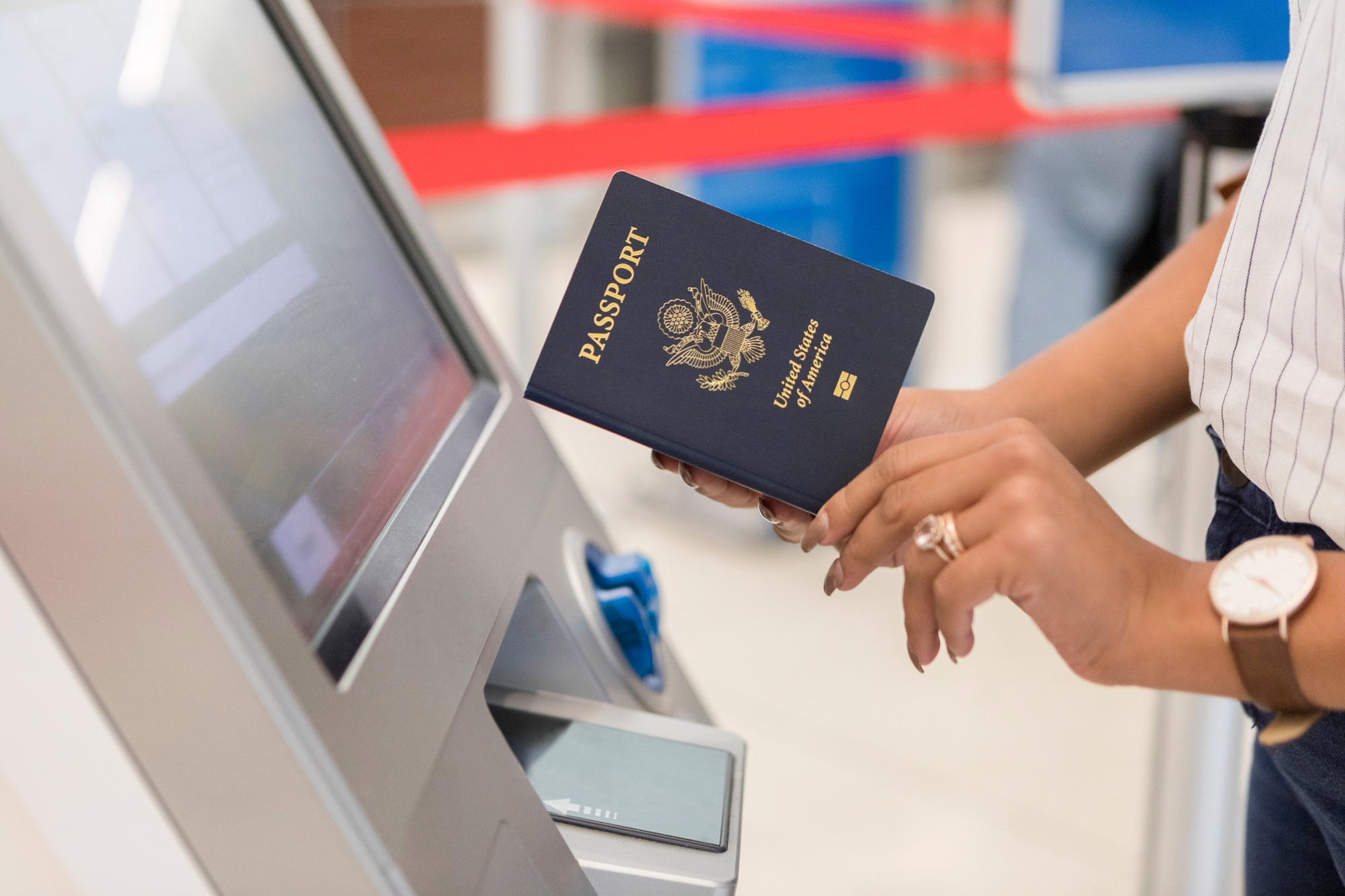
"caption": "As federal policy continues to flip-flop, here’s what transgender, intersex and nonbinary Americans should know about their passports and federal documentation ahead of a busy holiday travel season.",
"credit": "SDI Productions/Getty Images",
"altTag": null,
"description": null,
"imgSizes": {
"thumbnail": {
"file": "https://cdn.kqed.org/wp-content/uploads/sites/10/2025/12/PassportGetty-160x107.jpg",
"width": 160,
"height": 107,
"mimeType": "image/jpeg"
},
"1536x1536": {
"file": "https://cdn.kqed.org/wp-content/uploads/sites/10/2025/12/PassportGetty-1536x1024.jpg",
"width": 1536,
"height": 1024,
"mimeType": "image/jpeg"
},
"post-thumbnail": {
"file": "https://cdn.kqed.org/wp-content/uploads/sites/10/2025/12/PassportGetty-672x372.jpg",
"width": 672,
"height": 372,
"mimeType": "image/jpeg"
},
"twentyfourteen-full-width": {
"file": "https://cdn.kqed.org/wp-content/uploads/sites/10/2025/12/PassportGetty-1038x576.jpg",
"width": 1038,
"height": 576,
"mimeType": "image/jpeg"
},
"npr-cds-wide": {
"file": "https://cdn.kqed.org/wp-content/uploads/sites/10/2025/12/PassportGetty-1200x675.jpg",
"width": 1200,
"height": 675,
"mimeType": "image/jpeg"
},
"kqedFullSize": {
"file": "https://cdn.kqed.org/wp-content/uploads/sites/10/2025/12/PassportGetty.jpg",
"width": 2000,
"height": 1333
}
},
"isLoading": false,
"fetchFailed": false
},
"news_11970474": {
"type": "attachments",
"id": "news_11970474",
"meta": {
"index": "attachments_1716263798",
"site": "news",
"id": "11970474",
"found": true
},
"parent": 11970450,
"imgSizes": {
"twentyfourteen-full-width": {
"file": "https://cdn.kqed.org/wp-content/uploads/sites/10/2023/12/230925-TaxiDriver-001-BL-qut-1038x576.jpg",
"width": 1038,
"mimeType": "image/jpeg",
"height": 576
},
"thumbnail": {
"file": "https://cdn.kqed.org/wp-content/uploads/sites/10/2023/12/230925-TaxiDriver-001-BL-qut-160x107.jpg",
"width": 160,
"mimeType": "image/jpeg",
"height": 107
},
"post-thumbnail": {
"file": "https://cdn.kqed.org/wp-content/uploads/sites/10/2023/12/230925-TaxiDriver-001-BL-qut-672x372.jpg",
"width": 672,
"mimeType": "image/jpeg",
"height": 372
},
"kqedFullSize": {
"file": "https://cdn.kqed.org/wp-content/uploads/sites/10/2023/12/230925-TaxiDriver-001-BL-qut.jpg",
"width": 1920,
"height": 1280
},
"large": {
"file": "https://cdn.kqed.org/wp-content/uploads/sites/10/2023/12/230925-TaxiDriver-001-BL-qut-1020x680.jpg",
"width": 1020,
"mimeType": "image/jpeg",
"height": 680
},
"1536x1536": {
"file": "https://cdn.kqed.org/wp-content/uploads/sites/10/2023/12/230925-TaxiDriver-001-BL-qut-1536x1024.jpg",
"width": 1536,
"mimeType": "image/jpeg",
"height": 1024
},
"medium": {
"file": "https://cdn.kqed.org/wp-content/uploads/sites/10/2023/12/230925-TaxiDriver-001-BL-qut-800x533.jpg",
"width": 800,
"mimeType": "image/jpeg",
"height": 533
}
},
"publishDate": 1703024834,
"modified": 1703025922,
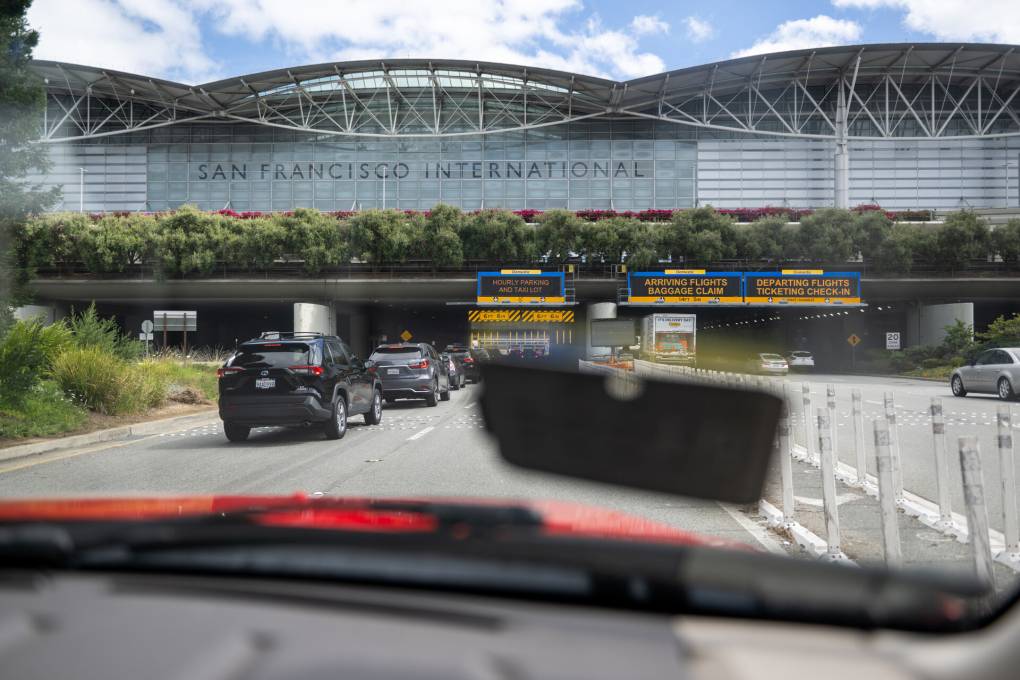
"caption": "Ali Asghar drives to a second waiting area for taxi drivers before being dispatched to the terminals to pick up passengers at San Francisco International Airport on Sept. 25, 2023.",
"description": null,
"title": "sfo-things-to-do-san-francisco",
"credit": "Beth LaBerge/KQED",
"status": "inherit",
"altTag": "A driver's view of cars on a road moving towards a large building that says \"San Francisco International.\"",
"isLoading": false,
"fetchFailed": false
},
"news_12067863": {
"type": "attachments",
"id": "news_12067863",
"meta": {
"index": "attachments_1716263798",
"site": "news",
"id": "12067863",
"found": true
},
"title": "251217-CLIPPER-EQUITY-MD-02-KQED-1",
"publishDate": 1766096293,
"status": "inherit",
"parent": 12067662,
"modified": 1766167611,
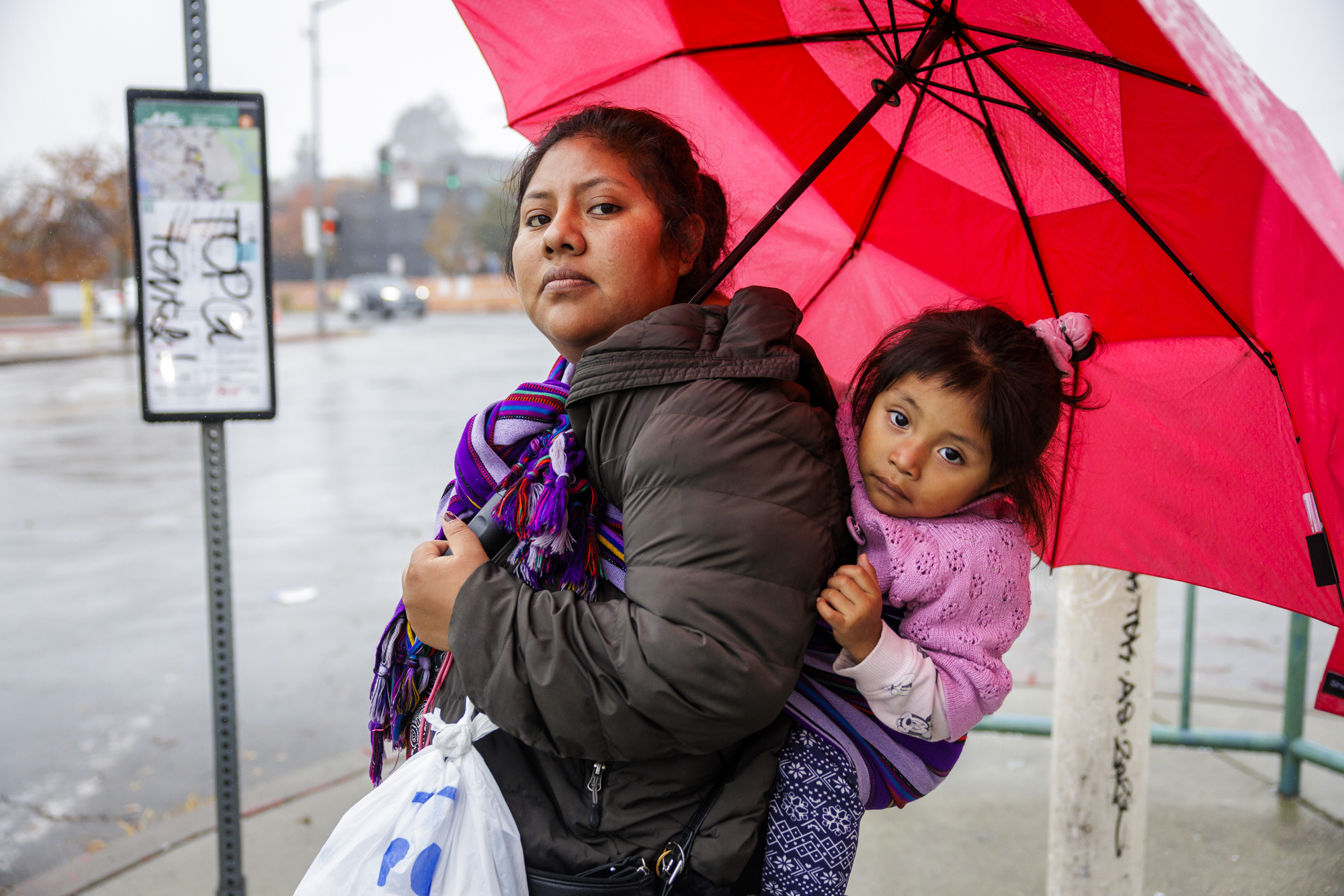
"caption": "Silvia Matias and her daughter Maria wait for their bus at the Eastmont Transit Center in Oakland on Dec. 17, 2025.",
"credit": "Martin do Nascimento/KQED",
"altTag": null,
"description": null,
"imgSizes": {
"thumbnail": {
"file": "https://cdn.kqed.org/wp-content/uploads/sites/10/2025/12/251217-CLIPPER-EQUITY-MD-02-KQED-1-1-160x107.jpg",
"width": 160,
"height": 107,
"mimeType": "image/jpeg"
},
"1536x1536": {
"file": "https://cdn.kqed.org/wp-content/uploads/sites/10/2025/12/251217-CLIPPER-EQUITY-MD-02-KQED-1-1-1536x1025.jpg",
"width": 1536,
"height": 1025,
"mimeType": "image/jpeg"
},
"post-thumbnail": {
"file": "https://cdn.kqed.org/wp-content/uploads/sites/10/2025/12/251217-CLIPPER-EQUITY-MD-02-KQED-1-1-672x372.jpg",
"width": 672,
"height": 372,
"mimeType": "image/jpeg"
},
"twentyfourteen-full-width": {
"file": "https://cdn.kqed.org/wp-content/uploads/sites/10/2025/12/251217-CLIPPER-EQUITY-MD-02-KQED-1-1-1038x576.jpg",
"width": 1038,
"height": 576,
"mimeType": "image/jpeg"
},
"npr-cds-wide": {
"file": "https://cdn.kqed.org/wp-content/uploads/sites/10/2025/12/251217-CLIPPER-EQUITY-MD-02-KQED-1-1-1200x675.jpg",
"width": 1200,
"height": 675,
"mimeType": "image/jpeg"
},
"kqedFullSize": {
"file": "https://cdn.kqed.org/wp-content/uploads/sites/10/2025/12/251217-CLIPPER-EQUITY-MD-02-KQED-1-1.jpg",
"width": 2000,
"height": 1334
}
},
"isLoading": false,
"fetchFailed": false
},
"news_12067045": {
"type": "attachments",
"id": "news_12067045",
"meta": {
"index": "attachments_1716263798",
"site": "news",
"id": "12067045",
"found": true
},
"title": "251210-SFOEATING-31-BL-KQED",
"publishDate": 1765586560,
"status": "inherit",
"parent": 0,
"modified": 1765586739,
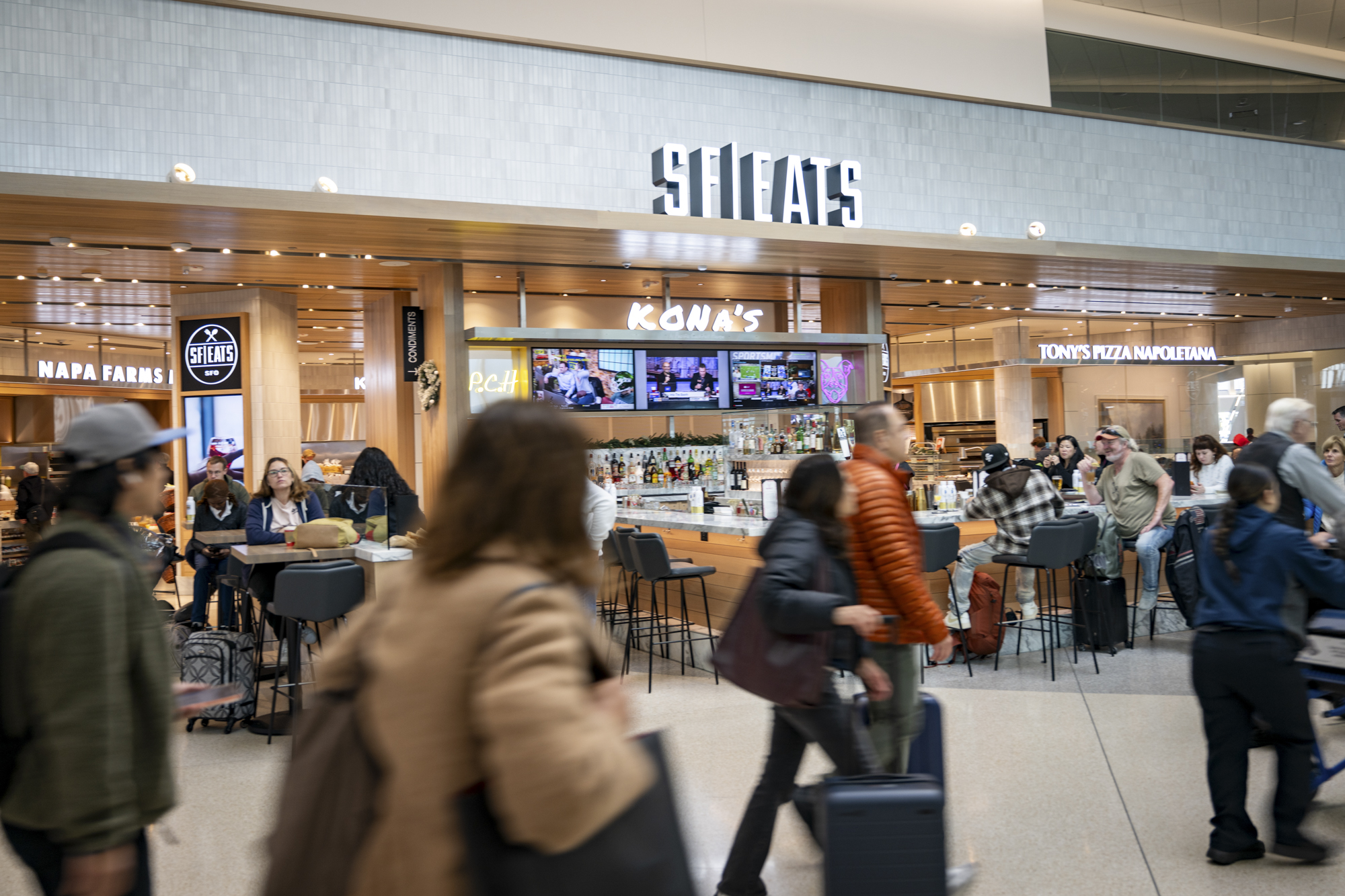
"caption": "A food court in Terminal 1 at San Francisco International Airport on Dec. 10, 2025.",
"credit": "Beth LaBerge/KQED",
"altTag": null,
"description": null,
"imgSizes": {
"thumbnail": {
"file": "https://cdn.kqed.org/wp-content/uploads/sites/10/2025/12/251210-SFOEATING-31-BL-KQED-160x107.jpg",
"width": 160,
"height": 107,
"mimeType": "image/jpeg"
},
"1536x1536": {
"file": "https://cdn.kqed.org/wp-content/uploads/sites/10/2025/12/251210-SFOEATING-31-BL-KQED-1536x1024.jpg",
"width": 1536,
"height": 1024,
"mimeType": "image/jpeg"
},
"post-thumbnail": {
"file": "https://cdn.kqed.org/wp-content/uploads/sites/10/2025/12/251210-SFOEATING-31-BL-KQED-672x372.jpg",
"width": 672,
"height": 372,
"mimeType": "image/jpeg"
},
"twentyfourteen-full-width": {
"file": "https://cdn.kqed.org/wp-content/uploads/sites/10/2025/12/251210-SFOEATING-31-BL-KQED-1038x576.jpg",
"width": 1038,
"height": 576,
"mimeType": "image/jpeg"
},
"npr-cds-wide": {
"file": "https://cdn.kqed.org/wp-content/uploads/sites/10/2025/12/251210-SFOEATING-31-BL-KQED-1200x675.jpg",
"width": 1200,
"height": 675,
"mimeType": "image/jpeg"
},
"kqedFullSize": {
"file": "https://cdn.kqed.org/wp-content/uploads/sites/10/2025/12/251210-SFOEATING-31-BL-KQED.jpg",
"width": 2000,
"height": 1333
}
},
"isLoading": false,
"fetchFailed": false
},
"news_12067062": {
"type": "attachments",
"id": "news_12067062",
"meta": {
"index": "attachments_1716263798",
"site": "news",
"id": "12067062",
"found": true
},
"title": "251210-SFOEATING-87-BL-KQED",
"publishDate": 1765586622,
"status": "inherit",
"parent": 12072458,
"modified": 1770325149,
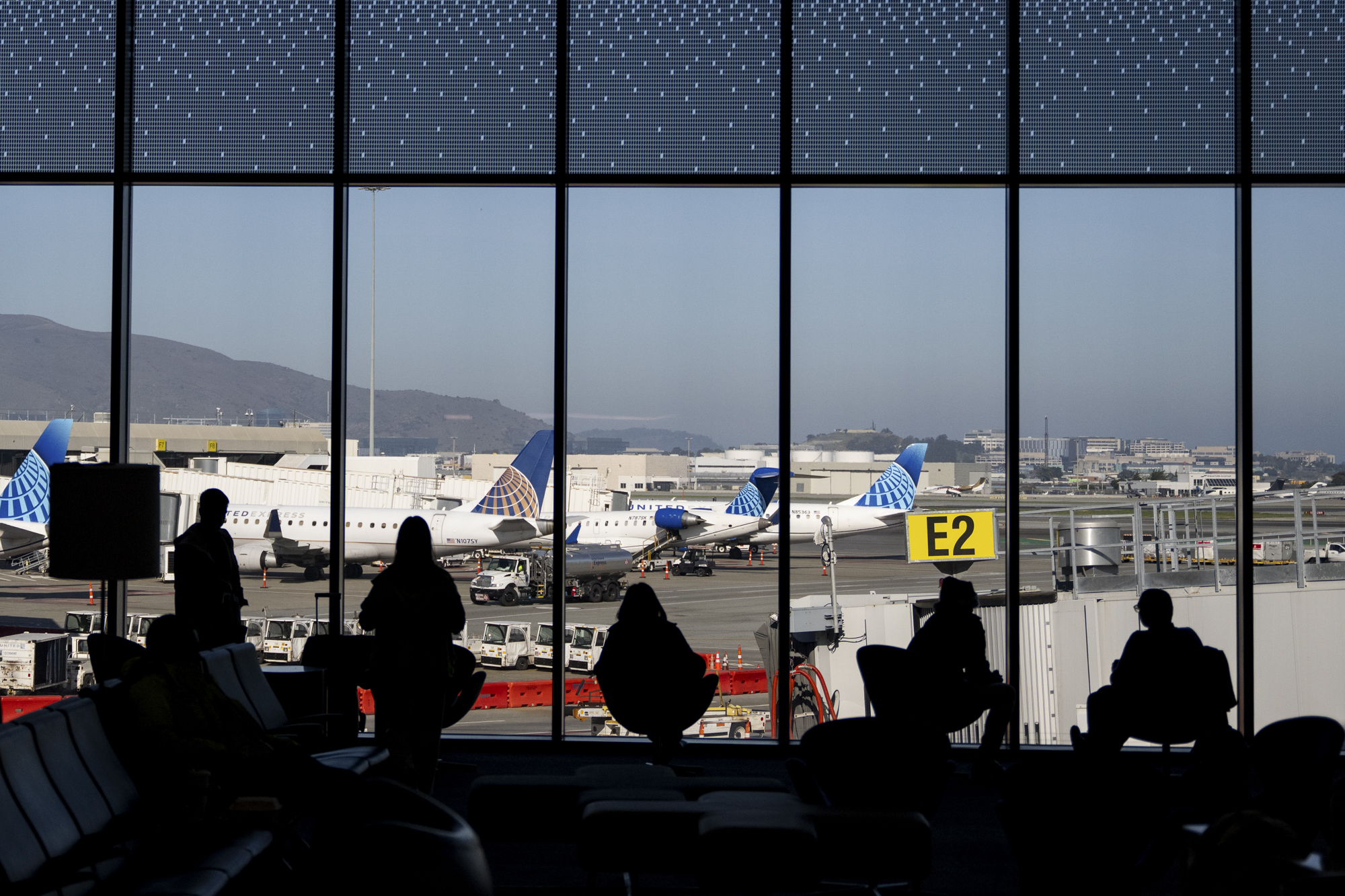
"caption": "Passengers wait for their flight at San Francisco International Airport on Dec. 10, 2025.",
"credit": "Beth LaBerge/KQED",
"altTag": null,
"description": null,
"imgSizes": {
"thumbnail": {
"file": "https://cdn.kqed.org/wp-content/uploads/sites/10/2025/12/251210-SFOEATING-87-BL-KQED-160x107.jpg",
"width": 160,
"height": 107,
"mimeType": "image/jpeg"
},
"1536x1536": {
"file": "https://cdn.kqed.org/wp-content/uploads/sites/10/2025/12/251210-SFOEATING-87-BL-KQED-1536x1024.jpg",
"width": 1536,
"height": 1024,
"mimeType": "image/jpeg"
},
"post-thumbnail": {
"file": "https://cdn.kqed.org/wp-content/uploads/sites/10/2025/12/251210-SFOEATING-87-BL-KQED-672x372.jpg",
"width": 672,
"height": 372,
"mimeType": "image/jpeg"
},
"twentyfourteen-full-width": {
"file": "https://cdn.kqed.org/wp-content/uploads/sites/10/2025/12/251210-SFOEATING-87-BL-KQED-1038x576.jpg",
"width": 1038,
"height": 576,
"mimeType": "image/jpeg"
},
"npr-cds-wide": {
"file": "https://cdn.kqed.org/wp-content/uploads/sites/10/2025/12/251210-SFOEATING-87-BL-KQED-1200x675.jpg",
"width": 1200,
"height": 675,
"mimeType": "image/jpeg"
},
"kqedFullSize": {
"file": "https://cdn.kqed.org/wp-content/uploads/sites/10/2025/12/251210-SFOEATING-87-BL-KQED.jpg",
"width": 2000,
"height": 1333
}
},
"isLoading": false,
"fetchFailed": false
},
"news_12067181": {
"type": "attachments",
"id": "news_12067181",
"meta": {
"index": "attachments_1716263798",
"site": "news",
"id": "12067181",
"found": true
},
"title": "250418-SFPDFile-46-BL_qed",
"publishDate": 1765829502,
"status": "inherit",
"parent": 12067175,
"modified": 1765847308,
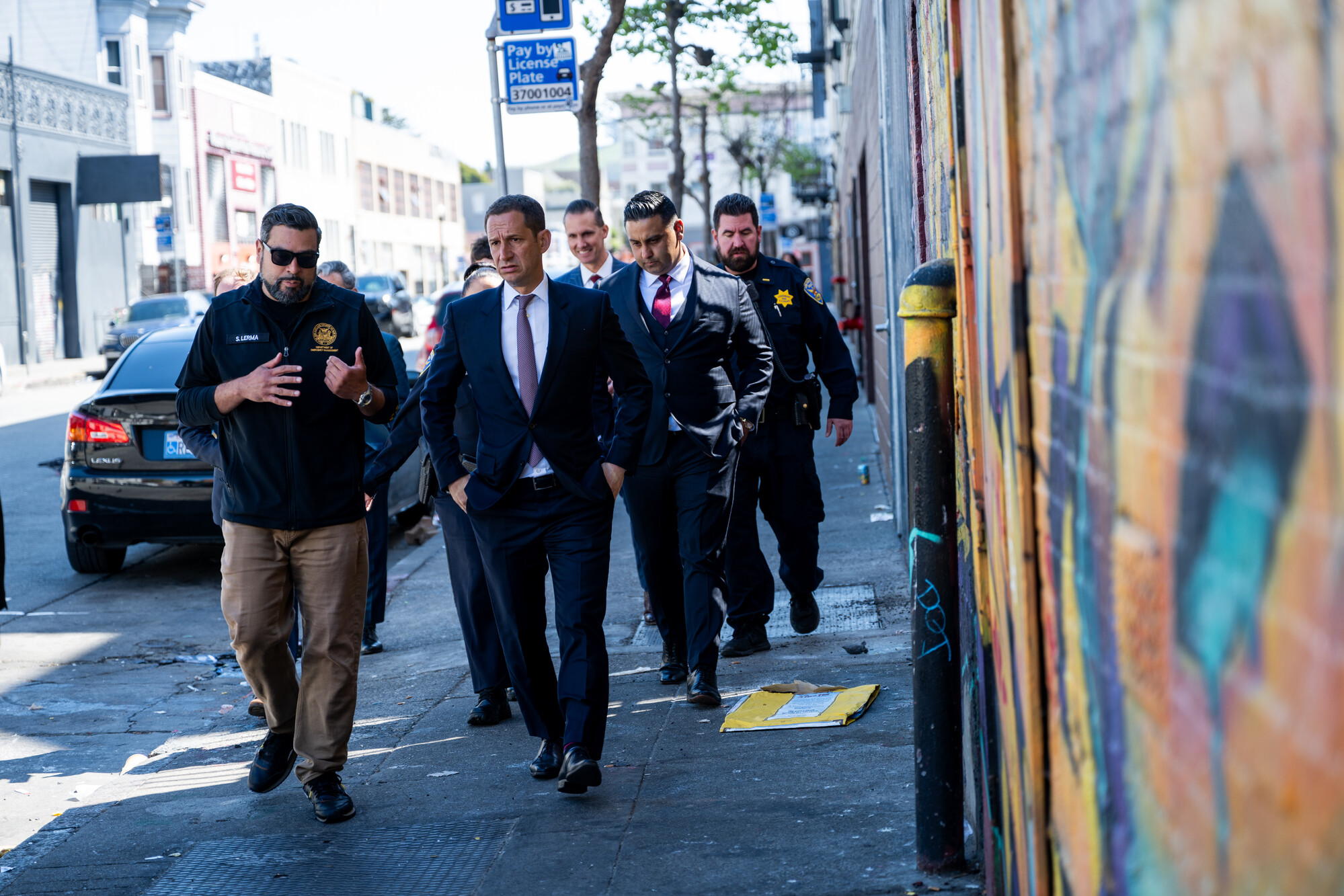
"caption": "Mayor Daniel Lurie walks with Santiago Lerma, from the Department of Emergency Management, during a public safety walk in San Francisco’s Mission District on April 18, 2025.",
"credit": "Beth LaBerge/KQED",
"altTag": null,
"description": null,
"imgSizes": {
"thumbnail": {
"file": "https://cdn.kqed.org/wp-content/uploads/sites/10/2025/12/250418-SFPDFile-46-BL_qed-160x107.jpg",
"width": 160,
"height": 107,
"mimeType": "image/jpeg"
},
"1536x1536": {
"file": "https://cdn.kqed.org/wp-content/uploads/sites/10/2025/12/250418-SFPDFile-46-BL_qed-1536x1024.jpg",
"width": 1536,
"height": 1024,
"mimeType": "image/jpeg"
},
"post-thumbnail": {
"file": "https://cdn.kqed.org/wp-content/uploads/sites/10/2025/12/250418-SFPDFile-46-BL_qed-672x372.jpg",
"width": 672,
"height": 372,
"mimeType": "image/jpeg"
},
"twentyfourteen-full-width": {
"file": "https://cdn.kqed.org/wp-content/uploads/sites/10/2025/12/250418-SFPDFile-46-BL_qed-1038x576.jpg",
"width": 1038,
"height": 576,
"mimeType": "image/jpeg"
},
"npr-cds-wide": {
"file": "https://cdn.kqed.org/wp-content/uploads/sites/10/2025/12/250418-SFPDFile-46-BL_qed-1200x675.jpg",
"width": 1200,
"height": 675,
"mimeType": "image/jpeg"
},
"kqedFullSize": {
"file": "https://cdn.kqed.org/wp-content/uploads/sites/10/2025/12/250418-SFPDFile-46-BL_qed.jpg",
"width": 1999,
"height": 1333
}
},
"isLoading": false,
"fetchFailed": false
},
"news_12052429": {
"type": "attachments",
"id": "news_12052429",
"meta": {
"index": "attachments_1716263798",
"site": "news",
"id": "12052429",
"found": true
},
"title": "20241204-BART-JY-023_qed",
"publishDate": 1755288565,
"status": "inherit",
"parent": 12052424,
"modified": 1755288593,
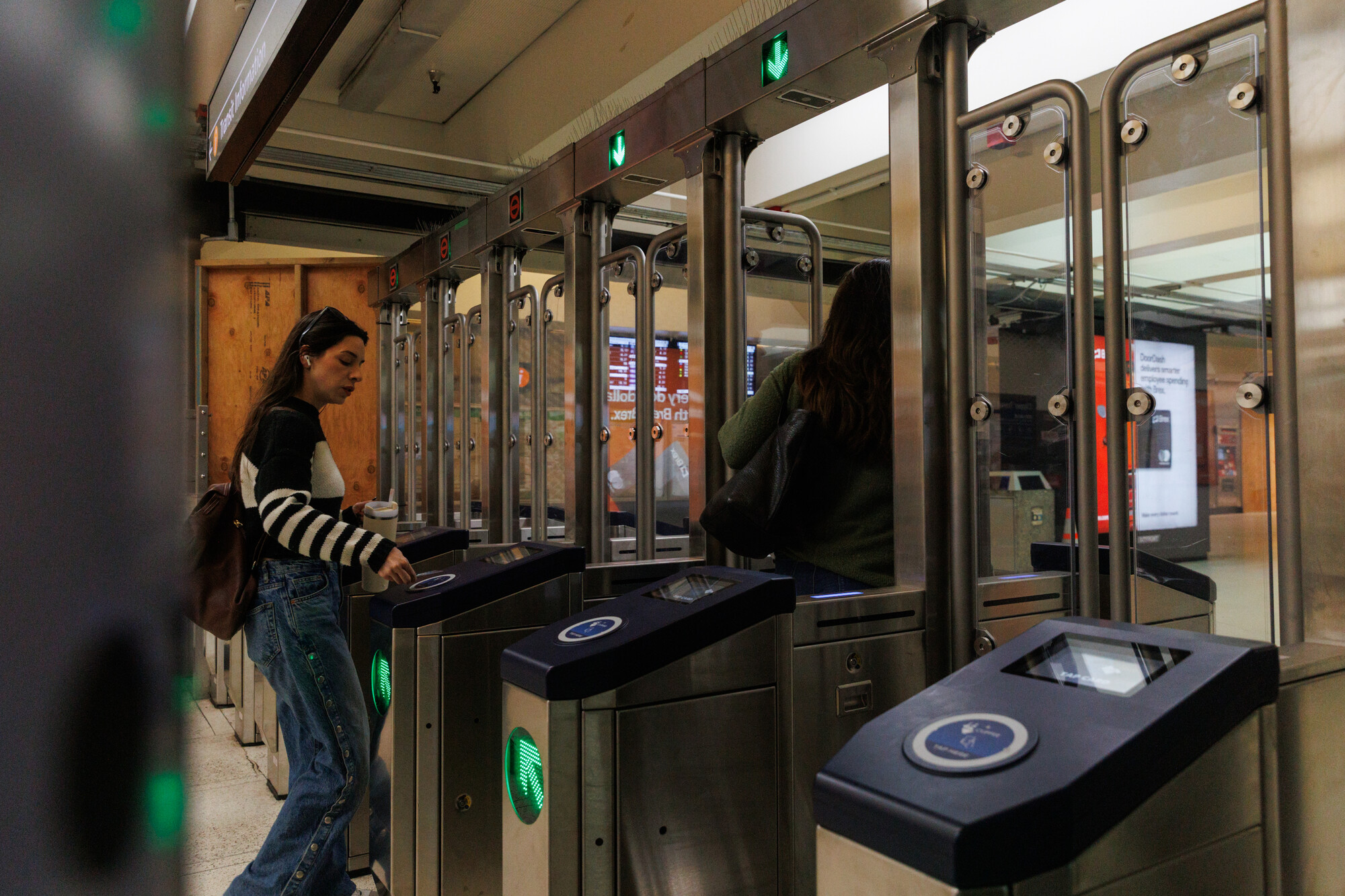
"caption": "Passengers tag their Clipper cards at Montgomery BART Station in San Francisco on Dec. 4, 2024.",
"credit": "Juliana Yamada/KQED",
"altTag": null,
"description": null,
"imgSizes": {
"thumbnail": {
"file": "https://cdn.kqed.org/wp-content/uploads/sites/10/2025/08/20241204-BART-JY-023_qed-160x107.jpg",
"width": 160,
"height": 107,
"mimeType": "image/jpeg"
},
"1536x1536": {
"file": "https://cdn.kqed.org/wp-content/uploads/sites/10/2025/08/20241204-BART-JY-023_qed-1536x1024.jpg",
"width": 1536,
"height": 1024,
"mimeType": "image/jpeg"
},
"post-thumbnail": {
"file": "https://cdn.kqed.org/wp-content/uploads/sites/10/2025/08/20241204-BART-JY-023_qed-672x372.jpg",
"width": 672,
"height": 372,
"mimeType": "image/jpeg"
},
"twentyfourteen-full-width": {
"file": "https://cdn.kqed.org/wp-content/uploads/sites/10/2025/08/20241204-BART-JY-023_qed-1038x576.jpg",
"width": 1038,
"height": 576,
"mimeType": "image/jpeg"
},
"kqedFullSize": {
"file": "https://cdn.kqed.org/wp-content/uploads/sites/10/2025/08/20241204-BART-JY-023_qed.jpg",
"width": 2000,
"height": 1333
}
},
"isLoading": false,
"fetchFailed": false
},
"news_12051372": {
"type": "attachments",
"id": "news_12051372",
"meta": {
"index": "attachments_1716263798",
"site": "news",
"id": "12051372",
"found": true
},
"title": "20241204-BART-JY-027_qed",
"publishDate": 1754609631,
"status": "inherit",
"parent": 12051362,
"modified": 1754609652,
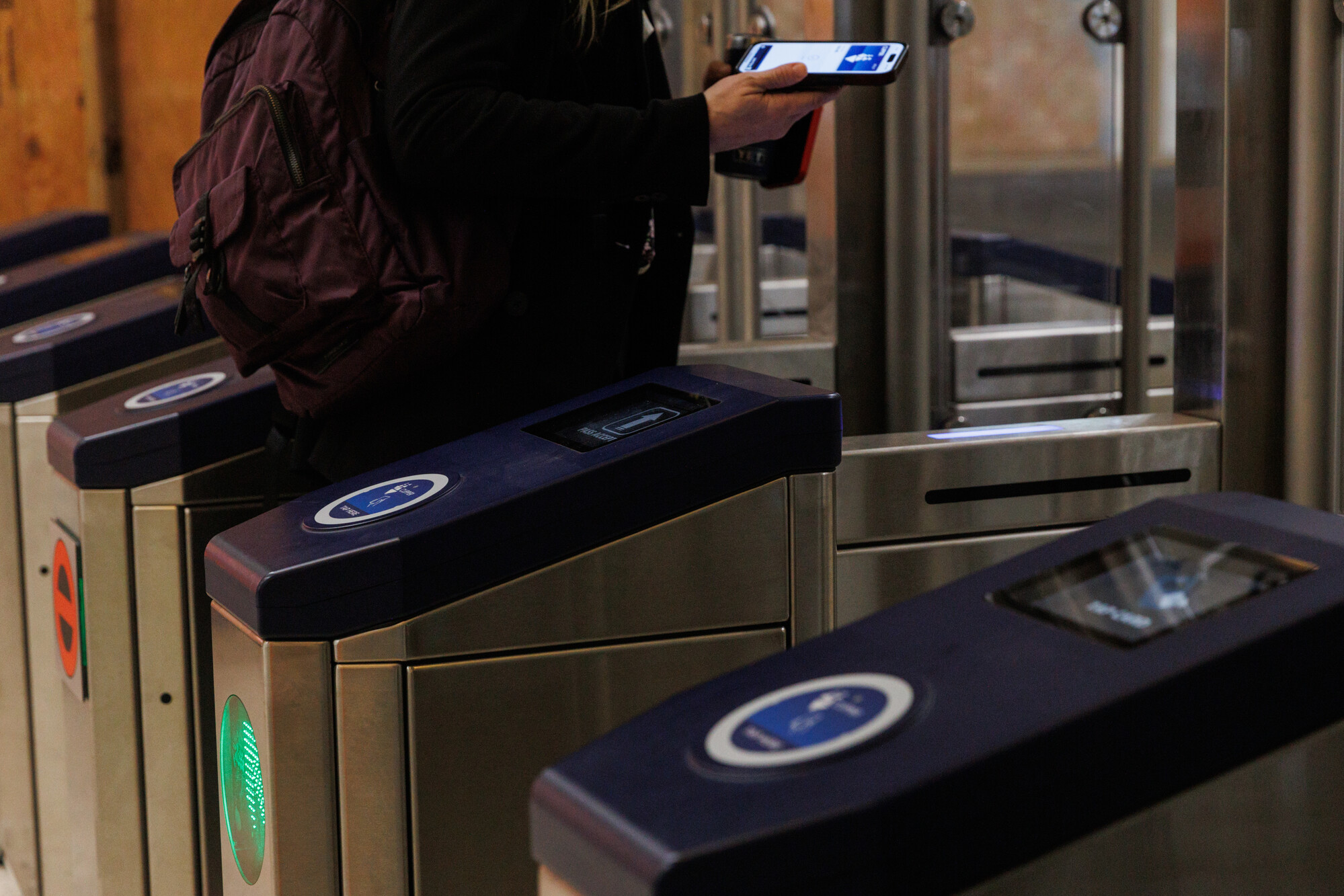
"caption": "A passenger tags their Clipper card at Montgomery BART Station in San Francisco on Dec. 4, 2024.",
"credit": "Juliana Yamada/KQED",
"altTag": null,
"description": null,
"imgSizes": {
"thumbnail": {
"file": "https://cdn.kqed.org/wp-content/uploads/sites/10/2025/08/20241204-BART-JY-027_qed-160x107.jpg",
"width": 160,
"height": 107,
"mimeType": "image/jpeg"
},
"1536x1536": {
"file": "https://cdn.kqed.org/wp-content/uploads/sites/10/2025/08/20241204-BART-JY-027_qed-1536x1024.jpg",
"width": 1536,
"height": 1024,
"mimeType": "image/jpeg"
},
"post-thumbnail": {
"file": "https://cdn.kqed.org/wp-content/uploads/sites/10/2025/08/20241204-BART-JY-027_qed-672x372.jpg",
"width": 672,
"height": 372,
"mimeType": "image/jpeg"
},
"twentyfourteen-full-width": {
"file": "https://cdn.kqed.org/wp-content/uploads/sites/10/2025/08/20241204-BART-JY-027_qed-1038x576.jpg",
"width": 1038,
"height": 576,
"mimeType": "image/jpeg"
},
"kqedFullSize": {
"file": "https://cdn.kqed.org/wp-content/uploads/sites/10/2025/08/20241204-BART-JY-027_qed.jpg",
"width": 1999,
"height": 1333
}
},
"isLoading": false,
"fetchFailed": false
},
"news_12066410": {
"type": "attachments",
"id": "news_12066410",
"meta": {
"index": "attachments_1716263798",
"site": "news",
"id": "12066410",
"found": true
},
"title": "251208-BART SILICON VALLEY TOUR-MD- 03-KQED",
"publishDate": 1765238684,
"status": "inherit",
"parent": 0,
"modified": 1765238740,
"caption": "The tunnel under construction at the West Portal Site of the BART Silicon Valley Phase II Project in San José on Dec. 8, 2025.",
"credit": "Martin do Nascimento/KQED",
"altTag": null,
"description": null,
"imgSizes": {
"thumbnail": {
"file": "https://cdn.kqed.org/wp-content/uploads/sites/10/2025/12/251208-BART-SILICON-VALLEY-TOUR-MD-03-KQED-160x107.jpg",
"width": 160,
"height": 107,
"mimeType": "image/jpeg"
},
"1536x1536": {
"file": "https://cdn.kqed.org/wp-content/uploads/sites/10/2025/12/251208-BART-SILICON-VALLEY-TOUR-MD-03-KQED-1536x1024.jpg",
"width": 1536,
"height": 1024,
"mimeType": "image/jpeg"
},
"post-thumbnail": {
"file": "https://cdn.kqed.org/wp-content/uploads/sites/10/2025/12/251208-BART-SILICON-VALLEY-TOUR-MD-03-KQED-672x372.jpg",
"width": 672,
"height": 372,
"mimeType": "image/jpeg"
},
"twentyfourteen-full-width": {
"file": "https://cdn.kqed.org/wp-content/uploads/sites/10/2025/12/251208-BART-SILICON-VALLEY-TOUR-MD-03-KQED-1038x576.jpg",
"width": 1038,
"height": 576,
"mimeType": "image/jpeg"
},
"npr-cds-wide": {
"file": "https://cdn.kqed.org/wp-content/uploads/sites/10/2025/12/251208-BART-SILICON-VALLEY-TOUR-MD-03-KQED-1200x675.jpg",
"width": 1200,
"height": 675,
"mimeType": "image/jpeg"
},
"kqedFullSize": {
"file": "https://cdn.kqed.org/wp-content/uploads/sites/10/2025/12/251208-BART-SILICON-VALLEY-TOUR-MD-03-KQED.jpg",
"width": 2000,
"height": 1333
}
},
"isLoading": false,
"fetchFailed": false
},
"news_12023482": {
"type": "attachments",
"id": "news_12023482",
"meta": {
"index": "attachments_1716263798",
"site": "news",
"id": "12023482",
"found": true
},
"title": "Two people wait for a train at BART Powell Street station in San Francisco, Calif., on Tuesday, February 11, 2020.",
"publishDate": 1737574272,
"status": "inherit",
"parent": 12023463,
"modified": 1737588181,
"caption": "Two people wait for a train at BART Powell Street station in San Francisco, California, on Tuesday, Feb. 11, 2020. ",
"credit": "Scott Strazzante/San Francisco Chronicle via Getty Images",
"altTag": null,
"description": null,
"imgSizes": {
"medium": {
"file": "https://cdn.kqed.org/wp-content/uploads/sites/10/2025/01/PowellStationSanFranciscoGetty-800x534.jpg",
"width": 800,
"height": 534,
"mimeType": "image/jpeg"
},
"large": {
"file": "https://cdn.kqed.org/wp-content/uploads/sites/10/2025/01/PowellStationSanFranciscoGetty-1020x680.jpg",
"width": 1020,
"height": 680,
"mimeType": "image/jpeg"
},
"thumbnail": {
"file": "https://cdn.kqed.org/wp-content/uploads/sites/10/2025/01/PowellStationSanFranciscoGetty-160x107.jpg",
"width": 160,
"height": 107,
"mimeType": "image/jpeg"
},
"1536x1536": {
"file": "https://cdn.kqed.org/wp-content/uploads/sites/10/2025/01/PowellStationSanFranciscoGetty-1536x1025.jpg",
"width": 1536,
"height": 1025,
"mimeType": "image/jpeg"
},
"post-thumbnail": {
"file": "https://cdn.kqed.org/wp-content/uploads/sites/10/2025/01/PowellStationSanFranciscoGetty-672x372.jpg",
"width": 672,
"height": 372,
"mimeType": "image/jpeg"
},
"twentyfourteen-full-width": {
"file": "https://cdn.kqed.org/wp-content/uploads/sites/10/2025/01/PowellStationSanFranciscoGetty-1038x576.jpg",
"width": 1038,
"height": 576,
"mimeType": "image/jpeg"
},
"full-width": {
"file": "https://cdn.kqed.org/wp-content/uploads/sites/10/2025/01/PowellStationSanFranciscoGetty-1920x1281.jpg",
"width": 1920,
"height": 1281,
"mimeType": "image/jpeg"
},
"kqedFullSize": {
"file": "https://cdn.kqed.org/wp-content/uploads/sites/10/2025/01/PowellStationSanFranciscoGetty.jpg",
"width": 2000,
"height": 1334
}
},
"isLoading": false,
"fetchFailed": false
},
"news_12065774": {
"type": "attachments",
"id": "news_12065774",
"meta": {
"index": "attachments_1716263798",
"site": "news",
"id": "12065774",
"found": true
},
"title": "251202-OAKSPEEDCAMERAS-02-BL-KQED",
"publishDate": 1764714271,
"status": "inherit",
"parent": 0,
"modified": 1764714391,
"caption": "Lucé Lu sits in her vehicle outside of The Crown: Royal Coffee Lab & Tasting Room in Oakland on Dec. 2, 2025, a short distance from where a speed-camera pilot program will install a camera on Broadway between 26th and 27th streets.",
"credit": "Beth LaBerge/KQED",
"altTag": null,
"description": null,
"imgSizes": {
"thumbnail": {
"file": "https://cdn.kqed.org/wp-content/uploads/sites/10/2025/12/251202-OAKSPEEDCAMERAS-02-BL-KQED-160x107.jpg",
"width": 160,
"height": 107,
"mimeType": "image/jpeg"
},
"1536x1536": {
"file": "https://cdn.kqed.org/wp-content/uploads/sites/10/2025/12/251202-OAKSPEEDCAMERAS-02-BL-KQED-1536x1024.jpg",
"width": 1536,
"height": 1024,
"mimeType": "image/jpeg"
},
"post-thumbnail": {
"file": "https://cdn.kqed.org/wp-content/uploads/sites/10/2025/12/251202-OAKSPEEDCAMERAS-02-BL-KQED-672x372.jpg",
"width": 672,
"height": 372,
"mimeType": "image/jpeg"
},
"twentyfourteen-full-width": {
"file": "https://cdn.kqed.org/wp-content/uploads/sites/10/2025/12/251202-OAKSPEEDCAMERAS-02-BL-KQED-1038x576.jpg",
"width": 1038,
"height": 576,
"mimeType": "image/jpeg"
},
"npr-cds-wide": {
"file": "https://cdn.kqed.org/wp-content/uploads/sites/10/2025/12/251202-OAKSPEEDCAMERAS-02-BL-KQED-1200x675.jpg",
"width": 1200,
"height": 675,
"mimeType": "image/jpeg"
},
"kqedFullSize": {
"file": "https://cdn.kqed.org/wp-content/uploads/sites/10/2025/12/251202-OAKSPEEDCAMERAS-02-BL-KQED.jpg",
"width": 2000,
"height": 1333
}
},
"isLoading": false,
"fetchFailed": false
},
"news_12005684": {
"type": "attachments",
"id": "news_12005684",
"meta": {
"index": "attachments_1716263798",
"site": "news",
"id": "12005684",
"found": true
},
"title": "US passports",
"publishDate": 1726861630,
"status": "inherit",
"parent": 12005679,
"modified": 1764793132,
"caption": "A U.S. passport enables travel to more than 180 countries without needing a visa beforehand.",
"credit": "Douglas Sacha/Getty Images",
"altTag": null,
"description": null,
"imgSizes": {
"medium": {
"file": "https://cdn.kqed.org/wp-content/uploads/sites/10/2024/09/GettyImages-1277623147-800x533.jpg",
"width": 800,
"height": 533,
"mimeType": "image/jpeg"
},
"large": {
"file": "https://cdn.kqed.org/wp-content/uploads/sites/10/2024/09/GettyImages-1277623147-1020x680.jpg",
"width": 1020,
"height": 680,
"mimeType": "image/jpeg"
},
"thumbnail": {
"file": "https://cdn.kqed.org/wp-content/uploads/sites/10/2024/09/GettyImages-1277623147-160x107.jpg",
"width": 160,
"height": 107,
"mimeType": "image/jpeg"
},
"1536x1536": {
"file": "https://cdn.kqed.org/wp-content/uploads/sites/10/2024/09/GettyImages-1277623147-1536x1023.jpg",
"width": 1536,
"height": 1023,
"mimeType": "image/jpeg"
},
"2048x2048": {
"file": "https://cdn.kqed.org/wp-content/uploads/sites/10/2024/09/GettyImages-1277623147-2048x1364.jpg",
"width": 2048,
"height": 1364,
"mimeType": "image/jpeg"
},
"post-thumbnail": {
"file": "https://cdn.kqed.org/wp-content/uploads/sites/10/2024/09/GettyImages-1277623147-672x372.jpg",
"width": 672,
"height": 372,
"mimeType": "image/jpeg"
},
"twentyfourteen-full-width": {
"file": "https://cdn.kqed.org/wp-content/uploads/sites/10/2024/09/GettyImages-1277623147-1038x576.jpg",
"width": 1038,
"height": 576,
"mimeType": "image/jpeg"
},
"full-width": {
"file": "https://cdn.kqed.org/wp-content/uploads/sites/10/2024/09/GettyImages-1277623147-1920x1279.jpg",
"width": 1920,
"height": 1279,
"mimeType": "image/jpeg"
},
"kqedFullSize": {
"file": "https://cdn.kqed.org/wp-content/uploads/sites/10/2024/09/GettyImages-1277623147.jpg",
"width": 2121,
"height": 1413
}
},
"isLoading": false,
"fetchFailed": false
}
},
"audioPlayerReducer": {
"postId": "stream_live",
"isPaused": true,
"isPlaying": false,
"pfsActive": false,
"pledgeModalIsOpen": true,
"playerDrawerIsOpen": false,
"liveAudioPlayStartedAt": 0,
"liveAudioPlayContext": ""
},
"authorsReducer": {
"adahlstromeckman": {
"type": "authors",
"id": "11785",
"meta": {
"index": "authors_1716337520",
"id": "11785",
"found": true
},
"name": "Azul Dahlstrom-Eckman",
"firstName": "Azul",
"lastName": "Dahlstrom-Eckman",
"slug": "adahlstromeckman",
"email": "adahlstrom-eckman@kqed.org",
"display_author_email": true,
"staff_mastheads": [],
"title": "Reporter",
"bio": "Azul is a reporter for KQED focusing on transportation and features. He joined KQED in 2021 as an alumna of KALW's Audio Academy radio journalism training program.",
"avatar": "https://secure.gravatar.com/avatar/9cb750298435add7815a777f55bf1f46845c1386bb8452555c60a7b820b5aba3?s=600&d=blank&r=g",
"twitter": "@zuliemann",
"bluesky": "@azul415.bsky.social",
"facebook": null,
"instagram": null,
"linkedin": null,
"sites": [
{
"site": "arts",
"roles": [
"editor"
]
},
{
"site": "news",
"roles": [
"editor"
]
},
{
"site": "science",
"roles": [
"editor"
]
},
{
"site": "liveblog",
"roles": [
"author"
]
}
],
"headData": {
"title": "Azul Dahlstrom-Eckman | KQED",
"description": "Reporter",
"ogImgSrc": "https://secure.gravatar.com/avatar/9cb750298435add7815a777f55bf1f46845c1386bb8452555c60a7b820b5aba3?s=600&d=blank&r=g",
"twImgSrc": "https://secure.gravatar.com/avatar/9cb750298435add7815a777f55bf1f46845c1386bb8452555c60a7b820b5aba3?s=600&d=blank&r=g"
},
"isLoading": false,
"link": "/author/adahlstromeckman"
},
"nkhan": {
"type": "authors",
"id": "11867",
"meta": {
"index": "authors_1716337520",
"id": "11867",
"found": true
},
"name": "Nisa Khan",
"firstName": "Nisa",
"lastName": "Khan",
"slug": "nkhan",
"email": "nkhan@kqed.org",
"display_author_email": false,
"staff_mastheads": [],
"title": "KQED Contributor",
"bio": "Nisa Khan is a reporter for KQED's Audience News Desk. She was formerly a data reporter at Michigan Radio. She earned a Bachelor of Science in Information from the University of Michigan and a Master of Arts in Communication from Stanford University.",
"avatar": "https://secure.gravatar.com/avatar/8720459eef081ff64582b3506b124d58523e80e120704a0cbd9892533c914991?s=600&d=blank&r=g",
"twitter": "mnisakhan",
"bluesky": null,
"facebook": null,
"instagram": null,
"linkedin": null,
"sites": [
{
"site": "arts",
"roles": [
"editor"
]
},
{
"site": "news",
"roles": [
"editor"
]
},
{
"site": "science",
"roles": [
"editor",
"author"
]
},
{
"site": "forum",
"roles": [
"editor"
]
},
{
"site": "liveblog",
"roles": [
"contributor"
]
}
],
"headData": {
"title": "Nisa Khan | KQED",
"description": "KQED Contributor",
"ogImgSrc": "https://secure.gravatar.com/avatar/8720459eef081ff64582b3506b124d58523e80e120704a0cbd9892533c914991?s=600&d=blank&r=g",
"twImgSrc": "https://secure.gravatar.com/avatar/8720459eef081ff64582b3506b124d58523e80e120704a0cbd9892533c914991?s=600&d=blank&r=g"
},
"isLoading": false,
"link": "/author/nkhan"
},
"jgeha": {
"type": "authors",
"id": "11906",
"meta": {
"index": "authors_1716337520",
"id": "11906",
"found": true
},
"name": "Joseph Geha",
"firstName": "Joseph",
"lastName": "Geha",
"slug": "jgeha",
"email": "jgeha@kqed.org",
"display_author_email": false,
"staff_mastheads": [
"news",
"science"
],
"title": "KQED Contributor",
"bio": null,
"avatar": "https://secure.gravatar.com/avatar/ea84d2b6dd93d6369d453edf19dd583f117cd1759d2d9c9c92f9de77017354fe?s=600&d=blank&r=g",
"twitter": null,
"bluesky": null,
"facebook": null,
"instagram": null,
"linkedin": null,
"sites": [
{
"site": "news",
"roles": [
"editor"
]
},
{
"site": "liveblog",
"roles": [
"author"
]
}
],
"headData": {
"title": "Joseph Geha | KQED",
"description": "KQED Contributor",
"ogImgSrc": "https://secure.gravatar.com/avatar/ea84d2b6dd93d6369d453edf19dd583f117cd1759d2d9c9c92f9de77017354fe?s=600&d=blank&r=g",
"twImgSrc": "https://secure.gravatar.com/avatar/ea84d2b6dd93d6369d453edf19dd583f117cd1759d2d9c9c92f9de77017354fe?s=600&d=blank&r=g"
},
"isLoading": false,
"link": "/author/jgeha"
},
"kdebenedetti": {
"type": "authors",
"id": "11913",
"meta": {
"index": "authors_1716337520",
"id": "11913",
"found": true
},
"name": "Katie DeBenedetti",
"firstName": "Katie",
"lastName": "DeBenedetti",
"slug": "kdebenedetti",
"email": "kdebenedetti@kqed.org",
"display_author_email": false,
"staff_mastheads": [
"news",
"science"
],
"title": "KQED Contributor",
"bio": "Katie DeBenedetti is a digital reporter covering daily news for the Express Desk. Prior to joining KQED as a culture reporting intern in January 2024, she covered education and city government for the Napa Valley Register.",
"avatar": "https://secure.gravatar.com/avatar/6e31073cb8f7e4214ab03f42771d0f45?s=600&d=blank&r=g",
"twitter": null,
"facebook": null,
"instagram": null,
"linkedin": null,
"sites": [
{
"site": "news",
"roles": [
"author"
]
},
{
"site": "science",
"roles": [
"author"
]
},
{
"site": "liveblog",
"roles": [
"author"
]
}
],
"headData": {
"title": "Katie DeBenedetti | KQED",
"description": "KQED Contributor",
"ogImgSrc": "https://secure.gravatar.com/avatar/6e31073cb8f7e4214ab03f42771d0f45?s=600&d=blank&r=g",
"twImgSrc": "https://secure.gravatar.com/avatar/6e31073cb8f7e4214ab03f42771d0f45?s=600&d=blank&r=g"
},
"isLoading": false,
"link": "/author/kdebenedetti"
},
"aaliahmad": {
"type": "authors",
"id": "11986",
"meta": {
"index": "authors_1716337520",
"id": "11986",
"found": true
},
"name": "Ayah Ali-Ahmad",
"firstName": "Ayah",
"lastName": "Ali-Ahmad",
"slug": "aaliahmad",
"email": "aaliahmad@KQED.org",
"display_author_email": false,
"staff_mastheads": [],
"title": "KQED Contributor",
"bio": null,
"avatar": "https://secure.gravatar.com/avatar/1cf54f187a5e1064b2cfef3f3d2f1e4f93e453395d56912aca6382a6071ec3ed?s=600&d=blank&r=g",
"twitter": "ayahaliahmad",
"bluesky": null,
"facebook": null,
"instagram": null,
"linkedin": null,
"sites": [
{
"site": "news",
"roles": [
"subscriber"
]
}
],
"headData": {
"title": "Ayah Ali-Ahmad | KQED",
"description": "KQED Contributor",
"ogImgSrc": "https://secure.gravatar.com/avatar/1cf54f187a5e1064b2cfef3f3d2f1e4f93e453395d56912aca6382a6071ec3ed?s=600&d=blank&r=g",
"twImgSrc": "https://secure.gravatar.com/avatar/1cf54f187a5e1064b2cfef3f3d2f1e4f93e453395d56912aca6382a6071ec3ed?s=600&d=blank&r=g"
},
"isLoading": false,
"link": "/author/aaliahmad"
}
},
"pagesReducer": {
"news_category_transportation": {
"type": "terms",
"id": "news_1397",
"meta": {
"index": "terms_1716263798",
"site": "news",
"id": "1397",
"score": 12.939859
},
"featImg": null,
"name": "Transportation",
"description": null,
"taxonomy": "category",
"headData": {
"twImgId": null,
"twTitle": null,
"ogTitle": null,
"ogImgId": null,
"twDescription": null,
"description": null,
"title": "Transportation Archives | KQED News",
"ogDescription": null
},
"ttid": 1409,
"slug": "transportation",
"isLoading": false,
"title": "Transportation",
"pageMeta": {
"site": "news",
"WpPageTemplate": "page-topic-editorial",
"currentPage": 11
},
"blocks": [
{
"blockName": "kqed/post-list",
"attrs": {
"layout": "cardArticle2",
"query": "posts/news?category=transportation",
"seeMore": false,
"paginated": true,
"page": 11
}
},
{
"blockName": "kqed/ad"
}
]
}
},
"pfsSessionReducer": {},
"postsReducer": {
"stream_live": {
"type": "live",
"id": "stream_live",
"audioUrl": "https://streams.kqed.org/kqedradio",
"title": "Live Stream",
"excerpt": "Live Stream information currently unavailable.",
"link": "/radio",
"featImg": "",
"label": {
"name": "KQED Live",
"link": "/"
}
},
"stream_kqedNewscast": {
"type": "posts",
"id": "stream_kqedNewscast",
"audioUrl": "https://www.kqed.org/.stream/anon/radio/RDnews/newscast.mp3?_=1",
"title": "KQED Newscast",
"featImg": "",
"label": {
"name": "88.5 FM",
"link": "/"
}
},
"news_12067497": {
"type": "posts",
"id": "news_12067497",
"meta": {
"index": "posts_1716263798",
"site": "news",
"id": "12067497",
"score": null,
"sort": [
1766242800000
]
},
"guestAuthors": [],
"slug": "trans-flying-for-holidays-san-francisco-california-airports-ids-identification",
"title": "Are You Trans and Flying for the Holidays? What to Know About IDs at the Airport",
"publishDate": 1766242800,
"format": "standard",
"headTitle": "Are You Trans and Flying for the Holidays? What to Know About IDs at the Airport | KQED",
"labelTerm": {
"site": "news"
},
"content": "\u003cp>Mere hours after his Jan. 20 inauguration, President \u003ca href=\"https://www.kqed.org/news/tag/donald-trump\">Donald Trump\u003c/a> issued an executive order stating that the federal government would recognize only two sexes, male and female. The State Department subsequently \u003ca href=\"https://www.kqed.org/news/12029428/how-californians-can-start-changing-names-and-gender-markers-on-government-ids\">eliminated\u003c/a> the “X” gender as an option and suspended its previous policy that permitted transgender, intersex and nonbinary people to update gender markers on their passports.\u003c/p>\n\u003cp>Lawsuits against the administration quickly followed, and, for the rest of 2025, guidelines around gender markers flip-flopped. In the middle of the year, a preliminary injunction paused Trump’s order, allowing Americans to get gender markers that matched their identity.\u003c/p>\n\u003cp>However, in early \u003ca href=\"https://apnews.com/article/trump-transgender-nonbinary-passport-sex-marker-5040c6412e06a072889af30cfae97462\">November\u003c/a>, the \u003ca href=\"https://news.gallup.com/poll/695759/new-high-say-supreme-court-too-conservative.aspx\">conservative-leaning\u003c/a> Supreme Court allowed the Trump administration to enforce its initial policy through an emergency stay.\u003c/p>\n\u003cp>[ad fullwidth]\u003c/p>\n\u003cp>“It is no longer possible for people to get an accurate passport,” explained Carl Charles, senior attorney at \u003ca href=\"https://lambdalegal.org/\">Lambda Legal\u003c/a>, a New York-based organization serving LGBTQ+ people across the country. Charles, based in Atlanta, is currently part of a separate lawsuit against the State Department on behalf of \u003ca href=\"https://lambdalegal.org/case/schlacter-v-us-dept-of-state/\">seven transgender people\u003c/a> impacted by Trump’s gender-marker policy.\u003c/p>\n\u003cp>The back-and-forth has left transgender and intersex Americans confused and stressed about the state of their documentation.\u003c/p>\n\u003cfigure id=\"attachment_12067542\" class=\"wp-caption alignleft\" style=\"max-width: 1000px\">\u003cimg loading=\"lazy\" decoding=\"async\" class=\"size-full wp-image-12067542\" src=\"https://cdn.kqed.org/wp-content/uploads/sites/10/2025/12/Carl-Charles.jpg\" alt=\"\" width=\"1000\" height=\"667\" srcset=\"https://cdn.kqed.org/wp-content/uploads/sites/10/2025/12/Carl-Charles.jpg 1000w, https://cdn.kqed.org/wp-content/uploads/sites/10/2025/12/Carl-Charles-160x107.jpg 160w\" sizes=\"auto, (max-width: 1000px) 100vw, 1000px\">\u003cfigcaption class=\"wp-caption-text\">Carl Charles, Counsel in the Southern Regional Office of Lambda Legal. \u003ccite>(Courtesy of Lambda Legal)\u003c/cite>\u003c/figcaption>\u003c/figure>\n\u003cp>“There’s really no purpose for policies like this one, apart from making the people it affects’ lives miserable,” said Alexis Levy, a San Francisco-based lawyer who specializes in \u003ca href=\"https://www.identityaffirmation.org/about\">name and gender-marker changes\u003c/a>.\u003c/p>\n\u003cp>There is still hope for the policy to be reversed again, Charles said. The lawsuit, filed by the American Civil Liberties Union, is still ongoing, and advocates are “optimistic” about “a positive resolution.”\u003c/p>\n\u003cp>However, in the meantime, “this means that the discriminatory policy is in place,” he said.\u003c/p>\n\u003cp>Amid the uncertainty around the current passport policy, KQED spoke to Charles about what transgender, intersex and nonbinary Americans should know about their passports and federal documentation, ahead of a busy holiday travel season.\u003c/p>\n\u003cp>This interview has been condensed and edited for clarity. Keep in mind that this is not legal advice, and it is best to consult with an expert on your specific situation.\u003c/p>\n\u003cp>\u003cstrong>Nisa Khan: \u003c/strong>The State Department has been \u003ca href=\"https://www.erininthemorning.com/p/trump-admin-quietly-changes-state?utm_source=post-email-title&publication_id=994764&post_id=178905046&utm_campaign=email-post-title&isFreemail=true&r=1thvn9&triedRedirect=true&utm_medium=email\">vague\u003c/a> about whether it will invalidate passports that have the X gender marker or updated gender markers. Have there been cases where someone has had their passport denied?\u003c/p>\n\u003cp>\u003cstrong>Carl Charles:\u003c/strong> There are federal regulations that permit the revocation of passports that the State Department determines were issued, for example, on the basis of fraud, such as if someone is using a fake identity or using someone else’s identity to obtain a passport.\u003c/p>\n\u003cp>But it is pretty difficult for the State Department to go and change a passport that was validly issued.\u003c/p>\n\u003cp>That’s not to say they couldn’t try, but we have been hearing from trans and intersex community members across the United States who have confirmed for us that their passports issued under the preliminary injunction in the ACLU’s case remain valid.\u003c/p>\n\u003cfigure id=\"attachment_12067210\" class=\"wp-caption aligncenter\" style=\"max-width: 2000px\">\u003cimg loading=\"lazy\" decoding=\"async\" class=\"size-full wp-image-12067210\" src=\"https://cdn.kqed.org/wp-content/uploads/sites/10/2025/12/251210-SFOEating-86-BL_qed.jpg\" alt=\"\" width=\"2000\" height=\"1333\" srcset=\"https://cdn.kqed.org/wp-content/uploads/sites/10/2025/12/251210-SFOEating-86-BL_qed.jpg 2000w, https://cdn.kqed.org/wp-content/uploads/sites/10/2025/12/251210-SFOEating-86-BL_qed-160x107.jpg 160w, https://cdn.kqed.org/wp-content/uploads/sites/10/2025/12/251210-SFOEating-86-BL_qed-1536x1024.jpg 1536w\" sizes=\"auto, (max-width: 2000px) 100vw, 2000px\">\u003cfigcaption class=\"wp-caption-text\">Passengers wait for their flight at San Francisco International Airport on Dec. 10, 2025.\u003c/figcaption>\u003c/figure>\n\u003cp>They have not had issues at airports or crossing international borders, and I’m really happy to be able to share that that continues to be people’s experience, we are hearing from at our legal help desk with Lambda Legal.\u003c/p>\n\u003cp>We have not heard of the State Department taking action to revoke any of those legally and correctly issued passports. If that happens, we will update our \u003ca href=\"https://lambdalegal.org/tgnc-checklist-under-trump/\">information materials on our website immediately\u003c/a>.\u003c/p>\n\u003cp>I am not denying that the climate in which we are living right now under the Trump administration is \u003ca href=\"https://www.kqed.org/news/tag/transgender\">explicitly anti-trans\u003c/a>. Anti-LGBT, anti-trans specifically. That is just the truth of the moment we are living in.\u003c/p>\n\u003cp>I think people need to continue to live their lives and make decisions that are based on the best information and reflect their own sort of risk assessment.\u003c/p>\n\u003cp>\u003cstrong>Have you heard of any cases of people being questioned at Transportation Security Administration (TSA) screening?\u003c/strong>[aside postID=news_12065480 hero='https://cdn.kqed.org/wp-content/uploads/sites/10/2025/08/20250725_KaiserTransProtest_GC-1_qed.jpg']We know broadly that \u003ca href=\"https://daily.jstor.org/going-through-tsa-while-trans/\">trans people have always had issues with TSA,\u003c/a> as a result of gender nonconformity or TSA’s gender policing.\u003c/p>\n\u003cp>But as it relates to people’s specific passports, no one is being flagged, taken aside, asked more questions, prevented from leaving the country or prevented from returning to the country. So that continues to be the best and most up-to-date information to share with people.\u003c/p>\n\u003cp>\u003cstrong>What are you recommending to people who \u003cem>are \u003c/em>nervous about flying in this climate? Are there any documents they should be carrying? \u003c/strong>\u003c/p>\n\u003cp>We are continuing to recommend to people that if they are traveling internationally, they carry additional copies of their identity documents.\u003c/p>\n\u003cp>Bring a copy of your certified name change, and bring a copy of your gender order change. Bring a copy of your correct birth certificate.\u003c/p>\n\u003cp>You just want to have more copies of these things, not because you know that you’re going to be asked for them, but because it’s a good idea to have them. In the event that you need them, they’re right there in a folder in your backpack.\u003c/p>\n\u003cp>\u003cstrong>How can friends or loved ones help?\u003c/strong>\u003c/p>\n\u003cp>We also include a recommendation that travelers have a group of people that they are communicating with via text or phone call as they are traveling, wherever they’re going.\u003c/p>\n\u003cp>Some people are doing this for domestic travel. I would say absolutely do this if you’re traveling internationally: have someone, have two people actually, that you’re talking to via text or via phone call, and let them know when you’re approaching the security line.\u003c/p>\n\u003cfigure id=\"attachment_144165\" class=\"wp-caption aligncenter\" style=\"max-width: 2000px\">\u003cimg loading=\"lazy\" decoding=\"async\" class=\"size-full wp-image-144165\" src=\"https://cdn.kqed.org/wp-content/uploads/sites/10/2014/08/470823295-e1766003646657.jpg\" alt=\"A TSA arm patch is seen at Los Angeles International Airport in February 2014. (David McNew/Getty Images)\" width=\"2000\" height=\"1334\">\u003cfigcaption class=\"wp-caption-text\">A TSA arm patch is seen at Los Angeles International Airport in February 2014. (David McNew/Getty Images) \u003ccite>(David McNew/Getty Images)\u003c/cite>\u003c/figcaption>\u003c/figure>\n\u003cp>Say, “OK, I’m getting in the security line, I’m gonna go through this checkpoint. If I don’t text you in an hour, you know where I last was.”\u003c/p>\n\u003cp>That’s just good safety planning. But I think it’s especially helpful in this moment, where trans people are living in a climate that is very circumspect of our existence and is targeting us for discrimination. I think that’s an even more important step to take for personal security.\u003c/p>\n\u003cp>\u003cstrong>If someone were to be stopped at TSA, what is some guidance for the traveler?\u003c/strong>\u003c/p>\n\u003cp>I know it’s easier said than done, but the best thing you can do is stay really calm.\u003c/p>\n\u003cp>It is always a good idea to try to make a record. Try to take notes about what is happening while it’s happening. Even if the notes you’re taking are in your head, you want to remember and try to note everything that happens along the timeline of what’s occurring.[aside postID=news_12029428 hero='https://cdn.kqed.org/wp-content/uploads/sites/10/2025/03/250226-NAMEGENDERMARKERS-12-BL-KQED-1020x680.jpg']It’s always a good idea to try to identify the people who are talking to you. If you get pulled aside for a pat down, you’re permitted to ask for an officer’s badge number or for their name.\u003c/p>\n\u003cp>Note as closely as possible what time it was, why you were pulled aside in the TSA line or in customs. You can communicate very clearly. You can ask questions.\u003c/p>\n\u003cp>And you can say if you think your rights are being violated, “This is not right, this should not be happening, my passport is valid.”\u003c/p>\n\u003cp>What I recommend is, immediately after, call someone and tell them what happened, and have them take notes for you. Have them write down everything for you, have them type notes into a Word document, so that someone else is helping you to reflect on what happened.\u003c/p>\n\u003cp>I do know some people in advance of travel who reached out and consulted a lawyer. They can’t go through border protection with you. So the best that they can do really is be on the phone with you until you have to put your phone in the security bin and send it through the scanner, and then they can talk to you afterward.\u003c/p>\n\u003cp>\u003cstrong>More resources and support\u003c/strong>\u003c/p>\n\u003cul>\n\u003cli>\u003ca href=\"https://lambdalegal.org/tgnc-checklist-under-trump/\">Lambda Legal’s guide to passport and identity documents \u003c/a>\u003c/li>\n\u003cli>\u003ca href=\"https://lambdalegal.org/helpdesk/\">Lambda Legal’s help desk\u003c/a> (cannot assist in emergencies)\u003c/li>\n\u003cli>\u003ca href=\"https://transequality.org/transgender-legal-services-network\">Trans Legal Services Network directory\u003c/a>\u003c/li>\n\u003cli>San Francisco’s \u003ca href=\"https://www.sf.gov/information--tgnci-legal-services\">list of resources for transgender, gender non-conforming & intersex residents\u003c/a>\u003c/li>\n\u003cli>\u003ca href=\"https://www.americanbar.org/groups/diversity/sexual_orientation/resources/transgenderrights/\">American Bar Association\u003c/a>\u003c/li>\n\u003cli>\u003ca href=\"https://lgbtqbar.org/about/gethelp/\">LGBTQ+ Bar\u003c/a>\u003c/li>\n\u003cli>\u003ca href=\"https://www.sfcenter.org/resources/page/3/\">SF LGBT Center\u003c/a>\u003c/li>\n\u003cli>\u003ca href=\"https://www.translifeline.org/hotline\">Trans Lifeline\u003c/a>\u003c/li>\n\u003cli>\u003ca href=\"https://transequality.org/resources/know-your-rights-airport-security\">Advocates for Trans Equality\u003c/a>\u003c/li>\n\u003cli>\u003ca href=\"https://transgenderlawcenter.org/\">Transgender Law Center\u003c/a>\u003c/li>\n\u003cli>\u003ca href=\"https://lgbthotline.org/\">LGBT National Hotline\u003c/a>\u003c/li>\n\u003cli>\u003ca href=\"http://www.lgbthotline.org/senior-hotline\">LGBT National Senior Hotline\u003c/a>\u003c/li>\n\u003cli>\u003ca href=\"https://lgbthotline.org/youth-talkline\">LGBT National Youth Talkline\u003c/a>\u003c/li>\n\u003c/ul>\n\u003cp>[ad floatright]\u003c/p>\n",
"blocks": [],
"excerpt": "As federal policy continues to flip-flop, here’s what transgender, intersex and nonbinary Americans should know about their passports and federal documentation ahead of a busy holiday travel season.",
"status": "publish",
"parent": 0,
"modified": 1766006759,
"stats": {
"hasAudio": false,
"hasVideo": false,
"hasChartOrMap": false,
"iframeSrcs": [],
"hasGoogleForm": false,
"hasGallery": false,
"hasHearkenModule": false,
"hasPolis": false,
"paragraphCount": 39,
"wordCount": 1514
},
"headData": {
"title": "Are You Trans and Flying for the Holidays? What to Know About IDs at the Airport | KQED",
"description": "As federal policy continues to flip-flop, here’s what transgender, intersex and nonbinary Americans should know about their passports and federal documentation ahead of a busy holiday travel season.",
"ogTitle": "",
"ogDescription": "",
"ogImgId": "",
"twTitle": "",
"twDescription": "",
"twImgId": "",
"schema": {
"@context": "https://schema.org",
"@type": "NewsArticle",
"headline": "Are You Trans and Flying for the Holidays? What to Know About IDs at the Airport",
"datePublished": "2025-12-20T07:00:00-08:00",
"dateModified": "2025-12-17T13:25:59-08:00",
"image": "https://cdn.kqed.org/wp-content/uploads/2020/02/KQED-OG-Image@1x.png",
"isAccessibleForFree": "True",
"publisher": {
"@type": "NewsMediaOrganization",
"@id": "https://www.kqed.org/#organization",
"name": "KQED",
"logo": "https://cdn.kqed.org/wp-content/uploads/2020/02/KQED-OG-Image@1x.png",
"url": "https://www.kqed.org",
"sameAs": [
"https://www.facebook.com/KQED",
"https://twitter.com/KQED",
"https://www.instagram.com/kqed/",
"https://www.tiktok.com/@kqedofficial",
"https://www.linkedin.com/company/kqed",
"https://www.youtube.com/channel/UCeC0IOo7i1P_61zVUWbJ4nw"
]
}
}
},
"primaryCategory": {
"termId": 34168,
"slug": "guides-and-explainers",
"name": "Guides and Explainers"
},
"sticky": false,
"templateType": "standard",
"featuredImageType": "standard",
"excludeFromSiteSearch": "Include",
"articleAge": "0",
"path": "/news/12067497/trans-flying-for-holidays-san-francisco-california-airports-ids-identification",
"audioTrackLength": null,
"parsedContent": [
{
"type": "contentString",
"content": "\u003cdiv class=\"post-body\">\u003cp>\u003cp>Mere hours after his Jan. 20 inauguration, President \u003ca href=\"https://www.kqed.org/news/tag/donald-trump\">Donald Trump\u003c/a> issued an executive order stating that the federal government would recognize only two sexes, male and female. The State Department subsequently \u003ca href=\"https://www.kqed.org/news/12029428/how-californians-can-start-changing-names-and-gender-markers-on-government-ids\">eliminated\u003c/a> the “X” gender as an option and suspended its previous policy that permitted transgender, intersex and nonbinary people to update gender markers on their passports.\u003c/p>\n\u003cp>Lawsuits against the administration quickly followed, and, for the rest of 2025, guidelines around gender markers flip-flopped. In the middle of the year, a preliminary injunction paused Trump’s order, allowing Americans to get gender markers that matched their identity.\u003c/p>\n\u003cp>However, in early \u003ca href=\"https://apnews.com/article/trump-transgender-nonbinary-passport-sex-marker-5040c6412e06a072889af30cfae97462\">November\u003c/a>, the \u003ca href=\"https://news.gallup.com/poll/695759/new-high-say-supreme-court-too-conservative.aspx\">conservative-leaning\u003c/a> Supreme Court allowed the Trump administration to enforce its initial policy through an emergency stay.\u003c/p>\n\u003cp>\u003c/p>\u003c/div>",
"attributes": {
"named": {},
"numeric": []
}
},
{
"type": "component",
"content": "",
"name": "ad",
"attributes": {
"named": {
"label": "fullwidth"
},
"numeric": [
"fullwidth"
]
}
},
{
"type": "contentString",
"content": "\u003cdiv class=\"post-body\">\u003cp>\u003c/p>\n\u003cp>“It is no longer possible for people to get an accurate passport,” explained Carl Charles, senior attorney at \u003ca href=\"https://lambdalegal.org/\">Lambda Legal\u003c/a>, a New York-based organization serving LGBTQ+ people across the country. Charles, based in Atlanta, is currently part of a separate lawsuit against the State Department on behalf of \u003ca href=\"https://lambdalegal.org/case/schlacter-v-us-dept-of-state/\">seven transgender people\u003c/a> impacted by Trump’s gender-marker policy.\u003c/p>\n\u003cp>The back-and-forth has left transgender and intersex Americans confused and stressed about the state of their documentation.\u003c/p>\n\u003cfigure id=\"attachment_12067542\" class=\"wp-caption alignleft\" style=\"max-width: 1000px\">\u003cimg loading=\"lazy\" decoding=\"async\" class=\"size-full wp-image-12067542\" src=\"https://cdn.kqed.org/wp-content/uploads/sites/10/2025/12/Carl-Charles.jpg\" alt=\"\" width=\"1000\" height=\"667\" srcset=\"https://cdn.kqed.org/wp-content/uploads/sites/10/2025/12/Carl-Charles.jpg 1000w, https://cdn.kqed.org/wp-content/uploads/sites/10/2025/12/Carl-Charles-160x107.jpg 160w\" sizes=\"auto, (max-width: 1000px) 100vw, 1000px\">\u003cfigcaption class=\"wp-caption-text\">Carl Charles, Counsel in the Southern Regional Office of Lambda Legal. \u003ccite>(Courtesy of Lambda Legal)\u003c/cite>\u003c/figcaption>\u003c/figure>\n\u003cp>“There’s really no purpose for policies like this one, apart from making the people it affects’ lives miserable,” said Alexis Levy, a San Francisco-based lawyer who specializes in \u003ca href=\"https://www.identityaffirmation.org/about\">name and gender-marker changes\u003c/a>.\u003c/p>\n\u003cp>There is still hope for the policy to be reversed again, Charles said. The lawsuit, filed by the American Civil Liberties Union, is still ongoing, and advocates are “optimistic” about “a positive resolution.”\u003c/p>\n\u003cp>However, in the meantime, “this means that the discriminatory policy is in place,” he said.\u003c/p>\n\u003cp>Amid the uncertainty around the current passport policy, KQED spoke to Charles about what transgender, intersex and nonbinary Americans should know about their passports and federal documentation, ahead of a busy holiday travel season.\u003c/p>\n\u003cp>This interview has been condensed and edited for clarity. Keep in mind that this is not legal advice, and it is best to consult with an expert on your specific situation.\u003c/p>\n\u003cp>\u003cstrong>Nisa Khan: \u003c/strong>The State Department has been \u003ca href=\"https://www.erininthemorning.com/p/trump-admin-quietly-changes-state?utm_source=post-email-title&publication_id=994764&post_id=178905046&utm_campaign=email-post-title&isFreemail=true&r=1thvn9&triedRedirect=true&utm_medium=email\">vague\u003c/a> about whether it will invalidate passports that have the X gender marker or updated gender markers. Have there been cases where someone has had their passport denied?\u003c/p>\n\u003cp>\u003cstrong>Carl Charles:\u003c/strong> There are federal regulations that permit the revocation of passports that the State Department determines were issued, for example, on the basis of fraud, such as if someone is using a fake identity or using someone else’s identity to obtain a passport.\u003c/p>\n\u003cp>But it is pretty difficult for the State Department to go and change a passport that was validly issued.\u003c/p>\n\u003cp>That’s not to say they couldn’t try, but we have been hearing from trans and intersex community members across the United States who have confirmed for us that their passports issued under the preliminary injunction in the ACLU’s case remain valid.\u003c/p>\n\u003cfigure id=\"attachment_12067210\" class=\"wp-caption aligncenter\" style=\"max-width: 2000px\">\u003cimg loading=\"lazy\" decoding=\"async\" class=\"size-full wp-image-12067210\" src=\"https://cdn.kqed.org/wp-content/uploads/sites/10/2025/12/251210-SFOEating-86-BL_qed.jpg\" alt=\"\" width=\"2000\" height=\"1333\" srcset=\"https://cdn.kqed.org/wp-content/uploads/sites/10/2025/12/251210-SFOEating-86-BL_qed.jpg 2000w, https://cdn.kqed.org/wp-content/uploads/sites/10/2025/12/251210-SFOEating-86-BL_qed-160x107.jpg 160w, https://cdn.kqed.org/wp-content/uploads/sites/10/2025/12/251210-SFOEating-86-BL_qed-1536x1024.jpg 1536w\" sizes=\"auto, (max-width: 2000px) 100vw, 2000px\">\u003cfigcaption class=\"wp-caption-text\">Passengers wait for their flight at San Francisco International Airport on Dec. 10, 2025.\u003c/figcaption>\u003c/figure>\n\u003cp>They have not had issues at airports or crossing international borders, and I’m really happy to be able to share that that continues to be people’s experience, we are hearing from at our legal help desk with Lambda Legal.\u003c/p>\n\u003cp>We have not heard of the State Department taking action to revoke any of those legally and correctly issued passports. If that happens, we will update our \u003ca href=\"https://lambdalegal.org/tgnc-checklist-under-trump/\">information materials on our website immediately\u003c/a>.\u003c/p>\n\u003cp>I am not denying that the climate in which we are living right now under the Trump administration is \u003ca href=\"https://www.kqed.org/news/tag/transgender\">explicitly anti-trans\u003c/a>. Anti-LGBT, anti-trans specifically. That is just the truth of the moment we are living in.\u003c/p>\n\u003cp>I think people need to continue to live their lives and make decisions that are based on the best information and reflect their own sort of risk assessment.\u003c/p>\n\u003cp>\u003cstrong>Have you heard of any cases of people being questioned at Transportation Security Administration (TSA) screening?\u003c/strong>\u003c/p>\u003c/div>",
"attributes": {
"named": {},
"numeric": []
}
},
{
"type": "component",
"content": "",
"name": "aside",
"attributes": {
"named": {
"postid": "news_12065480",
"hero": "https://cdn.kqed.org/wp-content/uploads/sites/10/2025/08/20250725_KaiserTransProtest_GC-1_qed.jpg",
"label": ""
},
"numeric": []
}
},
{
"type": "contentString",
"content": "\u003cdiv class=\"post-body\">\u003cp>We know broadly that \u003ca href=\"https://daily.jstor.org/going-through-tsa-while-trans/\">trans people have always had issues with TSA,\u003c/a> as a result of gender nonconformity or TSA’s gender policing.\u003c/p>\n\u003cp>But as it relates to people’s specific passports, no one is being flagged, taken aside, asked more questions, prevented from leaving the country or prevented from returning to the country. So that continues to be the best and most up-to-date information to share with people.\u003c/p>\n\u003cp>\u003cstrong>What are you recommending to people who \u003cem>are \u003c/em>nervous about flying in this climate? Are there any documents they should be carrying? \u003c/strong>\u003c/p>\n\u003cp>We are continuing to recommend to people that if they are traveling internationally, they carry additional copies of their identity documents.\u003c/p>\n\u003cp>Bring a copy of your certified name change, and bring a copy of your gender order change. Bring a copy of your correct birth certificate.\u003c/p>\n\u003cp>You just want to have more copies of these things, not because you know that you’re going to be asked for them, but because it’s a good idea to have them. In the event that you need them, they’re right there in a folder in your backpack.\u003c/p>\n\u003cp>\u003cstrong>How can friends or loved ones help?\u003c/strong>\u003c/p>\n\u003cp>We also include a recommendation that travelers have a group of people that they are communicating with via text or phone call as they are traveling, wherever they’re going.\u003c/p>\n\u003cp>Some people are doing this for domestic travel. I would say absolutely do this if you’re traveling internationally: have someone, have two people actually, that you’re talking to via text or via phone call, and let them know when you’re approaching the security line.\u003c/p>\n\u003cfigure id=\"attachment_144165\" class=\"wp-caption aligncenter\" style=\"max-width: 2000px\">\u003cimg loading=\"lazy\" decoding=\"async\" class=\"size-full wp-image-144165\" src=\"https://cdn.kqed.org/wp-content/uploads/sites/10/2014/08/470823295-e1766003646657.jpg\" alt=\"A TSA arm patch is seen at Los Angeles International Airport in February 2014. (David McNew/Getty Images)\" width=\"2000\" height=\"1334\">\u003cfigcaption class=\"wp-caption-text\">A TSA arm patch is seen at Los Angeles International Airport in February 2014. (David McNew/Getty Images) \u003ccite>(David McNew/Getty Images)\u003c/cite>\u003c/figcaption>\u003c/figure>\n\u003cp>Say, “OK, I’m getting in the security line, I’m gonna go through this checkpoint. If I don’t text you in an hour, you know where I last was.”\u003c/p>\n\u003cp>That’s just good safety planning. But I think it’s especially helpful in this moment, where trans people are living in a climate that is very circumspect of our existence and is targeting us for discrimination. I think that’s an even more important step to take for personal security.\u003c/p>\n\u003cp>\u003cstrong>If someone were to be stopped at TSA, what is some guidance for the traveler?\u003c/strong>\u003c/p>\n\u003cp>I know it’s easier said than done, but the best thing you can do is stay really calm.\u003c/p>\n\u003cp>It is always a good idea to try to make a record. Try to take notes about what is happening while it’s happening. Even if the notes you’re taking are in your head, you want to remember and try to note everything that happens along the timeline of what’s occurring.\u003c/p>\u003c/div>",
"attributes": {
"named": {},
"numeric": []
}
},
{
"type": "component",
"content": "",
"name": "aside",
"attributes": {
"named": {
"postid": "news_12029428",
"hero": "https://cdn.kqed.org/wp-content/uploads/sites/10/2025/03/250226-NAMEGENDERMARKERS-12-BL-KQED-1020x680.jpg",
"label": ""
},
"numeric": []
}
},
{
"type": "contentString",
"content": "\u003cdiv class=\"post-body\">\u003cp>It’s always a good idea to try to identify the people who are talking to you. If you get pulled aside for a pat down, you’re permitted to ask for an officer’s badge number or for their name.\u003c/p>\n\u003cp>Note as closely as possible what time it was, why you were pulled aside in the TSA line or in customs. You can communicate very clearly. You can ask questions.\u003c/p>\n\u003cp>And you can say if you think your rights are being violated, “This is not right, this should not be happening, my passport is valid.”\u003c/p>\n\u003cp>What I recommend is, immediately after, call someone and tell them what happened, and have them take notes for you. Have them write down everything for you, have them type notes into a Word document, so that someone else is helping you to reflect on what happened.\u003c/p>\n\u003cp>I do know some people in advance of travel who reached out and consulted a lawyer. They can’t go through border protection with you. So the best that they can do really is be on the phone with you until you have to put your phone in the security bin and send it through the scanner, and then they can talk to you afterward.\u003c/p>\n\u003cp>\u003cstrong>More resources and support\u003c/strong>\u003c/p>\n\u003cul>\n\u003cli>\u003ca href=\"https://lambdalegal.org/tgnc-checklist-under-trump/\">Lambda Legal’s guide to passport and identity documents \u003c/a>\u003c/li>\n\u003cli>\u003ca href=\"https://lambdalegal.org/helpdesk/\">Lambda Legal’s help desk\u003c/a> (cannot assist in emergencies)\u003c/li>\n\u003cli>\u003ca href=\"https://transequality.org/transgender-legal-services-network\">Trans Legal Services Network directory\u003c/a>\u003c/li>\n\u003cli>San Francisco’s \u003ca href=\"https://www.sf.gov/information--tgnci-legal-services\">list of resources for transgender, gender non-conforming & intersex residents\u003c/a>\u003c/li>\n\u003cli>\u003ca href=\"https://www.americanbar.org/groups/diversity/sexual_orientation/resources/transgenderrights/\">American Bar Association\u003c/a>\u003c/li>\n\u003cli>\u003ca href=\"https://lgbtqbar.org/about/gethelp/\">LGBTQ+ Bar\u003c/a>\u003c/li>\n\u003cli>\u003ca href=\"https://www.sfcenter.org/resources/page/3/\">SF LGBT Center\u003c/a>\u003c/li>\n\u003cli>\u003ca href=\"https://www.translifeline.org/hotline\">Trans Lifeline\u003c/a>\u003c/li>\n\u003cli>\u003ca href=\"https://transequality.org/resources/know-your-rights-airport-security\">Advocates for Trans Equality\u003c/a>\u003c/li>\n\u003cli>\u003ca href=\"https://transgenderlawcenter.org/\">Transgender Law Center\u003c/a>\u003c/li>\n\u003cli>\u003ca href=\"https://lgbthotline.org/\">LGBT National Hotline\u003c/a>\u003c/li>\n\u003cli>\u003ca href=\"http://www.lgbthotline.org/senior-hotline\">LGBT National Senior Hotline\u003c/a>\u003c/li>\n\u003cli>\u003ca href=\"https://lgbthotline.org/youth-talkline\">LGBT National Youth Talkline\u003c/a>\u003c/li>\n\u003c/ul>\n\u003cp>\u003c/p>\u003c/div>",
"attributes": {
"named": {},
"numeric": []
}
},
{
"type": "component",
"content": "",
"name": "ad",
"attributes": {
"named": {
"label": "floatright"
},
"numeric": [
"floatright"
]
}
},
{
"type": "contentString",
"content": "\u003cdiv class=\"post-body\">\u003cp>\u003c/p>\n\u003c/div>\u003c/p>",
"attributes": {
"named": {},
"numeric": []
}
}
],
"link": "/news/12067497/trans-flying-for-holidays-san-francisco-california-airports-ids-identification",
"authors": [
"11867"
],
"categories": [
"news_34168",
"news_8",
"news_13",
"news_1397"
],
"tags": [
"news_20281",
"news_32707",
"news_1323",
"news_35888",
"news_27626",
"news_17911",
"news_34905",
"news_20004",
"news_19345",
"news_24732",
"news_33915",
"news_17968",
"news_508",
"news_20517",
"news_1855"
],
"featImg": "news_12067546",
"label": "news"
},
"news_11970450": {
"type": "posts",
"id": "news_11970450",
"meta": {
"index": "posts_1716263798",
"site": "news",
"id": "11970450",
"score": null,
"sort": [
1766174118000
]
},
"guestAuthors": [],
"slug": "sfo-layover-things-to-do-in-san-francisco",
"title": "Things to Do on a Layover at San Francisco International Airport",
"publishDate": 1766174118,
"format": "image",
"headTitle": "Things to Do on a Layover at San Francisco International Airport | KQED",
"labelTerm": {
"site": "news"
},
"content": "\u003cp>Are you an exhausted passenger just getting off \u003ca href=\"https://www.kqed.org/news/tag/san-francisco-international-airport\">your plane\u003c/a>? Are you hoping to stretch your legs, \u003ca href=\"https://www.kqed.org/food\">grab a bite to eat\u003c/a>, and use a bathroom that isn’t the size of a coffin or inside an airport terminal?\u003c/p>\n\u003cp>Is the airport that you landed at San Francisco International Airport, a.k.a. SFO?\u003c/p>\n\u003cp>We’ve got good news: If you have a layover at SFO this travel season — and aren’t the kind of airline passenger that feels the need to be at their gate five hours early — you have several options for visiting San Francisco itself during your wait time. That’s thanks to BART, the Bay Area Rapid Transit system that provides direct trains between SFO and the city itself.\u003c/p>\n\u003cp>[ad fullwidth]\u003c/p>\n\u003cp>By using \u003ca href=\"https://www.bart.gov/schedules\">the SFO-San Francisco BART line as our guide point\u003c/a>, here are some places to jump off and explore around that station — with just a handful of suggestions to get you started. You can bring your luggage along, but you might be more comfortable\u003ca href=\"https://www.flysfo.com/passengers/services/storage-facilities\"> stashing it at SFO during this time\u003c/a>. The round trip fare for these itineraries will cost you around $20 — \u003ca href=\"https://www.bart.gov/tickets/calculator\">use BART’s fare calculator tool to see exact ticket costs.\u003c/a>\u003c/p>\n\u003cp>\u003cb>\u003ca href=\"https://cdn.kqed.org/wp-content/uploads/sites/10/2023/12/Screenshot-2023-12-19-at-1.46.27-PM.png\">\u003cimg loading=\"lazy\" decoding=\"async\" class=\"aligncenter size-full wp-image-11970461\" src=\"https://cdn.kqed.org/wp-content/uploads/sites/10/2023/12/Screenshot-2023-12-19-at-1.46.27-PM.png\" alt=\"A map of BART service.\" width=\"1560\" height=\"1374\" srcset=\"https://cdn.kqed.org/wp-content/uploads/sites/10/2023/12/Screenshot-2023-12-19-at-1.46.27-PM.png 1560w, https://cdn.kqed.org/wp-content/uploads/sites/10/2023/12/Screenshot-2023-12-19-at-1.46.27-PM-800x705.png 800w, https://cdn.kqed.org/wp-content/uploads/sites/10/2023/12/Screenshot-2023-12-19-at-1.46.27-PM-1020x898.png 1020w, https://cdn.kqed.org/wp-content/uploads/sites/10/2023/12/Screenshot-2023-12-19-at-1.46.27-PM-160x141.png 160w, https://cdn.kqed.org/wp-content/uploads/sites/10/2023/12/Screenshot-2023-12-19-at-1.46.27-PM-1536x1353.png 1536w\" sizes=\"auto, (max-width: 1560px) 100vw, 1560px\">\u003c/a>\u003c/b>\u003c/p>\n\u003cul>\n\u003cli>\u003cb>View \u003ca href=\"https://www.bart.gov/system-map\">BART’s system map\u003c/a>\u003c/b>\u003c/li>\n\u003c/ul>\n\u003cp>And if you’re usually a cautious traveler who prefers to wait out a day-long layover in the terminal? Imagine it as a spur-of-the-moment, movie-like adventure before you get home or go on to your next adventure. Imagine it like \u003ca href=\"https://www.youtube.com/watch?v=0ZDbKhkLxTs\">Ferris Bueller traveling to Chicago for the day\u003c/a>. Imagine just eating a \u003ci>really \u003c/i>good burrito.\u003c/p>\n\u003cul>\n\u003cli>\u003cstrong>\u003ca href=\"#tellus\">Tell us: What else would you like a guide to right now?\u003c/a>\u003c/strong>\u003c/li>\n\u003c/ul>\n\u003cp>All this sounding a little too squeezed for time to you? If you’re in Terminal 1, \u003ca href=\"https://www.kqed.org/news/12065083/traveling-through-sfo-airport-check-out-the-art-museum\">you can check out SFO’s own art museum\u003c/a>. KQED has also guides on \u003ca href=\"https://www.kqed.org/news/12067167/sfo-airport-security-food-terminals-hacks-tips-san-francisco-international-service-animals\">SFO tips\u003c/a> and \u003ca href=\"https://www.kqed.org/news/12065518/where-to-eat-sfo-airport-restaurants-san-francisco-international\">places to eat\u003c/a>.\u003c/p>\n\u003ch2>A quick primer on using BART\u003c/h2>\n\u003cp>BART trains run both above ground and below ground around the Bay Area. The system runs 5 a.m. to 12 a.m. on weekdays, 6 a.m. to 12 a.m. on Saturdays and 8 a.m. to 12 a.m. on Sundays. \u003ca href=\"https://www.bart.gov/guide/holidays\">Holiday hours for BART service will also vary\u003c/a>.[aside postID='science_1985496,news_11959799,science_1985049' label='More Travel Tips From KQED']From SFO, the Red Line (last stop: Richmond) and the Yellow Line (last stop: Antioch) north will take you into San Francisco itself.\u003c/p>\n\u003cp>Paper tickets are no longer sold for BART, but as of August 2025 visitors to San Francisco can\u003ca href=\"https://www.kqed.org/news/12052690/bart-fares-2025-credit-card-clipper-tap-and-ride-contactless\"> tap their credit card, debit card, Apple Pay or Google Pay\u003c/a> at the BART turnstile to pay for their fare.\u003c/p>\n\u003cp>If you’re a transit enthusiast or want to live like a local, you can also purchase a $3 Clipper card at the SFO BART station to load and pay for your BART fare, which you’ll then tap at the turnstiles at each station. You can also \u003ca href=\"https://www.clippercard.com/ClipperWeb/\">download the Clipper app to your iPhone or Android\u003c/a> and load your fare that way, which saves on the $3 cost of a physical card.\u003c/p>\n\u003cp>(A heads up: You may also see signs in San Francisco for Muni, the SFMTA’s transit network within the city itself. Muni is a separate system — that includes trains, buses, streetcars and SF’s iconic cable cars — but it uses many of the same stations as BART, and riders can transfer easily from BART to Muni this way with a Clipper card. The itineraries suggested below don’t use Muni, but there’s nothing to stop you from choosing your own adventure and hopping on Muni, too, if you’ve got more time.)\u003c/p>\n\u003cfigure id=\"attachment_11962331\" class=\"wp-caption alignnone\" style=\"max-width: 2000px\">\u003cimg loading=\"lazy\" decoding=\"async\" class=\"size-full wp-image-11962331\" src=\"https://cdn.kqed.org/wp-content/uploads/sites/10/2023/09/230921-ValenciaBikeway-015-BL-KQED.jpg\" alt=\"People on bikes and skateboards ride down a bike path in the middle of a city street.\" width=\"2000\" height=\"1333\" srcset=\"https://cdn.kqed.org/wp-content/uploads/sites/10/2023/09/230921-ValenciaBikeway-015-BL-KQED.jpg 2000w, https://cdn.kqed.org/wp-content/uploads/sites/10/2023/09/230921-ValenciaBikeway-015-BL-KQED-800x533.jpg 800w, https://cdn.kqed.org/wp-content/uploads/sites/10/2023/09/230921-ValenciaBikeway-015-BL-KQED-1020x680.jpg 1020w, https://cdn.kqed.org/wp-content/uploads/sites/10/2023/09/230921-ValenciaBikeway-015-BL-KQED-160x107.jpg 160w, https://cdn.kqed.org/wp-content/uploads/sites/10/2023/09/230921-ValenciaBikeway-015-BL-KQED-1536x1024.jpg 1536w, https://cdn.kqed.org/wp-content/uploads/sites/10/2023/09/230921-ValenciaBikeway-015-BL-KQED-1920x1280.jpg 1920w\" sizes=\"auto, (max-width: 2000px) 100vw, 2000px\">\u003cfigcaption class=\"wp-caption-text\">Bicyclists ride on the Valencia Street bike lane in San Francisco’s Mission District on Sept. 21, 2023. \u003ccite>(Beth LaBerge/KQED)\u003c/cite>\u003c/figcaption>\u003c/figure>\n\u003ch2>Several San Francisco itineraries for an SFO layover\u003c/h2>\n\u003cp>Below is a compilation of suggestions from KQED staffers, allowing you to reach beautiful neighborhoods across the city in just a few hours. Please note that since the itineraries below are based around proximity to BART lines, you won’t see some iconic neighborhoods like Castro and Haight-Ashbury on this list — even though they’re definitely worth the visit on your next trip.\u003c/p>\n\u003cp>\u003cstrong>1. Closest: Get off at Glen Park (around 20 minutes from SFO)\u003c/strong>\u003c/p>\n\u003cp>While Glen Park has long been regarded as one of the quieter neighborhoods in San Francisco, the area recently received a shoutout in \u003cem>TimeOut Magazine \u003c/em>for being one of the\u003ca href=\"https://www.timeout.com/travel/coolest-neighbourhoods-in-the-world-2025\"> “39 coolest neighborhoods in the world in 2025,”\u003c/a> with particular kudos for its local businesses and surrounding nature.\u003c/p>\n\u003cp>This reporter particularly recommends launching your layover from Glen Park if you’re a first-time visitor to the Bay Area, where the sight of sprawling houses over hills will take your breath away.\u003c/p>\n\u003cul>\n\u003cli>Head to \u003ca href=\"https://birdbeckett.com/events/\">Bird & Beckett\u003c/a>, a bookstore near the station that hosts live poetry and jazz several times a week.\u003c/li>\n\u003cli>Check out \u003ca href=\"https://www.kqed.org/news/12012729/the-explosive-history-hidden-in-glen-park-canyon\">Glen Canyon Park\u003c/a>, a 14-minute walk away from the BART station.\u003c/li>\n\u003cli>Grab a drink at \u003ca href=\"https://www.instagram.com/glen_park_station_bar/?hl=en\">Glen Park Station\u003c/a> (it’s a bar, not the actual BART stop.)\u003c/li>\n\u003c/ul>\n\u003cfigure id=\"attachment_12003605\" class=\"wp-caption aligncenter\" style=\"max-width: 2000px\">\u003ca href=\"https://cdn.kqed.org/wp-content/uploads/sites/10/2024/09/240906-DYNAMITE-31-BL-KQED.jpg\">\u003cimg loading=\"lazy\" decoding=\"async\" class=\"size-full wp-image-12003605\" src=\"https://cdn.kqed.org/wp-content/uploads/sites/10/2024/09/240906-DYNAMITE-31-BL-KQED.jpg\" alt=\"\" width=\"2000\" height=\"1333\" srcset=\"https://cdn.kqed.org/wp-content/uploads/sites/10/2024/09/240906-DYNAMITE-31-BL-KQED.jpg 2000w, https://cdn.kqed.org/wp-content/uploads/sites/10/2024/09/240906-DYNAMITE-31-BL-KQED-800x533.jpg 800w, https://cdn.kqed.org/wp-content/uploads/sites/10/2024/09/240906-DYNAMITE-31-BL-KQED-1020x680.jpg 1020w, https://cdn.kqed.org/wp-content/uploads/sites/10/2024/09/240906-DYNAMITE-31-BL-KQED-160x107.jpg 160w, https://cdn.kqed.org/wp-content/uploads/sites/10/2024/09/240906-DYNAMITE-31-BL-KQED-1536x1024.jpg 1536w, https://cdn.kqed.org/wp-content/uploads/sites/10/2024/09/240906-DYNAMITE-31-BL-KQED-1920x1280.jpg 1920w\" sizes=\"auto, (max-width: 2000px) 100vw, 2000px\">\u003c/a>\u003cfigcaption class=\"wp-caption-text\">Craggy rocks dot the hills at Glen Canyon Park in San Francisco on Sept. 6, 2024. \u003ccite>(Beth LaBerge/KQED)\u003c/cite>\u003c/figcaption>\u003c/figure>\n\u003cp>\u003cstrong>2. Fairly close: Get off at 24th station in Mission (around 22 minutes from SFO)\u003c/strong>\u003c/p>\n\u003cp>Mission Street and Valencia Street are some of the most bustling streets in San Francisco, with Valencia especially offering many stores to window-shop and peek in. (Like one \u003ca href=\"https://paxtongate.com/\">gift shop dedicated to taxidermy\u003c/a>.)\u003c/p>\n\u003cul>\n\u003cli>Get \u003ca href=\"https://www.kqed.org/news/11961178/what-is-a-mission-style-burrito-maybe-a-myth\">a Mission-style burrito\u003c/a>, which you can find at places like \u003ca href=\"https://www.taqueriaelbuensabor.com/\">Taqueria El Buen Sabor \u003c/a>or \u003ca href=\"https://lataqueriasf.net/\">La Taqueria\u003c/a>.\u003c/li>\n\u003cli>Vegetarian pizza of the day at \u003ca href=\"https://arizmendibakery.com/\">Arizmendi Bakery\u003c/a>.\u003c/li>\n\u003cli>Or \u003ca href=\"https://www.panchitaspupuseria.com/\">Panchita’s Pupusería & Restaurant\u003c/a> and \u003ca href=\"https://www.stonemillmatcha-us.com/\">Stonehill Matcha\u003c/a>.\u003c/li>\n\u003cli>Or, for a bite that’s a bit fancier, \u003ca href=\"https://www.burmalove.co/\">Burma Love\u003c/a>.\u003c/li>\n\u003cli>Grab a dessert at \u003ca href=\"https://www.dandelionchocolate.com/pages/shop?tw_source=google&tw_adid=549746580406&tw_campaign=14850063739&gad_source=1&gclid=Cj0KCQiA4NWrBhD-ARIsAFCKwWsk9DO4rZrNNoMyvGBDoi70Yc_ZJaz7K1JFU58B4RVm63e5XmGnuHMaAo_kEALw_wcB\">Dandelion Chocolate\u003c/a>.\u003c/li>\n\u003cli>A \u003ca href=\"https://sfrecpark.org/Facilities/Facility/Details/Mission-Dolores-Park-188\">walk in beautiful Dolores Park\u003c/a>.\u003c/li>\n\u003cli>San Francisco is a great spot for vintage shopping. Some spots in Mission include: \u003ca href=\"https://afterlifeboutique.com/\">Afterlife Boutique\u003c/a>, \u003ca href=\"https://buffaloexchange.com/\">Buffalo Exchange\u003c/a> and \u003ca href=\"https://empressvintage.com/\">Empress Vintage\u003c/a>\u003c/li>\n\u003cli>Support local, historic theaters like \u003ca href=\"https://roxie.com/\">The Roxie\u003c/a>, which features some of the most unique films in the world.\u003c/li>\n\u003cli>The Mission also has some excellent indie bookstores. \u003ca href=\"https://www.silversprocket.net/\">Silver Sprocket\u003c/a>, \u003ca href=\"https://www.sourcherrycomics.com/\">Sour Cherry\u003c/a>, and \u003ca href=\"https://www.needles-pens.com/\">Needles & Pen\u003c/a> are dedicated to graphic novels, comics, zines, table books, and art. For a classic bookstore, visit \u003ca href=\"https://www.dogearedbooks.com/\">Dog Eared Books\u003c/a>, \u003ca href=\"https://medicinefornightmares.com/\">Medicine for Nightmares\u003c/a> or \u003ca href=\"https://www.yelp.com/biz/adobe-books-san-francisco\">Adobe Books\u003c/a>.\u003c/li>\n\u003cli>\u003ca href=\"https://www.mcsweeneys.net/\">McSweeney’s\u003c/a> – the publishing house based in San Francisco – has \u003ca href=\"https://www.youthwriting.org/intl-library\">a shop dedicated to books\u003c/a> written by children and teens across the country. The storefront itself is pretty magical, with comfy seating and secret rooms.\u003c/li>\n\u003c/ul>\n\u003cdiv class=\"mceTemp\">\u003c/div>\n\u003cfigure id=\"attachment_11961193\" class=\"wp-caption aligncenter\" style=\"max-width: 1920px\">\u003ca href=\"https://cdn.kqed.org/wp-content/uploads/sites/10/2023/09/La-Taqueria-e1694719808236.jpg\">\u003cimg loading=\"lazy\" decoding=\"async\" class=\"size-full wp-image-11961193\" src=\"https://cdn.kqed.org/wp-content/uploads/sites/10/2023/09/La-Taqueria-e1694719808236.jpg\" alt='Facade of a building in white stucco. A large red sign reads \"La Taqueria,\" and a smaller neon sign says \"La Taqueria. The best tacos and burritos in the whole world.\"' width=\"1920\" height=\"1440\" srcset=\"https://cdn.kqed.org/wp-content/uploads/sites/10/2023/09/La-Taqueria-e1694719808236.jpg 1920w, https://cdn.kqed.org/wp-content/uploads/sites/10/2023/09/La-Taqueria-e1694719808236-800x600.jpg 800w, https://cdn.kqed.org/wp-content/uploads/sites/10/2023/09/La-Taqueria-e1694719808236-1020x765.jpg 1020w, https://cdn.kqed.org/wp-content/uploads/sites/10/2023/09/La-Taqueria-e1694719808236-160x120.jpg 160w, https://cdn.kqed.org/wp-content/uploads/sites/10/2023/09/La-Taqueria-e1694719808236-1536x1152.jpg 1536w\" sizes=\"auto, (max-width: 1920px) 100vw, 1920px\">\u003c/a>\u003cfigcaption class=\"wp-caption-text\">La Taqueria, in San Francisco’s Mission District, is known for serving “the best burrito in America.” This local spot, which serves no-frills Mexican food, was included in Michelin’s 2025 guide. \u003ccite>(Todd Lappin/flickr)\u003c/cite>\u003c/figcaption>\u003c/figure>\n\u003cp>\u003cstrong>3. A little further: Get off at Civic Center/UN Plaza (around 26 minutes from SFO)\u003c/strong>\u003c/p>\n\u003cul>\n\u003cli>Spend a couple of hours at \u003ca href=\"https://asianart.org/\">the lovely Asian Art Museum\u003c/a>, which almost always has a special display. This season, it’s \u003ca href=\"https://exhibitions.asianart.org/exhibitions/rave-into-the-future/\">“Rave to the Future,”\u003c/a> dedicated to the dance floor. Check out \u003ca href=\"https://about.asianart.org/plan-your-visit/?_gl=1*brriuv*_ga*MjEyMDk5NTE0My4xNzAyNTI0ODE2*_ga_ELLF5DBPKS*MTcwMjUyNDgxNi4xLjEuMTcwMjUyNDg1My4yMy4wLjA.&_ga=2.76301718.208975197.1702524817-2120995143.1702524816\">hours and timings on its website\u003c/a>.\u003c/li>\n\u003cli>Get a table at the excellent \u003ca href=\"https://frenchsoulfood.com/\">Brenda’s French Soul Food…\u003c/a>\u003c/li>\n\u003cli>…or a super banh mi for under $5 at\u003ca href=\"https://saigonsandwich.net/menu\"> Saigon Sandwich\u003c/a>\u003c/li>\n\u003cli>Peek into City Hall, where you’ll see beautiful architecture, local politicians at work and – hopefully – several weddings in process (factor in a little extra time to go through the airport-style security)\u003c/li>\n\u003cli>Stop by \u003ca href=\"https://philzcoffee.com/menu/coffee\">Philz to get the mint mojito coffee\u003c/a>, which this author craves every time they leave California.\u003c/li>\n\u003c/ul>\n\u003cfigure id=\"attachment_11934149\" class=\"wp-caption alignnone\" style=\"max-width: 1920px\">\u003cimg loading=\"lazy\" decoding=\"async\" class=\"size-full wp-image-11934149\" src=\"https://cdn.kqed.org/wp-content/uploads/sites/10/2022/12/RS61494_026_KQED_TransamericaPyramid_11302022-qut.jpg\" alt=\"\" width=\"1920\" height=\"1280\" srcset=\"https://cdn.kqed.org/wp-content/uploads/sites/10/2022/12/RS61494_026_KQED_TransamericaPyramid_11302022-qut.jpg 1920w, https://cdn.kqed.org/wp-content/uploads/sites/10/2022/12/RS61494_026_KQED_TransamericaPyramid_11302022-qut-800x533.jpg 800w, https://cdn.kqed.org/wp-content/uploads/sites/10/2022/12/RS61494_026_KQED_TransamericaPyramid_11302022-qut-1020x680.jpg 1020w, https://cdn.kqed.org/wp-content/uploads/sites/10/2022/12/RS61494_026_KQED_TransamericaPyramid_11302022-qut-160x107.jpg 160w, https://cdn.kqed.org/wp-content/uploads/sites/10/2022/12/RS61494_026_KQED_TransamericaPyramid_11302022-qut-1536x1024.jpg 1536w\" sizes=\"auto, (max-width: 1920px) 100vw, 1920px\">\u003cfigcaption class=\"wp-caption-text\">The Transamerica Pyramid seen from Montgomery Street in San Francisco on Nov. 30, 2022. \u003ccite>(Beth LaBerge/KQED)\u003c/cite>\u003c/figcaption>\u003c/figure>\n\u003cp>\u003cstrong>4. A little further yet: Get off at Montgomery (around 30 minutes from SFO)\u003c/strong>\u003c/p>\n\u003cul>\n\u003cli>This is the heart of San Francisco’s Financial District (or FiDi) and a short few-minute walk to Chinatown’s\u003ca href=\"https://www.tripadvisor.com/Attraction_Review-g60713-d8660947-Reviews-Dragon_s_Gate-San_Francisco_California.html\"> Dragon Gate\u003c/a>\u003c/li>\n\u003cli>Y\u003ca href=\"https://sf.eater.com/maps/best-restaurants-chinatown-dim-sum\">ou can grab an amazing meal in \u003c/a>Chinatown. KQED staffers recommend \u003ca href=\"https://www.yelp.com/biz/r-and-g-lounge-san-francisco\">Peking Duck\u003c/a>.\u003c/li>\n\u003cli>You can also head to this \u003ca href=\"https://www.onwaverly.com/\">gift shop\u003c/a>,\u003ca href=\"https://www.yelp.com/biz/vital-tea-leaf-san-francisco\"> tea lounge\u003c/a>, \u003ca href=\"https://www.yelp.com/biz/grand-opening-bakery-san-francisco\">Asian-fusion bakery\u003c/a>, and \u003ca href=\"https://www.yelp.com/biz/good-mong-kok-bakery-san-francisco\">Good Mong Kok Bakery\u003c/a>, all in Chinatown.\u003c/li>\n\u003cli>The \u003ca href=\"https://chsa.org/\">Chinese Historical Society\u003c/a> has a small, intimate museum (although bear in mind it’ll be closed on Nov. 27 and 28.)\u003c/li>\n\u003cli>If you’ve got a little longer, stroll into North Beach and visit Vesuvio, \u003ca href=\"https://www.instagram.com/vesuviobarsf/?hl=en\">the cafe-bar where San Francisco’s beatnik poets once gathered\u003c/a>…\u003c/li>\n\u003cli>…then head next door to the famous \u003ca href=\"https://citylights.com/\">City Lights bookstore.\u003c/a>\u003c/li>\n\u003c/ul>\n\u003cdiv class=\"mceTemp\">\u003c/div>\n\u003cfigure id=\"attachment_11967706\" class=\"wp-caption alignnone\" style=\"max-width: 1920px\">\u003cimg loading=\"lazy\" decoding=\"async\" class=\"size-full wp-image-11967706\" src=\"https://cdn.kqed.org/wp-content/uploads/sites/10/2023/11/231115-APECWalkingTour-44-BL.jpg\" alt=\"A woman waves through a window of a restaurant.\" width=\"1920\" height=\"1280\" srcset=\"https://cdn.kqed.org/wp-content/uploads/sites/10/2023/11/231115-APECWalkingTour-44-BL.jpg 1920w, https://cdn.kqed.org/wp-content/uploads/sites/10/2023/11/231115-APECWalkingTour-44-BL-800x533.jpg 800w, https://cdn.kqed.org/wp-content/uploads/sites/10/2023/11/231115-APECWalkingTour-44-BL-1020x680.jpg 1020w, https://cdn.kqed.org/wp-content/uploads/sites/10/2023/11/231115-APECWalkingTour-44-BL-160x107.jpg 160w, https://cdn.kqed.org/wp-content/uploads/sites/10/2023/11/231115-APECWalkingTour-44-BL-1536x1024.jpg 1536w\" sizes=\"auto, (max-width: 1920px) 100vw, 1920px\">\u003cfigcaption class=\"wp-caption-text\">Ying Huang, owner of House of Dim Sum, waves at Steven Lee and Beverly Yip as they lead a Chinatown walking tour for attendees of APEC in San Francisco on Wednesday evening. \u003ccite>(Beth LaBerge/KQED)\u003c/cite>\u003c/figcaption>\u003c/figure>\n\u003cp>\u003cstrong>5. Furthest: Get off at Embarcadero (around 32 minutes from SFO)\u003c/strong>\u003c/p>\n\u003cul>\n\u003cli>Check out the historic \u003ca href=\"https://www.ferrybuildingmarketplace.com/\">San Francisco Ferry Building\u003c/a> – where there are cute \u003ca href=\"https://www.ferrybuildingmarketplace.com/shops/\">shops, places to eat, and a gorgeous view of the ocean\u003c/a>. It’s a huge building and can easily take up an afternoon.\u003c/li>\n\u003cli>Some KQED staffer favorites food spots include: \u003ca href=\"https://www.ferrybuildingmarketplace.com/shops/cholita-linda/\">Cholita Linda\u003c/a>, \u003ca href=\"https://www.ferrybuildingmarketplace.com/shops/peaches-patties/\">Peaches Patties\u003c/a>, \u003ca href=\"https://www.ferrybuildingmarketplace.com/shops/reems/\">Reem’s\u003c/a> and \u003ca href=\"https://www.ferrybuildingmarketplace.com/shops/el-porteno-empanadas/\">El Porteño‘s Empanadas.\u003c/a>\u003c/li>\n\u003cli>\u003ca href=\"https://www.ferrybuildingmarketplace.com/shops/miette-patisserie/\">Miette Patisserie’s pastries \u003c/a>have little French desserts for sale.\u003c/li>\n\u003cli>Or grab a burrito from a local favorite, \u003ca href=\"https://www.ferrybuildingmarketplace.com/shops/senor-sisig/\">Señor Sisig\u003c/a> (also in the Mission.)\u003c/li>\n\u003cli>There are farmers markets at the Ferry Building on Tuesdays\u003ca href=\"https://www.ferrybuildingmarketplace.com/farmers-market/\">, Thursdays and Saturdays.\u003c/a>\u003c/li>\n\u003cli>A fifteen-minute walk from the station, the \u003ca href=\"https://www.exploratorium.edu/\">Exploratorium\u003c/a> is a hands-on science museum loved by kids and adults alike.\u003c/li>\n\u003cli>Grab a waterfront bite at the historic \u003ca href=\"https://www.redsjavahouse.com/\">Red’s Java House\u003c/a>.\u003c/li>\n\u003c/ul>\n\u003cp>Enjoy the beautiful city, grab photos and a gift or two! (And be sure to get back to SFO with enough time to clear security and make it to boarding on time.)\u003c/p>\n\u003cp>\u003ci>\u003cspan style=\"font-weight: 400\">KQED’s Carly Severn, Marisol Medina-Cadena, Adrienne Lee Rik Panganiban, Josh Decolongon and Jen Chien contributed to this story.\u003c/span>\u003c/i>\u003c/p>\n\u003cp>[ad floatright]\u003c/p>\n",
"blocks": [],
"excerpt": "If you’re an airline passenger connecting through San Francisco International Airport and wondering what you can do with your layover, the answer is: plenty. We have your itinerary.",
"status": "publish",
"parent": 0,
"modified": 1766171777,
"stats": {
"hasAudio": false,
"hasVideo": false,
"hasChartOrMap": false,
"iframeSrcs": [],
"hasGoogleForm": false,
"hasGallery": false,
"hasHearkenModule": false,
"hasPolis": false,
"paragraphCount": 24,
"wordCount": 1692
},
"headData": {
"title": "Top Things to Do on a San Francisco (SFO) Layover | KQED",
"description": "Make the most of your layover at SFO with nearby attractions like the Golden Gate Bridge, Chinatown, and local eateries. Explore the city in just a few hours.",
"ogTitle": "",
"ogDescription": "",
"ogImgId": "",
"twTitle": "",
"twDescription": "",
"twImgId": "",
"socialTitle": "Top Things to Do on a San Francisco (SFO) Layover | KQED",
"socialDescription": "Make the most of your layover at SFO with nearby attractions like the Golden Gate Bridge, Chinatown, and local eateries. Explore the city in just a few hours.",
"schema": {
"@context": "https://schema.org",
"@type": "NewsArticle",
"headline": "Things to Do on a Layover at San Francisco International Airport",
"datePublished": "2025-12-19T11:55:18-08:00",
"dateModified": "2025-12-19T11:16:17-08:00",
"image": "https://cdn.kqed.org/wp-content/uploads/2020/02/KQED-OG-Image@1x.png",
"isAccessibleForFree": "True",
"publisher": {
"@type": "NewsMediaOrganization",
"@id": "https://www.kqed.org/#organization",
"name": "KQED",
"logo": "https://cdn.kqed.org/wp-content/uploads/2020/02/KQED-OG-Image@1x.png",
"url": "https://www.kqed.org",
"sameAs": [
"https://www.facebook.com/KQED",
"https://twitter.com/KQED",
"https://www.instagram.com/kqed/",
"https://www.tiktok.com/@kqedofficial",
"https://www.linkedin.com/company/kqed",
"https://www.youtube.com/channel/UCeC0IOo7i1P_61zVUWbJ4nw"
]
}
}
},
"primaryCategory": {
"termId": 1397,
"slug": "transportation",
"name": "Transportation"
},
"sticky": false,
"templateType": "standard",
"featuredImageType": "standard",
"excludeFromSiteSearch": "Include",
"articleAge": "0",
"path": "/news/11970450/sfo-layover-things-to-do-in-san-francisco",
"audioTrackLength": null,
"parsedContent": [
{
"type": "contentString",
"content": "\u003cdiv class=\"post-body\">\u003cp>\u003cp>Are you an exhausted passenger just getting off \u003ca href=\"https://www.kqed.org/news/tag/san-francisco-international-airport\">your plane\u003c/a>? Are you hoping to stretch your legs, \u003ca href=\"https://www.kqed.org/food\">grab a bite to eat\u003c/a>, and use a bathroom that isn’t the size of a coffin or inside an airport terminal?\u003c/p>\n\u003cp>Is the airport that you landed at San Francisco International Airport, a.k.a. SFO?\u003c/p>\n\u003cp>We’ve got good news: If you have a layover at SFO this travel season — and aren’t the kind of airline passenger that feels the need to be at their gate five hours early — you have several options for visiting San Francisco itself during your wait time. That’s thanks to BART, the Bay Area Rapid Transit system that provides direct trains between SFO and the city itself.\u003c/p>\n\u003cp>\u003c/p>\u003c/div>",
"attributes": {
"named": {},
"numeric": []
}
},
{
"type": "component",
"content": "",
"name": "ad",
"attributes": {
"named": {
"label": "fullwidth"
},
"numeric": [
"fullwidth"
]
}
},
{
"type": "contentString",
"content": "\u003cdiv class=\"post-body\">\u003cp>\u003c/p>\n\u003cp>By using \u003ca href=\"https://www.bart.gov/schedules\">the SFO-San Francisco BART line as our guide point\u003c/a>, here are some places to jump off and explore around that station — with just a handful of suggestions to get you started. You can bring your luggage along, but you might be more comfortable\u003ca href=\"https://www.flysfo.com/passengers/services/storage-facilities\"> stashing it at SFO during this time\u003c/a>. The round trip fare for these itineraries will cost you around $20 — \u003ca href=\"https://www.bart.gov/tickets/calculator\">use BART’s fare calculator tool to see exact ticket costs.\u003c/a>\u003c/p>\n\u003cp>\u003cb>\u003ca href=\"https://cdn.kqed.org/wp-content/uploads/sites/10/2023/12/Screenshot-2023-12-19-at-1.46.27-PM.png\">\u003cimg loading=\"lazy\" decoding=\"async\" class=\"aligncenter size-full wp-image-11970461\" src=\"https://cdn.kqed.org/wp-content/uploads/sites/10/2023/12/Screenshot-2023-12-19-at-1.46.27-PM.png\" alt=\"A map of BART service.\" width=\"1560\" height=\"1374\" srcset=\"https://cdn.kqed.org/wp-content/uploads/sites/10/2023/12/Screenshot-2023-12-19-at-1.46.27-PM.png 1560w, https://cdn.kqed.org/wp-content/uploads/sites/10/2023/12/Screenshot-2023-12-19-at-1.46.27-PM-800x705.png 800w, https://cdn.kqed.org/wp-content/uploads/sites/10/2023/12/Screenshot-2023-12-19-at-1.46.27-PM-1020x898.png 1020w, https://cdn.kqed.org/wp-content/uploads/sites/10/2023/12/Screenshot-2023-12-19-at-1.46.27-PM-160x141.png 160w, https://cdn.kqed.org/wp-content/uploads/sites/10/2023/12/Screenshot-2023-12-19-at-1.46.27-PM-1536x1353.png 1536w\" sizes=\"auto, (max-width: 1560px) 100vw, 1560px\">\u003c/a>\u003c/b>\u003c/p>\n\u003cul>\n\u003cli>\u003cb>View \u003ca href=\"https://www.bart.gov/system-map\">BART’s system map\u003c/a>\u003c/b>\u003c/li>\n\u003c/ul>\n\u003cp>And if you’re usually a cautious traveler who prefers to wait out a day-long layover in the terminal? Imagine it as a spur-of-the-moment, movie-like adventure before you get home or go on to your next adventure. Imagine it like \u003ca href=\"https://www.youtube.com/watch?v=0ZDbKhkLxTs\">Ferris Bueller traveling to Chicago for the day\u003c/a>. Imagine just eating a \u003ci>really \u003c/i>good burrito.\u003c/p>\n\u003cul>\n\u003cli>\u003cstrong>\u003ca href=\"#tellus\">Tell us: What else would you like a guide to right now?\u003c/a>\u003c/strong>\u003c/li>\n\u003c/ul>\n\u003cp>All this sounding a little too squeezed for time to you? If you’re in Terminal 1, \u003ca href=\"https://www.kqed.org/news/12065083/traveling-through-sfo-airport-check-out-the-art-museum\">you can check out SFO’s own art museum\u003c/a>. KQED has also guides on \u003ca href=\"https://www.kqed.org/news/12067167/sfo-airport-security-food-terminals-hacks-tips-san-francisco-international-service-animals\">SFO tips\u003c/a> and \u003ca href=\"https://www.kqed.org/news/12065518/where-to-eat-sfo-airport-restaurants-san-francisco-international\">places to eat\u003c/a>.\u003c/p>\n\u003ch2>A quick primer on using BART\u003c/h2>\n\u003cp>BART trains run both above ground and below ground around the Bay Area. The system runs 5 a.m. to 12 a.m. on weekdays, 6 a.m. to 12 a.m. on Saturdays and 8 a.m. to 12 a.m. on Sundays. \u003ca href=\"https://www.bart.gov/guide/holidays\">Holiday hours for BART service will also vary\u003c/a>.\u003c/p>\u003c/div>",
"attributes": {
"named": {},
"numeric": []
}
},
{
"type": "component",
"content": "",
"name": "aside",
"attributes": {
"named": {
"postid": "science_1985496,news_11959799,science_1985049",
"label": "More Travel Tips From KQED "
},
"numeric": []
}
},
{
"type": "contentString",
"content": "\u003cdiv class=\"post-body\">\u003cp>From SFO, the Red Line (last stop: Richmond) and the Yellow Line (last stop: Antioch) north will take you into San Francisco itself.\u003c/p>\n\u003cp>Paper tickets are no longer sold for BART, but as of August 2025 visitors to San Francisco can\u003ca href=\"https://www.kqed.org/news/12052690/bart-fares-2025-credit-card-clipper-tap-and-ride-contactless\"> tap their credit card, debit card, Apple Pay or Google Pay\u003c/a> at the BART turnstile to pay for their fare.\u003c/p>\n\u003cp>If you’re a transit enthusiast or want to live like a local, you can also purchase a $3 Clipper card at the SFO BART station to load and pay for your BART fare, which you’ll then tap at the turnstiles at each station. You can also \u003ca href=\"https://www.clippercard.com/ClipperWeb/\">download the Clipper app to your iPhone or Android\u003c/a> and load your fare that way, which saves on the $3 cost of a physical card.\u003c/p>\n\u003cp>(A heads up: You may also see signs in San Francisco for Muni, the SFMTA’s transit network within the city itself. Muni is a separate system — that includes trains, buses, streetcars and SF’s iconic cable cars — but it uses many of the same stations as BART, and riders can transfer easily from BART to Muni this way with a Clipper card. The itineraries suggested below don’t use Muni, but there’s nothing to stop you from choosing your own adventure and hopping on Muni, too, if you’ve got more time.)\u003c/p>\n\u003cfigure id=\"attachment_11962331\" class=\"wp-caption alignnone\" style=\"max-width: 2000px\">\u003cimg loading=\"lazy\" decoding=\"async\" class=\"size-full wp-image-11962331\" src=\"https://cdn.kqed.org/wp-content/uploads/sites/10/2023/09/230921-ValenciaBikeway-015-BL-KQED.jpg\" alt=\"People on bikes and skateboards ride down a bike path in the middle of a city street.\" width=\"2000\" height=\"1333\" srcset=\"https://cdn.kqed.org/wp-content/uploads/sites/10/2023/09/230921-ValenciaBikeway-015-BL-KQED.jpg 2000w, https://cdn.kqed.org/wp-content/uploads/sites/10/2023/09/230921-ValenciaBikeway-015-BL-KQED-800x533.jpg 800w, https://cdn.kqed.org/wp-content/uploads/sites/10/2023/09/230921-ValenciaBikeway-015-BL-KQED-1020x680.jpg 1020w, https://cdn.kqed.org/wp-content/uploads/sites/10/2023/09/230921-ValenciaBikeway-015-BL-KQED-160x107.jpg 160w, https://cdn.kqed.org/wp-content/uploads/sites/10/2023/09/230921-ValenciaBikeway-015-BL-KQED-1536x1024.jpg 1536w, https://cdn.kqed.org/wp-content/uploads/sites/10/2023/09/230921-ValenciaBikeway-015-BL-KQED-1920x1280.jpg 1920w\" sizes=\"auto, (max-width: 2000px) 100vw, 2000px\">\u003cfigcaption class=\"wp-caption-text\">Bicyclists ride on the Valencia Street bike lane in San Francisco’s Mission District on Sept. 21, 2023. \u003ccite>(Beth LaBerge/KQED)\u003c/cite>\u003c/figcaption>\u003c/figure>\n\u003ch2>Several San Francisco itineraries for an SFO layover\u003c/h2>\n\u003cp>Below is a compilation of suggestions from KQED staffers, allowing you to reach beautiful neighborhoods across the city in just a few hours. Please note that since the itineraries below are based around proximity to BART lines, you won’t see some iconic neighborhoods like Castro and Haight-Ashbury on this list — even though they’re definitely worth the visit on your next trip.\u003c/p>\n\u003cp>\u003cstrong>1. Closest: Get off at Glen Park (around 20 minutes from SFO)\u003c/strong>\u003c/p>\n\u003cp>While Glen Park has long been regarded as one of the quieter neighborhoods in San Francisco, the area recently received a shoutout in \u003cem>TimeOut Magazine \u003c/em>for being one of the\u003ca href=\"https://www.timeout.com/travel/coolest-neighbourhoods-in-the-world-2025\"> “39 coolest neighborhoods in the world in 2025,”\u003c/a> with particular kudos for its local businesses and surrounding nature.\u003c/p>\n\u003cp>This reporter particularly recommends launching your layover from Glen Park if you’re a first-time visitor to the Bay Area, where the sight of sprawling houses over hills will take your breath away.\u003c/p>\n\u003cul>\n\u003cli>Head to \u003ca href=\"https://birdbeckett.com/events/\">Bird & Beckett\u003c/a>, a bookstore near the station that hosts live poetry and jazz several times a week.\u003c/li>\n\u003cli>Check out \u003ca href=\"https://www.kqed.org/news/12012729/the-explosive-history-hidden-in-glen-park-canyon\">Glen Canyon Park\u003c/a>, a 14-minute walk away from the BART station.\u003c/li>\n\u003cli>Grab a drink at \u003ca href=\"https://www.instagram.com/glen_park_station_bar/?hl=en\">Glen Park Station\u003c/a> (it’s a bar, not the actual BART stop.)\u003c/li>\n\u003c/ul>\n\u003cfigure id=\"attachment_12003605\" class=\"wp-caption aligncenter\" style=\"max-width: 2000px\">\u003ca href=\"https://cdn.kqed.org/wp-content/uploads/sites/10/2024/09/240906-DYNAMITE-31-BL-KQED.jpg\">\u003cimg loading=\"lazy\" decoding=\"async\" class=\"size-full wp-image-12003605\" src=\"https://cdn.kqed.org/wp-content/uploads/sites/10/2024/09/240906-DYNAMITE-31-BL-KQED.jpg\" alt=\"\" width=\"2000\" height=\"1333\" srcset=\"https://cdn.kqed.org/wp-content/uploads/sites/10/2024/09/240906-DYNAMITE-31-BL-KQED.jpg 2000w, https://cdn.kqed.org/wp-content/uploads/sites/10/2024/09/240906-DYNAMITE-31-BL-KQED-800x533.jpg 800w, https://cdn.kqed.org/wp-content/uploads/sites/10/2024/09/240906-DYNAMITE-31-BL-KQED-1020x680.jpg 1020w, https://cdn.kqed.org/wp-content/uploads/sites/10/2024/09/240906-DYNAMITE-31-BL-KQED-160x107.jpg 160w, https://cdn.kqed.org/wp-content/uploads/sites/10/2024/09/240906-DYNAMITE-31-BL-KQED-1536x1024.jpg 1536w, https://cdn.kqed.org/wp-content/uploads/sites/10/2024/09/240906-DYNAMITE-31-BL-KQED-1920x1280.jpg 1920w\" sizes=\"auto, (max-width: 2000px) 100vw, 2000px\">\u003c/a>\u003cfigcaption class=\"wp-caption-text\">Craggy rocks dot the hills at Glen Canyon Park in San Francisco on Sept. 6, 2024. \u003ccite>(Beth LaBerge/KQED)\u003c/cite>\u003c/figcaption>\u003c/figure>\n\u003cp>\u003cstrong>2. Fairly close: Get off at 24th station in Mission (around 22 minutes from SFO)\u003c/strong>\u003c/p>\n\u003cp>Mission Street and Valencia Street are some of the most bustling streets in San Francisco, with Valencia especially offering many stores to window-shop and peek in. (Like one \u003ca href=\"https://paxtongate.com/\">gift shop dedicated to taxidermy\u003c/a>.)\u003c/p>\n\u003cul>\n\u003cli>Get \u003ca href=\"https://www.kqed.org/news/11961178/what-is-a-mission-style-burrito-maybe-a-myth\">a Mission-style burrito\u003c/a>, which you can find at places like \u003ca href=\"https://www.taqueriaelbuensabor.com/\">Taqueria El Buen Sabor \u003c/a>or \u003ca href=\"https://lataqueriasf.net/\">La Taqueria\u003c/a>.\u003c/li>\n\u003cli>Vegetarian pizza of the day at \u003ca href=\"https://arizmendibakery.com/\">Arizmendi Bakery\u003c/a>.\u003c/li>\n\u003cli>Or \u003ca href=\"https://www.panchitaspupuseria.com/\">Panchita’s Pupusería & Restaurant\u003c/a> and \u003ca href=\"https://www.stonemillmatcha-us.com/\">Stonehill Matcha\u003c/a>.\u003c/li>\n\u003cli>Or, for a bite that’s a bit fancier, \u003ca href=\"https://www.burmalove.co/\">Burma Love\u003c/a>.\u003c/li>\n\u003cli>Grab a dessert at \u003ca href=\"https://www.dandelionchocolate.com/pages/shop?tw_source=google&tw_adid=549746580406&tw_campaign=14850063739&gad_source=1&gclid=Cj0KCQiA4NWrBhD-ARIsAFCKwWsk9DO4rZrNNoMyvGBDoi70Yc_ZJaz7K1JFU58B4RVm63e5XmGnuHMaAo_kEALw_wcB\">Dandelion Chocolate\u003c/a>.\u003c/li>\n\u003cli>A \u003ca href=\"https://sfrecpark.org/Facilities/Facility/Details/Mission-Dolores-Park-188\">walk in beautiful Dolores Park\u003c/a>.\u003c/li>\n\u003cli>San Francisco is a great spot for vintage shopping. Some spots in Mission include: \u003ca href=\"https://afterlifeboutique.com/\">Afterlife Boutique\u003c/a>, \u003ca href=\"https://buffaloexchange.com/\">Buffalo Exchange\u003c/a> and \u003ca href=\"https://empressvintage.com/\">Empress Vintage\u003c/a>\u003c/li>\n\u003cli>Support local, historic theaters like \u003ca href=\"https://roxie.com/\">The Roxie\u003c/a>, which features some of the most unique films in the world.\u003c/li>\n\u003cli>The Mission also has some excellent indie bookstores. \u003ca href=\"https://www.silversprocket.net/\">Silver Sprocket\u003c/a>, \u003ca href=\"https://www.sourcherrycomics.com/\">Sour Cherry\u003c/a>, and \u003ca href=\"https://www.needles-pens.com/\">Needles & Pen\u003c/a> are dedicated to graphic novels, comics, zines, table books, and art. For a classic bookstore, visit \u003ca href=\"https://www.dogearedbooks.com/\">Dog Eared Books\u003c/a>, \u003ca href=\"https://medicinefornightmares.com/\">Medicine for Nightmares\u003c/a> or \u003ca href=\"https://www.yelp.com/biz/adobe-books-san-francisco\">Adobe Books\u003c/a>.\u003c/li>\n\u003cli>\u003ca href=\"https://www.mcsweeneys.net/\">McSweeney’s\u003c/a> – the publishing house based in San Francisco – has \u003ca href=\"https://www.youthwriting.org/intl-library\">a shop dedicated to books\u003c/a> written by children and teens across the country. The storefront itself is pretty magical, with comfy seating and secret rooms.\u003c/li>\n\u003c/ul>\n\u003cdiv class=\"mceTemp\">\u003c/div>\n\u003cfigure id=\"attachment_11961193\" class=\"wp-caption aligncenter\" style=\"max-width: 1920px\">\u003ca href=\"https://cdn.kqed.org/wp-content/uploads/sites/10/2023/09/La-Taqueria-e1694719808236.jpg\">\u003cimg loading=\"lazy\" decoding=\"async\" class=\"size-full wp-image-11961193\" src=\"https://cdn.kqed.org/wp-content/uploads/sites/10/2023/09/La-Taqueria-e1694719808236.jpg\" alt='Facade of a building in white stucco. A large red sign reads \"La Taqueria,\" and a smaller neon sign says \"La Taqueria. The best tacos and burritos in the whole world.\"' width=\"1920\" height=\"1440\" srcset=\"https://cdn.kqed.org/wp-content/uploads/sites/10/2023/09/La-Taqueria-e1694719808236.jpg 1920w, https://cdn.kqed.org/wp-content/uploads/sites/10/2023/09/La-Taqueria-e1694719808236-800x600.jpg 800w, https://cdn.kqed.org/wp-content/uploads/sites/10/2023/09/La-Taqueria-e1694719808236-1020x765.jpg 1020w, https://cdn.kqed.org/wp-content/uploads/sites/10/2023/09/La-Taqueria-e1694719808236-160x120.jpg 160w, https://cdn.kqed.org/wp-content/uploads/sites/10/2023/09/La-Taqueria-e1694719808236-1536x1152.jpg 1536w\" sizes=\"auto, (max-width: 1920px) 100vw, 1920px\">\u003c/a>\u003cfigcaption class=\"wp-caption-text\">La Taqueria, in San Francisco’s Mission District, is known for serving “the best burrito in America.” This local spot, which serves no-frills Mexican food, was included in Michelin’s 2025 guide. \u003ccite>(Todd Lappin/flickr)\u003c/cite>\u003c/figcaption>\u003c/figure>\n\u003cp>\u003cstrong>3. A little further: Get off at Civic Center/UN Plaza (around 26 minutes from SFO)\u003c/strong>\u003c/p>\n\u003cul>\n\u003cli>Spend a couple of hours at \u003ca href=\"https://asianart.org/\">the lovely Asian Art Museum\u003c/a>, which almost always has a special display. This season, it’s \u003ca href=\"https://exhibitions.asianart.org/exhibitions/rave-into-the-future/\">“Rave to the Future,”\u003c/a> dedicated to the dance floor. Check out \u003ca href=\"https://about.asianart.org/plan-your-visit/?_gl=1*brriuv*_ga*MjEyMDk5NTE0My4xNzAyNTI0ODE2*_ga_ELLF5DBPKS*MTcwMjUyNDgxNi4xLjEuMTcwMjUyNDg1My4yMy4wLjA.&_ga=2.76301718.208975197.1702524817-2120995143.1702524816\">hours and timings on its website\u003c/a>.\u003c/li>\n\u003cli>Get a table at the excellent \u003ca href=\"https://frenchsoulfood.com/\">Brenda’s French Soul Food…\u003c/a>\u003c/li>\n\u003cli>…or a super banh mi for under $5 at\u003ca href=\"https://saigonsandwich.net/menu\"> Saigon Sandwich\u003c/a>\u003c/li>\n\u003cli>Peek into City Hall, where you’ll see beautiful architecture, local politicians at work and – hopefully – several weddings in process (factor in a little extra time to go through the airport-style security)\u003c/li>\n\u003cli>Stop by \u003ca href=\"https://philzcoffee.com/menu/coffee\">Philz to get the mint mojito coffee\u003c/a>, which this author craves every time they leave California.\u003c/li>\n\u003c/ul>\n\u003cfigure id=\"attachment_11934149\" class=\"wp-caption alignnone\" style=\"max-width: 1920px\">\u003cimg loading=\"lazy\" decoding=\"async\" class=\"size-full wp-image-11934149\" src=\"https://cdn.kqed.org/wp-content/uploads/sites/10/2022/12/RS61494_026_KQED_TransamericaPyramid_11302022-qut.jpg\" alt=\"\" width=\"1920\" height=\"1280\" srcset=\"https://cdn.kqed.org/wp-content/uploads/sites/10/2022/12/RS61494_026_KQED_TransamericaPyramid_11302022-qut.jpg 1920w, https://cdn.kqed.org/wp-content/uploads/sites/10/2022/12/RS61494_026_KQED_TransamericaPyramid_11302022-qut-800x533.jpg 800w, https://cdn.kqed.org/wp-content/uploads/sites/10/2022/12/RS61494_026_KQED_TransamericaPyramid_11302022-qut-1020x680.jpg 1020w, https://cdn.kqed.org/wp-content/uploads/sites/10/2022/12/RS61494_026_KQED_TransamericaPyramid_11302022-qut-160x107.jpg 160w, https://cdn.kqed.org/wp-content/uploads/sites/10/2022/12/RS61494_026_KQED_TransamericaPyramid_11302022-qut-1536x1024.jpg 1536w\" sizes=\"auto, (max-width: 1920px) 100vw, 1920px\">\u003cfigcaption class=\"wp-caption-text\">The Transamerica Pyramid seen from Montgomery Street in San Francisco on Nov. 30, 2022. \u003ccite>(Beth LaBerge/KQED)\u003c/cite>\u003c/figcaption>\u003c/figure>\n\u003cp>\u003cstrong>4. A little further yet: Get off at Montgomery (around 30 minutes from SFO)\u003c/strong>\u003c/p>\n\u003cul>\n\u003cli>This is the heart of San Francisco’s Financial District (or FiDi) and a short few-minute walk to Chinatown’s\u003ca href=\"https://www.tripadvisor.com/Attraction_Review-g60713-d8660947-Reviews-Dragon_s_Gate-San_Francisco_California.html\"> Dragon Gate\u003c/a>\u003c/li>\n\u003cli>Y\u003ca href=\"https://sf.eater.com/maps/best-restaurants-chinatown-dim-sum\">ou can grab an amazing meal in \u003c/a>Chinatown. KQED staffers recommend \u003ca href=\"https://www.yelp.com/biz/r-and-g-lounge-san-francisco\">Peking Duck\u003c/a>.\u003c/li>\n\u003cli>You can also head to this \u003ca href=\"https://www.onwaverly.com/\">gift shop\u003c/a>,\u003ca href=\"https://www.yelp.com/biz/vital-tea-leaf-san-francisco\"> tea lounge\u003c/a>, \u003ca href=\"https://www.yelp.com/biz/grand-opening-bakery-san-francisco\">Asian-fusion bakery\u003c/a>, and \u003ca href=\"https://www.yelp.com/biz/good-mong-kok-bakery-san-francisco\">Good Mong Kok Bakery\u003c/a>, all in Chinatown.\u003c/li>\n\u003cli>The \u003ca href=\"https://chsa.org/\">Chinese Historical Society\u003c/a> has a small, intimate museum (although bear in mind it’ll be closed on Nov. 27 and 28.)\u003c/li>\n\u003cli>If you’ve got a little longer, stroll into North Beach and visit Vesuvio, \u003ca href=\"https://www.instagram.com/vesuviobarsf/?hl=en\">the cafe-bar where San Francisco’s beatnik poets once gathered\u003c/a>…\u003c/li>\n\u003cli>…then head next door to the famous \u003ca href=\"https://citylights.com/\">City Lights bookstore.\u003c/a>\u003c/li>\n\u003c/ul>\n\u003cdiv class=\"mceTemp\">\u003c/div>\n\u003cfigure id=\"attachment_11967706\" class=\"wp-caption alignnone\" style=\"max-width: 1920px\">\u003cimg loading=\"lazy\" decoding=\"async\" class=\"size-full wp-image-11967706\" src=\"https://cdn.kqed.org/wp-content/uploads/sites/10/2023/11/231115-APECWalkingTour-44-BL.jpg\" alt=\"A woman waves through a window of a restaurant.\" width=\"1920\" height=\"1280\" srcset=\"https://cdn.kqed.org/wp-content/uploads/sites/10/2023/11/231115-APECWalkingTour-44-BL.jpg 1920w, https://cdn.kqed.org/wp-content/uploads/sites/10/2023/11/231115-APECWalkingTour-44-BL-800x533.jpg 800w, https://cdn.kqed.org/wp-content/uploads/sites/10/2023/11/231115-APECWalkingTour-44-BL-1020x680.jpg 1020w, https://cdn.kqed.org/wp-content/uploads/sites/10/2023/11/231115-APECWalkingTour-44-BL-160x107.jpg 160w, https://cdn.kqed.org/wp-content/uploads/sites/10/2023/11/231115-APECWalkingTour-44-BL-1536x1024.jpg 1536w\" sizes=\"auto, (max-width: 1920px) 100vw, 1920px\">\u003cfigcaption class=\"wp-caption-text\">Ying Huang, owner of House of Dim Sum, waves at Steven Lee and Beverly Yip as they lead a Chinatown walking tour for attendees of APEC in San Francisco on Wednesday evening. \u003ccite>(Beth LaBerge/KQED)\u003c/cite>\u003c/figcaption>\u003c/figure>\n\u003cp>\u003cstrong>5. Furthest: Get off at Embarcadero (around 32 minutes from SFO)\u003c/strong>\u003c/p>\n\u003cul>\n\u003cli>Check out the historic \u003ca href=\"https://www.ferrybuildingmarketplace.com/\">San Francisco Ferry Building\u003c/a> – where there are cute \u003ca href=\"https://www.ferrybuildingmarketplace.com/shops/\">shops, places to eat, and a gorgeous view of the ocean\u003c/a>. It’s a huge building and can easily take up an afternoon.\u003c/li>\n\u003cli>Some KQED staffer favorites food spots include: \u003ca href=\"https://www.ferrybuildingmarketplace.com/shops/cholita-linda/\">Cholita Linda\u003c/a>, \u003ca href=\"https://www.ferrybuildingmarketplace.com/shops/peaches-patties/\">Peaches Patties\u003c/a>, \u003ca href=\"https://www.ferrybuildingmarketplace.com/shops/reems/\">Reem’s\u003c/a> and \u003ca href=\"https://www.ferrybuildingmarketplace.com/shops/el-porteno-empanadas/\">El Porteño‘s Empanadas.\u003c/a>\u003c/li>\n\u003cli>\u003ca href=\"https://www.ferrybuildingmarketplace.com/shops/miette-patisserie/\">Miette Patisserie’s pastries \u003c/a>have little French desserts for sale.\u003c/li>\n\u003cli>Or grab a burrito from a local favorite, \u003ca href=\"https://www.ferrybuildingmarketplace.com/shops/senor-sisig/\">Señor Sisig\u003c/a> (also in the Mission.)\u003c/li>\n\u003cli>There are farmers markets at the Ferry Building on Tuesdays\u003ca href=\"https://www.ferrybuildingmarketplace.com/farmers-market/\">, Thursdays and Saturdays.\u003c/a>\u003c/li>\n\u003cli>A fifteen-minute walk from the station, the \u003ca href=\"https://www.exploratorium.edu/\">Exploratorium\u003c/a> is a hands-on science museum loved by kids and adults alike.\u003c/li>\n\u003cli>Grab a waterfront bite at the historic \u003ca href=\"https://www.redsjavahouse.com/\">Red’s Java House\u003c/a>.\u003c/li>\n\u003c/ul>\n\u003cp>Enjoy the beautiful city, grab photos and a gift or two! (And be sure to get back to SFO with enough time to clear security and make it to boarding on time.)\u003c/p>\n\u003cp>\u003ci>\u003cspan style=\"font-weight: 400\">KQED’s Carly Severn, Marisol Medina-Cadena, Adrienne Lee Rik Panganiban, Josh Decolongon and Jen Chien contributed to this story.\u003c/span>\u003c/i>\u003c/p>\n\u003cp>\u003c/p>\u003c/div>",
"attributes": {
"named": {},
"numeric": []
}
},
{
"type": "component",
"content": "",
"name": "ad",
"attributes": {
"named": {
"label": "floatright"
},
"numeric": [
"floatright"
]
}
},
{
"type": "contentString",
"content": "\u003cdiv class=\"post-body\">\u003cp>\u003c/p>\n\u003c/div>\u003c/p>",
"attributes": {
"named": {},
"numeric": []
}
}
],
"link": "/news/11970450/sfo-layover-things-to-do-in-san-francisco",
"authors": [
"11867"
],
"categories": [
"news_31795",
"news_1758",
"news_8",
"news_1397"
],
"tags": [
"news_20281",
"news_32707",
"news_38",
"news_451",
"news_1855"
],
"featImg": "news_11970474",
"label": "news"
},
"news_12067737": {
"type": "posts",
"id": "news_12067737",
"meta": {
"index": "posts_1716263798",
"site": "news",
"id": "12067737",
"score": null,
"sort": [
1766156402000
]
},
"guestAuthors": [],
"slug": "clipper-2-0-leaves-ac-transit-cash-riders-behind",
"title": "Clipper 2.0 Leaves AC Transit Cash Riders Behind",
"publishDate": 1766156402,
"format": "standard",
"headTitle": "Clipper 2.0 Leaves AC Transit Cash Riders Behind | KQED",
"labelTerm": {
"site": "news"
},
"content": "\u003cp>A red umbrella sheltered Silvia Matias and her 3-year old daughter Maria from a light December drizzle. With Maria wrapped around her back, Matias waited for the 73 AC Transit Bus at the \u003ca href=\"https://www.kqed.org/news/tag/public-transit\">Eastmont Transit Center\u003c/a> in East Oakland.\u003c/p>\n\u003cp>“Thanks to God and the bus, I can get anywhere,” said the 23-year-old, who uses AC Transit every day to run errands and get her 6-year-old son to and from school.\u003c/p>\n\u003cp>Matias doesn’t have a Clipper card, the fare-payment system accepted by all Bay Area transit agencies, so she pays with cash. A day pass for herself costs $6 and $3 for her son — amounting to a budget of $45 a week, which adds up for the single mom.\u003c/p>\n\u003cp>[ad fullwidth]\u003c/p>\n\u003cp>“I’d like to pay less for the bus, because I don’t work, and every day I have to buy a day pass for $6,” Matias said.\u003c/p>\n\u003cp>Since Matias uses cash, she pays 75 cents more for the two day passes than if she and her son used a Clipper card or contactless bank card. She also misses out on a weekly fare cap available only to Clipper users or people who use a contactless bank card — all of which could save her $7.50 a week.\u003c/p>\n\u003cfigure id=\"attachment_12067635\" class=\"wp-caption aligncenter\" style=\"max-width: 2000px\">\u003cimg loading=\"lazy\" decoding=\"async\" class=\"wp-image-12067635 size-full\" src=\"https://cdn.kqed.org/wp-content/uploads/sites/10/2025/12/251217-CLIPPER-EQUITY-MD-03-KQED.jpg\" alt=\"\" width=\"2000\" height=\"1334\" srcset=\"https://cdn.kqed.org/wp-content/uploads/sites/10/2025/12/251217-CLIPPER-EQUITY-MD-03-KQED.jpg 2000w, https://cdn.kqed.org/wp-content/uploads/sites/10/2025/12/251217-CLIPPER-EQUITY-MD-03-KQED-160x107.jpg 160w, https://cdn.kqed.org/wp-content/uploads/sites/10/2025/12/251217-CLIPPER-EQUITY-MD-03-KQED-1536x1025.jpg 1536w\" sizes=\"auto, (max-width: 2000px) 100vw, 2000px\">\u003cfigcaption class=\"wp-caption-text\">A passenger boards a bus at the Eastmont Transit Center in Oakland on Dec. 17, 2025. \u003ccite>(Martin do Nascimento/KQED)\u003c/cite>\u003c/figcaption>\u003c/figure>\n\u003cp>Transit advocates say long-awaited \u003ca href=\"https://www.kqed.org/news/12065714/clipper-card-new-bart-caltrain-login-next-generation-discounts\">upgrades to the Clipper system\u003c/a>, known as next generation Clipper or Clipper 2.0, which made a \u003ca href=\"https://www.kqed.org/news/12066855/clipper-2-0-is-here-the-rollout-has-been-plagued-by-glitches\">glitchy debut\u003c/a> on Dec. 10, are worsening disparities for AC Transit riders like Matias. The upgrades have brought discounted transfers and fare caps to cardholders, making it cheaper for Clipper users to ride AC Transit.\u003c/p>\n\u003cp>Advocates, like Sarah Syed, have welcomed these new features but have pointed out that cash riders are being left behind.\u003c/p>\n\u003cp>“No rider should have to pay more just because they are paying with cash,” said Syed, director of AC Transit’s Ward 3, which includes the Eastmont Transit Center. “ We need to fix this unfair, two-tiered system. It’s hurting those who are most vulnerable.”\u003c/p>\n\u003cp>According to \u003ca href=\"https://mtc.ca.gov/sites/default/files/meetings/attachments/6406/3a_25_1060_3_ClipperSTART_ClipperData.pdf?cb=c227351f\">data from the Metropolitan Transportation Commission\u003c/a>, which administers the Clipper system, 51% of all AC Transit trips were made with a payment method other than Clipper from June 2024 to May 2025. AC Transit cash riders are also more likely to be lower income or Black or Latino, Syed said.\u003c/p>\n\u003cp>According to Syed, when the MTC rolled out Clipper in 2010, AC Transit created discounts for Clipper users to incentivize riders to switch to the new program. More than a decade later, these discounts are no longer making switching more people to Clipper, she said.[aside postID=news_12066855 hero='https://cdn.kqed.org/wp-content/uploads/sites/10/2025/08/20241204-BART-JY-023_qed.jpg']“There is a willingness to access it, but there are too many accessibility issues and the discount does not overcome those,” Syed said.\u003c/p>\n\u003cp>On Dec. 10, Syed introduced an \u003ca href=\"https://actransit.legistar.com/View.ashx?M=F&ID=15011180&GUID=B98BD3B0-A34D-4210-B5C1-4C30B235AC85\">agenda planning request\u003c/a> to the AC Transit Board of Directors, asking the board to consider taking up the issue of fare policy reform at a future meeting. The required number of three board members endorsed the request. Syed expects the board to take up the issue again in February or March 2026.\u003c/p>\n\u003cp>Low-income riders and residents of historically marginalized communities, like deep East Oakland, face numerous barriers in using Clipper, according to Laurel Paget-Seekins, the senior transportation policy advocate at Public Advocates, a nonprofit civil rights and economic justice law firm.\u003c/p>\n\u003cp>“The system doesn’t work for people who are low income and unbanked and live in neighborhoods that don’t have access to reload their card,” she said.\u003c/p>\n\u003cdiv id=\"datawrapper-vis-DXSY1\" style=\"min-height: 419px\">\u003cimg decoding=\"async\" src=\"https://datawrapper.dwcdn.net/DXSY1/full.png\" alt=\"Regular Fares for AC Transit Riders (Adults ages 19-64) (Table)\">\u003c/div>\n\u003cp>Paget-Seekins said numerous areas in AC Transit’s service area, including the Eastmont Transit Center, lack access to Clipper reload stations. The system can also be cumbersome for people living paycheck to paycheck, as Clipper requires people to pre-load money onto their cards, and the system’s automatic reload feature requires a minimum of $20, Paget Seekins said.\u003c/p>\n\u003cp>Public Advocates is calling on AC Transit’s Board to equalize cash and Clipper fares, and to create a way for people who use cash to purchase a $25 weekly pass, mimicking the $25 weekly fare cap that exists for Clipper and contactless bank card riders.\u003c/p>\n\u003cp>Adding more Clipper reload stations would require action by the MTC.\u003c/p>\n\u003cp>“We at the MTC believe the discounts available for Clipper customers – very much including Clipper START – encourage Clipper use; and that the free and discounted transfers now available with the next generation Clipper system will further encourage use of Clipper on both traditional plastic cards and mobile Clipper cards,” said John Goodwin, MTC assistant director of communications, in an emailed statement to KQED.\u003c/p>\n\u003cp>Goodwin responded to transit advocates calling some parts of Alameda County “Clipper reload deserts” – saying “they may be somewhat less arid given the high penetration of smart phones among households throughout the Bay Area.”\u003c/p>\n\u003cfigure class=\"wp-caption alignnone\" style=\"max-width: 2000px\">\u003ca href=\"https://cdn.kqed.org/wp-content/uploads/sites/10/2025/12/251217-CLIPPER-EQUITY-MD-06-KQED.jpg\">\u003cimg loading=\"lazy\" decoding=\"async\" class=\"size-full wp-image-12067637\" src=\"https://cdn.kqed.org/wp-content/uploads/sites/10/2025/12/251217-CLIPPER-EQUITY-MD-06-KQED.jpg\" alt=\"\" width=\"2000\" height=\"1334\" srcset=\"https://cdn.kqed.org/wp-content/uploads/sites/10/2025/12/251217-CLIPPER-EQUITY-MD-06-KQED.jpg 2000w, https://cdn.kqed.org/wp-content/uploads/sites/10/2025/12/251217-CLIPPER-EQUITY-MD-06-KQED-160x107.jpg 160w, https://cdn.kqed.org/wp-content/uploads/sites/10/2025/12/251217-CLIPPER-EQUITY-MD-06-KQED-1536x1025.jpg 1536w\" sizes=\"auto, (max-width: 2000px) 100vw, 2000px\">\u003c/a>\u003cfigcaption class=\"wp-caption-text\">Rene Harrison and Jenine Garcia wait for their bus at the Eastmont Transit Center in Oakland on Dec. 17, 2025.\u003c/figcaption>\u003c/figure>\n\u003cp>Goodwin cited the \u003ca href=\"https://data.census.gov/table?q=smartphone+use&g=050XX00US06001\">2024 American Community Survey\u003c/a> from the U.S. Census Bureau, which estimates 95% of Alameda County residents have a smartphone.\u003c/p>\n\u003cp>Staying out of the rain under a bus shelter at Eastmont Transit Center, Jenine Garcia, sitting in her wheelchair, waited for the 40 bus with her boyfriend, Rene Harrison. Garcia said they have been living in homeless shelters for a couple years, and were on their way to the Bay Fair BART station to find a bank to cash a check.\u003c/p>\n\u003cp>Garcia said she has a Clipper card loaded on her phone, but it ran out of battery, so for this ride she planned to pay a full cash fare.\u003c/p>\n\u003cp>“I started using Clipper because I felt it was more convenient, but it isn’t when your phone dies,” she said.\u003c/p>\n\u003cp>Even if her phone was charged, she said she wouldn’t be able to use Clipper until she got to a bank, put money on her debit card and then loaded the card online.\u003c/p>\n\u003cp>“It’s not fair at all,” Garcia said.\u003c/p>\n\u003cp>\u003c/p>\n",
"blocks": [],
"excerpt": "Transit advocates are calling attention to recent updates to Clipper that fail to extend savings to people who pay with cash to ride AC Transit. \r\n",
"status": "publish",
"parent": 0,
"modified": 1768240867,
"stats": {
"hasAudio": false,
"hasVideo": false,
"hasChartOrMap": false,
"iframeSrcs": [],
"hasGoogleForm": false,
"hasGallery": false,
"hasHearkenModule": false,
"hasPolis": false,
"paragraphCount": 26,
"wordCount": 1075
},
"headData": {
"title": "Clipper 2.0 Leaves AC Transit Cash Riders Behind | KQED",
"description": "Transit advocates are calling attention to recent updates to Clipper that fail to extend savings to people who pay with cash to ride AC Transit. \r\n",
"ogTitle": "",
"ogDescription": "",
"ogImgId": "",
"twTitle": "",
"twDescription": "",
"twImgId": "",
"schema": {
"@context": "https://schema.org",
"@type": "NewsArticle",
"headline": "Clipper 2.0 Leaves AC Transit Cash Riders Behind",
"datePublished": "2025-12-19T07:00:02-08:00",
"dateModified": "2026-01-12T10:01:07-08:00",
"image": "https://cdn.kqed.org/wp-content/uploads/2020/02/KQED-OG-Image@1x.png",
"isAccessibleForFree": "True",
"publisher": {
"@type": "NewsMediaOrganization",
"@id": "https://www.kqed.org/#organization",
"name": "KQED",
"logo": "https://cdn.kqed.org/wp-content/uploads/2020/02/KQED-OG-Image@1x.png",
"url": "https://www.kqed.org",
"sameAs": [
"https://www.facebook.com/KQED",
"https://twitter.com/KQED",
"https://www.instagram.com/kqed/",
"https://www.tiktok.com/@kqedofficial",
"https://www.linkedin.com/company/kqed",
"https://www.youtube.com/channel/UCeC0IOo7i1P_61zVUWbJ4nw"
]
}
}
},
"primaryCategory": {
"termId": 1397,
"slug": "transportation",
"name": "Transportation"
},
"audioUrl": "https://traffic.omny.fm/d/clips/0af137ef-751e-4b19-a055-aaef00d2d578/ffca7e9f-6831-41c5-bcaf-aaef00f5a073/5ccb596b-f6ef-47d0-bba6-b3d00123bf76/audio.mp3",
"sticky": false,
"nprStoryId": "kqed-12067737",
"templateType": "standard",
"featuredImageType": "standard",
"excludeFromSiteSearch": "Include",
"articleAge": "0",
"path": "/news/12067737/clipper-2-0-leaves-ac-transit-cash-riders-behind",
"audioTrackLength": null,
"parsedContent": [
{
"type": "contentString",
"content": "\u003cdiv class=\"post-body\">\u003cp>\u003cp>A red umbrella sheltered Silvia Matias and her 3-year old daughter Maria from a light December drizzle. With Maria wrapped around her back, Matias waited for the 73 AC Transit Bus at the \u003ca href=\"https://www.kqed.org/news/tag/public-transit\">Eastmont Transit Center\u003c/a> in East Oakland.\u003c/p>\n\u003cp>“Thanks to God and the bus, I can get anywhere,” said the 23-year-old, who uses AC Transit every day to run errands and get her 6-year-old son to and from school.\u003c/p>\n\u003cp>Matias doesn’t have a Clipper card, the fare-payment system accepted by all Bay Area transit agencies, so she pays with cash. A day pass for herself costs $6 and $3 for her son — amounting to a budget of $45 a week, which adds up for the single mom.\u003c/p>\n\u003cp>\u003c/p>\u003c/div>",
"attributes": {
"named": {},
"numeric": []
}
},
{
"type": "component",
"content": "",
"name": "ad",
"attributes": {
"named": {
"label": "fullwidth"
},
"numeric": [
"fullwidth"
]
}
},
{
"type": "contentString",
"content": "\u003cdiv class=\"post-body\">\u003cp>\u003c/p>\n\u003cp>“I’d like to pay less for the bus, because I don’t work, and every day I have to buy a day pass for $6,” Matias said.\u003c/p>\n\u003cp>Since Matias uses cash, she pays 75 cents more for the two day passes than if she and her son used a Clipper card or contactless bank card. She also misses out on a weekly fare cap available only to Clipper users or people who use a contactless bank card — all of which could save her $7.50 a week.\u003c/p>\n\u003cfigure id=\"attachment_12067635\" class=\"wp-caption aligncenter\" style=\"max-width: 2000px\">\u003cimg loading=\"lazy\" decoding=\"async\" class=\"wp-image-12067635 size-full\" src=\"https://cdn.kqed.org/wp-content/uploads/sites/10/2025/12/251217-CLIPPER-EQUITY-MD-03-KQED.jpg\" alt=\"\" width=\"2000\" height=\"1334\" srcset=\"https://cdn.kqed.org/wp-content/uploads/sites/10/2025/12/251217-CLIPPER-EQUITY-MD-03-KQED.jpg 2000w, https://cdn.kqed.org/wp-content/uploads/sites/10/2025/12/251217-CLIPPER-EQUITY-MD-03-KQED-160x107.jpg 160w, https://cdn.kqed.org/wp-content/uploads/sites/10/2025/12/251217-CLIPPER-EQUITY-MD-03-KQED-1536x1025.jpg 1536w\" sizes=\"auto, (max-width: 2000px) 100vw, 2000px\">\u003cfigcaption class=\"wp-caption-text\">A passenger boards a bus at the Eastmont Transit Center in Oakland on Dec. 17, 2025. \u003ccite>(Martin do Nascimento/KQED)\u003c/cite>\u003c/figcaption>\u003c/figure>\n\u003cp>Transit advocates say long-awaited \u003ca href=\"https://www.kqed.org/news/12065714/clipper-card-new-bart-caltrain-login-next-generation-discounts\">upgrades to the Clipper system\u003c/a>, known as next generation Clipper or Clipper 2.0, which made a \u003ca href=\"https://www.kqed.org/news/12066855/clipper-2-0-is-here-the-rollout-has-been-plagued-by-glitches\">glitchy debut\u003c/a> on Dec. 10, are worsening disparities for AC Transit riders like Matias. The upgrades have brought discounted transfers and fare caps to cardholders, making it cheaper for Clipper users to ride AC Transit.\u003c/p>\n\u003cp>Advocates, like Sarah Syed, have welcomed these new features but have pointed out that cash riders are being left behind.\u003c/p>\n\u003cp>“No rider should have to pay more just because they are paying with cash,” said Syed, director of AC Transit’s Ward 3, which includes the Eastmont Transit Center. “ We need to fix this unfair, two-tiered system. It’s hurting those who are most vulnerable.”\u003c/p>\n\u003cp>According to \u003ca href=\"https://mtc.ca.gov/sites/default/files/meetings/attachments/6406/3a_25_1060_3_ClipperSTART_ClipperData.pdf?cb=c227351f\">data from the Metropolitan Transportation Commission\u003c/a>, which administers the Clipper system, 51% of all AC Transit trips were made with a payment method other than Clipper from June 2024 to May 2025. AC Transit cash riders are also more likely to be lower income or Black or Latino, Syed said.\u003c/p>\n\u003cp>According to Syed, when the MTC rolled out Clipper in 2010, AC Transit created discounts for Clipper users to incentivize riders to switch to the new program. More than a decade later, these discounts are no longer making switching more people to Clipper, she said.\u003c/p>\u003c/div>",
"attributes": {
"named": {},
"numeric": []
}
},
{
"type": "component",
"content": "",
"name": "aside",
"attributes": {
"named": {
"postid": "news_12066855",
"hero": "https://cdn.kqed.org/wp-content/uploads/sites/10/2025/08/20241204-BART-JY-023_qed.jpg",
"label": ""
},
"numeric": []
}
},
{
"type": "contentString",
"content": "\u003cdiv class=\"post-body\">\u003cp>“There is a willingness to access it, but there are too many accessibility issues and the discount does not overcome those,” Syed said.\u003c/p>\n\u003cp>On Dec. 10, Syed introduced an \u003ca href=\"https://actransit.legistar.com/View.ashx?M=F&ID=15011180&GUID=B98BD3B0-A34D-4210-B5C1-4C30B235AC85\">agenda planning request\u003c/a> to the AC Transit Board of Directors, asking the board to consider taking up the issue of fare policy reform at a future meeting. The required number of three board members endorsed the request. Syed expects the board to take up the issue again in February or March 2026.\u003c/p>\n\u003cp>Low-income riders and residents of historically marginalized communities, like deep East Oakland, face numerous barriers in using Clipper, according to Laurel Paget-Seekins, the senior transportation policy advocate at Public Advocates, a nonprofit civil rights and economic justice law firm.\u003c/p>\n\u003cp>“The system doesn’t work for people who are low income and unbanked and live in neighborhoods that don’t have access to reload their card,” she said.\u003c/p>\n\u003cdiv id=\"datawrapper-vis-DXSY1\" style=\"min-height: 419px\">\u003cimg decoding=\"async\" src=\"https://datawrapper.dwcdn.net/DXSY1/full.png\" alt=\"Regular Fares for AC Transit Riders (Adults ages 19-64) (Table)\">\u003c/div>\n\u003cp>Paget-Seekins said numerous areas in AC Transit’s service area, including the Eastmont Transit Center, lack access to Clipper reload stations. The system can also be cumbersome for people living paycheck to paycheck, as Clipper requires people to pre-load money onto their cards, and the system’s automatic reload feature requires a minimum of $20, Paget Seekins said.\u003c/p>\n\u003cp>Public Advocates is calling on AC Transit’s Board to equalize cash and Clipper fares, and to create a way for people who use cash to purchase a $25 weekly pass, mimicking the $25 weekly fare cap that exists for Clipper and contactless bank card riders.\u003c/p>\n\u003cp>Adding more Clipper reload stations would require action by the MTC.\u003c/p>\n\u003cp>“We at the MTC believe the discounts available for Clipper customers – very much including Clipper START – encourage Clipper use; and that the free and discounted transfers now available with the next generation Clipper system will further encourage use of Clipper on both traditional plastic cards and mobile Clipper cards,” said John Goodwin, MTC assistant director of communications, in an emailed statement to KQED.\u003c/p>\n\u003cp>Goodwin responded to transit advocates calling some parts of Alameda County “Clipper reload deserts” – saying “they may be somewhat less arid given the high penetration of smart phones among households throughout the Bay Area.”\u003c/p>\n\u003cfigure class=\"wp-caption alignnone\" style=\"max-width: 2000px\">\u003ca href=\"https://cdn.kqed.org/wp-content/uploads/sites/10/2025/12/251217-CLIPPER-EQUITY-MD-06-KQED.jpg\">\u003cimg loading=\"lazy\" decoding=\"async\" class=\"size-full wp-image-12067637\" src=\"https://cdn.kqed.org/wp-content/uploads/sites/10/2025/12/251217-CLIPPER-EQUITY-MD-06-KQED.jpg\" alt=\"\" width=\"2000\" height=\"1334\" srcset=\"https://cdn.kqed.org/wp-content/uploads/sites/10/2025/12/251217-CLIPPER-EQUITY-MD-06-KQED.jpg 2000w, https://cdn.kqed.org/wp-content/uploads/sites/10/2025/12/251217-CLIPPER-EQUITY-MD-06-KQED-160x107.jpg 160w, https://cdn.kqed.org/wp-content/uploads/sites/10/2025/12/251217-CLIPPER-EQUITY-MD-06-KQED-1536x1025.jpg 1536w\" sizes=\"auto, (max-width: 2000px) 100vw, 2000px\">\u003c/a>\u003cfigcaption class=\"wp-caption-text\">Rene Harrison and Jenine Garcia wait for their bus at the Eastmont Transit Center in Oakland on Dec. 17, 2025.\u003c/figcaption>\u003c/figure>\n\u003cp>Goodwin cited the \u003ca href=\"https://data.census.gov/table?q=smartphone+use&g=050XX00US06001\">2024 American Community Survey\u003c/a> from the U.S. Census Bureau, which estimates 95% of Alameda County residents have a smartphone.\u003c/p>\n\u003cp>Staying out of the rain under a bus shelter at Eastmont Transit Center, Jenine Garcia, sitting in her wheelchair, waited for the 40 bus with her boyfriend, Rene Harrison. Garcia said they have been living in homeless shelters for a couple years, and were on their way to the Bay Fair BART station to find a bank to cash a check.\u003c/p>\n\u003cp>Garcia said she has a Clipper card loaded on her phone, but it ran out of battery, so for this ride she planned to pay a full cash fare.\u003c/p>\n\u003cp>“I started using Clipper because I felt it was more convenient, but it isn’t when your phone dies,” she said.\u003c/p>\n\u003cp>Even if her phone was charged, she said she wouldn’t be able to use Clipper until she got to a bank, put money on her debit card and then loaded the card online.\u003c/p>\n\u003cp>“It’s not fair at all,” Garcia said.\u003c/p>\n\u003cp>\u003c/p>\n\u003c/div>\u003c/p>",
"attributes": {
"named": {},
"numeric": []
}
}
],
"link": "/news/12067737/clipper-2-0-leaves-ac-transit-cash-riders-behind",
"authors": [
"11785"
],
"categories": [
"news_28250",
"news_8",
"news_1397"
],
"tags": [
"news_269",
"news_31530",
"news_1386",
"news_17768",
"news_27626",
"news_1764",
"news_1533",
"news_20517"
],
"featImg": "news_12067863",
"label": "news"
},
"news_12065518": {
"type": "posts",
"id": "news_12065518",
"meta": {
"index": "posts_1716263798",
"site": "news",
"id": "12065518",
"score": null,
"sort": [
1766087759000
]
},
"guestAuthors": [],
"slug": "where-to-eat-sfo-airport-restaurants-san-francisco-international",
"title": "Flying Home During the Winter Holidays? Where to Eat at SFO Airport",
"publishDate": 1766087759,
"format": "standard",
"headTitle": "Flying Home During the Winter Holidays? Where to Eat at SFO Airport | KQED",
"labelTerm": {
"site": "news"
},
"content": "\u003cp>Airport meals aren’t \u003cem>usually \u003c/em>known for being your best dining experience in a city. But as \u003ca href=\"https://www.world-airport-codes.com/us-top-40-airports.html\">one of the busiest airports\u003c/a> in the country, San Francisco International Airport has an array of diverse restaurants to visit before your flight — including the outposts of several popular restaurants in the city.\u003c/p>\n\u003cp>Keep reading for our list of where to eat in SFO, arranged by terminal and generally after security — with ideas for\u003ca href=\"https://www.flysfo.com/passengers/shop-dine-relax?location=All&gate_area=All&security=All&service_tags=All&content_type=All&sort_by=random&_gl=1*1vm1f27*_up*MQ..*_ga*NDk3MTYwODguMTc2NDEwNTA3Mw..*_ga_2WFVGT9RS1*czE3NjQxMDUwNzMkbzEkZzEkdDE3NjQxMDUzNzMkajE1JGwwJGgxMzE2OTgxNjU5\"> what else to do to kill time before your flight\u003c/a>.\u003c/p>\n\u003cp>And if you live here already and are flying out of SFO for the holidays, this may be a reason to get to the airport early and enjoy a good meal, or just draw breath before the intensity of visiting family begins.\u003c/p>\n\u003cp>[ad fullwidth]\u003c/p>\n\u003cp>\u003cstrong>Jump straight to:\u003c/strong>\u003c/p>\n\u003cul>\n\u003cli>\u003cstrong>\u003ca href=\"#HarveyMilk\">Where to eat in SFO Harvey Milk Terminal 1\u003c/a>\u003c/strong>\u003c/li>\n\u003cli>\u003cstrong>\u003ca href=\"#WheretoeatinSFOTerminal2\">Where to eat in SFO Terminal 2\u003c/a>\u003c/strong>\u003c/li>\n\u003cli>\u003cstrong>\u003ca href=\"#WheretoeatinSFOTerminal3\">Where to eat in SFO Terminal 3\u003c/a>\u003c/strong>\u003c/li>\n\u003cli>\u003cstrong>\u003ca href=\"#WheretoeatintheSFOInternationalTerminal\">Where to eat in the SFO International Terminal\u003c/a>\u003c/strong>\u003c/li>\n\u003c/ul>\n\u003cp>(Visiting San Francisco and landing late? \u003ca href=\"https://www.sfchronicle.com/food/restaurants/article/early-dinner-time-sf-19724057.php\">Many restaurants in the city close somewhat earlier than you may be used to\u003c/a>, so you may want to grab a bite to eat at the airport anyway. But keep in mind that even though SFO is a 24/7 airport, some restaurants also close here at around 11 p.m. or so.)\u003c/p>\n\u003cfigure id=\"attachment_12065539\" class=\"wp-caption aligncenter\" style=\"max-width: 2000px\">\u003ca href=\"https://cdn.kqed.org/wp-content/uploads/sites/10/2025/11/SFO-Map-1.jpg\">\u003cimg loading=\"lazy\" decoding=\"async\" class=\"size-full wp-image-12065539\" src=\"https://cdn.kqed.org/wp-content/uploads/sites/10/2025/11/SFO-Map-1.jpg\" alt=\"\" width=\"2000\" height=\"1910\" srcset=\"https://cdn.kqed.org/wp-content/uploads/sites/10/2025/11/SFO-Map-1.jpg 2000w, https://cdn.kqed.org/wp-content/uploads/sites/10/2025/11/SFO-Map-1-160x153.jpg 160w, https://cdn.kqed.org/wp-content/uploads/sites/10/2025/11/SFO-Map-1-1536x1467.jpg 1536w\" sizes=\"auto, (max-width: 2000px) 100vw, 2000px\">\u003c/a>\u003cfigcaption class=\"wp-caption-text\">A map of San Francisco International’s connected terminals. \u003ccite>(Courtesy of FlySFO.com)\u003c/cite>\u003c/figcaption>\u003c/figure>\n\u003ch2>A primer on exploring between terminals\u003c/h2>\n\u003cp>At SFO, if you’ve gone through security and have enough time before your flight, you can walk between terminals to find the restaurant or amenities of your choice.\u003c/p>\n\u003cp>It’s a major perk that guests can take advantage of, said Francis Tsang, from SFO’s communications team.\u003c/p>\n\u003cp>“If you’re trying to be adventurous, you should wander around these different terminals,” Tsang said. “There’s something for everyone.”\u003c/p>\n\u003cfigure id=\"attachment_12067757\" class=\"wp-caption aligncenter\" style=\"max-width: 1999px\">\u003cimg loading=\"lazy\" decoding=\"async\" class=\"size-full wp-image-12067757\" src=\"https://cdn.kqed.org/wp-content/uploads/sites/10/2025/11/251210-SFOEating-24-BL_qed.jpg\" alt=\"\" width=\"1999\" height=\"1333\" srcset=\"https://cdn.kqed.org/wp-content/uploads/sites/10/2025/11/251210-SFOEating-24-BL_qed.jpg 1999w, https://cdn.kqed.org/wp-content/uploads/sites/10/2025/11/251210-SFOEating-24-BL_qed-160x107.jpg 160w, https://cdn.kqed.org/wp-content/uploads/sites/10/2025/11/251210-SFOEating-24-BL_qed-1536x1024.jpg 1536w\" sizes=\"auto, (max-width: 1999px) 100vw, 1999px\">\u003cfigcaption class=\"wp-caption-text\">Passengers walk past a flight board in Harvey Milk Terminal 1 at San Francisco International Airport on Dec. 10, 2025. \u003ccite>(Beth LaBerge/KQED)\u003c/cite>\u003c/figcaption>\u003c/figure>\n\u003cp>However, if you’re planning to explore between terminals after security, “make sure that you have time so that you don’t miss your flight,” Tsang added.\u003c/p>\n\u003cp>\u003cstrong>How long does it take to walk between terminals at SFO?\u003c/strong>\u003c/p>\n\u003cp>The approximate walk times between SFO terminals post-security, as measured in person by this reporter:\u003c/p>\n\u003cul>\n\u003cli>\u003cstrong>From Terminal 1 to Terminal 2: \u003c/strong>Around a 3-minute walk\u003c/li>\n\u003cli>\u003cstrong>From Terminal 1 to International Terminal A: \u003c/strong>Less than a minute’s walk\u003c/li>\n\u003cli>\u003cstrong>From Terminal 2 to Terminal 3: \u003c/strong>Around a 2-minute walk\u003c/li>\n\u003cli>\u003cstrong>From Terminal 3 to International Terminal G: \u003c/strong>Around a 6-minute walk\u003c/li>\n\u003c/ul>\n\u003cp>Pre-security, SFO also has \u003ca href=\"https://www.flysfo.com/passengers/ground-transportation/getting-around-sfo\">a free, 24-hour Airtrain\u003c/a> running across the terminals.\u003c/p>\n\u003cp>If you’re planning to explore between terminals, check out the airport’s own \u003ca href=\"https://www.flysfo.com/passengers/ground-transportation/getting-around-sfo\">guide to navigating its terminals first\u003c/a> — and make sure you don’t accidentally exit security.\u003c/p>\n\u003ch2>\u003ca id=\"HarveyMilk\">\u003c/a>Eating at Harvey Milk Terminal 1\u003c/h2>\n\u003cfigure id=\"attachment_12067052\" class=\"wp-caption aligncenter\" style=\"max-width: 2000px\">\u003cimg loading=\"lazy\" decoding=\"async\" class=\"size-full wp-image-12067052\" src=\"https://cdn.kqed.org/wp-content/uploads/sites/10/2025/12/251210-SFOEATING-52-BL-KQED.jpg\" alt=\"\" width=\"2000\" height=\"1333\" srcset=\"https://cdn.kqed.org/wp-content/uploads/sites/10/2025/12/251210-SFOEATING-52-BL-KQED.jpg 2000w, https://cdn.kqed.org/wp-content/uploads/sites/10/2025/12/251210-SFOEATING-52-BL-KQED-160x107.jpg 160w, https://cdn.kqed.org/wp-content/uploads/sites/10/2025/12/251210-SFOEATING-52-BL-KQED-1536x1024.jpg 1536w\" sizes=\"auto, (max-width: 2000px) 100vw, 2000px\">\u003cfigcaption class=\"wp-caption-text\">An employee holds a sandwich at the restaurant Bun Mee in Terminal 1 at San Francisco International Airport on Dec. 10, 2025. The menu features Vietnamese bánh mì sandwiches, rice bowls and salads. \u003ccite>(Beth LaBerge/KQED)\u003c/cite>\u003c/figcaption>\u003c/figure>\n\u003cul>\n\u003cli>\u003ca href=\"https://bunmee.co/san-francisco-international-airport-terminal-1\">Bun Mee\u003c/a> has Vietnamese cuisine, including pho, banh mi sandwiches and egg rolls (\u003ca href=\"https://bunmee.co/sandwiches\">menu\u003c/a>). “This is my favorite place,” Tsang said. “The pho is really good.” Bun Mee appears twice in the airport and was recently recognized by Bloomberg as \u003ca href=\"https://www.sfgate.com/travel/article/sfo-sandwich-best-airport-meals-world-20250864.php\">one of the best airport restaurants in the world\u003c/a>.\u003c/li>\n\u003cli>\u003ca href=\"https://parkcafelife.com/locations/dolores-park-cafe-sfo/\">Dolores Park Cafe\u003c/a> is one of this reporter’s favorite restaurants in San Francisco, and having an airport brunch is the perfect way to mark a flight out of the city if you missed stopping by its Mission District location (\u003ca href=\"https://parkcafelife.com/wp-content/uploads/2023/05/Dolores-Park-Cafe-Menu.pdf\">menu\u003c/a>)\u003c/li>\n\u003cli>\u003ca href=\"https://dogpatchsfo.com/\">Dogpatch Bakehouse & Caffè\u003c/a> offers coffee and treats\u003c/li>\n\u003cli>\u003ca href=\"https://ritualcoffee.com/location/sfo/\">Ritual Coffee\u003c/a> is another popular San Francisco chain\u003c/li>\n\u003cli>\u003ca href=\"https://theminagroup.com/restaurants/bourbon-pub-sfo/#menu\">Bourbon Pub\u003c/a>: Unlike other airports, you won’t find as many fast food chains at SFO, but you can get a reliable burger here (although, as you’ll see on the \u003ca href=\"https://mx.michaelmina.net/recipe-exchange/download/?file_id=36864&nodl=true\">menu\u003c/a>, expect to pay much more than at your average McDonald’s or Burger King)\u003c/li>\n\u003cli>\u003ca href=\"https://www.starbirdchicken.com/location-info/san-francisco-ca-coming-soon-2\">Starbird\u003c/a> has crispy chicken sandwiches and tenders, in a similar vein (\u003ca href=\"https://www.starbirdchicken.com/starbird-chicken-menu\">menu\u003c/a>)\u003c/li>\n\u003cli>\u003ca href=\"https://www.flysfo.com/passengers/shop-dine-relax/little-skillet\">Little Skillet\u003c/a> offers a soul food fix (\u003ca href=\"https://www.littleskilletsf.com/menu\">menu\u003c/a>)\u003c/li>\n\u003cli>\u003ca href=\"https://order.toasttab.com/online/mamagos-sfo-t1\">Mama Go’s Filipino Cuisine\u003c/a> has creamy ube lattes, which are a particular favorite of this reporter, along with snacks like Philippine Dried Mango (\u003ca href=\"https://order.toasttab.com/online/mamagos-sfo-t1\">menu\u003c/a>)\u003c/li>\n\u003cli>\u003ca href=\"https://www.flysfo.com/passengers/shop-dine-relax/napa-farms-market?_gl=1*18xnkm6*_up*MQ..*_ga*NDM3ODg2OTM0LjE3NjQxMDkwMjM.*_ga_2WFVGT9RS1*czE3NjQxMDkwMjIkbzEkZzAkdDE3NjQxMDkwMjIkajYwJGwwJGgxMjc1NjEyMTU5\">Napa Farms Market\u003c/a> is one of the most popular spots by sales in the airport, according to an SFO spokesperson\u003c/li>\n\u003c/ul>\n\u003cfigure id=\"attachment_12067048\" class=\"wp-caption aligncenter\" style=\"max-width: 2000px\">\u003cimg loading=\"lazy\" decoding=\"async\" class=\"size-full wp-image-12067048\" src=\"https://cdn.kqed.org/wp-content/uploads/sites/10/2025/12/251210-SFOEATING-41-BL-KQED.jpg\" alt=\"\" width=\"2000\" height=\"1333\" srcset=\"https://cdn.kqed.org/wp-content/uploads/sites/10/2025/12/251210-SFOEATING-41-BL-KQED.jpg 2000w, https://cdn.kqed.org/wp-content/uploads/sites/10/2025/12/251210-SFOEATING-41-BL-KQED-160x107.jpg 160w, https://cdn.kqed.org/wp-content/uploads/sites/10/2025/12/251210-SFOEATING-41-BL-KQED-1536x1024.jpg 1536w\" sizes=\"auto, (max-width: 2000px) 100vw, 2000px\">\u003cfigcaption class=\"wp-caption-text\">A sandwich at the restaurant Starbird in Terminal 1 at San Francisco International Airport on Dec. 10, 2025, which serves fried chicken sandwiches, salads and sides. \u003ccite>(Beth LaBerge/KQED)\u003c/cite>\u003c/figcaption>\u003c/figure>\n\u003cp>\u003cstrong>What else to do in SFO Harvey Milk Terminal 1:\u003c/strong>\u003c/p>\n\u003cul>\n\u003cli>\u003ca href=\"https://greenapplebooks.com/green-apple-books-sfo\">Green Apple Books\u003c/a> is a beloved local San Francisco bookstore and is fairly large for an airport storefront\u003c/li>\n\u003cli>Let kids tire themselves out before a flight at the \u003ca href=\"https://www.flysfo.com/passengers/shop-dine-relax/kids-spot-2?_gl=1*1c89feq*_up*MQ..*_ga*MTMxMDYzODE2OS4xNzY0MTA1ODQx*_ga_2WFVGT9RS1*czE3NjQxMDU4NDAkbzEkZzAkdDE3NjQxMDU4NDAkajYwJGwwJGg5OTg0OTQ3NzM.\">two playgrounds\u003c/a> available at Terminal 1 …\u003c/li>\n\u003cli>… or take them to the \u003ca href=\"https://www.flysfo.com/passengers/shop-dine-relax/lego?_gl=1*1c89feq*_up*MQ..*_ga*MTMxMDYzODE2OS4xNzY0MTA1ODQx*_ga_2WFVGT9RS1*czE3NjQxMDU4NDAkbzEkZzAkdDE3NjQxMDU4NDAkajYwJGwwJGg5OTg0OTQ3NzM.\">LEGO\u003c/a> storefront, which is a fun stop for LEGO enthusiasts of any age (but remember that \u003ca href=\"https://www.reddit.com/r/lego/comments/1l39u98/came_across_a_lego_store_at_san_francisco_airport/\">this branch is more expensive\u003c/a> than other LEGO stores)\u003c/li>\n\u003cli>A \u003ca href=\"https://www.flysfo.com/passengers/services/sensory-room\">sensory room\u003c/a> — a quiet place to escape the hustle of the airport — is open from 5 a.m. to 11 p.m.\u003c/li>\n\u003cli>There’s also a large \u003ca href=\"https://www.flysfo.com/passengers/shop-dine-relax/mac-hmt1?_gl=1*1c89feq*_up*MQ..*_ga*MTMxMDYzODE2OS4xNzY0MTA1ODQx*_ga_2WFVGT9RS1*czE3NjQxMDU4NDAkbzEkZzAkdDE3NjQxMDU4NDAkajYwJGwwJGg5OTg0OTQ3NzM.\">MAC\u003c/a> store in Terminal 1, in case you’re inspired to try the “\u003ca href=\"https://www.tiktok.com/@shakeel.murtaza/video/7554463432796359958\">facemask on\u003c/a> the airplane” trend you’ve seen \u003ca href=\"https://www.tiktok.com/@bambidoesbeauty/video/7447965990148640032?lang=en\">on TikTok\u003c/a>\u003c/li>\n\u003cli>View the permanent installation dedicated to the life of the late \u003ca href=\"https://www.kqed.org/news/12065083/traveling-through-sfo-airport-check-out-the-art-museum\">Harvey Milk\u003c/a>, and remember: SFO has \u003ca href=\"https://www.sfomuseum.org/\">several curated art exhibits \u003c/a>across its domestic and international terminals, most of which are located \u003ca href=\"https://www.sfomuseum.org/sites/default/files/sfo-maps/sfo-museum-gallery-map-0325.pdf\">post-security\u003c/a>\u003c/li>\n\u003c/ul>\n\u003cfigure id=\"attachment_12067765\" class=\"wp-caption aligncenter\" style=\"max-width: 2000px\">\u003cimg loading=\"lazy\" decoding=\"async\" class=\"size-full wp-image-12067765\" src=\"https://cdn.kqed.org/wp-content/uploads/sites/10/2025/11/251210-SFOEating-57-BL_qed.jpg\" alt=\"\" width=\"2000\" height=\"1333\" srcset=\"https://cdn.kqed.org/wp-content/uploads/sites/10/2025/11/251210-SFOEating-57-BL_qed.jpg 2000w, https://cdn.kqed.org/wp-content/uploads/sites/10/2025/11/251210-SFOEating-57-BL_qed-160x107.jpg 160w, https://cdn.kqed.org/wp-content/uploads/sites/10/2025/11/251210-SFOEating-57-BL_qed-1536x1024.jpg 1536w\" sizes=\"auto, (max-width: 2000px) 100vw, 2000px\">\u003cfigcaption class=\"wp-caption-text\">An exhibit about Afrofuturism in Terminal 1 at San Francisco International Airport on Dec. 10, 2025. \u003ccite>(Beth LaBerge/KQED)\u003c/cite>\u003c/figcaption>\u003c/figure>\n\u003ch2>\u003ca id=\"WheretoeatinSFOTerminal2\">\u003c/a>Eating at SFO Terminal 2\u003c/h2>\n\u003cul>\n\u003cli>\u003ca href=\"https://www.flysfo.com/sites/default/files/2022-06/Lark%20Creek%20Grill_Menu.pdf\">Lark Creek Grill\u003c/a> is one of SFO’s most popular eating spots for travelers, according to an airport spokesperson — and was named \u003ca href=\"https://www.cntraveler.com/galleries/2014-09-23/photos-the-best-airport-food-in-the-world\">one of the best airport food spots in the world\u003c/a> by Condé Nast in 2014 (\u003ca href=\"https://www.flysfo.com/sites/default/files/2022-06/Lark%20Creek%20Grill_Menu.pdf\">menu\u003c/a>)\u003c/li>\n\u003cli>\u003ca href=\"https://www.flysfo.com/passengers/shop-dine-relax/burger-joint\">Burger Joint\u003c/a>, which serves flame-broiled hamburger patties\u003c/li>\n\u003cli>\u003ca href=\"https://www.flysfo.com/passengers/shop-dine-relax/cat-cora?_gl=1*16btsza*_up*MQ..*_ga*MTYwOTYxNDkzMS4xNzY1NDM3OTAx*_ga_2WFVGT9RS1*czE3NjU0Mzc5MDAkbzEkZzEkdDE3NjU0Mzc5MDkkajUxJGwwJGg1NzAyODY4NzE.\">Cat Cora\u003c/a>, the restaurant of an Iron Chef featured on the popular television series of the same name\u003c/li>\n\u003cli>\u003ca href=\"https://www.flysfo.com/passengers/shop-dine-relax/peets-coffee-0?_gl=1*1nxgjtb*_up*MQ..*_ga*NDM3ODg2OTM0LjE3NjQxMDkwMjM.*_ga_2WFVGT9RS1*czE3NjQxMDkwMjIkbzEkZzAkdDE3NjQxMDkwMjIkajYwJGwwJGgxMjc1NjEyMTU5\">Peet’s Coffee\u003c/a> is a popular Bay Area-based coffee chain\u003c/li>\n\u003cli>\u003ca href=\"https://www.flysfo.com/passengers/shop-dine-relax/napa-farms-market?_gl=1*18xnkm6*_up*MQ..*_ga*NDM3ODg2OTM0LjE3NjQxMDkwMjM.*_ga_2WFVGT9RS1*czE3NjQxMDkwMjIkbzEkZzAkdDE3NjQxMDkwMjIkajYwJGwwJGgxMjc1NjEyMTU5\">Napa Farms Market\u003c/a> offers a wide variety of dishes and quick meals\u003c/li>\n\u003c/ul>\n\u003cfigure id=\"attachment_12067061\" class=\"wp-caption aligncenter\" style=\"max-width: 2000px\">\u003cimg loading=\"lazy\" decoding=\"async\" class=\"size-full wp-image-12067061\" src=\"https://cdn.kqed.org/wp-content/uploads/sites/10/2025/12/251210-SFOEATING-81-BL-KQED.jpg\" alt=\"\" width=\"2000\" height=\"1333\" srcset=\"https://cdn.kqed.org/wp-content/uploads/sites/10/2025/12/251210-SFOEATING-81-BL-KQED.jpg 2000w, https://cdn.kqed.org/wp-content/uploads/sites/10/2025/12/251210-SFOEATING-81-BL-KQED-160x107.jpg 160w, https://cdn.kqed.org/wp-content/uploads/sites/10/2025/12/251210-SFOEATING-81-BL-KQED-1536x1024.jpg 1536w\" sizes=\"auto, (max-width: 2000px) 100vw, 2000px\">\u003cfigcaption class=\"wp-caption-text\">Burgers on the grill at Burger Joint in Terminal 2 at San Francisco International Airport on Dec. 10, 2025. \u003ccite>(Beth LaBerge/KQED)\u003c/cite>\u003c/figcaption>\u003c/figure>\n\u003cp>\u003cstrong>What else to do in SFO Terminal 2:\u003c/strong>\u003c/p>\n\u003cul>\n\u003cli>\u003ca href=\"https://www.google.com/maps/place/Books+Inc./@37.6170311,-122.3852383,17z/data=!3m2!4b1!5s0x808f779391088e85:0x72ed99a27c04fb96!4m6!3m5!1s0x808f778fd4ffffff:0xa184ff19ee081d6c!8m2!3d37.6170311!4d-122.3826634!16s%2Fg%2F1tmgcntq?entry=ttu&g_ep=EgoyMDI1MDkxNy4wIKXMDSoASAFQAw%3D%3D\">Book Inc.\u003c/a> for books and magazines\u003c/li>\n\u003cli>\u003ca href=\"https://www.flysfo.com/passengers/shop-dine-relax/skyterrace?_gl=1*18xnkm6*_up*MQ..*_ga*NDM3ODg2OTM0LjE3NjQxMDkwMjM.*_ga_2WFVGT9RS1*czE3NjQxMDkwMjIkbzEkZzAkdDE3NjQxMDkwMjIkajYwJGwwJGgxMjc1NjEyMTU5\">Terminal 2’s outdoor terrace\u003c/a>, \u003cem>before \u003c/em>security, is a place to grab some fresh air before your flight.\u003c/li>\n\u003c/ul>\n\u003ch2>\u003ca id=\"WheretoeatinSFOTerminal3\">\u003c/a>Eating at SFO Terminal 3\u003c/h2>\n\u003cul>\n\u003cli>\u003ca href=\"https://sidewalkjuice.com/locations/sfo-international-airport/\">Sidewalk Juice\u003c/a> has acai bowls and blueberry almond smoothies that this reporter is somewhat in love with (\u003ca href=\"https://sidewalkjuice.com/menu/\">menu\u003c/a>)\u003c/li>\n\u003cli>\u003ca href=\"https://bunmee.co/san-francisco-international-airport-terminal-1\">Bun Mee\u003c/a>, for Vietnamese food, has a Terminal 3 location in addition to its Terminal 1 spot\u003c/li>\n\u003cli>\u003ca href=\"https://www.flysfo.com/passengers/shop-dine-relax/burger-king?_gl=1*qv8pn0*_up*MQ..*_ga*NDM3ODg2OTM0LjE3NjQxMDkwMjM.*_ga_2WFVGT9RS1*czE3NjQxMDkwMjIkbzEkZzAkdDE3NjQxMDkwMjIkajYwJGwwJGgxMjc1NjEyMTU5\">Burger King\u003c/a>, one of SFO’s few fast food chain options, has cheap(er) bites with a side of onion rings\u003c/li>\n\u003cli>\u003ca href=\"https://dogpatchsfo.com/\">Dogpatch Bakehouse & Caffè\u003c/a>, another spot also found in Terminal 1, has coffee and baked goods\u003c/li>\n\u003cli>\u003ca href=\"https://www.yelp.com/biz/kleins-deli-san-francisco-3\">Klein’s Deli and Coffee Bar\u003c/a> for quick sandwiches\u003c/li>\n\u003cli>\u003ca href=\"https://www.flysfo.com/passengers/shop-dine-relax/peets-coffee-0?_gl=1*1nxgjtb*_up*MQ..*_ga*NDM3ODg2OTM0LjE3NjQxMDkwMjM.*_ga_2WFVGT9RS1*czE3NjQxMDkwMjIkbzEkZzAkdDE3NjQxMDkwMjIkajYwJGwwJGgxMjc1NjEyMTU5\">Peet’s Coffee\u003c/a> for your caffeine boost and speedy bites\u003c/li>\n\u003c/ul>\n\u003cp>\u003cstrong>What else to do in Terminal 3:\u003c/strong>\u003c/p>\n\u003cul>\n\u003cli>Grad a good read at \u003ca href=\"https://www.yelp.com/biz/compass-books-san-francisco-2\">Compass Books\u003c/a>\u003c/li>\n\u003cli>Let kids run around in the terminal’s \u003ca href=\"https://www.flysfo.com/passengers/shop-dine-relax/kids-spot-5?_gl=1*1qjm32z*_up*MQ..*_ga*NjYwOTM3MTA1LjE3NjQxMTc5NzY.*_ga_2WFVGT9RS1*czE3NjQxMTc5NzYkbzEkZzEkdDE3NjQxMTc5NzkkajU3JGwwJGg5MTE4MjY5MjA.\">play areas\u003c/a>\u003c/li>\n\u003c/ul>\n\u003cfigure id=\"attachment_12067043\" class=\"wp-caption aligncenter\" style=\"max-width: 2000px\">\u003cimg loading=\"lazy\" decoding=\"async\" class=\"size-full wp-image-12067043\" src=\"https://cdn.kqed.org/wp-content/uploads/sites/10/2025/12/251210-SFOEATING-25-BL-KQED.jpg\" alt=\"\" width=\"2000\" height=\"1333\" srcset=\"https://cdn.kqed.org/wp-content/uploads/sites/10/2025/12/251210-SFOEATING-25-BL-KQED.jpg 2000w, https://cdn.kqed.org/wp-content/uploads/sites/10/2025/12/251210-SFOEATING-25-BL-KQED-160x107.jpg 160w, https://cdn.kqed.org/wp-content/uploads/sites/10/2025/12/251210-SFOEATING-25-BL-KQED-1536x1024.jpg 1536w\" sizes=\"auto, (max-width: 2000px) 100vw, 2000px\">\u003cfigcaption class=\"wp-caption-text\">Lia, part of SFO’s Wag Brigade animal-assisted therapy program, sits near passengers at San Francisco International Airport on Dec. 10, 2025. \u003ccite>(Beth LaBerge/KQED)\u003c/cite>\u003c/figcaption>\u003c/figure>\n\u003ch2>\u003ca id=\"WheretoeatintheSFOInternationalTerminal\">\u003c/a>Where to eat in the SFO International Terminal\u003c/h2>\n\u003cp>\u003cstrong>In International Terminal A:\u003c/strong>\u003c/p>\n\u003cul>\n\u003cli>\u003ca href=\"https://order.boudinbakery.com/menu/boudin-sf-sfo-international\">Boudin Bakery\u003c/a> for San Francisco sourdough bread and sandwiches. As a born-and-raised San Franciscan, Tsang emphasized trying the sourdough bread before leaving the Bay if you’re a visitor\u003c/li>\n\u003cli>\u003ca href=\"https://order.toasttab.com/online/gotts-hffsfo\">Gott’s Roadside\u003c/a> has classic, hearty burgers and fries (and you can \u003ca href=\"https://order.toasttab.com/online/gotts-hffsfo\">order online to save time\u003c/a>)\u003c/li>\n\u003c/ul>\n\u003cfigure id=\"attachment_12067057\" class=\"wp-caption aligncenter\" style=\"max-width: 2000px\">\u003cimg loading=\"lazy\" decoding=\"async\" class=\"size-full wp-image-12067057\" src=\"https://cdn.kqed.org/wp-content/uploads/sites/10/2025/12/251210-SFOEATING-71-BL-KQED.jpg\" alt=\"\" width=\"2000\" height=\"1333\" srcset=\"https://cdn.kqed.org/wp-content/uploads/sites/10/2025/12/251210-SFOEATING-71-BL-KQED.jpg 2000w, https://cdn.kqed.org/wp-content/uploads/sites/10/2025/12/251210-SFOEATING-71-BL-KQED-160x107.jpg 160w, https://cdn.kqed.org/wp-content/uploads/sites/10/2025/12/251210-SFOEATING-71-BL-KQED-1536x1024.jpg 1536w\" sizes=\"auto, (max-width: 2000px) 100vw, 2000px\">\u003cfigcaption class=\"wp-caption-text\">Boudin restaurant at the A Gates in the International Terminal at San Francisco International Airport on Dec. 10, 2025. \u003ccite>(Beth LaBerge/KQED)\u003c/cite>\u003c/figcaption>\u003c/figure>\n\u003cp>\u003cstrong>In International Terminal G:\u003c/strong>\u003c/p>\n\u003cul>\n\u003cli>\u003ca href=\"https://mustards-bar-grill.res-menu.com/\">Mustards Bar Grill\u003c/a> is another of SFO’s most popular spots by sales, according to an airport spokesperson (\u003ca href=\"https://mustards-bar-grill.res-menu.com/menu\">menu\u003c/a>)\u003c/li>\n\u003cli>\u003ca href=\"https://www.asianbox.com/location/san-francisco-international-airport-terminal-g/?gad_source=1&gad_campaignid=22406583026&gbraid=0AAAAADm-pAJtFn3Iooc1MqOQ51IiQFenx&gclid=Cj0KCQiAxJXJBhD_ARIsAH_JGjhydCsh3LZf-QO46TQdGRlUS5pBRl0fucVx3WGkAhaUe1neMtHL4m4aAuH1EALw_wcB\">Asian Box\u003c/a> has easy-to-go meals and boba tea (\u003ca href=\"https://www.asianbox.com/menus/\">menu\u003c/a>)\u003c/li>\n\u003cli>\u003ca href=\"https://www.flysfo.com/passengers/shop-dine-relax/joe-juice?_gl=1*1pi242v*_up*MQ..*_ga*MTMxMDYzODE2OS4xNzY0MTA1ODQx*_ga_2WFVGT9RS1*czE3NjQxMDU4NDAkbzEkZzAkdDE3NjQxMDU4NDAkajYwJGwwJGg5OTg0OTQ3NzM.\">Joe & The Juice\u003c/a> offers fresh smoothies, juices and sandwiches\u003c/li>\n\u003cli>\u003ca href=\"https://www.flysfo.com/passengers/shop-dine-relax/napa-farms-market?_gl=1*18xnkm6*_up*MQ..*_ga*NDM3ODg2OTM0LjE3NjQxMDkwMjM.*_ga_2WFVGT9RS1*czE3NjQxMDkwMjIkbzEkZzAkdDE3NjQxMDkwMjIkajYwJGwwJGgxMjc1NjEyMTU5\">Napa Farms Market\u003c/a> is also available at the International Terminal\u003c/li>\n\u003c/ul>\n\u003cfigure id=\"attachment_12067783\" class=\"wp-caption aligncenter\" style=\"max-width: 1999px\">\u003cimg loading=\"lazy\" decoding=\"async\" class=\"size-full wp-image-12067783\" src=\"https://cdn.kqed.org/wp-content/uploads/sites/10/2025/11/251210-SFOEating-29-BL_qed.jpg\" alt=\"\" width=\"1999\" height=\"1333\" srcset=\"https://cdn.kqed.org/wp-content/uploads/sites/10/2025/11/251210-SFOEating-29-BL_qed.jpg 1999w, https://cdn.kqed.org/wp-content/uploads/sites/10/2025/11/251210-SFOEating-29-BL_qed-160x107.jpg 160w, https://cdn.kqed.org/wp-content/uploads/sites/10/2025/11/251210-SFOEating-29-BL_qed-1536x1024.jpg 1536w\" sizes=\"auto, (max-width: 1999px) 100vw, 1999px\">\u003cfigcaption class=\"wp-caption-text\">Items on display at Napa Farms Market in Terminal 1 at San Francisco International Airport on Dec. 10, 2025. \u003ccite>(Beth LaBerge/KQED)\u003c/cite>\u003c/figcaption>\u003c/figure>\n\u003cp>\u003cstrong>What else to do in the International Terminal\u003c/strong>\u003c/p>\n\u003cul>\n\u003cli>For some high-end shopping, you’ll find storefronts like Hermes and Saint Laurent in International Terminal A …\u003c/li>\n\u003cli>… and swanky shopping options like \u003ca href=\"https://www.flysfo.com/passengers/shop-dine-relax?location=1659&gate_area=All&security=All&service_tags=All&content_type=All&https://www.flysfo.com/passengers/shop-dine-relax?https://www_flysfo_com/passengers/shop-dine-relax?https://www_flysfo_com/passengers/shop-dine-relax?location=2&sort_by=random&_gl=1*1vm1f27*_up*MQ..*_ga*NDk3MTYwODguMTc2NDEwNTA3Mw..*_ga_2WFVGT9RS1*czE3NjQxMDUwNzMkbzEkZzEkdDE3NjQxMDUzNzMkajE1JGwwJGgxMzE2OTgxNjU5\">Gucci and Burberry\u003c/a> in International Terminal G\u003c/li>\n\u003c/ul>\n\u003cp>\u003cstrong>Finally: Early for your international flight or dropping someone off? What you’ll find pre-security in the International Terminal:\u003c/strong>\u003c/p>\n\u003cul>\n\u003cli>If you’re hoping for something more familiar and cheap(er) when it comes to food, you’ll find more fast-food joints available in this area, like \u003ca href=\"https://www.flysfo.com/passengers/shop-dine-relax/wendys?_gl=1*1mpkku3*_up*MQ..*_ga*MTMxMDYzODE2OS4xNzY0MTA1ODQx*_ga_2WFVGT9RS1*czE3NjQxMDU4NDAkbzEkZzAkdDE3NjQxMDU4NDAkajYwJGwwJGg5OTg0OTQ3NzM.\">Wendy’s\u003c/a> and \u003ca href=\"https://www.flysfo.com/passengers/shop-dine-relax/panda-express?_gl=1*1mpkku3*_up*MQ..*_ga*MTMxMDYzODE2OS4xNzY0MTA1ODQx*_ga_2WFVGT9RS1*czE3NjQxMDU4NDAkbzEkZzAkdDE3NjQxMDU4NDAkajYwJGwwJGg5OTg0OTQ3NzM.\">Panda Express\u003c/a> — as well as small plates at \u003ca href=\"https://www.flysfo.com/passengers/shop-dine-relax/tapas-and-taps?_gl=1*si3bcs*_up*MQ..*_ga*MTMxMDYzODE2OS4xNzY0MTA1ODQx*_ga_2WFVGT9RS1*czE3NjQxMDU4NDAkbzEkZzAkdDE3NjQxMDU4NDAkajYwJGwwJGg5OTg0OTQ3NzM.\">Tapas and Taps\u003c/a>\u003c/li>\n\u003cli>You can also get some fresh air on \u003ca href=\"https://www.flysfo.com/passengers/shop-dine-relax/outdoor-terrace?_gl=1*1pi242v*_up*MQ..*_ga*MTMxMDYzODE2OS4xNzY0MTA1ODQx*_ga_2WFVGT9RS1*czE3NjQxMDU4NDAkbzEkZzAkdDE3NjQxMDU4NDAkajYwJGwwJGg5OTg0OTQ3NzM.\">the pre-security outdoor terrace\u003c/a> here, with a view of the airfield, check out the \u003ca href=\"https://www.sfomuseum.org/aviation-museum-library/hours-directions\">Aviation Museum & Library \u003c/a>and visit SFO’s museum to watch \u003ca href=\"https://www.sfomuseum.org/programs/video-arts\">documentaries and short films\u003c/a>\u003c/li>\n\u003c/ul>\n\u003cp>[ad floatright]\u003c/p>\n",
"blocks": [],
"excerpt": "Reflecting the city’s own restaurant game, San Francisco’s airport has a range of diverse spots where you can grab a bite.",
"status": "publish",
"parent": 0,
"modified": 1766091200,
"stats": {
"hasAudio": false,
"hasVideo": false,
"hasChartOrMap": false,
"iframeSrcs": [],
"hasGoogleForm": false,
"hasGallery": false,
"hasHearkenModule": false,
"hasPolis": false,
"paragraphCount": 22,
"wordCount": 1596
},
"headData": {
"title": "Where to Eat at SFO Airport",
"description": "Reflecting the city’s own restaurant game, San Francisco’s airport has a range of diverse spots where you can grab a bite.",
"ogTitle": "",
"ogDescription": "",
"ogImgId": "",
"twTitle": "",
"twDescription": "",
"twImgId": "",
"socialTitle": "Where to Eat at SFO Airport",
"socialDescription": "Reflecting the city’s own restaurant game, San Francisco’s airport has a range of diverse spots where you can grab a bite.",
"schema": {
"@context": "https://schema.org",
"@type": "NewsArticle",
"headline": "Flying Home During the Winter Holidays? Where to Eat at SFO Airport",
"datePublished": "2025-12-18T11:55:59-08:00",
"dateModified": "2025-12-18T12:53:20-08:00",
"image": "https://cdn.kqed.org/wp-content/uploads/2020/02/KQED-OG-Image@1x.png",
"isAccessibleForFree": "True",
"publisher": {
"@type": "NewsMediaOrganization",
"@id": "https://www.kqed.org/#organization",
"name": "KQED",
"logo": "https://cdn.kqed.org/wp-content/uploads/2020/02/KQED-OG-Image@1x.png",
"url": "https://www.kqed.org",
"sameAs": [
"https://www.facebook.com/KQED",
"https://twitter.com/KQED",
"https://www.instagram.com/kqed/",
"https://www.tiktok.com/@kqedofficial",
"https://www.linkedin.com/company/kqed",
"https://www.youtube.com/channel/UCeC0IOo7i1P_61zVUWbJ4nw"
]
}
}
},
"primaryCategory": {
"termId": 34168,
"slug": "guides-and-explainers",
"name": "Guides and Explainers"
},
"sticky": false,
"WpOldSlug": "flying-home-after-thanksgiving-where-to-eat-at-sfo-airport",
"templateType": "standard",
"featuredImageType": "standard",
"excludeFromSiteSearch": "Include",
"articleAge": "0",
"path": "/news/12065518/where-to-eat-sfo-airport-restaurants-san-francisco-international",
"audioTrackLength": null,
"parsedContent": [
{
"type": "contentString",
"content": "\u003cdiv class=\"post-body\">\u003cp>\u003cp>Airport meals aren’t \u003cem>usually \u003c/em>known for being your best dining experience in a city. But as \u003ca href=\"https://www.world-airport-codes.com/us-top-40-airports.html\">one of the busiest airports\u003c/a> in the country, San Francisco International Airport has an array of diverse restaurants to visit before your flight — including the outposts of several popular restaurants in the city.\u003c/p>\n\u003cp>Keep reading for our list of where to eat in SFO, arranged by terminal and generally after security — with ideas for\u003ca href=\"https://www.flysfo.com/passengers/shop-dine-relax?location=All&gate_area=All&security=All&service_tags=All&content_type=All&sort_by=random&_gl=1*1vm1f27*_up*MQ..*_ga*NDk3MTYwODguMTc2NDEwNTA3Mw..*_ga_2WFVGT9RS1*czE3NjQxMDUwNzMkbzEkZzEkdDE3NjQxMDUzNzMkajE1JGwwJGgxMzE2OTgxNjU5\"> what else to do to kill time before your flight\u003c/a>.\u003c/p>\n\u003cp>And if you live here already and are flying out of SFO for the holidays, this may be a reason to get to the airport early and enjoy a good meal, or just draw breath before the intensity of visiting family begins.\u003c/p>\n\u003cp>\u003c/p>\u003c/div>",
"attributes": {
"named": {},
"numeric": []
}
},
{
"type": "component",
"content": "",
"name": "ad",
"attributes": {
"named": {
"label": "fullwidth"
},
"numeric": [
"fullwidth"
]
}
},
{
"type": "contentString",
"content": "\u003cdiv class=\"post-body\">\u003cp>\u003c/p>\n\u003cp>\u003cstrong>Jump straight to:\u003c/strong>\u003c/p>\n\u003cul>\n\u003cli>\u003cstrong>\u003ca href=\"#HarveyMilk\">Where to eat in SFO Harvey Milk Terminal 1\u003c/a>\u003c/strong>\u003c/li>\n\u003cli>\u003cstrong>\u003ca href=\"#WheretoeatinSFOTerminal2\">Where to eat in SFO Terminal 2\u003c/a>\u003c/strong>\u003c/li>\n\u003cli>\u003cstrong>\u003ca href=\"#WheretoeatinSFOTerminal3\">Where to eat in SFO Terminal 3\u003c/a>\u003c/strong>\u003c/li>\n\u003cli>\u003cstrong>\u003ca href=\"#WheretoeatintheSFOInternationalTerminal\">Where to eat in the SFO International Terminal\u003c/a>\u003c/strong>\u003c/li>\n\u003c/ul>\n\u003cp>(Visiting San Francisco and landing late? \u003ca href=\"https://www.sfchronicle.com/food/restaurants/article/early-dinner-time-sf-19724057.php\">Many restaurants in the city close somewhat earlier than you may be used to\u003c/a>, so you may want to grab a bite to eat at the airport anyway. But keep in mind that even though SFO is a 24/7 airport, some restaurants also close here at around 11 p.m. or so.)\u003c/p>\n\u003cfigure id=\"attachment_12065539\" class=\"wp-caption aligncenter\" style=\"max-width: 2000px\">\u003ca href=\"https://cdn.kqed.org/wp-content/uploads/sites/10/2025/11/SFO-Map-1.jpg\">\u003cimg loading=\"lazy\" decoding=\"async\" class=\"size-full wp-image-12065539\" src=\"https://cdn.kqed.org/wp-content/uploads/sites/10/2025/11/SFO-Map-1.jpg\" alt=\"\" width=\"2000\" height=\"1910\" srcset=\"https://cdn.kqed.org/wp-content/uploads/sites/10/2025/11/SFO-Map-1.jpg 2000w, https://cdn.kqed.org/wp-content/uploads/sites/10/2025/11/SFO-Map-1-160x153.jpg 160w, https://cdn.kqed.org/wp-content/uploads/sites/10/2025/11/SFO-Map-1-1536x1467.jpg 1536w\" sizes=\"auto, (max-width: 2000px) 100vw, 2000px\">\u003c/a>\u003cfigcaption class=\"wp-caption-text\">A map of San Francisco International’s connected terminals. \u003ccite>(Courtesy of FlySFO.com)\u003c/cite>\u003c/figcaption>\u003c/figure>\n\u003ch2>A primer on exploring between terminals\u003c/h2>\n\u003cp>At SFO, if you’ve gone through security and have enough time before your flight, you can walk between terminals to find the restaurant or amenities of your choice.\u003c/p>\n\u003cp>It’s a major perk that guests can take advantage of, said Francis Tsang, from SFO’s communications team.\u003c/p>\n\u003cp>“If you’re trying to be adventurous, you should wander around these different terminals,” Tsang said. “There’s something for everyone.”\u003c/p>\n\u003cfigure id=\"attachment_12067757\" class=\"wp-caption aligncenter\" style=\"max-width: 1999px\">\u003cimg loading=\"lazy\" decoding=\"async\" class=\"size-full wp-image-12067757\" src=\"https://cdn.kqed.org/wp-content/uploads/sites/10/2025/11/251210-SFOEating-24-BL_qed.jpg\" alt=\"\" width=\"1999\" height=\"1333\" srcset=\"https://cdn.kqed.org/wp-content/uploads/sites/10/2025/11/251210-SFOEating-24-BL_qed.jpg 1999w, https://cdn.kqed.org/wp-content/uploads/sites/10/2025/11/251210-SFOEating-24-BL_qed-160x107.jpg 160w, https://cdn.kqed.org/wp-content/uploads/sites/10/2025/11/251210-SFOEating-24-BL_qed-1536x1024.jpg 1536w\" sizes=\"auto, (max-width: 1999px) 100vw, 1999px\">\u003cfigcaption class=\"wp-caption-text\">Passengers walk past a flight board in Harvey Milk Terminal 1 at San Francisco International Airport on Dec. 10, 2025. \u003ccite>(Beth LaBerge/KQED)\u003c/cite>\u003c/figcaption>\u003c/figure>\n\u003cp>However, if you’re planning to explore between terminals after security, “make sure that you have time so that you don’t miss your flight,” Tsang added.\u003c/p>\n\u003cp>\u003cstrong>How long does it take to walk between terminals at SFO?\u003c/strong>\u003c/p>\n\u003cp>The approximate walk times between SFO terminals post-security, as measured in person by this reporter:\u003c/p>\n\u003cul>\n\u003cli>\u003cstrong>From Terminal 1 to Terminal 2: \u003c/strong>Around a 3-minute walk\u003c/li>\n\u003cli>\u003cstrong>From Terminal 1 to International Terminal A: \u003c/strong>Less than a minute’s walk\u003c/li>\n\u003cli>\u003cstrong>From Terminal 2 to Terminal 3: \u003c/strong>Around a 2-minute walk\u003c/li>\n\u003cli>\u003cstrong>From Terminal 3 to International Terminal G: \u003c/strong>Around a 6-minute walk\u003c/li>\n\u003c/ul>\n\u003cp>Pre-security, SFO also has \u003ca href=\"https://www.flysfo.com/passengers/ground-transportation/getting-around-sfo\">a free, 24-hour Airtrain\u003c/a> running across the terminals.\u003c/p>\n\u003cp>If you’re planning to explore between terminals, check out the airport’s own \u003ca href=\"https://www.flysfo.com/passengers/ground-transportation/getting-around-sfo\">guide to navigating its terminals first\u003c/a> — and make sure you don’t accidentally exit security.\u003c/p>\n\u003ch2>\u003ca id=\"HarveyMilk\">\u003c/a>Eating at Harvey Milk Terminal 1\u003c/h2>\n\u003cfigure id=\"attachment_12067052\" class=\"wp-caption aligncenter\" style=\"max-width: 2000px\">\u003cimg loading=\"lazy\" decoding=\"async\" class=\"size-full wp-image-12067052\" src=\"https://cdn.kqed.org/wp-content/uploads/sites/10/2025/12/251210-SFOEATING-52-BL-KQED.jpg\" alt=\"\" width=\"2000\" height=\"1333\" srcset=\"https://cdn.kqed.org/wp-content/uploads/sites/10/2025/12/251210-SFOEATING-52-BL-KQED.jpg 2000w, https://cdn.kqed.org/wp-content/uploads/sites/10/2025/12/251210-SFOEATING-52-BL-KQED-160x107.jpg 160w, https://cdn.kqed.org/wp-content/uploads/sites/10/2025/12/251210-SFOEATING-52-BL-KQED-1536x1024.jpg 1536w\" sizes=\"auto, (max-width: 2000px) 100vw, 2000px\">\u003cfigcaption class=\"wp-caption-text\">An employee holds a sandwich at the restaurant Bun Mee in Terminal 1 at San Francisco International Airport on Dec. 10, 2025. The menu features Vietnamese bánh mì sandwiches, rice bowls and salads. \u003ccite>(Beth LaBerge/KQED)\u003c/cite>\u003c/figcaption>\u003c/figure>\n\u003cul>\n\u003cli>\u003ca href=\"https://bunmee.co/san-francisco-international-airport-terminal-1\">Bun Mee\u003c/a> has Vietnamese cuisine, including pho, banh mi sandwiches and egg rolls (\u003ca href=\"https://bunmee.co/sandwiches\">menu\u003c/a>). “This is my favorite place,” Tsang said. “The pho is really good.” Bun Mee appears twice in the airport and was recently recognized by Bloomberg as \u003ca href=\"https://www.sfgate.com/travel/article/sfo-sandwich-best-airport-meals-world-20250864.php\">one of the best airport restaurants in the world\u003c/a>.\u003c/li>\n\u003cli>\u003ca href=\"https://parkcafelife.com/locations/dolores-park-cafe-sfo/\">Dolores Park Cafe\u003c/a> is one of this reporter’s favorite restaurants in San Francisco, and having an airport brunch is the perfect way to mark a flight out of the city if you missed stopping by its Mission District location (\u003ca href=\"https://parkcafelife.com/wp-content/uploads/2023/05/Dolores-Park-Cafe-Menu.pdf\">menu\u003c/a>)\u003c/li>\n\u003cli>\u003ca href=\"https://dogpatchsfo.com/\">Dogpatch Bakehouse & Caffè\u003c/a> offers coffee and treats\u003c/li>\n\u003cli>\u003ca href=\"https://ritualcoffee.com/location/sfo/\">Ritual Coffee\u003c/a> is another popular San Francisco chain\u003c/li>\n\u003cli>\u003ca href=\"https://theminagroup.com/restaurants/bourbon-pub-sfo/#menu\">Bourbon Pub\u003c/a>: Unlike other airports, you won’t find as many fast food chains at SFO, but you can get a reliable burger here (although, as you’ll see on the \u003ca href=\"https://mx.michaelmina.net/recipe-exchange/download/?file_id=36864&nodl=true\">menu\u003c/a>, expect to pay much more than at your average McDonald’s or Burger King)\u003c/li>\n\u003cli>\u003ca href=\"https://www.starbirdchicken.com/location-info/san-francisco-ca-coming-soon-2\">Starbird\u003c/a> has crispy chicken sandwiches and tenders, in a similar vein (\u003ca href=\"https://www.starbirdchicken.com/starbird-chicken-menu\">menu\u003c/a>)\u003c/li>\n\u003cli>\u003ca href=\"https://www.flysfo.com/passengers/shop-dine-relax/little-skillet\">Little Skillet\u003c/a> offers a soul food fix (\u003ca href=\"https://www.littleskilletsf.com/menu\">menu\u003c/a>)\u003c/li>\n\u003cli>\u003ca href=\"https://order.toasttab.com/online/mamagos-sfo-t1\">Mama Go’s Filipino Cuisine\u003c/a> has creamy ube lattes, which are a particular favorite of this reporter, along with snacks like Philippine Dried Mango (\u003ca href=\"https://order.toasttab.com/online/mamagos-sfo-t1\">menu\u003c/a>)\u003c/li>\n\u003cli>\u003ca href=\"https://www.flysfo.com/passengers/shop-dine-relax/napa-farms-market?_gl=1*18xnkm6*_up*MQ..*_ga*NDM3ODg2OTM0LjE3NjQxMDkwMjM.*_ga_2WFVGT9RS1*czE3NjQxMDkwMjIkbzEkZzAkdDE3NjQxMDkwMjIkajYwJGwwJGgxMjc1NjEyMTU5\">Napa Farms Market\u003c/a> is one of the most popular spots by sales in the airport, according to an SFO spokesperson\u003c/li>\n\u003c/ul>\n\u003cfigure id=\"attachment_12067048\" class=\"wp-caption aligncenter\" style=\"max-width: 2000px\">\u003cimg loading=\"lazy\" decoding=\"async\" class=\"size-full wp-image-12067048\" src=\"https://cdn.kqed.org/wp-content/uploads/sites/10/2025/12/251210-SFOEATING-41-BL-KQED.jpg\" alt=\"\" width=\"2000\" height=\"1333\" srcset=\"https://cdn.kqed.org/wp-content/uploads/sites/10/2025/12/251210-SFOEATING-41-BL-KQED.jpg 2000w, https://cdn.kqed.org/wp-content/uploads/sites/10/2025/12/251210-SFOEATING-41-BL-KQED-160x107.jpg 160w, https://cdn.kqed.org/wp-content/uploads/sites/10/2025/12/251210-SFOEATING-41-BL-KQED-1536x1024.jpg 1536w\" sizes=\"auto, (max-width: 2000px) 100vw, 2000px\">\u003cfigcaption class=\"wp-caption-text\">A sandwich at the restaurant Starbird in Terminal 1 at San Francisco International Airport on Dec. 10, 2025, which serves fried chicken sandwiches, salads and sides. \u003ccite>(Beth LaBerge/KQED)\u003c/cite>\u003c/figcaption>\u003c/figure>\n\u003cp>\u003cstrong>What else to do in SFO Harvey Milk Terminal 1:\u003c/strong>\u003c/p>\n\u003cul>\n\u003cli>\u003ca href=\"https://greenapplebooks.com/green-apple-books-sfo\">Green Apple Books\u003c/a> is a beloved local San Francisco bookstore and is fairly large for an airport storefront\u003c/li>\n\u003cli>Let kids tire themselves out before a flight at the \u003ca href=\"https://www.flysfo.com/passengers/shop-dine-relax/kids-spot-2?_gl=1*1c89feq*_up*MQ..*_ga*MTMxMDYzODE2OS4xNzY0MTA1ODQx*_ga_2WFVGT9RS1*czE3NjQxMDU4NDAkbzEkZzAkdDE3NjQxMDU4NDAkajYwJGwwJGg5OTg0OTQ3NzM.\">two playgrounds\u003c/a> available at Terminal 1 …\u003c/li>\n\u003cli>… or take them to the \u003ca href=\"https://www.flysfo.com/passengers/shop-dine-relax/lego?_gl=1*1c89feq*_up*MQ..*_ga*MTMxMDYzODE2OS4xNzY0MTA1ODQx*_ga_2WFVGT9RS1*czE3NjQxMDU4NDAkbzEkZzAkdDE3NjQxMDU4NDAkajYwJGwwJGg5OTg0OTQ3NzM.\">LEGO\u003c/a> storefront, which is a fun stop for LEGO enthusiasts of any age (but remember that \u003ca href=\"https://www.reddit.com/r/lego/comments/1l39u98/came_across_a_lego_store_at_san_francisco_airport/\">this branch is more expensive\u003c/a> than other LEGO stores)\u003c/li>\n\u003cli>A \u003ca href=\"https://www.flysfo.com/passengers/services/sensory-room\">sensory room\u003c/a> — a quiet place to escape the hustle of the airport — is open from 5 a.m. to 11 p.m.\u003c/li>\n\u003cli>There’s also a large \u003ca href=\"https://www.flysfo.com/passengers/shop-dine-relax/mac-hmt1?_gl=1*1c89feq*_up*MQ..*_ga*MTMxMDYzODE2OS4xNzY0MTA1ODQx*_ga_2WFVGT9RS1*czE3NjQxMDU4NDAkbzEkZzAkdDE3NjQxMDU4NDAkajYwJGwwJGg5OTg0OTQ3NzM.\">MAC\u003c/a> store in Terminal 1, in case you’re inspired to try the “\u003ca href=\"https://www.tiktok.com/@shakeel.murtaza/video/7554463432796359958\">facemask on\u003c/a> the airplane” trend you’ve seen \u003ca href=\"https://www.tiktok.com/@bambidoesbeauty/video/7447965990148640032?lang=en\">on TikTok\u003c/a>\u003c/li>\n\u003cli>View the permanent installation dedicated to the life of the late \u003ca href=\"https://www.kqed.org/news/12065083/traveling-through-sfo-airport-check-out-the-art-museum\">Harvey Milk\u003c/a>, and remember: SFO has \u003ca href=\"https://www.sfomuseum.org/\">several curated art exhibits \u003c/a>across its domestic and international terminals, most of which are located \u003ca href=\"https://www.sfomuseum.org/sites/default/files/sfo-maps/sfo-museum-gallery-map-0325.pdf\">post-security\u003c/a>\u003c/li>\n\u003c/ul>\n\u003cfigure id=\"attachment_12067765\" class=\"wp-caption aligncenter\" style=\"max-width: 2000px\">\u003cimg loading=\"lazy\" decoding=\"async\" class=\"size-full wp-image-12067765\" src=\"https://cdn.kqed.org/wp-content/uploads/sites/10/2025/11/251210-SFOEating-57-BL_qed.jpg\" alt=\"\" width=\"2000\" height=\"1333\" srcset=\"https://cdn.kqed.org/wp-content/uploads/sites/10/2025/11/251210-SFOEating-57-BL_qed.jpg 2000w, https://cdn.kqed.org/wp-content/uploads/sites/10/2025/11/251210-SFOEating-57-BL_qed-160x107.jpg 160w, https://cdn.kqed.org/wp-content/uploads/sites/10/2025/11/251210-SFOEating-57-BL_qed-1536x1024.jpg 1536w\" sizes=\"auto, (max-width: 2000px) 100vw, 2000px\">\u003cfigcaption class=\"wp-caption-text\">An exhibit about Afrofuturism in Terminal 1 at San Francisco International Airport on Dec. 10, 2025. \u003ccite>(Beth LaBerge/KQED)\u003c/cite>\u003c/figcaption>\u003c/figure>\n\u003ch2>\u003ca id=\"WheretoeatinSFOTerminal2\">\u003c/a>Eating at SFO Terminal 2\u003c/h2>\n\u003cul>\n\u003cli>\u003ca href=\"https://www.flysfo.com/sites/default/files/2022-06/Lark%20Creek%20Grill_Menu.pdf\">Lark Creek Grill\u003c/a> is one of SFO’s most popular eating spots for travelers, according to an airport spokesperson — and was named \u003ca href=\"https://www.cntraveler.com/galleries/2014-09-23/photos-the-best-airport-food-in-the-world\">one of the best airport food spots in the world\u003c/a> by Condé Nast in 2014 (\u003ca href=\"https://www.flysfo.com/sites/default/files/2022-06/Lark%20Creek%20Grill_Menu.pdf\">menu\u003c/a>)\u003c/li>\n\u003cli>\u003ca href=\"https://www.flysfo.com/passengers/shop-dine-relax/burger-joint\">Burger Joint\u003c/a>, which serves flame-broiled hamburger patties\u003c/li>\n\u003cli>\u003ca href=\"https://www.flysfo.com/passengers/shop-dine-relax/cat-cora?_gl=1*16btsza*_up*MQ..*_ga*MTYwOTYxNDkzMS4xNzY1NDM3OTAx*_ga_2WFVGT9RS1*czE3NjU0Mzc5MDAkbzEkZzEkdDE3NjU0Mzc5MDkkajUxJGwwJGg1NzAyODY4NzE.\">Cat Cora\u003c/a>, the restaurant of an Iron Chef featured on the popular television series of the same name\u003c/li>\n\u003cli>\u003ca href=\"https://www.flysfo.com/passengers/shop-dine-relax/peets-coffee-0?_gl=1*1nxgjtb*_up*MQ..*_ga*NDM3ODg2OTM0LjE3NjQxMDkwMjM.*_ga_2WFVGT9RS1*czE3NjQxMDkwMjIkbzEkZzAkdDE3NjQxMDkwMjIkajYwJGwwJGgxMjc1NjEyMTU5\">Peet’s Coffee\u003c/a> is a popular Bay Area-based coffee chain\u003c/li>\n\u003cli>\u003ca href=\"https://www.flysfo.com/passengers/shop-dine-relax/napa-farms-market?_gl=1*18xnkm6*_up*MQ..*_ga*NDM3ODg2OTM0LjE3NjQxMDkwMjM.*_ga_2WFVGT9RS1*czE3NjQxMDkwMjIkbzEkZzAkdDE3NjQxMDkwMjIkajYwJGwwJGgxMjc1NjEyMTU5\">Napa Farms Market\u003c/a> offers a wide variety of dishes and quick meals\u003c/li>\n\u003c/ul>\n\u003cfigure id=\"attachment_12067061\" class=\"wp-caption aligncenter\" style=\"max-width: 2000px\">\u003cimg loading=\"lazy\" decoding=\"async\" class=\"size-full wp-image-12067061\" src=\"https://cdn.kqed.org/wp-content/uploads/sites/10/2025/12/251210-SFOEATING-81-BL-KQED.jpg\" alt=\"\" width=\"2000\" height=\"1333\" srcset=\"https://cdn.kqed.org/wp-content/uploads/sites/10/2025/12/251210-SFOEATING-81-BL-KQED.jpg 2000w, https://cdn.kqed.org/wp-content/uploads/sites/10/2025/12/251210-SFOEATING-81-BL-KQED-160x107.jpg 160w, https://cdn.kqed.org/wp-content/uploads/sites/10/2025/12/251210-SFOEATING-81-BL-KQED-1536x1024.jpg 1536w\" sizes=\"auto, (max-width: 2000px) 100vw, 2000px\">\u003cfigcaption class=\"wp-caption-text\">Burgers on the grill at Burger Joint in Terminal 2 at San Francisco International Airport on Dec. 10, 2025. \u003ccite>(Beth LaBerge/KQED)\u003c/cite>\u003c/figcaption>\u003c/figure>\n\u003cp>\u003cstrong>What else to do in SFO Terminal 2:\u003c/strong>\u003c/p>\n\u003cul>\n\u003cli>\u003ca href=\"https://www.google.com/maps/place/Books+Inc./@37.6170311,-122.3852383,17z/data=!3m2!4b1!5s0x808f779391088e85:0x72ed99a27c04fb96!4m6!3m5!1s0x808f778fd4ffffff:0xa184ff19ee081d6c!8m2!3d37.6170311!4d-122.3826634!16s%2Fg%2F1tmgcntq?entry=ttu&g_ep=EgoyMDI1MDkxNy4wIKXMDSoASAFQAw%3D%3D\">Book Inc.\u003c/a> for books and magazines\u003c/li>\n\u003cli>\u003ca href=\"https://www.flysfo.com/passengers/shop-dine-relax/skyterrace?_gl=1*18xnkm6*_up*MQ..*_ga*NDM3ODg2OTM0LjE3NjQxMDkwMjM.*_ga_2WFVGT9RS1*czE3NjQxMDkwMjIkbzEkZzAkdDE3NjQxMDkwMjIkajYwJGwwJGgxMjc1NjEyMTU5\">Terminal 2’s outdoor terrace\u003c/a>, \u003cem>before \u003c/em>security, is a place to grab some fresh air before your flight.\u003c/li>\n\u003c/ul>\n\u003ch2>\u003ca id=\"WheretoeatinSFOTerminal3\">\u003c/a>Eating at SFO Terminal 3\u003c/h2>\n\u003cul>\n\u003cli>\u003ca href=\"https://sidewalkjuice.com/locations/sfo-international-airport/\">Sidewalk Juice\u003c/a> has acai bowls and blueberry almond smoothies that this reporter is somewhat in love with (\u003ca href=\"https://sidewalkjuice.com/menu/\">menu\u003c/a>)\u003c/li>\n\u003cli>\u003ca href=\"https://bunmee.co/san-francisco-international-airport-terminal-1\">Bun Mee\u003c/a>, for Vietnamese food, has a Terminal 3 location in addition to its Terminal 1 spot\u003c/li>\n\u003cli>\u003ca href=\"https://www.flysfo.com/passengers/shop-dine-relax/burger-king?_gl=1*qv8pn0*_up*MQ..*_ga*NDM3ODg2OTM0LjE3NjQxMDkwMjM.*_ga_2WFVGT9RS1*czE3NjQxMDkwMjIkbzEkZzAkdDE3NjQxMDkwMjIkajYwJGwwJGgxMjc1NjEyMTU5\">Burger King\u003c/a>, one of SFO’s few fast food chain options, has cheap(er) bites with a side of onion rings\u003c/li>\n\u003cli>\u003ca href=\"https://dogpatchsfo.com/\">Dogpatch Bakehouse & Caffè\u003c/a>, another spot also found in Terminal 1, has coffee and baked goods\u003c/li>\n\u003cli>\u003ca href=\"https://www.yelp.com/biz/kleins-deli-san-francisco-3\">Klein’s Deli and Coffee Bar\u003c/a> for quick sandwiches\u003c/li>\n\u003cli>\u003ca href=\"https://www.flysfo.com/passengers/shop-dine-relax/peets-coffee-0?_gl=1*1nxgjtb*_up*MQ..*_ga*NDM3ODg2OTM0LjE3NjQxMDkwMjM.*_ga_2WFVGT9RS1*czE3NjQxMDkwMjIkbzEkZzAkdDE3NjQxMDkwMjIkajYwJGwwJGgxMjc1NjEyMTU5\">Peet’s Coffee\u003c/a> for your caffeine boost and speedy bites\u003c/li>\n\u003c/ul>\n\u003cp>\u003cstrong>What else to do in Terminal 3:\u003c/strong>\u003c/p>\n\u003cul>\n\u003cli>Grad a good read at \u003ca href=\"https://www.yelp.com/biz/compass-books-san-francisco-2\">Compass Books\u003c/a>\u003c/li>\n\u003cli>Let kids run around in the terminal’s \u003ca href=\"https://www.flysfo.com/passengers/shop-dine-relax/kids-spot-5?_gl=1*1qjm32z*_up*MQ..*_ga*NjYwOTM3MTA1LjE3NjQxMTc5NzY.*_ga_2WFVGT9RS1*czE3NjQxMTc5NzYkbzEkZzEkdDE3NjQxMTc5NzkkajU3JGwwJGg5MTE4MjY5MjA.\">play areas\u003c/a>\u003c/li>\n\u003c/ul>\n\u003cfigure id=\"attachment_12067043\" class=\"wp-caption aligncenter\" style=\"max-width: 2000px\">\u003cimg loading=\"lazy\" decoding=\"async\" class=\"size-full wp-image-12067043\" src=\"https://cdn.kqed.org/wp-content/uploads/sites/10/2025/12/251210-SFOEATING-25-BL-KQED.jpg\" alt=\"\" width=\"2000\" height=\"1333\" srcset=\"https://cdn.kqed.org/wp-content/uploads/sites/10/2025/12/251210-SFOEATING-25-BL-KQED.jpg 2000w, https://cdn.kqed.org/wp-content/uploads/sites/10/2025/12/251210-SFOEATING-25-BL-KQED-160x107.jpg 160w, https://cdn.kqed.org/wp-content/uploads/sites/10/2025/12/251210-SFOEATING-25-BL-KQED-1536x1024.jpg 1536w\" sizes=\"auto, (max-width: 2000px) 100vw, 2000px\">\u003cfigcaption class=\"wp-caption-text\">Lia, part of SFO’s Wag Brigade animal-assisted therapy program, sits near passengers at San Francisco International Airport on Dec. 10, 2025. \u003ccite>(Beth LaBerge/KQED)\u003c/cite>\u003c/figcaption>\u003c/figure>\n\u003ch2>\u003ca id=\"WheretoeatintheSFOInternationalTerminal\">\u003c/a>Where to eat in the SFO International Terminal\u003c/h2>\n\u003cp>\u003cstrong>In International Terminal A:\u003c/strong>\u003c/p>\n\u003cul>\n\u003cli>\u003ca href=\"https://order.boudinbakery.com/menu/boudin-sf-sfo-international\">Boudin Bakery\u003c/a> for San Francisco sourdough bread and sandwiches. As a born-and-raised San Franciscan, Tsang emphasized trying the sourdough bread before leaving the Bay if you’re a visitor\u003c/li>\n\u003cli>\u003ca href=\"https://order.toasttab.com/online/gotts-hffsfo\">Gott’s Roadside\u003c/a> has classic, hearty burgers and fries (and you can \u003ca href=\"https://order.toasttab.com/online/gotts-hffsfo\">order online to save time\u003c/a>)\u003c/li>\n\u003c/ul>\n\u003cfigure id=\"attachment_12067057\" class=\"wp-caption aligncenter\" style=\"max-width: 2000px\">\u003cimg loading=\"lazy\" decoding=\"async\" class=\"size-full wp-image-12067057\" src=\"https://cdn.kqed.org/wp-content/uploads/sites/10/2025/12/251210-SFOEATING-71-BL-KQED.jpg\" alt=\"\" width=\"2000\" height=\"1333\" srcset=\"https://cdn.kqed.org/wp-content/uploads/sites/10/2025/12/251210-SFOEATING-71-BL-KQED.jpg 2000w, https://cdn.kqed.org/wp-content/uploads/sites/10/2025/12/251210-SFOEATING-71-BL-KQED-160x107.jpg 160w, https://cdn.kqed.org/wp-content/uploads/sites/10/2025/12/251210-SFOEATING-71-BL-KQED-1536x1024.jpg 1536w\" sizes=\"auto, (max-width: 2000px) 100vw, 2000px\">\u003cfigcaption class=\"wp-caption-text\">Boudin restaurant at the A Gates in the International Terminal at San Francisco International Airport on Dec. 10, 2025. \u003ccite>(Beth LaBerge/KQED)\u003c/cite>\u003c/figcaption>\u003c/figure>\n\u003cp>\u003cstrong>In International Terminal G:\u003c/strong>\u003c/p>\n\u003cul>\n\u003cli>\u003ca href=\"https://mustards-bar-grill.res-menu.com/\">Mustards Bar Grill\u003c/a> is another of SFO’s most popular spots by sales, according to an airport spokesperson (\u003ca href=\"https://mustards-bar-grill.res-menu.com/menu\">menu\u003c/a>)\u003c/li>\n\u003cli>\u003ca href=\"https://www.asianbox.com/location/san-francisco-international-airport-terminal-g/?gad_source=1&gad_campaignid=22406583026&gbraid=0AAAAADm-pAJtFn3Iooc1MqOQ51IiQFenx&gclid=Cj0KCQiAxJXJBhD_ARIsAH_JGjhydCsh3LZf-QO46TQdGRlUS5pBRl0fucVx3WGkAhaUe1neMtHL4m4aAuH1EALw_wcB\">Asian Box\u003c/a> has easy-to-go meals and boba tea (\u003ca href=\"https://www.asianbox.com/menus/\">menu\u003c/a>)\u003c/li>\n\u003cli>\u003ca href=\"https://www.flysfo.com/passengers/shop-dine-relax/joe-juice?_gl=1*1pi242v*_up*MQ..*_ga*MTMxMDYzODE2OS4xNzY0MTA1ODQx*_ga_2WFVGT9RS1*czE3NjQxMDU4NDAkbzEkZzAkdDE3NjQxMDU4NDAkajYwJGwwJGg5OTg0OTQ3NzM.\">Joe & The Juice\u003c/a> offers fresh smoothies, juices and sandwiches\u003c/li>\n\u003cli>\u003ca href=\"https://www.flysfo.com/passengers/shop-dine-relax/napa-farms-market?_gl=1*18xnkm6*_up*MQ..*_ga*NDM3ODg2OTM0LjE3NjQxMDkwMjM.*_ga_2WFVGT9RS1*czE3NjQxMDkwMjIkbzEkZzAkdDE3NjQxMDkwMjIkajYwJGwwJGgxMjc1NjEyMTU5\">Napa Farms Market\u003c/a> is also available at the International Terminal\u003c/li>\n\u003c/ul>\n\u003cfigure id=\"attachment_12067783\" class=\"wp-caption aligncenter\" style=\"max-width: 1999px\">\u003cimg loading=\"lazy\" decoding=\"async\" class=\"size-full wp-image-12067783\" src=\"https://cdn.kqed.org/wp-content/uploads/sites/10/2025/11/251210-SFOEating-29-BL_qed.jpg\" alt=\"\" width=\"1999\" height=\"1333\" srcset=\"https://cdn.kqed.org/wp-content/uploads/sites/10/2025/11/251210-SFOEating-29-BL_qed.jpg 1999w, https://cdn.kqed.org/wp-content/uploads/sites/10/2025/11/251210-SFOEating-29-BL_qed-160x107.jpg 160w, https://cdn.kqed.org/wp-content/uploads/sites/10/2025/11/251210-SFOEating-29-BL_qed-1536x1024.jpg 1536w\" sizes=\"auto, (max-width: 1999px) 100vw, 1999px\">\u003cfigcaption class=\"wp-caption-text\">Items on display at Napa Farms Market in Terminal 1 at San Francisco International Airport on Dec. 10, 2025. \u003ccite>(Beth LaBerge/KQED)\u003c/cite>\u003c/figcaption>\u003c/figure>\n\u003cp>\u003cstrong>What else to do in the International Terminal\u003c/strong>\u003c/p>\n\u003cul>\n\u003cli>For some high-end shopping, you’ll find storefronts like Hermes and Saint Laurent in International Terminal A …\u003c/li>\n\u003cli>… and swanky shopping options like \u003ca href=\"https://www.flysfo.com/passengers/shop-dine-relax?location=1659&gate_area=All&security=All&service_tags=All&content_type=All&https://www.flysfo.com/passengers/shop-dine-relax?https://www_flysfo_com/passengers/shop-dine-relax?https://www_flysfo_com/passengers/shop-dine-relax?location=2&sort_by=random&_gl=1*1vm1f27*_up*MQ..*_ga*NDk3MTYwODguMTc2NDEwNTA3Mw..*_ga_2WFVGT9RS1*czE3NjQxMDUwNzMkbzEkZzEkdDE3NjQxMDUzNzMkajE1JGwwJGgxMzE2OTgxNjU5\">Gucci and Burberry\u003c/a> in International Terminal G\u003c/li>\n\u003c/ul>\n\u003cp>\u003cstrong>Finally: Early for your international flight or dropping someone off? What you’ll find pre-security in the International Terminal:\u003c/strong>\u003c/p>\n\u003cul>\n\u003cli>If you’re hoping for something more familiar and cheap(er) when it comes to food, you’ll find more fast-food joints available in this area, like \u003ca href=\"https://www.flysfo.com/passengers/shop-dine-relax/wendys?_gl=1*1mpkku3*_up*MQ..*_ga*MTMxMDYzODE2OS4xNzY0MTA1ODQx*_ga_2WFVGT9RS1*czE3NjQxMDU4NDAkbzEkZzAkdDE3NjQxMDU4NDAkajYwJGwwJGg5OTg0OTQ3NzM.\">Wendy’s\u003c/a> and \u003ca href=\"https://www.flysfo.com/passengers/shop-dine-relax/panda-express?_gl=1*1mpkku3*_up*MQ..*_ga*MTMxMDYzODE2OS4xNzY0MTA1ODQx*_ga_2WFVGT9RS1*czE3NjQxMDU4NDAkbzEkZzAkdDE3NjQxMDU4NDAkajYwJGwwJGg5OTg0OTQ3NzM.\">Panda Express\u003c/a> — as well as small plates at \u003ca href=\"https://www.flysfo.com/passengers/shop-dine-relax/tapas-and-taps?_gl=1*si3bcs*_up*MQ..*_ga*MTMxMDYzODE2OS4xNzY0MTA1ODQx*_ga_2WFVGT9RS1*czE3NjQxMDU4NDAkbzEkZzAkdDE3NjQxMDU4NDAkajYwJGwwJGg5OTg0OTQ3NzM.\">Tapas and Taps\u003c/a>\u003c/li>\n\u003cli>You can also get some fresh air on \u003ca href=\"https://www.flysfo.com/passengers/shop-dine-relax/outdoor-terrace?_gl=1*1pi242v*_up*MQ..*_ga*MTMxMDYzODE2OS4xNzY0MTA1ODQx*_ga_2WFVGT9RS1*czE3NjQxMDU4NDAkbzEkZzAkdDE3NjQxMDU4NDAkajYwJGwwJGg5OTg0OTQ3NzM.\">the pre-security outdoor terrace\u003c/a> here, with a view of the airfield, check out the \u003ca href=\"https://www.sfomuseum.org/aviation-museum-library/hours-directions\">Aviation Museum & Library \u003c/a>and visit SFO’s museum to watch \u003ca href=\"https://www.sfomuseum.org/programs/video-arts\">documentaries and short films\u003c/a>\u003c/li>\n\u003c/ul>\n\u003cp>\u003c/p>\u003c/div>",
"attributes": {
"named": {},
"numeric": []
}
},
{
"type": "component",
"content": "",
"name": "ad",
"attributes": {
"named": {
"label": "floatright"
},
"numeric": [
"floatright"
]
}
},
{
"type": "contentString",
"content": "\u003cdiv class=\"post-body\">\u003cp>\u003c/p>\n\u003c/div>\u003c/p>",
"attributes": {
"named": {},
"numeric": []
}
}
],
"link": "/news/12065518/where-to-eat-sfo-airport-restaurants-san-francisco-international",
"authors": [
"11867"
],
"categories": [
"news_31795",
"news_1758",
"news_24114",
"news_34168",
"news_8",
"news_1397"
],
"tags": [
"news_20281",
"news_32707",
"news_35888",
"news_333",
"news_20138",
"news_38",
"news_451",
"news_1855"
],
"featImg": "news_12067045",
"label": "news"
},
"news_12067167": {
"type": "posts",
"id": "news_12067167",
"meta": {
"index": "posts_1716263798",
"site": "news",
"id": "12067167",
"score": null,
"sort": [
1765900807000
]
},
"guestAuthors": [],
"slug": "sfo-airport-security-food-terminals-hacks-tips-san-francisco-international-service-animals",
"title": "SFO Hacks: Here’s How to Navigate San Francisco’s Airport Like a Pro this Holiday",
"publishDate": 1765900807,
"format": "standard",
"headTitle": "SFO Hacks: Here’s How to Navigate San Francisco’s Airport Like a Pro this Holiday | KQED",
"labelTerm": {
"site": "news"
},
"content": "\u003cp>Between \u003ca href=\"https://www.kqed.org/news/12065087/bay-area-airports-brace-for-record-breaking-travel-numbers-this-holiday-season\">the crowds, the security line and the anticipation\u003c/a> of being in a flying metal tube for multiple hours, the airport isn’t always this reporter’s favorite place — and perhaps you feel the same way.\u003c/p>\n\u003cp>And speaking of crowds, the upcoming winter holiday travel season will make \u003ca href=\"https://www.kqed.org/news/tag/san-francisco-international-airport\">San Francisco International Airport\u003c/a> even busier.\u003c/p>\n\u003cp>All of which means that it’s a good time to learn about several of SFO’s more hidden or low-key aspects that could make your next flight out (or in) much more relaxed — enjoyable, even.\u003c/p>\n\u003cp>[ad fullwidth]\u003c/p>\n\u003cp>From the shortest walkways to where to find some serenity post-security, keep reading on for the SFO hacks that even seasoned travelers might not be aware of yet, recommended by airport experts.\u003c/p>\n\u003cp>(Want even more SFO tips? We have thorough guides to \u003ca href=\"https://www.kqed.org/news/12065518/flying-home-after-thanksgiving-where-to-eat-at-sfo-airport\">the best restaurants at the airport\u003c/a> and \u003ca href=\"https://www.kqed.org/news/11970450/sfo-layover-things-to-do-in-san-francisco\">where to visit in San Francisco if you have a long layover\u003c/a> and feel adventurous enough to take public transportation.)\u003c/p>\n\u003ch2>Time to explore? Travel between SFO terminals post-security\u003c/h2>\n\u003cp>Once you are through security, you actually can walk between terminals using the several connected corridors at the airport. (SFO’s \u003ca href=\"https://www.flysfo.com/passengers/ground-transportation/getting-around-sfo\">free Airtrain\u003c/a> connects the terminals pre-security.)\u003c/p>\n\u003cp>“If you’re trying to be adventurous, you should wander around these different terminals,” said Francis Tsang, from SFO’s communications team. “There’s something for everyone.”\u003c/p>\n\u003cfigure id=\"attachment_12067054\" class=\"wp-caption aligncenter\" style=\"max-width: 2000px\">\u003ca href=\"https://cdn.kqed.org/wp-content/uploads/sites/10/2025/12/251210-SFOEATING-62-BL-KQED.jpg\">\u003cimg loading=\"lazy\" decoding=\"async\" class=\"size-full wp-image-12067054\" src=\"https://cdn.kqed.org/wp-content/uploads/sites/10/2025/12/251210-SFOEATING-62-BL-KQED.jpg\" alt=\"\" width=\"2000\" height=\"1333\" srcset=\"https://cdn.kqed.org/wp-content/uploads/sites/10/2025/12/251210-SFOEATING-62-BL-KQED.jpg 2000w, https://cdn.kqed.org/wp-content/uploads/sites/10/2025/12/251210-SFOEATING-62-BL-KQED-160x107.jpg 160w, https://cdn.kqed.org/wp-content/uploads/sites/10/2025/12/251210-SFOEATING-62-BL-KQED-1536x1024.jpg 1536w\" sizes=\"auto, (max-width: 2000px) 100vw, 2000px\">\u003c/a>\u003cfigcaption class=\"wp-caption-text\">Art by Yayoi Kusama in Harvey Milk Terminal 1 at San Francisco International Airport on Dec. 10, 2025. \u003ccite>(Beth LaBerge/KQED)\u003c/cite>\u003c/figcaption>\u003c/figure>\n\u003cp>Tsang said people may want to check out \u003ca href=\"https://www.kqed.org/news/12065518/flying-home-after-thanksgiving-where-to-eat-at-sfo-airport\">a specific local restaurant\u003c/a>, go shopping or \u003ca href=\"https://www.kqed.org/news/12065083/traveling-through-sfo-airport-check-out-the-art-museum\">view the rotating art displays across the entire airport\u003c/a>, which include both pre-and post-security installations. In fact, the SFO Museum is the only airport museum accredited by the American Alliance of Museums.\u003c/p>\n\u003cp>You may also want to check out the architecture at Harvey Milk Terminal 1, which has recently received international\u003ca href=\"https://www.globenewswire.com/news-release/2025/12/10/3203100/0/en/Harvey-Milk-Terminal-1-at-San-Francisco-International-Airport-Wins-Prix-Versailles-World-Title.html\"> recognition\u003c/a> for its sustainable design.\u003c/p>\n\u003cp>“Just make sure that you have time so that you don’t miss your flight,” Tsang added. And to be sure of how long you’ll actually need to stroll between terminals — and get back to your gate before boarding ends — this reporter visited SFO to time out the walk for you:\u003c/p>\n\u003cul>\n\u003cli>\u003cstrong>From Terminal 1 to Terminal 2: \u003c/strong>Around a 3-minute walk\u003c/li>\n\u003cli>\u003cstrong>From Terminal 1 to International Terminal A: \u003c/strong>Less than a minute walk\u003c/li>\n\u003cli>\u003cstrong>From Terminal 2 to Terminal 3: \u003c/strong>Around a 2-minute walk\u003c/li>\n\u003cli>\u003cstrong>From Terminal 3 to International Terminal G: \u003c/strong>Around 6 minutes walk (by far the longest stretch, and it does feel like a bit of a trek.)\u003c/li>\n\u003c/ul>\n\u003cfigure id=\"attachment_12067044\" class=\"wp-caption aligncenter\" style=\"max-width: 2000px\">\u003ca href=\"https://cdn.kqed.org/wp-content/uploads/sites/10/2025/12/251210-SFOEATING-27-BL-KQED.jpg\">\u003cimg loading=\"lazy\" decoding=\"async\" class=\"size-full wp-image-12067044\" src=\"https://cdn.kqed.org/wp-content/uploads/sites/10/2025/12/251210-SFOEATING-27-BL-KQED.jpg\" alt=\"\" width=\"2000\" height=\"1333\" srcset=\"https://cdn.kqed.org/wp-content/uploads/sites/10/2025/12/251210-SFOEATING-27-BL-KQED.jpg 2000w, https://cdn.kqed.org/wp-content/uploads/sites/10/2025/12/251210-SFOEATING-27-BL-KQED-160x107.jpg 160w, https://cdn.kqed.org/wp-content/uploads/sites/10/2025/12/251210-SFOEATING-27-BL-KQED-1536x1024.jpg 1536w\" sizes=\"auto, (max-width: 2000px) 100vw, 2000px\">\u003c/a>\u003cfigcaption class=\"wp-caption-text\">A passenger orders pizza from Tony’s Pizza Napoletana in Terminal 1 at San Francisco International Airport on Dec. 10, 2025. \u003ccite>(Beth LaBerge/KQED)\u003c/cite>\u003c/figcaption>\u003c/figure>\n\u003cp>If you have a long layover and want to do some wandering, be prepared to do some walking. According to Tsang, Terminal 1 itself is as long as San Francisco’s \u003ca href=\"https://salesforcetower.com/\">Salesforce Tower\u003c/a> is tall: “About three and a half football fields.”\u003c/p>\n\u003cp>Before going exploring, check out the airport’s own \u003ca href=\"https://www.flysfo.com/passengers/ground-transportation/getting-around-sfo\">guide to navigating its terminals first\u003c/a>, and make very sure you don’t accidentally exit security.\u003c/p>\n\u003ch2>Find extra support for neurodivergent travelers\u003cstrong> \u003c/strong>\u003c/h2>\n\u003cp>Even though SFO has a quiet airport policy, there is a fairly large “\u003ca href=\"https://www.flysfo.com/passengers/services/sensory-room\">sensory room\u003c/a>” located in the Harvey Milk Terminal 1.\u003c/p>\n\u003cp>While open to all passengers, this space was designed especially for neurodivergent travelers and their families. The room features comfy seats, a mock-up of an airplane cabin where travelers can practice being in a flight environment and several interactive wall displays. (This reporter got a real kick out of the room’s installation of lights that follow your body’s movements.)[aside postID=news_11970450 hero='https://cdn.kqed.org/wp-content/uploads/sites/10/2023/12/230925-TaxiDriver-001-BL-qut.jpg']There are also \u003ca href=\"https://www.flysfo.com/passengers/shop-dine-relax/yoga-room\">yoga and meditation rooms\u003c/a> located around the airport, including Terminal 1, 2 and 3 post-security.\u003c/p>\n\u003cp>You can also request extra support \u003ca href=\"https://www.tsa.gov/contact-center/form/cares\">online\u003c/a> from TSA to get through security. Filling out the TSA Cares form can get you access to extra assistance during screening for situations including:\u003c/p>\n\u003cul>\n\u003cli>Difficulty following instructions due to a disability or medical condition\u003c/li>\n\u003cli>Mobility limitations, including difficulty standing, walking or lifting my arms\u003c/li>\n\u003cli>Mobility aids or support devices\u003c/li>\n\u003cli>Traveling with medically necessary liquids, gels, aerosols over 3.4oz\u003c/li>\n\u003cli>Traveling with a child who has a disability or medical condition\u003c/li>\n\u003cli>Traveling with a service animal\u003c/li>\n\u003cli>Difficulty understanding and communicating in English.\u003c/li>\n\u003c/ul>\n\u003cp>If your flight is within 72 hours, you should go ahead and call (855) 787-2227.\u003c/p>\n\u003ch2>Paws and fur-get about airport stress with SFO’s support animals\u003c/h2>\n\u003cp>SFO has a program called the “\u003ca href=\"https://www.flysfo.com/passengers/services/wag-brigade-0\">Wag Brigade\u003c/a>,” where trained animals wander the terminals post-security, accompanied by their humans, for any travelers to approach, pet or cuddle before or after their flight. Tsang said you’re most likely to spot these animals mid-afternoon at SFO at Terminal 3, departures level.\u003c/p>\n\u003cp>The animals — including golden retrievers, rabbits and sometimes even a pig named LiLou — will be wearing vests that explicitly encourage visitors to pet them (but of course, be sure you are not confusing a Wag Brigade animal with another traveler’s service animal).\u003c/p>\n\u003cfigure id=\"attachment_12067043\" class=\"wp-caption aligncenter\" style=\"max-width: 2000px\">\u003ca href=\"https://cdn.kqed.org/wp-content/uploads/sites/10/2025/12/251210-SFOEATING-25-BL-KQED.jpg\">\u003cimg loading=\"lazy\" decoding=\"async\" class=\"size-full wp-image-12067043\" src=\"https://cdn.kqed.org/wp-content/uploads/sites/10/2025/12/251210-SFOEATING-25-BL-KQED.jpg\" alt=\"\" width=\"2000\" height=\"1333\" srcset=\"https://cdn.kqed.org/wp-content/uploads/sites/10/2025/12/251210-SFOEATING-25-BL-KQED.jpg 2000w, https://cdn.kqed.org/wp-content/uploads/sites/10/2025/12/251210-SFOEATING-25-BL-KQED-160x107.jpg 160w, https://cdn.kqed.org/wp-content/uploads/sites/10/2025/12/251210-SFOEATING-25-BL-KQED-1536x1024.jpg 1536w\" sizes=\"auto, (max-width: 2000px) 100vw, 2000px\">\u003c/a>\u003cfigcaption class=\"wp-caption-text\">Lia, part of SFO’s Wag Brigade animal-assisted therapy program, sits near passengers at San Francisco International Airport on Dec. 10, 2025. \u003ccite>(Beth LaBerge/KQED)\u003c/cite>\u003c/figcaption>\u003c/figure>\n\u003cp>The animal’s human may even have a card about their pet to hand out to you — that you can collect like a Pokémon card.\u003c/p>\n\u003cp>This reporter got to meet \u003ca href=\"https://www.instagram.com/corgi.lia/\">a sweetheart corgi named Lia\u003c/a>, who already had two other passengers fawning over her. If I saw Lia before a flight, I would probably have to restrain myself from taking her with me.\u003c/p>\n\u003ch2>If you have an early morning flight, download and monitor your airline’s app\u003c/h2>\n\u003cp>This tip actually comes from \u003ca href=\"https://www.kqed.org/author/blaberge\">KQED photographer Beth LaBerge,\u003c/a> whose work you’ll see in this story, and who previously worked for years as a customer service agent for Delta Airlines — primarily at SFO.\u003c/p>\n\u003cp>LaBerge said that the airport is \u003ca href=\"https://www.sfchronicle.com/travel/article/sfo-ground-delay-low-clouds-21230684.php\">known\u003c/a> for what’s called \u003ca href=\"https://avgeekery.com/why-is-my-flight-delayed-at-san-francisco-international/\">“flow control delay.”\u003c/a>\u003c/p>\n\u003cfigure id=\"attachment_12067210\" class=\"wp-caption aligncenter\" style=\"max-width: 2000px\">\u003ca href=\"https://cdn.kqed.org/wp-content/uploads/sites/10/2025/12/251210-SFOEating-86-BL_qed.jpg\">\u003cimg loading=\"lazy\" decoding=\"async\" class=\"size-full wp-image-12067210\" src=\"https://cdn.kqed.org/wp-content/uploads/sites/10/2025/12/251210-SFOEating-86-BL_qed.jpg\" alt=\"\" width=\"2000\" height=\"1333\" srcset=\"https://cdn.kqed.org/wp-content/uploads/sites/10/2025/12/251210-SFOEating-86-BL_qed.jpg 2000w, https://cdn.kqed.org/wp-content/uploads/sites/10/2025/12/251210-SFOEating-86-BL_qed-160x107.jpg 160w, https://cdn.kqed.org/wp-content/uploads/sites/10/2025/12/251210-SFOEating-86-BL_qed-1536x1024.jpg 1536w\" sizes=\"auto, (max-width: 2000px) 100vw, 2000px\">\u003c/a>\u003cfigcaption class=\"wp-caption-text\">Passengers wait for their flight at San Francisco International Airport on Dec. 10, 2025.\u003c/figcaption>\u003c/figure>\n\u003cp>SFO has two main landing runways, \u003ca href=\"https://www.flysfo.com/about/airport-operations/policies-regulations/weather-impact#:~:text=SFO's%20runways%20are%20only%20750,aircraft%20must%20arrive%20single%2Dfile\">about 750 feet apart\u003c/a>. Planes can land side-by-side on a clear day. But during foggy conditions — common here in the Bay — it’s a different story.\u003c/p>\n\u003cp>When\u003ca href=\"https://www.kqed.org/science/1997579/bay-area-hikes-views-clouds-marine-inversion-layer\"> the marine layer \u003c/a>comes in and visibility out on those runways drops, “SFO \u003ca href=\"https://www.flysfo.com/about/airport-operations/policies-regulations/weather-impact#:~:text=SFO's%20runways%20are%20only%20750,aircraft%20must%20arrive%20single%2Dfile\">can’t\u003c/a> have dual arrivals because the runways are too close together,” LaBerge said. In these cases, air traffic control shuts down one runway and arrivals “basically get cut in half.”\u003c/p>\n\u003cp>These occurrences primarily impact shorter, domestic flights in the morning — and when delays happen, it could potentially spill into the rest of the day. While there is no “surefire trick” to avoid delays on foggy days, LaBerge noticed that early flights, around 5 a.m. or 6 a.m., are sometimes able to sneak out before the fog settles.\u003c/p>\n\u003cp>“Being proactive is one of the biggest things that I recommend to anyone flying from anywhere,” LaBerge said. She recommended that you download your airline’s app and turn on alerts, which “will give you updates about delays, gate changes [and] cancellations, and just help you stay ahead of those surprises.”\u003c/p>\n\u003cp>[ad floatright]\u003c/p>\n",
"blocks": [],
"excerpt": "Ahead of the holiday travel period, here are tips and tricks that even seasoned travelers out of San Francisco International Airport might not know.",
"status": "publish",
"parent": 0,
"modified": 1765835031,
"stats": {
"hasAudio": false,
"hasVideo": false,
"hasChartOrMap": false,
"iframeSrcs": [],
"hasGoogleForm": false,
"hasGallery": false,
"hasHearkenModule": false,
"hasPolis": false,
"paragraphCount": 28,
"wordCount": 1286
},
"headData": {
"title": "SFO Hacks: Here’s How to Navigate San Francisco’s Airport Like a Pro this Holiday | KQED",
"description": "Ahead of the holiday travel period, here are tips and tricks that even seasoned travelers out of San Francisco International Airport might not know.",
"ogTitle": "",
"ogDescription": "",
"ogImgId": "",
"twTitle": "",
"twDescription": "",
"twImgId": "",
"schema": {
"@context": "https://schema.org",
"@type": "NewsArticle",
"headline": "SFO Hacks: Here’s How to Navigate San Francisco’s Airport Like a Pro this Holiday",
"datePublished": "2025-12-16T08:00:07-08:00",
"dateModified": "2025-12-15T13:43:51-08:00",
"image": "https://cdn.kqed.org/wp-content/uploads/2020/02/KQED-OG-Image@1x.png",
"isAccessibleForFree": "True",
"publisher": {
"@type": "NewsMediaOrganization",
"@id": "https://www.kqed.org/#organization",
"name": "KQED",
"logo": "https://cdn.kqed.org/wp-content/uploads/2020/02/KQED-OG-Image@1x.png",
"url": "https://www.kqed.org",
"sameAs": [
"https://www.facebook.com/KQED",
"https://twitter.com/KQED",
"https://www.instagram.com/kqed/",
"https://www.tiktok.com/@kqedofficial",
"https://www.linkedin.com/company/kqed",
"https://www.youtube.com/channel/UCeC0IOo7i1P_61zVUWbJ4nw"
]
}
}
},
"primaryCategory": {
"termId": 1397,
"slug": "transportation",
"name": "Transportation"
},
"sticky": false,
"templateType": "standard",
"featuredImageType": "standard",
"excludeFromSiteSearch": "Include",
"articleAge": "0",
"path": "/news/12067167/sfo-airport-security-food-terminals-hacks-tips-san-francisco-international-service-animals",
"audioTrackLength": null,
"parsedContent": [
{
"type": "contentString",
"content": "\u003cdiv class=\"post-body\">\u003cp>\u003cp>Between \u003ca href=\"https://www.kqed.org/news/12065087/bay-area-airports-brace-for-record-breaking-travel-numbers-this-holiday-season\">the crowds, the security line and the anticipation\u003c/a> of being in a flying metal tube for multiple hours, the airport isn’t always this reporter’s favorite place — and perhaps you feel the same way.\u003c/p>\n\u003cp>And speaking of crowds, the upcoming winter holiday travel season will make \u003ca href=\"https://www.kqed.org/news/tag/san-francisco-international-airport\">San Francisco International Airport\u003c/a> even busier.\u003c/p>\n\u003cp>All of which means that it’s a good time to learn about several of SFO’s more hidden or low-key aspects that could make your next flight out (or in) much more relaxed — enjoyable, even.\u003c/p>\n\u003cp>\u003c/p>\u003c/div>",
"attributes": {
"named": {},
"numeric": []
}
},
{
"type": "component",
"content": "",
"name": "ad",
"attributes": {
"named": {
"label": "fullwidth"
},
"numeric": [
"fullwidth"
]
}
},
{
"type": "contentString",
"content": "\u003cdiv class=\"post-body\">\u003cp>\u003c/p>\n\u003cp>From the shortest walkways to where to find some serenity post-security, keep reading on for the SFO hacks that even seasoned travelers might not be aware of yet, recommended by airport experts.\u003c/p>\n\u003cp>(Want even more SFO tips? We have thorough guides to \u003ca href=\"https://www.kqed.org/news/12065518/flying-home-after-thanksgiving-where-to-eat-at-sfo-airport\">the best restaurants at the airport\u003c/a> and \u003ca href=\"https://www.kqed.org/news/11970450/sfo-layover-things-to-do-in-san-francisco\">where to visit in San Francisco if you have a long layover\u003c/a> and feel adventurous enough to take public transportation.)\u003c/p>\n\u003ch2>Time to explore? Travel between SFO terminals post-security\u003c/h2>\n\u003cp>Once you are through security, you actually can walk between terminals using the several connected corridors at the airport. (SFO’s \u003ca href=\"https://www.flysfo.com/passengers/ground-transportation/getting-around-sfo\">free Airtrain\u003c/a> connects the terminals pre-security.)\u003c/p>\n\u003cp>“If you’re trying to be adventurous, you should wander around these different terminals,” said Francis Tsang, from SFO’s communications team. “There’s something for everyone.”\u003c/p>\n\u003cfigure id=\"attachment_12067054\" class=\"wp-caption aligncenter\" style=\"max-width: 2000px\">\u003ca href=\"https://cdn.kqed.org/wp-content/uploads/sites/10/2025/12/251210-SFOEATING-62-BL-KQED.jpg\">\u003cimg loading=\"lazy\" decoding=\"async\" class=\"size-full wp-image-12067054\" src=\"https://cdn.kqed.org/wp-content/uploads/sites/10/2025/12/251210-SFOEATING-62-BL-KQED.jpg\" alt=\"\" width=\"2000\" height=\"1333\" srcset=\"https://cdn.kqed.org/wp-content/uploads/sites/10/2025/12/251210-SFOEATING-62-BL-KQED.jpg 2000w, https://cdn.kqed.org/wp-content/uploads/sites/10/2025/12/251210-SFOEATING-62-BL-KQED-160x107.jpg 160w, https://cdn.kqed.org/wp-content/uploads/sites/10/2025/12/251210-SFOEATING-62-BL-KQED-1536x1024.jpg 1536w\" sizes=\"auto, (max-width: 2000px) 100vw, 2000px\">\u003c/a>\u003cfigcaption class=\"wp-caption-text\">Art by Yayoi Kusama in Harvey Milk Terminal 1 at San Francisco International Airport on Dec. 10, 2025. \u003ccite>(Beth LaBerge/KQED)\u003c/cite>\u003c/figcaption>\u003c/figure>\n\u003cp>Tsang said people may want to check out \u003ca href=\"https://www.kqed.org/news/12065518/flying-home-after-thanksgiving-where-to-eat-at-sfo-airport\">a specific local restaurant\u003c/a>, go shopping or \u003ca href=\"https://www.kqed.org/news/12065083/traveling-through-sfo-airport-check-out-the-art-museum\">view the rotating art displays across the entire airport\u003c/a>, which include both pre-and post-security installations. In fact, the SFO Museum is the only airport museum accredited by the American Alliance of Museums.\u003c/p>\n\u003cp>You may also want to check out the architecture at Harvey Milk Terminal 1, which has recently received international\u003ca href=\"https://www.globenewswire.com/news-release/2025/12/10/3203100/0/en/Harvey-Milk-Terminal-1-at-San-Francisco-International-Airport-Wins-Prix-Versailles-World-Title.html\"> recognition\u003c/a> for its sustainable design.\u003c/p>\n\u003cp>“Just make sure that you have time so that you don’t miss your flight,” Tsang added. And to be sure of how long you’ll actually need to stroll between terminals — and get back to your gate before boarding ends — this reporter visited SFO to time out the walk for you:\u003c/p>\n\u003cul>\n\u003cli>\u003cstrong>From Terminal 1 to Terminal 2: \u003c/strong>Around a 3-minute walk\u003c/li>\n\u003cli>\u003cstrong>From Terminal 1 to International Terminal A: \u003c/strong>Less than a minute walk\u003c/li>\n\u003cli>\u003cstrong>From Terminal 2 to Terminal 3: \u003c/strong>Around a 2-minute walk\u003c/li>\n\u003cli>\u003cstrong>From Terminal 3 to International Terminal G: \u003c/strong>Around 6 minutes walk (by far the longest stretch, and it does feel like a bit of a trek.)\u003c/li>\n\u003c/ul>\n\u003cfigure id=\"attachment_12067044\" class=\"wp-caption aligncenter\" style=\"max-width: 2000px\">\u003ca href=\"https://cdn.kqed.org/wp-content/uploads/sites/10/2025/12/251210-SFOEATING-27-BL-KQED.jpg\">\u003cimg loading=\"lazy\" decoding=\"async\" class=\"size-full wp-image-12067044\" src=\"https://cdn.kqed.org/wp-content/uploads/sites/10/2025/12/251210-SFOEATING-27-BL-KQED.jpg\" alt=\"\" width=\"2000\" height=\"1333\" srcset=\"https://cdn.kqed.org/wp-content/uploads/sites/10/2025/12/251210-SFOEATING-27-BL-KQED.jpg 2000w, https://cdn.kqed.org/wp-content/uploads/sites/10/2025/12/251210-SFOEATING-27-BL-KQED-160x107.jpg 160w, https://cdn.kqed.org/wp-content/uploads/sites/10/2025/12/251210-SFOEATING-27-BL-KQED-1536x1024.jpg 1536w\" sizes=\"auto, (max-width: 2000px) 100vw, 2000px\">\u003c/a>\u003cfigcaption class=\"wp-caption-text\">A passenger orders pizza from Tony’s Pizza Napoletana in Terminal 1 at San Francisco International Airport on Dec. 10, 2025. \u003ccite>(Beth LaBerge/KQED)\u003c/cite>\u003c/figcaption>\u003c/figure>\n\u003cp>If you have a long layover and want to do some wandering, be prepared to do some walking. According to Tsang, Terminal 1 itself is as long as San Francisco’s \u003ca href=\"https://salesforcetower.com/\">Salesforce Tower\u003c/a> is tall: “About three and a half football fields.”\u003c/p>\n\u003cp>Before going exploring, check out the airport’s own \u003ca href=\"https://www.flysfo.com/passengers/ground-transportation/getting-around-sfo\">guide to navigating its terminals first\u003c/a>, and make very sure you don’t accidentally exit security.\u003c/p>\n\u003ch2>Find extra support for neurodivergent travelers\u003cstrong> \u003c/strong>\u003c/h2>\n\u003cp>Even though SFO has a quiet airport policy, there is a fairly large “\u003ca href=\"https://www.flysfo.com/passengers/services/sensory-room\">sensory room\u003c/a>” located in the Harvey Milk Terminal 1.\u003c/p>\n\u003cp>While open to all passengers, this space was designed especially for neurodivergent travelers and their families. The room features comfy seats, a mock-up of an airplane cabin where travelers can practice being in a flight environment and several interactive wall displays. (This reporter got a real kick out of the room’s installation of lights that follow your body’s movements.)\u003c/p>\u003c/div>",
"attributes": {
"named": {},
"numeric": []
}
},
{
"type": "component",
"content": "",
"name": "aside",
"attributes": {
"named": {
"postid": "news_11970450",
"hero": "https://cdn.kqed.org/wp-content/uploads/sites/10/2023/12/230925-TaxiDriver-001-BL-qut.jpg",
"label": ""
},
"numeric": []
}
},
{
"type": "contentString",
"content": "\u003cdiv class=\"post-body\">\u003cp>There are also \u003ca href=\"https://www.flysfo.com/passengers/shop-dine-relax/yoga-room\">yoga and meditation rooms\u003c/a> located around the airport, including Terminal 1, 2 and 3 post-security.\u003c/p>\n\u003cp>You can also request extra support \u003ca href=\"https://www.tsa.gov/contact-center/form/cares\">online\u003c/a> from TSA to get through security. Filling out the TSA Cares form can get you access to extra assistance during screening for situations including:\u003c/p>\n\u003cul>\n\u003cli>Difficulty following instructions due to a disability or medical condition\u003c/li>\n\u003cli>Mobility limitations, including difficulty standing, walking or lifting my arms\u003c/li>\n\u003cli>Mobility aids or support devices\u003c/li>\n\u003cli>Traveling with medically necessary liquids, gels, aerosols over 3.4oz\u003c/li>\n\u003cli>Traveling with a child who has a disability or medical condition\u003c/li>\n\u003cli>Traveling with a service animal\u003c/li>\n\u003cli>Difficulty understanding and communicating in English.\u003c/li>\n\u003c/ul>\n\u003cp>If your flight is within 72 hours, you should go ahead and call (855) 787-2227.\u003c/p>\n\u003ch2>Paws and fur-get about airport stress with SFO’s support animals\u003c/h2>\n\u003cp>SFO has a program called the “\u003ca href=\"https://www.flysfo.com/passengers/services/wag-brigade-0\">Wag Brigade\u003c/a>,” where trained animals wander the terminals post-security, accompanied by their humans, for any travelers to approach, pet or cuddle before or after their flight. Tsang said you’re most likely to spot these animals mid-afternoon at SFO at Terminal 3, departures level.\u003c/p>\n\u003cp>The animals — including golden retrievers, rabbits and sometimes even a pig named LiLou — will be wearing vests that explicitly encourage visitors to pet them (but of course, be sure you are not confusing a Wag Brigade animal with another traveler’s service animal).\u003c/p>\n\u003cfigure id=\"attachment_12067043\" class=\"wp-caption aligncenter\" style=\"max-width: 2000px\">\u003ca href=\"https://cdn.kqed.org/wp-content/uploads/sites/10/2025/12/251210-SFOEATING-25-BL-KQED.jpg\">\u003cimg loading=\"lazy\" decoding=\"async\" class=\"size-full wp-image-12067043\" src=\"https://cdn.kqed.org/wp-content/uploads/sites/10/2025/12/251210-SFOEATING-25-BL-KQED.jpg\" alt=\"\" width=\"2000\" height=\"1333\" srcset=\"https://cdn.kqed.org/wp-content/uploads/sites/10/2025/12/251210-SFOEATING-25-BL-KQED.jpg 2000w, https://cdn.kqed.org/wp-content/uploads/sites/10/2025/12/251210-SFOEATING-25-BL-KQED-160x107.jpg 160w, https://cdn.kqed.org/wp-content/uploads/sites/10/2025/12/251210-SFOEATING-25-BL-KQED-1536x1024.jpg 1536w\" sizes=\"auto, (max-width: 2000px) 100vw, 2000px\">\u003c/a>\u003cfigcaption class=\"wp-caption-text\">Lia, part of SFO’s Wag Brigade animal-assisted therapy program, sits near passengers at San Francisco International Airport on Dec. 10, 2025. \u003ccite>(Beth LaBerge/KQED)\u003c/cite>\u003c/figcaption>\u003c/figure>\n\u003cp>The animal’s human may even have a card about their pet to hand out to you — that you can collect like a Pokémon card.\u003c/p>\n\u003cp>This reporter got to meet \u003ca href=\"https://www.instagram.com/corgi.lia/\">a sweetheart corgi named Lia\u003c/a>, who already had two other passengers fawning over her. If I saw Lia before a flight, I would probably have to restrain myself from taking her with me.\u003c/p>\n\u003ch2>If you have an early morning flight, download and monitor your airline’s app\u003c/h2>\n\u003cp>This tip actually comes from \u003ca href=\"https://www.kqed.org/author/blaberge\">KQED photographer Beth LaBerge,\u003c/a> whose work you’ll see in this story, and who previously worked for years as a customer service agent for Delta Airlines — primarily at SFO.\u003c/p>\n\u003cp>LaBerge said that the airport is \u003ca href=\"https://www.sfchronicle.com/travel/article/sfo-ground-delay-low-clouds-21230684.php\">known\u003c/a> for what’s called \u003ca href=\"https://avgeekery.com/why-is-my-flight-delayed-at-san-francisco-international/\">“flow control delay.”\u003c/a>\u003c/p>\n\u003cfigure id=\"attachment_12067210\" class=\"wp-caption aligncenter\" style=\"max-width: 2000px\">\u003ca href=\"https://cdn.kqed.org/wp-content/uploads/sites/10/2025/12/251210-SFOEating-86-BL_qed.jpg\">\u003cimg loading=\"lazy\" decoding=\"async\" class=\"size-full wp-image-12067210\" src=\"https://cdn.kqed.org/wp-content/uploads/sites/10/2025/12/251210-SFOEating-86-BL_qed.jpg\" alt=\"\" width=\"2000\" height=\"1333\" srcset=\"https://cdn.kqed.org/wp-content/uploads/sites/10/2025/12/251210-SFOEating-86-BL_qed.jpg 2000w, https://cdn.kqed.org/wp-content/uploads/sites/10/2025/12/251210-SFOEating-86-BL_qed-160x107.jpg 160w, https://cdn.kqed.org/wp-content/uploads/sites/10/2025/12/251210-SFOEating-86-BL_qed-1536x1024.jpg 1536w\" sizes=\"auto, (max-width: 2000px) 100vw, 2000px\">\u003c/a>\u003cfigcaption class=\"wp-caption-text\">Passengers wait for their flight at San Francisco International Airport on Dec. 10, 2025.\u003c/figcaption>\u003c/figure>\n\u003cp>SFO has two main landing runways, \u003ca href=\"https://www.flysfo.com/about/airport-operations/policies-regulations/weather-impact#:~:text=SFO's%20runways%20are%20only%20750,aircraft%20must%20arrive%20single%2Dfile\">about 750 feet apart\u003c/a>. Planes can land side-by-side on a clear day. But during foggy conditions — common here in the Bay — it’s a different story.\u003c/p>\n\u003cp>When\u003ca href=\"https://www.kqed.org/science/1997579/bay-area-hikes-views-clouds-marine-inversion-layer\"> the marine layer \u003c/a>comes in and visibility out on those runways drops, “SFO \u003ca href=\"https://www.flysfo.com/about/airport-operations/policies-regulations/weather-impact#:~:text=SFO's%20runways%20are%20only%20750,aircraft%20must%20arrive%20single%2Dfile\">can’t\u003c/a> have dual arrivals because the runways are too close together,” LaBerge said. In these cases, air traffic control shuts down one runway and arrivals “basically get cut in half.”\u003c/p>\n\u003cp>These occurrences primarily impact shorter, domestic flights in the morning — and when delays happen, it could potentially spill into the rest of the day. While there is no “surefire trick” to avoid delays on foggy days, LaBerge noticed that early flights, around 5 a.m. or 6 a.m., are sometimes able to sneak out before the fog settles.\u003c/p>\n\u003cp>“Being proactive is one of the biggest things that I recommend to anyone flying from anywhere,” LaBerge said. She recommended that you download your airline’s app and turn on alerts, which “will give you updates about delays, gate changes [and] cancellations, and just help you stay ahead of those surprises.”\u003c/p>\n\u003cp>\u003c/p>\u003c/div>",
"attributes": {
"named": {},
"numeric": []
}
},
{
"type": "component",
"content": "",
"name": "ad",
"attributes": {
"named": {
"label": "floatright"
},
"numeric": [
"floatright"
]
}
},
{
"type": "contentString",
"content": "\u003cdiv class=\"post-body\">\u003cp>\u003c/p>\n\u003c/div>\u003c/p>",
"attributes": {
"named": {},
"numeric": []
}
}
],
"link": "/news/12067167/sfo-airport-security-food-terminals-hacks-tips-san-francisco-international-service-animals",
"authors": [
"11867"
],
"categories": [
"news_31795",
"news_34168",
"news_8",
"news_1397"
],
"tags": [
"news_20281",
"news_32707",
"news_35888",
"news_20138",
"news_38",
"news_451",
"news_1855"
],
"featImg": "news_12067062",
"label": "news"
},
"news_12067175": {
"type": "posts",
"id": "news_12067175",
"meta": {
"index": "posts_1716263798",
"site": "news",
"id": "12067175",
"score": null,
"sort": [
1765845921000
]
},
"guestAuthors": [],
"slug": "after-vision-zero-san-francisco-overhauls-approach-to-tackling-traffic-violence",
"title": "After Vision Zero, San Francisco ‘Overhauls’ Approach to Tackling Traffic Violence",
"publishDate": 1765845921,
"format": "standard",
"headTitle": "After Vision Zero, San Francisco ‘Overhauls’ Approach to Tackling Traffic Violence | KQED",
"labelTerm": {
"site": "news"
},
"content": "\u003cp>About every 15 hours, someone is rushed to San Francisco General Hospital with severe injuries from a \u003ca href=\"https://www.kqed.org/news/category/transportation\">traffic crash \u003c/a>— a rate that medical experts describe as a public health crisis.\u003c/p>\n\u003cp>Building on months of efforts by the Board of Supervisors, and following \u003ca href=\"https://www.kqed.org/news/12055304/after-vision-zero-san-francisco-looks-to-a-new-approach-to-traffic-safety\">the passage of the Street Safety Act,\u003c/a> San Francisco on Friday launched a citywide overhaul of how it handles traffic safety after its Vision Zero policy expired last year. At City Hall, Mayor Daniel Lurie announced an executive directive that formally links police enforcement with public health data and transportation engineering.\u003c/p>\n\u003cp>The move creates a unified command structure to address the rising number of severe injuries and fatalities on city streets and aims to bring higher levels of commitment and accountability to the issue within the city government.\u003c/p>\n\u003cp>[ad fullwidth]\u003c/p>\n\u003cp>“The injuries from these accidents and crashes are some of the hardest things I’ve ever seen as a doctor,” said Dr. Christian Rose, an emergency physician at San Francisco General Hospital who spoke at the ceremony. “If you were hit by a vehicle going 40 mph, that’d be the equivalent of falling off of a five-story building.”\u003c/p>\n\u003cp>The announcement followed a number of recent tragedies on San Francisco streets. Earlier this month, a 72-year-old staff member at Self-Help for the Elderly was killed in a crash in the Russian Hill neighborhood, at Mason Street and Broadway. And on Sunday, a 1-year-old was struck and killed by a car in Hayes Valley, the \u003cem>San Francisco Chronicle\u003c/em> reported.\u003c/p>\n\u003cp>“Everyone deserves to feel safe on the roads,” Anni Chung, Self-Help for the Elderly’s CEO, said. She noted that seniors make up a large portion of pedestrians in neighborhoods\u003ca href=\"https://www.kqed.org/news/12020559/can-san-francisco-stop-traffic-violence-so-far-efforts-failing\"> like Chinatown and the Tenderloin that are at high risk\u003c/a> for traffic accidents.\u003c/p>\n\u003cfigure id=\"attachment_12045967\" class=\"wp-caption aligncenter\" style=\"max-width: 2000px\">\u003cimg loading=\"lazy\" decoding=\"async\" class=\"wp-image-12045967 size-full\" src=\"https://cdn.kqed.org/wp-content/uploads/sites/10/2025/06/250228-WaterCitiesSF-06-BL_qed.jpg\" alt=\"\" width=\"2000\" height=\"1333\" srcset=\"https://cdn.kqed.org/wp-content/uploads/sites/10/2025/06/250228-WaterCitiesSF-06-BL_qed.jpg 2000w, https://cdn.kqed.org/wp-content/uploads/sites/10/2025/06/250228-WaterCitiesSF-06-BL_qed-160x107.jpg 160w, https://cdn.kqed.org/wp-content/uploads/sites/10/2025/06/250228-WaterCitiesSF-06-BL_qed-1536x1024.jpg 1536w\" sizes=\"auto, (max-width: 2000px) 100vw, 2000px\">\u003cfigcaption class=\"wp-caption-text\">Bicyclists pedaling down Cesar Chavez Street in San Francisco on Feb. 28, 2025. \u003ccite>(Beth LaBerge/KQED)\u003c/cite>\u003c/figcaption>\u003c/figure>\n\u003cp>The San Francisco Municipal Transportation Agency, the Department of Public Health and the San Francisco Police Department will co-chair the new Street Safety Initiative Working Group. While these agencies have collaborated in the past, Lurie’s order mandates a higher level of coordination and requires senior leaders from each department to meet regularly to align their strategies.\u003c/p>\n\u003cp>Lurie framed the city’s initiative as a more aggressive implementation of the “\u003ca href=\"https://www.ots.ca.gov/the-safe-system/\">Safe System\u003c/a>” approach, of which zero deaths on the roads is the goal. Lurie said the policy directs streets to be built to handle human error, managing vehicle speeds so that common mistakes don’t become fatal tragedies.\u003c/p>\n\u003cp>“Too often, traffic injuries are the result of predictable patterns and preventable conditions,” Lurie said. “This initiative will make streets safer for everyone … In San Francisco, safety is non-negotiable.”[aside postID=news_12058605 hero='https://cdn.kqed.org/wp-content/uploads/sites/10/2020/01/RS40878_001_KQED_MarketStCarFree_01232020_8469-qut-1020x680.jpg']However, some transportation experts and advocates have questioned whether a Safe System approach, the official strategy for roadway safety in the U.S., goes far enough to end traffic violence. One oft-cited concern is the idea of “\u003ca href=\"https://usa.streetsblog.org/2024/02/26/why-safe-systems-are-not-enough-to-end-road-violence\">shared responsibility\u003c/a>” on the road for all users, a key pillar of the approach, which critics have said obscures the main causes of traffic crashes — such as speeding.\u003c/p>\n\u003cp>“If we actually want to save lives and reduce crashes, then we need to really put the spotlight on who has disproportionate power to save lives,” David Zipper, a senior fellow at the MIT Mobility Initiative, told KQED earlier this year.\u003c/p>\n\u003cp>In San Francisco, the city has addressed the issue of speeding through the expansion of electronic enforcement. Earlier this year, San Francisco became the first city in California to launch \u003ca href=\"https://www.kqed.org/news/12058605/sf-speed-cameras-are-issuing-tons-of-tickets-and-slowing-drivers-sfmta-says\">automated speed cameras\u003c/a>. Early data from the pilot program shows a 78% reduction in speeding vehicles at camera locations.\u003c/p>\n\u003cp>Christopher White, executive director of the San Francisco Bicycle Coalition, said the shift toward automated enforcement is critical for protecting cyclists and pedestrians.\u003c/p>\n\u003cp>“The fact is that officers cannot be everywhere all the time,” White told KQED. “Having the consistency of automated speed enforcement and automated red light enforcement has had such an impact … We want to see it expanded throughout the city, and I think that the mayor’s initiative is going to give a lot of power behind that.”\u003c/p>\n\u003cfigure id=\"attachment_12040819\" class=\"wp-caption aligncenter\" style=\"max-width: 2000px\">\u003cimg loading=\"lazy\" decoding=\"async\" class=\"size-full wp-image-12040819\" src=\"https://cdn.kqed.org/wp-content/uploads/sites/10/2025/05/250519-VISIONZEROACTIVISM-15-BL-KQED.jpg\" alt=\"\" width=\"2000\" height=\"1333\" srcset=\"https://cdn.kqed.org/wp-content/uploads/sites/10/2025/05/250519-VISIONZEROACTIVISM-15-BL-KQED.jpg 2000w, https://cdn.kqed.org/wp-content/uploads/sites/10/2025/05/250519-VISIONZEROACTIVISM-15-BL-KQED-800x533.jpg 800w, https://cdn.kqed.org/wp-content/uploads/sites/10/2025/05/250519-VISIONZEROACTIVISM-15-BL-KQED-1020x680.jpg 1020w, https://cdn.kqed.org/wp-content/uploads/sites/10/2025/05/250519-VISIONZEROACTIVISM-15-BL-KQED-160x107.jpg 160w, https://cdn.kqed.org/wp-content/uploads/sites/10/2025/05/250519-VISIONZEROACTIVISM-15-BL-KQED-1536x1024.jpg 1536w, https://cdn.kqed.org/wp-content/uploads/sites/10/2025/05/250519-VISIONZEROACTIVISM-15-BL-KQED-1920x1280.jpg 1920w\" sizes=\"auto, (max-width: 2000px) 100vw, 2000px\">\u003cfigcaption class=\"wp-caption-text\">Traffic safety advocates from Walk San Francisco, Families for Safe Streets, and the Vision Zero Coalition gather on the steps of San Francisco City Hall on May 19, 2025, to demand the adoption of a new Vision Zero policy by July 30. The demonstrators placed white shoes on the steps, symbolizing the pedestrians who have lost their lives in traffic crashes. \u003ccite>(Beth LaBerge/KQED)\u003c/cite>\u003c/figcaption>\u003c/figure>\n\u003cp>2024 was the worst year for traffic fatalities in San Francisco since 2007, with 41 deaths recorded both years. So far, in 2025, the city has seen 16 pedestrian fatalities in traffic crashes — 23 total deaths.\u003c/p>\n\u003cp>A primary task within the first 100 days of this directive is to confirm and publish the 2025 High Injury Network — the map of the specific streets where the vast majority of severe crashes occur. Once confirmed, the city is tasked with identifying a priority list of “quick-build” projects, which use paint and physical barriers to rapidly improve safety in high-risk areas.\u003c/p>\n\u003cp>Within six months, the working group is required to release a Traffic Enforcement Strategy Report identifying the top crash-causing behaviors to target.\u003c/p>\n\u003cp>For advocates who have spent years pushing for safer streets, the directive represents a hopeful, yet overdue, step. White noted that while the Bicycle Coalition sees this as an extension of previous work, the direct involvement of the mayor’s office offers a new level of accountability.\u003c/p>\n\u003cp>“The\u003ca href=\"https://www.sfmta.com/reports/biking-and-rolling-plan-final-version\"> Biking and Rolling Plan\u003c/a> passed earlier in 2025, and we want to see that rolled out much faster,” White said. ‘It’s not addressed in the initiative until after year one. We can do a lot of the things in the Biking and Rolling plan sooner than that. It just takes the leadership and will to do it.”\u003c/p>\n\u003cp>\u003c/p>\n",
"blocks": [],
"excerpt": "Mayor Daniel Lurie’s street safety announcement followed news of the death of a 1-year-old child in the city’s Hayes Valley neighborhood in a car crash on Sunday. ",
"status": "publish",
"parent": 0,
"modified": 1765849156,
"stats": {
"hasAudio": false,
"hasVideo": false,
"hasChartOrMap": false,
"iframeSrcs": [],
"hasGoogleForm": false,
"hasGallery": false,
"hasHearkenModule": false,
"hasPolis": false,
"paragraphCount": 20,
"wordCount": 1045
},
"headData": {
"title": "After Vision Zero, San Francisco ‘Overhauls’ Approach to Tackling Traffic Violence | KQED",
"description": "Mayor Daniel Lurie’s street safety announcement followed news of the death of a 1-year-old child in the city’s Hayes Valley neighborhood in a car crash on Sunday. ",
"ogTitle": "",
"ogDescription": "",
"ogImgId": "",
"twTitle": "",
"twDescription": "",
"twImgId": "",
"schema": {
"@context": "https://schema.org",
"@type": "NewsArticle",
"headline": "After Vision Zero, San Francisco ‘Overhauls’ Approach to Tackling Traffic Violence",
"datePublished": "2025-12-15T16:45:21-08:00",
"dateModified": "2025-12-15T17:39:16-08:00",
"image": "https://cdn.kqed.org/wp-content/uploads/2020/02/KQED-OG-Image@1x.png",
"isAccessibleForFree": "True",
"publisher": {
"@type": "NewsMediaOrganization",
"@id": "https://www.kqed.org/#organization",
"name": "KQED",
"logo": "https://cdn.kqed.org/wp-content/uploads/2020/02/KQED-OG-Image@1x.png",
"url": "https://www.kqed.org",
"sameAs": [
"https://www.facebook.com/KQED",
"https://twitter.com/KQED",
"https://www.instagram.com/kqed/",
"https://www.tiktok.com/@kqedofficial",
"https://www.linkedin.com/company/kqed",
"https://www.youtube.com/channel/UCeC0IOo7i1P_61zVUWbJ4nw"
]
}
}
},
"primaryCategory": {
"termId": 28250,
"slug": "local",
"name": "Local"
},
"sticky": false,
"nprStoryId": "kqed-12067175",
"templateType": "standard",
"featuredImageType": "standard",
"excludeFromSiteSearch": "Include",
"articleAge": "0",
"path": "/news/12067175/after-vision-zero-san-francisco-overhauls-approach-to-tackling-traffic-violence",
"audioTrackLength": null,
"parsedContent": [
{
"type": "contentString",
"content": "\u003cdiv class=\"post-body\">\u003cp>\u003cp>About every 15 hours, someone is rushed to San Francisco General Hospital with severe injuries from a \u003ca href=\"https://www.kqed.org/news/category/transportation\">traffic crash \u003c/a>— a rate that medical experts describe as a public health crisis.\u003c/p>\n\u003cp>Building on months of efforts by the Board of Supervisors, and following \u003ca href=\"https://www.kqed.org/news/12055304/after-vision-zero-san-francisco-looks-to-a-new-approach-to-traffic-safety\">the passage of the Street Safety Act,\u003c/a> San Francisco on Friday launched a citywide overhaul of how it handles traffic safety after its Vision Zero policy expired last year. At City Hall, Mayor Daniel Lurie announced an executive directive that formally links police enforcement with public health data and transportation engineering.\u003c/p>\n\u003cp>The move creates a unified command structure to address the rising number of severe injuries and fatalities on city streets and aims to bring higher levels of commitment and accountability to the issue within the city government.\u003c/p>\n\u003cp>\u003c/p>\u003c/div>",
"attributes": {
"named": {},
"numeric": []
}
},
{
"type": "component",
"content": "",
"name": "ad",
"attributes": {
"named": {
"label": "fullwidth"
},
"numeric": [
"fullwidth"
]
}
},
{
"type": "contentString",
"content": "\u003cdiv class=\"post-body\">\u003cp>\u003c/p>\n\u003cp>“The injuries from these accidents and crashes are some of the hardest things I’ve ever seen as a doctor,” said Dr. Christian Rose, an emergency physician at San Francisco General Hospital who spoke at the ceremony. “If you were hit by a vehicle going 40 mph, that’d be the equivalent of falling off of a five-story building.”\u003c/p>\n\u003cp>The announcement followed a number of recent tragedies on San Francisco streets. Earlier this month, a 72-year-old staff member at Self-Help for the Elderly was killed in a crash in the Russian Hill neighborhood, at Mason Street and Broadway. And on Sunday, a 1-year-old was struck and killed by a car in Hayes Valley, the \u003cem>San Francisco Chronicle\u003c/em> reported.\u003c/p>\n\u003cp>“Everyone deserves to feel safe on the roads,” Anni Chung, Self-Help for the Elderly’s CEO, said. She noted that seniors make up a large portion of pedestrians in neighborhoods\u003ca href=\"https://www.kqed.org/news/12020559/can-san-francisco-stop-traffic-violence-so-far-efforts-failing\"> like Chinatown and the Tenderloin that are at high risk\u003c/a> for traffic accidents.\u003c/p>\n\u003cfigure id=\"attachment_12045967\" class=\"wp-caption aligncenter\" style=\"max-width: 2000px\">\u003cimg loading=\"lazy\" decoding=\"async\" class=\"wp-image-12045967 size-full\" src=\"https://cdn.kqed.org/wp-content/uploads/sites/10/2025/06/250228-WaterCitiesSF-06-BL_qed.jpg\" alt=\"\" width=\"2000\" height=\"1333\" srcset=\"https://cdn.kqed.org/wp-content/uploads/sites/10/2025/06/250228-WaterCitiesSF-06-BL_qed.jpg 2000w, https://cdn.kqed.org/wp-content/uploads/sites/10/2025/06/250228-WaterCitiesSF-06-BL_qed-160x107.jpg 160w, https://cdn.kqed.org/wp-content/uploads/sites/10/2025/06/250228-WaterCitiesSF-06-BL_qed-1536x1024.jpg 1536w\" sizes=\"auto, (max-width: 2000px) 100vw, 2000px\">\u003cfigcaption class=\"wp-caption-text\">Bicyclists pedaling down Cesar Chavez Street in San Francisco on Feb. 28, 2025. \u003ccite>(Beth LaBerge/KQED)\u003c/cite>\u003c/figcaption>\u003c/figure>\n\u003cp>The San Francisco Municipal Transportation Agency, the Department of Public Health and the San Francisco Police Department will co-chair the new Street Safety Initiative Working Group. While these agencies have collaborated in the past, Lurie’s order mandates a higher level of coordination and requires senior leaders from each department to meet regularly to align their strategies.\u003c/p>\n\u003cp>Lurie framed the city’s initiative as a more aggressive implementation of the “\u003ca href=\"https://www.ots.ca.gov/the-safe-system/\">Safe System\u003c/a>” approach, of which zero deaths on the roads is the goal. Lurie said the policy directs streets to be built to handle human error, managing vehicle speeds so that common mistakes don’t become fatal tragedies.\u003c/p>\n\u003cp>“Too often, traffic injuries are the result of predictable patterns and preventable conditions,” Lurie said. “This initiative will make streets safer for everyone … In San Francisco, safety is non-negotiable.”\u003c/p>\u003c/div>",
"attributes": {
"named": {},
"numeric": []
}
},
{
"type": "component",
"content": "",
"name": "aside",
"attributes": {
"named": {
"postid": "news_12058605",
"hero": "https://cdn.kqed.org/wp-content/uploads/sites/10/2020/01/RS40878_001_KQED_MarketStCarFree_01232020_8469-qut-1020x680.jpg",
"label": ""
},
"numeric": []
}
},
{
"type": "contentString",
"content": "\u003cdiv class=\"post-body\">\u003cp>However, some transportation experts and advocates have questioned whether a Safe System approach, the official strategy for roadway safety in the U.S., goes far enough to end traffic violence. One oft-cited concern is the idea of “\u003ca href=\"https://usa.streetsblog.org/2024/02/26/why-safe-systems-are-not-enough-to-end-road-violence\">shared responsibility\u003c/a>” on the road for all users, a key pillar of the approach, which critics have said obscures the main causes of traffic crashes — such as speeding.\u003c/p>\n\u003cp>“If we actually want to save lives and reduce crashes, then we need to really put the spotlight on who has disproportionate power to save lives,” David Zipper, a senior fellow at the MIT Mobility Initiative, told KQED earlier this year.\u003c/p>\n\u003cp>In San Francisco, the city has addressed the issue of speeding through the expansion of electronic enforcement. Earlier this year, San Francisco became the first city in California to launch \u003ca href=\"https://www.kqed.org/news/12058605/sf-speed-cameras-are-issuing-tons-of-tickets-and-slowing-drivers-sfmta-says\">automated speed cameras\u003c/a>. Early data from the pilot program shows a 78% reduction in speeding vehicles at camera locations.\u003c/p>\n\u003cp>Christopher White, executive director of the San Francisco Bicycle Coalition, said the shift toward automated enforcement is critical for protecting cyclists and pedestrians.\u003c/p>\n\u003cp>“The fact is that officers cannot be everywhere all the time,” White told KQED. “Having the consistency of automated speed enforcement and automated red light enforcement has had such an impact … We want to see it expanded throughout the city, and I think that the mayor’s initiative is going to give a lot of power behind that.”\u003c/p>\n\u003cfigure id=\"attachment_12040819\" class=\"wp-caption aligncenter\" style=\"max-width: 2000px\">\u003cimg loading=\"lazy\" decoding=\"async\" class=\"size-full wp-image-12040819\" src=\"https://cdn.kqed.org/wp-content/uploads/sites/10/2025/05/250519-VISIONZEROACTIVISM-15-BL-KQED.jpg\" alt=\"\" width=\"2000\" height=\"1333\" srcset=\"https://cdn.kqed.org/wp-content/uploads/sites/10/2025/05/250519-VISIONZEROACTIVISM-15-BL-KQED.jpg 2000w, https://cdn.kqed.org/wp-content/uploads/sites/10/2025/05/250519-VISIONZEROACTIVISM-15-BL-KQED-800x533.jpg 800w, https://cdn.kqed.org/wp-content/uploads/sites/10/2025/05/250519-VISIONZEROACTIVISM-15-BL-KQED-1020x680.jpg 1020w, https://cdn.kqed.org/wp-content/uploads/sites/10/2025/05/250519-VISIONZEROACTIVISM-15-BL-KQED-160x107.jpg 160w, https://cdn.kqed.org/wp-content/uploads/sites/10/2025/05/250519-VISIONZEROACTIVISM-15-BL-KQED-1536x1024.jpg 1536w, https://cdn.kqed.org/wp-content/uploads/sites/10/2025/05/250519-VISIONZEROACTIVISM-15-BL-KQED-1920x1280.jpg 1920w\" sizes=\"auto, (max-width: 2000px) 100vw, 2000px\">\u003cfigcaption class=\"wp-caption-text\">Traffic safety advocates from Walk San Francisco, Families for Safe Streets, and the Vision Zero Coalition gather on the steps of San Francisco City Hall on May 19, 2025, to demand the adoption of a new Vision Zero policy by July 30. The demonstrators placed white shoes on the steps, symbolizing the pedestrians who have lost their lives in traffic crashes. \u003ccite>(Beth LaBerge/KQED)\u003c/cite>\u003c/figcaption>\u003c/figure>\n\u003cp>2024 was the worst year for traffic fatalities in San Francisco since 2007, with 41 deaths recorded both years. So far, in 2025, the city has seen 16 pedestrian fatalities in traffic crashes — 23 total deaths.\u003c/p>\n\u003cp>A primary task within the first 100 days of this directive is to confirm and publish the 2025 High Injury Network — the map of the specific streets where the vast majority of severe crashes occur. Once confirmed, the city is tasked with identifying a priority list of “quick-build” projects, which use paint and physical barriers to rapidly improve safety in high-risk areas.\u003c/p>\n\u003cp>Within six months, the working group is required to release a Traffic Enforcement Strategy Report identifying the top crash-causing behaviors to target.\u003c/p>\n\u003cp>For advocates who have spent years pushing for safer streets, the directive represents a hopeful, yet overdue, step. White noted that while the Bicycle Coalition sees this as an extension of previous work, the direct involvement of the mayor’s office offers a new level of accountability.\u003c/p>\n\u003cp>“The\u003ca href=\"https://www.sfmta.com/reports/biking-and-rolling-plan-final-version\"> Biking and Rolling Plan\u003c/a> passed earlier in 2025, and we want to see that rolled out much faster,” White said. ‘It’s not addressed in the initiative until after year one. We can do a lot of the things in the Biking and Rolling plan sooner than that. It just takes the leadership and will to do it.”\u003c/p>\n\u003cp>\u003c/p>\n\u003c/div>\u003c/p>",
"attributes": {
"named": {},
"numeric": []
}
}
],
"link": "/news/12067175/after-vision-zero-san-francisco-overhauls-approach-to-tackling-traffic-violence",
"authors": [
"11986"
],
"categories": [
"news_28250",
"news_8",
"news_13",
"news_1397"
],
"tags": [
"news_578",
"news_3234",
"news_34055",
"news_5535",
"news_17968",
"news_19960",
"news_22456",
"news_38",
"news_18120",
"news_31838"
],
"featImg": "news_12067181",
"label": "news"
},
"news_12066855": {
"type": "posts",
"id": "news_12066855",
"meta": {
"index": "posts_1716263798",
"site": "news",
"id": "12066855",
"score": null,
"sort": [
1765551651000
]
},
"guestAuthors": [],
"slug": "clipper-2-0-is-here-the-rollout-has-been-plagued-by-glitches",
"title": "Clipper 2.0 Is Here. Glitches Have Plagued the Rollout",
"publishDate": 1765551651,
"format": "standard",
"headTitle": "Clipper 2.0 Is Here. Glitches Have Plagued the Rollout | KQED",
"labelTerm": {
"site": "news"
},
"content": "\u003cp>It’s been a rocky start for the much-anticipated \u003ca href=\"https://www.kqed.org/news/12065714/clipper-card-new-bart-caltrain-login-next-generation-discounts\">“next generation” Clipper\u003c/a> transit fare system, as glitches with the website and app have flustered some users.\u003c/p>\n\u003cp>Since Wednesday, when the new Clipper went live, users have reported being unable to access their account information and launch a manual upgrade.\u003c/p>\n\u003cp>“ I tried probably dozens of times yesterday and several times today and have gotten into various points in the system, but have still not been successful at activating it,” said El Cerrito Councilmember Rebecca Saltzman, a former member of the \u003ca href=\"https://www.kqed.org/news/tag/bart\">BART\u003c/a> board of directors.\u003c/p>\n\u003cp>[ad fullwidth]\u003c/p>\n\u003cp>Next generation Clipper promises new features such as discounted transfers, family accounts and instant availability of added funds.\u003c/p>\n\u003cp>The Metropolitan Transportation Commission, the regional agency that manages Clipper, has said all accounts will eventually be automatically upgraded to the new version, but that process could take anywhere from eight to 12 weeks. The MTC previously encouraged users who wanted the new features as soon as possible to manually upgrade using the Clipper website or app.\u003c/p>\n\u003cp>By Wednesday morning, MTC spokesperson John Goodwin said the service was experiencing issues.\u003c/p>\n\u003cfigure id=\"attachment_12040954\" class=\"wp-caption aligncenter\" style=\"max-width: 1999px\">\u003cimg loading=\"lazy\" decoding=\"async\" class=\"size-full wp-image-12040954\" src=\"https://cdn.kqed.org/wp-content/uploads/sites/10/2025/05/20241204-BART-JY-028_qed.jpg\" alt=\"\" width=\"1999\" height=\"1333\" srcset=\"https://cdn.kqed.org/wp-content/uploads/sites/10/2025/05/20241204-BART-JY-028_qed.jpg 1999w, https://cdn.kqed.org/wp-content/uploads/sites/10/2025/05/20241204-BART-JY-028_qed-800x533.jpg 800w, https://cdn.kqed.org/wp-content/uploads/sites/10/2025/05/20241204-BART-JY-028_qed-1020x680.jpg 1020w, https://cdn.kqed.org/wp-content/uploads/sites/10/2025/05/20241204-BART-JY-028_qed-160x107.jpg 160w, https://cdn.kqed.org/wp-content/uploads/sites/10/2025/05/20241204-BART-JY-028_qed-1536x1024.jpg 1536w, https://cdn.kqed.org/wp-content/uploads/sites/10/2025/05/20241204-BART-JY-028_qed-1920x1280.jpg 1920w\" sizes=\"auto, (max-width: 1999px) 100vw, 1999px\">\u003cfigcaption class=\"wp-caption-text\">A passenger tags their Clipper card at Montgomery BART Station in San Francisco on Dec. 4, 2024. \u003ccite>(Juliana Yamada/KQED)\u003c/cite>\u003c/figcaption>\u003c/figure>\n\u003cp>“We acknowledge some customers are having a glitchy experience in the Clipper mobile app this morning, and some customers have been unable to complete the process of upgrading their cards to the next-generation system,” Goodwin said.\u003c/p>\n\u003cp>Thursday afternoon, a KQED call to Clipper customer service was met with an automated response that said, “We currently cannot look up customer information.” Login attempts got a message that read, “We are unable to migrate your account to the new Clipper account system.”\u003c/p>\n\u003cp>Goodwin said Wednesday that the transition was going well overall. Contactless payment \u003ca href=\"https://www.kqed.org/news/12052424/you-can-soon-tap-a-credit-card-to-pay-bart-fare-its-been-a-long-time-coming\">using a debit or credit card\u003c/a>, another long-awaited upgrade from the next generation system, was working as expected on all transit agencies that also accept Clipper, he said.[aside postID=news_12065714 hero='https://cdn.kqed.org/wp-content/uploads/sites/10/2025/08/20241204-BART-JY-027_qed.jpg']Both the MTC and Cubic, a transportation company that holds the contract to run Clipper, did not respond to requests for comment on Thursday, seeking updates to the ongoing issue.\u003c/p>\n\u003cp>Despite the challenges with the rollout, Saltzman said she’s excited about the updates.\u003c/p>\n\u003cp>“ Me and my wife and my daughter are probably going to do some transit trips we wouldn’t have done before because it could get quite expensive if you’re riding multiple transit agencies with multiple people,” Saltzman said. “ It’s an opportunity to explore the Bay Area in different ways.”\u003c/p>\n\u003cp>Some transit advocates, meanwhile, point out that riders who pay with cash or are unable to obtain a Clipper card are being left behind.\u003c/p>\n\u003cp>“ Unfortunately, the system doesn’t work for people who are low-income and unbanked and live in neighborhoods that don’t have access to reload their card,” said Laurel Paget-Seekins, senior transportation policy advocate at Public Advocates, a nonprofit civil rights and economic justice law firm.\u003c/p>\n\u003cp>Paget-Seekins and others are advocating for AC Transit, one of the Bay Area’s most popular transit agencies, to find ways to extend next-generation Clipper benefits to all riders, regardless of how they pay.\u003c/p>\n\u003cp>\u003c/p>\n",
"blocks": [],
"excerpt": "Some Bay Area transit riders excited to take advantage of new features have been unable to manually upgrade their accounts due to glitches with the Clipper website and app.",
"status": "publish",
"parent": 0,
"modified": 1765503962,
"stats": {
"hasAudio": false,
"hasVideo": false,
"hasChartOrMap": false,
"iframeSrcs": [],
"hasGoogleForm": false,
"hasGallery": false,
"hasHearkenModule": false,
"hasPolis": false,
"paragraphCount": 16,
"wordCount": 576
},
"headData": {
"title": "Clipper 2.0 Is Here. Glitches Have Plagued the Rollout | KQED",
"description": "Some Bay Area transit riders excited to take advantage of new features have been unable to manually upgrade their accounts due to glitches with the Clipper website and app.",
"ogTitle": "",
"ogDescription": "",
"ogImgId": "",
"twTitle": "",
"twDescription": "",
"twImgId": "",
"schema": {
"@context": "https://schema.org",
"@type": "NewsArticle",
"headline": "Clipper 2.0 Is Here. Glitches Have Plagued the Rollout",
"datePublished": "2025-12-12T07:00:51-08:00",
"dateModified": "2025-12-11T17:46:02-08:00",
"image": "https://cdn.kqed.org/wp-content/uploads/2020/02/KQED-OG-Image@1x.png",
"isAccessibleForFree": "True",
"publisher": {
"@type": "NewsMediaOrganization",
"@id": "https://www.kqed.org/#organization",
"name": "KQED",
"logo": "https://cdn.kqed.org/wp-content/uploads/2020/02/KQED-OG-Image@1x.png",
"url": "https://www.kqed.org",
"sameAs": [
"https://www.facebook.com/KQED",
"https://twitter.com/KQED",
"https://www.instagram.com/kqed/",
"https://www.tiktok.com/@kqedofficial",
"https://www.linkedin.com/company/kqed",
"https://www.youtube.com/channel/UCeC0IOo7i1P_61zVUWbJ4nw"
]
}
}
},
"primaryCategory": {
"termId": 1397,
"slug": "transportation",
"name": "Transportation"
},
"sticky": false,
"templateType": "standard",
"featuredImageType": "standard",
"excludeFromSiteSearch": "Include",
"articleAge": "0",
"path": "/news/12066855/clipper-2-0-is-here-the-rollout-has-been-plagued-by-glitches",
"audioTrackLength": null,
"parsedContent": [
{
"type": "contentString",
"content": "\u003cdiv class=\"post-body\">\u003cp>\u003cp>It’s been a rocky start for the much-anticipated \u003ca href=\"https://www.kqed.org/news/12065714/clipper-card-new-bart-caltrain-login-next-generation-discounts\">“next generation” Clipper\u003c/a> transit fare system, as glitches with the website and app have flustered some users.\u003c/p>\n\u003cp>Since Wednesday, when the new Clipper went live, users have reported being unable to access their account information and launch a manual upgrade.\u003c/p>\n\u003cp>“ I tried probably dozens of times yesterday and several times today and have gotten into various points in the system, but have still not been successful at activating it,” said El Cerrito Councilmember Rebecca Saltzman, a former member of the \u003ca href=\"https://www.kqed.org/news/tag/bart\">BART\u003c/a> board of directors.\u003c/p>\n\u003cp>\u003c/p>\u003c/div>",
"attributes": {
"named": {},
"numeric": []
}
},
{
"type": "component",
"content": "",
"name": "ad",
"attributes": {
"named": {
"label": "fullwidth"
},
"numeric": [
"fullwidth"
]
}
},
{
"type": "contentString",
"content": "\u003cdiv class=\"post-body\">\u003cp>\u003c/p>\n\u003cp>Next generation Clipper promises new features such as discounted transfers, family accounts and instant availability of added funds.\u003c/p>\n\u003cp>The Metropolitan Transportation Commission, the regional agency that manages Clipper, has said all accounts will eventually be automatically upgraded to the new version, but that process could take anywhere from eight to 12 weeks. The MTC previously encouraged users who wanted the new features as soon as possible to manually upgrade using the Clipper website or app.\u003c/p>\n\u003cp>By Wednesday morning, MTC spokesperson John Goodwin said the service was experiencing issues.\u003c/p>\n\u003cfigure id=\"attachment_12040954\" class=\"wp-caption aligncenter\" style=\"max-width: 1999px\">\u003cimg loading=\"lazy\" decoding=\"async\" class=\"size-full wp-image-12040954\" src=\"https://cdn.kqed.org/wp-content/uploads/sites/10/2025/05/20241204-BART-JY-028_qed.jpg\" alt=\"\" width=\"1999\" height=\"1333\" srcset=\"https://cdn.kqed.org/wp-content/uploads/sites/10/2025/05/20241204-BART-JY-028_qed.jpg 1999w, https://cdn.kqed.org/wp-content/uploads/sites/10/2025/05/20241204-BART-JY-028_qed-800x533.jpg 800w, https://cdn.kqed.org/wp-content/uploads/sites/10/2025/05/20241204-BART-JY-028_qed-1020x680.jpg 1020w, https://cdn.kqed.org/wp-content/uploads/sites/10/2025/05/20241204-BART-JY-028_qed-160x107.jpg 160w, https://cdn.kqed.org/wp-content/uploads/sites/10/2025/05/20241204-BART-JY-028_qed-1536x1024.jpg 1536w, https://cdn.kqed.org/wp-content/uploads/sites/10/2025/05/20241204-BART-JY-028_qed-1920x1280.jpg 1920w\" sizes=\"auto, (max-width: 1999px) 100vw, 1999px\">\u003cfigcaption class=\"wp-caption-text\">A passenger tags their Clipper card at Montgomery BART Station in San Francisco on Dec. 4, 2024. \u003ccite>(Juliana Yamada/KQED)\u003c/cite>\u003c/figcaption>\u003c/figure>\n\u003cp>“We acknowledge some customers are having a glitchy experience in the Clipper mobile app this morning, and some customers have been unable to complete the process of upgrading their cards to the next-generation system,” Goodwin said.\u003c/p>\n\u003cp>Thursday afternoon, a KQED call to Clipper customer service was met with an automated response that said, “We currently cannot look up customer information.” Login attempts got a message that read, “We are unable to migrate your account to the new Clipper account system.”\u003c/p>\n\u003cp>Goodwin said Wednesday that the transition was going well overall. Contactless payment \u003ca href=\"https://www.kqed.org/news/12052424/you-can-soon-tap-a-credit-card-to-pay-bart-fare-its-been-a-long-time-coming\">using a debit or credit card\u003c/a>, another long-awaited upgrade from the next generation system, was working as expected on all transit agencies that also accept Clipper, he said.\u003c/p>\u003c/div>",
"attributes": {
"named": {},
"numeric": []
}
},
{
"type": "component",
"content": "",
"name": "aside",
"attributes": {
"named": {
"postid": "news_12065714",
"hero": "https://cdn.kqed.org/wp-content/uploads/sites/10/2025/08/20241204-BART-JY-027_qed.jpg",
"label": ""
},
"numeric": []
}
},
{
"type": "contentString",
"content": "\u003cdiv class=\"post-body\">\u003cp>Both the MTC and Cubic, a transportation company that holds the contract to run Clipper, did not respond to requests for comment on Thursday, seeking updates to the ongoing issue.\u003c/p>\n\u003cp>Despite the challenges with the rollout, Saltzman said she’s excited about the updates.\u003c/p>\n\u003cp>“ Me and my wife and my daughter are probably going to do some transit trips we wouldn’t have done before because it could get quite expensive if you’re riding multiple transit agencies with multiple people,” Saltzman said. “ It’s an opportunity to explore the Bay Area in different ways.”\u003c/p>\n\u003cp>Some transit advocates, meanwhile, point out that riders who pay with cash or are unable to obtain a Clipper card are being left behind.\u003c/p>\n\u003cp>“ Unfortunately, the system doesn’t work for people who are low-income and unbanked and live in neighborhoods that don’t have access to reload their card,” said Laurel Paget-Seekins, senior transportation policy advocate at Public Advocates, a nonprofit civil rights and economic justice law firm.\u003c/p>\n\u003cp>Paget-Seekins and others are advocating for AC Transit, one of the Bay Area’s most popular transit agencies, to find ways to extend next-generation Clipper benefits to all riders, regardless of how they pay.\u003c/p>\n\u003cp>\u003c/p>\n\u003c/div>\u003c/p>",
"attributes": {
"named": {},
"numeric": []
}
}
],
"link": "/news/12066855/clipper-2-0-is-here-the-rollout-has-been-plagued-by-glitches",
"authors": [
"11785"
],
"categories": [
"news_28250",
"news_8",
"news_1397"
],
"tags": [
"news_269",
"news_31530",
"news_1386",
"news_27626",
"news_34054",
"news_1764",
"news_1533",
"news_38",
"news_20517"
],
"featImg": "news_12052429",
"label": "news"
},
"news_12065714": {
"type": "posts",
"id": "news_12065714",
"meta": {
"index": "posts_1716263798",
"site": "news",
"id": "12065714",
"score": null,
"sort": [
1765386342000
]
},
"guestAuthors": [],
"slug": "clipper-card-new-bart-caltrain-login-next-generation-discounts",
"title": "New Clipper Cards Are Here, With Big Perks for Riders. How to Manually Upgrade Yours",
"publishDate": 1765386342,
"format": "standard",
"headTitle": "New Clipper Cards Are Here, With Big Perks for Riders. How to Manually Upgrade Yours | KQED",
"labelTerm": {
"site": "news"
},
"content": "\u003cp>Clipper, the electronic fare-payment system accepted by all of the \u003ca href=\"https://www.kqed.org/news/tag/bay-area\">Bay Area\u003c/a>’s approximately two dozen transportation agencies, is rolling out new features Wednesday — designed to save riders money and modernize how they pay for transit.\u003c/p>\n\u003cp>The Dec. 10 launch of “Next-generation Clipper” brings perks like discounted transfers, the option to pay with a contactless credit or debit card and instant availability of funds added to accounts.\u003c/p>\n\u003cp>But if you’re already using a Clipper card to travel around the Bay, what do you need to know? Keep reading to learn how to take advantage of these new features as soon as possible.\u003c/p>\n\u003cp>And a heads-up: the Wednesday launch has already been met with a few technical issues for Clipper users. Following the Metropolitan Transportation Commission’s reports of what spokesperson John Goodwin called “a glitchy experience in the Clipper mobile app this morning” that meant “some customers have been unable to complete the \u003ca href=\"#IalreadyhaveaClippercardWhatdoIneedtodo\">process of upgrading their cards \u003c/a>to the next generation system,” as of Wednesday afternoon, “customers are still having difficulties using both the mobile app and the \u003ca href=\"https://www.clippercard.com/\">clippercard.com\u003c/a> website,” he said.\u003c/p>\n\u003cp>[ad fullwidth]\u003c/p>\n\u003cp>\u003cstrong>Jump straight to:\u003c/strong>\u003c/p>\n\u003cul>\n\u003cli>\u003cstrong>\u003ca href=\"#IalreadyhaveaClippercardWhatdoIneedtodo\">I already have a Clipper card. What do I need to do to upgrade?\u003c/a>\u003c/strong>\u003c/li>\n\u003c/ul>\n\u003ch2>What is ‘Next-Generation Clipper’?\u003c/h2>\n\u003cp>Features of these new Clipper cards include:\u003c/p>\n\u003cp>\u003cstrong>Free or discounted transfers\u003c/strong>\u003c/p>\n\u003cp>Riders transferring from one transit agency to another will receive a discount of up to $2.85 on their second ride, and any subsequent rides with any transit agency — as long as that ride happens within two hours of the first ride. For example, if you transfer from SolTrans to BART, the fare for your BART ride would be $2.85 less than you would pay with the current version of Clipper.\u003c/p>\n\u003cp>\u003cstrong>Instant availability of added funds\u003c/strong>\u003c/p>\n\u003cp>No matter how you add money to your Clipper card, those funds will be available immediately with next-generation Clipper. Previously, users who added funds to their physical plastic card online or via the Clipper app have often waited several days before the new funds showed up on their account.\u003c/p>\n\u003cfigure id=\"attachment_12043558\" class=\"wp-caption aligncenter\" style=\"max-width: 1999px\">\u003cimg loading=\"lazy\" decoding=\"async\" class=\"size-full wp-image-12043558\" src=\"https://cdn.kqed.org/wp-content/uploads/sites/10/2025/06/20241204-BART-JY-003_qed.jpg\" alt=\"\" width=\"1999\" height=\"1333\" srcset=\"https://cdn.kqed.org/wp-content/uploads/sites/10/2025/06/20241204-BART-JY-003_qed.jpg 1999w, https://cdn.kqed.org/wp-content/uploads/sites/10/2025/06/20241204-BART-JY-003_qed-160x107.jpg 160w, https://cdn.kqed.org/wp-content/uploads/sites/10/2025/06/20241204-BART-JY-003_qed-1536x1024.jpg 1536w\" sizes=\"auto, (max-width: 1999px) 100vw, 1999px\">\u003cfigcaption class=\"wp-caption-text\">Passengers wait to board BART at Daly City Station in Daly City, California, on Dec. 4, 2024. \u003ccite>(Juliana Yamada/KQED)\u003c/cite>\u003c/figcaption>\u003c/figure>\n\u003cp>\u003cstrong>Paying with contactless credit or debit card\u003c/strong>\u003c/p>\n\u003cp>Bay Area transit riders have been able to use a chip-enabled credit or debit card to pay for \u003ca href=\"https://www.kqed.org/news/12052690/bart-fares-2025-credit-card-clipper-tap-and-ride-contactless\">BART since August\u003c/a>, but beginning on Dec. 10, all Bay Area transit agencies that accept Clipper (Caltrain, Golden Gate Transit, VTA, \u003ca href=\"https://www.clippercard.com/ClipperWeb/where-to-use.html\">the list \u003c/a>goes on …) will now also accept chip-enabled credit or debit cards as a form of payment.\u003c/p>\n\u003cp>\u003cstrong>New family accounts\u003c/strong>\u003c/p>\n\u003cp>Users will be able to manage multiple registered Clipper cards through one account. This means, for example, a parent could add funds to their child’s Clipper card.\u003c/p>\n\u003cp>\u003cstrong>Apply for youth or senior cards online\u003c/strong>\u003c/p>\n\u003cp>Riders will now have the option to apply for these discounted programs online, instead of just in person or over the phone.\u003c/p>\n\u003ch2>\u003ca id=\"IalreadyhaveaClippercardWhatdoIneedtodo\">\u003c/a>If I already have a Clipper Card, what do I need to do differently?\u003c/h2>\n\u003cp>You can continue to use your current Clipper card as normal now that next-generation Clipper has launched — but if you want to access the new features as soon as possible, you should manually start the upgrade process for your existing card.\u003c/p>\n\u003cp>This is because it may take eight to twelve weeks for the Metropolitan Transportation Commission to update users’ cards, according to John Goodwin, a spokesperson for the MTC.\u003c/p>\n\u003cfigure id=\"attachment_12017275\" class=\"wp-caption aligncenter\" style=\"max-width: 2000px\">\u003cimg loading=\"lazy\" decoding=\"async\" class=\"size-full wp-image-12017275\" src=\"https://cdn.kqed.org/wp-content/uploads/sites/10/2024/12/CalTrainSFGetty.jpg\" alt=\"\" width=\"2000\" height=\"1333\" srcset=\"https://cdn.kqed.org/wp-content/uploads/sites/10/2024/12/CalTrainSFGetty.jpg 2000w, https://cdn.kqed.org/wp-content/uploads/sites/10/2024/12/CalTrainSFGetty-800x533.jpg 800w, https://cdn.kqed.org/wp-content/uploads/sites/10/2024/12/CalTrainSFGetty-1020x680.jpg 1020w, https://cdn.kqed.org/wp-content/uploads/sites/10/2024/12/CalTrainSFGetty-160x107.jpg 160w, https://cdn.kqed.org/wp-content/uploads/sites/10/2024/12/CalTrainSFGetty-1536x1024.jpg 1536w, https://cdn.kqed.org/wp-content/uploads/sites/10/2024/12/CalTrainSFGetty-1920x1280.jpg 1920w\" sizes=\"auto, (max-width: 2000px) 100vw, 2000px\">\u003cfigcaption class=\"wp-caption-text\">Caltrain Commuter Train at San Francisco 4th and King Street Station on Feb. 25, 2023. \u003ccite>(iStock/Getty Images Plus)\u003c/cite>\u003c/figcaption>\u003c/figure>\n\u003cp>Goodwin said there are approximately 5 million Clipper cards in circulation, and the commission will do the upgrade in batches. That means that without taking action to upgrade first, some existing Clipper users could wait months for the new features to take effect.\u003c/p>\n\u003cp>So how can you now upgrade your Clipper card on or after Dec. 10? Goodwin advises Clipper users to initiate the upgrade to next-generation Clipper by logging in to \u003ca href=\"http://clippercard.com\">clippercard.com\u003c/a> or by calling Clipper’s customer service center at 877-878-8883 to start the upgrade process.\u003c/p>\n\u003cp>“ If you want to be in ‘boarding group A’ on the next generation of Clipper, that’s the way to do it,” Goodwin advises.\u003c/p>\n\u003cp>You may need some initial patience, however. On Wednesday morning, Goodwin told KQED by email that users had encountered “a glitchy experience in the Clipper mobile app this morning,” noting that “some customers have been unable to complete the \u003ca href=\"#IalreadyhaveaClippercardWhatdoIneedtodo\">process of upgrading their cards \u003c/a>to the next generation system.” And as of Wednesday afternoon, “customers are still having difficulties using both the mobile app and the \u003ca href=\"https://www.clippercard.com/\">clippercard.com\u003c/a> website,” Goodwin said.\u003c/p>\n\u003ch2>If I already have a Clipper Card, do I need to use Clipper 2.0?\u003c/h2>\n\u003cp>It’s not mandatory to initiate your next-generation Clipper upgrade early, as above.\u003c/p>\n\u003cp>But whether you do or not, eventually, your Clipper will be automatically upgraded to the new version.\u003c/p>\n\u003ch2>How will I know if my card has been upgraded to Clipper 2.0?\u003c/h2>\n\u003cp>The easiest way to check on the status of your Clipper card is to call Clipper Customer Service at 877-878-8883 and ask whether your card has been upgraded.[aside postID=news_12065601 hero='https://cdn.kqed.org/wp-content/uploads/sites/10/2025/08/250805_SPEED-CAMERAS-FOLO_-0007_GH-KQED.jpg']And if you’re told that it hasn’t been, that’s when you can ask the customer service agent you’re speaking with to go ahead and initiate the process. But Goodwin also advised that there is another way to find out.\u003c/p>\n\u003cp>“When tapping a Clipper card that has been upgraded, the card reader on buses and light rail vehicles, at ferry terminals, and on train platforms will simply show ‘TRAVEL OK’ without the card balance,” Goodwin said.\u003c/p>\n\u003cp>A Clipper card that has not been upgraded will still show an account balance, something like “BALANCE 19.75,” according to Goodwin.\u003c/p>\n\u003cp>The only exception to this will be the \u003ca href=\"https://www.kqed.org/news/11997857/barts-new-evasion-resistant-gates-arrive-in-san-francisco-for-the-first-time\">new BART faregates\u003c/a>, which don’t display card balances at all, Goodwin said.\u003c/p>\n\u003ch2>If I only use my Clipper card in a mobile wallet, like Apple Wallet, do I still need to upgrade my “card”?\u003c/h2>\n\u003cp>Yes. Customers with mobile Clipper cards still need to upgrade to a next-generation Clipper account to take advantage of the new benefits, confirmed Goodwin.\u003c/p>\n\u003ch2>How much will I save with discounted transfers?\u003c/h2>\n\u003cp>You can estimate how much money you’ll save with discounted transfers from next-generation Clipper using \u003ca href=\"https://clipper2.hikingbytransit.com/\">this independent transit calculator\u003c/a> created by Evan Tschuy of the website \u003ca href=\"https://hikingbytransit.com/\">Hiking by Transit\u003c/a>.\u003c/p>\n\u003cp>For example, a next-generation Clipper trip that uses three transit agencies, beginning with AC Transit, then transferring to BART, and then Muni, saves riders $5.20 per trip compared to the standard Clipper. The calculator estimates that a person who made that trip as part of their regular commute would save $2,600 over a year with the next-generation Clipper.\u003c/p>\n\u003cp>“ When the system works that way, it feels like the system is thinking about the customer,” said Adina Levin, Executive Director of the Bay Area transit advocacy nonprofit Seamless Bay Area, which advocated for discounted transfers in next-generation Clipper. “We want the public transit system to not just be moving trains back and forth, or moving buses back and forth, but helping people get to where it is that they want to go.”\u003c/p>\n\u003ch2>Are there any drawbacks to paying with a credit or debit card instead of a next-generation Clipper card?\u003c/h2>\n\u003cp>Yes, if you receive a discount on fares as a student, a person with disabilities, or a senior, you’ll still need to use your Clipper card to receive that price reduction. Riders who pay with a credit or debit card will be charged a full adult fare.\u003c/p>\n\u003cp>“ We urge those customers to continue to use Clipper cards just as they have in the past. That way, those folks will get the discounts that they deserve,” Goodwin said.\u003c/p>\n\u003cfigure id=\"attachment_12040954\" class=\"wp-caption aligncenter\" style=\"max-width: 1999px\">\u003cimg loading=\"lazy\" decoding=\"async\" class=\"size-full wp-image-12040954\" src=\"https://cdn.kqed.org/wp-content/uploads/sites/10/2025/05/20241204-BART-JY-028_qed.jpg\" alt=\"\" width=\"1999\" height=\"1333\" srcset=\"https://cdn.kqed.org/wp-content/uploads/sites/10/2025/05/20241204-BART-JY-028_qed.jpg 1999w, https://cdn.kqed.org/wp-content/uploads/sites/10/2025/05/20241204-BART-JY-028_qed-800x533.jpg 800w, https://cdn.kqed.org/wp-content/uploads/sites/10/2025/05/20241204-BART-JY-028_qed-1020x680.jpg 1020w, https://cdn.kqed.org/wp-content/uploads/sites/10/2025/05/20241204-BART-JY-028_qed-160x107.jpg 160w, https://cdn.kqed.org/wp-content/uploads/sites/10/2025/05/20241204-BART-JY-028_qed-1536x1024.jpg 1536w, https://cdn.kqed.org/wp-content/uploads/sites/10/2025/05/20241204-BART-JY-028_qed-1920x1280.jpg 1920w\" sizes=\"auto, (max-width: 1999px) 100vw, 1999px\">\u003cfigcaption class=\"wp-caption-text\">A passenger tags their Clipper card at Montgomery BART Station in San Francisco on Dec. 4, 2024. \u003ccite>(Juliana Yamada/KQED)\u003c/cite>\u003c/figcaption>\u003c/figure>\n\u003cp>Adina Levin with Seamless Bay Area said her group plans to continue advocating for the MTC to make those discounts available to qualifying riders who also want to pay by credit or debit card.\u003c/p>\n\u003cp>“ We want this convenience to be available to anyone, and not having it available to people who get discounts is insufficiently fair,” Levin said.\u003c/p>\n\u003cp>People who pay with a credit or debit card will still get transfer discounts, the same as next-generation Clipper card users.\u003c/p>\n\u003ch2>Wait — I thought Bay Area transit agencies were facing a huge budget deficit. Why are they offering discounts on transfers?\u003c/h2>\n\u003cp>It’s true that Bay Area transit agencies like BART and Muni are facing \u003ca href=\"https://www.kqed.org/news/12055129/riders-rally-to-keep-bay-area-transit-loan-running-on-time\">budget deficits\u003c/a> set to balloon to over $300 million in the next fiscal year.\u003c/p>\n\u003cp>Transit officials say offering discounted transfers is expected to increase ridership and revenue for transit agencies.\u003c/p>\n\u003cp>”Our expectation is that transit agencies won’t [lose money], but we’ll just have to wait for the numbers to come in,” Goodwin said.\u003c/p>\n\u003cp>Goodwin added that the transit officials are treating discounted transfers as a pilot program, which will be reviewed after 18 to 24 months.\u003c/p>\n\u003ch2>What future upgrades might be coming to Clipper?\u003c/h2>\n\u003cp>The MTC said other features like paying for \u003ca href=\"https://www.futureofclipper.com/\">paratransit \u003c/a>with Clipper, mobile group tickets that enable groups of people to pay for their fares using just one phone, and transit agency promotions with discounted fares are all in the works.\u003c/p>\n\u003cp>There is, however, no set date for the launch of those features yet.\u003c/p>\n\u003cp>[ad floatright]\u003c/p>\n",
"blocks": [],
"excerpt": "Next generation Clipper, or Clipper 2.0, rolls out Dec. 10 with improved features like discounted transfers and instant fund availability. Here’s how to get set up. ",
"status": "publish",
"parent": 0,
"modified": 1765409182,
"stats": {
"hasAudio": false,
"hasVideo": false,
"hasChartOrMap": false,
"iframeSrcs": [],
"hasGoogleForm": false,
"hasGallery": false,
"hasHearkenModule": false,
"hasPolis": false,
"paragraphCount": 45,
"wordCount": 1677
},
"headData": {
"title": "New Clipper Cards Are Here, With Big Perks for Riders. How to Manually Upgrade Yours | KQED",
"description": "Next generation Clipper, or Clipper 2.0, rolls out Dec. 10 with improved features like discounted transfers and instant fund availability. Here’s how to get set up. ",
"ogTitle": "",
"ogDescription": "",
"ogImgId": "",
"twTitle": "",
"twDescription": "",
"twImgId": "",
"schema": {
"@context": "https://schema.org",
"@type": "NewsArticle",
"headline": "New Clipper Cards Are Here, With Big Perks for Riders. How to Manually Upgrade Yours",
"datePublished": "2025-12-10T09:05:42-08:00",
"dateModified": "2025-12-10T15:26:22-08:00",
"image": "https://cdn.kqed.org/wp-content/uploads/2020/02/KQED-OG-Image@1x.png",
"isAccessibleForFree": "True",
"publisher": {
"@type": "NewsMediaOrganization",
"@id": "https://www.kqed.org/#organization",
"name": "KQED",
"logo": "https://cdn.kqed.org/wp-content/uploads/2020/02/KQED-OG-Image@1x.png",
"url": "https://www.kqed.org",
"sameAs": [
"https://www.facebook.com/KQED",
"https://twitter.com/KQED",
"https://www.instagram.com/kqed/",
"https://www.tiktok.com/@kqedofficial",
"https://www.linkedin.com/company/kqed",
"https://www.youtube.com/channel/UCeC0IOo7i1P_61zVUWbJ4nw"
]
}
}
},
"primaryCategory": {
"termId": 34168,
"slug": "guides-and-explainers",
"name": "Guides and Explainers"
},
"audioUrl": "https://traffic.omny.fm/d/clips/0af137ef-751e-4b19-a055-aaef00d2d578/ffca7e9f-6831-4[…]f-aaef00f5a073/d3158444-c4ed-4c32-96db-b3a60121d77e/audio.mp3",
"sticky": false,
"nprStoryId": "kqed-12065714",
"templateType": "standard",
"featuredImageType": "standard",
"excludeFromSiteSearch": "Include",
"articleAge": "0",
"path": "/news/12065714/clipper-card-new-bart-caltrain-login-next-generation-discounts",
"audioTrackLength": null,
"parsedContent": [
{
"type": "contentString",
"content": "\u003cdiv class=\"post-body\">\u003cp>\u003cp>Clipper, the electronic fare-payment system accepted by all of the \u003ca href=\"https://www.kqed.org/news/tag/bay-area\">Bay Area\u003c/a>’s approximately two dozen transportation agencies, is rolling out new features Wednesday — designed to save riders money and modernize how they pay for transit.\u003c/p>\n\u003cp>The Dec. 10 launch of “Next-generation Clipper” brings perks like discounted transfers, the option to pay with a contactless credit or debit card and instant availability of funds added to accounts.\u003c/p>\n\u003cp>But if you’re already using a Clipper card to travel around the Bay, what do you need to know? Keep reading to learn how to take advantage of these new features as soon as possible.\u003c/p>\n\u003cp>And a heads-up: the Wednesday launch has already been met with a few technical issues for Clipper users. Following the Metropolitan Transportation Commission’s reports of what spokesperson John Goodwin called “a glitchy experience in the Clipper mobile app this morning” that meant “some customers have been unable to complete the \u003ca href=\"#IalreadyhaveaClippercardWhatdoIneedtodo\">process of upgrading their cards \u003c/a>to the next generation system,” as of Wednesday afternoon, “customers are still having difficulties using both the mobile app and the \u003ca href=\"https://www.clippercard.com/\">clippercard.com\u003c/a> website,” he said.\u003c/p>\n\u003cp>\u003c/p>\u003c/div>",
"attributes": {
"named": {},
"numeric": []
}
},
{
"type": "component",
"content": "",
"name": "ad",
"attributes": {
"named": {
"label": "fullwidth"
},
"numeric": [
"fullwidth"
]
}
},
{
"type": "contentString",
"content": "\u003cdiv class=\"post-body\">\u003cp>\u003c/p>\n\u003cp>\u003cstrong>Jump straight to:\u003c/strong>\u003c/p>\n\u003cul>\n\u003cli>\u003cstrong>\u003ca href=\"#IalreadyhaveaClippercardWhatdoIneedtodo\">I already have a Clipper card. What do I need to do to upgrade?\u003c/a>\u003c/strong>\u003c/li>\n\u003c/ul>\n\u003ch2>What is ‘Next-Generation Clipper’?\u003c/h2>\n\u003cp>Features of these new Clipper cards include:\u003c/p>\n\u003cp>\u003cstrong>Free or discounted transfers\u003c/strong>\u003c/p>\n\u003cp>Riders transferring from one transit agency to another will receive a discount of up to $2.85 on their second ride, and any subsequent rides with any transit agency — as long as that ride happens within two hours of the first ride. For example, if you transfer from SolTrans to BART, the fare for your BART ride would be $2.85 less than you would pay with the current version of Clipper.\u003c/p>\n\u003cp>\u003cstrong>Instant availability of added funds\u003c/strong>\u003c/p>\n\u003cp>No matter how you add money to your Clipper card, those funds will be available immediately with next-generation Clipper. Previously, users who added funds to their physical plastic card online or via the Clipper app have often waited several days before the new funds showed up on their account.\u003c/p>\n\u003cfigure id=\"attachment_12043558\" class=\"wp-caption aligncenter\" style=\"max-width: 1999px\">\u003cimg loading=\"lazy\" decoding=\"async\" class=\"size-full wp-image-12043558\" src=\"https://cdn.kqed.org/wp-content/uploads/sites/10/2025/06/20241204-BART-JY-003_qed.jpg\" alt=\"\" width=\"1999\" height=\"1333\" srcset=\"https://cdn.kqed.org/wp-content/uploads/sites/10/2025/06/20241204-BART-JY-003_qed.jpg 1999w, https://cdn.kqed.org/wp-content/uploads/sites/10/2025/06/20241204-BART-JY-003_qed-160x107.jpg 160w, https://cdn.kqed.org/wp-content/uploads/sites/10/2025/06/20241204-BART-JY-003_qed-1536x1024.jpg 1536w\" sizes=\"auto, (max-width: 1999px) 100vw, 1999px\">\u003cfigcaption class=\"wp-caption-text\">Passengers wait to board BART at Daly City Station in Daly City, California, on Dec. 4, 2024. \u003ccite>(Juliana Yamada/KQED)\u003c/cite>\u003c/figcaption>\u003c/figure>\n\u003cp>\u003cstrong>Paying with contactless credit or debit card\u003c/strong>\u003c/p>\n\u003cp>Bay Area transit riders have been able to use a chip-enabled credit or debit card to pay for \u003ca href=\"https://www.kqed.org/news/12052690/bart-fares-2025-credit-card-clipper-tap-and-ride-contactless\">BART since August\u003c/a>, but beginning on Dec. 10, all Bay Area transit agencies that accept Clipper (Caltrain, Golden Gate Transit, VTA, \u003ca href=\"https://www.clippercard.com/ClipperWeb/where-to-use.html\">the list \u003c/a>goes on …) will now also accept chip-enabled credit or debit cards as a form of payment.\u003c/p>\n\u003cp>\u003cstrong>New family accounts\u003c/strong>\u003c/p>\n\u003cp>Users will be able to manage multiple registered Clipper cards through one account. This means, for example, a parent could add funds to their child’s Clipper card.\u003c/p>\n\u003cp>\u003cstrong>Apply for youth or senior cards online\u003c/strong>\u003c/p>\n\u003cp>Riders will now have the option to apply for these discounted programs online, instead of just in person or over the phone.\u003c/p>\n\u003ch2>\u003ca id=\"IalreadyhaveaClippercardWhatdoIneedtodo\">\u003c/a>If I already have a Clipper Card, what do I need to do differently?\u003c/h2>\n\u003cp>You can continue to use your current Clipper card as normal now that next-generation Clipper has launched — but if you want to access the new features as soon as possible, you should manually start the upgrade process for your existing card.\u003c/p>\n\u003cp>This is because it may take eight to twelve weeks for the Metropolitan Transportation Commission to update users’ cards, according to John Goodwin, a spokesperson for the MTC.\u003c/p>\n\u003cfigure id=\"attachment_12017275\" class=\"wp-caption aligncenter\" style=\"max-width: 2000px\">\u003cimg loading=\"lazy\" decoding=\"async\" class=\"size-full wp-image-12017275\" src=\"https://cdn.kqed.org/wp-content/uploads/sites/10/2024/12/CalTrainSFGetty.jpg\" alt=\"\" width=\"2000\" height=\"1333\" srcset=\"https://cdn.kqed.org/wp-content/uploads/sites/10/2024/12/CalTrainSFGetty.jpg 2000w, https://cdn.kqed.org/wp-content/uploads/sites/10/2024/12/CalTrainSFGetty-800x533.jpg 800w, https://cdn.kqed.org/wp-content/uploads/sites/10/2024/12/CalTrainSFGetty-1020x680.jpg 1020w, https://cdn.kqed.org/wp-content/uploads/sites/10/2024/12/CalTrainSFGetty-160x107.jpg 160w, https://cdn.kqed.org/wp-content/uploads/sites/10/2024/12/CalTrainSFGetty-1536x1024.jpg 1536w, https://cdn.kqed.org/wp-content/uploads/sites/10/2024/12/CalTrainSFGetty-1920x1280.jpg 1920w\" sizes=\"auto, (max-width: 2000px) 100vw, 2000px\">\u003cfigcaption class=\"wp-caption-text\">Caltrain Commuter Train at San Francisco 4th and King Street Station on Feb. 25, 2023. \u003ccite>(iStock/Getty Images Plus)\u003c/cite>\u003c/figcaption>\u003c/figure>\n\u003cp>Goodwin said there are approximately 5 million Clipper cards in circulation, and the commission will do the upgrade in batches. That means that without taking action to upgrade first, some existing Clipper users could wait months for the new features to take effect.\u003c/p>\n\u003cp>So how can you now upgrade your Clipper card on or after Dec. 10? Goodwin advises Clipper users to initiate the upgrade to next-generation Clipper by logging in to \u003ca href=\"http://clippercard.com\">clippercard.com\u003c/a> or by calling Clipper’s customer service center at 877-878-8883 to start the upgrade process.\u003c/p>\n\u003cp>“ If you want to be in ‘boarding group A’ on the next generation of Clipper, that’s the way to do it,” Goodwin advises.\u003c/p>\n\u003cp>You may need some initial patience, however. On Wednesday morning, Goodwin told KQED by email that users had encountered “a glitchy experience in the Clipper mobile app this morning,” noting that “some customers have been unable to complete the \u003ca href=\"#IalreadyhaveaClippercardWhatdoIneedtodo\">process of upgrading their cards \u003c/a>to the next generation system.” And as of Wednesday afternoon, “customers are still having difficulties using both the mobile app and the \u003ca href=\"https://www.clippercard.com/\">clippercard.com\u003c/a> website,” Goodwin said.\u003c/p>\n\u003ch2>If I already have a Clipper Card, do I need to use Clipper 2.0?\u003c/h2>\n\u003cp>It’s not mandatory to initiate your next-generation Clipper upgrade early, as above.\u003c/p>\n\u003cp>But whether you do or not, eventually, your Clipper will be automatically upgraded to the new version.\u003c/p>\n\u003ch2>How will I know if my card has been upgraded to Clipper 2.0?\u003c/h2>\n\u003cp>The easiest way to check on the status of your Clipper card is to call Clipper Customer Service at 877-878-8883 and ask whether your card has been upgraded.\u003c/p>\u003c/div>",
"attributes": {
"named": {},
"numeric": []
}
},
{
"type": "component",
"content": "",
"name": "aside",
"attributes": {
"named": {
"postid": "news_12065601",
"hero": "https://cdn.kqed.org/wp-content/uploads/sites/10/2025/08/250805_SPEED-CAMERAS-FOLO_-0007_GH-KQED.jpg",
"label": ""
},
"numeric": []
}
},
{
"type": "contentString",
"content": "\u003cdiv class=\"post-body\">\u003cp>And if you’re told that it hasn’t been, that’s when you can ask the customer service agent you’re speaking with to go ahead and initiate the process. But Goodwin also advised that there is another way to find out.\u003c/p>\n\u003cp>“When tapping a Clipper card that has been upgraded, the card reader on buses and light rail vehicles, at ferry terminals, and on train platforms will simply show ‘TRAVEL OK’ without the card balance,” Goodwin said.\u003c/p>\n\u003cp>A Clipper card that has not been upgraded will still show an account balance, something like “BALANCE 19.75,” according to Goodwin.\u003c/p>\n\u003cp>The only exception to this will be the \u003ca href=\"https://www.kqed.org/news/11997857/barts-new-evasion-resistant-gates-arrive-in-san-francisco-for-the-first-time\">new BART faregates\u003c/a>, which don’t display card balances at all, Goodwin said.\u003c/p>\n\u003ch2>If I only use my Clipper card in a mobile wallet, like Apple Wallet, do I still need to upgrade my “card”?\u003c/h2>\n\u003cp>Yes. Customers with mobile Clipper cards still need to upgrade to a next-generation Clipper account to take advantage of the new benefits, confirmed Goodwin.\u003c/p>\n\u003ch2>How much will I save with discounted transfers?\u003c/h2>\n\u003cp>You can estimate how much money you’ll save with discounted transfers from next-generation Clipper using \u003ca href=\"https://clipper2.hikingbytransit.com/\">this independent transit calculator\u003c/a> created by Evan Tschuy of the website \u003ca href=\"https://hikingbytransit.com/\">Hiking by Transit\u003c/a>.\u003c/p>\n\u003cp>For example, a next-generation Clipper trip that uses three transit agencies, beginning with AC Transit, then transferring to BART, and then Muni, saves riders $5.20 per trip compared to the standard Clipper. The calculator estimates that a person who made that trip as part of their regular commute would save $2,600 over a year with the next-generation Clipper.\u003c/p>\n\u003cp>“ When the system works that way, it feels like the system is thinking about the customer,” said Adina Levin, Executive Director of the Bay Area transit advocacy nonprofit Seamless Bay Area, which advocated for discounted transfers in next-generation Clipper. “We want the public transit system to not just be moving trains back and forth, or moving buses back and forth, but helping people get to where it is that they want to go.”\u003c/p>\n\u003ch2>Are there any drawbacks to paying with a credit or debit card instead of a next-generation Clipper card?\u003c/h2>\n\u003cp>Yes, if you receive a discount on fares as a student, a person with disabilities, or a senior, you’ll still need to use your Clipper card to receive that price reduction. Riders who pay with a credit or debit card will be charged a full adult fare.\u003c/p>\n\u003cp>“ We urge those customers to continue to use Clipper cards just as they have in the past. That way, those folks will get the discounts that they deserve,” Goodwin said.\u003c/p>\n\u003cfigure id=\"attachment_12040954\" class=\"wp-caption aligncenter\" style=\"max-width: 1999px\">\u003cimg loading=\"lazy\" decoding=\"async\" class=\"size-full wp-image-12040954\" src=\"https://cdn.kqed.org/wp-content/uploads/sites/10/2025/05/20241204-BART-JY-028_qed.jpg\" alt=\"\" width=\"1999\" height=\"1333\" srcset=\"https://cdn.kqed.org/wp-content/uploads/sites/10/2025/05/20241204-BART-JY-028_qed.jpg 1999w, https://cdn.kqed.org/wp-content/uploads/sites/10/2025/05/20241204-BART-JY-028_qed-800x533.jpg 800w, https://cdn.kqed.org/wp-content/uploads/sites/10/2025/05/20241204-BART-JY-028_qed-1020x680.jpg 1020w, https://cdn.kqed.org/wp-content/uploads/sites/10/2025/05/20241204-BART-JY-028_qed-160x107.jpg 160w, https://cdn.kqed.org/wp-content/uploads/sites/10/2025/05/20241204-BART-JY-028_qed-1536x1024.jpg 1536w, https://cdn.kqed.org/wp-content/uploads/sites/10/2025/05/20241204-BART-JY-028_qed-1920x1280.jpg 1920w\" sizes=\"auto, (max-width: 1999px) 100vw, 1999px\">\u003cfigcaption class=\"wp-caption-text\">A passenger tags their Clipper card at Montgomery BART Station in San Francisco on Dec. 4, 2024. \u003ccite>(Juliana Yamada/KQED)\u003c/cite>\u003c/figcaption>\u003c/figure>\n\u003cp>Adina Levin with Seamless Bay Area said her group plans to continue advocating for the MTC to make those discounts available to qualifying riders who also want to pay by credit or debit card.\u003c/p>\n\u003cp>“ We want this convenience to be available to anyone, and not having it available to people who get discounts is insufficiently fair,” Levin said.\u003c/p>\n\u003cp>People who pay with a credit or debit card will still get transfer discounts, the same as next-generation Clipper card users.\u003c/p>\n\u003ch2>Wait — I thought Bay Area transit agencies were facing a huge budget deficit. Why are they offering discounts on transfers?\u003c/h2>\n\u003cp>It’s true that Bay Area transit agencies like BART and Muni are facing \u003ca href=\"https://www.kqed.org/news/12055129/riders-rally-to-keep-bay-area-transit-loan-running-on-time\">budget deficits\u003c/a> set to balloon to over $300 million in the next fiscal year.\u003c/p>\n\u003cp>Transit officials say offering discounted transfers is expected to increase ridership and revenue for transit agencies.\u003c/p>\n\u003cp>”Our expectation is that transit agencies won’t [lose money], but we’ll just have to wait for the numbers to come in,” Goodwin said.\u003c/p>\n\u003cp>Goodwin added that the transit officials are treating discounted transfers as a pilot program, which will be reviewed after 18 to 24 months.\u003c/p>\n\u003ch2>What future upgrades might be coming to Clipper?\u003c/h2>\n\u003cp>The MTC said other features like paying for \u003ca href=\"https://www.futureofclipper.com/\">paratransit \u003c/a>with Clipper, mobile group tickets that enable groups of people to pay for their fares using just one phone, and transit agency promotions with discounted fares are all in the works.\u003c/p>\n\u003cp>There is, however, no set date for the launch of those features yet.\u003c/p>\n\u003cp>\u003c/p>\u003c/div>",
"attributes": {
"named": {},
"numeric": []
}
},
{
"type": "component",
"content": "",
"name": "ad",
"attributes": {
"named": {
"label": "floatright"
},
"numeric": [
"floatright"
]
}
},
{
"type": "contentString",
"content": "\u003cdiv class=\"post-body\">\u003cp>\u003c/p>\n\u003c/div>\u003c/p>",
"attributes": {
"named": {},
"numeric": []
}
}
],
"link": "/news/12065714/clipper-card-new-bart-caltrain-login-next-generation-discounts",
"authors": [
"11785"
],
"categories": [
"news_34168",
"news_28250",
"news_8",
"news_1397"
],
"tags": [
"news_32707",
"news_269",
"news_31530",
"news_17768",
"news_18545",
"news_35888",
"news_320",
"news_1764",
"news_1533",
"news_20517"
],
"featImg": "news_12051372",
"label": "news"
},
"news_12066245": {
"type": "posts",
"id": "news_12066245",
"meta": {
"index": "posts_1716263798",
"site": "news",
"id": "12066245",
"score": null,
"sort": [
1765300813000
]
},
"guestAuthors": [],
"slug": "where-the-journey-begins-south-bay-bart-extension-work-pushes-ahead",
"title": "‘Where the Journey Begins’: South Bay BART Extension Work Pushes Ahead",
"publishDate": 1765300813,
"format": "standard",
"headTitle": "‘Where the Journey Begins’: South Bay BART Extension Work Pushes Ahead | KQED",
"labelTerm": {
"site": "news"
},
"content": "\u003cp>Plenty of questions remain about the long-running plans to extend BART through downtown San José and into Santa Clara: concerns about costs, schedule, \u003ca href=\"https://www.kqed.org/news/12043328/vta-officials-want-to-ditch-contractor-on-south-bay-bart-extension\">disputes\u003c/a> with contractors, and whether President Donald Trump might interfere with its \u003ca href=\"https://www.kqed.org/news/12063022/south-bay-transit-officials-working-on-plan-b-in-case-trump-cuts-bart-funding\">federal funding\u003c/a> are just some of the worries being weighed by local leaders.\u003c/p>\n\u003cp>Even as those questions persist, however, the first major construction since the $12.7 billion project was conceived decades ago is pushing ahead.\u003c/p>\n\u003cp>“We can see progress, and we have momentum, and we need to keep that momentum going,” said Tom Maguire, the chief megaprojects delivery officer for the Santa Clara Valley Transportation Authority, known locally as VTA.\u003c/p>\n\u003cp>[ad fullwidth]\u003c/p>\n\u003cp>The VTA is building the four-station, six-mile extension, which will eventually tie into existing BART service that currently terminates at the Berryessa/North San José Station, which opened in 2020, along with the Milpitas station.\u003c/p>\n\u003cp>New stations along the extension are planned for 28th Street/Little Portugal, Downtown San José at First Street, Diridon Station and the current Santa Clara Caltrain station.\u003c/p>\n\u003cfigure id=\"attachment_12066408\" class=\"wp-caption aligncenter\" style=\"max-width: 2000px\">\u003cimg loading=\"lazy\" decoding=\"async\" class=\"size-full wp-image-12066408\" src=\"https://cdn.kqed.org/wp-content/uploads/sites/10/2025/12/251208-BART-SILICON-VALLEY-TOUR-MD-01-KQED.jpg\" alt=\"\" width=\"2000\" height=\"1333\" srcset=\"https://cdn.kqed.org/wp-content/uploads/sites/10/2025/12/251208-BART-SILICON-VALLEY-TOUR-MD-01-KQED.jpg 2000w, https://cdn.kqed.org/wp-content/uploads/sites/10/2025/12/251208-BART-SILICON-VALLEY-TOUR-MD-01-KQED-160x107.jpg 160w, https://cdn.kqed.org/wp-content/uploads/sites/10/2025/12/251208-BART-SILICON-VALLEY-TOUR-MD-01-KQED-1536x1024.jpg 1536w\" sizes=\"auto, (max-width: 2000px) 100vw, 2000px\">\u003cfigcaption class=\"wp-caption-text\">Construction crews work at the West Portal Site of the BART Silicon Valley Phase II Project in San José on Dec. 8, 2025. \u003ccite>(Martin do Nascimento/KQED)\u003c/cite>\u003c/figcaption>\u003c/figure>\n\u003cp>Project officials said over roughly the past month, major excavation work has ramped up at the West Portal site on the border of San José and Santa Clara, near PayPal Park and San José Mineta International Airport.\u003c/p>\n\u003cp>Contractors are digging out a large ramp leading down to a 133-foot hole in the ground, which is being reinforced with huge rebar cages filled with concrete, some of which required a 217-foot crane and specialized equipment to drop into place.\u003c/p>\n\u003cp>“We’re rapidly opening up the ground. And for the first time, folks who have been waiting for this project for decades can start to see where the trains they’ve been paying for and hoping for are actually going to run,” Maguire said Monday morning during a media tour of the West Portal site.[aside postID=news_12053738 hero='https://cdn.kqed.org/wp-content/uploads/sites/10/2025/08/250623-VTAWESTPORTAL-JG-4_qed.jpg']The massive hole, and most of the construction happening around it, is in service of what’s called the launch structure. It’s where a $76 million tunnel boring machine recently assembled in Germany will eventually be dropped 82 feet into the earth to begin chewing through miles of muck.\u003c/p>\n\u003cp>It’ll bore out a 53-foot diameter tunnel shaft for five of the six miles of the extension, which will eventually contain train tracks, platforms and stairs or escalators for future passengers.\u003c/p>\n\u003cp>“Right here beneath our feet, we’re building the gateway that will connect BART to downtown San José and Berryessa and beyond,” Sarah Wilson, the construction director for the project, said during the tour. “This is where the journey begins, literally and symbolically.”\u003c/p>\n\u003cp>The vast expanse of the ramp is reinforced with large, cylindrical steel braces, which will help hold back the earth during construction and further excavation.\u003c/p>\n\u003cp>Small teams of workers on the ground were seen Monday morning coordinating with backhoe operators to check the integrity of the braces and fit them into place.\u003c/p>\n\u003cfigure id=\"attachment_12066411\" class=\"wp-caption aligncenter\" style=\"max-width: 2000px\">\u003cimg loading=\"lazy\" decoding=\"async\" class=\"size-full wp-image-12066411\" src=\"https://cdn.kqed.org/wp-content/uploads/sites/10/2025/12/251208-BART-SILICON-VALLEY-TOUR-MD-05-KQED.jpg\" alt=\"\" width=\"2000\" height=\"1334\" srcset=\"https://cdn.kqed.org/wp-content/uploads/sites/10/2025/12/251208-BART-SILICON-VALLEY-TOUR-MD-05-KQED.jpg 2000w, https://cdn.kqed.org/wp-content/uploads/sites/10/2025/12/251208-BART-SILICON-VALLEY-TOUR-MD-05-KQED-160x107.jpg 160w, https://cdn.kqed.org/wp-content/uploads/sites/10/2025/12/251208-BART-SILICON-VALLEY-TOUR-MD-05-KQED-1536x1025.jpg 1536w\" sizes=\"auto, (max-width: 2000px) 100vw, 2000px\">\u003cfigcaption class=\"wp-caption-text\">Chief Megaprojects Delivery Officer for the Santa Clara Valley Transportation Authority Tom Macguire addresses the media at the West Portal Site of the BART Silicon Valley Phase II Project in San José on Dec. 8, 2025. \u003ccite>(Martin do Nascimento/KQED)\u003c/cite>\u003c/figcaption>\u003c/figure>\n\u003cp>Maguire and other officials have emphasized the importance of getting the tunnel built as soon as possible as a means to help ensure the project doesn’t incur any further cost or schedule overruns.\u003c/p>\n\u003cp>The project, originally estimated by VTA in 2014 to cost about $4.7 billion and be completed in 2026, has ballooned in cost multiple times to its current figure, and is currently estimated to be completed sometime in the year 2037.\u003c/p>\n\u003cp>“It’s a significant project, it’s going to take a decade to build it, but the best way we can shrink that timeframe is getting this launch structure done and getting the tunnel boring machine moving as fast as possible,” Maguire said.\u003c/p>\n\u003cfigure id=\"attachment_12066413\" class=\"wp-caption aligncenter\" style=\"max-width: 2000px\">\u003cimg loading=\"lazy\" decoding=\"async\" class=\"wp-image-12066413 size-full\" src=\"https://cdn.kqed.org/wp-content/uploads/sites/10/2025/12/251208-BART-SILICON-VALLEY-TOUR-MD-07-KQED.jpg\" alt=\"\" width=\"2000\" height=\"1334\" srcset=\"https://cdn.kqed.org/wp-content/uploads/sites/10/2025/12/251208-BART-SILICON-VALLEY-TOUR-MD-07-KQED.jpg 2000w, https://cdn.kqed.org/wp-content/uploads/sites/10/2025/12/251208-BART-SILICON-VALLEY-TOUR-MD-07-KQED-160x107.jpg 160w, https://cdn.kqed.org/wp-content/uploads/sites/10/2025/12/251208-BART-SILICON-VALLEY-TOUR-MD-07-KQED-1536x1025.jpg 1536w\" sizes=\"auto, (max-width: 2000px) 100vw, 2000px\">\u003cfigcaption class=\"wp-caption-text\">The tunnel under construction at the West Portal Site of the BART Silicon Valley Phase II Project in San José on Dec. 8, 2025. \u003ccite>(Martin do Nascimento/KQED)\u003c/cite>\u003c/figcaption>\u003c/figure>\n\u003cp>But even as the crews of anywhere between 30 to 80 workers toil on rotating shifts at the West Portal site 24 hours a day, VTA is seemingly already off the optimal mark.\u003c/p>\n\u003cp>Its tunnel boring machine just recently finished quality assurance testing in Germany, and is being disassembled to be packed away in storage before eventually being shipped to San José.\u003c/p>\n\u003cp>However, Maguire said Monday the launch structure won’t be complete until spring 2027, and a series of other jobs need to be completed on the site before the machine can be brought to the site and start digging, including setting up major power supplies to run it.\u003c/p>\n\u003cfigure id=\"attachment_12066414\" class=\"wp-caption aligncenter\" style=\"max-width: 2000px\">\u003cimg loading=\"lazy\" decoding=\"async\" class=\"size-full wp-image-12066414\" src=\"https://cdn.kqed.org/wp-content/uploads/sites/10/2025/12/251208-BART-SILICON-VALLEY-TOUR-MD-08-KQED.jpg\" alt=\"\" width=\"2000\" height=\"1334\" srcset=\"https://cdn.kqed.org/wp-content/uploads/sites/10/2025/12/251208-BART-SILICON-VALLEY-TOUR-MD-08-KQED.jpg 2000w, https://cdn.kqed.org/wp-content/uploads/sites/10/2025/12/251208-BART-SILICON-VALLEY-TOUR-MD-08-KQED-160x107.jpg 160w, https://cdn.kqed.org/wp-content/uploads/sites/10/2025/12/251208-BART-SILICON-VALLEY-TOUR-MD-08-KQED-1536x1025.jpg 1536w\" sizes=\"auto, (max-width: 2000px) 100vw, 2000px\">\u003cfigcaption class=\"wp-caption-text\">Construction Director Sarah Wilson speaks with the media at the West Portal Site of the BART Silicon Valley Phase II Project in San José on Dec. 8, 2025. \u003ccite>(Martin do Nascimento/KQED)\u003c/cite>\u003c/figcaption>\u003c/figure>\n\u003cp>Wilson said VTA estimates tunneling won’t begin until either 2028 or 2029, and could take roughly three-and-a-half years to complete, barring any significant delays from unforeseen challenges.\u003c/p>\n\u003cp>Part of the delay stems from the agency’s decision to ditch its main tunneling and trackwork contractor over a cost dispute. That so-called “offramp” the agency elected to take could be responsible for up to an 18-month setback, Maguire said earlier this year.\u003c/p>\n\u003cp>It’s unclear at this point if VTA will find another contractor altogether or renegotiate with its previous partner to get the major tunneling work done, as some outside transit consultants have recommended they do.\u003c/p>\n\u003cfigure id=\"attachment_12066417\" class=\"wp-caption aligncenter\" style=\"max-width: 2000px\">\u003cimg loading=\"lazy\" decoding=\"async\" class=\"wp-image-12066417 size-full\" src=\"https://cdn.kqed.org/wp-content/uploads/sites/10/2025/12/251208-BART-SILICON-VALLEY-TOUR-MD-10-KQED.jpg\" alt=\"\" width=\"2000\" height=\"1333\" srcset=\"https://cdn.kqed.org/wp-content/uploads/sites/10/2025/12/251208-BART-SILICON-VALLEY-TOUR-MD-10-KQED.jpg 2000w, https://cdn.kqed.org/wp-content/uploads/sites/10/2025/12/251208-BART-SILICON-VALLEY-TOUR-MD-10-KQED-160x107.jpg 160w, https://cdn.kqed.org/wp-content/uploads/sites/10/2025/12/251208-BART-SILICON-VALLEY-TOUR-MD-10-KQED-1536x1024.jpg 1536w\" sizes=\"auto, (max-width: 2000px) 100vw, 2000px\">\u003cfigcaption class=\"wp-caption-text\">Construction crews work at the West Portal Site of the BART Silicon Valley Phase II Project in San José on Dec. 8, 2025. \u003ccite>(Martin do Nascimento/KQED)\u003c/cite>\u003c/figcaption>\u003c/figure>\n\u003cp>Maguire said there’s been a lot of interest shown by the industry in the job.\u003c/p>\n\u003cp>“All the major tunneling contractors around the globe who are capable of doing this work are interested in doing this work,” he said. “Lots of people want to be part of this project. It’s a once-in-a-generation project.”\u003c/p>\n\u003cp>[ad floatright]\u003c/p>\n",
"blocks": [],
"excerpt": "Crews are working around the clock to set the stage for an enormous tunnel boring machine’s arrival.",
"status": "publish",
"parent": 0,
"modified": 1765485337,
"stats": {
"hasAudio": false,
"hasVideo": false,
"hasChartOrMap": false,
"iframeSrcs": [],
"hasGoogleForm": false,
"hasGallery": false,
"hasHearkenModule": false,
"hasPolis": false,
"paragraphCount": 25,
"wordCount": 1102
},
"headData": {
"title": "‘Where the Journey Begins’: South Bay BART Extension Work Pushes Ahead | KQED",
"description": "Crews are working around the clock to set the stage for an enormous tunnel boring machine’s arrival.",
"ogTitle": "",
"ogDescription": "",
"ogImgId": "",
"twTitle": "",
"twDescription": "",
"twImgId": "",
"schema": {
"@context": "https://schema.org",
"@type": "NewsArticle",
"headline": "‘Where the Journey Begins’: South Bay BART Extension Work Pushes Ahead",
"datePublished": "2025-12-09T09:20:13-08:00",
"dateModified": "2025-12-11T12:35:37-08:00",
"image": "https://cdn.kqed.org/wp-content/uploads/2020/02/KQED-OG-Image@1x.png",
"isAccessibleForFree": "True",
"publisher": {
"@type": "NewsMediaOrganization",
"@id": "https://www.kqed.org/#organization",
"name": "KQED",
"logo": "https://cdn.kqed.org/wp-content/uploads/2020/02/KQED-OG-Image@1x.png",
"url": "https://www.kqed.org",
"sameAs": [
"https://www.facebook.com/KQED",
"https://twitter.com/KQED",
"https://www.instagram.com/kqed/",
"https://www.tiktok.com/@kqedofficial",
"https://www.linkedin.com/company/kqed",
"https://www.youtube.com/channel/UCeC0IOo7i1P_61zVUWbJ4nw"
]
}
}
},
"primaryCategory": {
"termId": 1397,
"slug": "transportation",
"name": "Transportation"
},
"audioUrl": "https://traffic.omny.fm/d/clips/0af137ef-751e-4b19-a055-aaef00d2d578/ffca7e9f-6831-41c5-bcaf-aaef00f5a073/57aeac6b-484c-48a4-ae20-b3ae012103bc/audio.mp3",
"sticky": false,
"nprStoryId": "kqed-12066245",
"templateType": "standard",
"featuredImageType": "standard",
"excludeFromSiteSearch": "Include",
"articleAge": "0",
"path": "/news/12066245/where-the-journey-begins-south-bay-bart-extension-work-pushes-ahead",
"audioTrackLength": null,
"parsedContent": [
{
"type": "contentString",
"content": "\u003cdiv class=\"post-body\">\u003cp>\u003cp>Plenty of questions remain about the long-running plans to extend BART through downtown San José and into Santa Clara: concerns about costs, schedule, \u003ca href=\"https://www.kqed.org/news/12043328/vta-officials-want-to-ditch-contractor-on-south-bay-bart-extension\">disputes\u003c/a> with contractors, and whether President Donald Trump might interfere with its \u003ca href=\"https://www.kqed.org/news/12063022/south-bay-transit-officials-working-on-plan-b-in-case-trump-cuts-bart-funding\">federal funding\u003c/a> are just some of the worries being weighed by local leaders.\u003c/p>\n\u003cp>Even as those questions persist, however, the first major construction since the $12.7 billion project was conceived decades ago is pushing ahead.\u003c/p>\n\u003cp>“We can see progress, and we have momentum, and we need to keep that momentum going,” said Tom Maguire, the chief megaprojects delivery officer for the Santa Clara Valley Transportation Authority, known locally as VTA.\u003c/p>\n\u003cp>\u003c/p>\u003c/div>",
"attributes": {
"named": {},
"numeric": []
}
},
{
"type": "component",
"content": "",
"name": "ad",
"attributes": {
"named": {
"label": "fullwidth"
},
"numeric": [
"fullwidth"
]
}
},
{
"type": "contentString",
"content": "\u003cdiv class=\"post-body\">\u003cp>\u003c/p>\n\u003cp>The VTA is building the four-station, six-mile extension, which will eventually tie into existing BART service that currently terminates at the Berryessa/North San José Station, which opened in 2020, along with the Milpitas station.\u003c/p>\n\u003cp>New stations along the extension are planned for 28th Street/Little Portugal, Downtown San José at First Street, Diridon Station and the current Santa Clara Caltrain station.\u003c/p>\n\u003cfigure id=\"attachment_12066408\" class=\"wp-caption aligncenter\" style=\"max-width: 2000px\">\u003cimg loading=\"lazy\" decoding=\"async\" class=\"size-full wp-image-12066408\" src=\"https://cdn.kqed.org/wp-content/uploads/sites/10/2025/12/251208-BART-SILICON-VALLEY-TOUR-MD-01-KQED.jpg\" alt=\"\" width=\"2000\" height=\"1333\" srcset=\"https://cdn.kqed.org/wp-content/uploads/sites/10/2025/12/251208-BART-SILICON-VALLEY-TOUR-MD-01-KQED.jpg 2000w, https://cdn.kqed.org/wp-content/uploads/sites/10/2025/12/251208-BART-SILICON-VALLEY-TOUR-MD-01-KQED-160x107.jpg 160w, https://cdn.kqed.org/wp-content/uploads/sites/10/2025/12/251208-BART-SILICON-VALLEY-TOUR-MD-01-KQED-1536x1024.jpg 1536w\" sizes=\"auto, (max-width: 2000px) 100vw, 2000px\">\u003cfigcaption class=\"wp-caption-text\">Construction crews work at the West Portal Site of the BART Silicon Valley Phase II Project in San José on Dec. 8, 2025. \u003ccite>(Martin do Nascimento/KQED)\u003c/cite>\u003c/figcaption>\u003c/figure>\n\u003cp>Project officials said over roughly the past month, major excavation work has ramped up at the West Portal site on the border of San José and Santa Clara, near PayPal Park and San José Mineta International Airport.\u003c/p>\n\u003cp>Contractors are digging out a large ramp leading down to a 133-foot hole in the ground, which is being reinforced with huge rebar cages filled with concrete, some of which required a 217-foot crane and specialized equipment to drop into place.\u003c/p>\n\u003cp>“We’re rapidly opening up the ground. And for the first time, folks who have been waiting for this project for decades can start to see where the trains they’ve been paying for and hoping for are actually going to run,” Maguire said Monday morning during a media tour of the West Portal site.\u003c/p>\u003c/div>",
"attributes": {
"named": {},
"numeric": []
}
},
{
"type": "component",
"content": "",
"name": "aside",
"attributes": {
"named": {
"postid": "news_12053738",
"hero": "https://cdn.kqed.org/wp-content/uploads/sites/10/2025/08/250623-VTAWESTPORTAL-JG-4_qed.jpg",
"label": ""
},
"numeric": []
}
},
{
"type": "contentString",
"content": "\u003cdiv class=\"post-body\">\u003cp>The massive hole, and most of the construction happening around it, is in service of what’s called the launch structure. It’s where a $76 million tunnel boring machine recently assembled in Germany will eventually be dropped 82 feet into the earth to begin chewing through miles of muck.\u003c/p>\n\u003cp>It’ll bore out a 53-foot diameter tunnel shaft for five of the six miles of the extension, which will eventually contain train tracks, platforms and stairs or escalators for future passengers.\u003c/p>\n\u003cp>“Right here beneath our feet, we’re building the gateway that will connect BART to downtown San José and Berryessa and beyond,” Sarah Wilson, the construction director for the project, said during the tour. “This is where the journey begins, literally and symbolically.”\u003c/p>\n\u003cp>The vast expanse of the ramp is reinforced with large, cylindrical steel braces, which will help hold back the earth during construction and further excavation.\u003c/p>\n\u003cp>Small teams of workers on the ground were seen Monday morning coordinating with backhoe operators to check the integrity of the braces and fit them into place.\u003c/p>\n\u003cfigure id=\"attachment_12066411\" class=\"wp-caption aligncenter\" style=\"max-width: 2000px\">\u003cimg loading=\"lazy\" decoding=\"async\" class=\"size-full wp-image-12066411\" src=\"https://cdn.kqed.org/wp-content/uploads/sites/10/2025/12/251208-BART-SILICON-VALLEY-TOUR-MD-05-KQED.jpg\" alt=\"\" width=\"2000\" height=\"1334\" srcset=\"https://cdn.kqed.org/wp-content/uploads/sites/10/2025/12/251208-BART-SILICON-VALLEY-TOUR-MD-05-KQED.jpg 2000w, https://cdn.kqed.org/wp-content/uploads/sites/10/2025/12/251208-BART-SILICON-VALLEY-TOUR-MD-05-KQED-160x107.jpg 160w, https://cdn.kqed.org/wp-content/uploads/sites/10/2025/12/251208-BART-SILICON-VALLEY-TOUR-MD-05-KQED-1536x1025.jpg 1536w\" sizes=\"auto, (max-width: 2000px) 100vw, 2000px\">\u003cfigcaption class=\"wp-caption-text\">Chief Megaprojects Delivery Officer for the Santa Clara Valley Transportation Authority Tom Macguire addresses the media at the West Portal Site of the BART Silicon Valley Phase II Project in San José on Dec. 8, 2025. \u003ccite>(Martin do Nascimento/KQED)\u003c/cite>\u003c/figcaption>\u003c/figure>\n\u003cp>Maguire and other officials have emphasized the importance of getting the tunnel built as soon as possible as a means to help ensure the project doesn’t incur any further cost or schedule overruns.\u003c/p>\n\u003cp>The project, originally estimated by VTA in 2014 to cost about $4.7 billion and be completed in 2026, has ballooned in cost multiple times to its current figure, and is currently estimated to be completed sometime in the year 2037.\u003c/p>\n\u003cp>“It’s a significant project, it’s going to take a decade to build it, but the best way we can shrink that timeframe is getting this launch structure done and getting the tunnel boring machine moving as fast as possible,” Maguire said.\u003c/p>\n\u003cfigure id=\"attachment_12066413\" class=\"wp-caption aligncenter\" style=\"max-width: 2000px\">\u003cimg loading=\"lazy\" decoding=\"async\" class=\"wp-image-12066413 size-full\" src=\"https://cdn.kqed.org/wp-content/uploads/sites/10/2025/12/251208-BART-SILICON-VALLEY-TOUR-MD-07-KQED.jpg\" alt=\"\" width=\"2000\" height=\"1334\" srcset=\"https://cdn.kqed.org/wp-content/uploads/sites/10/2025/12/251208-BART-SILICON-VALLEY-TOUR-MD-07-KQED.jpg 2000w, https://cdn.kqed.org/wp-content/uploads/sites/10/2025/12/251208-BART-SILICON-VALLEY-TOUR-MD-07-KQED-160x107.jpg 160w, https://cdn.kqed.org/wp-content/uploads/sites/10/2025/12/251208-BART-SILICON-VALLEY-TOUR-MD-07-KQED-1536x1025.jpg 1536w\" sizes=\"auto, (max-width: 2000px) 100vw, 2000px\">\u003cfigcaption class=\"wp-caption-text\">The tunnel under construction at the West Portal Site of the BART Silicon Valley Phase II Project in San José on Dec. 8, 2025. \u003ccite>(Martin do Nascimento/KQED)\u003c/cite>\u003c/figcaption>\u003c/figure>\n\u003cp>But even as the crews of anywhere between 30 to 80 workers toil on rotating shifts at the West Portal site 24 hours a day, VTA is seemingly already off the optimal mark.\u003c/p>\n\u003cp>Its tunnel boring machine just recently finished quality assurance testing in Germany, and is being disassembled to be packed away in storage before eventually being shipped to San José.\u003c/p>\n\u003cp>However, Maguire said Monday the launch structure won’t be complete until spring 2027, and a series of other jobs need to be completed on the site before the machine can be brought to the site and start digging, including setting up major power supplies to run it.\u003c/p>\n\u003cfigure id=\"attachment_12066414\" class=\"wp-caption aligncenter\" style=\"max-width: 2000px\">\u003cimg loading=\"lazy\" decoding=\"async\" class=\"size-full wp-image-12066414\" src=\"https://cdn.kqed.org/wp-content/uploads/sites/10/2025/12/251208-BART-SILICON-VALLEY-TOUR-MD-08-KQED.jpg\" alt=\"\" width=\"2000\" height=\"1334\" srcset=\"https://cdn.kqed.org/wp-content/uploads/sites/10/2025/12/251208-BART-SILICON-VALLEY-TOUR-MD-08-KQED.jpg 2000w, https://cdn.kqed.org/wp-content/uploads/sites/10/2025/12/251208-BART-SILICON-VALLEY-TOUR-MD-08-KQED-160x107.jpg 160w, https://cdn.kqed.org/wp-content/uploads/sites/10/2025/12/251208-BART-SILICON-VALLEY-TOUR-MD-08-KQED-1536x1025.jpg 1536w\" sizes=\"auto, (max-width: 2000px) 100vw, 2000px\">\u003cfigcaption class=\"wp-caption-text\">Construction Director Sarah Wilson speaks with the media at the West Portal Site of the BART Silicon Valley Phase II Project in San José on Dec. 8, 2025. \u003ccite>(Martin do Nascimento/KQED)\u003c/cite>\u003c/figcaption>\u003c/figure>\n\u003cp>Wilson said VTA estimates tunneling won’t begin until either 2028 or 2029, and could take roughly three-and-a-half years to complete, barring any significant delays from unforeseen challenges.\u003c/p>\n\u003cp>Part of the delay stems from the agency’s decision to ditch its main tunneling and trackwork contractor over a cost dispute. That so-called “offramp” the agency elected to take could be responsible for up to an 18-month setback, Maguire said earlier this year.\u003c/p>\n\u003cp>It’s unclear at this point if VTA will find another contractor altogether or renegotiate with its previous partner to get the major tunneling work done, as some outside transit consultants have recommended they do.\u003c/p>\n\u003cfigure id=\"attachment_12066417\" class=\"wp-caption aligncenter\" style=\"max-width: 2000px\">\u003cimg loading=\"lazy\" decoding=\"async\" class=\"wp-image-12066417 size-full\" src=\"https://cdn.kqed.org/wp-content/uploads/sites/10/2025/12/251208-BART-SILICON-VALLEY-TOUR-MD-10-KQED.jpg\" alt=\"\" width=\"2000\" height=\"1333\" srcset=\"https://cdn.kqed.org/wp-content/uploads/sites/10/2025/12/251208-BART-SILICON-VALLEY-TOUR-MD-10-KQED.jpg 2000w, https://cdn.kqed.org/wp-content/uploads/sites/10/2025/12/251208-BART-SILICON-VALLEY-TOUR-MD-10-KQED-160x107.jpg 160w, https://cdn.kqed.org/wp-content/uploads/sites/10/2025/12/251208-BART-SILICON-VALLEY-TOUR-MD-10-KQED-1536x1024.jpg 1536w\" sizes=\"auto, (max-width: 2000px) 100vw, 2000px\">\u003cfigcaption class=\"wp-caption-text\">Construction crews work at the West Portal Site of the BART Silicon Valley Phase II Project in San José on Dec. 8, 2025. \u003ccite>(Martin do Nascimento/KQED)\u003c/cite>\u003c/figcaption>\u003c/figure>\n\u003cp>Maguire said there’s been a lot of interest shown by the industry in the job.\u003c/p>\n\u003cp>“All the major tunneling contractors around the globe who are capable of doing this work are interested in doing this work,” he said. “Lots of people want to be part of this project. It’s a once-in-a-generation project.”\u003c/p>\n\u003cp>\u003c/p>\u003c/div>",
"attributes": {
"named": {},
"numeric": []
}
},
{
"type": "component",
"content": "",
"name": "ad",
"attributes": {
"named": {
"label": "floatright"
},
"numeric": [
"floatright"
]
}
},
{
"type": "contentString",
"content": "\u003cdiv class=\"post-body\">\u003cp>\u003c/p>\n\u003c/div>\u003c/p>",
"attributes": {
"named": {},
"numeric": []
}
}
],
"link": "/news/12066245/where-the-journey-begins-south-bay-bart-extension-work-pushes-ahead",
"authors": [
"11906"
],
"categories": [
"news_8",
"news_1397"
],
"tags": [
"news_269",
"news_2672",
"news_1764",
"news_1533",
"news_34586",
"news_21285",
"news_20517"
],
"featImg": "news_12066410",
"label": "news"
},
"news_12066354": {
"type": "posts",
"id": "news_12066354",
"meta": {
"index": "posts_1716263798",
"site": "news",
"id": "12066354",
"score": null,
"sort": [
1765220752000
]
},
"guestAuthors": [],
"slug": "bart-service-disrupted-again-after-significant-power-issue",
"title": "BART Service Disrupted Again After Significant Power Issue",
"publishDate": 1765220752,
"format": "standard",
"headTitle": "BART Service Disrupted Again After Significant Power Issue | KQED",
"labelTerm": {
"site": "news"
},
"content": "\u003cp>\u003ca href=\"https://www.kqed.org/news/tag/bart\">BART\u003c/a> experienced major disruptions on Monday morning, with service halted on multiple lines and limited on others, according to the agency.\u003c/p>\n\u003cp>Just after 9 a.m., BART said the major delays, which were prompted by a power issue between San Francisco’s Powell and Embarcadero stations, had been resolved. The agency warned riders that residual delays could continue.\u003c/p>\n\u003cp>During peak commute hours from about 7:30 a.m. to 9 a.m., BART’s Green and Red Line trains, which run from Berryessa to Daly City and Richmond to San Francisco International Airport, were suspended. Service on the Blue Line was limited to the East Bay stations between Dublin/Pleasanton and San Leandro, and all travel through San Francisco was limited during the same time.\u003c/p>\n\u003cp>[ad fullwidth]\u003c/p>\n\u003cp>It wasn’t immediately clear what caused the power issue.\u003c/p>\n\u003cp>On dispatch audio, a train operator reported “a small explosion … and a lot of smoke” along the tracks when his train was approaching Montgomery Street around 6:52 a.m.\u003c/p>\n\u003cp>The disruption is the latest in a series of BART service meltdowns — \u003ca href=\"https://www.kqed.org/news/12039472/bart-shuts-down-entire-train-service-due-to-computer-networking-problem\">since May\u003c/a>, it has experienced \u003ca href=\"https://www.kqed.org/news/12065063/bart-service-halted-from-hayward-to-north-san-jose-by-apparent-vandalism\">at least five\u003c/a> major outages. Over the summer, \u003ca href=\"https://www.kqed.org/news/12046678/bay-area-transit-agencies-open-fare-gates-after-total-clipper-system-outage\">trains ran fare-free\u003c/a> for hours due to a separate Clipper card issue.\u003c/p>\n\u003cp>It also comes as the agency \u003ca href=\"https://www.kqed.org/news/12055129/riders-rally-to-keep-bay-area-transit-loan-running-on-time\">faces a fiscal cliff\u003c/a> and warns that without \u003ca href=\"https://www.bart.gov/about/financials/crisis\">new revenue streams\u003c/a>, it could move to reduce or cut services as soon as next year. Transit advocates are lobbying to put a sales tax on the November 2026 ballot that would generate revenue for BART and other regional transit agencies also on the verge of major budget deficits.\u003c/p>\n\u003cp>\u003c/p>\n",
"blocks": [],
"excerpt": "Major delays were resolved Monday morning after a power issue between San Francisco’s Powell and Embarcadero stations. An operator reported “a small explosion … and a lot of smoke.”",
"status": "publish",
"parent": 0,
"modified": 1765223377,
"stats": {
"hasAudio": false,
"hasVideo": false,
"hasChartOrMap": false,
"iframeSrcs": [],
"hasGoogleForm": false,
"hasGallery": false,
"hasHearkenModule": false,
"hasPolis": false,
"paragraphCount": 9,
"wordCount": 275
},
"headData": {
"title": "BART Service Disrupted Again After Significant Power Issue | KQED",
"description": "Major delays were resolved Monday morning after a power issue between San Francisco’s Powell and Embarcadero stations. An operator reported “a small explosion … and a lot of smoke.”",
"ogTitle": "",
"ogDescription": "",
"ogImgId": "",
"twTitle": "",
"twDescription": "",
"twImgId": "",
"schema": {
"@context": "https://schema.org",
"@type": "NewsArticle",
"headline": "BART Service Disrupted Again After Significant Power Issue",
"datePublished": "2025-12-08T11:05:52-08:00",
"dateModified": "2025-12-08T11:49:37-08:00",
"image": "https://cdn.kqed.org/wp-content/uploads/2020/02/KQED-OG-Image@1x.png",
"isAccessibleForFree": "True",
"publisher": {
"@type": "NewsMediaOrganization",
"@id": "https://www.kqed.org/#organization",
"name": "KQED",
"logo": "https://cdn.kqed.org/wp-content/uploads/2020/02/KQED-OG-Image@1x.png",
"url": "https://www.kqed.org",
"sameAs": [
"https://www.facebook.com/KQED",
"https://twitter.com/KQED",
"https://www.instagram.com/kqed/",
"https://www.tiktok.com/@kqedofficial",
"https://www.linkedin.com/company/kqed",
"https://www.youtube.com/channel/UCeC0IOo7i1P_61zVUWbJ4nw"
]
}
}
},
"primaryCategory": {
"termId": 1397,
"slug": "transportation",
"name": "Transportation"
},
"sticky": false,
"nprStoryId": "kqed-12066354",
"templateType": "standard",
"featuredImageType": "standard",
"excludeFromSiteSearch": "Include",
"articleAge": "0",
"path": "/news/12066354/bart-service-disrupted-again-after-significant-power-issue",
"audioTrackLength": null,
"parsedContent": [
{
"type": "contentString",
"content": "\u003cdiv class=\"post-body\">\u003cp>\u003cp>\u003ca href=\"https://www.kqed.org/news/tag/bart\">BART\u003c/a> experienced major disruptions on Monday morning, with service halted on multiple lines and limited on others, according to the agency.\u003c/p>\n\u003cp>Just after 9 a.m., BART said the major delays, which were prompted by a power issue between San Francisco’s Powell and Embarcadero stations, had been resolved. The agency warned riders that residual delays could continue.\u003c/p>\n\u003cp>During peak commute hours from about 7:30 a.m. to 9 a.m., BART’s Green and Red Line trains, which run from Berryessa to Daly City and Richmond to San Francisco International Airport, were suspended. Service on the Blue Line was limited to the East Bay stations between Dublin/Pleasanton and San Leandro, and all travel through San Francisco was limited during the same time.\u003c/p>\n\u003cp>\u003c/p>\u003c/div>",
"attributes": {
"named": {},
"numeric": []
}
},
{
"type": "component",
"content": "",
"name": "ad",
"attributes": {
"named": {
"label": "fullwidth"
},
"numeric": [
"fullwidth"
]
}
},
{
"type": "contentString",
"content": "\u003cdiv class=\"post-body\">\u003cp>\u003c/p>\n\u003cp>It wasn’t immediately clear what caused the power issue.\u003c/p>\n\u003cp>On dispatch audio, a train operator reported “a small explosion … and a lot of smoke” along the tracks when his train was approaching Montgomery Street around 6:52 a.m.\u003c/p>\n\u003cp>The disruption is the latest in a series of BART service meltdowns — \u003ca href=\"https://www.kqed.org/news/12039472/bart-shuts-down-entire-train-service-due-to-computer-networking-problem\">since May\u003c/a>, it has experienced \u003ca href=\"https://www.kqed.org/news/12065063/bart-service-halted-from-hayward-to-north-san-jose-by-apparent-vandalism\">at least five\u003c/a> major outages. Over the summer, \u003ca href=\"https://www.kqed.org/news/12046678/bay-area-transit-agencies-open-fare-gates-after-total-clipper-system-outage\">trains ran fare-free\u003c/a> for hours due to a separate Clipper card issue.\u003c/p>\n\u003cp>It also comes as the agency \u003ca href=\"https://www.kqed.org/news/12055129/riders-rally-to-keep-bay-area-transit-loan-running-on-time\">faces a fiscal cliff\u003c/a> and warns that without \u003ca href=\"https://www.bart.gov/about/financials/crisis\">new revenue streams\u003c/a>, it could move to reduce or cut services as soon as next year. Transit advocates are lobbying to put a sales tax on the November 2026 ballot that would generate revenue for BART and other regional transit agencies also on the verge of major budget deficits.\u003c/p>\n\u003cp>\u003c/p>\n\u003c/div>\u003c/p>",
"attributes": {
"named": {},
"numeric": []
}
}
],
"link": "/news/12066354/bart-service-disrupted-again-after-significant-power-issue",
"authors": [
"11913"
],
"categories": [
"news_28250",
"news_8",
"news_1397"
],
"tags": [
"news_269",
"news_5226",
"news_1386",
"news_2674",
"news_4080",
"news_1533",
"news_38",
"news_20517"
],
"featImg": "news_12023482",
"label": "news"
},
"news_12065712": {
"type": "posts",
"id": "news_12065712",
"meta": {
"index": "posts_1716263798",
"site": "news",
"id": "12065712",
"score": null,
"sort": [
1764856823000
]
},
"guestAuthors": [],
"slug": "to-fix-oaklands-speeding-problem-automated-cameras-cant-do-it-alone",
"title": "To Fix Oakland’s Speeding Problem, Automated Cameras Can’t Do It Alone",
"publishDate": 1764856823,
"format": "standard",
"headTitle": "To Fix Oakland’s Speeding Problem, Automated Cameras Can’t Do It Alone | KQED",
"labelTerm": {
"site": "news"
},
"content": "\u003cp>For Oaklander Lucé Lu, the news this week that the city would soon be \u003ca href=\"https://www.kqed.org/news/12065601/oakland-begins-installing-speed-cameras-in-18-locations-with-tickets-coming-in-march\">installing automated speed cameras at 18 locations\u003c/a> couldn’t have come soon enough.\u003c/p>\n\u003cp>“ Honestly, it’s long overdue,” Lu said.\u003c/p>\n\u003cp>Standing next to a coffee shop on Broadway near downtown Oakland, Lu acknowledged that she had some concerns about the added surveillance the cameras would bring. Still, she said those worries were outweighed by her feeling that Oakland needs to address its speeding problem.\u003c/p>\n\u003cp>“ I see people that run through red [lights] constantly — all the time. It’s normalized, it’s like the culture here,” Lu said.\u003c/p>\n\u003cp>[ad fullwidth]\u003c/p>\n\u003cp>A nearby stretch of Broadway between 26th and 27th streets is one of the sites the city has selected for its automated speed camera pilot. According to city data, 9.2% of drivers — over 1,000 per day — travel more than 10 mph over the speed limit on that block.\u003c/p>\n\u003cp>Another future location of a speed camera on Hegenberger Road sees more than 10,000 vehicles — 43% of all drivers — exceeding the speed limit by more than 10 mph daily.\u003c/p>\n\u003cfigure id=\"attachment_12065777\" class=\"wp-caption aligncenter\" style=\"max-width: 2000px\">\u003cimg loading=\"lazy\" decoding=\"async\" class=\"size-full wp-image-12065777\" src=\"https://cdn.kqed.org/wp-content/uploads/sites/10/2025/12/251202-OAKSPEEDCAMERAS-10-BL-KQED.jpg\" alt=\"\" width=\"2000\" height=\"1333\" srcset=\"https://cdn.kqed.org/wp-content/uploads/sites/10/2025/12/251202-OAKSPEEDCAMERAS-10-BL-KQED.jpg 2000w, https://cdn.kqed.org/wp-content/uploads/sites/10/2025/12/251202-OAKSPEEDCAMERAS-10-BL-KQED-160x107.jpg 160w, https://cdn.kqed.org/wp-content/uploads/sites/10/2025/12/251202-OAKSPEEDCAMERAS-10-BL-KQED-1536x1024.jpg 1536w\" sizes=\"auto, (max-width: 2000px) 100vw, 2000px\">\u003cfigcaption class=\"wp-caption-text\">Vehicles drive through the intersection of Broadway and 26th Street in Oakland on Dec. 2, 2025, where a speed-camera pilot program will install a camera on Broadway between 26th and 27th streets. \u003ccite>(Beth LaBerge/KQED)\u003c/cite>\u003c/figcaption>\u003c/figure>\n\u003cp>Oakland is now on track to become the second California city, after San Francisco, to install automated speed cameras, realizing a hard-fought goal of many transportation and street safety advocates. The devices have a demonstrated track record of helping to reduce speeding in locations where they are placed.\u003c/p>\n\u003cp>But even as the city prepares to roll out the new program, local transit leaders acknowledge that the cameras are just a part of the work Oakland needs to do to make streets safer.\u003c/p>\n\u003cp>“ I don’t want to sit here and tell you I think this is going to solve everything,” said Josh Rowan, director of the Oakland Department of Transportation.[aside postID=news_12065601 hero='https://cdn.kqed.org/wp-content/uploads/sites/10/2025/08/250805_SPEED-CAMERAS-FOLO_-0007_GH-KQED.jpg']Rowan said that while the city is excited about the cameras, there are other factors besides speeding that contribute to dangerous driving in Oakland, like the design of some of the city’s streets.\u003c/p>\n\u003cp>“ They’re very long, they’re very straight, they don’t have many stop-controlled intersections and they just run like raceways. They’re very fast,” Rowan said, referring specifically to streets like East 12th, East 14th and East 21st.\u003c/p>\n\u003cp>About half of all of Oakland’s collisions are in intersections, when vehicles make left turns, Rowan said.\u003c/p>\n\u003cp>“We still can’t get away from things like the simple speed bump, or should we be rebuilding intersections as roundabouts?” Rowan said.\u003c/p>\n\u003cp>Standing at the intersection of 26th and Broadway, Justin Hu-Nguyen, co-executive director of mobility justice at Bike East Bay, has seen issues with the street that the incoming speed camera there can’t fix — like how wide the street is, which can \u003ca href=\"https://ssti.us/2016/10/31/more-evidence-that-wider-roads-encourage-speeding/\">encourage\u003c/a> drivers to speed.\u003c/p>\n\u003cp>“Even here on Broadway, [the street] is six lanes across. A camera doesn’t make this intersection safe,” Hu-Nguyen said.\u003c/p>\n\u003cfigure id=\"attachment_12065778\" class=\"wp-caption aligncenter\" style=\"max-width: 2000px\">\u003cimg loading=\"lazy\" decoding=\"async\" class=\"size-full wp-image-12065778\" src=\"https://cdn.kqed.org/wp-content/uploads/sites/10/2025/12/251202-OAKSPEEDCAMERAS-16-BL-KQED.jpg\" alt=\"\" width=\"2000\" height=\"1333\" srcset=\"https://cdn.kqed.org/wp-content/uploads/sites/10/2025/12/251202-OAKSPEEDCAMERAS-16-BL-KQED.jpg 2000w, https://cdn.kqed.org/wp-content/uploads/sites/10/2025/12/251202-OAKSPEEDCAMERAS-16-BL-KQED-160x107.jpg 160w, https://cdn.kqed.org/wp-content/uploads/sites/10/2025/12/251202-OAKSPEEDCAMERAS-16-BL-KQED-1536x1024.jpg 1536w\" sizes=\"auto, (max-width: 2000px) 100vw, 2000px\">\u003cfigcaption class=\"wp-caption-text\">Justin Hu-Nguyen stands near 26th Street and Broadway in Oakland on Dec. 2, 2025, a short distance from where a speed-camera pilot program will install a camera on Broadway between 26th and 27th streets. \u003ccite>(Beth LaBerge/KQED)\u003c/cite>\u003c/figcaption>\u003c/figure>\n\u003cp>Hu-Nguyen said Bike East Bay has mixed feelings about the cameras. On one hand, they are excited about Oakland implementing technology that will help encourage drivers to slow down, but they’re also concerned the project will take away precious city resources that could be spent on immediate, localized solutions.\u003c/p>\n\u003cp>“ People want cars to slow down, and for us, the way to do it is to build infrastructure to make [streets slower], whether it’s a raised crosswalk, a speed table or speed humps,” Hu-Nguyen said.\u003c/p>\n\u003cp>This year, 23 people have been killed in collisions in Oakland — the lowest recorded number of fatalities since 2019. City residents voted to fund street safety improvements with Measure KK in 2016 and Measure U in 2022, but Rowan said those were more “paving-centric type capital programs.”\u003c/p>\n\u003cp>“We’re looking as we go forward, should we be shifting the focus away from paving? Should we be looking at a more robust capital program focused on safety, where we actually get in and address some of these intersection issues?” Rowan said.\u003c/p>\n\u003cfigure id=\"attachment_12065779\" class=\"wp-caption aligncenter\" style=\"max-width: 2000px\">\u003cimg loading=\"lazy\" decoding=\"async\" class=\"size-full wp-image-12065779\" src=\"https://cdn.kqed.org/wp-content/uploads/sites/10/2025/12/251202-OAKSPEEDCAMERAS-19-BL-KQED.jpg\" alt=\"\" width=\"2000\" height=\"1333\" srcset=\"https://cdn.kqed.org/wp-content/uploads/sites/10/2025/12/251202-OAKSPEEDCAMERAS-19-BL-KQED.jpg 2000w, https://cdn.kqed.org/wp-content/uploads/sites/10/2025/12/251202-OAKSPEEDCAMERAS-19-BL-KQED-160x107.jpg 160w, https://cdn.kqed.org/wp-content/uploads/sites/10/2025/12/251202-OAKSPEEDCAMERAS-19-BL-KQED-1536x1024.jpg 1536w\" sizes=\"auto, (max-width: 2000px) 100vw, 2000px\">\u003cfigcaption class=\"wp-caption-text\">Pedestrians cross at the intersection of Franklin and 7th Streets in Oakland on Dec. 2, 2025, near where a speed-camera pilot program will install a camera on 7th Street between Broadway and Franklin. \u003ccite>(Beth LaBerge/KQED)\u003c/cite>\u003c/figcaption>\u003c/figure>\n\u003cp>All of the 18 camera locations are situated on the city’s \u003ca href=\"https://www.oaklandca.gov/Public-Safety-Streets/Traffic-Safety/2024-High-Injury-Network-HIN\">High Injury Network\u003c/a>, the minority of streets where the majority of severe and fatal crashes happen.\u003c/p>\n\u003cp>The city expects installation of the cameras to be completed by mid-January. According to state law, the cameras must issue warnings for the first two months before they give out tickets.\u003c/p>\n\u003cp>Fines start at $50 for drivers traveling 11 mph or more over the posted speed limit, and top out at $500 for drivers driving more than 100 mph over the speed limit.\u003c/p>\n\u003cp>Speed cameras began issuing fines to drivers in San Francisco in August, and in October, \u003ca href=\"https://www.kqed.org/news/12058605/sf-speed-cameras-are-issuing-tons-of-tickets-and-slowing-drivers-sfmta-says\">the city reported\u003c/a> that two-thirds of vehicles that received a first violation did not receive a second.\u003c/p>\n\u003cfigure id=\"attachment_12065776\" class=\"wp-caption aligncenter\" style=\"max-width: 2000px\">\u003cimg loading=\"lazy\" decoding=\"async\" class=\"size-full wp-image-12065776\" src=\"https://cdn.kqed.org/wp-content/uploads/sites/10/2025/12/251202-OAKSPEEDCAMERAS-05-BL-KQED.jpg\" alt=\"\" width=\"2000\" height=\"1333\" srcset=\"https://cdn.kqed.org/wp-content/uploads/sites/10/2025/12/251202-OAKSPEEDCAMERAS-05-BL-KQED.jpg 2000w, https://cdn.kqed.org/wp-content/uploads/sites/10/2025/12/251202-OAKSPEEDCAMERAS-05-BL-KQED-160x107.jpg 160w, https://cdn.kqed.org/wp-content/uploads/sites/10/2025/12/251202-OAKSPEEDCAMERAS-05-BL-KQED-1536x1024.jpg 1536w\" sizes=\"auto, (max-width: 2000px) 100vw, 2000px\">\u003cfigcaption class=\"wp-caption-text\">Traffic management cameras are installed at the intersection of Broadway and 26th Street in Oakland on Dec. 2, 2025, where a speed-camera pilot program will install a camera on Broadway between 26th and 27th streets. \u003ccite>(Beth LaBerge/KQED)\u003c/cite>\u003c/figcaption>\u003c/figure>\n\u003cp>Los Angeles, San José, Glendale and Long Beach are also planning to add the cameras in the coming years, as part of a statewide pilot program authorized by Gov. Gavin Newsom in 2023.\u003c/p>\n\u003cp>Rowan stressed that the speed cameras are a 5-year pilot program and that the city will be monitoring the effectiveness of camera placement.\u003c/p>\n\u003cp>“ Through this pilot, we have to demonstrate that the camera is reducing speed, and if it doesn’t, then we have to find another location,” Rowan said.\u003c/p>\n\u003cp>\u003c/p>\n",
"blocks": [],
"excerpt": "As Oakland announced the installation of automated speed cameras in the coming weeks, transit experts said there are still deeper problems the city needs to address.",
"status": "publish",
"parent": 0,
"modified": 1764813087,
"stats": {
"hasAudio": false,
"hasVideo": false,
"hasChartOrMap": false,
"iframeSrcs": [],
"hasGoogleForm": false,
"hasGallery": false,
"hasHearkenModule": false,
"hasPolis": false,
"paragraphCount": 27,
"wordCount": 1092
},
"headData": {
"title": "To Fix Oakland’s Speeding Problem, Automated Cameras Can’t Do It Alone | KQED",
"description": "As Oakland announced the installation of automated speed cameras in the coming weeks, transit experts said there are still deeper problems the city needs to address.",
"ogTitle": "",
"ogDescription": "",
"ogImgId": "",
"twTitle": "",
"twDescription": "",
"twImgId": "",
"schema": {
"@context": "https://schema.org",
"@type": "NewsArticle",
"headline": "To Fix Oakland’s Speeding Problem, Automated Cameras Can’t Do It Alone",
"datePublished": "2025-12-04T06:00:23-08:00",
"dateModified": "2025-12-03T17:51:27-08:00",
"image": "https://cdn.kqed.org/wp-content/uploads/2020/02/KQED-OG-Image@1x.png",
"isAccessibleForFree": "True",
"publisher": {
"@type": "NewsMediaOrganization",
"@id": "https://www.kqed.org/#organization",
"name": "KQED",
"logo": "https://cdn.kqed.org/wp-content/uploads/2020/02/KQED-OG-Image@1x.png",
"url": "https://www.kqed.org",
"sameAs": [
"https://www.facebook.com/KQED",
"https://twitter.com/KQED",
"https://www.instagram.com/kqed/",
"https://www.tiktok.com/@kqedofficial",
"https://www.linkedin.com/company/kqed",
"https://www.youtube.com/channel/UCeC0IOo7i1P_61zVUWbJ4nw"
]
}
}
},
"primaryCategory": {
"termId": 8,
"slug": "news",
"name": "News"
},
"audioUrl": "https://traffic.omny.fm/d/clips/0af137ef-751e-4b19-a055-aaef00d2d578/ffca7e9f-6831-41c5-bcaf-aaef00f5a073/73d4f92f-7b8a-4f4c-8feb-b3a8011e6c8b/audio.mp3",
"sticky": false,
"templateType": "standard",
"featuredImageType": "standard",
"excludeFromSiteSearch": "Include",
"articleAge": "0",
"path": "/news/12065712/to-fix-oaklands-speeding-problem-automated-cameras-cant-do-it-alone",
"audioTrackLength": null,
"parsedContent": [
{
"type": "contentString",
"content": "\u003cdiv class=\"post-body\">\u003cp>\u003cp>For Oaklander Lucé Lu, the news this week that the city would soon be \u003ca href=\"https://www.kqed.org/news/12065601/oakland-begins-installing-speed-cameras-in-18-locations-with-tickets-coming-in-march\">installing automated speed cameras at 18 locations\u003c/a> couldn’t have come soon enough.\u003c/p>\n\u003cp>“ Honestly, it’s long overdue,” Lu said.\u003c/p>\n\u003cp>Standing next to a coffee shop on Broadway near downtown Oakland, Lu acknowledged that she had some concerns about the added surveillance the cameras would bring. Still, she said those worries were outweighed by her feeling that Oakland needs to address its speeding problem.\u003c/p>\n\u003cp>“ I see people that run through red [lights] constantly — all the time. It’s normalized, it’s like the culture here,” Lu said.\u003c/p>\n\u003cp>\u003c/p>\u003c/div>",
"attributes": {
"named": {},
"numeric": []
}
},
{
"type": "component",
"content": "",
"name": "ad",
"attributes": {
"named": {
"label": "fullwidth"
},
"numeric": [
"fullwidth"
]
}
},
{
"type": "contentString",
"content": "\u003cdiv class=\"post-body\">\u003cp>\u003c/p>\n\u003cp>A nearby stretch of Broadway between 26th and 27th streets is one of the sites the city has selected for its automated speed camera pilot. According to city data, 9.2% of drivers — over 1,000 per day — travel more than 10 mph over the speed limit on that block.\u003c/p>\n\u003cp>Another future location of a speed camera on Hegenberger Road sees more than 10,000 vehicles — 43% of all drivers — exceeding the speed limit by more than 10 mph daily.\u003c/p>\n\u003cfigure id=\"attachment_12065777\" class=\"wp-caption aligncenter\" style=\"max-width: 2000px\">\u003cimg loading=\"lazy\" decoding=\"async\" class=\"size-full wp-image-12065777\" src=\"https://cdn.kqed.org/wp-content/uploads/sites/10/2025/12/251202-OAKSPEEDCAMERAS-10-BL-KQED.jpg\" alt=\"\" width=\"2000\" height=\"1333\" srcset=\"https://cdn.kqed.org/wp-content/uploads/sites/10/2025/12/251202-OAKSPEEDCAMERAS-10-BL-KQED.jpg 2000w, https://cdn.kqed.org/wp-content/uploads/sites/10/2025/12/251202-OAKSPEEDCAMERAS-10-BL-KQED-160x107.jpg 160w, https://cdn.kqed.org/wp-content/uploads/sites/10/2025/12/251202-OAKSPEEDCAMERAS-10-BL-KQED-1536x1024.jpg 1536w\" sizes=\"auto, (max-width: 2000px) 100vw, 2000px\">\u003cfigcaption class=\"wp-caption-text\">Vehicles drive through the intersection of Broadway and 26th Street in Oakland on Dec. 2, 2025, where a speed-camera pilot program will install a camera on Broadway between 26th and 27th streets. \u003ccite>(Beth LaBerge/KQED)\u003c/cite>\u003c/figcaption>\u003c/figure>\n\u003cp>Oakland is now on track to become the second California city, after San Francisco, to install automated speed cameras, realizing a hard-fought goal of many transportation and street safety advocates. The devices have a demonstrated track record of helping to reduce speeding in locations where they are placed.\u003c/p>\n\u003cp>But even as the city prepares to roll out the new program, local transit leaders acknowledge that the cameras are just a part of the work Oakland needs to do to make streets safer.\u003c/p>\n\u003cp>“ I don’t want to sit here and tell you I think this is going to solve everything,” said Josh Rowan, director of the Oakland Department of Transportation.\u003c/p>\u003c/div>",
"attributes": {
"named": {},
"numeric": []
}
},
{
"type": "component",
"content": "",
"name": "aside",
"attributes": {
"named": {
"postid": "news_12065601",
"hero": "https://cdn.kqed.org/wp-content/uploads/sites/10/2025/08/250805_SPEED-CAMERAS-FOLO_-0007_GH-KQED.jpg",
"label": ""
},
"numeric": []
}
},
{
"type": "contentString",
"content": "\u003cdiv class=\"post-body\">\u003cp>Rowan said that while the city is excited about the cameras, there are other factors besides speeding that contribute to dangerous driving in Oakland, like the design of some of the city’s streets.\u003c/p>\n\u003cp>“ They’re very long, they’re very straight, they don’t have many stop-controlled intersections and they just run like raceways. They’re very fast,” Rowan said, referring specifically to streets like East 12th, East 14th and East 21st.\u003c/p>\n\u003cp>About half of all of Oakland’s collisions are in intersections, when vehicles make left turns, Rowan said.\u003c/p>\n\u003cp>“We still can’t get away from things like the simple speed bump, or should we be rebuilding intersections as roundabouts?” Rowan said.\u003c/p>\n\u003cp>Standing at the intersection of 26th and Broadway, Justin Hu-Nguyen, co-executive director of mobility justice at Bike East Bay, has seen issues with the street that the incoming speed camera there can’t fix — like how wide the street is, which can \u003ca href=\"https://ssti.us/2016/10/31/more-evidence-that-wider-roads-encourage-speeding/\">encourage\u003c/a> drivers to speed.\u003c/p>\n\u003cp>“Even here on Broadway, [the street] is six lanes across. A camera doesn’t make this intersection safe,” Hu-Nguyen said.\u003c/p>\n\u003cfigure id=\"attachment_12065778\" class=\"wp-caption aligncenter\" style=\"max-width: 2000px\">\u003cimg loading=\"lazy\" decoding=\"async\" class=\"size-full wp-image-12065778\" src=\"https://cdn.kqed.org/wp-content/uploads/sites/10/2025/12/251202-OAKSPEEDCAMERAS-16-BL-KQED.jpg\" alt=\"\" width=\"2000\" height=\"1333\" srcset=\"https://cdn.kqed.org/wp-content/uploads/sites/10/2025/12/251202-OAKSPEEDCAMERAS-16-BL-KQED.jpg 2000w, https://cdn.kqed.org/wp-content/uploads/sites/10/2025/12/251202-OAKSPEEDCAMERAS-16-BL-KQED-160x107.jpg 160w, https://cdn.kqed.org/wp-content/uploads/sites/10/2025/12/251202-OAKSPEEDCAMERAS-16-BL-KQED-1536x1024.jpg 1536w\" sizes=\"auto, (max-width: 2000px) 100vw, 2000px\">\u003cfigcaption class=\"wp-caption-text\">Justin Hu-Nguyen stands near 26th Street and Broadway in Oakland on Dec. 2, 2025, a short distance from where a speed-camera pilot program will install a camera on Broadway between 26th and 27th streets. \u003ccite>(Beth LaBerge/KQED)\u003c/cite>\u003c/figcaption>\u003c/figure>\n\u003cp>Hu-Nguyen said Bike East Bay has mixed feelings about the cameras. On one hand, they are excited about Oakland implementing technology that will help encourage drivers to slow down, but they’re also concerned the project will take away precious city resources that could be spent on immediate, localized solutions.\u003c/p>\n\u003cp>“ People want cars to slow down, and for us, the way to do it is to build infrastructure to make [streets slower], whether it’s a raised crosswalk, a speed table or speed humps,” Hu-Nguyen said.\u003c/p>\n\u003cp>This year, 23 people have been killed in collisions in Oakland — the lowest recorded number of fatalities since 2019. City residents voted to fund street safety improvements with Measure KK in 2016 and Measure U in 2022, but Rowan said those were more “paving-centric type capital programs.”\u003c/p>\n\u003cp>“We’re looking as we go forward, should we be shifting the focus away from paving? Should we be looking at a more robust capital program focused on safety, where we actually get in and address some of these intersection issues?” Rowan said.\u003c/p>\n\u003cfigure id=\"attachment_12065779\" class=\"wp-caption aligncenter\" style=\"max-width: 2000px\">\u003cimg loading=\"lazy\" decoding=\"async\" class=\"size-full wp-image-12065779\" src=\"https://cdn.kqed.org/wp-content/uploads/sites/10/2025/12/251202-OAKSPEEDCAMERAS-19-BL-KQED.jpg\" alt=\"\" width=\"2000\" height=\"1333\" srcset=\"https://cdn.kqed.org/wp-content/uploads/sites/10/2025/12/251202-OAKSPEEDCAMERAS-19-BL-KQED.jpg 2000w, https://cdn.kqed.org/wp-content/uploads/sites/10/2025/12/251202-OAKSPEEDCAMERAS-19-BL-KQED-160x107.jpg 160w, https://cdn.kqed.org/wp-content/uploads/sites/10/2025/12/251202-OAKSPEEDCAMERAS-19-BL-KQED-1536x1024.jpg 1536w\" sizes=\"auto, (max-width: 2000px) 100vw, 2000px\">\u003cfigcaption class=\"wp-caption-text\">Pedestrians cross at the intersection of Franklin and 7th Streets in Oakland on Dec. 2, 2025, near where a speed-camera pilot program will install a camera on 7th Street between Broadway and Franklin. \u003ccite>(Beth LaBerge/KQED)\u003c/cite>\u003c/figcaption>\u003c/figure>\n\u003cp>All of the 18 camera locations are situated on the city’s \u003ca href=\"https://www.oaklandca.gov/Public-Safety-Streets/Traffic-Safety/2024-High-Injury-Network-HIN\">High Injury Network\u003c/a>, the minority of streets where the majority of severe and fatal crashes happen.\u003c/p>\n\u003cp>The city expects installation of the cameras to be completed by mid-January. According to state law, the cameras must issue warnings for the first two months before they give out tickets.\u003c/p>\n\u003cp>Fines start at $50 for drivers traveling 11 mph or more over the posted speed limit, and top out at $500 for drivers driving more than 100 mph over the speed limit.\u003c/p>\n\u003cp>Speed cameras began issuing fines to drivers in San Francisco in August, and in October, \u003ca href=\"https://www.kqed.org/news/12058605/sf-speed-cameras-are-issuing-tons-of-tickets-and-slowing-drivers-sfmta-says\">the city reported\u003c/a> that two-thirds of vehicles that received a first violation did not receive a second.\u003c/p>\n\u003cfigure id=\"attachment_12065776\" class=\"wp-caption aligncenter\" style=\"max-width: 2000px\">\u003cimg loading=\"lazy\" decoding=\"async\" class=\"size-full wp-image-12065776\" src=\"https://cdn.kqed.org/wp-content/uploads/sites/10/2025/12/251202-OAKSPEEDCAMERAS-05-BL-KQED.jpg\" alt=\"\" width=\"2000\" height=\"1333\" srcset=\"https://cdn.kqed.org/wp-content/uploads/sites/10/2025/12/251202-OAKSPEEDCAMERAS-05-BL-KQED.jpg 2000w, https://cdn.kqed.org/wp-content/uploads/sites/10/2025/12/251202-OAKSPEEDCAMERAS-05-BL-KQED-160x107.jpg 160w, https://cdn.kqed.org/wp-content/uploads/sites/10/2025/12/251202-OAKSPEEDCAMERAS-05-BL-KQED-1536x1024.jpg 1536w\" sizes=\"auto, (max-width: 2000px) 100vw, 2000px\">\u003cfigcaption class=\"wp-caption-text\">Traffic management cameras are installed at the intersection of Broadway and 26th Street in Oakland on Dec. 2, 2025, where a speed-camera pilot program will install a camera on Broadway between 26th and 27th streets. \u003ccite>(Beth LaBerge/KQED)\u003c/cite>\u003c/figcaption>\u003c/figure>\n\u003cp>Los Angeles, San José, Glendale and Long Beach are also planning to add the cameras in the coming years, as part of a statewide pilot program authorized by Gov. Gavin Newsom in 2023.\u003c/p>\n\u003cp>Rowan stressed that the speed cameras are a 5-year pilot program and that the city will be monitoring the effectiveness of camera placement.\u003c/p>\n\u003cp>“ Through this pilot, we have to demonstrate that the camera is reducing speed, and if it doesn’t, then we have to find another location,” Rowan said.\u003c/p>\n\u003cp>\u003c/p>\n\u003c/div>\u003c/p>",
"attributes": {
"named": {},
"numeric": []
}
}
],
"link": "/news/12065712/to-fix-oaklands-speeding-problem-automated-cameras-cant-do-it-alone",
"authors": [
"11785"
],
"categories": [
"news_28250",
"news_8",
"news_248",
"news_1397"
],
"tags": [
"news_32939",
"news_34054",
"news_412",
"news_416",
"news_5535",
"news_22456",
"news_20517"
],
"featImg": "news_12065774",
"label": "news"
},
"news_12065885": {
"type": "posts",
"id": "news_12065885",
"meta": {
"index": "posts_1716263798",
"site": "news",
"id": "12065885",
"score": null,
"sort": [
1764849630000
]
},
"guestAuthors": [],
"slug": "ice-immigration-us-citizens-detained-carry-passports-documentation-green-card",
"title": "Should US Citizens Carry Their Passports?",
"publishDate": 1764849630,
"format": "standard",
"headTitle": "Should US Citizens Carry Their Passports? | KQED",
"labelTerm": {
"site": "news"
},
"content": "\u003cp>\u003ca href=\"https://www.propublica.org/article/immigration-dhs-american-citizens-arrested-detained-against-will\">More than 170 American citizens\u003c/a> have been detained during raids by U.S. Immigration and Customs Enforcement, as well as during protests, according to an October investigation by \u003cem>ProPublica\u003c/em>.\u003c/p>\n\u003cp>Among the detained were nearly 20 children. In some cases, citizens have been held for 24 hours without being able to call a lawyer or a loved one.\u003c/p>\n\u003cp>Regardless of potential legal recourse, the threat of mistakenly being taken into ICE detention — and \u003ca href=\"https://www.kqed.org/news/12047506/searching-for-a-loved-one-in-ice-custody-heres-what-you-need-to-know\">potentially disappearing into labyrinthine immigration custody\u003c/a> — has \u003ca href=\"https://www.reddit.com/r/AskUS/comments/1m0w113/how_many_of_you_are_carrying_your_us_passport/\">some\u003c/a> \u003ca href=\"https://www.tiktok.com/@imalawyerinreallife/video/7463630715998162222\">U.S. citizens\u003c/a> \u003ca href=\"https://www.cnn.com/2019/08/16/us/immigration-citizens-carrying-passports\">wondering\u003c/a> \u003ca href=\"https://www.reddit.com/r/immigration/comments/1i8n698/lpt_us_citizens_who_are_brown_should_carry_their/\">online\u003c/a> if they should carry their passport or other documents with them to prove their citizenship.\u003c/p>\n\u003cp>[ad fullwidth]\u003c/p>\n\u003cp>Of \u003ca href=\"https://www.propublica.org/article/immigration-dhs-american-citizens-arrested-detained-against-will\">the 50 American citizens \u003cem>ProPublica\u003c/em> found who were held \u003cem>after\u003c/em> immigration agents questioned their citizenship\u003c/a>, almost all were Latino. This fall, a Supreme Court decision allows \u003ca href=\"https://www.supremecourt.gov/opinions/24pdf/25a169_5h25.pdf\">immigration agents to consider race\u003c/a> during sweeps in Los Angeles.\u003c/p>\n\u003cp>So amid the efforts of President Donald Trump’s administration to \u003ca href=\"https://www.kqed.org/news/12060135/families-once-torn-apart-at-border-face-renewed-threat-of-separation\">ramp up\u003c/a> \u003ca href=\"https://www.kqed.org/news/12058936/masking-bill-fuels-california-legal-battle-over-federal-immigration-agents\">immigration enforcement\u003c/a> \u003ca href=\"https://www.msnbc.com/opinion/msnbc-opinion/ice-memo-deportation-due-process-six-hours-rcna218745\">across the country\u003c/a> this year, what do legal experts and advocates say about how U.S. citizens can protect themselves — and whether carrying proof of citizenship is a good idea?\u003c/p>\n\u003ch2>Do U.S. citizens have to carry their documents?\u003c/h2>\n\u003cp>Richard Boswell, law professor at UC Law School, San Francisco, called it “most troubling” that U.S. citizens should be considering carrying proof of citizenship in this context, and that “there is no reason why government officers can or should be questioning people about their citizenship without any reason to suspect that they are non-citizens who are here unlawfully.”\u003c/p>\n\u003cp>“At the same time, I understand the practical warning about carrying the original of one’s passport as a way of making it less likely that you will be arrested,” Boswell said.\u003c/p>\n\u003cfigure id=\"attachment_12054806\" class=\"wp-caption aligncenter\" style=\"max-width: 2000px\">\u003cimg loading=\"lazy\" decoding=\"async\" class=\"size-full wp-image-12054806\" src=\"https://cdn.kqed.org/wp-content/uploads/sites/10/2025/09/GettyImages-1243312873_NEWS.jpg\" alt=\"\" width=\"2000\" height=\"1333\" srcset=\"https://cdn.kqed.org/wp-content/uploads/sites/10/2025/09/GettyImages-1243312873_NEWS.jpg 2000w, https://cdn.kqed.org/wp-content/uploads/sites/10/2025/09/GettyImages-1243312873_NEWS-160x107.jpg 160w, https://cdn.kqed.org/wp-content/uploads/sites/10/2025/09/GettyImages-1243312873_NEWS-1536x1024.jpg 1536w\" sizes=\"auto, (max-width: 2000px) 100vw, 2000px\">\u003cfigcaption class=\"wp-caption-text\">Thomas Giles, Field Office Director, center, talks to a raiding party agent after a raid to arrest an illegal immigrant with a criminal record on Thursday, Sept. 8, 2022, in Los Angeles. \u003ccite>(Irfan Khan/Los Angeles Times/ Getty Images)\u003c/cite>\u003c/figcaption>\u003c/figure>\n\u003cp>But “if they have evidence that I have broken the law or that I am a non-citizen in the US in violation, the law places the burden on [an immigration officer] to have that evidence before they arrest me,” Boswell said. “I don’t have the legal obligation to give them that information in advance.”\u003c/p>\n\u003cp>This very question — of whether U.S. citizens should need to prove their status — highlights the gulf between what \u003cem>should \u003c/em>happen according to the law and what’s actually happening on the ground, said Bree Bernwanger, a senior attorney at ACLU NorCal.[aside postID=news_12025647 hero='https://cdn.kqed.org/wp-content/uploads/sites/10/2018/09/CBPSanYsidro-1180x787.jpg']“There is no legal requirement that U.S. citizens carry papers or have proof of their citizenship on them,” Bernwanger said. “There shouldn’t be a reason to have to carry your papers, because immigration agents aren’t supposed to stop people or detain them,” unless they have reasonable suspicion that the individual is unlawfully in the U.S., she said.\u003c/p>\n\u003cp>Nonetheless, citizens may choose to make practical decisions around carrying documentation anyway, Bernwanger said, because of “our immigration agencies that are violating the law here and that are causing this anxiety and concern and confusion.”\u003c/p>\n\u003cp>“People just kind of have to make their own decisions about what they’re comfortable with in the face of this lawless enforcement,” Bernwanger said. “And that’s not fair.”\u003c/p>\n\u003cp>Saira Hussain, a senior staff attorney at the Electronic Frontier Foundation, told \u003ca href=\"https://www.huffpost.com/entry/proof-of-citizenship-trump-deportations_l_680675f2e4b066a6887ab2f0\">the Huffington Post\u003c/a> that U.S. citizens picked up by ICE “have a very strong civil rights suit because of \u003ca href=\"https://www.americanimmigrationcouncil.org/blog/supreme-courts-decision-racial-profiling-immigration-raids/\">the racial profiling\u003c/a> involved and the detention that would be involved.”\u003c/p>\n\u003cp>The Department of Homeland Security did not respond to KQED’s request for comment. When contacted for comment by the reporters of October’s \u003ca href=\"https://www.propublica.org/article/immigration-dhs-american-citizens-arrested-detained-against-will\">\u003cem>ProPublica\u003c/em> investigation\u003c/a>, DHS claimed that agents do not racially profile or target Americans.\u003c/p>\n\u003cp>“We have said it a million times: ICE does NOT arrest or deport U.S. citizens,” Assistant Secretary Tricia McLaughlin said \u003ca href=\"https://www.dhs.gov/news/2025/10/01/dhs-debunks-new-york-times-false-reporting-dhs-does-not-deport-us-citizens\">in response\u003c/a> to \u003ca href=\"https://www.nytimes.com/2025/09/29/us/trump-immigration-agents-us-citizens.html\">a \u003cem>New York Times\u003c/em>\u003c/a> that featured stories of detained Americans.\u003c/p>\n\u003ch2>What kind of documentation could someone potentially use to prove their citizenship?\u003c/h2>\n\u003cp>Proof of \u003ca href=\"https://travel.state.gov/content/travel/en/passports/how-apply/citizenship-evidence.html\">citizenship documents\u003c/a> include:\u003c/p>\n\u003cul>\n\u003cli>U.S. passport\u003c/li>\n\u003cli>\u003ca href=\"https://travel.state.gov/content/travel/en/passports/need-passport/card.html\">U.S. passport card\u003c/a>\u003c/li>\n\u003cli>\u003ca href=\"https://www.cdc.gov/nchs/w2w/index.htm\">U.S. birth certificate\u003c/a> that has been issued by the city, county, or state of birth\u003c/li>\n\u003cli>\u003ca href=\"https://travel.state.gov/en/international-travel/living-abroad/birth.html\">Consular Report of Birth Abroad\u003c/a>\u003c/li>\n\u003cli>\u003ca href=\"https://www.usa.gov/certificate-citizenship-naturalization\">Certificate of Naturalization\u003c/a>\u003c/li>\n\u003cli>\u003ca href=\"https://www.usa.gov/certificate-citizenship-naturalization\">Certificate of Citizenship\u003c/a>\u003c/li>\n\u003c/ul>\n\u003cp>A Real ID does not prove citizenship, but it does prove your identity, and \u003ca href=\"https://www.dmv.ca.gov/portal/driver-licenses-identification-cards/real-id/what-is-real-id/real-id-info-non-u-s-citizens/\">only immigrants with legal status in the U.S. can obtain one\u003c/a>. However, there have been \u003ca href=\"https://www.msnbc.com/opinion/msnbc-opinion/ice-detained-us-citizen-immigration-crackdown-lawsuit-rcna238744\">reports of ICE agents refusing to accept\u003c/a> this form of ID.\u003c/p>\n\u003cp>If a person does decide to carry their actual, original documentation with them — like a passport — Bernwanger warned there’s a risk that ICE or CBP officers may confiscate it, or that your document could be otherwise lost in the confusion.\u003c/p>\n\u003cp>“There is a real risk that if you are stopped, if you’re detained, if you were arrested — even if it’s unlawful — that your documents will be held,” she said.\u003c/p>\n\u003cfigure id=\"attachment_11848802\" class=\"wp-caption aligncenter\" style=\"max-width: 1920px\">\u003cimg loading=\"lazy\" decoding=\"async\" class=\"size-full wp-image-11848802\" src=\"https://cdn.kqed.org/wp-content/uploads/sites/10/2020/11/iStock-1130785257_1_1920x.jpg\" alt=\"Biometric passport with visa stamp for United States\" width=\"1920\" height=\"1281\" srcset=\"https://cdn.kqed.org/wp-content/uploads/sites/10/2020/11/iStock-1130785257_1_1920x.jpg 1920w, https://cdn.kqed.org/wp-content/uploads/sites/10/2020/11/iStock-1130785257_1_1920x-800x534.jpg 800w, https://cdn.kqed.org/wp-content/uploads/sites/10/2020/11/iStock-1130785257_1_1920x-1020x681.jpg 1020w, https://cdn.kqed.org/wp-content/uploads/sites/10/2020/11/iStock-1130785257_1_1920x-160x107.jpg 160w, https://cdn.kqed.org/wp-content/uploads/sites/10/2020/11/iStock-1130785257_1_1920x-1536x1025.jpg 1536w\" sizes=\"auto, (max-width: 1920px) 100vw, 1920px\">\u003cfigcaption class=\"wp-caption-text\">An H1B visa issued Nov. 25, 2020. KQED’s Forum spoke to experts about how H-1B visa holders in the Bay Area are reacting to the latest White House order. \u003ccite>(iStock)\u003c/cite>\u003c/figcaption>\u003c/figure>\n\u003cp>An \u003ca href=\"https://www.facebook.com/mario.smith.549/videos/4124931194388551/\">alternative that’s being discussed\u003c/a> online could be carrying a legible copy of your passport or other proof of citizenship. Even a black and white photocopy of your passport’s photo page or \u003ca href=\"https://travel.state.gov/content/travel/en/passports/need-passport/card.html\">your passport card\u003c/a> should be able to accomplish that, Bernwanger said.\u003c/p>\n\u003cp>What about having a photo of your documentation on your phone, to potentially show an immigration officer? Again, Boswell stressed the need for that officer to have evidence that a person is unlawfully present in the U.S. — and cautioned that even just unlocking your phone to show your proof of citizenship “could be viewed as permission [for an officer] to go rummaging through it in search of other things.”\u003c/p>\n\u003ch2>Do non-citizens have to carry documentation with them?\u003c/h2>\n\u003cp>Unlike citizens, U.S. law said that non-citizen immigrants \u003cem>should \u003c/em>actually carry documentation of their legal status in the country with them at all times.\u003c/p>\n\u003cp>Immigrants with work authorization should carry documentation like a green card or an I-94 with them — and this should be their actual, original documentation, Bernwanger said.\u003c/p>\n\u003ch2>Should I have multiple copies of my documentation anyway?\u003c/h2>\n\u003cp>Given what Bernwanger called the “real risk that documents will be confiscated during encounters with immigration agents just based on what we’ve seen elsewhere,” she recommended that citizens and non-citizens alike should make multiple, clear copies of their immigration documentation and store them securely at home in a place they can be quickly located.\u003c/p>\n\u003cp>Bernwanger also advised you to “leave copies with your trusted family members,” who could then provide them in the event that you are detained by immigration enforcement.\u003c/p>\n\u003cp>\u003cem>This story has been updated to reflect that of the 50 American citizens \u003c/em>ProPublica \u003cem>found who were held after immigration agents questioned their citizenship, almost all were Latino.\u003c/em>\u003c/p>\n\u003cp>[ad floatright]\u003c/p>\n",
"blocks": [],
"excerpt": "As immigration raids continue across the state, some U.S. citizens have wondered if they should carry documentation to avoid being detained. Here’s what experts and advocates say.",
"status": "publish",
"parent": 0,
"modified": 1764963692,
"stats": {
"hasAudio": false,
"hasVideo": false,
"hasChartOrMap": false,
"iframeSrcs": [],
"hasGoogleForm": false,
"hasGallery": false,
"hasHearkenModule": false,
"hasPolis": false,
"paragraphCount": 27,
"wordCount": 1235
},
"headData": {
"title": "Should US Citizens Carry Their Passports? | KQED",
"description": "As immigration raids continue across the state, some U.S. citizens have wondered if they should carry documentation to avoid being detained. Here’s what experts and advocates say.",
"ogTitle": "",
"ogDescription": "",
"ogImgId": "",
"twTitle": "",
"twDescription": "",
"twImgId": "",
"schema": {
"@context": "https://schema.org",
"@type": "NewsArticle",
"headline": "Should US Citizens Carry Their Passports?",
"datePublished": "2025-12-04T04:00:30-08:00",
"dateModified": "2025-12-05T11:41:32-08:00",
"image": "https://cdn.kqed.org/wp-content/uploads/2020/02/KQED-OG-Image@1x.png",
"isAccessibleForFree": "True",
"publisher": {
"@type": "NewsMediaOrganization",
"@id": "https://www.kqed.org/#organization",
"name": "KQED",
"logo": "https://cdn.kqed.org/wp-content/uploads/2020/02/KQED-OG-Image@1x.png",
"url": "https://www.kqed.org",
"sameAs": [
"https://www.facebook.com/KQED",
"https://twitter.com/KQED",
"https://www.instagram.com/kqed/",
"https://www.tiktok.com/@kqedofficial",
"https://www.linkedin.com/company/kqed",
"https://www.youtube.com/channel/UCeC0IOo7i1P_61zVUWbJ4nw"
]
}
}
},
"primaryCategory": {
"termId": 34168,
"slug": "guides-and-explainers",
"name": "Guides and Explainers"
},
"sticky": false,
"nprStoryId": "kqed-12065885",
"templateType": "standard",
"featuredImageType": "standard",
"excludeFromSiteSearch": "Include",
"articleAge": "0",
"path": "/news/12065885/ice-immigration-us-citizens-detained-carry-passports-documentation-green-card",
"audioTrackLength": null,
"parsedContent": [
{
"type": "contentString",
"content": "\u003cdiv class=\"post-body\">\u003cp>\u003cp>\u003ca href=\"https://www.propublica.org/article/immigration-dhs-american-citizens-arrested-detained-against-will\">More than 170 American citizens\u003c/a> have been detained during raids by U.S. Immigration and Customs Enforcement, as well as during protests, according to an October investigation by \u003cem>ProPublica\u003c/em>.\u003c/p>\n\u003cp>Among the detained were nearly 20 children. In some cases, citizens have been held for 24 hours without being able to call a lawyer or a loved one.\u003c/p>\n\u003cp>Regardless of potential legal recourse, the threat of mistakenly being taken into ICE detention — and \u003ca href=\"https://www.kqed.org/news/12047506/searching-for-a-loved-one-in-ice-custody-heres-what-you-need-to-know\">potentially disappearing into labyrinthine immigration custody\u003c/a> — has \u003ca href=\"https://www.reddit.com/r/AskUS/comments/1m0w113/how_many_of_you_are_carrying_your_us_passport/\">some\u003c/a> \u003ca href=\"https://www.tiktok.com/@imalawyerinreallife/video/7463630715998162222\">U.S. citizens\u003c/a> \u003ca href=\"https://www.cnn.com/2019/08/16/us/immigration-citizens-carrying-passports\">wondering\u003c/a> \u003ca href=\"https://www.reddit.com/r/immigration/comments/1i8n698/lpt_us_citizens_who_are_brown_should_carry_their/\">online\u003c/a> if they should carry their passport or other documents with them to prove their citizenship.\u003c/p>\n\u003cp>\u003c/p>\u003c/div>",
"attributes": {
"named": {},
"numeric": []
}
},
{
"type": "component",
"content": "",
"name": "ad",
"attributes": {
"named": {
"label": "fullwidth"
},
"numeric": [
"fullwidth"
]
}
},
{
"type": "contentString",
"content": "\u003cdiv class=\"post-body\">\u003cp>\u003c/p>\n\u003cp>Of \u003ca href=\"https://www.propublica.org/article/immigration-dhs-american-citizens-arrested-detained-against-will\">the 50 American citizens \u003cem>ProPublica\u003c/em> found who were held \u003cem>after\u003c/em> immigration agents questioned their citizenship\u003c/a>, almost all were Latino. This fall, a Supreme Court decision allows \u003ca href=\"https://www.supremecourt.gov/opinions/24pdf/25a169_5h25.pdf\">immigration agents to consider race\u003c/a> during sweeps in Los Angeles.\u003c/p>\n\u003cp>So amid the efforts of President Donald Trump’s administration to \u003ca href=\"https://www.kqed.org/news/12060135/families-once-torn-apart-at-border-face-renewed-threat-of-separation\">ramp up\u003c/a> \u003ca href=\"https://www.kqed.org/news/12058936/masking-bill-fuels-california-legal-battle-over-federal-immigration-agents\">immigration enforcement\u003c/a> \u003ca href=\"https://www.msnbc.com/opinion/msnbc-opinion/ice-memo-deportation-due-process-six-hours-rcna218745\">across the country\u003c/a> this year, what do legal experts and advocates say about how U.S. citizens can protect themselves — and whether carrying proof of citizenship is a good idea?\u003c/p>\n\u003ch2>Do U.S. citizens have to carry their documents?\u003c/h2>\n\u003cp>Richard Boswell, law professor at UC Law School, San Francisco, called it “most troubling” that U.S. citizens should be considering carrying proof of citizenship in this context, and that “there is no reason why government officers can or should be questioning people about their citizenship without any reason to suspect that they are non-citizens who are here unlawfully.”\u003c/p>\n\u003cp>“At the same time, I understand the practical warning about carrying the original of one’s passport as a way of making it less likely that you will be arrested,” Boswell said.\u003c/p>\n\u003cfigure id=\"attachment_12054806\" class=\"wp-caption aligncenter\" style=\"max-width: 2000px\">\u003cimg loading=\"lazy\" decoding=\"async\" class=\"size-full wp-image-12054806\" src=\"https://cdn.kqed.org/wp-content/uploads/sites/10/2025/09/GettyImages-1243312873_NEWS.jpg\" alt=\"\" width=\"2000\" height=\"1333\" srcset=\"https://cdn.kqed.org/wp-content/uploads/sites/10/2025/09/GettyImages-1243312873_NEWS.jpg 2000w, https://cdn.kqed.org/wp-content/uploads/sites/10/2025/09/GettyImages-1243312873_NEWS-160x107.jpg 160w, https://cdn.kqed.org/wp-content/uploads/sites/10/2025/09/GettyImages-1243312873_NEWS-1536x1024.jpg 1536w\" sizes=\"auto, (max-width: 2000px) 100vw, 2000px\">\u003cfigcaption class=\"wp-caption-text\">Thomas Giles, Field Office Director, center, talks to a raiding party agent after a raid to arrest an illegal immigrant with a criminal record on Thursday, Sept. 8, 2022, in Los Angeles. \u003ccite>(Irfan Khan/Los Angeles Times/ Getty Images)\u003c/cite>\u003c/figcaption>\u003c/figure>\n\u003cp>But “if they have evidence that I have broken the law or that I am a non-citizen in the US in violation, the law places the burden on [an immigration officer] to have that evidence before they arrest me,” Boswell said. “I don’t have the legal obligation to give them that information in advance.”\u003c/p>\n\u003cp>This very question — of whether U.S. citizens should need to prove their status — highlights the gulf between what \u003cem>should \u003c/em>happen according to the law and what’s actually happening on the ground, said Bree Bernwanger, a senior attorney at ACLU NorCal.\u003c/p>\u003c/div>",
"attributes": {
"named": {},
"numeric": []
}
},
{
"type": "component",
"content": "",
"name": "aside",
"attributes": {
"named": {
"postid": "news_12025647",
"hero": "https://cdn.kqed.org/wp-content/uploads/sites/10/2018/09/CBPSanYsidro-1180x787.jpg",
"label": ""
},
"numeric": []
}
},
{
"type": "contentString",
"content": "\u003cdiv class=\"post-body\">\u003cp>“There is no legal requirement that U.S. citizens carry papers or have proof of their citizenship on them,” Bernwanger said. “There shouldn’t be a reason to have to carry your papers, because immigration agents aren’t supposed to stop people or detain them,” unless they have reasonable suspicion that the individual is unlawfully in the U.S., she said.\u003c/p>\n\u003cp>Nonetheless, citizens may choose to make practical decisions around carrying documentation anyway, Bernwanger said, because of “our immigration agencies that are violating the law here and that are causing this anxiety and concern and confusion.”\u003c/p>\n\u003cp>“People just kind of have to make their own decisions about what they’re comfortable with in the face of this lawless enforcement,” Bernwanger said. “And that’s not fair.”\u003c/p>\n\u003cp>Saira Hussain, a senior staff attorney at the Electronic Frontier Foundation, told \u003ca href=\"https://www.huffpost.com/entry/proof-of-citizenship-trump-deportations_l_680675f2e4b066a6887ab2f0\">the Huffington Post\u003c/a> that U.S. citizens picked up by ICE “have a very strong civil rights suit because of \u003ca href=\"https://www.americanimmigrationcouncil.org/blog/supreme-courts-decision-racial-profiling-immigration-raids/\">the racial profiling\u003c/a> involved and the detention that would be involved.”\u003c/p>\n\u003cp>The Department of Homeland Security did not respond to KQED’s request for comment. When contacted for comment by the reporters of October’s \u003ca href=\"https://www.propublica.org/article/immigration-dhs-american-citizens-arrested-detained-against-will\">\u003cem>ProPublica\u003c/em> investigation\u003c/a>, DHS claimed that agents do not racially profile or target Americans.\u003c/p>\n\u003cp>“We have said it a million times: ICE does NOT arrest or deport U.S. citizens,” Assistant Secretary Tricia McLaughlin said \u003ca href=\"https://www.dhs.gov/news/2025/10/01/dhs-debunks-new-york-times-false-reporting-dhs-does-not-deport-us-citizens\">in response\u003c/a> to \u003ca href=\"https://www.nytimes.com/2025/09/29/us/trump-immigration-agents-us-citizens.html\">a \u003cem>New York Times\u003c/em>\u003c/a> that featured stories of detained Americans.\u003c/p>\n\u003ch2>What kind of documentation could someone potentially use to prove their citizenship?\u003c/h2>\n\u003cp>Proof of \u003ca href=\"https://travel.state.gov/content/travel/en/passports/how-apply/citizenship-evidence.html\">citizenship documents\u003c/a> include:\u003c/p>\n\u003cul>\n\u003cli>U.S. passport\u003c/li>\n\u003cli>\u003ca href=\"https://travel.state.gov/content/travel/en/passports/need-passport/card.html\">U.S. passport card\u003c/a>\u003c/li>\n\u003cli>\u003ca href=\"https://www.cdc.gov/nchs/w2w/index.htm\">U.S. birth certificate\u003c/a> that has been issued by the city, county, or state of birth\u003c/li>\n\u003cli>\u003ca href=\"https://travel.state.gov/en/international-travel/living-abroad/birth.html\">Consular Report of Birth Abroad\u003c/a>\u003c/li>\n\u003cli>\u003ca href=\"https://www.usa.gov/certificate-citizenship-naturalization\">Certificate of Naturalization\u003c/a>\u003c/li>\n\u003cli>\u003ca href=\"https://www.usa.gov/certificate-citizenship-naturalization\">Certificate of Citizenship\u003c/a>\u003c/li>\n\u003c/ul>\n\u003cp>A Real ID does not prove citizenship, but it does prove your identity, and \u003ca href=\"https://www.dmv.ca.gov/portal/driver-licenses-identification-cards/real-id/what-is-real-id/real-id-info-non-u-s-citizens/\">only immigrants with legal status in the U.S. can obtain one\u003c/a>. However, there have been \u003ca href=\"https://www.msnbc.com/opinion/msnbc-opinion/ice-detained-us-citizen-immigration-crackdown-lawsuit-rcna238744\">reports of ICE agents refusing to accept\u003c/a> this form of ID.\u003c/p>\n\u003cp>If a person does decide to carry their actual, original documentation with them — like a passport — Bernwanger warned there’s a risk that ICE or CBP officers may confiscate it, or that your document could be otherwise lost in the confusion.\u003c/p>\n\u003cp>“There is a real risk that if you are stopped, if you’re detained, if you were arrested — even if it’s unlawful — that your documents will be held,” she said.\u003c/p>\n\u003cfigure id=\"attachment_11848802\" class=\"wp-caption aligncenter\" style=\"max-width: 1920px\">\u003cimg loading=\"lazy\" decoding=\"async\" class=\"size-full wp-image-11848802\" src=\"https://cdn.kqed.org/wp-content/uploads/sites/10/2020/11/iStock-1130785257_1_1920x.jpg\" alt=\"Biometric passport with visa stamp for United States\" width=\"1920\" height=\"1281\" srcset=\"https://cdn.kqed.org/wp-content/uploads/sites/10/2020/11/iStock-1130785257_1_1920x.jpg 1920w, https://cdn.kqed.org/wp-content/uploads/sites/10/2020/11/iStock-1130785257_1_1920x-800x534.jpg 800w, https://cdn.kqed.org/wp-content/uploads/sites/10/2020/11/iStock-1130785257_1_1920x-1020x681.jpg 1020w, https://cdn.kqed.org/wp-content/uploads/sites/10/2020/11/iStock-1130785257_1_1920x-160x107.jpg 160w, https://cdn.kqed.org/wp-content/uploads/sites/10/2020/11/iStock-1130785257_1_1920x-1536x1025.jpg 1536w\" sizes=\"auto, (max-width: 1920px) 100vw, 1920px\">\u003cfigcaption class=\"wp-caption-text\">An H1B visa issued Nov. 25, 2020. KQED’s Forum spoke to experts about how H-1B visa holders in the Bay Area are reacting to the latest White House order. \u003ccite>(iStock)\u003c/cite>\u003c/figcaption>\u003c/figure>\n\u003cp>An \u003ca href=\"https://www.facebook.com/mario.smith.549/videos/4124931194388551/\">alternative that’s being discussed\u003c/a> online could be carrying a legible copy of your passport or other proof of citizenship. Even a black and white photocopy of your passport’s photo page or \u003ca href=\"https://travel.state.gov/content/travel/en/passports/need-passport/card.html\">your passport card\u003c/a> should be able to accomplish that, Bernwanger said.\u003c/p>\n\u003cp>What about having a photo of your documentation on your phone, to potentially show an immigration officer? Again, Boswell stressed the need for that officer to have evidence that a person is unlawfully present in the U.S. — and cautioned that even just unlocking your phone to show your proof of citizenship “could be viewed as permission [for an officer] to go rummaging through it in search of other things.”\u003c/p>\n\u003ch2>Do non-citizens have to carry documentation with them?\u003c/h2>\n\u003cp>Unlike citizens, U.S. law said that non-citizen immigrants \u003cem>should \u003c/em>actually carry documentation of their legal status in the country with them at all times.\u003c/p>\n\u003cp>Immigrants with work authorization should carry documentation like a green card or an I-94 with them — and this should be their actual, original documentation, Bernwanger said.\u003c/p>\n\u003ch2>Should I have multiple copies of my documentation anyway?\u003c/h2>\n\u003cp>Given what Bernwanger called the “real risk that documents will be confiscated during encounters with immigration agents just based on what we’ve seen elsewhere,” she recommended that citizens and non-citizens alike should make multiple, clear copies of their immigration documentation and store them securely at home in a place they can be quickly located.\u003c/p>\n\u003cp>Bernwanger also advised you to “leave copies with your trusted family members,” who could then provide them in the event that you are detained by immigration enforcement.\u003c/p>\n\u003cp>\u003cem>This story has been updated to reflect that of the 50 American citizens \u003c/em>ProPublica \u003cem>found who were held after immigration agents questioned their citizenship, almost all were Latino.\u003c/em>\u003c/p>\n\u003cp>\u003c/p>\u003c/div>",
"attributes": {
"named": {},
"numeric": []
}
},
{
"type": "component",
"content": "",
"name": "ad",
"attributes": {
"named": {
"label": "floatright"
},
"numeric": [
"floatright"
]
}
},
{
"type": "contentString",
"content": "\u003cdiv class=\"post-body\">\u003cp>\u003c/p>\n\u003c/div>\u003c/p>",
"attributes": {
"named": {},
"numeric": []
}
}
],
"link": "/news/12065885/ice-immigration-us-citizens-detained-carry-passports-documentation-green-card",
"authors": [
"11867"
],
"categories": [
"news_34168",
"news_1169",
"news_8",
"news_1397"
],
"tags": [
"news_20281",
"news_32707",
"news_4750",
"news_35888",
"news_27626",
"news_20579",
"news_20202",
"news_34515",
"news_34550",
"news_17968",
"news_22530"
],
"featImg": "news_12005684",
"label": "news"
}
},
"podcastsReducer": {
"isFetching": false,
"fetchFailed": false,
"hasFetched": false,
"podcasts": {}
},
"radioProgramsReducer": {
"isFetching": false,
"fetchFailed": false,
"hasFetched": false,
"radioPrograms": {}
},
"radioSearchSegmentsReducer": {},
"programsReducer": {
"all-things-considered": {
"id": "all-things-considered",
"title": "All Things Considered",
"info": "Every weekday, \u003cem>All Things Considered\u003c/em> hosts Robert Siegel, Audie Cornish, Ari Shapiro, and Kelly McEvers present the program's trademark mix of news, interviews, commentaries, reviews, and offbeat features. Michel Martin hosts on the weekends.",
"airtime": "MON-FRI 1pm-2pm, 4:30pm-6:30pm\u003cbr />SAT-SUN 5pm-6pm",
"imageSrc": "https://cdn.kqed.org/wp-content/uploads/2024/04/All-Things-Considered-Podcast-Tile-360x360-1.jpg",
"officialWebsiteLink": "https://www.npr.org/programs/all-things-considered/",
"meta": {
"site": "news",
"source": "npr"
},
"link": "/radio/program/all-things-considered"
},
"american-suburb-podcast": {
"id": "american-suburb-podcast",
"title": "American Suburb: The Podcast",
"tagline": "The flip side of gentrification, told through one town",
"info": "Gentrification is changing cities across America, forcing people from neighborhoods they have long called home. Call them the displaced. Now those priced out of the Bay Area are looking for a better life in an unlikely place. American Suburb follows this migration to one California town along the Delta, 45 miles from San Francisco. But is this once sleepy suburb ready for them?",
"imageSrc": "https://cdn.kqed.org/wp-content/uploads/2024/04/American-Suburb-Podcast-Tile-703x703-1.jpg",
"officialWebsiteLink": "/news/series/american-suburb-podcast",
"meta": {
"site": "news",
"source": "kqed",
"order": 19
},
"link": "/news/series/american-suburb-podcast/",
"subscribe": {
"npr": "https://rpb3r.app.goo.gl/RBrW",
"apple": "https://itunes.apple.com/WebObjects/MZStore.woa/wa/viewPodcast?mt=2&id=1287748328",
"tuneIn": "https://tunein.com/radio/American-Suburb-p1086805/",
"rss": "https://ww2.kqed.org/news/series/american-suburb-podcast/feed/podcast",
"google": "https://podcasts.google.com/feed/aHR0cHM6Ly9mZWVkcy5tZWdhcGhvbmUuZm0vS1FJTkMzMDExODgxNjA5"
}
},
"baycurious": {
"id": "baycurious",
"title": "Bay Curious",
"tagline": "Exploring the Bay Area, one question at a time",
"info": "KQED’s new podcast, Bay Curious, gets to the bottom of the mysteries — both profound and peculiar — that give the Bay Area its unique identity. And we’ll do it with your help! You ask the questions. You decide what Bay Curious investigates. And you join us on the journey to find the answers.",
"imageSrc": "https://cdn.kqed.org/wp-content/uploads/2024/04/Bay-Curious-Podcast-Tile-703x703-1.jpg",
"imageAlt": "KQED Bay Curious",
"officialWebsiteLink": "/news/series/baycurious",
"meta": {
"site": "news",
"source": "kqed",
"order": 3
},
"link": "/podcasts/baycurious",
"subscribe": {
"apple": "https://podcasts.apple.com/us/podcast/bay-curious/id1172473406",
"npr": "https://www.npr.org/podcasts/500557090/bay-curious",
"rss": "https://ww2.kqed.org/news/category/bay-curious-podcast/feed/podcast",
"amazon": "https://music.amazon.com/podcasts/9a90d476-aa04-455d-9a4c-0871ed6216d4/bay-curious",
"stitcher": "https://www.stitcher.com/podcast/kqed/bay-curious",
"spotify": "https://open.spotify.com/show/6O76IdmhixfijmhTZLIJ8k"
}
},
"bbc-world-service": {
"id": "bbc-world-service",
"title": "BBC World Service",
"info": "The day's top stories from BBC News compiled twice daily in the week, once at weekends.",
"airtime": "MON-FRI 9pm-10pm, TUE-FRI 1am-2am",
"imageSrc": "https://cdn.kqed.org/wp-content/uploads/2024/04/BBC-World-Service-Podcast-Tile-360x360-1.jpg",
"officialWebsiteLink": "https://www.bbc.co.uk/sounds/play/live:bbc_world_service",
"meta": {
"site": "news",
"source": "BBC World Service"
},
"link": "/radio/program/bbc-world-service",
"subscribe": {
"apple": "https://itunes.apple.com/us/podcast/global-news-podcast/id135067274?mt=2",
"tuneIn": "https://tunein.com/radio/BBC-World-Service-p455581/",
"rss": "https://podcasts.files.bbci.co.uk/p02nq0gn.rss"
}
},
"californiareport": {
"id": "californiareport",
"title": "The California Report",
"tagline": "California, day by day",
"info": "KQED’s statewide radio news program providing daily coverage of issues, trends and public policy decisions.",
"imageSrc": "https://cdn.kqed.org/wp-content/uploads/2024/04/The-California-Report-Podcast-Tile-703x703-1.jpg",
"imageAlt": "KQED The California Report",
"officialWebsiteLink": "/californiareport",
"meta": {
"site": "news",
"source": "kqed",
"order": 8
},
"link": "/californiareport",
"subscribe": {
"apple": "https://podcasts.apple.com/us/podcast/kqeds-the-california-report/id79681292",
"amazon": "https://music.amazon.com/podcasts/26099305-72af-4542-9dde-ac1807fe36d5/kqed-s-the-california-report",
"npr": "https://www.npr.org/podcasts/432285393/the-california-report",
"stitcher": "https://www.stitcher.com/podcast/kqedfm-kqeds-the-california-report-podcast-8838",
"rss": "https://ww2.kqed.org/news/tag/tcram/feed/podcast"
}
},
"californiareportmagazine": {
"id": "californiareportmagazine",
"title": "The California Report Magazine",
"tagline": "Your state, your stories",
"info": "Every week, The California Report Magazine takes you on a road trip for the ears: to visit the places and meet the people who make California unique. The in-depth storytelling podcast from the California Report.",
"airtime": "FRI 4:30pm-5pm, 6:30pm-7pm, 11pm-11:30pm",
"imageSrc": "https://cdn.kqed.org/wp-content/uploads/2024/04/The-California-Report-Magazine-Podcast-Tile-703x703-1.jpg",
"imageAlt": "KQED The California Report Magazine",
"officialWebsiteLink": "/californiareportmagazine",
"meta": {
"site": "news",
"source": "kqed",
"order": 10
},
"link": "/californiareportmagazine",
"subscribe": {
"apple": "https://podcasts.apple.com/us/podcast/the-california-report-magazine/id1314750545",
"google": "https://podcasts.google.com/feed/aHR0cHM6Ly9mZWVkcy5tZWdhcGhvbmUuZm0vS1FJTkM3NjkwNjk1OTAz",
"npr": "https://www.npr.org/podcasts/564733126/the-california-report-magazine",
"stitcher": "https://www.stitcher.com/podcast/kqed/the-california-report-magazine",
"rss": "https://ww2.kqed.org/news/tag/tcrmag/feed/podcast"
}
},
"city-arts": {
"id": "city-arts",
"title": "City Arts & Lectures",
"info": "A one-hour radio program to hear celebrated writers, artists and thinkers address contemporary ideas and values, often discussing the creative process. Please note: tapes or transcripts are not available",
"imageSrc": "https://ww2.kqed.org/radio/wp-content/uploads/sites/50/2018/05/cityartsandlecture-300x300.jpg",
"officialWebsiteLink": "https://www.cityarts.net/",
"airtime": "SUN 1pm-2pm, TUE 10pm, WED 1am",
"meta": {
"site": "news",
"source": "City Arts & Lectures"
},
"link": "https://www.cityarts.net",
"subscribe": {
"tuneIn": "https://tunein.com/radio/City-Arts-and-Lectures-p692/",
"rss": "https://www.cityarts.net/feed/"
}
},
"closealltabs": {
"id": "closealltabs",
"title": "Close All Tabs",
"tagline": "Your irreverent guide to the trends redefining our world",
"info": "Close All Tabs breaks down how digital culture shapes our world through thoughtful insights and irreverent humor.",
"imageSrc": "https://cdn.kqed.org/wp-content/uploads/2025/02/CAT_2_Tile-scaled.jpg",
"imageAlt": "KQED Close All Tabs",
"officialWebsiteLink": "/podcasts/closealltabs",
"meta": {
"site": "news",
"source": "kqed",
"order": 1
},
"link": "/podcasts/closealltabs",
"subscribe": {
"apple": "https://podcasts.apple.com/us/podcast/close-all-tabs/id214663465",
"rss": "https://feeds.megaphone.fm/KQINC6993880386",
"amazon": "https://music.amazon.com/podcasts/92d9d4ac-67a3-4eed-b10a-fb45d45b1ef2/close-all-tabs",
"spotify": "https://open.spotify.com/show/6LAJFHnGK1pYXYzv6SIol6?si=deb0cae19813417c"
}
},
"code-switch-life-kit": {
"id": "code-switch-life-kit",
"title": "Code Switch / Life Kit",
"info": "\u003cem>Code Switch\u003c/em>, which listeners will hear in the first part of the hour, has fearless and much-needed conversations about race. Hosted by journalists of color, the show tackles the subject of race head-on, exploring how it impacts every part of society — from politics and pop culture to history, sports and more.\u003cbr />\u003cbr />\u003cem>Life Kit\u003c/em>, which will be in the second part of the hour, guides you through spaces and feelings no one prepares you for — from finances to mental health, from workplace microaggressions to imposter syndrome, from relationships to parenting. The show features experts with real world experience and shares their knowledge. Because everyone needs a little help being human.\u003cbr />\u003cbr />\u003ca href=\"https://www.npr.org/podcasts/510312/codeswitch\">\u003cem>Code Switch\u003c/em> offical site and podcast\u003c/a>\u003cbr />\u003ca href=\"https://www.npr.org/lifekit\">\u003cem>Life Kit\u003c/em> offical site and podcast\u003c/a>\u003cbr />",
"airtime": "SUN 9pm-10pm",
"imageSrc": "https://cdn.kqed.org/wp-content/uploads/2024/04/Code-Switch-Life-Kit-Podcast-Tile-360x360-1.jpg",
"meta": {
"site": "radio",
"source": "npr"
},
"link": "/radio/program/code-switch-life-kit",
"subscribe": {
"apple": "https://podcasts.apple.com/podcast/1112190608?mt=2&at=11l79Y&ct=nprdirectory",
"google": "https://podcasts.google.com/feed/aHR0cHM6Ly93d3cubnByLm9yZy9yc3MvcG9kY2FzdC5waHA_aWQ9NTEwMzEy",
"spotify": "https://open.spotify.com/show/3bExJ9JQpkwNhoHvaIIuyV",
"rss": "https://feeds.npr.org/510312/podcast.xml"
}
},
"commonwealth-club": {
"id": "commonwealth-club",
"title": "Commonwealth Club of California Podcast",
"info": "The Commonwealth Club of California is the nation's oldest and largest public affairs forum. As a non-partisan forum, The Club brings to the public airwaves diverse viewpoints on important topics. The Club's weekly radio broadcast - the oldest in the U.S., dating back to 1924 - is carried across the nation on public radio stations and is now podcasting. Our website archive features audio of our recent programs, as well as selected speeches from our long and distinguished history. This podcast feed is usually updated twice a week and is always un-edited.",
"airtime": "THU 10pm, FRI 1am",
"imageSrc": "https://cdn.kqed.org/wp-content/uploads/2024/04/Commonwealth-Club-Podcast-Tile-360x360-1.jpg",
"officialWebsiteLink": "https://www.commonwealthclub.org/podcasts",
"meta": {
"site": "news",
"source": "Commonwealth Club of California"
},
"link": "/radio/program/commonwealth-club",
"subscribe": {
"apple": "https://itunes.apple.com/us/podcast/commonwealth-club-of-california-podcast/id976334034?mt=2",
"google": "https://podcasts.google.com/feed/aHR0cDovL3d3dy5jb21tb253ZWFsdGhjbHViLm9yZy9hdWRpby9wb2RjYXN0L3dlZWtseS54bWw",
"tuneIn": "https://tunein.com/radio/Commonwealth-Club-of-California-p1060/"
}
},
"forum": {
"id": "forum",
"title": "Forum",
"tagline": "The conversation starts here",
"info": "KQED’s live call-in program discussing local, state, national and international issues, as well as in-depth interviews.",
"airtime": "MON-FRI 9am-11am, 10pm-11pm",
"imageSrc": "https://cdn.kqed.org/wp-content/uploads/2024/04/Forum-Podcast-Tile-703x703-1.jpg",
"imageAlt": "KQED Forum with Mina Kim and Alexis Madrigal",
"officialWebsiteLink": "/forum",
"meta": {
"site": "news",
"source": "kqed",
"order": 9
},
"link": "/forum",
"subscribe": {
"apple": "https://podcasts.apple.com/us/podcast/kqeds-forum/id73329719",
"google": "https://podcasts.google.com/feed/aHR0cHM6Ly9mZWVkcy5tZWdhcGhvbmUuZm0vS1FJTkM5NTU3MzgxNjMz",
"npr": "https://www.npr.org/podcasts/432307980/forum",
"stitcher": "https://www.stitcher.com/podcast/kqedfm-kqeds-forum-podcast",
"rss": "https://feeds.megaphone.fm/KQINC9557381633"
}
},
"freakonomics-radio": {
"id": "freakonomics-radio",
"title": "Freakonomics Radio",
"info": "Freakonomics Radio is a one-hour award-winning podcast and public-radio project hosted by Stephen Dubner, with co-author Steve Levitt as a regular guest. It is produced in partnership with WNYC.",
"imageSrc": "https://ww2.kqed.org/news/wp-content/uploads/sites/10/2018/05/freakonomicsRadio.png",
"officialWebsiteLink": "http://freakonomics.com/",
"airtime": "SUN 1am-2am, SAT 3pm-4pm",
"meta": {
"site": "radio",
"source": "WNYC"
},
"link": "/radio/program/freakonomics-radio",
"subscribe": {
"npr": "https://rpb3r.app.goo.gl/4s8b",
"apple": "https://itunes.apple.com/us/podcast/freakonomics-radio/id354668519",
"tuneIn": "https://tunein.com/podcasts/WNYC-Podcasts/Freakonomics-Radio-p272293/",
"rss": "https://feeds.feedburner.com/freakonomicsradio"
}
},
"fresh-air": {
"id": "fresh-air",
"title": "Fresh Air",
"info": "Hosted by Terry Gross, \u003cem>Fresh Air from WHYY\u003c/em> is the Peabody Award-winning weekday magazine of contemporary arts and issues. One of public radio's most popular programs, Fresh Air features intimate conversations with today's biggest luminaries.",
"airtime": "MON-FRI 7pm-8pm",
"imageSrc": "https://cdn.kqed.org/wp-content/uploads/2024/04/Fresh-Air-Podcast-Tile-360x360-1.jpg",
"officialWebsiteLink": "https://www.npr.org/programs/fresh-air/",
"meta": {
"site": "radio",
"source": "npr"
},
"link": "/radio/program/fresh-air",
"subscribe": {
"npr": "https://rpb3r.app.goo.gl/4s8b",
"apple": "https://itunes.apple.com/WebObjects/MZStore.woa/wa/viewPodcast?s=143441&mt=2&id=214089682&at=11l79Y&ct=nprdirectory",
"tuneIn": "https://tunein.com/radio/Fresh-Air-p17/",
"rss": "https://feeds.npr.org/381444908/podcast.xml"
}
},
"here-and-now": {
"id": "here-and-now",
"title": "Here & Now",
"info": "A live production of NPR and WBUR Boston, in collaboration with stations across the country, Here & Now reflects the fluid world of news as it's happening in the middle of the day, with timely, in-depth news, interviews and conversation. Hosted by Robin Young, Jeremy Hobson and Tonya Mosley.",
"airtime": "MON-THU 11am-12pm",
"imageSrc": "https://cdn.kqed.org/wp-content/uploads/2024/04/Here-And-Now-Podcast-Tile-360x360-1.jpg",
"officialWebsiteLink": "http://www.wbur.org/hereandnow",
"meta": {
"site": "news",
"source": "npr"
},
"link": "/radio/program/here-and-now",
"subsdcribe": {
"apple": "https://itunes.apple.com/WebObjects/MZStore.woa/wa/viewPodcast?mt=2&id=426698661",
"tuneIn": "https://tunein.com/radio/Here--Now-p211/",
"rss": "https://feeds.npr.org/510051/podcast.xml"
}
},
"hidden-brain": {
"id": "hidden-brain",
"title": "Hidden Brain",
"info": "Shankar Vedantam uses science and storytelling to reveal the unconscious patterns that drive human behavior, shape our choices and direct our relationships.",
"imageSrc": "https://ww2.kqed.org/radio/wp-content/uploads/sites/50/2018/05/hiddenbrain.jpg",
"officialWebsiteLink": "https://www.npr.org/series/423302056/hidden-brain",
"airtime": "SUN 7pm-8pm",
"meta": {
"site": "news",
"source": "NPR"
},
"link": "/radio/program/hidden-brain",
"subscribe": {
"apple": "https://itunes.apple.com/us/podcast/hidden-brain/id1028908750?mt=2",
"tuneIn": "https://tunein.com/podcasts/Science-Podcasts/Hidden-Brain-p787503/",
"rss": "https://feeds.npr.org/510308/podcast.xml"
}
},
"how-i-built-this": {
"id": "how-i-built-this",
"title": "How I Built This with Guy Raz",
"info": "Guy Raz dives into the stories behind some of the world's best known companies. How I Built This weaves a narrative journey about innovators, entrepreneurs and idealists—and the movements they built.",
"imageSrc": "https://ww2.kqed.org/news/wp-content/uploads/sites/10/2018/05/howIBuiltThis.png",
"officialWebsiteLink": "https://www.npr.org/podcasts/510313/how-i-built-this",
"airtime": "SUN 7:30pm-8pm",
"meta": {
"site": "news",
"source": "npr"
},
"link": "/radio/program/how-i-built-this",
"subscribe": {
"npr": "https://rpb3r.app.goo.gl/3zxy",
"apple": "https://itunes.apple.com/us/podcast/how-i-built-this-with-guy-raz/id1150510297?mt=2",
"tuneIn": "https://tunein.com/podcasts/Arts--Culture-Podcasts/How-I-Built-This-p910896/",
"rss": "https://feeds.npr.org/510313/podcast.xml"
}
},
"hyphenacion": {
"id": "hyphenacion",
"title": "Hyphenación",
"tagline": "Where conversation and cultura meet",
"info": "What kind of no sabo word is Hyphenación? For us, it’s about living within a hyphenation. Like being a third-gen Mexican-American from the Texas border now living that Bay Area Chicano life. Like Xorje! Each week we bring together a couple of hyphenated Latinos to talk all about personal life choices: family, careers, relationships, belonging … everything is on the table. ",
"imageSrc": "https://cdn.kqed.org/wp-content/uploads/2025/03/Hyphenacion_FinalAssets_PodcastTile.png",
"imageAlt": "KQED Hyphenación",
"officialWebsiteLink": "/podcasts/hyphenacion",
"meta": {
"site": "news",
"source": "kqed",
"order": 15
},
"link": "/podcasts/hyphenacion",
"subscribe": {
"apple": "https://podcasts.apple.com/us/podcast/hyphenaci%C3%B3n/id1191591838",
"spotify": "https://open.spotify.com/show/2p3Fifq96nw9BPcmFdIq0o?si=39209f7b25774f38",
"youtube": "https://www.youtube.com/c/kqedarts",
"amazon": "https://music.amazon.com/podcasts/6c3dd23c-93fb-4aab-97ba-1725fa6315f1/hyphenaci%C3%B3n",
"rss": "https://feeds.megaphone.fm/KQINC2275451163"
}
},
"jerrybrown": {
"id": "jerrybrown",
"title": "The Political Mind of Jerry Brown",
"tagline": "Lessons from a lifetime in politics",
"info": "The Political Mind of Jerry Brown brings listeners the wisdom of the former Governor, Mayor, and presidential candidate. Scott Shafer interviewed Brown for more than 40 hours, covering the former governor's life and half-century in the political game – and Brown has some lessons he'd like to share. ",
"imageSrc": "https://cdn.kqed.org/wp-content/uploads/2024/04/The-Political-Mind-of-Jerry-Brown-Podcast-Tile-703x703-1.jpg",
"imageAlt": "KQED The Political Mind of Jerry Brown",
"officialWebsiteLink": "/podcasts/jerrybrown",
"meta": {
"site": "news",
"source": "kqed",
"order": 18
},
"link": "/podcasts/jerrybrown",
"subscribe": {
"npr": "https://www.npr.org/podcasts/790253322/the-political-mind-of-jerry-brown",
"apple": "https://itunes.apple.com/us/podcast/id1492194549",
"rss": "https://ww2.kqed.org/news/series/jerrybrown/feed/podcast/",
"tuneIn": "http://tun.in/pjGcK",
"stitcher": "https://www.stitcher.com/podcast/kqed/the-political-mind-of-jerry-brown",
"spotify": "https://open.spotify.com/show/54C1dmuyFyKMFttY6X2j6r?si=K8SgRCoISNK6ZbjpXrX5-w",
"amazon": "https://music.amazon.com/podcasts/44420f75-3b0e-4301-ab3b-16da6b09e543/the-political-mind-of-jerry-brown"
}
},
"latino-usa": {
"id": "latino-usa",
"title": "Latino USA",
"airtime": "MON 1am-2am, SUN 6pm-7pm",
"info": "Latino USA, the radio journal of news and culture, is the only national, English-language radio program produced from a Latino perspective.",
"imageSrc": "https://ww2.kqed.org/radio/wp-content/uploads/sites/50/2018/04/latinoUsa.jpg",
"officialWebsiteLink": "http://latinousa.org/",
"meta": {
"site": "news",
"source": "npr"
},
"link": "/radio/program/latino-usa",
"subscribe": {
"npr": "https://rpb3r.app.goo.gl/xtTd",
"apple": "https://itunes.apple.com/WebObjects/MZStore.woa/wa/viewPodcast?s=143441&mt=2&id=79681317&at=11l79Y&ct=nprdirectory",
"tuneIn": "https://tunein.com/radio/Latino-USA-p621/",
"rss": "https://feeds.npr.org/510016/podcast.xml"
}
},
"marketplace": {
"id": "marketplace",
"title": "Marketplace",
"info": "Our flagship program, helmed by Kai Ryssdal, examines what the day in money delivered, through stories, conversations, newsworthy numbers and more. Updated Monday through Friday at about 3:30 p.m. PT.",
"airtime": "MON-FRI 4pm-4:30pm, MON-WED 6:30pm-7pm",
"imageSrc": "https://cdn.kqed.org/wp-content/uploads/2024/04/Marketplace-Podcast-Tile-360x360-1.jpg",
"officialWebsiteLink": "https://www.marketplace.org/",
"meta": {
"site": "news",
"source": "American Public Media"
},
"link": "/radio/program/marketplace",
"subscribe": {
"apple": "https://itunes.apple.com/WebObjects/MZStore.woa/wa/viewPodcast?s=143441&mt=2&id=201853034&at=11l79Y&ct=nprdirectory",
"tuneIn": "https://tunein.com/radio/APM-Marketplace-p88/",
"rss": "https://feeds.publicradio.org/public_feeds/marketplace-pm/rss/rss"
}
},
"masters-of-scale": {
"id": "masters-of-scale",
"title": "Masters of Scale",
"info": "Masters of Scale is an original podcast in which LinkedIn co-founder and Greylock Partner Reid Hoffman sets out to describe and prove theories that explain how great entrepreneurs take their companies from zero to a gazillion in ingenious fashion.",
"airtime": "Every other Wednesday June 12 through October 16 at 8pm (repeats Thursdays at 2am)",
"imageSrc": "https://cdn.kqed.org/wp-content/uploads/2024/04/Masters-of-Scale-Podcast-Tile-360x360-1.jpg",
"officialWebsiteLink": "https://mastersofscale.com/",
"meta": {
"site": "radio",
"source": "WaitWhat"
},
"link": "/radio/program/masters-of-scale",
"subscribe": {
"apple": "http://mastersofscale.app.link/",
"rss": "https://rss.art19.com/masters-of-scale"
}
},
"mindshift": {
"id": "mindshift",
"title": "MindShift",
"tagline": "A podcast about the future of learning and how we raise our kids",
"info": "The MindShift podcast explores the innovations in education that are shaping how kids learn. Hosts Ki Sung and Katrina Schwartz introduce listeners to educators, researchers, parents and students who are developing effective ways to improve how kids learn. We cover topics like how fed-up administrators are developing surprising tactics to deal with classroom disruptions; how listening to podcasts are helping kids develop reading skills; the consequences of overparenting; and why interdisciplinary learning can engage students on all ends of the traditional achievement spectrum. This podcast is part of the MindShift education site, a division of KQED News. KQED is an NPR/PBS member station based in San Francisco. You can also visit the MindShift website for episodes and supplemental blog posts or tweet us \u003ca href=\"https://twitter.com/MindShiftKQED\">@MindShiftKQED\u003c/a> or visit us at \u003ca href=\"/mindshift\">MindShift.KQED.org\u003c/a>",
"imageSrc": "https://cdn.kqed.org/wp-content/uploads/2024/04/Mindshift-Podcast-Tile-703x703-1.jpg",
"imageAlt": "KQED MindShift: How We Will Learn",
"officialWebsiteLink": "/mindshift/",
"meta": {
"site": "news",
"source": "kqed",
"order": 12
},
"link": "/podcasts/mindshift",
"subscribe": {
"apple": "https://podcasts.apple.com/us/podcast/mindshift-podcast/id1078765985",
"google": "https://podcasts.google.com/feed/aHR0cHM6Ly9mZWVkcy5tZWdhcGhvbmUuZm0vS1FJTkM1NzY0NjAwNDI5",
"npr": "https://www.npr.org/podcasts/464615685/mind-shift-podcast",
"stitcher": "https://www.stitcher.com/podcast/kqed/stories-teachers-share",
"spotify": "https://open.spotify.com/show/0MxSpNYZKNprFLCl7eEtyx"
}
},
"morning-edition": {
"id": "morning-edition",
"title": "Morning Edition",
"info": "\u003cem>Morning Edition\u003c/em> takes listeners around the country and the world with multi-faceted stories and commentaries every weekday. Hosts Steve Inskeep, David Greene and Rachel Martin bring you the latest breaking news and features to prepare you for the day.",
"airtime": "MON-FRI 3am-9am",
"imageSrc": "https://cdn.kqed.org/wp-content/uploads/2024/04/Morning-Edition-Podcast-Tile-360x360-1.jpg",
"officialWebsiteLink": "https://www.npr.org/programs/morning-edition/",
"meta": {
"site": "news",
"source": "npr"
},
"link": "/radio/program/morning-edition"
},
"onourwatch": {
"id": "onourwatch",
"title": "On Our Watch",
"tagline": "Deeply-reported investigative journalism",
"info": "For decades, the process for how police police themselves has been inconsistent – if not opaque. In some states, like California, these proceedings were completely hidden. After a new police transparency law unsealed scores of internal affairs files, our reporters set out to examine these cases and the shadow world of police discipline. On Our Watch brings listeners into the rooms where officers are questioned and witnesses are interrogated to find out who this system is really protecting. Is it the officers, or the public they've sworn to serve?",
"imageSrc": "https://cdn.kqed.org/wp-content/uploads/2024/04/On-Our-Watch-Podcast-Tile-703x703-1.jpg",
"imageAlt": "On Our Watch from NPR and KQED",
"officialWebsiteLink": "/podcasts/onourwatch",
"meta": {
"site": "news",
"source": "kqed",
"order": 11
},
"link": "/podcasts/onourwatch",
"subscribe": {
"apple": "https://podcasts.apple.com/podcast/id1567098962",
"google": "https://podcasts.google.com/feed/aHR0cHM6Ly9mZWVkcy5ucHIub3JnLzUxMDM2MC9wb2RjYXN0LnhtbD9zYz1nb29nbGVwb2RjYXN0cw",
"npr": "https://rpb3r.app.goo.gl/onourwatch",
"spotify": "https://open.spotify.com/show/0OLWoyizopu6tY1XiuX70x",
"tuneIn": "https://tunein.com/radio/On-Our-Watch-p1436229/",
"stitcher": "https://www.stitcher.com/show/on-our-watch",
"rss": "https://feeds.npr.org/510360/podcast.xml"
}
},
"on-the-media": {
"id": "on-the-media",
"title": "On The Media",
"info": "Our weekly podcast explores how the media 'sausage' is made, casts an incisive eye on fluctuations in the marketplace of ideas, and examines threats to the freedom of information and expression in America and abroad. For one hour a week, the show tries to lift the veil from the process of \"making media,\" especially news media, because it's through that lens that we see the world and the world sees us",
"airtime": "SUN 2pm-3pm, MON 12am-1am",
"imageSrc": "https://ww2.kqed.org/radio/wp-content/uploads/sites/50/2018/04/onTheMedia.png",
"officialWebsiteLink": "https://www.wnycstudios.org/shows/otm",
"meta": {
"site": "news",
"source": "wnyc"
},
"link": "/radio/program/on-the-media",
"subscribe": {
"apple": "https://itunes.apple.com/us/podcast/on-the-media/id73330715?mt=2",
"tuneIn": "https://tunein.com/radio/On-the-Media-p69/",
"rss": "http://feeds.wnyc.org/onthemedia"
}
},
"pbs-newshour": {
"id": "pbs-newshour",
"title": "PBS NewsHour",
"info": "Analysis, background reports and updates from the PBS NewsHour putting today's news in context.",
"airtime": "MON-FRI 3pm-4pm",
"imageSrc": "https://cdn.kqed.org/wp-content/uploads/2024/04/PBS-News-Hour-Podcast-Tile-360x360-1.jpg",
"officialWebsiteLink": "https://www.pbs.org/newshour/",
"meta": {
"site": "news",
"source": "pbs"
},
"link": "/radio/program/pbs-newshour",
"subscribe": {
"apple": "https://itunes.apple.com/us/podcast/pbs-newshour-full-show/id394432287?mt=2",
"tuneIn": "https://tunein.com/radio/PBS-NewsHour---Full-Show-p425698/",
"rss": "https://www.pbs.org/newshour/feeds/rss/podcasts/show"
}
},
"perspectives": {
"id": "perspectives",
"title": "Perspectives",
"tagline": "KQED's series of daily listener commentaries since 1991",
"info": "KQED's series of daily listener commentaries since 1991.",
"imageSrc": "https://cdn.kqed.org/wp-content/uploads/2025/01/Perspectives_Tile_Final.jpg",
"imageAlt": "KQED Perspectives",
"officialWebsiteLink": "/perspectives/",
"meta": {
"site": "radio",
"source": "kqed",
"order": 14
},
"link": "/perspectives",
"subscribe": {
"apple": "https://podcasts.apple.com/us/podcast/id73801135",
"npr": "https://www.npr.org/podcasts/432309616/perspectives",
"rss": "https://ww2.kqed.org/perspectives/category/perspectives/feed/",
"google": "https://podcasts.google.com/feed/aHR0cHM6Ly93dzIua3FlZC5vcmcvcGVyc3BlY3RpdmVzL2NhdGVnb3J5L3BlcnNwZWN0aXZlcy9mZWVkLw"
}
},
"planet-money": {
"id": "planet-money",
"title": "Planet Money",
"info": "The economy explained. Imagine you could call up a friend and say, Meet me at the bar and tell me what's going on with the economy. Now imagine that's actually a fun evening.",
"airtime": "SUN 3pm-4pm",
"imageSrc": "https://ww2.kqed.org/radio/wp-content/uploads/sites/50/2018/04/planetmoney.jpg",
"officialWebsiteLink": "https://www.npr.org/sections/money/",
"meta": {
"site": "news",
"source": "npr"
},
"link": "/radio/program/planet-money",
"subscribe": {
"npr": "https://rpb3r.app.goo.gl/M4f5",
"apple": "https://itunes.apple.com/us/podcast/planet-money/id290783428?mt=2",
"tuneIn": "https://tunein.com/podcasts/Business--Economics-Podcasts/Planet-Money-p164680/",
"rss": "https://feeds.npr.org/510289/podcast.xml"
}
},
"politicalbreakdown": {
"id": "politicalbreakdown",
"title": "Political Breakdown",
"tagline": "Politics from a personal perspective",
"info": "Political Breakdown is a new series that explores the political intersection of California and the nation. Each week hosts Scott Shafer and Marisa Lagos are joined with a new special guest to unpack politics -- with personality — and offer an insider’s glimpse at how politics happens.",
"airtime": "THU 6:30pm-7pm",
"imageSrc": "https://cdn.kqed.org/wp-content/uploads/2024/04/Political-Breakdown-2024-Podcast-Tile-703x703-1.jpg",
"imageAlt": "KQED Political Breakdown",
"officialWebsiteLink": "/podcasts/politicalbreakdown",
"meta": {
"site": "radio",
"source": "kqed",
"order": 5
},
"link": "/podcasts/politicalbreakdown",
"subscribe": {
"apple": "https://podcasts.apple.com/us/podcast/political-breakdown/id1327641087",
"amazon": "https://music.amazon.com/podcasts/e0c2d153-ad36-4c8d-901d-f1da6a724824/political-breakdown",
"npr": "https://www.npr.org/podcasts/572155894/political-breakdown",
"stitcher": "https://www.stitcher.com/podcast/kqed/political-breakdown",
"spotify": "https://open.spotify.com/show/07RVyIjIdk2WDuVehvBMoN",
"rss": "https://ww2.kqed.org/news/tag/political-breakdown/feed/podcast"
}
},
"possible": {
"id": "possible",
"title": "Possible",
"info": "Possible is hosted by entrepreneur Reid Hoffman and writer Aria Finger. Together in Possible, Hoffman and Finger lead enlightening discussions about building a brighter collective future. The show features interviews with visionary guests like Trevor Noah, Sam Altman and Janette Sadik-Khan. Possible paints an optimistic portrait of the world we can create through science, policy, business, art and our shared humanity. It asks: What if everything goes right for once? How can we get there? Each episode also includes a short fiction story generated by advanced AI GPT-4, serving as a thought-provoking springboard to speculate how humanity could leverage technology for good.",
"airtime": "SUN 2pm",
"imageSrc": "https://cdn.kqed.org/wp-content/uploads/2024/04/Possible-Podcast-Tile-360x360-1.jpg",
"officialWebsiteLink": "https://www.possible.fm/",
"meta": {
"site": "news",
"source": "Possible"
},
"link": "/radio/program/possible",
"subscribe": {
"apple": "https://podcasts.apple.com/us/podcast/possible/id1677184070",
"spotify": "https://open.spotify.com/show/730YpdUSNlMyPQwNnyjp4k"
}
},
"pri-the-world": {
"id": "pri-the-world",
"title": "PRI's The World: Latest Edition",
"info": "Each weekday, host Marco Werman and his team of producers bring you the world's most interesting stories in an hour of radio that reminds us just how small our planet really is.",
"airtime": "MON-FRI 2pm-3pm",
"imageSrc": "https://cdn.kqed.org/wp-content/uploads/2024/04/The-World-Podcast-Tile-360x360-1.jpg",
"officialWebsiteLink": "https://www.pri.org/programs/the-world",
"meta": {
"site": "news",
"source": "PRI"
},
"link": "/radio/program/pri-the-world",
"subscribe": {
"apple": "https://itunes.apple.com/us/podcast/pris-the-world-latest-edition/id278196007?mt=2",
"tuneIn": "https://tunein.com/podcasts/News--Politics-Podcasts/PRIs-The-World-p24/",
"rss": "http://feeds.feedburner.com/pri/theworld"
}
},
"radiolab": {
"id": "radiolab",
"title": "Radiolab",
"info": "A two-time Peabody Award-winner, Radiolab is an investigation told through sounds and stories, and centered around one big idea. In the Radiolab world, information sounds like music and science and culture collide. Hosted by Jad Abumrad and Robert Krulwich, the show is designed for listeners who demand skepticism, but appreciate wonder. WNYC Studios is the producer of other leading podcasts including Freakonomics Radio, Death, Sex & Money, On the Media and many more.",
"airtime": "SUN 12am-1am, SAT 2pm-3pm",
"imageSrc": "https://ww2.kqed.org/radio/wp-content/uploads/sites/50/2018/04/radiolab1400.png",
"officialWebsiteLink": "https://www.wnycstudios.org/shows/radiolab/",
"meta": {
"site": "science",
"source": "WNYC"
},
"link": "/radio/program/radiolab",
"subscribe": {
"apple": "https://itunes.apple.com/us/podcast/radiolab/id152249110?mt=2",
"tuneIn": "https://tunein.com/radio/RadioLab-p68032/",
"rss": "https://feeds.wnyc.org/radiolab"
}
},
"reveal": {
"id": "reveal",
"title": "Reveal",
"info": "Created by The Center for Investigative Reporting and PRX, Reveal is public radios first one-hour weekly radio show and podcast dedicated to investigative reporting. Credible, fact based and without a partisan agenda, Reveal combines the power and artistry of driveway moment storytelling with data-rich reporting on critically important issues. The result is stories that inform and inspire, arming our listeners with information to right injustices, hold the powerful accountable and improve lives.Reveal is hosted by Al Letson and showcases the award-winning work of CIR and newsrooms large and small across the nation. In a radio and podcast market crowded with choices, Reveal focuses on important and often surprising stories that illuminate the world for our listeners.",
"airtime": "SAT 4pm-5pm",
"imageSrc": "https://ww2.kqed.org/radio/wp-content/uploads/sites/50/2018/04/reveal300px.png",
"officialWebsiteLink": "https://www.revealnews.org/episodes/",
"meta": {
"site": "news",
"source": "npr"
},
"link": "/radio/program/reveal",
"subscribe": {
"apple": "https://itunes.apple.com/us/podcast/reveal/id886009669",
"tuneIn": "https://tunein.com/radio/Reveal-p679597/",
"rss": "http://feeds.revealradio.org/revealpodcast"
}
},
"rightnowish": {
"id": "rightnowish",
"title": "Rightnowish",
"tagline": "Art is where you find it",
"info": "Rightnowish digs into life in the Bay Area right now… ish. Journalist Pendarvis Harshaw takes us to galleries painted on the sides of liquor stores in West Oakland. We'll dance in warehouses in the Bayview, make smoothies with kids in South Berkeley, and listen to classical music in a 1984 Cutlass Supreme in Richmond. Every week, Pen talks to movers and shakers about how the Bay Area shapes what they create, and how they shape the place we call home.",
"imageSrc": "https://cdn.kqed.org/wp-content/uploads/2024/04/Rightnowish-Podcast-Tile-500x500-1.jpg",
"imageAlt": "KQED Rightnowish with Pendarvis Harshaw",
"officialWebsiteLink": "/podcasts/rightnowish",
"meta": {
"site": "arts",
"source": "kqed",
"order": 16
},
"link": "/podcasts/rightnowish",
"subscribe": {
"npr": "https://www.npr.org/podcasts/721590300/rightnowish",
"rss": "https://ww2.kqed.org/arts/programs/rightnowish/feed/podcast",
"apple": "https://podcasts.apple.com/us/podcast/rightnowish/id1482187648",
"stitcher": "https://www.stitcher.com/podcast/kqed/rightnowish",
"google": "https://podcasts.google.com/feed/aHR0cHM6Ly9mZWVkcy5tZWdhcGhvbmUuZm0vS1FJTkMxMjU5MTY3NDc4",
"spotify": "https://open.spotify.com/show/7kEJuafTzTVan7B78ttz1I"
}
},
"science-friday": {
"id": "science-friday",
"title": "Science Friday",
"info": "Science Friday is a weekly science talk show, broadcast live over public radio stations nationwide. Each week, the show focuses on science topics that are in the news and tries to bring an educated, balanced discussion to bear on the scientific issues at hand. Panels of expert guests join host Ira Flatow, a veteran science journalist, to discuss science and to take questions from listeners during the call-in portion of the program.",
"airtime": "FRI 11am-1pm",
"imageSrc": "https://cdn.kqed.org/wp-content/uploads/2024/04/Science-Friday-Podcast-Tile-360x360-1.jpg",
"officialWebsiteLink": "https://www.wnycstudios.org/shows/science-friday",
"meta": {
"site": "news",
"source": "npr"
},
"link": "/radio/program/science-friday",
"subscribe": {
"apple": "https://itunes.apple.com/WebObjects/MZStore.woa/wa/viewPodcast?s=143441&mt=2&id=73329284&at=11l79Y&ct=nprdirectory",
"tuneIn": "https://tunein.com/radio/Science-Friday-p394/",
"rss": "http://feeds.wnyc.org/science-friday"
}
},
"snap-judgment": {
"id": "snap-judgment",
"title": "Snap Judgment",
"tagline": "Real stories with killer beats",
"info": "The Snap Judgment radio show and podcast mixes real stories with killer beats to produce cinematic, dramatic radio. Snap's musical brand of storytelling dares listeners to see the world through the eyes of another. This is storytelling... with a BEAT!! Snap first aired on public radio stations nationwide in July 2010. Today, Snap Judgment airs on over 450 public radio stations and is brought to the airwaves by KQED & PRX.",
"airtime": "SAT 1pm-2pm, 9pm-10pm",
"imageSrc": "https://cdn.kqed.org/wp-content/uploads/2024/05/Snap-Judgment-Podcast-Tile-703x703-1.jpg",
"imageAlt": "KQED Snap Judgment",
"officialWebsiteLink": "https://snapjudgment.org",
"meta": {
"site": "arts",
"source": "kqed",
"order": 4
},
"link": "https://snapjudgment.org",
"subscribe": {
"apple": "https://podcasts.apple.com/us/podcast/snap-judgment/id283657561",
"npr": "https://www.npr.org/podcasts/449018144/snap-judgment",
"stitcher": "https://www.pandora.com/podcast/snap-judgment/PC:241?source=stitcher-sunset",
"spotify": "https://open.spotify.com/show/3Cct7ZWmxHNAtLgBTqjC5v",
"rss": "https://snap.feed.snapjudgment.org/"
}
},
"soldout": {
"id": "soldout",
"title": "SOLD OUT: Rethinking Housing in America",
"tagline": "A new future for housing",
"info": "Sold Out: Rethinking Housing in America",
"imageSrc": "https://cdn.kqed.org/wp-content/uploads/2024/04/Sold-Out-Podcast-Tile-703x703-1.jpg",
"imageAlt": "KQED Sold Out: Rethinking Housing in America",
"officialWebsiteLink": "/podcasts/soldout",
"meta": {
"site": "news",
"source": "kqed",
"order": 13
},
"link": "/podcasts/soldout",
"subscribe": {
"npr": "https://www.npr.org/podcasts/911586047/s-o-l-d-o-u-t-a-new-future-for-housing",
"apple": "https://podcasts.apple.com/us/podcast/introducing-sold-out-rethinking-housing-in-america/id1531354937",
"rss": "https://feeds.megaphone.fm/soldout",
"spotify": "https://open.spotify.com/show/38dTBSk2ISFoPiyYNoKn1X",
"stitcher": "https://www.stitcher.com/podcast/kqed/sold-out-rethinking-housing-in-america",
"tunein": "https://tunein.com/radio/SOLD-OUT-Rethinking-Housing-in-America-p1365871/"
}
},
"spooked": {
"id": "spooked",
"title": "Spooked",
"tagline": "True-life supernatural stories",
"info": "",
"imageSrc": "https://cdn.kqed.org/wp-content/uploads/2024/10/Spooked-Podcast-Tile-703x703-1.jpg",
"imageAlt": "KQED Spooked",
"officialWebsiteLink": "https://spookedpodcast.org/",
"meta": {
"site": "news",
"source": "kqed",
"order": 7
},
"link": "https://spookedpodcast.org/",
"subscribe": {
"apple": "https://podcasts.apple.com/us/podcast/spooked/id1279361017",
"npr": "https://www.npr.org/podcasts/549547848/snap-judgment-presents-spooked",
"spotify": "https://open.spotify.com/show/76571Rfl3m7PLJQZKQIGCT",
"rss": "https://feeds.simplecast.com/TBotaapn"
}
},
"tech-nation": {
"id": "tech-nation",
"title": "Tech Nation Radio Podcast",
"info": "Tech Nation is a weekly public radio program, hosted by Dr. Moira Gunn. Founded in 1993, it has grown from a simple interview show to a multi-faceted production, featuring conversations with noted technology and science leaders, and a weekly science and technology-related commentary.",
"airtime": "FRI 10pm",
"imageSrc": "https://cdn.kqed.org/wp-content/uploads/2024/04/Tech-Nation-Radio-Podcast-Tile-360x360-1.jpg",
"officialWebsiteLink": "http://technation.podomatic.com/",
"meta": {
"site": "science",
"source": "Tech Nation Media"
},
"link": "/radio/program/tech-nation",
"subscribe": {
"rss": "https://technation.podomatic.com/rss2.xml"
}
},
"ted-radio-hour": {
"id": "ted-radio-hour",
"title": "TED Radio Hour",
"info": "The TED Radio Hour is a journey through fascinating ideas, astonishing inventions, fresh approaches to old problems, and new ways to think and create.",
"airtime": "SUN 3pm-4pm, SAT 10pm-11pm",
"imageSrc": "https://ww2.kqed.org/radio/wp-content/uploads/sites/50/2018/04/tedRadioHour.jpg",
"officialWebsiteLink": "https://www.npr.org/programs/ted-radio-hour/?showDate=2018-06-22",
"meta": {
"site": "news",
"source": "npr"
},
"link": "/radio/program/ted-radio-hour",
"subscribe": {
"npr": "https://rpb3r.app.goo.gl/8vsS",
"apple": "https://itunes.apple.com/WebObjects/MZStore.woa/wa/viewPodcast?s=143441&mt=2&id=523121474&at=11l79Y&ct=nprdirectory",
"tuneIn": "https://tunein.com/radio/TED-Radio-Hour-p418021/",
"rss": "https://feeds.npr.org/510298/podcast.xml"
}
},
"thebay": {
"id": "thebay",
"title": "The Bay",
"tagline": "Local news to keep you rooted",
"info": "Host Devin Katayama walks you through the biggest story of the day with reporters and newsmakers.",
"imageSrc": "https://cdn.kqed.org/wp-content/uploads/2024/04/The-Bay-Podcast-Tile-703x703-1.jpg",
"imageAlt": "KQED The Bay",
"officialWebsiteLink": "/podcasts/thebay",
"meta": {
"site": "radio",
"source": "kqed",
"order": 2
},
"link": "/podcasts/thebay",
"subscribe": {
"apple": "https://podcasts.apple.com/us/podcast/the-bay/id1350043452",
"amazon": "https://music.amazon.com/podcasts/d800ea4c-7a2c-42f2-b861-edaf78a5db0b/the-bay",
"npr": "https://www.npr.org/podcasts/586725995/the-bay",
"stitcher": "https://www.stitcher.com/podcast/kqed/the-bay",
"spotify": "https://open.spotify.com/show/4BIKBKIujizLHlIlBNaAqQ",
"rss": "https://feeds.megaphone.fm/KQINC8259786327"
}
},
"thelatest": {
"id": "thelatest",
"title": "The Latest",
"tagline": "Trusted local news in real time",
"info": "",
"imageSrc": "https://cdn.kqed.org/wp-content/uploads/2025/05/The-Latest-2025-Podcast-Tile-703x703-1.jpg",
"imageAlt": "KQED The Latest",
"officialWebsiteLink": "/thelatest",
"meta": {
"site": "news",
"source": "kqed",
"order": 6
},
"link": "/thelatest",
"subscribe": {
"apple": "https://podcasts.apple.com/us/podcast/the-latest-from-kqed/id1197721799",
"npr": "https://www.npr.org/podcasts/1257949365/the-latest-from-k-q-e-d",
"spotify": "https://open.spotify.com/show/5KIIXMgM9GTi5AepwOYvIZ?si=bd3053fec7244dba",
"rss": "https://feeds.megaphone.fm/KQINC9137121918"
}
},
"theleap": {
"id": "theleap",
"title": "The Leap",
"tagline": "What if you closed your eyes, and jumped?",
"info": "Stories about people making dramatic, risky changes, told by award-winning public radio reporter Judy Campbell.",
"imageSrc": "https://cdn.kqed.org/wp-content/uploads/2024/04/The-Leap-Podcast-Tile-703x703-1.jpg",
"imageAlt": "KQED The Leap",
"officialWebsiteLink": "/podcasts/theleap",
"meta": {
"site": "news",
"source": "kqed",
"order": 17
},
"link": "/podcasts/theleap",
"subscribe": {
"apple": "https://podcasts.apple.com/us/podcast/the-leap/id1046668171",
"npr": "https://www.npr.org/podcasts/447248267/the-leap",
"stitcher": "https://www.stitcher.com/podcast/kqed/the-leap",
"spotify": "https://open.spotify.com/show/3sSlVHHzU0ytLwuGs1SD1U",
"rss": "https://ww2.kqed.org/news/programs/the-leap/feed/podcast"
}
},
"the-moth-radio-hour": {
"id": "the-moth-radio-hour",
"title": "The Moth Radio Hour",
"info": "Since its launch in 1997, The Moth has presented thousands of true stories, told live and without notes, to standing-room-only crowds worldwide. Moth storytellers stand alone, under a spotlight, with only a microphone and a roomful of strangers. The storyteller and the audience embark on a high-wire act of shared experience which is both terrifying and exhilarating. Since 2008, The Moth podcast has featured many of our favorite stories told live on Moth stages around the country. For information on all of our programs and live events, visit themoth.org.",
"airtime": "SAT 8pm-9pm and SUN 11am-12pm",
"imageSrc": "https://ww2.kqed.org/radio/wp-content/uploads/sites/50/2018/04/theMoth.jpg",
"officialWebsiteLink": "https://themoth.org/",
"meta": {
"site": "arts",
"source": "prx"
},
"link": "/radio/program/the-moth-radio-hour",
"subscribe": {
"apple": "https://itunes.apple.com/us/podcast/the-moth-podcast/id275699983?mt=2",
"tuneIn": "https://tunein.com/radio/The-Moth-p273888/",
"rss": "http://feeds.themoth.org/themothpodcast"
}
},
"the-new-yorker-radio-hour": {
"id": "the-new-yorker-radio-hour",
"title": "The New Yorker Radio Hour",
"info": "The New Yorker Radio Hour is a weekly program presented by the magazine's editor, David Remnick, and produced by WNYC Studios and The New Yorker. Each episode features a diverse mix of interviews, profiles, storytelling, and an occasional burst of humor inspired by the magazine, and shaped by its writers, artists, and editors. This isn't a radio version of a magazine, but something all its own, reflecting the rich possibilities of audio storytelling and conversation. Theme music for the show was composed and performed by Merrill Garbus of tUnE-YArDs.",
"airtime": "SAT 10am-11am",
"imageSrc": "https://cdn.kqed.org/wp-content/uploads/2024/04/The-New-Yorker-Podcast-Tile-360x360-1.jpg",
"officialWebsiteLink": "https://www.wnycstudios.org/shows/tnyradiohour",
"meta": {
"site": "arts",
"source": "WNYC"
},
"link": "/radio/program/the-new-yorker-radio-hour",
"subscribe": {
"apple": "https://itunes.apple.com/us/podcast/id1050430296",
"tuneIn": "https://tunein.com/podcasts/WNYC-Podcasts/New-Yorker-Radio-Hour-p803804/",
"rss": "https://feeds.feedburner.com/newyorkerradiohour"
}
},
"the-sam-sanders-show": {
"id": "the-sam-sanders-show",
"title": "The Sam Sanders Show",
"info": "One of public radio's most dynamic voices, Sam Sanders helped launch The NPR Politics Podcast and hosted NPR's hit show It's Been A Minute. Now, the award-winning host returns with something brand new, The Sam Sanders Show. Every week, Sam Sanders and friends dig into the culture that shapes our lives: what's driving the biggest trends, how artists really think, and even the memes you can't stop scrolling past. Sam is beloved for his way of unpacking the world and bringing you up close to fresh currents and engaging conversations. The Sam Sanders Show is smart, funny and always a good time.",
"airtime": "FRI 12-1pm AND SAT 11am-12pm",
"imageSrc": "https://cdn.kqed.org/wp-content/uploads/2025/11/The-Sam-Sanders-Show-Podcast-Tile-400x400-1.jpg",
"officialWebsiteLink": "https://www.kcrw.com/shows/the-sam-sanders-show/latest",
"meta": {
"site": "arts",
"source": "KCRW"
},
"link": "https://www.kcrw.com/shows/the-sam-sanders-show/latest",
"subscribe": {
"rss": "https://feed.cdnstream1.com/zjb/feed/download/ac/28/59/ac28594c-e1d0-4231-8728-61865cdc80e8.xml"
}
},
"the-splendid-table": {
"id": "the-splendid-table",
"title": "The Splendid Table",
"info": "\u003cem>The Splendid Table\u003c/em> hosts our nation's conversations about cooking, sustainability and food culture.",
"imageSrc": "https://cdn.kqed.org/wp-content/uploads/2024/04/The-Splendid-Table-Podcast-Tile-360x360-1.jpg",
"officialWebsiteLink": "https://www.splendidtable.org/",
"airtime": "SUN 10-11 pm",
"meta": {
"site": "radio",
"source": "npr"
},
"link": "/radio/program/the-splendid-table"
},
"this-american-life": {
"id": "this-american-life",
"title": "This American Life",
"info": "This American Life is a weekly public radio show, heard by 2.2 million people on more than 500 stations. Another 2.5 million people download the weekly podcast. It is hosted by Ira Glass, produced in collaboration with Chicago Public Media, delivered to stations by PRX The Public Radio Exchange, and has won all of the major broadcasting awards.",
"airtime": "SAT 12pm-1pm, 7pm-8pm",
"imageSrc": "https://ww2.kqed.org/radio/wp-content/uploads/sites/50/2018/04/thisAmericanLife.png",
"officialWebsiteLink": "https://www.thisamericanlife.org/",
"meta": {
"site": "news",
"source": "wbez"
},
"link": "/radio/program/this-american-life",
"subscribe": {
"apple": "https://itunes.apple.com/WebObjects/MZStore.woa/wa/viewPodcast?s=143441&mt=2&id=201671138&at=11l79Y&ct=nprdirectory",
"rss": "https://www.thisamericanlife.org/podcast/rss.xml"
}
},
"tinydeskradio": {
"id": "tinydeskradio",
"title": "Tiny Desk Radio",
"info": "We're bringing the best of Tiny Desk to the airwaves, only on public radio.",
"airtime": "SUN 8pm and SAT 9pm",
"imageSrc": "https://cdn.kqed.org/wp-content/uploads/2025/04/300x300-For-Member-Station-Logo-Tiny-Desk-Radio-@2x.png",
"officialWebsiteLink": "https://www.npr.org/series/g-s1-52030/tiny-desk-radio",
"meta": {
"site": "news",
"source": "npr"
},
"link": "/radio/program/tinydeskradio",
"subscribe": {
"rss": "https://feeds.npr.org/g-s1-52030/rss.xml"
}
},
"wait-wait-dont-tell-me": {
"id": "wait-wait-dont-tell-me",
"title": "Wait Wait... Don't Tell Me!",
"info": "Peter Sagal and Bill Kurtis host the weekly NPR News quiz show alongside some of the best and brightest news and entertainment personalities.",
"airtime": "SUN 10am-11am, SAT 11am-12pm, SAT 6pm-7pm",
"imageSrc": "https://cdn.kqed.org/wp-content/uploads/2024/04/Wait-Wait-Podcast-Tile-300x300-1.jpg",
"officialWebsiteLink": "https://www.npr.org/programs/wait-wait-dont-tell-me/",
"meta": {
"site": "news",
"source": "npr"
},
"link": "/radio/program/wait-wait-dont-tell-me",
"subscribe": {
"npr": "https://rpb3r.app.goo.gl/Xogv",
"apple": "https://itunes.apple.com/WebObjects/MZStore.woa/wa/viewPodcast?s=143441&mt=2&id=121493804&at=11l79Y&ct=nprdirectory",
"tuneIn": "https://tunein.com/radio/Wait-Wait-Dont-Tell-Me-p46/",
"rss": "https://feeds.npr.org/344098539/podcast.xml"
}
},
"weekend-edition-saturday": {
"id": "weekend-edition-saturday",
"title": "Weekend Edition Saturday",
"info": "Weekend Edition Saturday wraps up the week's news and offers a mix of analysis and features on a wide range of topics, including arts, sports, entertainment, and human interest stories. The two-hour program is hosted by NPR's Peabody Award-winning Scott Simon.",
"airtime": "SAT 5am-10am",
"imageSrc": "https://cdn.kqed.org/wp-content/uploads/2024/04/Weekend-Edition-Podcast-Tile-360x360-1.jpg",
"officialWebsiteLink": "https://www.npr.org/programs/weekend-edition-saturday/",
"meta": {
"site": "news",
"source": "npr"
},
"link": "/radio/program/weekend-edition-saturday"
},
"weekend-edition-sunday": {
"id": "weekend-edition-sunday",
"title": "Weekend Edition Sunday",
"info": "Weekend Edition Sunday features interviews with newsmakers, artists, scientists, politicians, musicians, writers, theologians and historians. The program has covered news events from Nelson Mandela's 1990 release from a South African prison to the capture of Saddam Hussein.",
"airtime": "SUN 5am-10am",
"imageSrc": "https://cdn.kqed.org/wp-content/uploads/2024/04/Weekend-Edition-Podcast-Tile-360x360-1.jpg",
"officialWebsiteLink": "https://www.npr.org/programs/weekend-edition-sunday/",
"meta": {
"site": "news",
"source": "npr"
},
"link": "/radio/program/weekend-edition-sunday"
}
},
"racesReducer": {},
"racesGenElectionReducer": {},
"racesGenElection2026Reducer": {},
"radioSchedulesReducer": {},
"listsReducer": {
"posts/news?category=transportation": {
"isFetching": false,
"latestQuery": {
"from": 120,
"size": 12
},
"vitalsOnly": false,
"totalRequested": 12,
"isLoading": false,
"isLoadingMore": true,
"total": {
"value": 1950,
"relation": "eq"
},
"items": [
"news_12067497",
"news_11970450",
"news_12067737",
"news_12065518",
"news_12067167",
"news_12067175",
"news_12066855",
"news_12065714",
"news_12066245",
"news_12066354",
"news_12065712",
"news_12065885"
],
"complete": true
}
},
"recallGuideReducer": {
"intros": {},
"policy": {},
"candidates": {}
},
"savedArticleReducer": {
"articles": [],
"status": {}
},
"newslettersReducer": {
"isFetching": false,
"fetchFailed": false,
"hasFetched": false,
"newsletters": {},
"isSubscribing": false,
"isUnsubscribing": false,
"subscribedNewsletters": {}
},
"termsReducer": {
"about": {
"name": "About",
"type": "terms",
"id": "about",
"slug": "about",
"link": "/about",
"taxonomy": "site"
},
"arts": {
"name": "Arts & Culture",
"grouping": [
"arts",
"pop",
"trulyca"
],
"description": "KQED Arts provides daily in-depth coverage of the Bay Area's music, art, film, performing arts, literature and arts news, as well as cultural commentary and criticism.",
"type": "terms",
"id": "arts",
"slug": "arts",
"link": "/arts",
"taxonomy": "site"
},
"artschool": {
"name": "Art School",
"parent": "arts",
"type": "terms",
"id": "artschool",
"slug": "artschool",
"link": "/artschool",
"taxonomy": "site"
},
"bayareabites": {
"name": "KQED food",
"grouping": [
"food",
"bayareabites",
"checkplease"
],
"parent": "food",
"type": "terms",
"id": "bayareabites",
"slug": "bayareabites",
"link": "/food",
"taxonomy": "site"
},
"bayareahiphop": {
"name": "Bay Area Hiphop",
"type": "terms",
"id": "bayareahiphop",
"slug": "bayareahiphop",
"link": "/bayareahiphop",
"taxonomy": "site"
},
"campaign21": {
"name": "Campaign 21",
"type": "terms",
"id": "campaign21",
"slug": "campaign21",
"link": "/campaign21",
"taxonomy": "site"
},
"careers": {
"name": "Careers",
"type": "terms",
"id": "careers",
"slug": "careers",
"link": "/careers",
"taxonomy": "site"
},
"checkplease": {
"name": "KQED food",
"grouping": [
"food",
"bayareabites",
"checkplease"
],
"parent": "food",
"type": "terms",
"id": "checkplease",
"slug": "checkplease",
"link": "/food",
"taxonomy": "site"
},
"education": {
"name": "Education",
"grouping": [
"education"
],
"type": "terms",
"id": "education",
"slug": "education",
"link": "/education",
"taxonomy": "site"
},
"elections": {
"name": "Elections",
"type": "terms",
"id": "elections",
"slug": "elections",
"link": "/elections",
"taxonomy": "site"
},
"events": {
"name": "Events",
"type": "terms",
"id": "events",
"slug": "events",
"link": "/events",
"taxonomy": "site"
},
"event": {
"name": "Event",
"alias": "events",
"type": "terms",
"id": "event",
"slug": "event",
"link": "/event",
"taxonomy": "site"
},
"filmschoolshorts": {
"name": "Film School Shorts",
"type": "terms",
"id": "filmschoolshorts",
"slug": "filmschoolshorts",
"link": "/filmschoolshorts",
"taxonomy": "site"
},
"food": {
"name": "KQED food",
"grouping": [
"food",
"bayareabites",
"checkplease"
],
"type": "terms",
"id": "food",
"slug": "food",
"link": "/food",
"taxonomy": "site"
},
"forum": {
"name": "Forum",
"relatedContentQuery": "posts/forum?",
"parent": "news",
"type": "terms",
"id": "forum",
"slug": "forum",
"link": "/forum",
"taxonomy": "site"
},
"futureofyou": {
"name": "Future of You",
"grouping": [
"science",
"futureofyou"
],
"parent": "science",
"type": "terms",
"id": "futureofyou",
"slug": "futureofyou",
"link": "/futureofyou",
"taxonomy": "site"
},
"jpepinheart": {
"name": "KQED food",
"relatedContentQuery": "posts/food,bayareabites,checkplease",
"parent": "food",
"type": "terms",
"id": "jpepinheart",
"slug": "jpepinheart",
"link": "/food",
"taxonomy": "site"
},
"liveblog": {
"name": "Live Blog",
"type": "terms",
"id": "liveblog",
"slug": "liveblog",
"link": "/liveblog",
"taxonomy": "site"
},
"livetv": {
"name": "Live TV",
"parent": "tv",
"type": "terms",
"id": "livetv",
"slug": "livetv",
"link": "/livetv",
"taxonomy": "site"
},
"lowdown": {
"name": "The Lowdown",
"relatedContentQuery": "posts/lowdown?",
"parent": "news",
"type": "terms",
"id": "lowdown",
"slug": "lowdown",
"link": "/lowdown",
"taxonomy": "site"
},
"mindshift": {
"name": "Mindshift",
"parent": "news",
"description": "MindShift explores the future of education by highlighting the innovative – and sometimes counterintuitive – ways educators and parents are helping all children succeed.",
"type": "terms",
"id": "mindshift",
"slug": "mindshift",
"link": "/mindshift",
"taxonomy": "site"
},
"news": {
"name": "News",
"grouping": [
"news",
"forum"
],
"type": "terms",
"id": "news",
"slug": "news",
"link": "/news",
"taxonomy": "site"
},
"newsletters": {
"name": "newsletters",
"type": "terms",
"id": "newsletters",
"slug": "newsletters",
"link": "/newsletters",
"taxonomy": "site"
},
"perspectives": {
"name": "Perspectives",
"parent": "radio",
"type": "terms",
"id": "perspectives",
"slug": "perspectives",
"link": "/perspectives",
"taxonomy": "site"
},
"podcasts": {
"name": "Podcasts",
"type": "terms",
"id": "podcasts",
"slug": "podcasts",
"link": "/podcasts",
"taxonomy": "site"
},
"pop": {
"name": "Pop",
"parent": "arts",
"type": "terms",
"id": "pop",
"slug": "pop",
"link": "/pop",
"taxonomy": "site"
},
"pressroom": {
"name": "Pressroom",
"type": "terms",
"id": "pressroom",
"slug": "pressroom",
"link": "/pressroom",
"taxonomy": "site"
},
"quest": {
"name": "Quest",
"parent": "science",
"type": "terms",
"id": "quest",
"slug": "quest",
"link": "/quest",
"taxonomy": "site"
},
"radio": {
"name": "Radio",
"grouping": [
"forum",
"perspectives"
],
"description": "Listen to KQED Public Radio – home of Forum and The California Report – on 88.5 FM in San Francisco, 89.3 FM in Sacramento, 88.3 FM in Santa Rosa and 88.1 FM in Martinez.",
"type": "terms",
"id": "radio",
"slug": "radio",
"link": "/radio",
"taxonomy": "site"
},
"root": {
"name": "KQED",
"image": "https://ww2.kqed.org/app/uploads/2020/02/KQED-OG-Image@1x.png",
"imageWidth": 1200,
"imageHeight": 630,
"headData": {
"title": "KQED | News, Radio, Podcasts, TV | Public Media for Northern California",
"description": "KQED provides public radio, television, and independent reporting on issues that matter to the Bay Area. We’re the NPR and PBS member station for Northern California."
},
"type": "terms",
"id": "root",
"slug": "root",
"link": "/root",
"taxonomy": "site"
},
"science": {
"name": "Science",
"grouping": [
"science",
"futureofyou"
],
"description": "KQED Science brings you award-winning science and environment coverage from the Bay Area and beyond.",
"type": "terms",
"id": "science",
"slug": "science",
"link": "/science",
"taxonomy": "site"
},
"stateofhealth": {
"name": "State of Health",
"parent": "science",
"type": "terms",
"id": "stateofhealth",
"slug": "stateofhealth",
"link": "/stateofhealth",
"taxonomy": "site"
},
"support": {
"name": "Support",
"type": "terms",
"id": "support",
"slug": "support",
"link": "/support",
"taxonomy": "site"
},
"thedolist": {
"name": "The Do List",
"parent": "arts",
"type": "terms",
"id": "thedolist",
"slug": "thedolist",
"link": "/thedolist",
"taxonomy": "site"
},
"trulyca": {
"name": "Truly CA",
"grouping": [
"arts",
"pop",
"trulyca"
],
"parent": "arts",
"type": "terms",
"id": "trulyca",
"slug": "trulyca",
"link": "/trulyca",
"taxonomy": "site"
},
"tv": {
"name": "TV",
"type": "terms",
"id": "tv",
"slug": "tv",
"link": "/tv",
"taxonomy": "site"
},
"voterguide": {
"name": "Voter Guide",
"parent": "elections",
"alias": "elections",
"type": "terms",
"id": "voterguide",
"slug": "voterguide",
"link": "/voterguide",
"taxonomy": "site"
},
"guiaelectoral": {
"name": "Guia Electoral",
"parent": "elections",
"alias": "elections",
"type": "terms",
"id": "guiaelectoral",
"slug": "guiaelectoral",
"link": "/guiaelectoral",
"taxonomy": "site"
},
"news_category_transportation": {
"isLoading": true
},
"news_1397": {
"type": "terms",
"id": "news_1397",
"meta": {
"index": "terms_1716263798",
"site": "news",
"id": "1397",
"found": true
},
"relationships": {},
"featImg": null,
"name": "Transportation",
"description": null,
"taxonomy": "category",
"headData": {
"twImgId": null,
"twTitle": null,
"ogTitle": null,
"ogImgId": null,
"twDescription": null,
"description": null,
"title": "Transportation Archives | KQED News",
"ogDescription": null
},
"ttid": 1409,
"slug": "transportation",
"isLoading": false,
"link": "/news/category/transportation"
},
"news_34168": {
"type": "terms",
"id": "news_34168",
"meta": {
"index": "terms_1716263798",
"site": "news",
"id": "34168",
"found": true
},
"relationships": {},
"name": "Guides and Explainers",
"slug": "guides-and-explainers",
"taxonomy": "category",
"description": null,
"featImg": null,
"headData": {
"title": "Guides and Explainers Archives | KQED News",
"description": null,
"ogTitle": null,
"ogDescription": null,
"ogImgId": null,
"twTitle": null,
"twDescription": null,
"twImgId": null
},
"ttid": 34185,
"isLoading": false,
"link": "/news/category/guides-and-explainers"
},
"news_8": {
"type": "terms",
"id": "news_8",
"meta": {
"index": "terms_1716263798",
"site": "news",
"id": "8",
"found": true
},
"relationships": {},
"featImg": null,
"name": "News",
"description": null,
"taxonomy": "category",
"headData": {
"twImgId": null,
"twTitle": null,
"ogTitle": null,
"ogImgId": null,
"twDescription": null,
"description": null,
"title": "News Archives | KQED News",
"ogDescription": null
},
"ttid": 8,
"slug": "news",
"isLoading": false,
"link": "/news/category/news"
},
"news_13": {
"type": "terms",
"id": "news_13",
"meta": {
"index": "terms_1716263798",
"site": "news",
"id": "13",
"found": true
},
"relationships": {},
"name": "Politics",
"slug": "politics",
"taxonomy": "category",
"description": null,
"featImg": null,
"headData": {
"title": "Politics | KQED News",
"description": null,
"ogTitle": null,
"ogDescription": null,
"ogImgId": null,
"twTitle": null,
"twDescription": null,
"twImgId": null
},
"ttid": 13,
"isLoading": false,
"link": "/news/category/politics"
},
"news_20281": {
"type": "terms",
"id": "news_20281",
"meta": {
"index": "terms_1716263798",
"site": "news",
"id": "20281",
"found": true
},
"relationships": {},
"featImg": null,
"name": "air travel",
"description": null,
"taxonomy": "tag",
"headData": {
"twImgId": null,
"twTitle": null,
"ogTitle": null,
"ogImgId": null,
"twDescription": null,
"description": null,
"title": "air travel Archives | KQED News",
"ogDescription": null
},
"ttid": 20298,
"slug": "air-travel",
"isLoading": false,
"link": "/news/tag/air-travel"
},
"news_32707": {
"type": "terms",
"id": "news_32707",
"meta": {
"index": "terms_1716263798",
"site": "news",
"id": "32707",
"found": true
},
"relationships": {},
"featImg": null,
"name": "audience-news",
"description": null,
"taxonomy": "tag",
"headData": {
"twImgId": null,
"twTitle": null,
"ogTitle": null,
"ogImgId": null,
"twDescription": null,
"description": null,
"title": "audience-news Archives | KQED News",
"ogDescription": null
},
"ttid": 32724,
"slug": "audience-news",
"isLoading": false,
"link": "/news/tag/audience-news"
},
"news_1323": {
"type": "terms",
"id": "news_1323",
"meta": {
"index": "terms_1716263798",
"site": "news",
"id": "1323",
"found": true
},
"relationships": {},
"featImg": null,
"name": "Donald Trump",
"description": null,
"taxonomy": "tag",
"headData": {
"twImgId": null,
"twTitle": null,
"ogTitle": null,
"ogImgId": null,
"twDescription": null,
"description": null,
"title": "Donald Trump Archives | KQED News",
"ogDescription": null
},
"ttid": 1335,
"slug": "donald-trump",
"isLoading": false,
"link": "/news/tag/donald-trump"
},
"news_35888": {
"type": "terms",
"id": "news_35888",
"meta": {
"index": "terms_1716263798",
"site": "news",
"id": "35888",
"found": true
},
"relationships": {},
"name": "featured-audience-news",
"slug": "featured-audience-news",
"taxonomy": "tag",
"description": null,
"featImg": null,
"headData": {
"title": "featured-audience-news | KQED News",
"description": null,
"ogTitle": null,
"ogDescription": null,
"ogImgId": null,
"twTitle": null,
"twDescription": null,
"twImgId": null
},
"ttid": 35905,
"isLoading": false,
"link": "/news/tag/featured-audience-news"
},
"news_27626": {
"type": "terms",
"id": "news_27626",
"meta": {
"index": "terms_1716263798",
"site": "news",
"id": "27626",
"found": true
},
"relationships": {},
"featImg": null,
"name": "featured-news",
"description": null,
"taxonomy": "tag",
"headData": {
"twImgId": null,
"twTitle": null,
"ogTitle": null,
"ogImgId": null,
"twDescription": null,
"description": null,
"title": "featured-news Archives | KQED News",
"ogDescription": null
},
"ttid": 27643,
"slug": "featured-news",
"isLoading": false,
"link": "/news/tag/featured-news"
},
"news_17911": {
"type": "terms",
"id": "news_17911",
"meta": {
"index": "terms_1716263798",
"site": "news",
"id": "17911",
"found": true
},
"relationships": {},
"featImg": null,
"name": "gender discrimination",
"description": null,
"taxonomy": "tag",
"headData": {
"twImgId": null,
"twTitle": null,
"ogTitle": null,
"ogImgId": null,
"twDescription": null,
"description": null,
"title": "gender discrimination Archives | KQED News",
"ogDescription": null
},
"ttid": 17945,
"slug": "gender-discrimination",
"isLoading": false,
"link": "/news/tag/gender-discrimination"
},
"news_34905": {
"type": "terms",
"id": "news_34905",
"meta": {
"index": "terms_1716263798",
"site": "news",
"id": "34905",
"found": true
},
"relationships": {},
"name": "gender identity",
"slug": "gender-identity",
"taxonomy": "tag",
"description": null,
"featImg": null,
"headData": {
"title": "gender identity | KQED News",
"description": null,
"ogTitle": null,
"ogDescription": null,
"ogImgId": null,
"twTitle": null,
"twDescription": null,
"twImgId": null
},
"ttid": 34922,
"isLoading": false,
"link": "/news/tag/gender-identity"
},
"news_20004": {
"type": "terms",
"id": "news_20004",
"meta": {
"index": "terms_1716263798",
"site": "news",
"id": "20004",
"found": true
},
"relationships": {},
"featImg": null,
"name": "LGBTQ",
"description": null,
"taxonomy": "tag",
"headData": {
"twImgId": null,
"twTitle": null,
"ogTitle": null,
"ogImgId": null,
"twDescription": null,
"description": null,
"title": "LGBTQ Archives | KQED News",
"ogDescription": null
},
"ttid": 20021,
"slug": "lgbtq",
"isLoading": false,
"link": "/news/tag/lgbtq"
},
"news_19345": {
"type": "terms",
"id": "news_19345",
"meta": {
"index": "terms_1716263798",
"site": "news",
"id": "19345",
"found": true
},
"relationships": {},
"featImg": null,
"name": "LGBTQ rights",
"description": null,
"taxonomy": "tag",
"headData": {
"twImgId": null,
"twTitle": null,
"ogTitle": null,
"ogImgId": null,
"twDescription": null,
"description": null,
"title": "LGBTQ rights Archives | KQED News",
"ogDescription": null
},
"ttid": 19362,
"slug": "lgbtq-rights",
"isLoading": false,
"link": "/news/tag/lgbtq-rights"
},
"news_24732": {
"type": "terms",
"id": "news_24732",
"meta": {
"index": "terms_1716263798",
"site": "news",
"id": "24732",
"found": true
},
"relationships": {},
"featImg": null,
"name": "nonbinary",
"description": null,
"taxonomy": "tag",
"headData": {
"twImgId": null,
"twTitle": null,
"ogTitle": null,
"ogImgId": null,
"twDescription": null,
"description": null,
"title": "nonbinary Archives | KQED News",
"ogDescription": null
},
"ttid": 24749,
"slug": "nonbinary",
"isLoading": false,
"link": "/news/tag/nonbinary"
},
"news_33915": {
"type": "terms",
"id": "news_33915",
"meta": {
"index": "terms_1716263798",
"site": "news",
"id": "33915",
"found": true
},
"relationships": {},
"featImg": null,
"name": "Oakland Airport",
"description": null,
"taxonomy": "tag",
"headData": {
"twImgId": null,
"twTitle": null,
"ogTitle": null,
"ogImgId": null,
"twDescription": null,
"description": null,
"title": "Oakland Airport Archives | KQED News",
"ogDescription": null
},
"ttid": 33932,
"slug": "oakland-airport",
"isLoading": false,
"link": "/news/tag/oakland-airport"
},
"news_17968": {
"type": "terms",
"id": "news_17968",
"meta": {
"index": "terms_1716263798",
"site": "news",
"id": "17968",
"found": true
},
"relationships": {},
"name": "Politics",
"slug": "politics",
"taxonomy": "tag",
"description": null,
"featImg": null,
"headData": {
"title": "Politics | KQED News",
"description": null,
"ogTitle": null,
"ogDescription": null,
"ogImgId": null,
"twTitle": null,
"twDescription": null,
"twImgId": null
},
"ttid": 18002,
"isLoading": false,
"link": "/news/tag/politics"
},
"news_508": {
"type": "terms",
"id": "news_508",
"meta": {
"index": "terms_1716263798",
"site": "news",
"id": "508",
"found": true
},
"relationships": {},
"featImg": null,
"name": "San Francisco Airport",
"description": null,
"taxonomy": "tag",
"headData": {
"twImgId": null,
"twTitle": null,
"ogTitle": null,
"ogImgId": null,
"twDescription": null,
"description": null,
"title": "San Francisco Airport Archives | KQED News",
"ogDescription": null
},
"ttid": 517,
"slug": "san-francisco-airport",
"isLoading": false,
"link": "/news/tag/san-francisco-airport"
},
"news_20517": {
"type": "terms",
"id": "news_20517",
"meta": {
"index": "terms_1716263798",
"site": "news",
"id": "20517",
"found": true
},
"relationships": {},
"featImg": null,
"name": "transportation",
"description": null,
"taxonomy": "tag",
"headData": {
"twImgId": null,
"twTitle": null,
"ogTitle": null,
"ogImgId": null,
"twDescription": null,
"description": null,
"title": "transportation Archives | KQED News",
"ogDescription": null
},
"ttid": 20534,
"slug": "transportation",
"isLoading": false,
"link": "/news/tag/transportation"
},
"news_1855": {
"type": "terms",
"id": "news_1855",
"meta": {
"index": "terms_1716263798",
"site": "news",
"id": "1855",
"found": true
},
"relationships": {},
"featImg": null,
"name": "travel",
"description": null,
"taxonomy": "tag",
"headData": {
"twImgId": null,
"twTitle": null,
"ogTitle": null,
"ogImgId": null,
"twDescription": null,
"description": null,
"title": "travel Archives | KQED News",
"ogDescription": null
},
"ttid": 1870,
"slug": "travel",
"isLoading": false,
"link": "/news/tag/travel"
},
"news_33734": {
"type": "terms",
"id": "news_33734",
"meta": {
"index": "terms_1716263798",
"site": "news",
"id": "33734",
"found": true
},
"relationships": {},
"featImg": null,
"name": "Local Politics",
"description": null,
"taxonomy": "interest",
"headData": {
"twImgId": null,
"twTitle": null,
"ogTitle": null,
"ogImgId": null,
"twDescription": null,
"description": null,
"title": "Local Politics Archives | KQED News",
"ogDescription": null
},
"ttid": 33751,
"slug": "local-politics",
"isLoading": false,
"link": "/news/interest/local-politics"
},
"news_33733": {
"type": "terms",
"id": "news_33733",
"meta": {
"index": "terms_1716263798",
"site": "news",
"id": "33733",
"found": true
},
"relationships": {},
"featImg": null,
"name": "News",
"description": null,
"taxonomy": "interest",
"headData": {
"twImgId": null,
"twTitle": null,
"ogTitle": null,
"ogImgId": null,
"twDescription": null,
"description": null,
"title": "News Archives | KQED News",
"ogDescription": null
},
"ttid": 33750,
"slug": "news",
"isLoading": false,
"link": "/news/interest/news"
},
"news_31795": {
"type": "terms",
"id": "news_31795",
"meta": {
"index": "terms_1716263798",
"site": "news",
"id": "31795",
"found": true
},
"relationships": {},
"featImg": null,
"name": "California",
"description": null,
"taxonomy": "category",
"headData": {
"twImgId": null,
"twTitle": null,
"ogTitle": null,
"ogImgId": null,
"twDescription": null,
"description": null,
"title": "California Archives | KQED News",
"ogDescription": null
},
"ttid": 31812,
"slug": "california",
"isLoading": false,
"link": "/news/category/california"
},
"news_1758": {
"type": "terms",
"id": "news_1758",
"meta": {
"index": "terms_1716263798",
"site": "news",
"id": "1758",
"found": true
},
"relationships": {},
"featImg": null,
"name": "Economy",
"description": null,
"taxonomy": "category",
"headData": {
"twImgId": null,
"twTitle": null,
"ogTitle": null,
"ogImgId": null,
"twDescription": null,
"description": "Full coverage of the economy",
"title": "Economy Archives | KQED News",
"ogDescription": null
},
"ttid": 2648,
"slug": "economy",
"isLoading": false,
"link": "/news/category/economy"
},
"news_38": {
"type": "terms",
"id": "news_38",
"meta": {
"index": "terms_1716263798",
"site": "news",
"id": "38",
"found": true
},
"relationships": {},
"featImg": null,
"name": "San Francisco",
"description": null,
"taxonomy": "tag",
"headData": {
"twImgId": null,
"twTitle": null,
"ogTitle": null,
"ogImgId": null,
"twDescription": null,
"description": null,
"title": "San Francisco Archives | KQED News",
"ogDescription": null
},
"ttid": 58,
"slug": "san-francisco",
"isLoading": false,
"link": "/news/tag/san-francisco"
},
"news_451": {
"type": "terms",
"id": "news_451",
"meta": {
"index": "terms_1716263798",
"site": "news",
"id": "451",
"found": true
},
"relationships": {},
"featImg": null,
"name": "SFO",
"description": null,
"taxonomy": "tag",
"headData": {
"twImgId": null,
"twTitle": null,
"ogTitle": null,
"ogImgId": null,
"twDescription": null,
"description": null,
"title": "SFO Archives | KQED News",
"ogDescription": null
},
"ttid": 460,
"slug": "sfo",
"isLoading": false,
"link": "/news/tag/sfo"
},
"news_33738": {
"type": "terms",
"id": "news_33738",
"meta": {
"index": "terms_1716263798",
"site": "news",
"id": "33738",
"found": true
},
"relationships": {},
"featImg": null,
"name": "California",
"description": null,
"taxonomy": "interest",
"headData": {
"twImgId": null,
"twTitle": null,
"ogTitle": null,
"ogImgId": null,
"twDescription": null,
"description": null,
"title": "California Archives | KQED News",
"ogDescription": null
},
"ttid": 33755,
"slug": "california",
"isLoading": false,
"link": "/news/interest/california"
},
"news_33729": {
"type": "terms",
"id": "news_33729",
"meta": {
"index": "terms_1716263798",
"site": "news",
"id": "33729",
"found": true
},
"relationships": {},
"featImg": null,
"name": "San Francisco",
"description": null,
"taxonomy": "interest",
"headData": {
"twImgId": null,
"twTitle": null,
"ogTitle": null,
"ogImgId": null,
"twDescription": null,
"description": null,
"title": "San Francisco Archives | KQED News",
"ogDescription": null
},
"ttid": 33746,
"slug": "san-francisco",
"isLoading": false,
"link": "/news/interest/san-francisco"
},
"news_28250": {
"type": "terms",
"id": "news_28250",
"meta": {
"index": "terms_1716263798",
"site": "news",
"id": "28250",
"found": true
},
"relationships": {},
"featImg": null,
"name": "Local",
"description": null,
"taxonomy": "category",
"headData": {
"twImgId": null,
"twTitle": null,
"ogTitle": null,
"ogImgId": null,
"twDescription": null,
"description": null,
"title": "Local Archives | KQED News",
"ogDescription": null
},
"ttid": 28267,
"slug": "local",
"isLoading": false,
"link": "/news/category/local"
},
"news_269": {
"type": "terms",
"id": "news_269",
"meta": {
"index": "terms_1716263798",
"site": "news",
"id": "269",
"found": true
},
"relationships": {},
"featImg": null,
"name": "BART",
"description": null,
"taxonomy": "tag",
"headData": {
"twImgId": null,
"twTitle": null,
"ogTitle": null,
"ogImgId": null,
"twDescription": null,
"description": null,
"title": "BART Archives | KQED News",
"ogDescription": null
},
"ttid": 277,
"slug": "bart",
"isLoading": false,
"link": "/news/tag/bart"
},
"news_31530": {
"type": "terms",
"id": "news_31530",
"meta": {
"index": "terms_1716263798",
"site": "news",
"id": "31530",
"found": true
},
"relationships": {},
"featImg": null,
"name": "BART fares",
"description": null,
"taxonomy": "tag",
"headData": {
"twImgId": null,
"twTitle": null,
"ogTitle": null,
"ogImgId": null,
"twDescription": null,
"description": null,
"title": "BART fares Archives | KQED News",
"ogDescription": null
},
"ttid": 31547,
"slug": "bart-fares",
"isLoading": false,
"link": "/news/tag/bart-fares"
},
"news_1386": {
"type": "terms",
"id": "news_1386",
"meta": {
"index": "terms_1716263798",
"site": "news",
"id": "1386",
"found": true
},
"relationships": {},
"featImg": null,
"name": "Bay Area",
"description": null,
"taxonomy": "tag",
"headData": {
"twImgId": null,
"twTitle": null,
"ogTitle": null,
"ogImgId": null,
"twDescription": null,
"description": null,
"title": "Bay Area Archives | KQED News",
"ogDescription": null
},
"ttid": 1398,
"slug": "bay-area",
"isLoading": false,
"link": "/news/tag/bay-area"
},
"news_17768": {
"type": "terms",
"id": "news_17768",
"meta": {
"index": "terms_1716263798",
"site": "news",
"id": "17768",
"found": true
},
"relationships": {},
"featImg": null,
"name": "commuting",
"description": null,
"taxonomy": "tag",
"headData": {
"twImgId": null,
"twTitle": null,
"ogTitle": null,
"ogImgId": null,
"twDescription": null,
"description": null,
"title": "commuting Archives | KQED News",
"ogDescription": null
},
"ttid": 17802,
"slug": "commuting",
"isLoading": false,
"link": "/news/tag/commuting"
},
"news_1764": {
"type": "terms",
"id": "news_1764",
"meta": {
"index": "terms_1716263798",
"site": "news",
"id": "1764",
"found": true
},
"relationships": {},
"featImg": null,
"name": "public transit",
"description": null,
"taxonomy": "tag",
"headData": {
"twImgId": null,
"twTitle": null,
"ogTitle": null,
"ogImgId": null,
"twDescription": null,
"description": null,
"title": "public transit Archives | KQED News",
"ogDescription": null
},
"ttid": 1777,
"slug": "public-transit",
"isLoading": false,
"link": "/news/tag/public-transit"
},
"news_1533": {
"type": "terms",
"id": "news_1533",
"meta": {
"index": "terms_1716263798",
"site": "news",
"id": "1533",
"found": true
},
"relationships": {},
"featImg": null,
"name": "public transportation",
"description": null,
"taxonomy": "tag",
"headData": {
"twImgId": null,
"twTitle": null,
"ogTitle": null,
"ogImgId": null,
"twDescription": null,
"description": null,
"title": "public transportation Archives | KQED News",
"ogDescription": null
},
"ttid": 1545,
"slug": "public-transportation",
"isLoading": false,
"link": "/news/tag/public-transportation"
},
"news_33730": {
"type": "terms",
"id": "news_33730",
"meta": {
"index": "terms_1716263798",
"site": "news",
"id": "33730",
"found": true
},
"relationships": {},
"featImg": null,
"name": "Oakland",
"description": null,
"taxonomy": "interest",
"headData": {
"twImgId": null,
"twTitle": null,
"ogTitle": null,
"ogImgId": null,
"twDescription": null,
"description": null,
"title": "Oakland Archives | KQED News",
"ogDescription": null
},
"ttid": 33747,
"slug": "oakland",
"isLoading": false,
"link": "/news/interest/oakland"
},
"news_24114": {
"type": "terms",
"id": "news_24114",
"meta": {
"index": "terms_1716263798",
"site": "news",
"id": "24114",
"found": true
},
"relationships": {},
"featImg": null,
"name": "Food",
"description": null,
"taxonomy": "category",
"headData": {
"twImgId": null,
"twTitle": null,
"ogTitle": null,
"ogImgId": null,
"twDescription": null,
"description": null,
"title": "Food Archives | KQED News",
"ogDescription": null
},
"ttid": 24131,
"slug": "food",
"isLoading": false,
"link": "/news/category/food"
},
"news_333": {
"type": "terms",
"id": "news_333",
"meta": {
"index": "terms_1716263798",
"site": "news",
"id": "333",
"found": true
},
"relationships": {},
"featImg": null,
"name": "Food",
"description": null,
"taxonomy": "tag",
"headData": {
"twImgId": null,
"twTitle": null,
"ogTitle": null,
"ogImgId": null,
"twDescription": null,
"description": null,
"title": "Food Archives | KQED News",
"ogDescription": null
},
"ttid": 341,
"slug": "food",
"isLoading": false,
"link": "/news/tag/food"
},
"news_20138": {
"type": "terms",
"id": "news_20138",
"meta": {
"index": "terms_1716263798",
"site": "news",
"id": "20138",
"found": true
},
"relationships": {},
"featImg": null,
"name": "holidays",
"description": null,
"taxonomy": "tag",
"headData": {
"twImgId": null,
"twTitle": null,
"ogTitle": null,
"ogImgId": null,
"twDescription": null,
"description": null,
"title": "holidays Archives | KQED News",
"ogDescription": null
},
"ttid": 20155,
"slug": "holidays",
"isLoading": false,
"link": "/news/tag/holidays"
},
"news_578": {
"type": "terms",
"id": "news_578",
"meta": {
"index": "terms_1716263798",
"site": "news",
"id": "578",
"found": true
},
"relationships": {},
"featImg": null,
"name": "bicycles",
"description": null,
"taxonomy": "tag",
"headData": {
"twImgId": null,
"twTitle": null,
"ogTitle": null,
"ogImgId": null,
"twDescription": null,
"description": null,
"title": "bicycles Archives | KQED News",
"ogDescription": null
},
"ttid": 587,
"slug": "bicycles",
"isLoading": false,
"link": "/news/tag/bicycles"
},
"news_3234": {
"type": "terms",
"id": "news_3234",
"meta": {
"index": "terms_1716263798",
"site": "news",
"id": "3234",
"found": true
},
"relationships": {},
"featImg": null,
"name": "bicyclists",
"description": null,
"taxonomy": "tag",
"headData": {
"twImgId": null,
"twTitle": null,
"ogTitle": null,
"ogImgId": null,
"twDescription": null,
"description": null,
"title": "bicyclists Archives | KQED News",
"ogDescription": null
},
"ttid": 3252,
"slug": "bicyclists",
"isLoading": false,
"link": "/news/tag/bicyclists"
},
"news_34055": {
"type": "terms",
"id": "news_34055",
"meta": {
"index": "terms_1716263798",
"site": "news",
"id": "34055",
"found": true
},
"relationships": {},
"name": "Daniel Lurie",
"slug": "daniel-lurie",
"taxonomy": "tag",
"description": null,
"featImg": null,
"headData": {
"title": "Daniel Lurie | KQED News",
"description": null,
"ogTitle": null,
"ogDescription": null,
"ogImgId": null,
"twTitle": null,
"twDescription": null,
"twImgId": null
},
"ttid": 34072,
"isLoading": false,
"link": "/news/tag/daniel-lurie"
},
"news_5535": {
"type": "terms",
"id": "news_5535",
"meta": {
"index": "terms_1716263798",
"site": "news",
"id": "5535",
"found": true
},
"relationships": {},
"featImg": null,
"name": "pedestrian safety",
"description": null,
"taxonomy": "tag",
"headData": {
"twImgId": null,
"twTitle": null,
"ogTitle": null,
"ogImgId": null,
"twDescription": null,
"description": null,
"title": "pedestrian safety Archives | KQED News",
"ogDescription": null
},
"ttid": 5558,
"slug": "pedestrian-safety",
"isLoading": false,
"link": "/news/tag/pedestrian-safety"
},
"news_19960": {
"type": "terms",
"id": "news_19960",
"meta": {
"index": "terms_1716263798",
"site": "news",
"id": "19960",
"found": true
},
"relationships": {},
"featImg": null,
"name": "public health",
"description": null,
"taxonomy": "tag",
"headData": {
"twImgId": null,
"twTitle": null,
"ogTitle": null,
"ogImgId": null,
"twDescription": null,
"description": null,
"title": "public health Archives | KQED News",
"ogDescription": null
},
"ttid": 19977,
"slug": "public-health",
"isLoading": false,
"link": "/news/tag/public-health"
},
"news_22456": {
"type": "terms",
"id": "news_22456",
"meta": {
"index": "terms_1716263798",
"site": "news",
"id": "22456",
"found": true
},
"relationships": {},
"featImg": null,
"name": "public safety",
"description": null,
"taxonomy": "tag",
"headData": {
"twImgId": null,
"twTitle": null,
"ogTitle": null,
"ogImgId": null,
"twDescription": null,
"description": null,
"title": "public safety Archives | KQED News",
"ogDescription": null
},
"ttid": 22473,
"slug": "public-safety",
"isLoading": false,
"link": "/news/tag/public-safety"
},
"news_18120": {
"type": "terms",
"id": "news_18120",
"meta": {
"index": "terms_1716263798",
"site": "news",
"id": "18120",
"found": true
},
"relationships": {},
"featImg": null,
"name": "Vision Zero",
"description": null,
"taxonomy": "tag",
"headData": {
"twImgId": null,
"twTitle": null,
"ogTitle": null,
"ogImgId": null,
"twDescription": null,
"description": null,
"title": "Vision Zero Archives | KQED News",
"ogDescription": null
},
"ttid": 18154,
"slug": "vision-zero",
"isLoading": false,
"link": "/news/tag/vision-zero"
},
"news_31838": {
"type": "terms",
"id": "news_31838",
"meta": {
"index": "terms_1716263798",
"site": "news",
"id": "31838",
"found": true
},
"relationships": {},
"featImg": null,
"name": "Vision Zero SF",
"description": null,
"taxonomy": "tag",
"headData": {
"twImgId": null,
"twTitle": null,
"ogTitle": null,
"ogImgId": null,
"twDescription": null,
"description": null,
"title": "Vision Zero SF Archives | KQED News",
"ogDescription": null
},
"ttid": 31855,
"slug": "vision-zero-sf",
"isLoading": false,
"link": "/news/tag/vision-zero-sf"
},
"news_34054": {
"type": "terms",
"id": "news_34054",
"meta": {
"index": "terms_1716263798",
"site": "news",
"id": "34054",
"found": true
},
"relationships": {},
"featImg": null,
"name": "oakland",
"description": null,
"taxonomy": "tag",
"headData": {
"twImgId": null,
"twTitle": null,
"ogTitle": null,
"ogImgId": null,
"twDescription": null,
"description": null,
"title": "oakland Archives | KQED News",
"ogDescription": null
},
"ttid": 34071,
"slug": "oakland",
"isLoading": false,
"link": "/news/tag/oakland"
},
"news_18545": {
"type": "terms",
"id": "news_18545",
"meta": {
"index": "terms_1716263798",
"site": "news",
"id": "18545",
"found": true
},
"relationships": {},
"featImg": null,
"name": "Economy",
"description": null,
"taxonomy": "tag",
"headData": {
"twImgId": null,
"twTitle": null,
"ogTitle": null,
"ogImgId": null,
"twDescription": null,
"description": null,
"title": "Economy Archives | KQED News",
"ogDescription": null
},
"ttid": 1771,
"slug": "economy",
"isLoading": false,
"link": "/news/tag/economy"
},
"news_320": {
"type": "terms",
"id": "news_320",
"meta": {
"index": "terms_1716263798",
"site": "news",
"id": "320",
"found": true
},
"relationships": {},
"featImg": null,
"name": "Muni",
"description": null,
"taxonomy": "tag",
"headData": {
"twImgId": null,
"twTitle": null,
"ogTitle": null,
"ogImgId": null,
"twDescription": null,
"description": null,
"title": "Muni Archives | KQED News",
"ogDescription": null
},
"ttid": 328,
"slug": "muni",
"isLoading": false,
"link": "/news/tag/muni"
},
"news_33741": {
"type": "terms",
"id": "news_33741",
"meta": {
"index": "terms_1716263798",
"site": "news",
"id": "33741",
"found": true
},
"relationships": {},
"featImg": null,
"name": "East Bay",
"description": null,
"taxonomy": "interest",
"headData": {
"twImgId": null,
"twTitle": null,
"ogTitle": null,
"ogImgId": null,
"twDescription": null,
"description": null,
"title": "East Bay Archives | KQED News",
"ogDescription": null
},
"ttid": 33758,
"slug": "east-bay",
"isLoading": false,
"link": "/news/interest/east-bay"
},
"news_2672": {
"type": "terms",
"id": "news_2672",
"meta": {
"index": "terms_1716263798",
"site": "news",
"id": "2672",
"found": true
},
"relationships": {},
"featImg": null,
"name": "Photography",
"description": "Witness the Bay Area through captivating images and compelling narratives. Explore the latest visually-driven storytelling by KQED and immerse yourself in the heart of our community.",
"taxonomy": "tag",
"headData": {
"twImgId": null,
"twTitle": null,
"ogTitle": null,
"ogImgId": null,
"twDescription": null,
"description": "Witness the Bay Area through captivating images and compelling narratives. Explore the latest visually-driven storytelling by KQED and immerse yourself in the heart of our community.",
"title": "Photography Archives | KQED News",
"ogDescription": null
},
"ttid": 2689,
"slug": "photography",
"isLoading": false,
"link": "/news/tag/photography"
},
"news_34586": {
"type": "terms",
"id": "news_34586",
"meta": {
"index": "terms_1716263798",
"site": "news",
"id": "34586",
"found": true
},
"relationships": {},
"name": "Silicon Valley",
"slug": "silicon-valley",
"taxonomy": "tag",
"description": null,
"featImg": null,
"headData": {
"title": "Silicon Valley | KQED News",
"description": null,
"ogTitle": null,
"ogDescription": null,
"ogImgId": null,
"twTitle": null,
"twDescription": null,
"twImgId": null
},
"ttid": 34603,
"isLoading": false,
"link": "/news/tag/silicon-valley"
},
"news_21285": {
"type": "terms",
"id": "news_21285",
"meta": {
"index": "terms_1716263798",
"site": "news",
"id": "21285",
"found": true
},
"relationships": {},
"featImg": null,
"name": "South Bay",
"description": null,
"taxonomy": "tag",
"headData": {
"twImgId": null,
"twTitle": null,
"ogTitle": null,
"ogImgId": null,
"twDescription": null,
"description": null,
"title": "South Bay Archives | KQED News",
"ogDescription": null
},
"ttid": 21302,
"slug": "south-bay",
"isLoading": false,
"link": "/news/tag/south-bay"
},
"news_33731": {
"type": "terms",
"id": "news_33731",
"meta": {
"index": "terms_1716263798",
"site": "news",
"id": "33731",
"found": true
},
"relationships": {},
"featImg": null,
"name": "South Bay",
"description": null,
"taxonomy": "interest",
"headData": {
"twImgId": null,
"twTitle": null,
"ogTitle": null,
"ogImgId": null,
"twDescription": null,
"description": null,
"title": "South Bay Archives | KQED News",
"ogDescription": null
},
"ttid": 33748,
"slug": "south-bay",
"isLoading": false,
"link": "/news/interest/south-bay"
},
"news_5226": {
"type": "terms",
"id": "news_5226",
"meta": {
"index": "terms_1716263798",
"site": "news",
"id": "5226",
"found": true
},
"relationships": {},
"featImg": null,
"name": "BART delays",
"description": null,
"taxonomy": "tag",
"headData": {
"twImgId": null,
"twTitle": null,
"ogTitle": null,
"ogImgId": null,
"twDescription": null,
"description": null,
"title": "BART delays Archives | KQED News",
"ogDescription": null
},
"ttid": 5247,
"slug": "bart-delays",
"isLoading": false,
"link": "/news/tag/bart-delays"
},
"news_2674": {
"type": "terms",
"id": "news_2674",
"meta": {
"index": "terms_1716263798",
"site": "news",
"id": "2674",
"found": true
},
"relationships": {},
"featImg": null,
"name": "Embarcadero",
"description": null,
"taxonomy": "tag",
"headData": {
"twImgId": null,
"twTitle": null,
"ogTitle": null,
"ogImgId": null,
"twDescription": null,
"description": null,
"title": "Embarcadero Archives | KQED News",
"ogDescription": null
},
"ttid": 2691,
"slug": "embarcadero",
"isLoading": false,
"link": "/news/tag/embarcadero"
},
"news_4080": {
"type": "terms",
"id": "news_4080",
"meta": {
"index": "terms_1716263798",
"site": "news",
"id": "4080",
"found": true
},
"relationships": {},
"featImg": null,
"name": "Powell",
"description": null,
"taxonomy": "tag",
"headData": {
"twImgId": null,
"twTitle": null,
"ogTitle": null,
"ogImgId": null,
"twDescription": null,
"description": null,
"title": "Powell Archives | KQED News",
"ogDescription": null
},
"ttid": 4099,
"slug": "powell",
"isLoading": false,
"link": "/news/tag/powell"
},
"news_248": {
"type": "terms",
"id": "news_248",
"meta": {
"index": "terms_1716263798",
"site": "news",
"id": "248",
"found": true
},
"relationships": {},
"featImg": null,
"name": "Technology",
"description": null,
"taxonomy": "category",
"headData": {
"twImgId": null,
"twTitle": null,
"ogTitle": null,
"ogImgId": null,
"twDescription": null,
"description": null,
"title": "Technology Archives | KQED News",
"ogDescription": null
},
"ttid": 256,
"slug": "technology",
"isLoading": false,
"link": "/news/category/technology"
},
"news_32939": {
"type": "terms",
"id": "news_32939",
"meta": {
"index": "terms_1716263798",
"site": "news",
"id": "32939",
"found": true
},
"relationships": {},
"featImg": null,
"name": "automated speeding tickets",
"description": null,
"taxonomy": "tag",
"headData": {
"twImgId": null,
"twTitle": null,
"ogTitle": null,
"ogImgId": null,
"twDescription": null,
"description": null,
"title": "automated speeding tickets Archives | KQED News",
"ogDescription": null
},
"ttid": 32956,
"slug": "automated-speeding-tickets",
"isLoading": false,
"link": "/news/tag/automated-speeding-tickets"
},
"news_412": {
"type": "terms",
"id": "news_412",
"meta": {
"index": "terms_1716263798",
"site": "news",
"id": "412",
"found": true
},
"relationships": {},
"featImg": null,
"name": "Oakland police",
"description": null,
"taxonomy": "tag",
"headData": {
"twImgId": null,
"twTitle": null,
"ogTitle": null,
"ogImgId": null,
"twDescription": null,
"description": null,
"title": "Oakland police Archives | KQED News",
"ogDescription": null
},
"ttid": 421,
"slug": "oakland-police",
"isLoading": false,
"link": "/news/tag/oakland-police"
},
"news_416": {
"type": "terms",
"id": "news_416",
"meta": {
"index": "terms_1716263798",
"site": "news",
"id": "416",
"found": true
},
"relationships": {},
"featImg": null,
"name": "Oakland Police Department",
"description": null,
"taxonomy": "tag",
"headData": {
"twImgId": null,
"twTitle": null,
"ogTitle": null,
"ogImgId": null,
"twDescription": null,
"description": null,
"title": "Oakland Police Department Archives | KQED News",
"ogDescription": null
},
"ttid": 425,
"slug": "oakland-police-department",
"isLoading": false,
"link": "/news/tag/oakland-police-department"
},
"news_33732": {
"type": "terms",
"id": "news_33732",
"meta": {
"index": "terms_1716263798",
"site": "news",
"id": "33732",
"found": true
},
"relationships": {},
"featImg": null,
"name": "Technology",
"description": null,
"taxonomy": "interest",
"headData": {
"twImgId": null,
"twTitle": null,
"ogTitle": null,
"ogImgId": null,
"twDescription": null,
"description": null,
"title": "Technology Archives | KQED News",
"ogDescription": null
},
"ttid": 33749,
"slug": "technology",
"isLoading": false,
"link": "/news/interest/technology"
},
"news_1169": {
"type": "terms",
"id": "news_1169",
"meta": {
"index": "terms_1716263798",
"site": "news",
"id": "1169",
"found": true
},
"relationships": {},
"featImg": null,
"name": "Immigration",
"description": null,
"taxonomy": "category",
"headData": {
"twImgId": null,
"twTitle": null,
"ogTitle": null,
"ogImgId": null,
"twDescription": null,
"description": null,
"title": "Immigration Archives | KQED News",
"ogDescription": null
},
"ttid": 1180,
"slug": "immigration",
"isLoading": false,
"link": "/news/category/immigration"
},
"news_4750": {
"type": "terms",
"id": "news_4750",
"meta": {
"index": "terms_1716263798",
"site": "news",
"id": "4750",
"found": true
},
"relationships": {},
"featImg": null,
"name": "civil rights",
"description": null,
"taxonomy": "tag",
"headData": {
"twImgId": null,
"twTitle": null,
"ogTitle": null,
"ogImgId": null,
"twDescription": null,
"description": null,
"title": "civil rights Archives | KQED News",
"ogDescription": null
},
"ttid": 4769,
"slug": "civil-rights",
"isLoading": false,
"link": "/news/tag/civil-rights"
},
"news_20579": {
"type": "terms",
"id": "news_20579",
"meta": {
"index": "terms_1716263798",
"site": "news",
"id": "20579",
"found": true
},
"relationships": {},
"featImg": null,
"name": "immigrant rights",
"description": null,
"taxonomy": "tag",
"headData": {
"twImgId": null,
"twTitle": null,
"ogTitle": null,
"ogImgId": null,
"twDescription": null,
"description": null,
"title": "immigrant rights Archives | KQED News",
"ogDescription": null
},
"ttid": 20596,
"slug": "immigrant-rights",
"isLoading": false,
"link": "/news/tag/immigrant-rights"
},
"news_20202": {
"type": "terms",
"id": "news_20202",
"meta": {
"index": "terms_1716263798",
"site": "news",
"id": "20202",
"found": true
},
"relationships": {},
"featImg": null,
"name": "immigration",
"description": null,
"taxonomy": "tag",
"headData": {
"twImgId": null,
"twTitle": null,
"ogTitle": null,
"ogImgId": null,
"twDescription": null,
"description": null,
"title": "immigration Archives | KQED News",
"ogDescription": null
},
"ttid": 20219,
"slug": "immigration",
"isLoading": false,
"link": "/news/tag/immigration"
},
"news_34515": {
"type": "terms",
"id": "news_34515",
"meta": {
"index": "terms_1716263798",
"site": "news",
"id": "34515",
"found": true
},
"relationships": {},
"name": "non-citizens",
"slug": "non-citizens",
"taxonomy": "tag",
"description": null,
"featImg": null,
"headData": {
"title": "non-citizens | KQED News",
"description": null,
"ogTitle": null,
"ogDescription": null,
"ogImgId": null,
"twTitle": null,
"twDescription": null,
"twImgId": null,
"metaRobotsNoIndex": "noindex"
},
"ttid": 34532,
"isLoading": false,
"link": "/news/tag/non-citizens"
},
"news_34550": {
"type": "terms",
"id": "news_34550",
"meta": {
"index": "terms_1716263798",
"site": "news",
"id": "34550",
"found": true
},
"relationships": {},
"name": "passport",
"slug": "passport",
"taxonomy": "tag",
"description": null,
"featImg": null,
"headData": {
"title": "passport | KQED News",
"description": null,
"ogTitle": null,
"ogDescription": null,
"ogImgId": null,
"twTitle": null,
"twDescription": null,
"twImgId": null
},
"ttid": 34567,
"isLoading": false,
"link": "/news/tag/passport"
},
"news_22530": {
"type": "terms",
"id": "news_22530",
"meta": {
"index": "terms_1716263798",
"site": "news",
"id": "22530",
"found": true
},
"relationships": {},
"featImg": null,
"name": "U.S.Citizenship and Immigration Services",
"description": null,
"taxonomy": "tag",
"headData": {
"twImgId": null,
"twTitle": null,
"ogTitle": null,
"ogImgId": null,
"twDescription": null,
"description": null,
"title": "U.S.Citizenship and Immigration Services Archives | KQED News",
"ogDescription": null
},
"ttid": 22547,
"slug": "u-s-citizenship-and-immigration-services",
"isLoading": false,
"link": "/news/tag/u-s-citizenship-and-immigration-services"
},
"news_33748": {
"type": "terms",
"id": "news_33748",
"meta": {
"index": "terms_1716263798",
"site": "news",
"id": "33748",
"found": true
},
"relationships": {},
"featImg": null,
"name": "Immigration",
"description": null,
"taxonomy": "interest",
"headData": {
"twImgId": null,
"twTitle": null,
"ogTitle": null,
"ogImgId": null,
"twDescription": null,
"description": null,
"title": "Immigration Archives | KQED News",
"ogDescription": null
},
"ttid": 33765,
"slug": "immigration",
"isLoading": false,
"link": "/news/interest/immigration"
}
},
"userPermissionsReducer": {
"wpLoggedIn": false
},
"eventsReducer": {},
"fssReducer": {},
"tvDailyScheduleReducer": {},
"tvWeeklyScheduleReducer": {},
"tvPrimetimeScheduleReducer": {},
"tvMonthlyScheduleReducer": {},
"userAccountReducer": {
"user": {
"email": null,
"emailStatus": "EMAIL_UNVALIDATED",
"loggedStatus": "LOGGED_OUT",
"loggingChecked": false,
"articles": [],
"firstName": null,
"lastName": null,
"phoneNumber": null,
"fetchingMembership": false,
"membershipError": false,
"memberships": [
{
"id": null,
"startDate": null,
"firstName": null,
"lastName": null,
"familyNumber": null,
"memberNumber": null,
"memberSince": null,
"expirationDate": null,
"pfsEligible": false,
"isSustaining": false,
"membershipLevel": "Prospect",
"membershipStatus": "Non Member",
"lastGiftDate": null,
"renewalDate": null,
"lastDonationAmount": null
}
]
},
"authModal": {
"isOpen": false,
"view": "LANDING_VIEW"
},
"error": null
},
"youthMediaReducer": {},
"checkPleaseReducer": {
"filterData": {
"region": {
"key": "Restaurant Region",
"filters": [
"Any Region"
]
},
"cuisine": {
"key": "Restaurant Cuisine",
"filters": [
"Any Cuisine"
]
}
},
"restaurantDataById": {},
"restaurantIdsSorted": [],
"error": null
},
"userAgentReducer": {
"userAgent": "Mozilla/5.0 AppleWebKit/537.36 (KHTML, like Gecko; compatible; ClaudeBot/1.0; +claudebot@anthropic.com)",
"isBot": true
},
"requestOutcomesReducer": {
"notFound": []
}
}