window.__IS_SSR__=true
window.__INITIAL_STATE__={
"attachmentsReducer": {
"audio_0": {
"type": "attachments",
"id": "audio_0",
"imgSizes": {
"kqedFullSize": {
"file": "https://ww2.kqed.org/news/wp-content/themes/KQED-unified/img/audio_bgs/background0.jpg"
}
}
},
"audio_1": {
"type": "attachments",
"id": "audio_1",
"imgSizes": {
"kqedFullSize": {
"file": "https://ww2.kqed.org/news/wp-content/themes/KQED-unified/img/audio_bgs/background1.jpg"
}
}
},
"audio_2": {
"type": "attachments",
"id": "audio_2",
"imgSizes": {
"kqedFullSize": {
"file": "https://ww2.kqed.org/news/wp-content/themes/KQED-unified/img/audio_bgs/background2.jpg"
}
}
},
"audio_3": {
"type": "attachments",
"id": "audio_3",
"imgSizes": {
"kqedFullSize": {
"file": "https://ww2.kqed.org/news/wp-content/themes/KQED-unified/img/audio_bgs/background3.jpg"
}
}
},
"audio_4": {
"type": "attachments",
"id": "audio_4",
"imgSizes": {
"kqedFullSize": {
"file": "https://ww2.kqed.org/news/wp-content/themes/KQED-unified/img/audio_bgs/background4.jpg"
}
}
},
"placeholder": {
"type": "attachments",
"id": "placeholder",
"imgSizes": {
"thumbnail": {
"file": "https://cdn.kqed.org/wp-content/uploads/2024/12/KQED-Default-Image-816638274-2000x1333-1-160x107.jpg",
"width": 160,
"height": 107,
"mimeType": "image/jpeg"
},
"medium": {
"file": "https://cdn.kqed.org/wp-content/uploads/2024/12/KQED-Default-Image-816638274-2000x1333-1-800x533.jpg",
"width": 800,
"height": 533,
"mimeType": "image/jpeg"
},
"medium_large": {
"file": "https://cdn.kqed.org/wp-content/uploads/2024/12/KQED-Default-Image-816638274-2000x1333-1-768x512.jpg",
"width": 768,
"height": 512,
"mimeType": "image/jpeg"
},
"large": {
"file": "https://cdn.kqed.org/wp-content/uploads/2024/12/KQED-Default-Image-816638274-2000x1333-1-1020x680.jpg",
"width": 1020,
"height": 680,
"mimeType": "image/jpeg"
},
"1536x1536": {
"file": "https://cdn.kqed.org/wp-content/uploads/2024/12/KQED-Default-Image-816638274-2000x1333-1-1536x1024.jpg",
"width": 1536,
"height": 1024,
"mimeType": "image/jpeg"
},
"fd-lrg": {
"file": "https://cdn.kqed.org/wp-content/uploads/2024/12/KQED-Default-Image-816638274-2000x1333-1-1536x1024.jpg",
"width": 1536,
"height": 1024,
"mimeType": "image/jpeg"
},
"fd-med": {
"file": "https://cdn.kqed.org/wp-content/uploads/2024/12/KQED-Default-Image-816638274-2000x1333-1-1020x680.jpg",
"width": 1020,
"height": 680,
"mimeType": "image/jpeg"
},
"fd-sm": {
"file": "https://cdn.kqed.org/wp-content/uploads/2024/12/KQED-Default-Image-816638274-2000x1333-1-800x533.jpg",
"width": 800,
"height": 533,
"mimeType": "image/jpeg"
},
"post-thumbnail": {
"file": "https://cdn.kqed.org/wp-content/uploads/2024/12/KQED-Default-Image-816638274-2000x1333-1-672x372.jpg",
"width": 672,
"height": 372,
"mimeType": "image/jpeg"
},
"twentyfourteen-full-width": {
"file": "https://cdn.kqed.org/wp-content/uploads/2024/12/KQED-Default-Image-816638274-2000x1333-1-1038x576.jpg",
"width": 1038,
"height": 576,
"mimeType": "image/jpeg"
},
"xxsmall": {
"file": "https://cdn.kqed.org/wp-content/uploads/2024/12/KQED-Default-Image-816638274-2000x1333-1-160x107.jpg",
"width": 160,
"height": 107,
"mimeType": "image/jpeg"
},
"xsmall": {
"file": "https://cdn.kqed.org/wp-content/uploads/2024/12/KQED-Default-Image-816638274-2000x1333-1-672x372.jpg",
"width": 672,
"height": 372,
"mimeType": "image/jpeg"
},
"small": {
"file": "https://cdn.kqed.org/wp-content/uploads/2024/12/KQED-Default-Image-816638274-2000x1333-1-672x372.jpg",
"width": 672,
"height": 372,
"mimeType": "image/jpeg"
},
"xlarge": {
"file": "https://cdn.kqed.org/wp-content/uploads/2024/12/KQED-Default-Image-816638274-2000x1333-1-1020x680.jpg",
"width": 1020,
"height": 680,
"mimeType": "image/jpeg"
},
"full-width": {
"file": "https://cdn.kqed.org/wp-content/uploads/2024/12/KQED-Default-Image-816638274-2000x1333-1-1920x1280.jpg",
"width": 1920,
"height": 1280,
"mimeType": "image/jpeg"
},
"guest-author-32": {
"file": "https://cdn.kqed.org/wp-content/uploads/2025/01/KQED-Default-Image-816638274-1333x1333-1-160x160.jpg",
"width": 32,
"height": 32,
"mimeType": "image/jpeg"
},
"guest-author-50": {
"file": "https://cdn.kqed.org/wp-content/uploads/2025/01/KQED-Default-Image-816638274-1333x1333-1-160x160.jpg",
"width": 50,
"height": 50,
"mimeType": "image/jpeg"
},
"guest-author-64": {
"file": "https://cdn.kqed.org/wp-content/uploads/2025/01/KQED-Default-Image-816638274-1333x1333-1-160x160.jpg",
"width": 64,
"height": 64,
"mimeType": "image/jpeg"
},
"guest-author-96": {
"file": "https://cdn.kqed.org/wp-content/uploads/2025/01/KQED-Default-Image-816638274-1333x1333-1-160x160.jpg",
"width": 96,
"height": 96,
"mimeType": "image/jpeg"
},
"guest-author-128": {
"file": "https://cdn.kqed.org/wp-content/uploads/2025/01/KQED-Default-Image-816638274-1333x1333-1-160x160.jpg",
"width": 128,
"height": 128,
"mimeType": "image/jpeg"
},
"detail": {
"file": "https://cdn.kqed.org/wp-content/uploads/2025/01/KQED-Default-Image-816638274-1333x1333-1-160x160.jpg",
"width": 160,
"height": 160,
"mimeType": "image/jpeg"
},
"kqedFullSize": {
"file": "https://cdn.kqed.org/wp-content/uploads/2024/12/KQED-Default-Image-816638274-2000x1333-1.jpg",
"width": 2000,
"height": 1333
}
}
},
"news_11703080": {
"type": "attachments",
"id": "news_11703080",
"meta": {
"index": "attachments_1716263798",
"site": "news",
"id": "11703080",
"found": true
},
"parent": 11702872,
"imgSizes": {
"small": {
"file": "https://ww2.kqed.org/app/uploads/sites/10/2018/11/GoogleWalkout2-520x347.jpg",
"width": 520,
"mimeType": "image/jpeg",
"height": 347
},
"twentyfourteen-full-width": {
"file": "https://ww2.kqed.org/app/uploads/sites/10/2018/11/GoogleWalkout2-1038x576.jpg",
"width": 1038,
"mimeType": "image/jpeg",
"height": 576
},
"thumbnail": {
"file": "https://ww2.kqed.org/app/uploads/sites/10/2018/11/GoogleWalkout2-160x107.jpg",
"width": 160,
"mimeType": "image/jpeg",
"height": 107
},
"fd-sm": {
"file": "https://ww2.kqed.org/app/uploads/sites/10/2018/11/GoogleWalkout2-960x640.jpg",
"width": 960,
"mimeType": "image/jpeg",
"height": 640
},
"post-thumbnail": {
"file": "https://ww2.kqed.org/app/uploads/sites/10/2018/11/GoogleWalkout2-672x372.jpg",
"width": 672,
"mimeType": "image/jpeg",
"height": 372
},
"xsmall": {
"file": "https://ww2.kqed.org/app/uploads/sites/10/2018/11/GoogleWalkout2-375x250.jpg",
"width": 375,
"mimeType": "image/jpeg",
"height": 250
},
"kqedFullSize": {
"file": "https://ww2.kqed.org/app/uploads/sites/10/2018/11/GoogleWalkout2.jpg",
"width": 1920,
"height": 1280
},
"large": {
"file": "https://ww2.kqed.org/app/uploads/sites/10/2018/11/GoogleWalkout2-1020x680.jpg",
"width": 1020,
"mimeType": "image/jpeg",
"height": 680
},
"xlarge": {
"file": "https://ww2.kqed.org/app/uploads/sites/10/2018/11/GoogleWalkout2-1180x787.jpg",
"width": 1180,
"mimeType": "image/jpeg",
"height": 787
},
"complete_open_graph": {
"file": "https://ww2.kqed.org/app/uploads/sites/10/2018/11/GoogleWalkout2-1200x800.jpg",
"width": 1200,
"mimeType": "image/jpeg",
"height": 800
},
"guest-author-50": {
"file": "https://ww2.kqed.org/app/uploads/sites/10/2018/11/GoogleWalkout2-50x50.jpg",
"width": 50,
"mimeType": "image/jpeg",
"height": 50
},
"guest-author-96": {
"file": "https://ww2.kqed.org/app/uploads/sites/10/2018/11/GoogleWalkout2-96x96.jpg",
"width": 96,
"mimeType": "image/jpeg",
"height": 96
},
"medium": {
"file": "https://ww2.kqed.org/app/uploads/sites/10/2018/11/GoogleWalkout2-800x533.jpg",
"width": 800,
"mimeType": "image/jpeg",
"height": 533
},
"guest-author-64": {
"file": "https://ww2.kqed.org/app/uploads/sites/10/2018/11/GoogleWalkout2-64x64.jpg",
"width": 64,
"mimeType": "image/jpeg",
"height": 64
},
"guest-author-32": {
"file": "https://ww2.kqed.org/app/uploads/sites/10/2018/11/GoogleWalkout2-32x32.jpg",
"width": 32,
"mimeType": "image/jpeg",
"height": 32
},
"fd-lrg": {
"file": "https://ww2.kqed.org/app/uploads/sites/10/2018/11/GoogleWalkout2-1920x1280.jpg",
"width": 1920,
"mimeType": "image/jpeg",
"height": 1280
},
"fd-med": {
"file": "https://ww2.kqed.org/app/uploads/sites/10/2018/11/GoogleWalkout2-1180x787.jpg",
"width": 1180,
"mimeType": "image/jpeg",
"height": 787
},
"full-width": {
"file": "https://ww2.kqed.org/app/uploads/sites/10/2018/11/GoogleWalkout2-1920x1280.jpg",
"width": 1920,
"mimeType": "image/jpeg",
"height": 1280
},
"detail": {
"file": "https://ww2.kqed.org/app/uploads/sites/10/2018/11/GoogleWalkout2-150x150.jpg",
"width": 150,
"mimeType": "image/jpeg",
"height": 150
},
"guest-author-128": {
"file": "https://ww2.kqed.org/app/uploads/sites/10/2018/11/GoogleWalkout2-128x128.jpg",
"width": 128,
"mimeType": "image/jpeg",
"height": 128
},
"xxsmall": {
"file": "https://ww2.kqed.org/app/uploads/sites/10/2018/11/GoogleWalkout2-240x160.jpg",
"width": 240,
"mimeType": "image/jpeg",
"height": 160
}
},
"publishDate": 1541114532,
"modified": 1541114551,
"caption": "Google employees walk off the job to protest the company's handling of sexual misconduct claims, on Nov. 1, 2018, in Mountain View.",
"description": "Google employees walk off the job to protest the company's handling of sexual misconduct claims, on Nov. 1, 2018, in Mountain View.",
"title": "GoogleWalkout2",
"credit": "Mason Trinca/Getty Images",
"status": "inherit",
"isLoading": false,
"fetchFailed": false
},
"news_11702625": {
"type": "attachments",
"id": "news_11702625",
"meta": {
"index": "attachments_1716263798",
"site": "news",
"id": "11702625",
"found": true
},
"parent": 11701936,
"imgSizes": {
"small": {
"file": "https://ww2.kqed.org/app/uploads/sites/10/2018/10/RS33517_Leena-grad-1-2-qut-520x347.jpg",
"width": 520,
"mimeType": "image/jpeg",
"height": 347
},
"twentyfourteen-full-width": {
"file": "https://ww2.kqed.org/app/uploads/sites/10/2018/10/RS33517_Leena-grad-1-2-qut-1038x576.jpg",
"width": 1038,
"mimeType": "image/jpeg",
"height": 576
},
"thumbnail": {
"file": "https://ww2.kqed.org/app/uploads/sites/10/2018/10/RS33517_Leena-grad-1-2-qut-160x107.jpg",
"width": 160,
"mimeType": "image/jpeg",
"height": 107
},
"fd-sm": {
"file": "https://ww2.kqed.org/app/uploads/sites/10/2018/10/RS33517_Leena-grad-1-2-qut-960x640.jpg",
"width": 960,
"mimeType": "image/jpeg",
"height": 640
},
"post-thumbnail": {
"file": "https://ww2.kqed.org/app/uploads/sites/10/2018/10/RS33517_Leena-grad-1-2-qut-672x372.jpg",
"width": 672,
"mimeType": "image/jpeg",
"height": 372
},
"xsmall": {
"file": "https://ww2.kqed.org/app/uploads/sites/10/2018/10/RS33517_Leena-grad-1-2-qut-375x250.jpg",
"width": 375,
"mimeType": "image/jpeg",
"height": 250
},
"kqedFullSize": {
"file": "https://ww2.kqed.org/app/uploads/sites/10/2018/10/RS33517_Leena-grad-1-2-qut.jpg",
"width": 1920,
"height": 1280
},
"large": {
"file": "https://ww2.kqed.org/app/uploads/sites/10/2018/10/RS33517_Leena-grad-1-2-qut-1020x680.jpg",
"width": 1020,
"mimeType": "image/jpeg",
"height": 680
},
"xlarge": {
"file": "https://ww2.kqed.org/app/uploads/sites/10/2018/10/RS33517_Leena-grad-1-2-qut-1180x787.jpg",
"width": 1180,
"mimeType": "image/jpeg",
"height": 787
},
"complete_open_graph": {
"file": "https://ww2.kqed.org/app/uploads/sites/10/2018/10/RS33517_Leena-grad-1-2-qut-1200x800.jpg",
"width": 1200,
"mimeType": "image/jpeg",
"height": 800
},
"guest-author-50": {
"file": "https://ww2.kqed.org/app/uploads/sites/10/2018/10/RS33517_Leena-grad-1-2-qut-50x50.jpg",
"width": 50,
"mimeType": "image/jpeg",
"height": 50
},
"guest-author-96": {
"file": "https://ww2.kqed.org/app/uploads/sites/10/2018/10/RS33517_Leena-grad-1-2-qut-96x96.jpg",
"width": 96,
"mimeType": "image/jpeg",
"height": 96
},
"medium": {
"file": "https://ww2.kqed.org/app/uploads/sites/10/2018/10/RS33517_Leena-grad-1-2-qut-800x533.jpg",
"width": 800,
"mimeType": "image/jpeg",
"height": 533
},
"guest-author-64": {
"file": "https://ww2.kqed.org/app/uploads/sites/10/2018/10/RS33517_Leena-grad-1-2-qut-64x64.jpg",
"width": 64,
"mimeType": "image/jpeg",
"height": 64
},
"guest-author-32": {
"file": "https://ww2.kqed.org/app/uploads/sites/10/2018/10/RS33517_Leena-grad-1-2-qut-32x32.jpg",
"width": 32,
"mimeType": "image/jpeg",
"height": 32
},
"fd-lrg": {
"file": "https://ww2.kqed.org/app/uploads/sites/10/2018/10/RS33517_Leena-grad-1-2-qut-1920x1280.jpg",
"width": 1920,
"mimeType": "image/jpeg",
"height": 1280
},
"fd-med": {
"file": "https://ww2.kqed.org/app/uploads/sites/10/2018/10/RS33517_Leena-grad-1-2-qut-1180x787.jpg",
"width": 1180,
"mimeType": "image/jpeg",
"height": 787
},
"full-width": {
"file": "https://ww2.kqed.org/app/uploads/sites/10/2018/10/RS33517_Leena-grad-1-2-qut-1920x1280.jpg",
"width": 1920,
"mimeType": "image/jpeg",
"height": 1280
},
"detail": {
"file": "https://ww2.kqed.org/app/uploads/sites/10/2018/10/RS33517_Leena-grad-1-2-qut-150x150.jpg",
"width": 150,
"mimeType": "image/jpeg",
"height": 150
},
"guest-author-128": {
"file": "https://ww2.kqed.org/app/uploads/sites/10/2018/10/RS33517_Leena-grad-1-2-qut-128x128.jpg",
"width": 128,
"mimeType": "image/jpeg",
"height": 128
},
"xxsmall": {
"file": "https://ww2.kqed.org/app/uploads/sites/10/2018/10/RS33517_Leena-grad-1-2-qut-240x160.jpg",
"width": 240,
"mimeType": "image/jpeg",
"height": 160
}
},
"publishDate": 1540997168,
"modified": 1541022689,
"caption": "Leena Bhai graduated from the Post Graduate Programme in Management at the Indian School of Business in 2014. Now, she's one of more than 100,000 H-4 EAD holders who could lose permission to work in the U.S. as the Department of Homeland Security changes the way it interprets immigration law.",
"description": "Leena Bhai graduated from the Post Graduate Programme in Management at the Indian School of Business in 2014. Now, she's one of more than 100,000 H4-EAD holders who could lose permission to work in the US as the Department of Homeland Security changes the way it interprets immigration law.",
"title": "RS33517_Leena-grad-1 2-qut",
"credit": "Courtesy of Leena Bhai",
"status": "inherit",
"isLoading": false,
"fetchFailed": false
},
"news_11702255": {
"type": "attachments",
"id": "news_11702255",
"meta": {
"index": "attachments_1716263798",
"site": "news",
"id": "11702255",
"found": true
},
"parent": 11702239,
"imgSizes": {
"small": {
"file": "https://ww2.kqed.org/app/uploads/sites/10/2018/10/Screen-Shot-2018-10-29-at-6.46.12-PM-520x376.png",
"width": 520,
"mimeType": "image/png",
"height": 376
},
"twentyfourteen-full-width": {
"file": "https://ww2.kqed.org/app/uploads/sites/10/2018/10/Screen-Shot-2018-10-29-at-6.46.12-PM-1038x576.png",
"width": 1038,
"mimeType": "image/png",
"height": 576
},
"thumbnail": {
"file": "https://ww2.kqed.org/app/uploads/sites/10/2018/10/Screen-Shot-2018-10-29-at-6.46.12-PM-160x116.png",
"width": 160,
"mimeType": "image/png",
"height": 116
},
"fd-sm": {
"file": "https://ww2.kqed.org/app/uploads/sites/10/2018/10/Screen-Shot-2018-10-29-at-6.46.12-PM-960x694.png",
"width": 960,
"mimeType": "image/png",
"height": 694
},
"post-thumbnail": {
"file": "https://ww2.kqed.org/app/uploads/sites/10/2018/10/Screen-Shot-2018-10-29-at-6.46.12-PM-672x372.png",
"width": 672,
"mimeType": "image/png",
"height": 372
},
"xsmall": {
"file": "https://ww2.kqed.org/app/uploads/sites/10/2018/10/Screen-Shot-2018-10-29-at-6.46.12-PM-375x271.png",
"width": 375,
"mimeType": "image/png",
"height": 271
},
"kqedFullSize": {
"file": "https://ww2.kqed.org/app/uploads/sites/10/2018/10/Screen-Shot-2018-10-29-at-6.46.12-PM.png",
"width": 1676,
"height": 1212
},
"large": {
"file": "https://ww2.kqed.org/app/uploads/sites/10/2018/10/Screen-Shot-2018-10-29-at-6.46.12-PM-1020x738.png",
"width": 1020,
"mimeType": "image/png",
"height": 738
},
"xlarge": {
"file": "https://ww2.kqed.org/app/uploads/sites/10/2018/10/Screen-Shot-2018-10-29-at-6.46.12-PM-1180x853.png",
"width": 1180,
"mimeType": "image/png",
"height": 853
},
"complete_open_graph": {
"file": "https://ww2.kqed.org/app/uploads/sites/10/2018/10/Screen-Shot-2018-10-29-at-6.46.12-PM-1200x868.png",
"width": 1200,
"mimeType": "image/png",
"height": 868
},
"guest-author-50": {
"file": "https://ww2.kqed.org/app/uploads/sites/10/2018/10/Screen-Shot-2018-10-29-at-6.46.12-PM-50x50.png",
"width": 50,
"mimeType": "image/png",
"height": 50
},
"guest-author-96": {
"file": "https://ww2.kqed.org/app/uploads/sites/10/2018/10/Screen-Shot-2018-10-29-at-6.46.12-PM-96x96.png",
"width": 96,
"mimeType": "image/png",
"height": 96
},
"medium": {
"file": "https://ww2.kqed.org/app/uploads/sites/10/2018/10/Screen-Shot-2018-10-29-at-6.46.12-PM-800x579.png",
"width": 800,
"mimeType": "image/png",
"height": 579
},
"guest-author-64": {
"file": "https://ww2.kqed.org/app/uploads/sites/10/2018/10/Screen-Shot-2018-10-29-at-6.46.12-PM-64x64.png",
"width": 64,
"mimeType": "image/png",
"height": 64
},
"guest-author-32": {
"file": "https://ww2.kqed.org/app/uploads/sites/10/2018/10/Screen-Shot-2018-10-29-at-6.46.12-PM-32x32.png",
"width": 32,
"mimeType": "image/png",
"height": 32
},
"fd-med": {
"file": "https://ww2.kqed.org/app/uploads/sites/10/2018/10/Screen-Shot-2018-10-29-at-6.46.12-PM-1180x853.png",
"width": 1180,
"mimeType": "image/png",
"height": 853
},
"detail": {
"file": "https://ww2.kqed.org/app/uploads/sites/10/2018/10/Screen-Shot-2018-10-29-at-6.46.12-PM-150x150.png",
"width": 150,
"mimeType": "image/png",
"height": 150
},
"guest-author-128": {
"file": "https://ww2.kqed.org/app/uploads/sites/10/2018/10/Screen-Shot-2018-10-29-at-6.46.12-PM-128x128.png",
"width": 128,
"mimeType": "image/png",
"height": 128
},
"xxsmall": {
"file": "https://ww2.kqed.org/app/uploads/sites/10/2018/10/Screen-Shot-2018-10-29-at-6.46.12-PM-240x174.png",
"width": 240,
"mimeType": "image/png",
"height": 174
}
},
"publishDate": 1540864050,
"modified": 1540864108,
"caption": "The Anti-Defamation League released The Online Hate Index as part of the agency's ongoing effort to use artificial intelligence and machine learning to stop the spread of hate speech.",
"description": "The Anti-Defamation League released The Online Hate Index as part of the agency's ongoing effort to use artificial intelligence and machine learning to stop the spread of hate speech.",
"title": "Screen Shot 2018-10-29 at 6.46.12 PM",
"credit": "Photo: Courtesy of the ADL",
"status": "inherit",
"isLoading": false,
"fetchFailed": false
},
"news_11702163": {
"type": "attachments",
"id": "news_11702163",
"meta": {
"index": "attachments_1716263798",
"site": "news",
"id": "11702163",
"found": true
},
"parent": 11702162,
"imgSizes": {
"small": {
"file": "https://ww2.kqed.org/app/uploads/sites/10/2018/10/gettyimages-940351760_wide-bdd14cb9774b20693d5563d237f965f0571b2cd5-520x293.jpg",
"width": 520,
"mimeType": "image/jpeg",
"height": 293
},
"twentyfourteen-full-width": {
"file": "https://ww2.kqed.org/app/uploads/sites/10/2018/10/gettyimages-940351760_wide-bdd14cb9774b20693d5563d237f965f0571b2cd5-1038x576.jpg",
"width": 1038,
"mimeType": "image/jpeg",
"height": 576
},
"thumbnail": {
"file": "https://ww2.kqed.org/app/uploads/sites/10/2018/10/gettyimages-940351760_wide-bdd14cb9774b20693d5563d237f965f0571b2cd5-160x90.jpg",
"width": 160,
"mimeType": "image/jpeg",
"height": 90
},
"fd-sm": {
"file": "https://ww2.kqed.org/app/uploads/sites/10/2018/10/gettyimages-940351760_wide-bdd14cb9774b20693d5563d237f965f0571b2cd5-960x540.jpg",
"width": 960,
"mimeType": "image/jpeg",
"height": 540
},
"post-thumbnail": {
"file": "https://ww2.kqed.org/app/uploads/sites/10/2018/10/gettyimages-940351760_wide-bdd14cb9774b20693d5563d237f965f0571b2cd5-672x372.jpg",
"width": 672,
"mimeType": "image/jpeg",
"height": 372
},
"xsmall": {
"file": "https://ww2.kqed.org/app/uploads/sites/10/2018/10/gettyimages-940351760_wide-bdd14cb9774b20693d5563d237f965f0571b2cd5-375x211.jpg",
"width": 375,
"mimeType": "image/jpeg",
"height": 211
},
"kqedFullSize": {
"file": "https://ww2.kqed.org/app/uploads/sites/10/2018/10/gettyimages-940351760_wide-bdd14cb9774b20693d5563d237f965f0571b2cd5-e1540849885346.jpg",
"width": 1920,
"height": 1080
},
"large": {
"file": "https://ww2.kqed.org/app/uploads/sites/10/2018/10/gettyimages-940351760_wide-bdd14cb9774b20693d5563d237f965f0571b2cd5-1020x574.jpg",
"width": 1020,
"mimeType": "image/jpeg",
"height": 574
},
"xlarge": {
"file": "https://ww2.kqed.org/app/uploads/sites/10/2018/10/gettyimages-940351760_wide-bdd14cb9774b20693d5563d237f965f0571b2cd5-1180x664.jpg",
"width": 1180,
"mimeType": "image/jpeg",
"height": 664
},
"complete_open_graph": {
"file": "https://ww2.kqed.org/app/uploads/sites/10/2018/10/gettyimages-940351760_wide-bdd14cb9774b20693d5563d237f965f0571b2cd5-1200x675.jpg",
"width": 1200,
"mimeType": "image/jpeg",
"height": 675
},
"guest-author-50": {
"file": "https://ww2.kqed.org/app/uploads/sites/10/2018/10/gettyimages-940351760_wide-bdd14cb9774b20693d5563d237f965f0571b2cd5-50x50.jpg",
"width": 50,
"mimeType": "image/jpeg",
"height": 50
},
"guest-author-96": {
"file": "https://ww2.kqed.org/app/uploads/sites/10/2018/10/gettyimages-940351760_wide-bdd14cb9774b20693d5563d237f965f0571b2cd5-96x96.jpg",
"width": 96,
"mimeType": "image/jpeg",
"height": 96
},
"medium": {
"file": "https://ww2.kqed.org/app/uploads/sites/10/2018/10/gettyimages-940351760_wide-bdd14cb9774b20693d5563d237f965f0571b2cd5-800x450.jpg",
"width": 800,
"mimeType": "image/jpeg",
"height": 450
},
"guest-author-64": {
"file": "https://ww2.kqed.org/app/uploads/sites/10/2018/10/gettyimages-940351760_wide-bdd14cb9774b20693d5563d237f965f0571b2cd5-64x64.jpg",
"width": 64,
"mimeType": "image/jpeg",
"height": 64
},
"guest-author-32": {
"file": "https://ww2.kqed.org/app/uploads/sites/10/2018/10/gettyimages-940351760_wide-bdd14cb9774b20693d5563d237f965f0571b2cd5-32x32.jpg",
"width": 32,
"mimeType": "image/jpeg",
"height": 32
},
"fd-lrg": {
"file": "https://ww2.kqed.org/app/uploads/sites/10/2018/10/gettyimages-940351760_wide-bdd14cb9774b20693d5563d237f965f0571b2cd5-1920x1080.jpg",
"width": 1920,
"mimeType": "image/jpeg",
"height": 1080
},
"fd-med": {
"file": "https://ww2.kqed.org/app/uploads/sites/10/2018/10/gettyimages-940351760_wide-bdd14cb9774b20693d5563d237f965f0571b2cd5-1180x664.jpg",
"width": 1180,
"mimeType": "image/jpeg",
"height": 664
},
"full-width": {
"file": "https://ww2.kqed.org/app/uploads/sites/10/2018/10/gettyimages-940351760_wide-bdd14cb9774b20693d5563d237f965f0571b2cd5-1920x1080.jpg",
"width": 1920,
"mimeType": "image/jpeg",
"height": 1080
},
"detail": {
"file": "https://ww2.kqed.org/app/uploads/sites/10/2018/10/gettyimages-940351760_wide-bdd14cb9774b20693d5563d237f965f0571b2cd5-150x150.jpg",
"width": 150,
"mimeType": "image/jpeg",
"height": 150
},
"guest-author-128": {
"file": "https://ww2.kqed.org/app/uploads/sites/10/2018/10/gettyimages-940351760_wide-bdd14cb9774b20693d5563d237f965f0571b2cd5-128x128.jpg",
"width": 128,
"mimeType": "image/jpeg",
"height": 128
},
"xxsmall": {
"file": "https://ww2.kqed.org/app/uploads/sites/10/2018/10/gettyimages-940351760_wide-bdd14cb9774b20693d5563d237f965f0571b2cd5-240x135.jpg",
"width": 240,
"mimeType": "image/jpeg",
"height": 135
}
},
"publishDate": 1540849722,
"modified": 1540849874,
"caption": "Gab, which has served as a home for the far-right online community, is now down after various platforms refused to host it.",
"description": "Gab, which has served as a home for the far-right online community, is now down after various platforms refused to host it.",
"title": "Gab, which has served as a home for the far-right online community, is now down after various platforms refused to host it.",
"credit": "Towfiqu Photography/Getty Images",
"status": "inherit",
"isLoading": false,
"fetchFailed": false
},
"news_11701605": {
"type": "attachments",
"id": "news_11701605",
"meta": {
"index": "attachments_1716263798",
"site": "news",
"id": "11701605",
"found": true
},
"parent": 11701603,
"imgSizes": {
"small": {
"file": "https://ww2.kqed.org/app/uploads/sites/10/2018/10/RS33395_102318_AW_DianeFeinstein_30-520x347.jpg",
"width": 520,
"mimeType": "image/jpeg",
"height": 347
},
"twentyfourteen-full-width": {
"file": "https://ww2.kqed.org/app/uploads/sites/10/2018/10/RS33395_102318_AW_DianeFeinstein_30-1038x576.jpg",
"width": 1038,
"mimeType": "image/jpeg",
"height": 576
},
"thumbnail": {
"file": "https://ww2.kqed.org/app/uploads/sites/10/2018/10/RS33395_102318_AW_DianeFeinstein_30-160x107.jpg",
"width": 160,
"mimeType": "image/jpeg",
"height": 107
},
"fd-sm": {
"file": "https://ww2.kqed.org/app/uploads/sites/10/2018/10/RS33395_102318_AW_DianeFeinstein_30-960x640.jpg",
"width": 960,
"mimeType": "image/jpeg",
"height": 640
},
"post-thumbnail": {
"file": "https://ww2.kqed.org/app/uploads/sites/10/2018/10/RS33395_102318_AW_DianeFeinstein_30-672x372.jpg",
"width": 672,
"mimeType": "image/jpeg",
"height": 372
},
"xsmall": {
"file": "https://ww2.kqed.org/app/uploads/sites/10/2018/10/RS33395_102318_AW_DianeFeinstein_30-375x250.jpg",
"width": 375,
"mimeType": "image/jpeg",
"height": 250
},
"kqedFullSize": {
"file": "https://ww2.kqed.org/app/uploads/sites/10/2018/10/RS33395_102318_AW_DianeFeinstein_30.jpg",
"width": 5760,
"height": 3840
},
"large": {
"file": "https://ww2.kqed.org/app/uploads/sites/10/2018/10/RS33395_102318_AW_DianeFeinstein_30-1020x680.jpg",
"width": 1020,
"mimeType": "image/jpeg",
"height": 680
},
"xlarge": {
"file": "https://ww2.kqed.org/app/uploads/sites/10/2018/10/RS33395_102318_AW_DianeFeinstein_30-1180x787.jpg",
"width": 1180,
"mimeType": "image/jpeg",
"height": 787
},
"complete_open_graph": {
"file": "https://ww2.kqed.org/app/uploads/sites/10/2018/10/RS33395_102318_AW_DianeFeinstein_30-1200x800.jpg",
"width": 1200,
"mimeType": "image/jpeg",
"height": 800
},
"guest-author-50": {
"file": "https://ww2.kqed.org/app/uploads/sites/10/2018/10/RS33395_102318_AW_DianeFeinstein_30-50x50.jpg",
"width": 50,
"mimeType": "image/jpeg",
"height": 50
},
"guest-author-96": {
"file": "https://ww2.kqed.org/app/uploads/sites/10/2018/10/RS33395_102318_AW_DianeFeinstein_30-96x96.jpg",
"width": 96,
"mimeType": "image/jpeg",
"height": 96
},
"medium": {
"file": "https://ww2.kqed.org/app/uploads/sites/10/2018/10/RS33395_102318_AW_DianeFeinstein_30-800x533.jpg",
"width": 800,
"mimeType": "image/jpeg",
"height": 533
},
"guest-author-64": {
"file": "https://ww2.kqed.org/app/uploads/sites/10/2018/10/RS33395_102318_AW_DianeFeinstein_30-64x64.jpg",
"width": 64,
"mimeType": "image/jpeg",
"height": 64
},
"guest-author-32": {
"file": "https://ww2.kqed.org/app/uploads/sites/10/2018/10/RS33395_102318_AW_DianeFeinstein_30-32x32.jpg",
"width": 32,
"mimeType": "image/jpeg",
"height": 32
},
"fd-lrg": {
"file": "https://ww2.kqed.org/app/uploads/sites/10/2018/10/RS33395_102318_AW_DianeFeinstein_30-1920x1280.jpg",
"width": 1920,
"mimeType": "image/jpeg",
"height": 1280
},
"fd-med": {
"file": "https://ww2.kqed.org/app/uploads/sites/10/2018/10/RS33395_102318_AW_DianeFeinstein_30-1180x787.jpg",
"width": 1180,
"mimeType": "image/jpeg",
"height": 787
},
"full-width": {
"file": "https://ww2.kqed.org/app/uploads/sites/10/2018/10/RS33395_102318_AW_DianeFeinstein_30-1920x1280.jpg",
"width": 1920,
"mimeType": "image/jpeg",
"height": 1280
},
"detail": {
"file": "https://ww2.kqed.org/app/uploads/sites/10/2018/10/RS33395_102318_AW_DianeFeinstein_30-150x150.jpg",
"width": 150,
"mimeType": "image/jpeg",
"height": 150
},
"guest-author-128": {
"file": "https://ww2.kqed.org/app/uploads/sites/10/2018/10/RS33395_102318_AW_DianeFeinstein_30-128x128.jpg",
"width": 128,
"mimeType": "image/jpeg",
"height": 128
},
"xxsmall": {
"file": "https://ww2.kqed.org/app/uploads/sites/10/2018/10/RS33395_102318_AW_DianeFeinstein_30-240x160.jpg",
"width": 240,
"mimeType": "image/jpeg",
"height": 160
}
},
"publishDate": 1540593786,
"modified": 1540593786,
"caption": null,
"description": null,
"title": "RS33395_102318_AW_DianeFeinstein_30",
"credit": null,
"status": "inherit",
"isLoading": false,
"fetchFailed": false
},
"news_11670063": {
"type": "attachments",
"id": "news_11670063",
"meta": {
"index": "attachments_1716263798",
"site": "news",
"id": "11670063",
"found": true
},
"parent": 11669971,
"imgSizes": {
"small": {
"file": "https://ww2.kqed.org/app/uploads/sites/10/2018/05/GettyImages-947530034-1-520x347.jpg",
"width": 520,
"mimeType": "image/jpeg",
"height": 347
},
"twentyfourteen-full-width": {
"file": "https://ww2.kqed.org/app/uploads/sites/10/2018/05/GettyImages-947530034-1-1038x576.jpg",
"width": 1038,
"mimeType": "image/jpeg",
"height": 576
},
"thumbnail": {
"file": "https://ww2.kqed.org/app/uploads/sites/10/2018/05/GettyImages-947530034-1-160x107.jpg",
"width": 160,
"mimeType": "image/jpeg",
"height": 107
},
"fd-sm": {
"file": "https://ww2.kqed.org/app/uploads/sites/10/2018/05/GettyImages-947530034-1-960x640.jpg",
"width": 960,
"mimeType": "image/jpeg",
"height": 640
},
"post-thumbnail": {
"file": "https://ww2.kqed.org/app/uploads/sites/10/2018/05/GettyImages-947530034-1-672x372.jpg",
"width": 672,
"mimeType": "image/jpeg",
"height": 372
},
"xsmall": {
"file": "https://ww2.kqed.org/app/uploads/sites/10/2018/05/GettyImages-947530034-1-375x250.jpg",
"width": 375,
"mimeType": "image/jpeg",
"height": 250
},
"kqedFullSize": {
"file": "https://ww2.kqed.org/app/uploads/sites/10/2018/05/GettyImages-947530034-1.jpg",
"width": 3000,
"height": 2000
},
"large": {
"file": "https://ww2.kqed.org/app/uploads/sites/10/2018/05/GettyImages-947530034-1-1020x680.jpg",
"width": 1020,
"mimeType": "image/jpeg",
"height": 680
},
"xlarge": {
"file": "https://ww2.kqed.org/app/uploads/sites/10/2018/05/GettyImages-947530034-1-1180x787.jpg",
"width": 1180,
"mimeType": "image/jpeg",
"height": 787
},
"complete_open_graph": {
"file": "https://ww2.kqed.org/app/uploads/sites/10/2018/05/GettyImages-947530034-1-1200x800.jpg",
"width": 1200,
"mimeType": "image/jpeg",
"height": 800
},
"guest-author-50": {
"file": "https://ww2.kqed.org/app/uploads/sites/10/2018/05/GettyImages-947530034-1-50x50.jpg",
"width": 50,
"mimeType": "image/jpeg",
"height": 50
},
"guest-author-96": {
"file": "https://ww2.kqed.org/app/uploads/sites/10/2018/05/GettyImages-947530034-1-96x96.jpg",
"width": 96,
"mimeType": "image/jpeg",
"height": 96
},
"medium": {
"file": "https://ww2.kqed.org/app/uploads/sites/10/2018/05/GettyImages-947530034-1-800x533.jpg",
"width": 800,
"mimeType": "image/jpeg",
"height": 533
},
"guest-author-64": {
"file": "https://ww2.kqed.org/app/uploads/sites/10/2018/05/GettyImages-947530034-1-64x64.jpg",
"width": 64,
"mimeType": "image/jpeg",
"height": 64
},
"guest-author-32": {
"file": "https://ww2.kqed.org/app/uploads/sites/10/2018/05/GettyImages-947530034-1-32x32.jpg",
"width": 32,
"mimeType": "image/jpeg",
"height": 32
},
"fd-lrg": {
"file": "https://ww2.kqed.org/app/uploads/sites/10/2018/05/GettyImages-947530034-1-1920x1280.jpg",
"width": 1920,
"mimeType": "image/jpeg",
"height": 1280
},
"fd-med": {
"file": "https://ww2.kqed.org/app/uploads/sites/10/2018/05/GettyImages-947530034-1-1180x787.jpg",
"width": 1180,
"mimeType": "image/jpeg",
"height": 787
},
"full-width": {
"file": "https://ww2.kqed.org/app/uploads/sites/10/2018/05/GettyImages-947530034-1-1920x1280.jpg",
"width": 1920,
"mimeType": "image/jpeg",
"height": 1280
},
"detail": {
"file": "https://ww2.kqed.org/app/uploads/sites/10/2018/05/GettyImages-947530034-1-150x150.jpg",
"width": 150,
"mimeType": "image/jpeg",
"height": 150
},
"guest-author-128": {
"file": "https://ww2.kqed.org/app/uploads/sites/10/2018/05/GettyImages-947530034-1-128x128.jpg",
"width": 128,
"mimeType": "image/jpeg",
"height": 128
},
"xxsmall": {
"file": "https://ww2.kqed.org/app/uploads/sites/10/2018/05/GettyImages-947530034-1-240x160.jpg",
"width": 240,
"mimeType": "image/jpeg",
"height": 160
}
},
"publishDate": 1527032119,
"modified": 1540666614,
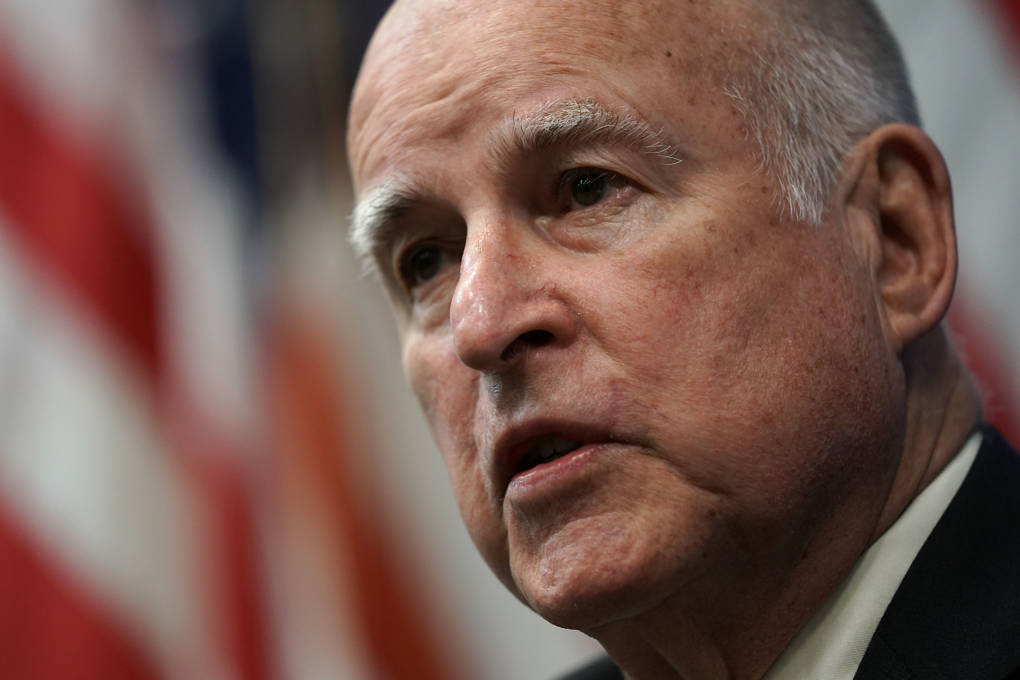
"caption": "Gov. Jerry Brown has been named executive chairman of the Bulletin of the Atomic Scientists, a group that measures manmade threats to human existence. \n\nThe group announced Thursday, Oct. 25 that the Democratic governor leaving office in January will take over leadership of the Bulletin.",
"description": null,
"title": "California Governor Jerry Brown Speaks At The National Press Club",
"credit": "Alex Wong/Getty Images",
"status": "inherit",
"isLoading": false,
"fetchFailed": false
},
"news_11701102": {
"type": "attachments",
"id": "news_11701102",
"meta": {
"index": "attachments_1716263798",
"site": "news",
"id": "11701102",
"found": true
},
"parent": 11700978,
"imgSizes": {
"small": {
"file": "https://ww2.kqed.org/app/uploads/sites/10/2018/10/scooters181015-520x360.jpg",
"width": 520,
"mimeType": "image/jpeg",
"height": 360
},
"twentyfourteen-full-width": {
"file": "https://ww2.kqed.org/app/uploads/sites/10/2018/10/scooters181015-1038x576.jpg",
"width": 1038,
"mimeType": "image/jpeg",
"height": 576
},
"thumbnail": {
"file": "https://ww2.kqed.org/app/uploads/sites/10/2018/10/scooters181015-160x111.jpg",
"width": 160,
"mimeType": "image/jpeg",
"height": 111
},
"fd-sm": {
"file": "https://ww2.kqed.org/app/uploads/sites/10/2018/10/scooters181015-960x665.jpg",
"width": 960,
"mimeType": "image/jpeg",
"height": 665
},
"post-thumbnail": {
"file": "https://ww2.kqed.org/app/uploads/sites/10/2018/10/scooters181015-672x372.jpg",
"width": 672,
"mimeType": "image/jpeg",
"height": 372
},
"xsmall": {
"file": "https://ww2.kqed.org/app/uploads/sites/10/2018/10/scooters181015-375x260.jpg",
"width": 375,
"mimeType": "image/jpeg",
"height": 260
},
"kqedFullSize": {
"file": "https://ww2.kqed.org/app/uploads/sites/10/2018/10/scooters181015.jpg",
"width": 1920,
"height": 1330
},
"large": {
"file": "https://ww2.kqed.org/app/uploads/sites/10/2018/10/scooters181015-1020x707.jpg",
"width": 1020,
"mimeType": "image/jpeg",
"height": 707
},
"xlarge": {
"file": "https://ww2.kqed.org/app/uploads/sites/10/2018/10/scooters181015-1180x817.jpg",
"width": 1180,
"mimeType": "image/jpeg",
"height": 817
},
"complete_open_graph": {
"file": "https://ww2.kqed.org/app/uploads/sites/10/2018/10/scooters181015-1200x831.jpg",
"width": 1200,
"mimeType": "image/jpeg",
"height": 831
},
"guest-author-50": {
"file": "https://ww2.kqed.org/app/uploads/sites/10/2018/10/scooters181015-50x50.jpg",
"width": 50,
"mimeType": "image/jpeg",
"height": 50
},
"guest-author-96": {
"file": "https://ww2.kqed.org/app/uploads/sites/10/2018/10/scooters181015-96x96.jpg",
"width": 96,
"mimeType": "image/jpeg",
"height": 96
},
"medium": {
"file": "https://ww2.kqed.org/app/uploads/sites/10/2018/10/scooters181015-800x554.jpg",
"width": 800,
"mimeType": "image/jpeg",
"height": 554
},
"guest-author-64": {
"file": "https://ww2.kqed.org/app/uploads/sites/10/2018/10/scooters181015-64x64.jpg",
"width": 64,
"mimeType": "image/jpeg",
"height": 64
},
"guest-author-32": {
"file": "https://ww2.kqed.org/app/uploads/sites/10/2018/10/scooters181015-32x32.jpg",
"width": 32,
"mimeType": "image/jpeg",
"height": 32
},
"fd-lrg": {
"file": "https://ww2.kqed.org/app/uploads/sites/10/2018/10/scooters181015-1920x1330.jpg",
"width": 1920,
"mimeType": "image/jpeg",
"height": 1330
},
"fd-med": {
"file": "https://ww2.kqed.org/app/uploads/sites/10/2018/10/scooters181015-1180x817.jpg",
"width": 1180,
"mimeType": "image/jpeg",
"height": 817
},
"full-width": {
"file": "https://ww2.kqed.org/app/uploads/sites/10/2018/10/scooters181015-1920x1330.jpg",
"width": 1920,
"mimeType": "image/jpeg",
"height": 1330
},
"detail": {
"file": "https://ww2.kqed.org/app/uploads/sites/10/2018/10/scooters181015-150x150.jpg",
"width": 150,
"mimeType": "image/jpeg",
"height": 150
},
"guest-author-128": {
"file": "https://ww2.kqed.org/app/uploads/sites/10/2018/10/scooters181015-128x128.jpg",
"width": 128,
"mimeType": "image/jpeg",
"height": 128
},
"xxsmall": {
"file": "https://ww2.kqed.org/app/uploads/sites/10/2018/10/scooters181015-240x166.jpg",
"width": 240,
"mimeType": "image/jpeg",
"height": 166
}
},
"publishDate": 1540423913,
"modified": 1540423994,
"caption": "A pair of Skip scooters lie on a Market Street sidewalk on Oct. 15, 2018, the day the company launched service in San Francisco.",
"description": null,
"title": "Scooters-San Francisco",
"credit": "Dan Brekke/KQED",
"status": "inherit",
"isLoading": false,
"fetchFailed": false
},
"news_11701454": {
"type": "attachments",
"id": "news_11701454",
"meta": {
"index": "attachments_1716263798",
"site": "news",
"id": "11701454",
"found": true
},
"parent": 11701447,
"imgSizes": {
"small": {
"file": "https://ww2.kqed.org/app/uploads/sites/10/2018/10/lesson_102618_final-520x337.jpg",
"width": 520,
"mimeType": "image/jpeg",
"height": 337
},
"twentyfourteen-full-width": {
"file": "https://ww2.kqed.org/app/uploads/sites/10/2018/10/lesson_102618_final-1038x576.jpg",
"width": 1038,
"mimeType": "image/jpeg",
"height": 576
},
"thumbnail": {
"file": "https://ww2.kqed.org/app/uploads/sites/10/2018/10/lesson_102618_final-160x104.jpg",
"width": 160,
"mimeType": "image/jpeg",
"height": 104
},
"fd-sm": {
"file": "https://ww2.kqed.org/app/uploads/sites/10/2018/10/lesson_102618_final-960x622.jpg",
"width": 960,
"mimeType": "image/jpeg",
"height": 622
},
"post-thumbnail": {
"file": "https://ww2.kqed.org/app/uploads/sites/10/2018/10/lesson_102618_final-672x372.jpg",
"width": 672,
"mimeType": "image/jpeg",
"height": 372
},
"xsmall": {
"file": "https://ww2.kqed.org/app/uploads/sites/10/2018/10/lesson_102618_final-375x243.jpg",
"width": 375,
"mimeType": "image/jpeg",
"height": 243
},
"kqedFullSize": {
"file": "https://ww2.kqed.org/app/uploads/sites/10/2018/10/lesson_102618_final.jpg",
"width": 1920,
"height": 1244
},
"large": {
"file": "https://ww2.kqed.org/app/uploads/sites/10/2018/10/lesson_102618_final-1020x661.jpg",
"width": 1020,
"mimeType": "image/jpeg",
"height": 661
},
"xlarge": {
"file": "https://ww2.kqed.org/app/uploads/sites/10/2018/10/lesson_102618_final-1180x765.jpg",
"width": 1180,
"mimeType": "image/jpeg",
"height": 765
},
"complete_open_graph": {
"file": "https://ww2.kqed.org/app/uploads/sites/10/2018/10/lesson_102618_final-1200x778.jpg",
"width": 1200,
"mimeType": "image/jpeg",
"height": 778
},
"guest-author-50": {
"file": "https://ww2.kqed.org/app/uploads/sites/10/2018/10/lesson_102618_final-50x50.jpg",
"width": 50,
"mimeType": "image/jpeg",
"height": 50
},
"guest-author-96": {
"file": "https://ww2.kqed.org/app/uploads/sites/10/2018/10/lesson_102618_final-96x96.jpg",
"width": 96,
"mimeType": "image/jpeg",
"height": 96
},
"medium": {
"file": "https://ww2.kqed.org/app/uploads/sites/10/2018/10/lesson_102618_final-800x518.jpg",
"width": 800,
"mimeType": "image/jpeg",
"height": 518
},
"guest-author-64": {
"file": "https://ww2.kqed.org/app/uploads/sites/10/2018/10/lesson_102618_final-64x64.jpg",
"width": 64,
"mimeType": "image/jpeg",
"height": 64
},
"guest-author-32": {
"file": "https://ww2.kqed.org/app/uploads/sites/10/2018/10/lesson_102618_final-32x32.jpg",
"width": 32,
"mimeType": "image/jpeg",
"height": 32
},
"fd-lrg": {
"file": "https://ww2.kqed.org/app/uploads/sites/10/2018/10/lesson_102618_final-1920x1244.jpg",
"width": 1920,
"mimeType": "image/jpeg",
"height": 1244
},
"fd-med": {
"file": "https://ww2.kqed.org/app/uploads/sites/10/2018/10/lesson_102618_final-1180x765.jpg",
"width": 1180,
"mimeType": "image/jpeg",
"height": 765
},
"full-width": {
"file": "https://ww2.kqed.org/app/uploads/sites/10/2018/10/lesson_102618_final-1920x1244.jpg",
"width": 1920,
"mimeType": "image/jpeg",
"height": 1244
},
"detail": {
"file": "https://ww2.kqed.org/app/uploads/sites/10/2018/10/lesson_102618_final-150x150.jpg",
"width": 150,
"mimeType": "image/jpeg",
"height": 150
},
"guest-author-128": {
"file": "https://ww2.kqed.org/app/uploads/sites/10/2018/10/lesson_102618_final-128x128.jpg",
"width": 128,
"mimeType": "image/jpeg",
"height": 128
},
"xxsmall": {
"file": "https://ww2.kqed.org/app/uploads/sites/10/2018/10/lesson_102618_final-240x156.jpg",
"width": 240,
"mimeType": "image/jpeg",
"height": 156
}
},
"publishDate": 1540576270,
"modified": 1540576292,
"caption": null,
"description": null,
"title": "lesson_102618_final",
"credit": null,
"status": "inherit",
"isLoading": false,
"fetchFailed": false
},
"news_11701496": {
"type": "attachments",
"id": "news_11701496",
"meta": {
"index": "attachments_1716263798",
"site": "news",
"id": "11701496",
"found": true
},
"parent": 11701484,
"imgSizes": {
"small": {
"file": "https://ww2.kqed.org/app/uploads/sites/10/2018/10/AndyRubin-520x372.jpg",
"width": 520,
"mimeType": "image/jpeg",
"height": 372
},
"twentyfourteen-full-width": {
"file": "https://ww2.kqed.org/app/uploads/sites/10/2018/10/AndyRubin-1038x576.jpg",
"width": 1038,
"mimeType": "image/jpeg",
"height": 576
},
"thumbnail": {
"file": "https://ww2.kqed.org/app/uploads/sites/10/2018/10/AndyRubin-160x114.jpg",
"width": 160,
"mimeType": "image/jpeg",
"height": 114
},
"fd-sm": {
"file": "https://ww2.kqed.org/app/uploads/sites/10/2018/10/AndyRubin-960x687.jpg",
"width": 960,
"mimeType": "image/jpeg",
"height": 687
},
"post-thumbnail": {
"file": "https://ww2.kqed.org/app/uploads/sites/10/2018/10/AndyRubin-672x372.jpg",
"width": 672,
"mimeType": "image/jpeg",
"height": 372
},
"xsmall": {
"file": "https://ww2.kqed.org/app/uploads/sites/10/2018/10/AndyRubin-375x268.jpg",
"width": 375,
"mimeType": "image/jpeg",
"height": 268
},
"kqedFullSize": {
"file": "https://ww2.kqed.org/app/uploads/sites/10/2018/10/AndyRubin.jpg",
"width": 1920,
"height": 1373
},
"large": {
"file": "https://ww2.kqed.org/app/uploads/sites/10/2018/10/AndyRubin-1020x729.jpg",
"width": 1020,
"mimeType": "image/jpeg",
"height": 729
},
"xlarge": {
"file": "https://ww2.kqed.org/app/uploads/sites/10/2018/10/AndyRubin-1180x844.jpg",
"width": 1180,
"mimeType": "image/jpeg",
"height": 844
},
"complete_open_graph": {
"file": "https://ww2.kqed.org/app/uploads/sites/10/2018/10/AndyRubin-1200x858.jpg",
"width": 1200,
"mimeType": "image/jpeg",
"height": 858
},
"guest-author-50": {
"file": "https://ww2.kqed.org/app/uploads/sites/10/2018/10/AndyRubin-50x50.jpg",
"width": 50,
"mimeType": "image/jpeg",
"height": 50
},
"guest-author-96": {
"file": "https://ww2.kqed.org/app/uploads/sites/10/2018/10/AndyRubin-96x96.jpg",
"width": 96,
"mimeType": "image/jpeg",
"height": 96
},
"medium": {
"file": "https://ww2.kqed.org/app/uploads/sites/10/2018/10/AndyRubin-800x572.jpg",
"width": 800,
"mimeType": "image/jpeg",
"height": 572
},
"guest-author-64": {
"file": "https://ww2.kqed.org/app/uploads/sites/10/2018/10/AndyRubin-64x64.jpg",
"width": 64,
"mimeType": "image/jpeg",
"height": 64
},
"guest-author-32": {
"file": "https://ww2.kqed.org/app/uploads/sites/10/2018/10/AndyRubin-32x32.jpg",
"width": 32,
"mimeType": "image/jpeg",
"height": 32
},
"fd-lrg": {
"file": "https://ww2.kqed.org/app/uploads/sites/10/2018/10/AndyRubin-1920x1373.jpg",
"width": 1920,
"mimeType": "image/jpeg",
"height": 1373
},
"fd-med": {
"file": "https://ww2.kqed.org/app/uploads/sites/10/2018/10/AndyRubin-1180x844.jpg",
"width": 1180,
"mimeType": "image/jpeg",
"height": 844
},
"full-width": {
"file": "https://ww2.kqed.org/app/uploads/sites/10/2018/10/AndyRubin-1920x1373.jpg",
"width": 1920,
"mimeType": "image/jpeg",
"height": 1373
},
"detail": {
"file": "https://ww2.kqed.org/app/uploads/sites/10/2018/10/AndyRubin-150x150.jpg",
"width": 150,
"mimeType": "image/jpeg",
"height": 150
},
"guest-author-128": {
"file": "https://ww2.kqed.org/app/uploads/sites/10/2018/10/AndyRubin-128x128.jpg",
"width": 128,
"mimeType": "image/jpeg",
"height": 128
},
"xxsmall": {
"file": "https://ww2.kqed.org/app/uploads/sites/10/2018/10/AndyRubin-240x172.jpg",
"width": 240,
"mimeType": "image/jpeg",
"height": 172
}
},
"publishDate": 1540580158,
"modified": 1540580281,
"caption": "This week, The New York Times reported that Google had dismissed Andy Rubin, the executive in charge of its Android software, for sexual misconduct in 2014 and is still paying him a $90 million package.",
"description": "This week, The New York Times reported that Google had dismissed Andy Rubin, the executive in charge of its Android software, for sexual misconduct in 2014 and is still paying him a $90 million package.",
"title": "AndyRubin",
"credit": "Brian Ach/Getty Images for Wired",
"status": "inherit",
"isLoading": false,
"fetchFailed": false
},
"news_11701175": {
"type": "attachments",
"id": "news_11701175",
"meta": {
"index": "attachments_1716263798",
"site": "news",
"id": "11701175",
"found": true
},
"parent": 11701154,
"imgSizes": {
"small": {
"file": "https://ww2.kqed.org/app/uploads/sites/10/2018/10/RS33432_GettyImages-543499084-qut-520x347.jpg",
"width": 520,
"mimeType": "image/jpeg",
"height": 347
},
"twentyfourteen-full-width": {
"file": "https://ww2.kqed.org/app/uploads/sites/10/2018/10/RS33432_GettyImages-543499084-qut-1038x576.jpg",
"width": 1038,
"mimeType": "image/jpeg",
"height": 576
},
"thumbnail": {
"file": "https://ww2.kqed.org/app/uploads/sites/10/2018/10/RS33432_GettyImages-543499084-qut-160x107.jpg",
"width": 160,
"mimeType": "image/jpeg",
"height": 107
},
"fd-sm": {
"file": "https://ww2.kqed.org/app/uploads/sites/10/2018/10/RS33432_GettyImages-543499084-qut-960x640.jpg",
"width": 960,
"mimeType": "image/jpeg",
"height": 640
},
"post-thumbnail": {
"file": "https://ww2.kqed.org/app/uploads/sites/10/2018/10/RS33432_GettyImages-543499084-qut-672x372.jpg",
"width": 672,
"mimeType": "image/jpeg",
"height": 372
},
"xsmall": {
"file": "https://ww2.kqed.org/app/uploads/sites/10/2018/10/RS33432_GettyImages-543499084-qut-375x250.jpg",
"width": 375,
"mimeType": "image/jpeg",
"height": 250
},
"kqedFullSize": {
"file": "https://ww2.kqed.org/app/uploads/sites/10/2018/10/RS33432_GettyImages-543499084-qut.jpg",
"width": 1920,
"height": 1280
},
"large": {
"file": "https://ww2.kqed.org/app/uploads/sites/10/2018/10/RS33432_GettyImages-543499084-qut-1020x680.jpg",
"width": 1020,
"mimeType": "image/jpeg",
"height": 680
},
"xlarge": {
"file": "https://ww2.kqed.org/app/uploads/sites/10/2018/10/RS33432_GettyImages-543499084-qut-1180x787.jpg",
"width": 1180,
"mimeType": "image/jpeg",
"height": 787
},
"complete_open_graph": {
"file": "https://ww2.kqed.org/app/uploads/sites/10/2018/10/RS33432_GettyImages-543499084-qut-1200x800.jpg",
"width": 1200,
"mimeType": "image/jpeg",
"height": 800
},
"guest-author-50": {
"file": "https://ww2.kqed.org/app/uploads/sites/10/2018/10/RS33432_GettyImages-543499084-qut-50x50.jpg",
"width": 50,
"mimeType": "image/jpeg",
"height": 50
},
"guest-author-96": {
"file": "https://ww2.kqed.org/app/uploads/sites/10/2018/10/RS33432_GettyImages-543499084-qut-96x96.jpg",
"width": 96,
"mimeType": "image/jpeg",
"height": 96
},
"medium": {
"file": "https://ww2.kqed.org/app/uploads/sites/10/2018/10/RS33432_GettyImages-543499084-qut-800x533.jpg",
"width": 800,
"mimeType": "image/jpeg",
"height": 533
},
"guest-author-64": {
"file": "https://ww2.kqed.org/app/uploads/sites/10/2018/10/RS33432_GettyImages-543499084-qut-64x64.jpg",
"width": 64,
"mimeType": "image/jpeg",
"height": 64
},
"guest-author-32": {
"file": "https://ww2.kqed.org/app/uploads/sites/10/2018/10/RS33432_GettyImages-543499084-qut-32x32.jpg",
"width": 32,
"mimeType": "image/jpeg",
"height": 32
},
"fd-lrg": {
"file": "https://ww2.kqed.org/app/uploads/sites/10/2018/10/RS33432_GettyImages-543499084-qut-1920x1280.jpg",
"width": 1920,
"mimeType": "image/jpeg",
"height": 1280
},
"fd-med": {
"file": "https://ww2.kqed.org/app/uploads/sites/10/2018/10/RS33432_GettyImages-543499084-qut-1180x787.jpg",
"width": 1180,
"mimeType": "image/jpeg",
"height": 787
},
"full-width": {
"file": "https://ww2.kqed.org/app/uploads/sites/10/2018/10/RS33432_GettyImages-543499084-qut-1920x1280.jpg",
"width": 1920,
"mimeType": "image/jpeg",
"height": 1280
},
"detail": {
"file": "https://ww2.kqed.org/app/uploads/sites/10/2018/10/RS33432_GettyImages-543499084-qut-150x150.jpg",
"width": 150,
"mimeType": "image/jpeg",
"height": 150
},
"guest-author-128": {
"file": "https://ww2.kqed.org/app/uploads/sites/10/2018/10/RS33432_GettyImages-543499084-qut-128x128.jpg",
"width": 128,
"mimeType": "image/jpeg",
"height": 128
},
"xxsmall": {
"file": "https://ww2.kqed.org/app/uploads/sites/10/2018/10/RS33432_GettyImages-543499084-qut-240x160.jpg",
"width": 240,
"mimeType": "image/jpeg",
"height": 160
}
},
"publishDate": 1540477674,
"modified": 1540507396,
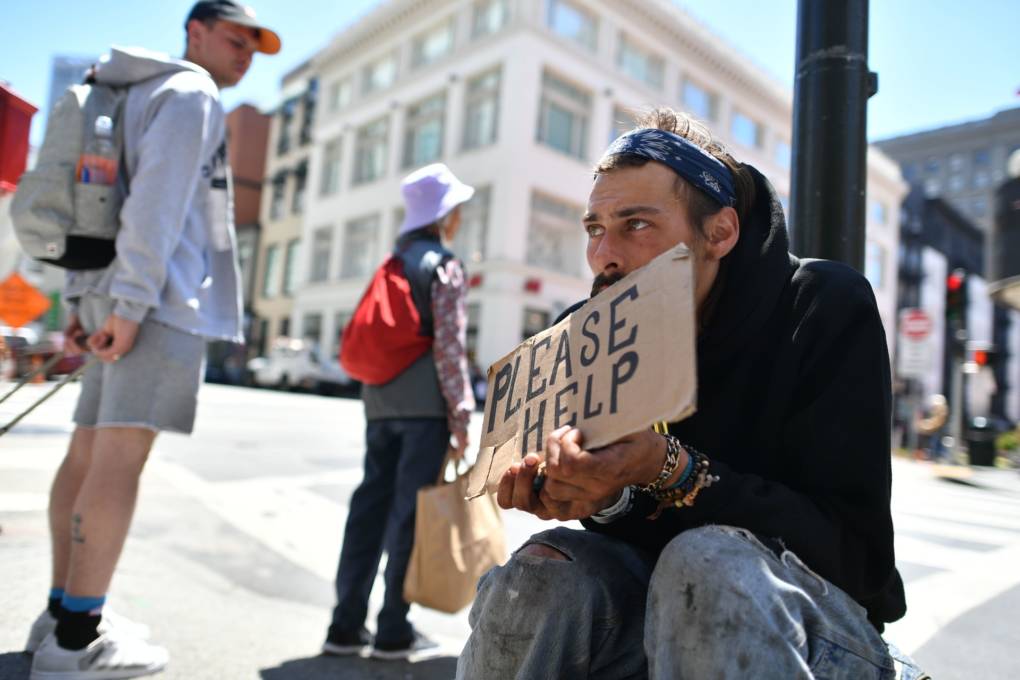
"caption": "A man panhandles along a sidewalk in downtown San Francisco on June 28, 2016.",
"description": "A man panhandles along a sidewalk in downtown San Francisco on June 28, 2016.",
"title": "US-HOMELESS-SAN-FRANCISCO",
"credit": "Josh Edelson/Getty Images",
"status": "inherit",
"isLoading": false,
"fetchFailed": false
},
"news_11701278": {
"type": "attachments",
"id": "news_11701278",
"meta": {
"index": "attachments_1716263798",
"site": "news",
"id": "11701278",
"found": true
},
"parent": 11701272,
"imgSizes": {
"small": {
"file": "https://ww2.kqed.org/app/uploads/sites/10/2018/10/taxi_102518_final-520x336.jpg",
"width": 520,
"mimeType": "image/jpeg",
"height": 336
},
"twentyfourteen-full-width": {
"file": "https://ww2.kqed.org/app/uploads/sites/10/2018/10/taxi_102518_final-1038x576.jpg",
"width": 1038,
"mimeType": "image/jpeg",
"height": 576
},
"thumbnail": {
"file": "https://ww2.kqed.org/app/uploads/sites/10/2018/10/taxi_102518_final-160x103.jpg",
"width": 160,
"mimeType": "image/jpeg",
"height": 103
},
"fd-sm": {
"file": "https://ww2.kqed.org/app/uploads/sites/10/2018/10/taxi_102518_final-960x621.jpg",
"width": 960,
"mimeType": "image/jpeg",
"height": 621
},
"post-thumbnail": {
"file": "https://ww2.kqed.org/app/uploads/sites/10/2018/10/taxi_102518_final-672x372.jpg",
"width": 672,
"mimeType": "image/jpeg",
"height": 372
},
"xsmall": {
"file": "https://ww2.kqed.org/app/uploads/sites/10/2018/10/taxi_102518_final-375x242.jpg",
"width": 375,
"mimeType": "image/jpeg",
"height": 242
},
"kqedFullSize": {
"file": "https://ww2.kqed.org/app/uploads/sites/10/2018/10/taxi_102518_final.jpg",
"width": 1920,
"height": 1241
},
"large": {
"file": "https://ww2.kqed.org/app/uploads/sites/10/2018/10/taxi_102518_final-1020x659.jpg",
"width": 1020,
"mimeType": "image/jpeg",
"height": 659
},
"xlarge": {
"file": "https://ww2.kqed.org/app/uploads/sites/10/2018/10/taxi_102518_final-1180x763.jpg",
"width": 1180,
"mimeType": "image/jpeg",
"height": 763
},
"complete_open_graph": {
"file": "https://ww2.kqed.org/app/uploads/sites/10/2018/10/taxi_102518_final-1200x776.jpg",
"width": 1200,
"mimeType": "image/jpeg",
"height": 776
},
"guest-author-50": {
"file": "https://ww2.kqed.org/app/uploads/sites/10/2018/10/taxi_102518_final-50x50.jpg",
"width": 50,
"mimeType": "image/jpeg",
"height": 50
},
"guest-author-96": {
"file": "https://ww2.kqed.org/app/uploads/sites/10/2018/10/taxi_102518_final-96x96.jpg",
"width": 96,
"mimeType": "image/jpeg",
"height": 96
},
"medium": {
"file": "https://ww2.kqed.org/app/uploads/sites/10/2018/10/taxi_102518_final-800x517.jpg",
"width": 800,
"mimeType": "image/jpeg",
"height": 517
},
"guest-author-64": {
"file": "https://ww2.kqed.org/app/uploads/sites/10/2018/10/taxi_102518_final-64x64.jpg",
"width": 64,
"mimeType": "image/jpeg",
"height": 64
},
"guest-author-32": {
"file": "https://ww2.kqed.org/app/uploads/sites/10/2018/10/taxi_102518_final-32x32.jpg",
"width": 32,
"mimeType": "image/jpeg",
"height": 32
},
"fd-lrg": {
"file": "https://ww2.kqed.org/app/uploads/sites/10/2018/10/taxi_102518_final-1920x1241.jpg",
"width": 1920,
"mimeType": "image/jpeg",
"height": 1241
},
"fd-med": {
"file": "https://ww2.kqed.org/app/uploads/sites/10/2018/10/taxi_102518_final-1180x763.jpg",
"width": 1180,
"mimeType": "image/jpeg",
"height": 763
},
"full-width": {
"file": "https://ww2.kqed.org/app/uploads/sites/10/2018/10/taxi_102518_final-1920x1241.jpg",
"width": 1920,
"mimeType": "image/jpeg",
"height": 1241
},
"detail": {
"file": "https://ww2.kqed.org/app/uploads/sites/10/2018/10/taxi_102518_final-150x150.jpg",
"width": 150,
"mimeType": "image/jpeg",
"height": 150
},
"guest-author-128": {
"file": "https://ww2.kqed.org/app/uploads/sites/10/2018/10/taxi_102518_final-128x128.jpg",
"width": 128,
"mimeType": "image/jpeg",
"height": 128
},
"xxsmall": {
"file": "https://ww2.kqed.org/app/uploads/sites/10/2018/10/taxi_102518_final-240x155.jpg",
"width": 240,
"mimeType": "image/jpeg",
"height": 155
}
},
"publishDate": 1540499516,
"modified": 1540499534,
"caption": null,
"description": null,
"title": "taxi_102518_final",
"credit": null,
"status": "inherit",
"isLoading": false,
"fetchFailed": false
}
},
"audioPlayerReducer": {
"postId": "stream_live",
"isPaused": true,
"isPlaying": false,
"pfsActive": false,
"pledgeModalIsOpen": true,
"playerDrawerIsOpen": false,
"liveAudioPlayStartedAt": 0,
"liveAudioPlayContext": ""
},
"authorsReducer": {
"byline_news_11702872": {
"type": "authors",
"id": "byline_news_11702872",
"meta": {
"override": true
},
"slug": "byline_news_11702872",
"name": "Laurel Wamsley",
"isLoading": false
},
"byline_news_11702162": {
"type": "authors",
"id": "byline_news_11702162",
"meta": {
"override": true
},
"slug": "byline_news_11702162",
"name": "Jasmine Garsd",
"isLoading": false
},
"byline_news_11701823": {
"type": "authors",
"id": "byline_news_11701823",
"meta": {
"override": true
},
"slug": "byline_news_11701823",
"name": "Kathleen Ronayne\u003cbr/>Associated Press",
"isLoading": false
},
"byline_news_11701484": {
"type": "authors",
"id": "byline_news_11701484",
"meta": {
"override": true
},
"slug": "byline_news_11701484",
"name": "Associated Press",
"isLoading": false
},
"danbrekke": {
"type": "authors",
"id": "222",
"meta": {
"index": "authors_1716337520",
"id": "222",
"found": true
},
"name": "Dan Brekke",
"firstName": "Dan",
"lastName": "Brekke",
"slug": "danbrekke",
"email": "dbrekke@kqed.org",
"display_author_email": true,
"staff_mastheads": [
"news",
"science"
],
"title": "KQED Editor and Reporter",
"bio": "Dan Brekke is a reporter and editor for KQED News, responsible for coverage of topics ranging from California water issues to the Bay Area's transportation challenges. In a newsroom career that began in Chicago in 1972, Dan has worked for \u003cem>The San Francisco Examiner,\u003c/em> Wired and TechTV and has been published in The New York Times, The New York Times Magazine, Business 2.0, Salon and elsewhere.\r\n\r\nSince joining KQED in 2007, Dan has reported, edited and produced both radio and online features and breaking news pieces. He has shared as both editor and reporter in four Society of Professional Journalists Norcal Excellence in Journalism awards and one Edward R. Murrow regional award. He was chosen for a spring 2017 residency at the Mesa Refuge to advance his research on California salmon.\r\n\r\nEmail Dan at: \u003ca href=\"mailto:dbrekke@kqed.org\">dbrekke@kqed.org\u003c/a>\r\n\r\n\u003cstrong>Twitter:\u003c/strong> \u003ca href=\"https://twitter.com/danbrekke\" rel=\"noopener noreferrer\">twitter.com/danbrekke\u003c/a>\r\n\u003cstrong>Facebook:\u003c/strong> \u003ca href=\"https://www.facebook.com/danbrekke\" rel=\"noopener noreferrer\">www.facebook.com/danbrekke\u003c/a>\r\n\u003cstrong>LinkedIn:\u003c/strong> \u003ca href=\"https://www.linkedin.com/in/danbrekke\" rel=\"noopener noreferrer\">www.linkedin.com/in/danbrekke\u003c/a>",
"avatar": "https://secure.gravatar.com/avatar/8f1f0d2a978fb3b23426c922c7e2af558fa36905b49c4ce76a97dc3c72d27226?s=600&d=mm&r=g",
"twitter": "danbrekke",
"bluesky": null,
"facebook": null,
"instagram": "https://www.instagram.com/dan.brekke/",
"linkedin": "https://www.linkedin.com/in/danbrekke/",
"sites": [
{
"site": "news",
"roles": [
"administrator",
"create_posts"
]
},
{
"site": "stateofhealth",
"roles": [
"editor"
]
},
{
"site": "science",
"roles": [
"editor"
]
},
{
"site": "quest",
"roles": [
"contributor"
]
},
{
"site": "food",
"roles": [
"contributor"
]
},
{
"site": "forum",
"roles": [
"contributor"
]
},
{
"site": "elections",
"roles": [
"editor"
]
},
{
"site": "liveblog",
"roles": [
"editor"
]
}
],
"headData": {
"title": "Dan Brekke | KQED",
"description": "KQED Editor and Reporter",
"ogImgSrc": "https://secure.gravatar.com/avatar/8f1f0d2a978fb3b23426c922c7e2af558fa36905b49c4ce76a97dc3c72d27226?s=600&d=mm&r=g",
"twImgSrc": "https://secure.gravatar.com/avatar/8f1f0d2a978fb3b23426c922c7e2af558fa36905b49c4ce76a97dc3c72d27226?s=600&d=mm&r=g"
},
"isLoading": false,
"link": "/author/danbrekke"
},
"gmarzorati": {
"type": "authors",
"id": "227",
"meta": {
"index": "authors_1716337520",
"id": "227",
"found": true
},
"name": "Guy Marzorati",
"firstName": "Guy",
"lastName": "Marzorati",
"slug": "gmarzorati",
"email": "gmarzorati@KQED.org",
"display_author_email": true,
"staff_mastheads": [
"news"
],
"title": "Correspondent",
"bio": "Guy Marzorati is a correspondent on KQED's California Politics and Government Desk, based in San Jose. A graduate of Santa Clara University, Guy joined KQED in 2013. He reports on state and local politics and produces KQED's digital voter guide.",
"avatar": "https://secure.gravatar.com/avatar/e7038b8dbfd55b104369b76b1cd0b9de?s=600&d=blank&r=g",
"twitter": "guymarzorati",
"facebook": null,
"instagram": null,
"linkedin": null,
"sites": [
{
"site": "",
"roles": [
"editor"
]
},
{
"site": "news",
"roles": [
"editor"
]
},
{
"site": "science",
"roles": [
"editor"
]
},
{
"site": "forum",
"roles": [
"editor"
]
},
{
"site": "elections",
"roles": [
"editor"
]
},
{
"site": "liveblog",
"roles": [
"editor"
]
}
],
"headData": {
"title": "Guy Marzorati | KQED",
"description": "Correspondent",
"ogImgSrc": "https://secure.gravatar.com/avatar/e7038b8dbfd55b104369b76b1cd0b9de?s=600&d=blank&r=g",
"twImgSrc": "https://secure.gravatar.com/avatar/e7038b8dbfd55b104369b76b1cd0b9de?s=600&d=blank&r=g"
},
"isLoading": false,
"link": "/author/gmarzorati"
},
"kqed": {
"type": "authors",
"id": "236",
"meta": {
"index": "authors_1716337520",
"id": "236",
"found": true
},
"name": "KQED News Staff",
"firstName": "KQED News Staff",
"lastName": null,
"slug": "kqed",
"email": "faq@kqed.org",
"display_author_email": false,
"staff_mastheads": [],
"title": null,
"bio": null,
"avatar": "https://secure.gravatar.com/avatar/ef0e801a68c4c54afa9180db14084167?s=600&d=blank&r=g",
"twitter": null,
"facebook": null,
"instagram": null,
"linkedin": null,
"sites": [
{
"site": "arts",
"roles": [
"contributor"
]
},
{
"site": "news",
"roles": [
"editor"
]
},
{
"site": "futureofyou",
"roles": [
"author"
]
}
],
"headData": {
"title": "KQED News Staff | KQED",
"description": null,
"ogImgSrc": "https://secure.gravatar.com/avatar/ef0e801a68c4c54afa9180db14084167?s=600&d=blank&r=g",
"twImgSrc": "https://secure.gravatar.com/avatar/ef0e801a68c4c54afa9180db14084167?s=600&d=blank&r=g"
},
"isLoading": false,
"link": "/author/kqed"
},
"rachael-myrow": {
"type": "authors",
"id": "251",
"meta": {
"index": "authors_1716337520",
"id": "251",
"found": true
},
"name": "Rachael Myrow",
"firstName": "Rachael",
"lastName": "Myrow",
"slug": "rachael-myrow",
"email": "rmyrow@kqed.org",
"display_author_email": true,
"staff_mastheads": [
"news"
],
"title": "Senior Editor of KQED's Silicon Valley News Desk",
"bio": "• I write and edit stories about how Silicon Valley power and policies shape everyday life in California. I’m also passionate about making Bay Area history and culture more accessible to a broad public. • I’ve been a journalist for most of my life, starting in high school with The Franklin Press in Los Angeles, where I grew up. While earning my first degree in English at UC Berkeley, I got my start in public radio at KALX-FM. After completing a second degree in journalism at Cal, I landed my first professional job at Marketplace, then moved on to KPCC (now LAist), and then KQED, where I hosted The California Report for more than seven years. • My reporting has appeared on NPR, The World, WBUR’s \u003ci>Here & Now\u003c/i>, and the BBC. I also guest host for KQED’s \u003ci>Forum\u003c/i>, as well as the Commonwealth Club in San Francisco. • I speak periodically on media, democracy and technology issues, and do voiceover work for documentaries and educational video projects. • Outside of the studio, you'll find me hiking Bay Area trails and whipping up Insta-ready meals in my kitchen. • I do not accept gifts, money, or favors from anyone connected to my reporting, I don't pay people for information, and I do not support or donate to political causes. • I strive to treat the people I report on with fairness, honesty, and respect. I also recognize there are often multiple sides to a story and work to verify information through multiple sources and documentation. If I get something wrong, I correct it.",
"avatar": "https://secure.gravatar.com/avatar/3ed8a3c5f26025e4a805ba634cda8cd764906b97438a6d9ce216b044e340da4e?s=600&d=blank&r=g",
"twitter": "rachaelmyrow",
"bluesky": null,
"facebook": null,
"instagram": null,
"linkedin": "https://www.linkedin.com/in/rachaelmyrow/",
"sites": [
{
"site": "arts",
"roles": [
"administrator"
]
},
{
"site": "news",
"roles": [
"edit_others_posts",
"editor"
]
},
{
"site": "futureofyou",
"roles": [
"editor"
]
},
{
"site": "bayareabites",
"roles": [
"editor"
]
},
{
"site": "stateofhealth",
"roles": [
"editor"
]
},
{
"site": "science",
"roles": [
"editor"
]
},
{
"site": "food",
"roles": [
"editor"
]
},
{
"site": "forum",
"roles": [
"editor"
]
},
{
"site": "liveblog",
"roles": [
"author"
]
}
],
"headData": {
"title": "Rachael Myrow | KQED",
"description": "Senior Editor of KQED's Silicon Valley News Desk",
"ogImgSrc": "https://secure.gravatar.com/avatar/3ed8a3c5f26025e4a805ba634cda8cd764906b97438a6d9ce216b044e340da4e?s=600&d=blank&r=g",
"twImgSrc": "https://secure.gravatar.com/avatar/3ed8a3c5f26025e4a805ba634cda8cd764906b97438a6d9ce216b044e340da4e?s=600&d=blank&r=g"
},
"isLoading": false,
"link": "/author/rachael-myrow"
},
"samharnett": {
"type": "authors",
"id": "253",
"meta": {
"index": "authors_1716337520",
"id": "253",
"found": true
},
"name": "Sam Harnett",
"firstName": "Sam",
"lastName": "Harnett",
"slug": "samharnett",
"email": "samharnett@gmail.com",
"display_author_email": false,
"staff_mastheads": [],
"title": "KQED Contributor",
"bio": "Sam Harnett covered tech and work at KQED. He is the co-creator of \u003cem>\u003ca href=\"http://www.theworldaccordingtosound.org\">The World According to Sound\u003c/a>,\u003c/em> a 90-second podcast that features different sounds and the stories behind them.\r\n\r\nBefore coming to KQED, Sam worked as an independent reporter who contributed regularly to \u003cem>The California Report, Marketplace,\u003c/em> \u003cem>The World \u003c/em>and NPR.",
"avatar": "https://secure.gravatar.com/avatar/2538b972ac02f2b9546c7a6c59a0f3d0?s=600&d=blank&r=g",
"twitter": "Samwharnett",
"facebook": null,
"instagram": null,
"linkedin": null,
"sites": [
{
"site": "news",
"roles": [
"edit_others_posts",
"subscriber"
]
},
{
"site": "stateofhealth",
"roles": [
"author"
]
},
{
"site": "science",
"roles": [
"editor"
]
},
{
"site": "quest",
"roles": [
"subscriber"
]
}
],
"headData": {
"title": "Sam Harnett | KQED",
"description": "KQED Contributor",
"ogImgSrc": "https://secure.gravatar.com/avatar/2538b972ac02f2b9546c7a6c59a0f3d0?s=600&d=blank&r=g",
"twImgSrc": "https://secure.gravatar.com/avatar/2538b972ac02f2b9546c7a6c59a0f3d0?s=600&d=blank&r=g"
},
"isLoading": false,
"link": "/author/samharnett"
},
"markfiore": {
"type": "authors",
"id": "3236",
"meta": {
"index": "authors_1716337520",
"id": "3236",
"found": true
},
"name": "Mark Fiore",
"firstName": "Mark",
"lastName": "Fiore",
"slug": "markfiore",
"email": "mark@markfiore.com",
"display_author_email": false,
"staff_mastheads": [
"news"
],
"title": "KQED News Cartoonist",
"bio": "\u003ca href=\"http://www.MarkFiore.com\">MarkFiore.com\u003c/a> | \u003ca href=\"https://twitter.com/markfiore\">Follow on Twitter\u003c/a> | \u003ca href=\"https://www.facebook.com/pages/Mark-Fiore-Animated-Political-Cartoons/94451707396?ref=bookmarks\">Facebook\u003c/a> | \u003ca href=\"mailto:mark@markfiore.com\">email\u003c/a>\r\n\r\nPulitzer Prize-winner, Mark Fiore, who the Wall Street Journal has called “the undisputed guru of the form,” creates animated political cartoons in San Francisco, where his work has been featured regularly on the San Francisco Chronicle’s web site, SFGate.com. His work has appeared on Newsweek.com, Slate.com, CBSNews.com, MotherJones.com, DailyKos.com and NPR’s web site. Fiore’s political animation has appeared on CNN, Frontline, Bill Moyers Journal, Salon.com and cable and broadcast outlets across the globe.\r\n\r\nBeginning his professional life by drawing traditional political cartoons for newspapers, Fiore’s work appeared in publications ranging from the Washington Post to the Los Angeles Times. In the late 1990s, he began to experiment with animating political cartoons and, after a short stint at the San Jose Mercury News as their staff cartoonist, Fiore devoted all his energies to animation.\r\nGrowing up in California, Fiore also spent a good portion of his life in the backwoods of Idaho. It was this combination that shaped him politically. Mark majored in political science at Colorado College, where, in a perfect send-off for a cartoonist, he received his diploma in 1991 as commencement speaker Dick Cheney smiled approvingly.\r\nMark Fiore was awarded the Pulitzer Prize for political cartooning in 2010, a Robert F. Kennedy Journalism Award in 2004 and has twice received an Online Journalism Award for commentary from the Online News Association (2002, 2008). Fiore has received two awards for his work in new media from the National Cartoonists Society (2001, 2002), and in 2006 received The James Madison Freedom of Information Award from The Society of Professional Journalists.",
"avatar": "https://secure.gravatar.com/avatar/fc4e2a612b15b67bad0c6f0e1db4ca9b?s=600&d=blank&r=g",
"twitter": "MarkFiore",
"facebook": null,
"instagram": "https://www.instagram.com/markfiore/?hl=en",
"linkedin": null,
"sites": [
{
"site": "arts",
"roles": [
"contributor"
]
},
{
"site": "news",
"roles": [
"editor"
]
},
{
"site": "futureofyou",
"roles": [
"editor"
]
},
{
"site": "science",
"roles": [
"editor"
]
}
],
"headData": {
"title": "Mark Fiore | KQED",
"description": "KQED News Cartoonist",
"ogImgSrc": "https://secure.gravatar.com/avatar/fc4e2a612b15b67bad0c6f0e1db4ca9b?s=600&d=blank&r=g",
"twImgSrc": "https://secure.gravatar.com/avatar/fc4e2a612b15b67bad0c6f0e1db4ca9b?s=600&d=blank&r=g"
},
"isLoading": false,
"link": "/author/markfiore"
}
},
"pagesReducer": {
"news_category_technology": {
"type": "terms",
"id": "news_248",
"meta": {
"index": "terms_1716263798",
"site": "news",
"id": "248",
"score": 10.931828
},
"featImg": null,
"name": "Technology",
"description": null,
"taxonomy": "category",
"headData": {
"twImgId": null,
"twTitle": null,
"ogTitle": null,
"ogImgId": null,
"twDescription": null,
"description": null,
"title": "Technology Archives | KQED News",
"ogDescription": null
},
"ttid": 256,
"slug": "technology",
"isLoading": false,
"title": "Technology",
"pageMeta": {
"site": "news",
"WpPageTemplate": "page-topic-editorial",
"currentPage": 80
},
"blocks": [
{
"blockName": "kqed/post-list",
"attrs": {
"layout": "cardArticle2",
"query": "posts/news?category=technology",
"seeMore": false,
"paginated": true,
"page": 80
}
},
{
"blockName": "kqed/ad"
}
]
}
},
"pfsSessionReducer": {},
"postsReducer": {
"stream_live": {
"type": "live",
"id": "stream_live",
"audioUrl": "https://streams.kqed.org/kqedradio",
"title": "Live Stream",
"excerpt": "Live Stream information currently unavailable.",
"link": "/radio",
"featImg": "",
"label": {
"name": "KQED Live",
"link": "/"
}
},
"stream_kqedNewscast": {
"type": "posts",
"id": "stream_kqedNewscast",
"audioUrl": "https://www.kqed.org/.stream/anon/radio/RDnews/newscast.mp3?_=1",
"title": "KQED Newscast",
"featImg": "",
"label": {
"name": "88.5 FM",
"link": "/"
}
},
"news_11702872": {
"type": "posts",
"id": "news_11702872",
"meta": {
"index": "posts_1716263798",
"site": "news",
"id": "11702872",
"score": null,
"sort": [
1541095200000
]
},
"parent": 0,
"labelTerm": {},
"blocks": [],
"publishDate": 1541095200,
"format": "image",
"disqusTitle": "Google Employees Walk Out to Protest Company's Treatment of Women",
"title": "Google Employees Walk Out to Protest Company's Treatment of Women",
"headTitle": "The California Report | KQED News",
"content": "\u003cp>Google employees worldwide are walking off the job to protest the company's treatment of women and its handling of sexual assault cases.\u003c/p>\n\u003cp>Employees walked out out of Google offices at 11:10 a.m. in each time zone on Thursday. Workers have walked out in Singapore, Zurich, London, Dublin, and New York City, filling nearby streets, sidewalks and parks. \u003c/p>\n\u003cp>And at Google's Mountain View headquarters, employees streamed out of its offices and filled plazas.\u003c/p>\n\u003cp>\"We demand structural change in the name of transparency, accountability and equity,\" said Celie O'Neil-Hart, a Google employee who helped organize the protest. \"We demand an end to forced arbitration. We demand a right to representation in our conversations with HR.\"\u003c/p>\n\u003cp>https://twitter.com/itsmeritesh/status/1058063678942003200\u003c/p>\n\u003cp>[ad fullwidth]\u003c/p>\n\u003cp>\"We've always been told that Google is a leading-edge company, that our culture is something really special. And in that way we totally have the space to walk out and do this today,\" said Claire Stapleton, a New York-based marketing manager for YouTube and one of the walkout's core organizers. \"But we also see some very real changes that need to happen.\"\u003c/p>\n\u003cp>Stapleton said the walkout isn't just about women, but also people of color, contractors, and others at the company who have experienced \"feeling diminished or disrespected, have experienced feeling unsafe.\"\u003c/p>\n\u003cp>Organizers are calling for an end to forced arbitration, a commitment from the company to end pay and opportunity inequity, a publicly disclosed sexual harassment transparency report, and a safe and anonymous process for reporting sexual misconduct at Google.\u003c/p>\n\u003cp>https://twitter.com/spanks004/status/1058031029640925184\u003c/p>\n\u003cp>The employee protest comes a week after \u003ca href=\"https://www.nytimes.com/2018/10/25/technology/google-sexual-harassment-andy-rubin.html\">The New York Times published\u003c/a> an extensive report on sexual harassment at the company. Andy Rubin, the creator of the Android software operating system, was accused by a female colleague of coercing her to perform oral sex on him in 2013, the \u003cem>Times\u003c/em> reports.\u003c/p>\n\u003cp>Google reportedly found the allegation credible, asked for his resignation and gave him an exit package worth $90 million.\u003c/p>\n\u003caside class=\"alignright\">\n\u003ch3>\u003ca href=\"https://www.kqed.org/news/11701484/google-reveals-48-employees-fired-for-sexual-harassment-in-last-2-years\">Google Reveals 48 Employees Fired for Sexual Harassment in Last 2 Years\u003c/a>\u003c/h3>\n\u003cfigure>\u003ca href=\"https://www.kqed.org/news/11701484/google-reveals-48-employees-fired-for-sexual-harassment-in-last-2-years\">\u003cimg src=\"https://ww2.kqed.org/news/wp-content/uploads/sites/10/2018/10/AndyRubin-1180x844.jpg\" alt=\"\">\u003c/a>\u003c/figure>\n\u003c/aside>\n\u003cp>The company did not mention the allegations in the announcement of his departure.\u003c/p>\n\u003cp>\u003ca href=\"https://twitter.com/Arubin/status/1055632398509985792\">Rubin has tweeted\u003c/a>, \"These false allegations are part of a smear campaign.\"\u003c/p>\n\u003cp>\"As Google workers, we were disgusted by the details of the recent \u003cem>New York Times\u003c/em> article, which provided the latest example of a culture of complicity, dismissiveness, and support for perpetrators in the face of sexual harassment, misconduct, and abuse of power,\" organizers told NPR in an emailed statement.\u003c/p>\n\u003cp>\"For every story in the \u003cem>New York Times\u003c/em>, there are thousands more, at every level of the company. Most have not been told.\"\u003c/p>\n\u003cp>https://twitter.com/karenmaryo/status/1057974632119222273\u003c/p>\n\u003cp>https://twitter.com/tictoc/status/1057994666929516544\u003c/p>\n\u003cp>Since the \u003cem>Times\u003c/em> report, the company's leadership is dealing with an agitated workforce, according to multiple reports.\u003c/p>\n\u003cp>\"While Google has championed the language of diversity and inclusion, substantive actions to address systemic racism, increase equity, and stop sexual harassment have been few and far between,\" organizers say.\u003c/p>\n\u003cp>Some demands relate directly to Google's workforce gender makeup: Only \u003ca href=\"https://diversity.google/annual-report/\">31 percent\u003c/a> of its global workforce and just over a quarter of its executives are women.\u003c/p>\n\u003cp>https://twitter.com/GoogleWalkout/status/1057804203895283712\u003c/p>\n\u003cp>Last year, \u003ca href=\"https://www.npr.org/sections/thetwo-way/2017/04/08/523129221/google-accused-of-underpaying-female-employees\">the federal government sued Google,\u003c/a> a government contractor, to release compensation data in order to ensure the company was obeying equal opportunity laws.\u003c/p>\n\u003cp>Others relate to the company's treatment of sexual harassment. Currently, the company requires employees to waive their right to sue in cases of sexual harassment and often includes confidentiality agreements, the \u003cem>Times\u003c/em> reports.\u003c/p>\n\u003cp>Organizers are also asking for \"a clear, uniform, globally inclusive process for reporting sexual misconduct safely and anonymously.\"\u003c/p>\n\u003cp>They have also asked that the company's chief diversity officer answer directly to the CEO and make recommendations directly to the Board of Directors — and that the company add an employee representative to the board.\u003c/p>\n\u003cp>\"This is part of a growing movement, not just in tech, but across the country, including teachers, fast food workers, and others who are using their strength in numbers to make real change,\" organizers said.\u003c/p>\n\u003cp>Employees who walk out \u003ca href=\"https://twitter.com/GoogleWalkout/status/1057826104965246976\">will display a poster on their desk that reads\u003c/a>, \"Hi. I'm not at my desk because I'm walking out in solidarity with other Googlers and contractors to protest sexual harassment, misconduct, lack of transparency, and a workplace culture that's not working for everyone. I'll be back at my desk later.\"\u003c/p>\n\u003cp>Stapleton, one of the walkout's organizers in New York, said she is hopeful that Google can change its culture. She said the past week had actually restored her faith in the company, as she worked together with colleagues on a wide spectrum of issues.\u003c/p>\n\u003cp>\"We have tremendous allies,\" she said. \"I mean, we immediately took the name 'women' out of the walkout because we had so much support from men. And we wanted this to feel really inclusive, and for this to be about a bigger thing than one executive payout.\"\u003c/p>\n\u003cp>\u003c/p>\n\u003cp>\"I think if change can happen anywhere I hope it's here,\" she said. \"But we'll see.\" \u003c/p>\n\u003cdiv class=\"fullattribution\">Copyright 2018 NPR. To see more, visit http://www.npr.org/.\u003cimg src=\"https://www.google-analytics.com/__utm.gif?utmac=UA-5828686-4&utmdt=Google+Employees+Walk+Out+To+Protest+Company%27s+Treatment+Of+Women&utme=8(APIKey)9(MDAxOTAwOTE4MDEyMTkxMDAzNjczZDljZA004)\">\u003c/div>\n\n",
"disqusIdentifier": "11702872 https://ww2.kqed.org/news/?p=11702872",
"disqusUrl": "https://ww2.kqed.org/news/2018/11/01/google-employees-begin-global-walkout-to-protest-companys-treatment-of-women/",
"stats": {
"hasVideo": false,
"hasChartOrMap": false,
"hasAudio": false,
"hasPolis": false,
"wordCount": 869,
"hasGoogleForm": false,
"hasGallery": false,
"hasHearkenModule": false,
"iframeSrcs": [],
"paragraphCount": 27
},
"modified": 1541114783,
"excerpt": "Many at Google have been simmering since \u003cem>The New York Times\u003c/em> reported the company gave generous exit packages to alleged harassers. Thousands of employees walked out of its offices around the world.",
"headData": {
"twImgId": "",
"twTitle": "",
"ogTitle": "",
"ogImgId": "",
"twDescription": "",
"description": "Many at Google have been simmering since The New York Times reported the company gave generous exit packages to alleged harassers. Thousands of employees walked out of its offices around the world.",
"title": "Google Employees Walk Out to Protest Company's Treatment of Women | KQED",
"ogDescription": "",
"schema": {
"@context": "https://schema.org",
"@type": "NewsArticle",
"headline": "Google Employees Walk Out to Protest Company's Treatment of Women",
"datePublished": "2018-11-01T11:00:00-07:00",
"dateModified": "2018-11-01T16:26:23-07:00",
"image": "https://cdn.kqed.org/wp-content/uploads/2020/02/KQED-OG-Image@1x.png",
"isAccessibleForFree": "True",
"publisher": {
"@type": "NewsMediaOrganization",
"@id": "https://www.kqed.org/#organization",
"name": "KQED",
"logo": "https://cdn.kqed.org/wp-content/uploads/2020/02/KQED-OG-Image@1x.png",
"url": "https://www.kqed.org",
"sameAs": [
"https://www.facebook.com/KQED",
"https://twitter.com/KQED",
"https://www.instagram.com/kqed/",
"https://www.tiktok.com/@kqedofficial",
"https://www.linkedin.com/company/kqed",
"https://www.youtube.com/channel/UCeC0IOo7i1P_61zVUWbJ4nw"
]
}
}
},
"guestAuthors": [],
"slug": "google-employees-begin-global-walkout-to-protest-companys-treatment-of-women",
"status": "publish",
"nprApiLink": "http://api.npr.org/query?id=662851489&apiKey=MDAxOTAwOTE4MDEyMTkxMDAzNjczZDljZA004",
"nprStoryDate": "Thu, 01 Nov 2018 07:10:00 -0400",
"nprLastModifiedDate": "Thu, 01 Nov 2018 14:43:13 -0400",
"nprHtmlLink": "https://www.npr.org/2018/11/01/662851489/google-employees-plan-global-walkout-to-protest-companys-treatment-of-women?ft=nprml&f=662851489",
"nprAudio": "https://ondemand.npr.org/anon.npr-mp3/npr/me/2018/11/20181101_me_google_walkout.mp3?orgId=1&topicId=1006&d=197&story=662851489&ft=nprml&f=662851489",
"nprImageAgency": "@tedonprivacy via Reuters",
"source": "NPR",
"nprAudioM3u": "http://api.npr.org/m3u/1662902970-2c38c6.m3u?orgId=1&topicId=1006&d=197&story=662851489&ft=nprml&f=662851489",
"nprStoryId": "662851489",
"sourceUrl": "https://www.npr.org/",
"nprByline": "Laurel Wamsley",
"audioTrackLength": 197,
"nprRetrievedStory": "1",
"nprPubDate": "Thu, 01 Nov 2018 14:43:00 -0400",
"path": "/news/11702872/google-employees-begin-global-walkout-to-protest-companys-treatment-of-women",
"audioUrl": "https://ondemand.npr.org/anon.npr-mp3/npr/me/2018/11/20181101_me_google_walkout.mp3?orgId=1&topicId=1006&d=197&story=662851489&ft=nprml&f=662851489",
"parsedContent": [
{
"type": "contentString",
"content": "\u003cdiv class=\"post-body\">\u003cp>\u003cp>Google employees worldwide are walking off the job to protest the company's treatment of women and its handling of sexual assault cases.\u003c/p>\n\u003cp>Employees walked out out of Google offices at 11:10 a.m. in each time zone on Thursday. Workers have walked out in Singapore, Zurich, London, Dublin, and New York City, filling nearby streets, sidewalks and parks. \u003c/p>\n\u003cp>And at Google's Mountain View headquarters, employees streamed out of its offices and filled plazas.\u003c/p>\n\u003cp>\"We demand structural change in the name of transparency, accountability and equity,\" said Celie O'Neil-Hart, a Google employee who helped organize the protest. \"We demand an end to forced arbitration. We demand a right to representation in our conversations with HR.\"\u003c/p>\u003c/p>\u003c/div>",
"attributes": {
"named": {},
"numeric": []
}
},
{
"type": "component",
"content": "",
"name": "singleTwitterStatus",
"attributes": {
"named": {
"id": "1058063678942003200"
},
"numeric": []
}
},
{
"type": "contentString",
"content": "\u003cdiv class=\"post-body\">\u003cp>\n\u003cp>\u003c/p>\u003c/div>",
"attributes": {
"named": {},
"numeric": []
}
},
{
"type": "component",
"content": "",
"name": "ad",
"attributes": {
"named": {
"label": "fullwidth"
},
"numeric": [
"fullwidth"
]
}
},
{
"type": "contentString",
"content": "\u003cdiv class=\"post-body\">\u003cp>\u003c/p>\n\u003cp>\"We've always been told that Google is a leading-edge company, that our culture is something really special. And in that way we totally have the space to walk out and do this today,\" said Claire Stapleton, a New York-based marketing manager for YouTube and one of the walkout's core organizers. \"But we also see some very real changes that need to happen.\"\u003c/p>\n\u003cp>Stapleton said the walkout isn't just about women, but also people of color, contractors, and others at the company who have experienced \"feeling diminished or disrespected, have experienced feeling unsafe.\"\u003c/p>\n\u003cp>Organizers are calling for an end to forced arbitration, a commitment from the company to end pay and opportunity inequity, a publicly disclosed sexual harassment transparency report, and a safe and anonymous process for reporting sexual misconduct at Google.\u003c/p>\u003c/p>\u003c/div>",
"attributes": {
"named": {},
"numeric": []
}
},
{
"type": "component",
"content": "",
"name": "singleTwitterStatus",
"attributes": {
"named": {
"id": "1058031029640925184"
},
"numeric": []
}
},
{
"type": "contentString",
"content": "\u003cdiv class=\"post-body\">\u003cp>\n\u003cp>The employee protest comes a week after \u003ca href=\"https://www.nytimes.com/2018/10/25/technology/google-sexual-harassment-andy-rubin.html\">The New York Times published\u003c/a> an extensive report on sexual harassment at the company. Andy Rubin, the creator of the Android software operating system, was accused by a female colleague of coercing her to perform oral sex on him in 2013, the \u003cem>Times\u003c/em> reports.\u003c/p>\n\u003cp>Google reportedly found the allegation credible, asked for his resignation and gave him an exit package worth $90 million.\u003c/p>\n\u003caside class=\"alignright\">\n\u003ch3>\u003ca href=\"https://www.kqed.org/news/11701484/google-reveals-48-employees-fired-for-sexual-harassment-in-last-2-years\">Google Reveals 48 Employees Fired for Sexual Harassment in Last 2 Years\u003c/a>\u003c/h3>\n\u003cfigure>\u003ca href=\"https://www.kqed.org/news/11701484/google-reveals-48-employees-fired-for-sexual-harassment-in-last-2-years\">\u003cimg src=\"https://ww2.kqed.org/news/wp-content/uploads/sites/10/2018/10/AndyRubin-1180x844.jpg\" alt=\"\">\u003c/a>\u003c/figure>\n\u003c/aside>\n\u003cp>The company did not mention the allegations in the announcement of his departure.\u003c/p>\n\u003cp>\u003ca href=\"https://twitter.com/Arubin/status/1055632398509985792\">Rubin has tweeted\u003c/a>, \"These false allegations are part of a smear campaign.\"\u003c/p>\n\u003cp>\"As Google workers, we were disgusted by the details of the recent \u003cem>New York Times\u003c/em> article, which provided the latest example of a culture of complicity, dismissiveness, and support for perpetrators in the face of sexual harassment, misconduct, and abuse of power,\" organizers told NPR in an emailed statement.\u003c/p>\n\u003cp>\"For every story in the \u003cem>New York Times\u003c/em>, there are thousands more, at every level of the company. Most have not been told.\"\u003c/p>\u003c/p>\u003c/div>",
"attributes": {
"named": {},
"numeric": []
}
},
{
"type": "component",
"content": "",
"name": "singleTwitterStatus",
"attributes": {
"named": {
"id": "1057974632119222273"
},
"numeric": []
}
},
{
"type": "contentString",
"content": "\u003cdiv class=\"post-body\">\u003cp>\u003c/p>\u003c/div>",
"attributes": {
"named": {},
"numeric": []
}
},
{
"type": "component",
"content": "",
"name": "singleTwitterStatus",
"attributes": {
"named": {
"id": "1057994666929516544"
},
"numeric": []
}
},
{
"type": "contentString",
"content": "\u003cdiv class=\"post-body\">\u003cp>\n\u003cp>Since the \u003cem>Times\u003c/em> report, the company's leadership is dealing with an agitated workforce, according to multiple reports.\u003c/p>\n\u003cp>\"While Google has championed the language of diversity and inclusion, substantive actions to address systemic racism, increase equity, and stop sexual harassment have been few and far between,\" organizers say.\u003c/p>\n\u003cp>Some demands relate directly to Google's workforce gender makeup: Only \u003ca href=\"https://diversity.google/annual-report/\">31 percent\u003c/a> of its global workforce and just over a quarter of its executives are women.\u003c/p>\u003c/p>\u003c/div>",
"attributes": {
"named": {},
"numeric": []
}
},
{
"type": "component",
"content": "",
"name": "singleTwitterStatus",
"attributes": {
"named": {
"id": "1057804203895283712"
},
"numeric": []
}
},
{
"type": "contentString",
"content": "\u003cdiv class=\"post-body\">\u003cp>\n\u003cp>Last year, \u003ca href=\"https://www.npr.org/sections/thetwo-way/2017/04/08/523129221/google-accused-of-underpaying-female-employees\">the federal government sued Google,\u003c/a> a government contractor, to release compensation data in order to ensure the company was obeying equal opportunity laws.\u003c/p>\n\u003cp>Others relate to the company's treatment of sexual harassment. Currently, the company requires employees to waive their right to sue in cases of sexual harassment and often includes confidentiality agreements, the \u003cem>Times\u003c/em> reports.\u003c/p>\n\u003cp>Organizers are also asking for \"a clear, uniform, globally inclusive process for reporting sexual misconduct safely and anonymously.\"\u003c/p>\n\u003cp>They have also asked that the company's chief diversity officer answer directly to the CEO and make recommendations directly to the Board of Directors — and that the company add an employee representative to the board.\u003c/p>\n\u003cp>\"This is part of a growing movement, not just in tech, but across the country, including teachers, fast food workers, and others who are using their strength in numbers to make real change,\" organizers said.\u003c/p>\n\u003cp>Employees who walk out \u003ca href=\"https://twitter.com/GoogleWalkout/status/1057826104965246976\">will display a poster on their desk that reads\u003c/a>, \"Hi. I'm not at my desk because I'm walking out in solidarity with other Googlers and contractors to protest sexual harassment, misconduct, lack of transparency, and a workplace culture that's not working for everyone. I'll be back at my desk later.\"\u003c/p>\n\u003cp>Stapleton, one of the walkout's organizers in New York, said she is hopeful that Google can change its culture. She said the past week had actually restored her faith in the company, as she worked together with colleagues on a wide spectrum of issues.\u003c/p>\n\u003cp>\"We have tremendous allies,\" she said. \"I mean, we immediately took the name 'women' out of the walkout because we had so much support from men. And we wanted this to feel really inclusive, and for this to be about a bigger thing than one executive payout.\"\u003c/p>\n\u003cp>\u003c/p>\n\u003cp>\"I think if change can happen anywhere I hope it's here,\" she said. \"But we'll see.\" \u003c/p>\n\u003cdiv class=\"fullattribution\">Copyright 2018 NPR. To see more, visit http://www.npr.org/.\u003cimg src=\"https://www.google-analytics.com/__utm.gif?utmac=UA-5828686-4&utmdt=Google+Employees+Walk+Out+To+Protest+Company%27s+Treatment+Of+Women&utme=8(APIKey)9(MDAxOTAwOTE4MDEyMTkxMDAzNjczZDljZA004)\">\u003c/div>\n\n\u003c/div>\u003c/p>",
"attributes": {
"named": {},
"numeric": []
}
}
],
"link": "/news/11702872/google-employees-begin-global-walkout-to-protest-companys-treatment-of-women",
"authors": [
"byline_news_11702872"
],
"programs": [
"news_72"
],
"categories": [
"news_6188",
"news_8",
"news_248"
],
"tags": [
"news_18565",
"news_19542",
"news_17921",
"news_93",
"news_19904",
"news_2838"
],
"affiliates": [
"news_253"
],
"featImg": "news_11703080",
"label": "source_news_11702872"
},
"news_11701936": {
"type": "posts",
"id": "news_11701936",
"meta": {
"index": "posts_1716263798",
"site": "news",
"id": "11701936",
"score": null,
"sort": [
1541084705000
]
},
"guestAuthors": [],
"slug": "spouses-of-h-1b-visa-holders-could-soon-lose-the-right-to-work-in-the-u-s",
"title": "Spouses of H-1B Visa Holders Could Soon Lose the Right to Work in the U.S.",
"publishDate": 1541084705,
"format": "audio",
"headTitle": "Spouses of H-1B Visa Holders Could Soon Lose the Right to Work in the U.S. | KQED",
"labelTerm": {
"term": 72,
"site": "news"
},
"content": "\u003cp>Any day now, federal immigration officials are expected to officially propose that spouses of \u003ca href=\"https://www.uscis.gov/sites/default/files/files/nativedocuments/Characteristics_of_H-1B_Specialty_Occupation_Workers_FY17.pdf\" target=\"_blank\" rel=\"noopener\">H-1B\u003c/a> visa holders \u003ca href=\"https://www.reginfo.gov/public/jsp/eAgenda/StaticContent/201810/Statement_1600.html\" target=\"_blank\" rel=\"noopener\">no longer be allowed to work\u003c/a> in the U.S. Roughly \u003ca href=\"https://www.uscis.gov/sites/default/files/USCIS/Resources/Reports%20and%20Studies/Immigration%20Forms%20Data/BAHA/eads-by-basis-for-eligibility.pdf\" target=\"_blank\" rel=\"noopener\">105,000\u003c/a> families are expected to be affected, most of them from India, many of them right here in Silicon Valley.\u003c/p>\n\u003cp>Take Leena Bhai. Her family of four rents a spacious but modest home in Sunnyvale. Her husband is a product manager with Google. “I came here following my husband. He had an opportunity he wanted to pursue. So I came here as his wife, and now I’m dependent on him,” Bhai explained.\u003c/p>\n\u003cp>The word “dependent” rolls uneasily off Bhai’s tongue. Originally from Mumbai, she got her bachelor’s degree in computer engineering from Mumbai University. “I have also an MBA from the \u003ca href=\"https://www.isb.edu\" target=\"_blank\" rel=\"noopener\">Indian School of Business\u003c/a>. It’s an amazing school, and I have an amazing education. I would love to use that, if possible, here.”\u003c/p>\n\u003cp>Bhai is allowed to work for now, thanks to a rule change that went into effect just three years ago, around the time she arrived in the U.S. She’s an H-4 EAD visa holder, the spouse of an H-1B visa holder, which means her husband’s petition for permanent residence, or green card, has already been approved.\u003c/p>\n\u003cfigure id=\"attachment_11702626\" class=\"wp-caption aligncenter\" style=\"max-width: 800px\">\u003cimg loading=\"lazy\" decoding=\"async\" class=\"wp-image-11702626 size-medium\" src=\"https://ww2.kqed.org/news/wp-content/uploads/sites/10/2018/10/RS33518_Leena-with-family-2-qut-800x600.jpg\" alt='Leena Bhai with her family on vacation in 2018 at Death Valley. Her husband Siddharth has a job at Google and an H-1B visa, but because of the years-long wait time Indian applicants face for an employment-based green card, the Bhais feel like they may have to give up on their \"American dream.\" ' width=\"800\" height=\"600\" srcset=\"https://cdn.kqed.org/wp-content/uploads/sites/10/2018/10/RS33518_Leena-with-family-2-qut-800x600.jpg 800w, https://cdn.kqed.org/wp-content/uploads/sites/10/2018/10/RS33518_Leena-with-family-2-qut-160x120.jpg 160w, https://cdn.kqed.org/wp-content/uploads/sites/10/2018/10/RS33518_Leena-with-family-2-qut-1020x766.jpg 1020w, https://cdn.kqed.org/wp-content/uploads/sites/10/2018/10/RS33518_Leena-with-family-2-qut-1200x901.jpg 1200w, https://cdn.kqed.org/wp-content/uploads/sites/10/2018/10/RS33518_Leena-with-family-2-qut.jpg 1920w, https://cdn.kqed.org/wp-content/uploads/sites/10/2018/10/RS33518_Leena-with-family-2-qut-1180x886.jpg 1180w, https://cdn.kqed.org/wp-content/uploads/sites/10/2018/10/RS33518_Leena-with-family-2-qut-960x721.jpg 960w, https://cdn.kqed.org/wp-content/uploads/sites/10/2018/10/RS33518_Leena-with-family-2-qut-240x180.jpg 240w, https://cdn.kqed.org/wp-content/uploads/sites/10/2018/10/RS33518_Leena-with-family-2-qut-375x281.jpg 375w, https://cdn.kqed.org/wp-content/uploads/sites/10/2018/10/RS33518_Leena-with-family-2-qut-520x390.jpg 520w\" sizes=\"(max-width: 800px) 100vw, 800px\">\u003cfigcaption class=\"wp-caption-text\">Leena Bhai with her family on vacation in 2018 at Death Valley. Her husband, Siddharth, has a job at Google and an H-1B visa, but because of the years-long wait time Indian applicants face for an employment-based green card, the Bhais feel like they may have to give up on their “American Dream.” \u003ccite>(Courtesy of Leena Bhai)\u003c/cite>\u003c/figcaption>\u003c/figure>\n\u003cp>Bhai works for \u003ca href=\"https://anitab.org\" target=\"_blank\" rel=\"noopener\">AnitaB.org\u003c/a>, a Palo Alto-based nonprofit that helps recruit, retain and advance women in technology. “I use my H-4 EAD for the betterment of the community. If that’s taken away from me, it’s a little bit of a loss to those women, too. Right?”\u003c/p>\n\u003cp>[ad fullwidth]\u003c/p>\n\u003cp>Bhai and others like her — mostly women, it must be said — are worried the Department of Homeland Security and U.S. Citizenship and Immigration Services are poised to do an about-face on H-4 EAD.\u003c/p>\n\u003cp>In April 2017, President Trump signed an \u003ca href=\"https://www.whitehouse.gov/presidential-actions/presidential-executive-order-buy-american-hire-american/\" target=\"_blank\" rel=\"noopener\">executive order\u003c/a> to review the H-1B visa process as part of his “Buy American, Hire American” initiative.\u003c/p>\n\u003cp>In a \u003ca href=\"https://www.cis.org/Immigration-Newsmaker/Immigration-Newsmaker-Conversation-Director-USCIS-Francis-Cissna\" target=\"_blank\" rel=\"noopener\">rare public conversation\u003c/a> last August at the National Press Club, USCIS Director Francis Cissna argued Congress never explicitly gave H-1B visa spouses the right to work. “That is an important reason why we should propose rescinding it,” Cissna said.\u003c/p>\n\u003cp>His argument mirrors the one from a group of IT workers called “Save Jobs USA.” The organization \u003ca href=\"http://www.immigration.com/sites/default/files/SaveJobs-Lawsuit.pdf\" target=\"_blank\" rel=\"noopener\">sued Homeland Security\u003c/a> in 2015 over this issue, claiming the DHS is sidestepping protections for U.S. workers built into the H-1B program, specifically a limit on the number of H-1B visas that can be issued each fiscal year. Under the Obama administration, DHS maintained it had broad authority to interpret immigration law. But under the Trump administration, DHS told the appeals court it \u003ca href=\"https://www.bloomberglaw.com/public/desktop/document/Save_Jobs_USA_v_DHS_Docket_No_1605287_DC_Cir_Sept_30_2016_Court_D/1?1519928167\" target=\"_blank\" rel=\"noopener\">changed its mind\u003c/a>.\u003c/p>\n\u003cfigure id=\"attachment_11702628\" class=\"wp-caption aligncenter\" style=\"max-width: 800px\">\u003cimg loading=\"lazy\" decoding=\"async\" class=\"wp-image-11702628 size-medium\" src=\"https://ww2.kqed.org/news/wp-content/uploads/sites/10/2018/10/H4-visas-2008-17-800x600.png\" alt='\"The predominance of Indians in both is quite remarkable, but it is also telling that the number of total EADs granted from 2015-17 was much smaller than the H-4 visas granted during the same period,\" says Karthick Ramakrishnan, Professor of Political Science and Public Policy.' width=\"800\" height=\"600\" srcset=\"https://cdn.kqed.org/wp-content/uploads/sites/10/2018/10/H4-visas-2008-17-800x600.png 800w, https://cdn.kqed.org/wp-content/uploads/sites/10/2018/10/H4-visas-2008-17-160x120.png 160w, https://cdn.kqed.org/wp-content/uploads/sites/10/2018/10/H4-visas-2008-17-1020x765.png 1020w, https://cdn.kqed.org/wp-content/uploads/sites/10/2018/10/H4-visas-2008-17-1200x900.png 1200w, https://cdn.kqed.org/wp-content/uploads/sites/10/2018/10/H4-visas-2008-17-1920x1440.png 1920w, https://cdn.kqed.org/wp-content/uploads/sites/10/2018/10/H4-visas-2008-17-1180x885.png 1180w, https://cdn.kqed.org/wp-content/uploads/sites/10/2018/10/H4-visas-2008-17-960x720.png 960w, https://cdn.kqed.org/wp-content/uploads/sites/10/2018/10/H4-visas-2008-17-240x180.png 240w, https://cdn.kqed.org/wp-content/uploads/sites/10/2018/10/H4-visas-2008-17-375x281.png 375w, https://cdn.kqed.org/wp-content/uploads/sites/10/2018/10/H4-visas-2008-17-520x390.png 520w\" sizes=\"(max-width: 800px) 100vw, 800px\">\u003cfigcaption class=\"wp-caption-text\">“The predominance of Indians in both is quite remarkable, but it is also telling that the number of total EADs granted from 2015-17 was much smaller than the H-4 visas granted during the same period,” says Karthick Ramakrishnan, professor of political science and public policy. \u003ccite>(Infographic: Courtesy of Karthick Ramakrishnan/AAPI Data)\u003c/cite>\u003c/figcaption>\u003c/figure>\n\u003cp>Congresswoman Zoe Lofgren of San Jose is one of 132 members of Congress who \u003ca href=\"https://jayapal.house.gov/sites/jayapal.house.gov/files/JayapalLove_DHS_Maintain_H4_Work_Authorization_2018_05_16_0.pdf\" target=\"_blank\" rel=\"noopener\">signed a letter\u003c/a> urging Homeland Security to reconsider.\u003c/p>\n\u003cp>She said the nation is long overdue for a broad reform of U.S. immigration law that takes into account, among other things, the needs of Silicon Valley.\u003c/p>\n\u003cp>“I have a bill to do that. There are other bills that have been introduced. None of them are moving. The Republicans control every branch of government right now and they can’t do anything,” Lofgren said.\u003c/p>\n\u003cp>A 1965 law established that no individual country can constitute more than 7 percent of green cards issued in a year. The Immigration Act of 1990 caps the total number of new employment-based green cards at 140,000 a year.\u003c/p>\n\u003cp>But no other country sends as many highly educated green card applicants to the U.S. as India. Indians who applied in 2009 are just getting their green cards now, and the backlog is growing. Some Indians who qualify are waiting as long as 25 years to move through that queue. “The wait for us is nearly exponential,” Bhai said.\u003c/p>\n\u003cp>Bhai’s daughter is 7 years old. Her son is 4. She wonders what will happen when they get old enough to apply to college and require more financial support than her husband can manage now. What happens when they turn 21, old enough to require green cards of their own?\u003c/p>\n\u003cp>Leaving aside her concerns as a mother, what happens if Bhai is forced to sit out during her most productive professional years? “H-4 women face a triple burden if they are able to start working again, particularly in technology: race, gender and long gaps in their resumes,” \u003ca href=\"https://theconversation.com/why-trumps-plan-to-forbid-spouses-of-h-1b-visa-holders-to-work-is-a-bad-idea-89279\" target=\"_blank\" rel=\"noopener\">writes\u003c/a> associate professor \u003ca href=\"https://gwst.umbc.edu/amy-bhatt/\" target=\"_blank\" rel=\"noopener\">Amy Bhatt\u003c/a> at the University of Maryland, Baltimore County, author of \u003ca href=\"http://www.washington.edu/uwpress/search/books/BHAATH.html\" target=\"_blank\" rel=\"noopener noreferrer\">“High-Tech Housewives: Indian IT Workers, Gendered Labor, and Transmigration.”\u003c/a>\u003c/p>\n\u003cfigure id=\"attachment_11702634\" class=\"wp-caption aligncenter\" style=\"max-width: 800px\">\u003cimg loading=\"lazy\" decoding=\"async\" class=\"size-medium wp-image-11702634\" src=\"https://ww2.kqed.org/news/wp-content/uploads/sites/10/2018/10/RS33519_Leena-conference-2-qut-800x450.jpg\" alt=\"Silicon Valley skews heavily male, and many of the women who are present are immigrants. Leena Bhai, who works for AnitaB, an organization that promotes women in technology, argues H4-EAD holders contribute to the San Francisco Bay Area, professionally as well as culturally.\" width=\"800\" height=\"450\" srcset=\"https://cdn.kqed.org/wp-content/uploads/sites/10/2018/10/RS33519_Leena-conference-2-qut-800x450.jpg 800w, https://cdn.kqed.org/wp-content/uploads/sites/10/2018/10/RS33519_Leena-conference-2-qut-160x90.jpg 160w, https://cdn.kqed.org/wp-content/uploads/sites/10/2018/10/RS33519_Leena-conference-2-qut-1020x574.jpg 1020w, https://cdn.kqed.org/wp-content/uploads/sites/10/2018/10/RS33519_Leena-conference-2-qut-1200x675.jpg 1200w, https://cdn.kqed.org/wp-content/uploads/sites/10/2018/10/RS33519_Leena-conference-2-qut.jpg 1920w, https://cdn.kqed.org/wp-content/uploads/sites/10/2018/10/RS33519_Leena-conference-2-qut-1180x664.jpg 1180w, https://cdn.kqed.org/wp-content/uploads/sites/10/2018/10/RS33519_Leena-conference-2-qut-960x540.jpg 960w, https://cdn.kqed.org/wp-content/uploads/sites/10/2018/10/RS33519_Leena-conference-2-qut-240x135.jpg 240w, https://cdn.kqed.org/wp-content/uploads/sites/10/2018/10/RS33519_Leena-conference-2-qut-375x211.jpg 375w, https://cdn.kqed.org/wp-content/uploads/sites/10/2018/10/RS33519_Leena-conference-2-qut-520x293.jpg 520w\" sizes=\"(max-width: 800px) 100vw, 800px\">\u003cfigcaption class=\"wp-caption-text\">Silicon Valley skews heavily male, and many of the women who are present are immigrants. Leena Bhai, who works for AnitaB, an organization that promotes women in technology, argues H-4 EAD holders contribute to the San Francisco Bay Area, professionally as well as culturally. \u003ccite>(Photo: Courtesy of Leena Bhai)\u003c/cite>\u003c/figcaption>\u003c/figure>\n\u003cp>“These are approved immigrants waiting for their number to come up. These intending immigrants are supposed to sit on their hands and do nothing, even though they also have Ph.D.s?” Rep. Lofgren said.\u003c/p>\n\u003cp>Lofgren added that highly skilled immigrants don’t have to work here. “They’re getting poached by Canada, because they also feel that based on the president’s behavior, his comments, and some new hostility from the Immigration Service itself, that they’re not wanted here. You know, we’re not the only game in town.”\u003c/p>\n\u003cp>Countries like Australia, China, Germany and Israel are also reaching out to frustrated Indians who don’t want to wait.\u003c/p>\n\u003cp>That said, the Trump administration does not appear to be rushing this particular rule change through. The Department of Homeland Security has pushed its decision-making timeline several times over the last year.\u003c/p>\n\u003cp>Leslie Dellon, staff attorney with the pro-immigration nonprofit \u003ca href=\"https://www.americanimmigrationcouncil.org\" target=\"_blank\" rel=\"noopener\">American Immigration Council\u003c/a>, said that a notice of proposed rule-making requires a review by the Office of Management and Budget first, as well as a public comment period. “We’re probably looking at 2019 before there’s going to be any action taken.”\u003c/p>\n\u003cp>[ad floatright]\u003c/p>\n\u003cp>Leena Bhai can keep working, at least until the new year. Presuming she wants to stay.\u003c/p>\n\n",
"blocks": [],
"excerpt": "Roughly 105,000 highly skilled Indian immigrants could soon be barred from working in the U.S.",
"status": "publish",
"parent": 0,
"modified": 1729029040,
"stats": {
"hasAudio": false,
"hasVideo": false,
"hasChartOrMap": false,
"iframeSrcs": [],
"hasGoogleForm": false,
"hasGallery": false,
"hasHearkenModule": false,
"hasPolis": false,
"paragraphCount": 24,
"wordCount": 1219
},
"headData": {
"title": "Spouses of H-1B Visa Holders Could Soon Lose the Right to Work in the U.S. | KQED",
"description": "Roughly 105,000 highly skilled Indian immigrants could soon be barred from working in the U.S.",
"ogTitle": "",
"ogDescription": "",
"ogImgId": "",
"twTitle": "",
"twDescription": "",
"twImgId": "",
"schema": {
"@context": "https://schema.org",
"@type": "NewsArticle",
"headline": "Spouses of H-1B Visa Holders Could Soon Lose the Right to Work in the U.S.",
"datePublished": "2018-11-01T08:05:05-07:00",
"dateModified": "2024-10-15T14:50:40-07:00",
"image": "https://cdn.kqed.org/wp-content/uploads/2020/02/KQED-OG-Image@1x.png",
"isAccessibleForFree": "True",
"publisher": {
"@type": "NewsMediaOrganization",
"@id": "https://www.kqed.org/#organization",
"name": "KQED",
"logo": "https://cdn.kqed.org/wp-content/uploads/2020/02/KQED-OG-Image@1x.png",
"url": "https://www.kqed.org",
"sameAs": [
"https://www.facebook.com/KQED",
"https://twitter.com/KQED",
"https://www.instagram.com/kqed/",
"https://www.tiktok.com/@kqedofficial",
"https://www.linkedin.com/company/kqed",
"https://www.youtube.com/channel/UCeC0IOo7i1P_61zVUWbJ4nw"
]
}
}
},
"audioUrl": "https://www.kqed.org/.stream/anon/radio/RDnews/2018/11/MyrowH1BSpouses.mp3",
"sticky": false,
"audioTrackLength": 285,
"path": "/news/11701936/spouses-of-h-1b-visa-holders-could-soon-lose-the-right-to-work-in-the-u-s",
"parsedContent": [
{
"type": "contentString",
"content": "\u003cdiv class=\"post-body\">\u003cp>\u003cp>Any day now, federal immigration officials are expected to officially propose that spouses of \u003ca href=\"https://www.uscis.gov/sites/default/files/files/nativedocuments/Characteristics_of_H-1B_Specialty_Occupation_Workers_FY17.pdf\" target=\"_blank\" rel=\"noopener\">H-1B\u003c/a> visa holders \u003ca href=\"https://www.reginfo.gov/public/jsp/eAgenda/StaticContent/201810/Statement_1600.html\" target=\"_blank\" rel=\"noopener\">no longer be allowed to work\u003c/a> in the U.S. Roughly \u003ca href=\"https://www.uscis.gov/sites/default/files/USCIS/Resources/Reports%20and%20Studies/Immigration%20Forms%20Data/BAHA/eads-by-basis-for-eligibility.pdf\" target=\"_blank\" rel=\"noopener\">105,000\u003c/a> families are expected to be affected, most of them from India, many of them right here in Silicon Valley.\u003c/p>\n\u003cp>Take Leena Bhai. Her family of four rents a spacious but modest home in Sunnyvale. Her husband is a product manager with Google. “I came here following my husband. He had an opportunity he wanted to pursue. So I came here as his wife, and now I’m dependent on him,” Bhai explained.\u003c/p>\n\u003cp>The word “dependent” rolls uneasily off Bhai’s tongue. Originally from Mumbai, she got her bachelor’s degree in computer engineering from Mumbai University. “I have also an MBA from the \u003ca href=\"https://www.isb.edu\" target=\"_blank\" rel=\"noopener\">Indian School of Business\u003c/a>. It’s an amazing school, and I have an amazing education. I would love to use that, if possible, here.”\u003c/p>\n\u003cp>Bhai is allowed to work for now, thanks to a rule change that went into effect just three years ago, around the time she arrived in the U.S. She’s an H-4 EAD visa holder, the spouse of an H-1B visa holder, which means her husband’s petition for permanent residence, or green card, has already been approved.\u003c/p>\n\u003cfigure id=\"attachment_11702626\" class=\"wp-caption aligncenter\" style=\"max-width: 800px\">\u003cimg loading=\"lazy\" decoding=\"async\" class=\"wp-image-11702626 size-medium\" src=\"https://ww2.kqed.org/news/wp-content/uploads/sites/10/2018/10/RS33518_Leena-with-family-2-qut-800x600.jpg\" alt='Leena Bhai with her family on vacation in 2018 at Death Valley. Her husband Siddharth has a job at Google and an H-1B visa, but because of the years-long wait time Indian applicants face for an employment-based green card, the Bhais feel like they may have to give up on their \"American dream.\" ' width=\"800\" height=\"600\" srcset=\"https://cdn.kqed.org/wp-content/uploads/sites/10/2018/10/RS33518_Leena-with-family-2-qut-800x600.jpg 800w, https://cdn.kqed.org/wp-content/uploads/sites/10/2018/10/RS33518_Leena-with-family-2-qut-160x120.jpg 160w, https://cdn.kqed.org/wp-content/uploads/sites/10/2018/10/RS33518_Leena-with-family-2-qut-1020x766.jpg 1020w, https://cdn.kqed.org/wp-content/uploads/sites/10/2018/10/RS33518_Leena-with-family-2-qut-1200x901.jpg 1200w, https://cdn.kqed.org/wp-content/uploads/sites/10/2018/10/RS33518_Leena-with-family-2-qut.jpg 1920w, https://cdn.kqed.org/wp-content/uploads/sites/10/2018/10/RS33518_Leena-with-family-2-qut-1180x886.jpg 1180w, https://cdn.kqed.org/wp-content/uploads/sites/10/2018/10/RS33518_Leena-with-family-2-qut-960x721.jpg 960w, https://cdn.kqed.org/wp-content/uploads/sites/10/2018/10/RS33518_Leena-with-family-2-qut-240x180.jpg 240w, https://cdn.kqed.org/wp-content/uploads/sites/10/2018/10/RS33518_Leena-with-family-2-qut-375x281.jpg 375w, https://cdn.kqed.org/wp-content/uploads/sites/10/2018/10/RS33518_Leena-with-family-2-qut-520x390.jpg 520w\" sizes=\"(max-width: 800px) 100vw, 800px\">\u003cfigcaption class=\"wp-caption-text\">Leena Bhai with her family on vacation in 2018 at Death Valley. Her husband, Siddharth, has a job at Google and an H-1B visa, but because of the years-long wait time Indian applicants face for an employment-based green card, the Bhais feel like they may have to give up on their “American Dream.” \u003ccite>(Courtesy of Leena Bhai)\u003c/cite>\u003c/figcaption>\u003c/figure>\n\u003cp>Bhai works for \u003ca href=\"https://anitab.org\" target=\"_blank\" rel=\"noopener\">AnitaB.org\u003c/a>, a Palo Alto-based nonprofit that helps recruit, retain and advance women in technology. “I use my H-4 EAD for the betterment of the community. If that’s taken away from me, it’s a little bit of a loss to those women, too. Right?”\u003c/p>\n\u003cp>\u003c/p>\u003c/div>",
"attributes": {
"named": {},
"numeric": []
}
},
{
"type": "component",
"content": "",
"name": "ad",
"attributes": {
"named": {
"label": "fullwidth"
},
"numeric": [
"fullwidth"
]
}
},
{
"type": "contentString",
"content": "\u003cdiv class=\"post-body\">\u003cp>\u003c/p>\n\u003cp>Bhai and others like her — mostly women, it must be said — are worried the Department of Homeland Security and U.S. Citizenship and Immigration Services are poised to do an about-face on H-4 EAD.\u003c/p>\n\u003cp>In April 2017, President Trump signed an \u003ca href=\"https://www.whitehouse.gov/presidential-actions/presidential-executive-order-buy-american-hire-american/\" target=\"_blank\" rel=\"noopener\">executive order\u003c/a> to review the H-1B visa process as part of his “Buy American, Hire American” initiative.\u003c/p>\n\u003cp>In a \u003ca href=\"https://www.cis.org/Immigration-Newsmaker/Immigration-Newsmaker-Conversation-Director-USCIS-Francis-Cissna\" target=\"_blank\" rel=\"noopener\">rare public conversation\u003c/a> last August at the National Press Club, USCIS Director Francis Cissna argued Congress never explicitly gave H-1B visa spouses the right to work. “That is an important reason why we should propose rescinding it,” Cissna said.\u003c/p>\n\u003cp>His argument mirrors the one from a group of IT workers called “Save Jobs USA.” The organization \u003ca href=\"http://www.immigration.com/sites/default/files/SaveJobs-Lawsuit.pdf\" target=\"_blank\" rel=\"noopener\">sued Homeland Security\u003c/a> in 2015 over this issue, claiming the DHS is sidestepping protections for U.S. workers built into the H-1B program, specifically a limit on the number of H-1B visas that can be issued each fiscal year. Under the Obama administration, DHS maintained it had broad authority to interpret immigration law. But under the Trump administration, DHS told the appeals court it \u003ca href=\"https://www.bloomberglaw.com/public/desktop/document/Save_Jobs_USA_v_DHS_Docket_No_1605287_DC_Cir_Sept_30_2016_Court_D/1?1519928167\" target=\"_blank\" rel=\"noopener\">changed its mind\u003c/a>.\u003c/p>\n\u003cfigure id=\"attachment_11702628\" class=\"wp-caption aligncenter\" style=\"max-width: 800px\">\u003cimg loading=\"lazy\" decoding=\"async\" class=\"wp-image-11702628 size-medium\" src=\"https://ww2.kqed.org/news/wp-content/uploads/sites/10/2018/10/H4-visas-2008-17-800x600.png\" alt='\"The predominance of Indians in both is quite remarkable, but it is also telling that the number of total EADs granted from 2015-17 was much smaller than the H-4 visas granted during the same period,\" says Karthick Ramakrishnan, Professor of Political Science and Public Policy.' width=\"800\" height=\"600\" srcset=\"https://cdn.kqed.org/wp-content/uploads/sites/10/2018/10/H4-visas-2008-17-800x600.png 800w, https://cdn.kqed.org/wp-content/uploads/sites/10/2018/10/H4-visas-2008-17-160x120.png 160w, https://cdn.kqed.org/wp-content/uploads/sites/10/2018/10/H4-visas-2008-17-1020x765.png 1020w, https://cdn.kqed.org/wp-content/uploads/sites/10/2018/10/H4-visas-2008-17-1200x900.png 1200w, https://cdn.kqed.org/wp-content/uploads/sites/10/2018/10/H4-visas-2008-17-1920x1440.png 1920w, https://cdn.kqed.org/wp-content/uploads/sites/10/2018/10/H4-visas-2008-17-1180x885.png 1180w, https://cdn.kqed.org/wp-content/uploads/sites/10/2018/10/H4-visas-2008-17-960x720.png 960w, https://cdn.kqed.org/wp-content/uploads/sites/10/2018/10/H4-visas-2008-17-240x180.png 240w, https://cdn.kqed.org/wp-content/uploads/sites/10/2018/10/H4-visas-2008-17-375x281.png 375w, https://cdn.kqed.org/wp-content/uploads/sites/10/2018/10/H4-visas-2008-17-520x390.png 520w\" sizes=\"(max-width: 800px) 100vw, 800px\">\u003cfigcaption class=\"wp-caption-text\">“The predominance of Indians in both is quite remarkable, but it is also telling that the number of total EADs granted from 2015-17 was much smaller than the H-4 visas granted during the same period,” says Karthick Ramakrishnan, professor of political science and public policy. \u003ccite>(Infographic: Courtesy of Karthick Ramakrishnan/AAPI Data)\u003c/cite>\u003c/figcaption>\u003c/figure>\n\u003cp>Congresswoman Zoe Lofgren of San Jose is one of 132 members of Congress who \u003ca href=\"https://jayapal.house.gov/sites/jayapal.house.gov/files/JayapalLove_DHS_Maintain_H4_Work_Authorization_2018_05_16_0.pdf\" target=\"_blank\" rel=\"noopener\">signed a letter\u003c/a> urging Homeland Security to reconsider.\u003c/p>\n\u003cp>She said the nation is long overdue for a broad reform of U.S. immigration law that takes into account, among other things, the needs of Silicon Valley.\u003c/p>\n\u003cp>“I have a bill to do that. There are other bills that have been introduced. None of them are moving. The Republicans control every branch of government right now and they can’t do anything,” Lofgren said.\u003c/p>\n\u003cp>A 1965 law established that no individual country can constitute more than 7 percent of green cards issued in a year. The Immigration Act of 1990 caps the total number of new employment-based green cards at 140,000 a year.\u003c/p>\n\u003cp>But no other country sends as many highly educated green card applicants to the U.S. as India. Indians who applied in 2009 are just getting their green cards now, and the backlog is growing. Some Indians who qualify are waiting as long as 25 years to move through that queue. “The wait for us is nearly exponential,” Bhai said.\u003c/p>\n\u003cp>Bhai’s daughter is 7 years old. Her son is 4. She wonders what will happen when they get old enough to apply to college and require more financial support than her husband can manage now. What happens when they turn 21, old enough to require green cards of their own?\u003c/p>\n\u003cp>Leaving aside her concerns as a mother, what happens if Bhai is forced to sit out during her most productive professional years? “H-4 women face a triple burden if they are able to start working again, particularly in technology: race, gender and long gaps in their resumes,” \u003ca href=\"https://theconversation.com/why-trumps-plan-to-forbid-spouses-of-h-1b-visa-holders-to-work-is-a-bad-idea-89279\" target=\"_blank\" rel=\"noopener\">writes\u003c/a> associate professor \u003ca href=\"https://gwst.umbc.edu/amy-bhatt/\" target=\"_blank\" rel=\"noopener\">Amy Bhatt\u003c/a> at the University of Maryland, Baltimore County, author of \u003ca href=\"http://www.washington.edu/uwpress/search/books/BHAATH.html\" target=\"_blank\" rel=\"noopener noreferrer\">“High-Tech Housewives: Indian IT Workers, Gendered Labor, and Transmigration.”\u003c/a>\u003c/p>\n\u003cfigure id=\"attachment_11702634\" class=\"wp-caption aligncenter\" style=\"max-width: 800px\">\u003cimg loading=\"lazy\" decoding=\"async\" class=\"size-medium wp-image-11702634\" src=\"https://ww2.kqed.org/news/wp-content/uploads/sites/10/2018/10/RS33519_Leena-conference-2-qut-800x450.jpg\" alt=\"Silicon Valley skews heavily male, and many of the women who are present are immigrants. Leena Bhai, who works for AnitaB, an organization that promotes women in technology, argues H4-EAD holders contribute to the San Francisco Bay Area, professionally as well as culturally.\" width=\"800\" height=\"450\" srcset=\"https://cdn.kqed.org/wp-content/uploads/sites/10/2018/10/RS33519_Leena-conference-2-qut-800x450.jpg 800w, https://cdn.kqed.org/wp-content/uploads/sites/10/2018/10/RS33519_Leena-conference-2-qut-160x90.jpg 160w, https://cdn.kqed.org/wp-content/uploads/sites/10/2018/10/RS33519_Leena-conference-2-qut-1020x574.jpg 1020w, https://cdn.kqed.org/wp-content/uploads/sites/10/2018/10/RS33519_Leena-conference-2-qut-1200x675.jpg 1200w, https://cdn.kqed.org/wp-content/uploads/sites/10/2018/10/RS33519_Leena-conference-2-qut.jpg 1920w, https://cdn.kqed.org/wp-content/uploads/sites/10/2018/10/RS33519_Leena-conference-2-qut-1180x664.jpg 1180w, https://cdn.kqed.org/wp-content/uploads/sites/10/2018/10/RS33519_Leena-conference-2-qut-960x540.jpg 960w, https://cdn.kqed.org/wp-content/uploads/sites/10/2018/10/RS33519_Leena-conference-2-qut-240x135.jpg 240w, https://cdn.kqed.org/wp-content/uploads/sites/10/2018/10/RS33519_Leena-conference-2-qut-375x211.jpg 375w, https://cdn.kqed.org/wp-content/uploads/sites/10/2018/10/RS33519_Leena-conference-2-qut-520x293.jpg 520w\" sizes=\"(max-width: 800px) 100vw, 800px\">\u003cfigcaption class=\"wp-caption-text\">Silicon Valley skews heavily male, and many of the women who are present are immigrants. Leena Bhai, who works for AnitaB, an organization that promotes women in technology, argues H-4 EAD holders contribute to the San Francisco Bay Area, professionally as well as culturally. \u003ccite>(Photo: Courtesy of Leena Bhai)\u003c/cite>\u003c/figcaption>\u003c/figure>\n\u003cp>“These are approved immigrants waiting for their number to come up. These intending immigrants are supposed to sit on their hands and do nothing, even though they also have Ph.D.s?” Rep. Lofgren said.\u003c/p>\n\u003cp>Lofgren added that highly skilled immigrants don’t have to work here. “They’re getting poached by Canada, because they also feel that based on the president’s behavior, his comments, and some new hostility from the Immigration Service itself, that they’re not wanted here. You know, we’re not the only game in town.”\u003c/p>\n\u003cp>Countries like Australia, China, Germany and Israel are also reaching out to frustrated Indians who don’t want to wait.\u003c/p>\n\u003cp>That said, the Trump administration does not appear to be rushing this particular rule change through. The Department of Homeland Security has pushed its decision-making timeline several times over the last year.\u003c/p>\n\u003cp>Leslie Dellon, staff attorney with the pro-immigration nonprofit \u003ca href=\"https://www.americanimmigrationcouncil.org\" target=\"_blank\" rel=\"noopener\">American Immigration Council\u003c/a>, said that a notice of proposed rule-making requires a review by the Office of Management and Budget first, as well as a public comment period. “We’re probably looking at 2019 before there’s going to be any action taken.”\u003c/p>\n\u003cp>\u003c/p>\u003c/div>",
"attributes": {
"named": {},
"numeric": []
}
},
{
"type": "component",
"content": "",
"name": "ad",
"attributes": {
"named": {
"label": "floatright"
},
"numeric": [
"floatright"
]
}
},
{
"type": "contentString",
"content": "\u003cdiv class=\"post-body\">\u003cp>\u003c/p>\n\u003cp>Leena Bhai can keep working, at least until the new year. Presuming she wants to stay.\u003c/p>\n\n\u003c/div>\u003c/p>",
"attributes": {
"named": {},
"numeric": []
}
}
],
"link": "/news/11701936/spouses-of-h-1b-visa-holders-could-soon-lose-the-right-to-work-in-the-u-s",
"authors": [
"251"
],
"programs": [
"news_72"
],
"series": [
"news_18211",
"news_21879"
],
"categories": [
"news_1758",
"news_1169",
"news_8",
"news_33520",
"news_248"
],
"tags": [
"news_19542",
"news_20526",
"news_20202",
"news_22750",
"news_2011",
"news_23379",
"news_23395",
"news_1631"
],
"featImg": "news_11702625",
"label": "news_72"
},
"news_11702239": {
"type": "posts",
"id": "news_11702239",
"meta": {
"index": "posts_1716263798",
"site": "news",
"id": "11702239",
"score": null,
"sort": [
1540945806000
]
},
"guestAuthors": [],
"slug": "why-its-so-hard-to-scrub-hate-speech-off-social-media",
"title": "Why It's So Hard to Scrub Hate Speech Off Social Media",
"publishDate": 1540945806,
"format": "audio",
"headTitle": "Why It’s So Hard to Scrub Hate Speech Off Social Media | KQED",
"labelTerm": {
"term": 72,
"site": "news"
},
"content": "\u003cp>Robert Bowers, the man accused of killing 11 people in a Pittsburgh synagogue on Saturday, posted about his hatred of Jews on the social network \u003cspan style=\"font-weight: 400\">\u003ca href=\"https://gab.ai\">Gab\u003c/a> \u003c/span>for months beforehand.\u003c/p>\n\u003cp>Gab was founded two years ago by a San Mateo-based Trump supporter named Andrew Torba. It’s a lot like Twitter, but without what Torba would call “censorship” of ideas unpopular with people on the political left.\u003c/p>\n\u003cp>The platform \u003ca href=\"https://www.kqed.org/news/11702162/gab-site-where-synagogue-shooting-suspect-posted-is-suspended\">\u003cspan style=\"font-weight: 400\">is now offline\u003c/span>\u003c/a> and looking for a new hosting provider. But whatever happens to the site, there’s a market for platforms like Gab, a haven for alt-right enthusiasts. That troubles Brian Levin, who directs the \u003ca href=\"https://csbs.csusb.edu/hate-and-extremism-center\">\u003cspan style=\"font-weight: 400\">Center for the Study of Hate and Extremism\u003c/span>\u003c/a> at California State University, San Bernardino.\u003c/p>\n\u003cp>“What are the costs of segregating bigots into their own ecosystem, creating virtual universities for hate that aren’t on the more well-known mainstream social media platforms?” Levin said.\u003c/p>\n\u003cp>Gab reportedly has nearly 700,000 users — that’s tiny compared to the billions that Facebook, YouTube and others collectively boast. But hate speech watchers say many people with extreme views want to be on “mainstream” platforms because of the huge audiences they serve.\u003c/p>\n\u003ch2>Scrubbing Away Hate\u003c/h2>\n\u003cp>Silicon Valley is spending millions to scrub hate speech from social media, but it’s a complicated and controversial task.\u003c/p>\n\u003cp>From Facebook’s Mark Zuckerberg on down, tech leaders all boast of the promise of artificial intelligence and machine learning. But hate speech posters prove time and again they can easily game even the most sophisticated AI.\u003c/p>\n\u003cp>Keyword flagging algorithms often miss simple hacks, like inserting a “$” for an “S.” Sure enough, tech giants have hired tens of thousands of human screeners to help flag hate speech, because humans are still much better at picking up on the subtleties of cultural context. They can decipher the dollar sign strategy, and much more insidious, buried code language.\u003c/p>\n\u003cp>Take “Shrinky Dinks,” a toy that became popular in the 1980s. You cut figures out of polystyrene sheets and bake them in an oven where they shrink to form little charms.\u003c/p>\n\u003cp>[youtube https://www.youtube.com/watch?v=frak7UgnmpM]\u003c/p>\n\u003cp>Some people online use “Shrinky Dinks” today to refer to Jews, because the Nazis shoved Jews into ovens during the Holocaust.\u003c/p>\n\u003cp>“This is something that probably wouldn’t be caught by a machine learning-based algorithm because it’s the name of a 1980s toy, and not commonly associated with hate speech, unless you know the target,” explains Brittan Heller, director of technology and society at the \u003ca href=\"https://www.adl.org\">\u003cspan style=\"font-weight: 400\">Anti-Defamation League\u003c/span>\u003c/a> (ADL), a group established to fight anti-Semitism and other forms of bigotry.\u003c/p>\n\u003cp>Heller is ADL’s point person for Silicon Valley and consults with Microsoft, Twitter, Facebook and Google about defining and combating hate speech. But humans drive AI, and Heller says the industry is going to have to address its systemic weaknesses in human hiring. “Tech companies aren’t very diverse, and hate speech is dependent on context and in-group knowledge,” according to Heller.\u003c/p>\n\u003cp>That said, Heller is generally positive about the possibilities of AI. “Hate speech is a fluid animal, and is constantly shifting. Machine learning and AI identify patterns over a large data set. So as long as you keep having input to your AI, you can identify these changes in meaning and context.”\u003c/p>\n\u003cp>Facebook and Twitter, asked about the diversity of their hate speech screening workforce, both declined to provide detailed statistics. Facebook spokeswoman Carolyn Glanville wrote, “In some countries, it is illegal to ask these questions as part of the hiring process. We aren’t able to keep diversity statistics on all. But … language and cultural context is the most important thing we hire for, as well as a diverse background to reflect that of the community we serve.”\u003c/p>\n\u003cfigure id=\"attachment_11702266\" class=\"wp-caption alignright\" style=\"max-width: 536px\">\u003cimg loading=\"lazy\" decoding=\"async\" class=\"wp-image-11702266 size-full\" src=\"https://ww2.kqed.org/news/wp-content/uploads/sites/10/2018/10/Shrinkydink202.jpg\" alt='An illustration from a blog called \"Voices From Russia.\" In the accompanying blog post, the author writes, \"When you support [the Jewish Hungarian-American investor and political activist] George Soros, you support shrinky-dinks and judges taking kids away from their families.\"' width=\"536\" height=\"762\" srcset=\"https://cdn.kqed.org/wp-content/uploads/sites/10/2018/10/Shrinkydink202.jpg 536w, https://cdn.kqed.org/wp-content/uploads/sites/10/2018/10/Shrinkydink202-160x227.jpg 160w, https://cdn.kqed.org/wp-content/uploads/sites/10/2018/10/Shrinkydink202-240x341.jpg 240w, https://cdn.kqed.org/wp-content/uploads/sites/10/2018/10/Shrinkydink202-375x533.jpg 375w, https://cdn.kqed.org/wp-content/uploads/sites/10/2018/10/Shrinkydink202-520x739.jpg 520w\" sizes=\"(max-width: 536px) 100vw, 536px\">\u003cfigcaption class=\"wp-caption-text\">An illustration from a blog called “Voices From Russia.” In the accompanying blog post, the author writes, “When you support [the Jewish Hungarian-American investor and political activist] George Soros, you support shrinky-dinks and judges taking kids away from their families.” \u003ccite>(Photo: Courtesy of ADL)\u003c/cite>\u003c/figcaption>\u003c/figure>\n\u003ch2>A More Transparent Approach to Defining Hate Speech\u003c/h2>\n\u003cp>Heller is also working with UC Berkeley’s \u003ca href=\"http://dlab.berkeley.edu\">\u003cspan style=\"font-weight: 400\">D-Lab\u003c/span>\u003c/a>, which partners with academics and organizations on data-intensive research projects. They’ve created \u003ca href=\"https://www.adl.org/resources/reports/the-online-hate-index\">\u003cspan style=\"font-weight: 400\">The Online Hate Index\u003c/span>\u003c/a> to collect incidents of hate speech and to define what constitutes hateful speech.\u003c/p>\n\u003cp>D-Lab Executive Director Claudia von Vacano says the index uses Amazon’s \u003ca href=\"https://www.mturk.com/worker/help\">\u003cspan style=\"font-weight: 400\">Mechanical Turk\u003c/span>\u003c/a> service to develop a rubric for defining hate speech that isn’t hidden behind the proprietary walls that companies like Facebook or YouTube put up. “What we’re developing is an ability to speak across different platforms in a very public and transparent way, so that the public can investigate, and be invested, and help us in the understanding of hate speech as a linguistic phenomena,” von Vacano said.\u003c/p>\n\u003cp>All too often, social media companies have their own internal agendas determining what constitutes hate speech and whether a particular instance merits banning or deletion.\u003c/p>\n\u003cp>Heller said, the index “approaches hate speech from the target’s perspective, and it creates community-centric definitions of what hate speech is. We don’t want tech companies to tell us what is or is not hate speech.”\u003c/p>\n\u003cp>\u003cem>Watch Reddit Vice President and General Counsel Melissa Tidwell, approximately 12 minutes and 30 seconds in, discuss some of the challenges of moderating hate speech.\u003c/em>\u003cbr>\n[youtube https://youtu.be/fW7Xauhooyk?t=704]\u003c/p>\n\u003ch2>A Fool’s Errand?\u003c/h2>\n\u003cp>There are those who argue scrubbing social media of hate speech is a fool’s errand, even if social media networks have the legal right to enforce their terms of service.\u003c/p>\n\u003cp>New York Law School professor \u003ca href=\"https://www.nyls.edu/faculty/faculty-profiles/faculty_profiles/nadine_strossen/\" target=\"_blank\" rel=\"noopener noreferrer\">Nadine Strossen\u003c/a>, immediate past president of the ACLU, wrote a book called \u003ca href=\"https://global.oup.com/academic/product/hate-9780190859121?cc=us&lang=en&\" target=\"_blank\" rel=\"noopener noreferrer\">“Hate: Why We Should Resist it With Free Speech, Not Censorship.”\u003c/a> Screening for hate speech, she argues, is an “inherently subjective undertaking, no matter who is engaging in it: a government official, a campus official, a business executive or artificial intelligence.”\u003c/p>\n\u003cp>Strossen added, “Having diverse enforcers is not going to be a solution.” She says enforcement tends to come down more frequently against minority viewpoints, an issue that’s particularly problematic in non-democratic countries.\u003c/p>\n\u003cp>Strossen prefers to see hate speech posters out in the proverbial sunlight, as opposed to tucked away on platforms like Gab.\u003c/p>\n\u003cp>“I think it’s really important to know about them, and we’re going to be more effective in identifying and refuting those ideas, and in monitoring the people who have them and preventing them from engaging in hateful actions if we know who they are,” Strossen said.\u003c/p>\n\u003cp>But how, exactly, do you identify somebody about to switch from hateful words to hateful actions? That’s not something artificial — or human — intelligence has been able to decipher yet.\u003c/p>\n\u003cp>[ad fullwidth]\u003c/p>\n\u003cp>[ad floatright]\u003c/p>\n",
"blocks": [],
"excerpt": "In the wake of the Pittsburgh synagogue shooting, the debate over screening hate speech online heats up.",
"status": "publish",
"parent": 0,
"modified": 1729029044,
"stats": {
"hasAudio": false,
"hasVideo": true,
"hasChartOrMap": false,
"iframeSrcs": [],
"hasGoogleForm": false,
"hasGallery": false,
"hasHearkenModule": false,
"hasPolis": false,
"paragraphCount": 28,
"wordCount": 1202
},
"headData": {
"title": "Why It's So Hard to Scrub Hate Speech Off Social Media | KQED",
"description": "In the wake of the Pittsburgh synagogue shooting, the debate over screening hate speech online heats up.",
"ogTitle": "",
"ogDescription": "",
"ogImgId": "",
"twTitle": "",
"twDescription": "",
"twImgId": "",
"schema": {
"@context": "https://schema.org",
"@type": "NewsArticle",
"headline": "Why It's So Hard to Scrub Hate Speech Off Social Media",
"datePublished": "2018-10-30T17:30:06-07:00",
"dateModified": "2024-10-15T14:50:44-07:00",
"image": "https://cdn.kqed.org/wp-content/uploads/2020/02/KQED-OG-Image@1x.png",
"isAccessibleForFree": "True",
"publisher": {
"@type": "NewsMediaOrganization",
"@id": "https://www.kqed.org/#organization",
"name": "KQED",
"logo": "https://cdn.kqed.org/wp-content/uploads/2020/02/KQED-OG-Image@1x.png",
"url": "https://www.kqed.org",
"sameAs": [
"https://www.facebook.com/KQED",
"https://twitter.com/KQED",
"https://www.instagram.com/kqed/",
"https://www.tiktok.com/@kqedofficial",
"https://www.linkedin.com/company/kqed",
"https://www.youtube.com/channel/UCeC0IOo7i1P_61zVUWbJ4nw"
]
}
}
},
"audioUrl": "https://www.kqed.org/.stream/anon/radio/RDnews/2018/10/MyrowAIHateSpeech.mp3",
"sticky": false,
"audioTrackLength": 283,
"path": "/news/11702239/why-its-so-hard-to-scrub-hate-speech-off-social-media",
"parsedContent": [
{
"type": "contentString",
"content": "\u003cdiv class=\"post-body\">\u003cp>\u003cp>Robert Bowers, the man accused of killing 11 people in a Pittsburgh synagogue on Saturday, posted about his hatred of Jews on the social network \u003cspan style=\"font-weight: 400\">\u003ca href=\"https://gab.ai\">Gab\u003c/a> \u003c/span>for months beforehand.\u003c/p>\n\u003cp>Gab was founded two years ago by a San Mateo-based Trump supporter named Andrew Torba. It’s a lot like Twitter, but without what Torba would call “censorship” of ideas unpopular with people on the political left.\u003c/p>\n\u003cp>The platform \u003ca href=\"https://www.kqed.org/news/11702162/gab-site-where-synagogue-shooting-suspect-posted-is-suspended\">\u003cspan style=\"font-weight: 400\">is now offline\u003c/span>\u003c/a> and looking for a new hosting provider. But whatever happens to the site, there’s a market for platforms like Gab, a haven for alt-right enthusiasts. That troubles Brian Levin, who directs the \u003ca href=\"https://csbs.csusb.edu/hate-and-extremism-center\">\u003cspan style=\"font-weight: 400\">Center for the Study of Hate and Extremism\u003c/span>\u003c/a> at California State University, San Bernardino.\u003c/p>\n\u003cp>“What are the costs of segregating bigots into their own ecosystem, creating virtual universities for hate that aren’t on the more well-known mainstream social media platforms?” Levin said.\u003c/p>\n\u003cp>Gab reportedly has nearly 700,000 users — that’s tiny compared to the billions that Facebook, YouTube and others collectively boast. But hate speech watchers say many people with extreme views want to be on “mainstream” platforms because of the huge audiences they serve.\u003c/p>\n\u003ch2>Scrubbing Away Hate\u003c/h2>\n\u003cp>Silicon Valley is spending millions to scrub hate speech from social media, but it’s a complicated and controversial task.\u003c/p>\n\u003cp>From Facebook’s Mark Zuckerberg on down, tech leaders all boast of the promise of artificial intelligence and machine learning. But hate speech posters prove time and again they can easily game even the most sophisticated AI.\u003c/p>\n\u003cp>Keyword flagging algorithms often miss simple hacks, like inserting a “$” for an “S.” Sure enough, tech giants have hired tens of thousands of human screeners to help flag hate speech, because humans are still much better at picking up on the subtleties of cultural context. They can decipher the dollar sign strategy, and much more insidious, buried code language.\u003c/p>\n\u003cp>Take “Shrinky Dinks,” a toy that became popular in the 1980s. You cut figures out of polystyrene sheets and bake them in an oven where they shrink to form little charms.\u003c/p>\n\u003cp>\u003c/p>\u003cp>\u003cspan class='utils-parseShortcode-shortcodes-__youtubeShortcode__embedYoutube'>\n \u003cspan class='utils-parseShortcode-shortcodes-__youtubeShortcode__embedYoutubeInside'>\n \u003ciframe\n loading='lazy'\n class='utils-parseShortcode-shortcodes-__youtubeShortcode__youtubePlayer'\n type='text/html'\n src='//www.youtube.com/embed/frak7UgnmpM'\n title='//www.youtube.com/embed/frak7UgnmpM'\n allowfullscreen='true'\n style='border:0;'>\u003c/iframe>\n \u003c/span>\n \u003c/span>\u003c/p>\u003cp>\u003c/p>\n\u003cp>Some people online use “Shrinky Dinks” today to refer to Jews, because the Nazis shoved Jews into ovens during the Holocaust.\u003c/p>\n\u003cp>“This is something that probably wouldn’t be caught by a machine learning-based algorithm because it’s the name of a 1980s toy, and not commonly associated with hate speech, unless you know the target,” explains Brittan Heller, director of technology and society at the \u003ca href=\"https://www.adl.org\">\u003cspan style=\"font-weight: 400\">Anti-Defamation League\u003c/span>\u003c/a> (ADL), a group established to fight anti-Semitism and other forms of bigotry.\u003c/p>\n\u003cp>Heller is ADL’s point person for Silicon Valley and consults with Microsoft, Twitter, Facebook and Google about defining and combating hate speech. But humans drive AI, and Heller says the industry is going to have to address its systemic weaknesses in human hiring. “Tech companies aren’t very diverse, and hate speech is dependent on context and in-group knowledge,” according to Heller.\u003c/p>\n\u003cp>That said, Heller is generally positive about the possibilities of AI. “Hate speech is a fluid animal, and is constantly shifting. Machine learning and AI identify patterns over a large data set. So as long as you keep having input to your AI, you can identify these changes in meaning and context.”\u003c/p>\n\u003cp>Facebook and Twitter, asked about the diversity of their hate speech screening workforce, both declined to provide detailed statistics. Facebook spokeswoman Carolyn Glanville wrote, “In some countries, it is illegal to ask these questions as part of the hiring process. We aren’t able to keep diversity statistics on all. But … language and cultural context is the most important thing we hire for, as well as a diverse background to reflect that of the community we serve.”\u003c/p>\n\u003cfigure id=\"attachment_11702266\" class=\"wp-caption alignright\" style=\"max-width: 536px\">\u003cimg loading=\"lazy\" decoding=\"async\" class=\"wp-image-11702266 size-full\" src=\"https://ww2.kqed.org/news/wp-content/uploads/sites/10/2018/10/Shrinkydink202.jpg\" alt='An illustration from a blog called \"Voices From Russia.\" In the accompanying blog post, the author writes, \"When you support [the Jewish Hungarian-American investor and political activist] George Soros, you support shrinky-dinks and judges taking kids away from their families.\"' width=\"536\" height=\"762\" srcset=\"https://cdn.kqed.org/wp-content/uploads/sites/10/2018/10/Shrinkydink202.jpg 536w, https://cdn.kqed.org/wp-content/uploads/sites/10/2018/10/Shrinkydink202-160x227.jpg 160w, https://cdn.kqed.org/wp-content/uploads/sites/10/2018/10/Shrinkydink202-240x341.jpg 240w, https://cdn.kqed.org/wp-content/uploads/sites/10/2018/10/Shrinkydink202-375x533.jpg 375w, https://cdn.kqed.org/wp-content/uploads/sites/10/2018/10/Shrinkydink202-520x739.jpg 520w\" sizes=\"(max-width: 536px) 100vw, 536px\">\u003cfigcaption class=\"wp-caption-text\">An illustration from a blog called “Voices From Russia.” In the accompanying blog post, the author writes, “When you support [the Jewish Hungarian-American investor and political activist] George Soros, you support shrinky-dinks and judges taking kids away from their families.” \u003ccite>(Photo: Courtesy of ADL)\u003c/cite>\u003c/figcaption>\u003c/figure>\n\u003ch2>A More Transparent Approach to Defining Hate Speech\u003c/h2>\n\u003cp>Heller is also working with UC Berkeley’s \u003ca href=\"http://dlab.berkeley.edu\">\u003cspan style=\"font-weight: 400\">D-Lab\u003c/span>\u003c/a>, which partners with academics and organizations on data-intensive research projects. They’ve created \u003ca href=\"https://www.adl.org/resources/reports/the-online-hate-index\">\u003cspan style=\"font-weight: 400\">The Online Hate Index\u003c/span>\u003c/a> to collect incidents of hate speech and to define what constitutes hateful speech.\u003c/p>\n\u003cp>D-Lab Executive Director Claudia von Vacano says the index uses Amazon’s \u003ca href=\"https://www.mturk.com/worker/help\">\u003cspan style=\"font-weight: 400\">Mechanical Turk\u003c/span>\u003c/a> service to develop a rubric for defining hate speech that isn’t hidden behind the proprietary walls that companies like Facebook or YouTube put up. “What we’re developing is an ability to speak across different platforms in a very public and transparent way, so that the public can investigate, and be invested, and help us in the understanding of hate speech as a linguistic phenomena,” von Vacano said.\u003c/p>\n\u003cp>All too often, social media companies have their own internal agendas determining what constitutes hate speech and whether a particular instance merits banning or deletion.\u003c/p>\n\u003cp>Heller said, the index “approaches hate speech from the target’s perspective, and it creates community-centric definitions of what hate speech is. We don’t want tech companies to tell us what is or is not hate speech.”\u003c/p>\n\u003cp>\u003cem>Watch Reddit Vice President and General Counsel Melissa Tidwell, approximately 12 minutes and 30 seconds in, discuss some of the challenges of moderating hate speech.\u003c/em>\u003cbr>\n\u003c/p>\u003cp>\u003cspan class='utils-parseShortcode-shortcodes-__youtubeShortcode__embedYoutube'>\n \u003cspan class='utils-parseShortcode-shortcodes-__youtubeShortcode__embedYoutubeInside'>\n \u003ciframe\n loading='lazy'\n class='utils-parseShortcode-shortcodes-__youtubeShortcode__youtubePlayer'\n type='text/html'\n src='//www.youtube.com/embed/fW7Xauhooyk'\n title='//www.youtube.com/embed/fW7Xauhooyk'\n allowfullscreen='true'\n style='border:0;'>\u003c/iframe>\n \u003c/span>\n \u003c/span>\u003c/p>\u003cp>\u003c/p>\n\u003ch2>A Fool’s Errand?\u003c/h2>\n\u003cp>There are those who argue scrubbing social media of hate speech is a fool’s errand, even if social media networks have the legal right to enforce their terms of service.\u003c/p>\n\u003cp>New York Law School professor \u003ca href=\"https://www.nyls.edu/faculty/faculty-profiles/faculty_profiles/nadine_strossen/\" target=\"_blank\" rel=\"noopener noreferrer\">Nadine Strossen\u003c/a>, immediate past president of the ACLU, wrote a book called \u003ca href=\"https://global.oup.com/academic/product/hate-9780190859121?cc=us&lang=en&\" target=\"_blank\" rel=\"noopener noreferrer\">“Hate: Why We Should Resist it With Free Speech, Not Censorship.”\u003c/a> Screening for hate speech, she argues, is an “inherently subjective undertaking, no matter who is engaging in it: a government official, a campus official, a business executive or artificial intelligence.”\u003c/p>\n\u003cp>Strossen added, “Having diverse enforcers is not going to be a solution.” She says enforcement tends to come down more frequently against minority viewpoints, an issue that’s particularly problematic in non-democratic countries.\u003c/p>\n\u003cp>Strossen prefers to see hate speech posters out in the proverbial sunlight, as opposed to tucked away on platforms like Gab.\u003c/p>\n\u003cp>“I think it’s really important to know about them, and we’re going to be more effective in identifying and refuting those ideas, and in monitoring the people who have them and preventing them from engaging in hateful actions if we know who they are,” Strossen said.\u003c/p>\n\u003cp>But how, exactly, do you identify somebody about to switch from hateful words to hateful actions? That’s not something artificial — or human — intelligence has been able to decipher yet.\u003c/p>\n\u003cp>\u003c/p>\u003c/div>",
"attributes": {
"named": {},
"numeric": []
}
},
{
"type": "component",
"content": "",
"name": "ad",
"attributes": {
"named": {
"label": "fullwidth"
},
"numeric": [
"fullwidth"
]
}
},
{
"type": "contentString",
"content": "\u003cdiv class=\"post-body\">\u003cp>\u003c/p>\n\u003cp>\u003c/p>\u003c/div>",
"attributes": {
"named": {},
"numeric": []
}
},
{
"type": "component",
"content": "",
"name": "ad",
"attributes": {
"named": {
"label": "floatright"
},
"numeric": [
"floatright"
]
}
},
{
"type": "contentString",
"content": "\u003cdiv class=\"post-body\">\u003cp>\u003c/p>\n\u003c/div>\u003c/p>",
"attributes": {
"named": {},
"numeric": []
}
}
],
"link": "/news/11702239/why-its-so-hard-to-scrub-hate-speech-off-social-media",
"authors": [
"251"
],
"programs": [
"news_72"
],
"categories": [
"news_8",
"news_33520",
"news_248"
],
"tags": [
"news_24414",
"news_24276",
"news_249",
"news_21319",
"news_2011",
"news_23369",
"news_23379",
"news_1631",
"news_346"
],
"featImg": "news_11702255",
"label": "news_72"
},
"news_11702162": {
"type": "posts",
"id": "news_11702162",
"meta": {
"index": "posts_1716263798",
"site": "news",
"id": "11702162",
"score": null,
"sort": [
1540850683000
]
},
"guestAuthors": [],
"slug": "gab-site-where-synagogue-shooting-suspect-posted-is-suspended",
"title": "Gab, Site Where Synagogue Shooting Suspect Posted, Is Suspended",
"publishDate": 1540850683,
"format": "audio",
"headTitle": "Gab, Site Where Synagogue Shooting Suspect Posted, Is Suspended | KQED",
"labelTerm": {},
"content": "\u003cp>The alternative social media network that was reportedly used by the suspect in the \u003ca href=\"https://www.npr.org/2018/10/27/661347236/multiple-casualties-in-shooting-near-pittsburgh-synagogue\">deadly shooting\u003c/a> at a Pittsburgh synagogue is now down.\u003c/p>\n\u003cp>Gab.com is a social network that touts itself as \u003ca href=\"https://www.npr.org/sections/alltechconsidered/2017/05/21/529005840/feeling-sidelined-by-mainstream-social-media-far-right-users-jump-to-gab\">an alternative to Twitter and Facebook\u003c/a> to give conservatives a platform for free speech. But it also has been criticized for providing a platform for anti-Semitism and white nationalism. The site has come in for increased scrutiny since the shooting.\u003c/p>\n\u003cp>As of Monday, the site displayed a message saying it had been “systematically no-platformed by App Stores, multiple hosting providers, and several payment processors.”\u003c/p>\n\u003cp>“We have been smeared by the mainstream media for defending free expression and individual liberty for all people and for working with law enforcement to ensure that justice is served for the horrible atrocity committed at Pittsburgh,” it said.\u003c/p>\n\u003cp>The platform’s future is newly in doubt because an account linked to Robert Bowers, the 46-year-old Pittsburgh resident charged in the shootings, wrote on Gab Saturday morning: “HIAS likes to bring invaders in that kill our people. I can’t sit by and watch my people get slaughtered. Screw your optics, I’m going in.” HIAS is a Jewish nonprofit that has the goal of helping immigrant refugees.\u003c/p>\n\u003cp>[ad fullwidth]\u003c/p>\n\u003cp>In \u003ca href=\"https://www.npr.org/2018/10/29/661676103/after-synagogue-attack-web-hosting-sites-suspend-gab\">an interview with NPR\u003c/a>, Gab CEO and founder Andrew Torba defended his website and condemned the shooting in Pittsburgh. He said the site has a rule about removing direct threats, but he suggested that Bowers’ post didn’t sound like a concrete threat.\u003c/p>\n\u003cp>“I don’t know. Do you see a direct threat in there? Because I don’t. What would you expect us to do with a post like that? You want us to just censor anybody who says the phrase ‘I’m going in’? Because that’s just absurd,” Torba said. “And here’s the thing: The answer to bad speech, or hate speech, however you want to define that, is more speech. And it always will be.”\u003c/p>\n\u003cp>PayPal confirmed to NPR that it had cut off the website from its payment system, and two web-hosting sites also severed ties with Gab over the weekend. Torba told NPR he would work to keep the platform going. But hours later, Gab.com was down with a statement posted.\u003c/p>\n\u003cp>“As we transition to a new hosting provider Gab will be inaccessible for a period of time. We are working around the clock to get Gab.com back online,” according to the statement on Gab’s website.\u003c/p>\n\u003cp>The mechanics of what caused the website to be taken down were not clear early Monday, but websites depend on support from web-hosting providers. It was also not clear how long the site would stay down.\u003c/p>\n\u003cp>https://twitter.com/getongab/status/1056221934331949056\u003c/p>\n\u003cp>A casual scroll through Gab’s message boards while it was up over the weekend revealed plenty of anti-Semitism, racism, Nazism and sexism running through its messages, along with conspiracy theories. The site boasts plenty of standard social media fare as well, including messages about music, art and sports.\u003c/p>\n\u003cp>As NPR’s Alina Selyukh \u003ca href=\"https://www.npr.org/sections/alltechconsidered/2017/05/21/529005840/feeling-sidelined-by-mainstream-social-media-far-right-users-jump-to-gab\">reported last year,\u003c/a> “many members of the far right and others who feel their views are stifled by mainstream sites like Twitter and Facebook” have gravitated toward Gab, with its promise of few restrictions on speech.\u003c/p>\n\u003cp>The site often \u003ca href=\"https://twitter.com/getongab/status/1056392668404637696\">responds to critics\u003c/a> by pointing blame at Twitter, Facebook and other social media sites for the speech that can be found on those platforms.\u003c/p>\n\u003cp>https://twitter.com/getongab/status/1056392668404637696\u003c/p>\n\u003cp>Christopher Cantwell, a white nationalist who became known \u003ca href=\"https://www.npr.org/sections/thetwo-way/2017/08/24/545766281/white-nationalist-christopher-cantwell-surrenders-after-charlottesville-violence\">and was arrested\u003c/a> after last year’s Unite the Right rally in Charlottesville, Va., \u003ca href=\"https://gab.com/Cantwell\">has a page on Gab. \u003c/a>\u003c/p>\n\u003cp>https://twitter.com/getongab/status/1056283312522637312\u003c/p>\n\u003cp>\u003ca href=\"https://twitter.com/getongab/status/1056362626077220865\">Gab said later\u003c/a> on Saturday that its hosting provider, Joyent, pulled its service for the site effective Monday, meaning “Gab will likely be down for weeks because of this.”\u003c/p>\n\u003cp>The site’s \u003ca href=\"https://gab.com/about/guidelines\">community standards\u003c/a> have loose restrictions without an explicit ban on hate speech. They do, however, ban users from “calling for the acts of violence against others” and “threatening language or behavior that clearly, directly and incontrovertibly infringes on the safety of another user or individual(s).”\u003c/p>\n\u003cp>Bowers used anti-Semitic slurs on Gab and called Jews an “infestation” and a “problem,” according to \u003ca href=\"https://www.adl.org/blog/deadly-shooting-at-pittsburgh-synagogue\">the Anti-Defamation League.\u003c/a> He also used the common white supremacist slogan “1488” in his profile, the group says, combining the classic white supremacist \u003ca href=\"https://www.adl.org/education/references/hate-symbols/14-words?fbclid=IwAR0zel_J1YAiInUB5KBznY1HSu6gdZxbgvGnYOfYbE_NUoKTjU2cR-XE0OA\">“14 words”\u003c/a> with 88, which is code for “Heil Hitler.”\u003c/p>\n\u003cp>Gab was headquartered in Philadelphia as of March and also listed an address in Clarks Summit, Pennsylvania, in a filing with the Securities and Exchange Commission in September. It says it has two employees.\u003c/p>\n\u003cp>Gab launched in private beta in August 2016 before opening to the public in May 2017, according to a \u003ca href=\"https://www.startengine.com/freespeech\">fundraising page for the site.\u003c/a> Since then it has grown from 300,000 users in November of last year to about 800,000 today, the company says.\u003c/p>\n\u003cp>\u003c/p>\n\u003cp>In a \u003ca href=\"https://www.sec.gov/Archives/edgar/data/1709244/000170924418000001/GAB_-_Annual_Report_-_2018.pdf\">filing with the SEC in March,\u003c/a> the site’s operators said they expected to appeal to “over 50 million conservative, libertarian, nationalist, and populist internet users” who use sites such as Breitbart, DrudgeReport.com and InfoWars.com as people leave social networks that “censor conservative views.”\u003c/p>\n\u003cdiv class=\"fullattribution\">Copyright 2018 NPR. To see more, visit http://www.npr.org/.\u003cimg decoding=\"async\" src=\"https://www.google-analytics.com/__utm.gif?utmac=UA-5828686-4&utmdt=Gab%2C+Site+Where+Synagogue+Shooting+Suspect+Posted%2C+Is+Suspended&utme=8(APIKey)9(MDAxOTAwOTE4MDEyMTkxMDAzNjczZDljZA004)\">\u003c/div>\n\n",
"blocks": [],
"excerpt": "The website, which has served as a home for the far-right online community, is now down after various platforms refused to host it.",
"status": "publish",
"parent": 0,
"modified": 1721154143,
"stats": {
"hasAudio": false,
"hasVideo": false,
"hasChartOrMap": false,
"iframeSrcs": [],
"hasGoogleForm": false,
"hasGallery": false,
"hasHearkenModule": false,
"hasPolis": false,
"paragraphCount": 22,
"wordCount": 939
},
"headData": {
"title": "Gab, Site Where Synagogue Shooting Suspect Posted, Is Suspended | KQED",
"description": "The website, which has served as a home for the far-right online community, is now down after various platforms refused to host it.",
"ogTitle": "",
"ogDescription": "",
"ogImgId": "",
"twTitle": "",
"twDescription": "",
"twImgId": "",
"schema": {
"@context": "https://schema.org",
"@type": "NewsArticle",
"headline": "Gab, Site Where Synagogue Shooting Suspect Posted, Is Suspended",
"datePublished": "2018-10-29T15:04:43-07:00",
"dateModified": "2024-07-16T11:22:23-07:00",
"image": "https://cdn.kqed.org/wp-content/uploads/2020/02/KQED-OG-Image@1x.png",
"isAccessibleForFree": "True",
"publisher": {
"@type": "NewsMediaOrganization",
"@id": "https://www.kqed.org/#organization",
"name": "KQED",
"logo": "https://cdn.kqed.org/wp-content/uploads/2020/02/KQED-OG-Image@1x.png",
"url": "https://www.kqed.org",
"sameAs": [
"https://www.facebook.com/KQED",
"https://twitter.com/KQED",
"https://www.instagram.com/kqed/",
"https://www.tiktok.com/@kqedofficial",
"https://www.linkedin.com/company/kqed",
"https://www.youtube.com/channel/UCeC0IOo7i1P_61zVUWbJ4nw"
]
}
}
},
"source": "NPR",
"sourceUrl": "https://www.npr.org/",
"audioUrl": "https://www.kqed.org/.stream/anon/radio/tcr/2018/10/TCRAM20181029GlaserJamaliGab2way.mp3",
"sticky": false,
"nprImageCredit": "Towfiqu Photography",
"nprByline": "Jasmine Garsd",
"nprImageAgency": "Getty Images",
"nprStoryId": "661532688",
"nprApiLink": "http://api.npr.org/query?id=661532688&apiKey=MDAxOTAwOTE4MDEyMTkxMDAzNjczZDljZA004",
"nprHtmlLink": "https://www.npr.org/2018/10/28/661532688/a-look-at-gab-the-free-speech-social-site-where-synagogue-shooting-suspect-poste?ft=nprml&f=661532688",
"nprRetrievedStory": "1",
"nprPubDate": "Mon, 29 Oct 2018 14:31:00 -0400",
"nprStoryDate": "Sun, 28 Oct 2018 15:24:08 -0400",
"nprLastModifiedDate": "Mon, 29 Oct 2018 14:31:35 -0400",
"nprAudio": "https://ondemand.npr.org/anon.npr-mp3/npr/me/2018/10/20181029_me_gab_-_far_right_social_media_network.mp3?orgId=1&topicId=1019&d=217&story=661532688&ft=nprml&f=661532688",
"nprAudioM3u": "http://api.npr.org/m3u/1661709329-97de46.m3u?orgId=1&topicId=1019&d=217&story=661532688&ft=nprml&f=661532688",
"audioTrackLength": 169,
"path": "/news/11702162/gab-site-where-synagogue-shooting-suspect-posted-is-suspended",
"parsedContent": [
{
"type": "contentString",
"content": "\u003cdiv class=\"post-body\">\u003cp>\u003cp>The alternative social media network that was reportedly used by the suspect in the \u003ca href=\"https://www.npr.org/2018/10/27/661347236/multiple-casualties-in-shooting-near-pittsburgh-synagogue\">deadly shooting\u003c/a> at a Pittsburgh synagogue is now down.\u003c/p>\n\u003cp>Gab.com is a social network that touts itself as \u003ca href=\"https://www.npr.org/sections/alltechconsidered/2017/05/21/529005840/feeling-sidelined-by-mainstream-social-media-far-right-users-jump-to-gab\">an alternative to Twitter and Facebook\u003c/a> to give conservatives a platform for free speech. But it also has been criticized for providing a platform for anti-Semitism and white nationalism. The site has come in for increased scrutiny since the shooting.\u003c/p>\n\u003cp>As of Monday, the site displayed a message saying it had been “systematically no-platformed by App Stores, multiple hosting providers, and several payment processors.”\u003c/p>\n\u003cp>“We have been smeared by the mainstream media for defending free expression and individual liberty for all people and for working with law enforcement to ensure that justice is served for the horrible atrocity committed at Pittsburgh,” it said.\u003c/p>\n\u003cp>The platform’s future is newly in doubt because an account linked to Robert Bowers, the 46-year-old Pittsburgh resident charged in the shootings, wrote on Gab Saturday morning: “HIAS likes to bring invaders in that kill our people. I can’t sit by and watch my people get slaughtered. Screw your optics, I’m going in.” HIAS is a Jewish nonprofit that has the goal of helping immigrant refugees.\u003c/p>\n\u003cp>\u003c/p>\u003c/div>",
"attributes": {
"named": {},
"numeric": []
}
},
{
"type": "component",
"content": "",
"name": "ad",
"attributes": {
"named": {
"label": "fullwidth"
},
"numeric": [
"fullwidth"
]
}
},
{
"type": "contentString",
"content": "\u003cdiv class=\"post-body\">\u003cp>\u003c/p>\n\u003cp>In \u003ca href=\"https://www.npr.org/2018/10/29/661676103/after-synagogue-attack-web-hosting-sites-suspend-gab\">an interview with NPR\u003c/a>, Gab CEO and founder Andrew Torba defended his website and condemned the shooting in Pittsburgh. He said the site has a rule about removing direct threats, but he suggested that Bowers’ post didn’t sound like a concrete threat.\u003c/p>\n\u003cp>“I don’t know. Do you see a direct threat in there? Because I don’t. What would you expect us to do with a post like that? You want us to just censor anybody who says the phrase ‘I’m going in’? Because that’s just absurd,” Torba said. “And here’s the thing: The answer to bad speech, or hate speech, however you want to define that, is more speech. And it always will be.”\u003c/p>\n\u003cp>PayPal confirmed to NPR that it had cut off the website from its payment system, and two web-hosting sites also severed ties with Gab over the weekend. Torba told NPR he would work to keep the platform going. But hours later, Gab.com was down with a statement posted.\u003c/p>\n\u003cp>“As we transition to a new hosting provider Gab will be inaccessible for a period of time. We are working around the clock to get Gab.com back online,” according to the statement on Gab’s website.\u003c/p>\n\u003cp>The mechanics of what caused the website to be taken down were not clear early Monday, but websites depend on support from web-hosting providers. It was also not clear how long the site would stay down.\u003c/p>\u003c/p>\u003c/div>",
"attributes": {
"named": {},
"numeric": []
}
},
{
"type": "component",
"content": "",
"name": "singleTwitterStatus",
"attributes": {
"named": {
"id": "1056221934331949056"
},
"numeric": []
}
},
{
"type": "contentString",
"content": "\u003cdiv class=\"post-body\">\u003cp>\n\u003cp>A casual scroll through Gab’s message boards while it was up over the weekend revealed plenty of anti-Semitism, racism, Nazism and sexism running through its messages, along with conspiracy theories. The site boasts plenty of standard social media fare as well, including messages about music, art and sports.\u003c/p>\n\u003cp>As NPR’s Alina Selyukh \u003ca href=\"https://www.npr.org/sections/alltechconsidered/2017/05/21/529005840/feeling-sidelined-by-mainstream-social-media-far-right-users-jump-to-gab\">reported last year,\u003c/a> “many members of the far right and others who feel their views are stifled by mainstream sites like Twitter and Facebook” have gravitated toward Gab, with its promise of few restrictions on speech.\u003c/p>\n\u003cp>The site often \u003ca href=\"https://twitter.com/getongab/status/1056392668404637696\">responds to critics\u003c/a> by pointing blame at Twitter, Facebook and other social media sites for the speech that can be found on those platforms.\u003c/p>\u003c/p>\u003c/div>",
"attributes": {
"named": {},
"numeric": []
}
},
{
"type": "component",
"content": "",
"name": "singleTwitterStatus",
"attributes": {
"named": {
"id": "1056392668404637696"
},
"numeric": []
}
},
{
"type": "contentString",
"content": "\u003cdiv class=\"post-body\">\u003cp>\n\u003cp>Christopher Cantwell, a white nationalist who became known \u003ca href=\"https://www.npr.org/sections/thetwo-way/2017/08/24/545766281/white-nationalist-christopher-cantwell-surrenders-after-charlottesville-violence\">and was arrested\u003c/a> after last year’s Unite the Right rally in Charlottesville, Va., \u003ca href=\"https://gab.com/Cantwell\">has a page on Gab. \u003c/a>\u003c/p>\u003c/p>\u003c/div>",
"attributes": {
"named": {},
"numeric": []
}
},
{
"type": "component",
"content": "",
"name": "singleTwitterStatus",
"attributes": {
"named": {
"id": "1056283312522637312"
},
"numeric": []
}
},
{
"type": "contentString",
"content": "\u003cdiv class=\"post-body\">\u003cp>\n\u003cp>\u003ca href=\"https://twitter.com/getongab/status/1056362626077220865\">Gab said later\u003c/a> on Saturday that its hosting provider, Joyent, pulled its service for the site effective Monday, meaning “Gab will likely be down for weeks because of this.”\u003c/p>\n\u003cp>The site’s \u003ca href=\"https://gab.com/about/guidelines\">community standards\u003c/a> have loose restrictions without an explicit ban on hate speech. They do, however, ban users from “calling for the acts of violence against others” and “threatening language or behavior that clearly, directly and incontrovertibly infringes on the safety of another user or individual(s).”\u003c/p>\n\u003cp>Bowers used anti-Semitic slurs on Gab and called Jews an “infestation” and a “problem,” according to \u003ca href=\"https://www.adl.org/blog/deadly-shooting-at-pittsburgh-synagogue\">the Anti-Defamation League.\u003c/a> He also used the common white supremacist slogan “1488” in his profile, the group says, combining the classic white supremacist \u003ca href=\"https://www.adl.org/education/references/hate-symbols/14-words?fbclid=IwAR0zel_J1YAiInUB5KBznY1HSu6gdZxbgvGnYOfYbE_NUoKTjU2cR-XE0OA\">“14 words”\u003c/a> with 88, which is code for “Heil Hitler.”\u003c/p>\n\u003cp>Gab was headquartered in Philadelphia as of March and also listed an address in Clarks Summit, Pennsylvania, in a filing with the Securities and Exchange Commission in September. It says it has two employees.\u003c/p>\n\u003cp>Gab launched in private beta in August 2016 before opening to the public in May 2017, according to a \u003ca href=\"https://www.startengine.com/freespeech\">fundraising page for the site.\u003c/a> Since then it has grown from 300,000 users in November of last year to about 800,000 today, the company says.\u003c/p>\n\u003cp>\u003c/p>\n\u003cp>In a \u003ca href=\"https://www.sec.gov/Archives/edgar/data/1709244/000170924418000001/GAB_-_Annual_Report_-_2018.pdf\">filing with the SEC in March,\u003c/a> the site’s operators said they expected to appeal to “over 50 million conservative, libertarian, nationalist, and populist internet users” who use sites such as Breitbart, DrudgeReport.com and InfoWars.com as people leave social networks that “censor conservative views.”\u003c/p>\n\u003cdiv class=\"fullattribution\">Copyright 2018 NPR. To see more, visit http://www.npr.org/.\u003cimg decoding=\"async\" src=\"https://www.google-analytics.com/__utm.gif?utmac=UA-5828686-4&utmdt=Gab%2C+Site+Where+Synagogue+Shooting+Suspect+Posted%2C+Is+Suspended&utme=8(APIKey)9(MDAxOTAwOTE4MDEyMTkxMDAzNjczZDljZA004)\">\u003c/div>\n\n\u003c/div>\u003c/p>",
"attributes": {
"named": {},
"numeric": []
}
}
],
"link": "/news/11702162/gab-site-where-synagogue-shooting-suspect-posted-is-suspended",
"authors": [
"byline_news_11702162"
],
"programs": [
"news_72"
],
"categories": [
"news_6188",
"news_8",
"news_13",
"news_248"
],
"tags": [
"news_21444",
"news_24276",
"news_4273",
"news_18939",
"news_1089",
"news_1631",
"news_21025"
],
"affiliates": [
"news_253"
],
"featImg": "news_11702163",
"label": "source_news_11702162"
},
"news_11702106": {
"type": "posts",
"id": "news_11702106",
"meta": {
"index": "posts_1716263798",
"site": "news",
"id": "11702106",
"score": null,
"sort": [
1540846608000
]
},
"parent": 0,
"labelTerm": {
"site": "news",
"term": 7052
},
"blocks": [],
"publishDate": 1540846608,
"format": "video",
"disqusTitle": "U.S. Sen. Dianne Feinstein Will 'Go the Distance' in a Fifth Term",
"title": "U.S. Sen. Dianne Feinstein Will 'Go the Distance' in a Fifth Term",
"headTitle": "KQED Newsroom | KQED News",
"content": "\u003cp>Sen. Dianne Feinstein visits KQED for a one-on-one interview with KQED Senior Politics and Government Editor Scott Shafer. She talks about her high-profile role in the Kavanaugh hearings, including what she would have done differently. She also discusses the Saudi crisis, and comes out in favor of San Francisco’s Proposition C that aims to address the city’s homeless issue by taxing big businesses. Currently the longest-serving woman senator, Feinstein doesn’t shy away from addressing her age and why she believes she’s still fit to serve for a fifth term.\u003c/p>\n\u003cp>[ad fullwidth]\u003c/p>\u003cp>\u003c/p>\n",
"disqusIdentifier": "11702106 https://ww2.kqed.org/news/?p=11702106",
"disqusUrl": "https://ww2.kqed.org/news/2018/10/29/sen-dianne-feinstein-will-go-the-distance-if-she-wins-a-fifth-term/",
"stats": {
"hasVideo": false,
"hasChartOrMap": false,
"hasAudio": false,
"hasPolis": false,
"wordCount": 103,
"hasGoogleForm": false,
"hasGallery": false,
"hasHearkenModule": false,
"iframeSrcs": [],
"paragraphCount": 3
},
"modified": 1541460593,
"excerpt": "Sen. Dianne Feinstein visits KQED for a one-on-one interview with KQED Senior Politics and Government Editor Scott Shafer.",
"headData": {
"twImgId": "",
"twTitle": "",
"ogTitle": "",
"ogImgId": "",
"twDescription": "",
"description": "Sen. Dianne Feinstein visits KQED for a one-on-one interview with KQED Senior Politics and Government Editor Scott Shafer.",
"title": "U.S. Sen. Dianne Feinstein Will 'Go the Distance' in a Fifth Term | KQED",
"ogDescription": "",
"schema": {
"@context": "https://schema.org",
"@type": "NewsArticle",
"headline": "U.S. Sen. Dianne Feinstein Will 'Go the Distance' in a Fifth Term",
"datePublished": "2018-10-29T13:56:48-07:00",
"dateModified": "2018-11-05T15:29:53-08:00",
"image": "https://cdn.kqed.org/wp-content/uploads/2020/02/KQED-OG-Image@1x.png",
"isAccessibleForFree": "True",
"publisher": {
"@type": "NewsMediaOrganization",
"@id": "https://www.kqed.org/#organization",
"name": "KQED",
"logo": "https://cdn.kqed.org/wp-content/uploads/2020/02/KQED-OG-Image@1x.png",
"url": "https://www.kqed.org",
"sameAs": [
"https://www.facebook.com/KQED",
"https://twitter.com/KQED",
"https://www.instagram.com/kqed/",
"https://www.tiktok.com/@kqedofficial",
"https://www.linkedin.com/company/kqed",
"https://www.youtube.com/channel/UCeC0IOo7i1P_61zVUWbJ4nw"
]
}
}
},
"guestAuthors": [],
"slug": "sen-dianne-feinstein-will-go-the-distance-if-she-wins-a-fifth-term",
"status": "publish",
"videoEmbed": "https://youtu.be/eTtL4LdWD7k",
"path": "/news/11702106/sen-dianne-feinstein-will-go-the-distance-if-she-wins-a-fifth-term",
"audioTrackLength": null,
"parsedContent": [
{
"type": "contentString",
"content": "\u003cdiv class=\"post-body\">\u003cp>\u003cp>Sen. Dianne Feinstein visits KQED for a one-on-one interview with KQED Senior Politics and Government Editor Scott Shafer. She talks about her high-profile role in the Kavanaugh hearings, including what she would have done differently. She also discusses the Saudi crisis, and comes out in favor of San Francisco’s Proposition C that aims to address the city’s homeless issue by taxing big businesses. Currently the longest-serving woman senator, Feinstein doesn’t shy away from addressing her age and why she believes she’s still fit to serve for a fifth term.\u003c/p>\n\u003cp>\u003c/p>\u003c/div>",
"attributes": {
"named": {},
"numeric": []
}
},
{
"type": "component",
"content": "",
"name": "ad",
"attributes": {
"named": {
"label": "fullwidth"
},
"numeric": [
"fullwidth"
]
}
},
{
"type": "contentString",
"content": "\u003cdiv class=\"post-body\">\u003cp>\u003c/p>\u003cp>\u003c/p>\n\u003c/div>\u003c/p>",
"attributes": {
"named": {},
"numeric": []
}
}
],
"link": "/news/11702106/sen-dianne-feinstein-will-go-the-distance-if-she-wins-a-fifth-term",
"authors": [
"236"
],
"programs": [
"news_7052"
],
"categories": [
"news_6188",
"news_8",
"news_13",
"news_248"
],
"tags": [
"news_274",
"news_20191",
"news_20052"
],
"featImg": "news_11701605",
"label": "news_7052"
},
"news_11701823": {
"type": "posts",
"id": "news_11701823",
"meta": {
"index": "posts_1716263798",
"site": "news",
"id": "11701823",
"score": null,
"sort": [
1540667869000
]
},
"guestAuthors": [],
"slug": "jerry-brown-to-lead-doomsday-clock-group-tackle-nuclear-threats",
"title": "Jerry Brown to Join Doomsday Clock Group, Tackle Existential Threats",
"publishDate": 1540667869,
"format": "standard",
"headTitle": "Jerry Brown to Join Doomsday Clock Group, Tackle Existential Threats | KQED",
"labelTerm": {},
"content": "\u003cp>Jerry Brown on Thursday criticized the Trump administration’s plans to exit an arms treaty with Russia and called out “bipartisan blindness” toward global nuclear threats after he was named executive chairman of the organization that sets the “\u003ca href=\"https://thebulletin.org/doomsday-clock/\">Doomsday Clock\u003c/a>” measuring threats to humanity.\u003c/p>\n\u003cp>“When humankind has in its hands the technology to absolutely destroy all of civilization there is nothing so important it ought to prevent dialogue and deep discussion,” Brown said in an interview with The Associated Press.\u003c/p>\n\u003cp>Brown’s new role with the Bulletin of the Atomic Scientists will ensure he stays relevant on the global topics he cares most about when he leaves office in January after two separate stints as California governor starting in the 1970s.\u003c/p>\n\u003cp>The Chicago-based Bulletin was founded in 1945 after the creation of the atomic bomb and in the decades since has expanded its mission to a broader discussion of threats to human survival, including climate change, one of Brown’s signature issues.\u003c/p>\n\u003cp>The Doomsday Clock, moved to two minutes from midnight in January, is a visual representation of how close the Bulletin believes the world is to catastrophe.\u003c/p>\n\u003cp>[ad fullwidth]\u003c/p>\n\u003cp>Brown, \u003ca href=\"https://www.kqed.org/science/1931644/jerry-brown-has-directed-california-to-go-carbon-neutral-by-2045-is-that-even-possible\">known for thinking big\u003c/a> and talking bluntly about threats to human existence, has taken on an outsize role on the global stage as President Donald Trump recedes from U.S. commitments on climate change and, most recently, the nuclear treaty with Russia.\u003c/p>\n\u003cp>The president announced the U.S. will leave the Intermediate-Range Nuclear Forces signed in 1987 with the former Soviet Union. It bans the two countries from making or possessing certain types of nuclear missiles. Trump said Russia has violated the treaty, which Russia denies.\u003c/p>\n\u003cp>Brown said tearing up the treaty is “not only wrong, it’s dangerous — not to say stupid.”\u003c/p>\n\u003cp>Brown has had his own discussions with Russian ambassadors to the United States and the United Nations about the dangers of nuclear proliferation, most recently after a commemoration this month for a historic cemetery in Northern California rich in Russian history, he said. Nuclear threats and \u003ca href=\"https://www.kqed.org/science/1932901/where-have-all-the-critters-gone-blame-climate-change\">climate change\u003c/a> are topics Brown frequently raises with foreign leaders who stop by his office while in California.\u003c/p>\n\u003cp>“I’m not here to represent the U.S. government, that’s the president’s job, but I am as a citizen of the country, of California, of the world, concerned that these very powerful technologies are not being managed with wisdom,” he said.\u003c/p>\n\u003cp>He also sits on the board of the Nuclear Threat Initiative and attended meetings of the group in Washington, D.C., this week. While there, he met with U.S. Defense Secretary Jim Mattis. Brown spokesman Evan Westrup declined to provide specifics on the conversation.\u003c/p>\n\u003cp>Even though the diplomatic relationship between the United States and Russia is frayed, Brown said, focusing on containing and reducing nuclear threats should be a priority. Neither political party seems to view it as one, he said.\u003c/p>\n\u003cp>“We still ought to realize that ending civilization is a bigger problem than any of the other problems we have with Russia,” he said.\u003c/p>\n\u003cp>As executive chairman of the Bulletin, Brown will preside over the group’s three boards — a governing board, a science and security board and an editorial board. It’s a new role created just for Brown, and he’ll focus on generating global urgency around nuclear and other threats. Brown’s interest in the topic harkens back to the 1970s and 1980s when he was running for president.\u003c/p>\n\u003cp>“We really see him as a global ambassador for the issues that we work on — manmade existential threats, nuclear, climate, disruptive technology,” said Rachel Bronson, the group’s president and chief executive.\u003c/p>\n\u003cp>__\u003c/p>\n\u003cp>\u003c/p>\n\u003cp>\u003cem>This story and headline have been corrected to show Brown is joining the organization, not leading it.\u003c/em>\u003c/p>\n\n",
"blocks": [],
"excerpt": "Brown’s new role with the Bulletin of the Atomic Scientists will ensure he stays relevant on the global topics he cares most about.",
"status": "publish",
"parent": 0,
"modified": 1721154138,
"stats": {
"hasAudio": false,
"hasVideo": false,
"hasChartOrMap": false,
"iframeSrcs": [],
"hasGoogleForm": false,
"hasGallery": false,
"hasHearkenModule": false,
"hasPolis": false,
"paragraphCount": 19,
"wordCount": 657
},
"headData": {
"title": "Jerry Brown to Join Doomsday Clock Group, Tackle Existential Threats | KQED",
"description": "Brown’s new role with the Bulletin of the Atomic Scientists will ensure he stays relevant on the global topics he cares most about.",
"ogTitle": "",
"ogDescription": "",
"ogImgId": "",
"twTitle": "",
"twDescription": "",
"twImgId": "",
"schema": {
"@context": "https://schema.org",
"@type": "NewsArticle",
"headline": "Jerry Brown to Join Doomsday Clock Group, Tackle Existential Threats",
"datePublished": "2018-10-27T12:17:49-07:00",
"dateModified": "2024-07-16T11:22:18-07:00",
"image": "https://cdn.kqed.org/wp-content/uploads/2020/02/KQED-OG-Image@1x.png",
"isAccessibleForFree": "True",
"publisher": {
"@type": "NewsMediaOrganization",
"@id": "https://www.kqed.org/#organization",
"name": "KQED",
"logo": "https://cdn.kqed.org/wp-content/uploads/2020/02/KQED-OG-Image@1x.png",
"url": "https://www.kqed.org",
"sameAs": [
"https://www.facebook.com/KQED",
"https://twitter.com/KQED",
"https://www.instagram.com/kqed/",
"https://www.tiktok.com/@kqedofficial",
"https://www.linkedin.com/company/kqed",
"https://www.youtube.com/channel/UCeC0IOo7i1P_61zVUWbJ4nw"
]
}
}
},
"source": "Associated Press",
"sticky": false,
"nprByline": "Kathleen Ronayne\u003cbr/>Associated Press",
"path": "/news/11701823/jerry-brown-to-lead-doomsday-clock-group-tackle-nuclear-threats",
"audioTrackLength": null,
"parsedContent": [
{
"type": "contentString",
"content": "\u003cdiv class=\"post-body\">\u003cp>\u003cp>Jerry Brown on Thursday criticized the Trump administration’s plans to exit an arms treaty with Russia and called out “bipartisan blindness” toward global nuclear threats after he was named executive chairman of the organization that sets the “\u003ca href=\"https://thebulletin.org/doomsday-clock/\">Doomsday Clock\u003c/a>” measuring threats to humanity.\u003c/p>\n\u003cp>“When humankind has in its hands the technology to absolutely destroy all of civilization there is nothing so important it ought to prevent dialogue and deep discussion,” Brown said in an interview with The Associated Press.\u003c/p>\n\u003cp>Brown’s new role with the Bulletin of the Atomic Scientists will ensure he stays relevant on the global topics he cares most about when he leaves office in January after two separate stints as California governor starting in the 1970s.\u003c/p>\n\u003cp>The Chicago-based Bulletin was founded in 1945 after the creation of the atomic bomb and in the decades since has expanded its mission to a broader discussion of threats to human survival, including climate change, one of Brown’s signature issues.\u003c/p>\n\u003cp>The Doomsday Clock, moved to two minutes from midnight in January, is a visual representation of how close the Bulletin believes the world is to catastrophe.\u003c/p>\n\u003cp>\u003c/p>\u003c/div>",
"attributes": {
"named": {},
"numeric": []
}
},
{
"type": "component",
"content": "",
"name": "ad",
"attributes": {
"named": {
"label": "fullwidth"
},
"numeric": [
"fullwidth"
]
}
},
{
"type": "contentString",
"content": "\u003cdiv class=\"post-body\">\u003cp>\u003c/p>\n\u003cp>Brown, \u003ca href=\"https://www.kqed.org/science/1931644/jerry-brown-has-directed-california-to-go-carbon-neutral-by-2045-is-that-even-possible\">known for thinking big\u003c/a> and talking bluntly about threats to human existence, has taken on an outsize role on the global stage as President Donald Trump recedes from U.S. commitments on climate change and, most recently, the nuclear treaty with Russia.\u003c/p>\n\u003cp>The president announced the U.S. will leave the Intermediate-Range Nuclear Forces signed in 1987 with the former Soviet Union. It bans the two countries from making or possessing certain types of nuclear missiles. Trump said Russia has violated the treaty, which Russia denies.\u003c/p>\n\u003cp>Brown said tearing up the treaty is “not only wrong, it’s dangerous — not to say stupid.”\u003c/p>\n\u003cp>Brown has had his own discussions with Russian ambassadors to the United States and the United Nations about the dangers of nuclear proliferation, most recently after a commemoration this month for a historic cemetery in Northern California rich in Russian history, he said. Nuclear threats and \u003ca href=\"https://www.kqed.org/science/1932901/where-have-all-the-critters-gone-blame-climate-change\">climate change\u003c/a> are topics Brown frequently raises with foreign leaders who stop by his office while in California.\u003c/p>\n\u003cp>“I’m not here to represent the U.S. government, that’s the president’s job, but I am as a citizen of the country, of California, of the world, concerned that these very powerful technologies are not being managed with wisdom,” he said.\u003c/p>\n\u003cp>He also sits on the board of the Nuclear Threat Initiative and attended meetings of the group in Washington, D.C., this week. While there, he met with U.S. Defense Secretary Jim Mattis. Brown spokesman Evan Westrup declined to provide specifics on the conversation.\u003c/p>\n\u003cp>Even though the diplomatic relationship between the United States and Russia is frayed, Brown said, focusing on containing and reducing nuclear threats should be a priority. Neither political party seems to view it as one, he said.\u003c/p>\n\u003cp>“We still ought to realize that ending civilization is a bigger problem than any of the other problems we have with Russia,” he said.\u003c/p>\n\u003cp>As executive chairman of the Bulletin, Brown will preside over the group’s three boards — a governing board, a science and security board and an editorial board. It’s a new role created just for Brown, and he’ll focus on generating global urgency around nuclear and other threats. Brown’s interest in the topic harkens back to the 1970s and 1980s when he was running for president.\u003c/p>\n\u003cp>“We really see him as a global ambassador for the issues that we work on — manmade existential threats, nuclear, climate, disruptive technology,” said Rachel Bronson, the group’s president and chief executive.\u003c/p>\n\u003cp>__\u003c/p>\n\u003cp>\u003c/p>\n\u003cp>\u003cem>This story and headline have been corrected to show Brown is joining the organization, not leading it.\u003c/em>\u003c/p>\n\n\u003c/div>\u003c/p>",
"attributes": {
"named": {},
"numeric": []
}
}
],
"link": "/news/11701823/jerry-brown-to-lead-doomsday-clock-group-tackle-nuclear-threats",
"authors": [
"byline_news_11701823"
],
"categories": [
"news_19906",
"news_8",
"news_13",
"news_248"
],
"tags": [
"news_1323",
"news_23033",
"news_1631"
],
"featImg": "news_11670063",
"label": "source_news_11701823"
},
"news_11700978": {
"type": "posts",
"id": "news_11700978",
"meta": {
"index": "posts_1716263798",
"site": "news",
"id": "11700978",
"score": null,
"sort": [
1540603821000
]
},
"guestAuthors": [],
"slug": "san-franciscos-scooter-wars-continue-but-not-on-the-street",
"title": "San Francisco's Scooter Wars Continue, but Not on the Street",
"publishDate": 1540603821,
"format": "standard",
"headTitle": "San Francisco’s Scooter Wars Continue, but Not on the Street | KQED",
"labelTerm": {
"site": "news"
},
"content": "\u003cp>[dropcap]T[/dropcap]en days after the municipally blessed relaunch of electric standup scooter rentals in San Francisco, riders are rambling all over town on machines provided by the two companies that got operating permits from the city: Scoot and Skip. \u003c/p>\n\u003cp>The permits, granted by the San Francisco Municipal Transportation Agency, give the companies permission to deploy 625 scooters each as part of a 12-month pilot program. If the launch goes well, Skip and Scoot could double their fleets in six months. \u003c/p>\n\u003cp>That sounds nice and neat and, well, resolved.\u003c/p>\n\u003cp>But not all is settled in the city’s scooter wars, touched off last March when scooter firms Lime, Bird and Spin distributed their machines without city authorization.\u003c/p>\n\u003cp>While the scooter pilot has launched, transportation officials are still facing a series of appeals from three companies questioning the city’s process in awarding the permits.\u003c/p>\n\u003cp>[ad fullwidth]\u003c/p>\n\u003cp>One of the companies has gone further, filing a lawsuit that resulted in SFMTA Director of Transportation Ed Reiskin and a member of the agency board being compelled to give depositions about the permit process. That happened Friday.\u003c/p>\n\u003cp>To recap the scooter conflict for those who haven’t been following every twist and turn: \u003c/p>\n\u003cp>Amid widespread complaints about the Bird, Lime and Spin scooters last spring, the SFMTA drew up regulations and decided on the format of the scooter pilot program.\u003c/p>\n\u003cp>Bird, Spin and Lime were forced to pull their scooters off the streets and get in line with other firms that wanted to operate in the city. A total of a dozen firms eventually applied for pilot program permits. \u003c/p>\n\u003cp>The \u003ca href=\"https://www.kqed.org/news/11689546/s-f-launches-scooter-pilot-and-excludes-bird-lime-and-spin\" rel=\"noopener\" target=\"_blank\">SFMTA announced\u003c/a> at the end of August that it was awarding just two permits, to Skip and Scoot, \u003ca href=\"https://www.sfmta.com/blog/sfmta-offers-two-permits-one-year-powered-scooter-pilot\" rel=\"noopener\" target=\"_blank\">explaining\u003c/a> the firms had scored highest among the 12 applicants. \u003c/p>\n\u003cp>But Lime and two other companies that were shut out of the pilot program by the SFMTA — Jump and Spin — have not gone quietly. Each has appealed the agency’s decision and are awaiting hearings in the coming weeks. \u003c/p>\n\u003cp>The appeals are trying different tacks in trying to get the SFMTA to reconsider its permit decision. \u003c/p>\n\u003cp>For instance, Jump — an Uber-owned company known for its bright red electrically boosted dockless rental bikes — raises questions about how permit applications were assessed and why the firm didn’t score higher. The company’s appeal letter ends with a rather restrained request for the city to grant more permits and allow an increase in the number of scooters on the street. \u003c/p>\n\u003cp>Lime has taken a harder line. Lime argued in \u003ca href=\"https://assets.documentcloud.org/documents/5019179/Lime-Appeal-FINAL.pdf\" rel=\"noopener\" target=\"_blank\">its September appeal letter\u003c/a> that SFMTA officials and the application process led to an arbitrary decision to reject Lime’s permit application.\u003c/p>\n\u003cp>Earlier this month, days before Skip and Scoot were scheduled to launch, the company upped the ante. It filed \u003ca href=\"https://assets.documentcloud.org/documents/5019124/Lime-v-Sfmta.pdf\" rel=\"noopener\" target=\"_blank\">a lawsuit\u003c/a> alleging that the permit process was “cloaked … in a veil of secrecy,” lacked clear guidelines and was so biased it denied the company of its constitutional right to due process. \u003c/p>\n\u003cp>The suit argues, in essence, that the transportation agency had it in for Lime and the two other companies that launched in March. The company’s complaint points to a provision added to the city’s new scooter regulations when the SFMTA board adopted the rules at a meeting in early May. \u003c/p>\n\u003cp>Before they voted, several members of the board and audience said they felt the prior behavior of scooter operators ought to be considered in weighing future applications. That was a not-so-veiled reference to Bird, Spin and Lime, which had already been grilled before the Board of Supervisors and had gotten cease-and-desist letters from the city attorney’s office. \u003c/p>\n\u003cp>The most pointed comment at the meeting — which Lime quotes in its suit as evidence of the SFMTA’s prejudice — came from SFMTA board member Art Torres. \u003c/p>\n\u003cp>“These people are bad actors, number one,” Torres said, noting Santa Monica’s struggle to rein in Bird in late 2017. “… So I guess it goes back to what we said earlier about past behavior. We ought not be rewarding people who have stuck their fingers at us when dealing with cease-and-desist orders. Those of us on this panel, I know we believe in the rule of law. What are we going to do? …”\u003c/p>\n\u003cp>San Francisco Superior Court Judge Harold Kahn rejected the company’s motion for a temporary restraining order that would block renewed scooter service to begin in the city Oct. 15.\u003c/p>\n\u003cp>But Kahn surprised the city by giving Lime something the company’s suit had not asked for: He issued an order allowing the company to seek further information from the SFMTA about its permit deliberations. As part of that evidence discovery process, the city initially agreed to let Lime take depositions from five SFMTA officials, including agency chief Reiskin.\u003c/p>\n\u003cp>Upon further consideration, though, the city balked, and filed a motion asking Judge Kahn to reconsider his discovery order. The city’s argument: California law does not allow courts to order the questioning of government officials about their decisions to grant or deny permits.\u003c/p>\n\u003cp>At a hearing earlier this week, Kahn did limit his order, agreeing to reduce the number of depositions to be taken to two: Reiskin and SFMTA board member Lee Hsu. (Hsu’s testimony was sought because of a May email in which he wrote that the transportation agency would “send a compelling message if the first permit for e-scooters is granted to a company that did not jump the gun after being explicitly asked not to … as I see it, the three that deployed early already overplayed their hand out of a desire to gain a first-mover advantage, so it’s up to us now to set a precedent for future purposes that the best-mover advantage is to work with us and not ignore us.”)\u003c/p>\n\u003cp>\u003c/p>\n\u003cp>Those depositions were scheduled to be taken Friday in San Francisco. Whether the testimony will help Lime’s case or not likely won’t be known until the next scheduled hearing in the case in mid-November. \u003c/p>\n\n",
"blocks": [],
"excerpt": "Companies that were denied permits are still appealing decision -- and one has filed a lawsuit saying the city violated its constitutional rights.",
"status": "publish",
"parent": 0,
"modified": 1721117821,
"stats": {
"hasAudio": false,
"hasVideo": false,
"hasChartOrMap": false,
"iframeSrcs": [],
"hasGoogleForm": false,
"hasGallery": false,
"hasHearkenModule": false,
"hasPolis": false,
"paragraphCount": 26,
"wordCount": 1050
},
"headData": {
"title": "San Francisco's Scooter Wars Continue, but Not on the Street | KQED",
"description": "Companies that were denied permits are still appealing decision -- and one has filed a lawsuit saying the city violated its constitutional rights.",
"ogTitle": "",
"ogDescription": "",
"ogImgId": "",
"twTitle": "",
"twDescription": "",
"twImgId": "",
"schema": {
"@context": "https://schema.org",
"@type": "NewsArticle",
"headline": "San Francisco's Scooter Wars Continue, but Not on the Street",
"datePublished": "2018-10-26T18:30:21-07:00",
"dateModified": "2024-07-16T01:17:01-07:00",
"image": "https://cdn.kqed.org/wp-content/uploads/2020/02/KQED-OG-Image@1x.png",
"isAccessibleForFree": "True",
"publisher": {
"@type": "NewsMediaOrganization",
"@id": "https://www.kqed.org/#organization",
"name": "KQED",
"logo": "https://cdn.kqed.org/wp-content/uploads/2020/02/KQED-OG-Image@1x.png",
"url": "https://www.kqed.org",
"sameAs": [
"https://www.facebook.com/KQED",
"https://twitter.com/KQED",
"https://www.instagram.com/kqed/",
"https://www.tiktok.com/@kqedofficial",
"https://www.linkedin.com/company/kqed",
"https://www.youtube.com/channel/UCeC0IOo7i1P_61zVUWbJ4nw"
]
}
}
},
"sticky": false,
"path": "/news/11700978/san-franciscos-scooter-wars-continue-but-not-on-the-street",
"audioTrackLength": null,
"parsedContent": [
{
"type": "contentString",
"content": "\u003cdiv class=\"post-body\">\u003cp>\u003cp>\u003c/p>\u003cp>\u003cspan class=\"utils-parseShortcode-shortcodes-__dropcapShortcode__dropcap\">T\u003c/span>\u003c/p>\u003cp>en days after the municipally blessed relaunch of electric standup scooter rentals in San Francisco, riders are rambling all over town on machines provided by the two companies that got operating permits from the city: Scoot and Skip. \u003c/p>\n\u003cp>The permits, granted by the San Francisco Municipal Transportation Agency, give the companies permission to deploy 625 scooters each as part of a 12-month pilot program. If the launch goes well, Skip and Scoot could double their fleets in six months. \u003c/p>\n\u003cp>That sounds nice and neat and, well, resolved.\u003c/p>\n\u003cp>But not all is settled in the city’s scooter wars, touched off last March when scooter firms Lime, Bird and Spin distributed their machines without city authorization.\u003c/p>\n\u003cp>While the scooter pilot has launched, transportation officials are still facing a series of appeals from three companies questioning the city’s process in awarding the permits.\u003c/p>\n\u003cp>\u003c/p>\u003c/div>",
"attributes": {
"named": {},
"numeric": []
}
},
{
"type": "component",
"content": "",
"name": "ad",
"attributes": {
"named": {
"label": "fullwidth"
},
"numeric": [
"fullwidth"
]
}
},
{
"type": "contentString",
"content": "\u003cdiv class=\"post-body\">\u003cp>\u003c/p>\n\u003cp>One of the companies has gone further, filing a lawsuit that resulted in SFMTA Director of Transportation Ed Reiskin and a member of the agency board being compelled to give depositions about the permit process. That happened Friday.\u003c/p>\n\u003cp>To recap the scooter conflict for those who haven’t been following every twist and turn: \u003c/p>\n\u003cp>Amid widespread complaints about the Bird, Lime and Spin scooters last spring, the SFMTA drew up regulations and decided on the format of the scooter pilot program.\u003c/p>\n\u003cp>Bird, Spin and Lime were forced to pull their scooters off the streets and get in line with other firms that wanted to operate in the city. A total of a dozen firms eventually applied for pilot program permits. \u003c/p>\n\u003cp>The \u003ca href=\"https://www.kqed.org/news/11689546/s-f-launches-scooter-pilot-and-excludes-bird-lime-and-spin\" rel=\"noopener\" target=\"_blank\">SFMTA announced\u003c/a> at the end of August that it was awarding just two permits, to Skip and Scoot, \u003ca href=\"https://www.sfmta.com/blog/sfmta-offers-two-permits-one-year-powered-scooter-pilot\" rel=\"noopener\" target=\"_blank\">explaining\u003c/a> the firms had scored highest among the 12 applicants. \u003c/p>\n\u003cp>But Lime and two other companies that were shut out of the pilot program by the SFMTA — Jump and Spin — have not gone quietly. Each has appealed the agency’s decision and are awaiting hearings in the coming weeks. \u003c/p>\n\u003cp>The appeals are trying different tacks in trying to get the SFMTA to reconsider its permit decision. \u003c/p>\n\u003cp>For instance, Jump — an Uber-owned company known for its bright red electrically boosted dockless rental bikes — raises questions about how permit applications were assessed and why the firm didn’t score higher. The company’s appeal letter ends with a rather restrained request for the city to grant more permits and allow an increase in the number of scooters on the street. \u003c/p>\n\u003cp>Lime has taken a harder line. Lime argued in \u003ca href=\"https://assets.documentcloud.org/documents/5019179/Lime-Appeal-FINAL.pdf\" rel=\"noopener\" target=\"_blank\">its September appeal letter\u003c/a> that SFMTA officials and the application process led to an arbitrary decision to reject Lime’s permit application.\u003c/p>\n\u003cp>Earlier this month, days before Skip and Scoot were scheduled to launch, the company upped the ante. It filed \u003ca href=\"https://assets.documentcloud.org/documents/5019124/Lime-v-Sfmta.pdf\" rel=\"noopener\" target=\"_blank\">a lawsuit\u003c/a> alleging that the permit process was “cloaked … in a veil of secrecy,” lacked clear guidelines and was so biased it denied the company of its constitutional right to due process. \u003c/p>\n\u003cp>The suit argues, in essence, that the transportation agency had it in for Lime and the two other companies that launched in March. The company’s complaint points to a provision added to the city’s new scooter regulations when the SFMTA board adopted the rules at a meeting in early May. \u003c/p>\n\u003cp>Before they voted, several members of the board and audience said they felt the prior behavior of scooter operators ought to be considered in weighing future applications. That was a not-so-veiled reference to Bird, Spin and Lime, which had already been grilled before the Board of Supervisors and had gotten cease-and-desist letters from the city attorney’s office. \u003c/p>\n\u003cp>The most pointed comment at the meeting — which Lime quotes in its suit as evidence of the SFMTA’s prejudice — came from SFMTA board member Art Torres. \u003c/p>\n\u003cp>“These people are bad actors, number one,” Torres said, noting Santa Monica’s struggle to rein in Bird in late 2017. “… So I guess it goes back to what we said earlier about past behavior. We ought not be rewarding people who have stuck their fingers at us when dealing with cease-and-desist orders. Those of us on this panel, I know we believe in the rule of law. What are we going to do? …”\u003c/p>\n\u003cp>San Francisco Superior Court Judge Harold Kahn rejected the company’s motion for a temporary restraining order that would block renewed scooter service to begin in the city Oct. 15.\u003c/p>\n\u003cp>But Kahn surprised the city by giving Lime something the company’s suit had not asked for: He issued an order allowing the company to seek further information from the SFMTA about its permit deliberations. As part of that evidence discovery process, the city initially agreed to let Lime take depositions from five SFMTA officials, including agency chief Reiskin.\u003c/p>\n\u003cp>Upon further consideration, though, the city balked, and filed a motion asking Judge Kahn to reconsider his discovery order. The city’s argument: California law does not allow courts to order the questioning of government officials about their decisions to grant or deny permits.\u003c/p>\n\u003cp>At a hearing earlier this week, Kahn did limit his order, agreeing to reduce the number of depositions to be taken to two: Reiskin and SFMTA board member Lee Hsu. (Hsu’s testimony was sought because of a May email in which he wrote that the transportation agency would “send a compelling message if the first permit for e-scooters is granted to a company that did not jump the gun after being explicitly asked not to … as I see it, the three that deployed early already overplayed their hand out of a desire to gain a first-mover advantage, so it’s up to us now to set a precedent for future purposes that the best-mover advantage is to work with us and not ignore us.”)\u003c/p>\n\u003cp>\u003c/p>\n\u003cp>Those depositions were scheduled to be taken Friday in San Francisco. Whether the testimony will help Lime’s case or not likely won’t be known until the next scheduled hearing in the case in mid-November. \u003c/p>\n\n\u003c/div>\u003c/p>",
"attributes": {
"named": {},
"numeric": []
}
}
],
"link": "/news/11700978/san-franciscos-scooter-wars-continue-but-not-on-the-street",
"authors": [
"222"
],
"categories": [
"news_8",
"news_248",
"news_1397"
],
"tags": [
"news_4096",
"news_22983",
"news_20517"
],
"featImg": "news_11701102",
"label": "news"
},
"news_11701447": {
"type": "posts",
"id": "news_11701447",
"meta": {
"index": "posts_1716263798",
"site": "news",
"id": "11701447",
"score": null,
"sort": [
1540581718000
]
},
"guestAuthors": [],
"slug": "a-profitable-exit",
"title": "A Profitable Exit",
"publishDate": 1540581718,
"format": "standard",
"headTitle": "A Profitable Exit | KQED",
"labelTerm": {
"term": 18515,
"site": "news"
},
"content": "\u003cp>Google reportedly paid a top executive a $90 million exit package after he was accused of sexual misconduct.\u003c/p>\n\u003cp>In response to a damning report published by the \u003ca href=\"https://www.nytimes.com/2018/10/25/technology/google-sexual-harassment-andy-rubin.html\" target=\"_blank\" rel=\"noopener\">New York Times\u003c/a> on Thursday, the company announced it \u003ca href=\"https://www.kqed.org/news/11701484/google-reveals-48-employees-fired-for-sexual-harassment-in-last-2-years\" rel=\"noopener\" target=\"_blank\">fired 48 employees for sexual harassment\u003c/a> without any severance over the past two years.\u003c/p>\n\u003cp>“We are dead serious about making sure we provide a safe and inclusive workplace,” Google CEO Sundar Pichai said, although he did not dispute news accounts about payouts to top executives accused of sexual harassment.\u003c/p>\n\u003cp>[ad fullwidth]\u003c/p>\u003cp>\u003c/p>\n",
"blocks": [],
"excerpt": "Google reportedly paid a top executive $90 million after he was accused of sexual misconduct. The company announced Thursday it has fired 48 employees for sexual harassment without any severance over the past two years.",
"status": "publish",
"parent": 0,
"modified": 1721154105,
"stats": {
"hasAudio": false,
"hasVideo": false,
"hasChartOrMap": false,
"iframeSrcs": [],
"hasGoogleForm": false,
"hasGallery": false,
"hasHearkenModule": false,
"hasPolis": false,
"paragraphCount": 5,
"wordCount": 89
},
"headData": {
"title": "A Profitable Exit | KQED",
"description": "Google reportedly paid a top executive $90 million after he was accused of sexual misconduct. The company announced Thursday it has fired 48 employees for sexual harassment without any severance over the past two years.",
"ogTitle": "",
"ogDescription": "",
"ogImgId": "",
"twTitle": "",
"twDescription": "",
"twImgId": "",
"schema": {
"@context": "https://schema.org",
"@type": "NewsArticle",
"headline": "A Profitable Exit",
"datePublished": "2018-10-26T12:21:58-07:00",
"dateModified": "2024-07-16T11:21:45-07:00",
"image": "https://cdn.kqed.org/wp-content/uploads/2020/02/KQED-OG-Image@1x.png",
"isAccessibleForFree": "True",
"publisher": {
"@type": "NewsMediaOrganization",
"@id": "https://www.kqed.org/#organization",
"name": "KQED",
"logo": "https://cdn.kqed.org/wp-content/uploads/2020/02/KQED-OG-Image@1x.png",
"url": "https://www.kqed.org",
"sameAs": [
"https://www.facebook.com/KQED",
"https://twitter.com/KQED",
"https://www.instagram.com/kqed/",
"https://www.tiktok.com/@kqedofficial",
"https://www.linkedin.com/company/kqed",
"https://www.youtube.com/channel/UCeC0IOo7i1P_61zVUWbJ4nw"
]
}
}
},
"sticky": false,
"path": "/news/11701447/a-profitable-exit",
"audioTrackLength": null,
"parsedContent": [
{
"type": "contentString",
"content": "\u003cdiv class=\"post-body\">\u003cp>\u003cp>Google reportedly paid a top executive a $90 million exit package after he was accused of sexual misconduct.\u003c/p>\n\u003cp>In response to a damning report published by the \u003ca href=\"https://www.nytimes.com/2018/10/25/technology/google-sexual-harassment-andy-rubin.html\" target=\"_blank\" rel=\"noopener\">New York Times\u003c/a> on Thursday, the company announced it \u003ca href=\"https://www.kqed.org/news/11701484/google-reveals-48-employees-fired-for-sexual-harassment-in-last-2-years\" rel=\"noopener\" target=\"_blank\">fired 48 employees for sexual harassment\u003c/a> without any severance over the past two years.\u003c/p>\n\u003cp>“We are dead serious about making sure we provide a safe and inclusive workplace,” Google CEO Sundar Pichai said, although he did not dispute news accounts about payouts to top executives accused of sexual harassment.\u003c/p>\n\u003cp>\u003c/p>\u003c/div>",
"attributes": {
"named": {},
"numeric": []
}
},
{
"type": "component",
"content": "",
"name": "ad",
"attributes": {
"named": {
"label": "fullwidth"
},
"numeric": [
"fullwidth"
]
}
},
{
"type": "contentString",
"content": "\u003cdiv class=\"post-body\">\u003cp>\u003c/p>\u003cp>\u003c/p>\n\u003c/div>\u003c/p>",
"attributes": {
"named": {},
"numeric": []
}
}
],
"link": "/news/11701447/a-profitable-exit",
"authors": [
"3236"
],
"series": [
"news_18515"
],
"categories": [
"news_6188",
"news_8",
"news_248"
],
"tags": [
"news_24027",
"news_93",
"news_696",
"news_20949",
"news_2838",
"news_20473",
"news_1631"
],
"featImg": "news_11701454",
"label": "news_18515"
},
"news_11701484": {
"type": "posts",
"id": "news_11701484",
"meta": {
"index": "posts_1716263798",
"site": "news",
"id": "11701484",
"score": null,
"sort": [
1540581487000
]
},
"guestAuthors": [],
"slug": "google-reveals-48-employees-fired-for-sexual-harassment-in-last-2-years",
"title": "Google Reveals 48 Employees Fired for Sexual Harassment in Last 2 Years",
"publishDate": 1540581487,
"format": "standard",
"headTitle": "Google Reveals 48 Employees Fired for Sexual Harassment in Last 2 Years | KQED",
"labelTerm": {
"term": 72,
"site": "news"
},
"content": "\u003cp>Google announced that it has fired 48 employees for sexual harassment during the past two years and sent them away without severance packages, hours after a news report that it had protected some male executives facing sexual misconduct allegations and offered them large sums to leave the company.\u003c/p>\n\u003cp>The surprise disclosure Thursday came in an email to Google employees from CEO Sundar Pichai. It was a direct response to a \u003ca href=\"https://www.nytimes.com/2018/10/25/technology/google-sexual-harassment-andy-rubin.html\" rel=\"noopener\" target=\"_blank\">New York Times report\u003c/a> that the company had dismissed the executive in charge of its Android software for sexual misconduct in 2014 and paid him handsomely — $90 million — to leave.\u003c/p>\n\u003cp>A spokesman for Andy Rubin, the former Android executive, said he left on his own accord and has never been informed of any accusations of sexual misconduct. Rubin acknowledges having consensual sexual relationships with Google employees that didn’t report to him, adhering to the boundaries drawn by Google policy at that time, according to the spokesman, Sam Singer.\u003c/p>\n\u003cp>The Times story was based on unidentified people and court documents, including some filed in an ongoing divorce between Rubin and his wife. The Times reported that Google also protected two other executives accused of sexual misconduct, ousting one with a severance package while retaining another.\u003c/p>\n\u003cp>In his email, Pichai said Google adopted tougher policies in 2015. Those rules require all of Google’s vice presidents and senior vice presidents to disclose any relationship with an employee, even if they don’t work in the same department or have any other potential conflict.\u003c/p>\n\u003cp>[ad fullwidth]\u003c/p>\n\u003cp>Although Pichai didn’t directly address the allegations against Rubin and other executives, he conceded the Times story “was difficult to read” and did not dispute it.\u003c/p>\n\u003cp>In an apparent attempt to assure employees that things had changed since Rubin’s departure, Pichai said 13 of the 48 workers that Google had fired for violating the company’s sexual harassment policies were either senior managers or executives. \u003c/p>\n\u003cp>None of those 13 received severance packages, Pichai wrote.\u003c/p>\n\u003cp>“We are dead serious about making sure we provide a safe and inclusive workplace,” Pichai wrote.\u003c/p>\n\u003cfigure id=\"attachment_11701511\" class=\"wp-caption aligncenter\" style=\"max-width: 800px\">\u003cimg loading=\"lazy\" decoding=\"async\" src=\"https://ww2.kqed.org/news/wp-content/uploads/sites/10/2018/10/Pichai-800x530.jpg\" alt=\"Google CEO Sundar Pichai.\" width=\"800\" height=\"530\" class=\"size-medium wp-image-11701511\" srcset=\"https://cdn.kqed.org/wp-content/uploads/sites/10/2018/10/Pichai-800x530.jpg 800w, https://cdn.kqed.org/wp-content/uploads/sites/10/2018/10/Pichai-160x106.jpg 160w, https://cdn.kqed.org/wp-content/uploads/sites/10/2018/10/Pichai-1020x675.jpg 1020w, https://cdn.kqed.org/wp-content/uploads/sites/10/2018/10/Pichai-1200x794.jpg 1200w, https://cdn.kqed.org/wp-content/uploads/sites/10/2018/10/Pichai.jpg 1920w, https://cdn.kqed.org/wp-content/uploads/sites/10/2018/10/Pichai-1180x781.jpg 1180w, https://cdn.kqed.org/wp-content/uploads/sites/10/2018/10/Pichai-960x636.jpg 960w, https://cdn.kqed.org/wp-content/uploads/sites/10/2018/10/Pichai-240x159.jpg 240w, https://cdn.kqed.org/wp-content/uploads/sites/10/2018/10/Pichai-375x248.jpg 375w, https://cdn.kqed.org/wp-content/uploads/sites/10/2018/10/Pichai-520x344.jpg 520w\" sizes=\"auto, (max-width: 800px) 100vw, 800px\">\u003cfigcaption class=\"wp-caption-text\">Google CEO Sundar Pichai. \u003ccite>(Justin Sullivan/Getty Images)\u003c/cite>\u003c/figcaption>\u003c/figure>\n\u003cp>Despite Pichai’s reassurances, the revelations about sexual harassment are a setback for a 20-year-old company that adopted “Don’t Be Evil” as its motto early in its existence, and now embraces “Do the Right Thing” as its creed under the umbrella of its holding company, Alphabet Inc.\u003c/p>\n\u003cp>The bombshells are also another troubling example of a Silicon Valley culture that for decades has relied heavily on male engineers, some of whom still behave like fraternity boys attending a keg party in college.\u003c/p>\n\u003cp>The phenomenon led to this year’s release of “Brotopia: Breaking Up The Boys Club of Silicon Valley,” a book by Emily Chang that delves into the stories of women who say they have been sexually harassed at tech companies and venture capital firms.\u003c/p>\n\u003cp>Allegations of sexual misconduct also have resulted in the resignations of venture capitalists and executives and triggered an ongoing overhaul at ride-hailing company, Uber.\u003c/p>\n\u003cp>Prodded by the public complaints of a former female engineer, Uber last year conducted an internal investigation that it had fostered an environment that allowed rampant sexual harassment.\u003c/p>\n\u003cp>The problems unfolded under Uber co-founder Travis Kalanick, who wound up being forced to resign by investors as CEO amid a raft of other problems. \u003c/p>\n\u003cp>\u003c/p>\n\u003cp>At one point, Uber hired former Google engineer Amit Singhal and then asked him to resign last year after discovering he hadn’t disclosed he had been accused of sexual misconduct at Google.\u003c/p>\n\n",
"blocks": [],
"excerpt": "The surprise disclosure was a direct response to a New York Times report that Google had dismissed the executive in charge of its Android software for sexual misconduct in 2014, and paid him a $90 million exit package.",
"status": "publish",
"parent": 0,
"modified": 1740181014,
"stats": {
"hasAudio": false,
"hasVideo": false,
"hasChartOrMap": false,
"iframeSrcs": [],
"hasGoogleForm": false,
"hasGallery": false,
"hasHearkenModule": false,
"hasPolis": false,
"paragraphCount": 18,
"wordCount": 617
},
"headData": {
"title": "Google Reveals 48 Employees Fired for Sexual Harassment in Last 2 Years | KQED",
"description": "The surprise disclosure was a direct response to a New York Times report that Google had dismissed the executive in charge of its Android software for sexual misconduct in 2014, and paid him a $90 million exit package.",
"ogTitle": "",
"ogDescription": "",
"ogImgId": "",
"twTitle": "",
"twDescription": "",
"twImgId": "",
"schema": {
"@context": "https://schema.org",
"@type": "NewsArticle",
"headline": "Google Reveals 48 Employees Fired for Sexual Harassment in Last 2 Years",
"datePublished": "2018-10-26T12:18:07-07:00",
"dateModified": "2025-02-21T15:36:54-08:00",
"image": "https://cdn.kqed.org/wp-content/uploads/2020/02/KQED-OG-Image@1x.png",
"isAccessibleForFree": "True",
"publisher": {
"@type": "NewsMediaOrganization",
"@id": "https://www.kqed.org/#organization",
"name": "KQED",
"logo": "https://cdn.kqed.org/wp-content/uploads/2020/02/KQED-OG-Image@1x.png",
"url": "https://www.kqed.org",
"sameAs": [
"https://www.facebook.com/KQED",
"https://twitter.com/KQED",
"https://www.instagram.com/kqed/",
"https://www.tiktok.com/@kqedofficial",
"https://www.linkedin.com/company/kqed",
"https://www.youtube.com/channel/UCeC0IOo7i1P_61zVUWbJ4nw"
]
}
}
},
"sticky": false,
"nprByline": "Associated Press",
"path": "/news/11701484/google-reveals-48-employees-fired-for-sexual-harassment-in-last-2-years",
"audioTrackLength": null,
"parsedContent": [
{
"type": "contentString",
"content": "\u003cdiv class=\"post-body\">\u003cp>\u003cp>Google announced that it has fired 48 employees for sexual harassment during the past two years and sent them away without severance packages, hours after a news report that it had protected some male executives facing sexual misconduct allegations and offered them large sums to leave the company.\u003c/p>\n\u003cp>The surprise disclosure Thursday came in an email to Google employees from CEO Sundar Pichai. It was a direct response to a \u003ca href=\"https://www.nytimes.com/2018/10/25/technology/google-sexual-harassment-andy-rubin.html\" rel=\"noopener\" target=\"_blank\">New York Times report\u003c/a> that the company had dismissed the executive in charge of its Android software for sexual misconduct in 2014 and paid him handsomely — $90 million — to leave.\u003c/p>\n\u003cp>A spokesman for Andy Rubin, the former Android executive, said he left on his own accord and has never been informed of any accusations of sexual misconduct. Rubin acknowledges having consensual sexual relationships with Google employees that didn’t report to him, adhering to the boundaries drawn by Google policy at that time, according to the spokesman, Sam Singer.\u003c/p>\n\u003cp>The Times story was based on unidentified people and court documents, including some filed in an ongoing divorce between Rubin and his wife. The Times reported that Google also protected two other executives accused of sexual misconduct, ousting one with a severance package while retaining another.\u003c/p>\n\u003cp>In his email, Pichai said Google adopted tougher policies in 2015. Those rules require all of Google’s vice presidents and senior vice presidents to disclose any relationship with an employee, even if they don’t work in the same department or have any other potential conflict.\u003c/p>\n\u003cp>\u003c/p>\u003c/div>",
"attributes": {
"named": {},
"numeric": []
}
},
{
"type": "component",
"content": "",
"name": "ad",
"attributes": {
"named": {
"label": "fullwidth"
},
"numeric": [
"fullwidth"
]
}
},
{
"type": "contentString",
"content": "\u003cdiv class=\"post-body\">\u003cp>\u003c/p>\n\u003cp>Although Pichai didn’t directly address the allegations against Rubin and other executives, he conceded the Times story “was difficult to read” and did not dispute it.\u003c/p>\n\u003cp>In an apparent attempt to assure employees that things had changed since Rubin’s departure, Pichai said 13 of the 48 workers that Google had fired for violating the company’s sexual harassment policies were either senior managers or executives. \u003c/p>\n\u003cp>None of those 13 received severance packages, Pichai wrote.\u003c/p>\n\u003cp>“We are dead serious about making sure we provide a safe and inclusive workplace,” Pichai wrote.\u003c/p>\n\u003cfigure id=\"attachment_11701511\" class=\"wp-caption aligncenter\" style=\"max-width: 800px\">\u003cimg loading=\"lazy\" decoding=\"async\" src=\"https://ww2.kqed.org/news/wp-content/uploads/sites/10/2018/10/Pichai-800x530.jpg\" alt=\"Google CEO Sundar Pichai.\" width=\"800\" height=\"530\" class=\"size-medium wp-image-11701511\" srcset=\"https://cdn.kqed.org/wp-content/uploads/sites/10/2018/10/Pichai-800x530.jpg 800w, https://cdn.kqed.org/wp-content/uploads/sites/10/2018/10/Pichai-160x106.jpg 160w, https://cdn.kqed.org/wp-content/uploads/sites/10/2018/10/Pichai-1020x675.jpg 1020w, https://cdn.kqed.org/wp-content/uploads/sites/10/2018/10/Pichai-1200x794.jpg 1200w, https://cdn.kqed.org/wp-content/uploads/sites/10/2018/10/Pichai.jpg 1920w, https://cdn.kqed.org/wp-content/uploads/sites/10/2018/10/Pichai-1180x781.jpg 1180w, https://cdn.kqed.org/wp-content/uploads/sites/10/2018/10/Pichai-960x636.jpg 960w, https://cdn.kqed.org/wp-content/uploads/sites/10/2018/10/Pichai-240x159.jpg 240w, https://cdn.kqed.org/wp-content/uploads/sites/10/2018/10/Pichai-375x248.jpg 375w, https://cdn.kqed.org/wp-content/uploads/sites/10/2018/10/Pichai-520x344.jpg 520w\" sizes=\"auto, (max-width: 800px) 100vw, 800px\">\u003cfigcaption class=\"wp-caption-text\">Google CEO Sundar Pichai. \u003ccite>(Justin Sullivan/Getty Images)\u003c/cite>\u003c/figcaption>\u003c/figure>\n\u003cp>Despite Pichai’s reassurances, the revelations about sexual harassment are a setback for a 20-year-old company that adopted “Don’t Be Evil” as its motto early in its existence, and now embraces “Do the Right Thing” as its creed under the umbrella of its holding company, Alphabet Inc.\u003c/p>\n\u003cp>The bombshells are also another troubling example of a Silicon Valley culture that for decades has relied heavily on male engineers, some of whom still behave like fraternity boys attending a keg party in college.\u003c/p>\n\u003cp>The phenomenon led to this year’s release of “Brotopia: Breaking Up The Boys Club of Silicon Valley,” a book by Emily Chang that delves into the stories of women who say they have been sexually harassed at tech companies and venture capital firms.\u003c/p>\n\u003cp>Allegations of sexual misconduct also have resulted in the resignations of venture capitalists and executives and triggered an ongoing overhaul at ride-hailing company, Uber.\u003c/p>\n\u003cp>Prodded by the public complaints of a former female engineer, Uber last year conducted an internal investigation that it had fostered an environment that allowed rampant sexual harassment.\u003c/p>\n\u003cp>The problems unfolded under Uber co-founder Travis Kalanick, who wound up being forced to resign by investors as CEO amid a raft of other problems. \u003c/p>\n\u003cp>\u003c/p>\n\u003cp>At one point, Uber hired former Google engineer Amit Singhal and then asked him to resign last year after discovering he hadn’t disclosed he had been accused of sexual misconduct at Google.\u003c/p>\n\n\u003c/div>\u003c/p>",
"attributes": {
"named": {},
"numeric": []
}
}
],
"link": "/news/11701484/google-reveals-48-employees-fired-for-sexual-harassment-in-last-2-years",
"authors": [
"byline_news_11701484"
],
"programs": [
"news_72"
],
"categories": [
"news_6188",
"news_8",
"news_33520",
"news_248"
],
"tags": [
"news_93",
"news_5568",
"news_2838",
"news_20618",
"news_20473",
"news_1631",
"news_4523"
],
"featImg": "news_11701496",
"label": "news_72"
},
"news_11701154": {
"type": "posts",
"id": "news_11701154",
"meta": {
"index": "posts_1716263798",
"site": "news",
"id": "11701154",
"score": null,
"sort": [
1540511053000
]
},
"guestAuthors": [],
"slug": "should-big-business-pay-to-fight-homelessness-transportation-woes-voters-will-decide",
"title": "Should Big Business Pay to Fight Homelessness, Transportation Woes? Voters Will Decide",
"publishDate": 1540511053,
"format": "audio",
"headTitle": "Should Big Business Pay to Fight Homelessness, Transportation Woes? Voters Will Decide | KQED",
"labelTerm": {
"term": 72,
"site": "news"
},
"content": "\u003cp>After years of economic boom, voters in San Francisco, East Palo Alto and Mountain View will decide this November if big corporations should be taxed to help pay for issues that have only gotten worse as business has grown: housing and transportation.\u003c/p>\n\u003cp>Business groups against the tax hikes argue the measures would give companies a reason to expand in other cities, or even worse, leave the region altogether.\u003c/p>\n\u003cp>Supporters however, counter that corporate philanthropy has been insufficient to take on the Bay Area’s problems like homelessness and transportation. They argue that a steady funding stream must be created to pay for services.\u003c/p>\n\u003caside class=\"pullquote alignright\">‘There’s two kinds of people in San Francisco. There’s people who are willing to give and always opening their hearts and their wallets to support whatever society needs. And there’s those who won’t give at all no matter what.’\u003ccite>Salesforce CEO Marc Benioff\u003c/cite>\u003c/aside>\n\u003cp>“With all of these business taxes right now, there’s certainly an inspiration to take advantage of the enormous prosperity we have in the region, while we have it,” said Molly Turner, a lecturer at the UC Berkeley Haas School of Business.\u003c/p>\n\u003cp>The debate has touched a nerve in San Francisco, where a proposed tax hike has sparked a clash of tech titans, divided political allies and led the city’s new mayor to make the most controversial decision of her tenure.\u003c/p>\n\u003cp>Proposition C would double the city’s homeless services budget by raising the gross receipts tax on annual revenue above $50 million that companies bring in.\u003c/p>\n\u003cp>The average half-percent increase in the tax would raise roughly $300 million annually to help get homeless San Franciscans off of the street. Half of the money would go toward long-term fixes, like supportive housing, while the other half would go toward more immediate assistance, like shelters, mental health services and rental assistance.\u003c/p>\n\u003cp>[ad fullwidth]\u003c/p>\n\u003cp>“We just got this massive tax break from [President] Trump. The corporate rate went from 35 percent all the way down to 21 percent,” said Jennifer Friedenbach, executive director of the Coalition on Homelessness, which sponsored the measure. “In order to address the systemic crises we need ongoing revenue.”\u003c/p>\n\u003cp>As thousands of people sleep on the street each night, most San Franciscans would be quick to name homelessness as a top issue facing the city. Less clear is what voters are willing to do to address the problem.\u003c/p>\n\u003cp>The last two ballot measures that proposed a tax hike to raise money for the homeless — a 2016 sales tax increase and a real estate tax on the ballot last June — both failed. Proposition C differs because it would dedicate all the revenue it raises to homeless programs.\u003c/p>\n\u003cp>“What we’ve seen in the past is tinkering, and I don’t think voters have a lot of patience for that,” said Friedenbach. “They want to see big change.”\u003c/p>\n\u003cp>https://www.youtube.com/watch?v=JYKxFrMkzKA\u003c/p>\n\u003cp>It’s estimated that 300 to 400 companies would pay the Proposition C tax hike. These corporations already pay 57 percent of the business taxes collected by San Francisco, according to a \u003ca href=\"https://sfcontroller.org/sites/default/files/Documents/Economic%20Analysis/hgrt_economic_impact_final.pdf\" target=\"_blank\" rel=\"noopener\">report\u003c/a> from the Office of Economic Analysis.\u003c/p>\n\u003cp>That’s on top of the increased costs necessary to recruit and retain workers in the region, said Jim Lazarus, senior vice president of public policy at the San Francisco Chamber of Commerce.\u003c/p>\n\u003cp>“At some point the straw breaks the camel’s back and some chief financial officer says, ‘When the lease comes up we’re leaving town,’ ” he said.\u003c/p>\n\u003cp>Similar warnings from Amazon pushed Seattle’s City Council to abandon a newly enacted business tax earlier this year.\u003c/p>\n\u003cp>But San Francisco’s largest private employer, Salesforce, has taken a markedly different stance on Proposition C. The cloud computing giant has donated $4.7 million to the Yes on C campaign, with another $1 million coming from CEO Marc Benioff. This despite Benioff’s assertion that the company stands to pay millions more under the tax proposal.\u003c/p>\n\u003cfigure id=\"attachment_10467228\" class=\"wp-caption aligncenter\" style=\"max-width: 800px\">\u003cimg loading=\"lazy\" decoding=\"async\" class=\"size-medium wp-image-10467228\" src=\"https://ww2.kqed.org/news/wp-content/uploads/sites/10/2015/03/457215846-800x528.jpg\" alt=\"\" width=\"800\" height=\"528\" srcset=\"https://cdn.kqed.org/wp-content/uploads/sites/10/2015/03/457215846-800x528.jpg 800w, https://cdn.kqed.org/wp-content/uploads/sites/10/2015/03/457215846-400x264.jpg 400w, https://cdn.kqed.org/wp-content/uploads/sites/10/2015/03/457215846-1440x950.jpg 1440w, https://cdn.kqed.org/wp-content/uploads/sites/10/2015/03/457215846-1180x779.jpg 1180w, https://cdn.kqed.org/wp-content/uploads/sites/10/2015/03/457215846-768x507.jpg 768w, https://cdn.kqed.org/wp-content/uploads/sites/10/2015/03/457215846-320x211.jpg 320w\" sizes=\"auto, (max-width: 800px) 100vw, 800px\">\u003cfigcaption class=\"wp-caption-text\">Salesforce CEO Marc Benioff pictured at company conference in October 2014. \u003ccite>(Justin Sullivan/Getty Images)\u003c/cite>\u003c/figcaption>\u003c/figure>\n\u003cp>To Benioff, the debate over Proposition C is black and white, and CEOs who aren’t for the measure aren’t being socially responsible.\u003c/p>\n\u003cp>“What I’ve found is there’s two kinds of people in San Francisco,” he told KQED. “There’s people who are willing to give and always opening their hearts and their wallets to support whatever society needs. And there’s those who won’t give at all no matter what.”\u003c/p>\n\u003cp>Implied in that second group was Twitter CEO Jack Dorsey, who Benioff traded jabs with over Proposition C. Dorsey argued that his company Square will be hurt more by the tax increase than Salesforce.\u003c/p>\n\u003cp>https://twitter.com/jack/status/1053312148317716480\u003c/p>\n\u003cp>Last week, Lyft and Macy’s joined Square to donate to the No on Prop. C campaign. It didn’t make much of a dent. Thanks to Benioff, the “yes” side has raked in four times as much in contributions, according to \u003ca href=\"https://sfethics.org/ethics/2018/03/campaign-finance-dashboards-june-5-2018-and-november-6-2018-elections.html\" target=\"_blank\" rel=\"noopener\">data\u003c/a> from the San Francisco Department of Elections.\u003c/p>\n\u003cp>Benioff’s stance on Proposition C has also caused a fissure with a political ally: San Francisco Mayor London Breed.\u003c/p>\n\u003cp>Benioff said the need for sustained homeless funding is best illustrated by a call he recently got from the mayor. Breed was looking for a donation of $8 million to acquire a site that could be used for affordable housing.\u003c/p>\n\u003cp>“She’s out of money. Her budget was fully maxed,” Benioff said. “The city has these shovel-ready projects ready to go and we can directly address these homeless people if we have more directed funding.”\u003c/p>\n\u003cp>Breed disagrees, not only with the nature of the call — she said she asked Benioff for the immediate donation because a budget supplemental would have taken too long to secure the units — but with the idea that San Francisco can hike taxes for homeless services without consequences.\u003c/p>\n\u003cp>“Can big business pay more to support this? Yes, they can,” Breed told KQED.\u003c/p>\n\u003cp>“But things like a ballot measure need to be handled more responsibly,” she added. “Making sure that as we try and tax, that there aren’t the unintended consequences of job loss for middle-income residents. I mean manufacturing, retail, those are things that are important to San Francisco.”\u003c/p>\n\u003cfigure id=\"attachment_11690711\" class=\"wp-caption aligncenter\" style=\"max-width: 800px\">\u003cimg loading=\"lazy\" decoding=\"async\" class=\"size-medium wp-image-11690711\" src=\"https://ww2.kqed.org/news/wp-content/uploads/sites/10/2018/09/LondonBreed-800x552.jpg\" alt=\"San Francisco Mayor London Breed.\" width=\"800\" height=\"552\" srcset=\"https://cdn.kqed.org/wp-content/uploads/sites/10/2018/09/LondonBreed-800x552.jpg 800w, https://cdn.kqed.org/wp-content/uploads/sites/10/2018/09/LondonBreed-160x110.jpg 160w, https://cdn.kqed.org/wp-content/uploads/sites/10/2018/09/LondonBreed-1020x704.jpg 1020w, https://cdn.kqed.org/wp-content/uploads/sites/10/2018/09/LondonBreed-1200x828.jpg 1200w, https://cdn.kqed.org/wp-content/uploads/sites/10/2018/09/LondonBreed.jpg 1920w, https://cdn.kqed.org/wp-content/uploads/sites/10/2018/09/LondonBreed-1180x814.jpg 1180w, https://cdn.kqed.org/wp-content/uploads/sites/10/2018/09/LondonBreed-960x663.jpg 960w, https://cdn.kqed.org/wp-content/uploads/sites/10/2018/09/LondonBreed-240x166.jpg 240w, https://cdn.kqed.org/wp-content/uploads/sites/10/2018/09/LondonBreed-375x259.jpg 375w, https://cdn.kqed.org/wp-content/uploads/sites/10/2018/09/LondonBreed-520x359.jpg 520w\" sizes=\"auto, (max-width: 800px) 100vw, 800px\">\u003cfigcaption class=\"wp-caption-text\">San Francisco Mayor London Breed. \u003ccite>(Justin Sullivan/Getty Images)\u003c/cite>\u003c/figcaption>\u003c/figure>\n\u003cp>The city’s economic analysis of Proposition C finds that retail would be the sector most at risk of job loss, but that the tax’s overall impact on jobs would be insignificant: an estimated loss of 0.1 percent of all jobs in the city.\u003c/p>\n\u003cp>Brimming beneath Breed’s warning of job flight, and her stated desire for the city to get a better handle on how it spends the $300 million already dedicated to homelessness, seems to be a political frustration.\u003c/p>\n\u003cp>The mayor was elected in June on a promise to address the crisis. If Proposition C passes and doubles the city’s homeless budget, it will likely be Breed — not Benioff or the homeless advocates who wrote the measure — who will be judged for its results.\u003c/p>\n\u003cp>“I want to make sure that I’m being held accountable for the decisions I make,” she said. “Not the decisions that other people are making.”\u003c/p>\n\u003cp>And there’s a chance the heated debate over Proposition C could actually stretch past November. Supporters are hoping that a recent state Supreme Court ruling will allow the citizens’ initiative to pass with a majority vote. Historically, local measures that directed funding to a specific source, like homeless services, required a two-thirds vote.\u003c/p>\n\u003cp>The tax measures in Mountain View and East Palo Alto have come with significantly fewer political fireworks, but also reflect a shift toward demanding greater corporate responsibility to take on the Bay Area’s vexing housing and transportation problems.\u003c/p>\n\u003cfigure id=\"attachment_11647955\" class=\"wp-caption aligncenter\" style=\"max-width: 800px\">\u003cimg loading=\"lazy\" decoding=\"async\" class=\"wp-image-11647955 size-medium\" src=\"https://ww2.kqed.org/news/wp-content/uploads/sites/10/2018/02/RS378_Google_082411-800x504.jpg\" alt=\"\" width=\"800\" height=\"504\">\u003cfigcaption class=\"wp-caption-text\">A sign is posted outside Google headquarters Jan. 21, 2010, in Mountain View, California. \u003ccite>(Justin Sullivan/Getty Images)\u003c/cite>\u003c/figcaption>\u003c/figure>\n\u003cp>Measure HH in East Palo Alto would tax large commercial office space at a rate of $2.50 per square foot to pay for affordable housing.\u003c/p>\n\u003cp>Supporters are hoping to capitalize on the recent growth of Amazon in the city, and Facebook’s expansion in nearby Menlo Park.\u003c/p>\n\u003cp>“We’re just trying to protect our community and have a fair share that will improve the lives of more people,” said Mayor Ruben Abrica. “We’re also trying to be proactive because we know that other development is going to take place.”\u003c/p>\n\u003cp>Mountain View’s tax is more heavily directed toward a single company: Google.\u003c/p>\n\u003cp>The proposed “head tax” in Measure P would tax companies for each employee, with larger companies paying higher rates. Revenue from the tax will go to the general fund, with the promise that it will be used for transportation.\u003c/p>\n\u003cp>The tax is expected to raise $6 million annually, with more than half coming from Google.\u003c/p>\n\u003cp>Google is not opposing the tax increase, and Mountain View Mayor Lenny Siegel said the search giant has been quick to assist with issues like homelessness in the past.\u003c/p>\n\u003cp>“They’re a good corporate citizen but we can’t bond against their donations,” he told \u003ca href=\"https://www.kqed.org/forum/2010101866893/election-2018-bay-area-cities-to-vote-on-taxing-big-business\" target=\"_blank\" rel=\"noopener\">KQED’s Forum\u003c/a>. “So the tax will allow us to bond so that we can build the infrastructure that allows Google employees to get from Caltrain to the Googleplex.”\u003c/p>\n\u003caside class=\"alignright\">\n\u003ch3>\u003ca href=\"https://www.kqed.org/news/11700919/sen-feinstein-calls-out-s-f-tech-ceos-for-lack-of-civic-engagement\">Sen. Dianne Feinstein Calls Out S.F. Tech CEOs for Lack of Civic Engagement\u003c/a>\u003c/h3>\n\u003cfigure>\u003ca href=\"https://www.kqed.org/news/11700919/sen-feinstein-calls-out-s-f-tech-ceos-for-lack-of-civic-engagement\">\u003cimg decoding=\"async\" src=\"https://ww2.kqed.org/news/wp-content/uploads/sites/10/2018/10/RS33368_102318_AW_DianeFeinstein_03-1180x787.jpg\" alt=\"\">\u003c/a>\u003c/figure>\n\u003c/aside>\n\u003cp>The demand for more investment from big business, and in particular the region’s thriving tech companies, is a reversal from the policy conversations that took place in Bay Area cities at the beginning of the decade.\u003c/p>\n\u003cp>Then, San Francisco \u003ca href=\"https://www.kqed.org/news/22623/watch-live-sf-supervisors-vote-on-twitter-tax-break\" target=\"_blank\" rel=\"noopener\">changed its tax code\u003c/a> to attract and retain businesses, with particular incentives for growing tech companies.\u003c/p>\n\u003cp>Many supporters of the Bay Area business taxes claim that those thriving corporations did not reciprocate the friendly policies.\u003c/p>\n\u003cp>“I don’t see tech as very civically involved, and I think they have to be,” said Sen. Dianne Feinstein, who told KQED \u003ca href=\"https://www.kqed.org/news/11700919/sen-feinstein-calls-out-s-f-tech-ceos-for-lack-of-civic-engagement\" target=\"_blank\" rel=\"noopener\">she supports Proposition C\u003c/a>.\u003c/p>\n\u003cp>“Like when I was mayor, the CEOs of the big banks — I could go in and ask them to help with any civic cause. Cross my heart. I never got a ‘no.’ Bank of America, Wells [Fargo], all of them said ‘yes.’ ”\u003c/p>\n\u003cp>So instead of asking, the tax measures hope to compel Bay Area corporations to put a greater amount of skin in the game toward local problems.\u003c/p>\n\u003cp>The question remains whether a push like Proposition C has come too late, and is simply setting the stage for a fleeting victory.\u003c/p>\n\u003cp>“There is certainly a risk if we rely on this one tax to fund a huge part of our homeless services,” said Molly Turner of the UC Berkeley Haas School of Business. “If we have a correction or a recession in the near future, that’s going to cut significantly to our ability to fund those programs.”\u003c/p>\n\u003cp>[ad floatright]\u003c/p>\n",
"blocks": [],
"excerpt": "Proposition C in San Francisco, Measure P in Mountain View and Measure HH in East Palo Alto would all raise taxes on businesses.",
"status": "publish",
"parent": 0,
"modified": 1740179085,
"stats": {
"hasAudio": false,
"hasVideo": true,
"hasChartOrMap": false,
"iframeSrcs": [],
"hasGoogleForm": false,
"hasGallery": false,
"hasHearkenModule": false,
"hasPolis": false,
"paragraphCount": 50,
"wordCount": 1940
},
"headData": {
"title": "Should Big Business Pay to Fight Homelessness, Transportation Woes? Voters Will Decide | KQED",
"description": "Proposition C in San Francisco, Measure P in Mountain View and Measure HH in East Palo Alto would all raise taxes on businesses.",
"ogTitle": "",
"ogDescription": "",
"ogImgId": "",
"twTitle": "",
"twDescription": "",
"twImgId": "",
"schema": {
"@context": "https://schema.org",
"@type": "NewsArticle",
"headline": "Should Big Business Pay to Fight Homelessness, Transportation Woes? Voters Will Decide",
"datePublished": "2018-10-25T16:44:13-07:00",
"dateModified": "2025-02-21T15:04:45-08:00",
"image": "https://cdn.kqed.org/wp-content/uploads/2020/02/KQED-OG-Image@1x.png",
"isAccessibleForFree": "True",
"publisher": {
"@type": "NewsMediaOrganization",
"@id": "https://www.kqed.org/#organization",
"name": "KQED",
"logo": "https://cdn.kqed.org/wp-content/uploads/2020/02/KQED-OG-Image@1x.png",
"url": "https://www.kqed.org",
"sameAs": [
"https://www.facebook.com/KQED",
"https://twitter.com/KQED",
"https://www.instagram.com/kqed/",
"https://www.tiktok.com/@kqedofficial",
"https://www.linkedin.com/company/kqed",
"https://www.youtube.com/channel/UCeC0IOo7i1P_61zVUWbJ4nw"
]
}
}
},
"audioUrl": "https://www.kqed.org/.stream/anon/radio/RDnews/2018/10/MarzoratiPropCTax.mp3",
"sticky": false,
"audioTrackLength": 287,
"path": "/news/11701154/should-big-business-pay-to-fight-homelessness-transportation-woes-voters-will-decide",
"parsedContent": [
{
"type": "contentString",
"content": "\u003cdiv class=\"post-body\">\u003cp>\u003cp>After years of economic boom, voters in San Francisco, East Palo Alto and Mountain View will decide this November if big corporations should be taxed to help pay for issues that have only gotten worse as business has grown: housing and transportation.\u003c/p>\n\u003cp>Business groups against the tax hikes argue the measures would give companies a reason to expand in other cities, or even worse, leave the region altogether.\u003c/p>\n\u003cp>Supporters however, counter that corporate philanthropy has been insufficient to take on the Bay Area’s problems like homelessness and transportation. They argue that a steady funding stream must be created to pay for services.\u003c/p>\n\u003caside class=\"pullquote alignright\">‘There’s two kinds of people in San Francisco. There’s people who are willing to give and always opening their hearts and their wallets to support whatever society needs. And there’s those who won’t give at all no matter what.’\u003ccite>Salesforce CEO Marc Benioff\u003c/cite>\u003c/aside>\n\u003cp>“With all of these business taxes right now, there’s certainly an inspiration to take advantage of the enormous prosperity we have in the region, while we have it,” said Molly Turner, a lecturer at the UC Berkeley Haas School of Business.\u003c/p>\n\u003cp>The debate has touched a nerve in San Francisco, where a proposed tax hike has sparked a clash of tech titans, divided political allies and led the city’s new mayor to make the most controversial decision of her tenure.\u003c/p>\n\u003cp>Proposition C would double the city’s homeless services budget by raising the gross receipts tax on annual revenue above $50 million that companies bring in.\u003c/p>\n\u003cp>The average half-percent increase in the tax would raise roughly $300 million annually to help get homeless San Franciscans off of the street. Half of the money would go toward long-term fixes, like supportive housing, while the other half would go toward more immediate assistance, like shelters, mental health services and rental assistance.\u003c/p>\n\u003cp>\u003c/p>\u003c/div>",
"attributes": {
"named": {},
"numeric": []
}
},
{
"type": "component",
"content": "",
"name": "ad",
"attributes": {
"named": {
"label": "fullwidth"
},
"numeric": [
"fullwidth"
]
}
},
{
"type": "contentString",
"content": "\u003cdiv class=\"post-body\">\u003cp>\u003c/p>\n\u003cp>“We just got this massive tax break from [President] Trump. The corporate rate went from 35 percent all the way down to 21 percent,” said Jennifer Friedenbach, executive director of the Coalition on Homelessness, which sponsored the measure. “In order to address the systemic crises we need ongoing revenue.”\u003c/p>\n\u003cp>As thousands of people sleep on the street each night, most San Franciscans would be quick to name homelessness as a top issue facing the city. Less clear is what voters are willing to do to address the problem.\u003c/p>\n\u003cp>The last two ballot measures that proposed a tax hike to raise money for the homeless — a 2016 sales tax increase and a real estate tax on the ballot last June — both failed. Proposition C differs because it would dedicate all the revenue it raises to homeless programs.\u003c/p>\n\u003cp>“What we’ve seen in the past is tinkering, and I don’t think voters have a lot of patience for that,” said Friedenbach. “They want to see big change.”\u003c/p>\u003c/p>\u003cp>\u003cspan class='utils-parseShortcode-shortcodes-__youtubeShortcode__embedYoutube'>\n \u003cspan class='utils-parseShortcode-shortcodes-__youtubeShortcode__embedYoutubeInside'>\n \u003ciframe\n loading='lazy'\n class='utils-parseShortcode-shortcodes-__youtubeShortcode__youtubePlayer'\n type='text/html'\n src='//www.youtube.com/embed/JYKxFrMkzKA'\n title='//www.youtube.com/embed/JYKxFrMkzKA'\n allowfullscreen='true'\n style='border:0;'>\u003c/iframe>\n \u003c/span>\n \u003c/span>\u003c/p>\u003cp>\u003cp>It’s estimated that 300 to 400 companies would pay the Proposition C tax hike. These corporations already pay 57 percent of the business taxes collected by San Francisco, according to a \u003ca href=\"https://sfcontroller.org/sites/default/files/Documents/Economic%20Analysis/hgrt_economic_impact_final.pdf\" target=\"_blank\" rel=\"noopener\">report\u003c/a> from the Office of Economic Analysis.\u003c/p>\n\u003cp>That’s on top of the increased costs necessary to recruit and retain workers in the region, said Jim Lazarus, senior vice president of public policy at the San Francisco Chamber of Commerce.\u003c/p>\n\u003cp>“At some point the straw breaks the camel’s back and some chief financial officer says, ‘When the lease comes up we’re leaving town,’ ” he said.\u003c/p>\n\u003cp>Similar warnings from Amazon pushed Seattle’s City Council to abandon a newly enacted business tax earlier this year.\u003c/p>\n\u003cp>But San Francisco’s largest private employer, Salesforce, has taken a markedly different stance on Proposition C. The cloud computing giant has donated $4.7 million to the Yes on C campaign, with another $1 million coming from CEO Marc Benioff. This despite Benioff’s assertion that the company stands to pay millions more under the tax proposal.\u003c/p>\n\u003cfigure id=\"attachment_10467228\" class=\"wp-caption aligncenter\" style=\"max-width: 800px\">\u003cimg loading=\"lazy\" decoding=\"async\" class=\"size-medium wp-image-10467228\" src=\"https://ww2.kqed.org/news/wp-content/uploads/sites/10/2015/03/457215846-800x528.jpg\" alt=\"\" width=\"800\" height=\"528\" srcset=\"https://cdn.kqed.org/wp-content/uploads/sites/10/2015/03/457215846-800x528.jpg 800w, https://cdn.kqed.org/wp-content/uploads/sites/10/2015/03/457215846-400x264.jpg 400w, https://cdn.kqed.org/wp-content/uploads/sites/10/2015/03/457215846-1440x950.jpg 1440w, https://cdn.kqed.org/wp-content/uploads/sites/10/2015/03/457215846-1180x779.jpg 1180w, https://cdn.kqed.org/wp-content/uploads/sites/10/2015/03/457215846-768x507.jpg 768w, https://cdn.kqed.org/wp-content/uploads/sites/10/2015/03/457215846-320x211.jpg 320w\" sizes=\"auto, (max-width: 800px) 100vw, 800px\">\u003cfigcaption class=\"wp-caption-text\">Salesforce CEO Marc Benioff pictured at company conference in October 2014. \u003ccite>(Justin Sullivan/Getty Images)\u003c/cite>\u003c/figcaption>\u003c/figure>\n\u003cp>To Benioff, the debate over Proposition C is black and white, and CEOs who aren’t for the measure aren’t being socially responsible.\u003c/p>\n\u003cp>“What I’ve found is there’s two kinds of people in San Francisco,” he told KQED. “There’s people who are willing to give and always opening their hearts and their wallets to support whatever society needs. And there’s those who won’t give at all no matter what.”\u003c/p>\n\u003cp>Implied in that second group was Twitter CEO Jack Dorsey, who Benioff traded jabs with over Proposition C. Dorsey argued that his company Square will be hurt more by the tax increase than Salesforce.\u003c/p>\u003c/p>\u003c/div>",
"attributes": {
"named": {},
"numeric": []
}
},
{
"type": "component",
"content": "",
"name": "singleTwitterStatus",
"attributes": {
"named": {
"id": "1053312148317716480"
},
"numeric": []
}
},
{
"type": "contentString",
"content": "\u003cdiv class=\"post-body\">\u003cp>\n\u003cp>Last week, Lyft and Macy’s joined Square to donate to the No on Prop. C campaign. It didn’t make much of a dent. Thanks to Benioff, the “yes” side has raked in four times as much in contributions, according to \u003ca href=\"https://sfethics.org/ethics/2018/03/campaign-finance-dashboards-june-5-2018-and-november-6-2018-elections.html\" target=\"_blank\" rel=\"noopener\">data\u003c/a> from the San Francisco Department of Elections.\u003c/p>\n\u003cp>Benioff’s stance on Proposition C has also caused a fissure with a political ally: San Francisco Mayor London Breed.\u003c/p>\n\u003cp>Benioff said the need for sustained homeless funding is best illustrated by a call he recently got from the mayor. Breed was looking for a donation of $8 million to acquire a site that could be used for affordable housing.\u003c/p>\n\u003cp>“She’s out of money. Her budget was fully maxed,” Benioff said. “The city has these shovel-ready projects ready to go and we can directly address these homeless people if we have more directed funding.”\u003c/p>\n\u003cp>Breed disagrees, not only with the nature of the call — she said she asked Benioff for the immediate donation because a budget supplemental would have taken too long to secure the units — but with the idea that San Francisco can hike taxes for homeless services without consequences.\u003c/p>\n\u003cp>“Can big business pay more to support this? Yes, they can,” Breed told KQED.\u003c/p>\n\u003cp>“But things like a ballot measure need to be handled more responsibly,” she added. “Making sure that as we try and tax, that there aren’t the unintended consequences of job loss for middle-income residents. I mean manufacturing, retail, those are things that are important to San Francisco.”\u003c/p>\n\u003cfigure id=\"attachment_11690711\" class=\"wp-caption aligncenter\" style=\"max-width: 800px\">\u003cimg loading=\"lazy\" decoding=\"async\" class=\"size-medium wp-image-11690711\" src=\"https://ww2.kqed.org/news/wp-content/uploads/sites/10/2018/09/LondonBreed-800x552.jpg\" alt=\"San Francisco Mayor London Breed.\" width=\"800\" height=\"552\" srcset=\"https://cdn.kqed.org/wp-content/uploads/sites/10/2018/09/LondonBreed-800x552.jpg 800w, https://cdn.kqed.org/wp-content/uploads/sites/10/2018/09/LondonBreed-160x110.jpg 160w, https://cdn.kqed.org/wp-content/uploads/sites/10/2018/09/LondonBreed-1020x704.jpg 1020w, https://cdn.kqed.org/wp-content/uploads/sites/10/2018/09/LondonBreed-1200x828.jpg 1200w, https://cdn.kqed.org/wp-content/uploads/sites/10/2018/09/LondonBreed.jpg 1920w, https://cdn.kqed.org/wp-content/uploads/sites/10/2018/09/LondonBreed-1180x814.jpg 1180w, https://cdn.kqed.org/wp-content/uploads/sites/10/2018/09/LondonBreed-960x663.jpg 960w, https://cdn.kqed.org/wp-content/uploads/sites/10/2018/09/LondonBreed-240x166.jpg 240w, https://cdn.kqed.org/wp-content/uploads/sites/10/2018/09/LondonBreed-375x259.jpg 375w, https://cdn.kqed.org/wp-content/uploads/sites/10/2018/09/LondonBreed-520x359.jpg 520w\" sizes=\"auto, (max-width: 800px) 100vw, 800px\">\u003cfigcaption class=\"wp-caption-text\">San Francisco Mayor London Breed. \u003ccite>(Justin Sullivan/Getty Images)\u003c/cite>\u003c/figcaption>\u003c/figure>\n\u003cp>The city’s economic analysis of Proposition C finds that retail would be the sector most at risk of job loss, but that the tax’s overall impact on jobs would be insignificant: an estimated loss of 0.1 percent of all jobs in the city.\u003c/p>\n\u003cp>Brimming beneath Breed’s warning of job flight, and her stated desire for the city to get a better handle on how it spends the $300 million already dedicated to homelessness, seems to be a political frustration.\u003c/p>\n\u003cp>The mayor was elected in June on a promise to address the crisis. If Proposition C passes and doubles the city’s homeless budget, it will likely be Breed — not Benioff or the homeless advocates who wrote the measure — who will be judged for its results.\u003c/p>\n\u003cp>“I want to make sure that I’m being held accountable for the decisions I make,” she said. “Not the decisions that other people are making.”\u003c/p>\n\u003cp>And there’s a chance the heated debate over Proposition C could actually stretch past November. Supporters are hoping that a recent state Supreme Court ruling will allow the citizens’ initiative to pass with a majority vote. Historically, local measures that directed funding to a specific source, like homeless services, required a two-thirds vote.\u003c/p>\n\u003cp>The tax measures in Mountain View and East Palo Alto have come with significantly fewer political fireworks, but also reflect a shift toward demanding greater corporate responsibility to take on the Bay Area’s vexing housing and transportation problems.\u003c/p>\n\u003cfigure id=\"attachment_11647955\" class=\"wp-caption aligncenter\" style=\"max-width: 800px\">\u003cimg loading=\"lazy\" decoding=\"async\" class=\"wp-image-11647955 size-medium\" src=\"https://ww2.kqed.org/news/wp-content/uploads/sites/10/2018/02/RS378_Google_082411-800x504.jpg\" alt=\"\" width=\"800\" height=\"504\">\u003cfigcaption class=\"wp-caption-text\">A sign is posted outside Google headquarters Jan. 21, 2010, in Mountain View, California. \u003ccite>(Justin Sullivan/Getty Images)\u003c/cite>\u003c/figcaption>\u003c/figure>\n\u003cp>Measure HH in East Palo Alto would tax large commercial office space at a rate of $2.50 per square foot to pay for affordable housing.\u003c/p>\n\u003cp>Supporters are hoping to capitalize on the recent growth of Amazon in the city, and Facebook’s expansion in nearby Menlo Park.\u003c/p>\n\u003cp>“We’re just trying to protect our community and have a fair share that will improve the lives of more people,” said Mayor Ruben Abrica. “We’re also trying to be proactive because we know that other development is going to take place.”\u003c/p>\n\u003cp>Mountain View’s tax is more heavily directed toward a single company: Google.\u003c/p>\n\u003cp>The proposed “head tax” in Measure P would tax companies for each employee, with larger companies paying higher rates. Revenue from the tax will go to the general fund, with the promise that it will be used for transportation.\u003c/p>\n\u003cp>The tax is expected to raise $6 million annually, with more than half coming from Google.\u003c/p>\n\u003cp>Google is not opposing the tax increase, and Mountain View Mayor Lenny Siegel said the search giant has been quick to assist with issues like homelessness in the past.\u003c/p>\n\u003cp>“They’re a good corporate citizen but we can’t bond against their donations,” he told \u003ca href=\"https://www.kqed.org/forum/2010101866893/election-2018-bay-area-cities-to-vote-on-taxing-big-business\" target=\"_blank\" rel=\"noopener\">KQED’s Forum\u003c/a>. “So the tax will allow us to bond so that we can build the infrastructure that allows Google employees to get from Caltrain to the Googleplex.”\u003c/p>\n\u003caside class=\"alignright\">\n\u003ch3>\u003ca href=\"https://www.kqed.org/news/11700919/sen-feinstein-calls-out-s-f-tech-ceos-for-lack-of-civic-engagement\">Sen. Dianne Feinstein Calls Out S.F. Tech CEOs for Lack of Civic Engagement\u003c/a>\u003c/h3>\n\u003cfigure>\u003ca href=\"https://www.kqed.org/news/11700919/sen-feinstein-calls-out-s-f-tech-ceos-for-lack-of-civic-engagement\">\u003cimg decoding=\"async\" src=\"https://ww2.kqed.org/news/wp-content/uploads/sites/10/2018/10/RS33368_102318_AW_DianeFeinstein_03-1180x787.jpg\" alt=\"\">\u003c/a>\u003c/figure>\n\u003c/aside>\n\u003cp>The demand for more investment from big business, and in particular the region’s thriving tech companies, is a reversal from the policy conversations that took place in Bay Area cities at the beginning of the decade.\u003c/p>\n\u003cp>Then, San Francisco \u003ca href=\"https://www.kqed.org/news/22623/watch-live-sf-supervisors-vote-on-twitter-tax-break\" target=\"_blank\" rel=\"noopener\">changed its tax code\u003c/a> to attract and retain businesses, with particular incentives for growing tech companies.\u003c/p>\n\u003cp>Many supporters of the Bay Area business taxes claim that those thriving corporations did not reciprocate the friendly policies.\u003c/p>\n\u003cp>“I don’t see tech as very civically involved, and I think they have to be,” said Sen. Dianne Feinstein, who told KQED \u003ca href=\"https://www.kqed.org/news/11700919/sen-feinstein-calls-out-s-f-tech-ceos-for-lack-of-civic-engagement\" target=\"_blank\" rel=\"noopener\">she supports Proposition C\u003c/a>.\u003c/p>\n\u003cp>“Like when I was mayor, the CEOs of the big banks — I could go in and ask them to help with any civic cause. Cross my heart. I never got a ‘no.’ Bank of America, Wells [Fargo], all of them said ‘yes.’ ”\u003c/p>\n\u003cp>So instead of asking, the tax measures hope to compel Bay Area corporations to put a greater amount of skin in the game toward local problems.\u003c/p>\n\u003cp>The question remains whether a push like Proposition C has come too late, and is simply setting the stage for a fleeting victory.\u003c/p>\n\u003cp>“There is certainly a risk if we rely on this one tax to fund a huge part of our homeless services,” said Molly Turner of the UC Berkeley Haas School of Business. “If we have a correction or a recession in the near future, that’s going to cut significantly to our ability to fund those programs.”\u003c/p>\n\u003cp>\u003c/p>\u003c/div>",
"attributes": {
"named": {},
"numeric": []
}
},
{
"type": "component",
"content": "",
"name": "ad",
"attributes": {
"named": {
"label": "floatright"
},
"numeric": [
"floatright"
]
}
},
{
"type": "contentString",
"content": "\u003cdiv class=\"post-body\">\u003cp>\u003c/p>\n\u003c/div>\u003c/p>",
"attributes": {
"named": {},
"numeric": []
}
}
],
"link": "/news/11701154/should-big-business-pay-to-fight-homelessness-transportation-woes-voters-will-decide",
"authors": [
"227"
],
"programs": [
"news_72"
],
"categories": [
"news_1758",
"news_6266",
"news_8",
"news_33520",
"news_13",
"news_248",
"news_1397"
],
"tags": [
"news_17611",
"news_20191",
"news_23394",
"news_19542",
"news_4020",
"news_24446",
"news_6931",
"news_17897",
"news_23361",
"news_20164",
"news_1631",
"news_20517",
"news_150"
],
"featImg": "news_11701175",
"label": "news_72"
},
"news_11701272": {
"type": "posts",
"id": "news_11701272",
"meta": {
"index": "posts_1716263798",
"site": "news",
"id": "11701272",
"score": null,
"sort": [
1540504202000
]
},
"guestAuthors": [],
"slug": "tough-times-for-taxis",
"title": "Tough Times for Taxis",
"publishDate": 1540504202,
"format": "standard",
"headTitle": "Tough Times for Taxis | KQED",
"labelTerm": {
"term": 18515,
"site": "news"
},
"content": "\u003cp>A week after two-thirds of San Francisco’s taxi fleet was \u003ca href=\"https://www.kqed.org/news/11699586/many-s-f-cabbies-are-losing-one-of-the-last-places-they-might-make-a-buck\" rel=\"noopener\" target=\"_blank\">barred\u003c/a> from picking up passengers at SFO, officials \u003ca href=\"http://bit.ly/fioretaxis\" target=\"_blank\" rel=\"noopener\">banned cab drivers from organizing\u003c/a> at the airport.\u003c/p>\n\u003cp>Drivers say that officials are clamping down on their First Amendment rights, but an SFO statement said the airport is not intended for “free speech activities.”\u003c/p>\n\u003cp>While Uber and Lyft drivers are subject to the same rules banning organizing, ride service drivers can still pick up passengers at the airport.\u003c/p>\n\u003cp>[ad fullwidth]\u003c/p>\u003cp>\u003c/p>\n",
"blocks": [],
"excerpt": "A week after two-thirds of San Francisco's taxi fleet was barred from picking up passengers at SFO, officials banned cab drivers from organizing at the airport. ",
"status": "publish",
"parent": 0,
"modified": 1721106151,
"stats": {
"hasAudio": false,
"hasVideo": false,
"hasChartOrMap": false,
"iframeSrcs": [],
"hasGoogleForm": false,
"hasGallery": false,
"hasHearkenModule": false,
"hasPolis": false,
"paragraphCount": 5,
"wordCount": 83
},
"headData": {
"title": "Tough Times for Taxis | KQED",
"description": "A week after two-thirds of San Francisco's taxi fleet was barred from picking up passengers at SFO, officials banned cab drivers from organizing at the airport. ",
"ogTitle": "",
"ogDescription": "",
"ogImgId": "",
"twTitle": "",
"twDescription": "",
"twImgId": "",
"schema": {
"@context": "https://schema.org",
"@type": "NewsArticle",
"headline": "Tough Times for Taxis",
"datePublished": "2018-10-25T14:50:02-07:00",
"dateModified": "2024-07-15T22:02:31-07:00",
"image": "https://cdn.kqed.org/wp-content/uploads/2020/02/KQED-OG-Image@1x.png",
"isAccessibleForFree": "True",
"publisher": {
"@type": "NewsMediaOrganization",
"@id": "https://www.kqed.org/#organization",
"name": "KQED",
"logo": "https://cdn.kqed.org/wp-content/uploads/2020/02/KQED-OG-Image@1x.png",
"url": "https://www.kqed.org",
"sameAs": [
"https://www.facebook.com/KQED",
"https://twitter.com/KQED",
"https://www.instagram.com/kqed/",
"https://www.tiktok.com/@kqedofficial",
"https://www.linkedin.com/company/kqed",
"https://www.youtube.com/channel/UCeC0IOo7i1P_61zVUWbJ4nw"
]
}
}
},
"sticky": false,
"path": "/news/11701272/tough-times-for-taxis",
"audioTrackLength": null,
"parsedContent": [
{
"type": "contentString",
"content": "\u003cdiv class=\"post-body\">\u003cp>\u003cp>A week after two-thirds of San Francisco’s taxi fleet was \u003ca href=\"https://www.kqed.org/news/11699586/many-s-f-cabbies-are-losing-one-of-the-last-places-they-might-make-a-buck\" rel=\"noopener\" target=\"_blank\">barred\u003c/a> from picking up passengers at SFO, officials \u003ca href=\"http://bit.ly/fioretaxis\" target=\"_blank\" rel=\"noopener\">banned cab drivers from organizing\u003c/a> at the airport.\u003c/p>\n\u003cp>Drivers say that officials are clamping down on their First Amendment rights, but an SFO statement said the airport is not intended for “free speech activities.”\u003c/p>\n\u003cp>While Uber and Lyft drivers are subject to the same rules banning organizing, ride service drivers can still pick up passengers at the airport.\u003c/p>\n\u003cp>\u003c/p>\u003c/div>",
"attributes": {
"named": {},
"numeric": []
}
},
{
"type": "component",
"content": "",
"name": "ad",
"attributes": {
"named": {
"label": "fullwidth"
},
"numeric": [
"fullwidth"
]
}
},
{
"type": "contentString",
"content": "\u003cdiv class=\"post-body\">\u003cp>\u003c/p>\u003cp>\u003c/p>\n\u003c/div>\u003c/p>",
"attributes": {
"named": {},
"numeric": []
}
}
],
"link": "/news/11701272/tough-times-for-taxis",
"authors": [
"3236"
],
"series": [
"news_18515"
],
"categories": [
"news_1758",
"news_8",
"news_13",
"news_248",
"news_1397"
],
"tags": [
"news_4524",
"news_20949",
"news_23732",
"news_18183",
"news_508",
"news_4940",
"news_451",
"news_20517",
"news_4523"
],
"featImg": "news_11701278",
"label": "news_18515"
},
"news_11697942": {
"type": "posts",
"id": "news_11697942",
"meta": {
"index": "posts_1716263798",
"site": "news",
"id": "11697942",
"score": null,
"sort": [
1540472727000
]
},
"guestAuthors": [],
"slug": "add-climate-change-to-the-list-of-things-blockchain-is-supposed-to-solve",
"title": "Add Climate Change to the List of Things Blockchain Is Supposed to Solve",
"publishDate": 1540472727,
"format": "audio",
"headTitle": "Add Climate Change to the List of Things Blockchain Is Supposed to Solve | KQED",
"labelTerm": {
"term": 72,
"site": "news"
},
"content": "\u003cp>It’s no secret how to minimize man-made climate change: Reduce greenhouse gases. That’s the intent behind carbon credits in the cap-and-trade market and climate actions like planting trees. But there’s a major accounting issue. How do you ensure a polluter is truthful about things like how much they’ve reduced their emissions or how many trees they’ve had planted?\u003c/p>\n\u003cp>Some in the tech world think “blockchain” is the answer — and not just to the accounting problem, but to man-made climate change itself.\u003c/p>\n\u003cp>Blockchain is the hot technological tool du jour, following on the heels of big data, the internet of things and artificial intelligence. It’s known as the technology behind bitcoin and other cryptocurrency. And that’s where there’s a bit of irony in all this. Digital mining for cryptocurrency now accounts for a ton of energy usage. It’s hard to say exactly how much. \u003ca href=\"https://www.cell.com/joule/fulltext/S2542-4351(18)30177-6\" target=\"_blank\" rel=\"noopener\">But a study in Joule\u003c/a> suggests it consumes about as much energy per year as the entire country of Ireland.\u003c/p>\n\u003cp>Regardless, there’s no end to the number of things people are saying blockchain can solve: poverty, financial crises, health insurance bureaucracy, human rights abuses, elder care, cancer, and now, climate change. Every day PR teams pitch increasingly ambitious (some might say implausible) applications to journalists, like how blockchain can improve elder care, prevent financial crises or cure cancer. \u003ca href=\"https://www.wired.com/story/187-things-the-blockchain-is-supposed-to-fix/\" target=\"_blank\" rel=\"noopener\">Wired compiled a list of 187 PR pitches\u003c/a> about blockchain applications.\u003c/p>\n\u003cp>Until a year or two ago, no one really talked about blockchain and climate action. Now it’s routinely the subject of papers and panels. Climate scientists are debating how blockchain can help with something like accountability in the carbon credit market, renewable energy production and carbon soil sequestration. The list goes on and on.\u003c/p>\n\u003cp>[ad fullwidth]\u003c/p>\n\u003cp>Tom Baumann co-chairs the Climate Change Coalition. He led a recent event in San Francisco to spread awareness about blockchain. So … What is blockchain? If you ask someone like Bauman, you often get an answer like this:\u003c/p>\n\u003cp>“Blockchain, or distributed ledger technology, really references a larger ecosystem of technologies like artificial intelligence, big data and the internet of things. Those technologies, coupled with the blockchain technologies, are very synergistic.”\u003c/p>\n\u003cp>OK, synergy aside, the distributed ledger is the key element of blockchain. With blockchain, the ledger, or record of transactions, is not held by a central authority, like a bank, but instead on the individual computers of everyone on the blockchain. It’s like an accounting book that everyone can see and where every transaction is recorded. This shared accounting creates transparency and verifiability.\u003c/p>\n\u003cp>New companies, like Silicon Valley-based Nori, are built around blockchain’s transparency. Paul Gambill is the company’s CEO, and here’s how he describes the company: “Nori is a blockchain-based marketplace that makes it easier for people to pay for removing carbon dioxide from the atmosphere.”\u003c/p>\n\u003cp>The company plans to launch by the end of the year. Nori hopes companies in the cap-and-trade market will pay for carbon-removal credits. Gambill used to be a software product manager. He carries with him the tech world’s habit of making grand pitches.\u003c/p>\n\u003cp>“It’s our intention to build the infrastructure that makes it possible to reverse climate change,” Gambill says. “We want to make the whole climate change problem just go away.”\u003c/p>\n\u003cp>Doesn’t everyone? Scientists like Douglas McCauley surely do. “I wish it were that easy,” he says.\u003c/p>\n\u003cp>McCauley is a researcher at UC Santa Barbara. He says the danger of Silicon Valley’s big-promise, disrupt-everything ethos is that it suggests there’s a quick fix out there for something like climate change.\u003c/p>\n\u003cp>As anyone who works on climate change knows, ways to address the problem will be really hard to implement — like getting countries to cut emissions or people to stop driving cars that pollute.\u003c/p>\n\u003cp>McCauley says before blockchain, artificial intelligence and big data were the hot new things. They were in the headline of every other paper or panel on climate change. These have proved to be valuable tools for climate research, but in each case McCauley says it took scientists a few years to cut through the hype.\u003c/p>\n\u003cp>“We need to look past the shiny thing,” McCauley says, “and start talking about exactly how to apply it usefully.”\u003c/p>\n\u003cp>McCauley says blockchain could help, especially with the transparent accounting of something like carbon credits. Katharine Mach, a climate scientist at Stanford, agrees. She says blockchain is interesting, but there’s a danger in assuming it, or any other new technology for that matter, will be some kind of miracle cure for climate change.\u003c/p>\n\u003cp>“It’s essentially can-kicking ethics,” Mach says, “where we won’t be putting into place the solutions that are actually more important to make the entirety of the problem more solvable.”\u003c/p>\n\u003cp>\u003c/p>\n\u003cp>With the clock ticking on climate change, there’s little time to waste sorting facts from hype.\u003c/p>\n\n",
"blocks": [],
"excerpt": "Blockchain is the latest technology du jour, following on the tail of big data, the internet of things and artificial intelligence.",
"status": "publish",
"parent": 0,
"modified": 1726001356,
"stats": {
"hasAudio": false,
"hasVideo": false,
"hasChartOrMap": false,
"iframeSrcs": [],
"hasGoogleForm": false,
"hasGallery": false,
"hasHearkenModule": false,
"hasPolis": false,
"paragraphCount": 21,
"wordCount": 875
},
"headData": {
"title": "Add Climate Change to the List of Things Blockchain Is Supposed to Solve | KQED",
"description": "Blockchain is the latest technology du jour, following on the tail of big data, the internet of things and artificial intelligence.",
"ogTitle": "",
"ogDescription": "",
"ogImgId": "",
"twTitle": "",
"twDescription": "",
"twImgId": "",
"schema": {
"@context": "https://schema.org",
"@type": "NewsArticle",
"headline": "Add Climate Change to the List of Things Blockchain Is Supposed to Solve",
"datePublished": "2018-10-25T06:05:27-07:00",
"dateModified": "2024-09-10T13:49:16-07:00",
"image": "https://cdn.kqed.org/wp-content/uploads/2020/02/KQED-OG-Image@1x.png",
"isAccessibleForFree": "True",
"publisher": {
"@type": "NewsMediaOrganization",
"@id": "https://www.kqed.org/#organization",
"name": "KQED",
"logo": "https://cdn.kqed.org/wp-content/uploads/2020/02/KQED-OG-Image@1x.png",
"url": "https://www.kqed.org",
"sameAs": [
"https://www.facebook.com/KQED",
"https://twitter.com/KQED",
"https://www.instagram.com/kqed/",
"https://www.tiktok.com/@kqedofficial",
"https://www.linkedin.com/company/kqed",
"https://www.youtube.com/channel/UCeC0IOo7i1P_61zVUWbJ4nw"
]
}
}
},
"audioUrl": "https://www.kqed.org/.stream/anon/radio/RDnews/2018/10/harnett20181024b.mp3",
"sticky": false,
"audioTrackLength": 210,
"path": "/news/11697942/add-climate-change-to-the-list-of-things-blockchain-is-supposed-to-solve",
"audioDuration": 217000,
"parsedContent": [
{
"type": "contentString",
"content": "\u003cdiv class=\"post-body\">\u003cp>\u003cp>It’s no secret how to minimize man-made climate change: Reduce greenhouse gases. That’s the intent behind carbon credits in the cap-and-trade market and climate actions like planting trees. But there’s a major accounting issue. How do you ensure a polluter is truthful about things like how much they’ve reduced their emissions or how many trees they’ve had planted?\u003c/p>\n\u003cp>Some in the tech world think “blockchain” is the answer — and not just to the accounting problem, but to man-made climate change itself.\u003c/p>\n\u003cp>Blockchain is the hot technological tool du jour, following on the heels of big data, the internet of things and artificial intelligence. It’s known as the technology behind bitcoin and other cryptocurrency. And that’s where there’s a bit of irony in all this. Digital mining for cryptocurrency now accounts for a ton of energy usage. It’s hard to say exactly how much. \u003ca href=\"https://www.cell.com/joule/fulltext/S2542-4351(18)30177-6\" target=\"_blank\" rel=\"noopener\">But a study in Joule\u003c/a> suggests it consumes about as much energy per year as the entire country of Ireland.\u003c/p>\n\u003cp>Regardless, there’s no end to the number of things people are saying blockchain can solve: poverty, financial crises, health insurance bureaucracy, human rights abuses, elder care, cancer, and now, climate change. Every day PR teams pitch increasingly ambitious (some might say implausible) applications to journalists, like how blockchain can improve elder care, prevent financial crises or cure cancer. \u003ca href=\"https://www.wired.com/story/187-things-the-blockchain-is-supposed-to-fix/\" target=\"_blank\" rel=\"noopener\">Wired compiled a list of 187 PR pitches\u003c/a> about blockchain applications.\u003c/p>\n\u003cp>Until a year or two ago, no one really talked about blockchain and climate action. Now it’s routinely the subject of papers and panels. Climate scientists are debating how blockchain can help with something like accountability in the carbon credit market, renewable energy production and carbon soil sequestration. The list goes on and on.\u003c/p>\n\u003cp>\u003c/p>\u003c/div>",
"attributes": {
"named": {},
"numeric": []
}
},
{
"type": "component",
"content": "",
"name": "ad",
"attributes": {
"named": {
"label": "fullwidth"
},
"numeric": [
"fullwidth"
]
}
},
{
"type": "contentString",
"content": "\u003cdiv class=\"post-body\">\u003cp>\u003c/p>\n\u003cp>Tom Baumann co-chairs the Climate Change Coalition. He led a recent event in San Francisco to spread awareness about blockchain. So … What is blockchain? If you ask someone like Bauman, you often get an answer like this:\u003c/p>\n\u003cp>“Blockchain, or distributed ledger technology, really references a larger ecosystem of technologies like artificial intelligence, big data and the internet of things. Those technologies, coupled with the blockchain technologies, are very synergistic.”\u003c/p>\n\u003cp>OK, synergy aside, the distributed ledger is the key element of blockchain. With blockchain, the ledger, or record of transactions, is not held by a central authority, like a bank, but instead on the individual computers of everyone on the blockchain. It’s like an accounting book that everyone can see and where every transaction is recorded. This shared accounting creates transparency and verifiability.\u003c/p>\n\u003cp>New companies, like Silicon Valley-based Nori, are built around blockchain’s transparency. Paul Gambill is the company’s CEO, and here’s how he describes the company: “Nori is a blockchain-based marketplace that makes it easier for people to pay for removing carbon dioxide from the atmosphere.”\u003c/p>\n\u003cp>The company plans to launch by the end of the year. Nori hopes companies in the cap-and-trade market will pay for carbon-removal credits. Gambill used to be a software product manager. He carries with him the tech world’s habit of making grand pitches.\u003c/p>\n\u003cp>“It’s our intention to build the infrastructure that makes it possible to reverse climate change,” Gambill says. “We want to make the whole climate change problem just go away.”\u003c/p>\n\u003cp>Doesn’t everyone? Scientists like Douglas McCauley surely do. “I wish it were that easy,” he says.\u003c/p>\n\u003cp>McCauley is a researcher at UC Santa Barbara. He says the danger of Silicon Valley’s big-promise, disrupt-everything ethos is that it suggests there’s a quick fix out there for something like climate change.\u003c/p>\n\u003cp>As anyone who works on climate change knows, ways to address the problem will be really hard to implement — like getting countries to cut emissions or people to stop driving cars that pollute.\u003c/p>\n\u003cp>McCauley says before blockchain, artificial intelligence and big data were the hot new things. They were in the headline of every other paper or panel on climate change. These have proved to be valuable tools for climate research, but in each case McCauley says it took scientists a few years to cut through the hype.\u003c/p>\n\u003cp>“We need to look past the shiny thing,” McCauley says, “and start talking about exactly how to apply it usefully.”\u003c/p>\n\u003cp>McCauley says blockchain could help, especially with the transparent accounting of something like carbon credits. Katharine Mach, a climate scientist at Stanford, agrees. She says blockchain is interesting, but there’s a danger in assuming it, or any other new technology for that matter, will be some kind of miracle cure for climate change.\u003c/p>\n\u003cp>“It’s essentially can-kicking ethics,” Mach says, “where we won’t be putting into place the solutions that are actually more important to make the entirety of the problem more solvable.”\u003c/p>\n\u003cp>\u003c/p>\n\u003cp>With the clock ticking on climate change, there’s little time to waste sorting facts from hype.\u003c/p>\n\n\u003c/div>\u003c/p>",
"attributes": {
"named": {},
"numeric": []
}
}
],
"link": "/news/11697942/add-climate-change-to-the-list-of-things-blockchain-is-supposed-to-solve",
"authors": [
"253"
],
"programs": [
"news_72"
],
"categories": [
"news_34165",
"news_8",
"news_356",
"news_248"
],
"tags": [
"news_255",
"news_22800"
],
"label": "news_72"
}
},
"podcastsReducer": {
"isFetching": false,
"fetchFailed": false,
"hasFetched": false,
"podcasts": {}
},
"radioProgramsReducer": {
"isFetching": false,
"fetchFailed": false,
"hasFetched": false,
"radioPrograms": {}
},
"radioSearchSegmentsReducer": {},
"programsReducer": {
"all-things-considered": {
"id": "all-things-considered",
"title": "All Things Considered",
"info": "Every weekday, \u003cem>All Things Considered\u003c/em> hosts Robert Siegel, Audie Cornish, Ari Shapiro, and Kelly McEvers present the program's trademark mix of news, interviews, commentaries, reviews, and offbeat features. Michel Martin hosts on the weekends.",
"airtime": "MON-FRI 1pm-2pm, 4:30pm-6:30pm\u003cbr />SAT-SUN 5pm-6pm",
"imageSrc": "https://cdn.kqed.org/wp-content/uploads/2024/04/All-Things-Considered-Podcast-Tile-360x360-1.jpg",
"officialWebsiteLink": "https://www.npr.org/programs/all-things-considered/",
"meta": {
"site": "news",
"source": "npr"
},
"link": "/radio/program/all-things-considered"
},
"american-suburb-podcast": {
"id": "american-suburb-podcast",
"title": "American Suburb: The Podcast",
"tagline": "The flip side of gentrification, told through one town",
"info": "Gentrification is changing cities across America, forcing people from neighborhoods they have long called home. Call them the displaced. Now those priced out of the Bay Area are looking for a better life in an unlikely place. American Suburb follows this migration to one California town along the Delta, 45 miles from San Francisco. But is this once sleepy suburb ready for them?",
"imageSrc": "https://cdn.kqed.org/wp-content/uploads/2024/04/American-Suburb-Podcast-Tile-703x703-1.jpg",
"officialWebsiteLink": "/news/series/american-suburb-podcast",
"meta": {
"site": "news",
"source": "kqed",
"order": 19
},
"link": "/news/series/american-suburb-podcast/",
"subscribe": {
"npr": "https://rpb3r.app.goo.gl/RBrW",
"apple": "https://itunes.apple.com/WebObjects/MZStore.woa/wa/viewPodcast?mt=2&id=1287748328",
"tuneIn": "https://tunein.com/radio/American-Suburb-p1086805/",
"rss": "https://ww2.kqed.org/news/series/american-suburb-podcast/feed/podcast",
"google": "https://podcasts.google.com/feed/aHR0cHM6Ly9mZWVkcy5tZWdhcGhvbmUuZm0vS1FJTkMzMDExODgxNjA5"
}
},
"baycurious": {
"id": "baycurious",
"title": "Bay Curious",
"tagline": "Exploring the Bay Area, one question at a time",
"info": "KQED’s new podcast, Bay Curious, gets to the bottom of the mysteries — both profound and peculiar — that give the Bay Area its unique identity. And we’ll do it with your help! You ask the questions. You decide what Bay Curious investigates. And you join us on the journey to find the answers.",
"imageSrc": "https://cdn.kqed.org/wp-content/uploads/2024/04/Bay-Curious-Podcast-Tile-703x703-1.jpg",
"imageAlt": "KQED Bay Curious",
"officialWebsiteLink": "/news/series/baycurious",
"meta": {
"site": "news",
"source": "kqed",
"order": 3
},
"link": "/podcasts/baycurious",
"subscribe": {
"apple": "https://podcasts.apple.com/us/podcast/bay-curious/id1172473406",
"npr": "https://www.npr.org/podcasts/500557090/bay-curious",
"rss": "https://ww2.kqed.org/news/category/bay-curious-podcast/feed/podcast",
"amazon": "https://music.amazon.com/podcasts/9a90d476-aa04-455d-9a4c-0871ed6216d4/bay-curious",
"stitcher": "https://www.stitcher.com/podcast/kqed/bay-curious",
"spotify": "https://open.spotify.com/show/6O76IdmhixfijmhTZLIJ8k"
}
},
"bbc-world-service": {
"id": "bbc-world-service",
"title": "BBC World Service",
"info": "The day's top stories from BBC News compiled twice daily in the week, once at weekends.",
"airtime": "MON-FRI 9pm-10pm, TUE-FRI 1am-2am",
"imageSrc": "https://cdn.kqed.org/wp-content/uploads/2024/04/BBC-World-Service-Podcast-Tile-360x360-1.jpg",
"officialWebsiteLink": "https://www.bbc.co.uk/sounds/play/live:bbc_world_service",
"meta": {
"site": "news",
"source": "BBC World Service"
},
"link": "/radio/program/bbc-world-service",
"subscribe": {
"apple": "https://itunes.apple.com/us/podcast/global-news-podcast/id135067274?mt=2",
"tuneIn": "https://tunein.com/radio/BBC-World-Service-p455581/",
"rss": "https://podcasts.files.bbci.co.uk/p02nq0gn.rss"
}
},
"californiareport": {
"id": "californiareport",
"title": "The California Report",
"tagline": "California, day by day",
"info": "KQED’s statewide radio news program providing daily coverage of issues, trends and public policy decisions.",
"imageSrc": "https://cdn.kqed.org/wp-content/uploads/2024/04/The-California-Report-Podcast-Tile-703x703-1.jpg",
"imageAlt": "KQED The California Report",
"officialWebsiteLink": "/californiareport",
"meta": {
"site": "news",
"source": "kqed",
"order": 8
},
"link": "/californiareport",
"subscribe": {
"apple": "https://podcasts.apple.com/us/podcast/kqeds-the-california-report/id79681292",
"amazon": "https://music.amazon.com/podcasts/26099305-72af-4542-9dde-ac1807fe36d5/kqed-s-the-california-report",
"npr": "https://www.npr.org/podcasts/432285393/the-california-report",
"stitcher": "https://www.stitcher.com/podcast/kqedfm-kqeds-the-california-report-podcast-8838",
"rss": "https://ww2.kqed.org/news/tag/tcram/feed/podcast"
}
},
"californiareportmagazine": {
"id": "californiareportmagazine",
"title": "The California Report Magazine",
"tagline": "Your state, your stories",
"info": "Every week, The California Report Magazine takes you on a road trip for the ears: to visit the places and meet the people who make California unique. The in-depth storytelling podcast from the California Report.",
"airtime": "FRI 4:30pm-5pm, 6:30pm-7pm, 11pm-11:30pm",
"imageSrc": "https://cdn.kqed.org/wp-content/uploads/2024/04/The-California-Report-Magazine-Podcast-Tile-703x703-1.jpg",
"imageAlt": "KQED The California Report Magazine",
"officialWebsiteLink": "/californiareportmagazine",
"meta": {
"site": "news",
"source": "kqed",
"order": 10
},
"link": "/californiareportmagazine",
"subscribe": {
"apple": "https://podcasts.apple.com/us/podcast/the-california-report-magazine/id1314750545",
"google": "https://podcasts.google.com/feed/aHR0cHM6Ly9mZWVkcy5tZWdhcGhvbmUuZm0vS1FJTkM3NjkwNjk1OTAz",
"npr": "https://www.npr.org/podcasts/564733126/the-california-report-magazine",
"stitcher": "https://www.stitcher.com/podcast/kqed/the-california-report-magazine",
"rss": "https://ww2.kqed.org/news/tag/tcrmag/feed/podcast"
}
},
"city-arts": {
"id": "city-arts",
"title": "City Arts & Lectures",
"info": "A one-hour radio program to hear celebrated writers, artists and thinkers address contemporary ideas and values, often discussing the creative process. Please note: tapes or transcripts are not available",
"imageSrc": "https://ww2.kqed.org/radio/wp-content/uploads/sites/50/2018/05/cityartsandlecture-300x300.jpg",
"officialWebsiteLink": "https://www.cityarts.net/",
"airtime": "SUN 1pm-2pm, TUE 10pm, WED 1am",
"meta": {
"site": "news",
"source": "City Arts & Lectures"
},
"link": "https://www.cityarts.net",
"subscribe": {
"tuneIn": "https://tunein.com/radio/City-Arts-and-Lectures-p692/",
"rss": "https://www.cityarts.net/feed/"
}
},
"closealltabs": {
"id": "closealltabs",
"title": "Close All Tabs",
"tagline": "Your irreverent guide to the trends redefining our world",
"info": "Close All Tabs breaks down how digital culture shapes our world through thoughtful insights and irreverent humor.",
"imageSrc": "https://cdn.kqed.org/wp-content/uploads/2025/02/CAT_2_Tile-scaled.jpg",
"imageAlt": "KQED Close All Tabs",
"officialWebsiteLink": "/podcasts/closealltabs",
"meta": {
"site": "news",
"source": "kqed",
"order": 1
},
"link": "/podcasts/closealltabs",
"subscribe": {
"apple": "https://podcasts.apple.com/us/podcast/close-all-tabs/id214663465",
"rss": "https://feeds.megaphone.fm/KQINC6993880386",
"amazon": "https://music.amazon.com/podcasts/92d9d4ac-67a3-4eed-b10a-fb45d45b1ef2/close-all-tabs",
"spotify": "https://open.spotify.com/show/6LAJFHnGK1pYXYzv6SIol6?si=deb0cae19813417c"
}
},
"code-switch-life-kit": {
"id": "code-switch-life-kit",
"title": "Code Switch / Life Kit",
"info": "\u003cem>Code Switch\u003c/em>, which listeners will hear in the first part of the hour, has fearless and much-needed conversations about race. Hosted by journalists of color, the show tackles the subject of race head-on, exploring how it impacts every part of society — from politics and pop culture to history, sports and more.\u003cbr />\u003cbr />\u003cem>Life Kit\u003c/em>, which will be in the second part of the hour, guides you through spaces and feelings no one prepares you for — from finances to mental health, from workplace microaggressions to imposter syndrome, from relationships to parenting. The show features experts with real world experience and shares their knowledge. Because everyone needs a little help being human.\u003cbr />\u003cbr />\u003ca href=\"https://www.npr.org/podcasts/510312/codeswitch\">\u003cem>Code Switch\u003c/em> offical site and podcast\u003c/a>\u003cbr />\u003ca href=\"https://www.npr.org/lifekit\">\u003cem>Life Kit\u003c/em> offical site and podcast\u003c/a>\u003cbr />",
"airtime": "SUN 9pm-10pm",
"imageSrc": "https://cdn.kqed.org/wp-content/uploads/2024/04/Code-Switch-Life-Kit-Podcast-Tile-360x360-1.jpg",
"meta": {
"site": "radio",
"source": "npr"
},
"link": "/radio/program/code-switch-life-kit",
"subscribe": {
"apple": "https://podcasts.apple.com/podcast/1112190608?mt=2&at=11l79Y&ct=nprdirectory",
"google": "https://podcasts.google.com/feed/aHR0cHM6Ly93d3cubnByLm9yZy9yc3MvcG9kY2FzdC5waHA_aWQ9NTEwMzEy",
"spotify": "https://open.spotify.com/show/3bExJ9JQpkwNhoHvaIIuyV",
"rss": "https://feeds.npr.org/510312/podcast.xml"
}
},
"commonwealth-club": {
"id": "commonwealth-club",
"title": "Commonwealth Club of California Podcast",
"info": "The Commonwealth Club of California is the nation's oldest and largest public affairs forum. As a non-partisan forum, The Club brings to the public airwaves diverse viewpoints on important topics. The Club's weekly radio broadcast - the oldest in the U.S., dating back to 1924 - is carried across the nation on public radio stations and is now podcasting. Our website archive features audio of our recent programs, as well as selected speeches from our long and distinguished history. This podcast feed is usually updated twice a week and is always un-edited.",
"airtime": "THU 10pm, FRI 1am",
"imageSrc": "https://cdn.kqed.org/wp-content/uploads/2024/04/Commonwealth-Club-Podcast-Tile-360x360-1.jpg",
"officialWebsiteLink": "https://www.commonwealthclub.org/podcasts",
"meta": {
"site": "news",
"source": "Commonwealth Club of California"
},
"link": "/radio/program/commonwealth-club",
"subscribe": {
"apple": "https://itunes.apple.com/us/podcast/commonwealth-club-of-california-podcast/id976334034?mt=2",
"google": "https://podcasts.google.com/feed/aHR0cDovL3d3dy5jb21tb253ZWFsdGhjbHViLm9yZy9hdWRpby9wb2RjYXN0L3dlZWtseS54bWw",
"tuneIn": "https://tunein.com/radio/Commonwealth-Club-of-California-p1060/"
}
},
"forum": {
"id": "forum",
"title": "Forum",
"tagline": "The conversation starts here",
"info": "KQED’s live call-in program discussing local, state, national and international issues, as well as in-depth interviews.",
"airtime": "MON-FRI 9am-11am, 10pm-11pm",
"imageSrc": "https://cdn.kqed.org/wp-content/uploads/2024/04/Forum-Podcast-Tile-703x703-1.jpg",
"imageAlt": "KQED Forum with Mina Kim and Alexis Madrigal",
"officialWebsiteLink": "/forum",
"meta": {
"site": "news",
"source": "kqed",
"order": 9
},
"link": "/forum",
"subscribe": {
"apple": "https://podcasts.apple.com/us/podcast/kqeds-forum/id73329719",
"google": "https://podcasts.google.com/feed/aHR0cHM6Ly9mZWVkcy5tZWdhcGhvbmUuZm0vS1FJTkM5NTU3MzgxNjMz",
"npr": "https://www.npr.org/podcasts/432307980/forum",
"stitcher": "https://www.stitcher.com/podcast/kqedfm-kqeds-forum-podcast",
"rss": "https://feeds.megaphone.fm/KQINC9557381633"
}
},
"freakonomics-radio": {
"id": "freakonomics-radio",
"title": "Freakonomics Radio",
"info": "Freakonomics Radio is a one-hour award-winning podcast and public-radio project hosted by Stephen Dubner, with co-author Steve Levitt as a regular guest. It is produced in partnership with WNYC.",
"imageSrc": "https://ww2.kqed.org/news/wp-content/uploads/sites/10/2018/05/freakonomicsRadio.png",
"officialWebsiteLink": "http://freakonomics.com/",
"airtime": "SUN 1am-2am, SAT 3pm-4pm",
"meta": {
"site": "radio",
"source": "WNYC"
},
"link": "/radio/program/freakonomics-radio",
"subscribe": {
"npr": "https://rpb3r.app.goo.gl/4s8b",
"apple": "https://itunes.apple.com/us/podcast/freakonomics-radio/id354668519",
"tuneIn": "https://tunein.com/podcasts/WNYC-Podcasts/Freakonomics-Radio-p272293/",
"rss": "https://feeds.feedburner.com/freakonomicsradio"
}
},
"fresh-air": {
"id": "fresh-air",
"title": "Fresh Air",
"info": "Hosted by Terry Gross, \u003cem>Fresh Air from WHYY\u003c/em> is the Peabody Award-winning weekday magazine of contemporary arts and issues. One of public radio's most popular programs, Fresh Air features intimate conversations with today's biggest luminaries.",
"airtime": "MON-FRI 7pm-8pm",
"imageSrc": "https://cdn.kqed.org/wp-content/uploads/2024/04/Fresh-Air-Podcast-Tile-360x360-1.jpg",
"officialWebsiteLink": "https://www.npr.org/programs/fresh-air/",
"meta": {
"site": "radio",
"source": "npr"
},
"link": "/radio/program/fresh-air",
"subscribe": {
"npr": "https://rpb3r.app.goo.gl/4s8b",
"apple": "https://itunes.apple.com/WebObjects/MZStore.woa/wa/viewPodcast?s=143441&mt=2&id=214089682&at=11l79Y&ct=nprdirectory",
"tuneIn": "https://tunein.com/radio/Fresh-Air-p17/",
"rss": "https://feeds.npr.org/381444908/podcast.xml"
}
},
"here-and-now": {
"id": "here-and-now",
"title": "Here & Now",
"info": "A live production of NPR and WBUR Boston, in collaboration with stations across the country, Here & Now reflects the fluid world of news as it's happening in the middle of the day, with timely, in-depth news, interviews and conversation. Hosted by Robin Young, Jeremy Hobson and Tonya Mosley.",
"airtime": "MON-THU 11am-12pm",
"imageSrc": "https://cdn.kqed.org/wp-content/uploads/2024/04/Here-And-Now-Podcast-Tile-360x360-1.jpg",
"officialWebsiteLink": "http://www.wbur.org/hereandnow",
"meta": {
"site": "news",
"source": "npr"
},
"link": "/radio/program/here-and-now",
"subsdcribe": {
"apple": "https://itunes.apple.com/WebObjects/MZStore.woa/wa/viewPodcast?mt=2&id=426698661",
"tuneIn": "https://tunein.com/radio/Here--Now-p211/",
"rss": "https://feeds.npr.org/510051/podcast.xml"
}
},
"hidden-brain": {
"id": "hidden-brain",
"title": "Hidden Brain",
"info": "Shankar Vedantam uses science and storytelling to reveal the unconscious patterns that drive human behavior, shape our choices and direct our relationships.",
"imageSrc": "https://ww2.kqed.org/radio/wp-content/uploads/sites/50/2018/05/hiddenbrain.jpg",
"officialWebsiteLink": "https://www.npr.org/series/423302056/hidden-brain",
"airtime": "SUN 7pm-8pm",
"meta": {
"site": "news",
"source": "NPR"
},
"link": "/radio/program/hidden-brain",
"subscribe": {
"apple": "https://itunes.apple.com/us/podcast/hidden-brain/id1028908750?mt=2",
"tuneIn": "https://tunein.com/podcasts/Science-Podcasts/Hidden-Brain-p787503/",
"rss": "https://feeds.npr.org/510308/podcast.xml"
}
},
"how-i-built-this": {
"id": "how-i-built-this",
"title": "How I Built This with Guy Raz",
"info": "Guy Raz dives into the stories behind some of the world's best known companies. How I Built This weaves a narrative journey about innovators, entrepreneurs and idealists—and the movements they built.",
"imageSrc": "https://ww2.kqed.org/news/wp-content/uploads/sites/10/2018/05/howIBuiltThis.png",
"officialWebsiteLink": "https://www.npr.org/podcasts/510313/how-i-built-this",
"airtime": "SUN 7:30pm-8pm",
"meta": {
"site": "news",
"source": "npr"
},
"link": "/radio/program/how-i-built-this",
"subscribe": {
"npr": "https://rpb3r.app.goo.gl/3zxy",
"apple": "https://itunes.apple.com/us/podcast/how-i-built-this-with-guy-raz/id1150510297?mt=2",
"tuneIn": "https://tunein.com/podcasts/Arts--Culture-Podcasts/How-I-Built-This-p910896/",
"rss": "https://feeds.npr.org/510313/podcast.xml"
}
},
"hyphenacion": {
"id": "hyphenacion",
"title": "Hyphenación",
"tagline": "Where conversation and cultura meet",
"info": "What kind of no sabo word is Hyphenación? For us, it’s about living within a hyphenation. Like being a third-gen Mexican-American from the Texas border now living that Bay Area Chicano life. Like Xorje! Each week we bring together a couple of hyphenated Latinos to talk all about personal life choices: family, careers, relationships, belonging … everything is on the table. ",
"imageSrc": "https://cdn.kqed.org/wp-content/uploads/2025/03/Hyphenacion_FinalAssets_PodcastTile.png",
"imageAlt": "KQED Hyphenación",
"officialWebsiteLink": "/podcasts/hyphenacion",
"meta": {
"site": "news",
"source": "kqed",
"order": 15
},
"link": "/podcasts/hyphenacion",
"subscribe": {
"apple": "https://podcasts.apple.com/us/podcast/hyphenaci%C3%B3n/id1191591838",
"spotify": "https://open.spotify.com/show/2p3Fifq96nw9BPcmFdIq0o?si=39209f7b25774f38",
"youtube": "https://www.youtube.com/c/kqedarts",
"amazon": "https://music.amazon.com/podcasts/6c3dd23c-93fb-4aab-97ba-1725fa6315f1/hyphenaci%C3%B3n",
"rss": "https://feeds.megaphone.fm/KQINC2275451163"
}
},
"jerrybrown": {
"id": "jerrybrown",
"title": "The Political Mind of Jerry Brown",
"tagline": "Lessons from a lifetime in politics",
"info": "The Political Mind of Jerry Brown brings listeners the wisdom of the former Governor, Mayor, and presidential candidate. Scott Shafer interviewed Brown for more than 40 hours, covering the former governor's life and half-century in the political game – and Brown has some lessons he'd like to share. ",
"imageSrc": "https://cdn.kqed.org/wp-content/uploads/2024/04/The-Political-Mind-of-Jerry-Brown-Podcast-Tile-703x703-1.jpg",
"imageAlt": "KQED The Political Mind of Jerry Brown",
"officialWebsiteLink": "/podcasts/jerrybrown",
"meta": {
"site": "news",
"source": "kqed",
"order": 18
},
"link": "/podcasts/jerrybrown",
"subscribe": {
"npr": "https://www.npr.org/podcasts/790253322/the-political-mind-of-jerry-brown",
"apple": "https://itunes.apple.com/us/podcast/id1492194549",
"rss": "https://ww2.kqed.org/news/series/jerrybrown/feed/podcast/",
"tuneIn": "http://tun.in/pjGcK",
"stitcher": "https://www.stitcher.com/podcast/kqed/the-political-mind-of-jerry-brown",
"spotify": "https://open.spotify.com/show/54C1dmuyFyKMFttY6X2j6r?si=K8SgRCoISNK6ZbjpXrX5-w",
"amazon": "https://music.amazon.com/podcasts/44420f75-3b0e-4301-ab3b-16da6b09e543/the-political-mind-of-jerry-brown"
}
},
"latino-usa": {
"id": "latino-usa",
"title": "Latino USA",
"airtime": "MON 1am-2am, SUN 6pm-7pm",
"info": "Latino USA, the radio journal of news and culture, is the only national, English-language radio program produced from a Latino perspective.",
"imageSrc": "https://ww2.kqed.org/radio/wp-content/uploads/sites/50/2018/04/latinoUsa.jpg",
"officialWebsiteLink": "http://latinousa.org/",
"meta": {
"site": "news",
"source": "npr"
},
"link": "/radio/program/latino-usa",
"subscribe": {
"npr": "https://rpb3r.app.goo.gl/xtTd",
"apple": "https://itunes.apple.com/WebObjects/MZStore.woa/wa/viewPodcast?s=143441&mt=2&id=79681317&at=11l79Y&ct=nprdirectory",
"tuneIn": "https://tunein.com/radio/Latino-USA-p621/",
"rss": "https://feeds.npr.org/510016/podcast.xml"
}
},
"marketplace": {
"id": "marketplace",
"title": "Marketplace",
"info": "Our flagship program, helmed by Kai Ryssdal, examines what the day in money delivered, through stories, conversations, newsworthy numbers and more. Updated Monday through Friday at about 3:30 p.m. PT.",
"airtime": "MON-FRI 4pm-4:30pm, MON-WED 6:30pm-7pm",
"imageSrc": "https://cdn.kqed.org/wp-content/uploads/2024/04/Marketplace-Podcast-Tile-360x360-1.jpg",
"officialWebsiteLink": "https://www.marketplace.org/",
"meta": {
"site": "news",
"source": "American Public Media"
},
"link": "/radio/program/marketplace",
"subscribe": {
"apple": "https://itunes.apple.com/WebObjects/MZStore.woa/wa/viewPodcast?s=143441&mt=2&id=201853034&at=11l79Y&ct=nprdirectory",
"tuneIn": "https://tunein.com/radio/APM-Marketplace-p88/",
"rss": "https://feeds.publicradio.org/public_feeds/marketplace-pm/rss/rss"
}
},
"masters-of-scale": {
"id": "masters-of-scale",
"title": "Masters of Scale",
"info": "Masters of Scale is an original podcast in which LinkedIn co-founder and Greylock Partner Reid Hoffman sets out to describe and prove theories that explain how great entrepreneurs take their companies from zero to a gazillion in ingenious fashion.",
"airtime": "Every other Wednesday June 12 through October 16 at 8pm (repeats Thursdays at 2am)",
"imageSrc": "https://cdn.kqed.org/wp-content/uploads/2024/04/Masters-of-Scale-Podcast-Tile-360x360-1.jpg",
"officialWebsiteLink": "https://mastersofscale.com/",
"meta": {
"site": "radio",
"source": "WaitWhat"
},
"link": "/radio/program/masters-of-scale",
"subscribe": {
"apple": "http://mastersofscale.app.link/",
"rss": "https://rss.art19.com/masters-of-scale"
}
},
"mindshift": {
"id": "mindshift",
"title": "MindShift",
"tagline": "A podcast about the future of learning and how we raise our kids",
"info": "The MindShift podcast explores the innovations in education that are shaping how kids learn. Hosts Ki Sung and Katrina Schwartz introduce listeners to educators, researchers, parents and students who are developing effective ways to improve how kids learn. We cover topics like how fed-up administrators are developing surprising tactics to deal with classroom disruptions; how listening to podcasts are helping kids develop reading skills; the consequences of overparenting; and why interdisciplinary learning can engage students on all ends of the traditional achievement spectrum. This podcast is part of the MindShift education site, a division of KQED News. KQED is an NPR/PBS member station based in San Francisco. You can also visit the MindShift website for episodes and supplemental blog posts or tweet us \u003ca href=\"https://twitter.com/MindShiftKQED\">@MindShiftKQED\u003c/a> or visit us at \u003ca href=\"/mindshift\">MindShift.KQED.org\u003c/a>",
"imageSrc": "https://cdn.kqed.org/wp-content/uploads/2024/04/Mindshift-Podcast-Tile-703x703-1.jpg",
"imageAlt": "KQED MindShift: How We Will Learn",
"officialWebsiteLink": "/mindshift/",
"meta": {
"site": "news",
"source": "kqed",
"order": 12
},
"link": "/podcasts/mindshift",
"subscribe": {
"apple": "https://podcasts.apple.com/us/podcast/mindshift-podcast/id1078765985",
"google": "https://podcasts.google.com/feed/aHR0cHM6Ly9mZWVkcy5tZWdhcGhvbmUuZm0vS1FJTkM1NzY0NjAwNDI5",
"npr": "https://www.npr.org/podcasts/464615685/mind-shift-podcast",
"stitcher": "https://www.stitcher.com/podcast/kqed/stories-teachers-share",
"spotify": "https://open.spotify.com/show/0MxSpNYZKNprFLCl7eEtyx"
}
},
"morning-edition": {
"id": "morning-edition",
"title": "Morning Edition",
"info": "\u003cem>Morning Edition\u003c/em> takes listeners around the country and the world with multi-faceted stories and commentaries every weekday. Hosts Steve Inskeep, David Greene and Rachel Martin bring you the latest breaking news and features to prepare you for the day.",
"airtime": "MON-FRI 3am-9am",
"imageSrc": "https://cdn.kqed.org/wp-content/uploads/2024/04/Morning-Edition-Podcast-Tile-360x360-1.jpg",
"officialWebsiteLink": "https://www.npr.org/programs/morning-edition/",
"meta": {
"site": "news",
"source": "npr"
},
"link": "/radio/program/morning-edition"
},
"onourwatch": {
"id": "onourwatch",
"title": "On Our Watch",
"tagline": "Deeply-reported investigative journalism",
"info": "For decades, the process for how police police themselves has been inconsistent – if not opaque. In some states, like California, these proceedings were completely hidden. After a new police transparency law unsealed scores of internal affairs files, our reporters set out to examine these cases and the shadow world of police discipline. On Our Watch brings listeners into the rooms where officers are questioned and witnesses are interrogated to find out who this system is really protecting. Is it the officers, or the public they've sworn to serve?",
"imageSrc": "https://cdn.kqed.org/wp-content/uploads/2024/04/On-Our-Watch-Podcast-Tile-703x703-1.jpg",
"imageAlt": "On Our Watch from NPR and KQED",
"officialWebsiteLink": "/podcasts/onourwatch",
"meta": {
"site": "news",
"source": "kqed",
"order": 11
},
"link": "/podcasts/onourwatch",
"subscribe": {
"apple": "https://podcasts.apple.com/podcast/id1567098962",
"google": "https://podcasts.google.com/feed/aHR0cHM6Ly9mZWVkcy5ucHIub3JnLzUxMDM2MC9wb2RjYXN0LnhtbD9zYz1nb29nbGVwb2RjYXN0cw",
"npr": "https://rpb3r.app.goo.gl/onourwatch",
"spotify": "https://open.spotify.com/show/0OLWoyizopu6tY1XiuX70x",
"tuneIn": "https://tunein.com/radio/On-Our-Watch-p1436229/",
"stitcher": "https://www.stitcher.com/show/on-our-watch",
"rss": "https://feeds.npr.org/510360/podcast.xml"
}
},
"on-the-media": {
"id": "on-the-media",
"title": "On The Media",
"info": "Our weekly podcast explores how the media 'sausage' is made, casts an incisive eye on fluctuations in the marketplace of ideas, and examines threats to the freedom of information and expression in America and abroad. For one hour a week, the show tries to lift the veil from the process of \"making media,\" especially news media, because it's through that lens that we see the world and the world sees us",
"airtime": "SUN 2pm-3pm, MON 12am-1am",
"imageSrc": "https://ww2.kqed.org/radio/wp-content/uploads/sites/50/2018/04/onTheMedia.png",
"officialWebsiteLink": "https://www.wnycstudios.org/shows/otm",
"meta": {
"site": "news",
"source": "wnyc"
},
"link": "/radio/program/on-the-media",
"subscribe": {
"apple": "https://itunes.apple.com/us/podcast/on-the-media/id73330715?mt=2",
"tuneIn": "https://tunein.com/radio/On-the-Media-p69/",
"rss": "http://feeds.wnyc.org/onthemedia"
}
},
"pbs-newshour": {
"id": "pbs-newshour",
"title": "PBS NewsHour",
"info": "Analysis, background reports and updates from the PBS NewsHour putting today's news in context.",
"airtime": "MON-FRI 3pm-4pm",
"imageSrc": "https://cdn.kqed.org/wp-content/uploads/2024/04/PBS-News-Hour-Podcast-Tile-360x360-1.jpg",
"officialWebsiteLink": "https://www.pbs.org/newshour/",
"meta": {
"site": "news",
"source": "pbs"
},
"link": "/radio/program/pbs-newshour",
"subscribe": {
"apple": "https://itunes.apple.com/us/podcast/pbs-newshour-full-show/id394432287?mt=2",
"tuneIn": "https://tunein.com/radio/PBS-NewsHour---Full-Show-p425698/",
"rss": "https://www.pbs.org/newshour/feeds/rss/podcasts/show"
}
},
"perspectives": {
"id": "perspectives",
"title": "Perspectives",
"tagline": "KQED's series of daily listener commentaries since 1991",
"info": "KQED's series of daily listener commentaries since 1991.",
"imageSrc": "https://cdn.kqed.org/wp-content/uploads/2025/01/Perspectives_Tile_Final.jpg",
"imageAlt": "KQED Perspectives",
"officialWebsiteLink": "/perspectives/",
"meta": {
"site": "radio",
"source": "kqed",
"order": 14
},
"link": "/perspectives",
"subscribe": {
"apple": "https://podcasts.apple.com/us/podcast/id73801135",
"npr": "https://www.npr.org/podcasts/432309616/perspectives",
"rss": "https://ww2.kqed.org/perspectives/category/perspectives/feed/",
"google": "https://podcasts.google.com/feed/aHR0cHM6Ly93dzIua3FlZC5vcmcvcGVyc3BlY3RpdmVzL2NhdGVnb3J5L3BlcnNwZWN0aXZlcy9mZWVkLw"
}
},
"planet-money": {
"id": "planet-money",
"title": "Planet Money",
"info": "The economy explained. Imagine you could call up a friend and say, Meet me at the bar and tell me what's going on with the economy. Now imagine that's actually a fun evening.",
"airtime": "SUN 3pm-4pm",
"imageSrc": "https://ww2.kqed.org/radio/wp-content/uploads/sites/50/2018/04/planetmoney.jpg",
"officialWebsiteLink": "https://www.npr.org/sections/money/",
"meta": {
"site": "news",
"source": "npr"
},
"link": "/radio/program/planet-money",
"subscribe": {
"npr": "https://rpb3r.app.goo.gl/M4f5",
"apple": "https://itunes.apple.com/us/podcast/planet-money/id290783428?mt=2",
"tuneIn": "https://tunein.com/podcasts/Business--Economics-Podcasts/Planet-Money-p164680/",
"rss": "https://feeds.npr.org/510289/podcast.xml"
}
},
"politicalbreakdown": {
"id": "politicalbreakdown",
"title": "Political Breakdown",
"tagline": "Politics from a personal perspective",
"info": "Political Breakdown is a new series that explores the political intersection of California and the nation. Each week hosts Scott Shafer and Marisa Lagos are joined with a new special guest to unpack politics -- with personality — and offer an insider’s glimpse at how politics happens.",
"airtime": "THU 6:30pm-7pm",
"imageSrc": "https://cdn.kqed.org/wp-content/uploads/2024/04/Political-Breakdown-2024-Podcast-Tile-703x703-1.jpg",
"imageAlt": "KQED Political Breakdown",
"officialWebsiteLink": "/podcasts/politicalbreakdown",
"meta": {
"site": "radio",
"source": "kqed",
"order": 5
},
"link": "/podcasts/politicalbreakdown",
"subscribe": {
"apple": "https://podcasts.apple.com/us/podcast/political-breakdown/id1327641087",
"amazon": "https://music.amazon.com/podcasts/e0c2d153-ad36-4c8d-901d-f1da6a724824/political-breakdown",
"npr": "https://www.npr.org/podcasts/572155894/political-breakdown",
"stitcher": "https://www.stitcher.com/podcast/kqed/political-breakdown",
"spotify": "https://open.spotify.com/show/07RVyIjIdk2WDuVehvBMoN",
"rss": "https://ww2.kqed.org/news/tag/political-breakdown/feed/podcast"
}
},
"possible": {
"id": "possible",
"title": "Possible",
"info": "Possible is hosted by entrepreneur Reid Hoffman and writer Aria Finger. Together in Possible, Hoffman and Finger lead enlightening discussions about building a brighter collective future. The show features interviews with visionary guests like Trevor Noah, Sam Altman and Janette Sadik-Khan. Possible paints an optimistic portrait of the world we can create through science, policy, business, art and our shared humanity. It asks: What if everything goes right for once? How can we get there? Each episode also includes a short fiction story generated by advanced AI GPT-4, serving as a thought-provoking springboard to speculate how humanity could leverage technology for good.",
"airtime": "SUN 2pm",
"imageSrc": "https://cdn.kqed.org/wp-content/uploads/2024/04/Possible-Podcast-Tile-360x360-1.jpg",
"officialWebsiteLink": "https://www.possible.fm/",
"meta": {
"site": "news",
"source": "Possible"
},
"link": "/radio/program/possible",
"subscribe": {
"apple": "https://podcasts.apple.com/us/podcast/possible/id1677184070",
"spotify": "https://open.spotify.com/show/730YpdUSNlMyPQwNnyjp4k"
}
},
"pri-the-world": {
"id": "pri-the-world",
"title": "PRI's The World: Latest Edition",
"info": "Each weekday, host Marco Werman and his team of producers bring you the world's most interesting stories in an hour of radio that reminds us just how small our planet really is.",
"airtime": "MON-FRI 2pm-3pm",
"imageSrc": "https://cdn.kqed.org/wp-content/uploads/2024/04/The-World-Podcast-Tile-360x360-1.jpg",
"officialWebsiteLink": "https://www.pri.org/programs/the-world",
"meta": {
"site": "news",
"source": "PRI"
},
"link": "/radio/program/pri-the-world",
"subscribe": {
"apple": "https://itunes.apple.com/us/podcast/pris-the-world-latest-edition/id278196007?mt=2",
"tuneIn": "https://tunein.com/podcasts/News--Politics-Podcasts/PRIs-The-World-p24/",
"rss": "http://feeds.feedburner.com/pri/theworld"
}
},
"radiolab": {
"id": "radiolab",
"title": "Radiolab",
"info": "A two-time Peabody Award-winner, Radiolab is an investigation told through sounds and stories, and centered around one big idea. In the Radiolab world, information sounds like music and science and culture collide. Hosted by Jad Abumrad and Robert Krulwich, the show is designed for listeners who demand skepticism, but appreciate wonder. WNYC Studios is the producer of other leading podcasts including Freakonomics Radio, Death, Sex & Money, On the Media and many more.",
"airtime": "SUN 12am-1am, SAT 2pm-3pm",
"imageSrc": "https://ww2.kqed.org/radio/wp-content/uploads/sites/50/2018/04/radiolab1400.png",
"officialWebsiteLink": "https://www.wnycstudios.org/shows/radiolab/",
"meta": {
"site": "science",
"source": "WNYC"
},
"link": "/radio/program/radiolab",
"subscribe": {
"apple": "https://itunes.apple.com/us/podcast/radiolab/id152249110?mt=2",
"tuneIn": "https://tunein.com/radio/RadioLab-p68032/",
"rss": "https://feeds.wnyc.org/radiolab"
}
},
"reveal": {
"id": "reveal",
"title": "Reveal",
"info": "Created by The Center for Investigative Reporting and PRX, Reveal is public radios first one-hour weekly radio show and podcast dedicated to investigative reporting. Credible, fact based and without a partisan agenda, Reveal combines the power and artistry of driveway moment storytelling with data-rich reporting on critically important issues. The result is stories that inform and inspire, arming our listeners with information to right injustices, hold the powerful accountable and improve lives.Reveal is hosted by Al Letson and showcases the award-winning work of CIR and newsrooms large and small across the nation. In a radio and podcast market crowded with choices, Reveal focuses on important and often surprising stories that illuminate the world for our listeners.",
"airtime": "SAT 4pm-5pm",
"imageSrc": "https://ww2.kqed.org/radio/wp-content/uploads/sites/50/2018/04/reveal300px.png",
"officialWebsiteLink": "https://www.revealnews.org/episodes/",
"meta": {
"site": "news",
"source": "npr"
},
"link": "/radio/program/reveal",
"subscribe": {
"apple": "https://itunes.apple.com/us/podcast/reveal/id886009669",
"tuneIn": "https://tunein.com/radio/Reveal-p679597/",
"rss": "http://feeds.revealradio.org/revealpodcast"
}
},
"rightnowish": {
"id": "rightnowish",
"title": "Rightnowish",
"tagline": "Art is where you find it",
"info": "Rightnowish digs into life in the Bay Area right now… ish. Journalist Pendarvis Harshaw takes us to galleries painted on the sides of liquor stores in West Oakland. We'll dance in warehouses in the Bayview, make smoothies with kids in South Berkeley, and listen to classical music in a 1984 Cutlass Supreme in Richmond. Every week, Pen talks to movers and shakers about how the Bay Area shapes what they create, and how they shape the place we call home.",
"imageSrc": "https://cdn.kqed.org/wp-content/uploads/2024/04/Rightnowish-Podcast-Tile-500x500-1.jpg",
"imageAlt": "KQED Rightnowish with Pendarvis Harshaw",
"officialWebsiteLink": "/podcasts/rightnowish",
"meta": {
"site": "arts",
"source": "kqed",
"order": 16
},
"link": "/podcasts/rightnowish",
"subscribe": {
"npr": "https://www.npr.org/podcasts/721590300/rightnowish",
"rss": "https://ww2.kqed.org/arts/programs/rightnowish/feed/podcast",
"apple": "https://podcasts.apple.com/us/podcast/rightnowish/id1482187648",
"stitcher": "https://www.stitcher.com/podcast/kqed/rightnowish",
"google": "https://podcasts.google.com/feed/aHR0cHM6Ly9mZWVkcy5tZWdhcGhvbmUuZm0vS1FJTkMxMjU5MTY3NDc4",
"spotify": "https://open.spotify.com/show/7kEJuafTzTVan7B78ttz1I"
}
},
"science-friday": {
"id": "science-friday",
"title": "Science Friday",
"info": "Science Friday is a weekly science talk show, broadcast live over public radio stations nationwide. Each week, the show focuses on science topics that are in the news and tries to bring an educated, balanced discussion to bear on the scientific issues at hand. Panels of expert guests join host Ira Flatow, a veteran science journalist, to discuss science and to take questions from listeners during the call-in portion of the program.",
"airtime": "FRI 11am-1pm",
"imageSrc": "https://cdn.kqed.org/wp-content/uploads/2024/04/Science-Friday-Podcast-Tile-360x360-1.jpg",
"officialWebsiteLink": "https://www.wnycstudios.org/shows/science-friday",
"meta": {
"site": "news",
"source": "npr"
},
"link": "/radio/program/science-friday",
"subscribe": {
"apple": "https://itunes.apple.com/WebObjects/MZStore.woa/wa/viewPodcast?s=143441&mt=2&id=73329284&at=11l79Y&ct=nprdirectory",
"tuneIn": "https://tunein.com/radio/Science-Friday-p394/",
"rss": "http://feeds.wnyc.org/science-friday"
}
},
"snap-judgment": {
"id": "snap-judgment",
"title": "Snap Judgment",
"tagline": "Real stories with killer beats",
"info": "The Snap Judgment radio show and podcast mixes real stories with killer beats to produce cinematic, dramatic radio. Snap's musical brand of storytelling dares listeners to see the world through the eyes of another. This is storytelling... with a BEAT!! Snap first aired on public radio stations nationwide in July 2010. Today, Snap Judgment airs on over 450 public radio stations and is brought to the airwaves by KQED & PRX.",
"airtime": "SAT 1pm-2pm, 9pm-10pm",
"imageSrc": "https://cdn.kqed.org/wp-content/uploads/2024/05/Snap-Judgment-Podcast-Tile-703x703-1.jpg",
"imageAlt": "KQED Snap Judgment",
"officialWebsiteLink": "https://snapjudgment.org",
"meta": {
"site": "arts",
"source": "kqed",
"order": 4
},
"link": "https://snapjudgment.org",
"subscribe": {
"apple": "https://podcasts.apple.com/us/podcast/snap-judgment/id283657561",
"npr": "https://www.npr.org/podcasts/449018144/snap-judgment",
"stitcher": "https://www.pandora.com/podcast/snap-judgment/PC:241?source=stitcher-sunset",
"spotify": "https://open.spotify.com/show/3Cct7ZWmxHNAtLgBTqjC5v",
"rss": "https://snap.feed.snapjudgment.org/"
}
},
"soldout": {
"id": "soldout",
"title": "SOLD OUT: Rethinking Housing in America",
"tagline": "A new future for housing",
"info": "Sold Out: Rethinking Housing in America",
"imageSrc": "https://cdn.kqed.org/wp-content/uploads/2024/04/Sold-Out-Podcast-Tile-703x703-1.jpg",
"imageAlt": "KQED Sold Out: Rethinking Housing in America",
"officialWebsiteLink": "/podcasts/soldout",
"meta": {
"site": "news",
"source": "kqed",
"order": 13
},
"link": "/podcasts/soldout",
"subscribe": {
"npr": "https://www.npr.org/podcasts/911586047/s-o-l-d-o-u-t-a-new-future-for-housing",
"apple": "https://podcasts.apple.com/us/podcast/introducing-sold-out-rethinking-housing-in-america/id1531354937",
"rss": "https://feeds.megaphone.fm/soldout",
"spotify": "https://open.spotify.com/show/38dTBSk2ISFoPiyYNoKn1X",
"stitcher": "https://www.stitcher.com/podcast/kqed/sold-out-rethinking-housing-in-america",
"tunein": "https://tunein.com/radio/SOLD-OUT-Rethinking-Housing-in-America-p1365871/"
}
},
"spooked": {
"id": "spooked",
"title": "Spooked",
"tagline": "True-life supernatural stories",
"info": "",
"imageSrc": "https://cdn.kqed.org/wp-content/uploads/2024/10/Spooked-Podcast-Tile-703x703-1.jpg",
"imageAlt": "KQED Spooked",
"officialWebsiteLink": "https://spookedpodcast.org/",
"meta": {
"site": "news",
"source": "kqed",
"order": 7
},
"link": "https://spookedpodcast.org/",
"subscribe": {
"apple": "https://podcasts.apple.com/us/podcast/spooked/id1279361017",
"npr": "https://www.npr.org/podcasts/549547848/snap-judgment-presents-spooked",
"spotify": "https://open.spotify.com/show/76571Rfl3m7PLJQZKQIGCT",
"rss": "https://feeds.simplecast.com/TBotaapn"
}
},
"tech-nation": {
"id": "tech-nation",
"title": "Tech Nation Radio Podcast",
"info": "Tech Nation is a weekly public radio program, hosted by Dr. Moira Gunn. Founded in 1993, it has grown from a simple interview show to a multi-faceted production, featuring conversations with noted technology and science leaders, and a weekly science and technology-related commentary.",
"airtime": "FRI 10pm",
"imageSrc": "https://cdn.kqed.org/wp-content/uploads/2024/04/Tech-Nation-Radio-Podcast-Tile-360x360-1.jpg",
"officialWebsiteLink": "http://technation.podomatic.com/",
"meta": {
"site": "science",
"source": "Tech Nation Media"
},
"link": "/radio/program/tech-nation",
"subscribe": {
"rss": "https://technation.podomatic.com/rss2.xml"
}
},
"ted-radio-hour": {
"id": "ted-radio-hour",
"title": "TED Radio Hour",
"info": "The TED Radio Hour is a journey through fascinating ideas, astonishing inventions, fresh approaches to old problems, and new ways to think and create.",
"airtime": "SUN 3pm-4pm, SAT 10pm-11pm",
"imageSrc": "https://ww2.kqed.org/radio/wp-content/uploads/sites/50/2018/04/tedRadioHour.jpg",
"officialWebsiteLink": "https://www.npr.org/programs/ted-radio-hour/?showDate=2018-06-22",
"meta": {
"site": "news",
"source": "npr"
},
"link": "/radio/program/ted-radio-hour",
"subscribe": {
"npr": "https://rpb3r.app.goo.gl/8vsS",
"apple": "https://itunes.apple.com/WebObjects/MZStore.woa/wa/viewPodcast?s=143441&mt=2&id=523121474&at=11l79Y&ct=nprdirectory",
"tuneIn": "https://tunein.com/radio/TED-Radio-Hour-p418021/",
"rss": "https://feeds.npr.org/510298/podcast.xml"
}
},
"thebay": {
"id": "thebay",
"title": "The Bay",
"tagline": "Local news to keep you rooted",
"info": "Host Devin Katayama walks you through the biggest story of the day with reporters and newsmakers.",
"imageSrc": "https://cdn.kqed.org/wp-content/uploads/2024/04/The-Bay-Podcast-Tile-703x703-1.jpg",
"imageAlt": "KQED The Bay",
"officialWebsiteLink": "/podcasts/thebay",
"meta": {
"site": "radio",
"source": "kqed",
"order": 2
},
"link": "/podcasts/thebay",
"subscribe": {
"apple": "https://podcasts.apple.com/us/podcast/the-bay/id1350043452",
"amazon": "https://music.amazon.com/podcasts/d800ea4c-7a2c-42f2-b861-edaf78a5db0b/the-bay",
"npr": "https://www.npr.org/podcasts/586725995/the-bay",
"stitcher": "https://www.stitcher.com/podcast/kqed/the-bay",
"spotify": "https://open.spotify.com/show/4BIKBKIujizLHlIlBNaAqQ",
"rss": "https://feeds.megaphone.fm/KQINC8259786327"
}
},
"thelatest": {
"id": "thelatest",
"title": "The Latest",
"tagline": "Trusted local news in real time",
"info": "",
"imageSrc": "https://cdn.kqed.org/wp-content/uploads/2025/05/The-Latest-2025-Podcast-Tile-703x703-1.jpg",
"imageAlt": "KQED The Latest",
"officialWebsiteLink": "/thelatest",
"meta": {
"site": "news",
"source": "kqed",
"order": 6
},
"link": "/thelatest",
"subscribe": {
"apple": "https://podcasts.apple.com/us/podcast/the-latest-from-kqed/id1197721799",
"npr": "https://www.npr.org/podcasts/1257949365/the-latest-from-k-q-e-d",
"spotify": "https://open.spotify.com/show/5KIIXMgM9GTi5AepwOYvIZ?si=bd3053fec7244dba",
"rss": "https://feeds.megaphone.fm/KQINC9137121918"
}
},
"theleap": {
"id": "theleap",
"title": "The Leap",
"tagline": "What if you closed your eyes, and jumped?",
"info": "Stories about people making dramatic, risky changes, told by award-winning public radio reporter Judy Campbell.",
"imageSrc": "https://cdn.kqed.org/wp-content/uploads/2024/04/The-Leap-Podcast-Tile-703x703-1.jpg",
"imageAlt": "KQED The Leap",
"officialWebsiteLink": "/podcasts/theleap",
"meta": {
"site": "news",
"source": "kqed",
"order": 17
},
"link": "/podcasts/theleap",
"subscribe": {
"apple": "https://podcasts.apple.com/us/podcast/the-leap/id1046668171",
"npr": "https://www.npr.org/podcasts/447248267/the-leap",
"stitcher": "https://www.stitcher.com/podcast/kqed/the-leap",
"spotify": "https://open.spotify.com/show/3sSlVHHzU0ytLwuGs1SD1U",
"rss": "https://ww2.kqed.org/news/programs/the-leap/feed/podcast"
}
},
"the-moth-radio-hour": {
"id": "the-moth-radio-hour",
"title": "The Moth Radio Hour",
"info": "Since its launch in 1997, The Moth has presented thousands of true stories, told live and without notes, to standing-room-only crowds worldwide. Moth storytellers stand alone, under a spotlight, with only a microphone and a roomful of strangers. The storyteller and the audience embark on a high-wire act of shared experience which is both terrifying and exhilarating. Since 2008, The Moth podcast has featured many of our favorite stories told live on Moth stages around the country. For information on all of our programs and live events, visit themoth.org.",
"airtime": "SAT 8pm-9pm and SUN 11am-12pm",
"imageSrc": "https://ww2.kqed.org/radio/wp-content/uploads/sites/50/2018/04/theMoth.jpg",
"officialWebsiteLink": "https://themoth.org/",
"meta": {
"site": "arts",
"source": "prx"
},
"link": "/radio/program/the-moth-radio-hour",
"subscribe": {
"apple": "https://itunes.apple.com/us/podcast/the-moth-podcast/id275699983?mt=2",
"tuneIn": "https://tunein.com/radio/The-Moth-p273888/",
"rss": "http://feeds.themoth.org/themothpodcast"
}
},
"the-new-yorker-radio-hour": {
"id": "the-new-yorker-radio-hour",
"title": "The New Yorker Radio Hour",
"info": "The New Yorker Radio Hour is a weekly program presented by the magazine's editor, David Remnick, and produced by WNYC Studios and The New Yorker. Each episode features a diverse mix of interviews, profiles, storytelling, and an occasional burst of humor inspired by the magazine, and shaped by its writers, artists, and editors. This isn't a radio version of a magazine, but something all its own, reflecting the rich possibilities of audio storytelling and conversation. Theme music for the show was composed and performed by Merrill Garbus of tUnE-YArDs.",
"airtime": "SAT 10am-11am",
"imageSrc": "https://cdn.kqed.org/wp-content/uploads/2024/04/The-New-Yorker-Podcast-Tile-360x360-1.jpg",
"officialWebsiteLink": "https://www.wnycstudios.org/shows/tnyradiohour",
"meta": {
"site": "arts",
"source": "WNYC"
},
"link": "/radio/program/the-new-yorker-radio-hour",
"subscribe": {
"apple": "https://itunes.apple.com/us/podcast/id1050430296",
"tuneIn": "https://tunein.com/podcasts/WNYC-Podcasts/New-Yorker-Radio-Hour-p803804/",
"rss": "https://feeds.feedburner.com/newyorkerradiohour"
}
},
"the-sam-sanders-show": {
"id": "the-sam-sanders-show",
"title": "The Sam Sanders Show",
"info": "One of public radio's most dynamic voices, Sam Sanders helped launch The NPR Politics Podcast and hosted NPR's hit show It's Been A Minute. Now, the award-winning host returns with something brand new, The Sam Sanders Show. Every week, Sam Sanders and friends dig into the culture that shapes our lives: what's driving the biggest trends, how artists really think, and even the memes you can't stop scrolling past. Sam is beloved for his way of unpacking the world and bringing you up close to fresh currents and engaging conversations. The Sam Sanders Show is smart, funny and always a good time.",
"airtime": "FRI 12-1pm AND SAT 11am-12pm",
"imageSrc": "https://cdn.kqed.org/wp-content/uploads/2025/11/The-Sam-Sanders-Show-Podcast-Tile-400x400-1.jpg",
"officialWebsiteLink": "https://www.kcrw.com/shows/the-sam-sanders-show/latest",
"meta": {
"site": "arts",
"source": "KCRW"
},
"link": "https://www.kcrw.com/shows/the-sam-sanders-show/latest",
"subscribe": {
"rss": "https://feed.cdnstream1.com/zjb/feed/download/ac/28/59/ac28594c-e1d0-4231-8728-61865cdc80e8.xml"
}
},
"the-splendid-table": {
"id": "the-splendid-table",
"title": "The Splendid Table",
"info": "\u003cem>The Splendid Table\u003c/em> hosts our nation's conversations about cooking, sustainability and food culture.",
"imageSrc": "https://cdn.kqed.org/wp-content/uploads/2024/04/The-Splendid-Table-Podcast-Tile-360x360-1.jpg",
"officialWebsiteLink": "https://www.splendidtable.org/",
"airtime": "SUN 10-11 pm",
"meta": {
"site": "radio",
"source": "npr"
},
"link": "/radio/program/the-splendid-table"
},
"this-american-life": {
"id": "this-american-life",
"title": "This American Life",
"info": "This American Life is a weekly public radio show, heard by 2.2 million people on more than 500 stations. Another 2.5 million people download the weekly podcast. It is hosted by Ira Glass, produced in collaboration with Chicago Public Media, delivered to stations by PRX The Public Radio Exchange, and has won all of the major broadcasting awards.",
"airtime": "SAT 12pm-1pm, 7pm-8pm",
"imageSrc": "https://ww2.kqed.org/radio/wp-content/uploads/sites/50/2018/04/thisAmericanLife.png",
"officialWebsiteLink": "https://www.thisamericanlife.org/",
"meta": {
"site": "news",
"source": "wbez"
},
"link": "/radio/program/this-american-life",
"subscribe": {
"apple": "https://itunes.apple.com/WebObjects/MZStore.woa/wa/viewPodcast?s=143441&mt=2&id=201671138&at=11l79Y&ct=nprdirectory",
"rss": "https://www.thisamericanlife.org/podcast/rss.xml"
}
},
"tinydeskradio": {
"id": "tinydeskradio",
"title": "Tiny Desk Radio",
"info": "We're bringing the best of Tiny Desk to the airwaves, only on public radio.",
"airtime": "SUN 8pm and SAT 9pm",
"imageSrc": "https://cdn.kqed.org/wp-content/uploads/2025/04/300x300-For-Member-Station-Logo-Tiny-Desk-Radio-@2x.png",
"officialWebsiteLink": "https://www.npr.org/series/g-s1-52030/tiny-desk-radio",
"meta": {
"site": "news",
"source": "npr"
},
"link": "/radio/program/tinydeskradio",
"subscribe": {
"rss": "https://feeds.npr.org/g-s1-52030/rss.xml"
}
},
"wait-wait-dont-tell-me": {
"id": "wait-wait-dont-tell-me",
"title": "Wait Wait... Don't Tell Me!",
"info": "Peter Sagal and Bill Kurtis host the weekly NPR News quiz show alongside some of the best and brightest news and entertainment personalities.",
"airtime": "SUN 10am-11am, SAT 11am-12pm, SAT 6pm-7pm",
"imageSrc": "https://cdn.kqed.org/wp-content/uploads/2024/04/Wait-Wait-Podcast-Tile-300x300-1.jpg",
"officialWebsiteLink": "https://www.npr.org/programs/wait-wait-dont-tell-me/",
"meta": {
"site": "news",
"source": "npr"
},
"link": "/radio/program/wait-wait-dont-tell-me",
"subscribe": {
"npr": "https://rpb3r.app.goo.gl/Xogv",
"apple": "https://itunes.apple.com/WebObjects/MZStore.woa/wa/viewPodcast?s=143441&mt=2&id=121493804&at=11l79Y&ct=nprdirectory",
"tuneIn": "https://tunein.com/radio/Wait-Wait-Dont-Tell-Me-p46/",
"rss": "https://feeds.npr.org/344098539/podcast.xml"
}
},
"weekend-edition-saturday": {
"id": "weekend-edition-saturday",
"title": "Weekend Edition Saturday",
"info": "Weekend Edition Saturday wraps up the week's news and offers a mix of analysis and features on a wide range of topics, including arts, sports, entertainment, and human interest stories. The two-hour program is hosted by NPR's Peabody Award-winning Scott Simon.",
"airtime": "SAT 5am-10am",
"imageSrc": "https://cdn.kqed.org/wp-content/uploads/2024/04/Weekend-Edition-Podcast-Tile-360x360-1.jpg",
"officialWebsiteLink": "https://www.npr.org/programs/weekend-edition-saturday/",
"meta": {
"site": "news",
"source": "npr"
},
"link": "/radio/program/weekend-edition-saturday"
},
"weekend-edition-sunday": {
"id": "weekend-edition-sunday",
"title": "Weekend Edition Sunday",
"info": "Weekend Edition Sunday features interviews with newsmakers, artists, scientists, politicians, musicians, writers, theologians and historians. The program has covered news events from Nelson Mandela's 1990 release from a South African prison to the capture of Saddam Hussein.",
"airtime": "SUN 5am-10am",
"imageSrc": "https://cdn.kqed.org/wp-content/uploads/2024/04/Weekend-Edition-Podcast-Tile-360x360-1.jpg",
"officialWebsiteLink": "https://www.npr.org/programs/weekend-edition-sunday/",
"meta": {
"site": "news",
"source": "npr"
},
"link": "/radio/program/weekend-edition-sunday"
}
},
"racesReducer": {},
"racesGenElectionReducer": {},
"racesGenElection2026Reducer": {},
"racesGenElection2026PresidentialReducer": {},
"radioSchedulesReducer": {},
"listsReducer": {
"posts/news?category=technology": {
"isFetching": false,
"latestQuery": {
"from": 948,
"size": 12
},
"vitalsOnly": false,
"totalRequested": 12,
"isLoading": false,
"isLoadingMore": true,
"total": {
"value": 2461,
"relation": "eq"
},
"items": [
"news_11702872",
"news_11701936",
"news_11702239",
"news_11702162",
"news_11702106",
"news_11701823",
"news_11700978",
"news_11701447",
"news_11701484",
"news_11701154",
"news_11701272",
"news_11697942"
],
"complete": true
}
},
"recallGuideReducer": {
"intros": {},
"policy": {},
"candidates": {}
},
"savedArticleReducer": {
"articles": [],
"status": {}
},
"newslettersReducer": {
"isFetching": false,
"fetchFailed": false,
"hasFetched": false,
"newsletters": {},
"isSubscribing": false,
"isUnsubscribing": false,
"subscribedNewsletters": {}
},
"termsReducer": {
"about": {
"name": "About",
"type": "terms",
"id": "about",
"slug": "about",
"link": "/about",
"taxonomy": "site"
},
"arts": {
"name": "Arts & Culture",
"grouping": [
"arts",
"pop",
"trulyca"
],
"description": "KQED Arts provides daily in-depth coverage of the Bay Area's music, art, film, performing arts, literature and arts news, as well as cultural commentary and criticism.",
"type": "terms",
"id": "arts",
"slug": "arts",
"link": "/arts",
"taxonomy": "site"
},
"artschool": {
"name": "Art School",
"parent": "arts",
"type": "terms",
"id": "artschool",
"slug": "artschool",
"link": "/artschool",
"taxonomy": "site"
},
"bayareabites": {
"name": "KQED food",
"grouping": [
"food",
"bayareabites",
"checkplease"
],
"parent": "food",
"type": "terms",
"id": "bayareabites",
"slug": "bayareabites",
"link": "/food",
"taxonomy": "site"
},
"bayareahiphop": {
"name": "Bay Area Hiphop",
"type": "terms",
"id": "bayareahiphop",
"slug": "bayareahiphop",
"link": "/bayareahiphop",
"taxonomy": "site"
},
"campaign21": {
"name": "Campaign 21",
"type": "terms",
"id": "campaign21",
"slug": "campaign21",
"link": "/campaign21",
"taxonomy": "site"
},
"careers": {
"name": "Careers",
"type": "terms",
"id": "careers",
"slug": "careers",
"link": "/careers",
"taxonomy": "site"
},
"checkplease": {
"name": "KQED food",
"grouping": [
"food",
"bayareabites",
"checkplease"
],
"parent": "food",
"type": "terms",
"id": "checkplease",
"slug": "checkplease",
"link": "/food",
"taxonomy": "site"
},
"education": {
"name": "Education",
"grouping": [
"education"
],
"type": "terms",
"id": "education",
"slug": "education",
"link": "/education",
"taxonomy": "site"
},
"elections": {
"name": "Elections",
"type": "terms",
"id": "elections",
"slug": "elections",
"link": "/elections",
"taxonomy": "site"
},
"events": {
"name": "Events",
"type": "terms",
"id": "events",
"slug": "events",
"link": "/events",
"taxonomy": "site"
},
"event": {
"name": "Event",
"alias": "events",
"type": "terms",
"id": "event",
"slug": "event",
"link": "/event",
"taxonomy": "site"
},
"filmschoolshorts": {
"name": "Film School Shorts",
"type": "terms",
"id": "filmschoolshorts",
"slug": "filmschoolshorts",
"link": "/filmschoolshorts",
"taxonomy": "site"
},
"food": {
"name": "KQED food",
"grouping": [
"food",
"bayareabites",
"checkplease"
],
"type": "terms",
"id": "food",
"slug": "food",
"link": "/food",
"taxonomy": "site"
},
"forum": {
"name": "Forum",
"relatedContentQuery": "posts/forum?",
"parent": "news",
"type": "terms",
"id": "forum",
"slug": "forum",
"link": "/forum",
"taxonomy": "site"
},
"futureofyou": {
"name": "Future of You",
"grouping": [
"science",
"futureofyou"
],
"parent": "science",
"type": "terms",
"id": "futureofyou",
"slug": "futureofyou",
"link": "/futureofyou",
"taxonomy": "site"
},
"jpepinheart": {
"name": "KQED food",
"relatedContentQuery": "posts/food,bayareabites,checkplease",
"parent": "food",
"type": "terms",
"id": "jpepinheart",
"slug": "jpepinheart",
"link": "/food",
"taxonomy": "site"
},
"liveblog": {
"name": "Live Blog",
"type": "terms",
"id": "liveblog",
"slug": "liveblog",
"link": "/liveblog",
"taxonomy": "site"
},
"livetv": {
"name": "Live TV",
"parent": "tv",
"type": "terms",
"id": "livetv",
"slug": "livetv",
"link": "/livetv",
"taxonomy": "site"
},
"lowdown": {
"name": "The Lowdown",
"relatedContentQuery": "posts/lowdown?",
"parent": "news",
"type": "terms",
"id": "lowdown",
"slug": "lowdown",
"link": "/lowdown",
"taxonomy": "site"
},
"mindshift": {
"name": "Mindshift",
"parent": "news",
"description": "MindShift explores the future of education by highlighting the innovative – and sometimes counterintuitive – ways educators and parents are helping all children succeed.",
"type": "terms",
"id": "mindshift",
"slug": "mindshift",
"link": "/mindshift",
"taxonomy": "site"
},
"news": {
"name": "News",
"grouping": [
"news",
"forum"
],
"type": "terms",
"id": "news",
"slug": "news",
"link": "/news",
"taxonomy": "site"
},
"newsletters": {
"name": "newsletters",
"type": "terms",
"id": "newsletters",
"slug": "newsletters",
"link": "/newsletters",
"taxonomy": "site"
},
"perspectives": {
"name": "Perspectives",
"parent": "radio",
"type": "terms",
"id": "perspectives",
"slug": "perspectives",
"link": "/perspectives",
"taxonomy": "site"
},
"podcasts": {
"name": "Podcasts",
"type": "terms",
"id": "podcasts",
"slug": "podcasts",
"link": "/podcasts",
"taxonomy": "site"
},
"pop": {
"name": "Pop",
"parent": "arts",
"type": "terms",
"id": "pop",
"slug": "pop",
"link": "/pop",
"taxonomy": "site"
},
"pressroom": {
"name": "Pressroom",
"type": "terms",
"id": "pressroom",
"slug": "pressroom",
"link": "/pressroom",
"taxonomy": "site"
},
"quest": {
"name": "Quest",
"parent": "science",
"type": "terms",
"id": "quest",
"slug": "quest",
"link": "/quest",
"taxonomy": "site"
},
"radio": {
"name": "Radio",
"grouping": [
"forum",
"perspectives"
],
"description": "Listen to KQED Public Radio – home of Forum and The California Report – on 88.5 FM in San Francisco, 89.3 FM in Sacramento, 88.3 FM in Santa Rosa and 88.1 FM in Martinez.",
"type": "terms",
"id": "radio",
"slug": "radio",
"link": "/radio",
"taxonomy": "site"
},
"root": {
"name": "KQED",
"image": "https://ww2.kqed.org/app/uploads/2020/02/KQED-OG-Image@1x.png",
"imageWidth": 1200,
"imageHeight": 630,
"headData": {
"title": "KQED | News, Radio, Podcasts, TV | Public Media for Northern California",
"description": "KQED provides public radio, television, and independent reporting on issues that matter to the Bay Area. We’re the NPR and PBS member station for Northern California."
},
"type": "terms",
"id": "root",
"slug": "root",
"link": "/root",
"taxonomy": "site"
},
"science": {
"name": "Science",
"grouping": [
"science",
"futureofyou"
],
"description": "KQED Science brings you award-winning science and environment coverage from the Bay Area and beyond.",
"type": "terms",
"id": "science",
"slug": "science",
"link": "/science",
"taxonomy": "site"
},
"stateofhealth": {
"name": "State of Health",
"parent": "science",
"type": "terms",
"id": "stateofhealth",
"slug": "stateofhealth",
"link": "/stateofhealth",
"taxonomy": "site"
},
"support": {
"name": "Support",
"type": "terms",
"id": "support",
"slug": "support",
"link": "/support",
"taxonomy": "site"
},
"thedolist": {
"name": "The Do List",
"parent": "arts",
"type": "terms",
"id": "thedolist",
"slug": "thedolist",
"link": "/thedolist",
"taxonomy": "site"
},
"trulyca": {
"name": "Truly CA",
"grouping": [
"arts",
"pop",
"trulyca"
],
"parent": "arts",
"type": "terms",
"id": "trulyca",
"slug": "trulyca",
"link": "/trulyca",
"taxonomy": "site"
},
"tv": {
"name": "TV",
"type": "terms",
"id": "tv",
"slug": "tv",
"link": "/tv",
"taxonomy": "site"
},
"voterguide": {
"name": "Voter Guide",
"parent": "elections",
"alias": "elections",
"type": "terms",
"id": "voterguide",
"slug": "voterguide",
"link": "/voterguide",
"taxonomy": "site"
},
"guiaelectoral": {
"name": "Guia Electoral",
"parent": "elections",
"alias": "elections",
"type": "terms",
"id": "guiaelectoral",
"slug": "guiaelectoral",
"link": "/guiaelectoral",
"taxonomy": "site"
},
"news_category_technology": {
"isLoading": true
},
"news_248": {
"type": "terms",
"id": "news_248",
"meta": {
"index": "terms_1716263798",
"site": "news",
"id": "248",
"found": true
},
"relationships": {},
"featImg": null,
"name": "Technology",
"description": null,
"taxonomy": "category",
"headData": {
"twImgId": null,
"twTitle": null,
"ogTitle": null,
"ogImgId": null,
"twDescription": null,
"description": null,
"title": "Technology Archives | KQED News",
"ogDescription": null
},
"ttid": 256,
"slug": "technology",
"isLoading": false,
"link": "/news/category/technology"
},
"source_news_11702872": {
"type": "terms",
"id": "source_news_11702872",
"meta": {
"override": true
},
"name": "NPR",
"link": "https://www.npr.org/",
"isLoading": false
},
"source_news_11702162": {
"type": "terms",
"id": "source_news_11702162",
"meta": {
"override": true
},
"name": "NPR",
"link": "https://www.npr.org/",
"isLoading": false
},
"source_news_11701823": {
"type": "terms",
"id": "source_news_11701823",
"meta": {
"override": true
},
"name": "Associated Press",
"isLoading": false
},
"news_72": {
"type": "terms",
"id": "news_72",
"meta": {
"index": "terms_1716263798",
"site": "news",
"id": "72",
"found": true
},
"relationships": {},
"featImg": "https://ww2.kqed.org/app/uploads/sites/10/2014/10/TCR-2-Logo-Web-Banners-03.png",
"name": "The California Report",
"description": null,
"taxonomy": "program",
"headData": {
"twImgId": null,
"twTitle": null,
"ogTitle": null,
"ogImgId": null,
"twDescription": null,
"description": null,
"title": "The California Report Archives | KQED News",
"ogDescription": null
},
"ttid": 6969,
"slug": "the-california-report",
"isLoading": false,
"link": "/news/program/the-california-report"
},
"news_6188": {
"type": "terms",
"id": "news_6188",
"meta": {
"index": "terms_1716263798",
"site": "news",
"id": "6188",
"found": true
},
"relationships": {},
"featImg": null,
"name": "Law and Justice",
"description": null,
"taxonomy": "category",
"headData": {
"twImgId": null,
"twTitle": null,
"ogTitle": null,
"ogImgId": null,
"twDescription": null,
"description": null,
"title": "Law and Justice Archives | KQED News",
"ogDescription": null
},
"ttid": 6212,
"slug": "law-and-justice",
"isLoading": false,
"link": "/news/category/law-and-justice"
},
"news_8": {
"type": "terms",
"id": "news_8",
"meta": {
"index": "terms_1716263798",
"site": "news",
"id": "8",
"found": true
},
"relationships": {},
"featImg": null,
"name": "News",
"description": null,
"taxonomy": "category",
"headData": {
"twImgId": null,
"twTitle": null,
"ogTitle": null,
"ogImgId": null,
"twDescription": null,
"description": null,
"title": "News Archives | KQED News",
"ogDescription": null
},
"ttid": 8,
"slug": "news",
"isLoading": false,
"link": "/news/category/news"
},
"news_18565": {
"type": "terms",
"id": "news_18565",
"meta": {
"index": "terms_1716263798",
"site": "news",
"id": "18565",
"found": true
},
"relationships": {},
"featImg": null,
"name": "equal pay",
"description": null,
"taxonomy": "tag",
"headData": {
"twImgId": null,
"twTitle": null,
"ogTitle": null,
"ogImgId": null,
"twDescription": null,
"description": null,
"title": "equal pay Archives | KQED News",
"ogDescription": null
},
"ttid": 18582,
"slug": "equal-pay",
"isLoading": false,
"link": "/news/tag/equal-pay"
},
"news_19542": {
"type": "terms",
"id": "news_19542",
"meta": {
"index": "terms_1716263798",
"site": "news",
"id": "19542",
"found": true
},
"relationships": {},
"featImg": null,
"name": "featured",
"description": null,
"taxonomy": "tag",
"headData": {
"twImgId": null,
"twTitle": null,
"ogTitle": null,
"ogImgId": null,
"twDescription": null,
"description": null,
"title": "featured Archives | KQED News",
"ogDescription": null
},
"ttid": 19559,
"slug": "featured",
"isLoading": false,
"link": "/news/tag/featured"
},
"news_17921": {
"type": "terms",
"id": "news_17921",
"meta": {
"index": "terms_1716263798",
"site": "news",
"id": "17921",
"found": true
},
"relationships": {},
"featImg": null,
"name": "gender equality",
"description": null,
"taxonomy": "tag",
"headData": {
"twImgId": null,
"twTitle": null,
"ogTitle": null,
"ogImgId": null,
"twDescription": null,
"description": null,
"title": "gender equality Archives | KQED News",
"ogDescription": null
},
"ttid": 17955,
"slug": "gender-equality",
"isLoading": false,
"link": "/news/tag/gender-equality"
},
"news_93": {
"type": "terms",
"id": "news_93",
"meta": {
"index": "terms_1716263798",
"site": "news",
"id": "93",
"found": true
},
"relationships": {},
"featImg": null,
"name": "Google",
"description": null,
"taxonomy": "tag",
"headData": {
"twImgId": null,
"twTitle": null,
"ogTitle": null,
"ogImgId": null,
"twDescription": null,
"description": null,
"title": "Google Archives | KQED News",
"ogDescription": null
},
"ttid": 96,
"slug": "google",
"isLoading": false,
"link": "/news/tag/google"
},
"news_19904": {
"type": "terms",
"id": "news_19904",
"meta": {
"index": "terms_1716263798",
"site": "news",
"id": "19904",
"found": true
},
"relationships": {},
"name": "Labor",
"slug": "labor",
"taxonomy": "tag",
"description": null,
"featImg": null,
"headData": {
"title": "Labor | KQED News",
"description": null,
"ogTitle": null,
"ogDescription": null,
"ogImgId": null,
"twTitle": null,
"twDescription": null,
"twImgId": null
},
"ttid": 19921,
"isLoading": false,
"link": "/news/tag/labor"
},
"news_2838": {
"type": "terms",
"id": "news_2838",
"meta": {
"index": "terms_1716263798",
"site": "news",
"id": "2838",
"found": true
},
"relationships": {},
"featImg": null,
"name": "sexual harassment",
"description": null,
"taxonomy": "tag",
"headData": {
"twImgId": null,
"twTitle": null,
"ogTitle": null,
"ogImgId": null,
"twDescription": null,
"description": null,
"title": "sexual harassment Archives | KQED News",
"ogDescription": null
},
"ttid": 2856,
"slug": "sexual-harassment",
"isLoading": false,
"link": "/news/tag/sexual-harassment"
},
"news_253": {
"type": "terms",
"id": "news_253",
"meta": {
"index": "terms_1716263798",
"site": "news",
"id": "253",
"found": true
},
"relationships": {},
"featImg": null,
"name": "NPR",
"description": null,
"taxonomy": "affiliate",
"headData": {
"twImgId": null,
"twTitle": null,
"ogTitle": null,
"ogImgId": null,
"twDescription": null,
"description": "KQED is the NPR station for the Bay Area, providing award-winning news, programming, and community engagement.",
"title": "NPR Archives - Get the Latest News and Reports from California | KQED",
"ogDescription": null
},
"ttid": 7083,
"slug": "npr",
"isLoading": false,
"link": "/news/affiliate/npr"
},
"news_18211": {
"type": "terms",
"id": "news_18211",
"meta": {
"index": "terms_1716263798",
"site": "news",
"id": "18211",
"found": true
},
"relationships": {},
"featImg": "https://ww2.kqed.org/app/uploads/sites/10/2015/07/ImmShiftFeat1.jpg",
"name": "Immigrant Shift: The Changing California Workforce",
"description": "\u003ch1>\u003cstrong>Immigrant Shift\u003c/strong>\u003c/h1>\r\n\u003ch2>The Changing California Workforce\u003c/h2>\r\n\r\nCalifornia has the seventh-largest economy in the world, and immigrants have a long history in building that prosperity. Today, one out of every three working people in California is an immigrant – and their share has grown in recent decades. Our economy is shaped by these workers and entrepreneurs – 6 million people who’ve found a job in the Golden State.\r\n\r\nIn our series “Immigrant Shift,” KQED and The California Report will explore the work they do, the challenges they face and the policies that affect them. How California's immigrant workers actually fare will mean a lot for the state's future.",
"taxonomy": "series",
"headData": {
"twImgId": null,
"twTitle": null,
"ogTitle": null,
"ogImgId": null,
"twDescription": null,
"description": "Immigrant Shift The Changing California Workforce California has the seventh-largest economy in the world, and immigrants have a long history in building that prosperity. Today, one out of every three working people in California is an immigrant – and their share has grown in recent decades. Our economy is shaped by these workers and entrepreneurs – 6 million people who’ve found a job in the Golden State. In our series “Immigrant Shift,” KQED and The California Report will explore the work they do, the challenges they face and the policies that affect them. How California's immigrant workers actually fare will mean a lot for the state's future.",
"title": "Immigrant Shift: The Changing California Workforce Archives | KQED News",
"ogDescription": null
},
"ttid": 18245,
"slug": "california-immigrants-at-work",
"isLoading": false,
"link": "/news/series/california-immigrants-at-work"
},
"news_21879": {
"type": "terms",
"id": "news_21879",
"meta": {
"index": "terms_1716263798",
"site": "news",
"id": "21879",
"found": true
},
"relationships": {},
"featImg": "https://ww2.kqed.org/app/uploads/sites/10/2017/10/interstate-1920x1080-tight-crop.jpg",
"name": "The California Dream",
"description": "\u003ch1>The California Dream\u003c/h1>\r\nYou became a Californian because someone in your family believed in a dream. A strong public education. The promise of a job. The weather. (Ahhh, the weather.) In its long history, the California Dream has meant different things to different people. Today, the state’s identity is in marked contrast to the rest of the country. The dream may still be alive, but it’s challenged at every corner.\r\n\r\nWhat does it mean today?\r\n\r\nKQED and mission-driven media organizations around the state will explore the California Dream starting this year. Reporters and producers will tell the personal stories and discuss the ideas that make up the history, future and current state of the California Dream.\r\n\r\nIs the dream still attainable for most people who live here? \u003ca href=\"https://www.kqed.org/news/11671006/what-was-your-familys-california-dream\">\u003cstrong>Tell us your California Dream story\u003c/strong>\u003c/a>.\r\n\r\n\u003ca href=\"https://www.kqed.org/news/11671006/what-was-your-familys-california-dream\">\u003cimg class=\"aligncenter size-medium wp-image-11660152\" src=\"https://ww2.kqed.org/news/wp-content/uploads/sites/10/2018/04/CADreamBanner-1-800x219.jpg\" alt=\"\" width=\"800\" height=\"219\" />\u003c/a>",
"taxonomy": "series",
"headData": {
"twImgId": null,
"twTitle": null,
"ogTitle": null,
"ogImgId": null,
"twDescription": null,
"description": "The California Dream You became a Californian because someone in your family believed in a dream. A strong public education. The promise of a job. The weather. (Ahhh, the weather.) In its long history, the California Dream has meant different things to different people. Today, the state’s identity is in marked contrast to the rest of the country. The dream may still be alive, but it’s challenged at every corner. What does it mean today? KQED and mission-driven media organizations around the state will explore the California Dream starting this year. Reporters and producers will tell the personal stories and discuss the ideas that make up the history, future and current state of the California Dream. Is the dream still attainable for most people who live here? Tell us your California Dream story.",
"title": "The California Dream Archives | KQED News",
"ogDescription": null
},
"ttid": 21896,
"slug": "californiadream",
"isLoading": false,
"link": "/news/series/californiadream"
},
"news_1758": {
"type": "terms",
"id": "news_1758",
"meta": {
"index": "terms_1716263798",
"site": "news",
"id": "1758",
"found": true
},
"relationships": {},
"featImg": null,
"name": "Economy",
"description": null,
"taxonomy": "category",
"headData": {
"twImgId": null,
"twTitle": null,
"ogTitle": null,
"ogImgId": null,
"twDescription": null,
"description": "Full coverage of the economy",
"title": "Economy Archives | KQED News",
"ogDescription": null
},
"ttid": 2648,
"slug": "economy",
"isLoading": false,
"link": "/news/category/economy"
},
"news_1169": {
"type": "terms",
"id": "news_1169",
"meta": {
"index": "terms_1716263798",
"site": "news",
"id": "1169",
"found": true
},
"relationships": {},
"featImg": null,
"name": "Immigration",
"description": null,
"taxonomy": "category",
"headData": {
"twImgId": null,
"twTitle": null,
"ogTitle": null,
"ogImgId": null,
"twDescription": null,
"description": null,
"title": "Immigration Archives | KQED News",
"ogDescription": null
},
"ttid": 1180,
"slug": "immigration",
"isLoading": false,
"link": "/news/category/immigration"
},
"news_33520": {
"type": "terms",
"id": "news_33520",
"meta": {
"index": "terms_1716263798",
"site": "news",
"id": "33520",
"found": true
},
"relationships": {},
"featImg": null,
"name": "Podcast",
"description": null,
"taxonomy": "category",
"headData": {
"twImgId": null,
"twTitle": null,
"ogTitle": null,
"ogImgId": null,
"twDescription": null,
"description": null,
"title": "Podcast Archives | KQED News",
"ogDescription": null
},
"ttid": 33537,
"slug": "podcast",
"isLoading": false,
"link": "/news/category/podcast"
},
"news_20526": {
"type": "terms",
"id": "news_20526",
"meta": {
"index": "terms_1716263798",
"site": "news",
"id": "20526",
"found": true
},
"relationships": {},
"featImg": null,
"name": "H-1B visas",
"description": null,
"taxonomy": "tag",
"headData": {
"twImgId": null,
"twTitle": null,
"ogTitle": null,
"ogImgId": null,
"twDescription": null,
"description": null,
"title": "H-1B visas Archives | KQED News",
"ogDescription": null
},
"ttid": 20543,
"slug": "h-1b-visas",
"isLoading": false,
"link": "/news/tag/h-1b-visas"
},
"news_20202": {
"type": "terms",
"id": "news_20202",
"meta": {
"index": "terms_1716263798",
"site": "news",
"id": "20202",
"found": true
},
"relationships": {},
"featImg": null,
"name": "immigration",
"description": null,
"taxonomy": "tag",
"headData": {
"twImgId": null,
"twTitle": null,
"ogTitle": null,
"ogImgId": null,
"twDescription": null,
"description": null,
"title": "immigration Archives | KQED News",
"ogDescription": null
},
"ttid": 20219,
"slug": "immigration",
"isLoading": false,
"link": "/news/tag/immigration"
},
"news_22750": {
"type": "terms",
"id": "news_22750",
"meta": {
"index": "terms_1716263798",
"site": "news",
"id": "22750",
"found": true
},
"relationships": {},
"featImg": null,
"name": "Indians",
"description": null,
"taxonomy": "tag",
"headData": {
"twImgId": null,
"twTitle": null,
"ogTitle": null,
"ogImgId": null,
"twDescription": null,
"description": null,
"title": "Indians Archives | KQED News",
"ogDescription": null
},
"ttid": 22767,
"slug": "indians",
"isLoading": false,
"link": "/news/tag/indians"
},
"news_2011": {
"type": "terms",
"id": "news_2011",
"meta": {
"index": "terms_1716263798",
"site": "news",
"id": "2011",
"found": true
},
"relationships": {},
"featImg": null,
"name": "Rachael Myrow",
"description": null,
"taxonomy": "tag",
"headData": {
"twImgId": null,
"twTitle": null,
"ogTitle": null,
"ogImgId": null,
"twDescription": null,
"description": null,
"title": "Rachael Myrow Archives | KQED News",
"ogDescription": null
},
"ttid": 2026,
"slug": "rachael-myrow-2",
"isLoading": false,
"link": "/news/tag/rachael-myrow-2"
},
"news_23379": {
"type": "terms",
"id": "news_23379",
"meta": {
"index": "terms_1716263798",
"site": "news",
"id": "23379",
"found": true
},
"relationships": {},
"featImg": null,
"name": "svculture",
"description": null,
"taxonomy": "tag",
"headData": {
"twImgId": null,
"twTitle": null,
"ogTitle": null,
"ogImgId": null,
"twDescription": null,
"description": null,
"title": "svculture Archives | KQED News",
"ogDescription": null
},
"ttid": 23396,
"slug": "svculture",
"isLoading": false,
"link": "/news/tag/svculture"
},
"news_23395": {
"type": "terms",
"id": "news_23395",
"meta": {
"index": "terms_1716263798",
"site": "news",
"id": "23395",
"found": true
},
"relationships": {},
"featImg": null,
"name": "SVfeature",
"description": null,
"taxonomy": "tag",
"headData": {
"twImgId": null,
"twTitle": null,
"ogTitle": null,
"ogImgId": null,
"twDescription": null,
"description": null,
"title": "SVfeature Archives | KQED News",
"ogDescription": null
},
"ttid": 23412,
"slug": "svfeature",
"isLoading": false,
"link": "/news/tag/svfeature"
},
"news_1631": {
"type": "terms",
"id": "news_1631",
"meta": {
"index": "terms_1716263798",
"site": "news",
"id": "1631",
"found": true
},
"relationships": {},
"name": "Technology",
"slug": "technology",
"taxonomy": "tag",
"description": null,
"featImg": null,
"headData": {
"title": "Technology | KQED News",
"description": null,
"ogTitle": null,
"ogDescription": null,
"ogImgId": null,
"twTitle": null,
"twDescription": null,
"twImgId": null
},
"ttid": 1643,
"isLoading": false,
"link": "/news/tag/technology"
},
"news_24414": {
"type": "terms",
"id": "news_24414",
"meta": {
"index": "terms_1716263798",
"site": "news",
"id": "24414",
"found": true
},
"relationships": {},
"featImg": null,
"name": "Anti-Defamation League",
"description": null,
"taxonomy": "tag",
"headData": {
"twImgId": null,
"twTitle": null,
"ogTitle": null,
"ogImgId": null,
"twDescription": null,
"description": null,
"title": "Anti-Defamation League Archives | KQED News",
"ogDescription": null
},
"ttid": 24431,
"slug": "anti-defamation-league",
"isLoading": false,
"link": "/news/tag/anti-defamation-league"
},
"news_24276": {
"type": "terms",
"id": "news_24276",
"meta": {
"index": "terms_1716263798",
"site": "news",
"id": "24276",
"found": true
},
"relationships": {},
"featImg": null,
"name": "Anti-Semitism",
"description": null,
"taxonomy": "tag",
"headData": {
"twImgId": null,
"twTitle": null,
"ogTitle": null,
"ogImgId": null,
"twDescription": null,
"description": null,
"title": "Anti-Semitism Archives | KQED News",
"ogDescription": null
},
"ttid": 24293,
"slug": "anti-semitism",
"isLoading": false,
"link": "/news/tag/anti-semitism"
},
"news_249": {
"type": "terms",
"id": "news_249",
"meta": {
"index": "terms_1716263798",
"site": "news",
"id": "249",
"found": true
},
"relationships": {},
"featImg": null,
"name": "Facebook",
"description": null,
"taxonomy": "tag",
"headData": {
"twImgId": null,
"twTitle": null,
"ogTitle": null,
"ogImgId": null,
"twDescription": null,
"description": null,
"title": "Facebook Archives | KQED News",
"ogDescription": null
},
"ttid": 257,
"slug": "facebook",
"isLoading": false,
"link": "/news/tag/facebook"
},
"news_21319": {
"type": "terms",
"id": "news_21319",
"meta": {
"index": "terms_1716263798",
"site": "news",
"id": "21319",
"found": true
},
"relationships": {},
"featImg": null,
"name": "hate speech",
"description": null,
"taxonomy": "tag",
"headData": {
"twImgId": null,
"twTitle": null,
"ogTitle": null,
"ogImgId": null,
"twDescription": null,
"description": null,
"title": "hate speech Archives | KQED News",
"ogDescription": null
},
"ttid": 21336,
"slug": "hate-speech",
"isLoading": false,
"link": "/news/tag/hate-speech"
},
"news_23369": {
"type": "terms",
"id": "news_23369",
"meta": {
"index": "terms_1716263798",
"site": "news",
"id": "23369",
"found": true
},
"relationships": {},
"featImg": null,
"name": "SV feature",
"description": null,
"taxonomy": "tag",
"headData": {
"twImgId": null,
"twTitle": null,
"ogTitle": null,
"ogImgId": null,
"twDescription": null,
"description": null,
"title": "SV feature Archives | KQED News",
"ogDescription": null
},
"ttid": 23386,
"slug": "sv-feature",
"isLoading": false,
"link": "/news/tag/sv-feature"
},
"news_346": {
"type": "terms",
"id": "news_346",
"meta": {
"index": "terms_1716263798",
"site": "news",
"id": "346",
"found": true
},
"relationships": {},
"featImg": null,
"name": "Twitter",
"description": null,
"taxonomy": "tag",
"headData": {
"twImgId": null,
"twTitle": null,
"ogTitle": null,
"ogImgId": null,
"twDescription": null,
"description": null,
"title": "Twitter Archives | KQED News",
"ogDescription": null
},
"ttid": 354,
"slug": "twitter",
"isLoading": false,
"link": "/news/tag/twitter"
},
"news_13": {
"type": "terms",
"id": "news_13",
"meta": {
"index": "terms_1716263798",
"site": "news",
"id": "13",
"found": true
},
"relationships": {},
"name": "Politics",
"slug": "politics",
"taxonomy": "category",
"description": null,
"featImg": null,
"headData": {
"title": "Politics | KQED News",
"description": null,
"ogTitle": null,
"ogDescription": null,
"ogImgId": null,
"twTitle": null,
"twDescription": null,
"twImgId": null
},
"ttid": 13,
"isLoading": false,
"link": "/news/category/politics"
},
"news_21444": {
"type": "terms",
"id": "news_21444",
"meta": {
"index": "terms_1716263798",
"site": "news",
"id": "21444",
"found": true
},
"relationships": {},
"name": "alt-right",
"slug": "alt-right",
"taxonomy": "tag",
"description": null,
"featImg": null,
"headData": {
"title": "alt-right | KQED News",
"description": null,
"ogTitle": null,
"ogDescription": null,
"ogImgId": null,
"twTitle": null,
"twDescription": null,
"twImgId": null,
"metaRobotsNoIndex": "noindex"
},
"ttid": 21461,
"isLoading": false,
"link": "/news/tag/alt-right"
},
"news_4273": {
"type": "terms",
"id": "news_4273",
"meta": {
"index": "terms_1716263798",
"site": "news",
"id": "4273",
"found": true
},
"relationships": {},
"featImg": null,
"name": "hate crimes",
"description": null,
"taxonomy": "tag",
"headData": {
"twImgId": null,
"twTitle": null,
"ogTitle": null,
"ogImgId": null,
"twDescription": null,
"description": null,
"title": "hate crimes Archives | KQED News",
"ogDescription": null
},
"ttid": 4292,
"slug": "hate-crimes",
"isLoading": false,
"link": "/news/tag/hate-crimes"
},
"news_18939": {
"type": "terms",
"id": "news_18939",
"meta": {
"index": "terms_1716263798",
"site": "news",
"id": "18939",
"found": true
},
"relationships": {},
"featImg": null,
"name": "mass shootings",
"description": null,
"taxonomy": "tag",
"headData": {
"twImgId": null,
"twTitle": null,
"ogTitle": null,
"ogImgId": null,
"twDescription": null,
"description": null,
"title": "mass shootings Archives | KQED News",
"ogDescription": null
},
"ttid": 18956,
"slug": "mass-shootings",
"isLoading": false,
"link": "/news/tag/mass-shootings"
},
"news_1089": {
"type": "terms",
"id": "news_1089",
"meta": {
"index": "terms_1716263798",
"site": "news",
"id": "1089",
"found": true
},
"relationships": {},
"featImg": null,
"name": "social media",
"description": null,
"taxonomy": "tag",
"headData": {
"twImgId": null,
"twTitle": null,
"ogTitle": null,
"ogImgId": null,
"twDescription": null,
"description": null,
"title": "social media Archives | KQED News",
"ogDescription": null
},
"ttid": 1100,
"slug": "social-media",
"isLoading": false,
"link": "/news/tag/social-media"
},
"news_21025": {
"type": "terms",
"id": "news_21025",
"meta": {
"index": "terms_1716263798",
"site": "news",
"id": "21025",
"found": true
},
"relationships": {},
"featImg": null,
"name": "white supremacy",
"description": null,
"taxonomy": "tag",
"headData": {
"twImgId": null,
"twTitle": null,
"ogTitle": null,
"ogImgId": null,
"twDescription": null,
"description": null,
"title": "white supremacy Archives | KQED News",
"ogDescription": null
},
"ttid": 21042,
"slug": "white-supremacy",
"isLoading": false,
"link": "/news/tag/white-supremacy"
},
"news_7052": {
"type": "terms",
"id": "news_7052",
"meta": {
"index": "terms_1716263798",
"site": "news",
"id": "7052",
"found": true
},
"relationships": {
"ogImgId": {
"data": {
"type": "attachments",
"id": "news_117396"
}
}
},
"featImg": "https://ww2.kqed.org/app/uploads/sites/10/2014/10/KQED-Newsroom-Logo-Web-Banners-051.png",
"name": "KQED Newsroom",
"description": null,
"taxonomy": "program",
"headData": {
"twImgId": null,
"twTitle": null,
"ogTitle": "KQED Newsroom",
"ogImgId": "news_117396",
"twDescription": null,
"description": "KQED Newsroom airs every Friday on KQED-9",
"title": "KQED Newsroom | KQED Arts",
"ogDescription": "KQED Newsroom is our weekly show highlighting the issues that matter most to the people of Northern California."
},
"ttid": 7078,
"slug": "kqed-newsroom",
"isLoading": false,
"link": "/news/program/kqed-newsroom"
},
"news_274": {
"type": "terms",
"id": "news_274",
"meta": {
"index": "terms_1716263798",
"site": "news",
"id": "274",
"found": true
},
"relationships": {},
"featImg": null,
"name": "Dianne Feinstein",
"description": null,
"taxonomy": "tag",
"headData": {
"twImgId": null,
"twTitle": null,
"ogTitle": null,
"ogImgId": null,
"twDescription": null,
"description": null,
"title": "Dianne Feinstein Archives | KQED News",
"ogDescription": null
},
"ttid": 282,
"slug": "dianne-feinstein",
"isLoading": false,
"link": "/news/tag/dianne-feinstein"
},
"news_20191": {
"type": "terms",
"id": "news_20191",
"meta": {
"index": "terms_1716263798",
"site": "news",
"id": "20191",
"found": true
},
"relationships": {},
"featImg": null,
"name": "election 2018",
"description": null,
"taxonomy": "tag",
"headData": {
"twImgId": null,
"twTitle": null,
"ogTitle": null,
"ogImgId": null,
"twDescription": null,
"description": null,
"title": "election 2018 Archives | KQED News",
"ogDescription": null
},
"ttid": 20208,
"slug": "election-2018",
"isLoading": false,
"link": "/news/tag/election-2018"
},
"news_20052": {
"type": "terms",
"id": "news_20052",
"meta": {
"index": "terms_1716263798",
"site": "news",
"id": "20052",
"found": true
},
"relationships": {},
"featImg": null,
"name": "KQED Newsroom Segments",
"description": null,
"taxonomy": "tag",
"headData": {
"twImgId": null,
"twTitle": null,
"ogTitle": null,
"ogImgId": null,
"twDescription": null,
"description": null,
"title": "KQED Newsroom Segments Archives | KQED News",
"ogDescription": null
},
"ttid": 20069,
"slug": "kqed-newsroom-video",
"isLoading": false,
"link": "/news/tag/kqed-newsroom-video"
},
"news_19906": {
"type": "terms",
"id": "news_19906",
"meta": {
"index": "terms_1716263798",
"site": "news",
"id": "19906",
"found": true
},
"relationships": {},
"featImg": null,
"name": "Environment",
"description": null,
"taxonomy": "category",
"headData": {
"twImgId": null,
"twTitle": null,
"ogTitle": null,
"ogImgId": null,
"twDescription": null,
"description": null,
"title": "Environment Archives | KQED News",
"ogDescription": null
},
"ttid": 19923,
"slug": "environment",
"isLoading": false,
"link": "/news/category/environment"
},
"news_1323": {
"type": "terms",
"id": "news_1323",
"meta": {
"index": "terms_1716263798",
"site": "news",
"id": "1323",
"found": true
},
"relationships": {},
"featImg": null,
"name": "Donald Trump",
"description": null,
"taxonomy": "tag",
"headData": {
"twImgId": null,
"twTitle": null,
"ogTitle": null,
"ogImgId": null,
"twDescription": null,
"description": null,
"title": "Donald Trump Archives | KQED News",
"ogDescription": null
},
"ttid": 1335,
"slug": "donald-trump",
"isLoading": false,
"link": "/news/tag/donald-trump"
},
"news_23033": {
"type": "terms",
"id": "news_23033",
"meta": {
"index": "terms_1716263798",
"site": "news",
"id": "23033",
"found": true
},
"relationships": {},
"featImg": null,
"name": "Gov. Jerry Brown",
"description": null,
"taxonomy": "tag",
"headData": {
"twImgId": null,
"twTitle": null,
"ogTitle": null,
"ogImgId": null,
"twDescription": null,
"description": null,
"title": "Gov. Jerry Brown Archives | KQED News",
"ogDescription": null
},
"ttid": 23050,
"slug": "gov-jerry-brown",
"isLoading": false,
"link": "/news/tag/gov-jerry-brown"
},
"news_1397": {
"type": "terms",
"id": "news_1397",
"meta": {
"index": "terms_1716263798",
"site": "news",
"id": "1397",
"found": true
},
"relationships": {},
"featImg": null,
"name": "Transportation",
"description": null,
"taxonomy": "category",
"headData": {
"twImgId": null,
"twTitle": null,
"ogTitle": null,
"ogImgId": null,
"twDescription": null,
"description": null,
"title": "Transportation Archives | KQED News",
"ogDescription": null
},
"ttid": 1409,
"slug": "transportation",
"isLoading": false,
"link": "/news/category/transportation"
},
"news_4096": {
"type": "terms",
"id": "news_4096",
"meta": {
"index": "terms_1716263798",
"site": "news",
"id": "4096",
"found": true
},
"relationships": {},
"featImg": null,
"name": "San Francisco Municipal Transportation Agency",
"description": null,
"taxonomy": "tag",
"headData": {
"twImgId": null,
"twTitle": null,
"ogTitle": null,
"ogImgId": null,
"twDescription": null,
"description": null,
"title": "San Francisco Municipal Transportation Agency Archives | KQED News",
"ogDescription": null
},
"ttid": 4115,
"slug": "san-francisco-municipal-transportation-agency",
"isLoading": false,
"link": "/news/tag/san-francisco-municipal-transportation-agency"
},
"news_22983": {
"type": "terms",
"id": "news_22983",
"meta": {
"index": "terms_1716263798",
"site": "news",
"id": "22983",
"found": true
},
"relationships": {},
"featImg": null,
"name": "scooters",
"description": null,
"taxonomy": "tag",
"headData": {
"twImgId": null,
"twTitle": null,
"ogTitle": null,
"ogImgId": null,
"twDescription": null,
"description": null,
"title": "scooters Archives | KQED News",
"ogDescription": null
},
"ttid": 23000,
"slug": "scooters",
"isLoading": false,
"link": "/news/tag/scooters"
},
"news_20517": {
"type": "terms",
"id": "news_20517",
"meta": {
"index": "terms_1716263798",
"site": "news",
"id": "20517",
"found": true
},
"relationships": {},
"featImg": null,
"name": "transportation",
"description": null,
"taxonomy": "tag",
"headData": {
"twImgId": null,
"twTitle": null,
"ogTitle": null,
"ogImgId": null,
"twDescription": null,
"description": null,
"title": "transportation Archives | KQED News",
"ogDescription": null
},
"ttid": 20534,
"slug": "transportation",
"isLoading": false,
"link": "/news/tag/transportation"
},
"news_18515": {
"type": "terms",
"id": "news_18515",
"meta": {
"index": "terms_1716263798",
"site": "news",
"id": "18515",
"found": true
},
"relationships": {},
"featImg": "https://ww2.kqed.org/app/uploads/sites/10/2015/09/DrawnBayHeader.jpg",
"name": "Mark Fiore: Drawn to the Bay",
"description": "\"Mark Fiore: Drawn to the Bay\" is a look at the Bay Area through the eyes of a longtime local cartoonist. Sometimes current, sometimes quirky, always interesting and engaging, you can find Drawn to the Bay here and on KQED’s Facebook, Twitter and Instagram feeds Monday through Friday. Mark Fiore is a Pulitzer Prize-winning political animator and cartoonist who hatched in California before the Intertubes were even invented.\r\n",
"taxonomy": "series",
"headData": {
"twImgId": null,
"twTitle": null,
"ogTitle": null,
"ogImgId": null,
"twDescription": null,
"description": "\"Mark Fiore: Drawn to the Bay\" is a look at the Bay Area through the eyes of a longtime local cartoonist. Sometimes current, sometimes quirky, always interesting and engaging, you can find Drawn to the Bay here and on KQED’s Facebook, Twitter and Instagram feeds Monday through Friday. Mark Fiore is a Pulitzer Prize-winning political animator and cartoonist who hatched in California before the Intertubes were even invented.",
"title": "Mark Fiore: Drawn to the Bay Archives | KQED News",
"ogDescription": null
},
"ttid": 18549,
"slug": "mark-fiore-drawn-to-the-bay",
"isLoading": false,
"link": "/news/series/mark-fiore-drawn-to-the-bay"
},
"news_24027": {
"type": "terms",
"id": "news_24027",
"meta": {
"index": "terms_1716263798",
"site": "news",
"id": "24027",
"found": true
},
"relationships": {},
"featImg": null,
"name": "Alphabet",
"description": null,
"taxonomy": "tag",
"headData": {
"twImgId": null,
"twTitle": null,
"ogTitle": null,
"ogImgId": null,
"twDescription": null,
"description": null,
"title": "Alphabet Archives | KQED News",
"ogDescription": null
},
"ttid": 24044,
"slug": "alphabet",
"isLoading": false,
"link": "/news/tag/alphabet"
},
"news_696": {
"type": "terms",
"id": "news_696",
"meta": {
"index": "terms_1716263798",
"site": "news",
"id": "696",
"found": true
},
"relationships": {},
"featImg": null,
"name": "Larry Page",
"description": null,
"taxonomy": "tag",
"headData": {
"twImgId": null,
"twTitle": null,
"ogTitle": null,
"ogImgId": null,
"twDescription": null,
"description": null,
"title": "Larry Page Archives | KQED News",
"ogDescription": null
},
"ttid": 705,
"slug": "larry-page",
"isLoading": false,
"link": "/news/tag/larry-page"
},
"news_20949": {
"type": "terms",
"id": "news_20949",
"meta": {
"index": "terms_1716263798",
"site": "news",
"id": "20949",
"found": true
},
"relationships": {},
"featImg": null,
"name": "mark-fiore-drawn-to-the-bay-featured",
"description": null,
"taxonomy": "tag",
"headData": {
"twImgId": null,
"twTitle": null,
"ogTitle": null,
"ogImgId": null,
"twDescription": null,
"description": null,
"title": "mark-fiore-drawn-to-the-bay-featured Archives | KQED News",
"ogDescription": null
},
"ttid": 20966,
"slug": "mark-fiore-drawn-to-the-bay-featured",
"isLoading": false,
"link": "/news/tag/mark-fiore-drawn-to-the-bay-featured"
},
"news_20473": {
"type": "terms",
"id": "news_20473",
"meta": {
"index": "terms_1716263798",
"site": "news",
"id": "20473",
"found": true
},
"relationships": {},
"featImg": null,
"name": "sundar pichai",
"description": null,
"taxonomy": "tag",
"headData": {
"twImgId": null,
"twTitle": null,
"ogTitle": null,
"ogImgId": null,
"twDescription": null,
"description": null,
"title": "sundar pichai Archives | KQED News",
"ogDescription": null
},
"ttid": 20490,
"slug": "sundar-pichai",
"isLoading": false,
"link": "/news/tag/sundar-pichai"
},
"news_5568": {
"type": "terms",
"id": "news_5568",
"meta": {
"index": "terms_1716263798",
"site": "news",
"id": "5568",
"found": true
},
"relationships": {},
"featImg": null,
"name": "isanyoneup",
"description": null,
"taxonomy": "tag",
"headData": {
"twImgId": null,
"twTitle": null,
"ogTitle": null,
"ogImgId": null,
"twDescription": null,
"description": null,
"title": "isanyoneup Archives | KQED News",
"ogDescription": null
},
"ttid": 5592,
"slug": "isanyoneup",
"isLoading": false,
"link": "/news/tag/isanyoneup"
},
"news_20618": {
"type": "terms",
"id": "news_20618",
"meta": {
"index": "terms_1716263798",
"site": "news",
"id": "20618",
"found": true
},
"relationships": {},
"featImg": null,
"name": "sexual misconduct",
"description": null,
"taxonomy": "tag",
"headData": {
"twImgId": null,
"twTitle": null,
"ogTitle": null,
"ogImgId": null,
"twDescription": null,
"description": null,
"title": "sexual misconduct Archives | KQED News",
"ogDescription": null
},
"ttid": 20635,
"slug": "sexual-misconduct",
"isLoading": false,
"link": "/news/tag/sexual-misconduct"
},
"news_4523": {
"type": "terms",
"id": "news_4523",
"meta": {
"index": "terms_1716263798",
"site": "news",
"id": "4523",
"found": true
},
"relationships": {},
"featImg": null,
"name": "Uber",
"description": null,
"taxonomy": "tag",
"headData": {
"twImgId": null,
"twTitle": null,
"ogTitle": null,
"ogImgId": null,
"twDescription": null,
"description": null,
"title": "Uber Archives | KQED News",
"ogDescription": null
},
"ttid": 4542,
"slug": "uber",
"isLoading": false,
"link": "/news/tag/uber"
},
"news_6266": {
"type": "terms",
"id": "news_6266",
"meta": {
"index": "terms_1716263798",
"site": "news",
"id": "6266",
"found": true
},
"relationships": {},
"featImg": null,
"name": "Housing",
"description": null,
"taxonomy": "category",
"headData": {
"twImgId": null,
"twTitle": null,
"ogTitle": null,
"ogImgId": null,
"twDescription": null,
"description": null,
"title": "Housing Archives | KQED News",
"ogDescription": null
},
"ttid": 6290,
"slug": "housing",
"isLoading": false,
"link": "/news/category/housing"
},
"news_17611": {
"type": "terms",
"id": "news_17611",
"meta": {
"index": "terms_1716263798",
"site": "news",
"id": "17611",
"found": true
},
"relationships": {},
"featImg": null,
"name": "business",
"description": null,
"taxonomy": "tag",
"headData": {
"twImgId": null,
"twTitle": null,
"ogTitle": null,
"ogImgId": null,
"twDescription": null,
"description": null,
"title": "business Archives | KQED News",
"ogDescription": null
},
"ttid": 17645,
"slug": "business",
"isLoading": false,
"link": "/news/tag/business"
},
"news_23394": {
"type": "terms",
"id": "news_23394",
"meta": {
"index": "terms_1716263798",
"site": "news",
"id": "23394",
"found": true
},
"relationships": {},
"featImg": null,
"name": "elections",
"description": null,
"taxonomy": "tag",
"headData": {
"twImgId": null,
"twTitle": null,
"ogTitle": null,
"ogImgId": null,
"twDescription": null,
"description": null,
"title": "elections Archives | KQED News",
"ogDescription": null
},
"ttid": 23411,
"slug": "elections",
"isLoading": false,
"link": "/news/tag/elections"
},
"news_4020": {
"type": "terms",
"id": "news_4020",
"meta": {
"index": "terms_1716263798",
"site": "news",
"id": "4020",
"found": true
},
"relationships": {},
"name": "Homelessness",
"slug": "homelessness",
"taxonomy": "tag",
"description": null,
"featImg": null,
"headData": {
"title": "Homelessness | KQED News",
"description": null,
"ogTitle": null,
"ogDescription": null,
"ogImgId": null,
"twTitle": null,
"twDescription": null,
"twImgId": null,
"metaRobotsNoIndex": "index"
},
"ttid": 4039,
"isLoading": false,
"link": "/news/tag/homelessness"
},
"news_24446": {
"type": "terms",
"id": "news_24446",
"meta": {
"index": "terms_1716263798",
"site": "news",
"id": "24446",
"found": true
},
"relationships": {},
"featImg": null,
"name": "local 2018",
"description": null,
"taxonomy": "tag",
"headData": {
"twImgId": null,
"twTitle": null,
"ogTitle": null,
"ogImgId": null,
"twDescription": null,
"description": null,
"title": "local 2018 Archives | KQED News",
"ogDescription": null
},
"ttid": 24463,
"slug": "local-2018",
"isLoading": false,
"link": "/news/tag/local-2018"
},
"news_6931": {
"type": "terms",
"id": "news_6931",
"meta": {
"index": "terms_1716263798",
"site": "news",
"id": "6931",
"found": true
},
"relationships": {},
"featImg": null,
"name": "London Breed",
"description": null,
"taxonomy": "tag",
"headData": {
"twImgId": null,
"twTitle": null,
"ogTitle": null,
"ogImgId": null,
"twDescription": null,
"description": null,
"title": "London Breed Archives | KQED News",
"ogDescription": null
},
"ttid": 6955,
"slug": "london-breed",
"isLoading": false,
"link": "/news/tag/london-breed"
},
"news_17897": {
"type": "terms",
"id": "news_17897",
"meta": {
"index": "terms_1716263798",
"site": "news",
"id": "17897",
"found": true
},
"relationships": {},
"featImg": null,
"name": "Marc Benioff",
"description": null,
"taxonomy": "tag",
"headData": {
"twImgId": null,
"twTitle": null,
"ogTitle": null,
"ogImgId": null,
"twDescription": null,
"description": null,
"title": "Marc Benioff Archives | KQED News",
"ogDescription": null
},
"ttid": 17931,
"slug": "marc-benioff",
"isLoading": false,
"link": "/news/tag/marc-benioff"
},
"news_23361": {
"type": "terms",
"id": "news_23361",
"meta": {
"index": "terms_1716263798",
"site": "news",
"id": "23361",
"found": true
},
"relationships": {},
"featImg": null,
"name": "measure p",
"description": null,
"taxonomy": "tag",
"headData": {
"twImgId": null,
"twTitle": null,
"ogTitle": null,
"ogImgId": null,
"twDescription": null,
"description": null,
"title": "measure p Archives | KQED News",
"ogDescription": null
},
"ttid": 23378,
"slug": "measure-p",
"isLoading": false,
"link": "/news/tag/measure-p"
},
"news_20164": {
"type": "terms",
"id": "news_20164",
"meta": {
"index": "terms_1716263798",
"site": "news",
"id": "20164",
"found": true
},
"relationships": {},
"featImg": null,
"name": "Proposition C",
"description": null,
"taxonomy": "tag",
"headData": {
"twImgId": null,
"twTitle": null,
"ogTitle": null,
"ogImgId": null,
"twDescription": null,
"description": null,
"title": "Proposition C Archives | KQED News",
"ogDescription": null
},
"ttid": 20181,
"slug": "proposition-c",
"isLoading": false,
"link": "/news/tag/proposition-c"
},
"news_150": {
"type": "terms",
"id": "news_150",
"meta": {
"index": "terms_1716263798",
"site": "news",
"id": "150",
"found": true
},
"relationships": {},
"featImg": null,
"name": "video",
"description": null,
"taxonomy": "tag",
"headData": {
"twImgId": null,
"twTitle": null,
"ogTitle": null,
"ogImgId": null,
"twDescription": null,
"description": null,
"title": "video Archives | KQED News",
"ogDescription": null
},
"ttid": 157,
"slug": "video",
"isLoading": false,
"link": "/news/tag/video"
},
"news_4524": {
"type": "terms",
"id": "news_4524",
"meta": {
"index": "terms_1716263798",
"site": "news",
"id": "4524",
"found": true
},
"relationships": {},
"featImg": null,
"name": "Lyft",
"description": null,
"taxonomy": "tag",
"headData": {
"twImgId": null,
"twTitle": null,
"ogTitle": null,
"ogImgId": null,
"twDescription": null,
"description": null,
"title": "Lyft Archives | KQED News",
"ogDescription": null
},
"ttid": 4543,
"slug": "lyft",
"isLoading": false,
"link": "/news/tag/lyft"
},
"news_23732": {
"type": "terms",
"id": "news_23732",
"meta": {
"index": "terms_1716263798",
"site": "news",
"id": "23732",
"found": true
},
"relationships": {},
"featImg": null,
"name": "Organizing",
"description": null,
"taxonomy": "tag",
"headData": {
"twImgId": null,
"twTitle": null,
"ogTitle": null,
"ogImgId": null,
"twDescription": null,
"description": null,
"title": "Organizing Archives | KQED News",
"ogDescription": null
},
"ttid": 23749,
"slug": "organizing",
"isLoading": false,
"link": "/news/tag/organizing"
},
"news_18183": {
"type": "terms",
"id": "news_18183",
"meta": {
"index": "terms_1716263798",
"site": "news",
"id": "18183",
"found": true
},
"relationships": {},
"featImg": null,
"name": "ride services",
"description": null,
"taxonomy": "tag",
"headData": {
"twImgId": null,
"twTitle": null,
"ogTitle": null,
"ogImgId": null,
"twDescription": null,
"description": null,
"title": "ride services Archives | KQED News",
"ogDescription": null
},
"ttid": 18217,
"slug": "ride-services",
"isLoading": false,
"link": "/news/tag/ride-services"
},
"news_508": {
"type": "terms",
"id": "news_508",
"meta": {
"index": "terms_1716263798",
"site": "news",
"id": "508",
"found": true
},
"relationships": {},
"featImg": null,
"name": "San Francisco Airport",
"description": null,
"taxonomy": "tag",
"headData": {
"twImgId": null,
"twTitle": null,
"ogTitle": null,
"ogImgId": null,
"twDescription": null,
"description": null,
"title": "San Francisco Airport Archives | KQED News",
"ogDescription": null
},
"ttid": 517,
"slug": "san-francisco-airport",
"isLoading": false,
"link": "/news/tag/san-francisco-airport"
},
"news_4940": {
"type": "terms",
"id": "news_4940",
"meta": {
"index": "terms_1716263798",
"site": "news",
"id": "4940",
"found": true
},
"relationships": {},
"featImg": null,
"name": "San Francisco taxis",
"description": null,
"taxonomy": "tag",
"headData": {
"twImgId": null,
"twTitle": null,
"ogTitle": null,
"ogImgId": null,
"twDescription": null,
"description": null,
"title": "San Francisco taxis Archives | KQED News",
"ogDescription": null
},
"ttid": 4959,
"slug": "san-francisco-taxis",
"isLoading": false,
"link": "/news/tag/san-francisco-taxis"
},
"news_451": {
"type": "terms",
"id": "news_451",
"meta": {
"index": "terms_1716263798",
"site": "news",
"id": "451",
"found": true
},
"relationships": {},
"featImg": null,
"name": "SFO",
"description": null,
"taxonomy": "tag",
"headData": {
"twImgId": null,
"twTitle": null,
"ogTitle": null,
"ogImgId": null,
"twDescription": null,
"description": null,
"title": "SFO Archives | KQED News",
"ogDescription": null
},
"ttid": 460,
"slug": "sfo",
"isLoading": false,
"link": "/news/tag/sfo"
},
"news_34165": {
"type": "terms",
"id": "news_34165",
"meta": {
"index": "terms_1716263798",
"site": "news",
"id": "34165",
"found": true
},
"relationships": {},
"name": "Climate",
"slug": "climate",
"taxonomy": "category",
"description": null,
"featImg": null,
"headData": {
"title": "Climate Archives | KQED News",
"description": null,
"ogTitle": null,
"ogDescription": null,
"ogImgId": null,
"twTitle": null,
"twDescription": null,
"twImgId": null
},
"ttid": 34182,
"isLoading": false,
"link": "/news/category/climate"
},
"news_356": {
"type": "terms",
"id": "news_356",
"meta": {
"index": "terms_1716263798",
"site": "news",
"id": "356",
"found": true
},
"relationships": {},
"featImg": null,
"name": "Science",
"description": null,
"taxonomy": "category",
"headData": {
"twImgId": null,
"twTitle": null,
"ogTitle": null,
"ogImgId": null,
"twDescription": null,
"description": null,
"title": "Science Archives | KQED News",
"ogDescription": null
},
"ttid": 364,
"slug": "science",
"isLoading": false,
"link": "/news/category/science"
},
"news_255": {
"type": "terms",
"id": "news_255",
"meta": {
"index": "terms_1716263798",
"site": "news",
"id": "255",
"found": true
},
"relationships": {},
"featImg": null,
"name": "climate change",
"description": null,
"taxonomy": "tag",
"headData": {
"twImgId": null,
"twTitle": null,
"ogTitle": null,
"ogImgId": null,
"twDescription": null,
"description": null,
"title": "climate change Archives | KQED News",
"ogDescription": null
},
"ttid": 263,
"slug": "climate-change",
"isLoading": false,
"link": "/news/tag/climate-change"
},
"news_22800": {
"type": "terms",
"id": "news_22800",
"meta": {
"index": "terms_1716263798",
"site": "news",
"id": "22800",
"found": true
},
"relationships": {},
"featImg": null,
"name": "Sam Harnett",
"description": null,
"taxonomy": "tag",
"headData": {
"twImgId": null,
"twTitle": null,
"ogTitle": null,
"ogImgId": null,
"twDescription": null,
"description": null,
"title": "Sam Harnett Archives | KQED News",
"ogDescription": null
},
"ttid": 22817,
"slug": "sam-harnett",
"isLoading": false,
"link": "/news/tag/sam-harnett"
}
},
"userPermissionsReducer": {
"wpLoggedIn": false
},
"eventsReducer": {},
"fssReducer": {},
"tvDailyScheduleReducer": {},
"tvWeeklyScheduleReducer": {},
"tvPrimetimeScheduleReducer": {},
"tvMonthlyScheduleReducer": {},
"userAccountReducer": {
"user": {
"email": null,
"emailStatus": "EMAIL_UNVALIDATED",
"loggedStatus": "LOGGED_OUT",
"loggingChecked": false,
"articles": [],
"firstName": null,
"lastName": null,
"phoneNumber": null,
"fetchingMembership": false,
"membershipError": false,
"memberships": [
{
"id": null,
"startDate": null,
"firstName": null,
"lastName": null,
"familyNumber": null,
"memberNumber": null,
"memberSince": null,
"expirationDate": null,
"pfsEligible": false,
"isSustaining": false,
"membershipLevel": "Prospect",
"membershipStatus": "Non Member",
"lastGiftDate": null,
"renewalDate": null,
"lastDonationAmount": null
}
]
},
"authModal": {
"isOpen": false,
"view": "LANDING_VIEW"
},
"error": null
},
"youthMediaReducer": {},
"checkPleaseReducer": {
"filterData": {
"region": {
"key": "Restaurant Region",
"filters": [
"Any Region"
]
},
"cuisine": {
"key": "Restaurant Cuisine",
"filters": [
"Any Cuisine"
]
}
},
"restaurantDataById": {},
"restaurantIdsSorted": [],
"error": null
},
"userAgentReducer": {
"userAgent": "Mozilla/5.0 AppleWebKit/537.36 (KHTML, like Gecko; compatible; ClaudeBot/1.0; +claudebot@anthropic.com)",
"isBot": true
},
"requestOutcomesReducer": {
"notFound": []
}
}