window.__IS_SSR__=true
window.__INITIAL_STATE__={
"attachmentsReducer": {
"audio_0": {
"type": "attachments",
"id": "audio_0",
"imgSizes": {
"kqedFullSize": {
"file": "https://ww2.kqed.org/news/wp-content/themes/KQED-unified/img/audio_bgs/background0.jpg"
}
}
},
"audio_1": {
"type": "attachments",
"id": "audio_1",
"imgSizes": {
"kqedFullSize": {
"file": "https://ww2.kqed.org/news/wp-content/themes/KQED-unified/img/audio_bgs/background1.jpg"
}
}
},
"audio_2": {
"type": "attachments",
"id": "audio_2",
"imgSizes": {
"kqedFullSize": {
"file": "https://ww2.kqed.org/news/wp-content/themes/KQED-unified/img/audio_bgs/background2.jpg"
}
}
},
"audio_3": {
"type": "attachments",
"id": "audio_3",
"imgSizes": {
"kqedFullSize": {
"file": "https://ww2.kqed.org/news/wp-content/themes/KQED-unified/img/audio_bgs/background3.jpg"
}
}
},
"audio_4": {
"type": "attachments",
"id": "audio_4",
"imgSizes": {
"kqedFullSize": {
"file": "https://ww2.kqed.org/news/wp-content/themes/KQED-unified/img/audio_bgs/background4.jpg"
}
}
},
"placeholder": {
"type": "attachments",
"id": "placeholder",
"imgSizes": {
"thumbnail": {
"file": "https://cdn.kqed.org/wp-content/uploads/2024/12/KQED-Default-Image-816638274-2000x1333-1-160x107.jpg",
"width": 160,
"height": 107,
"mimeType": "image/jpeg"
},
"medium": {
"file": "https://cdn.kqed.org/wp-content/uploads/2024/12/KQED-Default-Image-816638274-2000x1333-1-800x533.jpg",
"width": 800,
"height": 533,
"mimeType": "image/jpeg"
},
"medium_large": {
"file": "https://cdn.kqed.org/wp-content/uploads/2024/12/KQED-Default-Image-816638274-2000x1333-1-768x512.jpg",
"width": 768,
"height": 512,
"mimeType": "image/jpeg"
},
"large": {
"file": "https://cdn.kqed.org/wp-content/uploads/2024/12/KQED-Default-Image-816638274-2000x1333-1-1020x680.jpg",
"width": 1020,
"height": 680,
"mimeType": "image/jpeg"
},
"1536x1536": {
"file": "https://cdn.kqed.org/wp-content/uploads/2024/12/KQED-Default-Image-816638274-2000x1333-1-1536x1024.jpg",
"width": 1536,
"height": 1024,
"mimeType": "image/jpeg"
},
"fd-lrg": {
"file": "https://cdn.kqed.org/wp-content/uploads/2024/12/KQED-Default-Image-816638274-2000x1333-1-1536x1024.jpg",
"width": 1536,
"height": 1024,
"mimeType": "image/jpeg"
},
"fd-med": {
"file": "https://cdn.kqed.org/wp-content/uploads/2024/12/KQED-Default-Image-816638274-2000x1333-1-1020x680.jpg",
"width": 1020,
"height": 680,
"mimeType": "image/jpeg"
},
"fd-sm": {
"file": "https://cdn.kqed.org/wp-content/uploads/2024/12/KQED-Default-Image-816638274-2000x1333-1-800x533.jpg",
"width": 800,
"height": 533,
"mimeType": "image/jpeg"
},
"post-thumbnail": {
"file": "https://cdn.kqed.org/wp-content/uploads/2024/12/KQED-Default-Image-816638274-2000x1333-1-672x372.jpg",
"width": 672,
"height": 372,
"mimeType": "image/jpeg"
},
"twentyfourteen-full-width": {
"file": "https://cdn.kqed.org/wp-content/uploads/2024/12/KQED-Default-Image-816638274-2000x1333-1-1038x576.jpg",
"width": 1038,
"height": 576,
"mimeType": "image/jpeg"
},
"xxsmall": {
"file": "https://cdn.kqed.org/wp-content/uploads/2024/12/KQED-Default-Image-816638274-2000x1333-1-160x107.jpg",
"width": 160,
"height": 107,
"mimeType": "image/jpeg"
},
"xsmall": {
"file": "https://cdn.kqed.org/wp-content/uploads/2024/12/KQED-Default-Image-816638274-2000x1333-1-672x372.jpg",
"width": 672,
"height": 372,
"mimeType": "image/jpeg"
},
"small": {
"file": "https://cdn.kqed.org/wp-content/uploads/2024/12/KQED-Default-Image-816638274-2000x1333-1-672x372.jpg",
"width": 672,
"height": 372,
"mimeType": "image/jpeg"
},
"xlarge": {
"file": "https://cdn.kqed.org/wp-content/uploads/2024/12/KQED-Default-Image-816638274-2000x1333-1-1020x680.jpg",
"width": 1020,
"height": 680,
"mimeType": "image/jpeg"
},
"full-width": {
"file": "https://cdn.kqed.org/wp-content/uploads/2024/12/KQED-Default-Image-816638274-2000x1333-1-1920x1280.jpg",
"width": 1920,
"height": 1280,
"mimeType": "image/jpeg"
},
"guest-author-32": {
"file": "https://cdn.kqed.org/wp-content/uploads/2025/01/KQED-Default-Image-816638274-1333x1333-1-160x160.jpg",
"width": 32,
"height": 32,
"mimeType": "image/jpeg"
},
"guest-author-50": {
"file": "https://cdn.kqed.org/wp-content/uploads/2025/01/KQED-Default-Image-816638274-1333x1333-1-160x160.jpg",
"width": 50,
"height": 50,
"mimeType": "image/jpeg"
},
"guest-author-64": {
"file": "https://cdn.kqed.org/wp-content/uploads/2025/01/KQED-Default-Image-816638274-1333x1333-1-160x160.jpg",
"width": 64,
"height": 64,
"mimeType": "image/jpeg"
},
"guest-author-96": {
"file": "https://cdn.kqed.org/wp-content/uploads/2025/01/KQED-Default-Image-816638274-1333x1333-1-160x160.jpg",
"width": 96,
"height": 96,
"mimeType": "image/jpeg"
},
"guest-author-128": {
"file": "https://cdn.kqed.org/wp-content/uploads/2025/01/KQED-Default-Image-816638274-1333x1333-1-160x160.jpg",
"width": 128,
"height": 128,
"mimeType": "image/jpeg"
},
"detail": {
"file": "https://cdn.kqed.org/wp-content/uploads/2025/01/KQED-Default-Image-816638274-1333x1333-1-160x160.jpg",
"width": 160,
"height": 160,
"mimeType": "image/jpeg"
},
"kqedFullSize": {
"file": "https://cdn.kqed.org/wp-content/uploads/2024/12/KQED-Default-Image-816638274-2000x1333-1.jpg",
"width": 2000,
"height": 1333
}
}
},
"news_11707171": {
"type": "attachments",
"id": "news_11707171",
"meta": {
"index": "attachments_1716263798",
"site": "news",
"id": "11707171",
"found": true
},
"parent": 11707158,
"imgSizes": {
"twentyfourteen-full-width": {
"file": "https://ww2.kqed.org/app/uploads/sites/10/2018/11/USA_FamilyPhoto-1038x576.jpeg",
"width": 1038,
"mimeType": "image/jpeg",
"height": 576
},
"thumbnail": {
"file": "https://ww2.kqed.org/app/uploads/sites/10/2018/11/USA_FamilyPhoto-160x107.jpeg",
"width": 160,
"mimeType": "image/jpeg",
"height": 107
},
"post-thumbnail": {
"file": "https://ww2.kqed.org/app/uploads/sites/10/2018/11/USA_FamilyPhoto-672x372.jpeg",
"width": 672,
"mimeType": "image/jpeg",
"height": 372
},
"kqedFullSize": {
"file": "https://ww2.kqed.org/app/uploads/sites/10/2018/11/USA_FamilyPhoto.jpeg",
"width": 1352,
"height": 903
},
"large": {
"file": "https://ww2.kqed.org/app/uploads/sites/10/2018/11/USA_FamilyPhoto-1020x681.jpeg",
"width": 1020,
"mimeType": "image/jpeg",
"height": 681
},
"complete_open_graph": {
"file": "https://ww2.kqed.org/app/uploads/sites/10/2018/11/USA_FamilyPhoto-1200x801.jpeg",
"width": 1200,
"mimeType": "image/jpeg",
"height": 801
},
"guest-author-50": {
"file": "https://ww2.kqed.org/app/uploads/sites/10/2018/11/USA_FamilyPhoto-50x50.jpeg",
"width": 50,
"mimeType": "image/jpeg",
"height": 50
},
"guest-author-96": {
"file": "https://ww2.kqed.org/app/uploads/sites/10/2018/11/USA_FamilyPhoto-96x96.jpeg",
"width": 96,
"mimeType": "image/jpeg",
"height": 96
},
"medium": {
"file": "https://ww2.kqed.org/app/uploads/sites/10/2018/11/USA_FamilyPhoto-800x534.jpeg",
"width": 800,
"mimeType": "image/jpeg",
"height": 534
},
"guest-author-64": {
"file": "https://ww2.kqed.org/app/uploads/sites/10/2018/11/USA_FamilyPhoto-64x64.jpeg",
"width": 64,
"mimeType": "image/jpeg",
"height": 64
},
"guest-author-32": {
"file": "https://ww2.kqed.org/app/uploads/sites/10/2018/11/USA_FamilyPhoto-32x32.jpeg",
"width": 32,
"mimeType": "image/jpeg",
"height": 32
},
"detail": {
"file": "https://ww2.kqed.org/app/uploads/sites/10/2018/11/USA_FamilyPhoto-150x150.jpeg",
"width": 150,
"mimeType": "image/jpeg",
"height": 150
},
"guest-author-128": {
"file": "https://ww2.kqed.org/app/uploads/sites/10/2018/11/USA_FamilyPhoto-128x128.jpeg",
"width": 128,
"mimeType": "image/jpeg",
"height": 128
}
},
"publishDate": 1542511692,
"modified": 1542511797,
"caption": "Krimy and Navish Jain, back when they lived in the San Francisco Bay Area. They relocated to Mumbai so Navish could pursue his passion as a startup founder.",
"description": "Krimy and Navish Jain, back when they lived in the San Francisco Bay Area. They relocated to Mumbai so Navish could pursue his passion as a startup founder.",
"title": "USA_FamilyPhoto",
"credit": "Courtesy of Navish Jain",
"status": "inherit",
"isLoading": false,
"fetchFailed": false
},
"news_11702626": {
"type": "attachments",
"id": "news_11702626",
"meta": {
"index": "attachments_1716263798",
"site": "news",
"id": "11702626",
"found": true
},
"parent": 11701936,
"imgSizes": {
"small": {
"file": "https://ww2.kqed.org/app/uploads/sites/10/2018/10/RS33518_Leena-with-family-2-qut-520x390.jpg",
"width": 520,
"mimeType": "image/jpeg",
"height": 390
},
"twentyfourteen-full-width": {
"file": "https://ww2.kqed.org/app/uploads/sites/10/2018/10/RS33518_Leena-with-family-2-qut-1038x576.jpg",
"width": 1038,
"mimeType": "image/jpeg",
"height": 576
},
"thumbnail": {
"file": "https://ww2.kqed.org/app/uploads/sites/10/2018/10/RS33518_Leena-with-family-2-qut-160x120.jpg",
"width": 160,
"mimeType": "image/jpeg",
"height": 120
},
"fd-sm": {
"file": "https://ww2.kqed.org/app/uploads/sites/10/2018/10/RS33518_Leena-with-family-2-qut-960x721.jpg",
"width": 960,
"mimeType": "image/jpeg",
"height": 721
},
"post-thumbnail": {
"file": "https://ww2.kqed.org/app/uploads/sites/10/2018/10/RS33518_Leena-with-family-2-qut-672x372.jpg",
"width": 672,
"mimeType": "image/jpeg",
"height": 372
},
"xsmall": {
"file": "https://ww2.kqed.org/app/uploads/sites/10/2018/10/RS33518_Leena-with-family-2-qut-375x281.jpg",
"width": 375,
"mimeType": "image/jpeg",
"height": 281
},
"kqedFullSize": {
"file": "https://ww2.kqed.org/app/uploads/sites/10/2018/10/RS33518_Leena-with-family-2-qut.jpg",
"width": 1920,
"height": 1441
},
"large": {
"file": "https://ww2.kqed.org/app/uploads/sites/10/2018/10/RS33518_Leena-with-family-2-qut-1020x766.jpg",
"width": 1020,
"mimeType": "image/jpeg",
"height": 766
},
"xlarge": {
"file": "https://ww2.kqed.org/app/uploads/sites/10/2018/10/RS33518_Leena-with-family-2-qut-1180x886.jpg",
"width": 1180,
"mimeType": "image/jpeg",
"height": 886
},
"complete_open_graph": {
"file": "https://ww2.kqed.org/app/uploads/sites/10/2018/10/RS33518_Leena-with-family-2-qut-1200x901.jpg",
"width": 1200,
"mimeType": "image/jpeg",
"height": 901
},
"guest-author-50": {
"file": "https://ww2.kqed.org/app/uploads/sites/10/2018/10/RS33518_Leena-with-family-2-qut-50x50.jpg",
"width": 50,
"mimeType": "image/jpeg",
"height": 50
},
"guest-author-96": {
"file": "https://ww2.kqed.org/app/uploads/sites/10/2018/10/RS33518_Leena-with-family-2-qut-96x96.jpg",
"width": 96,
"mimeType": "image/jpeg",
"height": 96
},
"medium": {
"file": "https://ww2.kqed.org/app/uploads/sites/10/2018/10/RS33518_Leena-with-family-2-qut-800x600.jpg",
"width": 800,
"mimeType": "image/jpeg",
"height": 600
},
"guest-author-64": {
"file": "https://ww2.kqed.org/app/uploads/sites/10/2018/10/RS33518_Leena-with-family-2-qut-64x64.jpg",
"width": 64,
"mimeType": "image/jpeg",
"height": 64
},
"guest-author-32": {
"file": "https://ww2.kqed.org/app/uploads/sites/10/2018/10/RS33518_Leena-with-family-2-qut-32x32.jpg",
"width": 32,
"mimeType": "image/jpeg",
"height": 32
},
"fd-lrg": {
"file": "https://ww2.kqed.org/app/uploads/sites/10/2018/10/RS33518_Leena-with-family-2-qut-1920x1441.jpg",
"width": 1920,
"mimeType": "image/jpeg",
"height": 1441
},
"fd-med": {
"file": "https://ww2.kqed.org/app/uploads/sites/10/2018/10/RS33518_Leena-with-family-2-qut-1180x886.jpg",
"width": 1180,
"mimeType": "image/jpeg",
"height": 886
},
"full-width": {
"file": "https://ww2.kqed.org/app/uploads/sites/10/2018/10/RS33518_Leena-with-family-2-qut-1920x1441.jpg",
"width": 1920,
"mimeType": "image/jpeg",
"height": 1441
},
"detail": {
"file": "https://ww2.kqed.org/app/uploads/sites/10/2018/10/RS33518_Leena-with-family-2-qut-150x150.jpg",
"width": 150,
"mimeType": "image/jpeg",
"height": 150
},
"guest-author-128": {
"file": "https://ww2.kqed.org/app/uploads/sites/10/2018/10/RS33518_Leena-with-family-2-qut-128x128.jpg",
"width": 128,
"mimeType": "image/jpeg",
"height": 128
},
"xxsmall": {
"file": "https://ww2.kqed.org/app/uploads/sites/10/2018/10/RS33518_Leena-with-family-2-qut-240x180.jpg",
"width": 240,
"mimeType": "image/jpeg",
"height": 180
}
},
"publishDate": 1540997430,
"modified": 1541023075,
"caption": "Leena Bhai with her family on vacation in 2018 at Death Valley. Her husband Siddharth has a job at Google and an H-1B visa, but because of the years-long wait time Indian applicants face for an employment-based green card, the Bhais feel like they may have to give up on their \"American dream.\" ",
"description": "Leena Bhai with her family on vacation in 2018 at Death Valley. Her husband Siddharth has a job at Google and an H-1B visa, but because of the years-long wait time Indian applicants face for an employment-based green card, the Bhais feel like they may have to give up on their \"American dream.\" ",
"title": "RS33518_Leena-with-family 2-qut",
"credit": "Courtesy of Leena Bhai",
"status": "inherit",
"isLoading": false,
"fetchFailed": false
},
"news_11705663": {
"type": "attachments",
"id": "news_11705663",
"meta": {
"index": "attachments_1716263798",
"site": "news",
"id": "11705663",
"found": true
},
"parent": 11705654,
"imgSizes": {
"twentyfourteen-full-width": {
"file": "https://ww2.kqed.org/app/uploads/sites/10/2018/11/RS33832_Screen-Shot-2018-11-10-at-12.33.38-PM-qut-1038x576.jpg",
"width": 1038,
"mimeType": "image/jpeg",
"height": 576
},
"thumbnail": {
"file": "https://ww2.kqed.org/app/uploads/sites/10/2018/11/RS33832_Screen-Shot-2018-11-10-at-12.33.38-PM-qut-160x102.jpg",
"width": 160,
"mimeType": "image/jpeg",
"height": 102
},
"post-thumbnail": {
"file": "https://ww2.kqed.org/app/uploads/sites/10/2018/11/RS33832_Screen-Shot-2018-11-10-at-12.33.38-PM-qut-672x372.jpg",
"width": 672,
"mimeType": "image/jpeg",
"height": 372
},
"kqedFullSize": {
"file": "https://ww2.kqed.org/app/uploads/sites/10/2018/11/RS33832_Screen-Shot-2018-11-10-at-12.33.38-PM-qut.jpg",
"width": 1920,
"height": 1225
},
"large": {
"file": "https://ww2.kqed.org/app/uploads/sites/10/2018/11/RS33832_Screen-Shot-2018-11-10-at-12.33.38-PM-qut-1020x651.jpg",
"width": 1020,
"mimeType": "image/jpeg",
"height": 651
},
"complete_open_graph": {
"file": "https://ww2.kqed.org/app/uploads/sites/10/2018/11/RS33832_Screen-Shot-2018-11-10-at-12.33.38-PM-qut-1200x766.jpg",
"width": 1200,
"mimeType": "image/jpeg",
"height": 766
},
"guest-author-50": {
"file": "https://ww2.kqed.org/app/uploads/sites/10/2018/11/RS33832_Screen-Shot-2018-11-10-at-12.33.38-PM-qut-50x50.jpg",
"width": 50,
"mimeType": "image/jpeg",
"height": 50
},
"guest-author-96": {
"file": "https://ww2.kqed.org/app/uploads/sites/10/2018/11/RS33832_Screen-Shot-2018-11-10-at-12.33.38-PM-qut-96x96.jpg",
"width": 96,
"mimeType": "image/jpeg",
"height": 96
},
"medium": {
"file": "https://ww2.kqed.org/app/uploads/sites/10/2018/11/RS33832_Screen-Shot-2018-11-10-at-12.33.38-PM-qut-800x510.jpg",
"width": 800,
"mimeType": "image/jpeg",
"height": 510
},
"guest-author-64": {
"file": "https://ww2.kqed.org/app/uploads/sites/10/2018/11/RS33832_Screen-Shot-2018-11-10-at-12.33.38-PM-qut-64x64.jpg",
"width": 64,
"mimeType": "image/jpeg",
"height": 64
},
"guest-author-32": {
"file": "https://ww2.kqed.org/app/uploads/sites/10/2018/11/RS33832_Screen-Shot-2018-11-10-at-12.33.38-PM-qut-32x32.jpg",
"width": 32,
"mimeType": "image/jpeg",
"height": 32
},
"full-width": {
"file": "https://ww2.kqed.org/app/uploads/sites/10/2018/11/RS33832_Screen-Shot-2018-11-10-at-12.33.38-PM-qut-1920x1225.jpg",
"width": 1920,
"mimeType": "image/jpeg",
"height": 1225
},
"detail": {
"file": "https://ww2.kqed.org/app/uploads/sites/10/2018/11/RS33832_Screen-Shot-2018-11-10-at-12.33.38-PM-qut-150x150.jpg",
"width": 150,
"mimeType": "image/jpeg",
"height": 150
},
"guest-author-128": {
"file": "https://ww2.kqed.org/app/uploads/sites/10/2018/11/RS33832_Screen-Shot-2018-11-10-at-12.33.38-PM-qut-128x128.jpg",
"width": 128,
"mimeType": "image/jpeg",
"height": 128
}
},
"publishDate": 1541952737,
"modified": 1541957621,
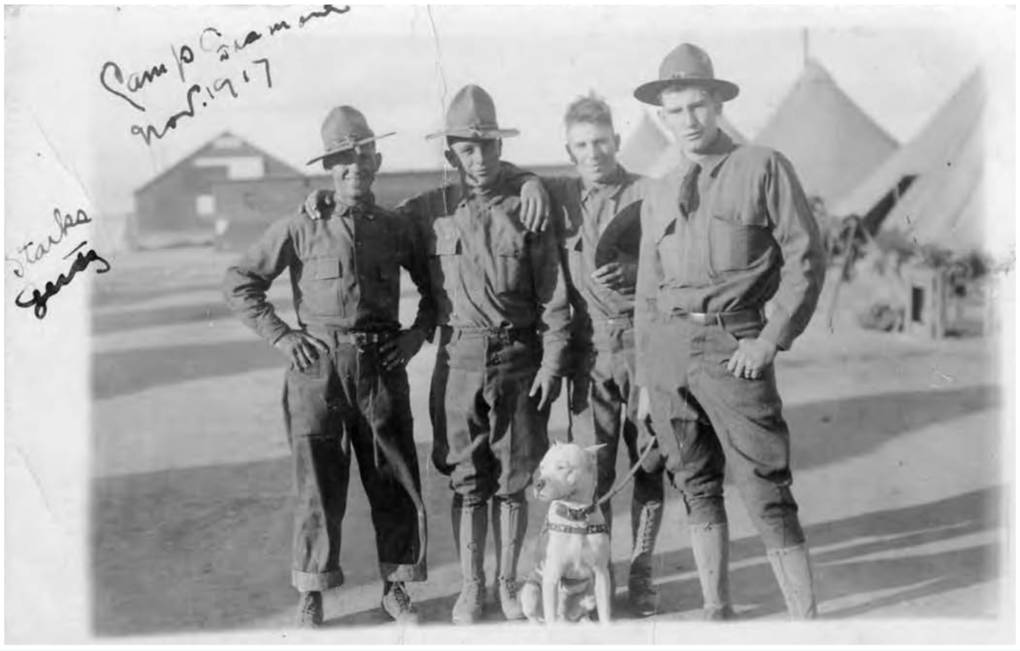
"caption": "Soldiers in training at Camp Fremont, a World War I Army cantonment located, in part, on land the U.S. War Department leased from Stanford University.",
"description": "Soldiers in training at Camp Fremont, a World War I Army cantonment located, in part, on land the U.S. War Department leased from Stanford University.",
"title": "RS33832_Screen Shot 2018-11-10 at 12.33.38 PM-qut",
"credit": "Courtesy of Bob Swanson",
"status": "inherit",
"isLoading": false,
"fetchFailed": false
},
"news_11705285": {
"type": "attachments",
"id": "news_11705285",
"meta": {
"index": "attachments_1716263798",
"site": "news",
"id": "11705285",
"found": true
},
"parent": 11705269,
"imgSizes": {
"twentyfourteen-full-width": {
"file": "https://ww2.kqed.org/app/uploads/sites/10/2018/11/Vigil-1038x576.jpg",
"width": 1038,
"mimeType": "image/jpeg",
"height": 576
},
"thumbnail": {
"file": "https://ww2.kqed.org/app/uploads/sites/10/2018/11/Vigil-160x107.jpg",
"width": 160,
"mimeType": "image/jpeg",
"height": 107
},
"post-thumbnail": {
"file": "https://ww2.kqed.org/app/uploads/sites/10/2018/11/Vigil-672x372.jpg",
"width": 672,
"mimeType": "image/jpeg",
"height": 372
},
"kqedFullSize": {
"file": "https://ww2.kqed.org/app/uploads/sites/10/2018/11/Vigil.jpg",
"width": 1920,
"height": 1280
},
"large": {
"file": "https://ww2.kqed.org/app/uploads/sites/10/2018/11/Vigil-1020x680.jpg",
"width": 1020,
"mimeType": "image/jpeg",
"height": 680
},
"complete_open_graph": {
"file": "https://ww2.kqed.org/app/uploads/sites/10/2018/11/Vigil-1200x800.jpg",
"width": 1200,
"mimeType": "image/jpeg",
"height": 800
},
"guest-author-50": {
"file": "https://ww2.kqed.org/app/uploads/sites/10/2018/11/Vigil-50x50.jpg",
"width": 50,
"mimeType": "image/jpeg",
"height": 50
},
"guest-author-96": {
"file": "https://ww2.kqed.org/app/uploads/sites/10/2018/11/Vigil-96x96.jpg",
"width": 96,
"mimeType": "image/jpeg",
"height": 96
},
"medium": {
"file": "https://ww2.kqed.org/app/uploads/sites/10/2018/11/Vigil-800x533.jpg",
"width": 800,
"mimeType": "image/jpeg",
"height": 533
},
"guest-author-64": {
"file": "https://ww2.kqed.org/app/uploads/sites/10/2018/11/Vigil-64x64.jpg",
"width": 64,
"mimeType": "image/jpeg",
"height": 64
},
"guest-author-32": {
"file": "https://ww2.kqed.org/app/uploads/sites/10/2018/11/Vigil-32x32.jpg",
"width": 32,
"mimeType": "image/jpeg",
"height": 32
},
"full-width": {
"file": "https://ww2.kqed.org/app/uploads/sites/10/2018/11/Vigil-1920x1280.jpg",
"width": 1920,
"mimeType": "image/jpeg",
"height": 1280
},
"detail": {
"file": "https://ww2.kqed.org/app/uploads/sites/10/2018/11/Vigil-150x150.jpg",
"width": 150,
"mimeType": "image/jpeg",
"height": 150
},
"guest-author-128": {
"file": "https://ww2.kqed.org/app/uploads/sites/10/2018/11/Vigil-128x128.jpg",
"width": 128,
"mimeType": "image/jpeg",
"height": 128
}
},
"publishDate": 1541795962,
"modified": 1541796097,
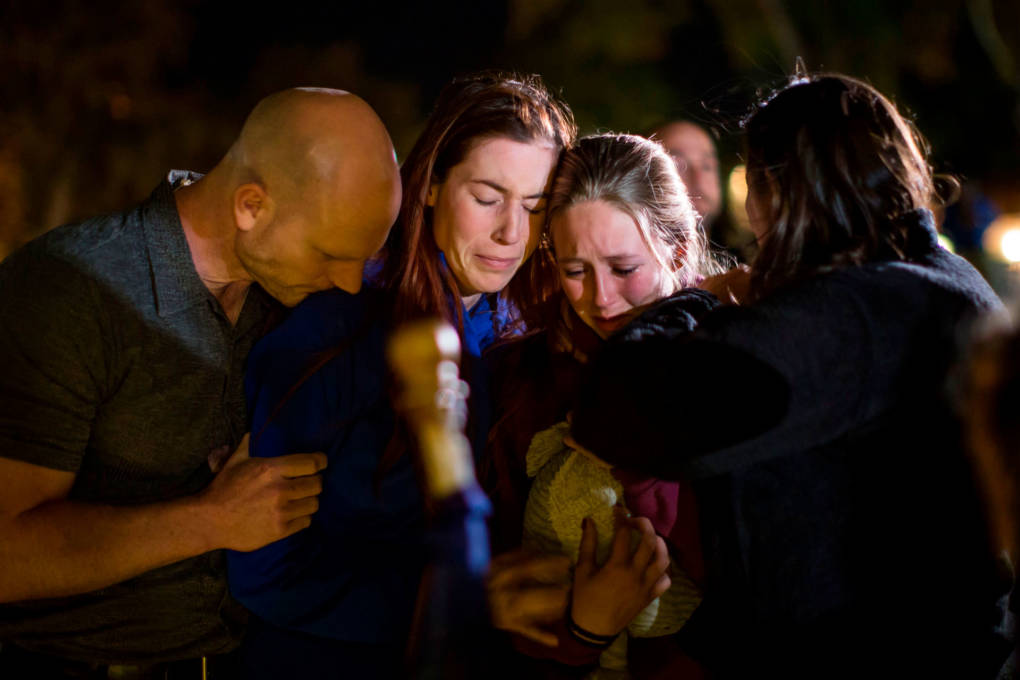
"caption": "People comfort each other during a vigil to pay tribute to the victims of Wednesday's mass shooting in Thousand Oaks on Nov. 8, 2018",
"description": "People comfort each other during a vigil to pay tribute to the victims of Wednesday's mass shooting in Thousand Oaks on Nov. 8, 2018",
"title": "Vigil",
"credit": "APU GOMES/AFP/Getty Images",
"status": "inherit",
"isLoading": false,
"fetchFailed": false
},
"news_11704260": {
"type": "attachments",
"id": "news_11704260",
"meta": {
"index": "attachments_1716263798",
"site": "news",
"id": "11704260",
"found": true
},
"parent": 11704024,
"imgSizes": {
"small": {
"file": "https://ww2.kqed.org/app/uploads/sites/10/2018/11/prop_b_final01-1-520x278.jpg",
"width": 520,
"mimeType": "image/jpeg",
"height": 278
},
"twentyfourteen-full-width": {
"file": "https://ww2.kqed.org/app/uploads/sites/10/2018/11/prop_b_final01-1-1038x576.jpg",
"width": 1038,
"mimeType": "image/jpeg",
"height": 576
},
"thumbnail": {
"file": "https://ww2.kqed.org/app/uploads/sites/10/2018/11/prop_b_final01-1-160x86.jpg",
"width": 160,
"mimeType": "image/jpeg",
"height": 86
},
"fd-sm": {
"file": "https://ww2.kqed.org/app/uploads/sites/10/2018/11/prop_b_final01-1-960x514.jpg",
"width": 960,
"mimeType": "image/jpeg",
"height": 514
},
"post-thumbnail": {
"file": "https://ww2.kqed.org/app/uploads/sites/10/2018/11/prop_b_final01-1-672x372.jpg",
"width": 672,
"mimeType": "image/jpeg",
"height": 372
},
"xsmall": {
"file": "https://ww2.kqed.org/app/uploads/sites/10/2018/11/prop_b_final01-1-375x201.jpg",
"width": 375,
"mimeType": "image/jpeg",
"height": 201
},
"kqedFullSize": {
"file": "https://ww2.kqed.org/app/uploads/sites/10/2018/11/prop_b_final01-1.jpg",
"width": 1921,
"height": 1028
},
"large": {
"file": "https://ww2.kqed.org/app/uploads/sites/10/2018/11/prop_b_final01-1-1020x546.jpg",
"width": 1020,
"mimeType": "image/jpeg",
"height": 546
},
"xlarge": {
"file": "https://ww2.kqed.org/app/uploads/sites/10/2018/11/prop_b_final01-1-1180x631.jpg",
"width": 1180,
"mimeType": "image/jpeg",
"height": 631
},
"complete_open_graph": {
"file": "https://ww2.kqed.org/app/uploads/sites/10/2018/11/prop_b_final01-1-1200x642.jpg",
"width": 1200,
"mimeType": "image/jpeg",
"height": 642
},
"guest-author-50": {
"file": "https://ww2.kqed.org/app/uploads/sites/10/2018/11/prop_b_final01-1-50x50.jpg",
"width": 50,
"mimeType": "image/jpeg",
"height": 50
},
"guest-author-96": {
"file": "https://ww2.kqed.org/app/uploads/sites/10/2018/11/prop_b_final01-1-96x96.jpg",
"width": 96,
"mimeType": "image/jpeg",
"height": 96
},
"medium": {
"file": "https://ww2.kqed.org/app/uploads/sites/10/2018/11/prop_b_final01-1-800x428.jpg",
"width": 800,
"mimeType": "image/jpeg",
"height": 428
},
"guest-author-64": {
"file": "https://ww2.kqed.org/app/uploads/sites/10/2018/11/prop_b_final01-1-64x64.jpg",
"width": 64,
"mimeType": "image/jpeg",
"height": 64
},
"guest-author-32": {
"file": "https://ww2.kqed.org/app/uploads/sites/10/2018/11/prop_b_final01-1-32x32.jpg",
"width": 32,
"mimeType": "image/jpeg",
"height": 32
},
"fd-lrg": {
"file": "https://ww2.kqed.org/app/uploads/sites/10/2018/11/prop_b_final01-1-1920x1027.jpg",
"width": 1920,
"mimeType": "image/jpeg",
"height": 1027
},
"fd-med": {
"file": "https://ww2.kqed.org/app/uploads/sites/10/2018/11/prop_b_final01-1-1180x631.jpg",
"width": 1180,
"mimeType": "image/jpeg",
"height": 631
},
"full-width": {
"file": "https://ww2.kqed.org/app/uploads/sites/10/2018/11/prop_b_final01-1-1920x1027.jpg",
"width": 1920,
"mimeType": "image/jpeg",
"height": 1027
},
"detail": {
"file": "https://ww2.kqed.org/app/uploads/sites/10/2018/11/prop_b_final01-1-150x150.jpg",
"width": 150,
"mimeType": "image/jpeg",
"height": 150
},
"guest-author-128": {
"file": "https://ww2.kqed.org/app/uploads/sites/10/2018/11/prop_b_final01-1-128x128.jpg",
"width": 128,
"mimeType": "image/jpeg",
"height": 128
},
"xxsmall": {
"file": "https://ww2.kqed.org/app/uploads/sites/10/2018/11/prop_b_final01-1-240x128.jpg",
"width": 240,
"mimeType": "image/jpeg",
"height": 128
}
},
"publishDate": 1541561049,
"modified": 1541570506,
"caption": null,
"description": null,
"title": "prop_b_final01",
"credit": "Mark Fiore/KQED",
"status": "inherit",
"isLoading": false,
"fetchFailed": false
},
"news_11704367": {
"type": "attachments",
"id": "news_11704367",
"meta": {
"index": "attachments_1716263798",
"site": "news",
"id": "11704367",
"found": true
},
"parent": 11702831,
"imgSizes": {
"twentyfourteen-full-width": {
"file": "https://ww2.kqed.org/app/uploads/sites/10/2018/11/biz_taxes_final01_revised-2-1038x576.jpg",
"width": 1038,
"mimeType": "image/jpeg",
"height": 576
},
"thumbnail": {
"file": "https://ww2.kqed.org/app/uploads/sites/10/2018/11/biz_taxes_final01_revised-2-160x86.jpg",
"width": 160,
"mimeType": "image/jpeg",
"height": 86
},
"post-thumbnail": {
"file": "https://ww2.kqed.org/app/uploads/sites/10/2018/11/biz_taxes_final01_revised-2-672x372.jpg",
"width": 672,
"mimeType": "image/jpeg",
"height": 372
},
"kqedFullSize": {
"file": "https://ww2.kqed.org/app/uploads/sites/10/2018/11/biz_taxes_final01_revised-2.jpg",
"width": 1921,
"height": 1028
},
"large": {
"file": "https://ww2.kqed.org/app/uploads/sites/10/2018/11/biz_taxes_final01_revised-2-1020x546.jpg",
"width": 1020,
"mimeType": "image/jpeg",
"height": 546
},
"complete_open_graph": {
"file": "https://ww2.kqed.org/app/uploads/sites/10/2018/11/biz_taxes_final01_revised-2-1200x642.jpg",
"width": 1200,
"mimeType": "image/jpeg",
"height": 642
},
"guest-author-50": {
"file": "https://ww2.kqed.org/app/uploads/sites/10/2018/11/biz_taxes_final01_revised-2-50x50.jpg",
"width": 50,
"mimeType": "image/jpeg",
"height": 50
},
"guest-author-96": {
"file": "https://ww2.kqed.org/app/uploads/sites/10/2018/11/biz_taxes_final01_revised-2-96x96.jpg",
"width": 96,
"mimeType": "image/jpeg",
"height": 96
},
"medium": {
"file": "https://ww2.kqed.org/app/uploads/sites/10/2018/11/biz_taxes_final01_revised-2-800x428.jpg",
"width": 800,
"mimeType": "image/jpeg",
"height": 428
},
"guest-author-64": {
"file": "https://ww2.kqed.org/app/uploads/sites/10/2018/11/biz_taxes_final01_revised-2-64x64.jpg",
"width": 64,
"mimeType": "image/jpeg",
"height": 64
},
"guest-author-32": {
"file": "https://ww2.kqed.org/app/uploads/sites/10/2018/11/biz_taxes_final01_revised-2-32x32.jpg",
"width": 32,
"mimeType": "image/jpeg",
"height": 32
},
"full-width": {
"file": "https://ww2.kqed.org/app/uploads/sites/10/2018/11/biz_taxes_final01_revised-2-1920x1027.jpg",
"width": 1920,
"mimeType": "image/jpeg",
"height": 1027
},
"detail": {
"file": "https://ww2.kqed.org/app/uploads/sites/10/2018/11/biz_taxes_final01_revised-2-150x150.jpg",
"width": 150,
"mimeType": "image/jpeg",
"height": 150
},
"guest-author-128": {
"file": "https://ww2.kqed.org/app/uploads/sites/10/2018/11/biz_taxes_final01_revised-2-128x128.jpg",
"width": 128,
"mimeType": "image/jpeg",
"height": 128
}
},
"publishDate": 1541573955,
"modified": 1541573972,
"caption": null,
"description": null,
"title": "biz_taxes_final01_revised",
"credit": "Mark Fiore/KQED",
"status": "inherit",
"isLoading": false,
"fetchFailed": false
},
"news_11704080": {
"type": "attachments",
"id": "news_11704080",
"meta": {
"index": "attachments_1716263798",
"site": "news",
"id": "11704080",
"found": true
},
"parent": 11704079,
"imgSizes": {
"twentyfourteen-full-width": {
"file": "https://ww2.kqed.org/app/uploads/sites/10/2018/11/ap_18307196774145-eb5be90836e8bb256da05f50635748fa799f9d2c-1038x576.jpg",
"width": 1038,
"mimeType": "image/jpeg",
"height": 576
},
"thumbnail": {
"file": "https://ww2.kqed.org/app/uploads/sites/10/2018/11/ap_18307196774145-eb5be90836e8bb256da05f50635748fa799f9d2c-160x120.jpg",
"width": 160,
"mimeType": "image/jpeg",
"height": 120
},
"post-thumbnail": {
"file": "https://ww2.kqed.org/app/uploads/sites/10/2018/11/ap_18307196774145-eb5be90836e8bb256da05f50635748fa799f9d2c-672x372.jpg",
"width": 672,
"mimeType": "image/jpeg",
"height": 372
},
"kqedFullSize": {
"file": "https://ww2.kqed.org/app/uploads/sites/10/2018/11/ap_18307196774145-eb5be90836e8bb256da05f50635748fa799f9d2c.jpg",
"width": 3895,
"height": 2927
},
"large": {
"file": "https://ww2.kqed.org/app/uploads/sites/10/2018/11/ap_18307196774145-eb5be90836e8bb256da05f50635748fa799f9d2c-1020x767.jpg",
"width": 1020,
"mimeType": "image/jpeg",
"height": 767
},
"complete_open_graph": {
"file": "https://ww2.kqed.org/app/uploads/sites/10/2018/11/ap_18307196774145-eb5be90836e8bb256da05f50635748fa799f9d2c-1200x902.jpg",
"width": 1200,
"mimeType": "image/jpeg",
"height": 902
},
"guest-author-50": {
"file": "https://ww2.kqed.org/app/uploads/sites/10/2018/11/ap_18307196774145-eb5be90836e8bb256da05f50635748fa799f9d2c-50x50.jpg",
"width": 50,
"mimeType": "image/jpeg",
"height": 50
},
"guest-author-96": {
"file": "https://ww2.kqed.org/app/uploads/sites/10/2018/11/ap_18307196774145-eb5be90836e8bb256da05f50635748fa799f9d2c-96x96.jpg",
"width": 96,
"mimeType": "image/jpeg",
"height": 96
},
"medium": {
"file": "https://ww2.kqed.org/app/uploads/sites/10/2018/11/ap_18307196774145-eb5be90836e8bb256da05f50635748fa799f9d2c-800x601.jpg",
"width": 800,
"mimeType": "image/jpeg",
"height": 601
},
"guest-author-64": {
"file": "https://ww2.kqed.org/app/uploads/sites/10/2018/11/ap_18307196774145-eb5be90836e8bb256da05f50635748fa799f9d2c-64x64.jpg",
"width": 64,
"mimeType": "image/jpeg",
"height": 64
},
"guest-author-32": {
"file": "https://ww2.kqed.org/app/uploads/sites/10/2018/11/ap_18307196774145-eb5be90836e8bb256da05f50635748fa799f9d2c-32x32.jpg",
"width": 32,
"mimeType": "image/jpeg",
"height": 32
},
"full-width": {
"file": "https://ww2.kqed.org/app/uploads/sites/10/2018/11/ap_18307196774145-eb5be90836e8bb256da05f50635748fa799f9d2c-1920x1443.jpg",
"width": 1920,
"mimeType": "image/jpeg",
"height": 1443
},
"detail": {
"file": "https://ww2.kqed.org/app/uploads/sites/10/2018/11/ap_18307196774145-eb5be90836e8bb256da05f50635748fa799f9d2c-150x150.jpg",
"width": 150,
"mimeType": "image/jpeg",
"height": 150
},
"guest-author-128": {
"file": "https://ww2.kqed.org/app/uploads/sites/10/2018/11/ap_18307196774145-eb5be90836e8bb256da05f50635748fa799f9d2c-128x128.jpg",
"width": 128,
"mimeType": "image/jpeg",
"height": 128
}
},
"publishDate": 1541532354,
"modified": 1541533286,
"caption": "A man works at his desk during a demonstration in the 'war room', where Facebook monitors election-related content on the platform, in Menlo Park, Calif.",
"description": "A man works at his desk during a demonstration in the 'war room', where Facebook monitors election-related content on the platform, in Menlo Park, Calif.",
"title": null,
"credit": "Jeff Chiu/AP",
"status": "inherit",
"isLoading": false,
"fetchFailed": false
},
"news_11703981": {
"type": "attachments",
"id": "news_11703981",
"meta": {
"index": "attachments_1716263798",
"site": "news",
"id": "11703981",
"found": true
},
"parent": 11703717,
"imgSizes": {
"twentyfourteen-full-width": {
"file": "https://ww2.kqed.org/app/uploads/sites/10/2018/11/Facebookwarroom-1024x576.jpg",
"width": 1024,
"mimeType": "image/jpeg",
"height": 576
},
"thumbnail": {
"file": "https://ww2.kqed.org/app/uploads/sites/10/2018/11/Facebookwarroom-160x107.jpg",
"width": 160,
"mimeType": "image/jpeg",
"height": 107
},
"post-thumbnail": {
"file": "https://ww2.kqed.org/app/uploads/sites/10/2018/11/Facebookwarroom-672x372.jpg",
"width": 672,
"mimeType": "image/jpeg",
"height": 372
},
"kqedFullSize": {
"file": "https://ww2.kqed.org/app/uploads/sites/10/2018/11/Facebookwarroom.jpg",
"width": 1024,
"height": 683
},
"large": {
"file": "https://ww2.kqed.org/app/uploads/sites/10/2018/11/Facebookwarroom-1020x680.jpg",
"width": 1020,
"mimeType": "image/jpeg",
"height": 680
},
"guest-author-50": {
"file": "https://ww2.kqed.org/app/uploads/sites/10/2018/11/Facebookwarroom-50x50.jpg",
"width": 50,
"mimeType": "image/jpeg",
"height": 50
},
"guest-author-96": {
"file": "https://ww2.kqed.org/app/uploads/sites/10/2018/11/Facebookwarroom-96x96.jpg",
"width": 96,
"mimeType": "image/jpeg",
"height": 96
},
"medium": {
"file": "https://ww2.kqed.org/app/uploads/sites/10/2018/11/Facebookwarroom-800x534.jpg",
"width": 800,
"mimeType": "image/jpeg",
"height": 534
},
"guest-author-64": {
"file": "https://ww2.kqed.org/app/uploads/sites/10/2018/11/Facebookwarroom-64x64.jpg",
"width": 64,
"mimeType": "image/jpeg",
"height": 64
},
"detail": {
"file": "https://ww2.kqed.org/app/uploads/sites/10/2018/11/Facebookwarroom-150x150.jpg",
"width": 150,
"mimeType": "image/jpeg",
"height": 150
},
"guest-author-32": {
"file": "https://ww2.kqed.org/app/uploads/sites/10/2018/11/Facebookwarroom-32x32.jpg",
"width": 32,
"mimeType": "image/jpeg",
"height": 32
},
"guest-author-128": {
"file": "https://ww2.kqed.org/app/uploads/sites/10/2018/11/Facebookwarroom-128x128.jpg",
"width": 128,
"mimeType": "image/jpeg",
"height": 128
}
},
"publishDate": 1541467142,
"modified": 1541468744,
"caption": "Facebook \"War Room\" leader for Brazil elections Lexi Sturdy works during a media demonstration on Oct 17, 2018, in Menlo Park, California.",
"description": null,
"title": "US-IT-POLITICS-MEDIA-FACEBOOK",
"credit": "Noah Berger /AFP/Getty Images",
"status": "inherit",
"isLoading": false,
"fetchFailed": false
},
"news_11703895": {
"type": "attachments",
"id": "news_11703895",
"meta": {
"index": "attachments_1716263798",
"site": "news",
"id": "11703895",
"found": true
},
"parent": 11703843,
"imgSizes": {
"small": {
"file": "https://ww2.kqed.org/app/uploads/sites/10/2018/11/ajit_pai-520x347.jpg",
"width": 520,
"mimeType": "image/jpeg",
"height": 347
},
"twentyfourteen-full-width": {
"file": "https://ww2.kqed.org/app/uploads/sites/10/2018/11/ajit_pai-1038x576.jpg",
"width": 1038,
"mimeType": "image/jpeg",
"height": 576
},
"thumbnail": {
"file": "https://ww2.kqed.org/app/uploads/sites/10/2018/11/ajit_pai-160x107.jpg",
"width": 160,
"mimeType": "image/jpeg",
"height": 107
},
"fd-sm": {
"file": "https://ww2.kqed.org/app/uploads/sites/10/2018/11/ajit_pai-960x640.jpg",
"width": 960,
"mimeType": "image/jpeg",
"height": 640
},
"post-thumbnail": {
"file": "https://ww2.kqed.org/app/uploads/sites/10/2018/11/ajit_pai-672x372.jpg",
"width": 672,
"mimeType": "image/jpeg",
"height": 372
},
"xsmall": {
"file": "https://ww2.kqed.org/app/uploads/sites/10/2018/11/ajit_pai-375x250.jpg",
"width": 375,
"mimeType": "image/jpeg",
"height": 250
},
"kqedFullSize": {
"file": "https://ww2.kqed.org/app/uploads/sites/10/2018/11/ajit_pai.jpg",
"width": 1920,
"height": 1280
},
"large": {
"file": "https://ww2.kqed.org/app/uploads/sites/10/2018/11/ajit_pai-1020x680.jpg",
"width": 1020,
"mimeType": "image/jpeg",
"height": 680
},
"xlarge": {
"file": "https://ww2.kqed.org/app/uploads/sites/10/2018/11/ajit_pai-1180x787.jpg",
"width": 1180,
"mimeType": "image/jpeg",
"height": 787
},
"complete_open_graph": {
"file": "https://ww2.kqed.org/app/uploads/sites/10/2018/11/ajit_pai-1200x800.jpg",
"width": 1200,
"mimeType": "image/jpeg",
"height": 800
},
"guest-author-50": {
"file": "https://ww2.kqed.org/app/uploads/sites/10/2018/11/ajit_pai-50x50.jpg",
"width": 50,
"mimeType": "image/jpeg",
"height": 50
},
"guest-author-96": {
"file": "https://ww2.kqed.org/app/uploads/sites/10/2018/11/ajit_pai-96x96.jpg",
"width": 96,
"mimeType": "image/jpeg",
"height": 96
},
"medium": {
"file": "https://ww2.kqed.org/app/uploads/sites/10/2018/11/ajit_pai-800x533.jpg",
"width": 800,
"mimeType": "image/jpeg",
"height": 533
},
"guest-author-64": {
"file": "https://ww2.kqed.org/app/uploads/sites/10/2018/11/ajit_pai-64x64.jpg",
"width": 64,
"mimeType": "image/jpeg",
"height": 64
},
"guest-author-32": {
"file": "https://ww2.kqed.org/app/uploads/sites/10/2018/11/ajit_pai-32x32.jpg",
"width": 32,
"mimeType": "image/jpeg",
"height": 32
},
"fd-lrg": {
"file": "https://ww2.kqed.org/app/uploads/sites/10/2018/11/ajit_pai-1920x1280.jpg",
"width": 1920,
"mimeType": "image/jpeg",
"height": 1280
},
"fd-med": {
"file": "https://ww2.kqed.org/app/uploads/sites/10/2018/11/ajit_pai-1180x787.jpg",
"width": 1180,
"mimeType": "image/jpeg",
"height": 787
},
"full-width": {
"file": "https://ww2.kqed.org/app/uploads/sites/10/2018/11/ajit_pai-1920x1280.jpg",
"width": 1920,
"mimeType": "image/jpeg",
"height": 1280
},
"detail": {
"file": "https://ww2.kqed.org/app/uploads/sites/10/2018/11/ajit_pai-150x150.jpg",
"width": 150,
"mimeType": "image/jpeg",
"height": 150
},
"guest-author-128": {
"file": "https://ww2.kqed.org/app/uploads/sites/10/2018/11/ajit_pai-128x128.jpg",
"width": 128,
"mimeType": "image/jpeg",
"height": 128
},
"xxsmall": {
"file": "https://ww2.kqed.org/app/uploads/sites/10/2018/11/ajit_pai-240x160.jpg",
"width": 240,
"mimeType": "image/jpeg",
"height": 160
}
},
"publishDate": 1541459136,
"modified": 1541467571,
"caption": "Federal Communications Commission Chairman Ajit Pai speaks to members of the media after a commission meeting Dec. 14, 2017, in Washington, D.C.",
"description": "Federal Communications Commission Chairman Ajit Pai speaks to members of the media after a commission meeting December 14, 2017 in Washington, DC.",
"title": "FCC Holds Vote On Repeal Of Net Neutrality Rules",
"credit": "Alex Wong/Getty Images",
"status": "inherit",
"isLoading": false,
"fetchFailed": false
},
"news_11703410": {
"type": "attachments",
"id": "news_11703410",
"meta": {
"index": "attachments_1716263798",
"site": "news",
"id": "11703410",
"found": true
},
"parent": 11703405,
"imgSizes": {
"small": {
"file": "https://ww2.kqed.org/app/uploads/sites/10/2018/11/NR605_MARQUEE_2-520x293.jpg",
"width": 520,
"mimeType": "image/jpeg",
"height": 293
},
"twentyfourteen-full-width": {
"file": "https://ww2.kqed.org/app/uploads/sites/10/2018/11/NR605_MARQUEE_2-1038x576.jpg",
"width": 1038,
"mimeType": "image/jpeg",
"height": 576
},
"thumbnail": {
"file": "https://ww2.kqed.org/app/uploads/sites/10/2018/11/NR605_MARQUEE_2-160x90.jpg",
"width": 160,
"mimeType": "image/jpeg",
"height": 90
},
"fd-sm": {
"file": "https://ww2.kqed.org/app/uploads/sites/10/2018/11/NR605_MARQUEE_2-960x540.jpg",
"width": 960,
"mimeType": "image/jpeg",
"height": 540
},
"post-thumbnail": {
"file": "https://ww2.kqed.org/app/uploads/sites/10/2018/11/NR605_MARQUEE_2-672x372.jpg",
"width": 672,
"mimeType": "image/jpeg",
"height": 372
},
"xsmall": {
"file": "https://ww2.kqed.org/app/uploads/sites/10/2018/11/NR605_MARQUEE_2-375x211.jpg",
"width": 375,
"mimeType": "image/jpeg",
"height": 211
},
"kqedFullSize": {
"file": "https://ww2.kqed.org/app/uploads/sites/10/2018/11/NR605_MARQUEE_2.jpg",
"width": 1280,
"height": 720
},
"large": {
"file": "https://ww2.kqed.org/app/uploads/sites/10/2018/11/NR605_MARQUEE_2-1020x574.jpg",
"width": 1020,
"mimeType": "image/jpeg",
"height": 574
},
"xlarge": {
"file": "https://ww2.kqed.org/app/uploads/sites/10/2018/11/NR605_MARQUEE_2-1180x664.jpg",
"width": 1180,
"mimeType": "image/jpeg",
"height": 664
},
"complete_open_graph": {
"file": "https://ww2.kqed.org/app/uploads/sites/10/2018/11/NR605_MARQUEE_2-1200x675.jpg",
"width": 1200,
"mimeType": "image/jpeg",
"height": 675
},
"guest-author-50": {
"file": "https://ww2.kqed.org/app/uploads/sites/10/2018/11/NR605_MARQUEE_2-50x50.jpg",
"width": 50,
"mimeType": "image/jpeg",
"height": 50
},
"guest-author-96": {
"file": "https://ww2.kqed.org/app/uploads/sites/10/2018/11/NR605_MARQUEE_2-96x96.jpg",
"width": 96,
"mimeType": "image/jpeg",
"height": 96
},
"medium": {
"file": "https://ww2.kqed.org/app/uploads/sites/10/2018/11/NR605_MARQUEE_2-800x450.jpg",
"width": 800,
"mimeType": "image/jpeg",
"height": 450
},
"guest-author-64": {
"file": "https://ww2.kqed.org/app/uploads/sites/10/2018/11/NR605_MARQUEE_2-64x64.jpg",
"width": 64,
"mimeType": "image/jpeg",
"height": 64
},
"guest-author-32": {
"file": "https://ww2.kqed.org/app/uploads/sites/10/2018/11/NR605_MARQUEE_2-32x32.jpg",
"width": 32,
"mimeType": "image/jpeg",
"height": 32
},
"fd-med": {
"file": "https://ww2.kqed.org/app/uploads/sites/10/2018/11/NR605_MARQUEE_2-1180x664.jpg",
"width": 1180,
"mimeType": "image/jpeg",
"height": 664
},
"detail": {
"file": "https://ww2.kqed.org/app/uploads/sites/10/2018/11/NR605_MARQUEE_2-150x150.jpg",
"width": 150,
"mimeType": "image/jpeg",
"height": 150
},
"guest-author-128": {
"file": "https://ww2.kqed.org/app/uploads/sites/10/2018/11/NR605_MARQUEE_2-128x128.jpg",
"width": 128,
"mimeType": "image/jpeg",
"height": 128
},
"xxsmall": {
"file": "https://ww2.kqed.org/app/uploads/sites/10/2018/11/NR605_MARQUEE_2-240x135.jpg",
"width": 240,
"mimeType": "image/jpeg",
"height": 135
}
},
"publishDate": 1541203454,
"modified": 1541203454,
"caption": null,
"description": null,
"title": "NR605_MARQUEE_2",
"credit": null,
"status": "inherit",
"isLoading": false,
"fetchFailed": false
},
"news_11572756": {
"type": "attachments",
"id": "news_11572756",
"meta": {
"index": "attachments_1716263798",
"site": "news",
"id": "11572756",
"found": true
},
"parent": 0,
"imgSizes": {
"small": {
"file": "https://ww2.kqed.org/app/uploads/sites/10/2017/07/tcr_archive_background-520x195.jpg",
"width": 520,
"mimeType": "image/jpeg",
"height": 195
},
"twentyfourteen-full-width": {
"file": "https://ww2.kqed.org/app/uploads/sites/10/2017/07/tcr_archive_background-1038x450.jpg",
"width": 1038,
"mimeType": "image/jpeg",
"height": 450
},
"thumbnail": {
"file": "https://ww2.kqed.org/app/uploads/sites/10/2017/07/tcr_archive_background-160x60.jpg",
"width": 160,
"mimeType": "image/jpeg",
"height": 60
},
"fd-sm": {
"file": "https://ww2.kqed.org/app/uploads/sites/10/2017/07/tcr_archive_background-960x360.jpg",
"width": 960,
"mimeType": "image/jpeg",
"height": 360
},
"post-thumbnail": {
"file": "https://ww2.kqed.org/app/uploads/sites/10/2017/07/tcr_archive_background-672x372.jpg",
"width": 672,
"mimeType": "image/jpeg",
"height": 372
},
"xsmall": {
"file": "https://ww2.kqed.org/app/uploads/sites/10/2017/07/tcr_archive_background-375x141.jpg",
"width": 375,
"mimeType": "image/jpeg",
"height": 141
},
"kqedFullSize": {
"file": "https://ww2.kqed.org/app/uploads/sites/10/2017/07/tcr_archive_background.jpg",
"width": 1200,
"height": 450
},
"large": {
"file": "https://ww2.kqed.org/app/uploads/sites/10/2017/07/tcr_archive_background-1020x383.jpg",
"width": 1020,
"mimeType": "image/jpeg",
"height": 383
},
"xlarge": {
"file": "https://ww2.kqed.org/app/uploads/sites/10/2017/07/tcr_archive_background-1180x443.jpg",
"width": 1180,
"mimeType": "image/jpeg",
"height": 443
},
"guest-author-50": {
"file": "https://ww2.kqed.org/app/uploads/sites/10/2017/07/tcr_archive_background-50x50.jpg",
"width": 50,
"mimeType": "image/jpeg",
"height": 50
},
"guest-author-96": {
"file": "https://ww2.kqed.org/app/uploads/sites/10/2017/07/tcr_archive_background-96x96.jpg",
"width": 96,
"mimeType": "image/jpeg",
"height": 96
},
"medium": {
"file": "https://ww2.kqed.org/app/uploads/sites/10/2017/07/tcr_archive_background-800x300.jpg",
"width": 800,
"mimeType": "image/jpeg",
"height": 300
},
"guest-author-64": {
"file": "https://ww2.kqed.org/app/uploads/sites/10/2017/07/tcr_archive_background-64x64.jpg",
"width": 64,
"mimeType": "image/jpeg",
"height": 64
},
"guest-author-32": {
"file": "https://ww2.kqed.org/app/uploads/sites/10/2017/07/tcr_archive_background-32x32.jpg",
"width": 32,
"mimeType": "image/jpeg",
"height": 32
},
"fd-med": {
"file": "https://ww2.kqed.org/app/uploads/sites/10/2017/07/tcr_archive_background-1180x443.jpg",
"width": 1180,
"mimeType": "image/jpeg",
"height": 443
},
"detail": {
"file": "https://ww2.kqed.org/app/uploads/sites/10/2017/07/tcr_archive_background-150x150.jpg",
"width": 150,
"mimeType": "image/jpeg",
"height": 150
},
"guest-author-128": {
"file": "https://ww2.kqed.org/app/uploads/sites/10/2017/07/tcr_archive_background-128x128.jpg",
"width": 128,
"mimeType": "image/jpeg",
"height": 128
},
"xxsmall": {
"file": "https://ww2.kqed.org/app/uploads/sites/10/2017/07/tcr_archive_background-240x90.jpg",
"width": 240,
"mimeType": "image/jpeg",
"height": 90
}
},
"publishDate": 1500316142,
"modified": 1500316142,
"caption": null,
"description": null,
"title": "tcr_archive_background",
"credit": null,
"status": "inherit",
"isLoading": false,
"fetchFailed": false
},
"news_11702994": {
"type": "attachments",
"id": "news_11702994",
"meta": {
"index": "attachments_1716263798",
"site": "news",
"id": "11702994",
"found": true
},
"parent": 11702989,
"imgSizes": {
"small": {
"file": "https://ww2.kqed.org/app/uploads/sites/10/2018/11/slogan_110118_final-520x344.jpg",
"width": 520,
"mimeType": "image/jpeg",
"height": 344
},
"twentyfourteen-full-width": {
"file": "https://ww2.kqed.org/app/uploads/sites/10/2018/11/slogan_110118_final-1038x576.jpg",
"width": 1038,
"mimeType": "image/jpeg",
"height": 576
},
"thumbnail": {
"file": "https://ww2.kqed.org/app/uploads/sites/10/2018/11/slogan_110118_final-160x106.jpg",
"width": 160,
"mimeType": "image/jpeg",
"height": 106
},
"fd-sm": {
"file": "https://ww2.kqed.org/app/uploads/sites/10/2018/11/slogan_110118_final-960x635.jpg",
"width": 960,
"mimeType": "image/jpeg",
"height": 635
},
"post-thumbnail": {
"file": "https://ww2.kqed.org/app/uploads/sites/10/2018/11/slogan_110118_final-672x372.jpg",
"width": 672,
"mimeType": "image/jpeg",
"height": 372
},
"xsmall": {
"file": "https://ww2.kqed.org/app/uploads/sites/10/2018/11/slogan_110118_final-375x248.jpg",
"width": 375,
"mimeType": "image/jpeg",
"height": 248
},
"kqedFullSize": {
"file": "https://ww2.kqed.org/app/uploads/sites/10/2018/11/slogan_110118_final.jpg",
"width": 1920,
"height": 1269
},
"large": {
"file": "https://ww2.kqed.org/app/uploads/sites/10/2018/11/slogan_110118_final-1020x674.jpg",
"width": 1020,
"mimeType": "image/jpeg",
"height": 674
},
"xlarge": {
"file": "https://ww2.kqed.org/app/uploads/sites/10/2018/11/slogan_110118_final-1180x780.jpg",
"width": 1180,
"mimeType": "image/jpeg",
"height": 780
},
"complete_open_graph": {
"file": "https://ww2.kqed.org/app/uploads/sites/10/2018/11/slogan_110118_final-1200x793.jpg",
"width": 1200,
"mimeType": "image/jpeg",
"height": 793
},
"guest-author-50": {
"file": "https://ww2.kqed.org/app/uploads/sites/10/2018/11/slogan_110118_final-50x50.jpg",
"width": 50,
"mimeType": "image/jpeg",
"height": 50
},
"guest-author-96": {
"file": "https://ww2.kqed.org/app/uploads/sites/10/2018/11/slogan_110118_final-96x96.jpg",
"width": 96,
"mimeType": "image/jpeg",
"height": 96
},
"medium": {
"file": "https://ww2.kqed.org/app/uploads/sites/10/2018/11/slogan_110118_final-800x529.jpg",
"width": 800,
"mimeType": "image/jpeg",
"height": 529
},
"guest-author-64": {
"file": "https://ww2.kqed.org/app/uploads/sites/10/2018/11/slogan_110118_final-64x64.jpg",
"width": 64,
"mimeType": "image/jpeg",
"height": 64
},
"guest-author-32": {
"file": "https://ww2.kqed.org/app/uploads/sites/10/2018/11/slogan_110118_final-32x32.jpg",
"width": 32,
"mimeType": "image/jpeg",
"height": 32
},
"fd-lrg": {
"file": "https://ww2.kqed.org/app/uploads/sites/10/2018/11/slogan_110118_final-1920x1269.jpg",
"width": 1920,
"mimeType": "image/jpeg",
"height": 1269
},
"fd-med": {
"file": "https://ww2.kqed.org/app/uploads/sites/10/2018/11/slogan_110118_final-1180x780.jpg",
"width": 1180,
"mimeType": "image/jpeg",
"height": 780
},
"full-width": {
"file": "https://ww2.kqed.org/app/uploads/sites/10/2018/11/slogan_110118_final-1920x1269.jpg",
"width": 1920,
"mimeType": "image/jpeg",
"height": 1269
},
"detail": {
"file": "https://ww2.kqed.org/app/uploads/sites/10/2018/11/slogan_110118_final-150x150.jpg",
"width": 150,
"mimeType": "image/jpeg",
"height": 150
},
"guest-author-128": {
"file": "https://ww2.kqed.org/app/uploads/sites/10/2018/11/slogan_110118_final-128x128.jpg",
"width": 128,
"mimeType": "image/jpeg",
"height": 128
},
"xxsmall": {
"file": "https://ww2.kqed.org/app/uploads/sites/10/2018/11/slogan_110118_final-240x159.jpg",
"width": 240,
"mimeType": "image/jpeg",
"height": 159
}
},
"publishDate": 1541106326,
"modified": 1541106346,
"caption": null,
"description": null,
"title": "slogan_110118_final",
"credit": null,
"status": "inherit",
"isLoading": false,
"fetchFailed": false
}
},
"audioPlayerReducer": {
"postId": "stream_live",
"isPaused": true,
"isPlaying": false,
"pfsActive": false,
"pledgeModalIsOpen": true,
"playerDrawerIsOpen": false,
"liveAudioPlayStartedAt": 0,
"liveAudioPlayContext": ""
},
"authorsReducer": {
"byline_news_11705269": {
"type": "authors",
"id": "byline_news_11705269",
"meta": {
"override": true
},
"slug": "byline_news_11705269",
"name": "Jonathan J. Cooper and Michael Balsamo \u003cbr> Associated Press",
"isLoading": false
},
"byline_news_11704079": {
"type": "authors",
"id": "byline_news_11704079",
"meta": {
"override": true
},
"slug": "byline_news_11704079",
"name": "Giles Snyder",
"isLoading": false
},
"byline_news_11703843": {
"type": "authors",
"id": "byline_news_11703843",
"meta": {
"override": true
},
"slug": "byline_news_11703843",
"name": "\u003cstrong>\u003ca href=\"https://www.npr.org/people/14562108/bill-chappell\">Bill Chappell\u003c/a>\u003c/strong>",
"isLoading": false
},
"gmarzorati": {
"type": "authors",
"id": "227",
"meta": {
"index": "authors_1716337520",
"id": "227",
"found": true
},
"name": "Guy Marzorati",
"firstName": "Guy",
"lastName": "Marzorati",
"slug": "gmarzorati",
"email": "gmarzorati@KQED.org",
"display_author_email": true,
"staff_mastheads": [
"news"
],
"title": "Correspondent",
"bio": "Guy Marzorati is a correspondent on KQED's California Politics and Government Desk, based in San Jose. A graduate of Santa Clara University, Guy joined KQED in 2013. He reports on state and local politics and produces KQED's digital voter guide.",
"avatar": "https://secure.gravatar.com/avatar/e7038b8dbfd55b104369b76b1cd0b9de?s=600&d=blank&r=g",
"twitter": "guymarzorati",
"facebook": null,
"instagram": null,
"linkedin": null,
"sites": [
{
"site": "",
"roles": [
"editor"
]
},
{
"site": "news",
"roles": [
"editor"
]
},
{
"site": "science",
"roles": [
"editor"
]
},
{
"site": "forum",
"roles": [
"editor"
]
},
{
"site": "elections",
"roles": [
"editor"
]
},
{
"site": "liveblog",
"roles": [
"editor"
]
}
],
"headData": {
"title": "Guy Marzorati | KQED",
"description": "Correspondent",
"ogImgSrc": "https://secure.gravatar.com/avatar/e7038b8dbfd55b104369b76b1cd0b9de?s=600&d=blank&r=g",
"twImgSrc": "https://secure.gravatar.com/avatar/e7038b8dbfd55b104369b76b1cd0b9de?s=600&d=blank&r=g"
},
"isLoading": false,
"link": "/author/gmarzorati"
},
"kqed": {
"type": "authors",
"id": "236",
"meta": {
"index": "authors_1716337520",
"id": "236",
"found": true
},
"name": "KQED News Staff",
"firstName": "KQED News Staff",
"lastName": null,
"slug": "kqed",
"email": "faq@kqed.org",
"display_author_email": false,
"staff_mastheads": [],
"title": null,
"bio": null,
"avatar": "https://secure.gravatar.com/avatar/ef0e801a68c4c54afa9180db14084167?s=600&d=blank&r=g",
"twitter": null,
"facebook": null,
"instagram": null,
"linkedin": null,
"sites": [
{
"site": "arts",
"roles": [
"contributor"
]
},
{
"site": "news",
"roles": [
"editor"
]
},
{
"site": "futureofyou",
"roles": [
"author"
]
}
],
"headData": {
"title": "KQED News Staff | KQED",
"description": null,
"ogImgSrc": "https://secure.gravatar.com/avatar/ef0e801a68c4c54afa9180db14084167?s=600&d=blank&r=g",
"twImgSrc": "https://secure.gravatar.com/avatar/ef0e801a68c4c54afa9180db14084167?s=600&d=blank&r=g"
},
"isLoading": false,
"link": "/author/kqed"
},
"rachael-myrow": {
"type": "authors",
"id": "251",
"meta": {
"index": "authors_1716337520",
"id": "251",
"found": true
},
"name": "Rachael Myrow",
"firstName": "Rachael",
"lastName": "Myrow",
"slug": "rachael-myrow",
"email": "rmyrow@kqed.org",
"display_author_email": true,
"staff_mastheads": [
"news"
],
"title": "Senior Editor of KQED's Silicon Valley News Desk",
"bio": "• I write and edit stories about how Silicon Valley power and policies shape everyday life in California. I’m also passionate about making Bay Area history and culture more accessible to a broad public. • I’ve been a journalist for most of my life, starting in high school with The Franklin Press in Los Angeles, where I grew up. While earning my first degree in English at UC Berkeley, I got my start in public radio at KALX-FM. After completing a second degree in journalism at Cal, I landed my first professional job at Marketplace, then moved on to KPCC (now LAist), and then KQED, where I hosted The California Report for more than seven years. • My reporting has appeared on NPR, The World, WBUR’s \u003ci>Here & Now\u003c/i>, and the BBC. I also guest host for KQED’s \u003ci>Forum\u003c/i>, as well as the Commonwealth Club in San Francisco. • I speak periodically on media, democracy and technology issues, and do voiceover work for documentaries and educational video projects. • Outside of the studio, you'll find me hiking Bay Area trails and whipping up Insta-ready meals in my kitchen. • I do not accept gifts, money, or favors from anyone connected to my reporting, I don't pay people for information, and I do not support or donate to political causes. • I strive to treat the people I report on with fairness, honesty, and respect. I also recognize there are often multiple sides to a story and work to verify information through multiple sources and documentation. If I get something wrong, I correct it.",
"avatar": "https://secure.gravatar.com/avatar/3ed8a3c5f26025e4a805ba634cda8cd764906b97438a6d9ce216b044e340da4e?s=600&d=blank&r=g",
"twitter": "rachaelmyrow",
"bluesky": null,
"facebook": null,
"instagram": null,
"linkedin": "https://www.linkedin.com/in/rachaelmyrow/",
"sites": [
{
"site": "arts",
"roles": [
"administrator"
]
},
{
"site": "news",
"roles": [
"edit_others_posts",
"editor"
]
},
{
"site": "futureofyou",
"roles": [
"editor"
]
},
{
"site": "bayareabites",
"roles": [
"editor"
]
},
{
"site": "stateofhealth",
"roles": [
"editor"
]
},
{
"site": "science",
"roles": [
"editor"
]
},
{
"site": "food",
"roles": [
"editor"
]
},
{
"site": "forum",
"roles": [
"editor"
]
},
{
"site": "liveblog",
"roles": [
"author"
]
}
],
"headData": {
"title": "Rachael Myrow | KQED",
"description": "Senior Editor of KQED's Silicon Valley News Desk",
"ogImgSrc": "https://secure.gravatar.com/avatar/3ed8a3c5f26025e4a805ba634cda8cd764906b97438a6d9ce216b044e340da4e?s=600&d=blank&r=g",
"twImgSrc": "https://secure.gravatar.com/avatar/3ed8a3c5f26025e4a805ba634cda8cd764906b97438a6d9ce216b044e340da4e?s=600&d=blank&r=g"
},
"isLoading": false,
"link": "/author/rachael-myrow"
},
"samharnett": {
"type": "authors",
"id": "253",
"meta": {
"index": "authors_1716337520",
"id": "253",
"found": true
},
"name": "Sam Harnett",
"firstName": "Sam",
"lastName": "Harnett",
"slug": "samharnett",
"email": "samharnett@gmail.com",
"display_author_email": false,
"staff_mastheads": [],
"title": "KQED Contributor",
"bio": "Sam Harnett covered tech and work at KQED. He is the co-creator of \u003cem>\u003ca href=\"http://www.theworldaccordingtosound.org\">The World According to Sound\u003c/a>,\u003c/em> a 90-second podcast that features different sounds and the stories behind them.\r\n\r\nBefore coming to KQED, Sam worked as an independent reporter who contributed regularly to \u003cem>The California Report, Marketplace,\u003c/em> \u003cem>The World \u003c/em>and NPR.",
"avatar": "https://secure.gravatar.com/avatar/2538b972ac02f2b9546c7a6c59a0f3d0?s=600&d=blank&r=g",
"twitter": "Samwharnett",
"facebook": null,
"instagram": null,
"linkedin": null,
"sites": [
{
"site": "news",
"roles": [
"edit_others_posts",
"subscriber"
]
},
{
"site": "stateofhealth",
"roles": [
"author"
]
},
{
"site": "science",
"roles": [
"editor"
]
},
{
"site": "quest",
"roles": [
"subscriber"
]
}
],
"headData": {
"title": "Sam Harnett | KQED",
"description": "KQED Contributor",
"ogImgSrc": "https://secure.gravatar.com/avatar/2538b972ac02f2b9546c7a6c59a0f3d0?s=600&d=blank&r=g",
"twImgSrc": "https://secure.gravatar.com/avatar/2538b972ac02f2b9546c7a6c59a0f3d0?s=600&d=blank&r=g"
},
"isLoading": false,
"link": "/author/samharnett"
},
"markfiore": {
"type": "authors",
"id": "3236",
"meta": {
"index": "authors_1716337520",
"id": "3236",
"found": true
},
"name": "Mark Fiore",
"firstName": "Mark",
"lastName": "Fiore",
"slug": "markfiore",
"email": "mark@markfiore.com",
"display_author_email": false,
"staff_mastheads": [
"news"
],
"title": "KQED News Cartoonist",
"bio": "\u003ca href=\"http://www.MarkFiore.com\">MarkFiore.com\u003c/a> | \u003ca href=\"https://twitter.com/markfiore\">Follow on Twitter\u003c/a> | \u003ca href=\"https://www.facebook.com/pages/Mark-Fiore-Animated-Political-Cartoons/94451707396?ref=bookmarks\">Facebook\u003c/a> | \u003ca href=\"mailto:mark@markfiore.com\">email\u003c/a>\r\n\r\nPulitzer Prize-winner, Mark Fiore, who the Wall Street Journal has called “the undisputed guru of the form,” creates animated political cartoons in San Francisco, where his work has been featured regularly on the San Francisco Chronicle’s web site, SFGate.com. His work has appeared on Newsweek.com, Slate.com, CBSNews.com, MotherJones.com, DailyKos.com and NPR’s web site. Fiore’s political animation has appeared on CNN, Frontline, Bill Moyers Journal, Salon.com and cable and broadcast outlets across the globe.\r\n\r\nBeginning his professional life by drawing traditional political cartoons for newspapers, Fiore’s work appeared in publications ranging from the Washington Post to the Los Angeles Times. In the late 1990s, he began to experiment with animating political cartoons and, after a short stint at the San Jose Mercury News as their staff cartoonist, Fiore devoted all his energies to animation.\r\nGrowing up in California, Fiore also spent a good portion of his life in the backwoods of Idaho. It was this combination that shaped him politically. Mark majored in political science at Colorado College, where, in a perfect send-off for a cartoonist, he received his diploma in 1991 as commencement speaker Dick Cheney smiled approvingly.\r\nMark Fiore was awarded the Pulitzer Prize for political cartooning in 2010, a Robert F. Kennedy Journalism Award in 2004 and has twice received an Online Journalism Award for commentary from the Online News Association (2002, 2008). Fiore has received two awards for his work in new media from the National Cartoonists Society (2001, 2002), and in 2006 received The James Madison Freedom of Information Award from The Society of Professional Journalists.",
"avatar": "https://secure.gravatar.com/avatar/fc4e2a612b15b67bad0c6f0e1db4ca9b?s=600&d=blank&r=g",
"twitter": "MarkFiore",
"facebook": null,
"instagram": "https://www.instagram.com/markfiore/?hl=en",
"linkedin": null,
"sites": [
{
"site": "arts",
"roles": [
"contributor"
]
},
{
"site": "news",
"roles": [
"editor"
]
},
{
"site": "futureofyou",
"roles": [
"editor"
]
},
{
"site": "science",
"roles": [
"editor"
]
}
],
"headData": {
"title": "Mark Fiore | KQED",
"description": "KQED News Cartoonist",
"ogImgSrc": "https://secure.gravatar.com/avatar/fc4e2a612b15b67bad0c6f0e1db4ca9b?s=600&d=blank&r=g",
"twImgSrc": "https://secure.gravatar.com/avatar/fc4e2a612b15b67bad0c6f0e1db4ca9b?s=600&d=blank&r=g"
},
"isLoading": false,
"link": "/author/markfiore"
},
"tmosley": {
"type": "authors",
"id": "11373",
"meta": {
"index": "authors_1716337520",
"id": "11373",
"found": true
},
"name": "Tonya Mosley",
"firstName": "Tonya",
"lastName": "Mosley",
"slug": "tmosley",
"email": "tmosley@kqed.org",
"display_author_email": false,
"staff_mastheads": [],
"title": "KQED Contributor",
"bio": "Tonya Mosley is a former Silicon Valley bureau chief for KQED. She served as the senior editor, leading a team of journalists covering the impacts of technology companies on the South Bay and society. Tonya is also a former host and reporter for KQED.\r\n\r\nPrior to KQED, Tonya served as a television reporter & anchor for several media outlets, including Al Jazeera America.\r\n\r\nIn 2015, Tonya was awarded a John S. Knight Journalism Fellowship at Stanford University where she co-created a workshop for journalists on the impacts of implicit bias, and co-wrote a Belgian/American experimental study on the effects of protest coverage.\r\n\r\nTonya has won several national awards for her work, most recently an Emmy Award in 2016 for her televised piece \"Beyond Ferguson,\" and a national Edward R. Murrow award for her public radio series \"Black in Seattle.\"\r\n\r\nYou can reach Tonya at: tmosley@kqed.org.",
"avatar": "https://secure.gravatar.com/avatar/0b2ea2bbfed6bafaacd21e9398c68e5e?s=600&d=blank&r=g",
"twitter": "tonyamosley",
"facebook": null,
"instagram": null,
"linkedin": null,
"sites": [
{
"site": "arts",
"roles": [
"editor"
]
},
{
"site": "news",
"roles": [
"subscriber"
]
},
{
"site": "about",
"roles": [
"author"
]
},
{
"site": "forum",
"roles": [
"author"
]
}
],
"headData": {
"title": "Tonya Mosley | KQED",
"description": "KQED Contributor",
"ogImgSrc": "https://secure.gravatar.com/avatar/0b2ea2bbfed6bafaacd21e9398c68e5e?s=600&d=blank&r=g",
"twImgSrc": "https://secure.gravatar.com/avatar/0b2ea2bbfed6bafaacd21e9398c68e5e?s=600&d=blank&r=g"
},
"isLoading": false,
"link": "/author/tmosley"
}
},
"pagesReducer": {
"news_category_technology": {
"type": "terms",
"id": "news_248",
"meta": {
"index": "terms_1716263798",
"site": "news",
"id": "248",
"score": 10.931828
},
"featImg": null,
"name": "Technology",
"description": null,
"taxonomy": "category",
"headData": {
"twImgId": null,
"twTitle": null,
"ogTitle": null,
"ogImgId": null,
"twDescription": null,
"description": null,
"title": "Technology Archives | KQED News",
"ogDescription": null
},
"ttid": 256,
"slug": "technology",
"isLoading": false,
"title": "Technology",
"pageMeta": {
"site": "news",
"WpPageTemplate": "page-topic-editorial",
"currentPage": 79
},
"blocks": [
{
"blockName": "kqed/post-list",
"attrs": {
"layout": "cardArticle2",
"query": "posts/news?category=technology",
"seeMore": false,
"paginated": true,
"page": 79
}
},
{
"blockName": "kqed/ad"
}
]
}
},
"pfsSessionReducer": {},
"postsReducer": {
"stream_live": {
"type": "live",
"id": "stream_live",
"audioUrl": "https://streams.kqed.org/kqedradio",
"title": "Live Stream",
"excerpt": "Live Stream information currently unavailable.",
"link": "/radio",
"featImg": "",
"label": {
"name": "KQED Live",
"link": "/"
}
},
"stream_kqedNewscast": {
"type": "posts",
"id": "stream_kqedNewscast",
"audioUrl": "https://www.kqed.org/.stream/anon/radio/RDnews/newscast.mp3?_=1",
"title": "KQED Newscast",
"featImg": "",
"label": {
"name": "88.5 FM",
"link": "/"
}
},
"news_11707158": {
"type": "posts",
"id": "news_11707158",
"meta": {
"index": "posts_1716263798",
"site": "news",
"id": "11707158",
"score": null,
"sort": [
1542726347000
]
},
"guestAuthors": [],
"slug": "indian-entrepreneurs-with-no-green-cards-pursue-silicon-valley-dreams-elsewhere",
"title": "Indian Entrepreneurs With No Green Cards Pursue Silicon Valley Dreams Elsewhere",
"publishDate": 1542726347,
"format": "audio",
"headTitle": "Indian Entrepreneurs With No Green Cards Pursue Silicon Valley Dreams Elsewhere | KQED",
"labelTerm": {},
"content": "\u003cp>\u003ca href=\"https://www.nber.org/papers/w24494.pdf\" target=\"_blank\" rel=\"noopener\">Immigrants start and/or lead\u003c/a> many of the biggest companies in Silicon Valley: Google, Oracle, Microsoft, etc. But with immigration reform in Congress stuck in neutral, a growing number of would-be entrepreneurs are choosing to pursue their Silicon Valley dreams someplace else.\u003c/p>\n\u003cp>Navish Jain’s aha! moment came after eight years of working at Cisco as an engineer. He’d read \u003ca href=\"https://www.washingtonpost.com/news/the-intersect/wp/2016/01/11/think-twice-before-answering-that-ad-101-killers-have-found-victims-on-craigslist/?utm_term=.10ec2e2cea5e\" target=\"_blank\" rel=\"noopener\">news headlines\u003c/a> about criminals finding their prey on Craigslist, and it struck him just how much he trusted Cisco’s in-house digital message boards.\u003c/p>\n\u003cp>What if, he thought, there was a housing platform that verified that every user was either a college student or gainfully employed? “Those people are more trustworthy and credible as compared to complete strangers,” Jain thought, first to himself, and then out loud. He dubbed the new company \u003ca href=\"https://www.cirtru.com\" target=\"_blank\" rel=\"noopener\">Cirtru\u003c/a>, inspired by the phrase “circles of trust.”\u003c/p>\n\u003cp>But Jain faced a dilemma. He couldn’t work on Cirtru while working at Cisco, and because of his visa, he couldn’t stay in the U.S. \u003ci>without\u003c/i> working at Cisco. He was on a temporary, employment-contingent H-1B visa. A green card would have solved that but he’s Indian, and the backlog of Indian applicants stretches to 10, even 25 years.\u003c/p>\n\u003cp>“I waited for my green card for seven, eight years. I wanted to launch my startup here, create jobs, solve this problem here. But since my green card did not come, I was forced back to move to India,” Jain said.\u003c/p>\n\u003cp>[ad fullwidth]\u003c/p>\n\u003cp>He explained all this on a recent morning in Sunnyvale, a city he used to live in, while waiting to deliver a pitch for his company at the startup accelerator \u003ca href=\"https://www.plugandplaytechcenter.com\" target=\"_blank\" rel=\"noopener\">Plug and Play Tech Center\u003c/a>.\u003c/p>\n\u003cfigure id=\"attachment_11707172\" class=\"wp-caption aligncenter\" style=\"max-width: 800px\">\u003cimg loading=\"lazy\" decoding=\"async\" class=\"size-medium wp-image-11707172\" src=\"https://ww2.kqed.org/news/wp-content/uploads/sites/10/2018/11/Slide2-800x463.png\" alt=\"One of the slides from Jain's pitch deck for his startup, Cirtru.\" width=\"800\" height=\"463\" srcset=\"https://cdn.kqed.org/wp-content/uploads/sites/10/2018/11/Slide2-800x463.png 800w, https://cdn.kqed.org/wp-content/uploads/sites/10/2018/11/Slide2-160x93.png 160w, https://cdn.kqed.org/wp-content/uploads/sites/10/2018/11/Slide2-1020x590.png 1020w, https://cdn.kqed.org/wp-content/uploads/sites/10/2018/11/Slide2-1200x694.png 1200w, https://cdn.kqed.org/wp-content/uploads/sites/10/2018/11/Slide2-1920x1110.png 1920w\" sizes=\"(max-width: 800px) 100vw, 800px\">\u003cfigcaption class=\"wp-caption-text\">One of the slides from Jain’s pitch deck for his startup, Cirtru. \u003ccite>(Courtesy of Navish Jain)\u003c/cite>\u003c/figcaption>\u003c/figure>\n\u003cp>Think of it like speed dating in Silicon Valley. Roughly half the people in the room for that particular “Friday Pitch Day” were there to pitch their startups; roughly half were looking for startups to invest in. Each entrepreneur had five minutes on stage with his pitch deck to sell his idea, his team and his desired level of investment.\u003c/p>\n\u003cp>People came from all over the world: Azerbaijan, Greece, Sweden, China, Germany, Japan. Even the local teams were packed with members whose accents betrayed that they didn’t start life in Northern California. There was a palpable atmosphere of excitement and ambition in the Plug and Play auditorium. For so many people in business around the world, Silicon Valley is where it’s at, the promised land, the global nexus of opportunity.\u003c/p>\n\u003cp>Of course, other countries are keen to mimic the magic of the San Francisco Bay Area, and Jain’s home country of India is no exception. Investors from around the world are pumping money into Indian startups. Jain is competing for those investors, too, but he said Cirtru is primarily designed for American users. After moving his family back to Mumbai, Jain now flies to the Bay Area periodically on temporary business visas for events like “Friday Pitch Day” at Plug and Play.\u003c/p>\n\u003cp>The backlog that Indians face for green cards didn’t start with the Trump administration, but it’s inexorably linked to the collateral damage produced as federal immigration officials pursue the president’s \u003ca href=\"https://www.uscis.gov/legal-resources/buy-american-hire-american-putting-american-workers-first\" target=\"_blank\" rel=\"noopener\">\u003cem>Buy American, Hire American\u003c/em>\u003c/a> executive order. \u003cimg loading=\"lazy\" decoding=\"async\" class=\"size-medium wp-image-11707173\" style=\"font-weight: bold; color: #767676;\" src=\"https://ww2.kqed.org/news/wp-content/uploads/sites/10/2018/11/RS24885_GettyImages-665478668-qut-800x533.jpg\" alt='President Trump has said of H-1B visas, \"They should be given to the most skilled and highest paid applicants. And they should never ever be used to replace Americans.\"' width=\"800\" height=\"533\" srcset=\"https://cdn.kqed.org/wp-content/uploads/sites/10/2018/11/RS24885_GettyImages-665478668-qut-800x533.jpg 800w, https://cdn.kqed.org/wp-content/uploads/sites/10/2018/11/RS24885_GettyImages-665478668-qut-160x107.jpg 160w, https://cdn.kqed.org/wp-content/uploads/sites/10/2018/11/RS24885_GettyImages-665478668-qut-1020x680.jpg 1020w, https://cdn.kqed.org/wp-content/uploads/sites/10/2018/11/RS24885_GettyImages-665478668-qut-1200x800.jpg 1200w, https://cdn.kqed.org/wp-content/uploads/sites/10/2018/11/RS24885_GettyImages-665478668-qut.jpg 1920w\" sizes=\"(max-width: 800px) 100vw, 800px\">\u003c/p>\n\u003cp>On signing the order, President Trump said of H-1B visas, “They should be given to the most skilled and highest-paid applicants. And they should never ever be used to replace Americans.” Theoretically, employers pay H-1B visa holders prevailing market wages and hire them only if they can’t find qualified American workers. But there have been news headlines — and lawsuits — claiming some companies are flouting the law.\u003c/p>\n\u003cp>\u003ca href=\"http://wadhwa.com\" target=\"_blank\" rel=\"noopener\">Vivek Wadhwa\u003c/a> is a distinguished fellow at Harvard and Carnegie Mellon University of Silicon Valley who writes about technology. “The anti-immigrants rightfully criticize H-1B workers because they have no choice but to keep working for the same employer for 10, 15 even 20 years while they wait for green cards. And when they’re in this limbo, they can’t change jobs, they don’t get the same salary increases, they’re stuck doing the same jobs they did a decade ago,” Wadhwa said.\u003c/p>\n\u003cp>\u003ca href=\"https://cis.org/Miano\" target=\"_blank\" rel=\"noopener\">John Miano\u003c/a> is a former tech worker who became an attorney in order to sue over the H-1B program. “Congress cannot even decide what H-1B even is. The original H category was strictly guest workers. The H-1B of today has been transformed into a holding pattern for immigration.” Miano argues the law itself is designed to profit employers who want to ditch American workers. “That is not abuse; that is what H-1B is intended to do.”\u003c/p>\n\u003cp>\u003ca href=\"https://www.americanimmigrationcouncil.org/staff/leslie-dellon\" target=\"_blank\" rel=\"noopener\">Leslie Dellon\u003c/a>, staff attorney for the pro-immigration American Immigration Council, disagrees. “It’s not the H-1B classification that creates a problem. If employers are complying with the requirement of paying the higher of the prevailing wage or the actual wage, then you’re not going to have a ‘lower-paid’ H-1B in the position. And, I believe the current law and regulations provide the agencies with ample tools to take action against those who don’t comply.”\u003c/p>\n\u003cp>In the meantime, the Trump administration’s clampdown has effectively killed an entrepreneur’s visa that the U.S. Citizenship and Immigration Services estimates nearly 3,000 would apply for annually if it were a real thing. The Department of Homeland Security has delayed implementation of the Obama-era program twice and promised it plans to kill the rule entirely.\u003c/p>\n\u003cp>Somebody like Jain has the financial freedom to leave Silicon Valley and still pursue his startup. But Wadhwa warns that a growing number of other countries are eating Silicon Valley’s lunch, starting by snapping up entrepreneurs who feel they’re getting the cold shoulder from the U.S.\u003c/p>\n\u003cfigure id=\"attachment_11707174\" class=\"wp-caption aligncenter\" style=\"max-width: 800px\">\u003cimg loading=\"lazy\" decoding=\"async\" class=\"size-medium wp-image-11707174\" src=\"https://ww2.kqed.org/news/wp-content/uploads/sites/10/2018/11/RS33977_India_FamilyPhoto-qut-800x533.jpg\" alt=\"What's next for Navish Jain? An endless round of flights back and forth from Mumbai to San Francisco, as he seeks to raise his second round of funding for his startup.\" width=\"800\" height=\"533\" srcset=\"https://cdn.kqed.org/wp-content/uploads/sites/10/2018/11/RS33977_India_FamilyPhoto-qut-800x533.jpg 800w, https://cdn.kqed.org/wp-content/uploads/sites/10/2018/11/RS33977_India_FamilyPhoto-qut-160x107.jpg 160w, https://cdn.kqed.org/wp-content/uploads/sites/10/2018/11/RS33977_India_FamilyPhoto-qut-1020x680.jpg 1020w, https://cdn.kqed.org/wp-content/uploads/sites/10/2018/11/RS33977_India_FamilyPhoto-qut-1200x800.jpg 1200w, https://cdn.kqed.org/wp-content/uploads/sites/10/2018/11/RS33977_India_FamilyPhoto-qut.jpg 1920w\" sizes=\"(max-width: 800px) 100vw, 800px\">\u003cfigcaption class=\"wp-caption-text\">What’s next for Navish Jain? An endless round of flights back and forth from Mumbai to San Francisco, as he seeks to raise his second round of funding for his startup. \u003ccite>(Courtesy of Navish Jain)\u003c/cite>\u003c/figcaption>\u003c/figure>\n\u003cp>“Now, the chances of them succeeding in India, China, Brazil, Mexico are greater than here, because the cost of developing startups has dropped dramatically. And you have pockets of intelligence everywhere now. You have startups everywhere now,” Wadhwa said.\u003c/p>\n\u003cp>[ad floatright]\u003c/p>\n\u003cp>“The United States may be becoming more xenophobic,” he added, “but that’s to our loss, our detriment.”\u003c/p>\n\n",
"blocks": [],
"excerpt": "Some Silicon Valley entrepreneurs from India who face a wait of 10 years for a green card choose to launch their companies elsewhere.",
"status": "publish",
"parent": 0,
"modified": 1729029031,
"stats": {
"hasAudio": false,
"hasVideo": false,
"hasChartOrMap": false,
"iframeSrcs": [],
"hasGoogleForm": false,
"hasGallery": false,
"hasHearkenModule": false,
"hasPolis": false,
"paragraphCount": 20,
"wordCount": 1139
},
"headData": {
"title": "Indian Entrepreneurs With No Green Cards Pursue Silicon Valley Dreams Elsewhere | KQED",
"description": "Some Silicon Valley entrepreneurs from India who face a wait of 10 years for a green card choose to launch their companies elsewhere.",
"ogTitle": "",
"ogDescription": "",
"ogImgId": "",
"twTitle": "",
"twDescription": "",
"twImgId": "",
"schema": {
"@context": "https://schema.org",
"@type": "NewsArticle",
"headline": "Indian Entrepreneurs With No Green Cards Pursue Silicon Valley Dreams Elsewhere",
"datePublished": "2018-11-20T07:05:47-08:00",
"dateModified": "2024-10-15T14:50:31-07:00",
"image": "https://cdn.kqed.org/wp-content/uploads/2020/02/KQED-OG-Image@1x.png",
"isAccessibleForFree": "True",
"publisher": {
"@type": "NewsMediaOrganization",
"@id": "https://www.kqed.org/#organization",
"name": "KQED",
"logo": "https://cdn.kqed.org/wp-content/uploads/2020/02/KQED-OG-Image@1x.png",
"url": "https://www.kqed.org",
"sameAs": [
"https://www.facebook.com/KQED",
"https://twitter.com/KQED",
"https://www.instagram.com/kqed/",
"https://www.tiktok.com/@kqedofficial",
"https://www.linkedin.com/company/kqed",
"https://www.youtube.com/channel/UCeC0IOo7i1P_61zVUWbJ4nw"
]
}
}
},
"source": "Food",
"sourceUrl": "https://www.kqed.org/food",
"audioUrl": "https://www.kqed.org/.stream/anon/radio/RDnews/2018/11/MyrowMumbaiStartup.mp3",
"sticky": false,
"audioTrackLength": 293,
"path": "/news/11707158/indian-entrepreneurs-with-no-green-cards-pursue-silicon-valley-dreams-elsewhere",
"parsedContent": [
{
"type": "contentString",
"content": "\u003cdiv class=\"post-body\">\u003cp>\u003cp>\u003ca href=\"https://www.nber.org/papers/w24494.pdf\" target=\"_blank\" rel=\"noopener\">Immigrants start and/or lead\u003c/a> many of the biggest companies in Silicon Valley: Google, Oracle, Microsoft, etc. But with immigration reform in Congress stuck in neutral, a growing number of would-be entrepreneurs are choosing to pursue their Silicon Valley dreams someplace else.\u003c/p>\n\u003cp>Navish Jain’s aha! moment came after eight years of working at Cisco as an engineer. He’d read \u003ca href=\"https://www.washingtonpost.com/news/the-intersect/wp/2016/01/11/think-twice-before-answering-that-ad-101-killers-have-found-victims-on-craigslist/?utm_term=.10ec2e2cea5e\" target=\"_blank\" rel=\"noopener\">news headlines\u003c/a> about criminals finding their prey on Craigslist, and it struck him just how much he trusted Cisco’s in-house digital message boards.\u003c/p>\n\u003cp>What if, he thought, there was a housing platform that verified that every user was either a college student or gainfully employed? “Those people are more trustworthy and credible as compared to complete strangers,” Jain thought, first to himself, and then out loud. He dubbed the new company \u003ca href=\"https://www.cirtru.com\" target=\"_blank\" rel=\"noopener\">Cirtru\u003c/a>, inspired by the phrase “circles of trust.”\u003c/p>\n\u003cp>But Jain faced a dilemma. He couldn’t work on Cirtru while working at Cisco, and because of his visa, he couldn’t stay in the U.S. \u003ci>without\u003c/i> working at Cisco. He was on a temporary, employment-contingent H-1B visa. A green card would have solved that but he’s Indian, and the backlog of Indian applicants stretches to 10, even 25 years.\u003c/p>\n\u003cp>“I waited for my green card for seven, eight years. I wanted to launch my startup here, create jobs, solve this problem here. But since my green card did not come, I was forced back to move to India,” Jain said.\u003c/p>\n\u003cp>\u003c/p>\u003c/div>",
"attributes": {
"named": {},
"numeric": []
}
},
{
"type": "component",
"content": "",
"name": "ad",
"attributes": {
"named": {
"label": "fullwidth"
},
"numeric": [
"fullwidth"
]
}
},
{
"type": "contentString",
"content": "\u003cdiv class=\"post-body\">\u003cp>\u003c/p>\n\u003cp>He explained all this on a recent morning in Sunnyvale, a city he used to live in, while waiting to deliver a pitch for his company at the startup accelerator \u003ca href=\"https://www.plugandplaytechcenter.com\" target=\"_blank\" rel=\"noopener\">Plug and Play Tech Center\u003c/a>.\u003c/p>\n\u003cfigure id=\"attachment_11707172\" class=\"wp-caption aligncenter\" style=\"max-width: 800px\">\u003cimg loading=\"lazy\" decoding=\"async\" class=\"size-medium wp-image-11707172\" src=\"https://ww2.kqed.org/news/wp-content/uploads/sites/10/2018/11/Slide2-800x463.png\" alt=\"One of the slides from Jain's pitch deck for his startup, Cirtru.\" width=\"800\" height=\"463\" srcset=\"https://cdn.kqed.org/wp-content/uploads/sites/10/2018/11/Slide2-800x463.png 800w, https://cdn.kqed.org/wp-content/uploads/sites/10/2018/11/Slide2-160x93.png 160w, https://cdn.kqed.org/wp-content/uploads/sites/10/2018/11/Slide2-1020x590.png 1020w, https://cdn.kqed.org/wp-content/uploads/sites/10/2018/11/Slide2-1200x694.png 1200w, https://cdn.kqed.org/wp-content/uploads/sites/10/2018/11/Slide2-1920x1110.png 1920w\" sizes=\"(max-width: 800px) 100vw, 800px\">\u003cfigcaption class=\"wp-caption-text\">One of the slides from Jain’s pitch deck for his startup, Cirtru. \u003ccite>(Courtesy of Navish Jain)\u003c/cite>\u003c/figcaption>\u003c/figure>\n\u003cp>Think of it like speed dating in Silicon Valley. Roughly half the people in the room for that particular “Friday Pitch Day” were there to pitch their startups; roughly half were looking for startups to invest in. Each entrepreneur had five minutes on stage with his pitch deck to sell his idea, his team and his desired level of investment.\u003c/p>\n\u003cp>People came from all over the world: Azerbaijan, Greece, Sweden, China, Germany, Japan. Even the local teams were packed with members whose accents betrayed that they didn’t start life in Northern California. There was a palpable atmosphere of excitement and ambition in the Plug and Play auditorium. For so many people in business around the world, Silicon Valley is where it’s at, the promised land, the global nexus of opportunity.\u003c/p>\n\u003cp>Of course, other countries are keen to mimic the magic of the San Francisco Bay Area, and Jain’s home country of India is no exception. Investors from around the world are pumping money into Indian startups. Jain is competing for those investors, too, but he said Cirtru is primarily designed for American users. After moving his family back to Mumbai, Jain now flies to the Bay Area periodically on temporary business visas for events like “Friday Pitch Day” at Plug and Play.\u003c/p>\n\u003cp>The backlog that Indians face for green cards didn’t start with the Trump administration, but it’s inexorably linked to the collateral damage produced as federal immigration officials pursue the president’s \u003ca href=\"https://www.uscis.gov/legal-resources/buy-american-hire-american-putting-american-workers-first\" target=\"_blank\" rel=\"noopener\">\u003cem>Buy American, Hire American\u003c/em>\u003c/a> executive order. \u003cimg loading=\"lazy\" decoding=\"async\" class=\"size-medium wp-image-11707173\" style=\"font-weight: bold; color: #767676;\" src=\"https://ww2.kqed.org/news/wp-content/uploads/sites/10/2018/11/RS24885_GettyImages-665478668-qut-800x533.jpg\" alt='President Trump has said of H-1B visas, \"They should be given to the most skilled and highest paid applicants. And they should never ever be used to replace Americans.\"' width=\"800\" height=\"533\" srcset=\"https://cdn.kqed.org/wp-content/uploads/sites/10/2018/11/RS24885_GettyImages-665478668-qut-800x533.jpg 800w, https://cdn.kqed.org/wp-content/uploads/sites/10/2018/11/RS24885_GettyImages-665478668-qut-160x107.jpg 160w, https://cdn.kqed.org/wp-content/uploads/sites/10/2018/11/RS24885_GettyImages-665478668-qut-1020x680.jpg 1020w, https://cdn.kqed.org/wp-content/uploads/sites/10/2018/11/RS24885_GettyImages-665478668-qut-1200x800.jpg 1200w, https://cdn.kqed.org/wp-content/uploads/sites/10/2018/11/RS24885_GettyImages-665478668-qut.jpg 1920w\" sizes=\"(max-width: 800px) 100vw, 800px\">\u003c/p>\n\u003cp>On signing the order, President Trump said of H-1B visas, “They should be given to the most skilled and highest-paid applicants. And they should never ever be used to replace Americans.” Theoretically, employers pay H-1B visa holders prevailing market wages and hire them only if they can’t find qualified American workers. But there have been news headlines — and lawsuits — claiming some companies are flouting the law.\u003c/p>\n\u003cp>\u003ca href=\"http://wadhwa.com\" target=\"_blank\" rel=\"noopener\">Vivek Wadhwa\u003c/a> is a distinguished fellow at Harvard and Carnegie Mellon University of Silicon Valley who writes about technology. “The anti-immigrants rightfully criticize H-1B workers because they have no choice but to keep working for the same employer for 10, 15 even 20 years while they wait for green cards. And when they’re in this limbo, they can’t change jobs, they don’t get the same salary increases, they’re stuck doing the same jobs they did a decade ago,” Wadhwa said.\u003c/p>\n\u003cp>\u003ca href=\"https://cis.org/Miano\" target=\"_blank\" rel=\"noopener\">John Miano\u003c/a> is a former tech worker who became an attorney in order to sue over the H-1B program. “Congress cannot even decide what H-1B even is. The original H category was strictly guest workers. The H-1B of today has been transformed into a holding pattern for immigration.” Miano argues the law itself is designed to profit employers who want to ditch American workers. “That is not abuse; that is what H-1B is intended to do.”\u003c/p>\n\u003cp>\u003ca href=\"https://www.americanimmigrationcouncil.org/staff/leslie-dellon\" target=\"_blank\" rel=\"noopener\">Leslie Dellon\u003c/a>, staff attorney for the pro-immigration American Immigration Council, disagrees. “It’s not the H-1B classification that creates a problem. If employers are complying with the requirement of paying the higher of the prevailing wage or the actual wage, then you’re not going to have a ‘lower-paid’ H-1B in the position. And, I believe the current law and regulations provide the agencies with ample tools to take action against those who don’t comply.”\u003c/p>\n\u003cp>In the meantime, the Trump administration’s clampdown has effectively killed an entrepreneur’s visa that the U.S. Citizenship and Immigration Services estimates nearly 3,000 would apply for annually if it were a real thing. The Department of Homeland Security has delayed implementation of the Obama-era program twice and promised it plans to kill the rule entirely.\u003c/p>\n\u003cp>Somebody like Jain has the financial freedom to leave Silicon Valley and still pursue his startup. But Wadhwa warns that a growing number of other countries are eating Silicon Valley’s lunch, starting by snapping up entrepreneurs who feel they’re getting the cold shoulder from the U.S.\u003c/p>\n\u003cfigure id=\"attachment_11707174\" class=\"wp-caption aligncenter\" style=\"max-width: 800px\">\u003cimg loading=\"lazy\" decoding=\"async\" class=\"size-medium wp-image-11707174\" src=\"https://ww2.kqed.org/news/wp-content/uploads/sites/10/2018/11/RS33977_India_FamilyPhoto-qut-800x533.jpg\" alt=\"What's next for Navish Jain? An endless round of flights back and forth from Mumbai to San Francisco, as he seeks to raise his second round of funding for his startup.\" width=\"800\" height=\"533\" srcset=\"https://cdn.kqed.org/wp-content/uploads/sites/10/2018/11/RS33977_India_FamilyPhoto-qut-800x533.jpg 800w, https://cdn.kqed.org/wp-content/uploads/sites/10/2018/11/RS33977_India_FamilyPhoto-qut-160x107.jpg 160w, https://cdn.kqed.org/wp-content/uploads/sites/10/2018/11/RS33977_India_FamilyPhoto-qut-1020x680.jpg 1020w, https://cdn.kqed.org/wp-content/uploads/sites/10/2018/11/RS33977_India_FamilyPhoto-qut-1200x800.jpg 1200w, https://cdn.kqed.org/wp-content/uploads/sites/10/2018/11/RS33977_India_FamilyPhoto-qut.jpg 1920w\" sizes=\"(max-width: 800px) 100vw, 800px\">\u003cfigcaption class=\"wp-caption-text\">What’s next for Navish Jain? An endless round of flights back and forth from Mumbai to San Francisco, as he seeks to raise his second round of funding for his startup. \u003ccite>(Courtesy of Navish Jain)\u003c/cite>\u003c/figcaption>\u003c/figure>\n\u003cp>“Now, the chances of them succeeding in India, China, Brazil, Mexico are greater than here, because the cost of developing startups has dropped dramatically. And you have pockets of intelligence everywhere now. You have startups everywhere now,” Wadhwa said.\u003c/p>\n\u003cp>\u003c/p>\u003c/div>",
"attributes": {
"named": {},
"numeric": []
}
},
{
"type": "component",
"content": "",
"name": "ad",
"attributes": {
"named": {
"label": "floatright"
},
"numeric": [
"floatright"
]
}
},
{
"type": "contentString",
"content": "\u003cdiv class=\"post-body\">\u003cp>\u003c/p>\n\u003cp>“The United States may be becoming more xenophobic,” he added, “but that’s to our loss, our detriment.”\u003c/p>\n\n\u003c/div>\u003c/p>",
"attributes": {
"named": {},
"numeric": []
}
}
],
"link": "/news/11707158/indian-entrepreneurs-with-no-green-cards-pursue-silicon-valley-dreams-elsewhere",
"authors": [
"251"
],
"categories": [
"news_1758",
"news_1169",
"news_8",
"news_248"
],
"tags": [
"news_20526",
"news_2011",
"news_23369",
"news_23379",
"news_1631"
],
"featImg": "news_11707171",
"label": "source_news_11707158"
},
"news_11707255": {
"type": "posts",
"id": "news_11707255",
"meta": {
"index": "posts_1716263798",
"site": "news",
"id": "11707255",
"score": null,
"sort": [
1542625219000
]
},
"guestAuthors": [],
"slug": "what-silicon-valley-could-lose-if-trump-revokes-h-1b-spousal-work-visas",
"title": "What Silicon Valley Could Lose If Trump Revokes H-1B Spousal Work Visas",
"publishDate": 1542625219,
"format": "audio",
"headTitle": "What Silicon Valley Could Lose If Trump Revokes H-1B Spousal Work Visas | KQED",
"labelTerm": {},
"content": "\u003cp>A small number of people — spouses of H1B visa holders — were given the right to work under a special type of visa created under President Obama in 2015. Now President Trump wants to eliminate those spousal visas. How doing so threatens Silicon Valley’s competitive edge, Bay Area diversity, and immigrant families.\u003c/p>\n\u003cp>Guest: \u003ca href=\"https://twitter.com/rachaelmyrow\">Rachael Myrow\u003c/a>, KQED Silicon Valley reporter.\u003c/p>\n\u003cp>[ad fullwidth]\u003c/p>\u003cp>\u003c/p>\n",
"blocks": [],
"excerpt": null,
"status": "publish",
"parent": 0,
"modified": 1729029034,
"stats": {
"hasAudio": false,
"hasVideo": false,
"hasChartOrMap": false,
"iframeSrcs": [],
"hasGoogleForm": false,
"hasGallery": false,
"hasHearkenModule": false,
"hasPolis": false,
"paragraphCount": 4,
"wordCount": 64
},
"headData": {
"title": "What Silicon Valley Could Lose If Trump Revokes H-1B Spousal Work Visas | KQED",
"description": "A small number of people -- spouses of H1B visa holders -- were given the right to work under a special type of visa created under President Obama in 2015. Now President Trump wants to eliminate those spousal visas. How doing so threatens Silicon Valley's competitive edge, Bay Area diversity, and immigrant families. Guest: Rachael Myrow, KQED Silicon Valley reporter.",
"ogTitle": "",
"ogDescription": "",
"ogImgId": "",
"twTitle": "",
"twDescription": "",
"twImgId": "",
"schema": {
"@context": "https://schema.org",
"@type": "NewsArticle",
"headline": "What Silicon Valley Could Lose If Trump Revokes H-1B Spousal Work Visas",
"datePublished": "2018-11-19T03:00:19-08:00",
"dateModified": "2024-10-15T14:50:34-07:00",
"image": "https://cdn.kqed.org/wp-content/uploads/2020/02/KQED-OG-Image@1x.png",
"isAccessibleForFree": "True",
"publisher": {
"@type": "NewsMediaOrganization",
"@id": "https://www.kqed.org/#organization",
"name": "KQED",
"logo": "https://cdn.kqed.org/wp-content/uploads/2020/02/KQED-OG-Image@1x.png",
"url": "https://www.kqed.org",
"sameAs": [
"https://www.facebook.com/KQED",
"https://twitter.com/KQED",
"https://www.instagram.com/kqed/",
"https://www.tiktok.com/@kqedofficial",
"https://www.linkedin.com/company/kqed",
"https://www.youtube.com/channel/UCeC0IOo7i1P_61zVUWbJ4nw"
]
}
}
},
"source": "The Bay",
"sourceUrl": "https://www.kqed.org/news/tag/the-bay",
"audioUrl": "https://od1.kqed.org/anon.kqed/radio/thebay/2018/11/H1bSpouses.mp3",
"sticky": false,
"audioTrackLength": 749,
"path": "/news/11707255/what-silicon-valley-could-lose-if-trump-revokes-h-1b-spousal-work-visas",
"parsedContent": [
{
"type": "contentString",
"content": "\u003cdiv class=\"post-body\">\u003cp>\u003cp>A small number of people — spouses of H1B visa holders — were given the right to work under a special type of visa created under President Obama in 2015. Now President Trump wants to eliminate those spousal visas. How doing so threatens Silicon Valley’s competitive edge, Bay Area diversity, and immigrant families.\u003c/p>\n\u003cp>Guest: \u003ca href=\"https://twitter.com/rachaelmyrow\">Rachael Myrow\u003c/a>, KQED Silicon Valley reporter.\u003c/p>\n\u003cp>\u003c/p>\u003c/div>",
"attributes": {
"named": {},
"numeric": []
}
},
{
"type": "component",
"content": "",
"name": "ad",
"attributes": {
"named": {
"label": "fullwidth"
},
"numeric": [
"fullwidth"
]
}
},
{
"type": "contentString",
"content": "\u003cdiv class=\"post-body\">\u003cp>\u003c/p>\u003cp>\u003c/p>\n\u003c/div>\u003c/p>",
"attributes": {
"named": {},
"numeric": []
}
}
],
"link": "/news/11707255/what-silicon-valley-could-lose-if-trump-revokes-h-1b-spousal-work-visas",
"authors": [
"251"
],
"programs": [
"news_28779"
],
"categories": [
"news_1169",
"news_8",
"news_33520",
"news_248"
],
"tags": [
"news_20829",
"news_28145",
"news_20202",
"news_22750",
"news_2011",
"news_1631",
"news_22598"
],
"featImg": "news_11702626",
"label": "source_news_11707255"
},
"news_11705654": {
"type": "posts",
"id": "news_11705654",
"meta": {
"index": "posts_1716263798",
"site": "news",
"id": "11705654",
"score": null,
"sort": [
1541961134000
]
},
"guestAuthors": [],
"slug": "wwi-and-the-peninsulas-forgotten-contribution-to-the-war-effort",
"title": "WWI and the Peninsula's Forgotten Contribution to the War Effort",
"publishDate": 1541961134,
"format": "standard",
"headTitle": "WWI and the Peninsula’s Forgotten Contribution to the War Effort | KQED",
"labelTerm": {
"site": "news"
},
"content": "\u003cp>One hundred years ago today, World War I ended. It was a global war, with profound impacts even for those who didn’t participate. But here in California, where we did play a part, the history has faded and there aren’t many people left who experienced what happened here during the Great War.\u003c/p>\n\u003cp>It likely comes as a complete surprise for most Bay Area locals to learn Northern California’s U.S. Army training camp was based in what we now know as Menlo Park. It certainly did to this Menlo Park resident, even though I live three blocks away from a park established to memorialize what was called “Camp Fremont.”\u003c/p>\n\u003cp>“That’s curious,” I thought. “Why is this park here named after the 19th century California explorer \u003ca href=\"https://www.history.com/this-day-in-history/fremont-appointed-governor-of-california\" target=\"_blank\" rel=\"noopener\">John C. Fremont\u003c/a>?”\u003c/p>\n\u003cp>“It gets in the news every once in a while,” said Jym Clendenin of the \u003ca href=\"http://inmenlo.com/category/menlo-park-historical-association/\" target=\"_blank\" rel=\"noopener\">Menlo Park Historical Association\u003c/a>, which is hosting an \u003ca href=\"https://www.facebook.com/events/652899825161427/\" target=\"_blank\" rel=\"noopener\">Armistice Celebration\u003c/a> Sunday morning in the park. “Somebody’ll be digging in the backyard and find some crazy thing that relates to the camp. In fact, over on Stanford grounds, they found an unexploded artillery piece not too long ago.”\u003c/p>\n\u003cfigure id=\"attachment_11705664\" class=\"wp-caption aligncenter\" style=\"max-width: 1920px\">\u003cimg loading=\"lazy\" decoding=\"async\" src=\"https://ww2.kqed.org/news/wp-content/uploads/sites/10/2018/11/RS33835_MISC-011p_TIF_MSTR-qut.jpg\" alt=\"\" width=\"1920\" height=\"1332\" class=\"size-full wp-image-11705664\" srcset=\"https://cdn.kqed.org/wp-content/uploads/sites/10/2018/11/RS33835_MISC-011p_TIF_MSTR-qut.jpg 1920w, https://cdn.kqed.org/wp-content/uploads/sites/10/2018/11/RS33835_MISC-011p_TIF_MSTR-qut-160x111.jpg 160w, https://cdn.kqed.org/wp-content/uploads/sites/10/2018/11/RS33835_MISC-011p_TIF_MSTR-qut-800x555.jpg 800w, https://cdn.kqed.org/wp-content/uploads/sites/10/2018/11/RS33835_MISC-011p_TIF_MSTR-qut-1020x708.jpg 1020w, https://cdn.kqed.org/wp-content/uploads/sites/10/2018/11/RS33835_MISC-011p_TIF_MSTR-qut-1200x833.jpg 1200w\" sizes=\"(max-width: 1920px) 100vw, 1920px\">\u003cfigcaption class=\"wp-caption-text\">Camp Fremont troops engage in mobile artillery practice, near what is now The Dish. The guns are aimed toward Foothills Park and Portola Valley, where 75mm shells were unearthed as recently as November 2010. \u003ccite>(Courtesy of the Portola Valley Historical Society)\u003c/cite>\u003c/figcaption>\u003c/figure>\n\u003ch2>Rolling Hills Like Those in France\u003c/h2>\n\u003cp>Let’s dial the clock back to April of 1917, when the U.S. joined World War I nearly three years after hostilities officially began. At the time, only 2,300 or so people lived in this unincorporated area. The community consisted of a couple hotels, a few bars and other businesses, largely clustered around a Southern Pacific train station.\u003c/p>\n\u003cp>[ad fullwidth]\u003c/p>\n\u003cp>Stanford University, then as now, was the primary landowner in the area. When the federal government starting casting about for 32 training camp locations nationwide, the campus put itself forward for duty, and also rent money. Camp Fremont leased 68,000 acres – including 7,000 acres at Stanford – between San Carlos to the north and Los Altos to the south.\u003c/p>\n\u003cp>Located conveniently near San Francisco, the rolling hills of the Peninsula seemed an excellent choice for artillery practice. Military officials thought the geography was not too different from what the soldiers might encounter in France. The camp was named after John Fremont, (so I wasn’t that far off), and construction began in earnest in the fall of 1917. Numerous Stanford students and faculty enlisted.\u003c/p>\n\u003cp>By January of 1918, more than 28,000 men of the Eighth Division were installed on this sprawling base that also included parts of what now know as Portola Valley. Nick Skrabo, a young boy during World War I, wrote of his memories of that time, vignettes later donated to the town archives:\u003c/p>\n\u003cdiv class=\"page\" title=\"Page 1\">\n\u003cdiv class=\"layoutArea\">\n\u003cdiv class=\"column\">\n\u003cblockquote>\u003cp>We had seen great columns of soldiers tramp past our school, four abreast and stretching from Harry Hallett’s [846 Portola Road] to W. Jelich’s place. There were many horses and mules pulling artillery. They went to the Skyline Road to practice. From there they fired artillery shells to the near top of the Tea Garden Ranch [near Los Trancos Woods] 4 or 5 miles away. Sometimes they had the band with them. As they approached the school, the teacher would dismiss us for a few minutes while they played some army songs.\u003c/p>\u003c/blockquote>\n\u003c/div>\n\u003c/div>\n\u003c/div>\n\u003cfigure id=\"attachment_11705665\" class=\"wp-caption aligncenter\" style=\"max-width: 800px\">\u003cimg loading=\"lazy\" decoding=\"async\" class=\"size-medium wp-image-11705665\" src=\"https://ww2.kqed.org/news/wp-content/uploads/sites/10/2018/11/RS33834_Photo-Nov-10-2-24-45-PM-qut-800x686.jpg\" alt=\"The Menlo Park Historical Association recently installed signage in Fremont Park to explain the history. This map details how the nucleus of the camp was laid out.\" width=\"800\" height=\"686\" srcset=\"https://cdn.kqed.org/wp-content/uploads/sites/10/2018/11/RS33834_Photo-Nov-10-2-24-45-PM-qut-800x686.jpg 800w, https://cdn.kqed.org/wp-content/uploads/sites/10/2018/11/RS33834_Photo-Nov-10-2-24-45-PM-qut-160x137.jpg 160w, https://cdn.kqed.org/wp-content/uploads/sites/10/2018/11/RS33834_Photo-Nov-10-2-24-45-PM-qut-1020x874.jpg 1020w, https://cdn.kqed.org/wp-content/uploads/sites/10/2018/11/RS33834_Photo-Nov-10-2-24-45-PM-qut-1200x1029.jpg 1200w, https://cdn.kqed.org/wp-content/uploads/sites/10/2018/11/RS33834_Photo-Nov-10-2-24-45-PM-qut.jpg 1920w\" sizes=\"(max-width: 800px) 100vw, 800px\">\u003cfigcaption class=\"wp-caption-text\">The Menlo Park Historical Association recently installed signage in Fremont Park to explain the history. This map details how the nucleus of the camp was laid out. \u003ccite>(Rachael Myrow/KQED)\u003c/cite>\u003c/figcaption>\u003c/figure>\n\u003cp>The preeminent history of this period, by all accounts, belongs to local historian Barbara Wilcox. In her book, \u003ca href=\"https://www.amazon.com/World-War-Army-Training-Francisco/dp/1467118915\" target=\"_blank\" rel=\"noopener\">“World War I Army Training by San Francisco Bay: The Story of Camp Fremont,”\u003c/a> Wilcox writes community elders were worried about the possibility of thousands of “lusty” young men corrupting local young ladies: “Many Stanford women resented the university’s harsh — and, as it turned out, futile — new rules, imposed to keep them away from the soldiers.”\u003c/p>\n\u003cp>For most soldiers, that kind of “action” would have been the extent of their wartime engagement. Given how late the U.S. entered the war — and how far away California was from the front lines in Europe — most of the men trained here never saw combat. The real killer in Menlo Park was the infamous \u003ca href=\"http://history.amedd.army.mil/booksdocs/wwi/1918flu/ARSG1919/ARSG1919Extractsflu.htm#K1.%20CAMP%20FREMONT%20DIVISION%20SURGEON%E2%80%99S%20REPORT.\" target=\"_blank\" rel=\"noopener\">influenza epidemic\u003c/a> of 1918, the so-called “Spanish flu,” that hit the San Francisco Bay Area in late September.\u003c/p>\n\u003cp>Over the course of six weeks, 2,418 patients suffering from respiratory diseases were admitted to the base hospital. Hundreds more with relatively mild cases were cared for in camp infirmaries. Of the 408 related cases of pneumonia reported, 147 soldiers died.\u003c/p>\n\u003cfigure id=\"attachment_11705667\" class=\"wp-caption aligncenter\" style=\"max-width: 1920px\">\u003cimg loading=\"lazy\" decoding=\"async\" src=\"https://ww2.kqed.org/news/wp-content/uploads/sites/10/2018/11/RS33836_1920px-The_Illustration_of_The_Siberian_War_No._16._The_Japanese_Army_Occupied_Vragaeschensk-qut.jpg\" alt='From \"The Illustration of The Siberian War.\" This image is titled, \"No. 16. The Japanese Army Occupied Vragaeschensk.\"' width=\"1920\" height=\"1361\" class=\"size-full wp-image-11705667\" srcset=\"https://cdn.kqed.org/wp-content/uploads/sites/10/2018/11/RS33836_1920px-The_Illustration_of_The_Siberian_War_No._16._The_Japanese_Army_Occupied_Vragaeschensk-qut.jpg 1920w, https://cdn.kqed.org/wp-content/uploads/sites/10/2018/11/RS33836_1920px-The_Illustration_of_The_Siberian_War_No._16._The_Japanese_Army_Occupied_Vragaeschensk-qut-160x113.jpg 160w, https://cdn.kqed.org/wp-content/uploads/sites/10/2018/11/RS33836_1920px-The_Illustration_of_The_Siberian_War_No._16._The_Japanese_Army_Occupied_Vragaeschensk-qut-800x567.jpg 800w, https://cdn.kqed.org/wp-content/uploads/sites/10/2018/11/RS33836_1920px-The_Illustration_of_The_Siberian_War_No._16._The_Japanese_Army_Occupied_Vragaeschensk-qut-1020x723.jpg 1020w, https://cdn.kqed.org/wp-content/uploads/sites/10/2018/11/RS33836_1920px-The_Illustration_of_The_Siberian_War_No._16._The_Japanese_Army_Occupied_Vragaeschensk-qut-1200x851.jpg 1200w, https://cdn.kqed.org/wp-content/uploads/sites/10/2018/11/RS33836_1920px-The_Illustration_of_The_Siberian_War_No._16._The_Japanese_Army_Occupied_Vragaeschensk-qut-1180x836.jpg 1180w, https://cdn.kqed.org/wp-content/uploads/sites/10/2018/11/RS33836_1920px-The_Illustration_of_The_Siberian_War_No._16._The_Japanese_Army_Occupied_Vragaeschensk-qut-960x681.jpg 960w, https://cdn.kqed.org/wp-content/uploads/sites/10/2018/11/RS33836_1920px-The_Illustration_of_The_Siberian_War_No._16._The_Japanese_Army_Occupied_Vragaeschensk-qut-240x170.jpg 240w, https://cdn.kqed.org/wp-content/uploads/sites/10/2018/11/RS33836_1920px-The_Illustration_of_The_Siberian_War_No._16._The_Japanese_Army_Occupied_Vragaeschensk-qut-375x266.jpg 375w, https://cdn.kqed.org/wp-content/uploads/sites/10/2018/11/RS33836_1920px-The_Illustration_of_The_Siberian_War_No._16._The_Japanese_Army_Occupied_Vragaeschensk-qut-520x369.jpg 520w\" sizes=\"(max-width: 1920px) 100vw, 1920px\">\u003cfigcaption class=\"wp-caption-text\">From “The Illustration of The Siberian War.” This image is titled, “No. 16. The Japanese Army Occupied Vragaeschensk.” \u003ccite>(Courtesy of Wikipedia Commons)\u003c/cite>\u003c/figcaption>\u003c/figure>\n\u003ch2>The Siberian Sojourn\u003c/h2>\n\u003cp>Camp Fremont did send soldiers abroad to Russia. Roughly 5,000 soldiers were posted in Siberia, following the Bolshevik Revolution.\u003c/p>\n\u003cp>“One of the original reasons to send U.S. troops was to open another front for the Germans, but the troops arrived and stayed well past the end of World War I,” said Andrew Postovoit, who wrote his master’s thesis at Stanford about the American soldiers’ experience in Russia from 1918-1920.\u003c/p>\n\u003cp>“The official reason President Woodrow Wilson gave to the troops was to maintain stability by protecting the local railroad,” Postovoit said. Given the “Red Scare” at the time, soldiers would have likely also presumed they were there to bolster the armies of the White movement against the Bolshevik Red Army.\u003c/p>\n\u003cp>Postovoit gives a hat tip to philatelist named \u003ca href=\"https://edithfaulstich.wordpress.com/page/3/\" target=\"_blank\" rel=\"noopener\">Edith Faulstich\u003c/a>, who took an interest in this chapter of history and wrote a book, now out of print, called “The Siberian Sojourn.”\u003c/p>\n\u003cp>In truth, the U.S. was more concerned about its ostensible ally Japan than it was about Moscow. Initially, the Imperial Japanese Army planned to send more than 70,000 troops to occupy Siberia, a plan scaled back because of opposition from the United States.\u003c/p>\n\u003cp>This helps to explain why soldiers were not relieved of their Siberian duties until 1920, long after World War I ended in late 1918.\u003c/p>\n\u003cfigure id=\"attachment_11705668\" class=\"wp-caption aligncenter\" style=\"max-width: 800px\">\u003cimg loading=\"lazy\" decoding=\"async\" class=\"size-medium wp-image-11705668\" src=\"https://ww2.kqed.org/news/wp-content/uploads/sites/10/2018/11/RS33833_Photo-Nov-10-2-32-53-PM-qut-800x600.jpg\" alt=\"Little remains besides this pocket park in downtown Menlo Park to remind locals of Camp Fremont, where more than 28,000 U.S. Army soldiers were trained during WWI.\" width=\"800\" height=\"600\" srcset=\"https://cdn.kqed.org/wp-content/uploads/sites/10/2018/11/RS33833_Photo-Nov-10-2-32-53-PM-qut-800x600.jpg 800w, https://cdn.kqed.org/wp-content/uploads/sites/10/2018/11/RS33833_Photo-Nov-10-2-32-53-PM-qut-160x120.jpg 160w, https://cdn.kqed.org/wp-content/uploads/sites/10/2018/11/RS33833_Photo-Nov-10-2-32-53-PM-qut-1020x765.jpg 1020w, https://cdn.kqed.org/wp-content/uploads/sites/10/2018/11/RS33833_Photo-Nov-10-2-32-53-PM-qut-1200x900.jpg 1200w, https://cdn.kqed.org/wp-content/uploads/sites/10/2018/11/RS33833_Photo-Nov-10-2-32-53-PM-qut.jpg 1920w\" sizes=\"(max-width: 800px) 100vw, 800px\">\u003cfigcaption class=\"wp-caption-text\">Little remains besides this pocket park in downtown Menlo Park to remind locals of Camp Fremont, where more than 28,000 U.S. Army soldiers were trained during WWI. \u003ccite>(Rachael Myrow/KQED)\u003c/cite>\u003c/figcaption>\u003c/figure>\n\u003cp>As for Camp Fremont, the buildings were packed up or auctioned off, and by April 1920, only a handful of landmarks remained to remind locals of what happened here during those war years.\u003c/p>\n\u003cp>[ad floatright]\u003c/p>\n\u003cp>But as Wilcox wrote in an \u003ca href=\"http://www.worldwar1.com/tripwire/pdf/campfremont.pdf\" target=\"_blank\" rel=\"noopener\">essay for the Stanford Historical Society\u003c/a>, “In many ways, Camp Fremont brought the larger world, in all its complexity, to Stanford’s doorstep and augured the university’s growing role in national and global affairs.”\u003c/p>\n\n",
"blocks": [],
"excerpt": "One hundred years ago today, World War I ended. Here in California the history has faded, but there are still remnants of the past. ",
"status": "publish",
"parent": 0,
"modified": 1729029037,
"stats": {
"hasAudio": false,
"hasVideo": false,
"hasChartOrMap": false,
"iframeSrcs": [],
"hasGoogleForm": false,
"hasGallery": false,
"hasHearkenModule": false,
"hasPolis": false,
"paragraphCount": 22,
"wordCount": 1221
},
"headData": {
"title": "WWI and the Peninsula's Forgotten Contribution to the War Effort | KQED",
"description": "One hundred years ago today, World War I ended. Here in California the history has faded, but there are still remnants of the past. ",
"ogTitle": "",
"ogDescription": "",
"ogImgId": "",
"twTitle": "",
"twDescription": "",
"twImgId": "",
"schema": {
"@context": "https://schema.org",
"@type": "NewsArticle",
"headline": "WWI and the Peninsula's Forgotten Contribution to the War Effort",
"datePublished": "2018-11-11T10:32:14-08:00",
"dateModified": "2024-10-15T14:50:37-07:00",
"image": "https://cdn.kqed.org/wp-content/uploads/2020/02/KQED-OG-Image@1x.png",
"isAccessibleForFree": "True",
"publisher": {
"@type": "NewsMediaOrganization",
"@id": "https://www.kqed.org/#organization",
"name": "KQED",
"logo": "https://cdn.kqed.org/wp-content/uploads/2020/02/KQED-OG-Image@1x.png",
"url": "https://www.kqed.org",
"sameAs": [
"https://www.facebook.com/KQED",
"https://twitter.com/KQED",
"https://www.instagram.com/kqed/",
"https://www.tiktok.com/@kqedofficial",
"https://www.linkedin.com/company/kqed",
"https://www.youtube.com/channel/UCeC0IOo7i1P_61zVUWbJ4nw"
]
}
}
},
"sticky": false,
"path": "/news/11705654/wwi-and-the-peninsulas-forgotten-contribution-to-the-war-effort",
"audioTrackLength": null,
"parsedContent": [
{
"type": "contentString",
"content": "\u003cdiv class=\"post-body\">\u003cp>\u003cp>One hundred years ago today, World War I ended. It was a global war, with profound impacts even for those who didn’t participate. But here in California, where we did play a part, the history has faded and there aren’t many people left who experienced what happened here during the Great War.\u003c/p>\n\u003cp>It likely comes as a complete surprise for most Bay Area locals to learn Northern California’s U.S. Army training camp was based in what we now know as Menlo Park. It certainly did to this Menlo Park resident, even though I live three blocks away from a park established to memorialize what was called “Camp Fremont.”\u003c/p>\n\u003cp>“That’s curious,” I thought. “Why is this park here named after the 19th century California explorer \u003ca href=\"https://www.history.com/this-day-in-history/fremont-appointed-governor-of-california\" target=\"_blank\" rel=\"noopener\">John C. Fremont\u003c/a>?”\u003c/p>\n\u003cp>“It gets in the news every once in a while,” said Jym Clendenin of the \u003ca href=\"http://inmenlo.com/category/menlo-park-historical-association/\" target=\"_blank\" rel=\"noopener\">Menlo Park Historical Association\u003c/a>, which is hosting an \u003ca href=\"https://www.facebook.com/events/652899825161427/\" target=\"_blank\" rel=\"noopener\">Armistice Celebration\u003c/a> Sunday morning in the park. “Somebody’ll be digging in the backyard and find some crazy thing that relates to the camp. In fact, over on Stanford grounds, they found an unexploded artillery piece not too long ago.”\u003c/p>\n\u003cfigure id=\"attachment_11705664\" class=\"wp-caption aligncenter\" style=\"max-width: 1920px\">\u003cimg loading=\"lazy\" decoding=\"async\" src=\"https://ww2.kqed.org/news/wp-content/uploads/sites/10/2018/11/RS33835_MISC-011p_TIF_MSTR-qut.jpg\" alt=\"\" width=\"1920\" height=\"1332\" class=\"size-full wp-image-11705664\" srcset=\"https://cdn.kqed.org/wp-content/uploads/sites/10/2018/11/RS33835_MISC-011p_TIF_MSTR-qut.jpg 1920w, https://cdn.kqed.org/wp-content/uploads/sites/10/2018/11/RS33835_MISC-011p_TIF_MSTR-qut-160x111.jpg 160w, https://cdn.kqed.org/wp-content/uploads/sites/10/2018/11/RS33835_MISC-011p_TIF_MSTR-qut-800x555.jpg 800w, https://cdn.kqed.org/wp-content/uploads/sites/10/2018/11/RS33835_MISC-011p_TIF_MSTR-qut-1020x708.jpg 1020w, https://cdn.kqed.org/wp-content/uploads/sites/10/2018/11/RS33835_MISC-011p_TIF_MSTR-qut-1200x833.jpg 1200w\" sizes=\"(max-width: 1920px) 100vw, 1920px\">\u003cfigcaption class=\"wp-caption-text\">Camp Fremont troops engage in mobile artillery practice, near what is now The Dish. The guns are aimed toward Foothills Park and Portola Valley, where 75mm shells were unearthed as recently as November 2010. \u003ccite>(Courtesy of the Portola Valley Historical Society)\u003c/cite>\u003c/figcaption>\u003c/figure>\n\u003ch2>Rolling Hills Like Those in France\u003c/h2>\n\u003cp>Let’s dial the clock back to April of 1917, when the U.S. joined World War I nearly three years after hostilities officially began. At the time, only 2,300 or so people lived in this unincorporated area. The community consisted of a couple hotels, a few bars and other businesses, largely clustered around a Southern Pacific train station.\u003c/p>\n\u003cp>\u003c/p>\u003c/div>",
"attributes": {
"named": {},
"numeric": []
}
},
{
"type": "component",
"content": "",
"name": "ad",
"attributes": {
"named": {
"label": "fullwidth"
},
"numeric": [
"fullwidth"
]
}
},
{
"type": "contentString",
"content": "\u003cdiv class=\"post-body\">\u003cp>\u003c/p>\n\u003cp>Stanford University, then as now, was the primary landowner in the area. When the federal government starting casting about for 32 training camp locations nationwide, the campus put itself forward for duty, and also rent money. Camp Fremont leased 68,000 acres – including 7,000 acres at Stanford – between San Carlos to the north and Los Altos to the south.\u003c/p>\n\u003cp>Located conveniently near San Francisco, the rolling hills of the Peninsula seemed an excellent choice for artillery practice. Military officials thought the geography was not too different from what the soldiers might encounter in France. The camp was named after John Fremont, (so I wasn’t that far off), and construction began in earnest in the fall of 1917. Numerous Stanford students and faculty enlisted.\u003c/p>\n\u003cp>By January of 1918, more than 28,000 men of the Eighth Division were installed on this sprawling base that also included parts of what now know as Portola Valley. Nick Skrabo, a young boy during World War I, wrote of his memories of that time, vignettes later donated to the town archives:\u003c/p>\n\u003cdiv class=\"page\" title=\"Page 1\">\n\u003cdiv class=\"layoutArea\">\n\u003cdiv class=\"column\">\n\u003cblockquote>\u003cp>We had seen great columns of soldiers tramp past our school, four abreast and stretching from Harry Hallett’s [846 Portola Road] to W. Jelich’s place. There were many horses and mules pulling artillery. They went to the Skyline Road to practice. From there they fired artillery shells to the near top of the Tea Garden Ranch [near Los Trancos Woods] 4 or 5 miles away. Sometimes they had the band with them. As they approached the school, the teacher would dismiss us for a few minutes while they played some army songs.\u003c/p>\u003c/blockquote>\n\u003c/div>\n\u003c/div>\n\u003c/div>\n\u003cfigure id=\"attachment_11705665\" class=\"wp-caption aligncenter\" style=\"max-width: 800px\">\u003cimg loading=\"lazy\" decoding=\"async\" class=\"size-medium wp-image-11705665\" src=\"https://ww2.kqed.org/news/wp-content/uploads/sites/10/2018/11/RS33834_Photo-Nov-10-2-24-45-PM-qut-800x686.jpg\" alt=\"The Menlo Park Historical Association recently installed signage in Fremont Park to explain the history. This map details how the nucleus of the camp was laid out.\" width=\"800\" height=\"686\" srcset=\"https://cdn.kqed.org/wp-content/uploads/sites/10/2018/11/RS33834_Photo-Nov-10-2-24-45-PM-qut-800x686.jpg 800w, https://cdn.kqed.org/wp-content/uploads/sites/10/2018/11/RS33834_Photo-Nov-10-2-24-45-PM-qut-160x137.jpg 160w, https://cdn.kqed.org/wp-content/uploads/sites/10/2018/11/RS33834_Photo-Nov-10-2-24-45-PM-qut-1020x874.jpg 1020w, https://cdn.kqed.org/wp-content/uploads/sites/10/2018/11/RS33834_Photo-Nov-10-2-24-45-PM-qut-1200x1029.jpg 1200w, https://cdn.kqed.org/wp-content/uploads/sites/10/2018/11/RS33834_Photo-Nov-10-2-24-45-PM-qut.jpg 1920w\" sizes=\"(max-width: 800px) 100vw, 800px\">\u003cfigcaption class=\"wp-caption-text\">The Menlo Park Historical Association recently installed signage in Fremont Park to explain the history. This map details how the nucleus of the camp was laid out. \u003ccite>(Rachael Myrow/KQED)\u003c/cite>\u003c/figcaption>\u003c/figure>\n\u003cp>The preeminent history of this period, by all accounts, belongs to local historian Barbara Wilcox. In her book, \u003ca href=\"https://www.amazon.com/World-War-Army-Training-Francisco/dp/1467118915\" target=\"_blank\" rel=\"noopener\">“World War I Army Training by San Francisco Bay: The Story of Camp Fremont,”\u003c/a> Wilcox writes community elders were worried about the possibility of thousands of “lusty” young men corrupting local young ladies: “Many Stanford women resented the university’s harsh — and, as it turned out, futile — new rules, imposed to keep them away from the soldiers.”\u003c/p>\n\u003cp>For most soldiers, that kind of “action” would have been the extent of their wartime engagement. Given how late the U.S. entered the war — and how far away California was from the front lines in Europe — most of the men trained here never saw combat. The real killer in Menlo Park was the infamous \u003ca href=\"http://history.amedd.army.mil/booksdocs/wwi/1918flu/ARSG1919/ARSG1919Extractsflu.htm#K1.%20CAMP%20FREMONT%20DIVISION%20SURGEON%E2%80%99S%20REPORT.\" target=\"_blank\" rel=\"noopener\">influenza epidemic\u003c/a> of 1918, the so-called “Spanish flu,” that hit the San Francisco Bay Area in late September.\u003c/p>\n\u003cp>Over the course of six weeks, 2,418 patients suffering from respiratory diseases were admitted to the base hospital. Hundreds more with relatively mild cases were cared for in camp infirmaries. Of the 408 related cases of pneumonia reported, 147 soldiers died.\u003c/p>\n\u003cfigure id=\"attachment_11705667\" class=\"wp-caption aligncenter\" style=\"max-width: 1920px\">\u003cimg loading=\"lazy\" decoding=\"async\" src=\"https://ww2.kqed.org/news/wp-content/uploads/sites/10/2018/11/RS33836_1920px-The_Illustration_of_The_Siberian_War_No._16._The_Japanese_Army_Occupied_Vragaeschensk-qut.jpg\" alt='From \"The Illustration of The Siberian War.\" This image is titled, \"No. 16. The Japanese Army Occupied Vragaeschensk.\"' width=\"1920\" height=\"1361\" class=\"size-full wp-image-11705667\" srcset=\"https://cdn.kqed.org/wp-content/uploads/sites/10/2018/11/RS33836_1920px-The_Illustration_of_The_Siberian_War_No._16._The_Japanese_Army_Occupied_Vragaeschensk-qut.jpg 1920w, https://cdn.kqed.org/wp-content/uploads/sites/10/2018/11/RS33836_1920px-The_Illustration_of_The_Siberian_War_No._16._The_Japanese_Army_Occupied_Vragaeschensk-qut-160x113.jpg 160w, https://cdn.kqed.org/wp-content/uploads/sites/10/2018/11/RS33836_1920px-The_Illustration_of_The_Siberian_War_No._16._The_Japanese_Army_Occupied_Vragaeschensk-qut-800x567.jpg 800w, https://cdn.kqed.org/wp-content/uploads/sites/10/2018/11/RS33836_1920px-The_Illustration_of_The_Siberian_War_No._16._The_Japanese_Army_Occupied_Vragaeschensk-qut-1020x723.jpg 1020w, https://cdn.kqed.org/wp-content/uploads/sites/10/2018/11/RS33836_1920px-The_Illustration_of_The_Siberian_War_No._16._The_Japanese_Army_Occupied_Vragaeschensk-qut-1200x851.jpg 1200w, https://cdn.kqed.org/wp-content/uploads/sites/10/2018/11/RS33836_1920px-The_Illustration_of_The_Siberian_War_No._16._The_Japanese_Army_Occupied_Vragaeschensk-qut-1180x836.jpg 1180w, https://cdn.kqed.org/wp-content/uploads/sites/10/2018/11/RS33836_1920px-The_Illustration_of_The_Siberian_War_No._16._The_Japanese_Army_Occupied_Vragaeschensk-qut-960x681.jpg 960w, https://cdn.kqed.org/wp-content/uploads/sites/10/2018/11/RS33836_1920px-The_Illustration_of_The_Siberian_War_No._16._The_Japanese_Army_Occupied_Vragaeschensk-qut-240x170.jpg 240w, https://cdn.kqed.org/wp-content/uploads/sites/10/2018/11/RS33836_1920px-The_Illustration_of_The_Siberian_War_No._16._The_Japanese_Army_Occupied_Vragaeschensk-qut-375x266.jpg 375w, https://cdn.kqed.org/wp-content/uploads/sites/10/2018/11/RS33836_1920px-The_Illustration_of_The_Siberian_War_No._16._The_Japanese_Army_Occupied_Vragaeschensk-qut-520x369.jpg 520w\" sizes=\"(max-width: 1920px) 100vw, 1920px\">\u003cfigcaption class=\"wp-caption-text\">From “The Illustration of The Siberian War.” This image is titled, “No. 16. The Japanese Army Occupied Vragaeschensk.” \u003ccite>(Courtesy of Wikipedia Commons)\u003c/cite>\u003c/figcaption>\u003c/figure>\n\u003ch2>The Siberian Sojourn\u003c/h2>\n\u003cp>Camp Fremont did send soldiers abroad to Russia. Roughly 5,000 soldiers were posted in Siberia, following the Bolshevik Revolution.\u003c/p>\n\u003cp>“One of the original reasons to send U.S. troops was to open another front for the Germans, but the troops arrived and stayed well past the end of World War I,” said Andrew Postovoit, who wrote his master’s thesis at Stanford about the American soldiers’ experience in Russia from 1918-1920.\u003c/p>\n\u003cp>“The official reason President Woodrow Wilson gave to the troops was to maintain stability by protecting the local railroad,” Postovoit said. Given the “Red Scare” at the time, soldiers would have likely also presumed they were there to bolster the armies of the White movement against the Bolshevik Red Army.\u003c/p>\n\u003cp>Postovoit gives a hat tip to philatelist named \u003ca href=\"https://edithfaulstich.wordpress.com/page/3/\" target=\"_blank\" rel=\"noopener\">Edith Faulstich\u003c/a>, who took an interest in this chapter of history and wrote a book, now out of print, called “The Siberian Sojourn.”\u003c/p>\n\u003cp>In truth, the U.S. was more concerned about its ostensible ally Japan than it was about Moscow. Initially, the Imperial Japanese Army planned to send more than 70,000 troops to occupy Siberia, a plan scaled back because of opposition from the United States.\u003c/p>\n\u003cp>This helps to explain why soldiers were not relieved of their Siberian duties until 1920, long after World War I ended in late 1918.\u003c/p>\n\u003cfigure id=\"attachment_11705668\" class=\"wp-caption aligncenter\" style=\"max-width: 800px\">\u003cimg loading=\"lazy\" decoding=\"async\" class=\"size-medium wp-image-11705668\" src=\"https://ww2.kqed.org/news/wp-content/uploads/sites/10/2018/11/RS33833_Photo-Nov-10-2-32-53-PM-qut-800x600.jpg\" alt=\"Little remains besides this pocket park in downtown Menlo Park to remind locals of Camp Fremont, where more than 28,000 U.S. Army soldiers were trained during WWI.\" width=\"800\" height=\"600\" srcset=\"https://cdn.kqed.org/wp-content/uploads/sites/10/2018/11/RS33833_Photo-Nov-10-2-32-53-PM-qut-800x600.jpg 800w, https://cdn.kqed.org/wp-content/uploads/sites/10/2018/11/RS33833_Photo-Nov-10-2-32-53-PM-qut-160x120.jpg 160w, https://cdn.kqed.org/wp-content/uploads/sites/10/2018/11/RS33833_Photo-Nov-10-2-32-53-PM-qut-1020x765.jpg 1020w, https://cdn.kqed.org/wp-content/uploads/sites/10/2018/11/RS33833_Photo-Nov-10-2-32-53-PM-qut-1200x900.jpg 1200w, https://cdn.kqed.org/wp-content/uploads/sites/10/2018/11/RS33833_Photo-Nov-10-2-32-53-PM-qut.jpg 1920w\" sizes=\"(max-width: 800px) 100vw, 800px\">\u003cfigcaption class=\"wp-caption-text\">Little remains besides this pocket park in downtown Menlo Park to remind locals of Camp Fremont, where more than 28,000 U.S. Army soldiers were trained during WWI. \u003ccite>(Rachael Myrow/KQED)\u003c/cite>\u003c/figcaption>\u003c/figure>\n\u003cp>As for Camp Fremont, the buildings were packed up or auctioned off, and by April 1920, only a handful of landmarks remained to remind locals of what happened here during those war years.\u003c/p>\n\u003cp>\u003c/p>\u003c/div>",
"attributes": {
"named": {},
"numeric": []
}
},
{
"type": "component",
"content": "",
"name": "ad",
"attributes": {
"named": {
"label": "floatright"
},
"numeric": [
"floatright"
]
}
},
{
"type": "contentString",
"content": "\u003cdiv class=\"post-body\">\u003cp>\u003c/p>\n\u003cp>But as Wilcox wrote in an \u003ca href=\"http://www.worldwar1.com/tripwire/pdf/campfremont.pdf\" target=\"_blank\" rel=\"noopener\">essay for the Stanford Historical Society\u003c/a>, “In many ways, Camp Fremont brought the larger world, in all its complexity, to Stanford’s doorstep and augured the university’s growing role in national and global affairs.”\u003c/p>\n\n\u003c/div>\u003c/p>",
"attributes": {
"named": {},
"numeric": []
}
}
],
"link": "/news/11705654/wwi-and-the-peninsulas-forgotten-contribution-to-the-war-effort",
"authors": [
"251"
],
"categories": [
"news_8",
"news_248"
],
"tags": [
"news_480",
"news_2011",
"news_178",
"news_23379",
"news_23395",
"news_1631"
],
"featImg": "news_11705663",
"label": "news"
},
"news_11705269": {
"type": "posts",
"id": "news_11705269",
"meta": {
"index": "posts_1716263798",
"site": "news",
"id": "11705269",
"score": null,
"sort": [
1541798222000
]
},
"guestAuthors": [],
"slug": "official-gunman-went-on-social-media-during-thousand-oaks-bar-attack",
"title": "Official: Gunman Went on Social Media During Thousand Oaks Bar Attack",
"publishDate": 1541798222,
"format": "standard",
"headTitle": "Official: Gunman Went on Social Media During Thousand Oaks Bar Attack | KQED",
"labelTerm": {
"term": 72,
"site": "news"
},
"content": "\u003cp>The gunman who \u003ca href=\"https://www.kqed.org/news/11704856/12-victims-killed-in-shooting-at-country-music-bar-in-thousand-oaks-california\" rel=\"noopener\" target=\"_blank\">killed 12 people at a country music bar in Thousand Oaks late Wednesday\u003c/a> went on social media during the attack, and posted about his mental state and whether people would believe he was sane, a law enforcement official said Friday.\u003c/p>\n\u003cp>One of the possibilities investigators are looking into is whether gunman Ian David Long believed his former girlfriend would be at the bar, the official said.\u003c/p>\n\u003cp>Authorities have not determined a motive for the rampage at the Borderline Bar & Grill.\u003c/p>\n\u003cp>The official — who was briefed on the investigation but not authorized to discuss it publicly and spoke to The Associated Press on condition of anonymity — would not give additional details on what the 28-year-old former Marine posted on his Facebook and Instagram accounts.\u003c/p>\n\u003caside class=\"pullquote alignright\">‘I don’t want prayers. I don’t want thoughts. I want those bastards in Congress — they need to pass gun control so no one else has a child that doesn’t come home.’\u003ccite>Susan Schmidt-Orfanos, mother of Thousand Oaks shooting victim Telemachus Orfanos\u003c/cite>\u003c/aside>\n\u003cp>Long, a former machine gunner who served in Afghanistan, opened fire with a handgun in the attack, then apparently killed himself as scores of law enforcement officers closed in.\u003c/p>\n\u003cp>As investigators worked to figure out what set him off, President Donald Trump blamed mental illness, describing the gunman as “a very sick puppy” who had “a lot of problems.”\u003c/p>\n\u003cp>Investigators have not commented on whether mental illness played a role in the rampage.\u003c/p>\n\u003cp>Neighbors reported hearing frequent loud fights between Ian David Long and his mother, one of them so extreme they called police in April, and authorities at the time worried that the 28-year-old Afghanistan war veteran might have post-traumatic stress disorder, though a mental health specialist concluded there were no grounds to have him involuntarily committed.\u003c/p>\n\u003cp>Experts have also \u003ca href=\"https://www.kqed.org/news/11705089/thousand-oaks-shooters-health-frayed-in-college-roommate-says\" rel=\"noopener\" target=\"_blank\">cautioned against tying possible PTSD to acts of violence\u003c/a>.\u003c/p>\n\u003cp>The dead included sheriff’s Sgt. Ron Helus, a 29-year law enforcement veteran nearing retirement who responded to reports of shots fired and was gunned down as he entered the bar. He and other first responders “ran toward danger,” Sheriff Geoff Dean said at a vigil Thursday evening, calling Helus a hero.\u003c/p>\n\u003caside class=\"alignright\">\n\u003ch3>\u003ca href=\"https://www.kqed.org/news/11704939/bay-area-reps-with-democrats-in-control-of-house-its-time-for-a-gun-control-bill\">Bay Area Reps: With Democrats in Control of House, It’s Time for a Gun Control Bill\u003c/a>\u003c/h3>\n\u003cfigure>\u003ca href=\"https://www.kqed.org/news/11704939/bay-area-reps-with-democrats-in-control-of-house-its-time-for-a-gun-control-bill\">\u003cimg decoding=\"async\" src=\"https://ww2.kqed.org/news/wp-content/uploads/sites/10/2018/11/NewburyParkHouse-1180x787.jpg\" alt=\"\">\u003c/a>\u003c/figure>\n\u003c/aside>\n\u003cp>Also killed was a man who had survived last year’s massacre in Las Vegas, Telemachus Orfanos, 27.\u003c/p>\n\u003cp>“I don’t want prayers. I don’t want thoughts,” said his mother, Susan Schmidt-Orfanos. “I want those bastards in Congress — they need to pass gun control so no one else has a child that doesn’t come home.”\u003c/p>\n\u003cp>Dani Merrill, who escaped from the Borderline bar when the shooting began, had also attended the 2017 Las Vegas country music festival where a gunman in a high-rise hotel opened fire and killed 58 people. She was appalled that such bloodshed had come to her community.\u003c/p>\n\u003cp>“I’m super upset that it happened in our home, and I feel awful for the families that have to go through this,” Merrill said at the vigil.\u003c/p>\n\u003cp>At the White House, Trump touted his efforts to fund work on PTSD among veterans. He declined to engage on questions on whether the nation needs stricter gun control laws.\u003c/p>\n\u003cp>Julie Hanson, who lives next door to the ranch-style home that Long shared with his mother, described him as “odd” and “disrespectful” well before he left home a decade ago, got married and enlisted in the Marines. She could often hear him yelling and cursing, but several months ago unusually loud banging and shouting prompted her husband to call authorities.\u003c/p>\n\u003cp>“I was concerned because I knew he had been in the military,” Tom Hanson said.\u003c/p>\n\u003caside class=\"alignright\">\n\u003ch3>\u003ca href=\"https://www.kqed.org/news/11705089/thousand-oaks-shooters-health-frayed-in-college-roommate-says\">Thousand Oaks Shooter’s Health Frayed in College, Roommate Says\u003c/a>\u003c/h3>\n\u003cfigure>\u003ca href=\"https://www.kqed.org/news/11705089/thousand-oaks-shooters-health-frayed-in-college-roommate-says\">\u003cimg decoding=\"async\" src=\"https://ww2.kqed.org/news/wp-content/uploads/sites/10/2018/11/NewburyParkHouse-1180x787.jpg\" alt=\"\">\u003c/a>\u003c/figure>\n\u003c/aside>\n\u003cp>About 18 months ago, Don and Effie MacLeod heard “an awful argument” and what he believes was a gunshot from the Longs’ property. Don MacLeod said he did not call police, but avoided speaking with Ian Long.\u003c/p>\n\u003cp>“I told my wife, ‘Just be polite to him. If he talks, just acknowledge him, don’t go into conversation with him,'” Don MacLeod said.\u003c/p>\n\u003cp>“Hope has sustained communities, very much like Thousand Oaks, through the exact same triages of mass shootings,” said Andy Fox, the city’s outgoing mayor. “Tonight Thousand Oaks takes its place with those cities, who in order to move forward will rely on hope. … We are Thousand Oaks strong.”\u003c/p>\n\u003cp>It was the nation’s deadliest such attack since 17 students and teachers were killed at a Parkland, Florida, high school nine months ago. It also came less than two weeks after a gunman massacred 11 people at a synagogue in Pittsburgh.\u003c/p>\n\u003cp>[ad fullwidth]\u003c/p>\n\u003cp>\u003c/p>\n",
"blocks": [],
"excerpt": "Ian David Long posted about his mental state and whether people would believe he was sane, a law enforcement official said Friday.",
"status": "publish",
"parent": 0,
"modified": 1721154166,
"stats": {
"hasAudio": false,
"hasVideo": false,
"hasChartOrMap": false,
"iframeSrcs": [],
"hasGoogleForm": false,
"hasGallery": false,
"hasHearkenModule": false,
"hasPolis": false,
"paragraphCount": 23,
"wordCount": 840
},
"headData": {
"title": "Official: Gunman Went on Social Media During Thousand Oaks Bar Attack | KQED",
"description": "Ian David Long posted about his mental state and whether people would believe he was sane, a law enforcement official said Friday.",
"ogTitle": "",
"ogDescription": "",
"ogImgId": "",
"twTitle": "",
"twDescription": "",
"twImgId": "",
"schema": {
"@context": "https://schema.org",
"@type": "NewsArticle",
"headline": "Official: Gunman Went on Social Media During Thousand Oaks Bar Attack",
"datePublished": "2018-11-09T13:17:02-08:00",
"dateModified": "2024-07-16T11:22:46-07:00",
"image": "https://cdn.kqed.org/wp-content/uploads/2020/02/KQED-OG-Image@1x.png",
"isAccessibleForFree": "True",
"publisher": {
"@type": "NewsMediaOrganization",
"@id": "https://www.kqed.org/#organization",
"name": "KQED",
"logo": "https://cdn.kqed.org/wp-content/uploads/2020/02/KQED-OG-Image@1x.png",
"url": "https://www.kqed.org",
"sameAs": [
"https://www.facebook.com/KQED",
"https://twitter.com/KQED",
"https://www.instagram.com/kqed/",
"https://www.tiktok.com/@kqedofficial",
"https://www.linkedin.com/company/kqed",
"https://www.youtube.com/channel/UCeC0IOo7i1P_61zVUWbJ4nw"
]
}
}
},
"sticky": false,
"nprByline": "Jonathan J. Cooper and Michael Balsamo \u003cbr> Associated Press",
"path": "/news/11705269/official-gunman-went-on-social-media-during-thousand-oaks-bar-attack",
"audioTrackLength": null,
"parsedContent": [
{
"type": "contentString",
"content": "\u003cdiv class=\"post-body\">\u003cp>\u003cp>The gunman who \u003ca href=\"https://www.kqed.org/news/11704856/12-victims-killed-in-shooting-at-country-music-bar-in-thousand-oaks-california\" rel=\"noopener\" target=\"_blank\">killed 12 people at a country music bar in Thousand Oaks late Wednesday\u003c/a> went on social media during the attack, and posted about his mental state and whether people would believe he was sane, a law enforcement official said Friday.\u003c/p>\n\u003cp>One of the possibilities investigators are looking into is whether gunman Ian David Long believed his former girlfriend would be at the bar, the official said.\u003c/p>\n\u003cp>Authorities have not determined a motive for the rampage at the Borderline Bar & Grill.\u003c/p>\n\u003cp>The official — who was briefed on the investigation but not authorized to discuss it publicly and spoke to The Associated Press on condition of anonymity — would not give additional details on what the 28-year-old former Marine posted on his Facebook and Instagram accounts.\u003c/p>\n\u003caside class=\"pullquote alignright\">‘I don’t want prayers. I don’t want thoughts. I want those bastards in Congress — they need to pass gun control so no one else has a child that doesn’t come home.’\u003ccite>Susan Schmidt-Orfanos, mother of Thousand Oaks shooting victim Telemachus Orfanos\u003c/cite>\u003c/aside>\n\u003cp>Long, a former machine gunner who served in Afghanistan, opened fire with a handgun in the attack, then apparently killed himself as scores of law enforcement officers closed in.\u003c/p>\n\u003cp>As investigators worked to figure out what set him off, President Donald Trump blamed mental illness, describing the gunman as “a very sick puppy” who had “a lot of problems.”\u003c/p>\n\u003cp>Investigators have not commented on whether mental illness played a role in the rampage.\u003c/p>\n\u003cp>Neighbors reported hearing frequent loud fights between Ian David Long and his mother, one of them so extreme they called police in April, and authorities at the time worried that the 28-year-old Afghanistan war veteran might have post-traumatic stress disorder, though a mental health specialist concluded there were no grounds to have him involuntarily committed.\u003c/p>\n\u003cp>Experts have also \u003ca href=\"https://www.kqed.org/news/11705089/thousand-oaks-shooters-health-frayed-in-college-roommate-says\" rel=\"noopener\" target=\"_blank\">cautioned against tying possible PTSD to acts of violence\u003c/a>.\u003c/p>\n\u003cp>The dead included sheriff’s Sgt. Ron Helus, a 29-year law enforcement veteran nearing retirement who responded to reports of shots fired and was gunned down as he entered the bar. He and other first responders “ran toward danger,” Sheriff Geoff Dean said at a vigil Thursday evening, calling Helus a hero.\u003c/p>\n\u003caside class=\"alignright\">\n\u003ch3>\u003ca href=\"https://www.kqed.org/news/11704939/bay-area-reps-with-democrats-in-control-of-house-its-time-for-a-gun-control-bill\">Bay Area Reps: With Democrats in Control of House, It’s Time for a Gun Control Bill\u003c/a>\u003c/h3>\n\u003cfigure>\u003ca href=\"https://www.kqed.org/news/11704939/bay-area-reps-with-democrats-in-control-of-house-its-time-for-a-gun-control-bill\">\u003cimg decoding=\"async\" src=\"https://ww2.kqed.org/news/wp-content/uploads/sites/10/2018/11/NewburyParkHouse-1180x787.jpg\" alt=\"\">\u003c/a>\u003c/figure>\n\u003c/aside>\n\u003cp>Also killed was a man who had survived last year’s massacre in Las Vegas, Telemachus Orfanos, 27.\u003c/p>\n\u003cp>“I don’t want prayers. I don’t want thoughts,” said his mother, Susan Schmidt-Orfanos. “I want those bastards in Congress — they need to pass gun control so no one else has a child that doesn’t come home.”\u003c/p>\n\u003cp>Dani Merrill, who escaped from the Borderline bar when the shooting began, had also attended the 2017 Las Vegas country music festival where a gunman in a high-rise hotel opened fire and killed 58 people. She was appalled that such bloodshed had come to her community.\u003c/p>\n\u003cp>“I’m super upset that it happened in our home, and I feel awful for the families that have to go through this,” Merrill said at the vigil.\u003c/p>\n\u003cp>At the White House, Trump touted his efforts to fund work on PTSD among veterans. He declined to engage on questions on whether the nation needs stricter gun control laws.\u003c/p>\n\u003cp>Julie Hanson, who lives next door to the ranch-style home that Long shared with his mother, described him as “odd” and “disrespectful” well before he left home a decade ago, got married and enlisted in the Marines. She could often hear him yelling and cursing, but several months ago unusually loud banging and shouting prompted her husband to call authorities.\u003c/p>\n\u003cp>“I was concerned because I knew he had been in the military,” Tom Hanson said.\u003c/p>\n\u003caside class=\"alignright\">\n\u003ch3>\u003ca href=\"https://www.kqed.org/news/11705089/thousand-oaks-shooters-health-frayed-in-college-roommate-says\">Thousand Oaks Shooter’s Health Frayed in College, Roommate Says\u003c/a>\u003c/h3>\n\u003cfigure>\u003ca href=\"https://www.kqed.org/news/11705089/thousand-oaks-shooters-health-frayed-in-college-roommate-says\">\u003cimg decoding=\"async\" src=\"https://ww2.kqed.org/news/wp-content/uploads/sites/10/2018/11/NewburyParkHouse-1180x787.jpg\" alt=\"\">\u003c/a>\u003c/figure>\n\u003c/aside>\n\u003cp>About 18 months ago, Don and Effie MacLeod heard “an awful argument” and what he believes was a gunshot from the Longs’ property. Don MacLeod said he did not call police, but avoided speaking with Ian Long.\u003c/p>\n\u003cp>“I told my wife, ‘Just be polite to him. If he talks, just acknowledge him, don’t go into conversation with him,'” Don MacLeod said.\u003c/p>\n\u003cp>“Hope has sustained communities, very much like Thousand Oaks, through the exact same triages of mass shootings,” said Andy Fox, the city’s outgoing mayor. “Tonight Thousand Oaks takes its place with those cities, who in order to move forward will rely on hope. … We are Thousand Oaks strong.”\u003c/p>\n\u003cp>It was the nation’s deadliest such attack since 17 students and teachers were killed at a Parkland, Florida, high school nine months ago. It also came less than two weeks after a gunman massacred 11 people at a synagogue in Pittsburgh.\u003c/p>\n\u003cp>\u003c/p>\u003c/div>",
"attributes": {
"named": {},
"numeric": []
}
},
{
"type": "component",
"content": "",
"name": "ad",
"attributes": {
"named": {
"label": "fullwidth"
},
"numeric": [
"fullwidth"
]
}
},
{
"type": "contentString",
"content": "\u003cdiv class=\"post-body\">\u003cp>\u003c/p>\n\u003cp>\u003c/p>\n\u003c/div>\u003c/p>",
"attributes": {
"named": {},
"numeric": []
}
}
],
"link": "/news/11705269/official-gunman-went-on-social-media-during-thousand-oaks-bar-attack",
"authors": [
"byline_news_11705269"
],
"programs": [
"news_72"
],
"categories": [
"news_6188",
"news_8",
"news_248"
],
"tags": [
"news_2795",
"news_18939",
"news_2139",
"news_1089",
"news_24482"
],
"featImg": "news_11705285",
"label": "news_72"
},
"news_11704024": {
"type": "posts",
"id": "news_11704024",
"meta": {
"index": "posts_1716263798",
"site": "news",
"id": "11704024",
"score": null,
"sort": [
1541604919000
]
},
"parent": 0,
"labelTerm": {
"site": "news"
},
"blocks": [],
"publishDate": 1541604919,
"format": "standard",
"disqusTitle": "In S.F. Privacy-Transparency Face Off, Yes on Prop. B Is Leading",
"title": "In S.F. Privacy-Transparency Face Off, Yes on Prop. B Is Leading",
"headTitle": "KQED News",
"content": "\u003cp>A San Francisco ballot measure that sets data-privacy goals, but rankled transparency advocates, appears to be passing. As of 8:35 Wednesday morning, the count shows that 57 percent of the electorate voted to approve it, while 43 percent voted no. \u003c/p>\n\u003cp>Proposition B, the Privacy First Policy of the City and County of San Francisco, was written by Supervisor Aaron Peskin and placed on the ballot by a unanimous vote of his colleagues. It would require the city administrator to create a framework to guide policy decisions when it comes to corporations collecting and storing people's data in San Francisco.\u003c/p>\n\u003cp>The measure had drawn over 56 percent of early vote-by-mail and election-day tallies, counting about 30 percent of the expected total. The opposition trailed with 43.21 percent of votes.\u003c/p>\n\u003cp>Proponents touted the measure as a chance for San Francisco to lead on the issue of data privacy, and Proposition B is seen as striving for stronger protections than the state Consumer Privacy Act set to take effect in 2020.\u003c/p>\n\u003cp>Government transparency advocates, local newspapers and journalism organizations opposed Proposition B over fears that a clause in the proposed charter amendment would allow city supervisors to amend — and potentially weaken — San Francisco's landmark open records law.\u003c/p>\n\u003cp>[ad fullwidth]\u003c/p>\n\u003cp>The proposition defines the personal information it aims to protect as anything that “identifies, relates to, describes, or is capable of being associated with a particular individual.” It specifically references both traditional data like “bank account numbers and health insurance information,” as well as things linked to the online world like “geolocation data and IP addresses.”\u003c/p>\n\u003cp>Proposition B laid out 11 guidelines for protecting private data. Those guidelines included things like allowing individuals to access the personal data that's collected about them, and “de-identifying data” so that particular data points could not be traced back to individuals.\u003c/p>\n\u003cp>“As a hub of tech innovation, San Francisco should be at the forefront of data privacy protections,” supporters wrote in official ballot arguments.\u003c/p>\n\u003cp>Opposition led by the Northern California Society of Professional Journalists and \u003ca href=\"https://www.rcfp.org/browse-media-law-resources/news/san-franciscos-proposition-b-poses-unnecessary-threat-government-tra\" rel=\"noopener\" target=\"_blank\">joined\u003c/a> by the national Reporters Committee for Freedom of the Press wrote that the measure is \"a hollow effort to protect privacy\" that \"wouldn't give our elected officials the authority to do much, if anything to protect privacy that they can't do already.\"\u003c/p>\n\u003cp>Personal data has been at the center of numerous scandals inside the tech world over the last few years. In the last year alone, \u003ca href=\"https://www.nytimes.com/2018/10/08/technology/google-plus-security-disclosure.html\" rel=\"noopener\" target=\"_blank\">Google\u003c/a>, \u003ca href=\"https://www.usatoday.com/story/tech/2018/10/12/facebook-hack-update-30-million-users-personal-information-stolen/1614394002/\" rel=\"noopener\" target=\"_blank\">Facebook\u003c/a> and many others have had major leaks, exposing sensitive data of millions of users.\u003c/p>\n\u003cp>San Francisco is often one of the first places new Silicon Valley companies try our their new products and services. Everything from Lyfts, Ubers and scooters to robot delivery machines have rolled out on the city's streets. Collecting and monetizing personal data is often part of the business model of these Silicon Valley companies.\u003c/p>\n\u003cp>Media organizations like the \u003cem>San Francisco Chronicle\u003c/em> and the \u003cem>San Francisco Examiner\u003c/em> criticized the proposition, saying it opened the door to tampering with the city’s Sunshine Laws, which allow journalists to trace individuals involved and doing business with the city.\u003c/p>\n\u003cp>\u003c/p>\n\u003cp>Peskin said that critics were misreading the text. The proposition says its policy guidelines cannot be implemented in a way \"that is inconsistent with voter-approved ordinances regarding privacy, open meetings, or public records.”\u003c/p>\n\n",
"disqusIdentifier": "11704024 https://ww2.kqed.org/news/?p=11704024",
"disqusUrl": "https://ww2.kqed.org/news/2018/11/07/in-s-f-privacy-transparency-face-off-prop-b/",
"stats": {
"hasVideo": false,
"hasChartOrMap": false,
"hasAudio": false,
"hasPolis": false,
"wordCount": 576,
"hasGoogleForm": false,
"hasGallery": false,
"hasHearkenModule": false,
"iframeSrcs": [],
"paragraphCount": 15
},
"modified": 1541610388,
"excerpt": "Proposition B aims to set policy guidelines to protect personal data in a city that is often the tech industry's proving ground.",
"headData": {
"twImgId": "",
"twTitle": "",
"ogTitle": "",
"ogImgId": "",
"twDescription": "",
"description": "Proposition B aims to set policy guidelines to protect personal data in a city that is often the tech industry's proving ground.",
"title": "In S.F. Privacy-Transparency Face Off, Yes on Prop. B Is Leading | KQED",
"ogDescription": "",
"schema": {
"@context": "https://schema.org",
"@type": "NewsArticle",
"headline": "In S.F. Privacy-Transparency Face Off, Yes on Prop. B Is Leading",
"datePublished": "2018-11-07T07:35:19-08:00",
"dateModified": "2018-11-07T09:06:28-08:00",
"image": "https://cdn.kqed.org/wp-content/uploads/2020/02/KQED-OG-Image@1x.png",
"isAccessibleForFree": "True",
"publisher": {
"@type": "NewsMediaOrganization",
"@id": "https://www.kqed.org/#organization",
"name": "KQED",
"logo": "https://cdn.kqed.org/wp-content/uploads/2020/02/KQED-OG-Image@1x.png",
"url": "https://www.kqed.org",
"sameAs": [
"https://www.facebook.com/KQED",
"https://twitter.com/KQED",
"https://www.instagram.com/kqed/",
"https://www.tiktok.com/@kqedofficial",
"https://www.linkedin.com/company/kqed",
"https://www.youtube.com/channel/UCeC0IOo7i1P_61zVUWbJ4nw"
]
}
}
},
"guestAuthors": [],
"slug": "in-s-f-privacy-transparency-face-off-prop-b",
"status": "publish",
"path": "/news/11704024/in-s-f-privacy-transparency-face-off-prop-b",
"audioTrackLength": null,
"parsedContent": [
{
"type": "contentString",
"content": "\u003cdiv class=\"post-body\">\u003cp>\u003cp>A San Francisco ballot measure that sets data-privacy goals, but rankled transparency advocates, appears to be passing. As of 8:35 Wednesday morning, the count shows that 57 percent of the electorate voted to approve it, while 43 percent voted no. \u003c/p>\n\u003cp>Proposition B, the Privacy First Policy of the City and County of San Francisco, was written by Supervisor Aaron Peskin and placed on the ballot by a unanimous vote of his colleagues. It would require the city administrator to create a framework to guide policy decisions when it comes to corporations collecting and storing people's data in San Francisco.\u003c/p>\n\u003cp>The measure had drawn over 56 percent of early vote-by-mail and election-day tallies, counting about 30 percent of the expected total. The opposition trailed with 43.21 percent of votes.\u003c/p>\n\u003cp>Proponents touted the measure as a chance for San Francisco to lead on the issue of data privacy, and Proposition B is seen as striving for stronger protections than the state Consumer Privacy Act set to take effect in 2020.\u003c/p>\n\u003cp>Government transparency advocates, local newspapers and journalism organizations opposed Proposition B over fears that a clause in the proposed charter amendment would allow city supervisors to amend — and potentially weaken — San Francisco's landmark open records law.\u003c/p>\n\u003cp>\u003c/p>\u003c/div>",
"attributes": {
"named": {},
"numeric": []
}
},
{
"type": "component",
"content": "",
"name": "ad",
"attributes": {
"named": {
"label": "fullwidth"
},
"numeric": [
"fullwidth"
]
}
},
{
"type": "contentString",
"content": "\u003cdiv class=\"post-body\">\u003cp>\u003c/p>\n\u003cp>The proposition defines the personal information it aims to protect as anything that “identifies, relates to, describes, or is capable of being associated with a particular individual.” It specifically references both traditional data like “bank account numbers and health insurance information,” as well as things linked to the online world like “geolocation data and IP addresses.”\u003c/p>\n\u003cp>Proposition B laid out 11 guidelines for protecting private data. Those guidelines included things like allowing individuals to access the personal data that's collected about them, and “de-identifying data” so that particular data points could not be traced back to individuals.\u003c/p>\n\u003cp>“As a hub of tech innovation, San Francisco should be at the forefront of data privacy protections,” supporters wrote in official ballot arguments.\u003c/p>\n\u003cp>Opposition led by the Northern California Society of Professional Journalists and \u003ca href=\"https://www.rcfp.org/browse-media-law-resources/news/san-franciscos-proposition-b-poses-unnecessary-threat-government-tra\" rel=\"noopener\" target=\"_blank\">joined\u003c/a> by the national Reporters Committee for Freedom of the Press wrote that the measure is \"a hollow effort to protect privacy\" that \"wouldn't give our elected officials the authority to do much, if anything to protect privacy that they can't do already.\"\u003c/p>\n\u003cp>Personal data has been at the center of numerous scandals inside the tech world over the last few years. In the last year alone, \u003ca href=\"https://www.nytimes.com/2018/10/08/technology/google-plus-security-disclosure.html\" rel=\"noopener\" target=\"_blank\">Google\u003c/a>, \u003ca href=\"https://www.usatoday.com/story/tech/2018/10/12/facebook-hack-update-30-million-users-personal-information-stolen/1614394002/\" rel=\"noopener\" target=\"_blank\">Facebook\u003c/a> and many others have had major leaks, exposing sensitive data of millions of users.\u003c/p>\n\u003cp>San Francisco is often one of the first places new Silicon Valley companies try our their new products and services. Everything from Lyfts, Ubers and scooters to robot delivery machines have rolled out on the city's streets. Collecting and monetizing personal data is often part of the business model of these Silicon Valley companies.\u003c/p>\n\u003cp>Media organizations like the \u003cem>San Francisco Chronicle\u003c/em> and the \u003cem>San Francisco Examiner\u003c/em> criticized the proposition, saying it opened the door to tampering with the city’s Sunshine Laws, which allow journalists to trace individuals involved and doing business with the city.\u003c/p>\n\u003cp>\u003c/p>\n\u003cp>Peskin said that critics were misreading the text. The proposition says its policy guidelines cannot be implemented in a way \"that is inconsistent with voter-approved ordinances regarding privacy, open meetings, or public records.”\u003c/p>\n\n\u003c/div>\u003c/p>",
"attributes": {
"named": {},
"numeric": []
}
}
],
"link": "/news/11704024/in-s-f-privacy-transparency-face-off-prop-b",
"authors": [
"253"
],
"categories": [
"news_8",
"news_13",
"news_248"
],
"tags": [
"news_22844",
"news_20191",
"news_24455",
"news_24458",
"news_74"
],
"featImg": "news_11704260",
"label": "news"
},
"news_11702831": {
"type": "posts",
"id": "news_11702831",
"meta": {
"index": "posts_1716263798",
"site": "news",
"id": "11702831",
"score": null,
"sort": [
1541604643000
]
},
"guestAuthors": [],
"slug": "voters-show-heavy-support-for-new-bay-area-business-taxes-including-s-f-measure-c",
"title": "S.F. Voters Pass Proposition C, Bay Area Business Tax to Fund Homeless Services",
"publishDate": 1541604643,
"format": "standard",
"headTitle": "S.F. Voters Pass Proposition C, Bay Area Business Tax to Fund Homeless Services | KQED",
"labelTerm": {
"site": "news"
},
"content": "\u003cp>In the biggest move to address the city’s homeless crisis in decades, San Francisco voters approved Proposition C, a tax increase on corporations that would double the city’s budget for homeless services. The measure was approved by 60 percent of the electorate. \u003c/p>\n\u003cp>Proposition C, which pitted Mayor London Breed, who opposed the measure, against proponent Salesforce CEO Marc Benioff, took a strong lead Tuesday night, with “yes” votes totaling nearly 60 percent in early counts — tallying about 44 percent of expected ballots.\u003c/p>\n\u003cp>“This is a major people’s victory,” said Jennifer Friedenbach, executive director of the Coalition on Homelessness, which sponsored Proposition C. “We’re going to be able to transform the lives of folks who were out on the streets.”\u003c/p>\n\u003cp>The controversial measure could still face hurdles to becoming law. Some opponents of Proposition C have said that a tax measure directing funding for a specific purpose (in this case, homeless services) requires approval from two-thirds of voters.\u003cbr>\n[election2018result race=8753]\u003c/p>\n\u003cp>A state Supreme Court ruling last year opened up the possibility that a citizens’ initiative like Proposition C could become law with a simple majority vote.\u003c/p>\n\u003cp>[ad fullwidth]\u003c/p>\n\u003cp>But the majority-vote passage of a June measure to raise taxes for child care, also labeled Proposition C, was \u003ca href=\"http://www.sfexaminer.com/business-groups-sue-sf-universal-childcare-measure-june-ballot/\" target=\"_blank\" rel=\"noopener\">challenged in court\u003c/a>.\u003c/p>\n\u003cp>“Despite outspending the No on C campaign by at least 4:1, the Yes on C campaign failed to earn the two-thirds voter support necessary for San Francisco to ever see a penny that Proposition C promised,” said Jess Montejano, spokesman for the No on C campaign, in a statement.\u003c/p>\n\u003cp>A lawsuit could potentially delay the estimated $300 million that Proposition C would add to the city’s annual homeless services budget.\u003c/p>\n\u003cp>“If they sue us, we’re going to be joining child care in that struggle, and we’re very confident we’re going to prevail,” Friedenbach said.\u003c/p>\n\u003cp>If Proposition C’s passage is upheld, the job of overseeing an expected $300 million in new revenue would fall to Breed, who opposed the measure. Under the new law, taxes on gross receipts over $50 million would go up by an average of 0.5 percent.\u003c/p>\n\u003cp>Proposition C was placed on the ballot by homeless advocates, who argued that a new funding stream was needed to pay for supportive housing, rental assistance, shelters and navigation centers.\u003c/p>\n\u003cp>The campaign was given a surprise jump-start when Benioff announced his support of Proposition C. The cloud computing giant is one of the 300 to 400 companies that would pay an increased tax bill under the measure. But citing a dire need to address the city’s most pressing problem, Benioff poured money into the Yes on C campaign. By election day, the yes campaign had spent more than five times as much as the opponents of the measure.\u003c/p>\n\u003cp>https://twitter.com/Benioff/status/1060060365193539584\u003c/p>\n\u003cp>Those opponents included the city’s Chamber of Commerce and other business leaders, including Twitter CEO Jack Dorsey.\u003c/p>\n\u003cp>Mountain View’s Measure P, a local business ‘head’ tax paid per employee, had an even stronger lead Tuesday night — nearly 70 percent of votes were in favor with 66 percent of precincts reporting. More than half of the estimated new revenue is expected to come from Google.\u003c/p>\n\u003cp>The funds will go to the city’s general fund, though city leaders promised to use the money to fund upgrades to transportation.\u003c/p>\n\u003cp>A third business tax, Measure HH in East Palo Alto, was up with almost 75 percent “yes” votes. It would add a $2.50 per square foot parcel tax on large commercial office space, to fund affordable housing. The measure requires a two-thirds majority to pass.\u003c/p>\n\u003cp>\u003c/p>\n\u003cp>\u003cem>KQED’s Shia Levitt contributed to this report. \u003c/em>\u003c/p>\n\n",
"blocks": [],
"excerpt": "Voters resoundingly support new taxes expected to hit tech and other large businesses in early vote counts.",
"status": "publish",
"parent": 0,
"modified": 1721109152,
"stats": {
"hasAudio": false,
"hasVideo": false,
"hasChartOrMap": false,
"iframeSrcs": [],
"hasGoogleForm": false,
"hasGallery": false,
"hasHearkenModule": false,
"hasPolis": false,
"paragraphCount": 19,
"wordCount": 654
},
"headData": {
"title": "S.F. Voters Pass Proposition C, Bay Area Business Tax to Fund Homeless Services | KQED",
"description": "Voters resoundingly support new taxes expected to hit tech and other large businesses in early vote counts.",
"ogTitle": "",
"ogDescription": "",
"ogImgId": "",
"twTitle": "",
"twDescription": "",
"twImgId": "",
"schema": {
"@context": "https://schema.org",
"@type": "NewsArticle",
"headline": "S.F. Voters Pass Proposition C, Bay Area Business Tax to Fund Homeless Services",
"datePublished": "2018-11-07T07:30:43-08:00",
"dateModified": "2024-07-15T22:52:32-07:00",
"image": "https://cdn.kqed.org/wp-content/uploads/2020/02/KQED-OG-Image@1x.png",
"isAccessibleForFree": "True",
"publisher": {
"@type": "NewsMediaOrganization",
"@id": "https://www.kqed.org/#organization",
"name": "KQED",
"logo": "https://cdn.kqed.org/wp-content/uploads/2020/02/KQED-OG-Image@1x.png",
"url": "https://www.kqed.org",
"sameAs": [
"https://www.facebook.com/KQED",
"https://twitter.com/KQED",
"https://www.instagram.com/kqed/",
"https://www.tiktok.com/@kqedofficial",
"https://www.linkedin.com/company/kqed",
"https://www.youtube.com/channel/UCeC0IOo7i1P_61zVUWbJ4nw"
]
}
}
},
"sticky": false,
"path": "/news/11702831/voters-show-heavy-support-for-new-bay-area-business-taxes-including-s-f-measure-c",
"audioTrackLength": null,
"parsedContent": [
{
"type": "contentString",
"content": "\u003cdiv class=\"post-body\">\u003cp>\u003cp>In the biggest move to address the city’s homeless crisis in decades, San Francisco voters approved Proposition C, a tax increase on corporations that would double the city’s budget for homeless services. The measure was approved by 60 percent of the electorate. \u003c/p>\n\u003cp>Proposition C, which pitted Mayor London Breed, who opposed the measure, against proponent Salesforce CEO Marc Benioff, took a strong lead Tuesday night, with “yes” votes totaling nearly 60 percent in early counts — tallying about 44 percent of expected ballots.\u003c/p>\n\u003cp>“This is a major people’s victory,” said Jennifer Friedenbach, executive director of the Coalition on Homelessness, which sponsored Proposition C. “We’re going to be able to transform the lives of folks who were out on the streets.”\u003c/p>\n\u003cp>The controversial measure could still face hurdles to becoming law. Some opponents of Proposition C have said that a tax measure directing funding for a specific purpose (in this case, homeless services) requires approval from two-thirds of voters.\u003cbr>\n\u003c/p>\u003cp>\u003c/p>\u003cp>\u003c/p>\n\u003cp>A state Supreme Court ruling last year opened up the possibility that a citizens’ initiative like Proposition C could become law with a simple majority vote.\u003c/p>\n\u003cp>\u003c/p>\u003c/div>",
"attributes": {
"named": {},
"numeric": []
}
},
{
"type": "component",
"content": "",
"name": "ad",
"attributes": {
"named": {
"label": "fullwidth"
},
"numeric": [
"fullwidth"
]
}
},
{
"type": "contentString",
"content": "\u003cdiv class=\"post-body\">\u003cp>\u003c/p>\n\u003cp>But the majority-vote passage of a June measure to raise taxes for child care, also labeled Proposition C, was \u003ca href=\"http://www.sfexaminer.com/business-groups-sue-sf-universal-childcare-measure-june-ballot/\" target=\"_blank\" rel=\"noopener\">challenged in court\u003c/a>.\u003c/p>\n\u003cp>“Despite outspending the No on C campaign by at least 4:1, the Yes on C campaign failed to earn the two-thirds voter support necessary for San Francisco to ever see a penny that Proposition C promised,” said Jess Montejano, spokesman for the No on C campaign, in a statement.\u003c/p>\n\u003cp>A lawsuit could potentially delay the estimated $300 million that Proposition C would add to the city’s annual homeless services budget.\u003c/p>\n\u003cp>“If they sue us, we’re going to be joining child care in that struggle, and we’re very confident we’re going to prevail,” Friedenbach said.\u003c/p>\n\u003cp>If Proposition C’s passage is upheld, the job of overseeing an expected $300 million in new revenue would fall to Breed, who opposed the measure. Under the new law, taxes on gross receipts over $50 million would go up by an average of 0.5 percent.\u003c/p>\n\u003cp>Proposition C was placed on the ballot by homeless advocates, who argued that a new funding stream was needed to pay for supportive housing, rental assistance, shelters and navigation centers.\u003c/p>\n\u003cp>The campaign was given a surprise jump-start when Benioff announced his support of Proposition C. The cloud computing giant is one of the 300 to 400 companies that would pay an increased tax bill under the measure. But citing a dire need to address the city’s most pressing problem, Benioff poured money into the Yes on C campaign. By election day, the yes campaign had spent more than five times as much as the opponents of the measure.\u003c/p>\u003c/p>\u003c/div>",
"attributes": {
"named": {},
"numeric": []
}
},
{
"type": "component",
"content": "",
"name": "singleTwitterStatus",
"attributes": {
"named": {
"id": "1060060365193539584"
},
"numeric": []
}
},
{
"type": "contentString",
"content": "\u003cdiv class=\"post-body\">\u003cp>\n\u003cp>Those opponents included the city’s Chamber of Commerce and other business leaders, including Twitter CEO Jack Dorsey.\u003c/p>\n\u003cp>Mountain View’s Measure P, a local business ‘head’ tax paid per employee, had an even stronger lead Tuesday night — nearly 70 percent of votes were in favor with 66 percent of precincts reporting. More than half of the estimated new revenue is expected to come from Google.\u003c/p>\n\u003cp>The funds will go to the city’s general fund, though city leaders promised to use the money to fund upgrades to transportation.\u003c/p>\n\u003cp>A third business tax, Measure HH in East Palo Alto, was up with almost 75 percent “yes” votes. It would add a $2.50 per square foot parcel tax on large commercial office space, to fund affordable housing. The measure requires a two-thirds majority to pass.\u003c/p>\n\u003cp>\u003c/p>\n\u003cp>\u003cem>KQED’s Shia Levitt contributed to this report. \u003c/em>\u003c/p>\n\n\u003c/div>\u003c/p>",
"attributes": {
"named": {},
"numeric": []
}
}
],
"link": "/news/11702831/voters-show-heavy-support-for-new-bay-area-business-taxes-including-s-f-measure-c",
"authors": [
"227"
],
"categories": [
"news_8",
"news_13",
"news_248"
],
"tags": [
"news_20191",
"news_23394",
"news_23361",
"news_24455",
"news_24458",
"news_20164"
],
"featImg": "news_11704367",
"label": "news"
},
"news_11704079": {
"type": "posts",
"id": "news_11704079",
"meta": {
"index": "posts_1716263798",
"site": "news",
"id": "11704079",
"score": null,
"sort": [
1541534581000
]
},
"parent": 0,
"labelTerm": {},
"blocks": [],
"publishDate": 1541534581,
"format": "standard",
"disqusTitle": "Facebook Blocks More Than 100 Accounts, Citing Possible Foreign Influence",
"title": "Facebook Blocks More Than 100 Accounts, Citing Possible Foreign Influence",
"headTitle": "The California Report | KQED News",
"content": "\u003cp>On the eve of mid-term election, Facebook said Monday that it had blocked 115 social media accounts after receiving a warning from federal law enforcement officials of \"coordinated inauthentic behavior\" that could be linked to foreign entities.\u003c/p>\n\u003cp>\u003ca href=\"https://newsroom.fb.com/news/2018/11/election-update/\">In a blog post \u003c/a>Monday night, Nathaniel Gleicher, Facebook's head of cyber security policy, said 85 of the accounts were on the company's Instagram service, with the remainder on Facebook itself.\u003c/p>\n\u003cp>Gleicher wrote that the accounts were immediately blocked after the company was notified Sunday evening of suspicious behavior and that the questionable accounts — potentially linked to foreign entities — are being investigated \"in more detail.\"\u003c/p>\n\u003cp>[ad fullwidth]\u003c/p>\n\u003cp>\"[Almost] all the Facebook pages associated with these accounts appear to be in the French or Russian languages, while the Instagram accounts seem to have mostly been in English,\" he said, adding that some of the accounts were focused on celebrities, with others on politics.\u003c/p>\n\u003caside class=\"alignright\">\n\u003ch3>\u003ca href=\"https://www.kqed.org/news/11703717/how-social-media-echo-chambers-drown-out-the-voices-in-the-middle\">How Social Media Echo Chambers Drown Out the Voices in the Middle\u003c/a>\u003c/h3>\n\u003cfigure>\u003ca href=\"https://www.kqed.org/news/11703717/how-social-media-echo-chambers-drown-out-the-voices-in-the-middle\">\u003cimg src=\"https://ww2.kqed.org/news/wp-content/uploads/sites/10/2018/11/Facebookwarroom-1020x680.jpg\" alt=\"\">\u003c/a>\u003c/figure>\n\u003c/aside>\n\u003cp>Gleicher said the company typically waits until it is further along in such a probe before publicly acknowledging the steps it takes to remove suspicious accounts, but \"given that we are only one day away from important elections in the U.S., we wanted to let people know about the action we've taken and the facts as we know them today.\"\u003c/p>\n\u003cp>He also pledged to keep the public updated, suggesting Facebook may move to block more suspicious accounts.\u003c/p>\n\u003cp>Facebook and other social media companies are sensitive to the potential for misbehavior. They were widely criticized following the 2016 presidential election for allowing themselves to be exploited by foreign influence campaigns.\u003c/p>\n\u003cp>But as\u003ca href=\"https://www.npr.org/2018/10/22/658648856/facebook-exploited-by-influence-campaigns-tries-to-clamp-down-with-war-room\"> NPR's Tim Mak \u003c/a>reported last month, Facebook has taken steps to avoid a repeat of 2016. Tim was among a group of journalists the company invited to tour the \"war room\" Facebook has established at its headquarters in Menlo Park, California.\u003c/p>\n\u003cdiv class=\"fullattribution\">Copyright 2018 NPR. To see more, visit http://www.npr.org/.\u003cimg src=\"https://www.google-analytics.com/__utm.gif?utmac=UA-5828686-4&utmdt=Facebook+Blocks+More+Than+100+Accounts%2C+Citing+Possible+Foreign+Influence+&utme=8(APIKey)9(MDAxOTAwOTE4MDEyMTkxMDAzNjczZDljZA004)\">\u003c/div>\n\u003cp>\u003c/p>\n",
"disqusIdentifier": "11704079 https://ww2.kqed.org/news/?p=11704079",
"disqusUrl": "https://ww2.kqed.org/news/2018/11/06/facebook-blocks-more-than-100-accounts-citing-possible-foreign-influence/",
"stats": {
"hasVideo": false,
"hasChartOrMap": false,
"hasAudio": false,
"hasPolis": false,
"wordCount": 332,
"hasGoogleForm": false,
"hasGallery": false,
"hasHearkenModule": false,
"iframeSrcs": [],
"paragraphCount": 10
},
"modified": 1541552619,
"excerpt": "A day before mid-term elections, the social media giant announces that it suspended the accounts after it was notified of suspicious activity that may be linked to foreign entities.",
"headData": {
"twImgId": "",
"twTitle": "",
"ogTitle": "",
"ogImgId": "",
"twDescription": "",
"description": "A day before mid-term elections, the social media giant announces that it suspended the accounts after it was notified of suspicious activity that may be linked to foreign entities.",
"title": "Facebook Blocks More Than 100 Accounts, Citing Possible Foreign Influence | KQED",
"ogDescription": "",
"schema": {
"@context": "https://schema.org",
"@type": "NewsArticle",
"headline": "Facebook Blocks More Than 100 Accounts, Citing Possible Foreign Influence",
"datePublished": "2018-11-06T12:03:01-08:00",
"dateModified": "2018-11-06T17:03:39-08:00",
"image": "https://cdn.kqed.org/wp-content/uploads/2020/02/KQED-OG-Image@1x.png",
"isAccessibleForFree": "True",
"publisher": {
"@type": "NewsMediaOrganization",
"@id": "https://www.kqed.org/#organization",
"name": "KQED",
"logo": "https://cdn.kqed.org/wp-content/uploads/2020/02/KQED-OG-Image@1x.png",
"url": "https://www.kqed.org",
"sameAs": [
"https://www.facebook.com/KQED",
"https://twitter.com/KQED",
"https://www.instagram.com/kqed/",
"https://www.tiktok.com/@kqedofficial",
"https://www.linkedin.com/company/kqed",
"https://www.youtube.com/channel/UCeC0IOo7i1P_61zVUWbJ4nw"
]
}
}
},
"guestAuthors": [],
"slug": "facebook-blocks-more-than-100-accounts-citing-possible-foreign-influence",
"status": "publish",
"sourceUrl": "www.npr.org",
"nprApiLink": "http://api.npr.org/query?id=664610468&apiKey=MDAxOTAwOTE4MDEyMTkxMDAzNjczZDljZA004",
"nprByline": "Giles Snyder",
"nprStoryDate": "Tue, 06 Nov 2018 04:30:17 -0500",
"nprLastModifiedDate": "Tue, 06 Nov 2018 06:19:44 -0500",
"nprHtmlLink": "https://www.npr.org/2018/11/06/664610468/facebook-blocks-more-than-100-accounts-citing-possible-foreign-influence?ft=nprml&f=664610468",
"nprImageAgency": "AP",
"nprImageCredit": "Jeff Chiu",
"source": "NPR",
"nprStoryId": "664610468",
"nprRetrievedStory": "1",
"nprPubDate": "Tue, 06 Nov 2018 06:19:00 -0500",
"path": "/news/11704079/facebook-blocks-more-than-100-accounts-citing-possible-foreign-influence",
"audioTrackLength": null,
"parsedContent": [
{
"type": "contentString",
"content": "\u003cdiv class=\"post-body\">\u003cp>\u003cp>On the eve of mid-term election, Facebook said Monday that it had blocked 115 social media accounts after receiving a warning from federal law enforcement officials of \"coordinated inauthentic behavior\" that could be linked to foreign entities.\u003c/p>\n\u003cp>\u003ca href=\"https://newsroom.fb.com/news/2018/11/election-update/\">In a blog post \u003c/a>Monday night, Nathaniel Gleicher, Facebook's head of cyber security policy, said 85 of the accounts were on the company's Instagram service, with the remainder on Facebook itself.\u003c/p>\n\u003cp>Gleicher wrote that the accounts were immediately blocked after the company was notified Sunday evening of suspicious behavior and that the questionable accounts — potentially linked to foreign entities — are being investigated \"in more detail.\"\u003c/p>\n\u003cp>\u003c/p>\u003c/div>",
"attributes": {
"named": {},
"numeric": []
}
},
{
"type": "component",
"content": "",
"name": "ad",
"attributes": {
"named": {
"label": "fullwidth"
},
"numeric": [
"fullwidth"
]
}
},
{
"type": "contentString",
"content": "\u003cdiv class=\"post-body\">\u003cp>\u003c/p>\n\u003cp>\"[Almost] all the Facebook pages associated with these accounts appear to be in the French or Russian languages, while the Instagram accounts seem to have mostly been in English,\" he said, adding that some of the accounts were focused on celebrities, with others on politics.\u003c/p>\n\u003caside class=\"alignright\">\n\u003ch3>\u003ca href=\"https://www.kqed.org/news/11703717/how-social-media-echo-chambers-drown-out-the-voices-in-the-middle\">How Social Media Echo Chambers Drown Out the Voices in the Middle\u003c/a>\u003c/h3>\n\u003cfigure>\u003ca href=\"https://www.kqed.org/news/11703717/how-social-media-echo-chambers-drown-out-the-voices-in-the-middle\">\u003cimg src=\"https://ww2.kqed.org/news/wp-content/uploads/sites/10/2018/11/Facebookwarroom-1020x680.jpg\" alt=\"\">\u003c/a>\u003c/figure>\n\u003c/aside>\n\u003cp>Gleicher said the company typically waits until it is further along in such a probe before publicly acknowledging the steps it takes to remove suspicious accounts, but \"given that we are only one day away from important elections in the U.S., we wanted to let people know about the action we've taken and the facts as we know them today.\"\u003c/p>\n\u003cp>He also pledged to keep the public updated, suggesting Facebook may move to block more suspicious accounts.\u003c/p>\n\u003cp>Facebook and other social media companies are sensitive to the potential for misbehavior. They were widely criticized following the 2016 presidential election for allowing themselves to be exploited by foreign influence campaigns.\u003c/p>\n\u003cp>But as\u003ca href=\"https://www.npr.org/2018/10/22/658648856/facebook-exploited-by-influence-campaigns-tries-to-clamp-down-with-war-room\"> NPR's Tim Mak \u003c/a>reported last month, Facebook has taken steps to avoid a repeat of 2016. Tim was among a group of journalists the company invited to tour the \"war room\" Facebook has established at its headquarters in Menlo Park, California.\u003c/p>\n\u003cdiv class=\"fullattribution\">Copyright 2018 NPR. To see more, visit http://www.npr.org/.\u003cimg src=\"https://www.google-analytics.com/__utm.gif?utmac=UA-5828686-4&utmdt=Facebook+Blocks+More+Than+100+Accounts%2C+Citing+Possible+Foreign+Influence+&utme=8(APIKey)9(MDAxOTAwOTE4MDEyMTkxMDAzNjczZDljZA004)\">\u003c/div>\n\u003cp>\u003c/p>\n\u003c/div>\u003c/p>",
"attributes": {
"named": {},
"numeric": []
}
}
],
"link": "/news/11704079/facebook-blocks-more-than-100-accounts-citing-possible-foreign-influence",
"authors": [
"byline_news_11704079"
],
"programs": [
"news_72"
],
"categories": [
"news_8",
"news_13",
"news_248"
],
"tags": [
"news_20191",
"news_249",
"news_3137",
"news_23969",
"news_1089"
],
"affiliates": [
"news_253"
],
"featImg": "news_11704080",
"label": "source_news_11704079"
},
"news_11703717": {
"type": "posts",
"id": "news_11703717",
"meta": {
"index": "posts_1716263798",
"site": "news",
"id": "11703717",
"score": null,
"sort": [
1541468896000
]
},
"guestAuthors": [],
"slug": "how-social-media-echo-chambers-drown-out-the-voices-in-the-middle",
"title": "How Social Media Echo Chambers Drown Out the Voices in the Middle",
"publishDate": 1541468896,
"format": "standard",
"headTitle": "How Social Media Echo Chambers Drown Out the Voices in the Middle | KQED",
"labelTerm": {
"term": 72,
"site": "news"
},
"content": "\u003cp>Most of us hold beliefs on issues that don’t always fall along political party lines. For instance, maybe you’re a Democrat who doesn’t believe in abortion, or a Republican who believes there should be stricter gun laws.\u003c/p>\n\u003cp>Laura Jakli, a fellow at the \u003ca href=\"https://cddrl.fsi.stanford.edu/\">Center on Democracy, Development and the Rule of Law\u003c/a> at Stanford University, wanted to take a deeper look at how this all plays out within social media echo chambers, where beliefs are amplified and reinforced.\u003c/p>\n\u003cp>So, Jakli and her team \u003ca href=\"https://www.voxpol.eu/follow-the-echo-chamber-measuring-political-attitude-change-and-media-effects-on-twitter/\">sampled 40,000 Twitter users\u003c/a>, breaking them up based on their political ideologies, far and moderate right, and far and moderate left. The team found that when there is a hot-button issue in the news, moderate positions seem to disappear.\u003c/p>\n\u003cp>[ad fullwidth]\u003c/p>\n\u003cp>She gives the example of the Las Vegas shooting last year where 58 people were killed. After the shootings, “moderate right” Twitter users who once showed support for gun control started tweeting ideas like, maybe we should all be armed, or protect gun rights.\u003c/p>\n\u003cp>“You might naturally have a pretty diverse opinion on the topic compared to your party. But then after these events you kind of merge or mold with the people you follow,” says Jakli. “And that’s problematic, insofar as that opinion formation at that point is not really this independent long-term thought process, but maybe you’re literally just, quote unquote, following the echo chamber.”\u003c/p>\n\u003caside class=\"alignleft\">\n\u003ch3>\u003ca href=\"https://www.kqed.org/news/11703717\">Why It’s So Hard to Scrub Hate Speech Off Social Media\u003c/a>\u003c/h3>\n\u003cfigure>\u003ca href=\"https://www.kqed.org/news/11703717\">\u003cimg decoding=\"async\" src=\"https://ww2.kqed.org/news/wp-content/uploads/sites/10/2018/10/Screen-Shot-2018-10-29-at-6.46.12-PM-1180x853.png\" alt=\"\">\u003c/a>\u003c/figure>\n\u003c/aside>\n\u003cp>Jakli’s findings suggest we are sorting into two really big categories, even though the middle is still there. “It’s really difficult for people to really have a strong awareness of what is pulling them one way or another,” notes Jakli.\u003c/p>\n\u003cp>But her findings show that the views that were tweeted and retweeted were much more binary, basically falling along party lines.\u003c/p>\n\u003cp>Which begs the bigger question. How might this sorting impact how we vote?\u003c/p>\n\u003ch4>I’m Definitely Voting Republican\u003c/h4>\n\u003cp>San Jose resident Marion Singer says she never really saw herself as very political. She always made a point to vote, but as a mother of five, she spent most of her time focusing on her children, and she rarely had political discussions outside her home.\u003c/p>\n\u003cp>It wasn’t until around 2016 that she started engaging in heated political discussions on Facebook. And as time went on, she became more and more vocal on social media. “I think what changed for me was the division and how people didn’t allow for someone else’s opinion. And that really bothered me.”\u003c/p>\n\u003cp>Singer started to feel like she needed to pick sides on Facebook and Twitter. And even though all of her adult life she was registered as a Democrat, Singer started to see opinions and talking points from the party that she was vehemently opposed to. For instance, her son is a police officer, and it feels like some of the Democratic rhetoric is anti-police. Singer is also strongly opposed to abortion, and she doesn’t see a Democrat aligned with that belief.\u003c/p>\n\u003caside class=\"pullquote alignright\">“You might naturally have a pretty diverse opinion on the topic compared to your party. But then after these events you merge or mold with the people you follow.”\u003ccite> Laura Jakli, a fellow at the \u003ca href=\"https://cddrl.fsi.stanford.edu/\">Center on Democracy, Development and the Rule of Law\u003c/a> at Stanford University\u003c/cite>\u003c/aside>\n\u003cp>“I’ve had some friends I’ve had for years and years and years block me, because I see a post and I’ll speak my opinion,” says Singer. “I find now the only people you can have a conversation with are people of the same belief as you.”\u003c/p>\n\u003cp>Singer plans to vote along Republican Party lines this midterm election. She voted for President Trump in 2016 and she expects she will again in 2020. On social media, Singer has found a tribe, and that tribe is conservative and Republican. So, while she may not agree with everything, even with what the president says sometimes, she agrees with enough to pull her from being a conservative Democrat to a Republican.\u003c/p>\n\u003cp>Stanford political science professor and Hoover Institution fellow Morris Fiorina has spent years studying \u003ca href=\"https://www.hoover.org/research/has-american-public-polarized\">political polarization vs. sorting.\u003c/a> He says it’s too soon to tell whether social media echo chambers are significantly changing how we vote. A lot of Americans he notes, aren’t even on social media.\u003c/p>\n\u003cp>But one thing is clear, Fiorina says.\u003c/p>\n\u003cblockquote>\u003cp>“The Democrats have shed their conservative wing. The Republicans have shed their liberal wing. We now have two highly ideological parties. Some people might say, well is that a distinction without a difference? No, the significance is the middle is still there. The middle is still big. It’s about 40 percent of the public. But it has no home in either party.”\u003c/p>\u003c/blockquote>\n\u003cp>Fiorina believes that as people say there is no middle, it becomes a self-fulfilling prophecy. And while he doesn’t know how to solve the sorting we’re seeing, he’s hopeful that moderate candidates will take advantage of harnessing it, and run on agendas that align with moderate beliefs.\u003c/p>\n\u003cp>But what no one has figured out yet is how to use social media to bring a civil, more nuanced dialogue that truly represents who we are as Americans.\u003c/p>\n\u003cp>\u003c/p>\n",
"blocks": [],
"excerpt": "Most of us hold beliefs on issues that don’t always fall along political party lines, but you wouldn’t know this by how we act on social media. New research out of Stanford University examines our behaviors online, and the implications in the real world. ",
"status": "publish",
"parent": 0,
"modified": 1721116456,
"stats": {
"hasAudio": false,
"hasVideo": false,
"hasChartOrMap": false,
"iframeSrcs": [],
"hasGoogleForm": false,
"hasGallery": false,
"hasHearkenModule": false,
"hasPolis": false,
"paragraphCount": 20,
"wordCount": 927
},
"headData": {
"title": "How Social Media Echo Chambers Drown Out the Voices in the Middle | KQED",
"description": "Most of us hold beliefs on issues that don’t always fall along political party lines, but you wouldn’t know this by how we act on social media. New research out of Stanford University examines our behaviors online, and the implications in the real world. ",
"ogTitle": "",
"ogDescription": "",
"ogImgId": "",
"twTitle": "",
"twDescription": "",
"twImgId": "",
"schema": {
"@context": "https://schema.org",
"@type": "NewsArticle",
"headline": "How Social Media Echo Chambers Drown Out the Voices in the Middle",
"datePublished": "2018-11-05T17:48:16-08:00",
"dateModified": "2024-07-16T00:54:16-07:00",
"image": "https://cdn.kqed.org/wp-content/uploads/2020/02/KQED-OG-Image@1x.png",
"isAccessibleForFree": "True",
"publisher": {
"@type": "NewsMediaOrganization",
"@id": "https://www.kqed.org/#organization",
"name": "KQED",
"logo": "https://cdn.kqed.org/wp-content/uploads/2020/02/KQED-OG-Image@1x.png",
"url": "https://www.kqed.org",
"sameAs": [
"https://www.facebook.com/KQED",
"https://twitter.com/KQED",
"https://www.instagram.com/kqed/",
"https://www.tiktok.com/@kqedofficial",
"https://www.linkedin.com/company/kqed",
"https://www.youtube.com/channel/UCeC0IOo7i1P_61zVUWbJ4nw"
]
}
}
},
"sticky": false,
"path": "/news/11703717/how-social-media-echo-chambers-drown-out-the-voices-in-the-middle",
"audioTrackLength": null,
"parsedContent": [
{
"type": "contentString",
"content": "\u003cdiv class=\"post-body\">\u003cp>\u003cp>Most of us hold beliefs on issues that don’t always fall along political party lines. For instance, maybe you’re a Democrat who doesn’t believe in abortion, or a Republican who believes there should be stricter gun laws.\u003c/p>\n\u003cp>Laura Jakli, a fellow at the \u003ca href=\"https://cddrl.fsi.stanford.edu/\">Center on Democracy, Development and the Rule of Law\u003c/a> at Stanford University, wanted to take a deeper look at how this all plays out within social media echo chambers, where beliefs are amplified and reinforced.\u003c/p>\n\u003cp>So, Jakli and her team \u003ca href=\"https://www.voxpol.eu/follow-the-echo-chamber-measuring-political-attitude-change-and-media-effects-on-twitter/\">sampled 40,000 Twitter users\u003c/a>, breaking them up based on their political ideologies, far and moderate right, and far and moderate left. The team found that when there is a hot-button issue in the news, moderate positions seem to disappear.\u003c/p>\n\u003cp>\u003c/p>\u003c/div>",
"attributes": {
"named": {},
"numeric": []
}
},
{
"type": "component",
"content": "",
"name": "ad",
"attributes": {
"named": {
"label": "fullwidth"
},
"numeric": [
"fullwidth"
]
}
},
{
"type": "contentString",
"content": "\u003cdiv class=\"post-body\">\u003cp>\u003c/p>\n\u003cp>She gives the example of the Las Vegas shooting last year where 58 people were killed. After the shootings, “moderate right” Twitter users who once showed support for gun control started tweeting ideas like, maybe we should all be armed, or protect gun rights.\u003c/p>\n\u003cp>“You might naturally have a pretty diverse opinion on the topic compared to your party. But then after these events you kind of merge or mold with the people you follow,” says Jakli. “And that’s problematic, insofar as that opinion formation at that point is not really this independent long-term thought process, but maybe you’re literally just, quote unquote, following the echo chamber.”\u003c/p>\n\u003caside class=\"alignleft\">\n\u003ch3>\u003ca href=\"https://www.kqed.org/news/11703717\">Why It’s So Hard to Scrub Hate Speech Off Social Media\u003c/a>\u003c/h3>\n\u003cfigure>\u003ca href=\"https://www.kqed.org/news/11703717\">\u003cimg decoding=\"async\" src=\"https://ww2.kqed.org/news/wp-content/uploads/sites/10/2018/10/Screen-Shot-2018-10-29-at-6.46.12-PM-1180x853.png\" alt=\"\">\u003c/a>\u003c/figure>\n\u003c/aside>\n\u003cp>Jakli’s findings suggest we are sorting into two really big categories, even though the middle is still there. “It’s really difficult for people to really have a strong awareness of what is pulling them one way or another,” notes Jakli.\u003c/p>\n\u003cp>But her findings show that the views that were tweeted and retweeted were much more binary, basically falling along party lines.\u003c/p>\n\u003cp>Which begs the bigger question. How might this sorting impact how we vote?\u003c/p>\n\u003ch4>I’m Definitely Voting Republican\u003c/h4>\n\u003cp>San Jose resident Marion Singer says she never really saw herself as very political. She always made a point to vote, but as a mother of five, she spent most of her time focusing on her children, and she rarely had political discussions outside her home.\u003c/p>\n\u003cp>It wasn’t until around 2016 that she started engaging in heated political discussions on Facebook. And as time went on, she became more and more vocal on social media. “I think what changed for me was the division and how people didn’t allow for someone else’s opinion. And that really bothered me.”\u003c/p>\n\u003cp>Singer started to feel like she needed to pick sides on Facebook and Twitter. And even though all of her adult life she was registered as a Democrat, Singer started to see opinions and talking points from the party that she was vehemently opposed to. For instance, her son is a police officer, and it feels like some of the Democratic rhetoric is anti-police. Singer is also strongly opposed to abortion, and she doesn’t see a Democrat aligned with that belief.\u003c/p>\n\u003caside class=\"pullquote alignright\">“You might naturally have a pretty diverse opinion on the topic compared to your party. But then after these events you merge or mold with the people you follow.”\u003ccite> Laura Jakli, a fellow at the \u003ca href=\"https://cddrl.fsi.stanford.edu/\">Center on Democracy, Development and the Rule of Law\u003c/a> at Stanford University\u003c/cite>\u003c/aside>\n\u003cp>“I’ve had some friends I’ve had for years and years and years block me, because I see a post and I’ll speak my opinion,” says Singer. “I find now the only people you can have a conversation with are people of the same belief as you.”\u003c/p>\n\u003cp>Singer plans to vote along Republican Party lines this midterm election. She voted for President Trump in 2016 and she expects she will again in 2020. On social media, Singer has found a tribe, and that tribe is conservative and Republican. So, while she may not agree with everything, even with what the president says sometimes, she agrees with enough to pull her from being a conservative Democrat to a Republican.\u003c/p>\n\u003cp>Stanford political science professor and Hoover Institution fellow Morris Fiorina has spent years studying \u003ca href=\"https://www.hoover.org/research/has-american-public-polarized\">political polarization vs. sorting.\u003c/a> He says it’s too soon to tell whether social media echo chambers are significantly changing how we vote. A lot of Americans he notes, aren’t even on social media.\u003c/p>\n\u003cp>But one thing is clear, Fiorina says.\u003c/p>\n\u003cblockquote>\u003cp>“The Democrats have shed their conservative wing. The Republicans have shed their liberal wing. We now have two highly ideological parties. Some people might say, well is that a distinction without a difference? No, the significance is the middle is still there. The middle is still big. It’s about 40 percent of the public. But it has no home in either party.”\u003c/p>\u003c/blockquote>\n\u003cp>Fiorina believes that as people say there is no middle, it becomes a self-fulfilling prophecy. And while he doesn’t know how to solve the sorting we’re seeing, he’s hopeful that moderate candidates will take advantage of harnessing it, and run on agendas that align with moderate beliefs.\u003c/p>\n\u003cp>But what no one has figured out yet is how to use social media to bring a civil, more nuanced dialogue that truly represents who we are as Americans.\u003c/p>\n\u003cp>\u003c/p>\n\u003c/div>\u003c/p>",
"attributes": {
"named": {},
"numeric": []
}
}
],
"link": "/news/11703717/how-social-media-echo-chambers-drown-out-the-voices-in-the-middle",
"authors": [
"11373"
],
"programs": [
"news_72"
],
"categories": [
"news_8",
"news_13",
"news_248"
],
"tags": [
"news_205",
"news_23379",
"news_23395",
"news_22396"
],
"featImg": "news_11703981",
"label": "news_72"
},
"news_11703843": {
"type": "posts",
"id": "news_11703843",
"meta": {
"index": "posts_1716263798",
"site": "news",
"id": "11703843",
"score": null,
"sort": [
1541463475000
]
},
"guestAuthors": [],
"slug": "supreme-court-wont-review-decision-that-okd-obama-era-net-neutrality-rules",
"title": "Supreme Court Won't Review Decision That OK'd Obama-Era Net Neutrality Rules",
"publishDate": 1541463475,
"format": "standard",
"headTitle": "Supreme Court Won’t Review Decision That OK’d Obama-Era Net Neutrality Rules | KQED",
"labelTerm": {},
"content": "\u003cp>The Supreme Court has rejected telecom companies’ attempts to quash a lower court’s decision that upheld the Obama administration’s net neutrality rules. AT&T and other telecoms were asking the court to void the ruling; the Federal Communications Commission repealed net neutrality last year.\u003c/p>\n\u003cp>In addition to the telecom companies, the FCC itself was in favor of voiding the decision that upheld its 2015-era rules, according to Jessica Rosenworcel, a Democrat on the commission.\u003c/p>\n\u003cp>“It wasn’t enough for this FCC to roll back #NetNeutrality,” Rosenworcel said in a tweet. “It actually petitioned the Supreme Court to erase history and wipe out an earlier court decision upholding open internet policies. But today the Supreme Court refused to do so.”\u003c/p>\n\u003cp>https://twitter.com/JRosenworcel/status/1059473381706342402\u003c/p>\n\u003cp>She added, “Let’s call this interesting.”\u003c/p>\n\u003cp>[ad fullwidth]\u003c/p>\n\u003cp>The legal moves reflected a desire by conservatives and industry players to cement \u003ca href=\"https://www.npr.org/sections/thetwo-way/2017/12/14/570526390/fcc-repeals-net-neutrality-rules-for-internet-providers\">the FCC’s repeal of net neutrality\u003c/a> rules, which were designed to restrict internet service providers’ ability to manipulate loading speeds for specific websites or apps.\u003c/p>\n\u003cp>The rejection came after two conservative justices — Chief Justice John Roberts and Justice Brett Kavanaugh — “took no part in the consideration or decision of these petitions,” the court announced on Monday.\u003c/p>\n\u003cp>With those justices removing themselves from the process, Justices Clarence Thomas, Samuel Alito, and Neil Gorsuch were outnumbered. The court’s notice says the three justices wanted to “grant the petitions, vacate the judgment of the United States Court of Appeals for the District of Columbia Circuit, and remand to that court with instructions to dismiss the cases as moot.”\u003c/p>\n\u003cp>As for why Roberts and Kavanaugh recused themselves, \u003ca href=\"http://www.scotusblog.com/2018/11/divided-court-denies-review-in-net-neutrality-cases/#more-277003\">Amy Howe of SCOTUSBlog reports\u003c/a>:\u003c/p>\n\u003cblockquote>\u003cp>“The court’s newest justice, Brett Kavanaugh, was expected to recuse himself from voting on the petitions because he had participated in the cases while on the D.C. Circuit, and he did. But Chief Justice John Roberts also recused himself – presumably (although there is no way to know for sure) because he owns stock in one of the companies challenging the rules.”\u003c/p>\u003c/blockquote>\n\u003cp>As one of the plaintiffs in the case, TechFreedom, notes, Kavanaugh wrote “a powerful \u003ca href=\"https://www.cadc.uscourts.gov/internet/opinions.nsf/06F8BFD079A89E13852581130053C3F8/%24file/15-1063-1673357.pdf#page=73\">dissent\u003c/a> from the D.C. Circuit’s decision last year not to rehear a panel decision upholding the 2015 Order.”\u003c/p>\n\u003cp>Several of the plaintiffs in the case said the rejection was not surprising, given that the FCC has already repealed net neutrality.\u003c/p>\n\u003cp>“Today’s decision is not an indication of the Court’s views on the merits but simply reflects the fact that there was nothing left for the Court to rule on,” the \u003ca href=\"https://www.ncta.com/media/media-room/supremecourt-denying-nnappeal\">Internet and Television Association said\u003c/a>.\u003c/p>\n\u003cp>Still, the high court’s rejection preserves the appeals court’s decision as a possible precedent and makes it even more likely that the issue will resurface if the FCC shifts its makeup — something that would happen if Democrats are able to win back the White House in 2020.\u003c/p>\n\u003cp>\u003c/p>\n\u003cp>The FCC’s repeal of net neutrality is also the subject of separate legal battles, after it was challenged by tech companies and advocacy groups, in addition to \u003ca href=\"https://www.cnet.com/news/23-state-ags-refile-suit-challenging-net-neutrality-rollback-fcc/\">more than 20 U.S. states\u003c/a>.\u003c/p>\n\u003cdiv class=\"fullattribution\">Copyright 2018 NPR. To see more, visit http://www.npr.org/.\u003cimg decoding=\"async\" src=\"https://www.google-analytics.com/__utm.gif?utmac=UA-5828686-4&utmdt=Supreme+Court+Won%27t+Review+Decision+That+OK%27d+Obama-Era+Net+Neutrality+Rules&utme=8(APIKey)9(MDAxOTAwOTE4MDEyMTkxMDAzNjczZDljZA004)\">\u003c/div>\n\n",
"blocks": [],
"excerpt": "In addition to the telecom companies, the FCC itself was in favor of voiding the decision that upheld its 2015-era rules, according to Jessica Rosenworcel, a Democrat on the commission. ",
"status": "publish",
"parent": 0,
"modified": 1721153778,
"stats": {
"hasAudio": false,
"hasVideo": false,
"hasChartOrMap": false,
"iframeSrcs": [],
"hasGoogleForm": false,
"hasGallery": false,
"hasHearkenModule": false,
"hasPolis": false,
"paragraphCount": 16,
"wordCount": 566
},
"headData": {
"title": "Supreme Court Won't Review Decision That OK'd Obama-Era Net Neutrality Rules | KQED",
"description": "In addition to the telecom companies, the FCC itself was in favor of voiding the decision that upheld its 2015-era rules, according to Jessica Rosenworcel, a Democrat on the commission. ",
"ogTitle": "",
"ogDescription": "",
"ogImgId": "",
"twTitle": "",
"twDescription": "",
"twImgId": "",
"schema": {
"@context": "https://schema.org",
"@type": "NewsArticle",
"headline": "Supreme Court Won't Review Decision That OK'd Obama-Era Net Neutrality Rules",
"datePublished": "2018-11-05T16:17:55-08:00",
"dateModified": "2024-07-16T11:16:18-07:00",
"image": "https://cdn.kqed.org/wp-content/uploads/2020/02/KQED-OG-Image@1x.png",
"isAccessibleForFree": "True",
"publisher": {
"@type": "NewsMediaOrganization",
"@id": "https://www.kqed.org/#organization",
"name": "KQED",
"logo": "https://cdn.kqed.org/wp-content/uploads/2020/02/KQED-OG-Image@1x.png",
"url": "https://www.kqed.org",
"sameAs": [
"https://www.facebook.com/KQED",
"https://twitter.com/KQED",
"https://www.instagram.com/kqed/",
"https://www.tiktok.com/@kqedofficial",
"https://www.linkedin.com/company/kqed",
"https://www.youtube.com/channel/UCeC0IOo7i1P_61zVUWbJ4nw"
]
}
}
},
"source": "NPR",
"sourceUrl": "www.npr.org",
"sticky": false,
"nprByline": "\u003cstrong>\u003ca href=\"https://www.npr.org/people/14562108/bill-chappell\">Bill Chappell\u003c/a>\u003c/strong>",
"nprStoryId": "664451451",
"nprApiLink": "http://api.npr.org/query?id=664451451&apiKey=MDAxOTAwOTE4MDEyMTkxMDAzNjczZDljZA004",
"nprHtmlLink": "https://www.npr.org/2018/11/05/664451451/supreme-court-wont-review-decision-that-ok-d-obama-era-net-neutrality-rules?ft=nprml&f=664451451",
"nprRetrievedStory": "1",
"nprPubDate": "Mon, 05 Nov 2018 14:57:00 -0500",
"nprStoryDate": "Mon, 05 Nov 2018 14:57:57 -0500",
"nprLastModifiedDate": "Mon, 05 Nov 2018 14:57:57 -0500",
"path": "/news/11703843/supreme-court-wont-review-decision-that-okd-obama-era-net-neutrality-rules",
"audioTrackLength": null,
"parsedContent": [
{
"type": "contentString",
"content": "\u003cdiv class=\"post-body\">\u003cp>\u003cp>The Supreme Court has rejected telecom companies’ attempts to quash a lower court’s decision that upheld the Obama administration’s net neutrality rules. AT&T and other telecoms were asking the court to void the ruling; the Federal Communications Commission repealed net neutrality last year.\u003c/p>\n\u003cp>In addition to the telecom companies, the FCC itself was in favor of voiding the decision that upheld its 2015-era rules, according to Jessica Rosenworcel, a Democrat on the commission.\u003c/p>\n\u003cp>“It wasn’t enough for this FCC to roll back #NetNeutrality,” Rosenworcel said in a tweet. “It actually petitioned the Supreme Court to erase history and wipe out an earlier court decision upholding open internet policies. But today the Supreme Court refused to do so.”\u003c/p>\u003c/p>\u003c/div>",
"attributes": {
"named": {},
"numeric": []
}
},
{
"type": "component",
"content": "",
"name": "singleTwitterStatus",
"attributes": {
"named": {
"id": "1059473381706342402"
},
"numeric": []
}
},
{
"type": "contentString",
"content": "\u003cdiv class=\"post-body\">\u003cp>\n\u003cp>She added, “Let’s call this interesting.”\u003c/p>\n\u003cp>\u003c/p>\u003c/div>",
"attributes": {
"named": {},
"numeric": []
}
},
{
"type": "component",
"content": "",
"name": "ad",
"attributes": {
"named": {
"label": "fullwidth"
},
"numeric": [
"fullwidth"
]
}
},
{
"type": "contentString",
"content": "\u003cdiv class=\"post-body\">\u003cp>\u003c/p>\n\u003cp>The legal moves reflected a desire by conservatives and industry players to cement \u003ca href=\"https://www.npr.org/sections/thetwo-way/2017/12/14/570526390/fcc-repeals-net-neutrality-rules-for-internet-providers\">the FCC’s repeal of net neutrality\u003c/a> rules, which were designed to restrict internet service providers’ ability to manipulate loading speeds for specific websites or apps.\u003c/p>\n\u003cp>The rejection came after two conservative justices — Chief Justice John Roberts and Justice Brett Kavanaugh — “took no part in the consideration or decision of these petitions,” the court announced on Monday.\u003c/p>\n\u003cp>With those justices removing themselves from the process, Justices Clarence Thomas, Samuel Alito, and Neil Gorsuch were outnumbered. The court’s notice says the three justices wanted to “grant the petitions, vacate the judgment of the United States Court of Appeals for the District of Columbia Circuit, and remand to that court with instructions to dismiss the cases as moot.”\u003c/p>\n\u003cp>As for why Roberts and Kavanaugh recused themselves, \u003ca href=\"http://www.scotusblog.com/2018/11/divided-court-denies-review-in-net-neutrality-cases/#more-277003\">Amy Howe of SCOTUSBlog reports\u003c/a>:\u003c/p>\n\u003cblockquote>\u003cp>“The court’s newest justice, Brett Kavanaugh, was expected to recuse himself from voting on the petitions because he had participated in the cases while on the D.C. Circuit, and he did. But Chief Justice John Roberts also recused himself – presumably (although there is no way to know for sure) because he owns stock in one of the companies challenging the rules.”\u003c/p>\u003c/blockquote>\n\u003cp>As one of the plaintiffs in the case, TechFreedom, notes, Kavanaugh wrote “a powerful \u003ca href=\"https://www.cadc.uscourts.gov/internet/opinions.nsf/06F8BFD079A89E13852581130053C3F8/%24file/15-1063-1673357.pdf#page=73\">dissent\u003c/a> from the D.C. Circuit’s decision last year not to rehear a panel decision upholding the 2015 Order.”\u003c/p>\n\u003cp>Several of the plaintiffs in the case said the rejection was not surprising, given that the FCC has already repealed net neutrality.\u003c/p>\n\u003cp>“Today’s decision is not an indication of the Court’s views on the merits but simply reflects the fact that there was nothing left for the Court to rule on,” the \u003ca href=\"https://www.ncta.com/media/media-room/supremecourt-denying-nnappeal\">Internet and Television Association said\u003c/a>.\u003c/p>\n\u003cp>Still, the high court’s rejection preserves the appeals court’s decision as a possible precedent and makes it even more likely that the issue will resurface if the FCC shifts its makeup — something that would happen if Democrats are able to win back the White House in 2020.\u003c/p>\n\u003cp>\u003c/p>\n\u003cp>The FCC’s repeal of net neutrality is also the subject of separate legal battles, after it was challenged by tech companies and advocacy groups, in addition to \u003ca href=\"https://www.cnet.com/news/23-state-ags-refile-suit-challenging-net-neutrality-rollback-fcc/\">more than 20 U.S. states\u003c/a>.\u003c/p>\n\u003cdiv class=\"fullattribution\">Copyright 2018 NPR. To see more, visit http://www.npr.org/.\u003cimg decoding=\"async\" src=\"https://www.google-analytics.com/__utm.gif?utmac=UA-5828686-4&utmdt=Supreme+Court+Won%27t+Review+Decision+That+OK%27d+Obama-Era+Net+Neutrality+Rules&utme=8(APIKey)9(MDAxOTAwOTE4MDEyMTkxMDAzNjczZDljZA004)\">\u003c/div>\n\n\u003c/div>\u003c/p>",
"attributes": {
"named": {},
"numeric": []
}
}
],
"link": "/news/11703843/supreme-court-wont-review-decision-that-okd-obama-era-net-neutrality-rules",
"authors": [
"byline_news_11703843"
],
"programs": [
"news_72"
],
"categories": [
"news_6188",
"news_8",
"news_248"
],
"tags": [
"news_17748",
"news_17968",
"news_201",
"news_1172"
],
"affiliates": [
"news_253"
],
"featImg": "news_11703895",
"label": "source_news_11703843"
},
"news_11703330": {
"type": "posts",
"id": "news_11703330",
"meta": {
"index": "posts_1716263798",
"site": "news",
"id": "11703330",
"score": null,
"sort": [
1541207474000
]
},
"guestAuthors": [],
"slug": "jose-antonio-vargas-hatespeech-on-social-media-week-in-politics",
"title": "Jose Antonio Vargas, #HateSpeech on Social Media, Week in Politics",
"publishDate": 1541207474,
"format": "video",
"headTitle": "Jose Antonio Vargas, #HateSpeech on Social Media, Week in Politics | KQED",
"labelTerm": {
"term": 7052,
"site": "news"
},
"content": "\u003cp>\u003ca href=\"https://www.kqed.org/news/program/kqed-newsroom/\">\u003cspan style=\"font-weight: 400\">KQED Newsroom\u003c/span>\u003c/a>\u003cbr>\n\u003cspan style=\"font-weight: 400\">Friday, Nov. 2, 2018\u003c/span>\u003cbr>\n\u003cspan style=\"font-weight: 400\">7 p.m. on Channel 9\u003c/span>\u003c/p>\n\u003cp>\u003cb>Jose Antonio Vargas, #HateSpeech on Social Media, Week in Politics \u003c/b>\u003c/p>\n\u003cp>\u003cb>Week in Politics\u003c/b>\u003cbr>\n\u003cspan style=\"font-weight: 400\">In the final week before the midterm elections on Nov. 6, we look at the latest in key California congressional races. Also, we check in on two statewide propositions currently trailing among voters — Proposition 6, the repeal of the state gas tax, and Proposition 10, which would give cities the ability to expand rent control. Plus, the status of San Francisco’s hotly debated Proposition C, a proposed business tax solution for the city’s pervasive homelessness problem.\u003c/span>\u003c/p>\n\u003cp>\u003cspan style=\"font-weight: 400\">Guests: KQED’s California Politics and Government Desk\u003c/span>\u003c/p>\n\u003cul>\n\u003cli>\u003cspan style=\"font-weight: 400\"> Scott Shafer, Senior Editor \u003c/span>\u003c/li>\n\u003cli>\u003cspan style=\"font-weight: 400\"> Marisa Lagos, Reporter\u003c/span>\u003c/li>\n\u003cli>\u003cspan style=\"font-weight: 400\"> Guy Marzorati, Reporter and Producer \u003c/span>\u003c/li>\n\u003c/ul>\n\u003cp>\u003cb>Policing #HateSpeech on Social Media\u003c/b>\u003cbr>\n\u003cspan style=\"font-weight: 400\">Following the deadly synagogue shooting in Pittsburgh last weekend and a series of pipe bombs mailed to prominent Democrats, there’s heightened scrutiny of the role social media plays in inciting violence. The accused Pittsburgh shooter posted anti-Semitic comments on Gab.com leading up to the shooting, while the man allegedly behind the pipe bombs reportedly posted threatening tweets about public officials. Despite efforts to police hate speech, many popular sites like Facebook, Twitter, Instagram and WhatsApp remain fertile ground for hateful speech. \u003c/span>\u003c/p>\n\u003cp>[ad fullwidth]\u003c/p>\n\u003cp>\u003cspan style=\"font-weight: 400\">Guests:\u003c/span>\u003c/p>\n\u003cul>\n\u003cli>\u003cspan style=\"font-weight: 400\"> Mike Isaac, New York Times Technology Reporter\u003c/span>\u003c/li>\n\u003cli>\u003cspan style=\"font-weight: 400\"> Casey Newton, The Verge’s Silicon Valley Editor\u003c/span>\u003c/li>\n\u003c/ul>\n\u003cp>\u003c/p>\n\u003cp>\u003cb>Journalist Jose Antonio Vargas\u003c/b>\u003cbr>\n\u003cspan style=\"font-weight: 400\">Pulitzer Prize-winning journalist Jose Antonio Vargas joins us to talk about his new memoir, \u003c/span>\u003ci>\u003cspan style=\"font-weight: 400\">Dear America: Notes of an Undocumented Citizen\u003c/span>\u003c/i>\u003cspan style=\"font-weight: 400\">. A prominent public voice representing the undocumented community, Vargas’ memoir steers away from the politics of immigration and speaks candidly to his experiences of hiding and lying to get by as an undocumented person. An alumnus of Mountain View High School and San Francisco State University, Vargas returns to the Bay Area for a poignant, personal conversation on what it means to not have a home.\u003c/span>\u003c/p>\n\n",
"blocks": [],
"excerpt": "Interviews with Senate candidate Kevin de León, White House photog Pete Souza, and the week in Politics",
"status": "publish",
"parent": 0,
"modified": 1721118878,
"stats": {
"hasAudio": false,
"hasVideo": false,
"hasChartOrMap": false,
"iframeSrcs": [],
"hasGoogleForm": false,
"hasGallery": false,
"hasHearkenModule": false,
"hasPolis": false,
"paragraphCount": 9,
"wordCount": 369
},
"headData": {
"title": "Jose Antonio Vargas, #HateSpeech on Social Media, Week in Politics | KQED",
"description": "Interviews with Senate candidate Kevin de León, White House photog Pete Souza, and the week in Politics",
"ogTitle": "",
"ogDescription": "",
"ogImgId": "",
"twTitle": "",
"twDescription": "",
"twImgId": "",
"schema": {
"@context": "https://schema.org",
"@type": "NewsArticle",
"headline": "Jose Antonio Vargas, #HateSpeech on Social Media, Week in Politics",
"datePublished": "2018-11-02T18:11:14-07:00",
"dateModified": "2024-07-16T01:34:38-07:00",
"image": "https://cdn.kqed.org/wp-content/uploads/2020/02/KQED-OG-Image@1x.png",
"isAccessibleForFree": "True",
"publisher": {
"@type": "NewsMediaOrganization",
"@id": "https://www.kqed.org/#organization",
"name": "KQED",
"logo": "https://cdn.kqed.org/wp-content/uploads/2020/02/KQED-OG-Image@1x.png",
"url": "https://www.kqed.org",
"sameAs": [
"https://www.facebook.com/KQED",
"https://twitter.com/KQED",
"https://www.instagram.com/kqed/",
"https://www.tiktok.com/@kqedofficial",
"https://www.linkedin.com/company/kqed",
"https://www.youtube.com/channel/UCeC0IOo7i1P_61zVUWbJ4nw"
]
}
}
},
"videoEmbed": "https://youtu.be/UCg01Y0R16w",
"sticky": false,
"path": "/news/11703330/jose-antonio-vargas-hatespeech-on-social-media-week-in-politics",
"audioTrackLength": null,
"parsedContent": [
{
"type": "contentString",
"content": "\u003cdiv class=\"post-body\">\u003cp>\u003cp>\u003ca href=\"https://www.kqed.org/news/program/kqed-newsroom/\">\u003cspan style=\"font-weight: 400\">KQED Newsroom\u003c/span>\u003c/a>\u003cbr>\n\u003cspan style=\"font-weight: 400\">Friday, Nov. 2, 2018\u003c/span>\u003cbr>\n\u003cspan style=\"font-weight: 400\">7 p.m. on Channel 9\u003c/span>\u003c/p>\n\u003cp>\u003cb>Jose Antonio Vargas, #HateSpeech on Social Media, Week in Politics \u003c/b>\u003c/p>\n\u003cp>\u003cb>Week in Politics\u003c/b>\u003cbr>\n\u003cspan style=\"font-weight: 400\">In the final week before the midterm elections on Nov. 6, we look at the latest in key California congressional races. Also, we check in on two statewide propositions currently trailing among voters — Proposition 6, the repeal of the state gas tax, and Proposition 10, which would give cities the ability to expand rent control. Plus, the status of San Francisco’s hotly debated Proposition C, a proposed business tax solution for the city’s pervasive homelessness problem.\u003c/span>\u003c/p>\n\u003cp>\u003cspan style=\"font-weight: 400\">Guests: KQED’s California Politics and Government Desk\u003c/span>\u003c/p>\n\u003cul>\n\u003cli>\u003cspan style=\"font-weight: 400\"> Scott Shafer, Senior Editor \u003c/span>\u003c/li>\n\u003cli>\u003cspan style=\"font-weight: 400\"> Marisa Lagos, Reporter\u003c/span>\u003c/li>\n\u003cli>\u003cspan style=\"font-weight: 400\"> Guy Marzorati, Reporter and Producer \u003c/span>\u003c/li>\n\u003c/ul>\n\u003cp>\u003cb>Policing #HateSpeech on Social Media\u003c/b>\u003cbr>\n\u003cspan style=\"font-weight: 400\">Following the deadly synagogue shooting in Pittsburgh last weekend and a series of pipe bombs mailed to prominent Democrats, there’s heightened scrutiny of the role social media plays in inciting violence. The accused Pittsburgh shooter posted anti-Semitic comments on Gab.com leading up to the shooting, while the man allegedly behind the pipe bombs reportedly posted threatening tweets about public officials. Despite efforts to police hate speech, many popular sites like Facebook, Twitter, Instagram and WhatsApp remain fertile ground for hateful speech. \u003c/span>\u003c/p>\n\u003cp>\u003c/p>\u003c/div>",
"attributes": {
"named": {},
"numeric": []
}
},
{
"type": "component",
"content": "",
"name": "ad",
"attributes": {
"named": {
"label": "fullwidth"
},
"numeric": [
"fullwidth"
]
}
},
{
"type": "contentString",
"content": "\u003cdiv class=\"post-body\">\u003cp>\u003c/p>\n\u003cp>\u003cspan style=\"font-weight: 400\">Guests:\u003c/span>\u003c/p>\n\u003cul>\n\u003cli>\u003cspan style=\"font-weight: 400\"> Mike Isaac, New York Times Technology Reporter\u003c/span>\u003c/li>\n\u003cli>\u003cspan style=\"font-weight: 400\"> Casey Newton, The Verge’s Silicon Valley Editor\u003c/span>\u003c/li>\n\u003c/ul>\n\u003cp>\u003c/p>\n\u003cp>\u003cb>Journalist Jose Antonio Vargas\u003c/b>\u003cbr>\n\u003cspan style=\"font-weight: 400\">Pulitzer Prize-winning journalist Jose Antonio Vargas joins us to talk about his new memoir, \u003c/span>\u003ci>\u003cspan style=\"font-weight: 400\">Dear America: Notes of an Undocumented Citizen\u003c/span>\u003c/i>\u003cspan style=\"font-weight: 400\">. A prominent public voice representing the undocumented community, Vargas’ memoir steers away from the politics of immigration and speaks candidly to his experiences of hiding and lying to get by as an undocumented person. An alumnus of Mountain View High School and San Francisco State University, Vargas returns to the Bay Area for a poignant, personal conversation on what it means to not have a home.\u003c/span>\u003c/p>\n\n\u003c/div>\u003c/p>",
"attributes": {
"named": {},
"numeric": []
}
}
],
"link": "/news/11703330/jose-antonio-vargas-hatespeech-on-social-media-week-in-politics",
"authors": [
"236"
],
"programs": [
"news_7052"
],
"categories": [
"news_1169",
"news_8",
"news_13",
"news_248"
],
"tags": [
"news_20191",
"news_23289",
"news_21319",
"news_18543",
"news_20202",
"news_1684",
"news_20297",
"news_19177",
"news_20562",
"news_17968",
"news_163",
"news_1089",
"news_1631"
],
"featImg": "news_11703410",
"label": "news_7052"
},
"news_11703157": {
"type": "posts",
"id": "news_11703157",
"meta": {
"index": "posts_1716263798",
"site": "news",
"id": "11703157",
"score": null,
"sort": [
1541163621000
]
},
"parent": 0,
"labelTerm": {},
"blocks": [],
"publishDate": 1541163621,
"format": "audio",
"disqusTitle": "'Women's Rights Are Workers' Rights' — Inside the Google Walkout",
"title": "'Women's Rights Are Workers' Rights' — Inside the Google Walkout",
"headTitle": "KQED News",
"content": "\u003ch2>\u003ca href=\"https://www.kqed.org/news/11702872/google-employees-begin-global-walkout-to-protest-companys-treatment-of-women\" rel=\"noopener\" target=\"_blank\">'Women's Rights Are Workers' Rights' — Inside the Google Walkout\u003c/a>\u003c/h2>\n\u003cp>Thousands of Google employees walked out of work yesterday over how the company is handling claims of sexual harassment.\u003cbr>\n\u003cem>Reporter: Sam Harnett\u003c/em>\u003c/p>\n\u003ch2>How is Antisemitism Playing Out in California's Midterms?\u003c/h2>\n\u003cp>Three elected California congressmen have made appearances with people who have espoused bigoted views. Should they be held responsible?\u003cbr>\n\u003cem>Guest: Marisa Lagos\u003c/em>\u003c/p>\n\u003ch2>In Debt ... From Court Fees\u003c/h2>\n\u003cp>California courts charge defendants some of the highest fines in the country. And, of course, poor defendants often can’t pay those fees. Well, today, a panel of LA appeals judges will listen to claims the court improperly charged a poor defendant hundreds of dollars.\u003cbr>\n\u003cem>Reporter: Sukey Lewis\u003c/em>\u003c/p>\n\u003ch2>Fresno to Pay Back Water Violation Fines\u003c/h2>\n\u003cp>The Fresno City Council voted yesterday to pay back water violation fines after an outcry from residents. The city tried something new, received blow-back, and backtracked.\u003cbr>\n\u003cem>Reporter: Alex Hall\u003c/em>\u003c/p>\n\u003ch2>Controversial Murder Investigation Wraps Up\u003c/h2>\n\u003cp>The unsolved murder of 19-year-old Humboldt State University student David Josiah Lawson is showing some signs of movement. The Arcata Police Department says it is wrapping up an additional investigation today and sending it over to the Humboldt County District Attorney’s office.\u003cbr>\n\u003cem>Reporter: Natalya Estrada\u003c/em>\u003c/p>\n\u003ch2>\u003ca href=\"https://www.kqed.org/news/11702945/bay-area-looms-large-in-central-valley-sister-district-house-race\" rel=\"noopener\" target=\"_blank\">Bay Area Looms Large in Central Valley 'Sister District' House Race\u003c/a>\u003c/h2>\n\u003cp>We've been talking a lot about the closely contested California house district up for grabs next week. One place where you won't find any swing seats is the Bay Area, but that hasn't stopped Democrats in the region from trying to make a impact on the balance of power in Congress.\u003cbr>\n\u003cem>Reporter: Guy Marzorati\u003c/em>\u003c/p>\n\u003cp>[ad fullwidth]\u003c/p>\u003cp>\u003c/p>\n",
"disqusIdentifier": "11703157 https://ww2.kqed.org/news/?p=11703157",
"disqusUrl": "https://ww2.kqed.org/news/2018/11/02/womens-rights-are-workers-rights-inside-the-google-walkout/",
"stats": {
"hasVideo": false,
"hasChartOrMap": false,
"hasAudio": false,
"hasPolis": false,
"wordCount": 279,
"hasGoogleForm": false,
"hasGallery": false,
"hasHearkenModule": false,
"iframeSrcs": [],
"paragraphCount": 8
},
"modified": 1541191414,
"excerpt": null,
"headData": {
"twImgId": "",
"twTitle": "",
"ogTitle": "",
"ogImgId": "",
"twDescription": "",
"description": "'Women's Rights Are Workers' Rights' — Inside the Google Walkout Thousands of Google employees walked out of work yesterday over how the company is handling claims of sexual harassment. Reporter: Sam Harnett How is Antisemitism Playing Out in California's Midterms? Three elected California congressmen have made appearances with people who have espoused bigoted views. Should",
"title": "'Women's Rights Are Workers' Rights' — Inside the Google Walkout | KQED",
"ogDescription": "",
"schema": {
"@context": "https://schema.org",
"@type": "NewsArticle",
"headline": "'Women's Rights Are Workers' Rights' — Inside the Google Walkout",
"datePublished": "2018-11-02T06:00:21-07:00",
"dateModified": "2018-11-02T13:43:34-07:00",
"image": "https://cdn.kqed.org/wp-content/uploads/2020/02/KQED-OG-Image@1x.png",
"isAccessibleForFree": "True",
"publisher": {
"@type": "NewsMediaOrganization",
"@id": "https://www.kqed.org/#organization",
"name": "KQED",
"logo": "https://cdn.kqed.org/wp-content/uploads/2020/02/KQED-OG-Image@1x.png",
"url": "https://www.kqed.org",
"sameAs": [
"https://www.facebook.com/KQED",
"https://twitter.com/KQED",
"https://www.instagram.com/kqed/",
"https://www.tiktok.com/@kqedofficial",
"https://www.linkedin.com/company/kqed",
"https://www.youtube.com/channel/UCeC0IOo7i1P_61zVUWbJ4nw"
]
}
}
},
"guestAuthors": [],
"slug": "womens-rights-are-workers-rights-inside-the-google-walkout",
"status": "publish",
"sourceUrl": "https://www.kqed.org/news/tag/tcrarchive/",
"audioUrl": "https://www.kqed.org/.stream/anon/radio/tcr/2018/11/TCRPodcast112.mp3",
"audioTrackLength": 842,
"source": "Morning Report",
"path": "/news/11703157/womens-rights-are-workers-rights-inside-the-google-walkout",
"audioDuration": 829000,
"parsedContent": [
{
"type": "contentString",
"content": "\u003cdiv class=\"post-body\">\u003cp>\u003ch2>\u003ca href=\"https://www.kqed.org/news/11702872/google-employees-begin-global-walkout-to-protest-companys-treatment-of-women\" rel=\"noopener\" target=\"_blank\">'Women's Rights Are Workers' Rights' — Inside the Google Walkout\u003c/a>\u003c/h2>\n\u003cp>Thousands of Google employees walked out of work yesterday over how the company is handling claims of sexual harassment.\u003cbr>\n\u003cem>Reporter: Sam Harnett\u003c/em>\u003c/p>\n\u003ch2>How is Antisemitism Playing Out in California's Midterms?\u003c/h2>\n\u003cp>Three elected California congressmen have made appearances with people who have espoused bigoted views. Should they be held responsible?\u003cbr>\n\u003cem>Guest: Marisa Lagos\u003c/em>\u003c/p>\n\u003ch2>In Debt ... From Court Fees\u003c/h2>\n\u003cp>California courts charge defendants some of the highest fines in the country. And, of course, poor defendants often can’t pay those fees. Well, today, a panel of LA appeals judges will listen to claims the court improperly charged a poor defendant hundreds of dollars.\u003cbr>\n\u003cem>Reporter: Sukey Lewis\u003c/em>\u003c/p>\n\u003ch2>Fresno to Pay Back Water Violation Fines\u003c/h2>\n\u003cp>The Fresno City Council voted yesterday to pay back water violation fines after an outcry from residents. The city tried something new, received blow-back, and backtracked.\u003cbr>\n\u003cem>Reporter: Alex Hall\u003c/em>\u003c/p>\n\u003ch2>Controversial Murder Investigation Wraps Up\u003c/h2>\n\u003cp>The unsolved murder of 19-year-old Humboldt State University student David Josiah Lawson is showing some signs of movement. The Arcata Police Department says it is wrapping up an additional investigation today and sending it over to the Humboldt County District Attorney’s office.\u003cbr>\n\u003cem>Reporter: Natalya Estrada\u003c/em>\u003c/p>\n\u003ch2>\u003ca href=\"https://www.kqed.org/news/11702945/bay-area-looms-large-in-central-valley-sister-district-house-race\" rel=\"noopener\" target=\"_blank\">Bay Area Looms Large in Central Valley 'Sister District' House Race\u003c/a>\u003c/h2>\n\u003cp>We've been talking a lot about the closely contested California house district up for grabs next week. One place where you won't find any swing seats is the Bay Area, but that hasn't stopped Democrats in the region from trying to make a impact on the balance of power in Congress.\u003cbr>\n\u003cem>Reporter: Guy Marzorati\u003c/em>\u003c/p>\n\u003cp>\u003c/p>\u003c/div>",
"attributes": {
"named": {},
"numeric": []
}
},
{
"type": "component",
"content": "",
"name": "ad",
"attributes": {
"named": {
"label": "fullwidth"
},
"numeric": [
"fullwidth"
]
}
},
{
"type": "contentString",
"content": "\u003cdiv class=\"post-body\">\u003cp>\u003c/p>\u003cp>\u003c/p>\n\u003c/div>\u003c/p>",
"attributes": {
"named": {},
"numeric": []
}
}
],
"link": "/news/11703157/womens-rights-are-workers-rights-inside-the-google-walkout",
"authors": [
"236"
],
"categories": [
"news_6188",
"news_13",
"news_248"
],
"tags": [
"news_21998",
"news_21268"
],
"featImg": "news_11572756",
"label": "source_news_11703157"
},
"news_11702989": {
"type": "posts",
"id": "news_11702989",
"meta": {
"index": "posts_1716263798",
"site": "news",
"id": "11702989",
"score": null,
"sort": [
1541108302000
]
},
"guestAuthors": [],
"slug": "the-evolution-of-a-slogan",
"title": "The Evolution of A Slogan",
"publishDate": 1541108302,
"format": "standard",
"headTitle": "The Evolution of A Slogan | KQED",
"labelTerm": {
"term": 18515,
"site": "news"
},
"content": "\u003cp>One week after a report detailed Google’s\u003ca href=\"https://www.kqed.org/news/11701484/google-reveals-48-employees-fired-for-sexual-harassment-in-last-2-years\" target=\"_blank\" rel=\"noopener\"> $90 million exit package\u003c/a> for a top executive accused of sexual harassment, employees at the tech giant \u003ca href=\"http://bit.ly/fioregoogleprotest\" target=\"_blank\" rel=\"noopener\">protested worldwide\u003c/a>.\u003c/p>\n\u003cp>From Google’s Mountain View headquarters to offices in Zurich, London and Dublin, workers walked off the job in protest at 11:10 a.m. in each time zone on Thursday.\u003c/p>\n\u003cp>Protest organizers said in a statement, “for every story in the New York Times, there are thousands more, at every level of the company. Most have not been told.”\u003c/p>\n\u003cp>[ad fullwidth]\u003c/p>\u003cp>\u003c/p>\n",
"blocks": [],
"excerpt": "One week after a report detailed Google's $90 million exit package for a top executive accused of sexual harassment, employees at the tech giant protested worldwide.",
"status": "publish",
"parent": 0,
"modified": 1721154101,
"stats": {
"hasAudio": false,
"hasVideo": false,
"hasChartOrMap": false,
"iframeSrcs": [],
"hasGoogleForm": false,
"hasGallery": false,
"hasHearkenModule": false,
"hasPolis": false,
"paragraphCount": 5,
"wordCount": 94
},
"headData": {
"title": "The Evolution of A Slogan | KQED",
"description": "One week after a report detailed Google's $90 million exit package for a top executive accused of sexual harassment, employees at the tech giant protested worldwide.",
"ogTitle": "",
"ogDescription": "",
"ogImgId": "",
"twTitle": "",
"twDescription": "",
"twImgId": "",
"schema": {
"@context": "https://schema.org",
"@type": "NewsArticle",
"headline": "The Evolution of A Slogan",
"datePublished": "2018-11-01T14:38:22-07:00",
"dateModified": "2024-07-16T11:21:41-07:00",
"image": "https://cdn.kqed.org/wp-content/uploads/2020/02/KQED-OG-Image@1x.png",
"isAccessibleForFree": "True",
"publisher": {
"@type": "NewsMediaOrganization",
"@id": "https://www.kqed.org/#organization",
"name": "KQED",
"logo": "https://cdn.kqed.org/wp-content/uploads/2020/02/KQED-OG-Image@1x.png",
"url": "https://www.kqed.org",
"sameAs": [
"https://www.facebook.com/KQED",
"https://twitter.com/KQED",
"https://www.instagram.com/kqed/",
"https://www.tiktok.com/@kqedofficial",
"https://www.linkedin.com/company/kqed",
"https://www.youtube.com/channel/UCeC0IOo7i1P_61zVUWbJ4nw"
]
}
}
},
"sticky": false,
"path": "/news/11702989/the-evolution-of-a-slogan",
"audioTrackLength": null,
"parsedContent": [
{
"type": "contentString",
"content": "\u003cdiv class=\"post-body\">\u003cp>\u003cp>One week after a report detailed Google’s\u003ca href=\"https://www.kqed.org/news/11701484/google-reveals-48-employees-fired-for-sexual-harassment-in-last-2-years\" target=\"_blank\" rel=\"noopener\"> $90 million exit package\u003c/a> for a top executive accused of sexual harassment, employees at the tech giant \u003ca href=\"http://bit.ly/fioregoogleprotest\" target=\"_blank\" rel=\"noopener\">protested worldwide\u003c/a>.\u003c/p>\n\u003cp>From Google’s Mountain View headquarters to offices in Zurich, London and Dublin, workers walked off the job in protest at 11:10 a.m. in each time zone on Thursday.\u003c/p>\n\u003cp>Protest organizers said in a statement, “for every story in the New York Times, there are thousands more, at every level of the company. Most have not been told.”\u003c/p>\n\u003cp>\u003c/p>\u003c/div>",
"attributes": {
"named": {},
"numeric": []
}
},
{
"type": "component",
"content": "",
"name": "ad",
"attributes": {
"named": {
"label": "fullwidth"
},
"numeric": [
"fullwidth"
]
}
},
{
"type": "contentString",
"content": "\u003cdiv class=\"post-body\">\u003cp>\u003c/p>\u003cp>\u003c/p>\n\u003c/div>\u003c/p>",
"attributes": {
"named": {},
"numeric": []
}
}
],
"link": "/news/11702989/the-evolution-of-a-slogan",
"authors": [
"3236"
],
"series": [
"news_18515"
],
"categories": [
"news_457",
"news_6188",
"news_8",
"news_248"
],
"tags": [
"news_24027",
"news_93",
"news_20949",
"news_1100",
"news_745",
"news_2838",
"news_1631"
],
"featImg": "news_11702994",
"label": "news_18515"
}
},
"podcastsReducer": {
"isFetching": false,
"fetchFailed": false,
"hasFetched": false,
"podcasts": {}
},
"radioProgramsReducer": {
"isFetching": false,
"fetchFailed": false,
"hasFetched": false,
"radioPrograms": {}
},
"radioSearchSegmentsReducer": {},
"programsReducer": {
"all-things-considered": {
"id": "all-things-considered",
"title": "All Things Considered",
"info": "Every weekday, \u003cem>All Things Considered\u003c/em> hosts Robert Siegel, Audie Cornish, Ari Shapiro, and Kelly McEvers present the program's trademark mix of news, interviews, commentaries, reviews, and offbeat features. Michel Martin hosts on the weekends.",
"airtime": "MON-FRI 1pm-2pm, 4:30pm-6:30pm\u003cbr />SAT-SUN 5pm-6pm",
"imageSrc": "https://cdn.kqed.org/wp-content/uploads/2024/04/All-Things-Considered-Podcast-Tile-360x360-1.jpg",
"officialWebsiteLink": "https://www.npr.org/programs/all-things-considered/",
"meta": {
"site": "news",
"source": "npr"
},
"link": "/radio/program/all-things-considered"
},
"american-suburb-podcast": {
"id": "american-suburb-podcast",
"title": "American Suburb: The Podcast",
"tagline": "The flip side of gentrification, told through one town",
"info": "Gentrification is changing cities across America, forcing people from neighborhoods they have long called home. Call them the displaced. Now those priced out of the Bay Area are looking for a better life in an unlikely place. American Suburb follows this migration to one California town along the Delta, 45 miles from San Francisco. But is this once sleepy suburb ready for them?",
"imageSrc": "https://cdn.kqed.org/wp-content/uploads/2024/04/American-Suburb-Podcast-Tile-703x703-1.jpg",
"officialWebsiteLink": "/news/series/american-suburb-podcast",
"meta": {
"site": "news",
"source": "kqed",
"order": 19
},
"link": "/news/series/american-suburb-podcast/",
"subscribe": {
"npr": "https://rpb3r.app.goo.gl/RBrW",
"apple": "https://itunes.apple.com/WebObjects/MZStore.woa/wa/viewPodcast?mt=2&id=1287748328",
"tuneIn": "https://tunein.com/radio/American-Suburb-p1086805/",
"rss": "https://ww2.kqed.org/news/series/american-suburb-podcast/feed/podcast",
"google": "https://podcasts.google.com/feed/aHR0cHM6Ly9mZWVkcy5tZWdhcGhvbmUuZm0vS1FJTkMzMDExODgxNjA5"
}
},
"baycurious": {
"id": "baycurious",
"title": "Bay Curious",
"tagline": "Exploring the Bay Area, one question at a time",
"info": "KQED’s new podcast, Bay Curious, gets to the bottom of the mysteries — both profound and peculiar — that give the Bay Area its unique identity. And we’ll do it with your help! You ask the questions. You decide what Bay Curious investigates. And you join us on the journey to find the answers.",
"imageSrc": "https://cdn.kqed.org/wp-content/uploads/2024/04/Bay-Curious-Podcast-Tile-703x703-1.jpg",
"imageAlt": "KQED Bay Curious",
"officialWebsiteLink": "/news/series/baycurious",
"meta": {
"site": "news",
"source": "kqed",
"order": 3
},
"link": "/podcasts/baycurious",
"subscribe": {
"apple": "https://podcasts.apple.com/us/podcast/bay-curious/id1172473406",
"npr": "https://www.npr.org/podcasts/500557090/bay-curious",
"rss": "https://ww2.kqed.org/news/category/bay-curious-podcast/feed/podcast",
"amazon": "https://music.amazon.com/podcasts/9a90d476-aa04-455d-9a4c-0871ed6216d4/bay-curious",
"stitcher": "https://www.stitcher.com/podcast/kqed/bay-curious",
"spotify": "https://open.spotify.com/show/6O76IdmhixfijmhTZLIJ8k"
}
},
"bbc-world-service": {
"id": "bbc-world-service",
"title": "BBC World Service",
"info": "The day's top stories from BBC News compiled twice daily in the week, once at weekends.",
"airtime": "MON-FRI 9pm-10pm, TUE-FRI 1am-2am",
"imageSrc": "https://cdn.kqed.org/wp-content/uploads/2024/04/BBC-World-Service-Podcast-Tile-360x360-1.jpg",
"officialWebsiteLink": "https://www.bbc.co.uk/sounds/play/live:bbc_world_service",
"meta": {
"site": "news",
"source": "BBC World Service"
},
"link": "/radio/program/bbc-world-service",
"subscribe": {
"apple": "https://itunes.apple.com/us/podcast/global-news-podcast/id135067274?mt=2",
"tuneIn": "https://tunein.com/radio/BBC-World-Service-p455581/",
"rss": "https://podcasts.files.bbci.co.uk/p02nq0gn.rss"
}
},
"californiareport": {
"id": "californiareport",
"title": "The California Report",
"tagline": "California, day by day",
"info": "KQED’s statewide radio news program providing daily coverage of issues, trends and public policy decisions.",
"imageSrc": "https://cdn.kqed.org/wp-content/uploads/2024/04/The-California-Report-Podcast-Tile-703x703-1.jpg",
"imageAlt": "KQED The California Report",
"officialWebsiteLink": "/californiareport",
"meta": {
"site": "news",
"source": "kqed",
"order": 8
},
"link": "/californiareport",
"subscribe": {
"apple": "https://podcasts.apple.com/us/podcast/kqeds-the-california-report/id79681292",
"amazon": "https://music.amazon.com/podcasts/26099305-72af-4542-9dde-ac1807fe36d5/kqed-s-the-california-report",
"npr": "https://www.npr.org/podcasts/432285393/the-california-report",
"stitcher": "https://www.stitcher.com/podcast/kqedfm-kqeds-the-california-report-podcast-8838",
"rss": "https://ww2.kqed.org/news/tag/tcram/feed/podcast"
}
},
"californiareportmagazine": {
"id": "californiareportmagazine",
"title": "The California Report Magazine",
"tagline": "Your state, your stories",
"info": "Every week, The California Report Magazine takes you on a road trip for the ears: to visit the places and meet the people who make California unique. The in-depth storytelling podcast from the California Report.",
"airtime": "FRI 4:30pm-5pm, 6:30pm-7pm, 11pm-11:30pm",
"imageSrc": "https://cdn.kqed.org/wp-content/uploads/2024/04/The-California-Report-Magazine-Podcast-Tile-703x703-1.jpg",
"imageAlt": "KQED The California Report Magazine",
"officialWebsiteLink": "/californiareportmagazine",
"meta": {
"site": "news",
"source": "kqed",
"order": 10
},
"link": "/californiareportmagazine",
"subscribe": {
"apple": "https://podcasts.apple.com/us/podcast/the-california-report-magazine/id1314750545",
"google": "https://podcasts.google.com/feed/aHR0cHM6Ly9mZWVkcy5tZWdhcGhvbmUuZm0vS1FJTkM3NjkwNjk1OTAz",
"npr": "https://www.npr.org/podcasts/564733126/the-california-report-magazine",
"stitcher": "https://www.stitcher.com/podcast/kqed/the-california-report-magazine",
"rss": "https://ww2.kqed.org/news/tag/tcrmag/feed/podcast"
}
},
"city-arts": {
"id": "city-arts",
"title": "City Arts & Lectures",
"info": "A one-hour radio program to hear celebrated writers, artists and thinkers address contemporary ideas and values, often discussing the creative process. Please note: tapes or transcripts are not available",
"imageSrc": "https://ww2.kqed.org/radio/wp-content/uploads/sites/50/2018/05/cityartsandlecture-300x300.jpg",
"officialWebsiteLink": "https://www.cityarts.net/",
"airtime": "SUN 1pm-2pm, TUE 10pm, WED 1am",
"meta": {
"site": "news",
"source": "City Arts & Lectures"
},
"link": "https://www.cityarts.net",
"subscribe": {
"tuneIn": "https://tunein.com/radio/City-Arts-and-Lectures-p692/",
"rss": "https://www.cityarts.net/feed/"
}
},
"closealltabs": {
"id": "closealltabs",
"title": "Close All Tabs",
"tagline": "Your irreverent guide to the trends redefining our world",
"info": "Close All Tabs breaks down how digital culture shapes our world through thoughtful insights and irreverent humor.",
"imageSrc": "https://cdn.kqed.org/wp-content/uploads/2025/02/CAT_2_Tile-scaled.jpg",
"imageAlt": "KQED Close All Tabs",
"officialWebsiteLink": "/podcasts/closealltabs",
"meta": {
"site": "news",
"source": "kqed",
"order": 1
},
"link": "/podcasts/closealltabs",
"subscribe": {
"apple": "https://podcasts.apple.com/us/podcast/close-all-tabs/id214663465",
"rss": "https://feeds.megaphone.fm/KQINC6993880386",
"amazon": "https://music.amazon.com/podcasts/92d9d4ac-67a3-4eed-b10a-fb45d45b1ef2/close-all-tabs",
"spotify": "https://open.spotify.com/show/6LAJFHnGK1pYXYzv6SIol6?si=deb0cae19813417c"
}
},
"code-switch-life-kit": {
"id": "code-switch-life-kit",
"title": "Code Switch / Life Kit",
"info": "\u003cem>Code Switch\u003c/em>, which listeners will hear in the first part of the hour, has fearless and much-needed conversations about race. Hosted by journalists of color, the show tackles the subject of race head-on, exploring how it impacts every part of society — from politics and pop culture to history, sports and more.\u003cbr />\u003cbr />\u003cem>Life Kit\u003c/em>, which will be in the second part of the hour, guides you through spaces and feelings no one prepares you for — from finances to mental health, from workplace microaggressions to imposter syndrome, from relationships to parenting. The show features experts with real world experience and shares their knowledge. Because everyone needs a little help being human.\u003cbr />\u003cbr />\u003ca href=\"https://www.npr.org/podcasts/510312/codeswitch\">\u003cem>Code Switch\u003c/em> offical site and podcast\u003c/a>\u003cbr />\u003ca href=\"https://www.npr.org/lifekit\">\u003cem>Life Kit\u003c/em> offical site and podcast\u003c/a>\u003cbr />",
"airtime": "SUN 9pm-10pm",
"imageSrc": "https://cdn.kqed.org/wp-content/uploads/2024/04/Code-Switch-Life-Kit-Podcast-Tile-360x360-1.jpg",
"meta": {
"site": "radio",
"source": "npr"
},
"link": "/radio/program/code-switch-life-kit",
"subscribe": {
"apple": "https://podcasts.apple.com/podcast/1112190608?mt=2&at=11l79Y&ct=nprdirectory",
"google": "https://podcasts.google.com/feed/aHR0cHM6Ly93d3cubnByLm9yZy9yc3MvcG9kY2FzdC5waHA_aWQ9NTEwMzEy",
"spotify": "https://open.spotify.com/show/3bExJ9JQpkwNhoHvaIIuyV",
"rss": "https://feeds.npr.org/510312/podcast.xml"
}
},
"commonwealth-club": {
"id": "commonwealth-club",
"title": "Commonwealth Club of California Podcast",
"info": "The Commonwealth Club of California is the nation's oldest and largest public affairs forum. As a non-partisan forum, The Club brings to the public airwaves diverse viewpoints on important topics. The Club's weekly radio broadcast - the oldest in the U.S., dating back to 1924 - is carried across the nation on public radio stations and is now podcasting. Our website archive features audio of our recent programs, as well as selected speeches from our long and distinguished history. This podcast feed is usually updated twice a week and is always un-edited.",
"airtime": "THU 10pm, FRI 1am",
"imageSrc": "https://cdn.kqed.org/wp-content/uploads/2024/04/Commonwealth-Club-Podcast-Tile-360x360-1.jpg",
"officialWebsiteLink": "https://www.commonwealthclub.org/podcasts",
"meta": {
"site": "news",
"source": "Commonwealth Club of California"
},
"link": "/radio/program/commonwealth-club",
"subscribe": {
"apple": "https://itunes.apple.com/us/podcast/commonwealth-club-of-california-podcast/id976334034?mt=2",
"google": "https://podcasts.google.com/feed/aHR0cDovL3d3dy5jb21tb253ZWFsdGhjbHViLm9yZy9hdWRpby9wb2RjYXN0L3dlZWtseS54bWw",
"tuneIn": "https://tunein.com/radio/Commonwealth-Club-of-California-p1060/"
}
},
"forum": {
"id": "forum",
"title": "Forum",
"tagline": "The conversation starts here",
"info": "KQED’s live call-in program discussing local, state, national and international issues, as well as in-depth interviews.",
"airtime": "MON-FRI 9am-11am, 10pm-11pm",
"imageSrc": "https://cdn.kqed.org/wp-content/uploads/2024/04/Forum-Podcast-Tile-703x703-1.jpg",
"imageAlt": "KQED Forum with Mina Kim and Alexis Madrigal",
"officialWebsiteLink": "/forum",
"meta": {
"site": "news",
"source": "kqed",
"order": 9
},
"link": "/forum",
"subscribe": {
"apple": "https://podcasts.apple.com/us/podcast/kqeds-forum/id73329719",
"google": "https://podcasts.google.com/feed/aHR0cHM6Ly9mZWVkcy5tZWdhcGhvbmUuZm0vS1FJTkM5NTU3MzgxNjMz",
"npr": "https://www.npr.org/podcasts/432307980/forum",
"stitcher": "https://www.stitcher.com/podcast/kqedfm-kqeds-forum-podcast",
"rss": "https://feeds.megaphone.fm/KQINC9557381633"
}
},
"freakonomics-radio": {
"id": "freakonomics-radio",
"title": "Freakonomics Radio",
"info": "Freakonomics Radio is a one-hour award-winning podcast and public-radio project hosted by Stephen Dubner, with co-author Steve Levitt as a regular guest. It is produced in partnership with WNYC.",
"imageSrc": "https://ww2.kqed.org/news/wp-content/uploads/sites/10/2018/05/freakonomicsRadio.png",
"officialWebsiteLink": "http://freakonomics.com/",
"airtime": "SUN 1am-2am, SAT 3pm-4pm",
"meta": {
"site": "radio",
"source": "WNYC"
},
"link": "/radio/program/freakonomics-radio",
"subscribe": {
"npr": "https://rpb3r.app.goo.gl/4s8b",
"apple": "https://itunes.apple.com/us/podcast/freakonomics-radio/id354668519",
"tuneIn": "https://tunein.com/podcasts/WNYC-Podcasts/Freakonomics-Radio-p272293/",
"rss": "https://feeds.feedburner.com/freakonomicsradio"
}
},
"fresh-air": {
"id": "fresh-air",
"title": "Fresh Air",
"info": "Hosted by Terry Gross, \u003cem>Fresh Air from WHYY\u003c/em> is the Peabody Award-winning weekday magazine of contemporary arts and issues. One of public radio's most popular programs, Fresh Air features intimate conversations with today's biggest luminaries.",
"airtime": "MON-FRI 7pm-8pm",
"imageSrc": "https://cdn.kqed.org/wp-content/uploads/2024/04/Fresh-Air-Podcast-Tile-360x360-1.jpg",
"officialWebsiteLink": "https://www.npr.org/programs/fresh-air/",
"meta": {
"site": "radio",
"source": "npr"
},
"link": "/radio/program/fresh-air",
"subscribe": {
"npr": "https://rpb3r.app.goo.gl/4s8b",
"apple": "https://itunes.apple.com/WebObjects/MZStore.woa/wa/viewPodcast?s=143441&mt=2&id=214089682&at=11l79Y&ct=nprdirectory",
"tuneIn": "https://tunein.com/radio/Fresh-Air-p17/",
"rss": "https://feeds.npr.org/381444908/podcast.xml"
}
},
"here-and-now": {
"id": "here-and-now",
"title": "Here & Now",
"info": "A live production of NPR and WBUR Boston, in collaboration with stations across the country, Here & Now reflects the fluid world of news as it's happening in the middle of the day, with timely, in-depth news, interviews and conversation. Hosted by Robin Young, Jeremy Hobson and Tonya Mosley.",
"airtime": "MON-THU 11am-12pm",
"imageSrc": "https://cdn.kqed.org/wp-content/uploads/2024/04/Here-And-Now-Podcast-Tile-360x360-1.jpg",
"officialWebsiteLink": "http://www.wbur.org/hereandnow",
"meta": {
"site": "news",
"source": "npr"
},
"link": "/radio/program/here-and-now",
"subsdcribe": {
"apple": "https://itunes.apple.com/WebObjects/MZStore.woa/wa/viewPodcast?mt=2&id=426698661",
"tuneIn": "https://tunein.com/radio/Here--Now-p211/",
"rss": "https://feeds.npr.org/510051/podcast.xml"
}
},
"hidden-brain": {
"id": "hidden-brain",
"title": "Hidden Brain",
"info": "Shankar Vedantam uses science and storytelling to reveal the unconscious patterns that drive human behavior, shape our choices and direct our relationships.",
"imageSrc": "https://ww2.kqed.org/radio/wp-content/uploads/sites/50/2018/05/hiddenbrain.jpg",
"officialWebsiteLink": "https://www.npr.org/series/423302056/hidden-brain",
"airtime": "SUN 7pm-8pm",
"meta": {
"site": "news",
"source": "NPR"
},
"link": "/radio/program/hidden-brain",
"subscribe": {
"apple": "https://itunes.apple.com/us/podcast/hidden-brain/id1028908750?mt=2",
"tuneIn": "https://tunein.com/podcasts/Science-Podcasts/Hidden-Brain-p787503/",
"rss": "https://feeds.npr.org/510308/podcast.xml"
}
},
"how-i-built-this": {
"id": "how-i-built-this",
"title": "How I Built This with Guy Raz",
"info": "Guy Raz dives into the stories behind some of the world's best known companies. How I Built This weaves a narrative journey about innovators, entrepreneurs and idealists—and the movements they built.",
"imageSrc": "https://ww2.kqed.org/news/wp-content/uploads/sites/10/2018/05/howIBuiltThis.png",
"officialWebsiteLink": "https://www.npr.org/podcasts/510313/how-i-built-this",
"airtime": "SUN 7:30pm-8pm",
"meta": {
"site": "news",
"source": "npr"
},
"link": "/radio/program/how-i-built-this",
"subscribe": {
"npr": "https://rpb3r.app.goo.gl/3zxy",
"apple": "https://itunes.apple.com/us/podcast/how-i-built-this-with-guy-raz/id1150510297?mt=2",
"tuneIn": "https://tunein.com/podcasts/Arts--Culture-Podcasts/How-I-Built-This-p910896/",
"rss": "https://feeds.npr.org/510313/podcast.xml"
}
},
"hyphenacion": {
"id": "hyphenacion",
"title": "Hyphenación",
"tagline": "Where conversation and cultura meet",
"info": "What kind of no sabo word is Hyphenación? For us, it’s about living within a hyphenation. Like being a third-gen Mexican-American from the Texas border now living that Bay Area Chicano life. Like Xorje! Each week we bring together a couple of hyphenated Latinos to talk all about personal life choices: family, careers, relationships, belonging … everything is on the table. ",
"imageSrc": "https://cdn.kqed.org/wp-content/uploads/2025/03/Hyphenacion_FinalAssets_PodcastTile.png",
"imageAlt": "KQED Hyphenación",
"officialWebsiteLink": "/podcasts/hyphenacion",
"meta": {
"site": "news",
"source": "kqed",
"order": 15
},
"link": "/podcasts/hyphenacion",
"subscribe": {
"apple": "https://podcasts.apple.com/us/podcast/hyphenaci%C3%B3n/id1191591838",
"spotify": "https://open.spotify.com/show/2p3Fifq96nw9BPcmFdIq0o?si=39209f7b25774f38",
"youtube": "https://www.youtube.com/c/kqedarts",
"amazon": "https://music.amazon.com/podcasts/6c3dd23c-93fb-4aab-97ba-1725fa6315f1/hyphenaci%C3%B3n",
"rss": "https://feeds.megaphone.fm/KQINC2275451163"
}
},
"jerrybrown": {
"id": "jerrybrown",
"title": "The Political Mind of Jerry Brown",
"tagline": "Lessons from a lifetime in politics",
"info": "The Political Mind of Jerry Brown brings listeners the wisdom of the former Governor, Mayor, and presidential candidate. Scott Shafer interviewed Brown for more than 40 hours, covering the former governor's life and half-century in the political game – and Brown has some lessons he'd like to share. ",
"imageSrc": "https://cdn.kqed.org/wp-content/uploads/2024/04/The-Political-Mind-of-Jerry-Brown-Podcast-Tile-703x703-1.jpg",
"imageAlt": "KQED The Political Mind of Jerry Brown",
"officialWebsiteLink": "/podcasts/jerrybrown",
"meta": {
"site": "news",
"source": "kqed",
"order": 18
},
"link": "/podcasts/jerrybrown",
"subscribe": {
"npr": "https://www.npr.org/podcasts/790253322/the-political-mind-of-jerry-brown",
"apple": "https://itunes.apple.com/us/podcast/id1492194549",
"rss": "https://ww2.kqed.org/news/series/jerrybrown/feed/podcast/",
"tuneIn": "http://tun.in/pjGcK",
"stitcher": "https://www.stitcher.com/podcast/kqed/the-political-mind-of-jerry-brown",
"spotify": "https://open.spotify.com/show/54C1dmuyFyKMFttY6X2j6r?si=K8SgRCoISNK6ZbjpXrX5-w",
"amazon": "https://music.amazon.com/podcasts/44420f75-3b0e-4301-ab3b-16da6b09e543/the-political-mind-of-jerry-brown"
}
},
"latino-usa": {
"id": "latino-usa",
"title": "Latino USA",
"airtime": "MON 1am-2am, SUN 6pm-7pm",
"info": "Latino USA, the radio journal of news and culture, is the only national, English-language radio program produced from a Latino perspective.",
"imageSrc": "https://ww2.kqed.org/radio/wp-content/uploads/sites/50/2018/04/latinoUsa.jpg",
"officialWebsiteLink": "http://latinousa.org/",
"meta": {
"site": "news",
"source": "npr"
},
"link": "/radio/program/latino-usa",
"subscribe": {
"npr": "https://rpb3r.app.goo.gl/xtTd",
"apple": "https://itunes.apple.com/WebObjects/MZStore.woa/wa/viewPodcast?s=143441&mt=2&id=79681317&at=11l79Y&ct=nprdirectory",
"tuneIn": "https://tunein.com/radio/Latino-USA-p621/",
"rss": "https://feeds.npr.org/510016/podcast.xml"
}
},
"marketplace": {
"id": "marketplace",
"title": "Marketplace",
"info": "Our flagship program, helmed by Kai Ryssdal, examines what the day in money delivered, through stories, conversations, newsworthy numbers and more. Updated Monday through Friday at about 3:30 p.m. PT.",
"airtime": "MON-FRI 4pm-4:30pm, MON-WED 6:30pm-7pm",
"imageSrc": "https://cdn.kqed.org/wp-content/uploads/2024/04/Marketplace-Podcast-Tile-360x360-1.jpg",
"officialWebsiteLink": "https://www.marketplace.org/",
"meta": {
"site": "news",
"source": "American Public Media"
},
"link": "/radio/program/marketplace",
"subscribe": {
"apple": "https://itunes.apple.com/WebObjects/MZStore.woa/wa/viewPodcast?s=143441&mt=2&id=201853034&at=11l79Y&ct=nprdirectory",
"tuneIn": "https://tunein.com/radio/APM-Marketplace-p88/",
"rss": "https://feeds.publicradio.org/public_feeds/marketplace-pm/rss/rss"
}
},
"masters-of-scale": {
"id": "masters-of-scale",
"title": "Masters of Scale",
"info": "Masters of Scale is an original podcast in which LinkedIn co-founder and Greylock Partner Reid Hoffman sets out to describe and prove theories that explain how great entrepreneurs take their companies from zero to a gazillion in ingenious fashion.",
"airtime": "Every other Wednesday June 12 through October 16 at 8pm (repeats Thursdays at 2am)",
"imageSrc": "https://cdn.kqed.org/wp-content/uploads/2024/04/Masters-of-Scale-Podcast-Tile-360x360-1.jpg",
"officialWebsiteLink": "https://mastersofscale.com/",
"meta": {
"site": "radio",
"source": "WaitWhat"
},
"link": "/radio/program/masters-of-scale",
"subscribe": {
"apple": "http://mastersofscale.app.link/",
"rss": "https://rss.art19.com/masters-of-scale"
}
},
"mindshift": {
"id": "mindshift",
"title": "MindShift",
"tagline": "A podcast about the future of learning and how we raise our kids",
"info": "The MindShift podcast explores the innovations in education that are shaping how kids learn. Hosts Ki Sung and Katrina Schwartz introduce listeners to educators, researchers, parents and students who are developing effective ways to improve how kids learn. We cover topics like how fed-up administrators are developing surprising tactics to deal with classroom disruptions; how listening to podcasts are helping kids develop reading skills; the consequences of overparenting; and why interdisciplinary learning can engage students on all ends of the traditional achievement spectrum. This podcast is part of the MindShift education site, a division of KQED News. KQED is an NPR/PBS member station based in San Francisco. You can also visit the MindShift website for episodes and supplemental blog posts or tweet us \u003ca href=\"https://twitter.com/MindShiftKQED\">@MindShiftKQED\u003c/a> or visit us at \u003ca href=\"/mindshift\">MindShift.KQED.org\u003c/a>",
"imageSrc": "https://cdn.kqed.org/wp-content/uploads/2024/04/Mindshift-Podcast-Tile-703x703-1.jpg",
"imageAlt": "KQED MindShift: How We Will Learn",
"officialWebsiteLink": "/mindshift/",
"meta": {
"site": "news",
"source": "kqed",
"order": 12
},
"link": "/podcasts/mindshift",
"subscribe": {
"apple": "https://podcasts.apple.com/us/podcast/mindshift-podcast/id1078765985",
"google": "https://podcasts.google.com/feed/aHR0cHM6Ly9mZWVkcy5tZWdhcGhvbmUuZm0vS1FJTkM1NzY0NjAwNDI5",
"npr": "https://www.npr.org/podcasts/464615685/mind-shift-podcast",
"stitcher": "https://www.stitcher.com/podcast/kqed/stories-teachers-share",
"spotify": "https://open.spotify.com/show/0MxSpNYZKNprFLCl7eEtyx"
}
},
"morning-edition": {
"id": "morning-edition",
"title": "Morning Edition",
"info": "\u003cem>Morning Edition\u003c/em> takes listeners around the country and the world with multi-faceted stories and commentaries every weekday. Hosts Steve Inskeep, David Greene and Rachel Martin bring you the latest breaking news and features to prepare you for the day.",
"airtime": "MON-FRI 3am-9am",
"imageSrc": "https://cdn.kqed.org/wp-content/uploads/2024/04/Morning-Edition-Podcast-Tile-360x360-1.jpg",
"officialWebsiteLink": "https://www.npr.org/programs/morning-edition/",
"meta": {
"site": "news",
"source": "npr"
},
"link": "/radio/program/morning-edition"
},
"onourwatch": {
"id": "onourwatch",
"title": "On Our Watch",
"tagline": "Deeply-reported investigative journalism",
"info": "For decades, the process for how police police themselves has been inconsistent – if not opaque. In some states, like California, these proceedings were completely hidden. After a new police transparency law unsealed scores of internal affairs files, our reporters set out to examine these cases and the shadow world of police discipline. On Our Watch brings listeners into the rooms where officers are questioned and witnesses are interrogated to find out who this system is really protecting. Is it the officers, or the public they've sworn to serve?",
"imageSrc": "https://cdn.kqed.org/wp-content/uploads/2024/04/On-Our-Watch-Podcast-Tile-703x703-1.jpg",
"imageAlt": "On Our Watch from NPR and KQED",
"officialWebsiteLink": "/podcasts/onourwatch",
"meta": {
"site": "news",
"source": "kqed",
"order": 11
},
"link": "/podcasts/onourwatch",
"subscribe": {
"apple": "https://podcasts.apple.com/podcast/id1567098962",
"google": "https://podcasts.google.com/feed/aHR0cHM6Ly9mZWVkcy5ucHIub3JnLzUxMDM2MC9wb2RjYXN0LnhtbD9zYz1nb29nbGVwb2RjYXN0cw",
"npr": "https://rpb3r.app.goo.gl/onourwatch",
"spotify": "https://open.spotify.com/show/0OLWoyizopu6tY1XiuX70x",
"tuneIn": "https://tunein.com/radio/On-Our-Watch-p1436229/",
"stitcher": "https://www.stitcher.com/show/on-our-watch",
"rss": "https://feeds.npr.org/510360/podcast.xml"
}
},
"on-the-media": {
"id": "on-the-media",
"title": "On The Media",
"info": "Our weekly podcast explores how the media 'sausage' is made, casts an incisive eye on fluctuations in the marketplace of ideas, and examines threats to the freedom of information and expression in America and abroad. For one hour a week, the show tries to lift the veil from the process of \"making media,\" especially news media, because it's through that lens that we see the world and the world sees us",
"airtime": "SUN 2pm-3pm, MON 12am-1am",
"imageSrc": "https://ww2.kqed.org/radio/wp-content/uploads/sites/50/2018/04/onTheMedia.png",
"officialWebsiteLink": "https://www.wnycstudios.org/shows/otm",
"meta": {
"site": "news",
"source": "wnyc"
},
"link": "/radio/program/on-the-media",
"subscribe": {
"apple": "https://itunes.apple.com/us/podcast/on-the-media/id73330715?mt=2",
"tuneIn": "https://tunein.com/radio/On-the-Media-p69/",
"rss": "http://feeds.wnyc.org/onthemedia"
}
},
"pbs-newshour": {
"id": "pbs-newshour",
"title": "PBS NewsHour",
"info": "Analysis, background reports and updates from the PBS NewsHour putting today's news in context.",
"airtime": "MON-FRI 3pm-4pm",
"imageSrc": "https://cdn.kqed.org/wp-content/uploads/2024/04/PBS-News-Hour-Podcast-Tile-360x360-1.jpg",
"officialWebsiteLink": "https://www.pbs.org/newshour/",
"meta": {
"site": "news",
"source": "pbs"
},
"link": "/radio/program/pbs-newshour",
"subscribe": {
"apple": "https://itunes.apple.com/us/podcast/pbs-newshour-full-show/id394432287?mt=2",
"tuneIn": "https://tunein.com/radio/PBS-NewsHour---Full-Show-p425698/",
"rss": "https://www.pbs.org/newshour/feeds/rss/podcasts/show"
}
},
"perspectives": {
"id": "perspectives",
"title": "Perspectives",
"tagline": "KQED's series of daily listener commentaries since 1991",
"info": "KQED's series of daily listener commentaries since 1991.",
"imageSrc": "https://cdn.kqed.org/wp-content/uploads/2025/01/Perspectives_Tile_Final.jpg",
"imageAlt": "KQED Perspectives",
"officialWebsiteLink": "/perspectives/",
"meta": {
"site": "radio",
"source": "kqed",
"order": 14
},
"link": "/perspectives",
"subscribe": {
"apple": "https://podcasts.apple.com/us/podcast/id73801135",
"npr": "https://www.npr.org/podcasts/432309616/perspectives",
"rss": "https://ww2.kqed.org/perspectives/category/perspectives/feed/",
"google": "https://podcasts.google.com/feed/aHR0cHM6Ly93dzIua3FlZC5vcmcvcGVyc3BlY3RpdmVzL2NhdGVnb3J5L3BlcnNwZWN0aXZlcy9mZWVkLw"
}
},
"planet-money": {
"id": "planet-money",
"title": "Planet Money",
"info": "The economy explained. Imagine you could call up a friend and say, Meet me at the bar and tell me what's going on with the economy. Now imagine that's actually a fun evening.",
"airtime": "SUN 3pm-4pm",
"imageSrc": "https://ww2.kqed.org/radio/wp-content/uploads/sites/50/2018/04/planetmoney.jpg",
"officialWebsiteLink": "https://www.npr.org/sections/money/",
"meta": {
"site": "news",
"source": "npr"
},
"link": "/radio/program/planet-money",
"subscribe": {
"npr": "https://rpb3r.app.goo.gl/M4f5",
"apple": "https://itunes.apple.com/us/podcast/planet-money/id290783428?mt=2",
"tuneIn": "https://tunein.com/podcasts/Business--Economics-Podcasts/Planet-Money-p164680/",
"rss": "https://feeds.npr.org/510289/podcast.xml"
}
},
"politicalbreakdown": {
"id": "politicalbreakdown",
"title": "Political Breakdown",
"tagline": "Politics from a personal perspective",
"info": "Political Breakdown is a new series that explores the political intersection of California and the nation. Each week hosts Scott Shafer and Marisa Lagos are joined with a new special guest to unpack politics -- with personality — and offer an insider’s glimpse at how politics happens.",
"airtime": "THU 6:30pm-7pm",
"imageSrc": "https://cdn.kqed.org/wp-content/uploads/2024/04/Political-Breakdown-2024-Podcast-Tile-703x703-1.jpg",
"imageAlt": "KQED Political Breakdown",
"officialWebsiteLink": "/podcasts/politicalbreakdown",
"meta": {
"site": "radio",
"source": "kqed",
"order": 5
},
"link": "/podcasts/politicalbreakdown",
"subscribe": {
"apple": "https://podcasts.apple.com/us/podcast/political-breakdown/id1327641087",
"amazon": "https://music.amazon.com/podcasts/e0c2d153-ad36-4c8d-901d-f1da6a724824/political-breakdown",
"npr": "https://www.npr.org/podcasts/572155894/political-breakdown",
"stitcher": "https://www.stitcher.com/podcast/kqed/political-breakdown",
"spotify": "https://open.spotify.com/show/07RVyIjIdk2WDuVehvBMoN",
"rss": "https://ww2.kqed.org/news/tag/political-breakdown/feed/podcast"
}
},
"possible": {
"id": "possible",
"title": "Possible",
"info": "Possible is hosted by entrepreneur Reid Hoffman and writer Aria Finger. Together in Possible, Hoffman and Finger lead enlightening discussions about building a brighter collective future. The show features interviews with visionary guests like Trevor Noah, Sam Altman and Janette Sadik-Khan. Possible paints an optimistic portrait of the world we can create through science, policy, business, art and our shared humanity. It asks: What if everything goes right for once? How can we get there? Each episode also includes a short fiction story generated by advanced AI GPT-4, serving as a thought-provoking springboard to speculate how humanity could leverage technology for good.",
"airtime": "SUN 2pm",
"imageSrc": "https://cdn.kqed.org/wp-content/uploads/2024/04/Possible-Podcast-Tile-360x360-1.jpg",
"officialWebsiteLink": "https://www.possible.fm/",
"meta": {
"site": "news",
"source": "Possible"
},
"link": "/radio/program/possible",
"subscribe": {
"apple": "https://podcasts.apple.com/us/podcast/possible/id1677184070",
"spotify": "https://open.spotify.com/show/730YpdUSNlMyPQwNnyjp4k"
}
},
"pri-the-world": {
"id": "pri-the-world",
"title": "PRI's The World: Latest Edition",
"info": "Each weekday, host Marco Werman and his team of producers bring you the world's most interesting stories in an hour of radio that reminds us just how small our planet really is.",
"airtime": "MON-FRI 2pm-3pm",
"imageSrc": "https://cdn.kqed.org/wp-content/uploads/2024/04/The-World-Podcast-Tile-360x360-1.jpg",
"officialWebsiteLink": "https://www.pri.org/programs/the-world",
"meta": {
"site": "news",
"source": "PRI"
},
"link": "/radio/program/pri-the-world",
"subscribe": {
"apple": "https://itunes.apple.com/us/podcast/pris-the-world-latest-edition/id278196007?mt=2",
"tuneIn": "https://tunein.com/podcasts/News--Politics-Podcasts/PRIs-The-World-p24/",
"rss": "http://feeds.feedburner.com/pri/theworld"
}
},
"radiolab": {
"id": "radiolab",
"title": "Radiolab",
"info": "A two-time Peabody Award-winner, Radiolab is an investigation told through sounds and stories, and centered around one big idea. In the Radiolab world, information sounds like music and science and culture collide. Hosted by Jad Abumrad and Robert Krulwich, the show is designed for listeners who demand skepticism, but appreciate wonder. WNYC Studios is the producer of other leading podcasts including Freakonomics Radio, Death, Sex & Money, On the Media and many more.",
"airtime": "SUN 12am-1am, SAT 2pm-3pm",
"imageSrc": "https://ww2.kqed.org/radio/wp-content/uploads/sites/50/2018/04/radiolab1400.png",
"officialWebsiteLink": "https://www.wnycstudios.org/shows/radiolab/",
"meta": {
"site": "science",
"source": "WNYC"
},
"link": "/radio/program/radiolab",
"subscribe": {
"apple": "https://itunes.apple.com/us/podcast/radiolab/id152249110?mt=2",
"tuneIn": "https://tunein.com/radio/RadioLab-p68032/",
"rss": "https://feeds.wnyc.org/radiolab"
}
},
"reveal": {
"id": "reveal",
"title": "Reveal",
"info": "Created by The Center for Investigative Reporting and PRX, Reveal is public radios first one-hour weekly radio show and podcast dedicated to investigative reporting. Credible, fact based and without a partisan agenda, Reveal combines the power and artistry of driveway moment storytelling with data-rich reporting on critically important issues. The result is stories that inform and inspire, arming our listeners with information to right injustices, hold the powerful accountable and improve lives.Reveal is hosted by Al Letson and showcases the award-winning work of CIR and newsrooms large and small across the nation. In a radio and podcast market crowded with choices, Reveal focuses on important and often surprising stories that illuminate the world for our listeners.",
"airtime": "SAT 4pm-5pm",
"imageSrc": "https://ww2.kqed.org/radio/wp-content/uploads/sites/50/2018/04/reveal300px.png",
"officialWebsiteLink": "https://www.revealnews.org/episodes/",
"meta": {
"site": "news",
"source": "npr"
},
"link": "/radio/program/reveal",
"subscribe": {
"apple": "https://itunes.apple.com/us/podcast/reveal/id886009669",
"tuneIn": "https://tunein.com/radio/Reveal-p679597/",
"rss": "http://feeds.revealradio.org/revealpodcast"
}
},
"rightnowish": {
"id": "rightnowish",
"title": "Rightnowish",
"tagline": "Art is where you find it",
"info": "Rightnowish digs into life in the Bay Area right now… ish. Journalist Pendarvis Harshaw takes us to galleries painted on the sides of liquor stores in West Oakland. We'll dance in warehouses in the Bayview, make smoothies with kids in South Berkeley, and listen to classical music in a 1984 Cutlass Supreme in Richmond. Every week, Pen talks to movers and shakers about how the Bay Area shapes what they create, and how they shape the place we call home.",
"imageSrc": "https://cdn.kqed.org/wp-content/uploads/2024/04/Rightnowish-Podcast-Tile-500x500-1.jpg",
"imageAlt": "KQED Rightnowish with Pendarvis Harshaw",
"officialWebsiteLink": "/podcasts/rightnowish",
"meta": {
"site": "arts",
"source": "kqed",
"order": 16
},
"link": "/podcasts/rightnowish",
"subscribe": {
"npr": "https://www.npr.org/podcasts/721590300/rightnowish",
"rss": "https://ww2.kqed.org/arts/programs/rightnowish/feed/podcast",
"apple": "https://podcasts.apple.com/us/podcast/rightnowish/id1482187648",
"stitcher": "https://www.stitcher.com/podcast/kqed/rightnowish",
"google": "https://podcasts.google.com/feed/aHR0cHM6Ly9mZWVkcy5tZWdhcGhvbmUuZm0vS1FJTkMxMjU5MTY3NDc4",
"spotify": "https://open.spotify.com/show/7kEJuafTzTVan7B78ttz1I"
}
},
"science-friday": {
"id": "science-friday",
"title": "Science Friday",
"info": "Science Friday is a weekly science talk show, broadcast live over public radio stations nationwide. Each week, the show focuses on science topics that are in the news and tries to bring an educated, balanced discussion to bear on the scientific issues at hand. Panels of expert guests join host Ira Flatow, a veteran science journalist, to discuss science and to take questions from listeners during the call-in portion of the program.",
"airtime": "FRI 11am-1pm",
"imageSrc": "https://cdn.kqed.org/wp-content/uploads/2024/04/Science-Friday-Podcast-Tile-360x360-1.jpg",
"officialWebsiteLink": "https://www.wnycstudios.org/shows/science-friday",
"meta": {
"site": "news",
"source": "npr"
},
"link": "/radio/program/science-friday",
"subscribe": {
"apple": "https://itunes.apple.com/WebObjects/MZStore.woa/wa/viewPodcast?s=143441&mt=2&id=73329284&at=11l79Y&ct=nprdirectory",
"tuneIn": "https://tunein.com/radio/Science-Friday-p394/",
"rss": "http://feeds.wnyc.org/science-friday"
}
},
"snap-judgment": {
"id": "snap-judgment",
"title": "Snap Judgment",
"tagline": "Real stories with killer beats",
"info": "The Snap Judgment radio show and podcast mixes real stories with killer beats to produce cinematic, dramatic radio. Snap's musical brand of storytelling dares listeners to see the world through the eyes of another. This is storytelling... with a BEAT!! Snap first aired on public radio stations nationwide in July 2010. Today, Snap Judgment airs on over 450 public radio stations and is brought to the airwaves by KQED & PRX.",
"airtime": "SAT 1pm-2pm, 9pm-10pm",
"imageSrc": "https://cdn.kqed.org/wp-content/uploads/2024/05/Snap-Judgment-Podcast-Tile-703x703-1.jpg",
"imageAlt": "KQED Snap Judgment",
"officialWebsiteLink": "https://snapjudgment.org",
"meta": {
"site": "arts",
"source": "kqed",
"order": 4
},
"link": "https://snapjudgment.org",
"subscribe": {
"apple": "https://podcasts.apple.com/us/podcast/snap-judgment/id283657561",
"npr": "https://www.npr.org/podcasts/449018144/snap-judgment",
"stitcher": "https://www.pandora.com/podcast/snap-judgment/PC:241?source=stitcher-sunset",
"spotify": "https://open.spotify.com/show/3Cct7ZWmxHNAtLgBTqjC5v",
"rss": "https://snap.feed.snapjudgment.org/"
}
},
"soldout": {
"id": "soldout",
"title": "SOLD OUT: Rethinking Housing in America",
"tagline": "A new future for housing",
"info": "Sold Out: Rethinking Housing in America",
"imageSrc": "https://cdn.kqed.org/wp-content/uploads/2024/04/Sold-Out-Podcast-Tile-703x703-1.jpg",
"imageAlt": "KQED Sold Out: Rethinking Housing in America",
"officialWebsiteLink": "/podcasts/soldout",
"meta": {
"site": "news",
"source": "kqed",
"order": 13
},
"link": "/podcasts/soldout",
"subscribe": {
"npr": "https://www.npr.org/podcasts/911586047/s-o-l-d-o-u-t-a-new-future-for-housing",
"apple": "https://podcasts.apple.com/us/podcast/introducing-sold-out-rethinking-housing-in-america/id1531354937",
"rss": "https://feeds.megaphone.fm/soldout",
"spotify": "https://open.spotify.com/show/38dTBSk2ISFoPiyYNoKn1X",
"stitcher": "https://www.stitcher.com/podcast/kqed/sold-out-rethinking-housing-in-america",
"tunein": "https://tunein.com/radio/SOLD-OUT-Rethinking-Housing-in-America-p1365871/"
}
},
"spooked": {
"id": "spooked",
"title": "Spooked",
"tagline": "True-life supernatural stories",
"info": "",
"imageSrc": "https://cdn.kqed.org/wp-content/uploads/2024/10/Spooked-Podcast-Tile-703x703-1.jpg",
"imageAlt": "KQED Spooked",
"officialWebsiteLink": "https://spookedpodcast.org/",
"meta": {
"site": "news",
"source": "kqed",
"order": 7
},
"link": "https://spookedpodcast.org/",
"subscribe": {
"apple": "https://podcasts.apple.com/us/podcast/spooked/id1279361017",
"npr": "https://www.npr.org/podcasts/549547848/snap-judgment-presents-spooked",
"spotify": "https://open.spotify.com/show/76571Rfl3m7PLJQZKQIGCT",
"rss": "https://feeds.simplecast.com/TBotaapn"
}
},
"tech-nation": {
"id": "tech-nation",
"title": "Tech Nation Radio Podcast",
"info": "Tech Nation is a weekly public radio program, hosted by Dr. Moira Gunn. Founded in 1993, it has grown from a simple interview show to a multi-faceted production, featuring conversations with noted technology and science leaders, and a weekly science and technology-related commentary.",
"airtime": "FRI 10pm",
"imageSrc": "https://cdn.kqed.org/wp-content/uploads/2024/04/Tech-Nation-Radio-Podcast-Tile-360x360-1.jpg",
"officialWebsiteLink": "http://technation.podomatic.com/",
"meta": {
"site": "science",
"source": "Tech Nation Media"
},
"link": "/radio/program/tech-nation",
"subscribe": {
"rss": "https://technation.podomatic.com/rss2.xml"
}
},
"ted-radio-hour": {
"id": "ted-radio-hour",
"title": "TED Radio Hour",
"info": "The TED Radio Hour is a journey through fascinating ideas, astonishing inventions, fresh approaches to old problems, and new ways to think and create.",
"airtime": "SUN 3pm-4pm, SAT 10pm-11pm",
"imageSrc": "https://ww2.kqed.org/radio/wp-content/uploads/sites/50/2018/04/tedRadioHour.jpg",
"officialWebsiteLink": "https://www.npr.org/programs/ted-radio-hour/?showDate=2018-06-22",
"meta": {
"site": "news",
"source": "npr"
},
"link": "/radio/program/ted-radio-hour",
"subscribe": {
"npr": "https://rpb3r.app.goo.gl/8vsS",
"apple": "https://itunes.apple.com/WebObjects/MZStore.woa/wa/viewPodcast?s=143441&mt=2&id=523121474&at=11l79Y&ct=nprdirectory",
"tuneIn": "https://tunein.com/radio/TED-Radio-Hour-p418021/",
"rss": "https://feeds.npr.org/510298/podcast.xml"
}
},
"thebay": {
"id": "thebay",
"title": "The Bay",
"tagline": "Local news to keep you rooted",
"info": "Host Devin Katayama walks you through the biggest story of the day with reporters and newsmakers.",
"imageSrc": "https://cdn.kqed.org/wp-content/uploads/2024/04/The-Bay-Podcast-Tile-703x703-1.jpg",
"imageAlt": "KQED The Bay",
"officialWebsiteLink": "/podcasts/thebay",
"meta": {
"site": "radio",
"source": "kqed",
"order": 2
},
"link": "/podcasts/thebay",
"subscribe": {
"apple": "https://podcasts.apple.com/us/podcast/the-bay/id1350043452",
"amazon": "https://music.amazon.com/podcasts/d800ea4c-7a2c-42f2-b861-edaf78a5db0b/the-bay",
"npr": "https://www.npr.org/podcasts/586725995/the-bay",
"stitcher": "https://www.stitcher.com/podcast/kqed/the-bay",
"spotify": "https://open.spotify.com/show/4BIKBKIujizLHlIlBNaAqQ",
"rss": "https://feeds.megaphone.fm/KQINC8259786327"
}
},
"thelatest": {
"id": "thelatest",
"title": "The Latest",
"tagline": "Trusted local news in real time",
"info": "",
"imageSrc": "https://cdn.kqed.org/wp-content/uploads/2025/05/The-Latest-2025-Podcast-Tile-703x703-1.jpg",
"imageAlt": "KQED The Latest",
"officialWebsiteLink": "/thelatest",
"meta": {
"site": "news",
"source": "kqed",
"order": 6
},
"link": "/thelatest",
"subscribe": {
"apple": "https://podcasts.apple.com/us/podcast/the-latest-from-kqed/id1197721799",
"npr": "https://www.npr.org/podcasts/1257949365/the-latest-from-k-q-e-d",
"spotify": "https://open.spotify.com/show/5KIIXMgM9GTi5AepwOYvIZ?si=bd3053fec7244dba",
"rss": "https://feeds.megaphone.fm/KQINC9137121918"
}
},
"theleap": {
"id": "theleap",
"title": "The Leap",
"tagline": "What if you closed your eyes, and jumped?",
"info": "Stories about people making dramatic, risky changes, told by award-winning public radio reporter Judy Campbell.",
"imageSrc": "https://cdn.kqed.org/wp-content/uploads/2024/04/The-Leap-Podcast-Tile-703x703-1.jpg",
"imageAlt": "KQED The Leap",
"officialWebsiteLink": "/podcasts/theleap",
"meta": {
"site": "news",
"source": "kqed",
"order": 17
},
"link": "/podcasts/theleap",
"subscribe": {
"apple": "https://podcasts.apple.com/us/podcast/the-leap/id1046668171",
"npr": "https://www.npr.org/podcasts/447248267/the-leap",
"stitcher": "https://www.stitcher.com/podcast/kqed/the-leap",
"spotify": "https://open.spotify.com/show/3sSlVHHzU0ytLwuGs1SD1U",
"rss": "https://ww2.kqed.org/news/programs/the-leap/feed/podcast"
}
},
"the-moth-radio-hour": {
"id": "the-moth-radio-hour",
"title": "The Moth Radio Hour",
"info": "Since its launch in 1997, The Moth has presented thousands of true stories, told live and without notes, to standing-room-only crowds worldwide. Moth storytellers stand alone, under a spotlight, with only a microphone and a roomful of strangers. The storyteller and the audience embark on a high-wire act of shared experience which is both terrifying and exhilarating. Since 2008, The Moth podcast has featured many of our favorite stories told live on Moth stages around the country. For information on all of our programs and live events, visit themoth.org.",
"airtime": "SAT 8pm-9pm and SUN 11am-12pm",
"imageSrc": "https://ww2.kqed.org/radio/wp-content/uploads/sites/50/2018/04/theMoth.jpg",
"officialWebsiteLink": "https://themoth.org/",
"meta": {
"site": "arts",
"source": "prx"
},
"link": "/radio/program/the-moth-radio-hour",
"subscribe": {
"apple": "https://itunes.apple.com/us/podcast/the-moth-podcast/id275699983?mt=2",
"tuneIn": "https://tunein.com/radio/The-Moth-p273888/",
"rss": "http://feeds.themoth.org/themothpodcast"
}
},
"the-new-yorker-radio-hour": {
"id": "the-new-yorker-radio-hour",
"title": "The New Yorker Radio Hour",
"info": "The New Yorker Radio Hour is a weekly program presented by the magazine's editor, David Remnick, and produced by WNYC Studios and The New Yorker. Each episode features a diverse mix of interviews, profiles, storytelling, and an occasional burst of humor inspired by the magazine, and shaped by its writers, artists, and editors. This isn't a radio version of a magazine, but something all its own, reflecting the rich possibilities of audio storytelling and conversation. Theme music for the show was composed and performed by Merrill Garbus of tUnE-YArDs.",
"airtime": "SAT 10am-11am",
"imageSrc": "https://cdn.kqed.org/wp-content/uploads/2024/04/The-New-Yorker-Podcast-Tile-360x360-1.jpg",
"officialWebsiteLink": "https://www.wnycstudios.org/shows/tnyradiohour",
"meta": {
"site": "arts",
"source": "WNYC"
},
"link": "/radio/program/the-new-yorker-radio-hour",
"subscribe": {
"apple": "https://itunes.apple.com/us/podcast/id1050430296",
"tuneIn": "https://tunein.com/podcasts/WNYC-Podcasts/New-Yorker-Radio-Hour-p803804/",
"rss": "https://feeds.feedburner.com/newyorkerradiohour"
}
},
"the-sam-sanders-show": {
"id": "the-sam-sanders-show",
"title": "The Sam Sanders Show",
"info": "One of public radio's most dynamic voices, Sam Sanders helped launch The NPR Politics Podcast and hosted NPR's hit show It's Been A Minute. Now, the award-winning host returns with something brand new, The Sam Sanders Show. Every week, Sam Sanders and friends dig into the culture that shapes our lives: what's driving the biggest trends, how artists really think, and even the memes you can't stop scrolling past. Sam is beloved for his way of unpacking the world and bringing you up close to fresh currents and engaging conversations. The Sam Sanders Show is smart, funny and always a good time.",
"airtime": "FRI 12-1pm AND SAT 11am-12pm",
"imageSrc": "https://cdn.kqed.org/wp-content/uploads/2025/11/The-Sam-Sanders-Show-Podcast-Tile-400x400-1.jpg",
"officialWebsiteLink": "https://www.kcrw.com/shows/the-sam-sanders-show/latest",
"meta": {
"site": "arts",
"source": "KCRW"
},
"link": "https://www.kcrw.com/shows/the-sam-sanders-show/latest",
"subscribe": {
"rss": "https://feed.cdnstream1.com/zjb/feed/download/ac/28/59/ac28594c-e1d0-4231-8728-61865cdc80e8.xml"
}
},
"the-splendid-table": {
"id": "the-splendid-table",
"title": "The Splendid Table",
"info": "\u003cem>The Splendid Table\u003c/em> hosts our nation's conversations about cooking, sustainability and food culture.",
"imageSrc": "https://cdn.kqed.org/wp-content/uploads/2024/04/The-Splendid-Table-Podcast-Tile-360x360-1.jpg",
"officialWebsiteLink": "https://www.splendidtable.org/",
"airtime": "SUN 10-11 pm",
"meta": {
"site": "radio",
"source": "npr"
},
"link": "/radio/program/the-splendid-table"
},
"this-american-life": {
"id": "this-american-life",
"title": "This American Life",
"info": "This American Life is a weekly public radio show, heard by 2.2 million people on more than 500 stations. Another 2.5 million people download the weekly podcast. It is hosted by Ira Glass, produced in collaboration with Chicago Public Media, delivered to stations by PRX The Public Radio Exchange, and has won all of the major broadcasting awards.",
"airtime": "SAT 12pm-1pm, 7pm-8pm",
"imageSrc": "https://ww2.kqed.org/radio/wp-content/uploads/sites/50/2018/04/thisAmericanLife.png",
"officialWebsiteLink": "https://www.thisamericanlife.org/",
"meta": {
"site": "news",
"source": "wbez"
},
"link": "/radio/program/this-american-life",
"subscribe": {
"apple": "https://itunes.apple.com/WebObjects/MZStore.woa/wa/viewPodcast?s=143441&mt=2&id=201671138&at=11l79Y&ct=nprdirectory",
"rss": "https://www.thisamericanlife.org/podcast/rss.xml"
}
},
"tinydeskradio": {
"id": "tinydeskradio",
"title": "Tiny Desk Radio",
"info": "We're bringing the best of Tiny Desk to the airwaves, only on public radio.",
"airtime": "SUN 8pm and SAT 9pm",
"imageSrc": "https://cdn.kqed.org/wp-content/uploads/2025/04/300x300-For-Member-Station-Logo-Tiny-Desk-Radio-@2x.png",
"officialWebsiteLink": "https://www.npr.org/series/g-s1-52030/tiny-desk-radio",
"meta": {
"site": "news",
"source": "npr"
},
"link": "/radio/program/tinydeskradio",
"subscribe": {
"rss": "https://feeds.npr.org/g-s1-52030/rss.xml"
}
},
"wait-wait-dont-tell-me": {
"id": "wait-wait-dont-tell-me",
"title": "Wait Wait... Don't Tell Me!",
"info": "Peter Sagal and Bill Kurtis host the weekly NPR News quiz show alongside some of the best and brightest news and entertainment personalities.",
"airtime": "SUN 10am-11am, SAT 11am-12pm, SAT 6pm-7pm",
"imageSrc": "https://cdn.kqed.org/wp-content/uploads/2024/04/Wait-Wait-Podcast-Tile-300x300-1.jpg",
"officialWebsiteLink": "https://www.npr.org/programs/wait-wait-dont-tell-me/",
"meta": {
"site": "news",
"source": "npr"
},
"link": "/radio/program/wait-wait-dont-tell-me",
"subscribe": {
"npr": "https://rpb3r.app.goo.gl/Xogv",
"apple": "https://itunes.apple.com/WebObjects/MZStore.woa/wa/viewPodcast?s=143441&mt=2&id=121493804&at=11l79Y&ct=nprdirectory",
"tuneIn": "https://tunein.com/radio/Wait-Wait-Dont-Tell-Me-p46/",
"rss": "https://feeds.npr.org/344098539/podcast.xml"
}
},
"weekend-edition-saturday": {
"id": "weekend-edition-saturday",
"title": "Weekend Edition Saturday",
"info": "Weekend Edition Saturday wraps up the week's news and offers a mix of analysis and features on a wide range of topics, including arts, sports, entertainment, and human interest stories. The two-hour program is hosted by NPR's Peabody Award-winning Scott Simon.",
"airtime": "SAT 5am-10am",
"imageSrc": "https://cdn.kqed.org/wp-content/uploads/2024/04/Weekend-Edition-Podcast-Tile-360x360-1.jpg",
"officialWebsiteLink": "https://www.npr.org/programs/weekend-edition-saturday/",
"meta": {
"site": "news",
"source": "npr"
},
"link": "/radio/program/weekend-edition-saturday"
},
"weekend-edition-sunday": {
"id": "weekend-edition-sunday",
"title": "Weekend Edition Sunday",
"info": "Weekend Edition Sunday features interviews with newsmakers, artists, scientists, politicians, musicians, writers, theologians and historians. The program has covered news events from Nelson Mandela's 1990 release from a South African prison to the capture of Saddam Hussein.",
"airtime": "SUN 5am-10am",
"imageSrc": "https://cdn.kqed.org/wp-content/uploads/2024/04/Weekend-Edition-Podcast-Tile-360x360-1.jpg",
"officialWebsiteLink": "https://www.npr.org/programs/weekend-edition-sunday/",
"meta": {
"site": "news",
"source": "npr"
},
"link": "/radio/program/weekend-edition-sunday"
}
},
"racesReducer": {},
"racesGenElectionReducer": {},
"racesGenElection2026Reducer": {},
"racesGenElection2026PresidentialReducer": {},
"radioSchedulesReducer": {},
"listsReducer": {
"posts/news?category=technology": {
"isFetching": false,
"latestQuery": {
"from": 936,
"size": 12
},
"vitalsOnly": false,
"totalRequested": 12,
"isLoading": false,
"isLoadingMore": true,
"total": {
"value": 2461,
"relation": "eq"
},
"items": [
"news_11707158",
"news_11707255",
"news_11705654",
"news_11705269",
"news_11704024",
"news_11702831",
"news_11704079",
"news_11703717",
"news_11703843",
"news_11703330",
"news_11703157",
"news_11702989"
],
"complete": true
}
},
"recallGuideReducer": {
"intros": {},
"policy": {},
"candidates": {}
},
"savedArticleReducer": {
"articles": [],
"status": {}
},
"newslettersReducer": {
"isFetching": false,
"fetchFailed": false,
"hasFetched": false,
"newsletters": {},
"isSubscribing": false,
"isUnsubscribing": false,
"subscribedNewsletters": {}
},
"termsReducer": {
"about": {
"name": "About",
"type": "terms",
"id": "about",
"slug": "about",
"link": "/about",
"taxonomy": "site"
},
"arts": {
"name": "Arts & Culture",
"grouping": [
"arts",
"pop",
"trulyca"
],
"description": "KQED Arts provides daily in-depth coverage of the Bay Area's music, art, film, performing arts, literature and arts news, as well as cultural commentary and criticism.",
"type": "terms",
"id": "arts",
"slug": "arts",
"link": "/arts",
"taxonomy": "site"
},
"artschool": {
"name": "Art School",
"parent": "arts",
"type": "terms",
"id": "artschool",
"slug": "artschool",
"link": "/artschool",
"taxonomy": "site"
},
"bayareabites": {
"name": "KQED food",
"grouping": [
"food",
"bayareabites",
"checkplease"
],
"parent": "food",
"type": "terms",
"id": "bayareabites",
"slug": "bayareabites",
"link": "/food",
"taxonomy": "site"
},
"bayareahiphop": {
"name": "Bay Area Hiphop",
"type": "terms",
"id": "bayareahiphop",
"slug": "bayareahiphop",
"link": "/bayareahiphop",
"taxonomy": "site"
},
"campaign21": {
"name": "Campaign 21",
"type": "terms",
"id": "campaign21",
"slug": "campaign21",
"link": "/campaign21",
"taxonomy": "site"
},
"careers": {
"name": "Careers",
"type": "terms",
"id": "careers",
"slug": "careers",
"link": "/careers",
"taxonomy": "site"
},
"checkplease": {
"name": "KQED food",
"grouping": [
"food",
"bayareabites",
"checkplease"
],
"parent": "food",
"type": "terms",
"id": "checkplease",
"slug": "checkplease",
"link": "/food",
"taxonomy": "site"
},
"education": {
"name": "Education",
"grouping": [
"education"
],
"type": "terms",
"id": "education",
"slug": "education",
"link": "/education",
"taxonomy": "site"
},
"elections": {
"name": "Elections",
"type": "terms",
"id": "elections",
"slug": "elections",
"link": "/elections",
"taxonomy": "site"
},
"events": {
"name": "Events",
"type": "terms",
"id": "events",
"slug": "events",
"link": "/events",
"taxonomy": "site"
},
"event": {
"name": "Event",
"alias": "events",
"type": "terms",
"id": "event",
"slug": "event",
"link": "/event",
"taxonomy": "site"
},
"filmschoolshorts": {
"name": "Film School Shorts",
"type": "terms",
"id": "filmschoolshorts",
"slug": "filmschoolshorts",
"link": "/filmschoolshorts",
"taxonomy": "site"
},
"food": {
"name": "KQED food",
"grouping": [
"food",
"bayareabites",
"checkplease"
],
"type": "terms",
"id": "food",
"slug": "food",
"link": "/food",
"taxonomy": "site"
},
"forum": {
"name": "Forum",
"relatedContentQuery": "posts/forum?",
"parent": "news",
"type": "terms",
"id": "forum",
"slug": "forum",
"link": "/forum",
"taxonomy": "site"
},
"futureofyou": {
"name": "Future of You",
"grouping": [
"science",
"futureofyou"
],
"parent": "science",
"type": "terms",
"id": "futureofyou",
"slug": "futureofyou",
"link": "/futureofyou",
"taxonomy": "site"
},
"jpepinheart": {
"name": "KQED food",
"relatedContentQuery": "posts/food,bayareabites,checkplease",
"parent": "food",
"type": "terms",
"id": "jpepinheart",
"slug": "jpepinheart",
"link": "/food",
"taxonomy": "site"
},
"liveblog": {
"name": "Live Blog",
"type": "terms",
"id": "liveblog",
"slug": "liveblog",
"link": "/liveblog",
"taxonomy": "site"
},
"livetv": {
"name": "Live TV",
"parent": "tv",
"type": "terms",
"id": "livetv",
"slug": "livetv",
"link": "/livetv",
"taxonomy": "site"
},
"lowdown": {
"name": "The Lowdown",
"relatedContentQuery": "posts/lowdown?",
"parent": "news",
"type": "terms",
"id": "lowdown",
"slug": "lowdown",
"link": "/lowdown",
"taxonomy": "site"
},
"mindshift": {
"name": "Mindshift",
"parent": "news",
"description": "MindShift explores the future of education by highlighting the innovative – and sometimes counterintuitive – ways educators and parents are helping all children succeed.",
"type": "terms",
"id": "mindshift",
"slug": "mindshift",
"link": "/mindshift",
"taxonomy": "site"
},
"news": {
"name": "News",
"grouping": [
"news",
"forum"
],
"type": "terms",
"id": "news",
"slug": "news",
"link": "/news",
"taxonomy": "site"
},
"newsletters": {
"name": "newsletters",
"type": "terms",
"id": "newsletters",
"slug": "newsletters",
"link": "/newsletters",
"taxonomy": "site"
},
"perspectives": {
"name": "Perspectives",
"parent": "radio",
"type": "terms",
"id": "perspectives",
"slug": "perspectives",
"link": "/perspectives",
"taxonomy": "site"
},
"podcasts": {
"name": "Podcasts",
"type": "terms",
"id": "podcasts",
"slug": "podcasts",
"link": "/podcasts",
"taxonomy": "site"
},
"pop": {
"name": "Pop",
"parent": "arts",
"type": "terms",
"id": "pop",
"slug": "pop",
"link": "/pop",
"taxonomy": "site"
},
"pressroom": {
"name": "Pressroom",
"type": "terms",
"id": "pressroom",
"slug": "pressroom",
"link": "/pressroom",
"taxonomy": "site"
},
"quest": {
"name": "Quest",
"parent": "science",
"type": "terms",
"id": "quest",
"slug": "quest",
"link": "/quest",
"taxonomy": "site"
},
"radio": {
"name": "Radio",
"grouping": [
"forum",
"perspectives"
],
"description": "Listen to KQED Public Radio – home of Forum and The California Report – on 88.5 FM in San Francisco, 89.3 FM in Sacramento, 88.3 FM in Santa Rosa and 88.1 FM in Martinez.",
"type": "terms",
"id": "radio",
"slug": "radio",
"link": "/radio",
"taxonomy": "site"
},
"root": {
"name": "KQED",
"image": "https://ww2.kqed.org/app/uploads/2020/02/KQED-OG-Image@1x.png",
"imageWidth": 1200,
"imageHeight": 630,
"headData": {
"title": "KQED | News, Radio, Podcasts, TV | Public Media for Northern California",
"description": "KQED provides public radio, television, and independent reporting on issues that matter to the Bay Area. We’re the NPR and PBS member station for Northern California."
},
"type": "terms",
"id": "root",
"slug": "root",
"link": "/root",
"taxonomy": "site"
},
"science": {
"name": "Science",
"grouping": [
"science",
"futureofyou"
],
"description": "KQED Science brings you award-winning science and environment coverage from the Bay Area and beyond.",
"type": "terms",
"id": "science",
"slug": "science",
"link": "/science",
"taxonomy": "site"
},
"stateofhealth": {
"name": "State of Health",
"parent": "science",
"type": "terms",
"id": "stateofhealth",
"slug": "stateofhealth",
"link": "/stateofhealth",
"taxonomy": "site"
},
"support": {
"name": "Support",
"type": "terms",
"id": "support",
"slug": "support",
"link": "/support",
"taxonomy": "site"
},
"thedolist": {
"name": "The Do List",
"parent": "arts",
"type": "terms",
"id": "thedolist",
"slug": "thedolist",
"link": "/thedolist",
"taxonomy": "site"
},
"trulyca": {
"name": "Truly CA",
"grouping": [
"arts",
"pop",
"trulyca"
],
"parent": "arts",
"type": "terms",
"id": "trulyca",
"slug": "trulyca",
"link": "/trulyca",
"taxonomy": "site"
},
"tv": {
"name": "TV",
"type": "terms",
"id": "tv",
"slug": "tv",
"link": "/tv",
"taxonomy": "site"
},
"voterguide": {
"name": "Voter Guide",
"parent": "elections",
"alias": "elections",
"type": "terms",
"id": "voterguide",
"slug": "voterguide",
"link": "/voterguide",
"taxonomy": "site"
},
"guiaelectoral": {
"name": "Guia Electoral",
"parent": "elections",
"alias": "elections",
"type": "terms",
"id": "guiaelectoral",
"slug": "guiaelectoral",
"link": "/guiaelectoral",
"taxonomy": "site"
},
"news_category_technology": {
"isLoading": true
},
"news_248": {
"type": "terms",
"id": "news_248",
"meta": {
"index": "terms_1716263798",
"site": "news",
"id": "248",
"found": true
},
"relationships": {},
"featImg": null,
"name": "Technology",
"description": null,
"taxonomy": "category",
"headData": {
"twImgId": null,
"twTitle": null,
"ogTitle": null,
"ogImgId": null,
"twDescription": null,
"description": null,
"title": "Technology Archives | KQED News",
"ogDescription": null
},
"ttid": 256,
"slug": "technology",
"isLoading": false,
"link": "/news/category/technology"
},
"source_news_11707158": {
"type": "terms",
"id": "source_news_11707158",
"meta": {
"override": true
},
"name": "Food",
"link": "https://www.kqed.org/food",
"isLoading": false
},
"source_news_11707255": {
"type": "terms",
"id": "source_news_11707255",
"meta": {
"override": true
},
"name": "The Bay",
"link": "https://www.kqed.org/news/tag/the-bay",
"isLoading": false
},
"source_news_11704079": {
"type": "terms",
"id": "source_news_11704079",
"meta": {
"override": true
},
"name": "NPR",
"link": "www.npr.org",
"isLoading": false
},
"source_news_11703843": {
"type": "terms",
"id": "source_news_11703843",
"meta": {
"override": true
},
"name": "NPR",
"link": "www.npr.org",
"isLoading": false
},
"source_news_11703157": {
"type": "terms",
"id": "source_news_11703157",
"meta": {
"override": true
},
"name": "Morning Report",
"link": "https://www.kqed.org/news/tag/tcrarchive/",
"isLoading": false
},
"news_1758": {
"type": "terms",
"id": "news_1758",
"meta": {
"index": "terms_1716263798",
"site": "news",
"id": "1758",
"found": true
},
"relationships": {},
"featImg": null,
"name": "Economy",
"description": null,
"taxonomy": "category",
"headData": {
"twImgId": null,
"twTitle": null,
"ogTitle": null,
"ogImgId": null,
"twDescription": null,
"description": "Full coverage of the economy",
"title": "Economy Archives | KQED News",
"ogDescription": null
},
"ttid": 2648,
"slug": "economy",
"isLoading": false,
"link": "/news/category/economy"
},
"news_1169": {
"type": "terms",
"id": "news_1169",
"meta": {
"index": "terms_1716263798",
"site": "news",
"id": "1169",
"found": true
},
"relationships": {},
"featImg": null,
"name": "Immigration",
"description": null,
"taxonomy": "category",
"headData": {
"twImgId": null,
"twTitle": null,
"ogTitle": null,
"ogImgId": null,
"twDescription": null,
"description": null,
"title": "Immigration Archives | KQED News",
"ogDescription": null
},
"ttid": 1180,
"slug": "immigration",
"isLoading": false,
"link": "/news/category/immigration"
},
"news_8": {
"type": "terms",
"id": "news_8",
"meta": {
"index": "terms_1716263798",
"site": "news",
"id": "8",
"found": true
},
"relationships": {},
"featImg": null,
"name": "News",
"description": null,
"taxonomy": "category",
"headData": {
"twImgId": null,
"twTitle": null,
"ogTitle": null,
"ogImgId": null,
"twDescription": null,
"description": null,
"title": "News Archives | KQED News",
"ogDescription": null
},
"ttid": 8,
"slug": "news",
"isLoading": false,
"link": "/news/category/news"
},
"news_20526": {
"type": "terms",
"id": "news_20526",
"meta": {
"index": "terms_1716263798",
"site": "news",
"id": "20526",
"found": true
},
"relationships": {},
"featImg": null,
"name": "H-1B visas",
"description": null,
"taxonomy": "tag",
"headData": {
"twImgId": null,
"twTitle": null,
"ogTitle": null,
"ogImgId": null,
"twDescription": null,
"description": null,
"title": "H-1B visas Archives | KQED News",
"ogDescription": null
},
"ttid": 20543,
"slug": "h-1b-visas",
"isLoading": false,
"link": "/news/tag/h-1b-visas"
},
"news_2011": {
"type": "terms",
"id": "news_2011",
"meta": {
"index": "terms_1716263798",
"site": "news",
"id": "2011",
"found": true
},
"relationships": {},
"featImg": null,
"name": "Rachael Myrow",
"description": null,
"taxonomy": "tag",
"headData": {
"twImgId": null,
"twTitle": null,
"ogTitle": null,
"ogImgId": null,
"twDescription": null,
"description": null,
"title": "Rachael Myrow Archives | KQED News",
"ogDescription": null
},
"ttid": 2026,
"slug": "rachael-myrow-2",
"isLoading": false,
"link": "/news/tag/rachael-myrow-2"
},
"news_23369": {
"type": "terms",
"id": "news_23369",
"meta": {
"index": "terms_1716263798",
"site": "news",
"id": "23369",
"found": true
},
"relationships": {},
"featImg": null,
"name": "SV feature",
"description": null,
"taxonomy": "tag",
"headData": {
"twImgId": null,
"twTitle": null,
"ogTitle": null,
"ogImgId": null,
"twDescription": null,
"description": null,
"title": "SV feature Archives | KQED News",
"ogDescription": null
},
"ttid": 23386,
"slug": "sv-feature",
"isLoading": false,
"link": "/news/tag/sv-feature"
},
"news_23379": {
"type": "terms",
"id": "news_23379",
"meta": {
"index": "terms_1716263798",
"site": "news",
"id": "23379",
"found": true
},
"relationships": {},
"featImg": null,
"name": "svculture",
"description": null,
"taxonomy": "tag",
"headData": {
"twImgId": null,
"twTitle": null,
"ogTitle": null,
"ogImgId": null,
"twDescription": null,
"description": null,
"title": "svculture Archives | KQED News",
"ogDescription": null
},
"ttid": 23396,
"slug": "svculture",
"isLoading": false,
"link": "/news/tag/svculture"
},
"news_1631": {
"type": "terms",
"id": "news_1631",
"meta": {
"index": "terms_1716263798",
"site": "news",
"id": "1631",
"found": true
},
"relationships": {},
"name": "Technology",
"slug": "technology",
"taxonomy": "tag",
"description": null,
"featImg": null,
"headData": {
"title": "Technology | KQED News",
"description": null,
"ogTitle": null,
"ogDescription": null,
"ogImgId": null,
"twTitle": null,
"twDescription": null,
"twImgId": null
},
"ttid": 1643,
"isLoading": false,
"link": "/news/tag/technology"
},
"news_28779": {
"type": "terms",
"id": "news_28779",
"meta": {
"index": "terms_1716263798",
"site": "news",
"id": "28779",
"found": true
},
"relationships": {},
"featImg": null,
"name": "The Bay",
"description": null,
"taxonomy": "program",
"headData": {
"twImgId": null,
"twTitle": null,
"ogTitle": null,
"ogImgId": null,
"twDescription": null,
"description": "The Bay is a daily news and culture program from KQED that covers the latest headlines, trends, and stories that matter to the Bay Area.",
"title": "The Bay Area Archives | KQED",
"ogDescription": null
},
"ttid": 28796,
"slug": "the-bay",
"isLoading": false,
"link": "/news/program/the-bay"
},
"news_33520": {
"type": "terms",
"id": "news_33520",
"meta": {
"index": "terms_1716263798",
"site": "news",
"id": "33520",
"found": true
},
"relationships": {},
"featImg": null,
"name": "Podcast",
"description": null,
"taxonomy": "category",
"headData": {
"twImgId": null,
"twTitle": null,
"ogTitle": null,
"ogImgId": null,
"twDescription": null,
"description": null,
"title": "Podcast Archives | KQED News",
"ogDescription": null
},
"ttid": 33537,
"slug": "podcast",
"isLoading": false,
"link": "/news/category/podcast"
},
"news_20829": {
"type": "terms",
"id": "news_20829",
"meta": {
"index": "terms_1716263798",
"site": "news",
"id": "20829",
"found": true
},
"relationships": {},
"featImg": null,
"name": "green card",
"description": null,
"taxonomy": "tag",
"headData": {
"twImgId": null,
"twTitle": null,
"ogTitle": null,
"ogImgId": null,
"twDescription": null,
"description": null,
"title": "green card Archives | KQED News",
"ogDescription": null
},
"ttid": 20846,
"slug": "green-card",
"isLoading": false,
"link": "/news/tag/green-card"
},
"news_28145": {
"type": "terms",
"id": "news_28145",
"meta": {
"index": "terms_1716263798",
"site": "news",
"id": "28145",
"found": true
},
"relationships": {},
"featImg": null,
"name": "H1B visas",
"description": null,
"taxonomy": "tag",
"headData": {
"twImgId": null,
"twTitle": null,
"ogTitle": null,
"ogImgId": null,
"twDescription": null,
"description": null,
"title": "H1B visas Archives | KQED News",
"ogDescription": null
},
"ttid": 28162,
"slug": "h1b-visas",
"isLoading": false,
"link": "/news/tag/h1b-visas"
},
"news_20202": {
"type": "terms",
"id": "news_20202",
"meta": {
"index": "terms_1716263798",
"site": "news",
"id": "20202",
"found": true
},
"relationships": {},
"featImg": null,
"name": "immigration",
"description": null,
"taxonomy": "tag",
"headData": {
"twImgId": null,
"twTitle": null,
"ogTitle": null,
"ogImgId": null,
"twDescription": null,
"description": null,
"title": "immigration Archives | KQED News",
"ogDescription": null
},
"ttid": 20219,
"slug": "immigration",
"isLoading": false,
"link": "/news/tag/immigration"
},
"news_22750": {
"type": "terms",
"id": "news_22750",
"meta": {
"index": "terms_1716263798",
"site": "news",
"id": "22750",
"found": true
},
"relationships": {},
"featImg": null,
"name": "Indians",
"description": null,
"taxonomy": "tag",
"headData": {
"twImgId": null,
"twTitle": null,
"ogTitle": null,
"ogImgId": null,
"twDescription": null,
"description": null,
"title": "Indians Archives | KQED News",
"ogDescription": null
},
"ttid": 22767,
"slug": "indians",
"isLoading": false,
"link": "/news/tag/indians"
},
"news_22598": {
"type": "terms",
"id": "news_22598",
"meta": {
"index": "terms_1716263798",
"site": "news",
"id": "22598",
"found": true
},
"relationships": {},
"featImg": null,
"name": "The Bay",
"description": "\u003cimg class=\"alignnone size-medium wp-image-11638190\" src=\"https://ww2.kqed.org/news/wp-content/uploads/sites/10/2018/02/TheBay_1200x6301.png\" alt=\"\" />\r\n\u003cbr/>\r\n\r\nEvery good story starts local. So that’s where we start. \u003ci>The Bay\u003c/i> is storytelling for daily news. KQED host Devin Katayama talks with reporters to help us make sense of what’s happening in the Bay Area. One story. One conversation. One idea.\r\n\r\n\u003cstrong>Subscribe to The Bay:\u003c/strong>\r\n\r\n\u003ca href=\"https://itunes.apple.com/us/podcast/the-bay/id1350043452?mt=2\">\u003cimg src=\"https://ww2.kqed.org/news/wp-content/uploads/sites/10/2018/01/Listen_on_Apple_Podcasts_sRGB_US-e1515635079510.png\" />\u003c/a>",
"taxonomy": "tag",
"headData": {
"twImgId": null,
"twTitle": null,
"ogTitle": null,
"ogImgId": null,
"twDescription": null,
"description": "Every good story starts local. So that’s where we start. The Bay is storytelling for daily news. KQED host Devin Katayama talks with reporters to help us make sense of what’s happening in the Bay Area. One story. One conversation. One idea. Subscribe to The Bay:",
"title": "The Bay Archives | KQED News",
"ogDescription": null
},
"ttid": 22615,
"slug": "the-bay",
"isLoading": false,
"link": "/news/tag/the-bay"
},
"news_480": {
"type": "terms",
"id": "news_480",
"meta": {
"index": "terms_1716263798",
"site": "news",
"id": "480",
"found": true
},
"relationships": {},
"featImg": null,
"name": "Menlo Park",
"description": null,
"taxonomy": "tag",
"headData": {
"twImgId": null,
"twTitle": null,
"ogTitle": null,
"ogImgId": null,
"twDescription": null,
"description": null,
"title": "Menlo Park Archives | KQED News",
"ogDescription": null
},
"ttid": 489,
"slug": "menlo-park",
"isLoading": false,
"link": "/news/tag/menlo-park"
},
"news_178": {
"type": "terms",
"id": "news_178",
"meta": {
"index": "terms_1716263798",
"site": "news",
"id": "178",
"found": true
},
"relationships": {},
"featImg": null,
"name": "Stanford",
"description": null,
"taxonomy": "tag",
"headData": {
"twImgId": null,
"twTitle": null,
"ogTitle": null,
"ogImgId": null,
"twDescription": null,
"description": null,
"title": "Stanford Archives | KQED News",
"ogDescription": null
},
"ttid": 185,
"slug": "stanford",
"isLoading": false,
"link": "/news/tag/stanford"
},
"news_23395": {
"type": "terms",
"id": "news_23395",
"meta": {
"index": "terms_1716263798",
"site": "news",
"id": "23395",
"found": true
},
"relationships": {},
"featImg": null,
"name": "SVfeature",
"description": null,
"taxonomy": "tag",
"headData": {
"twImgId": null,
"twTitle": null,
"ogTitle": null,
"ogImgId": null,
"twDescription": null,
"description": null,
"title": "SVfeature Archives | KQED News",
"ogDescription": null
},
"ttid": 23412,
"slug": "svfeature",
"isLoading": false,
"link": "/news/tag/svfeature"
},
"news_72": {
"type": "terms",
"id": "news_72",
"meta": {
"index": "terms_1716263798",
"site": "news",
"id": "72",
"found": true
},
"relationships": {},
"featImg": "https://ww2.kqed.org/app/uploads/sites/10/2014/10/TCR-2-Logo-Web-Banners-03.png",
"name": "The California Report",
"description": null,
"taxonomy": "program",
"headData": {
"twImgId": null,
"twTitle": null,
"ogTitle": null,
"ogImgId": null,
"twDescription": null,
"description": null,
"title": "The California Report Archives | KQED News",
"ogDescription": null
},
"ttid": 6969,
"slug": "the-california-report",
"isLoading": false,
"link": "/news/program/the-california-report"
},
"news_6188": {
"type": "terms",
"id": "news_6188",
"meta": {
"index": "terms_1716263798",
"site": "news",
"id": "6188",
"found": true
},
"relationships": {},
"featImg": null,
"name": "Law and Justice",
"description": null,
"taxonomy": "category",
"headData": {
"twImgId": null,
"twTitle": null,
"ogTitle": null,
"ogImgId": null,
"twDescription": null,
"description": null,
"title": "Law and Justice Archives | KQED News",
"ogDescription": null
},
"ttid": 6212,
"slug": "law-and-justice",
"isLoading": false,
"link": "/news/category/law-and-justice"
},
"news_2795": {
"type": "terms",
"id": "news_2795",
"meta": {
"index": "terms_1716263798",
"site": "news",
"id": "2795",
"found": true
},
"relationships": {},
"featImg": null,
"name": "gun control",
"description": null,
"taxonomy": "tag",
"headData": {
"twImgId": null,
"twTitle": null,
"ogTitle": null,
"ogImgId": null,
"twDescription": null,
"description": null,
"title": "gun control Archives | KQED News",
"ogDescription": null
},
"ttid": 2813,
"slug": "gun-control",
"isLoading": false,
"link": "/news/tag/gun-control"
},
"news_18939": {
"type": "terms",
"id": "news_18939",
"meta": {
"index": "terms_1716263798",
"site": "news",
"id": "18939",
"found": true
},
"relationships": {},
"featImg": null,
"name": "mass shootings",
"description": null,
"taxonomy": "tag",
"headData": {
"twImgId": null,
"twTitle": null,
"ogTitle": null,
"ogImgId": null,
"twDescription": null,
"description": null,
"title": "mass shootings Archives | KQED News",
"ogDescription": null
},
"ttid": 18956,
"slug": "mass-shootings",
"isLoading": false,
"link": "/news/tag/mass-shootings"
},
"news_2139": {
"type": "terms",
"id": "news_2139",
"meta": {
"index": "terms_1716263798",
"site": "news",
"id": "2139",
"found": true
},
"relationships": {},
"featImg": null,
"name": "ptsd",
"description": null,
"taxonomy": "tag",
"headData": {
"twImgId": null,
"twTitle": null,
"ogTitle": null,
"ogImgId": null,
"twDescription": null,
"description": null,
"title": "ptsd Archives | KQED News",
"ogDescription": null
},
"ttid": 2154,
"slug": "ptsd",
"isLoading": false,
"link": "/news/tag/ptsd"
},
"news_1089": {
"type": "terms",
"id": "news_1089",
"meta": {
"index": "terms_1716263798",
"site": "news",
"id": "1089",
"found": true
},
"relationships": {},
"featImg": null,
"name": "social media",
"description": null,
"taxonomy": "tag",
"headData": {
"twImgId": null,
"twTitle": null,
"ogTitle": null,
"ogImgId": null,
"twDescription": null,
"description": null,
"title": "social media Archives | KQED News",
"ogDescription": null
},
"ttid": 1100,
"slug": "social-media",
"isLoading": false,
"link": "/news/tag/social-media"
},
"news_24482": {
"type": "terms",
"id": "news_24482",
"meta": {
"index": "terms_1716263798",
"site": "news",
"id": "24482",
"found": true
},
"relationships": {},
"featImg": null,
"name": "Thousand Oaks",
"description": null,
"taxonomy": "tag",
"headData": {
"twImgId": null,
"twTitle": null,
"ogTitle": null,
"ogImgId": null,
"twDescription": null,
"description": null,
"title": "Thousand Oaks Archives | KQED News",
"ogDescription": null
},
"ttid": 24499,
"slug": "thousand-oaks",
"isLoading": false,
"link": "/news/tag/thousand-oaks"
},
"news_13": {
"type": "terms",
"id": "news_13",
"meta": {
"index": "terms_1716263798",
"site": "news",
"id": "13",
"found": true
},
"relationships": {},
"name": "Politics",
"slug": "politics",
"taxonomy": "category",
"description": null,
"featImg": null,
"headData": {
"title": "Politics | KQED News",
"description": null,
"ogTitle": null,
"ogDescription": null,
"ogImgId": null,
"twTitle": null,
"twDescription": null,
"twImgId": null
},
"ttid": 13,
"isLoading": false,
"link": "/news/category/politics"
},
"news_22844": {
"type": "terms",
"id": "news_22844",
"meta": {
"index": "terms_1716263798",
"site": "news",
"id": "22844",
"found": true
},
"relationships": {},
"featImg": null,
"name": "Data Privacy",
"description": null,
"taxonomy": "tag",
"headData": {
"twImgId": null,
"twTitle": null,
"ogTitle": null,
"ogImgId": null,
"twDescription": null,
"description": null,
"title": "Data Privacy Archives | KQED News",
"ogDescription": null
},
"ttid": 22861,
"slug": "data-privacy",
"isLoading": false,
"link": "/news/tag/data-privacy"
},
"news_20191": {
"type": "terms",
"id": "news_20191",
"meta": {
"index": "terms_1716263798",
"site": "news",
"id": "20191",
"found": true
},
"relationships": {},
"featImg": null,
"name": "election 2018",
"description": null,
"taxonomy": "tag",
"headData": {
"twImgId": null,
"twTitle": null,
"ogTitle": null,
"ogImgId": null,
"twDescription": null,
"description": null,
"title": "election 2018 Archives | KQED News",
"ogDescription": null
},
"ttid": 20208,
"slug": "election-2018",
"isLoading": false,
"link": "/news/tag/election-2018"
},
"news_24455": {
"type": "terms",
"id": "news_24455",
"meta": {
"index": "terms_1716263798",
"site": "news",
"id": "24455",
"found": true
},
"relationships": {},
"featImg": null,
"name": "prop 2018",
"description": null,
"taxonomy": "tag",
"headData": {
"twImgId": null,
"twTitle": null,
"ogTitle": null,
"ogImgId": null,
"twDescription": null,
"description": null,
"title": "prop 2018 Archives | KQED News",
"ogDescription": null
},
"ttid": 24472,
"slug": "prop-2018",
"isLoading": false,
"link": "/news/tag/prop-2018"
},
"news_24458": {
"type": "terms",
"id": "news_24458",
"meta": {
"index": "terms_1716263798",
"site": "news",
"id": "24458",
"found": true
},
"relationships": {},
"featImg": null,
"name": "prop results",
"description": null,
"taxonomy": "tag",
"headData": {
"twImgId": null,
"twTitle": null,
"ogTitle": null,
"ogImgId": null,
"twDescription": null,
"description": null,
"title": "prop results Archives | KQED News",
"ogDescription": null
},
"ttid": 24475,
"slug": "prop-results",
"isLoading": false,
"link": "/news/tag/prop-results"
},
"news_74": {
"type": "terms",
"id": "news_74",
"meta": {
"index": "terms_1716263798",
"site": "news",
"id": "74",
"found": true
},
"relationships": {},
"featImg": null,
"name": "Proposition B",
"description": null,
"taxonomy": "tag",
"headData": {
"twImgId": null,
"twTitle": null,
"ogTitle": null,
"ogImgId": null,
"twDescription": null,
"description": null,
"title": "Proposition B Archives | KQED News",
"ogDescription": null
},
"ttid": 75,
"slug": "proposition-b",
"isLoading": false,
"link": "/news/tag/proposition-b"
},
"news_23394": {
"type": "terms",
"id": "news_23394",
"meta": {
"index": "terms_1716263798",
"site": "news",
"id": "23394",
"found": true
},
"relationships": {},
"featImg": null,
"name": "elections",
"description": null,
"taxonomy": "tag",
"headData": {
"twImgId": null,
"twTitle": null,
"ogTitle": null,
"ogImgId": null,
"twDescription": null,
"description": null,
"title": "elections Archives | KQED News",
"ogDescription": null
},
"ttid": 23411,
"slug": "elections",
"isLoading": false,
"link": "/news/tag/elections"
},
"news_23361": {
"type": "terms",
"id": "news_23361",
"meta": {
"index": "terms_1716263798",
"site": "news",
"id": "23361",
"found": true
},
"relationships": {},
"featImg": null,
"name": "measure p",
"description": null,
"taxonomy": "tag",
"headData": {
"twImgId": null,
"twTitle": null,
"ogTitle": null,
"ogImgId": null,
"twDescription": null,
"description": null,
"title": "measure p Archives | KQED News",
"ogDescription": null
},
"ttid": 23378,
"slug": "measure-p",
"isLoading": false,
"link": "/news/tag/measure-p"
},
"news_20164": {
"type": "terms",
"id": "news_20164",
"meta": {
"index": "terms_1716263798",
"site": "news",
"id": "20164",
"found": true
},
"relationships": {},
"featImg": null,
"name": "Proposition C",
"description": null,
"taxonomy": "tag",
"headData": {
"twImgId": null,
"twTitle": null,
"ogTitle": null,
"ogImgId": null,
"twDescription": null,
"description": null,
"title": "Proposition C Archives | KQED News",
"ogDescription": null
},
"ttid": 20181,
"slug": "proposition-c",
"isLoading": false,
"link": "/news/tag/proposition-c"
},
"news_249": {
"type": "terms",
"id": "news_249",
"meta": {
"index": "terms_1716263798",
"site": "news",
"id": "249",
"found": true
},
"relationships": {},
"featImg": null,
"name": "Facebook",
"description": null,
"taxonomy": "tag",
"headData": {
"twImgId": null,
"twTitle": null,
"ogTitle": null,
"ogImgId": null,
"twDescription": null,
"description": null,
"title": "Facebook Archives | KQED News",
"ogDescription": null
},
"ttid": 257,
"slug": "facebook",
"isLoading": false,
"link": "/news/tag/facebook"
},
"news_3137": {
"type": "terms",
"id": "news_3137",
"meta": {
"index": "terms_1716263798",
"site": "news",
"id": "3137",
"found": true
},
"relationships": {},
"featImg": null,
"name": "internet",
"description": null,
"taxonomy": "tag",
"headData": {
"twImgId": null,
"twTitle": null,
"ogTitle": null,
"ogImgId": null,
"twDescription": null,
"description": null,
"title": "internet Archives | KQED News",
"ogDescription": null
},
"ttid": 3155,
"slug": "internet",
"isLoading": false,
"link": "/news/tag/internet"
},
"news_23969": {
"type": "terms",
"id": "news_23969",
"meta": {
"index": "terms_1716263798",
"site": "news",
"id": "23969",
"found": true
},
"relationships": {},
"featImg": null,
"name": "midterms",
"description": null,
"taxonomy": "tag",
"headData": {
"twImgId": null,
"twTitle": null,
"ogTitle": null,
"ogImgId": null,
"twDescription": null,
"description": null,
"title": "midterms Archives | KQED News",
"ogDescription": null
},
"ttid": 23986,
"slug": "midterms",
"isLoading": false,
"link": "/news/tag/midterms"
},
"news_253": {
"type": "terms",
"id": "news_253",
"meta": {
"index": "terms_1716263798",
"site": "news",
"id": "253",
"found": true
},
"relationships": {},
"featImg": null,
"name": "NPR",
"description": null,
"taxonomy": "affiliate",
"headData": {
"twImgId": null,
"twTitle": null,
"ogTitle": null,
"ogImgId": null,
"twDescription": null,
"description": "KQED is the NPR station for the Bay Area, providing award-winning news, programming, and community engagement.",
"title": "NPR Archives - Get the Latest News and Reports from California | KQED",
"ogDescription": null
},
"ttid": 7083,
"slug": "npr",
"isLoading": false,
"link": "/news/affiliate/npr"
},
"news_205": {
"type": "terms",
"id": "news_205",
"meta": {
"index": "terms_1716263798",
"site": "news",
"id": "205",
"found": true
},
"relationships": {},
"featImg": null,
"name": "Media",
"description": null,
"taxonomy": "tag",
"headData": {
"twImgId": null,
"twTitle": null,
"ogTitle": null,
"ogImgId": null,
"twDescription": null,
"description": null,
"title": "Media Archives | KQED News",
"ogDescription": null
},
"ttid": 213,
"slug": "media",
"isLoading": false,
"link": "/news/tag/media"
},
"news_22396": {
"type": "terms",
"id": "news_22396",
"meta": {
"index": "terms_1716263798",
"site": "news",
"id": "22396",
"found": true
},
"relationships": {},
"featImg": null,
"name": "Tonya Mosley",
"description": null,
"taxonomy": "tag",
"headData": {
"twImgId": null,
"twTitle": null,
"ogTitle": null,
"ogImgId": null,
"twDescription": null,
"description": null,
"title": "Tonya Mosley Archives | KQED News",
"ogDescription": null
},
"ttid": 22413,
"slug": "tonya-mosley",
"isLoading": false,
"link": "/news/tag/tonya-mosley"
},
"news_17748": {
"type": "terms",
"id": "news_17748",
"meta": {
"index": "terms_1716263798",
"site": "news",
"id": "17748",
"found": true
},
"relationships": {},
"featImg": null,
"name": "net neutrality",
"description": null,
"taxonomy": "tag",
"headData": {
"twImgId": null,
"twTitle": null,
"ogTitle": null,
"ogImgId": null,
"twDescription": null,
"description": null,
"title": "net neutrality Archives | KQED News",
"ogDescription": null
},
"ttid": 17782,
"slug": "net-neutrality",
"isLoading": false,
"link": "/news/tag/net-neutrality"
},
"news_17968": {
"type": "terms",
"id": "news_17968",
"meta": {
"index": "terms_1716263798",
"site": "news",
"id": "17968",
"found": true
},
"relationships": {},
"name": "Politics",
"slug": "politics",
"taxonomy": "tag",
"description": null,
"featImg": null,
"headData": {
"title": "Politics | KQED News",
"description": null,
"ogTitle": null,
"ogDescription": null,
"ogImgId": null,
"twTitle": null,
"twDescription": null,
"twImgId": null
},
"ttid": 18002,
"isLoading": false,
"link": "/news/tag/politics"
},
"news_201": {
"type": "terms",
"id": "news_201",
"meta": {
"index": "terms_1716263798",
"site": "news",
"id": "201",
"found": true
},
"relationships": {},
"featImg": null,
"name": "SCOTUS",
"description": null,
"taxonomy": "tag",
"headData": {
"twImgId": null,
"twTitle": null,
"ogTitle": null,
"ogImgId": null,
"twDescription": null,
"description": null,
"title": "SCOTUS Archives | KQED News",
"ogDescription": null
},
"ttid": 209,
"slug": "scotus",
"isLoading": false,
"link": "/news/tag/scotus"
},
"news_1172": {
"type": "terms",
"id": "news_1172",
"meta": {
"index": "terms_1716263798",
"site": "news",
"id": "1172",
"found": true
},
"relationships": {},
"featImg": null,
"name": "U.S. Supreme Court",
"description": null,
"taxonomy": "tag",
"headData": {
"twImgId": null,
"twTitle": null,
"ogTitle": null,
"ogImgId": null,
"twDescription": null,
"description": null,
"title": "U.S. Supreme Court Archives | KQED News",
"ogDescription": null
},
"ttid": 1183,
"slug": "u-s-supreme-court",
"isLoading": false,
"link": "/news/tag/u-s-supreme-court"
},
"news_7052": {
"type": "terms",
"id": "news_7052",
"meta": {
"index": "terms_1716263798",
"site": "news",
"id": "7052",
"found": true
},
"relationships": {
"ogImgId": {
"data": {
"type": "attachments",
"id": "news_117396"
}
}
},
"featImg": "https://ww2.kqed.org/app/uploads/sites/10/2014/10/KQED-Newsroom-Logo-Web-Banners-051.png",
"name": "KQED Newsroom",
"description": null,
"taxonomy": "program",
"headData": {
"twImgId": null,
"twTitle": null,
"ogTitle": "KQED Newsroom",
"ogImgId": "news_117396",
"twDescription": null,
"description": "KQED Newsroom airs every Friday on KQED-9",
"title": "KQED Newsroom | KQED Arts",
"ogDescription": "KQED Newsroom is our weekly show highlighting the issues that matter most to the people of Northern California."
},
"ttid": 7078,
"slug": "kqed-newsroom",
"isLoading": false,
"link": "/news/program/kqed-newsroom"
},
"news_23289": {
"type": "terms",
"id": "news_23289",
"meta": {
"index": "terms_1716263798",
"site": "news",
"id": "23289",
"found": true
},
"relationships": {},
"featImg": null,
"name": "Guy Marzorati",
"description": null,
"taxonomy": "tag",
"headData": {
"twImgId": null,
"twTitle": null,
"ogTitle": null,
"ogImgId": null,
"twDescription": null,
"description": null,
"title": "Guy Marzorati Archives | KQED News",
"ogDescription": null
},
"ttid": 23306,
"slug": "guy-marzorati",
"isLoading": false,
"link": "/news/tag/guy-marzorati"
},
"news_21319": {
"type": "terms",
"id": "news_21319",
"meta": {
"index": "terms_1716263798",
"site": "news",
"id": "21319",
"found": true
},
"relationships": {},
"featImg": null,
"name": "hate speech",
"description": null,
"taxonomy": "tag",
"headData": {
"twImgId": null,
"twTitle": null,
"ogTitle": null,
"ogImgId": null,
"twDescription": null,
"description": null,
"title": "hate speech Archives | KQED News",
"ogDescription": null
},
"ttid": 21336,
"slug": "hate-speech",
"isLoading": false,
"link": "/news/tag/hate-speech"
},
"news_18543": {
"type": "terms",
"id": "news_18543",
"meta": {
"index": "terms_1716263798",
"site": "news",
"id": "18543",
"found": true
},
"relationships": {},
"featImg": null,
"name": "Health",
"description": null,
"taxonomy": "tag",
"headData": {
"twImgId": null,
"twTitle": null,
"ogTitle": null,
"ogImgId": null,
"twDescription": null,
"description": null,
"title": "Health Archives | KQED News",
"ogDescription": null
},
"ttid": 466,
"slug": "health",
"isLoading": false,
"link": "/news/tag/health"
},
"news_1684": {
"type": "terms",
"id": "news_1684",
"meta": {
"index": "terms_1716263798",
"site": "news",
"id": "1684",
"found": true
},
"relationships": {},
"featImg": null,
"name": "Jose Antonio Vargas",
"description": null,
"taxonomy": "tag",
"headData": {
"twImgId": null,
"twTitle": null,
"ogTitle": null,
"ogImgId": null,
"twDescription": null,
"description": null,
"title": "Jose Antonio Vargas Archives | KQED News",
"ogDescription": null
},
"ttid": 1696,
"slug": "jose-antonio-vargas",
"isLoading": false,
"link": "/news/tag/jose-antonio-vargas"
},
"news_20297": {
"type": "terms",
"id": "news_20297",
"meta": {
"index": "terms_1716263798",
"site": "news",
"id": "20297",
"found": true
},
"relationships": {},
"featImg": "https://ww2.kqed.org/app/uploads/sites/10/2014/10/KQED-Newsroom-Logo-Web-Banners-051.png",
"name": "KQED Newsroom Full Episodes",
"description": null,
"taxonomy": "tag",
"headData": {
"twImgId": null,
"twTitle": null,
"ogTitle": null,
"ogImgId": null,
"twDescription": null,
"description": null,
"title": "KQED Newsroom Full Episodes Archives | KQED News",
"ogDescription": null
},
"ttid": 20314,
"slug": "kqed-newsroom-episode",
"isLoading": false,
"link": "/news/tag/kqed-newsroom-episode"
},
"news_19177": {
"type": "terms",
"id": "news_19177",
"meta": {
"index": "terms_1716263798",
"site": "news",
"id": "19177",
"found": true
},
"relationships": {},
"featImg": null,
"name": "kqed-newsroom-featured",
"description": null,
"taxonomy": "tag",
"headData": {
"twImgId": null,
"twTitle": null,
"ogTitle": null,
"ogImgId": null,
"twDescription": null,
"description": null,
"title": "kqed-newsroom-featured Archives | KQED News",
"ogDescription": null
},
"ttid": 19194,
"slug": "kqed-newsroom-featured",
"isLoading": false,
"link": "/news/tag/kqed-newsroom-featured"
},
"news_20562": {
"type": "terms",
"id": "news_20562",
"meta": {
"index": "terms_1716263798",
"site": "news",
"id": "20562",
"found": true
},
"relationships": {},
"featImg": null,
"name": "Marisa Lagos",
"description": null,
"taxonomy": "tag",
"headData": {
"twImgId": null,
"twTitle": null,
"ogTitle": null,
"ogImgId": null,
"twDescription": null,
"description": null,
"title": "Marisa Lagos Archives | KQED News",
"ogDescription": null
},
"ttid": 20579,
"slug": "marisa-lagos",
"isLoading": false,
"link": "/news/tag/marisa-lagos"
},
"news_163": {
"type": "terms",
"id": "news_163",
"meta": {
"index": "terms_1716263798",
"site": "news",
"id": "163",
"found": true
},
"relationships": {},
"featImg": null,
"name": "Scott Shafer",
"description": null,
"taxonomy": "tag",
"headData": {
"twImgId": null,
"twTitle": null,
"ogTitle": null,
"ogImgId": null,
"twDescription": null,
"description": null,
"title": "Scott Shafer Archives | KQED News",
"ogDescription": null
},
"ttid": 170,
"slug": "scott-shafer",
"isLoading": false,
"link": "/news/tag/scott-shafer"
},
"news_21998": {
"type": "terms",
"id": "news_21998",
"meta": {
"index": "terms_1716263798",
"site": "news",
"id": "21998",
"found": true
},
"relationships": {},
"featImg": null,
"name": "TCRAM",
"description": null,
"taxonomy": "tag",
"headData": {
"twImgId": null,
"twTitle": null,
"ogTitle": null,
"ogImgId": null,
"twDescription": null,
"description": null,
"title": "TCRAM Archives | KQED News",
"ogDescription": null
},
"ttid": 22015,
"slug": "tcram",
"isLoading": false,
"link": "/news/tag/tcram"
},
"news_21268": {
"type": "terms",
"id": "news_21268",
"meta": {
"index": "terms_1716263798",
"site": "news",
"id": "21268",
"found": true
},
"relationships": {},
"featImg": null,
"name": "tcrarchive",
"description": null,
"taxonomy": "tag",
"headData": {
"twImgId": null,
"twTitle": null,
"ogTitle": null,
"ogImgId": null,
"twDescription": null,
"description": null,
"title": "tcrarchive Archives | KQED News",
"ogDescription": null
},
"ttid": 21285,
"slug": "tcrarchive",
"isLoading": false,
"link": "/news/tag/tcrarchive"
},
"news_18515": {
"type": "terms",
"id": "news_18515",
"meta": {
"index": "terms_1716263798",
"site": "news",
"id": "18515",
"found": true
},
"relationships": {},
"featImg": "https://ww2.kqed.org/app/uploads/sites/10/2015/09/DrawnBayHeader.jpg",
"name": "Mark Fiore: Drawn to the Bay",
"description": "\"Mark Fiore: Drawn to the Bay\" is a look at the Bay Area through the eyes of a longtime local cartoonist. Sometimes current, sometimes quirky, always interesting and engaging, you can find Drawn to the Bay here and on KQED’s Facebook, Twitter and Instagram feeds Monday through Friday. Mark Fiore is a Pulitzer Prize-winning political animator and cartoonist who hatched in California before the Intertubes were even invented.\r\n",
"taxonomy": "series",
"headData": {
"twImgId": null,
"twTitle": null,
"ogTitle": null,
"ogImgId": null,
"twDescription": null,
"description": "\"Mark Fiore: Drawn to the Bay\" is a look at the Bay Area through the eyes of a longtime local cartoonist. Sometimes current, sometimes quirky, always interesting and engaging, you can find Drawn to the Bay here and on KQED’s Facebook, Twitter and Instagram feeds Monday through Friday. Mark Fiore is a Pulitzer Prize-winning political animator and cartoonist who hatched in California before the Intertubes were even invented.",
"title": "Mark Fiore: Drawn to the Bay Archives | KQED News",
"ogDescription": null
},
"ttid": 18549,
"slug": "mark-fiore-drawn-to-the-bay",
"isLoading": false,
"link": "/news/series/mark-fiore-drawn-to-the-bay"
},
"news_457": {
"type": "terms",
"id": "news_457",
"meta": {
"index": "terms_1716263798",
"site": "news",
"id": "457",
"found": true
},
"relationships": {},
"featImg": null,
"name": "Health",
"description": null,
"taxonomy": "category",
"headData": {
"twImgId": null,
"twTitle": null,
"ogTitle": null,
"ogImgId": null,
"twDescription": null,
"description": null,
"title": "Health Archives | KQED News",
"ogDescription": null
},
"ttid": 16998,
"slug": "health",
"isLoading": false,
"link": "/news/category/health"
},
"news_24027": {
"type": "terms",
"id": "news_24027",
"meta": {
"index": "terms_1716263798",
"site": "news",
"id": "24027",
"found": true
},
"relationships": {},
"featImg": null,
"name": "Alphabet",
"description": null,
"taxonomy": "tag",
"headData": {
"twImgId": null,
"twTitle": null,
"ogTitle": null,
"ogImgId": null,
"twDescription": null,
"description": null,
"title": "Alphabet Archives | KQED News",
"ogDescription": null
},
"ttid": 24044,
"slug": "alphabet",
"isLoading": false,
"link": "/news/tag/alphabet"
},
"news_93": {
"type": "terms",
"id": "news_93",
"meta": {
"index": "terms_1716263798",
"site": "news",
"id": "93",
"found": true
},
"relationships": {},
"featImg": null,
"name": "Google",
"description": null,
"taxonomy": "tag",
"headData": {
"twImgId": null,
"twTitle": null,
"ogTitle": null,
"ogImgId": null,
"twDescription": null,
"description": null,
"title": "Google Archives | KQED News",
"ogDescription": null
},
"ttid": 96,
"slug": "google",
"isLoading": false,
"link": "/news/tag/google"
},
"news_20949": {
"type": "terms",
"id": "news_20949",
"meta": {
"index": "terms_1716263798",
"site": "news",
"id": "20949",
"found": true
},
"relationships": {},
"featImg": null,
"name": "mark-fiore-drawn-to-the-bay-featured",
"description": null,
"taxonomy": "tag",
"headData": {
"twImgId": null,
"twTitle": null,
"ogTitle": null,
"ogImgId": null,
"twDescription": null,
"description": null,
"title": "mark-fiore-drawn-to-the-bay-featured Archives | KQED News",
"ogDescription": null
},
"ttid": 20966,
"slug": "mark-fiore-drawn-to-the-bay-featured",
"isLoading": false,
"link": "/news/tag/mark-fiore-drawn-to-the-bay-featured"
},
"news_1100": {
"type": "terms",
"id": "news_1100",
"meta": {
"index": "terms_1716263798",
"site": "news",
"id": "1100",
"found": true
},
"relationships": {},
"featImg": null,
"name": "protest",
"description": null,
"taxonomy": "tag",
"headData": {
"twImgId": null,
"twTitle": null,
"ogTitle": null,
"ogImgId": null,
"twDescription": null,
"description": null,
"title": "protest Archives | KQED News",
"ogDescription": null
},
"ttid": 1111,
"slug": "protest",
"isLoading": false,
"link": "/news/tag/protest"
},
"news_745": {
"type": "terms",
"id": "news_745",
"meta": {
"index": "terms_1716263798",
"site": "news",
"id": "745",
"found": true
},
"relationships": {},
"featImg": null,
"name": "protests",
"description": null,
"taxonomy": "tag",
"headData": {
"twImgId": null,
"twTitle": null,
"ogTitle": null,
"ogImgId": null,
"twDescription": null,
"description": null,
"title": "protests Archives | KQED News",
"ogDescription": null
},
"ttid": 754,
"slug": "protests",
"isLoading": false,
"link": "/news/tag/protests"
},
"news_2838": {
"type": "terms",
"id": "news_2838",
"meta": {
"index": "terms_1716263798",
"site": "news",
"id": "2838",
"found": true
},
"relationships": {},
"featImg": null,
"name": "sexual harassment",
"description": null,
"taxonomy": "tag",
"headData": {
"twImgId": null,
"twTitle": null,
"ogTitle": null,
"ogImgId": null,
"twDescription": null,
"description": null,
"title": "sexual harassment Archives | KQED News",
"ogDescription": null
},
"ttid": 2856,
"slug": "sexual-harassment",
"isLoading": false,
"link": "/news/tag/sexual-harassment"
}
},
"userPermissionsReducer": {
"wpLoggedIn": false
},
"eventsReducer": {},
"fssReducer": {},
"tvDailyScheduleReducer": {},
"tvWeeklyScheduleReducer": {},
"tvPrimetimeScheduleReducer": {},
"tvMonthlyScheduleReducer": {},
"userAccountReducer": {
"user": {
"email": null,
"emailStatus": "EMAIL_UNVALIDATED",
"loggedStatus": "LOGGED_OUT",
"loggingChecked": false,
"articles": [],
"firstName": null,
"lastName": null,
"phoneNumber": null,
"fetchingMembership": false,
"membershipError": false,
"memberships": [
{
"id": null,
"startDate": null,
"firstName": null,
"lastName": null,
"familyNumber": null,
"memberNumber": null,
"memberSince": null,
"expirationDate": null,
"pfsEligible": false,
"isSustaining": false,
"membershipLevel": "Prospect",
"membershipStatus": "Non Member",
"lastGiftDate": null,
"renewalDate": null,
"lastDonationAmount": null
}
]
},
"authModal": {
"isOpen": false,
"view": "LANDING_VIEW"
},
"error": null
},
"youthMediaReducer": {},
"checkPleaseReducer": {
"filterData": {
"region": {
"key": "Restaurant Region",
"filters": [
"Any Region"
]
},
"cuisine": {
"key": "Restaurant Cuisine",
"filters": [
"Any Cuisine"
]
}
},
"restaurantDataById": {},
"restaurantIdsSorted": [],
"error": null
},
"userAgentReducer": {
"userAgent": "Mozilla/5.0 AppleWebKit/537.36 (KHTML, like Gecko; compatible; ClaudeBot/1.0; +claudebot@anthropic.com)",
"isBot": true
},
"requestOutcomesReducer": {
"notFound": []
}
}