window.__IS_SSR__=true
window.__INITIAL_STATE__={
"attachmentsReducer": {
"audio_0": {
"type": "attachments",
"id": "audio_0",
"imgSizes": {
"kqedFullSize": {
"file": "https://ww2.kqed.org/news/wp-content/themes/KQED-unified/img/audio_bgs/background0.jpg"
}
}
},
"audio_1": {
"type": "attachments",
"id": "audio_1",
"imgSizes": {
"kqedFullSize": {
"file": "https://ww2.kqed.org/news/wp-content/themes/KQED-unified/img/audio_bgs/background1.jpg"
}
}
},
"audio_2": {
"type": "attachments",
"id": "audio_2",
"imgSizes": {
"kqedFullSize": {
"file": "https://ww2.kqed.org/news/wp-content/themes/KQED-unified/img/audio_bgs/background2.jpg"
}
}
},
"audio_3": {
"type": "attachments",
"id": "audio_3",
"imgSizes": {
"kqedFullSize": {
"file": "https://ww2.kqed.org/news/wp-content/themes/KQED-unified/img/audio_bgs/background3.jpg"
}
}
},
"audio_4": {
"type": "attachments",
"id": "audio_4",
"imgSizes": {
"kqedFullSize": {
"file": "https://ww2.kqed.org/news/wp-content/themes/KQED-unified/img/audio_bgs/background4.jpg"
}
}
},
"placeholder": {
"type": "attachments",
"id": "placeholder",
"imgSizes": {
"thumbnail": {
"file": "https://cdn.kqed.org/wp-content/uploads/2024/12/KQED-Default-Image-816638274-2000x1333-1-160x107.jpg",
"width": 160,
"height": 107,
"mimeType": "image/jpeg"
},
"medium": {
"file": "https://cdn.kqed.org/wp-content/uploads/2024/12/KQED-Default-Image-816638274-2000x1333-1-800x533.jpg",
"width": 800,
"height": 533,
"mimeType": "image/jpeg"
},
"medium_large": {
"file": "https://cdn.kqed.org/wp-content/uploads/2024/12/KQED-Default-Image-816638274-2000x1333-1-768x512.jpg",
"width": 768,
"height": 512,
"mimeType": "image/jpeg"
},
"large": {
"file": "https://cdn.kqed.org/wp-content/uploads/2024/12/KQED-Default-Image-816638274-2000x1333-1-1020x680.jpg",
"width": 1020,
"height": 680,
"mimeType": "image/jpeg"
},
"1536x1536": {
"file": "https://cdn.kqed.org/wp-content/uploads/2024/12/KQED-Default-Image-816638274-2000x1333-1-1536x1024.jpg",
"width": 1536,
"height": 1024,
"mimeType": "image/jpeg"
},
"fd-lrg": {
"file": "https://cdn.kqed.org/wp-content/uploads/2024/12/KQED-Default-Image-816638274-2000x1333-1-1536x1024.jpg",
"width": 1536,
"height": 1024,
"mimeType": "image/jpeg"
},
"fd-med": {
"file": "https://cdn.kqed.org/wp-content/uploads/2024/12/KQED-Default-Image-816638274-2000x1333-1-1020x680.jpg",
"width": 1020,
"height": 680,
"mimeType": "image/jpeg"
},
"fd-sm": {
"file": "https://cdn.kqed.org/wp-content/uploads/2024/12/KQED-Default-Image-816638274-2000x1333-1-800x533.jpg",
"width": 800,
"height": 533,
"mimeType": "image/jpeg"
},
"post-thumbnail": {
"file": "https://cdn.kqed.org/wp-content/uploads/2024/12/KQED-Default-Image-816638274-2000x1333-1-672x372.jpg",
"width": 672,
"height": 372,
"mimeType": "image/jpeg"
},
"twentyfourteen-full-width": {
"file": "https://cdn.kqed.org/wp-content/uploads/2024/12/KQED-Default-Image-816638274-2000x1333-1-1038x576.jpg",
"width": 1038,
"height": 576,
"mimeType": "image/jpeg"
},
"xxsmall": {
"file": "https://cdn.kqed.org/wp-content/uploads/2024/12/KQED-Default-Image-816638274-2000x1333-1-160x107.jpg",
"width": 160,
"height": 107,
"mimeType": "image/jpeg"
},
"xsmall": {
"file": "https://cdn.kqed.org/wp-content/uploads/2024/12/KQED-Default-Image-816638274-2000x1333-1-672x372.jpg",
"width": 672,
"height": 372,
"mimeType": "image/jpeg"
},
"small": {
"file": "https://cdn.kqed.org/wp-content/uploads/2024/12/KQED-Default-Image-816638274-2000x1333-1-672x372.jpg",
"width": 672,
"height": 372,
"mimeType": "image/jpeg"
},
"xlarge": {
"file": "https://cdn.kqed.org/wp-content/uploads/2024/12/KQED-Default-Image-816638274-2000x1333-1-1020x680.jpg",
"width": 1020,
"height": 680,
"mimeType": "image/jpeg"
},
"full-width": {
"file": "https://cdn.kqed.org/wp-content/uploads/2024/12/KQED-Default-Image-816638274-2000x1333-1-1920x1280.jpg",
"width": 1920,
"height": 1280,
"mimeType": "image/jpeg"
},
"guest-author-32": {
"file": "https://cdn.kqed.org/wp-content/uploads/2025/01/KQED-Default-Image-816638274-1333x1333-1-160x160.jpg",
"width": 32,
"height": 32,
"mimeType": "image/jpeg"
},
"guest-author-50": {
"file": "https://cdn.kqed.org/wp-content/uploads/2025/01/KQED-Default-Image-816638274-1333x1333-1-160x160.jpg",
"width": 50,
"height": 50,
"mimeType": "image/jpeg"
},
"guest-author-64": {
"file": "https://cdn.kqed.org/wp-content/uploads/2025/01/KQED-Default-Image-816638274-1333x1333-1-160x160.jpg",
"width": 64,
"height": 64,
"mimeType": "image/jpeg"
},
"guest-author-96": {
"file": "https://cdn.kqed.org/wp-content/uploads/2025/01/KQED-Default-Image-816638274-1333x1333-1-160x160.jpg",
"width": 96,
"height": 96,
"mimeType": "image/jpeg"
},
"guest-author-128": {
"file": "https://cdn.kqed.org/wp-content/uploads/2025/01/KQED-Default-Image-816638274-1333x1333-1-160x160.jpg",
"width": 128,
"height": 128,
"mimeType": "image/jpeg"
},
"detail": {
"file": "https://cdn.kqed.org/wp-content/uploads/2025/01/KQED-Default-Image-816638274-1333x1333-1-160x160.jpg",
"width": 160,
"height": 160,
"mimeType": "image/jpeg"
},
"kqedFullSize": {
"file": "https://cdn.kqed.org/wp-content/uploads/2024/12/KQED-Default-Image-816638274-2000x1333-1.jpg",
"width": 2000,
"height": 1333
}
}
},
"news_11837985": {
"type": "attachments",
"id": "news_11837985",
"meta": {
"index": "attachments_1716263798",
"site": "news",
"id": "11837985",
"found": true
},
"parent": 11837394,
"imgSizes": {
"apple_news_ca_landscape_5_5": {
"file": "https://ww2.kqed.org/app/uploads/sites/10/2020/09/Grilling-1044x783.jpg",
"width": 1044,
"mimeType": "image/jpeg",
"height": 783
},
"apple_news_ca_square_4_0": {
"file": "https://ww2.kqed.org/app/uploads/sites/10/2020/09/Grilling-470x470.jpg",
"width": 470,
"mimeType": "image/jpeg",
"height": 470
},
"twentyfourteen-full-width": {
"file": "https://ww2.kqed.org/app/uploads/sites/10/2020/09/Grilling-1038x576.jpg",
"width": 1038,
"mimeType": "image/jpeg",
"height": 576
},
"thumbnail": {
"file": "https://ww2.kqed.org/app/uploads/sites/10/2020/09/Grilling-160x124.jpg",
"width": 160,
"mimeType": "image/jpeg",
"height": 124
},
"post-thumbnail": {
"file": "https://ww2.kqed.org/app/uploads/sites/10/2020/09/Grilling-672x372.jpg",
"width": 672,
"mimeType": "image/jpeg",
"height": 372
},
"kqedFullSize": {
"file": "https://ww2.kqed.org/app/uploads/sites/10/2020/09/Grilling.jpg",
"width": 2000,
"height": 1554
},
"apple_news_ca_landscape_4_7": {
"file": "https://ww2.kqed.org/app/uploads/sites/10/2020/09/Grilling-632x474.jpg",
"width": 632,
"mimeType": "image/jpeg",
"height": 474
},
"large": {
"file": "https://ww2.kqed.org/app/uploads/sites/10/2020/09/Grilling-1020x793.jpg",
"width": 1020,
"mimeType": "image/jpeg",
"height": 793
},
"apple_news_ca_landscape_4_0": {
"file": "https://ww2.kqed.org/app/uploads/sites/10/2020/09/Grilling-536x402.jpg",
"width": 536,
"mimeType": "image/jpeg",
"height": 402
},
"apple_news_ca_portrait_12_9": {
"file": "https://ww2.kqed.org/app/uploads/sites/10/2020/09/Grilling-1122x1496.jpg",
"width": 1122,
"mimeType": "image/jpeg",
"height": 1496
},
"medium": {
"file": "https://ww2.kqed.org/app/uploads/sites/10/2020/09/Grilling-800x622.jpg",
"width": 800,
"mimeType": "image/jpeg",
"height": 622
},
"apple_news_ca_portrait_4_0": {
"file": "https://ww2.kqed.org/app/uploads/sites/10/2020/09/Grilling-354x472.jpg",
"width": 354,
"mimeType": "image/jpeg",
"height": 472
},
"apple_news_ca_portrait_9_7": {
"file": "https://ww2.kqed.org/app/uploads/sites/10/2020/09/Grilling-840x1120.jpg",
"width": 840,
"mimeType": "image/jpeg",
"height": 1120
},
"apple_news_ca_landscape_12_9": {
"file": "https://ww2.kqed.org/app/uploads/sites/10/2020/09/Grilling-1832x1374.jpg",
"width": 1832,
"mimeType": "image/jpeg",
"height": 1374
},
"apple_news_ca_square_9_7": {
"file": "https://ww2.kqed.org/app/uploads/sites/10/2020/09/Grilling-1104x1104.jpg",
"width": 1104,
"mimeType": "image/jpeg",
"height": 1104
},
"1536x1536": {
"file": "https://ww2.kqed.org/app/uploads/sites/10/2020/09/Grilling-1536x1193.jpg",
"width": 1536,
"mimeType": "image/jpeg",
"height": 1193
},
"apple_news_ca_portrait_4_7": {
"file": "https://ww2.kqed.org/app/uploads/sites/10/2020/09/Grilling-414x552.jpg",
"width": 414,
"mimeType": "image/jpeg",
"height": 552
},
"apple_news_ca_square_12_9": {
"file": "https://ww2.kqed.org/app/uploads/sites/10/2020/09/Grilling-1472x1472.jpg",
"width": 1472,
"mimeType": "image/jpeg",
"height": 1472
},
"apple_news_ca_portrait_5_5": {
"file": "https://ww2.kqed.org/app/uploads/sites/10/2020/09/Grilling-687x916.jpg",
"width": 687,
"mimeType": "image/jpeg",
"height": 916
},
"full-width": {
"file": "https://ww2.kqed.org/app/uploads/sites/10/2020/09/Grilling-1920x1492.jpg",
"width": 1920,
"mimeType": "image/jpeg",
"height": 1492
},
"apple_news_ca_square_4_7": {
"file": "https://ww2.kqed.org/app/uploads/sites/10/2020/09/Grilling-550x550.jpg",
"width": 550,
"mimeType": "image/jpeg",
"height": 550
},
"apple_news_ca_landscape_9_7": {
"file": "https://ww2.kqed.org/app/uploads/sites/10/2020/09/Grilling-1376x1032.jpg",
"width": 1376,
"mimeType": "image/jpeg",
"height": 1032
},
"apple_news_ca_square_5_5": {
"file": "https://ww2.kqed.org/app/uploads/sites/10/2020/09/Grilling-912x912.jpg",
"width": 912,
"mimeType": "image/jpeg",
"height": 912
}
},
"publishDate": 1600190581,
"modified": 1600190637,
"caption": "Keion Taylor, or chef KT, has started selling food on the website Foodnome.",
"description": null,
"title": "Grilling",
"credit": "Foodnome",
"status": "inherit",
"isLoading": false,
"fetchFailed": false
},
"news_11834929": {
"type": "attachments",
"id": "news_11834929",
"meta": {
"index": "attachments_1716263798",
"site": "news",
"id": "11834929",
"found": true
},
"parent": 11834806,
"imgSizes": {
"apple_news_ca_landscape_5_5": {
"file": "https://ww2.kqed.org/app/uploads/sites/10/2020/08/TenantsTogether-1-1044x783.jpg",
"width": 1044,
"mimeType": "image/jpeg",
"height": 783
},
"apple_news_ca_square_4_0": {
"file": "https://ww2.kqed.org/app/uploads/sites/10/2020/08/TenantsTogether-1-470x470.jpg",
"width": 470,
"mimeType": "image/jpeg",
"height": 470
},
"twentyfourteen-full-width": {
"file": "https://ww2.kqed.org/app/uploads/sites/10/2020/08/TenantsTogether-1-1038x576.jpg",
"width": 1038,
"mimeType": "image/jpeg",
"height": 576
},
"thumbnail": {
"file": "https://ww2.kqed.org/app/uploads/sites/10/2020/08/TenantsTogether-1-160x111.jpg",
"width": 160,
"mimeType": "image/jpeg",
"height": 111
},
"post-thumbnail": {
"file": "https://ww2.kqed.org/app/uploads/sites/10/2020/08/TenantsTogether-1-672x372.jpg",
"width": 672,
"mimeType": "image/jpeg",
"height": 372
},
"kqedFullSize": {
"file": "https://ww2.kqed.org/app/uploads/sites/10/2020/08/TenantsTogether-1.jpg",
"width": 1536,
"height": 1070
},
"apple_news_ca_landscape_4_7": {
"file": "https://ww2.kqed.org/app/uploads/sites/10/2020/08/TenantsTogether-1-632x474.jpg",
"width": 632,
"mimeType": "image/jpeg",
"height": 474
},
"large": {
"file": "https://ww2.kqed.org/app/uploads/sites/10/2020/08/TenantsTogether-1-1020x711.jpg",
"width": 1020,
"mimeType": "image/jpeg",
"height": 711
},
"apple_news_ca_landscape_4_0": {
"file": "https://ww2.kqed.org/app/uploads/sites/10/2020/08/TenantsTogether-1-536x402.jpg",
"width": 536,
"mimeType": "image/jpeg",
"height": 402
},
"apple_news_ca_portrait_12_9": {
"file": "https://ww2.kqed.org/app/uploads/sites/10/2020/08/TenantsTogether-1-1122x1070.jpg",
"width": 1122,
"mimeType": "image/jpeg",
"height": 1070
},
"medium": {
"file": "https://ww2.kqed.org/app/uploads/sites/10/2020/08/TenantsTogether-1-800x557.jpg",
"width": 800,
"mimeType": "image/jpeg",
"height": 557
},
"apple_news_ca_portrait_4_0": {
"file": "https://ww2.kqed.org/app/uploads/sites/10/2020/08/TenantsTogether-1-354x472.jpg",
"width": 354,
"mimeType": "image/jpeg",
"height": 472
},
"apple_news_ca_portrait_9_7": {
"file": "https://ww2.kqed.org/app/uploads/sites/10/2020/08/TenantsTogether-1-840x1070.jpg",
"width": 840,
"mimeType": "image/jpeg",
"height": 1070
},
"apple_news_ca_square_9_7": {
"file": "https://ww2.kqed.org/app/uploads/sites/10/2020/08/TenantsTogether-1-1104x1070.jpg",
"width": 1104,
"mimeType": "image/jpeg",
"height": 1070
},
"apple_news_ca_portrait_4_7": {
"file": "https://ww2.kqed.org/app/uploads/sites/10/2020/08/TenantsTogether-1-414x552.jpg",
"width": 414,
"mimeType": "image/jpeg",
"height": 552
},
"apple_news_ca_square_12_9": {
"file": "https://ww2.kqed.org/app/uploads/sites/10/2020/08/TenantsTogether-1-1472x1070.jpg",
"width": 1472,
"mimeType": "image/jpeg",
"height": 1070
},
"apple_news_ca_portrait_5_5": {
"file": "https://ww2.kqed.org/app/uploads/sites/10/2020/08/TenantsTogether-1-687x916.jpg",
"width": 687,
"mimeType": "image/jpeg",
"height": 916
},
"apple_news_ca_square_4_7": {
"file": "https://ww2.kqed.org/app/uploads/sites/10/2020/08/TenantsTogether-1-550x550.jpg",
"width": 550,
"mimeType": "image/jpeg",
"height": 550
},
"apple_news_ca_landscape_9_7": {
"file": "https://ww2.kqed.org/app/uploads/sites/10/2020/08/TenantsTogether-1-1376x1032.jpg",
"width": 1376,
"mimeType": "image/jpeg",
"height": 1032
},
"apple_news_ca_square_5_5": {
"file": "https://ww2.kqed.org/app/uploads/sites/10/2020/08/TenantsTogether-1-912x912.jpg",
"width": 912,
"mimeType": "image/jpeg",
"height": 912
}
},
"publishDate": 1598305539,
"modified": 1618430909,
"caption": "Protesters in San Francisco rallied against Veritas, a property management company, as part of a 2019 demonstration organized on WeChat.",
"description": "Protesters in San Francisco rallied against Veritas, a property management company, as part of a 2019 demonstration organized on WeChat.",
"title": "TenantsTogether (1)",
"credit": "Courtesy of Tenants Together",
"status": "inherit",
"altTag": null,
"isLoading": false,
"fetchFailed": false
},
"news_11775004": {
"type": "attachments",
"id": "news_11775004",
"meta": {
"index": "attachments_1716263798",
"site": "news",
"id": "11775004",
"found": true
},
"parent": 11774971,
"imgSizes": {
"apple_news_ca_landscape_5_5": {
"file": "https://ww2.kqed.org/app/uploads/sites/10/2019/09/09182019_uber-lyft-qut-1044x783.jpg",
"width": 1044,
"mimeType": "image/jpeg",
"height": 783
},
"apple_news_ca_square_4_0": {
"file": "https://ww2.kqed.org/app/uploads/sites/10/2019/09/09182019_uber-lyft-qut-470x470.jpg",
"width": 470,
"mimeType": "image/jpeg",
"height": 470
},
"twentyfourteen-full-width": {
"file": "https://ww2.kqed.org/app/uploads/sites/10/2019/09/09182019_uber-lyft-qut-1038x576.jpg",
"width": 1038,
"mimeType": "image/jpeg",
"height": 576
},
"thumbnail": {
"file": "https://ww2.kqed.org/app/uploads/sites/10/2019/09/09182019_uber-lyft-qut-160x100.jpg",
"width": 160,
"mimeType": "image/jpeg",
"height": 100
},
"post-thumbnail": {
"file": "https://ww2.kqed.org/app/uploads/sites/10/2019/09/09182019_uber-lyft-qut-672x372.jpg",
"width": 672,
"mimeType": "image/jpeg",
"height": 372
},
"kqedFullSize": {
"file": "https://ww2.kqed.org/app/uploads/sites/10/2019/09/09182019_uber-lyft-qut.jpg",
"width": 1920,
"height": 1205
},
"apple_news_ca_landscape_4_7": {
"file": "https://ww2.kqed.org/app/uploads/sites/10/2019/09/09182019_uber-lyft-qut-632x474.jpg",
"width": 632,
"mimeType": "image/jpeg",
"height": 474
},
"large": {
"file": "https://ww2.kqed.org/app/uploads/sites/10/2019/09/09182019_uber-lyft-qut-1020x640.jpg",
"width": 1020,
"mimeType": "image/jpeg",
"height": 640
},
"complete_open_graph": {
"file": "https://ww2.kqed.org/app/uploads/sites/10/2019/09/09182019_uber-lyft-qut-1200x753.jpg",
"width": 1200,
"mimeType": "image/jpeg",
"height": 753
},
"apple_news_ca_landscape_4_0": {
"file": "https://ww2.kqed.org/app/uploads/sites/10/2019/09/09182019_uber-lyft-qut-536x402.jpg",
"width": 536,
"mimeType": "image/jpeg",
"height": 402
},
"apple_news_ca_portrait_12_9": {
"file": "https://ww2.kqed.org/app/uploads/sites/10/2019/09/09182019_uber-lyft-qut-1122x1205.jpg",
"width": 1122,
"mimeType": "image/jpeg",
"height": 1205
},
"medium": {
"file": "https://ww2.kqed.org/app/uploads/sites/10/2019/09/09182019_uber-lyft-qut-800x502.jpg",
"width": 800,
"mimeType": "image/jpeg",
"height": 502
},
"apple_news_ca_portrait_4_0": {
"file": "https://ww2.kqed.org/app/uploads/sites/10/2019/09/09182019_uber-lyft-qut-354x472.jpg",
"width": 354,
"mimeType": "image/jpeg",
"height": 472
},
"apple_news_ca_portrait_9_7": {
"file": "https://ww2.kqed.org/app/uploads/sites/10/2019/09/09182019_uber-lyft-qut-840x1120.jpg",
"width": 840,
"mimeType": "image/jpeg",
"height": 1120
},
"apple_news_ca_landscape_12_9": {
"file": "https://ww2.kqed.org/app/uploads/sites/10/2019/09/09182019_uber-lyft-qut-1832x1205.jpg",
"width": 1832,
"mimeType": "image/jpeg",
"height": 1205
},
"apple_news_ca_square_9_7": {
"file": "https://ww2.kqed.org/app/uploads/sites/10/2019/09/09182019_uber-lyft-qut-1104x1104.jpg",
"width": 1104,
"mimeType": "image/jpeg",
"height": 1104
},
"apple_news_ca_portrait_4_7": {
"file": "https://ww2.kqed.org/app/uploads/sites/10/2019/09/09182019_uber-lyft-qut-414x552.jpg",
"width": 414,
"mimeType": "image/jpeg",
"height": 552
},
"apple_news_ca_square_12_9": {
"file": "https://ww2.kqed.org/app/uploads/sites/10/2019/09/09182019_uber-lyft-qut-1472x1205.jpg",
"width": 1472,
"mimeType": "image/jpeg",
"height": 1205
},
"apple_news_ca_portrait_5_5": {
"file": "https://ww2.kqed.org/app/uploads/sites/10/2019/09/09182019_uber-lyft-qut-687x916.jpg",
"width": 687,
"mimeType": "image/jpeg",
"height": 916
},
"full-width": {
"file": "https://ww2.kqed.org/app/uploads/sites/10/2019/09/09182019_uber-lyft-qut-1920x1205.jpg",
"width": 1920,
"mimeType": "image/jpeg",
"height": 1205
},
"apple_news_ca_square_4_7": {
"file": "https://ww2.kqed.org/app/uploads/sites/10/2019/09/09182019_uber-lyft-qut-550x550.jpg",
"width": 550,
"mimeType": "image/jpeg",
"height": 550
},
"apple_news_ca_landscape_9_7": {
"file": "https://ww2.kqed.org/app/uploads/sites/10/2019/09/09182019_uber-lyft-qut-1376x1032.jpg",
"width": 1376,
"mimeType": "image/jpeg",
"height": 1032
},
"apple_news_ca_square_5_5": {
"file": "https://ww2.kqed.org/app/uploads/sites/10/2019/09/09182019_uber-lyft-qut-912x912.jpg",
"width": 912,
"mimeType": "image/jpeg",
"height": 912
}
},
"publishDate": 1568835211,
"modified": 1568842616,
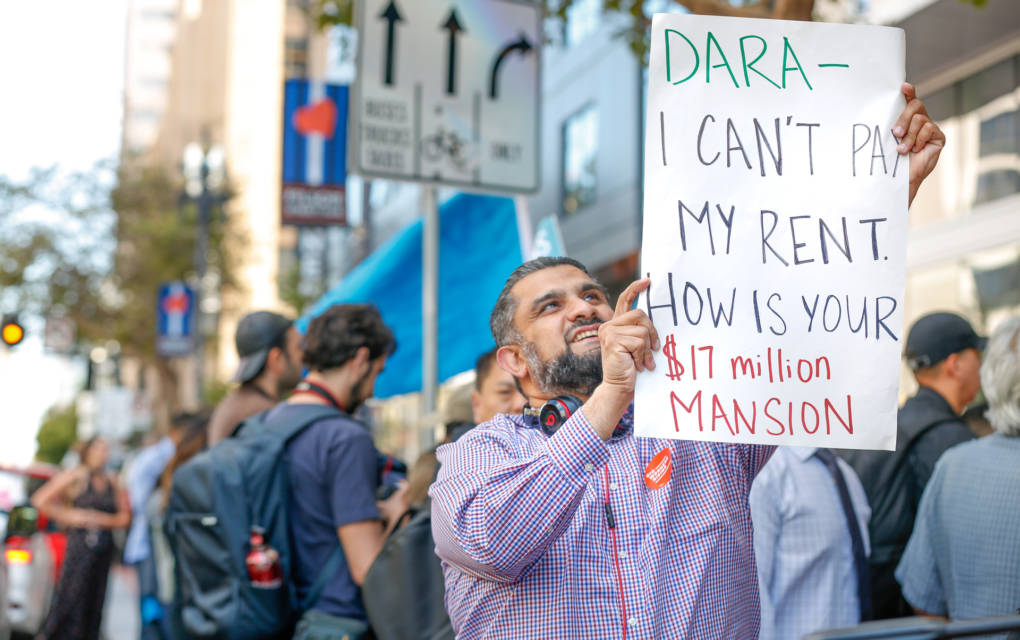
"caption": "Taking care of his mother and family, Uber and Lyft driver Malik Ali calls on Uber CEO Dara Khosrowshahi to help drivers earn a living wage.",
"description": "Taking care of his mother and family, Uber and Lyft driver, Malik Ali calls on Uber CEO, Dara Khosrowshahi, to help drivers keep a living wage.",
"title": "09182019_uber lyft-qut",
"credit": "Sruti Mamidanna/KQED",
"status": "inherit",
"isLoading": false,
"fetchFailed": false
},
"news_11833510": {
"type": "attachments",
"id": "news_11833510",
"meta": {
"index": "attachments_1716263798",
"site": "news",
"id": "11833510",
"found": true
},
"parent": 11833384,
"imgSizes": {
"apple_news_ca_landscape_5_5": {
"file": "https://ww2.kqed.org/app/uploads/sites/10/2020/08/Kamala-Harris-VP-Pick-1-1044x720.jpg",
"width": 1044,
"mimeType": "image/jpeg",
"height": 720
},
"apple_news_ca_square_4_0": {
"file": "https://ww2.kqed.org/app/uploads/sites/10/2020/08/Kamala-Harris-VP-Pick-1-470x470.jpg",
"width": 470,
"mimeType": "image/jpeg",
"height": 470
},
"twentyfourteen-full-width": {
"file": "https://ww2.kqed.org/app/uploads/sites/10/2020/08/Kamala-Harris-VP-Pick-1-1038x576.jpg",
"width": 1038,
"mimeType": "image/jpeg",
"height": 576
},
"thumbnail": {
"file": "https://ww2.kqed.org/app/uploads/sites/10/2020/08/Kamala-Harris-VP-Pick-1-160x90.jpg",
"width": 160,
"mimeType": "image/jpeg",
"height": 90
},
"post-thumbnail": {
"file": "https://ww2.kqed.org/app/uploads/sites/10/2020/08/Kamala-Harris-VP-Pick-1-672x372.jpg",
"width": 672,
"mimeType": "image/jpeg",
"height": 372
},
"kqedFullSize": {
"file": "https://ww2.kqed.org/app/uploads/sites/10/2020/08/Kamala-Harris-VP-Pick-1.jpg",
"width": 1280,
"height": 720
},
"apple_news_ca_landscape_4_7": {
"file": "https://ww2.kqed.org/app/uploads/sites/10/2020/08/Kamala-Harris-VP-Pick-1-632x474.jpg",
"width": 632,
"mimeType": "image/jpeg",
"height": 474
},
"large": {
"file": "https://ww2.kqed.org/app/uploads/sites/10/2020/08/Kamala-Harris-VP-Pick-1-1020x574.jpg",
"width": 1020,
"mimeType": "image/jpeg",
"height": 574
},
"apple_news_ca_landscape_4_0": {
"file": "https://ww2.kqed.org/app/uploads/sites/10/2020/08/Kamala-Harris-VP-Pick-1-536x402.jpg",
"width": 536,
"mimeType": "image/jpeg",
"height": 402
},
"apple_news_ca_portrait_12_9": {
"file": "https://ww2.kqed.org/app/uploads/sites/10/2020/08/Kamala-Harris-VP-Pick-1-1122x720.jpg",
"width": 1122,
"mimeType": "image/jpeg",
"height": 720
},
"medium": {
"file": "https://ww2.kqed.org/app/uploads/sites/10/2020/08/Kamala-Harris-VP-Pick-1-800x450.jpg",
"width": 800,
"mimeType": "image/jpeg",
"height": 450
},
"apple_news_ca_portrait_4_0": {
"file": "https://ww2.kqed.org/app/uploads/sites/10/2020/08/Kamala-Harris-VP-Pick-1-354x472.jpg",
"width": 354,
"mimeType": "image/jpeg",
"height": 472
},
"apple_news_ca_portrait_9_7": {
"file": "https://ww2.kqed.org/app/uploads/sites/10/2020/08/Kamala-Harris-VP-Pick-1-840x720.jpg",
"width": 840,
"mimeType": "image/jpeg",
"height": 720
},
"apple_news_ca_square_9_7": {
"file": "https://ww2.kqed.org/app/uploads/sites/10/2020/08/Kamala-Harris-VP-Pick-1-1104x720.jpg",
"width": 1104,
"mimeType": "image/jpeg",
"height": 720
},
"apple_news_ca_portrait_4_7": {
"file": "https://ww2.kqed.org/app/uploads/sites/10/2020/08/Kamala-Harris-VP-Pick-1-414x552.jpg",
"width": 414,
"mimeType": "image/jpeg",
"height": 552
},
"apple_news_ca_portrait_5_5": {
"file": "https://ww2.kqed.org/app/uploads/sites/10/2020/08/Kamala-Harris-VP-Pick-1-687x720.jpg",
"width": 687,
"mimeType": "image/jpeg",
"height": 720
},
"apple_news_ca_square_4_7": {
"file": "https://ww2.kqed.org/app/uploads/sites/10/2020/08/Kamala-Harris-VP-Pick-1-550x550.jpg",
"width": 550,
"mimeType": "image/jpeg",
"height": 550
},
"apple_news_ca_square_5_5": {
"file": "https://ww2.kqed.org/app/uploads/sites/10/2020/08/Kamala-Harris-VP-Pick-1-912x720.jpg",
"width": 912,
"mimeType": "image/jpeg",
"height": 720
}
},
"publishDate": 1597450350,
"modified": 1597450350,
"caption": null,
"description": null,
"title": "Kamala Harris VP Pick",
"credit": null,
"status": "inherit",
"isLoading": false,
"fetchFailed": false
},
"news_11832881": {
"type": "attachments",
"id": "news_11832881",
"meta": {
"index": "attachments_1716263798",
"site": "news",
"id": "11832881",
"found": true
},
"parent": 11832880,
"imgSizes": {
"apple_news_ca_landscape_5_5": {
"file": "https://ww2.kqed.org/app/uploads/sites/10/2020/08/gettyimages-1227939563-990bd0824f2e90f39e972f5a6cd13f6e318fa589-1044x783.jpg",
"width": 1044,
"mimeType": "image/jpeg",
"height": 783
},
"apple_news_ca_square_4_0": {
"file": "https://ww2.kqed.org/app/uploads/sites/10/2020/08/gettyimages-1227939563-990bd0824f2e90f39e972f5a6cd13f6e318fa589-470x470.jpg",
"width": 470,
"mimeType": "image/jpeg",
"height": 470
},
"twentyfourteen-full-width": {
"file": "https://ww2.kqed.org/app/uploads/sites/10/2020/08/gettyimages-1227939563-990bd0824f2e90f39e972f5a6cd13f6e318fa589-1038x576.jpg",
"width": 1038,
"mimeType": "image/jpeg",
"height": 576
},
"thumbnail": {
"file": "https://ww2.kqed.org/app/uploads/sites/10/2020/08/gettyimages-1227939563-990bd0824f2e90f39e972f5a6cd13f6e318fa589-160x120.jpg",
"width": 160,
"mimeType": "image/jpeg",
"height": 120
},
"post-thumbnail": {
"file": "https://ww2.kqed.org/app/uploads/sites/10/2020/08/gettyimages-1227939563-990bd0824f2e90f39e972f5a6cd13f6e318fa589-672x372.jpg",
"width": 672,
"mimeType": "image/jpeg",
"height": 372
},
"kqedFullSize": {
"file": "https://ww2.kqed.org/app/uploads/sites/10/2020/08/gettyimages-1227939563-990bd0824f2e90f39e972f5a6cd13f6e318fa589-scaled-e1597104075537.jpg",
"width": 1920,
"height": 1440
},
"2048x2048": {
"file": "https://ww2.kqed.org/app/uploads/sites/10/2020/08/gettyimages-1227939563-990bd0824f2e90f39e972f5a6cd13f6e318fa589-2048x1536.jpg",
"width": 2048,
"mimeType": "image/jpeg",
"height": 1536
},
"apple_news_ca_landscape_4_7": {
"file": "https://ww2.kqed.org/app/uploads/sites/10/2020/08/gettyimages-1227939563-990bd0824f2e90f39e972f5a6cd13f6e318fa589-632x474.jpg",
"width": 632,
"mimeType": "image/jpeg",
"height": 474
},
"large": {
"file": "https://ww2.kqed.org/app/uploads/sites/10/2020/08/gettyimages-1227939563-990bd0824f2e90f39e972f5a6cd13f6e318fa589-1020x765.jpg",
"width": 1020,
"mimeType": "image/jpeg",
"height": 765
},
"apple_news_ca_landscape_4_0": {
"file": "https://ww2.kqed.org/app/uploads/sites/10/2020/08/gettyimages-1227939563-990bd0824f2e90f39e972f5a6cd13f6e318fa589-536x402.jpg",
"width": 536,
"mimeType": "image/jpeg",
"height": 402
},
"apple_news_ca_portrait_12_9": {
"file": "https://ww2.kqed.org/app/uploads/sites/10/2020/08/gettyimages-1227939563-990bd0824f2e90f39e972f5a6cd13f6e318fa589-1122x1496.jpg",
"width": 1122,
"mimeType": "image/jpeg",
"height": 1496
},
"medium": {
"file": "https://ww2.kqed.org/app/uploads/sites/10/2020/08/gettyimages-1227939563-990bd0824f2e90f39e972f5a6cd13f6e318fa589-800x600.jpg",
"width": 800,
"mimeType": "image/jpeg",
"height": 600
},
"apple_news_ca_portrait_4_0": {
"file": "https://ww2.kqed.org/app/uploads/sites/10/2020/08/gettyimages-1227939563-990bd0824f2e90f39e972f5a6cd13f6e318fa589-354x472.jpg",
"width": 354,
"mimeType": "image/jpeg",
"height": 472
},
"apple_news_ca_portrait_9_7": {
"file": "https://ww2.kqed.org/app/uploads/sites/10/2020/08/gettyimages-1227939563-990bd0824f2e90f39e972f5a6cd13f6e318fa589-840x1120.jpg",
"width": 840,
"mimeType": "image/jpeg",
"height": 1120
},
"apple_news_ca_landscape_12_9": {
"file": "https://ww2.kqed.org/app/uploads/sites/10/2020/08/gettyimages-1227939563-990bd0824f2e90f39e972f5a6cd13f6e318fa589-1832x1374.jpg",
"width": 1832,
"mimeType": "image/jpeg",
"height": 1374
},
"apple_news_ca_square_9_7": {
"file": "https://ww2.kqed.org/app/uploads/sites/10/2020/08/gettyimages-1227939563-990bd0824f2e90f39e972f5a6cd13f6e318fa589-1104x1104.jpg",
"width": 1104,
"mimeType": "image/jpeg",
"height": 1104
},
"1536x1536": {
"file": "https://ww2.kqed.org/app/uploads/sites/10/2020/08/gettyimages-1227939563-990bd0824f2e90f39e972f5a6cd13f6e318fa589-1536x1152.jpg",
"width": 1536,
"mimeType": "image/jpeg",
"height": 1152
},
"apple_news_ca_portrait_4_7": {
"file": "https://ww2.kqed.org/app/uploads/sites/10/2020/08/gettyimages-1227939563-990bd0824f2e90f39e972f5a6cd13f6e318fa589-414x552.jpg",
"width": 414,
"mimeType": "image/jpeg",
"height": 552
},
"apple_news_ca_square_12_9": {
"file": "https://ww2.kqed.org/app/uploads/sites/10/2020/08/gettyimages-1227939563-990bd0824f2e90f39e972f5a6cd13f6e318fa589-1472x1472.jpg",
"width": 1472,
"mimeType": "image/jpeg",
"height": 1472
},
"apple_news_ca_portrait_5_5": {
"file": "https://ww2.kqed.org/app/uploads/sites/10/2020/08/gettyimages-1227939563-990bd0824f2e90f39e972f5a6cd13f6e318fa589-687x916.jpg",
"width": 687,
"mimeType": "image/jpeg",
"height": 916
},
"full-width": {
"file": "https://ww2.kqed.org/app/uploads/sites/10/2020/08/gettyimages-1227939563-990bd0824f2e90f39e972f5a6cd13f6e318fa589-1920x1440.jpg",
"width": 1920,
"mimeType": "image/jpeg",
"height": 1440
},
"apple_news_ca_square_4_7": {
"file": "https://ww2.kqed.org/app/uploads/sites/10/2020/08/gettyimages-1227939563-990bd0824f2e90f39e972f5a6cd13f6e318fa589-550x550.jpg",
"width": 550,
"mimeType": "image/jpeg",
"height": 550
},
"apple_news_ca_landscape_9_7": {
"file": "https://ww2.kqed.org/app/uploads/sites/10/2020/08/gettyimages-1227939563-990bd0824f2e90f39e972f5a6cd13f6e318fa589-1376x1032.jpg",
"width": 1376,
"mimeType": "image/jpeg",
"height": 1032
},
"apple_news_ca_square_5_5": {
"file": "https://ww2.kqed.org/app/uploads/sites/10/2020/08/gettyimages-1227939563-990bd0824f2e90f39e972f5a6cd13f6e318fa589-912x912.jpg",
"width": 912,
"mimeType": "image/jpeg",
"height": 912
}
},
"publishDate": 1597103925,
"modified": 1597778666,
"caption": "In a ruling Monday, a California judge said Lyft and Uber have refused to comply with a California law, known as AB5, passed last year that was supposed to make it harder for companies in the state to hire workers as contractors.",
"description": "Rideshare drivers demonstrate against rideshare companies Uber and Lyft during a car caravan protest on August 6, 2020 in Los Angeles.",
"title": "In a ruling Monday, a California judge said Lyft and Uber have refused to comply with a California law, known as AB5, passed last year that was supposed to make it harder for companies in the state to hire workers as contractors.",
"credit": "Robyn Beck/AFP via Getty Images",
"status": "inherit",
"isLoading": false,
"fetchFailed": false
},
"news_11832211": {
"type": "attachments",
"id": "news_11832211",
"meta": {
"index": "attachments_1716263798",
"site": "news",
"id": "11832211",
"found": true
},
"parent": 11831806,
"imgSizes": {
"apple_news_ca_landscape_5_5": {
"file": "https://ww2.kqed.org/app/uploads/sites/10/2020/08/RS44250_007_KQED_SanFrancisco_SintoGourmet_08062020-qut-1044x783.jpg",
"width": 1044,
"mimeType": "image/jpeg",
"height": 783
},
"apple_news_ca_square_4_0": {
"file": "https://ww2.kqed.org/app/uploads/sites/10/2020/08/RS44250_007_KQED_SanFrancisco_SintoGourmet_08062020-qut-470x470.jpg",
"width": 470,
"mimeType": "image/jpeg",
"height": 470
},
"twentyfourteen-full-width": {
"file": "https://ww2.kqed.org/app/uploads/sites/10/2020/08/RS44250_007_KQED_SanFrancisco_SintoGourmet_08062020-qut-1038x576.jpg",
"width": 1038,
"mimeType": "image/jpeg",
"height": 576
},
"thumbnail": {
"file": "https://ww2.kqed.org/app/uploads/sites/10/2020/08/RS44250_007_KQED_SanFrancisco_SintoGourmet_08062020-qut-160x107.jpg",
"width": 160,
"mimeType": "image/jpeg",
"height": 107
},
"post-thumbnail": {
"file": "https://ww2.kqed.org/app/uploads/sites/10/2020/08/RS44250_007_KQED_SanFrancisco_SintoGourmet_08062020-qut-672x372.jpg",
"width": 672,
"mimeType": "image/jpeg",
"height": 372
},
"kqedFullSize": {
"file": "https://ww2.kqed.org/app/uploads/sites/10/2020/08/RS44250_007_KQED_SanFrancisco_SintoGourmet_08062020-qut.jpg",
"width": 1920,
"height": 1280
},
"apple_news_ca_landscape_4_7": {
"file": "https://ww2.kqed.org/app/uploads/sites/10/2020/08/RS44250_007_KQED_SanFrancisco_SintoGourmet_08062020-qut-632x474.jpg",
"width": 632,
"mimeType": "image/jpeg",
"height": 474
},
"large": {
"file": "https://ww2.kqed.org/app/uploads/sites/10/2020/08/RS44250_007_KQED_SanFrancisco_SintoGourmet_08062020-qut-1020x680.jpg",
"width": 1020,
"mimeType": "image/jpeg",
"height": 680
},
"apple_news_ca_landscape_4_0": {
"file": "https://ww2.kqed.org/app/uploads/sites/10/2020/08/RS44250_007_KQED_SanFrancisco_SintoGourmet_08062020-qut-536x402.jpg",
"width": 536,
"mimeType": "image/jpeg",
"height": 402
},
"apple_news_ca_portrait_12_9": {
"file": "https://ww2.kqed.org/app/uploads/sites/10/2020/08/RS44250_007_KQED_SanFrancisco_SintoGourmet_08062020-qut-1122x1280.jpg",
"width": 1122,
"mimeType": "image/jpeg",
"height": 1280
},
"medium": {
"file": "https://ww2.kqed.org/app/uploads/sites/10/2020/08/RS44250_007_KQED_SanFrancisco_SintoGourmet_08062020-qut-800x533.jpg",
"width": 800,
"mimeType": "image/jpeg",
"height": 533
},
"apple_news_ca_portrait_4_0": {
"file": "https://ww2.kqed.org/app/uploads/sites/10/2020/08/RS44250_007_KQED_SanFrancisco_SintoGourmet_08062020-qut-354x472.jpg",
"width": 354,
"mimeType": "image/jpeg",
"height": 472
},
"apple_news_ca_portrait_9_7": {
"file": "https://ww2.kqed.org/app/uploads/sites/10/2020/08/RS44250_007_KQED_SanFrancisco_SintoGourmet_08062020-qut-840x1120.jpg",
"width": 840,
"mimeType": "image/jpeg",
"height": 1120
},
"apple_news_ca_landscape_12_9": {
"file": "https://ww2.kqed.org/app/uploads/sites/10/2020/08/RS44250_007_KQED_SanFrancisco_SintoGourmet_08062020-qut-1832x1280.jpg",
"width": 1832,
"mimeType": "image/jpeg",
"height": 1280
},
"apple_news_ca_square_9_7": {
"file": "https://ww2.kqed.org/app/uploads/sites/10/2020/08/RS44250_007_KQED_SanFrancisco_SintoGourmet_08062020-qut-1104x1104.jpg",
"width": 1104,
"mimeType": "image/jpeg",
"height": 1104
},
"1536x1536": {
"file": "https://ww2.kqed.org/app/uploads/sites/10/2020/08/RS44250_007_KQED_SanFrancisco_SintoGourmet_08062020-qut-1536x1024.jpg",
"width": 1536,
"mimeType": "image/jpeg",
"height": 1024
},
"apple_news_ca_portrait_4_7": {
"file": "https://ww2.kqed.org/app/uploads/sites/10/2020/08/RS44250_007_KQED_SanFrancisco_SintoGourmet_08062020-qut-414x552.jpg",
"width": 414,
"mimeType": "image/jpeg",
"height": 552
},
"apple_news_ca_square_12_9": {
"file": "https://ww2.kqed.org/app/uploads/sites/10/2020/08/RS44250_007_KQED_SanFrancisco_SintoGourmet_08062020-qut-1472x1280.jpg",
"width": 1472,
"mimeType": "image/jpeg",
"height": 1280
},
"apple_news_ca_portrait_5_5": {
"file": "https://ww2.kqed.org/app/uploads/sites/10/2020/08/RS44250_007_KQED_SanFrancisco_SintoGourmet_08062020-qut-687x916.jpg",
"width": 687,
"mimeType": "image/jpeg",
"height": 916
},
"apple_news_ca_square_4_7": {
"file": "https://ww2.kqed.org/app/uploads/sites/10/2020/08/RS44250_007_KQED_SanFrancisco_SintoGourmet_08062020-qut-550x550.jpg",
"width": 550,
"mimeType": "image/jpeg",
"height": 550
},
"apple_news_ca_landscape_9_7": {
"file": "https://ww2.kqed.org/app/uploads/sites/10/2020/08/RS44250_007_KQED_SanFrancisco_SintoGourmet_08062020-qut-1376x1032.jpg",
"width": 1376,
"mimeType": "image/jpeg",
"height": 1032
},
"apple_news_ca_square_5_5": {
"file": "https://ww2.kqed.org/app/uploads/sites/10/2020/08/RS44250_007_KQED_SanFrancisco_SintoGourmet_08062020-qut-912x912.jpg",
"width": 912,
"mimeType": "image/jpeg",
"height": 912
}
},
"publishDate": 1596746964,
"modified": 1596747060,
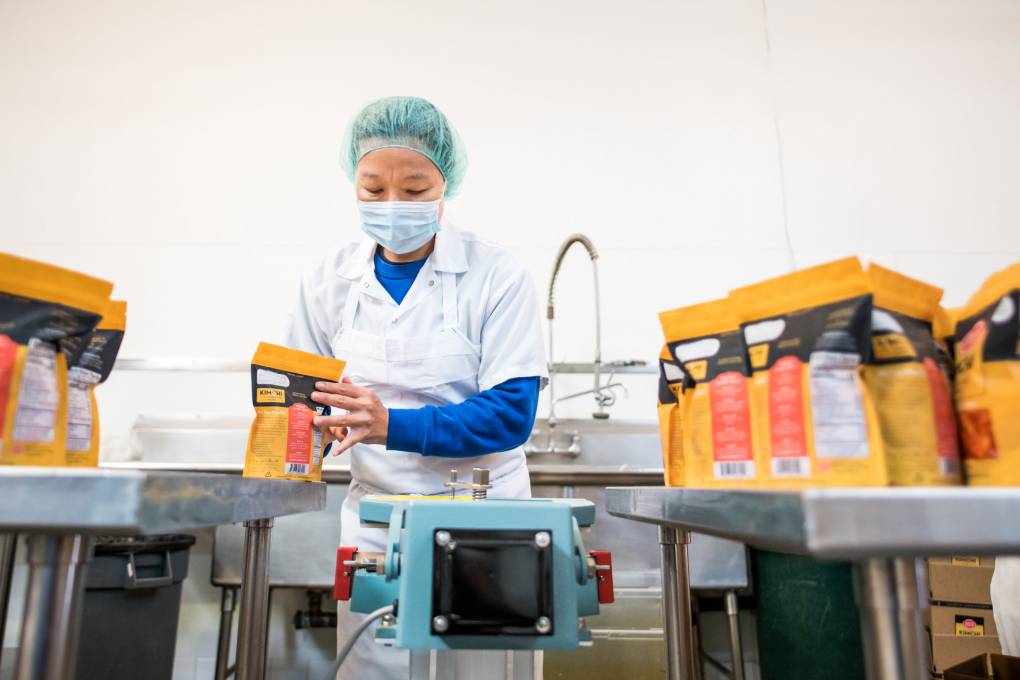
"caption": "Hyunjoo Albrecht works in her Bayview kitchen to package kimchi on August 6, 2020.",
"description": "Hyunjoo Albrecht works in her Bayview kitchen to package kimchi on August 6, 2020.",
"title": "RS44250_007_KQED_SanFrancisco_SintoGourmet_08062020-qut",
"credit": "Beth LaBerge/KQED",
"status": "inherit",
"isLoading": false,
"fetchFailed": false
},
"news_11831720": {
"type": "attachments",
"id": "news_11831720",
"meta": {
"index": "attachments_1716263798",
"site": "news",
"id": "11831720",
"found": true
},
"parent": 11831241,
"imgSizes": {
"apple_news_ca_landscape_5_5": {
"file": "https://ww2.kqed.org/app/uploads/sites/10/2020/07/Debt-Collections-Pic-1044x783.jpg",
"width": 1044,
"mimeType": "image/jpeg",
"height": 783
},
"apple_news_ca_square_4_0": {
"file": "https://ww2.kqed.org/app/uploads/sites/10/2020/07/Debt-Collections-Pic-470x470.jpg",
"width": 470,
"mimeType": "image/jpeg",
"height": 470
},
"twentyfourteen-full-width": {
"file": "https://ww2.kqed.org/app/uploads/sites/10/2020/07/Debt-Collections-Pic-1038x576.jpg",
"width": 1038,
"mimeType": "image/jpeg",
"height": 576
},
"thumbnail": {
"file": "https://ww2.kqed.org/app/uploads/sites/10/2020/07/Debt-Collections-Pic-160x107.jpg",
"width": 160,
"mimeType": "image/jpeg",
"height": 107
},
"post-thumbnail": {
"file": "https://ww2.kqed.org/app/uploads/sites/10/2020/07/Debt-Collections-Pic-672x372.jpg",
"width": 672,
"mimeType": "image/jpeg",
"height": 372
},
"kqedFullSize": {
"file": "https://ww2.kqed.org/app/uploads/sites/10/2020/07/Debt-Collections-Pic-scaled.jpg",
"width": 2560,
"height": 1707
},
"2048x2048": {
"file": "https://ww2.kqed.org/app/uploads/sites/10/2020/07/Debt-Collections-Pic-2048x1365.jpg",
"width": 2048,
"mimeType": "image/jpeg",
"height": 1365
},
"apple_news_ca_landscape_4_7": {
"file": "https://ww2.kqed.org/app/uploads/sites/10/2020/07/Debt-Collections-Pic-632x474.jpg",
"width": 632,
"mimeType": "image/jpeg",
"height": 474
},
"large": {
"file": "https://ww2.kqed.org/app/uploads/sites/10/2020/07/Debt-Collections-Pic-1020x680.jpg",
"width": 1020,
"mimeType": "image/jpeg",
"height": 680
},
"apple_news_ca_landscape_4_0": {
"file": "https://ww2.kqed.org/app/uploads/sites/10/2020/07/Debt-Collections-Pic-536x402.jpg",
"width": 536,
"mimeType": "image/jpeg",
"height": 402
},
"apple_news_ca_portrait_12_9": {
"file": "https://ww2.kqed.org/app/uploads/sites/10/2020/07/Debt-Collections-Pic-1122x1496.jpg",
"width": 1122,
"mimeType": "image/jpeg",
"height": 1496
},
"medium": {
"file": "https://ww2.kqed.org/app/uploads/sites/10/2020/07/Debt-Collections-Pic-800x533.jpg",
"width": 800,
"mimeType": "image/jpeg",
"height": 533
},
"apple_news_ca_portrait_4_0": {
"file": "https://ww2.kqed.org/app/uploads/sites/10/2020/07/Debt-Collections-Pic-354x472.jpg",
"width": 354,
"mimeType": "image/jpeg",
"height": 472
},
"apple_news_ca_portrait_9_7": {
"file": "https://ww2.kqed.org/app/uploads/sites/10/2020/07/Debt-Collections-Pic-840x1120.jpg",
"width": 840,
"mimeType": "image/jpeg",
"height": 1120
},
"apple_news_ca_landscape_12_9": {
"file": "https://ww2.kqed.org/app/uploads/sites/10/2020/07/Debt-Collections-Pic-1832x1374.jpg",
"width": 1832,
"mimeType": "image/jpeg",
"height": 1374
},
"apple_news_ca_square_9_7": {
"file": "https://ww2.kqed.org/app/uploads/sites/10/2020/07/Debt-Collections-Pic-1104x1104.jpg",
"width": 1104,
"mimeType": "image/jpeg",
"height": 1104
},
"1536x1536": {
"file": "https://ww2.kqed.org/app/uploads/sites/10/2020/07/Debt-Collections-Pic-1536x1024.jpg",
"width": 1536,
"mimeType": "image/jpeg",
"height": 1024
},
"apple_news_ca_portrait_4_7": {
"file": "https://ww2.kqed.org/app/uploads/sites/10/2020/07/Debt-Collections-Pic-414x552.jpg",
"width": 414,
"mimeType": "image/jpeg",
"height": 552
},
"apple_news_ca_square_12_9": {
"file": "https://ww2.kqed.org/app/uploads/sites/10/2020/07/Debt-Collections-Pic-1472x1472.jpg",
"width": 1472,
"mimeType": "image/jpeg",
"height": 1472
},
"apple_news_ca_portrait_5_5": {
"file": "https://ww2.kqed.org/app/uploads/sites/10/2020/07/Debt-Collections-Pic-687x916.jpg",
"width": 687,
"mimeType": "image/jpeg",
"height": 916
},
"full-width": {
"file": "https://ww2.kqed.org/app/uploads/sites/10/2020/07/Debt-Collections-Pic-1920x1280.jpg",
"width": 1920,
"mimeType": "image/jpeg",
"height": 1280
},
"apple_news_ca_square_4_7": {
"file": "https://ww2.kqed.org/app/uploads/sites/10/2020/07/Debt-Collections-Pic-550x550.jpg",
"width": 550,
"mimeType": "image/jpeg",
"height": 550
},
"apple_news_ca_landscape_9_7": {
"file": "https://ww2.kqed.org/app/uploads/sites/10/2020/07/Debt-Collections-Pic-1376x1032.jpg",
"width": 1376,
"mimeType": "image/jpeg",
"height": 1032
},
"apple_news_ca_square_5_5": {
"file": "https://ww2.kqed.org/app/uploads/sites/10/2020/07/Debt-Collections-Pic-912x912.jpg",
"width": 912,
"mimeType": "image/jpeg",
"height": 912
}
},
"publishDate": 1596494288,
"modified": 1596565048,
"caption": "Millions of Californians are filing for unemployment and living off of credit. Because of this, debt collection activity is expected to increase in the pandemic's aftermath. ",
"description": "Millions of Californians are filing for unemployment and living off of credit. Because of this, debt collection activity is expected to increase in the pandemic's aftermath. ",
"title": "Millions of Californians are filing for unemployment and living off of credit. Because of this, debt collection activity is expected to increase in the pandemic's aftermath.",
"credit": "rupixen.com on Unsplash",
"status": "inherit",
"isLoading": false,
"fetchFailed": false
},
"news_11831090": {
"type": "attachments",
"id": "news_11831090",
"meta": {
"index": "attachments_1716263798",
"site": "news",
"id": "11831090",
"found": true
},
"parent": 11831082,
"imgSizes": {
"apple_news_ca_landscape_5_5": {
"file": "https://ww2.kqed.org/app/uploads/sites/10/2020/07/powerful_072920_final-1044x783.png",
"width": 1044,
"mimeType": "image/png",
"height": 783
},
"apple_news_ca_square_4_0": {
"file": "https://ww2.kqed.org/app/uploads/sites/10/2020/07/powerful_072920_final-470x470.png",
"width": 470,
"mimeType": "image/png",
"height": 470
},
"twentyfourteen-full-width": {
"file": "https://ww2.kqed.org/app/uploads/sites/10/2020/07/powerful_072920_final-1038x576.png",
"width": 1038,
"mimeType": "image/png",
"height": 576
},
"thumbnail": {
"file": "https://ww2.kqed.org/app/uploads/sites/10/2020/07/powerful_072920_final-160x111.png",
"width": 160,
"mimeType": "image/png",
"height": 111
},
"post-thumbnail": {
"file": "https://ww2.kqed.org/app/uploads/sites/10/2020/07/powerful_072920_final-672x372.png",
"width": 672,
"mimeType": "image/png",
"height": 372
},
"kqedFullSize": {
"file": "https://ww2.kqed.org/app/uploads/sites/10/2020/07/powerful_072920_final.png",
"width": 1920,
"height": 1331
},
"apple_news_ca_landscape_4_7": {
"file": "https://ww2.kqed.org/app/uploads/sites/10/2020/07/powerful_072920_final-632x474.png",
"width": 632,
"mimeType": "image/png",
"height": 474
},
"large": {
"file": "https://ww2.kqed.org/app/uploads/sites/10/2020/07/powerful_072920_final-1020x707.png",
"width": 1020,
"mimeType": "image/png",
"height": 707
},
"apple_news_ca_landscape_4_0": {
"file": "https://ww2.kqed.org/app/uploads/sites/10/2020/07/powerful_072920_final-536x402.png",
"width": 536,
"mimeType": "image/png",
"height": 402
},
"apple_news_ca_portrait_12_9": {
"file": "https://ww2.kqed.org/app/uploads/sites/10/2020/07/powerful_072920_final-1122x1331.png",
"width": 1122,
"mimeType": "image/png",
"height": 1331
},
"medium": {
"file": "https://ww2.kqed.org/app/uploads/sites/10/2020/07/powerful_072920_final-800x555.png",
"width": 800,
"mimeType": "image/png",
"height": 555
},
"apple_news_ca_portrait_4_0": {
"file": "https://ww2.kqed.org/app/uploads/sites/10/2020/07/powerful_072920_final-354x472.png",
"width": 354,
"mimeType": "image/png",
"height": 472
},
"apple_news_ca_portrait_9_7": {
"file": "https://ww2.kqed.org/app/uploads/sites/10/2020/07/powerful_072920_final-840x1120.png",
"width": 840,
"mimeType": "image/png",
"height": 1120
},
"apple_news_ca_landscape_12_9": {
"file": "https://ww2.kqed.org/app/uploads/sites/10/2020/07/powerful_072920_final-1832x1331.png",
"width": 1832,
"mimeType": "image/png",
"height": 1331
},
"apple_news_ca_square_9_7": {
"file": "https://ww2.kqed.org/app/uploads/sites/10/2020/07/powerful_072920_final-1104x1104.png",
"width": 1104,
"mimeType": "image/png",
"height": 1104
},
"1536x1536": {
"file": "https://ww2.kqed.org/app/uploads/sites/10/2020/07/powerful_072920_final-1536x1065.png",
"width": 1536,
"mimeType": "image/png",
"height": 1065
},
"apple_news_ca_portrait_4_7": {
"file": "https://ww2.kqed.org/app/uploads/sites/10/2020/07/powerful_072920_final-414x552.png",
"width": 414,
"mimeType": "image/png",
"height": 552
},
"apple_news_ca_square_12_9": {
"file": "https://ww2.kqed.org/app/uploads/sites/10/2020/07/powerful_072920_final-1472x1331.png",
"width": 1472,
"mimeType": "image/png",
"height": 1331
},
"apple_news_ca_portrait_5_5": {
"file": "https://ww2.kqed.org/app/uploads/sites/10/2020/07/powerful_072920_final-687x916.png",
"width": 687,
"mimeType": "image/png",
"height": 916
},
"apple_news_ca_square_4_7": {
"file": "https://ww2.kqed.org/app/uploads/sites/10/2020/07/powerful_072920_final-550x550.png",
"width": 550,
"mimeType": "image/png",
"height": 550
},
"apple_news_ca_landscape_9_7": {
"file": "https://ww2.kqed.org/app/uploads/sites/10/2020/07/powerful_072920_final-1376x1032.png",
"width": 1376,
"mimeType": "image/png",
"height": 1032
},
"apple_news_ca_square_5_5": {
"file": "https://ww2.kqed.org/app/uploads/sites/10/2020/07/powerful_072920_final-912x912.png",
"width": 912,
"mimeType": "image/png",
"height": 912
}
},
"publishDate": 1596060562,
"modified": 1596060603,
"caption": null,
"description": null,
"title": "powerful_072920_final",
"credit": null,
"status": "inherit",
"isLoading": false,
"fetchFailed": false
},
"news_11830975": {
"type": "attachments",
"id": "news_11830975",
"meta": {
"index": "attachments_1716263798",
"site": "news",
"id": "11830975",
"found": true
},
"parent": 11830974,
"imgSizes": {
"apple_news_ca_landscape_5_5": {
"file": "https://ww2.kqed.org/app/uploads/sites/10/2020/07/gettyimages-1227678555_enl-4521fe83b29587fac5abe2509c20d4bad3035364-1044x783.jpg",
"width": 1044,
"mimeType": "image/jpeg",
"height": 783
},
"apple_news_ca_square_4_0": {
"file": "https://ww2.kqed.org/app/uploads/sites/10/2020/07/gettyimages-1227678555_enl-4521fe83b29587fac5abe2509c20d4bad3035364-470x470.jpg",
"width": 470,
"mimeType": "image/jpeg",
"height": 470
},
"twentyfourteen-full-width": {
"file": "https://ww2.kqed.org/app/uploads/sites/10/2020/07/gettyimages-1227678555_enl-4521fe83b29587fac5abe2509c20d4bad3035364-1038x576.jpg",
"width": 1038,
"mimeType": "image/jpeg",
"height": 576
},
"thumbnail": {
"file": "https://ww2.kqed.org/app/uploads/sites/10/2020/07/gettyimages-1227678555_enl-4521fe83b29587fac5abe2509c20d4bad3035364-160x60.jpg",
"width": 160,
"mimeType": "image/jpeg",
"height": 60
},
"post-thumbnail": {
"file": "https://ww2.kqed.org/app/uploads/sites/10/2020/07/gettyimages-1227678555_enl-4521fe83b29587fac5abe2509c20d4bad3035364-672x372.jpg",
"width": 672,
"mimeType": "image/jpeg",
"height": 372
},
"kqedFullSize": {
"file": "https://ww2.kqed.org/app/uploads/sites/10/2020/07/gettyimages-1227678555_enl-4521fe83b29587fac5abe2509c20d4bad3035364-scaled.jpg",
"width": 2560,
"height": 960
},
"2048x2048": {
"file": "https://ww2.kqed.org/app/uploads/sites/10/2020/07/gettyimages-1227678555_enl-4521fe83b29587fac5abe2509c20d4bad3035364-2048x768.jpg",
"width": 2048,
"mimeType": "image/jpeg",
"height": 768
},
"apple_news_ca_landscape_4_7": {
"file": "https://ww2.kqed.org/app/uploads/sites/10/2020/07/gettyimages-1227678555_enl-4521fe83b29587fac5abe2509c20d4bad3035364-632x474.jpg",
"width": 632,
"mimeType": "image/jpeg",
"height": 474
},
"large": {
"file": "https://ww2.kqed.org/app/uploads/sites/10/2020/07/gettyimages-1227678555_enl-4521fe83b29587fac5abe2509c20d4bad3035364-1020x383.jpg",
"width": 1020,
"mimeType": "image/jpeg",
"height": 383
},
"apple_news_ca_landscape_4_0": {
"file": "https://ww2.kqed.org/app/uploads/sites/10/2020/07/gettyimages-1227678555_enl-4521fe83b29587fac5abe2509c20d4bad3035364-536x402.jpg",
"width": 536,
"mimeType": "image/jpeg",
"height": 402
},
"apple_news_ca_portrait_12_9": {
"file": "https://ww2.kqed.org/app/uploads/sites/10/2020/07/gettyimages-1227678555_enl-4521fe83b29587fac5abe2509c20d4bad3035364-1122x1496.jpg",
"width": 1122,
"mimeType": "image/jpeg",
"height": 1496
},
"medium": {
"file": "https://ww2.kqed.org/app/uploads/sites/10/2020/07/gettyimages-1227678555_enl-4521fe83b29587fac5abe2509c20d4bad3035364-800x300.jpg",
"width": 800,
"mimeType": "image/jpeg",
"height": 300
},
"apple_news_ca_portrait_4_0": {
"file": "https://ww2.kqed.org/app/uploads/sites/10/2020/07/gettyimages-1227678555_enl-4521fe83b29587fac5abe2509c20d4bad3035364-354x472.jpg",
"width": 354,
"mimeType": "image/jpeg",
"height": 472
},
"apple_news_ca_portrait_9_7": {
"file": "https://ww2.kqed.org/app/uploads/sites/10/2020/07/gettyimages-1227678555_enl-4521fe83b29587fac5abe2509c20d4bad3035364-840x1120.jpg",
"width": 840,
"mimeType": "image/jpeg",
"height": 1120
},
"apple_news_ca_landscape_12_9": {
"file": "https://ww2.kqed.org/app/uploads/sites/10/2020/07/gettyimages-1227678555_enl-4521fe83b29587fac5abe2509c20d4bad3035364-1832x1374.jpg",
"width": 1832,
"mimeType": "image/jpeg",
"height": 1374
},
"apple_news_ca_square_9_7": {
"file": "https://ww2.kqed.org/app/uploads/sites/10/2020/07/gettyimages-1227678555_enl-4521fe83b29587fac5abe2509c20d4bad3035364-1104x1104.jpg",
"width": 1104,
"mimeType": "image/jpeg",
"height": 1104
},
"1536x1536": {
"file": "https://ww2.kqed.org/app/uploads/sites/10/2020/07/gettyimages-1227678555_enl-4521fe83b29587fac5abe2509c20d4bad3035364-1536x576.jpg",
"width": 1536,
"mimeType": "image/jpeg",
"height": 576
},
"apple_news_ca_portrait_4_7": {
"file": "https://ww2.kqed.org/app/uploads/sites/10/2020/07/gettyimages-1227678555_enl-4521fe83b29587fac5abe2509c20d4bad3035364-414x552.jpg",
"width": 414,
"mimeType": "image/jpeg",
"height": 552
},
"apple_news_ca_square_12_9": {
"file": "https://ww2.kqed.org/app/uploads/sites/10/2020/07/gettyimages-1227678555_enl-4521fe83b29587fac5abe2509c20d4bad3035364-1472x1472.jpg",
"width": 1472,
"mimeType": "image/jpeg",
"height": 1472
},
"apple_news_ca_portrait_5_5": {
"file": "https://ww2.kqed.org/app/uploads/sites/10/2020/07/gettyimages-1227678555_enl-4521fe83b29587fac5abe2509c20d4bad3035364-687x916.jpg",
"width": 687,
"mimeType": "image/jpeg",
"height": 916
},
"full-width": {
"file": "https://ww2.kqed.org/app/uploads/sites/10/2020/07/gettyimages-1227678555_enl-4521fe83b29587fac5abe2509c20d4bad3035364-1920x720.jpg",
"width": 1920,
"mimeType": "image/jpeg",
"height": 720
},
"apple_news_ca_square_4_7": {
"file": "https://ww2.kqed.org/app/uploads/sites/10/2020/07/gettyimages-1227678555_enl-4521fe83b29587fac5abe2509c20d4bad3035364-550x550.jpg",
"width": 550,
"mimeType": "image/jpeg",
"height": 550
},
"apple_news_ca_landscape_9_7": {
"file": "https://ww2.kqed.org/app/uploads/sites/10/2020/07/gettyimages-1227678555_enl-4521fe83b29587fac5abe2509c20d4bad3035364-1376x1032.jpg",
"width": 1376,
"mimeType": "image/jpeg",
"height": 1032
},
"apple_news_ca_square_5_5": {
"file": "https://ww2.kqed.org/app/uploads/sites/10/2020/07/gettyimages-1227678555_enl-4521fe83b29587fac5abe2509c20d4bad3035364-912x912.jpg",
"width": 912,
"mimeType": "image/jpeg",
"height": 912
}
},
"publishDate": 1596043099,
"modified": 1596043099,
"caption": null,
"description": "(COMBO) This combination of pictures created on July 07, 2020 shows (L-R) Facebook CEO Mark Zuckerberg in Paris on May 23, 2018, Google CEO Sundar Pichai Berlin on January 22, 2019, Apple CEO Tim Cook on October 28, 2019 in New York and Amazon Founder and CEO Jeff Bezos in Las Vegas, Nevada on June 6, 2019. (Photos by AFP) (Photo by BERTRAND GUAY,TOBIAS SCHWARZ,ANGELA WEISS,MARK RALSTON/AFP via Getty Images)",
"title": "Facebook CEO Mark Zuckerberg (from left), Google CEO Sundar Pichai, Apple CEO Tim Cook and Amazon CEO Jeff Bezos are scheduled to testify before a House Judiciary subcommittee.",
"credit": null,
"status": "inherit",
"isLoading": false,
"fetchFailed": false
},
"news_11829281": {
"type": "attachments",
"id": "news_11829281",
"meta": {
"index": "attachments_1716263798",
"site": "news",
"id": "11829281",
"found": true
},
"parent": 11829180,
"imgSizes": {
"apple_news_ca_landscape_5_5": {
"file": "https://ww2.kqed.org/app/uploads/sites/10/2020/07/RS43885_IMG_2893-qut-1044x783.jpg",
"width": 1044,
"mimeType": "image/jpeg",
"height": 783
},
"apple_news_ca_square_4_0": {
"file": "https://ww2.kqed.org/app/uploads/sites/10/2020/07/RS43885_IMG_2893-qut-470x470.jpg",
"width": 470,
"mimeType": "image/jpeg",
"height": 470
},
"twentyfourteen-full-width": {
"file": "https://ww2.kqed.org/app/uploads/sites/10/2020/07/RS43885_IMG_2893-qut-1038x576.jpg",
"width": 1038,
"mimeType": "image/jpeg",
"height": 576
},
"thumbnail": {
"file": "https://ww2.kqed.org/app/uploads/sites/10/2020/07/RS43885_IMG_2893-qut-160x120.jpg",
"width": 160,
"mimeType": "image/jpeg",
"height": 120
},
"post-thumbnail": {
"file": "https://ww2.kqed.org/app/uploads/sites/10/2020/07/RS43885_IMG_2893-qut-672x372.jpg",
"width": 672,
"mimeType": "image/jpeg",
"height": 372
},
"kqedFullSize": {
"file": "https://ww2.kqed.org/app/uploads/sites/10/2020/07/RS43885_IMG_2893-qut.jpg",
"width": 1920,
"height": 1440
},
"apple_news_ca_landscape_4_7": {
"file": "https://ww2.kqed.org/app/uploads/sites/10/2020/07/RS43885_IMG_2893-qut-632x474.jpg",
"width": 632,
"mimeType": "image/jpeg",
"height": 474
},
"large": {
"file": "https://ww2.kqed.org/app/uploads/sites/10/2020/07/RS43885_IMG_2893-qut-1020x765.jpg",
"width": 1020,
"mimeType": "image/jpeg",
"height": 765
},
"apple_news_ca_landscape_4_0": {
"file": "https://ww2.kqed.org/app/uploads/sites/10/2020/07/RS43885_IMG_2893-qut-536x402.jpg",
"width": 536,
"mimeType": "image/jpeg",
"height": 402
},
"apple_news_ca_portrait_12_9": {
"file": "https://ww2.kqed.org/app/uploads/sites/10/2020/07/RS43885_IMG_2893-qut-1122x1440.jpg",
"width": 1122,
"mimeType": "image/jpeg",
"height": 1440
},
"medium": {
"file": "https://ww2.kqed.org/app/uploads/sites/10/2020/07/RS43885_IMG_2893-qut-800x600.jpg",
"width": 800,
"mimeType": "image/jpeg",
"height": 600
},
"apple_news_ca_portrait_4_0": {
"file": "https://ww2.kqed.org/app/uploads/sites/10/2020/07/RS43885_IMG_2893-qut-354x472.jpg",
"width": 354,
"mimeType": "image/jpeg",
"height": 472
},
"apple_news_ca_portrait_9_7": {
"file": "https://ww2.kqed.org/app/uploads/sites/10/2020/07/RS43885_IMG_2893-qut-840x1120.jpg",
"width": 840,
"mimeType": "image/jpeg",
"height": 1120
},
"apple_news_ca_landscape_12_9": {
"file": "https://ww2.kqed.org/app/uploads/sites/10/2020/07/RS43885_IMG_2893-qut-1832x1374.jpg",
"width": 1832,
"mimeType": "image/jpeg",
"height": 1374
},
"apple_news_ca_square_9_7": {
"file": "https://ww2.kqed.org/app/uploads/sites/10/2020/07/RS43885_IMG_2893-qut-1104x1104.jpg",
"width": 1104,
"mimeType": "image/jpeg",
"height": 1104
},
"1536x1536": {
"file": "https://ww2.kqed.org/app/uploads/sites/10/2020/07/RS43885_IMG_2893-qut-1536x1152.jpg",
"width": 1536,
"mimeType": "image/jpeg",
"height": 1152
},
"apple_news_ca_portrait_4_7": {
"file": "https://ww2.kqed.org/app/uploads/sites/10/2020/07/RS43885_IMG_2893-qut-414x552.jpg",
"width": 414,
"mimeType": "image/jpeg",
"height": 552
},
"apple_news_ca_square_12_9": {
"file": "https://ww2.kqed.org/app/uploads/sites/10/2020/07/RS43885_IMG_2893-qut-1472x1440.jpg",
"width": 1472,
"mimeType": "image/jpeg",
"height": 1440
},
"apple_news_ca_portrait_5_5": {
"file": "https://ww2.kqed.org/app/uploads/sites/10/2020/07/RS43885_IMG_2893-qut-687x916.jpg",
"width": 687,
"mimeType": "image/jpeg",
"height": 916
},
"apple_news_ca_square_4_7": {
"file": "https://ww2.kqed.org/app/uploads/sites/10/2020/07/RS43885_IMG_2893-qut-550x550.jpg",
"width": 550,
"mimeType": "image/jpeg",
"height": 550
},
"apple_news_ca_landscape_9_7": {
"file": "https://ww2.kqed.org/app/uploads/sites/10/2020/07/RS43885_IMG_2893-qut-1376x1032.jpg",
"width": 1376,
"mimeType": "image/jpeg",
"height": 1032
},
"apple_news_ca_square_5_5": {
"file": "https://ww2.kqed.org/app/uploads/sites/10/2020/07/RS43885_IMG_2893-qut-912x912.jpg",
"width": 912,
"mimeType": "image/jpeg",
"height": 912
}
},
"publishDate": 1594939518,
"modified": 1624914222,
"caption": "The Oakland REACH organizers in East Oakland last summer handing out laptops and other school supplies to the families of Oakland students.",
"description": null,
"title": "RS43885_IMG_2893-qut",
"credit": "Vanessa Rancaño/KQED",
"status": "inherit",
"altTag": null,
"isLoading": false,
"fetchFailed": false
},
"news_11830120": {
"type": "attachments",
"id": "news_11830120",
"meta": {
"index": "attachments_1716263798",
"site": "news",
"id": "11830120",
"found": true
},
"parent": 11829952,
"imgSizes": {
"apple_news_ca_landscape_5_5": {
"file": "https://ww2.kqed.org/app/uploads/sites/10/2020/07/iStock-1214392153-1044x783.jpg",
"width": 1044,
"mimeType": "image/jpeg",
"height": 783
},
"apple_news_ca_square_4_0": {
"file": "https://ww2.kqed.org/app/uploads/sites/10/2020/07/iStock-1214392153-470x470.jpg",
"width": 470,
"mimeType": "image/jpeg",
"height": 470
},
"twentyfourteen-full-width": {
"file": "https://ww2.kqed.org/app/uploads/sites/10/2020/07/iStock-1214392153-1038x576.jpg",
"width": 1038,
"mimeType": "image/jpeg",
"height": 576
},
"thumbnail": {
"file": "https://ww2.kqed.org/app/uploads/sites/10/2020/07/iStock-1214392153-160x107.jpg",
"width": 160,
"mimeType": "image/jpeg",
"height": 107
},
"post-thumbnail": {
"file": "https://ww2.kqed.org/app/uploads/sites/10/2020/07/iStock-1214392153-672x372.jpg",
"width": 672,
"mimeType": "image/jpeg",
"height": 372
},
"kqedFullSize": {
"file": "https://ww2.kqed.org/app/uploads/sites/10/2020/07/iStock-1214392153-e1595383440613.jpg",
"width": 1920,
"height": 1282
},
"2048x2048": {
"file": "https://ww2.kqed.org/app/uploads/sites/10/2020/07/iStock-1214392153-2048x1368.jpg",
"width": 2048,
"mimeType": "image/jpeg",
"height": 1368
},
"apple_news_ca_landscape_4_7": {
"file": "https://ww2.kqed.org/app/uploads/sites/10/2020/07/iStock-1214392153-632x474.jpg",
"width": 632,
"mimeType": "image/jpeg",
"height": 474
},
"large": {
"file": "https://ww2.kqed.org/app/uploads/sites/10/2020/07/iStock-1214392153-1020x681.jpg",
"width": 1020,
"mimeType": "image/jpeg",
"height": 681
},
"apple_news_ca_landscape_4_0": {
"file": "https://ww2.kqed.org/app/uploads/sites/10/2020/07/iStock-1214392153-536x402.jpg",
"width": 536,
"mimeType": "image/jpeg",
"height": 402
},
"apple_news_ca_portrait_12_9": {
"file": "https://ww2.kqed.org/app/uploads/sites/10/2020/07/iStock-1214392153-1122x1415.jpg",
"width": 1122,
"mimeType": "image/jpeg",
"height": 1415
},
"medium": {
"file": "https://ww2.kqed.org/app/uploads/sites/10/2020/07/iStock-1214392153-800x534.jpg",
"width": 800,
"mimeType": "image/jpeg",
"height": 534
},
"apple_news_ca_portrait_4_0": {
"file": "https://ww2.kqed.org/app/uploads/sites/10/2020/07/iStock-1214392153-354x472.jpg",
"width": 354,
"mimeType": "image/jpeg",
"height": 472
},
"apple_news_ca_portrait_9_7": {
"file": "https://ww2.kqed.org/app/uploads/sites/10/2020/07/iStock-1214392153-840x1120.jpg",
"width": 840,
"mimeType": "image/jpeg",
"height": 1120
},
"apple_news_ca_landscape_12_9": {
"file": "https://ww2.kqed.org/app/uploads/sites/10/2020/07/iStock-1214392153-1832x1374.jpg",
"width": 1832,
"mimeType": "image/jpeg",
"height": 1374
},
"apple_news_ca_square_9_7": {
"file": "https://ww2.kqed.org/app/uploads/sites/10/2020/07/iStock-1214392153-1104x1104.jpg",
"width": 1104,
"mimeType": "image/jpeg",
"height": 1104
},
"1536x1536": {
"file": "https://ww2.kqed.org/app/uploads/sites/10/2020/07/iStock-1214392153-1536x1026.jpg",
"width": 1536,
"mimeType": "image/jpeg",
"height": 1026
},
"apple_news_ca_portrait_4_7": {
"file": "https://ww2.kqed.org/app/uploads/sites/10/2020/07/iStock-1214392153-414x552.jpg",
"width": 414,
"mimeType": "image/jpeg",
"height": 552
},
"apple_news_ca_square_12_9": {
"file": "https://ww2.kqed.org/app/uploads/sites/10/2020/07/iStock-1214392153-1472x1415.jpg",
"width": 1472,
"mimeType": "image/jpeg",
"height": 1415
},
"apple_news_ca_portrait_5_5": {
"file": "https://ww2.kqed.org/app/uploads/sites/10/2020/07/iStock-1214392153-687x916.jpg",
"width": 687,
"mimeType": "image/jpeg",
"height": 916
},
"full-width": {
"file": "https://ww2.kqed.org/app/uploads/sites/10/2020/07/iStock-1214392153-1920x1282.jpg",
"width": 1920,
"mimeType": "image/jpeg",
"height": 1282
},
"apple_news_ca_square_4_7": {
"file": "https://ww2.kqed.org/app/uploads/sites/10/2020/07/iStock-1214392153-550x550.jpg",
"width": 550,
"mimeType": "image/jpeg",
"height": 550
},
"apple_news_ca_landscape_9_7": {
"file": "https://ww2.kqed.org/app/uploads/sites/10/2020/07/iStock-1214392153-1376x1032.jpg",
"width": 1376,
"mimeType": "image/jpeg",
"height": 1032
},
"apple_news_ca_square_5_5": {
"file": "https://ww2.kqed.org/app/uploads/sites/10/2020/07/iStock-1214392153-912x912.jpg",
"width": 912,
"mimeType": "image/jpeg",
"height": 912
}
},
"publishDate": 1595383411,
"modified": 1595387172,
"caption": "Those at greatest risk of eviction in the county, where average rent is nearly $3,000, are disproportionately people of color, households headed by women and families of young children, according to the group's analysis of unemployment insurance claims and census data.",
"description": "Those at greatest risk of eviction in the county, where average rent is nearly $3,000, are disproportionately people of color, households headed by women and families of young children, according to the group's analysis of unemployment insurance claims and census data.",
"title": "House Keys and Eviction Notice",
"credit": "iStock",
"status": "inherit",
"isLoading": false,
"fetchFailed": false
},
"news_11829149": {
"type": "attachments",
"id": "news_11829149",
"meta": {
"index": "attachments_1716263798",
"site": "news",
"id": "11829149",
"found": true
},
"parent": 11828932,
"imgSizes": {
"apple_news_ca_landscape_5_5": {
"file": "https://ww2.kqed.org/app/uploads/sites/10/2020/07/GettyImages-1142032802-1044x783.jpg",
"width": 1044,
"mimeType": "image/jpeg",
"height": 783
},
"apple_news_ca_square_4_0": {
"file": "https://ww2.kqed.org/app/uploads/sites/10/2020/07/GettyImages-1142032802-470x470.jpg",
"width": 470,
"mimeType": "image/jpeg",
"height": 470
},
"twentyfourteen-full-width": {
"file": "https://ww2.kqed.org/app/uploads/sites/10/2020/07/GettyImages-1142032802-1038x576.jpg",
"width": 1038,
"mimeType": "image/jpeg",
"height": 576
},
"thumbnail": {
"file": "https://ww2.kqed.org/app/uploads/sites/10/2020/07/GettyImages-1142032802-160x107.jpg",
"width": 160,
"mimeType": "image/jpeg",
"height": 107
},
"post-thumbnail": {
"file": "https://ww2.kqed.org/app/uploads/sites/10/2020/07/GettyImages-1142032802-672x372.jpg",
"width": 672,
"mimeType": "image/jpeg",
"height": 372
},
"kqedFullSize": {
"file": "https://ww2.kqed.org/app/uploads/sites/10/2020/07/GettyImages-1142032802.jpg",
"width": 1920,
"height": 1280
},
"apple_news_ca_landscape_4_7": {
"file": "https://ww2.kqed.org/app/uploads/sites/10/2020/07/GettyImages-1142032802-632x474.jpg",
"width": 632,
"mimeType": "image/jpeg",
"height": 474
},
"large": {
"file": "https://ww2.kqed.org/app/uploads/sites/10/2020/07/GettyImages-1142032802-1020x680.jpg",
"width": 1020,
"mimeType": "image/jpeg",
"height": 680
},
"apple_news_ca_landscape_4_0": {
"file": "https://ww2.kqed.org/app/uploads/sites/10/2020/07/GettyImages-1142032802-536x402.jpg",
"width": 536,
"mimeType": "image/jpeg",
"height": 402
},
"apple_news_ca_portrait_12_9": {
"file": "https://ww2.kqed.org/app/uploads/sites/10/2020/07/GettyImages-1142032802-1122x1280.jpg",
"width": 1122,
"mimeType": "image/jpeg",
"height": 1280
},
"medium": {
"file": "https://ww2.kqed.org/app/uploads/sites/10/2020/07/GettyImages-1142032802-800x533.jpg",
"width": 800,
"mimeType": "image/jpeg",
"height": 533
},
"apple_news_ca_portrait_4_0": {
"file": "https://ww2.kqed.org/app/uploads/sites/10/2020/07/GettyImages-1142032802-354x472.jpg",
"width": 354,
"mimeType": "image/jpeg",
"height": 472
},
"apple_news_ca_portrait_9_7": {
"file": "https://ww2.kqed.org/app/uploads/sites/10/2020/07/GettyImages-1142032802-840x1120.jpg",
"width": 840,
"mimeType": "image/jpeg",
"height": 1120
},
"apple_news_ca_landscape_12_9": {
"file": "https://ww2.kqed.org/app/uploads/sites/10/2020/07/GettyImages-1142032802-1832x1280.jpg",
"width": 1832,
"mimeType": "image/jpeg",
"height": 1280
},
"apple_news_ca_square_9_7": {
"file": "https://ww2.kqed.org/app/uploads/sites/10/2020/07/GettyImages-1142032802-1104x1104.jpg",
"width": 1104,
"mimeType": "image/jpeg",
"height": 1104
},
"1536x1536": {
"file": "https://ww2.kqed.org/app/uploads/sites/10/2020/07/GettyImages-1142032802-1536x1024.jpg",
"width": 1536,
"mimeType": "image/jpeg",
"height": 1024
},
"apple_news_ca_portrait_4_7": {
"file": "https://ww2.kqed.org/app/uploads/sites/10/2020/07/GettyImages-1142032802-414x552.jpg",
"width": 414,
"mimeType": "image/jpeg",
"height": 552
},
"apple_news_ca_square_12_9": {
"file": "https://ww2.kqed.org/app/uploads/sites/10/2020/07/GettyImages-1142032802-1472x1280.jpg",
"width": 1472,
"mimeType": "image/jpeg",
"height": 1280
},
"apple_news_ca_portrait_5_5": {
"file": "https://ww2.kqed.org/app/uploads/sites/10/2020/07/GettyImages-1142032802-687x916.jpg",
"width": 687,
"mimeType": "image/jpeg",
"height": 916
},
"apple_news_ca_square_4_7": {
"file": "https://ww2.kqed.org/app/uploads/sites/10/2020/07/GettyImages-1142032802-550x550.jpg",
"width": 550,
"mimeType": "image/jpeg",
"height": 550
},
"apple_news_ca_landscape_9_7": {
"file": "https://ww2.kqed.org/app/uploads/sites/10/2020/07/GettyImages-1142032802-1376x1032.jpg",
"width": 1376,
"mimeType": "image/jpeg",
"height": 1032
},
"apple_news_ca_square_5_5": {
"file": "https://ww2.kqed.org/app/uploads/sites/10/2020/07/GettyImages-1142032802-912x912.jpg",
"width": 912,
"mimeType": "image/jpeg",
"height": 912
}
},
"publishDate": 1594848496,
"modified": 1594848561,
"caption": "The Flintstone House was born from a young architect's dreams of revolutionizing how we built homes. ",
"description": "The Flintstone House was born from a young architect's dreams of revolutionizing how we built homes. ",
"title": "Owners Of \"Flintstones\" Themed House In California In Legal Fight With Town Over Construction Permits",
"credit": "Justin Sullivan/Getty Images",
"status": "inherit",
"isLoading": false,
"fetchFailed": false
}
},
"audioPlayerReducer": {
"postId": "stream_live",
"isPaused": true,
"isPlaying": false,
"pfsActive": false,
"pledgeModalIsOpen": true,
"playerDrawerIsOpen": false,
"liveAudioPlayStartedAt": 0,
"liveAudioPlayContext": ""
},
"authorsReducer": {
"byline_news_11832880": {
"type": "authors",
"id": "byline_news_11832880",
"meta": {
"override": true
},
"slug": "byline_news_11832880",
"name": "Bobby Allyn",
"isLoading": false
},
"byline_news_11830974": {
"type": "authors",
"id": "byline_news_11830974",
"meta": {
"override": true
},
"slug": "byline_news_11830974",
"name": "Alina Selyukh",
"isLoading": false
},
"jmcevoy": {
"type": "authors",
"id": "231",
"meta": {
"index": "authors_1716337520",
"id": "231",
"found": true
},
"name": "Julia McEvoy",
"firstName": "Julia",
"lastName": "McEvoy",
"slug": "jmcevoy",
"email": "jmcevoy@KQED.org",
"display_author_email": true,
"staff_mastheads": [
"news"
],
"title": "KQED Senior Editor",
"bio": "Julia McEvoy is KQED's Senior Editor, Education Equity.\r\n\r\nJulia heads KQED’s education coverage examining inequities students face in Bay Area and California schools, and reports on what it will take to educate the next generation.\r\n\r\nJulia's editorial work has received a Peabody Award, a Casey Medal for Coverage of Children and Families, several Edward R. Murrow awards, as well as awards from the Public Radio News Directors Inc. and the Society for Professional Journalists.",
"avatar": "https://secure.gravatar.com/avatar/aec3ce21abe02b302fd33638abd56a22?s=600&d=blank&r=g",
"twitter": "juliamcevoy1",
"facebook": null,
"instagram": null,
"linkedin": null,
"sites": [
{
"site": "news",
"roles": []
},
{
"site": "stateofhealth",
"roles": [
"author"
]
}
],
"headData": {
"title": "Julia McEvoy | KQED",
"description": "KQED Senior Editor",
"ogImgSrc": "https://secure.gravatar.com/avatar/aec3ce21abe02b302fd33638abd56a22?s=600&d=blank&r=g",
"twImgSrc": "https://secure.gravatar.com/avatar/aec3ce21abe02b302fd33638abd56a22?s=600&d=blank&r=g"
},
"isLoading": false,
"link": "/author/jmcevoy"
},
"kqed": {
"type": "authors",
"id": "236",
"meta": {
"index": "authors_1716337520",
"id": "236",
"found": true
},
"name": "KQED News Staff",
"firstName": "KQED News Staff",
"lastName": null,
"slug": "kqed",
"email": "faq@kqed.org",
"display_author_email": false,
"staff_mastheads": [],
"title": null,
"bio": null,
"avatar": "https://secure.gravatar.com/avatar/ef0e801a68c4c54afa9180db14084167?s=600&d=blank&r=g",
"twitter": null,
"facebook": null,
"instagram": null,
"linkedin": null,
"sites": [
{
"site": "arts",
"roles": [
"contributor"
]
},
{
"site": "news",
"roles": [
"editor"
]
},
{
"site": "futureofyou",
"roles": [
"author"
]
}
],
"headData": {
"title": "KQED News Staff | KQED",
"description": null,
"ogImgSrc": "https://secure.gravatar.com/avatar/ef0e801a68c4c54afa9180db14084167?s=600&d=blank&r=g",
"twImgSrc": "https://secure.gravatar.com/avatar/ef0e801a68c4c54afa9180db14084167?s=600&d=blank&r=g"
},
"isLoading": false,
"link": "/author/kqed"
},
"rachael-myrow": {
"type": "authors",
"id": "251",
"meta": {
"index": "authors_1716337520",
"id": "251",
"found": true
},
"name": "Rachael Myrow",
"firstName": "Rachael",
"lastName": "Myrow",
"slug": "rachael-myrow",
"email": "rmyrow@kqed.org",
"display_author_email": true,
"staff_mastheads": [
"news"
],
"title": "Senior Editor of KQED's Silicon Valley News Desk",
"bio": "• I write and edit stories about how Silicon Valley power and policies shape everyday life in California. I’m also passionate about making Bay Area history and culture more accessible to a broad public. • I’ve been a journalist for most of my life, starting in high school with The Franklin Press in Los Angeles, where I grew up. While earning my first degree in English at UC Berkeley, I got my start in public radio at KALX-FM. After completing a second degree in journalism at Cal, I landed my first professional job at Marketplace, then moved on to KPCC (now LAist), and then KQED, where I hosted The California Report for more than seven years. • My reporting has appeared on NPR, The World, WBUR’s \u003ci>Here & Now\u003c/i>, and the BBC. I also guest host for KQED’s \u003ci>Forum\u003c/i>, as well as the Commonwealth Club in San Francisco. • I speak periodically on media, democracy and technology issues, and do voiceover work for documentaries and educational video projects. • Outside of the studio, you'll find me hiking Bay Area trails and whipping up Insta-ready meals in my kitchen. • I do not accept gifts, money, or favors from anyone connected to my reporting, I don't pay people for information, and I do not support or donate to political causes. • I strive to treat the people I report on with fairness, honesty, and respect. I also recognize there are often multiple sides to a story and work to verify information through multiple sources and documentation. If I get something wrong, I correct it.",
"avatar": "https://secure.gravatar.com/avatar/3ed8a3c5f26025e4a805ba634cda8cd764906b97438a6d9ce216b044e340da4e?s=600&d=blank&r=g",
"twitter": "rachaelmyrow",
"bluesky": null,
"facebook": null,
"instagram": null,
"linkedin": "https://www.linkedin.com/in/rachaelmyrow/",
"sites": [
{
"site": "arts",
"roles": [
"administrator"
]
},
{
"site": "news",
"roles": [
"edit_others_posts",
"editor"
]
},
{
"site": "futureofyou",
"roles": [
"editor"
]
},
{
"site": "bayareabites",
"roles": [
"editor"
]
},
{
"site": "stateofhealth",
"roles": [
"editor"
]
},
{
"site": "science",
"roles": [
"editor"
]
},
{
"site": "food",
"roles": [
"editor"
]
},
{
"site": "forum",
"roles": [
"editor"
]
},
{
"site": "liveblog",
"roles": [
"author"
]
}
],
"headData": {
"title": "Rachael Myrow | KQED",
"description": "Senior Editor of KQED's Silicon Valley News Desk",
"ogImgSrc": "https://secure.gravatar.com/avatar/3ed8a3c5f26025e4a805ba634cda8cd764906b97438a6d9ce216b044e340da4e?s=600&d=blank&r=g",
"twImgSrc": "https://secure.gravatar.com/avatar/3ed8a3c5f26025e4a805ba634cda8cd764906b97438a6d9ce216b044e340da4e?s=600&d=blank&r=g"
},
"isLoading": false,
"link": "/author/rachael-myrow"
},
"samharnett": {
"type": "authors",
"id": "253",
"meta": {
"index": "authors_1716337520",
"id": "253",
"found": true
},
"name": "Sam Harnett",
"firstName": "Sam",
"lastName": "Harnett",
"slug": "samharnett",
"email": "samharnett@gmail.com",
"display_author_email": false,
"staff_mastheads": [],
"title": "KQED Contributor",
"bio": "Sam Harnett covered tech and work at KQED. He is the co-creator of \u003cem>\u003ca href=\"http://www.theworldaccordingtosound.org\">The World According to Sound\u003c/a>,\u003c/em> a 90-second podcast that features different sounds and the stories behind them.\r\n\r\nBefore coming to KQED, Sam worked as an independent reporter who contributed regularly to \u003cem>The California Report, Marketplace,\u003c/em> \u003cem>The World \u003c/em>and NPR.",
"avatar": "https://secure.gravatar.com/avatar/2538b972ac02f2b9546c7a6c59a0f3d0?s=600&d=blank&r=g",
"twitter": "Samwharnett",
"facebook": null,
"instagram": null,
"linkedin": null,
"sites": [
{
"site": "news",
"roles": [
"edit_others_posts",
"subscriber"
]
},
{
"site": "stateofhealth",
"roles": [
"author"
]
},
{
"site": "science",
"roles": [
"editor"
]
},
{
"site": "quest",
"roles": [
"subscriber"
]
}
],
"headData": {
"title": "Sam Harnett | KQED",
"description": "KQED Contributor",
"ogImgSrc": "https://secure.gravatar.com/avatar/2538b972ac02f2b9546c7a6c59a0f3d0?s=600&d=blank&r=g",
"twImgSrc": "https://secure.gravatar.com/avatar/2538b972ac02f2b9546c7a6c59a0f3d0?s=600&d=blank&r=g"
},
"isLoading": false,
"link": "/author/samharnett"
},
"matthewgreen": {
"type": "authors",
"id": "1263",
"meta": {
"index": "authors_1716337520",
"id": "1263",
"found": true
},
"name": "Matthew Green",
"firstName": "Matthew",
"lastName": "Green",
"slug": "matthewgreen",
"email": "mgreen@kqed.org",
"display_author_email": false,
"staff_mastheads": [],
"title": "KQED Editor/Reporter",
"bio": "Matthew Green is a digital media producer for KQED News. He previously produced \u003ca href=\"http://www.kqed.org/lowdown\">The Lowdown\u003c/a>, KQED’s multimedia news education blog. Matthew's written for numerous Bay Area publications, including the Oakland Tribune and San Francisco Chronicle. He also taught journalism classes at Fremont High School in East Oakland.\r\n\r\nEmail: mgreen@kqed.org; Twitter: @MGreenKQED",
"avatar": "https://secure.gravatar.com/avatar/3bf498d1267ca02c8494f33d8cfc575e?s=600&d=blank&r=g",
"twitter": "MGreenKQED",
"facebook": null,
"instagram": null,
"linkedin": null,
"sites": [
{
"site": "news",
"roles": []
},
{
"site": "lowdown",
"roles": []
},
{
"site": "science",
"roles": []
},
{
"site": "education",
"roles": []
},
{
"site": "quest",
"roles": []
},
{
"site": "liveblog",
"roles": []
}
],
"headData": {
"title": "Matthew Green | KQED",
"description": "KQED Editor/Reporter",
"ogImgSrc": "https://secure.gravatar.com/avatar/3bf498d1267ca02c8494f33d8cfc575e?s=600&d=blank&r=g",
"twImgSrc": "https://secure.gravatar.com/avatar/3bf498d1267ca02c8494f33d8cfc575e?s=600&d=blank&r=g"
},
"isLoading": false,
"link": "/author/matthewgreen"
},
"markfiore": {
"type": "authors",
"id": "3236",
"meta": {
"index": "authors_1716337520",
"id": "3236",
"found": true
},
"name": "Mark Fiore",
"firstName": "Mark",
"lastName": "Fiore",
"slug": "markfiore",
"email": "mark@markfiore.com",
"display_author_email": false,
"staff_mastheads": [
"news"
],
"title": "KQED News Cartoonist",
"bio": "\u003ca href=\"http://www.MarkFiore.com\">MarkFiore.com\u003c/a> | \u003ca href=\"https://twitter.com/markfiore\">Follow on Twitter\u003c/a> | \u003ca href=\"https://www.facebook.com/pages/Mark-Fiore-Animated-Political-Cartoons/94451707396?ref=bookmarks\">Facebook\u003c/a> | \u003ca href=\"mailto:mark@markfiore.com\">email\u003c/a>\r\n\r\nPulitzer Prize-winner, Mark Fiore, who the Wall Street Journal has called “the undisputed guru of the form,” creates animated political cartoons in San Francisco, where his work has been featured regularly on the San Francisco Chronicle’s web site, SFGate.com. His work has appeared on Newsweek.com, Slate.com, CBSNews.com, MotherJones.com, DailyKos.com and NPR’s web site. Fiore’s political animation has appeared on CNN, Frontline, Bill Moyers Journal, Salon.com and cable and broadcast outlets across the globe.\r\n\r\nBeginning his professional life by drawing traditional political cartoons for newspapers, Fiore’s work appeared in publications ranging from the Washington Post to the Los Angeles Times. In the late 1990s, he began to experiment with animating political cartoons and, after a short stint at the San Jose Mercury News as their staff cartoonist, Fiore devoted all his energies to animation.\r\nGrowing up in California, Fiore also spent a good portion of his life in the backwoods of Idaho. It was this combination that shaped him politically. Mark majored in political science at Colorado College, where, in a perfect send-off for a cartoonist, he received his diploma in 1991 as commencement speaker Dick Cheney smiled approvingly.\r\nMark Fiore was awarded the Pulitzer Prize for political cartooning in 2010, a Robert F. Kennedy Journalism Award in 2004 and has twice received an Online Journalism Award for commentary from the Online News Association (2002, 2008). Fiore has received two awards for his work in new media from the National Cartoonists Society (2001, 2002), and in 2006 received The James Madison Freedom of Information Award from The Society of Professional Journalists.",
"avatar": "https://secure.gravatar.com/avatar/fc4e2a612b15b67bad0c6f0e1db4ca9b?s=600&d=blank&r=g",
"twitter": "MarkFiore",
"facebook": null,
"instagram": "https://www.instagram.com/markfiore/?hl=en",
"linkedin": null,
"sites": [
{
"site": "arts",
"roles": [
"contributor"
]
},
{
"site": "news",
"roles": [
"editor"
]
},
{
"site": "futureofyou",
"roles": [
"editor"
]
},
{
"site": "science",
"roles": [
"editor"
]
}
],
"headData": {
"title": "Mark Fiore | KQED",
"description": "KQED News Cartoonist",
"ogImgSrc": "https://secure.gravatar.com/avatar/fc4e2a612b15b67bad0c6f0e1db4ca9b?s=600&d=blank&r=g",
"twImgSrc": "https://secure.gravatar.com/avatar/fc4e2a612b15b67bad0c6f0e1db4ca9b?s=600&d=blank&r=g"
},
"isLoading": false,
"link": "/author/markfiore"
},
"abandlamudi": {
"type": "authors",
"id": "11672",
"meta": {
"index": "authors_1716337520",
"id": "11672",
"found": true
},
"name": "Adhiti Bandlamudi",
"firstName": "Adhiti",
"lastName": "Bandlamudi",
"slug": "abandlamudi",
"email": "abandlamudi@kqed.org",
"display_author_email": false,
"staff_mastheads": [
"news"
],
"title": "KQED Housing Reporter",
"bio": "Adhiti Bandlamudi reports for KQED's Housing desk. She focuses on how housing gets built across the Bay Area. Before joining KQED in 2020, she reported for WUNC in Durham, North Carolina, WABE in Atlanta, Georgia and Capital Public Radio in Sacramento. In 2017, she was awarded a Kroc Fellowship at NPR where she reported on everything from sprinkles to the Golden State Killer's arrest. When she's not reporting, she's baking new recipes in her kitchen or watching movies with friends and family. She's originally from Georgia and has strong opinions about Great British Bake Off.",
"avatar": "https://secure.gravatar.com/avatar/868129c8b257bb99a3500e2c86a65400?s=600&d=mm&r=g",
"twitter": "oddity_adhiti",
"facebook": null,
"instagram": null,
"linkedin": null,
"sites": [
{
"site": "arts",
"roles": [
"author"
]
},
{
"site": "news",
"roles": [
"editor"
]
},
{
"site": "liveblog",
"roles": [
"author"
]
}
],
"headData": {
"title": "Adhiti Bandlamudi | KQED",
"description": "KQED Housing Reporter",
"ogImgSrc": "https://secure.gravatar.com/avatar/868129c8b257bb99a3500e2c86a65400?s=600&d=mm&r=g",
"twImgSrc": "https://secure.gravatar.com/avatar/868129c8b257bb99a3500e2c86a65400?s=600&d=mm&r=g"
},
"isLoading": false,
"link": "/author/abandlamudi"
},
"jrodriguez": {
"type": "authors",
"id": "11690",
"meta": {
"index": "authors_1716337520",
"id": "11690",
"found": true
},
"name": "Joe Fitzgerald Rodriguez",
"firstName": "Joe",
"lastName": "Fitzgerald Rodriguez",
"slug": "jrodriguez",
"email": "jrodriguez@kqed.org",
"display_author_email": true,
"staff_mastheads": [
"news"
],
"title": "Reporter and Producer",
"bio": "Joe Fitzgerald Rodriguez is a reporter and digital producer for KQED covering politics. Joe most recently wrote for the \u003cem>San Francisco Examiner\u003c/em> as a political columnist covering The City. He was raised in San Francisco and has spent his reporting career in his beloved, foggy, city by the bay. Joe was 12-years-old when he conducted his first interview in journalism, grilling former San Francisco Mayor Willie Brown for the Marina Middle School newspaper, \u003cem>The Penguin Press, \u003c/em>and he continues to report on the San Francisco Bay Area to this day.",
"avatar": "https://secure.gravatar.com/avatar/2247beb0564c1e9c62228d5649d2edac?s=600&d=blank&r=g",
"twitter": "FitztheReporter",
"facebook": null,
"instagram": "https://www.instagram.com/fitzthereporter/",
"linkedin": null,
"sites": [
{
"site": "",
"roles": [
"editor"
]
},
{
"site": "arts",
"roles": [
"editor"
]
},
{
"site": "news",
"roles": [
"editor"
]
},
{
"site": "science",
"roles": [
"editor"
]
},
{
"site": "elections",
"roles": [
"editor"
]
},
{
"site": "liveblog",
"roles": [
"editor"
]
}
],
"headData": {
"title": "Joe Fitzgerald Rodriguez | KQED",
"description": "Reporter and Producer",
"ogImgSrc": "https://secure.gravatar.com/avatar/2247beb0564c1e9c62228d5649d2edac?s=600&d=blank&r=g",
"twImgSrc": "https://secure.gravatar.com/avatar/2247beb0564c1e9c62228d5649d2edac?s=600&d=blank&r=g"
},
"isLoading": false,
"link": "/author/jrodriguez"
}
},
"pagesReducer": {
"news_category_technology": {
"type": "terms",
"id": "news_248",
"meta": {
"index": "terms_1716263798",
"site": "news",
"id": "248",
"score": 10.931152
},
"featImg": null,
"name": "Technology",
"description": null,
"taxonomy": "category",
"headData": {
"twImgId": null,
"twTitle": null,
"ogTitle": null,
"ogImgId": null,
"twDescription": null,
"description": null,
"title": "Technology Archives | KQED News",
"ogDescription": null
},
"ttid": 256,
"slug": "technology",
"isLoading": false,
"title": "Technology",
"pageMeta": {
"site": "news",
"WpPageTemplate": "page-topic-editorial",
"currentPage": 48
},
"blocks": [
{
"blockName": "kqed/post-list",
"attrs": {
"layout": "cardArticle2",
"query": "posts/news?category=technology",
"seeMore": false,
"paginated": true,
"page": 48
}
},
{
"blockName": "kqed/ad"
}
]
}
},
"pfsSessionReducer": {},
"postsReducer": {
"stream_live": {
"type": "live",
"id": "stream_live",
"audioUrl": "https://streams.kqed.org/kqedradio",
"title": "Live Stream",
"excerpt": "Live Stream information currently unavailable.",
"link": "/radio",
"featImg": "",
"label": {
"name": "KQED Live",
"link": "/"
}
},
"stream_kqedNewscast": {
"type": "posts",
"id": "stream_kqedNewscast",
"audioUrl": "https://www.kqed.org/.stream/anon/radio/RDnews/newscast.mp3?_=1",
"title": "KQED Newscast",
"featImg": "",
"label": {
"name": "88.5 FM",
"link": "/"
}
},
"news_11837394": {
"type": "posts",
"id": "news_11837394",
"meta": {
"index": "posts_1716263798",
"site": "news",
"id": "11837394",
"score": null,
"sort": [
1600002052000
]
},
"guestAuthors": [],
"slug": "chefs-and-venture-capitalists-hope-to-make-money-on-home-cooked-food",
"title": "Chefs — And Venture Capitalists — Hope To Make Money on Home-Cooked Food",
"publishDate": 1600002052,
"format": "standard",
"headTitle": "Chefs — And Venture Capitalists — Hope To Make Money on Home-Cooked Food | KQED",
"labelTerm": {
"site": "news"
},
"content": "\u003cp>Selling the food you cook in your own kitchen is only totally legal in one county in California: Riverside.\u003c/p>\n\u003cp>But that isn’t stopping venture capitalists from trying to cash in on home-cooked food elsewhere in the state, especially now, with the COVID-19 pandemic keeping many people away from restaurants.\u003c/p>\n\u003cp>Two years ago, California lawmakers passed \u003ca href=\"https://leginfo.legislature.ca.gov/faces/billTextClient.xhtml?bill_id=201720180AB626\">Assembly Bill 626\u003c/a>, allowing counties to legalize the sale of home-cooked foods. At the time, local food advocates feared the new rules would draw the attention of venture capitalists — the investors responsible for launching once-tiny companies like Uber and Lyft.\u003c/p>\n\u003cp>“We’re worried about the Uberization of home-cooked food,” Christina Oatfield, a lawyer and a local food advocate, told KQED at the time. “We’re worried that these gig economy tech companies are going to really come to dominate the home-made food sector.”\u003c/p>\n\u003cp>Oatfield said the success of gig economy companies like Uber and Lyft, that quickly accumulate power and then cut workers’ wages, serve as a cautionary tale.\u003c/p>\n\u003cp>[ad fullwidth]\u003c/p>\n\u003cp>“It is the monopoly strategy that these tech startups take that is so concerning,” Oatfield said. “Because once they have that monopoly, they are so powerful they effectively control the market.”[aside tag=\"food\" label=\"More Food Coverage\"]\u003c/p>\n\u003cp>Once it gets to that point, she added, you no longer have empowered people with their own businesses, you have gig workers working for companies that call the shots.\u003c/p>\n\u003ch3>Safeguarding Home Kitchens\u003c/h3>\n\u003cp>Backers of AB 626, authored by Assemblymember Eduardo Garcia, D-Coachella, tried to build in protections to prevent venture capital takeover of home-cooked food. The law requires local regulations and forbids the use of third-party delivery apps such as DoorDash and Uber Eats for food that is cooked at home. If a cook uses a commercial kitchen, they can still deliver through these services.\u003c/p>\n\u003cp>Matt Jorgensen, who co-founded Josephine, a \u003ca href=\"https://thespoon.tech/josephine-a-sharing-economy-marketplace-for-home-cooking-shuts-down/\">now defunct startup\u003c/a> that created an online platform for home cooks to sell their own food, had a hand in crafting the bill.\u003c/p>\n\u003cp>“We want cooks to be the owners of their own data (and) customer relationships — to be the face of their home restaurant, not to become low-wage gig workers subject to the whims of a new type of profit-maximizing platform,” Jorgensen said in a recent interview with KQED.\u003c/p>\n\u003cp>Still, two years later, a growing number of companies — including the popular Los Angeles-based startup \u003ca href=\"https://www.dishdivvy.com/\">DishDivvy\u003c/a> — are building websites and apps to capitalize on the nascent home-cooking market. Those efforts are ongoing, even though the sale of home-cooked hot meals is still not allowed in any county except Riverside.\u003c/p>\n\u003cp>Other counties in the state have not agreed on rules and regulations.\u003c/p>\n\u003cp>Another one of those companies is \u003ca href=\"https://www.shef.com/\">Shef\u003c/a>, a startup based in the Bay Area that was founded by a former Facebook employee and technology adviser to President Barack Obama. In August, venture capitalists pumped $8.8 million into the tiny company, which got its start two years ago, right around the time AB 626 was approved by the state Legislature.\u003c/p>\n\u003cp>Even $8.8 million is a lot of money for the home-cooked food business, says Caleb Zigas, the executive director of \u003ca href=\"https://lacocinasf.org/\">La Cocina\u003c/a>, a nonprofit that for the last 15 years has been helping San Francisco chefs launch their own businesses.[pullquote size=\"large\" align=\"right\" citation=\"Christina Oatfield, attorney and food advocate\"]“We’re worried about the Uberization of home-cooked food.”[/pullquote]\u003c/p>\n\u003cp>Zigas thinks the infusion of venture capital will push these companies to try to exploit home cooks instead of working with them to create sustainable, independent businesses.\u003c/p>\n\u003cp>“When you get venture-backed money, where return is the goal and particularly massive return, no matter how genuinely interested you are principally, the service you are offering is going to be weakened as a result,” Zigas said.\u003c/p>\n\u003cp>Even though La Cocina has a long track record of helping women and people of color start businesses, Zigas says they’ve never received anything remotely close to the influx of cash just handed to Shef. That kind of funding, he says, would be enough to run La Cocina for 10 years.\u003c/p>\n\u003ch3>Under the Table\u003c/h3>\n\u003cp>Then there is the question of whether these food platforms are breaking the law.\u003c/p>\n\u003cp>Shef is operating in the Bay Area, and DishDivvy is operating in Los Angeles. Neither area has local regulations that allow chefs to cook and sell hot meals from their home. Cooks can only sell certain goods like jams and candies that were\u003ca href=\"http://www.publichealth.lacounty.gov/eh/food/CottageFoodOperation.htm\"> legalized under the California Homemade Food Act, which came into effect in 2013.\u003c/a>\u003c/p>\n\u003cp>Chefs can make hot meals in commercial kitchens. On its website, DishDivvy says it performs a kitchen inspection for everyone on the platform. A spokesperson for Shef says its cooks should be using commercial kitchens, but it doesn’t require proof for them to be on the website.\u003c/p>\n\u003cp>Given how expensive and scarce commercial kitchens are in the Bay Area, Zigas says he is doubtful that every cook on the Shef site is actually using one. The branding of both Shef and DishDivvy suggests that the food comes from a chef’s home, not from an industrial kitchen. The food is advertised as “home-cooked,” not “commercial kitchen-cooked.”\u003c/p>\n\u003cp>Critics like Oatfield see this move to operate in places without local regulations as another page taken from the venture-capital playbook, and one that was very successful for Lyft and Uber. “That’s the typical Silicon Valley approach to business,” she says. “You don’t wait for something to become legal.”\u003c/p>\n\u003cp>As with Uber and Lyft, there is a layer of protection when it comes to liability. And like drivers for Uber and Lyft, Shef and DishDivvy do not consider those on the site to be employees. They may be facilitating something on their websites that might be illegal, but they have a degree of separation from the chefs on its “platform.” If health inspectors want to crack down, they will be going after small, independent cooks, a group that’s largely women and people of color.\u003c/p>\n\u003ch3>Cooking Clean\u003c/h3>\n\u003cp>The founder of a third home-cooking platform, called \u003ca href=\"https://foodnome.com/\">Foodnome\u003c/a>, says he’s trying to do things differently than competitors like Shef and DishDivvy.\u003c/p>\n\u003cp>“We set about to do this in the right way, in the legal way,” Akshay Prabhu, the company’s CEO, said. “We value putting the cooks first.”\u003c/p>\n\u003cp>Foodnome only operates in Riverside County, for now, where home-cooked food is legal. It also does not partner with third-party delivery apps like Doordash and Uber Eats.\u003c/p>\n\u003cp>https://twitter.com/foodnome/status/1115346366136442882\u003c/p>\n\u003cp>The company is now trying to expand outside of Riverside without compromising its principles. It’s backing home-cooked food regulations in Alameda County, San Francisco and elsewhere. And its competitors, DishDivvy and Shef, are also pushing those legalization efforts forward.\u003c/p>\n\u003cp>Unlike on the other websites, chefs on Foodnome, like Keion Taylor, make and sell their food at home, just like the website advertises.\u003c/p>\n\u003cp>Taylor, who goes by Chef KT, cooks Cajun-inspired fare in the town of Menifee. In a region where fast food dominates, he says, his customers often drive 20 or 30 minutes to pick up his po’boys and crispy buttermilk chicken strips.\u003c/p>\n\u003cp>“People tell me like, ‘Hey man, this is the best po’boy hands down I’ve ever had, and I’m from Louisiana,’ ” he said. “And I am like, ‘Get out of here!’ ”\u003c/p>\n\u003cp>Taylor decided to become a chef after working in the military for 15 years. But while attending Le Cordon Bleu College of Culinary Arts in Pasadena, his instructors warned him how little he’d make as a line cook. Knowing he wouldn’t be able to support his family on $12 or $13 an hour, he decided to try and make it on his own.\u003c/p>\n\u003cp>Business is booming during the pandemic, Taylor says, and he hopes he can continue to sustain himself. He’s betting that Foodnome has his best interests at heart and that he never has to become a gig worker for some app.\u003c/p>\n\u003cp>[ad floatright]\u003c/p>\n\u003cp>“I haven’t worked for nobody else in over 10 years,” Taylor says. “I never wanted to be stuck doing the same thing over and over again.”\u003c/p>\n\n",
"blocks": [],
"excerpt": "Local food advocates worry that venture capital is going to take power away from home cooks.",
"status": "publish",
"parent": 0,
"modified": 1729028100,
"stats": {
"hasAudio": false,
"hasVideo": false,
"hasChartOrMap": false,
"iframeSrcs": [],
"hasGoogleForm": false,
"hasGallery": false,
"hasHearkenModule": false,
"hasPolis": false,
"paragraphCount": 35,
"wordCount": 1443
},
"headData": {
"title": "Chefs — And Venture Capitalists — Hope To Make Money on Home-Cooked Food | KQED",
"description": "Local food advocates worry that venture capital is going to take power away from home cooks.",
"ogTitle": "",
"ogDescription": "",
"ogImgId": "",
"twTitle": "",
"twDescription": "",
"twImgId": "",
"schema": {
"@context": "https://schema.org",
"@type": "NewsArticle",
"headline": "Chefs — And Venture Capitalists — Hope To Make Money on Home-Cooked Food",
"datePublished": "2020-09-13T06:00:52-07:00",
"dateModified": "2024-10-15T14:35:00-07:00",
"image": "https://cdn.kqed.org/wp-content/uploads/2020/02/KQED-OG-Image@1x.png",
"isAccessibleForFree": "True",
"publisher": {
"@type": "NewsMediaOrganization",
"@id": "https://www.kqed.org/#organization",
"name": "KQED",
"logo": "https://cdn.kqed.org/wp-content/uploads/2020/02/KQED-OG-Image@1x.png",
"url": "https://www.kqed.org",
"sameAs": [
"https://www.facebook.com/KQED",
"https://twitter.com/KQED",
"https://www.instagram.com/kqed/",
"https://www.tiktok.com/@kqedofficial",
"https://www.linkedin.com/company/kqed",
"https://www.youtube.com/channel/UCeC0IOo7i1P_61zVUWbJ4nw"
]
}
}
},
"sticky": false,
"path": "/news/11837394/chefs-and-venture-capitalists-hope-to-make-money-on-home-cooked-food",
"audioTrackLength": null,
"parsedContent": [
{
"type": "contentString",
"content": "\u003cdiv class=\"post-body\">\u003cp>\u003cp>Selling the food you cook in your own kitchen is only totally legal in one county in California: Riverside.\u003c/p>\n\u003cp>But that isn’t stopping venture capitalists from trying to cash in on home-cooked food elsewhere in the state, especially now, with the COVID-19 pandemic keeping many people away from restaurants.\u003c/p>\n\u003cp>Two years ago, California lawmakers passed \u003ca href=\"https://leginfo.legislature.ca.gov/faces/billTextClient.xhtml?bill_id=201720180AB626\">Assembly Bill 626\u003c/a>, allowing counties to legalize the sale of home-cooked foods. At the time, local food advocates feared the new rules would draw the attention of venture capitalists — the investors responsible for launching once-tiny companies like Uber and Lyft.\u003c/p>\n\u003cp>“We’re worried about the Uberization of home-cooked food,” Christina Oatfield, a lawyer and a local food advocate, told KQED at the time. “We’re worried that these gig economy tech companies are going to really come to dominate the home-made food sector.”\u003c/p>\n\u003cp>Oatfield said the success of gig economy companies like Uber and Lyft, that quickly accumulate power and then cut workers’ wages, serve as a cautionary tale.\u003c/p>\n\u003cp>\u003c/p>\u003c/div>",
"attributes": {
"named": {},
"numeric": []
}
},
{
"type": "component",
"content": "",
"name": "ad",
"attributes": {
"named": {
"label": "fullwidth"
},
"numeric": [
"fullwidth"
]
}
},
{
"type": "contentString",
"content": "\u003cdiv class=\"post-body\">\u003cp>\u003c/p>\n\u003cp>“It is the monopoly strategy that these tech startups take that is so concerning,” Oatfield said. “Because once they have that monopoly, they are so powerful they effectively control the market.”\u003c/p>\u003c/div>",
"attributes": {
"named": {},
"numeric": []
}
},
{
"type": "component",
"content": "",
"name": "aside",
"attributes": {
"named": {
"tag": "food",
"label": "More Food Coverage "
},
"numeric": []
}
},
{
"type": "contentString",
"content": "\u003cdiv class=\"post-body\">\u003cp>\u003c/p>\n\u003cp>Once it gets to that point, she added, you no longer have empowered people with their own businesses, you have gig workers working for companies that call the shots.\u003c/p>\n\u003ch3>Safeguarding Home Kitchens\u003c/h3>\n\u003cp>Backers of AB 626, authored by Assemblymember Eduardo Garcia, D-Coachella, tried to build in protections to prevent venture capital takeover of home-cooked food. The law requires local regulations and forbids the use of third-party delivery apps such as DoorDash and Uber Eats for food that is cooked at home. If a cook uses a commercial kitchen, they can still deliver through these services.\u003c/p>\n\u003cp>Matt Jorgensen, who co-founded Josephine, a \u003ca href=\"https://thespoon.tech/josephine-a-sharing-economy-marketplace-for-home-cooking-shuts-down/\">now defunct startup\u003c/a> that created an online platform for home cooks to sell their own food, had a hand in crafting the bill.\u003c/p>\n\u003cp>“We want cooks to be the owners of their own data (and) customer relationships — to be the face of their home restaurant, not to become low-wage gig workers subject to the whims of a new type of profit-maximizing platform,” Jorgensen said in a recent interview with KQED.\u003c/p>\n\u003cp>Still, two years later, a growing number of companies — including the popular Los Angeles-based startup \u003ca href=\"https://www.dishdivvy.com/\">DishDivvy\u003c/a> — are building websites and apps to capitalize on the nascent home-cooking market. Those efforts are ongoing, even though the sale of home-cooked hot meals is still not allowed in any county except Riverside.\u003c/p>\n\u003cp>Other counties in the state have not agreed on rules and regulations.\u003c/p>\n\u003cp>Another one of those companies is \u003ca href=\"https://www.shef.com/\">Shef\u003c/a>, a startup based in the Bay Area that was founded by a former Facebook employee and technology adviser to President Barack Obama. In August, venture capitalists pumped $8.8 million into the tiny company, which got its start two years ago, right around the time AB 626 was approved by the state Legislature.\u003c/p>\n\u003cp>Even $8.8 million is a lot of money for the home-cooked food business, says Caleb Zigas, the executive director of \u003ca href=\"https://lacocinasf.org/\">La Cocina\u003c/a>, a nonprofit that for the last 15 years has been helping San Francisco chefs launch their own businesses.\u003c/p>\u003c/div>",
"attributes": {
"named": {},
"numeric": []
}
},
{
"type": "component",
"content": "“We’re worried about the Uberization of home-cooked food.”",
"name": "pullquote",
"attributes": {
"named": {
"size": "large",
"align": "right",
"citation": "Christina Oatfield, attorney and food advocate",
"label": ""
},
"numeric": []
}
},
{
"type": "contentString",
"content": "\u003cdiv class=\"post-body\">\u003cp>\u003c/p>\n\u003cp>Zigas thinks the infusion of venture capital will push these companies to try to exploit home cooks instead of working with them to create sustainable, independent businesses.\u003c/p>\n\u003cp>“When you get venture-backed money, where return is the goal and particularly massive return, no matter how genuinely interested you are principally, the service you are offering is going to be weakened as a result,” Zigas said.\u003c/p>\n\u003cp>Even though La Cocina has a long track record of helping women and people of color start businesses, Zigas says they’ve never received anything remotely close to the influx of cash just handed to Shef. That kind of funding, he says, would be enough to run La Cocina for 10 years.\u003c/p>\n\u003ch3>Under the Table\u003c/h3>\n\u003cp>Then there is the question of whether these food platforms are breaking the law.\u003c/p>\n\u003cp>Shef is operating in the Bay Area, and DishDivvy is operating in Los Angeles. Neither area has local regulations that allow chefs to cook and sell hot meals from their home. Cooks can only sell certain goods like jams and candies that were\u003ca href=\"http://www.publichealth.lacounty.gov/eh/food/CottageFoodOperation.htm\"> legalized under the California Homemade Food Act, which came into effect in 2013.\u003c/a>\u003c/p>\n\u003cp>Chefs can make hot meals in commercial kitchens. On its website, DishDivvy says it performs a kitchen inspection for everyone on the platform. A spokesperson for Shef says its cooks should be using commercial kitchens, but it doesn’t require proof for them to be on the website.\u003c/p>\n\u003cp>Given how expensive and scarce commercial kitchens are in the Bay Area, Zigas says he is doubtful that every cook on the Shef site is actually using one. The branding of both Shef and DishDivvy suggests that the food comes from a chef’s home, not from an industrial kitchen. The food is advertised as “home-cooked,” not “commercial kitchen-cooked.”\u003c/p>\n\u003cp>Critics like Oatfield see this move to operate in places without local regulations as another page taken from the venture-capital playbook, and one that was very successful for Lyft and Uber. “That’s the typical Silicon Valley approach to business,” she says. “You don’t wait for something to become legal.”\u003c/p>\n\u003cp>As with Uber and Lyft, there is a layer of protection when it comes to liability. And like drivers for Uber and Lyft, Shef and DishDivvy do not consider those on the site to be employees. They may be facilitating something on their websites that might be illegal, but they have a degree of separation from the chefs on its “platform.” If health inspectors want to crack down, they will be going after small, independent cooks, a group that’s largely women and people of color.\u003c/p>\n\u003ch3>Cooking Clean\u003c/h3>\n\u003cp>The founder of a third home-cooking platform, called \u003ca href=\"https://foodnome.com/\">Foodnome\u003c/a>, says he’s trying to do things differently than competitors like Shef and DishDivvy.\u003c/p>\n\u003cp>“We set about to do this in the right way, in the legal way,” Akshay Prabhu, the company’s CEO, said. “We value putting the cooks first.”\u003c/p>\n\u003cp>Foodnome only operates in Riverside County, for now, where home-cooked food is legal. It also does not partner with third-party delivery apps like Doordash and Uber Eats.\u003c/p>\u003c/p>\u003c/div>",
"attributes": {
"named": {},
"numeric": []
}
},
{
"type": "component",
"content": "",
"name": "singleTwitterStatus",
"attributes": {
"named": {
"id": "1115346366136442882"
},
"numeric": []
}
},
{
"type": "contentString",
"content": "\u003cdiv class=\"post-body\">\u003cp>\n\u003cp>The company is now trying to expand outside of Riverside without compromising its principles. It’s backing home-cooked food regulations in Alameda County, San Francisco and elsewhere. And its competitors, DishDivvy and Shef, are also pushing those legalization efforts forward.\u003c/p>\n\u003cp>Unlike on the other websites, chefs on Foodnome, like Keion Taylor, make and sell their food at home, just like the website advertises.\u003c/p>\n\u003cp>Taylor, who goes by Chef KT, cooks Cajun-inspired fare in the town of Menifee. In a region where fast food dominates, he says, his customers often drive 20 or 30 minutes to pick up his po’boys and crispy buttermilk chicken strips.\u003c/p>\n\u003cp>“People tell me like, ‘Hey man, this is the best po’boy hands down I’ve ever had, and I’m from Louisiana,’ ” he said. “And I am like, ‘Get out of here!’ ”\u003c/p>\n\u003cp>Taylor decided to become a chef after working in the military for 15 years. But while attending Le Cordon Bleu College of Culinary Arts in Pasadena, his instructors warned him how little he’d make as a line cook. Knowing he wouldn’t be able to support his family on $12 or $13 an hour, he decided to try and make it on his own.\u003c/p>\n\u003cp>Business is booming during the pandemic, Taylor says, and he hopes he can continue to sustain himself. He’s betting that Foodnome has his best interests at heart and that he never has to become a gig worker for some app.\u003c/p>\n\u003cp>\u003c/p>\u003c/div>",
"attributes": {
"named": {},
"numeric": []
}
},
{
"type": "component",
"content": "",
"name": "ad",
"attributes": {
"named": {
"label": "floatright"
},
"numeric": [
"floatright"
]
}
},
{
"type": "contentString",
"content": "\u003cdiv class=\"post-body\">\u003cp>\u003c/p>\n\u003cp>“I haven’t worked for nobody else in over 10 years,” Taylor says. “I never wanted to be stuck doing the same thing over and over again.”\u003c/p>\n\n\u003c/div>\u003c/p>",
"attributes": {
"named": {},
"numeric": []
}
}
],
"link": "/news/11837394/chefs-and-venture-capitalists-hope-to-make-money-on-home-cooked-food",
"authors": [
"253"
],
"categories": [
"news_8",
"news_248"
],
"tags": [
"news_26532",
"news_27626",
"news_17994",
"news_26585",
"news_4524",
"news_26943",
"news_22800",
"news_1631",
"news_4523"
],
"featImg": "news_11837985",
"label": "news"
},
"news_11834806": {
"type": "posts",
"id": "news_11834806",
"meta": {
"index": "posts_1716263798",
"site": "news",
"id": "11834806",
"score": null,
"sort": [
1598308044000
]
},
"guestAuthors": [],
"slug": "wechat-ban-and-sfs-chinatown-how-trumps-plan-could-hurt-housing-rights-campaigns",
"title": "WeChat Ban and SF's Chinatown: How Trump's Plan Could Hurt Housing Rights Campaigns",
"publishDate": 1598308044,
"format": "standard",
"headTitle": "WeChat Ban and SF’s Chinatown: How Trump’s Plan Could Hurt Housing Rights Campaigns | KQED",
"labelTerm": {
"site": "news"
},
"content": "\u003cp>“\u003cem>Renters fight rent hikes!\u003c/em>”\u003c/p>\n\u003cp>Those words streaked across the social media sphere in San Francisco in September last year. But they weren’t read in English, and they weren’t sent on Facebook, Twitter or even NextDoor.\u003c/p>\n\u003cp>No, the slogan was written in Chinese and sent \u003ca href=\"https://www.statista.com/statistics/350461/mobile-messenger-app-usage-usa/\">on the world’s third-largest mobile messaging app\u003c/a>: WeChat.\u003c/p>\n\u003cp>Voice-memos, photos of picket signs and long text chains for scheduling purposes sent by the Chinese Progressive Association on WeChat bore fruit. Monolingual-Cantonese speaking Chinese tenants joined other organizers on the streets against San Francisco’s largest landlord, Veritas — which operates more than 250 buildings in the city — to protest rent-hikes to pay for construction.\u003c/p>\n\u003cp>Now that \u003ca href=\"https://www.kqed.org/news/11834564/what-a-wechat-ban-means-for-politics-in-chinatown\">organizing tool is threatened\u003c/a>.\u003c/p>\n\u003cp>[ad fullwidth]\u003c/p>\n\u003cp>[pullquote size=\"medium\" align=\"right\" citation=\"Marjan Philhour, a candidate for San Francisco’s Board of Supervisors representing the Richmond District\"]‘In campaigning, especially since it is not safe to proactively go out and meet people face to face, WeChat is one place to organize and meet the community where they are.’[/pullquote]\u003c/p>\n\u003cp>President Donald Trump\u003ca href=\"https://www.whitehouse.gov/presidential-actions/executive-order-addressing-threat-posed-tiktok/\"> issued an executive order\u003c/a> in early August that may lead to a ban on social media giants TikTok and WeChat on Sept. 20, because he says the two Chinese companies pose a threat to national security. A nonprofit group, the WeChat Users Alliance, filed a suit against the Trump administration Friday to halt his ban, calling it a violation of constitutional rights and claiming it targets an oft-marginalized group, \u003ca href=\"https://thehill.com/policy/technology/513262-wechat-users-sue-to-block-trump-ban-on-chinese-app\">according to The Hill\u003c/a>.\u003c/p>\n\u003cp>Certainly, WeChat has drawn critique from even its own community, having censored messages in China — including reportedly suppressing political speech and blocking keywords surrounding the COVID-19 pandemic.\u003c/p>\n\u003cp>But the Chinese Progressive Association, grassroots organizers and politicians agree that in San Francisco, a ban on WeChat would hamper a major communication tool within the monolingual Chinese community, particularly in one of the city’s most cherished neighborhoods: Chinatown.\u003c/p>\n\u003ch3>\u003cstrong>Pillar of the Community\u003c/strong>\u003c/h3>\n\u003cp>San Francisco’s Chinese community reads, watches and listens to the news in their own language and dialects: newspapers like Sing Tao Daily and the World Journal, or broadcast entities like Sing Tao Chinese Radio and TV station KTSF.\u003c/p>\n\u003cp>Because Chinatown is often a key first stop for recent Chinese immigrants who may not know English, those media outlets are depended on to inform a community who don’t have access to the San Francisco Chronicle, the Examiner or even KQED, for that matter.\u003c/p>\n\u003cp>“Chinese media, I think not just in San Francisco, but in the Bay Area, I think plays a crucial role in how the monolingual immigrant community gets their information,” said Malcolm Yeung, executive director of the nonprofit Chinatown Community Development Center. “For as long as I’ve worked in the community, Chinese media in some form or another has been the primary source of information for folks in the Chinese monolingual community in particular.”\u003c/p>\n\u003cfigure id=\"attachment_11835496\" class=\"wp-caption alignright\" style=\"max-width: 800px\">\u003cimg loading=\"lazy\" decoding=\"async\" class=\"size-medium wp-image-11835496\" src=\"https://ww2.kqed.org/app/uploads/sites/10/2020/08/WeChatVeritas1-1-800x1422.jpg\" alt=\"\" width=\"800\" height=\"1422\" srcset=\"https://cdn.kqed.org/wp-content/uploads/sites/10/2020/08/WeChatVeritas1-1-800x1422.jpg 800w, https://cdn.kqed.org/wp-content/uploads/sites/10/2020/08/WeChatVeritas1-1-1020x1813.jpg 1020w, https://cdn.kqed.org/wp-content/uploads/sites/10/2020/08/WeChatVeritas1-1-160x284.jpg 160w, https://cdn.kqed.org/wp-content/uploads/sites/10/2020/08/WeChatVeritas1-1-864x1536.jpg 864w, https://cdn.kqed.org/wp-content/uploads/sites/10/2020/08/WeChatVeritas1-1.jpg 1080w\" sizes=\"auto, (max-width: 800px) 100vw, 800px\">\u003cfigcaption class=\"wp-caption-text\">The Chinese Progressive Association’s staff uses WeChat’s voice memo function to directly message a Single Room Occupancy resident, Ah Ying, to bring their family to the Veritas rent passthrough march. The image in the chat is the Housing Rights Committee’s march flyer, in Chinese. (WeChat Screenshot)\u003c/figcaption>\u003c/figure>\n\u003cp>The monolingual and bilingual Chinese community, then, has its own media ecosystem. But in recent years, WeChat has emerged as its own pillar in that ecosystem.\u003c/p>\n\u003cp>After its launch in 2010, it started as a way for people to affordably communicate across the world, \u003ca href=\"https://www.sfweekly.com/news/trumps-wechat-ban-threatens-lifeline-for-chinese-diaspora/\">expanding in popularity in the Chinese community locally and in similar communities across the country\u003c/a>.\u003c/p>\n\u003cp>But that popularity also fed the platform’s growth in information-sharing, a change that paralleled new features in the app, including a Facebook-like “timeline.”\u003c/p>\n\u003cp>Two candidates competing to represent San Francisco’s Richmond District on the Board of Supervisors, Marjan Philhour and Connie Chan, both said they utilize WeChat to reach out to monolingual Chinese voters, an important community group in their campaigns.\u003c/p>\n\u003cp>“In campaigning, especially since it is not safe to proactively go out and meet people face to face, WeChat is one place to organize and meet the community where they are,” Philhour said.\u003c/p>\n\u003cp>Much of that campaigning encompasses housing rights. Chan said her campaign often sends notifications about the city and state’s eviction moratoriums to voters on WeChat. “That’s been critical to a lot of new immigrants who are actually still fluent in Chinese,” no matter how long they’ve been here, she said.\u003c/p>\n\u003cp>Mason Lee, a Chinese community liaison from San Francisco Mayor London Breed’s office, said more members of the Chinese community reach out to Breed on WeChat than by phone or email. The Mayor’s office often uses WeChat as a resource for small businesses or informing tenants about their rights.\u003c/p>\n\u003cp>The platform’s growth is still historically new and has caught some off guard. Yeung said his organization, CCDC, recently completed a survey of residents in the Single Room Occupancy developments they operate. Other SRO hotels often house vulnerable, low-income families who live in single rooms but use shared kitchens and bathrooms.\u003c/p>\n\u003cp>“We always like to ask, ‘Where do you get your source of information?’ And for SRO families, it was shocking to me that more than half relied on WeChat for information, you know, versus Chinese media, which really kind of shows you the evolution and growth of the platform in our community,” Yeung said.\u003c/p>\n\u003cp>And even as the platform grew as a news source, it grew as an organizing source as well.\u003c/p>\n\u003ch3>\u003cstrong>Organizing for Themselves\u003c/strong>\u003c/h3>\n\u003cp>Since 1972, the Chinese Progressive Association has organized its community in Chinatown, and beyond, to push for better wages, protect tenants and advocate for themselves.\u003c/p>\n\u003cp>Nowadays, much of that organizing gets off the ground on WeChat. KC Ho, a community organizer at the Chinese Progressive Association, said the organization’s dependence on WeChat goes beyond the occasional, simple two-way message.\u003c/p>\n\u003cp>“Over the years we’ve also grown our groups, and WeChat groups associated with us,” Ho said. There are groups, within groups, within groups — all communicating to harness tenants’ rights.\u003c/p>\n\u003cp>Chinese Progressive Association organizes 50 single room occupancy hotels in Chinatown, which each can house a dozen living units, or more than a hundred. They host group chats between tenants who are organizing their own buildings, and group chats with tenants across each building, too. The uses range from the mundane — like settling arguments with landlords — to the eventful, like the aforementioned rent hike protest.\u003c/p>\n\u003cp>So why not just use a new app?\u003c/p>\n\u003cp>Many people those organizations are reaching on WeChat are seniors who are slow to adopt new technology, organizers told KQED. So while adopting a new platform might happen, reaching wider adoption could potentially take years. Perhaps most importantly, the growth of WeChat in organizing was predicated on its use in people’s personal lives, not the other way around.\u003c/p>\n\u003cblockquote class=\"twitter-tweet\" data-conversation=\"none\">\n\u003cp dir=\"ltr\" lang=\"en\">\u003ca href=\"https://twitter.com/hashtag/Veritas?src=hash&ref_src=twsrc%5Etfw\">#Veritas\u003c/a> protest w/ tenant community in \u003ca href=\"https://twitter.com/hashtag/SanFrancisco?src=hash&ref_src=twsrc%5Etfw\">#SanFrancisco\u003c/a> \u003ca href=\"https://t.co/XPeIRaA6v2\">pic.twitter.com/XPeIRaA6v2\u003c/a>\u003c/p>\n\u003cp>— Council of Community Housing Organizations (@SF_CCHO) \u003ca href=\"https://twitter.com/SF_CCHO/status/1176591472247705601?ref_src=twsrc%5Etfw\">September 24, 2019\u003c/a>\u003c/p>\u003c/blockquote>\n\u003cp>Organizers rely on it so heavily, “It would be pretty devastating losing WeChat,” Ho said.\u003c/p>\n\u003cp>Many older adults they work with don’t use Facebook because they use WeChat, she said, and younger members they organize “don’t care about Facebook.”\u003cbr>\n[aside tag=\"tenants-rights\" label=\"related coverage\"]\u003c/p>\n\u003cp>Angela Zhou is one of those community members who organize using WeChat for the Chinese Progressive Association. She came to the United States from China in 2004 and used to live in the kind of SRO hotels that the Chinese Progressive Association organizes.\u003c/p>\n\u003cp>Now, Zhou said, she uses those skills to mobilize other parents around school issues. Her own son is 14, and her daughter is 20.\u003c/p>\n\u003cp>“We create WeChat groups for our parents for those schools with short messages, announcements so that parents can actually stay updated on what’s going on. Because even if they get a letter from the school, it might be a really complicated and long message, so having a quick group with short messages has actually been really helpful,” Zhou said in Cantonese, with Ho translating for KQED.\u003c/p>\n\u003cp>Zhou relies on WeChat to turn out parents for protests and to ask for political support to advocate on their behalf. Losing the prominent social media platform wouldn’t just hurt the community emotionally to no longer communicate with family overseas, she said, but would cut off an important organizing tool to fight for their rights.\u003c/p>\n\u003cp>[ad floatright]\u003c/p>\n\u003cp>“It would really demoralize me and make it much harder to stay motivated to participate politically,” Zhou said.\u003c/p>\n\n",
"blocks": [],
"excerpt": "In recent years, WeChat has emerged as its own pillar in the monolingual and bilingual Chinese community's media ecosystem. Now President Trump has moved to ban the app, which may disenfranchise those who use it to organize politically.",
"status": "publish",
"parent": 0,
"modified": 1738784606,
"stats": {
"hasAudio": false,
"hasVideo": false,
"hasChartOrMap": false,
"iframeSrcs": [],
"hasGoogleForm": false,
"hasGallery": false,
"hasHearkenModule": false,
"hasPolis": false,
"paragraphCount": 38,
"wordCount": 1484
},
"headData": {
"title": "WeChat Ban and SF's Chinatown: How Trump's Plan Could Hurt Housing Rights Campaigns | KQED",
"description": "In recent years, WeChat has emerged as its own pillar in the monolingual and bilingual Chinese community's media ecosystem. Now President Trump has moved to ban the app, which may disenfranchise those who use it to organize politically.",
"ogTitle": "",
"ogDescription": "",
"ogImgId": "",
"twTitle": "",
"twDescription": "",
"twImgId": "",
"schema": {
"@context": "https://schema.org",
"@type": "NewsArticle",
"headline": "WeChat Ban and SF's Chinatown: How Trump's Plan Could Hurt Housing Rights Campaigns",
"datePublished": "2020-08-24T15:27:24-07:00",
"dateModified": "2025-02-05T11:43:26-08:00",
"image": "https://cdn.kqed.org/wp-content/uploads/2020/02/KQED-OG-Image@1x.png",
"isAccessibleForFree": "True",
"publisher": {
"@type": "NewsMediaOrganization",
"@id": "https://www.kqed.org/#organization",
"name": "KQED",
"logo": "https://cdn.kqed.org/wp-content/uploads/2020/02/KQED-OG-Image@1x.png",
"url": "https://www.kqed.org",
"sameAs": [
"https://www.facebook.com/KQED",
"https://twitter.com/KQED",
"https://www.instagram.com/kqed/",
"https://www.tiktok.com/@kqedofficial",
"https://www.linkedin.com/company/kqed",
"https://www.youtube.com/channel/UCeC0IOo7i1P_61zVUWbJ4nw"
]
}
}
},
"audioUrl": "https://www.podtrac.com/pts/redirect.mp3/traffic.megaphone.fm/KQINC1354713966.mp3",
"sticky": false,
"path": "/news/11834806/wechat-ban-and-sfs-chinatown-how-trumps-plan-could-hurt-housing-rights-campaigns",
"audioTrackLength": null,
"parsedContent": [
{
"type": "contentString",
"content": "\u003cdiv class=\"post-body\">\u003cp>\u003cp>“\u003cem>Renters fight rent hikes!\u003c/em>”\u003c/p>\n\u003cp>Those words streaked across the social media sphere in San Francisco in September last year. But they weren’t read in English, and they weren’t sent on Facebook, Twitter or even NextDoor.\u003c/p>\n\u003cp>No, the slogan was written in Chinese and sent \u003ca href=\"https://www.statista.com/statistics/350461/mobile-messenger-app-usage-usa/\">on the world’s third-largest mobile messaging app\u003c/a>: WeChat.\u003c/p>\n\u003cp>Voice-memos, photos of picket signs and long text chains for scheduling purposes sent by the Chinese Progressive Association on WeChat bore fruit. Monolingual-Cantonese speaking Chinese tenants joined other organizers on the streets against San Francisco’s largest landlord, Veritas — which operates more than 250 buildings in the city — to protest rent-hikes to pay for construction.\u003c/p>\n\u003cp>Now that \u003ca href=\"https://www.kqed.org/news/11834564/what-a-wechat-ban-means-for-politics-in-chinatown\">organizing tool is threatened\u003c/a>.\u003c/p>\n\u003cp>\u003c/p>\u003c/div>",
"attributes": {
"named": {},
"numeric": []
}
},
{
"type": "component",
"content": "",
"name": "ad",
"attributes": {
"named": {
"label": "fullwidth"
},
"numeric": [
"fullwidth"
]
}
},
{
"type": "contentString",
"content": "\u003cdiv class=\"post-body\">\u003cp>\u003c/p>\n\u003cp>\u003c/p>\u003c/div>",
"attributes": {
"named": {},
"numeric": []
}
},
{
"type": "component",
"content": "‘In campaigning, especially since it is not safe to proactively go out and meet people face to face, WeChat is one place to organize and meet the community where they are.’",
"name": "pullquote",
"attributes": {
"named": {
"size": "medium",
"align": "right",
"citation": "Marjan Philhour, a candidate for San Francisco’s Board of Supervisors representing the Richmond District",
"label": ""
},
"numeric": []
}
},
{
"type": "contentString",
"content": "\u003cdiv class=\"post-body\">\u003cp>\u003c/p>\n\u003cp>President Donald Trump\u003ca href=\"https://www.whitehouse.gov/presidential-actions/executive-order-addressing-threat-posed-tiktok/\"> issued an executive order\u003c/a> in early August that may lead to a ban on social media giants TikTok and WeChat on Sept. 20, because he says the two Chinese companies pose a threat to national security. A nonprofit group, the WeChat Users Alliance, filed a suit against the Trump administration Friday to halt his ban, calling it a violation of constitutional rights and claiming it targets an oft-marginalized group, \u003ca href=\"https://thehill.com/policy/technology/513262-wechat-users-sue-to-block-trump-ban-on-chinese-app\">according to The Hill\u003c/a>.\u003c/p>\n\u003cp>Certainly, WeChat has drawn critique from even its own community, having censored messages in China — including reportedly suppressing political speech and blocking keywords surrounding the COVID-19 pandemic.\u003c/p>\n\u003cp>But the Chinese Progressive Association, grassroots organizers and politicians agree that in San Francisco, a ban on WeChat would hamper a major communication tool within the monolingual Chinese community, particularly in one of the city’s most cherished neighborhoods: Chinatown.\u003c/p>\n\u003ch3>\u003cstrong>Pillar of the Community\u003c/strong>\u003c/h3>\n\u003cp>San Francisco’s Chinese community reads, watches and listens to the news in their own language and dialects: newspapers like Sing Tao Daily and the World Journal, or broadcast entities like Sing Tao Chinese Radio and TV station KTSF.\u003c/p>\n\u003cp>Because Chinatown is often a key first stop for recent Chinese immigrants who may not know English, those media outlets are depended on to inform a community who don’t have access to the San Francisco Chronicle, the Examiner or even KQED, for that matter.\u003c/p>\n\u003cp>“Chinese media, I think not just in San Francisco, but in the Bay Area, I think plays a crucial role in how the monolingual immigrant community gets their information,” said Malcolm Yeung, executive director of the nonprofit Chinatown Community Development Center. “For as long as I’ve worked in the community, Chinese media in some form or another has been the primary source of information for folks in the Chinese monolingual community in particular.”\u003c/p>\n\u003cfigure id=\"attachment_11835496\" class=\"wp-caption alignright\" style=\"max-width: 800px\">\u003cimg loading=\"lazy\" decoding=\"async\" class=\"size-medium wp-image-11835496\" src=\"https://ww2.kqed.org/app/uploads/sites/10/2020/08/WeChatVeritas1-1-800x1422.jpg\" alt=\"\" width=\"800\" height=\"1422\" srcset=\"https://cdn.kqed.org/wp-content/uploads/sites/10/2020/08/WeChatVeritas1-1-800x1422.jpg 800w, https://cdn.kqed.org/wp-content/uploads/sites/10/2020/08/WeChatVeritas1-1-1020x1813.jpg 1020w, https://cdn.kqed.org/wp-content/uploads/sites/10/2020/08/WeChatVeritas1-1-160x284.jpg 160w, https://cdn.kqed.org/wp-content/uploads/sites/10/2020/08/WeChatVeritas1-1-864x1536.jpg 864w, https://cdn.kqed.org/wp-content/uploads/sites/10/2020/08/WeChatVeritas1-1.jpg 1080w\" sizes=\"auto, (max-width: 800px) 100vw, 800px\">\u003cfigcaption class=\"wp-caption-text\">The Chinese Progressive Association’s staff uses WeChat’s voice memo function to directly message a Single Room Occupancy resident, Ah Ying, to bring their family to the Veritas rent passthrough march. The image in the chat is the Housing Rights Committee’s march flyer, in Chinese. (WeChat Screenshot)\u003c/figcaption>\u003c/figure>\n\u003cp>The monolingual and bilingual Chinese community, then, has its own media ecosystem. But in recent years, WeChat has emerged as its own pillar in that ecosystem.\u003c/p>\n\u003cp>After its launch in 2010, it started as a way for people to affordably communicate across the world, \u003ca href=\"https://www.sfweekly.com/news/trumps-wechat-ban-threatens-lifeline-for-chinese-diaspora/\">expanding in popularity in the Chinese community locally and in similar communities across the country\u003c/a>.\u003c/p>\n\u003cp>But that popularity also fed the platform’s growth in information-sharing, a change that paralleled new features in the app, including a Facebook-like “timeline.”\u003c/p>\n\u003cp>Two candidates competing to represent San Francisco’s Richmond District on the Board of Supervisors, Marjan Philhour and Connie Chan, both said they utilize WeChat to reach out to monolingual Chinese voters, an important community group in their campaigns.\u003c/p>\n\u003cp>“In campaigning, especially since it is not safe to proactively go out and meet people face to face, WeChat is one place to organize and meet the community where they are,” Philhour said.\u003c/p>\n\u003cp>Much of that campaigning encompasses housing rights. Chan said her campaign often sends notifications about the city and state’s eviction moratoriums to voters on WeChat. “That’s been critical to a lot of new immigrants who are actually still fluent in Chinese,” no matter how long they’ve been here, she said.\u003c/p>\n\u003cp>Mason Lee, a Chinese community liaison from San Francisco Mayor London Breed’s office, said more members of the Chinese community reach out to Breed on WeChat than by phone or email. The Mayor’s office often uses WeChat as a resource for small businesses or informing tenants about their rights.\u003c/p>\n\u003cp>The platform’s growth is still historically new and has caught some off guard. Yeung said his organization, CCDC, recently completed a survey of residents in the Single Room Occupancy developments they operate. Other SRO hotels often house vulnerable, low-income families who live in single rooms but use shared kitchens and bathrooms.\u003c/p>\n\u003cp>“We always like to ask, ‘Where do you get your source of information?’ And for SRO families, it was shocking to me that more than half relied on WeChat for information, you know, versus Chinese media, which really kind of shows you the evolution and growth of the platform in our community,” Yeung said.\u003c/p>\n\u003cp>And even as the platform grew as a news source, it grew as an organizing source as well.\u003c/p>\n\u003ch3>\u003cstrong>Organizing for Themselves\u003c/strong>\u003c/h3>\n\u003cp>Since 1972, the Chinese Progressive Association has organized its community in Chinatown, and beyond, to push for better wages, protect tenants and advocate for themselves.\u003c/p>\n\u003cp>Nowadays, much of that organizing gets off the ground on WeChat. KC Ho, a community organizer at the Chinese Progressive Association, said the organization’s dependence on WeChat goes beyond the occasional, simple two-way message.\u003c/p>\n\u003cp>“Over the years we’ve also grown our groups, and WeChat groups associated with us,” Ho said. There are groups, within groups, within groups — all communicating to harness tenants’ rights.\u003c/p>\n\u003cp>Chinese Progressive Association organizes 50 single room occupancy hotels in Chinatown, which each can house a dozen living units, or more than a hundred. They host group chats between tenants who are organizing their own buildings, and group chats with tenants across each building, too. The uses range from the mundane — like settling arguments with landlords — to the eventful, like the aforementioned rent hike protest.\u003c/p>\n\u003cp>So why not just use a new app?\u003c/p>\n\u003cp>Many people those organizations are reaching on WeChat are seniors who are slow to adopt new technology, organizers told KQED. So while adopting a new platform might happen, reaching wider adoption could potentially take years. Perhaps most importantly, the growth of WeChat in organizing was predicated on its use in people’s personal lives, not the other way around.\u003c/p>\n\u003cblockquote class=\"twitter-tweet\" data-conversation=\"none\">\n\u003cp dir=\"ltr\" lang=\"en\">\u003ca href=\"https://twitter.com/hashtag/Veritas?src=hash&ref_src=twsrc%5Etfw\">#Veritas\u003c/a> protest w/ tenant community in \u003ca href=\"https://twitter.com/hashtag/SanFrancisco?src=hash&ref_src=twsrc%5Etfw\">#SanFrancisco\u003c/a> \u003ca href=\"https://t.co/XPeIRaA6v2\">pic.twitter.com/XPeIRaA6v2\u003c/a>\u003c/p>\n\u003cp>— Council of Community Housing Organizations (@SF_CCHO) \u003ca href=\"https://twitter.com/SF_CCHO/status/1176591472247705601?ref_src=twsrc%5Etfw\">September 24, 2019\u003c/a>\u003c/p>\u003c/blockquote>\n\u003cp>Organizers rely on it so heavily, “It would be pretty devastating losing WeChat,” Ho said.\u003c/p>\n\u003cp>Many older adults they work with don’t use Facebook because they use WeChat, she said, and younger members they organize “don’t care about Facebook.”\u003cbr>\n\u003c/p>\u003c/div>",
"attributes": {
"named": {},
"numeric": []
}
},
{
"type": "component",
"content": "",
"name": "aside",
"attributes": {
"named": {
"tag": "tenants-rights",
"label": "related coverage "
},
"numeric": []
}
},
{
"type": "contentString",
"content": "\u003cdiv class=\"post-body\">\u003cp>\u003c/p>\n\u003cp>Angela Zhou is one of those community members who organize using WeChat for the Chinese Progressive Association. She came to the United States from China in 2004 and used to live in the kind of SRO hotels that the Chinese Progressive Association organizes.\u003c/p>\n\u003cp>Now, Zhou said, she uses those skills to mobilize other parents around school issues. Her own son is 14, and her daughter is 20.\u003c/p>\n\u003cp>“We create WeChat groups for our parents for those schools with short messages, announcements so that parents can actually stay updated on what’s going on. Because even if they get a letter from the school, it might be a really complicated and long message, so having a quick group with short messages has actually been really helpful,” Zhou said in Cantonese, with Ho translating for KQED.\u003c/p>\n\u003cp>Zhou relies on WeChat to turn out parents for protests and to ask for political support to advocate on their behalf. Losing the prominent social media platform wouldn’t just hurt the community emotionally to no longer communicate with family overseas, she said, but would cut off an important organizing tool to fight for their rights.\u003c/p>\n\u003cp>\u003c/p>\u003c/div>",
"attributes": {
"named": {},
"numeric": []
}
},
{
"type": "component",
"content": "",
"name": "ad",
"attributes": {
"named": {
"label": "floatright"
},
"numeric": [
"floatright"
]
}
},
{
"type": "contentString",
"content": "\u003cdiv class=\"post-body\">\u003cp>\u003c/p>\n\u003cp>“It would really demoralize me and make it much harder to stay motivated to participate politically,” Zhou said.\u003c/p>\n\n\u003c/div>\u003c/p>",
"attributes": {
"named": {},
"numeric": []
}
}
],
"link": "/news/11834806/wechat-ban-and-sfs-chinatown-how-trumps-plan-could-hurt-housing-rights-campaigns",
"authors": [
"11690"
],
"categories": [
"news_8",
"news_13",
"news_248"
],
"tags": [
"news_1323",
"news_6931",
"news_17968",
"news_1631",
"news_27707"
],
"featImg": "news_11834929",
"label": "news"
},
"news_11833598": {
"type": "posts",
"id": "news_11833598",
"meta": {
"index": "posts_1716263798",
"site": "news",
"id": "11833598",
"score": null,
"sort": [
1597783374000
]
},
"parent": 0,
"labelTerm": {
"site": "news"
},
"blocks": [],
"publishDate": 1597783374,
"format": "audio",
"disqusTitle": "For Over Eight Years, Uber and Lyft Have Denied Drivers Employee Protections. Here's How They Did It",
"title": "For Over Eight Years, Uber and Lyft Have Denied Drivers Employee Protections. Here's How They Did It",
"headTitle": "KQED News",
"content": "\u003cp>Last week, Uber and Lyft drivers in California came as close as they've ever been to getting employee status. After eight years of struggling, basic protections like unemployment insurance and guaranteed minimum wage were just a few hours away.\u003c/p>\n\u003cp>In early August, a state judge had issued an injunction demanding the companies recognize their drivers employees. In that order, San Francisco Superior Court Judge Ethan Schulman noted the companies “prolonged and brazen refusal to comply with California law,” adding that they “may not evade legislative mandates merely because their businesses are so large that they affect the lives of many thousands of people.”\u003c/p>\n\u003cp>[pullquote align=\"right\" size=\"medium\" citation=\"Superior Court Judge Ethan Schulman\"]'(Uber and Lyft) may not evade legislative mandates merely because their businesses are so large that they affect the lives of many thousands of people.'[/pullquote]\u003c/p>\n\u003cp>It seemed like employee status would finally happen. But then, at the last moment, a state appeal court stepped in and stayed the injunction. Now drivers who want basic protections once again have to wait, perhaps until the election in November.\u003c/p>\n\u003cp>There are two major lawsuits in progress. California Attorney General Xavier Becerra and a handful of city attorneys \u003ca href=\"https://www.kqed.org/news/11816321/california-city-attorneys-sue-uber-and-lyft-over-worker-misclassification\">are suing Uber and Lyft\u003c/a> for failing to comply with AB5, a law that went into effect back in January. The state labor commissioner is suing for back pay for alleged worker misclassification. Meanwhile, Uber and Lyft are ramping up advertising for Proposition 22, a ballot initiative in November that would exempt them from state laws.\u003c/p>\n\u003cp>This fight isn’t new. Treating drivers as independent contractors has been legally suspect ever since Uber and Lyft began over eight years ago. Yet over and over again these companies, and those who copied their business model, have continually found ways to avoid giving workers employee status and protection.\u003c/p>\n\u003cp>This evasion has been core to the business models of these companies. Until now, the companies have continued classifying workers as contractors, despite pressure from regulators, local and state governments and thousands of drivers. In that time, Uber and Lyft were able to use the contractor model to build multi-billion dollar companies.\u003c/p>\n\u003ch3>\u003cstrong>‘Tech Startups,’ Not Transportation Companies\u003c/strong>\u003c/h3>\n\u003cp>The saga begins in 2012 with a fuzzy pink mustache and a fist bump. Back then Lyft, Uber's smaller competitor, was advertising itself as 'your friend with a car.\" It was Lyft, not Uber, that first started paying drivers to use their own cars to do taxi work.\u003c/p>\n\u003cp>Uber soon followed suit. Both companies emphasized that they weren’t transportation companies, but rather tech startups with “platforms” to connect riders to drivers.\u003c/p>\n\u003cp>Uber and Lyft also both chose to classify their workers as contractors, which significantly reduced both companies' liability and payroll expenses. That tactic became a major selling point for venture capitalists, who began investing billions in both companies.\u003c/p>\n\u003cp>The two companies, though, faced a seemingly major hurdle. Many major cities had taxi regulations that mandated drivers had a medallions. Operating without them was illegal. Taxi drivers, many of whom had paid tens or hundreds of thousands of dollars for these medallions, \u003ca href=\"https://www.kqed.org/news/11694401/san-francisco-made-millions-selling-taxi-medallions-now-drivers-are-paying-the-price\">pointed out that Uber and Lyfts were not operating legally\u003c/a>.\u003c/p>\n\u003cp>But this was 2013, and the tech industry was enjoying a rosy reception by both the public and regulators. The companies were viewed as job creators, a designation that carried a lot of weight, especially as the nation was still emerging from the shadows of the 2008 financial recession. Most politicians didn’t want to stand in the way.\u003c/p>\n\u003cp>[ad fullwidth]\u003c/p>\n\u003cp>Pundits and journalists also helped fuel the positive portrayal, commonly painting the companies as innovative agents of change ushering in a future that was not only inevitable, but also desirable.\u003c/p>\n\u003cp>In fact, \u003ca href=\"https://www.kqed.org/news/10851717/the-movement-to-kill-the-phrase-sharing-economy\">the “Sharing Economy” \u003c/a>as a concept was largely created and perpetuated by media organizations, which decided not to look at these companies through the lens of transportation or labor, but instead as \"tech\" companies. \u003ca href=\"https://papers.ssrn.com/sol3/papers.cfm?abstract_id=3668606\">If you look back at the media coverage in the first years of these companies\u003c/a>, it was generally swooning.\u003c/p>\n\u003cp>That largely uncritical coverage helped pave the way for a handful of companies representing a tiny fraction of the economy to have an outsize impact on law, corporate practices and the very way our society thinks about work.\u003c/p>\n\u003ch3>\u003cstrong>Overcoming Regulatory Hurdles\u003c/strong>\u003c/h3>\n\u003cp>As cities like San Francisco were opting to allow Uber and Lyft to operate in violation of local taxi laws, state regulators also embraced the companies, handing them a major win in the fall of 2013.\u003c/p>\n\u003cp>The California Public Utilities Commission in 2013 decided to create an entire \u003ca href=\"https://www.sfgate.com/news/article/PUC-adopts-rules-for-ride-services-4828477.php\">new regulatory category\u003c/a>, allowing Uber and Lyft to operate in cities throughout the state without being required to follow to local taxi laws. When announcing the creation of “Transportation Network Companies,” then CPUC President Michael Peevey parroted the rhetoric of the companies themselves.\u003c/p>\n\u003cp>“The internet is challenging many traditional business models by turning average everyday consumers into service providers,” Peevey said at the time. “This is a rapidly growing sharing economy.”\u003c/p>\n\u003ch3>\u003cstrong>Contracting Problems\u003c/strong>\u003c/h3>\n\u003cp>But the independent contractor model quickly began to create problems for the companies’ drivers. They had no workers' compensation for accidents and lacked unemployment insurance and overtime benefits — all basic protections guaranteed to employees.\u003c/p>\n\u003cp>[aside label=\"related coverage\" tag=\"gig-economy\"]This brought lawsuits. In the fall of 2013, Shannon Liss-Riordan filed class action lawsuits against both companies that aimed to get drivers back pay and to end the alleged misclassification of drivers as contractors.\u003c/p>\n\u003cp>Uber and Lyft were able to successfully snarl these lawsuits in the court system. It took six years to resolve both cases. The combined $47 million in settlements fell far short of the plaintiff's original goal, and drivers continued to be classified as contractors.\u003c/p>\n\u003ch3>\u003cstrong>Mandatory Arbitration Clauses\u003c/strong>\u003c/h3>\n\u003cp>Uber and Lyft were able hamstring that lawsuit, and subsequent others, largely through mandatory arbitration clauses: controversial agreements that all Uber and Lyft drivers have to sign mandating that labor disputes be handled privately behind closed doors rather than in court.\u003c/p>\n\u003cp>“Lawyers have been filing misclassification cases more or less since these companies came on the scene,” said Charlotte Garden, a professor at the Seattle University School of Law. \"By looking at how those cases have ended, it is really a testament to how effective individual arbitration is at preventing people from being able to enforce their rights.”\u003c/p>\n\u003cp>Uber and Lyft also fended off regulation by appealing to consumers. They relied on their vast venture capital reserves to make rides artificially cheap — to the ire of traditional taxi drivers. And then, when a city or state enacted unfavorable regulations, the companies would threaten to leave.\u003c/p>\n\u003cp>Sometimes the companies would leave for a few months, but they always came back.\u003c/p>\n\u003cp>Angry customers, meanwhile, put pressure on politicians who often caved and dropped regulations.\u003c/p>\n\u003cp>Garden said the victories Uber and Lyft enjoyed early on dissuaded other local regulators from trying to rein in the companies.\u003c/p>\n\u003cfigure id=\"attachment_11833891\" class=\"wp-caption alignnone\" style=\"max-width: 1024px\">\u003cimg class=\"size-full wp-image-11833891\" src=\"https://ww2.kqed.org/app/uploads/sites/10/2020/08/GettyImages-1170572546.jpg\" alt=\"\" width=\"1024\" height=\"683\" srcset=\"https://ww2.kqed.org/app/uploads/sites/10/2020/08/GettyImages-1170572546.jpg 1024w, https://ww2.kqed.org/app/uploads/sites/10/2020/08/GettyImages-1170572546-800x534.jpg 800w, https://ww2.kqed.org/app/uploads/sites/10/2020/08/GettyImages-1170572546-1020x680.jpg 1020w, https://ww2.kqed.org/app/uploads/sites/10/2020/08/GettyImages-1170572546-160x107.jpg 160w\" sizes=\"(max-width: 1024px) 100vw, 1024px\">\u003cfigcaption class=\"wp-caption-text\">A San Francisco police officer monitors a protest outside of Uber headquarters on Aug. 27, 2019 in San Francisco, where dozens of Uber and Lyft drivers staged a protest in support of AB 5, and to organize a union for ride-hail drivers. \u003ccite>(ustin Sullivan/Getty Images)\u003c/cite>\u003c/figcaption>\u003c/figure>\n\u003cp>“They knew regulation would be met with the companies ignoring the regulations and then fighting tooth and nail,” she said.\u003c/p>\n\u003cp>Uber and Lyft grew rapidly over the next five years and, by 2018, had amassed a combined $20 billion in venture capital. Meanwhile, a spate of new companies like Postmates and Instacart began adopting similar contract-labor models.\u003c/p>\n\u003ch3>\u003cstrong>The ‘ABC Test’\u003c/strong>\u003c/h3>\n\u003cp>In 2018, drivers seeking employee status scored a major victory — ironically, as a result of a California Supreme Court case that had nothing to do with gig companies.\u003c/p>\n\u003cp>This case began in 2005, three years before smartphones even existed, and close to a decade before the dawn of the gig economy. A truck driver sued a delivery company called Dynamex for classifying him as a contractor and not paying employee benefits.\u003c/p>\n\u003cp>In April 2018 — 13 years after the case started — the court ruled in favor of the driver. The ruling established an “ABC test” for employment, in which workers can only be considered contractors if they:\u003c/p>\n\u003cp>a. are free of control and direction from the company;\u003cbr>\nb. perform work outside the normal course of the company’s business;\u003cbr>\nc. regularly engage in some kind of independently established trade or occupation\u003c/p>\n\u003cp>Nevertheless, in the absence of any enforcement, Uber and Lyft continued to classify their drivers as contractors.\u003c/p>\n\u003cp>The following year, the state Legislature took up the issue.\u003c/p>\n\u003cp>AB 5, introduced by Assemblywoman Lorena Gonzalez, D-San Diego, went into effect Jan. 1, 2020, codifying the Dynamex decision into law.\u003c/p>\n\u003cp>In advocating for the bill, Gonzalez specifically called out gig companies like Uber and Lyft.\u003c/p>\n\u003cp>“In letting a new industry come in and say, ‘Because I hire you through an app, I don’t have any rules’ — that jeopardizes everything,” Gonzalez told lawmakers as they debated the bill in 2019.\u003c/p>\n\u003cp>But Uber and Lyft have since still continued to classify drivers as contractors.\u003c/p>\n\u003cp>In response to AB 5, Uber, Lyft and the delivery company DoorDash put more than $110 million behind Proposition 22 — on the statewide ballot this November — which would exempt gig companies from the new legislation.\u003c/p>\n\u003ch3>And Then Came the Pandemic ...\u003c/h3>\n\u003cp>In March, the coronavirus pandemic delivered a nightmare scenario for drivers who saw a precipitous drop in customers and weren't eligible for the paid sick time and unemployment benefits afforded regular employees.\u003c/p>\n\u003cp>As the pandemic raged on, California Attorney General Xavier Becerra in May finally stepped in, announcing a lawsuit against the companies.\u003c/p>\n\u003cp>Becerra admitted that it had taken the coronavirus for the state to act on the issue of worker misclassification.\u003c/p>\n\u003cp>“Sometimes it takes a pandemic to shake us into what that really means and who suffers the consequences of it,” he said.\u003c/p>\n\u003cp>[pullquote align=\"right\" size=\"medium\" citation=\"California Attorney General Xavier Becerra\"]'Sometimes it takes a pandemic to shake us into what that really means and who suffers the consequences of it.'[/pullquote]\u003cbr>\nAnd on Aug. 10, Judge Schulman issued his preliminary order to make Uber and Lyft classify their workers as employees while the state lawsuit unfolds.\u003c/p>\n\u003cp>Uber and Lyft went on the offensive. They wrote to their drivers and riders, asking them to vote in favor of Proposition 22. And in a New York Times opinion piece, \u003ca href=\"https://www.nytimes.com/2020/08/10/opinion/uber-ceo-dara-khosrowshahi-gig-workers-deserve-better.html\">Uber CEO Dara Khosrowshahi\u003c/a> urged lawmakers to create a new category of worker for Uber and Lyft drivers to accommodate its unique business model.\u003c/p>\n\u003cp>Then, in an interview with MSNBC, Khosrowshahi pulled out a tactic from Uber’s old playbook: He threatened to temporarily suspend service in California.\u003c/p>\n\u003cp>“We think we comply by the laws,” Khosrowshahi said. “But if the judge and the court finds that we are not and they don’t give us a stay to get to November, then we will have to eventually shut down Uber until November.”\u003c/p>\n\u003cp>So now, after eight years and the involvement of every branch of California’s state government, Uber and Lyft may finally be forced to give California drivers basic employee protections — or, far more unlikely, suspend operations in the state.\u003c/p>\n\u003cp>And if the courts ultimately find that Uber and Lyft have been misclassifying their drivers, the companies may also be forced to give them billions of dollars in back pay for wages and benefits.\u003c/p>\n\u003cp>[ad floatright]\u003c/p>\n",
"disqusIdentifier": "11833598 https://ww2.kqed.org/news/?p=11833598",
"disqusUrl": "https://ww2.kqed.org/news/2020/08/18/after-epic-8-year-battle-california-uber-lyft-drivers-may-soon-receive-employee-benefits/",
"stats": {
"hasVideo": false,
"hasChartOrMap": false,
"hasAudio": false,
"hasPolis": false,
"wordCount": 1959,
"hasGoogleForm": false,
"hasGallery": false,
"hasHearkenModule": false,
"iframeSrcs": [],
"paragraphCount": 52
},
"modified": 1598560834,
"excerpt": "Uber and Lyft built multibillion dollar companies in part by controversially categorizing their drivers as independent contractors rather than employees. But that may change as of this week. This is how we got here. ",
"headData": {
"twImgId": "",
"twTitle": "",
"ogTitle": "",
"ogImgId": "",
"twDescription": "",
"description": "Uber and Lyft built multibillion dollar companies in part by controversially categorizing their drivers as independent contractors rather than employees. But that may change as of this week. This is how we got here. ",
"title": "For Over Eight Years, Uber and Lyft Have Denied Drivers Employee Protections. Here's How They Did It | KQED",
"ogDescription": "",
"schema": {
"@context": "https://schema.org",
"@type": "NewsArticle",
"headline": "For Over Eight Years, Uber and Lyft Have Denied Drivers Employee Protections. Here's How They Did It",
"datePublished": "2020-08-18T13:42:54-07:00",
"dateModified": "2020-08-27T13:40:34-07:00",
"image": "https://cdn.kqed.org/wp-content/uploads/2020/02/KQED-OG-Image@1x.png",
"isAccessibleForFree": "True",
"publisher": {
"@type": "NewsMediaOrganization",
"@id": "https://www.kqed.org/#organization",
"name": "KQED",
"logo": "https://cdn.kqed.org/wp-content/uploads/2020/02/KQED-OG-Image@1x.png",
"url": "https://www.kqed.org",
"sameAs": [
"https://www.facebook.com/KQED",
"https://twitter.com/KQED",
"https://www.instagram.com/kqed/",
"https://www.tiktok.com/@kqedofficial",
"https://www.linkedin.com/company/kqed",
"https://www.youtube.com/channel/UCeC0IOo7i1P_61zVUWbJ4nw"
]
}
}
},
"guestAuthors": [],
"slug": "after-epic-8-year-battle-california-uber-lyft-drivers-may-soon-receive-employee-benefits",
"status": "publish",
"audioUrl": "https://traffic.omny.fm/d/clips/0af137ef-751e-4b19-a055-aaef00d2d578/ffca7e9f-6831-41c5-bcaf-aaef00f5a073/bc23afd6-34c2-4ffb-8f53-ac230121d37d/audio.mp3",
"path": "/news/11833598/after-epic-8-year-battle-california-uber-lyft-drivers-may-soon-receive-employee-benefits",
"audioDuration": 433000,
"audioTrackLength": null,
"parsedContent": [
{
"type": "contentString",
"content": "\u003cdiv class=\"post-body\">\u003cp>\u003cp>Last week, Uber and Lyft drivers in California came as close as they've ever been to getting employee status. After eight years of struggling, basic protections like unemployment insurance and guaranteed minimum wage were just a few hours away.\u003c/p>\n\u003cp>In early August, a state judge had issued an injunction demanding the companies recognize their drivers employees. In that order, San Francisco Superior Court Judge Ethan Schulman noted the companies “prolonged and brazen refusal to comply with California law,” adding that they “may not evade legislative mandates merely because their businesses are so large that they affect the lives of many thousands of people.”\u003c/p>\n\u003cp>\u003c/p>\u003c/div>",
"attributes": {
"named": {},
"numeric": []
}
},
{
"type": "component",
"content": "'(Uber and Lyft) may not evade legislative mandates merely because their businesses are so large that they affect the lives of many thousands of people.'",
"name": "pullquote",
"attributes": {
"named": {
"align": "right",
"size": "medium",
"citation": "Superior Court Judge Ethan Schulman",
"label": ""
},
"numeric": []
}
},
{
"type": "contentString",
"content": "\u003cdiv class=\"post-body\">\u003cp>\u003c/p>\n\u003cp>It seemed like employee status would finally happen. But then, at the last moment, a state appeal court stepped in and stayed the injunction. Now drivers who want basic protections once again have to wait, perhaps until the election in November.\u003c/p>\n\u003cp>There are two major lawsuits in progress. California Attorney General Xavier Becerra and a handful of city attorneys \u003ca href=\"https://www.kqed.org/news/11816321/california-city-attorneys-sue-uber-and-lyft-over-worker-misclassification\">are suing Uber and Lyft\u003c/a> for failing to comply with AB5, a law that went into effect back in January. The state labor commissioner is suing for back pay for alleged worker misclassification. Meanwhile, Uber and Lyft are ramping up advertising for Proposition 22, a ballot initiative in November that would exempt them from state laws.\u003c/p>\n\u003cp>This fight isn’t new. Treating drivers as independent contractors has been legally suspect ever since Uber and Lyft began over eight years ago. Yet over and over again these companies, and those who copied their business model, have continually found ways to avoid giving workers employee status and protection.\u003c/p>\n\u003cp>This evasion has been core to the business models of these companies. Until now, the companies have continued classifying workers as contractors, despite pressure from regulators, local and state governments and thousands of drivers. In that time, Uber and Lyft were able to use the contractor model to build multi-billion dollar companies.\u003c/p>\n\u003ch3>\u003cstrong>‘Tech Startups,’ Not Transportation Companies\u003c/strong>\u003c/h3>\n\u003cp>The saga begins in 2012 with a fuzzy pink mustache and a fist bump. Back then Lyft, Uber's smaller competitor, was advertising itself as 'your friend with a car.\" It was Lyft, not Uber, that first started paying drivers to use their own cars to do taxi work.\u003c/p>\n\u003cp>Uber soon followed suit. Both companies emphasized that they weren’t transportation companies, but rather tech startups with “platforms” to connect riders to drivers.\u003c/p>\n\u003cp>Uber and Lyft also both chose to classify their workers as contractors, which significantly reduced both companies' liability and payroll expenses. That tactic became a major selling point for venture capitalists, who began investing billions in both companies.\u003c/p>\n\u003cp>The two companies, though, faced a seemingly major hurdle. Many major cities had taxi regulations that mandated drivers had a medallions. Operating without them was illegal. Taxi drivers, many of whom had paid tens or hundreds of thousands of dollars for these medallions, \u003ca href=\"https://www.kqed.org/news/11694401/san-francisco-made-millions-selling-taxi-medallions-now-drivers-are-paying-the-price\">pointed out that Uber and Lyfts were not operating legally\u003c/a>.\u003c/p>\n\u003cp>But this was 2013, and the tech industry was enjoying a rosy reception by both the public and regulators. The companies were viewed as job creators, a designation that carried a lot of weight, especially as the nation was still emerging from the shadows of the 2008 financial recession. Most politicians didn’t want to stand in the way.\u003c/p>\n\u003cp>\u003c/p>\u003c/div>",
"attributes": {
"named": {},
"numeric": []
}
},
{
"type": "component",
"content": "",
"name": "ad",
"attributes": {
"named": {
"label": "fullwidth"
},
"numeric": [
"fullwidth"
]
}
},
{
"type": "contentString",
"content": "\u003cdiv class=\"post-body\">\u003cp>\u003c/p>\n\u003cp>Pundits and journalists also helped fuel the positive portrayal, commonly painting the companies as innovative agents of change ushering in a future that was not only inevitable, but also desirable.\u003c/p>\n\u003cp>In fact, \u003ca href=\"https://www.kqed.org/news/10851717/the-movement-to-kill-the-phrase-sharing-economy\">the “Sharing Economy” \u003c/a>as a concept was largely created and perpetuated by media organizations, which decided not to look at these companies through the lens of transportation or labor, but instead as \"tech\" companies. \u003ca href=\"https://papers.ssrn.com/sol3/papers.cfm?abstract_id=3668606\">If you look back at the media coverage in the first years of these companies\u003c/a>, it was generally swooning.\u003c/p>\n\u003cp>That largely uncritical coverage helped pave the way for a handful of companies representing a tiny fraction of the economy to have an outsize impact on law, corporate practices and the very way our society thinks about work.\u003c/p>\n\u003ch3>\u003cstrong>Overcoming Regulatory Hurdles\u003c/strong>\u003c/h3>\n\u003cp>As cities like San Francisco were opting to allow Uber and Lyft to operate in violation of local taxi laws, state regulators also embraced the companies, handing them a major win in the fall of 2013.\u003c/p>\n\u003cp>The California Public Utilities Commission in 2013 decided to create an entire \u003ca href=\"https://www.sfgate.com/news/article/PUC-adopts-rules-for-ride-services-4828477.php\">new regulatory category\u003c/a>, allowing Uber and Lyft to operate in cities throughout the state without being required to follow to local taxi laws. When announcing the creation of “Transportation Network Companies,” then CPUC President Michael Peevey parroted the rhetoric of the companies themselves.\u003c/p>\n\u003cp>“The internet is challenging many traditional business models by turning average everyday consumers into service providers,” Peevey said at the time. “This is a rapidly growing sharing economy.”\u003c/p>\n\u003ch3>\u003cstrong>Contracting Problems\u003c/strong>\u003c/h3>\n\u003cp>But the independent contractor model quickly began to create problems for the companies’ drivers. They had no workers' compensation for accidents and lacked unemployment insurance and overtime benefits — all basic protections guaranteed to employees.\u003c/p>\n\u003cp>\u003c/p>\u003c/div>",
"attributes": {
"named": {},
"numeric": []
}
},
{
"type": "component",
"content": "",
"name": "aside",
"attributes": {
"named": {
"label": "related coverage ",
"tag": "gig-economy"
},
"numeric": []
}
},
{
"type": "contentString",
"content": "\u003cdiv class=\"post-body\">\u003cp>This brought lawsuits. In the fall of 2013, Shannon Liss-Riordan filed class action lawsuits against both companies that aimed to get drivers back pay and to end the alleged misclassification of drivers as contractors.\u003c/p>\n\u003cp>Uber and Lyft were able to successfully snarl these lawsuits in the court system. It took six years to resolve both cases. The combined $47 million in settlements fell far short of the plaintiff's original goal, and drivers continued to be classified as contractors.\u003c/p>\n\u003ch3>\u003cstrong>Mandatory Arbitration Clauses\u003c/strong>\u003c/h3>\n\u003cp>Uber and Lyft were able hamstring that lawsuit, and subsequent others, largely through mandatory arbitration clauses: controversial agreements that all Uber and Lyft drivers have to sign mandating that labor disputes be handled privately behind closed doors rather than in court.\u003c/p>\n\u003cp>“Lawyers have been filing misclassification cases more or less since these companies came on the scene,” said Charlotte Garden, a professor at the Seattle University School of Law. \"By looking at how those cases have ended, it is really a testament to how effective individual arbitration is at preventing people from being able to enforce their rights.”\u003c/p>\n\u003cp>Uber and Lyft also fended off regulation by appealing to consumers. They relied on their vast venture capital reserves to make rides artificially cheap — to the ire of traditional taxi drivers. And then, when a city or state enacted unfavorable regulations, the companies would threaten to leave.\u003c/p>\n\u003cp>Sometimes the companies would leave for a few months, but they always came back.\u003c/p>\n\u003cp>Angry customers, meanwhile, put pressure on politicians who often caved and dropped regulations.\u003c/p>\n\u003cp>Garden said the victories Uber and Lyft enjoyed early on dissuaded other local regulators from trying to rein in the companies.\u003c/p>\n\u003cfigure id=\"attachment_11833891\" class=\"wp-caption alignnone\" style=\"max-width: 1024px\">\u003cimg class=\"size-full wp-image-11833891\" src=\"https://ww2.kqed.org/app/uploads/sites/10/2020/08/GettyImages-1170572546.jpg\" alt=\"\" width=\"1024\" height=\"683\" srcset=\"https://ww2.kqed.org/app/uploads/sites/10/2020/08/GettyImages-1170572546.jpg 1024w, https://ww2.kqed.org/app/uploads/sites/10/2020/08/GettyImages-1170572546-800x534.jpg 800w, https://ww2.kqed.org/app/uploads/sites/10/2020/08/GettyImages-1170572546-1020x680.jpg 1020w, https://ww2.kqed.org/app/uploads/sites/10/2020/08/GettyImages-1170572546-160x107.jpg 160w\" sizes=\"(max-width: 1024px) 100vw, 1024px\">\u003cfigcaption class=\"wp-caption-text\">A San Francisco police officer monitors a protest outside of Uber headquarters on Aug. 27, 2019 in San Francisco, where dozens of Uber and Lyft drivers staged a protest in support of AB 5, and to organize a union for ride-hail drivers. \u003ccite>(ustin Sullivan/Getty Images)\u003c/cite>\u003c/figcaption>\u003c/figure>\n\u003cp>“They knew regulation would be met with the companies ignoring the regulations and then fighting tooth and nail,” she said.\u003c/p>\n\u003cp>Uber and Lyft grew rapidly over the next five years and, by 2018, had amassed a combined $20 billion in venture capital. Meanwhile, a spate of new companies like Postmates and Instacart began adopting similar contract-labor models.\u003c/p>\n\u003ch3>\u003cstrong>The ‘ABC Test’\u003c/strong>\u003c/h3>\n\u003cp>In 2018, drivers seeking employee status scored a major victory — ironically, as a result of a California Supreme Court case that had nothing to do with gig companies.\u003c/p>\n\u003cp>This case began in 2005, three years before smartphones even existed, and close to a decade before the dawn of the gig economy. A truck driver sued a delivery company called Dynamex for classifying him as a contractor and not paying employee benefits.\u003c/p>\n\u003cp>In April 2018 — 13 years after the case started — the court ruled in favor of the driver. The ruling established an “ABC test” for employment, in which workers can only be considered contractors if they:\u003c/p>\n\u003cp>a. are free of control and direction from the company;\u003cbr>\nb. perform work outside the normal course of the company’s business;\u003cbr>\nc. regularly engage in some kind of independently established trade or occupation\u003c/p>\n\u003cp>Nevertheless, in the absence of any enforcement, Uber and Lyft continued to classify their drivers as contractors.\u003c/p>\n\u003cp>The following year, the state Legislature took up the issue.\u003c/p>\n\u003cp>AB 5, introduced by Assemblywoman Lorena Gonzalez, D-San Diego, went into effect Jan. 1, 2020, codifying the Dynamex decision into law.\u003c/p>\n\u003cp>In advocating for the bill, Gonzalez specifically called out gig companies like Uber and Lyft.\u003c/p>\n\u003cp>“In letting a new industry come in and say, ‘Because I hire you through an app, I don’t have any rules’ — that jeopardizes everything,” Gonzalez told lawmakers as they debated the bill in 2019.\u003c/p>\n\u003cp>But Uber and Lyft have since still continued to classify drivers as contractors.\u003c/p>\n\u003cp>In response to AB 5, Uber, Lyft and the delivery company DoorDash put more than $110 million behind Proposition 22 — on the statewide ballot this November — which would exempt gig companies from the new legislation.\u003c/p>\n\u003ch3>And Then Came the Pandemic ...\u003c/h3>\n\u003cp>In March, the coronavirus pandemic delivered a nightmare scenario for drivers who saw a precipitous drop in customers and weren't eligible for the paid sick time and unemployment benefits afforded regular employees.\u003c/p>\n\u003cp>As the pandemic raged on, California Attorney General Xavier Becerra in May finally stepped in, announcing a lawsuit against the companies.\u003c/p>\n\u003cp>Becerra admitted that it had taken the coronavirus for the state to act on the issue of worker misclassification.\u003c/p>\n\u003cp>“Sometimes it takes a pandemic to shake us into what that really means and who suffers the consequences of it,” he said.\u003c/p>\n\u003cp>\u003c/p>\u003c/div>",
"attributes": {
"named": {},
"numeric": []
}
},
{
"type": "component",
"content": "'Sometimes it takes a pandemic to shake us into what that really means and who suffers the consequences of it.'",
"name": "pullquote",
"attributes": {
"named": {
"align": "right",
"size": "medium",
"citation": "California Attorney General Xavier Becerra",
"label": ""
},
"numeric": []
}
},
{
"type": "contentString",
"content": "\u003cdiv class=\"post-body\">\u003cp>\u003cbr>\nAnd on Aug. 10, Judge Schulman issued his preliminary order to make Uber and Lyft classify their workers as employees while the state lawsuit unfolds.\u003c/p>\n\u003cp>Uber and Lyft went on the offensive. They wrote to their drivers and riders, asking them to vote in favor of Proposition 22. And in a New York Times opinion piece, \u003ca href=\"https://www.nytimes.com/2020/08/10/opinion/uber-ceo-dara-khosrowshahi-gig-workers-deserve-better.html\">Uber CEO Dara Khosrowshahi\u003c/a> urged lawmakers to create a new category of worker for Uber and Lyft drivers to accommodate its unique business model.\u003c/p>\n\u003cp>Then, in an interview with MSNBC, Khosrowshahi pulled out a tactic from Uber’s old playbook: He threatened to temporarily suspend service in California.\u003c/p>\n\u003cp>“We think we comply by the laws,” Khosrowshahi said. “But if the judge and the court finds that we are not and they don’t give us a stay to get to November, then we will have to eventually shut down Uber until November.”\u003c/p>\n\u003cp>So now, after eight years and the involvement of every branch of California’s state government, Uber and Lyft may finally be forced to give California drivers basic employee protections — or, far more unlikely, suspend operations in the state.\u003c/p>\n\u003cp>And if the courts ultimately find that Uber and Lyft have been misclassifying their drivers, the companies may also be forced to give them billions of dollars in back pay for wages and benefits.\u003c/p>\n\u003cp>\u003c/p>\u003c/div>",
"attributes": {
"named": {},
"numeric": []
}
},
{
"type": "component",
"content": "",
"name": "ad",
"attributes": {
"named": {
"label": "floatright"
},
"numeric": [
"floatright"
]
}
},
{
"type": "contentString",
"content": "\u003cdiv class=\"post-body\">\u003cp>\u003c/p>\n\u003c/div>\u003c/p>",
"attributes": {
"named": {},
"numeric": []
}
}
],
"link": "/news/11833598/after-epic-8-year-battle-california-uber-lyft-drivers-may-soon-receive-employee-benefits",
"authors": [
"253"
],
"categories": [
"news_8",
"news_248"
],
"tags": [
"news_26512",
"news_26532",
"news_24822",
"news_17994",
"news_19904",
"news_4524",
"news_23667",
"news_25675",
"news_4523",
"news_28418",
"news_20378"
],
"featImg": "news_11775004",
"label": "news"
},
"news_11833384": {
"type": "posts",
"id": "news_11833384",
"meta": {
"index": "posts_1716263798",
"site": "news",
"id": "11833384",
"score": null,
"sort": [
1597450450000
]
},
"parent": 0,
"labelTerm": {
"site": "news",
"term": 7052
},
"blocks": [],
"publishDate": 1597450450,
"format": "video",
"disqusTitle": "Harris VP, Robert Reich, New COVID-19 Research",
"title": "Harris VP, Robert Reich, New COVID-19 Research",
"headTitle": "KQED Newsroom | KQED News",
"content": "\u003cp>\u003cb>Kamala Harris Joins Joe Biden on History-Making Presidential Ticket\u003cbr>\n\u003c/b>\u003cspan style=\"font-weight: 400\">On Tuesday, history was made when Democratic presidential candidate and former Vice President Joe Biden selected California Sen. Kamala Harris as his running mate. Harris is the first Black woman and the first Asian American to be nominated for the vice presidency of a major political party. On Wednesday, Biden announced that their campaign had raised $26 million within the 24 hours of announcing Harris as his running mate. In December, Harris ended her own presidential bid, after struggling to define herself on key issues and fundraising difficulties. Before being elected to the U.S. Senate in 2016, she served as California attorney general and San Francisco district attorney. \u003c/span>\u003c/p>\n\u003cp>\u003cb>Guests:\u003c/b>\u003c/p>\n\u003cul>\n\u003cli style=\"font-weight: 400\">\u003cspan style=\"font-weight: 400\">Scott Shafer, KQED politics and government senior editor\u003c/span>\u003c/li>\n\u003cli style=\"font-weight: 400\">\u003cspan style=\"font-weight: 400\">Marisa Lagos, KQED politics and government correspondent \u003c/span>\u003c/li>\n\u003c/ul>\n\u003cp>\u003cb>Former Labor Secretary Robert Reich on the Economy\u003cbr>\n\u003c/b>\u003cspan style=\"font-weight: 400\">Last week, the number of Americans filing state unemployment claims fell below 1 million for the first time since March, according to the U.S. Labor Department. But the economy continues to be battered by the coronavirus as the pace of rehiring slows and the national unemployment rate continues to hover above 10%. California’s economic outlook is particularly bleak, with an unemployment rate of nearly 15% in June and nearly 10 million unemployment claims processed since March. Congress remains at an impasse over extending unemployment benefits to millions of Americans that expired nearly two weeks ago. Meanwhile, tech behemoths such as Amazon, Facebook, Apple and Google posted strong quarterly earnings, indicating their resilience amid economic uncertainty and mass layoffs.\u003c/span>\u003c/p>\n\u003cp>\u003cb>Guest:\u003c/b>\u003c/p>\n\u003cul>\n\u003cli style=\"font-weight: 400\">\u003cspan style=\"font-weight: 400\">Robert Reich, professor of public policy, UC Berkeley, and former U.S. secretary of labor (1993 - 1997) \u003c/span>\u003c/li>\n\u003c/ul>\n\u003cp>\u003cb>Nabbing the Coronavirus Before It Can Do Harm\u003cbr>\n\u003c/b>\u003cspan style=\"font-weight: 400\">This week, scientists at UCSF announced the early stage of what could become a promising new way to protect people from coronavirus infection until a vaccine is developed and readily available. In a lab, they engineered a tiny antibody, normally present in the immune systems of llamas and camels, to act like a molecular mousetrap by latching onto spikes that coronavirus molecules use to infect cells in the airways and pump out copies of the virus. With the spikes blocked, the coronavirus would then no longer be able to hijack cells, propagate inside the body and damage lungs and other organs. The scientists are calling their discovery “AeroNabs” and published their findings online as a preprint before being peer reviewed, a process which has become common recently to quickly disseminate coronavirus research to the broader scientific community. Unlike other COVID-19 treatments, AeroNabs could also be administered as a nasal spray or inhaler, and at home instead of a hospital. \u003c/span>\u003c/p>\n\u003cp>[ad fullwidth]\u003c/p>\n\u003cp>\u003c/p>\n\u003cp>\u003cspan style=\"font-weight: 400\"> \u003c/span>\u003cb>Guests:\u003c/b>\u003c/p>\n\u003cul>\n\u003cli style=\"font-weight: 400\">\u003cspan style=\"font-weight: 400\">Aashish Manglik, MD PhD, assistant professor of pharmaceutical chemistry, UCSF\u003c/span>\u003c/li>\n\u003cli style=\"font-weight: 400\">\u003cspan style=\"font-weight: 400\">Peter Walter, PhD, professor of biophysics and biochemistry, UCSF\u003c/span>\u003c/li>\n\u003c/ul>\n\n",
"disqusIdentifier": "11833384 https://ww2.kqed.org/news/?p=11833384",
"disqusUrl": "https://ww2.kqed.org/news/2020/08/14/harris-vp-robert-reich-new-covid-19-research/",
"stats": {
"hasVideo": false,
"hasChartOrMap": false,
"hasAudio": false,
"hasPolis": false,
"wordCount": 479,
"hasGoogleForm": false,
"hasGallery": false,
"hasHearkenModule": false,
"iframeSrcs": [],
"paragraphCount": 7
},
"modified": 1597450962,
"excerpt": null,
"headData": {
"twImgId": "",
"twTitle": "",
"ogTitle": "",
"ogImgId": "",
"twDescription": "",
"description": "Kamala Harris Joins Joe Biden on History-Making Presidential Ticket On Tuesday, history was made when Democratic presidential candidate and former Vice President Joe Biden selected California Sen. Kamala Harris as his running mate. Harris is the first Black woman and the first Asian American to be nominated for the vice presidency of a major political",
"title": "Harris VP, Robert Reich, New COVID-19 Research | KQED",
"ogDescription": "",
"schema": {
"@context": "https://schema.org",
"@type": "NewsArticle",
"headline": "Harris VP, Robert Reich, New COVID-19 Research",
"datePublished": "2020-08-14T17:14:10-07:00",
"dateModified": "2020-08-14T17:22:42-07:00",
"image": "https://cdn.kqed.org/wp-content/uploads/2020/02/KQED-OG-Image@1x.png",
"isAccessibleForFree": "True",
"publisher": {
"@type": "NewsMediaOrganization",
"@id": "https://www.kqed.org/#organization",
"name": "KQED",
"logo": "https://cdn.kqed.org/wp-content/uploads/2020/02/KQED-OG-Image@1x.png",
"url": "https://www.kqed.org",
"sameAs": [
"https://www.facebook.com/KQED",
"https://twitter.com/KQED",
"https://www.instagram.com/kqed/",
"https://www.tiktok.com/@kqedofficial",
"https://www.linkedin.com/company/kqed",
"https://www.youtube.com/channel/UCeC0IOo7i1P_61zVUWbJ4nw"
]
}
}
},
"guestAuthors": [],
"slug": "harris-vp-robert-reich-new-covid-19-research",
"status": "publish",
"videoEmbed": "https://youtu.be/pVQc7bz8tU0 ",
"subhead": "History was made when Democratic presidential candidate and former Vice-President Joe Biden selected California Senator Kamala Harris as his running mate",
"path": "/news/11833384/harris-vp-robert-reich-new-covid-19-research",
"audioTrackLength": null,
"parsedContent": [
{
"type": "contentString",
"content": "\u003cdiv class=\"post-body\">\u003cp>\u003cp>\u003cb>Kamala Harris Joins Joe Biden on History-Making Presidential Ticket\u003cbr>\n\u003c/b>\u003cspan style=\"font-weight: 400\">On Tuesday, history was made when Democratic presidential candidate and former Vice President Joe Biden selected California Sen. Kamala Harris as his running mate. Harris is the first Black woman and the first Asian American to be nominated for the vice presidency of a major political party. On Wednesday, Biden announced that their campaign had raised $26 million within the 24 hours of announcing Harris as his running mate. In December, Harris ended her own presidential bid, after struggling to define herself on key issues and fundraising difficulties. Before being elected to the U.S. Senate in 2016, she served as California attorney general and San Francisco district attorney. \u003c/span>\u003c/p>\n\u003cp>\u003cb>Guests:\u003c/b>\u003c/p>\n\u003cul>\n\u003cli style=\"font-weight: 400\">\u003cspan style=\"font-weight: 400\">Scott Shafer, KQED politics and government senior editor\u003c/span>\u003c/li>\n\u003cli style=\"font-weight: 400\">\u003cspan style=\"font-weight: 400\">Marisa Lagos, KQED politics and government correspondent \u003c/span>\u003c/li>\n\u003c/ul>\n\u003cp>\u003cb>Former Labor Secretary Robert Reich on the Economy\u003cbr>\n\u003c/b>\u003cspan style=\"font-weight: 400\">Last week, the number of Americans filing state unemployment claims fell below 1 million for the first time since March, according to the U.S. Labor Department. But the economy continues to be battered by the coronavirus as the pace of rehiring slows and the national unemployment rate continues to hover above 10%. California’s economic outlook is particularly bleak, with an unemployment rate of nearly 15% in June and nearly 10 million unemployment claims processed since March. Congress remains at an impasse over extending unemployment benefits to millions of Americans that expired nearly two weeks ago. Meanwhile, tech behemoths such as Amazon, Facebook, Apple and Google posted strong quarterly earnings, indicating their resilience amid economic uncertainty and mass layoffs.\u003c/span>\u003c/p>\n\u003cp>\u003cb>Guest:\u003c/b>\u003c/p>\n\u003cul>\n\u003cli style=\"font-weight: 400\">\u003cspan style=\"font-weight: 400\">Robert Reich, professor of public policy, UC Berkeley, and former U.S. secretary of labor (1993 - 1997) \u003c/span>\u003c/li>\n\u003c/ul>\n\u003cp>\u003cb>Nabbing the Coronavirus Before It Can Do Harm\u003cbr>\n\u003c/b>\u003cspan style=\"font-weight: 400\">This week, scientists at UCSF announced the early stage of what could become a promising new way to protect people from coronavirus infection until a vaccine is developed and readily available. In a lab, they engineered a tiny antibody, normally present in the immune systems of llamas and camels, to act like a molecular mousetrap by latching onto spikes that coronavirus molecules use to infect cells in the airways and pump out copies of the virus. With the spikes blocked, the coronavirus would then no longer be able to hijack cells, propagate inside the body and damage lungs and other organs. The scientists are calling their discovery “AeroNabs” and published their findings online as a preprint before being peer reviewed, a process which has become common recently to quickly disseminate coronavirus research to the broader scientific community. Unlike other COVID-19 treatments, AeroNabs could also be administered as a nasal spray or inhaler, and at home instead of a hospital. \u003c/span>\u003c/p>\n\u003cp>\u003c/p>\u003c/div>",
"attributes": {
"named": {},
"numeric": []
}
},
{
"type": "component",
"content": "",
"name": "ad",
"attributes": {
"named": {
"label": "fullwidth"
},
"numeric": [
"fullwidth"
]
}
},
{
"type": "contentString",
"content": "\u003cdiv class=\"post-body\">\u003cp>\u003c/p>\n\u003cp>\u003c/p>\n\u003cp>\u003cspan style=\"font-weight: 400\"> \u003c/span>\u003cb>Guests:\u003c/b>\u003c/p>\n\u003cul>\n\u003cli style=\"font-weight: 400\">\u003cspan style=\"font-weight: 400\">Aashish Manglik, MD PhD, assistant professor of pharmaceutical chemistry, UCSF\u003c/span>\u003c/li>\n\u003cli style=\"font-weight: 400\">\u003cspan style=\"font-weight: 400\">Peter Walter, PhD, professor of biophysics and biochemistry, UCSF\u003c/span>\u003c/li>\n\u003c/ul>\n\n\u003c/div>\u003c/p>",
"attributes": {
"named": {},
"numeric": []
}
}
],
"link": "/news/11833384/harris-vp-robert-reich-new-covid-19-research",
"authors": [
"236"
],
"programs": [
"news_7052"
],
"categories": [
"news_1758",
"news_457",
"news_8",
"news_13",
"news_356",
"news_248"
],
"tags": [
"news_28397",
"news_28399",
"news_27350",
"news_27504",
"news_18545",
"news_717",
"news_61",
"news_20297",
"news_19177",
"news_20562",
"news_28398",
"news_2075",
"news_163",
"news_922"
],
"featImg": "news_11833510",
"label": "news_7052"
},
"news_11832880": {
"type": "posts",
"id": "news_11832880",
"meta": {
"index": "posts_1716263798",
"site": "news",
"id": "11832880",
"score": null,
"sort": [
1597104475000
]
},
"parent": 0,
"labelTerm": {},
"blocks": [],
"publishDate": 1597104475,
"format": "standard",
"disqusTitle": "Uber and Lyft Must Classify Drivers as Employees, California Judge Rules",
"title": "Uber and Lyft Must Classify Drivers as Employees, California Judge Rules",
"headTitle": "KQED News",
"content": "\u003cp>A California judge has ordered Uber and Lyft to reclassify their workers from independent contractors to employees with benefits, a ruling that could be consequential for gig economy workers if it survives the appeals process.\u003c/p>\n\u003cp>Superior Court Judge Ethan Schulman \u003ca href=\"https://assets.documentcloud.org/documents/7032764/Judge-Ethan-Schulman-Order-on-Lyft-and-Uber.pdf\">ruled Monday\u003c/a> that Lyft and Uber's thousands of contract drivers should be given the same protections and benefits under labor law as other full-time employees of the ride-hailing companies.\u003c/p>\n\u003cp>Schulman said Lyft and Uber use \"circular reasoning\" by only treating tech workers, not drivers, as employees.\u003c/p>\n\u003cp>\"Were this reasoning to be accepted, the rapidly expanding majority of industries that rely heavily on technology could with impunity deprive legions of workers of the basic protections afforded to employees by state labor and employment laws,\" Schulman wrote.\u003c/p>\n\u003cp>The judge said Uber and Lyft have refused to comply with \u003ca href=\"https://www.npr.org/2020/01/04/793142903/as-california-tries-to-make-contract-workers-employees-industries-push-back\">a California law\u003c/a> passed last year that was supposed to make it harder for companies in the state to hire workers as contractors, so gig economy workers such as drivers for the ride-hailing companies would receive health insurance, workers' compensation and paid sick and family leave. As independent contractors, Uber and Lyft drivers are not provided these benefits. \u003c/p>\n\u003cp>\"It bears emphasis that these harms are not mere abstractions; they represent real harms to real working people,\" Schulman wrote. \u003c/p>\n\u003cp>California Attorney General Xavier Becerra called the judge's preliminary order a victory for drivers.\u003c/p>\n\u003cp>\"The court has weighed in and agreed: Uber and Lyft need to put a stop to unlawful misclassification of their drivers while our litigation continues,\" Becerra said in a statement. \"Our state and workers shouldn't have to foot the bill when big businesses try to skip out on their responsibilities. We're going to keep working to make sure Uber and Lyft play by the rules.\"\u003c/p>\n\u003cp>The judge's order does not take effect for 10 days. Both Uber and Lyft said they plan to appeal.\u003c/p>\n\u003cp>[ad fullwidth]\u003c/p>\n\u003cp>\"The vast majority of drivers want to work independently, and we've already made significant changes to our app to ensure that remains the case under California law,\" Uber spokesman Matt Kallman said. \"When over 3 million Californians are without a job, our elected leaders should be focused on creating work, not trying to shut down an entire industry during an economic depression.\"\u003c/p>\n\u003cp>In a statement, Lyft said: \"Drivers do not want to be employees, full stop. We'll immediately appeal this ruling and continue to fight for their independence. Ultimately, we believe this issue will be decided by California voters and that they will side with drivers.\"\u003c/p>\n\u003cp>After the new state law, \u003ca href=\"https://www.npr.org/2019/09/18/762108954/california-governor-signs-law-protecting-gig-economy-workers\">known as AB 5\u003c/a>, was passed, Becerra and city officials in Los Angeles, San Diego and San Francisco \u003ca href=\"https://www.npr.org/2020/05/05/850969759/california-sues-uber-and-lyft-for-cheating-drivers-and-taxpayers\">sued\u003c/a> Uber and Lyft to force the companies to comply.\u003c/p>\n\u003cp>Monday's order comes ahead of a trial in that case. But Schulman said there was an \"overwhelming likelihood\" that the state of California would win the case.\u003c/p>\n\u003cp>Uber and Lyft have asked the court to delay the order until after November when California voters will be asked whether to keep drivers as independent contractors, but Schulman rejected this request.\u003c/p>\n\u003cp>\"Defendants are not entitled to an indefinite postponement of their day of reckoning,\" the judge wrote.\u003c/p>\n\u003cp>[aside label='Related Coverage' tag='uber,lyft']Uber and Lyft, which already have trouble turning a profit, have argued that converting drivers to full-time employees would force the companies to lay off drivers and result in higher prices for passengers.\u003c/p>\n\u003cp>Ride-hailing companies have suffered mightily during the pandemic.\u003c/p>\n\u003cp>In its earnings call with investors this month, Uber said its core business of picking and dropping people off has fallen nearly 75%.\u003c/p>\n\u003cp>Uber is now making more money delivering food than it is from ride-hailing. Still, its revenue remains down 30% from the same period last year.\u003c/p>\n\u003cp>Since the coronavirus outbreak started, Uber has laid off some 6,700 office workers, and Lyft has let go of nearly 1,000 employees.\u003c/p>\n\u003cp>San Francisco City Attorney Dennis Herrera said in a statement Monday that drivers need additional protections, such as qualifying for unemployment benefits, now more than ever as the economic downturn leaves many workers especially vulnerable.\u003c/p>\n\u003cp>\"These companies have pocketed millions of dollars by leaving taxpayers to foot the bill. That's unacceptable,\" Herrera said. \"There is no rule that prevents these drivers from continuing to have all of the flexibility they currently enjoy. Being properly classified as an employee doesn't change that.\" \u003c/p>\n\u003cdiv class=\"fullattribution\">Copyright 2020 NPR. To see more, visit \u003ca href=\"https://www.npr.org\">NPR.org\u003c/a>.\u003cimg src=\"https://www.google-analytics.com/__utm.gif?utmac=UA-5828686-4&utmdt=California+Judge+Orders+Uber+And+Lyft+To+Consider+All+Drivers+Employees+&utme=8(APIKey)9(MDAxOTAwOTE4MDEyMTkxMDAzNjczZDljZA004)\">\u003c/div>\n\u003cp>\u003c/p>\n",
"disqusIdentifier": "11832880 https://ww2.kqed.org/news/?p=11832880",
"disqusUrl": "https://ww2.kqed.org/news/2020/08/10/uber-and-lyft-must-classify-drivers-as-employees-california-judge-rules/",
"stats": {
"hasVideo": false,
"hasChartOrMap": false,
"hasAudio": false,
"hasPolis": false,
"wordCount": 754,
"hasGoogleForm": false,
"hasGallery": false,
"hasHearkenModule": false,
"iframeSrcs": [],
"paragraphCount": 24
},
"modified": 1597181765,
"excerpt": "Uber and Lyft have been fighting California over whether drivers are employees, entitled to benefits, or independent contractors. A state judge orders them to consider all those drivers employees.",
"headData": {
"twImgId": "",
"twTitle": "",
"ogTitle": "",
"ogImgId": "",
"twDescription": "",
"description": "Uber and Lyft have been fighting California over whether drivers are employees, entitled to benefits, or independent contractors. A state judge orders them to consider all those drivers employees.",
"title": "Uber and Lyft Must Classify Drivers as Employees, California Judge Rules | KQED",
"ogDescription": "",
"schema": {
"@context": "https://schema.org",
"@type": "NewsArticle",
"headline": "Uber and Lyft Must Classify Drivers as Employees, California Judge Rules",
"datePublished": "2020-08-10T17:07:55-07:00",
"dateModified": "2020-08-11T14:36:05-07:00",
"image": "https://cdn.kqed.org/wp-content/uploads/2020/02/KQED-OG-Image@1x.png",
"isAccessibleForFree": "True",
"publisher": {
"@type": "NewsMediaOrganization",
"@id": "https://www.kqed.org/#organization",
"name": "KQED",
"logo": "https://cdn.kqed.org/wp-content/uploads/2020/02/KQED-OG-Image@1x.png",
"url": "https://www.kqed.org",
"sameAs": [
"https://www.facebook.com/KQED",
"https://twitter.com/KQED",
"https://www.instagram.com/kqed/",
"https://www.tiktok.com/@kqedofficial",
"https://www.linkedin.com/company/kqed",
"https://www.youtube.com/channel/UCeC0IOo7i1P_61zVUWbJ4nw"
]
}
}
},
"guestAuthors": [],
"slug": "uber-and-lyft-must-classify-drivers-as-employees-california-judge-rules",
"status": "publish",
"nprApiLink": "http://api.npr.org/query?id=901099643&apiKey=MDAxOTAwOTE4MDEyMTkxMDAzNjczZDljZA004",
"nprStoryDate": "Mon, 10 Aug 2020 17:30:00 -0400",
"nprLastModifiedDate": "Mon, 10 Aug 2020 19:42:53 -0400",
"nprHtmlLink": "https://www.npr.org/2020/08/10/901099643/california-judge-orders-uber-and-lyft-to-consider-all-drivers-employees?ft=nprml&f=901099643",
"nprAudio": "https://ondemand.npr.org/anon.npr-mp3/npr/atc/2020/08/20200810_atc_lawsuit_over_ride-hailing_drivers.mp3?orgId=1&topicId=1006&d=231&p=2&story=901099643&ft=nprml&f=901099643",
"nprImageAgency": "AFP via Getty Images",
"source": "NPR",
"nprAudioM3u": "http://api.npr.org/m3u/1901144395-b9067b.m3u?orgId=1&topicId=1006&d=231&p=2&story=901099643&ft=nprml&f=901099643",
"nprStoryId": "901099643",
"sourceUrl": "https://www.npr.org/",
"nprByline": "Bobby Allyn",
"nprImageCredit": "Robyn Beck",
"nprRetrievedStory": "1",
"nprPubDate": "Mon, 10 Aug 2020 19:42:00 -0400",
"path": "/news/11832880/uber-and-lyft-must-classify-drivers-as-employees-california-judge-rules",
"audioUrl": "https://ondemand.npr.org/anon.npr-mp3/npr/atc/2020/08/20200810_atc_lawsuit_over_ride-hailing_drivers.mp3?orgId=1&topicId=1006&d=231&p=2&story=901099643&ft=nprml&f=901099643",
"audioTrackLength": null,
"parsedContent": [
{
"type": "contentString",
"content": "\u003cdiv class=\"post-body\">\u003cp>\u003cp>A California judge has ordered Uber and Lyft to reclassify their workers from independent contractors to employees with benefits, a ruling that could be consequential for gig economy workers if it survives the appeals process.\u003c/p>\n\u003cp>Superior Court Judge Ethan Schulman \u003ca href=\"https://assets.documentcloud.org/documents/7032764/Judge-Ethan-Schulman-Order-on-Lyft-and-Uber.pdf\">ruled Monday\u003c/a> that Lyft and Uber's thousands of contract drivers should be given the same protections and benefits under labor law as other full-time employees of the ride-hailing companies.\u003c/p>\n\u003cp>Schulman said Lyft and Uber use \"circular reasoning\" by only treating tech workers, not drivers, as employees.\u003c/p>\n\u003cp>\"Were this reasoning to be accepted, the rapidly expanding majority of industries that rely heavily on technology could with impunity deprive legions of workers of the basic protections afforded to employees by state labor and employment laws,\" Schulman wrote.\u003c/p>\n\u003cp>The judge said Uber and Lyft have refused to comply with \u003ca href=\"https://www.npr.org/2020/01/04/793142903/as-california-tries-to-make-contract-workers-employees-industries-push-back\">a California law\u003c/a> passed last year that was supposed to make it harder for companies in the state to hire workers as contractors, so gig economy workers such as drivers for the ride-hailing companies would receive health insurance, workers' compensation and paid sick and family leave. As independent contractors, Uber and Lyft drivers are not provided these benefits. \u003c/p>\n\u003cp>\"It bears emphasis that these harms are not mere abstractions; they represent real harms to real working people,\" Schulman wrote. \u003c/p>\n\u003cp>California Attorney General Xavier Becerra called the judge's preliminary order a victory for drivers.\u003c/p>\n\u003cp>\"The court has weighed in and agreed: Uber and Lyft need to put a stop to unlawful misclassification of their drivers while our litigation continues,\" Becerra said in a statement. \"Our state and workers shouldn't have to foot the bill when big businesses try to skip out on their responsibilities. We're going to keep working to make sure Uber and Lyft play by the rules.\"\u003c/p>\n\u003cp>The judge's order does not take effect for 10 days. Both Uber and Lyft said they plan to appeal.\u003c/p>\n\u003cp>\u003c/p>\u003c/div>",
"attributes": {
"named": {},
"numeric": []
}
},
{
"type": "component",
"content": "",
"name": "ad",
"attributes": {
"named": {
"label": "fullwidth"
},
"numeric": [
"fullwidth"
]
}
},
{
"type": "contentString",
"content": "\u003cdiv class=\"post-body\">\u003cp>\u003c/p>\n\u003cp>\"The vast majority of drivers want to work independently, and we've already made significant changes to our app to ensure that remains the case under California law,\" Uber spokesman Matt Kallman said. \"When over 3 million Californians are without a job, our elected leaders should be focused on creating work, not trying to shut down an entire industry during an economic depression.\"\u003c/p>\n\u003cp>In a statement, Lyft said: \"Drivers do not want to be employees, full stop. We'll immediately appeal this ruling and continue to fight for their independence. Ultimately, we believe this issue will be decided by California voters and that they will side with drivers.\"\u003c/p>\n\u003cp>After the new state law, \u003ca href=\"https://www.npr.org/2019/09/18/762108954/california-governor-signs-law-protecting-gig-economy-workers\">known as AB 5\u003c/a>, was passed, Becerra and city officials in Los Angeles, San Diego and San Francisco \u003ca href=\"https://www.npr.org/2020/05/05/850969759/california-sues-uber-and-lyft-for-cheating-drivers-and-taxpayers\">sued\u003c/a> Uber and Lyft to force the companies to comply.\u003c/p>\n\u003cp>Monday's order comes ahead of a trial in that case. But Schulman said there was an \"overwhelming likelihood\" that the state of California would win the case.\u003c/p>\n\u003cp>Uber and Lyft have asked the court to delay the order until after November when California voters will be asked whether to keep drivers as independent contractors, but Schulman rejected this request.\u003c/p>\n\u003cp>\"Defendants are not entitled to an indefinite postponement of their day of reckoning,\" the judge wrote.\u003c/p>\n\u003cp>\u003c/p>\u003c/div>",
"attributes": {
"named": {},
"numeric": []
}
},
{
"type": "component",
"content": "",
"name": "aside",
"attributes": {
"named": {
"label": "Related Coverage ",
"tag": "uber,lyft"
},
"numeric": []
}
},
{
"type": "contentString",
"content": "\u003cdiv class=\"post-body\">\u003cp>Uber and Lyft, which already have trouble turning a profit, have argued that converting drivers to full-time employees would force the companies to lay off drivers and result in higher prices for passengers.\u003c/p>\n\u003cp>Ride-hailing companies have suffered mightily during the pandemic.\u003c/p>\n\u003cp>In its earnings call with investors this month, Uber said its core business of picking and dropping people off has fallen nearly 75%.\u003c/p>\n\u003cp>Uber is now making more money delivering food than it is from ride-hailing. Still, its revenue remains down 30% from the same period last year.\u003c/p>\n\u003cp>Since the coronavirus outbreak started, Uber has laid off some 6,700 office workers, and Lyft has let go of nearly 1,000 employees.\u003c/p>\n\u003cp>San Francisco City Attorney Dennis Herrera said in a statement Monday that drivers need additional protections, such as qualifying for unemployment benefits, now more than ever as the economic downturn leaves many workers especially vulnerable.\u003c/p>\n\u003cp>\"These companies have pocketed millions of dollars by leaving taxpayers to foot the bill. That's unacceptable,\" Herrera said. \"There is no rule that prevents these drivers from continuing to have all of the flexibility they currently enjoy. Being properly classified as an employee doesn't change that.\" \u003c/p>\n\u003cdiv class=\"fullattribution\">Copyright 2020 NPR. To see more, visit \u003ca href=\"https://www.npr.org\">NPR.org\u003c/a>.\u003cimg src=\"https://www.google-analytics.com/__utm.gif?utmac=UA-5828686-4&utmdt=California+Judge+Orders+Uber+And+Lyft+To+Consider+All+Drivers+Employees+&utme=8(APIKey)9(MDAxOTAwOTE4MDEyMTkxMDAzNjczZDljZA004)\">\u003c/div>\n\u003cp>\u003c/p>\n\u003c/div>\u003c/p>",
"attributes": {
"named": {},
"numeric": []
}
}
],
"link": "/news/11832880/uber-and-lyft-must-classify-drivers-as-employees-california-judge-rules",
"authors": [
"byline_news_11832880"
],
"categories": [
"news_6188",
"news_8",
"news_248",
"news_1397"
],
"tags": [
"news_26117",
"news_26512",
"news_18538",
"news_24822",
"news_17994",
"news_26585",
"news_19904",
"news_4524",
"news_23667",
"news_4523",
"news_4569"
],
"featImg": "news_11832881",
"label": "source_news_11832880"
},
"news_11831806": {
"type": "posts",
"id": "news_11831806",
"meta": {
"index": "posts_1716263798",
"site": "news",
"id": "11831806",
"score": null,
"sort": [
1596749501000
]
},
"parent": 0,
"labelTerm": {
"site": "news"
},
"blocks": [],
"publishDate": 1596749501,
"format": "image",
"disqusTitle": "'They Just Don’t Listen': SF Kimchi Maker Saw 'Food Tech' Practices Up Close — In Her Kitchen",
"title": "'They Just Don’t Listen': SF Kimchi Maker Saw 'Food Tech' Practices Up Close — In Her Kitchen",
"headTitle": "KQED News",
"content": "\u003cp>Hyunjoo Albrecht runs a kimchi and hot sauce manufacturing company called \u003ca href=\"https://sintogourmet.com/\">Sinto Gourmet\u003c/a>. Over the last decade, she has had an unusually intimate vantage on “food tech” companies. That’s because she has been a landlord to many of the Silicon Valley delivery apps and other venture-backed businesses who were trying to “disrupt the food space.”\u003c/p>\n\u003cp>This is the story of how Albrecht had to partner with these companies to build her own food business in the Bay Area, why she vowed to stop working with them and how in the pandemic she ended up partnering with a company that had burned her in the past.\u003c/p>\n\u003cfigure id=\"attachment_11832209\" class=\"wp-caption aligncenter\" style=\"max-width: 1920px\">\u003cimg class=\"size-full wp-image-11832209\" src=\"https://ww2.kqed.org/app/uploads/sites/10/2020/08/RS44247_004_KQED_SanFrancisco_SintoGourmet_08062020-qut.jpg\" alt=\"\" width=\"1920\" height=\"1280\" srcset=\"https://ww2.kqed.org/app/uploads/sites/10/2020/08/RS44247_004_KQED_SanFrancisco_SintoGourmet_08062020-qut.jpg 1920w, https://ww2.kqed.org/app/uploads/sites/10/2020/08/RS44247_004_KQED_SanFrancisco_SintoGourmet_08062020-qut-800x533.jpg 800w, https://ww2.kqed.org/app/uploads/sites/10/2020/08/RS44247_004_KQED_SanFrancisco_SintoGourmet_08062020-qut-1020x680.jpg 1020w, https://ww2.kqed.org/app/uploads/sites/10/2020/08/RS44247_004_KQED_SanFrancisco_SintoGourmet_08062020-qut-160x107.jpg 160w, https://ww2.kqed.org/app/uploads/sites/10/2020/08/RS44247_004_KQED_SanFrancisco_SintoGourmet_08062020-qut-1536x1024.jpg 1536w\" sizes=\"(max-width: 1920px) 100vw, 1920px\">\u003cfigcaption class=\"wp-caption-text\">Hyunjoo Albrecht works in her Bayview kitchen to package kimchi on Aug. 6, 2020. Albrecht began selling the products in grocery stores and then directly to individuals. Eventually, the business grew enough that she needed a commercial kitchen \u003ccite>(Beth LaBerge/KQED)\u003c/cite>\u003c/figcaption>\u003c/figure>\n\u003ch3>\u003cstrong>The Road to a Sustainable Business\u003c/strong>\u003c/h3>\n\u003cp>Unlike food tech companies that spring to life with venture capital, it took Albrecht years to build her business. She immigrated from South Korea in 2003 and started Sinto Gourmet with some recipes from her North Korean grandmother. Then she started slowly expanding her fermented offerings.\u003c/p>\n\u003cp>She sells tubs of spicy napa cabbage kimchi. There is a mild version and a crunchy option. In 2014, she started selling a mixture of fermented California root vegetables: red beets, daikon, turnips, rutabaga and carrots. Alongside the kimchi, Albrecht has developed two hot sauces: tangy apple and sesame garlic.\u003c/p>\n\u003cp>[aside tag=\"food\" label=\"more coverage\"]\u003c/p>\n\u003cp>Albrecht began selling the products in grocery stores and then directly to individuals. Eventually, the business grew enough that she needed a commercial kitchen, which is hard to find in San Francisco. So she decided to take her life savings and build a large kitchen.\u003c/p>\n\u003cp>Her kitchen is one of the larger commercial cooking facilities in the city. It's in a roughly 5,000-square-foot warehouse in the Bayview neighborhood. The walk-in freezer alone is 500 square feet. She jokes that it's bigger than most one-bedroom apartments in San Francisco.\u003c/p>\n\u003cp>Albrecht's plan was to make her kimchi there and rent out the extra space to other local cooks. But the tenants that flocked to her space were not small independent chefs, but instead venture capital-backed food companies.\u003c/p>\n\u003cp>Albercht began leasing them unused space in her kitchen. Many of the companies she leased space to came with big plans and then disappeared when they ran out of venture capital. Her tenants included companies like the pizza-delivery app called Easy as Pi, a meal delivery service called Din and a ready-made meal kit company called Sprig.\u003c/p>\n\u003cfigure id=\"attachment_11832208\" class=\"wp-caption aligncenter\" style=\"max-width: 1920px\">\u003cimg class=\"size-full wp-image-11832208\" src=\"https://ww2.kqed.org/app/uploads/sites/10/2020/08/RS44254_010_KQED_SanFrancisco_SintoGourmet_08062020-qut.jpg\" alt=\"\" width=\"1920\" height=\"1280\" srcset=\"https://ww2.kqed.org/app/uploads/sites/10/2020/08/RS44254_010_KQED_SanFrancisco_SintoGourmet_08062020-qut.jpg 1920w, https://ww2.kqed.org/app/uploads/sites/10/2020/08/RS44254_010_KQED_SanFrancisco_SintoGourmet_08062020-qut-800x533.jpg 800w, https://ww2.kqed.org/app/uploads/sites/10/2020/08/RS44254_010_KQED_SanFrancisco_SintoGourmet_08062020-qut-1020x680.jpg 1020w, https://ww2.kqed.org/app/uploads/sites/10/2020/08/RS44254_010_KQED_SanFrancisco_SintoGourmet_08062020-qut-160x107.jpg 160w, https://ww2.kqed.org/app/uploads/sites/10/2020/08/RS44254_010_KQED_SanFrancisco_SintoGourmet_08062020-qut-1536x1024.jpg 1536w\" sizes=\"(max-width: 1920px) 100vw, 1920px\">\u003cfigcaption class=\"wp-caption-text\">Employees at Sinto Gourmet package kimchi at the Bayview commercial kitchen on Aug. 6, 2020. Albrecht's kitchen is one of the larger commercial cooking facilities in the city. It's in a roughly 5,000-square-foot warehouse in the Bayview neighborhood. The walk-in freezer alone is 500 square feet. \u003ccite>(Beth LaBerge/KQED)\u003c/cite>\u003c/figcaption>\u003c/figure>\n\u003ch3>\u003cstrong>A Different Business Philosophy\u003c/strong>\u003c/h3>\n\u003cp>Over the last five years in the U.S., there have been over 2,000 venture capital investments made into what folks call \"food tech companies,” which includes everything from delivery to bioengineered meat. According to a report from a venture capital fund called AgFunder, there was almost $20 billion invested in 2019 alone.\u003c/p>\n\u003cp>Many of the companies that have sprung up over the years, like Sprig and Munchery, have gone bust. At KQED, we covered how the local chefs \u003ca href=\"https://www.kqed.org/news/11801762/meet-the-baker-who-got-her-money-back-from-the-venture-capitalists\">Munchery was working with had to fight for over a year\u003c/a> to get paid the debts they were owed when the business closed. [pullquote size='medium' align='right' citation='Hyunjoo Albrecht']'They just don’t listen. The only things they care about are their goals, their investors and their ‘scalability.’'[/pullquote]\u003c/p>\n\u003cp>As Albrecht watched these kinds of food tech companies come and go in her kitchen, she’s sometimes tried to give the young executives tips. “They just don’t listen,” Albrecht says. “The only things they care about are their goals, their investors and their ‘scalability.’ ”\u003c/p>\n\u003cp>Albrecht says most of the people she has met at these companies are very different from her and owners of other local food businesses. She struggled to characterize the difference, but it was more than just their corporate philosophy.\u003c/p>\n\u003cp>Many of the people she knows trying to make a living selling food are immigrants, women and people of color — far different than the food tech would-be entrepreneurs. “They are young, white,” she says, “the kind of people you see in a J. Crew catalog.”\u003c/p>\n\u003cp>There is also a big difference in who they bring in to work at their companies. Albrecht hires local workers to make her kimchi, many of whom have worked preparing and handling food for years. They look very different from the workers at the food tech companies.\u003c/p>\n\u003cp>“All these people they hire are also from Silicon Valley companies who have no experience in a food manufacturing company,” Albrecht says. “Often these positions are for logistics, operations, marketing, all those people. Those are the people they hire.” [ad fullwidth]\u003c/p>\n\u003cp>One anecdote about a former tenant of hers really hits home regarding how different her business is from their business.\u003c/p>\n\u003cp>A tenant with a meal kit company wanted to automate filling a container with a few ounces of sauce, so Albrecht says they bought a giant machine to squeeze sauce into cups. It came in on a big pallet, and it was a huge operation to assemble. Albrecht says they were really excited about this machine.\u003c/p>\n\u003cp>But when they finally got it hooked up, it didn’t work as expected. She can’t help laughing while she tells the story. “When the sauce comes out of this machine and lands into the little saucer cup it doesn’t land 'pretty' enough. So they just stopped using it. They just left it there.” The giant machine sat hulking on a pallet, unused, for months.\u003c/p>\n\u003cp>Albrecht says she she quickly realized her tenants weren’t trying to build a sustainable business like her. They were swinging for the moon.\u003c/p>\n\u003cp>“I try to grow little by little,” Albrecht says, “and luckily I have never lost money. My business is profitable. I can pay myself. I can pay my employees. I can pay all the bills to my suppliers on time.”\u003c/p>\n\u003cfigure id=\"attachment_11832207\" class=\"wp-caption aligncenter\" style=\"max-width: 1920px\">\u003cimg class=\"size-full wp-image-11832207\" src=\"https://ww2.kqed.org/app/uploads/sites/10/2020/08/RS44245_003_KQED_SanFrancisco_SintoGourmet_08062020-qut.jpg\" alt=\"\" width=\"1920\" height=\"1280\" srcset=\"https://ww2.kqed.org/app/uploads/sites/10/2020/08/RS44245_003_KQED_SanFrancisco_SintoGourmet_08062020-qut.jpg 1920w, https://ww2.kqed.org/app/uploads/sites/10/2020/08/RS44245_003_KQED_SanFrancisco_SintoGourmet_08062020-qut-800x533.jpg 800w, https://ww2.kqed.org/app/uploads/sites/10/2020/08/RS44245_003_KQED_SanFrancisco_SintoGourmet_08062020-qut-1020x680.jpg 1020w, https://ww2.kqed.org/app/uploads/sites/10/2020/08/RS44245_003_KQED_SanFrancisco_SintoGourmet_08062020-qut-160x107.jpg 160w, https://ww2.kqed.org/app/uploads/sites/10/2020/08/RS44245_003_KQED_SanFrancisco_SintoGourmet_08062020-qut-1536x1024.jpg 1536w\" sizes=\"(max-width: 1920px) 100vw, 1920px\">\u003cfigcaption class=\"wp-caption-text\">Albrecht said, at the start of this year, she'd grown her business to the point where she didn’t need to rent space or sell her product to a food tech company. But then the pandemic hit. \u003ccite>(Beth LaBerge/KQED)\u003c/cite>\u003c/figcaption>\u003c/figure>\n\u003ch3>\u003cstrong>An Uneasy Partnership\u003c/strong>\u003c/h3>\n\u003cp>At the start of this year, Albrecht and her workers were turning 5,000 to 6,000 pounds of piles of napa cabbage into kimchi every day. She had finally grown the business to the point where she didn’t need to rent space or sell her product to a food tech company. Albrecht she was happy to be done with them. But then the pandemic hit.\u003c/p>\n\u003cp>While Albrecht’s sales have declined, \u003ca href=\"https://www.kqed.org/bayareabites/138355/the-online-grocery-marketplace-is-booming-in-the-bay-area-heres-why\">delivery apps are flush with business\u003c/a>. She has found herself working again with a company called Local Crate. Before the pandemic, she says the company was super late paying her for the products she sold them.\u003c/p>\n\u003cp>“It was not a lot of money, but it made me really upset,” Albrecht says. “I don’t know why they run the business like this.”\u003c/p>\n\u003cp>Albrecht didn’t want to work with them anymore. But now with the pandemic, she welcomes any business she can get. She also convinced the company to pay her up front. She’s happy for any sales right now. Although, she looks forward to the day she can get back to selling her kimchi directly to grocery stores and customers.\u003c/p>\n\u003cp>[ad floatright]\u003c/p>\n",
"disqusIdentifier": "11831806 https://ww2.kqed.org/news/?p=11831806",
"disqusUrl": "https://ww2.kqed.org/news/2020/08/06/they-just-dont-listen-sf-kimchi-maker-saw-food-tech-practices-up-close-in-her-kitchen/",
"stats": {
"hasVideo": false,
"hasChartOrMap": false,
"hasAudio": false,
"hasPolis": false,
"wordCount": 1354,
"hasGoogleForm": false,
"hasGallery": false,
"hasHearkenModule": false,
"iframeSrcs": [],
"paragraphCount": 26
},
"modified": 1596841256,
"excerpt": "Many local businesses have suffered during the pandemic, while delivery apps and other venture-backed companies thrive.",
"headData": {
"twImgId": "",
"twTitle": "",
"ogTitle": "",
"ogImgId": "",
"twDescription": "",
"description": "Many local businesses have suffered during the pandemic, while delivery apps and other venture-backed companies thrive.",
"title": "'They Just Don’t Listen': SF Kimchi Maker Saw 'Food Tech' Practices Up Close — In Her Kitchen | KQED",
"ogDescription": "",
"schema": {
"@context": "https://schema.org",
"@type": "NewsArticle",
"headline": "'They Just Don’t Listen': SF Kimchi Maker Saw 'Food Tech' Practices Up Close — In Her Kitchen",
"datePublished": "2020-08-06T14:31:41-07:00",
"dateModified": "2020-08-07T16:00:56-07:00",
"image": "https://cdn.kqed.org/wp-content/uploads/2020/02/KQED-OG-Image@1x.png",
"isAccessibleForFree": "True",
"publisher": {
"@type": "NewsMediaOrganization",
"@id": "https://www.kqed.org/#organization",
"name": "KQED",
"logo": "https://cdn.kqed.org/wp-content/uploads/2020/02/KQED-OG-Image@1x.png",
"url": "https://www.kqed.org",
"sameAs": [
"https://www.facebook.com/KQED",
"https://twitter.com/KQED",
"https://www.instagram.com/kqed/",
"https://www.tiktok.com/@kqedofficial",
"https://www.linkedin.com/company/kqed",
"https://www.youtube.com/channel/UCeC0IOo7i1P_61zVUWbJ4nw"
]
}
}
},
"guestAuthors": [],
"slug": "they-just-dont-listen-sf-kimchi-maker-saw-food-tech-practices-up-close-in-her-kitchen",
"status": "publish",
"audioUrl": "https://traffic.omny.fm/d/clips/0af137ef-751e-4b19-a055-aaef00d2d578/ffca7e9f-6831-41c5-bcaf-aaef00f5a073/3ad98a4d-e23f-4acc-b834-ac0d0129236f/audio.mp3",
"path": "/news/11831806/they-just-dont-listen-sf-kimchi-maker-saw-food-tech-practices-up-close-in-her-kitchen",
"audioDuration": 254000,
"audioTrackLength": null,
"parsedContent": [
{
"type": "contentString",
"content": "\u003cdiv class=\"post-body\">\u003cp>\u003cp>Hyunjoo Albrecht runs a kimchi and hot sauce manufacturing company called \u003ca href=\"https://sintogourmet.com/\">Sinto Gourmet\u003c/a>. Over the last decade, she has had an unusually intimate vantage on “food tech” companies. That’s because she has been a landlord to many of the Silicon Valley delivery apps and other venture-backed businesses who were trying to “disrupt the food space.”\u003c/p>\n\u003cp>This is the story of how Albrecht had to partner with these companies to build her own food business in the Bay Area, why she vowed to stop working with them and how in the pandemic she ended up partnering with a company that had burned her in the past.\u003c/p>\n\u003cfigure id=\"attachment_11832209\" class=\"wp-caption aligncenter\" style=\"max-width: 1920px\">\u003cimg class=\"size-full wp-image-11832209\" src=\"https://ww2.kqed.org/app/uploads/sites/10/2020/08/RS44247_004_KQED_SanFrancisco_SintoGourmet_08062020-qut.jpg\" alt=\"\" width=\"1920\" height=\"1280\" srcset=\"https://ww2.kqed.org/app/uploads/sites/10/2020/08/RS44247_004_KQED_SanFrancisco_SintoGourmet_08062020-qut.jpg 1920w, https://ww2.kqed.org/app/uploads/sites/10/2020/08/RS44247_004_KQED_SanFrancisco_SintoGourmet_08062020-qut-800x533.jpg 800w, https://ww2.kqed.org/app/uploads/sites/10/2020/08/RS44247_004_KQED_SanFrancisco_SintoGourmet_08062020-qut-1020x680.jpg 1020w, https://ww2.kqed.org/app/uploads/sites/10/2020/08/RS44247_004_KQED_SanFrancisco_SintoGourmet_08062020-qut-160x107.jpg 160w, https://ww2.kqed.org/app/uploads/sites/10/2020/08/RS44247_004_KQED_SanFrancisco_SintoGourmet_08062020-qut-1536x1024.jpg 1536w\" sizes=\"(max-width: 1920px) 100vw, 1920px\">\u003cfigcaption class=\"wp-caption-text\">Hyunjoo Albrecht works in her Bayview kitchen to package kimchi on Aug. 6, 2020. Albrecht began selling the products in grocery stores and then directly to individuals. Eventually, the business grew enough that she needed a commercial kitchen \u003ccite>(Beth LaBerge/KQED)\u003c/cite>\u003c/figcaption>\u003c/figure>\n\u003ch3>\u003cstrong>The Road to a Sustainable Business\u003c/strong>\u003c/h3>\n\u003cp>Unlike food tech companies that spring to life with venture capital, it took Albrecht years to build her business. She immigrated from South Korea in 2003 and started Sinto Gourmet with some recipes from her North Korean grandmother. Then she started slowly expanding her fermented offerings.\u003c/p>\n\u003cp>She sells tubs of spicy napa cabbage kimchi. There is a mild version and a crunchy option. In 2014, she started selling a mixture of fermented California root vegetables: red beets, daikon, turnips, rutabaga and carrots. Alongside the kimchi, Albrecht has developed two hot sauces: tangy apple and sesame garlic.\u003c/p>\n\u003cp>\u003c/p>\u003c/div>",
"attributes": {
"named": {},
"numeric": []
}
},
{
"type": "component",
"content": "",
"name": "aside",
"attributes": {
"named": {
"tag": "food",
"label": "more coverage "
},
"numeric": []
}
},
{
"type": "contentString",
"content": "\u003cdiv class=\"post-body\">\u003cp>\u003c/p>\n\u003cp>Albrecht began selling the products in grocery stores and then directly to individuals. Eventually, the business grew enough that she needed a commercial kitchen, which is hard to find in San Francisco. So she decided to take her life savings and build a large kitchen.\u003c/p>\n\u003cp>Her kitchen is one of the larger commercial cooking facilities in the city. It's in a roughly 5,000-square-foot warehouse in the Bayview neighborhood. The walk-in freezer alone is 500 square feet. She jokes that it's bigger than most one-bedroom apartments in San Francisco.\u003c/p>\n\u003cp>Albrecht's plan was to make her kimchi there and rent out the extra space to other local cooks. But the tenants that flocked to her space were not small independent chefs, but instead venture capital-backed food companies.\u003c/p>\n\u003cp>Albercht began leasing them unused space in her kitchen. Many of the companies she leased space to came with big plans and then disappeared when they ran out of venture capital. Her tenants included companies like the pizza-delivery app called Easy as Pi, a meal delivery service called Din and a ready-made meal kit company called Sprig.\u003c/p>\n\u003cfigure id=\"attachment_11832208\" class=\"wp-caption aligncenter\" style=\"max-width: 1920px\">\u003cimg class=\"size-full wp-image-11832208\" src=\"https://ww2.kqed.org/app/uploads/sites/10/2020/08/RS44254_010_KQED_SanFrancisco_SintoGourmet_08062020-qut.jpg\" alt=\"\" width=\"1920\" height=\"1280\" srcset=\"https://ww2.kqed.org/app/uploads/sites/10/2020/08/RS44254_010_KQED_SanFrancisco_SintoGourmet_08062020-qut.jpg 1920w, https://ww2.kqed.org/app/uploads/sites/10/2020/08/RS44254_010_KQED_SanFrancisco_SintoGourmet_08062020-qut-800x533.jpg 800w, https://ww2.kqed.org/app/uploads/sites/10/2020/08/RS44254_010_KQED_SanFrancisco_SintoGourmet_08062020-qut-1020x680.jpg 1020w, https://ww2.kqed.org/app/uploads/sites/10/2020/08/RS44254_010_KQED_SanFrancisco_SintoGourmet_08062020-qut-160x107.jpg 160w, https://ww2.kqed.org/app/uploads/sites/10/2020/08/RS44254_010_KQED_SanFrancisco_SintoGourmet_08062020-qut-1536x1024.jpg 1536w\" sizes=\"(max-width: 1920px) 100vw, 1920px\">\u003cfigcaption class=\"wp-caption-text\">Employees at Sinto Gourmet package kimchi at the Bayview commercial kitchen on Aug. 6, 2020. Albrecht's kitchen is one of the larger commercial cooking facilities in the city. It's in a roughly 5,000-square-foot warehouse in the Bayview neighborhood. The walk-in freezer alone is 500 square feet. \u003ccite>(Beth LaBerge/KQED)\u003c/cite>\u003c/figcaption>\u003c/figure>\n\u003ch3>\u003cstrong>A Different Business Philosophy\u003c/strong>\u003c/h3>\n\u003cp>Over the last five years in the U.S., there have been over 2,000 venture capital investments made into what folks call \"food tech companies,” which includes everything from delivery to bioengineered meat. According to a report from a venture capital fund called AgFunder, there was almost $20 billion invested in 2019 alone.\u003c/p>\n\u003cp>Many of the companies that have sprung up over the years, like Sprig and Munchery, have gone bust. At KQED, we covered how the local chefs \u003ca href=\"https://www.kqed.org/news/11801762/meet-the-baker-who-got-her-money-back-from-the-venture-capitalists\">Munchery was working with had to fight for over a year\u003c/a> to get paid the debts they were owed when the business closed. \u003c/p>\u003c/div>",
"attributes": {
"named": {},
"numeric": []
}
},
{
"type": "component",
"content": "'They just don’t listen. The only things they care about are their goals, their investors and their ‘scalability.’'",
"name": "pullquote",
"attributes": {
"named": {
"size": "medium",
"align": "right",
"citation": "Hyunjoo Albrecht",
"label": ""
},
"numeric": []
}
},
{
"type": "contentString",
"content": "\u003cdiv class=\"post-body\">\u003cp>\u003c/p>\n\u003cp>As Albrecht watched these kinds of food tech companies come and go in her kitchen, she’s sometimes tried to give the young executives tips. “They just don’t listen,” Albrecht says. “The only things they care about are their goals, their investors and their ‘scalability.’ ”\u003c/p>\n\u003cp>Albrecht says most of the people she has met at these companies are very different from her and owners of other local food businesses. She struggled to characterize the difference, but it was more than just their corporate philosophy.\u003c/p>\n\u003cp>Many of the people she knows trying to make a living selling food are immigrants, women and people of color — far different than the food tech would-be entrepreneurs. “They are young, white,” she says, “the kind of people you see in a J. Crew catalog.”\u003c/p>\n\u003cp>There is also a big difference in who they bring in to work at their companies. Albrecht hires local workers to make her kimchi, many of whom have worked preparing and handling food for years. They look very different from the workers at the food tech companies.\u003c/p>\n\u003cp>“All these people they hire are also from Silicon Valley companies who have no experience in a food manufacturing company,” Albrecht says. “Often these positions are for logistics, operations, marketing, all those people. Those are the people they hire.” \u003c/p>\u003c/div>",
"attributes": {
"named": {},
"numeric": []
}
},
{
"type": "component",
"content": "",
"name": "ad",
"attributes": {
"named": {
"label": "fullwidth"
},
"numeric": [
"fullwidth"
]
}
},
{
"type": "contentString",
"content": "\u003cdiv class=\"post-body\">\u003cp>\u003c/p>\n\u003cp>One anecdote about a former tenant of hers really hits home regarding how different her business is from their business.\u003c/p>\n\u003cp>A tenant with a meal kit company wanted to automate filling a container with a few ounces of sauce, so Albrecht says they bought a giant machine to squeeze sauce into cups. It came in on a big pallet, and it was a huge operation to assemble. Albrecht says they were really excited about this machine.\u003c/p>\n\u003cp>But when they finally got it hooked up, it didn’t work as expected. She can’t help laughing while she tells the story. “When the sauce comes out of this machine and lands into the little saucer cup it doesn’t land 'pretty' enough. So they just stopped using it. They just left it there.” The giant machine sat hulking on a pallet, unused, for months.\u003c/p>\n\u003cp>Albrecht says she she quickly realized her tenants weren’t trying to build a sustainable business like her. They were swinging for the moon.\u003c/p>\n\u003cp>“I try to grow little by little,” Albrecht says, “and luckily I have never lost money. My business is profitable. I can pay myself. I can pay my employees. I can pay all the bills to my suppliers on time.”\u003c/p>\n\u003cfigure id=\"attachment_11832207\" class=\"wp-caption aligncenter\" style=\"max-width: 1920px\">\u003cimg class=\"size-full wp-image-11832207\" src=\"https://ww2.kqed.org/app/uploads/sites/10/2020/08/RS44245_003_KQED_SanFrancisco_SintoGourmet_08062020-qut.jpg\" alt=\"\" width=\"1920\" height=\"1280\" srcset=\"https://ww2.kqed.org/app/uploads/sites/10/2020/08/RS44245_003_KQED_SanFrancisco_SintoGourmet_08062020-qut.jpg 1920w, https://ww2.kqed.org/app/uploads/sites/10/2020/08/RS44245_003_KQED_SanFrancisco_SintoGourmet_08062020-qut-800x533.jpg 800w, https://ww2.kqed.org/app/uploads/sites/10/2020/08/RS44245_003_KQED_SanFrancisco_SintoGourmet_08062020-qut-1020x680.jpg 1020w, https://ww2.kqed.org/app/uploads/sites/10/2020/08/RS44245_003_KQED_SanFrancisco_SintoGourmet_08062020-qut-160x107.jpg 160w, https://ww2.kqed.org/app/uploads/sites/10/2020/08/RS44245_003_KQED_SanFrancisco_SintoGourmet_08062020-qut-1536x1024.jpg 1536w\" sizes=\"(max-width: 1920px) 100vw, 1920px\">\u003cfigcaption class=\"wp-caption-text\">Albrecht said, at the start of this year, she'd grown her business to the point where she didn’t need to rent space or sell her product to a food tech company. But then the pandemic hit. \u003ccite>(Beth LaBerge/KQED)\u003c/cite>\u003c/figcaption>\u003c/figure>\n\u003ch3>\u003cstrong>An Uneasy Partnership\u003c/strong>\u003c/h3>\n\u003cp>At the start of this year, Albrecht and her workers were turning 5,000 to 6,000 pounds of piles of napa cabbage into kimchi every day. She had finally grown the business to the point where she didn’t need to rent space or sell her product to a food tech company. Albrecht she was happy to be done with them. But then the pandemic hit.\u003c/p>\n\u003cp>While Albrecht’s sales have declined, \u003ca href=\"https://www.kqed.org/bayareabites/138355/the-online-grocery-marketplace-is-booming-in-the-bay-area-heres-why\">delivery apps are flush with business\u003c/a>. She has found herself working again with a company called Local Crate. Before the pandemic, she says the company was super late paying her for the products she sold them.\u003c/p>\n\u003cp>“It was not a lot of money, but it made me really upset,” Albrecht says. “I don’t know why they run the business like this.”\u003c/p>\n\u003cp>Albrecht didn’t want to work with them anymore. But now with the pandemic, she welcomes any business she can get. She also convinced the company to pay her up front. She’s happy for any sales right now. Although, she looks forward to the day she can get back to selling her kimchi directly to grocery stores and customers.\u003c/p>\n\u003cp>\u003c/p>\u003c/div>",
"attributes": {
"named": {},
"numeric": []
}
},
{
"type": "component",
"content": "",
"name": "ad",
"attributes": {
"named": {
"label": "floatright"
},
"numeric": [
"floatright"
]
}
},
{
"type": "contentString",
"content": "\u003cdiv class=\"post-body\">\u003cp>\u003c/p>\n\u003c/div>\u003c/p>",
"attributes": {
"named": {},
"numeric": []
}
}
],
"link": "/news/11831806/they-just-dont-listen-sf-kimchi-maker-saw-food-tech-practices-up-close-in-her-kitchen",
"authors": [
"253"
],
"categories": [
"news_24114",
"news_8",
"news_248"
],
"tags": [
"news_27350",
"news_27504",
"news_333",
"news_38"
],
"featImg": "news_11832211",
"label": "news"
},
"news_11831241": {
"type": "posts",
"id": "news_11831241",
"meta": {
"index": "posts_1716263798",
"site": "news",
"id": "11831241",
"score": null,
"sort": [
1596574463000
]
},
"guestAuthors": [],
"slug": "first-the-pandemic-hit-then-the-recession-now-debt-collectors-are-calling",
"title": "First the Pandemic Hit, Then the Recession – Now Debt Collectors Are Calling",
"publishDate": 1596574463,
"format": "standard",
"headTitle": "First the Pandemic Hit, Then the Recession – Now Debt Collectors Are Calling | KQED",
"labelTerm": {
"site": "news"
},
"content": "\u003cp>Thousands of Californians are struggling to pay their bills during one of the nation’s worst health crises, which has wiped out millions of jobs and left many businesses hobbling. But despite their financial hardships, many are being asked to pay their debts or have their wages garnished in the middle of a global pandemic.\u003c/p>\n\u003cp>Richard Gonzales works as a mechanical engineer in San Jose. Before the pandemic hit, he was using the extra money he made to pay for continuing education classes. But since May, he’s been furloughed.\u003c/p>\n\u003cp>“I just went back to work a couple weeks ago,” Gonzales said. “And that’s on a day-by-day basis at this time.”\u003c/p>\n\u003cp>Gonzales is afraid he’ll get laid off. He wasn’t able to pay his rent while he was furloughed, but San Jose and many other cities in the Bay Area have \u003ca href=\"https://www.sanjoseca.gov/your-government/departments-offices/housing/eviction-moratorium\">eviction moratoriums\u003c/a> in place, which prohibit landlords from evicting their tenants if they can’t pay rent due to financial hardships brought on by the pandemic.\u003c/p>\n\u003cp>San Jose’s moratorium ends on Aug. 31, and Gonzales’ landlord has already threatened to evict him if he doesn’t pay his back-rent.\u003c/p>\n\u003cp>[ad fullwidth]\u003c/p>\n\u003cp>“It’s become difficult to pay it. And I have every intention [of paying the rent] because I’ve never had any problems like this,” Gonzales said. “But it’s making me worried and stressed out about … am I going to be able to do it.”\u003c/p>\n\u003cp>Last month, the Federal Reserve released a \u003ca href=\"https://www.federalreserve.gov/releases/z1/20200611/html/introductory_text.htm\">report\u003c/a> showing that household debt increased by almost 4% across the United States in the first quarter.\u003c/p>\n\u003cp>Kiran Sidhu, policy counsel for the \u003ca href=\"https://www.responsiblelending.org/\">Center for Responsible Lending\u003c/a>, has been seeing debt collection cases from people who are already struggling financially, and particularly from borrowers of color.\u003c/p>\n\u003cp>“Debt collection cases disproportionately impact borrowers of color and we can expect these debt collection cases are going to increase because of the situation that existed before the pandemic even began,” Sidhu said. “We can imagine that debt collection cases are going to be on the rise.”\u003c/p>\n\u003cp>[pullquote size=\"medium\" align=\"right\" citation=\"Jessica Nowlan, Young Women's Freedom Center executive director\"]‘I have a history of poverty that I haven’t been able to climb out of. And so a hit from the IRS was pretty devastating to my family.’[/pullquote]\u003c/p>\n\u003cp>Back in April, Gov. Gavin Newsom signed an \u003ca href=\"https://www.gov.ca.gov/wp-content/uploads/2020/04/4.23.20-EO-N-57-20-text.pdf\">executive order\u003c/a> to stop debt collectors from garnishing COVID-19 stimulus checks. He also provided relief for private student loan borrowers. But Sidhu doesn’t believe this relief is enough to save families struggling from debt, especially as the pandemic continues.\u003c/p>\n\u003cp>“States should really be careful about how they begin to reopen and continue business as usual,” Sidhu said. “Families still have not recovered from the 2008 financial recession and this on top of that is going to exacerbate issues for folks who are already reeling.”\u003c/p>\n\u003cp>Jessica Nowlan’s debt fits into that category. She lives in Oakland with her three kids and, after experiencing homelessness for several years, worked her way up to become executive director of the \u003ca href=\"https://www.youngwomenfree.org/\">Young Women’s Freedom Center\u003c/a>, a local nonprofit.\u003c/p>\n\u003cp>“I think that I finally felt like a grown-up. I can take care of myself. I just moved, I bought a couch,” Nowlan said.\u003c/p>\n\u003cfigure id=\"attachment_11831725\" class=\"wp-caption aligncenter\" style=\"max-width: 800px\">\u003cimg loading=\"lazy\" decoding=\"async\" class=\"size-medium wp-image-11831725\" src=\"https://ww2.kqed.org/app/uploads/sites/10/2020/08/Jessica-Nowlan-800x533.jpg\" alt=\"Jessica Nowlan lives in Oakland with her sons, Myles Green (left) and James Green (right) in Oakland. Money has been tight during the pandemic, but debt collectors are knocking on her door anyway.\" width=\"800\" height=\"533\" srcset=\"https://cdn.kqed.org/wp-content/uploads/sites/10/2020/08/Jessica-Nowlan-800x533.jpg 800w, https://cdn.kqed.org/wp-content/uploads/sites/10/2020/08/Jessica-Nowlan-160x107.jpg 160w, https://cdn.kqed.org/wp-content/uploads/sites/10/2020/08/Jessica-Nowlan.jpg 960w\" sizes=\"auto, (max-width: 800px) 100vw, 800px\">\u003cfigcaption class=\"wp-caption-text\">Jessica Nowlan lives in Oakland with her sons, Myles Green (left) and James Green (right) in Oakland. Money has been tight during the pandemic, but debt collectors are knocking on her door anyway. \u003ccite>(Photo Courtesy of Jessica Nowlan)\u003c/cite>\u003c/figcaption>\u003c/figure>\n\u003cp>Because of her low-income status, she was used to receiving tax credits every year. Since starting her role as executive director of her organization, she has instead owed money to the IRS when she filed taxes. But Nowlan didn’t realize that and now owes the IRS over $20,000 in back taxes. Two weeks ago, the IRS garnished $6,000 from her bank account.\u003c/p>\n\u003cp>“I have a history of poverty that I haven’t been able to climb out of. And so a hit from the IRS was pretty devastating to my family,” Nowlan said.\u003c/p>\n\u003cp>She’s now on a six-year payment plan with the IRS to pay those back taxes, but there won’t be a lot of money left in her account for extra purchases.\u003c/p>\n\u003cp>[aside label=\"Coronavirus Resources\" tag=\"resource\"]\u003c/p>\n\u003cp>Sharon Djemal, director of the Consumer Justice Clinic at the \u003ca href=\"https://ebclc.org/\">East Bay Community Law Center\u003c/a>, is getting calls from clients concerned about the debt they’re accumulating now, on top of the debt they already had pre-pandemic.\u003c/p>\n\u003cp>“People are getting lots of calls and are very stressed about getting calls or letters regarding some of the debt they’ve accumulated over the past few months,” Djemal said.\u003c/p>\n\u003cp>She says it can take a year for a case to get into the court system and she expects to see a deluge of cases next year because of debt accumulated during the pandemic. The cases she handles today are related to pre-pandemic debt.\u003c/p>\n\u003cp>On the legislative front, state Sen. Bob Wieckowski, D-Fremont, has been working on bills to reform the debt collection process.\u003c/p>\n\u003cp>His legislation, \u003ca href=\"https://leginfo.legislature.ca.gov/faces/billTextClient.xhtml?bill_id=201920200SB616\">Senate Bill 616\u003c/a>, which passed in 2019, prohibits debt collectors from cleaning out bank accounts. Starting in September, collectors will have to leave at least \u003ca href=\"https://wclp.org/press-release-governor-signs-bill-stopping-debt-collectors-from-draining-bank-accounts/\">$1,724\u003c/a> in a family’s bank account — enough to provide a “minimum basic standard of adequate care for a family of four.”\u003c/p>\n\u003cp>Wieckowski is working on another bill, \u003ca href=\"https://leginfo.legislature.ca.gov/faces/billNavClient.xhtml?bill_id=201920200SB908\">SB 908\u003c/a>, which would expand oversight on debt collectors.\u003c/p>\n\u003cp>“There’s no regulation, there’s no licensing,” Wieckowski said. “It’s nothing new — it’s the crescendo now because there’s so many more people that are financially vulnerable.”\u003c/p>\n\u003cp>\u003c/p>\n\u003cp>SB 908 passed the state Senate in late June and is now waiting for an Assembly vote.\u003c/p>\n\n",
"blocks": [],
"excerpt": "Even as millions of Californians have filed for unemployment during the coronavirus pandemic, many who are already financially vulnerable are being asked to pay back their debts.",
"status": "publish",
"parent": 0,
"modified": 1740612639,
"stats": {
"hasAudio": false,
"hasVideo": false,
"hasChartOrMap": false,
"iframeSrcs": [],
"hasGoogleForm": false,
"hasGallery": false,
"hasHearkenModule": false,
"hasPolis": false,
"paragraphCount": 28,
"wordCount": 1035
},
"headData": {
"title": "First the Pandemic Hit, Then the Recession – Now Debt Collectors Are Calling | KQED",
"description": "Even as millions of Californians have filed for unemployment during the coronavirus pandemic, many who are already financially vulnerable are being asked to pay back their debts.",
"ogTitle": "",
"ogDescription": "",
"ogImgId": "",
"twTitle": "",
"twDescription": "",
"twImgId": "",
"schema": {
"@context": "https://schema.org",
"@type": "NewsArticle",
"headline": "First the Pandemic Hit, Then the Recession – Now Debt Collectors Are Calling",
"datePublished": "2020-08-04T13:54:23-07:00",
"dateModified": "2025-02-26T15:30:39-08:00",
"image": "https://cdn.kqed.org/wp-content/uploads/2020/02/KQED-OG-Image@1x.png",
"isAccessibleForFree": "True",
"publisher": {
"@type": "NewsMediaOrganization",
"@id": "https://www.kqed.org/#organization",
"name": "KQED",
"logo": "https://cdn.kqed.org/wp-content/uploads/2020/02/KQED-OG-Image@1x.png",
"url": "https://www.kqed.org",
"sameAs": [
"https://www.facebook.com/KQED",
"https://twitter.com/KQED",
"https://www.instagram.com/kqed/",
"https://www.tiktok.com/@kqedofficial",
"https://www.linkedin.com/company/kqed",
"https://www.youtube.com/channel/UCeC0IOo7i1P_61zVUWbJ4nw"
]
}
}
},
"audioUrl": "https://traffic.omny.fm/d/clips/0af137ef-751e-4b19-a055-aaef00d2d578/ffca7e9f-6831-41c5-bcaf-aaef00f5a073/bebf602d-0beb-4b39-9477-ac070128a539/audio.mp3",
"sticky": false,
"path": "/news/11831241/first-the-pandemic-hit-then-the-recession-now-debt-collectors-are-calling",
"audioTrackLength": null,
"parsedContent": [
{
"type": "contentString",
"content": "\u003cdiv class=\"post-body\">\u003cp>\u003cp>Thousands of Californians are struggling to pay their bills during one of the nation’s worst health crises, which has wiped out millions of jobs and left many businesses hobbling. But despite their financial hardships, many are being asked to pay their debts or have their wages garnished in the middle of a global pandemic.\u003c/p>\n\u003cp>Richard Gonzales works as a mechanical engineer in San Jose. Before the pandemic hit, he was using the extra money he made to pay for continuing education classes. But since May, he’s been furloughed.\u003c/p>\n\u003cp>“I just went back to work a couple weeks ago,” Gonzales said. “And that’s on a day-by-day basis at this time.”\u003c/p>\n\u003cp>Gonzales is afraid he’ll get laid off. He wasn’t able to pay his rent while he was furloughed, but San Jose and many other cities in the Bay Area have \u003ca href=\"https://www.sanjoseca.gov/your-government/departments-offices/housing/eviction-moratorium\">eviction moratoriums\u003c/a> in place, which prohibit landlords from evicting their tenants if they can’t pay rent due to financial hardships brought on by the pandemic.\u003c/p>\n\u003cp>San Jose’s moratorium ends on Aug. 31, and Gonzales’ landlord has already threatened to evict him if he doesn’t pay his back-rent.\u003c/p>\n\u003cp>\u003c/p>\u003c/div>",
"attributes": {
"named": {},
"numeric": []
}
},
{
"type": "component",
"content": "",
"name": "ad",
"attributes": {
"named": {
"label": "fullwidth"
},
"numeric": [
"fullwidth"
]
}
},
{
"type": "contentString",
"content": "\u003cdiv class=\"post-body\">\u003cp>\u003c/p>\n\u003cp>“It’s become difficult to pay it. And I have every intention [of paying the rent] because I’ve never had any problems like this,” Gonzales said. “But it’s making me worried and stressed out about … am I going to be able to do it.”\u003c/p>\n\u003cp>Last month, the Federal Reserve released a \u003ca href=\"https://www.federalreserve.gov/releases/z1/20200611/html/introductory_text.htm\">report\u003c/a> showing that household debt increased by almost 4% across the United States in the first quarter.\u003c/p>\n\u003cp>Kiran Sidhu, policy counsel for the \u003ca href=\"https://www.responsiblelending.org/\">Center for Responsible Lending\u003c/a>, has been seeing debt collection cases from people who are already struggling financially, and particularly from borrowers of color.\u003c/p>\n\u003cp>“Debt collection cases disproportionately impact borrowers of color and we can expect these debt collection cases are going to increase because of the situation that existed before the pandemic even began,” Sidhu said. “We can imagine that debt collection cases are going to be on the rise.”\u003c/p>\n\u003cp>\u003c/p>\u003c/div>",
"attributes": {
"named": {},
"numeric": []
}
},
{
"type": "component",
"content": "‘I have a history of poverty that I haven’t been able to climb out of. And so a hit from the IRS was pretty devastating to my family.’",
"name": "pullquote",
"attributes": {
"named": {
"size": "medium",
"align": "right",
"citation": "Jessica Nowlan, Young Women's Freedom Center executive director",
"label": ""
},
"numeric": []
}
},
{
"type": "contentString",
"content": "\u003cdiv class=\"post-body\">\u003cp>\u003c/p>\n\u003cp>Back in April, Gov. Gavin Newsom signed an \u003ca href=\"https://www.gov.ca.gov/wp-content/uploads/2020/04/4.23.20-EO-N-57-20-text.pdf\">executive order\u003c/a> to stop debt collectors from garnishing COVID-19 stimulus checks. He also provided relief for private student loan borrowers. But Sidhu doesn’t believe this relief is enough to save families struggling from debt, especially as the pandemic continues.\u003c/p>\n\u003cp>“States should really be careful about how they begin to reopen and continue business as usual,” Sidhu said. “Families still have not recovered from the 2008 financial recession and this on top of that is going to exacerbate issues for folks who are already reeling.”\u003c/p>\n\u003cp>Jessica Nowlan’s debt fits into that category. She lives in Oakland with her three kids and, after experiencing homelessness for several years, worked her way up to become executive director of the \u003ca href=\"https://www.youngwomenfree.org/\">Young Women’s Freedom Center\u003c/a>, a local nonprofit.\u003c/p>\n\u003cp>“I think that I finally felt like a grown-up. I can take care of myself. I just moved, I bought a couch,” Nowlan said.\u003c/p>\n\u003cfigure id=\"attachment_11831725\" class=\"wp-caption aligncenter\" style=\"max-width: 800px\">\u003cimg loading=\"lazy\" decoding=\"async\" class=\"size-medium wp-image-11831725\" src=\"https://ww2.kqed.org/app/uploads/sites/10/2020/08/Jessica-Nowlan-800x533.jpg\" alt=\"Jessica Nowlan lives in Oakland with her sons, Myles Green (left) and James Green (right) in Oakland. Money has been tight during the pandemic, but debt collectors are knocking on her door anyway.\" width=\"800\" height=\"533\" srcset=\"https://cdn.kqed.org/wp-content/uploads/sites/10/2020/08/Jessica-Nowlan-800x533.jpg 800w, https://cdn.kqed.org/wp-content/uploads/sites/10/2020/08/Jessica-Nowlan-160x107.jpg 160w, https://cdn.kqed.org/wp-content/uploads/sites/10/2020/08/Jessica-Nowlan.jpg 960w\" sizes=\"auto, (max-width: 800px) 100vw, 800px\">\u003cfigcaption class=\"wp-caption-text\">Jessica Nowlan lives in Oakland with her sons, Myles Green (left) and James Green (right) in Oakland. Money has been tight during the pandemic, but debt collectors are knocking on her door anyway. \u003ccite>(Photo Courtesy of Jessica Nowlan)\u003c/cite>\u003c/figcaption>\u003c/figure>\n\u003cp>Because of her low-income status, she was used to receiving tax credits every year. Since starting her role as executive director of her organization, she has instead owed money to the IRS when she filed taxes. But Nowlan didn’t realize that and now owes the IRS over $20,000 in back taxes. Two weeks ago, the IRS garnished $6,000 from her bank account.\u003c/p>\n\u003cp>“I have a history of poverty that I haven’t been able to climb out of. And so a hit from the IRS was pretty devastating to my family,” Nowlan said.\u003c/p>\n\u003cp>She’s now on a six-year payment plan with the IRS to pay those back taxes, but there won’t be a lot of money left in her account for extra purchases.\u003c/p>\n\u003cp>\u003c/p>\u003c/div>",
"attributes": {
"named": {},
"numeric": []
}
},
{
"type": "component",
"content": "",
"name": "aside",
"attributes": {
"named": {
"label": "Coronavirus Resources ",
"tag": "resource"
},
"numeric": []
}
},
{
"type": "contentString",
"content": "\u003cdiv class=\"post-body\">\u003cp>\u003c/p>\n\u003cp>Sharon Djemal, director of the Consumer Justice Clinic at the \u003ca href=\"https://ebclc.org/\">East Bay Community Law Center\u003c/a>, is getting calls from clients concerned about the debt they’re accumulating now, on top of the debt they already had pre-pandemic.\u003c/p>\n\u003cp>“People are getting lots of calls and are very stressed about getting calls or letters regarding some of the debt they’ve accumulated over the past few months,” Djemal said.\u003c/p>\n\u003cp>She says it can take a year for a case to get into the court system and she expects to see a deluge of cases next year because of debt accumulated during the pandemic. The cases she handles today are related to pre-pandemic debt.\u003c/p>\n\u003cp>On the legislative front, state Sen. Bob Wieckowski, D-Fremont, has been working on bills to reform the debt collection process.\u003c/p>\n\u003cp>His legislation, \u003ca href=\"https://leginfo.legislature.ca.gov/faces/billTextClient.xhtml?bill_id=201920200SB616\">Senate Bill 616\u003c/a>, which passed in 2019, prohibits debt collectors from cleaning out bank accounts. Starting in September, collectors will have to leave at least \u003ca href=\"https://wclp.org/press-release-governor-signs-bill-stopping-debt-collectors-from-draining-bank-accounts/\">$1,724\u003c/a> in a family’s bank account — enough to provide a “minimum basic standard of adequate care for a family of four.”\u003c/p>\n\u003cp>Wieckowski is working on another bill, \u003ca href=\"https://leginfo.legislature.ca.gov/faces/billNavClient.xhtml?bill_id=201920200SB908\">SB 908\u003c/a>, which would expand oversight on debt collectors.\u003c/p>\n\u003cp>“There’s no regulation, there’s no licensing,” Wieckowski said. “It’s nothing new — it’s the crescendo now because there’s so many more people that are financially vulnerable.”\u003c/p>\n\u003cp>\u003c/p>\n\u003cp>SB 908 passed the state Senate in late June and is now waiting for an Assembly vote.\u003c/p>\n\n\u003c/div>\u003c/p>",
"attributes": {
"named": {},
"numeric": []
}
}
],
"link": "/news/11831241/first-the-pandemic-hit-then-the-recession-now-debt-collectors-are-calling",
"authors": [
"11672"
],
"categories": [
"news_1758",
"news_18540",
"news_8",
"news_248"
],
"tags": [
"news_27510",
"news_27350",
"news_27504",
"news_20382",
"news_20013",
"news_27701",
"news_20704",
"news_25523",
"news_1631"
],
"featImg": "news_11831720",
"label": "news"
},
"news_11831082": {
"type": "posts",
"id": "news_11831082",
"meta": {
"index": "posts_1716263798",
"site": "news",
"id": "11831082",
"score": null,
"sort": [
1596061505000
]
},
"guestAuthors": [],
"slug": "tech-titans-testify-theyre-not-that-big",
"title": "Tech Titans Testify They're Not THAT Big",
"publishDate": 1596061505,
"format": "standard",
"headTitle": "Tech Titans Testify They’re Not THAT Big | KQED",
"labelTerm": {
"term": 18515,
"site": "news"
},
"content": "\u003cp>The heads of Apple, Amazon, Google and Facebook \u003ca href=\"https://bit.ly/fioretechhearing\">testified Wednesday\u003c/a> at a House Judiciary Committee hearing covering everything from anti-competitive behavior to political bias.\u003c/p>\n\u003cp>Even though the main focus of the hearing was on the amount of power and market share accumulated by just four companies, it was unavoidable that the hearing veered into many other ways the tech behemoths impact our lives.\u003c/p>\n\u003cp>From undermining democracy to putting children at risk, technology is so entwined in our world that these executives should be ordered to testify for two weeks.\u003c/p>\n\u003cp>Keep in mind that the combined net worth of the four companies is around $5 trillion (\u003ca href=\"https://www.usatoday.com/story/tech/talkingtech/2018/08/02/how-comprehend-trillion-dollars/890715002/\">yes, that’s a “t”\u003c/a>) and Amazon’s Jeff Bezos is the \u003ca href=\"https://qz.com/1884213/how-much-the-ceos-attending-the-antitrust-hearings-are-worth/\">world’s richest man\u003c/a>.\u003c/p>\n\u003cp>[ad fullwidth]\u003c/p>\n\u003cp>\u003c/p>\n",
"blocks": [],
"excerpt": "The heads of Apple, Amazon, Google and Facebook testified Wednesday at a House Judiciary Committee hearing covering everything from anticompetitive behavior to political bias.",
"status": "publish",
"parent": 0,
"modified": 1721122318,
"stats": {
"hasAudio": false,
"hasVideo": false,
"hasChartOrMap": false,
"iframeSrcs": [],
"hasGoogleForm": false,
"hasGallery": false,
"hasHearkenModule": false,
"hasPolis": false,
"paragraphCount": 6,
"wordCount": 129
},
"headData": {
"title": "Tech Titans Testify They're Not THAT Big | KQED",
"description": "The heads of Apple, Amazon, Google and Facebook testified Wednesday at a House Judiciary Committee hearing covering everything from anticompetitive behavior to political bias.",
"ogTitle": "",
"ogDescription": "",
"ogImgId": "",
"twTitle": "",
"twDescription": "",
"twImgId": "",
"schema": {
"@context": "https://schema.org",
"@type": "NewsArticle",
"headline": "Tech Titans Testify They're Not THAT Big",
"datePublished": "2020-07-29T15:25:05-07:00",
"dateModified": "2024-07-16T02:31:58-07:00",
"image": "https://cdn.kqed.org/wp-content/uploads/2020/02/KQED-OG-Image@1x.png",
"isAccessibleForFree": "True",
"publisher": {
"@type": "NewsMediaOrganization",
"@id": "https://www.kqed.org/#organization",
"name": "KQED",
"logo": "https://cdn.kqed.org/wp-content/uploads/2020/02/KQED-OG-Image@1x.png",
"url": "https://www.kqed.org",
"sameAs": [
"https://www.facebook.com/KQED",
"https://twitter.com/KQED",
"https://www.instagram.com/kqed/",
"https://www.tiktok.com/@kqedofficial",
"https://www.linkedin.com/company/kqed",
"https://www.youtube.com/channel/UCeC0IOo7i1P_61zVUWbJ4nw"
]
}
}
},
"sticky": false,
"path": "/news/11831082/tech-titans-testify-theyre-not-that-big",
"audioTrackLength": null,
"parsedContent": [
{
"type": "contentString",
"content": "\u003cdiv class=\"post-body\">\u003cp>\u003cp>The heads of Apple, Amazon, Google and Facebook \u003ca href=\"https://bit.ly/fioretechhearing\">testified Wednesday\u003c/a> at a House Judiciary Committee hearing covering everything from anti-competitive behavior to political bias.\u003c/p>\n\u003cp>Even though the main focus of the hearing was on the amount of power and market share accumulated by just four companies, it was unavoidable that the hearing veered into many other ways the tech behemoths impact our lives.\u003c/p>\n\u003cp>From undermining democracy to putting children at risk, technology is so entwined in our world that these executives should be ordered to testify for two weeks.\u003c/p>\n\u003cp>Keep in mind that the combined net worth of the four companies is around $5 trillion (\u003ca href=\"https://www.usatoday.com/story/tech/talkingtech/2018/08/02/how-comprehend-trillion-dollars/890715002/\">yes, that’s a “t”\u003c/a>) and Amazon’s Jeff Bezos is the \u003ca href=\"https://qz.com/1884213/how-much-the-ceos-attending-the-antitrust-hearings-are-worth/\">world’s richest man\u003c/a>.\u003c/p>\n\u003cp>\u003c/p>\u003c/div>",
"attributes": {
"named": {},
"numeric": []
}
},
{
"type": "component",
"content": "",
"name": "ad",
"attributes": {
"named": {
"label": "fullwidth"
},
"numeric": [
"fullwidth"
]
}
},
{
"type": "contentString",
"content": "\u003cdiv class=\"post-body\">\u003cp>\u003c/p>\n\u003cp>\u003c/p>\n\u003c/div>\u003c/p>",
"attributes": {
"named": {},
"numeric": []
}
}
],
"link": "/news/11831082/tech-titans-testify-theyre-not-that-big",
"authors": [
"3236"
],
"series": [
"news_18515"
],
"categories": [
"news_6188",
"news_13",
"news_248"
],
"tags": [
"news_24027",
"news_1611",
"news_23736",
"news_19182",
"news_249",
"news_93",
"news_20949",
"news_17968"
],
"featImg": "news_11831090",
"label": "news_18515"
},
"news_11830974": {
"type": "posts",
"id": "news_11830974",
"meta": {
"index": "posts_1716263798",
"site": "news",
"id": "11830974",
"score": null,
"sort": [
1596043940000
]
},
"guestAuthors": [],
"slug": "watch-heads-of-amazon-apple-facebook-and-google-testify-on-big-techs-power",
"title": "Heads Of Amazon, Apple, Facebook And Google Testify On Big Tech's Power",
"publishDate": 1596043940,
"format": "standard",
"headTitle": "Heads Of Amazon, Apple, Facebook And Google Testify On Big Tech’s Power | KQED",
"labelTerm": {},
"content": "\u003cp>\u003cstrong>Updated at 6:35 p.m. ET\u003c/strong>\u003c/p>\n\u003cp>Are Facebook, Google, Amazon and Apple “emperors of the online economy” that stifle competition and hurt consumers? Not surprisingly, the tech giants’ chief executives told Congress: absolutely not. The concern that too much power is concentrated in too few companies is unfounded, they said Wednesday.\u003c/p>\n\u003cp>\u003cstrong>Does Apple punish its rivals on the App Store to score more customers?\u003c/strong>\u003c/p>\n\u003cp>Democratic Rep. Lucy McBath of Georgia drew attention to Apple’s Screen Time app, a service allowing parents to limit their kids’ phone use.\u003c/p>\n\u003cp>When Apple introduced the app in 2018, competing parental control apps, such as OurPact, were booted from the App Store for not meeting Apple’s safety requirements.\u003c/p>\n\u003cp>[ad fullwidth]\u003c/p>\n\u003cp>Apple CEO Tim Cook told McBath those fears were justified.\u003c/p>\n\u003cp>https://youtu.be/RRB1-6nMcIU\u003c/p>\n\u003cp>“We were concerned, Congresswoman, about the privacy and security of kids,” Cook said, noting the app was vulnerable to third-party takeovers. “So we were worried about their safety.”\u003c/p>\n\u003cp>But McBath said House investigators discovered that rival parental control apps that were kicked out of the App Store were readmitted six months later without making significant privacy overhauls.\u003c/p>\n\u003cp>“Of course, six months is truly an eternity for small businesses to be shut down, even worse if all the while a larger competitor is actually taking away customers,” she said.\u003c/p>\n\u003cp>McBath pointed to \u003ca href=\"https://twitter.com/HouseJudiciary/status/1288585817670201353?s=20\">an email\u003c/a> in which an Apple employee responds to a mother complaining about the removal of parental control apps. The Apple representative suggested that the mother download Apple’s Screen Time.\u003c/p>\n\u003cp>Cook said “there are many reasons why” an app may not meet the App Store’s guidelines, dismissing the suggestion that Apple squashed its competition to favor its own service.\u003c/p>\n\u003cp>\u003c!-- iframe plugin v.4.3 wordpress.org/plugins/iframe/ -->\u003cbr>\n\u003ciframe loading=\"lazy\" src=\"https://omny.fm/shows/kqed-segmented-audio/tech-titans-to-dial-in-to-congressional-antitrust/embed\" width=\"100%\" height=\"180\" frameborder=\"0\" title=\"Tech Titans to Dial in to Congressional Antitrust Hearing\" scrolling=\"yes\" class=\"iframe-class\">\u003c/iframe>\u003c/p>\n\u003cp>McBath referenced a second example involving the publisher Random House, which says Apple held back the introduction of its app as Apple pushed its own similar product.\u003c/p>\n\u003cp>“Even some of the largest companies in the country fear your power. Our evidence suggests that your company has used its power to harm your rivals and boost your own business,” McBath said. “This is fundamentally unfair,” she said. “Ultimately, it reduces the competition and the choices made to consumers and that’s a great concern to all of us.”\u003c/p>\n\u003cp>\u003cem>— Bobby Allyn \u003c/em>\u003c/p>\n\u003cp>\u003cstrong>CEO vows Google won’t play favorites in 2020 election\u003c/strong>\u003c/p>\n\u003cp>Google CEO Sundar Pichai faced a barrage of questions from Rep. Jim Jordan. The Ohio Republican said he’s concerned that Google will tailor its search engine to give a leg up to presumed Democratic presidential nominee Joe Biden over President Trump in searches related to the November election.\u003c/p>\n\u003cp>When Jordan asked Pichai for a promise to Americans that Google will not favor Biden in the 2020 election, Pichai said “we don’t do any work to politically tilt anything one way or another.”\u003c/p>\n\u003cp>Jordan persisted with the same question.\u003c/p>\n\u003cp>Pichai, eventually, agreed to make a commitment that Google will not tilt its features to help Biden and that the search engine will not be used to silence conservatives.\u003c/p>\n\u003cp>[aside label=\"more big tech coverage\" tag=\"tech-companies\"]“Yeah, you have my commitment. It’s always been true and we’ll continue to conduct ourselves in a neutral way,” Pichai said.\u003c/p>\n\u003cp>It’s a line of inquiry that is far afield from the purpose of the hearing, noted Pennsylvania Democrat Mary Gay Scanlon, saying she’d like to turn the focus back to antitrust, rather than “fringe conspiracy theories.”\u003c/p>\n\u003cp>This incited Jordan, who interrupted Scanlon, launching a screaming match between Jordan and Democratic leadership about following the rules of the hearing.\u003c/p>\n\u003cp>“When someone comes after my motives for asking questions,” shouted Jordan, “I should get a chance to respond.”\u003c/p>\n\u003cp>\u003cem>— Bobby Allyn \u003c/em>\u003c/p>\n\u003cp>\u003cstrong>Does Amazon use sellers’ data to help itself?\u003c/strong>\u003c/p>\n\u003cp>The first inquiry for Amazon CEO Jeff Bezos finally arrived from Rep. Pramila Jayapal, D-Wash., some two hours into the hearing. Jayapal zeroed in on the subcommittee’s central concern about Amazon: Does the company use the data it collects from other sellers on the platform for its benefit?\u003c/p>\n\u003cp>“I can’t answer that questions yes or no,” Bezos said. “We have a policy against using seller-specific data to aid our private label business, but I can’t guarantee you that that policy has never been violated.”\u003c/p>\n\u003cp>Committee lawmakers have previously accused Amazon of “\u003ca href=\"https://judiciary.house.gov/news/documentsingle.aspx?DocumentID=2931\">lack of candor\u003c/a>” about how it \u003ca href=\"https://www.wsj.com/articles/amazon-scooped-up-data-from-its-own-sellers-to-launch-competing-products-11587650015\">might be using\u003c/a> other sellers’ data to give an edge its own business, something Amazon executives have, until now, denied was happening.\u003c/p>\n\u003cp>Critics have \u003ca href=\"https://www.wsj.com/articles/amazon-scooped-up-data-from-its-own-sellers-to-launch-competing-products-11587650015\">made the case\u003c/a> that Amazon employees may have used such data to create the retailer’s own private-label products, which Bezos told lawmakers the company was still investigating.\u003c/p>\n\u003cp>Jayapal noted that Amazon has access to information about consumer habits, sellers’ pricing and inventory data, a trove of details that could be ripe for abuse if used to make business decisions about Amazon’s own products.\u003c/p>\n\u003cp>“You can set the rules of the game for your competitors, but not actually follow those same rules for yourself,” Jayapal said.\u003c/p>\n\u003cp>“You have access to data that your competitors do not have,” she continued, adding that if Amazon was “continuously monitoring” such data to make sure that other sellers “are never going to get big enough that they can compete with you — that is actually the concern that the committee has,” she said.\u003c/p>\n\u003cp>\u003cem>–Alina Selyukh\u003c/em>\u003c/p>\n\u003cp>\u003cstrong>Google’s Pichai is pressed on being “the gateway to the Internet”\u003c/strong>\u003c/p>\n\u003cp>Subcommittee Chairman Cicilline spent all of his first 5-minute block of questions on Google — the company at most immediate risk of actual antitrust action. The Department of Justice is reportedly preparing to sue the company over its advertising business, and could be joined by state attorneys general who have also been investigating Google.\u003c/p>\n\u003cp>Cicilline pressed CEO Sundar Pichai on whether Google’s business model presents a conflict of interest, because it has an incentive to give search results that keep users on its own site rather than anywhere else on the Internet.\u003c/p>\n\u003cp>“As Google became the gateway to the Internet, it began to abuse its power,” Cicilline said.\u003c/p>\n\u003cp>Pichai responded that Google “always focuses on providing users the most relevant information.” Cicilline appeared annoyed at Pichai’s answers, cutting him off several times to move to another question.\u003c/p>\n\u003cp>\u003cem>–Shannon Bond\u003c/em>\u003c/p>\n\u003cp>\u003cstrong>Still waiting for questions for Jeff Bezos\u003c/strong>\u003c/p>\n\u003cp>Over an hour-and-a-half into the hearing, Jeff Bezos — appearing in Congress for the first time, whose company employs a million workers and has over 150 million paying subscribers — has yet to receive a single question.\u003c/p>\n\u003cp>His presence was slated to become a powerful accomplishment of the House Judiciary Committee, but the questioning so far has left him muted on the live video feed, reaching for some snacks.\u003c/p>\n\u003cp>The hearing, meanwhile, is taking a 10-minute break to fix a technical problem “with one of our witnesses.”\u003c/p>\n\u003cp>\u003cem>–Alina Selyukh\u003c/em>\u003c/p>\n\u003cp>\u003cstrong>Did Facebook buy Instagram to neutralize a competitor?\u003c/strong>\u003c/p>\n\u003cp>Judiciary Committee Chairman Jerry Nadler, D-N.Y., pressed Facebook’s Zuckerberg on exactly why his company bought Instagram for $1 billion back in 2012. That’s a key part of competition questions facing the social media giant. Critics accuse Facebook of buying or copying rivals — like Instagram and WhatsApp — to squash competition.\u003c/p>\n\u003cp>Nadler said in its investigation, the committee got documents from Facebook in which Zuckerberg discussed \u003ca href=\"https://twitter.com/HouseJudiciary/status/1288540745637474306?s=20\">“neutralizing a competitor”\u003c/a> as a reason to pursue Instagram.\u003c/p>\n\u003cp>“Facebook saw Instagram as a threat that could potentially siphon business away from Facebook. And so rather than compete with it, Facebook bought it,” Nadler said.\u003c/p>\n\u003cp>Zuckerberg points out that the Federal Trade Commission okayed the merger at the time. “With hindsight it probably looks obvious that Instagram would have reached the scale that it has today, but at the time it was far from obvious,” he said.\u003c/p>\n\u003cp>Cicilline interjected to say that the “failures” of the FTC in 2012 do not mean it was not a violation of antitrust law.\u003c/p>\n\u003cp>\u003cem>–Shannon Bond\u003c/em>\u003c/p>\n\u003cp>\u003cstrong>Panel chairman: Under coronavirus, big tech “likely to emerge stronger and more powerful” \u003c/strong>\u003c/p>\n\u003cp>Up first is Rhode Island Democrat David Cicilline, chairman of the antitrust subcommittee that’s holding this hearing. He is the driving force behind the year-long investigation of big tech.\u003c/p>\n\u003cp>In his \u003ca href=\"https://judiciary.house.gov/news/documentsingle.aspx?DocumentID=3200\">opening remarks\u003c/a>, he describes the dominance of each company: Amazon in online shopping, Apple in smartphones and apps, Facebook in social media and Google in search and ads. And he points out that thanks to the coronavirus pandemic, all four “are likely to emerge stronger and more powerful than ever before.”\u003c/p>\n\u003cp>“As American families shift more of their work, shopping, and communication online, these giants stand to profit. Locally owned businesses, meanwhile —mom and pop stores on Main Street — face an economic crisis unlike any in recent history,” Cicilline said.\u003c/p>\n\u003cp>The committee’s investigation has turned up a pattern among the tech giants, he said. They control access to information and marketplaces, use that control to “surveil” rivals and protect their power, and favor their own businesses.\u003c/p>\n\u003cp>“Simply put: They have too much power,” Cicilline said. For consumers, he said, this is reminiscent of previous American monopolies: railroads, oil and telephone companies, and even another tech giant — Microsoft.\u003c/p>\n\u003cp>“This investigation also goes to the heart of whether we, as a people, govern ourselves, or whether we let ourselves be governed by private monopolies,” he said. “Our founders would not bow before a king. Nor should we bow before the emperors of the online economy.”\u003c/p>\n\u003cp>\u003cem>–Shannon Bond\u003c/em>\u003c/p>\n\u003cp>\u003cstrong>Republican Jim Jordan: “Big Tech is out to get conservatives”\u003c/strong>\u003c/p>\n\u003cp>Wednesday’s hearing is supposed to be about Big Tech’s power and market dominance. But Republicans are already trying to make it about something else: accusations that online platforms are biased against conservatives.\u003c/p>\n\u003cp>“Big Tech is out to get conservatives,” said Rep. Jim Jordan, R-Ohio, in his fiery opening statement.\u003c/p>\n\u003cp>Jordan then rapidly read aloud headlines making claims that conservative-leaning publications and voices have been suppressed or censored on Facebook and Google.\u003c/p>\n\u003cp>He also mentioned Twitter, even though it is not part of the hearing. Jordan said conservative members of Congress were “shadow banned” on Twitter. He said Twitter’s CEO Jack Dorsey said it was a glitch.\u003c/p>\n\u003cp>“If I had a nickel for every time I heard it was just a glitch, I wouldn’t be as wealthy as our witnesses, but I’d be doing right,” Jordan said.\u003c/p>\n\u003cp>“We all think the free market is great. We think competition is great. We love the fact that these are American companies. But what’s not great is censoring people, censoring conservatives and trying to impact election,” Jordan said. “”If it doesn’t end, there has to be consequences.”\u003c/p>\n\u003cp>Before Jordan’s remarks, Wisconsin Republican Jim Sensenbrenner also mentioned the belief, strongly contested by large tech companies, that conservatives do not get a fair shake by the online platforms, calling reports of conservative censorship troubling.\u003c/p>\n\u003cp>“Conservatives are consumers, too, and they need the protection of antitrust laws,” Sensenbrenner said.\u003c/p>\n\u003cp>The hearing erupted in chaos after Jordan asked that Rep. Mike Johnson of the House Judiciary’s Constitution subcommittee be allowed to participate in the hearing. The request was denied.\u003c/p>\n\u003cp>Jordan then repeatedly interrupted antitrust subcommittee Chairman David Cicilline, who was attempting to introduce Amazon CEO Jeff Bezos.\u003c/p>\n\u003cp>“We’re talking about peoples’ liberties here,” Jordan said over Cicilline.\u003c/p>\n\u003cp>“Put your mask on,” Jordan was told.\u003c/p>\n\u003cp>\u003cem>–Bobby Allyn\u003c/em>\u003c/p>\n\u003cp>\u003cstrong>Trump tweets: ‘Bring fairness to Big Tech’\u003c/strong>\u003c/p>\n\u003cp>The hearing has gotten underway, after an hour-long delay. First up, we will get opening statements from the top members of the committee and the four CEOs. Then lawmakers will each get five minutes to question Jeff Bezos, Tim Cook, Sundar Pichai and Mark Zuckerberg. All four will be joining remotely, via video.\u003c/p>\n\u003cp>The focus of the hearing, and the committee’s investigation, is competition — but expect lawmakers to be unable to resist bringing up other complaints about tech companies, from election security and the spread of misinformation to alleged anti-conservative bias.\u003c/p>\n\u003cp>That’s also the message coming from the White House, where President Trump has repeatedly accused tech companies of treating him unfairly. Shortly after noon, he \u003ca href=\"https://twitter.com/realDonaldTrump/status/1288506554585505793\">tweeted\u003c/a>: “If Congress doesn’t bring fairness to Big Tech, which they should have done years ago, I will do it myself with Executive Orders. In Washington, it has been ALL TALK and NO ACTION for years, and the people of our Country are sick and tired of it!”\u003c/p>\n\u003cp>\u003cem>–Shannon Bond\u003c/em>\u003c/p>\n\u003cp>\u003cstrong>Our original story by Bobby Allyn continues:\u003c/strong>\u003c/p>\n\u003cp>Amid a time of rising tensions with China, some of the powerful CEOs will suggest that too much regulation could provide an opportunity for Chinese tech firms to gain a global toehold, according to opening remarks from the tech leaders \u003ca href=\"https://docs.house.gov/Committee/Calendar/ByEvent.aspx?EventID=110883\">released by\u003c/a> the House Judiciary antitrust subcommittee.\u003c/p>\n\u003cp>“We believe in values — democracy, competition, inclusion and free expression — that the American economy was built on,” Facebook’s Mark Zuckerberg will tell lawmakers, according to his prepared \u003ca href=\"https://assets.documentcloud.org/documents/7009144/Mark-Zuckerberg-Written-Testimony.pdf\">opening statement\u003c/a>. “China is building its own version of the internet focused on very different ideas, and they are exporting their vision to other countries.”\u003c/p>\n\u003cp>Amazon’s Jeff Bezos, the world’s richest person who will be making his first-ever appearance in front of Congress, will bring in \u003ca href=\"https://www.npr.org/2020/07/28/896500557/jeff-bezos-to-washington-my-dad-s-name-is-miguel-he-adopted-me-when-i-was-4\">his personal story \u003c/a>of being adopted by an immigrant father when he was 4 years old and spending his summers on his grandparents’ ranch in Texas, saying his upbringing instilled in him a work ethic that has helped Amazon prosper.\u003c/p>\n\u003cp>Amazon’s rise to becoming the largest online retailer, Bezos will say, is an achievement only made possible in America. But Walmart, he will point out, is still twice the size of Amazon.\u003c/p>\n\u003cp>“We did not start out as the largest marketplace — eBay was many times our size. It was only by focusing on supporting sellers and giving them the best tools we could invent that we were able to succeed and eventually surpass eBay,” Bezos says in his \u003ca href=\"https://assets.documentcloud.org/documents/7009139/Jeff-Bezos-Written-Testimony.pdf\">released testimony\u003c/a>.\u003c/p>\n\u003cp>Google’s Sundar Pichai will steer attention to the other ways people navigate the online world, even though 90% of Internet searches happen on Google.\u003c/p>\n\u003cp>“People have more ways to search for information than ever before — and increasingly this is happening outside the context of only a search engine,” Pichai \u003ca href=\"https://assets.documentcloud.org/documents/7009142/Sundar-Pichai-Written-Testimony.pdf\">plans to tell\u003c/a> the House panel. “You can ask Alexa a question from your kitchen; read your news on Twitter; ask friends for information via WhatsApp; and get recommendations on Snapchat or Pinterest.”\u003c/p>\n\u003cp>Apple’s Tim Cook will echo the appeals to patriotism raised among the other tech CEOs by touting how Apple’s strength, becoming the most valuable company in the world, represents success “only possible in this country.”\u003c/p>\n\u003cp>He will also join the other tech leaders by arguing that Apple has plenty of competition.\u003c/p>\n\u003cp>“The smartphone market is fiercely competitive, and companies like Samsung, LG, Huawei and Google have built very successful smartphone businesses offering different approaches,” Cook will say in \u003ca href=\"https://assets.documentcloud.org/documents/7009148/Tim-Cook-Written-Testimony.pdf\">his opening statement\u003c/a> to lawmakers.\u003c/p>\n\u003cp>Whether members of the House Judiciary Committee’s antitrust subcommittee buy these arguments over the course of what is set to be an hourslong spectacle is another matter.\u003c/p>\n\u003cp>And it remains to be seen if the public will gain new insight into the tech companies, and whether lawmakers can pin down answers from the typically cautious technology executives.\u003c/p>\n\u003cp>The CEOs will be testifying via video at the same time, rather than one by one, a format seen as taking the heat off any individual executive and something the companies requested.\u003c/p>\n\u003cp>While \u003ca href=\"https://www.npr.org/2020/07/28/894834512/big-tech-in-washingtons-hot-seat-what-you-need-to-know\">the hearing\u003c/a> centers on questions around market dominance, lawmakers are free to pepper the executives with questions about any topic.\u003c/p>\n\u003cp>The anything-goes format will likely divert the hearing away from antitrust and delve into issues like perceived anti-conservative bias on social media platforms, a common Republican refrain. And Democrats, often raising concern about foreign election meddling, may inquire about possible efforts to influence the vote online ahead of the November election.\u003c/p>\n\u003cp>More on-topic probing could involve issues like acquisitions that have grown the reach of Big Tech.\u003c/p>\n\u003cp>For instance, Facebook \u003ca href=\"https://www.crunchbase.com/search/acquisitions/field/organizations/num_acquisitions/facebook\">has acquired\u003c/a> nearly 90 companies, including Instagram, WhatsApp and more recently, Giphy, a tool for creating animated images.\u003c/p>\n\u003cp>How ever it goes, one thing is certain: It will be a day for the history books.\u003c/p>\n\u003cp>The hearing is the first time all four technology leaders have testified together, as scrutiny over the companies’ nearly $5 trillion market power draws intensifying scrutiny in Washington.\u003c/p>\n\u003cp>The CEOs will be on the defensive as House lawmakers grill them about whether the business empire each company has created has resulted in monopoly-like dominance that distorts the marketplace in their favor.\u003c/p>\n\u003cp>After enjoying more than a decade virtually free of federal regulation, House lawmakers are expected to make the case that it’s time for the technology behemoths to be held to account.\u003c/p>\n\u003cp>The hearing caps a more than year-long House investigation into the Big Tech companies, which has probed whether the industry leaders box out competition, discourage innovation and pose larger threats to society and American democracy.\u003c/p>\n\u003cp>If Washington can keep the bipartisan focus on Silicon Valley, the hearing could set the stage for historic regulations, but the tech CEOs will be making the case to lawmakers that laws aimed at reining in the scale and power of each company are not necessary, contending that competition among rivals has not been squashed and that consumers have benefited from the technology sector’s success.\u003c/p>\n\u003cp>“You earn trust slowly, over time, by doing hard things well — delivering on time; offering everyday low prices; making promises and keeping them; making principled decisions, even when they’re unpopular,” Bezos will tell the subcommittee.\u003c/p>\n\u003cp>[ad floatright]\u003c/p>\n\u003cp>Unpopular among the four tech giants: the argument that the power each company has amassed over the years is being abused and needs to be held accountable by Washington.\u003c/p>\n\u003cdiv class=\"fullattribution\">Copyright 2020 NPR. To see more, visit https://www.npr.org.\u003cimg decoding=\"async\" src=\"https://www.google-analytics.com/__utm.gif?utmac=UA-5828686-4&utmdt=Heads+Of+Amazon%2C+Apple%2C+Facebook+And+Google+Testify+On+Big+Tech%27s+Power&utme=8(APIKey)9(MDAxOTAwOTE4MDEyMTkxMDAzNjczZDljZA004)\">\u003c/div>\n\n",
"blocks": [],
"excerpt": "The CEOs tell Congress that the giant American tech companies do not stifle competition, saying the concern that too much power is concentrated in too few companies is unfounded.",
"status": "publish",
"parent": 0,
"modified": 1740180489,
"stats": {
"hasAudio": false,
"hasVideo": false,
"hasChartOrMap": false,
"iframeSrcs": [],
"hasGoogleForm": false,
"hasGallery": false,
"hasHearkenModule": false,
"hasPolis": false,
"paragraphCount": 107,
"wordCount": 3173
},
"headData": {
"title": "Heads Of Amazon, Apple, Facebook And Google Testify On Big Tech's Power | KQED",
"description": "The CEOs tell Congress that the giant American tech companies do not stifle competition, saying the concern that too much power is concentrated in too few companies is unfounded.",
"ogTitle": "",
"ogDescription": "",
"ogImgId": "",
"twTitle": "",
"twDescription": "",
"twImgId": "",
"canonicalUrl": "https://www.npr.org/2020/07/29/894802424/watch-heads-of-amazon-apple-facebook-and-google-testify-on-big-techs-power",
"schema": {
"@context": "https://schema.org",
"@type": "NewsArticle",
"headline": "Heads Of Amazon, Apple, Facebook And Google Testify On Big Tech's Power",
"datePublished": "2020-07-29T10:32:20-07:00",
"dateModified": "2025-02-21T15:28:09-08:00",
"image": "https://cdn.kqed.org/wp-content/uploads/2020/02/KQED-OG-Image@1x.png",
"isAccessibleForFree": "True",
"publisher": {
"@type": "NewsMediaOrganization",
"@id": "https://www.kqed.org/#organization",
"name": "KQED",
"logo": "https://cdn.kqed.org/wp-content/uploads/2020/02/KQED-OG-Image@1x.png",
"url": "https://www.kqed.org",
"sameAs": [
"https://www.facebook.com/KQED",
"https://twitter.com/KQED",
"https://www.instagram.com/kqed/",
"https://www.tiktok.com/@kqedofficial",
"https://www.linkedin.com/company/kqed",
"https://www.youtube.com/channel/UCeC0IOo7i1P_61zVUWbJ4nw"
]
}
}
},
"videoEmbed": "https://youtu.be/RRB1-6nMcIU",
"source": "NPR",
"sourceUrl": "https://www.npr.org/",
"sticky": false,
"nprImageCredit": "Bertrand Guay, Tobias Schwarz, Angela Weiss, Mark Ralston",
"nprByline": "Alina Selyukh",
"nprImageAgency": "AFP via Getty Images",
"nprStoryId": "894802424",
"nprApiLink": "http://api.npr.org/query?id=894802424&apiKey=MDAxOTAwOTE4MDEyMTkxMDAzNjczZDljZA004",
"nprHtmlLink": "https://www.npr.org/2020/07/29/894802424/watch-heads-of-amazon-apple-facebook-and-google-testify-on-big-techs-power?ft=nprml&f=894802424",
"nprRetrievedStory": "1",
"nprPubDate": "Wed, 29 Jul 2020 19:00:00 -0400",
"nprStoryDate": "Wed, 29 Jul 2020 10:32:20 -0400",
"nprLastModifiedDate": "Wed, 29 Jul 2020 19:00:10 -0400",
"path": "https://www.npr.org/2020/07/29/894802424/watch-heads-of-amazon-apple-facebook-and-google-testify-on-big-techs-power",
"redirect": {
"type": "external",
"url": "https://www.npr.org/2020/07/29/894802424/watch-heads-of-amazon-apple-facebook-and-google-testify-on-big-techs-power"
},
"audioTrackLength": null,
"parsedContent": [
{
"type": "contentString",
"content": "\u003cdiv class=\"post-body\">\u003cp>\u003cp>\u003cstrong>Updated at 6:35 p.m. ET\u003c/strong>\u003c/p>\n\u003cp>Are Facebook, Google, Amazon and Apple “emperors of the online economy” that stifle competition and hurt consumers? Not surprisingly, the tech giants’ chief executives told Congress: absolutely not. The concern that too much power is concentrated in too few companies is unfounded, they said Wednesday.\u003c/p>\n\u003cp>\u003cstrong>Does Apple punish its rivals on the App Store to score more customers?\u003c/strong>\u003c/p>\n\u003cp>Democratic Rep. Lucy McBath of Georgia drew attention to Apple’s Screen Time app, a service allowing parents to limit their kids’ phone use.\u003c/p>\n\u003cp>When Apple introduced the app in 2018, competing parental control apps, such as OurPact, were booted from the App Store for not meeting Apple’s safety requirements.\u003c/p>\n\u003cp>\u003c/p>\u003c/div>",
"attributes": {
"named": {},
"numeric": []
}
},
{
"type": "component",
"content": "",
"name": "ad",
"attributes": {
"named": {
"label": "fullwidth"
},
"numeric": [
"fullwidth"
]
}
},
{
"type": "contentString",
"content": "\u003cdiv class=\"post-body\">\u003cp>\u003c/p>\n\u003cp>Apple CEO Tim Cook told McBath those fears were justified.\u003c/p>\u003c/p>\u003cp>\u003cspan class='utils-parseShortcode-shortcodes-__youtubeShortcode__embedYoutube'>\n \u003cspan class='utils-parseShortcode-shortcodes-__youtubeShortcode__embedYoutubeInside'>\n \u003ciframe\n loading='lazy'\n class='utils-parseShortcode-shortcodes-__youtubeShortcode__youtubePlayer'\n type='text/html'\n src='//www.youtube.com/embed/RRB1-6nMcIU'\n title='//www.youtube.com/embed/RRB1-6nMcIU'\n allowfullscreen='true'\n style='border:0;'>\u003c/iframe>\n \u003c/span>\n \u003c/span>\u003c/p>\u003cp>\u003cp>“We were concerned, Congresswoman, about the privacy and security of kids,” Cook said, noting the app was vulnerable to third-party takeovers. “So we were worried about their safety.”\u003c/p>\n\u003cp>But McBath said House investigators discovered that rival parental control apps that were kicked out of the App Store were readmitted six months later without making significant privacy overhauls.\u003c/p>\n\u003cp>“Of course, six months is truly an eternity for small businesses to be shut down, even worse if all the while a larger competitor is actually taking away customers,” she said.\u003c/p>\n\u003cp>McBath pointed to \u003ca href=\"https://twitter.com/HouseJudiciary/status/1288585817670201353?s=20\">an email\u003c/a> in which an Apple employee responds to a mother complaining about the removal of parental control apps. The Apple representative suggested that the mother download Apple’s Screen Time.\u003c/p>\n\u003cp>Cook said “there are many reasons why” an app may not meet the App Store’s guidelines, dismissing the suggestion that Apple squashed its competition to favor its own service.\u003c/p>\n\u003cp>\u003c!-- iframe plugin v.4.3 wordpress.org/plugins/iframe/ -->\u003cbr>\n\u003ciframe loading=\"lazy\" src=\"https://omny.fm/shows/kqed-segmented-audio/tech-titans-to-dial-in-to-congressional-antitrust/embed\" width=\"100%\" height=\"180\" frameborder=\"0\" title=\"Tech Titans to Dial in to Congressional Antitrust Hearing\" scrolling=\"yes\" class=\"iframe-class\">\u003c/iframe>\u003c/p>\n\u003cp>McBath referenced a second example involving the publisher Random House, which says Apple held back the introduction of its app as Apple pushed its own similar product.\u003c/p>\n\u003cp>“Even some of the largest companies in the country fear your power. Our evidence suggests that your company has used its power to harm your rivals and boost your own business,” McBath said. “This is fundamentally unfair,” she said. “Ultimately, it reduces the competition and the choices made to consumers and that’s a great concern to all of us.”\u003c/p>\n\u003cp>\u003cem>— Bobby Allyn \u003c/em>\u003c/p>\n\u003cp>\u003cstrong>CEO vows Google won’t play favorites in 2020 election\u003c/strong>\u003c/p>\n\u003cp>Google CEO Sundar Pichai faced a barrage of questions from Rep. Jim Jordan. The Ohio Republican said he’s concerned that Google will tailor its search engine to give a leg up to presumed Democratic presidential nominee Joe Biden over President Trump in searches related to the November election.\u003c/p>\n\u003cp>When Jordan asked Pichai for a promise to Americans that Google will not favor Biden in the 2020 election, Pichai said “we don’t do any work to politically tilt anything one way or another.”\u003c/p>\n\u003cp>Jordan persisted with the same question.\u003c/p>\n\u003cp>Pichai, eventually, agreed to make a commitment that Google will not tilt its features to help Biden and that the search engine will not be used to silence conservatives.\u003c/p>\n\u003cp>\u003c/p>\u003c/div>",
"attributes": {
"named": {},
"numeric": []
}
},
{
"type": "component",
"content": "",
"name": "aside",
"attributes": {
"named": {
"label": "more big tech coverage ",
"tag": "tech-companies"
},
"numeric": []
}
},
{
"type": "contentString",
"content": "\u003cdiv class=\"post-body\">\u003cp>“Yeah, you have my commitment. It’s always been true and we’ll continue to conduct ourselves in a neutral way,” Pichai said.\u003c/p>\n\u003cp>It’s a line of inquiry that is far afield from the purpose of the hearing, noted Pennsylvania Democrat Mary Gay Scanlon, saying she’d like to turn the focus back to antitrust, rather than “fringe conspiracy theories.”\u003c/p>\n\u003cp>This incited Jordan, who interrupted Scanlon, launching a screaming match between Jordan and Democratic leadership about following the rules of the hearing.\u003c/p>\n\u003cp>“When someone comes after my motives for asking questions,” shouted Jordan, “I should get a chance to respond.”\u003c/p>\n\u003cp>\u003cem>— Bobby Allyn \u003c/em>\u003c/p>\n\u003cp>\u003cstrong>Does Amazon use sellers’ data to help itself?\u003c/strong>\u003c/p>\n\u003cp>The first inquiry for Amazon CEO Jeff Bezos finally arrived from Rep. Pramila Jayapal, D-Wash., some two hours into the hearing. Jayapal zeroed in on the subcommittee’s central concern about Amazon: Does the company use the data it collects from other sellers on the platform for its benefit?\u003c/p>\n\u003cp>“I can’t answer that questions yes or no,” Bezos said. “We have a policy against using seller-specific data to aid our private label business, but I can’t guarantee you that that policy has never been violated.”\u003c/p>\n\u003cp>Committee lawmakers have previously accused Amazon of “\u003ca href=\"https://judiciary.house.gov/news/documentsingle.aspx?DocumentID=2931\">lack of candor\u003c/a>” about how it \u003ca href=\"https://www.wsj.com/articles/amazon-scooped-up-data-from-its-own-sellers-to-launch-competing-products-11587650015\">might be using\u003c/a> other sellers’ data to give an edge its own business, something Amazon executives have, until now, denied was happening.\u003c/p>\n\u003cp>Critics have \u003ca href=\"https://www.wsj.com/articles/amazon-scooped-up-data-from-its-own-sellers-to-launch-competing-products-11587650015\">made the case\u003c/a> that Amazon employees may have used such data to create the retailer’s own private-label products, which Bezos told lawmakers the company was still investigating.\u003c/p>\n\u003cp>Jayapal noted that Amazon has access to information about consumer habits, sellers’ pricing and inventory data, a trove of details that could be ripe for abuse if used to make business decisions about Amazon’s own products.\u003c/p>\n\u003cp>“You can set the rules of the game for your competitors, but not actually follow those same rules for yourself,” Jayapal said.\u003c/p>\n\u003cp>“You have access to data that your competitors do not have,” she continued, adding that if Amazon was “continuously monitoring” such data to make sure that other sellers “are never going to get big enough that they can compete with you — that is actually the concern that the committee has,” she said.\u003c/p>\n\u003cp>\u003cem>–Alina Selyukh\u003c/em>\u003c/p>\n\u003cp>\u003cstrong>Google’s Pichai is pressed on being “the gateway to the Internet”\u003c/strong>\u003c/p>\n\u003cp>Subcommittee Chairman Cicilline spent all of his first 5-minute block of questions on Google — the company at most immediate risk of actual antitrust action. The Department of Justice is reportedly preparing to sue the company over its advertising business, and could be joined by state attorneys general who have also been investigating Google.\u003c/p>\n\u003cp>Cicilline pressed CEO Sundar Pichai on whether Google’s business model presents a conflict of interest, because it has an incentive to give search results that keep users on its own site rather than anywhere else on the Internet.\u003c/p>\n\u003cp>“As Google became the gateway to the Internet, it began to abuse its power,” Cicilline said.\u003c/p>\n\u003cp>Pichai responded that Google “always focuses on providing users the most relevant information.” Cicilline appeared annoyed at Pichai’s answers, cutting him off several times to move to another question.\u003c/p>\n\u003cp>\u003cem>–Shannon Bond\u003c/em>\u003c/p>\n\u003cp>\u003cstrong>Still waiting for questions for Jeff Bezos\u003c/strong>\u003c/p>\n\u003cp>Over an hour-and-a-half into the hearing, Jeff Bezos — appearing in Congress for the first time, whose company employs a million workers and has over 150 million paying subscribers — has yet to receive a single question.\u003c/p>\n\u003cp>His presence was slated to become a powerful accomplishment of the House Judiciary Committee, but the questioning so far has left him muted on the live video feed, reaching for some snacks.\u003c/p>\n\u003cp>The hearing, meanwhile, is taking a 10-minute break to fix a technical problem “with one of our witnesses.”\u003c/p>\n\u003cp>\u003cem>–Alina Selyukh\u003c/em>\u003c/p>\n\u003cp>\u003cstrong>Did Facebook buy Instagram to neutralize a competitor?\u003c/strong>\u003c/p>\n\u003cp>Judiciary Committee Chairman Jerry Nadler, D-N.Y., pressed Facebook’s Zuckerberg on exactly why his company bought Instagram for $1 billion back in 2012. That’s a key part of competition questions facing the social media giant. Critics accuse Facebook of buying or copying rivals — like Instagram and WhatsApp — to squash competition.\u003c/p>\n\u003cp>Nadler said in its investigation, the committee got documents from Facebook in which Zuckerberg discussed \u003ca href=\"https://twitter.com/HouseJudiciary/status/1288540745637474306?s=20\">“neutralizing a competitor”\u003c/a> as a reason to pursue Instagram.\u003c/p>\n\u003cp>“Facebook saw Instagram as a threat that could potentially siphon business away from Facebook. And so rather than compete with it, Facebook bought it,” Nadler said.\u003c/p>\n\u003cp>Zuckerberg points out that the Federal Trade Commission okayed the merger at the time. “With hindsight it probably looks obvious that Instagram would have reached the scale that it has today, but at the time it was far from obvious,” he said.\u003c/p>\n\u003cp>Cicilline interjected to say that the “failures” of the FTC in 2012 do not mean it was not a violation of antitrust law.\u003c/p>\n\u003cp>\u003cem>–Shannon Bond\u003c/em>\u003c/p>\n\u003cp>\u003cstrong>Panel chairman: Under coronavirus, big tech “likely to emerge stronger and more powerful” \u003c/strong>\u003c/p>\n\u003cp>Up first is Rhode Island Democrat David Cicilline, chairman of the antitrust subcommittee that’s holding this hearing. He is the driving force behind the year-long investigation of big tech.\u003c/p>\n\u003cp>In his \u003ca href=\"https://judiciary.house.gov/news/documentsingle.aspx?DocumentID=3200\">opening remarks\u003c/a>, he describes the dominance of each company: Amazon in online shopping, Apple in smartphones and apps, Facebook in social media and Google in search and ads. And he points out that thanks to the coronavirus pandemic, all four “are likely to emerge stronger and more powerful than ever before.”\u003c/p>\n\u003cp>“As American families shift more of their work, shopping, and communication online, these giants stand to profit. Locally owned businesses, meanwhile —mom and pop stores on Main Street — face an economic crisis unlike any in recent history,” Cicilline said.\u003c/p>\n\u003cp>The committee’s investigation has turned up a pattern among the tech giants, he said. They control access to information and marketplaces, use that control to “surveil” rivals and protect their power, and favor their own businesses.\u003c/p>\n\u003cp>“Simply put: They have too much power,” Cicilline said. For consumers, he said, this is reminiscent of previous American monopolies: railroads, oil and telephone companies, and even another tech giant — Microsoft.\u003c/p>\n\u003cp>“This investigation also goes to the heart of whether we, as a people, govern ourselves, or whether we let ourselves be governed by private monopolies,” he said. “Our founders would not bow before a king. Nor should we bow before the emperors of the online economy.”\u003c/p>\n\u003cp>\u003cem>–Shannon Bond\u003c/em>\u003c/p>\n\u003cp>\u003cstrong>Republican Jim Jordan: “Big Tech is out to get conservatives”\u003c/strong>\u003c/p>\n\u003cp>Wednesday’s hearing is supposed to be about Big Tech’s power and market dominance. But Republicans are already trying to make it about something else: accusations that online platforms are biased against conservatives.\u003c/p>\n\u003cp>“Big Tech is out to get conservatives,” said Rep. Jim Jordan, R-Ohio, in his fiery opening statement.\u003c/p>\n\u003cp>Jordan then rapidly read aloud headlines making claims that conservative-leaning publications and voices have been suppressed or censored on Facebook and Google.\u003c/p>\n\u003cp>He also mentioned Twitter, even though it is not part of the hearing. Jordan said conservative members of Congress were “shadow banned” on Twitter. He said Twitter’s CEO Jack Dorsey said it was a glitch.\u003c/p>\n\u003cp>“If I had a nickel for every time I heard it was just a glitch, I wouldn’t be as wealthy as our witnesses, but I’d be doing right,” Jordan said.\u003c/p>\n\u003cp>“We all think the free market is great. We think competition is great. We love the fact that these are American companies. But what’s not great is censoring people, censoring conservatives and trying to impact election,” Jordan said. “”If it doesn’t end, there has to be consequences.”\u003c/p>\n\u003cp>Before Jordan’s remarks, Wisconsin Republican Jim Sensenbrenner also mentioned the belief, strongly contested by large tech companies, that conservatives do not get a fair shake by the online platforms, calling reports of conservative censorship troubling.\u003c/p>\n\u003cp>“Conservatives are consumers, too, and they need the protection of antitrust laws,” Sensenbrenner said.\u003c/p>\n\u003cp>The hearing erupted in chaos after Jordan asked that Rep. Mike Johnson of the House Judiciary’s Constitution subcommittee be allowed to participate in the hearing. The request was denied.\u003c/p>\n\u003cp>Jordan then repeatedly interrupted antitrust subcommittee Chairman David Cicilline, who was attempting to introduce Amazon CEO Jeff Bezos.\u003c/p>\n\u003cp>“We’re talking about peoples’ liberties here,” Jordan said over Cicilline.\u003c/p>\n\u003cp>“Put your mask on,” Jordan was told.\u003c/p>\n\u003cp>\u003cem>–Bobby Allyn\u003c/em>\u003c/p>\n\u003cp>\u003cstrong>Trump tweets: ‘Bring fairness to Big Tech’\u003c/strong>\u003c/p>\n\u003cp>The hearing has gotten underway, after an hour-long delay. First up, we will get opening statements from the top members of the committee and the four CEOs. Then lawmakers will each get five minutes to question Jeff Bezos, Tim Cook, Sundar Pichai and Mark Zuckerberg. All four will be joining remotely, via video.\u003c/p>\n\u003cp>The focus of the hearing, and the committee’s investigation, is competition — but expect lawmakers to be unable to resist bringing up other complaints about tech companies, from election security and the spread of misinformation to alleged anti-conservative bias.\u003c/p>\n\u003cp>That’s also the message coming from the White House, where President Trump has repeatedly accused tech companies of treating him unfairly. Shortly after noon, he \u003ca href=\"https://twitter.com/realDonaldTrump/status/1288506554585505793\">tweeted\u003c/a>: “If Congress doesn’t bring fairness to Big Tech, which they should have done years ago, I will do it myself with Executive Orders. In Washington, it has been ALL TALK and NO ACTION for years, and the people of our Country are sick and tired of it!”\u003c/p>\n\u003cp>\u003cem>–Shannon Bond\u003c/em>\u003c/p>\n\u003cp>\u003cstrong>Our original story by Bobby Allyn continues:\u003c/strong>\u003c/p>\n\u003cp>Amid a time of rising tensions with China, some of the powerful CEOs will suggest that too much regulation could provide an opportunity for Chinese tech firms to gain a global toehold, according to opening remarks from the tech leaders \u003ca href=\"https://docs.house.gov/Committee/Calendar/ByEvent.aspx?EventID=110883\">released by\u003c/a> the House Judiciary antitrust subcommittee.\u003c/p>\n\u003cp>“We believe in values — democracy, competition, inclusion and free expression — that the American economy was built on,” Facebook’s Mark Zuckerberg will tell lawmakers, according to his prepared \u003ca href=\"https://assets.documentcloud.org/documents/7009144/Mark-Zuckerberg-Written-Testimony.pdf\">opening statement\u003c/a>. “China is building its own version of the internet focused on very different ideas, and they are exporting their vision to other countries.”\u003c/p>\n\u003cp>Amazon’s Jeff Bezos, the world’s richest person who will be making his first-ever appearance in front of Congress, will bring in \u003ca href=\"https://www.npr.org/2020/07/28/896500557/jeff-bezos-to-washington-my-dad-s-name-is-miguel-he-adopted-me-when-i-was-4\">his personal story \u003c/a>of being adopted by an immigrant father when he was 4 years old and spending his summers on his grandparents’ ranch in Texas, saying his upbringing instilled in him a work ethic that has helped Amazon prosper.\u003c/p>\n\u003cp>Amazon’s rise to becoming the largest online retailer, Bezos will say, is an achievement only made possible in America. But Walmart, he will point out, is still twice the size of Amazon.\u003c/p>\n\u003cp>“We did not start out as the largest marketplace — eBay was many times our size. It was only by focusing on supporting sellers and giving them the best tools we could invent that we were able to succeed and eventually surpass eBay,” Bezos says in his \u003ca href=\"https://assets.documentcloud.org/documents/7009139/Jeff-Bezos-Written-Testimony.pdf\">released testimony\u003c/a>.\u003c/p>\n\u003cp>Google’s Sundar Pichai will steer attention to the other ways people navigate the online world, even though 90% of Internet searches happen on Google.\u003c/p>\n\u003cp>“People have more ways to search for information than ever before — and increasingly this is happening outside the context of only a search engine,” Pichai \u003ca href=\"https://assets.documentcloud.org/documents/7009142/Sundar-Pichai-Written-Testimony.pdf\">plans to tell\u003c/a> the House panel. “You can ask Alexa a question from your kitchen; read your news on Twitter; ask friends for information via WhatsApp; and get recommendations on Snapchat or Pinterest.”\u003c/p>\n\u003cp>Apple’s Tim Cook will echo the appeals to patriotism raised among the other tech CEOs by touting how Apple’s strength, becoming the most valuable company in the world, represents success “only possible in this country.”\u003c/p>\n\u003cp>He will also join the other tech leaders by arguing that Apple has plenty of competition.\u003c/p>\n\u003cp>“The smartphone market is fiercely competitive, and companies like Samsung, LG, Huawei and Google have built very successful smartphone businesses offering different approaches,” Cook will say in \u003ca href=\"https://assets.documentcloud.org/documents/7009148/Tim-Cook-Written-Testimony.pdf\">his opening statement\u003c/a> to lawmakers.\u003c/p>\n\u003cp>Whether members of the House Judiciary Committee’s antitrust subcommittee buy these arguments over the course of what is set to be an hourslong spectacle is another matter.\u003c/p>\n\u003cp>And it remains to be seen if the public will gain new insight into the tech companies, and whether lawmakers can pin down answers from the typically cautious technology executives.\u003c/p>\n\u003cp>The CEOs will be testifying via video at the same time, rather than one by one, a format seen as taking the heat off any individual executive and something the companies requested.\u003c/p>\n\u003cp>While \u003ca href=\"https://www.npr.org/2020/07/28/894834512/big-tech-in-washingtons-hot-seat-what-you-need-to-know\">the hearing\u003c/a> centers on questions around market dominance, lawmakers are free to pepper the executives with questions about any topic.\u003c/p>\n\u003cp>The anything-goes format will likely divert the hearing away from antitrust and delve into issues like perceived anti-conservative bias on social media platforms, a common Republican refrain. And Democrats, often raising concern about foreign election meddling, may inquire about possible efforts to influence the vote online ahead of the November election.\u003c/p>\n\u003cp>More on-topic probing could involve issues like acquisitions that have grown the reach of Big Tech.\u003c/p>\n\u003cp>For instance, Facebook \u003ca href=\"https://www.crunchbase.com/search/acquisitions/field/organizations/num_acquisitions/facebook\">has acquired\u003c/a> nearly 90 companies, including Instagram, WhatsApp and more recently, Giphy, a tool for creating animated images.\u003c/p>\n\u003cp>How ever it goes, one thing is certain: It will be a day for the history books.\u003c/p>\n\u003cp>The hearing is the first time all four technology leaders have testified together, as scrutiny over the companies’ nearly $5 trillion market power draws intensifying scrutiny in Washington.\u003c/p>\n\u003cp>The CEOs will be on the defensive as House lawmakers grill them about whether the business empire each company has created has resulted in monopoly-like dominance that distorts the marketplace in their favor.\u003c/p>\n\u003cp>After enjoying more than a decade virtually free of federal regulation, House lawmakers are expected to make the case that it’s time for the technology behemoths to be held to account.\u003c/p>\n\u003cp>The hearing caps a more than year-long House investigation into the Big Tech companies, which has probed whether the industry leaders box out competition, discourage innovation and pose larger threats to society and American democracy.\u003c/p>\n\u003cp>If Washington can keep the bipartisan focus on Silicon Valley, the hearing could set the stage for historic regulations, but the tech CEOs will be making the case to lawmakers that laws aimed at reining in the scale and power of each company are not necessary, contending that competition among rivals has not been squashed and that consumers have benefited from the technology sector’s success.\u003c/p>\n\u003cp>“You earn trust slowly, over time, by doing hard things well — delivering on time; offering everyday low prices; making promises and keeping them; making principled decisions, even when they’re unpopular,” Bezos will tell the subcommittee.\u003c/p>\n\u003cp>\u003c/p>\u003c/div>",
"attributes": {
"named": {},
"numeric": []
}
},
{
"type": "component",
"content": "",
"name": "ad",
"attributes": {
"named": {
"label": "floatright"
},
"numeric": [
"floatright"
]
}
},
{
"type": "contentString",
"content": "\u003cdiv class=\"post-body\">\u003cp>\u003c/p>\n\u003cp>Unpopular among the four tech giants: the argument that the power each company has amassed over the years is being abused and needs to be held accountable by Washington.\u003c/p>\n\u003cdiv class=\"fullattribution\">Copyright 2020 NPR. To see more, visit https://www.npr.org.\u003cimg decoding=\"async\" src=\"https://www.google-analytics.com/__utm.gif?utmac=UA-5828686-4&utmdt=Heads+Of+Amazon%2C+Apple%2C+Facebook+And+Google+Testify+On+Big+Tech%27s+Power&utme=8(APIKey)9(MDAxOTAwOTE4MDEyMTkxMDAzNjczZDljZA004)\">\u003c/div>\n\n\u003c/div>\u003c/p>",
"attributes": {
"named": {},
"numeric": []
}
}
],
"link": "https://www.npr.org/2020/07/29/894802424/watch-heads-of-amazon-apple-facebook-and-google-testify-on-big-techs-power",
"authors": [
"byline_news_11830974"
],
"categories": [
"news_8",
"news_248"
],
"tags": [
"news_1611",
"news_19182",
"news_249",
"news_93",
"news_1631"
],
"featImg": "news_11830975",
"label": "source_news_11830974"
},
"news_11830223": {
"type": "posts",
"id": "news_11830223",
"meta": {
"index": "posts_1716263798",
"site": "news",
"id": "11830223",
"score": null,
"sort": [
1595539817000
]
},
"parent": 0,
"labelTerm": {
"site": "news"
},
"blocks": [],
"publishDate": 1595539817,
"format": "standard",
"disqusTitle": "With Millions in Hand From Jack Dorsey, OUSD Scrambles to Get Students Tech Devices Before School Starts",
"title": "With Millions in Hand From Jack Dorsey, OUSD Scrambles to Get Students Tech Devices Before School Starts",
"headTitle": "KQED News",
"content": "\u003cp>Thousands of students across California who still don’t have access to computing devices and reliable high-speed internet remain at serious risk of being left at the starting gate, as most schools prepare to begin the academic year online in less than a month.\u003c/p>\n\u003cp>The stubbornly persistent digital divide — separating those with access to the internet and computers from those without — has been overtly highlighted by the COVID-19 pandemic as a serious education equity issue. And it remains a formidable hurdle to the successful relaunch of distance learning in many urban and rural school districts.\u003c/p>\n\u003cp>Oakland Unified officials pledged to overcome that divide after last spring's inconsistent and often problematic efforts. Some 3,400 students were found to have little or no digital connection, with many others left trying to do assignments on their smartphones or sometimes forced to break shelter-in place rules in order to find internet access elsewhere.\u003c/p>\n\u003cp>[pullquote align=\"right\" size=\"medium\" citation=\"Jamila Brooks, teacher at Montclair Elementary School\"]'We have to make sure that the devices are in hand, they're working, there are hotspots, people are adequately trained, before we can hit the ground running.'[/pullquote]\u003c/p>\n\u003cp>In May, when Oakland city leaders \u003ca href=\"https://www.sfchronicle.com/bayarea/article/Twitter-CEO-Jack-Dorsey-gives-10-million-to-15272913.php\">launched a campaign\u003c/a> to raise $12.5 million to ensure that every student who needed it would have laptops and internet hotspots, Twitter CEO Jack Dorsey responded with a whopping $10 million donation, inspiring other donors.\u003c/p>\n\u003cp>In total, the city and school district raised $13 million, and is now working on a short timeline to secure computers and internet connections for every child in the district who needs them, all before school starts on Aug. 10.\u003c/p>\n\u003cp>“As you can imagine, supply chains are challenging right now,” said David Silver, director of education for Oakland Mayor Libby Schaaf, who helped seal the deal with Dorsey. “So we do not have the computers yet, but they are on the way. And our goal is to make sure that we get those to kids and families as soon as possible.”\u003c/p>\n\u003cp>Silver said Dorsey’s gift will ensure every child has an internet connection, a computer and the tech support they need. “It's not just about a child getting a device, but it's also how do you make sure if you have a problem, how do you actually troubleshoot that?” he said.\u003c/p>\n\u003cp>So far, the district has spent $5.5 million of the funding on ordering 25,000 Chromebooks. Another $3.8 million is being spent on wireless hotspots, one for each student in a family, to ensure high-speed connectivity for streaming video instruction, according to OUSD Chief of Staff Curtiss Sarikey.\u003c/p>\n\u003cp>[ad fullwidth]\u003c/p>\n\u003cp>“If there are three children, each would have a hotspot just to ensure that there won't be any issues with multiple lines slowing it down to the point kids can't track video,” said Sarikey, adding that the district tested various products and consulted with teachers on the purchase.\u003c/p>\n\u003cp>“We heard a lot from teachers that they spent a lot of time doing tech support during shelter in place, helping kids troubleshoot things that were coming up,” Sarikey said.\u003c/p>\n\u003cp>He added that the district will also provide high-speed broadband to some families at a subsidized rate.\u003c/p>\n\u003cp>At a recent board meeting, OUSD Superintendent Kyla Johnson-Trammell said thousands of students still don't have the digital connections they need.\u003c/p>\n\u003cp>Seth Hubbert, executive director of Tech Exchange, an Oakland-based nonprofit working with the district, doesn’t expect those computers and other devices to be delivered until early August. That's when his team will be tasked with entering all the equipment through a data system developed for the district by Salesforce, and then deliver them to school sites where students can pick them up.\u003c/p>\n\u003cp>“We anticipate about 110 pallets worth of computers, in batches of 1,000, so it's going to be just an awesome visual,” Hubbert said. In preparation, Tech Exchange has leased extra warehouse space and hired temporary staff to help process the computers quickly, while adhering to COVID-19 social distancing protocols.\u003c/p>\n\u003cp>To fill the gap, OUSD distributed some 18,000 district-owned computers to students throughout the spring, and Hubbert said thousands more are still available for students who need a device now.\u003c/p>\n\u003cp>But those loaner computers are district property and can’t be gifted to students, said Hubbert. The plan is to swap them out with the new Chromebooks that students can keep.\u003c/p>\n\u003cp>Still, some Oakland teachers remain skeptical about the district’s ability to deliver on its promise of equipping students by the first day of school.\u003c/p>\n\u003cp>[aside label=\"more education coverage\" tag=\"distance-learning\"]\u003c/p>\n\u003cp>The Oakland Education Association, the local teachers union, is currently in negotiations with the district over distance learning working conditions. The contract specifies that teachers have to agree to any change in working conditions, including a switch to distance learning. Some union representatives have said teachers would not agree to start the school year without proof that all students are connected with devices and reliable high-speed internet access.\u003c/p>\n\u003cp>“There's this push for us to start school on Aug. 10,” said Jamila Brooks, a teacher at Montclair Elementary School who is part of negotiations with the district. “But not every family in our district knows how to use a device, how to access Zoom, and so that's been one of our new challenges.”\u003c/p>\n\u003cp>Brooks said many teachers are highly skeptical of the district's ability to deliver on its promises. She noted the district's recently announced plan to ask families of all OUSD students to fill out an online form outlining their digital needs, scoffing at the flawed logic of asking people without online access to fill out an online form.\u003c/p>\n\u003cp>“We have to make sure that the devices are in hand, they're working, there are hotspots, people are adequately trained, before we can hit the ground running,” Brooks insisted.\u003c/p>\n\u003cp>\u003ca href=\"https://www.oaklandedfund.org/digitaldivide/\">#OaklandUndivided\u003c/a>, the coalition behind the city’s fundraising campaign, is working with roughly 20 community organizations to help families without internet access register for the digital tools they need. Over the summer, parent advocacy group The Oakland Reach, one of the groups involved, \u003ca href=\"https://www.kqed.org/news/11829180/how-an-oakland-parent-advocate-group-is-making-distance-learning-possible-this-summer\">took matters into their own hands\u003c/a>, raising money for devices and distributing them to local families to support summer learning.\u003c/p>\n\u003cp>Tech Exchange's Hubbert is hoping #OaklandUndivided is a step forward toward the concept of universal basic internet, and is encouraged that some Oakland leaders are considering the concept of the internet as a public utility.\u003c/p>\n\u003cp>“There's now a greater number of people working on these problems at (the) local level, state level, federal level. That's certainly a hope of mine, that this (pandemic) kind of wakes people up,” he said. “Digital divide gaps are still huge. It's time we rethink how we're supporting our most underserved communities with access.”\u003c/p>\n\u003cp>[ad floatright]\u003c/p>\n",
"disqusIdentifier": "11830223 https://ww2.kqed.org/news/?p=11830223",
"disqusUrl": "https://ww2.kqed.org/news/2020/07/23/with-millions-in-hand-from-jack-dorsey-ousd-scrambles-to-get-students-tech-devices-before-school-starts/",
"stats": {
"hasVideo": false,
"hasChartOrMap": false,
"hasAudio": false,
"hasPolis": false,
"wordCount": 1185,
"hasGoogleForm": false,
"hasGallery": false,
"hasHearkenModule": false,
"iframeSrcs": [],
"paragraphCount": 28
},
"modified": 1595544455,
"excerpt": "To overcome its digital divide, Oakland officials raised about $13 million — including $10 million from Twitter CEO Jack Dorsey — to provide all Oakland Unified School District students in need with devices and internet connectivity before the start of the school year on Aug. 10.",
"headData": {
"twImgId": "",
"twTitle": "",
"ogTitle": "",
"ogImgId": "",
"twDescription": "",
"description": "To overcome its digital divide, Oakland officials raised about $13 million — including $10 million from Twitter CEO Jack Dorsey — to provide all Oakland Unified School District students in need with devices and internet connectivity before the start of the school year on Aug. 10.",
"title": "With Millions in Hand From Jack Dorsey, OUSD Scrambles to Get Students Tech Devices Before School Starts | KQED",
"ogDescription": "",
"schema": {
"@context": "https://schema.org",
"@type": "NewsArticle",
"headline": "With Millions in Hand From Jack Dorsey, OUSD Scrambles to Get Students Tech Devices Before School Starts",
"datePublished": "2020-07-23T14:30:17-07:00",
"dateModified": "2020-07-23T15:47:35-07:00",
"image": "https://cdn.kqed.org/wp-content/uploads/2020/02/KQED-OG-Image@1x.png",
"isAccessibleForFree": "True",
"publisher": {
"@type": "NewsMediaOrganization",
"@id": "https://www.kqed.org/#organization",
"name": "KQED",
"logo": "https://cdn.kqed.org/wp-content/uploads/2020/02/KQED-OG-Image@1x.png",
"url": "https://www.kqed.org",
"sameAs": [
"https://www.facebook.com/KQED",
"https://twitter.com/KQED",
"https://www.instagram.com/kqed/",
"https://www.tiktok.com/@kqedofficial",
"https://www.linkedin.com/company/kqed",
"https://www.youtube.com/channel/UCeC0IOo7i1P_61zVUWbJ4nw"
]
}
}
},
"guestAuthors": [],
"slug": "with-millions-in-hand-from-jack-dorsey-ousd-scrambles-to-get-students-tech-devices-before-school-starts",
"status": "publish",
"path": "/news/11830223/with-millions-in-hand-from-jack-dorsey-ousd-scrambles-to-get-students-tech-devices-before-school-starts",
"audioTrackLength": null,
"parsedContent": [
{
"type": "contentString",
"content": "\u003cdiv class=\"post-body\">\u003cp>\u003cp>Thousands of students across California who still don’t have access to computing devices and reliable high-speed internet remain at serious risk of being left at the starting gate, as most schools prepare to begin the academic year online in less than a month.\u003c/p>\n\u003cp>The stubbornly persistent digital divide — separating those with access to the internet and computers from those without — has been overtly highlighted by the COVID-19 pandemic as a serious education equity issue. And it remains a formidable hurdle to the successful relaunch of distance learning in many urban and rural school districts.\u003c/p>\n\u003cp>Oakland Unified officials pledged to overcome that divide after last spring's inconsistent and often problematic efforts. Some 3,400 students were found to have little or no digital connection, with many others left trying to do assignments on their smartphones or sometimes forced to break shelter-in place rules in order to find internet access elsewhere.\u003c/p>\n\u003cp>\u003c/p>\u003c/div>",
"attributes": {
"named": {},
"numeric": []
}
},
{
"type": "component",
"content": "'We have to make sure that the devices are in hand, they're working, there are hotspots, people are adequately trained, before we can hit the ground running.'",
"name": "pullquote",
"attributes": {
"named": {
"align": "right",
"size": "medium",
"citation": "Jamila Brooks, teacher at Montclair Elementary School",
"label": ""
},
"numeric": []
}
},
{
"type": "contentString",
"content": "\u003cdiv class=\"post-body\">\u003cp>\u003c/p>\n\u003cp>In May, when Oakland city leaders \u003ca href=\"https://www.sfchronicle.com/bayarea/article/Twitter-CEO-Jack-Dorsey-gives-10-million-to-15272913.php\">launched a campaign\u003c/a> to raise $12.5 million to ensure that every student who needed it would have laptops and internet hotspots, Twitter CEO Jack Dorsey responded with a whopping $10 million donation, inspiring other donors.\u003c/p>\n\u003cp>In total, the city and school district raised $13 million, and is now working on a short timeline to secure computers and internet connections for every child in the district who needs them, all before school starts on Aug. 10.\u003c/p>\n\u003cp>“As you can imagine, supply chains are challenging right now,” said David Silver, director of education for Oakland Mayor Libby Schaaf, who helped seal the deal with Dorsey. “So we do not have the computers yet, but they are on the way. And our goal is to make sure that we get those to kids and families as soon as possible.”\u003c/p>\n\u003cp>Silver said Dorsey’s gift will ensure every child has an internet connection, a computer and the tech support they need. “It's not just about a child getting a device, but it's also how do you make sure if you have a problem, how do you actually troubleshoot that?” he said.\u003c/p>\n\u003cp>So far, the district has spent $5.5 million of the funding on ordering 25,000 Chromebooks. Another $3.8 million is being spent on wireless hotspots, one for each student in a family, to ensure high-speed connectivity for streaming video instruction, according to OUSD Chief of Staff Curtiss Sarikey.\u003c/p>\n\u003cp>\u003c/p>\u003c/div>",
"attributes": {
"named": {},
"numeric": []
}
},
{
"type": "component",
"content": "",
"name": "ad",
"attributes": {
"named": {
"label": "fullwidth"
},
"numeric": [
"fullwidth"
]
}
},
{
"type": "contentString",
"content": "\u003cdiv class=\"post-body\">\u003cp>\u003c/p>\n\u003cp>“If there are three children, each would have a hotspot just to ensure that there won't be any issues with multiple lines slowing it down to the point kids can't track video,” said Sarikey, adding that the district tested various products and consulted with teachers on the purchase.\u003c/p>\n\u003cp>“We heard a lot from teachers that they spent a lot of time doing tech support during shelter in place, helping kids troubleshoot things that were coming up,” Sarikey said.\u003c/p>\n\u003cp>He added that the district will also provide high-speed broadband to some families at a subsidized rate.\u003c/p>\n\u003cp>At a recent board meeting, OUSD Superintendent Kyla Johnson-Trammell said thousands of students still don't have the digital connections they need.\u003c/p>\n\u003cp>Seth Hubbert, executive director of Tech Exchange, an Oakland-based nonprofit working with the district, doesn’t expect those computers and other devices to be delivered until early August. That's when his team will be tasked with entering all the equipment through a data system developed for the district by Salesforce, and then deliver them to school sites where students can pick them up.\u003c/p>\n\u003cp>“We anticipate about 110 pallets worth of computers, in batches of 1,000, so it's going to be just an awesome visual,” Hubbert said. In preparation, Tech Exchange has leased extra warehouse space and hired temporary staff to help process the computers quickly, while adhering to COVID-19 social distancing protocols.\u003c/p>\n\u003cp>To fill the gap, OUSD distributed some 18,000 district-owned computers to students throughout the spring, and Hubbert said thousands more are still available for students who need a device now.\u003c/p>\n\u003cp>But those loaner computers are district property and can’t be gifted to students, said Hubbert. The plan is to swap them out with the new Chromebooks that students can keep.\u003c/p>\n\u003cp>Still, some Oakland teachers remain skeptical about the district’s ability to deliver on its promise of equipping students by the first day of school.\u003c/p>\n\u003cp>\u003c/p>\u003c/div>",
"attributes": {
"named": {},
"numeric": []
}
},
{
"type": "component",
"content": "",
"name": "aside",
"attributes": {
"named": {
"label": "more education coverage ",
"tag": "distance-learning"
},
"numeric": []
}
},
{
"type": "contentString",
"content": "\u003cdiv class=\"post-body\">\u003cp>\u003c/p>\n\u003cp>The Oakland Education Association, the local teachers union, is currently in negotiations with the district over distance learning working conditions. The contract specifies that teachers have to agree to any change in working conditions, including a switch to distance learning. Some union representatives have said teachers would not agree to start the school year without proof that all students are connected with devices and reliable high-speed internet access.\u003c/p>\n\u003cp>“There's this push for us to start school on Aug. 10,” said Jamila Brooks, a teacher at Montclair Elementary School who is part of negotiations with the district. “But not every family in our district knows how to use a device, how to access Zoom, and so that's been one of our new challenges.”\u003c/p>\n\u003cp>Brooks said many teachers are highly skeptical of the district's ability to deliver on its promises. She noted the district's recently announced plan to ask families of all OUSD students to fill out an online form outlining their digital needs, scoffing at the flawed logic of asking people without online access to fill out an online form.\u003c/p>\n\u003cp>“We have to make sure that the devices are in hand, they're working, there are hotspots, people are adequately trained, before we can hit the ground running,” Brooks insisted.\u003c/p>\n\u003cp>\u003ca href=\"https://www.oaklandedfund.org/digitaldivide/\">#OaklandUndivided\u003c/a>, the coalition behind the city’s fundraising campaign, is working with roughly 20 community organizations to help families without internet access register for the digital tools they need. Over the summer, parent advocacy group The Oakland Reach, one of the groups involved, \u003ca href=\"https://www.kqed.org/news/11829180/how-an-oakland-parent-advocate-group-is-making-distance-learning-possible-this-summer\">took matters into their own hands\u003c/a>, raising money for devices and distributing them to local families to support summer learning.\u003c/p>\n\u003cp>Tech Exchange's Hubbert is hoping #OaklandUndivided is a step forward toward the concept of universal basic internet, and is encouraged that some Oakland leaders are considering the concept of the internet as a public utility.\u003c/p>\n\u003cp>“There's now a greater number of people working on these problems at (the) local level, state level, federal level. That's certainly a hope of mine, that this (pandemic) kind of wakes people up,” he said. “Digital divide gaps are still huge. It's time we rethink how we're supporting our most underserved communities with access.”\u003c/p>\n\u003cp>\u003c/p>\u003c/div>",
"attributes": {
"named": {},
"numeric": []
}
},
{
"type": "component",
"content": "",
"name": "ad",
"attributes": {
"named": {
"label": "floatright"
},
"numeric": [
"floatright"
]
}
},
{
"type": "contentString",
"content": "\u003cdiv class=\"post-body\">\u003cp>\u003c/p>\n\u003c/div>\u003c/p>",
"attributes": {
"named": {},
"numeric": []
}
}
],
"link": "/news/11830223/with-millions-in-hand-from-jack-dorsey-ousd-scrambles-to-get-students-tech-devices-before-school-starts",
"authors": [
"231"
],
"categories": [
"news_18540",
"news_8",
"news_248"
],
"tags": [
"news_22447",
"news_27666",
"news_27626",
"news_3137",
"news_18",
"news_1826",
"news_3366"
],
"featImg": "news_11829281",
"label": "news"
},
"news_11829952": {
"type": "posts",
"id": "news_11829952",
"meta": {
"index": "posts_1716263798",
"site": "news",
"id": "11829952",
"score": null,
"sort": [
1595422806000
]
},
"guestAuthors": [],
"slug": "eviction-time-bomb-over-40000-santa-clara-county-renters-could-soon-face-eviction-new-report-warns",
"title": "'Eviction Time Bomb': Over 40,000 Santa Clara County Renters Could Soon Face Eviction, New Report Warns",
"publishDate": 1595422806,
"format": "standard",
"headTitle": "‘Eviction Time Bomb’: Over 40,000 Santa Clara County Renters Could Soon Face Eviction, New Report Warns | KQED",
"labelTerm": {
"site": "news"
},
"content": "\u003cp>More than 40,000 tenants in Santa Clara County could be at risk of eviction after August, when local emergency rental protections expire, a new report warns.\u003c/p>\n\u003cp>Released Wednesday, \u003ca href=\"https://www.lawfoundation.org/news/eviction-time-bomb\">the report\u003c/a> identifies over 43,000 renter households in the county at highest risk of eviction. They primarily consist of undocumented workers and other low-income residents who have lost substantial income during the COVID-19 pandemic, and have not been eligible for unemployment assistance.\u003c/p>\n\u003cp>“We’re looking at an eviction time bomb,” said Michael Trujillo, an attorney at the Law Foundation of Silicon Valley (LFSV), the nonprofit group that co-authored the report, in collaboration with Working Partnerships USA. That potential wave of evictions — roughly 16 times the average number filed in the county in an entire year — would have devastating, widespread impacts, he added.\u003c/p>\n\u003cp>[pullquote align=\"right\" size=\"medium\" citation=\"Michael Trujillo, Law Foundation of Silicon Valley\"]‘We’re just really concerned about the disparate impact this would have on Black and Latinx households and folks who may be undocumented as well.’[/pullquote]\u003c/p>\n\u003cp>“There’s a huge risk of a surge in homelessness, which could be over a 200% increase,” Trujillo said.\u003c/p>\n\u003cp>Those at greatest risk of eviction in the county, where \u003ca href=\"https://www.rentcafe.com/average-rent-market-trends/us/ca/santa-clara-county/santa-clara/\">average rent\u003c/a> is nearly $3,000, are disproportionately people of color, households headed by women and families of young children, according to the group’s analysis of unemployment insurance claims and census data.\u003c/p>\n\u003cp>More than 212,000 Santa Clara County workers — or one in every five workers in the county — filed unemployment claims between March 15 and May 30, the report found. The majority of those claims covered fields that include a large number of low-wage jobs, where Black and Latinx workers are disproportionately represented. Not included in that number, the report notes, are the estimated 95,000 undocumented workers in the county who are ineligible for unemployment benefits.\u003c/p>\n\u003cp>“We’re just really concerned about the disparate impact this would have on Black and Latinx households and folks who may be undocumented as well,” Trujillo said.\u003c/p>\n\u003cp>The report’s dire warning comes just over a month before the county’s eviction moratorium is set to expire. Enacted soon after shelter-in-place restrictions went into effect in late March, \u003ca href=\"https://www.sccgov.org/sites/osh/EvictionMoratorium/Pages/home.aspx\">the countywide order\u003c/a> bars landlords from evicting tenants for non-payment of rent due to significant pandemic-related income loss.\u003c/p>\n\u003cp>Tenants have up to six months after the moratorium expires on Aug. 31 — which officials already extended from May 31 — to repay at least 50% of past-due rent, and up to a year to repay the full amount. That repayment, however, is on top of whatever rent those tenants will continue to owe on a monthly basis, a particularly daunting challenge amid ongoing economic fallout as the coronavirus cases continue to surge.\u003c/p>\n\u003cp>The emergency protections are similar to those \u003ca href=\"https://www.kqed.org/news/11809833/stressed-about-paying-your-april-rent-check-here-first\">enacted in most other Bay Area counties\u003c/a> — and much of the rest of the state — where low-income people of color have been hit hardest by the pandemic, both physically and financially.\u003c/p>\n\u003cp>“It’s really going to devastate Black and Latinx renters who, of course, are most likely to be working in industries that have been affected by COVID and also most likely to be highly rent burdened in the first place,” Trujillo said.\u003c/p>\n\u003cp>[ad fullwidth]\u003c/p>\n\u003cp>In California, 46% of Latinx renters and more than half of Black renters said they had no or only slight confidence they would be able to pay July rent, according to a \u003ca href=\"https://www.census.gov/data/tables/2020/demo/hhp/hhp9.html\">U.S. Census Bureau survey\u003c/a>.\u003c/p>\n\u003cp>Trujillo notes that while Santa Clara County is one of the most expensive housing markets in the country, the risk to renters here is hardly unique. Low-income residents in most nearby counties are facing a similar threat, he said, noting another \u003ca href=\"https://www.policylink.org/resources-tools/COVID-19%20Evictions-fact-sheet\">recent analysis\u003c/a> that identified some 12,000 Contra Costa County households — including 10,400 children — at risk of imminent eviction if that county’s moratorium ends. His group’s report, he added, is based on methodology from a \u003ca href=\"https://challengeinequality.luskin.ucla.edu/2020/05/28/ud-day-report/\">UCLA study\u003c/a> of Los Angeles County, which found more than 130,000 households to be at risk of eviction.\u003c/p>\n\u003cp>[aside label=\"more eviction coverage\" tag=\"eviction\"]LFSV’s report urges Santa Clara County officials to again extend the eviction moratorium through the state of emergency and permanently prohibit landlords from evicting tenants who are unable to repay rent due to loss of income from COVID-19. Landlords, it suggests, should instead file civil lawsuits seeking back rent, which could lead to wage garnishment, downgraded credit scores or liens, but at least keep tenants from being pushed out of their homes. Additionally, the report encourages state and federal lawmakers to provide financial relief to the most at-risk tenants to cover insurmountable rental debts.\u003c/p>\n\u003cp>The report also recommends that local officials ensure that all tenants have access to legal assistance to better understand their rights, fight unfair evictions and negotiate agreements with landlords.\u003c/p>\n\u003cp>“Unlike our neighbors up north in San Francisco, there’s no guaranteed access (here) to legal assistance if you’re facing eviction in Santa Clara County” Trujillo said. “And so, in fact, vanishingly few tenants are represented. The reality is that we’re one of the few organizations that provides legal defense in the county and we simply just don’t have enough capacity to represent everyone who needs defense.”\u003c/p>\n\u003cp>Measures implemented by county officials have so far been effective in preventing widespread evictions during the pandemic, Trujillo said. But he stressed that much more needs to be done to avert a major displacement crisis.\u003c/p>\n\u003cp>“Those families that are most at risk right now are families that are living in neighborhoods that been disadvantaged for a long time, in terms of investment, in terms of housing development, in terms of displacement protection,” he said. “And so this crisis is really compounding what was already a severe housing crisis. And as we move forward and start to address these problems, I hope that the solutions also go to addressing the drivers of that underlying housing crisis.” \u003c/p>\n\u003cp>\u003c/p>\n",
"blocks": [],
"excerpt": "Over 43,000 renters in Santa Clara County — the majority low-income people of color — could face eviction if emergency rental protections are not extended past August, the report warns. ",
"status": "publish",
"parent": 0,
"modified": 1738784616,
"stats": {
"hasAudio": false,
"hasVideo": false,
"hasChartOrMap": false,
"iframeSrcs": [],
"hasGoogleForm": false,
"hasGallery": false,
"hasHearkenModule": false,
"hasPolis": false,
"paragraphCount": 21,
"wordCount": 1046
},
"headData": {
"title": "'Eviction Time Bomb': Over 40,000 Santa Clara County Renters Could Soon Face Eviction, New Report Warns | KQED",
"description": "Over 43,000 renters in Santa Clara County — the majority low-income people of color — could face eviction if emergency rental protections are not extended past August, the report warns. ",
"ogTitle": "",
"ogDescription": "",
"ogImgId": "",
"twTitle": "",
"twDescription": "",
"twImgId": "",
"schema": {
"@context": "https://schema.org",
"@type": "NewsArticle",
"headline": "'Eviction Time Bomb': Over 40,000 Santa Clara County Renters Could Soon Face Eviction, New Report Warns",
"datePublished": "2020-07-22T06:00:06-07:00",
"dateModified": "2025-02-05T11:43:36-08:00",
"image": "https://cdn.kqed.org/wp-content/uploads/2020/02/KQED-OG-Image@1x.png",
"isAccessibleForFree": "True",
"publisher": {
"@type": "NewsMediaOrganization",
"@id": "https://www.kqed.org/#organization",
"name": "KQED",
"logo": "https://cdn.kqed.org/wp-content/uploads/2020/02/KQED-OG-Image@1x.png",
"url": "https://www.kqed.org",
"sameAs": [
"https://www.facebook.com/KQED",
"https://twitter.com/KQED",
"https://www.instagram.com/kqed/",
"https://www.tiktok.com/@kqedofficial",
"https://www.linkedin.com/company/kqed",
"https://www.youtube.com/channel/UCeC0IOo7i1P_61zVUWbJ4nw"
]
}
}
},
"sticky": false,
"path": "/news/11829952/eviction-time-bomb-over-40000-santa-clara-county-renters-could-soon-face-eviction-new-report-warns",
"audioTrackLength": null,
"parsedContent": [
{
"type": "contentString",
"content": "\u003cdiv class=\"post-body\">\u003cp>\u003cp>More than 40,000 tenants in Santa Clara County could be at risk of eviction after August, when local emergency rental protections expire, a new report warns.\u003c/p>\n\u003cp>Released Wednesday, \u003ca href=\"https://www.lawfoundation.org/news/eviction-time-bomb\">the report\u003c/a> identifies over 43,000 renter households in the county at highest risk of eviction. They primarily consist of undocumented workers and other low-income residents who have lost substantial income during the COVID-19 pandemic, and have not been eligible for unemployment assistance.\u003c/p>\n\u003cp>“We’re looking at an eviction time bomb,” said Michael Trujillo, an attorney at the Law Foundation of Silicon Valley (LFSV), the nonprofit group that co-authored the report, in collaboration with Working Partnerships USA. That potential wave of evictions — roughly 16 times the average number filed in the county in an entire year — would have devastating, widespread impacts, he added.\u003c/p>\n\u003cp>\u003c/p>\u003c/div>",
"attributes": {
"named": {},
"numeric": []
}
},
{
"type": "component",
"content": "‘We’re just really concerned about the disparate impact this would have on Black and Latinx households and folks who may be undocumented as well.’",
"name": "pullquote",
"attributes": {
"named": {
"align": "right",
"size": "medium",
"citation": "Michael Trujillo, Law Foundation of Silicon Valley",
"label": ""
},
"numeric": []
}
},
{
"type": "contentString",
"content": "\u003cdiv class=\"post-body\">\u003cp>\u003c/p>\n\u003cp>“There’s a huge risk of a surge in homelessness, which could be over a 200% increase,” Trujillo said.\u003c/p>\n\u003cp>Those at greatest risk of eviction in the county, where \u003ca href=\"https://www.rentcafe.com/average-rent-market-trends/us/ca/santa-clara-county/santa-clara/\">average rent\u003c/a> is nearly $3,000, are disproportionately people of color, households headed by women and families of young children, according to the group’s analysis of unemployment insurance claims and census data.\u003c/p>\n\u003cp>More than 212,000 Santa Clara County workers — or one in every five workers in the county — filed unemployment claims between March 15 and May 30, the report found. The majority of those claims covered fields that include a large number of low-wage jobs, where Black and Latinx workers are disproportionately represented. Not included in that number, the report notes, are the estimated 95,000 undocumented workers in the county who are ineligible for unemployment benefits.\u003c/p>\n\u003cp>“We’re just really concerned about the disparate impact this would have on Black and Latinx households and folks who may be undocumented as well,” Trujillo said.\u003c/p>\n\u003cp>The report’s dire warning comes just over a month before the county’s eviction moratorium is set to expire. Enacted soon after shelter-in-place restrictions went into effect in late March, \u003ca href=\"https://www.sccgov.org/sites/osh/EvictionMoratorium/Pages/home.aspx\">the countywide order\u003c/a> bars landlords from evicting tenants for non-payment of rent due to significant pandemic-related income loss.\u003c/p>\n\u003cp>Tenants have up to six months after the moratorium expires on Aug. 31 — which officials already extended from May 31 — to repay at least 50% of past-due rent, and up to a year to repay the full amount. That repayment, however, is on top of whatever rent those tenants will continue to owe on a monthly basis, a particularly daunting challenge amid ongoing economic fallout as the coronavirus cases continue to surge.\u003c/p>\n\u003cp>The emergency protections are similar to those \u003ca href=\"https://www.kqed.org/news/11809833/stressed-about-paying-your-april-rent-check-here-first\">enacted in most other Bay Area counties\u003c/a> — and much of the rest of the state — where low-income people of color have been hit hardest by the pandemic, both physically and financially.\u003c/p>\n\u003cp>“It’s really going to devastate Black and Latinx renters who, of course, are most likely to be working in industries that have been affected by COVID and also most likely to be highly rent burdened in the first place,” Trujillo said.\u003c/p>\n\u003cp>\u003c/p>\u003c/div>",
"attributes": {
"named": {},
"numeric": []
}
},
{
"type": "component",
"content": "",
"name": "ad",
"attributes": {
"named": {
"label": "fullwidth"
},
"numeric": [
"fullwidth"
]
}
},
{
"type": "contentString",
"content": "\u003cdiv class=\"post-body\">\u003cp>\u003c/p>\n\u003cp>In California, 46% of Latinx renters and more than half of Black renters said they had no or only slight confidence they would be able to pay July rent, according to a \u003ca href=\"https://www.census.gov/data/tables/2020/demo/hhp/hhp9.html\">U.S. Census Bureau survey\u003c/a>.\u003c/p>\n\u003cp>Trujillo notes that while Santa Clara County is one of the most expensive housing markets in the country, the risk to renters here is hardly unique. Low-income residents in most nearby counties are facing a similar threat, he said, noting another \u003ca href=\"https://www.policylink.org/resources-tools/COVID-19%20Evictions-fact-sheet\">recent analysis\u003c/a> that identified some 12,000 Contra Costa County households — including 10,400 children — at risk of imminent eviction if that county’s moratorium ends. His group’s report, he added, is based on methodology from a \u003ca href=\"https://challengeinequality.luskin.ucla.edu/2020/05/28/ud-day-report/\">UCLA study\u003c/a> of Los Angeles County, which found more than 130,000 households to be at risk of eviction.\u003c/p>\n\u003cp>\u003c/p>\u003c/div>",
"attributes": {
"named": {},
"numeric": []
}
},
{
"type": "component",
"content": "",
"name": "aside",
"attributes": {
"named": {
"label": "more eviction coverage ",
"tag": "eviction"
},
"numeric": []
}
},
{
"type": "contentString",
"content": "\u003cdiv class=\"post-body\">\u003cp>LFSV’s report urges Santa Clara County officials to again extend the eviction moratorium through the state of emergency and permanently prohibit landlords from evicting tenants who are unable to repay rent due to loss of income from COVID-19. Landlords, it suggests, should instead file civil lawsuits seeking back rent, which could lead to wage garnishment, downgraded credit scores or liens, but at least keep tenants from being pushed out of their homes. Additionally, the report encourages state and federal lawmakers to provide financial relief to the most at-risk tenants to cover insurmountable rental debts.\u003c/p>\n\u003cp>The report also recommends that local officials ensure that all tenants have access to legal assistance to better understand their rights, fight unfair evictions and negotiate agreements with landlords.\u003c/p>\n\u003cp>“Unlike our neighbors up north in San Francisco, there’s no guaranteed access (here) to legal assistance if you’re facing eviction in Santa Clara County” Trujillo said. “And so, in fact, vanishingly few tenants are represented. The reality is that we’re one of the few organizations that provides legal defense in the county and we simply just don’t have enough capacity to represent everyone who needs defense.”\u003c/p>\n\u003cp>Measures implemented by county officials have so far been effective in preventing widespread evictions during the pandemic, Trujillo said. But he stressed that much more needs to be done to avert a major displacement crisis.\u003c/p>\n\u003cp>“Those families that are most at risk right now are families that are living in neighborhoods that been disadvantaged for a long time, in terms of investment, in terms of housing development, in terms of displacement protection,” he said. “And so this crisis is really compounding what was already a severe housing crisis. And as we move forward and start to address these problems, I hope that the solutions also go to addressing the drivers of that underlying housing crisis.” \u003c/p>\n\u003cp>\u003c/p>\n\u003c/div>\u003c/p>",
"attributes": {
"named": {},
"numeric": []
}
}
],
"link": "/news/11829952/eviction-time-bomb-over-40000-santa-clara-county-renters-could-soon-face-eviction-new-report-warns",
"authors": [
"1263",
"11690"
],
"categories": [
"news_6266",
"news_8",
"news_248"
],
"tags": [
"news_21883",
"news_27701",
"news_27626",
"news_18188",
"news_1631",
"news_27707"
],
"featImg": "news_11830120",
"label": "news"
},
"news_11828932": {
"type": "posts",
"id": "news_11828932",
"meta": {
"index": "posts_1716263798",
"site": "news",
"id": "11828932",
"score": null,
"sort": [
1594893600000
]
},
"guestAuthors": [],
"slug": "the-architect-who-built-the-flintstone-house-explains-its-origin-story",
"title": "The Architect Who Built the Flintstone House Explains Its Origin Story",
"publishDate": 1594893600,
"format": "image",
"headTitle": "The Architect Who Built the Flintstone House Explains Its Origin Story | KQED",
"labelTerm": {},
"content": "\u003cp>It’s one of the most iconic pieces of domestic architecture in the Bay Area — the Flintstone House! You may have noticed the bright orange and purple structure while driving northbound on 280 in Hillsborough.\u003c/p>\n\u003cp>[baycuriouspodcastinfo]\u003c/p>\n\u003cp>I first visited this place a few years ago for a \u003ca href=\"https://www.kqed.org/news/11350365/whats-that-thing-off-280-the-flintstone-house\" target=\"_blank\" rel=\"noopener noreferrer\">Bay Curious podcast episode\u003c/a> that remains one of their most-popular episodes of all time. But back then, the architect wasn’t available. So when the chance came to tour the house with its architect, I pounced.\u003c/p>\n\u003cp>Here’s some of our conversation, edited for coherency and aesthetic enjoyment.\u003c/p>\n\u003cp>NN: My name’s William Nicholson, but people call me Nick.\u003c/p>\n\u003cp>\u003cstrong>RM: Which do you prefer?\u003c/strong>\u003c/p>\n\u003cp>NN: Nick. Probably.\u003c/p>\n\u003cp>\u003cstrong>RM: How do you feel about your creation?\u003c/strong>\u003c/p>\n\u003cp>NN: This was a big failure. You know, I was going to revolutionize architecture when I got out of school and I didn’t. People like the places, especially once they get inside. But nobody bought them. So I felt like such a failure. But I’ve talked to so many people driving along (280, and they say the sight of the Flintstone House) brings a smile to your face. Now, why shouldn’t a house be fun? I mean, that’s fantastic. So many people drive by and at least subconsciously realize that, ‘Hey, there’s something other than a box!’\u003c/p>\n\u003cfigure id=\"attachment_11828960\" class=\"wp-caption aligncenter\" style=\"max-width: 1024px\">\u003cimg loading=\"lazy\" decoding=\"async\" class=\"wp-image-11828960 size-full\" src=\"https://ww2.kqed.org/app/uploads/sites/10/2020/07/50f3db7f-b285-4c7a-a196-d82c2b2dd793.jpeg\" alt=\"The current owner Florence Fang didn't come up with the nickname "Flintstone House," but she's run with it, installing all kinds of cartoonish tchotchkes inside and out. \" width=\"1024\" height=\"768\" srcset=\"https://cdn.kqed.org/wp-content/uploads/sites/10/2020/07/50f3db7f-b285-4c7a-a196-d82c2b2dd793.jpeg 1024w, https://cdn.kqed.org/wp-content/uploads/sites/10/2020/07/50f3db7f-b285-4c7a-a196-d82c2b2dd793-800x600.jpeg 800w, https://cdn.kqed.org/wp-content/uploads/sites/10/2020/07/50f3db7f-b285-4c7a-a196-d82c2b2dd793-1020x765.jpeg 1020w, https://cdn.kqed.org/wp-content/uploads/sites/10/2020/07/50f3db7f-b285-4c7a-a196-d82c2b2dd793-160x120.jpeg 160w, https://cdn.kqed.org/wp-content/uploads/sites/10/2020/07/50f3db7f-b285-4c7a-a196-d82c2b2dd793-632x474.jpeg 632w, https://cdn.kqed.org/wp-content/uploads/sites/10/2020/07/50f3db7f-b285-4c7a-a196-d82c2b2dd793-536x402.jpeg 536w\" sizes=\"(max-width: 1024px) 100vw, 1024px\">\u003cfigcaption class=\"wp-caption-text\">The current owner Florence Fang didn’t come up with the nickname “Flintstone House,” but she’s run with it, to the \u003ca href=\"https://www.kqed.org/arts/13854843/flintstone-house-owner-hires-lawyers-to-fight-hillsborough-lawsuit\" target=\"_blank\" rel=\"noopener noreferrer\">dismay of local officials\u003c/a>, installing all kinds of cartoon-inspired touches inside and out.\u003c/figcaption>\u003c/figure>\n\u003cp>\u003cstrong>RM: Take us back to the very first conversation you had with the original owners. What was the culture like then?\u003c/strong>\u003c/p>\n\u003cp>NN: They were into computer programming. I’d built the first house out in Apple Valley, Calif., and they came and went through that house. That was an era that was a little hippie. You know? Everyone was looking at accepting something new.\u003c/p>\n\u003cp>\u003cstrong>RM: When you said you really wanted to revolutionize architecture, what was it you had in mind?\u003c/strong>\u003c/p>\n\u003cp>NN: Well, I had this idea of blowing up balloons. I developed a material that was plaster with fiberglass in it. There was this machine that you could spray that on and it would hydrate at the nozzle. So you sprayed (the plaster/fiberglass mix) on these balloons and then let the air out, and you’d have this dome structure. Then I would put the electrical elements, spray it with foam and then put wire and and steel on and then gunite it, like a swimming pool.\u003c/p>\n\u003cp>[ad fullwidth]\u003c/p>\n\u003cp>I came up with the original thought in Istanbul. I went to the \u003ca href=\"https://www.youtube.com/watch?v=ocyyxHkCvm8\" target=\"_blank\" rel=\"noopener noreferrer\">Blue Mosque\u003c/a>. There was hardly anybody in there at the time, so I laid down on the floor, and I looked up at the (domed) ceiling. That was the germination of the thing.\u003c/p>\n\u003cfigure id=\"attachment_11828963\" class=\"wp-caption aligncenter\" style=\"max-width: 1024px\">\u003cimg loading=\"lazy\" decoding=\"async\" class=\"wp-image-11828963 size-full\" src=\"https://ww2.kqed.org/app/uploads/sites/10/2020/07/59c0e338-876f-43f7-ae35-d3458c38aeb6.jpeg\" alt=\"So many people drive by and at least subconsciously realize that, 'Hey, there's something other than a box!' - Flintstone House architect Nick Nicholson\" width=\"1024\" height=\"768\" srcset=\"https://cdn.kqed.org/wp-content/uploads/sites/10/2020/07/59c0e338-876f-43f7-ae35-d3458c38aeb6.jpeg 1024w, https://cdn.kqed.org/wp-content/uploads/sites/10/2020/07/59c0e338-876f-43f7-ae35-d3458c38aeb6-800x600.jpeg 800w, https://cdn.kqed.org/wp-content/uploads/sites/10/2020/07/59c0e338-876f-43f7-ae35-d3458c38aeb6-1020x765.jpeg 1020w, https://cdn.kqed.org/wp-content/uploads/sites/10/2020/07/59c0e338-876f-43f7-ae35-d3458c38aeb6-160x120.jpeg 160w, https://cdn.kqed.org/wp-content/uploads/sites/10/2020/07/59c0e338-876f-43f7-ae35-d3458c38aeb6-632x474.jpeg 632w, https://cdn.kqed.org/wp-content/uploads/sites/10/2020/07/59c0e338-876f-43f7-ae35-d3458c38aeb6-536x402.jpeg 536w\" sizes=\"(max-width: 1024px) 100vw, 1024px\">\u003cfigcaption class=\"wp-caption-text\">So many people drive by and at least subconsciously realize that, ‘Hey, there’s something other than a box!’ – Flintstone House architect Nick Nicholson \u003ccite>(Polly Stryker/KQED)\u003c/cite>\u003c/figcaption>\u003c/figure>\n\u003cp>\u003cstrong>RM: How many of these (homes) did you build?\u003c/strong>\u003c/p>\n\u003cp>NN: Four. The last one in \u003ca href=\"https://www.palmspringslife.com/palm-springs-house/\" target=\"_blank\" rel=\"noopener noreferrer\">Palm Springs\u003c/a>.\u003c/p>\n\u003cp>\u003cstrong>RM: Now that one looks a little bit like an elf’s home, or a hobbit’s home. Does it have a nickname like the Flintstone House?\u003c/strong>\u003c/p>\n\u003cp>NN: Yeah. This was the Santorini, because it’s kind of like the Greek island Santorini.\u003c/p>\n\u003cp>\u003cstrong>RM: Do you want to show me some of your favorite parts of the Flintstone House?\u003c/strong>\u003c/p>\n\u003cp>NN: My favorite room is this room here.\u003c/p>\n\u003cfigure id=\"attachment_11828955\" class=\"wp-caption aligncenter\" style=\"max-width: 1024px\">\u003cimg loading=\"lazy\" decoding=\"async\" class=\"wp-image-11828955 size-full\" src=\"https://ww2.kqed.org/app/uploads/sites/10/2020/07/803f779b-27ac-44ee-8902-e7458c7ca171.jpeg\" alt=\"KQED's Rachael Myrow interviews Flintstone House architect Nick Nicholson as they stare upwards in the tubular lounge.\" width=\"1024\" height=\"768\" srcset=\"https://cdn.kqed.org/wp-content/uploads/sites/10/2020/07/803f779b-27ac-44ee-8902-e7458c7ca171.jpeg 1024w, https://cdn.kqed.org/wp-content/uploads/sites/10/2020/07/803f779b-27ac-44ee-8902-e7458c7ca171-800x600.jpeg 800w, https://cdn.kqed.org/wp-content/uploads/sites/10/2020/07/803f779b-27ac-44ee-8902-e7458c7ca171-1020x765.jpeg 1020w, https://cdn.kqed.org/wp-content/uploads/sites/10/2020/07/803f779b-27ac-44ee-8902-e7458c7ca171-160x120.jpeg 160w, https://cdn.kqed.org/wp-content/uploads/sites/10/2020/07/803f779b-27ac-44ee-8902-e7458c7ca171-632x474.jpeg 632w, https://cdn.kqed.org/wp-content/uploads/sites/10/2020/07/803f779b-27ac-44ee-8902-e7458c7ca171-536x402.jpeg 536w\" sizes=\"(max-width: 1024px) 100vw, 1024px\">\u003cfigcaption class=\"wp-caption-text\">KQED’s Rachael Myrow interviews Flintstone House architect Nick Nicholson as they stare upwards in the tubular lounge. \u003ccite>(Polly Stryker/KQED)\u003c/cite>\u003c/figcaption>\u003c/figure>\n\u003cp>\u003cstrong>RM: It’s almost like being on the the inside of cotton candy. \u003c/strong>\u003c/p>\n\u003cp>NN: That’s a great line I’ve never heard that before. May I use that?\u003c/p>\n\u003cp>\u003cstrong>RM: Absolutely! You know, I can’t get over the fact that, if you’re standing outside the house, the (280) freeway is roaring. It’s really loud. But in here, you hear nothing.\u003c/strong>\u003c/p>\n\u003cp>NN: Yeah, right, and it saves about 30 percent on heating and cooling: a function of how thick the walls are, and the fact they don’t have any seams like a square house has.\u003c/p>\n\u003cp>Just kind of lean back. This is very much like the feeling I had in the mosque.\u003c/p>\n\u003cp>\u003cstrong>RM: You’ve been an architect for many years now. How come only four houses of this type?\u003c/strong>\u003c/p>\n\u003cp>NN: Burned me out. I spent several years developing the material and everything. It became a passion. I was beating this tambourine. You know, we’ve only lived in boxes for about three or four thousand years.\u003c/p>\n\u003cp>Hundreds of thousands of years before that, we lived in soft structures. Our psychological, our cellular makeup, is that we’re a little more comfortable in soft structures than we are in a box. But also, we have this tribal instinct. The reason we survive is that we follow the tribe, and so we want to live in something like the rest of the tribe lives in. The rest of the tribe lives in boxes now.\u003c/p>\n\u003cfigure id=\"attachment_11350460\" class=\"wp-caption aligncenter\" style=\"max-width: 1920px\">\u003cimg loading=\"lazy\" decoding=\"async\" class=\"wp-image-11350460 size-full\" src=\"https://ww2.kqed.org/app/uploads/sites/10/2017/03/RS23951_170127_FlintstonesHouse_bhs14-qut.jpg\" alt=\"Wherever you stand or sit in the Flintstone House, you’re looking into other rooms.\" width=\"1920\" height=\"2880\" srcset=\"https://cdn.kqed.org/wp-content/uploads/sites/10/2017/03/RS23951_170127_FlintstonesHouse_bhs14-qut.jpg 1920w, https://cdn.kqed.org/wp-content/uploads/sites/10/2017/03/RS23951_170127_FlintstonesHouse_bhs14-qut-160x240.jpg 160w, https://cdn.kqed.org/wp-content/uploads/sites/10/2017/03/RS23951_170127_FlintstonesHouse_bhs14-qut-800x1200.jpg 800w, https://cdn.kqed.org/wp-content/uploads/sites/10/2017/03/RS23951_170127_FlintstonesHouse_bhs14-qut-1020x1530.jpg 1020w, https://cdn.kqed.org/wp-content/uploads/sites/10/2017/03/RS23951_170127_FlintstonesHouse_bhs14-qut-1180x1770.jpg 1180w, https://cdn.kqed.org/wp-content/uploads/sites/10/2017/03/RS23951_170127_FlintstonesHouse_bhs14-qut-960x1440.jpg 960w, https://cdn.kqed.org/wp-content/uploads/sites/10/2017/03/RS23951_170127_FlintstonesHouse_bhs14-qut-240x360.jpg 240w, https://cdn.kqed.org/wp-content/uploads/sites/10/2017/03/RS23951_170127_FlintstonesHouse_bhs14-qut-375x563.jpg 375w, https://cdn.kqed.org/wp-content/uploads/sites/10/2017/03/RS23951_170127_FlintstonesHouse_bhs14-qut-520x780.jpg 520w\" sizes=\"(max-width: 1920px) 100vw, 1920px\">\u003cfigcaption class=\"wp-caption-text\">Wherever you stand or sit in the Flintstone House, you’re looking into other rooms. \u003ccite>(Brittany Hosea-Small/KQED)\u003c/cite>\u003c/figcaption>\u003c/figure>\n\u003cp>\u003cstrong>RM: You’re supposed to build a box!\u003c/strong>\u003c/p>\n\u003cp>NN: People are really afraid to be different.\u003c/p>\n\u003cp>\u003cstrong>RM: So you decided to build more conventional homes?\u003c/strong>\u003c/p>\n\u003cp>NN: No. I went into land development. I made back all the money that I lost over eight years in a year and a half.\u003c/p>\n\u003cp>\u003cstrong>RM: So I have to ask you about one of the many controversies surrounding this home. Some people likes the outdoor paint being a kind of neutral cream (like it was in the past). Others prefer the purple and orange. What about you?\u003c/strong>\u003c/p>\n\u003cp>NN: I was shocked the first time I saw it. Then I got into the fact that, hey, it’s got to be fun! Anybody should be able to paint their house any color they want. Frankly, I was shocked when they nicknamed this the Flintstone House. And now it’s a landmark!\u003c/p>\n\u003cp>[baycuriousquestion]\u003c/p>\n\u003cp>[ad floatright]\u003c/p>\n",
"blocks": [],
"excerpt": "Hear from the architect who designed the beloved — and bemoaned — Flintstone House. ",
"status": "publish",
"parent": 0,
"modified": 1729028118,
"stats": {
"hasAudio": false,
"hasVideo": false,
"hasChartOrMap": false,
"iframeSrcs": [],
"hasGoogleForm": false,
"hasGallery": false,
"hasHearkenModule": true,
"hasPolis": false,
"paragraphCount": 37,
"wordCount": 1068
},
"headData": {
"title": "The Architect Who Built the Flintstone House Explains Its Origin Story | KQED",
"description": "Hear from the architect who designed the beloved — and bemoaned — Flintstone House. ",
"ogTitle": "",
"ogDescription": "",
"ogImgId": "",
"twTitle": "",
"twDescription": "",
"twImgId": "",
"schema": {
"@context": "https://schema.org",
"@type": "NewsArticle",
"headline": "The Architect Who Built the Flintstone House Explains Its Origin Story",
"datePublished": "2020-07-16T03:00:00-07:00",
"dateModified": "2024-10-15T14:35:18-07:00",
"image": "https://cdn.kqed.org/wp-content/uploads/2020/02/KQED-OG-Image@1x.png",
"isAccessibleForFree": "True",
"publisher": {
"@type": "NewsMediaOrganization",
"@id": "https://www.kqed.org/#organization",
"name": "KQED",
"logo": "https://cdn.kqed.org/wp-content/uploads/2020/02/KQED-OG-Image@1x.png",
"url": "https://www.kqed.org",
"sameAs": [
"https://www.facebook.com/KQED",
"https://twitter.com/KQED",
"https://www.instagram.com/kqed/",
"https://www.tiktok.com/@kqedofficial",
"https://www.linkedin.com/company/kqed",
"https://www.youtube.com/channel/UCeC0IOo7i1P_61zVUWbJ4nw"
]
}
}
},
"source": "Bay Curious",
"sourceUrl": "https://www.kqed.org/podcasts/baycurious",
"audioUrl": "https://www.podtrac.com/pts/redirect.mp3/traffic.megaphone.fm/KQINC9500084473.mp3",
"sticky": false,
"path": "/news/11828932/the-architect-who-built-the-flintstone-house-explains-its-origin-story",
"audioTrackLength": null,
"parsedContent": [
{
"type": "contentString",
"content": "\u003cdiv class=\"post-body\">\u003cp>\u003cp>It’s one of the most iconic pieces of domestic architecture in the Bay Area — the Flintstone House! You may have noticed the bright orange and purple structure while driving northbound on 280 in Hillsborough.\u003c/p>\n\u003cp>\u003c/p>\u003cp>\u003caside class=\"alignleft utils-parseShortcode-shortcodes-__bayCuriousPodcastShortcode__bayCurious\">\u003cimg src=https://cdn.kqed.org/wp-content/uploads/2023/02/bayCuriousLogo.png alt=\"Bay Curious Podcast\" loading=\"lazy\" />\n \u003ca href=\"/news/series/baycurious\">Bay Curious\u003c/a> is a podcast that answers your questions about the Bay Area.\n Subscribe on \u003ca href=\"https://itunes.apple.com/us/podcast/bay-curious/id1172473406\" target=\"_blank\" rel=\"noopener noreferrer\">Apple Podcasts\u003c/a>,\n \u003ca href=\"http://www.npr.org/podcasts/500557090/bay-curious\" target=\"_blank\" rel=\"noopener noreferrer\">NPR One\u003c/a> or your favorite podcast platform.\u003c/aside>\u003c/p>\u003cp>\u003c/p>\n\u003cp>I first visited this place a few years ago for a \u003ca href=\"https://www.kqed.org/news/11350365/whats-that-thing-off-280-the-flintstone-house\" target=\"_blank\" rel=\"noopener noreferrer\">Bay Curious podcast episode\u003c/a> that remains one of their most-popular episodes of all time. But back then, the architect wasn’t available. So when the chance came to tour the house with its architect, I pounced.\u003c/p>\n\u003cp>Here’s some of our conversation, edited for coherency and aesthetic enjoyment.\u003c/p>\n\u003cp>NN: My name’s William Nicholson, but people call me Nick.\u003c/p>\n\u003cp>\u003cstrong>RM: Which do you prefer?\u003c/strong>\u003c/p>\n\u003cp>NN: Nick. Probably.\u003c/p>\n\u003cp>\u003cstrong>RM: How do you feel about your creation?\u003c/strong>\u003c/p>\n\u003cp>NN: This was a big failure. You know, I was going to revolutionize architecture when I got out of school and I didn’t. People like the places, especially once they get inside. But nobody bought them. So I felt like such a failure. But I’ve talked to so many people driving along (280, and they say the sight of the Flintstone House) brings a smile to your face. Now, why shouldn’t a house be fun? I mean, that’s fantastic. So many people drive by and at least subconsciously realize that, ‘Hey, there’s something other than a box!’\u003c/p>\n\u003cfigure id=\"attachment_11828960\" class=\"wp-caption aligncenter\" style=\"max-width: 1024px\">\u003cimg loading=\"lazy\" decoding=\"async\" class=\"wp-image-11828960 size-full\" src=\"https://ww2.kqed.org/app/uploads/sites/10/2020/07/50f3db7f-b285-4c7a-a196-d82c2b2dd793.jpeg\" alt=\"The current owner Florence Fang didn't come up with the nickname "Flintstone House," but she's run with it, installing all kinds of cartoonish tchotchkes inside and out. \" width=\"1024\" height=\"768\" srcset=\"https://cdn.kqed.org/wp-content/uploads/sites/10/2020/07/50f3db7f-b285-4c7a-a196-d82c2b2dd793.jpeg 1024w, https://cdn.kqed.org/wp-content/uploads/sites/10/2020/07/50f3db7f-b285-4c7a-a196-d82c2b2dd793-800x600.jpeg 800w, https://cdn.kqed.org/wp-content/uploads/sites/10/2020/07/50f3db7f-b285-4c7a-a196-d82c2b2dd793-1020x765.jpeg 1020w, https://cdn.kqed.org/wp-content/uploads/sites/10/2020/07/50f3db7f-b285-4c7a-a196-d82c2b2dd793-160x120.jpeg 160w, https://cdn.kqed.org/wp-content/uploads/sites/10/2020/07/50f3db7f-b285-4c7a-a196-d82c2b2dd793-632x474.jpeg 632w, https://cdn.kqed.org/wp-content/uploads/sites/10/2020/07/50f3db7f-b285-4c7a-a196-d82c2b2dd793-536x402.jpeg 536w\" sizes=\"(max-width: 1024px) 100vw, 1024px\">\u003cfigcaption class=\"wp-caption-text\">The current owner Florence Fang didn’t come up with the nickname “Flintstone House,” but she’s run with it, to the \u003ca href=\"https://www.kqed.org/arts/13854843/flintstone-house-owner-hires-lawyers-to-fight-hillsborough-lawsuit\" target=\"_blank\" rel=\"noopener noreferrer\">dismay of local officials\u003c/a>, installing all kinds of cartoon-inspired touches inside and out.\u003c/figcaption>\u003c/figure>\n\u003cp>\u003cstrong>RM: Take us back to the very first conversation you had with the original owners. What was the culture like then?\u003c/strong>\u003c/p>\n\u003cp>NN: They were into computer programming. I’d built the first house out in Apple Valley, Calif., and they came and went through that house. That was an era that was a little hippie. You know? Everyone was looking at accepting something new.\u003c/p>\n\u003cp>\u003cstrong>RM: When you said you really wanted to revolutionize architecture, what was it you had in mind?\u003c/strong>\u003c/p>\n\u003cp>NN: Well, I had this idea of blowing up balloons. I developed a material that was plaster with fiberglass in it. There was this machine that you could spray that on and it would hydrate at the nozzle. So you sprayed (the plaster/fiberglass mix) on these balloons and then let the air out, and you’d have this dome structure. Then I would put the electrical elements, spray it with foam and then put wire and and steel on and then gunite it, like a swimming pool.\u003c/p>\n\u003cp>\u003c/p>\u003c/div>",
"attributes": {
"named": {},
"numeric": []
}
},
{
"type": "component",
"content": "",
"name": "ad",
"attributes": {
"named": {
"label": "fullwidth"
},
"numeric": [
"fullwidth"
]
}
},
{
"type": "contentString",
"content": "\u003cdiv class=\"post-body\">\u003cp>\u003c/p>\n\u003cp>I came up with the original thought in Istanbul. I went to the \u003ca href=\"https://www.youtube.com/watch?v=ocyyxHkCvm8\" target=\"_blank\" rel=\"noopener noreferrer\">Blue Mosque\u003c/a>. There was hardly anybody in there at the time, so I laid down on the floor, and I looked up at the (domed) ceiling. That was the germination of the thing.\u003c/p>\n\u003cfigure id=\"attachment_11828963\" class=\"wp-caption aligncenter\" style=\"max-width: 1024px\">\u003cimg loading=\"lazy\" decoding=\"async\" class=\"wp-image-11828963 size-full\" src=\"https://ww2.kqed.org/app/uploads/sites/10/2020/07/59c0e338-876f-43f7-ae35-d3458c38aeb6.jpeg\" alt=\"So many people drive by and at least subconsciously realize that, 'Hey, there's something other than a box!' - Flintstone House architect Nick Nicholson\" width=\"1024\" height=\"768\" srcset=\"https://cdn.kqed.org/wp-content/uploads/sites/10/2020/07/59c0e338-876f-43f7-ae35-d3458c38aeb6.jpeg 1024w, https://cdn.kqed.org/wp-content/uploads/sites/10/2020/07/59c0e338-876f-43f7-ae35-d3458c38aeb6-800x600.jpeg 800w, https://cdn.kqed.org/wp-content/uploads/sites/10/2020/07/59c0e338-876f-43f7-ae35-d3458c38aeb6-1020x765.jpeg 1020w, https://cdn.kqed.org/wp-content/uploads/sites/10/2020/07/59c0e338-876f-43f7-ae35-d3458c38aeb6-160x120.jpeg 160w, https://cdn.kqed.org/wp-content/uploads/sites/10/2020/07/59c0e338-876f-43f7-ae35-d3458c38aeb6-632x474.jpeg 632w, https://cdn.kqed.org/wp-content/uploads/sites/10/2020/07/59c0e338-876f-43f7-ae35-d3458c38aeb6-536x402.jpeg 536w\" sizes=\"(max-width: 1024px) 100vw, 1024px\">\u003cfigcaption class=\"wp-caption-text\">So many people drive by and at least subconsciously realize that, ‘Hey, there’s something other than a box!’ – Flintstone House architect Nick Nicholson \u003ccite>(Polly Stryker/KQED)\u003c/cite>\u003c/figcaption>\u003c/figure>\n\u003cp>\u003cstrong>RM: How many of these (homes) did you build?\u003c/strong>\u003c/p>\n\u003cp>NN: Four. The last one in \u003ca href=\"https://www.palmspringslife.com/palm-springs-house/\" target=\"_blank\" rel=\"noopener noreferrer\">Palm Springs\u003c/a>.\u003c/p>\n\u003cp>\u003cstrong>RM: Now that one looks a little bit like an elf’s home, or a hobbit’s home. Does it have a nickname like the Flintstone House?\u003c/strong>\u003c/p>\n\u003cp>NN: Yeah. This was the Santorini, because it’s kind of like the Greek island Santorini.\u003c/p>\n\u003cp>\u003cstrong>RM: Do you want to show me some of your favorite parts of the Flintstone House?\u003c/strong>\u003c/p>\n\u003cp>NN: My favorite room is this room here.\u003c/p>\n\u003cfigure id=\"attachment_11828955\" class=\"wp-caption aligncenter\" style=\"max-width: 1024px\">\u003cimg loading=\"lazy\" decoding=\"async\" class=\"wp-image-11828955 size-full\" src=\"https://ww2.kqed.org/app/uploads/sites/10/2020/07/803f779b-27ac-44ee-8902-e7458c7ca171.jpeg\" alt=\"KQED's Rachael Myrow interviews Flintstone House architect Nick Nicholson as they stare upwards in the tubular lounge.\" width=\"1024\" height=\"768\" srcset=\"https://cdn.kqed.org/wp-content/uploads/sites/10/2020/07/803f779b-27ac-44ee-8902-e7458c7ca171.jpeg 1024w, https://cdn.kqed.org/wp-content/uploads/sites/10/2020/07/803f779b-27ac-44ee-8902-e7458c7ca171-800x600.jpeg 800w, https://cdn.kqed.org/wp-content/uploads/sites/10/2020/07/803f779b-27ac-44ee-8902-e7458c7ca171-1020x765.jpeg 1020w, https://cdn.kqed.org/wp-content/uploads/sites/10/2020/07/803f779b-27ac-44ee-8902-e7458c7ca171-160x120.jpeg 160w, https://cdn.kqed.org/wp-content/uploads/sites/10/2020/07/803f779b-27ac-44ee-8902-e7458c7ca171-632x474.jpeg 632w, https://cdn.kqed.org/wp-content/uploads/sites/10/2020/07/803f779b-27ac-44ee-8902-e7458c7ca171-536x402.jpeg 536w\" sizes=\"(max-width: 1024px) 100vw, 1024px\">\u003cfigcaption class=\"wp-caption-text\">KQED’s Rachael Myrow interviews Flintstone House architect Nick Nicholson as they stare upwards in the tubular lounge. \u003ccite>(Polly Stryker/KQED)\u003c/cite>\u003c/figcaption>\u003c/figure>\n\u003cp>\u003cstrong>RM: It’s almost like being on the the inside of cotton candy. \u003c/strong>\u003c/p>\n\u003cp>NN: That’s a great line I’ve never heard that before. May I use that?\u003c/p>\n\u003cp>\u003cstrong>RM: Absolutely! You know, I can’t get over the fact that, if you’re standing outside the house, the (280) freeway is roaring. It’s really loud. But in here, you hear nothing.\u003c/strong>\u003c/p>\n\u003cp>NN: Yeah, right, and it saves about 30 percent on heating and cooling: a function of how thick the walls are, and the fact they don’t have any seams like a square house has.\u003c/p>\n\u003cp>Just kind of lean back. This is very much like the feeling I had in the mosque.\u003c/p>\n\u003cp>\u003cstrong>RM: You’ve been an architect for many years now. How come only four houses of this type?\u003c/strong>\u003c/p>\n\u003cp>NN: Burned me out. I spent several years developing the material and everything. It became a passion. I was beating this tambourine. You know, we’ve only lived in boxes for about three or four thousand years.\u003c/p>\n\u003cp>Hundreds of thousands of years before that, we lived in soft structures. Our psychological, our cellular makeup, is that we’re a little more comfortable in soft structures than we are in a box. But also, we have this tribal instinct. The reason we survive is that we follow the tribe, and so we want to live in something like the rest of the tribe lives in. The rest of the tribe lives in boxes now.\u003c/p>\n\u003cfigure id=\"attachment_11350460\" class=\"wp-caption aligncenter\" style=\"max-width: 1920px\">\u003cimg loading=\"lazy\" decoding=\"async\" class=\"wp-image-11350460 size-full\" src=\"https://ww2.kqed.org/app/uploads/sites/10/2017/03/RS23951_170127_FlintstonesHouse_bhs14-qut.jpg\" alt=\"Wherever you stand or sit in the Flintstone House, you’re looking into other rooms.\" width=\"1920\" height=\"2880\" srcset=\"https://cdn.kqed.org/wp-content/uploads/sites/10/2017/03/RS23951_170127_FlintstonesHouse_bhs14-qut.jpg 1920w, https://cdn.kqed.org/wp-content/uploads/sites/10/2017/03/RS23951_170127_FlintstonesHouse_bhs14-qut-160x240.jpg 160w, https://cdn.kqed.org/wp-content/uploads/sites/10/2017/03/RS23951_170127_FlintstonesHouse_bhs14-qut-800x1200.jpg 800w, https://cdn.kqed.org/wp-content/uploads/sites/10/2017/03/RS23951_170127_FlintstonesHouse_bhs14-qut-1020x1530.jpg 1020w, https://cdn.kqed.org/wp-content/uploads/sites/10/2017/03/RS23951_170127_FlintstonesHouse_bhs14-qut-1180x1770.jpg 1180w, https://cdn.kqed.org/wp-content/uploads/sites/10/2017/03/RS23951_170127_FlintstonesHouse_bhs14-qut-960x1440.jpg 960w, https://cdn.kqed.org/wp-content/uploads/sites/10/2017/03/RS23951_170127_FlintstonesHouse_bhs14-qut-240x360.jpg 240w, https://cdn.kqed.org/wp-content/uploads/sites/10/2017/03/RS23951_170127_FlintstonesHouse_bhs14-qut-375x563.jpg 375w, https://cdn.kqed.org/wp-content/uploads/sites/10/2017/03/RS23951_170127_FlintstonesHouse_bhs14-qut-520x780.jpg 520w\" sizes=\"(max-width: 1920px) 100vw, 1920px\">\u003cfigcaption class=\"wp-caption-text\">Wherever you stand or sit in the Flintstone House, you’re looking into other rooms. \u003ccite>(Brittany Hosea-Small/KQED)\u003c/cite>\u003c/figcaption>\u003c/figure>\n\u003cp>\u003cstrong>RM: You’re supposed to build a box!\u003c/strong>\u003c/p>\n\u003cp>NN: People are really afraid to be different.\u003c/p>\n\u003cp>\u003cstrong>RM: So you decided to build more conventional homes?\u003c/strong>\u003c/p>\n\u003cp>NN: No. I went into land development. I made back all the money that I lost over eight years in a year and a half.\u003c/p>\n\u003cp>\u003cstrong>RM: So I have to ask you about one of the many controversies surrounding this home. Some people likes the outdoor paint being a kind of neutral cream (like it was in the past). Others prefer the purple and orange. What about you?\u003c/strong>\u003c/p>\n\u003cp>NN: I was shocked the first time I saw it. Then I got into the fact that, hey, it’s got to be fun! Anybody should be able to paint their house any color they want. Frankly, I was shocked when they nicknamed this the Flintstone House. And now it’s a landmark!\u003c/p>\n\u003cp>\u003c/p>\u003c/div>",
"attributes": {
"named": {},
"numeric": []
}
},
{
"type": "component",
"content": "",
"name": "baycuriousquestion",
"attributes": {
"named": {
"label": ""
},
"numeric": []
}
},
{
"type": "contentString",
"content": "\u003cdiv class=\"post-body\">\u003cp>\u003c/p>\n\u003cp>\u003c/p>\u003c/div>",
"attributes": {
"named": {},
"numeric": []
}
},
{
"type": "component",
"content": "",
"name": "ad",
"attributes": {
"named": {
"label": "floatright"
},
"numeric": [
"floatright"
]
}
},
{
"type": "contentString",
"content": "\u003cdiv class=\"post-body\">\u003cp>\u003c/p>\n\u003c/div>\u003c/p>",
"attributes": {
"named": {},
"numeric": []
}
}
],
"link": "/news/11828932/the-architect-who-built-the-flintstone-house-explains-its-origin-story",
"authors": [
"251"
],
"programs": [
"news_28779",
"news_34552",
"news_33523"
],
"series": [
"news_17986"
],
"categories": [
"news_223",
"news_28250",
"news_8",
"news_33520",
"news_248"
],
"tags": [
"news_17657",
"news_2011",
"news_1631"
],
"featImg": "news_11829149",
"label": "source_news_11828932"
}
},
"podcastsReducer": {
"isFetching": false,
"fetchFailed": false,
"hasFetched": false,
"podcasts": {}
},
"radioProgramsReducer": {
"isFetching": false,
"fetchFailed": false,
"hasFetched": false,
"radioPrograms": {}
},
"radioSearchSegmentsReducer": {},
"programsReducer": {
"all-things-considered": {
"id": "all-things-considered",
"title": "All Things Considered",
"info": "Every weekday, \u003cem>All Things Considered\u003c/em> hosts Robert Siegel, Audie Cornish, Ari Shapiro, and Kelly McEvers present the program's trademark mix of news, interviews, commentaries, reviews, and offbeat features. Michel Martin hosts on the weekends.",
"airtime": "MON-FRI 1pm-2pm, 4:30pm-6:30pm\u003cbr />SAT-SUN 5pm-6pm",
"imageSrc": "https://cdn.kqed.org/wp-content/uploads/2024/04/All-Things-Considered-Podcast-Tile-360x360-1.jpg",
"officialWebsiteLink": "https://www.npr.org/programs/all-things-considered/",
"meta": {
"site": "news",
"source": "npr"
},
"link": "/radio/program/all-things-considered"
},
"american-suburb-podcast": {
"id": "american-suburb-podcast",
"title": "American Suburb: The Podcast",
"tagline": "The flip side of gentrification, told through one town",
"info": "Gentrification is changing cities across America, forcing people from neighborhoods they have long called home. Call them the displaced. Now those priced out of the Bay Area are looking for a better life in an unlikely place. American Suburb follows this migration to one California town along the Delta, 45 miles from San Francisco. But is this once sleepy suburb ready for them?",
"imageSrc": "https://cdn.kqed.org/wp-content/uploads/2024/04/American-Suburb-Podcast-Tile-703x703-1.jpg",
"officialWebsiteLink": "/news/series/american-suburb-podcast",
"meta": {
"site": "news",
"source": "kqed",
"order": 19
},
"link": "/news/series/american-suburb-podcast/",
"subscribe": {
"npr": "https://rpb3r.app.goo.gl/RBrW",
"apple": "https://itunes.apple.com/WebObjects/MZStore.woa/wa/viewPodcast?mt=2&id=1287748328",
"tuneIn": "https://tunein.com/radio/American-Suburb-p1086805/",
"rss": "https://ww2.kqed.org/news/series/american-suburb-podcast/feed/podcast",
"google": "https://podcasts.google.com/feed/aHR0cHM6Ly9mZWVkcy5tZWdhcGhvbmUuZm0vS1FJTkMzMDExODgxNjA5"
}
},
"baycurious": {
"id": "baycurious",
"title": "Bay Curious",
"tagline": "Exploring the Bay Area, one question at a time",
"info": "KQED’s new podcast, Bay Curious, gets to the bottom of the mysteries — both profound and peculiar — that give the Bay Area its unique identity. And we’ll do it with your help! You ask the questions. You decide what Bay Curious investigates. And you join us on the journey to find the answers.",
"imageSrc": "https://cdn.kqed.org/wp-content/uploads/2024/04/Bay-Curious-Podcast-Tile-703x703-1.jpg",
"imageAlt": "KQED Bay Curious",
"officialWebsiteLink": "/news/series/baycurious",
"meta": {
"site": "news",
"source": "kqed",
"order": 3
},
"link": "/podcasts/baycurious",
"subscribe": {
"apple": "https://podcasts.apple.com/us/podcast/bay-curious/id1172473406",
"npr": "https://www.npr.org/podcasts/500557090/bay-curious",
"rss": "https://ww2.kqed.org/news/category/bay-curious-podcast/feed/podcast",
"amazon": "https://music.amazon.com/podcasts/9a90d476-aa04-455d-9a4c-0871ed6216d4/bay-curious",
"stitcher": "https://www.stitcher.com/podcast/kqed/bay-curious",
"spotify": "https://open.spotify.com/show/6O76IdmhixfijmhTZLIJ8k"
}
},
"bbc-world-service": {
"id": "bbc-world-service",
"title": "BBC World Service",
"info": "The day's top stories from BBC News compiled twice daily in the week, once at weekends.",
"airtime": "MON-FRI 9pm-10pm, TUE-FRI 1am-2am",
"imageSrc": "https://cdn.kqed.org/wp-content/uploads/2024/04/BBC-World-Service-Podcast-Tile-360x360-1.jpg",
"officialWebsiteLink": "https://www.bbc.co.uk/sounds/play/live:bbc_world_service",
"meta": {
"site": "news",
"source": "BBC World Service"
},
"link": "/radio/program/bbc-world-service",
"subscribe": {
"apple": "https://itunes.apple.com/us/podcast/global-news-podcast/id135067274?mt=2",
"tuneIn": "https://tunein.com/radio/BBC-World-Service-p455581/",
"rss": "https://podcasts.files.bbci.co.uk/p02nq0gn.rss"
}
},
"californiareport": {
"id": "californiareport",
"title": "The California Report",
"tagline": "California, day by day",
"info": "KQED’s statewide radio news program providing daily coverage of issues, trends and public policy decisions.",
"imageSrc": "https://cdn.kqed.org/wp-content/uploads/2024/04/The-California-Report-Podcast-Tile-703x703-1.jpg",
"imageAlt": "KQED The California Report",
"officialWebsiteLink": "/californiareport",
"meta": {
"site": "news",
"source": "kqed",
"order": 8
},
"link": "/californiareport",
"subscribe": {
"apple": "https://podcasts.apple.com/us/podcast/kqeds-the-california-report/id79681292",
"amazon": "https://music.amazon.com/podcasts/26099305-72af-4542-9dde-ac1807fe36d5/kqed-s-the-california-report",
"npr": "https://www.npr.org/podcasts/432285393/the-california-report",
"stitcher": "https://www.stitcher.com/podcast/kqedfm-kqeds-the-california-report-podcast-8838",
"rss": "https://ww2.kqed.org/news/tag/tcram/feed/podcast"
}
},
"californiareportmagazine": {
"id": "californiareportmagazine",
"title": "The California Report Magazine",
"tagline": "Your state, your stories",
"info": "Every week, The California Report Magazine takes you on a road trip for the ears: to visit the places and meet the people who make California unique. The in-depth storytelling podcast from the California Report.",
"airtime": "FRI 4:30pm-5pm, 6:30pm-7pm, 11pm-11:30pm",
"imageSrc": "https://cdn.kqed.org/wp-content/uploads/2024/04/The-California-Report-Magazine-Podcast-Tile-703x703-1.jpg",
"imageAlt": "KQED The California Report Magazine",
"officialWebsiteLink": "/californiareportmagazine",
"meta": {
"site": "news",
"source": "kqed",
"order": 10
},
"link": "/californiareportmagazine",
"subscribe": {
"apple": "https://podcasts.apple.com/us/podcast/the-california-report-magazine/id1314750545",
"google": "https://podcasts.google.com/feed/aHR0cHM6Ly9mZWVkcy5tZWdhcGhvbmUuZm0vS1FJTkM3NjkwNjk1OTAz",
"npr": "https://www.npr.org/podcasts/564733126/the-california-report-magazine",
"stitcher": "https://www.stitcher.com/podcast/kqed/the-california-report-magazine",
"rss": "https://ww2.kqed.org/news/tag/tcrmag/feed/podcast"
}
},
"city-arts": {
"id": "city-arts",
"title": "City Arts & Lectures",
"info": "A one-hour radio program to hear celebrated writers, artists and thinkers address contemporary ideas and values, often discussing the creative process. Please note: tapes or transcripts are not available",
"imageSrc": "https://ww2.kqed.org/radio/wp-content/uploads/sites/50/2018/05/cityartsandlecture-300x300.jpg",
"officialWebsiteLink": "https://www.cityarts.net/",
"airtime": "SUN 1pm-2pm, TUE 10pm, WED 1am",
"meta": {
"site": "news",
"source": "City Arts & Lectures"
},
"link": "https://www.cityarts.net",
"subscribe": {
"tuneIn": "https://tunein.com/radio/City-Arts-and-Lectures-p692/",
"rss": "https://www.cityarts.net/feed/"
}
},
"closealltabs": {
"id": "closealltabs",
"title": "Close All Tabs",
"tagline": "Your irreverent guide to the trends redefining our world",
"info": "Close All Tabs breaks down how digital culture shapes our world through thoughtful insights and irreverent humor.",
"imageSrc": "https://cdn.kqed.org/wp-content/uploads/2025/02/CAT_2_Tile-scaled.jpg",
"imageAlt": "KQED Close All Tabs",
"officialWebsiteLink": "/podcasts/closealltabs",
"meta": {
"site": "news",
"source": "kqed",
"order": 1
},
"link": "/podcasts/closealltabs",
"subscribe": {
"apple": "https://podcasts.apple.com/us/podcast/close-all-tabs/id214663465",
"rss": "https://feeds.megaphone.fm/KQINC6993880386",
"amazon": "https://music.amazon.com/podcasts/92d9d4ac-67a3-4eed-b10a-fb45d45b1ef2/close-all-tabs",
"spotify": "https://open.spotify.com/show/6LAJFHnGK1pYXYzv6SIol6?si=deb0cae19813417c"
}
},
"code-switch-life-kit": {
"id": "code-switch-life-kit",
"title": "Code Switch / Life Kit",
"info": "\u003cem>Code Switch\u003c/em>, which listeners will hear in the first part of the hour, has fearless and much-needed conversations about race. Hosted by journalists of color, the show tackles the subject of race head-on, exploring how it impacts every part of society — from politics and pop culture to history, sports and more.\u003cbr />\u003cbr />\u003cem>Life Kit\u003c/em>, which will be in the second part of the hour, guides you through spaces and feelings no one prepares you for — from finances to mental health, from workplace microaggressions to imposter syndrome, from relationships to parenting. The show features experts with real world experience and shares their knowledge. Because everyone needs a little help being human.\u003cbr />\u003cbr />\u003ca href=\"https://www.npr.org/podcasts/510312/codeswitch\">\u003cem>Code Switch\u003c/em> offical site and podcast\u003c/a>\u003cbr />\u003ca href=\"https://www.npr.org/lifekit\">\u003cem>Life Kit\u003c/em> offical site and podcast\u003c/a>\u003cbr />",
"airtime": "SUN 9pm-10pm",
"imageSrc": "https://cdn.kqed.org/wp-content/uploads/2024/04/Code-Switch-Life-Kit-Podcast-Tile-360x360-1.jpg",
"meta": {
"site": "radio",
"source": "npr"
},
"link": "/radio/program/code-switch-life-kit",
"subscribe": {
"apple": "https://podcasts.apple.com/podcast/1112190608?mt=2&at=11l79Y&ct=nprdirectory",
"google": "https://podcasts.google.com/feed/aHR0cHM6Ly93d3cubnByLm9yZy9yc3MvcG9kY2FzdC5waHA_aWQ9NTEwMzEy",
"spotify": "https://open.spotify.com/show/3bExJ9JQpkwNhoHvaIIuyV",
"rss": "https://feeds.npr.org/510312/podcast.xml"
}
},
"commonwealth-club": {
"id": "commonwealth-club",
"title": "Commonwealth Club of California Podcast",
"info": "The Commonwealth Club of California is the nation's oldest and largest public affairs forum. As a non-partisan forum, The Club brings to the public airwaves diverse viewpoints on important topics. The Club's weekly radio broadcast - the oldest in the U.S., dating back to 1924 - is carried across the nation on public radio stations and is now podcasting. Our website archive features audio of our recent programs, as well as selected speeches from our long and distinguished history. This podcast feed is usually updated twice a week and is always un-edited.",
"airtime": "THU 10pm, FRI 1am",
"imageSrc": "https://cdn.kqed.org/wp-content/uploads/2024/04/Commonwealth-Club-Podcast-Tile-360x360-1.jpg",
"officialWebsiteLink": "https://www.commonwealthclub.org/podcasts",
"meta": {
"site": "news",
"source": "Commonwealth Club of California"
},
"link": "/radio/program/commonwealth-club",
"subscribe": {
"apple": "https://itunes.apple.com/us/podcast/commonwealth-club-of-california-podcast/id976334034?mt=2",
"google": "https://podcasts.google.com/feed/aHR0cDovL3d3dy5jb21tb253ZWFsdGhjbHViLm9yZy9hdWRpby9wb2RjYXN0L3dlZWtseS54bWw",
"tuneIn": "https://tunein.com/radio/Commonwealth-Club-of-California-p1060/"
}
},
"forum": {
"id": "forum",
"title": "Forum",
"tagline": "The conversation starts here",
"info": "KQED’s live call-in program discussing local, state, national and international issues, as well as in-depth interviews.",
"airtime": "MON-FRI 9am-11am, 10pm-11pm",
"imageSrc": "https://cdn.kqed.org/wp-content/uploads/2024/04/Forum-Podcast-Tile-703x703-1.jpg",
"imageAlt": "KQED Forum with Mina Kim and Alexis Madrigal",
"officialWebsiteLink": "/forum",
"meta": {
"site": "news",
"source": "kqed",
"order": 9
},
"link": "/forum",
"subscribe": {
"apple": "https://podcasts.apple.com/us/podcast/kqeds-forum/id73329719",
"google": "https://podcasts.google.com/feed/aHR0cHM6Ly9mZWVkcy5tZWdhcGhvbmUuZm0vS1FJTkM5NTU3MzgxNjMz",
"npr": "https://www.npr.org/podcasts/432307980/forum",
"stitcher": "https://www.stitcher.com/podcast/kqedfm-kqeds-forum-podcast",
"rss": "https://feeds.megaphone.fm/KQINC9557381633"
}
},
"freakonomics-radio": {
"id": "freakonomics-radio",
"title": "Freakonomics Radio",
"info": "Freakonomics Radio is a one-hour award-winning podcast and public-radio project hosted by Stephen Dubner, with co-author Steve Levitt as a regular guest. It is produced in partnership with WNYC.",
"imageSrc": "https://ww2.kqed.org/news/wp-content/uploads/sites/10/2018/05/freakonomicsRadio.png",
"officialWebsiteLink": "http://freakonomics.com/",
"airtime": "SUN 1am-2am, SAT 3pm-4pm",
"meta": {
"site": "radio",
"source": "WNYC"
},
"link": "/radio/program/freakonomics-radio",
"subscribe": {
"npr": "https://rpb3r.app.goo.gl/4s8b",
"apple": "https://itunes.apple.com/us/podcast/freakonomics-radio/id354668519",
"tuneIn": "https://tunein.com/podcasts/WNYC-Podcasts/Freakonomics-Radio-p272293/",
"rss": "https://feeds.feedburner.com/freakonomicsradio"
}
},
"fresh-air": {
"id": "fresh-air",
"title": "Fresh Air",
"info": "Hosted by Terry Gross, \u003cem>Fresh Air from WHYY\u003c/em> is the Peabody Award-winning weekday magazine of contemporary arts and issues. One of public radio's most popular programs, Fresh Air features intimate conversations with today's biggest luminaries.",
"airtime": "MON-FRI 7pm-8pm",
"imageSrc": "https://cdn.kqed.org/wp-content/uploads/2024/04/Fresh-Air-Podcast-Tile-360x360-1.jpg",
"officialWebsiteLink": "https://www.npr.org/programs/fresh-air/",
"meta": {
"site": "radio",
"source": "npr"
},
"link": "/radio/program/fresh-air",
"subscribe": {
"npr": "https://rpb3r.app.goo.gl/4s8b",
"apple": "https://itunes.apple.com/WebObjects/MZStore.woa/wa/viewPodcast?s=143441&mt=2&id=214089682&at=11l79Y&ct=nprdirectory",
"tuneIn": "https://tunein.com/radio/Fresh-Air-p17/",
"rss": "https://feeds.npr.org/381444908/podcast.xml"
}
},
"here-and-now": {
"id": "here-and-now",
"title": "Here & Now",
"info": "A live production of NPR and WBUR Boston, in collaboration with stations across the country, Here & Now reflects the fluid world of news as it's happening in the middle of the day, with timely, in-depth news, interviews and conversation. Hosted by Robin Young, Jeremy Hobson and Tonya Mosley.",
"airtime": "MON-THU 11am-12pm",
"imageSrc": "https://cdn.kqed.org/wp-content/uploads/2024/04/Here-And-Now-Podcast-Tile-360x360-1.jpg",
"officialWebsiteLink": "http://www.wbur.org/hereandnow",
"meta": {
"site": "news",
"source": "npr"
},
"link": "/radio/program/here-and-now",
"subsdcribe": {
"apple": "https://itunes.apple.com/WebObjects/MZStore.woa/wa/viewPodcast?mt=2&id=426698661",
"tuneIn": "https://tunein.com/radio/Here--Now-p211/",
"rss": "https://feeds.npr.org/510051/podcast.xml"
}
},
"hidden-brain": {
"id": "hidden-brain",
"title": "Hidden Brain",
"info": "Shankar Vedantam uses science and storytelling to reveal the unconscious patterns that drive human behavior, shape our choices and direct our relationships.",
"imageSrc": "https://ww2.kqed.org/radio/wp-content/uploads/sites/50/2018/05/hiddenbrain.jpg",
"officialWebsiteLink": "https://www.npr.org/series/423302056/hidden-brain",
"airtime": "SUN 7pm-8pm",
"meta": {
"site": "news",
"source": "NPR"
},
"link": "/radio/program/hidden-brain",
"subscribe": {
"apple": "https://itunes.apple.com/us/podcast/hidden-brain/id1028908750?mt=2",
"tuneIn": "https://tunein.com/podcasts/Science-Podcasts/Hidden-Brain-p787503/",
"rss": "https://feeds.npr.org/510308/podcast.xml"
}
},
"how-i-built-this": {
"id": "how-i-built-this",
"title": "How I Built This with Guy Raz",
"info": "Guy Raz dives into the stories behind some of the world's best known companies. How I Built This weaves a narrative journey about innovators, entrepreneurs and idealists—and the movements they built.",
"imageSrc": "https://ww2.kqed.org/news/wp-content/uploads/sites/10/2018/05/howIBuiltThis.png",
"officialWebsiteLink": "https://www.npr.org/podcasts/510313/how-i-built-this",
"airtime": "SUN 7:30pm-8pm",
"meta": {
"site": "news",
"source": "npr"
},
"link": "/radio/program/how-i-built-this",
"subscribe": {
"npr": "https://rpb3r.app.goo.gl/3zxy",
"apple": "https://itunes.apple.com/us/podcast/how-i-built-this-with-guy-raz/id1150510297?mt=2",
"tuneIn": "https://tunein.com/podcasts/Arts--Culture-Podcasts/How-I-Built-This-p910896/",
"rss": "https://feeds.npr.org/510313/podcast.xml"
}
},
"hyphenacion": {
"id": "hyphenacion",
"title": "Hyphenación",
"tagline": "Where conversation and cultura meet",
"info": "What kind of no sabo word is Hyphenación? For us, it’s about living within a hyphenation. Like being a third-gen Mexican-American from the Texas border now living that Bay Area Chicano life. Like Xorje! Each week we bring together a couple of hyphenated Latinos to talk all about personal life choices: family, careers, relationships, belonging … everything is on the table. ",
"imageSrc": "https://cdn.kqed.org/wp-content/uploads/2025/03/Hyphenacion_FinalAssets_PodcastTile.png",
"imageAlt": "KQED Hyphenación",
"officialWebsiteLink": "/podcasts/hyphenacion",
"meta": {
"site": "news",
"source": "kqed",
"order": 15
},
"link": "/podcasts/hyphenacion",
"subscribe": {
"apple": "https://podcasts.apple.com/us/podcast/hyphenaci%C3%B3n/id1191591838",
"spotify": "https://open.spotify.com/show/2p3Fifq96nw9BPcmFdIq0o?si=39209f7b25774f38",
"youtube": "https://www.youtube.com/c/kqedarts",
"amazon": "https://music.amazon.com/podcasts/6c3dd23c-93fb-4aab-97ba-1725fa6315f1/hyphenaci%C3%B3n",
"rss": "https://feeds.megaphone.fm/KQINC2275451163"
}
},
"jerrybrown": {
"id": "jerrybrown",
"title": "The Political Mind of Jerry Brown",
"tagline": "Lessons from a lifetime in politics",
"info": "The Political Mind of Jerry Brown brings listeners the wisdom of the former Governor, Mayor, and presidential candidate. Scott Shafer interviewed Brown for more than 40 hours, covering the former governor's life and half-century in the political game – and Brown has some lessons he'd like to share. ",
"imageSrc": "https://cdn.kqed.org/wp-content/uploads/2024/04/The-Political-Mind-of-Jerry-Brown-Podcast-Tile-703x703-1.jpg",
"imageAlt": "KQED The Political Mind of Jerry Brown",
"officialWebsiteLink": "/podcasts/jerrybrown",
"meta": {
"site": "news",
"source": "kqed",
"order": 18
},
"link": "/podcasts/jerrybrown",
"subscribe": {
"npr": "https://www.npr.org/podcasts/790253322/the-political-mind-of-jerry-brown",
"apple": "https://itunes.apple.com/us/podcast/id1492194549",
"rss": "https://ww2.kqed.org/news/series/jerrybrown/feed/podcast/",
"tuneIn": "http://tun.in/pjGcK",
"stitcher": "https://www.stitcher.com/podcast/kqed/the-political-mind-of-jerry-brown",
"spotify": "https://open.spotify.com/show/54C1dmuyFyKMFttY6X2j6r?si=K8SgRCoISNK6ZbjpXrX5-w",
"amazon": "https://music.amazon.com/podcasts/44420f75-3b0e-4301-ab3b-16da6b09e543/the-political-mind-of-jerry-brown"
}
},
"latino-usa": {
"id": "latino-usa",
"title": "Latino USA",
"airtime": "MON 1am-2am, SUN 6pm-7pm",
"info": "Latino USA, the radio journal of news and culture, is the only national, English-language radio program produced from a Latino perspective.",
"imageSrc": "https://ww2.kqed.org/radio/wp-content/uploads/sites/50/2018/04/latinoUsa.jpg",
"officialWebsiteLink": "http://latinousa.org/",
"meta": {
"site": "news",
"source": "npr"
},
"link": "/radio/program/latino-usa",
"subscribe": {
"npr": "https://rpb3r.app.goo.gl/xtTd",
"apple": "https://itunes.apple.com/WebObjects/MZStore.woa/wa/viewPodcast?s=143441&mt=2&id=79681317&at=11l79Y&ct=nprdirectory",
"tuneIn": "https://tunein.com/radio/Latino-USA-p621/",
"rss": "https://feeds.npr.org/510016/podcast.xml"
}
},
"marketplace": {
"id": "marketplace",
"title": "Marketplace",
"info": "Our flagship program, helmed by Kai Ryssdal, examines what the day in money delivered, through stories, conversations, newsworthy numbers and more. Updated Monday through Friday at about 3:30 p.m. PT.",
"airtime": "MON-FRI 4pm-4:30pm, MON-WED 6:30pm-7pm",
"imageSrc": "https://cdn.kqed.org/wp-content/uploads/2024/04/Marketplace-Podcast-Tile-360x360-1.jpg",
"officialWebsiteLink": "https://www.marketplace.org/",
"meta": {
"site": "news",
"source": "American Public Media"
},
"link": "/radio/program/marketplace",
"subscribe": {
"apple": "https://itunes.apple.com/WebObjects/MZStore.woa/wa/viewPodcast?s=143441&mt=2&id=201853034&at=11l79Y&ct=nprdirectory",
"tuneIn": "https://tunein.com/radio/APM-Marketplace-p88/",
"rss": "https://feeds.publicradio.org/public_feeds/marketplace-pm/rss/rss"
}
},
"masters-of-scale": {
"id": "masters-of-scale",
"title": "Masters of Scale",
"info": "Masters of Scale is an original podcast in which LinkedIn co-founder and Greylock Partner Reid Hoffman sets out to describe and prove theories that explain how great entrepreneurs take their companies from zero to a gazillion in ingenious fashion.",
"airtime": "Every other Wednesday June 12 through October 16 at 8pm (repeats Thursdays at 2am)",
"imageSrc": "https://cdn.kqed.org/wp-content/uploads/2024/04/Masters-of-Scale-Podcast-Tile-360x360-1.jpg",
"officialWebsiteLink": "https://mastersofscale.com/",
"meta": {
"site": "radio",
"source": "WaitWhat"
},
"link": "/radio/program/masters-of-scale",
"subscribe": {
"apple": "http://mastersofscale.app.link/",
"rss": "https://rss.art19.com/masters-of-scale"
}
},
"mindshift": {
"id": "mindshift",
"title": "MindShift",
"tagline": "A podcast about the future of learning and how we raise our kids",
"info": "The MindShift podcast explores the innovations in education that are shaping how kids learn. Hosts Ki Sung and Katrina Schwartz introduce listeners to educators, researchers, parents and students who are developing effective ways to improve how kids learn. We cover topics like how fed-up administrators are developing surprising tactics to deal with classroom disruptions; how listening to podcasts are helping kids develop reading skills; the consequences of overparenting; and why interdisciplinary learning can engage students on all ends of the traditional achievement spectrum. This podcast is part of the MindShift education site, a division of KQED News. KQED is an NPR/PBS member station based in San Francisco. You can also visit the MindShift website for episodes and supplemental blog posts or tweet us \u003ca href=\"https://twitter.com/MindShiftKQED\">@MindShiftKQED\u003c/a> or visit us at \u003ca href=\"/mindshift\">MindShift.KQED.org\u003c/a>",
"imageSrc": "https://cdn.kqed.org/wp-content/uploads/2024/04/Mindshift-Podcast-Tile-703x703-1.jpg",
"imageAlt": "KQED MindShift: How We Will Learn",
"officialWebsiteLink": "/mindshift/",
"meta": {
"site": "news",
"source": "kqed",
"order": 12
},
"link": "/podcasts/mindshift",
"subscribe": {
"apple": "https://podcasts.apple.com/us/podcast/mindshift-podcast/id1078765985",
"google": "https://podcasts.google.com/feed/aHR0cHM6Ly9mZWVkcy5tZWdhcGhvbmUuZm0vS1FJTkM1NzY0NjAwNDI5",
"npr": "https://www.npr.org/podcasts/464615685/mind-shift-podcast",
"stitcher": "https://www.stitcher.com/podcast/kqed/stories-teachers-share",
"spotify": "https://open.spotify.com/show/0MxSpNYZKNprFLCl7eEtyx"
}
},
"morning-edition": {
"id": "morning-edition",
"title": "Morning Edition",
"info": "\u003cem>Morning Edition\u003c/em> takes listeners around the country and the world with multi-faceted stories and commentaries every weekday. Hosts Steve Inskeep, David Greene and Rachel Martin bring you the latest breaking news and features to prepare you for the day.",
"airtime": "MON-FRI 3am-9am",
"imageSrc": "https://cdn.kqed.org/wp-content/uploads/2024/04/Morning-Edition-Podcast-Tile-360x360-1.jpg",
"officialWebsiteLink": "https://www.npr.org/programs/morning-edition/",
"meta": {
"site": "news",
"source": "npr"
},
"link": "/radio/program/morning-edition"
},
"onourwatch": {
"id": "onourwatch",
"title": "On Our Watch",
"tagline": "Deeply-reported investigative journalism",
"info": "For decades, the process for how police police themselves has been inconsistent – if not opaque. In some states, like California, these proceedings were completely hidden. After a new police transparency law unsealed scores of internal affairs files, our reporters set out to examine these cases and the shadow world of police discipline. On Our Watch brings listeners into the rooms where officers are questioned and witnesses are interrogated to find out who this system is really protecting. Is it the officers, or the public they've sworn to serve?",
"imageSrc": "https://cdn.kqed.org/wp-content/uploads/2024/04/On-Our-Watch-Podcast-Tile-703x703-1.jpg",
"imageAlt": "On Our Watch from NPR and KQED",
"officialWebsiteLink": "/podcasts/onourwatch",
"meta": {
"site": "news",
"source": "kqed",
"order": 11
},
"link": "/podcasts/onourwatch",
"subscribe": {
"apple": "https://podcasts.apple.com/podcast/id1567098962",
"google": "https://podcasts.google.com/feed/aHR0cHM6Ly9mZWVkcy5ucHIub3JnLzUxMDM2MC9wb2RjYXN0LnhtbD9zYz1nb29nbGVwb2RjYXN0cw",
"npr": "https://rpb3r.app.goo.gl/onourwatch",
"spotify": "https://open.spotify.com/show/0OLWoyizopu6tY1XiuX70x",
"tuneIn": "https://tunein.com/radio/On-Our-Watch-p1436229/",
"stitcher": "https://www.stitcher.com/show/on-our-watch",
"rss": "https://feeds.npr.org/510360/podcast.xml"
}
},
"on-the-media": {
"id": "on-the-media",
"title": "On The Media",
"info": "Our weekly podcast explores how the media 'sausage' is made, casts an incisive eye on fluctuations in the marketplace of ideas, and examines threats to the freedom of information and expression in America and abroad. For one hour a week, the show tries to lift the veil from the process of \"making media,\" especially news media, because it's through that lens that we see the world and the world sees us",
"airtime": "SUN 2pm-3pm, MON 12am-1am",
"imageSrc": "https://ww2.kqed.org/radio/wp-content/uploads/sites/50/2018/04/onTheMedia.png",
"officialWebsiteLink": "https://www.wnycstudios.org/shows/otm",
"meta": {
"site": "news",
"source": "wnyc"
},
"link": "/radio/program/on-the-media",
"subscribe": {
"apple": "https://itunes.apple.com/us/podcast/on-the-media/id73330715?mt=2",
"tuneIn": "https://tunein.com/radio/On-the-Media-p69/",
"rss": "http://feeds.wnyc.org/onthemedia"
}
},
"pbs-newshour": {
"id": "pbs-newshour",
"title": "PBS NewsHour",
"info": "Analysis, background reports and updates from the PBS NewsHour putting today's news in context.",
"airtime": "MON-FRI 3pm-4pm",
"imageSrc": "https://cdn.kqed.org/wp-content/uploads/2024/04/PBS-News-Hour-Podcast-Tile-360x360-1.jpg",
"officialWebsiteLink": "https://www.pbs.org/newshour/",
"meta": {
"site": "news",
"source": "pbs"
},
"link": "/radio/program/pbs-newshour",
"subscribe": {
"apple": "https://itunes.apple.com/us/podcast/pbs-newshour-full-show/id394432287?mt=2",
"tuneIn": "https://tunein.com/radio/PBS-NewsHour---Full-Show-p425698/",
"rss": "https://www.pbs.org/newshour/feeds/rss/podcasts/show"
}
},
"perspectives": {
"id": "perspectives",
"title": "Perspectives",
"tagline": "KQED's series of daily listener commentaries since 1991",
"info": "KQED's series of daily listener commentaries since 1991.",
"imageSrc": "https://cdn.kqed.org/wp-content/uploads/2025/01/Perspectives_Tile_Final.jpg",
"imageAlt": "KQED Perspectives",
"officialWebsiteLink": "/perspectives/",
"meta": {
"site": "radio",
"source": "kqed",
"order": 14
},
"link": "/perspectives",
"subscribe": {
"apple": "https://podcasts.apple.com/us/podcast/id73801135",
"npr": "https://www.npr.org/podcasts/432309616/perspectives",
"rss": "https://ww2.kqed.org/perspectives/category/perspectives/feed/",
"google": "https://podcasts.google.com/feed/aHR0cHM6Ly93dzIua3FlZC5vcmcvcGVyc3BlY3RpdmVzL2NhdGVnb3J5L3BlcnNwZWN0aXZlcy9mZWVkLw"
}
},
"planet-money": {
"id": "planet-money",
"title": "Planet Money",
"info": "The economy explained. Imagine you could call up a friend and say, Meet me at the bar and tell me what's going on with the economy. Now imagine that's actually a fun evening.",
"airtime": "SUN 3pm-4pm",
"imageSrc": "https://ww2.kqed.org/radio/wp-content/uploads/sites/50/2018/04/planetmoney.jpg",
"officialWebsiteLink": "https://www.npr.org/sections/money/",
"meta": {
"site": "news",
"source": "npr"
},
"link": "/radio/program/planet-money",
"subscribe": {
"npr": "https://rpb3r.app.goo.gl/M4f5",
"apple": "https://itunes.apple.com/us/podcast/planet-money/id290783428?mt=2",
"tuneIn": "https://tunein.com/podcasts/Business--Economics-Podcasts/Planet-Money-p164680/",
"rss": "https://feeds.npr.org/510289/podcast.xml"
}
},
"politicalbreakdown": {
"id": "politicalbreakdown",
"title": "Political Breakdown",
"tagline": "Politics from a personal perspective",
"info": "Political Breakdown is a new series that explores the political intersection of California and the nation. Each week hosts Scott Shafer and Marisa Lagos are joined with a new special guest to unpack politics -- with personality — and offer an insider’s glimpse at how politics happens.",
"airtime": "THU 6:30pm-7pm",
"imageSrc": "https://cdn.kqed.org/wp-content/uploads/2024/04/Political-Breakdown-2024-Podcast-Tile-703x703-1.jpg",
"imageAlt": "KQED Political Breakdown",
"officialWebsiteLink": "/podcasts/politicalbreakdown",
"meta": {
"site": "radio",
"source": "kqed",
"order": 5
},
"link": "/podcasts/politicalbreakdown",
"subscribe": {
"apple": "https://podcasts.apple.com/us/podcast/political-breakdown/id1327641087",
"amazon": "https://music.amazon.com/podcasts/e0c2d153-ad36-4c8d-901d-f1da6a724824/political-breakdown",
"npr": "https://www.npr.org/podcasts/572155894/political-breakdown",
"stitcher": "https://www.stitcher.com/podcast/kqed/political-breakdown",
"spotify": "https://open.spotify.com/show/07RVyIjIdk2WDuVehvBMoN",
"rss": "https://ww2.kqed.org/news/tag/political-breakdown/feed/podcast"
}
},
"possible": {
"id": "possible",
"title": "Possible",
"info": "Possible is hosted by entrepreneur Reid Hoffman and writer Aria Finger. Together in Possible, Hoffman and Finger lead enlightening discussions about building a brighter collective future. The show features interviews with visionary guests like Trevor Noah, Sam Altman and Janette Sadik-Khan. Possible paints an optimistic portrait of the world we can create through science, policy, business, art and our shared humanity. It asks: What if everything goes right for once? How can we get there? Each episode also includes a short fiction story generated by advanced AI GPT-4, serving as a thought-provoking springboard to speculate how humanity could leverage technology for good.",
"airtime": "SUN 2pm",
"imageSrc": "https://cdn.kqed.org/wp-content/uploads/2024/04/Possible-Podcast-Tile-360x360-1.jpg",
"officialWebsiteLink": "https://www.possible.fm/",
"meta": {
"site": "news",
"source": "Possible"
},
"link": "/radio/program/possible",
"subscribe": {
"apple": "https://podcasts.apple.com/us/podcast/possible/id1677184070",
"spotify": "https://open.spotify.com/show/730YpdUSNlMyPQwNnyjp4k"
}
},
"pri-the-world": {
"id": "pri-the-world",
"title": "PRI's The World: Latest Edition",
"info": "Each weekday, host Marco Werman and his team of producers bring you the world's most interesting stories in an hour of radio that reminds us just how small our planet really is.",
"airtime": "MON-FRI 2pm-3pm",
"imageSrc": "https://cdn.kqed.org/wp-content/uploads/2024/04/The-World-Podcast-Tile-360x360-1.jpg",
"officialWebsiteLink": "https://www.pri.org/programs/the-world",
"meta": {
"site": "news",
"source": "PRI"
},
"link": "/radio/program/pri-the-world",
"subscribe": {
"apple": "https://itunes.apple.com/us/podcast/pris-the-world-latest-edition/id278196007?mt=2",
"tuneIn": "https://tunein.com/podcasts/News--Politics-Podcasts/PRIs-The-World-p24/",
"rss": "http://feeds.feedburner.com/pri/theworld"
}
},
"radiolab": {
"id": "radiolab",
"title": "Radiolab",
"info": "A two-time Peabody Award-winner, Radiolab is an investigation told through sounds and stories, and centered around one big idea. In the Radiolab world, information sounds like music and science and culture collide. Hosted by Jad Abumrad and Robert Krulwich, the show is designed for listeners who demand skepticism, but appreciate wonder. WNYC Studios is the producer of other leading podcasts including Freakonomics Radio, Death, Sex & Money, On the Media and many more.",
"airtime": "SUN 12am-1am, SAT 2pm-3pm",
"imageSrc": "https://ww2.kqed.org/radio/wp-content/uploads/sites/50/2018/04/radiolab1400.png",
"officialWebsiteLink": "https://www.wnycstudios.org/shows/radiolab/",
"meta": {
"site": "science",
"source": "WNYC"
},
"link": "/radio/program/radiolab",
"subscribe": {
"apple": "https://itunes.apple.com/us/podcast/radiolab/id152249110?mt=2",
"tuneIn": "https://tunein.com/radio/RadioLab-p68032/",
"rss": "https://feeds.wnyc.org/radiolab"
}
},
"reveal": {
"id": "reveal",
"title": "Reveal",
"info": "Created by The Center for Investigative Reporting and PRX, Reveal is public radios first one-hour weekly radio show and podcast dedicated to investigative reporting. Credible, fact based and without a partisan agenda, Reveal combines the power and artistry of driveway moment storytelling with data-rich reporting on critically important issues. The result is stories that inform and inspire, arming our listeners with information to right injustices, hold the powerful accountable and improve lives.Reveal is hosted by Al Letson and showcases the award-winning work of CIR and newsrooms large and small across the nation. In a radio and podcast market crowded with choices, Reveal focuses on important and often surprising stories that illuminate the world for our listeners.",
"airtime": "SAT 4pm-5pm",
"imageSrc": "https://ww2.kqed.org/radio/wp-content/uploads/sites/50/2018/04/reveal300px.png",
"officialWebsiteLink": "https://www.revealnews.org/episodes/",
"meta": {
"site": "news",
"source": "npr"
},
"link": "/radio/program/reveal",
"subscribe": {
"apple": "https://itunes.apple.com/us/podcast/reveal/id886009669",
"tuneIn": "https://tunein.com/radio/Reveal-p679597/",
"rss": "http://feeds.revealradio.org/revealpodcast"
}
},
"rightnowish": {
"id": "rightnowish",
"title": "Rightnowish",
"tagline": "Art is where you find it",
"info": "Rightnowish digs into life in the Bay Area right now… ish. Journalist Pendarvis Harshaw takes us to galleries painted on the sides of liquor stores in West Oakland. We'll dance in warehouses in the Bayview, make smoothies with kids in South Berkeley, and listen to classical music in a 1984 Cutlass Supreme in Richmond. Every week, Pen talks to movers and shakers about how the Bay Area shapes what they create, and how they shape the place we call home.",
"imageSrc": "https://cdn.kqed.org/wp-content/uploads/2024/04/Rightnowish-Podcast-Tile-500x500-1.jpg",
"imageAlt": "KQED Rightnowish with Pendarvis Harshaw",
"officialWebsiteLink": "/podcasts/rightnowish",
"meta": {
"site": "arts",
"source": "kqed",
"order": 16
},
"link": "/podcasts/rightnowish",
"subscribe": {
"npr": "https://www.npr.org/podcasts/721590300/rightnowish",
"rss": "https://ww2.kqed.org/arts/programs/rightnowish/feed/podcast",
"apple": "https://podcasts.apple.com/us/podcast/rightnowish/id1482187648",
"stitcher": "https://www.stitcher.com/podcast/kqed/rightnowish",
"google": "https://podcasts.google.com/feed/aHR0cHM6Ly9mZWVkcy5tZWdhcGhvbmUuZm0vS1FJTkMxMjU5MTY3NDc4",
"spotify": "https://open.spotify.com/show/7kEJuafTzTVan7B78ttz1I"
}
},
"science-friday": {
"id": "science-friday",
"title": "Science Friday",
"info": "Science Friday is a weekly science talk show, broadcast live over public radio stations nationwide. Each week, the show focuses on science topics that are in the news and tries to bring an educated, balanced discussion to bear on the scientific issues at hand. Panels of expert guests join host Ira Flatow, a veteran science journalist, to discuss science and to take questions from listeners during the call-in portion of the program.",
"airtime": "FRI 11am-1pm",
"imageSrc": "https://cdn.kqed.org/wp-content/uploads/2024/04/Science-Friday-Podcast-Tile-360x360-1.jpg",
"officialWebsiteLink": "https://www.wnycstudios.org/shows/science-friday",
"meta": {
"site": "news",
"source": "npr"
},
"link": "/radio/program/science-friday",
"subscribe": {
"apple": "https://itunes.apple.com/WebObjects/MZStore.woa/wa/viewPodcast?s=143441&mt=2&id=73329284&at=11l79Y&ct=nprdirectory",
"tuneIn": "https://tunein.com/radio/Science-Friday-p394/",
"rss": "http://feeds.wnyc.org/science-friday"
}
},
"snap-judgment": {
"id": "snap-judgment",
"title": "Snap Judgment",
"tagline": "Real stories with killer beats",
"info": "The Snap Judgment radio show and podcast mixes real stories with killer beats to produce cinematic, dramatic radio. Snap's musical brand of storytelling dares listeners to see the world through the eyes of another. This is storytelling... with a BEAT!! Snap first aired on public radio stations nationwide in July 2010. Today, Snap Judgment airs on over 450 public radio stations and is brought to the airwaves by KQED & PRX.",
"airtime": "SAT 1pm-2pm, 9pm-10pm",
"imageSrc": "https://cdn.kqed.org/wp-content/uploads/2024/05/Snap-Judgment-Podcast-Tile-703x703-1.jpg",
"imageAlt": "KQED Snap Judgment",
"officialWebsiteLink": "https://snapjudgment.org",
"meta": {
"site": "arts",
"source": "kqed",
"order": 4
},
"link": "https://snapjudgment.org",
"subscribe": {
"apple": "https://podcasts.apple.com/us/podcast/snap-judgment/id283657561",
"npr": "https://www.npr.org/podcasts/449018144/snap-judgment",
"stitcher": "https://www.pandora.com/podcast/snap-judgment/PC:241?source=stitcher-sunset",
"spotify": "https://open.spotify.com/show/3Cct7ZWmxHNAtLgBTqjC5v",
"rss": "https://snap.feed.snapjudgment.org/"
}
},
"soldout": {
"id": "soldout",
"title": "SOLD OUT: Rethinking Housing in America",
"tagline": "A new future for housing",
"info": "Sold Out: Rethinking Housing in America",
"imageSrc": "https://cdn.kqed.org/wp-content/uploads/2024/04/Sold-Out-Podcast-Tile-703x703-1.jpg",
"imageAlt": "KQED Sold Out: Rethinking Housing in America",
"officialWebsiteLink": "/podcasts/soldout",
"meta": {
"site": "news",
"source": "kqed",
"order": 13
},
"link": "/podcasts/soldout",
"subscribe": {
"npr": "https://www.npr.org/podcasts/911586047/s-o-l-d-o-u-t-a-new-future-for-housing",
"apple": "https://podcasts.apple.com/us/podcast/introducing-sold-out-rethinking-housing-in-america/id1531354937",
"rss": "https://feeds.megaphone.fm/soldout",
"spotify": "https://open.spotify.com/show/38dTBSk2ISFoPiyYNoKn1X",
"stitcher": "https://www.stitcher.com/podcast/kqed/sold-out-rethinking-housing-in-america",
"tunein": "https://tunein.com/radio/SOLD-OUT-Rethinking-Housing-in-America-p1365871/"
}
},
"spooked": {
"id": "spooked",
"title": "Spooked",
"tagline": "True-life supernatural stories",
"info": "",
"imageSrc": "https://cdn.kqed.org/wp-content/uploads/2024/10/Spooked-Podcast-Tile-703x703-1.jpg",
"imageAlt": "KQED Spooked",
"officialWebsiteLink": "https://spookedpodcast.org/",
"meta": {
"site": "news",
"source": "kqed",
"order": 7
},
"link": "https://spookedpodcast.org/",
"subscribe": {
"apple": "https://podcasts.apple.com/us/podcast/spooked/id1279361017",
"npr": "https://www.npr.org/podcasts/549547848/snap-judgment-presents-spooked",
"spotify": "https://open.spotify.com/show/76571Rfl3m7PLJQZKQIGCT",
"rss": "https://feeds.simplecast.com/TBotaapn"
}
},
"tech-nation": {
"id": "tech-nation",
"title": "Tech Nation Radio Podcast",
"info": "Tech Nation is a weekly public radio program, hosted by Dr. Moira Gunn. Founded in 1993, it has grown from a simple interview show to a multi-faceted production, featuring conversations with noted technology and science leaders, and a weekly science and technology-related commentary.",
"airtime": "FRI 10pm",
"imageSrc": "https://cdn.kqed.org/wp-content/uploads/2024/04/Tech-Nation-Radio-Podcast-Tile-360x360-1.jpg",
"officialWebsiteLink": "http://technation.podomatic.com/",
"meta": {
"site": "science",
"source": "Tech Nation Media"
},
"link": "/radio/program/tech-nation",
"subscribe": {
"rss": "https://technation.podomatic.com/rss2.xml"
}
},
"ted-radio-hour": {
"id": "ted-radio-hour",
"title": "TED Radio Hour",
"info": "The TED Radio Hour is a journey through fascinating ideas, astonishing inventions, fresh approaches to old problems, and new ways to think and create.",
"airtime": "SUN 3pm-4pm, SAT 10pm-11pm",
"imageSrc": "https://ww2.kqed.org/radio/wp-content/uploads/sites/50/2018/04/tedRadioHour.jpg",
"officialWebsiteLink": "https://www.npr.org/programs/ted-radio-hour/?showDate=2018-06-22",
"meta": {
"site": "news",
"source": "npr"
},
"link": "/radio/program/ted-radio-hour",
"subscribe": {
"npr": "https://rpb3r.app.goo.gl/8vsS",
"apple": "https://itunes.apple.com/WebObjects/MZStore.woa/wa/viewPodcast?s=143441&mt=2&id=523121474&at=11l79Y&ct=nprdirectory",
"tuneIn": "https://tunein.com/radio/TED-Radio-Hour-p418021/",
"rss": "https://feeds.npr.org/510298/podcast.xml"
}
},
"thebay": {
"id": "thebay",
"title": "The Bay",
"tagline": "Local news to keep you rooted",
"info": "Host Devin Katayama walks you through the biggest story of the day with reporters and newsmakers.",
"imageSrc": "https://cdn.kqed.org/wp-content/uploads/2024/04/The-Bay-Podcast-Tile-703x703-1.jpg",
"imageAlt": "KQED The Bay",
"officialWebsiteLink": "/podcasts/thebay",
"meta": {
"site": "radio",
"source": "kqed",
"order": 2
},
"link": "/podcasts/thebay",
"subscribe": {
"apple": "https://podcasts.apple.com/us/podcast/the-bay/id1350043452",
"amazon": "https://music.amazon.com/podcasts/d800ea4c-7a2c-42f2-b861-edaf78a5db0b/the-bay",
"npr": "https://www.npr.org/podcasts/586725995/the-bay",
"stitcher": "https://www.stitcher.com/podcast/kqed/the-bay",
"spotify": "https://open.spotify.com/show/4BIKBKIujizLHlIlBNaAqQ",
"rss": "https://feeds.megaphone.fm/KQINC8259786327"
}
},
"thelatest": {
"id": "thelatest",
"title": "The Latest",
"tagline": "Trusted local news in real time",
"info": "",
"imageSrc": "https://cdn.kqed.org/wp-content/uploads/2025/05/The-Latest-2025-Podcast-Tile-703x703-1.jpg",
"imageAlt": "KQED The Latest",
"officialWebsiteLink": "/thelatest",
"meta": {
"site": "news",
"source": "kqed",
"order": 6
},
"link": "/thelatest",
"subscribe": {
"apple": "https://podcasts.apple.com/us/podcast/the-latest-from-kqed/id1197721799",
"npr": "https://www.npr.org/podcasts/1257949365/the-latest-from-k-q-e-d",
"spotify": "https://open.spotify.com/show/5KIIXMgM9GTi5AepwOYvIZ?si=bd3053fec7244dba",
"rss": "https://feeds.megaphone.fm/KQINC9137121918"
}
},
"theleap": {
"id": "theleap",
"title": "The Leap",
"tagline": "What if you closed your eyes, and jumped?",
"info": "Stories about people making dramatic, risky changes, told by award-winning public radio reporter Judy Campbell.",
"imageSrc": "https://cdn.kqed.org/wp-content/uploads/2024/04/The-Leap-Podcast-Tile-703x703-1.jpg",
"imageAlt": "KQED The Leap",
"officialWebsiteLink": "/podcasts/theleap",
"meta": {
"site": "news",
"source": "kqed",
"order": 17
},
"link": "/podcasts/theleap",
"subscribe": {
"apple": "https://podcasts.apple.com/us/podcast/the-leap/id1046668171",
"npr": "https://www.npr.org/podcasts/447248267/the-leap",
"stitcher": "https://www.stitcher.com/podcast/kqed/the-leap",
"spotify": "https://open.spotify.com/show/3sSlVHHzU0ytLwuGs1SD1U",
"rss": "https://ww2.kqed.org/news/programs/the-leap/feed/podcast"
}
},
"the-moth-radio-hour": {
"id": "the-moth-radio-hour",
"title": "The Moth Radio Hour",
"info": "Since its launch in 1997, The Moth has presented thousands of true stories, told live and without notes, to standing-room-only crowds worldwide. Moth storytellers stand alone, under a spotlight, with only a microphone and a roomful of strangers. The storyteller and the audience embark on a high-wire act of shared experience which is both terrifying and exhilarating. Since 2008, The Moth podcast has featured many of our favorite stories told live on Moth stages around the country. For information on all of our programs and live events, visit themoth.org.",
"airtime": "SAT 8pm-9pm and SUN 11am-12pm",
"imageSrc": "https://ww2.kqed.org/radio/wp-content/uploads/sites/50/2018/04/theMoth.jpg",
"officialWebsiteLink": "https://themoth.org/",
"meta": {
"site": "arts",
"source": "prx"
},
"link": "/radio/program/the-moth-radio-hour",
"subscribe": {
"apple": "https://itunes.apple.com/us/podcast/the-moth-podcast/id275699983?mt=2",
"tuneIn": "https://tunein.com/radio/The-Moth-p273888/",
"rss": "http://feeds.themoth.org/themothpodcast"
}
},
"the-new-yorker-radio-hour": {
"id": "the-new-yorker-radio-hour",
"title": "The New Yorker Radio Hour",
"info": "The New Yorker Radio Hour is a weekly program presented by the magazine's editor, David Remnick, and produced by WNYC Studios and The New Yorker. Each episode features a diverse mix of interviews, profiles, storytelling, and an occasional burst of humor inspired by the magazine, and shaped by its writers, artists, and editors. This isn't a radio version of a magazine, but something all its own, reflecting the rich possibilities of audio storytelling and conversation. Theme music for the show was composed and performed by Merrill Garbus of tUnE-YArDs.",
"airtime": "SAT 10am-11am",
"imageSrc": "https://cdn.kqed.org/wp-content/uploads/2024/04/The-New-Yorker-Podcast-Tile-360x360-1.jpg",
"officialWebsiteLink": "https://www.wnycstudios.org/shows/tnyradiohour",
"meta": {
"site": "arts",
"source": "WNYC"
},
"link": "/radio/program/the-new-yorker-radio-hour",
"subscribe": {
"apple": "https://itunes.apple.com/us/podcast/id1050430296",
"tuneIn": "https://tunein.com/podcasts/WNYC-Podcasts/New-Yorker-Radio-Hour-p803804/",
"rss": "https://feeds.feedburner.com/newyorkerradiohour"
}
},
"the-sam-sanders-show": {
"id": "the-sam-sanders-show",
"title": "The Sam Sanders Show",
"info": "One of public radio's most dynamic voices, Sam Sanders helped launch The NPR Politics Podcast and hosted NPR's hit show It's Been A Minute. Now, the award-winning host returns with something brand new, The Sam Sanders Show. Every week, Sam Sanders and friends dig into the culture that shapes our lives: what's driving the biggest trends, how artists really think, and even the memes you can't stop scrolling past. Sam is beloved for his way of unpacking the world and bringing you up close to fresh currents and engaging conversations. The Sam Sanders Show is smart, funny and always a good time.",
"airtime": "FRI 12-1pm AND SAT 11am-12pm",
"imageSrc": "https://cdn.kqed.org/wp-content/uploads/2025/11/The-Sam-Sanders-Show-Podcast-Tile-400x400-1.jpg",
"officialWebsiteLink": "https://www.kcrw.com/shows/the-sam-sanders-show/latest",
"meta": {
"site": "arts",
"source": "KCRW"
},
"link": "https://www.kcrw.com/shows/the-sam-sanders-show/latest",
"subscribe": {
"rss": "https://feed.cdnstream1.com/zjb/feed/download/ac/28/59/ac28594c-e1d0-4231-8728-61865cdc80e8.xml"
}
},
"the-splendid-table": {
"id": "the-splendid-table",
"title": "The Splendid Table",
"info": "\u003cem>The Splendid Table\u003c/em> hosts our nation's conversations about cooking, sustainability and food culture.",
"imageSrc": "https://cdn.kqed.org/wp-content/uploads/2024/04/The-Splendid-Table-Podcast-Tile-360x360-1.jpg",
"officialWebsiteLink": "https://www.splendidtable.org/",
"airtime": "SUN 10-11 pm",
"meta": {
"site": "radio",
"source": "npr"
},
"link": "/radio/program/the-splendid-table"
},
"this-american-life": {
"id": "this-american-life",
"title": "This American Life",
"info": "This American Life is a weekly public radio show, heard by 2.2 million people on more than 500 stations. Another 2.5 million people download the weekly podcast. It is hosted by Ira Glass, produced in collaboration with Chicago Public Media, delivered to stations by PRX The Public Radio Exchange, and has won all of the major broadcasting awards.",
"airtime": "SAT 12pm-1pm, 7pm-8pm",
"imageSrc": "https://ww2.kqed.org/radio/wp-content/uploads/sites/50/2018/04/thisAmericanLife.png",
"officialWebsiteLink": "https://www.thisamericanlife.org/",
"meta": {
"site": "news",
"source": "wbez"
},
"link": "/radio/program/this-american-life",
"subscribe": {
"apple": "https://itunes.apple.com/WebObjects/MZStore.woa/wa/viewPodcast?s=143441&mt=2&id=201671138&at=11l79Y&ct=nprdirectory",
"rss": "https://www.thisamericanlife.org/podcast/rss.xml"
}
},
"tinydeskradio": {
"id": "tinydeskradio",
"title": "Tiny Desk Radio",
"info": "We're bringing the best of Tiny Desk to the airwaves, only on public radio.",
"airtime": "SUN 8pm and SAT 9pm",
"imageSrc": "https://cdn.kqed.org/wp-content/uploads/2025/04/300x300-For-Member-Station-Logo-Tiny-Desk-Radio-@2x.png",
"officialWebsiteLink": "https://www.npr.org/series/g-s1-52030/tiny-desk-radio",
"meta": {
"site": "news",
"source": "npr"
},
"link": "/radio/program/tinydeskradio",
"subscribe": {
"rss": "https://feeds.npr.org/g-s1-52030/rss.xml"
}
},
"wait-wait-dont-tell-me": {
"id": "wait-wait-dont-tell-me",
"title": "Wait Wait... Don't Tell Me!",
"info": "Peter Sagal and Bill Kurtis host the weekly NPR News quiz show alongside some of the best and brightest news and entertainment personalities.",
"airtime": "SUN 10am-11am, SAT 11am-12pm, SAT 6pm-7pm",
"imageSrc": "https://cdn.kqed.org/wp-content/uploads/2024/04/Wait-Wait-Podcast-Tile-300x300-1.jpg",
"officialWebsiteLink": "https://www.npr.org/programs/wait-wait-dont-tell-me/",
"meta": {
"site": "news",
"source": "npr"
},
"link": "/radio/program/wait-wait-dont-tell-me",
"subscribe": {
"npr": "https://rpb3r.app.goo.gl/Xogv",
"apple": "https://itunes.apple.com/WebObjects/MZStore.woa/wa/viewPodcast?s=143441&mt=2&id=121493804&at=11l79Y&ct=nprdirectory",
"tuneIn": "https://tunein.com/radio/Wait-Wait-Dont-Tell-Me-p46/",
"rss": "https://feeds.npr.org/344098539/podcast.xml"
}
},
"weekend-edition-saturday": {
"id": "weekend-edition-saturday",
"title": "Weekend Edition Saturday",
"info": "Weekend Edition Saturday wraps up the week's news and offers a mix of analysis and features on a wide range of topics, including arts, sports, entertainment, and human interest stories. The two-hour program is hosted by NPR's Peabody Award-winning Scott Simon.",
"airtime": "SAT 5am-10am",
"imageSrc": "https://cdn.kqed.org/wp-content/uploads/2024/04/Weekend-Edition-Podcast-Tile-360x360-1.jpg",
"officialWebsiteLink": "https://www.npr.org/programs/weekend-edition-saturday/",
"meta": {
"site": "news",
"source": "npr"
},
"link": "/radio/program/weekend-edition-saturday"
},
"weekend-edition-sunday": {
"id": "weekend-edition-sunday",
"title": "Weekend Edition Sunday",
"info": "Weekend Edition Sunday features interviews with newsmakers, artists, scientists, politicians, musicians, writers, theologians and historians. The program has covered news events from Nelson Mandela's 1990 release from a South African prison to the capture of Saddam Hussein.",
"airtime": "SUN 5am-10am",
"imageSrc": "https://cdn.kqed.org/wp-content/uploads/2024/04/Weekend-Edition-Podcast-Tile-360x360-1.jpg",
"officialWebsiteLink": "https://www.npr.org/programs/weekend-edition-sunday/",
"meta": {
"site": "news",
"source": "npr"
},
"link": "/radio/program/weekend-edition-sunday"
}
},
"racesReducer": {},
"racesGenElectionReducer": {},
"racesGenElection2026Reducer": {},
"racesGenElection2026PresidentialReducer": {},
"radioSchedulesReducer": {},
"listsReducer": {
"posts/news?category=technology": {
"isFetching": false,
"latestQuery": {
"from": 564,
"size": 12
},
"vitalsOnly": false,
"totalRequested": 12,
"isLoading": false,
"isLoadingMore": true,
"total": {
"value": 2461,
"relation": "eq"
},
"items": [
"news_11837394",
"news_11834806",
"news_11833598",
"news_11833384",
"news_11832880",
"news_11831806",
"news_11831241",
"news_11831082",
"news_11830974",
"news_11830223",
"news_11829952",
"news_11828932"
],
"complete": true
}
},
"recallGuideReducer": {
"intros": {},
"policy": {},
"candidates": {}
},
"savedArticleReducer": {
"articles": [],
"status": {}
},
"newslettersReducer": {
"isFetching": false,
"fetchFailed": false,
"hasFetched": false,
"newsletters": {},
"isSubscribing": false,
"isUnsubscribing": false,
"subscribedNewsletters": {}
},
"termsReducer": {
"about": {
"name": "About",
"type": "terms",
"id": "about",
"slug": "about",
"link": "/about",
"taxonomy": "site"
},
"arts": {
"name": "Arts & Culture",
"grouping": [
"arts",
"pop",
"trulyca"
],
"description": "KQED Arts provides daily in-depth coverage of the Bay Area's music, art, film, performing arts, literature and arts news, as well as cultural commentary and criticism.",
"type": "terms",
"id": "arts",
"slug": "arts",
"link": "/arts",
"taxonomy": "site"
},
"artschool": {
"name": "Art School",
"parent": "arts",
"type": "terms",
"id": "artschool",
"slug": "artschool",
"link": "/artschool",
"taxonomy": "site"
},
"bayareabites": {
"name": "KQED food",
"grouping": [
"food",
"bayareabites",
"checkplease"
],
"parent": "food",
"type": "terms",
"id": "bayareabites",
"slug": "bayareabites",
"link": "/food",
"taxonomy": "site"
},
"bayareahiphop": {
"name": "Bay Area Hiphop",
"type": "terms",
"id": "bayareahiphop",
"slug": "bayareahiphop",
"link": "/bayareahiphop",
"taxonomy": "site"
},
"campaign21": {
"name": "Campaign 21",
"type": "terms",
"id": "campaign21",
"slug": "campaign21",
"link": "/campaign21",
"taxonomy": "site"
},
"careers": {
"name": "Careers",
"type": "terms",
"id": "careers",
"slug": "careers",
"link": "/careers",
"taxonomy": "site"
},
"checkplease": {
"name": "KQED food",
"grouping": [
"food",
"bayareabites",
"checkplease"
],
"parent": "food",
"type": "terms",
"id": "checkplease",
"slug": "checkplease",
"link": "/food",
"taxonomy": "site"
},
"education": {
"name": "Education",
"grouping": [
"education"
],
"type": "terms",
"id": "education",
"slug": "education",
"link": "/education",
"taxonomy": "site"
},
"elections": {
"name": "Elections",
"type": "terms",
"id": "elections",
"slug": "elections",
"link": "/elections",
"taxonomy": "site"
},
"events": {
"name": "Events",
"type": "terms",
"id": "events",
"slug": "events",
"link": "/events",
"taxonomy": "site"
},
"event": {
"name": "Event",
"alias": "events",
"type": "terms",
"id": "event",
"slug": "event",
"link": "/event",
"taxonomy": "site"
},
"filmschoolshorts": {
"name": "Film School Shorts",
"type": "terms",
"id": "filmschoolshorts",
"slug": "filmschoolshorts",
"link": "/filmschoolshorts",
"taxonomy": "site"
},
"food": {
"name": "KQED food",
"grouping": [
"food",
"bayareabites",
"checkplease"
],
"type": "terms",
"id": "food",
"slug": "food",
"link": "/food",
"taxonomy": "site"
},
"forum": {
"name": "Forum",
"relatedContentQuery": "posts/forum?",
"parent": "news",
"type": "terms",
"id": "forum",
"slug": "forum",
"link": "/forum",
"taxonomy": "site"
},
"futureofyou": {
"name": "Future of You",
"grouping": [
"science",
"futureofyou"
],
"parent": "science",
"type": "terms",
"id": "futureofyou",
"slug": "futureofyou",
"link": "/futureofyou",
"taxonomy": "site"
},
"jpepinheart": {
"name": "KQED food",
"relatedContentQuery": "posts/food,bayareabites,checkplease",
"parent": "food",
"type": "terms",
"id": "jpepinheart",
"slug": "jpepinheart",
"link": "/food",
"taxonomy": "site"
},
"liveblog": {
"name": "Live Blog",
"type": "terms",
"id": "liveblog",
"slug": "liveblog",
"link": "/liveblog",
"taxonomy": "site"
},
"livetv": {
"name": "Live TV",
"parent": "tv",
"type": "terms",
"id": "livetv",
"slug": "livetv",
"link": "/livetv",
"taxonomy": "site"
},
"lowdown": {
"name": "The Lowdown",
"relatedContentQuery": "posts/lowdown?",
"parent": "news",
"type": "terms",
"id": "lowdown",
"slug": "lowdown",
"link": "/lowdown",
"taxonomy": "site"
},
"mindshift": {
"name": "Mindshift",
"parent": "news",
"description": "MindShift explores the future of education by highlighting the innovative – and sometimes counterintuitive – ways educators and parents are helping all children succeed.",
"type": "terms",
"id": "mindshift",
"slug": "mindshift",
"link": "/mindshift",
"taxonomy": "site"
},
"news": {
"name": "News",
"grouping": [
"news",
"forum"
],
"type": "terms",
"id": "news",
"slug": "news",
"link": "/news",
"taxonomy": "site"
},
"newsletters": {
"name": "newsletters",
"type": "terms",
"id": "newsletters",
"slug": "newsletters",
"link": "/newsletters",
"taxonomy": "site"
},
"perspectives": {
"name": "Perspectives",
"parent": "radio",
"type": "terms",
"id": "perspectives",
"slug": "perspectives",
"link": "/perspectives",
"taxonomy": "site"
},
"podcasts": {
"name": "Podcasts",
"type": "terms",
"id": "podcasts",
"slug": "podcasts",
"link": "/podcasts",
"taxonomy": "site"
},
"pop": {
"name": "Pop",
"parent": "arts",
"type": "terms",
"id": "pop",
"slug": "pop",
"link": "/pop",
"taxonomy": "site"
},
"pressroom": {
"name": "Pressroom",
"type": "terms",
"id": "pressroom",
"slug": "pressroom",
"link": "/pressroom",
"taxonomy": "site"
},
"quest": {
"name": "Quest",
"parent": "science",
"type": "terms",
"id": "quest",
"slug": "quest",
"link": "/quest",
"taxonomy": "site"
},
"radio": {
"name": "Radio",
"grouping": [
"forum",
"perspectives"
],
"description": "Listen to KQED Public Radio – home of Forum and The California Report – on 88.5 FM in San Francisco, 89.3 FM in Sacramento, 88.3 FM in Santa Rosa and 88.1 FM in Martinez.",
"type": "terms",
"id": "radio",
"slug": "radio",
"link": "/radio",
"taxonomy": "site"
},
"root": {
"name": "KQED",
"image": "https://ww2.kqed.org/app/uploads/2020/02/KQED-OG-Image@1x.png",
"imageWidth": 1200,
"imageHeight": 630,
"headData": {
"title": "KQED | News, Radio, Podcasts, TV | Public Media for Northern California",
"description": "KQED provides public radio, television, and independent reporting on issues that matter to the Bay Area. We’re the NPR and PBS member station for Northern California."
},
"type": "terms",
"id": "root",
"slug": "root",
"link": "/root",
"taxonomy": "site"
},
"science": {
"name": "Science",
"grouping": [
"science",
"futureofyou"
],
"description": "KQED Science brings you award-winning science and environment coverage from the Bay Area and beyond.",
"type": "terms",
"id": "science",
"slug": "science",
"link": "/science",
"taxonomy": "site"
},
"stateofhealth": {
"name": "State of Health",
"parent": "science",
"type": "terms",
"id": "stateofhealth",
"slug": "stateofhealth",
"link": "/stateofhealth",
"taxonomy": "site"
},
"support": {
"name": "Support",
"type": "terms",
"id": "support",
"slug": "support",
"link": "/support",
"taxonomy": "site"
},
"thedolist": {
"name": "The Do List",
"parent": "arts",
"type": "terms",
"id": "thedolist",
"slug": "thedolist",
"link": "/thedolist",
"taxonomy": "site"
},
"trulyca": {
"name": "Truly CA",
"grouping": [
"arts",
"pop",
"trulyca"
],
"parent": "arts",
"type": "terms",
"id": "trulyca",
"slug": "trulyca",
"link": "/trulyca",
"taxonomy": "site"
},
"tv": {
"name": "TV",
"type": "terms",
"id": "tv",
"slug": "tv",
"link": "/tv",
"taxonomy": "site"
},
"voterguide": {
"name": "Voter Guide",
"parent": "elections",
"alias": "elections",
"type": "terms",
"id": "voterguide",
"slug": "voterguide",
"link": "/voterguide",
"taxonomy": "site"
},
"guiaelectoral": {
"name": "Guia Electoral",
"parent": "elections",
"alias": "elections",
"type": "terms",
"id": "guiaelectoral",
"slug": "guiaelectoral",
"link": "/guiaelectoral",
"taxonomy": "site"
},
"news_category_technology": {
"isLoading": true
},
"news_248": {
"type": "terms",
"id": "news_248",
"meta": {
"index": "terms_1716263798",
"site": "news",
"id": "248",
"found": true
},
"relationships": {},
"featImg": null,
"name": "Technology",
"description": null,
"taxonomy": "category",
"headData": {
"twImgId": null,
"twTitle": null,
"ogTitle": null,
"ogImgId": null,
"twDescription": null,
"description": null,
"title": "Technology Archives | KQED News",
"ogDescription": null
},
"ttid": 256,
"slug": "technology",
"isLoading": false,
"link": "/news/category/technology"
},
"source_news_11832880": {
"type": "terms",
"id": "source_news_11832880",
"meta": {
"override": true
},
"name": "NPR",
"link": "https://www.npr.org/",
"isLoading": false
},
"source_news_11830974": {
"type": "terms",
"id": "source_news_11830974",
"meta": {
"override": true
},
"name": "NPR",
"link": "https://www.npr.org/",
"isLoading": false
},
"source_news_11828932": {
"type": "terms",
"id": "source_news_11828932",
"meta": {
"override": true
},
"name": "Bay Curious",
"link": "https://www.kqed.org/podcasts/baycurious",
"isLoading": false
},
"news_8": {
"type": "terms",
"id": "news_8",
"meta": {
"index": "terms_1716263798",
"site": "news",
"id": "8",
"found": true
},
"relationships": {},
"featImg": null,
"name": "News",
"description": null,
"taxonomy": "category",
"headData": {
"twImgId": null,
"twTitle": null,
"ogTitle": null,
"ogImgId": null,
"twDescription": null,
"description": null,
"title": "News Archives | KQED News",
"ogDescription": null
},
"ttid": 8,
"slug": "news",
"isLoading": false,
"link": "/news/category/news"
},
"news_26532": {
"type": "terms",
"id": "news_26532",
"meta": {
"index": "terms_1716263798",
"site": "news",
"id": "26532",
"found": true
},
"relationships": {},
"featImg": null,
"name": "doordash",
"description": null,
"taxonomy": "tag",
"headData": {
"twImgId": null,
"twTitle": null,
"ogTitle": null,
"ogImgId": null,
"twDescription": null,
"description": null,
"title": "doordash Archives | KQED News",
"ogDescription": null
},
"ttid": 26549,
"slug": "doordash",
"isLoading": false,
"link": "/news/tag/doordash"
},
"news_27626": {
"type": "terms",
"id": "news_27626",
"meta": {
"index": "terms_1716263798",
"site": "news",
"id": "27626",
"found": true
},
"relationships": {},
"featImg": null,
"name": "featured-news",
"description": null,
"taxonomy": "tag",
"headData": {
"twImgId": null,
"twTitle": null,
"ogTitle": null,
"ogImgId": null,
"twDescription": null,
"description": null,
"title": "featured-news Archives | KQED News",
"ogDescription": null
},
"ttid": 27643,
"slug": "featured-news",
"isLoading": false,
"link": "/news/tag/featured-news"
},
"news_17994": {
"type": "terms",
"id": "news_17994",
"meta": {
"index": "terms_1716263798",
"site": "news",
"id": "17994",
"found": true
},
"relationships": {},
"featImg": null,
"name": "gig economy",
"description": null,
"taxonomy": "tag",
"headData": {
"twImgId": null,
"twTitle": null,
"ogTitle": null,
"ogImgId": null,
"twDescription": null,
"description": null,
"title": "gig economy Archives | KQED News",
"ogDescription": null
},
"ttid": 18028,
"slug": "gig-economy",
"isLoading": false,
"link": "/news/tag/gig-economy"
},
"news_26585": {
"type": "terms",
"id": "news_26585",
"meta": {
"index": "terms_1716263798",
"site": "news",
"id": "26585",
"found": true
},
"relationships": {},
"featImg": null,
"name": "gig workers",
"description": null,
"taxonomy": "tag",
"headData": {
"twImgId": null,
"twTitle": null,
"ogTitle": null,
"ogImgId": null,
"twDescription": null,
"description": null,
"title": "gig workers Archives | KQED News",
"ogDescription": null
},
"ttid": 26602,
"slug": "gig-workers",
"isLoading": false,
"link": "/news/tag/gig-workers"
},
"news_4524": {
"type": "terms",
"id": "news_4524",
"meta": {
"index": "terms_1716263798",
"site": "news",
"id": "4524",
"found": true
},
"relationships": {},
"featImg": null,
"name": "Lyft",
"description": null,
"taxonomy": "tag",
"headData": {
"twImgId": null,
"twTitle": null,
"ogTitle": null,
"ogImgId": null,
"twDescription": null,
"description": null,
"title": "Lyft Archives | KQED News",
"ogDescription": null
},
"ttid": 4543,
"slug": "lyft",
"isLoading": false,
"link": "/news/tag/lyft"
},
"news_26943": {
"type": "terms",
"id": "news_26943",
"meta": {
"index": "terms_1716263798",
"site": "news",
"id": "26943",
"found": true
},
"relationships": {},
"featImg": null,
"name": "restaurant",
"description": null,
"taxonomy": "tag",
"headData": {
"twImgId": null,
"twTitle": null,
"ogTitle": null,
"ogImgId": null,
"twDescription": null,
"description": null,
"title": "restaurant Archives | KQED News",
"ogDescription": null
},
"ttid": 26960,
"slug": "restaurant",
"isLoading": false,
"link": "/news/tag/restaurant"
},
"news_22800": {
"type": "terms",
"id": "news_22800",
"meta": {
"index": "terms_1716263798",
"site": "news",
"id": "22800",
"found": true
},
"relationships": {},
"featImg": null,
"name": "Sam Harnett",
"description": null,
"taxonomy": "tag",
"headData": {
"twImgId": null,
"twTitle": null,
"ogTitle": null,
"ogImgId": null,
"twDescription": null,
"description": null,
"title": "Sam Harnett Archives | KQED News",
"ogDescription": null
},
"ttid": 22817,
"slug": "sam-harnett",
"isLoading": false,
"link": "/news/tag/sam-harnett"
},
"news_1631": {
"type": "terms",
"id": "news_1631",
"meta": {
"index": "terms_1716263798",
"site": "news",
"id": "1631",
"found": true
},
"relationships": {},
"name": "Technology",
"slug": "technology",
"taxonomy": "tag",
"description": null,
"featImg": null,
"headData": {
"title": "Technology | KQED News",
"description": null,
"ogTitle": null,
"ogDescription": null,
"ogImgId": null,
"twTitle": null,
"twDescription": null,
"twImgId": null
},
"ttid": 1643,
"isLoading": false,
"link": "/news/tag/technology"
},
"news_4523": {
"type": "terms",
"id": "news_4523",
"meta": {
"index": "terms_1716263798",
"site": "news",
"id": "4523",
"found": true
},
"relationships": {},
"featImg": null,
"name": "Uber",
"description": null,
"taxonomy": "tag",
"headData": {
"twImgId": null,
"twTitle": null,
"ogTitle": null,
"ogImgId": null,
"twDescription": null,
"description": null,
"title": "Uber Archives | KQED News",
"ogDescription": null
},
"ttid": 4542,
"slug": "uber",
"isLoading": false,
"link": "/news/tag/uber"
},
"news_13": {
"type": "terms",
"id": "news_13",
"meta": {
"index": "terms_1716263798",
"site": "news",
"id": "13",
"found": true
},
"relationships": {},
"name": "Politics",
"slug": "politics",
"taxonomy": "category",
"description": null,
"featImg": null,
"headData": {
"title": "Politics | KQED News",
"description": null,
"ogTitle": null,
"ogDescription": null,
"ogImgId": null,
"twTitle": null,
"twDescription": null,
"twImgId": null
},
"ttid": 13,
"isLoading": false,
"link": "/news/category/politics"
},
"news_1323": {
"type": "terms",
"id": "news_1323",
"meta": {
"index": "terms_1716263798",
"site": "news",
"id": "1323",
"found": true
},
"relationships": {},
"featImg": null,
"name": "Donald Trump",
"description": null,
"taxonomy": "tag",
"headData": {
"twImgId": null,
"twTitle": null,
"ogTitle": null,
"ogImgId": null,
"twDescription": null,
"description": null,
"title": "Donald Trump Archives | KQED News",
"ogDescription": null
},
"ttid": 1335,
"slug": "donald-trump",
"isLoading": false,
"link": "/news/tag/donald-trump"
},
"news_6931": {
"type": "terms",
"id": "news_6931",
"meta": {
"index": "terms_1716263798",
"site": "news",
"id": "6931",
"found": true
},
"relationships": {},
"featImg": null,
"name": "London Breed",
"description": null,
"taxonomy": "tag",
"headData": {
"twImgId": null,
"twTitle": null,
"ogTitle": null,
"ogImgId": null,
"twDescription": null,
"description": null,
"title": "London Breed Archives | KQED News",
"ogDescription": null
},
"ttid": 6955,
"slug": "london-breed",
"isLoading": false,
"link": "/news/tag/london-breed"
},
"news_17968": {
"type": "terms",
"id": "news_17968",
"meta": {
"index": "terms_1716263798",
"site": "news",
"id": "17968",
"found": true
},
"relationships": {},
"name": "Politics",
"slug": "politics",
"taxonomy": "tag",
"description": null,
"featImg": null,
"headData": {
"title": "Politics | KQED News",
"description": null,
"ogTitle": null,
"ogDescription": null,
"ogImgId": null,
"twTitle": null,
"twDescription": null,
"twImgId": null
},
"ttid": 18002,
"isLoading": false,
"link": "/news/tag/politics"
},
"news_27707": {
"type": "terms",
"id": "news_27707",
"meta": {
"index": "terms_1716263798",
"site": "news",
"id": "27707",
"found": true
},
"relationships": {},
"featImg": null,
"name": "tenants",
"description": null,
"taxonomy": "tag",
"headData": {
"twImgId": null,
"twTitle": null,
"ogTitle": null,
"ogImgId": null,
"twDescription": null,
"description": null,
"title": "tenants Archives | KQED News",
"ogDescription": null
},
"ttid": 27724,
"slug": "tenants",
"isLoading": false,
"link": "/news/tag/tenants"
},
"news_26512": {
"type": "terms",
"id": "news_26512",
"meta": {
"index": "terms_1716263798",
"site": "news",
"id": "26512",
"found": true
},
"relationships": {},
"name": "AB5",
"slug": "ab5",
"taxonomy": "tag",
"description": null,
"featImg": null,
"headData": {
"title": "AB5 | KQED News",
"description": null,
"ogTitle": null,
"ogDescription": null,
"ogImgId": null,
"twTitle": null,
"twDescription": null,
"twImgId": null,
"metaRobotsNoIndex": "noindex"
},
"ttid": 26529,
"isLoading": false,
"link": "/news/tag/ab5"
},
"news_24822": {
"type": "terms",
"id": "news_24822",
"meta": {
"index": "terms_1716263798",
"site": "news",
"id": "24822",
"found": true
},
"relationships": {},
"featImg": null,
"name": "Dynamex",
"description": null,
"taxonomy": "tag",
"headData": {
"twImgId": null,
"twTitle": null,
"ogTitle": null,
"ogImgId": null,
"twDescription": null,
"description": null,
"title": "Dynamex Archives | KQED News",
"ogDescription": null
},
"ttid": 24839,
"slug": "dynamex",
"isLoading": false,
"link": "/news/tag/dynamex"
},
"news_19904": {
"type": "terms",
"id": "news_19904",
"meta": {
"index": "terms_1716263798",
"site": "news",
"id": "19904",
"found": true
},
"relationships": {},
"name": "Labor",
"slug": "labor",
"taxonomy": "tag",
"description": null,
"featImg": null,
"headData": {
"title": "Labor | KQED News",
"description": null,
"ogTitle": null,
"ogDescription": null,
"ogImgId": null,
"twTitle": null,
"twDescription": null,
"twImgId": null
},
"ttid": 19921,
"isLoading": false,
"link": "/news/tag/labor"
},
"news_23667": {
"type": "terms",
"id": "news_23667",
"meta": {
"index": "terms_1716263798",
"site": "news",
"id": "23667",
"found": true
},
"relationships": {},
"featImg": null,
"name": "ride-hailing",
"description": null,
"taxonomy": "tag",
"headData": {
"twImgId": null,
"twTitle": null,
"ogTitle": null,
"ogImgId": null,
"twDescription": null,
"description": null,
"title": "ride-hailing Archives | KQED News",
"ogDescription": null
},
"ttid": 23684,
"slug": "ride-hailing",
"isLoading": false,
"link": "/news/tag/ride-hailing"
},
"news_25675": {
"type": "terms",
"id": "news_25675",
"meta": {
"index": "terms_1716263798",
"site": "news",
"id": "25675",
"found": true
},
"relationships": {},
"featImg": null,
"name": "rideshare",
"description": null,
"taxonomy": "tag",
"headData": {
"twImgId": null,
"twTitle": null,
"ogTitle": null,
"ogImgId": null,
"twDescription": null,
"description": null,
"title": "rideshare Archives | KQED News",
"ogDescription": null
},
"ttid": 25692,
"slug": "rideshare",
"isLoading": false,
"link": "/news/tag/rideshare"
},
"news_20378": {
"type": "terms",
"id": "news_20378",
"meta": {
"index": "terms_1716263798",
"site": "news",
"id": "20378",
"found": true
},
"relationships": {},
"featImg": null,
"name": "Xavier Becerra",
"description": null,
"taxonomy": "tag",
"headData": {
"twImgId": null,
"twTitle": null,
"ogTitle": null,
"ogImgId": null,
"twDescription": null,
"description": null,
"title": "Xavier Becerra Archives | KQED News",
"ogDescription": null
},
"ttid": 20395,
"slug": "xavier-becerra",
"isLoading": false,
"link": "/news/tag/xavier-becerra"
},
"news_7052": {
"type": "terms",
"id": "news_7052",
"meta": {
"index": "terms_1716263798",
"site": "news",
"id": "7052",
"found": true
},
"relationships": {
"ogImgId": {
"data": {
"type": "attachments",
"id": "news_117396"
}
}
},
"featImg": "https://ww2.kqed.org/app/uploads/sites/10/2014/10/KQED-Newsroom-Logo-Web-Banners-051.png",
"name": "KQED Newsroom",
"description": null,
"taxonomy": "program",
"headData": {
"twImgId": null,
"twTitle": null,
"ogTitle": "KQED Newsroom",
"ogImgId": "news_117396",
"twDescription": null,
"description": "KQED Newsroom airs every Friday on KQED-9",
"title": "KQED Newsroom | KQED Arts",
"ogDescription": "KQED Newsroom is our weekly show highlighting the issues that matter most to the people of Northern California."
},
"ttid": 7078,
"slug": "kqed-newsroom",
"isLoading": false,
"link": "/news/program/kqed-newsroom"
},
"news_1758": {
"type": "terms",
"id": "news_1758",
"meta": {
"index": "terms_1716263798",
"site": "news",
"id": "1758",
"found": true
},
"relationships": {},
"featImg": null,
"name": "Economy",
"description": null,
"taxonomy": "category",
"headData": {
"twImgId": null,
"twTitle": null,
"ogTitle": null,
"ogImgId": null,
"twDescription": null,
"description": "Full coverage of the economy",
"title": "Economy Archives | KQED News",
"ogDescription": null
},
"ttid": 2648,
"slug": "economy",
"isLoading": false,
"link": "/news/category/economy"
},
"news_457": {
"type": "terms",
"id": "news_457",
"meta": {
"index": "terms_1716263798",
"site": "news",
"id": "457",
"found": true
},
"relationships": {},
"featImg": null,
"name": "Health",
"description": null,
"taxonomy": "category",
"headData": {
"twImgId": null,
"twTitle": null,
"ogTitle": null,
"ogImgId": null,
"twDescription": null,
"description": null,
"title": "Health Archives | KQED News",
"ogDescription": null
},
"ttid": 16998,
"slug": "health",
"isLoading": false,
"link": "/news/category/health"
},
"news_356": {
"type": "terms",
"id": "news_356",
"meta": {
"index": "terms_1716263798",
"site": "news",
"id": "356",
"found": true
},
"relationships": {},
"featImg": null,
"name": "Science",
"description": null,
"taxonomy": "category",
"headData": {
"twImgId": null,
"twTitle": null,
"ogTitle": null,
"ogImgId": null,
"twDescription": null,
"description": null,
"title": "Science Archives | KQED News",
"ogDescription": null
},
"ttid": 364,
"slug": "science",
"isLoading": false,
"link": "/news/category/science"
},
"news_27350": {
"type": "terms",
"id": "news_27350",
"meta": {
"index": "terms_1716263798",
"site": "news",
"id": "27350",
"found": true
},
"relationships": {},
"featImg": null,
"name": "coronavirus",
"description": null,
"taxonomy": "tag",
"headData": {
"twImgId": null,
"twTitle": null,
"ogTitle": null,
"ogImgId": null,
"twDescription": null,
"description": null,
"title": "coronavirus Archives | KQED News",
"ogDescription": null
},
"ttid": 27367,
"slug": "coronavirus",
"isLoading": false,
"link": "/news/tag/coronavirus"
},
"news_27504": {
"type": "terms",
"id": "news_27504",
"meta": {
"index": "terms_1716263798",
"site": "news",
"id": "27504",
"found": true
},
"relationships": {},
"featImg": null,
"name": "covid-19",
"description": null,
"taxonomy": "tag",
"headData": {
"twImgId": null,
"twTitle": null,
"ogTitle": null,
"ogImgId": null,
"twDescription": null,
"description": null,
"title": "covid-19 Archives | KQED News",
"ogDescription": null
},
"ttid": 27521,
"slug": "covid-19",
"isLoading": false,
"link": "/news/tag/covid-19"
},
"news_18545": {
"type": "terms",
"id": "news_18545",
"meta": {
"index": "terms_1716263798",
"site": "news",
"id": "18545",
"found": true
},
"relationships": {},
"featImg": null,
"name": "Economy",
"description": null,
"taxonomy": "tag",
"headData": {
"twImgId": null,
"twTitle": null,
"ogTitle": null,
"ogImgId": null,
"twDescription": null,
"description": null,
"title": "Economy Archives | KQED News",
"ogDescription": null
},
"ttid": 1771,
"slug": "economy",
"isLoading": false,
"link": "/news/tag/economy"
},
"news_717": {
"type": "terms",
"id": "news_717",
"meta": {
"index": "terms_1716263798",
"site": "news",
"id": "717",
"found": true
},
"relationships": {},
"featImg": null,
"name": "Joe Biden",
"description": null,
"taxonomy": "tag",
"headData": {
"twImgId": null,
"twTitle": null,
"ogTitle": null,
"ogImgId": null,
"twDescription": null,
"description": null,
"title": "Joe Biden Archives | KQED News",
"ogDescription": null
},
"ttid": 726,
"slug": "joe-biden",
"isLoading": false,
"link": "/news/tag/joe-biden"
},
"news_61": {
"type": "terms",
"id": "news_61",
"meta": {
"index": "terms_1716263798",
"site": "news",
"id": "61",
"found": true
},
"relationships": {},
"name": "Kamala Harris",
"slug": "kamala-harris",
"taxonomy": "tag",
"description": "Browse all our stories on Vice President Kamala Harris, including archive coverage of her accomplishments — and controversies — during her time in Bay Area and California politics before 2020.\r\n\r\nThe Oakland-born, Berkeley-raised Harris was San Francisco district attorney from 2004–10, California attorney general from 2011–17 and United States senator for California from 2017–21. In 2020, she became the first woman, the first Black woman and the first South Asian woman to be elected to vice president.",
"featImg": null,
"headData": {
"title": "Kamala Harris Archives | KQED News",
"description": "Browse all our stories on Vice President Kamala Harris, including archive coverage of her accomplishments — and controversies — during her time in Bay Area and California politics before 2020. The Oakland-born, Berkeley-raised Harris was San Francisco district attorney from 2004–10, California attorney general from 2011–17 and United States senator for California from 2017–21. In 2020, she became the first woman, the first Black woman and the first South Asian woman to be elected to vice president.",
"ogTitle": null,
"ogDescription": null,
"ogImgId": null,
"twTitle": null,
"twDescription": null,
"twImgId": null
},
"ttid": 62,
"isLoading": false,
"link": "/news/tag/kamala-harris"
},
"news_20297": {
"type": "terms",
"id": "news_20297",
"meta": {
"index": "terms_1716263798",
"site": "news",
"id": "20297",
"found": true
},
"relationships": {},
"featImg": "https://ww2.kqed.org/app/uploads/sites/10/2014/10/KQED-Newsroom-Logo-Web-Banners-051.png",
"name": "KQED Newsroom Full Episodes",
"description": null,
"taxonomy": "tag",
"headData": {
"twImgId": null,
"twTitle": null,
"ogTitle": null,
"ogImgId": null,
"twDescription": null,
"description": null,
"title": "KQED Newsroom Full Episodes Archives | KQED News",
"ogDescription": null
},
"ttid": 20314,
"slug": "kqed-newsroom-episode",
"isLoading": false,
"link": "/news/tag/kqed-newsroom-episode"
},
"news_19177": {
"type": "terms",
"id": "news_19177",
"meta": {
"index": "terms_1716263798",
"site": "news",
"id": "19177",
"found": true
},
"relationships": {},
"featImg": null,
"name": "kqed-newsroom-featured",
"description": null,
"taxonomy": "tag",
"headData": {
"twImgId": null,
"twTitle": null,
"ogTitle": null,
"ogImgId": null,
"twDescription": null,
"description": null,
"title": "kqed-newsroom-featured Archives | KQED News",
"ogDescription": null
},
"ttid": 19194,
"slug": "kqed-newsroom-featured",
"isLoading": false,
"link": "/news/tag/kqed-newsroom-featured"
},
"news_20562": {
"type": "terms",
"id": "news_20562",
"meta": {
"index": "terms_1716263798",
"site": "news",
"id": "20562",
"found": true
},
"relationships": {},
"featImg": null,
"name": "Marisa Lagos",
"description": null,
"taxonomy": "tag",
"headData": {
"twImgId": null,
"twTitle": null,
"ogTitle": null,
"ogImgId": null,
"twDescription": null,
"description": null,
"title": "Marisa Lagos Archives | KQED News",
"ogDescription": null
},
"ttid": 20579,
"slug": "marisa-lagos",
"isLoading": false,
"link": "/news/tag/marisa-lagos"
},
"news_2075": {
"type": "terms",
"id": "news_2075",
"meta": {
"index": "terms_1716263798",
"site": "news",
"id": "2075",
"found": true
},
"relationships": {},
"name": "Robert Reich",
"slug": "robert-reich",
"taxonomy": "tag",
"description": null,
"featImg": null,
"headData": {
"title": "Robert Reich | KQED News",
"description": null,
"ogTitle": null,
"ogDescription": null,
"ogImgId": null,
"twTitle": null,
"twDescription": null,
"twImgId": null,
"metaRobotsNoIndex": "noindex"
},
"ttid": 2090,
"isLoading": false,
"link": "/news/tag/robert-reich"
},
"news_163": {
"type": "terms",
"id": "news_163",
"meta": {
"index": "terms_1716263798",
"site": "news",
"id": "163",
"found": true
},
"relationships": {},
"featImg": null,
"name": "Scott Shafer",
"description": null,
"taxonomy": "tag",
"headData": {
"twImgId": null,
"twTitle": null,
"ogTitle": null,
"ogImgId": null,
"twDescription": null,
"description": null,
"title": "Scott Shafer Archives | KQED News",
"ogDescription": null
},
"ttid": 170,
"slug": "scott-shafer",
"isLoading": false,
"link": "/news/tag/scott-shafer"
},
"news_922": {
"type": "terms",
"id": "news_922",
"meta": {
"index": "terms_1716263798",
"site": "news",
"id": "922",
"found": true
},
"relationships": {},
"featImg": null,
"name": "ucsf",
"description": null,
"taxonomy": "tag",
"headData": {
"twImgId": null,
"twTitle": null,
"ogTitle": null,
"ogImgId": null,
"twDescription": null,
"description": null,
"title": "ucsf Archives | KQED News",
"ogDescription": null
},
"ttid": 932,
"slug": "ucsf",
"isLoading": false,
"link": "/news/tag/ucsf"
},
"news_6188": {
"type": "terms",
"id": "news_6188",
"meta": {
"index": "terms_1716263798",
"site": "news",
"id": "6188",
"found": true
},
"relationships": {},
"featImg": null,
"name": "Law and Justice",
"description": null,
"taxonomy": "category",
"headData": {
"twImgId": null,
"twTitle": null,
"ogTitle": null,
"ogImgId": null,
"twDescription": null,
"description": null,
"title": "Law and Justice Archives | KQED News",
"ogDescription": null
},
"ttid": 6212,
"slug": "law-and-justice",
"isLoading": false,
"link": "/news/category/law-and-justice"
},
"news_1397": {
"type": "terms",
"id": "news_1397",
"meta": {
"index": "terms_1716263798",
"site": "news",
"id": "1397",
"found": true
},
"relationships": {},
"featImg": null,
"name": "Transportation",
"description": null,
"taxonomy": "category",
"headData": {
"twImgId": null,
"twTitle": null,
"ogTitle": null,
"ogImgId": null,
"twDescription": null,
"description": null,
"title": "Transportation Archives | KQED News",
"ogDescription": null
},
"ttid": 1409,
"slug": "transportation",
"isLoading": false,
"link": "/news/category/transportation"
},
"news_26117": {
"type": "terms",
"id": "news_26117",
"meta": {
"index": "terms_1716263798",
"site": "news",
"id": "26117",
"found": true
},
"relationships": {},
"name": "AB 5",
"slug": "ab-5",
"taxonomy": "tag",
"description": null,
"featImg": null,
"headData": {
"title": "AB 5 | KQED News",
"description": null,
"ogTitle": null,
"ogDescription": null,
"ogImgId": null,
"twTitle": null,
"twDescription": null,
"twImgId": null,
"metaRobotsNoIndex": "noindex"
},
"ttid": 26134,
"isLoading": false,
"link": "/news/tag/ab-5"
},
"news_18538": {
"type": "terms",
"id": "news_18538",
"meta": {
"index": "terms_1716263798",
"site": "news",
"id": "18538",
"found": true
},
"relationships": {},
"featImg": null,
"name": "California",
"description": null,
"taxonomy": "tag",
"headData": {
"twImgId": null,
"twTitle": null,
"ogTitle": null,
"ogImgId": null,
"twDescription": null,
"description": null,
"title": "California Archives | KQED News",
"ogDescription": null
},
"ttid": 31,
"slug": "california",
"isLoading": false,
"link": "/news/tag/california"
},
"news_4569": {
"type": "terms",
"id": "news_4569",
"meta": {
"index": "terms_1716263798",
"site": "news",
"id": "4569",
"found": true
},
"relationships": {},
"featImg": null,
"name": "Workers",
"description": null,
"taxonomy": "tag",
"headData": {
"twImgId": null,
"twTitle": null,
"ogTitle": null,
"ogImgId": null,
"twDescription": null,
"description": null,
"title": "Workers Archives | KQED News",
"ogDescription": null
},
"ttid": 4588,
"slug": "workers",
"isLoading": false,
"link": "/news/tag/workers"
},
"news_24114": {
"type": "terms",
"id": "news_24114",
"meta": {
"index": "terms_1716263798",
"site": "news",
"id": "24114",
"found": true
},
"relationships": {},
"featImg": null,
"name": "Food",
"description": null,
"taxonomy": "category",
"headData": {
"twImgId": null,
"twTitle": null,
"ogTitle": null,
"ogImgId": null,
"twDescription": null,
"description": null,
"title": "Food Archives | KQED News",
"ogDescription": null
},
"ttid": 24131,
"slug": "food",
"isLoading": false,
"link": "/news/category/food"
},
"news_333": {
"type": "terms",
"id": "news_333",
"meta": {
"index": "terms_1716263798",
"site": "news",
"id": "333",
"found": true
},
"relationships": {},
"featImg": null,
"name": "Food",
"description": null,
"taxonomy": "tag",
"headData": {
"twImgId": null,
"twTitle": null,
"ogTitle": null,
"ogImgId": null,
"twDescription": null,
"description": null,
"title": "Food Archives | KQED News",
"ogDescription": null
},
"ttid": 341,
"slug": "food",
"isLoading": false,
"link": "/news/tag/food"
},
"news_38": {
"type": "terms",
"id": "news_38",
"meta": {
"index": "terms_1716263798",
"site": "news",
"id": "38",
"found": true
},
"relationships": {},
"featImg": null,
"name": "San Francisco",
"description": null,
"taxonomy": "tag",
"headData": {
"twImgId": null,
"twTitle": null,
"ogTitle": null,
"ogImgId": null,
"twDescription": null,
"description": null,
"title": "San Francisco Archives | KQED News",
"ogDescription": null
},
"ttid": 58,
"slug": "san-francisco",
"isLoading": false,
"link": "/news/tag/san-francisco"
},
"news_18540": {
"type": "terms",
"id": "news_18540",
"meta": {
"index": "terms_1716263798",
"site": "news",
"id": "18540",
"found": true
},
"relationships": {},
"featImg": null,
"name": "Education",
"description": null,
"taxonomy": "category",
"headData": {
"twImgId": null,
"twTitle": null,
"ogTitle": null,
"ogImgId": null,
"twDescription": null,
"description": null,
"title": "Education Archives | KQED News",
"ogDescription": null
},
"ttid": 2595,
"slug": "education",
"isLoading": false,
"link": "/news/category/education"
},
"news_27510": {
"type": "terms",
"id": "news_27510",
"meta": {
"index": "terms_1716263798",
"site": "news",
"id": "27510",
"found": true
},
"relationships": {},
"featImg": null,
"name": "Adhiti Bandlamudi",
"description": null,
"taxonomy": "tag",
"headData": {
"twImgId": null,
"twTitle": null,
"ogTitle": null,
"ogImgId": null,
"twDescription": null,
"description": null,
"title": "Adhiti Bandlamudi Archives | KQED News",
"ogDescription": null
},
"ttid": 27527,
"slug": "adhiti-bandlamudi",
"isLoading": false,
"link": "/news/tag/adhiti-bandlamudi"
},
"news_20382": {
"type": "terms",
"id": "news_20382",
"meta": {
"index": "terms_1716263798",
"site": "news",
"id": "20382",
"found": true
},
"relationships": {},
"featImg": null,
"name": "debt",
"description": null,
"taxonomy": "tag",
"headData": {
"twImgId": null,
"twTitle": null,
"ogTitle": null,
"ogImgId": null,
"twDescription": null,
"description": null,
"title": "debt Archives | KQED News",
"ogDescription": null
},
"ttid": 20399,
"slug": "debt",
"isLoading": false,
"link": "/news/tag/debt"
},
"news_20013": {
"type": "terms",
"id": "news_20013",
"meta": {
"index": "terms_1716263798",
"site": "news",
"id": "20013",
"found": true
},
"relationships": {},
"featImg": null,
"name": "education",
"description": null,
"taxonomy": "tag",
"headData": {
"twImgId": null,
"twTitle": null,
"ogTitle": null,
"ogImgId": null,
"twDescription": null,
"description": null,
"title": "education Archives | KQED News",
"ogDescription": null
},
"ttid": 20030,
"slug": "education",
"isLoading": false,
"link": "/news/tag/education"
},
"news_27701": {
"type": "terms",
"id": "news_27701",
"meta": {
"index": "terms_1716263798",
"site": "news",
"id": "27701",
"found": true
},
"relationships": {},
"featImg": null,
"name": "eviction moratorium",
"description": null,
"taxonomy": "tag",
"headData": {
"twImgId": null,
"twTitle": null,
"ogTitle": null,
"ogImgId": null,
"twDescription": null,
"description": null,
"title": "eviction moratorium Archives | KQED News",
"ogDescription": null
},
"ttid": 27718,
"slug": "eviction-moratorium",
"isLoading": false,
"link": "/news/tag/eviction-moratorium"
},
"news_20704": {
"type": "terms",
"id": "news_20704",
"meta": {
"index": "terms_1716263798",
"site": "news",
"id": "20704",
"found": true
},
"relationships": {},
"featImg": null,
"name": "predatory lending",
"description": null,
"taxonomy": "tag",
"headData": {
"twImgId": null,
"twTitle": null,
"ogTitle": null,
"ogImgId": null,
"twDescription": null,
"description": null,
"title": "predatory lending Archives | KQED News",
"ogDescription": null
},
"ttid": 20721,
"slug": "predatory-lending",
"isLoading": false,
"link": "/news/tag/predatory-lending"
},
"news_25523": {
"type": "terms",
"id": "news_25523",
"meta": {
"index": "terms_1716263798",
"site": "news",
"id": "25523",
"found": true
},
"relationships": {},
"featImg": null,
"name": "student loans",
"description": null,
"taxonomy": "tag",
"headData": {
"twImgId": null,
"twTitle": null,
"ogTitle": null,
"ogImgId": null,
"twDescription": null,
"description": null,
"title": "student loans Archives | KQED News",
"ogDescription": null
},
"ttid": 25540,
"slug": "student-loans",
"isLoading": false,
"link": "/news/tag/student-loans"
},
"news_18515": {
"type": "terms",
"id": "news_18515",
"meta": {
"index": "terms_1716263798",
"site": "news",
"id": "18515",
"found": true
},
"relationships": {},
"featImg": "https://ww2.kqed.org/app/uploads/sites/10/2015/09/DrawnBayHeader.jpg",
"name": "Mark Fiore: Drawn to the Bay",
"description": "\"Mark Fiore: Drawn to the Bay\" is a look at the Bay Area through the eyes of a longtime local cartoonist. Sometimes current, sometimes quirky, always interesting and engaging, you can find Drawn to the Bay here and on KQED’s Facebook, Twitter and Instagram feeds Monday through Friday. Mark Fiore is a Pulitzer Prize-winning political animator and cartoonist who hatched in California before the Intertubes were even invented.\r\n",
"taxonomy": "series",
"headData": {
"twImgId": null,
"twTitle": null,
"ogTitle": null,
"ogImgId": null,
"twDescription": null,
"description": "\"Mark Fiore: Drawn to the Bay\" is a look at the Bay Area through the eyes of a longtime local cartoonist. Sometimes current, sometimes quirky, always interesting and engaging, you can find Drawn to the Bay here and on KQED’s Facebook, Twitter and Instagram feeds Monday through Friday. Mark Fiore is a Pulitzer Prize-winning political animator and cartoonist who hatched in California before the Intertubes were even invented.",
"title": "Mark Fiore: Drawn to the Bay Archives | KQED News",
"ogDescription": null
},
"ttid": 18549,
"slug": "mark-fiore-drawn-to-the-bay",
"isLoading": false,
"link": "/news/series/mark-fiore-drawn-to-the-bay"
},
"news_24027": {
"type": "terms",
"id": "news_24027",
"meta": {
"index": "terms_1716263798",
"site": "news",
"id": "24027",
"found": true
},
"relationships": {},
"featImg": null,
"name": "Alphabet",
"description": null,
"taxonomy": "tag",
"headData": {
"twImgId": null,
"twTitle": null,
"ogTitle": null,
"ogImgId": null,
"twDescription": null,
"description": null,
"title": "Alphabet Archives | KQED News",
"ogDescription": null
},
"ttid": 24044,
"slug": "alphabet",
"isLoading": false,
"link": "/news/tag/alphabet"
},
"news_1611": {
"type": "terms",
"id": "news_1611",
"meta": {
"index": "terms_1716263798",
"site": "news",
"id": "1611",
"found": true
},
"relationships": {},
"featImg": null,
"name": "Amazon",
"description": null,
"taxonomy": "tag",
"headData": {
"twImgId": null,
"twTitle": null,
"ogTitle": null,
"ogImgId": null,
"twDescription": null,
"description": null,
"title": "Amazon Archives | KQED News",
"ogDescription": null
},
"ttid": 1623,
"slug": "amazon",
"isLoading": false,
"link": "/news/tag/amazon"
},
"news_23736": {
"type": "terms",
"id": "news_23736",
"meta": {
"index": "terms_1716263798",
"site": "news",
"id": "23736",
"found": true
},
"relationships": {},
"featImg": null,
"name": "antitrust",
"description": null,
"taxonomy": "tag",
"headData": {
"twImgId": null,
"twTitle": null,
"ogTitle": null,
"ogImgId": null,
"twDescription": null,
"description": null,
"title": "antitrust Archives | KQED News",
"ogDescription": null
},
"ttid": 23753,
"slug": "antitrust",
"isLoading": false,
"link": "/news/tag/antitrust"
},
"news_19182": {
"type": "terms",
"id": "news_19182",
"meta": {
"index": "terms_1716263798",
"site": "news",
"id": "19182",
"found": true
},
"relationships": {},
"featImg": null,
"name": "Apple",
"description": null,
"taxonomy": "tag",
"headData": {
"twImgId": null,
"twTitle": null,
"ogTitle": null,
"ogImgId": null,
"twDescription": null,
"description": null,
"title": "Apple Archives | KQED News",
"ogDescription": null
},
"ttid": 19199,
"slug": "apple",
"isLoading": false,
"link": "/news/tag/apple"
},
"news_249": {
"type": "terms",
"id": "news_249",
"meta": {
"index": "terms_1716263798",
"site": "news",
"id": "249",
"found": true
},
"relationships": {},
"featImg": null,
"name": "Facebook",
"description": null,
"taxonomy": "tag",
"headData": {
"twImgId": null,
"twTitle": null,
"ogTitle": null,
"ogImgId": null,
"twDescription": null,
"description": null,
"title": "Facebook Archives | KQED News",
"ogDescription": null
},
"ttid": 257,
"slug": "facebook",
"isLoading": false,
"link": "/news/tag/facebook"
},
"news_93": {
"type": "terms",
"id": "news_93",
"meta": {
"index": "terms_1716263798",
"site": "news",
"id": "93",
"found": true
},
"relationships": {},
"featImg": null,
"name": "Google",
"description": null,
"taxonomy": "tag",
"headData": {
"twImgId": null,
"twTitle": null,
"ogTitle": null,
"ogImgId": null,
"twDescription": null,
"description": null,
"title": "Google Archives | KQED News",
"ogDescription": null
},
"ttid": 96,
"slug": "google",
"isLoading": false,
"link": "/news/tag/google"
},
"news_20949": {
"type": "terms",
"id": "news_20949",
"meta": {
"index": "terms_1716263798",
"site": "news",
"id": "20949",
"found": true
},
"relationships": {},
"featImg": null,
"name": "mark-fiore-drawn-to-the-bay-featured",
"description": null,
"taxonomy": "tag",
"headData": {
"twImgId": null,
"twTitle": null,
"ogTitle": null,
"ogImgId": null,
"twDescription": null,
"description": null,
"title": "mark-fiore-drawn-to-the-bay-featured Archives | KQED News",
"ogDescription": null
},
"ttid": 20966,
"slug": "mark-fiore-drawn-to-the-bay-featured",
"isLoading": false,
"link": "/news/tag/mark-fiore-drawn-to-the-bay-featured"
},
"news_22447": {
"type": "terms",
"id": "news_22447",
"meta": {
"index": "terms_1716263798",
"site": "news",
"id": "22447",
"found": true
},
"relationships": {},
"featImg": null,
"name": "digital divide",
"description": null,
"taxonomy": "tag",
"headData": {
"twImgId": null,
"twTitle": null,
"ogTitle": null,
"ogImgId": null,
"twDescription": null,
"description": null,
"title": "digital divide Archives | KQED News",
"ogDescription": null
},
"ttid": 22464,
"slug": "digital-divide",
"isLoading": false,
"link": "/news/tag/digital-divide"
},
"news_27666": {
"type": "terms",
"id": "news_27666",
"meta": {
"index": "terms_1716263798",
"site": "news",
"id": "27666",
"found": true
},
"relationships": {},
"featImg": null,
"name": "distance learning",
"description": null,
"taxonomy": "tag",
"headData": {
"twImgId": null,
"twTitle": null,
"ogTitle": null,
"ogImgId": null,
"twDescription": null,
"description": null,
"title": "distance learning Archives | KQED News",
"ogDescription": null
},
"ttid": 27683,
"slug": "distance-learning",
"isLoading": false,
"link": "/news/tag/distance-learning"
},
"news_3137": {
"type": "terms",
"id": "news_3137",
"meta": {
"index": "terms_1716263798",
"site": "news",
"id": "3137",
"found": true
},
"relationships": {},
"featImg": null,
"name": "internet",
"description": null,
"taxonomy": "tag",
"headData": {
"twImgId": null,
"twTitle": null,
"ogTitle": null,
"ogImgId": null,
"twDescription": null,
"description": null,
"title": "internet Archives | KQED News",
"ogDescription": null
},
"ttid": 3155,
"slug": "internet",
"isLoading": false,
"link": "/news/tag/internet"
},
"news_1826": {
"type": "terms",
"id": "news_1826",
"meta": {
"index": "terms_1716263798",
"site": "news",
"id": "1826",
"found": true
},
"relationships": {},
"featImg": null,
"name": "Oakland Unified School District",
"description": null,
"taxonomy": "tag",
"headData": {
"twImgId": null,
"twTitle": null,
"ogTitle": null,
"ogImgId": null,
"twDescription": null,
"description": null,
"title": "Oakland Unified School District Archives | KQED News",
"ogDescription": null
},
"ttid": 1841,
"slug": "oakland-unified-school-district",
"isLoading": false,
"link": "/news/tag/oakland-unified-school-district"
},
"news_3366": {
"type": "terms",
"id": "news_3366",
"meta": {
"index": "terms_1716263798",
"site": "news",
"id": "3366",
"found": true
},
"relationships": {},
"featImg": null,
"name": "OUSD",
"description": null,
"taxonomy": "tag",
"headData": {
"twImgId": null,
"twTitle": null,
"ogTitle": null,
"ogImgId": null,
"twDescription": null,
"description": null,
"title": "OUSD Archives | KQED News",
"ogDescription": null
},
"ttid": 3384,
"slug": "ousd",
"isLoading": false,
"link": "/news/tag/ousd"
},
"news_6266": {
"type": "terms",
"id": "news_6266",
"meta": {
"index": "terms_1716263798",
"site": "news",
"id": "6266",
"found": true
},
"relationships": {},
"featImg": null,
"name": "Housing",
"description": null,
"taxonomy": "category",
"headData": {
"twImgId": null,
"twTitle": null,
"ogTitle": null,
"ogImgId": null,
"twDescription": null,
"description": null,
"title": "Housing Archives | KQED News",
"ogDescription": null
},
"ttid": 6290,
"slug": "housing",
"isLoading": false,
"link": "/news/category/housing"
},
"news_21883": {
"type": "terms",
"id": "news_21883",
"meta": {
"index": "terms_1716263798",
"site": "news",
"id": "21883",
"found": true
},
"relationships": {},
"featImg": null,
"name": "eviction",
"description": null,
"taxonomy": "tag",
"headData": {
"twImgId": null,
"twTitle": null,
"ogTitle": null,
"ogImgId": null,
"twDescription": null,
"description": null,
"title": "eviction Archives | KQED News",
"ogDescription": null
},
"ttid": 21900,
"slug": "eviction",
"isLoading": false,
"link": "/news/tag/eviction"
},
"news_18188": {
"type": "terms",
"id": "news_18188",
"meta": {
"index": "terms_1716263798",
"site": "news",
"id": "18188",
"found": true
},
"relationships": {},
"featImg": null,
"name": "Santa Clara County",
"description": null,
"taxonomy": "tag",
"headData": {
"twImgId": null,
"twTitle": null,
"ogTitle": null,
"ogImgId": null,
"twDescription": null,
"description": null,
"title": "Santa Clara County Archives | KQED News",
"ogDescription": null
},
"ttid": 18222,
"slug": "santa-clara-county",
"isLoading": false,
"link": "/news/tag/santa-clara-county"
},
"news_28779": {
"type": "terms",
"id": "news_28779",
"meta": {
"index": "terms_1716263798",
"site": "news",
"id": "28779",
"found": true
},
"relationships": {},
"featImg": null,
"name": "The Bay",
"description": null,
"taxonomy": "program",
"headData": {
"twImgId": null,
"twTitle": null,
"ogTitle": null,
"ogImgId": null,
"twDescription": null,
"description": "The Bay is a daily news and culture program from KQED that covers the latest headlines, trends, and stories that matter to the Bay Area.",
"title": "The Bay Area Archives | KQED",
"ogDescription": null
},
"ttid": 28796,
"slug": "the-bay",
"isLoading": false,
"link": "/news/program/the-bay"
},
"news_34552": {
"type": "terms",
"id": "news_34552",
"meta": {
"index": "terms_1716263798",
"site": "news",
"id": "34552",
"found": true
},
"relationships": {},
"name": "baycurious",
"slug": "baycurious",
"taxonomy": "program",
"description": null,
"featImg": null,
"headData": {
"title": "baycurious | KQED News",
"description": null,
"ogTitle": null,
"ogDescription": null,
"ogImgId": null,
"twTitle": null,
"twDescription": null,
"twImgId": null
},
"ttid": 34569,
"isLoading": false,
"link": "/news/program/baycurious"
},
"news_33523": {
"type": "terms",
"id": "news_33523",
"meta": {
"index": "terms_1716263798",
"site": "news",
"id": "33523",
"found": true
},
"relationships": {},
"featImg": null,
"name": "Bay Curious",
"description": null,
"taxonomy": "program",
"headData": {
"twImgId": null,
"twTitle": null,
"ogTitle": null,
"ogImgId": null,
"twDescription": null,
"description": null,
"title": "Bay Curious Archives | KQED News",
"ogDescription": null
},
"ttid": 33540,
"slug": "bay-curious",
"isLoading": false,
"link": "/news/program/bay-curious"
},
"news_17986": {
"type": "terms",
"id": "news_17986",
"meta": {
"index": "terms_1716263798",
"site": "news",
"id": "17986",
"found": true
},
"relationships": {},
"featImg": "https://ww2.kqed.org/app/uploads/sites/10/2016/11/BayCuriousLogoFinal01-e1493662037229.png",
"name": "Bay Curious",
"description": "\u003ch2>A podcast exploring the Bay Area one question at a time\u003c/h2>\r\n\r\n\u003caside>\r\n\u003cdiv style=\"width: 100%; padding-right: 20px;\">\r\n\r\nKQED’s \u003cstrong>Bay Curious\u003c/strong> gets to the bottom of the mysteries — both profound and peculiar — that give the Bay Area its unique identity. And we’ll do it with your help! You ask the questions. You decide what Bay Curious investigates. And you join us on the journey to find the answers.\r\n\u003cbr />\r\n\u003cspan class=\"alignleft\">\u003ca href=\"https://itunes.apple.com/us/podcast/id1172473406\">\u003cimg width=\"75px\" src=\"https://ww2.kqed.org/news/wp-content/uploads/sites/10/2016/11/DownloadOniTunes_100x100.png\">\u003c/a> \u003ca href=\"https://goo.gl/app/playmusic?ibi=com.google.PlayMusic&isi=691797987&ius=googleplaymusic&link=https://play.google.com/music/m/Ipi2mc5aqfen4nr2daayiziiyuy?t%3DBay_Curious\">\u003cimg width=\"75px\" src=\"https://ww2.kqed.org/news/wp-content/uploads/sites/10/2016/11/Google_Play_100x100.png\">\u003c/a>\u003c/span>\u003c/div>\r\n\u003c/aside> \r\n\u003ch2>What's your question?\u003c/h2>\r\n\u003cdiv id=\"huxq6\" class=\"curiosity-module\" data-pym-src=\"//modules.wearehearken.com/kqed/curiosity_modules/133\">\u003c/div>\r\n\u003cscript src=\"//assets.wearehearken.com/production/thirdparty/p.m.js\">\u003c/script>\r\n\u003ch2>Bay Curious monthly newsletter\u003c/h2>\r\nWe're launching it soon! \u003ca href=\"https://docs.google.com/forms/d/e/1FAIpQLSdEtzbyNbSQkRHCCAkKhoGiAl3Bd0zWxhk0ZseJ1KH_o_ZDjQ/viewform\" target=\"_blank\">Sign up\u003c/a> so you don't miss it when it drops.\r\n",
"taxonomy": "series",
"headData": {
"twImgId": null,
"twTitle": null,
"ogTitle": null,
"ogImgId": null,
"twDescription": null,
"description": "A podcast exploring the Bay Area one question at a time KQED’s Bay Curious gets to the bottom of the mysteries — both profound and peculiar — that give the Bay Area its unique identity. And we’ll do it with your help! You ask the questions. You decide what Bay Curious investigates. And you join us on the journey to find the answers. What's your question? Bay Curious monthly newsletter We're launching it soon! Sign up so you don't miss it when it drops.",
"title": "Bay Curious Archives | KQED News",
"ogDescription": null
},
"ttid": 18020,
"slug": "baycurious",
"isLoading": false,
"link": "/news/series/baycurious"
},
"news_223": {
"type": "terms",
"id": "news_223",
"meta": {
"index": "terms_1716263798",
"site": "news",
"id": "223",
"found": true
},
"relationships": {},
"featImg": null,
"name": "Arts and Culture",
"description": null,
"taxonomy": "category",
"headData": {
"twImgId": null,
"twTitle": null,
"ogTitle": null,
"ogImgId": null,
"twDescription": null,
"description": null,
"title": "Arts and Culture Archives | KQED News",
"ogDescription": null
},
"ttid": 231,
"slug": "arts-and-culture",
"isLoading": false,
"link": "/news/category/arts-and-culture"
},
"news_28250": {
"type": "terms",
"id": "news_28250",
"meta": {
"index": "terms_1716263798",
"site": "news",
"id": "28250",
"found": true
},
"relationships": {},
"featImg": null,
"name": "Local",
"description": null,
"taxonomy": "category",
"headData": {
"twImgId": null,
"twTitle": null,
"ogTitle": null,
"ogImgId": null,
"twDescription": null,
"description": null,
"title": "Local Archives | KQED News",
"ogDescription": null
},
"ttid": 28267,
"slug": "local",
"isLoading": false,
"link": "/news/category/local"
},
"news_33520": {
"type": "terms",
"id": "news_33520",
"meta": {
"index": "terms_1716263798",
"site": "news",
"id": "33520",
"found": true
},
"relationships": {},
"featImg": null,
"name": "Podcast",
"description": null,
"taxonomy": "category",
"headData": {
"twImgId": null,
"twTitle": null,
"ogTitle": null,
"ogImgId": null,
"twDescription": null,
"description": null,
"title": "Podcast Archives | KQED News",
"ogDescription": null
},
"ttid": 33537,
"slug": "podcast",
"isLoading": false,
"link": "/news/category/podcast"
},
"news_17657": {
"type": "terms",
"id": "news_17657",
"meta": {
"index": "terms_1716263798",
"site": "news",
"id": "17657",
"found": true
},
"relationships": {},
"featImg": null,
"name": "architecture",
"description": null,
"taxonomy": "tag",
"headData": {
"twImgId": null,
"twTitle": null,
"ogTitle": null,
"ogImgId": null,
"twDescription": null,
"description": null,
"title": "architecture Archives | KQED News",
"ogDescription": null
},
"ttid": 17691,
"slug": "architecture",
"isLoading": false,
"link": "/news/tag/architecture"
},
"news_2011": {
"type": "terms",
"id": "news_2011",
"meta": {
"index": "terms_1716263798",
"site": "news",
"id": "2011",
"found": true
},
"relationships": {},
"featImg": null,
"name": "Rachael Myrow",
"description": null,
"taxonomy": "tag",
"headData": {
"twImgId": null,
"twTitle": null,
"ogTitle": null,
"ogImgId": null,
"twDescription": null,
"description": null,
"title": "Rachael Myrow Archives | KQED News",
"ogDescription": null
},
"ttid": 2026,
"slug": "rachael-myrow-2",
"isLoading": false,
"link": "/news/tag/rachael-myrow-2"
}
},
"userPermissionsReducer": {
"wpLoggedIn": false
},
"eventsReducer": {},
"fssReducer": {},
"tvDailyScheduleReducer": {},
"tvWeeklyScheduleReducer": {},
"tvPrimetimeScheduleReducer": {},
"tvMonthlyScheduleReducer": {},
"userAccountReducer": {
"user": {
"email": null,
"emailStatus": "EMAIL_UNVALIDATED",
"loggedStatus": "LOGGED_OUT",
"loggingChecked": false,
"articles": [],
"firstName": null,
"lastName": null,
"phoneNumber": null,
"fetchingMembership": false,
"membershipError": false,
"memberships": [
{
"id": null,
"startDate": null,
"firstName": null,
"lastName": null,
"familyNumber": null,
"memberNumber": null,
"memberSince": null,
"expirationDate": null,
"pfsEligible": false,
"isSustaining": false,
"membershipLevel": "Prospect",
"membershipStatus": "Non Member",
"lastGiftDate": null,
"renewalDate": null,
"lastDonationAmount": null
}
]
},
"authModal": {
"isOpen": false,
"view": "LANDING_VIEW"
},
"error": null
},
"youthMediaReducer": {},
"checkPleaseReducer": {
"filterData": {
"region": {
"key": "Restaurant Region",
"filters": [
"Any Region"
]
},
"cuisine": {
"key": "Restaurant Cuisine",
"filters": [
"Any Cuisine"
]
}
},
"restaurantDataById": {},
"restaurantIdsSorted": [],
"error": null
},
"userAgentReducer": {
"userAgent": "Mozilla/5.0 AppleWebKit/537.36 (KHTML, like Gecko; compatible; ClaudeBot/1.0; +claudebot@anthropic.com)",
"isBot": true
},
"requestOutcomesReducer": {
"notFound": []
}
}