window.__IS_SSR__=true
window.__INITIAL_STATE__={
"attachmentsReducer": {
"audio_0": {
"type": "attachments",
"id": "audio_0",
"imgSizes": {
"kqedFullSize": {
"file": "https://ww2.kqed.org/news/wp-content/themes/KQED-unified/img/audio_bgs/background0.jpg"
}
}
},
"audio_1": {
"type": "attachments",
"id": "audio_1",
"imgSizes": {
"kqedFullSize": {
"file": "https://ww2.kqed.org/news/wp-content/themes/KQED-unified/img/audio_bgs/background1.jpg"
}
}
},
"audio_2": {
"type": "attachments",
"id": "audio_2",
"imgSizes": {
"kqedFullSize": {
"file": "https://ww2.kqed.org/news/wp-content/themes/KQED-unified/img/audio_bgs/background2.jpg"
}
}
},
"audio_3": {
"type": "attachments",
"id": "audio_3",
"imgSizes": {
"kqedFullSize": {
"file": "https://ww2.kqed.org/news/wp-content/themes/KQED-unified/img/audio_bgs/background3.jpg"
}
}
},
"audio_4": {
"type": "attachments",
"id": "audio_4",
"imgSizes": {
"kqedFullSize": {
"file": "https://ww2.kqed.org/news/wp-content/themes/KQED-unified/img/audio_bgs/background4.jpg"
}
}
},
"placeholder": {
"type": "attachments",
"id": "placeholder",
"imgSizes": {
"thumbnail": {
"file": "https://cdn.kqed.org/wp-content/uploads/2024/12/KQED-Default-Image-816638274-2000x1333-1-160x107.jpg",
"width": 160,
"height": 107,
"mimeType": "image/jpeg"
},
"medium": {
"file": "https://cdn.kqed.org/wp-content/uploads/2024/12/KQED-Default-Image-816638274-2000x1333-1-800x533.jpg",
"width": 800,
"height": 533,
"mimeType": "image/jpeg"
},
"medium_large": {
"file": "https://cdn.kqed.org/wp-content/uploads/2024/12/KQED-Default-Image-816638274-2000x1333-1-768x512.jpg",
"width": 768,
"height": 512,
"mimeType": "image/jpeg"
},
"large": {
"file": "https://cdn.kqed.org/wp-content/uploads/2024/12/KQED-Default-Image-816638274-2000x1333-1-1020x680.jpg",
"width": 1020,
"height": 680,
"mimeType": "image/jpeg"
},
"1536x1536": {
"file": "https://cdn.kqed.org/wp-content/uploads/2024/12/KQED-Default-Image-816638274-2000x1333-1-1536x1024.jpg",
"width": 1536,
"height": 1024,
"mimeType": "image/jpeg"
},
"fd-lrg": {
"file": "https://cdn.kqed.org/wp-content/uploads/2024/12/KQED-Default-Image-816638274-2000x1333-1-1536x1024.jpg",
"width": 1536,
"height": 1024,
"mimeType": "image/jpeg"
},
"fd-med": {
"file": "https://cdn.kqed.org/wp-content/uploads/2024/12/KQED-Default-Image-816638274-2000x1333-1-1020x680.jpg",
"width": 1020,
"height": 680,
"mimeType": "image/jpeg"
},
"fd-sm": {
"file": "https://cdn.kqed.org/wp-content/uploads/2024/12/KQED-Default-Image-816638274-2000x1333-1-800x533.jpg",
"width": 800,
"height": 533,
"mimeType": "image/jpeg"
},
"post-thumbnail": {
"file": "https://cdn.kqed.org/wp-content/uploads/2024/12/KQED-Default-Image-816638274-2000x1333-1-672x372.jpg",
"width": 672,
"height": 372,
"mimeType": "image/jpeg"
},
"twentyfourteen-full-width": {
"file": "https://cdn.kqed.org/wp-content/uploads/2024/12/KQED-Default-Image-816638274-2000x1333-1-1038x576.jpg",
"width": 1038,
"height": 576,
"mimeType": "image/jpeg"
},
"xxsmall": {
"file": "https://cdn.kqed.org/wp-content/uploads/2024/12/KQED-Default-Image-816638274-2000x1333-1-160x107.jpg",
"width": 160,
"height": 107,
"mimeType": "image/jpeg"
},
"xsmall": {
"file": "https://cdn.kqed.org/wp-content/uploads/2024/12/KQED-Default-Image-816638274-2000x1333-1-672x372.jpg",
"width": 672,
"height": 372,
"mimeType": "image/jpeg"
},
"small": {
"file": "https://cdn.kqed.org/wp-content/uploads/2024/12/KQED-Default-Image-816638274-2000x1333-1-672x372.jpg",
"width": 672,
"height": 372,
"mimeType": "image/jpeg"
},
"xlarge": {
"file": "https://cdn.kqed.org/wp-content/uploads/2024/12/KQED-Default-Image-816638274-2000x1333-1-1020x680.jpg",
"width": 1020,
"height": 680,
"mimeType": "image/jpeg"
},
"full-width": {
"file": "https://cdn.kqed.org/wp-content/uploads/2024/12/KQED-Default-Image-816638274-2000x1333-1-1920x1280.jpg",
"width": 1920,
"height": 1280,
"mimeType": "image/jpeg"
},
"guest-author-32": {
"file": "https://cdn.kqed.org/wp-content/uploads/2025/01/KQED-Default-Image-816638274-1333x1333-1-160x160.jpg",
"width": 32,
"height": 32,
"mimeType": "image/jpeg"
},
"guest-author-50": {
"file": "https://cdn.kqed.org/wp-content/uploads/2025/01/KQED-Default-Image-816638274-1333x1333-1-160x160.jpg",
"width": 50,
"height": 50,
"mimeType": "image/jpeg"
},
"guest-author-64": {
"file": "https://cdn.kqed.org/wp-content/uploads/2025/01/KQED-Default-Image-816638274-1333x1333-1-160x160.jpg",
"width": 64,
"height": 64,
"mimeType": "image/jpeg"
},
"guest-author-96": {
"file": "https://cdn.kqed.org/wp-content/uploads/2025/01/KQED-Default-Image-816638274-1333x1333-1-160x160.jpg",
"width": 96,
"height": 96,
"mimeType": "image/jpeg"
},
"guest-author-128": {
"file": "https://cdn.kqed.org/wp-content/uploads/2025/01/KQED-Default-Image-816638274-1333x1333-1-160x160.jpg",
"width": 128,
"height": 128,
"mimeType": "image/jpeg"
},
"detail": {
"file": "https://cdn.kqed.org/wp-content/uploads/2025/01/KQED-Default-Image-816638274-1333x1333-1-160x160.jpg",
"width": 160,
"height": 160,
"mimeType": "image/jpeg"
},
"kqedFullSize": {
"file": "https://cdn.kqed.org/wp-content/uploads/2024/12/KQED-Default-Image-816638274-2000x1333-1.jpg",
"width": 2000,
"height": 1333
}
}
},
"news_11980722": {
"type": "attachments",
"id": "news_11980722",
"meta": {
"index": "attachments_1716263798",
"site": "news",
"id": "11980722",
"found": true
},
"parent": 11980715,
"imgSizes": {
"twentyfourteen-full-width": {
"file": "https://cdn.kqed.org/wp-content/uploads/sites/10/2024/03/SFUSDSchoolBus-1038x576.jpg",
"width": 1038,
"mimeType": "image/jpeg",
"height": 576
},
"thumbnail": {
"file": "https://cdn.kqed.org/wp-content/uploads/sites/10/2024/03/SFUSDSchoolBus-160x107.jpg",
"width": 160,
"mimeType": "image/jpeg",
"height": 107
},
"post-thumbnail": {
"file": "https://cdn.kqed.org/wp-content/uploads/sites/10/2024/03/SFUSDSchoolBus-672x372.jpg",
"width": 672,
"mimeType": "image/jpeg",
"height": 372
},
"kqedFullSize": {
"file": "https://cdn.kqed.org/wp-content/uploads/sites/10/2024/03/SFUSDSchoolBus.jpg",
"width": 1920,
"height": 1280
},
"large": {
"file": "https://cdn.kqed.org/wp-content/uploads/sites/10/2024/03/SFUSDSchoolBus-1020x680.jpg",
"width": 1020,
"mimeType": "image/jpeg",
"height": 680
},
"1536x1536": {
"file": "https://cdn.kqed.org/wp-content/uploads/sites/10/2024/03/SFUSDSchoolBus-1536x1024.jpg",
"width": 1536,
"mimeType": "image/jpeg",
"height": 1024
},
"medium": {
"file": "https://cdn.kqed.org/wp-content/uploads/sites/10/2024/03/SFUSDSchoolBus-800x533.jpg",
"width": 800,
"mimeType": "image/jpeg",
"height": 533
}
},
"publishDate": 1711407845,
"modified": 1711407906,
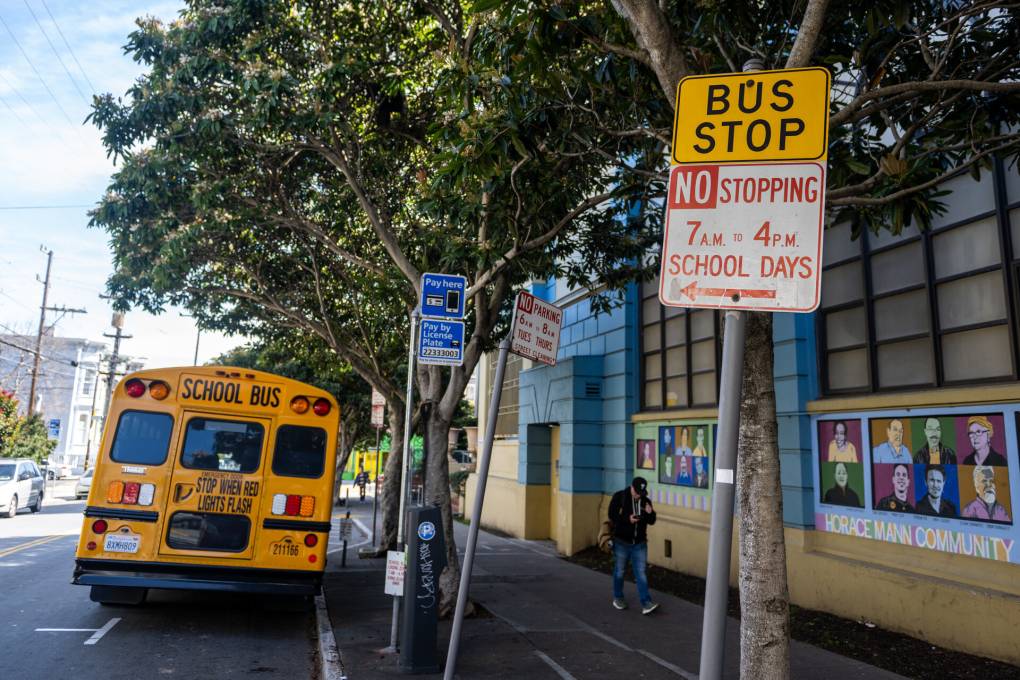
"caption": "A school bus is parked outside of Buena Vista Horace Mann K-8, part of the San Francisco Unified School District, in San Francisco on March 2, 2023.",
"description": null,
"title": "SFUSDSchoolBus",
"credit": "Beth LaBerge/KQED",
"status": "inherit",
"altTag": "The back of a yellow school bus is visible next to a street sign reading \"bus stop.\"",
"isLoading": false,
"fetchFailed": false
},
"news_11974710": {
"type": "attachments",
"id": "news_11974710",
"meta": {
"index": "attachments_1716263798",
"site": "news",
"id": "11974710",
"found": true
},
"parent": 11976367,
"imgSizes": {
"twentyfourteen-full-width": {
"file": "https://cdn.kqed.org/wp-content/uploads/sites/10/2024/02/240202-FIXITCLINIC-KSM-16-KQED-1038x576.jpg",
"width": 1038,
"mimeType": "image/jpeg",
"height": 576
},
"thumbnail": {
"file": "https://cdn.kqed.org/wp-content/uploads/sites/10/2024/02/240202-FIXITCLINIC-KSM-16-KQED-160x107.jpg",
"width": 160,
"mimeType": "image/jpeg",
"height": 107
},
"post-thumbnail": {
"file": "https://cdn.kqed.org/wp-content/uploads/sites/10/2024/02/240202-FIXITCLINIC-KSM-16-KQED-672x372.jpg",
"width": 672,
"mimeType": "image/jpeg",
"height": 372
},
"kqedFullSize": {
"file": "https://cdn.kqed.org/wp-content/uploads/sites/10/2024/02/240202-FIXITCLINIC-KSM-16-KQED.jpg",
"width": 2000,
"height": 1333
},
"large": {
"file": "https://cdn.kqed.org/wp-content/uploads/sites/10/2024/02/240202-FIXITCLINIC-KSM-16-KQED-1020x680.jpg",
"width": 1020,
"mimeType": "image/jpeg",
"height": 680
},
"1536x1536": {
"file": "https://cdn.kqed.org/wp-content/uploads/sites/10/2024/02/240202-FIXITCLINIC-KSM-16-KQED-1536x1024.jpg",
"width": 1536,
"mimeType": "image/jpeg",
"height": 1024
},
"full-width": {
"file": "https://cdn.kqed.org/wp-content/uploads/sites/10/2024/02/240202-FIXITCLINIC-KSM-16-KQED-1920x1280.jpg",
"width": 1920,
"mimeType": "image/jpeg",
"height": 1280
},
"medium": {
"file": "https://cdn.kqed.org/wp-content/uploads/sites/10/2024/02/240202-FIXITCLINIC-KSM-16-KQED-800x533.jpg",
"width": 800,
"mimeType": "image/jpeg",
"height": 533
}
},
"publishDate": 1707157147,
"modified": 1708452408,
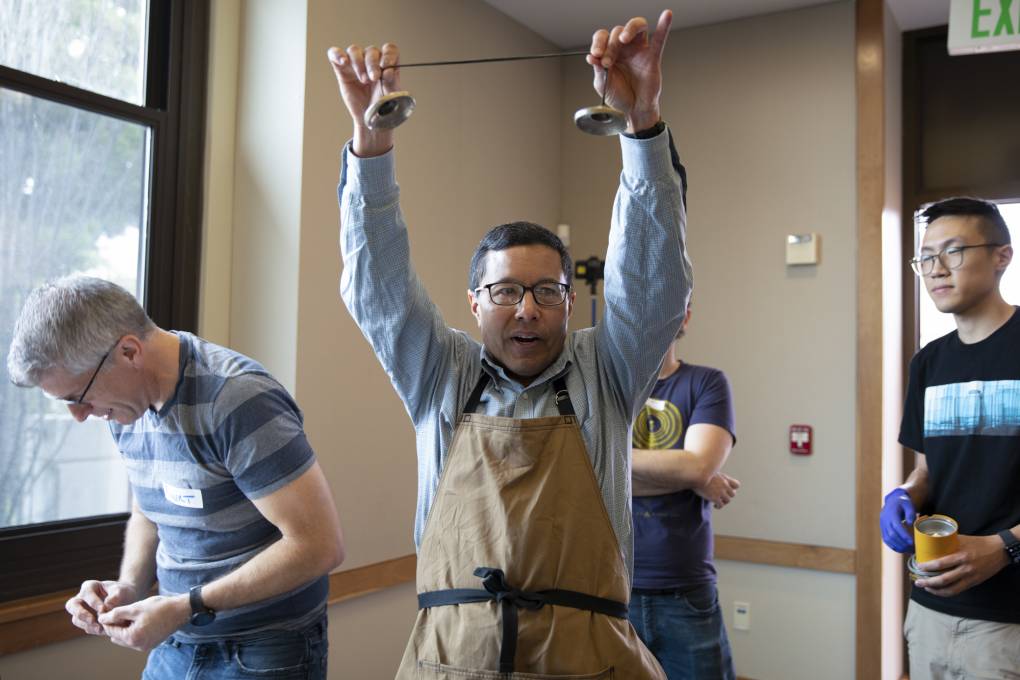
"caption": "Peter Mui celebrates an item being repaired by chiming tingsha bells at a Fixit clinic in Millbrae on Feb. 3, 2024.",
"description": null,
"title": "240202-FIXITCLINIC-KSM-16-KQED",
"credit": "Kathryn Styer Martínez/KQED",
"status": "inherit",
"altTag": "A person wearing a work apron holds up a set of bells in an indoor setting.",
"isLoading": false,
"fetchFailed": false
},
"news_11976605": {
"type": "attachments",
"id": "news_11976605",
"meta": {
"index": "attachments_1716263798",
"site": "news",
"id": "11976605",
"found": true
},
"parent": 11976568,
"imgSizes": {
"twentyfourteen-full-width": {
"file": "https://cdn.kqed.org/wp-content/uploads/sites/10/2024/02/watertaxi-1038x576.jpg",
"width": 1038,
"mimeType": "image/jpeg",
"height": 576
},
"thumbnail": {
"file": "https://cdn.kqed.org/wp-content/uploads/sites/10/2024/02/watertaxi-160x90.jpg",
"width": 160,
"mimeType": "image/jpeg",
"height": 90
},
"post-thumbnail": {
"file": "https://cdn.kqed.org/wp-content/uploads/sites/10/2024/02/watertaxi-672x372.jpg",
"width": 672,
"mimeType": "image/jpeg",
"height": 372
},
"kqedFullSize": {
"file": "https://cdn.kqed.org/wp-content/uploads/sites/10/2024/02/watertaxi.jpg",
"width": 1920,
"height": 1080
},
"large": {
"file": "https://cdn.kqed.org/wp-content/uploads/sites/10/2024/02/watertaxi-1020x574.jpg",
"width": 1020,
"mimeType": "image/jpeg",
"height": 574
},
"1536x1536": {
"file": "https://cdn.kqed.org/wp-content/uploads/sites/10/2024/02/watertaxi-1536x864.jpg",
"width": 1536,
"mimeType": "image/jpeg",
"height": 864
},
"medium": {
"file": "https://cdn.kqed.org/wp-content/uploads/sites/10/2024/02/watertaxi-800x450.jpg",
"width": 800,
"mimeType": "image/jpeg",
"height": 450
}
},
"publishDate": 1708553094,
"modified": 1708554515,
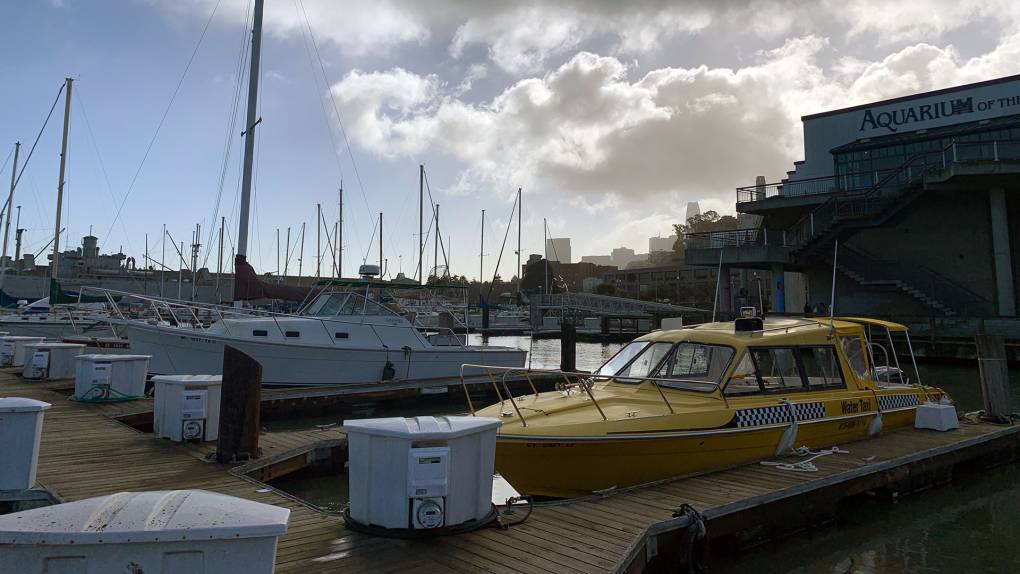
"caption": "The six-passenger water taxi is pulled up to a berth at Pier 39, awaiting passengers who have scheduled a ride.",
"description": null,
"title": "watertaxi",
"credit": "Katrina Schwartz/KQED",
"status": "inherit",
"altTag": "A yellow boat taxi is pulled up to a dock with other boats and a dramatic sky in the background.",
"isLoading": false,
"fetchFailed": false
},
"news_11976443": {
"type": "attachments",
"id": "news_11976443",
"meta": {
"index": "attachments_1716263798",
"site": "news",
"id": "11976443",
"found": true
},
"parent": 11976382,
"imgSizes": {
"twentyfourteen-full-width": {
"file": "https://cdn.kqed.org/wp-content/uploads/sites/10/2024/02/Kou_Berman3-1038x576.jpg",
"width": 1038,
"mimeType": "image/jpeg",
"height": 576
},
"thumbnail": {
"file": "https://cdn.kqed.org/wp-content/uploads/sites/10/2024/02/Kou_Berman3-160x90.jpg",
"width": 160,
"mimeType": "image/jpeg",
"height": 90
},
"post-thumbnail": {
"file": "https://cdn.kqed.org/wp-content/uploads/sites/10/2024/02/Kou_Berman3-672x372.jpg",
"width": 672,
"mimeType": "image/jpeg",
"height": 372
},
"kqedFullSize": {
"file": "https://cdn.kqed.org/wp-content/uploads/sites/10/2024/02/Kou_Berman3.jpg",
"width": 1920,
"height": 1080
},
"large": {
"file": "https://cdn.kqed.org/wp-content/uploads/sites/10/2024/02/Kou_Berman3-1020x574.jpg",
"width": 1020,
"mimeType": "image/jpeg",
"height": 574
},
"1536x1536": {
"file": "https://cdn.kqed.org/wp-content/uploads/sites/10/2024/02/Kou_Berman3-1536x864.jpg",
"width": 1536,
"mimeType": "image/jpeg",
"height": 864
},
"medium": {
"file": "https://cdn.kqed.org/wp-content/uploads/sites/10/2024/02/Kou_Berman3-800x450.jpg",
"width": 800,
"mimeType": "image/jpeg",
"height": 450
}
},
"publishDate": 1708465871,
"modified": 1708466410,
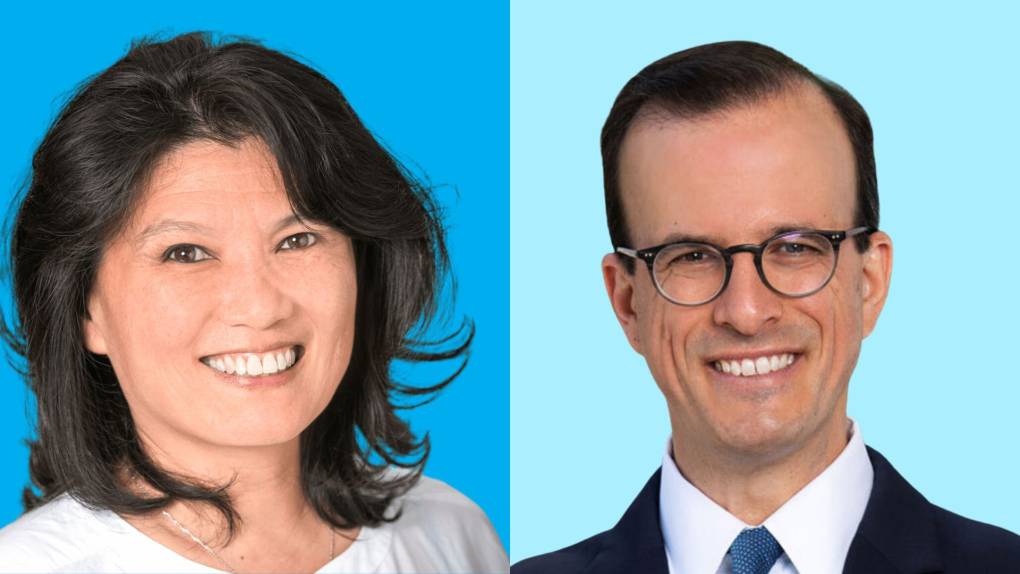
"caption": "Marc Berman (right) faces a challenge from fellow Democrat Lydia Kou (right).",
"description": null,
"title": "Kou_Berman3",
"credit": "Images courtesy of Lydia Kou and Marc Berman/Photo collage by Lakshmi Sarah of KQED",
"status": "inherit",
"altTag": "A collage of a woman with black hair against a blue background and a man with dark hair against a lighter blue background.",
"isLoading": false,
"fetchFailed": false
},
"news_11975179": {
"type": "attachments",
"id": "news_11975179",
"meta": {
"index": "attachments_1716263798",
"site": "news",
"id": "11975179",
"found": true
},
"parent": 11975156,
"imgSizes": {
"twentyfourteen-full-width": {
"file": "https://cdn.kqed.org/wp-content/uploads/sites/10/2024/02/IMG_5659-1038x576.jpg",
"width": 1038,
"mimeType": "image/jpeg",
"height": 576
},
"thumbnail": {
"file": "https://cdn.kqed.org/wp-content/uploads/sites/10/2024/02/IMG_5659-160x120.jpg",
"width": 160,
"mimeType": "image/jpeg",
"height": 120
},
"post-thumbnail": {
"file": "https://cdn.kqed.org/wp-content/uploads/sites/10/2024/02/IMG_5659-672x372.jpg",
"width": 672,
"mimeType": "image/jpeg",
"height": 372
},
"kqedFullSize": {
"file": "https://cdn.kqed.org/wp-content/uploads/sites/10/2024/02/IMG_5659-scaled.jpg",
"width": 2560,
"height": 1920
},
"2048x2048": {
"file": "https://cdn.kqed.org/wp-content/uploads/sites/10/2024/02/IMG_5659-2048x1536.jpg",
"width": 2048,
"mimeType": "image/jpeg",
"height": 1536
},
"large": {
"file": "https://cdn.kqed.org/wp-content/uploads/sites/10/2024/02/IMG_5659-1020x765.jpg",
"width": 1020,
"mimeType": "image/jpeg",
"height": 765
},
"1536x1536": {
"file": "https://cdn.kqed.org/wp-content/uploads/sites/10/2024/02/IMG_5659-1536x1152.jpg",
"width": 1536,
"mimeType": "image/jpeg",
"height": 1152
},
"full-width": {
"file": "https://cdn.kqed.org/wp-content/uploads/sites/10/2024/02/IMG_5659-1920x1440.jpg",
"width": 1920,
"mimeType": "image/jpeg",
"height": 1440
},
"medium": {
"file": "https://cdn.kqed.org/wp-content/uploads/sites/10/2024/02/IMG_5659-800x600.jpg",
"width": 800,
"mimeType": "image/jpeg",
"height": 600
}
},
"publishDate": 1707436919,
"modified": 1708478350,
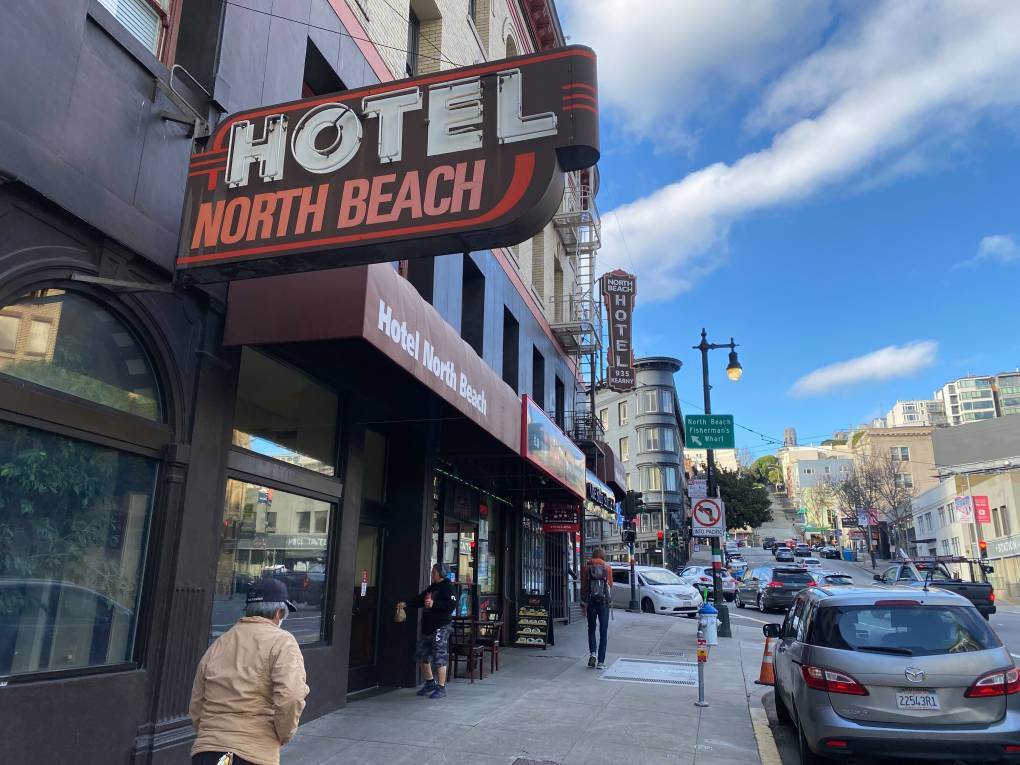
"caption": "Mayor London Breed walked back plans to open the permanent supportive housing site at Hotel North Beach, 935 Kearny St., just days after first announcing the idea.",
"description": null,
"title": "IMG_5659",
"credit": "Sydney Johnson/KQED",
"status": "inherit",
"altTag": "The exterior signage of the North Beach Hotel.",
"isLoading": false,
"fetchFailed": false
},
"news_11960454": {
"type": "attachments",
"id": "news_11960454",
"meta": {
"index": "attachments_1716263798",
"site": "news",
"id": "11960454",
"found": true
},
"parent": 0,
"imgSizes": {
"twentyfourteen-full-width": {
"file": "https://cdn.kqed.org/wp-content/uploads/sites/10/2023/09/090723_BeU_8519-LJ-KQED-1038x576.jpg",
"width": 1038,
"mimeType": "image/jpeg",
"height": 576
},
"thumbnail": {
"file": "https://cdn.kqed.org/wp-content/uploads/sites/10/2023/09/090723_BeU_8519-LJ-KQED-160x107.jpg",
"width": 160,
"mimeType": "image/jpeg",
"height": 107
},
"post-thumbnail": {
"file": "https://cdn.kqed.org/wp-content/uploads/sites/10/2023/09/090723_BeU_8519-LJ-KQED-672x372.jpg",
"width": 672,
"mimeType": "image/jpeg",
"height": 372
},
"kqedFullSize": {
"file": "https://cdn.kqed.org/wp-content/uploads/sites/10/2023/09/090723_BeU_8519-LJ-KQED.jpg",
"width": 2000,
"height": 1333
},
"large": {
"file": "https://cdn.kqed.org/wp-content/uploads/sites/10/2023/09/090723_BeU_8519-LJ-KQED-1020x680.jpg",
"width": 1020,
"mimeType": "image/jpeg",
"height": 680
},
"1536x1536": {
"file": "https://cdn.kqed.org/wp-content/uploads/sites/10/2023/09/090723_BeU_8519-LJ-KQED-1536x1024.jpg",
"width": 1536,
"mimeType": "image/jpeg",
"height": 1024
},
"full-width": {
"file": "https://cdn.kqed.org/wp-content/uploads/sites/10/2023/09/090723_BeU_8519-LJ-KQED-1920x1280.jpg",
"width": 1920,
"mimeType": "image/jpeg",
"height": 1280
},
"medium": {
"file": "https://cdn.kqed.org/wp-content/uploads/sites/10/2023/09/090723_BeU_8519-LJ-KQED-800x533.jpg",
"width": 800,
"mimeType": "image/jpeg",
"height": 533
}
},
"publishDate": 1694195835,
"modified": 1707960515,
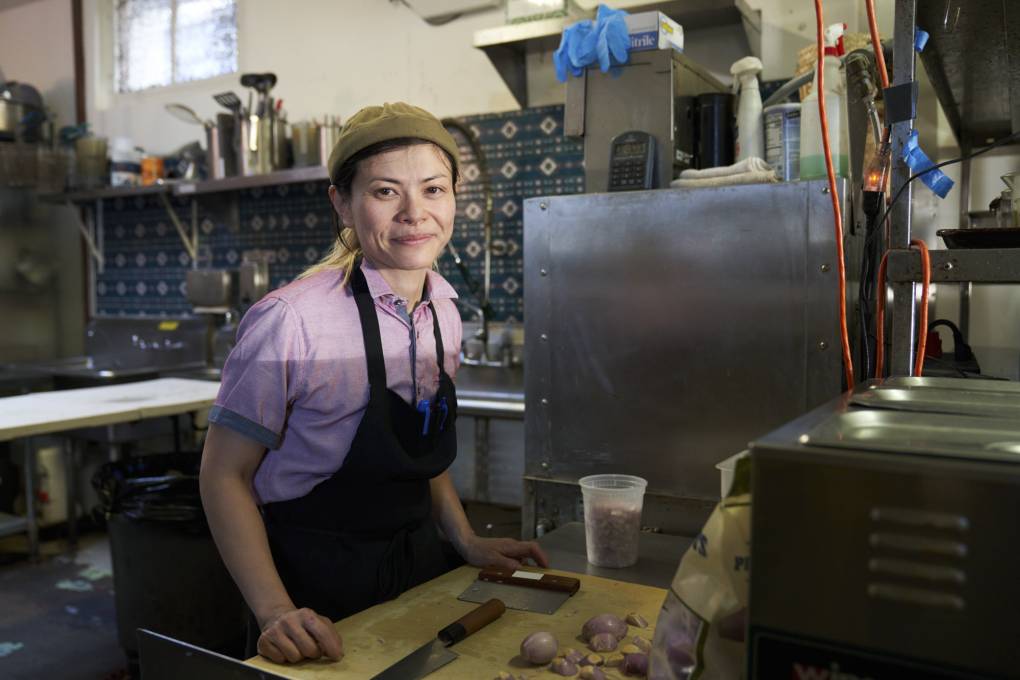
"caption": "Vietnamese restaurant Bé Ù chef and owner Uyên Lê in Los Angeles, Sept. 7, 2023.",
"description": null,
"title": "090723_BeU_8519-LJ-KQED",
"credit": "Lauren Justice for KQED",
"status": "inherit",
"altTag": "A person stands at a cutting board in a kitchen smiling.",
"isLoading": false,
"fetchFailed": false
},
"news_11974599": {
"type": "attachments",
"id": "news_11974599",
"meta": {
"index": "attachments_1716263798",
"site": "news",
"id": "11974599",
"found": true
},
"parent": 0,
"imgSizes": {
"twentyfourteen-full-width": {
"file": "https://cdn.kqed.org/wp-content/uploads/sites/10/2024/02/240131-SOCOLACHOCOLATIER-10-BL-KQED-1038x576.jpg",
"width": 1038,
"mimeType": "image/jpeg",
"height": 576
},
"thumbnail": {
"file": "https://cdn.kqed.org/wp-content/uploads/sites/10/2024/02/240131-SOCOLACHOCOLATIER-10-BL-KQED-160x107.jpg",
"width": 160,
"mimeType": "image/jpeg",
"height": 107
},
"post-thumbnail": {
"file": "https://cdn.kqed.org/wp-content/uploads/sites/10/2024/02/240131-SOCOLACHOCOLATIER-10-BL-KQED-672x372.jpg",
"width": 672,
"mimeType": "image/jpeg",
"height": 372
},
"kqedFullSize": {
"file": "https://cdn.kqed.org/wp-content/uploads/sites/10/2024/02/240131-SOCOLACHOCOLATIER-10-BL-KQED.jpg",
"width": 2000,
"height": 1333
},
"large": {
"file": "https://cdn.kqed.org/wp-content/uploads/sites/10/2024/02/240131-SOCOLACHOCOLATIER-10-BL-KQED-1020x680.jpg",
"width": 1020,
"mimeType": "image/jpeg",
"height": 680
},
"1536x1536": {
"file": "https://cdn.kqed.org/wp-content/uploads/sites/10/2024/02/240131-SOCOLACHOCOLATIER-10-BL-KQED-1536x1024.jpg",
"width": 1536,
"mimeType": "image/jpeg",
"height": 1024
},
"full-width": {
"file": "https://cdn.kqed.org/wp-content/uploads/sites/10/2024/02/240131-SOCOLACHOCOLATIER-10-BL-KQED-1920x1280.jpg",
"width": 1920,
"mimeType": "image/jpeg",
"height": 1280
},
"medium": {
"file": "https://cdn.kqed.org/wp-content/uploads/sites/10/2024/02/240131-SOCOLACHOCOLATIER-10-BL-KQED-800x533.jpg",
"width": 800,
"mimeType": "image/jpeg",
"height": 533
}
},
"publishDate": 1706903772,
"modified": 1707945163,
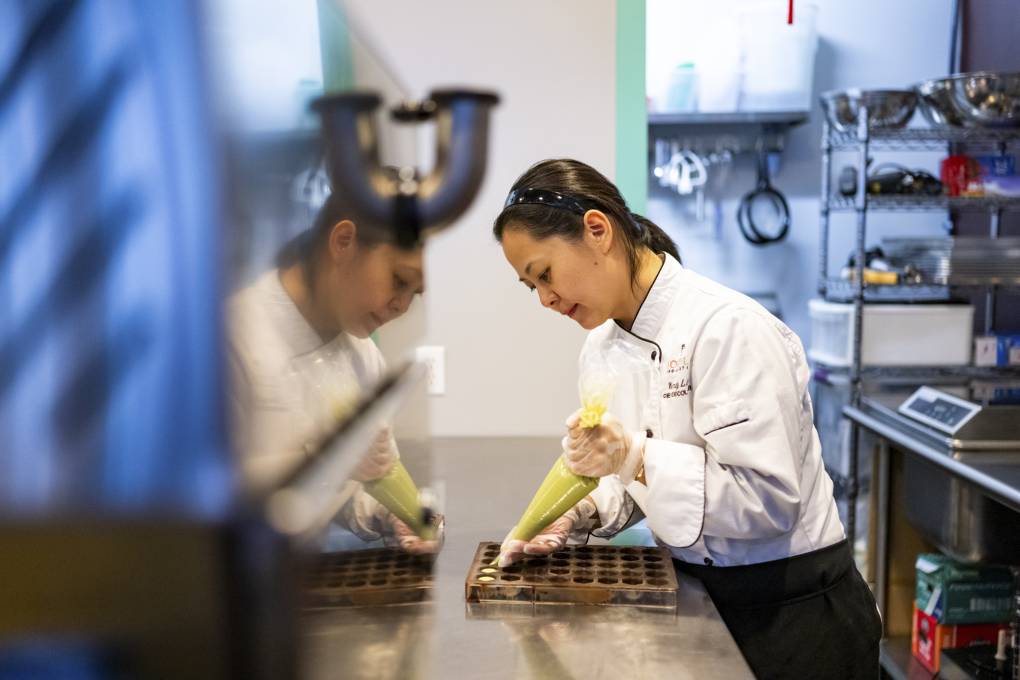
"caption": "CEO and Chief Chocolatier Wendy Lieu makes Pandan Coconut chocolates at Socola Chocolatier in San Francisco on Jan. 31, 2024.",
"description": null,
"title": "240131-SOCOLACHOCOLATIER-10-BL-KQED",
"credit": "Beth LaBerge/KQED",
"status": "inherit",
"altTag": "An Asian woman in white shirt leans over a counter working intently on something.",
"isLoading": false,
"fetchFailed": false
},
"news_11959230": {
"type": "attachments",
"id": "news_11959230",
"meta": {
"index": "attachments_1716263798",
"site": "news",
"id": "11959230",
"found": true
},
"parent": 0,
"imgSizes": {
"twentyfourteen-full-width": {
"file": "https://cdn.kqed.org/wp-content/uploads/sites/10/2023/08/230825-ANTIOCH-RACIAL-JUSTICE-HEARING-MD-05-KQED-1038x576.jpg",
"width": 1038,
"mimeType": "image/jpeg",
"height": 576
},
"thumbnail": {
"file": "https://cdn.kqed.org/wp-content/uploads/sites/10/2023/08/230825-ANTIOCH-RACIAL-JUSTICE-HEARING-MD-05-KQED-160x107.jpg",
"width": 160,
"mimeType": "image/jpeg",
"height": 107
},
"post-thumbnail": {
"file": "https://cdn.kqed.org/wp-content/uploads/sites/10/2023/08/230825-ANTIOCH-RACIAL-JUSTICE-HEARING-MD-05-KQED-672x372.jpg",
"width": 672,
"mimeType": "image/jpeg",
"height": 372
},
"kqedFullSize": {
"file": "https://cdn.kqed.org/wp-content/uploads/sites/10/2023/08/230825-ANTIOCH-RACIAL-JUSTICE-HEARING-MD-05-KQED.jpg?ver=1693078375",
"width": 2000,
"height": 1333
},
"large": {
"file": "https://cdn.kqed.org/wp-content/uploads/sites/10/2023/08/230825-ANTIOCH-RACIAL-JUSTICE-HEARING-MD-05-KQED-1020x680.jpg",
"width": 1020,
"mimeType": "image/jpeg",
"height": 680
},
"1536x1536": {
"file": "https://cdn.kqed.org/wp-content/uploads/sites/10/2023/08/230825-ANTIOCH-RACIAL-JUSTICE-HEARING-MD-05-KQED-1536x1024.jpg",
"width": 1536,
"mimeType": "image/jpeg",
"height": 1024
},
"full-width": {
"file": "https://cdn.kqed.org/wp-content/uploads/sites/10/2023/08/230825-ANTIOCH-RACIAL-JUSTICE-HEARING-MD-05-KQED-1920x1280.jpg",
"width": 1920,
"mimeType": "image/jpeg",
"height": 1280
},
"medium": {
"file": "https://cdn.kqed.org/wp-content/uploads/sites/10/2023/08/230825-ANTIOCH-RACIAL-JUSTICE-HEARING-MD-05-KQED-800x533.jpg",
"width": 800,
"mimeType": "image/jpeg",
"height": 533
}
},
"publishDate": 1693001340,
"modified": 1708544900,
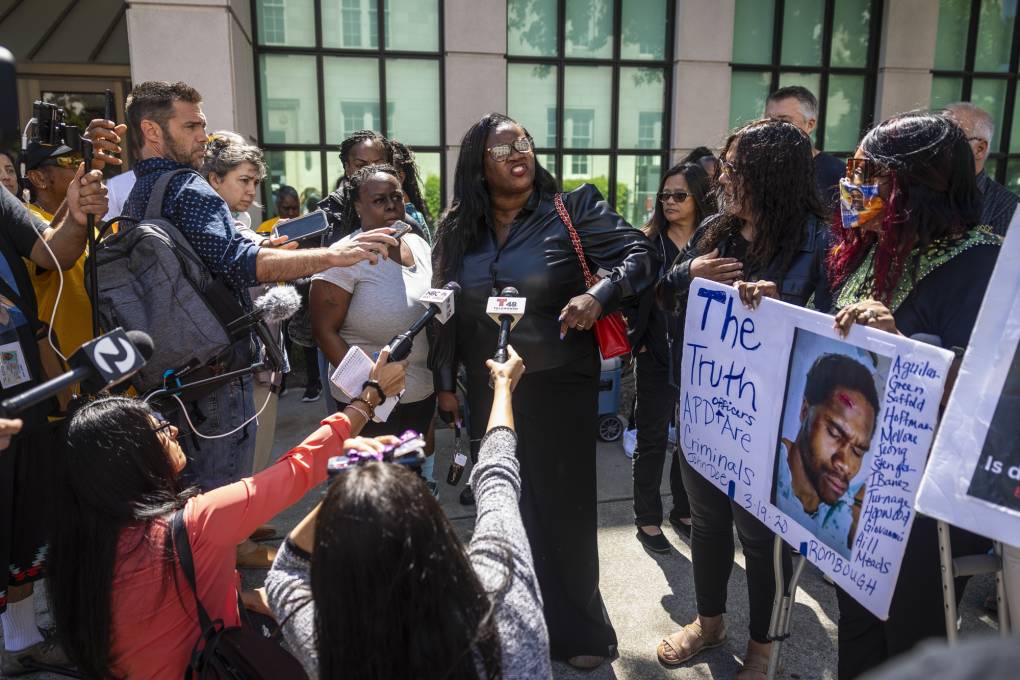
"caption": "Brandi Griffin (center), mother of Arnold Marcel Hawkins, expresses outrage over some of the charges being dropped against her son's alleged killers at a rally in front of the AF Bray Courthouse in Martinez on Aug. 25, 2023.",
"description": null,
"title": "230825-ANTIOCH RACIAL JUSTICE HEARING-MD-05-KQED",
"credit": "Martin do Nascimento/KQED",
"status": "inherit",
"altTag": "A person speaks emphatically while surrounded by a crowd in an outdoor setting.",
"isLoading": false,
"fetchFailed": false
},
"news_11974902": {
"type": "attachments",
"id": "news_11974902",
"meta": {
"index": "attachments_1716263798",
"site": "news",
"id": "11974902",
"found": true
},
"parent": 11974882,
"imgSizes": {
"twentyfourteen-full-width": {
"file": "https://cdn.kqed.org/wp-content/uploads/sites/10/2024/02/240128-49ersFans-48-BL_qut-1038x576.jpg",
"width": 1038,
"mimeType": "image/jpeg",
"height": 576
},
"thumbnail": {
"file": "https://cdn.kqed.org/wp-content/uploads/sites/10/2024/02/240128-49ersFans-48-BL_qut-160x107.jpg",
"width": 160,
"mimeType": "image/jpeg",
"height": 107
},
"post-thumbnail": {
"file": "https://cdn.kqed.org/wp-content/uploads/sites/10/2024/02/240128-49ersFans-48-BL_qut-672x372.jpg",
"width": 672,
"mimeType": "image/jpeg",
"height": 372
},
"kqedFullSize": {
"file": "https://cdn.kqed.org/wp-content/uploads/sites/10/2024/02/240128-49ersFans-48-BL_qut.jpg",
"width": 1920,
"height": 1280
},
"large": {
"file": "https://cdn.kqed.org/wp-content/uploads/sites/10/2024/02/240128-49ersFans-48-BL_qut-1020x680.jpg",
"width": 1020,
"mimeType": "image/jpeg",
"height": 680
},
"1536x1536": {
"file": "https://cdn.kqed.org/wp-content/uploads/sites/10/2024/02/240128-49ersFans-48-BL_qut-1536x1024.jpg",
"width": 1536,
"mimeType": "image/jpeg",
"height": 1024
},
"medium": {
"file": "https://cdn.kqed.org/wp-content/uploads/sites/10/2024/02/240128-49ersFans-48-BL_qut-800x533.jpg",
"width": 800,
"mimeType": "image/jpeg",
"height": 533
}
},
"publishDate": 1707261346,
"modified": 1707261384,
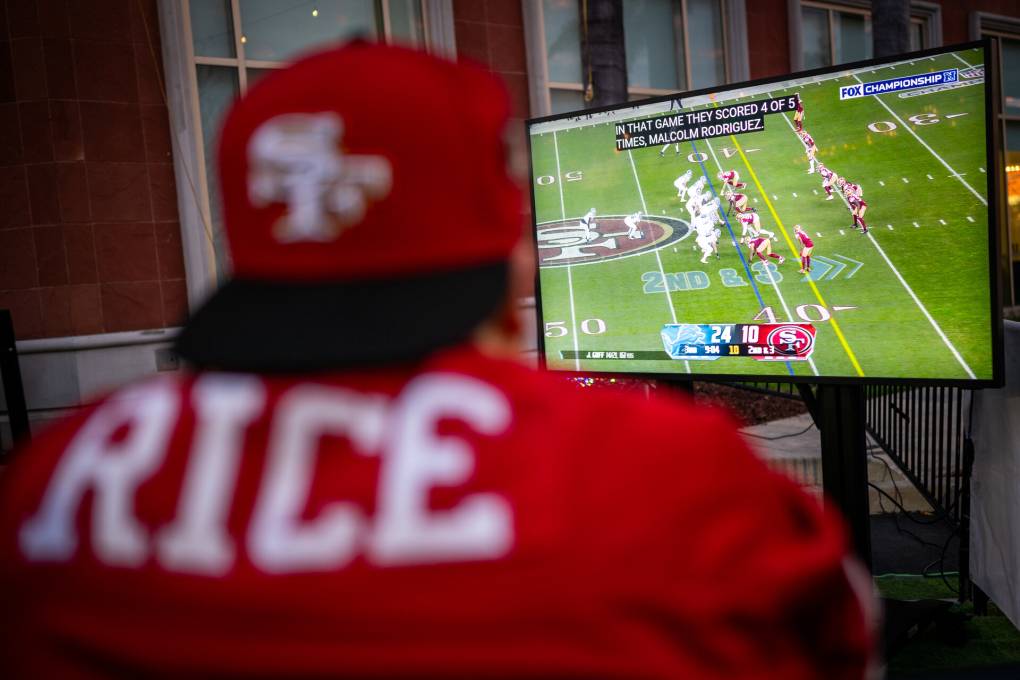
"caption": "Fans watch the NFC Championship game between the San Francisco 49ers and the Detroit Lions near Levi's Stadium in Santa Clara on Jan. 28, 2024.",
"description": null,
"title": "240128-49ersFans-48-BL_qut",
"credit": "Beth LaBerge/KQED",
"status": "inherit",
"altTag": "A person with a red jersey watched football on TV.",
"isLoading": false,
"fetchFailed": false
},
"news_11974291": {
"type": "attachments",
"id": "news_11974291",
"meta": {
"index": "attachments_1716263798",
"site": "news",
"id": "11974291",
"found": true
},
"parent": 0,
"imgSizes": {
"twentyfourteen-full-width": {
"file": "https://cdn.kqed.org/wp-content/uploads/sites/10/2024/01/GETTYIMAGES-90603978-KQED-1038x576.jpg",
"width": 1038,
"mimeType": "image/jpeg",
"height": 576
},
"thumbnail": {
"file": "https://cdn.kqed.org/wp-content/uploads/sites/10/2024/01/GETTYIMAGES-90603978-KQED-160x107.jpg",
"width": 160,
"mimeType": "image/jpeg",
"height": 107
},
"post-thumbnail": {
"file": "https://cdn.kqed.org/wp-content/uploads/sites/10/2024/01/GETTYIMAGES-90603978-KQED-672x372.jpg",
"width": 672,
"mimeType": "image/jpeg",
"height": 372
},
"kqedFullSize": {
"file": "https://cdn.kqed.org/wp-content/uploads/sites/10/2024/01/GETTYIMAGES-90603978-KQED.jpg",
"width": 2000,
"height": 1334
},
"large": {
"file": "https://cdn.kqed.org/wp-content/uploads/sites/10/2024/01/GETTYIMAGES-90603978-KQED-1020x680.jpg",
"width": 1020,
"mimeType": "image/jpeg",
"height": 680
},
"1536x1536": {
"file": "https://cdn.kqed.org/wp-content/uploads/sites/10/2024/01/GETTYIMAGES-90603978-KQED-1536x1025.jpg",
"width": 1536,
"mimeType": "image/jpeg",
"height": 1025
},
"full-width": {
"file": "https://cdn.kqed.org/wp-content/uploads/sites/10/2024/01/GETTYIMAGES-90603978-KQED-1920x1281.jpg",
"width": 1920,
"mimeType": "image/jpeg",
"height": 1281
},
"medium": {
"file": "https://cdn.kqed.org/wp-content/uploads/sites/10/2024/01/GETTYIMAGES-90603978-KQED-800x534.jpg",
"width": 800,
"mimeType": "image/jpeg",
"height": 534
}
},
"publishDate": 1706663507,
"modified": 1706663572,
"caption": null,
"description": null,
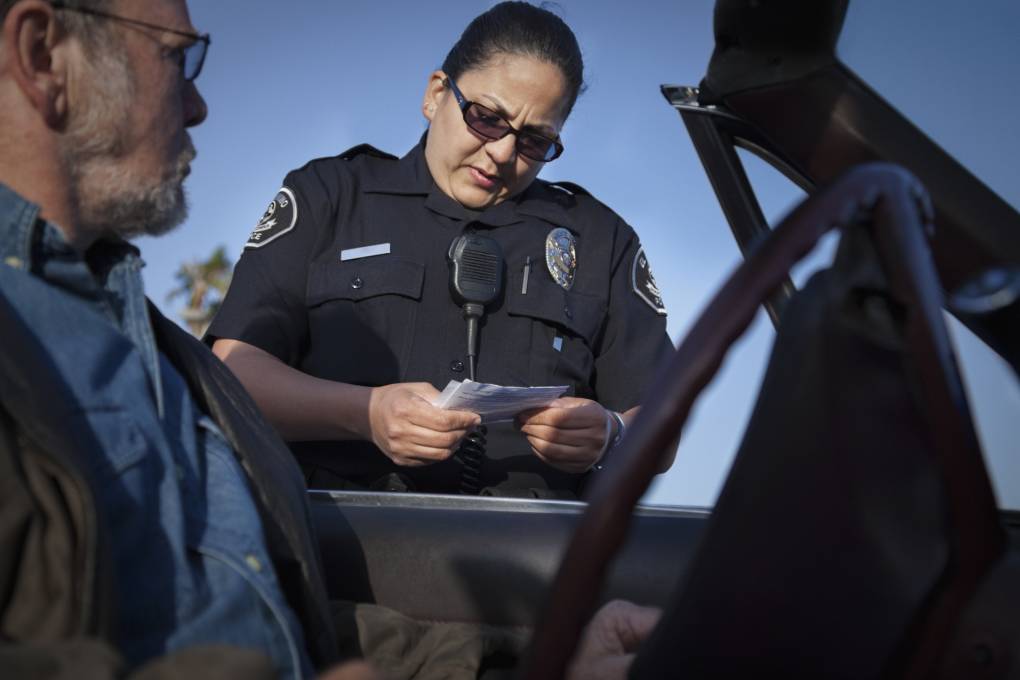
"title": "Policewoman checking paperwork of man in convertible",
"credit": "Hill Street Studios/Getty Images",
"status": "inherit",
"altTag": "Policewoman checking paperwork of man in convertible.",
"isLoading": false,
"fetchFailed": false
},
"news_11973880": {
"type": "attachments",
"id": "news_11973880",
"meta": {
"index": "attachments_1716263798",
"site": "news",
"id": "11973880",
"found": true
},
"parent": 11973853,
"imgSizes": {
"twentyfourteen-full-width": {
"file": "https://cdn.kqed.org/wp-content/uploads/sites/10/2024/01/GettyImages-1951443193-1038x576.jpg",
"width": 1038,
"mimeType": "image/jpeg",
"height": 576
},
"thumbnail": {
"file": "https://cdn.kqed.org/wp-content/uploads/sites/10/2024/01/GettyImages-1951443193-160x107.jpg",
"width": 160,
"mimeType": "image/jpeg",
"height": 107
},
"post-thumbnail": {
"file": "https://cdn.kqed.org/wp-content/uploads/sites/10/2024/01/GettyImages-1951443193-672x372.jpg",
"width": 672,
"mimeType": "image/jpeg",
"height": 372
},
"kqedFullSize": {
"file": "https://cdn.kqed.org/wp-content/uploads/sites/10/2024/01/GettyImages-1951443193-scaled.jpg",
"width": 2560,
"height": 1706
},
"2048x2048": {
"file": "https://cdn.kqed.org/wp-content/uploads/sites/10/2024/01/GettyImages-1951443193-2048x1365.jpg",
"width": 2048,
"mimeType": "image/jpeg",
"height": 1365
},
"large": {
"file": "https://cdn.kqed.org/wp-content/uploads/sites/10/2024/01/GettyImages-1951443193-1020x680.jpg",
"width": 1020,
"mimeType": "image/jpeg",
"height": 680
},
"1536x1536": {
"file": "https://cdn.kqed.org/wp-content/uploads/sites/10/2024/01/GettyImages-1951443193-1536x1024.jpg",
"width": 1536,
"mimeType": "image/jpeg",
"height": 1024
},
"full-width": {
"file": "https://cdn.kqed.org/wp-content/uploads/sites/10/2024/01/GettyImages-1951443193-1920x1280.jpg",
"width": 1920,
"mimeType": "image/jpeg",
"height": 1280
},
"medium": {
"file": "https://cdn.kqed.org/wp-content/uploads/sites/10/2024/01/GettyImages-1951443193-800x533.jpg",
"width": 800,
"mimeType": "image/jpeg",
"height": 533
}
},
"publishDate": 1706306626,
"modified": 1706324030,
"caption": "49ers wide receiver Deebo Samuel celebrates as he runs onto the field during player introductions before the NFC playoff game against the Green Bay Packers at Levi's Stadium on Jan. 20, 2024 in Santa Clara. The 49ers are facing off against the Detroit Lions this Sunday for the NFC Championship.",
"description": null,
"title": "NFC Divisional Playoffs - Green Bay Packers v San Francisco 49ers",
"credit": "Ryan Kang/Getty Images",
"status": "inherit",
"altTag": "A tall, muscular man dressed in 49ers uniform stands in front of a crowd, looking away from the camera, and cheers.",
"isLoading": false,
"fetchFailed": false
},
"news_11973513": {
"type": "attachments",
"id": "news_11973513",
"meta": {
"index": "attachments_1716263798",
"site": "news",
"id": "11973513",
"found": true
},
"parent": 11973510,
"imgSizes": {
"twentyfourteen-full-width": {
"file": "https://cdn.kqed.org/wp-content/uploads/sites/10/2024/01/fox-squirrel-1038x576.jpg",
"width": 1038,
"mimeType": "image/jpeg",
"height": 576
},
"thumbnail": {
"file": "https://cdn.kqed.org/wp-content/uploads/sites/10/2024/01/fox-squirrel-160x106.jpg",
"width": 160,
"mimeType": "image/jpeg",
"height": 106
},
"post-thumbnail": {
"file": "https://cdn.kqed.org/wp-content/uploads/sites/10/2024/01/fox-squirrel-672x372.jpg",
"width": 672,
"mimeType": "image/jpeg",
"height": 372
},
"kqedFullSize": {
"file": "https://cdn.kqed.org/wp-content/uploads/sites/10/2024/01/fox-squirrel.jpg",
"width": 1920,
"height": 1275
},
"large": {
"file": "https://cdn.kqed.org/wp-content/uploads/sites/10/2024/01/fox-squirrel-1020x677.jpg",
"width": 1020,
"mimeType": "image/jpeg",
"height": 677
},
"1536x1536": {
"file": "https://cdn.kqed.org/wp-content/uploads/sites/10/2024/01/fox-squirrel-1536x1020.jpg",
"width": 1536,
"mimeType": "image/jpeg",
"height": 1020
},
"medium": {
"file": "https://cdn.kqed.org/wp-content/uploads/sites/10/2024/01/fox-squirrel-800x531.jpg",
"width": 800,
"mimeType": "image/jpeg",
"height": 531
}
},
"publishDate": 1706121997,
"modified": 1706122124,
"caption": "The fox squirrel is recognizable by its tawny fur. While not native to the San Francisco Bay Area, it is very common to see this species in the East Bay.",
"description": null,
"title": "fox-squirrel",
"credit": "Merrimon/iStock",
"status": "inherit",
"altTag": "As squirrel with an orange tint to its fur stands up on two legs with its paws held up in front.",
"isLoading": false,
"fetchFailed": false
}
},
"audioPlayerReducer": {
"postId": "stream_live",
"isPaused": true,
"isPlaying": false,
"pfsActive": false,
"pledgeModalIsOpen": true,
"playerDrawerIsOpen": false,
"liveAudioPlayStartedAt": 0,
"liveAudioPlayContext": ""
},
"authorsReducer": {
"gmarzorati": {
"type": "authors",
"id": "227",
"meta": {
"index": "authors_1716337520",
"id": "227",
"found": true
},
"name": "Guy Marzorati",
"firstName": "Guy",
"lastName": "Marzorati",
"slug": "gmarzorati",
"email": "gmarzorati@KQED.org",
"display_author_email": true,
"staff_mastheads": [
"news"
],
"title": "Correspondent",
"bio": "Guy Marzorati is a correspondent on KQED's California Politics and Government Desk, based in San Jose. A graduate of Santa Clara University, Guy joined KQED in 2013. He reports on state and local politics and produces KQED's digital voter guide.",
"avatar": "https://secure.gravatar.com/avatar/e7038b8dbfd55b104369b76b1cd0b9de?s=600&d=blank&r=g",
"twitter": "guymarzorati",
"facebook": null,
"instagram": null,
"linkedin": null,
"sites": [
{
"site": "",
"roles": [
"editor"
]
},
{
"site": "news",
"roles": [
"editor"
]
},
{
"site": "science",
"roles": [
"editor"
]
},
{
"site": "forum",
"roles": [
"editor"
]
},
{
"site": "elections",
"roles": [
"editor"
]
},
{
"site": "liveblog",
"roles": [
"editor"
]
}
],
"headData": {
"title": "Guy Marzorati | KQED",
"description": "Correspondent",
"ogImgSrc": "https://secure.gravatar.com/avatar/e7038b8dbfd55b104369b76b1cd0b9de?s=600&d=blank&r=g",
"twImgSrc": "https://secure.gravatar.com/avatar/e7038b8dbfd55b104369b76b1cd0b9de?s=600&d=blank&r=g"
},
"isLoading": false,
"link": "/author/gmarzorati"
},
"katrinaschwartz": {
"type": "authors",
"id": "234",
"meta": {
"index": "authors_1716337520",
"id": "234",
"found": true
},
"name": "Katrina Schwartz",
"firstName": "Katrina",
"lastName": "Schwartz",
"slug": "katrinaschwartz",
"email": "kschwartz@kqed.org",
"display_author_email": false,
"staff_mastheads": [
"news"
],
"title": "Producer",
"bio": "Katrina Schwartz is a journalist based in San Francisco. She's worked at KPCC public radio in LA and has reported on air and online for KQED since 2010. She covered how teaching and learning is changing for MindShift between 2012 and 2020. She is the co-host of the MindShift podcast and now produces KQED's Bay Curious podcast.",
"avatar": "https://secure.gravatar.com/avatar/edb4ee79070447a018538c9aae6eeecf28786515b8a0c30e43b6b7dce5aa44c8?s=600&d=blank&r=g",
"twitter": "kschwart",
"bluesky": null,
"facebook": null,
"instagram": null,
"linkedin": null,
"sites": [
{
"site": "",
"roles": [
"editor"
]
},
{
"site": "news",
"roles": [
"editor"
]
},
{
"site": "mindshift",
"roles": [
"administrator"
]
},
{
"site": "stateofhealth",
"roles": [
"author"
]
},
{
"site": "science",
"roles": [
"editor"
]
}
],
"headData": {
"title": "Katrina Schwartz | KQED",
"description": "Producer",
"ogImgSrc": "https://secure.gravatar.com/avatar/edb4ee79070447a018538c9aae6eeecf28786515b8a0c30e43b6b7dce5aa44c8?s=600&d=blank&r=g",
"twImgSrc": "https://secure.gravatar.com/avatar/edb4ee79070447a018538c9aae6eeecf28786515b8a0c30e43b6b7dce5aa44c8?s=600&d=blank&r=g"
},
"isLoading": false,
"link": "/author/katrinaschwartz"
},
"abandlamudi": {
"type": "authors",
"id": "11672",
"meta": {
"index": "authors_1716337520",
"id": "11672",
"found": true
},
"name": "Adhiti Bandlamudi",
"firstName": "Adhiti",
"lastName": "Bandlamudi",
"slug": "abandlamudi",
"email": "abandlamudi@kqed.org",
"display_author_email": false,
"staff_mastheads": [
"news"
],
"title": "KQED Housing Reporter",
"bio": "Adhiti Bandlamudi reports for KQED's Housing desk. She focuses on how housing gets built across the Bay Area. Before joining KQED in 2020, she reported for WUNC in Durham, North Carolina, WABE in Atlanta, Georgia and Capital Public Radio in Sacramento. In 2017, she was awarded a Kroc Fellowship at NPR where she reported on everything from sprinkles to the Golden State Killer's arrest. When she's not reporting, she's baking new recipes in her kitchen or watching movies with friends and family. She's originally from Georgia and has strong opinions about Great British Bake Off.",
"avatar": "https://secure.gravatar.com/avatar/868129c8b257bb99a3500e2c86a65400?s=600&d=mm&r=g",
"twitter": "oddity_adhiti",
"facebook": null,
"instagram": null,
"linkedin": null,
"sites": [
{
"site": "arts",
"roles": [
"author"
]
},
{
"site": "news",
"roles": [
"editor"
]
},
{
"site": "liveblog",
"roles": [
"author"
]
}
],
"headData": {
"title": "Adhiti Bandlamudi | KQED",
"description": "KQED Housing Reporter",
"ogImgSrc": "https://secure.gravatar.com/avatar/868129c8b257bb99a3500e2c86a65400?s=600&d=mm&r=g",
"twImgSrc": "https://secure.gravatar.com/avatar/868129c8b257bb99a3500e2c86a65400?s=600&d=mm&r=g"
},
"isLoading": false,
"link": "/author/abandlamudi"
},
"kmizuguchi": {
"type": "authors",
"id": "11739",
"meta": {
"index": "authors_1716337520",
"id": "11739",
"found": true
},
"name": "Keith Mizuguchi",
"firstName": "Keith",
"lastName": "Mizuguchi",
"slug": "kmizuguchi",
"email": "kmizuguchi@kqed.org",
"display_author_email": false,
"staff_mastheads": [],
"title": "KQED Contributor",
"bio": null,
"avatar": "https://secure.gravatar.com/avatar/64d8a7de0723d4099b9fe4e915136103febcc20809abce228ee4415bcb237023?s=600&d=blank&r=g",
"twitter": null,
"bluesky": null,
"facebook": null,
"instagram": null,
"linkedin": null,
"sites": [
{
"site": "news",
"roles": [
"editor"
]
},
{
"site": "science",
"roles": [
"editor"
]
}
],
"headData": {
"title": "Keith Mizuguchi | KQED",
"description": "KQED Contributor",
"ogImgSrc": "https://secure.gravatar.com/avatar/64d8a7de0723d4099b9fe4e915136103febcc20809abce228ee4415bcb237023?s=600&d=blank&r=g",
"twImgSrc": "https://secure.gravatar.com/avatar/64d8a7de0723d4099b9fe4e915136103febcc20809abce228ee4415bcb237023?s=600&d=blank&r=g"
},
"isLoading": false,
"link": "/author/kmizuguchi"
},
"afinney": {
"type": "authors",
"id": "11772",
"meta": {
"index": "authors_1716337520",
"id": "11772",
"found": true
},
"name": "Annelise Finney",
"firstName": "Annelise",
"lastName": "Finney",
"slug": "afinney",
"email": "afinney@kqed.org",
"display_author_email": false,
"staff_mastheads": [],
"title": "Reporter",
"bio": "Annelise reports on reparations in California and East Bay politics. She co-produced the Sunday Music Drop, a limited-term radio series featuring Bay Area musicians that aired between Sept 2022 and Oct 2024. She joined KQED in 2021 as a general assignment reporter and is an alumna of KALW's Audio Academy. She was born and raised in the East Bay. She is currently away from KQED completing a year-long reporting project in Berlin, Germany as a Alexander Von Humboldt German Chancellor Fellow.",
"avatar": "https://secure.gravatar.com/avatar/b439010ea6540bec1060ee74b3c94314480991106a4a84e774fe5a0fd6605878?s=600&d=mm&r=g",
"twitter": null,
"bluesky": null,
"facebook": null,
"instagram": null,
"linkedin": null,
"sites": [
{
"site": "news",
"roles": [
"subscriber"
]
},
{
"site": "liveblog",
"roles": [
"subscriber"
]
}
],
"headData": {
"title": "Annelise Finney | KQED",
"description": "Reporter",
"ogImgSrc": "https://secure.gravatar.com/avatar/b439010ea6540bec1060ee74b3c94314480991106a4a84e774fe5a0fd6605878?s=600&d=mm&r=g",
"twImgSrc": "https://secure.gravatar.com/avatar/b439010ea6540bec1060ee74b3c94314480991106a4a84e774fe5a0fd6605878?s=600&d=mm&r=g"
},
"isLoading": false,
"link": "/author/afinney"
},
"sjohnson": {
"type": "authors",
"id": "11840",
"meta": {
"index": "authors_1716337520",
"id": "11840",
"found": true
},
"name": "Sydney Johnson",
"firstName": "Sydney",
"lastName": "Johnson",
"slug": "sjohnson",
"email": "sjohnson@kqed.org",
"display_author_email": false,
"staff_mastheads": [
"news"
],
"title": "KQED Reporter",
"bio": "Sydney Johnson is a general assignment reporter at KQED. She previously reported on public health and city government at the San Francisco Examiner, and before that, she covered statewide education policy for EdSource. Her reporting has won multiple local, state and national awards. Sydney is a graduate of the University of California, Berkeley and lives in San Francisco.",
"avatar": "https://secure.gravatar.com/avatar/97855f2719b72ad6190b7c535fe642c8?s=600&d=blank&r=g",
"twitter": "sydneyfjohnson",
"facebook": null,
"instagram": null,
"linkedin": null,
"sites": [
{
"site": "news",
"roles": [
"editor"
]
}
],
"headData": {
"title": "Sydney Johnson | KQED",
"description": "KQED Reporter",
"ogImgSrc": "https://secure.gravatar.com/avatar/97855f2719b72ad6190b7c535fe642c8?s=600&d=blank&r=g",
"twImgSrc": "https://secure.gravatar.com/avatar/97855f2719b72ad6190b7c535fe642c8?s=600&d=blank&r=g"
},
"isLoading": false,
"link": "/author/sjohnson"
},
"nkhan": {
"type": "authors",
"id": "11867",
"meta": {
"index": "authors_1716337520",
"id": "11867",
"found": true
},
"name": "Nisa Khan",
"firstName": "Nisa",
"lastName": "Khan",
"slug": "nkhan",
"email": "nkhan@kqed.org",
"display_author_email": false,
"staff_mastheads": [],
"title": "KQED Contributor",
"bio": "Nisa Khan is a reporter for KQED's Audience News Desk. She was formerly a data reporter at Michigan Radio. She earned a Bachelor of Science in Information from the University of Michigan and a Master of Arts in Communication from Stanford University.",
"avatar": "https://secure.gravatar.com/avatar/8720459eef081ff64582b3506b124d58523e80e120704a0cbd9892533c914991?s=600&d=blank&r=g",
"twitter": "mnisakhan",
"bluesky": null,
"facebook": null,
"instagram": null,
"linkedin": null,
"sites": [
{
"site": "arts",
"roles": [
"editor"
]
},
{
"site": "news",
"roles": [
"editor"
]
},
{
"site": "science",
"roles": [
"editor",
"author"
]
},
{
"site": "forum",
"roles": [
"editor"
]
},
{
"site": "liveblog",
"roles": [
"contributor"
]
}
],
"headData": {
"title": "Nisa Khan | KQED",
"description": "KQED Contributor",
"ogImgSrc": "https://secure.gravatar.com/avatar/8720459eef081ff64582b3506b124d58523e80e120704a0cbd9892533c914991?s=600&d=blank&r=g",
"twImgSrc": "https://secure.gravatar.com/avatar/8720459eef081ff64582b3506b124d58523e80e120704a0cbd9892533c914991?s=600&d=blank&r=g"
},
"isLoading": false,
"link": "/author/nkhan"
}
},
"pagesReducer": {
"news_category_local": {
"type": "terms",
"id": "news_28250",
"meta": {
"index": "terms_1716263798",
"site": "news",
"id": "28250",
"score": 12.940829
},
"featImg": null,
"name": "Local",
"description": null,
"taxonomy": "category",
"headData": {
"twImgId": null,
"twTitle": null,
"ogTitle": null,
"ogImgId": null,
"twDescription": null,
"description": null,
"title": "Local Archives | KQED News",
"ogDescription": null
},
"ttid": 28267,
"slug": "local",
"isLoading": false,
"title": "Local",
"pageMeta": {
"site": "news",
"WpPageTemplate": "page-topic-editorial",
"currentPage": 142
},
"blocks": [
{
"blockName": "kqed/post-list",
"attrs": {
"layout": "cardArticle2",
"query": "posts/news?category=local",
"seeMore": false,
"paginated": true,
"page": 142
}
},
{
"blockName": "kqed/ad"
}
]
}
},
"pfsSessionReducer": {},
"postsReducer": {
"stream_live": {
"type": "live",
"id": "stream_live",
"audioUrl": "https://streams.kqed.org/kqedradio",
"title": "Live Stream",
"excerpt": "Live Stream information currently unavailable.",
"link": "/radio",
"featImg": "",
"label": {
"name": "KQED Live",
"link": "/"
}
},
"stream_kqedNewscast": {
"type": "posts",
"id": "stream_kqedNewscast",
"audioUrl": "https://www.kqed.org/.stream/anon/radio/RDnews/newscast.mp3?_=1",
"title": "KQED Newscast",
"featImg": "",
"label": {
"name": "88.5 FM",
"link": "/"
}
},
"news_11980715": {
"type": "posts",
"id": "news_11980715",
"meta": {
"index": "posts_1716263798",
"site": "news",
"id": "11980715",
"score": null,
"sort": [
1711620004000
]
},
"guestAuthors": [],
"slug": "why-dont-more-bay-area-kids-ride-school-buses",
"title": "Why Doesn't California Have More School Buses?",
"publishDate": 1711620004,
"format": "standard",
"headTitle": "Why Doesn’t California Have More School Buses? | KQED",
"labelTerm": {},
"content": "\u003cp>\u003ca href=\"#episode-transcript\">View the full episode transcript.\u003c/a>\u003c/p>\n\u003cp>Weekday mornings are unquestionably hectic for many of us. We’re up early and out the door, headed towards some kind of commute to work. However, adding the responsibility of getting children through that morning routine and to school on time can feel like the day’s biggest accomplishment.\u003c/p>\n\u003cp>When Jules Winters first moved to the San Francisco Bay Area from the East Coast, she worried that in that morning rush, she’d get stuck behind a school bus stopping every couple of blocks to pick up kids. She knew from experience that it could make her late to work. But, soon, that concern turned to puzzlement because it never happened. Instead, she noticed a lot of traffic jams around schools at drop-off and pick-up times.\u003c/p>\n\u003cp>[baycuriouspodcastinfo]\u003c/p>\n\u003cp>“Now, I’m not going anywhere near [a] school because of all the parents dropping off their kids,” she says. “Why aren’t there buses taking students to and from school?” she wondered. “Why is that now the obligation of the family? And how do different families accommodate that? Is that equitable?”\u003c/p>\n\u003ch3>It goes back to Proposition 13\u003c/h3>\n\u003cp>Winters isn’t wrong. California has fewer school buses than in other parts of the country. A survey conducted by the Federal Highway Administration found that nationally, almost 40% of school-aged kids ride a school bus. In California, that number is only 8%.\u003c/p>\n\u003cp>[ad fullwidth]\u003c/p>\n\u003cp>Like so many questions related to school funding and services, the answer to Winters’ question has roots in the passage of Proposition 13, a constitutional amendment that limited how much a homeowner’s property taxes could increase each year. Property taxes were the primary way school districts funded themselves back then.\u003c/p>\n\u003cp>“The restriction of those sources of revenue in 1978 caused more or less a budget crisis,” says Sam Speroni, a doctoral researcher at the UCLA Institute of Transportation Studies and a researcher at San Jose State’s Mineta Transportation Institute. “So in 1982, the state froze its home-to-school transportation budget with only cost of living adjustments, and that stayed in place until 2022.”\u003c/p>\n\u003cfigure id=\"attachment_11980731\" class=\"wp-caption aligncenter\" style=\"max-width: 1920px\">\u003cimg loading=\"lazy\" decoding=\"async\" class=\"size-full wp-image-11980731\" src=\"https://cdn.kqed.org/wp-content/uploads/sites/10/2024/03/kids-ride-school-bus.jpg\" alt=\"A line of kids boards a yellow school bus.\" width=\"1920\" height=\"1080\" srcset=\"https://cdn.kqed.org/wp-content/uploads/sites/10/2024/03/kids-ride-school-bus.jpg 1920w, https://cdn.kqed.org/wp-content/uploads/sites/10/2024/03/kids-ride-school-bus-800x450.jpg 800w, https://cdn.kqed.org/wp-content/uploads/sites/10/2024/03/kids-ride-school-bus-1020x574.jpg 1020w, https://cdn.kqed.org/wp-content/uploads/sites/10/2024/03/kids-ride-school-bus-160x90.jpg 160w, https://cdn.kqed.org/wp-content/uploads/sites/10/2024/03/kids-ride-school-bus-1536x864.jpg 1536w\" sizes=\"(max-width: 1920px) 100vw, 1920px\">\u003cfigcaption class=\"wp-caption-text\">Across the country, about 40% of school-aged kids ride a school bus. In California, that number is closer to 8%. \u003ccite>( Ben Hasty/MediaNews Group/Reading Eagle via Getty Images)\u003c/cite>\u003c/figcaption>\u003c/figure>\n\u003cp>In the intervening years, California’s population has grown, including school-aged children, but the transportation budget has largely stayed the same. That has forced districts to shoulder more of the costs associated with providing school buses.\u003c/p>\n\u003cp>“That leads local districts into really difficult decisions about, ‘do we continue providing buses or do we eliminate in-school-house services that are also super important?’” Speroni says.\u003c/p>\n\u003cp>Districts are federally mandated to provide buses to certain groups of students, like those who have transportation, as part of their Individualized Education Program (IEP). However, California does not require school districts to offer school transportation to general education students. As the demands on the school budgets have grown, many districts have chosen not to prioritize school bus funding, which is costly.\u003c/p>\n\u003ch2>Buses to serve equity goals\u003c/h2>\n\u003cp>Low-income families and families of color often travel the furthest to get to school and have the least resources at their disposal. In recognition of that, some Bay Area districts fund a small number of buses to help meet their equity goals.\u003c/p>\n\u003cp>Berkeley Unified School District assigns elementary students to zones and then places them in schools with an eye toward socioeconomic diversity. The district uses census data on family income and parental education to help it do this. If the student lives further than 1 1/2 miles from their assigned school, the district offers school buses to help them get there.\u003c/p>\n\u003cp>Over 1,600 students ride the bus in Berkeley, about 18% of the school community.\u003c/p>\n\u003cp>\u003ciframe loading=\"lazy\" frameborder=\"0\" height=\"200\" scrolling=\"no\" src=\"https://playlist.megaphone.fm/?e=KQINC4087301904&light=true\" width=\"100%\">\u003c/iframe>\u003c/p>\n\u003cp>Berkeley’s commitment to school buses stems from a legacy of bussing for integration that goes back to 1968. Berkeley was the first sizable city with a large minority population to voluntarily start a two-way bussing program to both bring white students down from the hills and to take Black students up to the hill schools as a way to racially integrate the population of all its schools.\u003c/p>\n\u003cp>San Francisco also offers some school buses to general education students. It runs 35 buses for K–8 students each day, with routes that largely start on the southeast side of the city and bring kids to schools further north and west. The district says these routes help provide crucial access to language programs and offer more choices to families living in the southeast. The routes serve 46 schools and about 2,000 kids. Families sign up for the school bus when they enroll their children in elementary school. The routes and applications for spots on the bus are assigned at the educational placement center.\u003c/p>\n\u003ch2>Partnering with public transit agencies\u003c/h2>\n\u003cp>While many school districts in the San Francisco Bay Area do not provide dedicated school buses for general education students, they often partner with public transportation systems to help families get kids to school. In San Francisco, school-aged kids ride for free on Muni. SamTrans, serving schools in San Mateo County, offers free rides to low-income students.\u003c/p>\n\u003cp>Some school districts and public transportation agencies even work together to align schedules. For example, AC Transit, in the East Bay, offers Supplementary Service to School routes designed to align with school bell schedules and to cover the attendance boundaries of certain schools. AC Transit also discounts fares based on income requirements, as does Clipper.\u003c/p>\n\u003cp>Despite these efforts, according to the Federal Highway Administration survey, only about 2% of California students take public buses to school. In contrast, 68% get a ride in a private vehicle.\u003c/p>\n\u003ch3>Calls for school transportation reform\u003c/h3>\n\u003cp>Recently, there have been calls to reform California’s school transportation system. A 2014 Legislative Analyst’s Office report highlighted how underfunded the program had become and suggested several ways to reform it. In 2022, Newsom pledged state money to fund 60% of the cost of funding school transportation, the largest increase in years. The governor also allocated $1.5 billion in one-time funds to help districts transition to electric school buses.\u003c/p>\n\u003cp>State Sen. Nancy Skinner proposed a bill in 2022 that would provide universal access to school transportation for TK–12 public school students in the state. She argued that reliable transportation to school could reduce chronic absenteeism and improve school performance, especially for low-income students whose families more often don’t have cars. An analysis of the Skinner bill found it would cost the state $1.4 billion, which may be why, despite support in the Senate, it didn’t advance.\u003c/p>\n\u003cp>The high cost of providing school buses, paired with the many demands on a school district’s budget, make changes to school transportation policy a tricky proposition going forward.\u003c/p>\n\u003cp>[baycuriousquestion]\u003c/p>\n\u003ch2 id=\"episode-transcript\">Episode Transcript\u003c/h2>\n\u003cp>\u003cb>Olivia Allen-Price: \u003c/b>Whenever Bay Curious listener Jules Winters thinks about her childhood growing up in the suburbs of Philadelphia, she thinks of her school bus driver.\u003c/p>\n\u003cp>\u003cb>Jules Winters: \u003c/b>My bus driver was Ted for like, most of my life. This one time, there was a snowstorm that just hit, like out of nowhere, and it was like full-on blizzard. And I remember, like, we had been at school maybe only into like 9:00, and they were like, we got to get you out of here, like, now. And so they called all the buses. And we got on the bus with Ted, and we got stuck in a huge snowdrift on the way home.\u003c/p>\n\u003cp>\u003cb>Olivia Allen-Price: \u003c/b>Jules doesn’t remember being scared in that moment, even though it was probably really stressful for Ted. She felt safe. She knew Ted would get her home, he always did.\u003c/p>\n\u003cp>\u003cb>Jules Winters: \u003c/b>I have really good memories of taking the bus. Like, I met my best friend on the bus. She had moved into town over the summer and was just starting in a new school, and it’s kind of like I was the first person that she met.\u003c/p>\n\u003cp>\u003cb>Olivia Allen-Price: \u003c/b>So when she moved to California as an adult, Jules quickly noticed there weren’t many school buses moving kids around.\u003c/p>\n\u003cp>\u003cb>Jules Winters: \u003c/b>I think it’s ironic that initially, I was concerned about traffic, with like being stuck behind a bus, because that was what I was used to on the East Coast. Now, it’s like, I’m not going anywhere near that school because of all the parents dropping off their kids.\u003c/p>\n\u003cp>\u003cb>Olivia Allen-Price: \u003c/b>I live a half block from a school, and trust me, some of the worst traffic jams happen around school start and end times. Since Jules has such positive memories of riding the bus as a student, it got her wondering.\u003c/p>\n\u003cp>\u003cb>Jules Winters: \u003c/b>Why aren’t there buses taking students to and from school?\u003c/p>\n\u003cp>\u003cb>Olivia Allen-Price: \u003c/b>And that led to a whole bunch more questions.\u003c/p>\n\u003cp>\u003cb>Jules Winters: \u003c/b>Why is that now the obligation of the family and how do different families accommodate that? Is that equitable?\u003c/p>\n\u003cp>\u003cb>Olivia Allen-Price: \u003c/b>Today on Bay Curious, we’re taking a closer look at how kids get to school, why it matters, and if it’s true that there aren’t as many school buses in California as there are in other places. I’m Olivia Alan Price. Stay with us.\u003c/p>\n\u003cp>\u003ci>[Sponsor message]\u003c/i>\u003c/p>\n\u003cp>\u003cb>Olivia Allen-Price: \u003c/b>Today, we’re digging into why you don’t see as many school buses around the Bay area as you might in other parts of the country. And to help answer some of Jules’ questions, we have Bay curious producer and longtime education reporter Katrina Schwartz. Welcome, Katrina.\u003c/p>\n\u003cp>\u003cb>Katrina Schwartz: \u003c/b>Hi, Olivia. I was actually quite excited that we got an education question.\u003c/p>\n\u003cp>\u003cb>Olivia Allen-Price: \u003c/b>Yeah, let’s get right into it. Is Jules right? Are there actually fewer school buses here?\u003c/p>\n\u003cp>\u003cb>Katrina Schwartz: \u003c/b>Yes, Jules is correct. She’s actually put her finger on a real discrepancy. So there’s this survey that the Federal Highway Administration does across the country. And when you look nationwide, almost 40% of school-age kids ride a school bus. And that number has been fairly consistent across many decades. But here in California, only 8% of kids ride a school bus to school, which is the lowest in the country.\u003c/p>\n\u003cp>\u003cb>Olivia Allen-Price: \u003c/b>Wow. 8%. You know, I wouldn’t have thought it was that low. Although I guess if I think about it, I don’t tend to see school buses very often when I’m out on the roads.\u003c/p>\n\u003cp>\u003cb>Katrina Schwartz: \u003c/b>Right, because they really aren’t that common. In fact, I had a fair amount of trouble finding any kid that rode a school bus until I started asking around in Berkeley, where it is a little bit more common. So, I met Liz Christiano at her house in Berkeley. She actually volunteered to let me come over at this very stressful time in the morning.\u003c/p>\n\u003cp>\u003cb>Liz Christiano:\u003c/b> Good morning. Welcome, Katrina\u003c/p>\n\u003cp>\u003cb>Katrina Schwartz: \u003c/b>Getting ready time in order to meet up with her son James and his friend Eli, as they were having breakfast and getting ready to go to the school bus. They are both fourth graders at John Muir Elementary, and they remember the first time that they rode the school bus.\u003c/p>\n\u003cp>\u003cb>Eli: \u003c/b>It was kind of strange because, like, I didn’t know anybody, but then, like, I got used to it really quickly.\u003c/p>\n\u003cp>\u003cb>James: \u003c/b>It wasn’t really scary. I guess it felt weird.\u003c/p>\n\u003cp>\u003cb>Katrina Schwartz: \u003c/b>And they were not entirely positive about the experience but kind of resigned to it. I would say.\u003c/p>\n\u003cp>\u003cb>Eli: \u003c/b>It was pretty loud. There’s like so many people talking at once. And then the bus driver, like, frequently stops or has to use the radio to tell people to be quiet or to stop using foul language on the bus.\u003c/p>\n\u003cp>\u003cb>Olivia Allen-Price: \u003c/b>OK. That tracks. I remember not loving the bus all the time as a student, but I know that my mom appreciated that it meant she didn’t have to drive me to school.\u003c/p>\n\u003cp>\u003cb>Katrina Schwartz: \u003c/b>Yes, I think buses are really more for parents than they are for kids.\u003c/p>\n\u003cp>\u003cb>Liz Christiano: \u003c/b>My morning would be ridiculously stressful if I had to take him, even though we’re not that far away.\u003c/p>\n\u003cp>\u003cb>Katrina Schwartz: \u003c/b>Liz Christiano says she’s not even sure how she’d manage her morning without the bus.\u003c/p>\n\u003cp>\u003cb>Liz Christiano: \u003c/b>The getting up and going. Having to manage all of the logistics of getting everywhere and everything on time is just… it’s a lot.\u003c/p>\n\u003cp>\u003cb>Katrina Schwartz: \u003c/b>She has another child who’s younger, who goes to a preschool in Oakland. That school starts at the same time as James’ school. So if she was having to take them both to school, it would be this real logistical hurdle to juggle it all. And so she was just very thankful for the bus.\u003c/p>\n\u003cp>\u003cb>Liz Christiano: \u003c/b>Having your kid picked up and taken somewhere and then delivered home the amount of life and cognitive space that you get back, I love it. I really love it. The mornings are so much better because of the bus.\u003c/p>\n\u003cp>\u003cb>Katrina Schwartz: \u003c/b>James and Eli normally walk to the school bus together without their parents. It’s about a two-block walk. But this morning, because I was there, a bunch of kids met up and we all walked to the school bus together.\u003c/p>\n\u003cp>\u003cb>James: \u003c/b>We’re about to have to go to the bus. Do you want to interview Mia or Micah? they’re also on the bus.\u003c/p>\n\u003cp>\u003cb>Katrina Schwartz in scene: \u003c/b>So, Micah, how do you feel about the bus?\u003c/p>\n\u003cp>\u003cb>Micah: \u003c/b>I like that parents still get to work as much as they want. And it’s just fun to ride in the bus with friends.\u003c/p>\n\u003cp>\u003cb>Katrina Schwartz in scene: \u003c/b>What about you, Mia? How do you feel about it?\u003c/p>\n\u003cp>\u003cb>Mia: \u003c/b>I really like it. Because even if you’re late to the bus, all you have to do is run, and he’ll wait for you.\u003c/p>\n\u003cp>\u003cb>Katrina Schwartz in scene: \u003c/b>He waits for you!\u003c/p>\n\u003cp>\u003cb>Mia: \u003c/b>Yeah, and he laughs.\u003ci> (giggles)\u003c/i> This is my first year. So I was very nervous on the first day. I wasn’t expecting that my stop would be the first stop on the whole thing and that it would take like 20 minutes to get to school.\u003c/p>\n\u003cp>\u003cb>Katrina Schwartz in scene: \u003c/b>Are you annoyed that it takes so long or is it OK?\u003c/p>\n\u003cp>\u003cb>Mia: \u003c/b>It’s OK because then I get to talk to my friends when they get on the bus.\u003c/p>\n\u003cp>\u003cb>Katrina Schwartz in scene: \u003c/b>So, is this the bus stop?\u003c/p>\n\u003cp>\u003cb>Eli: \u003c/b>It’s a very sad bus stop because it has no sign.\u003c/p>\n\u003cp>\u003cb>Katrina Schwartz: \u003c/b>And, pretty soon the bus pulled up. The kids all kind of gave their moms hugs and then got on.\u003c/p>\n\u003cp>\u003cb>Mia: \u003c/b>What we’re trying to say, is the bus is amazing!\u003c/p>\n\u003cp>\u003cb>James: \u003c/b>No, we are not.\u003c/p>\n\u003cp>\u003cb>Katrina Schwartz: \u003c/b>Off they went.\u003c/p>\n\u003cp>\u003cb>Olivia Allen-Price: \u003c/b>I mean, it sounds like it’s working out really well for them. Why aren’t there more buses around California if it’s helping out this family so much?\u003c/p>\n\u003cp>\u003cb>Katrina Schwartz: \u003c/b>Yeah. So this all goes back to Proposition 13, which is a constitutional amendment that passed in 1978. And it really limits how much property taxes can increase for homeowners, which is a big deal for school districts because, before Prop. 13, property taxes were the main way that school districts funded themselves. Since then, that burden has shifted more to the state because of Prop. 13.\u003c/p>\n\u003cp>\u003cb>Sam Speroni: \u003c/b>The restriction of those sources of revenue in 1978 caused more or less a budget crisis.\u003c/p>\n\u003cp>\u003cb>Katrina Schwartz: \u003c/b>I talked with Sam Speroni, who is a doctoral student at UCLA studying school transportation.\u003c/p>\n\u003cp>\u003cb>Sam Speroni: \u003c/b>So, in 1982, the state froze its home-to-school transportation budget with only cost-of-living adjustments, and that stayed in place until 2022.\u003c/p>\n\u003cp>\u003cb>Katrina Schwartz: \u003c/b>So over the past 40-plus years, California’s population has grown, though. So there’s just this one pot of money that really hasn’t changed that much, and more kids and more need. So, if districts want to offer school buses, they have to kind of shoulder more of the burden to pay for that. And that means tradeoffs. You know, you can’t pay for everything.\u003c/p>\n\u003cp>\u003cb>Sam Speroni: \u003c/b>That leads local districts into really difficult decisions about, do we continue providing busses or do we eliminate in school house services that are also super important?\u003c/p>\n\u003cp>\u003cb>Katrina Schwartz: \u003c/b>Reading support specialist for example, or an extra social worker?\u003c/p>\n\u003cp>\u003cb>Sam Speroni: \u003c/b>And politically, it’s difficult to justify the elimination of teaching staff if school buses can be reduced first.\u003c/p>\n\u003cp>\u003cb>Olivia Allen-Price: \u003c/b>Obviously, you said it’s an expensive prospect for school districts to think about doing this, but Berkeley is making a bigger investment than others to keep buses going. Why?\u003c/p>\n\u003cp>\u003cb>Katrina Schwartz: \u003c/b>So it goes back to the history of bussing.\u003c/p>\n\u003cp>\u003cb>Archival tape: \u003c/b>The method is bussing, in itself one of the most controversial issues before boards of education throughout this country. But Berkeley is out to prove that it works.\u003c/p>\n\u003cp>\u003cb>Katrina Schwartz: \u003c/b>You know, in the 1960s and 70s, school buses were one of the primary ways that districts tried to integrate their schools racially. There was a lot of segregation before that, and school bussing was a way of basically moving kids around, mixing them up, taking them to different neighborhoods.\u003c/p>\n\u003cp>\u003cb>Archival tape: \u003c/b>And with the use of 25 buses, 3,500 elementary children began to commute to and from White and Negro neighborhoods.\u003c/p>\n\u003cp>\u003cb>Katrina Schwartz: \u003c/b>Trish McDermott is the senior communications director for Berkeley Unified, and she told me this history is fundamental to how Berkeley operates today.\u003c/p>\n\u003cp>\u003cb>Trish McDermott: \u003c/b>In 1968, we integrated our elementary schools, and that really made Berkeley the first larger city in the country with a large minority enrollment to voluntarily desegregate schools. And we did that with our buses.\u003c/p>\n\u003cp>\u003cb>Katrina Schwartz: \u003c/b>And Trish says even in progressive Berkeley, bussing for integration wasn’t always popular.\u003c/p>\n\u003cp>\u003cb>Trish McDermott: \u003c/b>Big, crowded school board meetings, a lot of pushback.\u003c/p>\n\u003cp>\u003cb>Katrina Schwartz: \u003c/b>They eventually got it done.\u003c/p>\n\u003cp>\u003cb>Trish McDermott: \u003c/b>It’s change that we’re very proud of, and it really is the legacy of our transportation department as it exists today.\u003c/p>\n\u003cp>\u003cb>Archival tape: \u003c/b>Oxford is typical of a school in Berkeley’s white middle-class neighborhood. Last year, Oxford student body had one Negro member. Today, 40% of the 325 students are black.\u003c/p>\n\u003cp>\u003cb>Katrina Schwartz: \u003c/b>It’s a progressive district, and they care about creating schools that are diverse and integrated. So, what they do is assign elementary school students to a zone, and then they look at the census for income data and parental education data to assign students to different schools. And then they use school buses to help kids and families get to the school that they were assigned to.\u003c/p>\n\u003cp>\u003cb>Olivia Allen-Price: \u003c/b>Berkeley is doing this, but how does that stack up against all the other hundreds of school districts in California?\u003c/p>\n\u003cp>\u003cb>Katrina Schwartz: \u003c/b>Well, it’s important to know that there’s no law in California that requires school districts to provide buses to general education students. So every district kind of looks at its budget and their student population and decides, you know, can we afford to do this or not? Is this where we want to spend our limited resources? You always have to make tradeoffs. So in a rural district, for example, they often prioritize school transportation because the distances are longer. There maybe aren’t any public transportation options for students, and the schools are more spread out. So bussing is sort of essential to getting kids to school.\u003c/p>\n\u003cp>I will say that every district does need to provide some school busses, because they are federally mandated to transport certain groups of students to school. So if a student has transportation as part of their Individualized Education program, for example, maybe they have a disability or something like that, then they get transportation to school, and that is federally mandated.\u003c/p>\n\u003cp>One district that actually does provide school buses for general education kids is San Francisco, which might actually surprise some families in San Francisco because a lot of families have to drive their kids to school or walk them to school or find some other way to get there. But there are a few school buses, 35 buses that the district runs. And again, it is also for equity reasons, largely the routes start on the south side of the city where there’s often more kids. It tends to be like lower-income neighborhoods, and the routes take kids to the west side of the city, and that’s to provide access to language programs, other schools, and basically makes sure that they have access to the rest of the city.\u003c/p>\n\u003cp>\u003cb>Olivia Allen-Price: \u003c/b>There must be families who would use bussing if it came to them, and it just doesn’t. What do those people do?\u003c/p>\n\u003cp>\u003cb>Katrina Schwartz: \u003c/b>Well, you know, some kids walk to school if they’re close enough, some kids bike to school. But about two-thirds of California students get a ride to school in a private vehicle. So obviously that’s not great for the environment. And it’s a big ask of families. I mean, plenty of people don’t have cars, so some districts try to help out by partnering with public transportation systems. So in San Francisco, for example, school kids can ride Muni for free. And the district says that every school is served by at least one Muni bus line or train line. In the East Bay. It’s AC transit, and they actually reach out to the school districts around them and try to align their bus schedules to the school. Will start and end times to make it easier for kids to ride.\u003c/p>\n\u003cp>\u003cb>Katrina Schwartz in scene:\u003c/b> I’m here at De Anza High School in Richmond. And it’s interesting because, like, all the AC transit buses are waiting here, like school buses. They’re pulled up off the street in this little pick-up zone. And there’s a bunch of kids who came out of school who are waiting around for the buses to leave.\u003c/p>\n\u003cp>\u003ci>[Sound of fare machine beeping]\u003c/i>\u003c/p>\n\u003cp>About 20 minutes after school let out…\u003c/p>\n\u003cp>\u003cb>Katrina Schwartz in scene:\u003c/b> So all the kids are, like, crowded around the door waiting to get on the bus.\u003c/p>\n\u003cp>\u003ci>[Sounds of bus honking and accelerating]\u003c/i>\u003c/p>\n\u003cp>\u003cb>Katrina Schwartz: \u003c/b>The bus takes off. And it takes a route through the school boundary zone so that all these kids can get back home. But if there was another patron on the street who wanted to ride, they could easily get on the bus anywhere along the route.\u003c/p>\n\u003cp>\u003cb>Olivia Allen-Price: \u003c/b>I mean, I imagine this, you know, really boils down to sort of a problem on the equity front, right? Because, OK, even if parents are able to take their kids to school because of their schedule, that still is going to mean they’re going to have to have a car that’s operational. That requires a certain amount of money. Be up to date on insurance. Or I mean, the other thing to consider is like, that’s going to limit the shift work that perhaps parents could do if they’re going to have to know that they need to be available to take their kid to school at a certain time. That’s a constraint that, especially if you’re living, you know, on a low-income salary, that’s just one more thing that you’re sort of juggling in an already pretty complicated life.\u003c/p>\n\u003cp>\u003cb>Katrina Schwartz: \u003c/b>Yeah, I think it is an equity issue, although it’s a little bit unclear how big of one it is. I mean, obviously any family that has more flexibility and more mobility is going to have more choices. And all the things that you laid out are true. But there are a lot of other factors that make schools unequal in California. So it’s hard to say how much of a difference a school bus would really make to the whole big picture. One thing that Sam Speroni says, though, is that if California as a state wants to even the playing field for families by offering choices about what schools a family might send their kid to, transportation really needs to be part of that conversation.\u003c/p>\n\u003cp>\u003cb>Sam Speroni: \u003c/b>Ultimately, you don’t have school choice if you don’t have transportation to those choices.\u003c/p>\n\u003cp>\u003cb>Katrina Schwartz: \u003c/b>And then the other problem that Sam Speroni brought up — this is a national problem — there’s a huge school bus driver shortage.\u003c/p>\n\u003cp>\u003cb>Sam Speroni: \u003c/b>With the buses we already have. We’re struggling to staff them.\u003c/p>\n\u003cp>\u003cb>Katrina Schwartz: \u003c/b>The school bus drivers have to have a special commercial driver’s license, which is also what you use for trucking or other types of delivery jobs. And often those jobs pay more. So in this current economy, it’s very hard to retain your school bus drivers. And we’re seeing that even in places that have much more robust bussing, they’re having a lot of trouble staffing their buses.\u003c/p>\n\u003cp>\u003cb>Olivia Allen-Price: \u003c/b>Now, given everything you’ve learned, are there likely to be any changes to how many school buses California schools offer?\u003c/p>\n\u003cp>\u003cb>Katrina Schwartz: \u003c/b>I mean, a number of people have flagged this as a problem. It’s an equity issue, as we already talked about. So, State Sen. Nancy Skinner actually introduced a bill in 2022 that would have provided universal school transportation for California public school students. And she did that because she argued that providing dedicated funds for school transportation would actually improve attendance. It would help with chronic absenteeism, and especially for low income students, it could also improve outcomes at school, too. But this bill was estimated to cost the state $1.4 billion. And so it had some support in the state Senate, but ultimately it didn’t advance.\u003c/p>\n\u003cp>\u003cb>Olivia Allen-Price: \u003c/b>$1.4 billion is a lot of money. But still, you know, as someone who rode a school bus, I do have a little bit of nostalgia for those big yellow buses. And I find it a little sad that, you know, I have a 3-year-old, and he isn’t likely to ride a bus in California and have that special relationship with his bus driver.\u003c/p>\n\u003cp>\u003cb>Katrina Schwartz: \u003c/b>Yeah, I mean, I definitely got the sense from our question-asker, Jules, that she finds it a bit sad. I mean, she really had a positive experience on the bus and felt like it really created community. And not having them around here in the Bay area seems like just another way that the social fabric is fraying a little bit.\u003c/p>\n\u003cp>\u003cb>Jules Winters: \u003c/b>I guess I’ve always imagined that buses are like a library or a firefighter station or a police station like it’s this community service that is part of the inlaid structure of what makes it a community or what makes it a school for that community. So it just boggles my mind that it’s not part of any of these communities here.\u003c/p>\n\u003cp>\u003cb>Olivia Allen-Price: \u003c/b>Well, Katrina Schwartz, thank you so much for bringing the story to us.\u003c/p>\n\u003cp>\u003cb>Katrina Schwartz: \u003c/b>You’re welcome. I’m sorry I couldn’t get more cute kids on buses. Apparently, there’s a lot of liability issues with getting on school buses.\u003c/p>\n\u003cp>\u003cb>Olivia Allen-Price: \u003c/b>The woes of education reporting.\u003c/p>\n\u003cp>\u003cb>Katrina Schwartz: \u003c/b>Yes. It’s hard.\u003c/p>\n\u003cp>\u003cb>Olivia Allen-Price \u003c/b>Big thanks to Jules Winters for asking this week’s question. If you’ve got a question you’d like Bay Curious to take on, head to baycurious.org and fill out our form at the top of the page. While you’re there, vote in our March voting round. Here are the options under consideration.\u003c/p>\n\u003cp>\u003cb>Voice 1 \u003c/b>Have you noticed all the motels along Lombard Street? I have. Ever since I was a kid, I’ve always wondered why. Can you find out?\u003c/p>\n\u003cp>\u003cb>Voice 2 \u003c/b>At the San Francisco Opera House, there’s a chandelier high above the orchestra level. How do they change the light bulbs when they burn out?\u003c/p>\n\u003cp>\u003cb>Voice 3 \u003c/b>San Mateo County has an official shared housing program, which helps people find housing in someone else’s home. How well is it working?\u003c/p>\n\u003cp>[ad floatright]\u003c/p>\n\u003cp>\u003cb>Olivia Allen-Price \u003c/b>Again, that’s \u003ca href=\"http://www.baycurious.org\">baycurious.org\u003c/a>.\u003c/p>\n\n",
"blocks": [],
"excerpt": "Only about 8% of California public school students ride a school bus, as compared to almost 40% nationwide. The reason goes back to Proposition 13 and school funding reform.",
"status": "publish",
"parent": 0,
"modified": 1721103906,
"stats": {
"hasAudio": true,
"hasVideo": false,
"hasChartOrMap": false,
"iframeSrcs": [],
"hasGoogleForm": false,
"hasGallery": false,
"hasHearkenModule": true,
"hasPolis": false,
"paragraphCount": 127,
"wordCount": 4963
},
"headData": {
"title": "Why Doesn't California Have More School Buses? | KQED",
"description": "Only about 8% of California public school students ride a school bus, as compared to almost 40% nationwide. The reason goes back to Proposition 13 and school funding reform.",
"ogTitle": "",
"ogDescription": "",
"ogImgId": "",
"twTitle": "",
"twDescription": "",
"twImgId": "",
"schema": {
"@context": "https://schema.org",
"@type": "NewsArticle",
"headline": "Why Doesn't California Have More School Buses?",
"datePublished": "2024-03-28T03:00:04-07:00",
"dateModified": "2024-07-15T21:25:06-07:00",
"image": "https://cdn.kqed.org/wp-content/uploads/2020/02/KQED-OG-Image@1x.png",
"isAccessibleForFree": "True",
"publisher": {
"@type": "NewsMediaOrganization",
"@id": "https://www.kqed.org/#organization",
"name": "KQED",
"logo": "https://cdn.kqed.org/wp-content/uploads/2020/02/KQED-OG-Image@1x.png",
"url": "https://www.kqed.org",
"sameAs": [
"https://www.facebook.com/KQED",
"https://twitter.com/KQED",
"https://www.instagram.com/kqed/",
"https://www.tiktok.com/@kqedofficial",
"https://www.linkedin.com/company/kqed",
"https://www.youtube.com/channel/UCeC0IOo7i1P_61zVUWbJ4nw"
]
}
}
},
"source": "Bay Curious",
"sourceUrl": "https://www.kqed.org/podcasts/baycurious/",
"audioUrl": "https://dcs.megaphone.fm/KQINC4087301904.mp3?key=a940237bee111ba8b944e9e9f85dc9c3&request_event_id=88eeff47-2301-4bb4-8781-4a2db771ad5e",
"sticky": false,
"excludeFromSiteSearch": "Include",
"articleAge": "0",
"path": "/news/11980715/why-dont-more-bay-area-kids-ride-school-buses",
"audioTrackLength": null,
"parsedContent": [
{
"type": "contentString",
"content": "\u003cdiv class=\"post-body\">\u003cp>\u003cp>\u003ca href=\"#episode-transcript\">View the full episode transcript.\u003c/a>\u003c/p>\n\u003cp>Weekday mornings are unquestionably hectic for many of us. We’re up early and out the door, headed towards some kind of commute to work. However, adding the responsibility of getting children through that morning routine and to school on time can feel like the day’s biggest accomplishment.\u003c/p>\n\u003cp>When Jules Winters first moved to the San Francisco Bay Area from the East Coast, she worried that in that morning rush, she’d get stuck behind a school bus stopping every couple of blocks to pick up kids. She knew from experience that it could make her late to work. But, soon, that concern turned to puzzlement because it never happened. Instead, she noticed a lot of traffic jams around schools at drop-off and pick-up times.\u003c/p>\n\u003cp>\u003c/p>\u003cp>\u003caside class=\"alignleft utils-parseShortcode-shortcodes-__bayCuriousPodcastShortcode__bayCurious\">\u003cimg src=https://cdn.kqed.org/wp-content/uploads/2023/02/bayCuriousLogo.png alt=\"Bay Curious Podcast\" loading=\"lazy\" />\n \u003ca href=\"/news/series/baycurious\">Bay Curious\u003c/a> is a podcast that answers your questions about the Bay Area.\n Subscribe on \u003ca href=\"https://itunes.apple.com/us/podcast/bay-curious/id1172473406\" target=\"_blank\" rel=\"noopener noreferrer\">Apple Podcasts\u003c/a>,\n \u003ca href=\"http://www.npr.org/podcasts/500557090/bay-curious\" target=\"_blank\" rel=\"noopener noreferrer\">NPR One\u003c/a> or your favorite podcast platform.\u003c/aside>\u003c/p>\u003cp>\u003c/p>\n\u003cp>“Now, I’m not going anywhere near [a] school because of all the parents dropping off their kids,” she says. “Why aren’t there buses taking students to and from school?” she wondered. “Why is that now the obligation of the family? And how do different families accommodate that? Is that equitable?”\u003c/p>\n\u003ch3>It goes back to Proposition 13\u003c/h3>\n\u003cp>Winters isn’t wrong. California has fewer school buses than in other parts of the country. A survey conducted by the Federal Highway Administration found that nationally, almost 40% of school-aged kids ride a school bus. In California, that number is only 8%.\u003c/p>\n\u003cp>\u003c/p>\u003c/div>",
"attributes": {
"named": {},
"numeric": []
}
},
{
"type": "component",
"content": "",
"name": "ad",
"attributes": {
"named": {
"label": "fullwidth"
},
"numeric": [
"fullwidth"
]
}
},
{
"type": "contentString",
"content": "\u003cdiv class=\"post-body\">\u003cp>\u003c/p>\n\u003cp>Like so many questions related to school funding and services, the answer to Winters’ question has roots in the passage of Proposition 13, a constitutional amendment that limited how much a homeowner’s property taxes could increase each year. Property taxes were the primary way school districts funded themselves back then.\u003c/p>\n\u003cp>“The restriction of those sources of revenue in 1978 caused more or less a budget crisis,” says Sam Speroni, a doctoral researcher at the UCLA Institute of Transportation Studies and a researcher at San Jose State’s Mineta Transportation Institute. “So in 1982, the state froze its home-to-school transportation budget with only cost of living adjustments, and that stayed in place until 2022.”\u003c/p>\n\u003cfigure id=\"attachment_11980731\" class=\"wp-caption aligncenter\" style=\"max-width: 1920px\">\u003cimg loading=\"lazy\" decoding=\"async\" class=\"size-full wp-image-11980731\" src=\"https://cdn.kqed.org/wp-content/uploads/sites/10/2024/03/kids-ride-school-bus.jpg\" alt=\"A line of kids boards a yellow school bus.\" width=\"1920\" height=\"1080\" srcset=\"https://cdn.kqed.org/wp-content/uploads/sites/10/2024/03/kids-ride-school-bus.jpg 1920w, https://cdn.kqed.org/wp-content/uploads/sites/10/2024/03/kids-ride-school-bus-800x450.jpg 800w, https://cdn.kqed.org/wp-content/uploads/sites/10/2024/03/kids-ride-school-bus-1020x574.jpg 1020w, https://cdn.kqed.org/wp-content/uploads/sites/10/2024/03/kids-ride-school-bus-160x90.jpg 160w, https://cdn.kqed.org/wp-content/uploads/sites/10/2024/03/kids-ride-school-bus-1536x864.jpg 1536w\" sizes=\"(max-width: 1920px) 100vw, 1920px\">\u003cfigcaption class=\"wp-caption-text\">Across the country, about 40% of school-aged kids ride a school bus. In California, that number is closer to 8%. \u003ccite>( Ben Hasty/MediaNews Group/Reading Eagle via Getty Images)\u003c/cite>\u003c/figcaption>\u003c/figure>\n\u003cp>In the intervening years, California’s population has grown, including school-aged children, but the transportation budget has largely stayed the same. That has forced districts to shoulder more of the costs associated with providing school buses.\u003c/p>\n\u003cp>“That leads local districts into really difficult decisions about, ‘do we continue providing buses or do we eliminate in-school-house services that are also super important?’” Speroni says.\u003c/p>\n\u003cp>Districts are federally mandated to provide buses to certain groups of students, like those who have transportation, as part of their Individualized Education Program (IEP). However, California does not require school districts to offer school transportation to general education students. As the demands on the school budgets have grown, many districts have chosen not to prioritize school bus funding, which is costly.\u003c/p>\n\u003ch2>Buses to serve equity goals\u003c/h2>\n\u003cp>Low-income families and families of color often travel the furthest to get to school and have the least resources at their disposal. In recognition of that, some Bay Area districts fund a small number of buses to help meet their equity goals.\u003c/p>\n\u003cp>Berkeley Unified School District assigns elementary students to zones and then places them in schools with an eye toward socioeconomic diversity. The district uses census data on family income and parental education to help it do this. If the student lives further than 1 1/2 miles from their assigned school, the district offers school buses to help them get there.\u003c/p>\n\u003cp>Over 1,600 students ride the bus in Berkeley, about 18% of the school community.\u003c/p>\n\u003cp>\u003ciframe loading=\"lazy\" frameborder=\"0\" height=\"200\" scrolling=\"no\" src=\"https://playlist.megaphone.fm/?e=KQINC4087301904&light=true\" width=\"100%\">\u003c/iframe>\u003c/p>\n\u003cp>Berkeley’s commitment to school buses stems from a legacy of bussing for integration that goes back to 1968. Berkeley was the first sizable city with a large minority population to voluntarily start a two-way bussing program to both bring white students down from the hills and to take Black students up to the hill schools as a way to racially integrate the population of all its schools.\u003c/p>\n\u003cp>San Francisco also offers some school buses to general education students. It runs 35 buses for K–8 students each day, with routes that largely start on the southeast side of the city and bring kids to schools further north and west. The district says these routes help provide crucial access to language programs and offer more choices to families living in the southeast. The routes serve 46 schools and about 2,000 kids. Families sign up for the school bus when they enroll their children in elementary school. The routes and applications for spots on the bus are assigned at the educational placement center.\u003c/p>\n\u003ch2>Partnering with public transit agencies\u003c/h2>\n\u003cp>While many school districts in the San Francisco Bay Area do not provide dedicated school buses for general education students, they often partner with public transportation systems to help families get kids to school. In San Francisco, school-aged kids ride for free on Muni. SamTrans, serving schools in San Mateo County, offers free rides to low-income students.\u003c/p>\n\u003cp>Some school districts and public transportation agencies even work together to align schedules. For example, AC Transit, in the East Bay, offers Supplementary Service to School routes designed to align with school bell schedules and to cover the attendance boundaries of certain schools. AC Transit also discounts fares based on income requirements, as does Clipper.\u003c/p>\n\u003cp>Despite these efforts, according to the Federal Highway Administration survey, only about 2% of California students take public buses to school. In contrast, 68% get a ride in a private vehicle.\u003c/p>\n\u003ch3>Calls for school transportation reform\u003c/h3>\n\u003cp>Recently, there have been calls to reform California’s school transportation system. A 2014 Legislative Analyst’s Office report highlighted how underfunded the program had become and suggested several ways to reform it. In 2022, Newsom pledged state money to fund 60% of the cost of funding school transportation, the largest increase in years. The governor also allocated $1.5 billion in one-time funds to help districts transition to electric school buses.\u003c/p>\n\u003cp>State Sen. Nancy Skinner proposed a bill in 2022 that would provide universal access to school transportation for TK–12 public school students in the state. She argued that reliable transportation to school could reduce chronic absenteeism and improve school performance, especially for low-income students whose families more often don’t have cars. An analysis of the Skinner bill found it would cost the state $1.4 billion, which may be why, despite support in the Senate, it didn’t advance.\u003c/p>\n\u003cp>The high cost of providing school buses, paired with the many demands on a school district’s budget, make changes to school transportation policy a tricky proposition going forward.\u003c/p>\n\u003cp>\u003c/p>\u003c/div>",
"attributes": {
"named": {},
"numeric": []
}
},
{
"type": "component",
"content": "",
"name": "baycuriousquestion",
"attributes": {
"named": {
"label": ""
},
"numeric": []
}
},
{
"type": "contentString",
"content": "\u003cdiv class=\"post-body\">\u003c/div>",
"attributes": {
"named": {},
"numeric": []
}
},
{
"type": "contentString",
"content": "\u003cdiv class=\"post-content post-body\">\u003ch2 id=\"episode-transcript\">Episode Transcript\u003c/h2>\n\u003cp>\u003cb>Olivia Allen-Price: \u003c/b>Whenever Bay Curious listener Jules Winters thinks about her childhood growing up in the suburbs of Philadelphia, she thinks of her school bus driver.\u003c/p>\n\u003cp>\u003cb>Jules Winters: \u003c/b>My bus driver was Ted for like, most of my life. This one time, there was a snowstorm that just hit, like out of nowhere, and it was like full-on blizzard. And I remember, like, we had been at school maybe only into like 9:00, and they were like, we got to get you out of here, like, now. And so they called all the buses. And we got on the bus with Ted, and we got stuck in a huge snowdrift on the way home.\u003c/p>\n\u003cp>\u003cb>Olivia Allen-Price: \u003c/b>Jules doesn’t remember being scared in that moment, even though it was probably really stressful for Ted. She felt safe. She knew Ted would get her home, he always did.\u003c/p>\n\u003cp>\u003cb>Jules Winters: \u003c/b>I have really good memories of taking the bus. Like, I met my best friend on the bus. She had moved into town over the summer and was just starting in a new school, and it’s kind of like I was the first person that she met.\u003c/p>\n\u003cp>\u003cb>Olivia Allen-Price: \u003c/b>So when she moved to California as an adult, Jules quickly noticed there weren’t many school buses moving kids around.\u003c/p>\n\u003cp>\u003cb>Jules Winters: \u003c/b>I think it’s ironic that initially, I was concerned about traffic, with like being stuck behind a bus, because that was what I was used to on the East Coast. Now, it’s like, I’m not going anywhere near that school because of all the parents dropping off their kids.\u003c/p>\n\u003cp>\u003cb>Olivia Allen-Price: \u003c/b>I live a half block from a school, and trust me, some of the worst traffic jams happen around school start and end times. Since Jules has such positive memories of riding the bus as a student, it got her wondering.\u003c/p>\n\u003cp>\u003cb>Jules Winters: \u003c/b>Why aren’t there buses taking students to and from school?\u003c/p>\n\u003cp>\u003cb>Olivia Allen-Price: \u003c/b>And that led to a whole bunch more questions.\u003c/p>\n\u003cp>\u003cb>Jules Winters: \u003c/b>Why is that now the obligation of the family and how do different families accommodate that? Is that equitable?\u003c/p>\n\u003cp>\u003cb>Olivia Allen-Price: \u003c/b>Today on Bay Curious, we’re taking a closer look at how kids get to school, why it matters, and if it’s true that there aren’t as many school buses in California as there are in other places. I’m Olivia Alan Price. Stay with us.\u003c/p>\n\u003cp>\u003ci>[Sponsor message]\u003c/i>\u003c/p>\n\u003cp>\u003cb>Olivia Allen-Price: \u003c/b>Today, we’re digging into why you don’t see as many school buses around the Bay area as you might in other parts of the country. And to help answer some of Jules’ questions, we have Bay curious producer and longtime education reporter Katrina Schwartz. Welcome, Katrina.\u003c/p>\n\u003cp>\u003cb>Katrina Schwartz: \u003c/b>Hi, Olivia. I was actually quite excited that we got an education question.\u003c/p>\n\u003cp>\u003cb>Olivia Allen-Price: \u003c/b>Yeah, let’s get right into it. Is Jules right? Are there actually fewer school buses here?\u003c/p>\n\u003cp>\u003cb>Katrina Schwartz: \u003c/b>Yes, Jules is correct. She’s actually put her finger on a real discrepancy. So there’s this survey that the Federal Highway Administration does across the country. And when you look nationwide, almost 40% of school-age kids ride a school bus. And that number has been fairly consistent across many decades. But here in California, only 8% of kids ride a school bus to school, which is the lowest in the country.\u003c/p>\n\u003cp>\u003cb>Olivia Allen-Price: \u003c/b>Wow. 8%. You know, I wouldn’t have thought it was that low. Although I guess if I think about it, I don’t tend to see school buses very often when I’m out on the roads.\u003c/p>\n\u003cp>\u003cb>Katrina Schwartz: \u003c/b>Right, because they really aren’t that common. In fact, I had a fair amount of trouble finding any kid that rode a school bus until I started asking around in Berkeley, where it is a little bit more common. So, I met Liz Christiano at her house in Berkeley. She actually volunteered to let me come over at this very stressful time in the morning.\u003c/p>\n\u003cp>\u003cb>Liz Christiano:\u003c/b> Good morning. Welcome, Katrina\u003c/p>\n\u003cp>\u003cb>Katrina Schwartz: \u003c/b>Getting ready time in order to meet up with her son James and his friend Eli, as they were having breakfast and getting ready to go to the school bus. They are both fourth graders at John Muir Elementary, and they remember the first time that they rode the school bus.\u003c/p>\n\u003cp>\u003cb>Eli: \u003c/b>It was kind of strange because, like, I didn’t know anybody, but then, like, I got used to it really quickly.\u003c/p>\n\u003cp>\u003cb>James: \u003c/b>It wasn’t really scary. I guess it felt weird.\u003c/p>\n\u003cp>\u003cb>Katrina Schwartz: \u003c/b>And they were not entirely positive about the experience but kind of resigned to it. I would say.\u003c/p>\n\u003cp>\u003cb>Eli: \u003c/b>It was pretty loud. There’s like so many people talking at once. And then the bus driver, like, frequently stops or has to use the radio to tell people to be quiet or to stop using foul language on the bus.\u003c/p>\n\u003cp>\u003cb>Olivia Allen-Price: \u003c/b>OK. That tracks. I remember not loving the bus all the time as a student, but I know that my mom appreciated that it meant she didn’t have to drive me to school.\u003c/p>\n\u003cp>\u003cb>Katrina Schwartz: \u003c/b>Yes, I think buses are really more for parents than they are for kids.\u003c/p>\n\u003cp>\u003cb>Liz Christiano: \u003c/b>My morning would be ridiculously stressful if I had to take him, even though we’re not that far away.\u003c/p>\n\u003cp>\u003cb>Katrina Schwartz: \u003c/b>Liz Christiano says she’s not even sure how she’d manage her morning without the bus.\u003c/p>\n\u003cp>\u003cb>Liz Christiano: \u003c/b>The getting up and going. Having to manage all of the logistics of getting everywhere and everything on time is just… it’s a lot.\u003c/p>\n\u003cp>\u003cb>Katrina Schwartz: \u003c/b>She has another child who’s younger, who goes to a preschool in Oakland. That school starts at the same time as James’ school. So if she was having to take them both to school, it would be this real logistical hurdle to juggle it all. And so she was just very thankful for the bus.\u003c/p>\n\u003cp>\u003cb>Liz Christiano: \u003c/b>Having your kid picked up and taken somewhere and then delivered home the amount of life and cognitive space that you get back, I love it. I really love it. The mornings are so much better because of the bus.\u003c/p>\n\u003cp>\u003cb>Katrina Schwartz: \u003c/b>James and Eli normally walk to the school bus together without their parents. It’s about a two-block walk. But this morning, because I was there, a bunch of kids met up and we all walked to the school bus together.\u003c/p>\n\u003cp>\u003cb>James: \u003c/b>We’re about to have to go to the bus. Do you want to interview Mia or Micah? they’re also on the bus.\u003c/p>\n\u003cp>\u003cb>Katrina Schwartz in scene: \u003c/b>So, Micah, how do you feel about the bus?\u003c/p>\n\u003cp>\u003cb>Micah: \u003c/b>I like that parents still get to work as much as they want. And it’s just fun to ride in the bus with friends.\u003c/p>\n\u003cp>\u003cb>Katrina Schwartz in scene: \u003c/b>What about you, Mia? How do you feel about it?\u003c/p>\n\u003cp>\u003cb>Mia: \u003c/b>I really like it. Because even if you’re late to the bus, all you have to do is run, and he’ll wait for you.\u003c/p>\n\u003cp>\u003cb>Katrina Schwartz in scene: \u003c/b>He waits for you!\u003c/p>\n\u003cp>\u003cb>Mia: \u003c/b>Yeah, and he laughs.\u003ci> (giggles)\u003c/i> This is my first year. So I was very nervous on the first day. I wasn’t expecting that my stop would be the first stop on the whole thing and that it would take like 20 minutes to get to school.\u003c/p>\n\u003cp>\u003cb>Katrina Schwartz in scene: \u003c/b>Are you annoyed that it takes so long or is it OK?\u003c/p>\n\u003cp>\u003cb>Mia: \u003c/b>It’s OK because then I get to talk to my friends when they get on the bus.\u003c/p>\n\u003cp>\u003cb>Katrina Schwartz in scene: \u003c/b>So, is this the bus stop?\u003c/p>\n\u003cp>\u003cb>Eli: \u003c/b>It’s a very sad bus stop because it has no sign.\u003c/p>\n\u003cp>\u003cb>Katrina Schwartz: \u003c/b>And, pretty soon the bus pulled up. The kids all kind of gave their moms hugs and then got on.\u003c/p>\n\u003cp>\u003cb>Mia: \u003c/b>What we’re trying to say, is the bus is amazing!\u003c/p>\n\u003cp>\u003cb>James: \u003c/b>No, we are not.\u003c/p>\n\u003cp>\u003cb>Katrina Schwartz: \u003c/b>Off they went.\u003c/p>\n\u003cp>\u003cb>Olivia Allen-Price: \u003c/b>I mean, it sounds like it’s working out really well for them. Why aren’t there more buses around California if it’s helping out this family so much?\u003c/p>\n\u003cp>\u003cb>Katrina Schwartz: \u003c/b>Yeah. So this all goes back to Proposition 13, which is a constitutional amendment that passed in 1978. And it really limits how much property taxes can increase for homeowners, which is a big deal for school districts because, before Prop. 13, property taxes were the main way that school districts funded themselves. Since then, that burden has shifted more to the state because of Prop. 13.\u003c/p>\n\u003cp>\u003cb>Sam Speroni: \u003c/b>The restriction of those sources of revenue in 1978 caused more or less a budget crisis.\u003c/p>\n\u003cp>\u003cb>Katrina Schwartz: \u003c/b>I talked with Sam Speroni, who is a doctoral student at UCLA studying school transportation.\u003c/p>\n\u003cp>\u003cb>Sam Speroni: \u003c/b>So, in 1982, the state froze its home-to-school transportation budget with only cost-of-living adjustments, and that stayed in place until 2022.\u003c/p>\n\u003cp>\u003cb>Katrina Schwartz: \u003c/b>So over the past 40-plus years, California’s population has grown, though. So there’s just this one pot of money that really hasn’t changed that much, and more kids and more need. So, if districts want to offer school buses, they have to kind of shoulder more of the burden to pay for that. And that means tradeoffs. You know, you can’t pay for everything.\u003c/p>\n\u003cp>\u003cb>Sam Speroni: \u003c/b>That leads local districts into really difficult decisions about, do we continue providing busses or do we eliminate in school house services that are also super important?\u003c/p>\n\u003cp>\u003cb>Katrina Schwartz: \u003c/b>Reading support specialist for example, or an extra social worker?\u003c/p>\n\u003cp>\u003cb>Sam Speroni: \u003c/b>And politically, it’s difficult to justify the elimination of teaching staff if school buses can be reduced first.\u003c/p>\n\u003cp>\u003cb>Olivia Allen-Price: \u003c/b>Obviously, you said it’s an expensive prospect for school districts to think about doing this, but Berkeley is making a bigger investment than others to keep buses going. Why?\u003c/p>\n\u003cp>\u003cb>Katrina Schwartz: \u003c/b>So it goes back to the history of bussing.\u003c/p>\n\u003cp>\u003cb>Archival tape: \u003c/b>The method is bussing, in itself one of the most controversial issues before boards of education throughout this country. But Berkeley is out to prove that it works.\u003c/p>\n\u003cp>\u003cb>Katrina Schwartz: \u003c/b>You know, in the 1960s and 70s, school buses were one of the primary ways that districts tried to integrate their schools racially. There was a lot of segregation before that, and school bussing was a way of basically moving kids around, mixing them up, taking them to different neighborhoods.\u003c/p>\n\u003cp>\u003cb>Archival tape: \u003c/b>And with the use of 25 buses, 3,500 elementary children began to commute to and from White and Negro neighborhoods.\u003c/p>\n\u003cp>\u003cb>Katrina Schwartz: \u003c/b>Trish McDermott is the senior communications director for Berkeley Unified, and she told me this history is fundamental to how Berkeley operates today.\u003c/p>\n\u003cp>\u003cb>Trish McDermott: \u003c/b>In 1968, we integrated our elementary schools, and that really made Berkeley the first larger city in the country with a large minority enrollment to voluntarily desegregate schools. And we did that with our buses.\u003c/p>\n\u003cp>\u003cb>Katrina Schwartz: \u003c/b>And Trish says even in progressive Berkeley, bussing for integration wasn’t always popular.\u003c/p>\n\u003cp>\u003cb>Trish McDermott: \u003c/b>Big, crowded school board meetings, a lot of pushback.\u003c/p>\n\u003cp>\u003cb>Katrina Schwartz: \u003c/b>They eventually got it done.\u003c/p>\n\u003cp>\u003cb>Trish McDermott: \u003c/b>It’s change that we’re very proud of, and it really is the legacy of our transportation department as it exists today.\u003c/p>\n\u003cp>\u003cb>Archival tape: \u003c/b>Oxford is typical of a school in Berkeley’s white middle-class neighborhood. Last year, Oxford student body had one Negro member. Today, 40% of the 325 students are black.\u003c/p>\n\u003cp>\u003cb>Katrina Schwartz: \u003c/b>It’s a progressive district, and they care about creating schools that are diverse and integrated. So, what they do is assign elementary school students to a zone, and then they look at the census for income data and parental education data to assign students to different schools. And then they use school buses to help kids and families get to the school that they were assigned to.\u003c/p>\n\u003cp>\u003cb>Olivia Allen-Price: \u003c/b>Berkeley is doing this, but how does that stack up against all the other hundreds of school districts in California?\u003c/p>\n\u003cp>\u003cb>Katrina Schwartz: \u003c/b>Well, it’s important to know that there’s no law in California that requires school districts to provide buses to general education students. So every district kind of looks at its budget and their student population and decides, you know, can we afford to do this or not? Is this where we want to spend our limited resources? You always have to make tradeoffs. So in a rural district, for example, they often prioritize school transportation because the distances are longer. There maybe aren’t any public transportation options for students, and the schools are more spread out. So bussing is sort of essential to getting kids to school.\u003c/p>\n\u003cp>I will say that every district does need to provide some school busses, because they are federally mandated to transport certain groups of students to school. So if a student has transportation as part of their Individualized Education program, for example, maybe they have a disability or something like that, then they get transportation to school, and that is federally mandated.\u003c/p>\n\u003cp>One district that actually does provide school buses for general education kids is San Francisco, which might actually surprise some families in San Francisco because a lot of families have to drive their kids to school or walk them to school or find some other way to get there. But there are a few school buses, 35 buses that the district runs. And again, it is also for equity reasons, largely the routes start on the south side of the city where there’s often more kids. It tends to be like lower-income neighborhoods, and the routes take kids to the west side of the city, and that’s to provide access to language programs, other schools, and basically makes sure that they have access to the rest of the city.\u003c/p>\n\u003cp>\u003cb>Olivia Allen-Price: \u003c/b>There must be families who would use bussing if it came to them, and it just doesn’t. What do those people do?\u003c/p>\n\u003cp>\u003cb>Katrina Schwartz: \u003c/b>Well, you know, some kids walk to school if they’re close enough, some kids bike to school. But about two-thirds of California students get a ride to school in a private vehicle. So obviously that’s not great for the environment. And it’s a big ask of families. I mean, plenty of people don’t have cars, so some districts try to help out by partnering with public transportation systems. So in San Francisco, for example, school kids can ride Muni for free. And the district says that every school is served by at least one Muni bus line or train line. In the East Bay. It’s AC transit, and they actually reach out to the school districts around them and try to align their bus schedules to the school. Will start and end times to make it easier for kids to ride.\u003c/p>\n\u003cp>\u003cb>Katrina Schwartz in scene:\u003c/b> I’m here at De Anza High School in Richmond. And it’s interesting because, like, all the AC transit buses are waiting here, like school buses. They’re pulled up off the street in this little pick-up zone. And there’s a bunch of kids who came out of school who are waiting around for the buses to leave.\u003c/p>\n\u003cp>\u003ci>[Sound of fare machine beeping]\u003c/i>\u003c/p>\n\u003cp>About 20 minutes after school let out…\u003c/p>\n\u003cp>\u003cb>Katrina Schwartz in scene:\u003c/b> So all the kids are, like, crowded around the door waiting to get on the bus.\u003c/p>\n\u003cp>\u003ci>[Sounds of bus honking and accelerating]\u003c/i>\u003c/p>\n\u003cp>\u003cb>Katrina Schwartz: \u003c/b>The bus takes off. And it takes a route through the school boundary zone so that all these kids can get back home. But if there was another patron on the street who wanted to ride, they could easily get on the bus anywhere along the route.\u003c/p>\n\u003cp>\u003cb>Olivia Allen-Price: \u003c/b>I mean, I imagine this, you know, really boils down to sort of a problem on the equity front, right? Because, OK, even if parents are able to take their kids to school because of their schedule, that still is going to mean they’re going to have to have a car that’s operational. That requires a certain amount of money. Be up to date on insurance. Or I mean, the other thing to consider is like, that’s going to limit the shift work that perhaps parents could do if they’re going to have to know that they need to be available to take their kid to school at a certain time. That’s a constraint that, especially if you’re living, you know, on a low-income salary, that’s just one more thing that you’re sort of juggling in an already pretty complicated life.\u003c/p>\n\u003cp>\u003cb>Katrina Schwartz: \u003c/b>Yeah, I think it is an equity issue, although it’s a little bit unclear how big of one it is. I mean, obviously any family that has more flexibility and more mobility is going to have more choices. And all the things that you laid out are true. But there are a lot of other factors that make schools unequal in California. So it’s hard to say how much of a difference a school bus would really make to the whole big picture. One thing that Sam Speroni says, though, is that if California as a state wants to even the playing field for families by offering choices about what schools a family might send their kid to, transportation really needs to be part of that conversation.\u003c/p>\n\u003cp>\u003cb>Sam Speroni: \u003c/b>Ultimately, you don’t have school choice if you don’t have transportation to those choices.\u003c/p>\n\u003cp>\u003cb>Katrina Schwartz: \u003c/b>And then the other problem that Sam Speroni brought up — this is a national problem — there’s a huge school bus driver shortage.\u003c/p>\n\u003cp>\u003cb>Sam Speroni: \u003c/b>With the buses we already have. We’re struggling to staff them.\u003c/p>\n\u003cp>\u003cb>Katrina Schwartz: \u003c/b>The school bus drivers have to have a special commercial driver’s license, which is also what you use for trucking or other types of delivery jobs. And often those jobs pay more. So in this current economy, it’s very hard to retain your school bus drivers. And we’re seeing that even in places that have much more robust bussing, they’re having a lot of trouble staffing their buses.\u003c/p>\n\u003cp>\u003cb>Olivia Allen-Price: \u003c/b>Now, given everything you’ve learned, are there likely to be any changes to how many school buses California schools offer?\u003c/p>\n\u003cp>\u003cb>Katrina Schwartz: \u003c/b>I mean, a number of people have flagged this as a problem. It’s an equity issue, as we already talked about. So, State Sen. Nancy Skinner actually introduced a bill in 2022 that would have provided universal school transportation for California public school students. And she did that because she argued that providing dedicated funds for school transportation would actually improve attendance. It would help with chronic absenteeism, and especially for low income students, it could also improve outcomes at school, too. But this bill was estimated to cost the state $1.4 billion. And so it had some support in the state Senate, but ultimately it didn’t advance.\u003c/p>\n\u003cp>\u003cb>Olivia Allen-Price: \u003c/b>$1.4 billion is a lot of money. But still, you know, as someone who rode a school bus, I do have a little bit of nostalgia for those big yellow buses. And I find it a little sad that, you know, I have a 3-year-old, and he isn’t likely to ride a bus in California and have that special relationship with his bus driver.\u003c/p>\n\u003cp>\u003cb>Katrina Schwartz: \u003c/b>Yeah, I mean, I definitely got the sense from our question-asker, Jules, that she finds it a bit sad. I mean, she really had a positive experience on the bus and felt like it really created community. And not having them around here in the Bay area seems like just another way that the social fabric is fraying a little bit.\u003c/p>\n\u003cp>\u003cb>Jules Winters: \u003c/b>I guess I’ve always imagined that buses are like a library or a firefighter station or a police station like it’s this community service that is part of the inlaid structure of what makes it a community or what makes it a school for that community. So it just boggles my mind that it’s not part of any of these communities here.\u003c/p>\n\u003cp>\u003cb>Olivia Allen-Price: \u003c/b>Well, Katrina Schwartz, thank you so much for bringing the story to us.\u003c/p>\n\u003cp>\u003cb>Katrina Schwartz: \u003c/b>You’re welcome. I’m sorry I couldn’t get more cute kids on buses. Apparently, there’s a lot of liability issues with getting on school buses.\u003c/p>\n\u003cp>\u003cb>Olivia Allen-Price: \u003c/b>The woes of education reporting.\u003c/p>\n\u003cp>\u003cb>Katrina Schwartz: \u003c/b>Yes. It’s hard.\u003c/p>\n\u003cp>\u003cb>Olivia Allen-Price \u003c/b>Big thanks to Jules Winters for asking this week’s question. If you’ve got a question you’d like Bay Curious to take on, head to baycurious.org and fill out our form at the top of the page. While you’re there, vote in our March voting round. Here are the options under consideration.\u003c/p>\n\u003cp>\u003cb>Voice 1 \u003c/b>Have you noticed all the motels along Lombard Street? I have. Ever since I was a kid, I’ve always wondered why. Can you find out?\u003c/p>\n\u003cp>\u003cb>Voice 2 \u003c/b>At the San Francisco Opera House, there’s a chandelier high above the orchestra level. How do they change the light bulbs when they burn out?\u003c/p>\n\u003cp>\u003cb>Voice 3 \u003c/b>San Mateo County has an official shared housing program, which helps people find housing in someone else’s home. How well is it working?\u003c/p>\n\u003cp>\u003c/p>\n\u003cp>\u003cb>Olivia Allen-Price \u003c/b>Again, that’s \u003ca href=\"http://www.baycurious.org\">baycurious.org\u003c/a>.\u003c/p>\n\n\u003c/div>"
}
],
"link": "/news/11980715/why-dont-more-bay-area-kids-ride-school-buses",
"authors": [
"234"
],
"programs": [
"news_33523"
],
"series": [
"news_17986"
],
"categories": [
"news_31795",
"news_18540",
"news_28250",
"news_8",
"news_1397"
],
"tags": [
"news_20013",
"news_27626",
"news_23484"
],
"featImg": "news_11980722",
"label": "source_news_11980715"
},
"news_11978426": {
"type": "posts",
"id": "news_11978426",
"meta": {
"index": "posts_1716263798",
"site": "news",
"id": "11978426",
"score": null,
"sort": [
1709809253000
]
},
"guestAuthors": [],
"slug": "why-is-it-so-hard-to-fix-our-own-electronics",
"title": "Why Is It So Hard To Fix Our Own Electronics?",
"publishDate": 1709809253,
"format": "standard",
"headTitle": "Why Is It So Hard To Fix Our Own Electronics? | KQED",
"labelTerm": {},
"content": "\u003cp>\u003ca href=\"#episode-transcript\">\u003cem>View the full episode transcript.\u003c/em>\u003c/a>\u003c/p>\n\u003cp>It’s an all too common experience — that new refrigerator, computer or blender stops working and no amount of troubleshooting can fix it. Maybe you spend some time on the phone with an IT specialist or a repair person comes out to take a look. But often it’s easier and cheaper to buy a new one than to fix it.\u003c/p>\n\u003cp>\u003ciframe loading=\"lazy\" frameborder=\"0\" height=\"200\" scrolling=\"no\" src=\"https://playlist.megaphone.fm/?e=KQINC1479508772\" width=\"100%\">\u003c/iframe>\u003c/p>\n\u003cp>That’s not by accident. Over the years, manufacturers have made it harder for us to fix our own electronics by practicing what’s called “repair monopoly.” They make it hard to find the information, tools and parts necessary for us to fix our own stuff. But all that might be changing. A new “Right to Repair” law goes into effect in California July 1, which will require manufacturers to make those resources available for a certain amount of time. In the meantime, there’s a thriving “Fix-It” community in the Bay Area, ready to help you fix your own stuff.\u003c/p>\n\u003cp>[baycuriousquestion]\u003c/p>\n\u003ch2 id=\"episode-transcript\">Episode Transcript\u003c/h2>\n\u003cp>\u003cb>\u003cbr>\nOlivia Allen-Price:\u003c/b> It all started on the day before Thanksgiving. The one day of the year that you really just need everything in your kitchen to work.\u003c/p>\n\u003cp>[ad fullwidth]\u003c/p>\n\u003cp>My dishwasher finished its cycle and I pulled open the door. Inside — I found two racks of filthy dishes, like worse than when I’d put them in — and 6 inches of really gross standing water in the bottom of the machine. I spent some time troubleshooting, but no luck. The dishwasher wouldn’t drain, or even really respond to any of the buttons I was frantically trying to mash.\u003c/p>\n\u003cp>\u003ci>(phone ringing)\u003c/i>\u003c/p>\n\u003cp>We put in a call to our landlord. A few days later — after a lavish Thanksgiving meal where we hand washed every single pot, pan, dish, glass and fork — a service person came out. Only to deem this dishwasher, which was only a few years old, gone for good. Beyond repair. Off to the landfill.\u003c/p>\n\u003cp>Now, this is an unfortunate story on its own … but what really grinds my gears is that this is the \u003ci>third\u003c/i> dishwasher we’ve had since we started renting our place 8 years ago. Why can’t these things be repaired?\u003c/p>\n\u003cp>\u003ci>Bay Curious theme music starts\u003c/i>\u003c/p>\n\u003cp>\u003cb>Olivia Allen-Price: \u003c/b>Today on Bay Curious we want to share an episode from our sister podcast, \u003ca href=\"https://www.kqed.org/podcasts/thebay\">The Bay\u003c/a> … all about a new law that will go into effect in California this year that should help make it more possible to fix our stuff! Plus, we’ll take a trip to a fix-it clinic in Redwood City, where a growing right to repair movement is up and running. I’m Olivia Allen-Price.\u003c/p>\n\u003cp>Oh and stick around at the end of the episode for more on an event all about something else — your clothes.\u003c/p>\n\u003cp>\u003ci>Sponsor message\u003c/i>\u003c/p>\n\u003cp>\u003cb>Olivia Allen-Price:\u003c/b> I’m handing this one over to Ericka Cruz-Guevara, \u003ca href=\"https://www.kqed.org/podcasts/thebay\">host of The Bay podcast\u003c/a>, and reporter Azul Dahlstrom-Eckman, who kicks things off with a trip to the Peninsula.\u003c/p>\n\u003cp>\u003cb>Azul Dahlstrom-Eckman: \u003c/b>So I went to a fix it clinic at the Redwood City Library…Walking in there? I mean, it’s this really kind of fun environment. It’s a little bit chaotic, but it’s very high energy.\u003c/p>\n\u003cp>\u003cb>Azul Dahlstrom-Eckman: \u003c/b>There’s about a dozen and a half tables there, and they’ve got all sorts of appliances, electronics. Vacuums, fans, air purifiers, and they’re sort of splayed open. And there’s a fix it coach, which is essentially a volunteer alongside people who have brought these items in. And they’re got their sleeves rolled up and they’re digging in and they’re trying to diagnose and fix whatever’s wrong with the thing.\u003c/p>\n\u003cp>\u003cb>Azul Dahlstrom-Eckman: \u003c/b>Fix it. Clinics are sort of these pop up events. They’re facilitated by volunteers. And these volunteers are basically handy people who are down to spend a Saturday morning helping people fix their things. And the kind of people that are coming in are just everyday people. And they have something, an appliance, an electronic that they really like, but it’s broken.\u003c/p>\n\u003cp>\u003cb>Azul Dahlstrom-Eckman: \u003c/b>Fix it coaches are basically standing over your shoulder and telling you what to do, and then the person who brings in the item is performing the repair mostly themselves. So it’s really much more of an educational opportunity than just sort of a repair service.\u003c/p>\n\u003cp>\u003cb>Ericka Cruz Guevarra: \u003c/b>And you mentioned this is primarily run by volunteers. Who exactly is running these clinics?\u003c/p>\n\u003cp>\u003cb>Azul Dahlstrom-Eckman: \u003c/b>So Peter Mui started, Fix It clinic back in 2009.\u003c/p>\n\u003cp>\u003cb>Peter Mui: \u003c/b>It’s incumbent on us at this point in the planet to keep all of our durable goods in service in place as long as possible.\u003c/p>\n\u003cp>\u003cb>Azul Dahlstrom-Eckman: \u003c/b>Since then, it’s grown immensely. And now this year, Fix It clinic has partnered with the San Mateo County Office of Sustainability to bring a fix it clinic to a different San Mateo County library every month this year. And so, is this your job?\u003c/p>\n\u003cp>\u003cb>Peter Mui: \u003c/b>No. This is this is a passion. Now, fix a clinic is a hobby of mine that’s gotten way out of control.\u003c/p>\n\u003cp>\u003cb>Ericka Cruz Guevarra: \u003c/b>Well, I know you talked with some folks there who were there to get their stuff fixed. Can you tell me about Nancy Harris?\u003c/p>\n\u003cp>\u003cb>Azul Dahlstrom-Eckman: \u003c/b>Yeah. So, Nancy Harris lives in Moss Beach, which is about 25 miles away. It’s on the coast. And she brought in this magic bullet blender.\u003c/p>\n\u003cp>\u003cb>Nancy Harris: \u003c/b>And I’m so tired of buying a new one. I would love to fix this.\u003c/p>\n\u003cp>\u003cb>Alex Schmitt: \u003c/b>All right, let’s see. I’ve worked on one of the bigger ones.\u003c/p>\n\u003cp>\u003cb>Azul Dahlstrom-Eckman: \u003c/b>This was actually the fourth magic bullet blender that she’s owned. As she walked in, she was matched with this volunteer named Alex Schmitt.\u003c/p>\n\u003cp>\u003cb>Azul Dahlstrom-Eckman: \u003c/b>And Alex Schmitt lives in the county. Works in software. Says he likes to tinker.\u003c/p>\n\u003cp>\u003cb>Alex Schmitt: \u003c/b>There is one of these that the tabs may have broken off. And it looks like there may be jams. Oh. So.\u003c/p>\n\u003cp>\u003cb>Azul Dahlstrom-Eckman: \u003c/b>So, Nancy basically described the problem. When she plugs it in, the motor of the blender just starts whirring immediately, and she can’t get it to turn off.\u003c/p>\n\u003cp>\u003cb>Nancy Harris: \u003c/b>When you’ve got it plugged in, it’s supposed to not immediately start, but start when you put the top on and screw it and you’re ready to go.\u003c/p>\n\u003cp>\u003cb>Azul Dahlstrom-Eckman: \u003c/b>Alex says, okay, well, let’s let’s take a look. And within a few minutes, really, he diagnoses the problem.\u003c/p>\n\u003cp>\u003cb>Alex Schmitt: \u003c/b>So now the question is, will it spin the way that you’re having the issue with. Yeah it will. Okay. You mentioned it leaks. Yes. So whatever whatever leaked in there has sort of gummed up these plastic elements that depress the switch on the bottom to the point that they got stuck on the lower end. And so it was always on.\u003c/p>\n\u003cp>\u003cb>Azul Dahlstrom-Eckman: \u003c/b>So the all of the gunk, all of the smoothie and coffee and all the things that Nancy Harris has blended over the past few years has sort of seeped down into this switch that activates the motor. So it was actually diagnosed really quickly and simply.\u003c/p>\n\u003cp>\u003cb>Alex Schmitt: \u003c/b>And that would do it for you. But the big thing is cleaning, and I’m guessing we have some Q-tips and some alcohol that we can work.\u003c/p>\n\u003cp>\u003cb>Ericka Cruz Guevarra: \u003c/b>Okay. Did she get it fixed?\u003c/p>\n\u003cp>\u003cb>Azul Dahlstrom-Eckman: \u003c/b>Yeah. So it took her and Alex Schmitt about an hour to fix the blender, and it did end up getting fixed. Basically, it just needed to be cleaned. They really just went in there with cotton swabs and rubbing alcohol and sort of freed up all the sticky stuff that was making the motor stuck in the on position. They even found like a small family of bugs living in the motor. So there’s all these little discoveries that they make along the way. And.\u003c/p>\n\u003cp>\u003cb>Ericka Cruz Guevarra: \u003c/b>Well, what happened when Nancy and Alex got the magic bullet working again?\u003c/p>\n\u003cp>\u003cb>Azul Dahlstrom-Eckman: \u003c/b>As Nancy Harris walked out with her fixed to working magic bullet blender, volunteers took the magic bullet blender, held it aloft and yelled, you know, magic bullet blender fixed. Nancy Harris, she said she was overjoyed.\u003c/p>\n\u003cp>\u003cb>Nancy Harris: \u003c/b>We fixed something that had been broken and driving me crazy for at least a year and a half. It just saved me a lot of time and energy, and I learned how to fix it myself.\u003c/p>\n\u003cp>\u003cb>Azul Dahlstrom-Eckman: \u003c/b>You know, you could really see this, like, sort of contagious look of excitement and happiness. And that’s kind of shared by the whole room when you know something gets fixed.\u003c/p>\n\u003cp>\u003cb>Nancy Harris: \u003c/b>It’s not saves you, what, 100, $200 every couple of years when this happens again, I’m really, really, really happy about it. And I feel very empowered.\u003c/p>\n\u003cp>\u003cb>Ericka Cruz Guevarra: \u003c/b>Coming up, how exactly have manufacturers made it harder for us to fix our own stuff? Stay with us.\u003c/p>\n\u003cp>\u003cb>Ericka Cruz Guevarra: \u003c/b>It does for some reason, also feel like a thing of the past. Like this idea that we as consumers can fix things ourselves. Like, I mean, I’m just thinking also about my partner’s laptop, which he’s been trying to get fixed for like the past two weeks. And at this point he’s like, God, I should just buy a new laptop at this point.\u003c/p>\n\u003cp>\u003cb>Azul Dahlstrom-Eckman: \u003c/b>Yeah. I mean, what you’re talking about is what’s called a repair monopoly. Basically, a manufacturer will, you know, not make their parts or tools or information necessary to repair their item accessible to consumers, basically forcing people to have to go to them to, get their thing repaired. Some companies will use, like, proprietary screw heads to put their devices together, or they’re not designed to be serviced.\u003c/p>\n\u003cp>\u003cb>Azul Dahlstrom-Eckman: \u003c/b>There’s even something called parts pairing with electronics, where parts are paired to the serial number of your, say, computer. And if you put in a different part, it will throw an error code when you know you try to turn it back on. There’s also this idea of planned obsolescence, right, where, you know, companies are basically making things to break because it’s more profitable for them to sell you something new as opposed to have you repair it.\u003c/p>\n\u003cp>\u003cb>Azul Dahlstrom-Eckman: \u003c/b>So, you know, manufacturers make it harder to repair their things, which means that your local shop can’t repair them. So then there’s, you know, these shops go out of business, and pretty soon the only place you can get the thing repaired is the company that made it. They can charge whatever they want, they can take as long as they want, or they can tell you it’s not able to be repaired, even if maybe it is, and force you to buy a new one.\u003c/p>\n\u003cp>\u003cb>Ericka Cruz Guevarra: \u003c/b>Well, how then is all have people actually tried to combat this disposable culture, this culture of buying new? On a larger scale.\u003c/p>\n\u003cp>\u003cb>Azul Dahlstrom-Eckman: \u003c/b>Over the past decade, really? And earlier than that as well, we’ve started to see this rise of what’s called the right to repair movement. And basically, in a nutshell, right to repair says if you bought an item, you have the right to repair it.\u003c/p>\n\u003cp>\u003cb>Ericka Cruz Guevarra: \u003c/b>And tell me what that has looked like in California.\u003c/p>\n\u003cp>\u003cb>Azul Dahlstrom-Eckman: \u003c/b>So we’re seeing a lot of people interested at the community level in repairing their own things, but it’s actually translated into a movement in state governments to put this kind of legislation on the books. So here in California last year, there was a law passed, and it’s basically a right to repair law goes into effect July 1st this year. And so it changed how manufacturers have to make repair accessible basically to the public.\u003c/p>\n\u003cp>\u003cb>Azul Dahlstrom-Eckman: \u003c/b>Right now, consumers in California are protected by this thing called the song Beverly Consumer Warranty Act. And basically that says that if a manufacturer makes an implied or expressed warranty on a product, then they need to make the parts, tools, and information necessary to repair that item available for a certain amount of years after the last model is produced, depending on how much that item costs.\u003c/p>\n\u003cp>\u003cb>Azul Dahlstrom-Eckman: \u003c/b>This new California law is really moving that forward. So this California law applies to appliances and electronics, and it basically says that if an item cost between $50 and 9999, then the manufacturer has to make the parts, tools and information necessary to repair that item available for three years after the last production date of the model. If that item is more than 9999, then the manufacturer needs to make the parts, tools, and information available for seven years after the last production date.\u003c/p>\n\u003cp>\u003cb>Azul Dahlstrom-Eckman: \u003c/b>There’s a lot of hope in the right to repair movement that with a state like California passing a right to repair law, that it’s really going to build momentum in the in the nationwide right to repair movement. And we’re starting to see that this year. So far, 24 states are considering right to repair legislation. And that’s just at the last count.\u003c/p>\n\u003cp>\u003cb>Ericka Cruz Guevarra: \u003c/b>So it sounds like this law is really about giving people the tools to fix things themselves. Was there any pushback on this law?\u003c/p>\n\u003cp>\u003cb>Azul Dahlstrom-Eckman: \u003c/b>Yeah. I mean, writer repair gets a lot of pushback, and it’s mostly from, you know, big electronics companies like Apple. And then you have ag equipment companies like John Deere have historically pushed back against right to repair legislation. Apple lobbied heavily against this law and then came on in support of it at the last second, when they saw that it had basically, a guaranteed chance of passing or that it was going to pass.\u003c/p>\n\u003cp>\u003cb>Ericka Cruz Guevarra: \u003c/b>Coming back to the Fixit clinic that you went to in Redwood City. I imagine we’re going to see more of these kinds of clinics. In other cities, it seems like there’s already a lot of interest.\u003c/p>\n\u003cp>\u003cb>Azul Dahlstrom-Eckman: \u003c/b>Yeah, I mean, it’s it’s definitely possible. The San Mateo County Office of Sustainability is partnering with the library system there to bring a different fix it clinic every month to different libraries in the county. Fix it clinic also has a presence on on the social platform discord. Have hundreds of members on that platform. And the founder of Fix It clinic, Peter Mui:, actually told me that they have people in Africa or Europe and spread out all throughout the United States.\u003c/p>\n\u003cp>\u003cb>Peter Mui: \u003c/b>So we basically, during the pandemic, launched a Global Fixers server on discord that allowed us to extend repair to anybody on the planet who has an internet connection and can get on discord.\u003c/p>\n\u003cp>\u003cb>Azul Dahlstrom-Eckman: \u003c/b>I spoke with a representative from the San Mateo County Office of Sustainability, and she said that basically their demand is far exceeding capacity. There’s a ton of interest in these kinds of events throughout San Mateo County. And as we’re seeing sort of throughout the nation in the world at this point.\u003c/p>\n\u003cp>\u003cb>Ericka Cruz Guevarra: \u003c/b>Why do you think that is?\u003c/p>\n\u003cp>\u003cb>Azul Dahlstrom-Eckman: \u003c/b>I think as humans, really, we have this natural inclination to want to fix things. Peter Mui: would say that we are repairers at heart.\u003c/p>\n\u003cp>\u003cb>Peter Mui: \u003c/b>Because when that thing starts working again and they are the ones who fixed it, you know, it’s like Easter, you know, it’s really it’s a really wonderful feeling that we don’t want to deprive anybody of. You want to empower these people to be able to repair stuff.\u003c/p>\n\u003cp>\u003cb>Azul Dahlstrom-Eckman: \u003c/b>I mean, personally, you know, I, I used to have an old pickup truck, and I actually replaced the clutch on my pickup truck one time, and I went to my mechanic friend and told him about the experience. And he said, you know, that’s a feeling you can’t buy.\u003c/p>\n\u003cp>\u003cb>Ericka Cruz Guevarra: \u003c/b>Azul, thank you so much.\u003c/p>\n\u003cp>\u003cb>Azul Dahlstrom-Eckman: \u003c/b>You’re very welcome. Thank you.\u003c/p>\n\u003cp>\u003cb>Olivia Allen-Price:\u003c/b> That was Azul Dahlstrom-Eckman, a reporter for KQED, and Ericka Cruz Guevarra, host of the podcast, The Bay. If you like what you heard, check out more episodes on The Bay’s podcast feed. They are an awesome news-focused companion to your Bay Curious listening, a bit like The Daily, but for local news.\u003c/p>\n\u003cp>If this episode got you thinking you’d like to learn more about how to repair your own stuff, we’ve got an event for you. Next Thursday, March 14th, \u003ca href=\"http://kqed.org/live\">KQED is hosting a sustainable fashion event\u003c/a>. Experts will be on hand who will teach you how to mend your clothes and style them in new and exciting ways. We’ll put a link in our show notes or you can look for it at \u003ca href=\"http://kqed.org/live\">kqed.org/live\u003c/a>.\u003c/p>\n\u003cp>[ad floatright]\u003c/p>\n\u003cp>That episode was produced by Maria Esquinca, Alan Montecillo and Ericka Cruz Guevarra. Engineering support from Brendan Willard and Christopher Beale. The rest of the Bay Curious team includes Katrina Schwartz and me, Olivia Allen-Price. Additional support from Jen Chien, Katie Sprenger, Cesar Saldana, Maha Sanad, Holly Kernan and the whole KQED Family.\u003c/p>\n\n",
"blocks": [],
"excerpt": "In Redwood City, a FixIt clinic is bursting at the seams as people from all over San Mateo County come to learn how to repair their own electronics. It's part of a larger \"Right to Repair\" movement that's taking off in California.",
"status": "publish",
"parent": 0,
"modified": 1721150173,
"stats": {
"hasAudio": true,
"hasVideo": false,
"hasChartOrMap": false,
"iframeSrcs": [],
"hasGoogleForm": false,
"hasGallery": false,
"hasHearkenModule": true,
"hasPolis": false,
"paragraphCount": 73,
"wordCount": 3077
},
"headData": {
"title": "Why Is It So Hard To Fix Our Own Electronics? | KQED",
"description": "In Redwood City, a FixIt clinic is bursting at the seams as people from all over San Mateo County come to learn how to repair their own electronics. It's part of a larger "Right to Repair" movement that's taking off in California.",
"ogTitle": "",
"ogDescription": "",
"ogImgId": "",
"twTitle": "",
"twDescription": "",
"twImgId": "",
"schema": {
"@context": "https://schema.org",
"@type": "NewsArticle",
"headline": "Why Is It So Hard To Fix Our Own Electronics?",
"datePublished": "2024-03-07T03:00:53-08:00",
"dateModified": "2024-07-16T10:16:13-07:00",
"image": "https://cdn.kqed.org/wp-content/uploads/2020/02/KQED-OG-Image@1x.png",
"isAccessibleForFree": "True",
"publisher": {
"@type": "NewsMediaOrganization",
"@id": "https://www.kqed.org/#organization",
"name": "KQED",
"logo": "https://cdn.kqed.org/wp-content/uploads/2020/02/KQED-OG-Image@1x.png",
"url": "https://www.kqed.org",
"sameAs": [
"https://www.facebook.com/KQED",
"https://twitter.com/KQED",
"https://www.instagram.com/kqed/",
"https://www.tiktok.com/@kqedofficial",
"https://www.linkedin.com/company/kqed",
"https://www.youtube.com/channel/UCeC0IOo7i1P_61zVUWbJ4nw"
]
}
}
},
"source": "Bay Curious",
"sourceUrl": "https://www.kqed.org/podcasts/baycurious/",
"audioUrl": "https://dcs.megaphone.fm/KQINC1479508772.mp3?key=8798e042b7951f1bdbf2a4346edfdffd&request_event_id=9743b3d1-9cde-4189-a66d-e2629fc542af",
"sticky": false,
"excludeFromSiteSearch": "Include",
"articleAge": "0",
"path": "/news/11978426/why-is-it-so-hard-to-fix-our-own-electronics",
"audioTrackLength": null,
"parsedContent": [
{
"type": "contentString",
"content": "\u003cdiv class=\"post-body\">\u003cp>\u003cp>\u003ca href=\"#episode-transcript\">\u003cem>View the full episode transcript.\u003c/em>\u003c/a>\u003c/p>\n\u003cp>It’s an all too common experience — that new refrigerator, computer or blender stops working and no amount of troubleshooting can fix it. Maybe you spend some time on the phone with an IT specialist or a repair person comes out to take a look. But often it’s easier and cheaper to buy a new one than to fix it.\u003c/p>\n\u003cp>\u003ciframe loading=\"lazy\" frameborder=\"0\" height=\"200\" scrolling=\"no\" src=\"https://playlist.megaphone.fm/?e=KQINC1479508772\" width=\"100%\">\u003c/iframe>\u003c/p>\n\u003cp>That’s not by accident. Over the years, manufacturers have made it harder for us to fix our own electronics by practicing what’s called “repair monopoly.” They make it hard to find the information, tools and parts necessary for us to fix our own stuff. But all that might be changing. A new “Right to Repair” law goes into effect in California July 1, which will require manufacturers to make those resources available for a certain amount of time. In the meantime, there’s a thriving “Fix-It” community in the Bay Area, ready to help you fix your own stuff.\u003c/p>\n\u003cp>\u003c/p>\u003c/div>",
"attributes": {
"named": {},
"numeric": []
}
},
{
"type": "component",
"content": "",
"name": "baycuriousquestion",
"attributes": {
"named": {
"label": ""
},
"numeric": []
}
},
{
"type": "contentString",
"content": "\u003cdiv class=\"post-body\">\u003c/div>",
"attributes": {
"named": {},
"numeric": []
}
},
{
"type": "contentString",
"content": "\u003cdiv class=\"post-content post-body\">\u003ch2 id=\"episode-transcript\">Episode Transcript\u003c/h2>\n\u003cp>\u003cb>\u003cbr>\nOlivia Allen-Price:\u003c/b> It all started on the day before Thanksgiving. The one day of the year that you really just need everything in your kitchen to work.\u003c/p>\n\u003cp>\u003c/p>\n\u003cp>My dishwasher finished its cycle and I pulled open the door. Inside — I found two racks of filthy dishes, like worse than when I’d put them in — and 6 inches of really gross standing water in the bottom of the machine. I spent some time troubleshooting, but no luck. The dishwasher wouldn’t drain, or even really respond to any of the buttons I was frantically trying to mash.\u003c/p>\n\u003cp>\u003ci>(phone ringing)\u003c/i>\u003c/p>\n\u003cp>We put in a call to our landlord. A few days later — after a lavish Thanksgiving meal where we hand washed every single pot, pan, dish, glass and fork — a service person came out. Only to deem this dishwasher, which was only a few years old, gone for good. Beyond repair. Off to the landfill.\u003c/p>\n\u003cp>Now, this is an unfortunate story on its own … but what really grinds my gears is that this is the \u003ci>third\u003c/i> dishwasher we’ve had since we started renting our place 8 years ago. Why can’t these things be repaired?\u003c/p>\n\u003cp>\u003ci>Bay Curious theme music starts\u003c/i>\u003c/p>\n\u003cp>\u003cb>Olivia Allen-Price: \u003c/b>Today on Bay Curious we want to share an episode from our sister podcast, \u003ca href=\"https://www.kqed.org/podcasts/thebay\">The Bay\u003c/a> … all about a new law that will go into effect in California this year that should help make it more possible to fix our stuff! Plus, we’ll take a trip to a fix-it clinic in Redwood City, where a growing right to repair movement is up and running. I’m Olivia Allen-Price.\u003c/p>\n\u003cp>Oh and stick around at the end of the episode for more on an event all about something else — your clothes.\u003c/p>\n\u003cp>\u003ci>Sponsor message\u003c/i>\u003c/p>\n\u003cp>\u003cb>Olivia Allen-Price:\u003c/b> I’m handing this one over to Ericka Cruz-Guevara, \u003ca href=\"https://www.kqed.org/podcasts/thebay\">host of The Bay podcast\u003c/a>, and reporter Azul Dahlstrom-Eckman, who kicks things off with a trip to the Peninsula.\u003c/p>\n\u003cp>\u003cb>Azul Dahlstrom-Eckman: \u003c/b>So I went to a fix it clinic at the Redwood City Library…Walking in there? I mean, it’s this really kind of fun environment. It’s a little bit chaotic, but it’s very high energy.\u003c/p>\n\u003cp>\u003cb>Azul Dahlstrom-Eckman: \u003c/b>There’s about a dozen and a half tables there, and they’ve got all sorts of appliances, electronics. Vacuums, fans, air purifiers, and they’re sort of splayed open. And there’s a fix it coach, which is essentially a volunteer alongside people who have brought these items in. And they’re got their sleeves rolled up and they’re digging in and they’re trying to diagnose and fix whatever’s wrong with the thing.\u003c/p>\n\u003cp>\u003cb>Azul Dahlstrom-Eckman: \u003c/b>Fix it. Clinics are sort of these pop up events. They’re facilitated by volunteers. And these volunteers are basically handy people who are down to spend a Saturday morning helping people fix their things. And the kind of people that are coming in are just everyday people. And they have something, an appliance, an electronic that they really like, but it’s broken.\u003c/p>\n\u003cp>\u003cb>Azul Dahlstrom-Eckman: \u003c/b>Fix it coaches are basically standing over your shoulder and telling you what to do, and then the person who brings in the item is performing the repair mostly themselves. So it’s really much more of an educational opportunity than just sort of a repair service.\u003c/p>\n\u003cp>\u003cb>Ericka Cruz Guevarra: \u003c/b>And you mentioned this is primarily run by volunteers. Who exactly is running these clinics?\u003c/p>\n\u003cp>\u003cb>Azul Dahlstrom-Eckman: \u003c/b>So Peter Mui started, Fix It clinic back in 2009.\u003c/p>\n\u003cp>\u003cb>Peter Mui: \u003c/b>It’s incumbent on us at this point in the planet to keep all of our durable goods in service in place as long as possible.\u003c/p>\n\u003cp>\u003cb>Azul Dahlstrom-Eckman: \u003c/b>Since then, it’s grown immensely. And now this year, Fix It clinic has partnered with the San Mateo County Office of Sustainability to bring a fix it clinic to a different San Mateo County library every month this year. And so, is this your job?\u003c/p>\n\u003cp>\u003cb>Peter Mui: \u003c/b>No. This is this is a passion. Now, fix a clinic is a hobby of mine that’s gotten way out of control.\u003c/p>\n\u003cp>\u003cb>Ericka Cruz Guevarra: \u003c/b>Well, I know you talked with some folks there who were there to get their stuff fixed. Can you tell me about Nancy Harris?\u003c/p>\n\u003cp>\u003cb>Azul Dahlstrom-Eckman: \u003c/b>Yeah. So, Nancy Harris lives in Moss Beach, which is about 25 miles away. It’s on the coast. And she brought in this magic bullet blender.\u003c/p>\n\u003cp>\u003cb>Nancy Harris: \u003c/b>And I’m so tired of buying a new one. I would love to fix this.\u003c/p>\n\u003cp>\u003cb>Alex Schmitt: \u003c/b>All right, let’s see. I’ve worked on one of the bigger ones.\u003c/p>\n\u003cp>\u003cb>Azul Dahlstrom-Eckman: \u003c/b>This was actually the fourth magic bullet blender that she’s owned. As she walked in, she was matched with this volunteer named Alex Schmitt.\u003c/p>\n\u003cp>\u003cb>Azul Dahlstrom-Eckman: \u003c/b>And Alex Schmitt lives in the county. Works in software. Says he likes to tinker.\u003c/p>\n\u003cp>\u003cb>Alex Schmitt: \u003c/b>There is one of these that the tabs may have broken off. And it looks like there may be jams. Oh. So.\u003c/p>\n\u003cp>\u003cb>Azul Dahlstrom-Eckman: \u003c/b>So, Nancy basically described the problem. When she plugs it in, the motor of the blender just starts whirring immediately, and she can’t get it to turn off.\u003c/p>\n\u003cp>\u003cb>Nancy Harris: \u003c/b>When you’ve got it plugged in, it’s supposed to not immediately start, but start when you put the top on and screw it and you’re ready to go.\u003c/p>\n\u003cp>\u003cb>Azul Dahlstrom-Eckman: \u003c/b>Alex says, okay, well, let’s let’s take a look. And within a few minutes, really, he diagnoses the problem.\u003c/p>\n\u003cp>\u003cb>Alex Schmitt: \u003c/b>So now the question is, will it spin the way that you’re having the issue with. Yeah it will. Okay. You mentioned it leaks. Yes. So whatever whatever leaked in there has sort of gummed up these plastic elements that depress the switch on the bottom to the point that they got stuck on the lower end. And so it was always on.\u003c/p>\n\u003cp>\u003cb>Azul Dahlstrom-Eckman: \u003c/b>So the all of the gunk, all of the smoothie and coffee and all the things that Nancy Harris has blended over the past few years has sort of seeped down into this switch that activates the motor. So it was actually diagnosed really quickly and simply.\u003c/p>\n\u003cp>\u003cb>Alex Schmitt: \u003c/b>And that would do it for you. But the big thing is cleaning, and I’m guessing we have some Q-tips and some alcohol that we can work.\u003c/p>\n\u003cp>\u003cb>Ericka Cruz Guevarra: \u003c/b>Okay. Did she get it fixed?\u003c/p>\n\u003cp>\u003cb>Azul Dahlstrom-Eckman: \u003c/b>Yeah. So it took her and Alex Schmitt about an hour to fix the blender, and it did end up getting fixed. Basically, it just needed to be cleaned. They really just went in there with cotton swabs and rubbing alcohol and sort of freed up all the sticky stuff that was making the motor stuck in the on position. They even found like a small family of bugs living in the motor. So there’s all these little discoveries that they make along the way. And.\u003c/p>\n\u003cp>\u003cb>Ericka Cruz Guevarra: \u003c/b>Well, what happened when Nancy and Alex got the magic bullet working again?\u003c/p>\n\u003cp>\u003cb>Azul Dahlstrom-Eckman: \u003c/b>As Nancy Harris walked out with her fixed to working magic bullet blender, volunteers took the magic bullet blender, held it aloft and yelled, you know, magic bullet blender fixed. Nancy Harris, she said she was overjoyed.\u003c/p>\n\u003cp>\u003cb>Nancy Harris: \u003c/b>We fixed something that had been broken and driving me crazy for at least a year and a half. It just saved me a lot of time and energy, and I learned how to fix it myself.\u003c/p>\n\u003cp>\u003cb>Azul Dahlstrom-Eckman: \u003c/b>You know, you could really see this, like, sort of contagious look of excitement and happiness. And that’s kind of shared by the whole room when you know something gets fixed.\u003c/p>\n\u003cp>\u003cb>Nancy Harris: \u003c/b>It’s not saves you, what, 100, $200 every couple of years when this happens again, I’m really, really, really happy about it. And I feel very empowered.\u003c/p>\n\u003cp>\u003cb>Ericka Cruz Guevarra: \u003c/b>Coming up, how exactly have manufacturers made it harder for us to fix our own stuff? Stay with us.\u003c/p>\n\u003cp>\u003cb>Ericka Cruz Guevarra: \u003c/b>It does for some reason, also feel like a thing of the past. Like this idea that we as consumers can fix things ourselves. Like, I mean, I’m just thinking also about my partner’s laptop, which he’s been trying to get fixed for like the past two weeks. And at this point he’s like, God, I should just buy a new laptop at this point.\u003c/p>\n\u003cp>\u003cb>Azul Dahlstrom-Eckman: \u003c/b>Yeah. I mean, what you’re talking about is what’s called a repair monopoly. Basically, a manufacturer will, you know, not make their parts or tools or information necessary to repair their item accessible to consumers, basically forcing people to have to go to them to, get their thing repaired. Some companies will use, like, proprietary screw heads to put their devices together, or they’re not designed to be serviced.\u003c/p>\n\u003cp>\u003cb>Azul Dahlstrom-Eckman: \u003c/b>There’s even something called parts pairing with electronics, where parts are paired to the serial number of your, say, computer. And if you put in a different part, it will throw an error code when you know you try to turn it back on. There’s also this idea of planned obsolescence, right, where, you know, companies are basically making things to break because it’s more profitable for them to sell you something new as opposed to have you repair it.\u003c/p>\n\u003cp>\u003cb>Azul Dahlstrom-Eckman: \u003c/b>So, you know, manufacturers make it harder to repair their things, which means that your local shop can’t repair them. So then there’s, you know, these shops go out of business, and pretty soon the only place you can get the thing repaired is the company that made it. They can charge whatever they want, they can take as long as they want, or they can tell you it’s not able to be repaired, even if maybe it is, and force you to buy a new one.\u003c/p>\n\u003cp>\u003cb>Ericka Cruz Guevarra: \u003c/b>Well, how then is all have people actually tried to combat this disposable culture, this culture of buying new? On a larger scale.\u003c/p>\n\u003cp>\u003cb>Azul Dahlstrom-Eckman: \u003c/b>Over the past decade, really? And earlier than that as well, we’ve started to see this rise of what’s called the right to repair movement. And basically, in a nutshell, right to repair says if you bought an item, you have the right to repair it.\u003c/p>\n\u003cp>\u003cb>Ericka Cruz Guevarra: \u003c/b>And tell me what that has looked like in California.\u003c/p>\n\u003cp>\u003cb>Azul Dahlstrom-Eckman: \u003c/b>So we’re seeing a lot of people interested at the community level in repairing their own things, but it’s actually translated into a movement in state governments to put this kind of legislation on the books. So here in California last year, there was a law passed, and it’s basically a right to repair law goes into effect July 1st this year. And so it changed how manufacturers have to make repair accessible basically to the public.\u003c/p>\n\u003cp>\u003cb>Azul Dahlstrom-Eckman: \u003c/b>Right now, consumers in California are protected by this thing called the song Beverly Consumer Warranty Act. And basically that says that if a manufacturer makes an implied or expressed warranty on a product, then they need to make the parts, tools, and information necessary to repair that item available for a certain amount of years after the last model is produced, depending on how much that item costs.\u003c/p>\n\u003cp>\u003cb>Azul Dahlstrom-Eckman: \u003c/b>This new California law is really moving that forward. So this California law applies to appliances and electronics, and it basically says that if an item cost between $50 and 9999, then the manufacturer has to make the parts, tools and information necessary to repair that item available for three years after the last production date of the model. If that item is more than 9999, then the manufacturer needs to make the parts, tools, and information available for seven years after the last production date.\u003c/p>\n\u003cp>\u003cb>Azul Dahlstrom-Eckman: \u003c/b>There’s a lot of hope in the right to repair movement that with a state like California passing a right to repair law, that it’s really going to build momentum in the in the nationwide right to repair movement. And we’re starting to see that this year. So far, 24 states are considering right to repair legislation. And that’s just at the last count.\u003c/p>\n\u003cp>\u003cb>Ericka Cruz Guevarra: \u003c/b>So it sounds like this law is really about giving people the tools to fix things themselves. Was there any pushback on this law?\u003c/p>\n\u003cp>\u003cb>Azul Dahlstrom-Eckman: \u003c/b>Yeah. I mean, writer repair gets a lot of pushback, and it’s mostly from, you know, big electronics companies like Apple. And then you have ag equipment companies like John Deere have historically pushed back against right to repair legislation. Apple lobbied heavily against this law and then came on in support of it at the last second, when they saw that it had basically, a guaranteed chance of passing or that it was going to pass.\u003c/p>\n\u003cp>\u003cb>Ericka Cruz Guevarra: \u003c/b>Coming back to the Fixit clinic that you went to in Redwood City. I imagine we’re going to see more of these kinds of clinics. In other cities, it seems like there’s already a lot of interest.\u003c/p>\n\u003cp>\u003cb>Azul Dahlstrom-Eckman: \u003c/b>Yeah, I mean, it’s it’s definitely possible. The San Mateo County Office of Sustainability is partnering with the library system there to bring a different fix it clinic every month to different libraries in the county. Fix it clinic also has a presence on on the social platform discord. Have hundreds of members on that platform. And the founder of Fix It clinic, Peter Mui:, actually told me that they have people in Africa or Europe and spread out all throughout the United States.\u003c/p>\n\u003cp>\u003cb>Peter Mui: \u003c/b>So we basically, during the pandemic, launched a Global Fixers server on discord that allowed us to extend repair to anybody on the planet who has an internet connection and can get on discord.\u003c/p>\n\u003cp>\u003cb>Azul Dahlstrom-Eckman: \u003c/b>I spoke with a representative from the San Mateo County Office of Sustainability, and she said that basically their demand is far exceeding capacity. There’s a ton of interest in these kinds of events throughout San Mateo County. And as we’re seeing sort of throughout the nation in the world at this point.\u003c/p>\n\u003cp>\u003cb>Ericka Cruz Guevarra: \u003c/b>Why do you think that is?\u003c/p>\n\u003cp>\u003cb>Azul Dahlstrom-Eckman: \u003c/b>I think as humans, really, we have this natural inclination to want to fix things. Peter Mui: would say that we are repairers at heart.\u003c/p>\n\u003cp>\u003cb>Peter Mui: \u003c/b>Because when that thing starts working again and they are the ones who fixed it, you know, it’s like Easter, you know, it’s really it’s a really wonderful feeling that we don’t want to deprive anybody of. You want to empower these people to be able to repair stuff.\u003c/p>\n\u003cp>\u003cb>Azul Dahlstrom-Eckman: \u003c/b>I mean, personally, you know, I, I used to have an old pickup truck, and I actually replaced the clutch on my pickup truck one time, and I went to my mechanic friend and told him about the experience. And he said, you know, that’s a feeling you can’t buy.\u003c/p>\n\u003cp>\u003cb>Ericka Cruz Guevarra: \u003c/b>Azul, thank you so much.\u003c/p>\n\u003cp>\u003cb>Azul Dahlstrom-Eckman: \u003c/b>You’re very welcome. Thank you.\u003c/p>\n\u003cp>\u003cb>Olivia Allen-Price:\u003c/b> That was Azul Dahlstrom-Eckman, a reporter for KQED, and Ericka Cruz Guevarra, host of the podcast, The Bay. If you like what you heard, check out more episodes on The Bay’s podcast feed. They are an awesome news-focused companion to your Bay Curious listening, a bit like The Daily, but for local news.\u003c/p>\n\u003cp>If this episode got you thinking you’d like to learn more about how to repair your own stuff, we’ve got an event for you. Next Thursday, March 14th, \u003ca href=\"http://kqed.org/live\">KQED is hosting a sustainable fashion event\u003c/a>. Experts will be on hand who will teach you how to mend your clothes and style them in new and exciting ways. We’ll put a link in our show notes or you can look for it at \u003ca href=\"http://kqed.org/live\">kqed.org/live\u003c/a>.\u003c/p>\n\u003cp>\u003c/p>\n\u003cp>That episode was produced by Maria Esquinca, Alan Montecillo and Ericka Cruz Guevarra. Engineering support from Brendan Willard and Christopher Beale. The rest of the Bay Curious team includes Katrina Schwartz and me, Olivia Allen-Price. Additional support from Jen Chien, Katie Sprenger, Cesar Saldana, Maha Sanad, Holly Kernan and the whole KQED Family.\u003c/p>\n\n\u003c/div>"
}
],
"link": "/news/11978426/why-is-it-so-hard-to-fix-our-own-electronics",
"authors": [
"234"
],
"programs": [
"news_33523"
],
"series": [
"news_17986"
],
"categories": [
"news_28250"
],
"tags": [
"news_20023"
],
"featImg": "news_11974710",
"label": "source_news_11978426"
},
"news_11976568": {
"type": "posts",
"id": "news_11976568",
"meta": {
"index": "posts_1716263798",
"site": "news",
"id": "11976568",
"score": null,
"sort": [
1708599611000
]
},
"guestAuthors": [],
"slug": "scooting-along-the-san-francisco-bay-front-in-a-water-taxi",
"title": "Scooting Along the San Francisco Bay Front in a Water Taxi",
"publishDate": 1708599611,
"format": "standard",
"headTitle": "Scooting Along the San Francisco Bay Front in a Water Taxi | KQED",
"labelTerm": {},
"content": "\u003cp>\u003ca href=\"#episode-transcript\">\u003cem>View the full episode transcript\u003c/em>\u003c/a>\u003c/p>\n\u003cp>Views of the water are a central part of living in the San Francisco Bay Area. Whether it’s driving over a San Francisco hill only to be met by a sweeping view out towards the Bay Bridge and Alcatraz, cycling up Hawk Hill on the Marin headlands, or walking the wetlands that border much of the shoreline — the bay is always there. But unless you are one of the lucky few who commute by ferry or own a boat, chances are good many of us don’t spend that much time out on the water itself. Which is a bit of a shame, really.\u003c/p>\n\u003cp>A Bay Curious listener named Lee Kempf was showing some visitors around San Francisco and noticed yellow boats buzzing along the Embarcadero. She wondered, “Does San Francisco finally have a water taxi service? If so, is it a trial run, or is it here to stay? Is it private or municipal?”\u003c/p>\n\u003cp>[baycuriouspodcastinfo]\u003c/p>\n\u003cp>On a sunny February day, I met up with Captain Tom of the \u003ca href=\"https://www.sfwatertaxi.net/\">San Francisco Water Taxi\u003c/a> company at Pier 15, near the Exploratorium. He’s the head captain of the water taxi business, which has been operating for eight years but is still a little under the radar. It’s a private service but operates with the permission of the San Francisco Port.\u003c/p>\n\u003cp>[ad fullwidth]\u003c/p>\n\u003cp>I hop in the 29-foot-long boat, painted a cheery yellow with the classic taxi black and white checkerboard along the side, and grab a seat. Captain Tom says the taxi has a capacity for six passengers, but it’s spacious. We fire up the engine and head north to pick up some folks who’ve scheduled a ride.\u003c/p>\n\u003cp>As we skim along the bayfront, I appreciate a view that I don’t get that often — looking at downtown San Francisco from the water. We passed Coit Tower, piers with buildings that have graffiti I’d never seen before, a decommissioned submarine, real fishing boats and lots of aquatic life. It’s fun to see Alcatraz and Angel islands in the distance, to watch the different types of boats navigate around one another and feel the wind in my hair.\u003c/p>\n\u003cp>We slow down to pull into the harbor at Pier 39 and pass the looming hull of the \u003ca href=\"https://www.ssjeremiahobrien.org/\">SS Jeremiah O’Brien\u003c/a>, a World War II Liberty Ship that you can board and explore. From the water, it is humongous. With a little toot of the horn, we go around the seawall and glide into a berth where we meet Jill and her son Reed, who are visiting from Maryland.\u003c/p>\n\u003cp>“I didn’t really know what I was signing up for, but I’m game,” Jill said. The pair are escaping frigid East Coast temperatures for a week of vacation, and they seem impressed with the views of the city from the water.\u003c/p>\n\u003cp>“It’s a nice way to ride and see without the traffic,” Jill said. “I’m not complaining about the traffic. It’s a city. But [when] you’re not familiar with the streets, to see and drive is extra, so this is nice.”\u003c/p>\n\u003cp>\u003cb>The nitty gritty\u003c/b>\u003c/p>\n\u003cfigure id=\"attachment_11976608\" class=\"wp-caption aligncenter\" style=\"max-width: 1920px\">\u003cimg loading=\"lazy\" decoding=\"async\" class=\"size-full wp-image-11976608\" src=\"https://cdn.kqed.org/wp-content/uploads/sites/10/2024/02/bigwatertaxi.jpg\" alt=\"Several yellow boats are tied up at a pier with buildings in the background.\" width=\"1920\" height=\"1080\" srcset=\"https://cdn.kqed.org/wp-content/uploads/sites/10/2024/02/bigwatertaxi.jpg 1920w, https://cdn.kqed.org/wp-content/uploads/sites/10/2024/02/bigwatertaxi-800x450.jpg 800w, https://cdn.kqed.org/wp-content/uploads/sites/10/2024/02/bigwatertaxi-1020x574.jpg 1020w, https://cdn.kqed.org/wp-content/uploads/sites/10/2024/02/bigwatertaxi-160x90.jpg 160w, https://cdn.kqed.org/wp-content/uploads/sites/10/2024/02/bigwatertaxi-1536x864.jpg 1536w\" sizes=\"(max-width: 1920px) 100vw, 1920px\">\u003cfigcaption class=\"wp-caption-text\">The San Francisco Taxi Company runs one of these 18-passenger boats on busy days. They’re also available for private tours. \u003ccite>(Katrina Schwartz/KQED)\u003c/cite>\u003c/figcaption>\u003c/figure>\n\u003cp>“I wanted to do something people could really enjoy,” San Francisco Water Taxi Owner David Thomas said. He had a great experience with a similar service in Baltimore and thought San Francisco should have a low-cost service that gets people out on the water.\u003c/p>\n\u003cp>“Slowly but surely, people find out,” he said. “It’s the best-kept secret in the bay.”\u003c/p>\n\u003cp>The water taxi has six locations along the Embarcadero. The service operates by appointment or when a patron calls for a ride. It’s not like a bus or train operating on a set schedule. The most northern stop along the bayfront is Hyde Street Pier, near Ghirardelli Square. It also stops at Pier 39, a popular tourist destination, and Pier 15 at the \u003ca href=\"https://www.exploratorium.edu/\">Exploratorium Museum\u003c/a>. They used to stop Pier 1.5, a public dock next to the Ferry Building, but it was damaged during the winter storms of 2023 and is currently undergoing repairs. For a few extra dollars, the taxi will also take riders south of the Bay Bridge to Pier 40 and Oracle Baseball Park, as well as Pier 52 at Chase Basketball Center.\u003c/p>\n\u003cp>\u003cem>This story is part two in the Bay Curious transportation episode. Listen to the entire episode below.\u003c/em>\u003c/p>\n\u003cp>\u003c!-- iframe plugin v.4.3 wordpress.org/plugins/iframe/ -->\u003cbr>\n\u003ciframe loading=\"lazy\" frameborder=\"0\" height=\"200\" scrolling=\"no\" src=\"https://playlist.megaphone.fm/?e=KQINC3450871318&light=true\" width=\"100%\" class=\"iframe-class\">\u003c/iframe>\u003c/p>\n\u003cp>All rides north of the Bay Bridge cost $10, but a hop-on-hop-off fare is available for $15, which allows a rider to use the service all day. Kids under 15 are $5, and kids under 5 years old are free. Thomas also said chances are good any kids on board will get the chance to drive the boat, too. They also have a promotion called Mutt Mondays — passengers with dogs get to ride for free.\u003c/p>\n\u003cp>“There are some weird dogs and weird dog owners out there, and they make our day,” Thomas said.\u003c/p>\n\u003cp>Both tourists and locals ride the taxi, in part because it’s a way of getting out on the bay at a lower cost than chartering a tour boat.\u003c/p>\n\u003cp>“We’re surprised to see how much people love coming back,” Thomas said. “A lot of people are locals that figured out that by paying 10 bucks they can take their friends out on [what would be a] $50 or $60 tour.”\u003c/p>\n\u003cp>The service has been around for eight years, Thomas said, but it took a hit during COVID-19. More recently, interest in water travel, especially for commuting, has picked back up. He’s exploring more cross-bay and southern routes, although it’s hard to find a price point that works for everyone, he said. \u003ca href=\"https://www.sfchronicle.com/bayarea/article/navier-sanfrancisco-water-taxis-18611010.php\">Partnering with electric boats could be one solution\u003c/a>, but he said the technology is still too expensive and limited.\u003c/p>\n\u003cp>“If we could get one at the right price,” Thomas said he’d be interested but doesn’t expect that to happen for another ten years or so.\u003c/p>\n\u003cp>And pro tip: If you head to Angel Island but miss the last ferry home, call the San Francisco Water Taxi, and they’ll come and rescue you.\u003c/p>\n\u003cp>[baycuriousquestion]\u003c/p>\n\u003ch2 id=\"episode-transcript\">Episode Transcript\u003c/h2>\n\u003cp>\u003cb>Olivia Allen-Price: \u003c/b>Every weekday morning, millions of us Bay Area residents get out of our cozy beds … and embark on mystifying migration unlike any other on planet Earth.\u003c/p>\n\u003cp>\u003ci>Music reminiscent of a nature documentary begins\u003c/i>\u003c/p>\n\u003cp>\u003cb>Paul Lancour (in scene): \u003c/b>All right heading out the door. It is 7:00 on the nose. The sun will not rise for another 20 minutes or so.\u003c/p>\n\u003cp>\u003cb>Olivia Allen-Price: \u003c/b>This is Paul Lancour, one of my colleagues at KQED.\u003c/p>\n\u003cp>\u003cb>Paul Lancour (in scene): \u003c/b>Leaving my home in Novato. I’m going to make the short drive to the downtown Novato SMART train.\u003c/p>\n\u003cp>\u003cb>Olivia Allen-Price: \u003c/b>He’s setting off on a daily ritual so many of us humans make. Not for food or water exactly, like you might expect from the rest of the animal kingdom, but … for work.\u003c/p>\n\u003cp>\u003ci>Music shift to hurried 1950s-era productivity music\u003c/i>\u003c/p>\n\u003cp>\u003cb>Olivia Allen-Price: \u003c/b>I’m talking about our daily commute, of course. Today, we’ve asked Paul to trade in \u003ci>his \u003c/i>daily commute by car into KQED’s offices in San Francisco for a public transit bonanza. Along the way, he’ll be riding the \u003ci>somewhat\u003c/i>-new SMART train through Marin County. SMART stands for Sonoma-Marin Area Rail Transit, by the way.\u003c/p>\n\u003cp>\u003cb>Olivia Allen-Price: \u003c/b>Why are we sending him on this mission? To answer this question from a listener…\u003c/p>\n\u003cp>\u003cb>Brian Auger: \u003c/b>My name is Brian Auger. My question is has the North Bay SMART train had any actual impact on relieving traffic on Highway 101?\u003c/p>\n\u003cp>\u003cb>Olivia Allen-Price: \u003c/b>We’ll be checking in with Paul throughout the episode as he makes his way to the KQED offices to deliver the answer for Brian … but along the way, we’ll answer two other commuter questions. Listener Laurel Hetchinova thinks drivers have gotten a little out of control recently.\u003c/p>\n\u003cp>\u003ci>Music ends\u003c/i>\u003c/p>\n\u003cp>\u003cb>Laurel Hetchinova: \u003c/b>Are drivers around here maybe more aggressive lately, or is it maybe just me?\u003c/p>\n\u003cp>\u003cb>Olivia Allen-Price: \u003c/b>Her question won a recent Bay Curious public voting round. And then finally, is there an antidote to all this commuting misery floating on the Bay?\u003c/p>\n\u003cp>\u003cb>Lee: \u003c/b>Hi, This is Lee from Berkeley. Does San Francisco finally have a water taxi service?\u003cb> \u003c/b>\u003c/p>\n\u003cp>\u003cb>Olivia Allen-Price: \u003c/b>We’ve got a full episode of good stuff just ahead on Bay Curious. I’m Olivia Allen-Price. And oh, it looks like Paul has made it to the Novato Downtown SMART train station…\u003cbr>\n\u003ci>\u003cbr>\n\u003c/i>\u003ci>Train bell and ambi of the train station fades in\u003c/i>\u003c/p>\n\u003cp>\u003cb>Paul Lancour (in scene): (\u003c/b>Beep!) That’s me tapping into the fare station here. Train departing at 7:33. \u003cb>\u003cbr>\n\u003c/b>\u003cb>\u003cbr>\n\u003c/b>\u003cb>Voice over speaker on train says:\u003c/b> \u003ci>Next station, Larkspur.\u003c/i>\u003c/p>\n\u003cp>\u003cb>Olivia Allen-Price: \u003c/b>And he’s off! Stay with us.\u003c/p>\n\u003cp>SPONSOR\u003c/p>\n\u003cp>\u003cb>Olivia Allen-Price: \u003c/b>We’re tackling some of your transit questions today as Paul makes his journey from his Novato home to KQED’s offices in San Francisco. Looks like his ride on the SMART train is complete, and he’s onto the next leg of his journey an hour and a half after it began.\u003c/p>\n\u003cp>\u003cb>Paul Lancour (in scene): \u003c/b>On the Larkspur ferry getting ready to depart at 8:29. What a lovely morning. Certainly beats sitting in traffic.\u003c/p>\n\u003cp>\u003ci>Sound of ferry boat pulling away from dock\u003c/i>\u003c/p>\n\u003cp>\u003cb>Olivia Allen-Price: \u003c/b>We’ll learn soon if the SMART train is making a dent in traffic on Highway 101. But one thing we know Paul won’t be contending with today is aggressive drivers.\u003c/p>\n\u003cp>\u003ci>Curious music begins\u003c/i>\u003c/p>\n\u003cp>\u003cb>Olivia Allen-Price: \u003c/b>Our listener, Laurel, feels like the roadways here have gotten spicier than they once were…\u003c/p>\n\u003cp>\u003cb>Laurel Hetchinova:\u003c/b> It feels kind of like every time we go out, there are, I don’t know, maybe like half a dozen going 90 to 100 and just weaving in between everybody else. And I remember that it was kind of like that during the initial weeks of shelter-in-place when fewer cars were out on the road but it feels like it’s still happening even though traffic’s back to normal.\u003c/p>\n\u003cp>\u003cb>Olivia Allen-Price: \u003c/b>To help us figure out what’s what, we’ve got Dan Brekke in the studio today. He’s the reporter and editor of In-transit KQED’s daily blog about how we get around. Welcome, Dan.\u003c/p>\n\u003cp>\u003cb>Dan Brekke: \u003c/b>Hi, Olivia.\u003c/p>\n\u003cp>\u003cb>Olivia Allen-Price: \u003c/b>First off, Dan, can you tell us why the pandemic was such a watershed moment on our streets and highways?\u003c/p>\n\u003cp>\u003cb>Dan Brekke: \u003c/b>Well, our reality changed overnight from having very crowded roads to much less crowded roads. And so that invited a different kind of behavior. Especially a lot more speeding than we’d ever seen before.\u003c/p>\n\u003cp>\u003cb>Olivia Allen-Price: \u003c/b>I’m with Laurel. It seems like a lot of dangerous behaviors that picked up during the pandemic and then just have never went away.\u003c/p>\n\u003cp>\u003cb>Dan Brekke: \u003c/b>And it turns out there’s a little survey data out there that backs up our impressions. There’s a place at UC Berkeley called the Safe Transportation Research and Education Center, or SafeTREC, and they participate in a yearly survey on what drivers feel they’re seeing on the road. And one of the questions that the survey asks is, “Since the onset of the Covid 19 pandemic, what is the biggest change in behaviors you have noticed from drivers?” And statewide the most common answer was aggressive driving and road rage, with speeding coming in a close second. So for a lot of folks, at the very least, we’re perceiving that these things are getting worse.\u003c/p>\n\u003cp>\u003cb>Olivia Allen-Price: \u003c/b>Okay. But let’s look at reality. Does the California Highway Patrol have any kind of data to support or refute what so many of us are seeing?\u003c/p>\n\u003cp>\u003cb>Dan Brekke: \u003c/b>The officer I talked to at the Golden Gate division of the CHP, Andrew Barkley, said that anecdotally, and this is where the CHP comes down, it’s anecdotal evidence. people are seeing it more.\u003c/p>\n\u003cp>\u003cb>Andrew Barkley: \u003c/b>I don’t have any true scientifically backed answer to say, this is exactly what’s happening.\u003c/p>\n\u003cp>\u003cb>Dan Brekke:\u003c/b> I think the most dramatic piece of evidence that is out there is from the first year of the pandemic. I think most of us would agree driving over 100 miles an hour is a pretty serious breach of driving etiquette and probably unsafe. When the pandemic happened, the number of citations doubled from 2019, the full year before the pandemic, to 2020, the year that shelter-at-home orders were in force. So, you know, that number has gone down since 2020, but it hasn’t gone back to where it was before the pandemic started. So that’s, you know, one indicator, objective indicator, of wilder behavior on the road.\u003c/p>\n\u003cp>\u003cb>Olivia Allen-Price: \u003c/b>Got it. So speed is up. But what about reckless driving? Is California Highway Patrol handing out more tickets for that?\u003c/p>\n\u003cp>\u003cb>Andrew Barkley: \u003c/b>You hear us referring to reckless driving. Typically, we are referring to three specific violations, and it’s normally a combination of speed, following too close and unsafe lane change.\u003c/p>\n\u003cp>\u003cb>Dan Brekke: \u003c/b>It’s interesting that the number of those citations is lower for the most part, than it was the last year before the pandemic. So what do we make of that? It isn’t necessarily that people are driving more carefully. It could be that there’s less enforcement. We really don’t know.\u003c/p>\n\u003cp>\u003cb>Olivia Allen-Price: \u003c/b>Driving, we are perceiving it’s getting worse, that’s definitely universal. There are a couple of indicators we are at least speeding a lot more than before the pandemic. But everything kind of looks flat, but we cannot put too much weight into any of this because the big question, of course, is enforcement, which is a moving variable.\u003c/p>\n\u003cp>\u003cb>Dan Brekke: \u003c/b>Look, there are some other things you can point to. Traffic deaths went up a lot in 2020 and 2021, and continued going up in 2022. They seem to have eased off, declined slightly in California last year, 2023. But the higher number of traffic fatalities, especially in 2020 and 2021, with lower amounts of traffic, points frankly, to speeding. The number of people killed in crashes where speeding was the primary crash factor, as the CHP puts it, was up 16% in California from 2020 to 2021. So, I mean, that’s objective evidence that there’s actual behavior happening that’s leading to some of these things that we’re seeing and that we perceive.\u003c/p>\n\u003cp>\u003cb>Olivia Allen-Price: \u003c/b>All right. Well, Dan Brekkie, editor, reporter, traffic whiz for In Transit, KQED’s relatively new transit blog. Thank you for joining us.\u003c/p>\n\u003cp>\u003cb>Dan Brekke: \u003c/b>You’re welcome.\u003c/p>\n\u003cp>\u003ci>Synthy piano music\u003c/i>\u003c/p>\n\u003cp>\u003cb>Olivia Allen-Price: \u003c/b>Let’s check in on Paul, who, last we heard, was on the ferry from Larkspur…\u003c/p>\n\u003cp>\u003ci>Sound of downtown San Francisco street\u003c/i>\u003c/p>\n\u003cp>\u003cb>Paul Lancour (in scene): \u003c/b>Well I’ve arrived. I’m in San Francisco. 10 minutes after 9. So 2 hours and 10 minutes after leaving my house. I’m here! The problem is my office is over in the Mission/Potrero Area, miles away from where I am now. So, the journey continues I’m on my way to BART…\u003c/p>\n\u003cp>\u003ci>Sound of BART train whirring into the station\u003c/i>\u003c/p>\n\u003cp>\u003cb>Olivia Allen-Price: \u003c/b>Oh boy, well at least he got to enjoy that scenic ferry ride. I think that ferry riders are probably the happiest bunch of commuters in the region. There’s even a bar on board!\u003c/p>\n\u003cp>\u003cb>Olivia Allen-Price: \u003c/b>But the ferries aren’t the only boats offering transportation on the water.\u003c/p>\n\u003cp>\u003cb>Lee: \u003c/b>Last fall I noticed tiny yellow boats along the San Francisco shoreline a couple of times.\u003c/p>\n\u003cp>\u003cb>Olivia Allen-Price: \u003c/b>Most of the time there’s just one of these bright yellow speed boats roaming along the Embarcadero. They’re easy to spot because they have a cute little black and white checkerboard trim, just like you’d see on a retro car taxi. We sent Bay Curious producer Katrina Schwartz out to learn more about this boutique transit option.\u003c/p>\n\u003cp>\u003cb>Captain Tom shouting to passersby: \u003c/b>$10 Water Taxi Ride! Save yourself a long boring walk!\u003ci> \u003c/i>\u003c/p>\n\u003cp>\u003cb>Katrina Schwartz: \u003c/b>I meet Captain Tom of the San Francisco Water Taxi Company along the Embarcadero at Pier 15. The little yellow boat is pulled up at the Exploratorium…near a small sign that says “Water Taxi.”\u003c/p>\n\u003cp>\u003cb>Captain Tom: \u003c/b>Best 10 bucks you’ll spend all day!\u003c/p>\n\u003cp>\u003cb>Katrina Schwartz: \u003c/b>The water taxis come when you call…or you can make an appointment. There’s no set schedule.\u003c/p>\n\u003cp>\u003cb>Captain Tom:\u003c/b> Big step, watch your head\u003c/p>\n\u003cp>\u003cb>Katrina Schwartz: \u003c/b>One step down, and I’m on the small boat with three bench seats and two captain’s chairs up front. There’s a top to help protect passengers from sun and spray.\u003c/p>\n\u003cp>\u003cb>Captain Tom: \u003c/b>The water taxi operates out of Pier 39.\u003c/p>\n\u003cp>\u003cb>Katrina Schwartz: \u003c/b>They make six different stops at popular places along the San Francisco bay front.\u003c/p>\n\u003cp>\u003cb>Captain Tom: \u003c/b>Starting from Hyde Street Pier.\u003c/p>\n\u003cp>\u003cb>Katrina Schwartz: \u003c/b>Near Ghirardelli Square.\u003c/p>\n\u003cp>\u003cb>Captain Tom: \u003c/b>To Pier 39.\u003c/p>\n\u003cp>\u003cb>Katrina Schwartz: \u003c/b>A popular tourist destination. As well as Pier 15 at the Exploratorium museum,\u003c/p>\n\u003cp>\u003cb>Captain Tom:\u003c/b> Pier 1.5, next to the Ferry Building, which is temporarily closed for repairs.\u003c/p>\n\u003cp>\u003cb>Katrina Schwartz: \u003c/b>And they go south of the Bay Bridge for a few extra bucks.\u003c/p>\n\u003cp>\u003cb>Captain Tom: \u003c/b>Pier 40 and Oracle Baseball Park and Pier 52 at Chase Basketball Center.\u003c/p>\n\u003cp>\u003cb>Katrina Schwartz: \u003c/b>Rides north of the bridge cost 10 dollars each … or you can pay fifteen to get a hop-on, hop-off fare to ride all day.\u003c/p>\n\u003cp>\u003cb>Captain Tom: \u003c/b>Quick safety chat. Life vests are under the white seats…\u003c/p>\n\u003cp>\u003cb>Katrina Schwartz: \u003c/b>After the safety chat we set off north in the 29-foot yellow boat to pick up some passengers at Pier 39. I’m sitting in the co-pilot seat, which swivels, so I’ve got great views…and there are three bench seats behind me.\u003c/p>\n\u003cp>\u003ci>Ambi of boat speeding up\u003c/i>\u003c/p>\n\u003cp>\u003cb>Captain Tom:\u003c/b> I saw an ad on Craigslist. And I went from part-time to full-time, to managing the business in three months.\u003c/p>\n\u003cp>\u003cb>Katrina Schwartz: \u003c/b>Captain Tom says the water taxi business took a hit during COVID, but it’s gradually picking back up.\u003c/p>\n\u003cp>\u003cb>Captain Tom: \u003c/b>So you’ve got Angel Island over there, which is an old immigration island. Alcatraz straight ahead.\u003c/p>\n\u003cp>\u003cb>Katrina Schwartz: \u003c/b>We slow down as we pull into the harbor at Pier 39, a massive liberty ship from WWII, the Jeremiah O’Brien, towering above us.\u003c/p>\n\u003cp>\u003ci>Honk horn\u003c/i>\u003c/p>\n\u003cp>\u003cb>Katrina Schwartz: \u003c/b>The folks we’re picking up, Jill and her son Reed from Maryland, scheduled their ride. They’re waiting by the water taxi sign at Pier 39.\u003c/p>\n\u003cp>\u003cb>Jill: \u003c/b>I didn’t really know what I was signing up for, but I’m game.\u003c/p>\n\u003cp>\u003cb>Katrina Schwartz: \u003c/b>They’re visiting to get away from frigid East Coast temperatures. And today, San Francisco is showing off with a beautiful, warm, sunny day.\u003c/p>\n\u003cp>\u003cb>Katrina Schwartz to Reed and Jill (in scene): \u003c/b>So what did you guys think, worth ten bucks?\u003cb>\u003cbr>\n\u003c/b>\u003cb>\u003cbr>\n\u003c/b>\u003cb>Reed: \u003c/b>Yeah, definitely like the view.\u003c/p>\n\u003cp>\u003cb>Jill:\u003c/b> It’s a nice way to ride and see without the traffic. I’m not complaining about the traffic, it’s a city. But you’re not familiar with the streets, so to see and drive is extra!\u003c/p>\n\u003cp>\u003cb>Katrina Schwartz: \u003c/b>They’re headed to the Exploratorium for some science fun and then eating and shopping at the Ferry Building before they head back north in the water taxi.\u003c/p>\n\u003cp>\u003cb>Captain Tom to Jill and Reed (in scene): \u003c/b>So we’ll plan on something around 3? So just call me when you get a better idea of your plans. I should be back in the area.\u003c/p>\n\u003cp>\u003cb>Katrina Schwartz: \u003c/b>Since most of the water taxi stops are along the Embarcadero, I thought most of the passengers would be tourists, like Jill. But Captain Tom says it’s actually a 50-50 split with locals.\u003c/p>\n\u003cp>\u003cb>Captain Tom: \u003c/b>People will go for walks and they’ll walk out the Embarcadero and then and, especially with their dogs, and they’ll get to up Hyde Street Pier and they’ll just get tired and they don’t want to walk home, you know, another hour, especially if it’s late on a Sunday.\u003c/p>\n\u003cp>\u003cb>Katrina Schwartz: \u003c/b>The taxi will also pick you up if you miss the last ferry off Angel Island or want to head over to Tiburon.\u003c/p>\n\u003cp>\u003cb>Captain Tom: \u003c/b>If you haven’t gotten out on San Francisco Bay, you’re missing one of the best things about San Francisco.\u003c/p>\n\u003cp>\u003cb>Katrina Schwartz: \u003c/b>Captain Tom says there’s a lot of interest in water taxis for commuting, and they’re exploring more cross-bay and southern routes, but gas is expensive and their boats only seat six passengers. It’s hard to find a price point that works for everyone.\u003c/p>\n\u003cp>\u003cb>Captain Tom: \u003c/b>So we could definitely do it if we could just find a, you know, the right, cost effective way to do it. And I think electric boats will advance that.\u003c/p>\n\u003cp>\u003cb>Katrina Schwartz: \u003c/b>He says they’re exploring some options.\u003c/p>\n\u003cp>\u003cb>Captain Tom: \u003c/b>I think it’ll be a really exciting time period for water travel in the next couple of years.\u003c/p>\n\u003cp>\u003cb>Katrina Schwartz: \u003c/b>Captain Tom lets me off at Pier 52 near the Chase Center and sets off to pick up his next fare. But not before reminding me about Mutt Mondays…\u003c/p>\n\u003cp>\u003cb>Captain Tom: \u003c/b>On Mondays, if you bring your dog, you ride for free.\u003c/p>\n\u003cp>\u003ci>Horn toot + water lapping sounds\u003c/i>\u003ci>\u003cbr>\n\u003c/i>\u003ci>\u003cbr>\n\u003c/i>\u003ci>Bass guitar music begins\u003c/i>\u003c/p>\n\u003cp>\u003cb>Olivia Allen-Price: \u003c/b>That was Bay Curious producer Katrina Schwartz. Paul’s journey to the KQED offices continues as he rides up the BART escalator.\u003c/p>\n\u003cp>\u003cb>Paul Lancour (in scene): \u003c/b>9:33 and I have arrived 16th and Mission. Completing the latest leg in my journey. And I see a Muni bus coming, so I think that’s how I’m going to complete my transit adventure today. Take the 22 Fillmore and take it over to Bryant Street.\u003c/p>\n\u003cp>\u003ci>Sound of bus hydraulic system engaging as it lowers to the curb\u003c/i>\u003c/p>\n\u003cp>\u003cb>Olivia Allen-Price: \u003c/b>A short bus ride later. A quick walk to the station. Into the studio. Paul, welcome! You made it. What the epic journey! What’s the final count on how many modes of transit you took today?\u003c/p>\n\u003cp>\u003cb>Paul Lancour (in studio): \u003c/b>Well let’s see, I drove my car to the station, took the train, to the ferry, to BART, to the bus.\u003c/p>\n\u003cp>\u003cb>Olivia Allen-Price: \u003c/b>And you walked to the ferry…\u003c/p>\n\u003cp>\u003cb>Paul Lancour: \u003c/b>There was some walking in there as well. So I guess that would be six modes of transportation.\u003c/p>\n\u003cp>\u003cb>Olivia Allen-Price: \u003c/b>Wow. Quite the feat. Well, this is all in service of answering listener Brian’s question about whether the SMART Train, which connects Sonoma and Marin counties, has improved traffic along the 101 corridor through that section. Many of the drivers on that stretch of road, like you, are trying to get to San Francisco for work.\u003c/p>\n\u003cp>\u003cb>Paul Lancour: \u003c/b>That’s right, it’s a commute I make just about every day. And I find anecdotally it’s just about as bad as it’s ever been. Driving usually takes me an hour and fifteen minutes to get to work. Today, taking public transit most of the way, took two hours and 40-some minutes. So I think this really illustrates one of the challenges of the SMART train, and it’s true for all of public transit, for that matter, that if you need to transfer and use a few different agencies, it gets less time efficient.\u003c/p>\n\u003cp>\u003cb>Olivia Allen-Price: \u003c/b>The SMART train is pretty new, so for folks who aren’t familiar – where does the train go?\u003c/p>\n\u003cp>\u003cb>Paul Lancour: \u003c/b>Yeah, so SMART opened its first stations back in 2017 and has been gradually expanding its service since then. The plan is to build it out so it connects Cloverdale in the north to Larkspur in the South where the current terminus is.\u003c/p>\n\u003cp>\u003cb>Olivia Allen-Price: \u003c/b>Well, let’s get to Brian’s question. Just how many people are opting for the train over driving?\u003c/p>\n\u003cp>\u003cb>Paul Lancour: \u003c/b>Well it’s kinda hard to say precisely because commute patterns have changed so much since the pandemic. CalTrans says there is 40% less traffic on 101 between Larkspur and Sonoma Airport Blvd than there was in 2019. But that’s all times of the day, all days of the week, most likely a result of hybrid work environment as well. Eddy Cumins is the SMART General Manager and he did some of his own calculations.\u003c/p>\n\u003cp>\u003cb>Eddy Cumins: \u003c/b>So calendar year 2023. SMART carried over 750,000 riders. The average trip length of those riders is 22.2 miles. So if you do that math, that equates to 16.6 million passenger miles on the train.\u003c/p>\n\u003cp>\u003cb>Olivia Allen-Price: \u003c/b>That sounds like a lot!\u003c/p>\n\u003cp>\u003cb>Paul Lancour: \u003c/b>It does, but you have to put that in perspective. Caltrans says the total vehicle miles traveled between Larkspur and Airport Blvd in a year is more than 1.8 billion. So SMART represents only the tiniest fraction of that.\u003c/p>\n\u003cp>\u003cb>Olivia Allen-Price: \u003c/b>So, is the answer here that SMART is not making a very big dent in traffic.\u003c/p>\n\u003cp>\u003cb>Paul Lancour: \u003c/b>That is the answer, yes. Not yet. But SMART has only been around for a few years, and they’re still building it out. By contrast, BART has been around since the 70s, and its route has impacted all sorts of things – development around the trains, where offices get built, where other busses or trains link up. These systems tend to get more useful with time. And I should add, SMART is the only Bay Area transit system that saw an increase in riders after the pandemic. That’s in part because they’ve been working hard to change how they offer service to meet the community’s needs better, as Eddy Cummins told us…\u003c/p>\n\u003cp>\u003cb>Eddy Cumins: \u003c/b>We noticed a significant increase in bicycle boardings. And so one of the things we did is, we had some flip seats on the side of the train. We removed those seats in order to create additional bicycle parking.\u003c/p>\n\u003cp>\u003cb>Paul Lancour: \u003c/b>Yes, and on my commute, I did meet passengers like Jason who brought their bike on the train.\u003c/p>\n\u003cp>\u003cb>Paul Lancour to Jason (in scene): \u003c/b>Jason, where you coming from?\u003cb>\u003cbr>\n\u003c/b>\u003cb>\u003cbr>\n\u003c/b>\u003cb>Jason to Paul (in scene): \u003c/b>Cotati.\u003cb>\u003cbr>\n\u003c/b>\u003cb>\u003cbr>\n\u003c/b>\u003cb>Paul Lancour to Jason (in scene): \u003c/b>And it looks like you took your bike.\u003c/p>\n\u003cp>\u003cb>Jason to Paul (in scene): \u003c/b>Yes, about a 10-minute ride from my house to a SMART station. This morning I’m going to ride from the end of the train into San Francisco. So a little over an hour. I drove in last Thursday, and it took me about 2.5 hours in traffic. And this is going to take me two hours. So, yeah, it’s definitely less stressful than driving to sit around just, you know, read your phone, get some work done or something. You get to be productive.\u003c/p>\n\u003cp>\u003cb>Paul Lancour: \u003c/b>When I met him, Jason was actually going to ride from Larkspur into the city, so he was getting his workout for the day as well. And another thing SMART has done to cater to community needs is make it free for school children taking field trips.\u003c/p>\n\u003cp>\u003cb>Eddy Cumins: \u003c/b>There was a field trip last week and the kids all wrote us letters thanking the smart train. And so that’s beautiful.\u003c/p>\n\u003cp>\u003cb>Paul Lancour: \u003c/b>They also kept reduced-price fares. It’s just a dollar fifty per zone. And they’ve altered the schedule to meet community needs.\u003c/p>\n\u003cp>\u003cb>Olivia Allen-Price: \u003c/b>So who is the SMART train working for, like, right now?\u003c/p>\n\u003cp>\u003cb>Paul Lancour: \u003c/b>Well, on the car I was on today, I met all kinds of folks. I was able to get a seat, but it was pretty busy. I met kids who are going to school, people commuting within Marin County. And it’s really pretty nice. People generally seem to find it to be a pleasant ride.\u003c/p>\n\u003cp>\u003ci>Groovy music begins\u003c/i>\u003c/p>\n\u003cp>\u003cb>Olivia Allen-Price: \u003c/b>Paul, you’ve been a very intrepid reporter to take on this long commute. Thank you for bringing us those answers.\u003c/p>\n\u003cp>\u003ci>laughing\u003c/i>\u003c/p>\n\u003cp>\u003cb>Paul Lancour: \u003c/b>Yeah, absolutely my pleasure. I think I’d better start heading home soon if I want to make it before dusk.\u003c/p>\n\u003cp>\u003cb>Olivia Allen-Price: \u003c/b>Good luck.\u003c/p>\n\u003cp>[ad floatright]\u003c/p>\n\u003cp>\u003cb>Olivia Allen-Price: \u003c/b>Bay Curious is made in San Francisco at member-supported KQED. Our show is produced by Katrina Schwartz, Christopher Beale and me, Olivia Allen-Price. Thanks as always to our support crew: Jen Chien, Katie Sprenger, Cesar Saldana, Maha Sanad, Xorje Oliveras, Dan Brekke, Paul Lancour, Holly Kernan and the whole KQED Family. Drive safe! Try a boat or a train! And uh … have a great week!\u003c/p>\n\n",
"blocks": [],
"excerpt": "For a boutique travel experience, call a water taxi to quickly move along the San Francisco Embarcadero while taking in some epic views.",
"status": "publish",
"parent": 0,
"modified": 1721155656,
"stats": {
"hasAudio": true,
"hasVideo": false,
"hasChartOrMap": false,
"iframeSrcs": [],
"hasGoogleForm": false,
"hasGallery": false,
"hasHearkenModule": true,
"hasPolis": false,
"paragraphCount": 153,
"wordCount": 5081
},
"headData": {
"title": "Scooting Along the San Francisco Bay Front in a Water Taxi | KQED",
"description": "For a boutique travel experience, call a water taxi to quickly move along the San Francisco Embarcadero while taking in some epic views.",
"ogTitle": "",
"ogDescription": "",
"ogImgId": "",
"twTitle": "",
"twDescription": "",
"twImgId": "",
"schema": {
"@context": "https://schema.org",
"@type": "NewsArticle",
"headline": "Scooting Along the San Francisco Bay Front in a Water Taxi",
"datePublished": "2024-02-22T03:00:11-08:00",
"dateModified": "2024-07-16T11:47:36-07:00",
"image": "https://cdn.kqed.org/wp-content/uploads/2020/02/KQED-OG-Image@1x.png",
"isAccessibleForFree": "True",
"publisher": {
"@type": "NewsMediaOrganization",
"@id": "https://www.kqed.org/#organization",
"name": "KQED",
"logo": "https://cdn.kqed.org/wp-content/uploads/2020/02/KQED-OG-Image@1x.png",
"url": "https://www.kqed.org",
"sameAs": [
"https://www.facebook.com/KQED",
"https://twitter.com/KQED",
"https://www.instagram.com/kqed/",
"https://www.tiktok.com/@kqedofficial",
"https://www.linkedin.com/company/kqed",
"https://www.youtube.com/channel/UCeC0IOo7i1P_61zVUWbJ4nw"
]
}
}
},
"source": "Bay Curious",
"sourceUrl": "https://www.kqed.org/podcasts/baycurious/",
"audioUrl": "https://www.podtrac.com/pts/redirect.mp3/pdst.fm/e/chrt.fm/track/G6C7C3/traffic.megaphone.fm/KQINC3450871318.mp3?updated=1708556428",
"sticky": false,
"excludeFromSiteSearch": "Include",
"articleAge": "0",
"path": "/news/11976568/scooting-along-the-san-francisco-bay-front-in-a-water-taxi",
"audioTrackLength": null,
"parsedContent": [
{
"type": "contentString",
"content": "\u003cdiv class=\"post-body\">\u003cp>\u003cp>\u003ca href=\"#episode-transcript\">\u003cem>View the full episode transcript\u003c/em>\u003c/a>\u003c/p>\n\u003cp>Views of the water are a central part of living in the San Francisco Bay Area. Whether it’s driving over a San Francisco hill only to be met by a sweeping view out towards the Bay Bridge and Alcatraz, cycling up Hawk Hill on the Marin headlands, or walking the wetlands that border much of the shoreline — the bay is always there. But unless you are one of the lucky few who commute by ferry or own a boat, chances are good many of us don’t spend that much time out on the water itself. Which is a bit of a shame, really.\u003c/p>\n\u003cp>A Bay Curious listener named Lee Kempf was showing some visitors around San Francisco and noticed yellow boats buzzing along the Embarcadero. She wondered, “Does San Francisco finally have a water taxi service? If so, is it a trial run, or is it here to stay? Is it private or municipal?”\u003c/p>\n\u003cp>\u003c/p>\u003cp>\u003caside class=\"alignleft utils-parseShortcode-shortcodes-__bayCuriousPodcastShortcode__bayCurious\">\u003cimg src=https://cdn.kqed.org/wp-content/uploads/2023/02/bayCuriousLogo.png alt=\"Bay Curious Podcast\" loading=\"lazy\" />\n \u003ca href=\"/news/series/baycurious\">Bay Curious\u003c/a> is a podcast that answers your questions about the Bay Area.\n Subscribe on \u003ca href=\"https://itunes.apple.com/us/podcast/bay-curious/id1172473406\" target=\"_blank\" rel=\"noopener noreferrer\">Apple Podcasts\u003c/a>,\n \u003ca href=\"http://www.npr.org/podcasts/500557090/bay-curious\" target=\"_blank\" rel=\"noopener noreferrer\">NPR One\u003c/a> or your favorite podcast platform.\u003c/aside>\u003c/p>\u003cp>\u003c/p>\n\u003cp>On a sunny February day, I met up with Captain Tom of the \u003ca href=\"https://www.sfwatertaxi.net/\">San Francisco Water Taxi\u003c/a> company at Pier 15, near the Exploratorium. He’s the head captain of the water taxi business, which has been operating for eight years but is still a little under the radar. It’s a private service but operates with the permission of the San Francisco Port.\u003c/p>\n\u003cp>\u003c/p>\u003c/div>",
"attributes": {
"named": {},
"numeric": []
}
},
{
"type": "component",
"content": "",
"name": "ad",
"attributes": {
"named": {
"label": "fullwidth"
},
"numeric": [
"fullwidth"
]
}
},
{
"type": "contentString",
"content": "\u003cdiv class=\"post-body\">\u003cp>\u003c/p>\n\u003cp>I hop in the 29-foot-long boat, painted a cheery yellow with the classic taxi black and white checkerboard along the side, and grab a seat. Captain Tom says the taxi has a capacity for six passengers, but it’s spacious. We fire up the engine and head north to pick up some folks who’ve scheduled a ride.\u003c/p>\n\u003cp>As we skim along the bayfront, I appreciate a view that I don’t get that often — looking at downtown San Francisco from the water. We passed Coit Tower, piers with buildings that have graffiti I’d never seen before, a decommissioned submarine, real fishing boats and lots of aquatic life. It’s fun to see Alcatraz and Angel islands in the distance, to watch the different types of boats navigate around one another and feel the wind in my hair.\u003c/p>\n\u003cp>We slow down to pull into the harbor at Pier 39 and pass the looming hull of the \u003ca href=\"https://www.ssjeremiahobrien.org/\">SS Jeremiah O’Brien\u003c/a>, a World War II Liberty Ship that you can board and explore. From the water, it is humongous. With a little toot of the horn, we go around the seawall and glide into a berth where we meet Jill and her son Reed, who are visiting from Maryland.\u003c/p>\n\u003cp>“I didn’t really know what I was signing up for, but I’m game,” Jill said. The pair are escaping frigid East Coast temperatures for a week of vacation, and they seem impressed with the views of the city from the water.\u003c/p>\n\u003cp>“It’s a nice way to ride and see without the traffic,” Jill said. “I’m not complaining about the traffic. It’s a city. But [when] you’re not familiar with the streets, to see and drive is extra, so this is nice.”\u003c/p>\n\u003cp>\u003cb>The nitty gritty\u003c/b>\u003c/p>\n\u003cfigure id=\"attachment_11976608\" class=\"wp-caption aligncenter\" style=\"max-width: 1920px\">\u003cimg loading=\"lazy\" decoding=\"async\" class=\"size-full wp-image-11976608\" src=\"https://cdn.kqed.org/wp-content/uploads/sites/10/2024/02/bigwatertaxi.jpg\" alt=\"Several yellow boats are tied up at a pier with buildings in the background.\" width=\"1920\" height=\"1080\" srcset=\"https://cdn.kqed.org/wp-content/uploads/sites/10/2024/02/bigwatertaxi.jpg 1920w, https://cdn.kqed.org/wp-content/uploads/sites/10/2024/02/bigwatertaxi-800x450.jpg 800w, https://cdn.kqed.org/wp-content/uploads/sites/10/2024/02/bigwatertaxi-1020x574.jpg 1020w, https://cdn.kqed.org/wp-content/uploads/sites/10/2024/02/bigwatertaxi-160x90.jpg 160w, https://cdn.kqed.org/wp-content/uploads/sites/10/2024/02/bigwatertaxi-1536x864.jpg 1536w\" sizes=\"(max-width: 1920px) 100vw, 1920px\">\u003cfigcaption class=\"wp-caption-text\">The San Francisco Taxi Company runs one of these 18-passenger boats on busy days. They’re also available for private tours. \u003ccite>(Katrina Schwartz/KQED)\u003c/cite>\u003c/figcaption>\u003c/figure>\n\u003cp>“I wanted to do something people could really enjoy,” San Francisco Water Taxi Owner David Thomas said. He had a great experience with a similar service in Baltimore and thought San Francisco should have a low-cost service that gets people out on the water.\u003c/p>\n\u003cp>“Slowly but surely, people find out,” he said. “It’s the best-kept secret in the bay.”\u003c/p>\n\u003cp>The water taxi has six locations along the Embarcadero. The service operates by appointment or when a patron calls for a ride. It’s not like a bus or train operating on a set schedule. The most northern stop along the bayfront is Hyde Street Pier, near Ghirardelli Square. It also stops at Pier 39, a popular tourist destination, and Pier 15 at the \u003ca href=\"https://www.exploratorium.edu/\">Exploratorium Museum\u003c/a>. They used to stop Pier 1.5, a public dock next to the Ferry Building, but it was damaged during the winter storms of 2023 and is currently undergoing repairs. For a few extra dollars, the taxi will also take riders south of the Bay Bridge to Pier 40 and Oracle Baseball Park, as well as Pier 52 at Chase Basketball Center.\u003c/p>\n\u003cp>\u003cem>This story is part two in the Bay Curious transportation episode. Listen to the entire episode below.\u003c/em>\u003c/p>\n\u003cp>\u003c!-- iframe plugin v.4.3 wordpress.org/plugins/iframe/ -->\u003cbr>\n\u003ciframe loading=\"lazy\" frameborder=\"0\" height=\"200\" scrolling=\"no\" src=\"https://playlist.megaphone.fm/?e=KQINC3450871318&light=true\" width=\"100%\" class=\"iframe-class\">\u003c/iframe>\u003c/p>\n\u003cp>All rides north of the Bay Bridge cost $10, but a hop-on-hop-off fare is available for $15, which allows a rider to use the service all day. Kids under 15 are $5, and kids under 5 years old are free. Thomas also said chances are good any kids on board will get the chance to drive the boat, too. They also have a promotion called Mutt Mondays — passengers with dogs get to ride for free.\u003c/p>\n\u003cp>“There are some weird dogs and weird dog owners out there, and they make our day,” Thomas said.\u003c/p>\n\u003cp>Both tourists and locals ride the taxi, in part because it’s a way of getting out on the bay at a lower cost than chartering a tour boat.\u003c/p>\n\u003cp>“We’re surprised to see how much people love coming back,” Thomas said. “A lot of people are locals that figured out that by paying 10 bucks they can take their friends out on [what would be a] $50 or $60 tour.”\u003c/p>\n\u003cp>The service has been around for eight years, Thomas said, but it took a hit during COVID-19. More recently, interest in water travel, especially for commuting, has picked back up. He’s exploring more cross-bay and southern routes, although it’s hard to find a price point that works for everyone, he said. \u003ca href=\"https://www.sfchronicle.com/bayarea/article/navier-sanfrancisco-water-taxis-18611010.php\">Partnering with electric boats could be one solution\u003c/a>, but he said the technology is still too expensive and limited.\u003c/p>\n\u003cp>“If we could get one at the right price,” Thomas said he’d be interested but doesn’t expect that to happen for another ten years or so.\u003c/p>\n\u003cp>And pro tip: If you head to Angel Island but miss the last ferry home, call the San Francisco Water Taxi, and they’ll come and rescue you.\u003c/p>\n\u003cp>\u003c/p>\u003c/div>",
"attributes": {
"named": {},
"numeric": []
}
},
{
"type": "component",
"content": "",
"name": "baycuriousquestion",
"attributes": {
"named": {
"label": ""
},
"numeric": []
}
},
{
"type": "contentString",
"content": "\u003cdiv class=\"post-body\">\u003c/div>",
"attributes": {
"named": {},
"numeric": []
}
},
{
"type": "contentString",
"content": "\u003cdiv class=\"post-content post-body\">\u003ch2 id=\"episode-transcript\">Episode Transcript\u003c/h2>\n\u003cp>\u003cb>Olivia Allen-Price: \u003c/b>Every weekday morning, millions of us Bay Area residents get out of our cozy beds … and embark on mystifying migration unlike any other on planet Earth.\u003c/p>\n\u003cp>\u003ci>Music reminiscent of a nature documentary begins\u003c/i>\u003c/p>\n\u003cp>\u003cb>Paul Lancour (in scene): \u003c/b>All right heading out the door. It is 7:00 on the nose. The sun will not rise for another 20 minutes or so.\u003c/p>\n\u003cp>\u003cb>Olivia Allen-Price: \u003c/b>This is Paul Lancour, one of my colleagues at KQED.\u003c/p>\n\u003cp>\u003cb>Paul Lancour (in scene): \u003c/b>Leaving my home in Novato. I’m going to make the short drive to the downtown Novato SMART train.\u003c/p>\n\u003cp>\u003cb>Olivia Allen-Price: \u003c/b>He’s setting off on a daily ritual so many of us humans make. Not for food or water exactly, like you might expect from the rest of the animal kingdom, but … for work.\u003c/p>\n\u003cp>\u003ci>Music shift to hurried 1950s-era productivity music\u003c/i>\u003c/p>\n\u003cp>\u003cb>Olivia Allen-Price: \u003c/b>I’m talking about our daily commute, of course. Today, we’ve asked Paul to trade in \u003ci>his \u003c/i>daily commute by car into KQED’s offices in San Francisco for a public transit bonanza. Along the way, he’ll be riding the \u003ci>somewhat\u003c/i>-new SMART train through Marin County. SMART stands for Sonoma-Marin Area Rail Transit, by the way.\u003c/p>\n\u003cp>\u003cb>Olivia Allen-Price: \u003c/b>Why are we sending him on this mission? To answer this question from a listener…\u003c/p>\n\u003cp>\u003cb>Brian Auger: \u003c/b>My name is Brian Auger. My question is has the North Bay SMART train had any actual impact on relieving traffic on Highway 101?\u003c/p>\n\u003cp>\u003cb>Olivia Allen-Price: \u003c/b>We’ll be checking in with Paul throughout the episode as he makes his way to the KQED offices to deliver the answer for Brian … but along the way, we’ll answer two other commuter questions. Listener Laurel Hetchinova thinks drivers have gotten a little out of control recently.\u003c/p>\n\u003cp>\u003ci>Music ends\u003c/i>\u003c/p>\n\u003cp>\u003cb>Laurel Hetchinova: \u003c/b>Are drivers around here maybe more aggressive lately, or is it maybe just me?\u003c/p>\n\u003cp>\u003cb>Olivia Allen-Price: \u003c/b>Her question won a recent Bay Curious public voting round. And then finally, is there an antidote to all this commuting misery floating on the Bay?\u003c/p>\n\u003cp>\u003cb>Lee: \u003c/b>Hi, This is Lee from Berkeley. Does San Francisco finally have a water taxi service?\u003cb> \u003c/b>\u003c/p>\n\u003cp>\u003cb>Olivia Allen-Price: \u003c/b>We’ve got a full episode of good stuff just ahead on Bay Curious. I’m Olivia Allen-Price. And oh, it looks like Paul has made it to the Novato Downtown SMART train station…\u003cbr>\n\u003ci>\u003cbr>\n\u003c/i>\u003ci>Train bell and ambi of the train station fades in\u003c/i>\u003c/p>\n\u003cp>\u003cb>Paul Lancour (in scene): (\u003c/b>Beep!) That’s me tapping into the fare station here. Train departing at 7:33. \u003cb>\u003cbr>\n\u003c/b>\u003cb>\u003cbr>\n\u003c/b>\u003cb>Voice over speaker on train says:\u003c/b> \u003ci>Next station, Larkspur.\u003c/i>\u003c/p>\n\u003cp>\u003cb>Olivia Allen-Price: \u003c/b>And he’s off! Stay with us.\u003c/p>\n\u003cp>SPONSOR\u003c/p>\n\u003cp>\u003cb>Olivia Allen-Price: \u003c/b>We’re tackling some of your transit questions today as Paul makes his journey from his Novato home to KQED’s offices in San Francisco. Looks like his ride on the SMART train is complete, and he’s onto the next leg of his journey an hour and a half after it began.\u003c/p>\n\u003cp>\u003cb>Paul Lancour (in scene): \u003c/b>On the Larkspur ferry getting ready to depart at 8:29. What a lovely morning. Certainly beats sitting in traffic.\u003c/p>\n\u003cp>\u003ci>Sound of ferry boat pulling away from dock\u003c/i>\u003c/p>\n\u003cp>\u003cb>Olivia Allen-Price: \u003c/b>We’ll learn soon if the SMART train is making a dent in traffic on Highway 101. But one thing we know Paul won’t be contending with today is aggressive drivers.\u003c/p>\n\u003cp>\u003ci>Curious music begins\u003c/i>\u003c/p>\n\u003cp>\u003cb>Olivia Allen-Price: \u003c/b>Our listener, Laurel, feels like the roadways here have gotten spicier than they once were…\u003c/p>\n\u003cp>\u003cb>Laurel Hetchinova:\u003c/b> It feels kind of like every time we go out, there are, I don’t know, maybe like half a dozen going 90 to 100 and just weaving in between everybody else. And I remember that it was kind of like that during the initial weeks of shelter-in-place when fewer cars were out on the road but it feels like it’s still happening even though traffic’s back to normal.\u003c/p>\n\u003cp>\u003cb>Olivia Allen-Price: \u003c/b>To help us figure out what’s what, we’ve got Dan Brekke in the studio today. He’s the reporter and editor of In-transit KQED’s daily blog about how we get around. Welcome, Dan.\u003c/p>\n\u003cp>\u003cb>Dan Brekke: \u003c/b>Hi, Olivia.\u003c/p>\n\u003cp>\u003cb>Olivia Allen-Price: \u003c/b>First off, Dan, can you tell us why the pandemic was such a watershed moment on our streets and highways?\u003c/p>\n\u003cp>\u003cb>Dan Brekke: \u003c/b>Well, our reality changed overnight from having very crowded roads to much less crowded roads. And so that invited a different kind of behavior. Especially a lot more speeding than we’d ever seen before.\u003c/p>\n\u003cp>\u003cb>Olivia Allen-Price: \u003c/b>I’m with Laurel. It seems like a lot of dangerous behaviors that picked up during the pandemic and then just have never went away.\u003c/p>\n\u003cp>\u003cb>Dan Brekke: \u003c/b>And it turns out there’s a little survey data out there that backs up our impressions. There’s a place at UC Berkeley called the Safe Transportation Research and Education Center, or SafeTREC, and they participate in a yearly survey on what drivers feel they’re seeing on the road. And one of the questions that the survey asks is, “Since the onset of the Covid 19 pandemic, what is the biggest change in behaviors you have noticed from drivers?” And statewide the most common answer was aggressive driving and road rage, with speeding coming in a close second. So for a lot of folks, at the very least, we’re perceiving that these things are getting worse.\u003c/p>\n\u003cp>\u003cb>Olivia Allen-Price: \u003c/b>Okay. But let’s look at reality. Does the California Highway Patrol have any kind of data to support or refute what so many of us are seeing?\u003c/p>\n\u003cp>\u003cb>Dan Brekke: \u003c/b>The officer I talked to at the Golden Gate division of the CHP, Andrew Barkley, said that anecdotally, and this is where the CHP comes down, it’s anecdotal evidence. people are seeing it more.\u003c/p>\n\u003cp>\u003cb>Andrew Barkley: \u003c/b>I don’t have any true scientifically backed answer to say, this is exactly what’s happening.\u003c/p>\n\u003cp>\u003cb>Dan Brekke:\u003c/b> I think the most dramatic piece of evidence that is out there is from the first year of the pandemic. I think most of us would agree driving over 100 miles an hour is a pretty serious breach of driving etiquette and probably unsafe. When the pandemic happened, the number of citations doubled from 2019, the full year before the pandemic, to 2020, the year that shelter-at-home orders were in force. So, you know, that number has gone down since 2020, but it hasn’t gone back to where it was before the pandemic started. So that’s, you know, one indicator, objective indicator, of wilder behavior on the road.\u003c/p>\n\u003cp>\u003cb>Olivia Allen-Price: \u003c/b>Got it. So speed is up. But what about reckless driving? Is California Highway Patrol handing out more tickets for that?\u003c/p>\n\u003cp>\u003cb>Andrew Barkley: \u003c/b>You hear us referring to reckless driving. Typically, we are referring to three specific violations, and it’s normally a combination of speed, following too close and unsafe lane change.\u003c/p>\n\u003cp>\u003cb>Dan Brekke: \u003c/b>It’s interesting that the number of those citations is lower for the most part, than it was the last year before the pandemic. So what do we make of that? It isn’t necessarily that people are driving more carefully. It could be that there’s less enforcement. We really don’t know.\u003c/p>\n\u003cp>\u003cb>Olivia Allen-Price: \u003c/b>Driving, we are perceiving it’s getting worse, that’s definitely universal. There are a couple of indicators we are at least speeding a lot more than before the pandemic. But everything kind of looks flat, but we cannot put too much weight into any of this because the big question, of course, is enforcement, which is a moving variable.\u003c/p>\n\u003cp>\u003cb>Dan Brekke: \u003c/b>Look, there are some other things you can point to. Traffic deaths went up a lot in 2020 and 2021, and continued going up in 2022. They seem to have eased off, declined slightly in California last year, 2023. But the higher number of traffic fatalities, especially in 2020 and 2021, with lower amounts of traffic, points frankly, to speeding. The number of people killed in crashes where speeding was the primary crash factor, as the CHP puts it, was up 16% in California from 2020 to 2021. So, I mean, that’s objective evidence that there’s actual behavior happening that’s leading to some of these things that we’re seeing and that we perceive.\u003c/p>\n\u003cp>\u003cb>Olivia Allen-Price: \u003c/b>All right. Well, Dan Brekkie, editor, reporter, traffic whiz for In Transit, KQED’s relatively new transit blog. Thank you for joining us.\u003c/p>\n\u003cp>\u003cb>Dan Brekke: \u003c/b>You’re welcome.\u003c/p>\n\u003cp>\u003ci>Synthy piano music\u003c/i>\u003c/p>\n\u003cp>\u003cb>Olivia Allen-Price: \u003c/b>Let’s check in on Paul, who, last we heard, was on the ferry from Larkspur…\u003c/p>\n\u003cp>\u003ci>Sound of downtown San Francisco street\u003c/i>\u003c/p>\n\u003cp>\u003cb>Paul Lancour (in scene): \u003c/b>Well I’ve arrived. I’m in San Francisco. 10 minutes after 9. So 2 hours and 10 minutes after leaving my house. I’m here! The problem is my office is over in the Mission/Potrero Area, miles away from where I am now. So, the journey continues I’m on my way to BART…\u003c/p>\n\u003cp>\u003ci>Sound of BART train whirring into the station\u003c/i>\u003c/p>\n\u003cp>\u003cb>Olivia Allen-Price: \u003c/b>Oh boy, well at least he got to enjoy that scenic ferry ride. I think that ferry riders are probably the happiest bunch of commuters in the region. There’s even a bar on board!\u003c/p>\n\u003cp>\u003cb>Olivia Allen-Price: \u003c/b>But the ferries aren’t the only boats offering transportation on the water.\u003c/p>\n\u003cp>\u003cb>Lee: \u003c/b>Last fall I noticed tiny yellow boats along the San Francisco shoreline a couple of times.\u003c/p>\n\u003cp>\u003cb>Olivia Allen-Price: \u003c/b>Most of the time there’s just one of these bright yellow speed boats roaming along the Embarcadero. They’re easy to spot because they have a cute little black and white checkerboard trim, just like you’d see on a retro car taxi. We sent Bay Curious producer Katrina Schwartz out to learn more about this boutique transit option.\u003c/p>\n\u003cp>\u003cb>Captain Tom shouting to passersby: \u003c/b>$10 Water Taxi Ride! Save yourself a long boring walk!\u003ci> \u003c/i>\u003c/p>\n\u003cp>\u003cb>Katrina Schwartz: \u003c/b>I meet Captain Tom of the San Francisco Water Taxi Company along the Embarcadero at Pier 15. The little yellow boat is pulled up at the Exploratorium…near a small sign that says “Water Taxi.”\u003c/p>\n\u003cp>\u003cb>Captain Tom: \u003c/b>Best 10 bucks you’ll spend all day!\u003c/p>\n\u003cp>\u003cb>Katrina Schwartz: \u003c/b>The water taxis come when you call…or you can make an appointment. There’s no set schedule.\u003c/p>\n\u003cp>\u003cb>Captain Tom:\u003c/b> Big step, watch your head\u003c/p>\n\u003cp>\u003cb>Katrina Schwartz: \u003c/b>One step down, and I’m on the small boat with three bench seats and two captain’s chairs up front. There’s a top to help protect passengers from sun and spray.\u003c/p>\n\u003cp>\u003cb>Captain Tom: \u003c/b>The water taxi operates out of Pier 39.\u003c/p>\n\u003cp>\u003cb>Katrina Schwartz: \u003c/b>They make six different stops at popular places along the San Francisco bay front.\u003c/p>\n\u003cp>\u003cb>Captain Tom: \u003c/b>Starting from Hyde Street Pier.\u003c/p>\n\u003cp>\u003cb>Katrina Schwartz: \u003c/b>Near Ghirardelli Square.\u003c/p>\n\u003cp>\u003cb>Captain Tom: \u003c/b>To Pier 39.\u003c/p>\n\u003cp>\u003cb>Katrina Schwartz: \u003c/b>A popular tourist destination. As well as Pier 15 at the Exploratorium museum,\u003c/p>\n\u003cp>\u003cb>Captain Tom:\u003c/b> Pier 1.5, next to the Ferry Building, which is temporarily closed for repairs.\u003c/p>\n\u003cp>\u003cb>Katrina Schwartz: \u003c/b>And they go south of the Bay Bridge for a few extra bucks.\u003c/p>\n\u003cp>\u003cb>Captain Tom: \u003c/b>Pier 40 and Oracle Baseball Park and Pier 52 at Chase Basketball Center.\u003c/p>\n\u003cp>\u003cb>Katrina Schwartz: \u003c/b>Rides north of the bridge cost 10 dollars each … or you can pay fifteen to get a hop-on, hop-off fare to ride all day.\u003c/p>\n\u003cp>\u003cb>Captain Tom: \u003c/b>Quick safety chat. Life vests are under the white seats…\u003c/p>\n\u003cp>\u003cb>Katrina Schwartz: \u003c/b>After the safety chat we set off north in the 29-foot yellow boat to pick up some passengers at Pier 39. I’m sitting in the co-pilot seat, which swivels, so I’ve got great views…and there are three bench seats behind me.\u003c/p>\n\u003cp>\u003ci>Ambi of boat speeding up\u003c/i>\u003c/p>\n\u003cp>\u003cb>Captain Tom:\u003c/b> I saw an ad on Craigslist. And I went from part-time to full-time, to managing the business in three months.\u003c/p>\n\u003cp>\u003cb>Katrina Schwartz: \u003c/b>Captain Tom says the water taxi business took a hit during COVID, but it’s gradually picking back up.\u003c/p>\n\u003cp>\u003cb>Captain Tom: \u003c/b>So you’ve got Angel Island over there, which is an old immigration island. Alcatraz straight ahead.\u003c/p>\n\u003cp>\u003cb>Katrina Schwartz: \u003c/b>We slow down as we pull into the harbor at Pier 39, a massive liberty ship from WWII, the Jeremiah O’Brien, towering above us.\u003c/p>\n\u003cp>\u003ci>Honk horn\u003c/i>\u003c/p>\n\u003cp>\u003cb>Katrina Schwartz: \u003c/b>The folks we’re picking up, Jill and her son Reed from Maryland, scheduled their ride. They’re waiting by the water taxi sign at Pier 39.\u003c/p>\n\u003cp>\u003cb>Jill: \u003c/b>I didn’t really know what I was signing up for, but I’m game.\u003c/p>\n\u003cp>\u003cb>Katrina Schwartz: \u003c/b>They’re visiting to get away from frigid East Coast temperatures. And today, San Francisco is showing off with a beautiful, warm, sunny day.\u003c/p>\n\u003cp>\u003cb>Katrina Schwartz to Reed and Jill (in scene): \u003c/b>So what did you guys think, worth ten bucks?\u003cb>\u003cbr>\n\u003c/b>\u003cb>\u003cbr>\n\u003c/b>\u003cb>Reed: \u003c/b>Yeah, definitely like the view.\u003c/p>\n\u003cp>\u003cb>Jill:\u003c/b> It’s a nice way to ride and see without the traffic. I’m not complaining about the traffic, it’s a city. But you’re not familiar with the streets, so to see and drive is extra!\u003c/p>\n\u003cp>\u003cb>Katrina Schwartz: \u003c/b>They’re headed to the Exploratorium for some science fun and then eating and shopping at the Ferry Building before they head back north in the water taxi.\u003c/p>\n\u003cp>\u003cb>Captain Tom to Jill and Reed (in scene): \u003c/b>So we’ll plan on something around 3? So just call me when you get a better idea of your plans. I should be back in the area.\u003c/p>\n\u003cp>\u003cb>Katrina Schwartz: \u003c/b>Since most of the water taxi stops are along the Embarcadero, I thought most of the passengers would be tourists, like Jill. But Captain Tom says it’s actually a 50-50 split with locals.\u003c/p>\n\u003cp>\u003cb>Captain Tom: \u003c/b>People will go for walks and they’ll walk out the Embarcadero and then and, especially with their dogs, and they’ll get to up Hyde Street Pier and they’ll just get tired and they don’t want to walk home, you know, another hour, especially if it’s late on a Sunday.\u003c/p>\n\u003cp>\u003cb>Katrina Schwartz: \u003c/b>The taxi will also pick you up if you miss the last ferry off Angel Island or want to head over to Tiburon.\u003c/p>\n\u003cp>\u003cb>Captain Tom: \u003c/b>If you haven’t gotten out on San Francisco Bay, you’re missing one of the best things about San Francisco.\u003c/p>\n\u003cp>\u003cb>Katrina Schwartz: \u003c/b>Captain Tom says there’s a lot of interest in water taxis for commuting, and they’re exploring more cross-bay and southern routes, but gas is expensive and their boats only seat six passengers. It’s hard to find a price point that works for everyone.\u003c/p>\n\u003cp>\u003cb>Captain Tom: \u003c/b>So we could definitely do it if we could just find a, you know, the right, cost effective way to do it. And I think electric boats will advance that.\u003c/p>\n\u003cp>\u003cb>Katrina Schwartz: \u003c/b>He says they’re exploring some options.\u003c/p>\n\u003cp>\u003cb>Captain Tom: \u003c/b>I think it’ll be a really exciting time period for water travel in the next couple of years.\u003c/p>\n\u003cp>\u003cb>Katrina Schwartz: \u003c/b>Captain Tom lets me off at Pier 52 near the Chase Center and sets off to pick up his next fare. But not before reminding me about Mutt Mondays…\u003c/p>\n\u003cp>\u003cb>Captain Tom: \u003c/b>On Mondays, if you bring your dog, you ride for free.\u003c/p>\n\u003cp>\u003ci>Horn toot + water lapping sounds\u003c/i>\u003ci>\u003cbr>\n\u003c/i>\u003ci>\u003cbr>\n\u003c/i>\u003ci>Bass guitar music begins\u003c/i>\u003c/p>\n\u003cp>\u003cb>Olivia Allen-Price: \u003c/b>That was Bay Curious producer Katrina Schwartz. Paul’s journey to the KQED offices continues as he rides up the BART escalator.\u003c/p>\n\u003cp>\u003cb>Paul Lancour (in scene): \u003c/b>9:33 and I have arrived 16th and Mission. Completing the latest leg in my journey. And I see a Muni bus coming, so I think that’s how I’m going to complete my transit adventure today. Take the 22 Fillmore and take it over to Bryant Street.\u003c/p>\n\u003cp>\u003ci>Sound of bus hydraulic system engaging as it lowers to the curb\u003c/i>\u003c/p>\n\u003cp>\u003cb>Olivia Allen-Price: \u003c/b>A short bus ride later. A quick walk to the station. Into the studio. Paul, welcome! You made it. What the epic journey! What’s the final count on how many modes of transit you took today?\u003c/p>\n\u003cp>\u003cb>Paul Lancour (in studio): \u003c/b>Well let’s see, I drove my car to the station, took the train, to the ferry, to BART, to the bus.\u003c/p>\n\u003cp>\u003cb>Olivia Allen-Price: \u003c/b>And you walked to the ferry…\u003c/p>\n\u003cp>\u003cb>Paul Lancour: \u003c/b>There was some walking in there as well. So I guess that would be six modes of transportation.\u003c/p>\n\u003cp>\u003cb>Olivia Allen-Price: \u003c/b>Wow. Quite the feat. Well, this is all in service of answering listener Brian’s question about whether the SMART Train, which connects Sonoma and Marin counties, has improved traffic along the 101 corridor through that section. Many of the drivers on that stretch of road, like you, are trying to get to San Francisco for work.\u003c/p>\n\u003cp>\u003cb>Paul Lancour: \u003c/b>That’s right, it’s a commute I make just about every day. And I find anecdotally it’s just about as bad as it’s ever been. Driving usually takes me an hour and fifteen minutes to get to work. Today, taking public transit most of the way, took two hours and 40-some minutes. So I think this really illustrates one of the challenges of the SMART train, and it’s true for all of public transit, for that matter, that if you need to transfer and use a few different agencies, it gets less time efficient.\u003c/p>\n\u003cp>\u003cb>Olivia Allen-Price: \u003c/b>The SMART train is pretty new, so for folks who aren’t familiar – where does the train go?\u003c/p>\n\u003cp>\u003cb>Paul Lancour: \u003c/b>Yeah, so SMART opened its first stations back in 2017 and has been gradually expanding its service since then. The plan is to build it out so it connects Cloverdale in the north to Larkspur in the South where the current terminus is.\u003c/p>\n\u003cp>\u003cb>Olivia Allen-Price: \u003c/b>Well, let’s get to Brian’s question. Just how many people are opting for the train over driving?\u003c/p>\n\u003cp>\u003cb>Paul Lancour: \u003c/b>Well it’s kinda hard to say precisely because commute patterns have changed so much since the pandemic. CalTrans says there is 40% less traffic on 101 between Larkspur and Sonoma Airport Blvd than there was in 2019. But that’s all times of the day, all days of the week, most likely a result of hybrid work environment as well. Eddy Cumins is the SMART General Manager and he did some of his own calculations.\u003c/p>\n\u003cp>\u003cb>Eddy Cumins: \u003c/b>So calendar year 2023. SMART carried over 750,000 riders. The average trip length of those riders is 22.2 miles. So if you do that math, that equates to 16.6 million passenger miles on the train.\u003c/p>\n\u003cp>\u003cb>Olivia Allen-Price: \u003c/b>That sounds like a lot!\u003c/p>\n\u003cp>\u003cb>Paul Lancour: \u003c/b>It does, but you have to put that in perspective. Caltrans says the total vehicle miles traveled between Larkspur and Airport Blvd in a year is more than 1.8 billion. So SMART represents only the tiniest fraction of that.\u003c/p>\n\u003cp>\u003cb>Olivia Allen-Price: \u003c/b>So, is the answer here that SMART is not making a very big dent in traffic.\u003c/p>\n\u003cp>\u003cb>Paul Lancour: \u003c/b>That is the answer, yes. Not yet. But SMART has only been around for a few years, and they’re still building it out. By contrast, BART has been around since the 70s, and its route has impacted all sorts of things – development around the trains, where offices get built, where other busses or trains link up. These systems tend to get more useful with time. And I should add, SMART is the only Bay Area transit system that saw an increase in riders after the pandemic. That’s in part because they’ve been working hard to change how they offer service to meet the community’s needs better, as Eddy Cummins told us…\u003c/p>\n\u003cp>\u003cb>Eddy Cumins: \u003c/b>We noticed a significant increase in bicycle boardings. And so one of the things we did is, we had some flip seats on the side of the train. We removed those seats in order to create additional bicycle parking.\u003c/p>\n\u003cp>\u003cb>Paul Lancour: \u003c/b>Yes, and on my commute, I did meet passengers like Jason who brought their bike on the train.\u003c/p>\n\u003cp>\u003cb>Paul Lancour to Jason (in scene): \u003c/b>Jason, where you coming from?\u003cb>\u003cbr>\n\u003c/b>\u003cb>\u003cbr>\n\u003c/b>\u003cb>Jason to Paul (in scene): \u003c/b>Cotati.\u003cb>\u003cbr>\n\u003c/b>\u003cb>\u003cbr>\n\u003c/b>\u003cb>Paul Lancour to Jason (in scene): \u003c/b>And it looks like you took your bike.\u003c/p>\n\u003cp>\u003cb>Jason to Paul (in scene): \u003c/b>Yes, about a 10-minute ride from my house to a SMART station. This morning I’m going to ride from the end of the train into San Francisco. So a little over an hour. I drove in last Thursday, and it took me about 2.5 hours in traffic. And this is going to take me two hours. So, yeah, it’s definitely less stressful than driving to sit around just, you know, read your phone, get some work done or something. You get to be productive.\u003c/p>\n\u003cp>\u003cb>Paul Lancour: \u003c/b>When I met him, Jason was actually going to ride from Larkspur into the city, so he was getting his workout for the day as well. And another thing SMART has done to cater to community needs is make it free for school children taking field trips.\u003c/p>\n\u003cp>\u003cb>Eddy Cumins: \u003c/b>There was a field trip last week and the kids all wrote us letters thanking the smart train. And so that’s beautiful.\u003c/p>\n\u003cp>\u003cb>Paul Lancour: \u003c/b>They also kept reduced-price fares. It’s just a dollar fifty per zone. And they’ve altered the schedule to meet community needs.\u003c/p>\n\u003cp>\u003cb>Olivia Allen-Price: \u003c/b>So who is the SMART train working for, like, right now?\u003c/p>\n\u003cp>\u003cb>Paul Lancour: \u003c/b>Well, on the car I was on today, I met all kinds of folks. I was able to get a seat, but it was pretty busy. I met kids who are going to school, people commuting within Marin County. And it’s really pretty nice. People generally seem to find it to be a pleasant ride.\u003c/p>\n\u003cp>\u003ci>Groovy music begins\u003c/i>\u003c/p>\n\u003cp>\u003cb>Olivia Allen-Price: \u003c/b>Paul, you’ve been a very intrepid reporter to take on this long commute. Thank you for bringing us those answers.\u003c/p>\n\u003cp>\u003ci>laughing\u003c/i>\u003c/p>\n\u003cp>\u003cb>Paul Lancour: \u003c/b>Yeah, absolutely my pleasure. I think I’d better start heading home soon if I want to make it before dusk.\u003c/p>\n\u003cp>\u003cb>Olivia Allen-Price: \u003c/b>Good luck.\u003c/p>\n\u003cp>\u003c/p>\n\u003cp>\u003cb>Olivia Allen-Price: \u003c/b>Bay Curious is made in San Francisco at member-supported KQED. Our show is produced by Katrina Schwartz, Christopher Beale and me, Olivia Allen-Price. Thanks as always to our support crew: Jen Chien, Katie Sprenger, Cesar Saldana, Maha Sanad, Xorje Oliveras, Dan Brekke, Paul Lancour, Holly Kernan and the whole KQED Family. Drive safe! Try a boat or a train! And uh … have a great week!\u003c/p>\n\n\u003c/div>"
}
],
"link": "/news/11976568/scooting-along-the-san-francisco-bay-front-in-a-water-taxi",
"authors": [
"234"
],
"programs": [
"news_33523"
],
"series": [
"news_17986"
],
"categories": [
"news_28250",
"news_1397"
],
"tags": [
"news_6651"
],
"featImg": "news_11976605",
"label": "source_news_11976568"
},
"news_11976382": {
"type": "posts",
"id": "news_11976382",
"meta": {
"index": "posts_1716263798",
"site": "news",
"id": "11976382",
"score": null,
"sort": [
1708516814000
]
},
"parent": 0,
"labelTerm": {
"site": "news"
},
"blocks": [],
"publishDate": 1708516814,
"format": "audio",
"title": "Palo Alto's Lydia Kou Channels Anti-Sacramento Anger in Challenge to Assemblymember Marc Berman",
"headTitle": "Palo Alto’s Lydia Kou Channels Anti-Sacramento Anger in Challenge to Assemblymember Marc Berman | KQED",
"content": "\u003cp>On a recent Sunday evening, about a hundred people packed into a community center in Palo Alto for an event titled “Town Hall to Save Our Neighborhoods.”\u003c/p>\n\u003cp>What were the neighborhoods being saved from? The answers were displayed along the walls: enlarged renderings of tall apartment buildings proposed in suburban neighborhoods and along California’s coast — a rogue gallery of potential developments critics call the monstrous byproducts of \u003ca href=\"https://www.kqed.org/news/11970993/these-new-california-housing-laws-are-going-into-effect-in-2024\">state laws encouraging the construction of dense housing\u003c/a> over the objections of some local residents.\u003c/p>\n\u003cp>[pullquote size=\"medium\" align=\"right\" citation=\"Lydia Kou, Palo Alto City Council member\"]‘Through the years that I have been a council member, I find it harder and harder to represent my constituents, mostly because of the state laws and state mandates that come forward that have really almost eliminated or usurped our local land use and zoning laws.’[/pullquote]“It’s dangerous for us to not have local input,” said Maria Bautista, who came to the event from nearby Los Altos. “It is the case that most residents choose to live where they live.”\u003c/p>\n\u003cp>Lydia Kou, a Palo Alto City Council member, organized the town hall. For years, Kou has been one of the Bay Area’s most outspoken elected officials in opposition to state housing reforms to ease construction. Now, she is running for state Assembly, challenging incumbent Marc Berman, a fellow Democrat, on the March 5 primary ballot.\u003c/p>\n\u003cp>Kou is vowing to “shake up” the state capitol, where she said Democrats are “taking away local democracy” by limiting the ability of local governments to block developments. Berman, who has backed the Legislature’s pro-housing direction since taking office in 2016, is not softening his stances in the face of Kou’s attacks. That dynamic has turned the race into something of a referendum on state zoning reforms — a temperature check on housing for voters in the 23rd District, which includes Palo Alto, Mountain View and West San José.\u003c/p>\n\u003cfigure id=\"attachment_11976461\" class=\"wp-caption alignright\" style=\"max-width: 335px\">\u003cimg loading=\"lazy\" decoding=\"async\" class=\" wp-image-11976461\" src=\"https://cdn.kqed.org/wp-content/uploads/sites/10/2024/02/IMG_5566-800x600.jpg\" alt=\"Photos of development on a wall in display\" width=\"335\" height=\"251\" srcset=\"https://cdn.kqed.org/wp-content/uploads/sites/10/2024/02/IMG_5566-800x600.jpg 800w, https://cdn.kqed.org/wp-content/uploads/sites/10/2024/02/IMG_5566-1020x765.jpg 1020w, https://cdn.kqed.org/wp-content/uploads/sites/10/2024/02/IMG_5566-160x120.jpg 160w, https://cdn.kqed.org/wp-content/uploads/sites/10/2024/02/IMG_5566-1536x1152.jpg 1536w, https://cdn.kqed.org/wp-content/uploads/sites/10/2024/02/IMG_5566-2048x1536.jpg 2048w, https://cdn.kqed.org/wp-content/uploads/sites/10/2024/02/IMG_5566-1920x1440.jpg 1920w\" sizes=\"(max-width: 335px) 100vw, 335px\">\u003cfigcaption class=\"wp-caption-text\">Proposed housing developments on display at the ‘Save Our Neighborhoods’ town hall in Palo Alto, on January 21, 2024. \u003ccite>(Guy Marzorati/KQED)\u003c/cite>\u003c/figcaption>\u003c/figure>\n\u003cp>“We’re only weeks away now from knowing a great deal about what’s going on in our community,” said Liz Kniss, a former Santa Clara County supervisor and Palo Alto mayor, who supports Berman.\u003c/p>\n\u003cp>Two competing political currents underlie the Berman-Kou contest. Since 2017, the state legislature has passed dozens of laws aimed at boosting the supply of housing in California, in part by limiting the ability of local governments to block development. At the same time, Kniss said, an anti-housing coalition has grown in Palo Alto, home to the largest block of voters in the 23rd District.\u003c/p>\n\u003cp>An inflection point came in 2013, when Berman (then a council member), Kniss and the rest of the Palo Alto City Council voted to rezone a parcel on Maybell Avenue to allow for a 60-unit apartment building for low-income seniors.\u003c/p>\n\u003cp>A group of residents, including Kou, opposed the senior housing — calling it a giveaway to developers that was too large for the neighborhood. They gathered signatures to put the development plan up for a vote on the ballot, where it was defeated in November 2013.\u003c/p>\n\u003cp>“It was a shock to all of us; none of us knew that there was an underground that was really objecting to housing,” Kniss said. “I remember the night that Maybell was defeated, and we were all just like, this couldn’t be in Palo Alto. And since then, we’ve stayed on that new track.”\u003c/p>\n\u003cp>In 2016, Berman was elected to the state Assembly. In that same election, Kou won a seat on the Palo Alto city council, joining a wing of the council dedicated to limiting development that quickly chafed at the housing reforms gaining momentum in Sacramento.\u003c/p>\n\u003cp>“Through the years that I have been a council member, I find it harder and harder to represent my constituents, mostly because of the state laws and state mandates that come forward that have really almost eliminated or usurped our local land use and zoning laws,” Kou said. “More and more [resident’s] voices are being diminished or eliminated through these housing laws.”\u003c/p>\n\u003cp>Born in Hong Kong, Kou moved to Sudan as a child, where her mother raised her while running what Kou describes as the first Chinese restaurant in the country. In Palo Alto, Kou has worked as a realtor — and embraced the role of needling housing supporters, like with a 2017 tweet that read, “There’s plenty of housing, you just need a superb Realtor, like me.”\u003c/p>\n\u003cp>“I came here because I’m looking for the American dream, and I work very hard, but as time went on, I started to realize people are saying, ‘Oh, you can’t say that, you know, it’s not politically correct,” Kou said. “And then as time went on a little bit further, you’re trying to be so politically correct all the time with everything you’re saying, you’re not saying anything.”\u003c/p>\n\u003cp>Kou is approaching her current quest for Assembly, a rare challenge by a local lawmaker against a state legislator of the same party with similar brashness and novel ideas.\u003c/p>\n\u003cp>Asked how cities like Palo Alto and Mountain View can resist new housing after welcoming thriving tech companies and their workers for years, Kou turned the question on its head: Why can’t the state dampen demand by requiring remote work or encouraging companies to take their jobs elsewhere?\u003c/p>\n\u003cp>“Diversify, make some incentives for companies to have their headquarters other places versus just all gathered here,” Kou said. “Why is it only focused on Mountain View and Palo Alto?”\u003c/p>\n\u003cp>But Berman is just as unapologetic about his support for laws that limit the ability of local governments to block new housing. With few signs that thriving tech, health care and university workforces will abandon the region, Berman said the housing-jobs imbalance in cities like Palo Alto has left many workers in the area with limited housing options or crushing commutes.\u003c/p>\n\u003cp>“We’ve done a great job in Silicon Valley of creating jobs. We’ve done a terrible job in Silicon Valley of creating the housing we need to house all the people that are taking those jobs,” Berman said. “That pressure has been pushed down on the folks that can least afford it.”\u003c/p>\n\u003cp>Since taking office, Berman has voted for bills to \u003ca href=\"https://www.kqed.org/news/11617088/housing-bills-clear-toughest-hurdle-at-state-capitol\" target=\"_blank\" rel=\"noopener\">streamline housing approvals\u003c/a> and \u003ca href=\"https://www.kqed.org/forum/2010101885573/california-finally-passed-housing-laws-could-they-help-address-the-states-housing-crisis\" target=\"_blank\" rel=\"noopener\">legalize duplexes\u003c/a>, along with other legislation to stop local governments from blocking new housing or limiting ADUs.\u003c/p>\n\u003cp>“We want to find ways to provide our local municipalities with as much support as possible; we want to provide them with as many carrots as possible,” he added. “But for decades, there has been no stick.”\u003c/p>\n\u003cp>Alex Melendrez, a national chapter manager with YIMBY Action and local Democratic activist, said he has watched Berman take a pro-housing message into small gatherings across an Assembly district that includes some of the most exclusive zip codes in California.\u003c/p>\n\u003cp>“Places where we sometimes think that maybe, given the audience, it wouldn’t be a very palpable thing,” Melendrez said. “But he’s using his platform to also educate his constituents on why this is important to them and their family members and their neighbors as well.”\u003c/p>\n\u003cp>Melendrez said it’s much too soon for the state to consider any pivot away from encouraging housing development, given the decades-deep hole in supply. However, some residents of the district feel that they’ve given up the ability to shape their neighborhoods without the promised impact on housing supply and affordability in return.\u003c/p>\n\u003cp>“I’m a supporter of housing. I like more housing built,” said Badri Sridharan, a Saratoga resident who attended Kou’s town hall. “But when I see 150 laws being passed and nothing happening, I’m suspicious.”\u003c/p>\n\u003cp>A report \u003ca href=\"https://ternercenter.berkeley.edu/research-and-policy/california-housing-laws/\">published last year by the Terner Center for Housing Innovation\u003c/a> at UC Berkeley analyzed the dozens of housing laws passed in Sacramento over the last seven years and concluded, “It is too early to know whether the full set of new state laws is having a meaningful impact on spurring increased homebuilding.”\u003c/p>\n\u003cp>[pullquote size=\"medium\" align=\"left\" citation=\"Marc Berman, incumbent state Assembly member\"]‘We’ve done a great job in Silicon Valley of creating jobs. We’ve done a terrible job in Silicon Valley of creating the housing we need to house all the people that are taking those jobs.’[/pullquote]Berman said his conversations with residents lead him to believe that there’s support in the district for the state legislature to continue on a pro-housing path — even if that direction leads to a district that looks different in the future.\u003c/p>\n\u003cp>Amala Raj, a high school student from Menlo Park, will vote for the first time this year and supports Berman. She said the need for more affordable housing “outweighs the loss of the quiet and exclusive communities that we have going on right now.”\u003c/p>\n\u003cp>“This district is such an amazing place with so much culture and so much great food and so much wonderful stuff going on,” Raj said. “And so it sucks housing policies and just the way that we have built is pushing people out.”\u003c/p>\n\u003cp>[aside tag=\"politics\" label=\"More Related Stories\"]Berman should have no problem amplifying his message in the closing days of the race: his campaign has spent $325,873 compared to just $68,751 by Kou — and a super PAC funded by groups representing doctors, dentists and landlords has shelled out $174,950 to send pro-Berman mailers across the district.\u003c/p>\n\u003cp>But the presence of two Republicans on the primary ballot, Midcoast Community Council chair Gus Mattammal and attorney Allan K. Marson, makes it possible that the district’s small GOP vote will fracture, allowing both Berman and Kou to advance to the general election — potentially extending the housing debate to the fall.\u003c/p>\n\u003cp>Years after the surprise defeat of the Maybell housing development, Kniss, the former mayor and supervisor, can no longer take for granted that her neighbors are on board with a pro-housing agenda.\u003c/p>\n\u003cp>“Are we right or wrong?” she wondered. “Have we been whistling up the wrong tree, and we didn’t read our community correctly?”\u003c/p>\n\u003cp>[ad fullwidth]\u003c/p>\n\u003cp>[ad floatright]\u003c/p>\n",
"stats": {
"hasVideo": false,
"hasChartOrMap": false,
"hasAudio": false,
"hasPolis": false,
"wordCount": 1819,
"hasGoogleForm": false,
"hasGallery": false,
"hasHearkenModule": false,
"iframeSrcs": [],
"paragraphCount": 35
},
"modified": 1708545990,
"excerpt": "Incumbent Marc Berman faces a challenge from a fellow Democrat — Palo Alto Councilmember Lydia Kou in the 23rd district. ",
"headData": {
"twImgId": "",
"twTitle": "",
"ogTitle": "",
"ogImgId": "",
"twDescription": "",
"description": "Incumbent Marc Berman faces a challenge from a fellow Democrat — Palo Alto Councilmember Lydia Kou in the 23rd district. ",
"title": "Palo Alto's Lydia Kou Channels Anti-Sacramento Anger in Challenge to Assemblymember Marc Berman | KQED",
"ogDescription": "",
"schema": {
"@context": "https://schema.org",
"@type": "NewsArticle",
"headline": "Palo Alto's Lydia Kou Channels Anti-Sacramento Anger in Challenge to Assemblymember Marc Berman",
"datePublished": "2024-02-21T04:00:14-08:00",
"dateModified": "2024-02-21T12:06:30-08:00",
"image": "https://cdn.kqed.org/wp-content/uploads/2020/02/KQED-OG-Image@1x.png",
"isAccessibleForFree": "True",
"publisher": {
"@type": "NewsMediaOrganization",
"@id": "https://www.kqed.org/#organization",
"name": "KQED",
"logo": "https://cdn.kqed.org/wp-content/uploads/2020/02/KQED-OG-Image@1x.png",
"url": "https://www.kqed.org",
"sameAs": [
"https://www.facebook.com/KQED",
"https://twitter.com/KQED",
"https://www.instagram.com/kqed/",
"https://www.tiktok.com/@kqedofficial",
"https://www.linkedin.com/company/kqed",
"https://www.youtube.com/channel/UCeC0IOo7i1P_61zVUWbJ4nw"
]
}
}
},
"guestAuthors": [],
"slug": "california-assembly-race-offers-referendum-on-state-housing-reforms",
"status": "publish",
"audioUrl": "https://traffic.omny.fm/d/clips/0af137ef-751e-4b19-a055-aaef00d2d578/ffca7e9f-6831-41c5-bcaf-aaef00f5a073/0b1edf0d-a0c9-4bce-b49b-b1170111f3b4/audio.mp3",
"excludeFromSiteSearch": "Include",
"sticky": false,
"articleAge": "0",
"path": "/news/11976382/california-assembly-race-offers-referendum-on-state-housing-reforms",
"audioTrackLength": null,
"parsedContent": [
{
"type": "contentString",
"content": "\u003cdiv class=\"post-body\">\u003cp>\u003cp>On a recent Sunday evening, about a hundred people packed into a community center in Palo Alto for an event titled “Town Hall to Save Our Neighborhoods.”\u003c/p>\n\u003cp>What were the neighborhoods being saved from? The answers were displayed along the walls: enlarged renderings of tall apartment buildings proposed in suburban neighborhoods and along California’s coast — a rogue gallery of potential developments critics call the monstrous byproducts of \u003ca href=\"https://www.kqed.org/news/11970993/these-new-california-housing-laws-are-going-into-effect-in-2024\">state laws encouraging the construction of dense housing\u003c/a> over the objections of some local residents.\u003c/p>\n\u003cp>\u003c/p>\u003c/div>",
"attributes": {
"named": {},
"numeric": []
}
},
{
"type": "component",
"content": "‘Through the years that I have been a council member, I find it harder and harder to represent my constituents, mostly because of the state laws and state mandates that come forward that have really almost eliminated or usurped our local land use and zoning laws.’",
"name": "pullquote",
"attributes": {
"named": {
"size": "medium",
"align": "right",
"citation": "Lydia Kou, Palo Alto City Council member",
"label": ""
},
"numeric": []
}
},
{
"type": "contentString",
"content": "\u003cdiv class=\"post-body\">\u003cp>“It’s dangerous for us to not have local input,” said Maria Bautista, who came to the event from nearby Los Altos. “It is the case that most residents choose to live where they live.”\u003c/p>\n\u003cp>Lydia Kou, a Palo Alto City Council member, organized the town hall. For years, Kou has been one of the Bay Area’s most outspoken elected officials in opposition to state housing reforms to ease construction. Now, she is running for state Assembly, challenging incumbent Marc Berman, a fellow Democrat, on the March 5 primary ballot.\u003c/p>\n\u003cp>Kou is vowing to “shake up” the state capitol, where she said Democrats are “taking away local democracy” by limiting the ability of local governments to block developments. Berman, who has backed the Legislature’s pro-housing direction since taking office in 2016, is not softening his stances in the face of Kou’s attacks. That dynamic has turned the race into something of a referendum on state zoning reforms — a temperature check on housing for voters in the 23rd District, which includes Palo Alto, Mountain View and West San José.\u003c/p>\n\u003cfigure id=\"attachment_11976461\" class=\"wp-caption alignright\" style=\"max-width: 335px\">\u003cimg loading=\"lazy\" decoding=\"async\" class=\" wp-image-11976461\" src=\"https://cdn.kqed.org/wp-content/uploads/sites/10/2024/02/IMG_5566-800x600.jpg\" alt=\"Photos of development on a wall in display\" width=\"335\" height=\"251\" srcset=\"https://cdn.kqed.org/wp-content/uploads/sites/10/2024/02/IMG_5566-800x600.jpg 800w, https://cdn.kqed.org/wp-content/uploads/sites/10/2024/02/IMG_5566-1020x765.jpg 1020w, https://cdn.kqed.org/wp-content/uploads/sites/10/2024/02/IMG_5566-160x120.jpg 160w, https://cdn.kqed.org/wp-content/uploads/sites/10/2024/02/IMG_5566-1536x1152.jpg 1536w, https://cdn.kqed.org/wp-content/uploads/sites/10/2024/02/IMG_5566-2048x1536.jpg 2048w, https://cdn.kqed.org/wp-content/uploads/sites/10/2024/02/IMG_5566-1920x1440.jpg 1920w\" sizes=\"(max-width: 335px) 100vw, 335px\">\u003cfigcaption class=\"wp-caption-text\">Proposed housing developments on display at the ‘Save Our Neighborhoods’ town hall in Palo Alto, on January 21, 2024. \u003ccite>(Guy Marzorati/KQED)\u003c/cite>\u003c/figcaption>\u003c/figure>\n\u003cp>“We’re only weeks away now from knowing a great deal about what’s going on in our community,” said Liz Kniss, a former Santa Clara County supervisor and Palo Alto mayor, who supports Berman.\u003c/p>\n\u003cp>Two competing political currents underlie the Berman-Kou contest. Since 2017, the state legislature has passed dozens of laws aimed at boosting the supply of housing in California, in part by limiting the ability of local governments to block development. At the same time, Kniss said, an anti-housing coalition has grown in Palo Alto, home to the largest block of voters in the 23rd District.\u003c/p>\n\u003cp>An inflection point came in 2013, when Berman (then a council member), Kniss and the rest of the Palo Alto City Council voted to rezone a parcel on Maybell Avenue to allow for a 60-unit apartment building for low-income seniors.\u003c/p>\n\u003cp>A group of residents, including Kou, opposed the senior housing — calling it a giveaway to developers that was too large for the neighborhood. They gathered signatures to put the development plan up for a vote on the ballot, where it was defeated in November 2013.\u003c/p>\n\u003cp>“It was a shock to all of us; none of us knew that there was an underground that was really objecting to housing,” Kniss said. “I remember the night that Maybell was defeated, and we were all just like, this couldn’t be in Palo Alto. And since then, we’ve stayed on that new track.”\u003c/p>\n\u003cp>In 2016, Berman was elected to the state Assembly. In that same election, Kou won a seat on the Palo Alto city council, joining a wing of the council dedicated to limiting development that quickly chafed at the housing reforms gaining momentum in Sacramento.\u003c/p>\n\u003cp>“Through the years that I have been a council member, I find it harder and harder to represent my constituents, mostly because of the state laws and state mandates that come forward that have really almost eliminated or usurped our local land use and zoning laws,” Kou said. “More and more [resident’s] voices are being diminished or eliminated through these housing laws.”\u003c/p>\n\u003cp>Born in Hong Kong, Kou moved to Sudan as a child, where her mother raised her while running what Kou describes as the first Chinese restaurant in the country. In Palo Alto, Kou has worked as a realtor — and embraced the role of needling housing supporters, like with a 2017 tweet that read, “There’s plenty of housing, you just need a superb Realtor, like me.”\u003c/p>\n\u003cp>“I came here because I’m looking for the American dream, and I work very hard, but as time went on, I started to realize people are saying, ‘Oh, you can’t say that, you know, it’s not politically correct,” Kou said. “And then as time went on a little bit further, you’re trying to be so politically correct all the time with everything you’re saying, you’re not saying anything.”\u003c/p>\n\u003cp>Kou is approaching her current quest for Assembly, a rare challenge by a local lawmaker against a state legislator of the same party with similar brashness and novel ideas.\u003c/p>\n\u003cp>Asked how cities like Palo Alto and Mountain View can resist new housing after welcoming thriving tech companies and their workers for years, Kou turned the question on its head: Why can’t the state dampen demand by requiring remote work or encouraging companies to take their jobs elsewhere?\u003c/p>\n\u003cp>“Diversify, make some incentives for companies to have their headquarters other places versus just all gathered here,” Kou said. “Why is it only focused on Mountain View and Palo Alto?”\u003c/p>\n\u003cp>But Berman is just as unapologetic about his support for laws that limit the ability of local governments to block new housing. With few signs that thriving tech, health care and university workforces will abandon the region, Berman said the housing-jobs imbalance in cities like Palo Alto has left many workers in the area with limited housing options or crushing commutes.\u003c/p>\n\u003cp>“We’ve done a great job in Silicon Valley of creating jobs. We’ve done a terrible job in Silicon Valley of creating the housing we need to house all the people that are taking those jobs,” Berman said. “That pressure has been pushed down on the folks that can least afford it.”\u003c/p>\n\u003cp>Since taking office, Berman has voted for bills to \u003ca href=\"https://www.kqed.org/news/11617088/housing-bills-clear-toughest-hurdle-at-state-capitol\" target=\"_blank\" rel=\"noopener\">streamline housing approvals\u003c/a> and \u003ca href=\"https://www.kqed.org/forum/2010101885573/california-finally-passed-housing-laws-could-they-help-address-the-states-housing-crisis\" target=\"_blank\" rel=\"noopener\">legalize duplexes\u003c/a>, along with other legislation to stop local governments from blocking new housing or limiting ADUs.\u003c/p>\n\u003cp>“We want to find ways to provide our local municipalities with as much support as possible; we want to provide them with as many carrots as possible,” he added. “But for decades, there has been no stick.”\u003c/p>\n\u003cp>Alex Melendrez, a national chapter manager with YIMBY Action and local Democratic activist, said he has watched Berman take a pro-housing message into small gatherings across an Assembly district that includes some of the most exclusive zip codes in California.\u003c/p>\n\u003cp>“Places where we sometimes think that maybe, given the audience, it wouldn’t be a very palpable thing,” Melendrez said. “But he’s using his platform to also educate his constituents on why this is important to them and their family members and their neighbors as well.”\u003c/p>\n\u003cp>Melendrez said it’s much too soon for the state to consider any pivot away from encouraging housing development, given the decades-deep hole in supply. However, some residents of the district feel that they’ve given up the ability to shape their neighborhoods without the promised impact on housing supply and affordability in return.\u003c/p>\n\u003cp>“I’m a supporter of housing. I like more housing built,” said Badri Sridharan, a Saratoga resident who attended Kou’s town hall. “But when I see 150 laws being passed and nothing happening, I’m suspicious.”\u003c/p>\n\u003cp>A report \u003ca href=\"https://ternercenter.berkeley.edu/research-and-policy/california-housing-laws/\">published last year by the Terner Center for Housing Innovation\u003c/a> at UC Berkeley analyzed the dozens of housing laws passed in Sacramento over the last seven years and concluded, “It is too early to know whether the full set of new state laws is having a meaningful impact on spurring increased homebuilding.”\u003c/p>\n\u003cp>\u003c/p>\u003c/div>",
"attributes": {
"named": {},
"numeric": []
}
},
{
"type": "component",
"content": "‘We’ve done a great job in Silicon Valley of creating jobs. We’ve done a terrible job in Silicon Valley of creating the housing we need to house all the people that are taking those jobs.’",
"name": "pullquote",
"attributes": {
"named": {
"size": "medium",
"align": "left",
"citation": "Marc Berman, incumbent state Assembly member",
"label": ""
},
"numeric": []
}
},
{
"type": "contentString",
"content": "\u003cdiv class=\"post-body\">\u003cp>Berman said his conversations with residents lead him to believe that there’s support in the district for the state legislature to continue on a pro-housing path — even if that direction leads to a district that looks different in the future.\u003c/p>\n\u003cp>Amala Raj, a high school student from Menlo Park, will vote for the first time this year and supports Berman. She said the need for more affordable housing “outweighs the loss of the quiet and exclusive communities that we have going on right now.”\u003c/p>\n\u003cp>“This district is such an amazing place with so much culture and so much great food and so much wonderful stuff going on,” Raj said. “And so it sucks housing policies and just the way that we have built is pushing people out.”\u003c/p>\n\u003cp>\u003c/p>\u003c/div>",
"attributes": {
"named": {},
"numeric": []
}
},
{
"type": "component",
"content": "",
"name": "aside",
"attributes": {
"named": {
"tag": "politics",
"label": "More Related Stories "
},
"numeric": []
}
},
{
"type": "contentString",
"content": "\u003cdiv class=\"post-body\">\u003cp>Berman should have no problem amplifying his message in the closing days of the race: his campaign has spent $325,873 compared to just $68,751 by Kou — and a super PAC funded by groups representing doctors, dentists and landlords has shelled out $174,950 to send pro-Berman mailers across the district.\u003c/p>\n\u003cp>But the presence of two Republicans on the primary ballot, Midcoast Community Council chair Gus Mattammal and attorney Allan K. Marson, makes it possible that the district’s small GOP vote will fracture, allowing both Berman and Kou to advance to the general election — potentially extending the housing debate to the fall.\u003c/p>\n\u003cp>Years after the surprise defeat of the Maybell housing development, Kniss, the former mayor and supervisor, can no longer take for granted that her neighbors are on board with a pro-housing agenda.\u003c/p>\n\u003cp>“Are we right or wrong?” she wondered. “Have we been whistling up the wrong tree, and we didn’t read our community correctly?”\u003c/p>\n\u003cp>\u003c/p>\u003c/div>",
"attributes": {
"named": {},
"numeric": []
}
},
{
"type": "component",
"content": "",
"name": "ad",
"attributes": {
"named": {
"label": "fullwidth"
},
"numeric": [
"fullwidth"
]
}
},
{
"type": "contentString",
"content": "\u003cdiv class=\"post-body\">\u003cp>\u003c/p>\n\u003cp>\u003c/p>\u003c/div>",
"attributes": {
"named": {},
"numeric": []
}
},
{
"type": "component",
"content": "",
"name": "ad",
"attributes": {
"named": {
"label": "floatright"
},
"numeric": [
"floatright"
]
}
},
{
"type": "contentString",
"content": "\u003cdiv class=\"post-body\">\u003cp>\u003c/p>\n\u003c/div>\u003c/p>",
"attributes": {
"named": {},
"numeric": []
}
}
],
"link": "/news/11976382/california-assembly-race-offers-referendum-on-state-housing-reforms",
"authors": [
"227"
],
"categories": [
"news_31795",
"news_6266",
"news_28250",
"news_8",
"news_13"
],
"tags": [
"news_19113",
"news_27626",
"news_33836",
"news_28137"
],
"featImg": "news_11976443",
"label": "news"
},
"news_11976472": {
"type": "posts",
"id": "news_11976472",
"meta": {
"index": "posts_1716263798",
"site": "news",
"id": "11976472",
"score": null,
"sort": [
1708479242000
]
},
"parent": 0,
"labelTerm": {
"site": "news"
},
"blocks": [],
"publishDate": 1708479242,
"format": "standard",
"title": "SF Mayor London Breed Reverses Course on Proposed Sober Living Site After Community Pushback",
"headTitle": "SF Mayor London Breed Reverses Course on Proposed Sober Living Site After Community Pushback | KQED",
"content": "\u003cp>San Francisco Mayor London Breed walked back plans Tuesday to open a sober living permanent supportive housing site near Chinatown, less than two weeks after first announcing the idea.\u003c/p>\n\u003cp>“After meeting with many community members, we have decided to pursue an alternative location for the Sober Living project that had been proposed at the North Beach Hotel,” Breed said through a spokesperson, in an email to KQED. “It became clear from my conversations with many in the area that this support was not there.”\u003c/p>\n\u003cp>The mayor on Feb. 8 \u003ca href=\"https://www.kqed.org/news/11975156/san-francisco-to-open-first-permanent-supportive-housing-for-the-sober-community\">announced that the city intended to open\u003c/a> 149 units at the hotel, wedged between North Beach and Chinatown, to people recovering from addiction, a move advocates said would provide relief to those seeking a drug- and alcohol-free living environment.[pullquote size=\"medium\" align=\"right\" citation=\"Letter from Chinese Consolidated Benevolent Association\"]‘We have deep concerns regarding the proposed site and believe there are alternatives that may be more suitable.’[/pullquote]Although San Francisco offers multiple housing programs for people recovering from drug addiction, most of the residential sites are only for temporary, limited stays. The facility Breed proposed would have offered permanent residency, while also providing social services, with case managers on site to help prevent or respond to relapses.\u003c/p>\n\u003cp>But when Breed, who faces a challenging reelection bid this year, publicly announced the project earlier this month, she was interrupted by a handful of local business owners who criticized her for not including them in planning conversations about it. One \u003ca href=\"https://sfstandard.com/2024/02/17/san-francisco-sober-housing-chinatown-north-beach/?taid=65d30b7688998b0001e422ce&utm_campaign=trueanthem&utm_medium=social&utm_source=twitter\">nearby restaurant owner\u003c/a> said that the new facility could damage the neighborhood’s character.\u003c/p>\n\u003cp>On Feb. 15, the Chinese Consolidated Benevolent Association wrote a formal letter of opposition to the project.\u003c/p>\n\u003cp>“Many members of the Chinatown community felt that there was a glaring absence of proactive outreach and engagement prior to this proposal being brought forward,” the letter reads. “We understand that all neighbors must work on this issue, and we are willing to do our part. However, we have deep concerns regarding the proposed site and believe there are alternatives that may be more suitable.”\u003c/p>\n\u003cp>Meanwhile, opponents of the the project have also accused the city of circumventing fair housing laws that prevent local governments from only offering public housing to applicants who are sober, as such restrictions could discriminate against people in recovery and make it even harder for them to access shelter.\u003c/p>\n\u003cp>The city has yet to finalize its purchase of the building, and had previously planned to conduct community outreach meetings in the coming weeks.\u003c/p>\n\u003cp>City officials said they would continue to pursue sober housing options at a new site.\u003c/p>\n\u003cp>“We think it’s absolutely critical that we continue to expand and diversify the types of housing we offer, especially to people committed to their sobriety,” said Emily Cohen, deputy director for communications and legislative affairs at the city’s Department of Homelessness and Supportive Housing.\u003c/p>\n\u003cp>In announcing the change of plan, Breed said she is still “firmly committed to establishing this new sober housing program at another location” and that the city needs to “establish different paths for people who need support, and sober housing absolutely will be a part of our strategy here in San Francisco.”\u003c/p>\n\u003cp>[ad fullwidth]\u003c/p>\n\u003cp>\u003c/p>\n",
"stats": {
"hasVideo": false,
"hasChartOrMap": false,
"hasAudio": false,
"hasPolis": false,
"wordCount": 555,
"hasGoogleForm": false,
"hasGallery": false,
"hasHearkenModule": false,
"iframeSrcs": [],
"paragraphCount": 13
},
"modified": 1708541771,
"excerpt": "The decision comes less than two weeks after the mayor announced the opening of 149 units at a hotel wedged between North Beach and Chinatown.",
"headData": {
"twImgId": "",
"twTitle": "",
"ogTitle": "",
"ogImgId": "",
"twDescription": "",
"description": "The decision comes less than two weeks after the mayor announced the opening of 149 units at a hotel wedged between North Beach and Chinatown.",
"title": "SF Mayor London Breed Reverses Course on Proposed Sober Living Site After Community Pushback | KQED",
"ogDescription": "",
"schema": {
"@context": "https://schema.org",
"@type": "NewsArticle",
"headline": "SF Mayor London Breed Reverses Course on Proposed Sober Living Site After Community Pushback",
"datePublished": "2024-02-20T17:34:02-08:00",
"dateModified": "2024-02-21T10:56:11-08:00",
"image": "https://cdn.kqed.org/wp-content/uploads/2020/02/KQED-OG-Image@1x.png",
"isAccessibleForFree": "True",
"publisher": {
"@type": "NewsMediaOrganization",
"@id": "https://www.kqed.org/#organization",
"name": "KQED",
"logo": "https://cdn.kqed.org/wp-content/uploads/2020/02/KQED-OG-Image@1x.png",
"url": "https://www.kqed.org",
"sameAs": [
"https://www.facebook.com/KQED",
"https://twitter.com/KQED",
"https://www.instagram.com/kqed/",
"https://www.tiktok.com/@kqedofficial",
"https://www.linkedin.com/company/kqed",
"https://www.youtube.com/channel/UCeC0IOo7i1P_61zVUWbJ4nw"
]
}
}
},
"guestAuthors": [],
"slug": "san-francisco-mayor-breed-reverses-course-on-proposed-sober-living-site-after-community-pushback",
"status": "publish",
"excludeFromSiteSearch": "Include",
"sticky": false,
"articleAge": "0",
"path": "/news/11976472/san-francisco-mayor-breed-reverses-course-on-proposed-sober-living-site-after-community-pushback",
"audioTrackLength": null,
"parsedContent": [
{
"type": "contentString",
"content": "\u003cdiv class=\"post-body\">\u003cp>\u003cp>San Francisco Mayor London Breed walked back plans Tuesday to open a sober living permanent supportive housing site near Chinatown, less than two weeks after first announcing the idea.\u003c/p>\n\u003cp>“After meeting with many community members, we have decided to pursue an alternative location for the Sober Living project that had been proposed at the North Beach Hotel,” Breed said through a spokesperson, in an email to KQED. “It became clear from my conversations with many in the area that this support was not there.”\u003c/p>\n\u003cp>The mayor on Feb. 8 \u003ca href=\"https://www.kqed.org/news/11975156/san-francisco-to-open-first-permanent-supportive-housing-for-the-sober-community\">announced that the city intended to open\u003c/a> 149 units at the hotel, wedged between North Beach and Chinatown, to people recovering from addiction, a move advocates said would provide relief to those seeking a drug- and alcohol-free living environment.\u003c/p>\u003c/div>",
"attributes": {
"named": {},
"numeric": []
}
},
{
"type": "component",
"content": "‘We have deep concerns regarding the proposed site and believe there are alternatives that may be more suitable.’",
"name": "pullquote",
"attributes": {
"named": {
"size": "medium",
"align": "right",
"citation": "Letter from Chinese Consolidated Benevolent Association",
"label": ""
},
"numeric": []
}
},
{
"type": "contentString",
"content": "\u003cdiv class=\"post-body\">\u003cp>Although San Francisco offers multiple housing programs for people recovering from drug addiction, most of the residential sites are only for temporary, limited stays. The facility Breed proposed would have offered permanent residency, while also providing social services, with case managers on site to help prevent or respond to relapses.\u003c/p>\n\u003cp>But when Breed, who faces a challenging reelection bid this year, publicly announced the project earlier this month, she was interrupted by a handful of local business owners who criticized her for not including them in planning conversations about it. One \u003ca href=\"https://sfstandard.com/2024/02/17/san-francisco-sober-housing-chinatown-north-beach/?taid=65d30b7688998b0001e422ce&utm_campaign=trueanthem&utm_medium=social&utm_source=twitter\">nearby restaurant owner\u003c/a> said that the new facility could damage the neighborhood’s character.\u003c/p>\n\u003cp>On Feb. 15, the Chinese Consolidated Benevolent Association wrote a formal letter of opposition to the project.\u003c/p>\n\u003cp>“Many members of the Chinatown community felt that there was a glaring absence of proactive outreach and engagement prior to this proposal being brought forward,” the letter reads. “We understand that all neighbors must work on this issue, and we are willing to do our part. However, we have deep concerns regarding the proposed site and believe there are alternatives that may be more suitable.”\u003c/p>\n\u003cp>Meanwhile, opponents of the the project have also accused the city of circumventing fair housing laws that prevent local governments from only offering public housing to applicants who are sober, as such restrictions could discriminate against people in recovery and make it even harder for them to access shelter.\u003c/p>\n\u003cp>The city has yet to finalize its purchase of the building, and had previously planned to conduct community outreach meetings in the coming weeks.\u003c/p>\n\u003cp>City officials said they would continue to pursue sober housing options at a new site.\u003c/p>\n\u003cp>“We think it’s absolutely critical that we continue to expand and diversify the types of housing we offer, especially to people committed to their sobriety,” said Emily Cohen, deputy director for communications and legislative affairs at the city’s Department of Homelessness and Supportive Housing.\u003c/p>\n\u003cp>In announcing the change of plan, Breed said she is still “firmly committed to establishing this new sober housing program at another location” and that the city needs to “establish different paths for people who need support, and sober housing absolutely will be a part of our strategy here in San Francisco.”\u003c/p>\n\u003cp>\u003c/p>\u003c/div>",
"attributes": {
"named": {},
"numeric": []
}
},
{
"type": "component",
"content": "",
"name": "ad",
"attributes": {
"named": {
"label": "fullwidth"
},
"numeric": [
"fullwidth"
]
}
},
{
"type": "contentString",
"content": "\u003cdiv class=\"post-body\">\u003cp>\u003c/p>\n\u003cp>\u003c/p>\n\u003c/div>\u003c/p>",
"attributes": {
"named": {},
"numeric": []
}
}
],
"link": "/news/11976472/san-francisco-mayor-breed-reverses-course-on-proposed-sober-living-site-after-community-pushback",
"authors": [
"11840"
],
"categories": [
"news_31795",
"news_457",
"news_6266",
"news_28250",
"news_8",
"news_13"
],
"tags": [
"news_25968",
"news_25959",
"news_1775",
"news_6931",
"news_38",
"news_33837"
],
"featImg": "news_11975179",
"label": "news"
},
"news_11975743": {
"type": "posts",
"id": "news_11975743",
"meta": {
"index": "posts_1716263798",
"site": "news",
"id": "11975743",
"score": null,
"sort": [
1708084830000
]
},
"guestAuthors": [],
"slug": "las-be-u-puts-a-new-spin-on-vietnamese-takeout-and-workers-rights",
"title": "LA's Bé Ù Puts a New Spin on Vietnamese Takeout and Workers' Rights",
"publishDate": 1708084830,
"format": "audio",
"headTitle": "LA’s Bé Ù Puts a New Spin on Vietnamese Takeout and Workers’ Rights | KQED",
"labelTerm": {},
"content": "\u003cp>Uyên Lê has always loved food. That’s clear from the moment you step into \u003ca href=\"https://www.instagram.com/beukitchen/?hl=en\">Bé Ù\u003c/a>, her tiny takeout restaurant in Silver Lake, where she serves up traditional items, like bánh mì, caramelized pork and eggs, spring rolls and rice noodle plates. Her weekend specials are often based on recipe ideas from her family.\u003c/p>\n\u003cp>“Okay, which cousin is the best at the crispy pork skin?” Lê laughed. “Let me reach out to [see] which aunty knows how to make handmade noodles the best.”\u003c/p>\n\u003cfigure id=\"attachment_11960456\" class=\"wp-caption alignnone\" style=\"max-width: 800px\">\u003cimg loading=\"lazy\" decoding=\"async\" class=\"size-medium wp-image-11960456\" src=\"https://cdn.kqed.org/wp-content/uploads/sites/10/2023/09/090723_BeU_8640-LJ-KQED-800x533.jpg\" alt=\"A restaurant with a blue facade on a city street.\" width=\"800\" height=\"533\" srcset=\"https://cdn.kqed.org/wp-content/uploads/sites/10/2023/09/090723_BeU_8640-LJ-KQED-800x533.jpg 800w, https://cdn.kqed.org/wp-content/uploads/sites/10/2023/09/090723_BeU_8640-LJ-KQED-1020x680.jpg 1020w, https://cdn.kqed.org/wp-content/uploads/sites/10/2023/09/090723_BeU_8640-LJ-KQED-160x107.jpg 160w, https://cdn.kqed.org/wp-content/uploads/sites/10/2023/09/090723_BeU_8640-LJ-KQED-1536x1024.jpg 1536w, https://cdn.kqed.org/wp-content/uploads/sites/10/2023/09/090723_BeU_8640-LJ-KQED-1920x1280.jpg 1920w, https://cdn.kqed.org/wp-content/uploads/sites/10/2023/09/090723_BeU_8640-LJ-KQED.jpg 2000w\" sizes=\"(max-width: 800px) 100vw, 800px\">\u003cfigcaption class=\"wp-caption-text\">Bé Ù, a Vietnamese restaurant in Los Angeles, on Sept. 7, 2023. \u003ccite>(Lauren Justice for KQED)\u003c/cite>\u003c/figcaption>\u003c/figure>\n\u003cp>Born in Vietnam, Lê and her family immigrated to Southern California in 1991 when she was seven. The transition to a new life in a new language was a challenge, especially for her parents. But Lê loved growing up surrounded by so much family in West Covina.\u003c/p>\n\u003cp>“We all stayed in one room together, my cousins, my sister and my brother. And I remember it just really being a blast,” she said. “It was like a slumber party every day. I remember thinking, ‘This is so fun to have your family around you all the time. It’s just like in Vietnam.’”\u003c/p>\n\u003cp>[pullquote size=\"medium\" align=\"right\" citation=\"Uyên Lê, owner of Bé Ù\"]‘I’m not going to feed somebody something less because it’s cheaper. I’m going to do the right thing because this is where my pride comes from.’[/pullquote]Lê remembers her uncle serving up Mì Quảng, a rice noodle soup with a thick broth, at family gatherings. “ I have just these core memories of food and what motivates me to cook food,” she said. “And it’s definitely family gatherings. When I say family gathering, it’s at a minimum, 50 people. And if the family members bring their friends, that’s 100 plus.”\u003c/p>\n\u003cp>After watching her relatives cook for such big groups, Lê dreamed of one day owning her own restaurant — one that family recipes and the eclectic food scene in the San Gabriel Valley would inspire. But that dream would take years and a pandemic to set in motion.\u003c/p>\n\u003ch2>The First Ingredient: Community Organizing\u003c/h2>\n\u003cp>During her final year at UC Berkeley in 2005, Lê found herself drawn to social and environmental justice issues. She traveled to the Gulf Coast, where she helped the Vietnamese community recover from Hurricane Katrina. That led to pursuing a master’s degree and eventually working with the UCLA Labor Center. Her work there focused on advocacy for worker’s rights, particularly day laborers and other low-wage workers in dangerous occupations.\u003c/p>\n\u003cp>“I worked to ensure that these jobs led to long-term apprenticeable careers for workers while also helping local businesses generate sustainable economic opportunities,” she said.\u003c/p>\n\u003cp>Lê eventually started to get burned out on community organizing work, though, and her love for cooking reemerged. So, she quit her job with an electrician’s union in 2016 to finally pursue a career in the kitchen.\u003c/p>\n\u003cfigure id=\"attachment_11960453\" class=\"wp-caption alignnone\" style=\"max-width: 800px\">\u003cimg loading=\"lazy\" decoding=\"async\" class=\"size-medium wp-image-11960453\" src=\"https://cdn.kqed.org/wp-content/uploads/sites/10/2023/09/090723_BeU_8487-LJ-KQED-800x533.jpg\" alt=\"A person fills loaves of bread with meat and vegetables.\" width=\"800\" height=\"533\" srcset=\"https://cdn.kqed.org/wp-content/uploads/sites/10/2023/09/090723_BeU_8487-LJ-KQED-800x533.jpg 800w, https://cdn.kqed.org/wp-content/uploads/sites/10/2023/09/090723_BeU_8487-LJ-KQED-1020x680.jpg 1020w, https://cdn.kqed.org/wp-content/uploads/sites/10/2023/09/090723_BeU_8487-LJ-KQED-160x107.jpg 160w, https://cdn.kqed.org/wp-content/uploads/sites/10/2023/09/090723_BeU_8487-LJ-KQED-1536x1024.jpg 1536w, https://cdn.kqed.org/wp-content/uploads/sites/10/2023/09/090723_BeU_8487-LJ-KQED-1920x1280.jpg 1920w, https://cdn.kqed.org/wp-content/uploads/sites/10/2023/09/090723_BeU_8487-LJ-KQED.jpg 2000w\" sizes=\"(max-width: 800px) 100vw, 800px\">\u003cfigcaption class=\"wp-caption-text\">Freddy Ward, line cook, prepares bánh mì’s at Bé Ù, a Vietnamese restaurant in Los Angeles, on Sept. 7, 2023. \u003ccite>(Lauren Justice for KQED)\u003c/cite>\u003c/figcaption>\u003c/figure>\n\u003ch2>Pivoting to Cooking\u003c/h2>\n\u003cp>When Lê quit her union job, her initial hope was to create a Vietnamese food business that would not only be focused on the food she grew up with but also set a model for better pay and health benefits in L.A.’s restaurant industry.\u003c/p>\n\u003cp>But first, she had to learn the business. She got her feet wet working back of house as a cook in kitchens — including stints at \u003ca href=\"https://www.cassiala.com/\">Cassia\u003c/a> in Santa Monica and \u003ca href=\"https://www.buttonmashla.com/\">Button Mash\u003c/a> in the Echo Park neighborhood of Los Angeles.\u003c/p>\n\u003cp>Then, an opportunity arose early in the pandemic that she couldn’t pass up. A location for a tiny restaurant opened up in a neighborhood she used to live in, on a mostly residential stretch of Hoover Street on the border of East Hollywood and Silver Lake. Her idea for the small space was to initially start as takeout only, especially since it was the height of the pandemic. She did some remodeling, and Bé Ù opened its doors in February of 2021.\u003c/p>\n\u003cfigure id=\"attachment_11960455\" class=\"wp-caption alignnone\" style=\"max-width: 800px\">\u003cimg loading=\"lazy\" decoding=\"async\" class=\"size-medium wp-image-11960455\" src=\"https://cdn.kqed.org/wp-content/uploads/sites/10/2023/09/090723_BeU_8546-LJ-KQED-800x533.jpg\" alt=\"Two people exchange something through a window at the front of a storefront.\" width=\"800\" height=\"533\" srcset=\"https://cdn.kqed.org/wp-content/uploads/sites/10/2023/09/090723_BeU_8546-LJ-KQED-800x533.jpg 800w, https://cdn.kqed.org/wp-content/uploads/sites/10/2023/09/090723_BeU_8546-LJ-KQED-1020x680.jpg 1020w, https://cdn.kqed.org/wp-content/uploads/sites/10/2023/09/090723_BeU_8546-LJ-KQED-160x107.jpg 160w, https://cdn.kqed.org/wp-content/uploads/sites/10/2023/09/090723_BeU_8546-LJ-KQED-1536x1024.jpg 1536w, https://cdn.kqed.org/wp-content/uploads/sites/10/2023/09/090723_BeU_8546-LJ-KQED-1920x1280.jpg 1920w, https://cdn.kqed.org/wp-content/uploads/sites/10/2023/09/090723_BeU_8546-LJ-KQED.jpg 2000w\" sizes=\"(max-width: 800px) 100vw, 800px\">\u003cfigcaption class=\"wp-caption-text\">Front-of-house cashier Janet Todd takes carryout orders at Bé Ù, a Vietnamese restaurant in Los Angeles, on Sept. 7, 2023. \u003ccite>(Lauren Justice for KQED)\u003c/cite>\u003c/figcaption>\u003c/figure>\n\u003cp>Lê said she had plenty of apprehension opening during a global pandemic, especially given supply chain issues, inflation raising the price of ingredients, employees getting COVID-19, and the threat of new shutdowns.\u003c/p>\n\u003cp>She was also committed, though, to paying her workers well above minimum wage. These days, that means $20 an hour, plus tips, to start — even though that’s a stretch for such a small operation. She’d love to increase wages even more and provide low-cost group plans for health insurance. But with such small profit margins, it’s still a work in progress.\u003c/p>\n\u003cp>“I’ve been able to pay my staff. I’ve been able to pay my rent. And I’ve got some vendors who are nice, who are willing to extend credit out a little bit longer,” Lê said.\u003c/p>\n\u003cp>But inflation has forced her to raise prices on menu items.\u003c/p>\n\u003cp>“I had a lot of heartburn around it because I do want to keep things affordable in this rent-controlled neighborhood,” she said. “I do see this as a time when a lot of other people are struggling.”\u003c/p>\n\u003cp>But she also wants to maintain the integrity of her cooking, with almost all of her menu items made from scratch. “I’m not going to feed somebody something less because it’s cheaper. I’m going to do the right thing because this is where my pride comes from,” Lê said.\u003c/p>\n\u003cfigure id=\"attachment_11960451\" class=\"wp-caption alignnone\" style=\"max-width: 800px\">\u003cimg loading=\"lazy\" decoding=\"async\" class=\"size-medium wp-image-11960451\" src=\"https://cdn.kqed.org/wp-content/uploads/sites/10/2023/09/090723_BeU_8391-LJ-KQED-800x533.jpg\" alt=\"Takeout boxes filled with meat and vegetable dishes.\" width=\"800\" height=\"533\" srcset=\"https://cdn.kqed.org/wp-content/uploads/sites/10/2023/09/090723_BeU_8391-LJ-KQED-800x533.jpg 800w, https://cdn.kqed.org/wp-content/uploads/sites/10/2023/09/090723_BeU_8391-LJ-KQED-1020x680.jpg 1020w, https://cdn.kqed.org/wp-content/uploads/sites/10/2023/09/090723_BeU_8391-LJ-KQED-160x107.jpg 160w, https://cdn.kqed.org/wp-content/uploads/sites/10/2023/09/090723_BeU_8391-LJ-KQED-1536x1024.jpg 1536w, https://cdn.kqed.org/wp-content/uploads/sites/10/2023/09/090723_BeU_8391-LJ-KQED-1920x1280.jpg 1920w, https://cdn.kqed.org/wp-content/uploads/sites/10/2023/09/090723_BeU_8391-LJ-KQED.jpg 2000w\" sizes=\"(max-width: 800px) 100vw, 800px\">\u003cfigcaption class=\"wp-caption-text\">The Rice Noodle dish at Bé Ù, a Vietnamese restaurant in Los Angeles, on Sept. 7, 2023. \u003ccite>(Lauren Justice for KQED)\u003c/cite>\u003c/figcaption>\u003c/figure>\n\u003ch2>Trying to put equity into practice while still paying the bills\u003c/h2>\n\u003cp>As she celebrates the three-year-anniversary of Bé Ù, Lê said she appreciates the support from the neighborhood and frequent customers. But she knows she has to figure out an expanded business plan to support a restaurant focused on both good cooking and workers’ rights.\u003c/p>\n\u003cp>Her latest idea is to open a marketplace and restaurant. It would change the supply chain model, highlighting the products of indigenous communities in Vietnam and building a distribution pipeline for sustainably grown ingredients like tea and rice.\u003c/p>\n\u003cp>[aside tag=\"flavor-profile, food\" label=\"More Related Stories\"]“So many of the products that are on shelves now aren’t necessarily sustainable over the long term. [In terms of] how they’re produced, in terms of who’s profiting from them, in terms of how the ecology of the places is impacted,” she said. “And so the idea is [to] work with folks in Vietnam, but also local vendors and suppliers in our Southern California region.”\u003c/p>\n\u003cp>The pandemic highlighted age-old questions that so many restaurant owners face. Should we raise prices and possibly turn off customers? How do we pay employees more livable wages? And how do we survive to turn a profit?\u003c/p>\n\u003cp>Lê is determined to keep cooking up her popcorn chicken and rice porridge in a place where employees want to come to work.\u003c/p>\n\u003cp>[ad fullwidth]\u003c/p>\n\u003cp>[ad floatright]\u003c/p>\n",
"blocks": [],
"excerpt": "Uyên Lê has always loved food. That’s clear from the moment you step into Bé Ù, her tiny takeout restaurant in Silver Lake, where she serves up traditional items, like bánh mì, caramelized pork and rice noodle plates.",
"status": "publish",
"parent": 0,
"modified": 1721153532,
"stats": {
"hasAudio": false,
"hasVideo": false,
"hasChartOrMap": false,
"iframeSrcs": [],
"hasGoogleForm": false,
"hasGallery": false,
"hasHearkenModule": false,
"hasPolis": false,
"paragraphCount": 25,
"wordCount": 1316
},
"headData": {
"title": "LA's Bé Ù Puts a New Spin on Vietnamese Takeout and Workers' Rights | KQED",
"description": "Uyên Lê has always loved food. That’s clear from the moment you step into Bé Ù, her tiny takeout restaurant in Silver Lake, where she serves up traditional items, like bánh mì, caramelized pork and rice noodle plates.",
"ogTitle": "",
"ogDescription": "",
"ogImgId": "",
"twTitle": "",
"twDescription": "",
"twImgId": "",
"schema": {
"@context": "https://schema.org",
"@type": "NewsArticle",
"headline": "LA's Bé Ù Puts a New Spin on Vietnamese Takeout and Workers' Rights",
"datePublished": "2024-02-16T04:00:30-08:00",
"dateModified": "2024-07-16T11:12:12-07:00",
"image": "https://cdn.kqed.org/wp-content/uploads/2020/02/KQED-OG-Image@1x.png",
"isAccessibleForFree": "True",
"publisher": {
"@type": "NewsMediaOrganization",
"@id": "https://www.kqed.org/#organization",
"name": "KQED",
"logo": "https://cdn.kqed.org/wp-content/uploads/2020/02/KQED-OG-Image@1x.png",
"url": "https://www.kqed.org",
"sameAs": [
"https://www.facebook.com/KQED",
"https://twitter.com/KQED",
"https://www.instagram.com/kqed/",
"https://www.tiktok.com/@kqedofficial",
"https://www.linkedin.com/company/kqed",
"https://www.youtube.com/channel/UCeC0IOo7i1P_61zVUWbJ4nw"
]
}
}
},
"source": "Food",
"sourceUrl": "https://www.kqed.org/food",
"audioUrl": "https://traffic.omny.fm/d/clips/0af137ef-751e-4b19-a055-aaef00d2d578/ffca7e9f-6831-4[…]f-aaef00f5a073/eac575bb-f9eb-4083-b7f4-b1150167d27c/audio.mp3",
"sticky": false,
"excludeFromSiteSearch": "Include",
"articleAge": "0",
"path": "/news/11975743/las-be-u-puts-a-new-spin-on-vietnamese-takeout-and-workers-rights",
"audioTrackLength": null,
"parsedContent": [
{
"type": "contentString",
"content": "\u003cdiv class=\"post-body\">\u003cp>\u003cp>Uyên Lê has always loved food. That’s clear from the moment you step into \u003ca href=\"https://www.instagram.com/beukitchen/?hl=en\">Bé Ù\u003c/a>, her tiny takeout restaurant in Silver Lake, where she serves up traditional items, like bánh mì, caramelized pork and eggs, spring rolls and rice noodle plates. Her weekend specials are often based on recipe ideas from her family.\u003c/p>\n\u003cp>“Okay, which cousin is the best at the crispy pork skin?” Lê laughed. “Let me reach out to [see] which aunty knows how to make handmade noodles the best.”\u003c/p>\n\u003cfigure id=\"attachment_11960456\" class=\"wp-caption alignnone\" style=\"max-width: 800px\">\u003cimg loading=\"lazy\" decoding=\"async\" class=\"size-medium wp-image-11960456\" src=\"https://cdn.kqed.org/wp-content/uploads/sites/10/2023/09/090723_BeU_8640-LJ-KQED-800x533.jpg\" alt=\"A restaurant with a blue facade on a city street.\" width=\"800\" height=\"533\" srcset=\"https://cdn.kqed.org/wp-content/uploads/sites/10/2023/09/090723_BeU_8640-LJ-KQED-800x533.jpg 800w, https://cdn.kqed.org/wp-content/uploads/sites/10/2023/09/090723_BeU_8640-LJ-KQED-1020x680.jpg 1020w, https://cdn.kqed.org/wp-content/uploads/sites/10/2023/09/090723_BeU_8640-LJ-KQED-160x107.jpg 160w, https://cdn.kqed.org/wp-content/uploads/sites/10/2023/09/090723_BeU_8640-LJ-KQED-1536x1024.jpg 1536w, https://cdn.kqed.org/wp-content/uploads/sites/10/2023/09/090723_BeU_8640-LJ-KQED-1920x1280.jpg 1920w, https://cdn.kqed.org/wp-content/uploads/sites/10/2023/09/090723_BeU_8640-LJ-KQED.jpg 2000w\" sizes=\"(max-width: 800px) 100vw, 800px\">\u003cfigcaption class=\"wp-caption-text\">Bé Ù, a Vietnamese restaurant in Los Angeles, on Sept. 7, 2023. \u003ccite>(Lauren Justice for KQED)\u003c/cite>\u003c/figcaption>\u003c/figure>\n\u003cp>Born in Vietnam, Lê and her family immigrated to Southern California in 1991 when she was seven. The transition to a new life in a new language was a challenge, especially for her parents. But Lê loved growing up surrounded by so much family in West Covina.\u003c/p>\n\u003cp>“We all stayed in one room together, my cousins, my sister and my brother. And I remember it just really being a blast,” she said. “It was like a slumber party every day. I remember thinking, ‘This is so fun to have your family around you all the time. It’s just like in Vietnam.’”\u003c/p>\n\u003cp>\u003c/p>\u003c/div>",
"attributes": {
"named": {},
"numeric": []
}
},
{
"type": "component",
"content": "‘I’m not going to feed somebody something less because it’s cheaper. I’m going to do the right thing because this is where my pride comes from.’",
"name": "pullquote",
"attributes": {
"named": {
"size": "medium",
"align": "right",
"citation": "Uyên Lê, owner of Bé Ù",
"label": ""
},
"numeric": []
}
},
{
"type": "contentString",
"content": "\u003cdiv class=\"post-body\">\u003cp>Lê remembers her uncle serving up Mì Quảng, a rice noodle soup with a thick broth, at family gatherings. “ I have just these core memories of food and what motivates me to cook food,” she said. “And it’s definitely family gatherings. When I say family gathering, it’s at a minimum, 50 people. And if the family members bring their friends, that’s 100 plus.”\u003c/p>\n\u003cp>After watching her relatives cook for such big groups, Lê dreamed of one day owning her own restaurant — one that family recipes and the eclectic food scene in the San Gabriel Valley would inspire. But that dream would take years and a pandemic to set in motion.\u003c/p>\n\u003ch2>The First Ingredient: Community Organizing\u003c/h2>\n\u003cp>During her final year at UC Berkeley in 2005, Lê found herself drawn to social and environmental justice issues. She traveled to the Gulf Coast, where she helped the Vietnamese community recover from Hurricane Katrina. That led to pursuing a master’s degree and eventually working with the UCLA Labor Center. Her work there focused on advocacy for worker’s rights, particularly day laborers and other low-wage workers in dangerous occupations.\u003c/p>\n\u003cp>“I worked to ensure that these jobs led to long-term apprenticeable careers for workers while also helping local businesses generate sustainable economic opportunities,” she said.\u003c/p>\n\u003cp>Lê eventually started to get burned out on community organizing work, though, and her love for cooking reemerged. So, she quit her job with an electrician’s union in 2016 to finally pursue a career in the kitchen.\u003c/p>\n\u003cfigure id=\"attachment_11960453\" class=\"wp-caption alignnone\" style=\"max-width: 800px\">\u003cimg loading=\"lazy\" decoding=\"async\" class=\"size-medium wp-image-11960453\" src=\"https://cdn.kqed.org/wp-content/uploads/sites/10/2023/09/090723_BeU_8487-LJ-KQED-800x533.jpg\" alt=\"A person fills loaves of bread with meat and vegetables.\" width=\"800\" height=\"533\" srcset=\"https://cdn.kqed.org/wp-content/uploads/sites/10/2023/09/090723_BeU_8487-LJ-KQED-800x533.jpg 800w, https://cdn.kqed.org/wp-content/uploads/sites/10/2023/09/090723_BeU_8487-LJ-KQED-1020x680.jpg 1020w, https://cdn.kqed.org/wp-content/uploads/sites/10/2023/09/090723_BeU_8487-LJ-KQED-160x107.jpg 160w, https://cdn.kqed.org/wp-content/uploads/sites/10/2023/09/090723_BeU_8487-LJ-KQED-1536x1024.jpg 1536w, https://cdn.kqed.org/wp-content/uploads/sites/10/2023/09/090723_BeU_8487-LJ-KQED-1920x1280.jpg 1920w, https://cdn.kqed.org/wp-content/uploads/sites/10/2023/09/090723_BeU_8487-LJ-KQED.jpg 2000w\" sizes=\"(max-width: 800px) 100vw, 800px\">\u003cfigcaption class=\"wp-caption-text\">Freddy Ward, line cook, prepares bánh mì’s at Bé Ù, a Vietnamese restaurant in Los Angeles, on Sept. 7, 2023. \u003ccite>(Lauren Justice for KQED)\u003c/cite>\u003c/figcaption>\u003c/figure>\n\u003ch2>Pivoting to Cooking\u003c/h2>\n\u003cp>When Lê quit her union job, her initial hope was to create a Vietnamese food business that would not only be focused on the food she grew up with but also set a model for better pay and health benefits in L.A.’s restaurant industry.\u003c/p>\n\u003cp>But first, she had to learn the business. She got her feet wet working back of house as a cook in kitchens — including stints at \u003ca href=\"https://www.cassiala.com/\">Cassia\u003c/a> in Santa Monica and \u003ca href=\"https://www.buttonmashla.com/\">Button Mash\u003c/a> in the Echo Park neighborhood of Los Angeles.\u003c/p>\n\u003cp>Then, an opportunity arose early in the pandemic that she couldn’t pass up. A location for a tiny restaurant opened up in a neighborhood she used to live in, on a mostly residential stretch of Hoover Street on the border of East Hollywood and Silver Lake. Her idea for the small space was to initially start as takeout only, especially since it was the height of the pandemic. She did some remodeling, and Bé Ù opened its doors in February of 2021.\u003c/p>\n\u003cfigure id=\"attachment_11960455\" class=\"wp-caption alignnone\" style=\"max-width: 800px\">\u003cimg loading=\"lazy\" decoding=\"async\" class=\"size-medium wp-image-11960455\" src=\"https://cdn.kqed.org/wp-content/uploads/sites/10/2023/09/090723_BeU_8546-LJ-KQED-800x533.jpg\" alt=\"Two people exchange something through a window at the front of a storefront.\" width=\"800\" height=\"533\" srcset=\"https://cdn.kqed.org/wp-content/uploads/sites/10/2023/09/090723_BeU_8546-LJ-KQED-800x533.jpg 800w, https://cdn.kqed.org/wp-content/uploads/sites/10/2023/09/090723_BeU_8546-LJ-KQED-1020x680.jpg 1020w, https://cdn.kqed.org/wp-content/uploads/sites/10/2023/09/090723_BeU_8546-LJ-KQED-160x107.jpg 160w, https://cdn.kqed.org/wp-content/uploads/sites/10/2023/09/090723_BeU_8546-LJ-KQED-1536x1024.jpg 1536w, https://cdn.kqed.org/wp-content/uploads/sites/10/2023/09/090723_BeU_8546-LJ-KQED-1920x1280.jpg 1920w, https://cdn.kqed.org/wp-content/uploads/sites/10/2023/09/090723_BeU_8546-LJ-KQED.jpg 2000w\" sizes=\"(max-width: 800px) 100vw, 800px\">\u003cfigcaption class=\"wp-caption-text\">Front-of-house cashier Janet Todd takes carryout orders at Bé Ù, a Vietnamese restaurant in Los Angeles, on Sept. 7, 2023. \u003ccite>(Lauren Justice for KQED)\u003c/cite>\u003c/figcaption>\u003c/figure>\n\u003cp>Lê said she had plenty of apprehension opening during a global pandemic, especially given supply chain issues, inflation raising the price of ingredients, employees getting COVID-19, and the threat of new shutdowns.\u003c/p>\n\u003cp>She was also committed, though, to paying her workers well above minimum wage. These days, that means $20 an hour, plus tips, to start — even though that’s a stretch for such a small operation. She’d love to increase wages even more and provide low-cost group plans for health insurance. But with such small profit margins, it’s still a work in progress.\u003c/p>\n\u003cp>“I’ve been able to pay my staff. I’ve been able to pay my rent. And I’ve got some vendors who are nice, who are willing to extend credit out a little bit longer,” Lê said.\u003c/p>\n\u003cp>But inflation has forced her to raise prices on menu items.\u003c/p>\n\u003cp>“I had a lot of heartburn around it because I do want to keep things affordable in this rent-controlled neighborhood,” she said. “I do see this as a time when a lot of other people are struggling.”\u003c/p>\n\u003cp>But she also wants to maintain the integrity of her cooking, with almost all of her menu items made from scratch. “I’m not going to feed somebody something less because it’s cheaper. I’m going to do the right thing because this is where my pride comes from,” Lê said.\u003c/p>\n\u003cfigure id=\"attachment_11960451\" class=\"wp-caption alignnone\" style=\"max-width: 800px\">\u003cimg loading=\"lazy\" decoding=\"async\" class=\"size-medium wp-image-11960451\" src=\"https://cdn.kqed.org/wp-content/uploads/sites/10/2023/09/090723_BeU_8391-LJ-KQED-800x533.jpg\" alt=\"Takeout boxes filled with meat and vegetable dishes.\" width=\"800\" height=\"533\" srcset=\"https://cdn.kqed.org/wp-content/uploads/sites/10/2023/09/090723_BeU_8391-LJ-KQED-800x533.jpg 800w, https://cdn.kqed.org/wp-content/uploads/sites/10/2023/09/090723_BeU_8391-LJ-KQED-1020x680.jpg 1020w, https://cdn.kqed.org/wp-content/uploads/sites/10/2023/09/090723_BeU_8391-LJ-KQED-160x107.jpg 160w, https://cdn.kqed.org/wp-content/uploads/sites/10/2023/09/090723_BeU_8391-LJ-KQED-1536x1024.jpg 1536w, https://cdn.kqed.org/wp-content/uploads/sites/10/2023/09/090723_BeU_8391-LJ-KQED-1920x1280.jpg 1920w, https://cdn.kqed.org/wp-content/uploads/sites/10/2023/09/090723_BeU_8391-LJ-KQED.jpg 2000w\" sizes=\"(max-width: 800px) 100vw, 800px\">\u003cfigcaption class=\"wp-caption-text\">The Rice Noodle dish at Bé Ù, a Vietnamese restaurant in Los Angeles, on Sept. 7, 2023. \u003ccite>(Lauren Justice for KQED)\u003c/cite>\u003c/figcaption>\u003c/figure>\n\u003ch2>Trying to put equity into practice while still paying the bills\u003c/h2>\n\u003cp>As she celebrates the three-year-anniversary of Bé Ù, Lê said she appreciates the support from the neighborhood and frequent customers. But she knows she has to figure out an expanded business plan to support a restaurant focused on both good cooking and workers’ rights.\u003c/p>\n\u003cp>Her latest idea is to open a marketplace and restaurant. It would change the supply chain model, highlighting the products of indigenous communities in Vietnam and building a distribution pipeline for sustainably grown ingredients like tea and rice.\u003c/p>\n\u003cp>\u003c/p>\u003c/div>",
"attributes": {
"named": {},
"numeric": []
}
},
{
"type": "component",
"content": "",
"name": "aside",
"attributes": {
"named": {
"tag": "flavor-profile, food",
"label": "More Related Stories "
},
"numeric": []
}
},
{
"type": "contentString",
"content": "\u003cdiv class=\"post-body\">\u003cp>“So many of the products that are on shelves now aren’t necessarily sustainable over the long term. [In terms of] how they’re produced, in terms of who’s profiting from them, in terms of how the ecology of the places is impacted,” she said. “And so the idea is [to] work with folks in Vietnam, but also local vendors and suppliers in our Southern California region.”\u003c/p>\n\u003cp>The pandemic highlighted age-old questions that so many restaurant owners face. Should we raise prices and possibly turn off customers? How do we pay employees more livable wages? And how do we survive to turn a profit?\u003c/p>\n\u003cp>Lê is determined to keep cooking up her popcorn chicken and rice porridge in a place where employees want to come to work.\u003c/p>\n\u003cp>\u003c/p>\u003c/div>",
"attributes": {
"named": {},
"numeric": []
}
},
{
"type": "component",
"content": "",
"name": "ad",
"attributes": {
"named": {
"label": "fullwidth"
},
"numeric": [
"fullwidth"
]
}
},
{
"type": "contentString",
"content": "\u003cdiv class=\"post-body\">\u003cp>\u003c/p>\n\u003cp>\u003c/p>\u003c/div>",
"attributes": {
"named": {},
"numeric": []
}
},
{
"type": "component",
"content": "",
"name": "ad",
"attributes": {
"named": {
"label": "floatright"
},
"numeric": [
"floatright"
]
}
},
{
"type": "contentString",
"content": "\u003cdiv class=\"post-body\">\u003cp>\u003c/p>\n\u003c/div>\u003c/p>",
"attributes": {
"named": {},
"numeric": []
}
}
],
"link": "/news/11975743/las-be-u-puts-a-new-spin-on-vietnamese-takeout-and-workers-rights",
"authors": [
"11739"
],
"programs": [
"news_72",
"news_26731"
],
"categories": [
"news_31795",
"news_24114",
"news_28250",
"news_8"
],
"tags": [
"news_27626",
"news_32866",
"news_333",
"news_17286",
"news_22018"
],
"featImg": "news_11960454",
"label": "source_news_11975743"
},
"news_11975930": {
"type": "posts",
"id": "news_11975930",
"meta": {
"index": "posts_1716263798",
"site": "news",
"id": "11975930",
"score": null,
"sort": [
1707994815000
]
},
"guestAuthors": [],
"slug": "from-ghirardelli-to-socola-unwrapping-sfs-chocolate-history",
"title": "From Ghirardelli to Socola: Unwrapping SF's Chocolate History",
"publishDate": 1707994815,
"format": "standard",
"headTitle": "From Ghirardelli to Socola: Unwrapping SF’s Chocolate History | KQED",
"labelTerm": {},
"content": "\u003cp>\u003ca href=\"#episode-transcript\">\u003cem>View the full episode transcript\u003c/em>\u003c/a>\u003c/p>\n\u003cp>There are several foods that have become synonymous with the San Francisco Bay Area: sourdough bread, Mission-style burritos, dim sum from Chinatown, bahn mi in San José. And then, there’s chocolate.\u003c/p>\n\u003cp>The region is home to some of the oldest American chocolate companies —\u003ca href=\"https://www.ghirardelli.com/\"> Ghirardelli\u003c/a> and \u003ca href=\"https://www.guittard.com/\">Guittard\u003c/a>. But when Bay Curious listener Beth Caissie moved here, she came to realize the Bay Area has a thriving modern chocolate scene, too.\u003c/p>\n\u003cp>[baycuriouspodcastinfo]\u003c/p>\n\u003cp>“It’s like everything from big chocolate makers like Ghirardelli and Guittard to smaller ones like Dandelion,” she said. “And then there’s the guy who makes truffles in North Beach, and there’s a chocolate cafe in South Park.”\u003c/p>\n\u003cp>It got her wondering why this region is so rich with chocolate makers. She asked, “Does it have something to do with the Gold Rush?”\u003c/p>\n\u003cp>The Gold Rush does play a part in the Bay Area’s chocolate history, but that’s just the beginning of the region’s rich, chocolatey story.\u003c/p>\n\u003ch2>Selling miners a luxury product\u003c/h2>\n\u003cp>\u003ca href=\"https://www.kqed.org/news/11707699/why-burlingame-smells-like-chocolate\">Etienne Guittard\u003c/a> immigrated to California from Tournus, France, in search of gold. His uncle owned a chocolate factory, so he brought some bars to trade for mining supplies. After three years of failed mining, Guittard realized other miners would pay a premium for chocolate. He returned to France to perfect his craft and then opened Guittard Chocolate in 1868 on Sansome Street in San Francisco.\u003c/p>\n\u003cp>[ad fullwidth]\u003c/p>\n\u003cp>In contrast to Guittard, who originally immigrated with dreams of striking gold, \u003ca href=\"https://www.ghirardelli.com/about-ghirardelli-history\">Domenico Ghirardelli\u003c/a> recognized from the beginning that the real money was in provisioning the miners themselves. He opened a general store in Stockton to supply miners with basic food supplies, including chocolate. He already knew how to turn cocoa beans into chocolate bars because of his experience working for chocolatiers in his hometown of Genoa, Italy.\u003c/p>\n\u003cp>In the mid-1850s, he established the Ghirardelli Chocolate Company in what is today known as Ghirardelli Square, on the bayfront.\u003c/p>\n\u003cp>“Port cities were often the places that chocolate [businesses] started because you had to get the beans here,” said Greg D’Alesandre, chief sourcing officer at \u003ca href=\"https://www.dandelionchocolate.com/pages/aboutus\">Dandelion Chocolate\u003c/a>. “As opposed to a lot of other industries that could pop up in other parts of the United States, chocolate had to start on the coasts because that’s where you can get the cocoa beans.”\u003c/p>\n\u003cp>And because the raw materials for chocolate were readily available in San Francisco, and companies like Ghirardelli and Guittard were making raw chocolate, it was only natural for chocolatiers to build their businesses here, too.\u003c/p>\n\u003cp>“Part of the reason See’s Candies has been around for a long time is that they used Guittard chocolate,” D’Alesandre said. “They had a source of chocolate very nearby, so it’s one of those things where industries grow around other [related] industries.”\u003c/p>\n\u003cp>The same general trend happened in East Coast port cities like New York and Boston, leading to candy giants like the Hershey Company, which eventually set up its factory in Pennsylvania. But Hershey marketed its products to children, pumping out high volumes of cheaper, sweet chocolate filled with preservatives to keep chocolate shelf-stable for years. In contrast, on the West Coast, chocolate has always been treated as a “sort of specialty product,” D’Alesandre said.\u003c/p>\n\u003cp>And as the population of San Francisco has grown and changed over the decades, the tradition of specialty chocolate has evolved and diversified its flavors.\u003c/p>\n\u003ch2>A tasty twist on chocolate\u003c/h2>\n\u003cfigure id=\"attachment_11974602\" class=\"wp-caption aligncenter\" style=\"max-width: 2000px\">\u003cimg loading=\"lazy\" decoding=\"async\" class=\"size-full wp-image-11974602\" src=\"https://cdn.kqed.org/wp-content/uploads/sites/10/2024/02/240131-SOCOLACHOCOLATIER-34-BL-KQED.jpg\" alt=\"Asian woman in chef's whites leans on a table next to a stack of red boxes.\" width=\"2000\" height=\"1333\" srcset=\"https://cdn.kqed.org/wp-content/uploads/sites/10/2024/02/240131-SOCOLACHOCOLATIER-34-BL-KQED.jpg 2000w, https://cdn.kqed.org/wp-content/uploads/sites/10/2024/02/240131-SOCOLACHOCOLATIER-34-BL-KQED-800x533.jpg 800w, https://cdn.kqed.org/wp-content/uploads/sites/10/2024/02/240131-SOCOLACHOCOLATIER-34-BL-KQED-1020x680.jpg 1020w, https://cdn.kqed.org/wp-content/uploads/sites/10/2024/02/240131-SOCOLACHOCOLATIER-34-BL-KQED-160x107.jpg 160w, https://cdn.kqed.org/wp-content/uploads/sites/10/2024/02/240131-SOCOLACHOCOLATIER-34-BL-KQED-1536x1024.jpg 1536w, https://cdn.kqed.org/wp-content/uploads/sites/10/2024/02/240131-SOCOLACHOCOLATIER-34-BL-KQED-1920x1280.jpg 1920w\" sizes=\"(max-width: 2000px) 100vw, 2000px\">\u003cfigcaption class=\"wp-caption-text\">CEO and Chief Chocolatier Wendy Lieu poses for a portrait at Socola Chocolatier in San Francisco on Jan. 31, 2024. \u003ccite>(Beth LaBerge/KQED)\u003c/cite>\u003c/figcaption>\u003c/figure>\n\u003cp>Wendy and Susan Lieu grew up in Santa Rosa, often helping out at the family’s nail salon business. But the two girls preferred to spend their time across the street at the mall. The first store they’d see when entering was See’s Candies.\u003c/p>\n\u003cp>“We would sample the same flavors [every time],” Wendy Lieu said. “I wanted to learn how to make [chocolates], so I found a recipe in Gourmet magazine for a mocha espresso chocolate. I was instantly enamored with chocolate and wanted to learn how to make more flavors.”\u003c/p>\n\u003cp>The Lieu sisters opened up a stand at their local farmers market in 2001 and started selling chocolates. They started out with similar flavors to the ones they had sampled at See’s Candies, but they worried their business wouldn’t stand out.\u003c/p>\n\u003cfigure id=\"attachment_11974601\" class=\"wp-caption aligncenter\" style=\"max-width: 2000px\">\u003cimg loading=\"lazy\" decoding=\"async\" class=\"size-full wp-image-11974601\" src=\"https://cdn.kqed.org/wp-content/uploads/sites/10/2024/02/240131-SOCOLACHOCOLATIER-29-BL-KQED.jpg\" alt=\"\" width=\"2000\" height=\"1333\" srcset=\"https://cdn.kqed.org/wp-content/uploads/sites/10/2024/02/240131-SOCOLACHOCOLATIER-29-BL-KQED.jpg 2000w, https://cdn.kqed.org/wp-content/uploads/sites/10/2024/02/240131-SOCOLACHOCOLATIER-29-BL-KQED-800x533.jpg 800w, https://cdn.kqed.org/wp-content/uploads/sites/10/2024/02/240131-SOCOLACHOCOLATIER-29-BL-KQED-1020x680.jpg 1020w, https://cdn.kqed.org/wp-content/uploads/sites/10/2024/02/240131-SOCOLACHOCOLATIER-29-BL-KQED-160x107.jpg 160w, https://cdn.kqed.org/wp-content/uploads/sites/10/2024/02/240131-SOCOLACHOCOLATIER-29-BL-KQED-1536x1024.jpg 1536w, https://cdn.kqed.org/wp-content/uploads/sites/10/2024/02/240131-SOCOLACHOCOLATIER-29-BL-KQED-1920x1280.jpg 1920w\" sizes=\"(max-width: 2000px) 100vw, 2000px\">\u003cfigcaption class=\"wp-caption-text\">Year of the Dragon boxes sit on a counter at Socola Chocolatier in San Francisco on Jan. 31, 2024. \u003ccite>(Beth LaBerge/KQED)\u003c/cite>\u003c/figcaption>\u003c/figure>\n\u003cp>“We were never going to fit in,” Lieu said. “If we said the definition for a chocolatier is [someone who] had to make these European-style chocolates with these typical flavors, there’s always going to be someone with better credentials.”\u003c/p>\n\u003cp>So, they pivoted into trying flavors outside the box.\u003c/p>\n\u003cp>“I thought it was an interesting challenge to come up with new flavors because, honestly, I was getting pretty bored making the same dark chocolate, raspberry, caramel, milk chocolate flavors that people like,” Lieu said.\u003c/p>\n\u003cp>She started making treats inspired by friends and loyal customers: a handmade marshmallow wrapped in caramel and dipped in chocolate called an “Esther Bomb.” Then came the “Big Fat Susan,” a hunk of ganache dipped in 70%-cocoa Scharffen Berger chocolate.\u003c/p>\n\u003cp>At the farmer’s market, customers would regularly ask them about their company’s name — \u003ca href=\"https://www.socolachocolates.com/\">Socola\u003c/a>. It means chocolate in Vietnamese. When people discovered that, they clamored for flavors inspired by Vietnamese food.\u003c/p>\n\u003cp>Slowly, the sister team started playing with flavors like Vietnamese chicory coffee, durian, passionfruit and more.\u003c/p>\n\u003cp>“It was more fun and more interesting to come up with flavors that reflected our heritage,” Wendy Lieu said.\u003c/p>\n\u003cfigure id=\"attachment_11974600\" class=\"wp-caption aligncenter\" style=\"max-width: 2000px\">\u003cimg loading=\"lazy\" decoding=\"async\" class=\"size-full wp-image-11974600\" src=\"https://cdn.kqed.org/wp-content/uploads/sites/10/2024/02/240131-SOCOLACHOCOLATIER-19-BL-KQED.jpg\" alt=\"\" width=\"2000\" height=\"1333\" srcset=\"https://cdn.kqed.org/wp-content/uploads/sites/10/2024/02/240131-SOCOLACHOCOLATIER-19-BL-KQED.jpg 2000w, https://cdn.kqed.org/wp-content/uploads/sites/10/2024/02/240131-SOCOLACHOCOLATIER-19-BL-KQED-800x533.jpg 800w, https://cdn.kqed.org/wp-content/uploads/sites/10/2024/02/240131-SOCOLACHOCOLATIER-19-BL-KQED-1020x680.jpg 1020w, https://cdn.kqed.org/wp-content/uploads/sites/10/2024/02/240131-SOCOLACHOCOLATIER-19-BL-KQED-160x107.jpg 160w, https://cdn.kqed.org/wp-content/uploads/sites/10/2024/02/240131-SOCOLACHOCOLATIER-19-BL-KQED-1536x1024.jpg 1536w, https://cdn.kqed.org/wp-content/uploads/sites/10/2024/02/240131-SOCOLACHOCOLATIER-19-BL-KQED-1920x1280.jpg 1920w\" sizes=\"(max-width: 2000px) 100vw, 2000px\">\u003cfigcaption class=\"wp-caption-text\">CEO and Chief Chocolatier Wendy Lieu packages The Year of the Dragon Box chocolates at Socola Chocolatier in San Francisco on Jan. 31, 2024. \u003ccite>(Beth LaBerge/KQED)\u003c/cite>\u003c/figcaption>\u003c/figure>\n\u003cp>And customers loved trying something new and different. In 2014, the company hit a milestone by opening a brick-and-mortar store on Rincon Hill in San Francisco.\u003c/p>\n\u003cp>In 2020, when the coronavirus pandemic hit, Socola was struggling like many retail businesses. So Wendy Lieu decided to create a box of bonbons with flavors purely inspired by traditional Vietnamese flavors: jasmine tea, pho, sriracha and others. She called it the Little Saigon Box.\u003c/p>\n\u003cp>“I was going to bet on myself, my heritage and my culture and see where it goes because I had nothing to lose,” she said. “It’s now our best-selling box.”\u003c/p>\n\u003cp>After releasing the Little Saigon Box, Lieu was also surprised to see more Vietnamese customers try out her chocolates.\u003c/p>\n\u003cp>“Vietnamese people don’t eat chocolate, but then people were showing up and gifting them to their family,” she said. “They would say, ‘This is a really good way to connect to my family.'”\u003c/p>\n\u003ch2>A new wave of Asian American chocolatiers\u003c/h2>\n\u003cfigure id=\"attachment_11974603\" class=\"wp-caption aligncenter\" style=\"max-width: 2000px\">\u003cimg loading=\"lazy\" decoding=\"async\" class=\"size-full wp-image-11974603\" src=\"https://cdn.kqed.org/wp-content/uploads/sites/10/2024/02/240201-FORMOSACHOCOLATES-03-BL-KQED.jpg\" alt=\"An Asian woman in a pink headband and apron leans over rows of red chocolates, carefully adding gold leaf decoration.\" width=\"2000\" height=\"1333\" srcset=\"https://cdn.kqed.org/wp-content/uploads/sites/10/2024/02/240201-FORMOSACHOCOLATES-03-BL-KQED.jpg 2000w, https://cdn.kqed.org/wp-content/uploads/sites/10/2024/02/240201-FORMOSACHOCOLATES-03-BL-KQED-800x533.jpg 800w, https://cdn.kqed.org/wp-content/uploads/sites/10/2024/02/240201-FORMOSACHOCOLATES-03-BL-KQED-1020x680.jpg 1020w, https://cdn.kqed.org/wp-content/uploads/sites/10/2024/02/240201-FORMOSACHOCOLATES-03-BL-KQED-160x107.jpg 160w, https://cdn.kqed.org/wp-content/uploads/sites/10/2024/02/240201-FORMOSACHOCOLATES-03-BL-KQED-1536x1024.jpg 1536w, https://cdn.kqed.org/wp-content/uploads/sites/10/2024/02/240201-FORMOSACHOCOLATES-03-BL-KQED-1920x1280.jpg 1920w\" sizes=\"(max-width: 2000px) 100vw, 2000px\">\u003cfigcaption class=\"wp-caption-text\">Chocolatier Kimberly Yang decorates the Asian ‘Twix’ bar at her business, Formosa Chocolates, in San Rafael on Feb. 1, 2024. \u003ccite>(Beth LaBerge/KQED)\u003c/cite>\u003c/figcaption>\u003c/figure>\n\u003cp>Socola was one of the first Vietnamese-run chocolate companies in the country and has inspired other chocolatiers of color to put their own spin on the confection.\u003c/p>\n\u003cp>Kimberly Yang founded \u003ca href=\"https://www.formosachocolates.com/\">Formosa Chocolates\u003c/a> in 2019. Her chocolate shop features Taiwanese-inspired flavors, like Kavalan whisky ganache, calamansi citrus cheesecake bars and flavors she has encountered in her travels around the world.\u003c/p>\n\u003cp>“I studied chocolate in Belgium, and one of the flavors I fell in love with was orange speculoos,” she said. “So that flavor has become pretty standard for me since then.”\u003c/p>\n\u003cp>Yang’s journey into the chocolate world has been circuitous. She grew up in Oklahoma and studied medicine to become a psychiatrist. She moved to the Bay Area to work for Kaiser in Oakland. But she always had a creative outlet.\u003c/p>\n\u003cp>“I love cooking, and when I had vacation, I would do things like go to Italy to learn how to make pasta,” she said. “I saw the International Culinary Center in New York was offering a chocolate boot camp, and I love chocolate. I thought I’ll go to this intensive boot camp and get it out of my system. I came back, and I was still obsessed with chocolate.”\u003c/p>\n\u003cfigure id=\"attachment_11974605\" class=\"wp-caption aligncenter\" style=\"max-width: 2000px\">\u003cimg loading=\"lazy\" decoding=\"async\" class=\"size-full wp-image-11974605\" src=\"https://cdn.kqed.org/wp-content/uploads/sites/10/2024/02/240201-FORMOSACHOCOLATES-06-BL-KQED.jpg\" alt=\"Pair of gloved hands hold a red heart shaped mold for making chocolates.\" width=\"2000\" height=\"1333\" srcset=\"https://cdn.kqed.org/wp-content/uploads/sites/10/2024/02/240201-FORMOSACHOCOLATES-06-BL-KQED.jpg 2000w, https://cdn.kqed.org/wp-content/uploads/sites/10/2024/02/240201-FORMOSACHOCOLATES-06-BL-KQED-800x533.jpg 800w, https://cdn.kqed.org/wp-content/uploads/sites/10/2024/02/240201-FORMOSACHOCOLATES-06-BL-KQED-1020x680.jpg 1020w, https://cdn.kqed.org/wp-content/uploads/sites/10/2024/02/240201-FORMOSACHOCOLATES-06-BL-KQED-160x107.jpg 160w, https://cdn.kqed.org/wp-content/uploads/sites/10/2024/02/240201-FORMOSACHOCOLATES-06-BL-KQED-1536x1024.jpg 1536w, https://cdn.kqed.org/wp-content/uploads/sites/10/2024/02/240201-FORMOSACHOCOLATES-06-BL-KQED-1920x1280.jpg 1920w\" sizes=\"(max-width: 2000px) 100vw, 2000px\">\u003cfigcaption class=\"wp-caption-text\">Chocolatier Kimberly Yang holds a heart mold at Formosa Chocolates in San Rafael on Feb. 1, 2024. \u003ccite>(Beth LaBerge/KQED)\u003c/cite>\u003c/figcaption>\u003c/figure>\n\u003cp>She started buying textbooks on chocolate making and fantasizing about the various fillings she could create in her home kitchen. But making chocolate outside of a professional kitchen is tricky, and her work in psychiatry was increasingly grueling.\u003c/p>\n\u003cp>“It just got to the point where I was feeling burnt out with medicine,” she said. “So I thought, maybe I’d try my hand at starting a chocolate company.”\u003c/p>\n\u003cp>She debuted her bonbons in November 2019 at the \u003ca href=\"https://www.facebook.com/groups/sftangomarathon/\">San Francisco Tango Marathon\u003c/a>. A few months later, the pandemic hit, and she was stuck with lots of chocolate treats and nowhere to sell them. She had to figure out a direct-to-consumer strategy if her fledgling business was going to survive.\u003c/p>\n\u003cp>“I wasn’t familiar with mail order businesses, so it was definitely a challenge learning all the little bits, like what’s the best way to ship [chocolates] with ice packs, cushioning, all that stuff,” she said.\u003c/p>\n\u003cfigure id=\"attachment_11974604\" class=\"wp-caption aligncenter\" style=\"max-width: 2000px\">\u003cimg loading=\"lazy\" decoding=\"async\" class=\"size-full wp-image-11974604\" src=\"https://cdn.kqed.org/wp-content/uploads/sites/10/2024/02/240201-FORMOSACHOCOLATES-04-BL-KQED.jpg\" alt=\"\" width=\"2000\" height=\"1333\" srcset=\"https://cdn.kqed.org/wp-content/uploads/sites/10/2024/02/240201-FORMOSACHOCOLATES-04-BL-KQED.jpg 2000w, https://cdn.kqed.org/wp-content/uploads/sites/10/2024/02/240201-FORMOSACHOCOLATES-04-BL-KQED-800x533.jpg 800w, https://cdn.kqed.org/wp-content/uploads/sites/10/2024/02/240201-FORMOSACHOCOLATES-04-BL-KQED-1020x680.jpg 1020w, https://cdn.kqed.org/wp-content/uploads/sites/10/2024/02/240201-FORMOSACHOCOLATES-04-BL-KQED-160x107.jpg 160w, https://cdn.kqed.org/wp-content/uploads/sites/10/2024/02/240201-FORMOSACHOCOLATES-04-BL-KQED-1536x1024.jpg 1536w, https://cdn.kqed.org/wp-content/uploads/sites/10/2024/02/240201-FORMOSACHOCOLATES-04-BL-KQED-1920x1280.jpg 1920w\" sizes=\"(max-width: 2000px) 100vw, 2000px\">\u003cfigcaption class=\"wp-caption-text\">Chocolatier Kimberly Yang decorates the Asian ‘Twix’ bar at her business, Formosa Chocolates, in San Rafael on Feb. 1, 2024. \u003ccite>(Beth LaBerge/KQED)\u003c/cite>\u003c/figcaption>\u003c/figure>\n\u003cp>But eventually, she found a groove. She released limited edition bonbons for the Lunar New Year and Mid Autumn Festival. \u003ca href=\"https://guide.michelin.com/us/en/article/features/where-to-order-chocolates-for-mother-s-day\">The Michelin Guide\u003c/a> featured Formosa Chocolates in a list of the best chocolates to buy for Mother’s Day. Bon Appetit included them in a list of “\u003ca href=\"https://www.bonappetit.com/story/best-chocolates-to-buy-online\">The Best Chocolates To Buy Online Right Now,”\u003c/a> and last year, the State Department approached her to make more than 3,000 bonbon boxes for the APEC Summit.\u003c/p>\n\u003cp>“That was a lot,” she said. “I don’t think I’ll ever get such a big order again. It’s good to know I can handle it.”\u003c/p>\n\u003cp>She’s eager to experiment with new flavors, some more savory and spicy than sweet. And she’s confident that, at least in the Bay Area, there will always be customers eager to try new things.\u003c/p>\n\u003cp>“Customers are excited to discover the company and support it,” she said. “I’m not so sure I would be able to pull this off elsewhere in the country.”\u003c/p>\n\u003cp>[baycuriousquestion]\u003c/p>\n\u003ch2>Episode Transcript\u003c/h2>\n\u003cp>\u003cspan style=\"font-weight: 400\">\u003cb>Olivia Allen-Price: \u003c/b>When you think of food and San Francisco, there are probably a few things that come to mind … sourdough bread from Boudin or Acme, maybe burritos in the Mission or dim sum in Chinatown.\u003c/span>\u003cspan style=\"font-weight: 400\"> And then … there’s chocolate. \u003c/span>\u003cspan style=\"font-weight: 400\">\u003cbr>\n\u003c/span>\u003ci>\u003cspan style=\"font-weight: 400\">Relaxed piano music begins\u003c/span>\u003c/i>\u003c/p>\n\u003cp>\u003cb>Beth Caissie:\u003c/b>\u003cspan style=\"font-weight: 400\"> Of course, I had heard of Ghirardelli chocolates, everybody, you know, it’s sort of synonymous with San Francisco.\u003c/span>\u003c/p>\n\u003cp>\u003cb>Olivia Allen-Price:\u003c/b>\u003cspan style=\"font-weight: 400\"> Beth Caissie moved to San Francisco in the middle of 2020. \u003c/span>\u003c/p>\n\u003cp>\u003cb>Beth Caissie:\u003c/b>\u003cspan style=\"font-weight: 400\"> I’m a newcomer here and I’m a geologist. I work for the US Geological Survey.\u003c/span>\u003c/p>\n\u003cp>\u003cb>Olivia Allen-Price: \u003c/b>\u003cspan style=\"font-weight: 400\">And when she’s not collecting sediment cores from the Bering Sea — something she actually did this past summer — she’s probably eating chocolate. \u003c/span>\u003c/p>\n\u003cp>\u003cb>Beth Caissie\u003c/b>\u003cspan style=\"font-weight: 400\">: I’m really into chocolate. I drink a mocha every single morning. And, you know, I feel like there’s two kinds of mocha drinkers. There’s like people who just like something sweet and then there’s people who really like chocolate. And I’m the chocolate variety. \u003c/span>\u003c/p>\n\u003cp>\u003cb>Olivia Allen-Price: \u003c/b>\u003cspan style=\"font-weight: 400\">And she noticed San Francisco has a lot of chocolate makers. \u003c/span>\u003c/p>\n\u003cp>\u003cb>Beth Caissie: \u003c/b>\u003cspan style=\"font-weight: 400\">It’s like everything from big chocolate makers like Ghirardelli and Guittard and then, you know, smaller ones like Dandelion. There’s like a guy who makes truffles in North Beach and there’s like a chocolate cafe in South Park. So I was like, oh, my gosh, what’s happening in San Francisco? Why are there so many chocolate makers? And my question really is like, does it have something to do with the Gold Rush?\u003c/span>\u003c/p>\n\u003cp>\u003ci>\u003cspan style=\"font-weight: 400\">Bay Curious theme music\u003c/span>\u003c/i>\u003c/p>\n\u003cp>\u003cb>Olivia Allen-Price:\u003c/b>\u003cspan style=\"font-weight: 400\"> This is Bay Curious, the podcast that explores the Bay Area one question at a time. I’m Olivia Allen Price. Today, we’re going to dive into the rich Bay Area chocolate scene and understand why San Francisco’s history and location created the perfect conditions for chocolate makers — both then and now. Stay with us.\u003c/span>\u003c/p>\n\u003cp>\u003ci>\u003cspan style=\"font-weight: 400\">Sponsor message from Sierra Nevada Brewing Company\u003c/span>\u003c/i>\u003c/p>\n\u003cp>\u003cb>Olivia Allen-Price: \u003c/b>\u003cspan style=\"font-weight: 400\">To answer Beth Caissie’s question about what has made San Francisco such a notable chocolate town, we turn to — Reporter Adhiti Bandlamudi, who is quite the lover of chocolate herself…\u003c/span>\u003c/p>\n\u003cp>\u003cb>Adhiti Bandlamudi: \u003c/b>\u003cspan style=\"font-weight: 400\">Our question-asker, Beth, is on the right track. The Gold Rush does have a part to play in the Bay Area’s chocolate scene. In many ways, the story of chocolate here is one of immigration and ingenuity. \u003c/span>\u003c/p>\n\u003cp>\u003ci>\u003cspan style=\"font-weight: 400\">Classic Italian lute music to set the scene\u003c/span>\u003c/i>\u003c/p>\n\u003cp>\u003cb>Adhiti Bandlamudi: \u003c/b>\u003cspan style=\"font-weight: 400\">The Gold Rush brought around 300,000 people to San Francisco in the mid-1800s from all over the world — and they were \u003c/span>\u003ci>\u003cspan style=\"font-weight: 400\">hungry\u003c/span>\u003c/i>\u003cspan style=\"font-weight: 400\">. Domenico Ghirardelli and Etienne Guittard were two European immigrants who opened general stores to meet the need. They would go on to form two of the oldest and most iconic San Francisco chocolate companies. Maybe you’ve heard of them — Ghirardelli and Guittard.\u003c/span>\u003cspan style=\"font-weight: 400\">\u003cbr>\n\u003c/span>\u003cspan style=\"font-weight: 400\">\u003cbr>\n\u003c/span>\u003ci>\u003cspan style=\"font-weight: 400\">Music ends\u003c/span>\u003c/i>\u003c/p>\n\u003cp>\u003cb>Greg D’Alesandre:\u003c/b>\u003cspan style=\"font-weight: 400\"> Guittard and Ghiradelli started because they wanted to sell chocolate to people who were getting gold.\u003c/span>\u003ci>\u003cspan style=\"font-weight: 400\"> \u003c/span>\u003c/i>\u003c/p>\n\u003cp>\u003cb>Adhiti Bandlamudi: \u003c/b>\u003cspan style=\"font-weight: 400\">Greg D’Alesandre is Dandelion Chocolate’s Chief Sourcing Officer. \u003c/span>\u003c/p>\n\u003cp>\u003cb>Greg D’Alesandre: \u003c/b>\u003cspan style=\"font-weight: 400\">I sometimes go by chocolate sorcerer\u003c/span>\u003ci>\u003cspan style=\"font-weight: 400\">.\u003c/span>\u003c/i>\u003c/p>\n\u003cp>\u003cb>Adhiti Bandlamudi: \u003c/b>\u003cspan style=\"font-weight: 400\">And he says it makes sense that chocolate would come to San Francisco.\u003c/span>\u003c/p>\n\u003cp>\u003cb>Greg D’Alesandre: \u003c/b>\u003cspan style=\"font-weight: 400\">Port cities were often the places where chocolate started and cocoa started because you had to get the beans here. The beans weren’t being grown here. \u003c/span>\u003c/p>\n\u003cp>\u003cb>Adhiti Bandlamudi: \u003c/b>\u003cspan style=\"font-weight: 400\">East Coast port cities like New York and Boston also had new chocolate companies. But West Coast chocolate makers like Ghirardelli and Guittard set themselves apart by marketing their chocolate as a \u003c/span>\u003ci>\u003cspan style=\"font-weight: 400\">luxury\u003c/span>\u003c/i>\u003cspan style=\"font-weight: 400\"> product. \u003c/span>\u003c/p>\n\u003cp>\u003cb>Greg D’Alesandre:\u003c/b>\u003cspan style=\"font-weight: 400\"> Much the same way people did with coffee.\u003c/span>\u003c/p>\n\u003cp>\u003cb>Old Ghirardelli Ad: \u003c/b>\u003cspan style=\"font-weight: 400\">“This Ghirardelli square is no ordinary chocolate… ”\u003c/span>\u003c/p>\n\u003cp>\u003cb>Adhiti Bandlamudi: \u003c/b>\u003cspan style=\"font-weight: 400\">Big chocolate companies like Guittard and Ghirardelli got the ball rolling, making raw chocolate, from the cocoa bean into bars. It was only natural for other confectioners, or people who make things out of the chocolate, to open shop in the same area. \u003c/span>\u003c/p>\n\u003cp>\u003cb>Greg D’Alesandre:\u003c/b>\u003cspan style=\"font-weight: 400\"> A lot of people know See’s Candy. They use Guittard chocolate. Like they had a source of chocolate very nearby. And so it’s one of these things of like, you know like industries grow around the industries they need to support them.\u003c/span>\u003c/p>\n\u003cp>\u003cb>Adhiti Bandlamudi: \u003c/b>\u003cspan style=\"font-weight: 400\">And here’s where San Francisco’s chocolate history gets really interesting. We had access to the cocoa beans through shipping. And old-school chocolate companies making high quality raw chocolate. But it’s the creativity and knowledge of San Francisco’s diverse population — folks from Europe, Asia, Latin America and beyond — that elevated those raw materials into truly magical chocolate treats. If you look at the many chocolatiers in the Bay Area today, many of them have built their businesses by putting their own cultural twist on chocolate. \u003c/span>\u003c/p>\n\u003cp>\u003ci>\u003cspan style=\"font-weight: 400\">Percussive music playing over the sound of a person scooping chocolate chips into a bowl\u003c/span>\u003c/i>\u003c/p>\n\u003cp>\u003cb>Adhiti Bandlamudi: \u003c/b>\u003cspan style=\"font-weight: 400\">I’m standing inside Socola, a chocolate shop in downtown San Francisco. Wendy Lieu, the founder of the company, opens huge boxes filled with Guittard chocolate chips — called “callets” — and scoops them into a bowl to start melting them down.\u003c/span>\u003c/p>\n\u003cp>\u003ci>\u003cspan style=\"font-weight: 400\">Scooping sound of chocolate chips continues\u003c/span>\u003c/i>\u003c/p>\n\u003cp>\u003cb>Adhiti Bandlamudi: \u003c/b>\u003cspan style=\"font-weight: 400\">She started Socola in 2001 with her sister, Susan. \u003c/span>\u003c/p>\n\u003cp>\u003cb>Wendy Lieu:\u003c/b>\u003cspan style=\"font-weight: 400\"> We were teenagers at the time, growing up in Santa Rosa. Our parents had a nail salon, so that meant every day after school, we’d go there to help out. And of course, we really didn’t enjoy doing that. We’d rather go across the street to the mall, and the first store in the mall was See’s Candies.\u003c/span>\u003c/p>\n\u003cp>\u003cb>Adhiti Bandlamudi: \u003c/b>\u003cspan style=\"font-weight: 400\">Wendy and Susan tried all the samples and soon got used to the classic flavors of vanilla and chocolate buttercream, peanut butter, butterscotch — you know the drill. One day, Wendy decided to try making her own chocolate treats. She started with the bonbon, a chocolate shell with a ganache center. \u003c/span>\u003c/p>\n\u003cp>\u003cb>Wendy Lieu:\u003c/b>\u003cspan style=\"font-weight: 400\"> I found a recipe in Gourmet magazine for a mocha espresso chocolate. And I was instantly, like, enamored with chocolate and wanting to learn how to make it. Make more chocolates in more flavors.\u003c/span>\u003c/p>\n\u003cp>\u003cb>Adhiti Bandlamudi: \u003c/b>\u003cspan style=\"font-weight: 400\">She and Susan started selling chocolate at their local farmer’s market stand. At first, they were making the same flavors they had seen at See’s Candies, but they felt like they were playing a game they’d never win. \u003c/span>\u003c/p>\n\u003cp>\u003cb>Wendy Lieu: \u003c/b>\u003cspan style=\"font-weight: 400\">There’s going to be someone with better credentials and trained skills of like, ‘Oh, I, we trained with this person,’ and you know that for a chocolatier, that kind of sounds better. \u003c/span>\u003c/p>\n\u003cp>\u003cb>Adhiti Bandlamudi: \u003c/b>\u003cspan style=\"font-weight: 400\">When they started, Wendy and Susan didn’t have all that fancy training. So the sister team decided to pivot. Farmer’s market customers were curious about the company’s name — Socola means chocolate in Vietnamese — and when they found out, they’d ask for Vietnamese flavors. \u003c/span>\u003c/p>\n\u003cp>\u003cb>Wendy Lieu:\u003c/b>\u003cspan style=\"font-weight: 400\"> Like, “Oh, make a coffee flavor.” And I was like\u003c/span>\u003ci>\u003cspan style=\"font-weight: 400\"> “\u003c/span>\u003c/i>\u003cspan style=\"font-weight: 400\">Well, that sounds interesting. But I also don’t want it to be boring. So can we make it Vietnamese coffee and add some condensed milk to it?” \u003c/span>\u003c/p>\n\u003cp>\u003ci>\u003cspan style=\"font-weight: 400\">Percussive music evoking creativity begins\u003c/span>\u003c/i>\u003c/p>\n\u003cp>\u003cspan style=\"font-weight: 400\">And then we kind of just started doing that where someone was like, “Oh, make us spicy chocolate.” And I was like, “I won’t make chili, but I’ll make Sriracha.\u003c/span>\u003ci>\u003cspan style=\"font-weight: 400\">”\u003c/span>\u003c/i>\u003c/p>\n\u003cp>\u003cb>Adhiti Bandlamudi: \u003c/b>\u003cspan style=\"font-weight: 400\">A few years after that farmer’s market start in 2001, Socola started releasing bonbons with flavors like durian, passion fruit— even pho, like the Vietnamese soup. \u003c/span>\u003c/p>\n\u003cp>\u003cb>Wendy Lieu: \u003c/b>\u003cspan style=\"font-weight: 400\">And then it was more fun and more interesting to come up with flavors that reflected our heritage. Right? So it was like, let’s make chocolates that flavors that don’t exist. And then no one can compare those. \u003c/span>\u003c/p>\n\u003cp>\u003cb>Adhiti Bandlamudi: \u003c/b>\u003cspan style=\"font-weight: 400\">As I talk to Wendy, she hands me one of her latest creations: a pandan coconut bonbon. \u003c/span>\u003c/p>\n\u003cp>\u003cb>Adhiti Bandlamudi (in tape)\u003c/b>\u003cspan style=\"font-weight: 400\">: (\u003c/span>\u003ci>\u003cspan style=\"font-weight: 400\">crunch noise as she bites into chocolate\u003c/span>\u003c/i>\u003cspan style=\"font-weight: 400\">) Mmm! Wow.\u003c/span> \u003cspan style=\"font-weight: 400\">The pandan is so subtle and yet it kind of hits you at the end. \u003c/span>\u003c/p>\n\u003cp>\u003cb>Adhiti Bandlamudi: \u003c/b>\u003cspan style=\"font-weight: 400\">I can’t totally figure out how the chocolate flavors are working. Honestly, it’s just sorcery.\u003c/span>\u003c/p>\n\u003cp>\u003cb>Adhiti Bandlamudi: \u003c/b>\u003cspan style=\"font-weight: 400\">In 2014, Socola hit a milestone, opening a brick-and-mortar shop in Rincon Hill.\u003c/span>\u003c/p>\n\u003cp>\u003cb>Wendy Lieu:\u003c/b>\u003cspan style=\"font-weight: 400\"> I feel a lot of happiness, representing our heritage and our culture and that, you know, we’re, you know, part of mainstream chocolate now. And before then, there were no other Vietnamese chocolatiers.\u003c/span>\u003cspan style=\"font-weight: 400\">\u003cbr>\n\u003c/span>\u003cspan style=\"font-weight: 400\">\u003cbr>\n\u003c/span>\u003ci>\u003cspan style=\"font-weight: 400\">Music evoking the Lunar New Year\u003c/span>\u003c/i>\u003c/p>\n\u003cp>\u003cb>Adhiti Bandlamudi: \u003c/b>\u003cspan style=\"font-weight: 400\">San Francisco’s early chocolate makers were predominantly from European countries. But that’s slowly changing as pioneers like Wendy and Susan at Socola pave the way for more experimentation. In the last decades, the Bay Area has seen an explosion of new chocolatiers of color, many of them women, who are boldly playing with flavors in these bite-sized, edible pieces of art. \u003c/span>\u003c/p>\n\u003cp>\u003ci>\u003cspan style=\"font-weight: 400\">Fade in sounds from a visit to Formosa Chocolates\u003c/span>\u003c/i>\u003c/p>\n\u003cp>\u003cb>Kimberly Yang:\u003c/b>\u003cspan style=\"font-weight: 400\"> This is toffee and black sesame and dark chocolate. And, just in the shape of a dragon for the Lunar New Year.\u003c/span>\u003ci>\u003cspan style=\"font-weight: 400\"> \u003c/span>\u003c/i>\u003c/p>\n\u003cp>\u003cb>Adhiti Bandlamudi: \u003c/b>\u003cspan style=\"font-weight: 400\">That’s Kimberly Yang, a Taiwanese American chocolatier based in San Rafael. She owns the company Formosa Chocolates. \u003c/span>\u003c/p>\n\u003cp>\u003cb>Kimberly Yang:\u003c/b>\u003cspan style=\"font-weight: 400\"> Formosa is the old name for Taiwan. When the Portuguese sailors first saw the coastline, they said it was a beautiful island.\u003c/span>\u003c/p>\n\u003cp>\u003cb>Adhiti Bandlamudi: \u003c/b>\u003cspan style=\"font-weight: 400\">Kimberly grew up in Oklahoma and, like so many first-generation immigrants, struggled to claim her cultural identity in such a different place. \u003c/span>\u003c/p>\n\u003cp>\u003cb>Kimberly Yang:\u003c/b>\u003cspan style=\"font-weight: 400\"> I didn’t have a lot of Taiwanese friends, let alone Asian friends. \u003c/span>\u003c/p>\n\u003cp>\u003cb>Adhiti Bandlamudi: \u003c/b>\u003cspan style=\"font-weight: 400\">She became a psychiatrist and moved to the Bay Area for a job with Kaiser. \u003c/span>\u003c/p>\n\u003cp>\u003cb>Kimberly Yang:\u003c/b>\u003cspan style=\"font-weight: 400\"> When I moved to the Bay Area, I just started to notice that there’s more of this community\u003c/span>\u003c/p>\n\u003cp>\u003cspan style=\"font-weight: 400\">\u003cb>Adhiti Bandlamudi: \u003c/b>Psychiatry was exhausting, so to get away from her stress, Kimberly took chocolate-making classes.\u003c/span> She discovered a passion.\u003c/p>\n\u003cp>\u003cb>Kimberly Yang:\u003c/b>\u003cspan style=\"font-weight: 400\"> It just got to the point where I was just feeling kind of burnt out with medicine, and I thought maybe try my hand at starting a chocolate company.\u003c/span>\u003ci>\u003cspan style=\"font-weight: 400\"> \u003c/span>\u003c/i>\u003c/p>\n\u003cp>\u003ci>\u003cspan style=\"font-weight: 400\">Sounds from Yang’s kitchen\u003c/span>\u003c/i>\u003c/p>\n\u003cp>\u003cb>Adhiti Bandlamudi: \u003c/b>\u003cspan style=\"font-weight: 400\">Kimberly’s industrial kitchen is vast and gleaming. She’s piping fine lines of chocolate onto her “Asian Twix bars” — one of her signature candies. \u003c/span>\u003c/p>\n\u003cp>\u003cb>Kimberly Yang:\u003c/b>\u003cspan style=\"font-weight: 400\"> Twix is one of my favorite candy bars to eat, and I think so many times customers ask, like, so what’s Taiwanese about your company? And mostly it’s me. I’m Taiwanese. But I thought I needed to lean more into Asian-inspired flavors. And I thought miso and caramel goes together so wonderfully. And I’ve been wanting to do more things with black sesame, so it’s just made it black sesame shortbread.\u003c/span>\u003ci>\u003cspan style=\"font-weight: 400\"> \u003c/span>\u003c/i>\u003c/p>\n\u003cp>\u003cb>Adhiti Bandlamudi: \u003c/b>\u003cspan style=\"font-weight: 400\">Some of her other innovative flavors include balsamic vinegar caramel and strawberry bonbons shaped like an anatomically correct heart, gold-dusted bonbons with Taiwanese Kavalan whiskey and honey ganache. When she started the company in the fall of 2019 she was full of hope. Then the pandemic hit. \u003c/span>\u003c/p>\n\u003cp>\u003cb>Kimberly Yang:\u003c/b>\u003cspan style=\"font-weight: 400\"> Well, initially, I just had all this inventory on my hands and it’s like, oh, gosh, there’s nothing more depressing than a chocolatier with nobody to sell their chocolates to. \u003c/span>\u003c/p>\n\u003cp>\u003cb>Adhiti Bandlamudi: \u003c/b>\u003cspan style=\"font-weight: 400\">She had to find a way to sell directly to consumers. That meant setting up her own website, figuring out how to ship chocolate across the country without it melting or breaking, marketing and customer service.\u003c/span>\u003c/p>\n\u003cp>\u003cb>Kimberly Yang:\u003c/b>\u003cspan style=\"font-weight: 400\"> I’m the one doing that and it’s not as intuitive as you would think. \u003c/span>\u003cspan style=\"font-weight: 400\">\u003cbr>\n\u003c/span>\u003cspan style=\"font-weight: 400\">\u003cbr>\n\u003c/span>\u003ci>\u003cspan style=\"font-weight: 400\">Percussive music evoking hitting one’s stride\u003c/span>\u003c/i>\u003c/p>\n\u003cp>\u003cb>Adhiti Bandlamudi: \u003c/b>\u003cspan style=\"font-weight: 400\">But eventually Kimberly found a rhythm. She became known for her limited edition Lunar New Year boxes. The Michelin Guide featured Formosa Chocolates, and Bon Appetit Magazine included them in a list of “The Best Chocolates To Buy Online.” Kimberly must have been doing something right because last year, the State Department asked her to make chocolates for the APEC Summit. \u003c/span>\u003c/p>\n\u003cp>\u003cb>Kimberly Yang:\u003c/b>\u003cspan style=\"font-weight: 400\"> The ordering went through, and so we made 3,300 boxes of bonbons for the dignitaries.\u003c/span> \u003cspan style=\"font-weight: 400\">I don’t think I’ll ever get such a big order again. That was a lot. I mean, and it’s good to know that I can handle it. \u003c/span>\u003ci>\u003cspan style=\"font-weight: 400\">laughs\u003c/span>\u003c/i>\u003c/p>\n\u003cp>\u003cb>Adhiti Bandlamudi: \u003c/b>\u003cspan style=\"font-weight: 400\">Kimberly plans to keep experimenting. She’d like to try making chocolates that aren’t even sweet but instead play with spicy or umami flavors. And she’s confident that in the Bay Area, at least, there will be people who will want to try them. She’s got the Mid-Autumn Festival Mooncake bonbons to prove it. \u003c/span>\u003c/p>\n\u003cp>\u003cb>Kimberly Yang:\u003c/b>\u003cspan style=\"font-weight: 400\"> Growing up, like, I don’t think most people knew what mooncakes were. And maybe most people in America don’t know what mooncakes are, but people in the Bay Area do. It’s really interesting. And it’s nice to not have to explain all of that to people. \u003c/span>\u003c/p>\n\u003cp>\u003cb>Adhiti Bandlamudi: \u003c/b>\u003cspan style=\"font-weight: 400\">Because in the Bay Area — there’s room for it all: classic bonbons with caramel and raspberry fillings, ganache flavored with pandan, pho or miso. And whatever new invention comes next. \u003c/span>\u003c/p>\n\u003cp>\u003cb>Adhiti Bandlamudi: \u003c/b>\u003cspan style=\"font-weight: 400\">In many ways, the story of chocolate in the Bay Area is the story of the Bay Area. Lots of people from different places coming together, infusing the tastes and textures of their cultures into everything around them. \u003c/span>\u003cspan style=\"font-weight: 400\">\u003cbr>\n\u003c/span>\u003cspan style=\"font-weight: 400\">\u003cbr>\n\u003c/span>\u003ci>\u003cspan style=\"font-weight: 400\">Relaxed, positive electronic piano music\u003c/span>\u003c/i>\u003c/p>\n\u003cp>\u003cb>Olivia Allen-Price: \u003c/b>\u003cspan style=\"font-weight: 400\">That was KQED reporter Adhiti Bandlamudi. Thanks to Beth Caissie for asking this week’s question. Have you voted in our February public voting round yet? Here are the questions we’re considering…\u003c/span>\u003c/p>\n\u003cp>\u003cb>Anonymous voice 1:\u003c/b>\u003cspan style=\"font-weight: 400\"> When I visit the Great Mall in Milpitas, I see some signs/plaques within the mall commemorating the Ford Motor Company plant that used to be on that same site. What’s the story behind this former plant?\u003c/span>\u003cspan style=\"font-weight: 400\">\u003cbr>\n\u003c/span>\u003cspan style=\"font-weight: 400\">\u003cbr>\n\u003c/span>\u003cb>Anonymous voice 2: \u003c/b>\u003cspan style=\"font-weight: 400\">What is at the bottom of the bay and is there any treasure down there?\u003c/span>\u003cspan style=\"font-weight: 400\">\u003cbr>\n\u003c/span>\u003cspan style=\"font-weight: 400\">\u003cbr>\n\u003c/span>\u003cb>Anonymous voice 3: \u003c/b>\u003cspan style=\"font-weight: 400\">How are canned/jarred artichoke hearts made? What happens to all the outside leaves? Just how many artichokes are grown in California?\u003c/span>\u003c/p>\n\u003cp>\u003cb>Olivia Allen-Price: \u003c/b>\u003cspan style=\"font-weight: 400\">Head to BayCurious.org and cast your vote. You don’t need to sign up or login or anything — just click! It’s so easy. And while you’re there check out the Bay Curious archive for any interesting episodes you may have missed.\u003c/span>\u003c/p>\n\u003cp>\u003cb>Olivia Allen-Price: \u003c/b>\u003cspan style=\"font-weight: 400\">Bay Curious\u003c/span>\u003cspan style=\"font-weight: 400\"> is made by Katrina Schwartz, Christopher Beale, and me, \u003c/span>\u003cspan style=\"font-weight: 400\">Olivia\u003c/span>\u003cspan style=\"font-weight: 400\">-Allen Price. Additional support from Jen Chien, Katie Sprenger, Cesar Saldana, Maha Sanad, Holly Kernan and the whole KQED Family.\u003c/span>\u003c/p>\n\u003cp>[ad floatright]\u003c/p>\n",
"blocks": [],
"excerpt": "Chocolate came to San Francisco during the Gold Rush to feed hungry miners, but newer businesses like Socola and Formosa have put their own twists on the sweet treat.",
"status": "publish",
"parent": 0,
"modified": 1721106445,
"stats": {
"hasAudio": false,
"hasVideo": false,
"hasChartOrMap": false,
"iframeSrcs": [],
"hasGoogleForm": false,
"hasGallery": false,
"hasHearkenModule": true,
"hasPolis": false,
"paragraphCount": 120,
"wordCount": 4507
},
"headData": {
"title": "From Ghirardelli to Socola: Unwrapping SF's Chocolate History | KQED",
"description": "Chocolate came to San Francisco during the Gold Rush to feed hungry miners, but newer businesses like Socola and Formosa have put their own twists on the sweet treat.",
"ogTitle": "",
"ogDescription": "",
"ogImgId": "",
"twTitle": "",
"twDescription": "",
"twImgId": "",
"schema": {
"@context": "https://schema.org",
"@type": "NewsArticle",
"headline": "From Ghirardelli to Socola: Unwrapping SF's Chocolate History",
"datePublished": "2024-02-15T03:00:15-08:00",
"dateModified": "2024-07-15T22:07:25-07:00",
"image": "https://cdn.kqed.org/wp-content/uploads/2020/02/KQED-OG-Image@1x.png",
"isAccessibleForFree": "True",
"publisher": {
"@type": "NewsMediaOrganization",
"@id": "https://www.kqed.org/#organization",
"name": "KQED",
"logo": "https://cdn.kqed.org/wp-content/uploads/2020/02/KQED-OG-Image@1x.png",
"url": "https://www.kqed.org",
"sameAs": [
"https://www.facebook.com/KQED",
"https://twitter.com/KQED",
"https://www.instagram.com/kqed/",
"https://www.tiktok.com/@kqedofficial",
"https://www.linkedin.com/company/kqed",
"https://www.youtube.com/channel/UCeC0IOo7i1P_61zVUWbJ4nw"
]
}
}
},
"source": "Bay Curious",
"sourceUrl": "https://www.kqed.org/podcasts/baycurious/",
"audioUrl": "https://www.podtrac.com/pts/redirect.mp3/pdst.fm/e/chrt.fm/track/G6C7C3/traffic.megaphone.fm/KQINC4131021572.mp3?updated=1707955019",
"sticky": false,
"WpOldSlug": "from-ghirardelli-to-socola-uwrapping-sfs-chocolate-history",
"excludeFromSiteSearch": "Include",
"articleAge": "0",
"path": "/news/11975930/from-ghirardelli-to-socola-unwrapping-sfs-chocolate-history",
"audioTrackLength": null,
"parsedContent": [
{
"type": "contentString",
"content": "\u003cdiv class=\"post-body\">\u003cp>\u003cp>\u003ca href=\"#episode-transcript\">\u003cem>View the full episode transcript\u003c/em>\u003c/a>\u003c/p>\n\u003cp>There are several foods that have become synonymous with the San Francisco Bay Area: sourdough bread, Mission-style burritos, dim sum from Chinatown, bahn mi in San José. And then, there’s chocolate.\u003c/p>\n\u003cp>The region is home to some of the oldest American chocolate companies —\u003ca href=\"https://www.ghirardelli.com/\"> Ghirardelli\u003c/a> and \u003ca href=\"https://www.guittard.com/\">Guittard\u003c/a>. But when Bay Curious listener Beth Caissie moved here, she came to realize the Bay Area has a thriving modern chocolate scene, too.\u003c/p>\n\u003cp>\u003c/p>\u003cp>\u003caside class=\"alignleft utils-parseShortcode-shortcodes-__bayCuriousPodcastShortcode__bayCurious\">\u003cimg src=https://cdn.kqed.org/wp-content/uploads/2023/02/bayCuriousLogo.png alt=\"Bay Curious Podcast\" loading=\"lazy\" />\n \u003ca href=\"/news/series/baycurious\">Bay Curious\u003c/a> is a podcast that answers your questions about the Bay Area.\n Subscribe on \u003ca href=\"https://itunes.apple.com/us/podcast/bay-curious/id1172473406\" target=\"_blank\" rel=\"noopener noreferrer\">Apple Podcasts\u003c/a>,\n \u003ca href=\"http://www.npr.org/podcasts/500557090/bay-curious\" target=\"_blank\" rel=\"noopener noreferrer\">NPR One\u003c/a> or your favorite podcast platform.\u003c/aside>\u003c/p>\u003cp>\u003c/p>\n\u003cp>“It’s like everything from big chocolate makers like Ghirardelli and Guittard to smaller ones like Dandelion,” she said. “And then there’s the guy who makes truffles in North Beach, and there’s a chocolate cafe in South Park.”\u003c/p>\n\u003cp>It got her wondering why this region is so rich with chocolate makers. She asked, “Does it have something to do with the Gold Rush?”\u003c/p>\n\u003cp>The Gold Rush does play a part in the Bay Area’s chocolate history, but that’s just the beginning of the region’s rich, chocolatey story.\u003c/p>\n\u003ch2>Selling miners a luxury product\u003c/h2>\n\u003cp>\u003ca href=\"https://www.kqed.org/news/11707699/why-burlingame-smells-like-chocolate\">Etienne Guittard\u003c/a> immigrated to California from Tournus, France, in search of gold. His uncle owned a chocolate factory, so he brought some bars to trade for mining supplies. After three years of failed mining, Guittard realized other miners would pay a premium for chocolate. He returned to France to perfect his craft and then opened Guittard Chocolate in 1868 on Sansome Street in San Francisco.\u003c/p>\n\u003cp>\u003c/p>\u003c/div>",
"attributes": {
"named": {},
"numeric": []
}
},
{
"type": "component",
"content": "",
"name": "ad",
"attributes": {
"named": {
"label": "fullwidth"
},
"numeric": [
"fullwidth"
]
}
},
{
"type": "contentString",
"content": "\u003cdiv class=\"post-body\">\u003cp>\u003c/p>\n\u003cp>In contrast to Guittard, who originally immigrated with dreams of striking gold, \u003ca href=\"https://www.ghirardelli.com/about-ghirardelli-history\">Domenico Ghirardelli\u003c/a> recognized from the beginning that the real money was in provisioning the miners themselves. He opened a general store in Stockton to supply miners with basic food supplies, including chocolate. He already knew how to turn cocoa beans into chocolate bars because of his experience working for chocolatiers in his hometown of Genoa, Italy.\u003c/p>\n\u003cp>In the mid-1850s, he established the Ghirardelli Chocolate Company in what is today known as Ghirardelli Square, on the bayfront.\u003c/p>\n\u003cp>“Port cities were often the places that chocolate [businesses] started because you had to get the beans here,” said Greg D’Alesandre, chief sourcing officer at \u003ca href=\"https://www.dandelionchocolate.com/pages/aboutus\">Dandelion Chocolate\u003c/a>. “As opposed to a lot of other industries that could pop up in other parts of the United States, chocolate had to start on the coasts because that’s where you can get the cocoa beans.”\u003c/p>\n\u003cp>And because the raw materials for chocolate were readily available in San Francisco, and companies like Ghirardelli and Guittard were making raw chocolate, it was only natural for chocolatiers to build their businesses here, too.\u003c/p>\n\u003cp>“Part of the reason See’s Candies has been around for a long time is that they used Guittard chocolate,” D’Alesandre said. “They had a source of chocolate very nearby, so it’s one of those things where industries grow around other [related] industries.”\u003c/p>\n\u003cp>The same general trend happened in East Coast port cities like New York and Boston, leading to candy giants like the Hershey Company, which eventually set up its factory in Pennsylvania. But Hershey marketed its products to children, pumping out high volumes of cheaper, sweet chocolate filled with preservatives to keep chocolate shelf-stable for years. In contrast, on the West Coast, chocolate has always been treated as a “sort of specialty product,” D’Alesandre said.\u003c/p>\n\u003cp>And as the population of San Francisco has grown and changed over the decades, the tradition of specialty chocolate has evolved and diversified its flavors.\u003c/p>\n\u003ch2>A tasty twist on chocolate\u003c/h2>\n\u003cfigure id=\"attachment_11974602\" class=\"wp-caption aligncenter\" style=\"max-width: 2000px\">\u003cimg loading=\"lazy\" decoding=\"async\" class=\"size-full wp-image-11974602\" src=\"https://cdn.kqed.org/wp-content/uploads/sites/10/2024/02/240131-SOCOLACHOCOLATIER-34-BL-KQED.jpg\" alt=\"Asian woman in chef's whites leans on a table next to a stack of red boxes.\" width=\"2000\" height=\"1333\" srcset=\"https://cdn.kqed.org/wp-content/uploads/sites/10/2024/02/240131-SOCOLACHOCOLATIER-34-BL-KQED.jpg 2000w, https://cdn.kqed.org/wp-content/uploads/sites/10/2024/02/240131-SOCOLACHOCOLATIER-34-BL-KQED-800x533.jpg 800w, https://cdn.kqed.org/wp-content/uploads/sites/10/2024/02/240131-SOCOLACHOCOLATIER-34-BL-KQED-1020x680.jpg 1020w, https://cdn.kqed.org/wp-content/uploads/sites/10/2024/02/240131-SOCOLACHOCOLATIER-34-BL-KQED-160x107.jpg 160w, https://cdn.kqed.org/wp-content/uploads/sites/10/2024/02/240131-SOCOLACHOCOLATIER-34-BL-KQED-1536x1024.jpg 1536w, https://cdn.kqed.org/wp-content/uploads/sites/10/2024/02/240131-SOCOLACHOCOLATIER-34-BL-KQED-1920x1280.jpg 1920w\" sizes=\"(max-width: 2000px) 100vw, 2000px\">\u003cfigcaption class=\"wp-caption-text\">CEO and Chief Chocolatier Wendy Lieu poses for a portrait at Socola Chocolatier in San Francisco on Jan. 31, 2024. \u003ccite>(Beth LaBerge/KQED)\u003c/cite>\u003c/figcaption>\u003c/figure>\n\u003cp>Wendy and Susan Lieu grew up in Santa Rosa, often helping out at the family’s nail salon business. But the two girls preferred to spend their time across the street at the mall. The first store they’d see when entering was See’s Candies.\u003c/p>\n\u003cp>“We would sample the same flavors [every time],” Wendy Lieu said. “I wanted to learn how to make [chocolates], so I found a recipe in Gourmet magazine for a mocha espresso chocolate. I was instantly enamored with chocolate and wanted to learn how to make more flavors.”\u003c/p>\n\u003cp>The Lieu sisters opened up a stand at their local farmers market in 2001 and started selling chocolates. They started out with similar flavors to the ones they had sampled at See’s Candies, but they worried their business wouldn’t stand out.\u003c/p>\n\u003cfigure id=\"attachment_11974601\" class=\"wp-caption aligncenter\" style=\"max-width: 2000px\">\u003cimg loading=\"lazy\" decoding=\"async\" class=\"size-full wp-image-11974601\" src=\"https://cdn.kqed.org/wp-content/uploads/sites/10/2024/02/240131-SOCOLACHOCOLATIER-29-BL-KQED.jpg\" alt=\"\" width=\"2000\" height=\"1333\" srcset=\"https://cdn.kqed.org/wp-content/uploads/sites/10/2024/02/240131-SOCOLACHOCOLATIER-29-BL-KQED.jpg 2000w, https://cdn.kqed.org/wp-content/uploads/sites/10/2024/02/240131-SOCOLACHOCOLATIER-29-BL-KQED-800x533.jpg 800w, https://cdn.kqed.org/wp-content/uploads/sites/10/2024/02/240131-SOCOLACHOCOLATIER-29-BL-KQED-1020x680.jpg 1020w, https://cdn.kqed.org/wp-content/uploads/sites/10/2024/02/240131-SOCOLACHOCOLATIER-29-BL-KQED-160x107.jpg 160w, https://cdn.kqed.org/wp-content/uploads/sites/10/2024/02/240131-SOCOLACHOCOLATIER-29-BL-KQED-1536x1024.jpg 1536w, https://cdn.kqed.org/wp-content/uploads/sites/10/2024/02/240131-SOCOLACHOCOLATIER-29-BL-KQED-1920x1280.jpg 1920w\" sizes=\"(max-width: 2000px) 100vw, 2000px\">\u003cfigcaption class=\"wp-caption-text\">Year of the Dragon boxes sit on a counter at Socola Chocolatier in San Francisco on Jan. 31, 2024. \u003ccite>(Beth LaBerge/KQED)\u003c/cite>\u003c/figcaption>\u003c/figure>\n\u003cp>“We were never going to fit in,” Lieu said. “If we said the definition for a chocolatier is [someone who] had to make these European-style chocolates with these typical flavors, there’s always going to be someone with better credentials.”\u003c/p>\n\u003cp>So, they pivoted into trying flavors outside the box.\u003c/p>\n\u003cp>“I thought it was an interesting challenge to come up with new flavors because, honestly, I was getting pretty bored making the same dark chocolate, raspberry, caramel, milk chocolate flavors that people like,” Lieu said.\u003c/p>\n\u003cp>She started making treats inspired by friends and loyal customers: a handmade marshmallow wrapped in caramel and dipped in chocolate called an “Esther Bomb.” Then came the “Big Fat Susan,” a hunk of ganache dipped in 70%-cocoa Scharffen Berger chocolate.\u003c/p>\n\u003cp>At the farmer’s market, customers would regularly ask them about their company’s name — \u003ca href=\"https://www.socolachocolates.com/\">Socola\u003c/a>. It means chocolate in Vietnamese. When people discovered that, they clamored for flavors inspired by Vietnamese food.\u003c/p>\n\u003cp>Slowly, the sister team started playing with flavors like Vietnamese chicory coffee, durian, passionfruit and more.\u003c/p>\n\u003cp>“It was more fun and more interesting to come up with flavors that reflected our heritage,” Wendy Lieu said.\u003c/p>\n\u003cfigure id=\"attachment_11974600\" class=\"wp-caption aligncenter\" style=\"max-width: 2000px\">\u003cimg loading=\"lazy\" decoding=\"async\" class=\"size-full wp-image-11974600\" src=\"https://cdn.kqed.org/wp-content/uploads/sites/10/2024/02/240131-SOCOLACHOCOLATIER-19-BL-KQED.jpg\" alt=\"\" width=\"2000\" height=\"1333\" srcset=\"https://cdn.kqed.org/wp-content/uploads/sites/10/2024/02/240131-SOCOLACHOCOLATIER-19-BL-KQED.jpg 2000w, https://cdn.kqed.org/wp-content/uploads/sites/10/2024/02/240131-SOCOLACHOCOLATIER-19-BL-KQED-800x533.jpg 800w, https://cdn.kqed.org/wp-content/uploads/sites/10/2024/02/240131-SOCOLACHOCOLATIER-19-BL-KQED-1020x680.jpg 1020w, https://cdn.kqed.org/wp-content/uploads/sites/10/2024/02/240131-SOCOLACHOCOLATIER-19-BL-KQED-160x107.jpg 160w, https://cdn.kqed.org/wp-content/uploads/sites/10/2024/02/240131-SOCOLACHOCOLATIER-19-BL-KQED-1536x1024.jpg 1536w, https://cdn.kqed.org/wp-content/uploads/sites/10/2024/02/240131-SOCOLACHOCOLATIER-19-BL-KQED-1920x1280.jpg 1920w\" sizes=\"(max-width: 2000px) 100vw, 2000px\">\u003cfigcaption class=\"wp-caption-text\">CEO and Chief Chocolatier Wendy Lieu packages The Year of the Dragon Box chocolates at Socola Chocolatier in San Francisco on Jan. 31, 2024. \u003ccite>(Beth LaBerge/KQED)\u003c/cite>\u003c/figcaption>\u003c/figure>\n\u003cp>And customers loved trying something new and different. In 2014, the company hit a milestone by opening a brick-and-mortar store on Rincon Hill in San Francisco.\u003c/p>\n\u003cp>In 2020, when the coronavirus pandemic hit, Socola was struggling like many retail businesses. So Wendy Lieu decided to create a box of bonbons with flavors purely inspired by traditional Vietnamese flavors: jasmine tea, pho, sriracha and others. She called it the Little Saigon Box.\u003c/p>\n\u003cp>“I was going to bet on myself, my heritage and my culture and see where it goes because I had nothing to lose,” she said. “It’s now our best-selling box.”\u003c/p>\n\u003cp>After releasing the Little Saigon Box, Lieu was also surprised to see more Vietnamese customers try out her chocolates.\u003c/p>\n\u003cp>“Vietnamese people don’t eat chocolate, but then people were showing up and gifting them to their family,” she said. “They would say, ‘This is a really good way to connect to my family.'”\u003c/p>\n\u003ch2>A new wave of Asian American chocolatiers\u003c/h2>\n\u003cfigure id=\"attachment_11974603\" class=\"wp-caption aligncenter\" style=\"max-width: 2000px\">\u003cimg loading=\"lazy\" decoding=\"async\" class=\"size-full wp-image-11974603\" src=\"https://cdn.kqed.org/wp-content/uploads/sites/10/2024/02/240201-FORMOSACHOCOLATES-03-BL-KQED.jpg\" alt=\"An Asian woman in a pink headband and apron leans over rows of red chocolates, carefully adding gold leaf decoration.\" width=\"2000\" height=\"1333\" srcset=\"https://cdn.kqed.org/wp-content/uploads/sites/10/2024/02/240201-FORMOSACHOCOLATES-03-BL-KQED.jpg 2000w, https://cdn.kqed.org/wp-content/uploads/sites/10/2024/02/240201-FORMOSACHOCOLATES-03-BL-KQED-800x533.jpg 800w, https://cdn.kqed.org/wp-content/uploads/sites/10/2024/02/240201-FORMOSACHOCOLATES-03-BL-KQED-1020x680.jpg 1020w, https://cdn.kqed.org/wp-content/uploads/sites/10/2024/02/240201-FORMOSACHOCOLATES-03-BL-KQED-160x107.jpg 160w, https://cdn.kqed.org/wp-content/uploads/sites/10/2024/02/240201-FORMOSACHOCOLATES-03-BL-KQED-1536x1024.jpg 1536w, https://cdn.kqed.org/wp-content/uploads/sites/10/2024/02/240201-FORMOSACHOCOLATES-03-BL-KQED-1920x1280.jpg 1920w\" sizes=\"(max-width: 2000px) 100vw, 2000px\">\u003cfigcaption class=\"wp-caption-text\">Chocolatier Kimberly Yang decorates the Asian ‘Twix’ bar at her business, Formosa Chocolates, in San Rafael on Feb. 1, 2024. \u003ccite>(Beth LaBerge/KQED)\u003c/cite>\u003c/figcaption>\u003c/figure>\n\u003cp>Socola was one of the first Vietnamese-run chocolate companies in the country and has inspired other chocolatiers of color to put their own spin on the confection.\u003c/p>\n\u003cp>Kimberly Yang founded \u003ca href=\"https://www.formosachocolates.com/\">Formosa Chocolates\u003c/a> in 2019. Her chocolate shop features Taiwanese-inspired flavors, like Kavalan whisky ganache, calamansi citrus cheesecake bars and flavors she has encountered in her travels around the world.\u003c/p>\n\u003cp>“I studied chocolate in Belgium, and one of the flavors I fell in love with was orange speculoos,” she said. “So that flavor has become pretty standard for me since then.”\u003c/p>\n\u003cp>Yang’s journey into the chocolate world has been circuitous. She grew up in Oklahoma and studied medicine to become a psychiatrist. She moved to the Bay Area to work for Kaiser in Oakland. But she always had a creative outlet.\u003c/p>\n\u003cp>“I love cooking, and when I had vacation, I would do things like go to Italy to learn how to make pasta,” she said. “I saw the International Culinary Center in New York was offering a chocolate boot camp, and I love chocolate. I thought I’ll go to this intensive boot camp and get it out of my system. I came back, and I was still obsessed with chocolate.”\u003c/p>\n\u003cfigure id=\"attachment_11974605\" class=\"wp-caption aligncenter\" style=\"max-width: 2000px\">\u003cimg loading=\"lazy\" decoding=\"async\" class=\"size-full wp-image-11974605\" src=\"https://cdn.kqed.org/wp-content/uploads/sites/10/2024/02/240201-FORMOSACHOCOLATES-06-BL-KQED.jpg\" alt=\"Pair of gloved hands hold a red heart shaped mold for making chocolates.\" width=\"2000\" height=\"1333\" srcset=\"https://cdn.kqed.org/wp-content/uploads/sites/10/2024/02/240201-FORMOSACHOCOLATES-06-BL-KQED.jpg 2000w, https://cdn.kqed.org/wp-content/uploads/sites/10/2024/02/240201-FORMOSACHOCOLATES-06-BL-KQED-800x533.jpg 800w, https://cdn.kqed.org/wp-content/uploads/sites/10/2024/02/240201-FORMOSACHOCOLATES-06-BL-KQED-1020x680.jpg 1020w, https://cdn.kqed.org/wp-content/uploads/sites/10/2024/02/240201-FORMOSACHOCOLATES-06-BL-KQED-160x107.jpg 160w, https://cdn.kqed.org/wp-content/uploads/sites/10/2024/02/240201-FORMOSACHOCOLATES-06-BL-KQED-1536x1024.jpg 1536w, https://cdn.kqed.org/wp-content/uploads/sites/10/2024/02/240201-FORMOSACHOCOLATES-06-BL-KQED-1920x1280.jpg 1920w\" sizes=\"(max-width: 2000px) 100vw, 2000px\">\u003cfigcaption class=\"wp-caption-text\">Chocolatier Kimberly Yang holds a heart mold at Formosa Chocolates in San Rafael on Feb. 1, 2024. \u003ccite>(Beth LaBerge/KQED)\u003c/cite>\u003c/figcaption>\u003c/figure>\n\u003cp>She started buying textbooks on chocolate making and fantasizing about the various fillings she could create in her home kitchen. But making chocolate outside of a professional kitchen is tricky, and her work in psychiatry was increasingly grueling.\u003c/p>\n\u003cp>“It just got to the point where I was feeling burnt out with medicine,” she said. “So I thought, maybe I’d try my hand at starting a chocolate company.”\u003c/p>\n\u003cp>She debuted her bonbons in November 2019 at the \u003ca href=\"https://www.facebook.com/groups/sftangomarathon/\">San Francisco Tango Marathon\u003c/a>. A few months later, the pandemic hit, and she was stuck with lots of chocolate treats and nowhere to sell them. She had to figure out a direct-to-consumer strategy if her fledgling business was going to survive.\u003c/p>\n\u003cp>“I wasn’t familiar with mail order businesses, so it was definitely a challenge learning all the little bits, like what’s the best way to ship [chocolates] with ice packs, cushioning, all that stuff,” she said.\u003c/p>\n\u003cfigure id=\"attachment_11974604\" class=\"wp-caption aligncenter\" style=\"max-width: 2000px\">\u003cimg loading=\"lazy\" decoding=\"async\" class=\"size-full wp-image-11974604\" src=\"https://cdn.kqed.org/wp-content/uploads/sites/10/2024/02/240201-FORMOSACHOCOLATES-04-BL-KQED.jpg\" alt=\"\" width=\"2000\" height=\"1333\" srcset=\"https://cdn.kqed.org/wp-content/uploads/sites/10/2024/02/240201-FORMOSACHOCOLATES-04-BL-KQED.jpg 2000w, https://cdn.kqed.org/wp-content/uploads/sites/10/2024/02/240201-FORMOSACHOCOLATES-04-BL-KQED-800x533.jpg 800w, https://cdn.kqed.org/wp-content/uploads/sites/10/2024/02/240201-FORMOSACHOCOLATES-04-BL-KQED-1020x680.jpg 1020w, https://cdn.kqed.org/wp-content/uploads/sites/10/2024/02/240201-FORMOSACHOCOLATES-04-BL-KQED-160x107.jpg 160w, https://cdn.kqed.org/wp-content/uploads/sites/10/2024/02/240201-FORMOSACHOCOLATES-04-BL-KQED-1536x1024.jpg 1536w, https://cdn.kqed.org/wp-content/uploads/sites/10/2024/02/240201-FORMOSACHOCOLATES-04-BL-KQED-1920x1280.jpg 1920w\" sizes=\"(max-width: 2000px) 100vw, 2000px\">\u003cfigcaption class=\"wp-caption-text\">Chocolatier Kimberly Yang decorates the Asian ‘Twix’ bar at her business, Formosa Chocolates, in San Rafael on Feb. 1, 2024. \u003ccite>(Beth LaBerge/KQED)\u003c/cite>\u003c/figcaption>\u003c/figure>\n\u003cp>But eventually, she found a groove. She released limited edition bonbons for the Lunar New Year and Mid Autumn Festival. \u003ca href=\"https://guide.michelin.com/us/en/article/features/where-to-order-chocolates-for-mother-s-day\">The Michelin Guide\u003c/a> featured Formosa Chocolates in a list of the best chocolates to buy for Mother’s Day. Bon Appetit included them in a list of “\u003ca href=\"https://www.bonappetit.com/story/best-chocolates-to-buy-online\">The Best Chocolates To Buy Online Right Now,”\u003c/a> and last year, the State Department approached her to make more than 3,000 bonbon boxes for the APEC Summit.\u003c/p>\n\u003cp>“That was a lot,” she said. “I don’t think I’ll ever get such a big order again. It’s good to know I can handle it.”\u003c/p>\n\u003cp>She’s eager to experiment with new flavors, some more savory and spicy than sweet. And she’s confident that, at least in the Bay Area, there will always be customers eager to try new things.\u003c/p>\n\u003cp>“Customers are excited to discover the company and support it,” she said. “I’m not so sure I would be able to pull this off elsewhere in the country.”\u003c/p>\n\u003cp>\u003c/p>\u003c/div>",
"attributes": {
"named": {},
"numeric": []
}
},
{
"type": "component",
"content": "",
"name": "baycuriousquestion",
"attributes": {
"named": {
"label": ""
},
"numeric": []
}
},
{
"type": "contentString",
"content": "\u003cdiv class=\"post-body\">\u003cp>\u003c/p>\n\u003ch2>Episode Transcript\u003c/h2>\n\u003cp>\u003cspan style=\"font-weight: 400\">\u003cb>Olivia Allen-Price: \u003c/b>When you think of food and San Francisco, there are probably a few things that come to mind … sourdough bread from Boudin or Acme, maybe burritos in the Mission or dim sum in Chinatown.\u003c/span>\u003cspan style=\"font-weight: 400\"> And then … there’s chocolate. \u003c/span>\u003cspan style=\"font-weight: 400\">\u003cbr>\n\u003c/span>\u003ci>\u003cspan style=\"font-weight: 400\">Relaxed piano music begins\u003c/span>\u003c/i>\u003c/p>\n\u003cp>\u003cb>Beth Caissie:\u003c/b>\u003cspan style=\"font-weight: 400\"> Of course, I had heard of Ghirardelli chocolates, everybody, you know, it’s sort of synonymous with San Francisco.\u003c/span>\u003c/p>\n\u003cp>\u003cb>Olivia Allen-Price:\u003c/b>\u003cspan style=\"font-weight: 400\"> Beth Caissie moved to San Francisco in the middle of 2020. \u003c/span>\u003c/p>\n\u003cp>\u003cb>Beth Caissie:\u003c/b>\u003cspan style=\"font-weight: 400\"> I’m a newcomer here and I’m a geologist. I work for the US Geological Survey.\u003c/span>\u003c/p>\n\u003cp>\u003cb>Olivia Allen-Price: \u003c/b>\u003cspan style=\"font-weight: 400\">And when she’s not collecting sediment cores from the Bering Sea — something she actually did this past summer — she’s probably eating chocolate. \u003c/span>\u003c/p>\n\u003cp>\u003cb>Beth Caissie\u003c/b>\u003cspan style=\"font-weight: 400\">: I’m really into chocolate. I drink a mocha every single morning. And, you know, I feel like there’s two kinds of mocha drinkers. There’s like people who just like something sweet and then there’s people who really like chocolate. And I’m the chocolate variety. \u003c/span>\u003c/p>\n\u003cp>\u003cb>Olivia Allen-Price: \u003c/b>\u003cspan style=\"font-weight: 400\">And she noticed San Francisco has a lot of chocolate makers. \u003c/span>\u003c/p>\n\u003cp>\u003cb>Beth Caissie: \u003c/b>\u003cspan style=\"font-weight: 400\">It’s like everything from big chocolate makers like Ghirardelli and Guittard and then, you know, smaller ones like Dandelion. There’s like a guy who makes truffles in North Beach and there’s like a chocolate cafe in South Park. So I was like, oh, my gosh, what’s happening in San Francisco? Why are there so many chocolate makers? And my question really is like, does it have something to do with the Gold Rush?\u003c/span>\u003c/p>\n\u003cp>\u003ci>\u003cspan style=\"font-weight: 400\">Bay Curious theme music\u003c/span>\u003c/i>\u003c/p>\n\u003cp>\u003cb>Olivia Allen-Price:\u003c/b>\u003cspan style=\"font-weight: 400\"> This is Bay Curious, the podcast that explores the Bay Area one question at a time. I’m Olivia Allen Price. Today, we’re going to dive into the rich Bay Area chocolate scene and understand why San Francisco’s history and location created the perfect conditions for chocolate makers — both then and now. Stay with us.\u003c/span>\u003c/p>\n\u003cp>\u003ci>\u003cspan style=\"font-weight: 400\">Sponsor message from Sierra Nevada Brewing Company\u003c/span>\u003c/i>\u003c/p>\n\u003cp>\u003cb>Olivia Allen-Price: \u003c/b>\u003cspan style=\"font-weight: 400\">To answer Beth Caissie’s question about what has made San Francisco such a notable chocolate town, we turn to — Reporter Adhiti Bandlamudi, who is quite the lover of chocolate herself…\u003c/span>\u003c/p>\n\u003cp>\u003cb>Adhiti Bandlamudi: \u003c/b>\u003cspan style=\"font-weight: 400\">Our question-asker, Beth, is on the right track. The Gold Rush does have a part to play in the Bay Area’s chocolate scene. In many ways, the story of chocolate here is one of immigration and ingenuity. \u003c/span>\u003c/p>\n\u003cp>\u003ci>\u003cspan style=\"font-weight: 400\">Classic Italian lute music to set the scene\u003c/span>\u003c/i>\u003c/p>\n\u003cp>\u003cb>Adhiti Bandlamudi: \u003c/b>\u003cspan style=\"font-weight: 400\">The Gold Rush brought around 300,000 people to San Francisco in the mid-1800s from all over the world — and they were \u003c/span>\u003ci>\u003cspan style=\"font-weight: 400\">hungry\u003c/span>\u003c/i>\u003cspan style=\"font-weight: 400\">. Domenico Ghirardelli and Etienne Guittard were two European immigrants who opened general stores to meet the need. They would go on to form two of the oldest and most iconic San Francisco chocolate companies. Maybe you’ve heard of them — Ghirardelli and Guittard.\u003c/span>\u003cspan style=\"font-weight: 400\">\u003cbr>\n\u003c/span>\u003cspan style=\"font-weight: 400\">\u003cbr>\n\u003c/span>\u003ci>\u003cspan style=\"font-weight: 400\">Music ends\u003c/span>\u003c/i>\u003c/p>\n\u003cp>\u003cb>Greg D’Alesandre:\u003c/b>\u003cspan style=\"font-weight: 400\"> Guittard and Ghiradelli started because they wanted to sell chocolate to people who were getting gold.\u003c/span>\u003ci>\u003cspan style=\"font-weight: 400\"> \u003c/span>\u003c/i>\u003c/p>\n\u003cp>\u003cb>Adhiti Bandlamudi: \u003c/b>\u003cspan style=\"font-weight: 400\">Greg D’Alesandre is Dandelion Chocolate’s Chief Sourcing Officer. \u003c/span>\u003c/p>\n\u003cp>\u003cb>Greg D’Alesandre: \u003c/b>\u003cspan style=\"font-weight: 400\">I sometimes go by chocolate sorcerer\u003c/span>\u003ci>\u003cspan style=\"font-weight: 400\">.\u003c/span>\u003c/i>\u003c/p>\n\u003cp>\u003cb>Adhiti Bandlamudi: \u003c/b>\u003cspan style=\"font-weight: 400\">And he says it makes sense that chocolate would come to San Francisco.\u003c/span>\u003c/p>\n\u003cp>\u003cb>Greg D’Alesandre: \u003c/b>\u003cspan style=\"font-weight: 400\">Port cities were often the places where chocolate started and cocoa started because you had to get the beans here. The beans weren’t being grown here. \u003c/span>\u003c/p>\n\u003cp>\u003cb>Adhiti Bandlamudi: \u003c/b>\u003cspan style=\"font-weight: 400\">East Coast port cities like New York and Boston also had new chocolate companies. But West Coast chocolate makers like Ghirardelli and Guittard set themselves apart by marketing their chocolate as a \u003c/span>\u003ci>\u003cspan style=\"font-weight: 400\">luxury\u003c/span>\u003c/i>\u003cspan style=\"font-weight: 400\"> product. \u003c/span>\u003c/p>\n\u003cp>\u003cb>Greg D’Alesandre:\u003c/b>\u003cspan style=\"font-weight: 400\"> Much the same way people did with coffee.\u003c/span>\u003c/p>\n\u003cp>\u003cb>Old Ghirardelli Ad: \u003c/b>\u003cspan style=\"font-weight: 400\">“This Ghirardelli square is no ordinary chocolate… ”\u003c/span>\u003c/p>\n\u003cp>\u003cb>Adhiti Bandlamudi: \u003c/b>\u003cspan style=\"font-weight: 400\">Big chocolate companies like Guittard and Ghirardelli got the ball rolling, making raw chocolate, from the cocoa bean into bars. It was only natural for other confectioners, or people who make things out of the chocolate, to open shop in the same area. \u003c/span>\u003c/p>\n\u003cp>\u003cb>Greg D’Alesandre:\u003c/b>\u003cspan style=\"font-weight: 400\"> A lot of people know See’s Candy. They use Guittard chocolate. Like they had a source of chocolate very nearby. And so it’s one of these things of like, you know like industries grow around the industries they need to support them.\u003c/span>\u003c/p>\n\u003cp>\u003cb>Adhiti Bandlamudi: \u003c/b>\u003cspan style=\"font-weight: 400\">And here’s where San Francisco’s chocolate history gets really interesting. We had access to the cocoa beans through shipping. And old-school chocolate companies making high quality raw chocolate. But it’s the creativity and knowledge of San Francisco’s diverse population — folks from Europe, Asia, Latin America and beyond — that elevated those raw materials into truly magical chocolate treats. If you look at the many chocolatiers in the Bay Area today, many of them have built their businesses by putting their own cultural twist on chocolate. \u003c/span>\u003c/p>\n\u003cp>\u003ci>\u003cspan style=\"font-weight: 400\">Percussive music playing over the sound of a person scooping chocolate chips into a bowl\u003c/span>\u003c/i>\u003c/p>\n\u003cp>\u003cb>Adhiti Bandlamudi: \u003c/b>\u003cspan style=\"font-weight: 400\">I’m standing inside Socola, a chocolate shop in downtown San Francisco. Wendy Lieu, the founder of the company, opens huge boxes filled with Guittard chocolate chips — called “callets” — and scoops them into a bowl to start melting them down.\u003c/span>\u003c/p>\n\u003cp>\u003ci>\u003cspan style=\"font-weight: 400\">Scooping sound of chocolate chips continues\u003c/span>\u003c/i>\u003c/p>\n\u003cp>\u003cb>Adhiti Bandlamudi: \u003c/b>\u003cspan style=\"font-weight: 400\">She started Socola in 2001 with her sister, Susan. \u003c/span>\u003c/p>\n\u003cp>\u003cb>Wendy Lieu:\u003c/b>\u003cspan style=\"font-weight: 400\"> We were teenagers at the time, growing up in Santa Rosa. Our parents had a nail salon, so that meant every day after school, we’d go there to help out. And of course, we really didn’t enjoy doing that. We’d rather go across the street to the mall, and the first store in the mall was See’s Candies.\u003c/span>\u003c/p>\n\u003cp>\u003cb>Adhiti Bandlamudi: \u003c/b>\u003cspan style=\"font-weight: 400\">Wendy and Susan tried all the samples and soon got used to the classic flavors of vanilla and chocolate buttercream, peanut butter, butterscotch — you know the drill. One day, Wendy decided to try making her own chocolate treats. She started with the bonbon, a chocolate shell with a ganache center. \u003c/span>\u003c/p>\n\u003cp>\u003cb>Wendy Lieu:\u003c/b>\u003cspan style=\"font-weight: 400\"> I found a recipe in Gourmet magazine for a mocha espresso chocolate. And I was instantly, like, enamored with chocolate and wanting to learn how to make it. Make more chocolates in more flavors.\u003c/span>\u003c/p>\n\u003cp>\u003cb>Adhiti Bandlamudi: \u003c/b>\u003cspan style=\"font-weight: 400\">She and Susan started selling chocolate at their local farmer’s market stand. At first, they were making the same flavors they had seen at See’s Candies, but they felt like they were playing a game they’d never win. \u003c/span>\u003c/p>\n\u003cp>\u003cb>Wendy Lieu: \u003c/b>\u003cspan style=\"font-weight: 400\">There’s going to be someone with better credentials and trained skills of like, ‘Oh, I, we trained with this person,’ and you know that for a chocolatier, that kind of sounds better. \u003c/span>\u003c/p>\n\u003cp>\u003cb>Adhiti Bandlamudi: \u003c/b>\u003cspan style=\"font-weight: 400\">When they started, Wendy and Susan didn’t have all that fancy training. So the sister team decided to pivot. Farmer’s market customers were curious about the company’s name — Socola means chocolate in Vietnamese — and when they found out, they’d ask for Vietnamese flavors. \u003c/span>\u003c/p>\n\u003cp>\u003cb>Wendy Lieu:\u003c/b>\u003cspan style=\"font-weight: 400\"> Like, “Oh, make a coffee flavor.” And I was like\u003c/span>\u003ci>\u003cspan style=\"font-weight: 400\"> “\u003c/span>\u003c/i>\u003cspan style=\"font-weight: 400\">Well, that sounds interesting. But I also don’t want it to be boring. So can we make it Vietnamese coffee and add some condensed milk to it?” \u003c/span>\u003c/p>\n\u003cp>\u003ci>\u003cspan style=\"font-weight: 400\">Percussive music evoking creativity begins\u003c/span>\u003c/i>\u003c/p>\n\u003cp>\u003cspan style=\"font-weight: 400\">And then we kind of just started doing that where someone was like, “Oh, make us spicy chocolate.” And I was like, “I won’t make chili, but I’ll make Sriracha.\u003c/span>\u003ci>\u003cspan style=\"font-weight: 400\">”\u003c/span>\u003c/i>\u003c/p>\n\u003cp>\u003cb>Adhiti Bandlamudi: \u003c/b>\u003cspan style=\"font-weight: 400\">A few years after that farmer’s market start in 2001, Socola started releasing bonbons with flavors like durian, passion fruit— even pho, like the Vietnamese soup. \u003c/span>\u003c/p>\n\u003cp>\u003cb>Wendy Lieu: \u003c/b>\u003cspan style=\"font-weight: 400\">And then it was more fun and more interesting to come up with flavors that reflected our heritage. Right? So it was like, let’s make chocolates that flavors that don’t exist. And then no one can compare those. \u003c/span>\u003c/p>\n\u003cp>\u003cb>Adhiti Bandlamudi: \u003c/b>\u003cspan style=\"font-weight: 400\">As I talk to Wendy, she hands me one of her latest creations: a pandan coconut bonbon. \u003c/span>\u003c/p>\n\u003cp>\u003cb>Adhiti Bandlamudi (in tape)\u003c/b>\u003cspan style=\"font-weight: 400\">: (\u003c/span>\u003ci>\u003cspan style=\"font-weight: 400\">crunch noise as she bites into chocolate\u003c/span>\u003c/i>\u003cspan style=\"font-weight: 400\">) Mmm! Wow.\u003c/span> \u003cspan style=\"font-weight: 400\">The pandan is so subtle and yet it kind of hits you at the end. \u003c/span>\u003c/p>\n\u003cp>\u003cb>Adhiti Bandlamudi: \u003c/b>\u003cspan style=\"font-weight: 400\">I can’t totally figure out how the chocolate flavors are working. Honestly, it’s just sorcery.\u003c/span>\u003c/p>\n\u003cp>\u003cb>Adhiti Bandlamudi: \u003c/b>\u003cspan style=\"font-weight: 400\">In 2014, Socola hit a milestone, opening a brick-and-mortar shop in Rincon Hill.\u003c/span>\u003c/p>\n\u003cp>\u003cb>Wendy Lieu:\u003c/b>\u003cspan style=\"font-weight: 400\"> I feel a lot of happiness, representing our heritage and our culture and that, you know, we’re, you know, part of mainstream chocolate now. And before then, there were no other Vietnamese chocolatiers.\u003c/span>\u003cspan style=\"font-weight: 400\">\u003cbr>\n\u003c/span>\u003cspan style=\"font-weight: 400\">\u003cbr>\n\u003c/span>\u003ci>\u003cspan style=\"font-weight: 400\">Music evoking the Lunar New Year\u003c/span>\u003c/i>\u003c/p>\n\u003cp>\u003cb>Adhiti Bandlamudi: \u003c/b>\u003cspan style=\"font-weight: 400\">San Francisco’s early chocolate makers were predominantly from European countries. But that’s slowly changing as pioneers like Wendy and Susan at Socola pave the way for more experimentation. In the last decades, the Bay Area has seen an explosion of new chocolatiers of color, many of them women, who are boldly playing with flavors in these bite-sized, edible pieces of art. \u003c/span>\u003c/p>\n\u003cp>\u003ci>\u003cspan style=\"font-weight: 400\">Fade in sounds from a visit to Formosa Chocolates\u003c/span>\u003c/i>\u003c/p>\n\u003cp>\u003cb>Kimberly Yang:\u003c/b>\u003cspan style=\"font-weight: 400\"> This is toffee and black sesame and dark chocolate. And, just in the shape of a dragon for the Lunar New Year.\u003c/span>\u003ci>\u003cspan style=\"font-weight: 400\"> \u003c/span>\u003c/i>\u003c/p>\n\u003cp>\u003cb>Adhiti Bandlamudi: \u003c/b>\u003cspan style=\"font-weight: 400\">That’s Kimberly Yang, a Taiwanese American chocolatier based in San Rafael. She owns the company Formosa Chocolates. \u003c/span>\u003c/p>\n\u003cp>\u003cb>Kimberly Yang:\u003c/b>\u003cspan style=\"font-weight: 400\"> Formosa is the old name for Taiwan. When the Portuguese sailors first saw the coastline, they said it was a beautiful island.\u003c/span>\u003c/p>\n\u003cp>\u003cb>Adhiti Bandlamudi: \u003c/b>\u003cspan style=\"font-weight: 400\">Kimberly grew up in Oklahoma and, like so many first-generation immigrants, struggled to claim her cultural identity in such a different place. \u003c/span>\u003c/p>\n\u003cp>\u003cb>Kimberly Yang:\u003c/b>\u003cspan style=\"font-weight: 400\"> I didn’t have a lot of Taiwanese friends, let alone Asian friends. \u003c/span>\u003c/p>\n\u003cp>\u003cb>Adhiti Bandlamudi: \u003c/b>\u003cspan style=\"font-weight: 400\">She became a psychiatrist and moved to the Bay Area for a job with Kaiser. \u003c/span>\u003c/p>\n\u003cp>\u003cb>Kimberly Yang:\u003c/b>\u003cspan style=\"font-weight: 400\"> When I moved to the Bay Area, I just started to notice that there’s more of this community\u003c/span>\u003c/p>\n\u003cp>\u003cspan style=\"font-weight: 400\">\u003cb>Adhiti Bandlamudi: \u003c/b>Psychiatry was exhausting, so to get away from her stress, Kimberly took chocolate-making classes.\u003c/span> She discovered a passion.\u003c/p>\n\u003cp>\u003cb>Kimberly Yang:\u003c/b>\u003cspan style=\"font-weight: 400\"> It just got to the point where I was just feeling kind of burnt out with medicine, and I thought maybe try my hand at starting a chocolate company.\u003c/span>\u003ci>\u003cspan style=\"font-weight: 400\"> \u003c/span>\u003c/i>\u003c/p>\n\u003cp>\u003ci>\u003cspan style=\"font-weight: 400\">Sounds from Yang’s kitchen\u003c/span>\u003c/i>\u003c/p>\n\u003cp>\u003cb>Adhiti Bandlamudi: \u003c/b>\u003cspan style=\"font-weight: 400\">Kimberly’s industrial kitchen is vast and gleaming. She’s piping fine lines of chocolate onto her “Asian Twix bars” — one of her signature candies. \u003c/span>\u003c/p>\n\u003cp>\u003cb>Kimberly Yang:\u003c/b>\u003cspan style=\"font-weight: 400\"> Twix is one of my favorite candy bars to eat, and I think so many times customers ask, like, so what’s Taiwanese about your company? And mostly it’s me. I’m Taiwanese. But I thought I needed to lean more into Asian-inspired flavors. And I thought miso and caramel goes together so wonderfully. And I’ve been wanting to do more things with black sesame, so it’s just made it black sesame shortbread.\u003c/span>\u003ci>\u003cspan style=\"font-weight: 400\"> \u003c/span>\u003c/i>\u003c/p>\n\u003cp>\u003cb>Adhiti Bandlamudi: \u003c/b>\u003cspan style=\"font-weight: 400\">Some of her other innovative flavors include balsamic vinegar caramel and strawberry bonbons shaped like an anatomically correct heart, gold-dusted bonbons with Taiwanese Kavalan whiskey and honey ganache. When she started the company in the fall of 2019 she was full of hope. Then the pandemic hit. \u003c/span>\u003c/p>\n\u003cp>\u003cb>Kimberly Yang:\u003c/b>\u003cspan style=\"font-weight: 400\"> Well, initially, I just had all this inventory on my hands and it’s like, oh, gosh, there’s nothing more depressing than a chocolatier with nobody to sell their chocolates to. \u003c/span>\u003c/p>\n\u003cp>\u003cb>Adhiti Bandlamudi: \u003c/b>\u003cspan style=\"font-weight: 400\">She had to find a way to sell directly to consumers. That meant setting up her own website, figuring out how to ship chocolate across the country without it melting or breaking, marketing and customer service.\u003c/span>\u003c/p>\n\u003cp>\u003cb>Kimberly Yang:\u003c/b>\u003cspan style=\"font-weight: 400\"> I’m the one doing that and it’s not as intuitive as you would think. \u003c/span>\u003cspan style=\"font-weight: 400\">\u003cbr>\n\u003c/span>\u003cspan style=\"font-weight: 400\">\u003cbr>\n\u003c/span>\u003ci>\u003cspan style=\"font-weight: 400\">Percussive music evoking hitting one’s stride\u003c/span>\u003c/i>\u003c/p>\n\u003cp>\u003cb>Adhiti Bandlamudi: \u003c/b>\u003cspan style=\"font-weight: 400\">But eventually Kimberly found a rhythm. She became known for her limited edition Lunar New Year boxes. The Michelin Guide featured Formosa Chocolates, and Bon Appetit Magazine included them in a list of “The Best Chocolates To Buy Online.” Kimberly must have been doing something right because last year, the State Department asked her to make chocolates for the APEC Summit. \u003c/span>\u003c/p>\n\u003cp>\u003cb>Kimberly Yang:\u003c/b>\u003cspan style=\"font-weight: 400\"> The ordering went through, and so we made 3,300 boxes of bonbons for the dignitaries.\u003c/span> \u003cspan style=\"font-weight: 400\">I don’t think I’ll ever get such a big order again. That was a lot. I mean, and it’s good to know that I can handle it. \u003c/span>\u003ci>\u003cspan style=\"font-weight: 400\">laughs\u003c/span>\u003c/i>\u003c/p>\n\u003cp>\u003cb>Adhiti Bandlamudi: \u003c/b>\u003cspan style=\"font-weight: 400\">Kimberly plans to keep experimenting. She’d like to try making chocolates that aren’t even sweet but instead play with spicy or umami flavors. And she’s confident that in the Bay Area, at least, there will be people who will want to try them. She’s got the Mid-Autumn Festival Mooncake bonbons to prove it. \u003c/span>\u003c/p>\n\u003cp>\u003cb>Kimberly Yang:\u003c/b>\u003cspan style=\"font-weight: 400\"> Growing up, like, I don’t think most people knew what mooncakes were. And maybe most people in America don’t know what mooncakes are, but people in the Bay Area do. It’s really interesting. And it’s nice to not have to explain all of that to people. \u003c/span>\u003c/p>\n\u003cp>\u003cb>Adhiti Bandlamudi: \u003c/b>\u003cspan style=\"font-weight: 400\">Because in the Bay Area — there’s room for it all: classic bonbons with caramel and raspberry fillings, ganache flavored with pandan, pho or miso. And whatever new invention comes next. \u003c/span>\u003c/p>\n\u003cp>\u003cb>Adhiti Bandlamudi: \u003c/b>\u003cspan style=\"font-weight: 400\">In many ways, the story of chocolate in the Bay Area is the story of the Bay Area. Lots of people from different places coming together, infusing the tastes and textures of their cultures into everything around them. \u003c/span>\u003cspan style=\"font-weight: 400\">\u003cbr>\n\u003c/span>\u003cspan style=\"font-weight: 400\">\u003cbr>\n\u003c/span>\u003ci>\u003cspan style=\"font-weight: 400\">Relaxed, positive electronic piano music\u003c/span>\u003c/i>\u003c/p>\n\u003cp>\u003cb>Olivia Allen-Price: \u003c/b>\u003cspan style=\"font-weight: 400\">That was KQED reporter Adhiti Bandlamudi. Thanks to Beth Caissie for asking this week’s question. Have you voted in our February public voting round yet? Here are the questions we’re considering…\u003c/span>\u003c/p>\n\u003cp>\u003cb>Anonymous voice 1:\u003c/b>\u003cspan style=\"font-weight: 400\"> When I visit the Great Mall in Milpitas, I see some signs/plaques within the mall commemorating the Ford Motor Company plant that used to be on that same site. What’s the story behind this former plant?\u003c/span>\u003cspan style=\"font-weight: 400\">\u003cbr>\n\u003c/span>\u003cspan style=\"font-weight: 400\">\u003cbr>\n\u003c/span>\u003cb>Anonymous voice 2: \u003c/b>\u003cspan style=\"font-weight: 400\">What is at the bottom of the bay and is there any treasure down there?\u003c/span>\u003cspan style=\"font-weight: 400\">\u003cbr>\n\u003c/span>\u003cspan style=\"font-weight: 400\">\u003cbr>\n\u003c/span>\u003cb>Anonymous voice 3: \u003c/b>\u003cspan style=\"font-weight: 400\">How are canned/jarred artichoke hearts made? What happens to all the outside leaves? Just how many artichokes are grown in California?\u003c/span>\u003c/p>\n\u003cp>\u003cb>Olivia Allen-Price: \u003c/b>\u003cspan style=\"font-weight: 400\">Head to BayCurious.org and cast your vote. You don’t need to sign up or login or anything — just click! It’s so easy. And while you’re there check out the Bay Curious archive for any interesting episodes you may have missed.\u003c/span>\u003c/p>\n\u003cp>\u003cb>Olivia Allen-Price: \u003c/b>\u003cspan style=\"font-weight: 400\">Bay Curious\u003c/span>\u003cspan style=\"font-weight: 400\"> is made by Katrina Schwartz, Christopher Beale, and me, \u003c/span>\u003cspan style=\"font-weight: 400\">Olivia\u003c/span>\u003cspan style=\"font-weight: 400\">-Allen Price. Additional support from Jen Chien, Katie Sprenger, Cesar Saldana, Maha Sanad, Holly Kernan and the whole KQED Family.\u003c/span>\u003c/p>\n\u003cp>\u003c/p>\u003c/div>",
"attributes": {
"named": {},
"numeric": []
}
},
{
"type": "component",
"content": "",
"name": "ad",
"attributes": {
"named": {
"label": "floatright"
},
"numeric": [
"floatright"
]
}
},
{
"type": "contentString",
"content": "\u003cdiv class=\"post-body\">\u003cp>\u003c/p>\n\u003c/div>\u003c/p>",
"attributes": {
"named": {},
"numeric": []
}
}
],
"link": "/news/11975930/from-ghirardelli-to-socola-unwrapping-sfs-chocolate-history",
"authors": [
"11672"
],
"programs": [
"news_33523"
],
"series": [
"news_17986"
],
"categories": [
"news_24114",
"news_28250"
],
"tags": [
"news_333",
"news_29944",
"news_22761"
],
"featImg": "news_11974599",
"label": "source_news_11975930"
},
"news_11975584": {
"type": "posts",
"id": "news_11975584",
"meta": {
"index": "posts_1716263798",
"site": "news",
"id": "11975584",
"score": null,
"sort": [
1707838220000
]
},
"guestAuthors": [],
"slug": "californias-groundbreaking-racial-justice-act-cuts-its-teeth-in-contra-costa",
"title": "California's Groundbreaking Racial Justice Act Cuts Its Teeth in Contra Costa",
"publishDate": 1707838220,
"format": "image",
"headTitle": "California’s Groundbreaking Racial Justice Act Cuts Its Teeth in Contra Costa | KQED",
"labelTerm": {
"term": 34369,
"site": "news"
},
"content": "\u003cp>The effort to change the fundamental way race is considered in the California justice system received a jolt last week when a Contra Costa Superior Court judge \u003ca href=\"https://www.kqed.org/news/11974853/judge-finds-8-antioch-police-officers-tainted-by-racial-bias-reduces-criminal-charges\">ruled that racism within the Antioch Police Department tainted a murder investigation\u003c/a>.\u003c/p>\n\u003cp>On Feb. 5, Judge David Goldstein, a former public defender, removed all gang enhancements that could have resulted in life without parole sentences for the four men charged with the murder. Defense attorneys used the California Racial Justice Act to argue that racism tainted the handling of the case, from the murder investigation to the charges given to the four defendants, all of whom are Black and in their early 20s.\u003c/p>\n\u003cp>[pullquote size=\"medium\" align=\"right\" citation=\"Vienna Peterson Joiner, Eric Windom's mother \"]‘People think that just because slavery ended, racism was pulled out at the root. But it wasn’t.’[/pullquote]It was the second time Goldstein ruled that anti-Black bias had shaped elements of the case.\u003c/p>\n\u003cp>Race has been a mostly silent character in criminal courtrooms because race couldn’t be raised explicitly in court proceedings to defend someone accused of a crime until the RJA. The law, enacted in 2020, is the first of its kind in the country. Over several months, a KQED reporter attended the RJA hearings in the case. KQED also spoke with defense attorneys, prosecutors and community members about how the law is changing the way race is recognized in courtrooms.\u003c/p>\n\u003cp>At the end of July, four young men in yellow jumpsuits were spread across the courtroom as the afternoon sun streamed through windows behind Goldstein’s bench. Keyshawn McGee and Trent Allen sat in the jury box. Eric Windom and Terryonn Pugh were tucked in around the far end of the attorney’s table.\u003c/p>\n\u003cp>Behind them, the gallery was packed. The hallway outside the courtroom was filled with an overflow of family members, reporters and curious attorneys taking advantage of breaks between court appearances to get a glimpse of the historic hearing.\u003c/p>\n\u003cp>The four men were charged with an alleged gang-related murder and attempted murder. The murder charge included five enhancements.\u003c/p>\n\u003cp>Here’s what happened: On March 9, 2021, police allege that the four men shot a car 40 times in a drive-by shooting on a residential street in Antioch. Arnold Marcel Hawkins, 22, was killed and another man was wounded. The shooting was allegedly part of a long-running feud between two East Bay gangs. The arrests of the men \u003ca href=\"https://www.youtube.com/watch?v=80Gb7Z1vaLM\">were heralded by East Bay law enforcement\u003c/a> as a meaningful step toward reducing gun violence.\u003c/p>\n\u003cp>Updated last year, the RJA made two major changes to existing state law. First, it created a way for defense attorneys to raise racism in court to defend someone accused of a crime. Second, it broadened what kind of evidence the court can consider to include indications of implicit bias, usually an analysis of the outcomes of similar cases that reveal the preferential or discriminatory treatment of one demographic group or another.\u003c/p>\n\u003cp>In Contra Costa County, a growing number of RJA claims have recently gained traction. The ruling in the case against McGee, Allen, Pugh and Windom was the third time a Contra Costa judge has sided with the RJA, which allows judges to exclude witness testimony and drop charges, among other options.\u003c/p>\n\u003cp>“It will hopefully be a model for defendants across the state,” said Evan Kuluk, Windom’s attorney. “If the police who investigated their case were racially biased, used excessive force or spoke about them in racially discriminatory ways, there truly is a remedy available.”\u003c/p>\n\u003cp>The California Reparations Task Force submitted a \u003ca href=\"https://oag.ca.gov/ab3121/report\">1,000-page report\u003c/a> to the state Legislature last summer, which included provisions to strengthen the RJA.\u003c/p>\n\u003cp>“The heart of implicit bias is when racism becomes so endemic, so pervasive, so enduring, so intractable, that it’s normal course,” Donald Tamaki, an attorney and task force member, told KQED. “So how do you disrupt that?”\u003c/p>\n\u003cp>Last month, \u003ca href=\"https://www.kqed.org/news/11974445/california-reparations-backers-applaud-bills-even-without-big-cash-payouts\">members of California’s legislative Black Caucus introduced a package of bills\u003c/a>, including four proposed changes to the state’s justice system. The proposed legislation does not include cash payments, but Tamaki and fellow task member Lisa Holder said policies like the RJA are just as important to reducing racial disparities as cutting a check.\u003c/p>\n\u003cfigure id=\"attachment_11971366\" class=\"wp-caption alignnone\" style=\"max-width: 800px\">\u003cimg loading=\"lazy\" decoding=\"async\" class=\"size-medium wp-image-11971366\" src=\"https://cdn.kqed.org/wp-content/uploads/sites/10/2024/01/230825-ANTIOCH-RACIAL-JUSTICE-HEARING-MD-11-KQED-800x533.jpg\" alt=\"A person in a dark suit stands in front of a large outdoor flight of brick stairs.\" width=\"800\" height=\"533\" srcset=\"https://cdn.kqed.org/wp-content/uploads/sites/10/2024/01/230825-ANTIOCH-RACIAL-JUSTICE-HEARING-MD-11-KQED-800x533.jpg 800w, https://cdn.kqed.org/wp-content/uploads/sites/10/2024/01/230825-ANTIOCH-RACIAL-JUSTICE-HEARING-MD-11-KQED-1020x680.jpg 1020w, https://cdn.kqed.org/wp-content/uploads/sites/10/2024/01/230825-ANTIOCH-RACIAL-JUSTICE-HEARING-MD-11-KQED-160x107.jpg 160w, https://cdn.kqed.org/wp-content/uploads/sites/10/2024/01/230825-ANTIOCH-RACIAL-JUSTICE-HEARING-MD-11-KQED-1536x1024.jpg 1536w, https://cdn.kqed.org/wp-content/uploads/sites/10/2024/01/230825-ANTIOCH-RACIAL-JUSTICE-HEARING-MD-11-KQED-1920x1280.jpg 1920w, https://cdn.kqed.org/wp-content/uploads/sites/10/2024/01/230825-ANTIOCH-RACIAL-JUSTICE-HEARING-MD-11-KQED.jpg 2000w\" sizes=\"(max-width: 800px) 100vw, 800px\">\u003cfigcaption class=\"wp-caption-text\">Evan Kuluk, a public defender who used the California Racial Justice Act to argue that racism in the Antioch Police Department tainted a murder investigation, in front of the Wakefield Taylor Courthouse in Martinez on Aug. 25, 2023. \u003ccite>(Martin do Nascimento/KQED)\u003c/cite>\u003c/figcaption>\u003c/figure>\n\u003ch2>The district attorney\u003c/h2>\n\u003cp>Last spring, Kuluk was focused on how Contra Contra County district attorneys choose to add gang enhancements to murder charges.\u003c/p>\n\u003cp>“I’ve handled a lot of cases with gang allegations in this county and saw what I believe to be a disproportionate number of Black young men, especially from Richmond and Antioch, being charged with gang allegations,” said Kuluk, a public defender for 15 years.\u003c/p>\n\u003cp>[pullquote size=\"medium\" align=\"left\" citation=\"Evan Kuluk, attorney\"]‘If the police who investigated their case were racially biased, used excessive force or spoke about them in racially discriminatory ways, there truly is a remedy available.’[/pullquote]As a member of the county’s Alternate Defender Office, Kuluk was assigned to represent Windom, now 24, who was pursuing a music career at the time of his arrest.\u003c/p>\n\u003cp>Kuluk and Windom requested charging records from Contra Costa County District Attorney Diana Becton. With the help of a UC Irvine statistician, they found that from 2015–2022, Black men accused of gang-related murders were 44% more likely to be charged with enhancements than defendants of other races accused of similar gang-related murders.\u003c/p>\n\u003cp>“Because they carry mandatory LWOP, the filing of special circumstances is an assertion that an individual is irredeemable,” Kuluk told KQED, referring to a life without the possibility of parole sentence. “It is beyond unfair and unacceptable for the government to more frequently deem Black people unworthy to ever get the opportunity to prove their redemption to a parole board.”\u003c/p>\n\u003cp>Becton’s office disputed Kuluk’s findings, but in May, Windom and his co-defendants convinced the court that the district attorney had applied the enhancement in a biased way. The gang enhancement was dismissed. It was the first time in the United States, a country where Black residents are \u003ca href=\"https://www.sentencingproject.org/reports/the-color-of-justice-racial-and-ethnic-disparity-in-state-prisons-the-sentencing-project/\">five times more likely to be incarcerated in state prison than white residents\u003c/a>, that an argument of implicit bias in the justice system resulted in a charge being dropped from a criminal case.\u003c/p>\n\u003cp>Contra Costa Chief Assistant District Attorney Simon O’Connell said he doubted anyone in the office was knowingly targeting Black defendants for harsher punishment. But he said the RJA challenge gave the DA a reason to look more closely at their charging data.\u003c/p>\n\u003cp>“We don’t know what we don’t know,” he said. “It was important for us to start looking at historical data to see if, in fact, there were implicit biases and trends in our data, which would be surprising to us.”\u003c/p>\n\u003ch2>The police\u003c/h2>\n\u003cp>Windom and his three co-defendants had a second RJA hearing related to racist text messages uncovered by an FBI probe into alleged criminal activity by the Antioch and Pittsburg police departments.\u003c/p>\n\u003cp>Some of the messages were sent during the murder investigation. Here’s one exchange sent over the course of 22 minutes while officers were surveilling McGee, Allen, Pugh and Windom eating at a barbecue restaurant in Concord in March 2021:\u003c/p>\n\u003cp style=\"padding-left: 40px\">\u003cstrong>Antioch police officer Eric Rombough:\u003c/strong>\u003cem> “Sooo many black peolpe (sic).”\u003c/em>\u003c/p>\n\u003cp style=\"padding-left: 40px\">\u003cstrong>Antioch police officer Jonathan Adams:\u003c/strong>\u003cem> “Bro. They all look the same.”\u003c/em>\u003c/p>\n\u003cp style=\"padding-left: 40px\">\u003cstrong>Rombough: \u003c/strong>\u003cem>“Tell me about it. I feel like I’m at the zoo.”\u003c/em>\u003c/p>\n\u003cp style=\"padding-left: 40px\">\u003cstrong>Rombough:\u003c/strong>\u003cem> “They’re getting ice cream. Swarming to it like Hennessy. I bet its chicken.”\u003c/em>\u003c/p>\n\u003cp style=\"padding-left: 40px\">\u003cstrong>Adams:\u003c/strong>\u003cem> “Could be ribs.”\u003c/em>\u003c/p>\n\u003cp style=\"padding-left: 40px\">\u003cstrong>Rombough:\u003c/strong>\u003cem> “For sure watermelon and kool aid. I hate these idiots.”\u003c/em>\u003c/p>\n\u003cp>Other messages suggest Black people don’t like pools and can’t be seen in the dark, employing tropes used to demean Black people. Still, other messages use the N-word and include photos of Pugh and Allen in hospital beds after being injured by officers during their arrests. In the messages, the officers joke about kicking Allen’s head like a football.\u003c/p>\n\u003cp>Shirelle Cobbs, Allen’s mother, shook with rage outside of the courtroom after the texts were read during a hearing. “If it was the other way around, my son would be under the courthouse or dead,” she said.\u003c/p>\n\u003cp>Becton has recommended at least 30 criminal cases for dismissal that involve police work by officers involved in the text messaging exchanges. But not in this case.\u003c/p>\n\u003cp>In the second RJA claim, the men asked Goldstein to dismiss all the enhancements and to downgrade a number of the top charges. They argued that the racist text messages made it impossible for the investigating officers to have done their jobs free of bias. They argued that not only were the officers who sent the messages compromised but so was the entire police department.\u003c/p>\n\u003cp>In August, Claire Jean Kim, a UC Irvine political science professor and expert in racial bias, testified for the defense. The text messages included department supervisors. She said only in a department with an entrenched culture of racism would no one report the violations of department policy. And that, she said, is exactly what happened in the Antioch Police Department.\u003c/p>\n\u003cp>“The law can and must repudiate the decisions made by such decision-makers, both for the sake of the defendant and for the community that rests its trust in the justice system,” she told the court.\u003c/p>\n\u003cfigure id=\"attachment_11961176\" class=\"wp-caption alignnone\" style=\"max-width: 800px\">\u003cimg loading=\"lazy\" decoding=\"async\" class=\"size-medium wp-image-11961176\" src=\"https://cdn.kqed.org/wp-content/uploads/sites/10/2023/09/230914-ANTIOCH-RACIAL-JUSTICE-HEARING-AF-800x600.jpg\" alt=\"Two people with their hair in buns stand together looking at the camera in an outdoor setting.\" width=\"800\" height=\"600\" srcset=\"https://cdn.kqed.org/wp-content/uploads/sites/10/2023/09/230914-ANTIOCH-RACIAL-JUSTICE-HEARING-AF-800x600.jpg 800w, https://cdn.kqed.org/wp-content/uploads/sites/10/2023/09/230914-ANTIOCH-RACIAL-JUSTICE-HEARING-AF-1020x765.jpg 1020w, https://cdn.kqed.org/wp-content/uploads/sites/10/2023/09/230914-ANTIOCH-RACIAL-JUSTICE-HEARING-AF-160x120.jpg 160w, https://cdn.kqed.org/wp-content/uploads/sites/10/2023/09/230914-ANTIOCH-RACIAL-JUSTICE-HEARING-AF-1536x1152.jpg 1536w, https://cdn.kqed.org/wp-content/uploads/sites/10/2023/09/230914-ANTIOCH-RACIAL-JUSTICE-HEARING-AF-2048x1536.jpg 2048w, https://cdn.kqed.org/wp-content/uploads/sites/10/2023/09/230914-ANTIOCH-RACIAL-JUSTICE-HEARING-AF-1920x1440.jpg 1920w\" sizes=\"(max-width: 800px) 100vw, 800px\">\u003cfigcaption class=\"wp-caption-text\">Vienna Peterson Joiner (right) and Mariah Thomas drove up from Los Angeles to be in the courtroom during Eric Windom’s Racial Justice Act hearing in Martinez on Sept. 8, 2023. \u003ccite>(Annelise Finney/KQED)\u003c/cite>\u003c/figcaption>\u003c/figure>\n\u003cp>Vienna Peterson Joiner was frequently in the gallery watching Windom, her son, closely. She told KQED she was trying to decipher how he was feeling and whether he’d eaten by the way he sat in his chair. Peterson Joiner and Windom are not allowed to speak at his court appearances.\u003c/p>\n\u003cp>“I want to run up there and hug him,” she said. “I want to tell [the court] what we know about Eric.”\u003c/p>\n\u003cp>She drove to Martinez from Los Angeles for court dates, sometimes stopping to pick up her son’s fiance, Mariah Thomas, and their 1-year-old daughter. When Windom was a toddler, his father was incarcerated.\u003c/p>\n\u003cp>“His own experience with his father and his current situation and lack of ability to be fully there for his child now is weighing on him,” Kuluk told KQED.\u003c/p>\n\u003cp>For Thomas, the disruption to building a family with Windom is painful.\u003c/p>\n\u003cp>“He’s being held by people who don’t like the color of his skin,” she said. “That’s really what it boils down to because if these people were white, they would’ve been home. They would’ve been with their family.”\u003c/p>\n\u003cp>Peterson Joiner said it was a relief when the judge dropped the gang enhancement.\u003c/p>\n\u003cp>“I was glad that the judge did see that and paid attention to what was actually really going on,” she said. “People think that just because slavery ended, racism was pulled out at the root. But it wasn’t.”\u003c/p>\n\u003ch2>Data is the mechanism\u003c/h2>\n\u003cp>Natasha Minsker, a criminal justice reform policy consultant, said Becton’s willingness to provide data on charging practices has made the county a hot spot for attorneys testing the limits of the RJA using statistical evidence of discriminatory treatment. She, like Kuluk, is a member of the Racial Justice Act Implementation Working Group, a collection of advocates, attorneys and policymakers moving to bring claims.\u003c/p>\n\u003cp>As of Jan. 1, people who are currently and formerly incarcerated are now able to challenge their convictions using the RJA. Minsker said more than three-quarters of the state’s prison population — about 90,000 people — could have viable claims. If implemented, she said, the law could help end mass incarceration in California.\u003c/p>\n\u003cp>But to get there, defense attorneys need more funding and more data.\u003c/p>\n\u003cp>“They were incredibly cooperative,” Kuluk said of Becton’s office. “That’s not what has been happening in many other counties in California where DA’s offices have been hostile to public records requests that they interpret as potentially leading to Racial Justice Act claims.”\u003c/p>\n\u003cp>Cities and counties aren’t currently required to collect data on the race of defendants or to make that data public. According to a statewide survey conducted by the reparations task force, 12 out of 57 responding county DA offices, including Sacramento, do not collect data on an accused person’s race, making RJA claims extremely challenging, if not impossible.\u003c/p>\n\u003cp>Solano County, home to the Vallejo Police Department, did not respond to the survey. In October, \u003ca href=\"https://www.kqed.org/news/11964674/trust-has-been-broken-california-demands-vallejo-police-reforms-citing-major-rights-violations\">the state Department of Justice expanded oversight of the Vallejo police\u003c/a> after the department failed to comply with the vast majority of court-mandated reforms.\u003c/p>\n\u003cp>“Without access to data, the promise of the [Racial Justice] Act has the potential to ring hollow to many,” the task force wrote in its report.\u003c/p>\n\u003cp>[aside tag=\"racial-justice, racism\" label=\"More Related Stories\"]Among the 115 policy proposals suggested by the task force are \u003ca href=\"https://oag.ca.gov/system/files/media/ch28-ca-reparations.pdf\">a series meant to strengthen and expand the Racial Justice Act (PDF)\u003c/a>, including additional funding to help defense attorneys hire data analysts, penalties for district attorneys who fail to provide complete data and calls to fund the Justice Data Accountability and Transparency Act fully. The law, passed in 2022 and set to go into effect in 2027, will require district attorneys to report case data, including the race of the defendant and the victim, to the state DOJ.\u003c/p>\n\u003cp>“If you can bring irrefutable evidence of anti-Black bias within the criminal justice system to a court, then they will have no choice but to respond and to right the wrongs,” said Holder, who is also the president of the Equal Justice Society, an Oakland-based racial justice nonprofit.\u003c/p>\n\u003cp>Recently, Becton hired an analyst to guide the office’s data collection and preservation practices. In response to Windom’s claim, the office also established a committee review system for evaluating all special circumstances charges on articulable, race-neutral grounds before they are filed.\u003c/p>\n\u003cp>“This is the power of the Racial Justice Act,” Minsker said. “It makes all actors in the justice system responsible for pushing forward racial justice.”\u003c/p>\n\u003cp>Last month, the California DOJ published the state’s first-ever race-blind charging guidelines for prosecutors. A state law passed in 2022 will require county prosecutors to institute race-blind charging practices starting next year.\u003c/p>\n\u003cfigure id=\"attachment_11959229\" class=\"wp-caption alignnone\" style=\"max-width: 800px\">\u003cimg loading=\"lazy\" decoding=\"async\" class=\"size-medium wp-image-11959229\" src=\"https://cdn.kqed.org/wp-content/uploads/sites/10/2023/08/230825-ANTIOCH-RACIAL-JUSTICE-HEARING-MD-03-KQED-scaled-800x533.jpg\" alt=\"Two people hold signs, one depicting a man with a deep wound to his head, as one of the people speaks emphatically in an outdoor setting.\" width=\"800\" height=\"533\" srcset=\"https://cdn.kqed.org/wp-content/uploads/sites/10/2023/08/230825-ANTIOCH-RACIAL-JUSTICE-HEARING-MD-03-KQED-scaled-800x533.jpg 800w, https://cdn.kqed.org/wp-content/uploads/sites/10/2023/08/230825-ANTIOCH-RACIAL-JUSTICE-HEARING-MD-03-KQED-scaled-1020x680.jpg 1020w, https://cdn.kqed.org/wp-content/uploads/sites/10/2023/08/230825-ANTIOCH-RACIAL-JUSTICE-HEARING-MD-03-KQED-scaled-160x107.jpg 160w, https://cdn.kqed.org/wp-content/uploads/sites/10/2023/08/230825-ANTIOCH-RACIAL-JUSTICE-HEARING-MD-03-KQED-scaled-1536x1024.jpg 1536w, https://cdn.kqed.org/wp-content/uploads/sites/10/2023/08/230825-ANTIOCH-RACIAL-JUSTICE-HEARING-MD-03-KQED-scaled-1920x1280.jpg 1920w, https://cdn.kqed.org/wp-content/uploads/sites/10/2023/08/230825-ANTIOCH-RACIAL-JUSTICE-HEARING-MD-03-KQED-scaled.jpg 2000w\" sizes=\"(max-width: 800px) 100vw, 800px\">\u003cfigcaption class=\"wp-caption-text\">Kathryn Wade (left) and Carolyn Simmons speak out against the police violence that Wade says her son, Malad Baldwin, experienced at the hands of the Antioch Police Department at a rally in front of the AF Bray Courthouse in Martinez on Aug. 25, 2023. \u003ccite>(Martin do Nascimento/KQED)\u003c/cite>\u003c/figcaption>\u003c/figure>\n\u003cp>For some, the recent RJA successes in Contra Costa come with a sting. At each court date for Windom’s RJA hearing, Hawkins’ family members were there, including his mother, Brandi Griffin. For six months after he was shot outside of their Antioch home, she kept him on life support, hoping her son, who she described as free-spirited, would recover.\u003c/p>\n\u003cp>“Our family has been sacrificed based on what the Antioch Police Department has done,” said Griffin, who told KQED that the case has stripped her faith in the justice system.\u003c/p>\n\u003cp>In front of the courthouse in July, she shouted at a scrum of reporters, her voice strained with grief and rage.\u003c/p>\n\u003cp>“I don’t give a shit about no racist shit!” she said. “What about my son?”\u003c/p>\n\u003cp>[ad fullwidth]\u003c/p>\n\u003cp>[ad floatright]\u003c/p>\n",
"blocks": [],
"excerpt": "The Racial Justice Act was designed to radically reshape how our criminal justice system handles race. Contra Costa County has become a hot spot for cases testing the limits of the law. ",
"status": "publish",
"parent": 0,
"modified": 1725920259,
"stats": {
"hasAudio": false,
"hasVideo": false,
"hasChartOrMap": false,
"iframeSrcs": [],
"hasGoogleForm": false,
"hasGallery": false,
"hasHearkenModule": false,
"hasPolis": false,
"paragraphCount": 56,
"wordCount": 2737
},
"headData": {
"title": "California's Groundbreaking Racial Justice Act Cuts Its Teeth in Contra Costa | KQED",
"description": "The Racial Justice Act was designed to radically reshape how our criminal justice system handles race. Contra Costa County has become a hot spot for cases testing the limits of the law. ",
"ogTitle": "",
"ogDescription": "",
"ogImgId": "",
"twTitle": "",
"twDescription": "",
"twImgId": "",
"schema": {
"@context": "https://schema.org",
"@type": "NewsArticle",
"headline": "California's Groundbreaking Racial Justice Act Cuts Its Teeth in Contra Costa",
"datePublished": "2024-02-13T07:30:20-08:00",
"dateModified": "2024-09-09T15:17:39-07:00",
"image": "https://cdn.kqed.org/wp-content/uploads/2020/02/KQED-OG-Image@1x.png",
"isAccessibleForFree": "True",
"publisher": {
"@type": "NewsMediaOrganization",
"@id": "https://www.kqed.org/#organization",
"name": "KQED",
"logo": "https://cdn.kqed.org/wp-content/uploads/2020/02/KQED-OG-Image@1x.png",
"url": "https://www.kqed.org",
"sameAs": [
"https://www.facebook.com/KQED",
"https://twitter.com/KQED",
"https://www.instagram.com/kqed/",
"https://www.tiktok.com/@kqedofficial",
"https://www.linkedin.com/company/kqed",
"https://www.youtube.com/channel/UCeC0IOo7i1P_61zVUWbJ4nw"
]
}
}
},
"sticky": false,
"excludeFromSiteSearch": "Include",
"articleAge": "0",
"path": "/news/11975584/californias-groundbreaking-racial-justice-act-cuts-its-teeth-in-contra-costa",
"audioTrackLength": null,
"parsedContent": [
{
"type": "contentString",
"content": "\u003cdiv class=\"post-body\">\u003cp>\u003cp>The effort to change the fundamental way race is considered in the California justice system received a jolt last week when a Contra Costa Superior Court judge \u003ca href=\"https://www.kqed.org/news/11974853/judge-finds-8-antioch-police-officers-tainted-by-racial-bias-reduces-criminal-charges\">ruled that racism within the Antioch Police Department tainted a murder investigation\u003c/a>.\u003c/p>\n\u003cp>On Feb. 5, Judge David Goldstein, a former public defender, removed all gang enhancements that could have resulted in life without parole sentences for the four men charged with the murder. Defense attorneys used the California Racial Justice Act to argue that racism tainted the handling of the case, from the murder investigation to the charges given to the four defendants, all of whom are Black and in their early 20s.\u003c/p>\n\u003cp>\u003c/p>\u003c/div>",
"attributes": {
"named": {},
"numeric": []
}
},
{
"type": "component",
"content": "‘People think that just because slavery ended, racism was pulled out at the root. But it wasn’t.’",
"name": "pullquote",
"attributes": {
"named": {
"size": "medium",
"align": "right",
"citation": "Vienna Peterson Joiner, Eric Windom's mother ",
"label": ""
},
"numeric": []
}
},
{
"type": "contentString",
"content": "\u003cdiv class=\"post-body\">\u003cp>It was the second time Goldstein ruled that anti-Black bias had shaped elements of the case.\u003c/p>\n\u003cp>Race has been a mostly silent character in criminal courtrooms because race couldn’t be raised explicitly in court proceedings to defend someone accused of a crime until the RJA. The law, enacted in 2020, is the first of its kind in the country. Over several months, a KQED reporter attended the RJA hearings in the case. KQED also spoke with defense attorneys, prosecutors and community members about how the law is changing the way race is recognized in courtrooms.\u003c/p>\n\u003cp>At the end of July, four young men in yellow jumpsuits were spread across the courtroom as the afternoon sun streamed through windows behind Goldstein’s bench. Keyshawn McGee and Trent Allen sat in the jury box. Eric Windom and Terryonn Pugh were tucked in around the far end of the attorney’s table.\u003c/p>\n\u003cp>Behind them, the gallery was packed. The hallway outside the courtroom was filled with an overflow of family members, reporters and curious attorneys taking advantage of breaks between court appearances to get a glimpse of the historic hearing.\u003c/p>\n\u003cp>The four men were charged with an alleged gang-related murder and attempted murder. The murder charge included five enhancements.\u003c/p>\n\u003cp>Here’s what happened: On March 9, 2021, police allege that the four men shot a car 40 times in a drive-by shooting on a residential street in Antioch. Arnold Marcel Hawkins, 22, was killed and another man was wounded. The shooting was allegedly part of a long-running feud between two East Bay gangs. The arrests of the men \u003ca href=\"https://www.youtube.com/watch?v=80Gb7Z1vaLM\">were heralded by East Bay law enforcement\u003c/a> as a meaningful step toward reducing gun violence.\u003c/p>\n\u003cp>Updated last year, the RJA made two major changes to existing state law. First, it created a way for defense attorneys to raise racism in court to defend someone accused of a crime. Second, it broadened what kind of evidence the court can consider to include indications of implicit bias, usually an analysis of the outcomes of similar cases that reveal the preferential or discriminatory treatment of one demographic group or another.\u003c/p>\n\u003cp>In Contra Costa County, a growing number of RJA claims have recently gained traction. The ruling in the case against McGee, Allen, Pugh and Windom was the third time a Contra Costa judge has sided with the RJA, which allows judges to exclude witness testimony and drop charges, among other options.\u003c/p>\n\u003cp>“It will hopefully be a model for defendants across the state,” said Evan Kuluk, Windom’s attorney. “If the police who investigated their case were racially biased, used excessive force or spoke about them in racially discriminatory ways, there truly is a remedy available.”\u003c/p>\n\u003cp>The California Reparations Task Force submitted a \u003ca href=\"https://oag.ca.gov/ab3121/report\">1,000-page report\u003c/a> to the state Legislature last summer, which included provisions to strengthen the RJA.\u003c/p>\n\u003cp>“The heart of implicit bias is when racism becomes so endemic, so pervasive, so enduring, so intractable, that it’s normal course,” Donald Tamaki, an attorney and task force member, told KQED. “So how do you disrupt that?”\u003c/p>\n\u003cp>Last month, \u003ca href=\"https://www.kqed.org/news/11974445/california-reparations-backers-applaud-bills-even-without-big-cash-payouts\">members of California’s legislative Black Caucus introduced a package of bills\u003c/a>, including four proposed changes to the state’s justice system. The proposed legislation does not include cash payments, but Tamaki and fellow task member Lisa Holder said policies like the RJA are just as important to reducing racial disparities as cutting a check.\u003c/p>\n\u003cfigure id=\"attachment_11971366\" class=\"wp-caption alignnone\" style=\"max-width: 800px\">\u003cimg loading=\"lazy\" decoding=\"async\" class=\"size-medium wp-image-11971366\" src=\"https://cdn.kqed.org/wp-content/uploads/sites/10/2024/01/230825-ANTIOCH-RACIAL-JUSTICE-HEARING-MD-11-KQED-800x533.jpg\" alt=\"A person in a dark suit stands in front of a large outdoor flight of brick stairs.\" width=\"800\" height=\"533\" srcset=\"https://cdn.kqed.org/wp-content/uploads/sites/10/2024/01/230825-ANTIOCH-RACIAL-JUSTICE-HEARING-MD-11-KQED-800x533.jpg 800w, https://cdn.kqed.org/wp-content/uploads/sites/10/2024/01/230825-ANTIOCH-RACIAL-JUSTICE-HEARING-MD-11-KQED-1020x680.jpg 1020w, https://cdn.kqed.org/wp-content/uploads/sites/10/2024/01/230825-ANTIOCH-RACIAL-JUSTICE-HEARING-MD-11-KQED-160x107.jpg 160w, https://cdn.kqed.org/wp-content/uploads/sites/10/2024/01/230825-ANTIOCH-RACIAL-JUSTICE-HEARING-MD-11-KQED-1536x1024.jpg 1536w, https://cdn.kqed.org/wp-content/uploads/sites/10/2024/01/230825-ANTIOCH-RACIAL-JUSTICE-HEARING-MD-11-KQED-1920x1280.jpg 1920w, https://cdn.kqed.org/wp-content/uploads/sites/10/2024/01/230825-ANTIOCH-RACIAL-JUSTICE-HEARING-MD-11-KQED.jpg 2000w\" sizes=\"(max-width: 800px) 100vw, 800px\">\u003cfigcaption class=\"wp-caption-text\">Evan Kuluk, a public defender who used the California Racial Justice Act to argue that racism in the Antioch Police Department tainted a murder investigation, in front of the Wakefield Taylor Courthouse in Martinez on Aug. 25, 2023. \u003ccite>(Martin do Nascimento/KQED)\u003c/cite>\u003c/figcaption>\u003c/figure>\n\u003ch2>The district attorney\u003c/h2>\n\u003cp>Last spring, Kuluk was focused on how Contra Contra County district attorneys choose to add gang enhancements to murder charges.\u003c/p>\n\u003cp>“I’ve handled a lot of cases with gang allegations in this county and saw what I believe to be a disproportionate number of Black young men, especially from Richmond and Antioch, being charged with gang allegations,” said Kuluk, a public defender for 15 years.\u003c/p>\n\u003cp>\u003c/p>\u003c/div>",
"attributes": {
"named": {},
"numeric": []
}
},
{
"type": "component",
"content": "‘If the police who investigated their case were racially biased, used excessive force or spoke about them in racially discriminatory ways, there truly is a remedy available.’",
"name": "pullquote",
"attributes": {
"named": {
"size": "medium",
"align": "left",
"citation": "Evan Kuluk, attorney",
"label": ""
},
"numeric": []
}
},
{
"type": "contentString",
"content": "\u003cdiv class=\"post-body\">\u003cp>As a member of the county’s Alternate Defender Office, Kuluk was assigned to represent Windom, now 24, who was pursuing a music career at the time of his arrest.\u003c/p>\n\u003cp>Kuluk and Windom requested charging records from Contra Costa County District Attorney Diana Becton. With the help of a UC Irvine statistician, they found that from 2015–2022, Black men accused of gang-related murders were 44% more likely to be charged with enhancements than defendants of other races accused of similar gang-related murders.\u003c/p>\n\u003cp>“Because they carry mandatory LWOP, the filing of special circumstances is an assertion that an individual is irredeemable,” Kuluk told KQED, referring to a life without the possibility of parole sentence. “It is beyond unfair and unacceptable for the government to more frequently deem Black people unworthy to ever get the opportunity to prove their redemption to a parole board.”\u003c/p>\n\u003cp>Becton’s office disputed Kuluk’s findings, but in May, Windom and his co-defendants convinced the court that the district attorney had applied the enhancement in a biased way. The gang enhancement was dismissed. It was the first time in the United States, a country where Black residents are \u003ca href=\"https://www.sentencingproject.org/reports/the-color-of-justice-racial-and-ethnic-disparity-in-state-prisons-the-sentencing-project/\">five times more likely to be incarcerated in state prison than white residents\u003c/a>, that an argument of implicit bias in the justice system resulted in a charge being dropped from a criminal case.\u003c/p>\n\u003cp>Contra Costa Chief Assistant District Attorney Simon O’Connell said he doubted anyone in the office was knowingly targeting Black defendants for harsher punishment. But he said the RJA challenge gave the DA a reason to look more closely at their charging data.\u003c/p>\n\u003cp>“We don’t know what we don’t know,” he said. “It was important for us to start looking at historical data to see if, in fact, there were implicit biases and trends in our data, which would be surprising to us.”\u003c/p>\n\u003ch2>The police\u003c/h2>\n\u003cp>Windom and his three co-defendants had a second RJA hearing related to racist text messages uncovered by an FBI probe into alleged criminal activity by the Antioch and Pittsburg police departments.\u003c/p>\n\u003cp>Some of the messages were sent during the murder investigation. Here’s one exchange sent over the course of 22 minutes while officers were surveilling McGee, Allen, Pugh and Windom eating at a barbecue restaurant in Concord in March 2021:\u003c/p>\n\u003cp style=\"padding-left: 40px\">\u003cstrong>Antioch police officer Eric Rombough:\u003c/strong>\u003cem> “Sooo many black peolpe (sic).”\u003c/em>\u003c/p>\n\u003cp style=\"padding-left: 40px\">\u003cstrong>Antioch police officer Jonathan Adams:\u003c/strong>\u003cem> “Bro. They all look the same.”\u003c/em>\u003c/p>\n\u003cp style=\"padding-left: 40px\">\u003cstrong>Rombough: \u003c/strong>\u003cem>“Tell me about it. I feel like I’m at the zoo.”\u003c/em>\u003c/p>\n\u003cp style=\"padding-left: 40px\">\u003cstrong>Rombough:\u003c/strong>\u003cem> “They’re getting ice cream. Swarming to it like Hennessy. I bet its chicken.”\u003c/em>\u003c/p>\n\u003cp style=\"padding-left: 40px\">\u003cstrong>Adams:\u003c/strong>\u003cem> “Could be ribs.”\u003c/em>\u003c/p>\n\u003cp style=\"padding-left: 40px\">\u003cstrong>Rombough:\u003c/strong>\u003cem> “For sure watermelon and kool aid. I hate these idiots.”\u003c/em>\u003c/p>\n\u003cp>Other messages suggest Black people don’t like pools and can’t be seen in the dark, employing tropes used to demean Black people. Still, other messages use the N-word and include photos of Pugh and Allen in hospital beds after being injured by officers during their arrests. In the messages, the officers joke about kicking Allen’s head like a football.\u003c/p>\n\u003cp>Shirelle Cobbs, Allen’s mother, shook with rage outside of the courtroom after the texts were read during a hearing. “If it was the other way around, my son would be under the courthouse or dead,” she said.\u003c/p>\n\u003cp>Becton has recommended at least 30 criminal cases for dismissal that involve police work by officers involved in the text messaging exchanges. But not in this case.\u003c/p>\n\u003cp>In the second RJA claim, the men asked Goldstein to dismiss all the enhancements and to downgrade a number of the top charges. They argued that the racist text messages made it impossible for the investigating officers to have done their jobs free of bias. They argued that not only were the officers who sent the messages compromised but so was the entire police department.\u003c/p>\n\u003cp>In August, Claire Jean Kim, a UC Irvine political science professor and expert in racial bias, testified for the defense. The text messages included department supervisors. She said only in a department with an entrenched culture of racism would no one report the violations of department policy. And that, she said, is exactly what happened in the Antioch Police Department.\u003c/p>\n\u003cp>“The law can and must repudiate the decisions made by such decision-makers, both for the sake of the defendant and for the community that rests its trust in the justice system,” she told the court.\u003c/p>\n\u003cfigure id=\"attachment_11961176\" class=\"wp-caption alignnone\" style=\"max-width: 800px\">\u003cimg loading=\"lazy\" decoding=\"async\" class=\"size-medium wp-image-11961176\" src=\"https://cdn.kqed.org/wp-content/uploads/sites/10/2023/09/230914-ANTIOCH-RACIAL-JUSTICE-HEARING-AF-800x600.jpg\" alt=\"Two people with their hair in buns stand together looking at the camera in an outdoor setting.\" width=\"800\" height=\"600\" srcset=\"https://cdn.kqed.org/wp-content/uploads/sites/10/2023/09/230914-ANTIOCH-RACIAL-JUSTICE-HEARING-AF-800x600.jpg 800w, https://cdn.kqed.org/wp-content/uploads/sites/10/2023/09/230914-ANTIOCH-RACIAL-JUSTICE-HEARING-AF-1020x765.jpg 1020w, https://cdn.kqed.org/wp-content/uploads/sites/10/2023/09/230914-ANTIOCH-RACIAL-JUSTICE-HEARING-AF-160x120.jpg 160w, https://cdn.kqed.org/wp-content/uploads/sites/10/2023/09/230914-ANTIOCH-RACIAL-JUSTICE-HEARING-AF-1536x1152.jpg 1536w, https://cdn.kqed.org/wp-content/uploads/sites/10/2023/09/230914-ANTIOCH-RACIAL-JUSTICE-HEARING-AF-2048x1536.jpg 2048w, https://cdn.kqed.org/wp-content/uploads/sites/10/2023/09/230914-ANTIOCH-RACIAL-JUSTICE-HEARING-AF-1920x1440.jpg 1920w\" sizes=\"(max-width: 800px) 100vw, 800px\">\u003cfigcaption class=\"wp-caption-text\">Vienna Peterson Joiner (right) and Mariah Thomas drove up from Los Angeles to be in the courtroom during Eric Windom’s Racial Justice Act hearing in Martinez on Sept. 8, 2023. \u003ccite>(Annelise Finney/KQED)\u003c/cite>\u003c/figcaption>\u003c/figure>\n\u003cp>Vienna Peterson Joiner was frequently in the gallery watching Windom, her son, closely. She told KQED she was trying to decipher how he was feeling and whether he’d eaten by the way he sat in his chair. Peterson Joiner and Windom are not allowed to speak at his court appearances.\u003c/p>\n\u003cp>“I want to run up there and hug him,” she said. “I want to tell [the court] what we know about Eric.”\u003c/p>\n\u003cp>She drove to Martinez from Los Angeles for court dates, sometimes stopping to pick up her son’s fiance, Mariah Thomas, and their 1-year-old daughter. When Windom was a toddler, his father was incarcerated.\u003c/p>\n\u003cp>“His own experience with his father and his current situation and lack of ability to be fully there for his child now is weighing on him,” Kuluk told KQED.\u003c/p>\n\u003cp>For Thomas, the disruption to building a family with Windom is painful.\u003c/p>\n\u003cp>“He’s being held by people who don’t like the color of his skin,” she said. “That’s really what it boils down to because if these people were white, they would’ve been home. They would’ve been with their family.”\u003c/p>\n\u003cp>Peterson Joiner said it was a relief when the judge dropped the gang enhancement.\u003c/p>\n\u003cp>“I was glad that the judge did see that and paid attention to what was actually really going on,” she said. “People think that just because slavery ended, racism was pulled out at the root. But it wasn’t.”\u003c/p>\n\u003ch2>Data is the mechanism\u003c/h2>\n\u003cp>Natasha Minsker, a criminal justice reform policy consultant, said Becton’s willingness to provide data on charging practices has made the county a hot spot for attorneys testing the limits of the RJA using statistical evidence of discriminatory treatment. She, like Kuluk, is a member of the Racial Justice Act Implementation Working Group, a collection of advocates, attorneys and policymakers moving to bring claims.\u003c/p>\n\u003cp>As of Jan. 1, people who are currently and formerly incarcerated are now able to challenge their convictions using the RJA. Minsker said more than three-quarters of the state’s prison population — about 90,000 people — could have viable claims. If implemented, she said, the law could help end mass incarceration in California.\u003c/p>\n\u003cp>But to get there, defense attorneys need more funding and more data.\u003c/p>\n\u003cp>“They were incredibly cooperative,” Kuluk said of Becton’s office. “That’s not what has been happening in many other counties in California where DA’s offices have been hostile to public records requests that they interpret as potentially leading to Racial Justice Act claims.”\u003c/p>\n\u003cp>Cities and counties aren’t currently required to collect data on the race of defendants or to make that data public. According to a statewide survey conducted by the reparations task force, 12 out of 57 responding county DA offices, including Sacramento, do not collect data on an accused person’s race, making RJA claims extremely challenging, if not impossible.\u003c/p>\n\u003cp>Solano County, home to the Vallejo Police Department, did not respond to the survey. In October, \u003ca href=\"https://www.kqed.org/news/11964674/trust-has-been-broken-california-demands-vallejo-police-reforms-citing-major-rights-violations\">the state Department of Justice expanded oversight of the Vallejo police\u003c/a> after the department failed to comply with the vast majority of court-mandated reforms.\u003c/p>\n\u003cp>“Without access to data, the promise of the [Racial Justice] Act has the potential to ring hollow to many,” the task force wrote in its report.\u003c/p>\n\u003cp>\u003c/p>\u003c/div>",
"attributes": {
"named": {},
"numeric": []
}
},
{
"type": "component",
"content": "",
"name": "aside",
"attributes": {
"named": {
"tag": "racial-justice, racism",
"label": "More Related Stories "
},
"numeric": []
}
},
{
"type": "contentString",
"content": "\u003cdiv class=\"post-body\">\u003cp>Among the 115 policy proposals suggested by the task force are \u003ca href=\"https://oag.ca.gov/system/files/media/ch28-ca-reparations.pdf\">a series meant to strengthen and expand the Racial Justice Act (PDF)\u003c/a>, including additional funding to help defense attorneys hire data analysts, penalties for district attorneys who fail to provide complete data and calls to fund the Justice Data Accountability and Transparency Act fully. The law, passed in 2022 and set to go into effect in 2027, will require district attorneys to report case data, including the race of the defendant and the victim, to the state DOJ.\u003c/p>\n\u003cp>“If you can bring irrefutable evidence of anti-Black bias within the criminal justice system to a court, then they will have no choice but to respond and to right the wrongs,” said Holder, who is also the president of the Equal Justice Society, an Oakland-based racial justice nonprofit.\u003c/p>\n\u003cp>Recently, Becton hired an analyst to guide the office’s data collection and preservation practices. In response to Windom’s claim, the office also established a committee review system for evaluating all special circumstances charges on articulable, race-neutral grounds before they are filed.\u003c/p>\n\u003cp>“This is the power of the Racial Justice Act,” Minsker said. “It makes all actors in the justice system responsible for pushing forward racial justice.”\u003c/p>\n\u003cp>Last month, the California DOJ published the state’s first-ever race-blind charging guidelines for prosecutors. A state law passed in 2022 will require county prosecutors to institute race-blind charging practices starting next year.\u003c/p>\n\u003cfigure id=\"attachment_11959229\" class=\"wp-caption alignnone\" style=\"max-width: 800px\">\u003cimg loading=\"lazy\" decoding=\"async\" class=\"size-medium wp-image-11959229\" src=\"https://cdn.kqed.org/wp-content/uploads/sites/10/2023/08/230825-ANTIOCH-RACIAL-JUSTICE-HEARING-MD-03-KQED-scaled-800x533.jpg\" alt=\"Two people hold signs, one depicting a man with a deep wound to his head, as one of the people speaks emphatically in an outdoor setting.\" width=\"800\" height=\"533\" srcset=\"https://cdn.kqed.org/wp-content/uploads/sites/10/2023/08/230825-ANTIOCH-RACIAL-JUSTICE-HEARING-MD-03-KQED-scaled-800x533.jpg 800w, https://cdn.kqed.org/wp-content/uploads/sites/10/2023/08/230825-ANTIOCH-RACIAL-JUSTICE-HEARING-MD-03-KQED-scaled-1020x680.jpg 1020w, https://cdn.kqed.org/wp-content/uploads/sites/10/2023/08/230825-ANTIOCH-RACIAL-JUSTICE-HEARING-MD-03-KQED-scaled-160x107.jpg 160w, https://cdn.kqed.org/wp-content/uploads/sites/10/2023/08/230825-ANTIOCH-RACIAL-JUSTICE-HEARING-MD-03-KQED-scaled-1536x1024.jpg 1536w, https://cdn.kqed.org/wp-content/uploads/sites/10/2023/08/230825-ANTIOCH-RACIAL-JUSTICE-HEARING-MD-03-KQED-scaled-1920x1280.jpg 1920w, https://cdn.kqed.org/wp-content/uploads/sites/10/2023/08/230825-ANTIOCH-RACIAL-JUSTICE-HEARING-MD-03-KQED-scaled.jpg 2000w\" sizes=\"(max-width: 800px) 100vw, 800px\">\u003cfigcaption class=\"wp-caption-text\">Kathryn Wade (left) and Carolyn Simmons speak out against the police violence that Wade says her son, Malad Baldwin, experienced at the hands of the Antioch Police Department at a rally in front of the AF Bray Courthouse in Martinez on Aug. 25, 2023. \u003ccite>(Martin do Nascimento/KQED)\u003c/cite>\u003c/figcaption>\u003c/figure>\n\u003cp>For some, the recent RJA successes in Contra Costa come with a sting. At each court date for Windom’s RJA hearing, Hawkins’ family members were there, including his mother, Brandi Griffin. For six months after he was shot outside of their Antioch home, she kept him on life support, hoping her son, who she described as free-spirited, would recover.\u003c/p>\n\u003cp>“Our family has been sacrificed based on what the Antioch Police Department has done,” said Griffin, who told KQED that the case has stripped her faith in the justice system.\u003c/p>\n\u003cp>In front of the courthouse in July, she shouted at a scrum of reporters, her voice strained with grief and rage.\u003c/p>\n\u003cp>“I don’t give a shit about no racist shit!” she said. “What about my son?”\u003c/p>\n\u003cp>\u003c/p>\u003c/div>",
"attributes": {
"named": {},
"numeric": []
}
},
{
"type": "component",
"content": "",
"name": "ad",
"attributes": {
"named": {
"label": "fullwidth"
},
"numeric": [
"fullwidth"
]
}
},
{
"type": "contentString",
"content": "\u003cdiv class=\"post-body\">\u003cp>\u003c/p>\n\u003cp>\u003c/p>\u003c/div>",
"attributes": {
"named": {},
"numeric": []
}
},
{
"type": "component",
"content": "",
"name": "ad",
"attributes": {
"named": {
"label": "floatright"
},
"numeric": [
"floatright"
]
}
},
{
"type": "contentString",
"content": "\u003cdiv class=\"post-body\">\u003cp>\u003c/p>\n\u003c/div>\u003c/p>",
"attributes": {
"named": {},
"numeric": []
}
}
],
"link": "/news/11975584/californias-groundbreaking-racial-justice-act-cuts-its-teeth-in-contra-costa",
"authors": [
"11772"
],
"series": [
"news_34369"
],
"categories": [
"news_31795",
"news_6188",
"news_28250",
"news_8"
],
"tags": [
"news_19122",
"news_30345",
"news_30652",
"news_27626",
"news_2960",
"news_33821"
],
"featImg": "news_11959230",
"label": "news_34369"
},
"news_11974882": {
"type": "posts",
"id": "news_11974882",
"meta": {
"index": "posts_1716263798",
"site": "news",
"id": "11974882",
"score": null,
"sort": [
1707319838000
]
},
"parent": 0,
"labelTerm": {
"site": "news"
},
"blocks": [],
"publishDate": 1707319838,
"format": "standard",
"title": "Where to Watch the Super Bowl in the Bay Area on Sunday",
"headTitle": "Where to Watch the Super Bowl in the Bay Area on Sunday | KQED",
"content": "\u003cp>The 49ers made it to the Super Bowl — and on Sunday, they’ll be facing off against the Kansas City Chiefs in Las Vegas.\u003c/p>\n\u003cp>Unless you’re headed to Vegas to experience the showdown in person, there’s a good chance you’re looking for ways to watch the Super Bowl right here in the Bay Area. Keep reading for where to stream Super Bowl LVIII, ideas for bars that’ll be showing the game and hosting Super Bowl watch parties, and who is playing the halftime show.\u003c/p>\n\u003cp>(Looking for more ways to get ready? Check out \u003ca href=\"https://www.kqed.org/arts/13951328/49ers-fans-super-bowl-events-activities\">KQED Arts’s 49 things to do before watching the big game\u003c/a>, and \u003ca href=\"https://www.kqed.org/news/11974954/how-to-enjoy-the-super-bowl-in-the-bay-area-if-you-dont-follow-football\">what fair-weather football fans should know about supporting the Niners in true Bay Area fashion\u003c/a>.)\u003c/p>\n\u003ch3>Where to watch the 2024 Super Bowl\u003c/h3>\n\u003cp>The 49ers vs. Chiefs Super Bowl kickoff is at 3:30 p.m. If you don’t have cable, you can stream the Super Bowl on the following online services. (Be sure to check if you can get a free trial version):[aside postID=\"news_11975159,news_11974954,arts_13951795,arts_13951328\" label=\"More on the Super Bowl\"]\u003c/p>\n\u003cul>\n\u003cli>\u003ca href=\"https://www.cbssports.com/watch/nfl?ftag=CBS-16-10adb4e\">Stream the Super Bowl on CBS Sports\u003c/a>\u003c/li>\n\u003cli>\u003ca href=\"https://www.cbs.com/all-access/?ftag=AAM-00-10ach0c\">Stream the Super Bowl on Paramount Plus\u003c/a>\u003c/li>\n\u003cli>\u003ca href=\"https://www.nfl.com/apps/?icampaign=mob-nav-ctc-SB_Waystowatch\">Stream the Super Bowl on the official NFL app\u003c/a>\u003c/li>\n\u003cli>\u003ca href=\"https://www.fubo.tv/welcome\">Stream the Super Bowl on Fubo\u003c/a>\u003c/li>\n\u003cli>\u003ca href=\"https://tv.youtube.com/welcome/\">Stream the Super Bowl on YouTube TV\u003c/a>\u003c/li>\n\u003cli>\u003ca href=\"https://www.thedailybeast.com/how-to-watch-the-super-bowl-without-cable-2024\">Stream the Super Bowl on Hulu (with Live TV)\u003c/a>\u003c/li>\n\u003c/ul>\n\u003ch3>Attend a Super Bowl watch party in the Bay Area\u003c/h3>\n\u003cp>Countless bars, restaurants, cafes and event spaces around the Bay will be hosting their own Super Bowl watch parties on Sunday. Some will be ticketed, some will require RSVPs, but one thing’s virtually certain: You’ll need to show up early to get a seat.\u003c/p>\n\u003cp>Here is just a small selection of the various Super Bowl watch parties happening around the Bay Area.\u003c/p>\n\u003cul>\n\u003cli>\u003ca href=\"https://www.eventbrite.com/e/the-biggest-game-ever-watch-party-tickets-814626849837?aff=oddtdtcreator\">District Six\u003c/a> in San Francisco\u003c/li>\n\u003cli>\u003ca href=\"https://www.eventbrite.com/e/super-bowl-lviii-free-viewing-party-tickets-795879716657?aff=ebdssbdestsearch\">Barbarossa Lounge\u003c/a> in San Francisco\u003c/li>\n\u003cli>\u003ca href=\"https://www.eventbrite.com/e/super-bowl-lviii-viewing-party-novela-tickets-814683760057?aff=ebdssbdestsearch\">Novela\u003c/a> in San Francisco\u003c/li>\n\u003cli>\u003ca href=\"https://www.eventbrite.com/e/free-49ers-super-bowl-lviii-watch-party-at-madarae-massive-165inch-screen-tickets-793850346757?aff=ebdssbdestsearch\">Madarae\u003c/a> in San Francisco\u003c/li>\n\u003cli>\u003ca href=\"https://www.eventbrite.com/e/super-gay-super-bowl-watch-party-at-mannys-tickets-814333241647?aff=ebdssbdestsearch\">Super Gay Super Bowl Watch Party\u003c/a> at Manny’s in San Francisco\u003c/li>\n\u003cli>\u003ca href=\"https://www.eventbrite.com/e/do-it-for-the-bay-49ers-vs-chiefs-super-bowl-view-party-mayes-sf-tickets-813713126867?aff=ebdssbdestsearch\">Mayes Oyster House\u003c/a> in San Francisco\u003c/li>\n\u003cli>\u003ca href=\"https://www.eventbrite.com/e/49ers-super-bowl-58-vs-chiefs-view-party-the-grand-san-francisco-tickets-813741963117?aff=ebdssbdestsearch\">The Grand\u003c/a> in San Francisco\u003c/li>\n\u003cli>\u003ca href=\"https://www.eventbrite.com/e/49er-super-bowl-watch-party-tickets-814502748647?aff=ebdssbdestsearch\">United Irish Cultural Center\u003c/a> in San Francisco\u003c/li>\n\u003cli>\u003ca href=\"https://www.eventbrite.com/e/official-49ers-vs-chiefs-super-bowl-watch-party-the-grand-sf-tickets-815711323527?aff=ebdssbdestsearch\">The Grand Nightclub\u003c/a> in San Francisco\u003c/li>\n\u003cli>\u003ca href=\"https://www.eventbrite.com/e/r-b-brunch-tickets-790726312687?aff=ebdssbdestsearch\">R&B BRUNCH at MARKET & MAIN\u003c/a> in San Francisco\u003c/li>\n\u003cli>\u003ca href=\"https://www.eventbrite.com/e/49ers-vs-chiefs-super-bowl-58-watch-party-skylark-021124-tickets-814637852747?aff=ebdssbdestsearch\">Skylark\u003c/a> in San Francisco\u003c/li>\n\u003cli>\u003ca href=\"https://www.instagram.com/p/C2_Cm6wPHQ_/?igsh=ZDE1MWVjZGVmZQ==\">Mother\u003c/a> in San Francisco\u003c/li>\n\u003cli>\u003ca href=\"https://www.instagram.com/p/C3BTe2ayM3A/?igsh=ZDE1MWVjZGVmZQ%3D%3D\">Church of 8 Wheels Roller Disco\u003c/a> is hosting a Super Bowl watch and a Taylor Swift-themed skate in San Francisco\u003c/li>\n\u003cli>\u003ca href=\"https://www.eventbrite.com/e/super-bowl-brunch-watch-party-tickets-799818798557?aff=ebdssbdestsearch\">Fluid510\u003c/a> in Oakland\u003c/li>\n\u003cli>\u003ca href=\"https://www.eventbrite.com/e/sway-super-bowl-party-tickets-816189664257?aff=ebdshpsearchautocomplete\">SWAY\u003c/a> in Berkeley\u003c/li>\n\u003cli>\u003ca href=\"https://www.eventbrite.com/e/super-bash-at-the-brit-watch-the-big-game-and-win-big-all-day-long-tickets-805461877157?aff=ebdssbdestsearch\">Britannia Arms Almaden\u003c/a> in San Jose\u003c/li>\n\u003cli>\u003ca href=\"https://www.eventbrite.com/e/the-huts-super-bowl-lviii-sunday-tickets-816101600857?aff=ebdssbdestsearch\">The Hut\u003c/a> in Santa Clara\u003c/li>\n\u003cli>\u003ca href=\"https://www.eventbrite.com/e/renew-595-super-bowl-party-tickets-802196008857?aff=ebdssbdestsearch\">Alameda Co. JATC\u003c/a> in San Leandro\u003c/li>\n\u003cli>\u003ca href=\"https://www.eventbrite.com/e/super-bowl-watch-party-tickets-816157157027?aff=ebdssbdestsearch\">Flights Restaurant\u003c/a> in Burlingame\u003c/li>\n\u003cli>\u003ca href=\"https://sf.funcheap.com/big-outdoor-super-bowl-watch-party-springline-menlo-park-2024/\">Big Outdoor “Super Bowl” Watch Party\u003c/a> in Menlo Park\u003c/li>\n\u003cli>\u003ca href=\"https://www.eventbrite.com/e/niners-vs-chiefs-free-super-bowl-viewing-party-building-43-in-alameda-tickets-800293117257?aff=ebdssbdestsearch\">Building 43 Winery\u003c/a> in Alameda\u003c/li>\n\u003cli>\u003ca href=\"https://www.eventbrite.com/e/touchdown-showdown-the-ultimate-super-bowl-bash-tickets-795802405417?aff=ebdssbdestsearch\">Five22\u003c/a> in El Sobrante\u003c/li>\n\u003c/ul>\n\u003cp>\u003ca href=\"https://www.reddit.com/r/49ers/comments/170kf62/i_made_a_map_of_active_niners_fan_meet_up_spots/\">Reddit user Agreeable-Ostrich773\u003c/a> has also created a \u003ca href=\"https://www.google.com/maps/d/u/0/viewer?mid=1ekLi8SEaHDqNW9yl5TIsmY6vnVyh_tc&ll=37.951957534320755%2C-94.87504861520415&z=2\">map of places Niners fans are known to meet up\u003c/a>.\u003c/p>\n\u003ch3>More Super Bowl-adjacent entertainment to watch Sunday\u003c/h3>\n\u003cp>This year will also be the first year that \u003ca href=\"https://people.com/super-bowl-2024-spongebob-squarepants-cast-ready-for-goofy-crazy-crossover-event-exclusive-8558770\">Nickelodeon is airing its own version of the Super Bowl, with Spongebob and Patrick as the commentators\u003c/a>. You can watch this on CBS/Nickelodeon on cable or Paramount Plus’ streaming service. You may also consider pre-gaming this historic moment with the best \u003cem>Spongebob Squarepants\u003c/em> episode aired: “Band Geeks,” to better understand why \u003ca href=\"https://www.cbssports.com/nfl/news/2024-super-bowl-spongebob-squarepants-to-recreate-sweet-victory-performance-before-big-game-on-nickelodeon/\">Nickelodeon will be playing a new version of the track “Sweet Victory” before their version of Sunday’s game.\u003c/a>\u003c/p>\n\u003cp>https://www.youtube.com/watch?v=96NUsT-1k2A\u003c/p>\n\u003cp>The most important thing in the world, the Puppy Bowl, is airing before the Super Bowl at 11 a.m. PST, and you can stream it on \u003ca href=\"https://www.hssv.org/puppybowl/\">Max, Animal Planet, TBS, Discovery and TruTV\u003c/a>. (And if you are thinking of taking the big step and committing to dog adoption yourself, \u003ca href=\"https://www.hssv.org/puppybowl/\">you may be able to do it for $49 from the Humane Society Silicon Valley\u003c/a>.)\u003c/p>\n\u003ch3>Who is playing the Super Bowl half-time show?\u003c/h3>\n\u003cp>Legendary performer Usher will be headlining the half-time, \u003ca href=\"https://www.rollingstone.com/music/music-news/usher-closes-out-vegas-residency-tears-1234909146/\">hot off his wildly successful Las Vegas residency\u003c/a> and new album, \u003ca href=\"https://www.rollingstone.com/music/music-news/usher-coming-home-track-list-1234957853/\">\u003cem>Coming Home\u003c/em>\u003c/a>.\u003c/p>\n\u003cp>https://www.youtube.com/watch?v=QcRLTbQxgcI\u003c/p>\n\u003cp>(Usher has also announced \u003ca href=\"https://pitchfork.com/news/usher-to-follow-2024-super-bowl-halftime-show-with-north-american-tour/\">a North America tour\u003c/a> — so keep your eyes out for ticket sign-ups after the Super Bowl if you’re hoping to attend. He will be playing two nights in Oakland at the end of September.)\u003c/p>\n\u003cp>Relive his excellent Tiny Desk performance from 2022.\u003c/p>\n\u003cp>https://www.youtube.com/watch?v=vMGTzd3uxso\u003c/p>\n\u003ch3>What are the anticipated Super Bowl commercials this year?\u003c/h3>\n\u003cp>For the less football-inclined, commercials can often be the highlight of the Super Bowl — or at least some distraction. This year will feature celebrities like \u003ca href=\"https://www.youtube.com/watch?v=qQJyZseER6I\">Jenna Ortega\u003c/a>, Chris Pratt, \u003ca href=\"https://www.youtube.com/watch?v=f1cPVuT8q_w\">Tom Brady\u003c/a> and Boston actor Ben Affleck (in a Dunkin Donuts commercial, \u003cem>naturally\u003c/em>.)\u003c/p>\n\u003cp>\u003cstrong>Dunkin’ ‘Popstar’ ft. Ben Affleck & Charli D’Amelio\u003c/strong>\u003c/p>\n\u003cp>https://www.youtube.com/watch?v=JvVaPHxfPgM\u003c/p>\n\u003cp>Here is a particularly adorable advertisement for film fans featuring \u003cem>Killers of the Flower Moon\u003c/em> director Martin Scorsese and his daughter, Francesca Scorsese — \u003ca href=\"https://www.tiktok.com/@francescascorsese?lang=en\">who are both popular on her TikTok\u003c/a> page, where she unleashes Gen-Z trends on her famed father.\u003c/p>\n\u003cp>\u003cstrong>Marty & Francesca Make a Website\u003c/strong>\u003c/p>\n\u003cp>https://www.youtube.com/watch?v=k_33RvpEK-E&t=83s\u003c/p>\n\u003cp>This author is also, I’ll admit, confounded by this ad from Paramount Plus, where Star Trek’s Patrick Stewart tries to kill the football-headed boy from Nickelodeon’s Hey Arnold.\u003c/p>\n\u003cp>\u003cstrong>Paramount+ Super Bowl Spot | Sir Patrick Stewart Throws a Hail Arnold | A Mountain of Entertainment™\u003c/strong>\u003c/p>\n\u003cp>https://www.youtube.com/watch?v=YKzk1h7qrj8&t=2s\u003c/p>\n\u003cp>The Super Bowl is also a prime time to drop new movie trailers of upcoming blockbusters this summer. (This author’s personal hopes are for \u003cem>Dune Part Two\u003c/em> and \u003cem>Furiosa: A Mad Max Saga\u003c/em>. \u003ca href=\"https://deadline.com/2024/02/super-bowl-movie-trailers-2024-preview-1235815081/\">\u003cem>Deadpool 3\u003c/em>, \u003cem>Wicked\u003c/em> and \u003cem>Inside Out 2\u003c/em> are also big bets\u003c/a>.)\u003c/p>\n\u003ch3>(Non-Swifties do not interact) Will Taylor Swift be there?\u003c/h3>\n\u003cp>Taylor Swift has been showing up at a lot of Kansas City Chiefs games to cheer on boyfriend and Chiefs player Travis Kelce. But this week might be hard, considering she is scheduled for her Tokyo shows of the \u003cem>Eras\u003c/em> tour.\u003c/p>\n\u003cp>[aside tag=\"super-bowl, football\" label=\"More Related Stories\"]NPR investigates that \u003ca href=\"https://www.kcur.org/arts-life/2024-01-30/another-super-bowl-bet-emerges-can-taylor-swift-make-it-from-her-tokyo-show-in-time\">international travel itinerary here\u003c/a>, but the Japanese embassy in Washington, D.C. claims that despite the 12-hour flight and 17-hour time difference, she could “comfortably” arrive in Las Vegas if she leaves in the evening after her concert.\u003c/p>\n\u003cp>“We know that many people in Japan are excited to experience Taylor Swift’s Eras Tour, so we wanted to confirm that anyone concerned can be Fearless in knowing that this talented performer can wow Japanese audiences and still make it to Las Vegas to support the Chiefs when they take the field for the Super Bowl wearing Red,” the embassy wrote on Twitter, \u003ca href=\"https://twitter.com/JapanEmbDC/status/1753455158460133508\">dropping a couple of references to Swift’s past albums\u003c/a>.\u003c/p>\n\u003cp>Before the Bay Area becomes the ire of Taylor Swift fans rooting for the Chiefs, \u003ca href=\"https://www.kqed.org/arts/13937049/this-is-getting-good-now-bay-areas-fans-brace-themselves-for-taylor-swifts-1989-album-re-release\">remember a ton of us here are stans too\u003c/a>.\u003c/p>\n\u003cp>[ad fullwidth]\u003c/p>\n\u003cp>[ad floatright]\u003c/p>\n",
"stats": {
"hasVideo": true,
"hasChartOrMap": false,
"hasAudio": false,
"hasPolis": false,
"wordCount": 1190,
"hasGoogleForm": false,
"hasGallery": false,
"hasHearkenModule": false,
"iframeSrcs": [],
"paragraphCount": 25
},
"modified": 1707513150,
"excerpt": "Where to stream the San Francisco 49ers vs. Kansas City Chiefs in Super Bowl LVIII, where to watch the Super Bowl at a bar near you, and who is playing the halftime show.",
"headData": {
"twImgId": "",
"twTitle": "",
"ogTitle": "",
"ogImgId": "",
"twDescription": "",
"description": "Where to stream the San Francisco 49ers vs. Kansas City Chiefs in Super Bowl LVIII, where to watch the Super Bowl at a bar near you, and who is playing the halftime show.",
"title": "Where to Watch the Super Bowl in the Bay Area on Sunday | KQED",
"ogDescription": "",
"schema": {
"@context": "https://schema.org",
"@type": "NewsArticle",
"headline": "Where to Watch the Super Bowl in the Bay Area on Sunday",
"datePublished": "2024-02-07T07:30:38-08:00",
"dateModified": "2024-02-09T13:12:30-08:00",
"image": "https://cdn.kqed.org/wp-content/uploads/2020/02/KQED-OG-Image@1x.png",
"isAccessibleForFree": "True",
"publisher": {
"@type": "NewsMediaOrganization",
"@id": "https://www.kqed.org/#organization",
"name": "KQED",
"logo": "https://cdn.kqed.org/wp-content/uploads/2020/02/KQED-OG-Image@1x.png",
"url": "https://www.kqed.org",
"sameAs": [
"https://www.facebook.com/KQED",
"https://twitter.com/KQED",
"https://www.instagram.com/kqed/",
"https://www.tiktok.com/@kqedofficial",
"https://www.linkedin.com/company/kqed",
"https://www.youtube.com/channel/UCeC0IOo7i1P_61zVUWbJ4nw"
]
}
}
},
"guestAuthors": [],
"slug": "where-to-watch-the-super-bowl-in-the-bay-area-on-sunday",
"status": "publish",
"excludeFromSiteSearch": "Include",
"sticky": false,
"articleAge": "0",
"path": "/news/11974882/where-to-watch-the-super-bowl-in-the-bay-area-on-sunday",
"audioTrackLength": null,
"parsedContent": [
{
"type": "contentString",
"content": "\u003cdiv class=\"post-body\">\u003cp>\u003cp>The 49ers made it to the Super Bowl — and on Sunday, they’ll be facing off against the Kansas City Chiefs in Las Vegas.\u003c/p>\n\u003cp>Unless you’re headed to Vegas to experience the showdown in person, there’s a good chance you’re looking for ways to watch the Super Bowl right here in the Bay Area. Keep reading for where to stream Super Bowl LVIII, ideas for bars that’ll be showing the game and hosting Super Bowl watch parties, and who is playing the halftime show.\u003c/p>\n\u003cp>(Looking for more ways to get ready? Check out \u003ca href=\"https://www.kqed.org/arts/13951328/49ers-fans-super-bowl-events-activities\">KQED Arts’s 49 things to do before watching the big game\u003c/a>, and \u003ca href=\"https://www.kqed.org/news/11974954/how-to-enjoy-the-super-bowl-in-the-bay-area-if-you-dont-follow-football\">what fair-weather football fans should know about supporting the Niners in true Bay Area fashion\u003c/a>.)\u003c/p>\n\u003ch3>Where to watch the 2024 Super Bowl\u003c/h3>\n\u003cp>The 49ers vs. Chiefs Super Bowl kickoff is at 3:30 p.m. If you don’t have cable, you can stream the Super Bowl on the following online services. (Be sure to check if you can get a free trial version):\u003c/p>\u003c/div>",
"attributes": {
"named": {},
"numeric": []
}
},
{
"type": "component",
"content": "",
"name": "aside",
"attributes": {
"named": {
"postid": "news_11975159,news_11974954,arts_13951795,arts_13951328",
"label": "More on the Super Bowl "
},
"numeric": []
}
},
{
"type": "contentString",
"content": "\u003cdiv class=\"post-body\">\u003cp>\u003c/p>\n\u003cul>\n\u003cli>\u003ca href=\"https://www.cbssports.com/watch/nfl?ftag=CBS-16-10adb4e\">Stream the Super Bowl on CBS Sports\u003c/a>\u003c/li>\n\u003cli>\u003ca href=\"https://www.cbs.com/all-access/?ftag=AAM-00-10ach0c\">Stream the Super Bowl on Paramount Plus\u003c/a>\u003c/li>\n\u003cli>\u003ca href=\"https://www.nfl.com/apps/?icampaign=mob-nav-ctc-SB_Waystowatch\">Stream the Super Bowl on the official NFL app\u003c/a>\u003c/li>\n\u003cli>\u003ca href=\"https://www.fubo.tv/welcome\">Stream the Super Bowl on Fubo\u003c/a>\u003c/li>\n\u003cli>\u003ca href=\"https://tv.youtube.com/welcome/\">Stream the Super Bowl on YouTube TV\u003c/a>\u003c/li>\n\u003cli>\u003ca href=\"https://www.thedailybeast.com/how-to-watch-the-super-bowl-without-cable-2024\">Stream the Super Bowl on Hulu (with Live TV)\u003c/a>\u003c/li>\n\u003c/ul>\n\u003ch3>Attend a Super Bowl watch party in the Bay Area\u003c/h3>\n\u003cp>Countless bars, restaurants, cafes and event spaces around the Bay will be hosting their own Super Bowl watch parties on Sunday. Some will be ticketed, some will require RSVPs, but one thing’s virtually certain: You’ll need to show up early to get a seat.\u003c/p>\n\u003cp>Here is just a small selection of the various Super Bowl watch parties happening around the Bay Area.\u003c/p>\n\u003cul>\n\u003cli>\u003ca href=\"https://www.eventbrite.com/e/the-biggest-game-ever-watch-party-tickets-814626849837?aff=oddtdtcreator\">District Six\u003c/a> in San Francisco\u003c/li>\n\u003cli>\u003ca href=\"https://www.eventbrite.com/e/super-bowl-lviii-free-viewing-party-tickets-795879716657?aff=ebdssbdestsearch\">Barbarossa Lounge\u003c/a> in San Francisco\u003c/li>\n\u003cli>\u003ca href=\"https://www.eventbrite.com/e/super-bowl-lviii-viewing-party-novela-tickets-814683760057?aff=ebdssbdestsearch\">Novela\u003c/a> in San Francisco\u003c/li>\n\u003cli>\u003ca href=\"https://www.eventbrite.com/e/free-49ers-super-bowl-lviii-watch-party-at-madarae-massive-165inch-screen-tickets-793850346757?aff=ebdssbdestsearch\">Madarae\u003c/a> in San Francisco\u003c/li>\n\u003cli>\u003ca href=\"https://www.eventbrite.com/e/super-gay-super-bowl-watch-party-at-mannys-tickets-814333241647?aff=ebdssbdestsearch\">Super Gay Super Bowl Watch Party\u003c/a> at Manny’s in San Francisco\u003c/li>\n\u003cli>\u003ca href=\"https://www.eventbrite.com/e/do-it-for-the-bay-49ers-vs-chiefs-super-bowl-view-party-mayes-sf-tickets-813713126867?aff=ebdssbdestsearch\">Mayes Oyster House\u003c/a> in San Francisco\u003c/li>\n\u003cli>\u003ca href=\"https://www.eventbrite.com/e/49ers-super-bowl-58-vs-chiefs-view-party-the-grand-san-francisco-tickets-813741963117?aff=ebdssbdestsearch\">The Grand\u003c/a> in San Francisco\u003c/li>\n\u003cli>\u003ca href=\"https://www.eventbrite.com/e/49er-super-bowl-watch-party-tickets-814502748647?aff=ebdssbdestsearch\">United Irish Cultural Center\u003c/a> in San Francisco\u003c/li>\n\u003cli>\u003ca href=\"https://www.eventbrite.com/e/official-49ers-vs-chiefs-super-bowl-watch-party-the-grand-sf-tickets-815711323527?aff=ebdssbdestsearch\">The Grand Nightclub\u003c/a> in San Francisco\u003c/li>\n\u003cli>\u003ca href=\"https://www.eventbrite.com/e/r-b-brunch-tickets-790726312687?aff=ebdssbdestsearch\">R&B BRUNCH at MARKET & MAIN\u003c/a> in San Francisco\u003c/li>\n\u003cli>\u003ca href=\"https://www.eventbrite.com/e/49ers-vs-chiefs-super-bowl-58-watch-party-skylark-021124-tickets-814637852747?aff=ebdssbdestsearch\">Skylark\u003c/a> in San Francisco\u003c/li>\n\u003cli>\u003ca href=\"https://www.instagram.com/p/C2_Cm6wPHQ_/?igsh=ZDE1MWVjZGVmZQ==\">Mother\u003c/a> in San Francisco\u003c/li>\n\u003cli>\u003ca href=\"https://www.instagram.com/p/C3BTe2ayM3A/?igsh=ZDE1MWVjZGVmZQ%3D%3D\">Church of 8 Wheels Roller Disco\u003c/a> is hosting a Super Bowl watch and a Taylor Swift-themed skate in San Francisco\u003c/li>\n\u003cli>\u003ca href=\"https://www.eventbrite.com/e/super-bowl-brunch-watch-party-tickets-799818798557?aff=ebdssbdestsearch\">Fluid510\u003c/a> in Oakland\u003c/li>\n\u003cli>\u003ca href=\"https://www.eventbrite.com/e/sway-super-bowl-party-tickets-816189664257?aff=ebdshpsearchautocomplete\">SWAY\u003c/a> in Berkeley\u003c/li>\n\u003cli>\u003ca href=\"https://www.eventbrite.com/e/super-bash-at-the-brit-watch-the-big-game-and-win-big-all-day-long-tickets-805461877157?aff=ebdssbdestsearch\">Britannia Arms Almaden\u003c/a> in San Jose\u003c/li>\n\u003cli>\u003ca href=\"https://www.eventbrite.com/e/the-huts-super-bowl-lviii-sunday-tickets-816101600857?aff=ebdssbdestsearch\">The Hut\u003c/a> in Santa Clara\u003c/li>\n\u003cli>\u003ca href=\"https://www.eventbrite.com/e/renew-595-super-bowl-party-tickets-802196008857?aff=ebdssbdestsearch\">Alameda Co. JATC\u003c/a> in San Leandro\u003c/li>\n\u003cli>\u003ca href=\"https://www.eventbrite.com/e/super-bowl-watch-party-tickets-816157157027?aff=ebdssbdestsearch\">Flights Restaurant\u003c/a> in Burlingame\u003c/li>\n\u003cli>\u003ca href=\"https://sf.funcheap.com/big-outdoor-super-bowl-watch-party-springline-menlo-park-2024/\">Big Outdoor “Super Bowl” Watch Party\u003c/a> in Menlo Park\u003c/li>\n\u003cli>\u003ca href=\"https://www.eventbrite.com/e/niners-vs-chiefs-free-super-bowl-viewing-party-building-43-in-alameda-tickets-800293117257?aff=ebdssbdestsearch\">Building 43 Winery\u003c/a> in Alameda\u003c/li>\n\u003cli>\u003ca href=\"https://www.eventbrite.com/e/touchdown-showdown-the-ultimate-super-bowl-bash-tickets-795802405417?aff=ebdssbdestsearch\">Five22\u003c/a> in El Sobrante\u003c/li>\n\u003c/ul>\n\u003cp>\u003ca href=\"https://www.reddit.com/r/49ers/comments/170kf62/i_made_a_map_of_active_niners_fan_meet_up_spots/\">Reddit user Agreeable-Ostrich773\u003c/a> has also created a \u003ca href=\"https://www.google.com/maps/d/u/0/viewer?mid=1ekLi8SEaHDqNW9yl5TIsmY6vnVyh_tc&ll=37.951957534320755%2C-94.87504861520415&z=2\">map of places Niners fans are known to meet up\u003c/a>.\u003c/p>\n\u003ch3>More Super Bowl-adjacent entertainment to watch Sunday\u003c/h3>\n\u003cp>This year will also be the first year that \u003ca href=\"https://people.com/super-bowl-2024-spongebob-squarepants-cast-ready-for-goofy-crazy-crossover-event-exclusive-8558770\">Nickelodeon is airing its own version of the Super Bowl, with Spongebob and Patrick as the commentators\u003c/a>. You can watch this on CBS/Nickelodeon on cable or Paramount Plus’ streaming service. You may also consider pre-gaming this historic moment with the best \u003cem>Spongebob Squarepants\u003c/em> episode aired: “Band Geeks,” to better understand why \u003ca href=\"https://www.cbssports.com/nfl/news/2024-super-bowl-spongebob-squarepants-to-recreate-sweet-victory-performance-before-big-game-on-nickelodeon/\">Nickelodeon will be playing a new version of the track “Sweet Victory” before their version of Sunday’s game.\u003c/a>\u003c/p>\u003c/p>\u003cp>\u003cspan class='utils-parseShortcode-shortcodes-__youtubeShortcode__embedYoutube'>\n \u003cspan class='utils-parseShortcode-shortcodes-__youtubeShortcode__embedYoutubeInside'>\n \u003ciframe\n loading='lazy'\n class='utils-parseShortcode-shortcodes-__youtubeShortcode__youtubePlayer'\n type='text/html'\n src='//www.youtube.com/embed/96NUsT-1k2A'\n title='//www.youtube.com/embed/96NUsT-1k2A'\n allowfullscreen='true'\n style='border:0;'>\u003c/iframe>\n \u003c/span>\n \u003c/span>\u003c/p>\u003cp>\u003cp>The most important thing in the world, the Puppy Bowl, is airing before the Super Bowl at 11 a.m. PST, and you can stream it on \u003ca href=\"https://www.hssv.org/puppybowl/\">Max, Animal Planet, TBS, Discovery and TruTV\u003c/a>. (And if you are thinking of taking the big step and committing to dog adoption yourself, \u003ca href=\"https://www.hssv.org/puppybowl/\">you may be able to do it for $49 from the Humane Society Silicon Valley\u003c/a>.)\u003c/p>\n\u003ch3>Who is playing the Super Bowl half-time show?\u003c/h3>\n\u003cp>Legendary performer Usher will be headlining the half-time, \u003ca href=\"https://www.rollingstone.com/music/music-news/usher-closes-out-vegas-residency-tears-1234909146/\">hot off his wildly successful Las Vegas residency\u003c/a> and new album, \u003ca href=\"https://www.rollingstone.com/music/music-news/usher-coming-home-track-list-1234957853/\">\u003cem>Coming Home\u003c/em>\u003c/a>.\u003c/p>\u003c/p>\u003cp>\u003cspan class='utils-parseShortcode-shortcodes-__youtubeShortcode__embedYoutube'>\n \u003cspan class='utils-parseShortcode-shortcodes-__youtubeShortcode__embedYoutubeInside'>\n \u003ciframe\n loading='lazy'\n class='utils-parseShortcode-shortcodes-__youtubeShortcode__youtubePlayer'\n type='text/html'\n src='//www.youtube.com/embed/QcRLTbQxgcI'\n title='//www.youtube.com/embed/QcRLTbQxgcI'\n allowfullscreen='true'\n style='border:0;'>\u003c/iframe>\n \u003c/span>\n \u003c/span>\u003c/p>\u003cp>\u003cp>(Usher has also announced \u003ca href=\"https://pitchfork.com/news/usher-to-follow-2024-super-bowl-halftime-show-with-north-american-tour/\">a North America tour\u003c/a> — so keep your eyes out for ticket sign-ups after the Super Bowl if you’re hoping to attend. He will be playing two nights in Oakland at the end of September.)\u003c/p>\n\u003cp>Relive his excellent Tiny Desk performance from 2022.\u003c/p>\u003c/p>\u003cp>\u003cspan class='utils-parseShortcode-shortcodes-__youtubeShortcode__embedYoutube'>\n \u003cspan class='utils-parseShortcode-shortcodes-__youtubeShortcode__embedYoutubeInside'>\n \u003ciframe\n loading='lazy'\n class='utils-parseShortcode-shortcodes-__youtubeShortcode__youtubePlayer'\n type='text/html'\n src='//www.youtube.com/embed/vMGTzd3uxso'\n title='//www.youtube.com/embed/vMGTzd3uxso'\n allowfullscreen='true'\n style='border:0;'>\u003c/iframe>\n \u003c/span>\n \u003c/span>\u003c/p>\u003cp>\u003ch3>What are the anticipated Super Bowl commercials this year?\u003c/h3>\n\u003cp>For the less football-inclined, commercials can often be the highlight of the Super Bowl — or at least some distraction. This year will feature celebrities like \u003ca href=\"https://www.youtube.com/watch?v=qQJyZseER6I\">Jenna Ortega\u003c/a>, Chris Pratt, \u003ca href=\"https://www.youtube.com/watch?v=f1cPVuT8q_w\">Tom Brady\u003c/a> and Boston actor Ben Affleck (in a Dunkin Donuts commercial, \u003cem>naturally\u003c/em>.)\u003c/p>\n\u003cp>\u003cstrong>Dunkin’ ‘Popstar’ ft. Ben Affleck & Charli D’Amelio\u003c/strong>\u003c/p>\u003c/p>\u003cp>\u003cspan class='utils-parseShortcode-shortcodes-__youtubeShortcode__embedYoutube'>\n \u003cspan class='utils-parseShortcode-shortcodes-__youtubeShortcode__embedYoutubeInside'>\n \u003ciframe\n loading='lazy'\n class='utils-parseShortcode-shortcodes-__youtubeShortcode__youtubePlayer'\n type='text/html'\n src='//www.youtube.com/embed/JvVaPHxfPgM'\n title='//www.youtube.com/embed/JvVaPHxfPgM'\n allowfullscreen='true'\n style='border:0;'>\u003c/iframe>\n \u003c/span>\n \u003c/span>\u003c/p>\u003cp>\u003cp>Here is a particularly adorable advertisement for film fans featuring \u003cem>Killers of the Flower Moon\u003c/em> director Martin Scorsese and his daughter, Francesca Scorsese — \u003ca href=\"https://www.tiktok.com/@francescascorsese?lang=en\">who are both popular on her TikTok\u003c/a> page, where she unleashes Gen-Z trends on her famed father.\u003c/p>\n\u003cp>\u003cstrong>Marty & Francesca Make a Website\u003c/strong>\u003c/p>\u003c/p>\u003cp>\u003cspan class='utils-parseShortcode-shortcodes-__youtubeShortcode__embedYoutube'>\n \u003cspan class='utils-parseShortcode-shortcodes-__youtubeShortcode__embedYoutubeInside'>\n \u003ciframe\n loading='lazy'\n class='utils-parseShortcode-shortcodes-__youtubeShortcode__youtubePlayer'\n type='text/html'\n src='//www.youtube.com/embed/k_33RvpEK-E'\n title='//www.youtube.com/embed/k_33RvpEK-E'\n allowfullscreen='true'\n style='border:0;'>\u003c/iframe>\n \u003c/span>\n \u003c/span>\u003c/p>\u003cp>\u003cp>This author is also, I’ll admit, confounded by this ad from Paramount Plus, where Star Trek’s Patrick Stewart tries to kill the football-headed boy from Nickelodeon’s Hey Arnold.\u003c/p>\n\u003cp>\u003cstrong>Paramount+ Super Bowl Spot | Sir Patrick Stewart Throws a Hail Arnold | A Mountain of Entertainment™\u003c/strong>\u003c/p>\u003c/p>\u003cp>\u003cspan class='utils-parseShortcode-shortcodes-__youtubeShortcode__embedYoutube'>\n \u003cspan class='utils-parseShortcode-shortcodes-__youtubeShortcode__embedYoutubeInside'>\n \u003ciframe\n loading='lazy'\n class='utils-parseShortcode-shortcodes-__youtubeShortcode__youtubePlayer'\n type='text/html'\n src='//www.youtube.com/embed/YKzk1h7qrj8'\n title='//www.youtube.com/embed/YKzk1h7qrj8'\n allowfullscreen='true'\n style='border:0;'>\u003c/iframe>\n \u003c/span>\n \u003c/span>\u003c/p>\u003cp>\u003cp>The Super Bowl is also a prime time to drop new movie trailers of upcoming blockbusters this summer. (This author’s personal hopes are for \u003cem>Dune Part Two\u003c/em> and \u003cem>Furiosa: A Mad Max Saga\u003c/em>. \u003ca href=\"https://deadline.com/2024/02/super-bowl-movie-trailers-2024-preview-1235815081/\">\u003cem>Deadpool 3\u003c/em>, \u003cem>Wicked\u003c/em> and \u003cem>Inside Out 2\u003c/em> are also big bets\u003c/a>.)\u003c/p>\n\u003ch3>(Non-Swifties do not interact) Will Taylor Swift be there?\u003c/h3>\n\u003cp>Taylor Swift has been showing up at a lot of Kansas City Chiefs games to cheer on boyfriend and Chiefs player Travis Kelce. But this week might be hard, considering she is scheduled for her Tokyo shows of the \u003cem>Eras\u003c/em> tour.\u003c/p>\n\u003cp>\u003c/p>\u003c/div>",
"attributes": {
"named": {},
"numeric": []
}
},
{
"type": "component",
"content": "",
"name": "aside",
"attributes": {
"named": {
"tag": "super-bowl, football",
"label": "More Related Stories "
},
"numeric": []
}
},
{
"type": "contentString",
"content": "\u003cdiv class=\"post-body\">\u003cp>NPR investigates that \u003ca href=\"https://www.kcur.org/arts-life/2024-01-30/another-super-bowl-bet-emerges-can-taylor-swift-make-it-from-her-tokyo-show-in-time\">international travel itinerary here\u003c/a>, but the Japanese embassy in Washington, D.C. claims that despite the 12-hour flight and 17-hour time difference, she could “comfortably” arrive in Las Vegas if she leaves in the evening after her concert.\u003c/p>\n\u003cp>“We know that many people in Japan are excited to experience Taylor Swift’s Eras Tour, so we wanted to confirm that anyone concerned can be Fearless in knowing that this talented performer can wow Japanese audiences and still make it to Las Vegas to support the Chiefs when they take the field for the Super Bowl wearing Red,” the embassy wrote on Twitter, \u003ca href=\"https://twitter.com/JapanEmbDC/status/1753455158460133508\">dropping a couple of references to Swift’s past albums\u003c/a>.\u003c/p>\n\u003cp>Before the Bay Area becomes the ire of Taylor Swift fans rooting for the Chiefs, \u003ca href=\"https://www.kqed.org/arts/13937049/this-is-getting-good-now-bay-areas-fans-brace-themselves-for-taylor-swifts-1989-album-re-release\">remember a ton of us here are stans too\u003c/a>.\u003c/p>\n\u003cp>\u003c/p>\u003c/div>",
"attributes": {
"named": {},
"numeric": []
}
},
{
"type": "component",
"content": "",
"name": "ad",
"attributes": {
"named": {
"label": "fullwidth"
},
"numeric": [
"fullwidth"
]
}
},
{
"type": "contentString",
"content": "\u003cdiv class=\"post-body\">\u003cp>\u003c/p>\n\u003cp>\u003c/p>\u003c/div>",
"attributes": {
"named": {},
"numeric": []
}
},
{
"type": "component",
"content": "",
"name": "ad",
"attributes": {
"named": {
"label": "floatright"
},
"numeric": [
"floatright"
]
}
},
{
"type": "contentString",
"content": "\u003cdiv class=\"post-body\">\u003cp>\u003c/p>\n\u003c/div>\u003c/p>",
"attributes": {
"named": {},
"numeric": []
}
}
],
"link": "/news/11974882/where-to-watch-the-super-bowl-in-the-bay-area-on-sunday",
"authors": [
"11867"
],
"categories": [
"news_31795",
"news_28250",
"news_8",
"news_10"
],
"tags": [
"news_27626",
"news_2231",
"news_111",
"news_783",
"news_32936"
],
"featImg": "news_11974902",
"label": "news"
},
"news_11974283": {
"type": "posts",
"id": "news_11974283",
"meta": {
"index": "posts_1716263798",
"site": "news",
"id": "11974283",
"score": null,
"sort": [
1706738458000
]
},
"parent": 0,
"labelTerm": {
"site": "news"
},
"blocks": [],
"publishDate": 1706738458,
"format": "standard",
"title": "Police Can No Longer Ask 'Do You Know Why I Pulled You Over?' in California — Here's Why",
"headTitle": "Police Can No Longer Ask ‘Do You Know Why I Pulled You Over?’ in California — Here’s Why | KQED",
"content": "\u003cp>Police officers in California can no longer ask, “Do you know why I pulled you over?”\u003c/p>\n\u003cp>That’s because of a new state law that came into effect on Jan. 1.\u003c/p>\n\u003cp>\u003ca href=\"https://leginfo.legislature.ca.gov/faces/billNavClient.xhtml?bill_id=202120220AB2773\">Assembly Bill 2773\u003c/a>, passed in 2022 by the state government and sponsored by Assemblymember Chris Holden, D-41, \u003ca href=\"https://a41.asmdc.org/press-releases/20220622-assemblymember-holdens-public-safety-bill-package-moves-through-senate\">now requires an officer making a traffic stop to “state the reason for the stop before asking any questions”\u003c/a> — and the reason also needs to be officially documented in any reports that officer makes. The law also extends to pedestrian stops.\u003c/p>\n\u003cp>One exception is if an officer “\u003ca href=\"https://a41.asmdc.org/press-releases/20220622-assemblymember-holdens-public-safety-bill-package-moves-through-senate\">reasonably believes that withholding the reason for the stop is necessary\u003c/a> to protect life or property from imminent threat.”\u003c/p>\n\u003cp>\u003ca href=\"https://spsf.senate.ca.gov/sites/spsf.senate.ca.gov/files/ab_2773_analysis.pdf\">Holden said his “goal” with this bill was\u003c/a> “to promote equity and accountability in communities across California” and that the new law “brings transparency to service of protecting our public.”\u003c/p>\n\u003cp>But how do experts believe this law will play out in the coming year? And what should you know about your rights if you are pulled over while driving in California?\u003c/p>\n\u003cp>Keep reading for our guide.\u003c/p>\n\u003cp>\u003cstrong>Jump straight to:\u003c/strong>\u003c/p>\n\u003cul>\n\u003cli>\u003ca href=\"#whattoknow\">\u003cstrong>Jump straight to: What to know about being pulled over in 2024\u003c/strong>\u003c/a>\u003c/li>\n\u003c/ul>\n\u003ch2>What is the background of the new law?\u003c/h2>\n\u003cp>AB 2773 is intended to limit what are called “\u003ca href=\"https://www.sfchronicle.com/politics/article/california-police-pretext-stop-18577175.php\">pretext stops\u003c/a>” — when a police officer pulls a motorist over for a minor infraction, like a broken taillight — to be able to then search the vehicle for illegal items like drugs.\u003c/p>\n\u003cp>Black motorists across California are far more likely to be stopped by the police than their white counterparts, according to research by the \u003ca href=\"https://www.spur.org/publications/research/2022-10-06/high-cost-traffic-stops\">nonprofit organization San Francisco Bay Area Planning and Urban Research Association (SPUR)\u003c/a>.\u003c/p>\n\u003cp>According to a 2022 report by the Racial and Identity Profiling Advisory, \u003ca href=\"https://oag.ca.gov/system/files/media/ripa-board-report-2024.pdf\">Black individuals made up almost 13% of traffic stops — despite only making up 5% of California’s population (PDF)\u003c/a>.\u003c/p>\n\u003cp>[aside postID=news_11927758]Oakland Privacy — an \u003ca href=\"https://oaklandprivacy.org/\">organization focused on citizen privacy and promoting oversight around surveillance techniques\u003c/a> — wrote in support of this new bill, saying it \u003ca href=\"https://spsf.senate.ca.gov/sites/spsf.senate.ca.gov/files/ab_2773_analysis.pdf\">“addresses a problem that has taken lives and ended in tragedy far too often.” (PDF)\u003c/a>\u003c/p>\n\u003cp>“Nonemergency traffic stops for busted taillights or expired registration should, we can all agree, never end in death and violence, and yet they do,” wrote the organization. “\u003ca href=\"https://exhibits.stanford.edu/saytheirnames/feature/philando-castile\">Philando Castile\u003c/a> was pulled over for a busted taillight in 2016. He did not survive.”\u003c/p>\n\u003cp>Over \u003ca href=\"https://www.washingtonpost.com/graphics/investigations/police-shootings-database/\">a thousand people have been shot and killed by the police\u003c/a> in the past twelve months, according to January data from \u003cem>The Washington Post\u003c/em>. \u003cem>The Post\u003c/em>’s analysis using data from 2015 shows that Black people are shot and killed by police at more than twice the rate of White people. Hispanic Americans are also shot and killed at a disproportionate rate.\u003c/p>\n\u003cp>Oakland Privacy’s statement also noted that many people naturally become frightened when pulled over, especially if the officer is not explaining the reason for the stop.\u003c/p>\n\u003cp>“Despite all the ‘know your rights’ pamphlets (which by the most optimistic of estimates will reach only a fraction of the population), it is difficult to control these feelings, which can be interpreted by law enforcement officers as having ‘something to hide,’” said the organization.\u003c/p>\n\u003cp>These reactions are “going to be exacerbated,” said Oakland Privacy, when it comes to groups “that have difficult relationships with law enforcement due to racial profiling or previous encounters.”\u003c/p>\n\u003cp>[ad fullwidth]\u003c/p>\n\u003cp>“A simple explanation of the reason for the stop at the beginning can do a lot to prevent fear, panic and the urge to flee,” they said. “The role of law enforcement is to enforce the law, not to play cat and mouse games to try to provoke people into doing the wrong thing and causing the encounter to spiral out of control.”\u003c/p>\n\u003cp>Shanāe Buffington, president of the \u003ca href=\"https://calblacklawyers.org/cabl-officers/\">California Association Of Black Lawyers (CABL)\u003c/a>, said AB 2773 was a good idea — explaining that before the passage, officers could \u003ca href=\"https://www.greghillassociates.com/may-police-lie-about-the-reason-for-traffic-stop.html#:~:text=Brief%20Synopsis%3A%20The%20police%20may,for%20making%20such%20a%20stop.\">also give false reasons for pulling someone over\u003c/a>.\u003c/p>\n\u003cp>“That will give the driver an understanding of why they’re being pulled over. I hear many stories from persons that are of diverse backgrounds being pulled over by police officers, and they have absolutely no reason,” she said. “They don’t know why they’re being pulled over.”\u003c/p>\n\u003cp>Buffington said she sees this being a particular issue for individuals who have recently completed parole or probation, who find that history makes them more of a target for traffic stops.\u003c/p>\n\u003cp>California also has some of the highest traffic penalties in the country, with some \u003ca href=\"https://www.kqed.org/news/11927758/california-traffic-penalties-are-highest-in-us-and-disproportionately-affect-black-and-latinx-drivers-report-finds\">even exceeding $200 over a small speeding ticket.\u003c/a>\u003c/p>\n\u003ch2>What is the exception to the new law?\u003c/h2>\n\u003cp>One of the exceptions to AB 2773 is when an officer “reasonably believes that withholding information for the reason of the stop is necessary to protect property or life right from imminent threat.” Only in this instance is a police officer exempted from giving a reason for a traffic stop under this new law.\u003c/p>\n\u003cp>[aside postID=\"news_11871364,news_11955465,news_11821950\" label=\"More on your rights:\"]“If you’re going to save another person from being harmed or killed possibly, I’m in agreement with that exception,” Buffington said, adding she was not sure if property should have been included.\u003c/p>\n\u003cp>However, the exception gives officers discretion to “pick and choose when they’re going to withhold certain information specifically about the reason for the stop,” Buffington said. That’s “going to open up the door to disproportionate impact on certain races,” she said.\u003c/p>\n\u003cp>“If [the officer] has some biases, he may be more likely to withhold some information if he stops a Black or brown person […] I think that opens up the door for racial profiling,” Buffington said.\u003c/p>\n\u003ch2>\u003ca id=\"whattoknow\">\u003c/a>What to know about being pulled over in 2024?\u003c/h2>\n\u003cp>Buffington said that as of Jan. 1, if you’re pulled over by the police while driving, you can ask the officer why you are being pulled over — and then wait for an explanation.\u003c/p>\n\u003cp>\u003cstrong>What if an officer still does not give a reason?\u003c/strong>\u003c/p>\n\u003cp>In the case that an officer does not give a reason for the stop, Buffington said you should ask specifically to speak to an attorney — and not say anything further to the police officer.\u003c/p>\n\u003cp>“Especially if the motorist feels like it may be going in a situation that can possibly end up in that person being detained,” she said.\u003c/p>\n\u003cp>\u003cstrong>What if the officer wants to search my car?\u003c/strong>\u003c/p>\n\u003cp>As a motorist, you are protected against “unreasonable searches and seizures” under the Fourth Amendment, and \u003ca href=\"https://www.westcoastdefense.com/faqs/vehicle-search-with-a-warrant-in-california/\">an officer would need a warrant to search your car\u003c/a>.\u003c/p>\n\u003cp>“Don’t consent to the search and seizure. Let the police officer go and get a warrant. Because at that point, there has to be probable cause,” Buffington said. By then, another set of eyes will be on your case — who will determine if there is enough cause to search your vehicle.\u003c/p>\n\u003cp>In this situation, a motorist should again ask for an attorney — but without providing any other potentially incriminating details, Buffington said.\u003c/p>\n\u003cp>“I think at that point, if the officer is going to arrest the motorist, then he will do that,” Buffington said. “But at least if there is a preliminary hearing, or there’s a trial later on down the line, the officer will not be able to use that incriminating statement in a proceeding.”\u003c/p>\n\u003ch2>When ‘knowing your rights’ isn’t always enough\u003c/h2>\n\u003cp>The Northern California ACLU has \u003ca href=\"https://www.aclunc.org/our-work/know-your-rights/know-your-rights-police-interactions-black-and-brown-people\">developed a guide specifically for Black and brown people\u003c/a> in regards to their rights in police interactions.\u003c/p>\n\u003cp>Buffington said it helps for citizens to know about their rights and not “letting the police officer just tell them anything.” But she also said she knows about the fear and anxiety that comes with these interactions.\u003c/p>\n\u003cp>“It’s a police officer with the ability to alter your life in ways that are just unimaginable,” she said. “What would you do in that situation? You’re going to acquiesce, right? […] ‘I don’t want to resist or, I don’t want to be confrontational or combative because then things can really snowball out of control.’”\u003c/p>\n\u003cp>As for future lawmaking, Buffington said she supported more exposure of policing practices in general.\u003c/p>\n\u003cp>CABL is sponsoring AB 797, which would require cities and counties to establish independent civilian commissions to look into the use-of-force cases by the police. The bill is sponsored by Akilah Weber, D-79. “Giving the community the opportunity to be a part of policies and procedures that essentially affects us all,” Buffington said. “I think that’s important.”\u003c/p>\n\u003cp>Another California bill, SB 50 by Sen. Steven Bradford (D-Gardena), also seeks to outlaw pretext stops altogether — rather than just limiting them, as AB 2773 does. \u003ca href=\"https://www.sfchronicle.com/politics/article/pretext-stops-california-18360581.php\">This bill would have banned police officers from stopping drivers for more minor infractions\u003c/a> like an issue with a single brake light or headlight or the lack of a registration tag. SB 50, while approved by the state Senate in early 2023, later stalled in the Assembly — but will be taken up again this year.\u003c/p>\n\u003cp>[ad floatright]\u003c/p>\n",
"stats": {
"hasVideo": false,
"hasChartOrMap": false,
"hasAudio": false,
"hasPolis": false,
"wordCount": 1609,
"hasGoogleForm": false,
"hasGallery": false,
"hasHearkenModule": false,
"iframeSrcs": [],
"paragraphCount": 43
},
"modified": 1706747552,
"excerpt": "Assembly Bill 2773 now requires an officer making a traffic stop to 'state the reason for the stop before asking any questions' — but there's an exception. Here's how the new law is meant to work.",
"headData": {
"twImgId": "",
"twTitle": "",
"ogTitle": "",
"ogImgId": "",
"twDescription": "",
"description": "Assembly Bill 2773 now requires an officer making a traffic stop to 'state the reason for the stop before asking any questions' — but there's an exception. Here's how the new law is meant to work.",
"title": "Police Can No Longer Ask 'Do You Know Why I Pulled You Over?' in California — Here's Why | KQED",
"ogDescription": "",
"schema": {
"@context": "https://schema.org",
"@type": "NewsArticle",
"headline": "Police Can No Longer Ask 'Do You Know Why I Pulled You Over?' in California — Here's Why",
"datePublished": "2024-01-31T14:00:58-08:00",
"dateModified": "2024-01-31T16:32:32-08:00",
"image": "https://cdn.kqed.org/wp-content/uploads/2020/02/KQED-OG-Image@1x.png",
"isAccessibleForFree": "True",
"publisher": {
"@type": "NewsMediaOrganization",
"@id": "https://www.kqed.org/#organization",
"name": "KQED",
"logo": "https://cdn.kqed.org/wp-content/uploads/2020/02/KQED-OG-Image@1x.png",
"url": "https://www.kqed.org",
"sameAs": [
"https://www.facebook.com/KQED",
"https://twitter.com/KQED",
"https://www.instagram.com/kqed/",
"https://www.tiktok.com/@kqedofficial",
"https://www.linkedin.com/company/kqed",
"https://www.youtube.com/channel/UCeC0IOo7i1P_61zVUWbJ4nw"
]
}
}
},
"guestAuthors": [],
"slug": "police-can-no-longer-ask-do-you-know-why-i-pulled-you-over-in-california-heres-why",
"status": "publish",
"excludeFromSiteSearch": "Include",
"sticky": false,
"articleAge": "0",
"path": "/news/11974283/police-can-no-longer-ask-do-you-know-why-i-pulled-you-over-in-california-heres-why",
"audioTrackLength": null,
"parsedContent": [
{
"type": "contentString",
"content": "\u003cdiv class=\"post-body\">\u003cp>\u003cp>Police officers in California can no longer ask, “Do you know why I pulled you over?”\u003c/p>\n\u003cp>That’s because of a new state law that came into effect on Jan. 1.\u003c/p>\n\u003cp>\u003ca href=\"https://leginfo.legislature.ca.gov/faces/billNavClient.xhtml?bill_id=202120220AB2773\">Assembly Bill 2773\u003c/a>, passed in 2022 by the state government and sponsored by Assemblymember Chris Holden, D-41, \u003ca href=\"https://a41.asmdc.org/press-releases/20220622-assemblymember-holdens-public-safety-bill-package-moves-through-senate\">now requires an officer making a traffic stop to “state the reason for the stop before asking any questions”\u003c/a> — and the reason also needs to be officially documented in any reports that officer makes. The law also extends to pedestrian stops.\u003c/p>\n\u003cp>One exception is if an officer “\u003ca href=\"https://a41.asmdc.org/press-releases/20220622-assemblymember-holdens-public-safety-bill-package-moves-through-senate\">reasonably believes that withholding the reason for the stop is necessary\u003c/a> to protect life or property from imminent threat.”\u003c/p>\n\u003cp>\u003ca href=\"https://spsf.senate.ca.gov/sites/spsf.senate.ca.gov/files/ab_2773_analysis.pdf\">Holden said his “goal” with this bill was\u003c/a> “to promote equity and accountability in communities across California” and that the new law “brings transparency to service of protecting our public.”\u003c/p>\n\u003cp>But how do experts believe this law will play out in the coming year? And what should you know about your rights if you are pulled over while driving in California?\u003c/p>\n\u003cp>Keep reading for our guide.\u003c/p>\n\u003cp>\u003cstrong>Jump straight to:\u003c/strong>\u003c/p>\n\u003cul>\n\u003cli>\u003ca href=\"#whattoknow\">\u003cstrong>Jump straight to: What to know about being pulled over in 2024\u003c/strong>\u003c/a>\u003c/li>\n\u003c/ul>\n\u003ch2>What is the background of the new law?\u003c/h2>\n\u003cp>AB 2773 is intended to limit what are called “\u003ca href=\"https://www.sfchronicle.com/politics/article/california-police-pretext-stop-18577175.php\">pretext stops\u003c/a>” — when a police officer pulls a motorist over for a minor infraction, like a broken taillight — to be able to then search the vehicle for illegal items like drugs.\u003c/p>\n\u003cp>Black motorists across California are far more likely to be stopped by the police than their white counterparts, according to research by the \u003ca href=\"https://www.spur.org/publications/research/2022-10-06/high-cost-traffic-stops\">nonprofit organization San Francisco Bay Area Planning and Urban Research Association (SPUR)\u003c/a>.\u003c/p>\n\u003cp>According to a 2022 report by the Racial and Identity Profiling Advisory, \u003ca href=\"https://oag.ca.gov/system/files/media/ripa-board-report-2024.pdf\">Black individuals made up almost 13% of traffic stops — despite only making up 5% of California’s population (PDF)\u003c/a>.\u003c/p>\n\u003cp>\u003c/p>\u003c/div>",
"attributes": {
"named": {},
"numeric": []
}
},
{
"type": "component",
"content": "",
"name": "aside",
"attributes": {
"named": {
"postid": "news_11927758",
"label": ""
},
"numeric": []
}
},
{
"type": "contentString",
"content": "\u003cdiv class=\"post-body\">\u003cp>Oakland Privacy — an \u003ca href=\"https://oaklandprivacy.org/\">organization focused on citizen privacy and promoting oversight around surveillance techniques\u003c/a> — wrote in support of this new bill, saying it \u003ca href=\"https://spsf.senate.ca.gov/sites/spsf.senate.ca.gov/files/ab_2773_analysis.pdf\">“addresses a problem that has taken lives and ended in tragedy far too often.” (PDF)\u003c/a>\u003c/p>\n\u003cp>“Nonemergency traffic stops for busted taillights or expired registration should, we can all agree, never end in death and violence, and yet they do,” wrote the organization. “\u003ca href=\"https://exhibits.stanford.edu/saytheirnames/feature/philando-castile\">Philando Castile\u003c/a> was pulled over for a busted taillight in 2016. He did not survive.”\u003c/p>\n\u003cp>Over \u003ca href=\"https://www.washingtonpost.com/graphics/investigations/police-shootings-database/\">a thousand people have been shot and killed by the police\u003c/a> in the past twelve months, according to January data from \u003cem>The Washington Post\u003c/em>. \u003cem>The Post\u003c/em>’s analysis using data from 2015 shows that Black people are shot and killed by police at more than twice the rate of White people. Hispanic Americans are also shot and killed at a disproportionate rate.\u003c/p>\n\u003cp>Oakland Privacy’s statement also noted that many people naturally become frightened when pulled over, especially if the officer is not explaining the reason for the stop.\u003c/p>\n\u003cp>“Despite all the ‘know your rights’ pamphlets (which by the most optimistic of estimates will reach only a fraction of the population), it is difficult to control these feelings, which can be interpreted by law enforcement officers as having ‘something to hide,’” said the organization.\u003c/p>\n\u003cp>These reactions are “going to be exacerbated,” said Oakland Privacy, when it comes to groups “that have difficult relationships with law enforcement due to racial profiling or previous encounters.”\u003c/p>\n\u003cp>\u003c/p>\u003c/div>",
"attributes": {
"named": {},
"numeric": []
}
},
{
"type": "component",
"content": "",
"name": "ad",
"attributes": {
"named": {
"label": "fullwidth"
},
"numeric": [
"fullwidth"
]
}
},
{
"type": "contentString",
"content": "\u003cdiv class=\"post-body\">\u003cp>\u003c/p>\n\u003cp>“A simple explanation of the reason for the stop at the beginning can do a lot to prevent fear, panic and the urge to flee,” they said. “The role of law enforcement is to enforce the law, not to play cat and mouse games to try to provoke people into doing the wrong thing and causing the encounter to spiral out of control.”\u003c/p>\n\u003cp>Shanāe Buffington, president of the \u003ca href=\"https://calblacklawyers.org/cabl-officers/\">California Association Of Black Lawyers (CABL)\u003c/a>, said AB 2773 was a good idea — explaining that before the passage, officers could \u003ca href=\"https://www.greghillassociates.com/may-police-lie-about-the-reason-for-traffic-stop.html#:~:text=Brief%20Synopsis%3A%20The%20police%20may,for%20making%20such%20a%20stop.\">also give false reasons for pulling someone over\u003c/a>.\u003c/p>\n\u003cp>“That will give the driver an understanding of why they’re being pulled over. I hear many stories from persons that are of diverse backgrounds being pulled over by police officers, and they have absolutely no reason,” she said. “They don’t know why they’re being pulled over.”\u003c/p>\n\u003cp>Buffington said she sees this being a particular issue for individuals who have recently completed parole or probation, who find that history makes them more of a target for traffic stops.\u003c/p>\n\u003cp>California also has some of the highest traffic penalties in the country, with some \u003ca href=\"https://www.kqed.org/news/11927758/california-traffic-penalties-are-highest-in-us-and-disproportionately-affect-black-and-latinx-drivers-report-finds\">even exceeding $200 over a small speeding ticket.\u003c/a>\u003c/p>\n\u003ch2>What is the exception to the new law?\u003c/h2>\n\u003cp>One of the exceptions to AB 2773 is when an officer “reasonably believes that withholding information for the reason of the stop is necessary to protect property or life right from imminent threat.” Only in this instance is a police officer exempted from giving a reason for a traffic stop under this new law.\u003c/p>\n\u003cp>\u003c/p>\u003c/div>",
"attributes": {
"named": {},
"numeric": []
}
},
{
"type": "component",
"content": "",
"name": "aside",
"attributes": {
"named": {
"postid": "news_11871364,news_11955465,news_11821950",
"label": "More on your rights: "
},
"numeric": []
}
},
{
"type": "contentString",
"content": "\u003cdiv class=\"post-body\">\u003cp>“If you’re going to save another person from being harmed or killed possibly, I’m in agreement with that exception,” Buffington said, adding she was not sure if property should have been included.\u003c/p>\n\u003cp>However, the exception gives officers discretion to “pick and choose when they’re going to withhold certain information specifically about the reason for the stop,” Buffington said. That’s “going to open up the door to disproportionate impact on certain races,” she said.\u003c/p>\n\u003cp>“If [the officer] has some biases, he may be more likely to withhold some information if he stops a Black or brown person […] I think that opens up the door for racial profiling,” Buffington said.\u003c/p>\n\u003ch2>\u003ca id=\"whattoknow\">\u003c/a>What to know about being pulled over in 2024?\u003c/h2>\n\u003cp>Buffington said that as of Jan. 1, if you’re pulled over by the police while driving, you can ask the officer why you are being pulled over — and then wait for an explanation.\u003c/p>\n\u003cp>\u003cstrong>What if an officer still does not give a reason?\u003c/strong>\u003c/p>\n\u003cp>In the case that an officer does not give a reason for the stop, Buffington said you should ask specifically to speak to an attorney — and not say anything further to the police officer.\u003c/p>\n\u003cp>“Especially if the motorist feels like it may be going in a situation that can possibly end up in that person being detained,” she said.\u003c/p>\n\u003cp>\u003cstrong>What if the officer wants to search my car?\u003c/strong>\u003c/p>\n\u003cp>As a motorist, you are protected against “unreasonable searches and seizures” under the Fourth Amendment, and \u003ca href=\"https://www.westcoastdefense.com/faqs/vehicle-search-with-a-warrant-in-california/\">an officer would need a warrant to search your car\u003c/a>.\u003c/p>\n\u003cp>“Don’t consent to the search and seizure. Let the police officer go and get a warrant. Because at that point, there has to be probable cause,” Buffington said. By then, another set of eyes will be on your case — who will determine if there is enough cause to search your vehicle.\u003c/p>\n\u003cp>In this situation, a motorist should again ask for an attorney — but without providing any other potentially incriminating details, Buffington said.\u003c/p>\n\u003cp>“I think at that point, if the officer is going to arrest the motorist, then he will do that,” Buffington said. “But at least if there is a preliminary hearing, or there’s a trial later on down the line, the officer will not be able to use that incriminating statement in a proceeding.”\u003c/p>\n\u003ch2>When ‘knowing your rights’ isn’t always enough\u003c/h2>\n\u003cp>The Northern California ACLU has \u003ca href=\"https://www.aclunc.org/our-work/know-your-rights/know-your-rights-police-interactions-black-and-brown-people\">developed a guide specifically for Black and brown people\u003c/a> in regards to their rights in police interactions.\u003c/p>\n\u003cp>Buffington said it helps for citizens to know about their rights and not “letting the police officer just tell them anything.” But she also said she knows about the fear and anxiety that comes with these interactions.\u003c/p>\n\u003cp>“It’s a police officer with the ability to alter your life in ways that are just unimaginable,” she said. “What would you do in that situation? You’re going to acquiesce, right? […] ‘I don’t want to resist or, I don’t want to be confrontational or combative because then things can really snowball out of control.’”\u003c/p>\n\u003cp>As for future lawmaking, Buffington said she supported more exposure of policing practices in general.\u003c/p>\n\u003cp>CABL is sponsoring AB 797, which would require cities and counties to establish independent civilian commissions to look into the use-of-force cases by the police. The bill is sponsored by Akilah Weber, D-79. “Giving the community the opportunity to be a part of policies and procedures that essentially affects us all,” Buffington said. “I think that’s important.”\u003c/p>\n\u003cp>Another California bill, SB 50 by Sen. Steven Bradford (D-Gardena), also seeks to outlaw pretext stops altogether — rather than just limiting them, as AB 2773 does. \u003ca href=\"https://www.sfchronicle.com/politics/article/pretext-stops-california-18360581.php\">This bill would have banned police officers from stopping drivers for more minor infractions\u003c/a> like an issue with a single brake light or headlight or the lack of a registration tag. SB 50, while approved by the state Senate in early 2023, later stalled in the Assembly — but will be taken up again this year.\u003c/p>\n\u003cp>\u003c/p>\u003c/div>",
"attributes": {
"named": {},
"numeric": []
}
},
{
"type": "component",
"content": "",
"name": "ad",
"attributes": {
"named": {
"label": "floatright"
},
"numeric": [
"floatright"
]
}
},
{
"type": "contentString",
"content": "\u003cdiv class=\"post-body\">\u003cp>\u003c/p>\n\u003c/div>\u003c/p>",
"attributes": {
"named": {},
"numeric": []
}
}
],
"link": "/news/11974283/police-can-no-longer-ask-do-you-know-why-i-pulled-you-over-in-california-heres-why",
"authors": [
"11867"
],
"categories": [
"news_6188",
"news_28250",
"news_8"
],
"tags": [
"news_32707",
"news_2704",
"news_20625"
],
"featImg": "news_11974291",
"label": "news"
},
"news_11973887": {
"type": "posts",
"id": "news_11973887",
"meta": {
"index": "posts_1716263798",
"site": "news",
"id": "11973887",
"score": null,
"sort": [
1706313167000
]
},
"parent": 0,
"labelTerm": {
"site": "news"
},
"blocks": [],
"publishDate": 1706313167,
"format": "standard",
"title": "49ers vs. Lions at Levi's Stadium: Parking, Bag Policy, Watch Parties and More",
"headTitle": "49ers vs. Lions at Levi’s Stadium: Parking, Bag Policy, Watch Parties and More | KQED",
"content": "\u003cp>Santa Clara-born Saweetie says it herself, “\u003ca href=\"https://www.kqed.org/arts/13950697/49ers-nfl-playoffs-superbowl-p-lo-saweetie-do-it-for-the-bay\">Do it for the Bay\u003c/a>.” The San Francisco 49ers will play the Detroit Lions this Sunday in the National Football Conference Championship — with the winner heading to the Super Bowl.\u003c/p>\n\u003cp>If you’re lucky enough to have tickets to the game in Levi’s Stadium, remember, it’s sure to be a packed house. Getting in and out of the stadium — and finding parking — won’t be simple.\u003c/p>\n\u003cp>Keep reading for our quick logistical guide to attending a big game at Levi’s Stadium. Be sure to follow \u003ca href=\"https://www.levisstadium.com/event/nfc-championship/\">the Levi’s Stadium event page\u003c/a> and \u003ca href=\"https://twitter.com/levisstadium\">Twitter page\u003c/a> for last-minute updates, too.\u003c/p>\n\u003cp>And if you are coming from Michigan — the home state of this reporter — \u003ca href=\"https://www.kqed.org/food\">check out some excellent places to grab a meal around the Bay Area\u003c/a> or make the most of your visit with \u003ca href=\"https://www.kqed.org/news/11970450/sfo-layover-things-to-do-in-san-francisco\">our guide to exploring San Francisco when you’ve only got a few hours to spare\u003c/a>.\u003c/p>\n\u003cp>\u003cem>Jump straight to:\u003c/em>\u003c/p>\n\u003cul>\n\u003cli>\u003ca href=\"#parking\">\u003cstrong>Where can I find parking for Levi’s Stadium?\u003c/strong>\u003c/a>\u003c/li>\n\u003cli>\u003ca href=\"#bags\">\u003cstrong>What’s the Levi’s Stadium bag policy?\u003c/strong>\u003c/a>\u003c/li>\n\u003cli>\u003ca href=\"#transit\">\u003cstrong>How can I get public transit to watch the 49ers vs. Lions game?\u003c/strong>\u003c/a>\u003c/li>\n\u003cli>\u003ca href=\"#parties\">\u003cstrong>Where are the 49ers vs. Lions watch parties?\u003c/strong>\u003c/a>\u003c/li>\n\u003c/ul>\n\u003cp>[ad fullwidth]\u003c/p>\n\u003ch2>What time is the 49ers vs. Lions game at Levi’s Stadium?\u003c/h2>\n\u003cp>The gates to Levi’s Stadium \u003ca href=\"https://www.levisstadium.com/event/nfc-championship/\">will open at 1:30 p.m., and kick-off is at 3:30 p.m.\u003c/a>\u003c/p>\n\u003cp>If you arrive there earlier — to make sure you secure parking — the team store and \u003ca href=\"https://www.levisstadium.com/museum/\">49ers Museum\u003c/a> open at 12:30 p.m.\u003c/p>\n\u003cp>You’ll need to show your ticket barcode on your phone to enter the stadium — so make sure your phone is fully charged.\u003c/p>\n\u003ch2>Can I still get tickets for the 49ers vs. Lions game?\u003c/h2>\n\u003cp>Tickets for the Levi’s Stadium game on Sunday are still available on \u003ca href=\"https://www.ticketmaster.com/event/1C005F7CB64A26FC?brand=fortyniners&artistid=806015&landing=s&wt.mc_id=NFL_TEAM_SF_BASE_LINK_PLAYOFFS_GAME3&campaign=sp-sf-ti-ot-cu-2114_W_LS\">Ticketmaster\u003c/a>. The Visa Box Office also opens at 12 p.m. if you want to try for a walk-up ticket.\u003c/p>\n\u003cp>Be wary of scams. For example, the Better Businesses Bureau (BBB) \u003ca href=\"https://abc7news.com/taylor-swift-scams-concert-tickets-better-business-bureau/13474055/\">warned about resale scams during Taylor Swift’s Eras Tour\u003c/a> at Levi’s Stadium, with many people discovering after sending the money through apps like Venmo or Zelle that these “tickets” never existed. Check out the person’s profile and their past posting history to see if it seems real. And if you do choose to buy a resale, \u003ca href=\"https://www.bbb.org/article/scams/28902-bbb-scam-alert-spot-the-scam-before-paying-big-bucks-for-taylor-swift-tickets\">use your credit card, says the BBB\u003c/a>. This at least provides some protection for you if the deal was fake.\u003c/p>\n\u003cp>If you are getting a resale from a friend, make sure to call your friend directly — to make sure someone isn’t impersonating them online. It might seem like overkill, but this kind of scam is not uncommon.\u003c/p>\n\u003cfigure id=\"attachment_11973891\" class=\"wp-caption aligncenter\" style=\"max-width: 2560px\">\u003cimg loading=\"lazy\" decoding=\"async\" class=\"size-full wp-image-11973891\" src=\"https://cdn.kqed.org/wp-content/uploads/sites/10/2024/01/GettyImages-1954210828-scaled.jpg\" alt=\"A man geared up in football uniform runs down a large football field, holding a football with his right hand.\" width=\"2560\" height=\"1707\" srcset=\"https://cdn.kqed.org/wp-content/uploads/sites/10/2024/01/GettyImages-1954210828-scaled.jpg 2560w, https://cdn.kqed.org/wp-content/uploads/sites/10/2024/01/GettyImages-1954210828-800x533.jpg 800w, https://cdn.kqed.org/wp-content/uploads/sites/10/2024/01/GettyImages-1954210828-1020x680.jpg 1020w, https://cdn.kqed.org/wp-content/uploads/sites/10/2024/01/GettyImages-1954210828-160x107.jpg 160w, https://cdn.kqed.org/wp-content/uploads/sites/10/2024/01/GettyImages-1954210828-1536x1024.jpg 1536w, https://cdn.kqed.org/wp-content/uploads/sites/10/2024/01/GettyImages-1954210828-2048x1365.jpg 2048w, https://cdn.kqed.org/wp-content/uploads/sites/10/2024/01/GettyImages-1954210828-1920x1280.jpg 1920w\" sizes=\"(max-width: 2560px) 100vw, 2560px\">\u003cfigcaption class=\"wp-caption-text\">49ers running back Christian McCaffrey rushes for a 39-yard touchdown during the NFC playoff game against the Green Bay Packers at Levi’s Stadium on Jan. 20, 2024, in Santa Clara. \u003ccite>(Michael Zagaris/San Francisco 49ers/Getty Images)\u003c/cite>\u003c/figcaption>\u003c/figure>\n\u003ch2>Can I tailgate at Levi’s Stadium for the 49ers vs. Lions game?\u003c/h2>\n\u003cp>Yes, but there are \u003ca href=\"https://www.levisstadium.com/stadium-az-guide/\">several restrictions\u003c/a>. Tailgating for this game at Levi’s:\u003c/p>\n\u003cul>\n\u003cli>Is limited to the area directly in front or behind a vehicle\u003c/li>\n\u003cli>Is only for guests with tickets\u003c/li>\n\u003cli>Will cease after kickoff\u003c/li>\n\u003c/ul>\n\u003cp>According to Levi Stadium’s guidelines, you cannot:\u003c/p>\n\u003cul>\n\u003cli>Impede traffic when tailgating\u003c/li>\n\u003cli>Reserve empty spaces just for tailgating\u003c/li>\n\u003cli>Use a tent that exceeds 8 feet by 8 feet\u003c/li>\n\u003c/ul>\n\u003cp>If you bring hot coals for barbecues, you’ll need an appropriate way to get rid of them without causing a fire hazard.\u003c/p>\n\u003cp>If you need day-of parking and you are driving in a large vehicle like an RV, you can park in the Levi’s Stadium Blue RV Lot for $170. But this parking is first-come, first-serve, meaning you’d have to be there early.\u003c/p>\n\u003ch2>What’s the Bay Area weather forecast for the weekend? How should I dress for the 49ers vs. Lions game at Levi’s Stadium?\u003c/h2>\n\u003cp>It’s going to be \u003ca href=\"https://forecast.weather.gov/MapClick.php?lat=37.3558&lon=-121.9551\">a sunny day during the NFC championship game\u003c/a>, with a high of 73 degrees F in the day and a low of 50 degrees F at night.\u003c/p>\n\u003cp>Wear sunscreen and drink lots of water. You can bring sealed plastic and reusable transparent water bottles into the stadium. Levi’s is an open stadium, meaning it will likely cool down as the evening approaches, so it’s worth bringing a jacket.\u003c/p>\n\u003cp>KQED has \u003ca href=\"https://www.kqed.org/news/11878134/bay-area-heat-wave-how-to-stay-safe-during-dangerously-hot-weather\">a thorough guide on how to stay safe during hot weather\u003c/a>.\u003c/p>\n\u003ch2>\u003ca id=\"bags\">\u003c/a>What’s the bag policy at Levi’s Stadium for the 49ers vs. Lions game?\u003c/h2>\n\u003cp>Levi’s Stadium \u003ca href=\"https://www.levisstadium.com/bagpolicy/\">does not allow non-transparent bags\u003c/a> — meaning any bag you bring must be:\u003c/p>\n\u003cul>\n\u003cli>Clear (i.e., transparent, so the contents within can be clearly seen)\u003c/li>\n\u003cli>No bigger than 12 inches by 6 inches\u003c/li>\n\u003c/ul>\n\u003cp>The only exception to that “clear bag” rule is for clutches — meaning you can bring a clutch with a shoulder or a wrist strap that’s not transparent but has to be smaller than 4 1/2 inches by 6 1/2 inches. There is no bag check service. (KQED also \u003ca href=\"https://www.kqed.org/news/11959799/how-to-avoid-a-car-break-in-bay-area\">advises you not to leave anything in your car\u003c/a>.)\u003c/p>\n\u003cfigure id=\"attachment_11956137\" class=\"wp-caption aligncenter\" style=\"max-width: 1779px\">\u003cimg loading=\"lazy\" decoding=\"async\" class=\"size-full wp-image-11956137\" src=\"https://cdn.kqed.org/wp-content/uploads/sites/10/2023/07/Levis-Bag-Policy.jpg\" alt=\"An illustration of the different types of bags approved for entry into Levi's stadium.\" width=\"1779\" height=\"1096\" srcset=\"https://cdn.kqed.org/wp-content/uploads/sites/10/2023/07/Levis-Bag-Policy.jpg 1779w, https://cdn.kqed.org/wp-content/uploads/sites/10/2023/07/Levis-Bag-Policy-800x493.jpg 800w, https://cdn.kqed.org/wp-content/uploads/sites/10/2023/07/Levis-Bag-Policy-1020x628.jpg 1020w, https://cdn.kqed.org/wp-content/uploads/sites/10/2023/07/Levis-Bag-Policy-160x99.jpg 160w, https://cdn.kqed.org/wp-content/uploads/sites/10/2023/07/Levis-Bag-Policy-1536x946.jpg 1536w\" sizes=\"(max-width: 1779px) 100vw, 1779px\">\u003cfigcaption class=\"wp-caption-text\">Levi’s Stadium’s list of approved bags for entry. \u003ccite>(levisstadium.com)\u003c/cite>\u003c/figcaption>\u003c/figure>\n\u003cp>Here are some more things you \u003cstrong>cannot\u003c/strong> bring to Levi’s Stadium:\u003c/p>\n\u003cul>\n\u003cli>Cans, glass bottles, thermoses, non-transparent water bottles that are not plastic and not sealed\u003c/li>\n\u003cli>Signs over 2 feet by 3 feet\u003c/li>\n\u003cli>“Professional” cameras, video and audio recording equipment (lights and tripods are also not allowed)\u003c/li>\n\u003cli>Glow sticks and light-up costumes\u003c/li>\n\u003cli>Selfie sticks\u003c/li>\n\u003cli>Laptops and laptop bags\u003c/li>\n\u003cli>Projectiles, like footballs\u003c/li>\n\u003cli>Confetti and flares\u003c/li>\n\u003cli>Helmets not purchased from the team store\u003c/li>\n\u003c/ul>\n\u003cp>What \u003cem>can\u003c/em> you bring to Levi’s Stadium? These items include:\u003c/p>\n\u003cul>\n\u003cli>Sealed plastic water bottles and reusable transparent water bottles\u003c/li>\n\u003cli>Blankets\u003c/li>\n\u003cli>Seat cushions\u003c/li>\n\u003cli>Diaper bags (if you’re accompanying a child)\u003c/li>\n\u003cli>Binoculars (but the case is not allowed)\u003c/li>\n\u003cli>Hand sanitizers up to 12 ounces\u003c/li>\n\u003c/ul>\n\u003cp>Levi’s Stadium says free phone charging stations are available at \u003ca href=\"https://www.levisstadium.com/stadium-az-guide/\">all Guest Service Stations\u003c/a>.\u003c/p>\n\u003ch2>How do I know if I’ve got a good seat at Levi’s Stadium?\u003c/h2>\n\u003cp>If you are anxious about anything blocking your view of the field or want to know the fastest way to your seat, you can check out the view from your seat \u003ca href=\"http://levisstadium.io-media.com/web/index.html\">using Levi’s Stadium’s Virtual Venue map\u003c/a>. \u003ca href=\"https://seatgeek.com/venues/levi-s-stadium/seating-chart/views\">SeatGeek\u003c/a> and \u003ca href=\"https://aviewfrommyseat.com/venue/Levi%27s+Stadium/seating/concert/\">A View From My Seat\u003c/a> are also good resources for this.\u003c/p>\n\u003cfigure id=\"attachment_11956144\" class=\"wp-caption aligncenter\" style=\"max-width: 1900px\">\u003cimg loading=\"lazy\" decoding=\"async\" class=\"size-full wp-image-11956144\" src=\"https://cdn.kqed.org/wp-content/uploads/sites/10/2023/07/levis-stadium-map.jpg\" alt=\"An aerial phot of a huge stadium, overlaid with graphics illustrating different seating.\" width=\"1900\" height=\"1237\" srcset=\"https://cdn.kqed.org/wp-content/uploads/sites/10/2023/07/levis-stadium-map.jpg 1900w, https://cdn.kqed.org/wp-content/uploads/sites/10/2023/07/levis-stadium-map-800x521.jpg 800w, https://cdn.kqed.org/wp-content/uploads/sites/10/2023/07/levis-stadium-map-1020x664.jpg 1020w, https://cdn.kqed.org/wp-content/uploads/sites/10/2023/07/levis-stadium-map-160x104.jpg 160w, https://cdn.kqed.org/wp-content/uploads/sites/10/2023/07/levis-stadium-map-1536x1000.jpg 1536w\" sizes=\"(max-width: 1900px) 100vw, 1900px\">\u003cfigcaption class=\"wp-caption-text\">You can look at where your seat is on the Levi’s Stadium site. \u003ccite>(levistadium.com)\u003c/cite>\u003c/figcaption>\u003c/figure>\n\u003ch2>What should I know about accessibility at Levi’s Stadium?\u003c/h2>\n\u003cp>Levi’s Stadium has \u003ca href=\"https://www.levisstadium.com/guest-services/ada-services/\">an online guide to their accessible services\u003c/a>, which includes information about accessible seating and companion seats, bathroom services, elevator facilities, and how to request access to closed captioning.\u003c/p>\n\u003cp>Levi’s says that any wheelchair services should be requested in advance when applicable by emailing mobilityservices@levisstadium.com or calling 408-579-4610 with your requests.\u003c/p>\n\u003cp>Keep reading for information about \u003ca href=\"https://www.levisstadium.com/plan-your-visit/ada-parking/\">accessible parking and drop-off at Levi’s Stadium\u003c/a>. First thing to know: Red Lot 1 is the ideal place to park, but it’s on a first-come, first-serve basis.\u003c/p>\n\u003cp>Mobility services will be onsite at 12 p.m., with carts from mobility kiosks in Reb Lot 1 and Green Lot 1.\u003c/p>\n\u003ch2>\u003ca id=\"parking\">\u003c/a>What should I know about parking for Levi’s Stadium?\u003c/h2>\n\u003cp>Official Levi’s Stadium parking opens at 12 p.m.\u003c/p>\n\u003cp>At the time of publication, you can still \u003ca href=\"https://www.ticketmaster.com/nfc-championship-game-parking-sf-v-santa-clara-california-01-28-2024/event/1C005F82251A0B00\">buy official parking tickets at Levi’s Stadium,\u003c/a> and prices range from $89 to $475. Accessible parking information \u003ca href=\"https://www.levisstadium.com/plan-your-visit/ada-parking/\">can be found on the Levi’s Stadium site\u003c/a>.\u003c/p>\n\u003cp>There is also limited day-of parking on Red Lot 1 for cars ($60). For motorcycles, it’s on Green Lot 8 for $50.\u003c/p>\n\u003cp>\u003cimg loading=\"lazy\" decoding=\"async\" class=\"aligncenter size-full wp-image-11973860\" src=\"https://cdn.kqed.org/wp-content/uploads/sites/10/2024/01/Levis-parking-2024-01-16-at-2.30.02%E2%80%AFPM.png\" alt=\"\" width=\"1792\" height=\"1808\" srcset=\"https://cdn.kqed.org/wp-content/uploads/sites/10/2024/01/Levis-parking-2024-01-16-at-2.30.02 PM.png 1792w, https://cdn.kqed.org/wp-content/uploads/sites/10/2024/01/Levis-parking-2024-01-16-at-2.30.02 PM-800x807.png 800w, https://cdn.kqed.org/wp-content/uploads/sites/10/2024/01/Levis-parking-2024-01-16-at-2.30.02 PM-1020x1029.png 1020w, https://cdn.kqed.org/wp-content/uploads/sites/10/2024/01/Levis-parking-2024-01-16-at-2.30.02 PM-160x161.png 160w, https://cdn.kqed.org/wp-content/uploads/sites/10/2024/01/Levis-parking-2024-01-16-at-2.30.02 PM-1522x1536.png 1522w\" sizes=\"(max-width: 1792px) 100vw, 1792px\">\u003c/p>\n\u003cp>What about parking near Levi’s Stadium? You can check independent services like \u003ca href=\"https://www.parkwhiz.com/levi-s-stadium-parking/san-francisco-49ers-v-detroit-lions-nfc-championship-game-1403782/\">ParkWhiz\u003c/a> or \u003ca href=\"https://spothero.com/search?kind=event&id=861817\">SpotHero\u003c/a> for non-stadium parking spots nearby, although these will likely still be a long walk — almost a mile — to the stadium. If you’re doing this, be sure to map the route using a tool like Google Maps to ensure you know how long you have to walk and the shortest route to do so.\u003c/p>\n\u003cp>Some of your walk \u003ca href=\"https://www.reddit.com/r/bayarea/comments/14zra5p/going_to_shows_at_levis_stadium_what_do_you_wish/\">will be on a gravel path,\u003c/a> which can be hard on the feet, so wear comfy shoes. Reddit users advised that \u003ca href=\"https://www.reddit.com/r/bayarea/comments/14zra5p/going_to_shows_at_levis_stadium_what_do_you_wish/\">pedicabs may be\u003c/a> around to take you to the stadium.\u003c/p>\n\u003ch2>What about using rideshare services like Uber or Lyft to get to or from Levi’s Stadium?\u003c/h2>\n\u003cp>For previous Levi’s Stadium events, Reddit users \u003ca href=\"https://www.reddit.com/r/bayarea/comments/14zra5p/going_to_shows_at_levis_stadium_what_do_you_wish/\">have recommended against using rideshares\u003c/a>, saying that wait times are long and costs are high. However, if you plan on getting an Uber or Lyft, you should request to be dropped off “curbside on Great America Parkway, between Tasman Drive and Old Glory Lane,” \u003ca href=\"https://www.levisstadium.com/plan-your-visit/pickup-dropoff/\">according to the Levi’s Stadium website\u003c/a>.\u003c/p>\n\u003cp>If you are taking a rideshare out of the stadium after the game ends, exit Gates A, B or F to get picked up at Red Lot 7. (Due to surge pricing, be aware that getting an Uber out of the stadium will likely be expensive after the game.)\u003c/p>\n\u003cp>There are also private buses from San Francisco to Levi’s Stadium, like the one \u003ca href=\"https://www.eventbrite.com/e/49ers-vs-lions-nfc-champ-game-bus-from-san-francisco-marina-dist-12824-tickets-805515186607?aff=ebdssbdestsearch\">Westwood bar is providing\u003c/a>, with each seat going from $89 to $109. There’s another one outside of \u003ca href=\"https://www.eventbrite.com/e/49er-express-shuttle-to-levis-stadium-from-fishermans-wharf-tickets-805790169087?aff=ebdssbdestsearch\">Hotel Caza in Fisherman’s Wharf\u003c/a>, $75 per seat. (Tickets are going fast, though.)\u003c/p>\n\u003ch2>\u003ca id=\"transit\">\u003c/a>How to take public transit to the game\u003c/h2>\n\u003cp>\u003ca href=\"https://www.levisstadium.com/event/nfc-championship/\">According to Levi’s Stadium\u003c/a>, there will be more \u003cstrong>VTA light rail and buses\u003c/strong> two hours before the game and an hour after the game. Stay updated on any changes on the \u003ca href=\"https://www.vta.org/events/49ers-vs-detroit-1282024\">VTA event page\u003c/a>.\u003c/p>\n\u003cp>\u003cstrong>BART\u003c/strong> will operate on a regular schedule, according to Levi’s. Plan your BART journey \u003ca href=\"https://www.bart.gov/\">on the agency’s website\u003c/a>.\u003c/p>\n\u003cp>\u003cstrong>Caltrain\u003c/strong> will have extended hours after the game for northbound trains departing Mountain View at 8:34 p.m., 9:34 p.m., 10:40 p.m. and 11:34 p.m. \u003ca href=\"https://www.caltrain.com/49ers-game-service\">You can learn more on the Caltrain website.\u003c/a>\u003c/p>\n\u003cp>\u003cstrong>The Capitol Corridor train\u003c/strong> will arrive at the Great America Station (where Levi’s Stadium is located) at 1:39 p.m. After the game, the train to Sacramento departs at 7:18 p.m. and 8:18 p.m. \u003ca href=\"https://www.capitolcorridor.org/49ers-service/\">You can learn more on the Capitol Corridor website.\u003c/a>\u003c/p>\n\u003cp>\u003cstrong>ACE trains\u003c/strong> will have a special service with a westbound train to the Great America station at 1:35 p.m. After the game, the train to Stockton will depart at 7:49 p.m. \u003ca href=\"https://acerail.com/event-train/\">Learn more on ACE’s event page.\u003c/a>\u003c/p>\n\u003cp>Prepare for a super-crowded Levi’s Stadium experience.\u003c/p>\n\u003cp>You can find \u003ca href=\"https://www.levisstadium.com/stadium-az-guide/\">all of the bathroom locations at Levi’s Stadium here\u003c/a>.\u003c/p>\n\u003cp>There’s no doubt it will be a packed stadium — and there’s no shame in getting a little antsy in big crowds like this. Read \u003ca href=\"https://www.npr.org/2021/11/09/1053828800/south-korea-seoul-halloween-crowd-safety-tips\">NPR’s full guide on what to do if you find yourself caught in a crowd crush\u003c/a>.\u003c/p>\n\u003cp>Mehdi Moussaïd, a research scientist in Berlin who studies crowd behavior, says you should rely on your instincts and senses if you feel like the crowd is getting too dense. If you get stuck in a crush, move with the crowd, put your arms out in front of your chest and hold them there.\u003c/p>\n\u003cp>“In this position, you would have some space, just a little bit, to push for half a centimeter or just 1 centimeter — enough for you to keep breathing,” Moussaïd told NPR in 2022. “It’s not going to be comfortable. You’re going to be feeling really bad, but at least you’ll survive.”\u003c/p>\n\u003cfigure id=\"attachment_11973890\" class=\"wp-caption aligncenter\" style=\"max-width: 2560px\">\u003cimg loading=\"lazy\" decoding=\"async\" class=\"size-full wp-image-11973890\" src=\"https://cdn.kqed.org/wp-content/uploads/sites/10/2024/01/GettyImages-1954145206-scaled.jpg\" alt=\"A man geared up in football uniform runs very quickly with a football in his hands.\" width=\"2560\" height=\"1706\" srcset=\"https://cdn.kqed.org/wp-content/uploads/sites/10/2024/01/GettyImages-1954145206-scaled.jpg 2560w, https://cdn.kqed.org/wp-content/uploads/sites/10/2024/01/GettyImages-1954145206-800x533.jpg 800w, https://cdn.kqed.org/wp-content/uploads/sites/10/2024/01/GettyImages-1954145206-1020x680.jpg 1020w, https://cdn.kqed.org/wp-content/uploads/sites/10/2024/01/GettyImages-1954145206-160x107.jpg 160w, https://cdn.kqed.org/wp-content/uploads/sites/10/2024/01/GettyImages-1954145206-1536x1024.jpg 1536w, https://cdn.kqed.org/wp-content/uploads/sites/10/2024/01/GettyImages-1954145206-2048x1365.jpg 2048w, https://cdn.kqed.org/wp-content/uploads/sites/10/2024/01/GettyImages-1954145206-1920x1280.jpg 1920w\" sizes=\"(max-width: 2560px) 100vw, 2560px\">\u003cfigcaption class=\"wp-caption-text\">49ers wide receiver Brandon Aiyuk runs after making a catch during the NFC playoff game against the Green Bay Packers at Levi’s Stadium on Jan. 20, 2024, in Santa Clara. \u003ccite>(Michael Zagaris/San Francisco 49ers/Getty Images)\u003c/cite>\u003c/figcaption>\u003c/figure>\n\u003ch2>\u003ca id=\"parties\">\u003c/a>Didn’t get 49ers vs. Lions tickets? Go to a watch party (and there are tons)\u003c/h2>\n\u003cp>The 49ers have official fan watch parties across the Bay, including two San José fan rallies in The Plex and San Pedro Social. Find all of these watch parties on the 49er’s event page and schedule.\u003c/p>\n\u003cp>Local bars and clubs also have their own 49ers vs. Lions watch party events, some of which are free to attend with a ticket or some form of RSVP. You can also purchase a table for you and your group.\u003c/p>\n\u003cul>\n\u003cli>\u003ca href=\"https://www.eventbrite.com/e/nfc-title-showdown-49ers-vs-lions-viewing-party-championship-after-party-tickets-808446484197?aff=ebdssbdestsearch\"> Sushi Confidential\u003c/a> in San José\u003c/li>\n\u003cli>\u003ca href=\"https://www.eventbrite.com/e/49ers-gameday-watch-party-tickets-806101470197?aff=ebdssbdestsearch\">SP2 Communal Bar + Restaurant\u003c/a> in San José\u003c/li>\n\u003cli>\u003ca href=\"https://www.eventbrite.com/e/do-it-for-the-bay-49ers-vs-lions-view-party-the-grand-sf-tickets-807295812507?aff=ebdssbdestsearch\">The Grand Nightclub\u003c/a> in San Francisco\u003c/li>\n\u003cli>\u003ca href=\"https://www.eventbrite.com/e/49ers-in-the-nfc-championships-watch-party-tickets-807395831667?aff=ebdssbdestsearch\">United Irish Cultural Center\u003c/a> in San Francisco\u003c/li>\n\u003cli>\u003ca href=\"https://www.eventbrite.com/e/do-it-for-the-bay-49ers-vs-lions-watch-party-mayes-san-francisco-tickets-807366905147?aff=ebdssbdestsearch\">Mayes Oyster House\u003c/a> in San Francisco\u003c/li>\n\u003cli>\u003ca href=\"https://www.eventbrite.com/e/nfc-championship-game-49ers-vs-lions-view-party-the-grand-san-francisco-tickets-807332030837?aff=ebdssbdestsearch\">The Grand\u003c/a> in San Francisco\u003c/li>\n\u003cli>\u003ca href=\"https://www.eventbrite.com/e/49ers-vs-lions-nfc-championship-watch-party-skylark-012824-tickets-807447405927?aff=ebdssbdestsearch\">Skylark\u003c/a> in San Francisco\u003c/li>\n\u003cli>\u003ca href=\"https://www.eventbrite.com/e/lions-vs-niners-watch-party-012824-tickets-805811181937?aff=ebdssbdestsearch\">The Valencia Room\u003c/a> in San Francisco\u003c/li>\n\u003cli>\u003ca href=\"https://www.eventbrite.com/e/49ers-vs-lions-line-51-tickets-807108843277?aff=ebdssbdestsearch\">Line 51 Brewing\u003c/a> in Oakland\u003c/li>\n\u003cli>\u003ca href=\"https://www.eventbrite.com/e/49ers-championship-watch-party-continental-club-tickets-810012387857?aff=ebdssbdestsearch\">The Continental Club\u003c/a> in Oakland\u003c/li>\n\u003cli>\u003ca href=\"https://www.eventbrite.com/e/do-it-for-the-bay-49ers-v-lions-watch-party-tickets-805956255857?aff=ebdssbdestsearch\">Town PopUp\u003c/a> in Oakland ($10)\u003c/li>\n\u003cli>\u003ca href=\"https://www.eventbrite.com/e/sunday-rooftop-day-party-49ersnfc-championship-watch-party-tickets-805459921307?aff=ebdssbdestsearch\">Torch Rooftop Lounge\u003c/a> in Oakland\u003c/li>\n\u003cli>\u003ca href=\"https://www.eventbrite.com/e/watch-party-nfc-championship-sf-49ers-vs-detroit-lions-tickets-809948727447?aff=ebdssbdestsearch\">Hacker Dojo\u003c/a> in Mountain View\u003c/li>\n\u003cli>\u003ca href=\"https://www.eventbrite.com/e/49er-watch-party-tickets-808545379997\">Flights Restaurant\u003c/a> in Burlingame\u003c/li>\n\u003cli>\u003ca href=\"https://www.eventbrite.com/e/san-francisco-49ers-vs-detroit-lions-watch-party-nfc-championship-tickets-809983822417?aff=ebdssbdestsearch\">Longboard Bar and Venue\u003c/a> in Pacifica\u003c/li>\n\u003cli>\u003ca href=\"https://www.eventbrite.com/e/niners-nfc-championship-on-big-screen-sunday-jan-28-3pm-tickets-805346120927?aff=ebdssbdestsearch\">Cinelounge\u003c/a> in Tiburon\u003c/li>\n\u003c/ul>\n\u003ch2>\u003ca id=\"tellus\">\u003c/a>Tell us: What else do you need information about?\u003c/h2>\n\u003cp>At KQED News, we know that it can sometimes be hard to track down the answers to navigate life in the Bay Area in 2024. We’ve published \u003ca href=\"https://www.kqed.org/news/tag/coronavirus-resources-and-explainers\">clear, practical explainers and guides about COVID-19\u003c/a>, \u003ca href=\"https://www.kqed.org/news/11936674/how-to-prepare-for-this-weeks-atmospheric-river-storm-sandbags-emergency-kits-and-more\">how to cope with intense winter weather\u003c/a>, and \u003ca href=\"https://www.kqed.org/news/11821950/how-to-safely-attend-a-protest-in-the-bay-area\">how to exercise your right to protest safely\u003c/a>.\u003c/p>\n\u003cp>So tell us: What do you need to know more about? Tell us, and you could see your question answered online or on social media. What you submit will make our reporting stronger and help us decide what to cover here on our site and on KQED Public Radio, too.\u003c/p>\n\u003cp>[hearken id=\"10483\" src=\"https://modules.wearehearken.com/kqed/embed/10483.js\"]\u003c/p>\n\u003cp>[ad fullwidth]\u003c/p>\n\u003cp>[ad floatright]\u003c/p>\n",
"stats": {
"hasVideo": false,
"hasChartOrMap": false,
"hasAudio": false,
"hasPolis": false,
"wordCount": 2400,
"hasGoogleForm": false,
"hasGallery": false,
"hasHearkenModule": true,
"iframeSrcs": [],
"paragraphCount": 55
},
"modified": 1706324312,
"excerpt": "Seeing the NFC game at Levi's Stadium? Read this guide before you head out to Santa Clara. And if you don't have tickets, we have details on some watch parties around the Bay Area.",
"headData": {
"twImgId": "",
"twTitle": "",
"ogTitle": "",
"ogImgId": "",
"twDescription": "",
"description": "Seeing the NFC game at Levi's Stadium? Read this guide before you head out to Santa Clara. And if you don't have tickets, we have details on some watch parties around the Bay Area.",
"title": "49ers vs. Lions at Levi's Stadium: Parking, Bag Policy, Watch Parties and More | KQED",
"ogDescription": "",
"schema": {
"@context": "https://schema.org",
"@type": "NewsArticle",
"headline": "49ers vs. Lions at Levi's Stadium: Parking, Bag Policy, Watch Parties and More",
"datePublished": "2024-01-26T15:52:47-08:00",
"dateModified": "2024-01-26T18:58:32-08:00",
"image": "https://cdn.kqed.org/wp-content/uploads/2020/02/KQED-OG-Image@1x.png",
"isAccessibleForFree": "True",
"publisher": {
"@type": "NewsMediaOrganization",
"@id": "https://www.kqed.org/#organization",
"name": "KQED",
"logo": "https://cdn.kqed.org/wp-content/uploads/2020/02/KQED-OG-Image@1x.png",
"url": "https://www.kqed.org",
"sameAs": [
"https://www.facebook.com/KQED",
"https://twitter.com/KQED",
"https://www.instagram.com/kqed/",
"https://www.tiktok.com/@kqedofficial",
"https://www.linkedin.com/company/kqed",
"https://www.youtube.com/channel/UCeC0IOo7i1P_61zVUWbJ4nw"
]
}
}
},
"guestAuthors": [],
"slug": "49ers-nfc-game-2023",
"status": "publish",
"excludeFromSiteSearch": "Include",
"sticky": false,
"articleAge": "0",
"path": "/news/11973887/49ers-nfc-game-2023",
"audioTrackLength": null,
"parsedContent": [
{
"type": "contentString",
"content": "\u003cdiv class=\"post-body\">\u003cp>\u003cp>Santa Clara-born Saweetie says it herself, “\u003ca href=\"https://www.kqed.org/arts/13950697/49ers-nfl-playoffs-superbowl-p-lo-saweetie-do-it-for-the-bay\">Do it for the Bay\u003c/a>.” The San Francisco 49ers will play the Detroit Lions this Sunday in the National Football Conference Championship — with the winner heading to the Super Bowl.\u003c/p>\n\u003cp>If you’re lucky enough to have tickets to the game in Levi’s Stadium, remember, it’s sure to be a packed house. Getting in and out of the stadium — and finding parking — won’t be simple.\u003c/p>\n\u003cp>Keep reading for our quick logistical guide to attending a big game at Levi’s Stadium. Be sure to follow \u003ca href=\"https://www.levisstadium.com/event/nfc-championship/\">the Levi’s Stadium event page\u003c/a> and \u003ca href=\"https://twitter.com/levisstadium\">Twitter page\u003c/a> for last-minute updates, too.\u003c/p>\n\u003cp>And if you are coming from Michigan — the home state of this reporter — \u003ca href=\"https://www.kqed.org/food\">check out some excellent places to grab a meal around the Bay Area\u003c/a> or make the most of your visit with \u003ca href=\"https://www.kqed.org/news/11970450/sfo-layover-things-to-do-in-san-francisco\">our guide to exploring San Francisco when you’ve only got a few hours to spare\u003c/a>.\u003c/p>\n\u003cp>\u003cem>Jump straight to:\u003c/em>\u003c/p>\n\u003cul>\n\u003cli>\u003ca href=\"#parking\">\u003cstrong>Where can I find parking for Levi’s Stadium?\u003c/strong>\u003c/a>\u003c/li>\n\u003cli>\u003ca href=\"#bags\">\u003cstrong>What’s the Levi’s Stadium bag policy?\u003c/strong>\u003c/a>\u003c/li>\n\u003cli>\u003ca href=\"#transit\">\u003cstrong>How can I get public transit to watch the 49ers vs. Lions game?\u003c/strong>\u003c/a>\u003c/li>\n\u003cli>\u003ca href=\"#parties\">\u003cstrong>Where are the 49ers vs. Lions watch parties?\u003c/strong>\u003c/a>\u003c/li>\n\u003c/ul>\n\u003cp>\u003c/p>\u003c/div>",
"attributes": {
"named": {},
"numeric": []
}
},
{
"type": "component",
"content": "",
"name": "ad",
"attributes": {
"named": {
"label": "fullwidth"
},
"numeric": [
"fullwidth"
]
}
},
{
"type": "contentString",
"content": "\u003cdiv class=\"post-body\">\u003cp>\u003c/p>\n\u003ch2>What time is the 49ers vs. Lions game at Levi’s Stadium?\u003c/h2>\n\u003cp>The gates to Levi’s Stadium \u003ca href=\"https://www.levisstadium.com/event/nfc-championship/\">will open at 1:30 p.m., and kick-off is at 3:30 p.m.\u003c/a>\u003c/p>\n\u003cp>If you arrive there earlier — to make sure you secure parking — the team store and \u003ca href=\"https://www.levisstadium.com/museum/\">49ers Museum\u003c/a> open at 12:30 p.m.\u003c/p>\n\u003cp>You’ll need to show your ticket barcode on your phone to enter the stadium — so make sure your phone is fully charged.\u003c/p>\n\u003ch2>Can I still get tickets for the 49ers vs. Lions game?\u003c/h2>\n\u003cp>Tickets for the Levi’s Stadium game on Sunday are still available on \u003ca href=\"https://www.ticketmaster.com/event/1C005F7CB64A26FC?brand=fortyniners&artistid=806015&landing=s&wt.mc_id=NFL_TEAM_SF_BASE_LINK_PLAYOFFS_GAME3&campaign=sp-sf-ti-ot-cu-2114_W_LS\">Ticketmaster\u003c/a>. The Visa Box Office also opens at 12 p.m. if you want to try for a walk-up ticket.\u003c/p>\n\u003cp>Be wary of scams. For example, the Better Businesses Bureau (BBB) \u003ca href=\"https://abc7news.com/taylor-swift-scams-concert-tickets-better-business-bureau/13474055/\">warned about resale scams during Taylor Swift’s Eras Tour\u003c/a> at Levi’s Stadium, with many people discovering after sending the money through apps like Venmo or Zelle that these “tickets” never existed. Check out the person’s profile and their past posting history to see if it seems real. And if you do choose to buy a resale, \u003ca href=\"https://www.bbb.org/article/scams/28902-bbb-scam-alert-spot-the-scam-before-paying-big-bucks-for-taylor-swift-tickets\">use your credit card, says the BBB\u003c/a>. This at least provides some protection for you if the deal was fake.\u003c/p>\n\u003cp>If you are getting a resale from a friend, make sure to call your friend directly — to make sure someone isn’t impersonating them online. It might seem like overkill, but this kind of scam is not uncommon.\u003c/p>\n\u003cfigure id=\"attachment_11973891\" class=\"wp-caption aligncenter\" style=\"max-width: 2560px\">\u003cimg loading=\"lazy\" decoding=\"async\" class=\"size-full wp-image-11973891\" src=\"https://cdn.kqed.org/wp-content/uploads/sites/10/2024/01/GettyImages-1954210828-scaled.jpg\" alt=\"A man geared up in football uniform runs down a large football field, holding a football with his right hand.\" width=\"2560\" height=\"1707\" srcset=\"https://cdn.kqed.org/wp-content/uploads/sites/10/2024/01/GettyImages-1954210828-scaled.jpg 2560w, https://cdn.kqed.org/wp-content/uploads/sites/10/2024/01/GettyImages-1954210828-800x533.jpg 800w, https://cdn.kqed.org/wp-content/uploads/sites/10/2024/01/GettyImages-1954210828-1020x680.jpg 1020w, https://cdn.kqed.org/wp-content/uploads/sites/10/2024/01/GettyImages-1954210828-160x107.jpg 160w, https://cdn.kqed.org/wp-content/uploads/sites/10/2024/01/GettyImages-1954210828-1536x1024.jpg 1536w, https://cdn.kqed.org/wp-content/uploads/sites/10/2024/01/GettyImages-1954210828-2048x1365.jpg 2048w, https://cdn.kqed.org/wp-content/uploads/sites/10/2024/01/GettyImages-1954210828-1920x1280.jpg 1920w\" sizes=\"(max-width: 2560px) 100vw, 2560px\">\u003cfigcaption class=\"wp-caption-text\">49ers running back Christian McCaffrey rushes for a 39-yard touchdown during the NFC playoff game against the Green Bay Packers at Levi’s Stadium on Jan. 20, 2024, in Santa Clara. \u003ccite>(Michael Zagaris/San Francisco 49ers/Getty Images)\u003c/cite>\u003c/figcaption>\u003c/figure>\n\u003ch2>Can I tailgate at Levi’s Stadium for the 49ers vs. Lions game?\u003c/h2>\n\u003cp>Yes, but there are \u003ca href=\"https://www.levisstadium.com/stadium-az-guide/\">several restrictions\u003c/a>. Tailgating for this game at Levi’s:\u003c/p>\n\u003cul>\n\u003cli>Is limited to the area directly in front or behind a vehicle\u003c/li>\n\u003cli>Is only for guests with tickets\u003c/li>\n\u003cli>Will cease after kickoff\u003c/li>\n\u003c/ul>\n\u003cp>According to Levi Stadium’s guidelines, you cannot:\u003c/p>\n\u003cul>\n\u003cli>Impede traffic when tailgating\u003c/li>\n\u003cli>Reserve empty spaces just for tailgating\u003c/li>\n\u003cli>Use a tent that exceeds 8 feet by 8 feet\u003c/li>\n\u003c/ul>\n\u003cp>If you bring hot coals for barbecues, you’ll need an appropriate way to get rid of them without causing a fire hazard.\u003c/p>\n\u003cp>If you need day-of parking and you are driving in a large vehicle like an RV, you can park in the Levi’s Stadium Blue RV Lot for $170. But this parking is first-come, first-serve, meaning you’d have to be there early.\u003c/p>\n\u003ch2>What’s the Bay Area weather forecast for the weekend? How should I dress for the 49ers vs. Lions game at Levi’s Stadium?\u003c/h2>\n\u003cp>It’s going to be \u003ca href=\"https://forecast.weather.gov/MapClick.php?lat=37.3558&lon=-121.9551\">a sunny day during the NFC championship game\u003c/a>, with a high of 73 degrees F in the day and a low of 50 degrees F at night.\u003c/p>\n\u003cp>Wear sunscreen and drink lots of water. You can bring sealed plastic and reusable transparent water bottles into the stadium. Levi’s is an open stadium, meaning it will likely cool down as the evening approaches, so it’s worth bringing a jacket.\u003c/p>\n\u003cp>KQED has \u003ca href=\"https://www.kqed.org/news/11878134/bay-area-heat-wave-how-to-stay-safe-during-dangerously-hot-weather\">a thorough guide on how to stay safe during hot weather\u003c/a>.\u003c/p>\n\u003ch2>\u003ca id=\"bags\">\u003c/a>What’s the bag policy at Levi’s Stadium for the 49ers vs. Lions game?\u003c/h2>\n\u003cp>Levi’s Stadium \u003ca href=\"https://www.levisstadium.com/bagpolicy/\">does not allow non-transparent bags\u003c/a> — meaning any bag you bring must be:\u003c/p>\n\u003cul>\n\u003cli>Clear (i.e., transparent, so the contents within can be clearly seen)\u003c/li>\n\u003cli>No bigger than 12 inches by 6 inches\u003c/li>\n\u003c/ul>\n\u003cp>The only exception to that “clear bag” rule is for clutches — meaning you can bring a clutch with a shoulder or a wrist strap that’s not transparent but has to be smaller than 4 1/2 inches by 6 1/2 inches. There is no bag check service. (KQED also \u003ca href=\"https://www.kqed.org/news/11959799/how-to-avoid-a-car-break-in-bay-area\">advises you not to leave anything in your car\u003c/a>.)\u003c/p>\n\u003cfigure id=\"attachment_11956137\" class=\"wp-caption aligncenter\" style=\"max-width: 1779px\">\u003cimg loading=\"lazy\" decoding=\"async\" class=\"size-full wp-image-11956137\" src=\"https://cdn.kqed.org/wp-content/uploads/sites/10/2023/07/Levis-Bag-Policy.jpg\" alt=\"An illustration of the different types of bags approved for entry into Levi's stadium.\" width=\"1779\" height=\"1096\" srcset=\"https://cdn.kqed.org/wp-content/uploads/sites/10/2023/07/Levis-Bag-Policy.jpg 1779w, https://cdn.kqed.org/wp-content/uploads/sites/10/2023/07/Levis-Bag-Policy-800x493.jpg 800w, https://cdn.kqed.org/wp-content/uploads/sites/10/2023/07/Levis-Bag-Policy-1020x628.jpg 1020w, https://cdn.kqed.org/wp-content/uploads/sites/10/2023/07/Levis-Bag-Policy-160x99.jpg 160w, https://cdn.kqed.org/wp-content/uploads/sites/10/2023/07/Levis-Bag-Policy-1536x946.jpg 1536w\" sizes=\"(max-width: 1779px) 100vw, 1779px\">\u003cfigcaption class=\"wp-caption-text\">Levi’s Stadium’s list of approved bags for entry. \u003ccite>(levisstadium.com)\u003c/cite>\u003c/figcaption>\u003c/figure>\n\u003cp>Here are some more things you \u003cstrong>cannot\u003c/strong> bring to Levi’s Stadium:\u003c/p>\n\u003cul>\n\u003cli>Cans, glass bottles, thermoses, non-transparent water bottles that are not plastic and not sealed\u003c/li>\n\u003cli>Signs over 2 feet by 3 feet\u003c/li>\n\u003cli>“Professional” cameras, video and audio recording equipment (lights and tripods are also not allowed)\u003c/li>\n\u003cli>Glow sticks and light-up costumes\u003c/li>\n\u003cli>Selfie sticks\u003c/li>\n\u003cli>Laptops and laptop bags\u003c/li>\n\u003cli>Projectiles, like footballs\u003c/li>\n\u003cli>Confetti and flares\u003c/li>\n\u003cli>Helmets not purchased from the team store\u003c/li>\n\u003c/ul>\n\u003cp>What \u003cem>can\u003c/em> you bring to Levi’s Stadium? These items include:\u003c/p>\n\u003cul>\n\u003cli>Sealed plastic water bottles and reusable transparent water bottles\u003c/li>\n\u003cli>Blankets\u003c/li>\n\u003cli>Seat cushions\u003c/li>\n\u003cli>Diaper bags (if you’re accompanying a child)\u003c/li>\n\u003cli>Binoculars (but the case is not allowed)\u003c/li>\n\u003cli>Hand sanitizers up to 12 ounces\u003c/li>\n\u003c/ul>\n\u003cp>Levi’s Stadium says free phone charging stations are available at \u003ca href=\"https://www.levisstadium.com/stadium-az-guide/\">all Guest Service Stations\u003c/a>.\u003c/p>\n\u003ch2>How do I know if I’ve got a good seat at Levi’s Stadium?\u003c/h2>\n\u003cp>If you are anxious about anything blocking your view of the field or want to know the fastest way to your seat, you can check out the view from your seat \u003ca href=\"http://levisstadium.io-media.com/web/index.html\">using Levi’s Stadium’s Virtual Venue map\u003c/a>. \u003ca href=\"https://seatgeek.com/venues/levi-s-stadium/seating-chart/views\">SeatGeek\u003c/a> and \u003ca href=\"https://aviewfrommyseat.com/venue/Levi%27s+Stadium/seating/concert/\">A View From My Seat\u003c/a> are also good resources for this.\u003c/p>\n\u003cfigure id=\"attachment_11956144\" class=\"wp-caption aligncenter\" style=\"max-width: 1900px\">\u003cimg loading=\"lazy\" decoding=\"async\" class=\"size-full wp-image-11956144\" src=\"https://cdn.kqed.org/wp-content/uploads/sites/10/2023/07/levis-stadium-map.jpg\" alt=\"An aerial phot of a huge stadium, overlaid with graphics illustrating different seating.\" width=\"1900\" height=\"1237\" srcset=\"https://cdn.kqed.org/wp-content/uploads/sites/10/2023/07/levis-stadium-map.jpg 1900w, https://cdn.kqed.org/wp-content/uploads/sites/10/2023/07/levis-stadium-map-800x521.jpg 800w, https://cdn.kqed.org/wp-content/uploads/sites/10/2023/07/levis-stadium-map-1020x664.jpg 1020w, https://cdn.kqed.org/wp-content/uploads/sites/10/2023/07/levis-stadium-map-160x104.jpg 160w, https://cdn.kqed.org/wp-content/uploads/sites/10/2023/07/levis-stadium-map-1536x1000.jpg 1536w\" sizes=\"(max-width: 1900px) 100vw, 1900px\">\u003cfigcaption class=\"wp-caption-text\">You can look at where your seat is on the Levi’s Stadium site. \u003ccite>(levistadium.com)\u003c/cite>\u003c/figcaption>\u003c/figure>\n\u003ch2>What should I know about accessibility at Levi’s Stadium?\u003c/h2>\n\u003cp>Levi’s Stadium has \u003ca href=\"https://www.levisstadium.com/guest-services/ada-services/\">an online guide to their accessible services\u003c/a>, which includes information about accessible seating and companion seats, bathroom services, elevator facilities, and how to request access to closed captioning.\u003c/p>\n\u003cp>Levi’s says that any wheelchair services should be requested in advance when applicable by emailing mobilityservices@levisstadium.com or calling 408-579-4610 with your requests.\u003c/p>\n\u003cp>Keep reading for information about \u003ca href=\"https://www.levisstadium.com/plan-your-visit/ada-parking/\">accessible parking and drop-off at Levi’s Stadium\u003c/a>. First thing to know: Red Lot 1 is the ideal place to park, but it’s on a first-come, first-serve basis.\u003c/p>\n\u003cp>Mobility services will be onsite at 12 p.m., with carts from mobility kiosks in Reb Lot 1 and Green Lot 1.\u003c/p>\n\u003ch2>\u003ca id=\"parking\">\u003c/a>What should I know about parking for Levi’s Stadium?\u003c/h2>\n\u003cp>Official Levi’s Stadium parking opens at 12 p.m.\u003c/p>\n\u003cp>At the time of publication, you can still \u003ca href=\"https://www.ticketmaster.com/nfc-championship-game-parking-sf-v-santa-clara-california-01-28-2024/event/1C005F82251A0B00\">buy official parking tickets at Levi’s Stadium,\u003c/a> and prices range from $89 to $475. Accessible parking information \u003ca href=\"https://www.levisstadium.com/plan-your-visit/ada-parking/\">can be found on the Levi’s Stadium site\u003c/a>.\u003c/p>\n\u003cp>There is also limited day-of parking on Red Lot 1 for cars ($60). For motorcycles, it’s on Green Lot 8 for $50.\u003c/p>\n\u003cp>\u003cimg loading=\"lazy\" decoding=\"async\" class=\"aligncenter size-full wp-image-11973860\" src=\"https://cdn.kqed.org/wp-content/uploads/sites/10/2024/01/Levis-parking-2024-01-16-at-2.30.02%E2%80%AFPM.png\" alt=\"\" width=\"1792\" height=\"1808\" srcset=\"https://cdn.kqed.org/wp-content/uploads/sites/10/2024/01/Levis-parking-2024-01-16-at-2.30.02 PM.png 1792w, https://cdn.kqed.org/wp-content/uploads/sites/10/2024/01/Levis-parking-2024-01-16-at-2.30.02 PM-800x807.png 800w, https://cdn.kqed.org/wp-content/uploads/sites/10/2024/01/Levis-parking-2024-01-16-at-2.30.02 PM-1020x1029.png 1020w, https://cdn.kqed.org/wp-content/uploads/sites/10/2024/01/Levis-parking-2024-01-16-at-2.30.02 PM-160x161.png 160w, https://cdn.kqed.org/wp-content/uploads/sites/10/2024/01/Levis-parking-2024-01-16-at-2.30.02 PM-1522x1536.png 1522w\" sizes=\"(max-width: 1792px) 100vw, 1792px\">\u003c/p>\n\u003cp>What about parking near Levi’s Stadium? You can check independent services like \u003ca href=\"https://www.parkwhiz.com/levi-s-stadium-parking/san-francisco-49ers-v-detroit-lions-nfc-championship-game-1403782/\">ParkWhiz\u003c/a> or \u003ca href=\"https://spothero.com/search?kind=event&id=861817\">SpotHero\u003c/a> for non-stadium parking spots nearby, although these will likely still be a long walk — almost a mile — to the stadium. If you’re doing this, be sure to map the route using a tool like Google Maps to ensure you know how long you have to walk and the shortest route to do so.\u003c/p>\n\u003cp>Some of your walk \u003ca href=\"https://www.reddit.com/r/bayarea/comments/14zra5p/going_to_shows_at_levis_stadium_what_do_you_wish/\">will be on a gravel path,\u003c/a> which can be hard on the feet, so wear comfy shoes. Reddit users advised that \u003ca href=\"https://www.reddit.com/r/bayarea/comments/14zra5p/going_to_shows_at_levis_stadium_what_do_you_wish/\">pedicabs may be\u003c/a> around to take you to the stadium.\u003c/p>\n\u003ch2>What about using rideshare services like Uber or Lyft to get to or from Levi’s Stadium?\u003c/h2>\n\u003cp>For previous Levi’s Stadium events, Reddit users \u003ca href=\"https://www.reddit.com/r/bayarea/comments/14zra5p/going_to_shows_at_levis_stadium_what_do_you_wish/\">have recommended against using rideshares\u003c/a>, saying that wait times are long and costs are high. However, if you plan on getting an Uber or Lyft, you should request to be dropped off “curbside on Great America Parkway, between Tasman Drive and Old Glory Lane,” \u003ca href=\"https://www.levisstadium.com/plan-your-visit/pickup-dropoff/\">according to the Levi’s Stadium website\u003c/a>.\u003c/p>\n\u003cp>If you are taking a rideshare out of the stadium after the game ends, exit Gates A, B or F to get picked up at Red Lot 7. (Due to surge pricing, be aware that getting an Uber out of the stadium will likely be expensive after the game.)\u003c/p>\n\u003cp>There are also private buses from San Francisco to Levi’s Stadium, like the one \u003ca href=\"https://www.eventbrite.com/e/49ers-vs-lions-nfc-champ-game-bus-from-san-francisco-marina-dist-12824-tickets-805515186607?aff=ebdssbdestsearch\">Westwood bar is providing\u003c/a>, with each seat going from $89 to $109. There’s another one outside of \u003ca href=\"https://www.eventbrite.com/e/49er-express-shuttle-to-levis-stadium-from-fishermans-wharf-tickets-805790169087?aff=ebdssbdestsearch\">Hotel Caza in Fisherman’s Wharf\u003c/a>, $75 per seat. (Tickets are going fast, though.)\u003c/p>\n\u003ch2>\u003ca id=\"transit\">\u003c/a>How to take public transit to the game\u003c/h2>\n\u003cp>\u003ca href=\"https://www.levisstadium.com/event/nfc-championship/\">According to Levi’s Stadium\u003c/a>, there will be more \u003cstrong>VTA light rail and buses\u003c/strong> two hours before the game and an hour after the game. Stay updated on any changes on the \u003ca href=\"https://www.vta.org/events/49ers-vs-detroit-1282024\">VTA event page\u003c/a>.\u003c/p>\n\u003cp>\u003cstrong>BART\u003c/strong> will operate on a regular schedule, according to Levi’s. Plan your BART journey \u003ca href=\"https://www.bart.gov/\">on the agency’s website\u003c/a>.\u003c/p>\n\u003cp>\u003cstrong>Caltrain\u003c/strong> will have extended hours after the game for northbound trains departing Mountain View at 8:34 p.m., 9:34 p.m., 10:40 p.m. and 11:34 p.m. \u003ca href=\"https://www.caltrain.com/49ers-game-service\">You can learn more on the Caltrain website.\u003c/a>\u003c/p>\n\u003cp>\u003cstrong>The Capitol Corridor train\u003c/strong> will arrive at the Great America Station (where Levi’s Stadium is located) at 1:39 p.m. After the game, the train to Sacramento departs at 7:18 p.m. and 8:18 p.m. \u003ca href=\"https://www.capitolcorridor.org/49ers-service/\">You can learn more on the Capitol Corridor website.\u003c/a>\u003c/p>\n\u003cp>\u003cstrong>ACE trains\u003c/strong> will have a special service with a westbound train to the Great America station at 1:35 p.m. After the game, the train to Stockton will depart at 7:49 p.m. \u003ca href=\"https://acerail.com/event-train/\">Learn more on ACE’s event page.\u003c/a>\u003c/p>\n\u003cp>Prepare for a super-crowded Levi’s Stadium experience.\u003c/p>\n\u003cp>You can find \u003ca href=\"https://www.levisstadium.com/stadium-az-guide/\">all of the bathroom locations at Levi’s Stadium here\u003c/a>.\u003c/p>\n\u003cp>There’s no doubt it will be a packed stadium — and there’s no shame in getting a little antsy in big crowds like this. Read \u003ca href=\"https://www.npr.org/2021/11/09/1053828800/south-korea-seoul-halloween-crowd-safety-tips\">NPR’s full guide on what to do if you find yourself caught in a crowd crush\u003c/a>.\u003c/p>\n\u003cp>Mehdi Moussaïd, a research scientist in Berlin who studies crowd behavior, says you should rely on your instincts and senses if you feel like the crowd is getting too dense. If you get stuck in a crush, move with the crowd, put your arms out in front of your chest and hold them there.\u003c/p>\n\u003cp>“In this position, you would have some space, just a little bit, to push for half a centimeter or just 1 centimeter — enough for you to keep breathing,” Moussaïd told NPR in 2022. “It’s not going to be comfortable. You’re going to be feeling really bad, but at least you’ll survive.”\u003c/p>\n\u003cfigure id=\"attachment_11973890\" class=\"wp-caption aligncenter\" style=\"max-width: 2560px\">\u003cimg loading=\"lazy\" decoding=\"async\" class=\"size-full wp-image-11973890\" src=\"https://cdn.kqed.org/wp-content/uploads/sites/10/2024/01/GettyImages-1954145206-scaled.jpg\" alt=\"A man geared up in football uniform runs very quickly with a football in his hands.\" width=\"2560\" height=\"1706\" srcset=\"https://cdn.kqed.org/wp-content/uploads/sites/10/2024/01/GettyImages-1954145206-scaled.jpg 2560w, https://cdn.kqed.org/wp-content/uploads/sites/10/2024/01/GettyImages-1954145206-800x533.jpg 800w, https://cdn.kqed.org/wp-content/uploads/sites/10/2024/01/GettyImages-1954145206-1020x680.jpg 1020w, https://cdn.kqed.org/wp-content/uploads/sites/10/2024/01/GettyImages-1954145206-160x107.jpg 160w, https://cdn.kqed.org/wp-content/uploads/sites/10/2024/01/GettyImages-1954145206-1536x1024.jpg 1536w, https://cdn.kqed.org/wp-content/uploads/sites/10/2024/01/GettyImages-1954145206-2048x1365.jpg 2048w, https://cdn.kqed.org/wp-content/uploads/sites/10/2024/01/GettyImages-1954145206-1920x1280.jpg 1920w\" sizes=\"(max-width: 2560px) 100vw, 2560px\">\u003cfigcaption class=\"wp-caption-text\">49ers wide receiver Brandon Aiyuk runs after making a catch during the NFC playoff game against the Green Bay Packers at Levi’s Stadium on Jan. 20, 2024, in Santa Clara. \u003ccite>(Michael Zagaris/San Francisco 49ers/Getty Images)\u003c/cite>\u003c/figcaption>\u003c/figure>\n\u003ch2>\u003ca id=\"parties\">\u003c/a>Didn’t get 49ers vs. Lions tickets? Go to a watch party (and there are tons)\u003c/h2>\n\u003cp>The 49ers have official fan watch parties across the Bay, including two San José fan rallies in The Plex and San Pedro Social. Find all of these watch parties on the 49er’s event page and schedule.\u003c/p>\n\u003cp>Local bars and clubs also have their own 49ers vs. Lions watch party events, some of which are free to attend with a ticket or some form of RSVP. You can also purchase a table for you and your group.\u003c/p>\n\u003cul>\n\u003cli>\u003ca href=\"https://www.eventbrite.com/e/nfc-title-showdown-49ers-vs-lions-viewing-party-championship-after-party-tickets-808446484197?aff=ebdssbdestsearch\"> Sushi Confidential\u003c/a> in San José\u003c/li>\n\u003cli>\u003ca href=\"https://www.eventbrite.com/e/49ers-gameday-watch-party-tickets-806101470197?aff=ebdssbdestsearch\">SP2 Communal Bar + Restaurant\u003c/a> in San José\u003c/li>\n\u003cli>\u003ca href=\"https://www.eventbrite.com/e/do-it-for-the-bay-49ers-vs-lions-view-party-the-grand-sf-tickets-807295812507?aff=ebdssbdestsearch\">The Grand Nightclub\u003c/a> in San Francisco\u003c/li>\n\u003cli>\u003ca href=\"https://www.eventbrite.com/e/49ers-in-the-nfc-championships-watch-party-tickets-807395831667?aff=ebdssbdestsearch\">United Irish Cultural Center\u003c/a> in San Francisco\u003c/li>\n\u003cli>\u003ca href=\"https://www.eventbrite.com/e/do-it-for-the-bay-49ers-vs-lions-watch-party-mayes-san-francisco-tickets-807366905147?aff=ebdssbdestsearch\">Mayes Oyster House\u003c/a> in San Francisco\u003c/li>\n\u003cli>\u003ca href=\"https://www.eventbrite.com/e/nfc-championship-game-49ers-vs-lions-view-party-the-grand-san-francisco-tickets-807332030837?aff=ebdssbdestsearch\">The Grand\u003c/a> in San Francisco\u003c/li>\n\u003cli>\u003ca href=\"https://www.eventbrite.com/e/49ers-vs-lions-nfc-championship-watch-party-skylark-012824-tickets-807447405927?aff=ebdssbdestsearch\">Skylark\u003c/a> in San Francisco\u003c/li>\n\u003cli>\u003ca href=\"https://www.eventbrite.com/e/lions-vs-niners-watch-party-012824-tickets-805811181937?aff=ebdssbdestsearch\">The Valencia Room\u003c/a> in San Francisco\u003c/li>\n\u003cli>\u003ca href=\"https://www.eventbrite.com/e/49ers-vs-lions-line-51-tickets-807108843277?aff=ebdssbdestsearch\">Line 51 Brewing\u003c/a> in Oakland\u003c/li>\n\u003cli>\u003ca href=\"https://www.eventbrite.com/e/49ers-championship-watch-party-continental-club-tickets-810012387857?aff=ebdssbdestsearch\">The Continental Club\u003c/a> in Oakland\u003c/li>\n\u003cli>\u003ca href=\"https://www.eventbrite.com/e/do-it-for-the-bay-49ers-v-lions-watch-party-tickets-805956255857?aff=ebdssbdestsearch\">Town PopUp\u003c/a> in Oakland ($10)\u003c/li>\n\u003cli>\u003ca href=\"https://www.eventbrite.com/e/sunday-rooftop-day-party-49ersnfc-championship-watch-party-tickets-805459921307?aff=ebdssbdestsearch\">Torch Rooftop Lounge\u003c/a> in Oakland\u003c/li>\n\u003cli>\u003ca href=\"https://www.eventbrite.com/e/watch-party-nfc-championship-sf-49ers-vs-detroit-lions-tickets-809948727447?aff=ebdssbdestsearch\">Hacker Dojo\u003c/a> in Mountain View\u003c/li>\n\u003cli>\u003ca href=\"https://www.eventbrite.com/e/49er-watch-party-tickets-808545379997\">Flights Restaurant\u003c/a> in Burlingame\u003c/li>\n\u003cli>\u003ca href=\"https://www.eventbrite.com/e/san-francisco-49ers-vs-detroit-lions-watch-party-nfc-championship-tickets-809983822417?aff=ebdssbdestsearch\">Longboard Bar and Venue\u003c/a> in Pacifica\u003c/li>\n\u003cli>\u003ca href=\"https://www.eventbrite.com/e/niners-nfc-championship-on-big-screen-sunday-jan-28-3pm-tickets-805346120927?aff=ebdssbdestsearch\">Cinelounge\u003c/a> in Tiburon\u003c/li>\n\u003c/ul>\n\u003ch2>\u003ca id=\"tellus\">\u003c/a>Tell us: What else do you need information about?\u003c/h2>\n\u003cp>At KQED News, we know that it can sometimes be hard to track down the answers to navigate life in the Bay Area in 2024. We’ve published \u003ca href=\"https://www.kqed.org/news/tag/coronavirus-resources-and-explainers\">clear, practical explainers and guides about COVID-19\u003c/a>, \u003ca href=\"https://www.kqed.org/news/11936674/how-to-prepare-for-this-weeks-atmospheric-river-storm-sandbags-emergency-kits-and-more\">how to cope with intense winter weather\u003c/a>, and \u003ca href=\"https://www.kqed.org/news/11821950/how-to-safely-attend-a-protest-in-the-bay-area\">how to exercise your right to protest safely\u003c/a>.\u003c/p>\n\u003cp>So tell us: What do you need to know more about? Tell us, and you could see your question answered online or on social media. What you submit will make our reporting stronger and help us decide what to cover here on our site and on KQED Public Radio, too.\u003c/p>\n\u003cp>\u003c/p>\u003c/div>",
"attributes": {
"named": {},
"numeric": []
}
},
{
"type": "component",
"content": "",
"name": "hearken",
"attributes": {
"named": {
"id": "10483",
"src": "https://modules.wearehearken.com/kqed/embed/10483.js",
"label": ""
},
"numeric": []
}
},
{
"type": "contentString",
"content": "\u003cdiv class=\"post-body\">\u003cp>\u003c/p>\n\u003cp>\u003c/p>\u003c/div>",
"attributes": {
"named": {},
"numeric": []
}
},
{
"type": "component",
"content": "",
"name": "ad",
"attributes": {
"named": {
"label": "fullwidth"
},
"numeric": [
"fullwidth"
]
}
},
{
"type": "contentString",
"content": "\u003cdiv class=\"post-body\">\u003cp>\u003c/p>\n\u003cp>\u003c/p>\u003c/div>",
"attributes": {
"named": {},
"numeric": []
}
},
{
"type": "component",
"content": "",
"name": "ad",
"attributes": {
"named": {
"label": "floatright"
},
"numeric": [
"floatright"
]
}
},
{
"type": "contentString",
"content": "\u003cdiv class=\"post-body\">\u003cp>\u003c/p>\n\u003c/div>\u003c/p>",
"attributes": {
"named": {},
"numeric": []
}
}
],
"link": "/news/11973887/49ers-nfc-game-2023",
"authors": [
"11867"
],
"categories": [
"news_28250",
"news_8",
"news_10"
],
"tags": [
"news_17681",
"news_32707",
"news_505",
"news_1749",
"news_783"
],
"featImg": "news_11973880",
"label": "news"
},
"news_11973510": {
"type": "posts",
"id": "news_11973510",
"meta": {
"index": "posts_1716263798",
"site": "news",
"id": "11973510",
"score": null,
"sort": [
1706180409000
]
},
"parent": 0,
"labelTerm": {},
"blocks": [],
"publishDate": 1706180409,
"format": "standard",
"title": "Yes, That Squirrel Might Be Taunting Your Dog. And More Squirrel Facts",
"headTitle": "Yes, That Squirrel Might Be Taunting Your Dog. And More Squirrel Facts | KQED",
"content": "\u003cp>\u003ca href=\"#episode-transcript\">\u003cem>View the full episode transcript\u003c/em>\u003c/a>\u003c/p>\n\u003cp>Look out your window on any given day, and you might see a squirrel busily collecting nuts and burying them around the yard or scampering across swaying power lines like a trapeze artist. Depending on your point of view, they might be cute furry friends or “rodents with bushy tails,” just as likely to carry disease as rats or pigeons.\u003c/p>\n\u003cp>Last year, we asked Bay Curious listeners what they wanted to know about squirrels and got a huge response — over 50 questions about squirrel behavior, social practices, ancestry and economics. Today, we’re answering as many as we can.\u003c/p>\n\u003cp>[baycuriouspodcastinfo]\u003c/p>\n\u003cp>We spoke to Lucia Jacobs, a cognitive scientist who has studied squirrel behavior for 40 years. \u003ca href=\"https://psychology.berkeley.edu/people/lucia-f-jacobs\">She’s a professor emerita at UC Berkeley\u003c/a> and continues researching and publishing insights into squirrel behavior.\u003c/p>\n\u003cp>[ad fullwidth]\u003c/p>\n\u003cp>First, let’s start with some squirrel basics.\u003c/p>\n\u003cp>\u003cb>How many squirrel species are there in the San Francisco Bay Area?\u003c/b>\u003c/p>\n\u003cp>When people talk about squirrels, they are usually referring to tree squirrels. The Bay Area has three types: the fox squirrel, the eastern gray squirrel and the western gray squirrel. Of those, only the western gray is native to the area. The other two are introduced. People living in the East Bay are probably seeing fox squirrels – they have an orangish, tawny tint to their fur. In Marin and down the peninsula, it’s more common to see the eastern and western grays. The western variety is bigger, which is one way to tell it apart.\u003c/p>\n\u003cfigure id=\"attachment_11973514\" class=\"wp-caption aligncenter\" style=\"max-width: 1920px\">\u003cimg loading=\"lazy\" decoding=\"async\" class=\"size-full wp-image-11973514\" src=\"https://cdn.kqed.org/wp-content/uploads/sites/10/2024/01/western-gray.jpg\" alt=\"A chubby gray squirrel takes up the entire frame while eating a nut.\" width=\"1920\" height=\"1371\" srcset=\"https://cdn.kqed.org/wp-content/uploads/sites/10/2024/01/western-gray.jpg 1920w, https://cdn.kqed.org/wp-content/uploads/sites/10/2024/01/western-gray-800x571.jpg 800w, https://cdn.kqed.org/wp-content/uploads/sites/10/2024/01/western-gray-1020x728.jpg 1020w, https://cdn.kqed.org/wp-content/uploads/sites/10/2024/01/western-gray-160x114.jpg 160w, https://cdn.kqed.org/wp-content/uploads/sites/10/2024/01/western-gray-1536x1097.jpg 1536w\" sizes=\"(max-width: 1920px) 100vw, 1920px\">\u003cfigcaption class=\"wp-caption-text\">The western gray squirrel is slightly bigger than the eastern gray species and is native to the San Francisco Bay Area. The western gray is often seen in Marin and down the peninsula. \u003ccite>(Nancy Strohm/iStock)\u003c/cite>\u003c/figcaption>\u003c/figure>\n\u003cp>“Squirrels actually evolved in North America,” Lucia Jacobs said.\u003c/p>\n\u003cp>Scientists found a skeleton that look almost exactly like the tree squirrels we know today from about 35 million years ago. \u003ca href=\"https://www.sciencedirect.com/science/article/abs/pii/S1055790303002045?via%3Dihub\">They concluded that the first squirrels were arboreal\u003c/a> and that ground squirrels evolved from there.\u003c/p>\n\u003cp>The eastern gray and fox squirrels co-evolved with the walnut tree family, which includes hickory trees. That’s partly why eastern North America was so thickly forested with a diverse array of trees when European colonizers first arrived and before they started clear-cutting everything.\u003c/p>\n\u003cp>Here’s how it works. Trees produce nuts that fall to the ground at their roots. If they stay there, weevils often eat them, or they can’t thrive in the shade of the parent tree. That’s when the squirrels get involved.\u003c/p>\n\u003cp>“Squirrels clean the nut off, and then they carry the nut away from the parent tree,” Jacobs said. “They carry the nut to an open place, and they bury it an inch down. It’s perfect; it germinates in the spring.”\u003c/p>\n\u003cp>An average \u003ca href=\"https://www.scientificamerican.com/article/do-squirrels-remember-where-they-buried-their-nuts/\">eastern gray squirrel might cache around 3,000 nuts per year\u003c/a>. If it doesn’t come back for a few of them or something happens to the squirrel, that tree thrives. And when the trees thrive, the squirrel population also thrives because there’s plenty to eat.\u003c/p>\n\u003cp>\u003ca href=\"https://www.bloomberg.com/news/articles/2013-12-20/the-forgotten-history-of-how-cities-almost-killed-the-common-squirrel\">When European colonizers clear-cut the forests on the East Coast, squirrels almost went extinct\u003c/a>, Jacobs said. But, in the 1800s, some city planners reintroduced them to city parks as a way for city dwellers to have some connection to wild nature. Those parks acted as “refugia” for the squirrels, and their population recovered. Another fun fact: \u003ca href=\"https://www.atlasobscura.com/articles/pet-squirrel-craze\">Many people kept wild squirrels as pets in the 1700s\u003c/a>. Benjamin Franklin was known for bringing squirrels to England as gifts.\u003c/p>\n\u003cfigure id=\"attachment_11973517\" class=\"wp-caption aligncenter\" style=\"max-width: 1920px\">\u003cimg loading=\"lazy\" decoding=\"async\" class=\"size-full wp-image-11973517\" src=\"https://cdn.kqed.org/wp-content/uploads/sites/10/2024/01/eastern-gray.jpg\" alt=\"A small gray squirrel hands onto a thin tree branch, inquisitively looking around.\" width=\"1920\" height=\"1536\" srcset=\"https://cdn.kqed.org/wp-content/uploads/sites/10/2024/01/eastern-gray.jpg 1920w, https://cdn.kqed.org/wp-content/uploads/sites/10/2024/01/eastern-gray-800x640.jpg 800w, https://cdn.kqed.org/wp-content/uploads/sites/10/2024/01/eastern-gray-1020x816.jpg 1020w, https://cdn.kqed.org/wp-content/uploads/sites/10/2024/01/eastern-gray-160x128.jpg 160w, https://cdn.kqed.org/wp-content/uploads/sites/10/2024/01/eastern-gray-1536x1229.jpg 1536w\" sizes=\"(max-width: 1920px) 100vw, 1920px\">\u003cfigcaption class=\"wp-caption-text\">The eastern gray squirrel (Sciurus carolinensis) is not native to the Bay Area but is commonly seen here. It is very adaptable and has thrived in urban and suburban environments. \u003ccite>(Wirestock/iStock)\u003c/cite>\u003c/figcaption>\u003c/figure>\n\u003cp>\u003cb>What is a ground squirrel?\u003c/b>\u003c/p>\n\u003cp>There are many different types of ground squirrels, including prairie dogs, marmots and chipmunks, as well as the local California ground squirrel. These animals are a type of squirrel, but they live in networks of underground burrows. Ground squirrels do eat nuts, but aren’t as obsessed with them as tree squirrels. \u003ca href=\"https://ucanr.edu/blogs/blogcore/postdetail.cfm?postnum=10507\">They’ll also eat seeds, greens, insects and other things.\u003c/a>\u003c/p>\n\u003cp>\u003cb>Are squirrels rodents, like rats?\u003c/b>\u003c/p>\n\u003cp>Squirrels are in the rodentia order, so yes, they are rodents. They are distant cousins to rats. Some people do consider squirrels pests, and they can carry disease.\u003c/p>\n\u003cp>\u003cb>Where do squirrels sleep?\u003c/b>\u003c/p>\n\u003cp>Tree squirrels like to sleep in tree hollows or in leaf nests they make high up in the branches away from predators. They make their nests cozy with finely chewed bark and can live there even during cold winters. They also take care of their babies in these nests, which are called dreys. Jacobs said you aren’t likely to see baby squirrels because the juveniles are born blind and deaf, and they stay in the nest for quite a long time.\u003c/p>\n\u003cp>“They’re not independent, really, until they’re 13 or 14 weeks old,” Jacobs said. “And they have so much to learn: they have to learn how to open nuts. They have to learn how to cache, how to move in the trees.”\u003c/p>\n\u003cp>When a female squirrel has a litter, she will go off on her own to raise her young in her own nest. But one cute fact about \u003ca href=\"https://academic.oup.com/jmammal/article/77/4/1006/938223\">the eastern gray squirrel, in particular, is that they do sometimes share nests for warmth\u003c/a>. Jacobs said researchers need to study this behavior more to understand how squirrels choose their nestmates, some of whom do not seem related by blood.\u003c/p>\n\u003cfigure id=\"attachment_11973518\" class=\"wp-caption aligncenter\" style=\"max-width: 1920px\">\u003cimg loading=\"lazy\" decoding=\"async\" class=\"size-full wp-image-11973518\" src=\"https://cdn.kqed.org/wp-content/uploads/sites/10/2024/01/eastern-drey.jpg\" alt=\"What looks like a ball of leavess its up in the branches of a coniferous tree. The small head of a squirrel pokes out.\" width=\"1920\" height=\"1280\" srcset=\"https://cdn.kqed.org/wp-content/uploads/sites/10/2024/01/eastern-drey.jpg 1920w, https://cdn.kqed.org/wp-content/uploads/sites/10/2024/01/eastern-drey-800x533.jpg 800w, https://cdn.kqed.org/wp-content/uploads/sites/10/2024/01/eastern-drey-1020x680.jpg 1020w, https://cdn.kqed.org/wp-content/uploads/sites/10/2024/01/eastern-drey-160x107.jpg 160w, https://cdn.kqed.org/wp-content/uploads/sites/10/2024/01/eastern-drey-1536x1024.jpg 1536w\" sizes=\"(max-width: 1920px) 100vw, 1920px\">\u003cfigcaption class=\"wp-caption-text\">An eastern gray squirrel pokes its head out of its drey, a nest built high up in a tree. \u003ccite>(Sunflower Shots/iStock)\u003c/cite>\u003c/figcaption>\u003c/figure>\n\u003cp>\u003cb>Why are squirrel tails so fluffy?\u003c/b>\u003c/p>\n\u003cp>Squirrels use their tails for many things, including keeping warm in their nests, maintaining balance while prancing around the power lines, jumping from branch to branch and communicating. Jacobs said researchers have observed that squirrels will use their tails to show frustration. (KQED’s Deep Look program explored how squirrels show emotion with their tails in the video: \u003ca href=\"https://www.youtube.com/watch?v=ZUjQtJGaSpk\">Watch These Frustrated Squirrels Go Nuts!\u003c/a>)\u003c/p>\n\u003cp>https://www.youtube.com/watch?v=ZUjQtJGaSpk\u003c/p>\n\u003cp>“There aren’t that many mammal species that have such flexible tails,” Jacobs said. “If it’s upset or nervous, [it] will move its tail a certain way, as a social signal.”\u003c/p>\n\u003cp>\u003cb>Do squirrels actually remember all the places they buried nuts?\u003c/b>\u003c/p>\n\u003cp>Yes, they seem to. It’s hard to control for all the variables present in the wild, but Jacobs said \u003ca href=\"https://psychology.berkeley.edu/news/fox-squirrels-use-%E2%80%98chunking%E2%80%99-organize-their-favorite-nuts\">studies of squirrels in captivity showed \u003c/a>that a squirrel would find twice as many nuts that it buried as compared to nuts another squirrel buried. That indicates that they do remember where they buried things.\u003c/p>\n\u003cp>But if they do stumble on another squirrel’s cache, they have no qualms about stealing it.\u003c/p>\n\u003cp>Studies on the UC Berkeley campus have also shown that squirrels value nuts differently. They prize larger nuts more, so they’ll shake the nut and measure its mass in their mouth before deciding where to cache it.\u003c/p>\n\u003cp>“Even if you give them a random series of nuts, they will organize them as they’re caching them,” Jacobs explained. “And so at the end of the day, they’ve got the almonds over here, and the walnuts over there, and the peanuts over there.”\u003c/p>\n\u003cfigure id=\"attachment_11973521\" class=\"wp-caption aligncenter\" style=\"max-width: 1920px\">\u003cimg loading=\"lazy\" decoding=\"async\" class=\"size-full wp-image-11973521\" src=\"https://cdn.kqed.org/wp-content/uploads/sites/10/2024/01/black-eastern-gray-squirrel.jpg\" alt=\"A squirrel with black coloring and a bushy tail sits on a think tree branch.\" width=\"1920\" height=\"1443\" srcset=\"https://cdn.kqed.org/wp-content/uploads/sites/10/2024/01/black-eastern-gray-squirrel.jpg 1920w, https://cdn.kqed.org/wp-content/uploads/sites/10/2024/01/black-eastern-gray-squirrel-800x601.jpg 800w, https://cdn.kqed.org/wp-content/uploads/sites/10/2024/01/black-eastern-gray-squirrel-1020x767.jpg 1020w, https://cdn.kqed.org/wp-content/uploads/sites/10/2024/01/black-eastern-gray-squirrel-160x120.jpg 160w, https://cdn.kqed.org/wp-content/uploads/sites/10/2024/01/black-eastern-gray-squirrel-1536x1154.jpg 1536w\" sizes=\"(max-width: 1920px) 100vw, 1920px\">\u003cfigcaption class=\"wp-caption-text\">There’s a common gene mutation in the eastern gray squirrel that turns the fur black. Many of this variety can be seen on the Stanford campus and its surroundings, leading to a myth that the black fur was a result of an experiment gone wrong. That’s false! The black-colored squirrels are just eastern grays with a gene mutation. \u003ccite>(randimal/iStock)\u003c/cite>\u003c/figcaption>\u003c/figure>\n\u003cp>Depending on how much they value the nut, they’ll bury them at different distances between each nut. Almonds, for example, are less highly prized than walnuts because they are smaller. So, the squirrel might bury more almonds in a smaller area.\u003c/p>\n\u003cp>“What they do is they bury the walnuts more spread out so that if one squirrel finds one of their walnuts, they’re not going to immediately find their other walnuts,” Jacobs said.\u003c/p>\n\u003cp>\u003cb>Do squirrels have distinct personalities?\u003c/b>\u003c/p>\n\u003cp>“It’s crazy because they’re not [people],” Jacobs said. “But this is a fascinating area. Certainly, you get big individual differences in temperament. And there’s a genetic component.”\u003c/p>\n\u003cp>What we might interpret as “personality” is an evolutionary tendency for diversity, Jacobs said. Some years, bold personalities might be required to survive, while in other years, having a more timid sensibility is an asset. Squirrels are born with different temperaments to make sure some survive, no matter the conditions that year. And squirrels live a long time, so the same squirrel might be living in the same yard for 10 years, which means it probably knows you and has determined if you are a threat or not.\u003c/p>\n\u003cp>\u003cb>Are squirrels taunting your dog?\u003c/b>\u003c/p>\n\u003cp>Maybe. Jacobs said studies of animals in Africa have shown a pattern of prey animals approaching predators when they are clearly not hungry as a way to study the predator. Squirrels might be doing that with dogs on leashes or that are penned in by fences. But also: “Animals have a great sense of humor,” Jacobs said. “I wouldn’t put it past a squirrel to be teasing.”\u003c/p>\n\u003cp>\u003cb>How can you keep squirrels out of your birdfeeder or flowerpots?\u003c/b>\u003c/p>\n\u003cp>Turns out squirrels don’t like chili peppers. You can buy bird seed coated in chili pepper, which doesn’t bother the birds because they don’t have taste receptors, but it definitely bothers the squirrels, who do. That might do the trick. Similarly, if squirrels dig up your flowers as they look for their nuts, a little sprinkle of cayenne pepper on the soil could keep them away.\u003c/p>\n\u003cp>And, perhaps the most obvious advice, if you want to keep squirrels out of your yard, don’t feed them!\u003c/p>\n\u003cp>And, if you still want to know more about squirrels, Jacobs recommends \u003ca href=\"https://press.jhu.edu/books/title/9781/squirrels-world\">\u003cem>Squirrels of the World\u003c/em> \u003c/a>as the definitive reference on them.\u003c/p>\n\u003cp>[baycuriousquestion]\u003c/p>\n\u003ch2 id=\"episode-transcript\">Episode Transcript\u003c/h2>\n\u003cp>\u003cb>Olivia Allen-Price: \u003c/b>When it comes to squirrels, I think there are two kinds of people in this world. There are people like my husband Sam, who call them …\u003c/p>\n\u003cp>\u003cb>Sam Price: \u003c/b>Tree rats.\u003c/p>\n\u003cp>\u003cb>Olivia Allen-Price: \u003c/b>They see squirrels as a nuisance, just another pest that ruins the garden. And then there are people like me who, if given the chance, would happily post up under a tree and watch the squirrels do their thing all day. Their cute little cheeks as they work over a nut. Their busy tails that flick this way and that. I am quite fond of squirrels, but my affection for them is nothing compared to that of my KQED colleague Angela Corral. Angela is the senior editor of the California Report, and she seemed like the perfect reporter to tap.\u003c/p>\n\u003cp>\u003cb>Angela Corral:\u003c/b> So it might have been the summer of 2020, now that I think about it. And that, of course, was Covid. So we were all home. My kids, my husband, me, my two kittens, my 90-pound dog. We’re all home all the time.\u003c/p>\n\u003cp>\u003cb>Olivia Allen-Price:\u003c/b> Angela was putting peanuts out to feed the crows in her neighborhood. Which, by the way, we are not recommending. One day, she noticed someone else was interested in her offering.\u003c/p>\n\u003cp>\u003cb>Angela Corral:\u003c/b> Suddenly, this little squirrel started coming around.\u003c/p>\n\u003cp>\u003ci>Scene sound of Angela going opening her door, saying, “Oh! Hi! Hold on.” as she sees the squirrel.\u003c/i>\u003ci>\u003cbr>\n\u003c/i>\u003cbr>\n\u003cb>Angela Corral:\u003c/b> I went and sat on the porch with my peanuts, and she would just come right up to me and I would toss them sort of in front of me, you know, and she would come get them without a problem.\u003c/p>\n\u003cp>\u003cb>Olivia Allen-Price: \u003c/b>Her relationship with a little squirrel grew.\u003c/p>\n\u003cp>\u003cb>Angela Corral:\u003c/b> And then eventually, she would take it out of my hand, and I was just tickled.\u003c/p>\n\u003cp>\u003ci>Scene sound of Angela talking to the squirrel while we hear it eating a peanut – “Hi! You’re so polite.”\u003c/i>\u003c/p>\n\u003cp>\u003cb>Olivia Allen-Price: \u003c/b>Angela even gave the squirrel a name. Karla.\u003c/p>\n\u003cp>\u003ci>Whimsical piano music starts\u003c/i>\u003c/p>\n\u003cp>\u003cb>Angela Corral:\u003c/b> And in case you’re wondering, it’s Karla with a K.\u003c/p>\n\u003cp>\u003cb>Olivia Allen-Price:\u003c/b> Years went by and Karla became part of the family.\u003c/p>\n\u003cp>\u003cb>Angela Corral: \u003c/b>My giant dog started treating Karla as if she was like one of our pets. She didn’t get worked up or excited when Karla would come to the door. They would \u003ci>nearly \u003c/i>sniff noses on the porch.\u003c/p>\n\u003cp>\u003cb>Olivia Allen-Price:\u003c/b> Angela was even gifted a few squirrel-sized picnic tables that Karla would post up at.\u003c/p>\n\u003cp>\u003cb>Angela Corral:\u003c/b> So I could sit there working. (laughing) And Karla could sit at her table eating peanuts. (laughing) And we could enjoy each other’s company.\u003c/p>\n\u003cp>\u003ci>Whimsical piano music ends. Laid-back, staccato guitar begins.\u003c/i>\u003c/p>\n\u003cp>\u003cb>Olivia Allen-Price:\u003c/b> Now, I know you all have stories like Angela’s, because last year we asked what you wanted to know about squirrels. I thought we would hear from a few folks, but we got more than 50 squirrel questions about everything from how they find their nuts after they’ve buried them, to whether one pesky squirrel in your yard is actually taunting your dog. So today on Big Curious, it is squirrel mania. We have lots of answers to your questions. Just ahead. I’m Olivia Allen-Price.\u003c/p>\n\u003cp>\u003ci>Music fades\u003c/i>\u003c/p>\n\u003cp>\u003cb>Olivia Allen-Price: \u003c/b>Many of us have noticed the playful squirrels in our yards or neighborhoods, and we have questions about these critters. KQED’s Angela Corral and I went and did some digging, har har, to find out the answers. Welcome, Angela.\u003c/p>\n\u003cp>\u003cb>Angela Corral: \u003c/b>Hi, Olivia.\u003c/p>\n\u003cp>\u003cb>Olivia Allen-Price:\u003c/b> OK, let’s start with some squirrel basics. One listener named Rita Rodriguez wants to know how many different \u003ci>species\u003c/i> of squirrels are in the Bay Area. And another listener, William, wants to know if any of them are native to our region.\u003c/p>\n\u003cp>\u003cb>Angela Corral: \u003c/b>OK, I’m going to start sort of broadly and then narrow it down because I think that will help. Worldwide, there are only three broad types of squirrels: tree squirrels, ground squirrels and flying squirrels. They are in the same family and are distant cousins of each other. I spoke to Lucia Jacobs about all this. She’s been studying squirrels for over 40 years and is a professor emerita at UC Berkeley.\u003c/p>\n\u003cp>\u003cb>Lucia Jacobs:\u003c/b> In the Bay Area, we’ve got three species of tree squirrels. (sound of fox squirrel) The East Bay generally has the fox squirrel, which is a has kind of a orangish, you know, tawny fur. (sound of eastern gray squirrel) And then the peninsula and Marin have the eastern gray squirrel. (sound of western gray squirrel) But then they also have the native western gray squirrel.\u003c/p>\n\u003cp>\u003cb>Angela Corral: \u003c/b>So the western gray squirrel is native to this area, but the other two, the fox squirrel and the eastern gray, are non-native.\u003c/p>\n\u003cp>\u003cb>Olivia Allen-Price:\u003c/b> Then we get to our ground squirrels. There are a lot of types of them but we may not think of them as squirrels, per se.\u003c/p>\n\u003cp>\u003cb>Angela Corral: \u003c/b>So, chipmunks, prairie dogs, marmots … those are all ground squirrels. Around here you’ll likely see the \u003ci>California ground squirrel\u003c/i> … they live in colonies and build networks of burrows underground.\u003c/p>\n\u003cp>\u003ci>(Sound of California ground squirrel)\u003c/i>\u003c/p>\n\u003cp>\u003cb>Olivia Allen-Price:\u003c/b> OK, A listener named Heather Young says she’s heard squirrels often called “rodents with tails.” I mentioned earlier, my husband calls them “rats with tails.” Is that characterization fair? And how closely related to rats are squirrels?\u003c/p>\n\u003cp>\u003cb>Angela Corral: \u003c/b>Well, squirrels are in the rodentia order. So, in a way, they are cousins to rats and are often considered pests that can carry disease.\u003c/p>\n\u003cp>\u003cb>Olivia Allen-Price:\u003c/b> Oh… It’s amazing how far some fur and some cute eyes really goes a long way.\u003c/p>\n\u003cp>\u003cb>Angela Corra: \u003c/b>Really it does.\u003c/p>\n\u003cp>\u003cb>Olivia Allen-Price:\u003c/b> (laughing) Uh, OK, Moving on … We got a whole bunch of questions about the daily life of squirrels. You know, we often see them out there, doing their squirrel thing all alone. But sometimes you’ll see some of them hanging together. What is the social life of a squirrel like?\u003c/p>\n\u003cp>\u003cb>Angela Corral: \u003c/b>Well, a pretty adorable fact is that squirrels do seem to be somewhat social. The eastern gray squirrel in particular. They share nests sometimes to stay warm and seem to sort of at least “know” one another, although Lucia says we’re not sure how they choose their nest mates… and they need to do more research on the topic.\u003c/p>\n\u003cp>\u003cb>Olivia Allen-Price:\u003c/b> What about when you see three or four squirrels chasing each other all over the place, what are they doing?\u003c/p>\n\u003cp>\u003cb>Angela Corral: \u003c/b>If they’re babies, they might actually be playing. But if they look mature, it’s probably a mating chase.\u003c/p>\n\u003cp>\u003cb>Olivia Allen-Price:\u003c/b> Oooo!\u003c/p>\n\u003cp>\u003cb>Lucia Jacobs: \u003c/b>Females come into heat just twice a year. And the males come in from all over, and then the female leads them on this big chase, and that’s her way of deciding who she’s going to you know, grace with her genetic material.\u003c/p>\n\u003cp>\u003cb>Olivia Allen-Price:\u003c/b> I’ve always wondered where squirrels sleep because I’ve never caught one snoozing. And it turns out they collect green leaves and make these huge nests high up in the branches of trees…away from predators. They line them with chewed-up bark to make them cozy…and they can live in them even when it’s really cold. These leaf nests are also where their babies are born and raised.\u003c/p>\n\u003cp>\u003cb>Lucia Jacobs:\u003c/b> They’re not independent, really, till they’re like 13, 14 weeks old, so they’re sticking around the nest. And they have so much to learn. They have to learn how to open nuts. They have to learn how to cache; how to move in the trees.\u003c/p>\n\u003cp>\u003cb>Olivia Allen-Price:\u003c/b> Watching squirrels move through trees is probably what I find most compelling about them. It is some serious parkour!\u003c/p>\n\u003cp>\u003cb>Angela Corral: \u003c/b>It’s amazing.\u003c/p>\n\u003cp>\u003cb>Olivia Allen-Price:\u003c/b> When we see a squirrel in a yard or park, a lot of what they’re doing is finding and burying nuts for the winter. Many of the questions listeners sent us were about the \u003ci>nuts and bolts\u003c/i> of squirrels’ nut hoarding if you will… Sean Malley wants to know if squirrels remember all the places they’ve buried something?\u003c/p>\n\u003cp>\u003cb>Angela Corral: \u003c/b>That’s exactly the type of question Lucia gets fired up about because she’s been studying this squirrel behavior for years. She cautioned that it’s really hard to control for all the variables that exist in the wild, but says studies of squirrels in captivity showed that they found twice as many nuts that \u003ci>they\u003c/i> had buried as compared to nuts \u003ci>another\u003c/i> squirrel had buried. So, that indicates that yes, they do remember where they buried nuts. They treat different types of nuts differently depending on how much they value them.\u003c/p>\n\u003cp>\u003cb>Lucia Jacobs:\u003c/b> My graduate student at the time, Stephanie Preston, showed that they actually shake the nut in their mouth to estimate the mass of the nut. And depending on how heavy it is, they will carry it farther away from the competition.\u003c/p>\n\u003cp>\u003cb>Olivia Allen-Price:\u003c/b> Wow, so they’re making an economic decision about the value of a nut-based on its mass … how fascinating. And I take it they like big nuts?\u003c/p>\n\u003cp>\u003cb>Angela Corral: \u003c/b>They like big nuts.\u003c/p>\n\u003cp>\u003cb>Olivia Allen-Price:\u003c/b> But squirrels aren’t just paying attention to a nut’s mass. They also care about the type of nut.\u003c/p>\n\u003cp>\u003cb>Lucia Jacobs:\u003c/b> My other graduate student, Michael Delgado, showed the better the nut, the more time they spend. Even if you give them a random series of nuts, they will organize them as they’re caching them. And so at the end of the day, they’ve got the almonds over here, and the walnuts over there, and the peanuts over there.\u003c/p>\n\u003cp>\u003cb>Angela Corral: \u003c/b>And in addition to this orderly system, they actually use some stealth tactics to protect their “best nuts.”\u003c/p>\n\u003cp>\u003cb>Lucia Jacobs:\u003c/b> They bury them at a specific density. So the distance from one almond to the next is different than the distance from one walnut to the next because a walnut is a much bigger, more valuable nut. And so you don’t want to lose that. So what they do is they bury the walnuts more spread out so that if one squirrel finds one of their walnuts, they’re not going to immediately find their other walnuts.\u003c/p>\n\u003cp>\u003cb>Olivia Allen-Price:\u003c/b> Smart! We heard from a lot of dog owners when we asked for listener squirrel questions… like this one…\u003c/p>\n\u003cp>\u003cb>April Whitney: \u003c/b>This is April Whitney from Vallejo. My dog goes ballistic every time he sees a squirrel on my fence. Why do they return every day instead of just avoiding my yard? Are they gluttons for punishment or do they just love to create chaos?\u003c/p>\n\u003cp>\u003cb>Angela Corral:\u003c/b> A question I, too, have had\u003cb>.\u003c/b> The expert, Lucia, says studies of other animals have shown that they will approach a predator when they know they aren’t hungry, just to sort of study the predator. And it’s possible squirrels are doing that with dogs. But also.\u003c/p>\n\u003cp>\u003cb>Lucia Jacobs:\u003c/b> Animals have a great sense of humor. I wouldn’t put it past a squirrel to be teasing it, too.\u003cbr>\n\u003cb>\u003ci>\u003cbr>\n\u003c/i>\u003c/b>\u003cb>Olivia Allen-Price:\u003c/b> So sounds like a yes, that squirrel may in fact be messing with your dog. For the fun of it…\u003c/p>\n\u003cp>\u003cb>Angela Corral: \u003c/b>Yeah, absolutely.\u003c/p>\n\u003cp>\u003cb>Olivia Allen-Price:\u003c/b> For the squirrel detractors out there, one key complaint is that they eat the birdseed you’re leaving out… If this is a problem for you, they actually make birdseed covered in red chili pepper that could do the trick!\u003c/p>\n\u003cp>\u003cb>Lucia Jacobs:\u003c/b> Birds don’t have the taste receptors, so that the birds don’t care, and the squirrels definitely do.\u003c/p>\n\u003cp>\u003cb>Angela Corral: \u003c/b>And if squirrels are planting nuts in your flowerpots and then digging up your flowers when they come back…Lucia recommends sprinkling some cayenne pepper on the soil.\u003c/p>\n\u003cp>\u003cb>Olivia Allen-Price:\u003c/b> Ooo spicy!\u003c/p>\n\u003cp>Any other little factoids Lucia shared that grabbed you?\u003c/p>\n\u003cp>\u003cb>Angela Corral: \u003c/b>We haven’t talked about squirrel tails yet and why they’re so fluffy. I know listener Alice Hong wanted to know more about this. Lucia says squirrels use their tails for all kinds of things – insulation to keep them warm in the nest, you know they curl up in them, balance as they’re jumping all over the powerlines, but also they show emotion with their tails, kind of like cats.\u003c/p>\n\u003cp>\u003cb>Lucia Jacobs:\u003c/b> When you gave them a problem to solve that was very easy to solve, and then you suddenly made it impossible, they would get very frustrated. And you would see them changing their tail movements. But they also use it as a social signal.\u003c/p>\n\u003cp>\u003cb>Olivia Allen-Price: \u003c/b>Alright, well I now know more about squirrels than I thought I’d ever know, maybe ever want to know. Thank you for bringing us all this great information, Angela.\u003c/p>\n\u003cp>\u003cb>Angela Corral: \u003c/b>It was my pleasure. I feel like I understand Karla a little better now.\u003c/p>\n\u003cp>\u003cb>Olivia Allen-Price: \u003c/b>Angela Corral is the Senior Editor of the California Report.\u003c/p>\n\u003cp>That’s it for our squirrelmania episode – almost anyway. A few years ago we had a short piece about the black squirrels you might see roaming around, especially on the Stanford campus. Stick around after the credits to learn about them and you can keep listening for our monthly podcast trivia game, too!\u003c/p>\n\u003cp>Bay Curious is made in San Francisco by member-supported KQED. Our show is produced by Katrina Schwartz, Christopher Beale, and me, Olivia-Allen Price. Additional support from Jen Chien, Katie Sprenger, Cesar Saldana, Maha Sanad, Holly Kernan and the whole KQED family.\u003c/p>\n\u003cp>Now we bring in reporter Ryan Levi who answered this question about black squirrels for Bay Curious some years ago. The question came from listener Ayal Sadone. He was at Stanford, getting his PhD in electrical engineering.\u003c/p>\n\u003cp>\u003cb>Ayal Sadone: \u003c/b>I was walking with my girlfriend, and she told me that apparently, the black squirrels in Stanford are actually a Stanford genetic experiment, run amok and that they don’t exist anywhere outside of Stanford.\u003c/p>\n\u003cp>\u003cb>Olivia Allen-Price:\u003c/b> I’ve seen those black squirrels and I think I definitely did a double take the first time I saw one.\u003c/p>\n\u003cp>\u003cb>Ryan Levi: \u003c/b>Me too. And so I called up Cheryl Green. She’s a veterinarian and a professor at Stanford School of Medicine. And she says they get calls all the time about this myth, but it’s just not true.\u003c/p>\n\u003cp>\u003cb>Cheryl Green:\u003c/b> The truth really is that the black squirrel is a squirrel that is produced when these eastern gray squirrels who carry a normal gene mutation mate and their offspring grow a black coat.\u003c/p>\n\u003cp>\u003cb>Olivia Allen-Price:\u003c/b> So we can think of the black squirrels kind of like the redheads of the squirrel world. If both parents have the black fur gene, they can pass it on to their little ones.\u003c/p>\n\u003cp>\u003cb>Ryan Levi:\u003c/b> Exactly. And they’re not just in Palo Alto or even just in California, Green says. They’ve been seen on the East Coast since the 17 hundreds, and they show up out here until the turn of the 20th century.\u003c/p>\n\u003cp>\u003cb>Olivia Allen-Price:\u003c/b> OK. But that doesn’t really explain why there are so many of them on Stanford’s campus.\u003c/p>\n\u003cp>\u003cb>Ryan Levi:\u003c/b> Right. And so I asked Cheryl Green about this and she said there’s no hard scientific evidence or data about why there are so many out here. But anecdotally, it seems like the Black fur could be an evolutionary advantage. It helps them stay warmer. Some folks have said that the black squirrels are more aggressive and they have fewer predators than their non black brethren. And also it seems like the black fur might stand out a little better against our gray streets, meaning that the black squirrels are less likely to show up as roadkill.\u003c/p>\n\u003cp>\u003cb>Olivia Allen-Price:\u003c/b> That’s dark.\u003c/p>\n\u003cp>\u003cb>Ryan Levi:\u003c/b> Yeah, it is. But I took the answer back to our question, Ayal, and he said in this case, he actually kind of likes the fiction a bit more than the fact.\u003c/p>\n\u003cp>\u003cb>Ayal Sadone:\u003c/b> I think I will stick with the urban legend one.\u003c/p>\n\u003cp>\u003cb>Ryan Levi:\u003c/b> Even though you know the real answer, you’re going to stick with the urban legend?\u003c/p>\n\u003cp>[ad floatright]\u003c/p>\n\u003cp>\u003cb>Ayal Sadone:\u003c/b> It’s a good story. You know, why ruin a good story?\u003c/p>\n\n",
"stats": {
"hasVideo": true,
"hasChartOrMap": false,
"hasAudio": false,
"hasPolis": false,
"wordCount": 4638,
"hasGoogleForm": false,
"hasGallery": false,
"hasHearkenModule": true,
"iframeSrcs": [],
"paragraphCount": 128
},
"modified": 1706204132,
"excerpt": "You all have a lot of questions about squirrels. We tackle the nut economy, why their tails are so fluffy, where they sleep and how long they nurture their young.\r\n",
"headData": {
"twImgId": "",
"twTitle": "",
"ogTitle": "",
"ogImgId": "",
"twDescription": "",
"description": "You all have a lot of questions about squirrels. We tackle the nut economy, why their tails are so fluffy, where they sleep and how long they nurture their young.\r\n",
"title": "Yes, That Squirrel Might Be Taunting Your Dog. And More Squirrel Facts | KQED",
"ogDescription": "",
"schema": {
"@context": "https://schema.org",
"@type": "NewsArticle",
"headline": "Yes, That Squirrel Might Be Taunting Your Dog. And More Squirrel Facts",
"datePublished": "2024-01-25T03:00:09-08:00",
"dateModified": "2024-01-25T09:35:32-08:00",
"image": "https://cdn.kqed.org/wp-content/uploads/2020/02/KQED-OG-Image@1x.png",
"isAccessibleForFree": "True",
"publisher": {
"@type": "NewsMediaOrganization",
"@id": "https://www.kqed.org/#organization",
"name": "KQED",
"logo": "https://cdn.kqed.org/wp-content/uploads/2020/02/KQED-OG-Image@1x.png",
"url": "https://www.kqed.org",
"sameAs": [
"https://www.facebook.com/KQED",
"https://twitter.com/KQED",
"https://www.instagram.com/kqed/",
"https://www.tiktok.com/@kqedofficial",
"https://www.linkedin.com/company/kqed",
"https://www.youtube.com/channel/UCeC0IOo7i1P_61zVUWbJ4nw"
]
}
}
},
"guestAuthors": [],
"slug": "yes-that-squirrel-might-be-taunting-your-dog-and-more-squirrel-facts",
"status": "publish",
"sourceUrl": "https://www.kqed.org/podcasts/baycurious/",
"audioUrl": "https://www.podtrac.com/pts/redirect.mp3/pdst.fm/e/chrt.fm/track/G6C7C3/traffic.megaphone.fm/KQINC1406906585.mp3?updated=1706150930",
"excludeFromSiteSearch": "Include",
"sticky": false,
"source": "Bay Curious",
"articleAge": "0",
"path": "/news/11973510/yes-that-squirrel-might-be-taunting-your-dog-and-more-squirrel-facts",
"audioTrackLength": null,
"parsedContent": [
{
"type": "contentString",
"content": "\u003cdiv class=\"post-body\">\u003cp>\u003cp>\u003ca href=\"#episode-transcript\">\u003cem>View the full episode transcript\u003c/em>\u003c/a>\u003c/p>\n\u003cp>Look out your window on any given day, and you might see a squirrel busily collecting nuts and burying them around the yard or scampering across swaying power lines like a trapeze artist. Depending on your point of view, they might be cute furry friends or “rodents with bushy tails,” just as likely to carry disease as rats or pigeons.\u003c/p>\n\u003cp>Last year, we asked Bay Curious listeners what they wanted to know about squirrels and got a huge response — over 50 questions about squirrel behavior, social practices, ancestry and economics. Today, we’re answering as many as we can.\u003c/p>\n\u003cp>\u003c/p>\u003cp>\u003caside class=\"alignleft utils-parseShortcode-shortcodes-__bayCuriousPodcastShortcode__bayCurious\">\u003cimg src=https://cdn.kqed.org/wp-content/uploads/2023/02/bayCuriousLogo.png alt=\"Bay Curious Podcast\" loading=\"lazy\" />\n \u003ca href=\"/news/series/baycurious\">Bay Curious\u003c/a> is a podcast that answers your questions about the Bay Area.\n Subscribe on \u003ca href=\"https://itunes.apple.com/us/podcast/bay-curious/id1172473406\" target=\"_blank\" rel=\"noopener noreferrer\">Apple Podcasts\u003c/a>,\n \u003ca href=\"http://www.npr.org/podcasts/500557090/bay-curious\" target=\"_blank\" rel=\"noopener noreferrer\">NPR One\u003c/a> or your favorite podcast platform.\u003c/aside>\u003c/p>\u003cp>\u003c/p>\n\u003cp>We spoke to Lucia Jacobs, a cognitive scientist who has studied squirrel behavior for 40 years. \u003ca href=\"https://psychology.berkeley.edu/people/lucia-f-jacobs\">She’s a professor emerita at UC Berkeley\u003c/a> and continues researching and publishing insights into squirrel behavior.\u003c/p>\n\u003cp>\u003c/p>\u003c/div>",
"attributes": {
"named": {},
"numeric": []
}
},
{
"type": "component",
"content": "",
"name": "ad",
"attributes": {
"named": {
"label": "fullwidth"
},
"numeric": [
"fullwidth"
]
}
},
{
"type": "contentString",
"content": "\u003cdiv class=\"post-body\">\u003cp>\u003c/p>\n\u003cp>First, let’s start with some squirrel basics.\u003c/p>\n\u003cp>\u003cb>How many squirrel species are there in the San Francisco Bay Area?\u003c/b>\u003c/p>\n\u003cp>When people talk about squirrels, they are usually referring to tree squirrels. The Bay Area has three types: the fox squirrel, the eastern gray squirrel and the western gray squirrel. Of those, only the western gray is native to the area. The other two are introduced. People living in the East Bay are probably seeing fox squirrels – they have an orangish, tawny tint to their fur. In Marin and down the peninsula, it’s more common to see the eastern and western grays. The western variety is bigger, which is one way to tell it apart.\u003c/p>\n\u003cfigure id=\"attachment_11973514\" class=\"wp-caption aligncenter\" style=\"max-width: 1920px\">\u003cimg loading=\"lazy\" decoding=\"async\" class=\"size-full wp-image-11973514\" src=\"https://cdn.kqed.org/wp-content/uploads/sites/10/2024/01/western-gray.jpg\" alt=\"A chubby gray squirrel takes up the entire frame while eating a nut.\" width=\"1920\" height=\"1371\" srcset=\"https://cdn.kqed.org/wp-content/uploads/sites/10/2024/01/western-gray.jpg 1920w, https://cdn.kqed.org/wp-content/uploads/sites/10/2024/01/western-gray-800x571.jpg 800w, https://cdn.kqed.org/wp-content/uploads/sites/10/2024/01/western-gray-1020x728.jpg 1020w, https://cdn.kqed.org/wp-content/uploads/sites/10/2024/01/western-gray-160x114.jpg 160w, https://cdn.kqed.org/wp-content/uploads/sites/10/2024/01/western-gray-1536x1097.jpg 1536w\" sizes=\"(max-width: 1920px) 100vw, 1920px\">\u003cfigcaption class=\"wp-caption-text\">The western gray squirrel is slightly bigger than the eastern gray species and is native to the San Francisco Bay Area. The western gray is often seen in Marin and down the peninsula. \u003ccite>(Nancy Strohm/iStock)\u003c/cite>\u003c/figcaption>\u003c/figure>\n\u003cp>“Squirrels actually evolved in North America,” Lucia Jacobs said.\u003c/p>\n\u003cp>Scientists found a skeleton that look almost exactly like the tree squirrels we know today from about 35 million years ago. \u003ca href=\"https://www.sciencedirect.com/science/article/abs/pii/S1055790303002045?via%3Dihub\">They concluded that the first squirrels were arboreal\u003c/a> and that ground squirrels evolved from there.\u003c/p>\n\u003cp>The eastern gray and fox squirrels co-evolved with the walnut tree family, which includes hickory trees. That’s partly why eastern North America was so thickly forested with a diverse array of trees when European colonizers first arrived and before they started clear-cutting everything.\u003c/p>\n\u003cp>Here’s how it works. Trees produce nuts that fall to the ground at their roots. If they stay there, weevils often eat them, or they can’t thrive in the shade of the parent tree. That’s when the squirrels get involved.\u003c/p>\n\u003cp>“Squirrels clean the nut off, and then they carry the nut away from the parent tree,” Jacobs said. “They carry the nut to an open place, and they bury it an inch down. It’s perfect; it germinates in the spring.”\u003c/p>\n\u003cp>An average \u003ca href=\"https://www.scientificamerican.com/article/do-squirrels-remember-where-they-buried-their-nuts/\">eastern gray squirrel might cache around 3,000 nuts per year\u003c/a>. If it doesn’t come back for a few of them or something happens to the squirrel, that tree thrives. And when the trees thrive, the squirrel population also thrives because there’s plenty to eat.\u003c/p>\n\u003cp>\u003ca href=\"https://www.bloomberg.com/news/articles/2013-12-20/the-forgotten-history-of-how-cities-almost-killed-the-common-squirrel\">When European colonizers clear-cut the forests on the East Coast, squirrels almost went extinct\u003c/a>, Jacobs said. But, in the 1800s, some city planners reintroduced them to city parks as a way for city dwellers to have some connection to wild nature. Those parks acted as “refugia” for the squirrels, and their population recovered. Another fun fact: \u003ca href=\"https://www.atlasobscura.com/articles/pet-squirrel-craze\">Many people kept wild squirrels as pets in the 1700s\u003c/a>. Benjamin Franklin was known for bringing squirrels to England as gifts.\u003c/p>\n\u003cfigure id=\"attachment_11973517\" class=\"wp-caption aligncenter\" style=\"max-width: 1920px\">\u003cimg loading=\"lazy\" decoding=\"async\" class=\"size-full wp-image-11973517\" src=\"https://cdn.kqed.org/wp-content/uploads/sites/10/2024/01/eastern-gray.jpg\" alt=\"A small gray squirrel hands onto a thin tree branch, inquisitively looking around.\" width=\"1920\" height=\"1536\" srcset=\"https://cdn.kqed.org/wp-content/uploads/sites/10/2024/01/eastern-gray.jpg 1920w, https://cdn.kqed.org/wp-content/uploads/sites/10/2024/01/eastern-gray-800x640.jpg 800w, https://cdn.kqed.org/wp-content/uploads/sites/10/2024/01/eastern-gray-1020x816.jpg 1020w, https://cdn.kqed.org/wp-content/uploads/sites/10/2024/01/eastern-gray-160x128.jpg 160w, https://cdn.kqed.org/wp-content/uploads/sites/10/2024/01/eastern-gray-1536x1229.jpg 1536w\" sizes=\"(max-width: 1920px) 100vw, 1920px\">\u003cfigcaption class=\"wp-caption-text\">The eastern gray squirrel (Sciurus carolinensis) is not native to the Bay Area but is commonly seen here. It is very adaptable and has thrived in urban and suburban environments. \u003ccite>(Wirestock/iStock)\u003c/cite>\u003c/figcaption>\u003c/figure>\n\u003cp>\u003cb>What is a ground squirrel?\u003c/b>\u003c/p>\n\u003cp>There are many different types of ground squirrels, including prairie dogs, marmots and chipmunks, as well as the local California ground squirrel. These animals are a type of squirrel, but they live in networks of underground burrows. Ground squirrels do eat nuts, but aren’t as obsessed with them as tree squirrels. \u003ca href=\"https://ucanr.edu/blogs/blogcore/postdetail.cfm?postnum=10507\">They’ll also eat seeds, greens, insects and other things.\u003c/a>\u003c/p>\n\u003cp>\u003cb>Are squirrels rodents, like rats?\u003c/b>\u003c/p>\n\u003cp>Squirrels are in the rodentia order, so yes, they are rodents. They are distant cousins to rats. Some people do consider squirrels pests, and they can carry disease.\u003c/p>\n\u003cp>\u003cb>Where do squirrels sleep?\u003c/b>\u003c/p>\n\u003cp>Tree squirrels like to sleep in tree hollows or in leaf nests they make high up in the branches away from predators. They make their nests cozy with finely chewed bark and can live there even during cold winters. They also take care of their babies in these nests, which are called dreys. Jacobs said you aren’t likely to see baby squirrels because the juveniles are born blind and deaf, and they stay in the nest for quite a long time.\u003c/p>\n\u003cp>“They’re not independent, really, until they’re 13 or 14 weeks old,” Jacobs said. “And they have so much to learn: they have to learn how to open nuts. They have to learn how to cache, how to move in the trees.”\u003c/p>\n\u003cp>When a female squirrel has a litter, she will go off on her own to raise her young in her own nest. But one cute fact about \u003ca href=\"https://academic.oup.com/jmammal/article/77/4/1006/938223\">the eastern gray squirrel, in particular, is that they do sometimes share nests for warmth\u003c/a>. Jacobs said researchers need to study this behavior more to understand how squirrels choose their nestmates, some of whom do not seem related by blood.\u003c/p>\n\u003cfigure id=\"attachment_11973518\" class=\"wp-caption aligncenter\" style=\"max-width: 1920px\">\u003cimg loading=\"lazy\" decoding=\"async\" class=\"size-full wp-image-11973518\" src=\"https://cdn.kqed.org/wp-content/uploads/sites/10/2024/01/eastern-drey.jpg\" alt=\"What looks like a ball of leavess its up in the branches of a coniferous tree. The small head of a squirrel pokes out.\" width=\"1920\" height=\"1280\" srcset=\"https://cdn.kqed.org/wp-content/uploads/sites/10/2024/01/eastern-drey.jpg 1920w, https://cdn.kqed.org/wp-content/uploads/sites/10/2024/01/eastern-drey-800x533.jpg 800w, https://cdn.kqed.org/wp-content/uploads/sites/10/2024/01/eastern-drey-1020x680.jpg 1020w, https://cdn.kqed.org/wp-content/uploads/sites/10/2024/01/eastern-drey-160x107.jpg 160w, https://cdn.kqed.org/wp-content/uploads/sites/10/2024/01/eastern-drey-1536x1024.jpg 1536w\" sizes=\"(max-width: 1920px) 100vw, 1920px\">\u003cfigcaption class=\"wp-caption-text\">An eastern gray squirrel pokes its head out of its drey, a nest built high up in a tree. \u003ccite>(Sunflower Shots/iStock)\u003c/cite>\u003c/figcaption>\u003c/figure>\n\u003cp>\u003cb>Why are squirrel tails so fluffy?\u003c/b>\u003c/p>\n\u003cp>Squirrels use their tails for many things, including keeping warm in their nests, maintaining balance while prancing around the power lines, jumping from branch to branch and communicating. Jacobs said researchers have observed that squirrels will use their tails to show frustration. (KQED’s Deep Look program explored how squirrels show emotion with their tails in the video: \u003ca href=\"https://www.youtube.com/watch?v=ZUjQtJGaSpk\">Watch These Frustrated Squirrels Go Nuts!\u003c/a>)\u003c/p>\u003c/p>\u003cp>\u003cspan class='utils-parseShortcode-shortcodes-__youtubeShortcode__embedYoutube'>\n \u003cspan class='utils-parseShortcode-shortcodes-__youtubeShortcode__embedYoutubeInside'>\n \u003ciframe\n loading='lazy'\n class='utils-parseShortcode-shortcodes-__youtubeShortcode__youtubePlayer'\n type='text/html'\n src='//www.youtube.com/embed/ZUjQtJGaSpk'\n title='//www.youtube.com/embed/ZUjQtJGaSpk'\n allowfullscreen='true'\n style='border:0;'>\u003c/iframe>\n \u003c/span>\n \u003c/span>\u003c/p>\u003cp>\u003cp>“There aren’t that many mammal species that have such flexible tails,” Jacobs said. “If it’s upset or nervous, [it] will move its tail a certain way, as a social signal.”\u003c/p>\n\u003cp>\u003cb>Do squirrels actually remember all the places they buried nuts?\u003c/b>\u003c/p>\n\u003cp>Yes, they seem to. It’s hard to control for all the variables present in the wild, but Jacobs said \u003ca href=\"https://psychology.berkeley.edu/news/fox-squirrels-use-%E2%80%98chunking%E2%80%99-organize-their-favorite-nuts\">studies of squirrels in captivity showed \u003c/a>that a squirrel would find twice as many nuts that it buried as compared to nuts another squirrel buried. That indicates that they do remember where they buried things.\u003c/p>\n\u003cp>But if they do stumble on another squirrel’s cache, they have no qualms about stealing it.\u003c/p>\n\u003cp>Studies on the UC Berkeley campus have also shown that squirrels value nuts differently. They prize larger nuts more, so they’ll shake the nut and measure its mass in their mouth before deciding where to cache it.\u003c/p>\n\u003cp>“Even if you give them a random series of nuts, they will organize them as they’re caching them,” Jacobs explained. “And so at the end of the day, they’ve got the almonds over here, and the walnuts over there, and the peanuts over there.”\u003c/p>\n\u003cfigure id=\"attachment_11973521\" class=\"wp-caption aligncenter\" style=\"max-width: 1920px\">\u003cimg loading=\"lazy\" decoding=\"async\" class=\"size-full wp-image-11973521\" src=\"https://cdn.kqed.org/wp-content/uploads/sites/10/2024/01/black-eastern-gray-squirrel.jpg\" alt=\"A squirrel with black coloring and a bushy tail sits on a think tree branch.\" width=\"1920\" height=\"1443\" srcset=\"https://cdn.kqed.org/wp-content/uploads/sites/10/2024/01/black-eastern-gray-squirrel.jpg 1920w, https://cdn.kqed.org/wp-content/uploads/sites/10/2024/01/black-eastern-gray-squirrel-800x601.jpg 800w, https://cdn.kqed.org/wp-content/uploads/sites/10/2024/01/black-eastern-gray-squirrel-1020x767.jpg 1020w, https://cdn.kqed.org/wp-content/uploads/sites/10/2024/01/black-eastern-gray-squirrel-160x120.jpg 160w, https://cdn.kqed.org/wp-content/uploads/sites/10/2024/01/black-eastern-gray-squirrel-1536x1154.jpg 1536w\" sizes=\"(max-width: 1920px) 100vw, 1920px\">\u003cfigcaption class=\"wp-caption-text\">There’s a common gene mutation in the eastern gray squirrel that turns the fur black. Many of this variety can be seen on the Stanford campus and its surroundings, leading to a myth that the black fur was a result of an experiment gone wrong. That’s false! The black-colored squirrels are just eastern grays with a gene mutation. \u003ccite>(randimal/iStock)\u003c/cite>\u003c/figcaption>\u003c/figure>\n\u003cp>Depending on how much they value the nut, they’ll bury them at different distances between each nut. Almonds, for example, are less highly prized than walnuts because they are smaller. So, the squirrel might bury more almonds in a smaller area.\u003c/p>\n\u003cp>“What they do is they bury the walnuts more spread out so that if one squirrel finds one of their walnuts, they’re not going to immediately find their other walnuts,” Jacobs said.\u003c/p>\n\u003cp>\u003cb>Do squirrels have distinct personalities?\u003c/b>\u003c/p>\n\u003cp>“It’s crazy because they’re not [people],” Jacobs said. “But this is a fascinating area. Certainly, you get big individual differences in temperament. And there’s a genetic component.”\u003c/p>\n\u003cp>What we might interpret as “personality” is an evolutionary tendency for diversity, Jacobs said. Some years, bold personalities might be required to survive, while in other years, having a more timid sensibility is an asset. Squirrels are born with different temperaments to make sure some survive, no matter the conditions that year. And squirrels live a long time, so the same squirrel might be living in the same yard for 10 years, which means it probably knows you and has determined if you are a threat or not.\u003c/p>\n\u003cp>\u003cb>Are squirrels taunting your dog?\u003c/b>\u003c/p>\n\u003cp>Maybe. Jacobs said studies of animals in Africa have shown a pattern of prey animals approaching predators when they are clearly not hungry as a way to study the predator. Squirrels might be doing that with dogs on leashes or that are penned in by fences. But also: “Animals have a great sense of humor,” Jacobs said. “I wouldn’t put it past a squirrel to be teasing.”\u003c/p>\n\u003cp>\u003cb>How can you keep squirrels out of your birdfeeder or flowerpots?\u003c/b>\u003c/p>\n\u003cp>Turns out squirrels don’t like chili peppers. You can buy bird seed coated in chili pepper, which doesn’t bother the birds because they don’t have taste receptors, but it definitely bothers the squirrels, who do. That might do the trick. Similarly, if squirrels dig up your flowers as they look for their nuts, a little sprinkle of cayenne pepper on the soil could keep them away.\u003c/p>\n\u003cp>And, perhaps the most obvious advice, if you want to keep squirrels out of your yard, don’t feed them!\u003c/p>\n\u003cp>And, if you still want to know more about squirrels, Jacobs recommends \u003ca href=\"https://press.jhu.edu/books/title/9781/squirrels-world\">\u003cem>Squirrels of the World\u003c/em> \u003c/a>as the definitive reference on them.\u003c/p>\n\u003cp>\u003c/p>\u003c/div>",
"attributes": {
"named": {},
"numeric": []
}
},
{
"type": "component",
"content": "",
"name": "baycuriousquestion",
"attributes": {
"named": {
"label": ""
},
"numeric": []
}
},
{
"type": "contentString",
"content": "\u003cdiv class=\"post-body\">\u003c/div>",
"attributes": {
"named": {},
"numeric": []
}
},
{
"type": "contentString",
"content": "\u003cdiv class=\"post-content post-body\">\u003ch2 id=\"episode-transcript\">Episode Transcript\u003c/h2>\n\u003cp>\u003cb>Olivia Allen-Price: \u003c/b>When it comes to squirrels, I think there are two kinds of people in this world. There are people like my husband Sam, who call them …\u003c/p>\n\u003cp>\u003cb>Sam Price: \u003c/b>Tree rats.\u003c/p>\n\u003cp>\u003cb>Olivia Allen-Price: \u003c/b>They see squirrels as a nuisance, just another pest that ruins the garden. And then there are people like me who, if given the chance, would happily post up under a tree and watch the squirrels do their thing all day. Their cute little cheeks as they work over a nut. Their busy tails that flick this way and that. I am quite fond of squirrels, but my affection for them is nothing compared to that of my KQED colleague Angela Corral. Angela is the senior editor of the California Report, and she seemed like the perfect reporter to tap.\u003c/p>\n\u003cp>\u003cb>Angela Corral:\u003c/b> So it might have been the summer of 2020, now that I think about it. And that, of course, was Covid. So we were all home. My kids, my husband, me, my two kittens, my 90-pound dog. We’re all home all the time.\u003c/p>\n\u003cp>\u003cb>Olivia Allen-Price:\u003c/b> Angela was putting peanuts out to feed the crows in her neighborhood. Which, by the way, we are not recommending. One day, she noticed someone else was interested in her offering.\u003c/p>\n\u003cp>\u003cb>Angela Corral:\u003c/b> Suddenly, this little squirrel started coming around.\u003c/p>\n\u003cp>\u003ci>Scene sound of Angela going opening her door, saying, “Oh! Hi! Hold on.” as she sees the squirrel.\u003c/i>\u003ci>\u003cbr>\n\u003c/i>\u003cbr>\n\u003cb>Angela Corral:\u003c/b> I went and sat on the porch with my peanuts, and she would just come right up to me and I would toss them sort of in front of me, you know, and she would come get them without a problem.\u003c/p>\n\u003cp>\u003cb>Olivia Allen-Price: \u003c/b>Her relationship with a little squirrel grew.\u003c/p>\n\u003cp>\u003cb>Angela Corral:\u003c/b> And then eventually, she would take it out of my hand, and I was just tickled.\u003c/p>\n\u003cp>\u003ci>Scene sound of Angela talking to the squirrel while we hear it eating a peanut – “Hi! You’re so polite.”\u003c/i>\u003c/p>\n\u003cp>\u003cb>Olivia Allen-Price: \u003c/b>Angela even gave the squirrel a name. Karla.\u003c/p>\n\u003cp>\u003ci>Whimsical piano music starts\u003c/i>\u003c/p>\n\u003cp>\u003cb>Angela Corral:\u003c/b> And in case you’re wondering, it’s Karla with a K.\u003c/p>\n\u003cp>\u003cb>Olivia Allen-Price:\u003c/b> Years went by and Karla became part of the family.\u003c/p>\n\u003cp>\u003cb>Angela Corral: \u003c/b>My giant dog started treating Karla as if she was like one of our pets. She didn’t get worked up or excited when Karla would come to the door. They would \u003ci>nearly \u003c/i>sniff noses on the porch.\u003c/p>\n\u003cp>\u003cb>Olivia Allen-Price:\u003c/b> Angela was even gifted a few squirrel-sized picnic tables that Karla would post up at.\u003c/p>\n\u003cp>\u003cb>Angela Corral:\u003c/b> So I could sit there working. (laughing) And Karla could sit at her table eating peanuts. (laughing) And we could enjoy each other’s company.\u003c/p>\n\u003cp>\u003ci>Whimsical piano music ends. Laid-back, staccato guitar begins.\u003c/i>\u003c/p>\n\u003cp>\u003cb>Olivia Allen-Price:\u003c/b> Now, I know you all have stories like Angela’s, because last year we asked what you wanted to know about squirrels. I thought we would hear from a few folks, but we got more than 50 squirrel questions about everything from how they find their nuts after they’ve buried them, to whether one pesky squirrel in your yard is actually taunting your dog. So today on Big Curious, it is squirrel mania. We have lots of answers to your questions. Just ahead. I’m Olivia Allen-Price.\u003c/p>\n\u003cp>\u003ci>Music fades\u003c/i>\u003c/p>\n\u003cp>\u003cb>Olivia Allen-Price: \u003c/b>Many of us have noticed the playful squirrels in our yards or neighborhoods, and we have questions about these critters. KQED’s Angela Corral and I went and did some digging, har har, to find out the answers. Welcome, Angela.\u003c/p>\n\u003cp>\u003cb>Angela Corral: \u003c/b>Hi, Olivia.\u003c/p>\n\u003cp>\u003cb>Olivia Allen-Price:\u003c/b> OK, let’s start with some squirrel basics. One listener named Rita Rodriguez wants to know how many different \u003ci>species\u003c/i> of squirrels are in the Bay Area. And another listener, William, wants to know if any of them are native to our region.\u003c/p>\n\u003cp>\u003cb>Angela Corral: \u003c/b>OK, I’m going to start sort of broadly and then narrow it down because I think that will help. Worldwide, there are only three broad types of squirrels: tree squirrels, ground squirrels and flying squirrels. They are in the same family and are distant cousins of each other. I spoke to Lucia Jacobs about all this. She’s been studying squirrels for over 40 years and is a professor emerita at UC Berkeley.\u003c/p>\n\u003cp>\u003cb>Lucia Jacobs:\u003c/b> In the Bay Area, we’ve got three species of tree squirrels. (sound of fox squirrel) The East Bay generally has the fox squirrel, which is a has kind of a orangish, you know, tawny fur. (sound of eastern gray squirrel) And then the peninsula and Marin have the eastern gray squirrel. (sound of western gray squirrel) But then they also have the native western gray squirrel.\u003c/p>\n\u003cp>\u003cb>Angela Corral: \u003c/b>So the western gray squirrel is native to this area, but the other two, the fox squirrel and the eastern gray, are non-native.\u003c/p>\n\u003cp>\u003cb>Olivia Allen-Price:\u003c/b> Then we get to our ground squirrels. There are a lot of types of them but we may not think of them as squirrels, per se.\u003c/p>\n\u003cp>\u003cb>Angela Corral: \u003c/b>So, chipmunks, prairie dogs, marmots … those are all ground squirrels. Around here you’ll likely see the \u003ci>California ground squirrel\u003c/i> … they live in colonies and build networks of burrows underground.\u003c/p>\n\u003cp>\u003ci>(Sound of California ground squirrel)\u003c/i>\u003c/p>\n\u003cp>\u003cb>Olivia Allen-Price:\u003c/b> OK, A listener named Heather Young says she’s heard squirrels often called “rodents with tails.” I mentioned earlier, my husband calls them “rats with tails.” Is that characterization fair? And how closely related to rats are squirrels?\u003c/p>\n\u003cp>\u003cb>Angela Corral: \u003c/b>Well, squirrels are in the rodentia order. So, in a way, they are cousins to rats and are often considered pests that can carry disease.\u003c/p>\n\u003cp>\u003cb>Olivia Allen-Price:\u003c/b> Oh… It’s amazing how far some fur and some cute eyes really goes a long way.\u003c/p>\n\u003cp>\u003cb>Angela Corra: \u003c/b>Really it does.\u003c/p>\n\u003cp>\u003cb>Olivia Allen-Price:\u003c/b> (laughing) Uh, OK, Moving on … We got a whole bunch of questions about the daily life of squirrels. You know, we often see them out there, doing their squirrel thing all alone. But sometimes you’ll see some of them hanging together. What is the social life of a squirrel like?\u003c/p>\n\u003cp>\u003cb>Angela Corral: \u003c/b>Well, a pretty adorable fact is that squirrels do seem to be somewhat social. The eastern gray squirrel in particular. They share nests sometimes to stay warm and seem to sort of at least “know” one another, although Lucia says we’re not sure how they choose their nest mates… and they need to do more research on the topic.\u003c/p>\n\u003cp>\u003cb>Olivia Allen-Price:\u003c/b> What about when you see three or four squirrels chasing each other all over the place, what are they doing?\u003c/p>\n\u003cp>\u003cb>Angela Corral: \u003c/b>If they’re babies, they might actually be playing. But if they look mature, it’s probably a mating chase.\u003c/p>\n\u003cp>\u003cb>Olivia Allen-Price:\u003c/b> Oooo!\u003c/p>\n\u003cp>\u003cb>Lucia Jacobs: \u003c/b>Females come into heat just twice a year. And the males come in from all over, and then the female leads them on this big chase, and that’s her way of deciding who she’s going to you know, grace with her genetic material.\u003c/p>\n\u003cp>\u003cb>Olivia Allen-Price:\u003c/b> I’ve always wondered where squirrels sleep because I’ve never caught one snoozing. And it turns out they collect green leaves and make these huge nests high up in the branches of trees…away from predators. They line them with chewed-up bark to make them cozy…and they can live in them even when it’s really cold. These leaf nests are also where their babies are born and raised.\u003c/p>\n\u003cp>\u003cb>Lucia Jacobs:\u003c/b> They’re not independent, really, till they’re like 13, 14 weeks old, so they’re sticking around the nest. And they have so much to learn. They have to learn how to open nuts. They have to learn how to cache; how to move in the trees.\u003c/p>\n\u003cp>\u003cb>Olivia Allen-Price:\u003c/b> Watching squirrels move through trees is probably what I find most compelling about them. It is some serious parkour!\u003c/p>\n\u003cp>\u003cb>Angela Corral: \u003c/b>It’s amazing.\u003c/p>\n\u003cp>\u003cb>Olivia Allen-Price:\u003c/b> When we see a squirrel in a yard or park, a lot of what they’re doing is finding and burying nuts for the winter. Many of the questions listeners sent us were about the \u003ci>nuts and bolts\u003c/i> of squirrels’ nut hoarding if you will… Sean Malley wants to know if squirrels remember all the places they’ve buried something?\u003c/p>\n\u003cp>\u003cb>Angela Corral: \u003c/b>That’s exactly the type of question Lucia gets fired up about because she’s been studying this squirrel behavior for years. She cautioned that it’s really hard to control for all the variables that exist in the wild, but says studies of squirrels in captivity showed that they found twice as many nuts that \u003ci>they\u003c/i> had buried as compared to nuts \u003ci>another\u003c/i> squirrel had buried. So, that indicates that yes, they do remember where they buried nuts. They treat different types of nuts differently depending on how much they value them.\u003c/p>\n\u003cp>\u003cb>Lucia Jacobs:\u003c/b> My graduate student at the time, Stephanie Preston, showed that they actually shake the nut in their mouth to estimate the mass of the nut. And depending on how heavy it is, they will carry it farther away from the competition.\u003c/p>\n\u003cp>\u003cb>Olivia Allen-Price:\u003c/b> Wow, so they’re making an economic decision about the value of a nut-based on its mass … how fascinating. And I take it they like big nuts?\u003c/p>\n\u003cp>\u003cb>Angela Corral: \u003c/b>They like big nuts.\u003c/p>\n\u003cp>\u003cb>Olivia Allen-Price:\u003c/b> But squirrels aren’t just paying attention to a nut’s mass. They also care about the type of nut.\u003c/p>\n\u003cp>\u003cb>Lucia Jacobs:\u003c/b> My other graduate student, Michael Delgado, showed the better the nut, the more time they spend. Even if you give them a random series of nuts, they will organize them as they’re caching them. And so at the end of the day, they’ve got the almonds over here, and the walnuts over there, and the peanuts over there.\u003c/p>\n\u003cp>\u003cb>Angela Corral: \u003c/b>And in addition to this orderly system, they actually use some stealth tactics to protect their “best nuts.”\u003c/p>\n\u003cp>\u003cb>Lucia Jacobs:\u003c/b> They bury them at a specific density. So the distance from one almond to the next is different than the distance from one walnut to the next because a walnut is a much bigger, more valuable nut. And so you don’t want to lose that. So what they do is they bury the walnuts more spread out so that if one squirrel finds one of their walnuts, they’re not going to immediately find their other walnuts.\u003c/p>\n\u003cp>\u003cb>Olivia Allen-Price:\u003c/b> Smart! We heard from a lot of dog owners when we asked for listener squirrel questions… like this one…\u003c/p>\n\u003cp>\u003cb>April Whitney: \u003c/b>This is April Whitney from Vallejo. My dog goes ballistic every time he sees a squirrel on my fence. Why do they return every day instead of just avoiding my yard? Are they gluttons for punishment or do they just love to create chaos?\u003c/p>\n\u003cp>\u003cb>Angela Corral:\u003c/b> A question I, too, have had\u003cb>.\u003c/b> The expert, Lucia, says studies of other animals have shown that they will approach a predator when they know they aren’t hungry, just to sort of study the predator. And it’s possible squirrels are doing that with dogs. But also.\u003c/p>\n\u003cp>\u003cb>Lucia Jacobs:\u003c/b> Animals have a great sense of humor. I wouldn’t put it past a squirrel to be teasing it, too.\u003cbr>\n\u003cb>\u003ci>\u003cbr>\n\u003c/i>\u003c/b>\u003cb>Olivia Allen-Price:\u003c/b> So sounds like a yes, that squirrel may in fact be messing with your dog. For the fun of it…\u003c/p>\n\u003cp>\u003cb>Angela Corral: \u003c/b>Yeah, absolutely.\u003c/p>\n\u003cp>\u003cb>Olivia Allen-Price:\u003c/b> For the squirrel detractors out there, one key complaint is that they eat the birdseed you’re leaving out… If this is a problem for you, they actually make birdseed covered in red chili pepper that could do the trick!\u003c/p>\n\u003cp>\u003cb>Lucia Jacobs:\u003c/b> Birds don’t have the taste receptors, so that the birds don’t care, and the squirrels definitely do.\u003c/p>\n\u003cp>\u003cb>Angela Corral: \u003c/b>And if squirrels are planting nuts in your flowerpots and then digging up your flowers when they come back…Lucia recommends sprinkling some cayenne pepper on the soil.\u003c/p>\n\u003cp>\u003cb>Olivia Allen-Price:\u003c/b> Ooo spicy!\u003c/p>\n\u003cp>Any other little factoids Lucia shared that grabbed you?\u003c/p>\n\u003cp>\u003cb>Angela Corral: \u003c/b>We haven’t talked about squirrel tails yet and why they’re so fluffy. I know listener Alice Hong wanted to know more about this. Lucia says squirrels use their tails for all kinds of things – insulation to keep them warm in the nest, you know they curl up in them, balance as they’re jumping all over the powerlines, but also they show emotion with their tails, kind of like cats.\u003c/p>\n\u003cp>\u003cb>Lucia Jacobs:\u003c/b> When you gave them a problem to solve that was very easy to solve, and then you suddenly made it impossible, they would get very frustrated. And you would see them changing their tail movements. But they also use it as a social signal.\u003c/p>\n\u003cp>\u003cb>Olivia Allen-Price: \u003c/b>Alright, well I now know more about squirrels than I thought I’d ever know, maybe ever want to know. Thank you for bringing us all this great information, Angela.\u003c/p>\n\u003cp>\u003cb>Angela Corral: \u003c/b>It was my pleasure. I feel like I understand Karla a little better now.\u003c/p>\n\u003cp>\u003cb>Olivia Allen-Price: \u003c/b>Angela Corral is the Senior Editor of the California Report.\u003c/p>\n\u003cp>That’s it for our squirrelmania episode – almost anyway. A few years ago we had a short piece about the black squirrels you might see roaming around, especially on the Stanford campus. Stick around after the credits to learn about them and you can keep listening for our monthly podcast trivia game, too!\u003c/p>\n\u003cp>Bay Curious is made in San Francisco by member-supported KQED. Our show is produced by Katrina Schwartz, Christopher Beale, and me, Olivia-Allen Price. Additional support from Jen Chien, Katie Sprenger, Cesar Saldana, Maha Sanad, Holly Kernan and the whole KQED family.\u003c/p>\n\u003cp>Now we bring in reporter Ryan Levi who answered this question about black squirrels for Bay Curious some years ago. The question came from listener Ayal Sadone. He was at Stanford, getting his PhD in electrical engineering.\u003c/p>\n\u003cp>\u003cb>Ayal Sadone: \u003c/b>I was walking with my girlfriend, and she told me that apparently, the black squirrels in Stanford are actually a Stanford genetic experiment, run amok and that they don’t exist anywhere outside of Stanford.\u003c/p>\n\u003cp>\u003cb>Olivia Allen-Price:\u003c/b> I’ve seen those black squirrels and I think I definitely did a double take the first time I saw one.\u003c/p>\n\u003cp>\u003cb>Ryan Levi: \u003c/b>Me too. And so I called up Cheryl Green. She’s a veterinarian and a professor at Stanford School of Medicine. And she says they get calls all the time about this myth, but it’s just not true.\u003c/p>\n\u003cp>\u003cb>Cheryl Green:\u003c/b> The truth really is that the black squirrel is a squirrel that is produced when these eastern gray squirrels who carry a normal gene mutation mate and their offspring grow a black coat.\u003c/p>\n\u003cp>\u003cb>Olivia Allen-Price:\u003c/b> So we can think of the black squirrels kind of like the redheads of the squirrel world. If both parents have the black fur gene, they can pass it on to their little ones.\u003c/p>\n\u003cp>\u003cb>Ryan Levi:\u003c/b> Exactly. And they’re not just in Palo Alto or even just in California, Green says. They’ve been seen on the East Coast since the 17 hundreds, and they show up out here until the turn of the 20th century.\u003c/p>\n\u003cp>\u003cb>Olivia Allen-Price:\u003c/b> OK. But that doesn’t really explain why there are so many of them on Stanford’s campus.\u003c/p>\n\u003cp>\u003cb>Ryan Levi:\u003c/b> Right. And so I asked Cheryl Green about this and she said there’s no hard scientific evidence or data about why there are so many out here. But anecdotally, it seems like the Black fur could be an evolutionary advantage. It helps them stay warmer. Some folks have said that the black squirrels are more aggressive and they have fewer predators than their non black brethren. And also it seems like the black fur might stand out a little better against our gray streets, meaning that the black squirrels are less likely to show up as roadkill.\u003c/p>\n\u003cp>\u003cb>Olivia Allen-Price:\u003c/b> That’s dark.\u003c/p>\n\u003cp>\u003cb>Ryan Levi:\u003c/b> Yeah, it is. But I took the answer back to our question, Ayal, and he said in this case, he actually kind of likes the fiction a bit more than the fact.\u003c/p>\n\u003cp>\u003cb>Ayal Sadone:\u003c/b> I think I will stick with the urban legend one.\u003c/p>\n\u003cp>\u003cb>Ryan Levi:\u003c/b> Even though you know the real answer, you’re going to stick with the urban legend?\u003c/p>\n\u003cp>\u003c/p>\n\u003cp>\u003cb>Ayal Sadone:\u003c/b> It’s a good story. You know, why ruin a good story?\u003c/p>\n\n\u003c/div>"
}
],
"link": "/news/11973510/yes-that-squirrel-might-be-taunting-your-dog-and-more-squirrel-facts",
"authors": [
"234"
],
"programs": [
"news_33523"
],
"series": [
"news_17986"
],
"categories": [
"news_28250"
],
"tags": [
"news_32382",
"news_3901"
],
"featImg": "news_11973513",
"label": "source_news_11973510"
}
},
"podcastsReducer": {
"isFetching": false,
"fetchFailed": false,
"hasFetched": false,
"podcasts": {}
},
"radioProgramsReducer": {
"isFetching": false,
"fetchFailed": false,
"hasFetched": false,
"radioPrograms": {}
},
"radioSearchSegmentsReducer": {},
"programsReducer": {
"all-things-considered": {
"id": "all-things-considered",
"title": "All Things Considered",
"info": "Every weekday, \u003cem>All Things Considered\u003c/em> hosts Robert Siegel, Audie Cornish, Ari Shapiro, and Kelly McEvers present the program's trademark mix of news, interviews, commentaries, reviews, and offbeat features. Michel Martin hosts on the weekends.",
"airtime": "MON-FRI 1pm-2pm, 4:30pm-6:30pm\u003cbr />SAT-SUN 5pm-6pm",
"imageSrc": "https://cdn.kqed.org/wp-content/uploads/2024/04/All-Things-Considered-Podcast-Tile-360x360-1.jpg",
"officialWebsiteLink": "https://www.npr.org/programs/all-things-considered/",
"meta": {
"site": "news",
"source": "npr"
},
"link": "/radio/program/all-things-considered"
},
"american-suburb-podcast": {
"id": "american-suburb-podcast",
"title": "American Suburb: The Podcast",
"tagline": "The flip side of gentrification, told through one town",
"info": "Gentrification is changing cities across America, forcing people from neighborhoods they have long called home. Call them the displaced. Now those priced out of the Bay Area are looking for a better life in an unlikely place. American Suburb follows this migration to one California town along the Delta, 45 miles from San Francisco. But is this once sleepy suburb ready for them?",
"imageSrc": "https://cdn.kqed.org/wp-content/uploads/2024/04/American-Suburb-Podcast-Tile-703x703-1.jpg",
"officialWebsiteLink": "/news/series/american-suburb-podcast",
"meta": {
"site": "news",
"source": "kqed",
"order": 19
},
"link": "/news/series/american-suburb-podcast/",
"subscribe": {
"npr": "https://rpb3r.app.goo.gl/RBrW",
"apple": "https://itunes.apple.com/WebObjects/MZStore.woa/wa/viewPodcast?mt=2&id=1287748328",
"tuneIn": "https://tunein.com/radio/American-Suburb-p1086805/",
"rss": "https://ww2.kqed.org/news/series/american-suburb-podcast/feed/podcast",
"google": "https://podcasts.google.com/feed/aHR0cHM6Ly9mZWVkcy5tZWdhcGhvbmUuZm0vS1FJTkMzMDExODgxNjA5"
}
},
"baycurious": {
"id": "baycurious",
"title": "Bay Curious",
"tagline": "Exploring the Bay Area, one question at a time",
"info": "KQED’s new podcast, Bay Curious, gets to the bottom of the mysteries — both profound and peculiar — that give the Bay Area its unique identity. And we’ll do it with your help! You ask the questions. You decide what Bay Curious investigates. And you join us on the journey to find the answers.",
"imageSrc": "https://cdn.kqed.org/wp-content/uploads/2024/04/Bay-Curious-Podcast-Tile-703x703-1.jpg",
"imageAlt": "KQED Bay Curious",
"officialWebsiteLink": "/news/series/baycurious",
"meta": {
"site": "news",
"source": "kqed",
"order": 3
},
"link": "/podcasts/baycurious",
"subscribe": {
"apple": "https://podcasts.apple.com/us/podcast/bay-curious/id1172473406",
"npr": "https://www.npr.org/podcasts/500557090/bay-curious",
"rss": "https://ww2.kqed.org/news/category/bay-curious-podcast/feed/podcast",
"amazon": "https://music.amazon.com/podcasts/9a90d476-aa04-455d-9a4c-0871ed6216d4/bay-curious",
"stitcher": "https://www.stitcher.com/podcast/kqed/bay-curious",
"spotify": "https://open.spotify.com/show/6O76IdmhixfijmhTZLIJ8k"
}
},
"bbc-world-service": {
"id": "bbc-world-service",
"title": "BBC World Service",
"info": "The day's top stories from BBC News compiled twice daily in the week, once at weekends.",
"airtime": "MON-FRI 9pm-10pm, TUE-FRI 1am-2am",
"imageSrc": "https://cdn.kqed.org/wp-content/uploads/2024/04/BBC-World-Service-Podcast-Tile-360x360-1.jpg",
"officialWebsiteLink": "https://www.bbc.co.uk/sounds/play/live:bbc_world_service",
"meta": {
"site": "news",
"source": "BBC World Service"
},
"link": "/radio/program/bbc-world-service",
"subscribe": {
"apple": "https://itunes.apple.com/us/podcast/global-news-podcast/id135067274?mt=2",
"tuneIn": "https://tunein.com/radio/BBC-World-Service-p455581/",
"rss": "https://podcasts.files.bbci.co.uk/p02nq0gn.rss"
}
},
"californiareport": {
"id": "californiareport",
"title": "The California Report",
"tagline": "California, day by day",
"info": "KQED’s statewide radio news program providing daily coverage of issues, trends and public policy decisions.",
"imageSrc": "https://cdn.kqed.org/wp-content/uploads/2024/04/The-California-Report-Podcast-Tile-703x703-1.jpg",
"imageAlt": "KQED The California Report",
"officialWebsiteLink": "/californiareport",
"meta": {
"site": "news",
"source": "kqed",
"order": 8
},
"link": "/californiareport",
"subscribe": {
"apple": "https://podcasts.apple.com/us/podcast/kqeds-the-california-report/id79681292",
"amazon": "https://music.amazon.com/podcasts/26099305-72af-4542-9dde-ac1807fe36d5/kqed-s-the-california-report",
"npr": "https://www.npr.org/podcasts/432285393/the-california-report",
"stitcher": "https://www.stitcher.com/podcast/kqedfm-kqeds-the-california-report-podcast-8838",
"rss": "https://ww2.kqed.org/news/tag/tcram/feed/podcast"
}
},
"californiareportmagazine": {
"id": "californiareportmagazine",
"title": "The California Report Magazine",
"tagline": "Your state, your stories",
"info": "Every week, The California Report Magazine takes you on a road trip for the ears: to visit the places and meet the people who make California unique. The in-depth storytelling podcast from the California Report.",
"airtime": "FRI 4:30pm-5pm, 6:30pm-7pm, 11pm-11:30pm",
"imageSrc": "https://cdn.kqed.org/wp-content/uploads/2024/04/The-California-Report-Magazine-Podcast-Tile-703x703-1.jpg",
"imageAlt": "KQED The California Report Magazine",
"officialWebsiteLink": "/californiareportmagazine",
"meta": {
"site": "news",
"source": "kqed",
"order": 10
},
"link": "/californiareportmagazine",
"subscribe": {
"apple": "https://podcasts.apple.com/us/podcast/the-california-report-magazine/id1314750545",
"google": "https://podcasts.google.com/feed/aHR0cHM6Ly9mZWVkcy5tZWdhcGhvbmUuZm0vS1FJTkM3NjkwNjk1OTAz",
"npr": "https://www.npr.org/podcasts/564733126/the-california-report-magazine",
"stitcher": "https://www.stitcher.com/podcast/kqed/the-california-report-magazine",
"rss": "https://ww2.kqed.org/news/tag/tcrmag/feed/podcast"
}
},
"city-arts": {
"id": "city-arts",
"title": "City Arts & Lectures",
"info": "A one-hour radio program to hear celebrated writers, artists and thinkers address contemporary ideas and values, often discussing the creative process. Please note: tapes or transcripts are not available",
"imageSrc": "https://ww2.kqed.org/radio/wp-content/uploads/sites/50/2018/05/cityartsandlecture-300x300.jpg",
"officialWebsiteLink": "https://www.cityarts.net/",
"airtime": "SUN 1pm-2pm, TUE 10pm, WED 1am",
"meta": {
"site": "news",
"source": "City Arts & Lectures"
},
"link": "https://www.cityarts.net",
"subscribe": {
"tuneIn": "https://tunein.com/radio/City-Arts-and-Lectures-p692/",
"rss": "https://www.cityarts.net/feed/"
}
},
"closealltabs": {
"id": "closealltabs",
"title": "Close All Tabs",
"tagline": "Your irreverent guide to the trends redefining our world",
"info": "Close All Tabs breaks down how digital culture shapes our world through thoughtful insights and irreverent humor.",
"imageSrc": "https://cdn.kqed.org/wp-content/uploads/2025/02/CAT_2_Tile-scaled.jpg",
"imageAlt": "KQED Close All Tabs",
"officialWebsiteLink": "/podcasts/closealltabs",
"meta": {
"site": "news",
"source": "kqed",
"order": 1
},
"link": "/podcasts/closealltabs",
"subscribe": {
"apple": "https://podcasts.apple.com/us/podcast/close-all-tabs/id214663465",
"rss": "https://feeds.megaphone.fm/KQINC6993880386",
"amazon": "https://music.amazon.com/podcasts/92d9d4ac-67a3-4eed-b10a-fb45d45b1ef2/close-all-tabs",
"spotify": "https://open.spotify.com/show/6LAJFHnGK1pYXYzv6SIol6?si=deb0cae19813417c"
}
},
"code-switch-life-kit": {
"id": "code-switch-life-kit",
"title": "Code Switch / Life Kit",
"info": "\u003cem>Code Switch\u003c/em>, which listeners will hear in the first part of the hour, has fearless and much-needed conversations about race. Hosted by journalists of color, the show tackles the subject of race head-on, exploring how it impacts every part of society — from politics and pop culture to history, sports and more.\u003cbr />\u003cbr />\u003cem>Life Kit\u003c/em>, which will be in the second part of the hour, guides you through spaces and feelings no one prepares you for — from finances to mental health, from workplace microaggressions to imposter syndrome, from relationships to parenting. The show features experts with real world experience and shares their knowledge. Because everyone needs a little help being human.\u003cbr />\u003cbr />\u003ca href=\"https://www.npr.org/podcasts/510312/codeswitch\">\u003cem>Code Switch\u003c/em> offical site and podcast\u003c/a>\u003cbr />\u003ca href=\"https://www.npr.org/lifekit\">\u003cem>Life Kit\u003c/em> offical site and podcast\u003c/a>\u003cbr />",
"airtime": "SUN 9pm-10pm",
"imageSrc": "https://cdn.kqed.org/wp-content/uploads/2024/04/Code-Switch-Life-Kit-Podcast-Tile-360x360-1.jpg",
"meta": {
"site": "radio",
"source": "npr"
},
"link": "/radio/program/code-switch-life-kit",
"subscribe": {
"apple": "https://podcasts.apple.com/podcast/1112190608?mt=2&at=11l79Y&ct=nprdirectory",
"google": "https://podcasts.google.com/feed/aHR0cHM6Ly93d3cubnByLm9yZy9yc3MvcG9kY2FzdC5waHA_aWQ9NTEwMzEy",
"spotify": "https://open.spotify.com/show/3bExJ9JQpkwNhoHvaIIuyV",
"rss": "https://feeds.npr.org/510312/podcast.xml"
}
},
"commonwealth-club": {
"id": "commonwealth-club",
"title": "Commonwealth Club of California Podcast",
"info": "The Commonwealth Club of California is the nation's oldest and largest public affairs forum. As a non-partisan forum, The Club brings to the public airwaves diverse viewpoints on important topics. The Club's weekly radio broadcast - the oldest in the U.S., dating back to 1924 - is carried across the nation on public radio stations and is now podcasting. Our website archive features audio of our recent programs, as well as selected speeches from our long and distinguished history. This podcast feed is usually updated twice a week and is always un-edited.",
"airtime": "THU 10pm, FRI 1am",
"imageSrc": "https://cdn.kqed.org/wp-content/uploads/2024/04/Commonwealth-Club-Podcast-Tile-360x360-1.jpg",
"officialWebsiteLink": "https://www.commonwealthclub.org/podcasts",
"meta": {
"site": "news",
"source": "Commonwealth Club of California"
},
"link": "/radio/program/commonwealth-club",
"subscribe": {
"apple": "https://itunes.apple.com/us/podcast/commonwealth-club-of-california-podcast/id976334034?mt=2",
"google": "https://podcasts.google.com/feed/aHR0cDovL3d3dy5jb21tb253ZWFsdGhjbHViLm9yZy9hdWRpby9wb2RjYXN0L3dlZWtseS54bWw",
"tuneIn": "https://tunein.com/radio/Commonwealth-Club-of-California-p1060/"
}
},
"forum": {
"id": "forum",
"title": "Forum",
"tagline": "The conversation starts here",
"info": "KQED’s live call-in program discussing local, state, national and international issues, as well as in-depth interviews.",
"airtime": "MON-FRI 9am-11am, 10pm-11pm",
"imageSrc": "https://cdn.kqed.org/wp-content/uploads/2024/04/Forum-Podcast-Tile-703x703-1.jpg",
"imageAlt": "KQED Forum with Mina Kim and Alexis Madrigal",
"officialWebsiteLink": "/forum",
"meta": {
"site": "news",
"source": "kqed",
"order": 9
},
"link": "/forum",
"subscribe": {
"apple": "https://podcasts.apple.com/us/podcast/kqeds-forum/id73329719",
"google": "https://podcasts.google.com/feed/aHR0cHM6Ly9mZWVkcy5tZWdhcGhvbmUuZm0vS1FJTkM5NTU3MzgxNjMz",
"npr": "https://www.npr.org/podcasts/432307980/forum",
"stitcher": "https://www.stitcher.com/podcast/kqedfm-kqeds-forum-podcast",
"rss": "https://feeds.megaphone.fm/KQINC9557381633"
}
},
"freakonomics-radio": {
"id": "freakonomics-radio",
"title": "Freakonomics Radio",
"info": "Freakonomics Radio is a one-hour award-winning podcast and public-radio project hosted by Stephen Dubner, with co-author Steve Levitt as a regular guest. It is produced in partnership with WNYC.",
"imageSrc": "https://ww2.kqed.org/news/wp-content/uploads/sites/10/2018/05/freakonomicsRadio.png",
"officialWebsiteLink": "http://freakonomics.com/",
"airtime": "SUN 1am-2am, SAT 3pm-4pm",
"meta": {
"site": "radio",
"source": "WNYC"
},
"link": "/radio/program/freakonomics-radio",
"subscribe": {
"npr": "https://rpb3r.app.goo.gl/4s8b",
"apple": "https://itunes.apple.com/us/podcast/freakonomics-radio/id354668519",
"tuneIn": "https://tunein.com/podcasts/WNYC-Podcasts/Freakonomics-Radio-p272293/",
"rss": "https://feeds.feedburner.com/freakonomicsradio"
}
},
"fresh-air": {
"id": "fresh-air",
"title": "Fresh Air",
"info": "Hosted by Terry Gross, \u003cem>Fresh Air from WHYY\u003c/em> is the Peabody Award-winning weekday magazine of contemporary arts and issues. One of public radio's most popular programs, Fresh Air features intimate conversations with today's biggest luminaries.",
"airtime": "MON-FRI 7pm-8pm",
"imageSrc": "https://cdn.kqed.org/wp-content/uploads/2024/04/Fresh-Air-Podcast-Tile-360x360-1.jpg",
"officialWebsiteLink": "https://www.npr.org/programs/fresh-air/",
"meta": {
"site": "radio",
"source": "npr"
},
"link": "/radio/program/fresh-air",
"subscribe": {
"npr": "https://rpb3r.app.goo.gl/4s8b",
"apple": "https://itunes.apple.com/WebObjects/MZStore.woa/wa/viewPodcast?s=143441&mt=2&id=214089682&at=11l79Y&ct=nprdirectory",
"tuneIn": "https://tunein.com/radio/Fresh-Air-p17/",
"rss": "https://feeds.npr.org/381444908/podcast.xml"
}
},
"here-and-now": {
"id": "here-and-now",
"title": "Here & Now",
"info": "A live production of NPR and WBUR Boston, in collaboration with stations across the country, Here & Now reflects the fluid world of news as it's happening in the middle of the day, with timely, in-depth news, interviews and conversation. Hosted by Robin Young, Jeremy Hobson and Tonya Mosley.",
"airtime": "MON-THU 11am-12pm",
"imageSrc": "https://cdn.kqed.org/wp-content/uploads/2024/04/Here-And-Now-Podcast-Tile-360x360-1.jpg",
"officialWebsiteLink": "http://www.wbur.org/hereandnow",
"meta": {
"site": "news",
"source": "npr"
},
"link": "/radio/program/here-and-now",
"subsdcribe": {
"apple": "https://itunes.apple.com/WebObjects/MZStore.woa/wa/viewPodcast?mt=2&id=426698661",
"tuneIn": "https://tunein.com/radio/Here--Now-p211/",
"rss": "https://feeds.npr.org/510051/podcast.xml"
}
},
"hidden-brain": {
"id": "hidden-brain",
"title": "Hidden Brain",
"info": "Shankar Vedantam uses science and storytelling to reveal the unconscious patterns that drive human behavior, shape our choices and direct our relationships.",
"imageSrc": "https://ww2.kqed.org/radio/wp-content/uploads/sites/50/2018/05/hiddenbrain.jpg",
"officialWebsiteLink": "https://www.npr.org/series/423302056/hidden-brain",
"airtime": "SUN 7pm-8pm",
"meta": {
"site": "news",
"source": "NPR"
},
"link": "/radio/program/hidden-brain",
"subscribe": {
"apple": "https://itunes.apple.com/us/podcast/hidden-brain/id1028908750?mt=2",
"tuneIn": "https://tunein.com/podcasts/Science-Podcasts/Hidden-Brain-p787503/",
"rss": "https://feeds.npr.org/510308/podcast.xml"
}
},
"how-i-built-this": {
"id": "how-i-built-this",
"title": "How I Built This with Guy Raz",
"info": "Guy Raz dives into the stories behind some of the world's best known companies. How I Built This weaves a narrative journey about innovators, entrepreneurs and idealists—and the movements they built.",
"imageSrc": "https://ww2.kqed.org/news/wp-content/uploads/sites/10/2018/05/howIBuiltThis.png",
"officialWebsiteLink": "https://www.npr.org/podcasts/510313/how-i-built-this",
"airtime": "SUN 7:30pm-8pm",
"meta": {
"site": "news",
"source": "npr"
},
"link": "/radio/program/how-i-built-this",
"subscribe": {
"npr": "https://rpb3r.app.goo.gl/3zxy",
"apple": "https://itunes.apple.com/us/podcast/how-i-built-this-with-guy-raz/id1150510297?mt=2",
"tuneIn": "https://tunein.com/podcasts/Arts--Culture-Podcasts/How-I-Built-This-p910896/",
"rss": "https://feeds.npr.org/510313/podcast.xml"
}
},
"hyphenacion": {
"id": "hyphenacion",
"title": "Hyphenación",
"tagline": "Where conversation and cultura meet",
"info": "What kind of no sabo word is Hyphenación? For us, it’s about living within a hyphenation. Like being a third-gen Mexican-American from the Texas border now living that Bay Area Chicano life. Like Xorje! Each week we bring together a couple of hyphenated Latinos to talk all about personal life choices: family, careers, relationships, belonging … everything is on the table. ",
"imageSrc": "https://cdn.kqed.org/wp-content/uploads/2025/03/Hyphenacion_FinalAssets_PodcastTile.png",
"imageAlt": "KQED Hyphenación",
"officialWebsiteLink": "/podcasts/hyphenacion",
"meta": {
"site": "news",
"source": "kqed",
"order": 15
},
"link": "/podcasts/hyphenacion",
"subscribe": {
"apple": "https://podcasts.apple.com/us/podcast/hyphenaci%C3%B3n/id1191591838",
"spotify": "https://open.spotify.com/show/2p3Fifq96nw9BPcmFdIq0o?si=39209f7b25774f38",
"youtube": "https://www.youtube.com/c/kqedarts",
"amazon": "https://music.amazon.com/podcasts/6c3dd23c-93fb-4aab-97ba-1725fa6315f1/hyphenaci%C3%B3n",
"rss": "https://feeds.megaphone.fm/KQINC2275451163"
}
},
"jerrybrown": {
"id": "jerrybrown",
"title": "The Political Mind of Jerry Brown",
"tagline": "Lessons from a lifetime in politics",
"info": "The Political Mind of Jerry Brown brings listeners the wisdom of the former Governor, Mayor, and presidential candidate. Scott Shafer interviewed Brown for more than 40 hours, covering the former governor's life and half-century in the political game – and Brown has some lessons he'd like to share. ",
"imageSrc": "https://cdn.kqed.org/wp-content/uploads/2024/04/The-Political-Mind-of-Jerry-Brown-Podcast-Tile-703x703-1.jpg",
"imageAlt": "KQED The Political Mind of Jerry Brown",
"officialWebsiteLink": "/podcasts/jerrybrown",
"meta": {
"site": "news",
"source": "kqed",
"order": 18
},
"link": "/podcasts/jerrybrown",
"subscribe": {
"npr": "https://www.npr.org/podcasts/790253322/the-political-mind-of-jerry-brown",
"apple": "https://itunes.apple.com/us/podcast/id1492194549",
"rss": "https://ww2.kqed.org/news/series/jerrybrown/feed/podcast/",
"tuneIn": "http://tun.in/pjGcK",
"stitcher": "https://www.stitcher.com/podcast/kqed/the-political-mind-of-jerry-brown",
"spotify": "https://open.spotify.com/show/54C1dmuyFyKMFttY6X2j6r?si=K8SgRCoISNK6ZbjpXrX5-w",
"amazon": "https://music.amazon.com/podcasts/44420f75-3b0e-4301-ab3b-16da6b09e543/the-political-mind-of-jerry-brown"
}
},
"latino-usa": {
"id": "latino-usa",
"title": "Latino USA",
"airtime": "MON 1am-2am, SUN 6pm-7pm",
"info": "Latino USA, the radio journal of news and culture, is the only national, English-language radio program produced from a Latino perspective.",
"imageSrc": "https://ww2.kqed.org/radio/wp-content/uploads/sites/50/2018/04/latinoUsa.jpg",
"officialWebsiteLink": "http://latinousa.org/",
"meta": {
"site": "news",
"source": "npr"
},
"link": "/radio/program/latino-usa",
"subscribe": {
"npr": "https://rpb3r.app.goo.gl/xtTd",
"apple": "https://itunes.apple.com/WebObjects/MZStore.woa/wa/viewPodcast?s=143441&mt=2&id=79681317&at=11l79Y&ct=nprdirectory",
"tuneIn": "https://tunein.com/radio/Latino-USA-p621/",
"rss": "https://feeds.npr.org/510016/podcast.xml"
}
},
"marketplace": {
"id": "marketplace",
"title": "Marketplace",
"info": "Our flagship program, helmed by Kai Ryssdal, examines what the day in money delivered, through stories, conversations, newsworthy numbers and more. Updated Monday through Friday at about 3:30 p.m. PT.",
"airtime": "MON-FRI 4pm-4:30pm, MON-WED 6:30pm-7pm",
"imageSrc": "https://cdn.kqed.org/wp-content/uploads/2024/04/Marketplace-Podcast-Tile-360x360-1.jpg",
"officialWebsiteLink": "https://www.marketplace.org/",
"meta": {
"site": "news",
"source": "American Public Media"
},
"link": "/radio/program/marketplace",
"subscribe": {
"apple": "https://itunes.apple.com/WebObjects/MZStore.woa/wa/viewPodcast?s=143441&mt=2&id=201853034&at=11l79Y&ct=nprdirectory",
"tuneIn": "https://tunein.com/radio/APM-Marketplace-p88/",
"rss": "https://feeds.publicradio.org/public_feeds/marketplace-pm/rss/rss"
}
},
"masters-of-scale": {
"id": "masters-of-scale",
"title": "Masters of Scale",
"info": "Masters of Scale is an original podcast in which LinkedIn co-founder and Greylock Partner Reid Hoffman sets out to describe and prove theories that explain how great entrepreneurs take their companies from zero to a gazillion in ingenious fashion.",
"airtime": "Every other Wednesday June 12 through October 16 at 8pm (repeats Thursdays at 2am)",
"imageSrc": "https://cdn.kqed.org/wp-content/uploads/2024/04/Masters-of-Scale-Podcast-Tile-360x360-1.jpg",
"officialWebsiteLink": "https://mastersofscale.com/",
"meta": {
"site": "radio",
"source": "WaitWhat"
},
"link": "/radio/program/masters-of-scale",
"subscribe": {
"apple": "http://mastersofscale.app.link/",
"rss": "https://rss.art19.com/masters-of-scale"
}
},
"mindshift": {
"id": "mindshift",
"title": "MindShift",
"tagline": "A podcast about the future of learning and how we raise our kids",
"info": "The MindShift podcast explores the innovations in education that are shaping how kids learn. Hosts Ki Sung and Katrina Schwartz introduce listeners to educators, researchers, parents and students who are developing effective ways to improve how kids learn. We cover topics like how fed-up administrators are developing surprising tactics to deal with classroom disruptions; how listening to podcasts are helping kids develop reading skills; the consequences of overparenting; and why interdisciplinary learning can engage students on all ends of the traditional achievement spectrum. This podcast is part of the MindShift education site, a division of KQED News. KQED is an NPR/PBS member station based in San Francisco. You can also visit the MindShift website for episodes and supplemental blog posts or tweet us \u003ca href=\"https://twitter.com/MindShiftKQED\">@MindShiftKQED\u003c/a> or visit us at \u003ca href=\"/mindshift\">MindShift.KQED.org\u003c/a>",
"imageSrc": "https://cdn.kqed.org/wp-content/uploads/2024/04/Mindshift-Podcast-Tile-703x703-1.jpg",
"imageAlt": "KQED MindShift: How We Will Learn",
"officialWebsiteLink": "/mindshift/",
"meta": {
"site": "news",
"source": "kqed",
"order": 12
},
"link": "/podcasts/mindshift",
"subscribe": {
"apple": "https://podcasts.apple.com/us/podcast/mindshift-podcast/id1078765985",
"google": "https://podcasts.google.com/feed/aHR0cHM6Ly9mZWVkcy5tZWdhcGhvbmUuZm0vS1FJTkM1NzY0NjAwNDI5",
"npr": "https://www.npr.org/podcasts/464615685/mind-shift-podcast",
"stitcher": "https://www.stitcher.com/podcast/kqed/stories-teachers-share",
"spotify": "https://open.spotify.com/show/0MxSpNYZKNprFLCl7eEtyx"
}
},
"morning-edition": {
"id": "morning-edition",
"title": "Morning Edition",
"info": "\u003cem>Morning Edition\u003c/em> takes listeners around the country and the world with multi-faceted stories and commentaries every weekday. Hosts Steve Inskeep, David Greene and Rachel Martin bring you the latest breaking news and features to prepare you for the day.",
"airtime": "MON-FRI 3am-9am",
"imageSrc": "https://cdn.kqed.org/wp-content/uploads/2024/04/Morning-Edition-Podcast-Tile-360x360-1.jpg",
"officialWebsiteLink": "https://www.npr.org/programs/morning-edition/",
"meta": {
"site": "news",
"source": "npr"
},
"link": "/radio/program/morning-edition"
},
"onourwatch": {
"id": "onourwatch",
"title": "On Our Watch",
"tagline": "Deeply-reported investigative journalism",
"info": "For decades, the process for how police police themselves has been inconsistent – if not opaque. In some states, like California, these proceedings were completely hidden. After a new police transparency law unsealed scores of internal affairs files, our reporters set out to examine these cases and the shadow world of police discipline. On Our Watch brings listeners into the rooms where officers are questioned and witnesses are interrogated to find out who this system is really protecting. Is it the officers, or the public they've sworn to serve?",
"imageSrc": "https://cdn.kqed.org/wp-content/uploads/2024/04/On-Our-Watch-Podcast-Tile-703x703-1.jpg",
"imageAlt": "On Our Watch from NPR and KQED",
"officialWebsiteLink": "/podcasts/onourwatch",
"meta": {
"site": "news",
"source": "kqed",
"order": 11
},
"link": "/podcasts/onourwatch",
"subscribe": {
"apple": "https://podcasts.apple.com/podcast/id1567098962",
"google": "https://podcasts.google.com/feed/aHR0cHM6Ly9mZWVkcy5ucHIub3JnLzUxMDM2MC9wb2RjYXN0LnhtbD9zYz1nb29nbGVwb2RjYXN0cw",
"npr": "https://rpb3r.app.goo.gl/onourwatch",
"spotify": "https://open.spotify.com/show/0OLWoyizopu6tY1XiuX70x",
"tuneIn": "https://tunein.com/radio/On-Our-Watch-p1436229/",
"stitcher": "https://www.stitcher.com/show/on-our-watch",
"rss": "https://feeds.npr.org/510360/podcast.xml"
}
},
"on-the-media": {
"id": "on-the-media",
"title": "On The Media",
"info": "Our weekly podcast explores how the media 'sausage' is made, casts an incisive eye on fluctuations in the marketplace of ideas, and examines threats to the freedom of information and expression in America and abroad. For one hour a week, the show tries to lift the veil from the process of \"making media,\" especially news media, because it's through that lens that we see the world and the world sees us",
"airtime": "SUN 2pm-3pm, MON 12am-1am",
"imageSrc": "https://ww2.kqed.org/radio/wp-content/uploads/sites/50/2018/04/onTheMedia.png",
"officialWebsiteLink": "https://www.wnycstudios.org/shows/otm",
"meta": {
"site": "news",
"source": "wnyc"
},
"link": "/radio/program/on-the-media",
"subscribe": {
"apple": "https://itunes.apple.com/us/podcast/on-the-media/id73330715?mt=2",
"tuneIn": "https://tunein.com/radio/On-the-Media-p69/",
"rss": "http://feeds.wnyc.org/onthemedia"
}
},
"pbs-newshour": {
"id": "pbs-newshour",
"title": "PBS NewsHour",
"info": "Analysis, background reports and updates from the PBS NewsHour putting today's news in context.",
"airtime": "MON-FRI 3pm-4pm",
"imageSrc": "https://cdn.kqed.org/wp-content/uploads/2024/04/PBS-News-Hour-Podcast-Tile-360x360-1.jpg",
"officialWebsiteLink": "https://www.pbs.org/newshour/",
"meta": {
"site": "news",
"source": "pbs"
},
"link": "/radio/program/pbs-newshour",
"subscribe": {
"apple": "https://itunes.apple.com/us/podcast/pbs-newshour-full-show/id394432287?mt=2",
"tuneIn": "https://tunein.com/radio/PBS-NewsHour---Full-Show-p425698/",
"rss": "https://www.pbs.org/newshour/feeds/rss/podcasts/show"
}
},
"perspectives": {
"id": "perspectives",
"title": "Perspectives",
"tagline": "KQED's series of daily listener commentaries since 1991",
"info": "KQED's series of daily listener commentaries since 1991.",
"imageSrc": "https://cdn.kqed.org/wp-content/uploads/2025/01/Perspectives_Tile_Final.jpg",
"imageAlt": "KQED Perspectives",
"officialWebsiteLink": "/perspectives/",
"meta": {
"site": "radio",
"source": "kqed",
"order": 14
},
"link": "/perspectives",
"subscribe": {
"apple": "https://podcasts.apple.com/us/podcast/id73801135",
"npr": "https://www.npr.org/podcasts/432309616/perspectives",
"rss": "https://ww2.kqed.org/perspectives/category/perspectives/feed/",
"google": "https://podcasts.google.com/feed/aHR0cHM6Ly93dzIua3FlZC5vcmcvcGVyc3BlY3RpdmVzL2NhdGVnb3J5L3BlcnNwZWN0aXZlcy9mZWVkLw"
}
},
"planet-money": {
"id": "planet-money",
"title": "Planet Money",
"info": "The economy explained. Imagine you could call up a friend and say, Meet me at the bar and tell me what's going on with the economy. Now imagine that's actually a fun evening.",
"airtime": "SUN 3pm-4pm",
"imageSrc": "https://ww2.kqed.org/radio/wp-content/uploads/sites/50/2018/04/planetmoney.jpg",
"officialWebsiteLink": "https://www.npr.org/sections/money/",
"meta": {
"site": "news",
"source": "npr"
},
"link": "/radio/program/planet-money",
"subscribe": {
"npr": "https://rpb3r.app.goo.gl/M4f5",
"apple": "https://itunes.apple.com/us/podcast/planet-money/id290783428?mt=2",
"tuneIn": "https://tunein.com/podcasts/Business--Economics-Podcasts/Planet-Money-p164680/",
"rss": "https://feeds.npr.org/510289/podcast.xml"
}
},
"politicalbreakdown": {
"id": "politicalbreakdown",
"title": "Political Breakdown",
"tagline": "Politics from a personal perspective",
"info": "Political Breakdown is a new series that explores the political intersection of California and the nation. Each week hosts Scott Shafer and Marisa Lagos are joined with a new special guest to unpack politics -- with personality — and offer an insider’s glimpse at how politics happens.",
"airtime": "THU 6:30pm-7pm",
"imageSrc": "https://cdn.kqed.org/wp-content/uploads/2024/04/Political-Breakdown-2024-Podcast-Tile-703x703-1.jpg",
"imageAlt": "KQED Political Breakdown",
"officialWebsiteLink": "/podcasts/politicalbreakdown",
"meta": {
"site": "radio",
"source": "kqed",
"order": 5
},
"link": "/podcasts/politicalbreakdown",
"subscribe": {
"apple": "https://podcasts.apple.com/us/podcast/political-breakdown/id1327641087",
"amazon": "https://music.amazon.com/podcasts/e0c2d153-ad36-4c8d-901d-f1da6a724824/political-breakdown",
"npr": "https://www.npr.org/podcasts/572155894/political-breakdown",
"stitcher": "https://www.stitcher.com/podcast/kqed/political-breakdown",
"spotify": "https://open.spotify.com/show/07RVyIjIdk2WDuVehvBMoN",
"rss": "https://ww2.kqed.org/news/tag/political-breakdown/feed/podcast"
}
},
"possible": {
"id": "possible",
"title": "Possible",
"info": "Possible is hosted by entrepreneur Reid Hoffman and writer Aria Finger. Together in Possible, Hoffman and Finger lead enlightening discussions about building a brighter collective future. The show features interviews with visionary guests like Trevor Noah, Sam Altman and Janette Sadik-Khan. Possible paints an optimistic portrait of the world we can create through science, policy, business, art and our shared humanity. It asks: What if everything goes right for once? How can we get there? Each episode also includes a short fiction story generated by advanced AI GPT-4, serving as a thought-provoking springboard to speculate how humanity could leverage technology for good.",
"airtime": "SUN 2pm",
"imageSrc": "https://cdn.kqed.org/wp-content/uploads/2024/04/Possible-Podcast-Tile-360x360-1.jpg",
"officialWebsiteLink": "https://www.possible.fm/",
"meta": {
"site": "news",
"source": "Possible"
},
"link": "/radio/program/possible",
"subscribe": {
"apple": "https://podcasts.apple.com/us/podcast/possible/id1677184070",
"spotify": "https://open.spotify.com/show/730YpdUSNlMyPQwNnyjp4k"
}
},
"pri-the-world": {
"id": "pri-the-world",
"title": "PRI's The World: Latest Edition",
"info": "Each weekday, host Marco Werman and his team of producers bring you the world's most interesting stories in an hour of radio that reminds us just how small our planet really is.",
"airtime": "MON-FRI 2pm-3pm",
"imageSrc": "https://cdn.kqed.org/wp-content/uploads/2024/04/The-World-Podcast-Tile-360x360-1.jpg",
"officialWebsiteLink": "https://www.pri.org/programs/the-world",
"meta": {
"site": "news",
"source": "PRI"
},
"link": "/radio/program/pri-the-world",
"subscribe": {
"apple": "https://itunes.apple.com/us/podcast/pris-the-world-latest-edition/id278196007?mt=2",
"tuneIn": "https://tunein.com/podcasts/News--Politics-Podcasts/PRIs-The-World-p24/",
"rss": "http://feeds.feedburner.com/pri/theworld"
}
},
"radiolab": {
"id": "radiolab",
"title": "Radiolab",
"info": "A two-time Peabody Award-winner, Radiolab is an investigation told through sounds and stories, and centered around one big idea. In the Radiolab world, information sounds like music and science and culture collide. Hosted by Jad Abumrad and Robert Krulwich, the show is designed for listeners who demand skepticism, but appreciate wonder. WNYC Studios is the producer of other leading podcasts including Freakonomics Radio, Death, Sex & Money, On the Media and many more.",
"airtime": "SUN 12am-1am, SAT 2pm-3pm",
"imageSrc": "https://ww2.kqed.org/radio/wp-content/uploads/sites/50/2018/04/radiolab1400.png",
"officialWebsiteLink": "https://www.wnycstudios.org/shows/radiolab/",
"meta": {
"site": "science",
"source": "WNYC"
},
"link": "/radio/program/radiolab",
"subscribe": {
"apple": "https://itunes.apple.com/us/podcast/radiolab/id152249110?mt=2",
"tuneIn": "https://tunein.com/radio/RadioLab-p68032/",
"rss": "https://feeds.wnyc.org/radiolab"
}
},
"reveal": {
"id": "reveal",
"title": "Reveal",
"info": "Created by The Center for Investigative Reporting and PRX, Reveal is public radios first one-hour weekly radio show and podcast dedicated to investigative reporting. Credible, fact based and without a partisan agenda, Reveal combines the power and artistry of driveway moment storytelling with data-rich reporting on critically important issues. The result is stories that inform and inspire, arming our listeners with information to right injustices, hold the powerful accountable and improve lives.Reveal is hosted by Al Letson and showcases the award-winning work of CIR and newsrooms large and small across the nation. In a radio and podcast market crowded with choices, Reveal focuses on important and often surprising stories that illuminate the world for our listeners.",
"airtime": "SAT 4pm-5pm",
"imageSrc": "https://ww2.kqed.org/radio/wp-content/uploads/sites/50/2018/04/reveal300px.png",
"officialWebsiteLink": "https://www.revealnews.org/episodes/",
"meta": {
"site": "news",
"source": "npr"
},
"link": "/radio/program/reveal",
"subscribe": {
"apple": "https://itunes.apple.com/us/podcast/reveal/id886009669",
"tuneIn": "https://tunein.com/radio/Reveal-p679597/",
"rss": "http://feeds.revealradio.org/revealpodcast"
}
},
"rightnowish": {
"id": "rightnowish",
"title": "Rightnowish",
"tagline": "Art is where you find it",
"info": "Rightnowish digs into life in the Bay Area right now… ish. Journalist Pendarvis Harshaw takes us to galleries painted on the sides of liquor stores in West Oakland. We'll dance in warehouses in the Bayview, make smoothies with kids in South Berkeley, and listen to classical music in a 1984 Cutlass Supreme in Richmond. Every week, Pen talks to movers and shakers about how the Bay Area shapes what they create, and how they shape the place we call home.",
"imageSrc": "https://cdn.kqed.org/wp-content/uploads/2024/04/Rightnowish-Podcast-Tile-500x500-1.jpg",
"imageAlt": "KQED Rightnowish with Pendarvis Harshaw",
"officialWebsiteLink": "/podcasts/rightnowish",
"meta": {
"site": "arts",
"source": "kqed",
"order": 16
},
"link": "/podcasts/rightnowish",
"subscribe": {
"npr": "https://www.npr.org/podcasts/721590300/rightnowish",
"rss": "https://ww2.kqed.org/arts/programs/rightnowish/feed/podcast",
"apple": "https://podcasts.apple.com/us/podcast/rightnowish/id1482187648",
"stitcher": "https://www.stitcher.com/podcast/kqed/rightnowish",
"google": "https://podcasts.google.com/feed/aHR0cHM6Ly9mZWVkcy5tZWdhcGhvbmUuZm0vS1FJTkMxMjU5MTY3NDc4",
"spotify": "https://open.spotify.com/show/7kEJuafTzTVan7B78ttz1I"
}
},
"science-friday": {
"id": "science-friday",
"title": "Science Friday",
"info": "Science Friday is a weekly science talk show, broadcast live over public radio stations nationwide. Each week, the show focuses on science topics that are in the news and tries to bring an educated, balanced discussion to bear on the scientific issues at hand. Panels of expert guests join host Ira Flatow, a veteran science journalist, to discuss science and to take questions from listeners during the call-in portion of the program.",
"airtime": "FRI 11am-1pm",
"imageSrc": "https://cdn.kqed.org/wp-content/uploads/2024/04/Science-Friday-Podcast-Tile-360x360-1.jpg",
"officialWebsiteLink": "https://www.wnycstudios.org/shows/science-friday",
"meta": {
"site": "news",
"source": "npr"
},
"link": "/radio/program/science-friday",
"subscribe": {
"apple": "https://itunes.apple.com/WebObjects/MZStore.woa/wa/viewPodcast?s=143441&mt=2&id=73329284&at=11l79Y&ct=nprdirectory",
"tuneIn": "https://tunein.com/radio/Science-Friday-p394/",
"rss": "http://feeds.wnyc.org/science-friday"
}
},
"snap-judgment": {
"id": "snap-judgment",
"title": "Snap Judgment",
"tagline": "Real stories with killer beats",
"info": "The Snap Judgment radio show and podcast mixes real stories with killer beats to produce cinematic, dramatic radio. Snap's musical brand of storytelling dares listeners to see the world through the eyes of another. This is storytelling... with a BEAT!! Snap first aired on public radio stations nationwide in July 2010. Today, Snap Judgment airs on over 450 public radio stations and is brought to the airwaves by KQED & PRX.",
"airtime": "SAT 1pm-2pm, 9pm-10pm",
"imageSrc": "https://cdn.kqed.org/wp-content/uploads/2024/05/Snap-Judgment-Podcast-Tile-703x703-1.jpg",
"imageAlt": "KQED Snap Judgment",
"officialWebsiteLink": "https://snapjudgment.org",
"meta": {
"site": "arts",
"source": "kqed",
"order": 4
},
"link": "https://snapjudgment.org",
"subscribe": {
"apple": "https://podcasts.apple.com/us/podcast/snap-judgment/id283657561",
"npr": "https://www.npr.org/podcasts/449018144/snap-judgment",
"stitcher": "https://www.pandora.com/podcast/snap-judgment/PC:241?source=stitcher-sunset",
"spotify": "https://open.spotify.com/show/3Cct7ZWmxHNAtLgBTqjC5v",
"rss": "https://snap.feed.snapjudgment.org/"
}
},
"soldout": {
"id": "soldout",
"title": "SOLD OUT: Rethinking Housing in America",
"tagline": "A new future for housing",
"info": "Sold Out: Rethinking Housing in America",
"imageSrc": "https://cdn.kqed.org/wp-content/uploads/2024/04/Sold-Out-Podcast-Tile-703x703-1.jpg",
"imageAlt": "KQED Sold Out: Rethinking Housing in America",
"officialWebsiteLink": "/podcasts/soldout",
"meta": {
"site": "news",
"source": "kqed",
"order": 13
},
"link": "/podcasts/soldout",
"subscribe": {
"npr": "https://www.npr.org/podcasts/911586047/s-o-l-d-o-u-t-a-new-future-for-housing",
"apple": "https://podcasts.apple.com/us/podcast/introducing-sold-out-rethinking-housing-in-america/id1531354937",
"rss": "https://feeds.megaphone.fm/soldout",
"spotify": "https://open.spotify.com/show/38dTBSk2ISFoPiyYNoKn1X",
"stitcher": "https://www.stitcher.com/podcast/kqed/sold-out-rethinking-housing-in-america",
"tunein": "https://tunein.com/radio/SOLD-OUT-Rethinking-Housing-in-America-p1365871/"
}
},
"spooked": {
"id": "spooked",
"title": "Spooked",
"tagline": "True-life supernatural stories",
"info": "",
"imageSrc": "https://cdn.kqed.org/wp-content/uploads/2024/10/Spooked-Podcast-Tile-703x703-1.jpg",
"imageAlt": "KQED Spooked",
"officialWebsiteLink": "https://spookedpodcast.org/",
"meta": {
"site": "news",
"source": "kqed",
"order": 7
},
"link": "https://spookedpodcast.org/",
"subscribe": {
"apple": "https://podcasts.apple.com/us/podcast/spooked/id1279361017",
"npr": "https://www.npr.org/podcasts/549547848/snap-judgment-presents-spooked",
"spotify": "https://open.spotify.com/show/76571Rfl3m7PLJQZKQIGCT",
"rss": "https://feeds.simplecast.com/TBotaapn"
}
},
"tech-nation": {
"id": "tech-nation",
"title": "Tech Nation Radio Podcast",
"info": "Tech Nation is a weekly public radio program, hosted by Dr. Moira Gunn. Founded in 1993, it has grown from a simple interview show to a multi-faceted production, featuring conversations with noted technology and science leaders, and a weekly science and technology-related commentary.",
"airtime": "FRI 10pm",
"imageSrc": "https://cdn.kqed.org/wp-content/uploads/2024/04/Tech-Nation-Radio-Podcast-Tile-360x360-1.jpg",
"officialWebsiteLink": "http://technation.podomatic.com/",
"meta": {
"site": "science",
"source": "Tech Nation Media"
},
"link": "/radio/program/tech-nation",
"subscribe": {
"rss": "https://technation.podomatic.com/rss2.xml"
}
},
"ted-radio-hour": {
"id": "ted-radio-hour",
"title": "TED Radio Hour",
"info": "The TED Radio Hour is a journey through fascinating ideas, astonishing inventions, fresh approaches to old problems, and new ways to think and create.",
"airtime": "SUN 3pm-4pm, SAT 10pm-11pm",
"imageSrc": "https://ww2.kqed.org/radio/wp-content/uploads/sites/50/2018/04/tedRadioHour.jpg",
"officialWebsiteLink": "https://www.npr.org/programs/ted-radio-hour/?showDate=2018-06-22",
"meta": {
"site": "news",
"source": "npr"
},
"link": "/radio/program/ted-radio-hour",
"subscribe": {
"npr": "https://rpb3r.app.goo.gl/8vsS",
"apple": "https://itunes.apple.com/WebObjects/MZStore.woa/wa/viewPodcast?s=143441&mt=2&id=523121474&at=11l79Y&ct=nprdirectory",
"tuneIn": "https://tunein.com/radio/TED-Radio-Hour-p418021/",
"rss": "https://feeds.npr.org/510298/podcast.xml"
}
},
"thebay": {
"id": "thebay",
"title": "The Bay",
"tagline": "Local news to keep you rooted",
"info": "Host Devin Katayama walks you through the biggest story of the day with reporters and newsmakers.",
"imageSrc": "https://cdn.kqed.org/wp-content/uploads/2024/04/The-Bay-Podcast-Tile-703x703-1.jpg",
"imageAlt": "KQED The Bay",
"officialWebsiteLink": "/podcasts/thebay",
"meta": {
"site": "radio",
"source": "kqed",
"order": 2
},
"link": "/podcasts/thebay",
"subscribe": {
"apple": "https://podcasts.apple.com/us/podcast/the-bay/id1350043452",
"amazon": "https://music.amazon.com/podcasts/d800ea4c-7a2c-42f2-b861-edaf78a5db0b/the-bay",
"npr": "https://www.npr.org/podcasts/586725995/the-bay",
"stitcher": "https://www.stitcher.com/podcast/kqed/the-bay",
"spotify": "https://open.spotify.com/show/4BIKBKIujizLHlIlBNaAqQ",
"rss": "https://feeds.megaphone.fm/KQINC8259786327"
}
},
"thelatest": {
"id": "thelatest",
"title": "The Latest",
"tagline": "Trusted local news in real time",
"info": "",
"imageSrc": "https://cdn.kqed.org/wp-content/uploads/2025/05/The-Latest-2025-Podcast-Tile-703x703-1.jpg",
"imageAlt": "KQED The Latest",
"officialWebsiteLink": "/thelatest",
"meta": {
"site": "news",
"source": "kqed",
"order": 6
},
"link": "/thelatest",
"subscribe": {
"apple": "https://podcasts.apple.com/us/podcast/the-latest-from-kqed/id1197721799",
"npr": "https://www.npr.org/podcasts/1257949365/the-latest-from-k-q-e-d",
"spotify": "https://open.spotify.com/show/5KIIXMgM9GTi5AepwOYvIZ?si=bd3053fec7244dba",
"rss": "https://feeds.megaphone.fm/KQINC9137121918"
}
},
"theleap": {
"id": "theleap",
"title": "The Leap",
"tagline": "What if you closed your eyes, and jumped?",
"info": "Stories about people making dramatic, risky changes, told by award-winning public radio reporter Judy Campbell.",
"imageSrc": "https://cdn.kqed.org/wp-content/uploads/2024/04/The-Leap-Podcast-Tile-703x703-1.jpg",
"imageAlt": "KQED The Leap",
"officialWebsiteLink": "/podcasts/theleap",
"meta": {
"site": "news",
"source": "kqed",
"order": 17
},
"link": "/podcasts/theleap",
"subscribe": {
"apple": "https://podcasts.apple.com/us/podcast/the-leap/id1046668171",
"npr": "https://www.npr.org/podcasts/447248267/the-leap",
"stitcher": "https://www.stitcher.com/podcast/kqed/the-leap",
"spotify": "https://open.spotify.com/show/3sSlVHHzU0ytLwuGs1SD1U",
"rss": "https://ww2.kqed.org/news/programs/the-leap/feed/podcast"
}
},
"the-moth-radio-hour": {
"id": "the-moth-radio-hour",
"title": "The Moth Radio Hour",
"info": "Since its launch in 1997, The Moth has presented thousands of true stories, told live and without notes, to standing-room-only crowds worldwide. Moth storytellers stand alone, under a spotlight, with only a microphone and a roomful of strangers. The storyteller and the audience embark on a high-wire act of shared experience which is both terrifying and exhilarating. Since 2008, The Moth podcast has featured many of our favorite stories told live on Moth stages around the country. For information on all of our programs and live events, visit themoth.org.",
"airtime": "SAT 8pm-9pm and SUN 11am-12pm",
"imageSrc": "https://ww2.kqed.org/radio/wp-content/uploads/sites/50/2018/04/theMoth.jpg",
"officialWebsiteLink": "https://themoth.org/",
"meta": {
"site": "arts",
"source": "prx"
},
"link": "/radio/program/the-moth-radio-hour",
"subscribe": {
"apple": "https://itunes.apple.com/us/podcast/the-moth-podcast/id275699983?mt=2",
"tuneIn": "https://tunein.com/radio/The-Moth-p273888/",
"rss": "http://feeds.themoth.org/themothpodcast"
}
},
"the-new-yorker-radio-hour": {
"id": "the-new-yorker-radio-hour",
"title": "The New Yorker Radio Hour",
"info": "The New Yorker Radio Hour is a weekly program presented by the magazine's editor, David Remnick, and produced by WNYC Studios and The New Yorker. Each episode features a diverse mix of interviews, profiles, storytelling, and an occasional burst of humor inspired by the magazine, and shaped by its writers, artists, and editors. This isn't a radio version of a magazine, but something all its own, reflecting the rich possibilities of audio storytelling and conversation. Theme music for the show was composed and performed by Merrill Garbus of tUnE-YArDs.",
"airtime": "SAT 10am-11am",
"imageSrc": "https://cdn.kqed.org/wp-content/uploads/2024/04/The-New-Yorker-Podcast-Tile-360x360-1.jpg",
"officialWebsiteLink": "https://www.wnycstudios.org/shows/tnyradiohour",
"meta": {
"site": "arts",
"source": "WNYC"
},
"link": "/radio/program/the-new-yorker-radio-hour",
"subscribe": {
"apple": "https://itunes.apple.com/us/podcast/id1050430296",
"tuneIn": "https://tunein.com/podcasts/WNYC-Podcasts/New-Yorker-Radio-Hour-p803804/",
"rss": "https://feeds.feedburner.com/newyorkerradiohour"
}
},
"the-sam-sanders-show": {
"id": "the-sam-sanders-show",
"title": "The Sam Sanders Show",
"info": "One of public radio's most dynamic voices, Sam Sanders helped launch The NPR Politics Podcast and hosted NPR's hit show It's Been A Minute. Now, the award-winning host returns with something brand new, The Sam Sanders Show. Every week, Sam Sanders and friends dig into the culture that shapes our lives: what's driving the biggest trends, how artists really think, and even the memes you can't stop scrolling past. Sam is beloved for his way of unpacking the world and bringing you up close to fresh currents and engaging conversations. The Sam Sanders Show is smart, funny and always a good time.",
"airtime": "FRI 12-1pm AND SAT 11am-12pm",
"imageSrc": "https://cdn.kqed.org/wp-content/uploads/2025/11/The-Sam-Sanders-Show-Podcast-Tile-400x400-1.jpg",
"officialWebsiteLink": "https://www.kcrw.com/shows/the-sam-sanders-show/latest",
"meta": {
"site": "arts",
"source": "KCRW"
},
"link": "https://www.kcrw.com/shows/the-sam-sanders-show/latest",
"subscribe": {
"rss": "https://feed.cdnstream1.com/zjb/feed/download/ac/28/59/ac28594c-e1d0-4231-8728-61865cdc80e8.xml"
}
},
"the-splendid-table": {
"id": "the-splendid-table",
"title": "The Splendid Table",
"info": "\u003cem>The Splendid Table\u003c/em> hosts our nation's conversations about cooking, sustainability and food culture.",
"imageSrc": "https://cdn.kqed.org/wp-content/uploads/2024/04/The-Splendid-Table-Podcast-Tile-360x360-1.jpg",
"officialWebsiteLink": "https://www.splendidtable.org/",
"airtime": "SUN 10-11 pm",
"meta": {
"site": "radio",
"source": "npr"
},
"link": "/radio/program/the-splendid-table"
},
"this-american-life": {
"id": "this-american-life",
"title": "This American Life",
"info": "This American Life is a weekly public radio show, heard by 2.2 million people on more than 500 stations. Another 2.5 million people download the weekly podcast. It is hosted by Ira Glass, produced in collaboration with Chicago Public Media, delivered to stations by PRX The Public Radio Exchange, and has won all of the major broadcasting awards.",
"airtime": "SAT 12pm-1pm, 7pm-8pm",
"imageSrc": "https://ww2.kqed.org/radio/wp-content/uploads/sites/50/2018/04/thisAmericanLife.png",
"officialWebsiteLink": "https://www.thisamericanlife.org/",
"meta": {
"site": "news",
"source": "wbez"
},
"link": "/radio/program/this-american-life",
"subscribe": {
"apple": "https://itunes.apple.com/WebObjects/MZStore.woa/wa/viewPodcast?s=143441&mt=2&id=201671138&at=11l79Y&ct=nprdirectory",
"rss": "https://www.thisamericanlife.org/podcast/rss.xml"
}
},
"tinydeskradio": {
"id": "tinydeskradio",
"title": "Tiny Desk Radio",
"info": "We're bringing the best of Tiny Desk to the airwaves, only on public radio.",
"airtime": "SUN 8pm and SAT 9pm",
"imageSrc": "https://cdn.kqed.org/wp-content/uploads/2025/04/300x300-For-Member-Station-Logo-Tiny-Desk-Radio-@2x.png",
"officialWebsiteLink": "https://www.npr.org/series/g-s1-52030/tiny-desk-radio",
"meta": {
"site": "news",
"source": "npr"
},
"link": "/radio/program/tinydeskradio",
"subscribe": {
"rss": "https://feeds.npr.org/g-s1-52030/rss.xml"
}
},
"wait-wait-dont-tell-me": {
"id": "wait-wait-dont-tell-me",
"title": "Wait Wait... Don't Tell Me!",
"info": "Peter Sagal and Bill Kurtis host the weekly NPR News quiz show alongside some of the best and brightest news and entertainment personalities.",
"airtime": "SUN 10am-11am, SAT 11am-12pm, SAT 6pm-7pm",
"imageSrc": "https://cdn.kqed.org/wp-content/uploads/2024/04/Wait-Wait-Podcast-Tile-300x300-1.jpg",
"officialWebsiteLink": "https://www.npr.org/programs/wait-wait-dont-tell-me/",
"meta": {
"site": "news",
"source": "npr"
},
"link": "/radio/program/wait-wait-dont-tell-me",
"subscribe": {
"npr": "https://rpb3r.app.goo.gl/Xogv",
"apple": "https://itunes.apple.com/WebObjects/MZStore.woa/wa/viewPodcast?s=143441&mt=2&id=121493804&at=11l79Y&ct=nprdirectory",
"tuneIn": "https://tunein.com/radio/Wait-Wait-Dont-Tell-Me-p46/",
"rss": "https://feeds.npr.org/344098539/podcast.xml"
}
},
"weekend-edition-saturday": {
"id": "weekend-edition-saturday",
"title": "Weekend Edition Saturday",
"info": "Weekend Edition Saturday wraps up the week's news and offers a mix of analysis and features on a wide range of topics, including arts, sports, entertainment, and human interest stories. The two-hour program is hosted by NPR's Peabody Award-winning Scott Simon.",
"airtime": "SAT 5am-10am",
"imageSrc": "https://cdn.kqed.org/wp-content/uploads/2024/04/Weekend-Edition-Podcast-Tile-360x360-1.jpg",
"officialWebsiteLink": "https://www.npr.org/programs/weekend-edition-saturday/",
"meta": {
"site": "news",
"source": "npr"
},
"link": "/radio/program/weekend-edition-saturday"
},
"weekend-edition-sunday": {
"id": "weekend-edition-sunday",
"title": "Weekend Edition Sunday",
"info": "Weekend Edition Sunday features interviews with newsmakers, artists, scientists, politicians, musicians, writers, theologians and historians. The program has covered news events from Nelson Mandela's 1990 release from a South African prison to the capture of Saddam Hussein.",
"airtime": "SUN 5am-10am",
"imageSrc": "https://cdn.kqed.org/wp-content/uploads/2024/04/Weekend-Edition-Podcast-Tile-360x360-1.jpg",
"officialWebsiteLink": "https://www.npr.org/programs/weekend-edition-sunday/",
"meta": {
"site": "news",
"source": "npr"
},
"link": "/radio/program/weekend-edition-sunday"
}
},
"racesReducer": {},
"racesGenElectionReducer": {},
"racesGenElection2026Reducer": {},
"racesGenElection2026PresidentialReducer": {},
"radioSchedulesReducer": {},
"listsReducer": {
"posts/news?category=local": {
"isFetching": false,
"latestQuery": {
"from": 1692,
"size": 12
},
"vitalsOnly": false,
"totalRequested": 12,
"isLoading": false,
"isLoadingMore": true,
"total": {
"value": 1998,
"relation": "eq"
},
"items": [
"news_11980715",
"news_11978426",
"news_11976568",
"news_11976382",
"news_11976472",
"news_11975743",
"news_11975930",
"news_11975584",
"news_11974882",
"news_11974283",
"news_11973887",
"news_11973510"
],
"complete": true
}
},
"recallGuideReducer": {
"intros": {},
"policy": {},
"candidates": {}
},
"savedArticleReducer": {
"articles": [],
"status": {}
},
"newslettersReducer": {
"isFetching": false,
"fetchFailed": false,
"hasFetched": false,
"newsletters": {},
"isSubscribing": false,
"isUnsubscribing": false,
"subscribedNewsletters": {}
},
"termsReducer": {
"about": {
"name": "About",
"type": "terms",
"id": "about",
"slug": "about",
"link": "/about",
"taxonomy": "site"
},
"arts": {
"name": "Arts & Culture",
"grouping": [
"arts",
"pop",
"trulyca"
],
"description": "KQED Arts provides daily in-depth coverage of the Bay Area's music, art, film, performing arts, literature and arts news, as well as cultural commentary and criticism.",
"type": "terms",
"id": "arts",
"slug": "arts",
"link": "/arts",
"taxonomy": "site"
},
"artschool": {
"name": "Art School",
"parent": "arts",
"type": "terms",
"id": "artschool",
"slug": "artschool",
"link": "/artschool",
"taxonomy": "site"
},
"bayareabites": {
"name": "KQED food",
"grouping": [
"food",
"bayareabites",
"checkplease"
],
"parent": "food",
"type": "terms",
"id": "bayareabites",
"slug": "bayareabites",
"link": "/food",
"taxonomy": "site"
},
"bayareahiphop": {
"name": "Bay Area Hiphop",
"type": "terms",
"id": "bayareahiphop",
"slug": "bayareahiphop",
"link": "/bayareahiphop",
"taxonomy": "site"
},
"campaign21": {
"name": "Campaign 21",
"type": "terms",
"id": "campaign21",
"slug": "campaign21",
"link": "/campaign21",
"taxonomy": "site"
},
"careers": {
"name": "Careers",
"type": "terms",
"id": "careers",
"slug": "careers",
"link": "/careers",
"taxonomy": "site"
},
"checkplease": {
"name": "KQED food",
"grouping": [
"food",
"bayareabites",
"checkplease"
],
"parent": "food",
"type": "terms",
"id": "checkplease",
"slug": "checkplease",
"link": "/food",
"taxonomy": "site"
},
"education": {
"name": "Education",
"grouping": [
"education"
],
"type": "terms",
"id": "education",
"slug": "education",
"link": "/education",
"taxonomy": "site"
},
"elections": {
"name": "Elections",
"type": "terms",
"id": "elections",
"slug": "elections",
"link": "/elections",
"taxonomy": "site"
},
"events": {
"name": "Events",
"type": "terms",
"id": "events",
"slug": "events",
"link": "/events",
"taxonomy": "site"
},
"event": {
"name": "Event",
"alias": "events",
"type": "terms",
"id": "event",
"slug": "event",
"link": "/event",
"taxonomy": "site"
},
"filmschoolshorts": {
"name": "Film School Shorts",
"type": "terms",
"id": "filmschoolshorts",
"slug": "filmschoolshorts",
"link": "/filmschoolshorts",
"taxonomy": "site"
},
"food": {
"name": "KQED food",
"grouping": [
"food",
"bayareabites",
"checkplease"
],
"type": "terms",
"id": "food",
"slug": "food",
"link": "/food",
"taxonomy": "site"
},
"forum": {
"name": "Forum",
"relatedContentQuery": "posts/forum?",
"parent": "news",
"type": "terms",
"id": "forum",
"slug": "forum",
"link": "/forum",
"taxonomy": "site"
},
"futureofyou": {
"name": "Future of You",
"grouping": [
"science",
"futureofyou"
],
"parent": "science",
"type": "terms",
"id": "futureofyou",
"slug": "futureofyou",
"link": "/futureofyou",
"taxonomy": "site"
},
"jpepinheart": {
"name": "KQED food",
"relatedContentQuery": "posts/food,bayareabites,checkplease",
"parent": "food",
"type": "terms",
"id": "jpepinheart",
"slug": "jpepinheart",
"link": "/food",
"taxonomy": "site"
},
"liveblog": {
"name": "Live Blog",
"type": "terms",
"id": "liveblog",
"slug": "liveblog",
"link": "/liveblog",
"taxonomy": "site"
},
"livetv": {
"name": "Live TV",
"parent": "tv",
"type": "terms",
"id": "livetv",
"slug": "livetv",
"link": "/livetv",
"taxonomy": "site"
},
"lowdown": {
"name": "The Lowdown",
"relatedContentQuery": "posts/lowdown?",
"parent": "news",
"type": "terms",
"id": "lowdown",
"slug": "lowdown",
"link": "/lowdown",
"taxonomy": "site"
},
"mindshift": {
"name": "Mindshift",
"parent": "news",
"description": "MindShift explores the future of education by highlighting the innovative – and sometimes counterintuitive – ways educators and parents are helping all children succeed.",
"type": "terms",
"id": "mindshift",
"slug": "mindshift",
"link": "/mindshift",
"taxonomy": "site"
},
"news": {
"name": "News",
"grouping": [
"news",
"forum"
],
"type": "terms",
"id": "news",
"slug": "news",
"link": "/news",
"taxonomy": "site"
},
"newsletters": {
"name": "newsletters",
"type": "terms",
"id": "newsletters",
"slug": "newsletters",
"link": "/newsletters",
"taxonomy": "site"
},
"perspectives": {
"name": "Perspectives",
"parent": "radio",
"type": "terms",
"id": "perspectives",
"slug": "perspectives",
"link": "/perspectives",
"taxonomy": "site"
},
"podcasts": {
"name": "Podcasts",
"type": "terms",
"id": "podcasts",
"slug": "podcasts",
"link": "/podcasts",
"taxonomy": "site"
},
"pop": {
"name": "Pop",
"parent": "arts",
"type": "terms",
"id": "pop",
"slug": "pop",
"link": "/pop",
"taxonomy": "site"
},
"pressroom": {
"name": "Pressroom",
"type": "terms",
"id": "pressroom",
"slug": "pressroom",
"link": "/pressroom",
"taxonomy": "site"
},
"quest": {
"name": "Quest",
"parent": "science",
"type": "terms",
"id": "quest",
"slug": "quest",
"link": "/quest",
"taxonomy": "site"
},
"radio": {
"name": "Radio",
"grouping": [
"forum",
"perspectives"
],
"description": "Listen to KQED Public Radio – home of Forum and The California Report – on 88.5 FM in San Francisco, 89.3 FM in Sacramento, 88.3 FM in Santa Rosa and 88.1 FM in Martinez.",
"type": "terms",
"id": "radio",
"slug": "radio",
"link": "/radio",
"taxonomy": "site"
},
"root": {
"name": "KQED",
"image": "https://ww2.kqed.org/app/uploads/2020/02/KQED-OG-Image@1x.png",
"imageWidth": 1200,
"imageHeight": 630,
"headData": {
"title": "KQED | News, Radio, Podcasts, TV | Public Media for Northern California",
"description": "KQED provides public radio, television, and independent reporting on issues that matter to the Bay Area. We’re the NPR and PBS member station for Northern California."
},
"type": "terms",
"id": "root",
"slug": "root",
"link": "/root",
"taxonomy": "site"
},
"science": {
"name": "Science",
"grouping": [
"science",
"futureofyou"
],
"description": "KQED Science brings you award-winning science and environment coverage from the Bay Area and beyond.",
"type": "terms",
"id": "science",
"slug": "science",
"link": "/science",
"taxonomy": "site"
},
"stateofhealth": {
"name": "State of Health",
"parent": "science",
"type": "terms",
"id": "stateofhealth",
"slug": "stateofhealth",
"link": "/stateofhealth",
"taxonomy": "site"
},
"support": {
"name": "Support",
"type": "terms",
"id": "support",
"slug": "support",
"link": "/support",
"taxonomy": "site"
},
"thedolist": {
"name": "The Do List",
"parent": "arts",
"type": "terms",
"id": "thedolist",
"slug": "thedolist",
"link": "/thedolist",
"taxonomy": "site"
},
"trulyca": {
"name": "Truly CA",
"grouping": [
"arts",
"pop",
"trulyca"
],
"parent": "arts",
"type": "terms",
"id": "trulyca",
"slug": "trulyca",
"link": "/trulyca",
"taxonomy": "site"
},
"tv": {
"name": "TV",
"type": "terms",
"id": "tv",
"slug": "tv",
"link": "/tv",
"taxonomy": "site"
},
"voterguide": {
"name": "Voter Guide",
"parent": "elections",
"alias": "elections",
"type": "terms",
"id": "voterguide",
"slug": "voterguide",
"link": "/voterguide",
"taxonomy": "site"
},
"guiaelectoral": {
"name": "Guia Electoral",
"parent": "elections",
"alias": "elections",
"type": "terms",
"id": "guiaelectoral",
"slug": "guiaelectoral",
"link": "/guiaelectoral",
"taxonomy": "site"
},
"news_category_local": {
"isLoading": true
},
"news_28250": {
"type": "terms",
"id": "news_28250",
"meta": {
"index": "terms_1716263798",
"site": "news",
"id": "28250",
"found": true
},
"relationships": {},
"featImg": null,
"name": "Local",
"description": null,
"taxonomy": "category",
"headData": {
"twImgId": null,
"twTitle": null,
"ogTitle": null,
"ogImgId": null,
"twDescription": null,
"description": null,
"title": "Local Archives | KQED News",
"ogDescription": null
},
"ttid": 28267,
"slug": "local",
"isLoading": false,
"link": "/news/category/local"
},
"source_news_11980715": {
"type": "terms",
"id": "source_news_11980715",
"meta": {
"override": true
},
"name": "Bay Curious",
"link": "https://www.kqed.org/podcasts/baycurious/",
"isLoading": false
},
"source_news_11978426": {
"type": "terms",
"id": "source_news_11978426",
"meta": {
"override": true
},
"name": "Bay Curious",
"link": "https://www.kqed.org/podcasts/baycurious/",
"isLoading": false
},
"source_news_11976568": {
"type": "terms",
"id": "source_news_11976568",
"meta": {
"override": true
},
"name": "Bay Curious",
"link": "https://www.kqed.org/podcasts/baycurious/",
"isLoading": false
},
"source_news_11975743": {
"type": "terms",
"id": "source_news_11975743",
"meta": {
"override": true
},
"name": "Food",
"link": "https://www.kqed.org/food",
"isLoading": false
},
"source_news_11975930": {
"type": "terms",
"id": "source_news_11975930",
"meta": {
"override": true
},
"name": "Bay Curious",
"link": "https://www.kqed.org/podcasts/baycurious/",
"isLoading": false
},
"source_news_11973510": {
"type": "terms",
"id": "source_news_11973510",
"meta": {
"override": true
},
"name": "Bay Curious",
"link": "https://www.kqed.org/podcasts/baycurious/",
"isLoading": false
},
"news_33523": {
"type": "terms",
"id": "news_33523",
"meta": {
"index": "terms_1716263798",
"site": "news",
"id": "33523",
"found": true
},
"relationships": {},
"featImg": null,
"name": "Bay Curious",
"description": null,
"taxonomy": "program",
"headData": {
"twImgId": null,
"twTitle": null,
"ogTitle": null,
"ogImgId": null,
"twDescription": null,
"description": null,
"title": "Bay Curious Archives | KQED News",
"ogDescription": null
},
"ttid": 33540,
"slug": "bay-curious",
"isLoading": false,
"link": "/news/program/bay-curious"
},
"news_17986": {
"type": "terms",
"id": "news_17986",
"meta": {
"index": "terms_1716263798",
"site": "news",
"id": "17986",
"found": true
},
"relationships": {},
"featImg": "https://ww2.kqed.org/app/uploads/sites/10/2016/11/BayCuriousLogoFinal01-e1493662037229.png",
"name": "Bay Curious",
"description": "\u003ch2>A podcast exploring the Bay Area one question at a time\u003c/h2>\r\n\r\n\u003caside>\r\n\u003cdiv style=\"width: 100%; padding-right: 20px;\">\r\n\r\nKQED’s \u003cstrong>Bay Curious\u003c/strong> gets to the bottom of the mysteries — both profound and peculiar — that give the Bay Area its unique identity. And we’ll do it with your help! You ask the questions. You decide what Bay Curious investigates. And you join us on the journey to find the answers.\r\n\u003cbr />\r\n\u003cspan class=\"alignleft\">\u003ca href=\"https://itunes.apple.com/us/podcast/id1172473406\">\u003cimg width=\"75px\" src=\"https://ww2.kqed.org/news/wp-content/uploads/sites/10/2016/11/DownloadOniTunes_100x100.png\">\u003c/a> \u003ca href=\"https://goo.gl/app/playmusic?ibi=com.google.PlayMusic&isi=691797987&ius=googleplaymusic&link=https://play.google.com/music/m/Ipi2mc5aqfen4nr2daayiziiyuy?t%3DBay_Curious\">\u003cimg width=\"75px\" src=\"https://ww2.kqed.org/news/wp-content/uploads/sites/10/2016/11/Google_Play_100x100.png\">\u003c/a>\u003c/span>\u003c/div>\r\n\u003c/aside> \r\n\u003ch2>What's your question?\u003c/h2>\r\n\u003cdiv id=\"huxq6\" class=\"curiosity-module\" data-pym-src=\"//modules.wearehearken.com/kqed/curiosity_modules/133\">\u003c/div>\r\n\u003cscript src=\"//assets.wearehearken.com/production/thirdparty/p.m.js\">\u003c/script>\r\n\u003ch2>Bay Curious monthly newsletter\u003c/h2>\r\nWe're launching it soon! \u003ca href=\"https://docs.google.com/forms/d/e/1FAIpQLSdEtzbyNbSQkRHCCAkKhoGiAl3Bd0zWxhk0ZseJ1KH_o_ZDjQ/viewform\" target=\"_blank\">Sign up\u003c/a> so you don't miss it when it drops.\r\n",
"taxonomy": "series",
"headData": {
"twImgId": null,
"twTitle": null,
"ogTitle": null,
"ogImgId": null,
"twDescription": null,
"description": "A podcast exploring the Bay Area one question at a time KQED’s Bay Curious gets to the bottom of the mysteries — both profound and peculiar — that give the Bay Area its unique identity. And we’ll do it with your help! You ask the questions. You decide what Bay Curious investigates. And you join us on the journey to find the answers. What's your question? Bay Curious monthly newsletter We're launching it soon! Sign up so you don't miss it when it drops.",
"title": "Bay Curious Archives | KQED News",
"ogDescription": null
},
"ttid": 18020,
"slug": "baycurious",
"isLoading": false,
"link": "/news/series/baycurious"
},
"news_31795": {
"type": "terms",
"id": "news_31795",
"meta": {
"index": "terms_1716263798",
"site": "news",
"id": "31795",
"found": true
},
"relationships": {},
"featImg": null,
"name": "California",
"description": null,
"taxonomy": "category",
"headData": {
"twImgId": null,
"twTitle": null,
"ogTitle": null,
"ogImgId": null,
"twDescription": null,
"description": null,
"title": "California Archives | KQED News",
"ogDescription": null
},
"ttid": 31812,
"slug": "california",
"isLoading": false,
"link": "/news/category/california"
},
"news_18540": {
"type": "terms",
"id": "news_18540",
"meta": {
"index": "terms_1716263798",
"site": "news",
"id": "18540",
"found": true
},
"relationships": {},
"featImg": null,
"name": "Education",
"description": null,
"taxonomy": "category",
"headData": {
"twImgId": null,
"twTitle": null,
"ogTitle": null,
"ogImgId": null,
"twDescription": null,
"description": null,
"title": "Education Archives | KQED News",
"ogDescription": null
},
"ttid": 2595,
"slug": "education",
"isLoading": false,
"link": "/news/category/education"
},
"news_8": {
"type": "terms",
"id": "news_8",
"meta": {
"index": "terms_1716263798",
"site": "news",
"id": "8",
"found": true
},
"relationships": {},
"featImg": null,
"name": "News",
"description": null,
"taxonomy": "category",
"headData": {
"twImgId": null,
"twTitle": null,
"ogTitle": null,
"ogImgId": null,
"twDescription": null,
"description": null,
"title": "News Archives | KQED News",
"ogDescription": null
},
"ttid": 8,
"slug": "news",
"isLoading": false,
"link": "/news/category/news"
},
"news_1397": {
"type": "terms",
"id": "news_1397",
"meta": {
"index": "terms_1716263798",
"site": "news",
"id": "1397",
"found": true
},
"relationships": {},
"featImg": null,
"name": "Transportation",
"description": null,
"taxonomy": "category",
"headData": {
"twImgId": null,
"twTitle": null,
"ogTitle": null,
"ogImgId": null,
"twDescription": null,
"description": null,
"title": "Transportation Archives | KQED News",
"ogDescription": null
},
"ttid": 1409,
"slug": "transportation",
"isLoading": false,
"link": "/news/category/transportation"
},
"news_20013": {
"type": "terms",
"id": "news_20013",
"meta": {
"index": "terms_1716263798",
"site": "news",
"id": "20013",
"found": true
},
"relationships": {},
"featImg": null,
"name": "education",
"description": null,
"taxonomy": "tag",
"headData": {
"twImgId": null,
"twTitle": null,
"ogTitle": null,
"ogImgId": null,
"twDescription": null,
"description": null,
"title": "education Archives | KQED News",
"ogDescription": null
},
"ttid": 20030,
"slug": "education",
"isLoading": false,
"link": "/news/tag/education"
},
"news_27626": {
"type": "terms",
"id": "news_27626",
"meta": {
"index": "terms_1716263798",
"site": "news",
"id": "27626",
"found": true
},
"relationships": {},
"featImg": null,
"name": "featured-news",
"description": null,
"taxonomy": "tag",
"headData": {
"twImgId": null,
"twTitle": null,
"ogTitle": null,
"ogImgId": null,
"twDescription": null,
"description": null,
"title": "featured-news Archives | KQED News",
"ogDescription": null
},
"ttid": 27643,
"slug": "featured-news",
"isLoading": false,
"link": "/news/tag/featured-news"
},
"news_23484": {
"type": "terms",
"id": "news_23484",
"meta": {
"index": "terms_1716263798",
"site": "news",
"id": "23484",
"found": true
},
"relationships": {},
"featImg": null,
"name": "Prop 13",
"description": null,
"taxonomy": "tag",
"headData": {
"twImgId": null,
"twTitle": null,
"ogTitle": null,
"ogImgId": null,
"twDescription": null,
"description": null,
"title": "Prop 13 Archives | KQED News",
"ogDescription": null
},
"ttid": 23501,
"slug": "prop-13",
"isLoading": false,
"link": "/news/tag/prop-13"
},
"news_33742": {
"type": "terms",
"id": "news_33742",
"meta": {
"index": "terms_1716263798",
"site": "news",
"id": "33742",
"found": true
},
"relationships": {},
"featImg": null,
"name": "Berkeley",
"description": null,
"taxonomy": "interest",
"headData": {
"twImgId": null,
"twTitle": null,
"ogTitle": null,
"ogImgId": null,
"twDescription": null,
"description": null,
"title": "Berkeley Archives | KQED News",
"ogDescription": null
},
"ttid": 33759,
"slug": "berkeley",
"isLoading": false,
"link": "/news/interest/berkeley"
},
"news_33738": {
"type": "terms",
"id": "news_33738",
"meta": {
"index": "terms_1716263798",
"site": "news",
"id": "33738",
"found": true
},
"relationships": {},
"featImg": null,
"name": "California",
"description": null,
"taxonomy": "interest",
"headData": {
"twImgId": null,
"twTitle": null,
"ogTitle": null,
"ogImgId": null,
"twDescription": null,
"description": null,
"title": "California Archives | KQED News",
"ogDescription": null
},
"ttid": 33755,
"slug": "california",
"isLoading": false,
"link": "/news/interest/california"
},
"news_33746": {
"type": "terms",
"id": "news_33746",
"meta": {
"index": "terms_1716263798",
"site": "news",
"id": "33746",
"found": true
},
"relationships": {},
"featImg": null,
"name": "Education",
"description": null,
"taxonomy": "interest",
"headData": {
"twImgId": null,
"twTitle": null,
"ogTitle": null,
"ogImgId": null,
"twDescription": null,
"description": null,
"title": "Education Archives | KQED News",
"ogDescription": null
},
"ttid": 33763,
"slug": "education",
"isLoading": false,
"link": "/news/interest/education"
},
"news_33729": {
"type": "terms",
"id": "news_33729",
"meta": {
"index": "terms_1716263798",
"site": "news",
"id": "33729",
"found": true
},
"relationships": {},
"featImg": null,
"name": "San Francisco",
"description": null,
"taxonomy": "interest",
"headData": {
"twImgId": null,
"twTitle": null,
"ogTitle": null,
"ogImgId": null,
"twDescription": null,
"description": null,
"title": "San Francisco Archives | KQED News",
"ogDescription": null
},
"ttid": 33746,
"slug": "san-francisco",
"isLoading": false,
"link": "/news/interest/san-francisco"
},
"news_20023": {
"type": "terms",
"id": "news_20023",
"meta": {
"index": "terms_1716263798",
"site": "news",
"id": "20023",
"found": true
},
"relationships": {},
"featImg": null,
"name": "environment",
"description": null,
"taxonomy": "tag",
"headData": {
"twImgId": null,
"twTitle": null,
"ogTitle": null,
"ogImgId": null,
"twDescription": null,
"description": null,
"title": "environment Archives | KQED News",
"ogDescription": null
},
"ttid": 20040,
"slug": "environment",
"isLoading": false,
"link": "/news/tag/environment"
},
"news_33744": {
"type": "terms",
"id": "news_33744",
"meta": {
"index": "terms_1716263798",
"site": "news",
"id": "33744",
"found": true
},
"relationships": {},
"featImg": null,
"name": "Peninsula",
"description": null,
"taxonomy": "interest",
"headData": {
"twImgId": null,
"twTitle": null,
"ogTitle": null,
"ogImgId": null,
"twDescription": null,
"description": null,
"title": "Peninsula Archives | KQED News",
"ogDescription": null
},
"ttid": 33761,
"slug": "peninsula",
"isLoading": false,
"link": "/news/interest/peninsula"
},
"news_33732": {
"type": "terms",
"id": "news_33732",
"meta": {
"index": "terms_1716263798",
"site": "news",
"id": "33732",
"found": true
},
"relationships": {},
"featImg": null,
"name": "Technology",
"description": null,
"taxonomy": "interest",
"headData": {
"twImgId": null,
"twTitle": null,
"ogTitle": null,
"ogImgId": null,
"twDescription": null,
"description": null,
"title": "Technology Archives | KQED News",
"ogDescription": null
},
"ttid": 33749,
"slug": "technology",
"isLoading": false,
"link": "/news/interest/technology"
},
"news_6651": {
"type": "terms",
"id": "news_6651",
"meta": {
"index": "terms_1716263798",
"site": "news",
"id": "6651",
"found": true
},
"relationships": {},
"name": "the embarcadero",
"slug": "the-embarcadero",
"taxonomy": "tag",
"description": null,
"featImg": null,
"headData": {
"title": "the embarcadero | KQED News",
"description": null,
"ogTitle": null,
"ogDescription": null,
"ogImgId": null,
"twTitle": null,
"twDescription": null,
"twImgId": null,
"metaRobotsNoIndex": "noindex"
},
"ttid": 6675,
"isLoading": false,
"link": "/news/tag/the-embarcadero"
},
"news_6266": {
"type": "terms",
"id": "news_6266",
"meta": {
"index": "terms_1716263798",
"site": "news",
"id": "6266",
"found": true
},
"relationships": {},
"featImg": null,
"name": "Housing",
"description": null,
"taxonomy": "category",
"headData": {
"twImgId": null,
"twTitle": null,
"ogTitle": null,
"ogImgId": null,
"twDescription": null,
"description": null,
"title": "Housing Archives | KQED News",
"ogDescription": null
},
"ttid": 6290,
"slug": "housing",
"isLoading": false,
"link": "/news/category/housing"
},
"news_13": {
"type": "terms",
"id": "news_13",
"meta": {
"index": "terms_1716263798",
"site": "news",
"id": "13",
"found": true
},
"relationships": {},
"name": "Politics",
"slug": "politics",
"taxonomy": "category",
"description": null,
"featImg": null,
"headData": {
"title": "Politics | KQED News",
"description": null,
"ogTitle": null,
"ogDescription": null,
"ogImgId": null,
"twTitle": null,
"twDescription": null,
"twImgId": null
},
"ttid": 13,
"isLoading": false,
"link": "/news/category/politics"
},
"news_19113": {
"type": "terms",
"id": "news_19113",
"meta": {
"index": "terms_1716263798",
"site": "news",
"id": "19113",
"found": true
},
"relationships": {},
"featImg": null,
"name": "assembly",
"description": null,
"taxonomy": "tag",
"headData": {
"twImgId": null,
"twTitle": null,
"ogTitle": null,
"ogImgId": null,
"twDescription": null,
"description": null,
"title": "assembly Archives | KQED News",
"ogDescription": null
},
"ttid": 19130,
"slug": "assembly",
"isLoading": false,
"link": "/news/tag/assembly"
},
"news_28137": {
"type": "terms",
"id": "news_28137",
"meta": {
"index": "terms_1716263798",
"site": "news",
"id": "28137",
"found": true
},
"relationships": {},
"name": "Marc Berman",
"slug": "marc-berman",
"taxonomy": "tag",
"description": null,
"featImg": null,
"headData": {
"title": "Marc Berman | KQED News",
"description": null,
"ogTitle": null,
"ogDescription": null,
"ogImgId": null,
"twTitle": null,
"twDescription": null,
"twImgId": null,
"metaRobotsNoIndex": "noindex"
},
"ttid": 28154,
"isLoading": false,
"link": "/news/tag/marc-berman"
},
"news_33734": {
"type": "terms",
"id": "news_33734",
"meta": {
"index": "terms_1716263798",
"site": "news",
"id": "33734",
"found": true
},
"relationships": {},
"featImg": null,
"name": "Local Politics",
"description": null,
"taxonomy": "interest",
"headData": {
"twImgId": null,
"twTitle": null,
"ogTitle": null,
"ogImgId": null,
"twDescription": null,
"description": null,
"title": "Local Politics Archives | KQED News",
"ogDescription": null
},
"ttid": 33751,
"slug": "local-politics",
"isLoading": false,
"link": "/news/interest/local-politics"
},
"news_457": {
"type": "terms",
"id": "news_457",
"meta": {
"index": "terms_1716263798",
"site": "news",
"id": "457",
"found": true
},
"relationships": {},
"featImg": null,
"name": "Health",
"description": null,
"taxonomy": "category",
"headData": {
"twImgId": null,
"twTitle": null,
"ogTitle": null,
"ogImgId": null,
"twDescription": null,
"description": null,
"title": "Health Archives | KQED News",
"ogDescription": null
},
"ttid": 16998,
"slug": "health",
"isLoading": false,
"link": "/news/category/health"
},
"news_25968": {
"type": "terms",
"id": "news_25968",
"meta": {
"index": "terms_1716263798",
"site": "news",
"id": "25968",
"found": true
},
"relationships": {},
"featImg": null,
"name": "drug addiction",
"description": null,
"taxonomy": "tag",
"headData": {
"twImgId": null,
"twTitle": null,
"ogTitle": null,
"ogImgId": null,
"twDescription": null,
"description": null,
"title": "drug addiction Archives | KQED News",
"ogDescription": null
},
"ttid": 25985,
"slug": "drug-addiction",
"isLoading": false,
"link": "/news/tag/drug-addiction"
},
"news_25959": {
"type": "terms",
"id": "news_25959",
"meta": {
"index": "terms_1716263798",
"site": "news",
"id": "25959",
"found": true
},
"relationships": {},
"featImg": null,
"name": "drug treatment",
"description": null,
"taxonomy": "tag",
"headData": {
"twImgId": null,
"twTitle": null,
"ogTitle": null,
"ogImgId": null,
"twDescription": null,
"description": null,
"title": "drug treatment Archives | KQED News",
"ogDescription": null
},
"ttid": 25976,
"slug": "drug-treatment",
"isLoading": false,
"link": "/news/tag/drug-treatment"
},
"news_1775": {
"type": "terms",
"id": "news_1775",
"meta": {
"index": "terms_1716263798",
"site": "news",
"id": "1775",
"found": true
},
"relationships": {},
"featImg": null,
"name": "housing",
"description": null,
"taxonomy": "tag",
"headData": {
"twImgId": null,
"twTitle": null,
"ogTitle": null,
"ogImgId": null,
"twDescription": null,
"description": null,
"title": "housing Archives | KQED News",
"ogDescription": null
},
"ttid": 1790,
"slug": "housing",
"isLoading": false,
"link": "/news/tag/housing"
},
"news_6931": {
"type": "terms",
"id": "news_6931",
"meta": {
"index": "terms_1716263798",
"site": "news",
"id": "6931",
"found": true
},
"relationships": {},
"featImg": null,
"name": "London Breed",
"description": null,
"taxonomy": "tag",
"headData": {
"twImgId": null,
"twTitle": null,
"ogTitle": null,
"ogImgId": null,
"twDescription": null,
"description": null,
"title": "London Breed Archives | KQED News",
"ogDescription": null
},
"ttid": 6955,
"slug": "london-breed",
"isLoading": false,
"link": "/news/tag/london-breed"
},
"news_38": {
"type": "terms",
"id": "news_38",
"meta": {
"index": "terms_1716263798",
"site": "news",
"id": "38",
"found": true
},
"relationships": {},
"featImg": null,
"name": "San Francisco",
"description": null,
"taxonomy": "tag",
"headData": {
"twImgId": null,
"twTitle": null,
"ogTitle": null,
"ogImgId": null,
"twDescription": null,
"description": null,
"title": "San Francisco Archives | KQED News",
"ogDescription": null
},
"ttid": 58,
"slug": "san-francisco",
"isLoading": false,
"link": "/news/tag/san-francisco"
},
"news_33733": {
"type": "terms",
"id": "news_33733",
"meta": {
"index": "terms_1716263798",
"site": "news",
"id": "33733",
"found": true
},
"relationships": {},
"featImg": null,
"name": "News",
"description": null,
"taxonomy": "interest",
"headData": {
"twImgId": null,
"twTitle": null,
"ogTitle": null,
"ogImgId": null,
"twDescription": null,
"description": null,
"title": "News Archives | KQED News",
"ogDescription": null
},
"ttid": 33750,
"slug": "news",
"isLoading": false,
"link": "/news/interest/news"
},
"news_72": {
"type": "terms",
"id": "news_72",
"meta": {
"index": "terms_1716263798",
"site": "news",
"id": "72",
"found": true
},
"relationships": {},
"featImg": "https://ww2.kqed.org/app/uploads/sites/10/2014/10/TCR-2-Logo-Web-Banners-03.png",
"name": "The California Report",
"description": null,
"taxonomy": "program",
"headData": {
"twImgId": null,
"twTitle": null,
"ogTitle": null,
"ogImgId": null,
"twDescription": null,
"description": null,
"title": "The California Report Archives | KQED News",
"ogDescription": null
},
"ttid": 6969,
"slug": "the-california-report",
"isLoading": false,
"link": "/news/program/the-california-report"
},
"news_26731": {
"type": "terms",
"id": "news_26731",
"meta": {
"index": "terms_1716263798",
"site": "news",
"id": "26731",
"found": true
},
"relationships": {},
"featImg": null,
"name": "The California Report Magazine",
"description": null,
"taxonomy": "program",
"headData": {
"twImgId": null,
"twTitle": null,
"ogTitle": null,
"ogImgId": null,
"twDescription": null,
"description": null,
"title": "The California Report Magazine Archives | KQED News",
"ogDescription": null
},
"ttid": 26748,
"slug": "the-california-report-magazine",
"isLoading": false,
"link": "/news/program/the-california-report-magazine"
},
"news_24114": {
"type": "terms",
"id": "news_24114",
"meta": {
"index": "terms_1716263798",
"site": "news",
"id": "24114",
"found": true
},
"relationships": {},
"featImg": null,
"name": "Food",
"description": null,
"taxonomy": "category",
"headData": {
"twImgId": null,
"twTitle": null,
"ogTitle": null,
"ogImgId": null,
"twDescription": null,
"description": null,
"title": "Food Archives | KQED News",
"ogDescription": null
},
"ttid": 24131,
"slug": "food",
"isLoading": false,
"link": "/news/category/food"
},
"news_32866": {
"type": "terms",
"id": "news_32866",
"meta": {
"index": "terms_1716263798",
"site": "news",
"id": "32866",
"found": true
},
"relationships": {},
"featImg": null,
"name": "Flavor Profile",
"description": null,
"taxonomy": "tag",
"headData": {
"twImgId": null,
"twTitle": null,
"ogTitle": null,
"ogImgId": null,
"twDescription": null,
"description": null,
"title": "Flavor Profile Archives | KQED News",
"ogDescription": null
},
"ttid": 32883,
"slug": "flavor-profile",
"isLoading": false,
"link": "/news/tag/flavor-profile"
},
"news_333": {
"type": "terms",
"id": "news_333",
"meta": {
"index": "terms_1716263798",
"site": "news",
"id": "333",
"found": true
},
"relationships": {},
"featImg": null,
"name": "Food",
"description": null,
"taxonomy": "tag",
"headData": {
"twImgId": null,
"twTitle": null,
"ogTitle": null,
"ogImgId": null,
"twDescription": null,
"description": null,
"title": "Food Archives | KQED News",
"ogDescription": null
},
"ttid": 341,
"slug": "food",
"isLoading": false,
"link": "/news/tag/food"
},
"news_17286": {
"type": "terms",
"id": "news_17286",
"meta": {
"index": "terms_1716263798",
"site": "news",
"id": "17286",
"found": true
},
"relationships": {},
"featImg": null,
"name": "tcr",
"description": null,
"taxonomy": "tag",
"headData": {
"twImgId": null,
"twTitle": null,
"ogTitle": null,
"ogImgId": null,
"twDescription": null,
"description": null,
"title": "tcr Archives | KQED News",
"ogDescription": null
},
"ttid": 17318,
"slug": "tcr",
"isLoading": false,
"link": "/news/tag/tcr"
},
"news_22018": {
"type": "terms",
"id": "news_22018",
"meta": {
"index": "terms_1716263798",
"site": "news",
"id": "22018",
"found": true
},
"relationships": {},
"featImg": null,
"name": "TCRMag",
"description": null,
"taxonomy": "tag",
"headData": {
"twImgId": null,
"twTitle": null,
"ogTitle": null,
"ogImgId": null,
"twDescription": null,
"description": null,
"title": "TCRMag Archives | KQED News",
"ogDescription": null
},
"ttid": 22035,
"slug": "tcrmag",
"isLoading": false,
"link": "/news/tag/tcrmag"
},
"news_33735": {
"type": "terms",
"id": "news_33735",
"meta": {
"index": "terms_1716263798",
"site": "news",
"id": "33735",
"found": true
},
"relationships": {},
"featImg": null,
"name": "Food and Drink",
"description": null,
"taxonomy": "interest",
"headData": {
"twImgId": null,
"twTitle": null,
"ogTitle": null,
"ogImgId": null,
"twDescription": null,
"description": null,
"title": "Food and Drink Archives | KQED News",
"ogDescription": null
},
"ttid": 33752,
"slug": "food-and-drink",
"isLoading": false,
"link": "/news/interest/food-and-drink"
},
"news_29944": {
"type": "terms",
"id": "news_29944",
"meta": {
"index": "terms_1716263798",
"site": "news",
"id": "29944",
"found": true
},
"relationships": {},
"name": "Ghirardelli Square",
"slug": "ghirardelli-square",
"taxonomy": "tag",
"description": null,
"featImg": null,
"headData": {
"title": "Ghirardelli Square | KQED News",
"description": null,
"ogTitle": null,
"ogDescription": null,
"ogImgId": null,
"twTitle": null,
"twDescription": null,
"twImgId": null,
"metaRobotsNoIndex": "noindex"
},
"ttid": 29961,
"isLoading": false,
"link": "/news/tag/ghirardelli-square"
},
"news_22761": {
"type": "terms",
"id": "news_22761",
"meta": {
"index": "terms_1716263798",
"site": "news",
"id": "22761",
"found": true
},
"relationships": {},
"featImg": null,
"name": "The Gold Rush",
"description": null,
"taxonomy": "tag",
"headData": {
"twImgId": null,
"twTitle": null,
"ogTitle": null,
"ogImgId": null,
"twDescription": null,
"description": null,
"title": "The Gold Rush Archives | KQED News",
"ogDescription": null
},
"ttid": 22778,
"slug": "the-gold-rush",
"isLoading": false,
"link": "/news/tag/the-gold-rush"
},
"news_34369": {
"type": "terms",
"id": "news_34369",
"meta": {
"index": "terms_1716263798",
"site": "news",
"id": "34369",
"found": true
},
"relationships": {},
"name": "Reparations",
"slug": "reparations",
"taxonomy": "series",
"description": null,
"featImg": null,
"headData": {
"title": "Reparations Archives | KQED News",
"description": null,
"ogTitle": null,
"ogDescription": null,
"ogImgId": null,
"twTitle": null,
"twDescription": null,
"twImgId": null
},
"ttid": 34386,
"isLoading": false,
"link": "/news/series/reparations"
},
"news_6188": {
"type": "terms",
"id": "news_6188",
"meta": {
"index": "terms_1716263798",
"site": "news",
"id": "6188",
"found": true
},
"relationships": {},
"featImg": null,
"name": "Law and Justice",
"description": null,
"taxonomy": "category",
"headData": {
"twImgId": null,
"twTitle": null,
"ogTitle": null,
"ogImgId": null,
"twDescription": null,
"description": null,
"title": "Law and Justice Archives | KQED News",
"ogDescription": null
},
"ttid": 6212,
"slug": "law-and-justice",
"isLoading": false,
"link": "/news/category/law-and-justice"
},
"news_19122": {
"type": "terms",
"id": "news_19122",
"meta": {
"index": "terms_1716263798",
"site": "news",
"id": "19122",
"found": true
},
"relationships": {},
"featImg": null,
"name": "Antioch",
"description": null,
"taxonomy": "tag",
"headData": {
"twImgId": null,
"twTitle": null,
"ogTitle": null,
"ogImgId": null,
"twDescription": null,
"description": null,
"title": "Antioch Archives | KQED News",
"ogDescription": null
},
"ttid": 19139,
"slug": "antioch",
"isLoading": false,
"link": "/news/tag/antioch"
},
"news_30345": {
"type": "terms",
"id": "news_30345",
"meta": {
"index": "terms_1716263798",
"site": "news",
"id": "30345",
"found": true
},
"relationships": {},
"featImg": null,
"name": "California reparations task force",
"description": null,
"taxonomy": "tag",
"headData": {
"twImgId": null,
"twTitle": null,
"ogTitle": null,
"ogImgId": null,
"twDescription": null,
"description": null,
"title": "California reparations task force Archives | KQED News",
"ogDescription": null
},
"ttid": 30362,
"slug": "california-reparations-task-force",
"isLoading": false,
"link": "/news/tag/california-reparations-task-force"
},
"news_30652": {
"type": "terms",
"id": "news_30652",
"meta": {
"index": "terms_1716263798",
"site": "news",
"id": "30652",
"found": true
},
"relationships": {},
"featImg": null,
"name": "california-reparations",
"description": null,
"taxonomy": "tag",
"headData": {
"twImgId": null,
"twTitle": null,
"ogTitle": null,
"ogImgId": null,
"twDescription": null,
"description": null,
"title": "california-reparations Archives | KQED News",
"ogDescription": null
},
"ttid": 30669,
"slug": "california-reparations",
"isLoading": false,
"link": "/news/tag/california-reparations"
},
"news_2960": {
"type": "terms",
"id": "news_2960",
"meta": {
"index": "terms_1716263798",
"site": "news",
"id": "2960",
"found": true
},
"relationships": {},
"featImg": null,
"name": "legislation",
"description": null,
"taxonomy": "tag",
"headData": {
"twImgId": null,
"twTitle": null,
"ogTitle": null,
"ogImgId": null,
"twDescription": null,
"description": null,
"title": "legislation Archives | KQED News",
"ogDescription": null
},
"ttid": 2978,
"slug": "legislation",
"isLoading": false,
"link": "/news/tag/legislation"
},
"news_33821": {
"type": "terms",
"id": "news_33821",
"meta": {
"index": "terms_1716263798",
"site": "news",
"id": "33821",
"found": true
},
"relationships": {},
"name": "racial justice act",
"slug": "racial-justice-act",
"taxonomy": "tag",
"description": null,
"featImg": null,
"headData": {
"title": "racial justice act | KQED News",
"description": null,
"ogTitle": null,
"ogDescription": null,
"ogImgId": null,
"twTitle": null,
"twDescription": null,
"twImgId": null,
"metaRobotsNoIndex": "noindex"
},
"ttid": 33838,
"isLoading": false,
"link": "/news/tag/racial-justice-act"
},
"news_33745": {
"type": "terms",
"id": "news_33745",
"meta": {
"index": "terms_1716263798",
"site": "news",
"id": "33745",
"found": true
},
"relationships": {},
"featImg": null,
"name": "Criminal Justice",
"description": null,
"taxonomy": "interest",
"headData": {
"twImgId": null,
"twTitle": null,
"ogTitle": null,
"ogImgId": null,
"twDescription": null,
"description": null,
"title": "Criminal Justice Archives | KQED News",
"ogDescription": null
},
"ttid": 33762,
"slug": "criminal-justice",
"isLoading": false,
"link": "/news/interest/criminal-justice"
},
"news_10": {
"type": "terms",
"id": "news_10",
"meta": {
"index": "terms_1716263798",
"site": "news",
"id": "10",
"found": true
},
"relationships": {},
"featImg": null,
"name": "Sports",
"description": null,
"taxonomy": "category",
"headData": {
"twImgId": null,
"twTitle": null,
"ogTitle": null,
"ogImgId": null,
"twDescription": null,
"description": null,
"title": "Sports Archives | KQED News",
"ogDescription": null
},
"ttid": 10,
"slug": "sports",
"isLoading": false,
"link": "/news/category/sports"
},
"news_2231": {
"type": "terms",
"id": "news_2231",
"meta": {
"index": "terms_1716263798",
"site": "news",
"id": "2231",
"found": true
},
"relationships": {},
"featImg": null,
"name": "Football",
"description": null,
"taxonomy": "tag",
"headData": {
"twImgId": null,
"twTitle": null,
"ogTitle": null,
"ogImgId": null,
"twDescription": null,
"description": null,
"title": "Football Archives | KQED News",
"ogDescription": null
},
"ttid": 2246,
"slug": "football",
"isLoading": false,
"link": "/news/tag/football"
},
"news_783": {
"type": "terms",
"id": "news_783",
"meta": {
"index": "terms_1716263798",
"site": "news",
"id": "783",
"found": true
},
"relationships": {},
"featImg": null,
"name": "Super Bowl",
"description": null,
"taxonomy": "tag",
"headData": {
"twImgId": null,
"twTitle": null,
"ogTitle": null,
"ogImgId": null,
"twDescription": null,
"description": null,
"title": "Super Bowl Archives | KQED News",
"ogDescription": null
},
"ttid": 792,
"slug": "super-bowl",
"isLoading": false,
"link": "/news/tag/super-bowl"
},
"news_32936": {
"type": "terms",
"id": "news_32936",
"meta": {
"index": "terms_1716263798",
"site": "news",
"id": "32936",
"found": true
},
"relationships": {},
"name": "taylor swift",
"slug": "taylor-swift",
"taxonomy": "tag",
"description": null,
"featImg": null,
"headData": {
"title": "taylor swift | KQED News",
"description": null,
"ogTitle": null,
"ogDescription": null,
"ogImgId": null,
"twTitle": null,
"twDescription": null,
"twImgId": null,
"metaRobotsNoIndex": "noindex"
},
"ttid": 32953,
"isLoading": false,
"link": "/news/tag/taylor-swift"
},
"news_32707": {
"type": "terms",
"id": "news_32707",
"meta": {
"index": "terms_1716263798",
"site": "news",
"id": "32707",
"found": true
},
"relationships": {},
"featImg": null,
"name": "audience-news",
"description": null,
"taxonomy": "tag",
"headData": {
"twImgId": null,
"twTitle": null,
"ogTitle": null,
"ogImgId": null,
"twDescription": null,
"description": null,
"title": "audience-news Archives | KQED News",
"ogDescription": null
},
"ttid": 32724,
"slug": "audience-news",
"isLoading": false,
"link": "/news/tag/audience-news"
},
"news_2704": {
"type": "terms",
"id": "news_2704",
"meta": {
"index": "terms_1716263798",
"site": "news",
"id": "2704",
"found": true
},
"relationships": {},
"featImg": null,
"name": "California Legislature",
"description": null,
"taxonomy": "tag",
"headData": {
"twImgId": null,
"twTitle": null,
"ogTitle": null,
"ogImgId": null,
"twDescription": null,
"description": null,
"title": "California Legislature Archives | KQED News",
"ogDescription": null
},
"ttid": 2722,
"slug": "california-legislature",
"isLoading": false,
"link": "/news/tag/california-legislature"
},
"news_20625": {
"type": "terms",
"id": "news_20625",
"meta": {
"index": "terms_1716263798",
"site": "news",
"id": "20625",
"found": true
},
"relationships": {},
"featImg": null,
"name": "policing",
"description": null,
"taxonomy": "tag",
"headData": {
"twImgId": null,
"twTitle": null,
"ogTitle": null,
"ogImgId": null,
"twDescription": null,
"description": null,
"title": "policing Archives | KQED News",
"ogDescription": null
},
"ttid": 20642,
"slug": "policing",
"isLoading": false,
"link": "/news/tag/policing"
},
"news_17681": {
"type": "terms",
"id": "news_17681",
"meta": {
"index": "terms_1716263798",
"site": "news",
"id": "17681",
"found": true
},
"relationships": {},
"name": "49ers",
"slug": "49ers",
"taxonomy": "tag",
"description": null,
"featImg": null,
"headData": {
"title": "49ers | KQED News",
"description": null,
"ogTitle": null,
"ogDescription": null,
"ogImgId": null,
"twTitle": null,
"twDescription": null,
"twImgId": null
},
"ttid": 17715,
"isLoading": false,
"link": "/news/tag/49ers"
},
"news_505": {
"type": "terms",
"id": "news_505",
"meta": {
"index": "terms_1716263798",
"site": "news",
"id": "505",
"found": true
},
"relationships": {},
"featImg": null,
"name": "San Francisco 49ers",
"description": null,
"taxonomy": "tag",
"headData": {
"twImgId": null,
"twTitle": null,
"ogTitle": null,
"ogImgId": null,
"twDescription": null,
"description": null,
"title": "San Francisco 49ers Archives | KQED News",
"ogDescription": null
},
"ttid": 514,
"slug": "san-francisco-49ers",
"isLoading": false,
"link": "/news/tag/san-francisco-49ers"
},
"news_1749": {
"type": "terms",
"id": "news_1749",
"meta": {
"index": "terms_1716263798",
"site": "news",
"id": "1749",
"found": true
},
"relationships": {},
"featImg": null,
"name": "Santa Clara",
"description": null,
"taxonomy": "tag",
"headData": {
"twImgId": null,
"twTitle": null,
"ogTitle": null,
"ogImgId": null,
"twDescription": null,
"description": null,
"title": "Santa Clara Archives | KQED News",
"ogDescription": null
},
"ttid": 1761,
"slug": "santa-clara",
"isLoading": false,
"link": "/news/tag/santa-clara"
},
"news_32382": {
"type": "terms",
"id": "news_32382",
"meta": {
"index": "terms_1716263798",
"site": "news",
"id": "32382",
"found": true
},
"relationships": {},
"name": "squirrels",
"slug": "squirrels",
"taxonomy": "tag",
"description": null,
"featImg": null,
"headData": {
"title": "squirrels | KQED News",
"description": null,
"ogTitle": null,
"ogDescription": null,
"ogImgId": null,
"twTitle": null,
"twDescription": null,
"twImgId": null,
"metaRobotsNoIndex": "noindex"
},
"ttid": 32399,
"isLoading": false,
"link": "/news/tag/squirrels"
},
"news_3901": {
"type": "terms",
"id": "news_3901",
"meta": {
"index": "terms_1716263798",
"site": "news",
"id": "3901",
"found": true
},
"relationships": {},
"featImg": null,
"name": "urban wildlife",
"description": null,
"taxonomy": "tag",
"headData": {
"twImgId": null,
"twTitle": null,
"ogTitle": null,
"ogImgId": null,
"twDescription": null,
"description": null,
"title": "urban wildlife Archives | KQED News",
"ogDescription": null
},
"ttid": 3920,
"slug": "urban-wildlife",
"isLoading": false,
"link": "/news/tag/urban-wildlife"
}
},
"userPermissionsReducer": {
"wpLoggedIn": false
},
"eventsReducer": {},
"fssReducer": {},
"tvDailyScheduleReducer": {},
"tvWeeklyScheduleReducer": {},
"tvPrimetimeScheduleReducer": {},
"tvMonthlyScheduleReducer": {},
"userAccountReducer": {
"user": {
"email": null,
"emailStatus": "EMAIL_UNVALIDATED",
"loggedStatus": "LOGGED_OUT",
"loggingChecked": false,
"articles": [],
"firstName": null,
"lastName": null,
"phoneNumber": null,
"fetchingMembership": false,
"membershipError": false,
"memberships": [
{
"id": null,
"startDate": null,
"firstName": null,
"lastName": null,
"familyNumber": null,
"memberNumber": null,
"memberSince": null,
"expirationDate": null,
"pfsEligible": false,
"isSustaining": false,
"membershipLevel": "Prospect",
"membershipStatus": "Non Member",
"lastGiftDate": null,
"renewalDate": null,
"lastDonationAmount": null
}
]
},
"authModal": {
"isOpen": false,
"view": "LANDING_VIEW"
},
"error": null
},
"youthMediaReducer": {},
"checkPleaseReducer": {
"filterData": {
"region": {
"key": "Restaurant Region",
"filters": [
"Any Region"
]
},
"cuisine": {
"key": "Restaurant Cuisine",
"filters": [
"Any Cuisine"
]
}
},
"restaurantDataById": {},
"restaurantIdsSorted": [],
"error": null
},
"userAgentReducer": {
"userAgent": "Mozilla/5.0 AppleWebKit/537.36 (KHTML, like Gecko; compatible; ClaudeBot/1.0; +claudebot@anthropic.com)",
"isBot": true
},
"requestOutcomesReducer": {
"notFound": []
}
}